Basel Carnival 2018 – about the lantern exhibition: Eating insects, figugegl and hol’s dr Geier

Let us come back to the lantern exhibition 2018 on the Cathedral Square with some cheerful topics: Eating insects, Figugegl and hol’s dr Geier.

.

Eating insects

Eating insects – this is a new gourmet trend that can be well expressed in the masks and fancy costumes matching the lanterns.

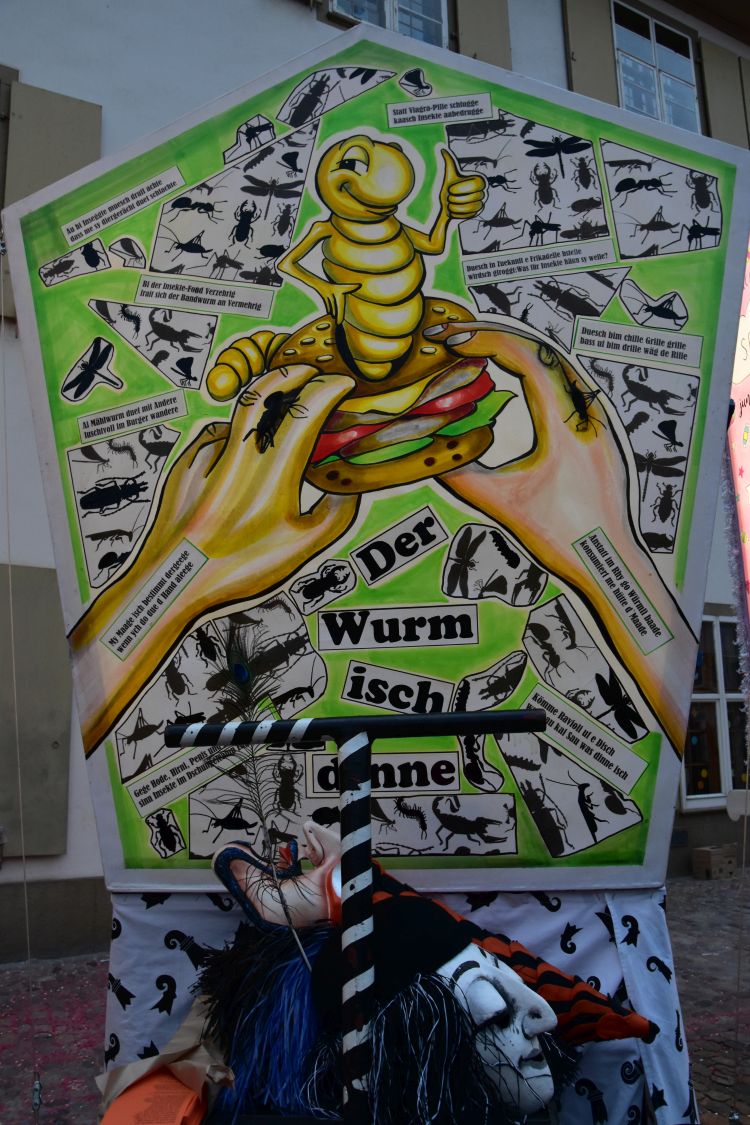
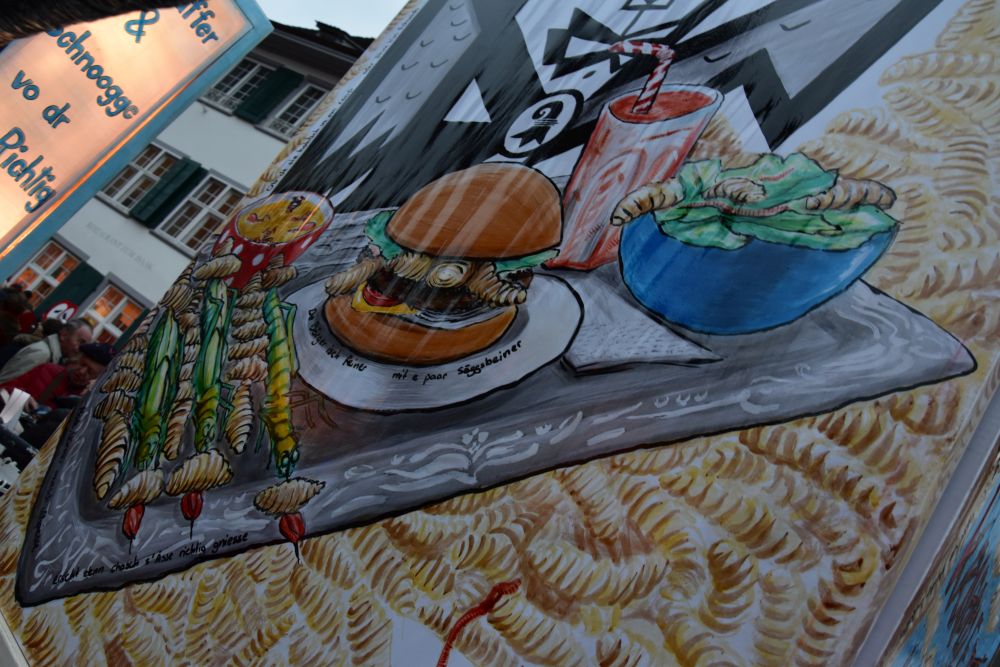
Look at this enticing menu made from insects. “Dä Börger isch feiner mit e paar Säggsbeiner” – “this (ham)-burger is more delicious with a few (animals with) six legs”.

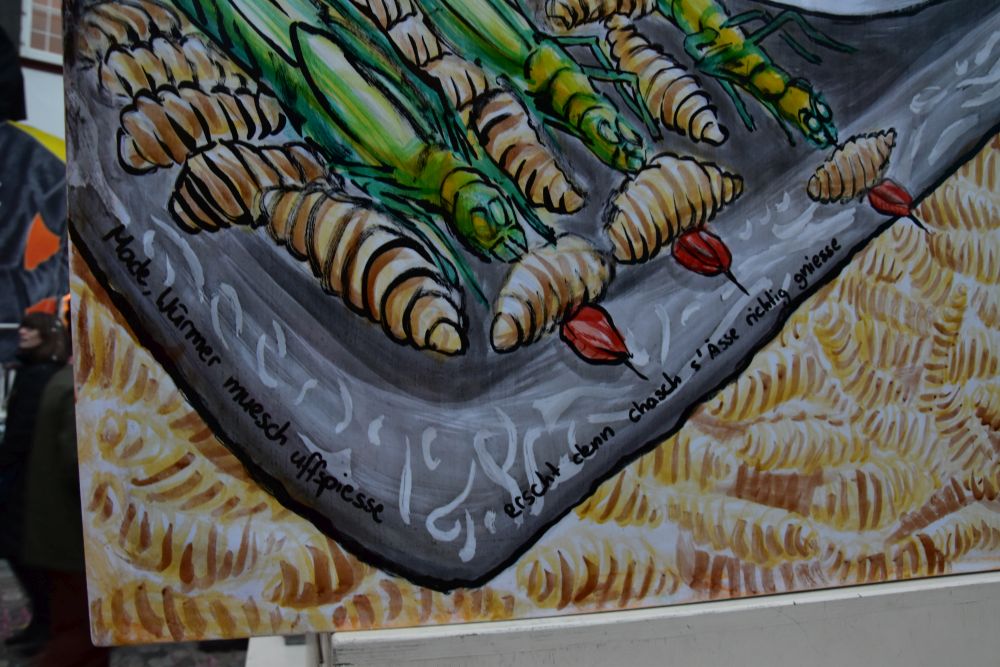
Enjoy the barbecue at the edge of the plate: “Made, Würmer muesch uffspiesse, erscht denn kasch s’Ässe richtig gniesse” – “grubs, worms – this is what you have to skewer, only then you can enjoy your meal.”

This lantern plays with the words: “Dr Wurm isch dinne” – “the worm is inside”. Yes, the worm is inside the meal, but in German this means at the same time: “This is, where the rub or the problem is”.

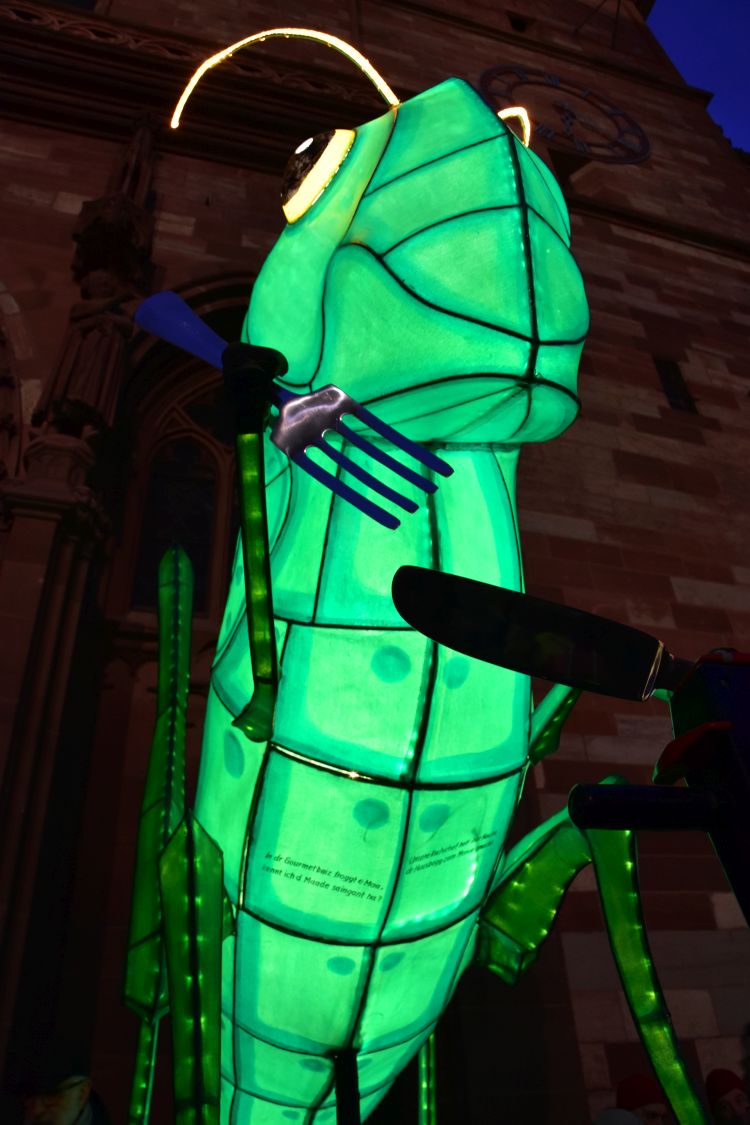
At the cortège, the Pfluderi were disguised as grasshoppers assembling around this huge grasshopper. The verse says: “In dr Gourmetbaiz froogt e Maa, könnt ich d’Made saignant ha” – “in the restaurant a guest asks, whether he could have the grub rare”.

.

Figugegl

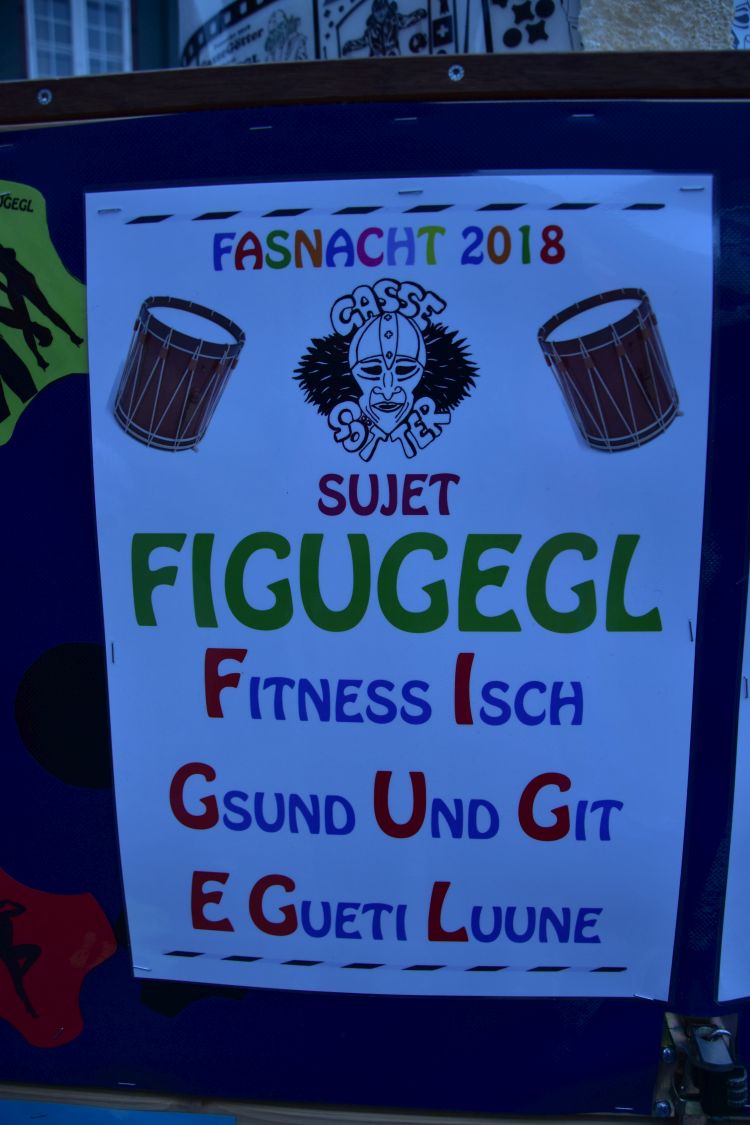
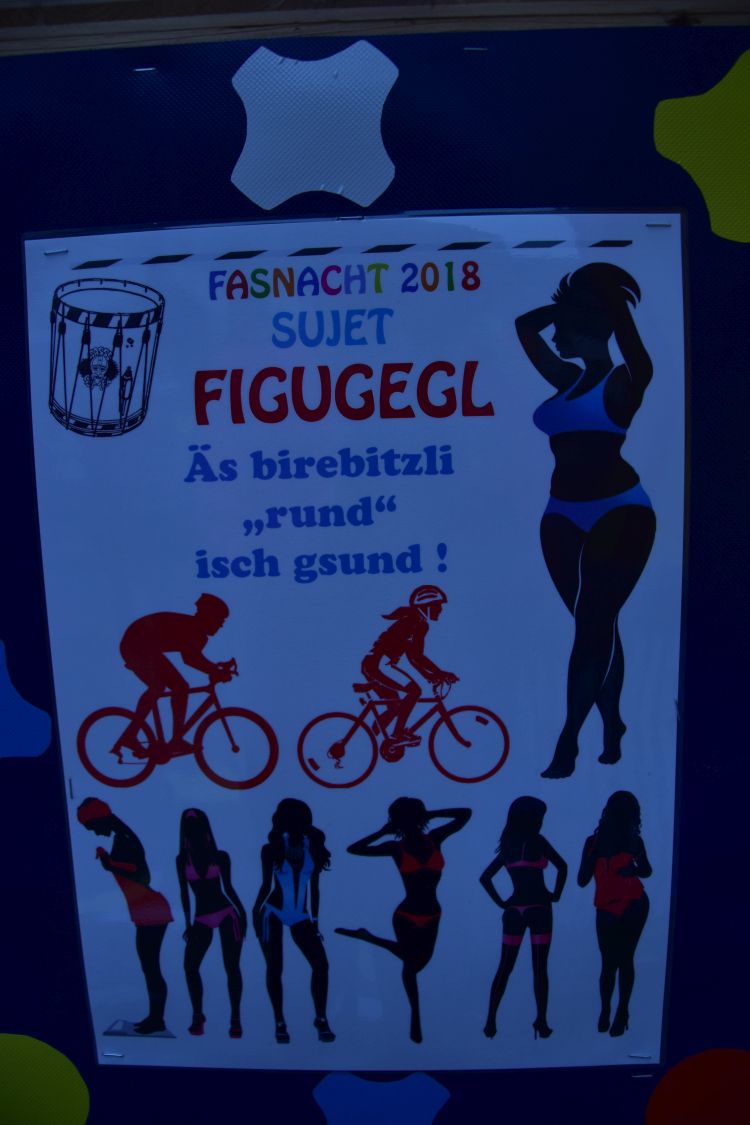
Many, many years ago, Figugegl was the publicity for Fondue, one of the Swiss national meals (melted cheese). Figugegl was an acronym: „Fondue isch guet und git e gueti Luune“ or “Fondue is good and gives good humour”. The Gassegotter replaced “Fondue” with “Fitness” which leads to “Fitness isch gsund und git e gueti Luune” or “Fitness is good and gives good humour”.

The Gassegotter comment the trend for extreme slimness by recommending that „äs birebitzli rund isch gsund“ or “a little bit “round” is healthy”.

.

Hol’s dr Geier – Basel first

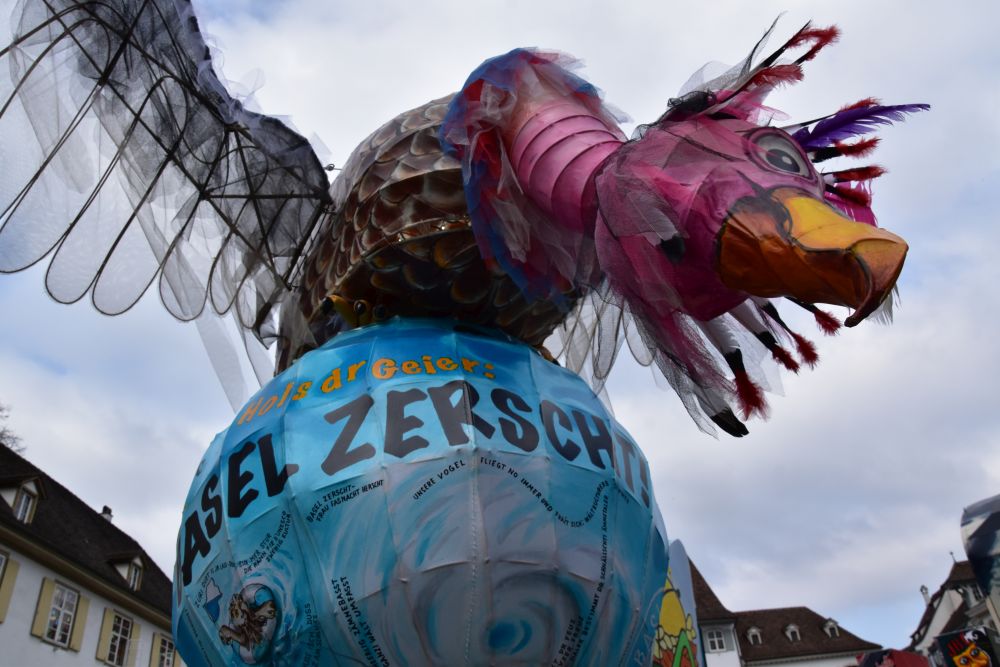
Trump says „USA first“. On this lantern I found „Basel zerscht“ or “Basel first” , along with – „hol’s dr geier“ or “the vulture may grab it”.

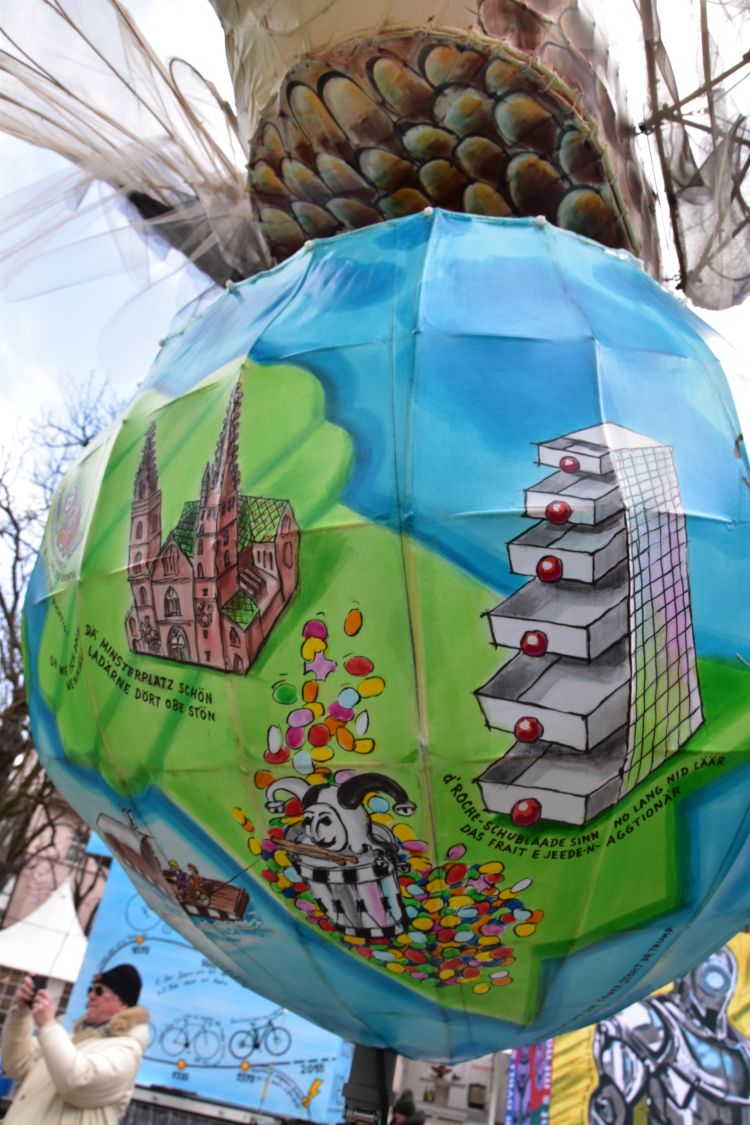
Well, the vulture might be a sign for bankruptcy, but… “D’Roche Schuublaade sin no lang nyt lär, das fräit e jede-n-Aggtionär“ or “the drawers of Roche will not be empty for many years, this makes every shareholder happy”.

In addition I find here a tought about the lantern exhibition at the Münsterplatz or Cathedral Square: „Dä Münschterplatzz (isch) schön, Ladärne dört obe schtön“ – “That Cathedral Square is beautiful – lanterns are standing up there.”

Yes I agree, the Cathedral Square is beautiful, in particular, when the lanterns are “up there”. And I agree: Basel first! – I look forward to next year’s lantern exhibition on Tuesday, March 12th 2019.


Basel Carnival 2018 – about the exhibition of lanterns: The world at risk

Let us come back to the lantern exhibition 2018 at the Cathedral Square. This time I will talk about the gloomy topic that largely dominated this year’s carnival: The world at risk.

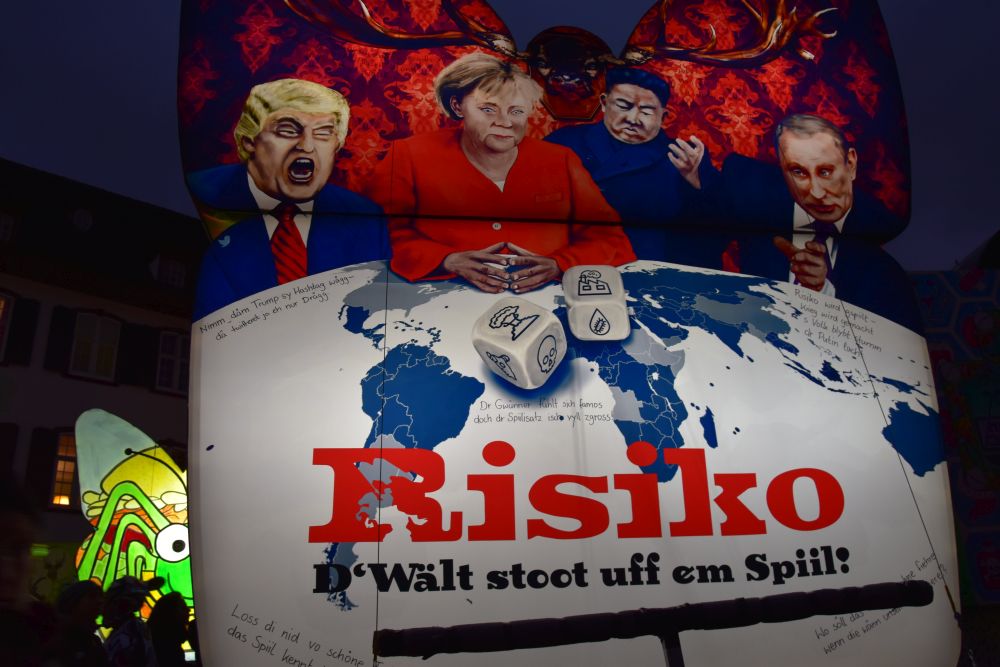
This is, how the Giftschnaigge illustrate the subject “Risiko – risk” on their lantern: “D’Wält stoot uff em Spiil” – “The world is at stake”. The metapher for “at stake” in German is “auf dem Spiel” which relates to the politicians gambling. The punch with gambling only works in German.

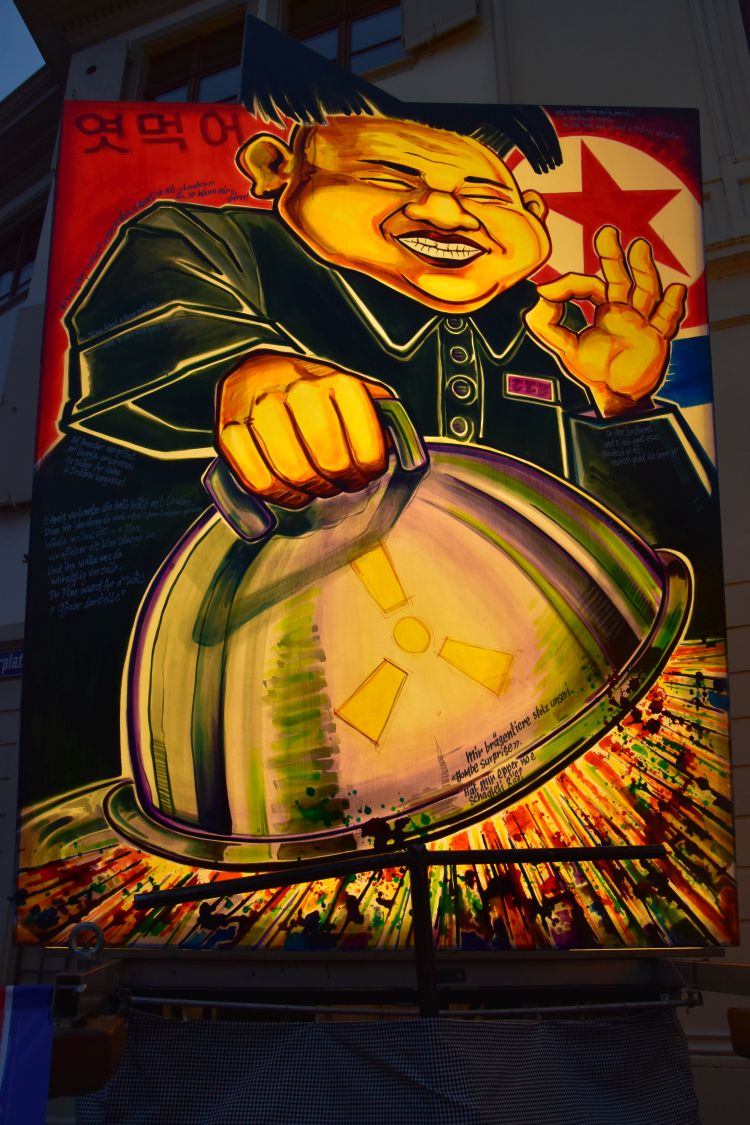
Three politicians are on the lantern below, Kim Jong Un loving the United States (hm), Putin sitting on an innocent unicorn and Trump uttering something not very nice.

The Alte Stainlemer painted more abstract faces for Kim and Trump at PjöngJangeles alluding to the Olympic Games in South Korea and simultaneously to the competition about “Ballistic Games” between the two.

The other side of their lantern shows Kim and Trump competing to score. In the cortège or parade “incarnations” of the two competitors even perfomed their score mastering. In another “incarnation”, Trump and Kim played with a globe and from time to time placed it on a nuclear power plant tower.

The Schnurebegge say on their lantern: “Es dien die beide wirre Irre zünftig mit de Sääbel klirre” – “the two confused fools are jangling heavily with their swords”.

The group CCB (Central Club Basel) invented the new name “Corean Club Basel”. Kim presents a very explosive menu, it is “a bombe surprise”.

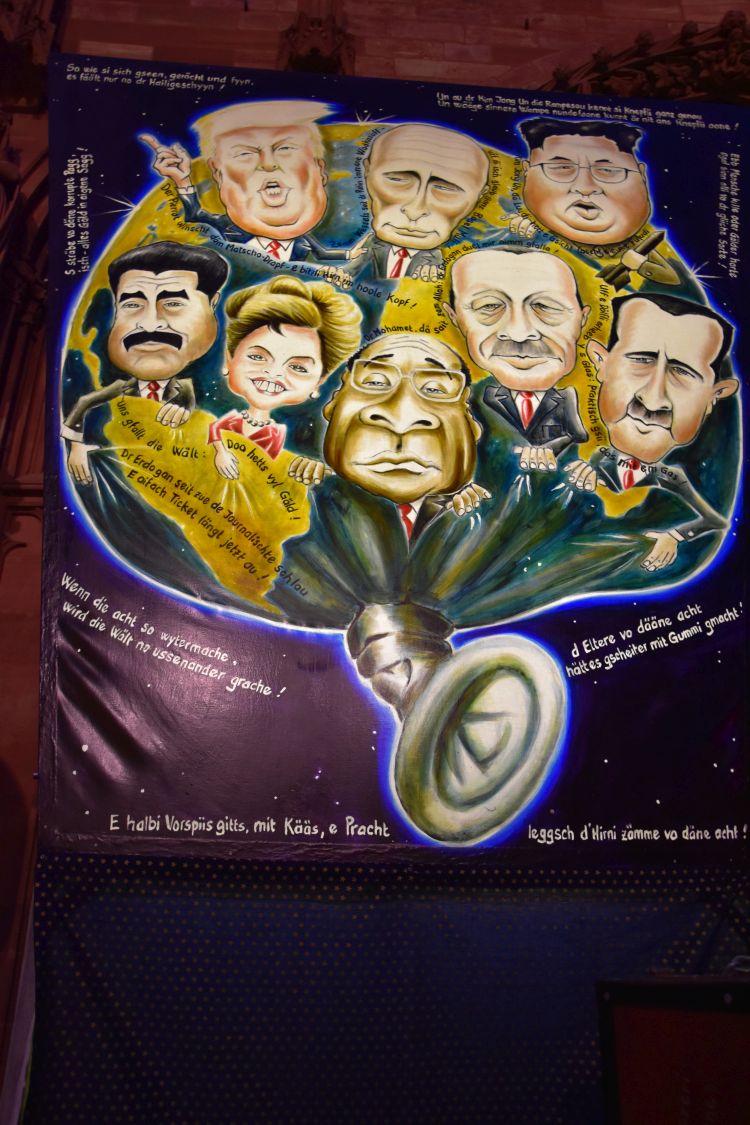
“Wenn die acht so wytermache, wird die Wält usenander krache” –  In case these eight guys will continue in this way, the world is going to break apart”. Do you recognize the eight faces that the Dupf Club assembeld in this balloon?

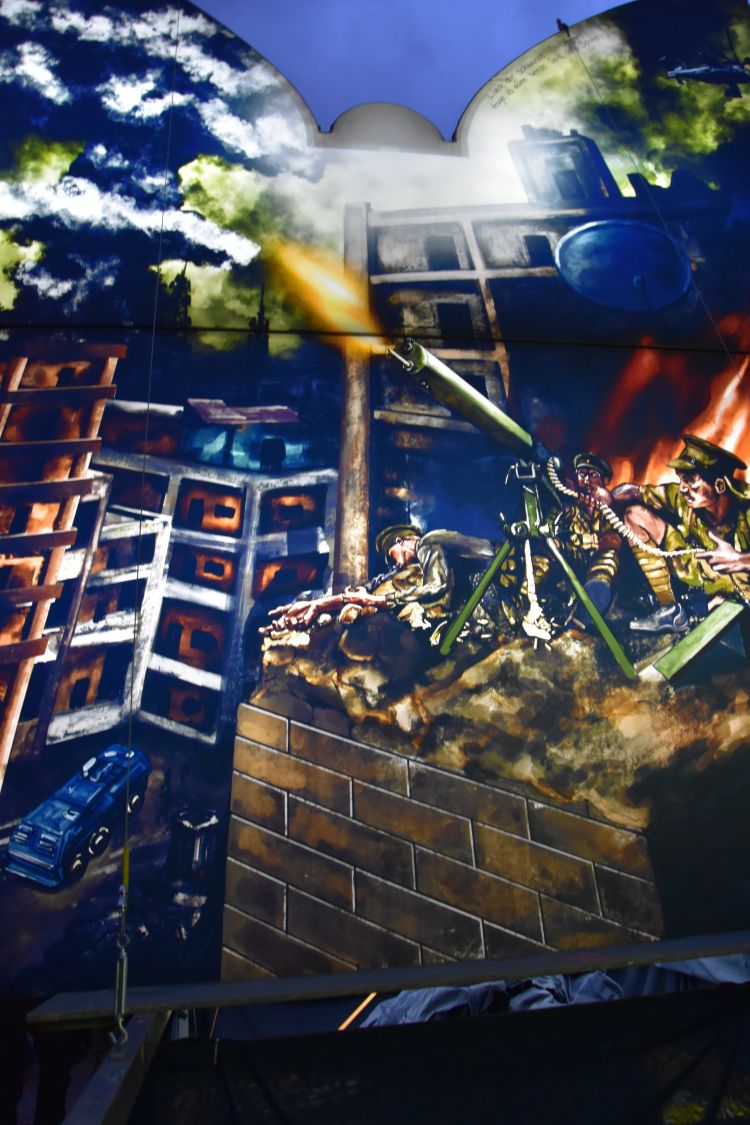
Some lanterns show visions of where we may end up, in case the politicians will continue in this way.

All very frightening, but this is what the Basel Carnival is about – discussing both cheerful AND gloomy topics. The Carnival acts as a catalyzer for good and bad feelings. In my next, third blog about the exhibition of lanterns, I will take up some more cheerful topics.

Basel and its Carnival – about the 2018 exhibition of lanterns: Fake news, digital world and sharing economy

Short overview of the Basler Fasnacht or Basel Carnival

This year the Basel Carnival took place from 19th to 21st of February 2018, for the first time as a Unesco World Heritage.

As always, it started with the Morgestraich – a word that cannot be translated. Look at this link from the Luzernerzeitung, to see how, on Monday at precisely 4 o’clock a.m., the lights go out, the drums and pipes start playing and the lanterns start to “walk” through the dark night. This is the magic moment that kicks off our “three extraordinary days”.The 2018 motto is: “D’Boscht goot ab” which means “we are kicking it off right”, but which in addition alludes to the post offices (Boscht) that are changing dramatically right now.

Many of the topics taken up at the 2018 Carnival were political. I will present some of the political and some of the more cheerful topics by strolling through the lantern exhibition at the Münsterplatz (Cathedral Square) which takes place all Tuesday and on Wednesday morning. During this time the Cliquen or carnival groups do not need their lanterns. They pick them up again later on Wednesday for the second parade or cortège. In the cortèges of Monday and Wednesday, the lanterns match the masks and the disguise to illustrate the topics selected by the groups.

Also the Schnitzelbanggsänger (some sort of minstrels) comment the events of the year. Here are two verses about fake news and about #metoo (both sung by Stächpalme which in biology is a holly. However, literally translated it is a “biting palm tree” alluding to the biting comments the Stächpalme makes).

Fake news:

Dr Trump het gnueg vom wysse Huus und wird neu Chef vo Twitter
Dr Pabscht hürootet d’Lindysey Vonn und landet hinter Gitter
D‘Merkel schtolkt dr Macron z’Nacht im Dussel – s’isch e Gruus,
D’Queen kifft mit em Butler – ich verfolg der Fake Niuus Bluus.

Trump is sick of the White House and now became head of Twitter,
the Pope marries Lindsey Vonn and ends up behind bars.
Merkel stalks Macron at night when drunk – it is just gloomy.
The Queen smokes weed with her Butler – I am following the Fake News Blues.

#metoo :

Jetzt goot’s em Santiglaus an Kraage.
die alt Frau Niggli isch am Klaage,
Er hege’re vor 80 Joor – sy heig das lang verdrängt -,
won‘r sy in Sagg geschteggt heg, ans lingge Schynbai aneglänggt.

Now Santa Clause has a problem.
Old Mrs Wicky is complaining,
it was 80 years ago – she has suppressed that for a long time -,
that, when pushing her in his sack, he touched her left shinbone.

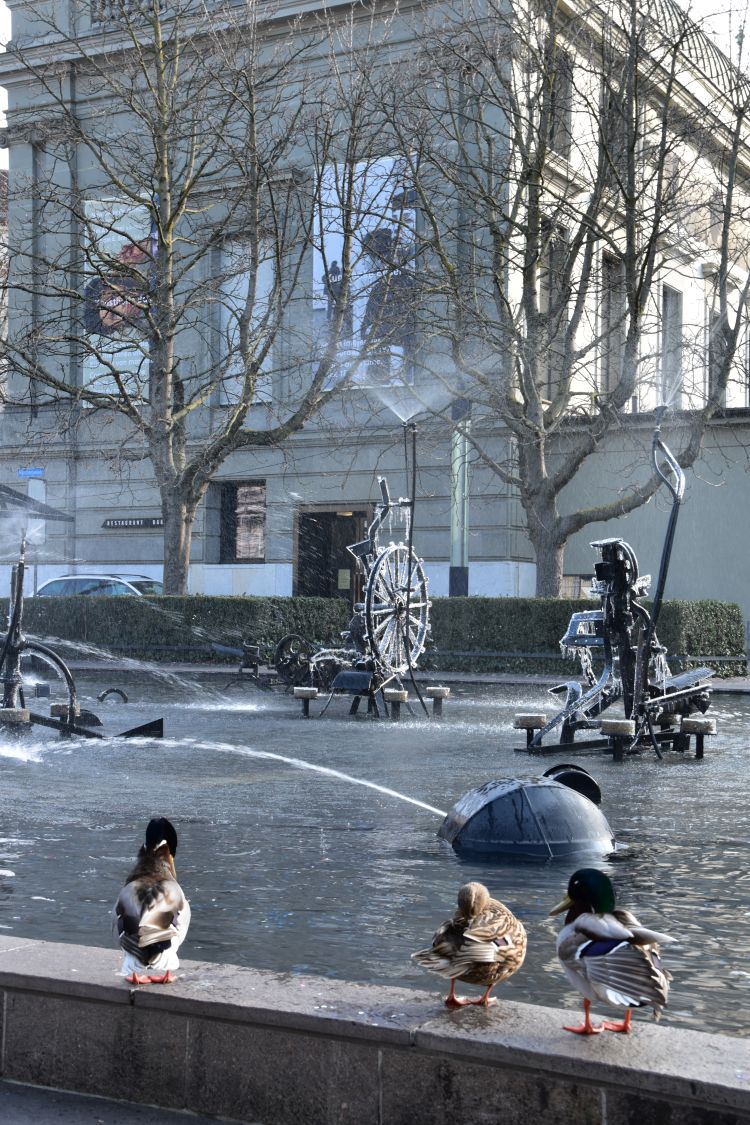
During Carnival the weather was mostly clouded, sometimes sunny. It never rained. Temperatures were chilly, as the frozen Tingueley fountain shows.
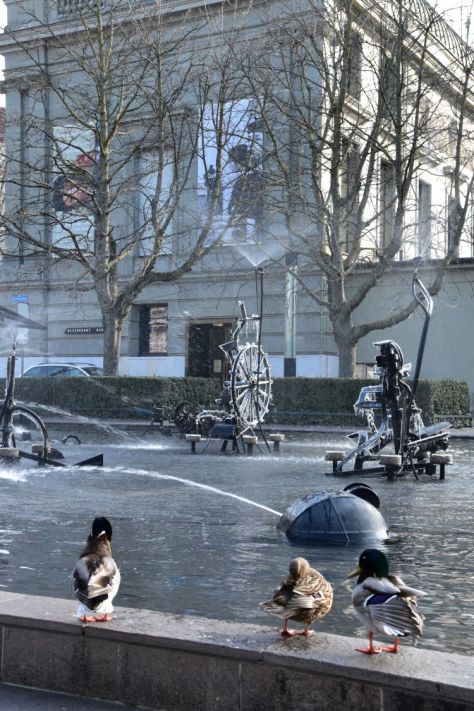
Even the ducks avoided the water – simply too cold.

.

The exhibition of lanterns on Tuesday and on Wednesday morning

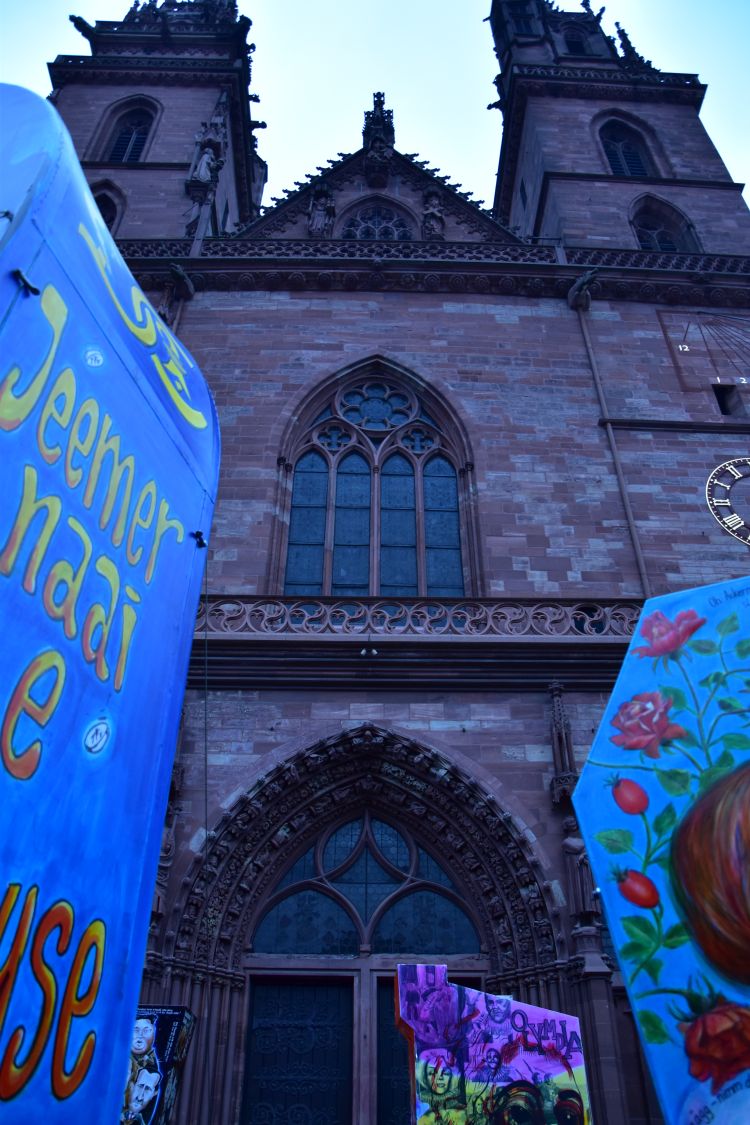
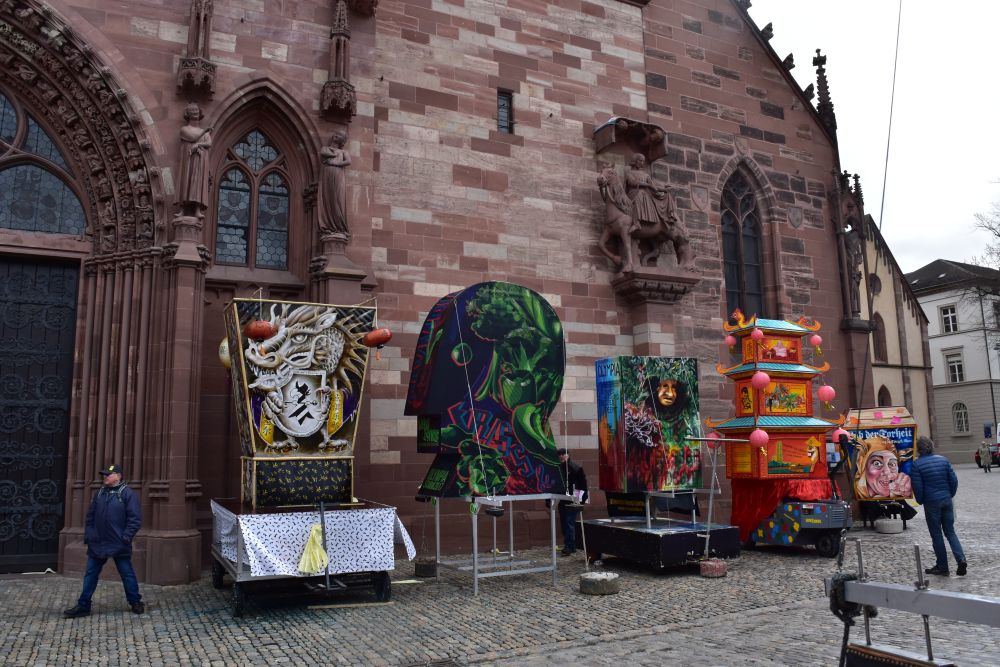
Our Cathedral from the 11th and 14th century is a great background for the lanterns exhibited at the Münsterplatz or Cathedral Square.
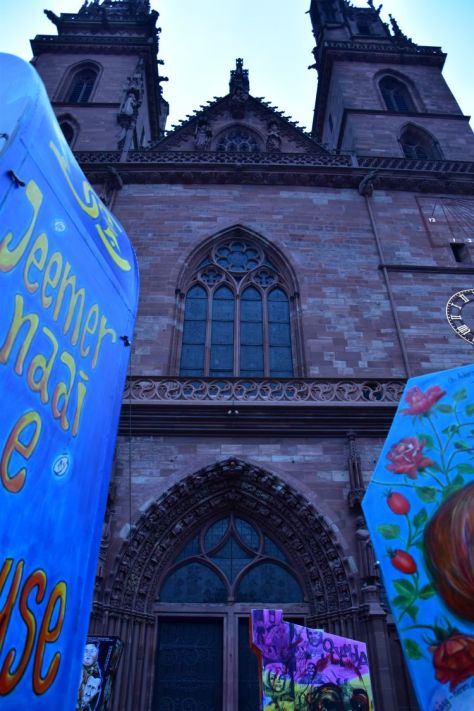
Let me start with the lanterns about fake news, the digital world and the sharing economy. Important details on the lanterns are the small verses – I will try to translate some of them.

.

Fake News

The Barbara Clique takes up the topic “Fake News” and transcribing it to our local dialect “alles glooge, feyk niuus” – “all lies – fake news”.

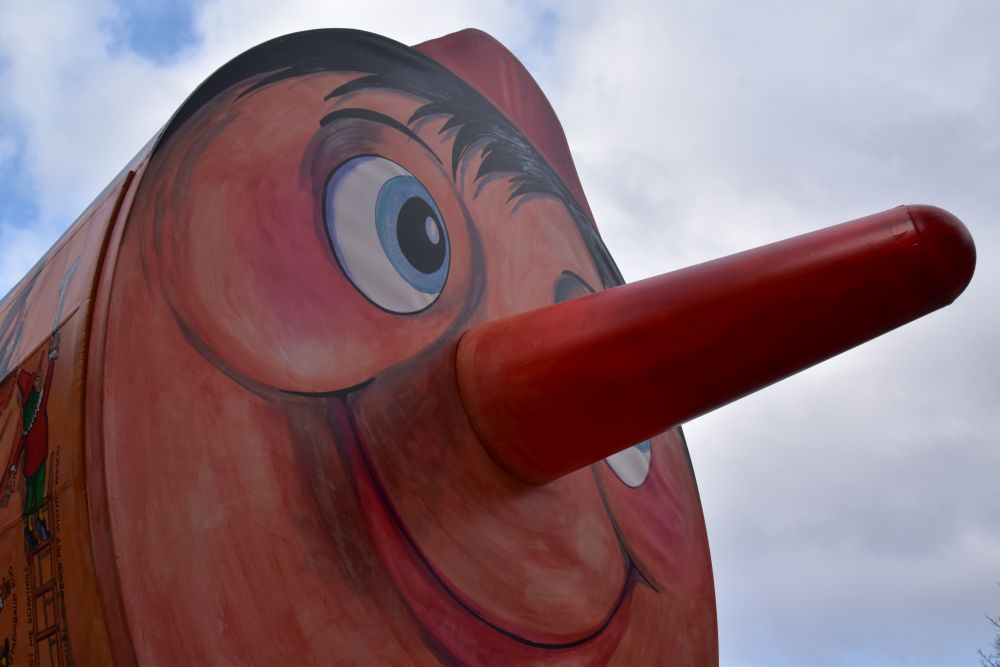
Their lantern is a big Pinocchio on one side.
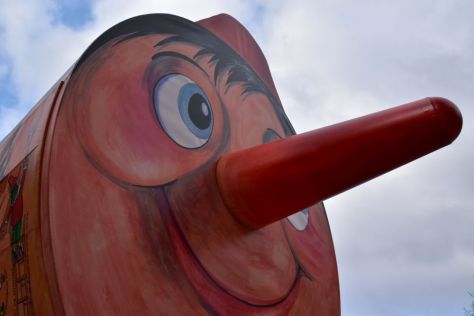
Pinocchio’s long nose alludes to the fact that he often lies – and this is what fake news are about – lies.

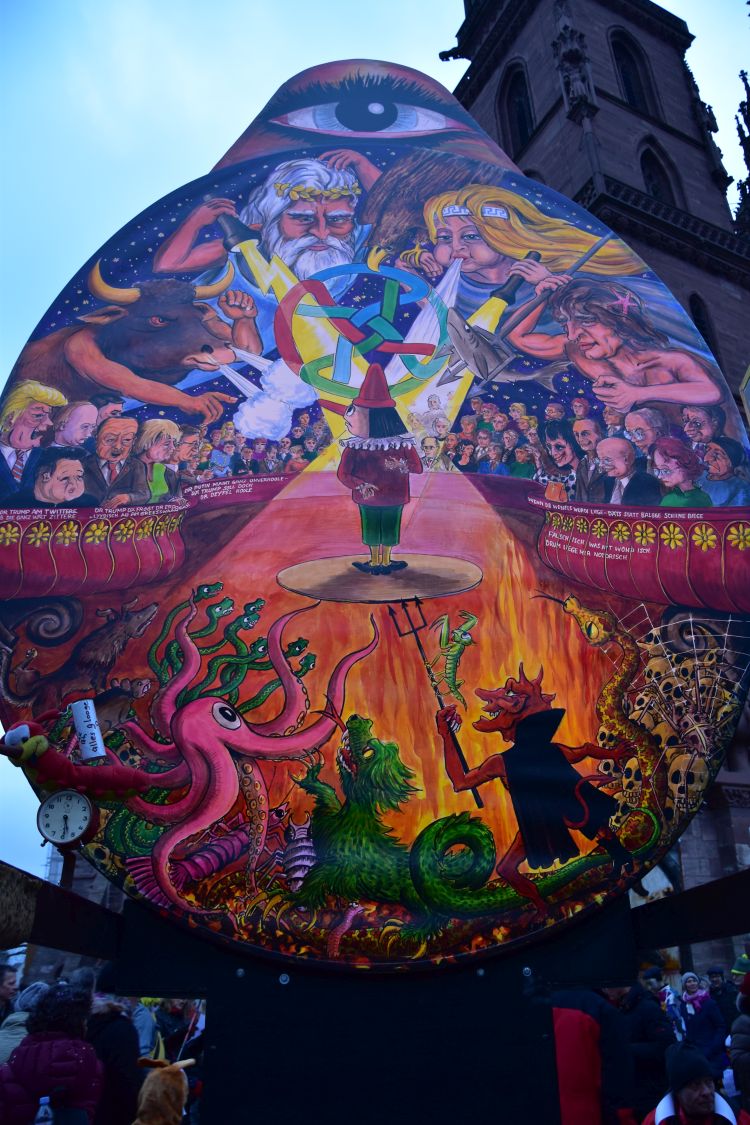
The other side of the lantern shows all the well known politicians looking down into hell where Pinocchio is emerging.
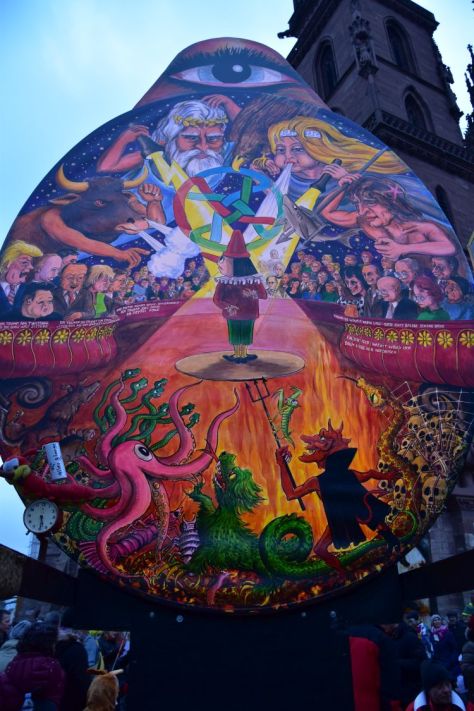
These are some of the verses:  “Isch dr Trump am Twittere, isch die ganzi Wält am Zittere” – When Trump is twittering, the whole world is shivering”. And “Dr Trump froogt dr Erdogaan, lyydisch au an Greessewaan?” – Trump asks Erdogan, do you also suffer from delusions of grandeur?”

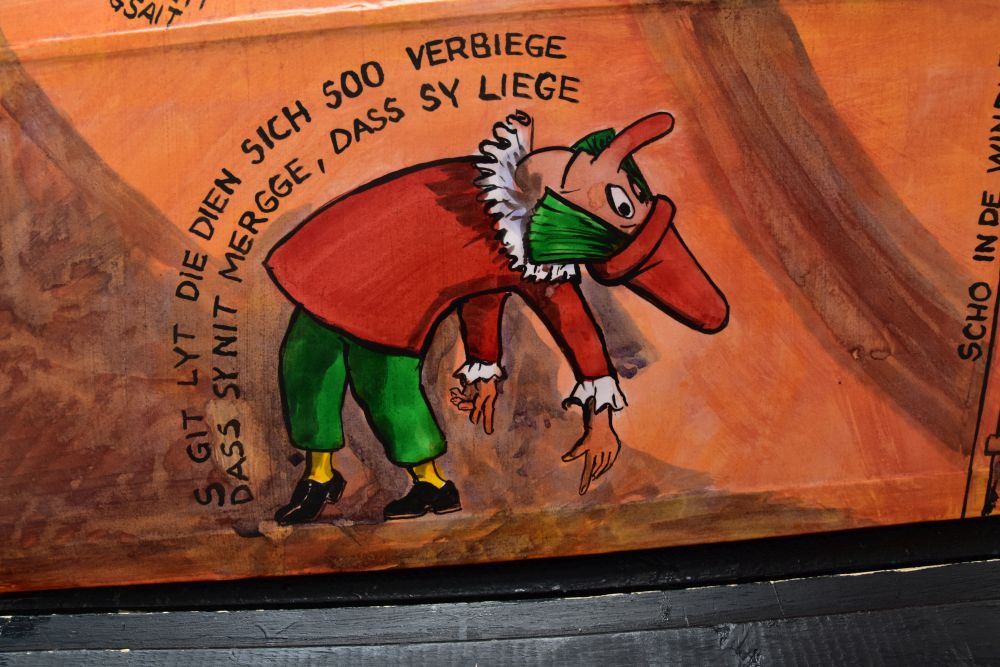
Walking around the lantern I find this verse: “S’git Lyt, die dien sich soo verbiege, dass sy nit mergge, dass sy liege” – some people are distorting their body so much that they do not notice that they are lying” (distorting alludes to lies).

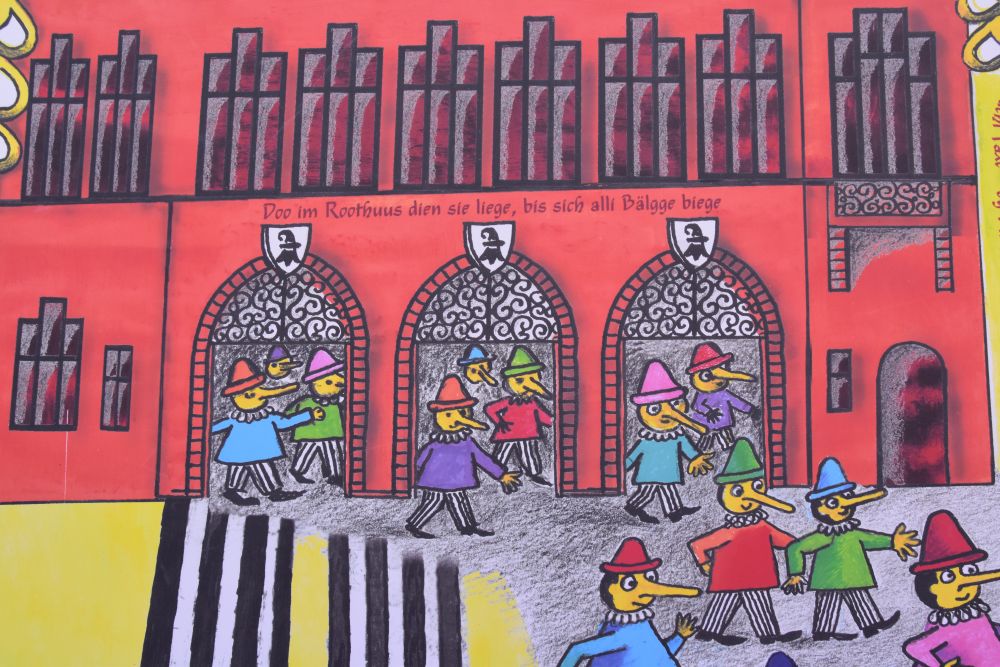
And another small detail: “Do im Roothuus dien si liege, bis sich alli Bälgge biege” – “Here in (our) townhall they are lying that all beams are being distorted.” In our dialect (and also in German), “to lie, until the beams are being distorted” or “to lie, until you are distorted” means that you are REALLY lying.
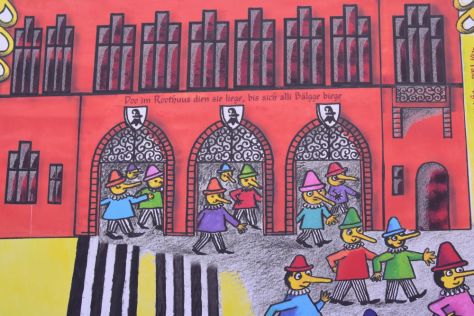
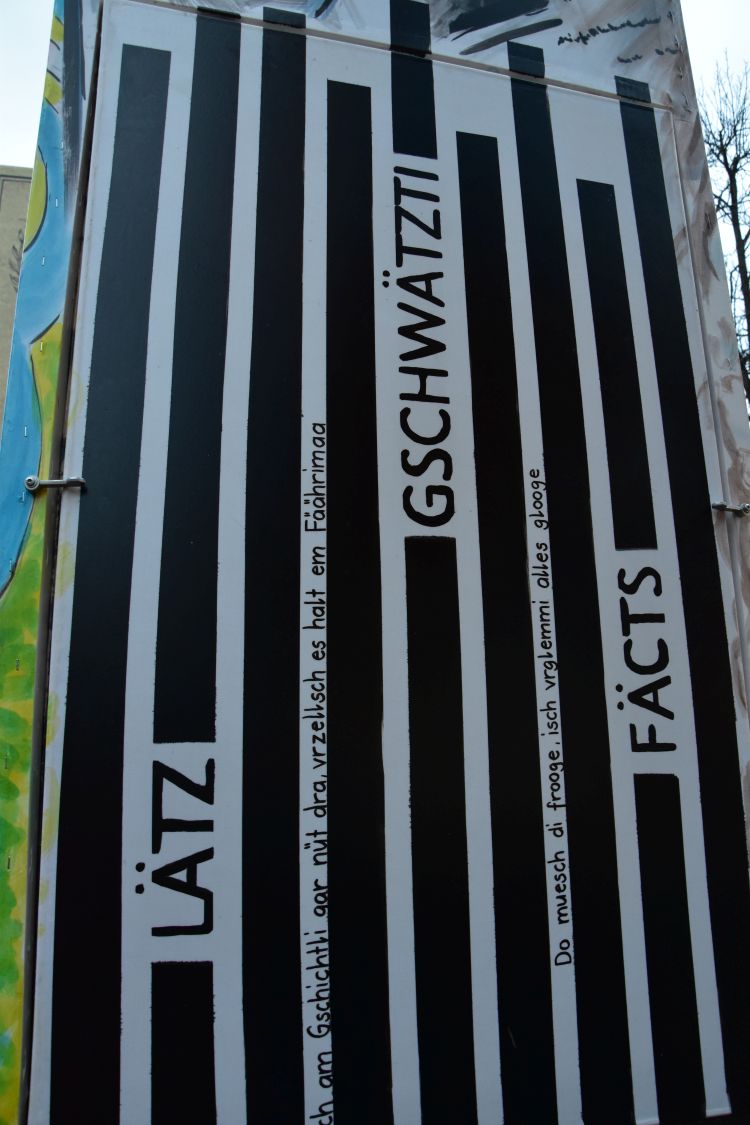
The group Seibi Mysli (little mice from the Seibi or Barfüsser Square) transformed the alternative facts into our dialect: “Lätz geschwätzti Facts” or “Wrongly stated facts”. The verse says “do muesch dy frooge, verglemmi alles glooge” – you have to ask, what the deuce, all just lies” (“verglemmi” is a rather soft swearword in the Basel dialect, I am not sure, how to translate that into English).

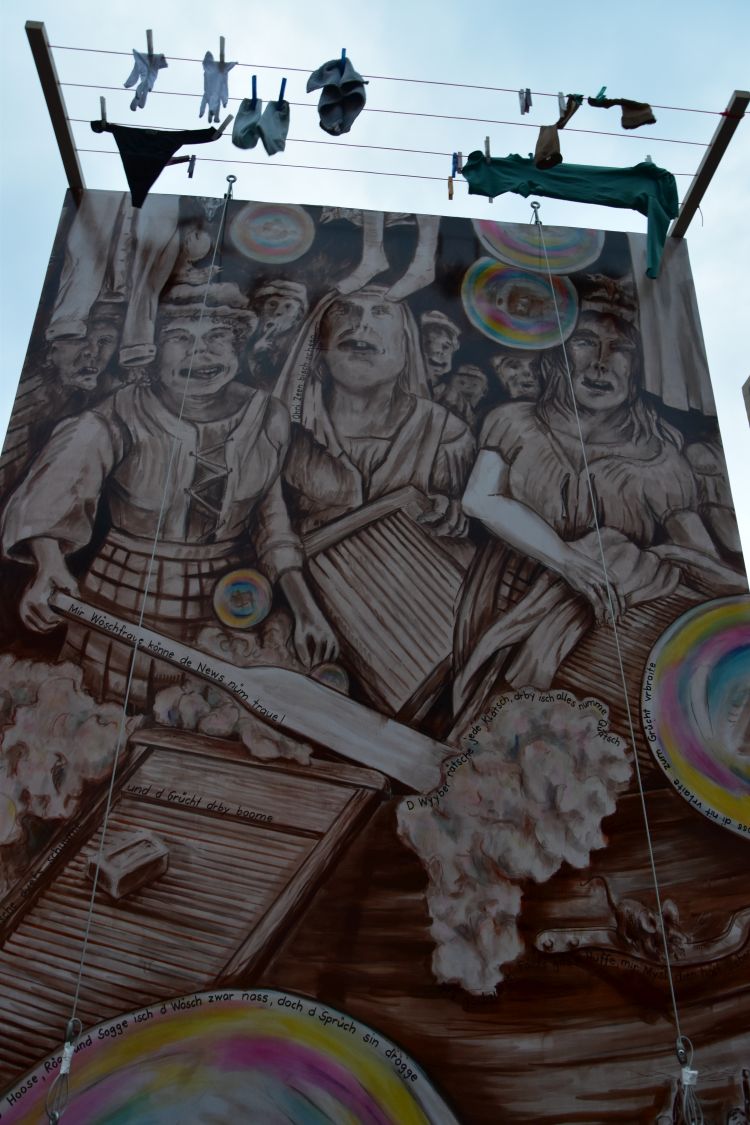
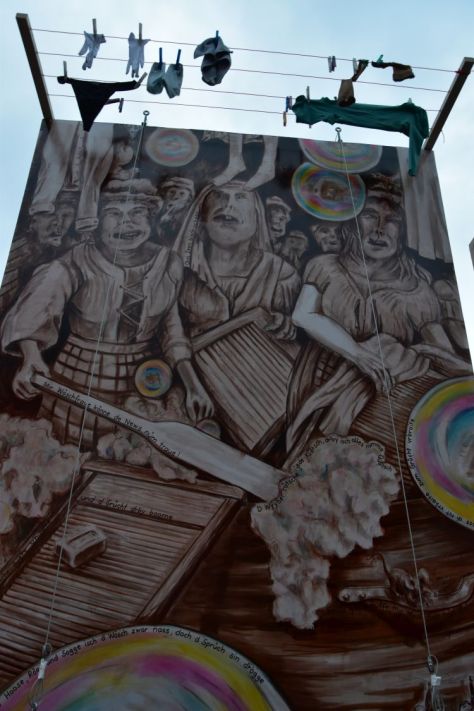
And the washer women are complaining: “Mir Wöschfraue könne de News nümme draue” – We washer women can no longer trust the news”.
.

A digital world

Digital was another topic coming up – everything goes digital, even the war. But there are also more cheerful sides about digital, which are google omnipresent for searching and the Emojis.

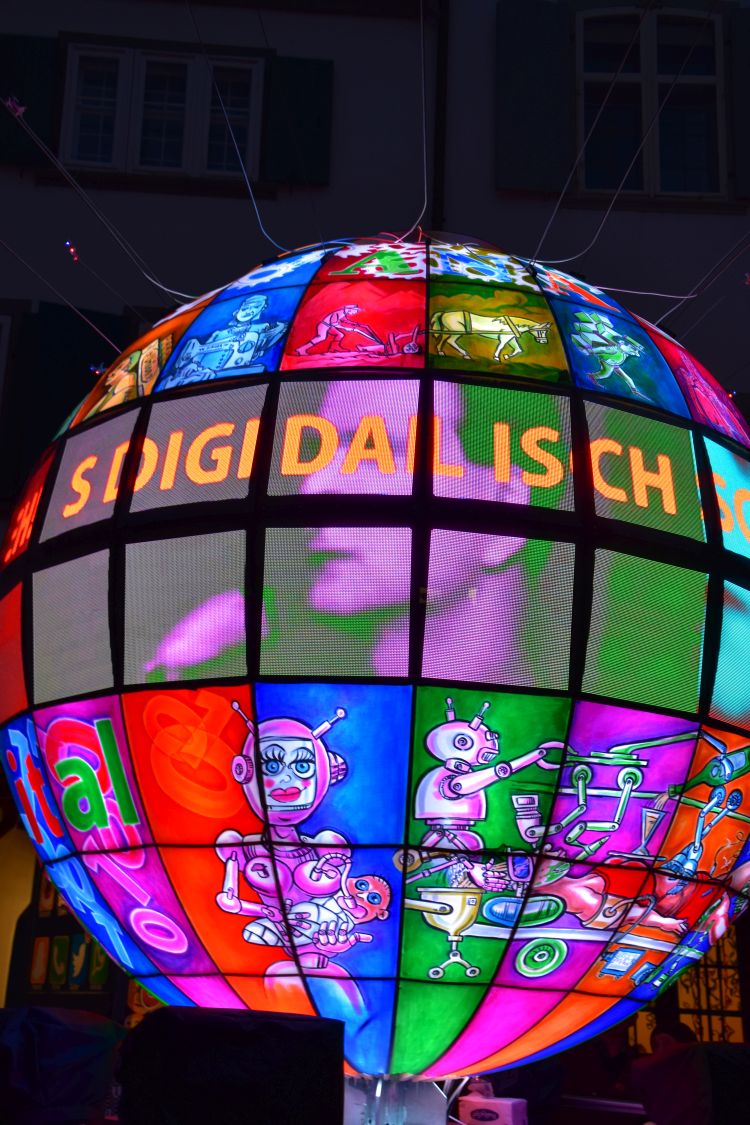
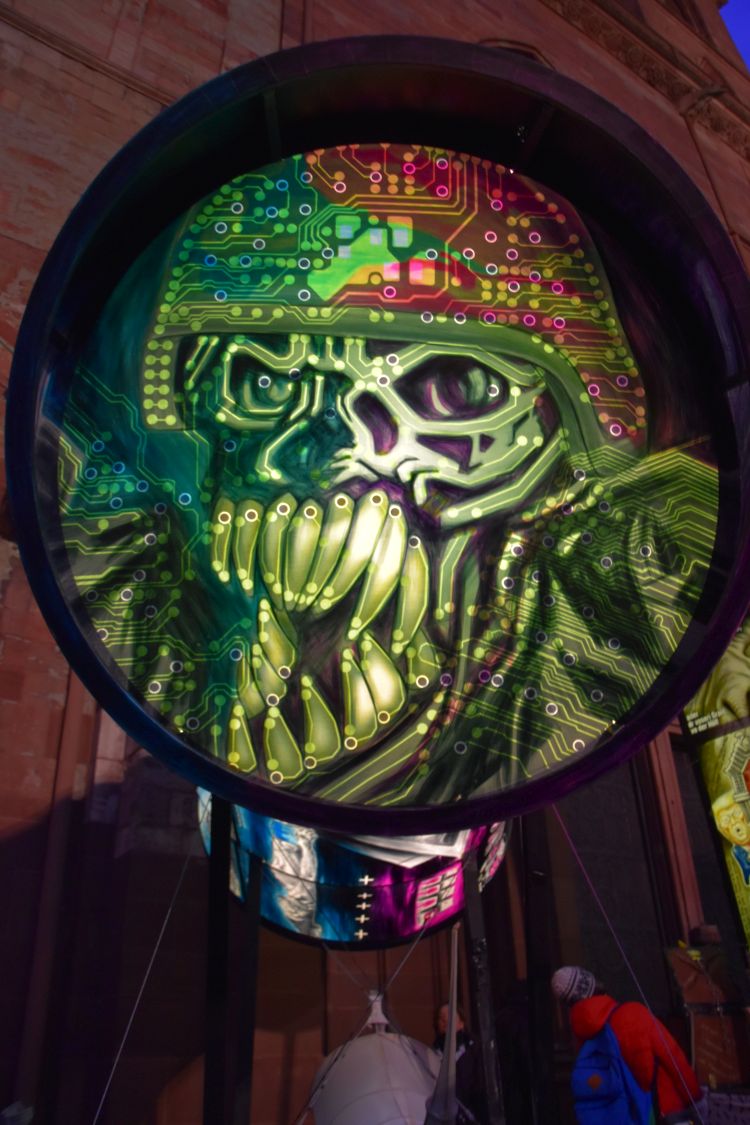
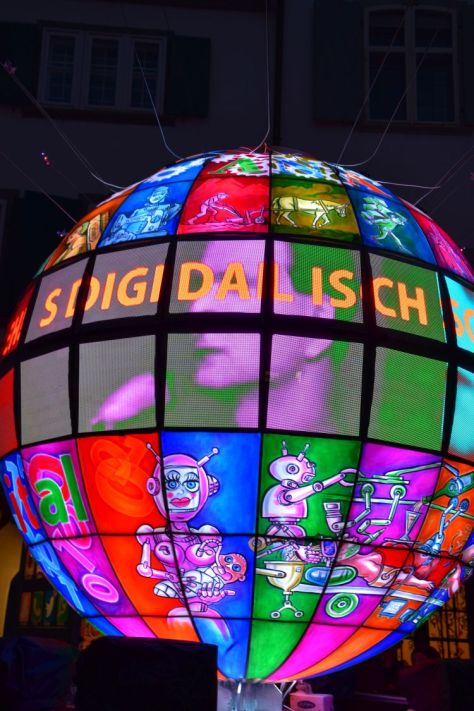
The most innovative (and I assume, the most expensive) lantern was the globe made by the “d’Revoluzzer”. It is not a painted lantern, but it consists out of 40 screens that are changing scenes. The globe weighs more than a ton and is pulled on a cart. By the way, when you pronounce “digital” in Basel, it comes out like “digidal”.
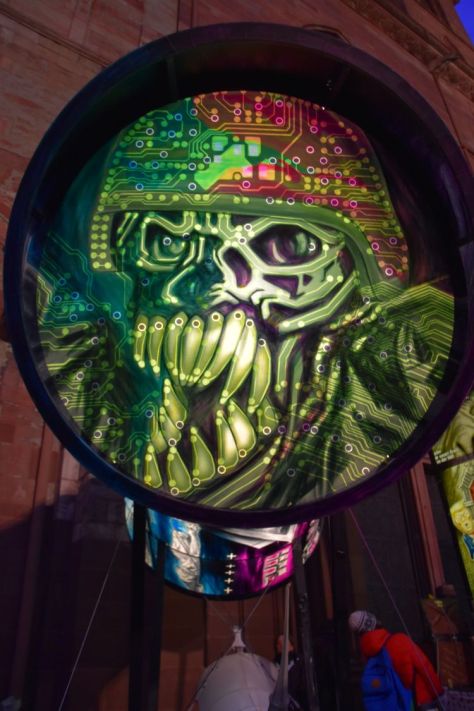
Digital may end up in a digital war, as this gloomy figure illustrates grabbing everything in its way.
The young department of the group (Clique) Rätz show a more cheerful aspect of digital. They ask “Dänggsch no oder guuglisch scho?” – “Do you still think our do you already google?” “Google” is transcribed to “guugle” and is often used as a verb in our local dialect (Du guuglisch=you google).
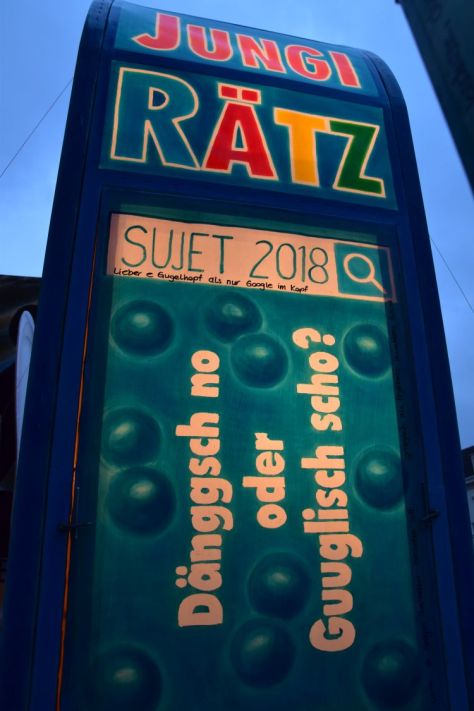
Without thinking first, the Jungi Rätz comment that we often google everything such as “WorumWärWasWämWoWieWenn” – WhyWhoWhatWhomWhereHowWhen”.

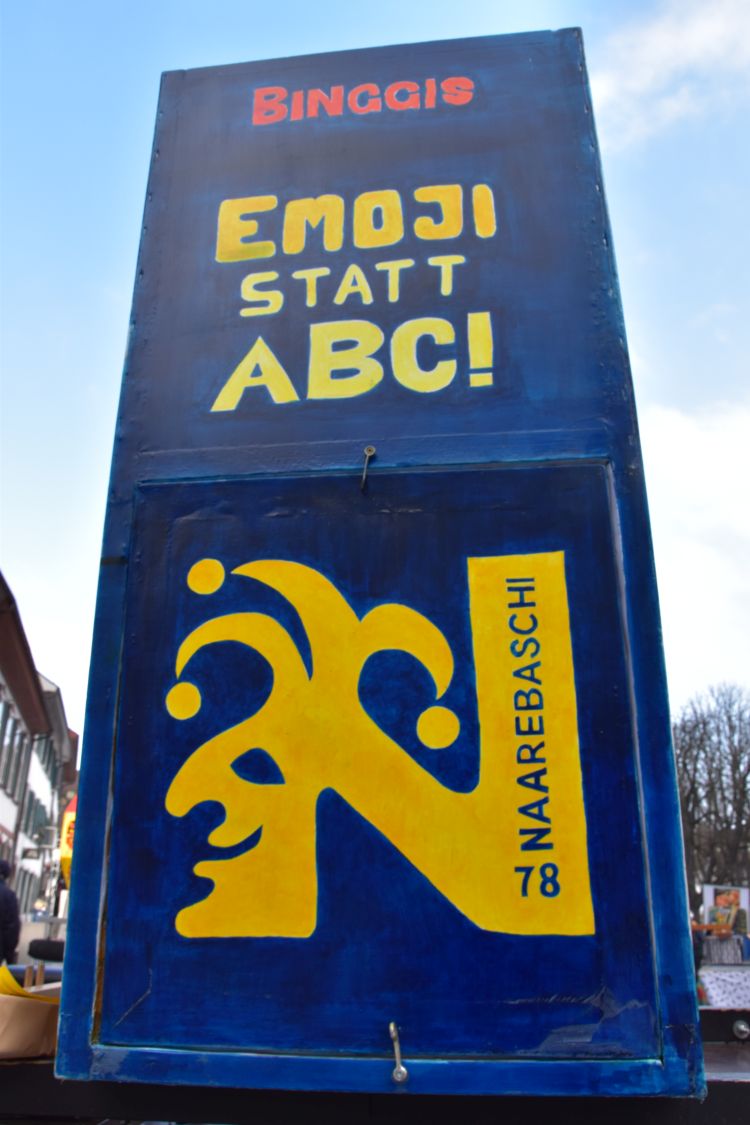
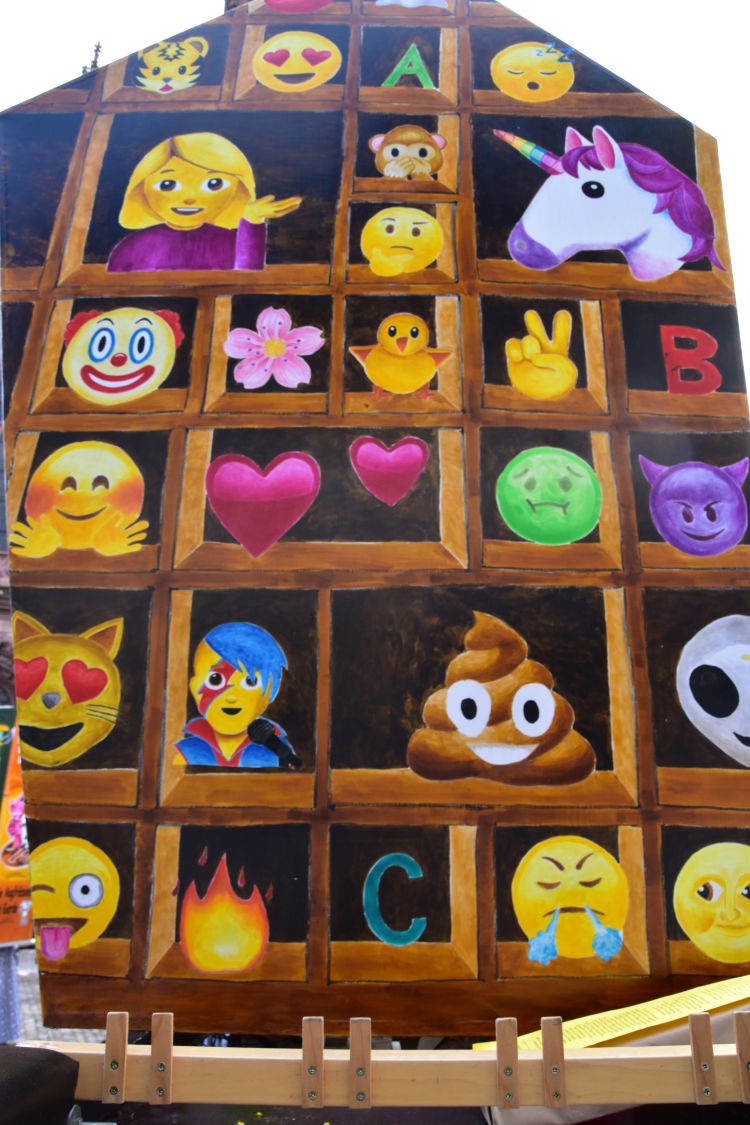
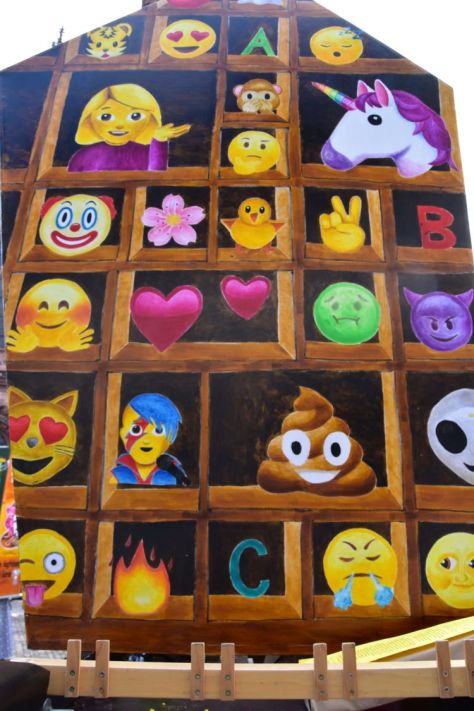
The very small guys of the Naarebaschi (very small guys are “Binggis” in Basel) illustrate the topic “Emoji instead of ABC”. Maybe the Binggis hope that they do no longer have to learn, how to write, but can use Emoji instead. At the cortège (parade) they all came disguised as Emojis – a great topic for small guys or Binngis.
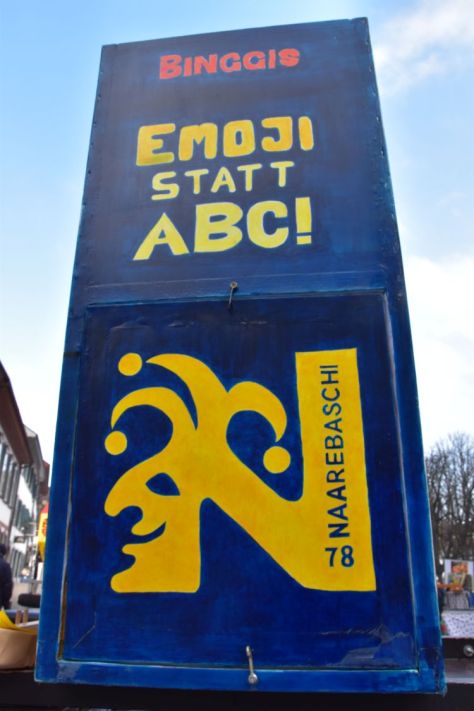
The lantern of the Binggis gives an overview of Emojis. I particularly like the brownish emoji with the happy face.
.

Sharing economy

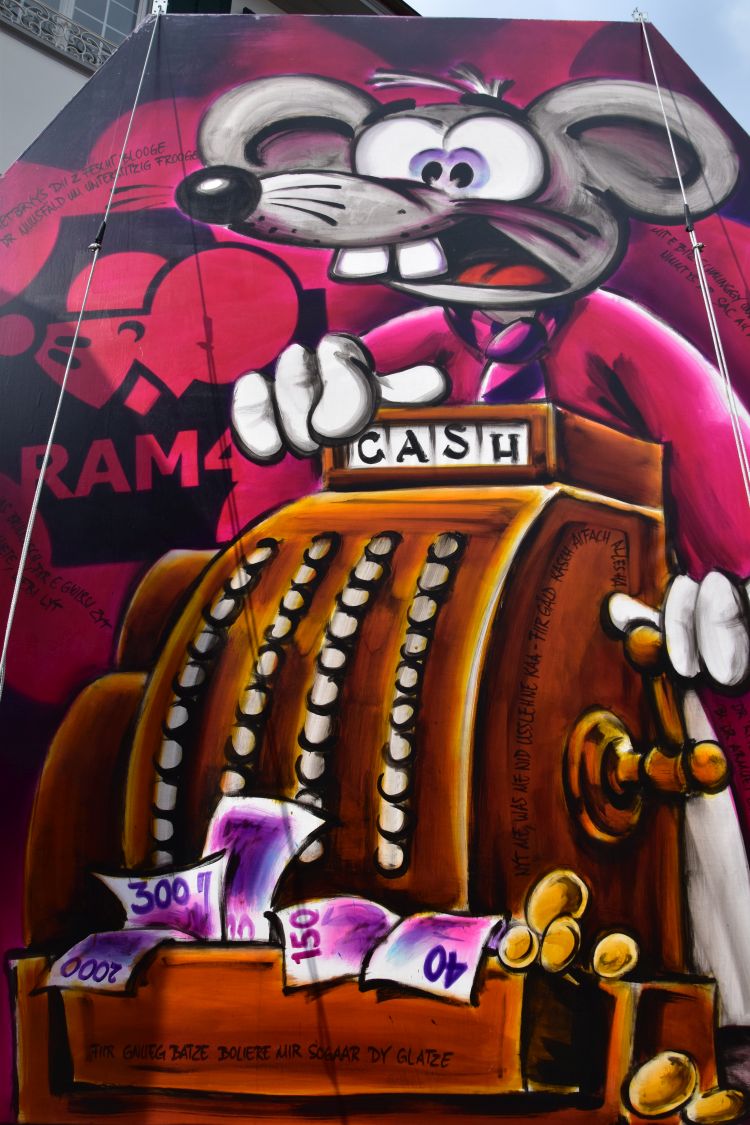
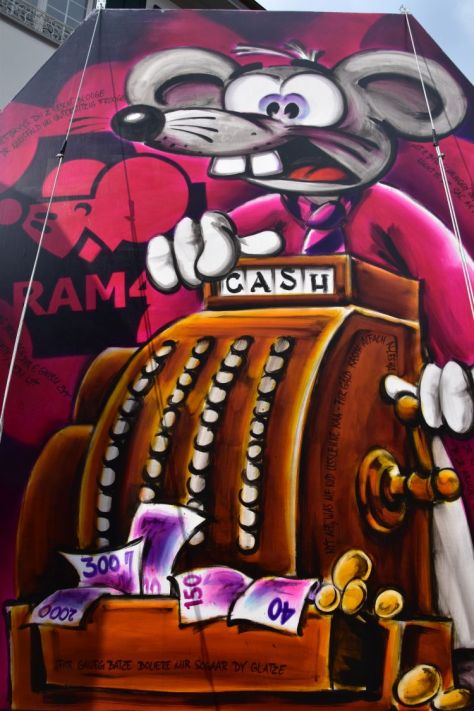
The Wiehlmys or digging mice (I also found the “biological expression” “root vole”) propose to “rent a mouse” which in our dialect can be expressed as “Muuslehne”.
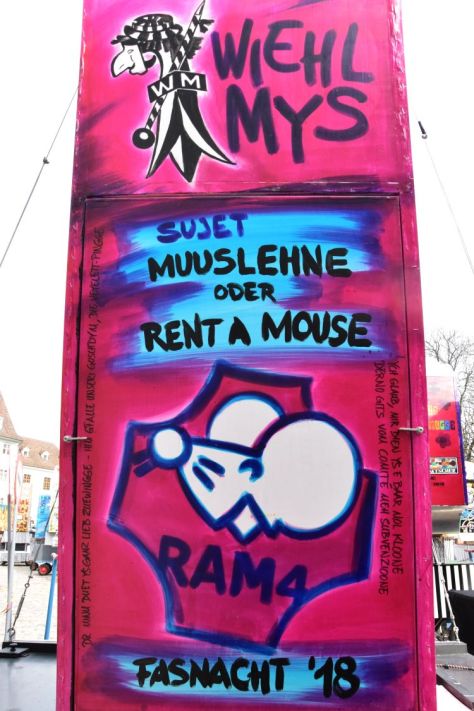
The verse on the cash says “Nyt me, was me nyt uuslehne kaa, fir Gäld kasch aifach alles ha” or “Nothing that you cannot rent, for money you can have everything.” Yes, I have heard that you can even rent sheep to cut your lawn…
 Let us put off some more lanterns of the Cathedral Square exihibition for some later blogs.
 

Basler Fasnacht – impressions from the Ladärne-n-Usschtellig

Fasnacht 2017 at Basel (carnival) was celebrated in March, from Monday 6th/4 a.m. to Thursday 9th/4 a.m. Let me recall impressions from the Ladärne-n-Usschtellig or exhibition of lanterns.

.

The exhibition of lanterns (Ladärne-n-Usschtellig ) takes place on the Münsterplatz –  a great background

On carnival Tuesday, the lanterns (Ladärne) are presented on the Münsterplatz – the cathedral underlines the solemnity of the many pieces of art presented here. They are the centerpieces of the sujets (or themes) that the Cliquen (carnival groups) have selected for this year’s carnival. Here I am remembering some of the themes.

.

One theme: China – buying enterprises

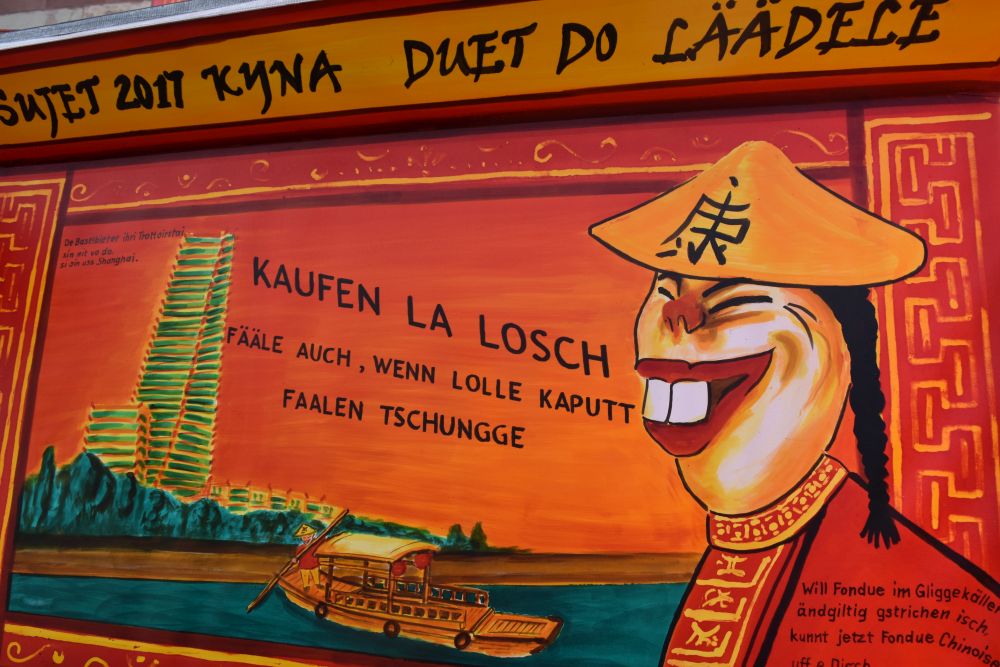
China is buying enterprises, also in Switzerland. “Kyna duet do läädele” (China goes shopping here). Syngenta was on their buying list – may be La Roche (La Losch) is next and then also the “Fääle” (the Rhine ferry boat, it seems that the Chinese say “l” instead of “r”)…

… or they may intend to buy the Sutter Begg (a well-known bakery), the Basler Kantonalbank (bank of Basel), BVB (the public transportation of Basel) and more…

The Asian cat is greeting us.

Another theme: Angscht – fear – adds a black mood to this year’s carnival

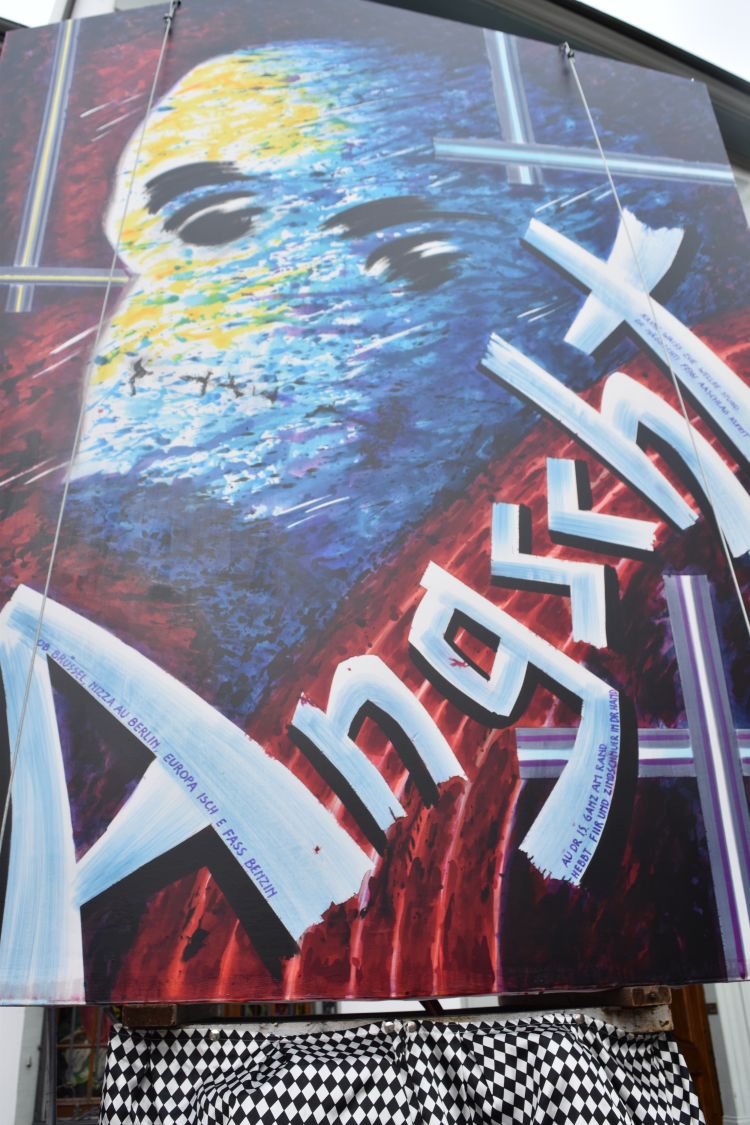
Many lanterns are dark. “Angscht” or “fear” is omnipresent.

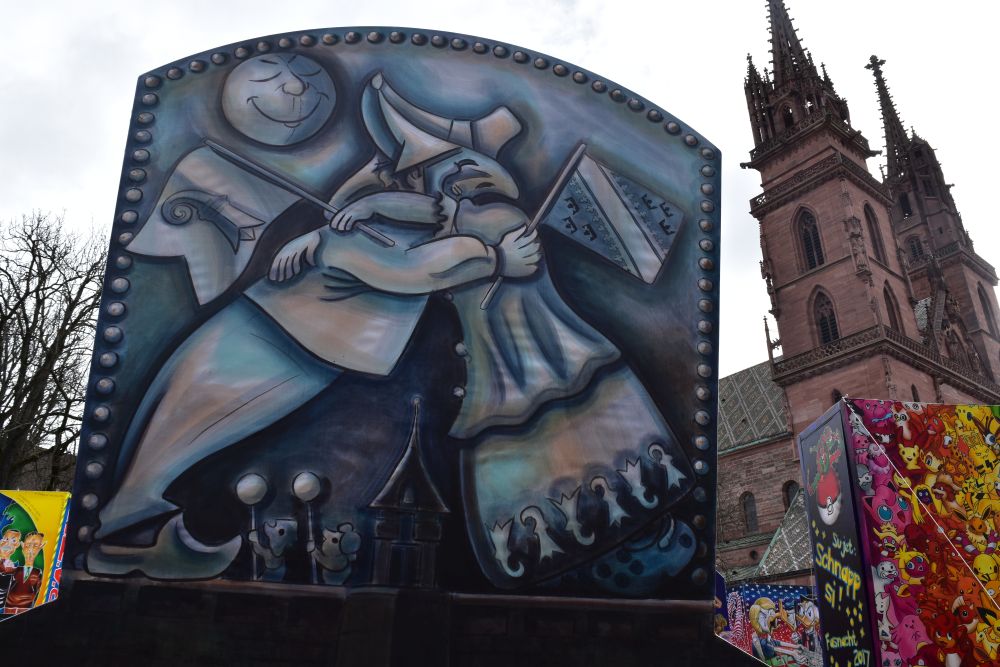
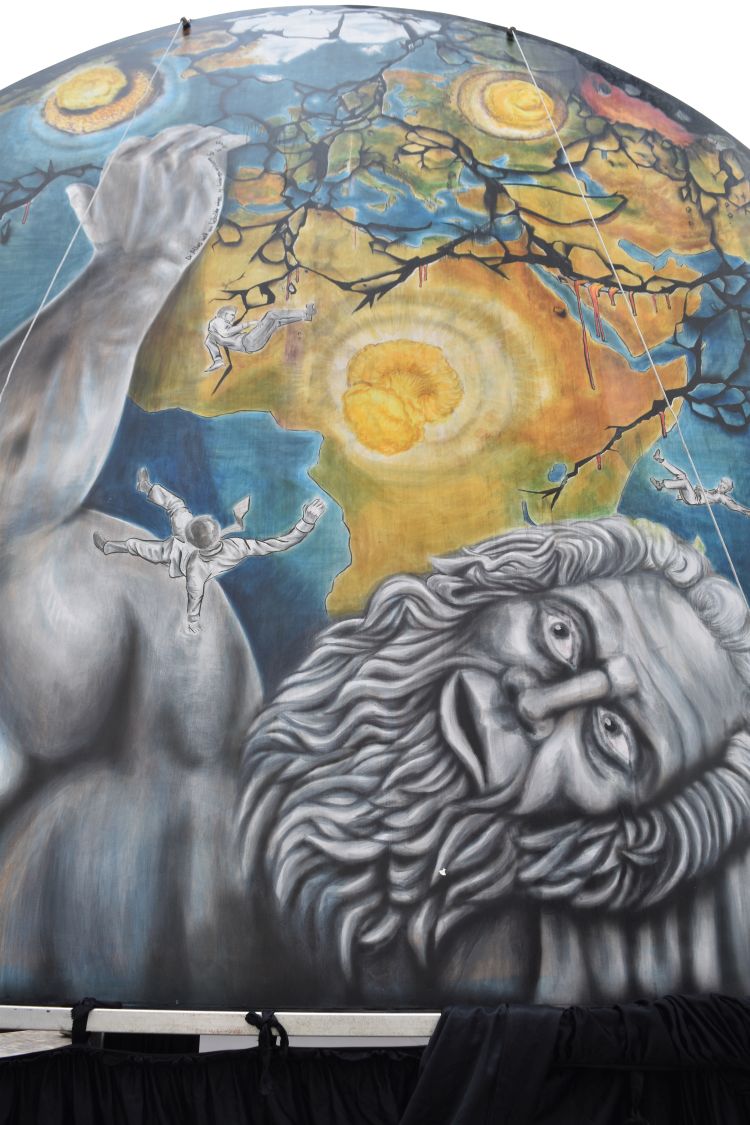
The Lälli Clique presents Atlas trying to prevent the world from falling apart.

Idefix, the small dog of Obelix, swears “bim Teutates” and underlines his anger with his paw: D’Wält spinnt” (the world is crazy –  but I love Basel),…

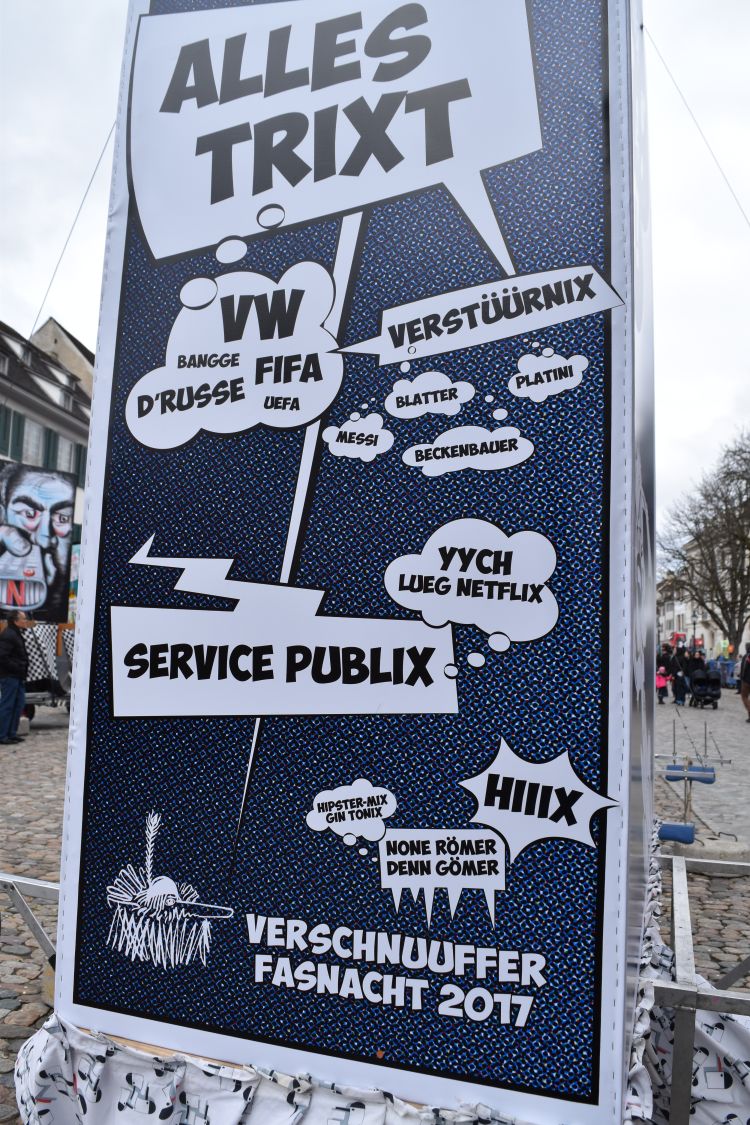
… they are are all cheating (alles trixt)… VW, Fifa and Bangge (the banks)… and they are paying no taxes (verstüürnix)… and Service publix? – Well, I watch Nexflix”

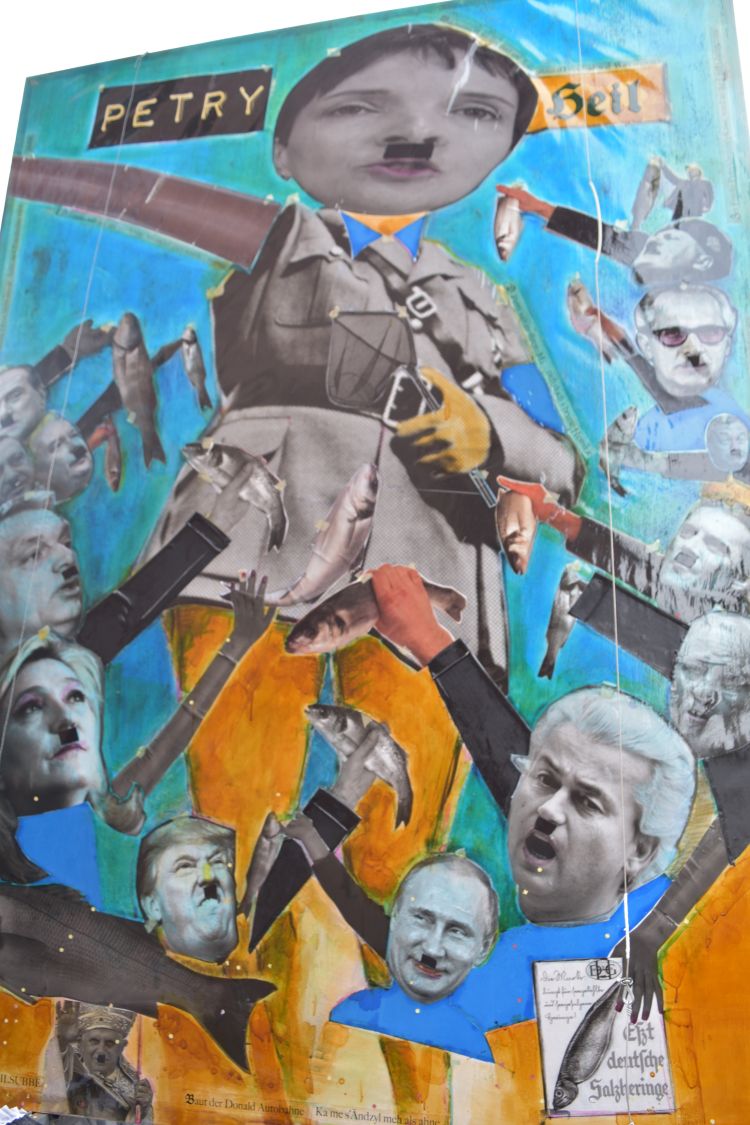
“Extrem rächts” or extremely right-wing – is a tendency that worries some of the carnival groups. Ghosts from the past?

.

Some more joyful themes: Heidi, holes in Switzerland, Pokemons and more

This patriotic Swiss scenery – an almost perfect world – is brightening up the mood: Heidi, Spyri’s novel about the girl from the mountains, has recently been filmed. Here she is acting in front of the camera with Gaissepeter (goatherd Peter).

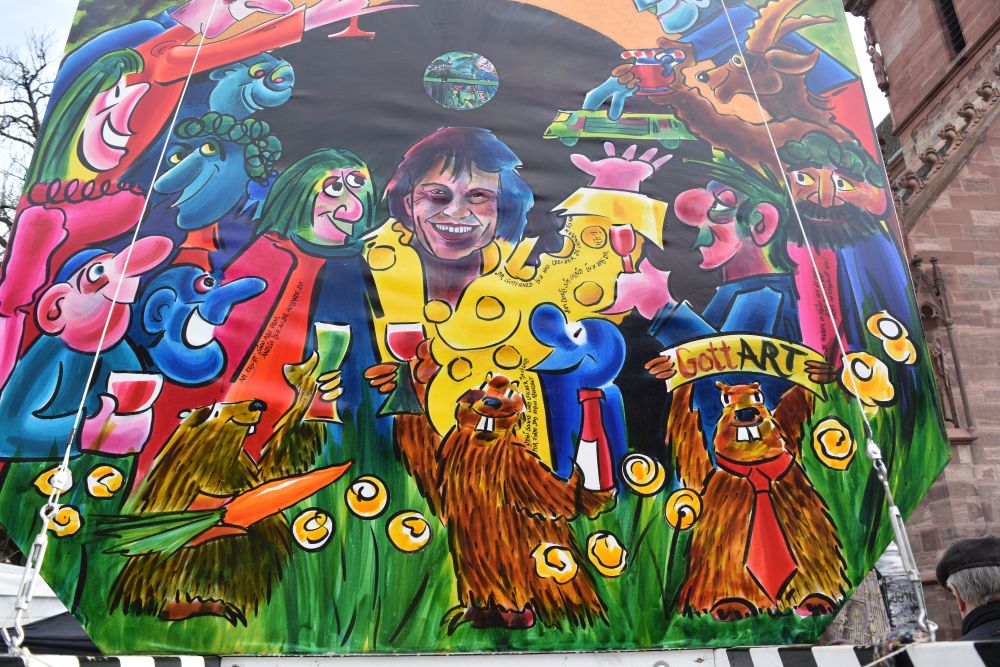
The new Gotthard railway tunnel has been inaugurated shortening travel time between the Ticino and the rest of Switzerland. For the inauguration festîvities, our Federal Councillor Doris Leuthard wears a jacket with round holes – resembling our cheese from the Emmental. Her jacket is controversial – many like it and some do not. “GottArt” for the Gotthard is a punch and the marmots welcome the tunnel as well. I think, the jacket with holes is a great and courageous idea.

Pokemons are hidden all over Basel and around the cathedral. This hype became a wonderful topic full of fantasy, primarily for some “Jungi Garde” or kids in the carnival groups.

The City-Hupfer allows tourists to hop (hupfe) AROUND the Basel city center. AROUND the city center, because much of the center is car free: The tourists have to leave the bus and walk to reach the sights. The number plate is “BS or Basel 2017”.

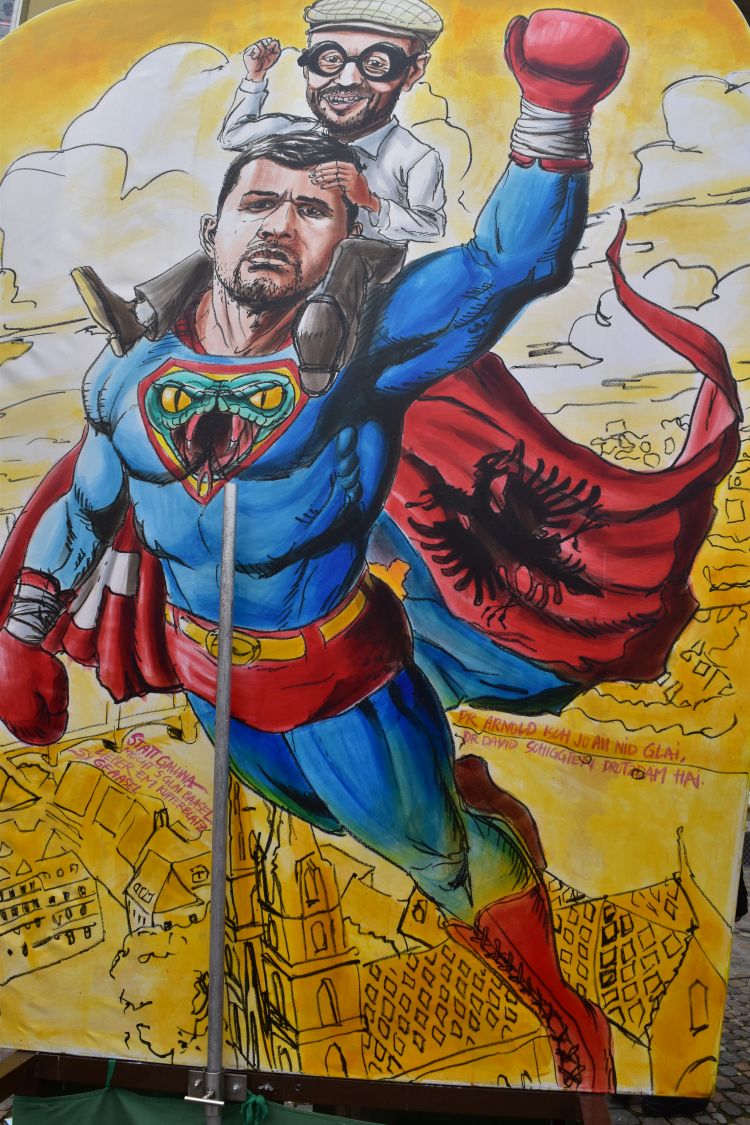
The Swiss boxer Anton Gjergjaj is very successful. Here he is as batman with the black double eagle on his red coat. In the cortège (parade), the drummers and pipers were cobras.

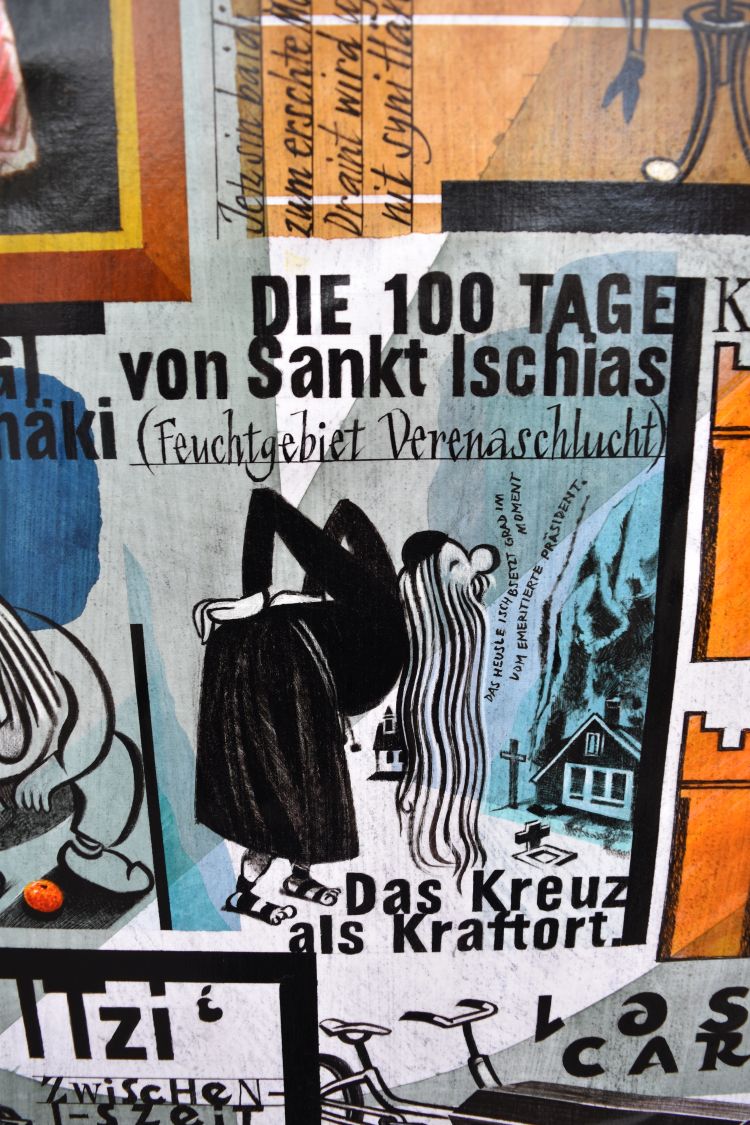
This lantern is full of details commenting the world. I particulary like “the hundred days of Sankt Ischias” in the damp Verena canyon. The monk is suffering from sciatic pain (Ischias). “Das Kreuz als Kraftort” translates to “the cross as a place of power”. In German it is a punch, as “Kreuz” can be both the Christian “cross” and also the lower part of the back (where the sciatic pain hurts).

.

Yet another theme: Food

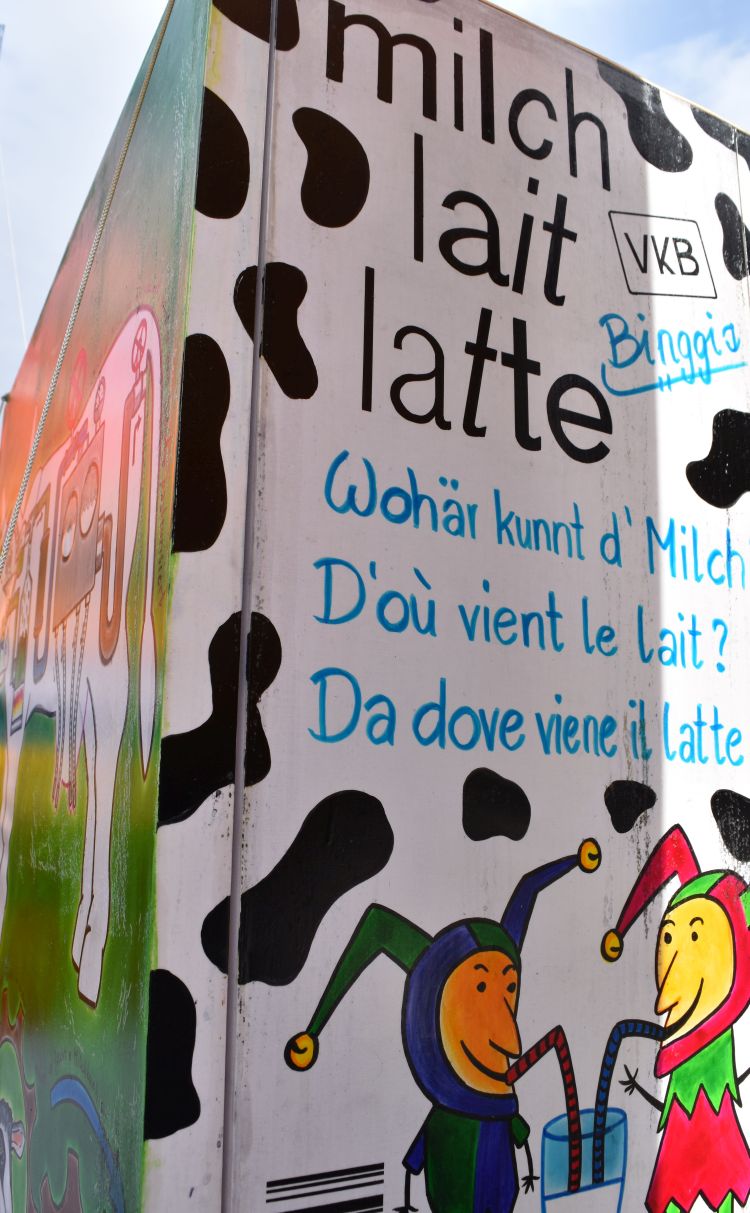
The Binggis (young kids) ask where the milk comes from, and they ask it in German, French and Italian. Well, we buy our milk in shops, and it comes in cardboard boxes – like the shape of the lantern. Kids from towns may not know the real source – cows, as the white color and black spots suggest.

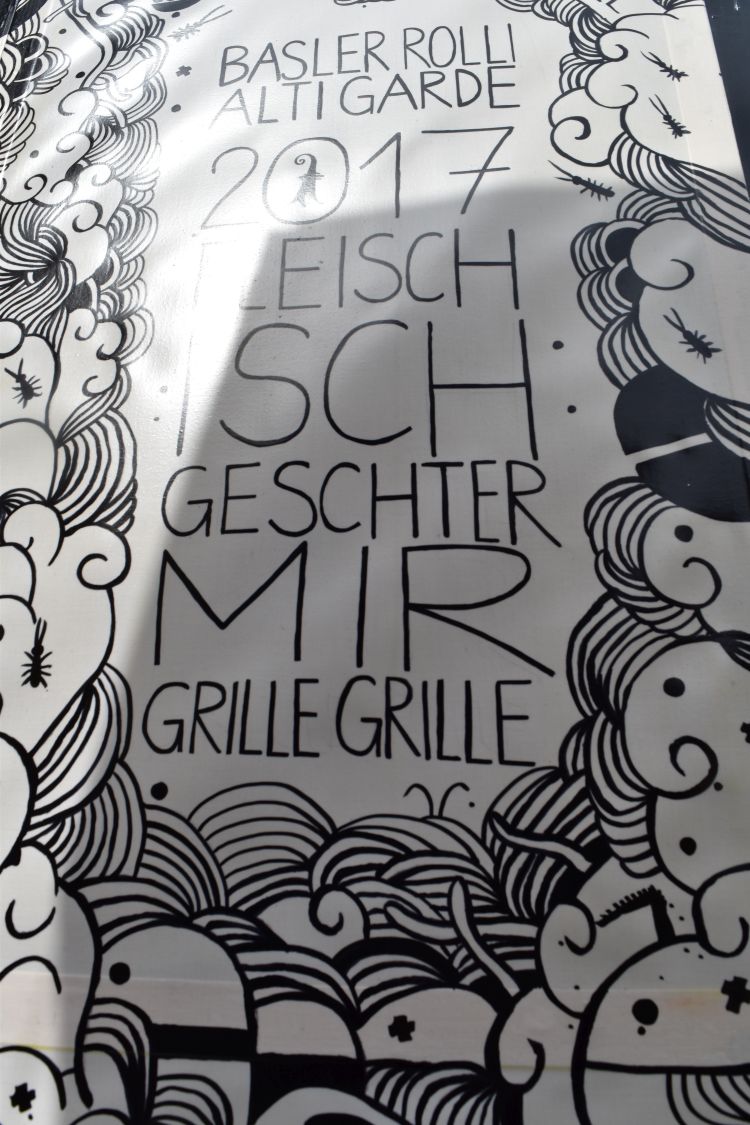
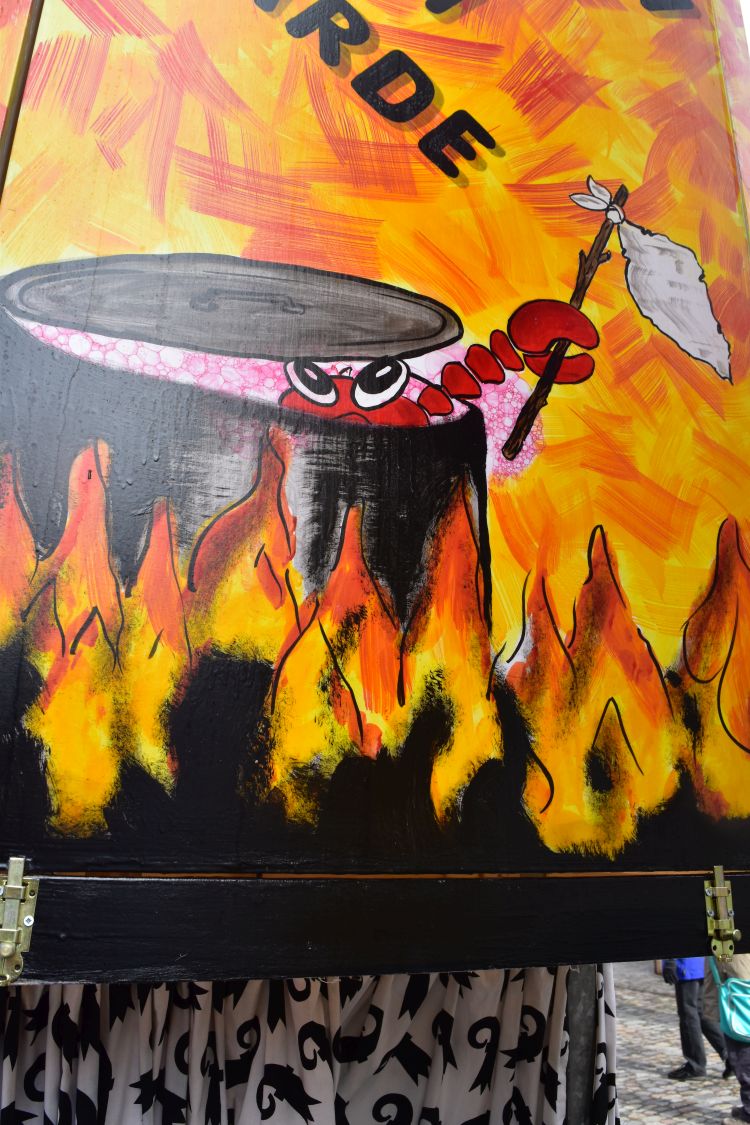
“Fleisch isch geschter – mir grille, grille” (Meat is yesterday, we are barbecuing, barbecuing). “Grille” is Swiss German for “to barbecue” and “grille” is also the insect “cricket” that we may eat in future (instead of meat). “Grille” is a punch that only works in Swiss German.

The Queerschleger look for healthy “super food” such as carots, mais, cucumbers or fennel. “Güürkli” or “gherkins” are another option. In all… juice and organic vegetables are good for our heart, and also “gsund fir d’Katz und dr Hund” (healthy for the cat and the dog).

On this same lantern, the crab shows the white flag… and it may be successful, if we restrict our diet to nothing but vegetables.

May this white flag brighten the often dark mood of this year’s carnival and give hope that Atlas will hold the world together such that next year’s carnival will present more bright topics.

Yes, next year in 2018, Fasnacht will be on February 19th to 21st. As always it will start on Monday at 4 a.m. with the Morgestraich (“morning stroke”, see the video of radio Basilisk). It is celebrated with the Cortège (parade), Schnitzelbängg (carnival songs), Kinderfasnacht (children’s carnival), Guggekonzärt (“dissonant” brass music) and Schyssdräggzygli (small groups piping and drumming). It ends with the Endstreich (“final stroke”) on Thursday 4 a.m. The Fasnachtscomité explains it all and the internet is full of reviews and videos. I always enjoy the creative skill that the groups (called “Cliquen”) demonstrate year after year and look forward to 2018.


Around Basel on a rainy day – in search of the Benkenspitz or Bänggeschpitz

Today it is a rainy and rather warm mid-February day in 2017. I set out to discover the Benkenspitz or “Bängeschpitz”. This is a narrow forest “wedge” of Benken (Switzerland) extending into France between the two French villages Hagenthal and Neuwiller (the border between Switzerland and France is drawn in pink on this Swissmobility map).

benkenspitz

This “wedge” called “Benkenspitz” is some 900m long and some 100m wide. The narrowest place is at the “entrance” in the south – just 62m wide. In the Internet I found some secondary information that says this forest “wedge” has already belonged to Benken, when Basel acquired it in the early 16th century. It is assumed that this might have been a good place for hunting. Actually I came across quite a few hunting stands in this area both on the Swiss and on the French side.

My  blog “Around Basel – looking for old boundary stones on a sunny cold day” talks about my cold winter walk to the boundary stones between Oberwil (that until about 1800 belonged to the Bishopric of Basel) and Benken (that – with Biel – had been acquired by the town Basel soon after 1500). Today it is rather warm and rainy. The Passwang is still covered with snow.

aaa_0422-small

I am on the Bielhübel in front of the water reservoir with its natural pond.

aaa_0419-small

Not far from here are the beautifully restored boundary stones from the 17th and 18th century that mark the border between Oberwil (Bishopric of Basel) and Biel-Benken (belonging to Basel).

aaa_0426-small

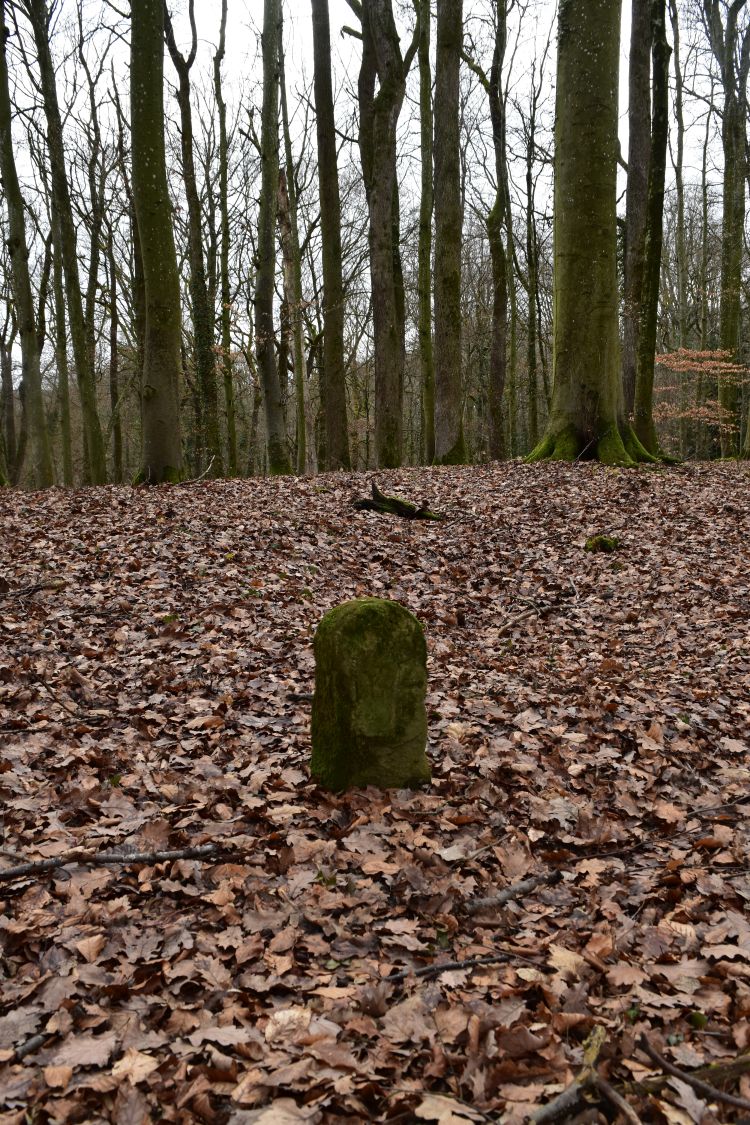
I continue my way above Biel and come across a lady on a very, very dirty mountain bike. “Have you seen anyone on a mountain bike – I have lost my husband… no?… “Matthias, Matthiaaaas”… I do not want to frighten the animals, there is so much deer around here… I am from Spain… Matthiaaaas, Matthiaaaaaaass…” and finally Matthias replies and she is happy. “You are looking for boundary stones?… there is one not far from here…”, she says knowing well the history of Biel-Benken. Right, here it is, shortly before reaching the Swiss hiking path marked in green at the Swiss-French border.

aaa_0429-small

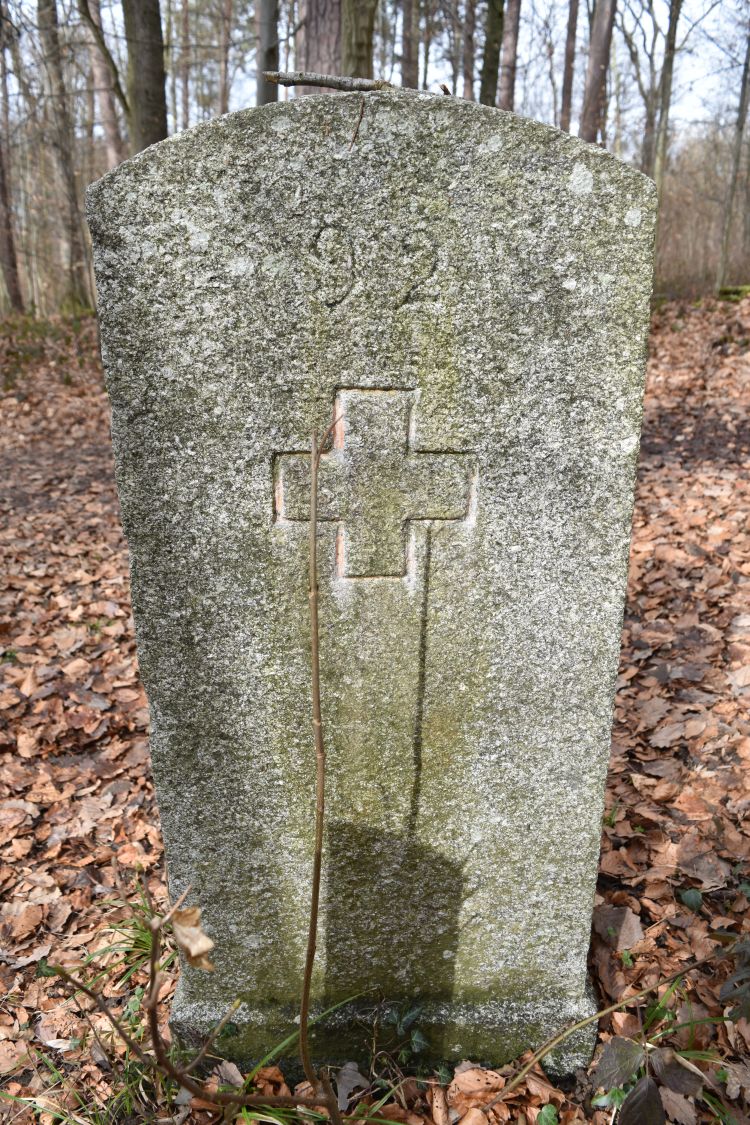
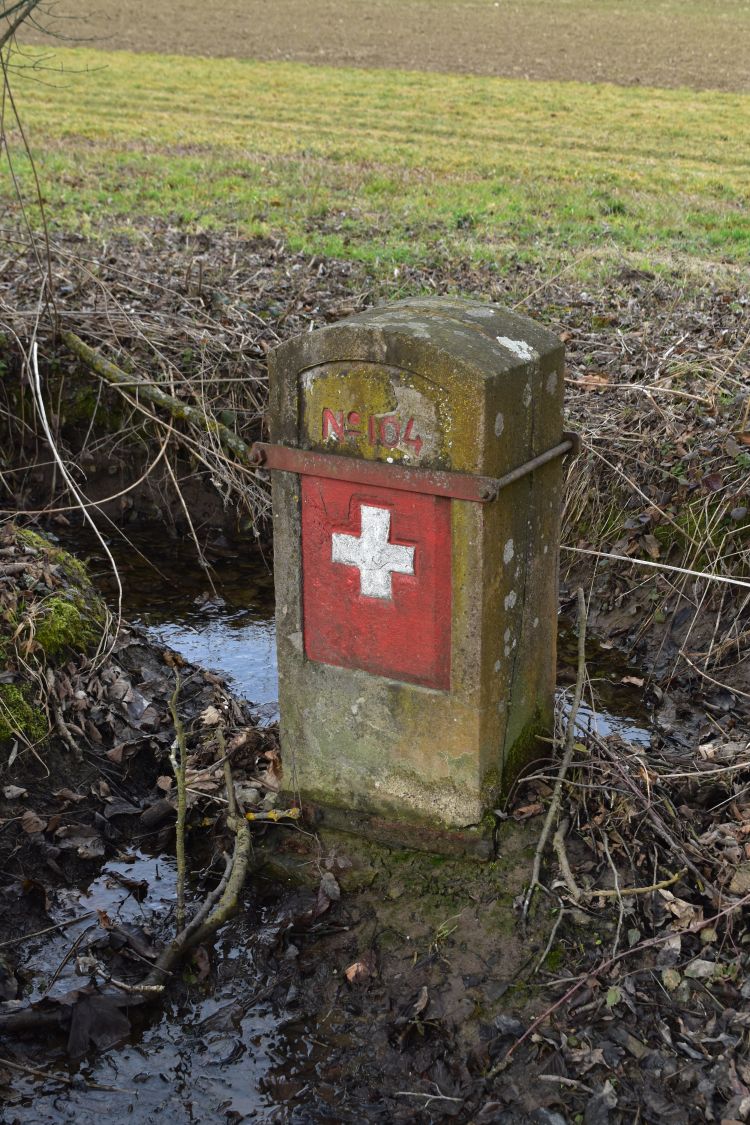
From here I continue along the Swiss-French border between Neuwiller and Biel-Benken. A small footpath follows the boundary stones, marked with the Swiss cross on one side…

aaa_0433-small

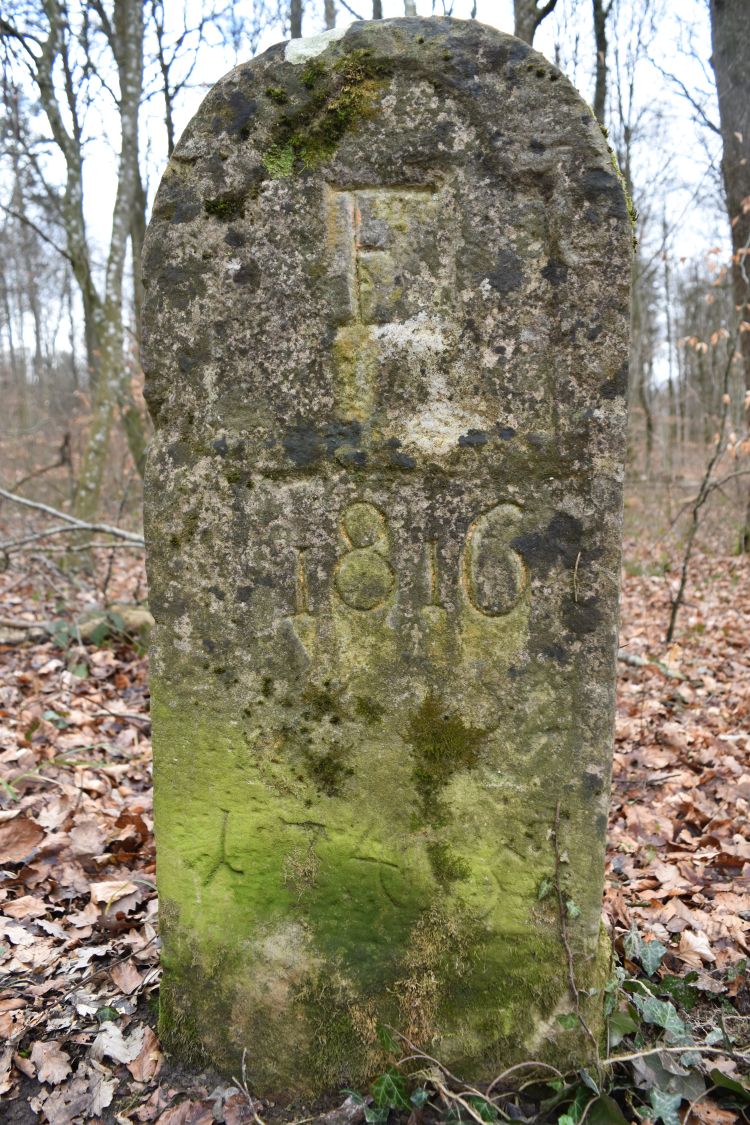
… and with the “F” for France on the other side (1816 – this was just after the Congress of Vienna in 1815).

aaa_0434-small

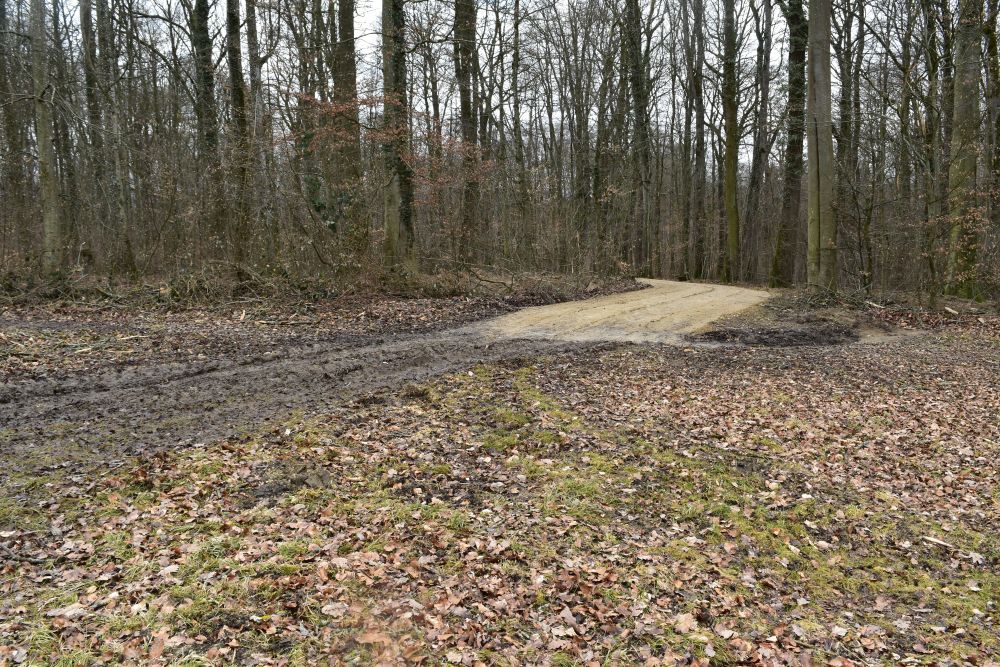
Later this well prepared hiking path ends and continues as a muddy path. EXACTLY where the nice path ends and the mud begins is – guess what – the border between France and Switzerland.

aaa_0437-small

I cross this road to continue following the boundary stones. I meet a lady with two dogs. She comes from Neuwiller in France and takes out dogs of various owners. We speak French with one another while one of the dogs barks loudly at me – with a French accent.
aaa_0440-small

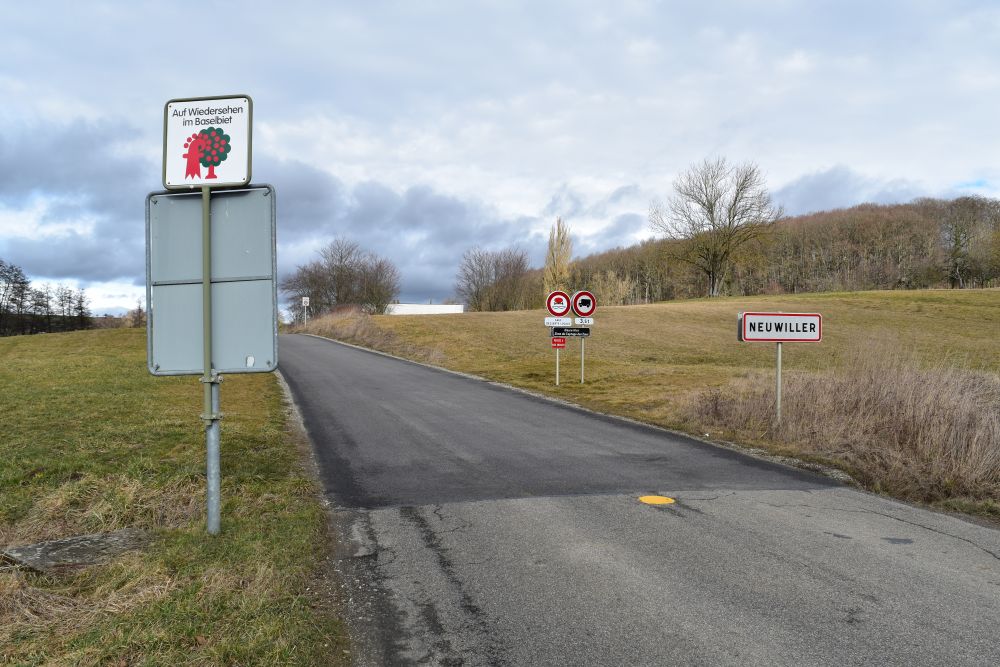
After having paved my way through a muddy meadow, I cross the road connecting Benken with Neuwiller. Again, it is very clear, where the border is. Baselland (Basle Country), the canton of cherry trees, says good-bye to the cars crossing the border and driving to Neuwiller in France.

aaa_0444-small

I cross the road and follow the ditch that is the border between Switzerland and France. This one boundary stone is nicely coloured on the Swiss side.

aaa_0449-small

Still following the ditch I approach the “entrance” of the Benkenspitz. It starts on the meadow between the two forests.

aaa_0452-small

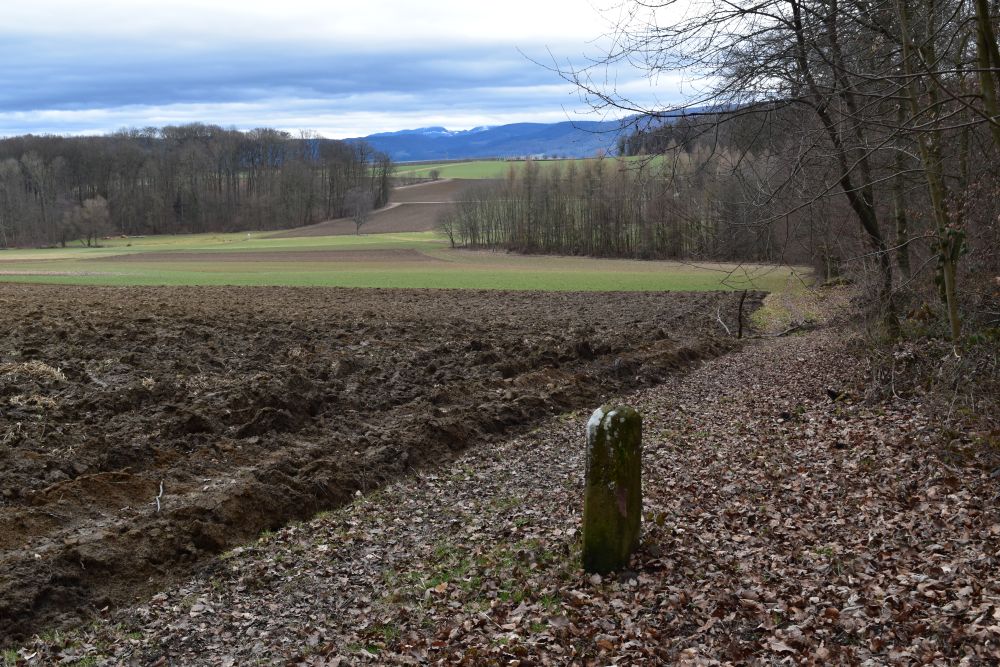
I first see the boundary stone to the west of the “entrance”. I am confused, but then I find the stone marking the east of the “entrance” to the forest “wedge” and enjoy the view of the Jura hills in Switzerland.

aaa_0462-small

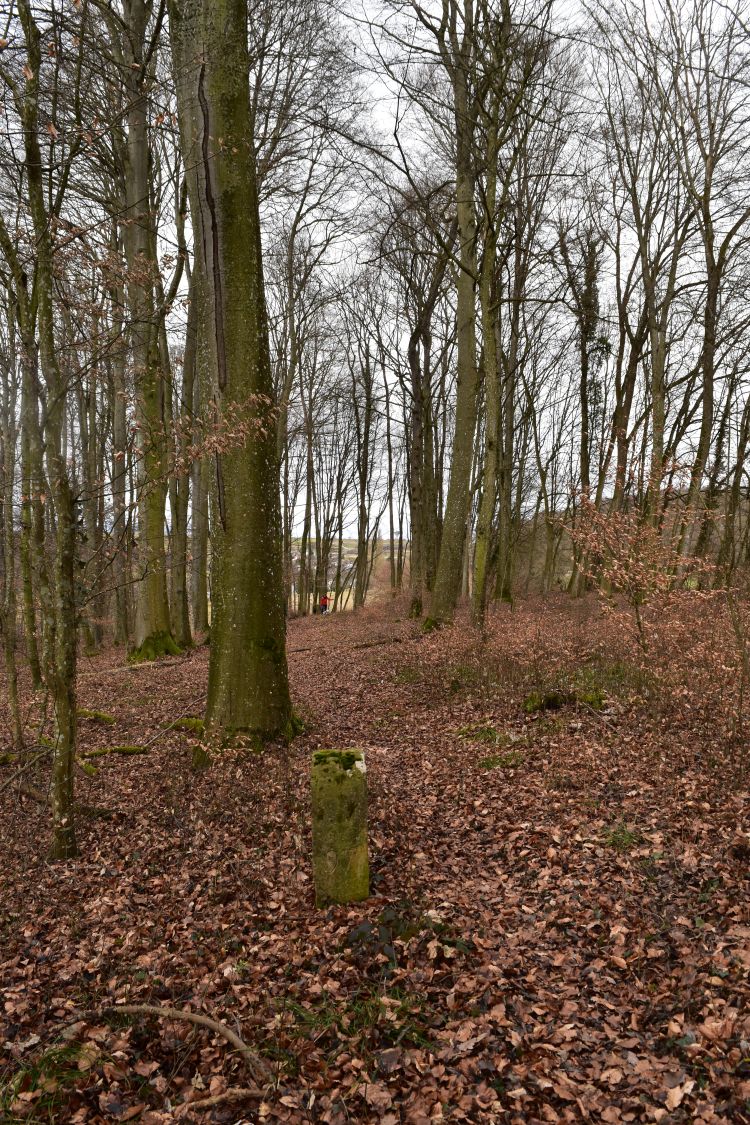
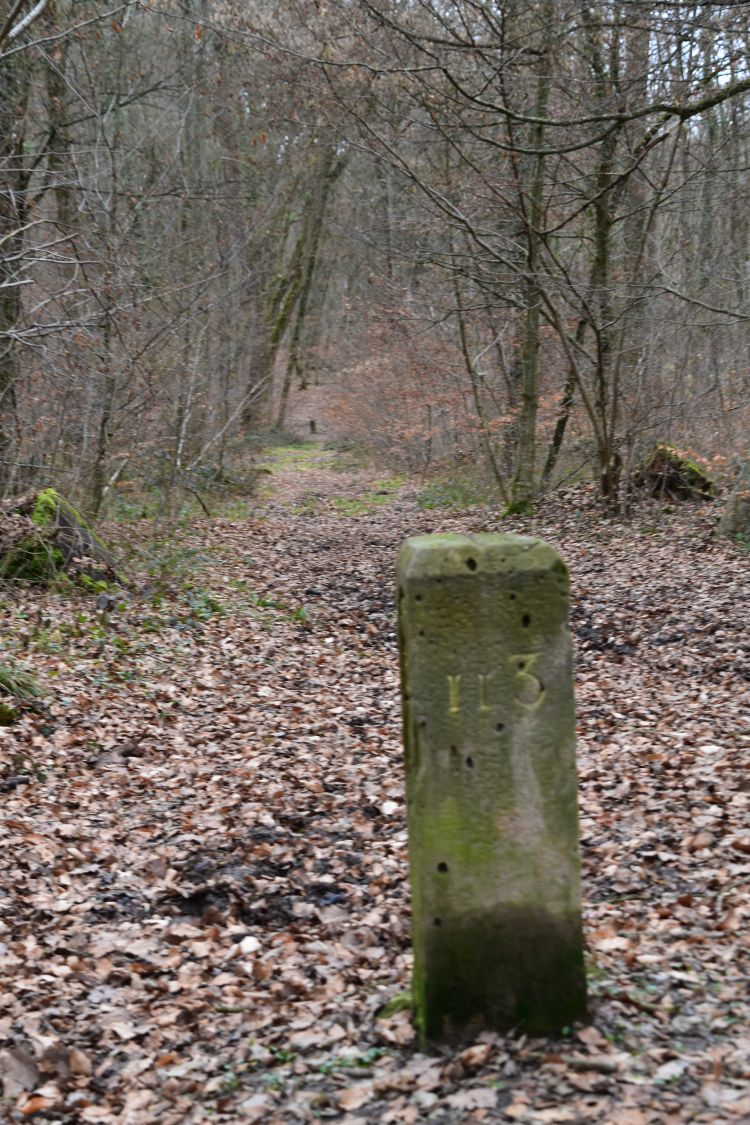
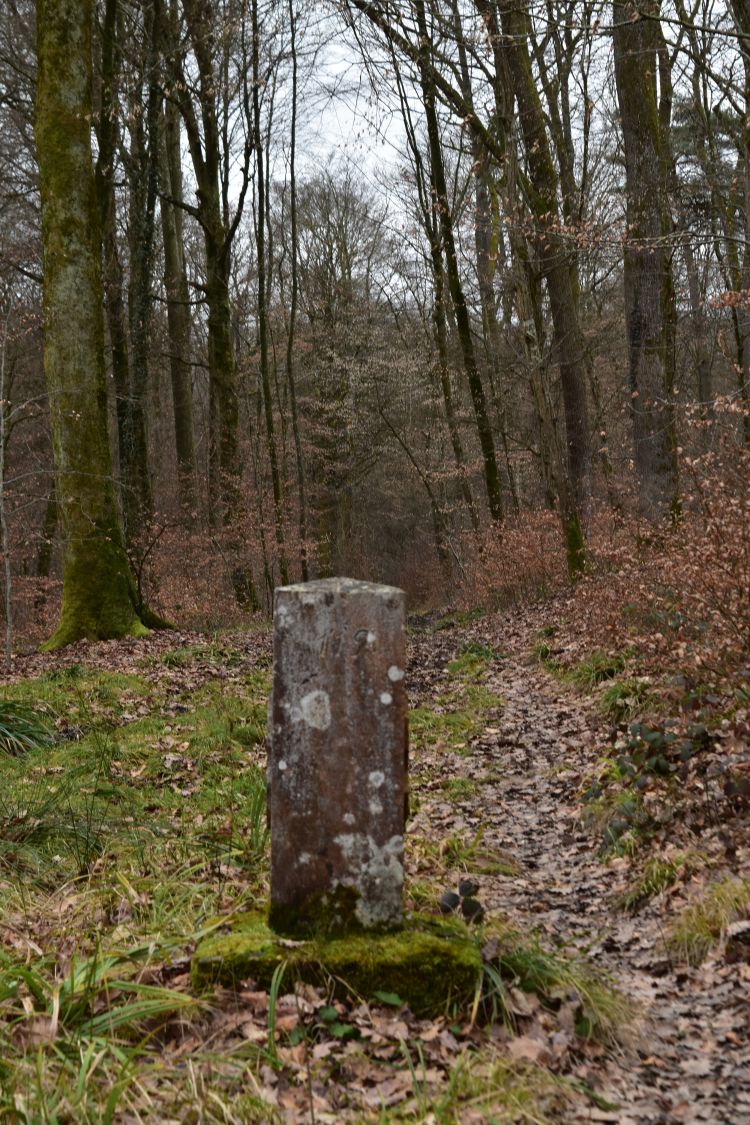
I continue along the east line – one boundary stone after the next to make it all clear, where Switzerland ends in this narrow wedge and where France starts.

aaa_0463-small

A huge tractor cuts trees – in France. I  have reached the end of the Swiss wedge called “Benkenspitz” and return back along the west border – again well  marked.

aaa_0469-small

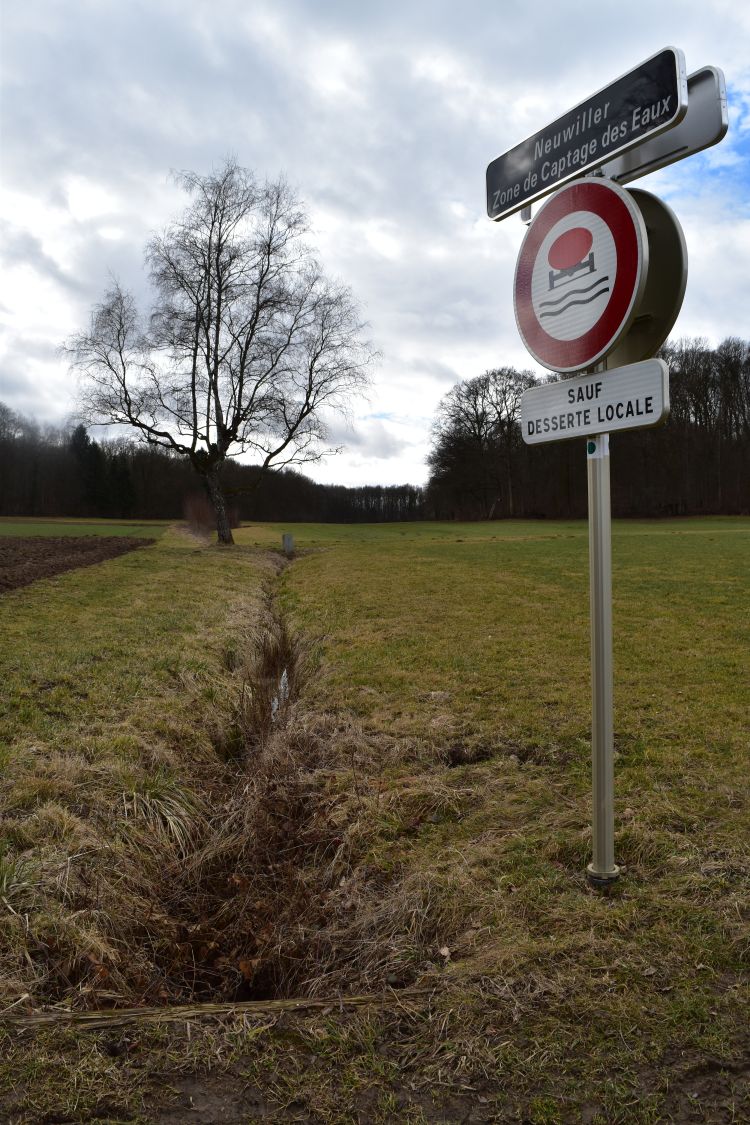
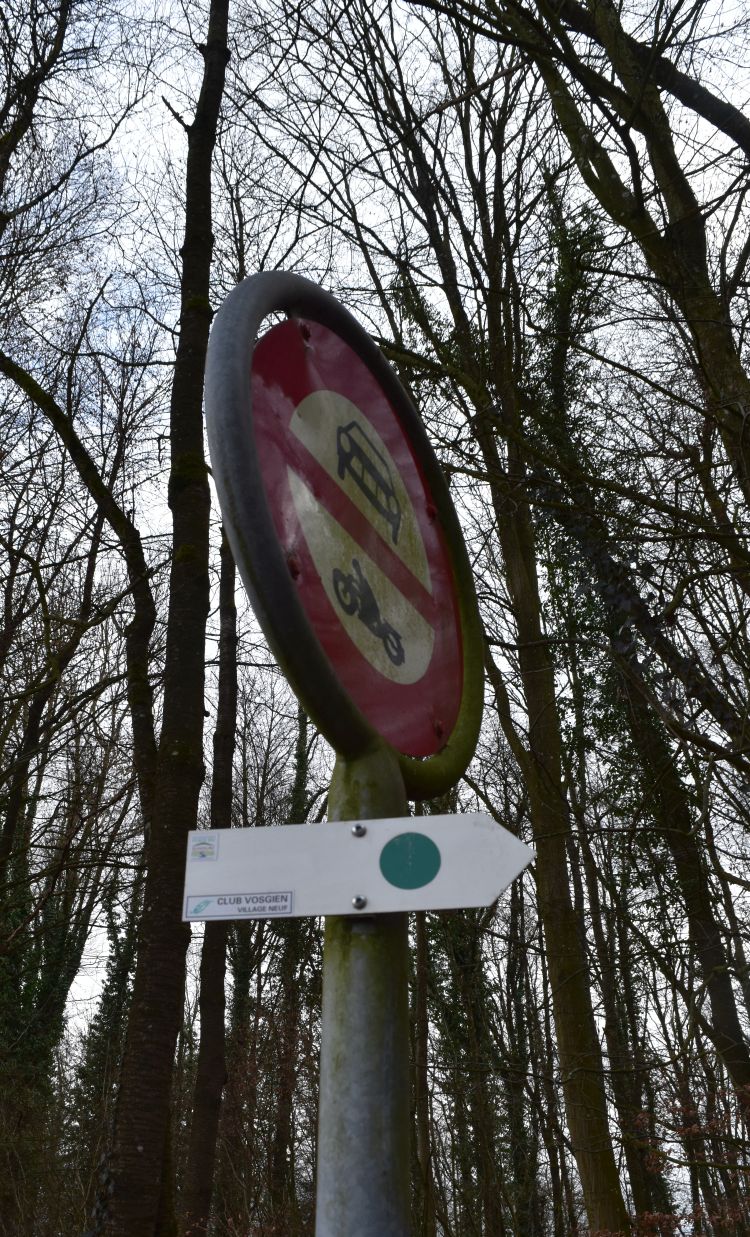
I leave the Benkenspitz behind me and continue to follow the French-Swiss border. This is an interesting cooperation: A Swiss traffic sign (only residents are allowed to drive here) and a French hiking sign of the Club Vosgien.

aaa_0474-small

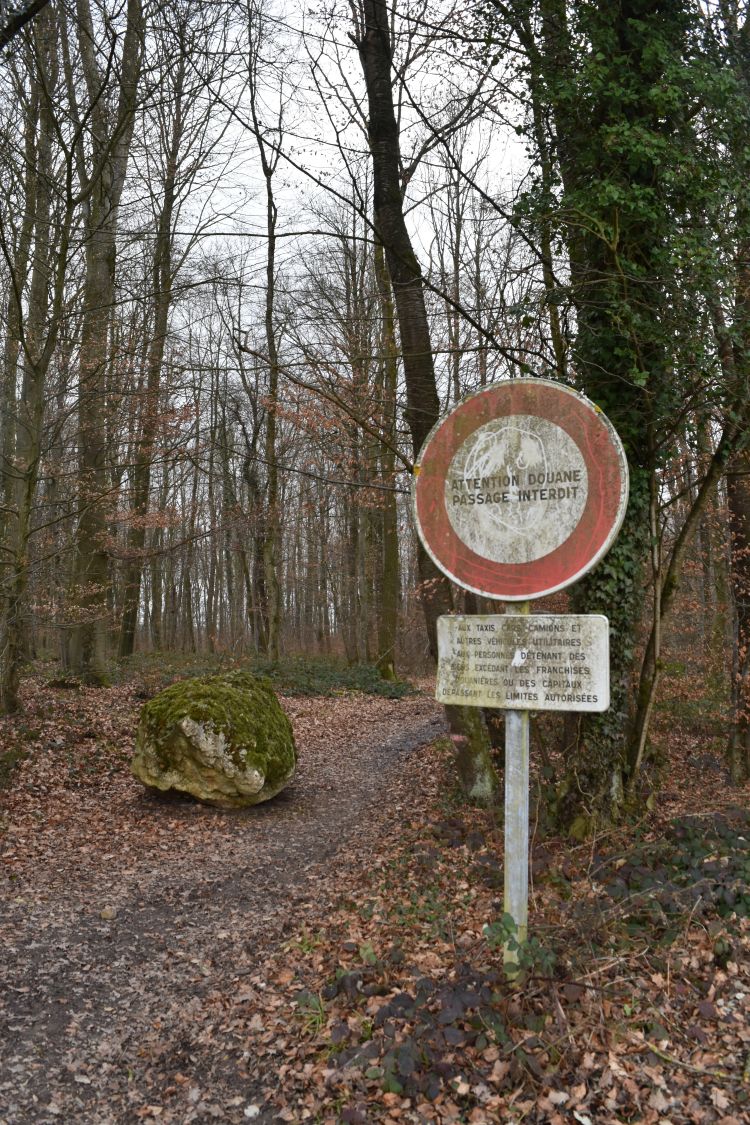
And – across of this French-Swiss cooperation – be aware, following this hiking sign takes you to France, only allowed when having nothing to declare!

aaa_0475-small

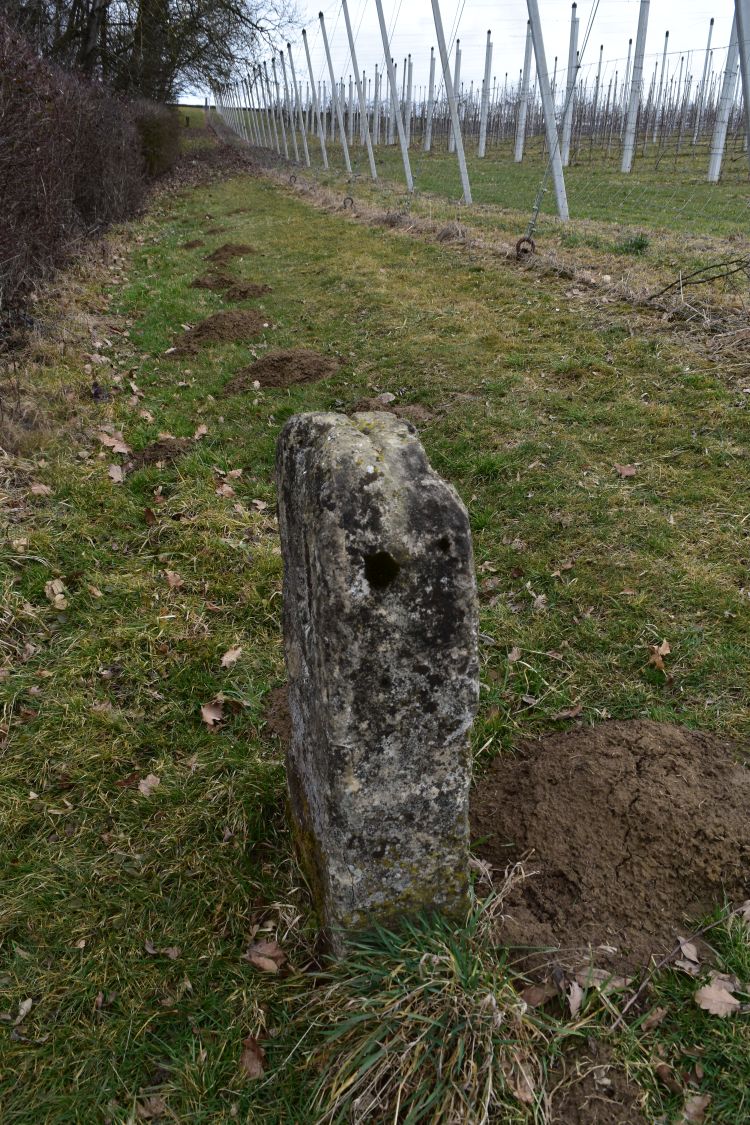
Along vineyards the boundary stones lead me down towards Benken.

aaa_0477-small

I take the bus back to Bottmingen – good that public transportation works so efficiently.

Around Basel – looking for old boundary stones on a sunny cold day

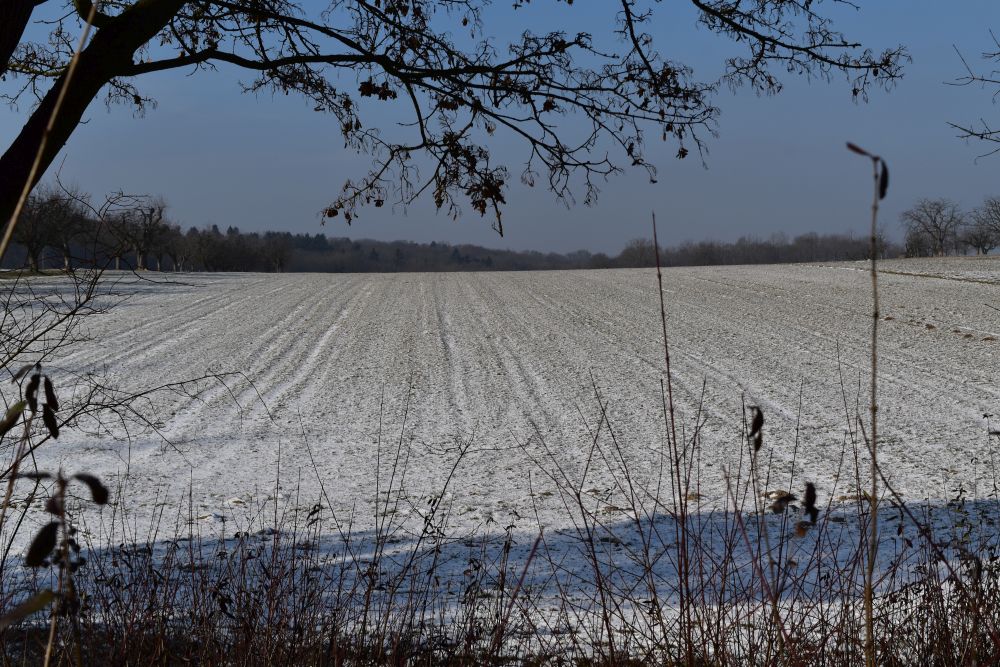
It is one of those winter days in January when I am happy to live in Basel, because the sun shines here, while the plateau of Switzerland including Zurich is covered with clouds. It is a sunny, but very, very cold day today. The fields on the Bruderholz are “dressed up” for winter.

aaa_0103-small

I start my winter hike here.

gernzweg-7

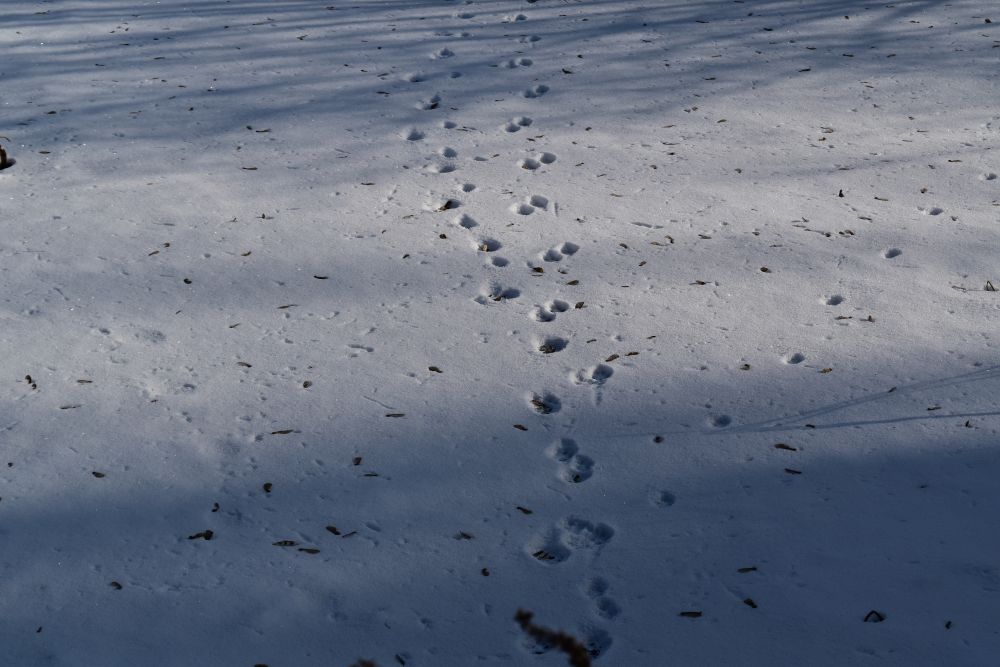
The small nature reserve lakes are frozen and covered with snow that are decorated by animal tracks.

aaa_0110-small

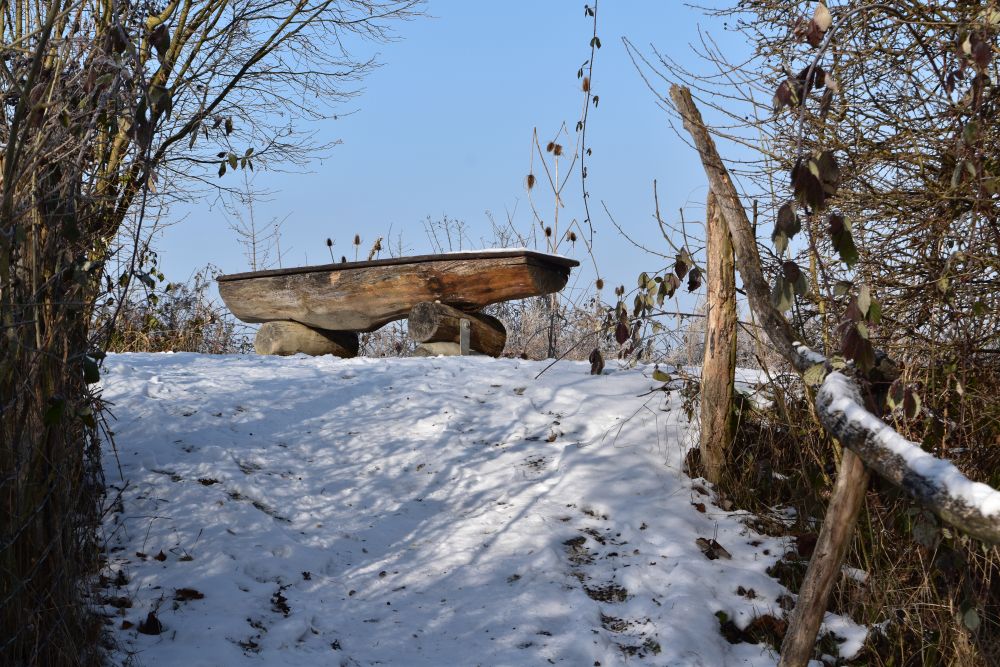
The bench looks inviting, but a little cold.

aaa_0111-small

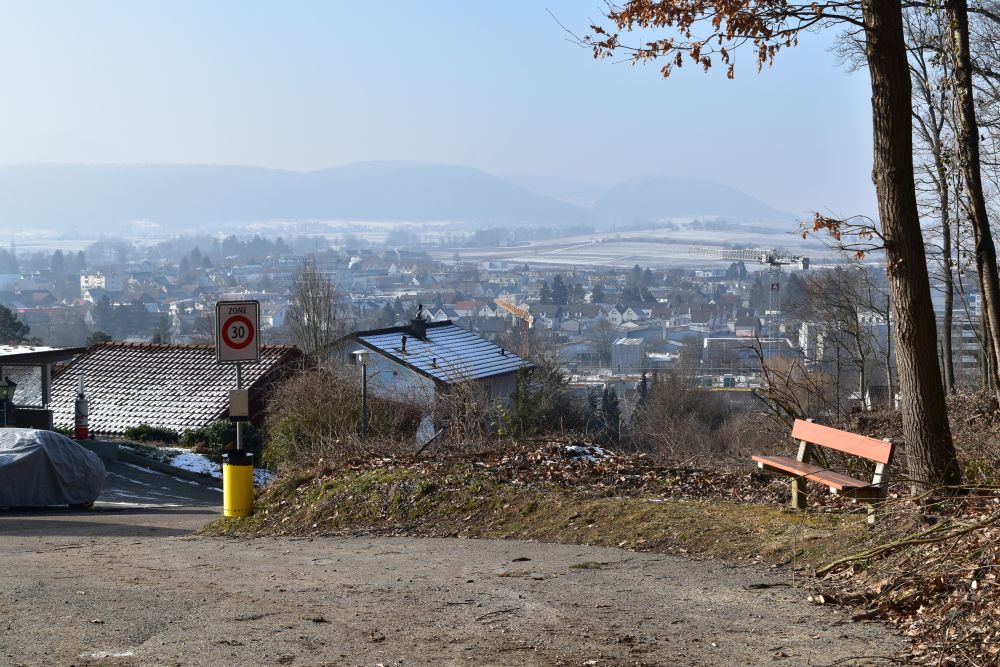
I approach Therwil and capture the view of the Blauen mountain range and the border with France in the haze (looking west).

aaa_0114-small

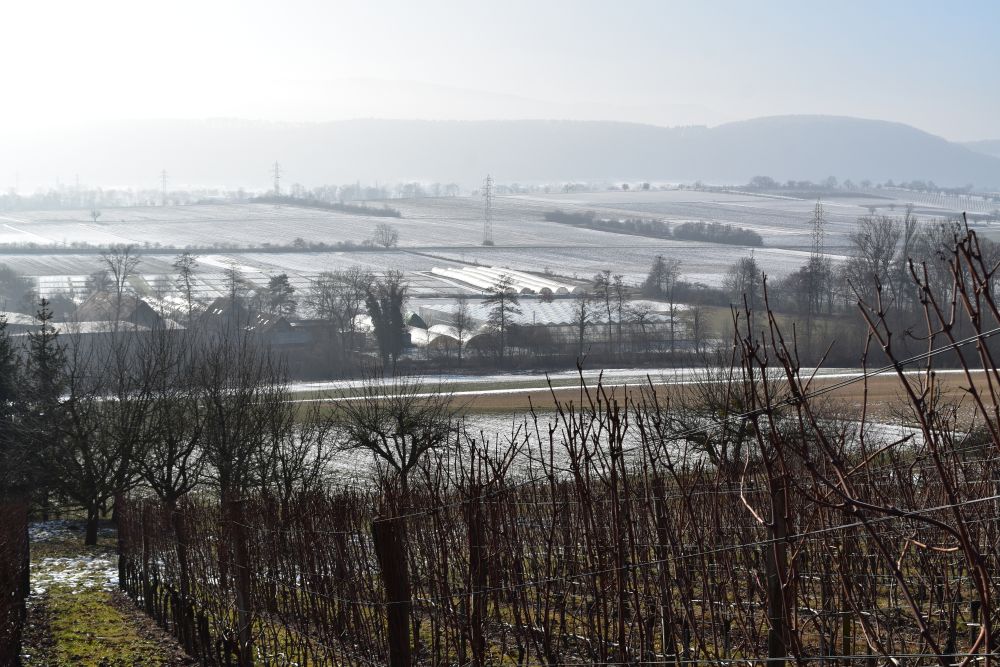
I have crossed Therwil and look south across the vineyards of Therwil.

aaa_0115-small

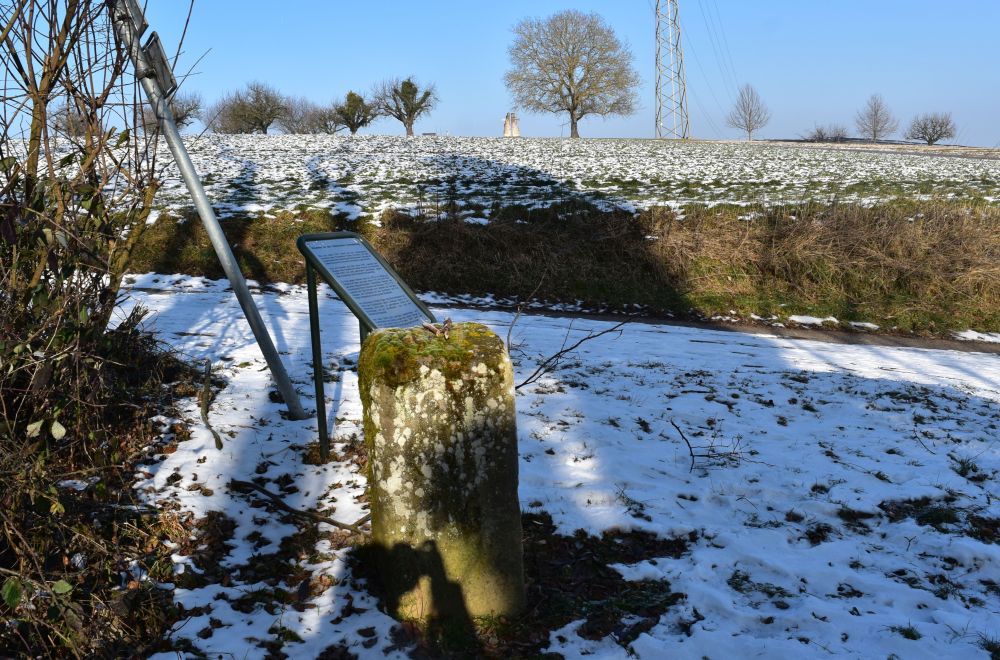
In Therwil, I am on the ground of the former Prince- Bishopric of Basel. Then I approach the border of protestant Biel-Benken that has belonged to the city of Basel. The border between Biel-Benken and Therwil/Oberwil has been carefully marked by boundary stones. This is the first boundary stone I come across – I call it  “corner stone”.

aaa_0123-small

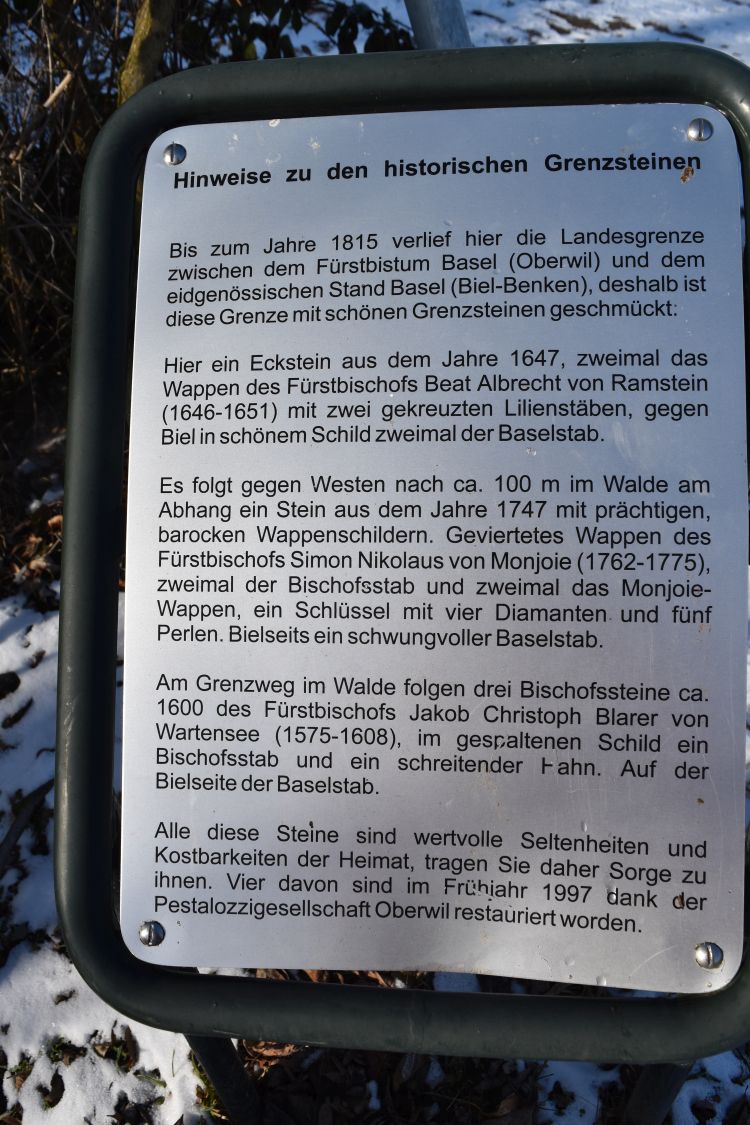
Next to the stone, this panel explains the history.

aaa_0119-small

The border between Therwil/Oberwil and Biel-Benken was a major frontier in history. In the beginning of 16th century, Basel acquired areas from the impoverishing noblemen, one of these areas being Biel-Benken. Also at that time, Basel joined Switzerland and became protestant. The bishop of Basel had to leave “his town”; he moved to Pruntrut and continued to belong to Germany and the German emperor. The possessions of the bishop were called “the Prince-Bishopric of Basel”. The bishop owned Therwil and Oberwil that were located between Biel-Benken and Basel. Biel-Benken – belonging to Basel – was an exclave.  Around 1800 the Prince-Bishopric was dissolved and in 1815, the Congress of Vienna allocated Therwil and Oberwil to Basel (see also André Salvisberg u.a.: “Historischer Atlas der Region Basel”, Christoph Merian Verlag 2010). The once important border separating two countries (Germany and Switzerland) became a border separating just communities.

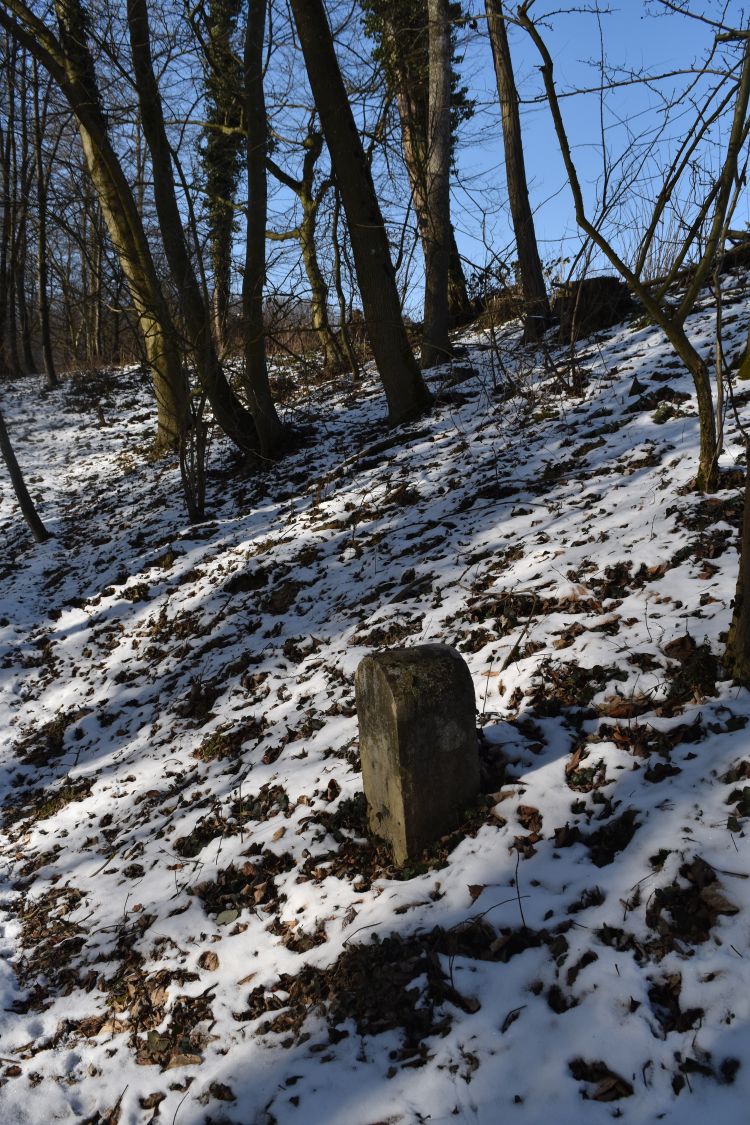
The (historical) border around Biel-Benken is adorned with boundary stones from the 17th and 18th century marking the frontier between Basel and the Prince-Bishopric of Basel. I look for the stones in the forest above Biel-Benken.

aaa_0128-small

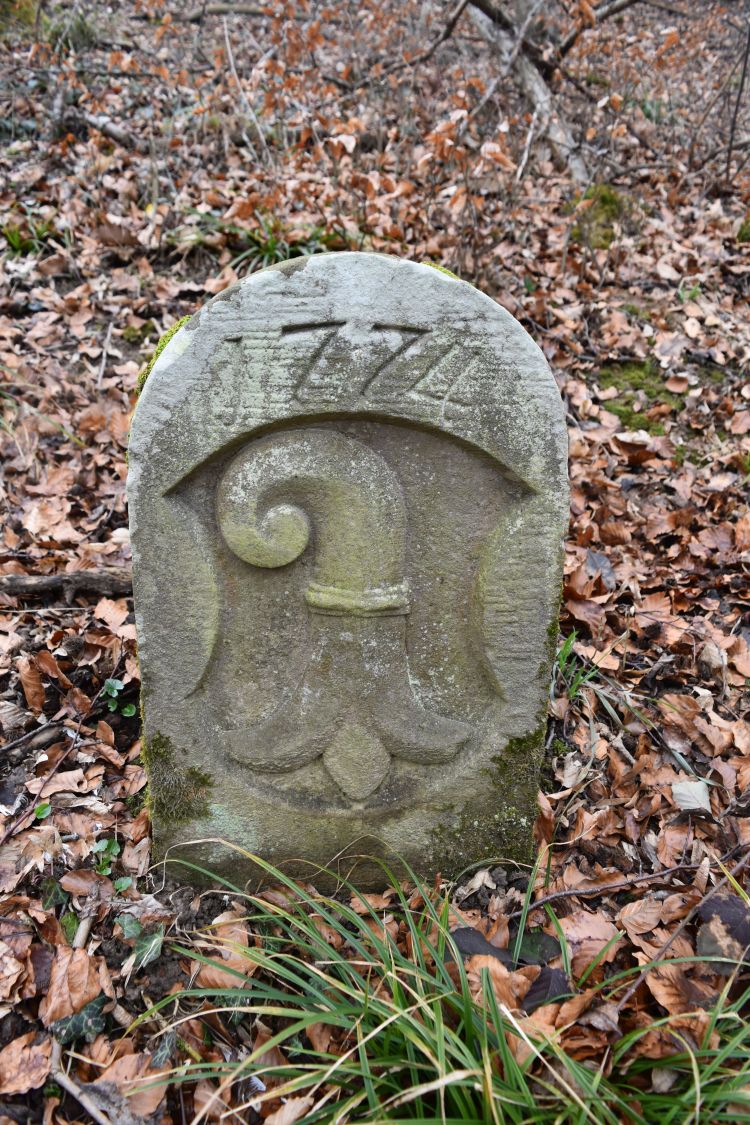
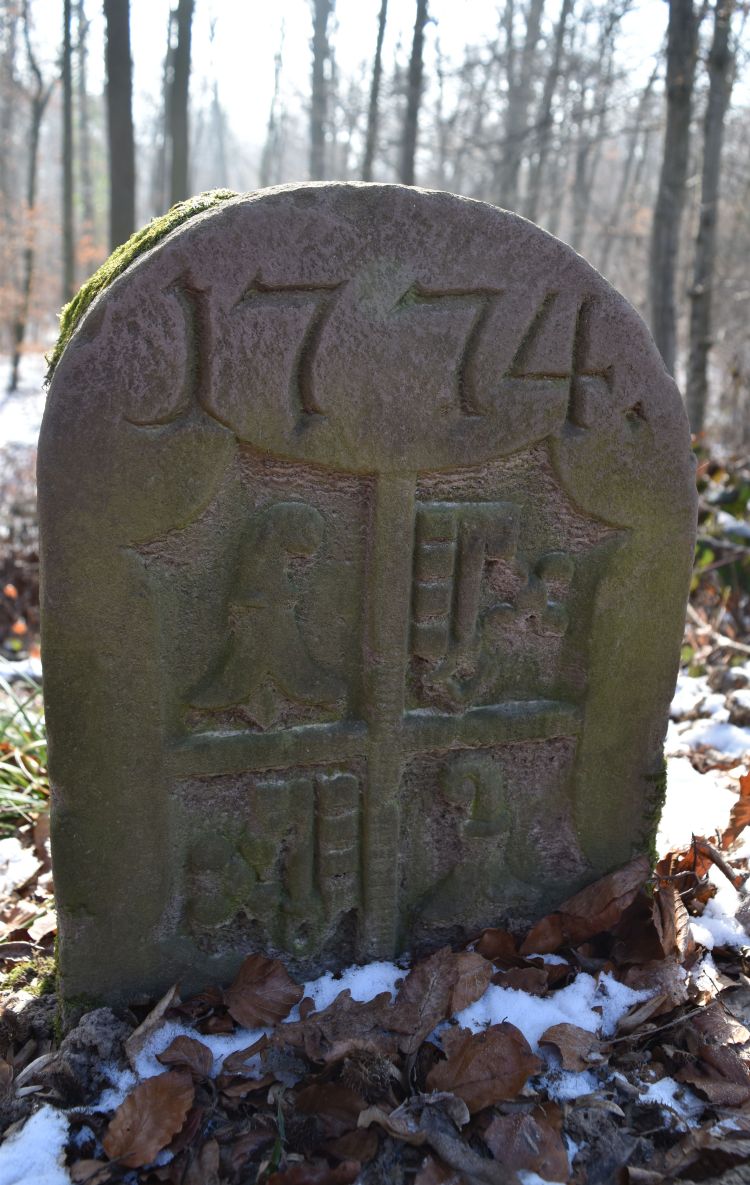
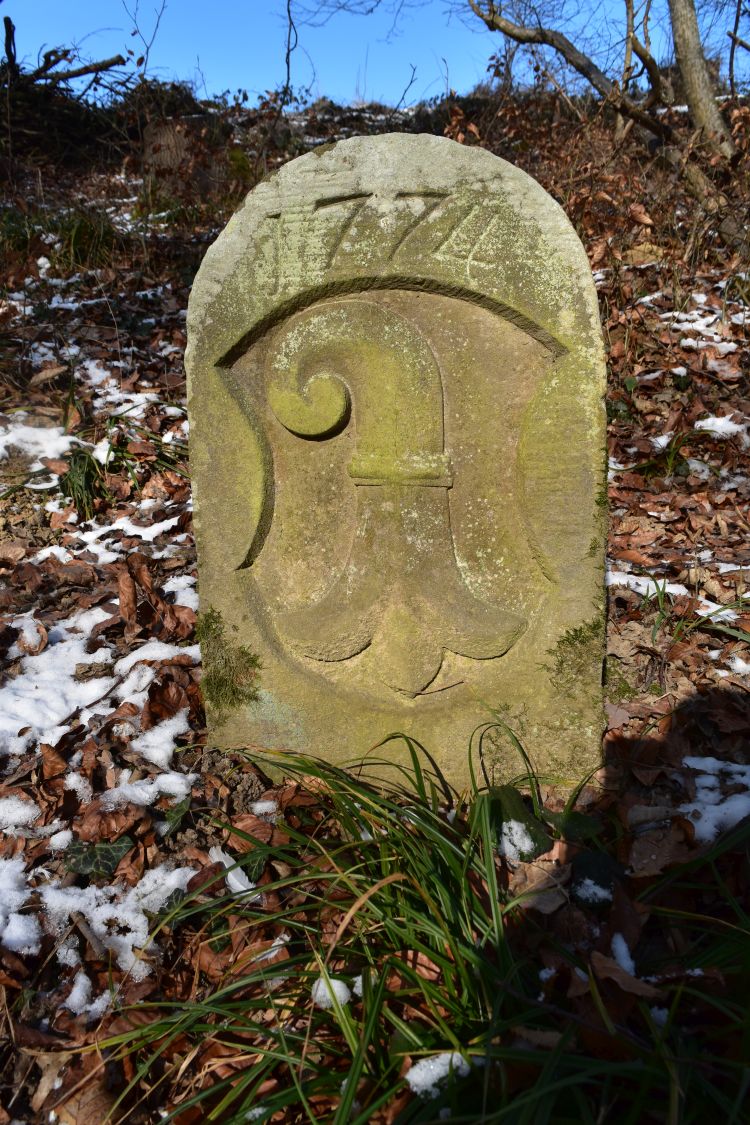
This stone from 1774 has been beautifully restored. It shows the coat of arms of the prince-bishop Simon Nikolaus de Monjoie pointing to the Prince-Bishopric side.

aaa_0134-small

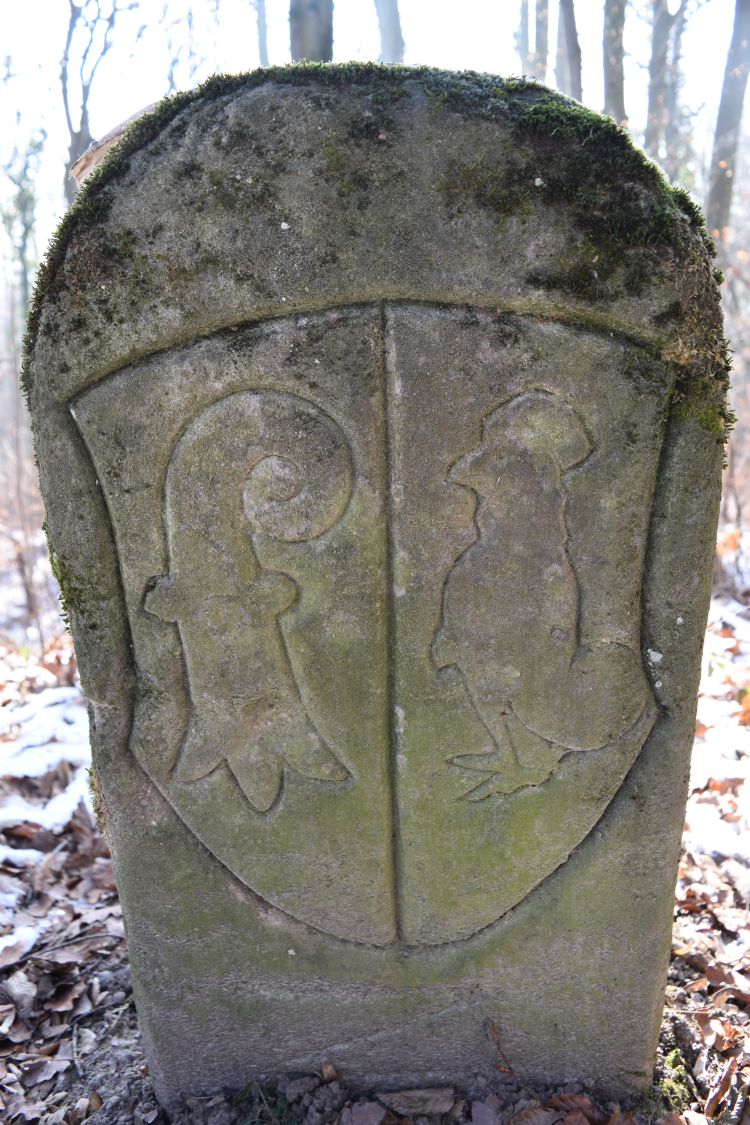
Towards Biel-Benken there is the coat of arms of Basel – as Biel-Benken belonged to Basel.

aaa_0136-small

This boundary stone shows the bishop’s crook and a coq on the side pointing to the Prince-Bishopric. This must be the coat of arms of Christoph Blarer that the panel near the “corner stone” mentions.


aaa_0137-small

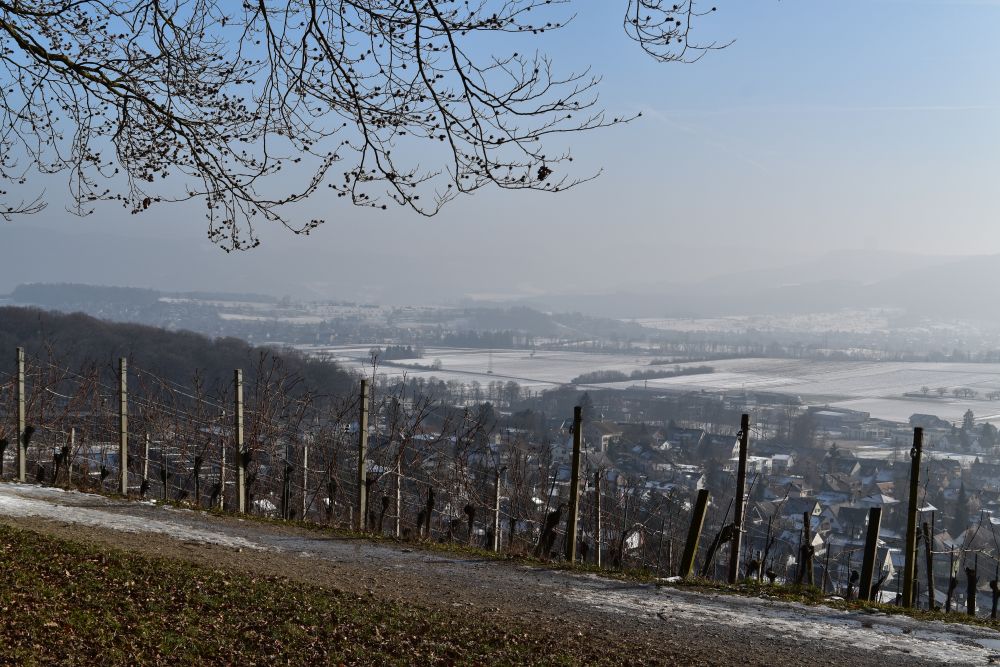
I finish my walk at the Friedrich Oser monument above Biel-Benken with the hazy view of the Blauen. I think the citizens of Basel have done a good job acquiring Biel-Benken with the southwards facing slope that produces quite a good wine (I liked it).

aaa_0139-small

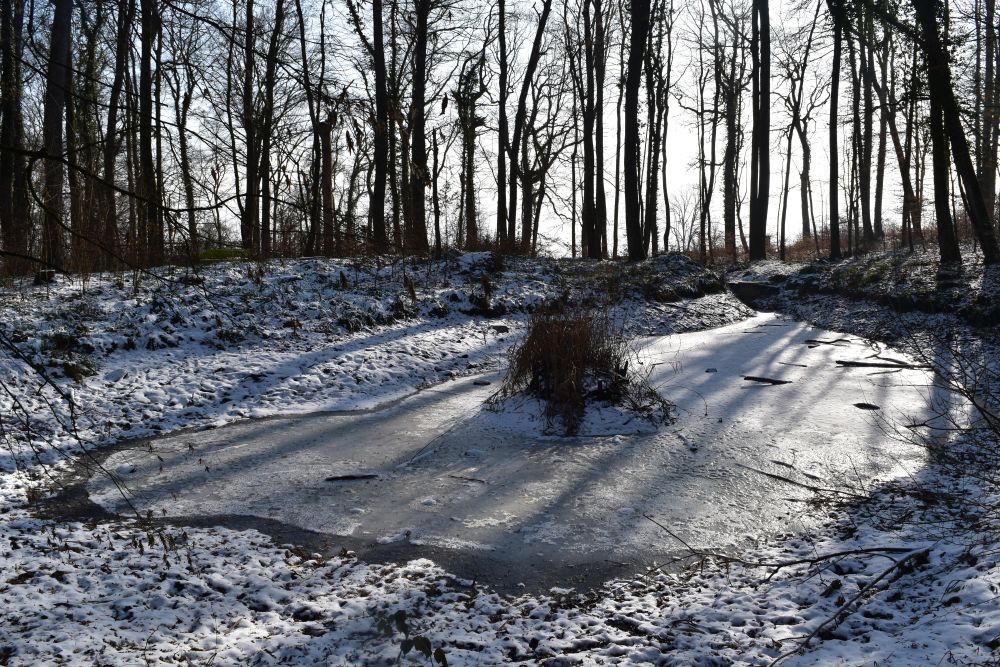
The pond near the monument of Oser is covered with ice and the sun plays with the trees.

aaa_0140-small

With many history lessons learned I return home to warm myself up – it WAS cold today, though the sun had made my heart jump.

I think I will return to Biel-Benken to search for more boundary stones, but perhaps I will wait for warmer weather…

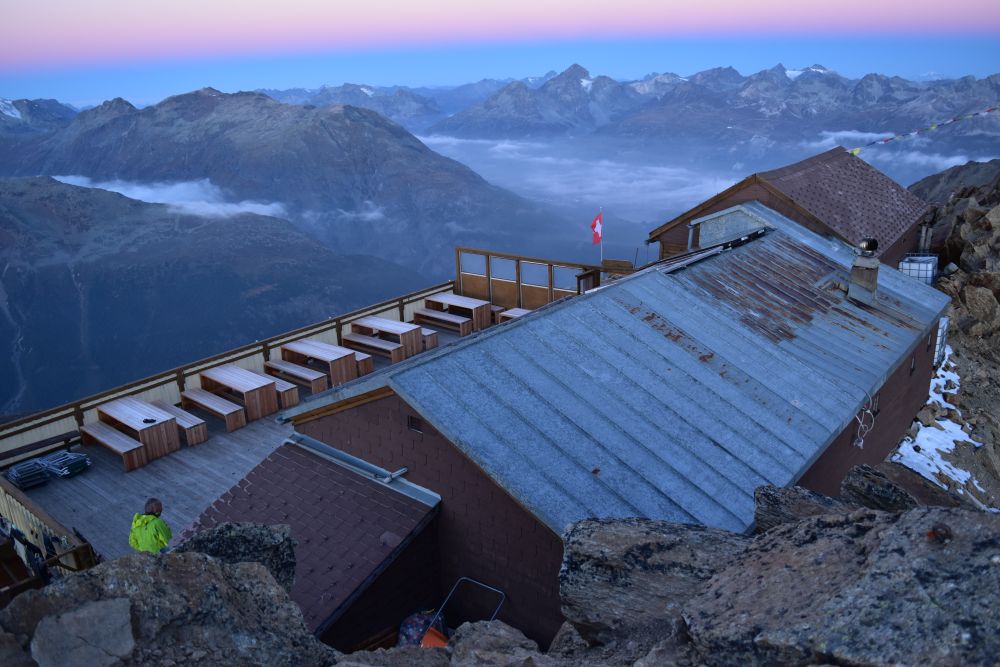
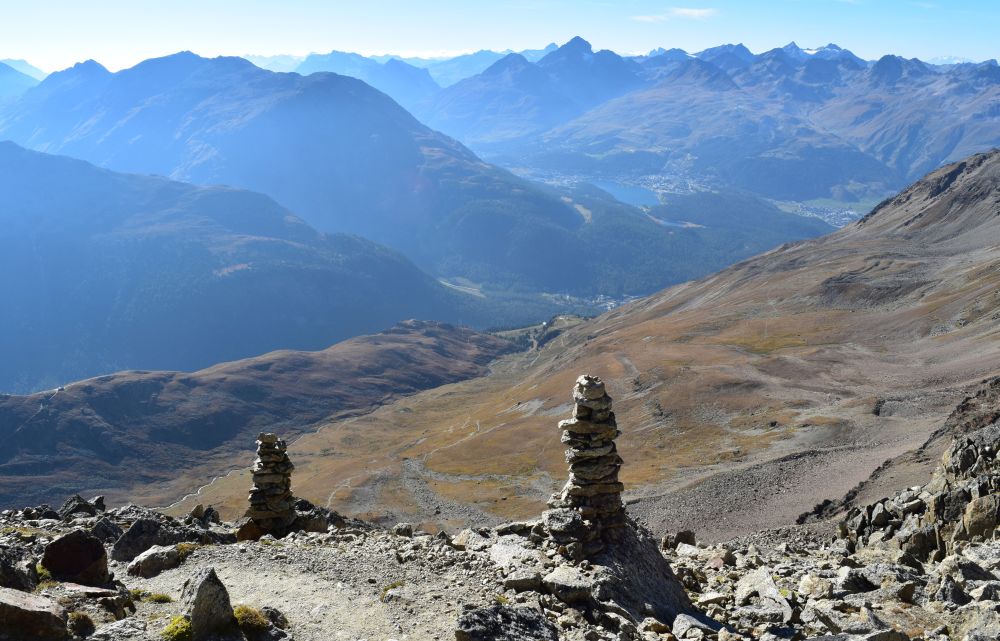
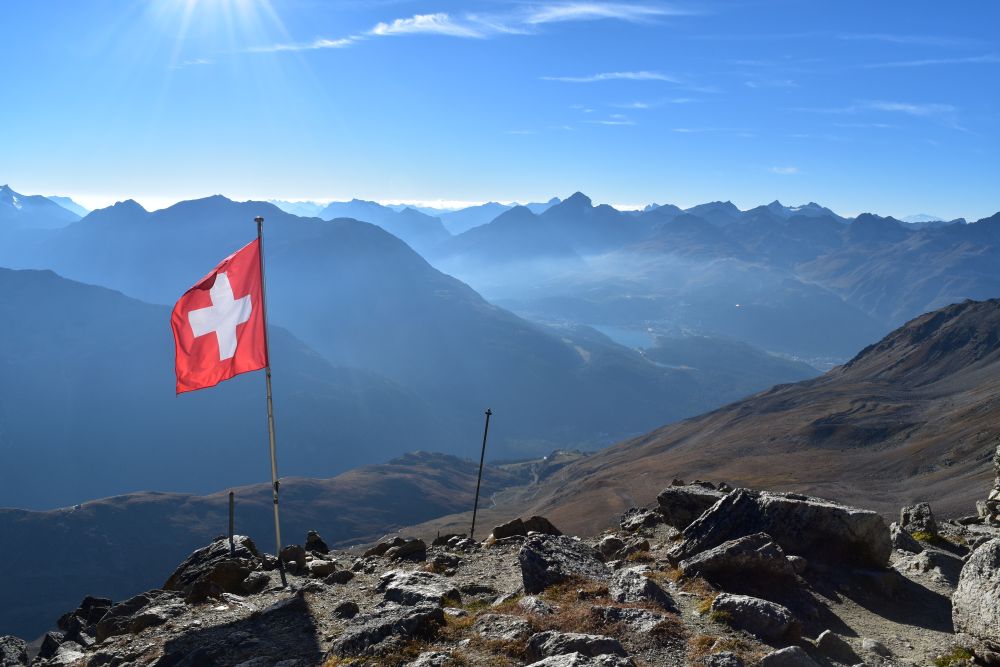
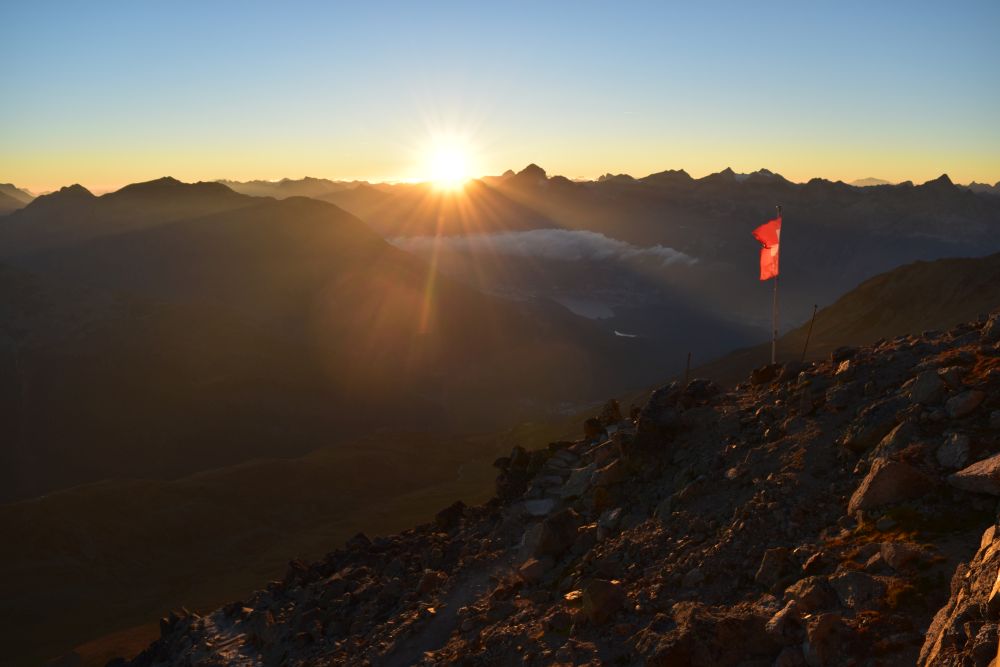
After having taken our fotos of the sunset around the Georgy hut, we sleep well though being on 3200m. Thanks to our alarm clock, we wake up early enough to watch the dawn before seven am – looking to the west in the direction of St. Moritz and the Julier.

aaa_0859-small

We are standing on the tiny helicopter landing spot just above the hut and around seven am, the sun rises in the east.

aaa_0873-small

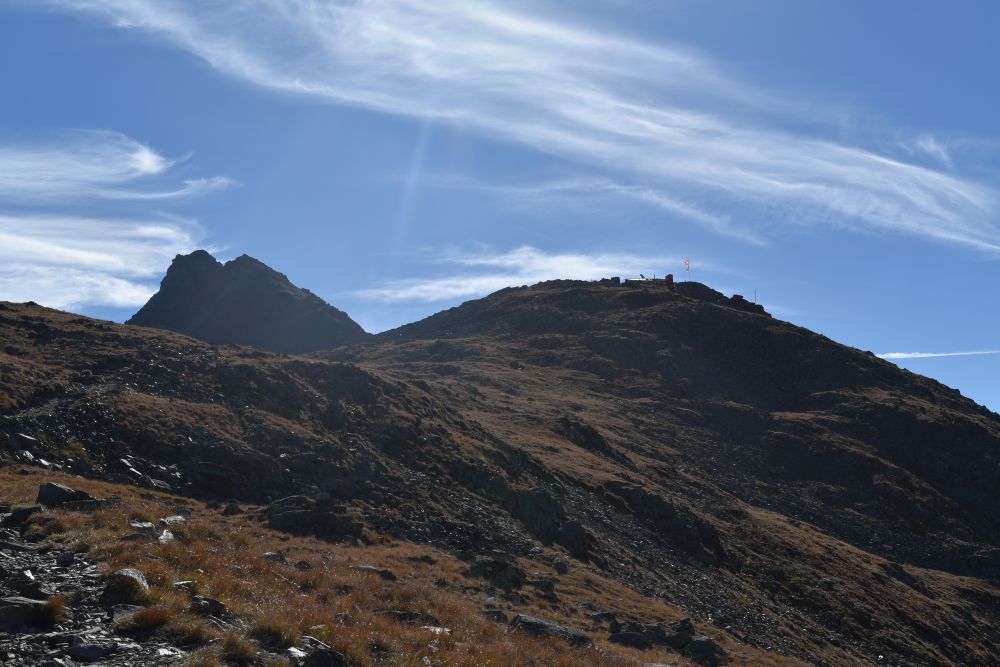
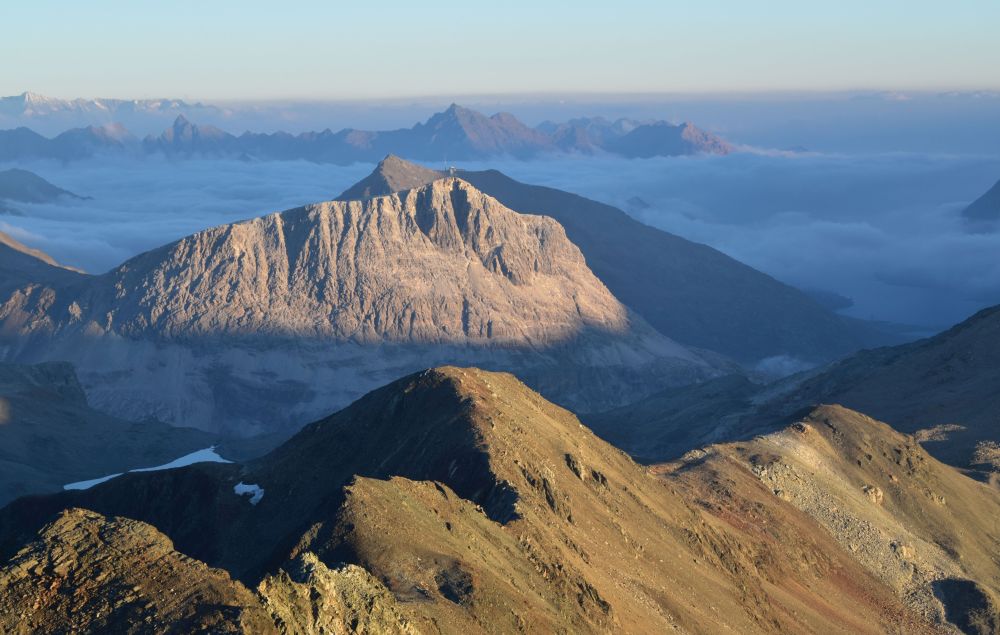
Claudio and his friend from Nepal serve an excellent breakfast. After having walked down some 900m, we look back to the Piz Languard.  The Piz is the triangular peak to the left. We say good-bye to the Georgy hut that lies just below that peak.

aaa_0906-small

We take the chairlift down to Pontresina, then hop on to the bus to Maloja and settle in the Sport hotel. From here, we visit the Bithaberg lake, just half an hour away.

aaa_0919-small

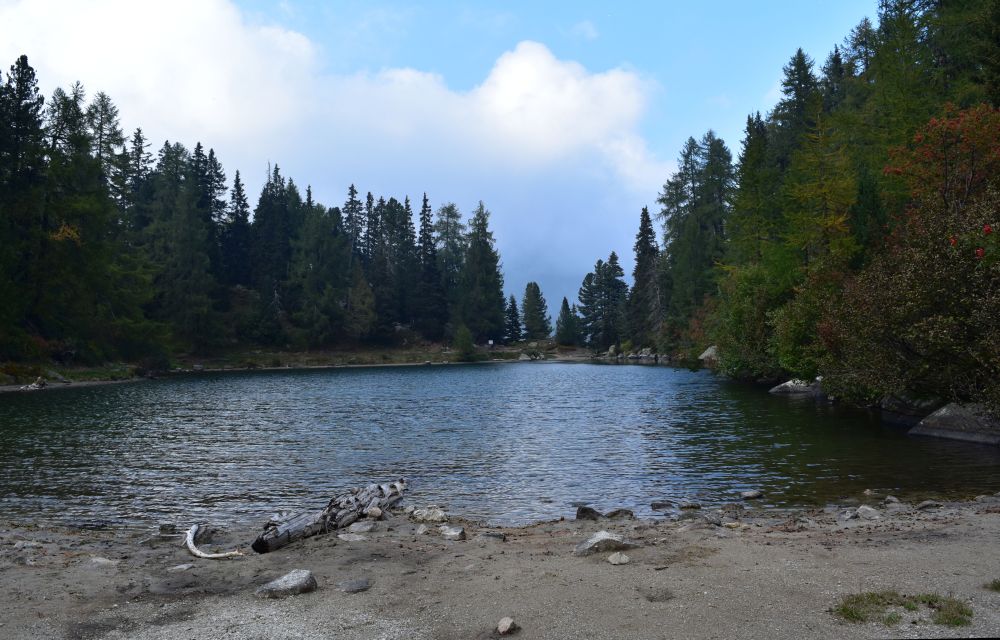
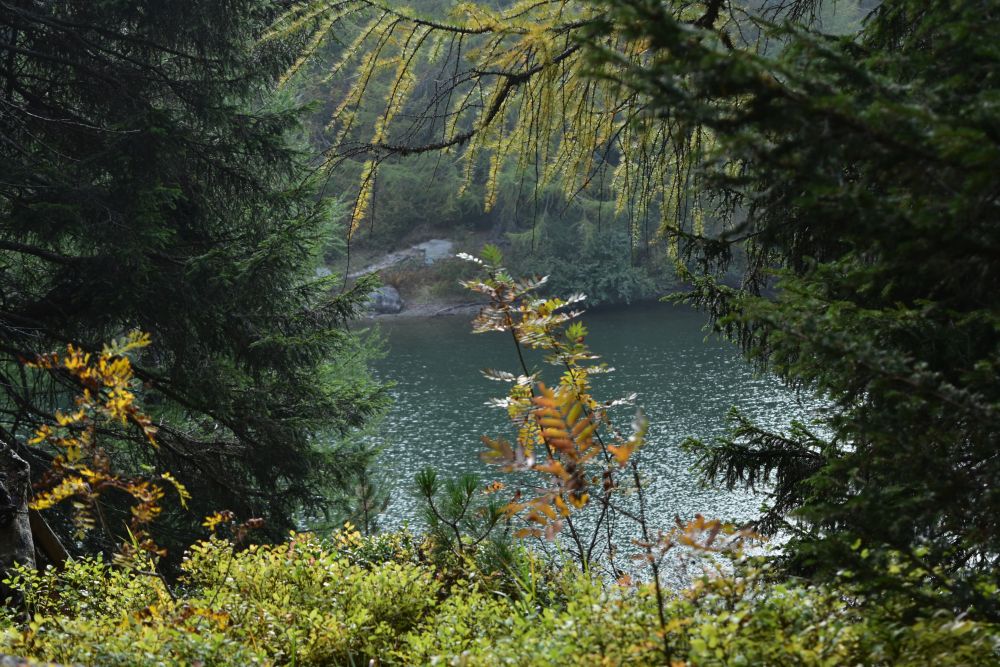
Autumn has just started shily with some first yellow leaves here at the Bitabergh lake.

aaa_0925-small

I am convinced that an old knight will now emerge from this lake, because after having loved a noble lady he cannot find peace. However, neither our host nor “Dr. Google”  know any legends about this romantic lake.

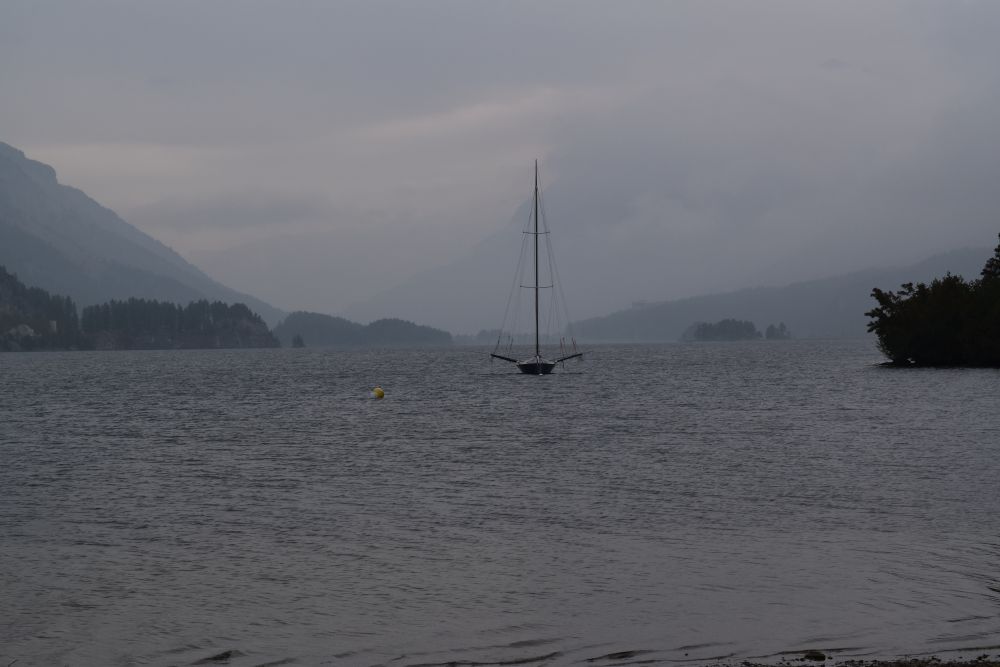
On our third day in the Engadin, the weather has changed. In the drizzling rain, we walk along the Maloja lake to Isola and Sils Maria. This is a sailing boat that is waiting for better weather and some wind –   in the middle of a blue-greyish scenery.

aaa_0936-small

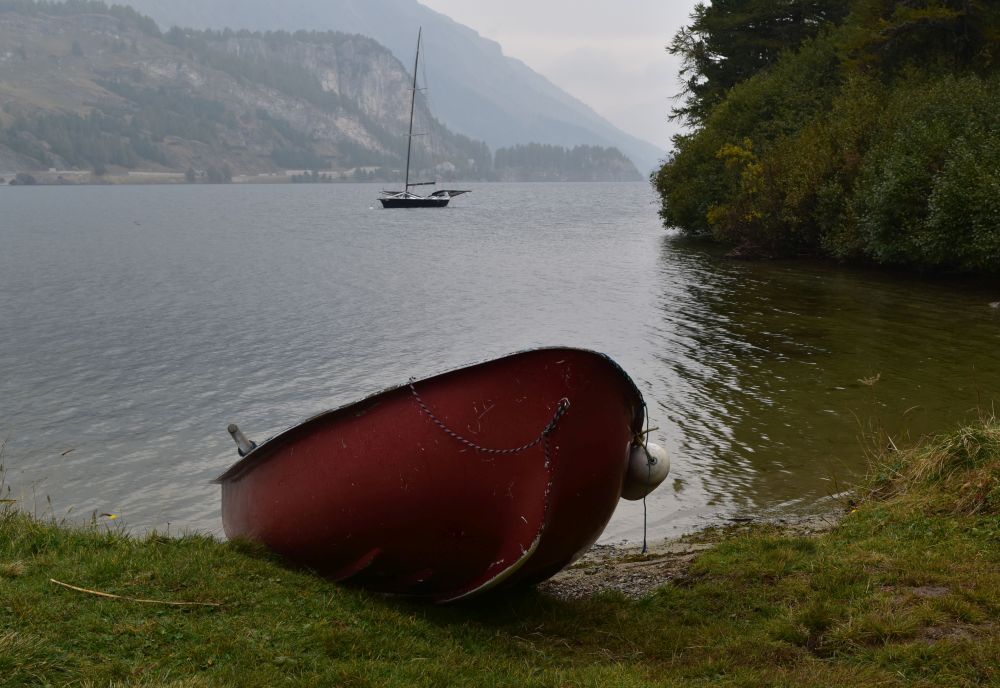
It is waiting together with this red rowing boat.

aaa_0941-small

The clouds hang over the lake – we are looking back to Maloja.

aaa_0996-small

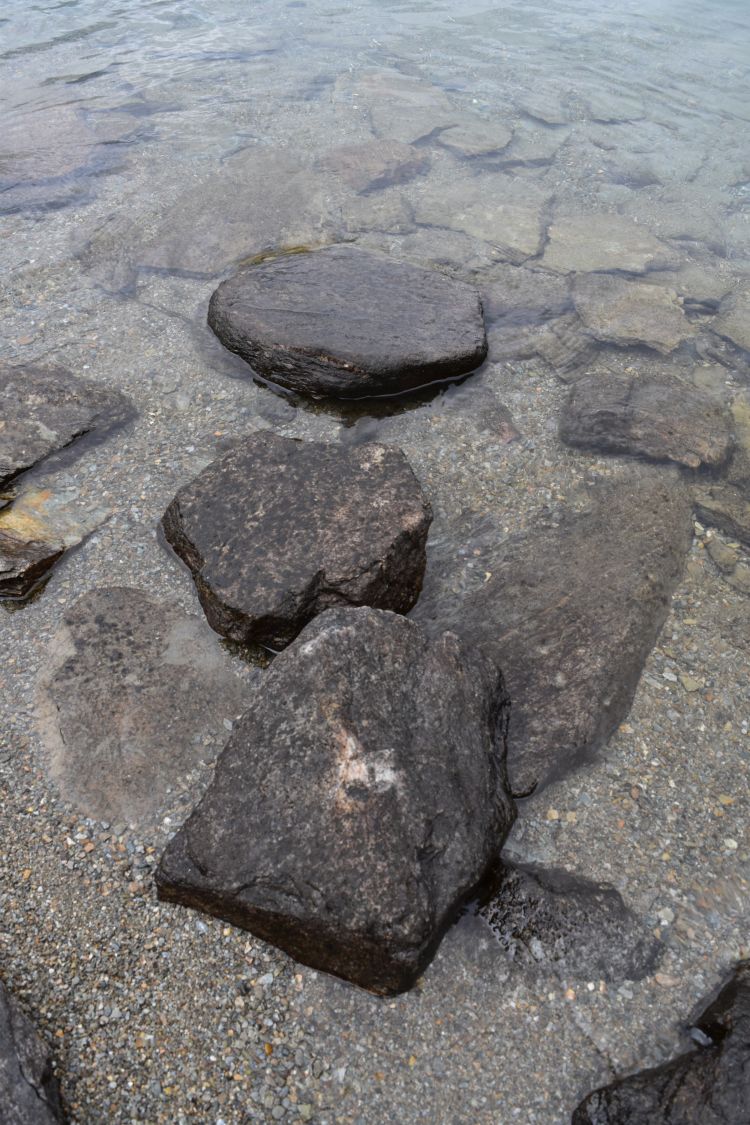
The lake is transparent and clean, another blue-grey variation.

aaa_0976-small

Segantini has painted one of these peers that I now find in the mist.

aaa_1023-small

The lake and clouds… do you see the small island in the middle? This is another blue-grey variation.

aaa_1030-small

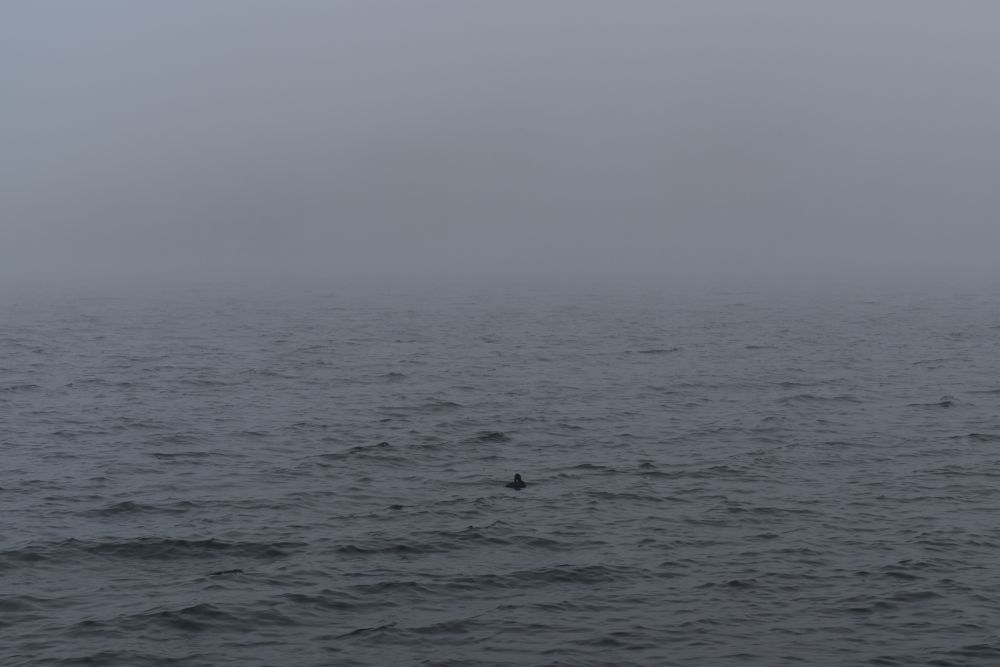
More water and clouds – two shades of greyish blue with one little duck.

aaa_1022-small

Yes, it is lovely weather for ducks, but it is also lovely weather for some interesting fotos – not just sunshine, mountains and blue sky, but mono color variations. In a way I have been inspired by the black and white fotos of Guido Baselgia. In some of them I see nothing but grey, however my friend explains to me that there are different shades of grey. Hm, maybe you are right?

From Sils Maria we take the bus and train back to Basel. Some four hours later we are back at home. We have spent three wonderful days taking fotos and walking – and my muscles tell me clearly: “You have walked down some 1000m, we have not enjoyed that at all and we make you feel it!”


Engadin – looking for the sunrise on 3200m – and then for blue-greyish clouds

Engadin – looking for the sunset on 3200m

With a good friend of mine, I take the train from Basel to the Engadin. It is Early September and the leaves of the trees and the needles of the larches are still green. Our target is Pontresina. At x=8 we take the  45 train to Muottas Muragl.

aaa_0743-small

Muottas Muragl is a hill with a gorgeous view of the lakes of the upper Engadin ending with the Maloja pass.

aaa_0745-small

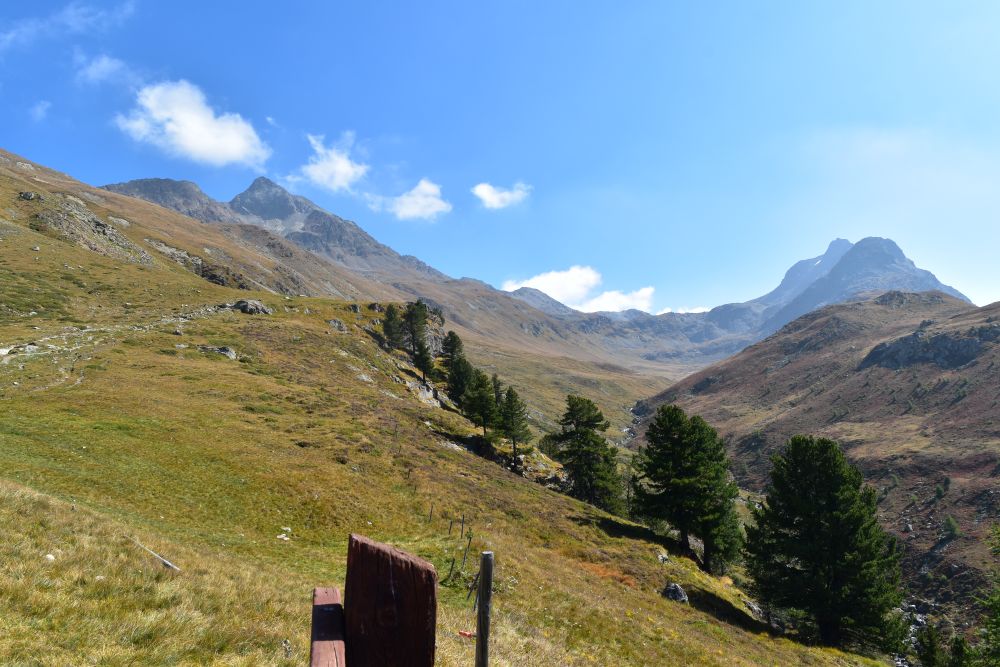
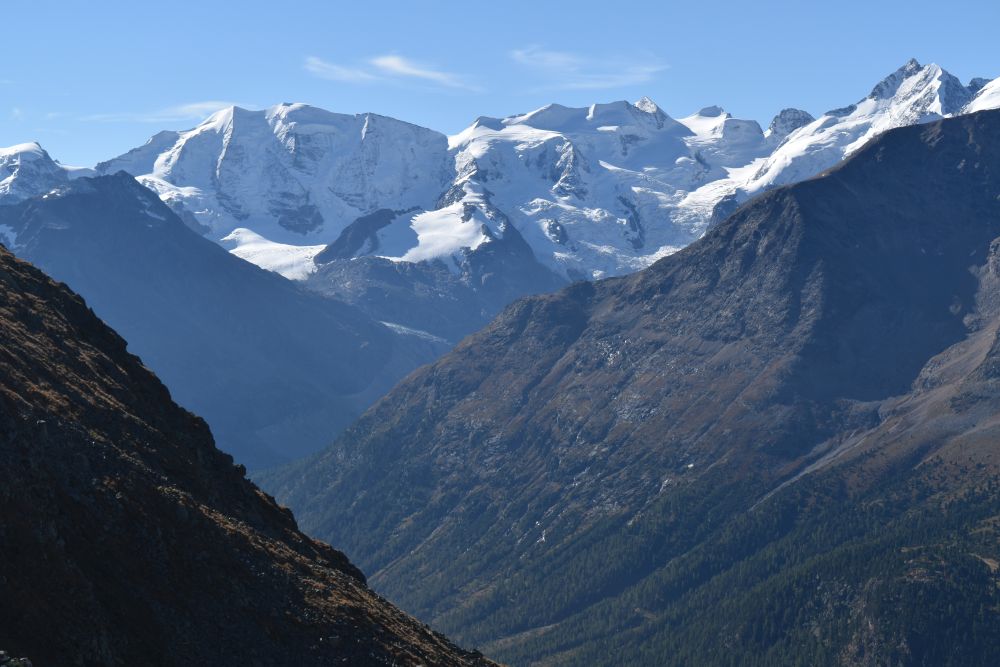
This is the view of the Palü mountains above the Bernina path.

aaa_0751-small

We are approaching the Segantini hut on 2730m. The hut takes its name from Segantini who loved to paint here. When he was working at the famous Alpine Triptychon, he died here in 1899.

aaa_0754-small

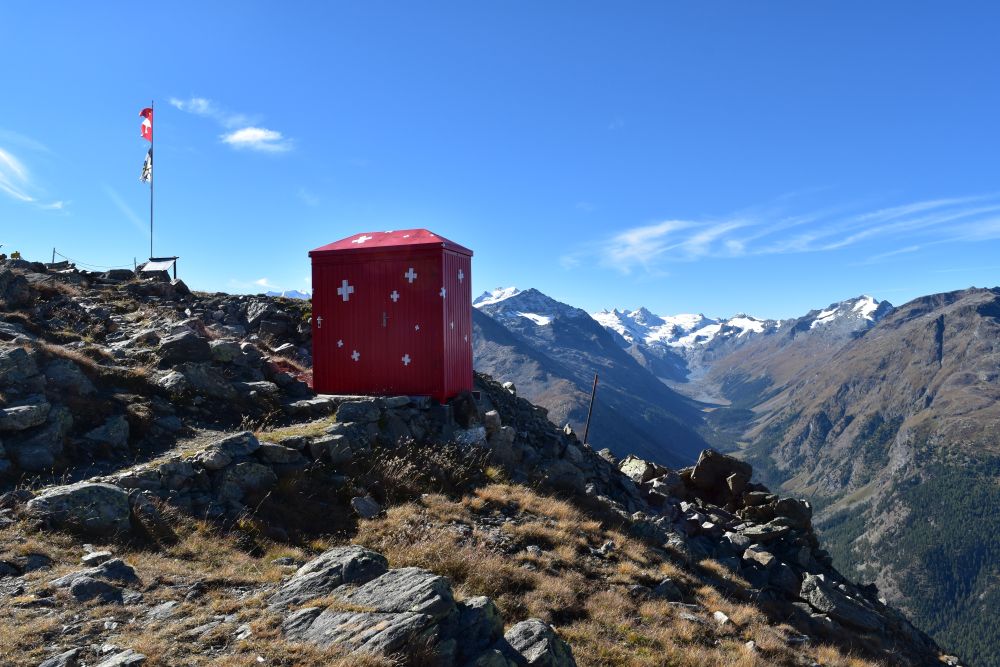
This is the “Swiss” toilet of the Segantini hut.

aaa_0758-small

Perhaps someone has forgotten his shoes here.

aaa_0764-small

After a long climb we reach the Georgy hut on 3200m, located just below the Piz Languard. Also Georgy was a painter.

aaa_0796-small

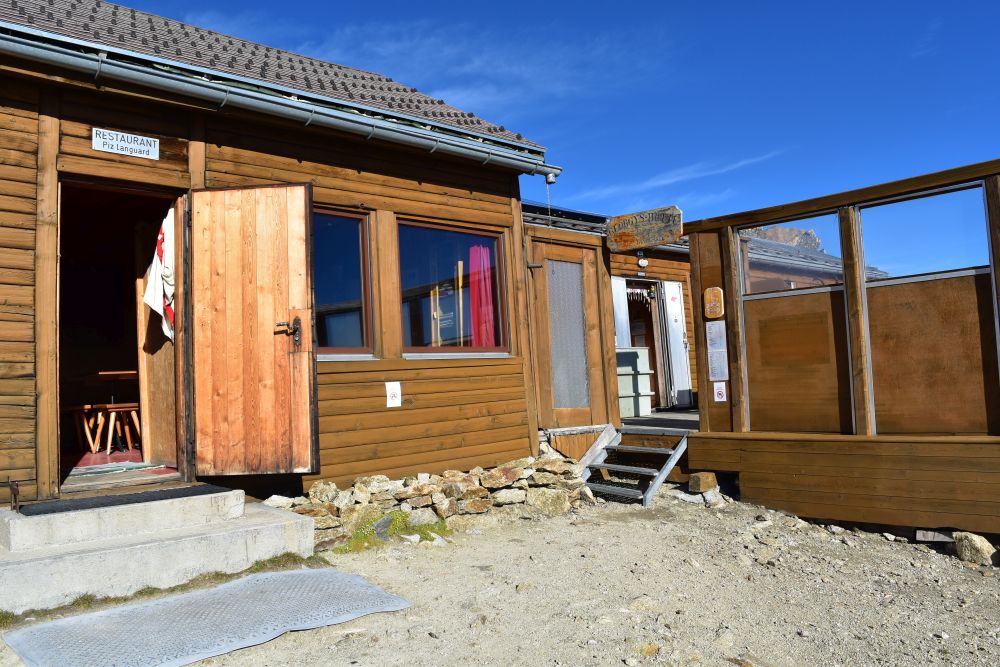
Claudio gives us a hearty welcome here, together with his colleague from Nepal. This is their souvenir shop…

aaa_0785-small

… and this is the toilet.

aaa_0790-small

Later in the afternoon I take a photo of the view towards St. Moritz with its lake.

aaa_0792-small

Then the “snake of Maloja” (Malojaschlange) starts to come up…

aaa_0805-small

… and is materializing more and more.

aaa_0815-small

Clouds are now covering the Bernina pass below us.

aaa_0829-small

Shortly after seven pm the sun is setting.

aaa_0835-small

Claudio has deferred the dinner to after the sunset – thank you. We enjoy dinner with a couple and their friend from the Bernese Oberland. Under sparkling stars we sleep well, sometimes getting up to pay a visit to Helmut’s thron above the rocks.


Basel and the basilisks – following the traces of Baschi Zischer

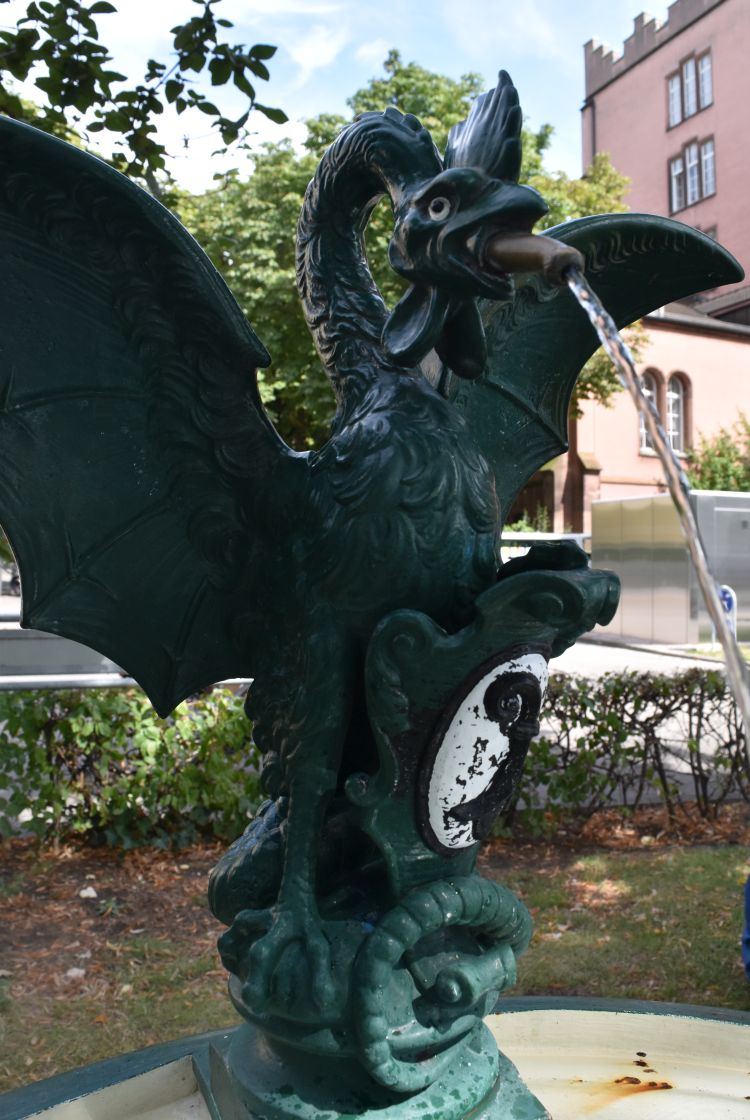
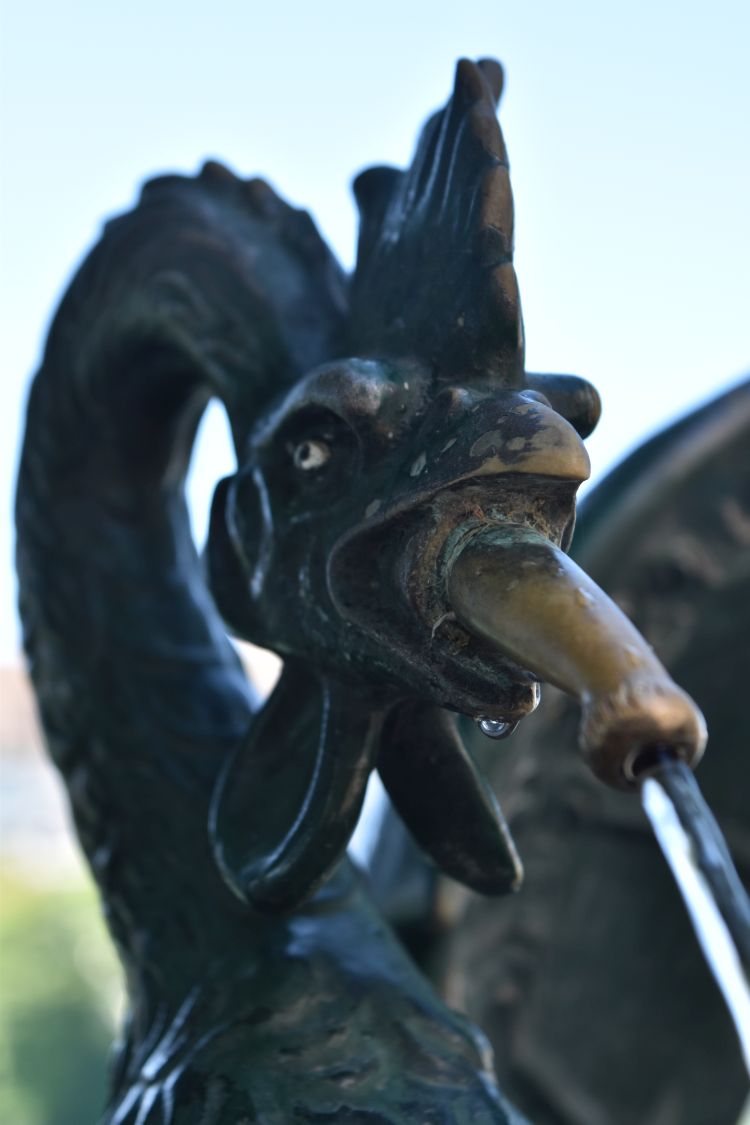
Basilisks have been known since ancient times, in Egypt, Greece and Rome. Konrad Gessner from Zurich writes about them in the 16th century.  They are legendary animals – a mixture between a coq and a snake – and they take on various forms. Sometimes they have the second name “sibilus” = “hissing” or in German “zischen”). Basilisks hatch out of eggs that have been laid by a coq and bred by a snake (well, there are also variations to this). On the 4th of August 1474 a coq laid an egg in Basel and was then killed. So dangerous – imagine, a basilisk could have emerged out of this egg. In a beautiful small book, Thomas Hofmeier describes the various forms of basilisks, their history and their presence, in particular in Basel (“Basels Ungeheuer, eine kleine Basiliskenkunde“, Berlin and Basel 2016).

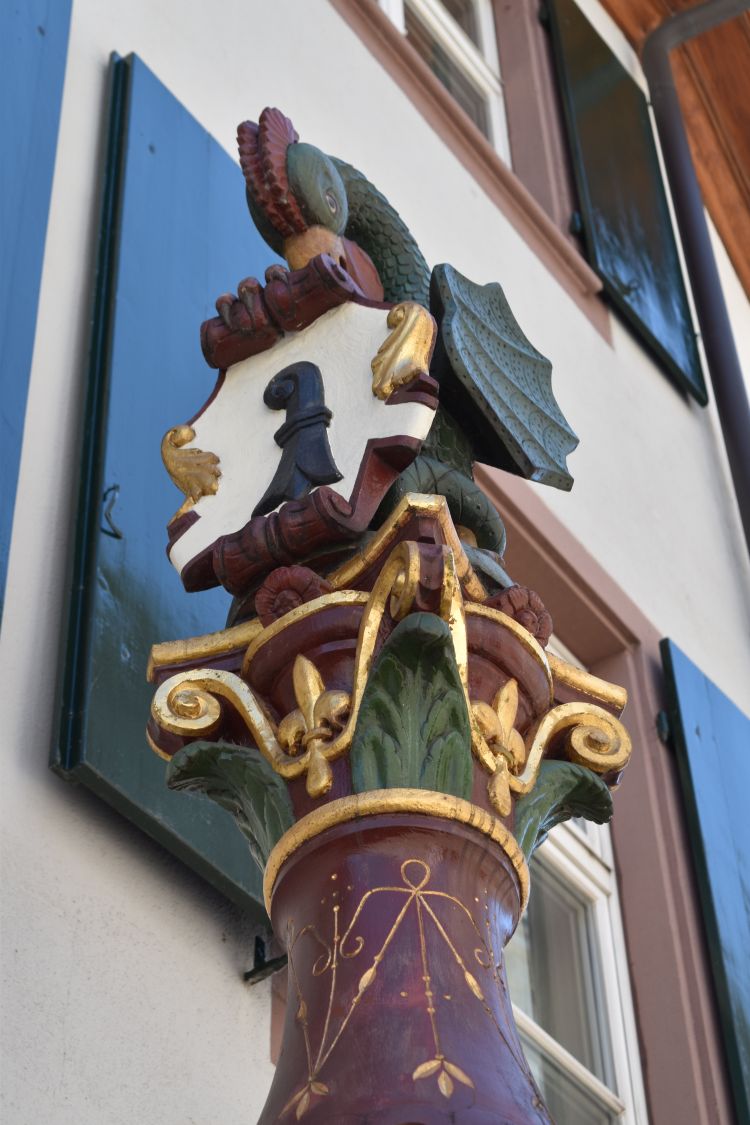
In the 15th century, Basel started to use the basilisk to hold their coat of arms, the “Baslerstab”, perhaps, because “Basel” sounds a bit like “Basilisk”. Basilisks do not only exist in Basel, but they are very important and omnipresent here. They sit on fountains (Augustinerbrunnen),…

DSC_0028 small

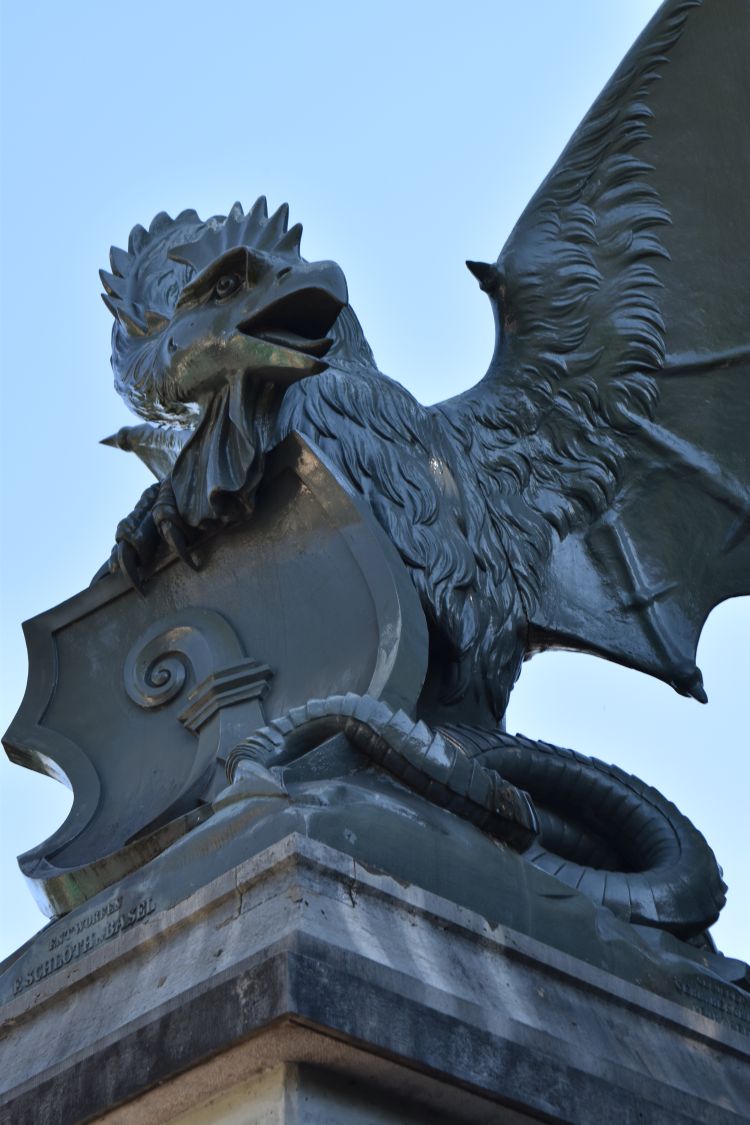
… they guard bridges (Wettsteinbrücke, his brother watches over the entrance to Langen Erlen and he has two more brothers),…

DSC_0012 small

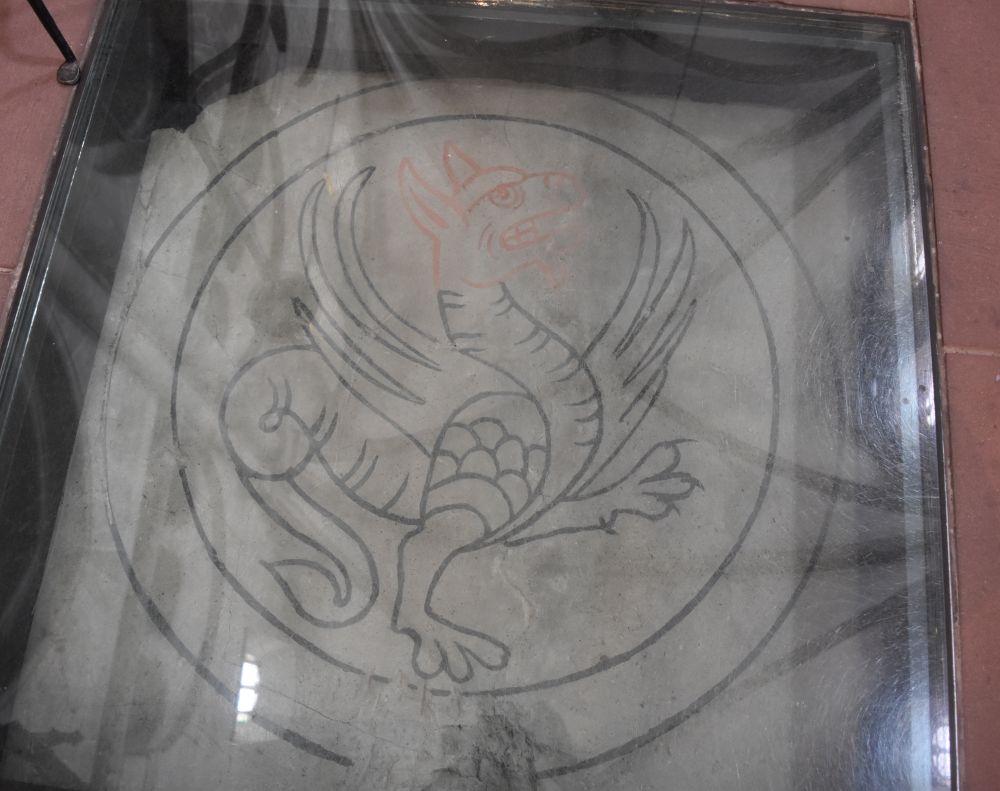
… they hide in the cathedral (Münster, in front of the pulpit)…

DSC_0210 small

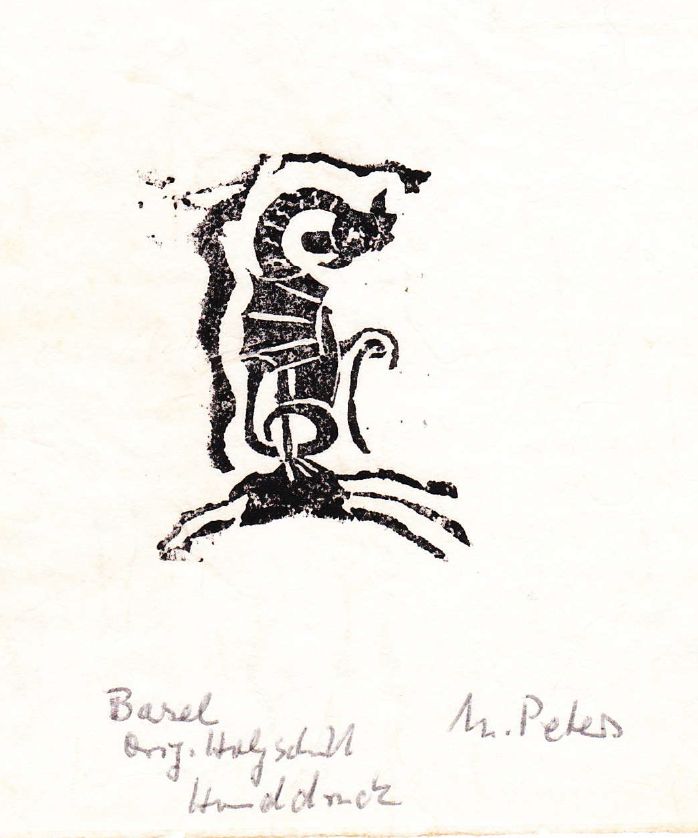
… they appear in my mum’s woodcarvings,…

Basilisk

and then there is the small basilisk Baschi Zischer.

.

Baschi Zischer? He is a small basilisk that gets lost and looks for his home, with the help of Mia (a wonderful children’s book)

Baschi Zischer is a small basilisk. He lives near the water somewhere in the city center and leaves home, because he hears a lot of “bumbum” and “weeeweeee” outside. It is the drums and pipes of the Basel carnival (Fasnacht). Baschi gets lost and Mia finds him in the front garden of her parents’ house near the river Rhine.  Anita Siegfried and Nicolas d’Aujourd’hui have written and illustrated the story about Mia that looks for Baschi’s home in the city center of Basel (“Baschi Zischer – ein Jahr quer durch Basel (a year in all corners of Basel)”, Basel 2007).

Always on search for fairy tales, I loved to read the story of Baschi and Mia. On a hot summer day, I looked for the places that they visited, when looking for Baschi’s home. Here are some samples.

The basilisk on the fountain near Mia’s home has no idea where Baschi lives.

DSC_0194 small

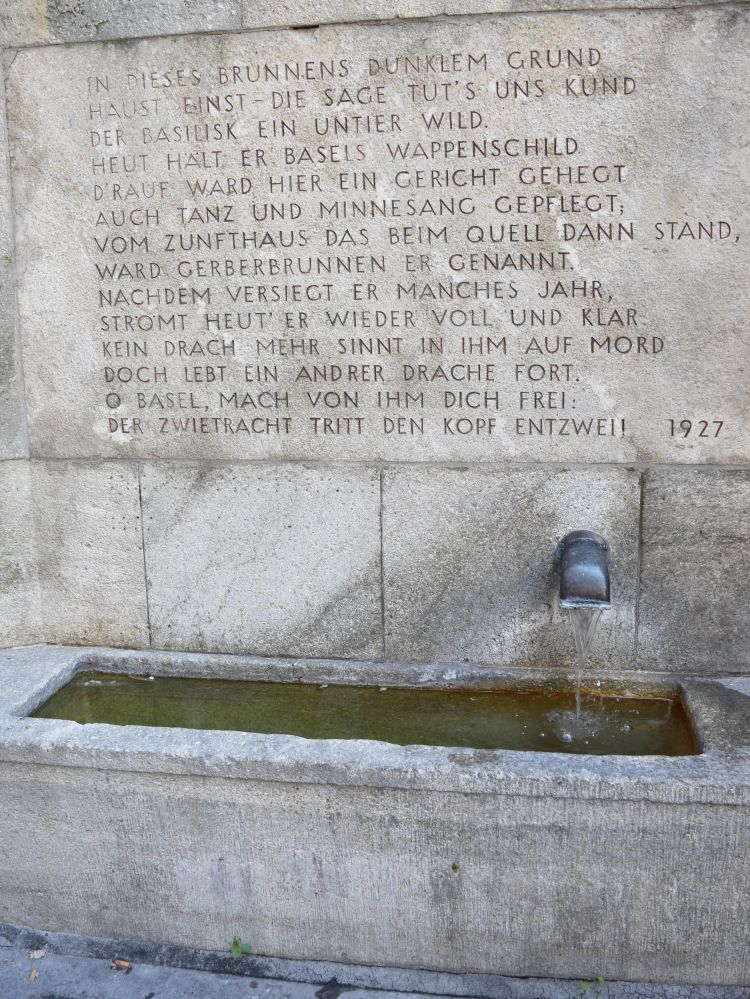
The fountain monkey on the Andreas Platz just knows that in earlier times the basilisks lived in the cave behind the Gerberbrunnen (fountain of the tanners).

DSC_0050 small

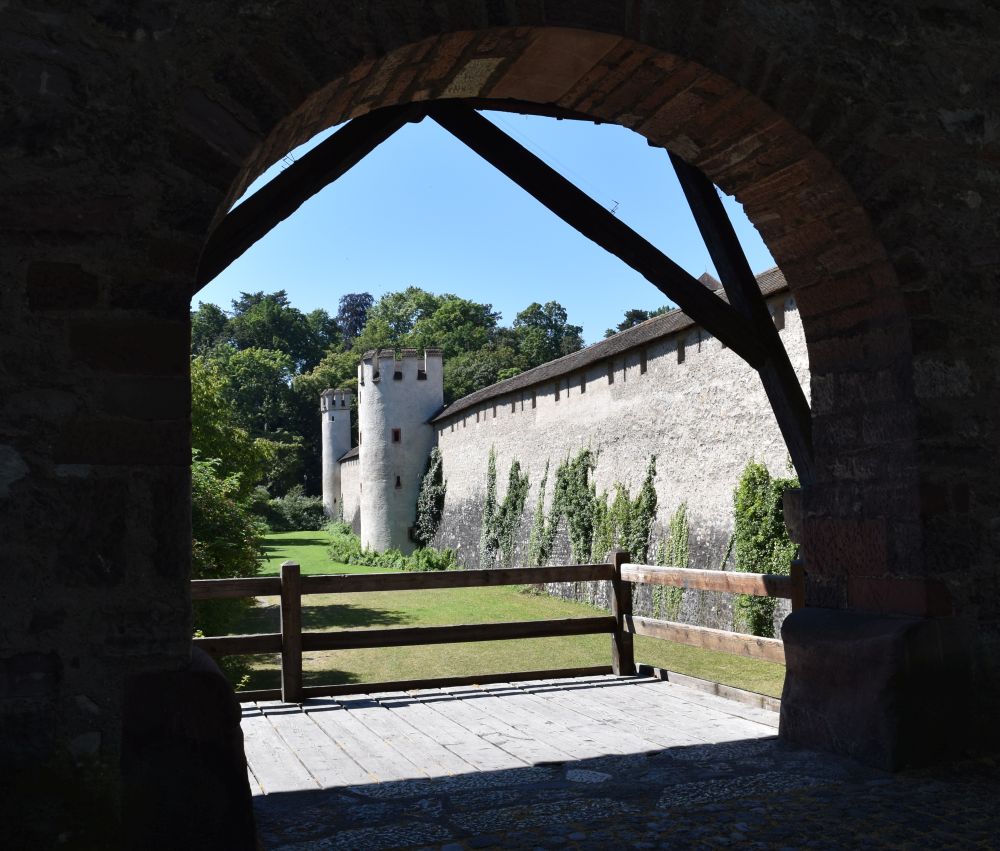
The historian of the museum of history does not know where Baschi’s home is. At Mia’s school Baschi plays the basketball right into the basket. Baschi slips into the river Rhine and has to be saved by the ferryman. At the old townwall (Letziturm) they meet a group of people disguised as knights that are happy to see a real basilisk. They make a selfie with him.

DSC_0020 small

(When I was here, I did not meet knights, but a group of Chinese – old friends from school, and one of them was a professional photographer capturing the memories).

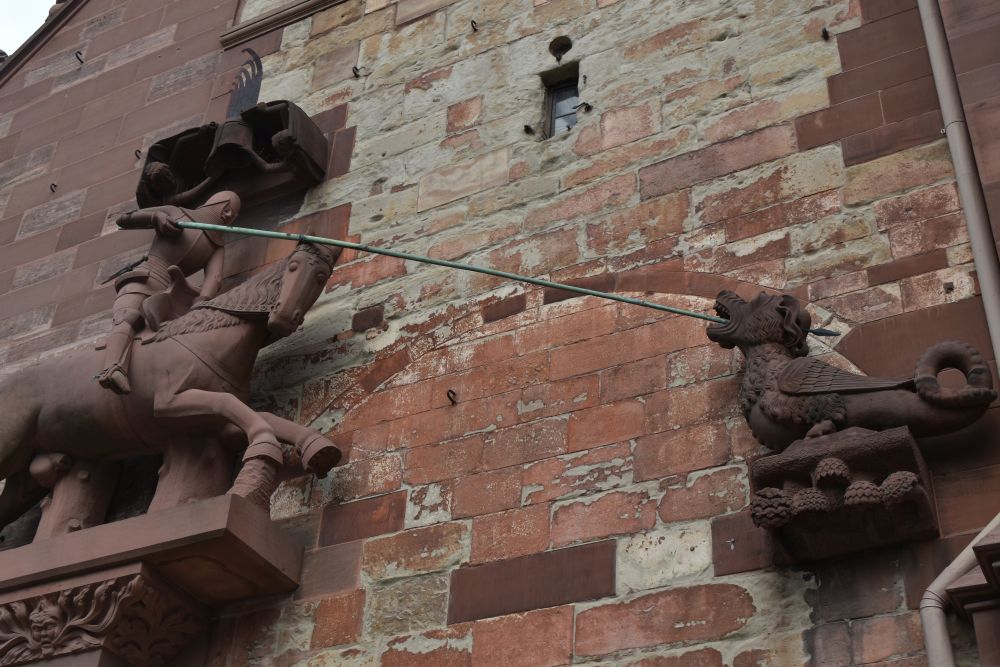
In front of the Münster (cathedral) there is Knight George who kills the dragon.

DSC_0216 small

Baschi gets angry. What a nuisance, this dragon made out of stone is not dangerous at all.

While looking for Baschi’s home, Mia and her basilisk live through many more adventures in Basel. And as the next Fasnacht starts, yes – just right in time, Mia understands that Baschi lives, where the Birsig enters the Rhine. Baschi disappears in the tunnel and the next Fasnacht starts with drummers and pipers.

A wonderful children’s story, well told and well illustrated. I invite the two girls of friends of mine to follow the traces of Mia and her basilisk Baschi. It is the grils’ first guided tour through a town. The next day we visited the mini golf court in Grün 80 (a green park with play grounds and lakes), and the two girls shouted: “Look, another basilisk fountain!” Yes, right, I have never noticed that there is another one here. Later I notice a basilisk fountain near the central post office… there are many more such fountains in Basel. Let us have a closer look at them.

.

The basilisk fountains in Basel – a clever design

There are about 25 basilisk fountains in Basel. One of them was on my way to primary school on the Bruderholz. Believe me, I saw that fountain every day, more than 50 years ago, for four years. I knew it was there, always, reliably. But I never looked at it in detail. Now, thanks to Baschi Zischer, I discovered the clever design of these fountains.

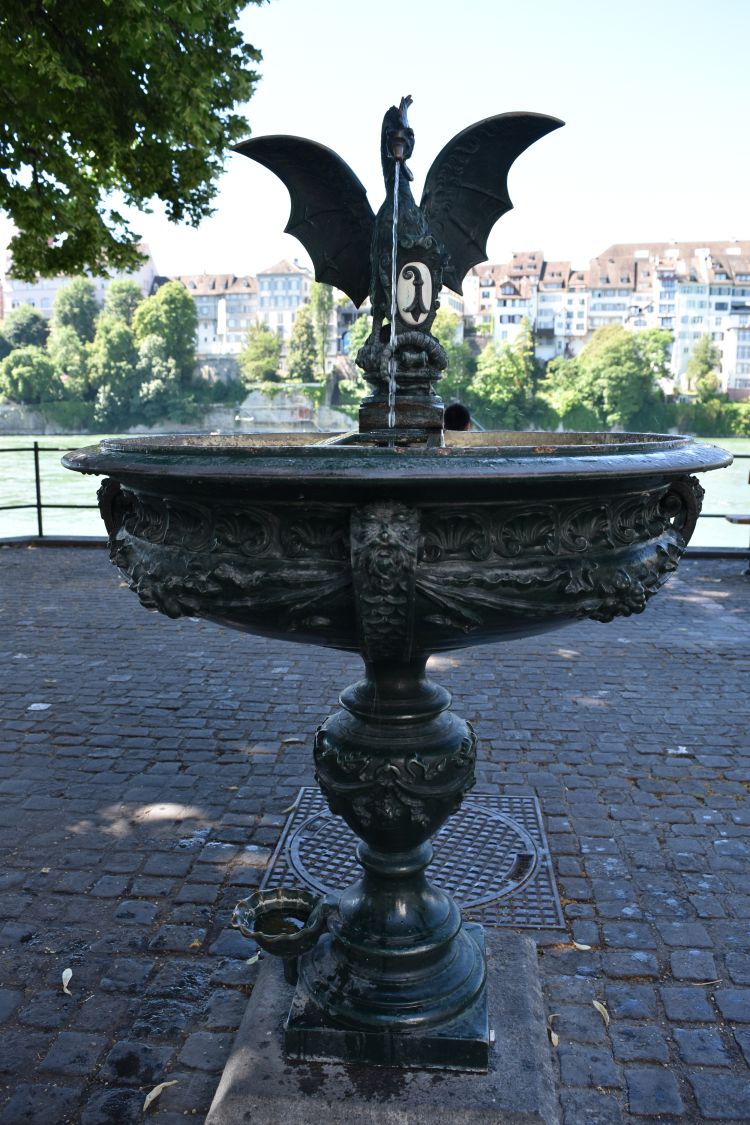
This is the basilisk fountain on the water front of the Rhine (Reverenzgässlein). The basilisk holds the “Baslerstab” (coat of arms) and presents “him”-self to the people that may take a photo of the old city line above the Rhine.

DSC_0029 small

The basilisk fountain gives drinking water – to us people, …

DSC_0032 small

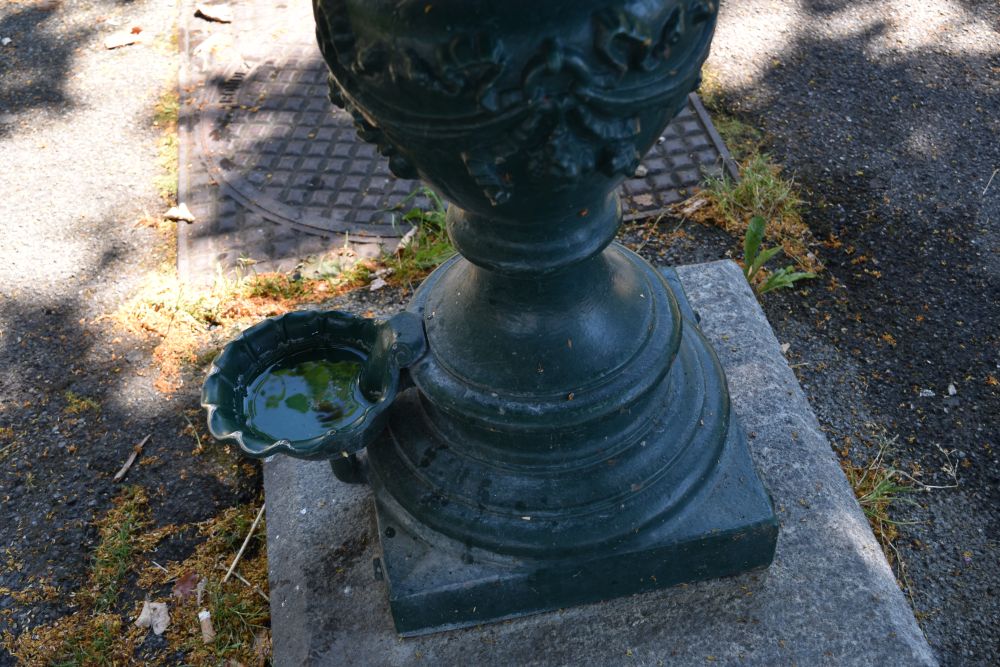
and also to our best friends, the dogs.

DSC_0034 small

At the end of the 19th century, Basel started to provide water directly into the houses. The huge fountains scattered over Basel were now in the way. Basel invited for a competition and selected the fountain of Wilhelm Bubeck (see Wikipedia). They installed about 50 of them. Today about 25 are left in Basel, one is in Zurich (perhaps as a sign of friendship, where sometimes “teasing” prevails) and one has even traveled to Moscow. Bubeck has done a great job, I believe, when designing the basilisk fountain for the thirst of people and their dogs.
Thank you, Baschi Zischer, you have opened my eyes. I may take more children of friends and of my family to discover my town Basel based on your adventures.

P.S. Also visitbasel.ch offers guided visits for kids following the traces of Baschi.


Göscheneralp – moor and highmoor reserve above the artificial lake – a photo hike

Would you join me for a photo hike on the Göscheneralp?

My friend Richard asks me: “Would you like to join me for a photo hike on the Göscheneralp?” Oh, yes, of course I would. I have been on the Göscheneralp some fifteen years ago, with Ernst. I would love to see it again and use my new Nikon camera, while benefiting from Richard’s experience. We buy train tickets to Göschenen, Richard reserves seats in the local bus to the Göscheneralp and one night in the Dammahütte (a Swiss Alpine Club mountain hut run by Lydia and Frank). And off we go, taking the early morning train at 6:04 AM in Basel arriving at the dam at 9:30 AM.

.

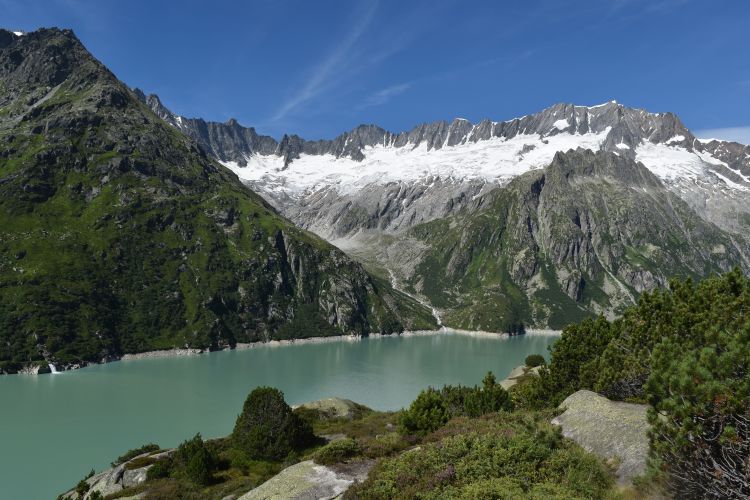
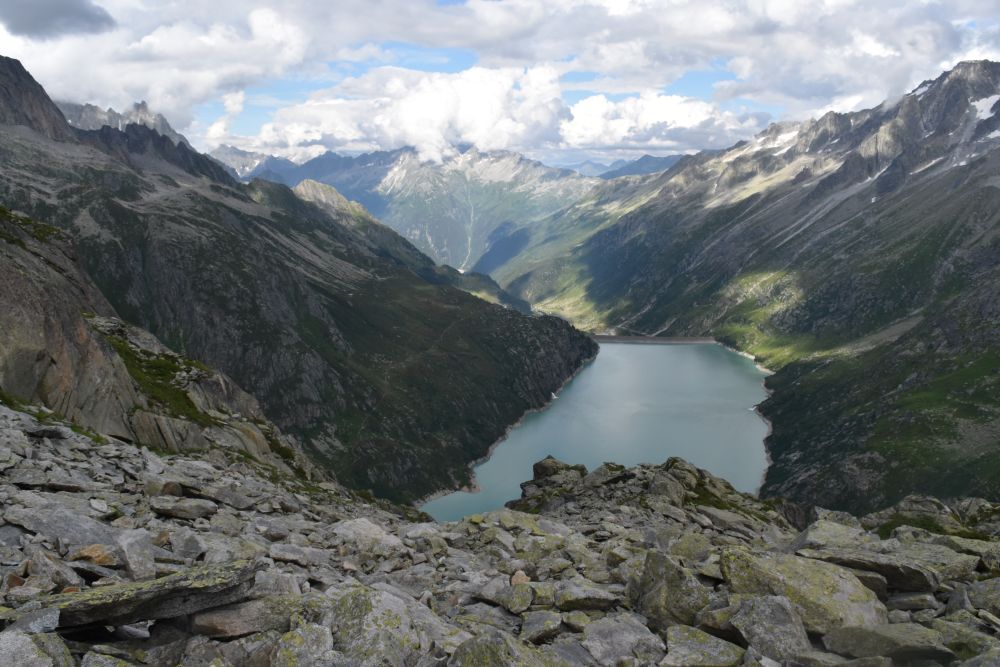
What is the Göscheneralp? It is an artificial lake with a nature reserve, a loop path and welcoming mountain huts in front of the Dammastock

The Göscheneralp was covered by an artificial lake in 1960. Water energy from the mountains –  this is ecological on one hand, but on the other hand I have mixed feelings about the village Hinteralp that is now under the water – including the church.

DSC_0002 small

May be I am not alone with my mixed feelings. The northern slopes above the artificial lake are now a nature reserve with moors and highmoors.


The loop path leads around the lake. The Swiss love to hike around the lake. Families with their kids (including their grandmothers and grandfathers) master the 3 hour walk on a narrow path going up and down and up and down.
The welcoming mountain huts cater for the hikers. The huts are called Bergseehütte, Chelenalphütte and Dammahütte. The Bergseehütte is managed by Toni Fullin. He is an institution. He is a mountain guide that documents the climbing routes and the traditional dishes that make use of what the mountains of Uri deliver. Such as soup made out of bread and cheese. The Dammahütte is where we have reserved to stay – it is about 650m above the lake level.

.

The moors and highmoors

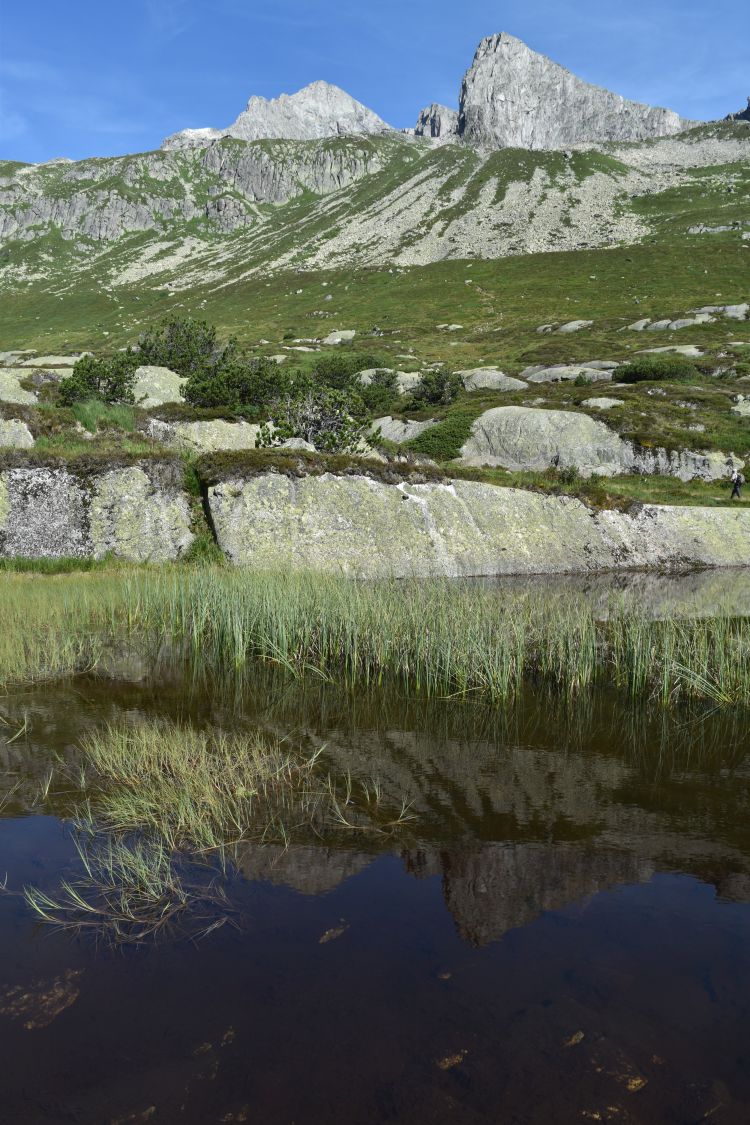
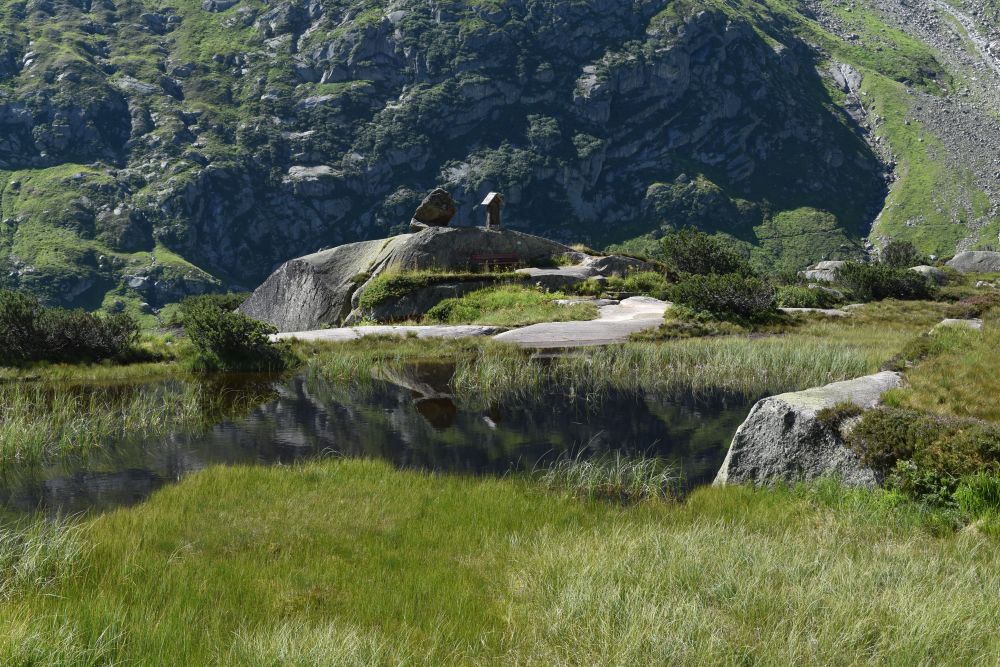
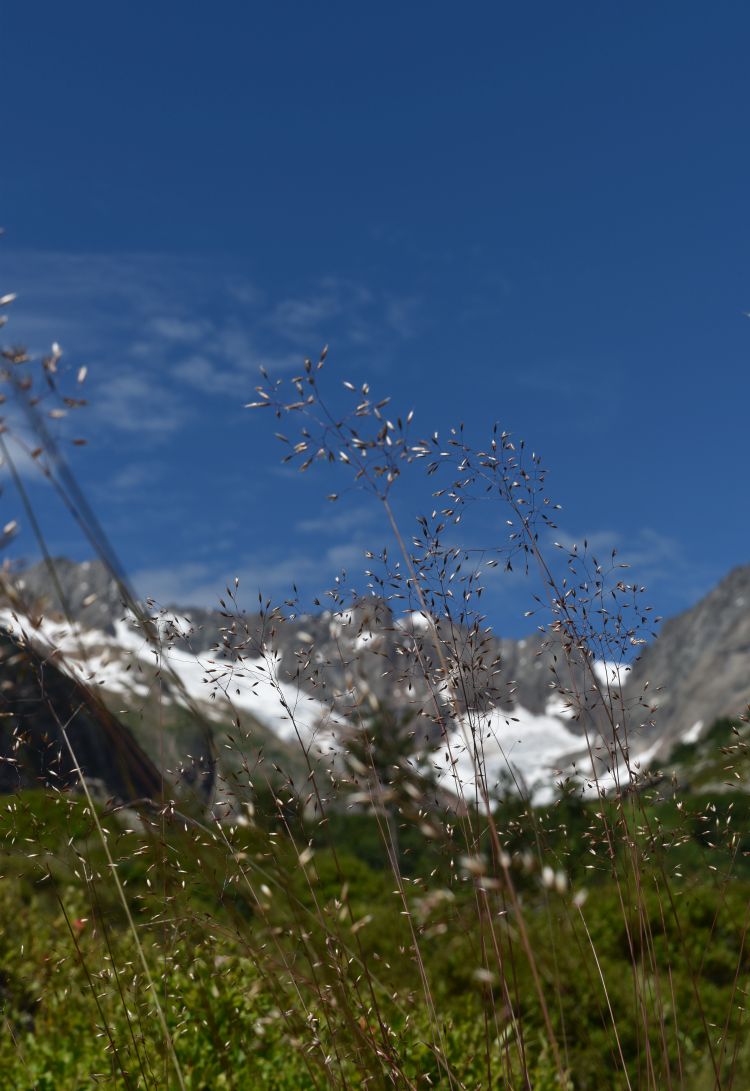
We start north of the lake to take pictures in the moors and highmoors. The ponds reflect the mountains…

DSC_0009 small

… and the small chapel.

DSC_0019 small

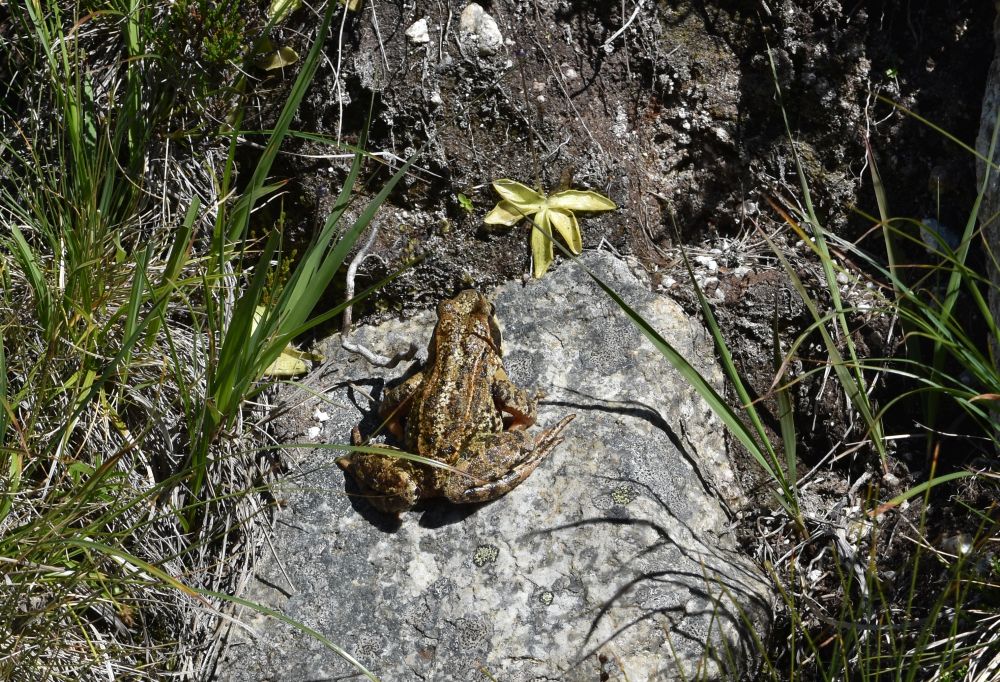
We also come across a frog,…

DSC_0023 small

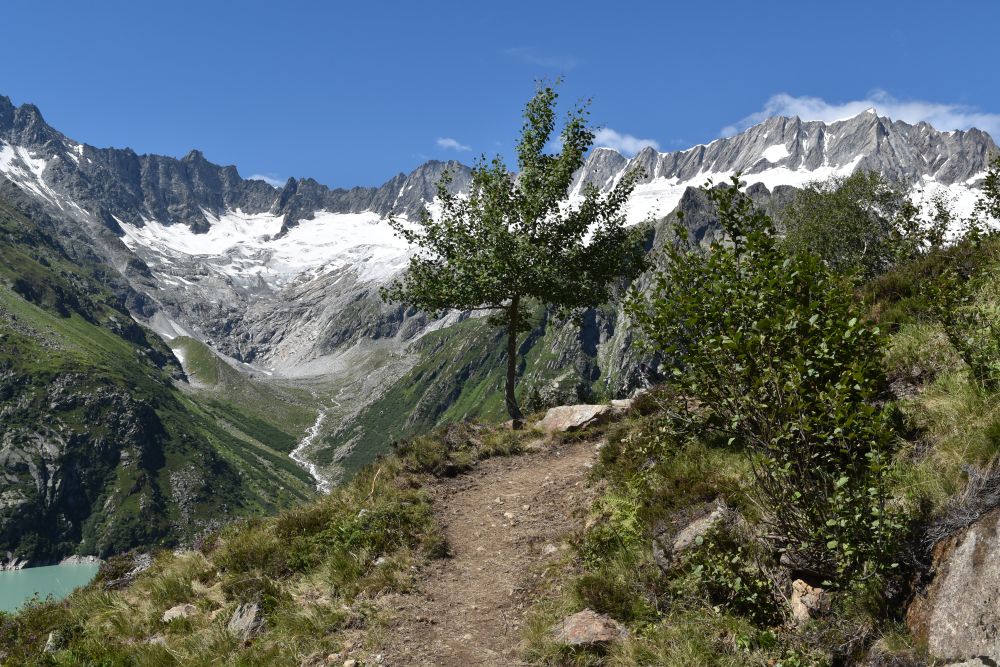
… enjoy the view of the Dammastock with its glacier,…

DSC_0025 small

… and play with background and foreground.

DSC_0043 small

.

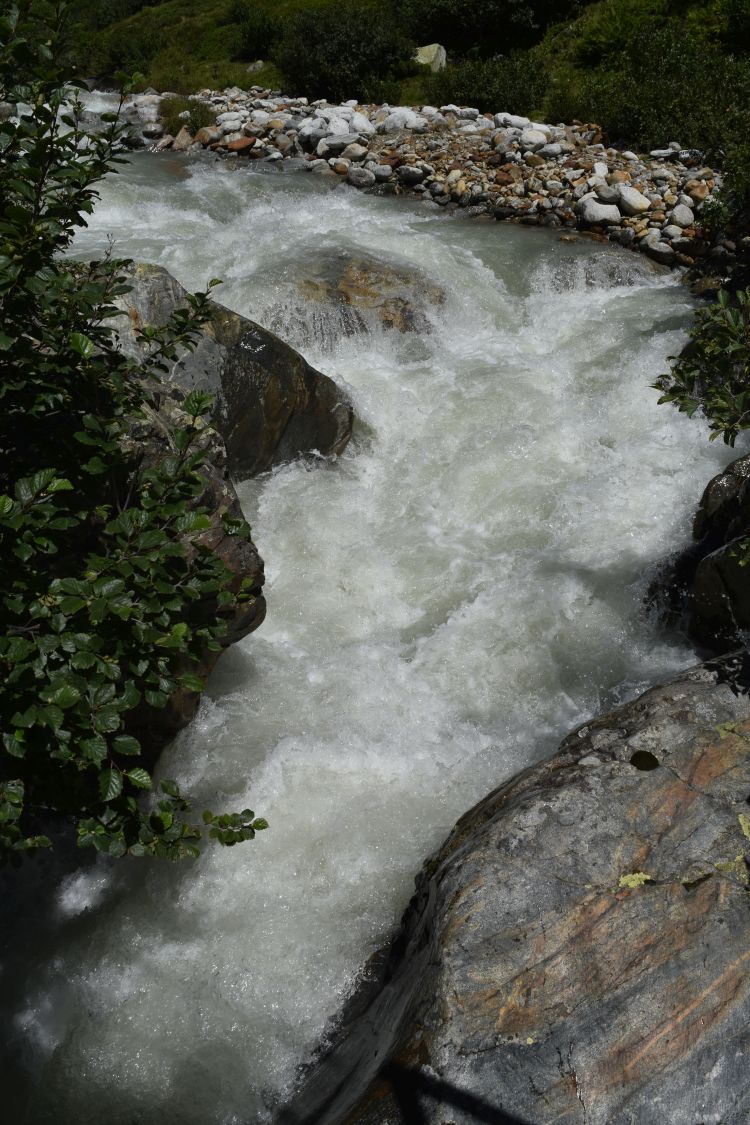
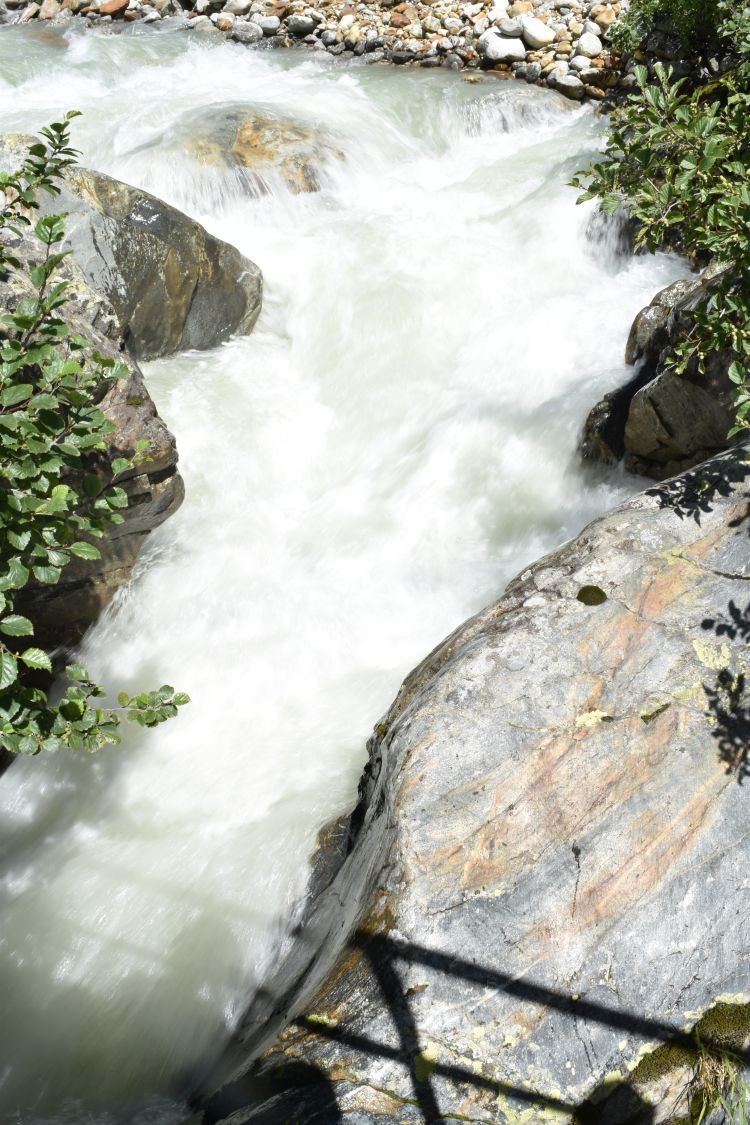
The Chelenen Reuss… flowing water… let us play with the shutter time

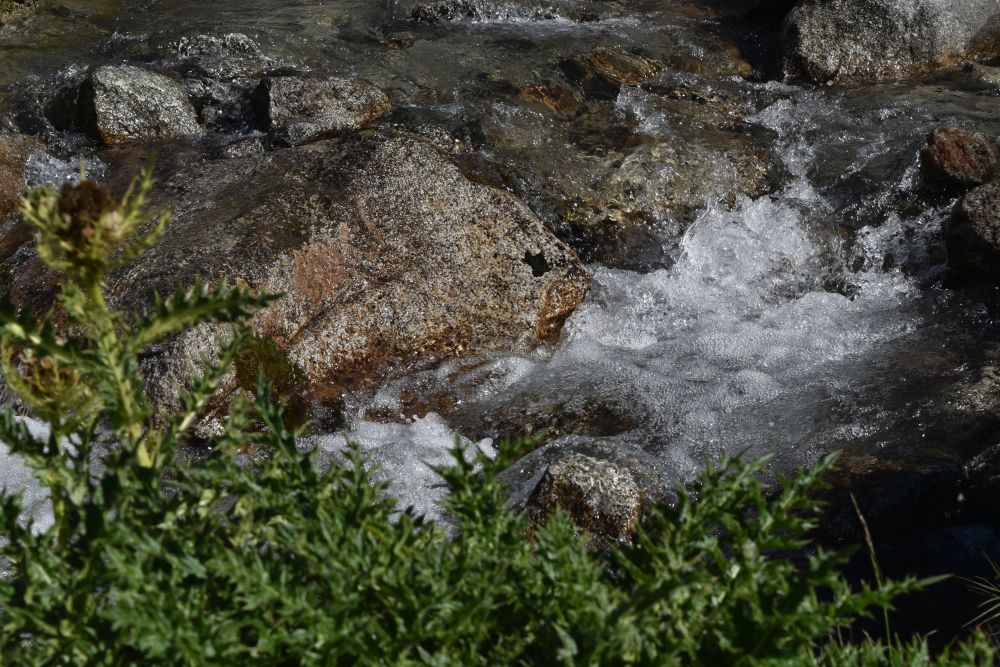
We leave the moors and highmoors and cross the Chelenen Reuss. Here we practice changing the shutter time – short…

DSC_0033 small

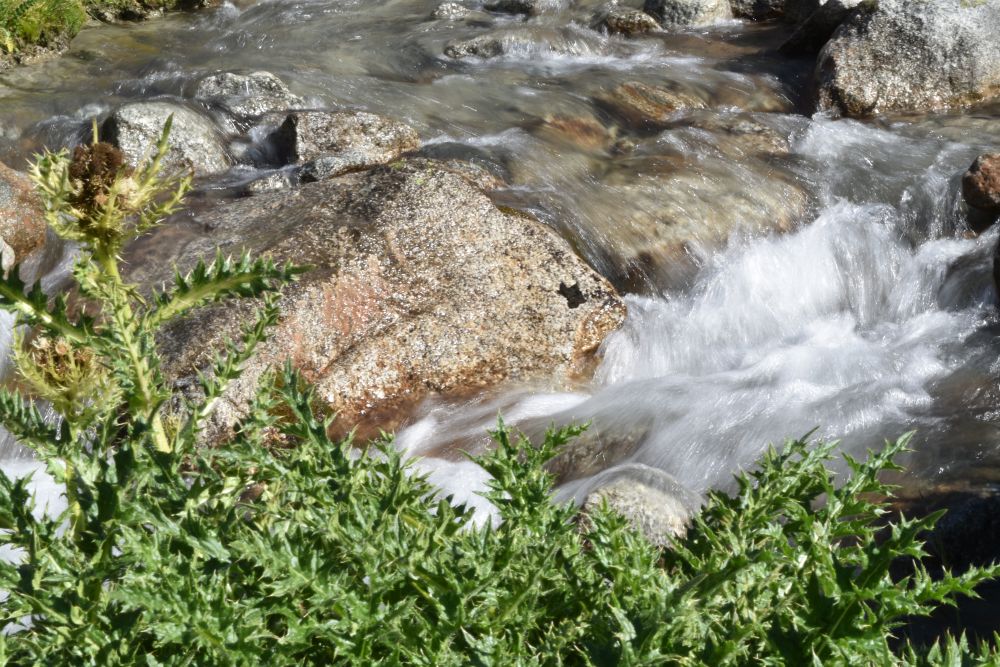
… and longer.

DSC_0034 small

I prefer it shorter.

.

Up to the Dammahütte in the burning sun – a hearty welcome by Lydia and Frank

In the burning sun we walk up to the Dammahütte, about 2450m above sea level. Lydia and Frank with their daughter give us a hearty welcome. This is the evening view of the Göscheneralp Lake taken near the Dammahütte.

DSC_0059 small

We have an excellent dinner with soup, salad, Spaghetti and pine apple dessert.

.

Morning at six… the sky is clear

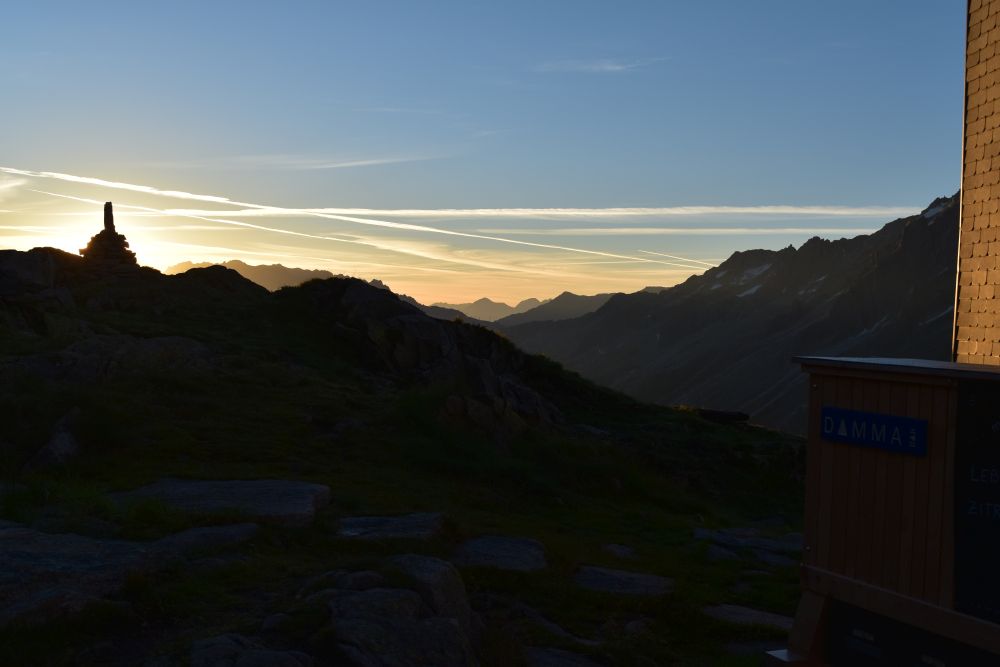
Early at six we look forward to a great and sunny day. This is the view of the morning sky

DSC_0068 small

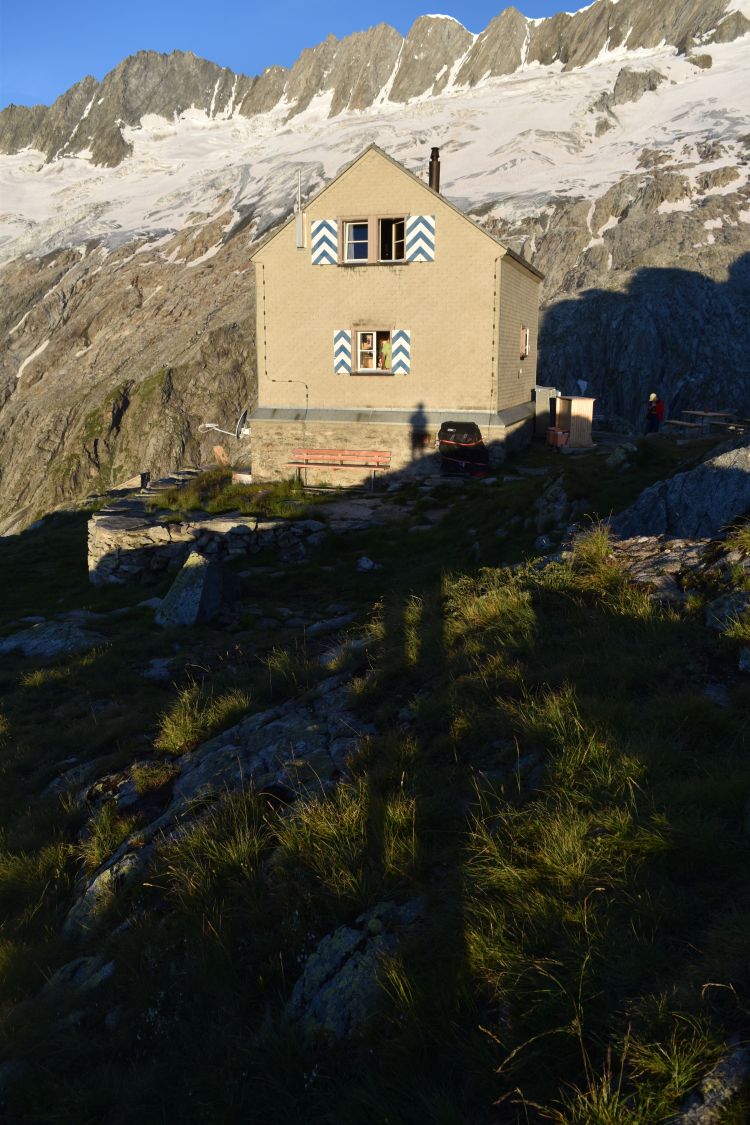
The sun is still low and gives light to the Dammahütte in front of the Dammastock.

DSC_0078 small

After a tasty breakfast with Birchermüesli and rolled mountain cheese, we talk with the owners of the hut. As they expect more tourists today, the daughter prepares a Schlorzifladen. This is a cake common in Toggenburg near the lake of Constance (Bodensee).

.

Panorama walk with goats and more water games

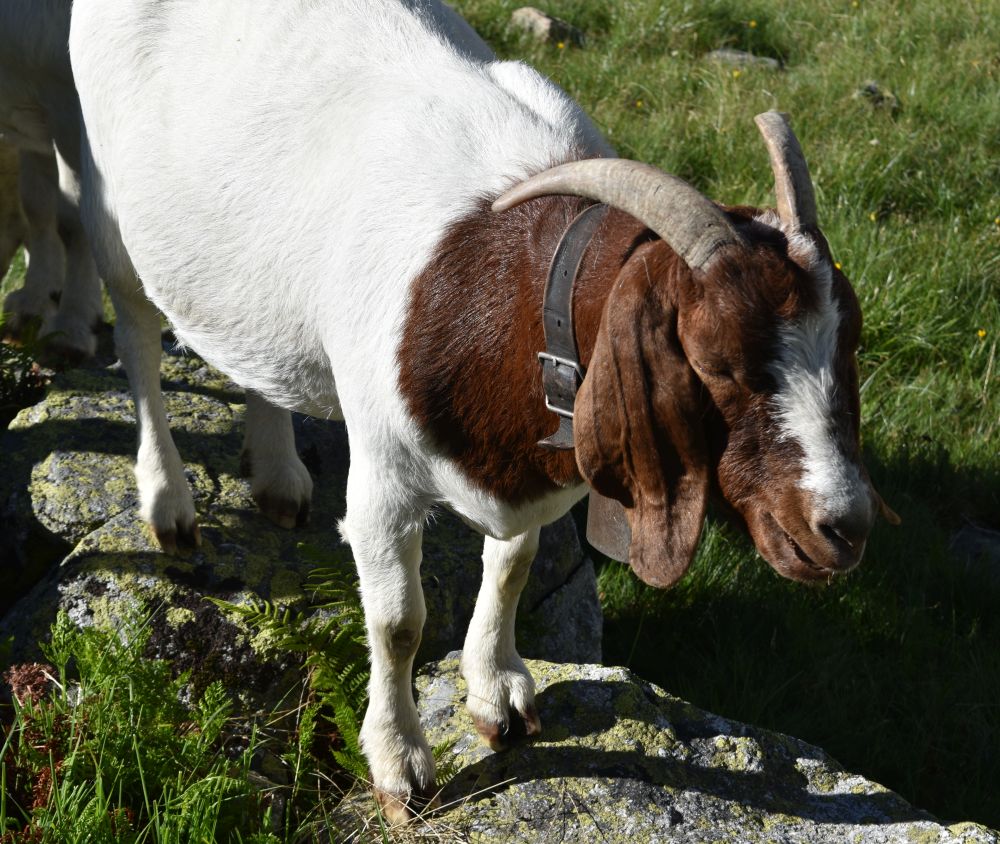
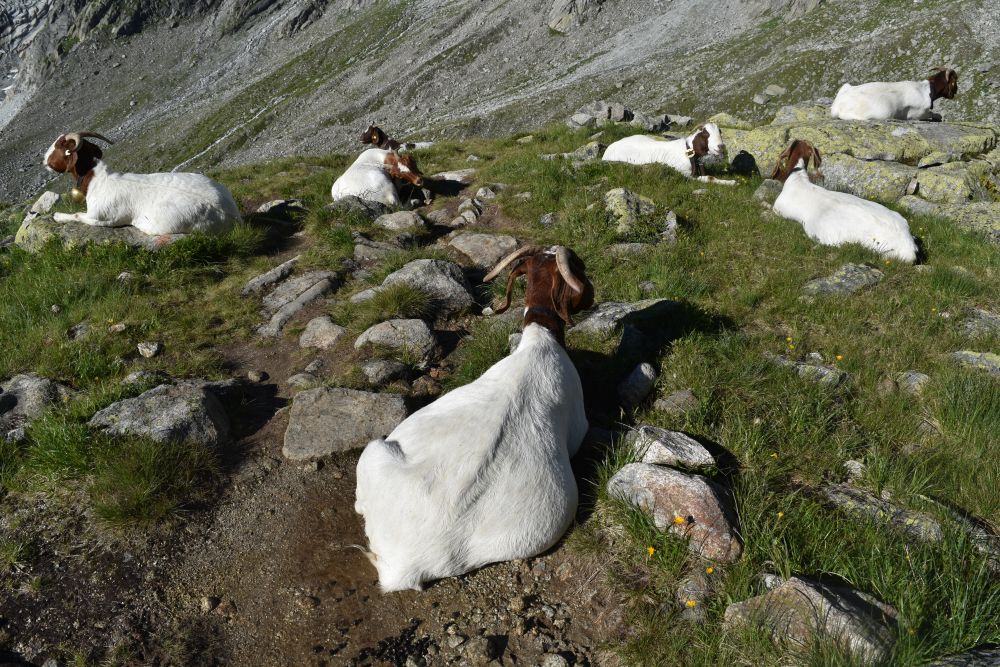
We take the Panorama walk down to the lake. Hello goats!

DSC_0106 small

Yes, YOU MUST enjoy the view!

DSC_0112 small

The Damma Reuss – again we change the shutter time from short…

DSC_0129 small

… to longer.

DSC_0130 small

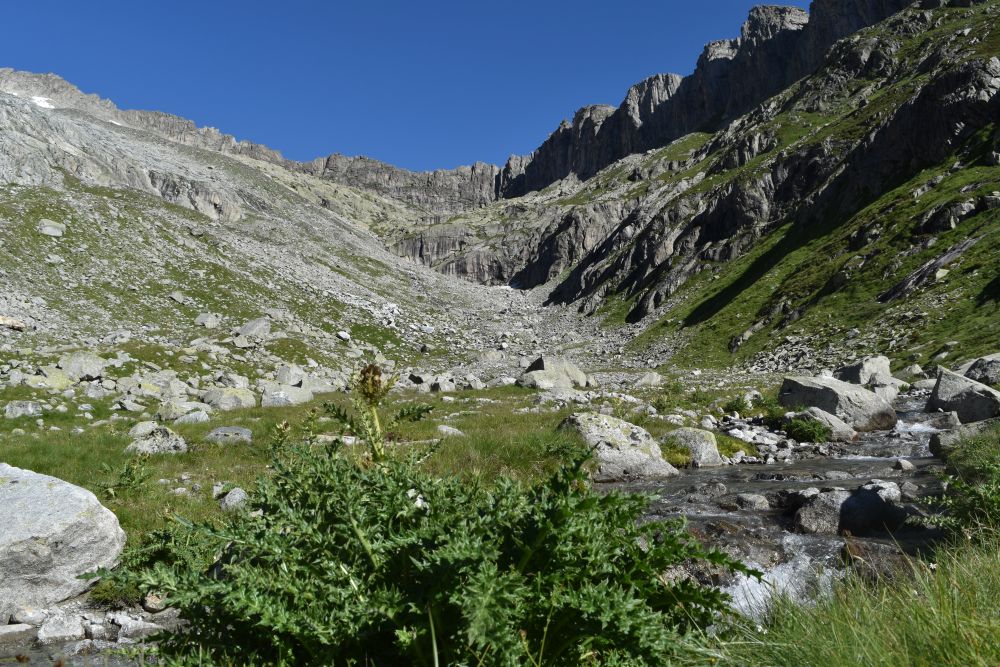
And then I look back with the thistle in the foreground.

DSC_0133 small

.

Back along the lake catching the 13:30 bus

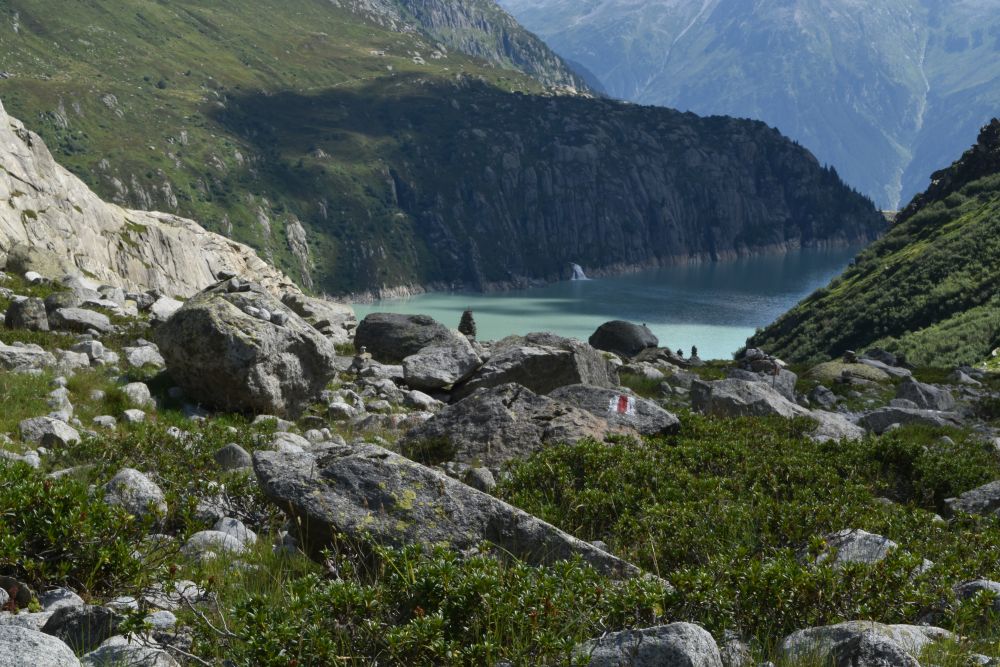
Now we head down to the lake, join the families on their round walk south of the lake…

DSC_0162 small

and at the dam catch the 13:30 bus to Göschenen. Already around 5 PM we are back in Basel. It starts to rain and then it pours with rain. Lucky we have been having enjoyed two wonderful, sunny days.