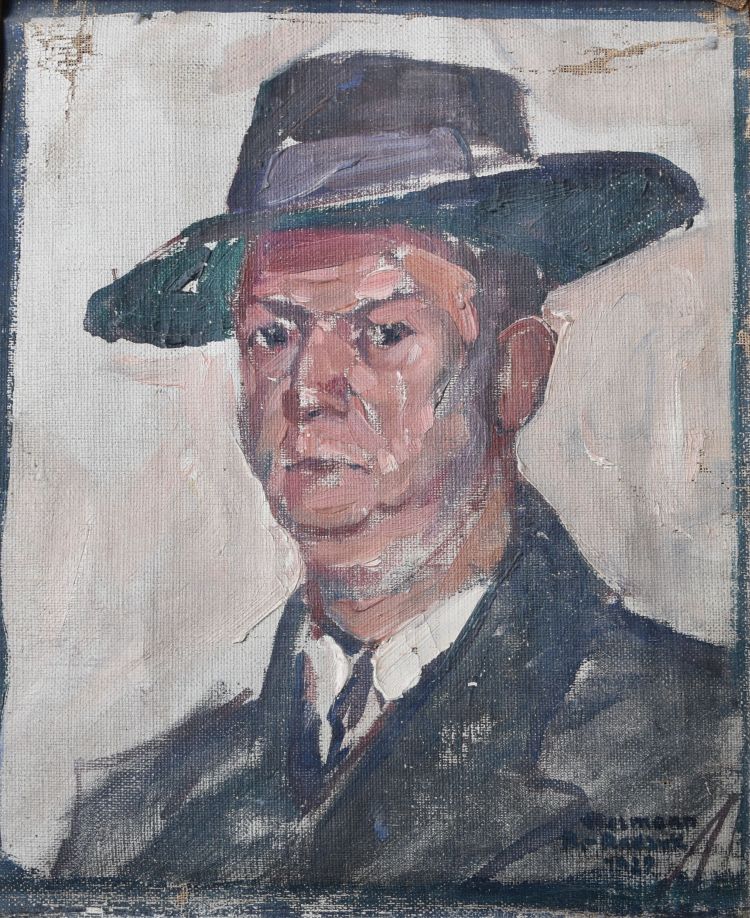
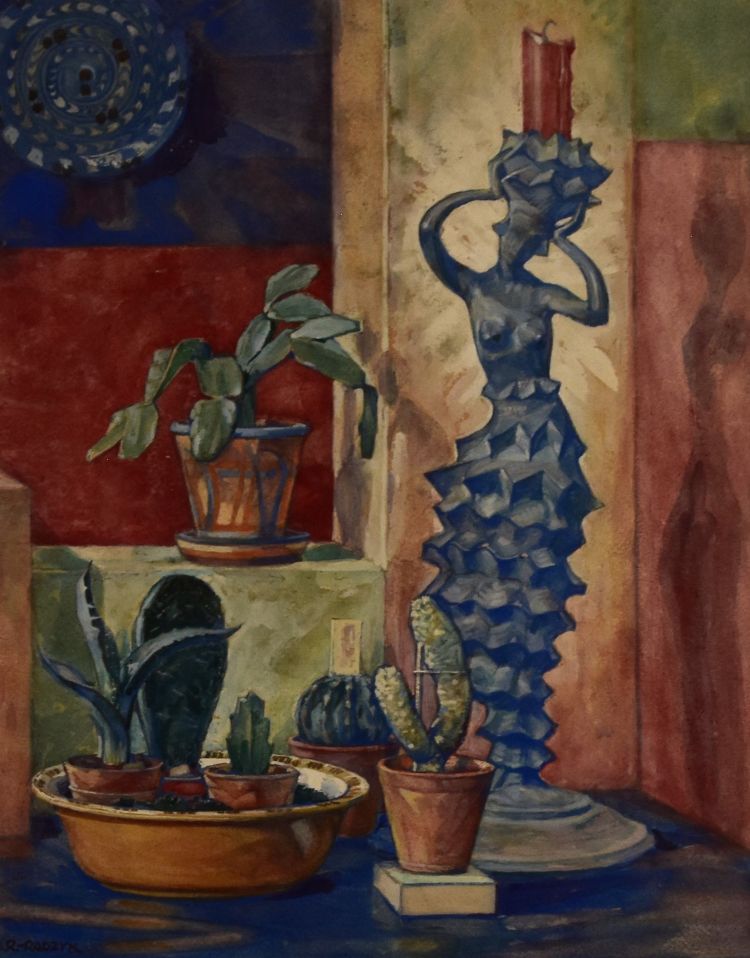
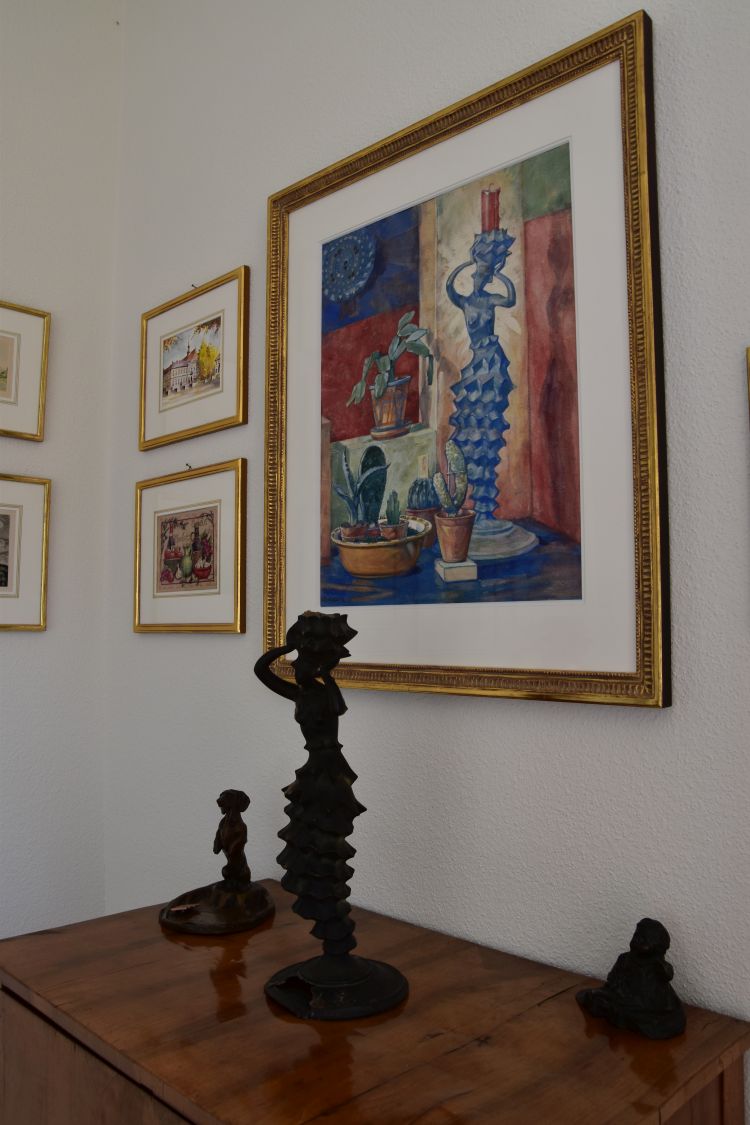
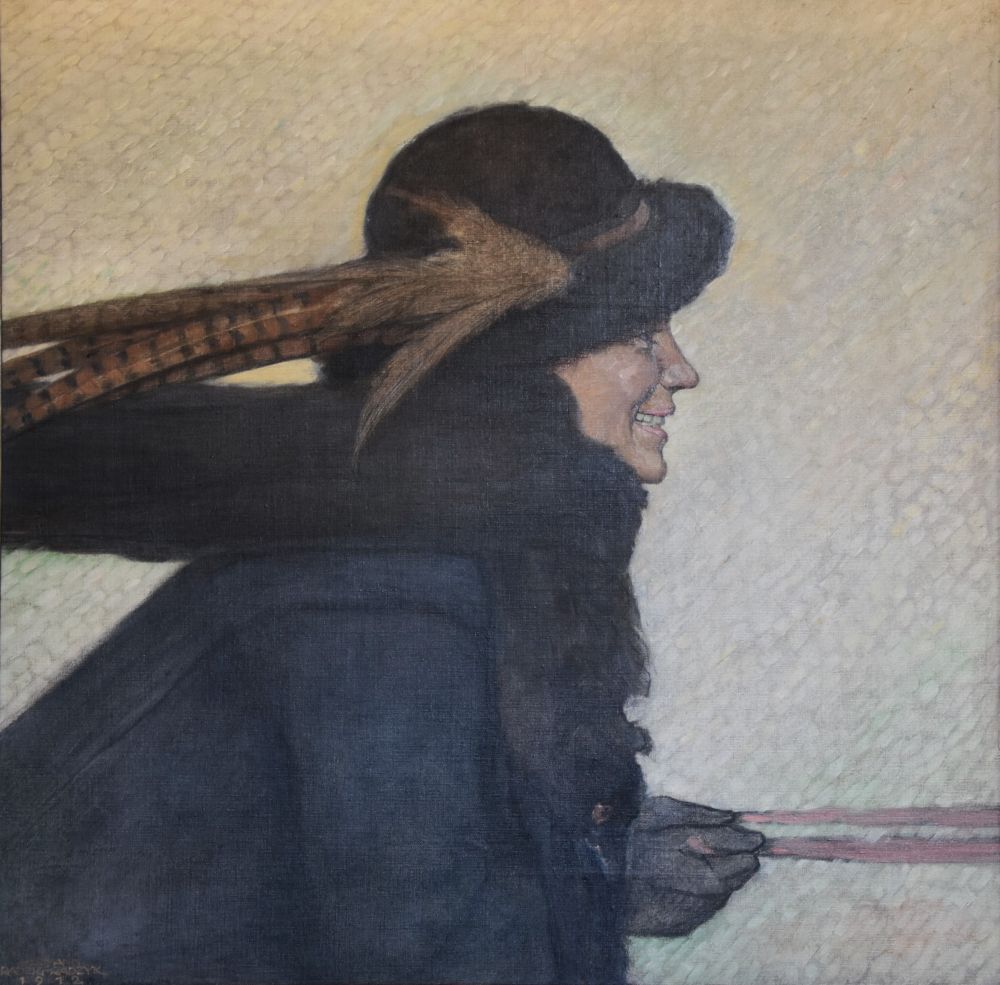
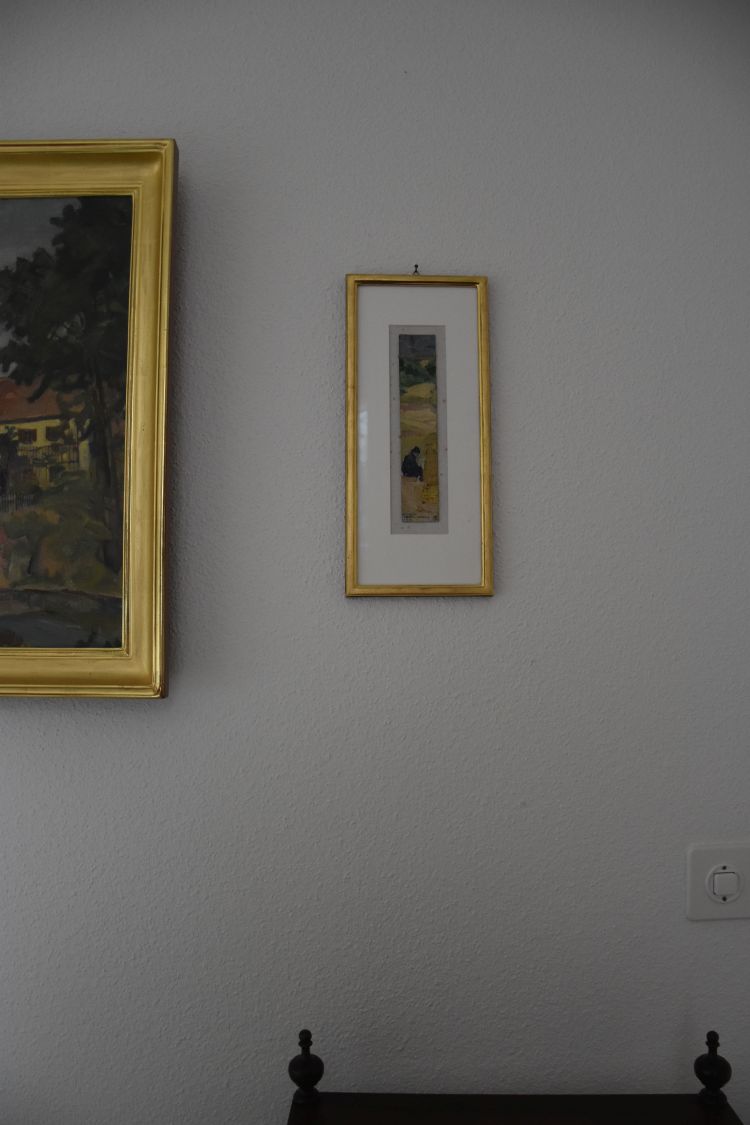
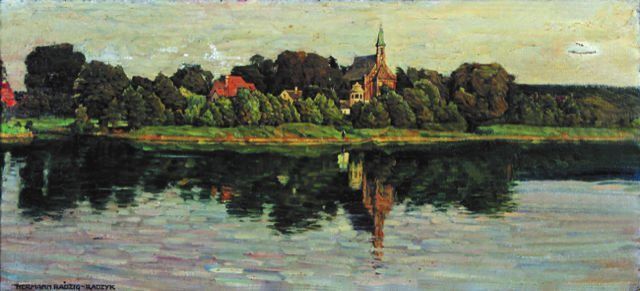
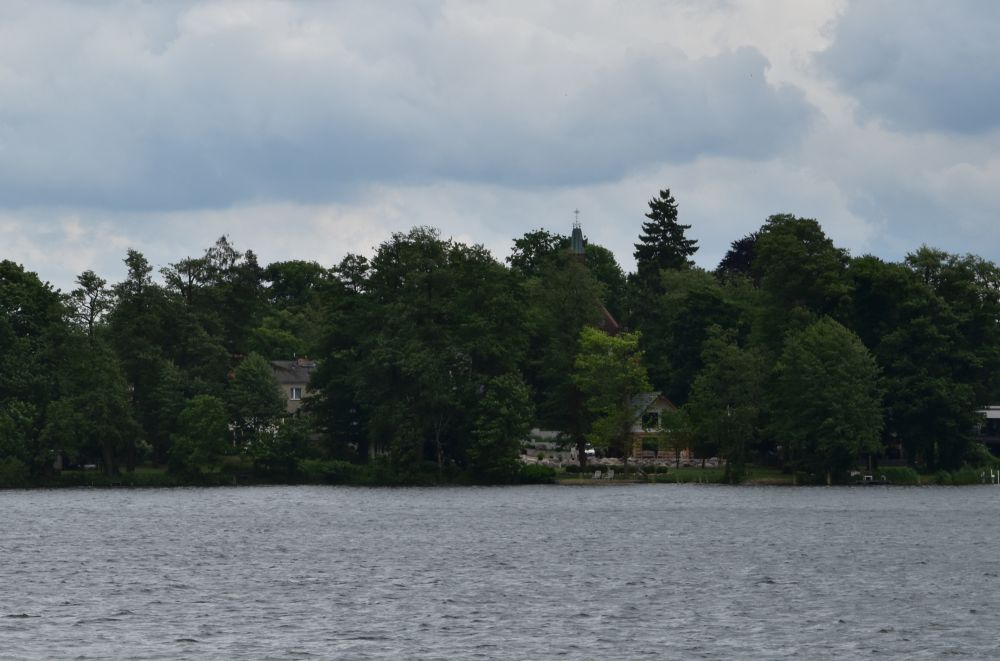
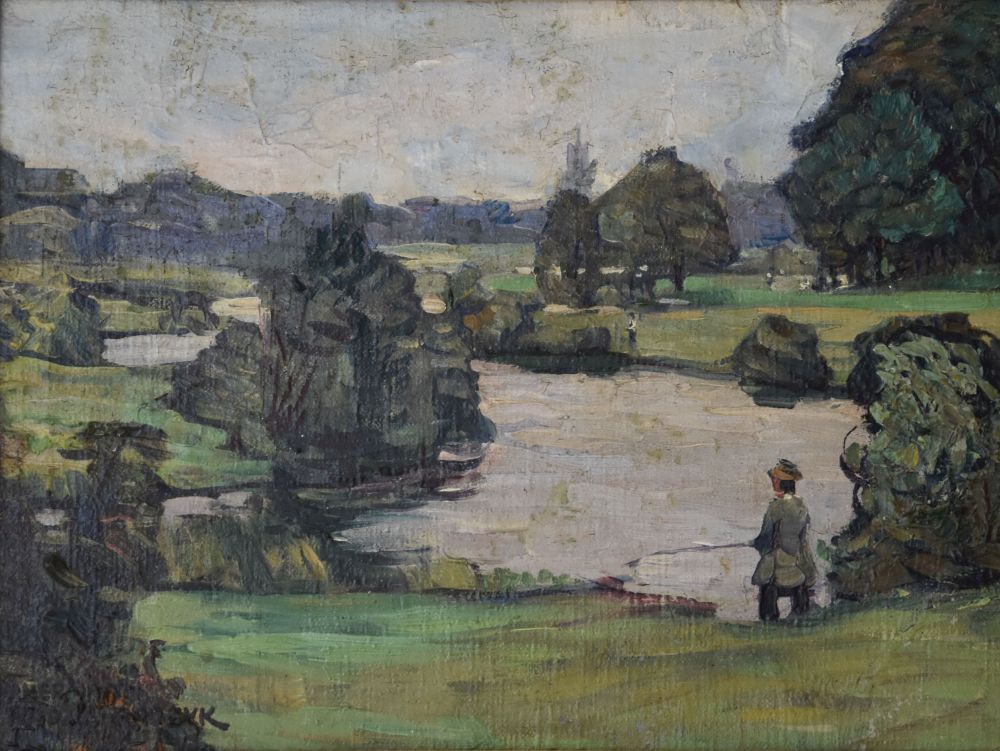
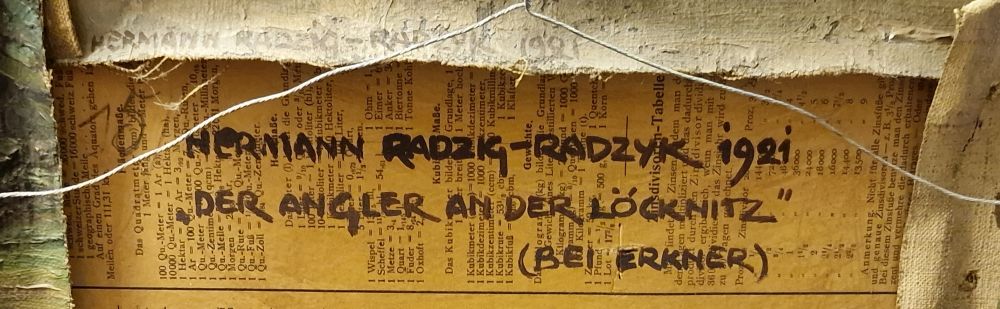
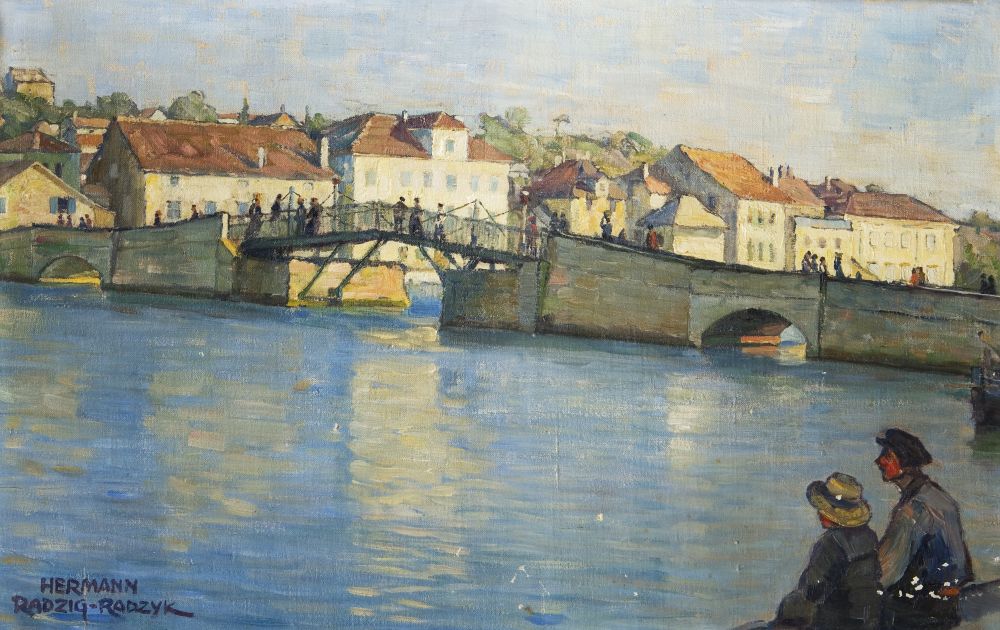
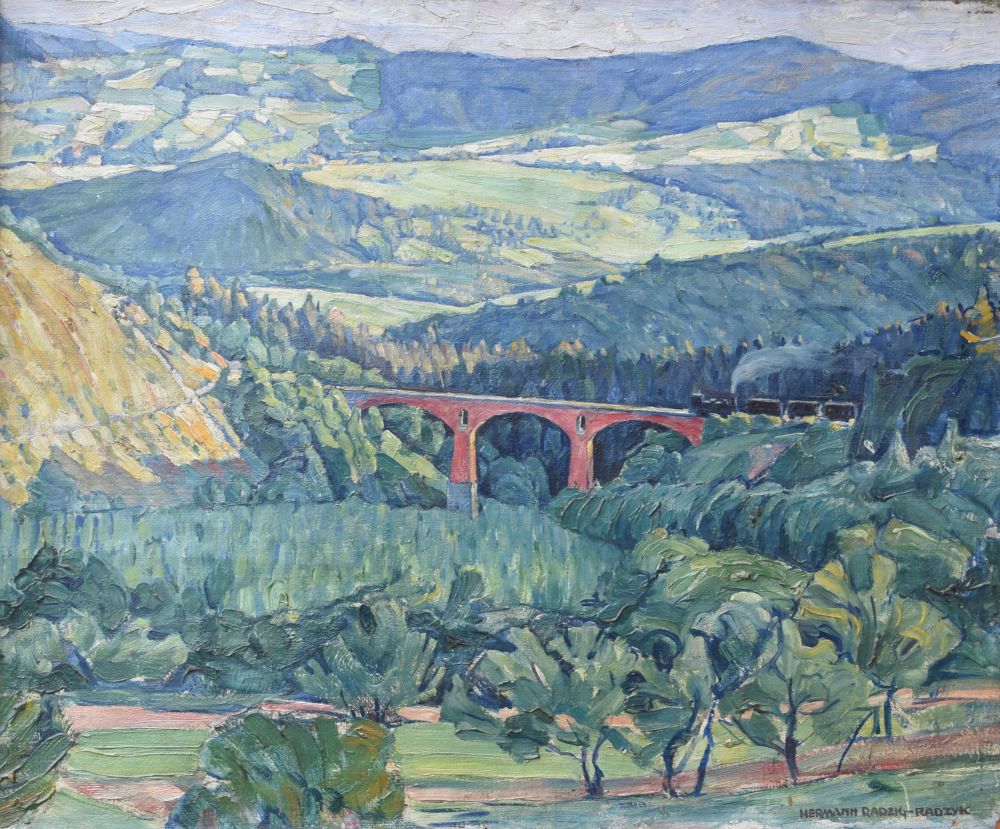
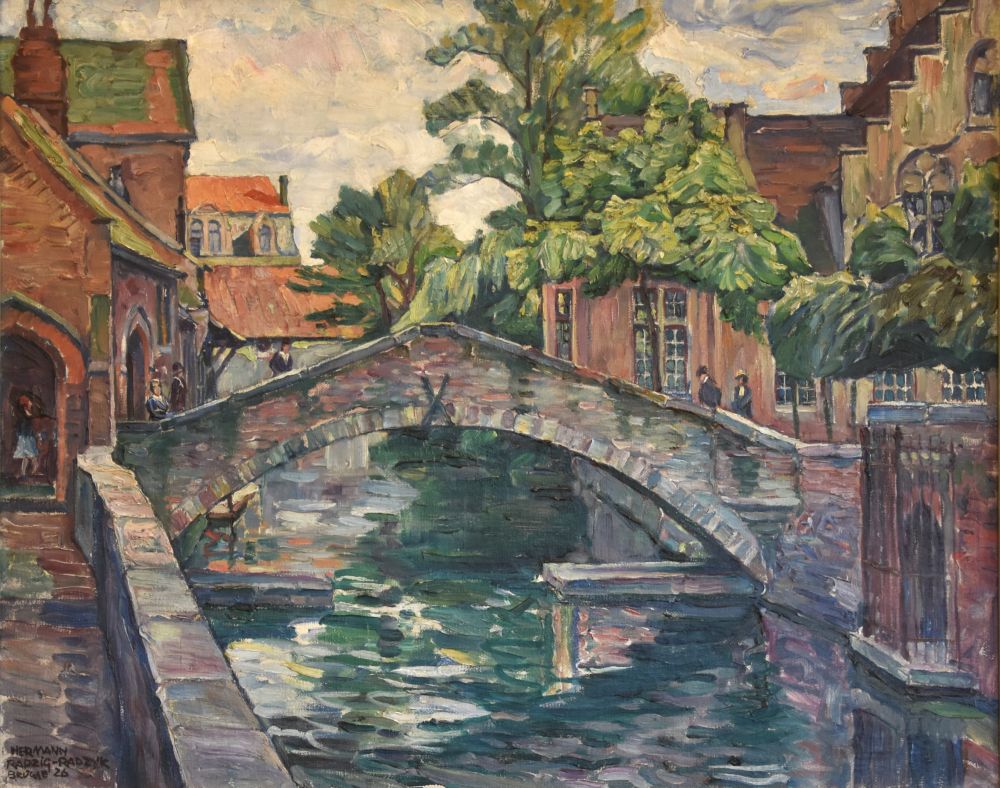
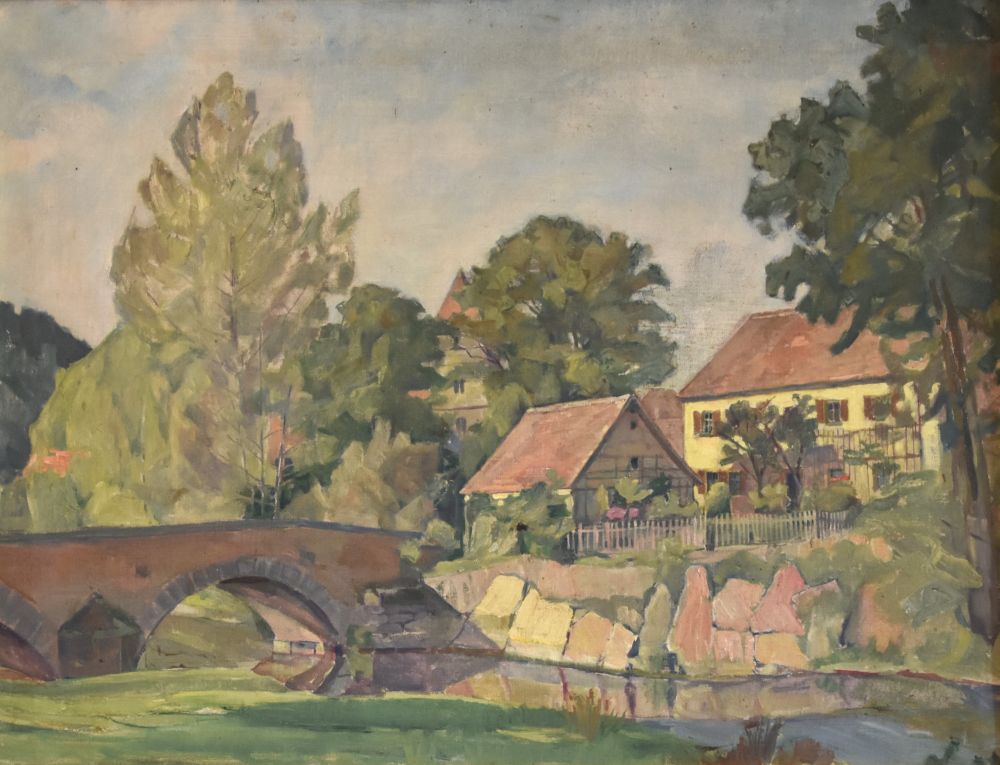
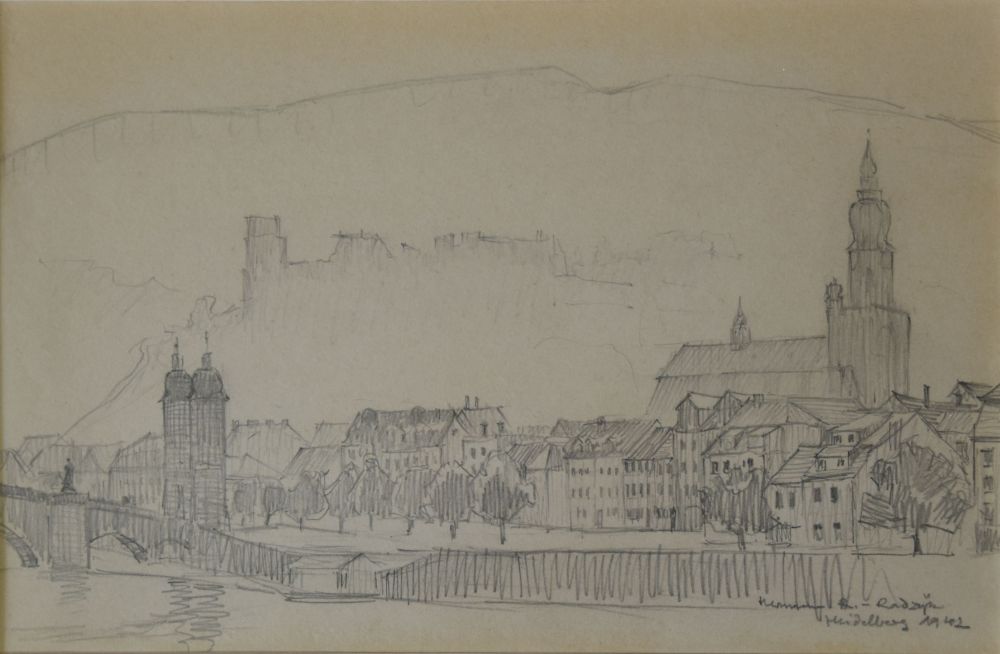
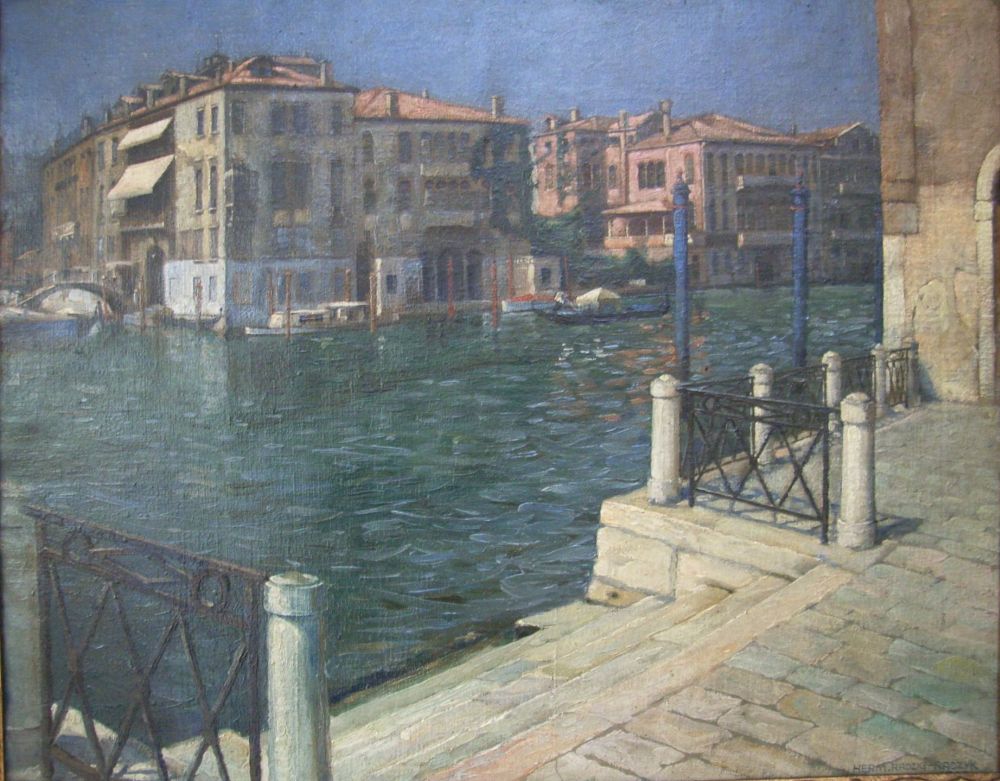
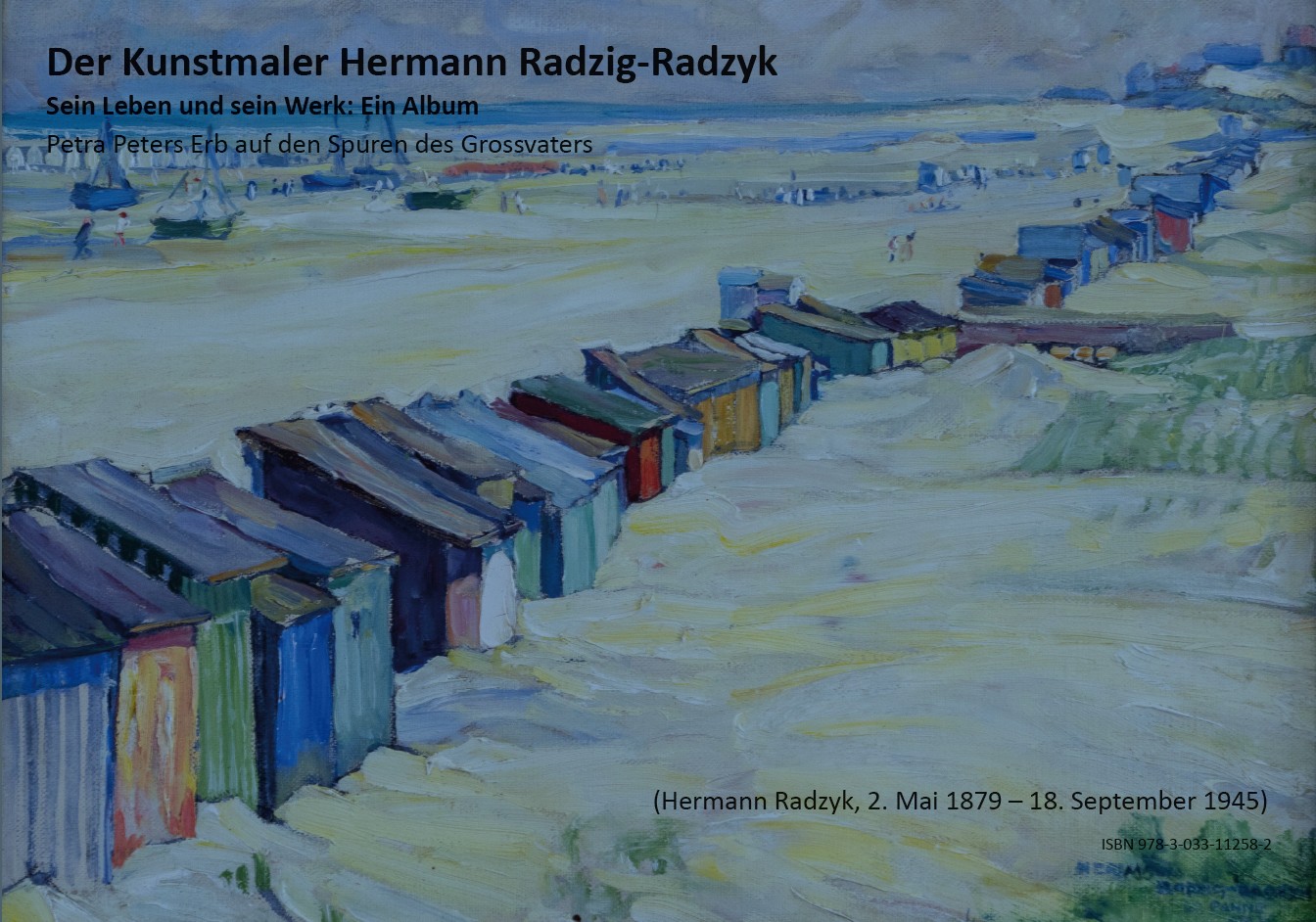
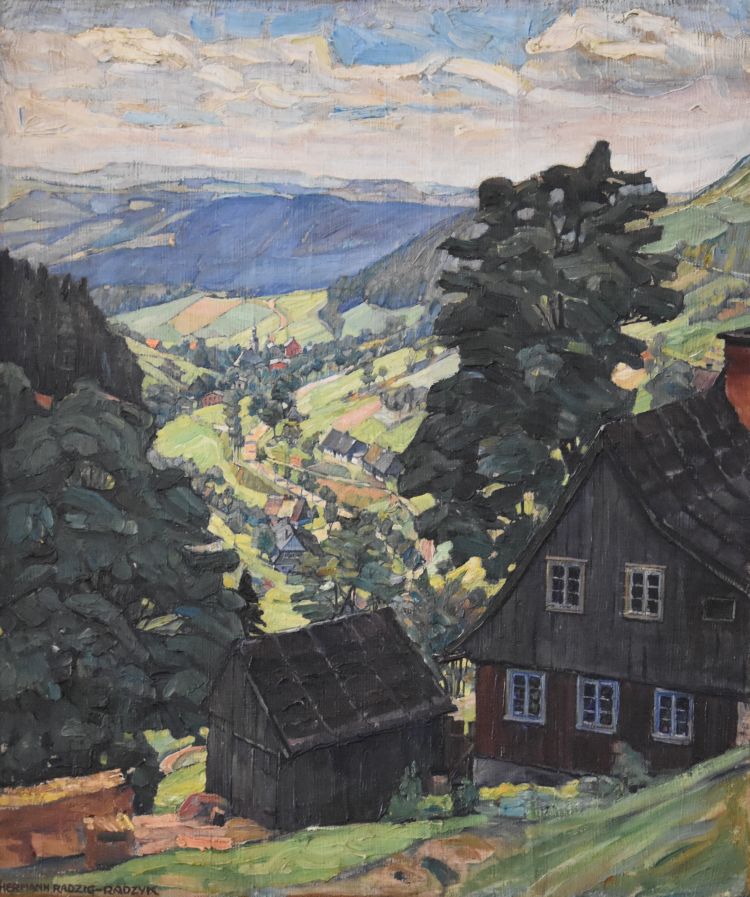
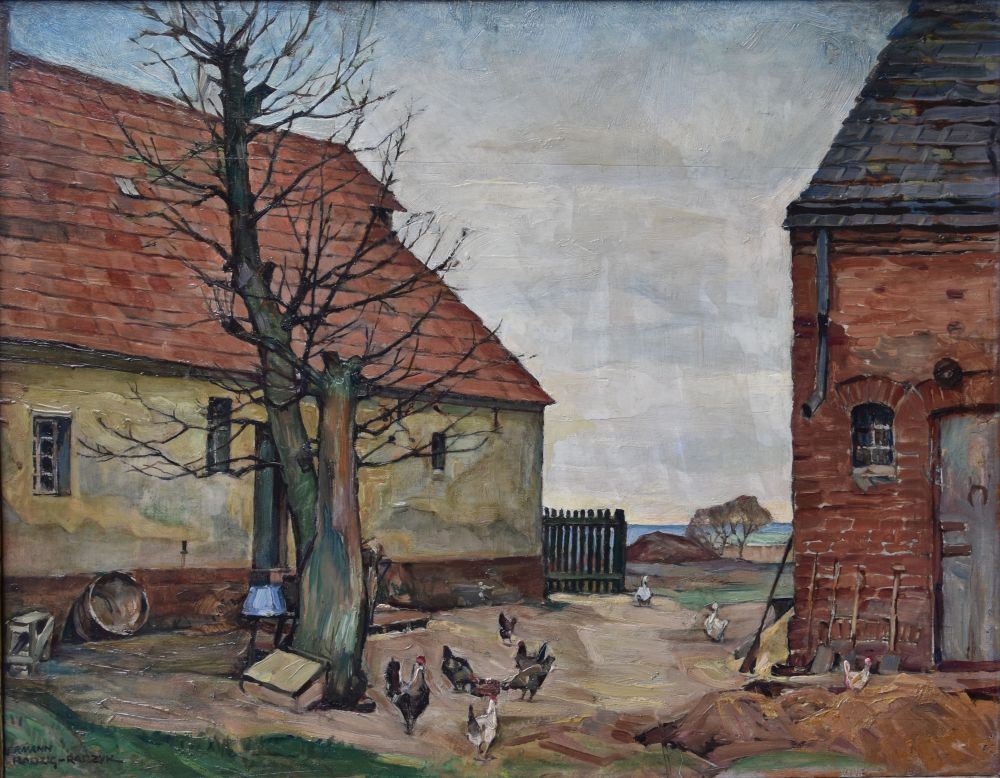
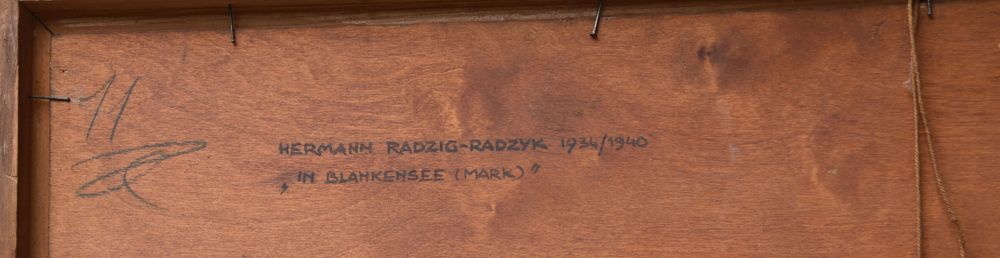
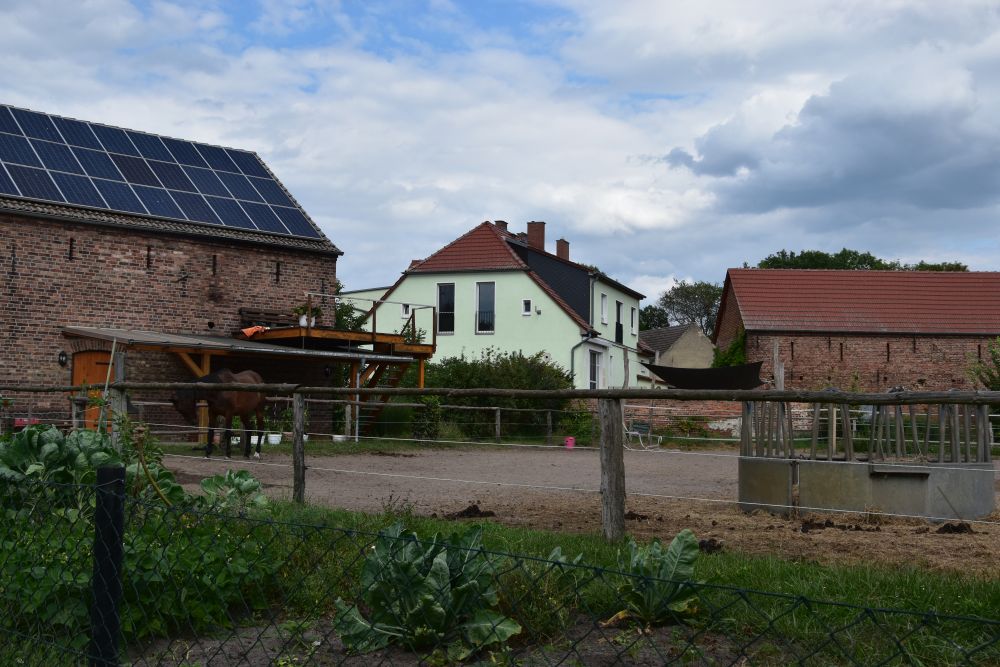
In 1943, my grandfather, the artist Hermann Radzig-Radzyk, presented his picture “Besigheim” in the show room of the Verein Berliner Künstler to sell it. His work was burnt in a bombing raid. Though I do not know the painting, I visited Besigheim in September 2026 to find the view he could have painted.
I believe, I found the view my grandfather painted.
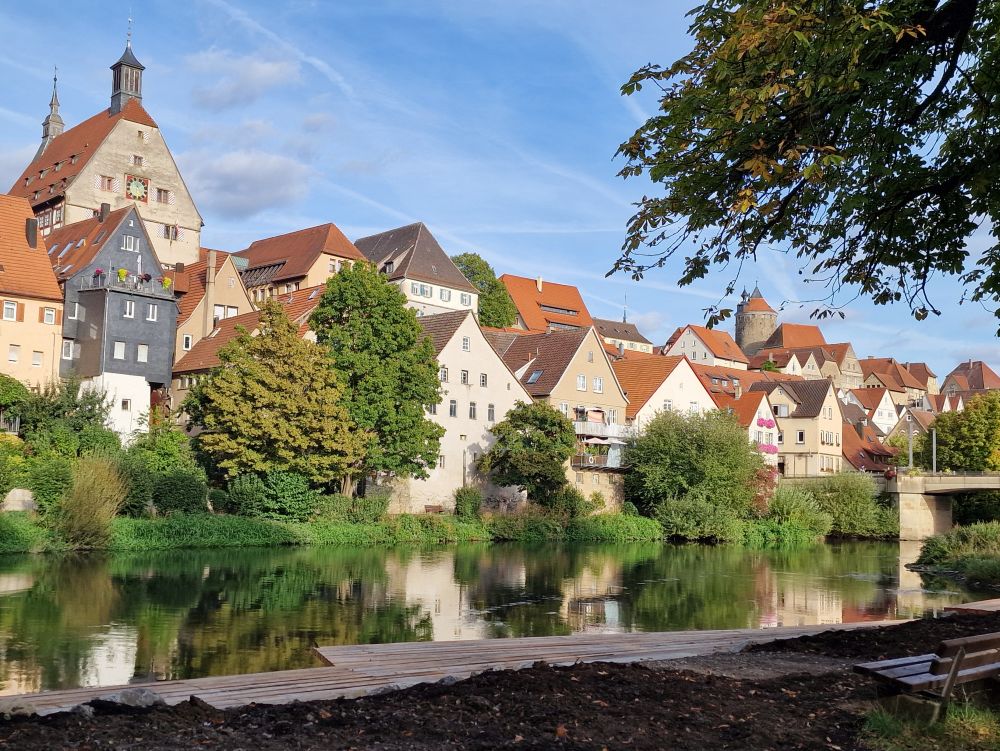
This is the Besigheim city line seen from the Enzweg, the path along the river Enz, with the townhall on the left and the Schochen tower on the right, above the bridge (a medieval bridge, destroyed in April 1945 and soon rebuilt in a more modern style).
Along the Enz, I found various beautiful views, more upriver just with the Schochen tower and the roof of the Steinhaus (stone house)…
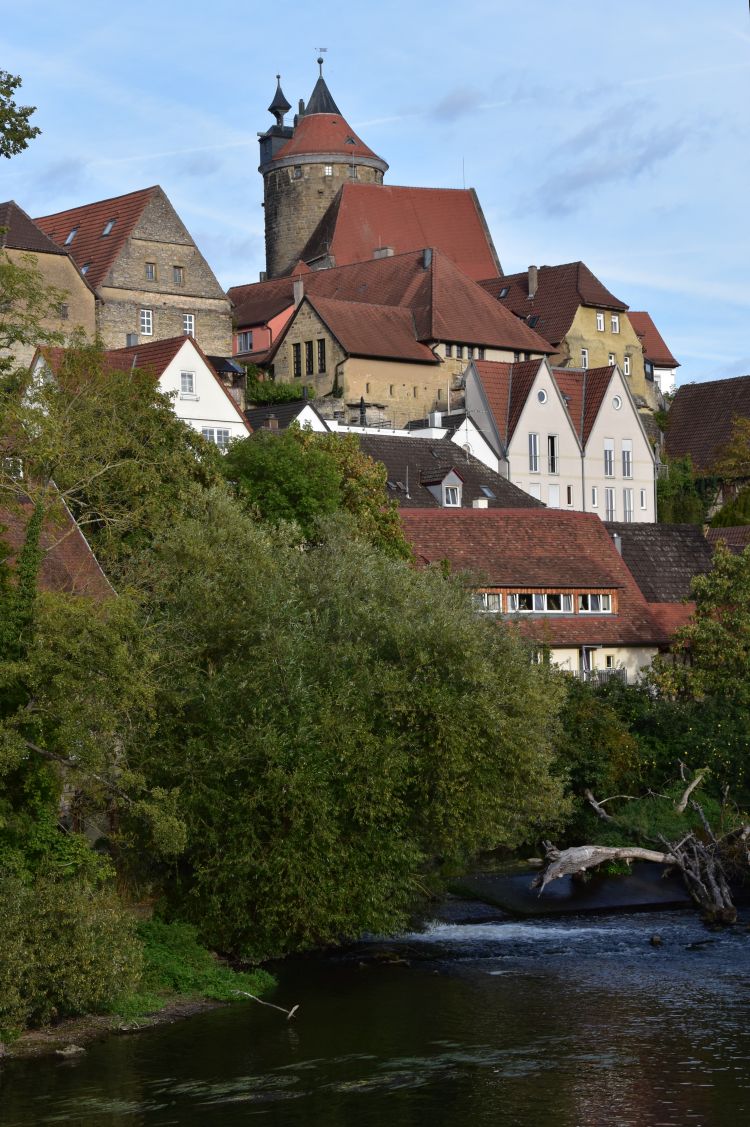
… or more downriver with the townhall.
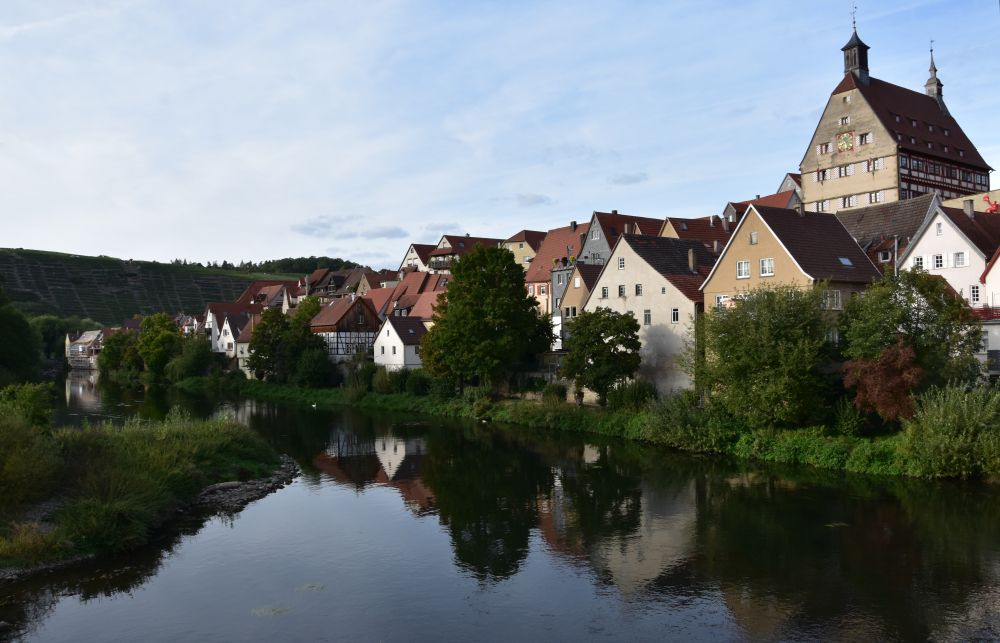
These are other candidates for the view my grandfather could have painted, but my favourite is the first view – and it might have been the favourite of my grandfather, too.
Let us now delve deeper:
- How do I know of the destroyed painting “Besigheim”? – I found a record in the Berlin State Archive.
- Why did my grandfather paint at Besigheim in 1943? – He visited his art friend Richard Duschek – quite sure.
- Why Besigheim? – It is a well preserved medieval city. Let us explore it.
How do I know of the destroyed painting “Besigheim?
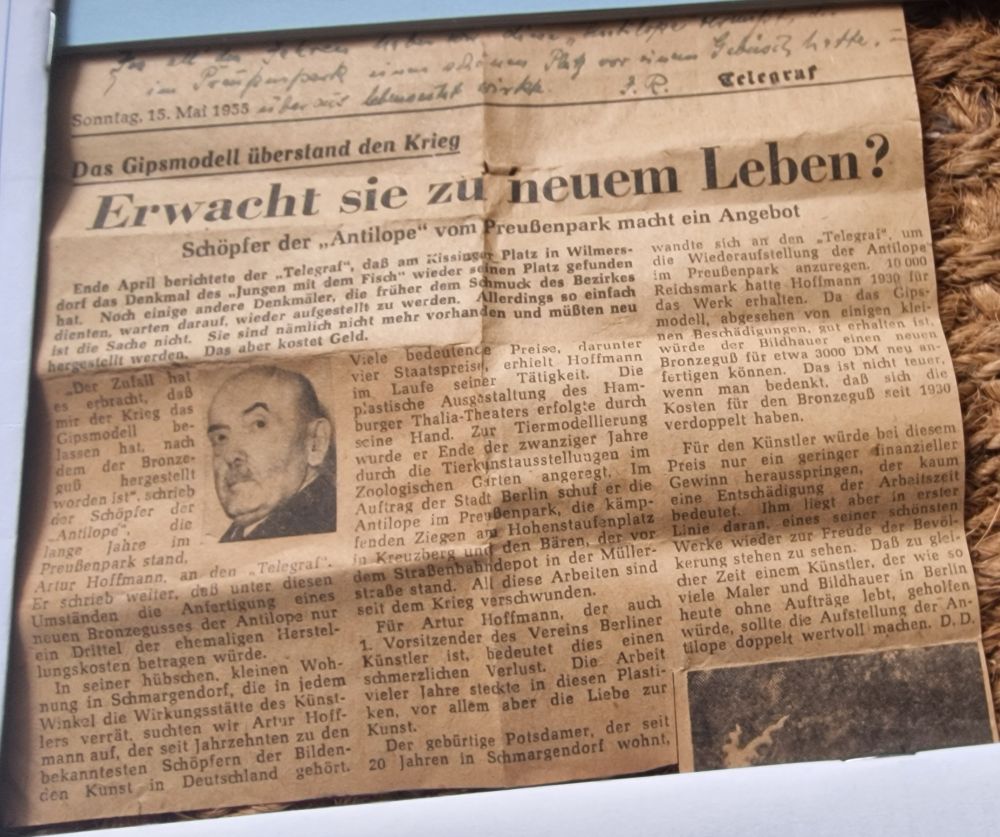
In the Berlin State Archive (Landesarchiv Berlin), I found the record A – Rep. 005 -7 Nr. 644 about the painting “Besigheim”. My grandfather presented it in the Verein Berliner Künstler (Association of Berlin Artists), Tiergartenstrasse 2a in Berlin, to sell it for 1200 Reichsmark. In November 1943, an air raid destroyed the building and the picture. My grandfather asked for compensation for the loss at the Kriegsschädenamt (Office for War Damages). He asked for 1000 Reichsmark (RM), explaining that he lives from selling his paintings. The officer intended to grant him only 600 RM, but an expert from the Reichskammer der Bildenden Künste (Reich Chamber of Visual Arts) stated that Hermann Radzyk was a respectful artist that deserves the compensation of 1000 RM.
Why did my grandfather paint at Besigheim in 1943?
My grandfather Hermann Radzyk often painted, where he would meet other artists or an art friend. Can I find an art friend that lived at Besigheim?
Yes. The Website of Besigheim presents the artist Richard Duschek (1884-1959), well respected here. The city keeps his legacy of paintings and they named a street after him. For the 50th anniversary of his death, in 2009, Besigheim organized a memorial exhibition. Auction houses sell his paintings still today.
Richard Duschek was 5 years younger than Hermann Radzyk. In 1907, Duschek enrolled at the Königliche Akademie der Bildenden Künste (Royal Academy of Visual Arts). The two artists must have met here, as my grandfather then spent his last semesters at the Academy, and they had the same teacher, Maximilian Schäfer.
Like my grandfather, Richard Duschek was a member of the Verein Berliner Künstler and showed his paintings at the Grosse Berliner Kunstausstellung (Great Art Exhibition of Berlin). Duschek lived many years in Berlin Charlottenburg, also like my grandfather.
In 1943, a bombing raid destroyed Duschek’s apartment and workshop in Berlin Charlottenburg. After that he moved to Besigheim, the hometown of his wife.
I am quite sure, it is no coincidence that my grandfather was at Besigheim in 1943, which is the year, when Richard Duschek moved to Besigheim.
When I strolled through Besigheim, I met a charming lady, citizen of Besigheim. Born in 1940, she had met Richard Duschek and owns a painting by him. She told me that Duschek’s favourite place was on the banks of the river Enz with the view of the medieval city line. Later the guard of the church told me, that Besigheim sells this view as a puzzle – it really seems to be a popular view.
I am sure, Richard Duschek showed the Enzweg to my grandfather, and it might be very probable that the destroyed painting showed the city line painted from the river Enz.
Why Besigheim? – It is a well preserved medieval city. Let us explore it
Besigheim is located between Stuttgart an Heilbronn.
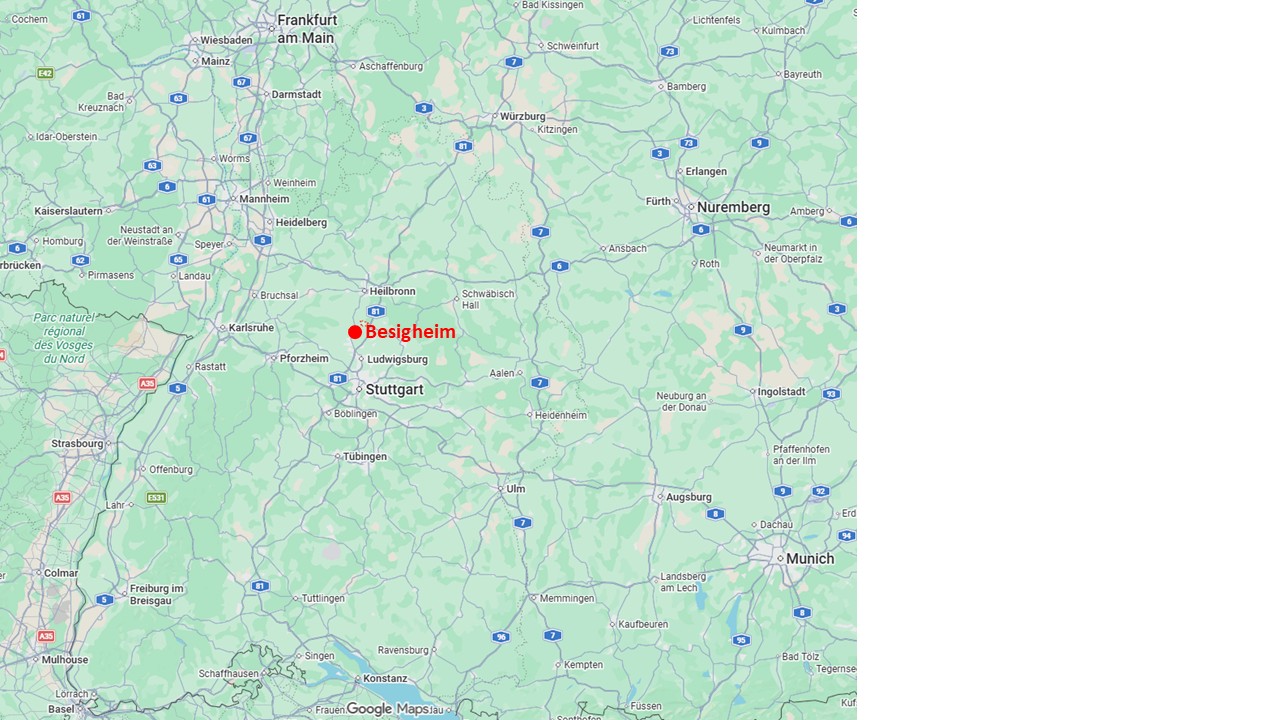
Source: Googlemaps
The tourist office in the townhall has a map with 27 sights of interest, most of them medieval, the oldest from the 13th century.
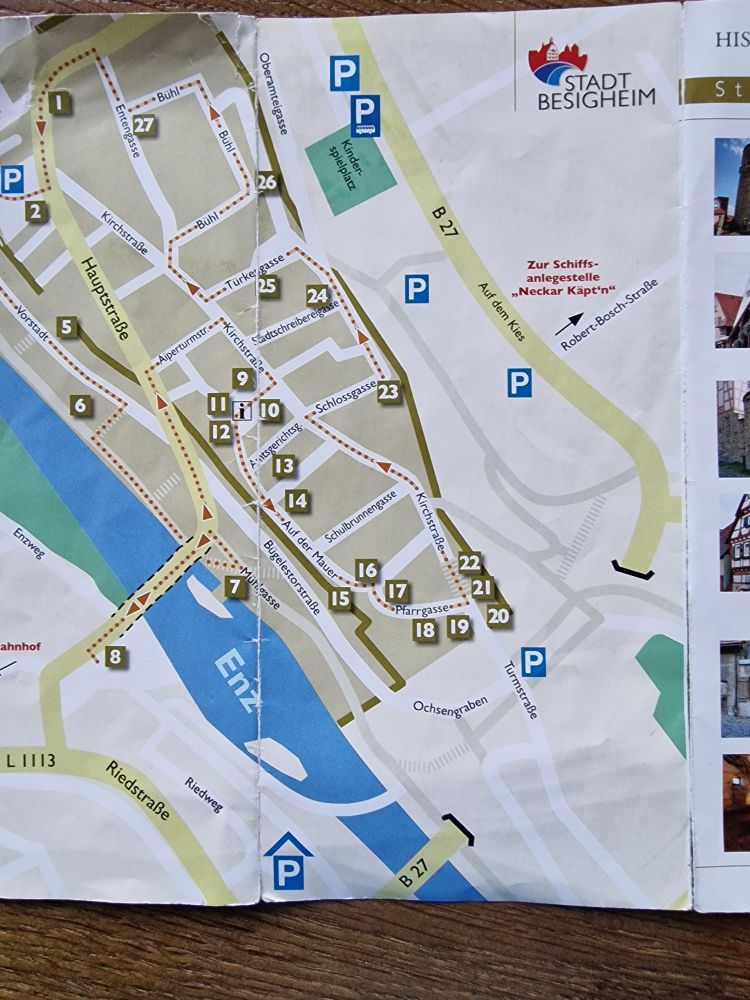
Source: Stadt Besigheim, “Historischer Rundgang durch Besigheim”, o.Jg (the map was heavily used, as I strolled through the city centre)
The Hauptstrasse (main street) crosses the city from north to south ; it is a quiet main street. The Kirchgasse (Church Lane) is the vein of the medieval city, leading slightly upwards from north to south, ending with the church and the southern gate. Furthermore, the map shows the Enzweg along the river Enz that Richard Duschek preferred for his paintings. In the internet you find some of the views he and other artists painted here.
It was a great pleasure for me to explore the city centre, not destroyed in the war, all houses well kept. In the streets, I met mostly citizens of Besigheim or some tourists from Germany, only a few tourists were from abroad – I heard some Dutch and some English. It took me my almost two days to visit all sights of interest in the centre and the vineyards north of Besigheim. Let me share a few impressions with you.
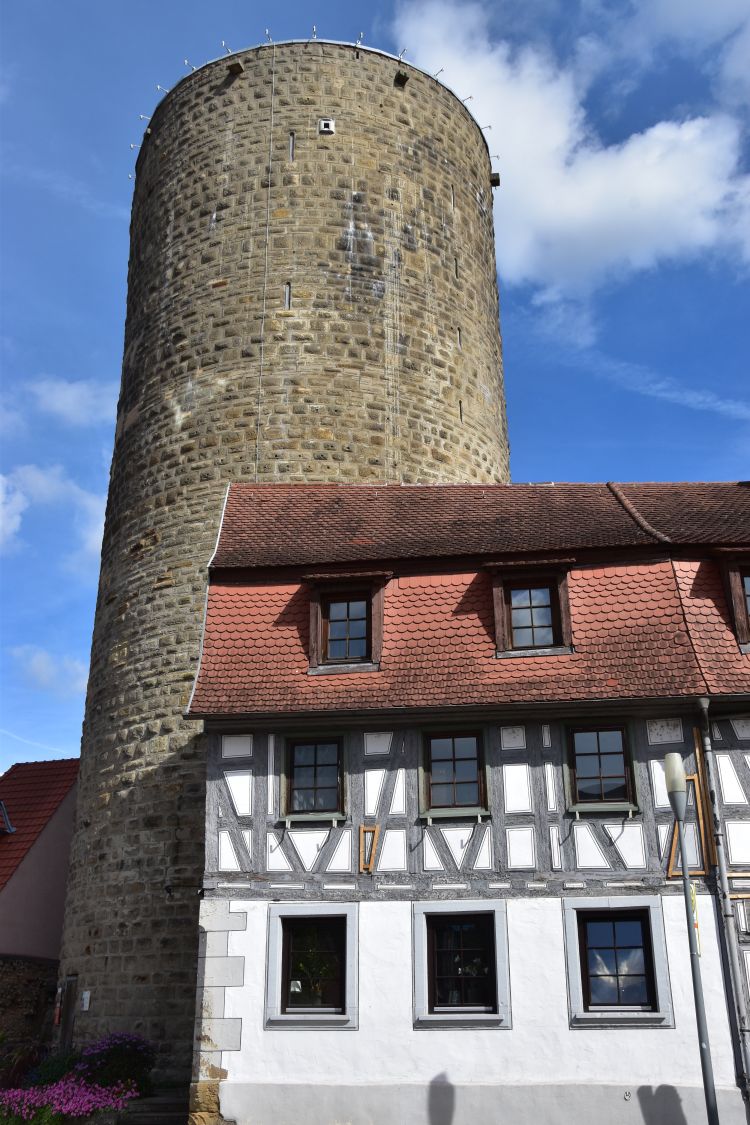
I entered Kirchgasse near the Waldhornturm (French Horn Tower, # 1).
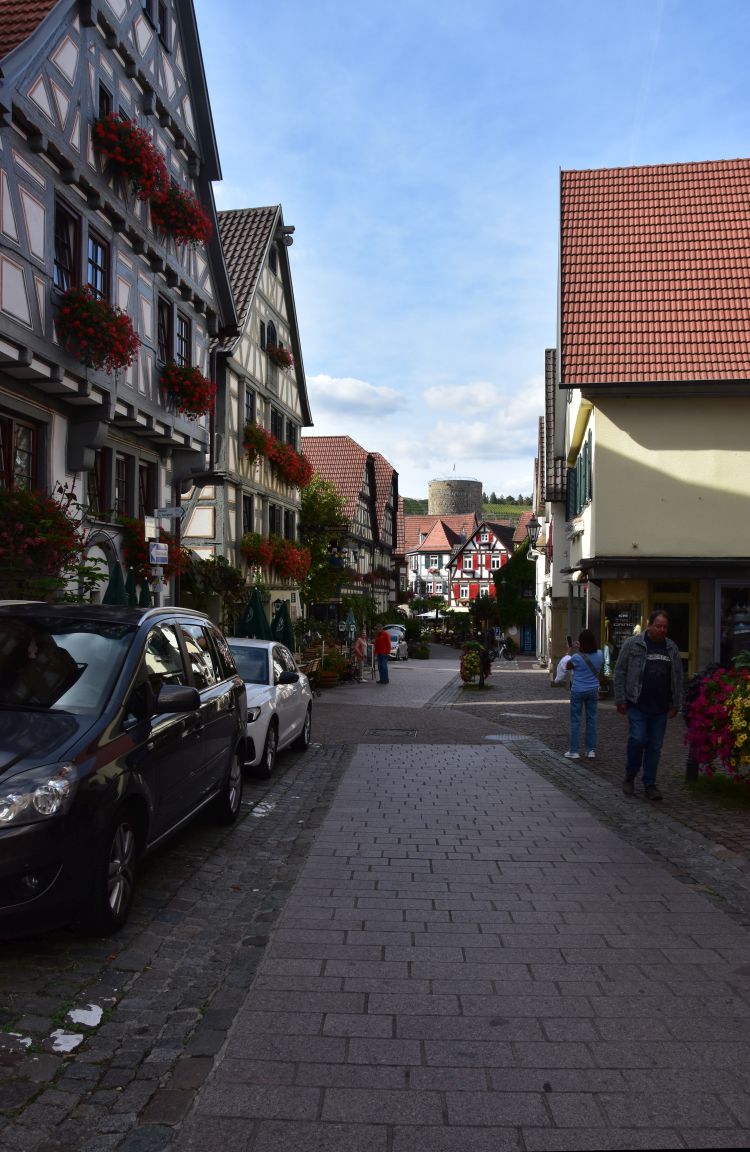
Looking back north from the Kirchgasse, we can see the tower and the vineyards north of the city. Cars are not forbidden in the city centre… the citizens of Besigheim obviously live here.
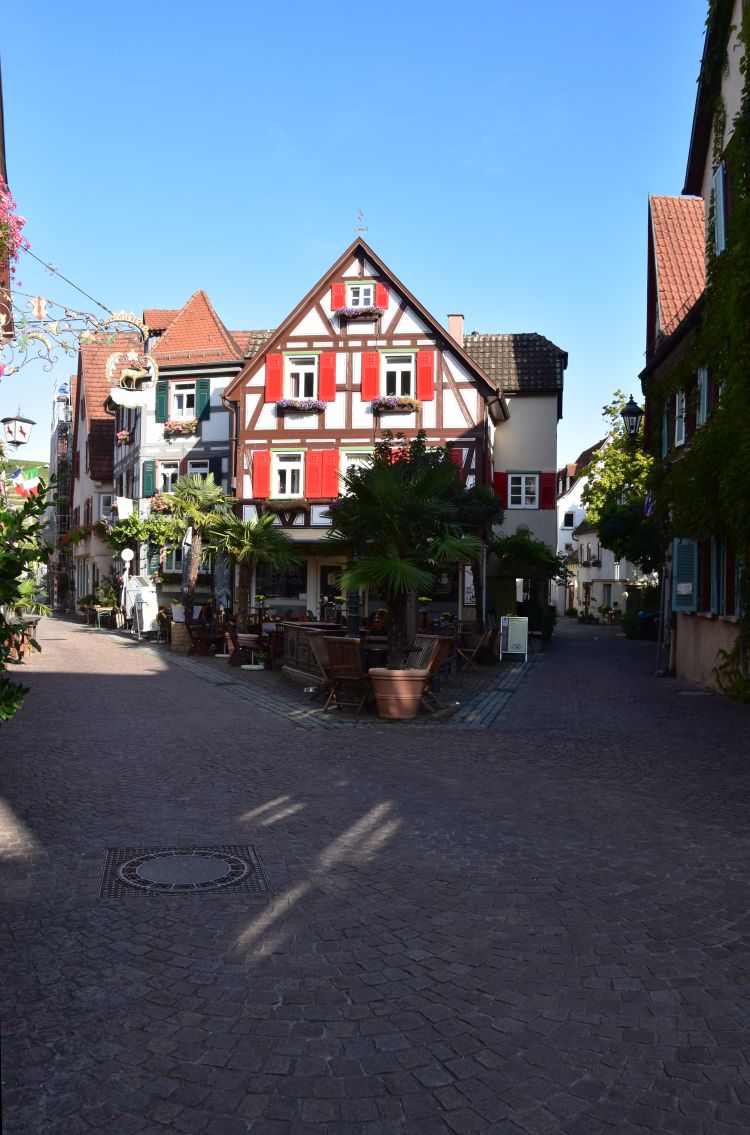
At the street fork I found Berne’s bar with a selection of regional wines and some snacks. I liked their Maultaschen (Swabian “mouth” dumplings) with the light potato salad.
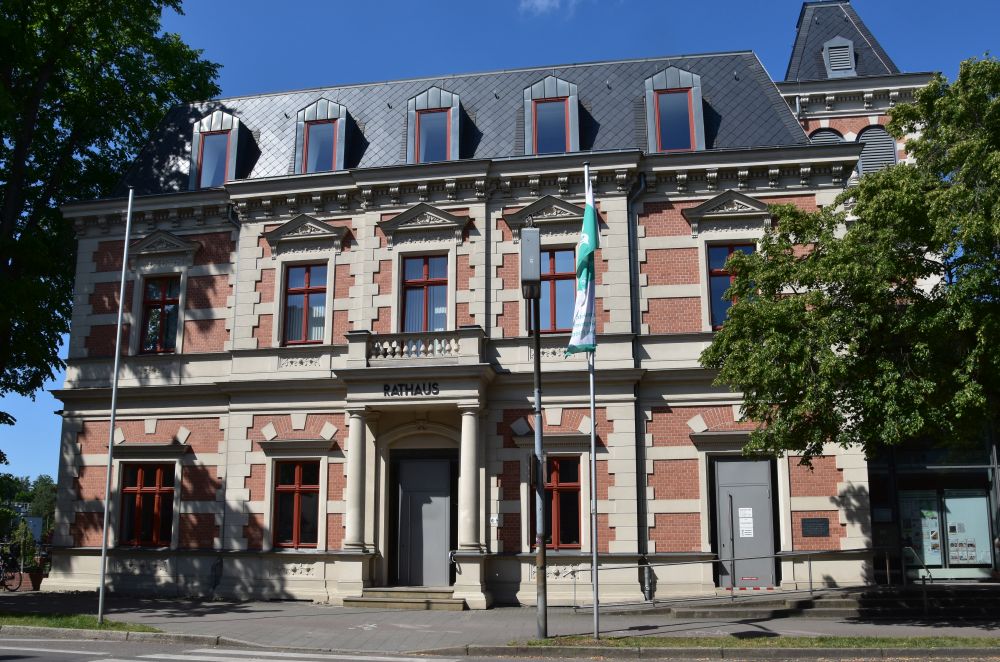
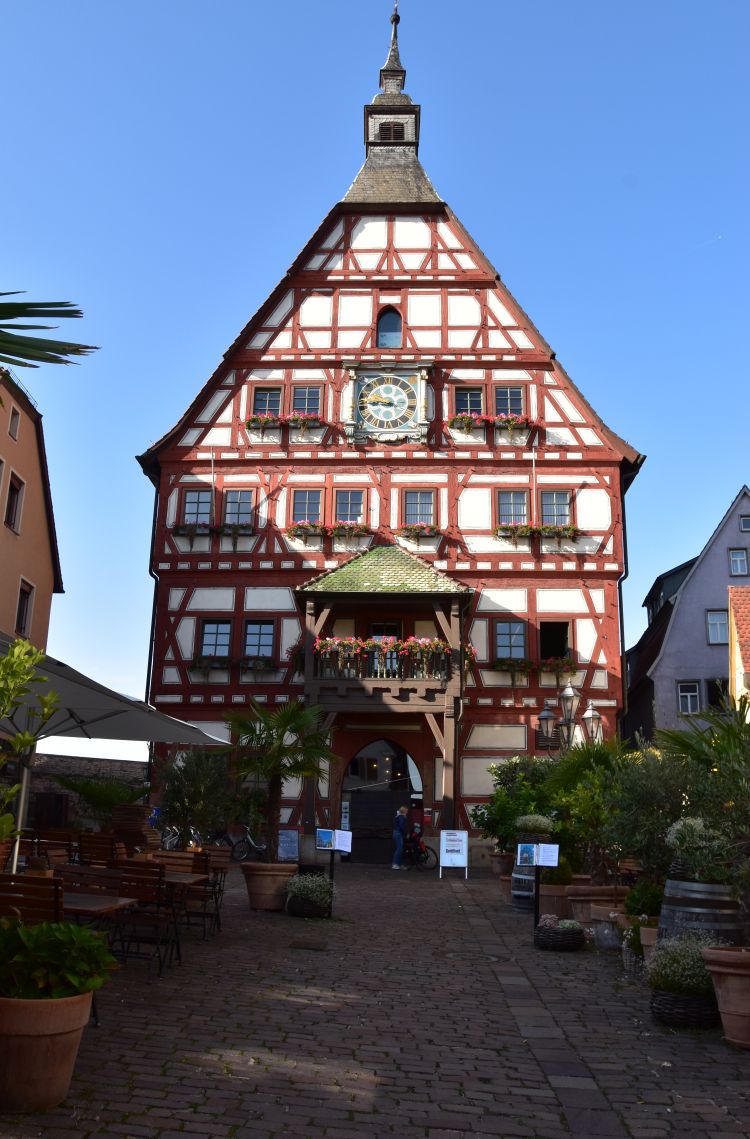
The market place is overlooked by the townhall (from the 15th century, clock from the 17th century, # 12). This is the very centre of the city. From the river Enz, we could already see the townhall; it towers above the other roofs.
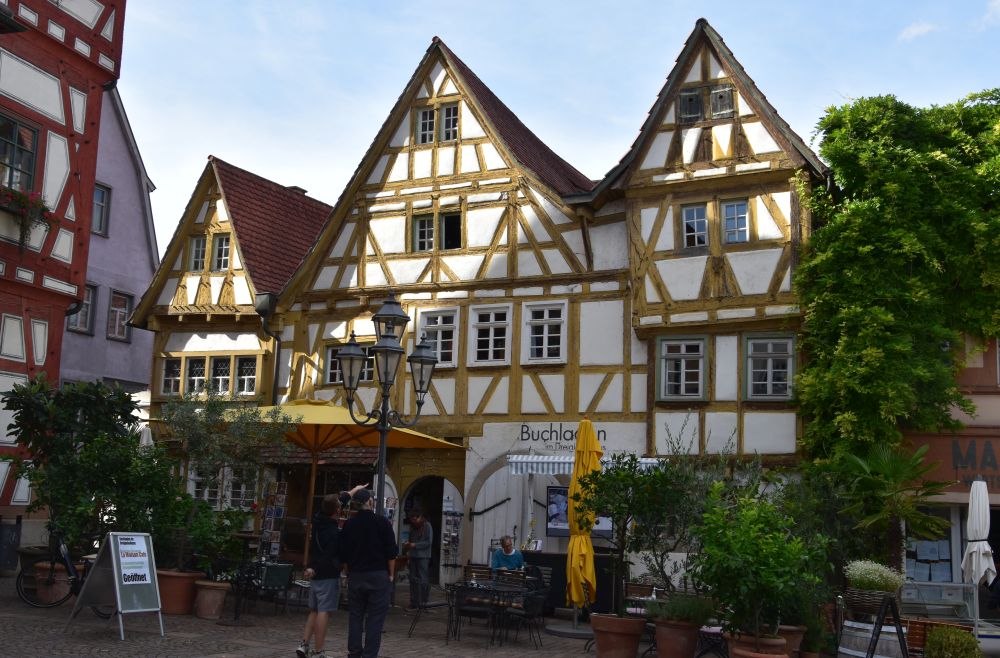
Next to the townhall, the Dreigiebelhaus (house of three gables, 15th century, # 11) is a bookstore today. I wanted to buy a tourist guide about Besigheim – not on sale here. I just found a small illustrated book about Besigheim with the subtitle “the most beautiful wine village of Germany”. This is a bookstore for the Besigheim citizens; they want to read, give books to their children or travel elsewhere.
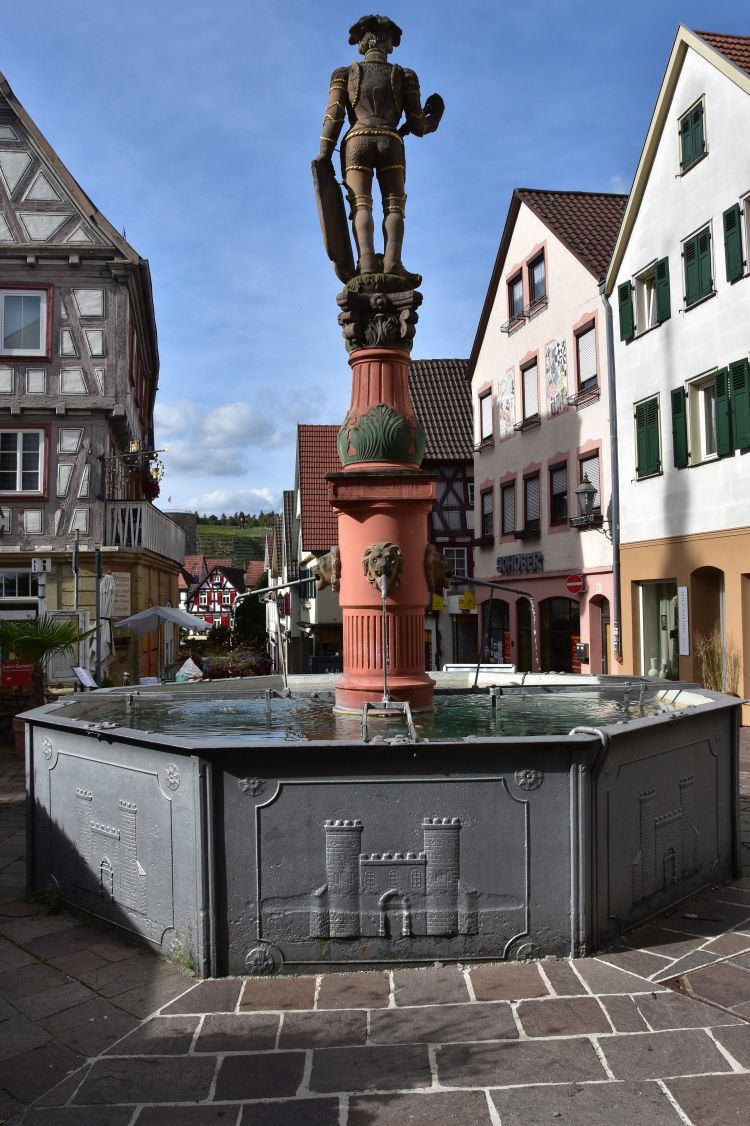
The supporter of the market fountain (16th century, # 10) looks north into the Kirchgasse and towards the vineyards. He carries the coat of arms of the Duchy of Baden.
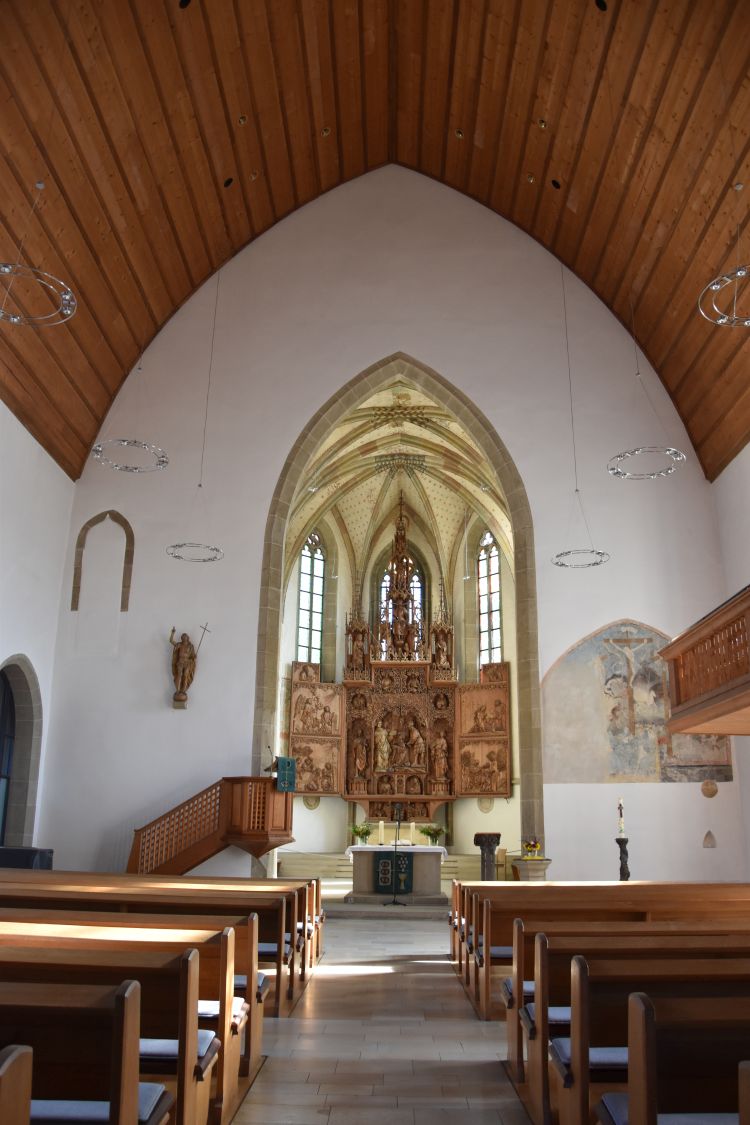
The Kirchgasse ends with the Evangelische Stadtkirche (protestant town church, from the 14th century, # 21). Inside I find the altar from 1520, dedicated to Patron Saint Cyriacus and a fresco of the crucifixion.
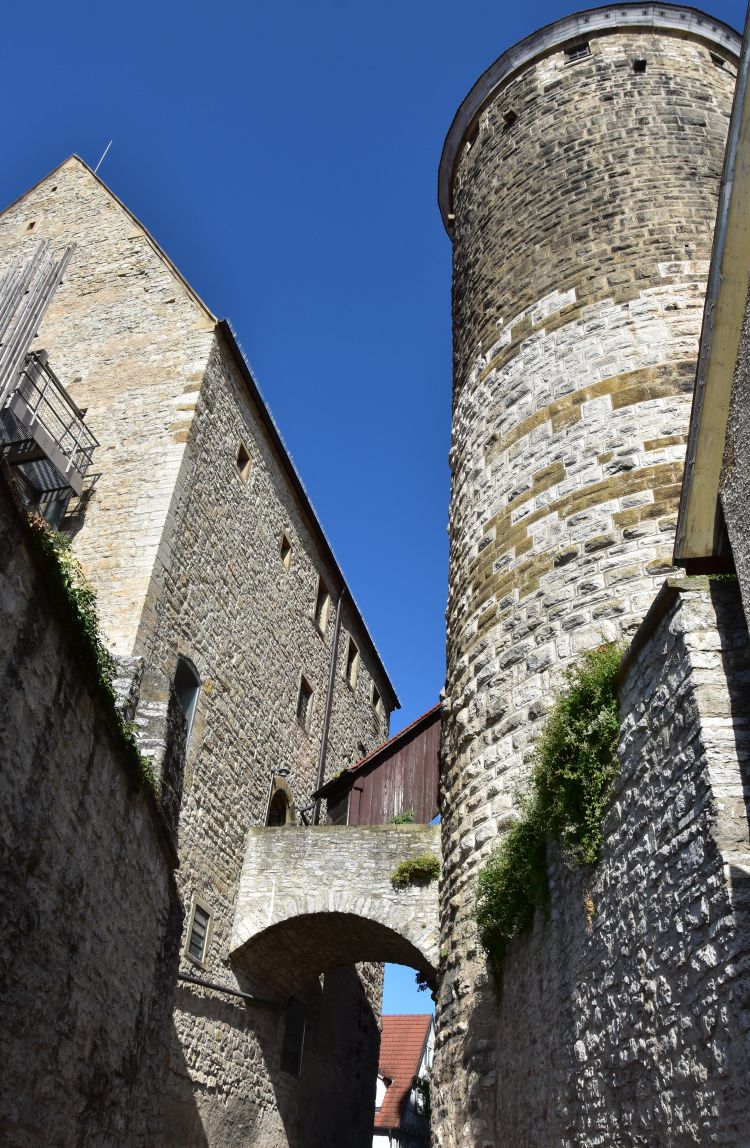
The church is protected by the Schochenturm (Schochen tower, from 1220, # 20) and the Steinhaus (stone house, from 1220, # 19). From the Enz, we already saw the Schochenturm and the roof of the Steinhaus (I took the photo below from the south, from outside the city).
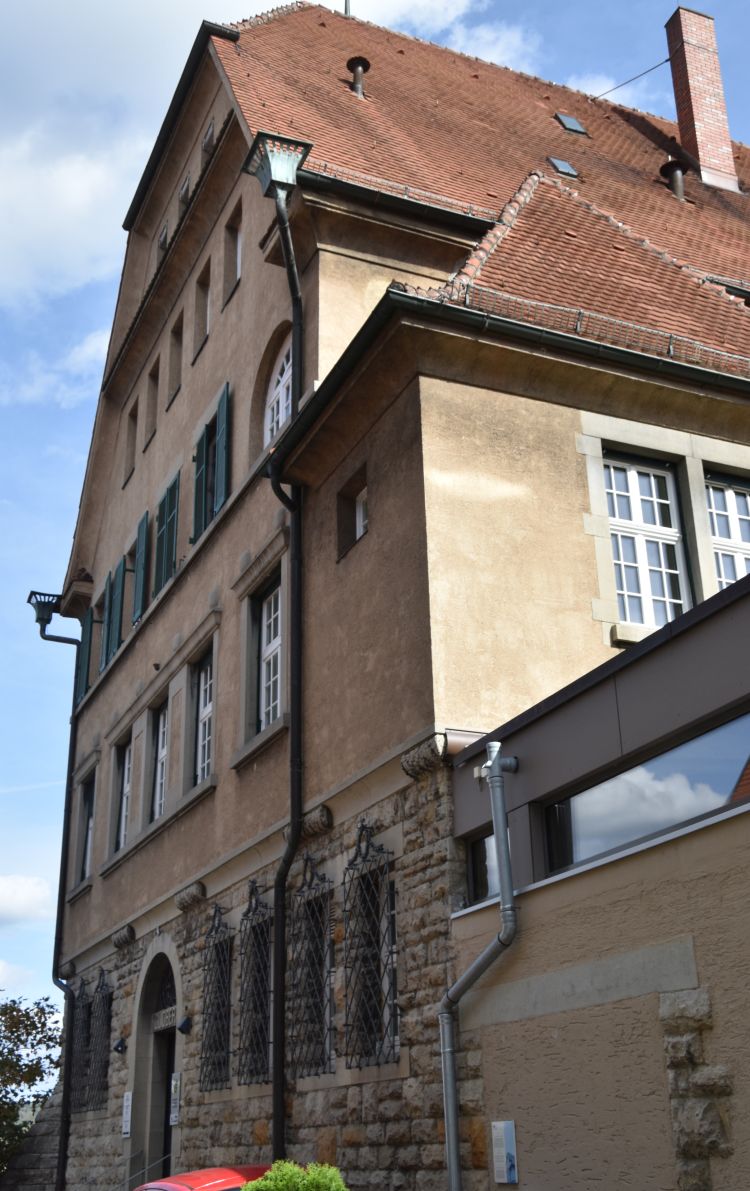
The city centre is full of historical houses, some half-timbered, some built of stone. Two examples are the Ehemaliges Königliches Oberamt (former royal upper authority building, 15th century, # 23)…
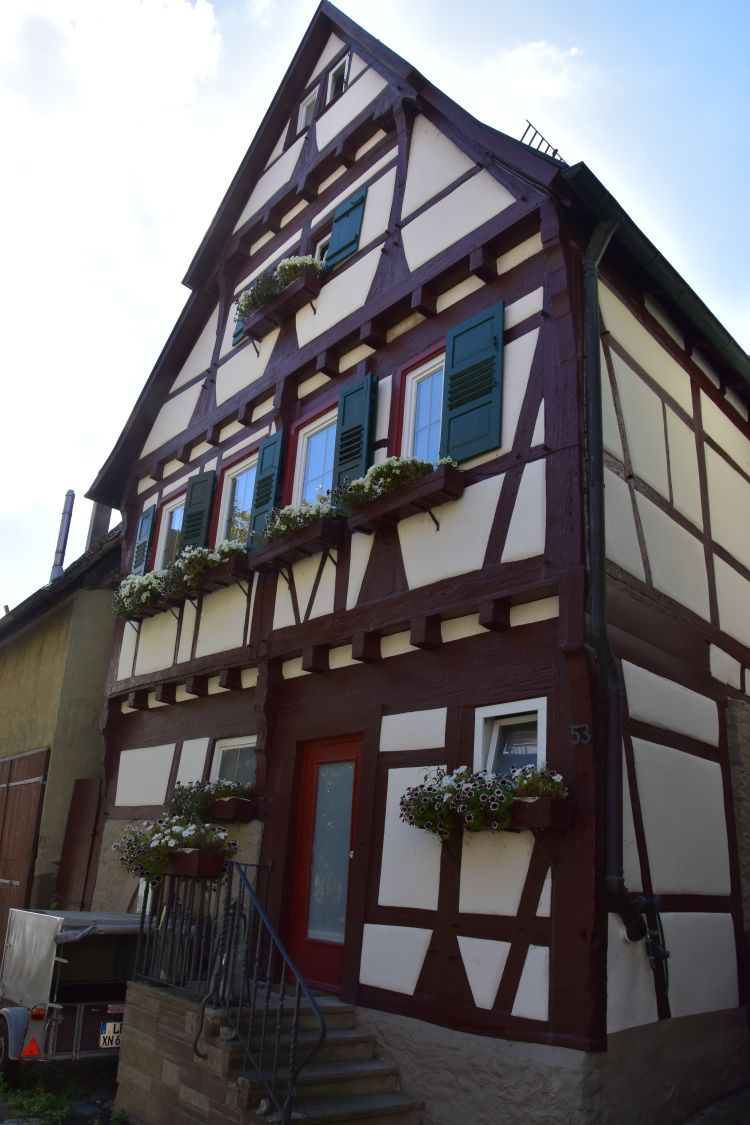
… and the Wengerterhaus (house of a wine grower, 16/17th century, # 4).
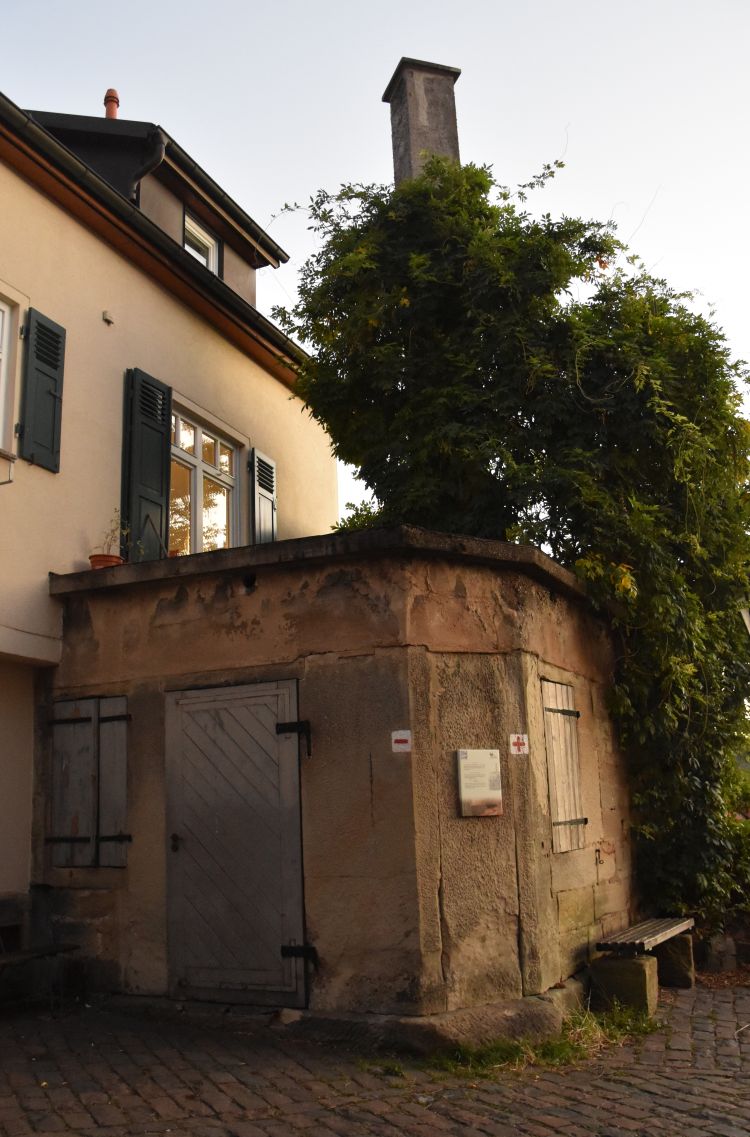
Three bakery houses (Backhäuser, # 5, # 15, # 26) are still in use to make bread. This is number 15 from 1828, just next to the town wall.
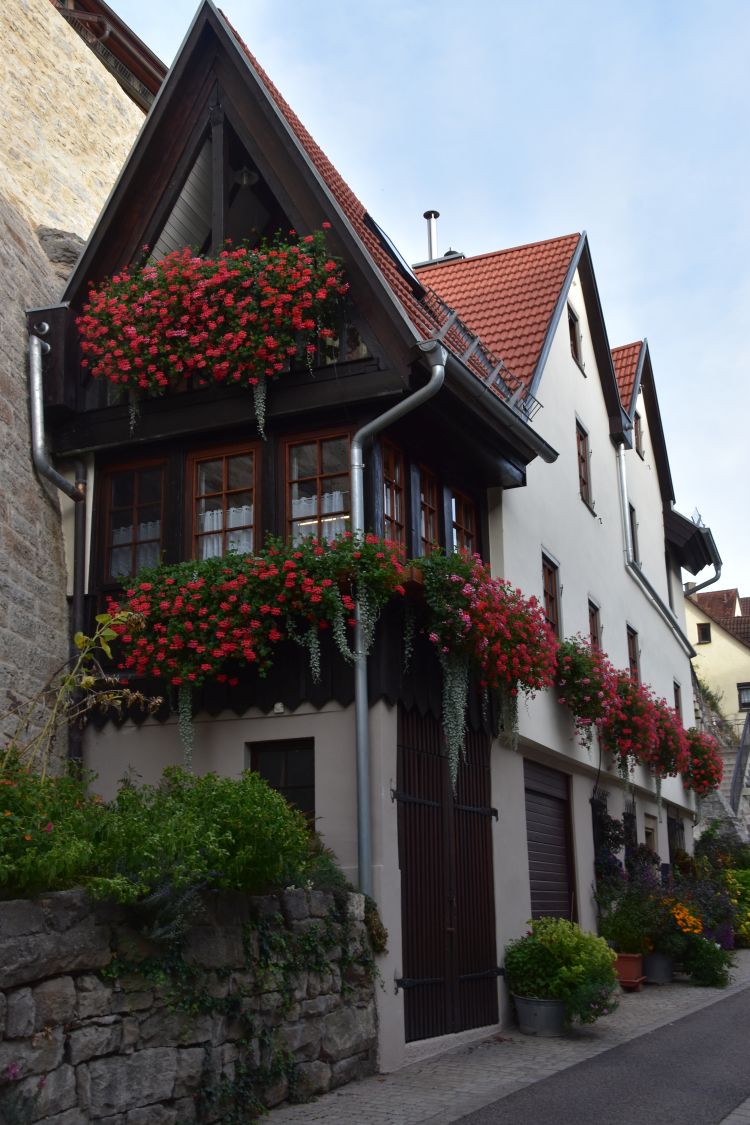
These are only a few samples of this marvellous medieval town. Furthermore, I found many cosy corners, lovingly set up, such as this slim house adorned with flowers.
Around the city centre are industrial zones, not exactly attractive, but they provide jobs that allow the citizens to earn money.
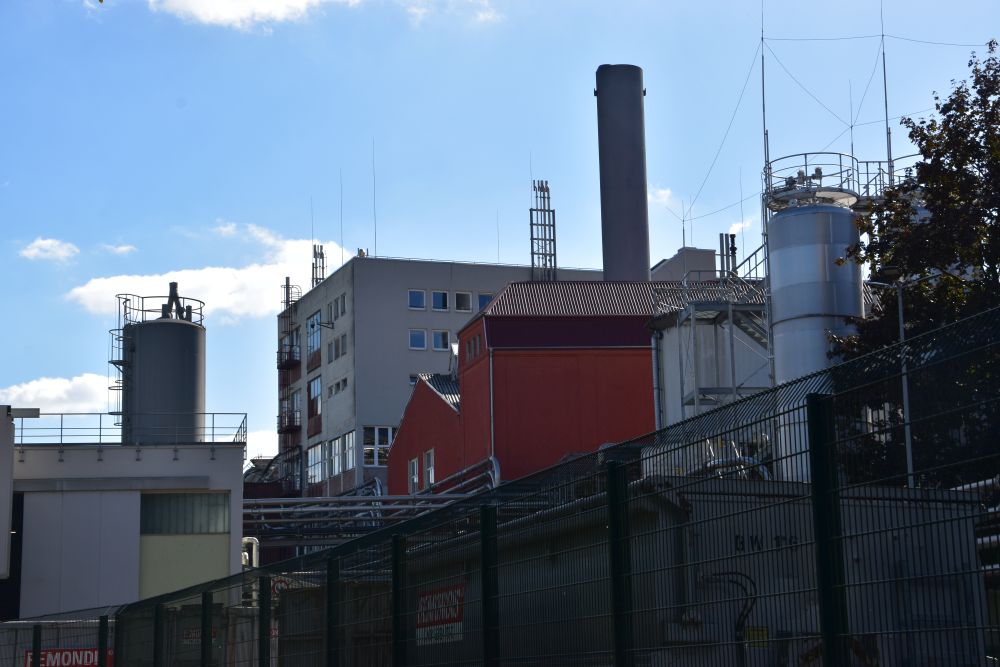
That reflects in the well maintained houses in the city centre. The lady I met, born in 1940, had worked all her life at Besigheim. Now she is retired and well dressed in floral-patterned jeans.
In addition, Besigheim is proud of their winemaking tradition. To explore the steep vineyards, I climbed up the Himmelsleiter (ladder to heaven).
This is the end of the ladder to heaven.
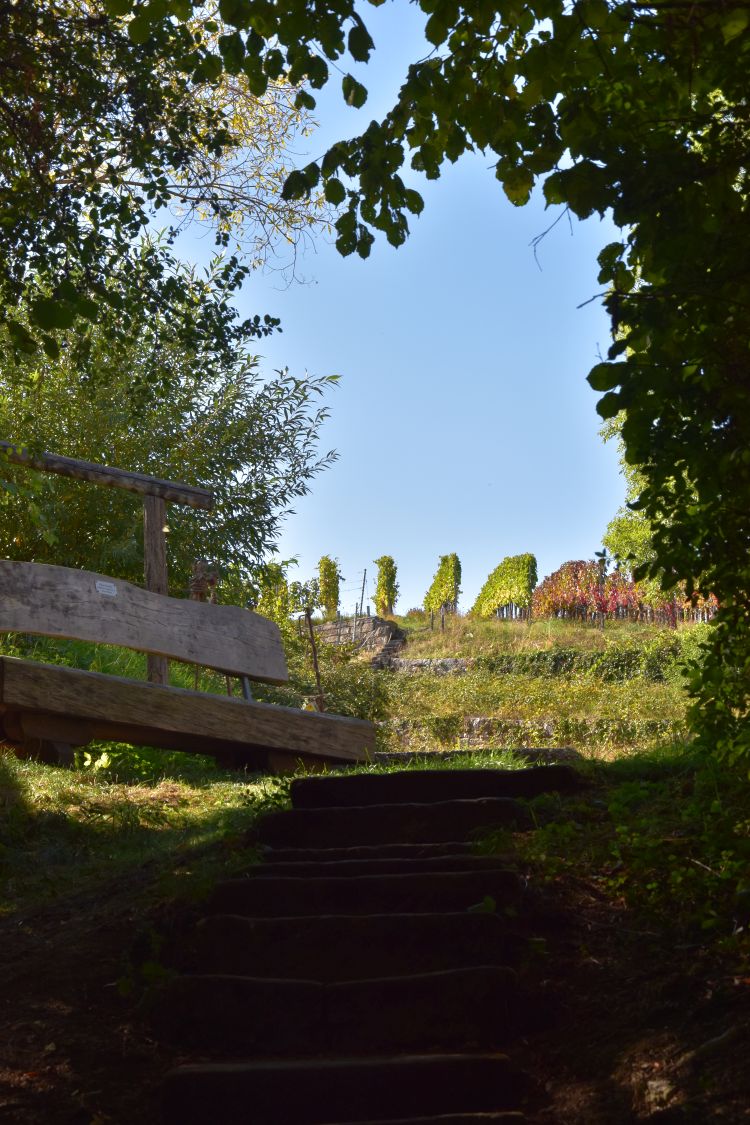
From here, I reach two view points, the “Schönste Weinsicht” (most beautiful wine view)…
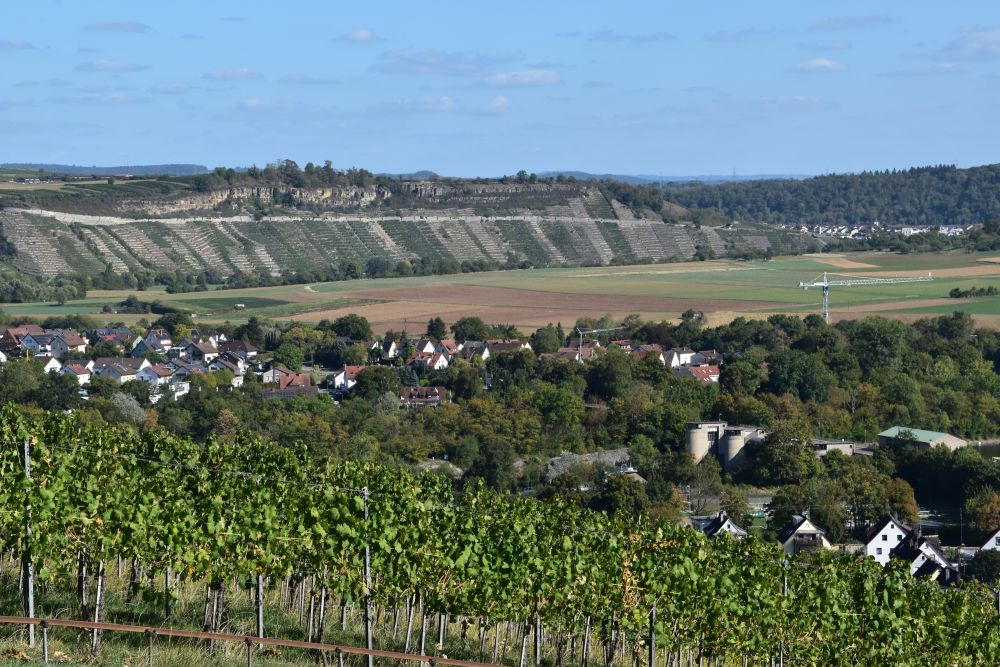
… and the Niedernberg platform.
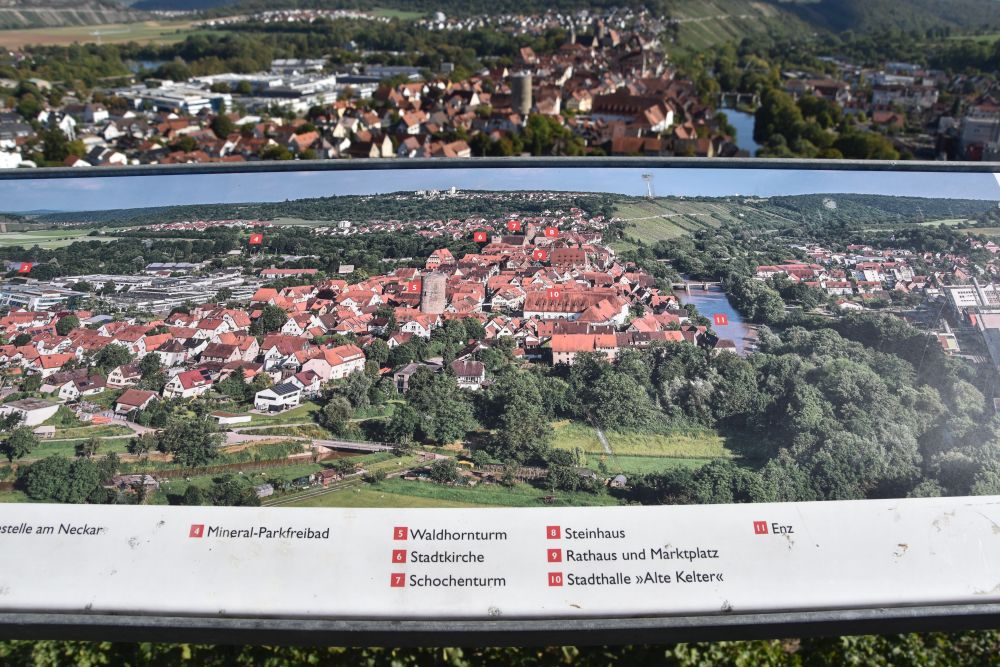
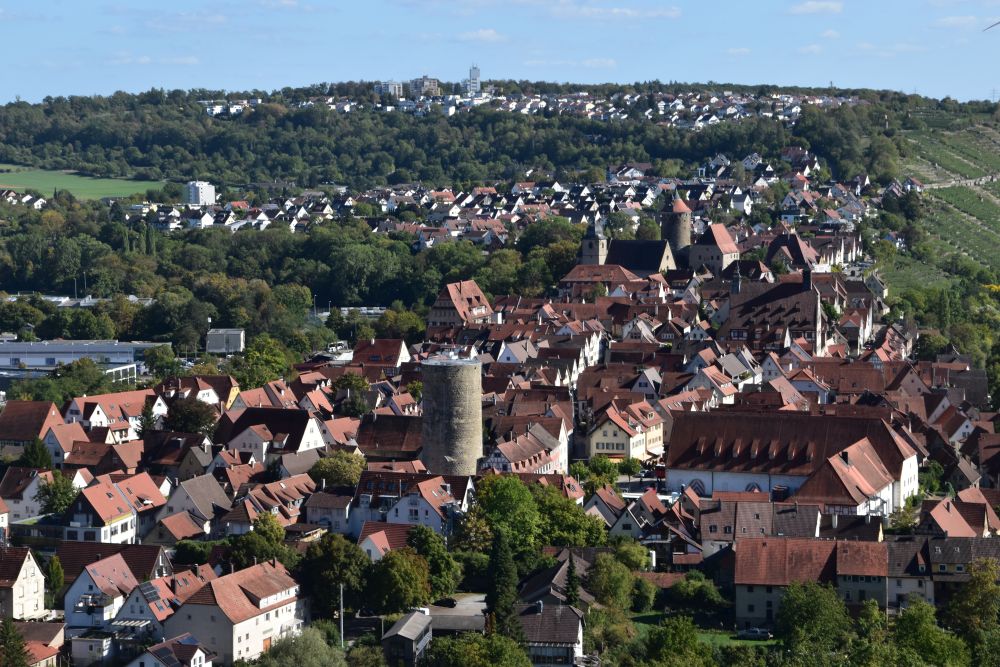
From the Niedernberg platform, I look down to the medieval centre of Besigheim, from the Waldhorn tower (nearest) up to the Schochen tower, the Steinhaus and the protestant church (background) and, in the middle, we see the townhall, towering above the other roofs.
My two days at Besigheim were a relaxing experience.
Thank you, my grandparents, you took me to another beautiful spot in the world
Besigheim is another beautiful spot that my grandparents, Hermann and Helene Radzyk, pointed out to me. Thank you. I very much enjoyed the two days here. And I felt close to you.
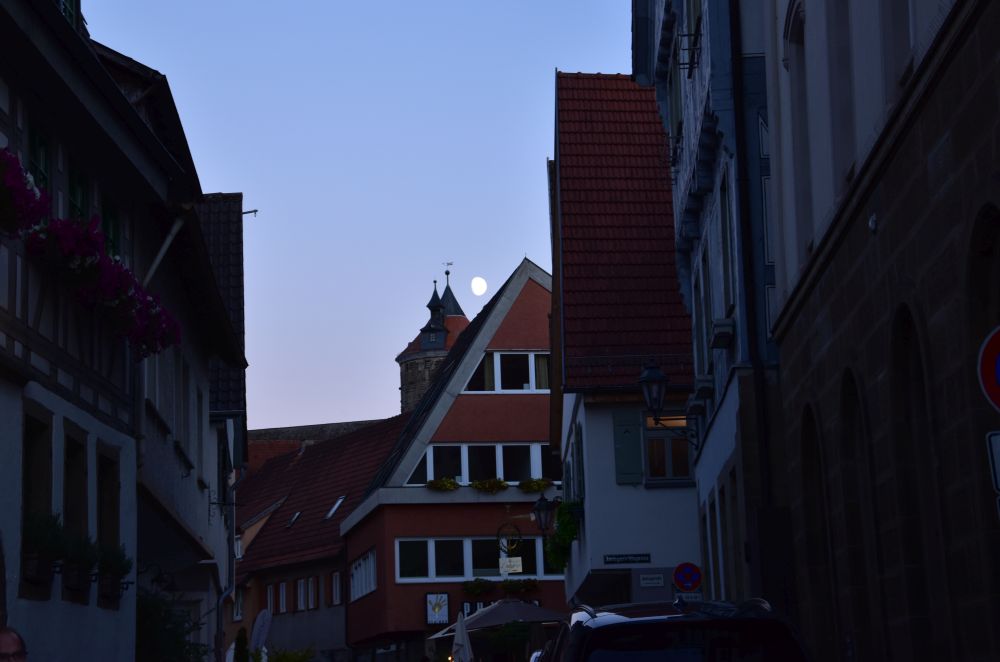
After my last dinner in the welcoming Istrian restaurant, I walked along the medieval Kirchgasse again. The moon shines over the city, also the moon seems to like Besigheim.
Sources:
- Landesarchiv Berlin, Ap. Rep. 005-07 Nr 644 (painting Besigheim, refund)
- https://de.wikipedia.org/wiki/Richard_Duschek
- https://www.besigheim.de/stadt-und-historie/kuenstler/richard-duschek-
- https://www.galerie-bayer-bietigheim.de/kuenstler/richard-duschek
- https://www.invaluable.com/artist/duschek-richard-97pebrqbev/sold-at-auction-prices/?srsltid=AfmBOopg4Oox65F08ONJFibxVc3TSwnuXoriUPjz7g6Ya7nlPGFXnWBX
- https://merkel-zeller.de/getperson.php?personID=I46573&tree=Merkel-Zeller
- https://felsengartenkellerei.de/
- Stadt Besigheim, “Historischer Rundgang durch Besigheim”, o.Jg.
- Dieter Schedy, “Besigheim. Deutschlands schönster Weinort”, Verlag Ungeheuer + Ulmer, Ludwigsburg 2013