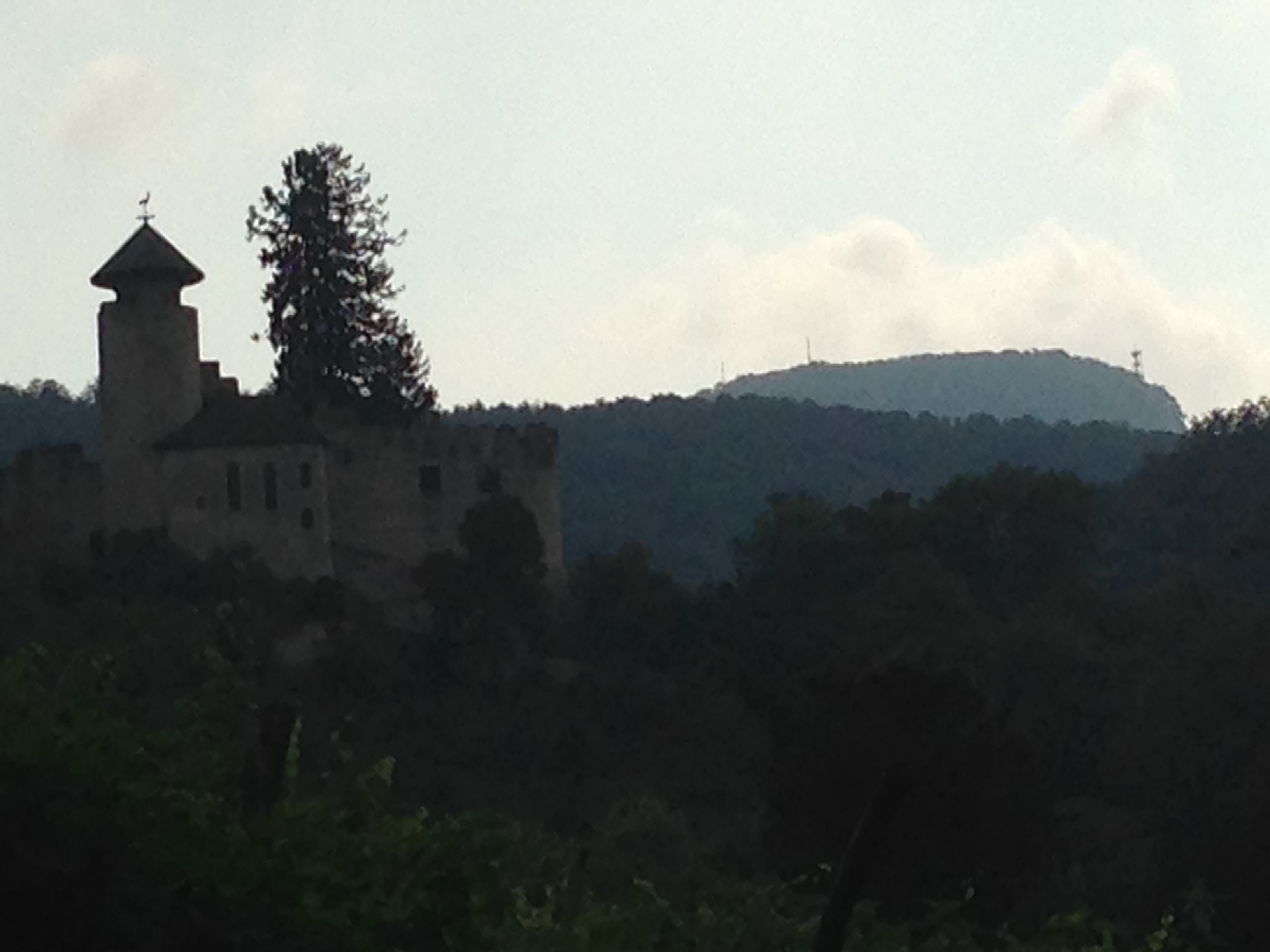
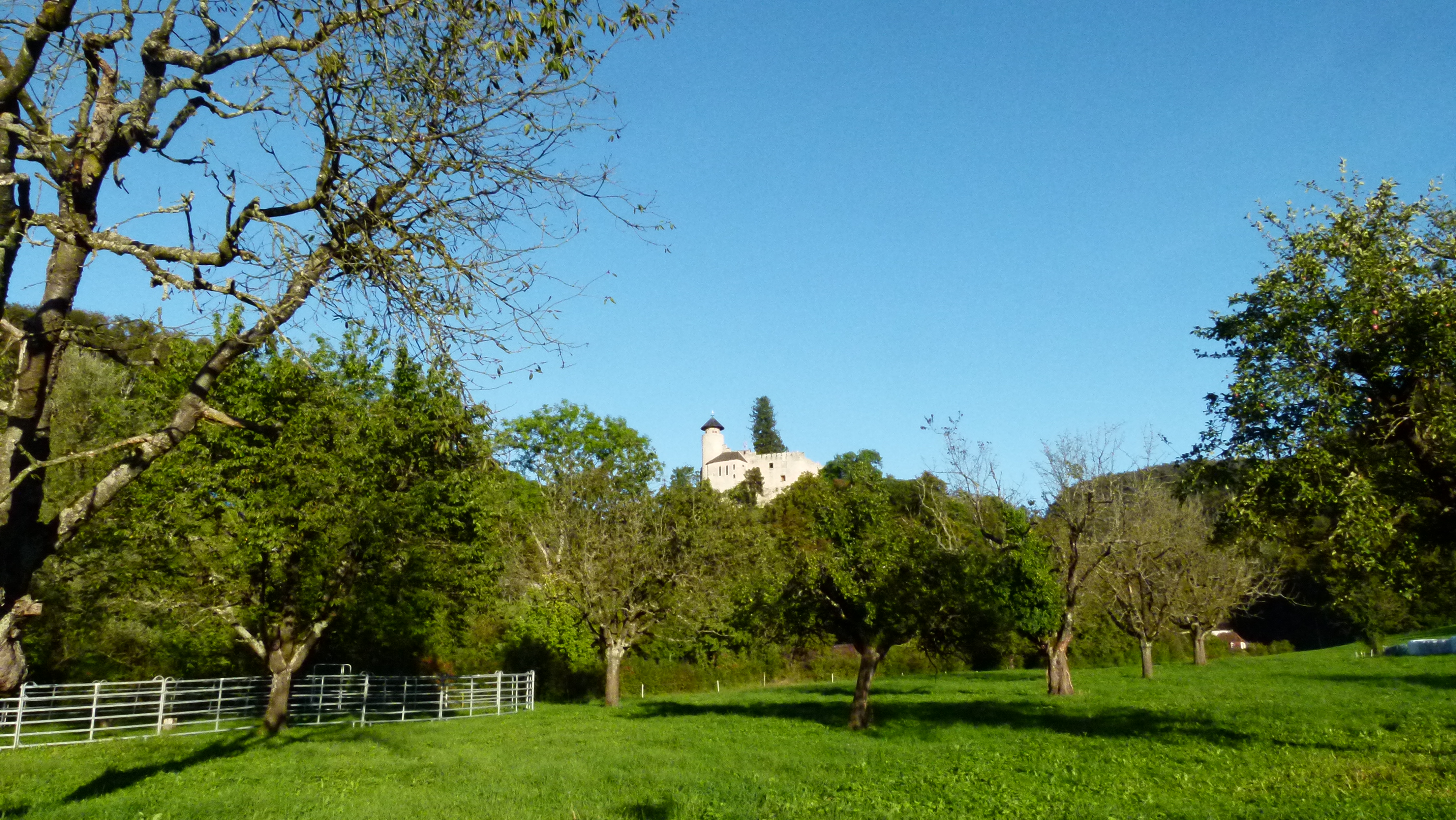
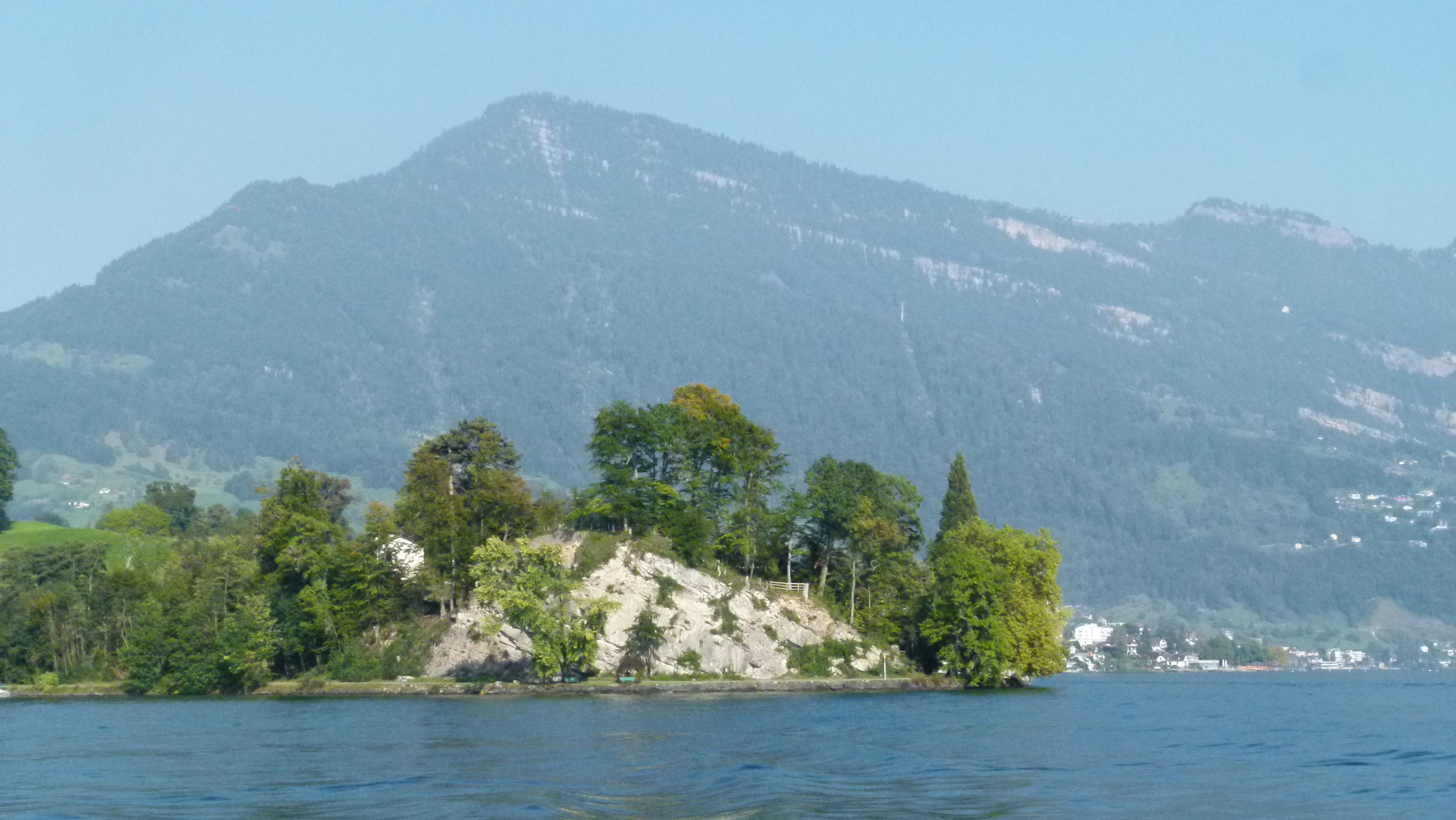
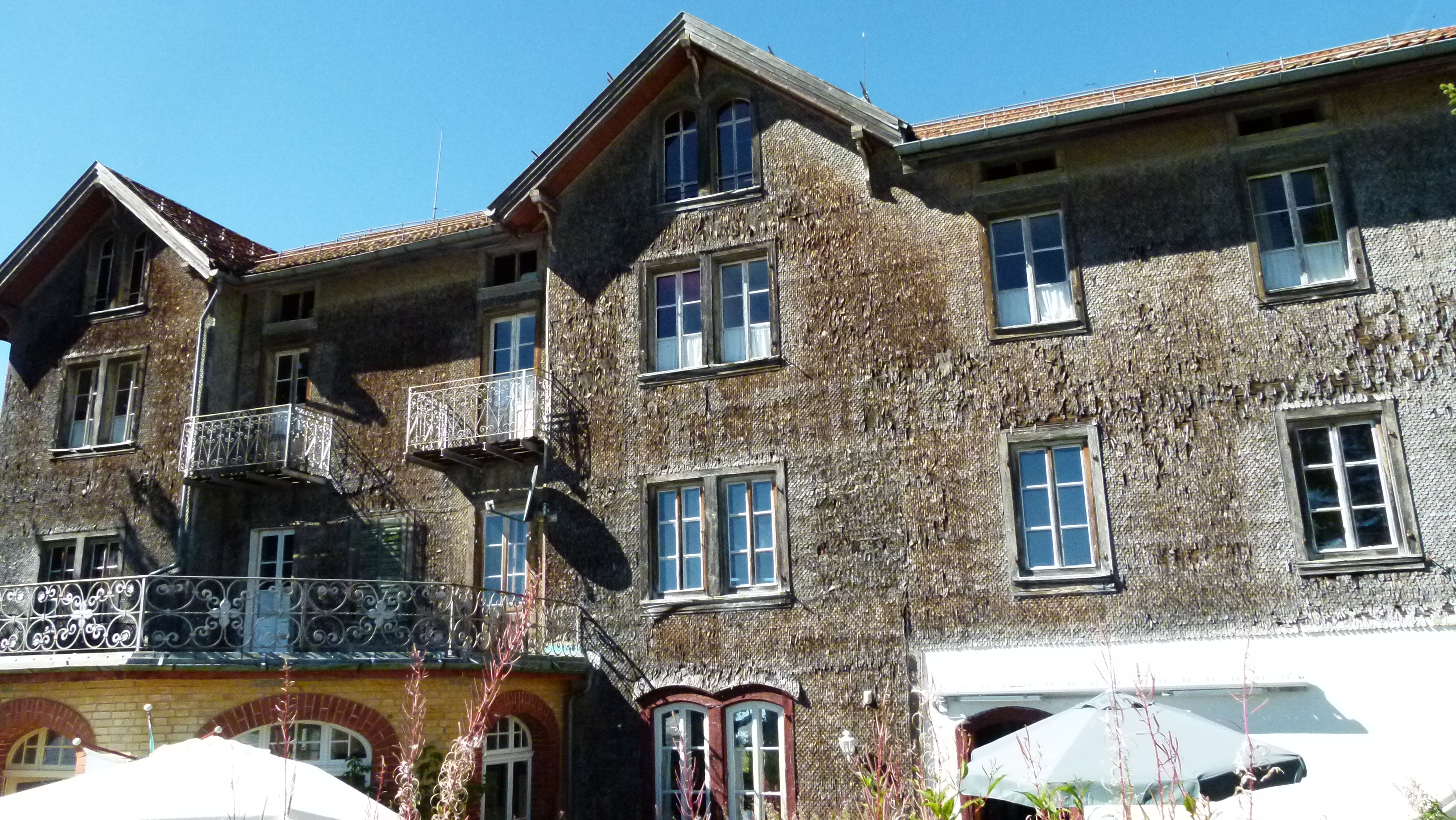
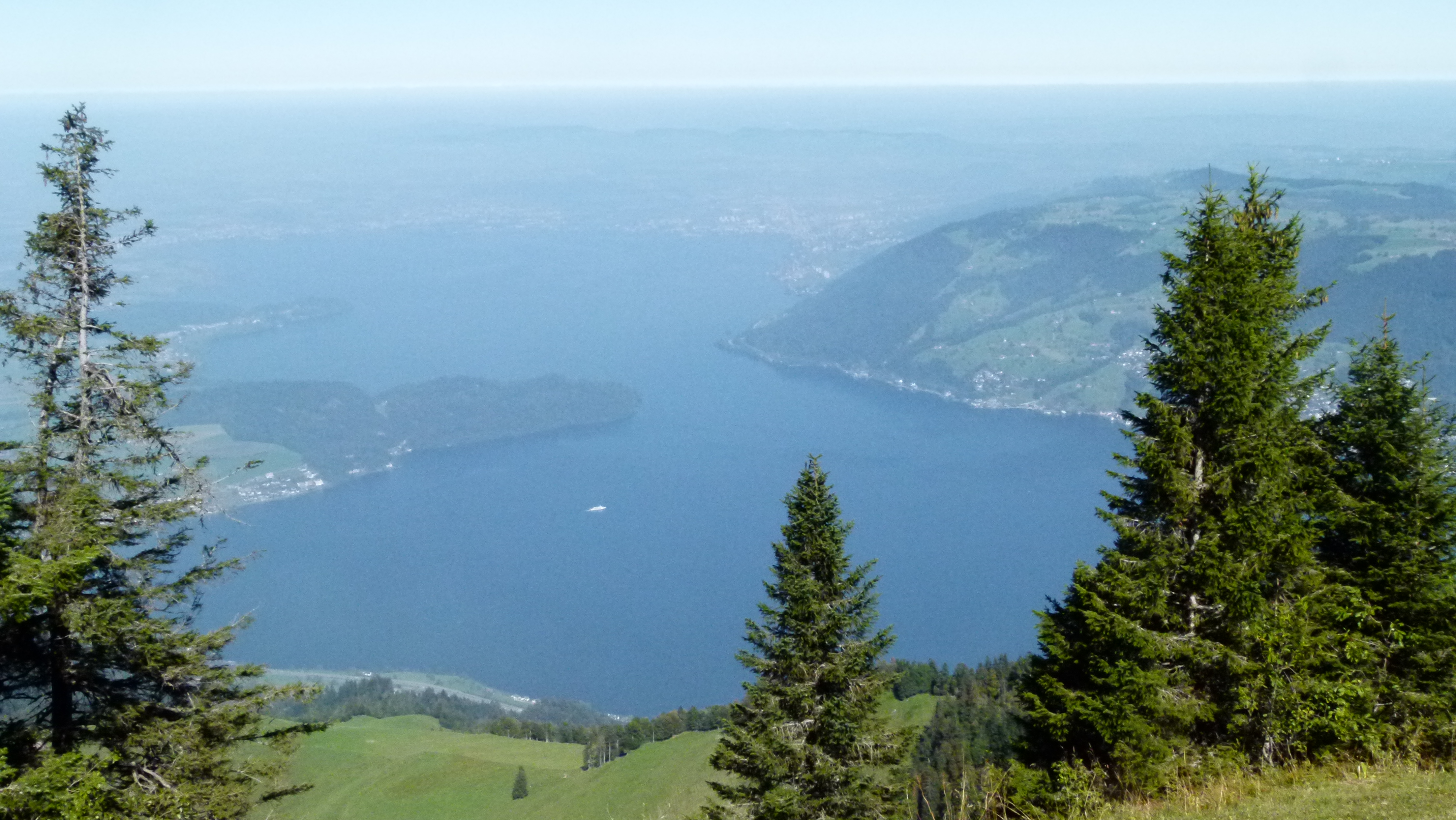
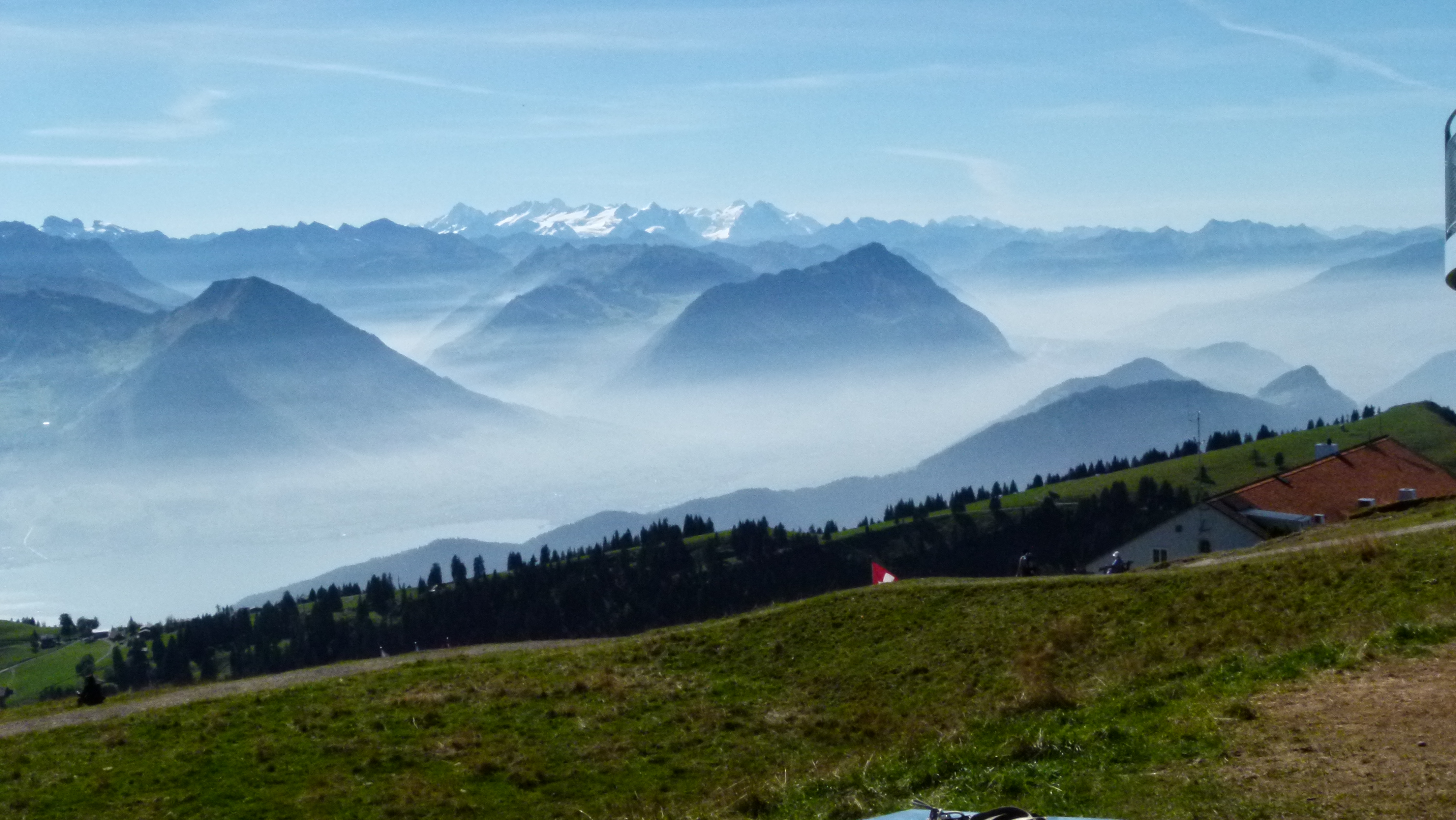
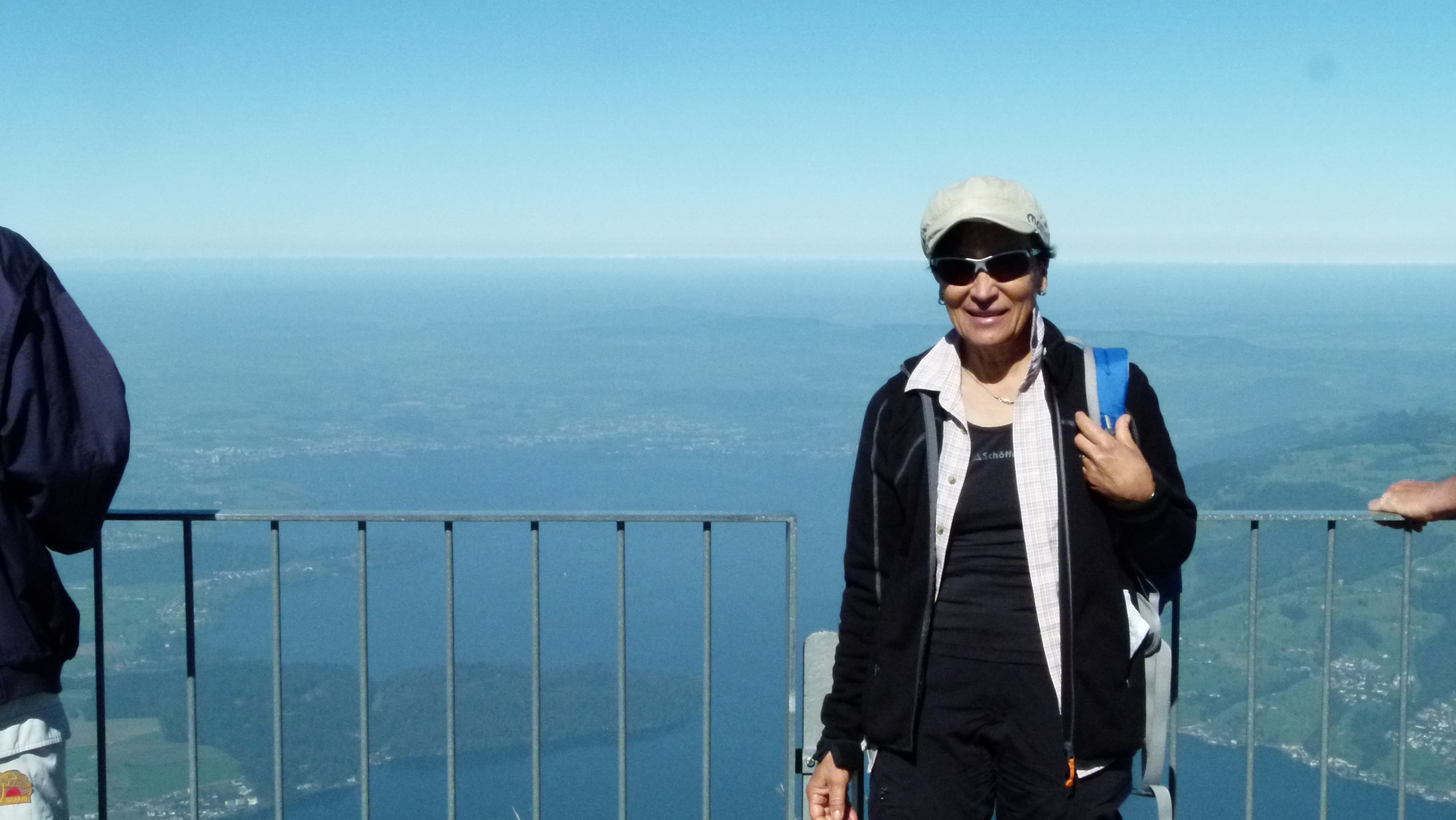
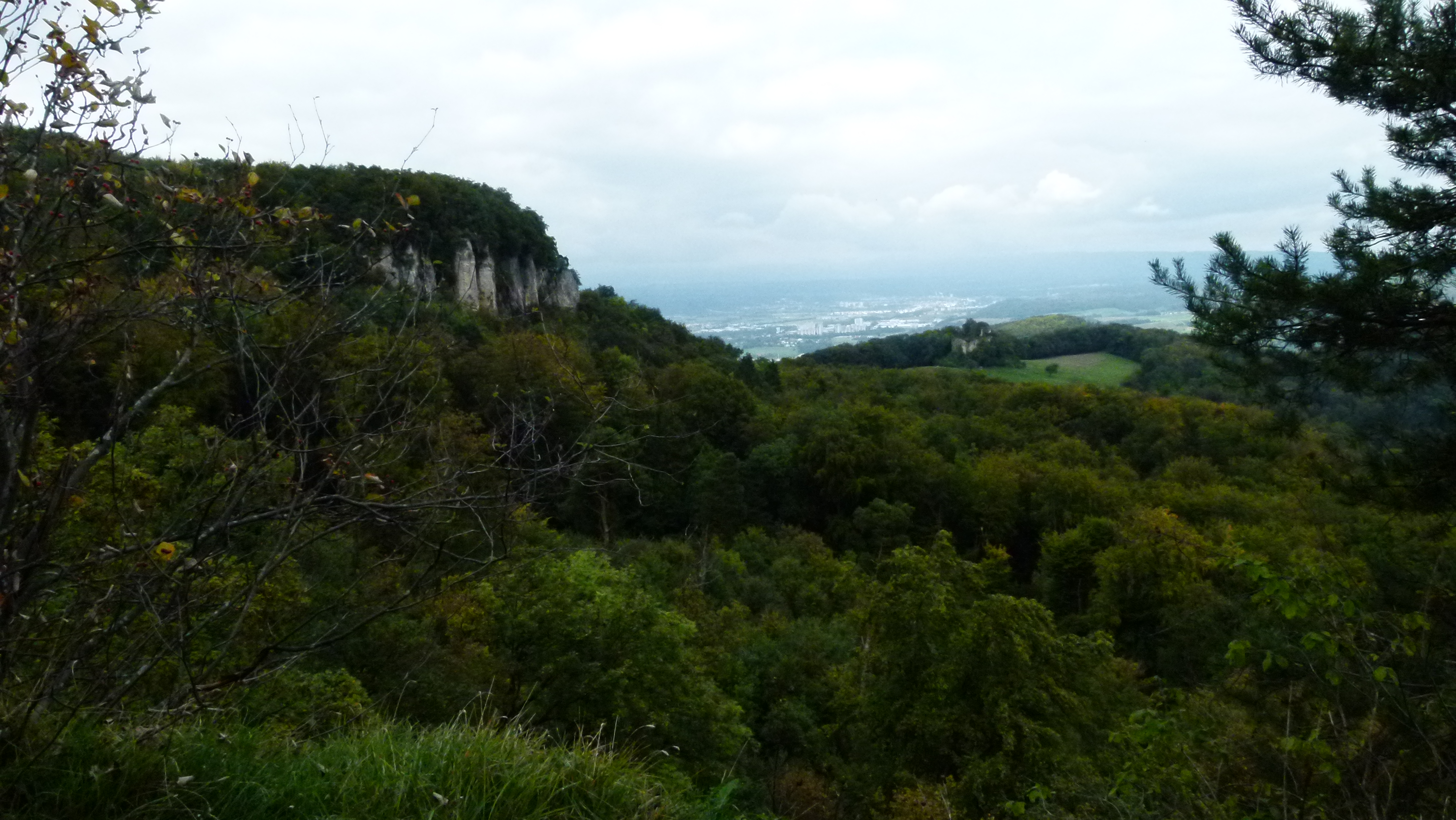
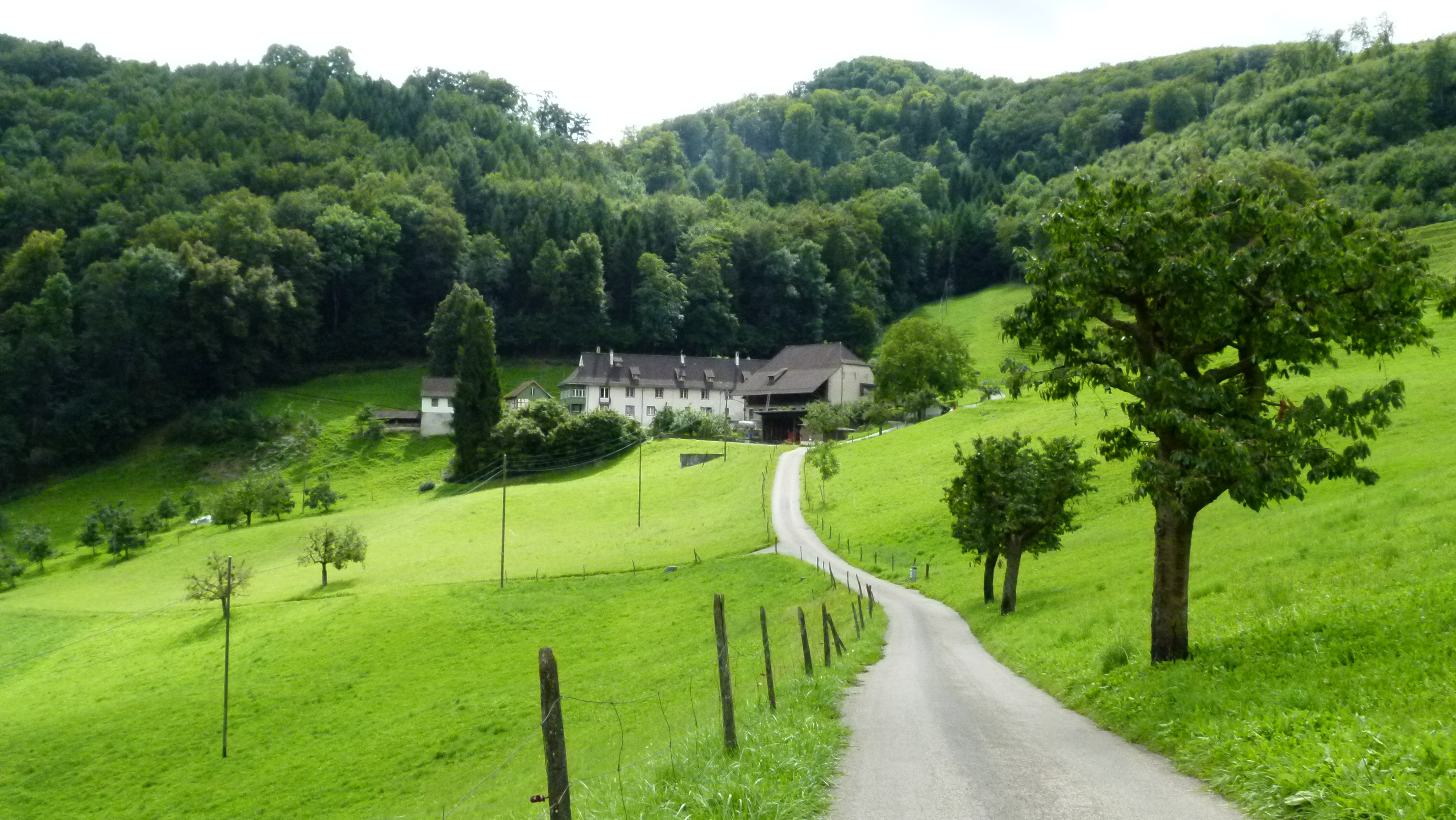
Auvergne – France at its best

There we are on the road again… Our target is the North of Spain near Tarragona. Ursula has a friend that owns an appartment near Tarragona. We drive to Martigny first to get the key and then we drive through France with an overnight stop.

.

 Martigny is worth a visit, with the Fondation Giannada and its chapels

Ursula joins me in Zurich. We drive to Martigny in the Valais to see the exhibition of Zao Wuu Ki in the Fondation Giannada. Beautiful, I like his abstract paintings – each of them reminding us of a landscape – a sun rise, a salar lake or a sea shore with waves in the background.

Then I show Ursula the windows in the protestant chapel painted by Hans Erni, when he was 103 years old.

DSC_0015 small

We read about the other catholic chapel and the paintings of the monk Kim en Joong.  Ursula sees that he has also made the windows of the Basilica St. Julien in Brioude in the Auvergne. This is about half way to Tarragona. We decide to stay overnight at Brioude.

.

On the road to Brioude

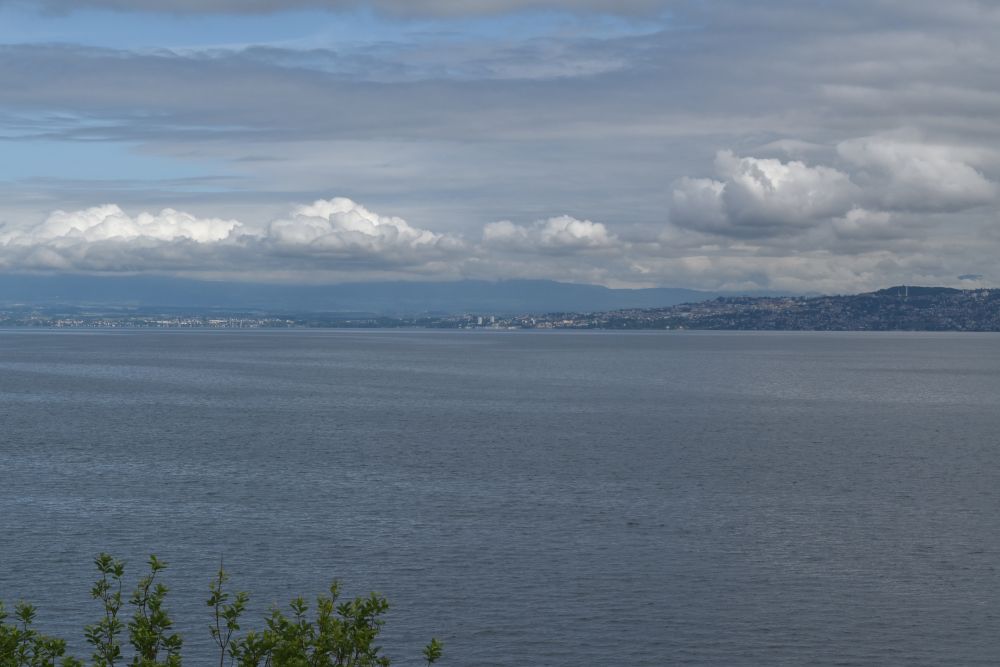
We drive along the lake of Geneva in France. This is the view of the Swiss side of the lake.

DSC_0017 small

Then we head to Bourg-en-Bresse and the Auvergne, crossing one valley after the next on the motorways… up and down… up and down.

.

Brioude – a charming French town with the hotel de la Poste

Brioude is located on the St. Jacob’s pilgrimage route.

DSC_0027 small

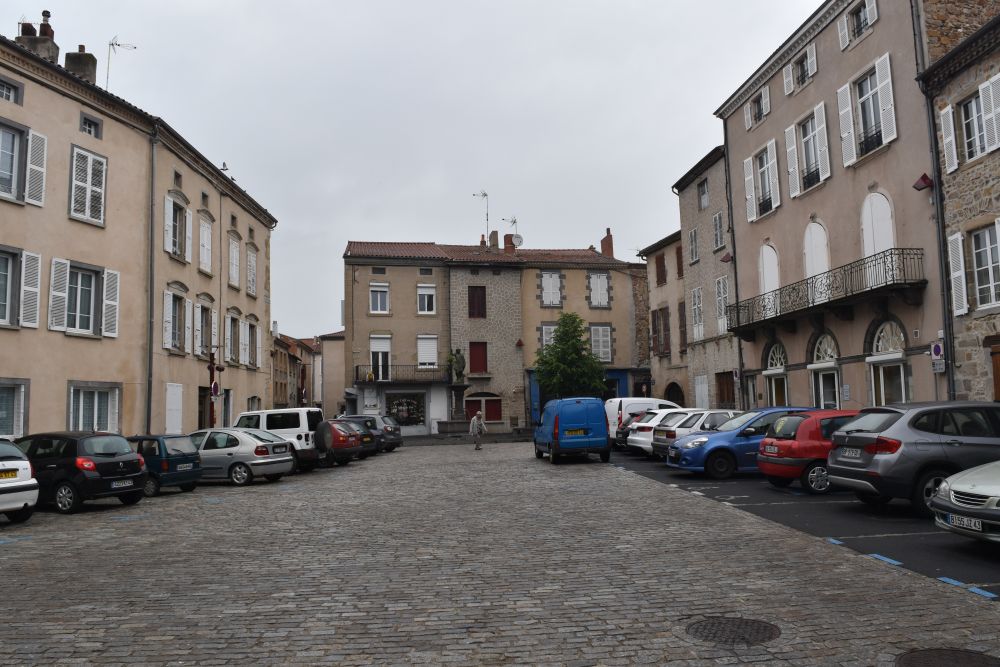
It is one of these cosy and quiet country towns that I love France for.

DSC_0028 small

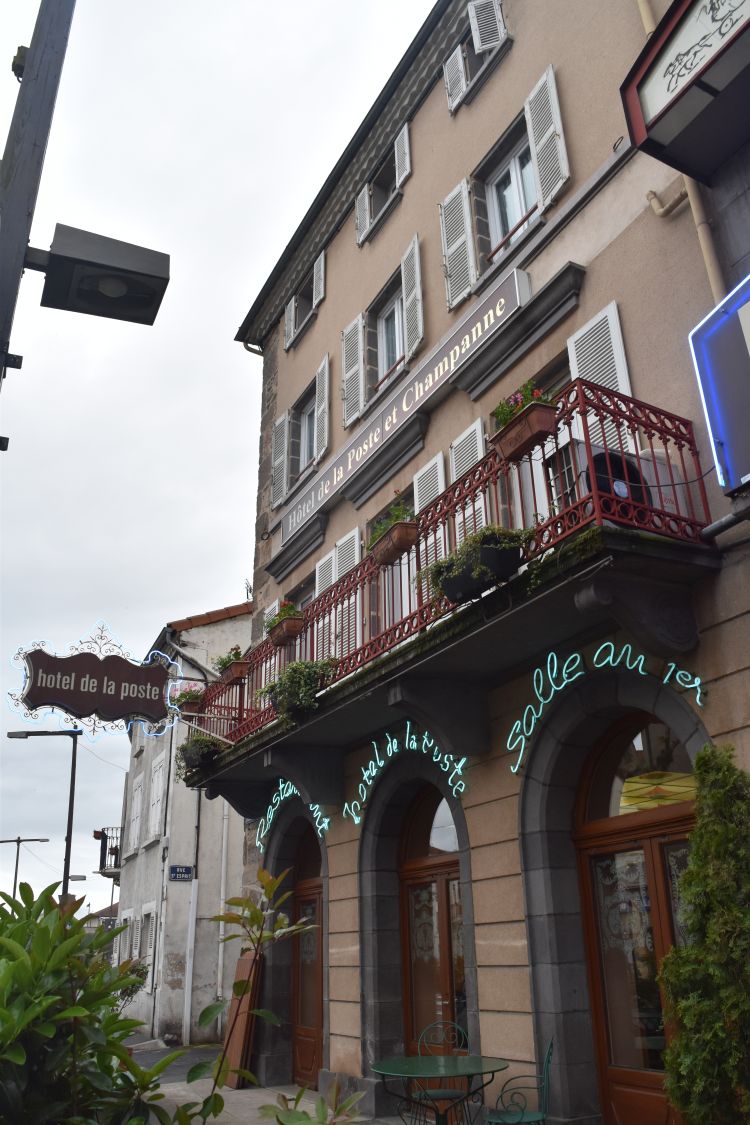
The tourist office shows us the hotels… and seems to recommend the Hotel de la Poste. “Two stars, but very good,” she says. How true. We find a friendly reception and a comfortable room in the annexe.

DSC_0093 small

.

The Basilika of St. Julien on the site where he was murdered

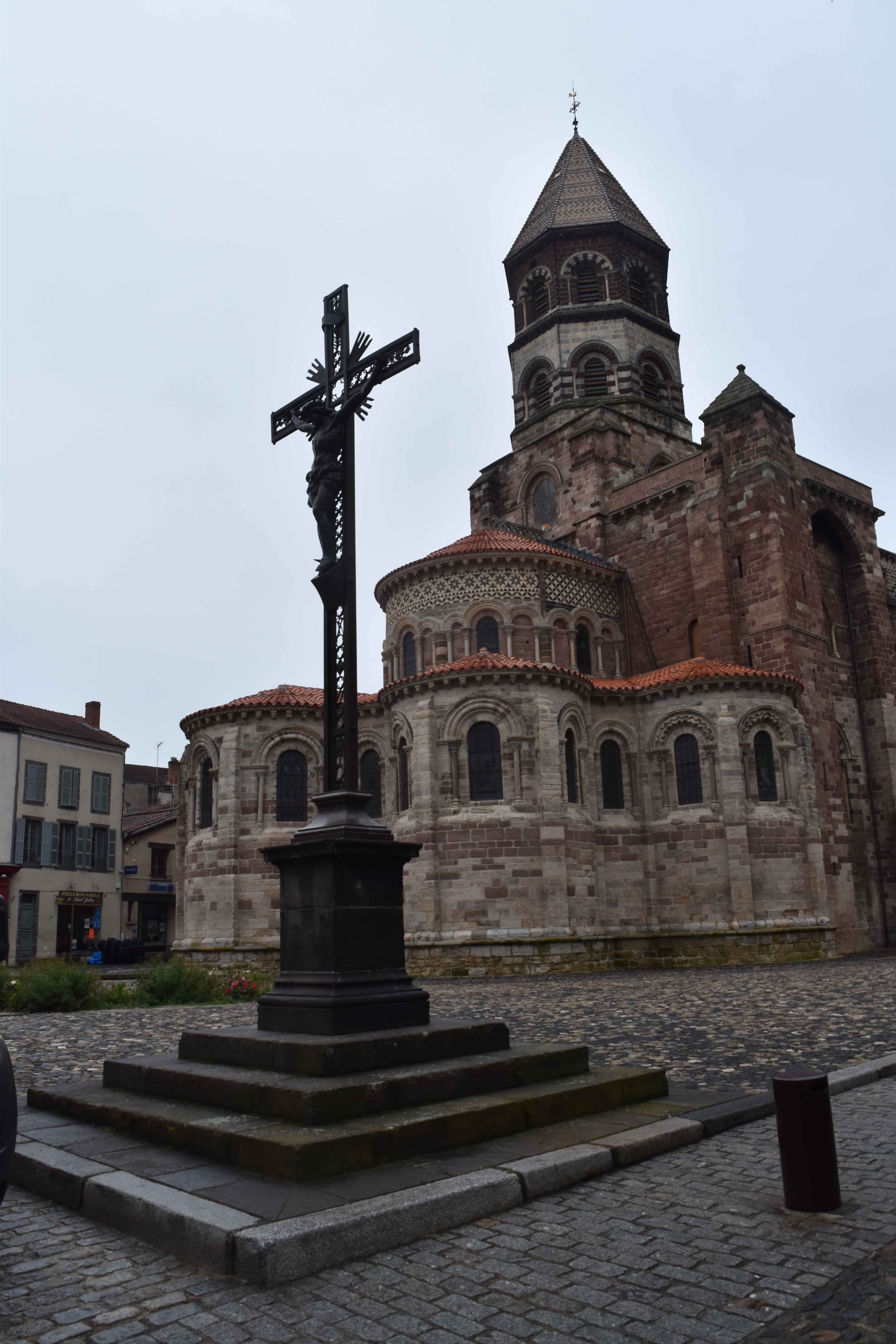
The center of Brioude is the Basilika St. Julien from the 11th century built at the place where Julien had been decapitated by Roman soldiers. The style is  Romanesque. This is the view from outside with the tower of 56m.

image

The nave…

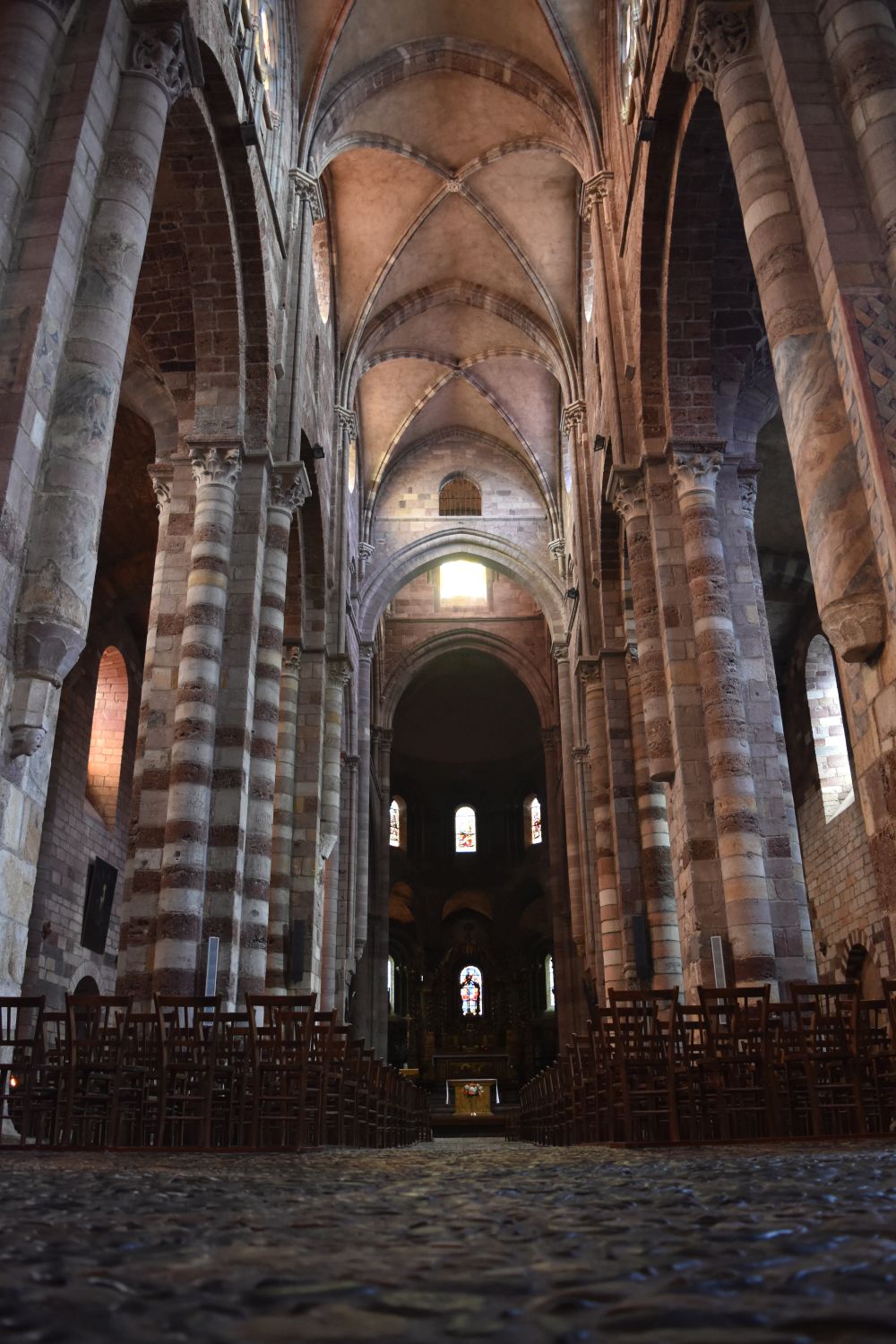
DSC_0045 small

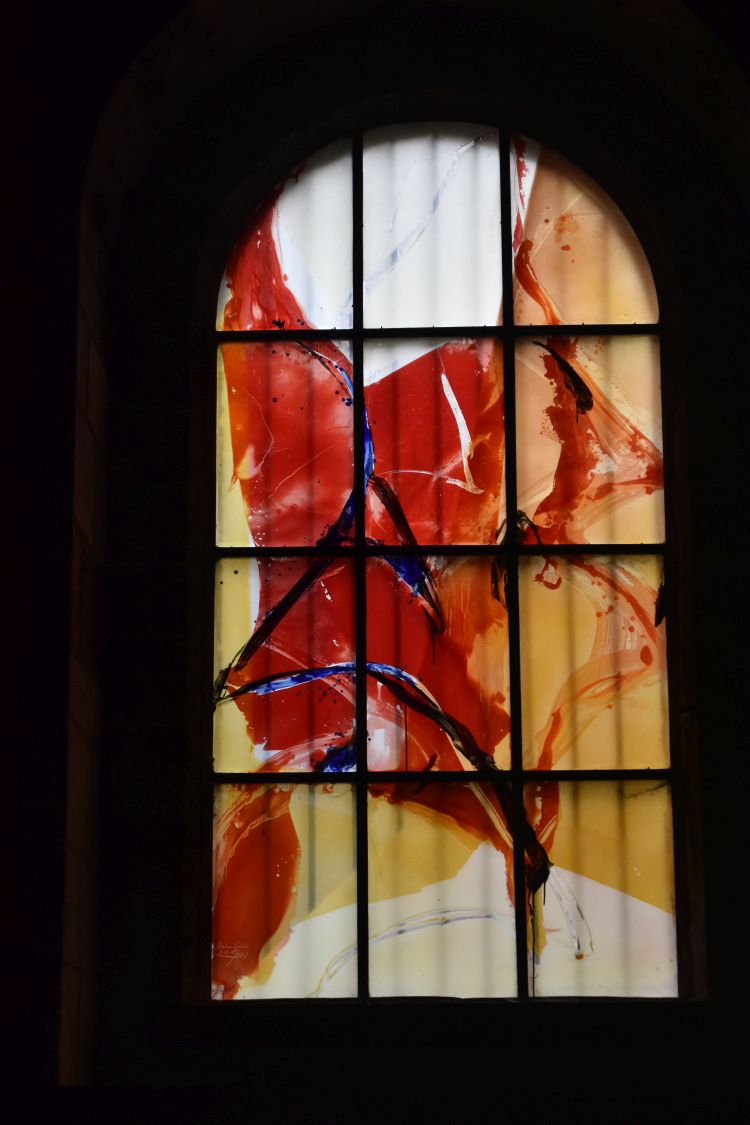
… and one of the 37 windows made by Kim en Joong in 2008. They give a solemn atmosphere to the inside of the church. We would like to visit the catholic chapel with his windows in Martigny, when back.

DSC_0050 small

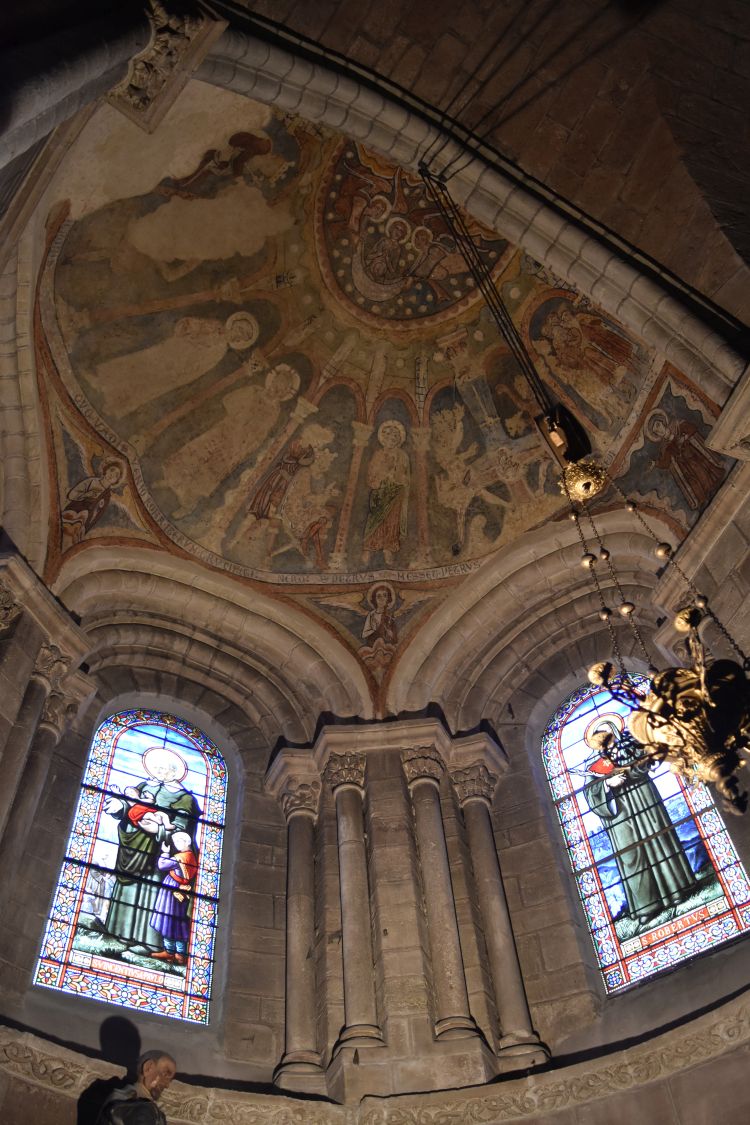
There are old frescoes on the columns and in the chapels of the choir.

DSC_0067 small

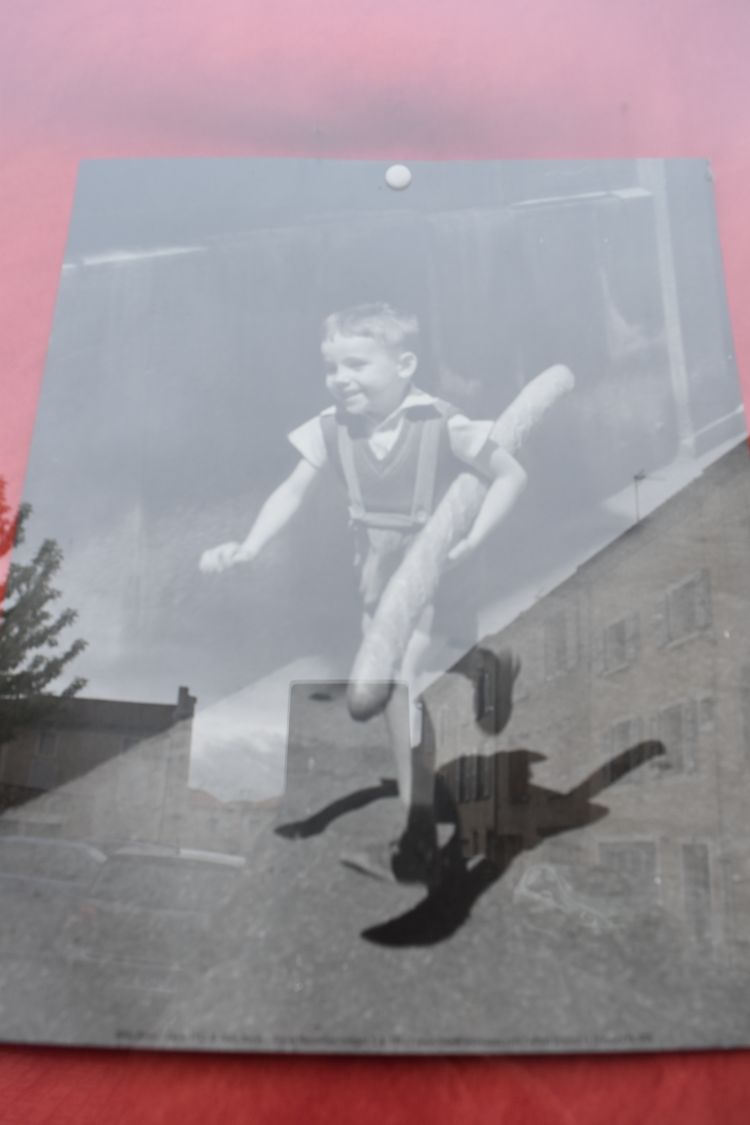
Returning to our hotel we come across a bakery with this very French foto of the fifties or sixties in the last century. Very French… and welcoming.

DSC_0088 small

.

The superbe dinner in the cosy restaurant of the Hotel de la Poste

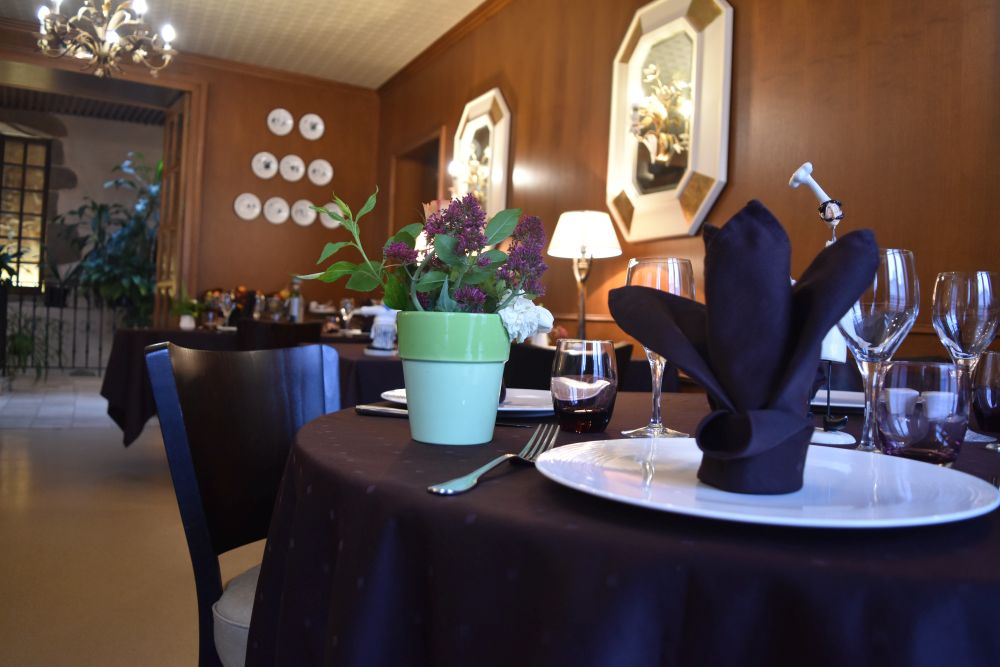
The hotel is a gem. In it, we find one of these home like restaurants that I only know from France.

DSC_0094 small

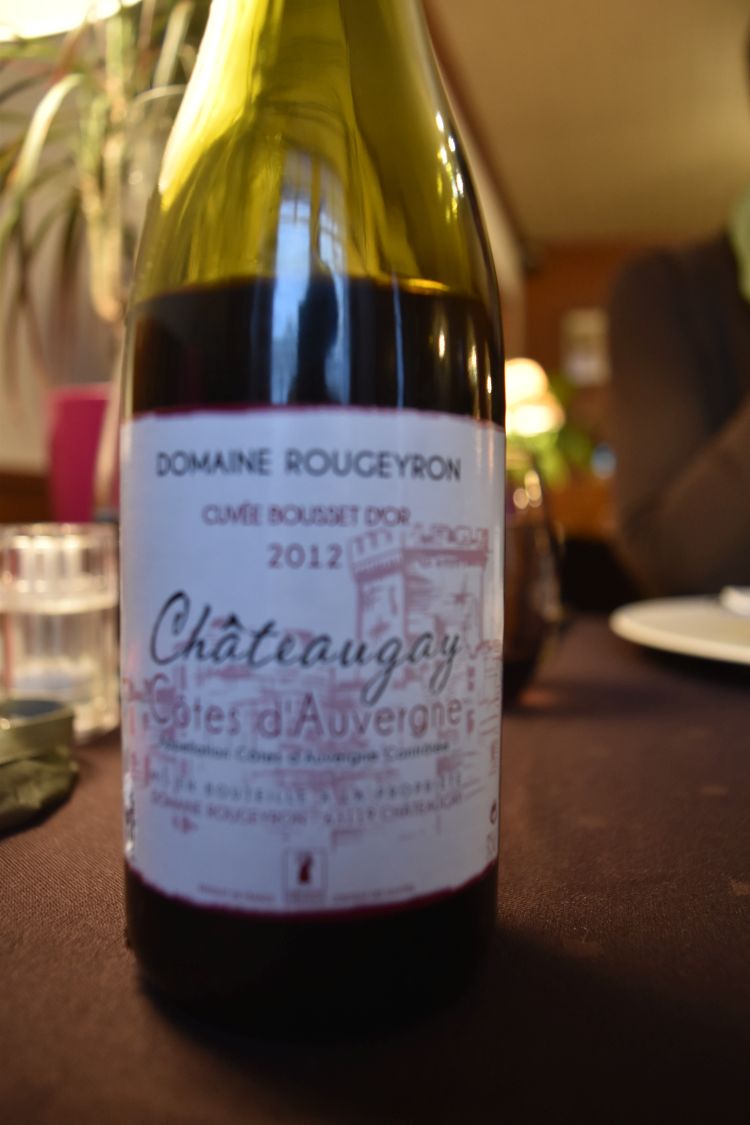
Ursula feels like the menu with two main courses, and I join her. I order this local Gamay from the region of Auvergne – it is a perfect match with the regional meal.

DSC_0095 small

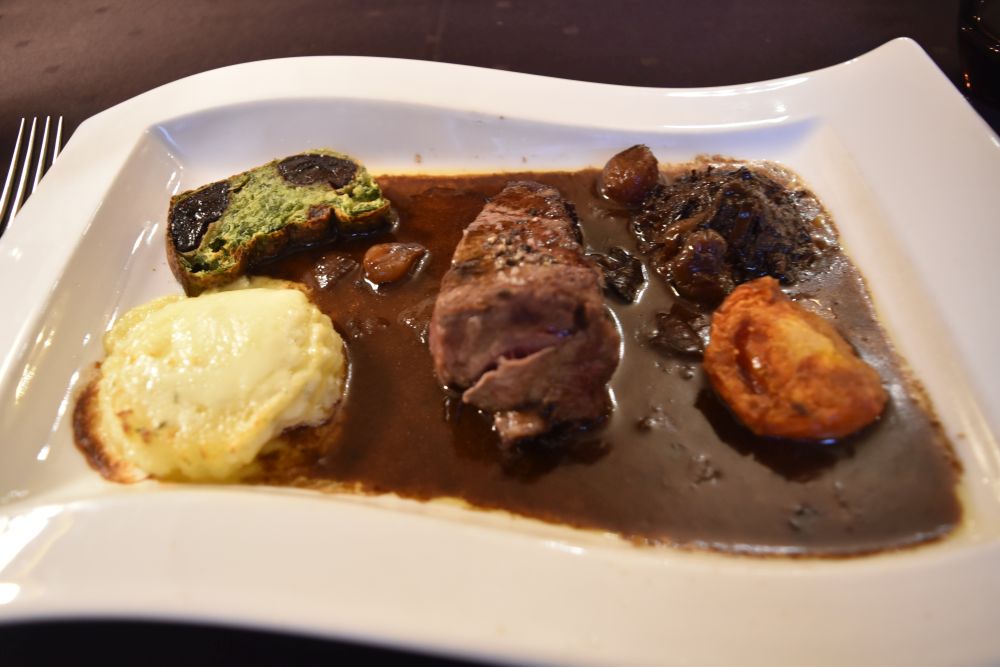
The first dish is poultry terrine. Our main course is beef with potatoes au gratin and a spinach pie. Delicious.

DSC_0098 small

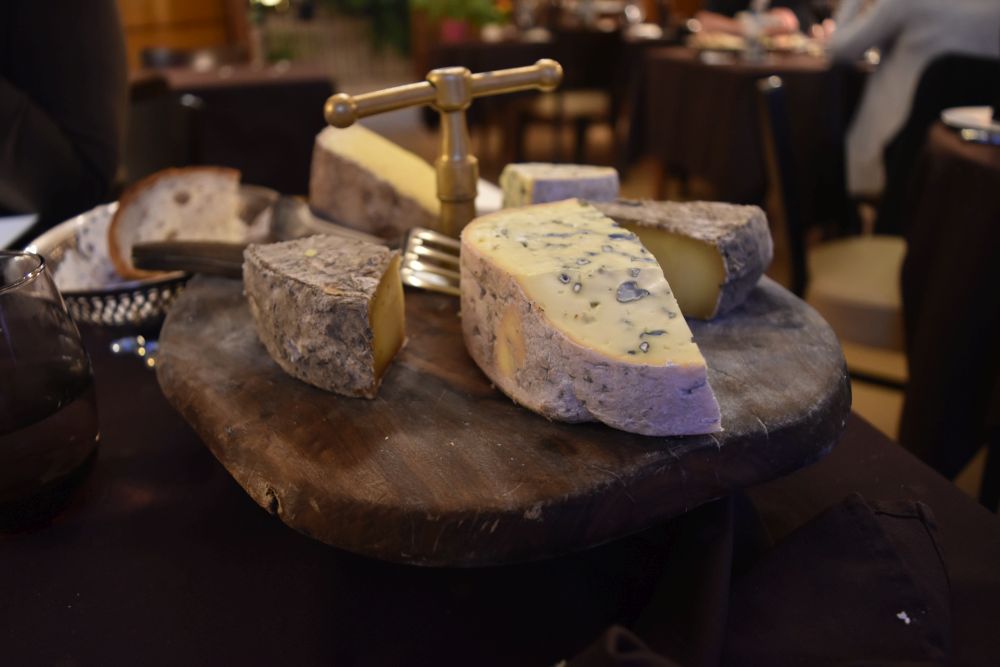
The selection of local cheese like Bleu d’Auvergne or Saint Néctar are also a good match with the Gamay.

DSC_0099 small

A rhubarber cake – lightly made – with a ball of coconut ice cream top our meal. “This is a “trouvaille””, Ursula says, “one of the best meals I have had in France.”

We sleep well in our quiet and comfy annexe and in the morning enjoy breakfast buffet prepared with care and love – all fresh regional products of the Auvergne.

So much to discover around Basel – the Klus and the Burgengratweg

The Klus west of Aesch near Basel – wine and culture

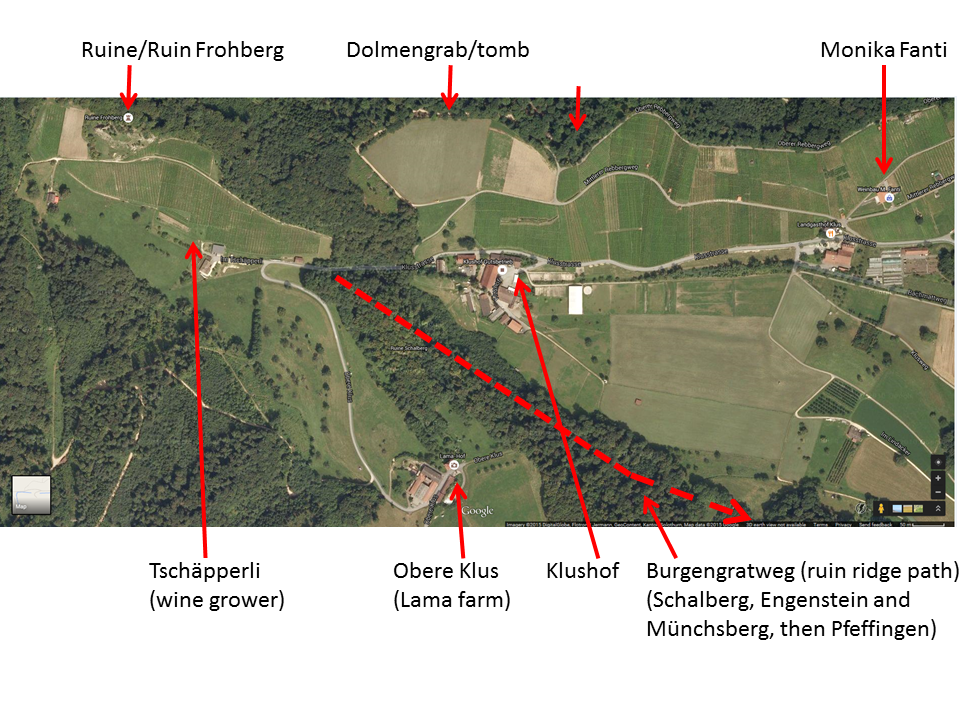
West of Aesch near Basel there is a small valley with southward looking slopes that have a tradition of wine growing – it is the largest wine growing area around Basel. On the hills around the Klus valley there is culture – a dolmen tomb, an old cave and various castles (all ruins). The ruins south of the Klus valley are connected by the marked “Burgengratweg” (“ruin ridge path”), and there is another ruin north of the upper Klus, Frohberg, that is more difficult to reach out to.

aesch w pfeffingen

I like the Klus and check out the marked hiking paths and the more hidden unmarked paths to get ready to lead the Monday Nordic Walking group to the tomb and the castles. Thank you, Andreas and Helga, for uncovering the secrets of this valley to me.

.

The Dolmen tomb 

I start my walk above the vineyards in the forest following the yellow hiking signposts. A brown plate directs me to the dolmen tomb.

P1080419

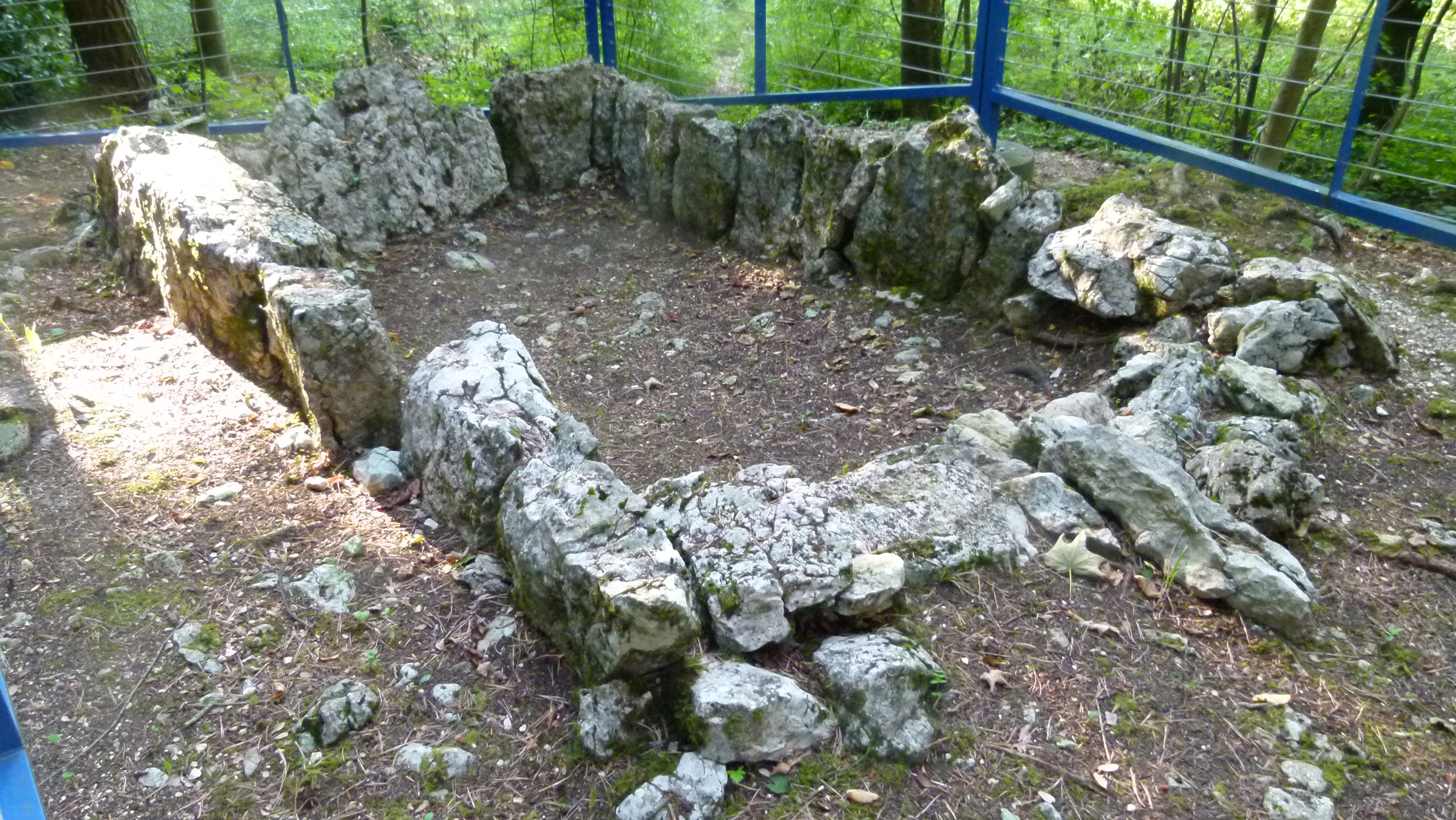
Only the basis of the tomb is left and protected by a fence. Originally it has been covered with stone slabs and must have been some 2-2.5m high. It has been built around 2500-1500 BC (late stone age or bronze age).

P1080414

Nearby I have a wonderful view of the Klus vineyards and the forest hiding the ruins along the “Burgengratweg”. The Gempenplateau can be discerned in the background.

P1080421

.

Looking for the ruins defending the Klus

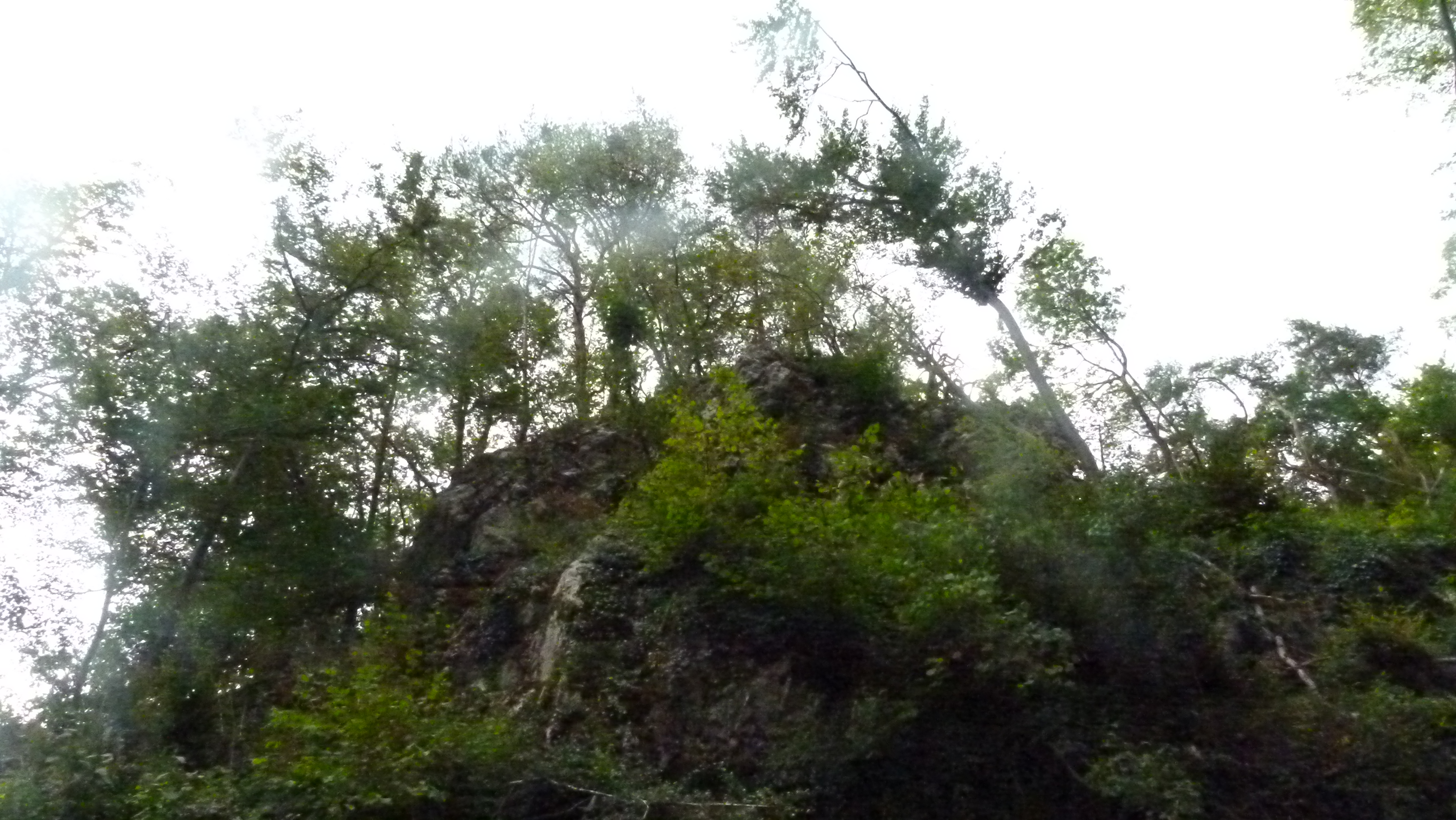
A narrow path takes me up to the ruin Frohberg that is well protected sitting on the top of an almost inaccessable rock. The castle has not been explored by archaeologists. They assume that it has been built by the Schaler family in the 13th century, perhaps as an additional stronghold against the family Münch that also owned a castle overlooking the Klus valley. Like most castles around Basel it has been destroyed in the 1356 earthquake and may not have been reconstructed. Later the bishop of Basel owned Frohberg with the farm Tschöpperli/Tschäpperli and gave it to the family Thierstein as a fief. They managed the farm from the nearby castle Pfeffingen.

P1080426

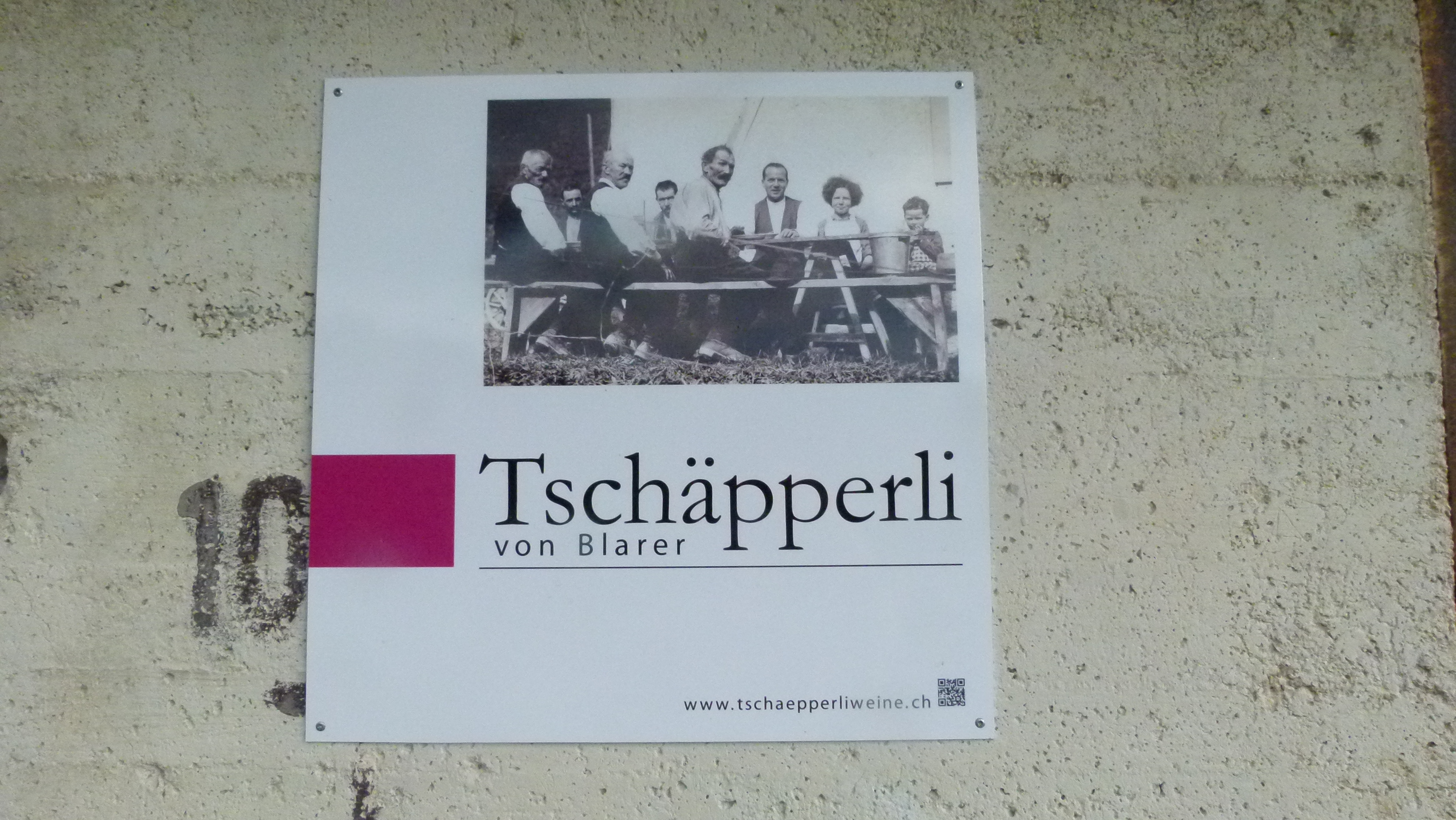
Today, the Tschäpperli farm is one of the renowned wine growers of the Klus.

P1080427

These are some of their vineyards.

P1080432

.

A short round hike on unmarked paths makes me discover the lama farm

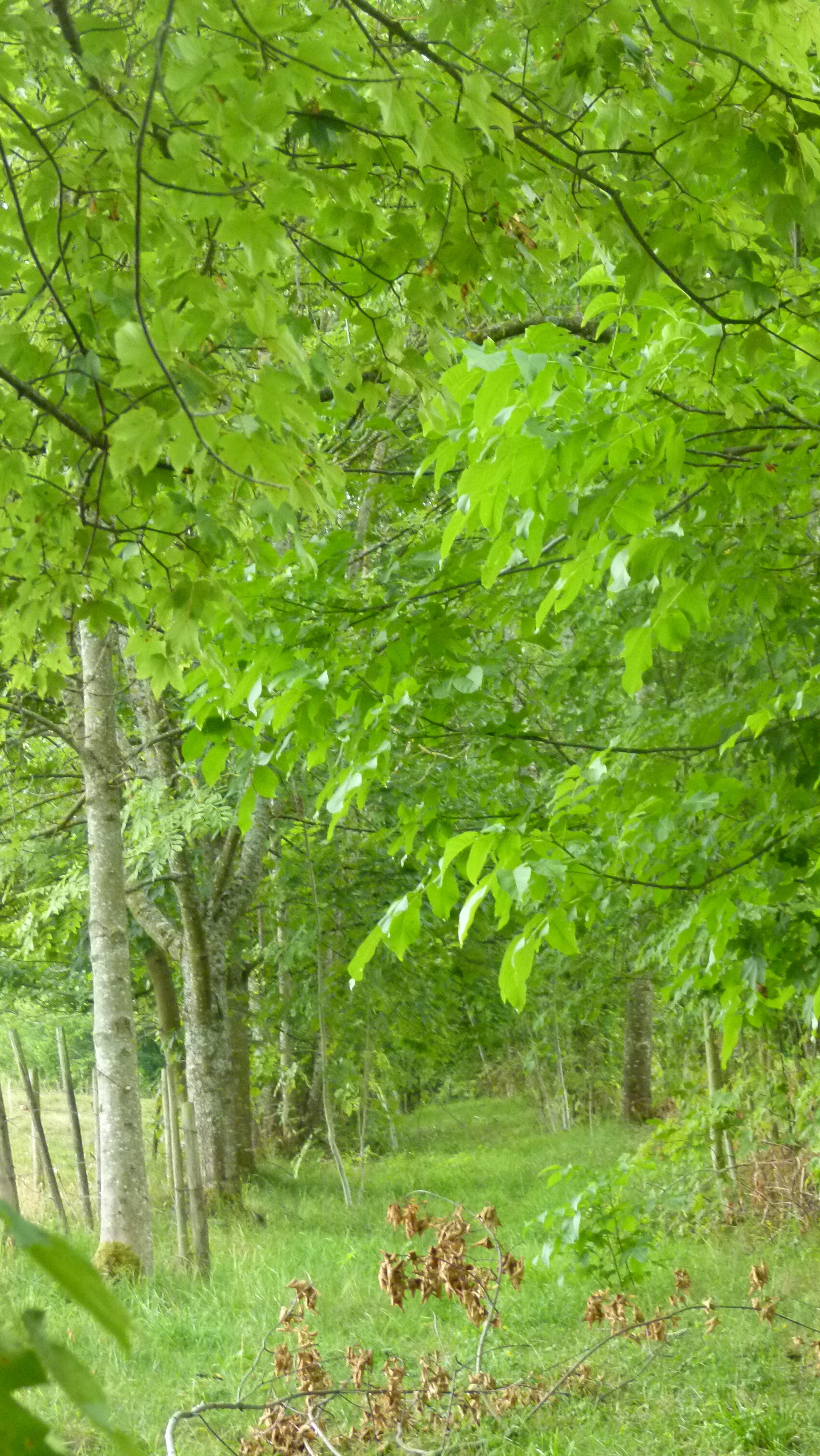
I walk towards the Blattenpass and turn left on an unmarked path to cross the Bielgraben (“Biel ditch”). A beautiful panorama view of the Tschäpperli vineyards and a charming path under birch trees…

P1080431

… take me to this sign announcing llama xing. Llama xing – here in Switzerland! Yes, the farm “Obere Klus” has lamas – among other animals. The lamas are rented out for hikes.

P1080434

.

The narrow and sometimes exposed Burgengratweg (ruin ridge path)

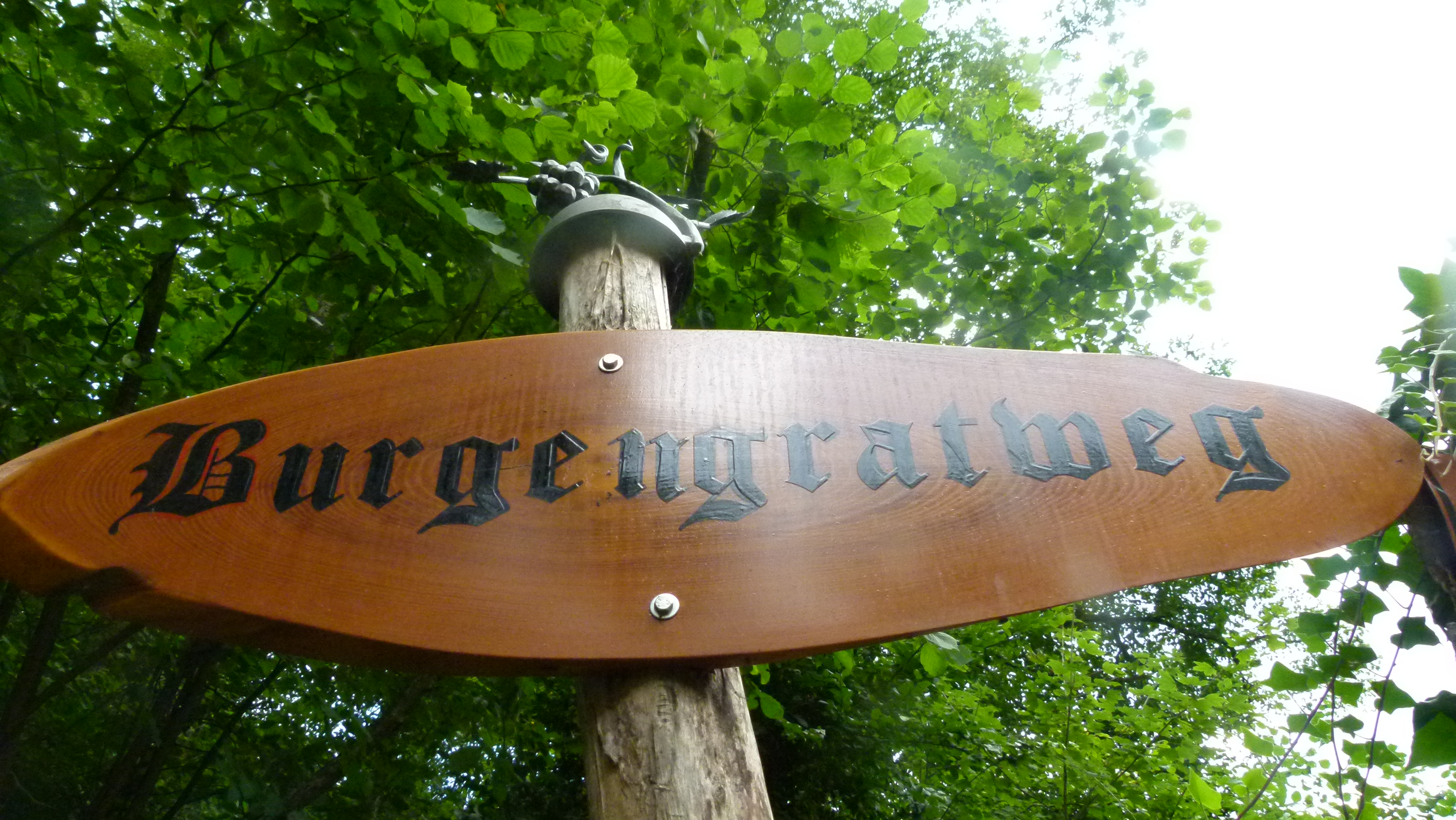
About 50m down the valley I enter the Burgengratweg. There is warning: The path is not in good state, you go there on your own risk. Well, it is narrow, stony, with roots – pretty rough for standards around Basel, but there are more dangerous hiking paths in Switzerland. Each of the sights I will come across on the Burgengratweg has a plate that explains the history.

P1080436

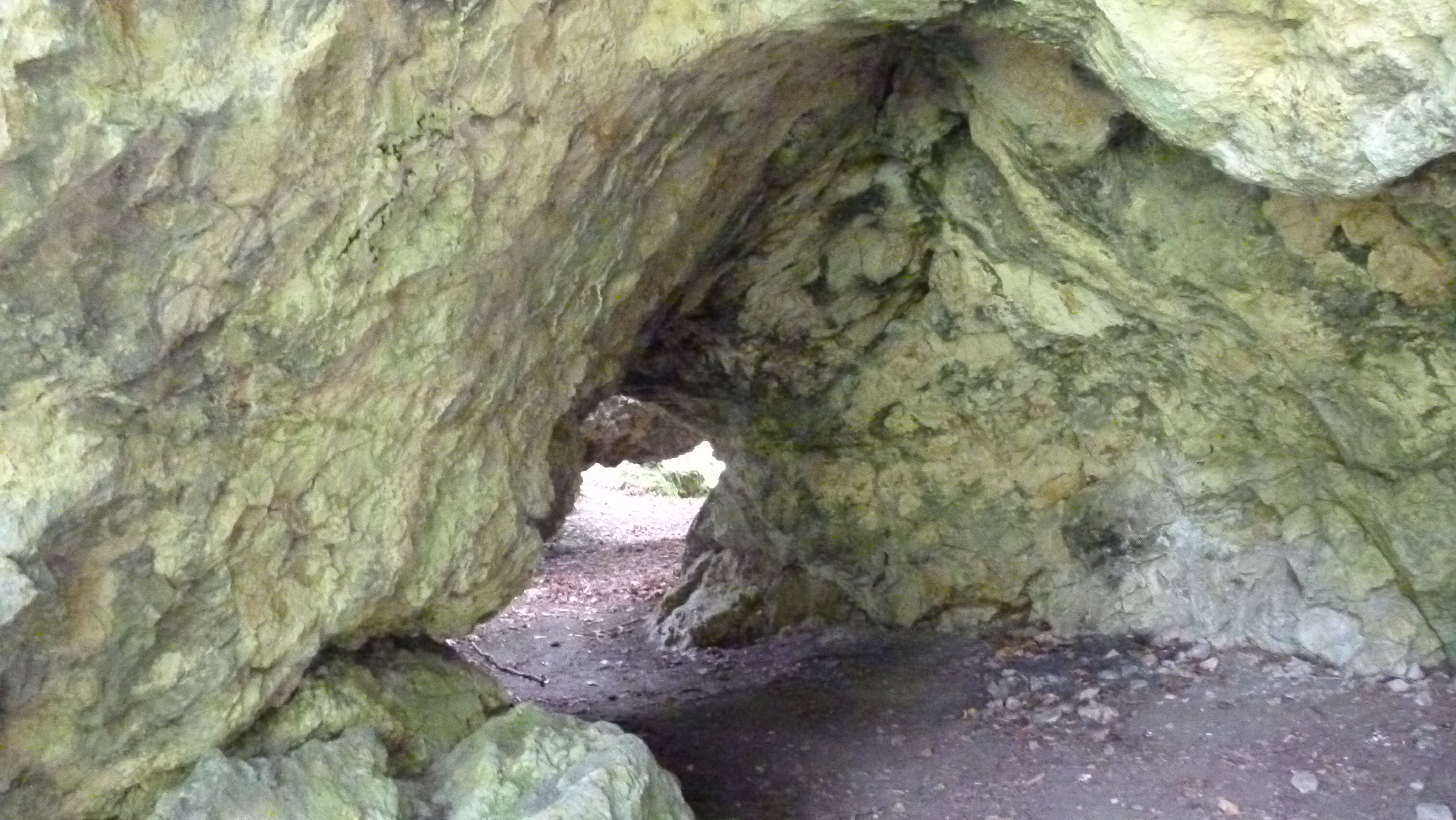
After having crossed a small creek, I reach the Schalberghöhle (Schalberg cave). Flint stone tools and animal bones from 50’000 years ago  (“Moustérien” ) and from the late stone – and bronze age (about 3500BC and 1000 BC) have been found here.

P1080439

The first castle is Schalberg, built by the family Schaler (they have also built Frohberg). After the earthquake they rebuilt this castle. They later sold it to the bishop of Basel (1437) who gave it to the Thierstein family as a fief. Soon thereafter the castle must have been abandoned, as it is no longer mentioned in the archives.

P1080446

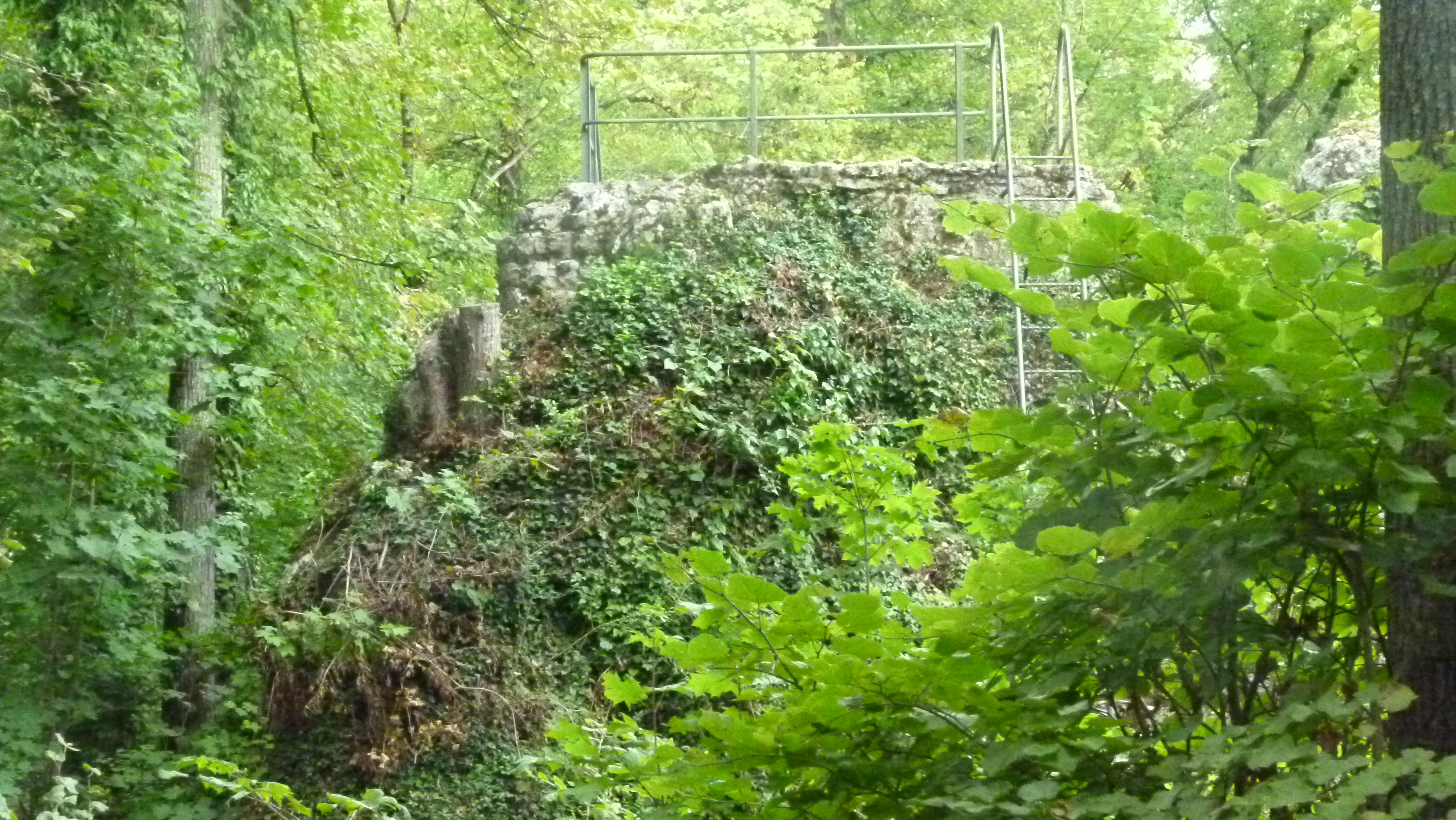
Also the second castle, Engenstein, belonged to the family Schaler. The castle was also called “Alt-” or “Vorder”-Schalberg. A dizzying iron ladder leads to a platform. It has been given up already in 1280, probably, because the family had built the “newer” Schalberg castle not far from here.

P1080451

The next castle, Münchsberg, built in the 13th century, belonged to the family Münch that later also sold the castle (with farms) to the bishop of Basel and received it back as a fief.

P1080456

The last castle on the Burgengratweg is Peffingen above Aesch and the namesake village Pfeffingen. Its origins go back to the 11th century. In the 12th century, the family Thierstein owned Pfeffingen (along with nearby Dorneck). From 1522 it belonged to the bishop of Basel; his bailey then lived here. In the late 18th century the castle was abandoned. It is currently being renovated.

As it starts to pour with rain, I leave the forest and the narrow, now slippery ruin ridge path.

.

Strolling through the vineyards and discovering innovative wine growers

In the rain I prefer to stroll through the vineyards. There is a round tour with posts explaining the business of wine growing throughout the year.

P1080409

Monika Fanti is a winegrower that also runs a small restaurant (“Winzerbaizli” or “little winery pub”). I like the names of her wines: “ilFANTIno”, “exKLUSivo”, “FANTIssimo” and “mySEELEdröpfli” (literally translated: “my soul droplet”). I take a leaflet with me announcing “Neus vo eus”, meaning “news from us” in the dialect of Basle Country.

neusvoeus

I plan to get back to this place. Some of the wines of Monika Fanti would be a great addition to my gift drawer – besides, of course, trying them out myself.

A few meters higher up I find “chez Mitz”, where I can hear laughing through one of the open windows – I think a Sunday brunch is going on. Teddy bears sit on the window sills looking down at the hikers.

Really, the Klus of Aesch is a charming corner! I look forward to the Monday walk with the group and I will surely come back more often.

So much to discover around Basel – Pratteln

My new mountain bike takes me to Pratteln and I discover who has been here before…

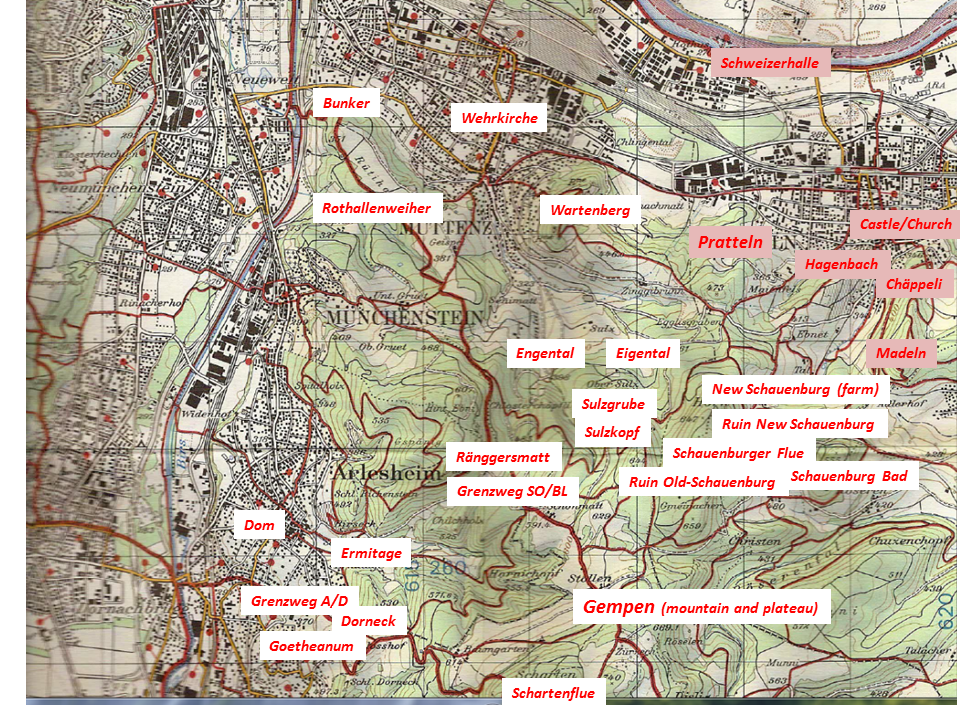
This year – 2015 – I bought a new mountain bike. I set out to explore more of the secrets around Basel to plan the nordic walking hikes that I am now guiding – with my eyes restored. My next target is Pratteln. This small town has published the excellent and very detailed “Heimatkunde Pratteln 2003” (Emmy Honnegger et alii) and a nice Website. I pick a few cherries that might add to the walking experience around Pratteln – I love to know more about the places that I am hiking to. And – any misinterpretations are my own fault – I am not a historian.

Karten Pratteln

Source: Bundesamt für Landestopographie 213T – Basel

.

Pratteln – why are you called “Pratteln”? Ah, you were a “small meadow” near Roman Augusta Raurica

The name “Pratteln” comes from the Latin “Prattelum”=small meadow. Pratellum was a suburban service center for the Roman town Augusta Raurica, with farms and crafts business. It seems that, after the Roman empire had collapsed, the Alemanni did not settle here before the 7th/8th century, and the population continued to speak a Roman language. If the Alemanni had settled here earlier, the alemannic second sound shift would have transformed “Pratteln”  to”Pfratzelen” (“Heimatkunde”) or “Pfrasseln” (wikipedia). I prefer “Pratteln”  to “Pfratzelen” or “Pfrasseln”. We Swiss just say “Braddele”.

The large farms surrounding Pratteln today indicate that it must have been a beautiful service center for Augusta Raurica. Here is Mayenfels above Pratteln that is now a school.

P1080404

.

There were settlements in Pratteln long before the Roman times – perhaps

To the south of Pratteln there is the “Hohle Gasse” – a very steep and even today mostly unpaved path that connects Pratteln with the “Chäppeli”.

P1080358

It was here that a school boy found a hand ax in 1974. The ax is older than any other ax found in Switzerland – the estimates I could find reach from 120’000 to 350’000 years (sources: “Heimatkunde”, p. 71 and Website of Kanton Basellandschaft). It is not clear, whether the glacier has transported the ax to this place or whether the owner really lived around Pratteln. Too long ago to know for sure.

Signs of settlements from stone, bronze and iron age have also been found around Pratteln (see Heimatkunde p. 72).

.

Medieval times: Monasteries and the noble family of Eptingen. Later owned by protestant Basel

Until around 900 AD the monastery of Murbach (Alsace) had possessions in Pratteln. Reminiscence today: The church of Pratteln is dedicated to Murbach’s patron, Saint Leodegar. The church was later sourrounded by a wall to protect it against the floods of the Talbach (Heimatkunde, p. 97, the wall is called “Kirchenbering”).

P1080381

Other reminiscences of those early days  can be found in the field names. For instance starting around 700 AD, forest areas were cleared to gain space for agriculture. These areas were then named Blözen (related with “entblössen”=to bare), Rüti (medieval German “ruiten”=to clear) or Stockmatt (when the thick roots (“Stock”) remained in the meadow (“Matt”)). Other names describe the topology: “Halden” is less steep than a “Rain” (Moderhalden and Blözenrain). “Goleten” points to a landslide that left stone blocks (My Ernst also said “Golete”). In the “Cholholz” – there was a charcoal burning site (Heimatkunde, p. 25f).

In the late 11th century the monastery of St. Alban, just east of the city  gates of Basel, was given possessions in Pratteln. St. Albanstrasse and St. Albanmatte in Pratteln remind us of this today.

In the late 13th century the noble family Eptinger settled in Pratteln (presumably it was a feud from Habsburg).  In the 13th century, they built two castles, one in Pratteln in the valley (surrounded by water) and a second one on the Madeln hill above Pratteln. After the 1356 earthquake, they rebuilt the castle in the valley. Owned by the government since 1773, it is no longer a water castle today, has been beautifully renovated in the 1960’s (see Ernst Zeugin) and is open for the public (guided tours).

P1080391

The castle on the Madeln hill (Madlechöpfli) has not been rebuilt after the earthquake. Today only the ditches can be distinguished on the hill, the remains of the ruins have been covered up in the 1930’s to protect them from further decay. No spectacular ruins for today’s hikers on the Madeln summit – just another picknick spot in the dense forest. But, when having a picknick on Madeln, beware of the Madlejäger or hunter of Madeln. He comes with twelve white dogs, when the weather is changing. He has suffered until these days, because he had killed the owner of Schauenburg to marry the widow (Heimatkunde, p. 318). Below, the “bosky” highest point on the mountain range in the background is the Madeln hill.

P1080406

In the 15th century, Hans Bernhard von Eptingen built the monastery of Schauenburg and a chapel with a hospice in the Geisswald just above Pratteln. The place is called “Chäppeli” which reminds us of Hans’ chapel that does no longer exist – after the reformation (1529) the stones have been reused to build the parochial house of Pratteln. The fountain is said to give curative water and the Geisswald seems to be an energy spot emitting 8000 Bovis (“Geiss” pointing to what we call Kraftort in German). This was a good place for a chapel and now it is a good place for a vast picknick and play ground. The foto shows the area with the fountain in the background.

P1080351

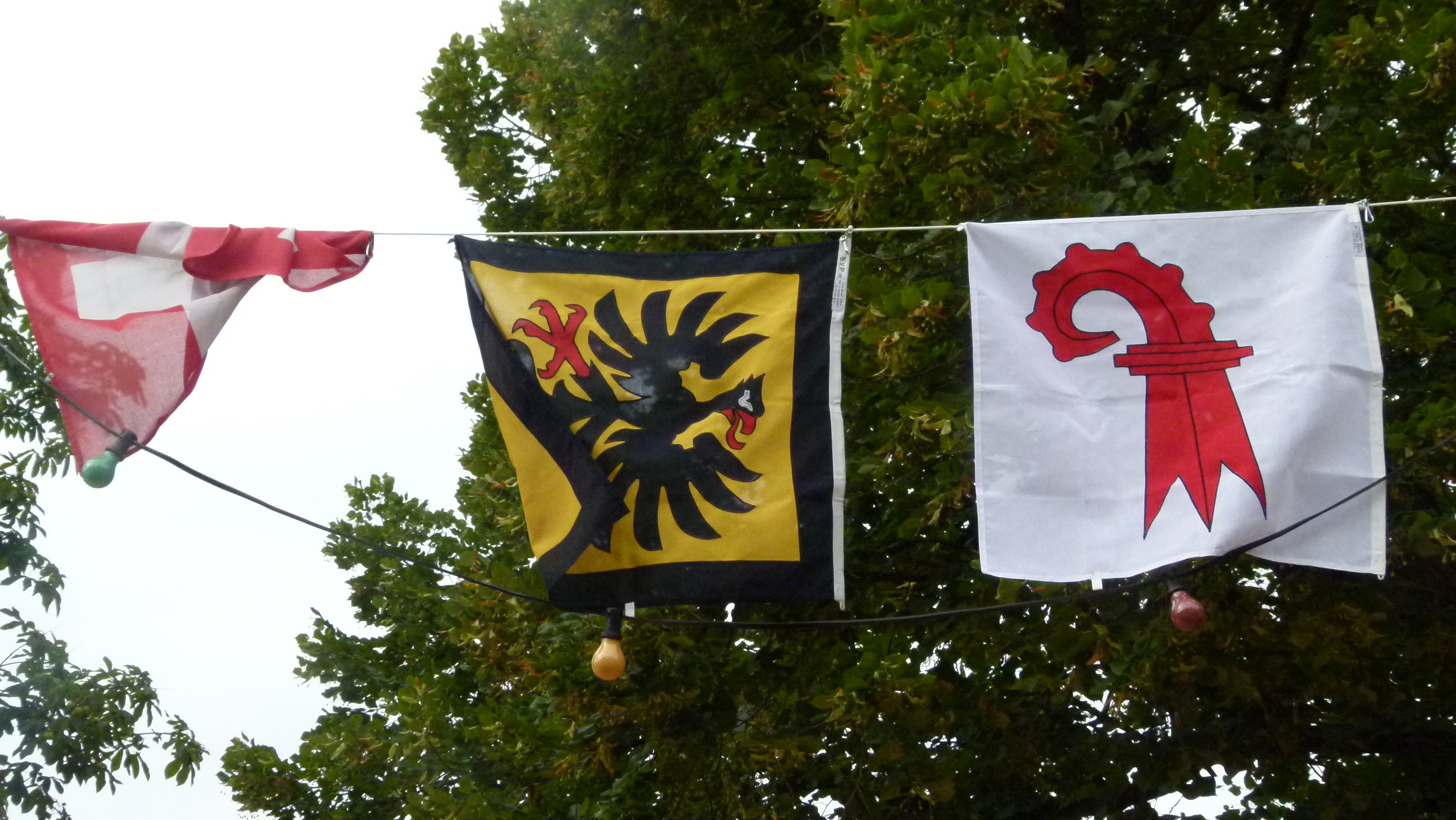
In 1521 the family Eptinger sold the castle and part of Pratteln to Basel – for 5000 Gulden. 1549 the Habsburgians gave up the rest for 3000 Gulden. However, with their coat of arms – an eagle with  red tongue and red claws –  the noble family Eptinger is omnipresent today, on banners, on the cars of the firebrigade, in gardens… everywhere. To differentiate their banner from the emblem of Eptingen (also a former possession of the Eptinger family), Pratteln has added a black frame.

I found the emblem on the little hut at the picknick spot “Chäppeli”.

P1080354

and everywhere in the center of Pratteln  that today, July 31st, is preapring for the Swiss national holiday on 1st of August.

P1080396

.

Modern times – salt and industrialization… and taking care of the medieval village center

In the early 19th century salt was found near Pratteln. This started the industrial development.

Based on a geological map, Peter Merian forecasted the chance of finding salt on the shores of the Rhine. Carl Christian Friedrich Glenck dug, found salt in 1836 (116m under the ground) and a year later, he opened the first saline factory. Now the Swiss Rhine Salines produce 450’000 tons of salt a year in the valley and on the adjacent hills of the Plateau Jura, south of Pratteln and Muttenz.

The presence of salt as an important component attracted chemical factories. From the motorway, I have always seen the signs of the “Säurefabrik” (“acid factory”) – now I know, the Säurefabrik came here in 1918 to combine salt with iron sulfur which results in salt – and sulfur acid (Heimatkunde, p. 107). And Ciba, Novartis, Sandoz and many more national and international enterprises form the industrial complex of Schweizerhalle between the railway and the Rhine river today – this sight is taken from Google Earth.

Schwei$zerhalle Google Earth

Source: Google Earth

Despite the industrial evolution, Pratteln kept its charming historical center and makes it worth a visit.

P1080405

.

Vineyards – first mentioned in 1284 and a pastor from the 17th century that must have loved the wine…

There are vineyards to the south of Pratteln. They were mentioned first in the books of the monastery of St. Alban in 1284. The production was then around 60’000 liters. In 1749 a historian praised the vines of Pratteln, “in particular the red wines are among the good and dense wines of our region (gut und kräftig).” (Heimatkunde, p. 170). In 1807 there were 47ha of vineyards (in the valley and on the hills). Now just about 6.7 ha are left, all on the eastward looking slopes of the Ebnet (see Weinbauverein Pratteln). There are two professional and  20 hobby wine growers producing about 60’000 bottles a year.

P1080344

One of the two professional wine growers runs the Leuengrund. It has a small restaurant (open from October to February; this is a Straussen- or Meienwirtschaft, announced by a bunch of flowers, a custom based on Charlemagne (768-814)). Find below the Leuengrund with its gorgeous view. I will come back here in autumn, when the restaurant is open.

P1080408

In the 17th century, the pastor Christoph Hagenbach (1596-1668) had a small half-timbered house built on the edge of the vineyards, overlooking the Rhine valley with the Black Forest and the Vosges. It was here that he prepared his sermons (perhaps the wine helped him find the right words). After him, this wonderful spot is called “Hagebächli”. Look at his cosy little house…

IMG_1573

…  and the view over Pratteln to the Dinkelberg beyond the Rhine river and the Vosges in the background to the left.

IMG_1574

.

Well, I am impressed by the history of Pratteln. I love to share it with the nordic walking group, when hiking here. Andreas and Helga, thank you for having opened my eyes for the secrets of my home region around Basel.

So much to discover around Basel (the Hardwald with water supply and Roman watch tower as well as an idyllic restaurant)

Andreas and Helga love the idyllic restaurant “Gasthof Solbad” just bordering on the Rhine

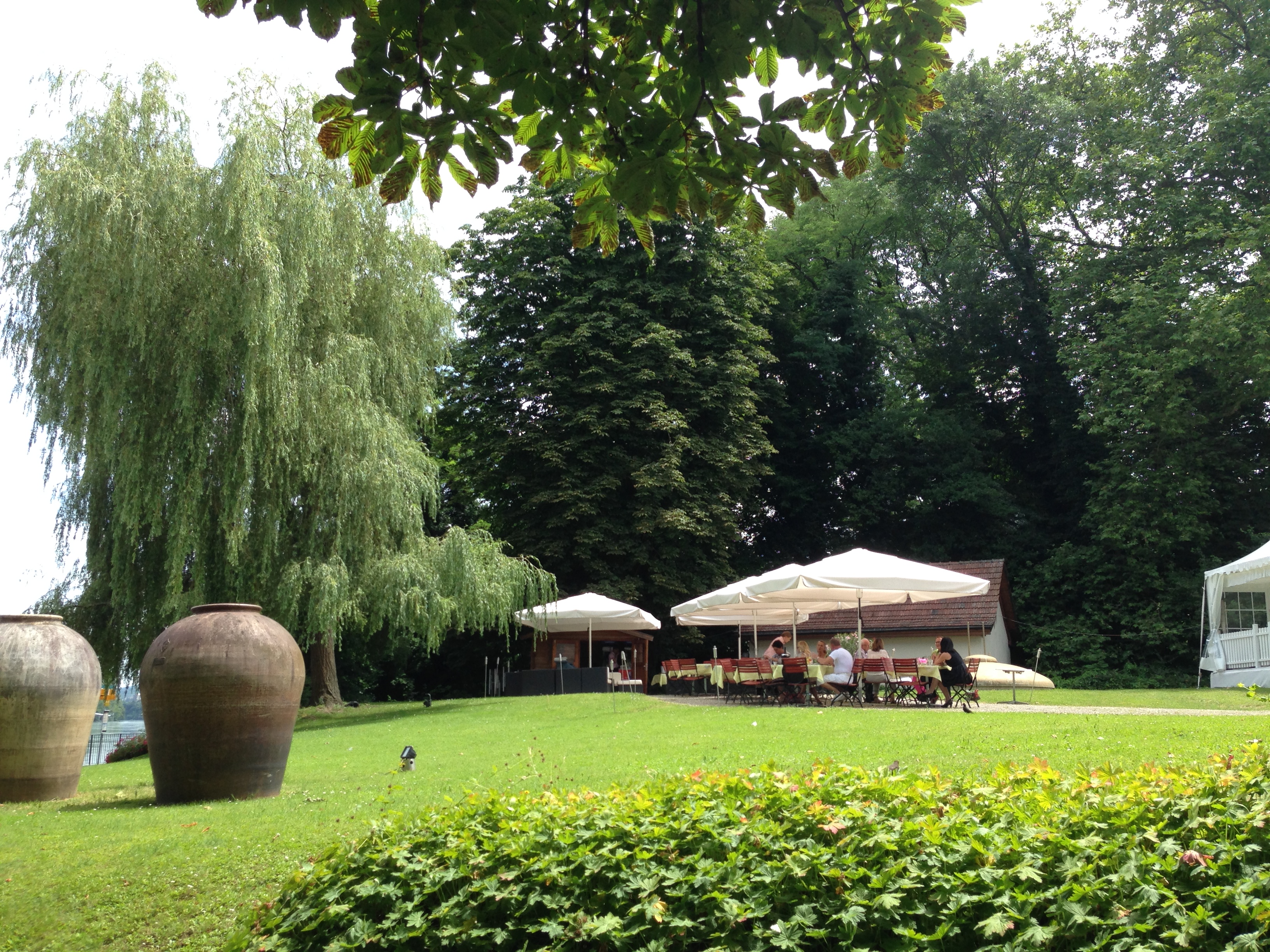
In the summer, the Gastof Solbad opens their garden bordering the Rhine. It is a great setting under a weeping willow. On a sunny day in June 2015, Andreas and Helga take their Nordic walking group to this idyllic place.

IMG_1519

.

Our walk through the Hard and along the river Rhine (Rhein)

To get to the restaurant Solbad in Schweizerhalle, we have to cross the Hard. “Hard” actually means “forest”. We start in “Neue Welt”, walk along the river Birs, climb up to the Hard, oscillate a bit to make enough kilometers (10 to 15km) and then take the “Rheinpfad” that leads along the Rhine with posts of interest on the way. The restaurant Solbad is in Schweizerhalle.

Karte Hard

Source: Karte Schweizmobil

.

The Hard – a paradise for walkers and indispensable water supply for Basel

The Hard supplies water to Basel.

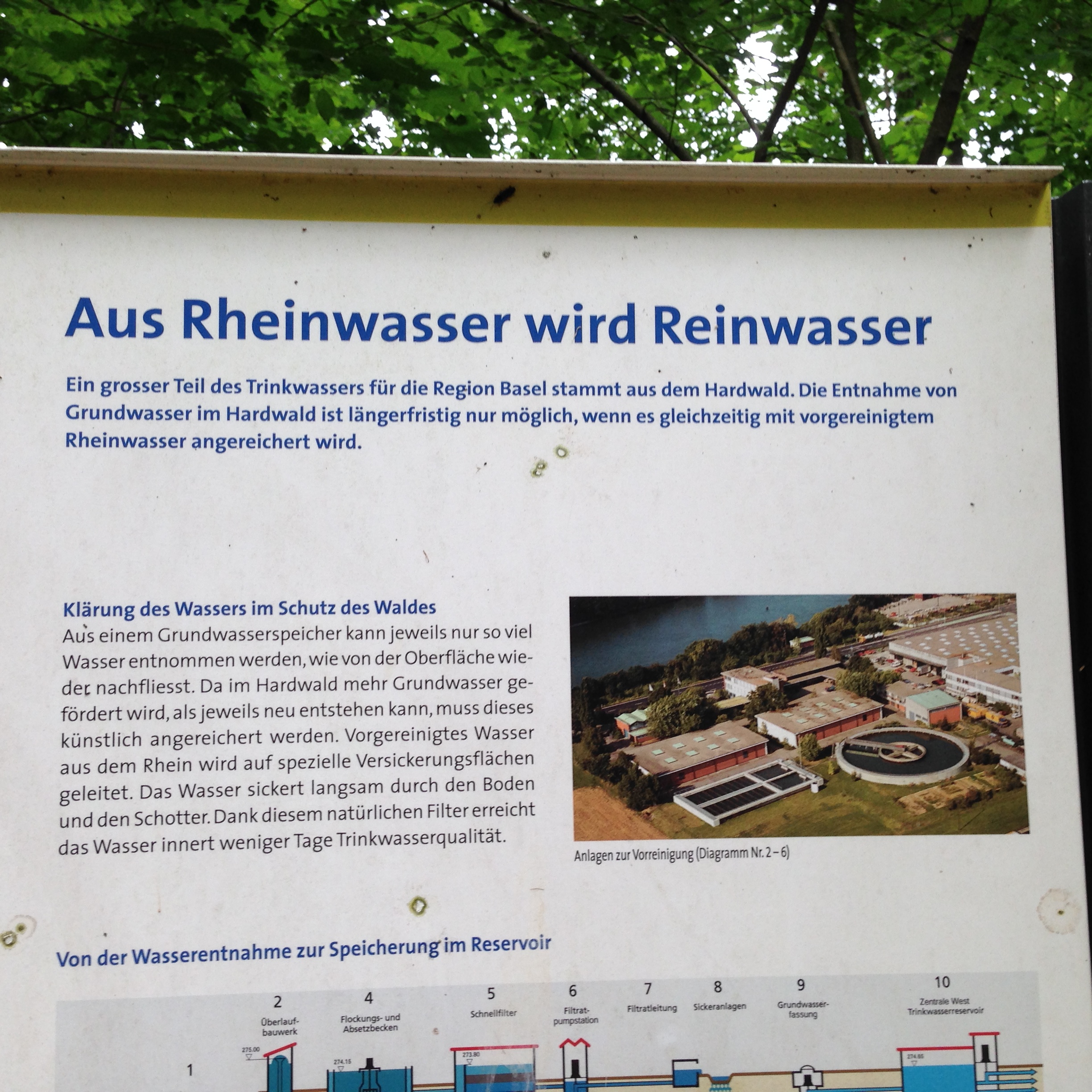
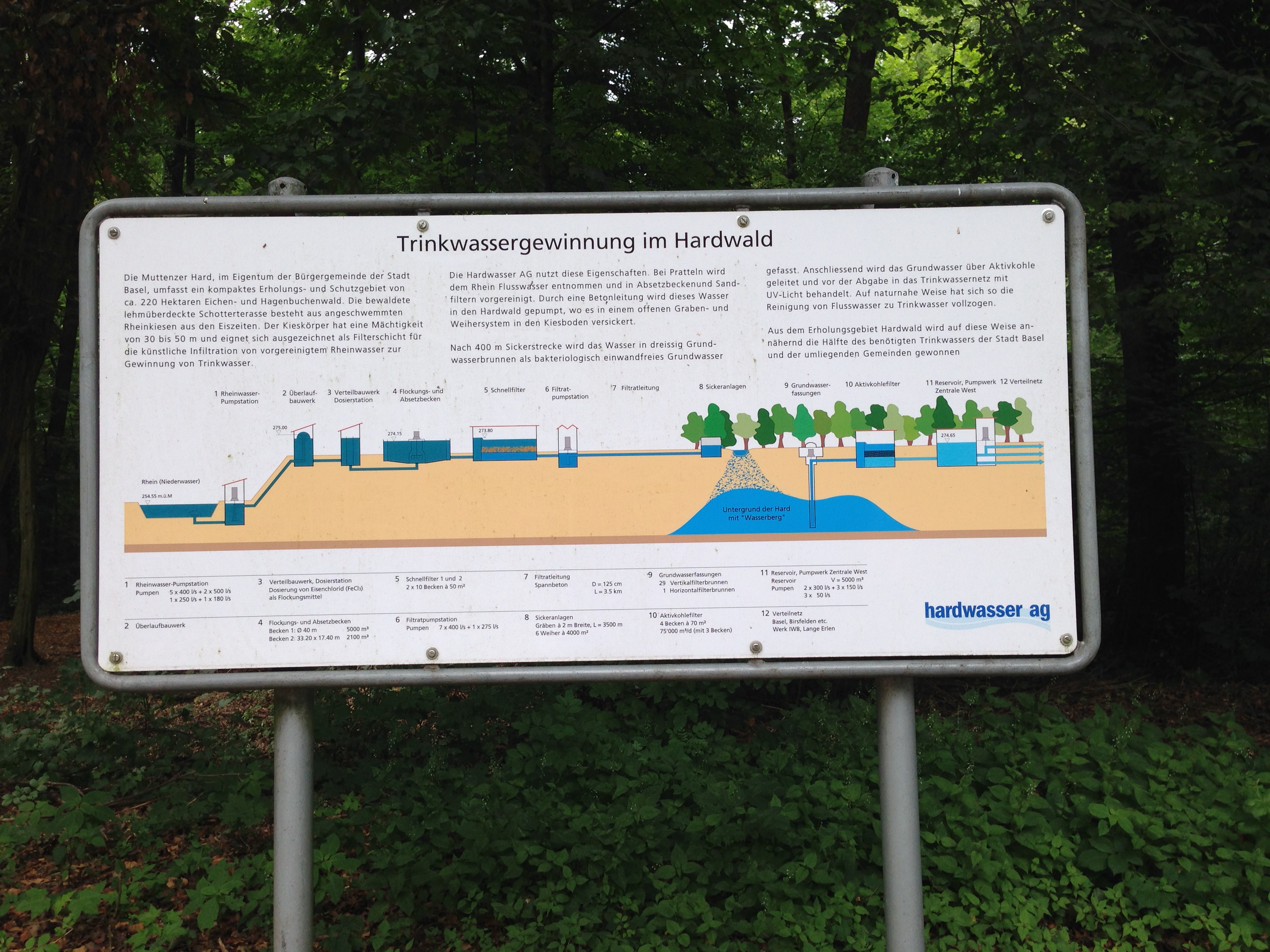
As this panel says, water from the Rhine becomes pristine water (from the Rhine=Rhein, made pristine=”rein” – a game of words in German).  Rhine water is pumped up and then purified in filters.

IMG_1537

The purified Rhine water is directed to water channels with gravel beds. It sinks to the ground and adds to the Hard groundwater. The clean water from the river and the ground is then transfered from the Hard to the Langen Erlen north of Basel that also has its own groundwater. From there it is provided to the town.

IMG_1541

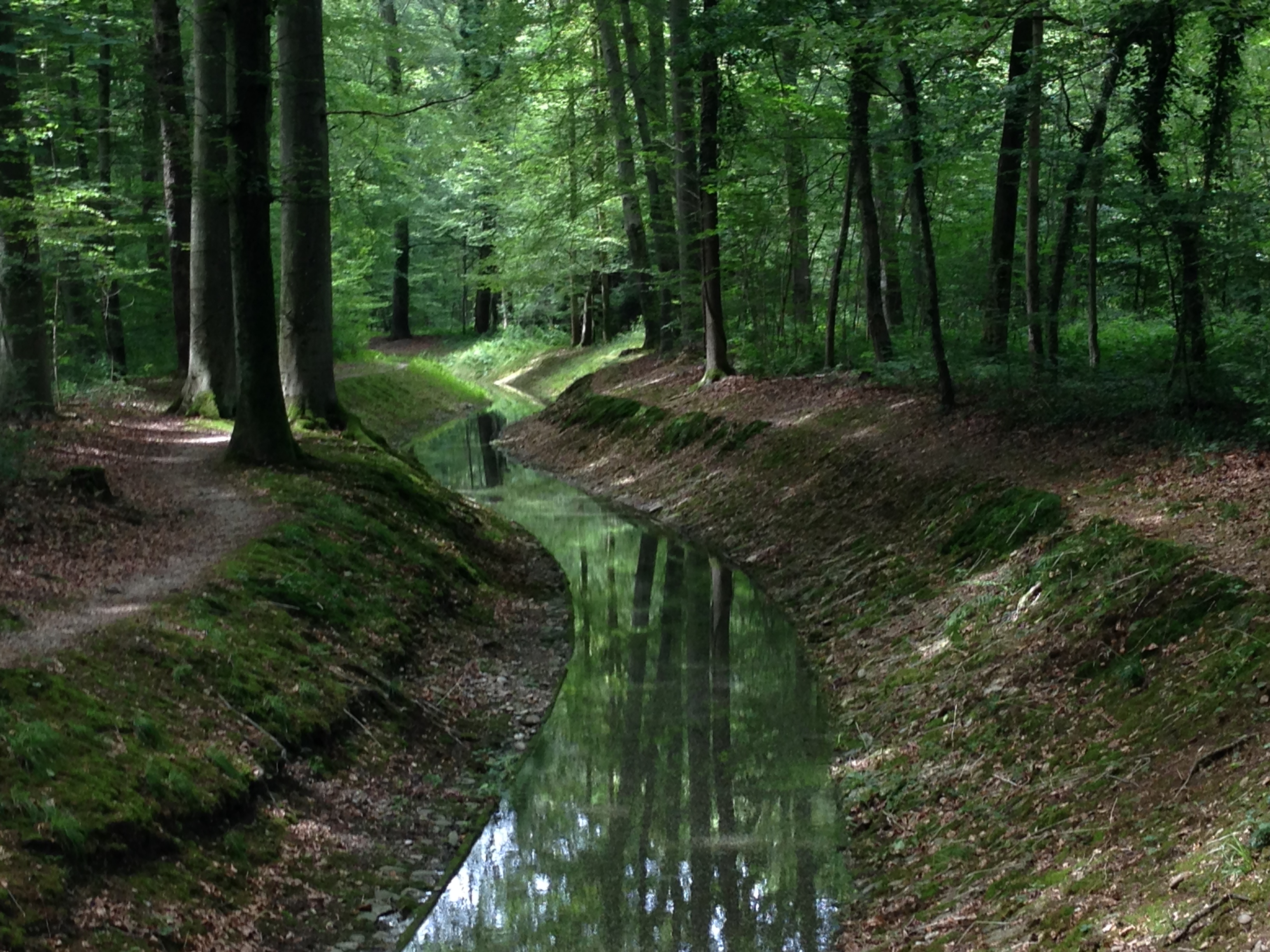
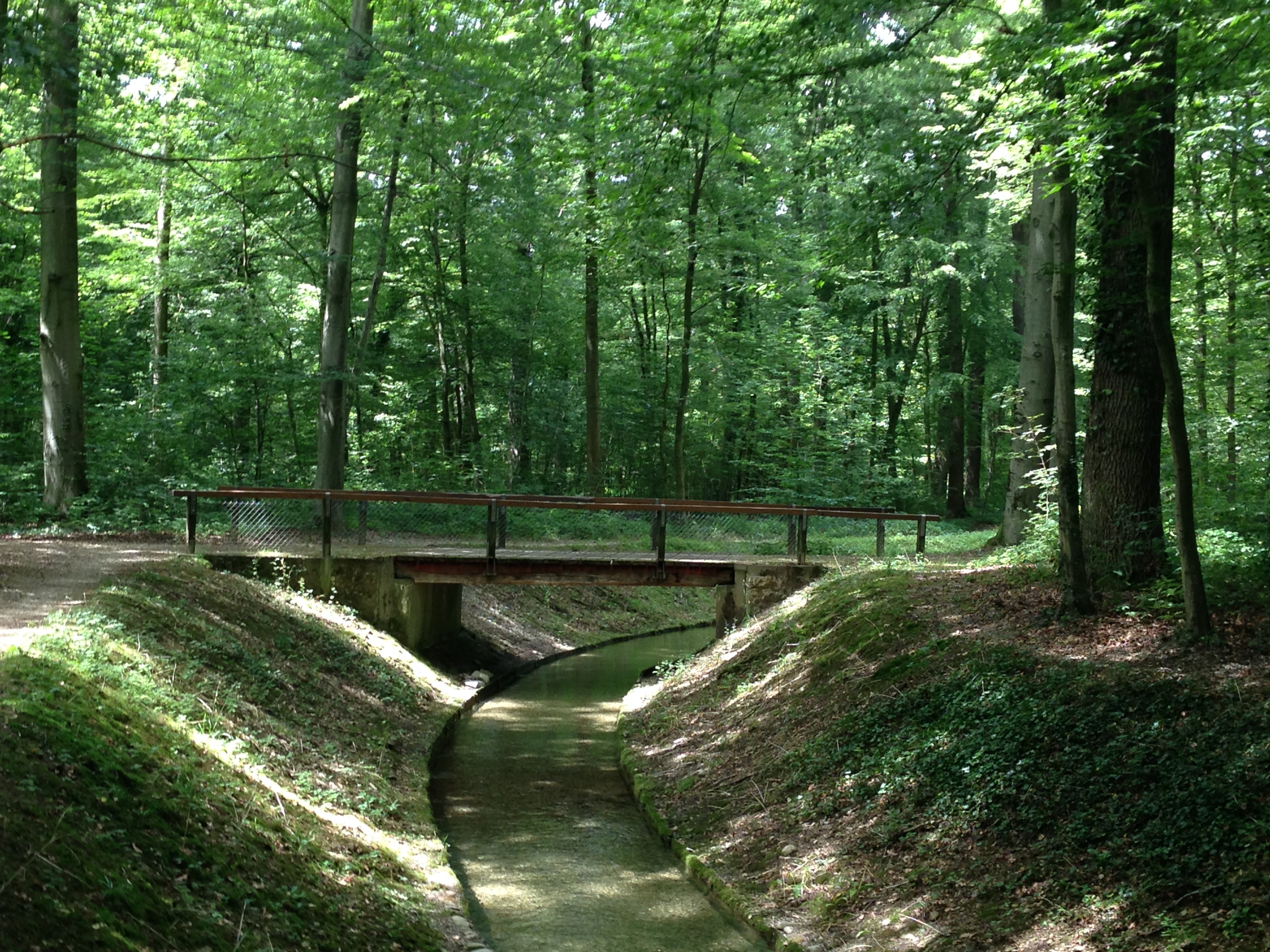
These water channels are part of the purification system in the Hard. They add to the romantic atmosphere that walkers find here.

IMG_1544

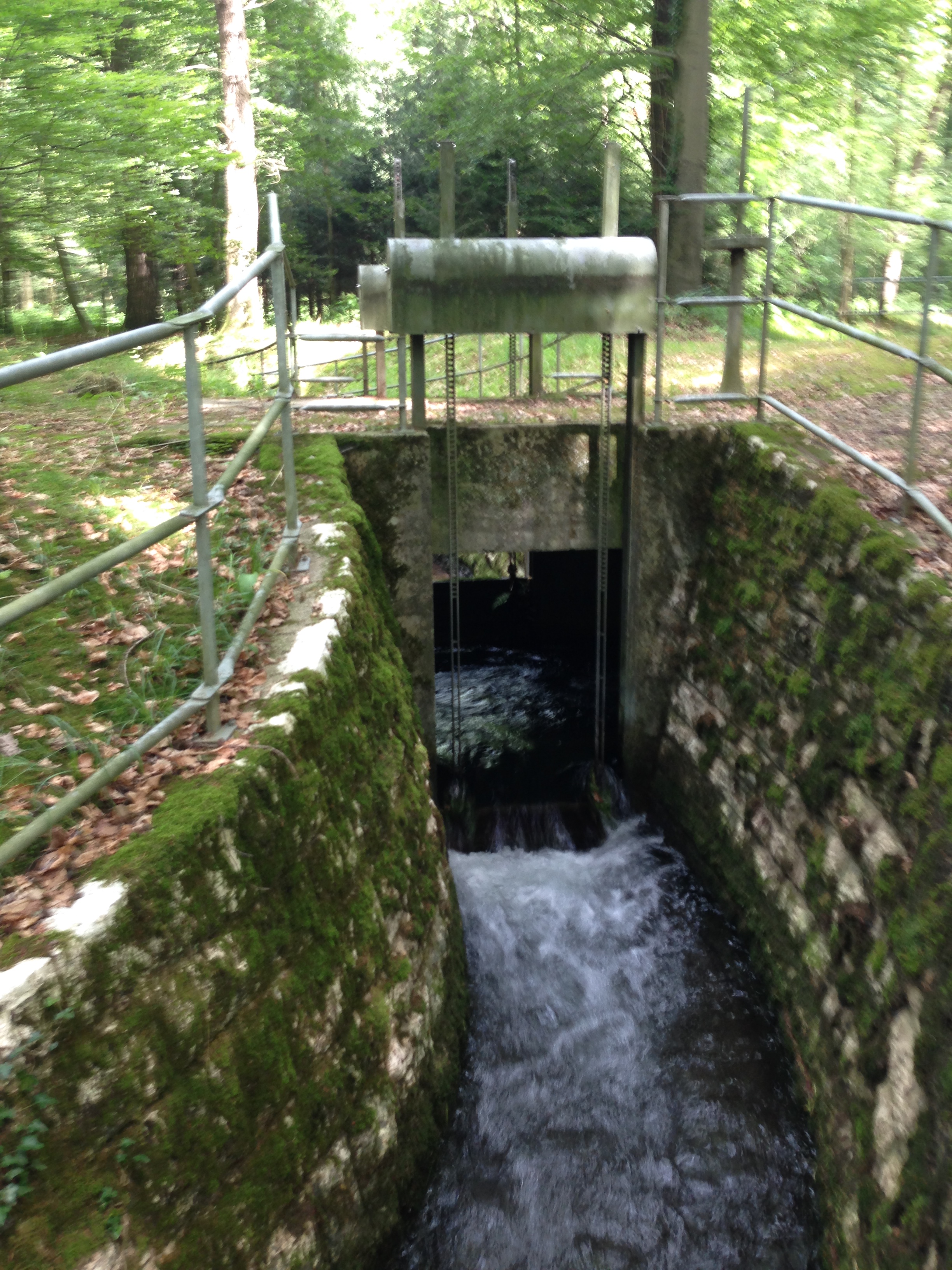
There is a control system to feed the water channels.

IMG_1547

Wooden bridges allow to cross the water channels. We make a loop following the water channels and then leave this area to continue along the Rhine.

IMG_1548

.

Along the Rhine: The Romans were here – and left their marks

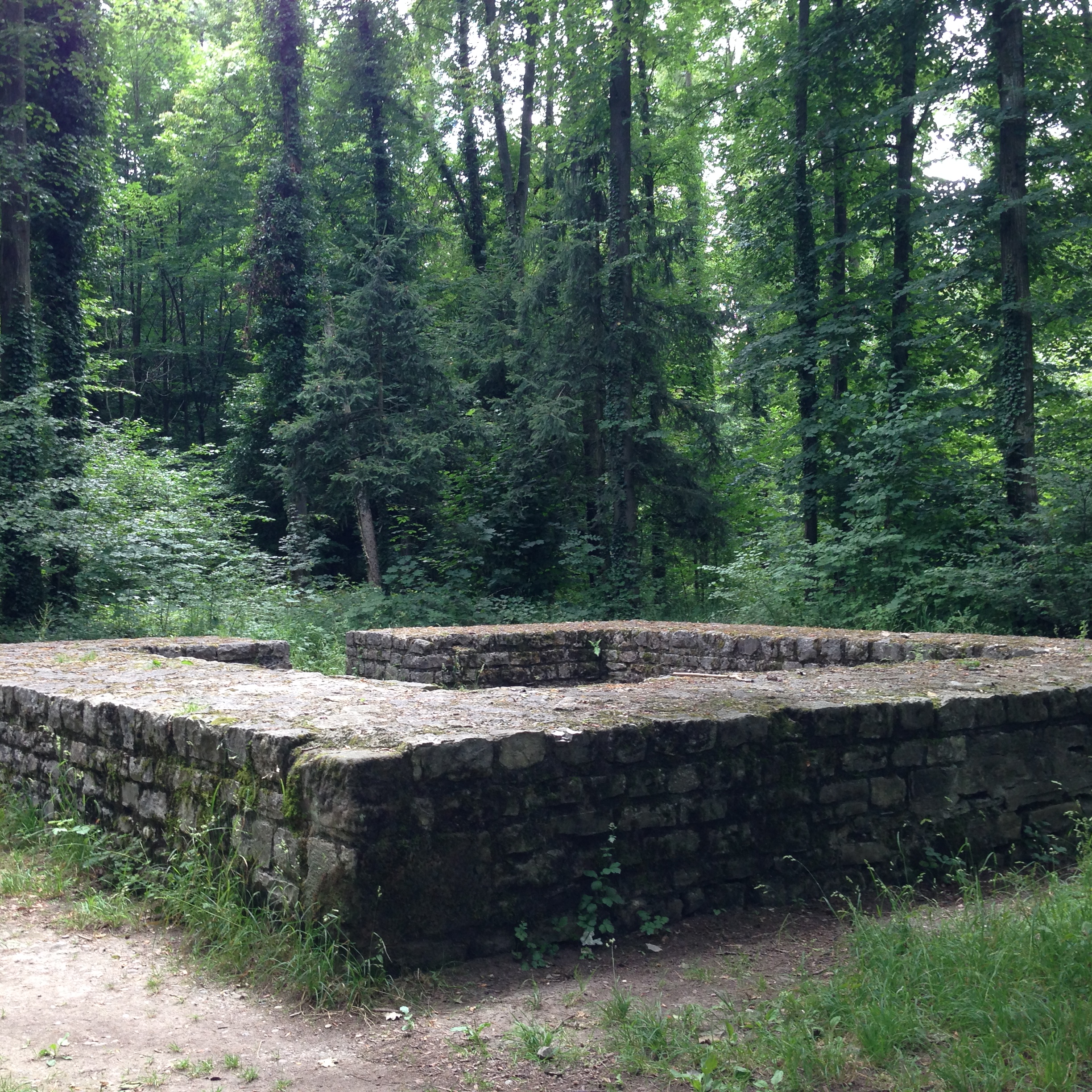
This late Romanic watch tower borders the Rhine. It was built in the late 4th century, when the Romans came more and more under pressure by the Germanic and Alemannic tribes. Just the stone basement is left and has been preserved in 1975.

IMG_1534

.

Dismantling of a huge industrial building in Schweizerhalle

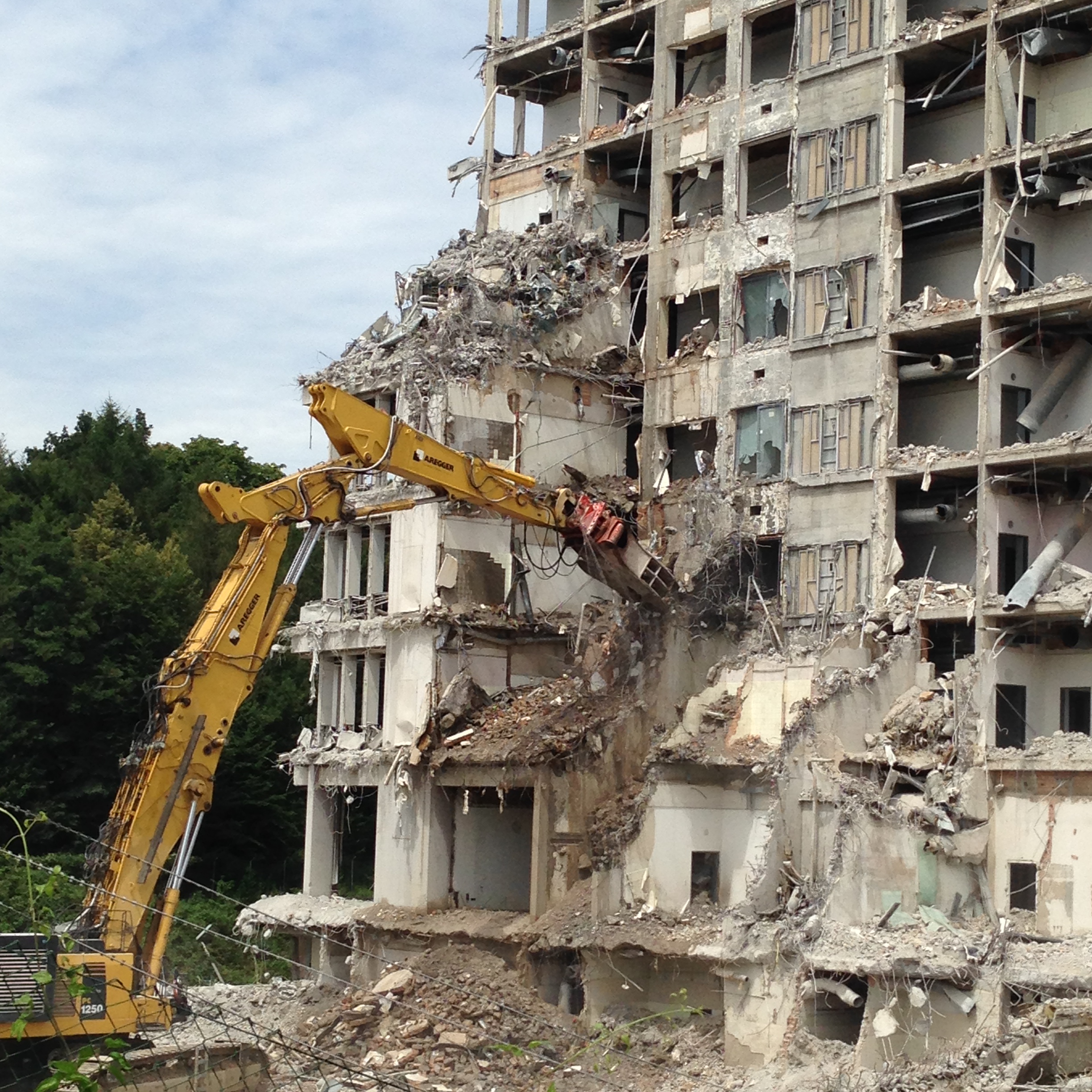
Not far from the watch tower – when still walking in the woods – we hear a terribly loud noise. When leaving the woods, we see this huge industrial building that is now it being dismantled piece by piece. When walking by, we almost have to protect our ears.

IMG_1531

.

Navigation driven by muscles

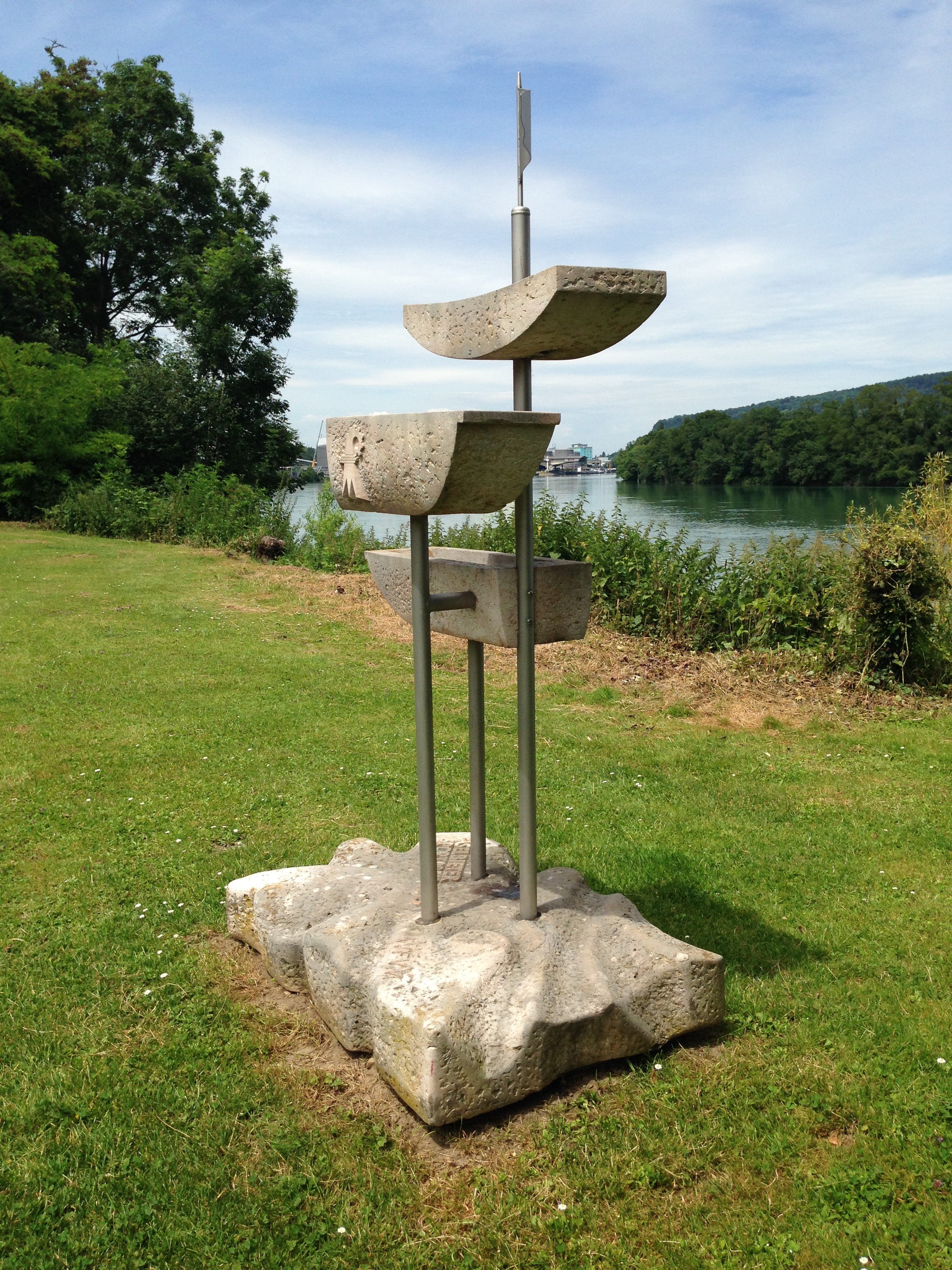
Our last place interest is the “Schiffahrt mit Muskelantrieb” or “navigation driven by muscles” (named “Rothus” on the map).

IMG_1524

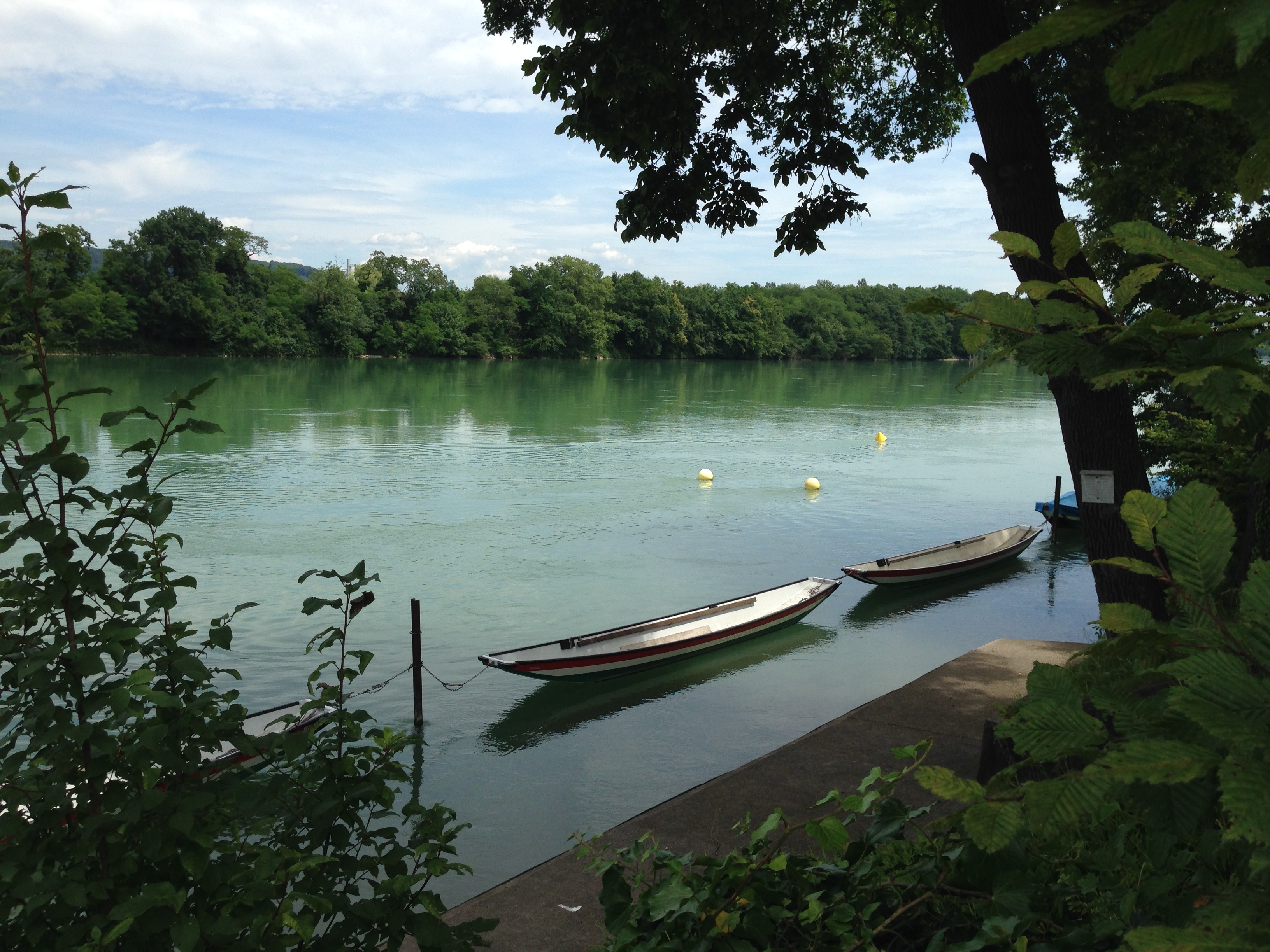
These are the boats that are driven by muscles – we call them “Weidling” which is similar to a “punt”, as Wikipedia says.

IMG_1525

Soon after this boats place we reach the garden of the restaurant Solbad and order a drink to cool down.

Thank you, Andreas and Helga, for having showed me some more secrets of Basel region. From the restaurant Solbad I walked back home the same way to enjoy it once more and take the fotos using my iPhone. I look forward to more treasure hunting with you.


Around Basel – The Ermitage near Arlesheim is full of surprises

My grandma loved the Ermitage – and took me there, when I was a child

My grandma loved the Ermitage. Around 1900 she went as a child, and later in the 1920-ies she came with her in-laws from Heidelberg. Then in the 1950-ies, she took me to the Ermitage.  I was a child and I still see me stand on this platform and feed the carps with old bread found at the bottom of the huge hand bag of my grandma, amidst great fruit candies. The platform is still the same.

P1060142

.

On June 27th 2015, the Ermitage celebrates the 230th anniversary – a great opportunity to learn more about it

The Ermitage is the largest English garden in Switzerland. It was created in 1785 by Balbina von Andlau-Staal (wife of the bailiff of the prince-bishopric of Basel) and her cousin, Heinrich von Ligerz. As opposed to the geometric French gardens, the  English style gardens were made to look natural, following Chinese garden architecture rules. The rules included setting up places of interest such as caves, ruins, monuments, fountains, water falls or leisure corners, and the Ermitage garden benefited from the steep hill of the Birseck castle with its natural caves. Already in 1785 the garden was open to the public.

A few years later during the French revolution, the garden was devastated by the farmers around Arlesheim and by French troops. Also the castle of Birseck (former seat of the bailiff) was destroyed in the process. In 1811 the son of Balbina, Conrad von Andlau, had the Ermitage rebuilt, supported by Heinrich von Ligerz, now an old man. The castle of Birseck was partially rebuilt and integrated in the Ermitage garden. The garden reopened in 1812. It subsequently changed ownership various times and since 1999 it has belonged to the Stiftung Ermitage Arlesheim und Schloss Birseck.

My sources are: The Ermitage Website , “Die Höhlen der Ermitage bei Arlesheim” (by Erich Plattner) and also listening to the guides in the garden.

On June 27th 2015, the Ermitage celebrates the 230th anniversary. Places of interest such as the caves or the Birseck castle are open and looked after by members of the foundation (Stiftung) or by citizens of Arlesheim.

.

Ab uff d-Sogge

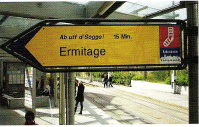
“Ab uff d’Sogge” –  this is how we Swiss say “let’s go” or literally “let us go on our socks” (“Sogge” are “socks” – as shown on the sign). “Ab uff d’Sogge”… Arlesheim invites us to the Ermitage. Well – let us go and  “ab uff d’Sogge” to explore the surprises of the Ermitage that has dressed up for the anniversary of 230 years.

Abbuffdsogge

Source: “Die Höhlen der Ermitage bei Arlesheim” by Erich Plattner.

.

A cheese cake and a coffee – the cosy garden of the Schleiferei is open

Near the entrance to the Ermitage is the so-called “Schleife”, a small house. A basket contains material about the sights and activities in the Ermitage. The garden is a coffee place today. I have some cake with a coffee. Water is free. It is spiced with fresh mint leaves.

P1080181

In the background above the garden is the Birseck castle sitting on top of the hill. On the slope under the castle, winding narrow paths invite to explore the caves, monuments, the house of the brother in the wood (Waldbruder) and more secrets hidden in the English garden.

 .

The old mill is open

The old mill is open today. There is a gallery inside. Earlier today there were anniversary speeches held in the mill.

P1060140

The main entrance to the hill area with the winding paths and caves is behind the mill. It is called Felsentoreingang (rock gate entry). Erich Plattner sells his book just next to the main entrance. I buy two copies, one for me and one for the Austrian friends that have taught me so much history and geography while taking me for walks aorund Basel.

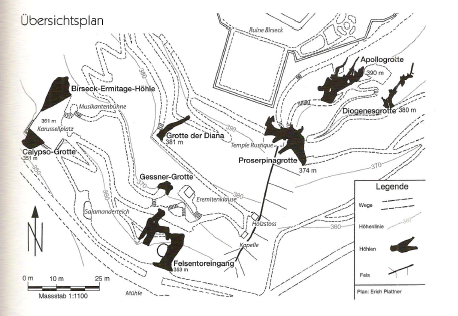
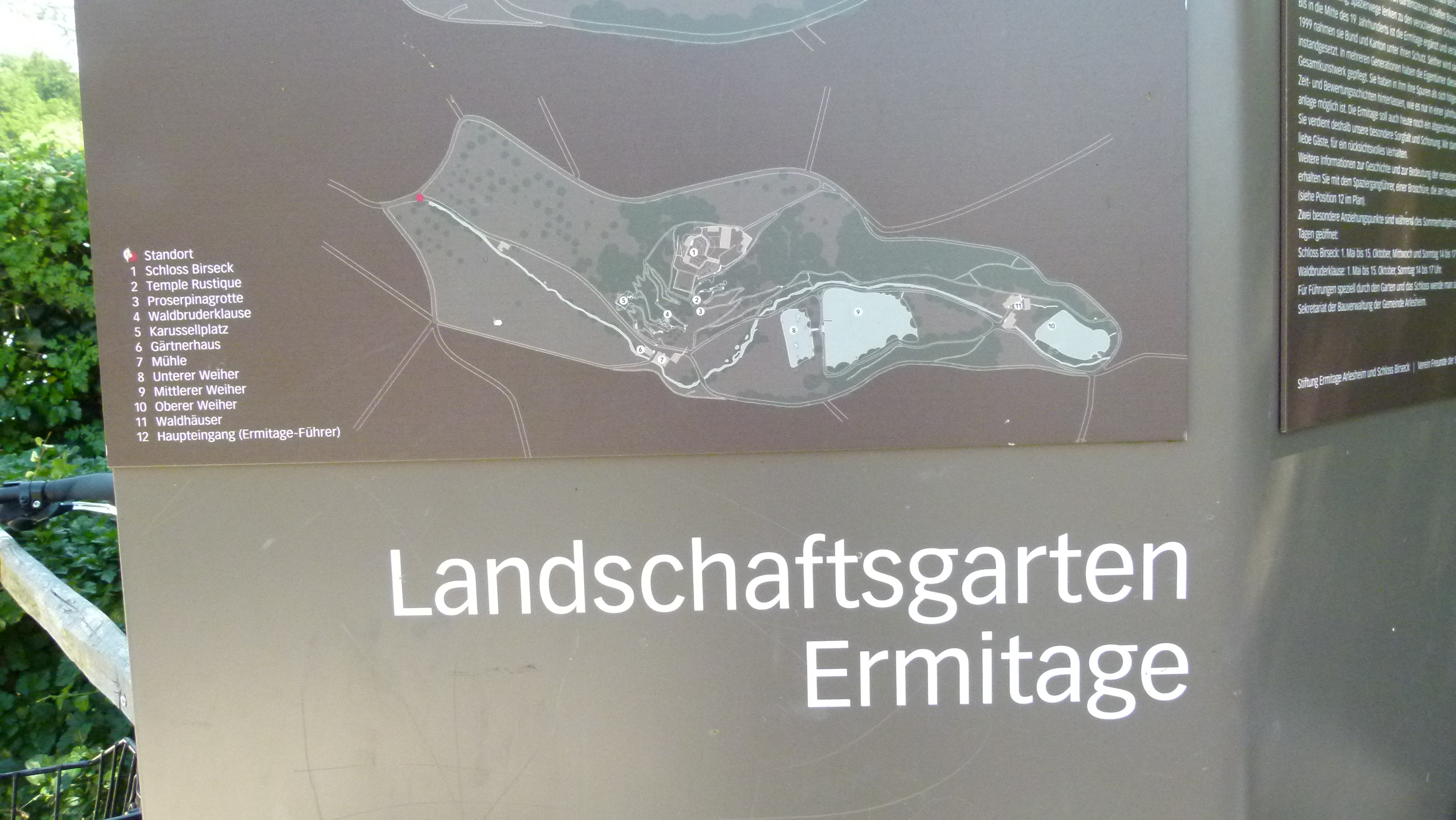
This is Erich Plattner’s plan of the caves and the winding narrow paths leading to the Birseck castle. It is the best map that I could find.

Übersicht Höhlen

Source: “Die Höhlen der Ermitage bei Arlesheim” by Erich Plattner.

In detail, Erich Plattner explains, how the caves emerged in a former riff area (shore of the paleolithic Thetys Sea) and then were transformed at the edge of the later Rhine valley ditch (p. 45ff). He also describes, how the garden architects transformed the caves to fit into their English garden concept. Many caves were enlarged and decorated, however the Calypso cave was destroyed, because they built a large platform above it, for a carousel at that time. Most caves have names taken from the Greek mythology such as Apollo or Diana. Diogenes and Salomon Gessner (around 1780 a famous poet from Zurich) also have received their caves.

.

The Proserpinagrotte – well explained by a professional tour guide

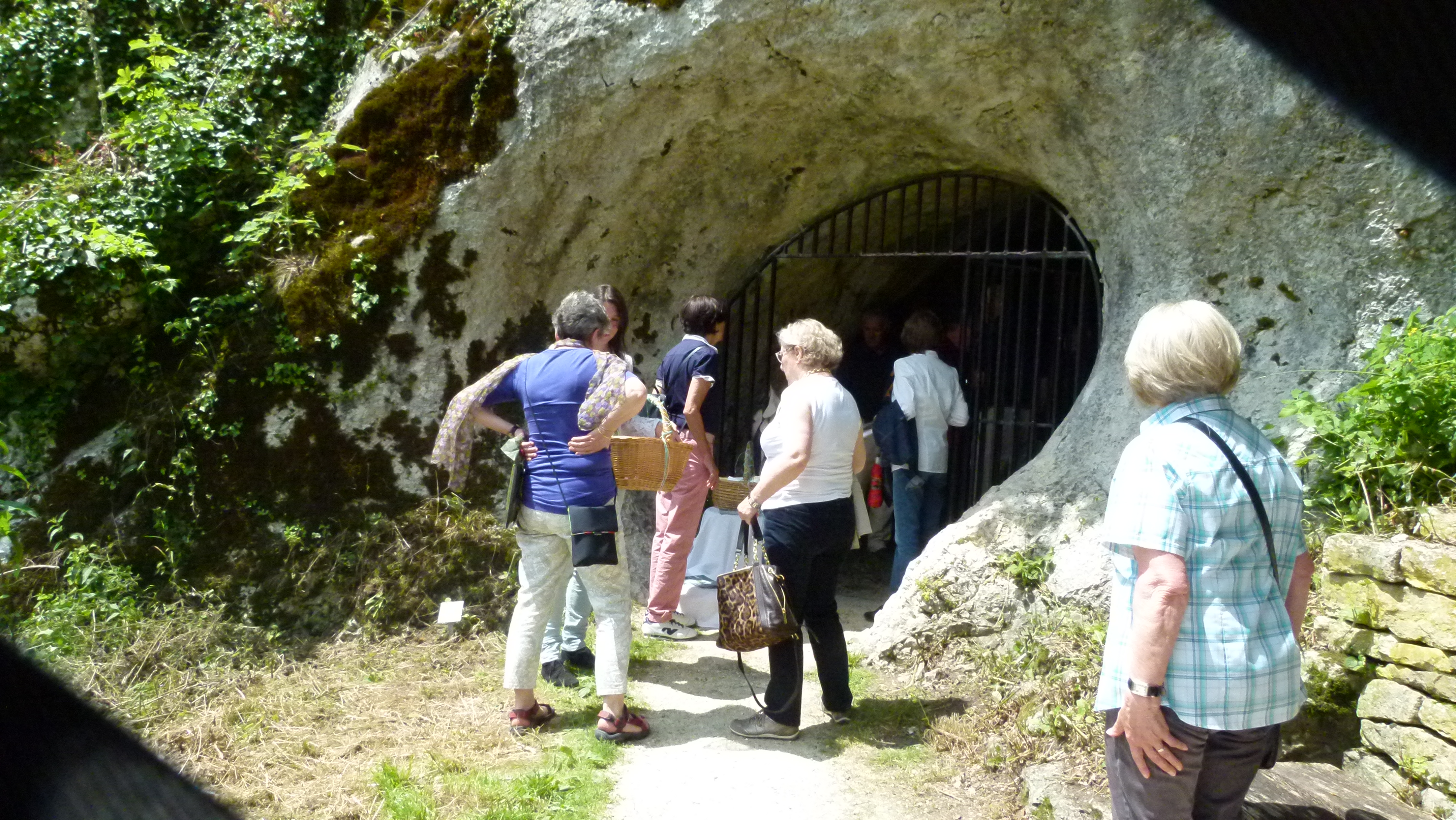
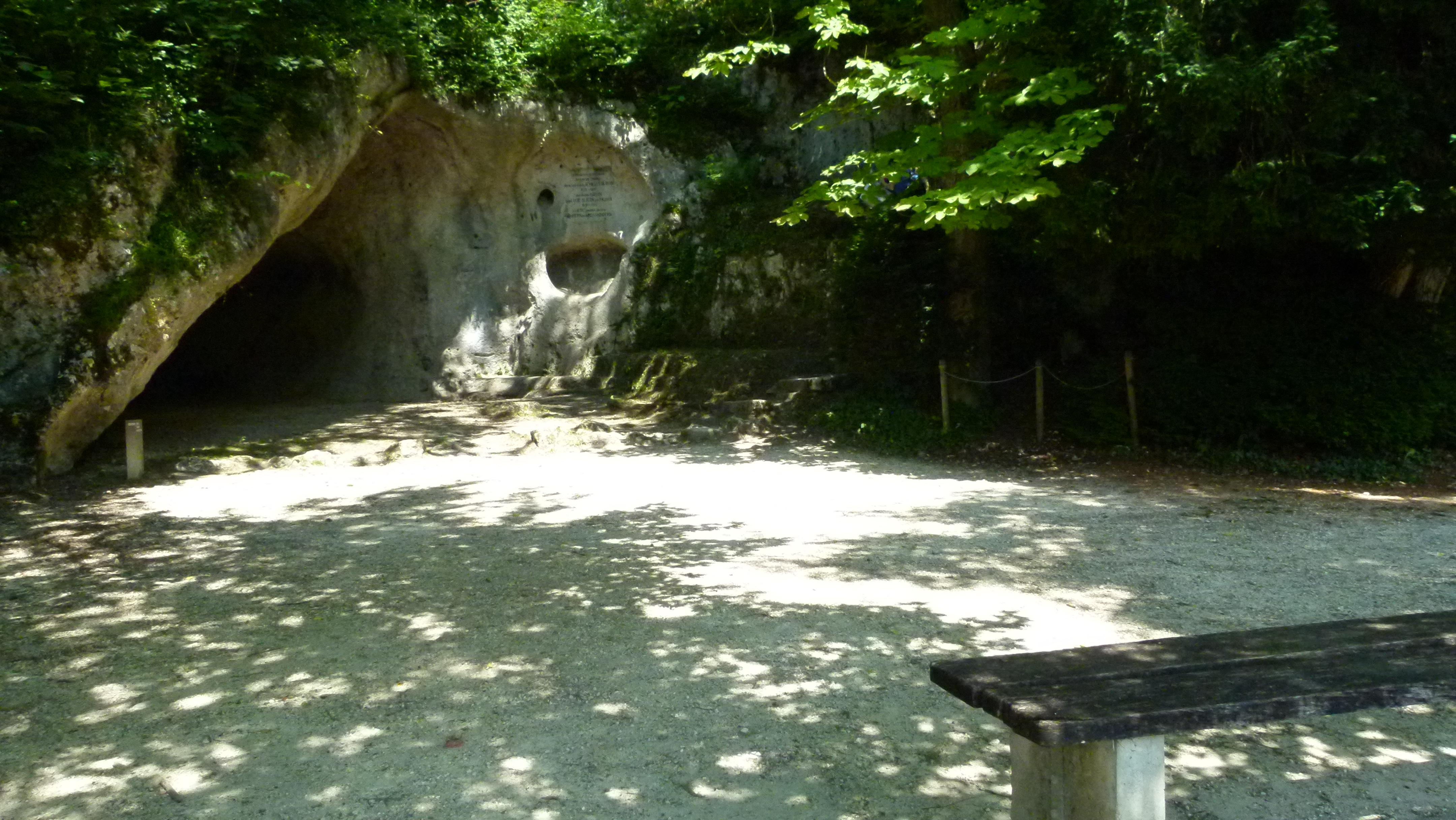
I dive into the garden using the path behind the Felsentor and reach my first cave, the Proserpinagrotte. Every twenty minutes, Sibylle von Heydebrand lays out the history of this cave which is the largest in the garden.

P1080190

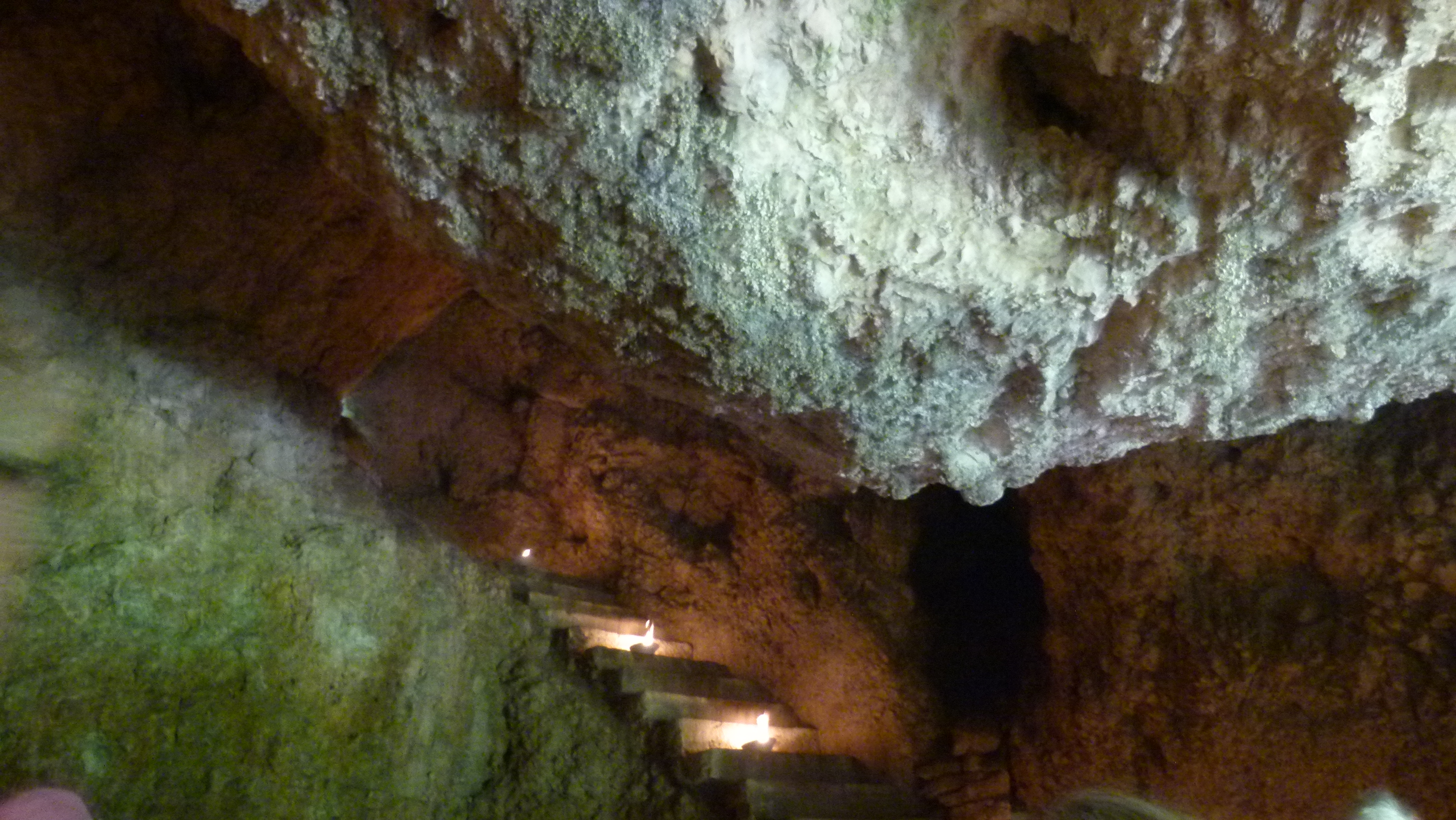
I join the next group. Inside is a large hall. Stairs lead to the next level, and they are lit by petroleum lamps common at the time, when the garden was built.

P1080188

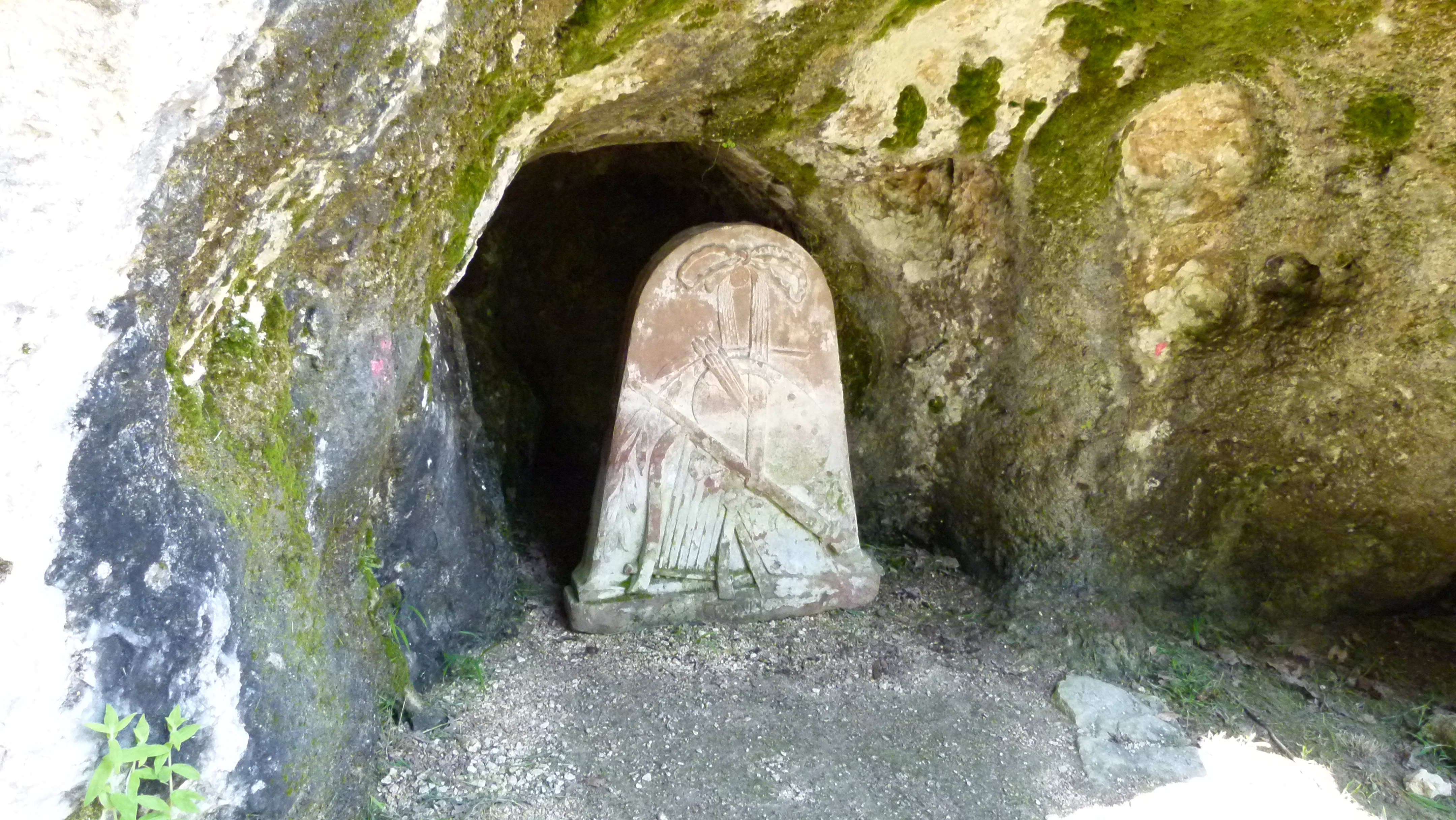
Listening to the guide and reading Erich Plattner’s chapter about the Proserpina cave, I start to understand, how important these caves were for the experience that the English garden architects intended to provide to visitors. The architects enlarged the three halls of the Proserpina cave and connected them using stairs and corridors. Proserpina (or Persephone) was the daughter of Zeus and Demeter and she was kidnapped by Hades. She represents the idea of death and resurrection and this lead to changing arrangements in this cave. In the first setup, there was a gate to the cave – or the underworld. A bench in front of the gate invited to meditate (there is still a bench here today). The first hall was the underworld, represented by a black altar, a spying dragon and a crocodile, all lit by lamps. Stairs lead to a platform with a statue of Proserpina on it. There was also an owl that had eyes lit by a lamp. When going up the stairs, a devil made of wood would jump into the face of the visitor. Rather scary. This tunnel of horror setup was changed after two years; free masons redid the cave. They made the allegory of the death on the first floor less scary and left the Proserpina statue on the platform. Visitors reported that they were very impressed by the allegories of death and resurrection in this cave. During the French revolution the cave was destroyed completely and then rebuilt. In the first hall Heinrich von Ligerz built a tomb to remind of the death of Balbina in 1798. Today there is a copy with a typing error, as our guide points out: The date of death is 1788 – no, it is 1798! (More details in Erich Plattner’s book on p 97ff).

.

The path winds uphill to the Birseck castle

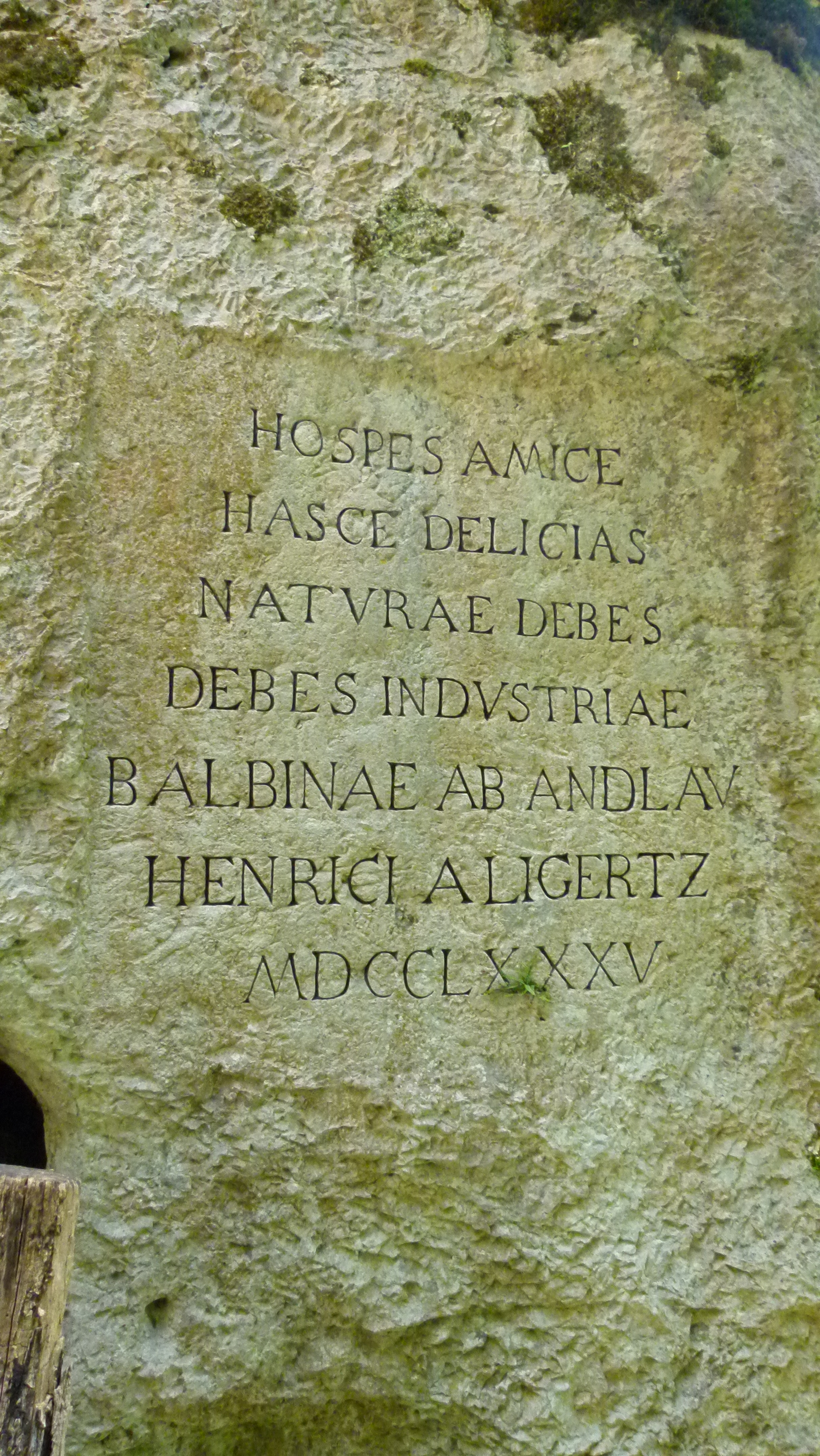
Climbing towards the Birseck castle, I come across this inscription for the founders of the Ermitage… it is near the Diogenes cave.

P1080194

The Birseck castle is open for visitors today. I climb the tower,…

P1080206

… look down into the garden,…

P1080203

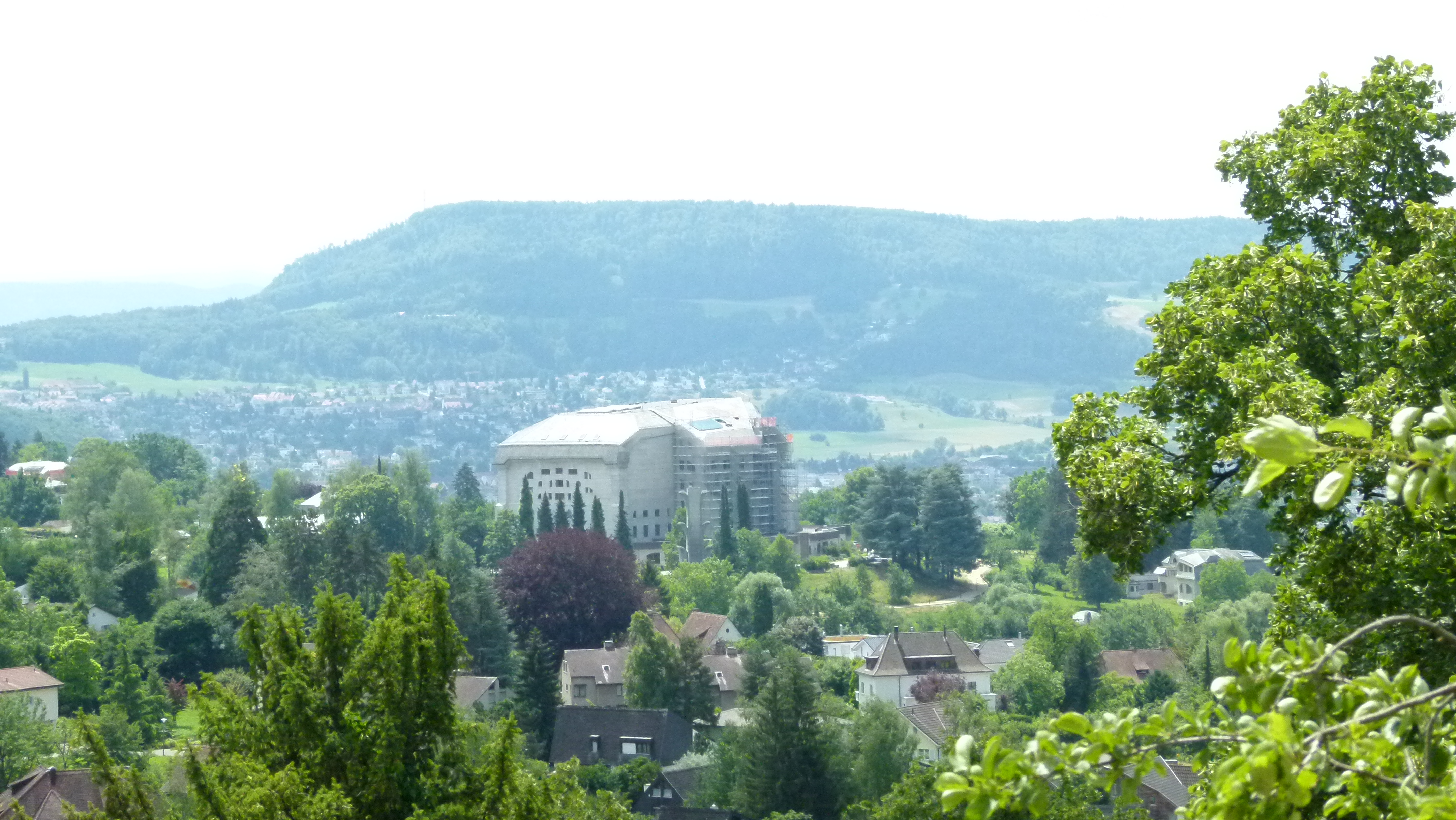
… enjoy the view to the Goetheanum and the Blauen, …

P1080216

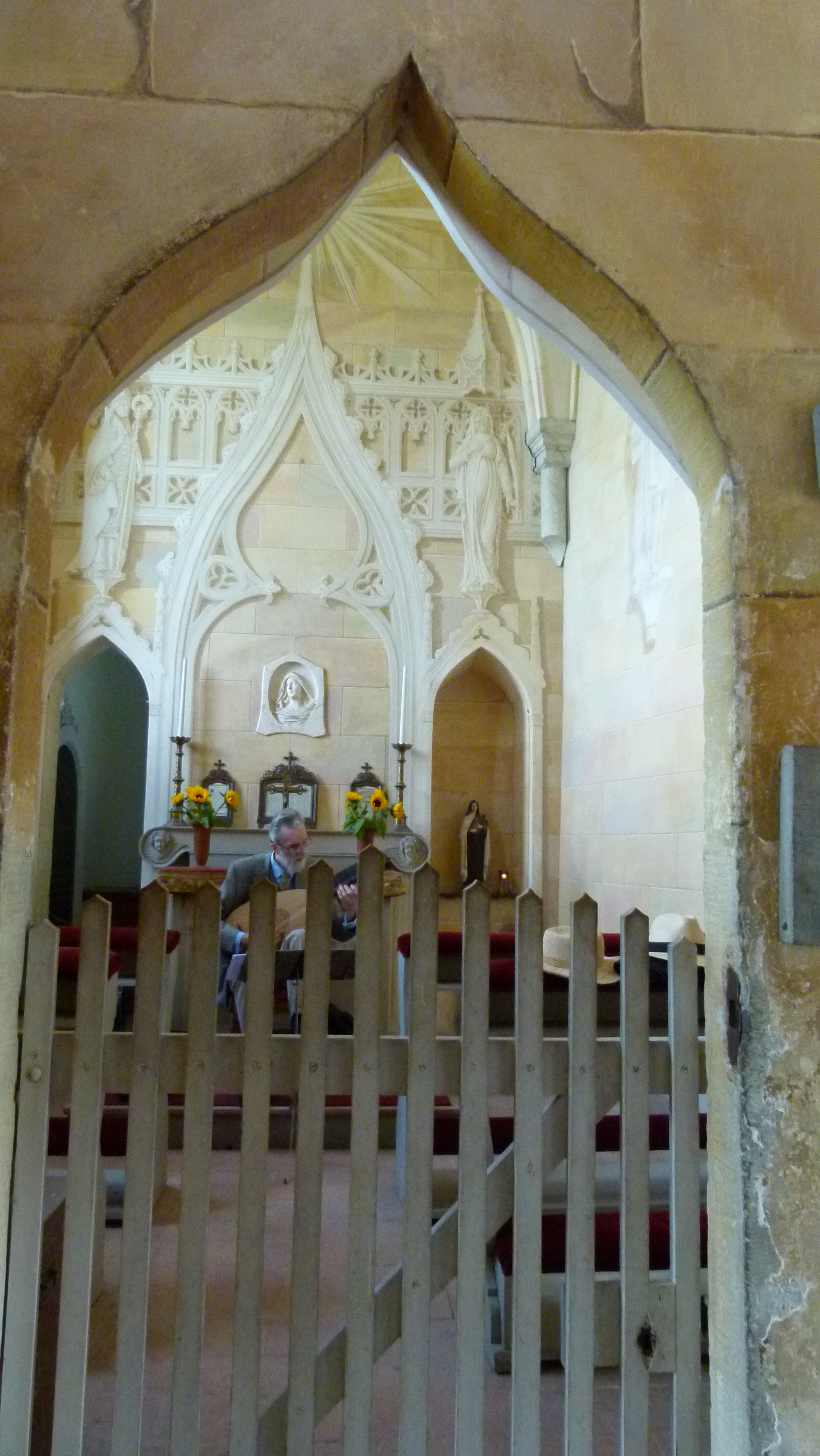
… and listen to music played in the chapel.

P1080196

In the great hall nearby, a group of students from the Goetheanum (“Am Wort”) recite Faust and sing songs composed by Schubert. The language of Goethe is very sonorous, but difficult to understand. Well, the Goetheanum is not far and I am impressed by the professionalism of the performance.

The castle keeper tells us that after having been destroyed in the French revolution, the Birseck castle was rebuilt not based on original plans, but based on what was thought to match best an English style garden. The tower and the great hall as well as the pinnacles were the result of those ideas. Only the chapel has remained from the former Birseck castle.

.

Activities for children in the Weidhof just behind the Birseck castle

It is already half past two and the Ermitage event closes at 3 PM. I enter the Weidhof just behind the Birseck castle. A young boy sits next to an empty pastry bowl and a waffle iron.

P1080223

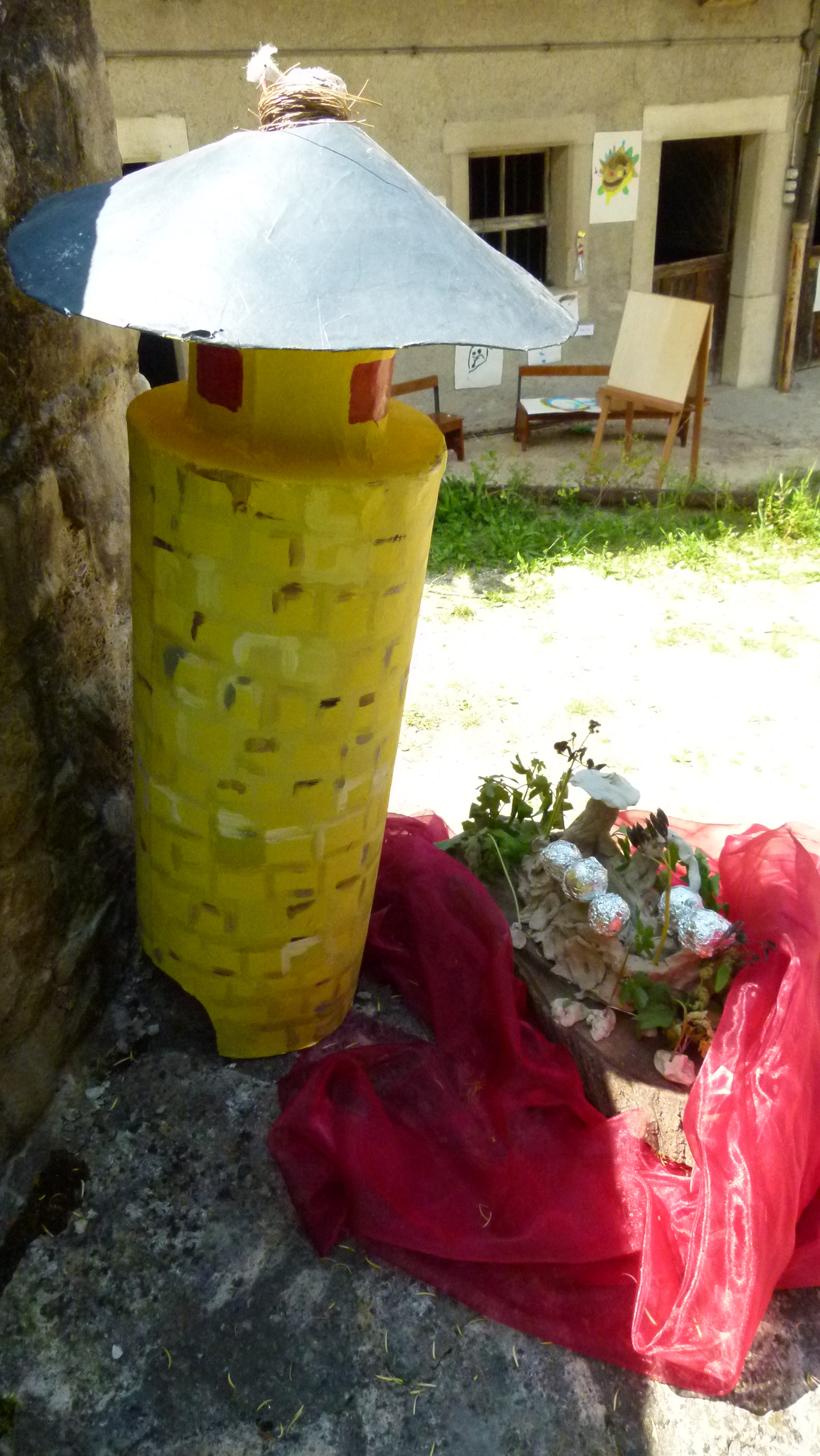
Kindly he tells me that there will be more pastry and he disappears, but then does not come back. I look around and discover with how much love this children’s place has been set up.There is a castle tower with a garden next to it (this must be a garden with mushrooms and flowers, and there is even a stork on the roof),…

P1080222

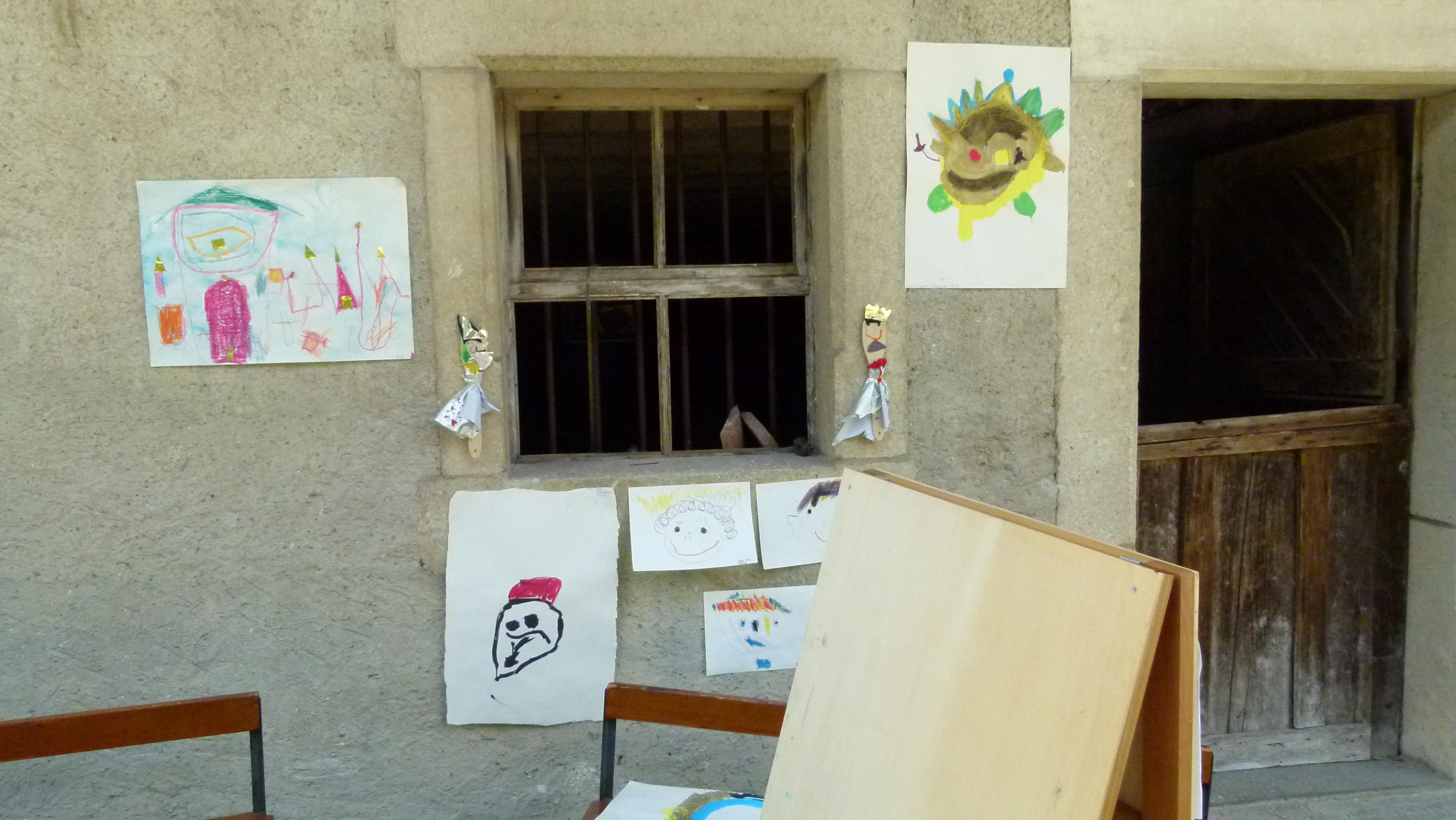
… a paintings gallery,…

P1080219

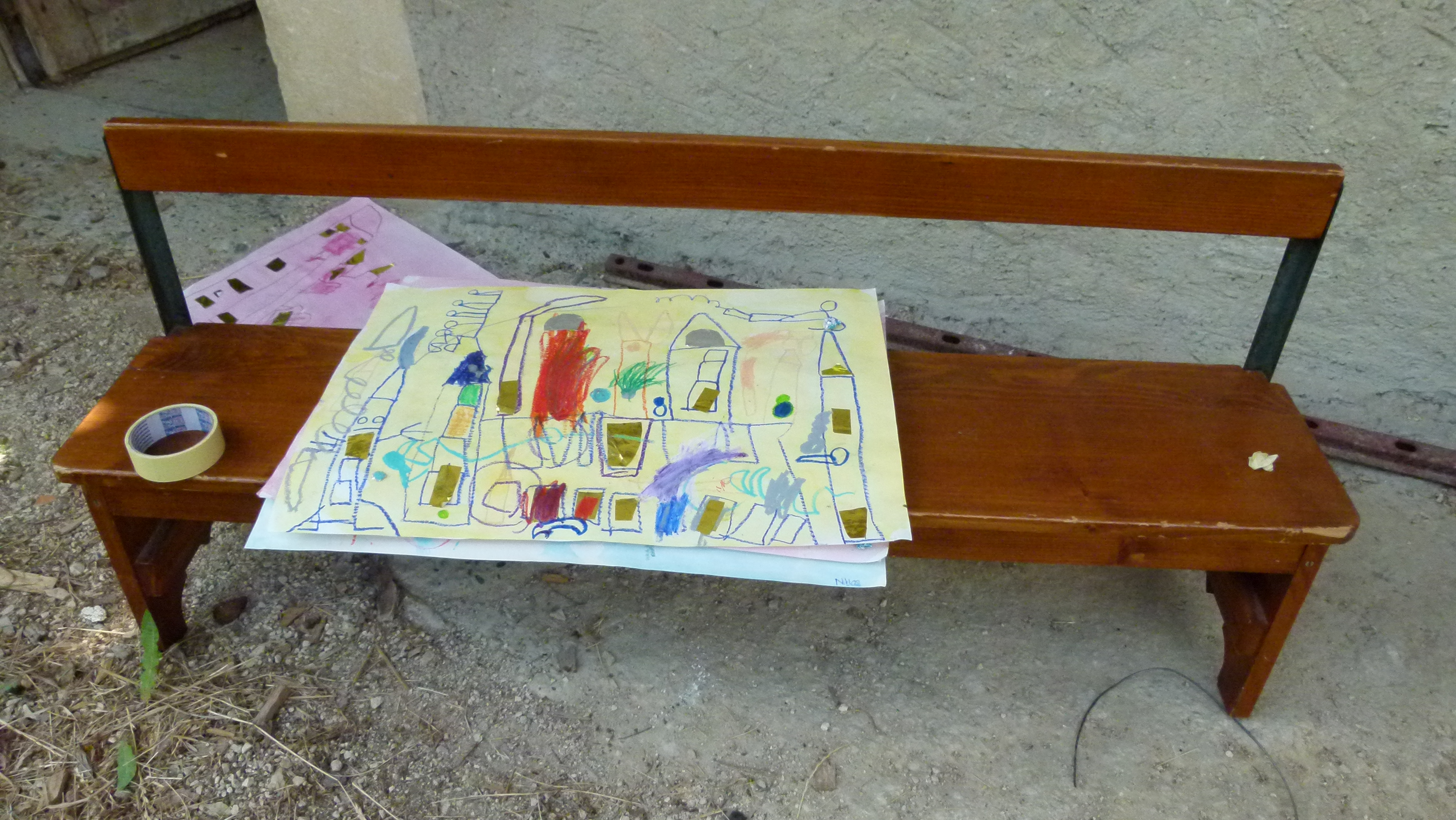
… and this must be a shop to buy paintings.

P1080220

I think back of my childhood and my grand’ma that had often taken me to the Ermitage. With a smile on my face, I leave this place, feeling sorry that I was too late to watch the children producing and selling works of art here. This children’s playground is a great idea.

.

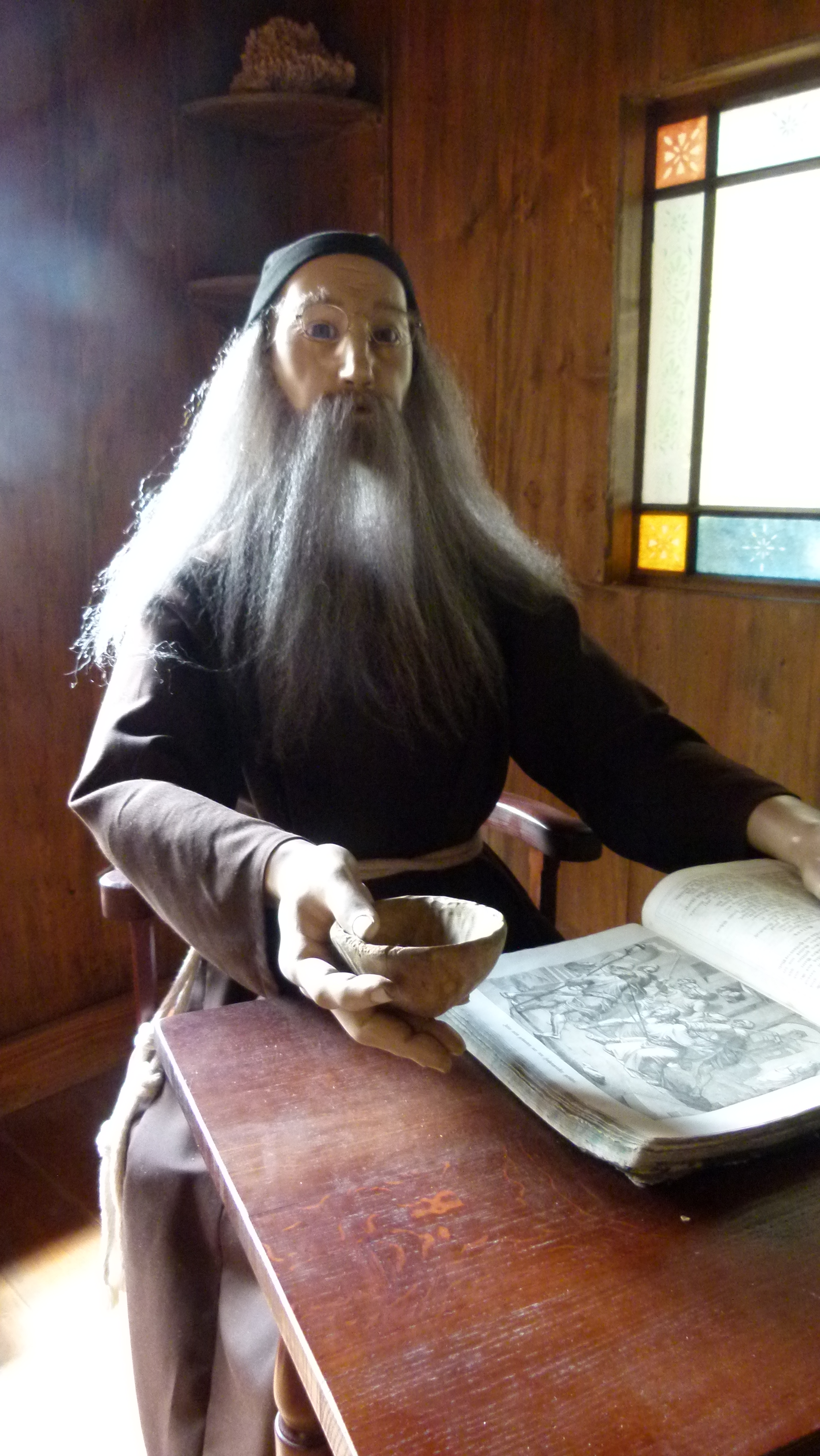
The brother of the wood nods “thank you”, when given money

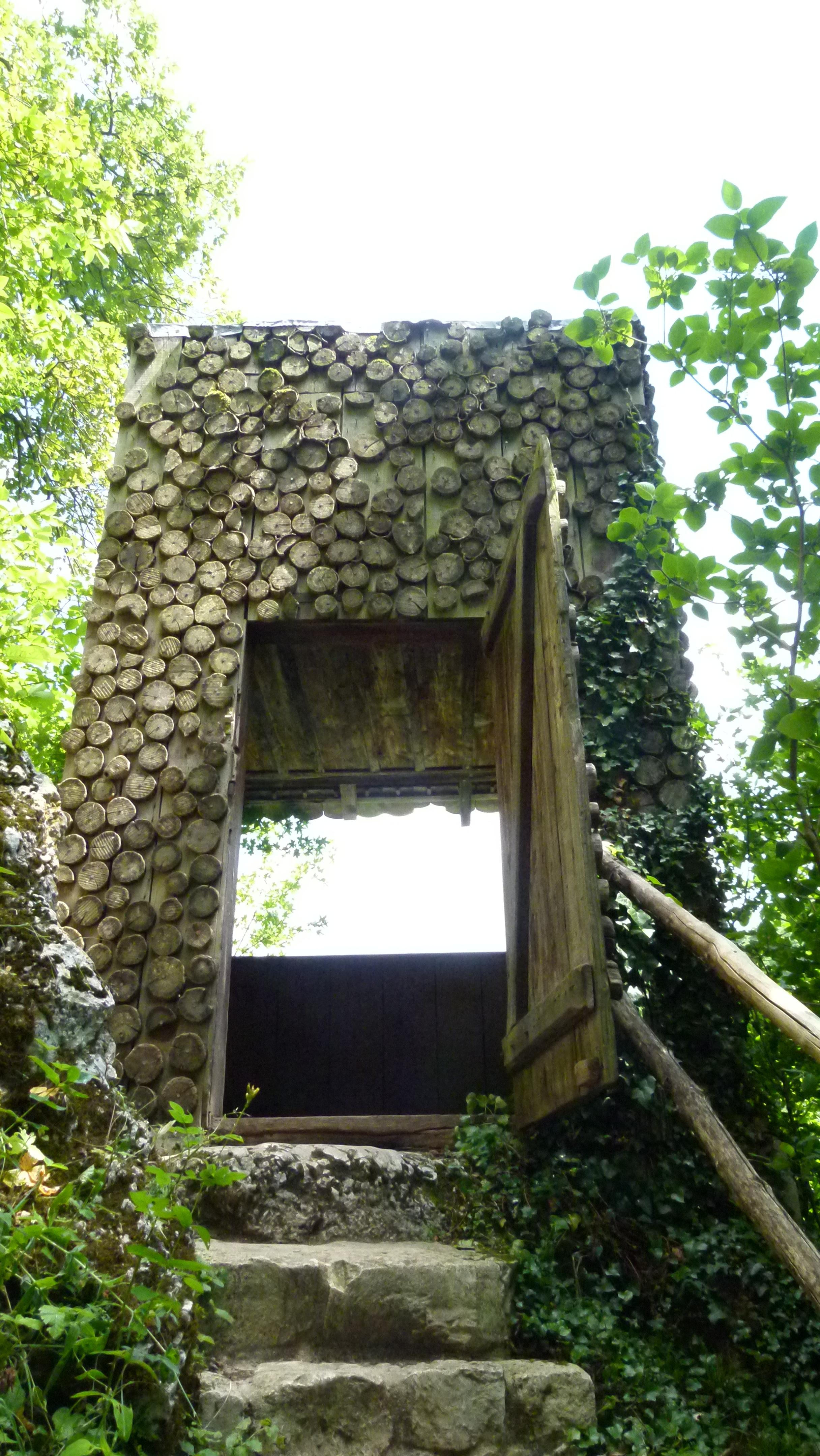
Now I oscillate a bit to find the brother of the wood. I come across this strange hut – or whatever it is. It takes me some time to understand… this is the wood log pile of the brother of the wood. Of course, clear, the brother needs wood to heat his little house. And the pile of wood cannot be too far. When the door is closed, this “thing” looks almost like a pile of wood. But the phantasy of the garden architects was unlimited. They added a door to the pile that can be openend – and from inside there is a great view of the Gobenmatt valley. They must have done this construction with a twinkle of an eye. Or of two eyes even.

P1080225

Not far from the wood pile there is a chapel (handy for the brother, should also not be too far to walk) and then I find the brother reading in his book. A girl and her mother are inside the house as well. The girl gives some coins into the bowl and the brother nods. Yes, these garden architects surprise me with all their phantasy. Mum and her daughter leave the place. I am now alone with the member of the Säulizunft that looks after the brother. Together we think about Arlesheim and only now I understand – not all Baselland is protestant. Of course not, I could have understood this before. Arlesheim was part of the prince-bishopric of Basel, which was a catholic institution. And it was only after the Congress of Vienna in 1815 that Arlesheim became part of Basel (and after 1833 it split off with the rest of Baselland to become part of the half canton).

P1080227

Close to the brother of the wood I find the Gessner cave with the memorial of this poet known around 1800.

P1080229

.

Walking down to the Birseck Ermitage cave and the carousel platform

I walk down to the Birseck Ermitage cave and the carousel platform. This was the place for leasure. Once upon a time, there was a carousel here and stairs lead to a stage for musicians.

I P1080230

Well, I just sit down, look up into the crowns of the trees and dream. I think, this is what the garden architects wanted to give us – just dreams.

P1080231

.

Enough for now – I will come back

I am full of new impressions. And I know, I have not found all the surprises that this English garden holds. I leave now, and I intend to come back and book a tour with Sibylle von Heydebrand. May be for our next meeting with my school mates.

P1080236


A “Basler” invited for a hot and sunny summer Sunday in Lucerne

Last Christmas I received a wonderful present: Come to Lucerne!

Last Christmas, I received a very kind present from my niece and her friend: A voucher to spend a day with them in their town Lucerne. I redeemed that present on a hot and sunny Sunday in June 2015. Early in the morning, I took the train to Lucerne investigating some background information using a small guide book and Dr. Google. This is what I found about the history of Lucerne. Take it as a summary written by an interested traveler.

.

Near a monastery, Lucerne emerges, thrives due to the Gotthard pass route and becomes a member of the “Waldstätte” fighting with them for independence

  • The origin of the name “Lucerne” is under debate: It may come from the Latin word “lux” (town of “light”). Or from the celtic word “lozzeria” (“settlement on swampy ground”).
  • 8th century: A small monastery was built where the Hofkirche is located today. It was later called Monasterium Luciaria.
  • 1178 – 1291: The monastery belongs to the powerful Abbey Murbach located in the Alsace, north of Basel. In 1291 Murbach sells the monastery to the Habsburgians.
  • Beginning of the 13th century: The trade route across the Gotthard opens up, after the Schöllenen – a steep and narrow gorge – had been overcome by building the devil’s bridge and a hanging wooden gangway. This gives business to the city located where the river Reuss leaves the lake of four cantons. Around 1300 Lucerne has about 3000 inhabitants.
  • Until 1386 the town fights against the Habsburgians that try to add Lucerne to their possessions (after Rudolf von Habsburg has added Austria in 1278). In 1332 Lucerne teams up with the other three cantons (or “Waldstätte”) bordering the “lake of four cantons” (or “Vierwaldstättersee”). The confederation of cantons successfully expels the Habsburgians by beating them in the battle of Sempach in 1386.  (The Habsburgians were not lucky in Switzerland – in 1415 they also lost their homeland Argovia).

Lucerne is the leader of the catholic cantons, but then loses importance against the protestant towns Zurich, Basel and Bern

  • In 1520 Lucerne does not follow the reformation, but remains catholic. They lead the catholic against the protestant cantons that are defeated in 1531 (battle of Kappel).
  • In 1712 the protestant cantons beat the catholic cantons (war of Villmergen) and they beat them again in the Sonderbundskrieg in 1847 (Jesuits banned from Switzerland until 1973).
  • In 1848 the Swiss federal state emerges, and it is not Lucerne, but Berne that becomes the capital of Switzerland.

The railway, built in 1859, brings tourists and makes Lucerne one of THE tourist destinations of Switzerland

  • In 1859 the railway reaches Lucerne and brings travelers from abroad. Some of the travelers are famous. Thomas Cook with Miss Jemima stay here in 1860 (“our grand finales… were… watching the sunrise from Mount Rigi”). Mark Twain comes to Lucerne on his tramp abroad  in 1880 (“… reached Lucerne about ten o’clock at night. The first discovery I made was that the beauty of the lake had not been exaggerated.” ch 25), Queen Victoria  wants to recover from the death of her husband Albert in 1868 (“… with her fourth daughter Princess Louise, aged twenty… (Victoria traveled) incognito to Lucerne as the Countess of Kent. There she stayed in the Pension Wallace where she lived in relative simplicity… Victoria made expeditions to the Rigi and Pilatus… Victoria had… agreed to receive the Dowager Queen of Prussia who was also about to visit Lucerne.”).
  • In 2013 Lucerne counts about 5 Mio visitors. Locals complain about the traffic – but tourism is an important factor for the economy here.
  • Yes, Lucerne is attractive, with its chapel bridge, the old city center along the Reuss, the festivals (e.g. hosted by the Culture and Congress Center (built by Jean Nouvel – acoustics by Russel Johnson) or the famos Lucerne carneval), the lake and the mountains (Rigi and Pilatus can be reached within a day trip) – and – there is the railway station built by Calatrava (how jealous I am – I would love to have a bridge of Calatrava in Basel and will never understand, why my town has voted against having a Calatrava bridge…)

.

Arriving in Lucerne shortly after nine in the morning

My train arrives shortly after nine in Calatrava’s train station. My niece and her friend pick me up and we have a coffee near the lake. They propose a guided city tour, lunch, a walk along the lake and a visit of the Richard Wagner museum. Great! Off we go! Here is the map of Lucerne taken from Google maps.

luzern plan 1

Visiting the city center with a guide secondo Italian

The guided tour includes the Culture and Congress Center (1), the Chapel Bridge (2), the Chapel Square (3), the Sternenplatz (4), the townhall (5), the line of squares and narrow streets in the old city center (6, e.g. the Weinmarkt), the Spreuerbrücke (7), and the Jesuit church (8). We did not visit the Hofkirche and the Lion’s monument (11). Let me summarize some of my take aways.

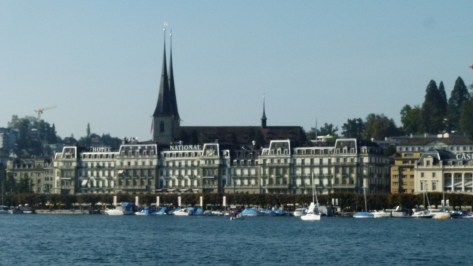
The Hofkirche (11) with its twin towers is what has been built and rebuilt at the location of the 8th century monastery. The church is a little off the city center. Up to the 19th century, a wooden bridge connected the Hofkirche to the city center and the Peterskapelle. Then the small bay separating the chapel from the Hof Church was filled and the bridge was demolished.

P1060603

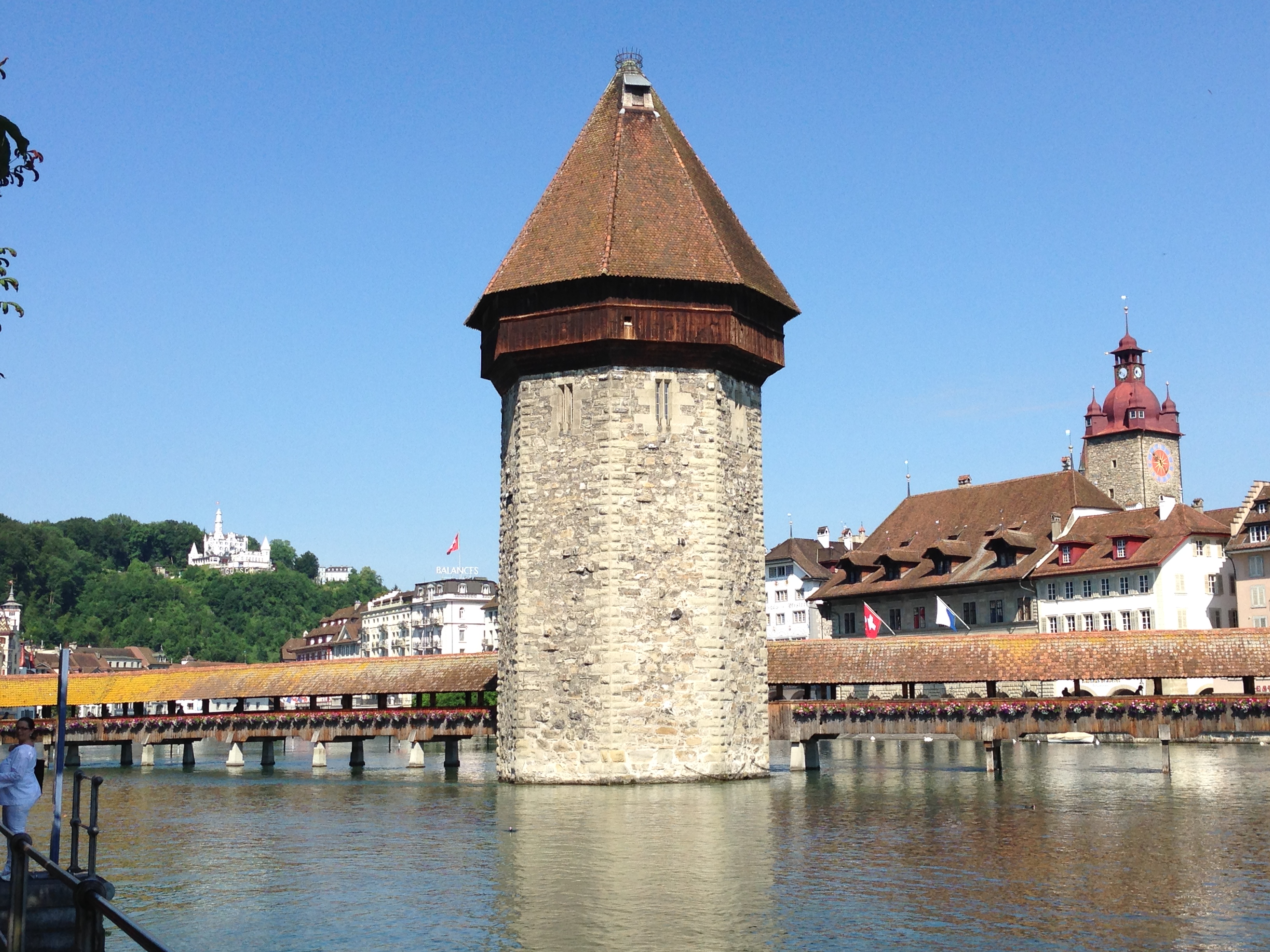
The Chapel Bridge, built early in the 14th century, is called “Chapel” Bridge, because it ended at the Peter’s Chapel (Peterskapelle). The Peter’s Chapel bordered on the lake then. In the 19th century, an embankment was added here and the bridge was shortened, but kept the name “chapel bridge”. The cycle of paintings describing religious topics was added around 1600. After having burnt in 1993, the bridge has been reconstructed including some of the paintings. Some of the black burnt paintings have been left under the roof of the bridge to remind us of what had happened (was it really a cigarette thrown away?).

IMG_1477

The Chapel Square was the place where goods were loaded and unloaded and tolls were paid. A line of white cobble stones shows the location of the former toll  house, before it was removed. On the Chapel Square there is also the Fritschibrunnen, named after the head of the Saffron Guild that kicks off the Lucerne carnival here.

The Sternenplatz is dominated by the Restaurant Fritschi that shows Fritschi and his family. My foto shows the facade of the neighboring house that hosts the Stadtkeller.

IMG_1478

We stroll through the narrow streets. Small shops invite for shopping, but today they are closed. We reach the Kornmarkt with the townhall that has been built around 1600 in Renaissance style. It is topped with a hipped roof (traditional “Walmdach”). Renaissance and a traditional hipped roof – this is a combnation that I have never seen before.

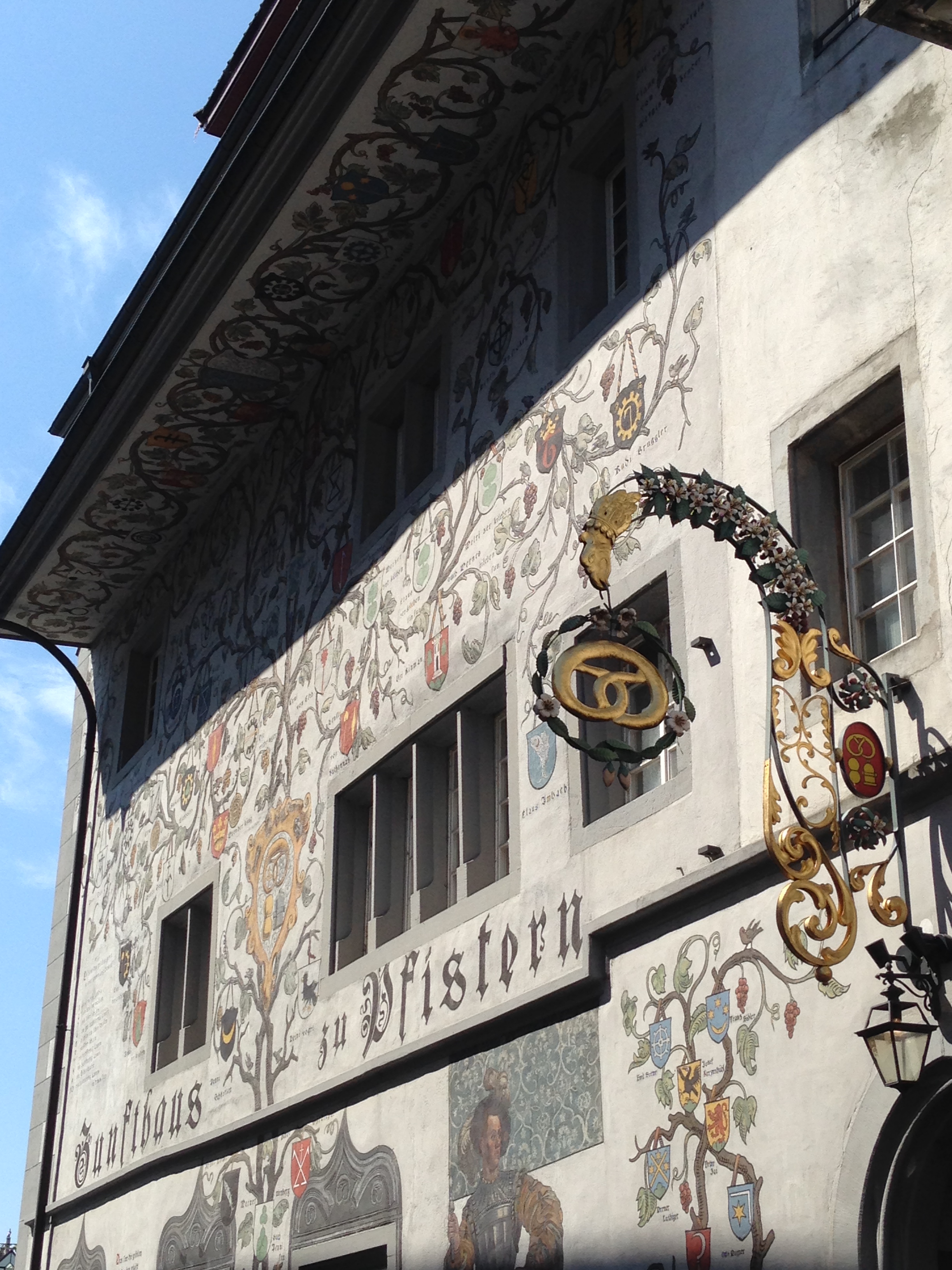
Just opposite of the townhall, there is this old bakery with the traditional bretzel announcing it. Today the house hosts the restaurant Pfistern. It takes the name from the Latin word for baker (pistor). Our guide keeps on praising this restaurant.

IMG_1482

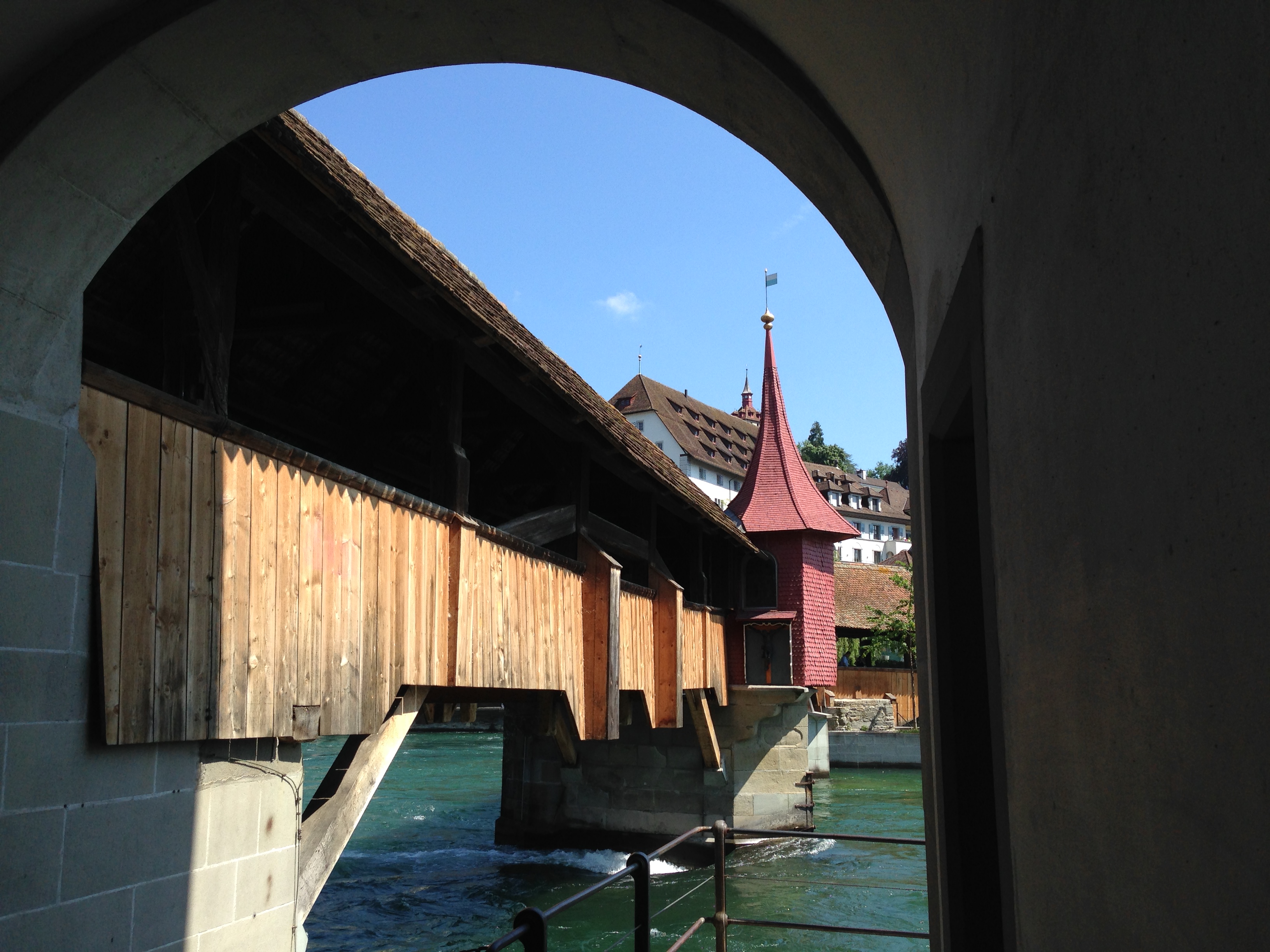
The Spreuer Bridge zigzags across the Reuss. It starts at the Mühleplatz (square of mills – there were mills here before) and was completed around 1400. The name of the bridge comes from “Spreu” or  “chaff”. As this was the last bridge in Lucernce, it was allowed to throw chaff into the river…  it is the next settlement downriver that will have to cope with that…

The bridge is interesting for the paintings showing a Danse Macaber (“Totentanz” in German). Also the water level of the lake is regulated here.

IMG_1488

From the Spreuerbrücke there is a view of the Château Gütsch that has recently been reopenend.

IMG_1489

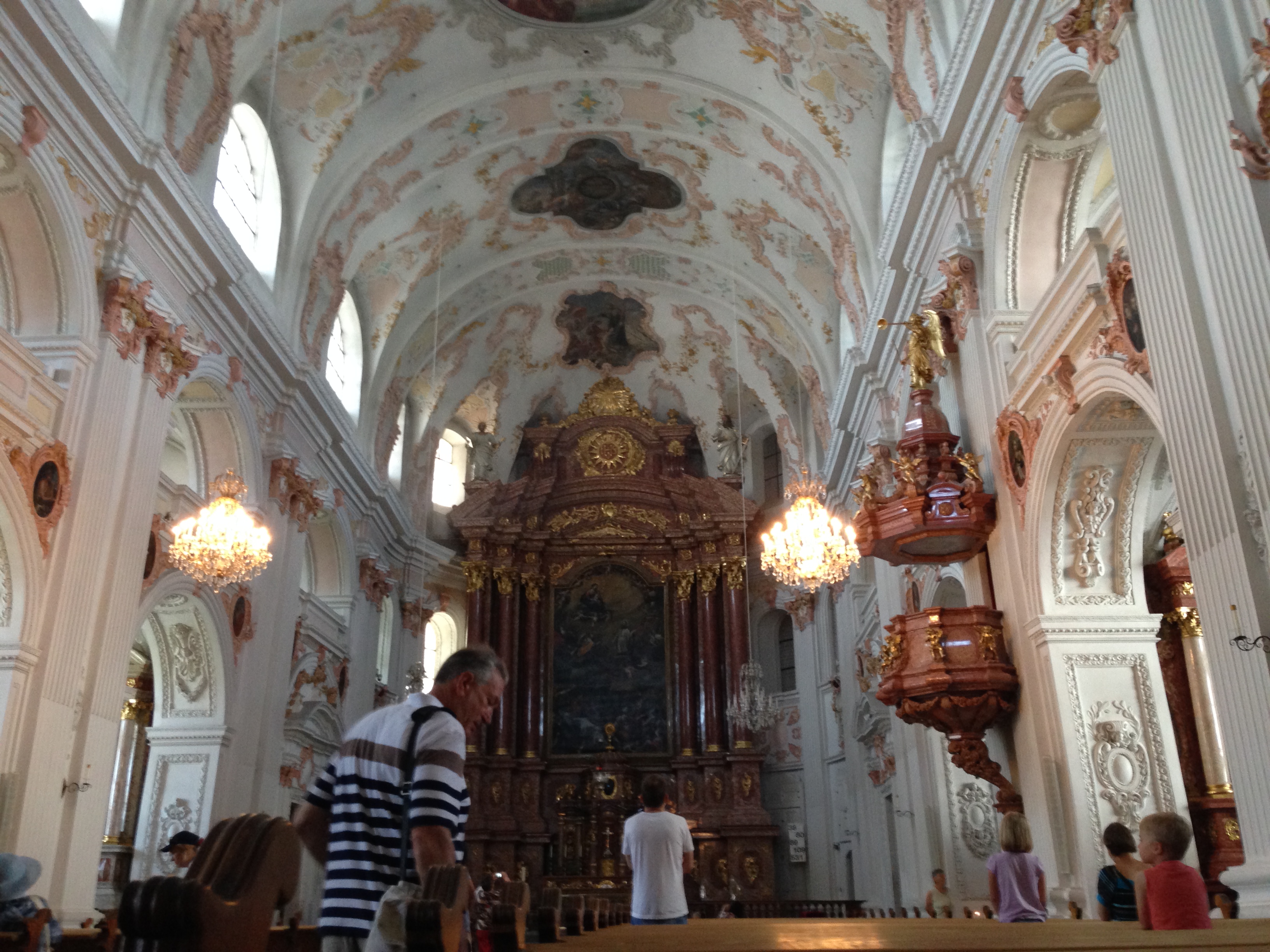
We round off our tour in the Jesuit church. It is a baroque hall church. Since 1973 the Jesuits have been back in Lucerne, after having been banned after the Sonderbundskrieg in 1847.

IMG_1492

The guided city tour gave great insights into the city of Lucerne – most of it was new to me. It is now almost twelve and we are hungry.

.

Eating off the beaten track in the shady Vögeligärtli (9)

We are hungry and try to find a free table for three in one of the restaurants bordering the river Reuss. No way. Already before 12:00 all tables are taken.  My hosts decide to look for a more quiet and less touristy place and take me to the Bellini Ristorante Ticinese in the shady Vögeligärtli close to the protestant Lukas Church. We enjoy the cool shade of the trees and the company of locals. I have a great Risotto con ragú de carciofi (half portion) – the menu selection of specialties from the Ticino is very enticing and I will surely come back here. This restaurant deserves an entry in Tripadvisor.

.

Mingling with the locals along the lake on the town beach up to the Richard Wagner museum (10)

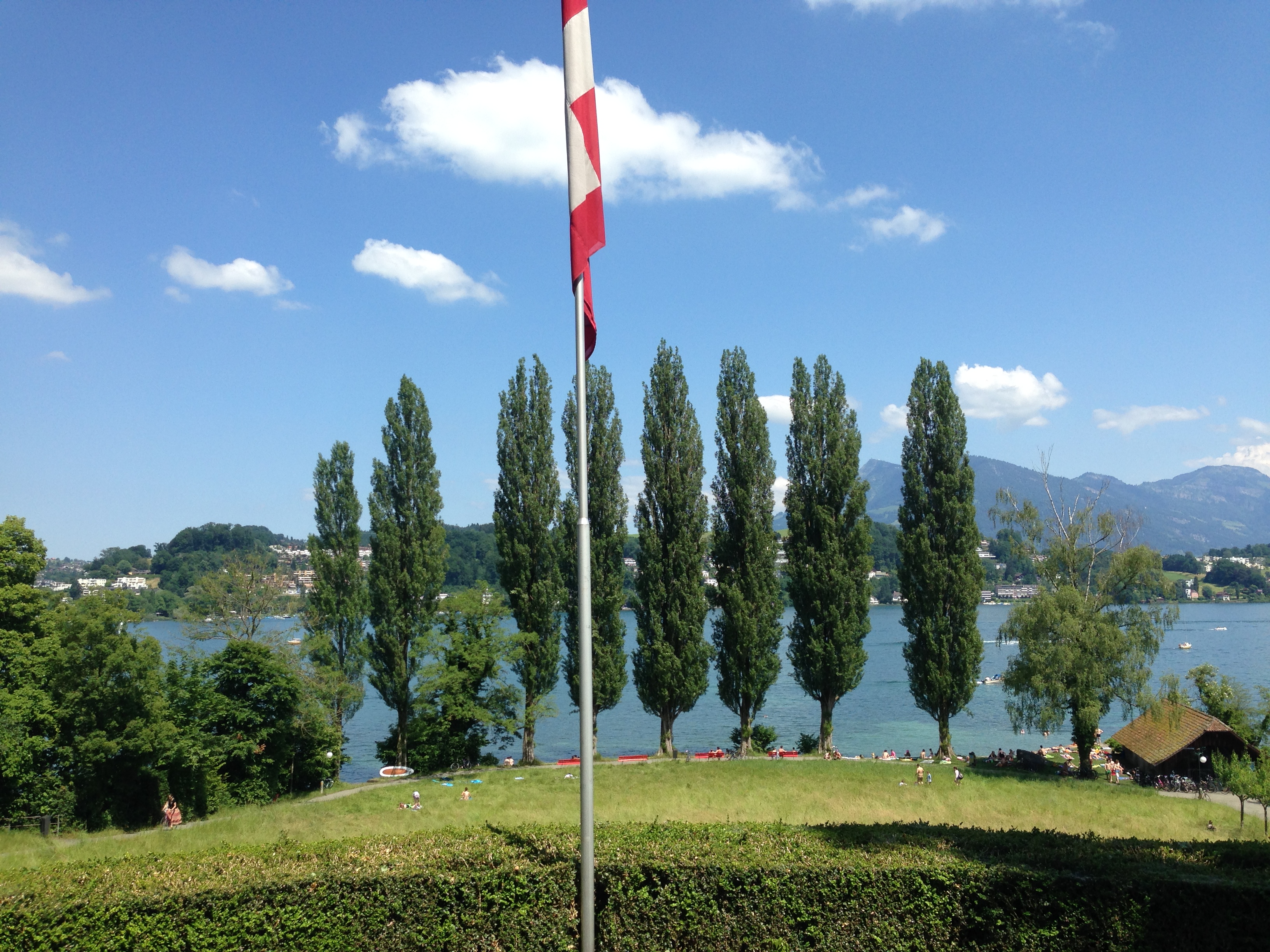
The sun is burning. It is a beautiful Sunday. We stroll along the lake. I believe the whole town of Lucerne has come here to enjoy the sun and a refreshing bath in the lake. A pity that we have no bathing costumes with us. We are sweating. There is a stand on the way that refreshes us with cooled water and cold ice cream. Finally we reach our target, the Richard Wagner museum.

IMG_1493


Following the tracks of Richard Wagner with his second wife Cosima and his unlucky grand-son Wilhelm Franz Beidler – not accepted by the family Wagner

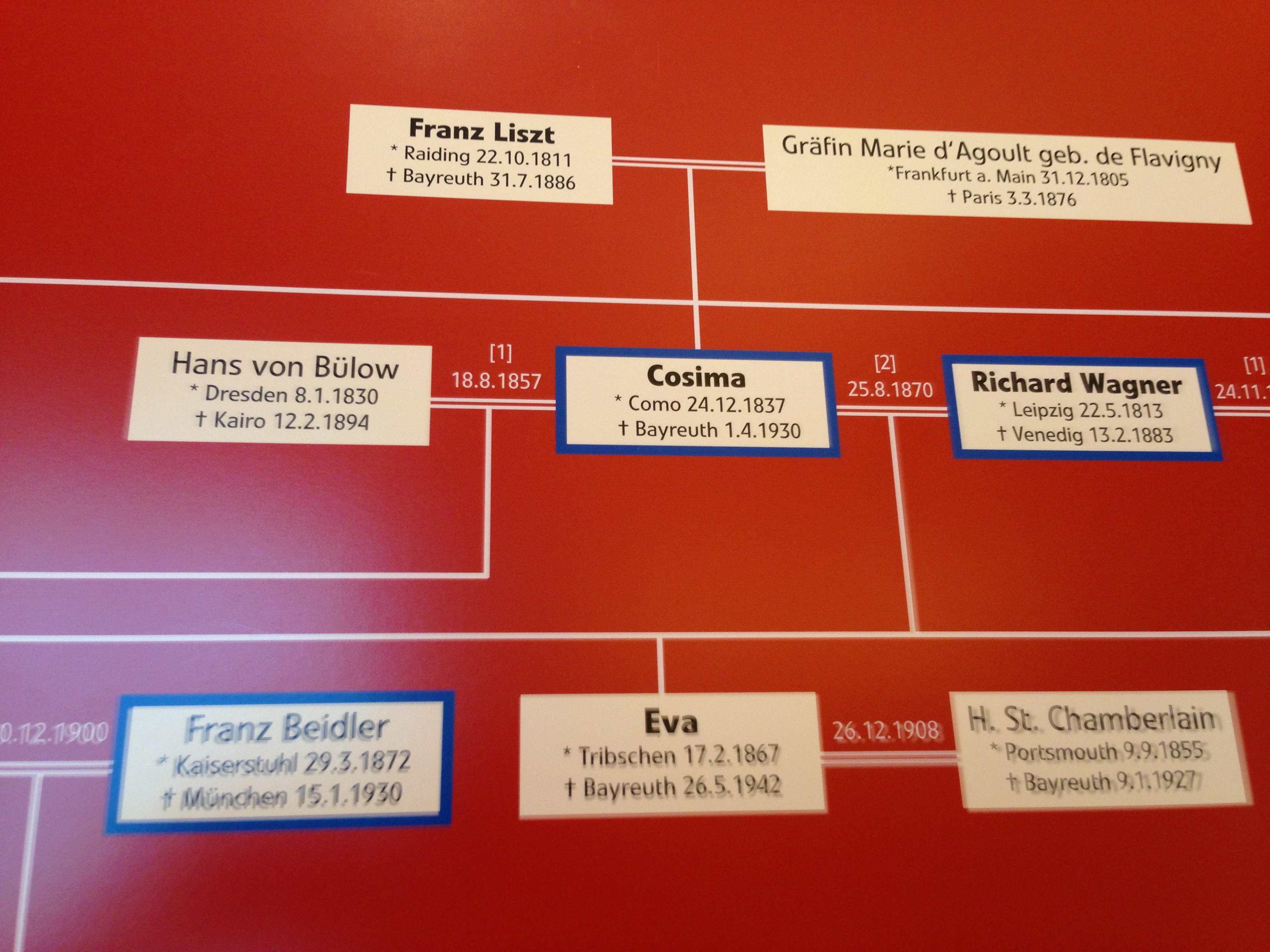
There are no visitors in the Richard Wagner museum (too hot…). At the cash we are welcomed by an enthusiastic lady from Australia. In Swiss German with an Australian touch, she tells us, what we are going to find: Richard Wagner lived in this Tribschener Landhaus for six years. He came here with his second wife, Cosima, the daughter of Liszt. When they arrived the two of them were not yet married… a scandal in the catholic town of Lucerne. They married after their son Siegfried was born. Wagner worked and lived on the ground floor, Cosima with the five children stayed on the first floor.

IMG_1494

There was a drama with Franz Beidler, son of Isolde and Cosimas grandson. Isolde was deemed of as being the daughter of Hans von Bülow (a famos conductor and Cosima’s first husband). But as a matter of fact, she was the first daughter of Richard Wagner. Isolde fought to be acknowledged as Wagner’s daughter, but without success. Hence Isolde’s son, Franz Beidler was also never acknowledged to be Richard Wagner’s grand-son. This drama is layed out on the first floor.

IMG_1497

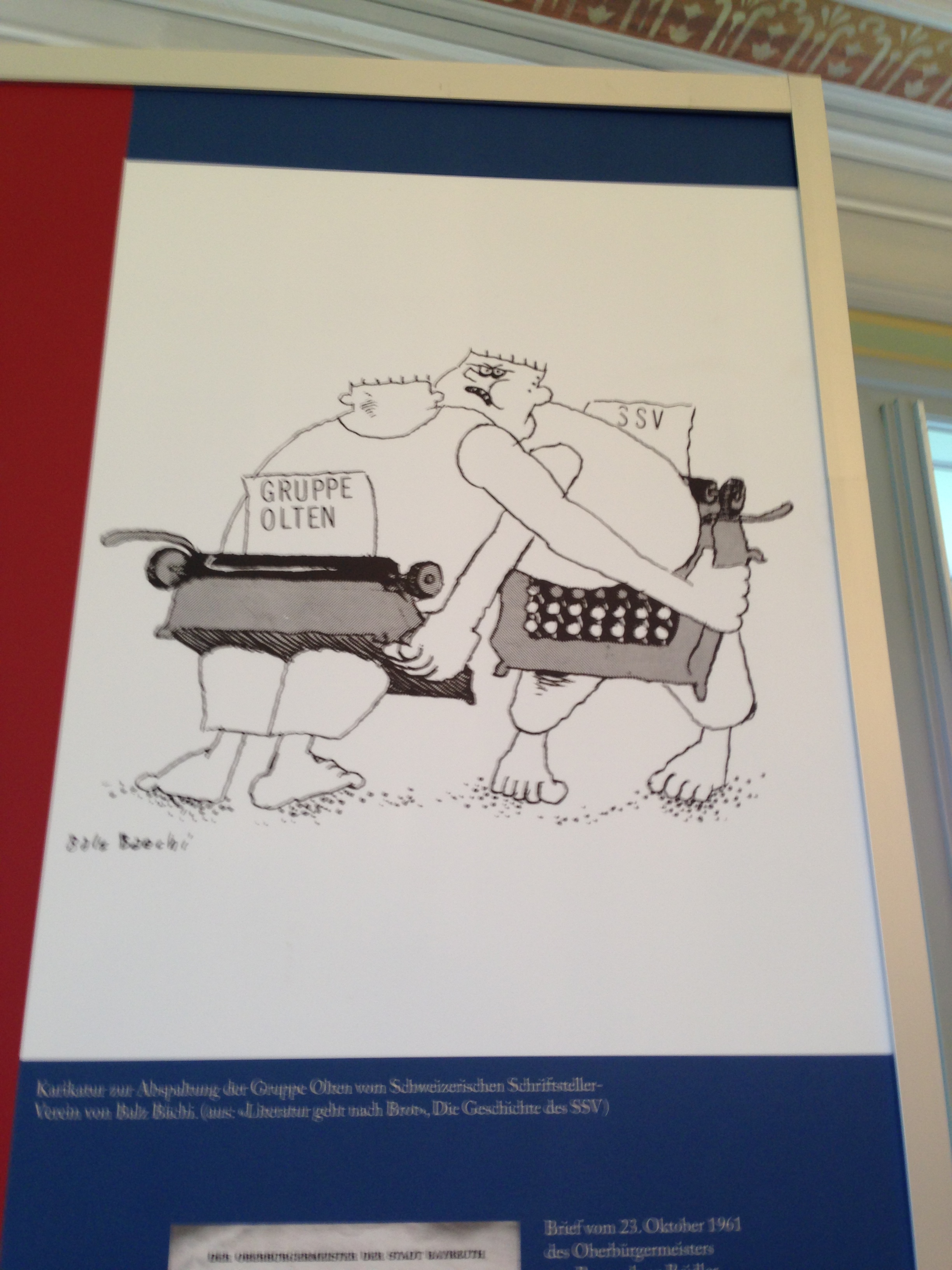
Under Hitler Franz Beidler left Germany for Switzerland and became Swiss. He was the general secretary of the Swiss Author Associaton SSV (Schweizerischer Schriftstellerverband). However in 1970 the group Olten split off – members were among others Max Frisch and Friedrich Dürrenmatt. This cartoon shows the two groups wrestling – yes, it was the time of typewriters – do you remember?

IMG_1496

.

Lucerne – the sink of Switzerland? – No, surely not today!

Sometimes we joke and say that Lucerne is the sink of Switzerland. It is raining here more often than in other places. But today Lucerne must have been the hottest place in Switzerland – the sun has been baking us.

We take the bus back to the city center and enter the Möwenpick restaurant (inside) to cool down from the hot sun. I enjoy a frozen coffee (Ys-Kaffi). Then my hosts take me to the train station (built by Calatrava, again I am jealous). I catch the 5 o’clock train and an hour later I am back in Basel.

Good-bye, thank you… and next time you will join me in Basel! There is plenty to see – perhaps we should plan to visit the Abbey of Murbach that ruled over Lucerne some 800 years ago.

On the road – discovering so much around Basel: To the southeast (V)

Discovering treasures, while being forced to just walk around Basel

Now that I can drive again (being so happy about this), I sometimes park my car below the Schartenfluh to take pictures and get more acquainted with the middle part of the Gempen plateau. In this blog I am talking about the Schartenfluh (another “rock”), the border path (Grenzweg) between Arlesheim and Dornach behind the Goetheanum, the dome of Arlesheim and the vineyards “Schlossberg” and “Steinbruch”.

Karten goetheanum

Source: Bundesamt für Landestopographie 213T – Basel

.

Schartenfluh

The Schartenfluh (sometimes called “Gempenstollen” or “Gempenfluh”) is the rocky landmark topping the Gempenplateau that can be seen from far – here is a picture taken from the fortification of Dorneck.

P1060491

The view from the Schartenfluh is superb and goes across the trinational area of Basel with the Jura, the Black Forest in Germany and the Vosges in France. When the weather is clear, you can even see the white Finsteraarhorn in the Bernese Alps. This selection shows the view of the Blauen, the Bruderholz and the suburbs of Aesch and Reinach stretching along the Birs.

P1060639

A tower invites to get an even better overview of the trinational area around Basel.

IMG_0855

Climbing this tower requires to be free from giddiness.

P1060647

.

The dome of Arlesheim

The roman-catholic church of Arlesheim is called “dome” indicating that it once has been much more important than a mere “church”: Correct. The dome and the related buildings have been built around 1700 to become the new noble residence for the cathedral chapter (Domkapitel) of the Prince-Bishopric of Basel (Fürstbistum Basel). The Fürstbistum Basel were the secular possessions of the bishop of Basel who resided in Pruntrut (he had to leave Basel during the reformation in the 1520’s). The cathedral chapter is the noble committee of the bishop. The Fürstbistum Basel was dissolved in 1792 (Napoleon) and the former dome became the roman-catholic church of Arlesheim (sources: Home Site of Dornach  and for the Fürstbistum Basel: Wikipedia and “Historischer Atlas der Region Basel” edited by the Christoph Merian Stiftung, 2010).

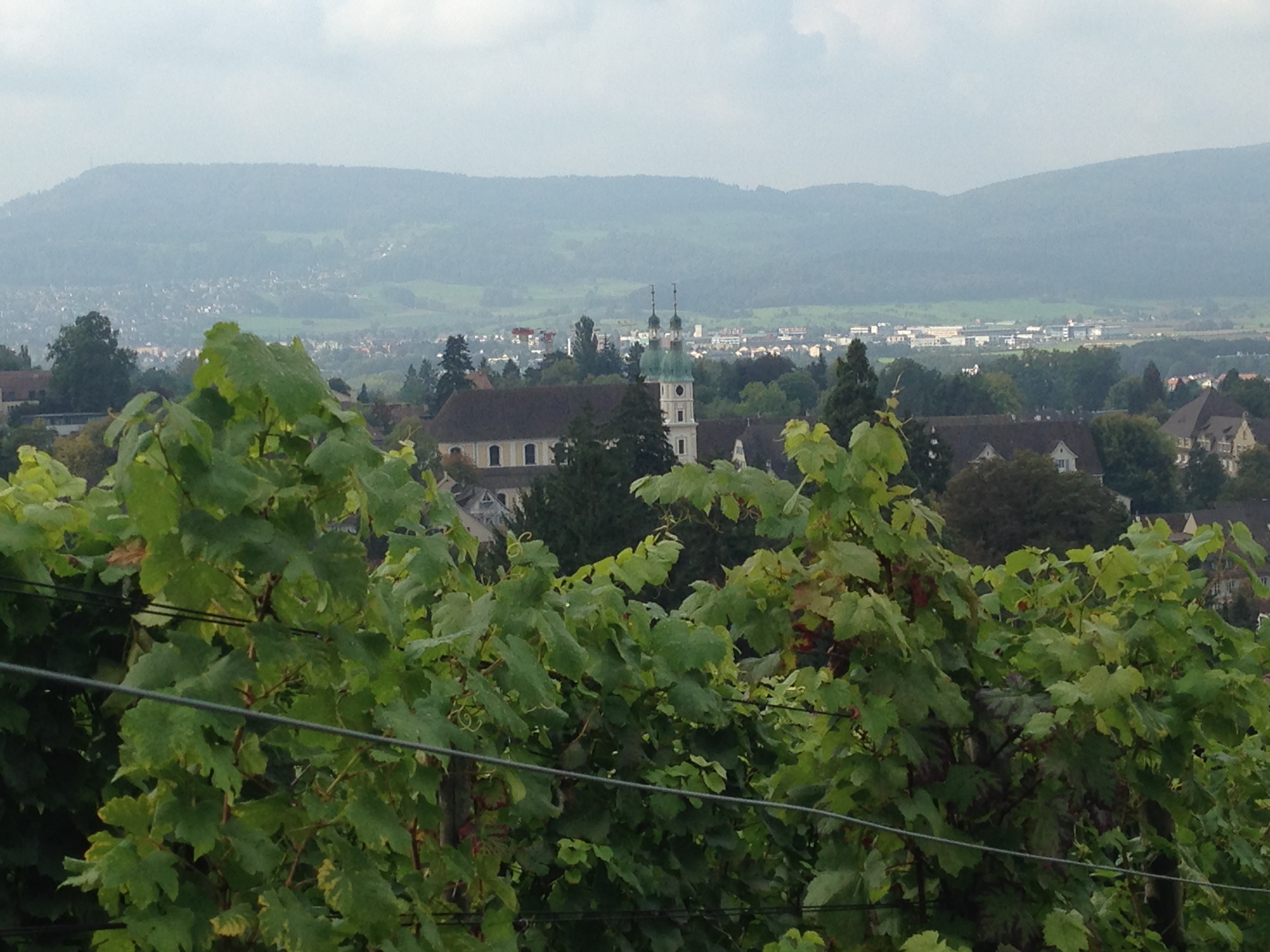
Here is the dome of Arlesheim taken from the vineyard “Schlossberg” of Arlesheim.

IMG_0848

.

Vineyards in Arlesheim – more grand cru than I thought at first sight

There are two vineyards in Arlesheim: The Schlossberg (“castle slope”) and the Steinbruch (“quarry”) (see Weinbau im Birseck). The mild climate of Arlesheim has always been favorable for growing wine.  Both vineyards are steep and looking south to capture as much sun as possible.  The noble committee of the bishop loved the wine of Arlesheim. Perhaps this is why they had their dome built here?

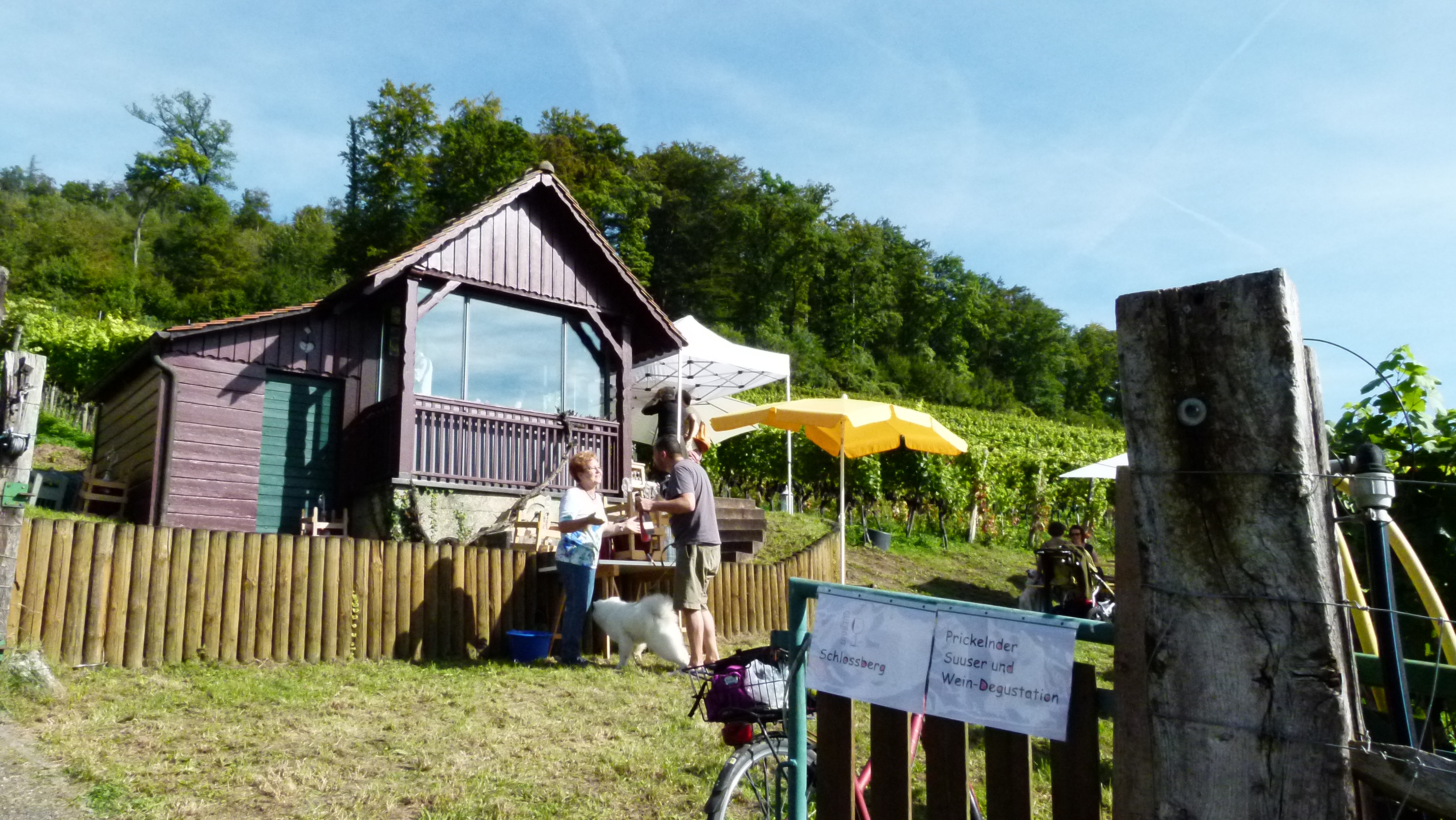
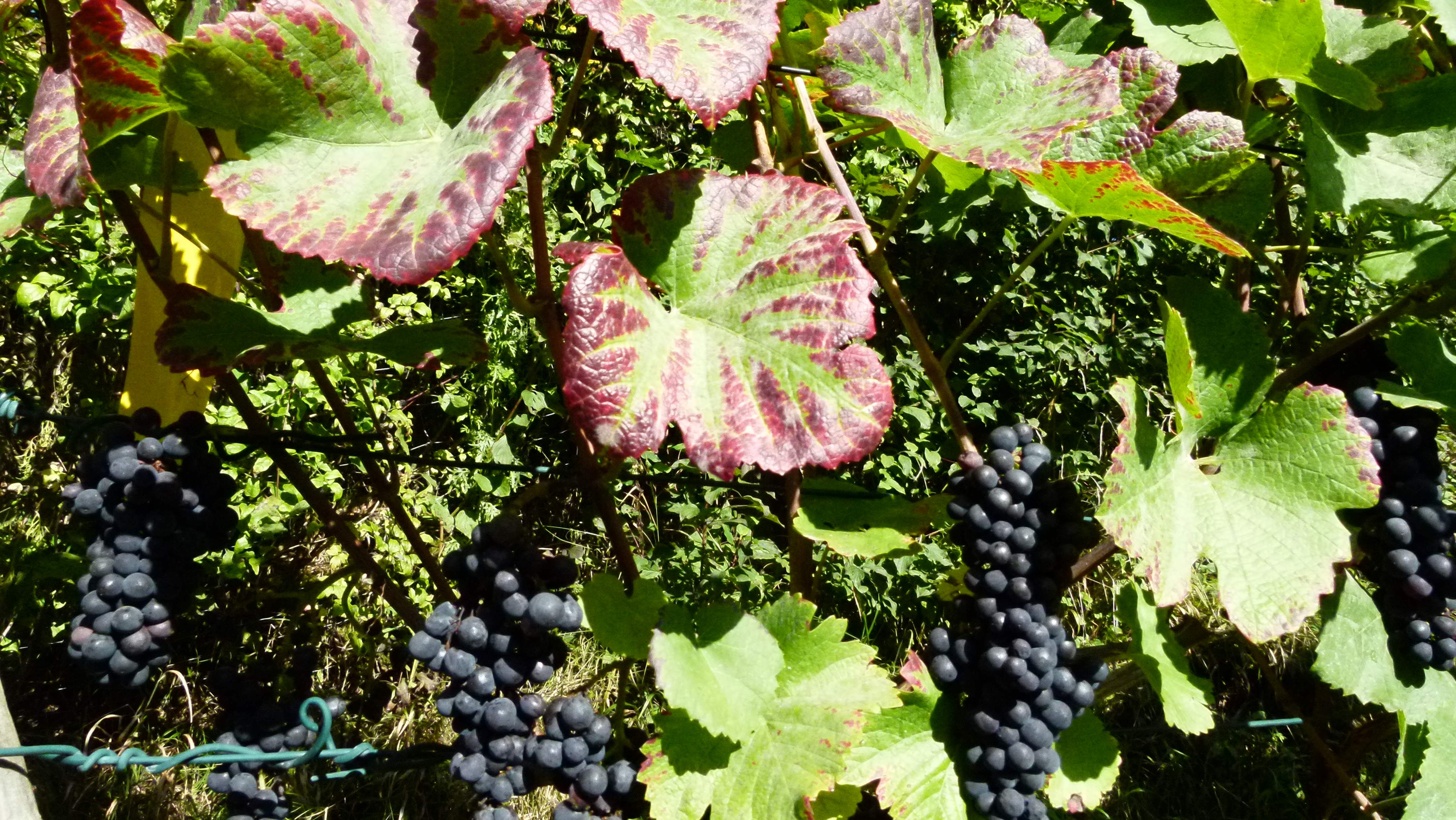
Sometimes Frischluft organizes visits to the vineyards. They praise the wine of the traditional winegrower, Erich Rediger. Quergut has recently been founded by two new and innovative winegrowers, the couple Huber/Bühlmann and Thomas Löliger. End of September they invited guests to their Schlossberg vineyard. I went and found myself amidst a group of teachers and artists – Michael Huber is a part time teacher at the Gymnasium Oberwil and a part time musician. His father has already grown wine here at the Schlossberg. Michael now follows in the steps of his father. In addition to Pinot Noir he has recently planted Shiraz and Cabernet Jura (the latter for blending, Michael tells me). The white grapes are Sauvignon Blanc (Michael says, the global warming makes it possible here) , Cabernet Blanc (a new breed of grapes) and Pinot Gris (in German: Ruländer or Grauburgunder). In the scorching sun I enjoy a sparkling Schlossberg Suuser (fresh wine) with a delicious pumpkin soup and later a fruity glass of Pinot Noir from the Schlossberg.

P1060609

These are vines in the Steinbruch or quarry.

P1060503

.

Grenzweg behind the Goetheanum (border trail)

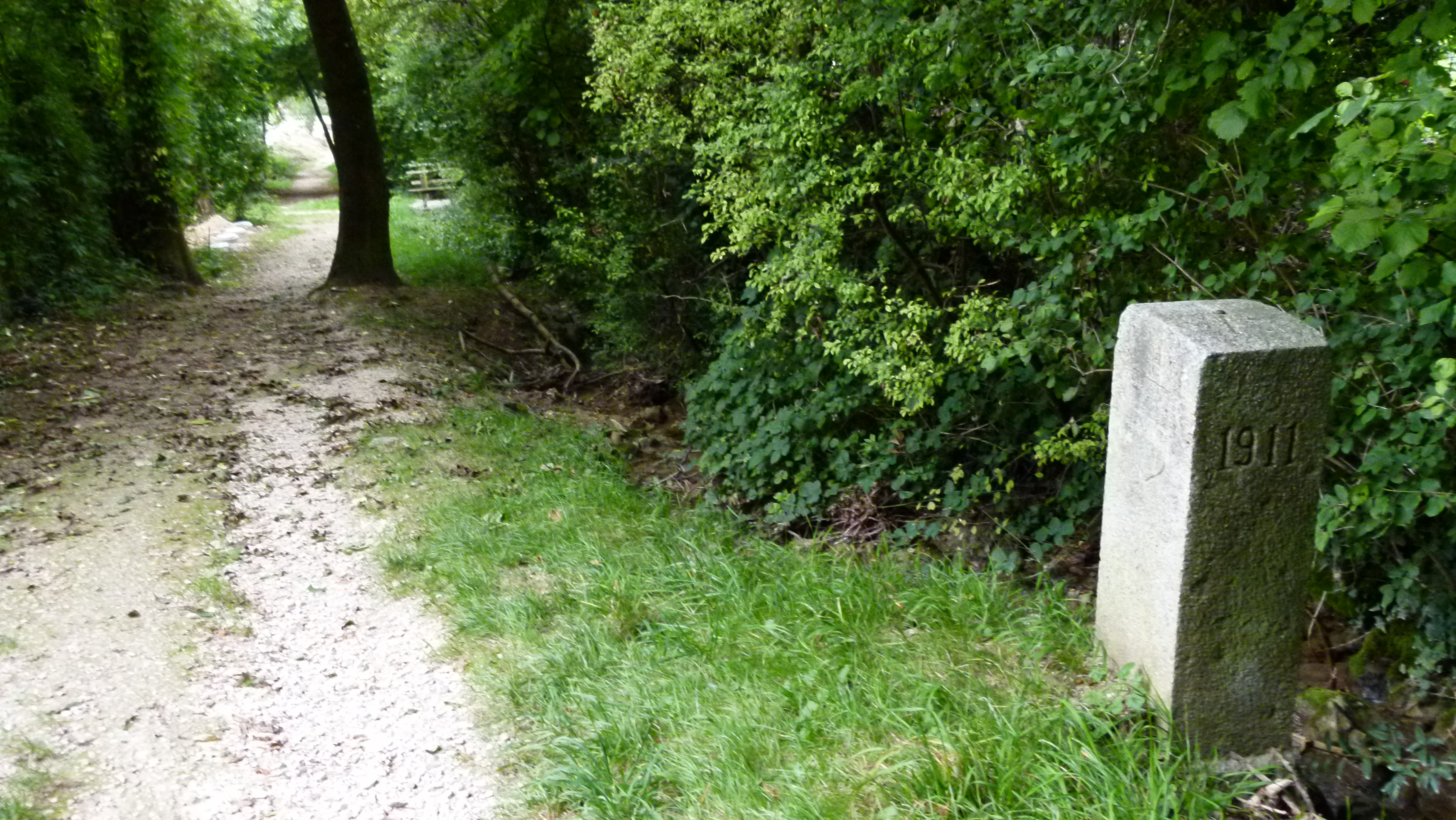
My friends from Austria stopped once in the restaurant Schlosshof close to the ruin Dorneck. From here, a steep and romantic trail is following the border between the two suburbs Arlesheim (belongs to the canton of Rural Basel) and Dornach (part of the canton Solothurn). The border stones are the proof that there is a border here.

P1060424

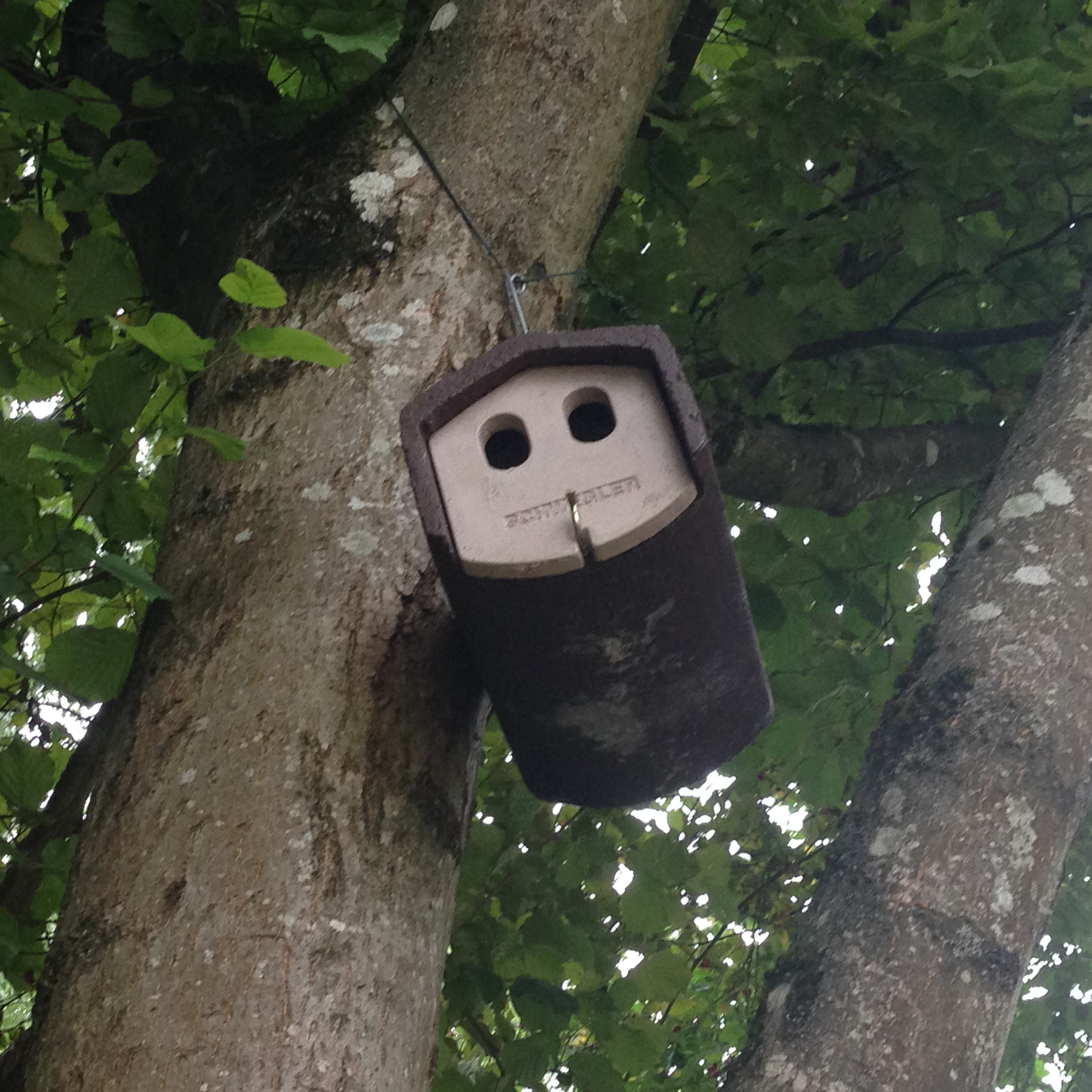
The Grenzweg is a quiet path along a creek. Bridges lead to the gardens of noble houses. Also birds are invited to live and breed here.

IMG_0798

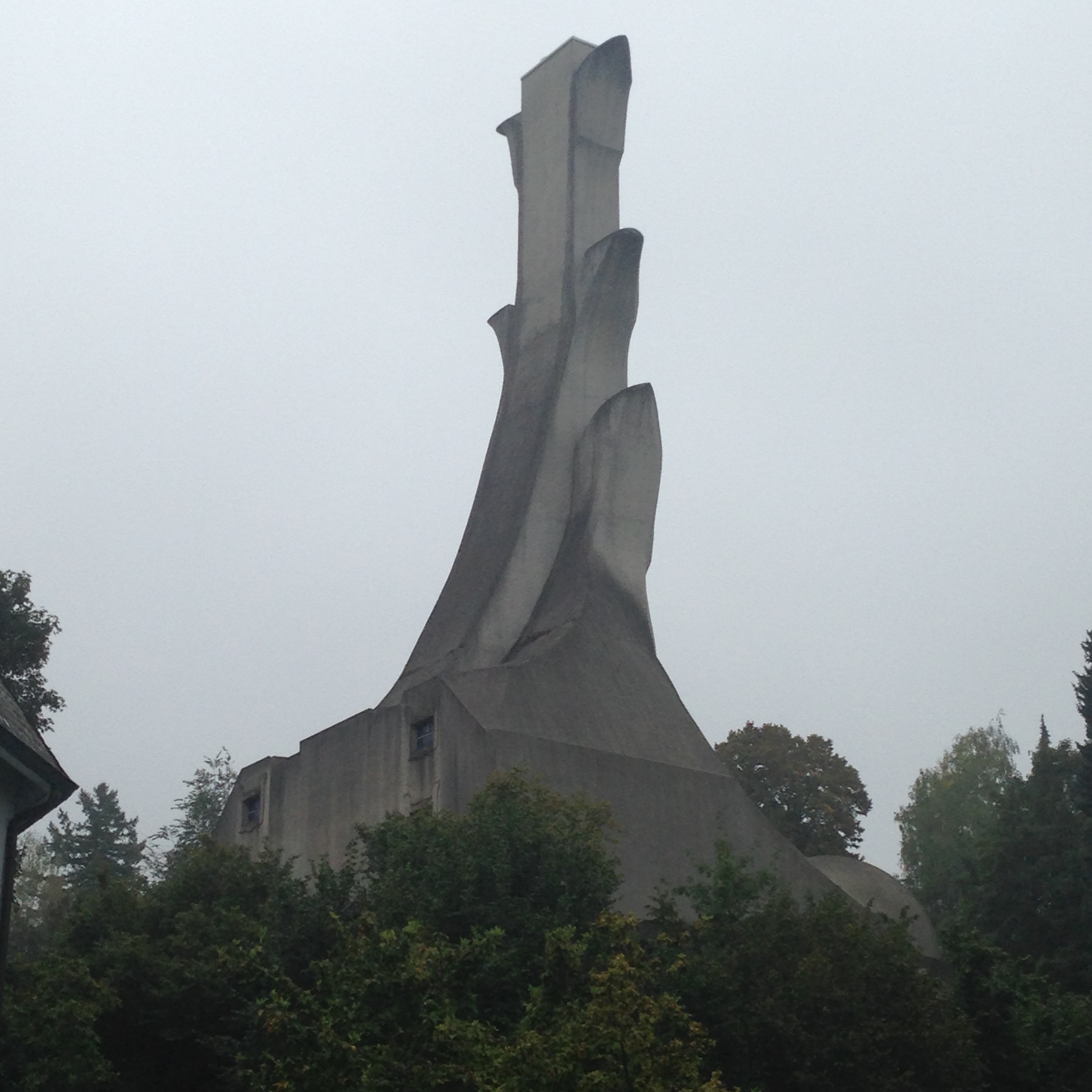
In addition I am surprised by this unusal view of the Goethenaum from behind…

P1060434

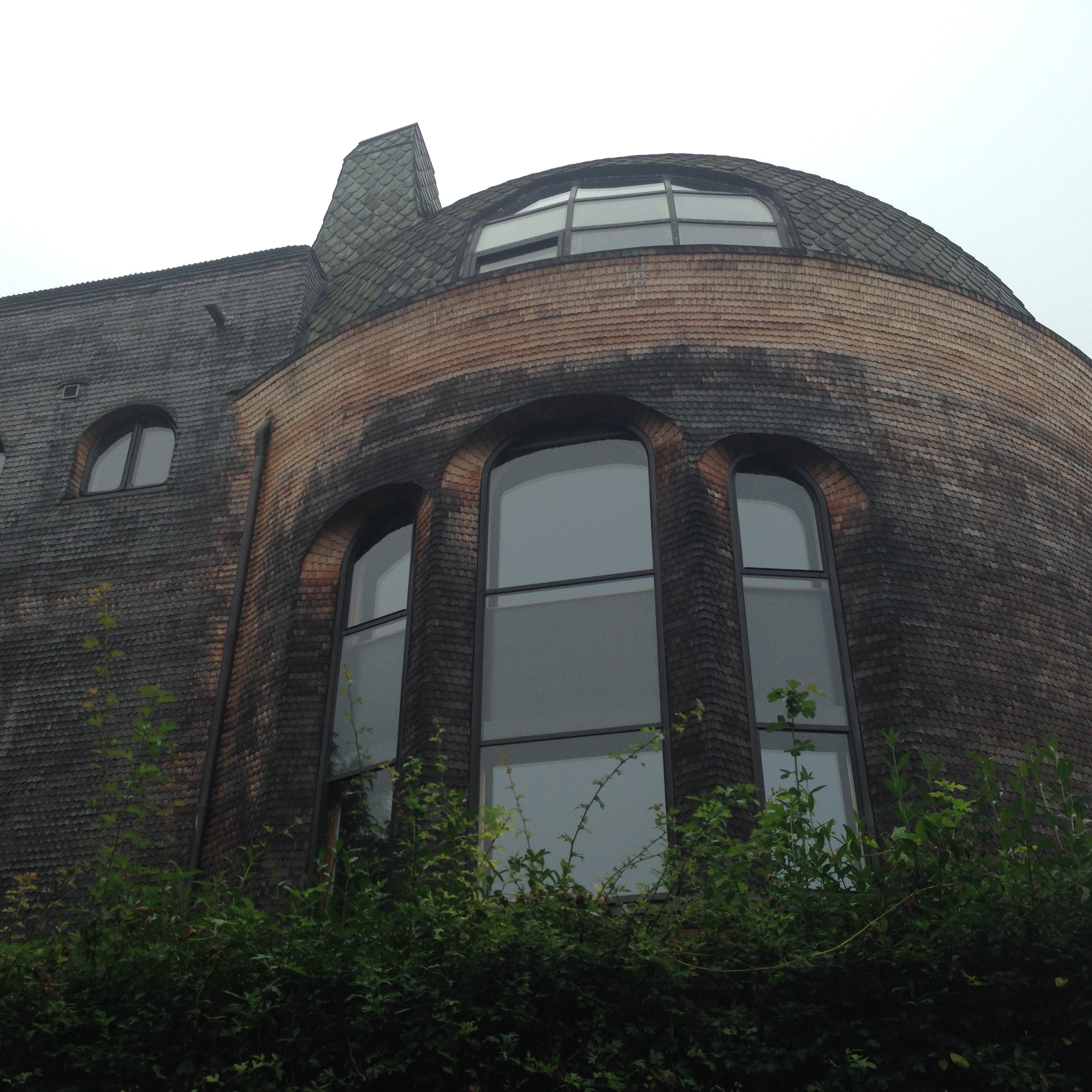
… with its heating house (Heizhaus)…

IMG_0795

… and with its glass house (Glashaus).

IMG_0796

The name “Goetheanum” is derived from the German poet Goethe. Based on admiring Goethe for his Spiritual Science, Rudolf Steiner founded the Anthroposophical movement in the beginning of the 20th century. He made the Goetheanum their world center. The first Goetheanum was built in 1908. It was a harmonious wooden building  avoiding right angles – like most anthroposophical houses do here in Dornach. The first Goetheanum was destroyed by arson in 1922. My gran-ma lived in  Basel then and told me that the fire could be seen from far. She was sad, because she found the wooden Goetheanum was beautiful. For the second version of the Goetheanum, Rudolf Steiner selected concrete. Again avoiding right angles the second Goetheanum was completed in 1928.

The glass house (Glashaus) in the back garden was built to manufacture the stained glass windows for the first Goetheanum made out of wood. Also made out of wood, the glass house gives us an idea of what the wooden Goetheanum had looked like before the fire. The glass house has recently been renovated. It houses the school of Spiritual Sciences.

(see wikipedia and the Goetheanum homesite )

.

So many gems around Basel…

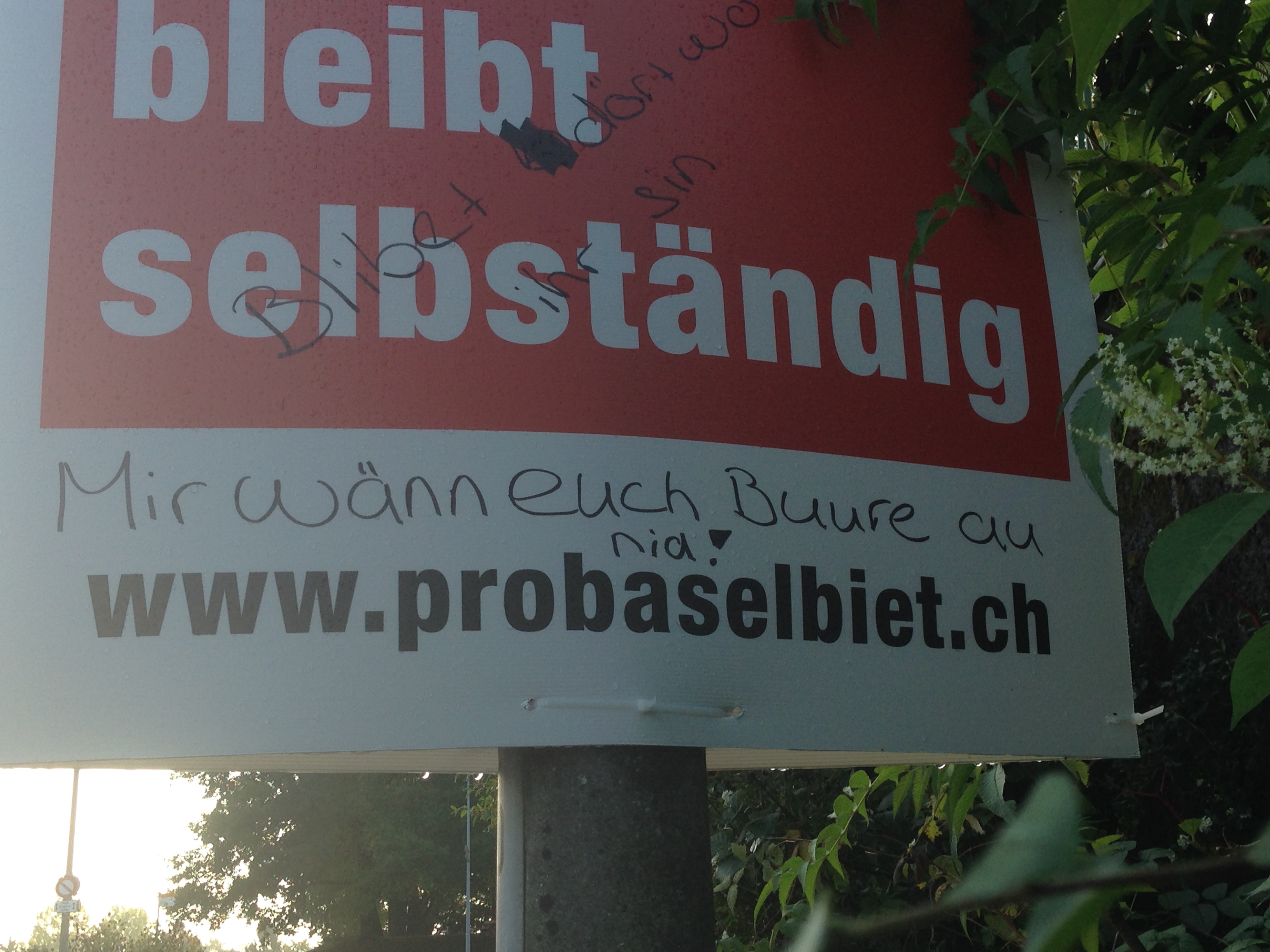
… to my opinion it is just a pity that the reunification of the two half cantons of Basel has been denied in September 2014. Before the voting weekend end, there were many posters in Rural Basel (or “Baselbiet”) proposing “no – we remain independent”. A frustrated citizen from Basel Town may have added the remark: “We also do not want you, farmers” (Mir wänn euch Buure au nid”).

IMG_0847

This makes me a little sad, as I have always loved both Basel Town and Rural Basel – and this year I was happy to benefit from the hiking options in front of my house door – in both half cantons.


On the road – discovering treasures around Basel: To the southeast VI (castles)

Castles – telling fairy tales from a long time ago – and there are so many of them around Basel

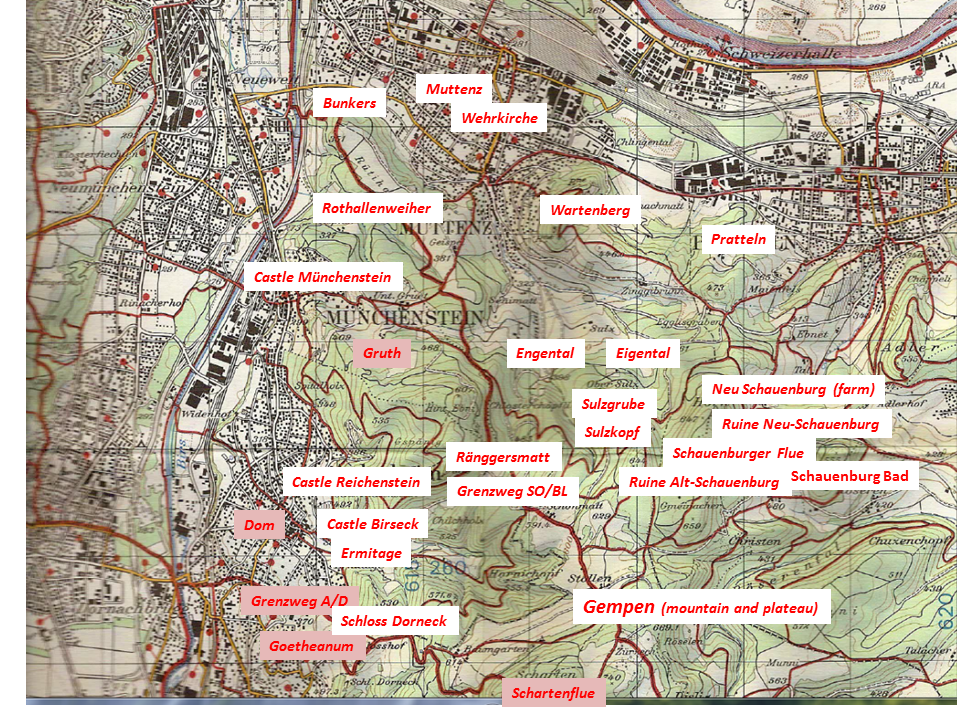
This is the map of the Gempen plateau. Three castles I always saw from the Bruderholz, when I grew up: Dorneck, Birseck and Reichenstein – and they seemed full of fairy tales. On the Gempen plateau, there are more castles such as Münchenstein, Schauenburg and Wartenberg. The region around Basel is full of castles.

Karten_castles

Source: Bundesamt für Landestopographie 213T – Basel

.

Why are there so many castles around Basel?

So many castles around Basel – I started to wonder why. So did our Burgenmeyer in 1981, when he edited Burgen der Schweiz – Band 7 (we call Werner Meyer just “Burgenmeyer” and we like his fresh style of teaching – I was fortunate to do my first steps in Latin with him). Also the “historischer Atlas der Region Basel” (edited by the Christoph Merian Stiftung in 2010) takes note of the large number of castles (p. 86). “Burgenmeyer” and the “Atlas” have been my primary sources, and sometimes I went back to wikipedia. Here is the summary of my conclusions. It may not satisfy scientific requirements, but may open our eyes, when walking in the area.

.

Until the tenth century – the area around Basel is not densely populated

About 400 A.D. the Roman empire breaks down. After the breakdown, the population is concentrated in the former Roman towns. The mountains with their valleys become empty woodlands. There is some prosperity in the Carolingian times (700-900), when Basel is part of High Burgundy (Hochburgund) and the center of the Basel Diocese. However, in the tenth century, Hungarians, Saracens (from Tunisia) and Vikings are invading the area and decimating the population again.

.

After the end of the tenth century – noble families colonize the empty spaces, build castles, develop the agriculture and favor the emergence of towns. At about 1500 the towns have deprived them of their power

In 962 Otto I creates the so-called Roman Empire of the German Nation that brings some stability. Noble families establish local lordships in the empty areas, cut the trees and build fortifications to protect their possessions. In the 11th to 13th century they continue with their colonization efforts. They now build stone castle, first in the valleys, then above the valleys on rocks. The families are changing – some are dying out, others are marrying and enlarging their possessions. Important names are Frohburg, Pfirt, Ramstein, Zähringer or Kyburg. In the 13th century it is the Habsburg family that gains most.

The cultivation techniques improve which allows the population to grow, to move to cities and to become craftsmen and merchants. Also the nobility founds towns (e.g. the Zähringer are well-known founders of towns). The craftsmen and merchants are getting wealthier and wealthier.

In the 14th century many towns become stronger and autonomous. They found town leagues and start to buy possessions from the nobility. In the great earthquake of 1356, 60 castles around Basel collapse, and not all are rebuilt. Many lords are already weakened.

In the 15th century Basel buys Liestal, Waldenburg and Homberg, then Thierstein-Falkenstein, then Münchenstein and Muttenz and last they acquire Farnsburg and the valley of Diegten. In the 16th century Basel adds Pratteln and Ramstein to their possessions and agrees to leave Dornach and the village of Gempen with Solothurn. Basel installs bailiffs in the former possessions of the lords and some of them reside in the renovated castles. Politically the rural part of Basel split off in the revolution of 1833 to become the canton of Baselland. People in Rural Basel still complain about the bailiffs – and they absolutely refuse a political reunification with Basel town; they voted clearly “no” end of this September.

Now, let us have a look at the castles of Dorneck, Birseck, Reichenstein and Münchenstein.

.

The castle of Dorneck

The construction of Dorneck above Dornach goes back to the 11th century. When acquiring Dornach in the 16th century, Solothurn delegated their bailiffs to Dorneck. The castle has been in use until 1792. The French destroyed it (source: wikipedia).

This is entrance to Dorneck.

P1060437

Above the yard there is the platform with the Swiss flag and the three huge oak trees ..

P1060488

… and from the platform, there is a superb view of the valley and the Jura.

P1060494

.

The castle of Reichenstein

For almost 600 years, the Reichenstein castle belonged to the family Reich von Reichenstein (1245 to 1813). The castle was a feud handed over by the bishop of Basel. In the 15th century the Reich family neglected the castle and it decayed. 1813 it was acquired by wealthy Basel citizens. After 1930, the citizens rebuilt part of the castle based on romantic ideas and used it as a summer residence. Today the castle can be rented for events of up to 50 people (source: wikipedia). About 15 years ago I attended the birthday party of a good friend of mine in the great hall – this was a very noble setting for the party and the view from the tower is gorgeous.

This is the castle of Reichensteinn with the Schartenfluh in the background…

IMG_0852

… and seen from the entrance below it is dizzily high.

P1060504

.

The castle of Birseck – on the romantic rock of the Ermitage

Just 500m away from Reichenstein is the fortification of Birseck with the integrated farm. The origins go back to the 12th century. Mid 13th century the bishop of Basel rebuilt the castle, used it as a residence and once even invited the pope. Until the 17th century the bailiff of the bishop lived here. In the 18th century the castle decayed and finally was burnt during the French revolution. It was renovated in new gothic (and not authentic) style around 1800. A recent renovation took place in 2005 (source: wikipedia).

The castle is integrated in the romantic English style garden “Ermitage” of Arlesheim.

P1060506

.

The castle of Münchenstein

In the middle of the suburb Münchenstein, there are the ruins of the castle of Münchenstein.

P1060527

The castle is a private property in Schlossgasse. Only between 7 am and 22 pm, access to the area behind the castle is allowed. I dare walk through a small passage that looks very private and find this romantic garden behind the ruins.

P1060533

The bricks of the ruins have been used to build this quiet residential area, not far from the main street. By car I have often driven through Münchenstein on the main street and never noticed the ruins. It had never ocurred to me to look for such a paradise so close to the busy traffic.

.

More castles…

I have already visited the three castles of the Wartenberg and I have done some scouting around the new Old-Schauenburg and the old New-Schauenburg. Interesting is also the Burgengratweg on the Blauen and, wherever we walk in the area of Basel, there is a castle that tells about the history between the 10th and the 15th century.

On the road – following the route of Mark Twain to Rigi Kulm

The Rigi Kulm – queen of the mountains

“The Rigi Kulm is an imposing Alpine mass, 6000 feet high which stands by itself and commands a mighty prospect of blue lakes, green valleys, and snowy mountains…” says Mark Twain (Samuel Langhorne Clemens)  in his book “A tramp abroad” in chapter XXVIII. He climbed the Rigi in 1897.
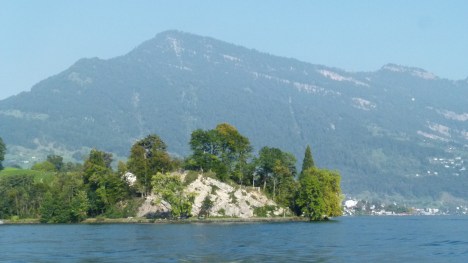
P1060595

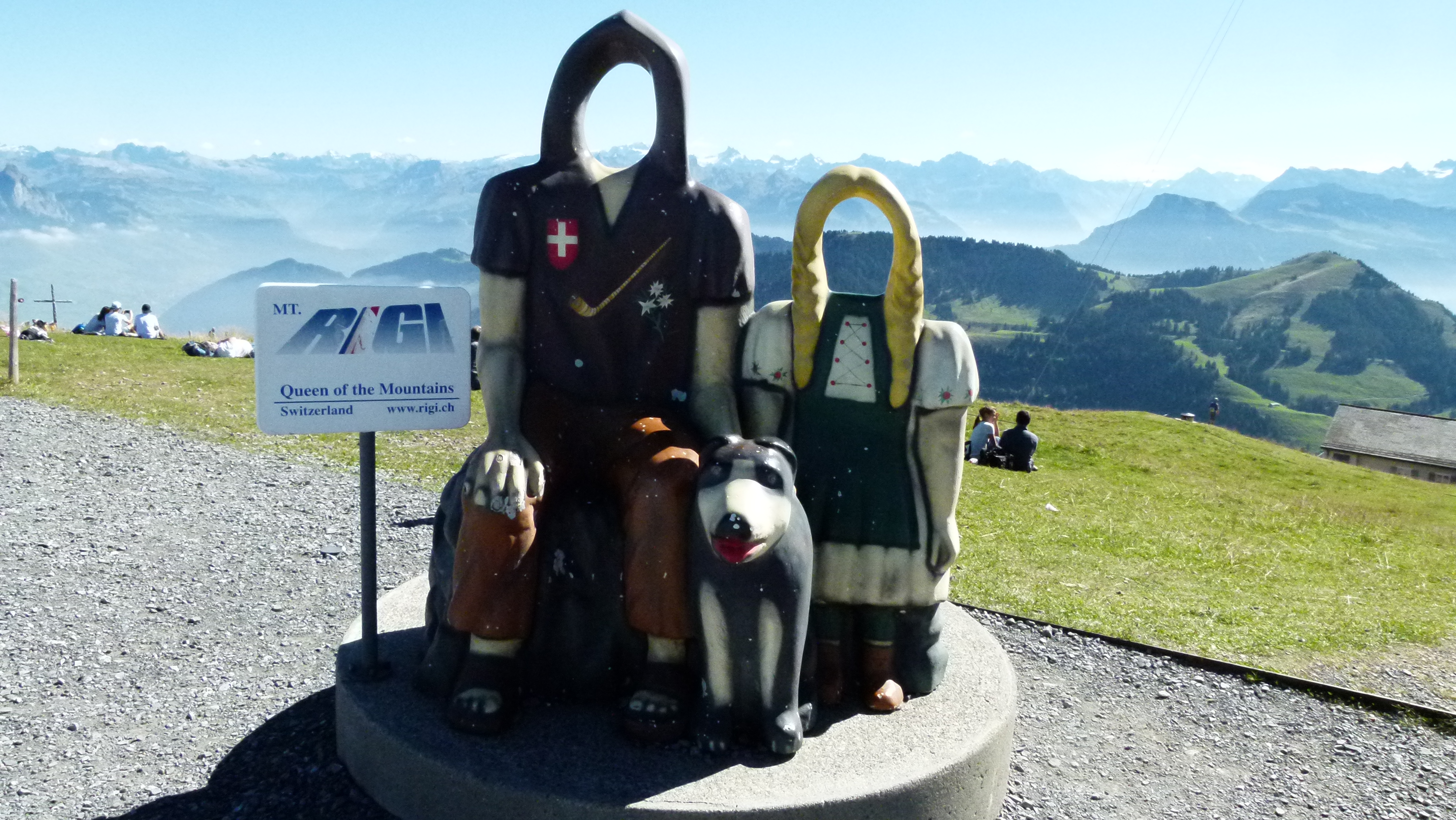
The tourist offices call the Rigi “the queen of the mountains“. On Rigi Kulm, tourists can even pretend to be real Swiss people from the mountains that do nothing else but look after their cows, sheep and goats, supported by their dogs – and they will always remember that they took this picture on the RIGI.
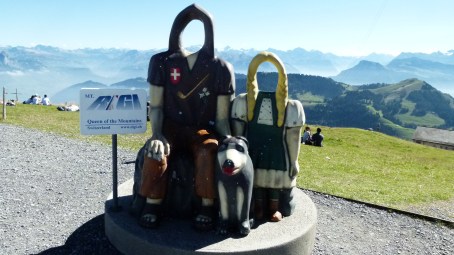
P1060576

Rigi Kulm – the very top – may be queen of the mountains for the gorgeous view. But the Rigi is not just one summit, it is a world of its own. It is a massif with several peaks: Rigi Hochfluh, Rigi Scheidegg and Rigi Dossen. My mum was a geologist and she made it clear to me that the Rigi massif is not part of the Alps, but it belongs to the Central Plateau of Switzerland (“Mittelland”).

.

A beautiful autumn day with bright air – just suited to walk up the Rigi on Mark Twain’s tracks

We have not been spoiled by Petrus this summer, but this Saturday end of September is exactly right for the Rigi, the queen that commands so many lakes and mountains. My friend from Hawai (now Swiss) bought a Swiss railway day ticket for two which was a bargain. We packed our daybags and took the seven o’clock train from Basel to Lucerne. With Mark Twain’s “A tramp abroad” and the map of the Themenweg in our hands.

Like Mark Twain, we went by boat from Lucerne to Weggis. “I and my agent panoplied ourselves in walking costume, one bright morning, and started down the lake on the steamboat; we got ashore at the village of Wäggis, three quartes of a distance from Lucerne. This village is at the foot of the mountain” (Mark Twain, Ch. XXVIII). I assume that they also carried “Alpenstocks”: “Most of the people… are in walking costume and carry alpenstocks. Evidently it is not safe to go about in Switzerland, even in town, without an alpenstock” (Chapter XV, Mark Twain observing tourists in the Hotel Schweizerhof in Lucerne). Today it seems that without two Nordic Walking sticks it is not safe to go about in Switzerland.

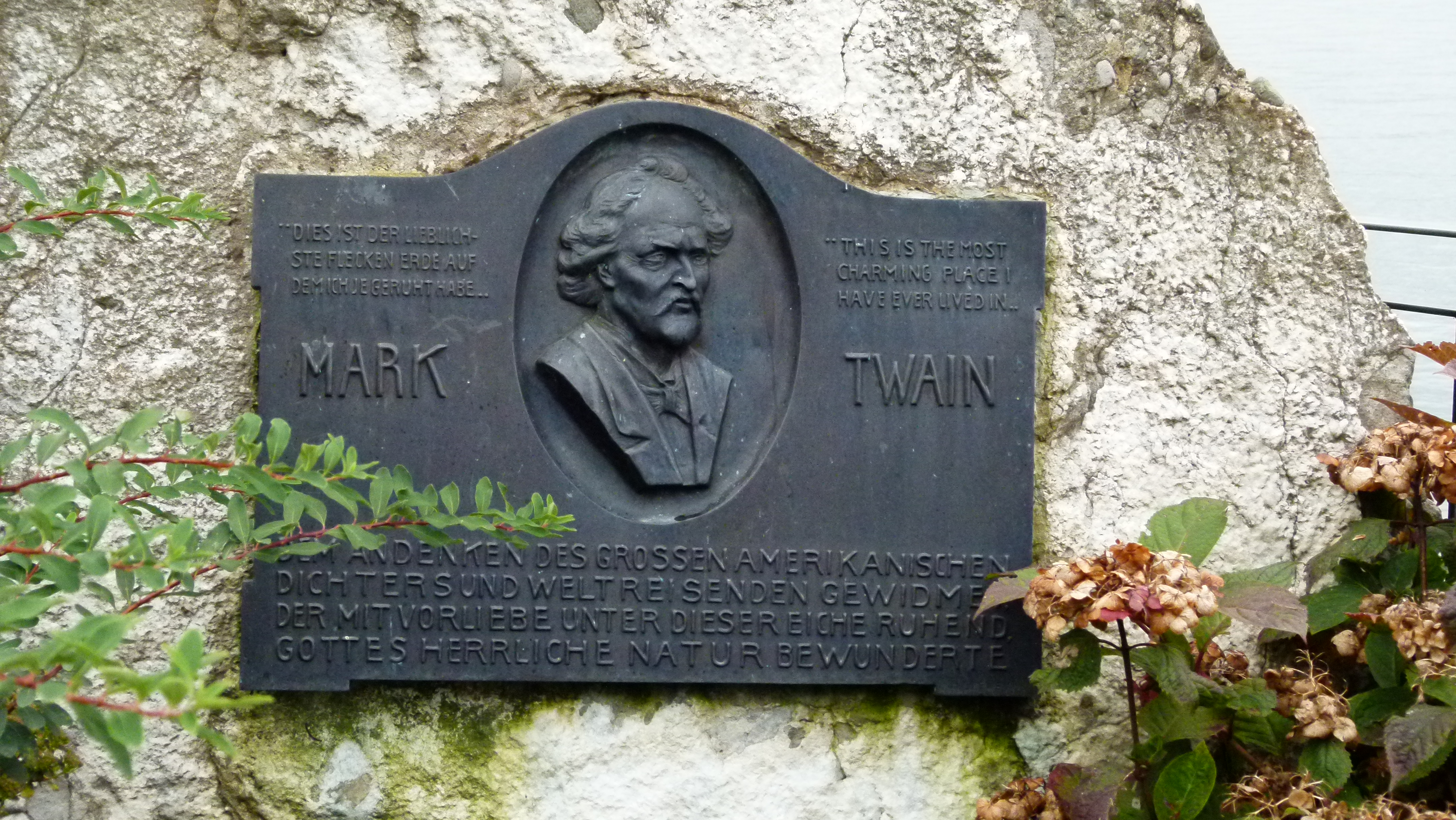
Weggis is very proud that Mark Twain called their village “the most charming place I have ever lived in.” They erected a memorial stone ; Mark Twain was said to have admired the view of the lake and the mountains from here. We started our hiking tour to the Rigi at Mark Twain’s memorial stone.
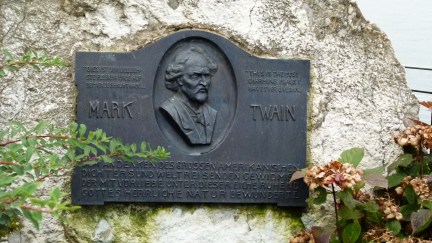
P1060546

.

To Säntimatt and Fromattberg

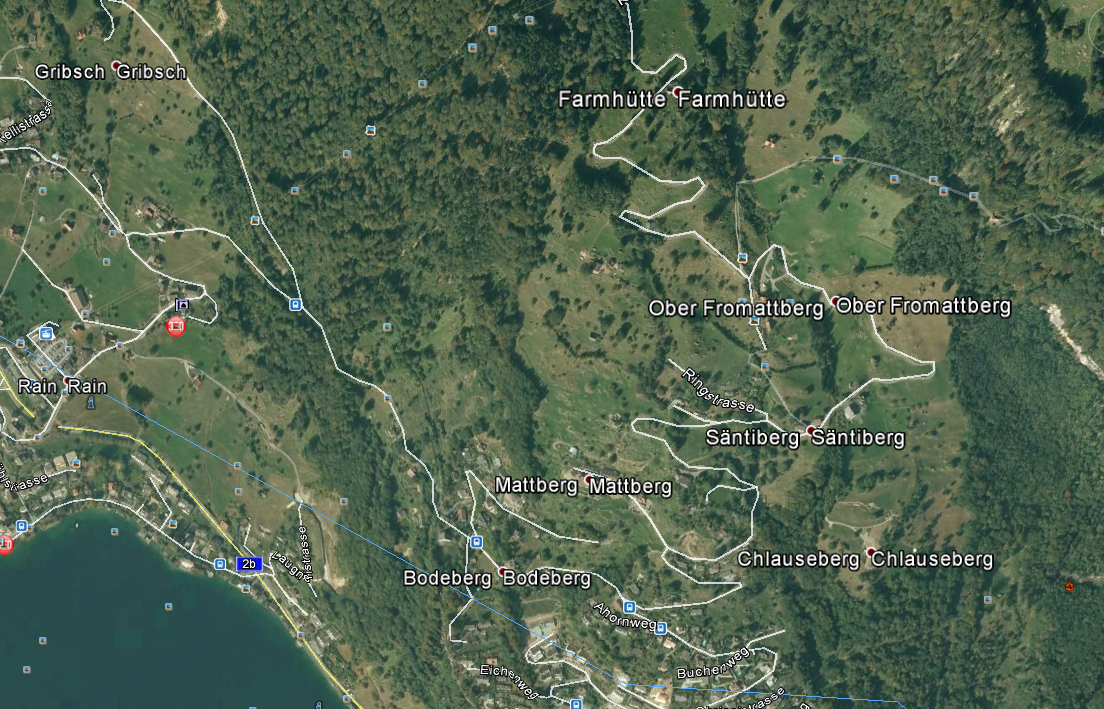
“The ascent is made by rail, or horseback, or on foot, as one may prefer” (Mark Twain, ch XXVIII).  The two of us start our ascent on foot at around 9:30 – in the grey autumn fog. “We were soon tramping leisurely up the leafy mule path… I suppose we must have stopped oftener to stretch out on the grass in the shade… we met a hot red faced man plunging down the mountain… he stopped… and asked how far it was to Weggis. I said three hours… “well”, said he, “I can’t stand another three hours…”. The red faced man was an Englishman. Mark Twain and the Englishman ended up in the nearby inn to have a nice dinner and spend the night there. When the Englishman left in the next morning, the landlady told him that her inn was about 500m above the lake level. Hearing this, the Englishman got very angry, and Mark Twain could not understand why.

500m above sea level is somehwere between Säntiberg and Fromattberg. But the inn does no longer exist and the “Mark Twain path” only points to it 200m above the location of the inn. Anyway our clock is approaching eleven a.m. now – and there is no need to stay overnight here. The grey fog had not invited us to stop so far.
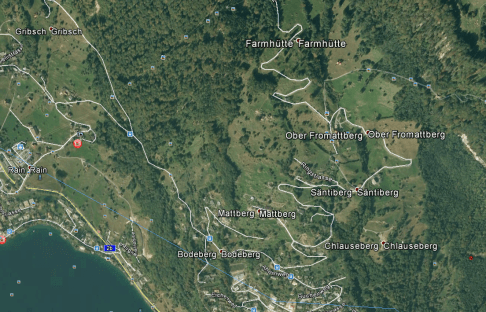
Sentimatt

Source: Google Earth

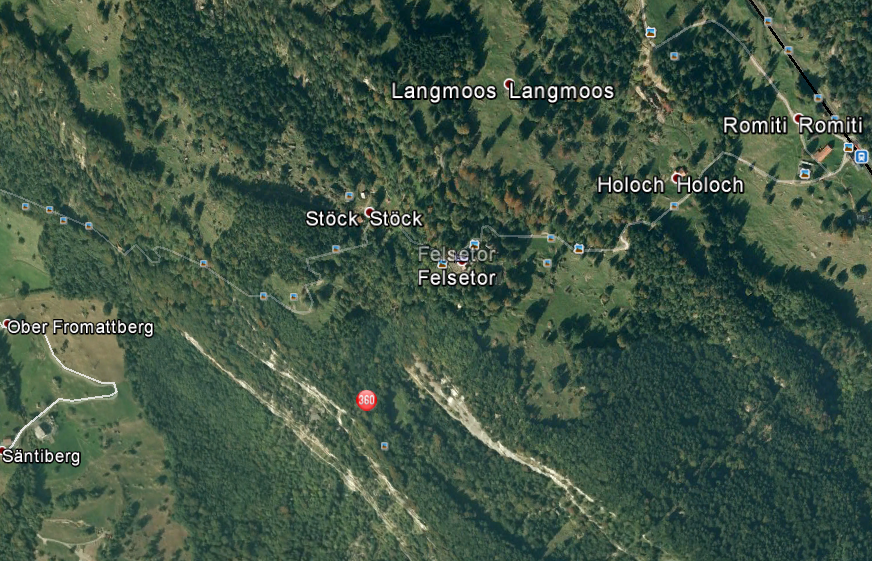
Mark Twain and his companion continued their hike the next day around noon. They walked about 200 yards and then “in the distance detected a long worm of black smoke crawling lazily up the steep mountain. Of course that was the locomotive. We propped ourselves on elbows at once, to gaze, for we had never seen a mountain railway yet” (ch XXVII). We could not figure out, where below the Felsentor they could see the railway to Vitznau. My friend mumbled: “Do you think that Mark Twain took notes while walking? How do you write a travel report?” Well, I continue to wonder, because I thought that Mark Twain is pretty precise with his facts though he ornates them with humor.

.

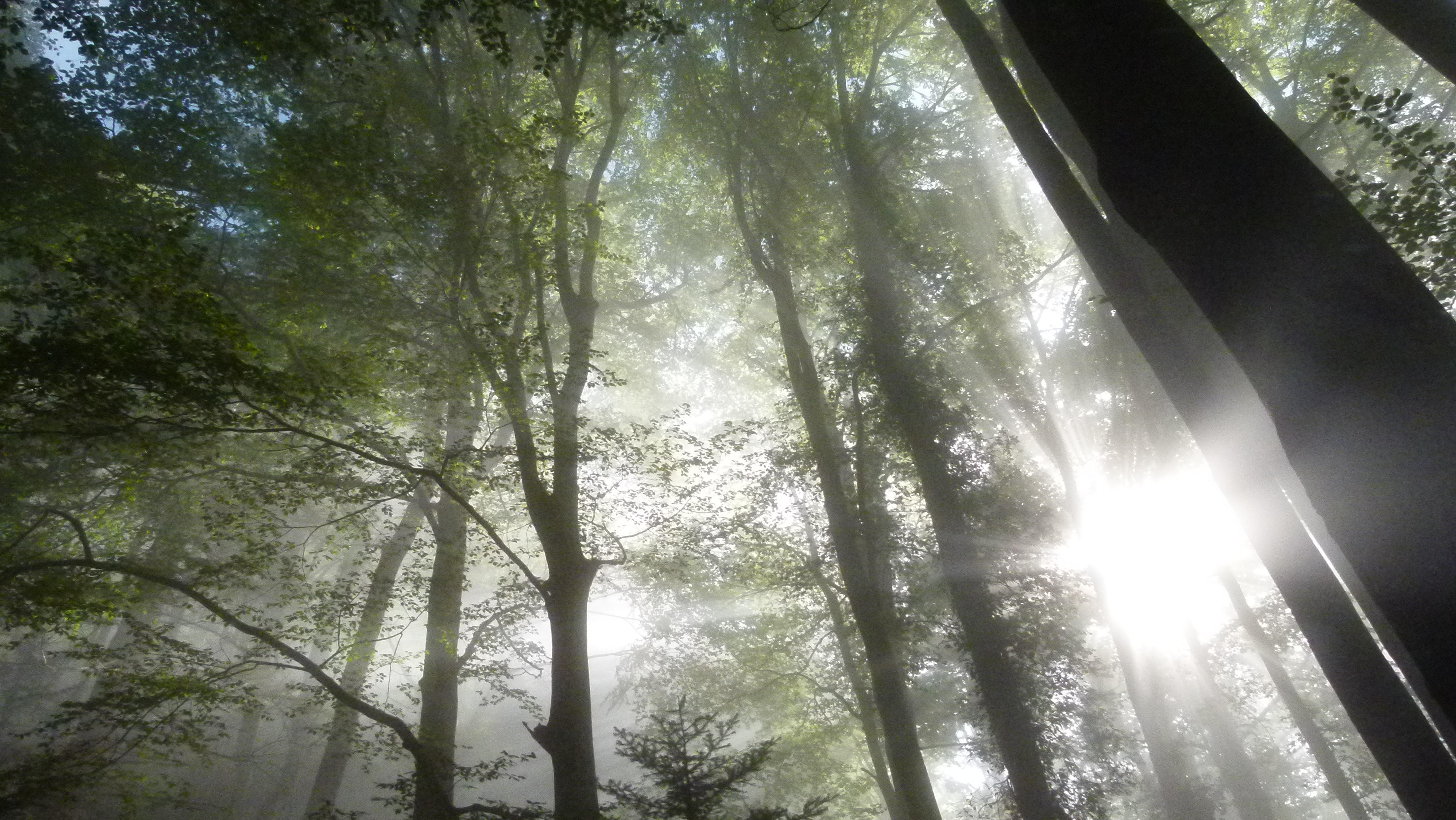
The fog clears up – a great moment that I enjoy even more intensely, because I have got my eye sight back

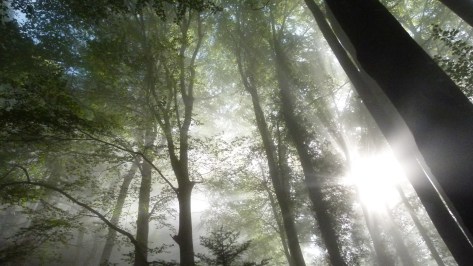
The chapel Heiligkreuz is closed.  Just above the chapel, sun rays are cutting into the forest…
P1060549

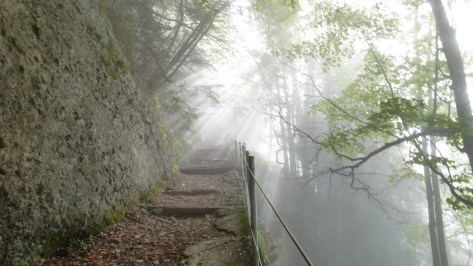
… while we are climbing the stairs along the rock that some prisoner-engineers had carved in the 19th century…
P1060554

… and  above the steps, there is a meadow. Was it here that Mark Twain encountered yodelling? He wrote: “…all at once our ears were startled with a melodious “Lul…i…i…lul-lul-lahee-o-o-o!” peeling joyously from a near but invisible source… now the jodler appeared – a shepherd boy of sixteen…” . They gave the jodler a franc to continue yodeling. More shepherd boys came and yodled earning half a franc, eight cents, six cents, a penny, then nothing, and eventually, Mark Twain gave a franc to stop the yodeling.

Felsentor

Source: Google Earth

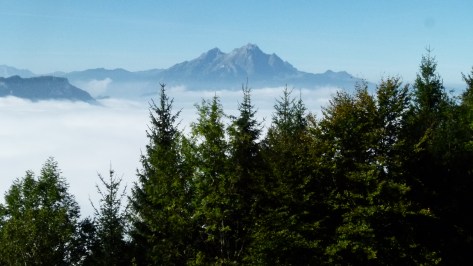
On the meadow above the steps we are at about 1000m and now above the fog. We enjoy the panorama… here is a picture with Pilatus and the Bürgenstock.
P1060557

.

The Felsentor

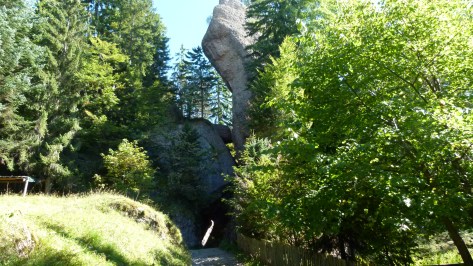
After the  yodeling experience, Mark Twain reaches the Felsentor at about 1100m: “… we passed through a prodigious natural gateway called the Felsenthor, formed by two enormous upright rocks with a third lying across the top…
P1060564

… There was a very attractive hotel close by, but our energies were not conquered yet, so we went on”, said Mark Twain.
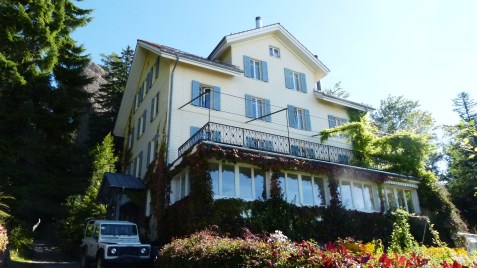
P1060560

Also my friend and I go on… resisting to stop and have a beer at this inviting place with its wonderful view. We soon reach Romiti and take a picture of the train coming down from Kaltbad.

P1060569

This train route has been designed by Riggenbach around 1870. Lucerne accepted the design. The railway opened in 1871; it only went from Vitznau to Rigi Staffel about half a walking hour away from the top (Kulm). At Rigi Staffel, the canton of Lucerne ends and the canton of Schwyz begins. When the people from Schwyz heard about the project, they followed by constructing the Arth-Goldau to Rigi Kulm railway and extended the Rig-Vitznau rails to Kulm. They also hired Riggenbach and completed the railway in 1873 (Source: Wikipedia).

In 1897, when Mark Twain climbed the Rigi, the trains were already about 25 years old. They were the first mountain railways in Europe. This is how Mark Twain describes the Rigi railway: “There are three railway tracks; the central one is cogged; the “lantern wheel” of the engine grips its way along these cogs and pulls the train up the hill or retards its motion on the down trip… whether going up or down, the locomotive is always at the lower end of the train.”

Along the rails we walked up a steep path to Rigi Kaltbach which is at 1450m above sea level.

.

Rigi Kaltbad – many tourists in a “touristy” place

Mark Twain and his companion Harry stopped at Rigi Kaltbad to stay overnight again. After all it was already six pm, as Mark Twain explains: “At ten minutes past six we reached the Kaltbad station, where there is a spacious hotel with great verandahs…”. They miss the sunrise, as they get up too late (they keep on missing the sunrise…) and they are happy to be “…informed by the guide-book that we were now 3228 feet above the level of the lake – therefore full two thirds of our journey had been accomplished.”

The two of us do not stay at Rigi Kaltbad. To me it is a messy and touristy experience – big flat roof houses with terraces facing towards the Lake of Lucerne and the mountains. We continue to follow the route that Mark Twain had taken – to Rigi First and then- along the rails coming up from Goldau heading to Rigi Staffel.

On Rigi Staffel, there is a hotel that might need some refurbishing.

P1060571

The path between the ridge and the rails offers a great view of the Lake of Zug. This is where Mark Twain and his friend had been caught by rain and fog: “It came on to rain, and it rained in dead earnest… Next a smoky fog of clouds covered the whole region densely, and we took to the railway ties to keep from getting lost…. by and by, when the fog blew aside a little, we were treading the rampart of a precipice, and that our left elbows were projecting over a perfectly boundless and bottomless vacancy, we gasped and jumped back for the ties again.” Well, Mark Twain may have overstated the precipice somewhat.
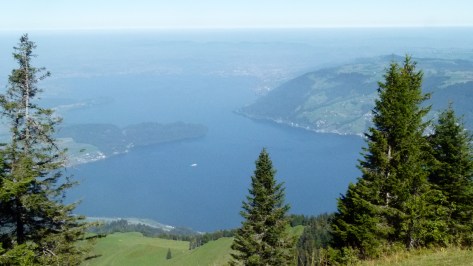
P1060575

Mark Twain and his friend were eventually “confronted with a vast body which showed itself vaguely for an instant, and in the next instant was smothered in the fog again.” They sat in the cold night, until an hour later, they discovered that this vast body was the Kulm hotel. They took their room, found their luggage (that had been carried up by a boy), changed to dry cloths and had dinner.

No fog for us today. A wonderful view of the Swiss plateau with the lakes and the jura  on one side and the mountains on the other side side. Here in the background closing off the white mountain chain is the wall of the Wetterhorn overlooking the Grosse Scheidegg near Grindelwald.
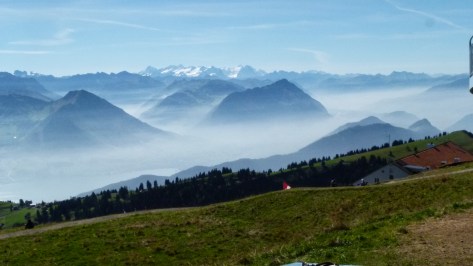
P1060582

Yes, it was a suitable day to come up here. We are surrounded by tourists from all nations most of which had come up by train. Two young Chinese guests on their honey moon are taking fotos. “Do you want a foto of both of you?” I ask. They happily smile into their camera. Then they propose to take a picture of me – and here is the result. The young wife  apologizes, because a hand and a person had come into the way. I surprise them with all Chinese I know: “tsie-tsie” (thank you). I hope they keep Switzerland in good memory.
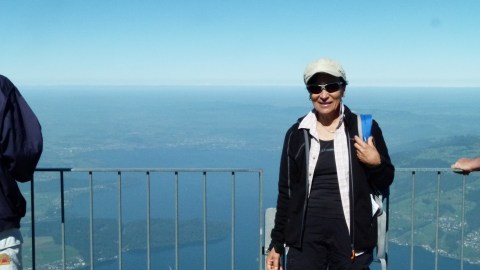
P1060583

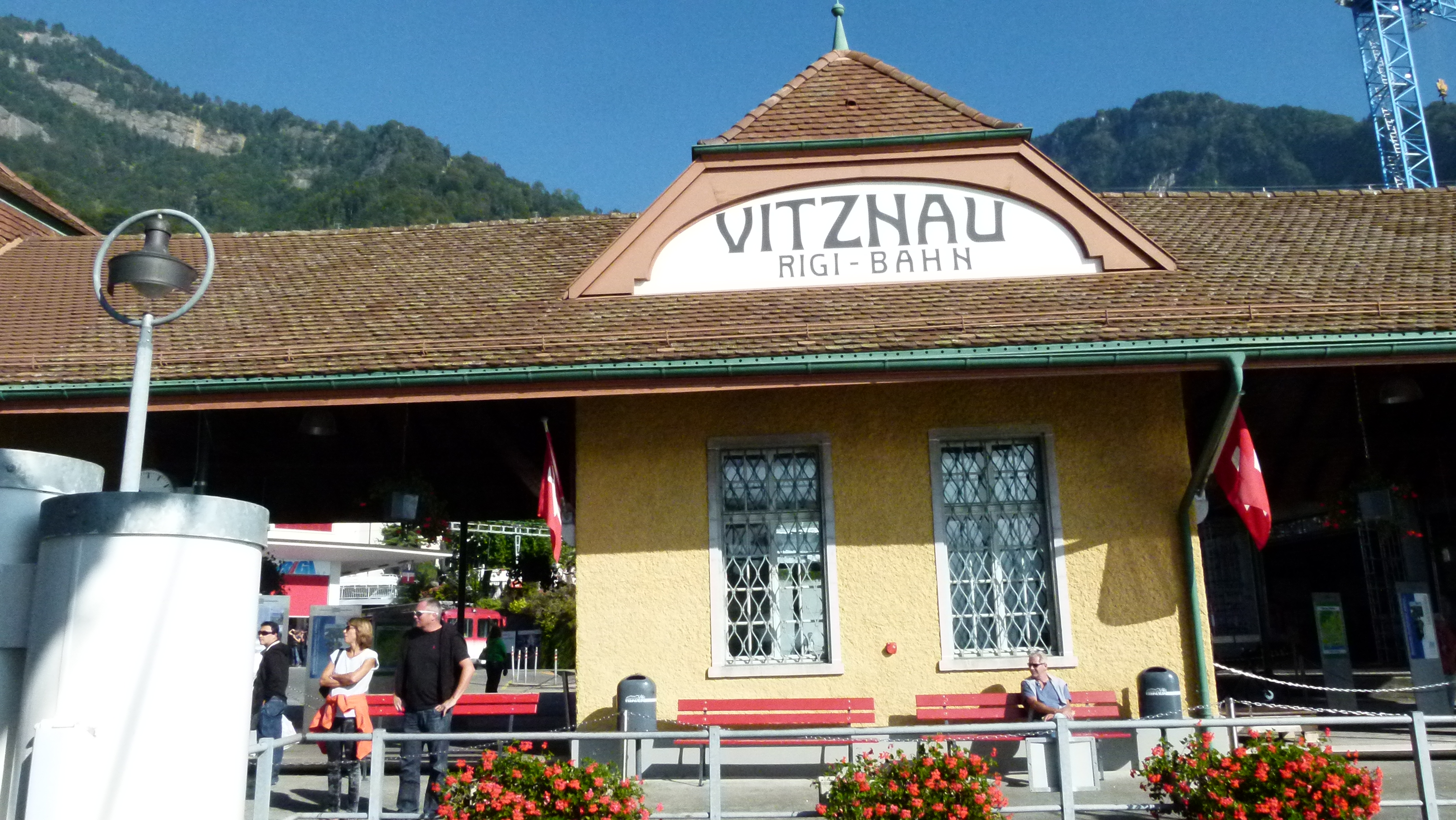
The train takes us down to Vitznau. Our train does even not stop on the way, though more tourists are waiting at the stations. Our train is just full. And the next trains have been booked by groups.

Mark Twain also drove down to Vitznau. “We got front seats, and while the train moved along about fifty yards on flat ground, I was not the least frightened; but now it started abruptly down stairs, and I caught my breath. And I, like my neighbors, unconsciously held back, all I could, and threw my weight to the rear… there was no level ground at the Kaltbad station; the railbed was as steep as a roof… the train came sliding down, and when it reached the right spot, it just stopped… by the time one reaches Kaltbad, he has acquired confidence in the railway, and he now ceases to try to ease the locomotive by holding back. Thence forward he smokes his pipe in serenity… However, to be exact, there is one place where the serenity lapses for a while; this is while one is crossing the Schnurrtobel Bridge…” (ch XXVIII).

P1060585

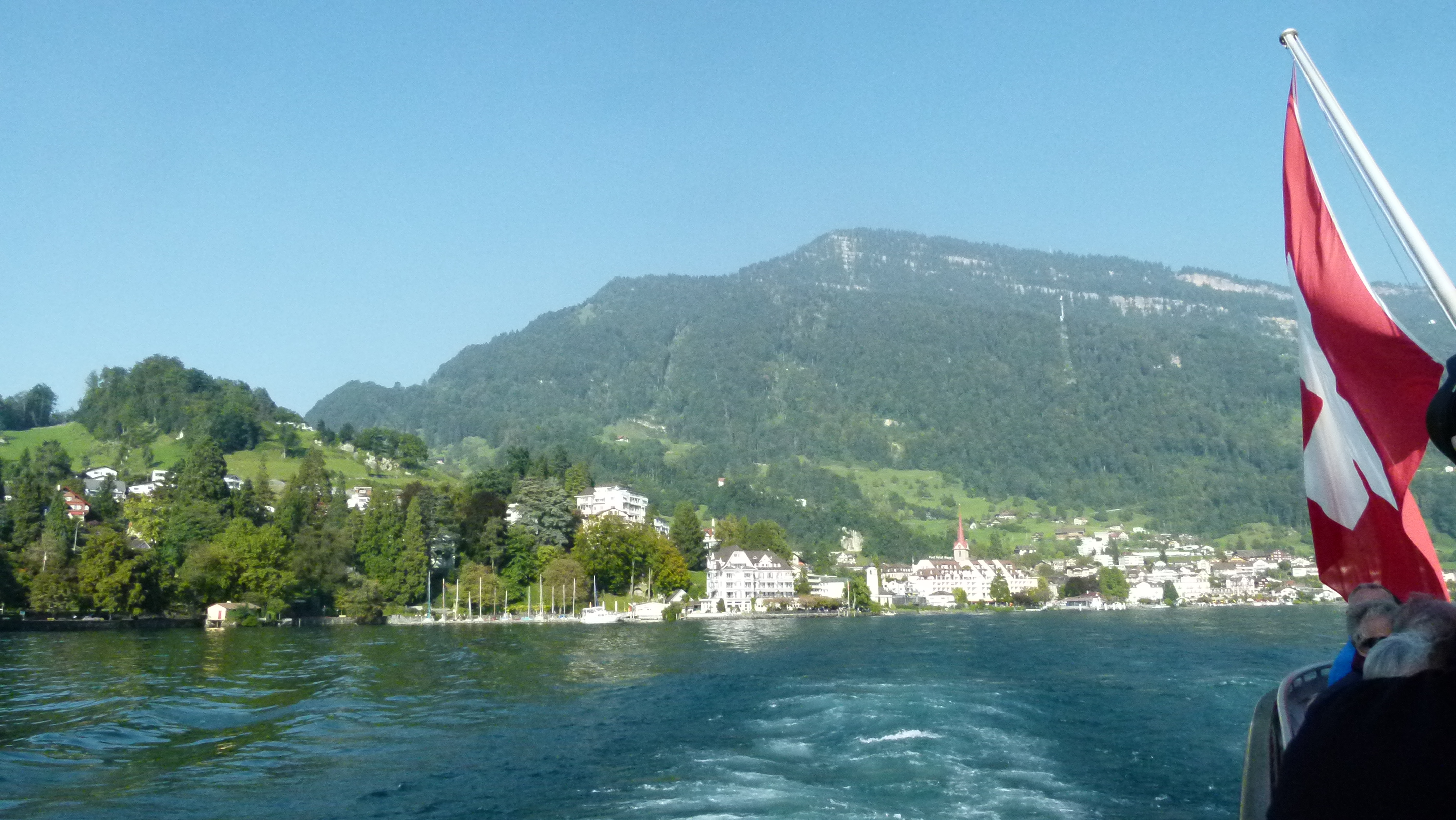
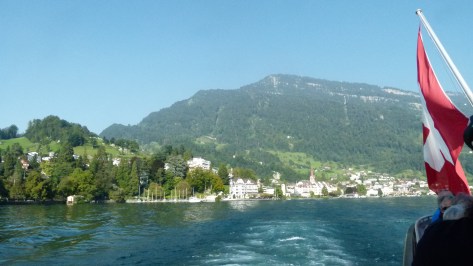
In Vitznau we take the steam boat back to Lucerne. It is the steam boat with the name “Lucerne”.
P1060591

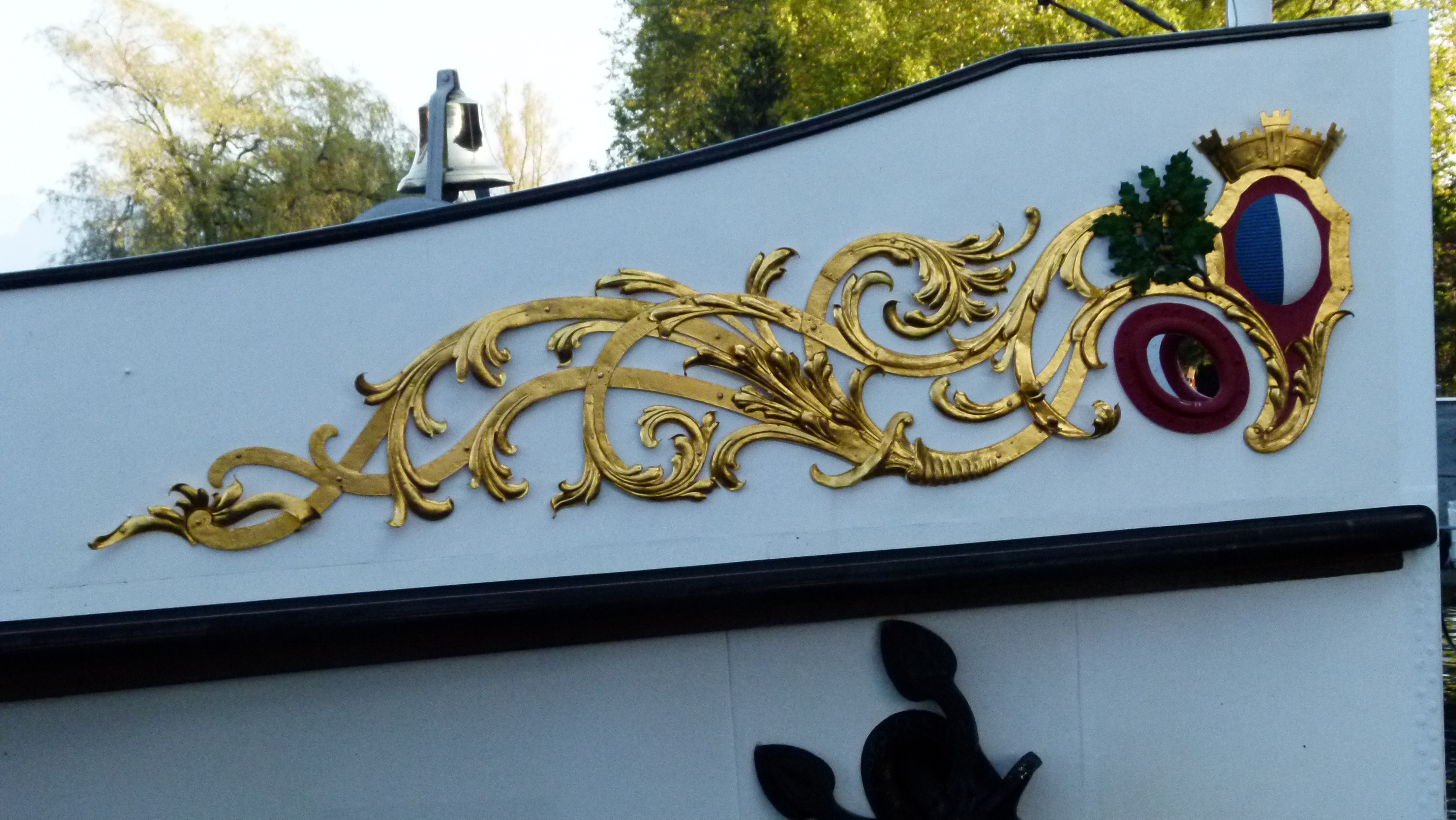
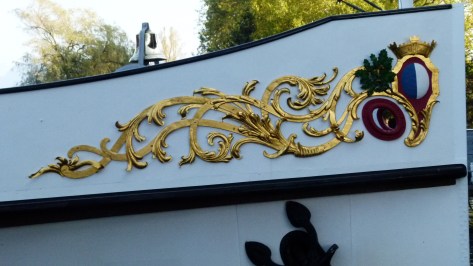
The captain proudly introduces us to his boat. It had been ordered from Germany in 1928. When the boat arrived, the engine broke down and was replaced by a Swiss Sulzer engine in 1929. Since that year this steam boat has been operating on the Lake of Lucerne. It absorbs 1200 persons and is the largest boat here. Today the capacity of this boat has been used up – I am sure.
P1060607

“An hour’s sail brought us to Lucerne again. I judged it best to go to bed and rest for several days…” Mark Twain concludes his report of climbing the Rigi (A tramp abroad, ch. XXX).
P1060603

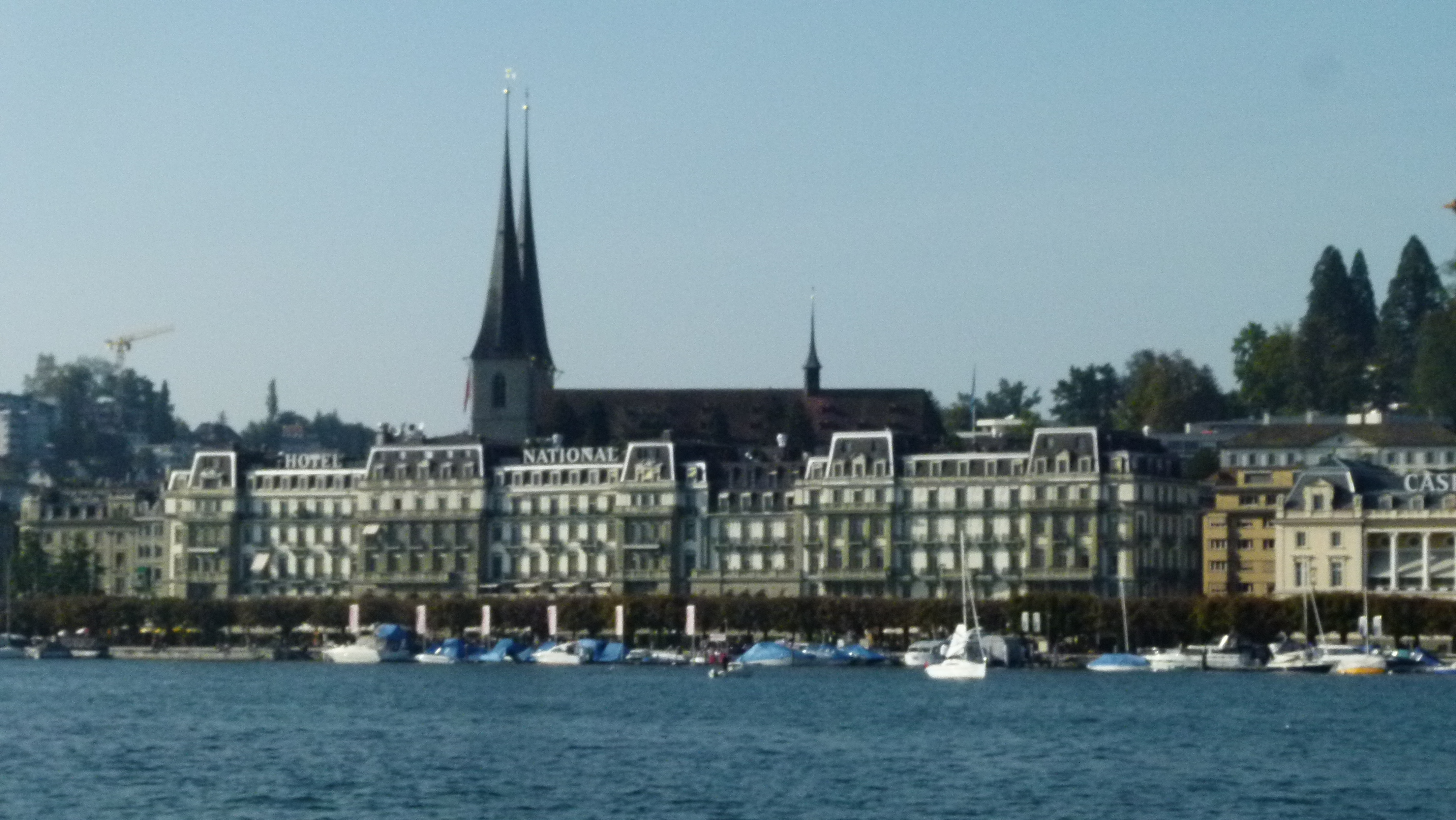
The two of us walk through the old and narrow streets of Lucerne and along the Reuss. All restaurants on the right hand shore are packed with people enjoying one of the few sunny days of this year. We go to the more quiet and less sunny left-hand shore and top the day with a wine and a goat cheese – both from the canton of Lucerne. And then one of the evening trains takes us back to Basel.


On the road – discovering treasures around Basel: To the southeast IV

Discovering treasures, while being forced to just walk around Basel

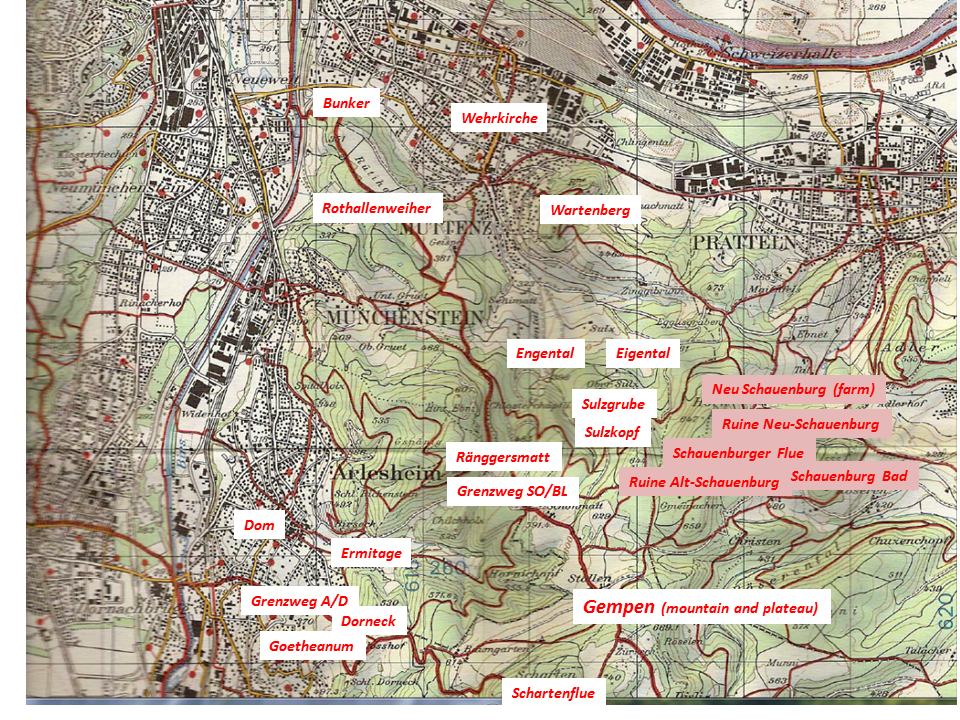
Now that I am able to drive again (how much I enjoy this!), I often park my car in Muttenz to explore the northern part of the Gempen plateau. My next target is the Schauenburg area with its Schauenburger Fluh (rock), its old and new castle (Neu/New-Schauenburg and Alt/Old-Schauenburg) and the related farm Neu/New Schauenburg).
The Schauenburger Fluh is easy to find; the border trail is marked clearly with the Swiss yellow rhombus and guides hikers safely to the Fluh (see my earlier blog). Also the way to Schauenburg Bad is clearly highlighted. But to find the ruins and understand which ruin is “new” and which is “old”, I had to come back several times.  Again and again I got lost, as the naming confused me and not all paths are on my map. My friends from Austria – the knowledgeable nordic walking guides – laughed and comforted me: “This happened to us as well – we always got lost, when we started exploring the Gempen plateau.”

This is the map showing the Wartenberg mountain (between Muttenz and Pratteln) and the long stretched plateau of the Gempen (about 500m above the valleys). The Schauenburg area is highlighted. Kartene

Source: Bundesamt für Landestopographie 213T – Basel

.

Old Schauenburg is new and New Schauenburg is old – yes!

There are two Schauenburg castles: Neu-Schauenburg (New Schauenburg) and Alt-Schauenburg (Old Schauenburg). However, “Old Schauenburg” is newer than “New Schauenburg”: The family Schauenburg built “New Schauenburg” in the 11th or 12th century and, in the late 13th century, added “Old Schauenburg”. In the 1356 earth quake of Basel both castles were destroyed. The family Schauenburg abandoned the newer “old” castle and rebuilt the older castle that now was named “New Schauenburg”.  At the end of the 14th century, the Schauenburg family died out. Around 1500, also the castle Neu-Schauenburg was abandoned. In the following centuries, the owners of the Schauenburg possessions surrounding the ruins changed repeatedly.

.

These are the ruins of Neu/New Schauenburg

Neu/New Schauenburg sits strategically on a small pass below the Schauenburger Fluh ( rock).

P1060230

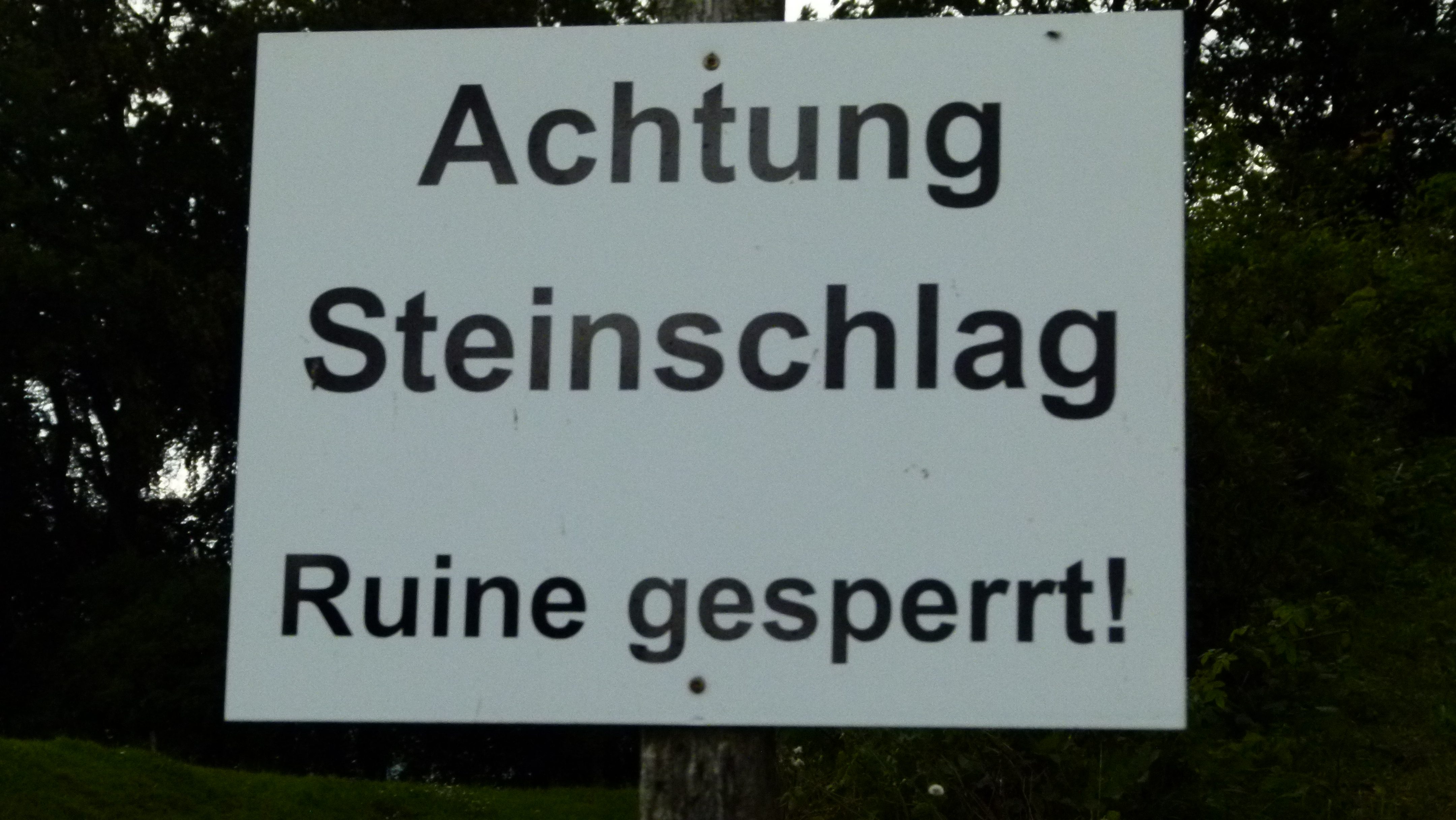
… and the ruins are not in a good state: “Attention: Falling Rocks. Ruin closed.” I think there is much left of this castle given the fact that it has not been inhabited for 500 years.

P1060236

.

These are the ruins of Alt/Old Schauenburg

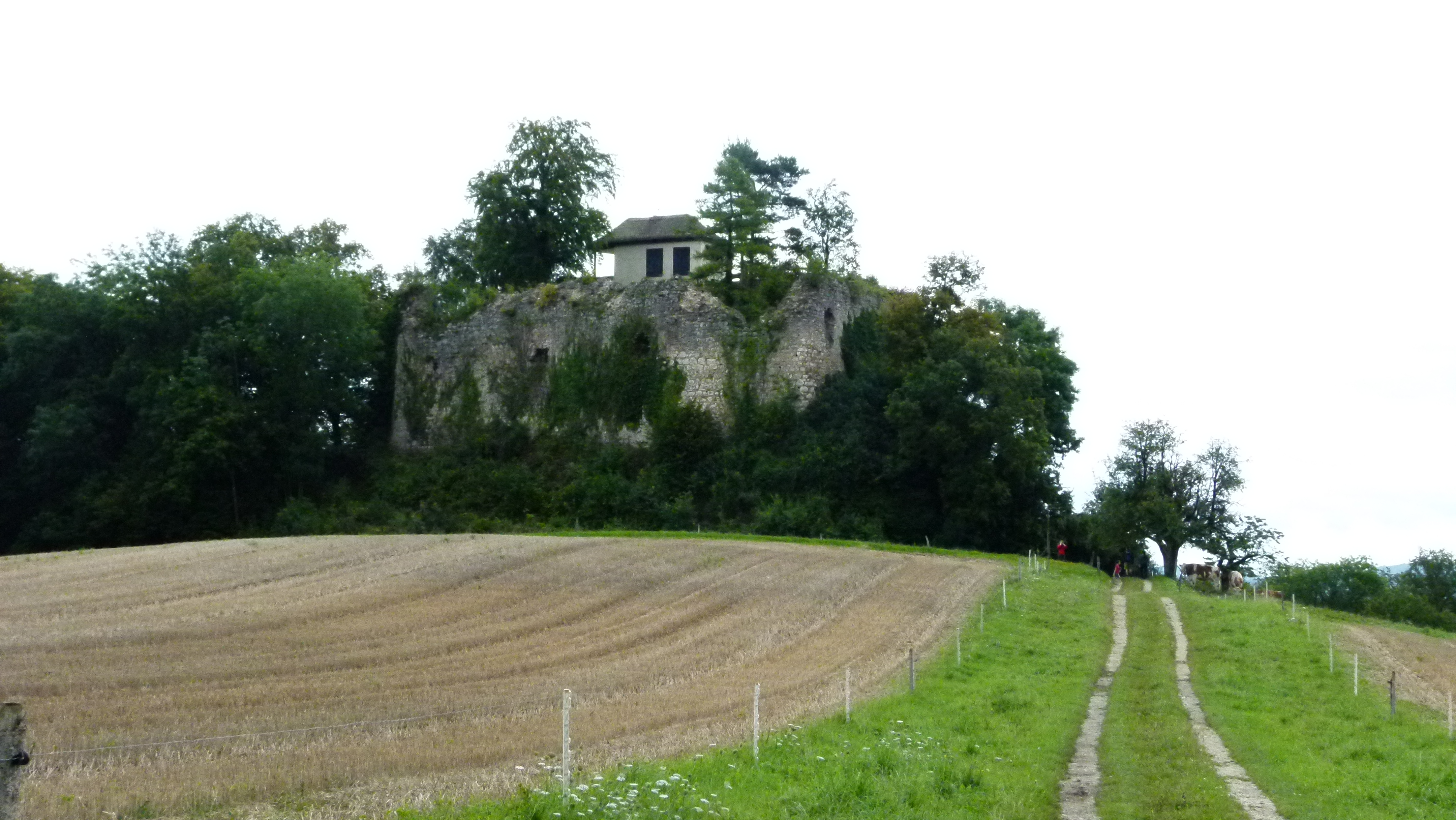
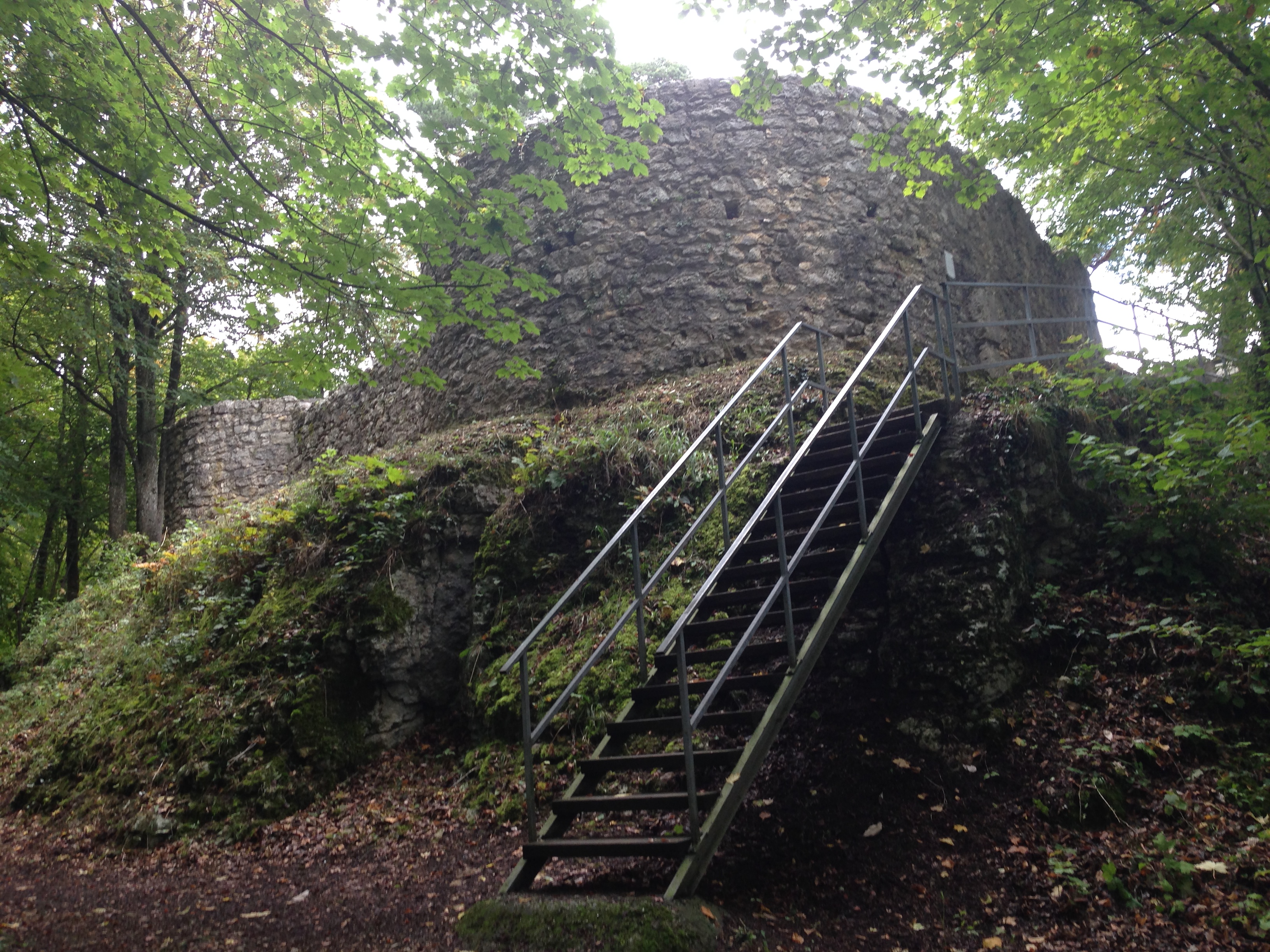
The ruins of Alt/Old Schauenburg are hidden in the forest on a rock called “Chleiflüeli” (literally translating to “little small rock”). It has not been inhabited since the 1356 earthquake of Basel and can be visited using the ladder – on our own risk.

IMG_0815

I climb the ladder to enter the ruin and enjoy the view. I look back to the Schauenburger Fluh (imagining it with the Roman temple – see my earlier blog). Below – facing the meadow – is a small white spot. This is Neu/New Schauenburg.

P1060456

From the north, there are two paths leading to “Alt/Old Schauenburg”, and both are unmarked: The first is a narrow footpath starting on Schauenburger Fluh and following the edge in the trees. The second is a road branching off earlier. Only with the hints of my friends from Austria I eventually found “Alt/Old Schauenburg”.

.

The farm “Neu Schauenburg” (Hof) – acquired by a “Wellness King

Below the ruins of Neu/New Schauenburg is the farm “Neu Schauenburg”.

P1060226

The origins of the farm go back to a monastery built in the 15th century. First monks lived here, and in 1502 nuns took over (Beguins or – in German – “Beginen”). After the reformation with Basel becoming protestant, the monastery became just a farm. The last farmer is now retiring. According to “Schweiz am Sonntag”, the farm “Neu/New Schauenburg” has recently been acquired by a “Wellness King”, in May 2014.  The Wellness King plans to build appartments for families that want to live with their grand parents. In addition he intends to reactivate the bath tradition by installing a sauna and a steam bath.

.

Bad Schauenburg

Below the Schauenbuger Fluh and the Chleiflühli is the hotel/restaurant Bad Schauenburg.

IMG_0499

Here I spent several trainings thirty years ago, when working for Ciba-Geigy and later for Hoffmann-La Roche. At that time I did a lot of jogging in the area. But when running, I did not notice the gems that I discovered now.

.

There are more gems just near Basel

The area around the Schartenfluh hides more gems on the Gempen plateau that I I will talk about later.