Around Basel: Historical secrets on the hike from Rodersdorf to Flüh

The area around Basel is full of secrets. 

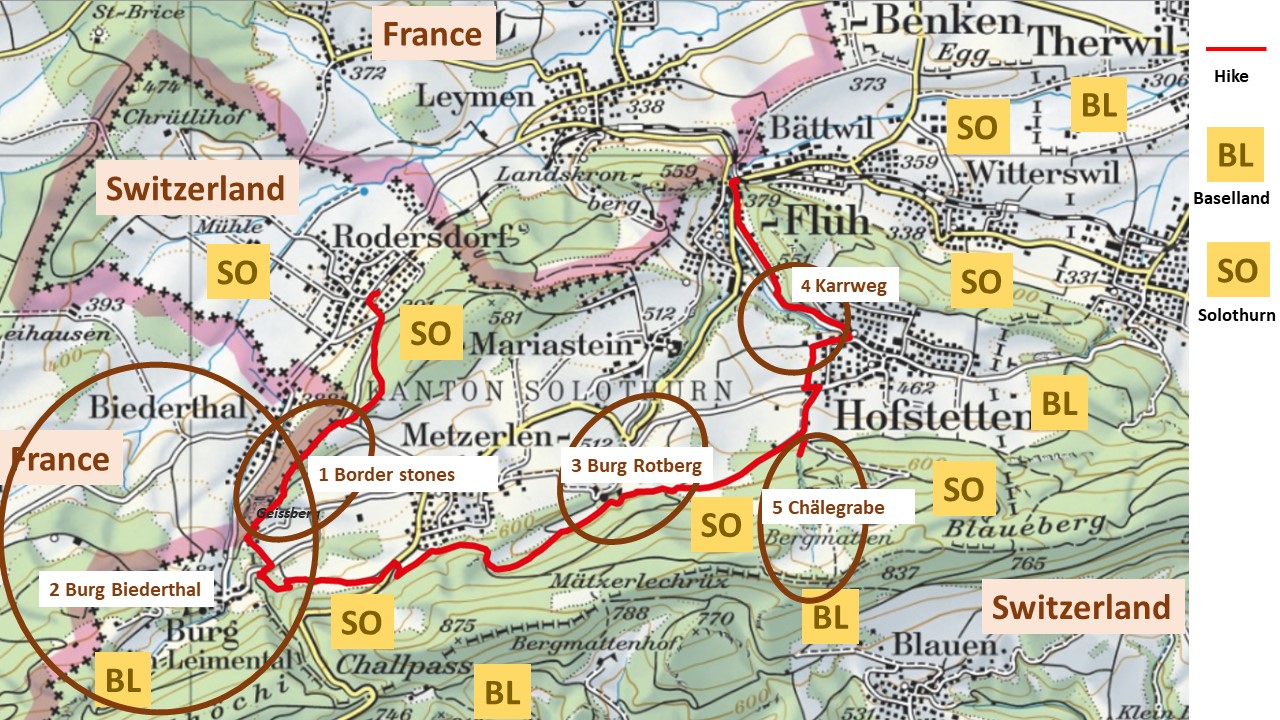
Source: Swiss Mobile (with my notes added) 

In October 2020, I hiked from Rodersdorf to Flüh (red line), and discovered five secrets:

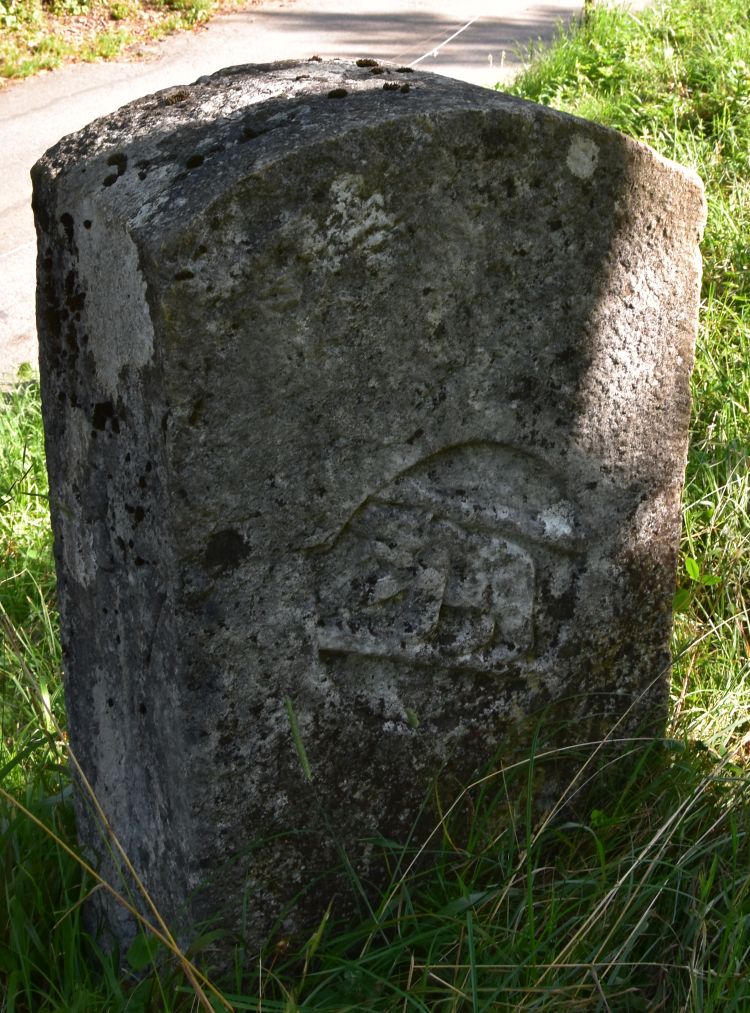
  1. Historical border stones from the years 1817, 1890 and 1951 between France and Switzerland – why from 1817? And can you see the “D” (Germany or “D”eutschland) hidden “behind” the “F” for France? 
  2. Biederthal and its castle, Burg (Biederthal) – why are they separated by the border between France and Switzerland?
  3. Why does the canton of Solothurn (SO) “own” an exclave within Basel (BL)? What can the Burg Rotberg tell us about this?
  4. Why did the Romans dig a cart road (“Karrweg”) into the rocks to get from Flüh to Hofstetten – avoiding the valley? 
  5. The Chälegrabe above Hofstetten – why is this spectacular gorge called “Chäle”-Grabe”?

In this blog, I will start with secrets #1 and #2, while leaving the other secrets for the next blogs.


1 The historical border stones between Metzerlen and Burg

Where the (car) road from Rodersdorf up to Metzerlen reaches the highest point of the pass, it touches the border between France and Switzerland.

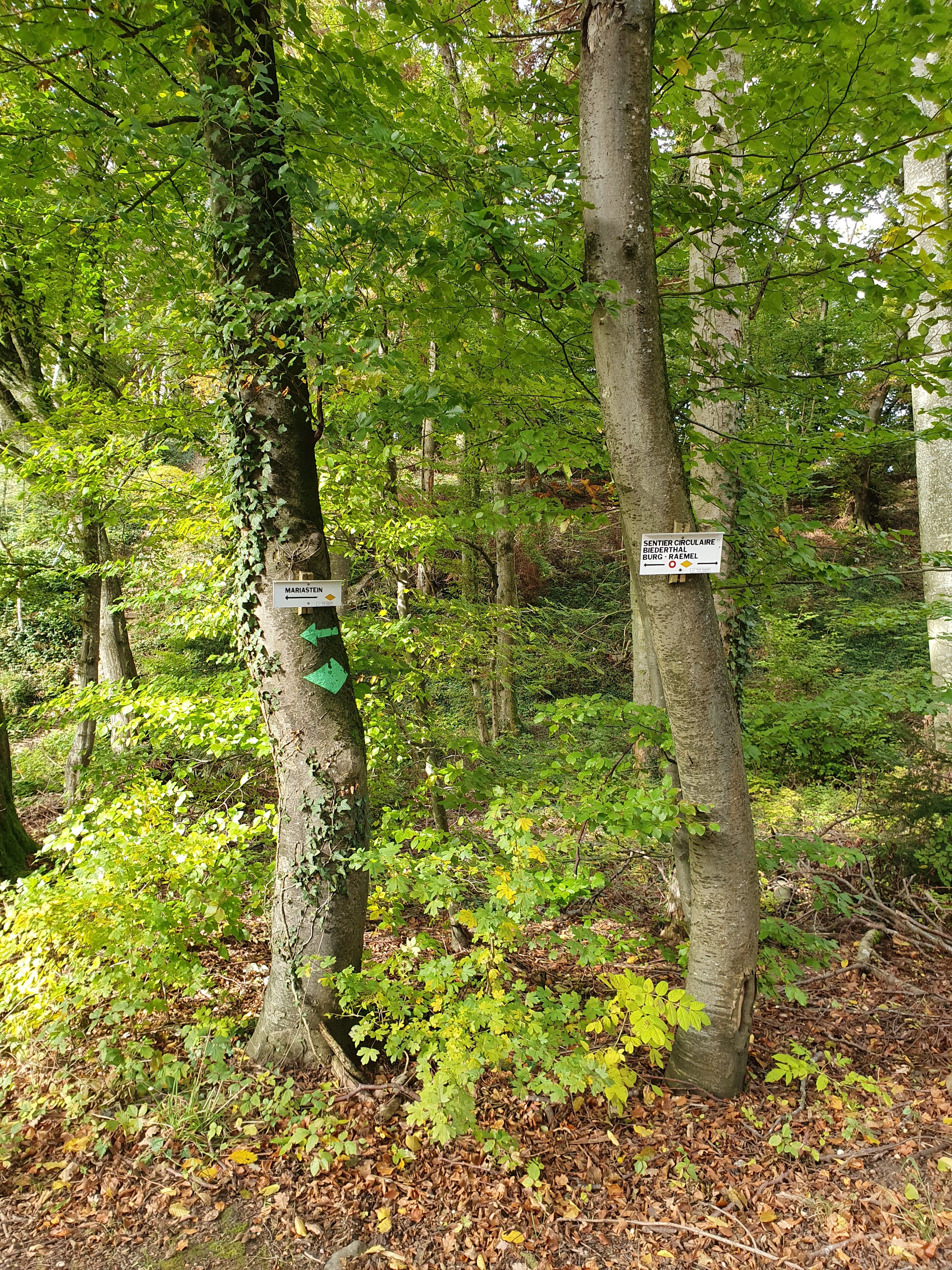
The hiking signs to the Remel (or Raemel in French) are on the French side.  

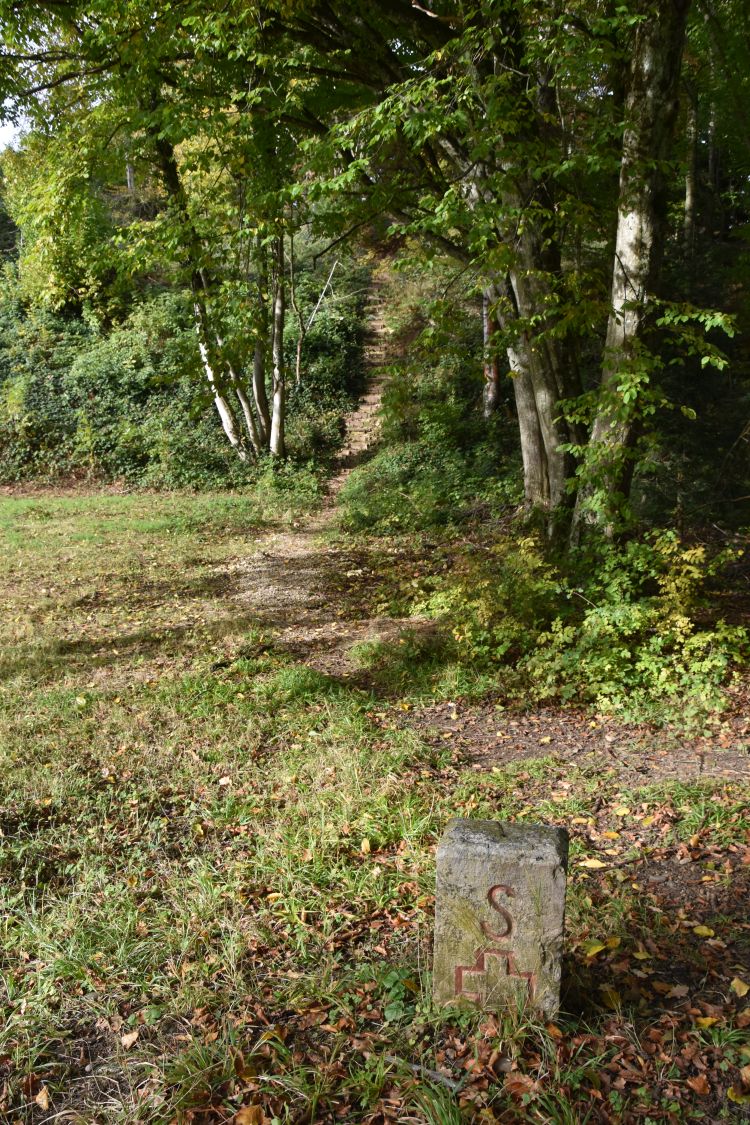
Here we find stone #109 that is from 1890. It shows the edge of the French/Swiss border pointing to the wooden steps,…

… where the path lined with more historical border stones starts. The stones are either

  • from 1817 (just after the Congress of Vienna, 1815),
  • from 1890 (the Alsace belonged to Germany since 1870/71) or…
  • from 1951 (which happens to be my year of birth). 

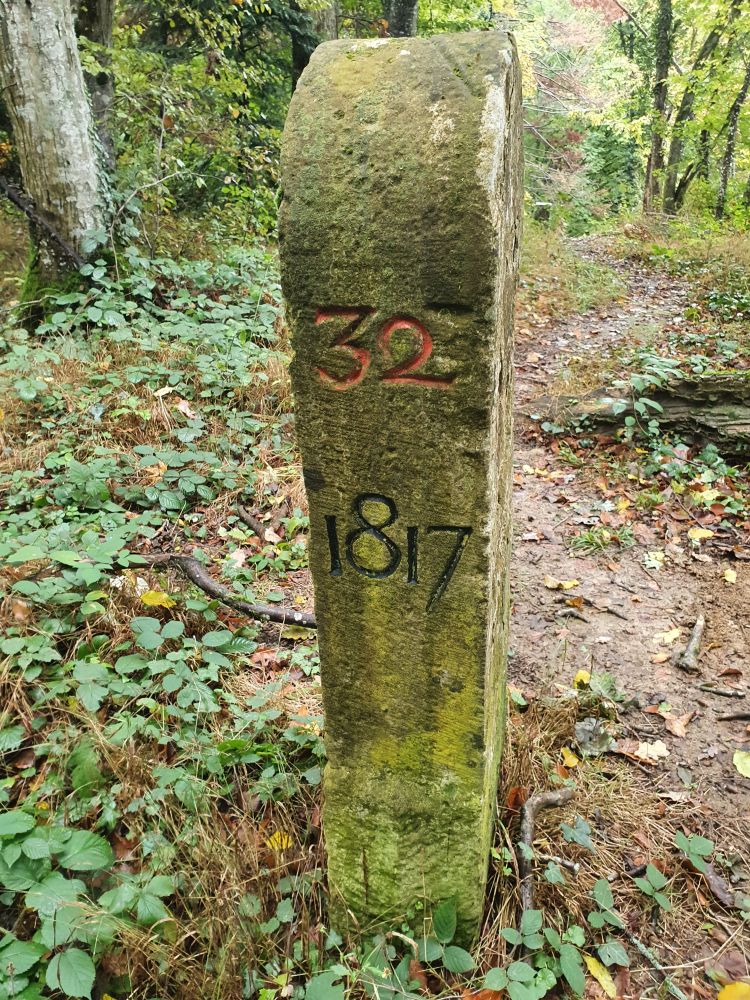
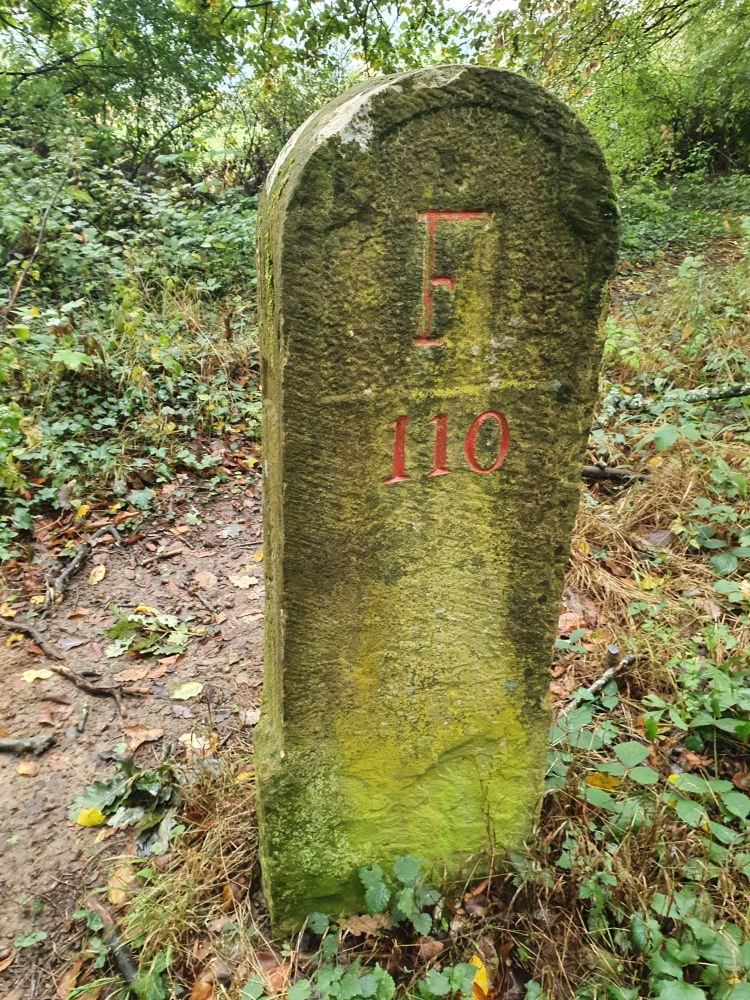
After having climbed the wooden steps, we come across stone #110 from 1817. Why 1817? At the Congress of Vienna, in 1815, statesmen and diplomats had reorganized Europe, which needed to be documented.

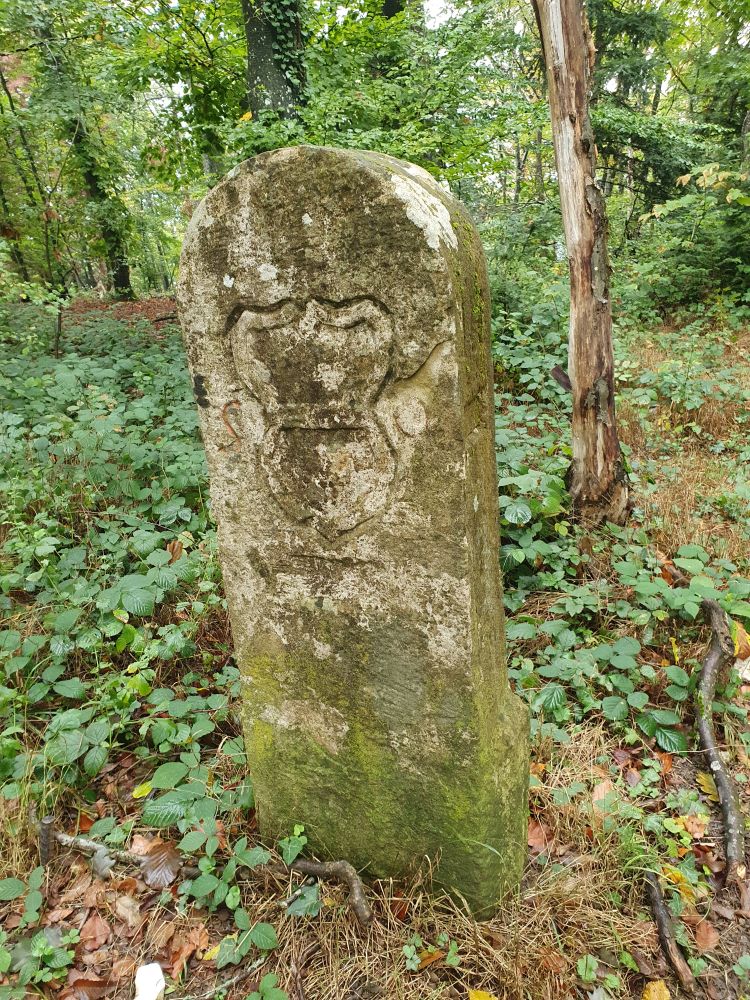
All border stones from 1817 show the coat of arms of the Swiss canton Solothurn with S and O engraved to the sides.

On the French side, the French engraved the fleur de Lys. After 1870/71, the Germans, having conquered the Alsace, removed the flower to replace it with “D” for Germany. After World War I (1918), the Alsace became French again, and the French changed the  “D” into the “F” for France, but the “D” can still be seen (border stone #110). 

There must have been an inventory of the country borders in 1890. The Alsace was still part of Germany and Bismarck had just resigned. The 1890 stones have an “S” with a cross engraved on the Swiss side (stone #116).

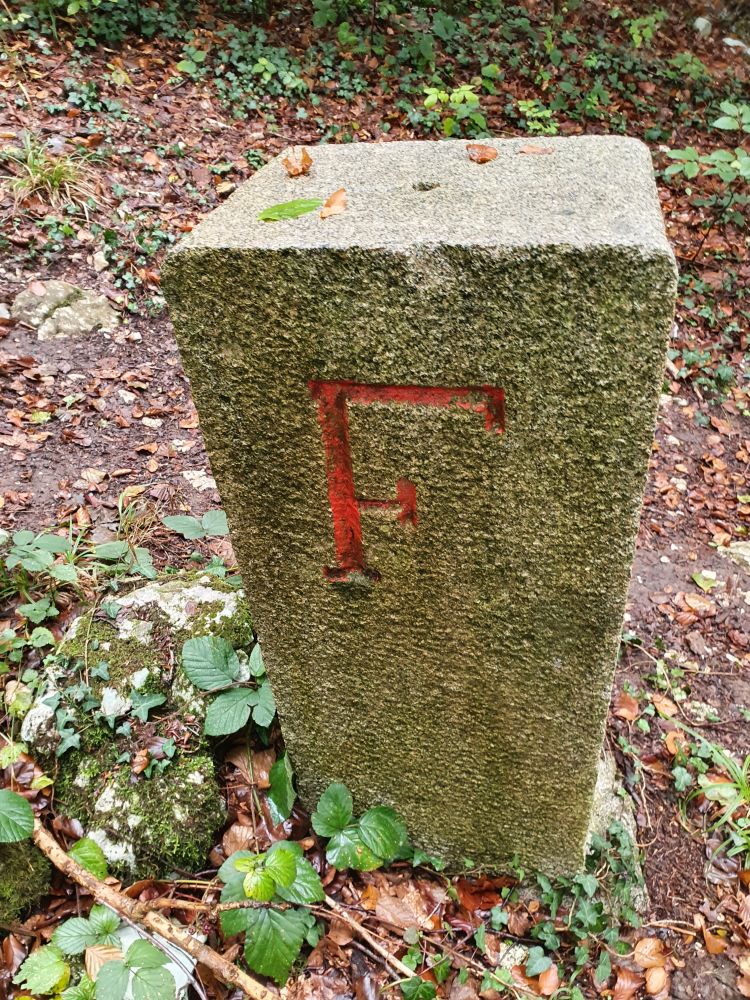
The stones from 1951 have been produced more “efficiently”: A plain “S” and a plain “F” mark the countries (stone #115).

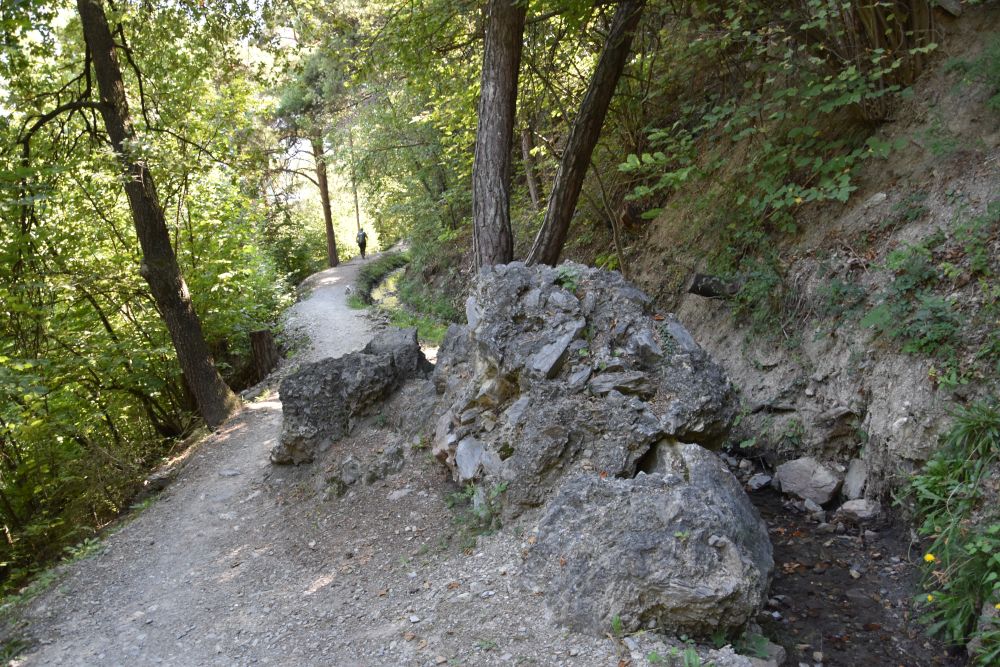
The pretty path with the border stones winds through the forest and crosses the romantic Y-shaped canyon of the Geissberg above Biederthal.

At Burg, we leave the canton Solothurn. We are now in the former Prince-Bishopric of Basel. 


2 Biederthal and its castle Burg (Biederthal) – why are they separated by the border between France and Switzerland?

In 1168, Friedrich Barbarossa, the one with the red beard, gave the area to the Habsburgians, as a fief. They built the castle or Burg Biederthal in 1250 to watch over their tithe courtyard Biederthal (Dinghof). In 1269, the archbishop of Basel bought just the castle/Burg of Biederthal, without its tithe courtyard Biederthal, which remained with the Habsburgians and later became part of France. This is why the country border separates the castle from “its” village. Burg now became a village of its own.

In 1946, Burg selected this coat of arms.

Source: wiki entry for Burg

Where does the coat of arms come from? The answer: The archbishop of Basel granted Burg as a fief to the noblemen von Wessenberg. They owned it from 1401 to 1793. Around Burg  we can find the historical border stones of the Wessenberg. One well-kept stone is a few meters below the summit “Remel/Raemel” above Burg. From the Wessenberg, the community of Burg took the coat of arms in 1946.

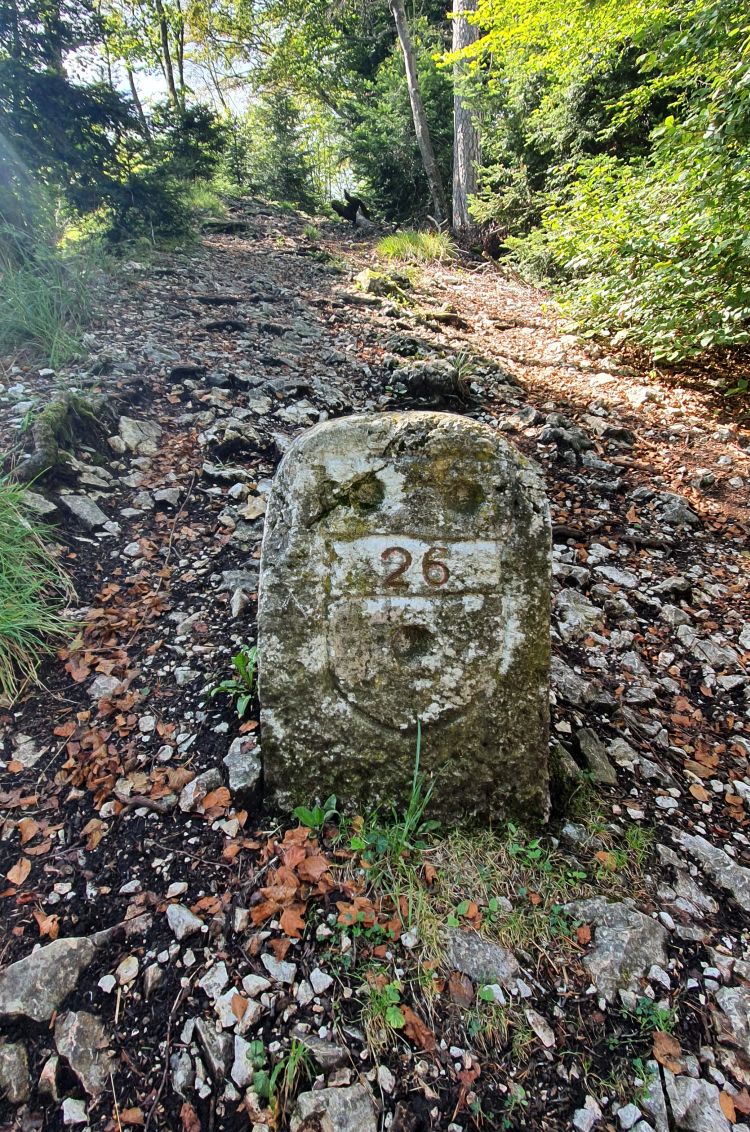
In 1815, the Congress of Vienna decided to merge the former Prince-Bishopric of Basel with Switzerland; Burg became part of the canton of Bern, belonging to the district Laufental. Later, in 1993, the Laufental (with Burg) voted to join the canton of Baselland instead. Nevertheless, many border stones around Burg have kept showing the coat of arms of Bern, the bear. This stone with the bear of Berne marks the border with France, just below Burg.

Border stones from 1817, 1890 and 1951 and a castle separated from “its” village by the border of France and Switzerland – yes, the area around Basel is full of secrets that can be discovered hiking.


Sources: https://www.baselland.ch/politik-und-behorden/gemeinden/burg-il/unsere-gemeinde/geschichte-wappen


Four days at Salgesch – discovering Leukerbad, the underground lake and the Pfynwald

In September 2020, we spent four days at Salgesch. In my former blog, I have already talked about discovering Salgesch and the area around it.

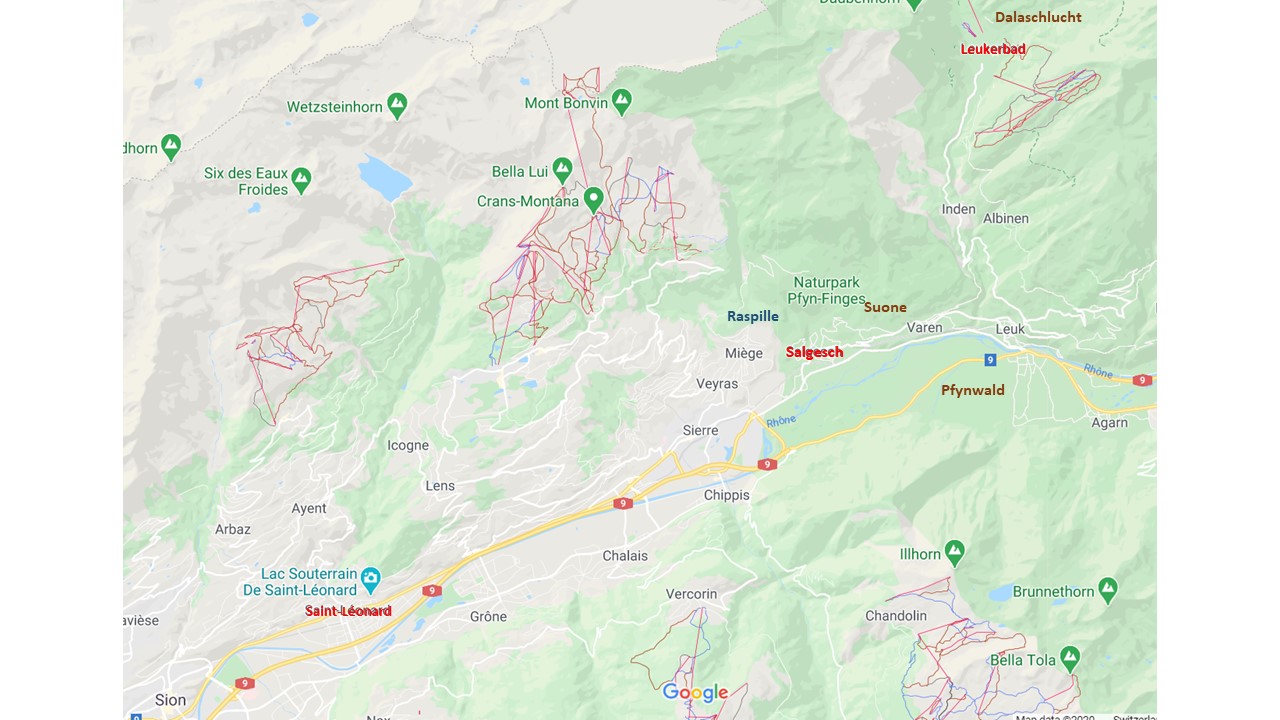
Let us now move a little farther away, to Leukerbad, to the underground lake Saint-Léonard near Sion and to the Pfynwald or Forêt de Finges.

Source: Google Maps


Leukerbad – discovering the hot springs

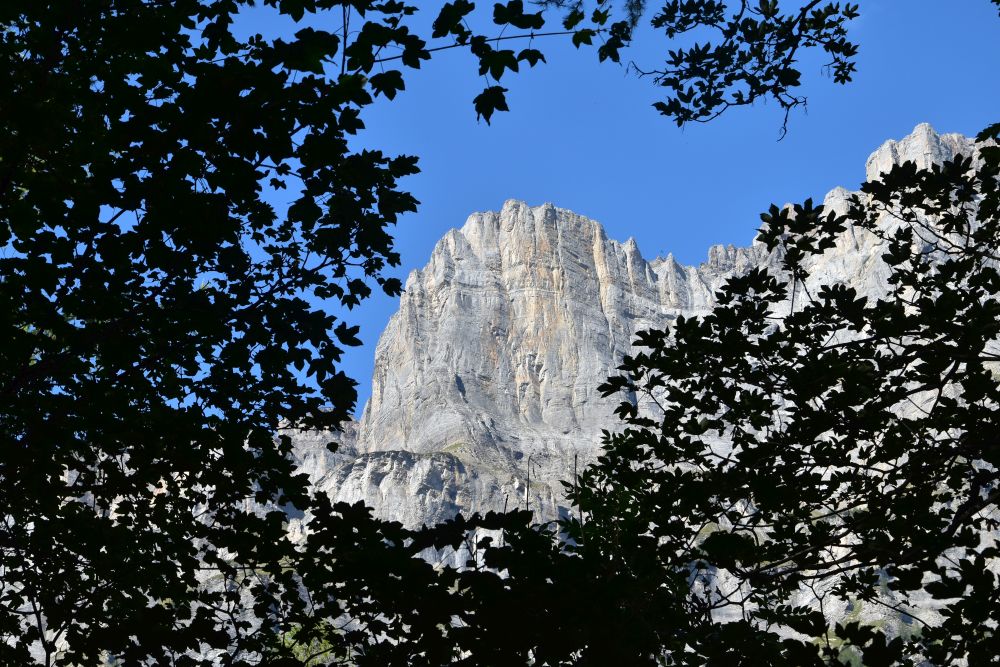
On our second day at Salgesch, we visit Leukerbad, located on 1400m above sea level surrounded by an amphitheatre of steep rocks. Crossing these steep rocks, the Gemmipass connects Leukerbad in the Valais with Kandersteg in the Bernese Alps.

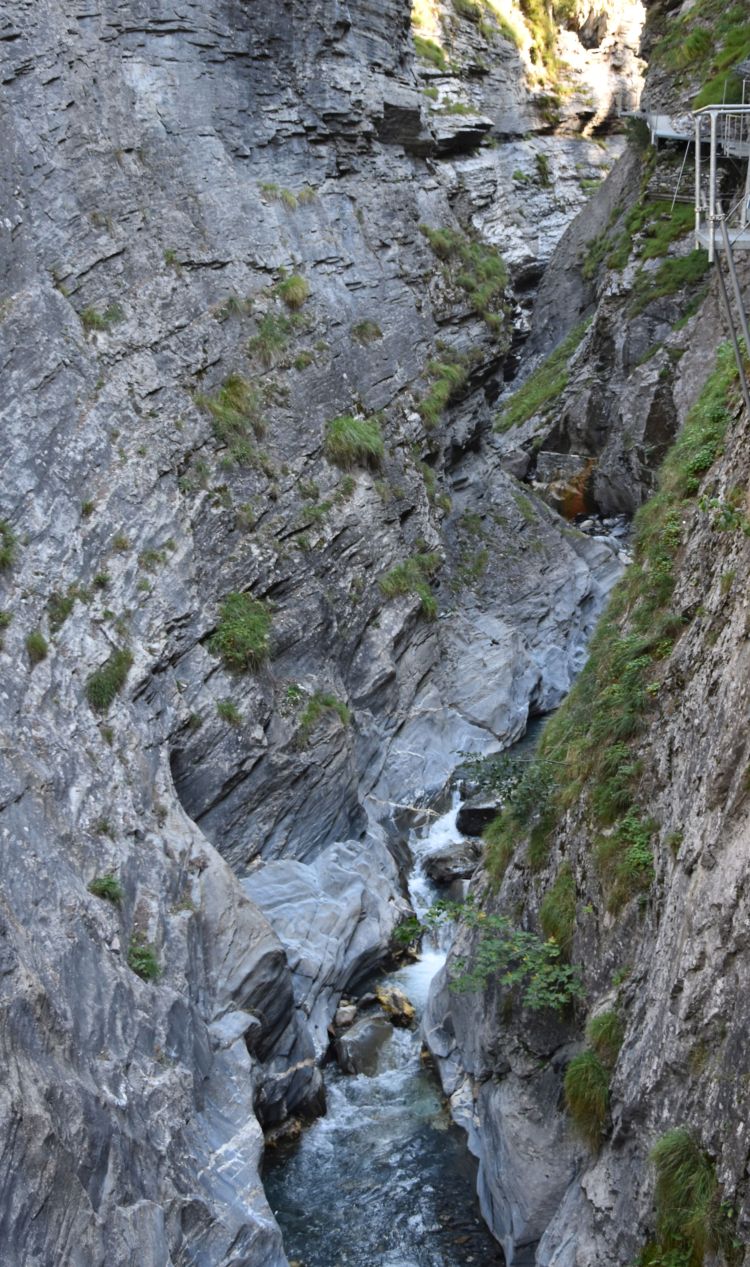
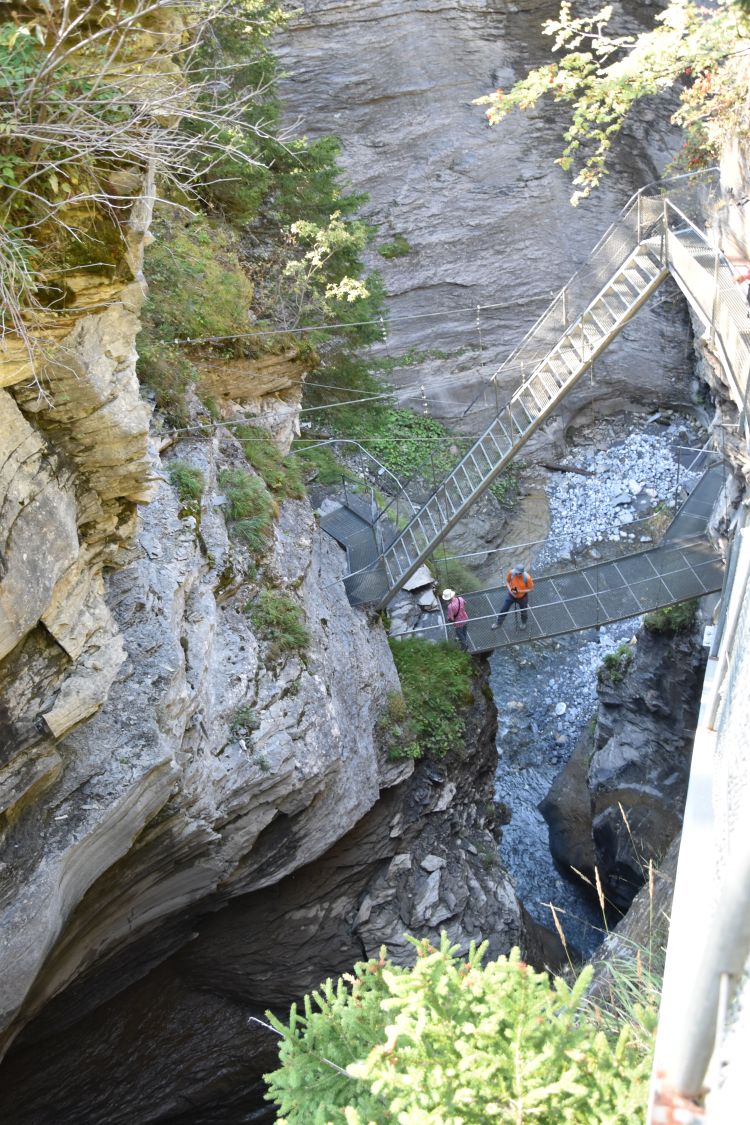
Emerging from these steep rocks, the Dala has eroded a deep gorge above Leukerbad. We explore it using the so-called “Thermal-Springs Gangway”.

I  hear a a rattling noise. My friend uses the rope winch to pull up a bucket from the well basin far below. The water in the bucket and hence in the well below us is warm, almost hot.

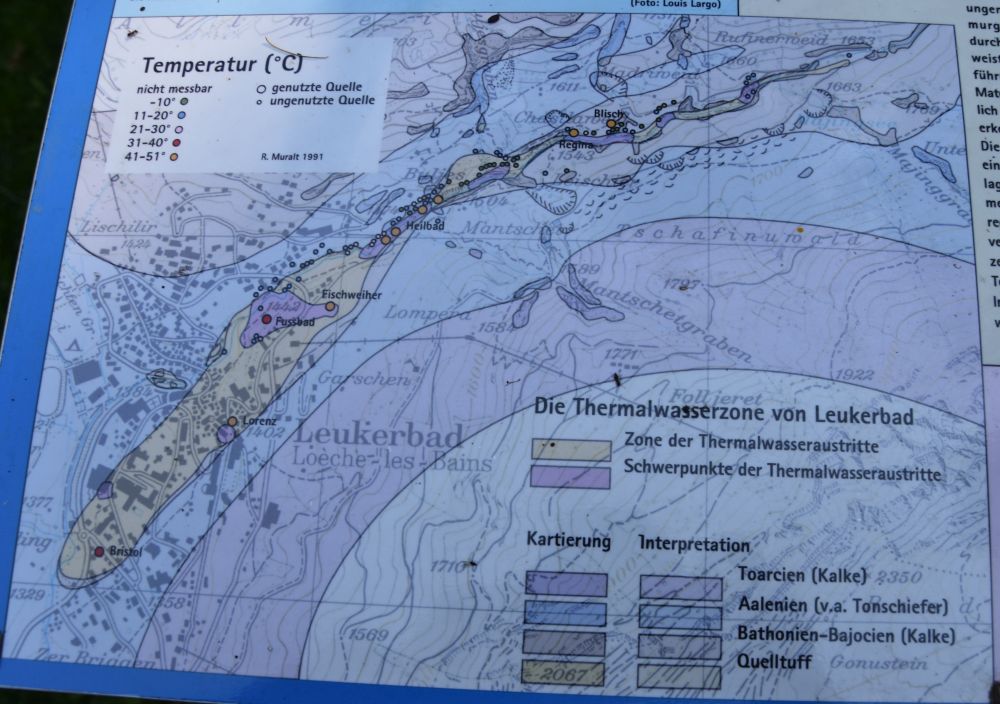
This is one amidst 65 hot springs in the Dala canyon, as this panel tells us: The yellow-brownish area follows the Dala, and it is here, where the 65 hot springs of Leukerbad have their sources. Some of them have temperatures up to 51 degrees.

The water emerges in the Dala canyon, after having been heated up at 500m below sea level. Originally it is rain water from the mountains east of Leukerbad (Torrenthorn and Majinghorn) that takes about forty years to seep deeply into the soil, where it is heated up to emerge in this canyon. Already the Romans made use of the hot springs of Leukerbad – the hottest in Switzerland.

Now I understand, why the gangway along the Dala gorge is called “Thermal-Springs Gangway” (Thermalquellen-Steg).

A series of ladders take us out of the impressive Dala canyon.

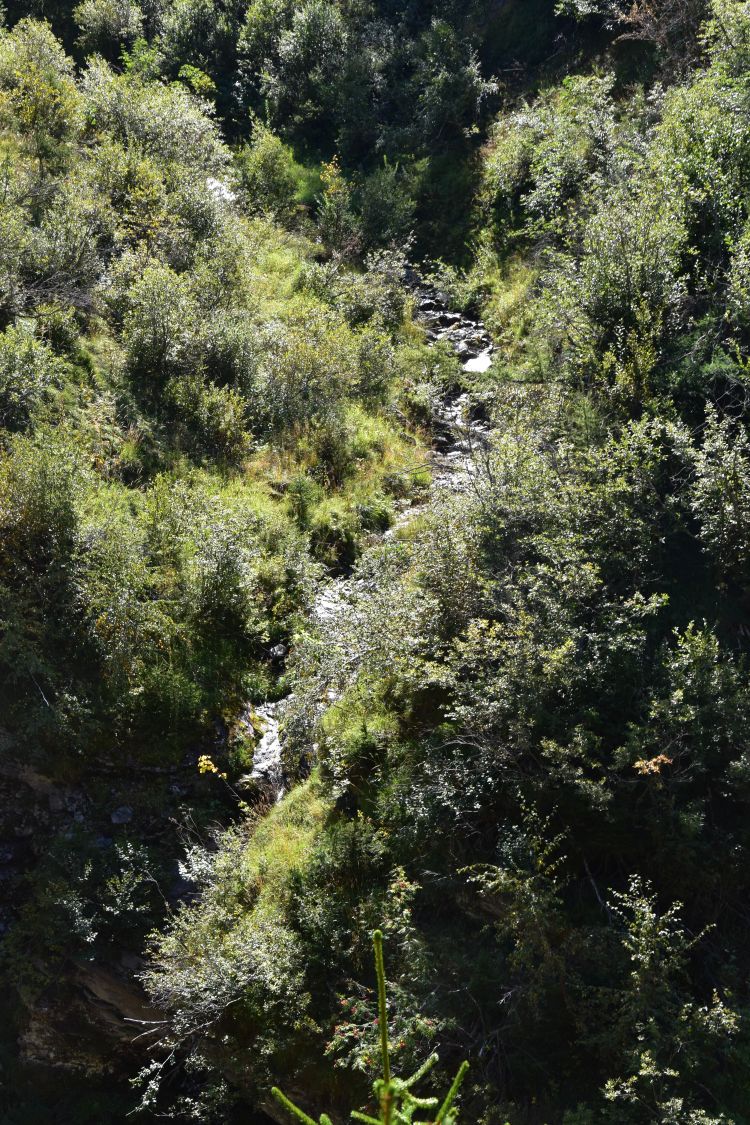
Looking at the creeks and meadows nearby, I can hardly believe that this narrow and steep canyon is so close.

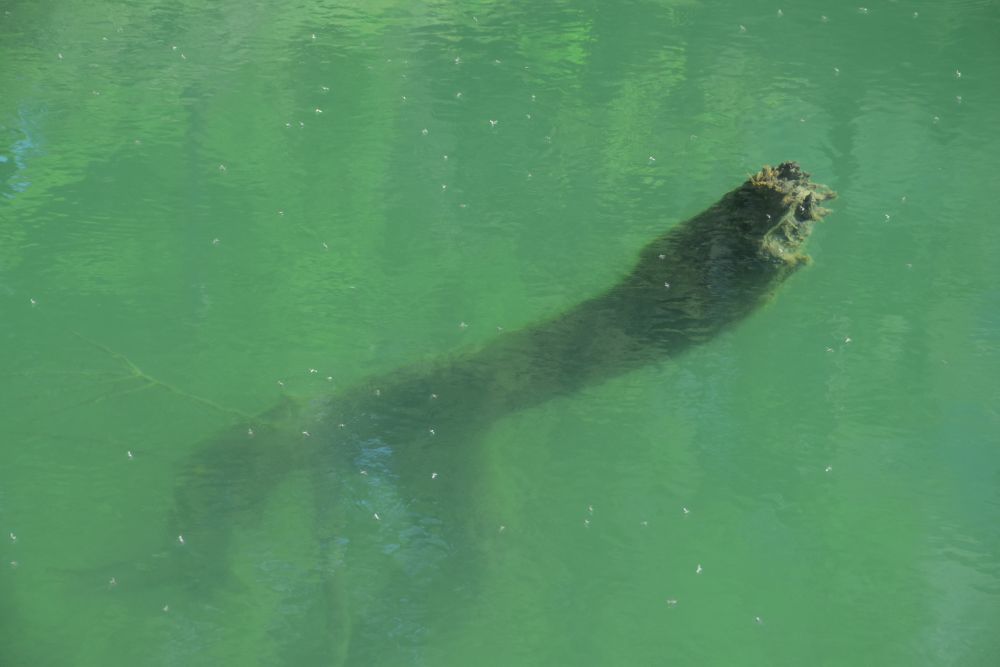
In the warm sunshine, we eat our sandwiches at the romantic green lake Majing…

… with some branches in it.

We return to Leukerbad. Strolling through the village, we touch the water emerging at the fountains – most of it is warm, one fountain is even hot.

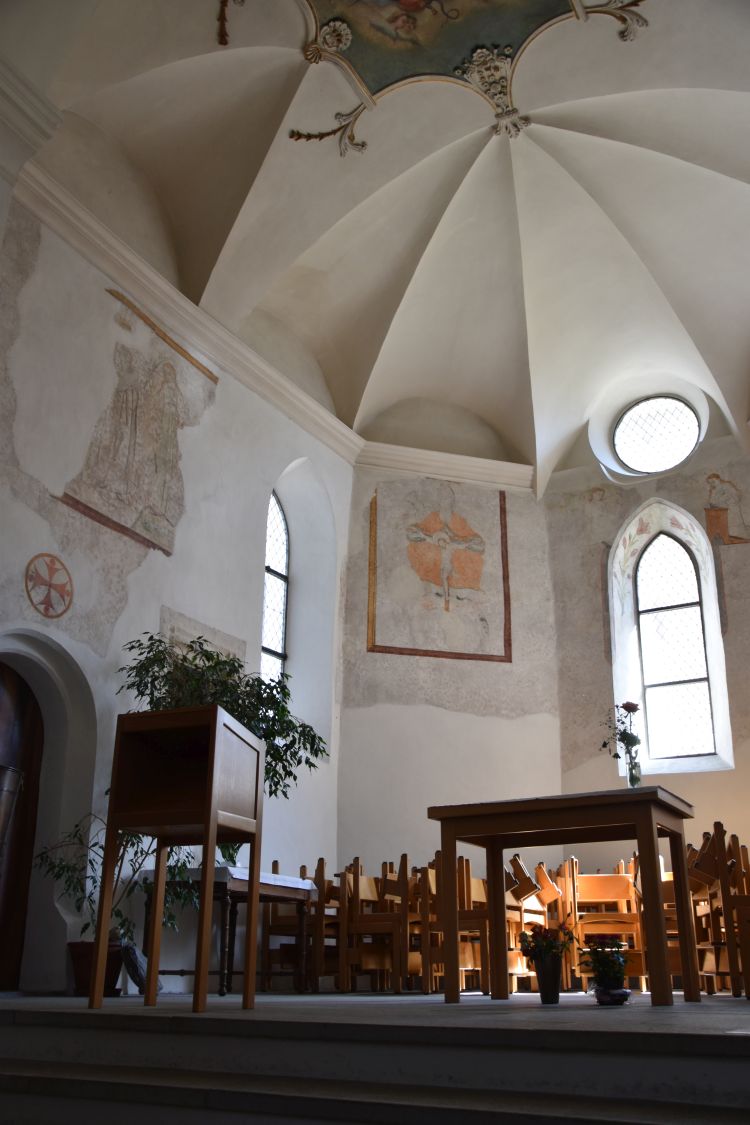
We visit the church of Leukerbad. The original choir is from the late 15th century. Some frescos have been restored such as the crucifixion at the back. In the late 19th century, the church was enlarged and the old choir became a side chapel.

We round off our day at the Alpentherme enjoying the gorgeous view of the mountains in the outside pool, while being massaged by bubbling jets.


The underground lake Saint-Léonard

On our third day, the sky is cloudy and temperatures are cooler. Just right for a visit of the underground lake Saint-Léonard that I had always wanted to see one day.

At the entry gate, we have to rush. A few seats are still free in the boat, and we can immediately join the next tour that is about to start. Ladders lead down to the cave. The boat takes us along the lake that is some 300m long and 20m wide. At the end, we find another boat…

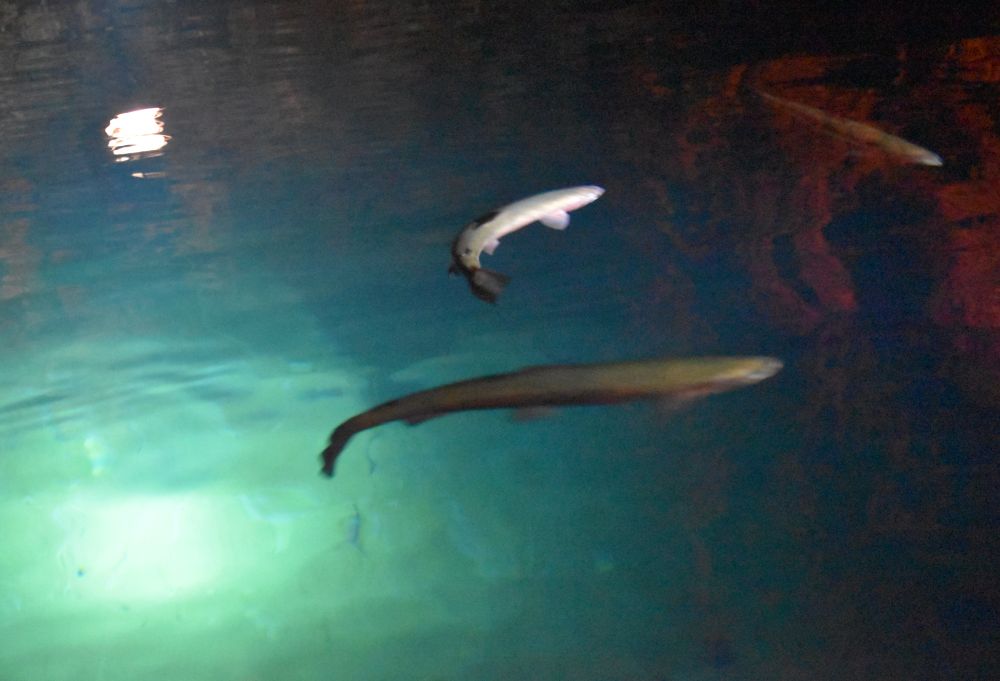
… and the trouts swimming around with agility and indicating that the water quality is good.

The guide explains to us that the underground lake has been discovered in 1943. At that time, the water level was much higher. An earthquake of 5.6 on the Richter scale made the water level go down. In 1949, the cave was opened to the public.


The Pfynwald / Forêt de Finges

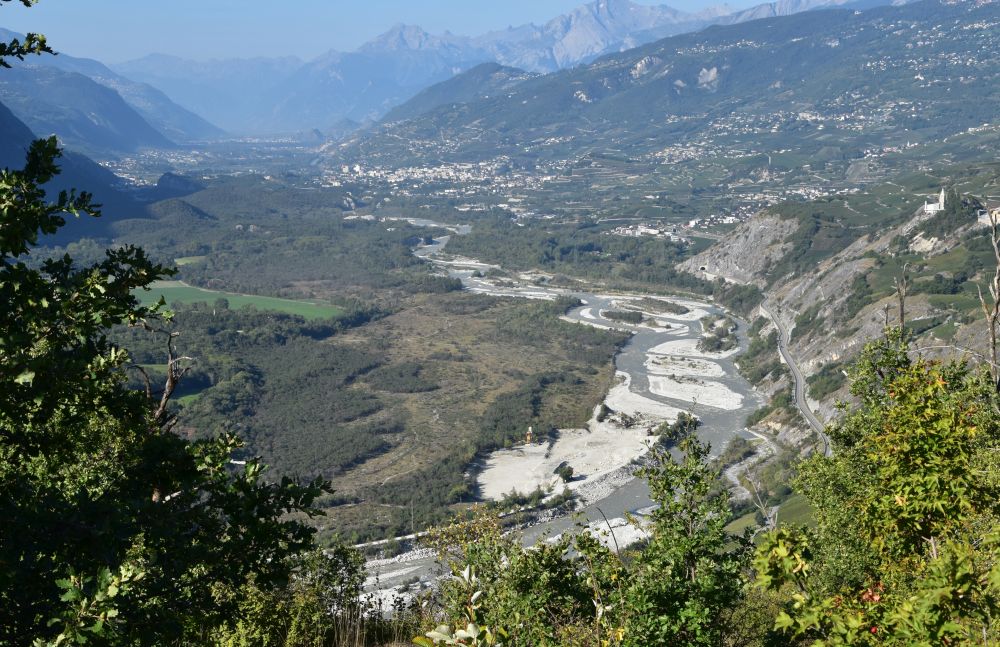
Below the village Varen, the Rhone (called “Rotten” in the Upper German speaking Valais) meanders along the Pfynwald (on the left side of the valley, photo taken from the road to Leukerbad). In the upper forest, the place names are in German and in the lower forest, they are in French, as the language border between the French and the German language crosses the Pfynwald.

The Pfynwald is a nature reserve, and it is one of the largest contiguous pine forests in the Alps.

With astonishment, we notice quite some birch trees amidst the pine trees.

South of the Pfynwald are the Illgraben (canyon of the Ill creek) and the Illhorn (the corresponding mountain peak). Very steep and rough here.

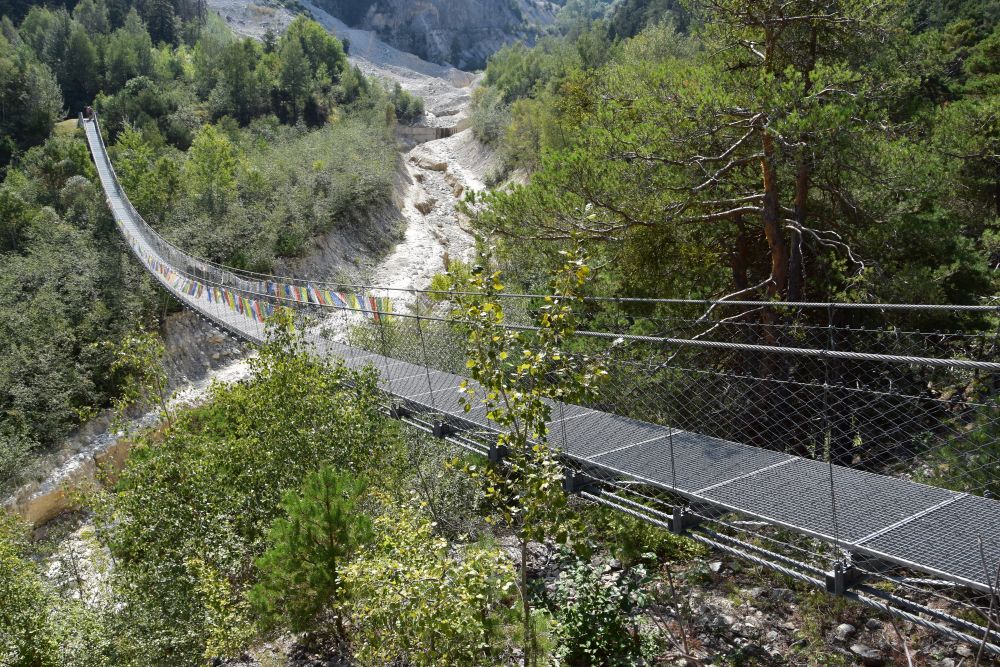
The Bhutan bridge crosses the canyon of the Ill creek. The suspension bridge symbolizes the link between the languages (French and German) and between different cultures (Alps and Himalaya).

This bridge was engineered in Bhutan and implemented by a construction company of the Valais, guided by an engineer of Bhutan. It was an interesting cooperation, where both sides learnt from one another. This is what the panel on the other side of the bridge explains.

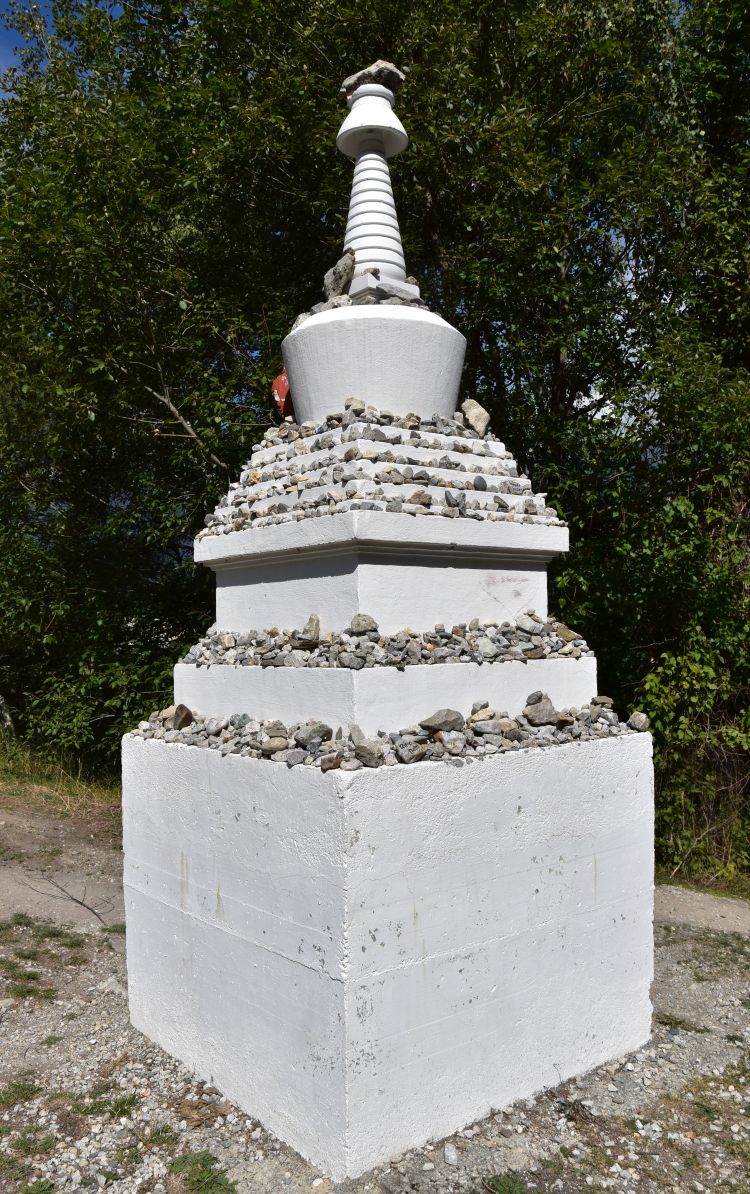
The Buddhist sanctuary, a “chort”, greets hikers at the foot of the bridge. It has been built and blessed by Bhutanese Lamas from France.

After a two hours’ walk in the forest, we return to Salgesch to have our last wine tasting at the cellar of our winegrower and to eat a delicious Raclette at the restaurant Barrique in the centre of the city.


Enjoying the balcony of our BnB

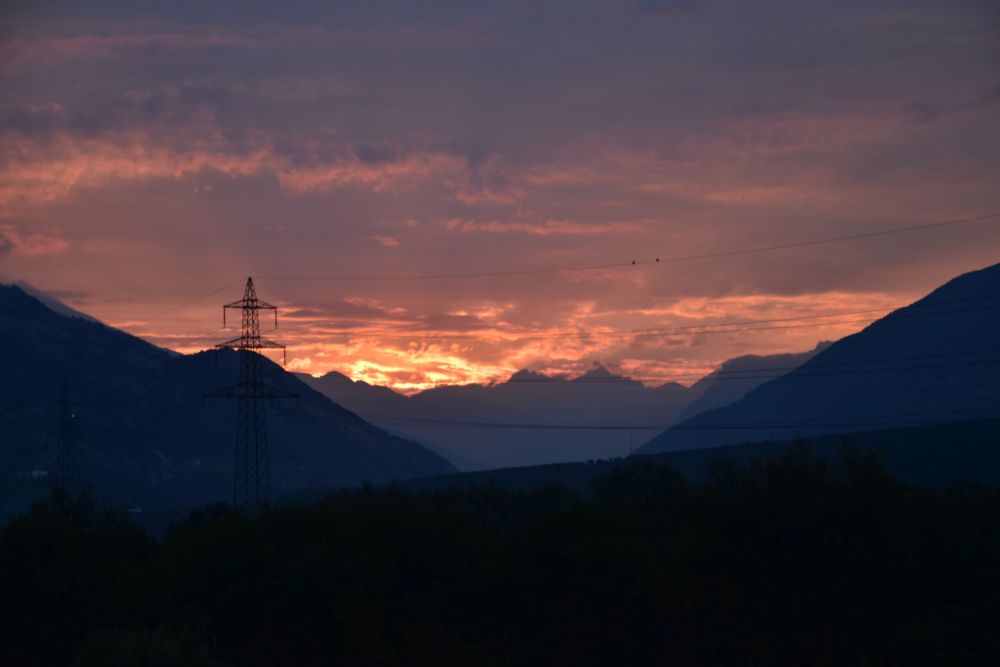
The south facing balcony of our BnB with the view of the Pfynwald (forest) and the Illhorn (mountain peak) was a great place to be in the early morning, when the sun rises behind the glass wall…

… or when it rises behind the clouds.

After our last late summer evening on the balcony, we say good-bye to Salgesch and the Valais. We leave it using the Grimsel, one of the passes that the Alemanni used to migrate to the Upper Valais a 1000 years ago. We think of returning to Salgesch next year, when we will have run out of wine from the Valais once again.


Soruces:
Hans-Ed. Fierz David, “Über die Leuker Thermalquellen…“, Zürich 1942.
Panels along the Thermalquellen -Steg
André Beerli, “La Suisse Inconnue: Valais”, TSC and Shell Switzerland, oJg.

Four days at Salgesch – hiking in and around the vineyards

In September 2020, I stayed four days at Salgesch. With a friend, we had booked a studio in the beautiful BnB Vino Veritas.

Source: Google Maps

Let us start by exploring the village centre of Salgesch and walking above Salgesch along the Suone (water channel) to the Raspille canyon.

Salgesch – the centre

Salgesch is surrounded by vineyards that form kind of an amphitheatre above the village.

Some vineyards are very steep.

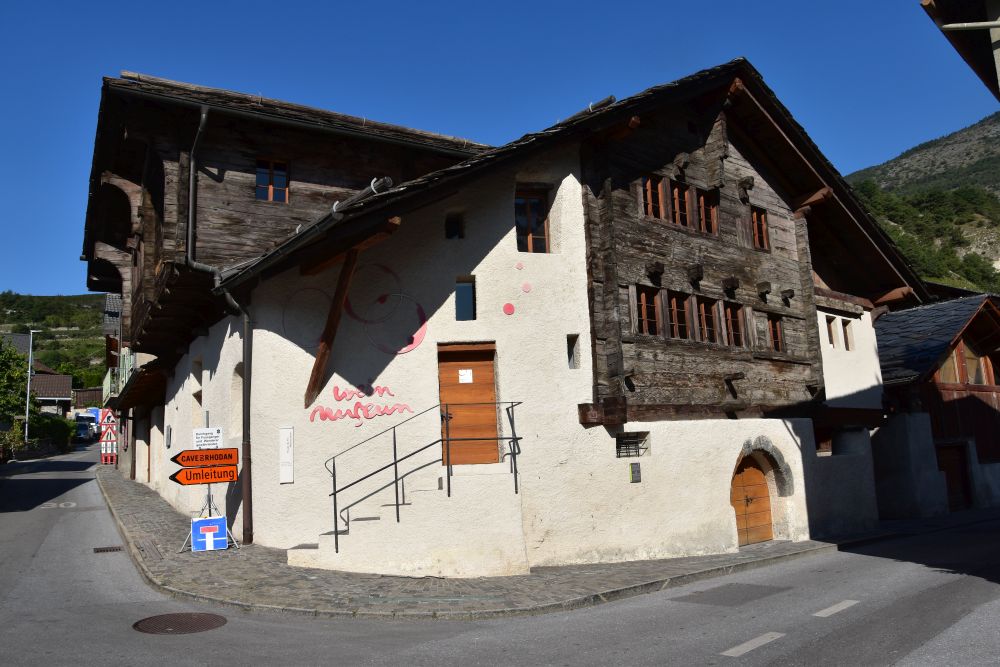
The centre of Salgesch is pretty with houses typical of the Valais…

… such as the wine museum.

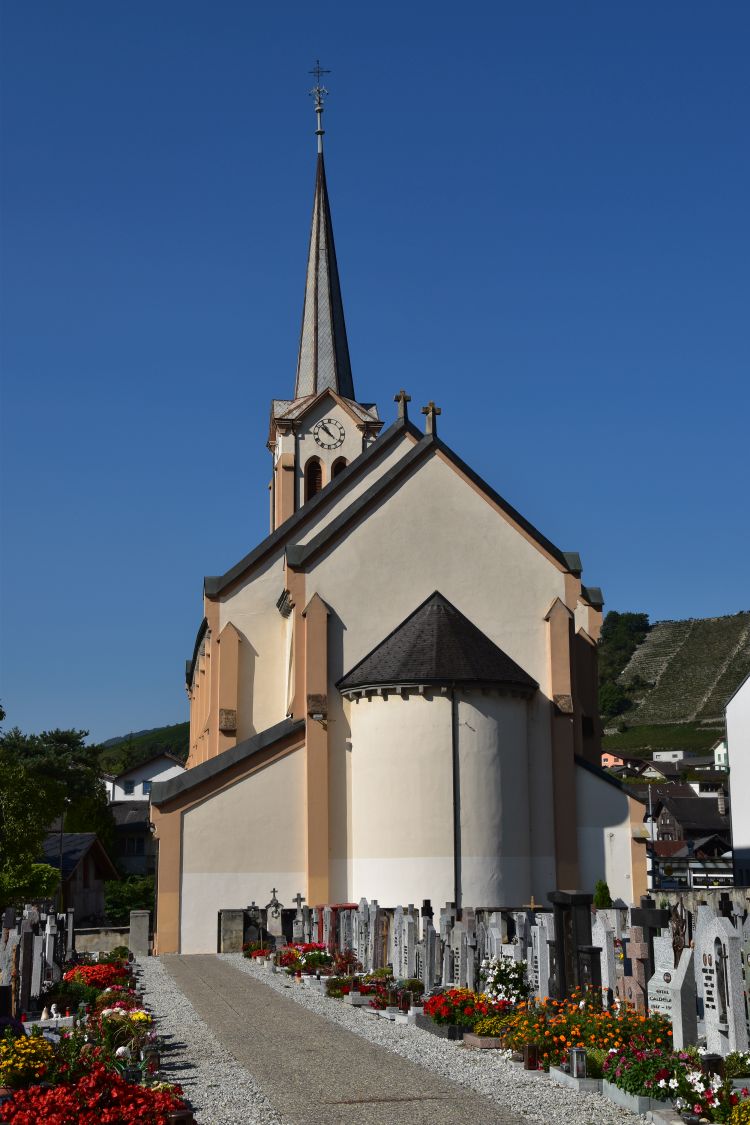
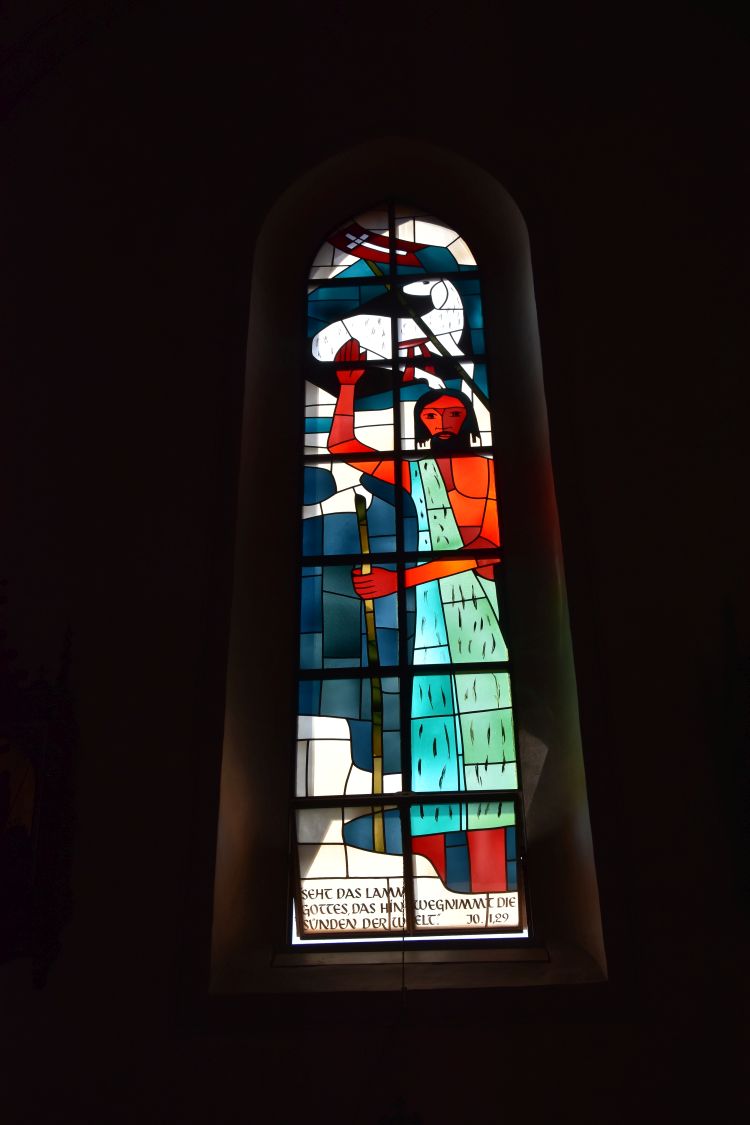
In the 13th century, Saint John’s association (also called the Order of Malta) founded a hospital at Salgesch. Presumably due to that, the main church is dedicated to John the Baptist.

John the Baptist appears on the stained windows. Here, he is dressed in his fur coat and accompanied by the Agnus Dei.

The benches demonstrate that Salgesch is connected with vines.

The bakery and many vineyards at Salgesch are owned by families with the name “Mathier”. Old family traditions. Also “my” winegrower is called Mathier. He sells all the traditional wines of the Valais such as Petite Arvine, Amigne, Heida (white) or Cornalin, Humagne Rouge (red) as well as the “usual” grapes Chasselas (called Fendant here), Sylvaner (called Johannisberg here), Gamay (the Beaujolais grape), Pinot Noir (the Burgundy grape, often blended with Gamay, which is called Dôle) or Shiraz (the Côte du Rhone grape). We will benefit from tasting their wines.

Along the Suone above the vineyards to the creek La Raspille

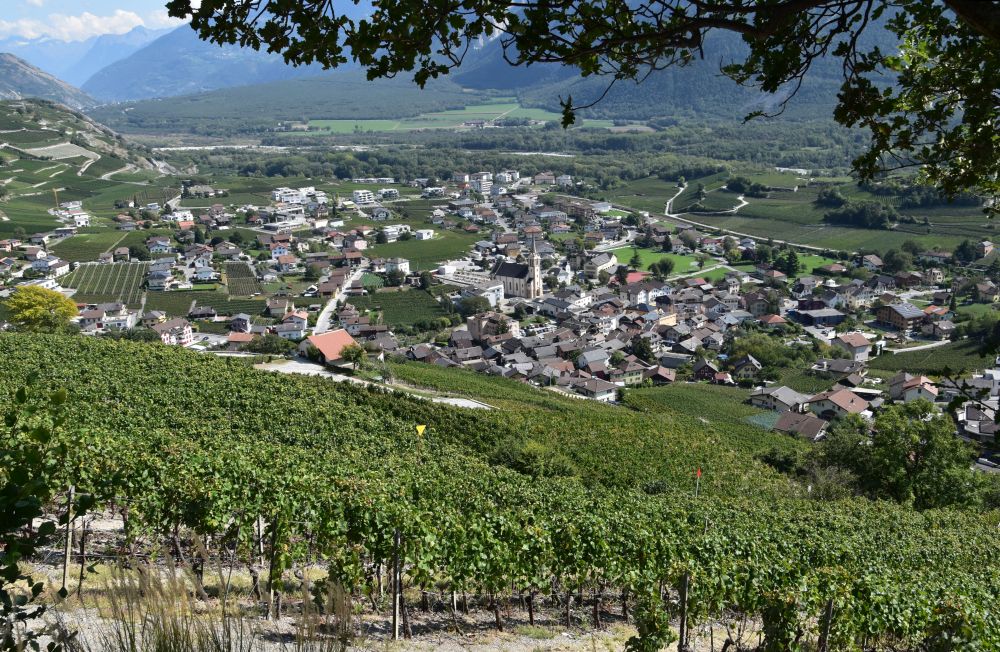
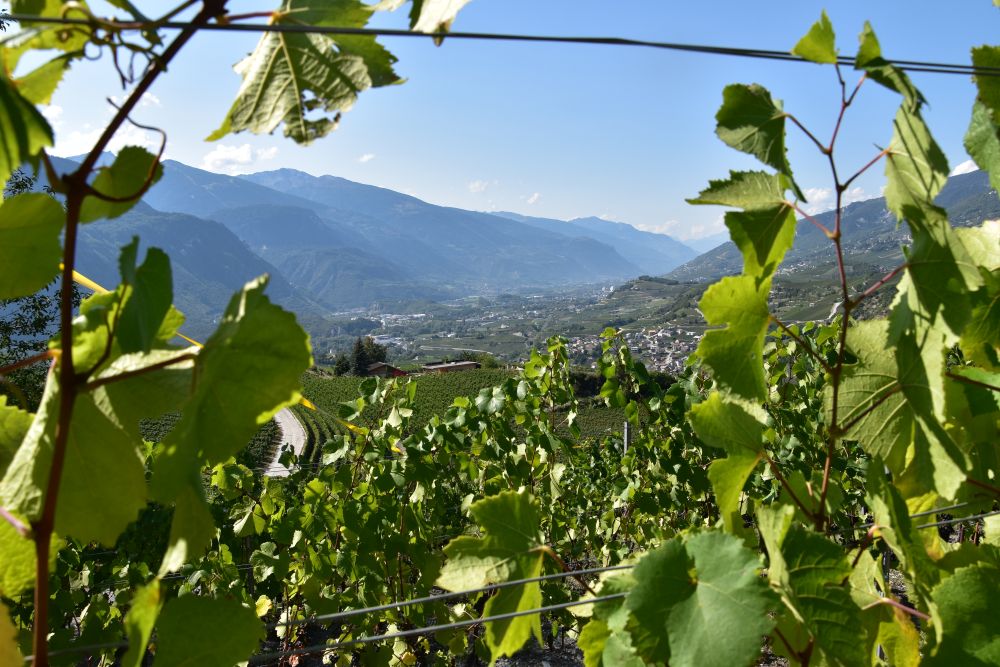
When walking uphill through the vineyards towards Varon, we enjoy the widening view. Through the vines, we can see the Rhone valley with Salgesch below us.

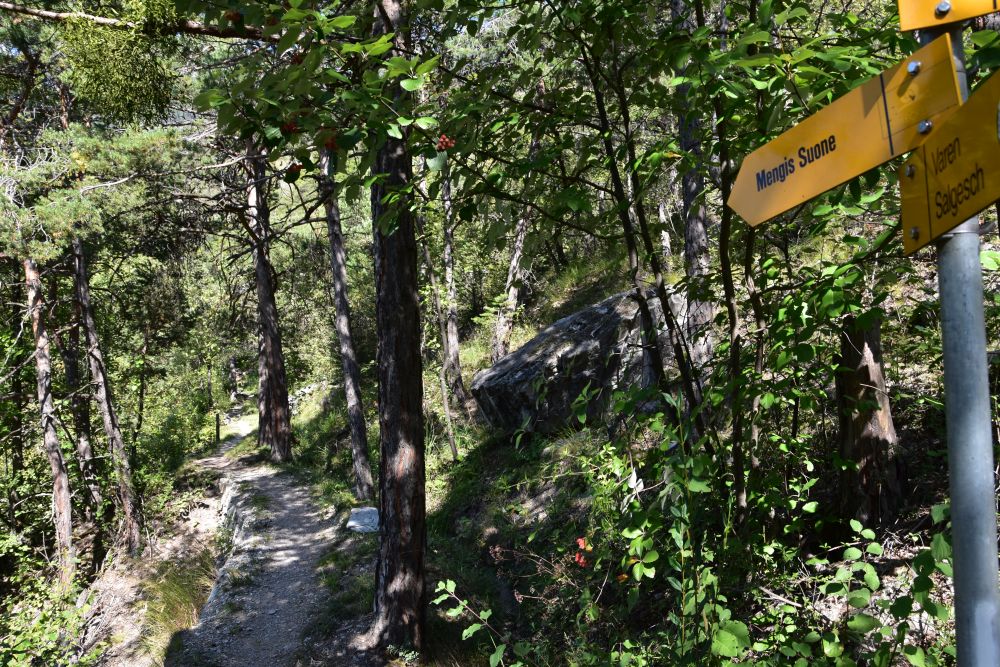
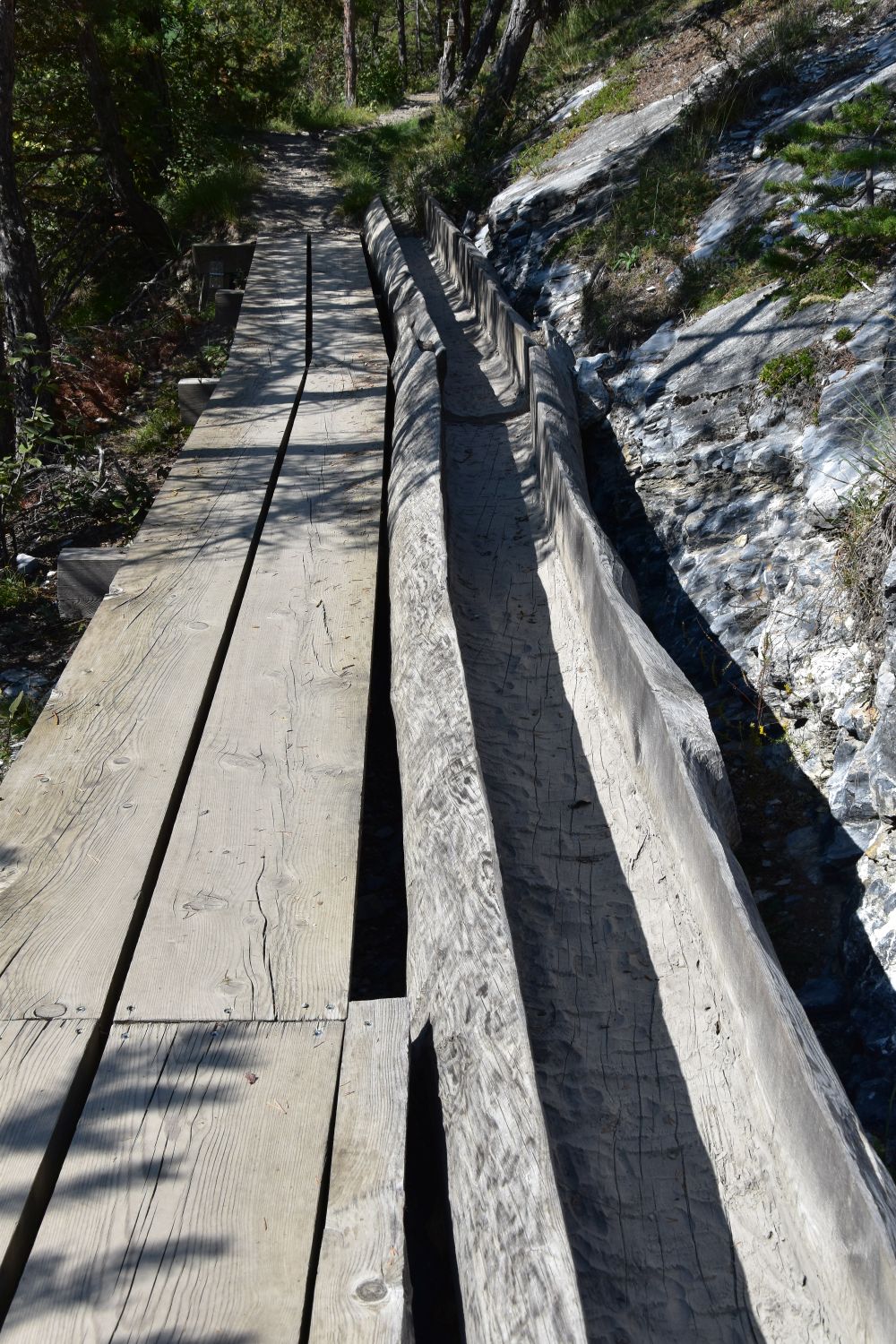
We catch the Mengis Suone, which is a water channel that is fed from the Raspille; now it is without water.

Such water channels are in use in the whole Valais. They are called “Suonen” in the German speaking Upper Valais and “bisses” in the French speaking Middle and Lower Valais. It is assumed that building these water channels goes back to the 14th century, when cattle breeding came up that required pasture land providing hay as winter forage (see Gilbert A. Rouvinez, p. 5).

The canyon of the Raspille is the language border between German (Upper Valais) and French (Lower and Middle Valais).

On the French speaking side we follow the water channel that leads to Sierre.

Panels explain the geology, biology and culture. On the French speaking side of the Raspille, the text comes first in French and then in German. One panel clarifies the reason for the large barren area above Salgesch, called “Blatta”, which is bordered by steep rocks on the top. In the last Ice Age, the Rhone valley was filled with ice. When the glacier retreated, this slope became unstable. It ended with a huge landslide that broke off from the rocks and slid down over the “Blatta” to create small hills in the valley that are good for winegrowing.

From below, we can see two lines of trees on the “Blatta”; they indicate, where the water channels are: The Menings Wasserleitu (the “small” lower channel) and the Grossi Wasserleitu (the “large” upper channel).

Where the Raspille reaches the bottom of the Rhone valley, water erosion created spectacular pyramids.

The water cemented the pebbles and chalk rocks from the landslide, some parts more, some parts less; the harder parts resisted the subsequent erosion and remained as pyramids.

The pyramids gave their name to one range of wines of our wine grower Mathier: “Les Pyramides”. We learnt that, when degusting at their winery.

The chapel Maria of Seven Sorrows (Kapelle Maria Sieben Schmerzen)

On a small hill, the chapel Maria of Seven Sorrows guards over Salgesch.

The small and steep Way of the Cross winds up to the chapel. It is not possible to get there by car.

The chapel is closed…

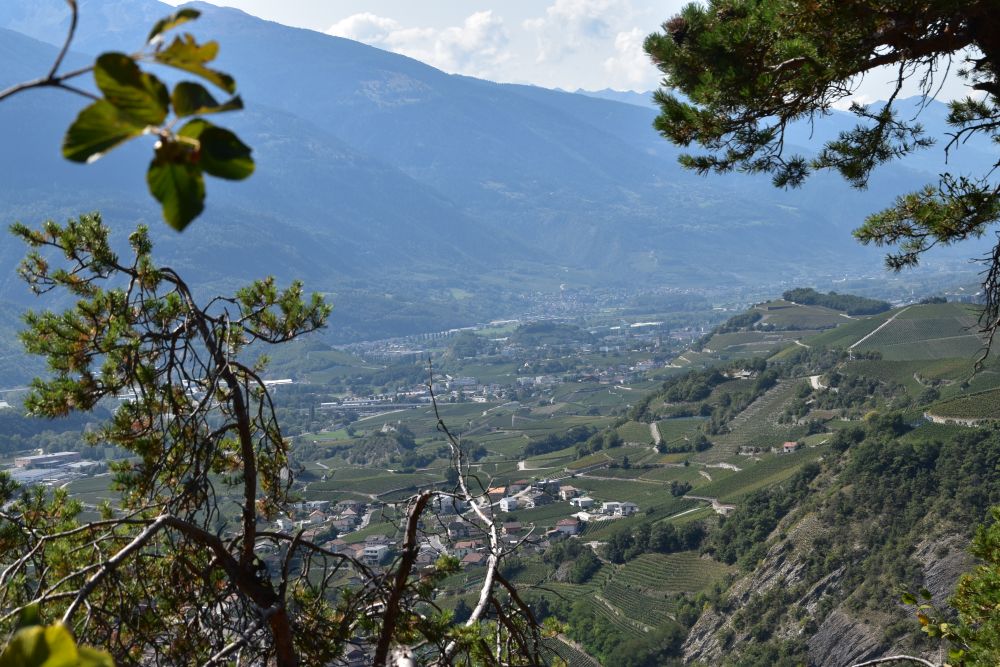
… and we enjoy the view of the Rhone valley with the Pfynwald from here.

Post Scriptum: Why is the canton Valais called “Valais” and why is it bi-lingual?

Back at home, I wonder, why the Valais is called “Valais” and why it is bi-lingual with French spoken in the Lower and Middle Valley up to the Raspille/Pfynwald, while in the Upper Valais, the people speak German. They are difficult to understand by us whom they call “Üsserschwiizer” or “Outer Swiss people”. Here is a short summary of what I found.

After 1000 B.C, Celts immigrated to the secluded Rhone valley and called it just “valley” (Nant in the Celtic language). The Rhone valley is indeed secluded, surrounded by rough mountains in the north, east and south. The Rhone valley only opens to the Lake of Geneva in the west. The Romans conquered the area in 57 B.C. and named it “Vallis” (=”valley” in Latin). They romanized the Celts, and until the eight century, their variety of the Latin language evolved to something called Franco-Provençal (also “patois” which translates to “dialect”). In the 6th century, the Burgundians and later the Francs conquered the Valais, while north from here, Alemannic tribes slowly migrated into the Bernese Alps.

Until the 9th/10th century, Franco-Provençal was spoken in the Lower, Middle AND Upper Valais. Village names in the Upper Valais tell us about that: “Geschinen” comes from “Casina”, and “Gestelen” originates from “Castiglione” (Meyer, p.3).  In the 9/10th century, the Alemannic tribes from the Bernese Alps immigrated into the Upper Valais, probably using the Lötschenpass, the Gemmipass and the Grimselpass. They “imported” the Alemannic Dialect, as it was spoken in the Bernese Alps. Now I understand, why I hear similarities between the dialects of the Bernese Alps and the Valais (which I both do not always understand easily).

Around the year 1000, the king of High Burgundy handed over the Upper and Middle Valais to the bishop of Sitten/Sion, and at about the same time, the Savoyards conquered the Lower Valais along with some places in the other parts of the Valais. They strived to subdue the whole Rhone valley or Valais. However, they met resistance. In the 14th century, the Alemannic people from the Upper Valais were inspired by the will of freedom of the original Swiss cantons, and they took over the lead to fight against the Savoys. The Alemannic speaking Upper Valais conquered the Middle Valais up to Sitten. The bishop had to give special rights to the German speaking people from the Upper Valais for supporting him against Savoy.

In 1475, an army from the Upper Valais, assisted by the original Swiss cantons (“Eidgenossen”), defeated the Savoys near Sitten. The French speaking Lower Valais became a subdued area of the Upper Valley (“Untertanengebiet”; many original cantons had such subdued zones). The German language was now the ruling language in the Valais, while the French language had the stigma of being related with the enemy, Savoy. The prevalence of the German language lasted until 1798.

In 1798, inspired by the French Revolution, the French speaking people from the Lower and Middle Valais demanded their rights and the German speaking people granted them more rights, however, too late. Napoleon conquered the Valais and made it a French province in 1802; in 1810 it became the Département du Simplon. Now, under Napoleon, the French language dominated.

In 1815, during the Congress of Vienna, the Valais joined Switzerland. From now on French and German formally had equal rights, which was confirmed in 1844, when French and German became both approved national languages in Switzerland. However, the majority of people living in the new canton Valais spoke French and therefore French dominated over the German language. With the construction of the Lötschberg tunnel in 1913, the Upper Valais moved “closer” to German speaking Bern which gave the German speaking people of the Valais more self-confidence again.

Since the 1960’s, the tensions between the language groups have decreased and cross-language communication has improved.

Sources:
Gilbert A. Rouvinez, “Balades le long des BISSES du VALAIS”, 180 Editions 2020.
Jean-Pierre Meyer, “Zur Geschichte des Sprachverlaufs im Wallis”, PDF o Jahrgang
André Beerli, “La Suisse Inconnue: Valais”, TCS Suisse et Shell Switzerland, without date
Further reading: Excellent blog by the Freizeitfreunde.

Exploring culture in and around Spiez on two rainy days

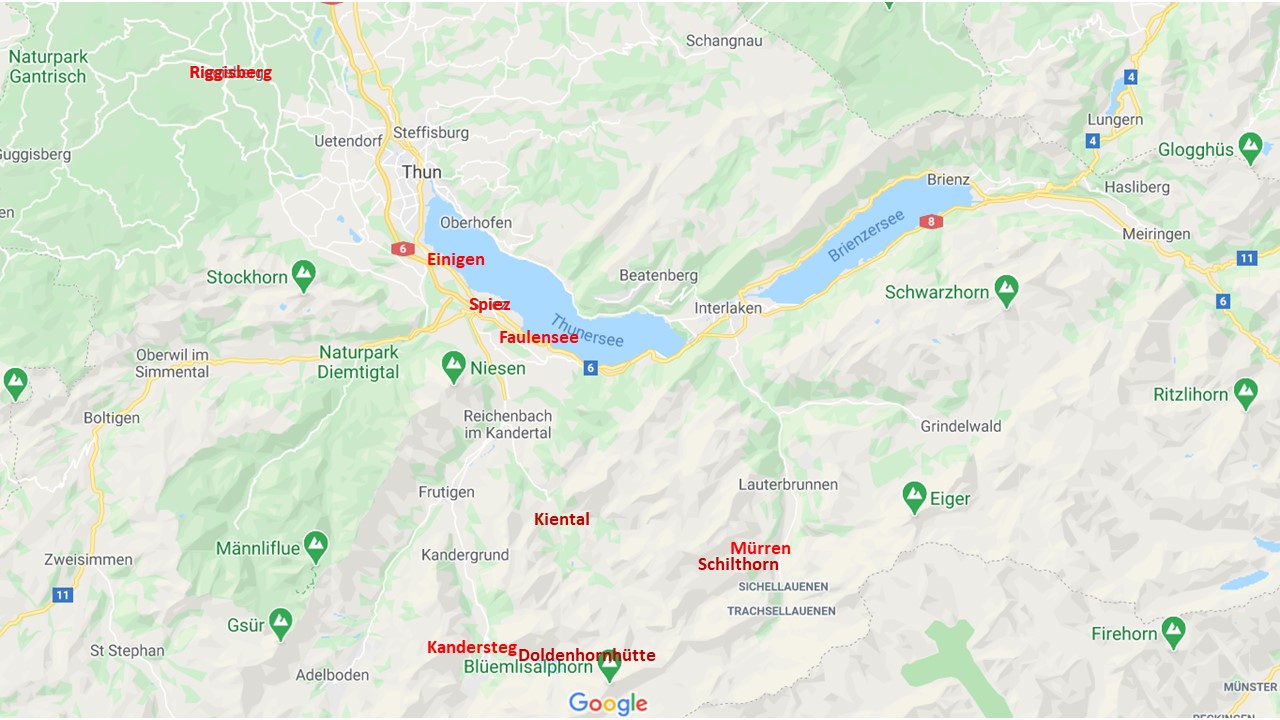
In August 2020, my friends from Regensburg stayed in their apartment at Spiez and I joined them. We went for nice walks on two sunny days and now, I will tell you, how we benefited from the rain to explore some culture in and around Spiez.

Source: Google Maps

Our cultural excursions include the castle of Spiez with the exhibition about the paintings of Friedrich Dürrenmatt, the charming church of Einigen and the museum of the Abegg Foundation at Riggisberg.


Dürrenmatt’s paintings in the castle of Spiez

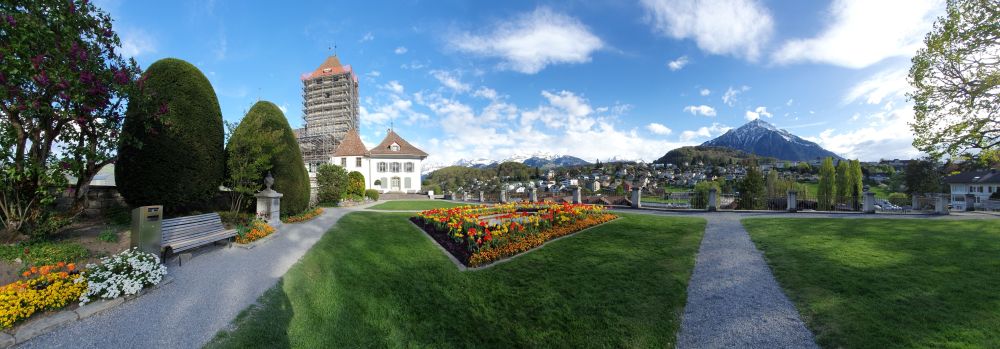
The castle of Spiez (facing the mountain Niesen) and…

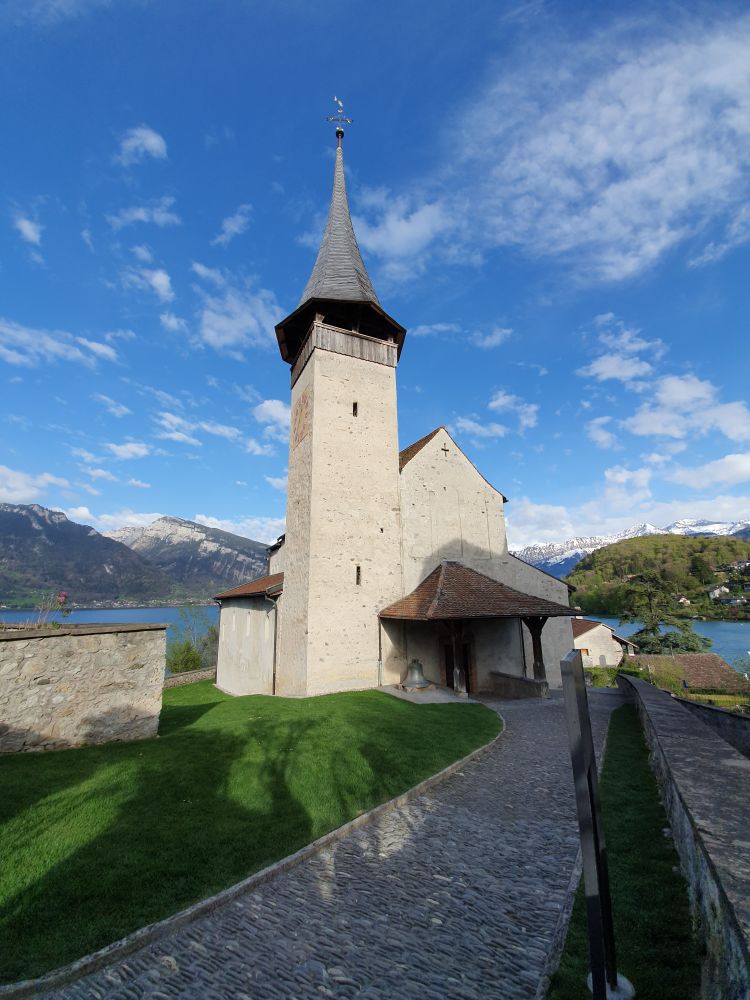
… the adjacent Romanesque church are two gems above Spiez.

Until October 2020, the castle shows the paintings of Dürrenmatt as a special exhibition. Friedrich Dürrenmatt (1921-1990), well-known Swiss author, was a gifted painter, too. He said: «Ich male aus dem gleichen Grund, wie ich schreibe: weil ich denke.» (I paint for the same reason that I write: Because I think).

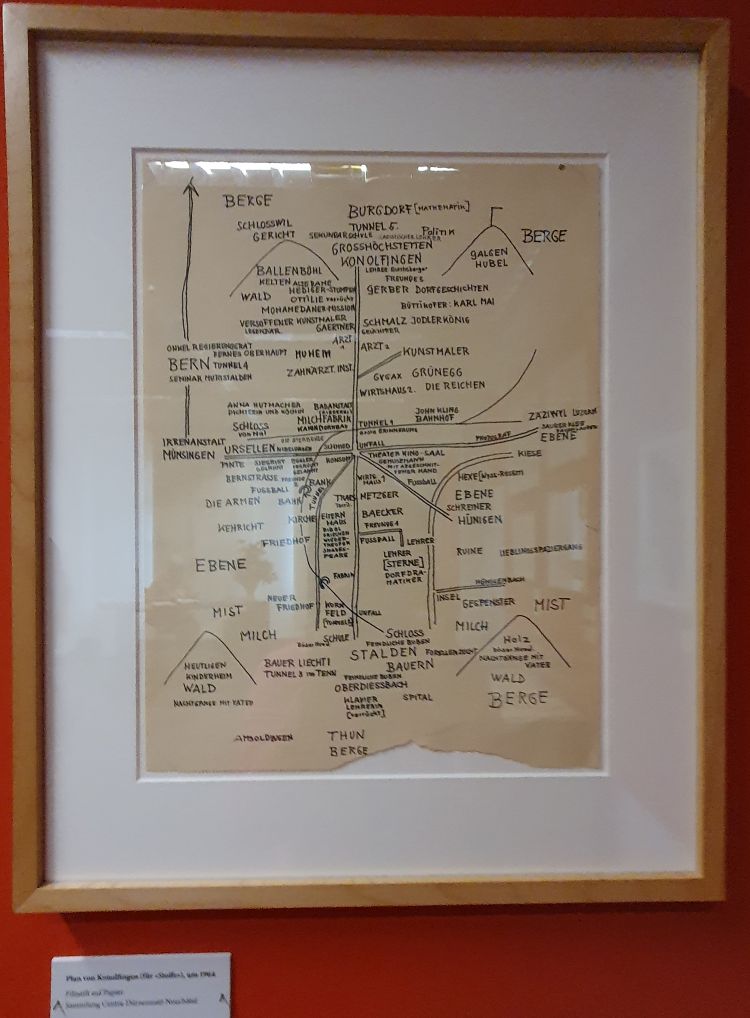
As a child, Dürrenmatt created this charming map of his village of birth and childhood (“Geographie der Kindheit”).

I find details that are important for a child such as “Mist” (dung heap, I imagine, it “stinks” here), the places, where the presumed “Hexe” or “Gespenster” live (a witch and phantoms, I remember such scary places from my own childhood), the “Lieblingspaziergang” around the “Ruine” (the favourite walk around the ruin), the artists of the village (painters, poets, the place with access to Karl Mai etc), the main intersection, where accidents (“Unfall”) happen, the mountains surrounding the village, and the way out, to Burgdorf, Thun or Bern…

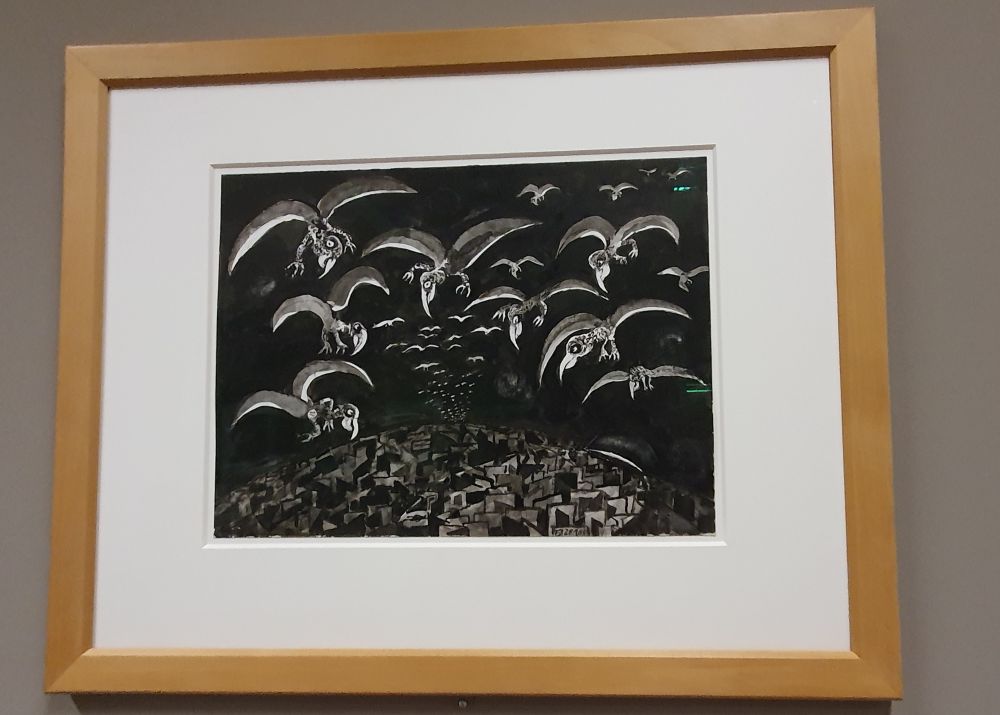
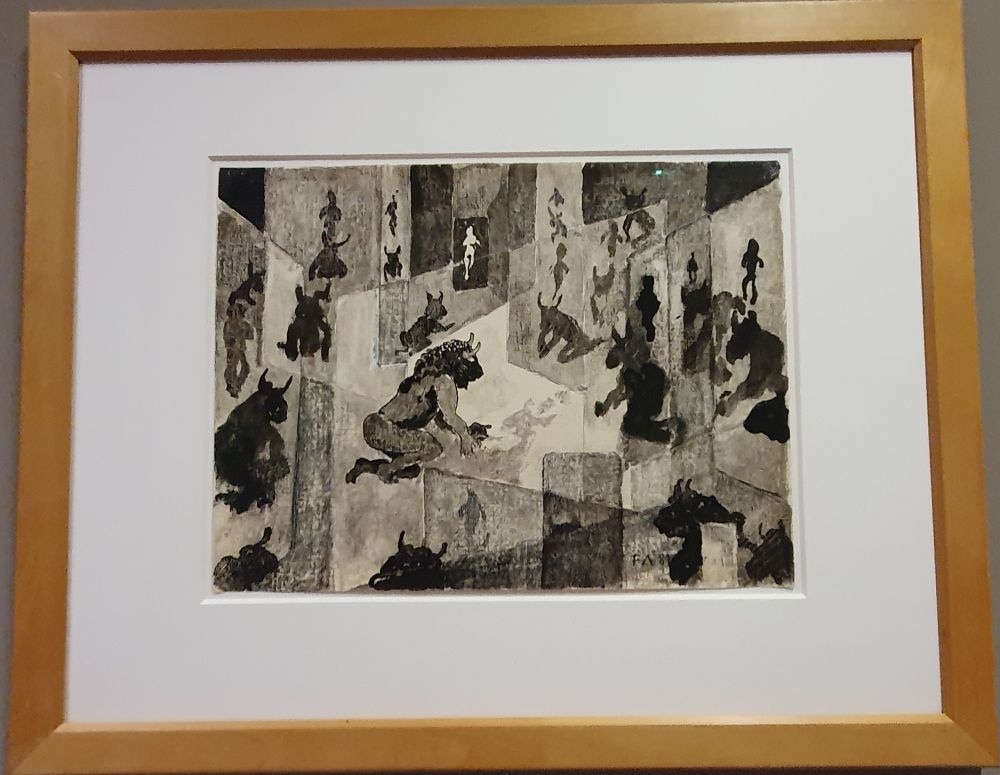
After having decided to write books, Dürrenmatt continued painting, often accompanying the themes of his books. For instance, he illustrated his ballad “Minotaur” (“Illustration zu Minotaurus, Nr. IX”).

I shiver looking at these birds threatening the labyrinth.

Illustration Nr. II shows the world as seen by the minotaur in his labyrinth. He is caught in a maze of mirrors, where he sees his image reflect, and he sees the reflections of the reflections of his image.

The ballad is a parable for the individual being caught in an increasingly non-transparent world, where he will pay for a crime he has never committed, as the exhibition comments explain. I can somehow empathize with this feeling of being caught, though Dürrenmatt wrote his ballad some 40 years ago; I feel like reading it soon.

Meanwhile, after having returned home, I read “der Richter und sein Henker” (“the judge and his hangman”), where the criminal business man, Richard Gastmann, will be sentenced for a crime he has not committed, but he has committed many crimes before that. In “Der Verdacht” (“Suspicion”) a doctor managing a clinic is uncovered as being one of the doctors at the former German concentration camps and he ends up being forced to commit suicide by one of his former victims that had to undergo surgery in the concentration camp. These are two thrilling and interesting criminal stories solved by the inspector Mr Bärlach, about to retire from his work.


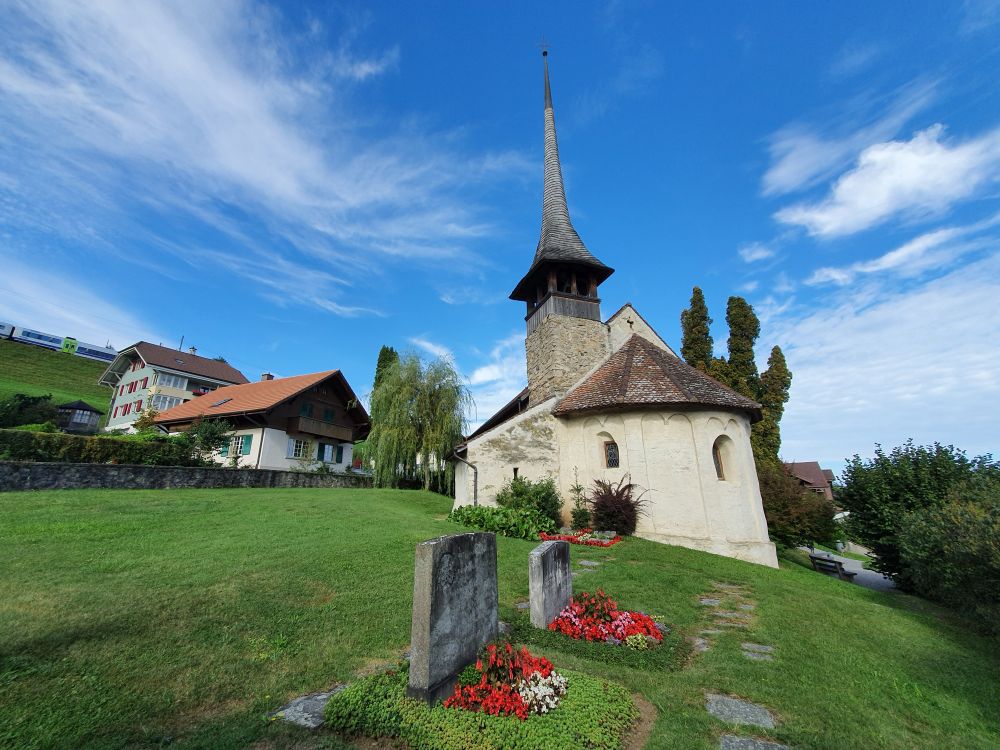
The charming Romanesque-gothic church of Einigen above the Lake of Thun

Above the Lake of Thun is the charming church of Einigen, dedicated to Saint Michael. It goes back to the 7th century and is the first of 12 church foundations around the Lake of Thun (“Thunerseekirchen”, see Jungfrau Zeitung).

The existing church dates back to the 10/11th century. It is the oldest of the churches of the Lake of Thun, all early Romanesque with the pilaster strips and the friezes of round arches on the apsis, typical of that time.

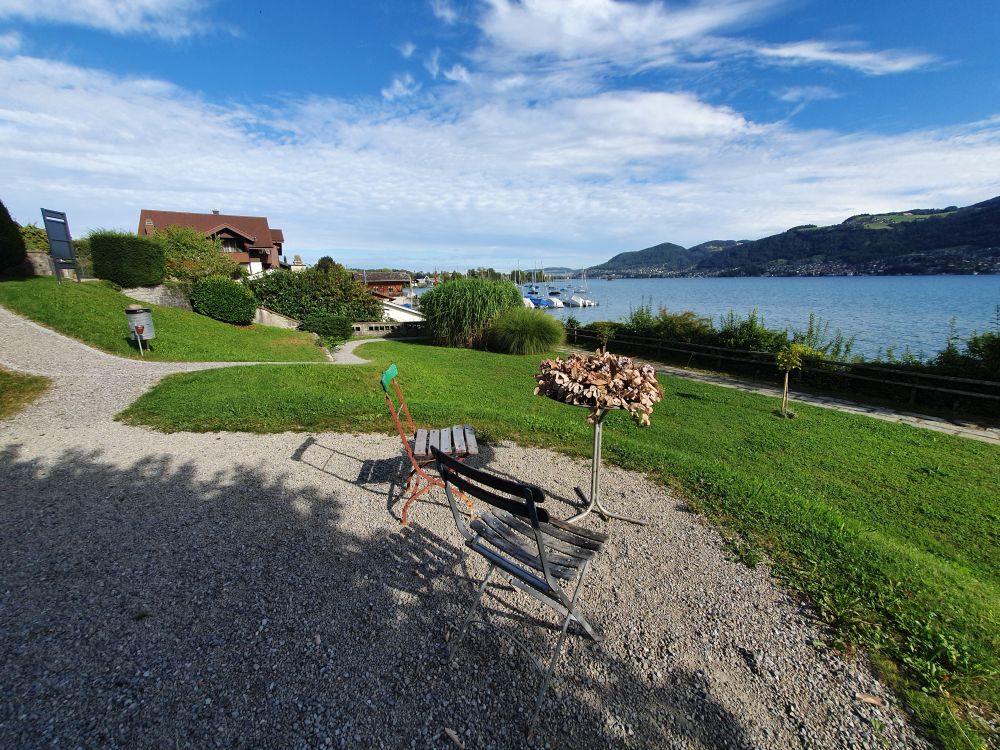
Below the church we find a nice place to sit with the view of the lake.

The church is a stop on the pilgrimage route of St. James. You can acquire your pilgrim’s stamp here.

Inside we find the sober atmosphere that is typical of protestant churches, with the late gothic baptismal font in the choir.

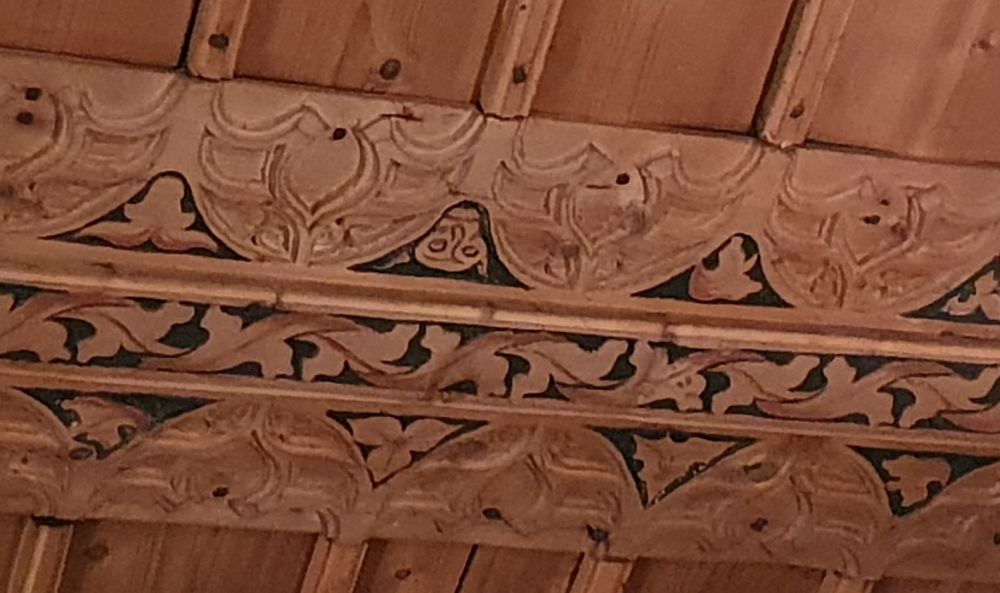
It is not easy to spot the devil’s face on the wooden ceiling.

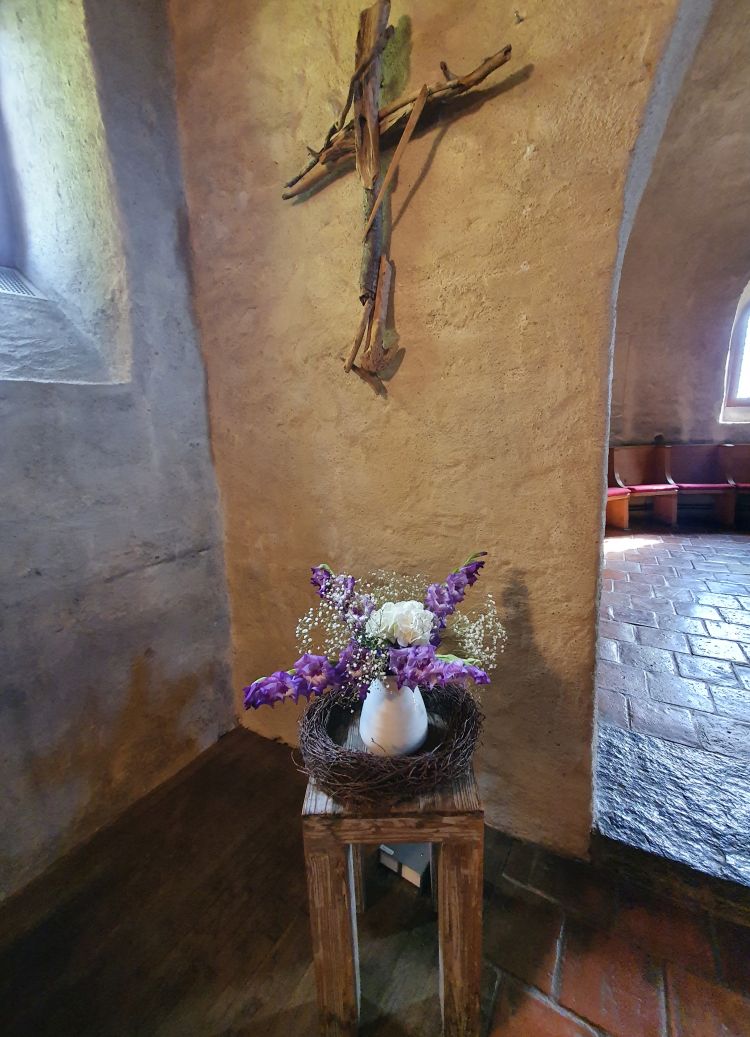
I like the stylised cross made out of branches and decorated by a bunch of flowers.

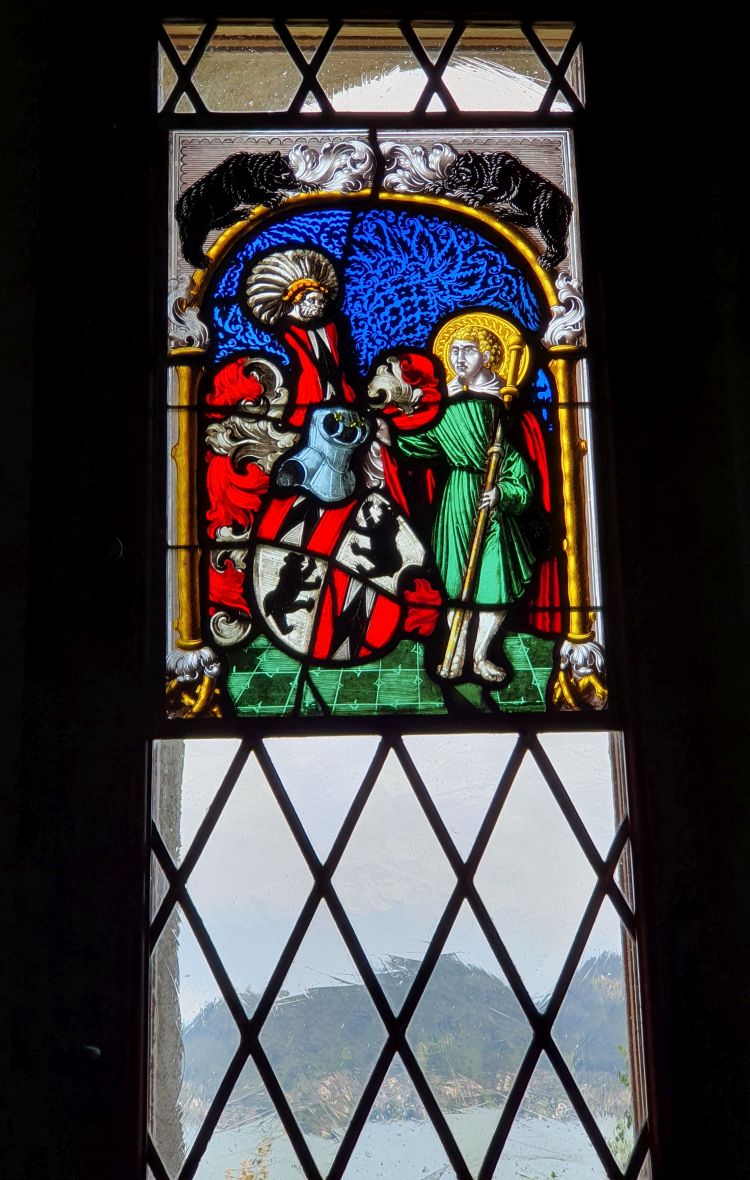
The glass windows from the early 16th century show the coat of arms of the noble family Erlach.

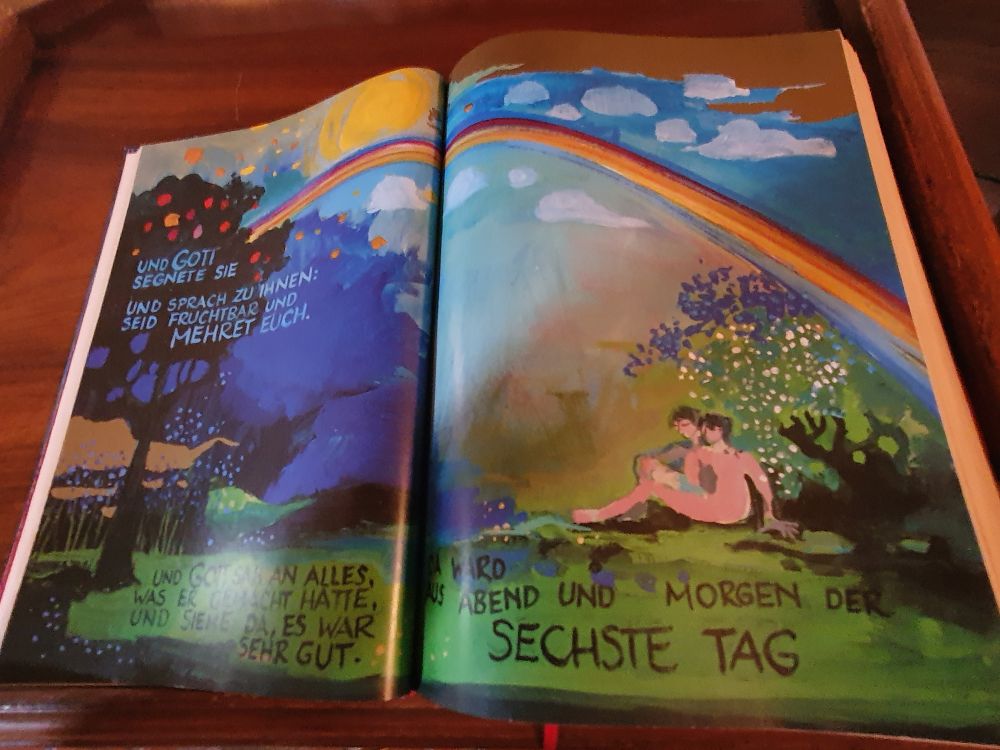
Peter, the Bavarian friend, stands in front of the stand with the bible and murmurs something like “is this a catholic bible”? Yes, it IS a catholic bible, translated by the professors Hamp, Stenzel and Kürzinger (Pattloch Verlag Augsburg 2002). Here, in the protestant church of Einigen! I value this sign of respect between Catholics and Protestants.

The illustrations by Rosina Wachtmeister are beautiful. Below is the painting of the creation of the world, day six.

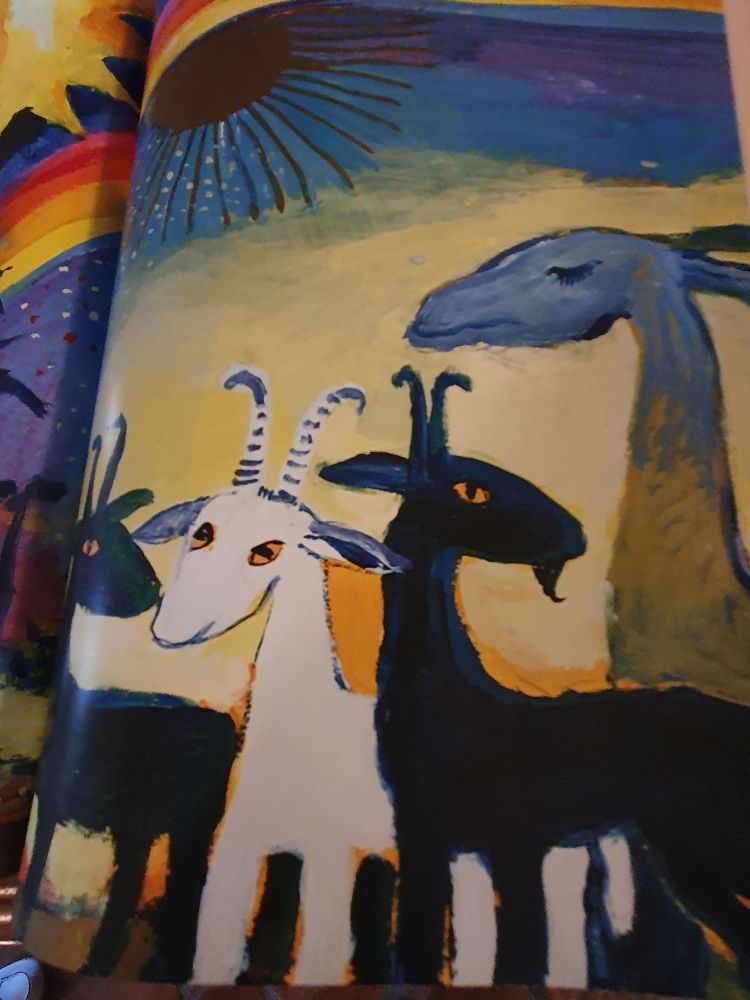
I do not know, what these wonderful animals stand for, I just admire the paintings…

… and I leave a note in the guest book to express my pleasure about this bible that conveys the sign of tolerance.


The Abegg Foundation (Abeggstiftung) in Riggisberg: Impressive textile collection

Abegg was the owner of textile factories in Northern Italy, and he sold his factories in the late 1940-s, anticipating the decline of the textile industry in Europe.

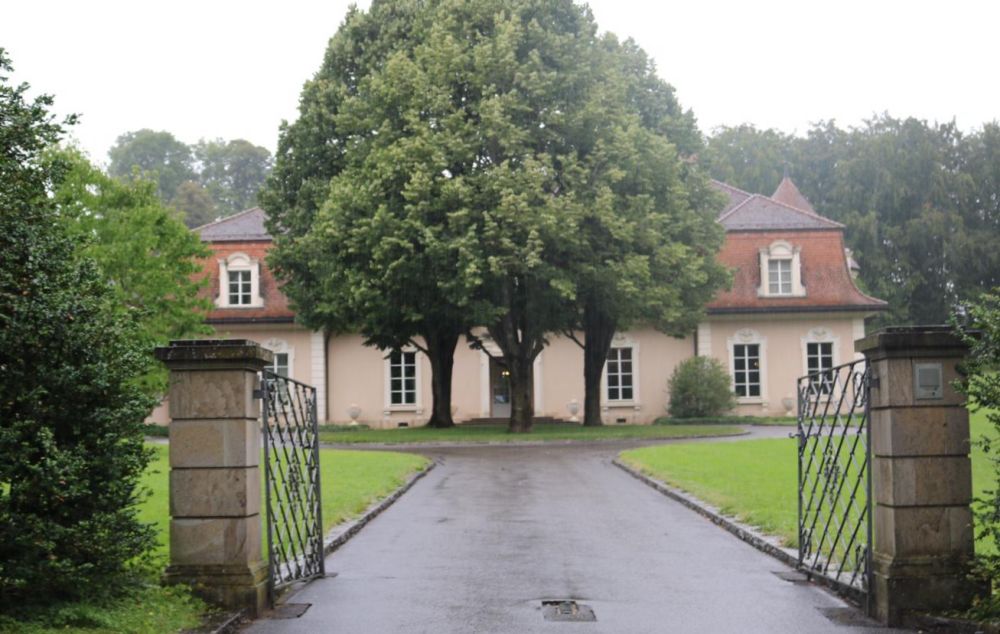
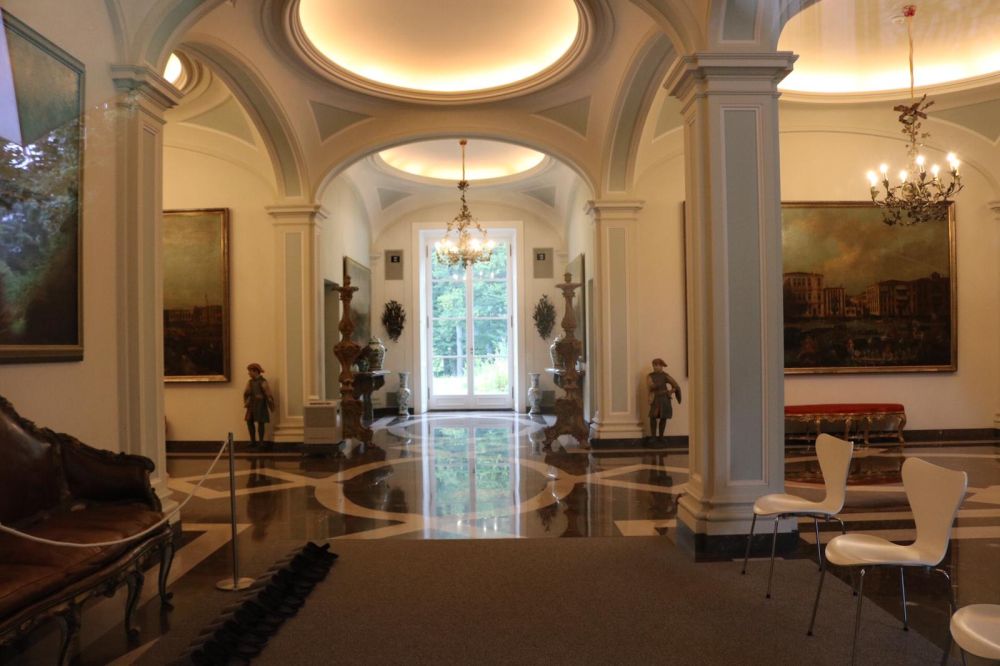
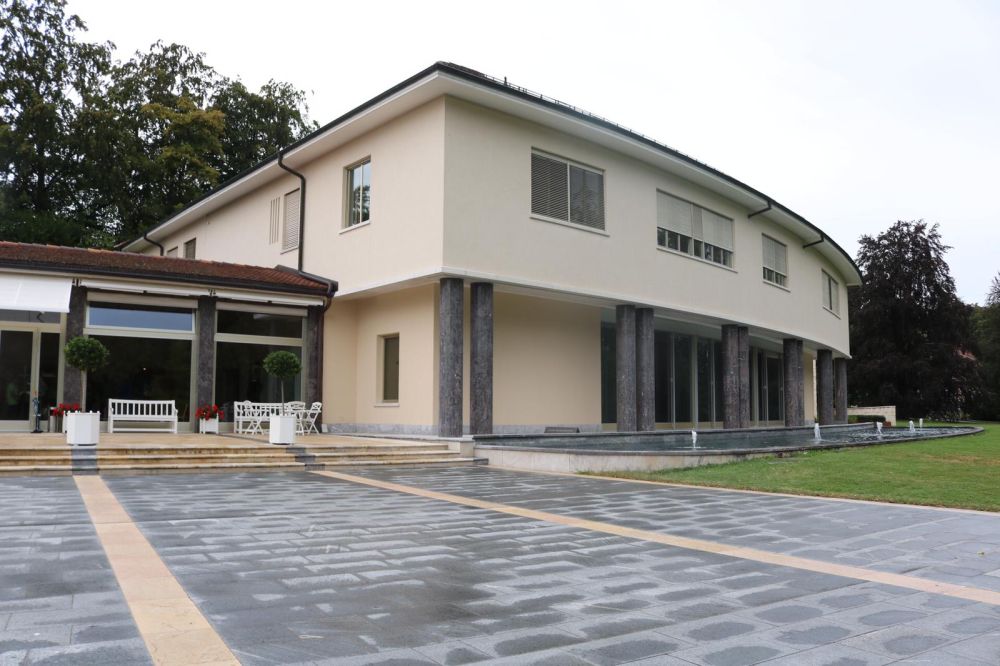
He built his noble villa just outside of Riggisberg in the Bernese Prealps.

In addition he founded the museum for textile and applied art with a centre for conservation and restoration of textiles.

The collection includes artefacts from the Ancient Near East, the Silk Road, Antiquity, Middle Ages and Renaissance/Baroque.

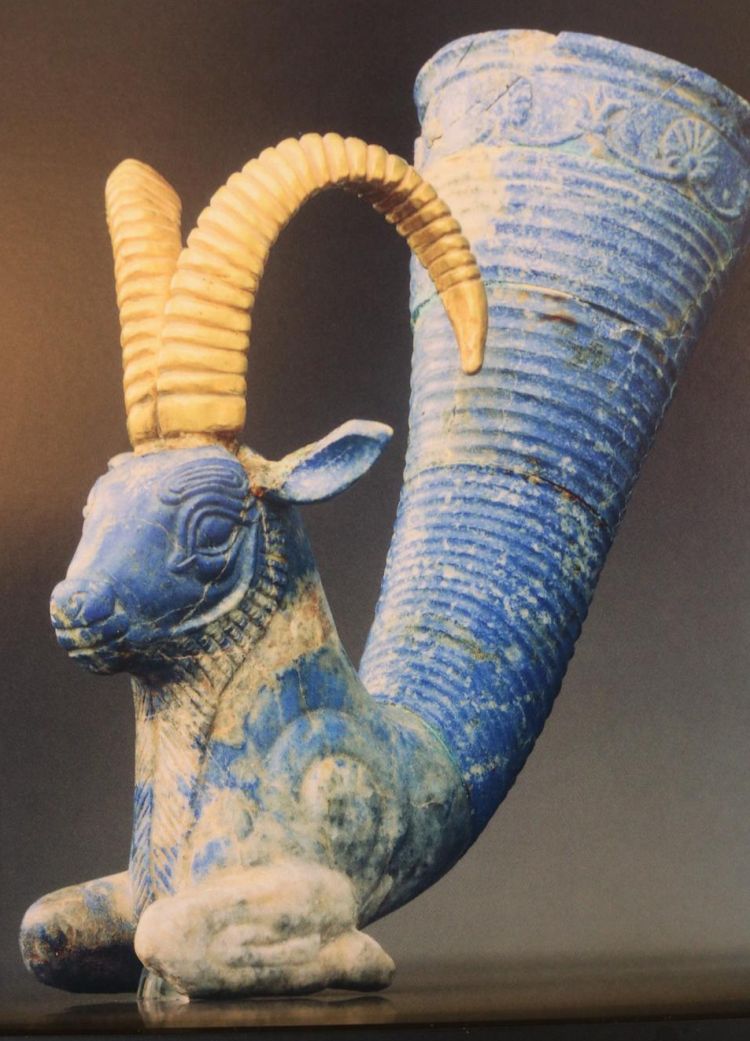
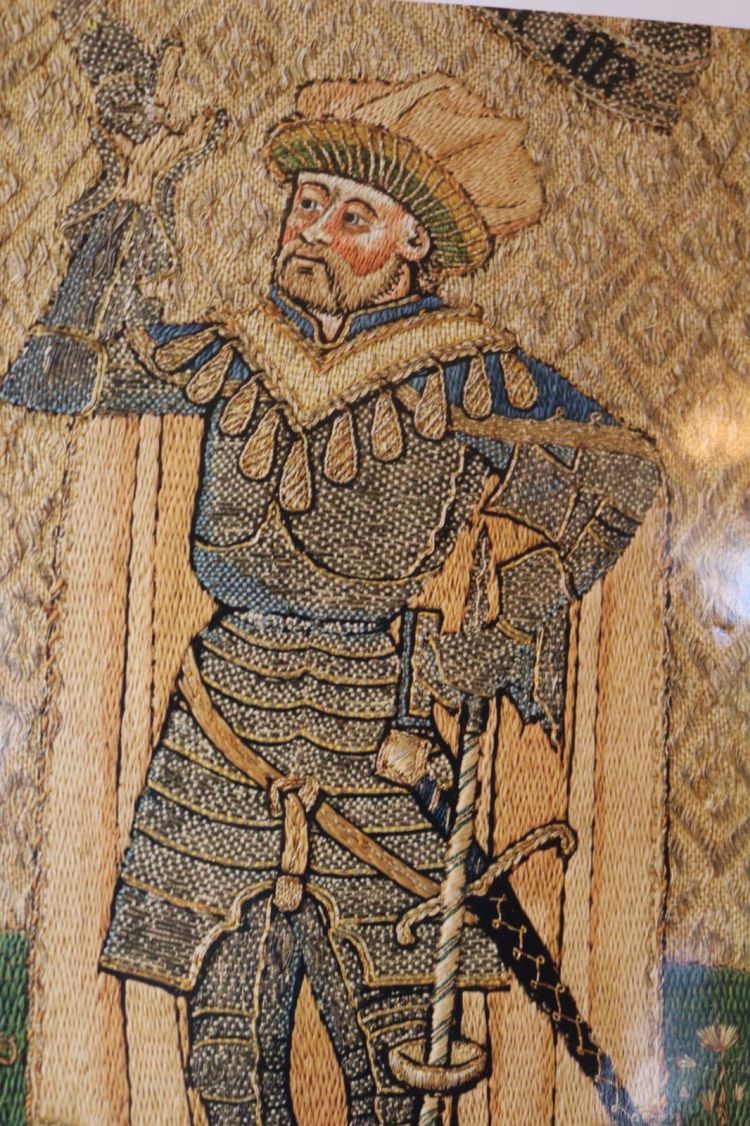
No photos allowed in the museum. My friend just takes some pictures of the postcards sold in the entrance hall. The museum website gives an excellent overview of the beauty of the museum. To give an impression, I include two postcards.

This beaker from Persia, 6th-5th century BCE, is called Lapis Lazuli Rhyton.

This medieval embroidery, showing a man doing falconry, is a good example for the textile artifacts.

I do recommend visiting the Abegg Foundation at Riggisberg.


Good-bye Spiez, I hope to return in winter…

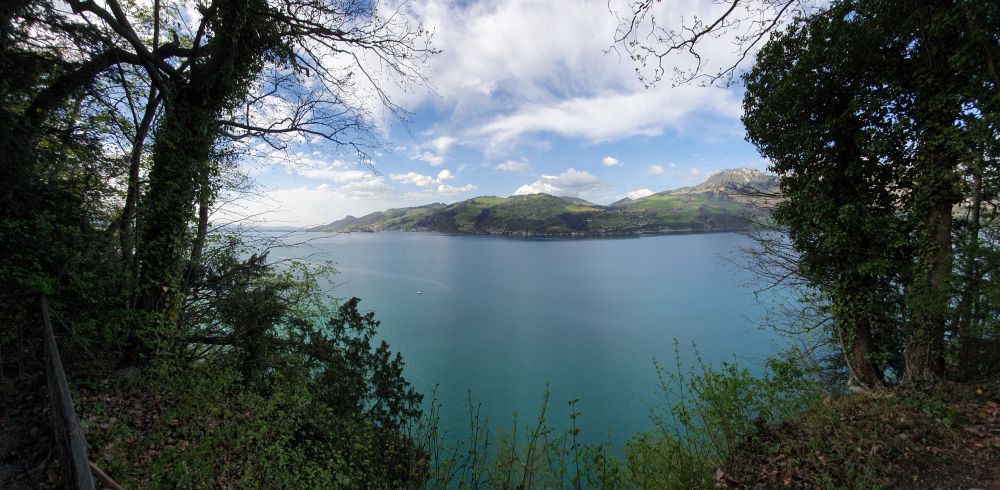
With the view of the Lake of Thun with Giswil, taken from the Spiezberg, I now say good-bye to Spiez, after four beautiful days. I hope to return in winter to go for skiing in the area. However, I am afraid that under the current circumstances, alpine skiing will be different this year.


Spiez – always my entry point to the Bernese Alps – again in summer 2020

Spiez is a small city on the lake of Thun. My friends from Regensburg in Germany have an apartment at Spiez. They take it as a entry point to hike or ski in the Bernese Alps. I regularly join them and stay in the friendly hotel Seegarten bordering the lake, where I love to fall asleep, while the ducks and the crested crebes are quaking under my balcony.

Source: Google Maps

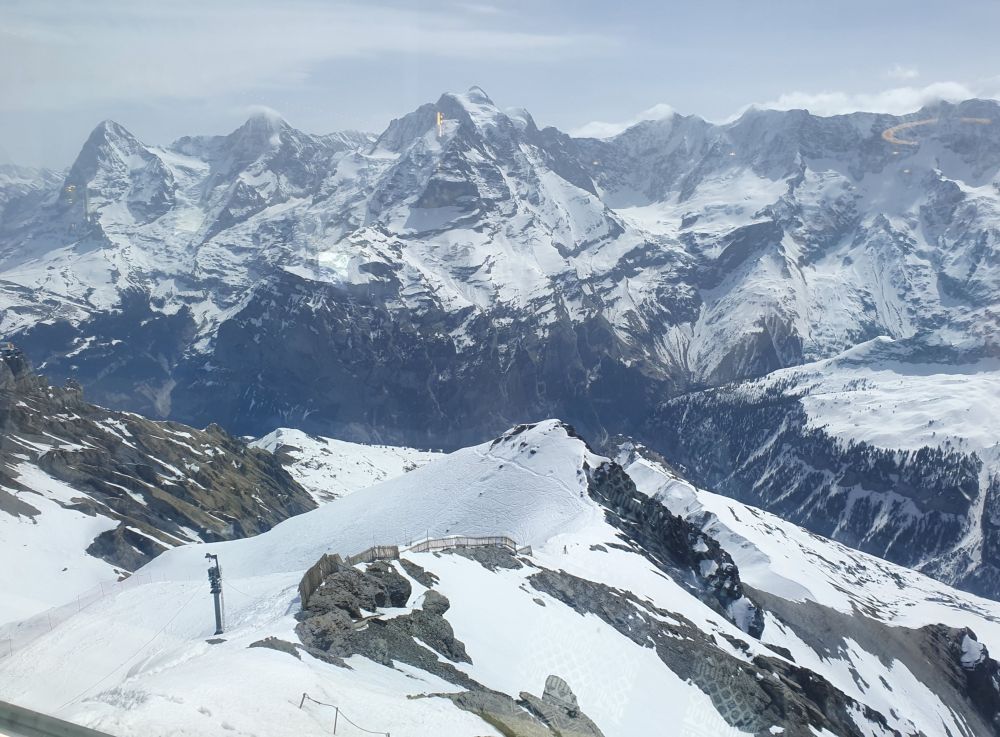
In winter, we like to ski in the Mürren-Schilthorn area. From Spiez, we reach the cable car to Mürren in about half an hour. From the revolving restaurant on the Schilthorn, we have the gorgeous view of the “Grand Trio” of the Bernese Alps, Eiger, Mönch and Jungfrau…

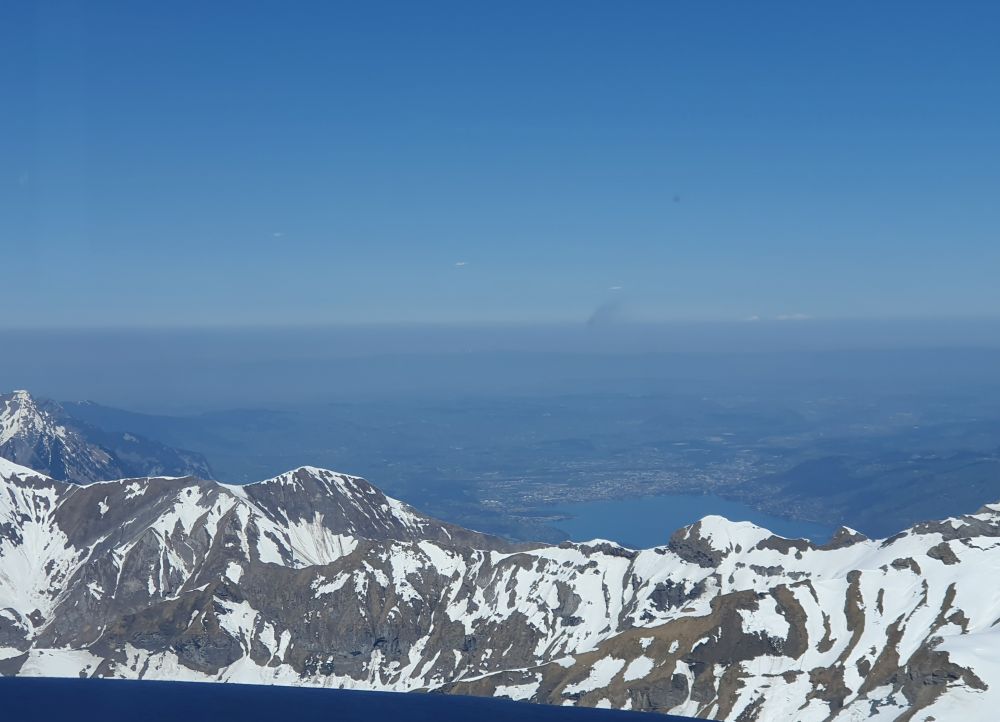
… and, after a turn of 180 degrees, we enjoy the view of the Lake of Thun and the bay of Spiez.

When skiing, we love to have lunch on the Schilthorn, where we hear the voice of James Bond saying: “My name is Bond – JAMES Bond”. And we see him fight wearing a perfect suit with tie.

The bay of Spiez is dominated by the castle and the church as well as by the Spiezerberg (mountain of Spiez) with vineyards facing the sun.

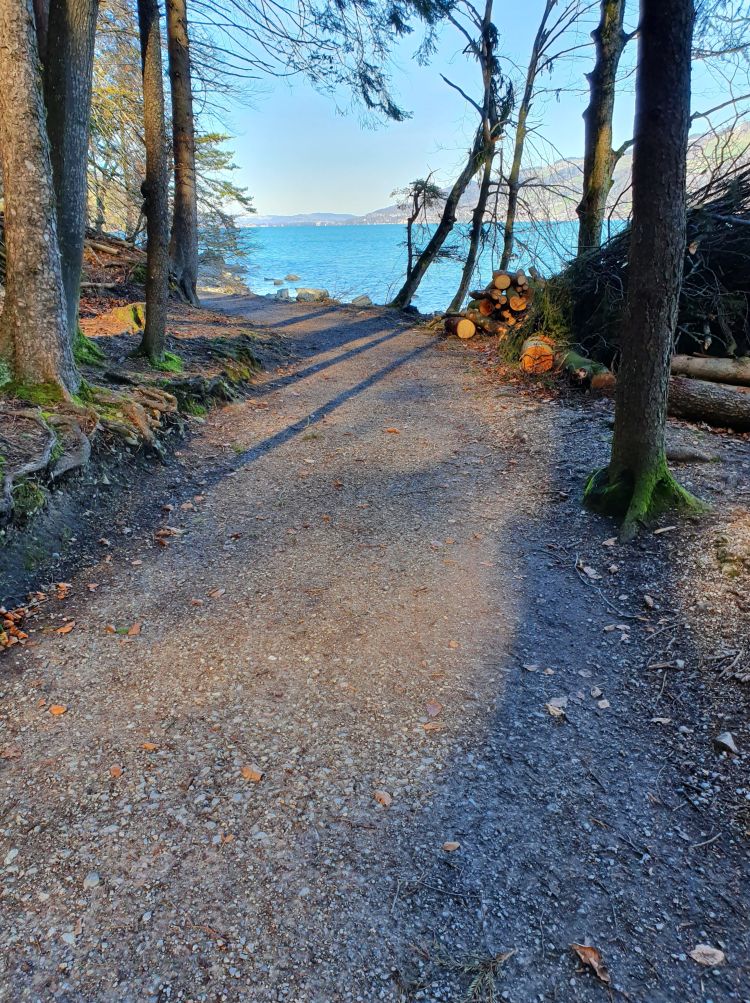
In February 2020, I took the small path called “Strandweg” from Spiez to Faulensee. The “Strandweg” has been installed by August Mützenberg in 1914. Mützenberg was a hotel owner at Spiez. He even invoked the federal court to expropriate land to build the continuous path along the lake (see Hans Wininger, “Hundert Jahre Strandweg, Spiez – Faulensee”, Werd und Weber Verlag Thun 2014).

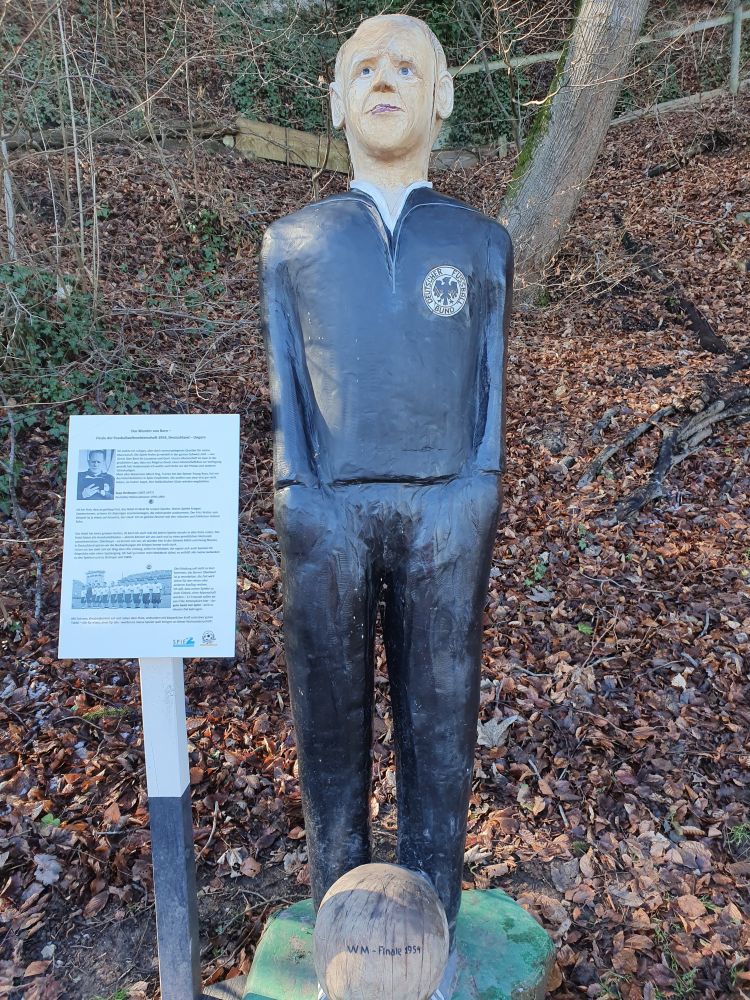
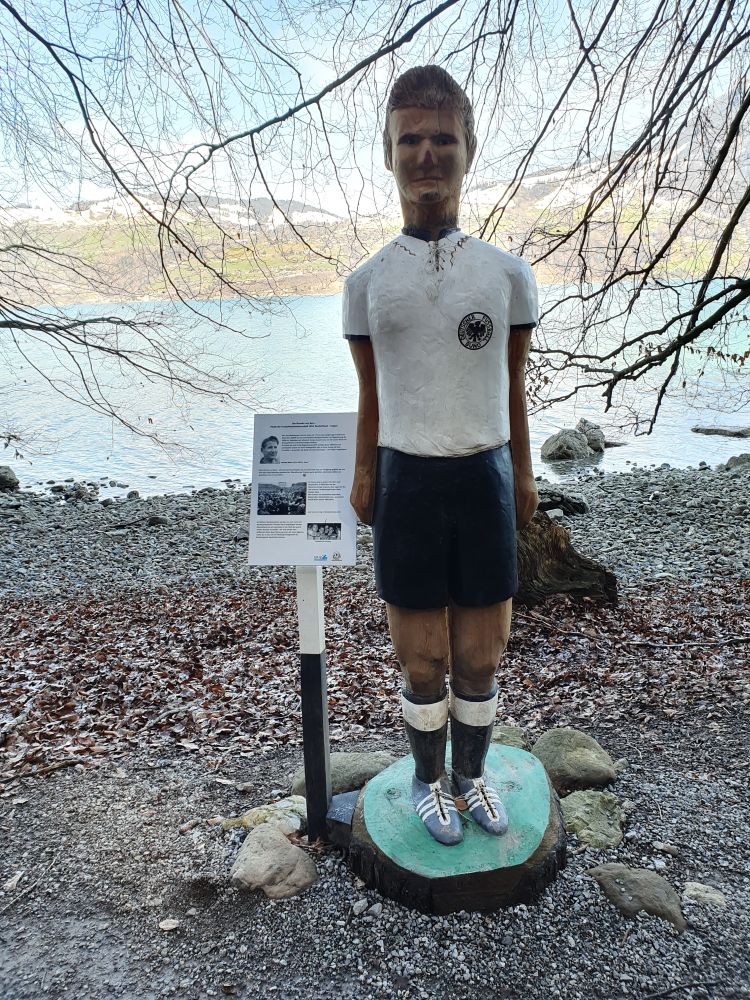
Football players stand here. They remind us of the “miracle of Thun” (“Wunder von Thun”), when in 1954, just after the Second World War, the German team won the championship against Hungary, after having formed “the (team) spirit of Spiez” or “Geist von Spiez” by walking along this path. Among others, I get to know Sepp Herberger, the trainer, …

… and the scorer Helmut Rahn (he scored two goals).

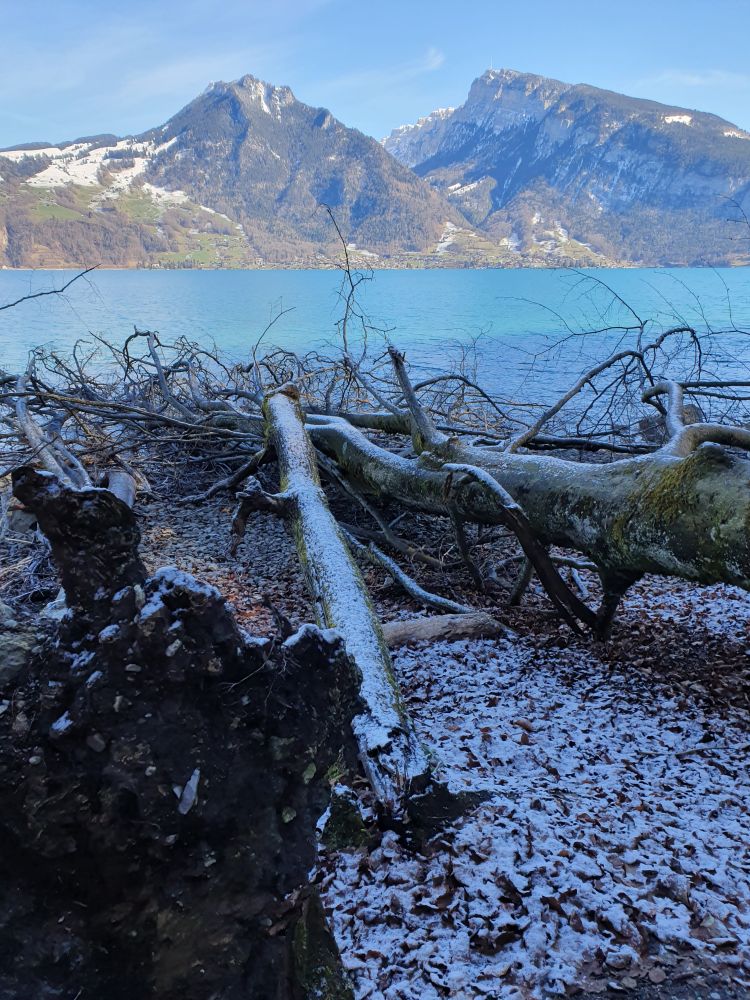
Across the lake I can see the Niederhorn (right) and the Sigriswilgrat (left). The valley between the steep and rocky slopes is called “Justistal” and it is famous for the “Justistal” cheese.

In the middle of the lake is the iron bridge that is to shorten the distance to the opposite shore of the lake creating the illusion of meeting others (Marianne Lütz, Burgdorf, see Wininger, p. 65).

There is more art to see such as the “Gegen-Teil” (“Opposite Part”) by Zryd Björn from Adelboden (not exactly a name that I have met in the Bernese Alps so far…).

At this beach, people and dogs can go for a swim. But dogs, please, do behave yourself, as the sign tells you: “When I take a swim here, I am respectful – NO – (and) walkers will stay dry”. I must admit, I have not observed one dog studying this sign…

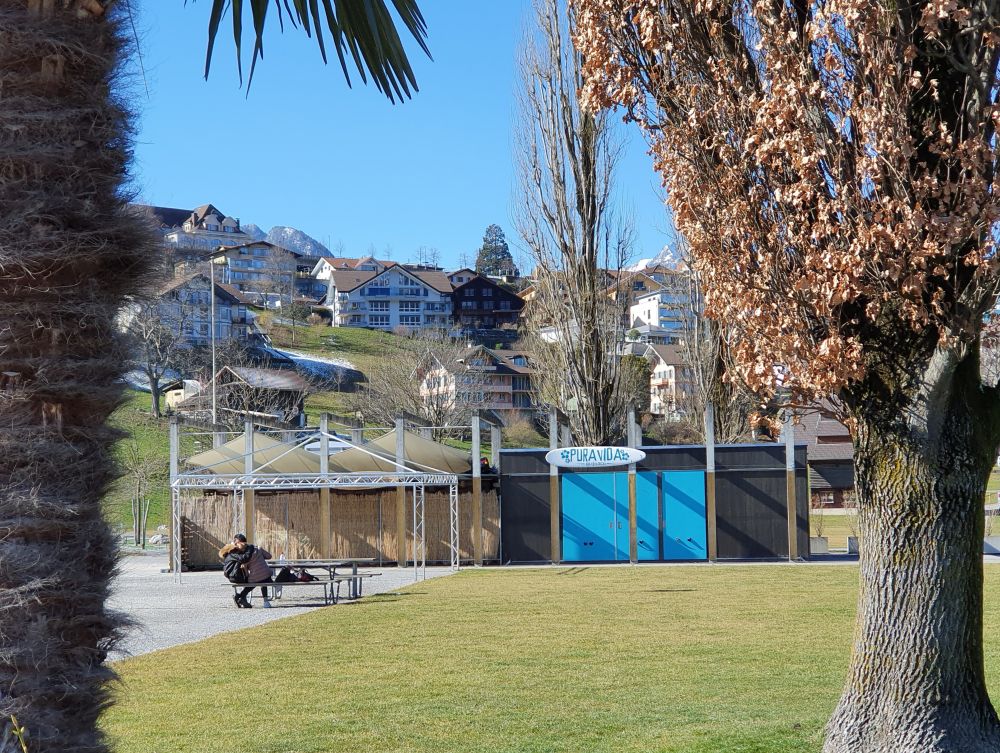
The small bar “Pura Vida” is closed now. At Costa Rica, “pura vida” alludes to how great life is, and the Ticos keep on saying “pura vida” at all circumstances such as “how are you?” – “pura vida!”.

Yes, pura vida! I always enjoy it at Spiez.


Kiental

In August 2020, I am back with my friends, and we enjoy two sunny days to go for walks in the mountains.

Our first walk takes us to the Kiental. From Griesalp we walk up to the “Oberi Bundalp”, where Peter, being a typical Bavarian, has a beer and we, the ladies, have  “lighter” drinks.

After about two hours, we have our next stop at Gamchi, a friendly restaurant that serves an excellent cheese melted over bread.

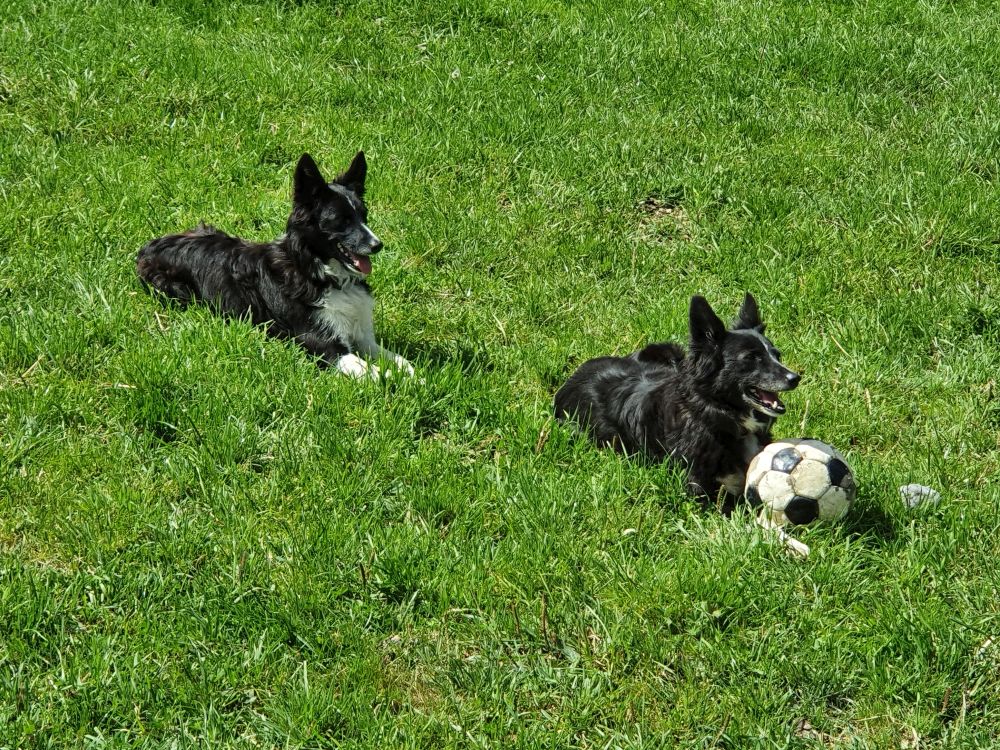
The friendly Gamchi dogs enjoy to play with Peter. They come back again and again and Peter throws the ball again and again.

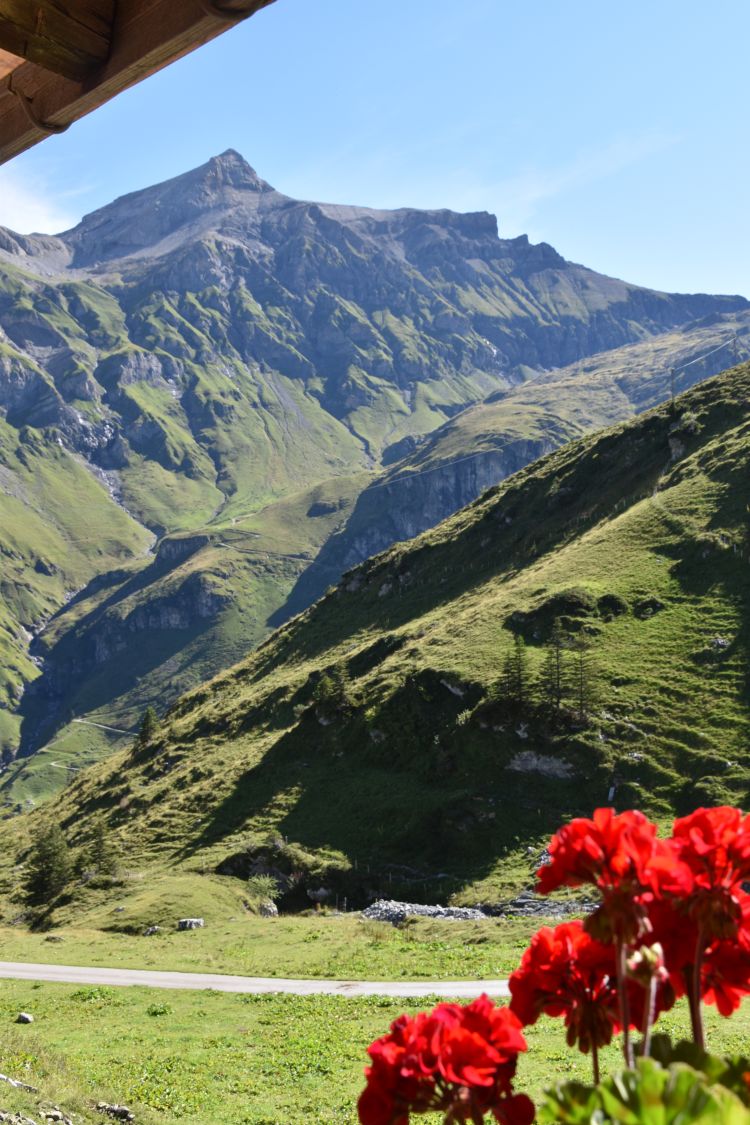
Walking back to Griesalp along the canyon, we enjoy the view of the Blüemlisalp chain…

… and we also look downstream to the Prealps around the Kiental.

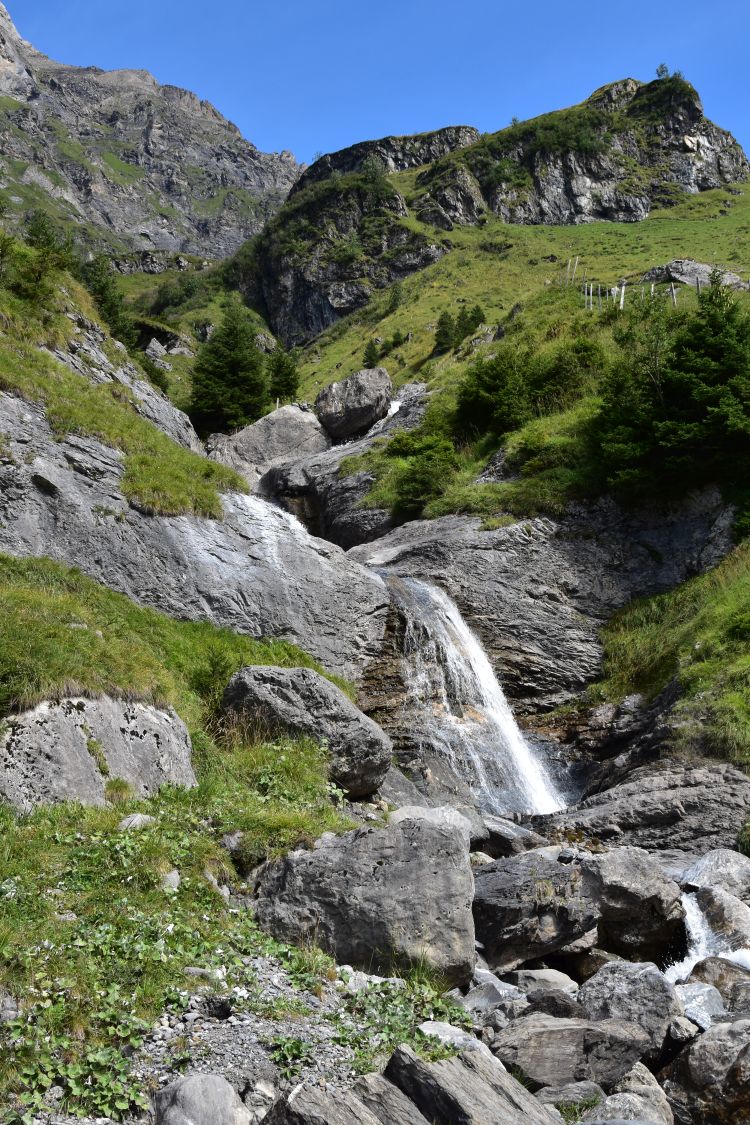
We continue along waterfalls…

… that shape rocks.

For me, it was a very intense feeling to return to the Kiental, where I had been with Ernst so many times (my husband who now watches from above). Every winter we came here to climb the Bundstock with skis; I spotted the route to the top that we used to take. I also identified the slope that we once skied down in great powder snow, after having decided to stop and return – there was danger of avalanches and it was not recommended to cross the so-called “Bärentritt” which is  very steep. Near an alpine hut, away from that slope, we had a relaxed picnic in the sun, and about an hour later, the whole slope had slid down – yes, we were right to return –  there WAS danger of avalanches! And it was a shock for us.


Doldenhornhütte (Doldenhorn hut)

Our second walk took us to the Doldenhorn hut that sits on the top of a rock like an eagle’s nest, some 800m above Kandersteg and below the Doldenhorn.

When going up, the view broadens: Kandersteg and the Kandertal are below us.

The climb is rewarded by this wonderful view of the Oeschinensee…

… and of the Kandertal with the mountain village Kandern.

The Doldenhorn hut serves excellent Röschti (grated potatoes).

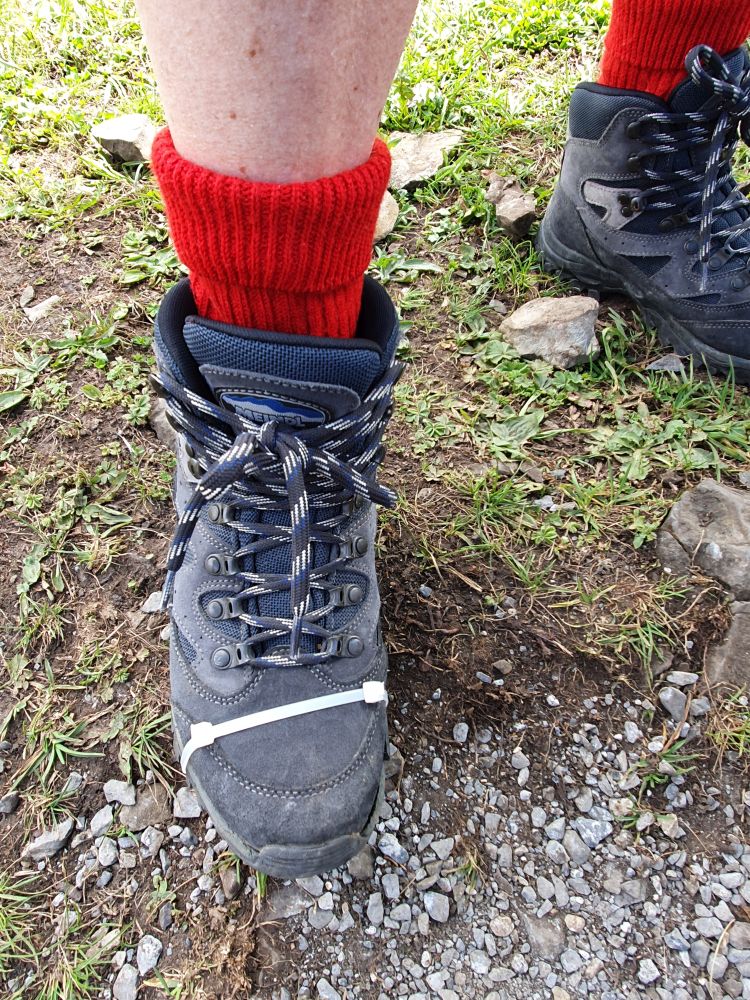
Unfortunately hiking wears the boots and the sole came off. Luckily, the hut manager had a solution: Cable straps…

… which allowed us to continue walking. It was a steep and winding path, going down some 800m, up to Kandersteg.

We had dinner in the restaurant Altels in Kandergrund and watched the clouds cover the sky. Now we look forward to two days of culture instead of hiking. And there is some culture in and around Spiez waiting for us.


Borders around Basel open again – first short bike tour to Germany

On Monday, 15th of June 2020, the country’s borders have opened up again. The “Regio Basiliensis” (region of Basle) is a “Regio” again. Yes, I can speak my Basel dialect across the border of Basel, in the Alsace (France) and in the Markgräflerland (Germany) – we ARE ONE region. Joking, we sometimes dream of “Greater Alemania” unifying those areas, where our Alemannic dialect prevails. To make it clear, we are just joking, and with “immigrants” from the rest of France, I like to switch to French and for “immigrants” from the rest of Germany I go back to my mother tongue, German.

Happy to access to the “Regio Basiliensis” again, I take my bike and drive to Ötlingen (then to Binzen and the Kandertal).

Source: Swiss mobile maps

Ötlingen is on a hill above the Rhine valley and grows wine that their restaurants serve…

… with a great view of the Rhine valley and the Jura as well as the Vosges mountains.

The Regio Basiliensis looks like ONE large agglomeration around Basel, just accidentally divided by country’s frontiers that were closed for three and a half months and now are open again.

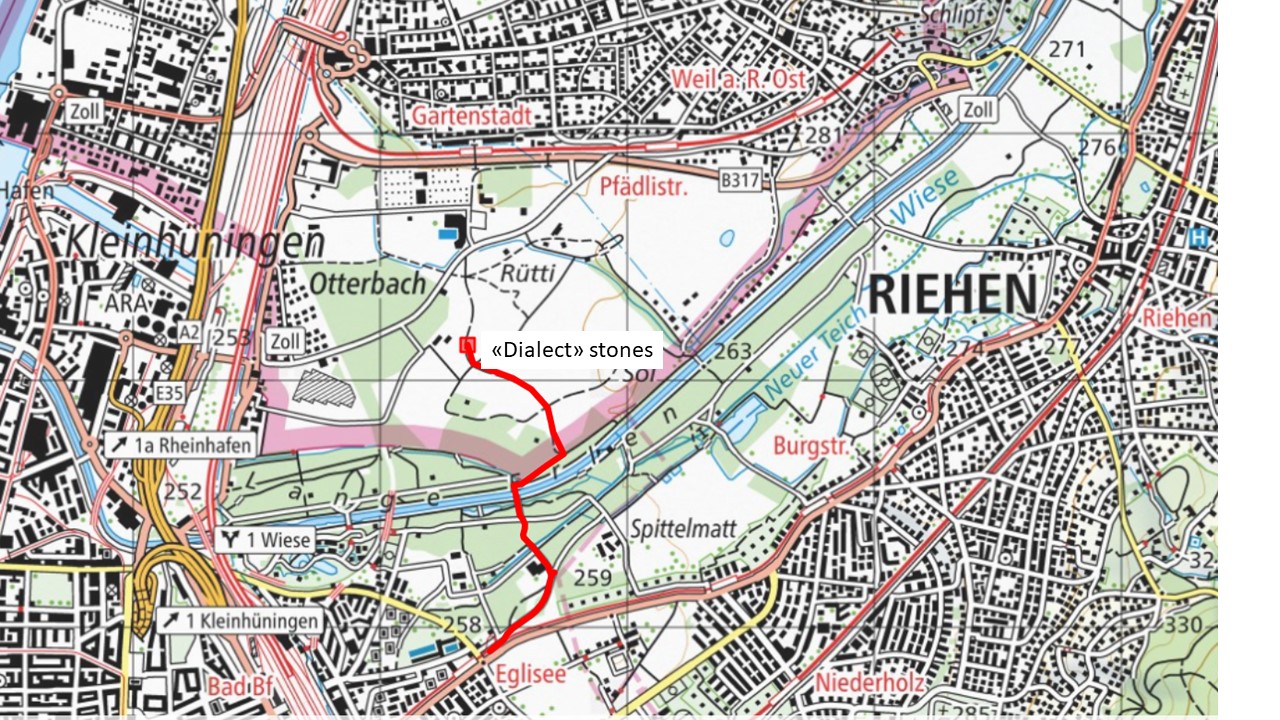
Returning to Basel, I cross the Langen Erlen, which belongs to a recreational area along the Wiese, partly in Germany, partly in Switzerland.

Source: Swiss mobile maps.

Along the path marked in red (between Eglisee and the Laguna), there are “dialect” stones displaying expressions used in Basel and across the border in Germany (Markgräflerland); the same expressions are also in use in France (Alsace). Here are some examples.

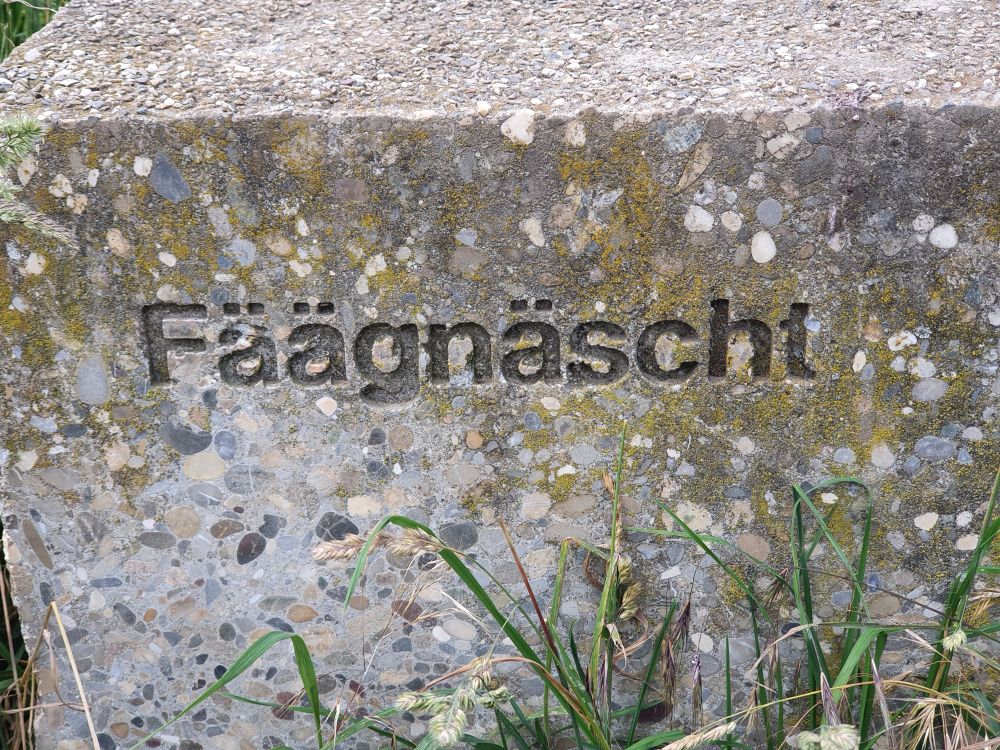
“Fäägnäscht” is, what we call a person that cannot sit or stand still – he/she is in move all the time. I like this word, I can hear the moving and rustling of the unsettled person: -f-f-f-scht-scht-scht-f-f-f-scht-scht-scht. And I know, some people would call me “Fäägnäscht”.

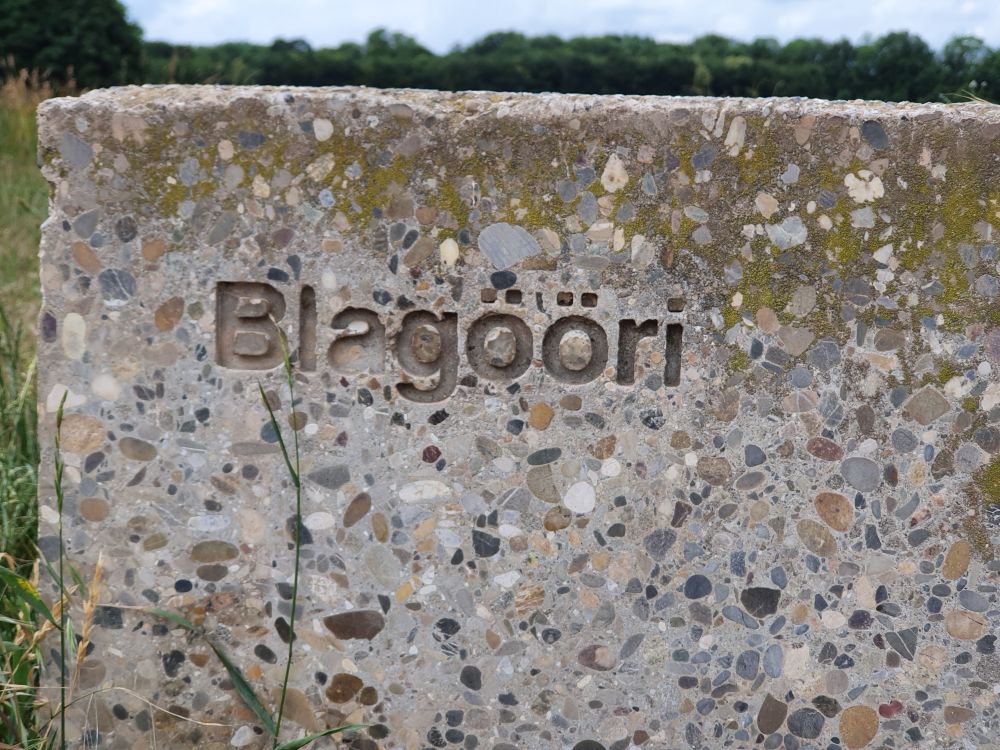
“Blagööri” is what we say to a person that shows off. He/she thinks, he is the “best” and knows everything. The extended “öö” illustrates, how great he/she thinks, he is – ööööööÖÖÖ.

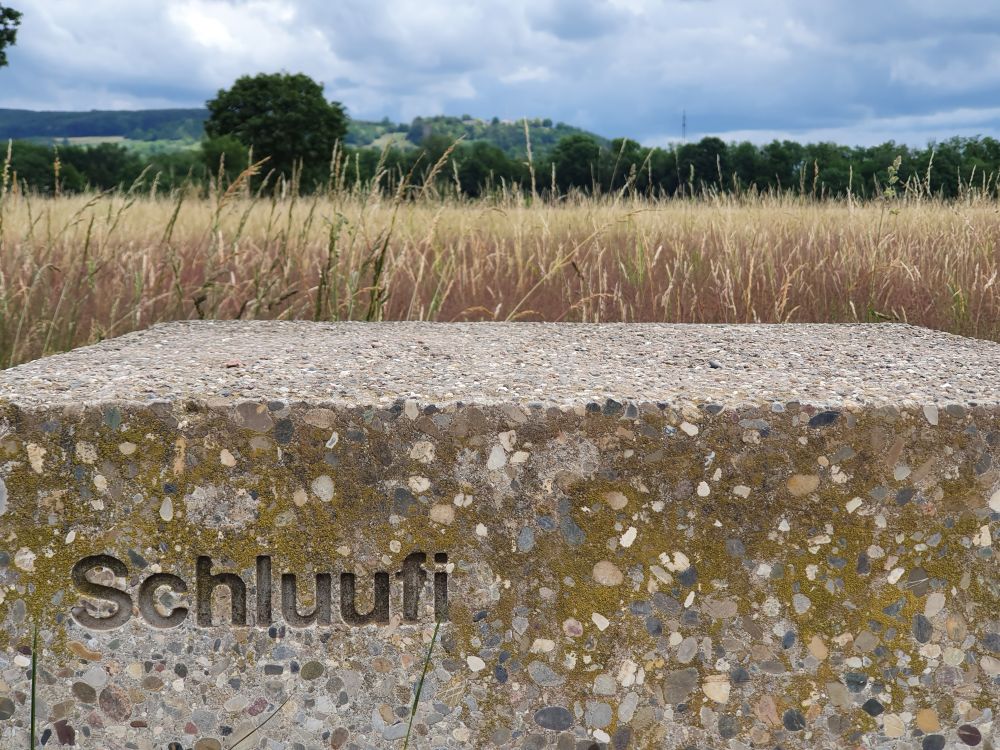
A “Schluufi” does not have control of his life or his work or he is simply not interested in that. He is “dragging along”. I can hear that clearly from the “sch” and the two “uu”:  sch-sch-uu-uu-sch-sch-uu-uu.

A “Schnääderänte” keeps on talking and talking “schnääder-schnääder-schnääder” and it sounds like “Änte” which are ducks. I can hear the chattering of the ducks: schnääd-schnääd-schnääd, also onomatopoeic.

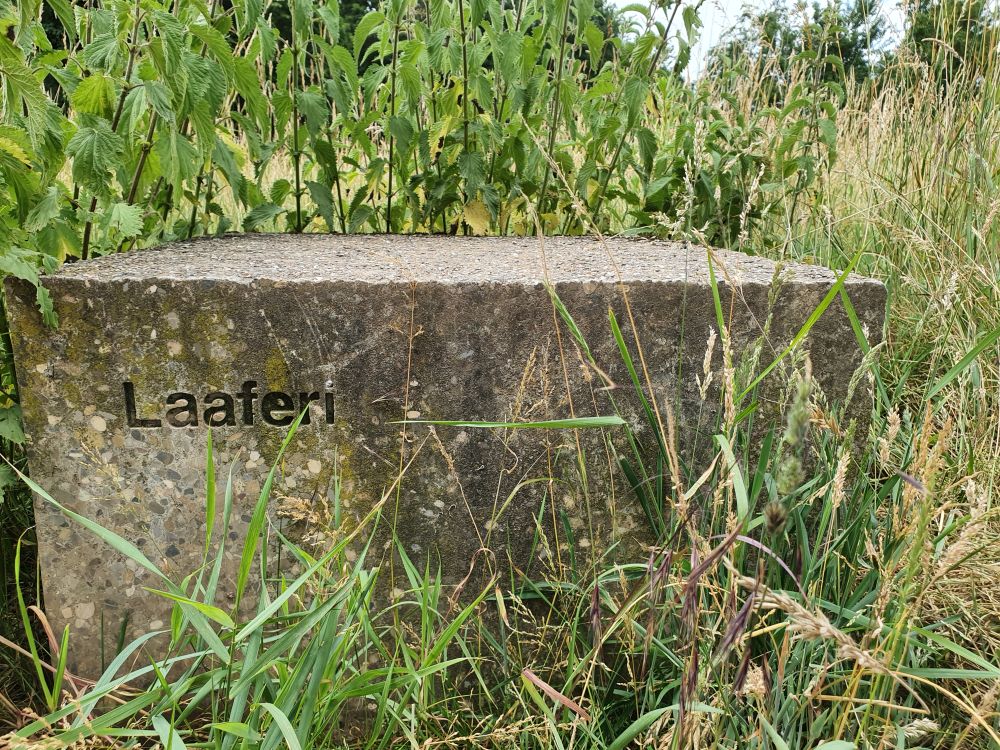
Also the “Laaferi” talks a lot, and what he says, is meaningless, a bit like “ob-la-di, ob-la-da“, I think, the Beatles used the same onomatopoeic picture.

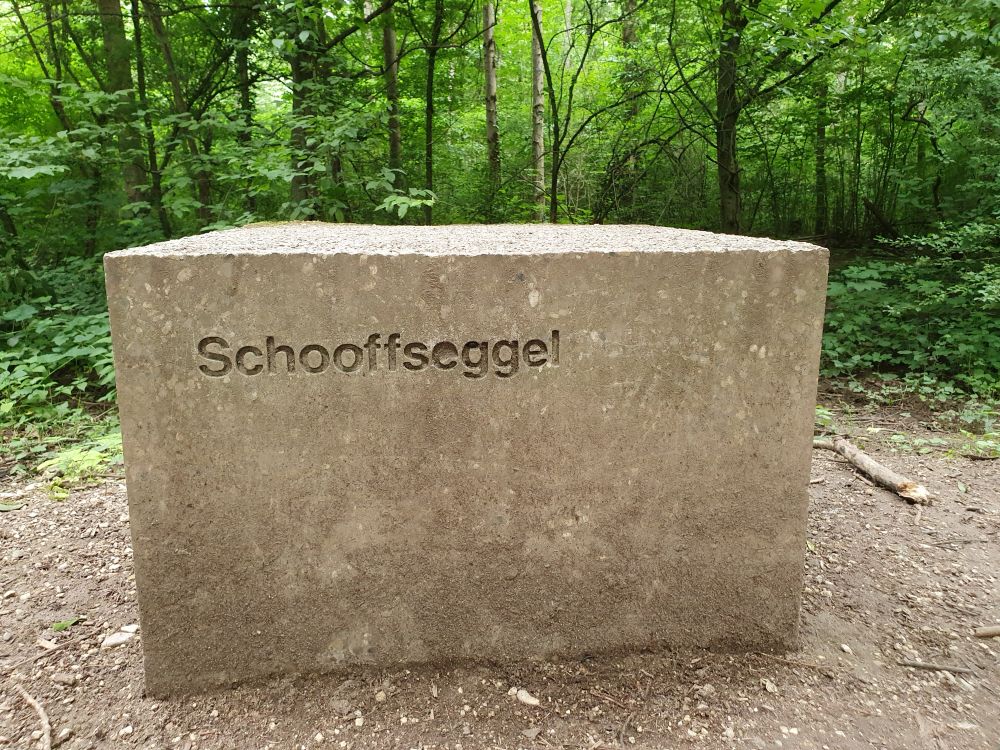
This is a difficult one. It means, I disdain you totally. I would never say this word to anyone. It is not nice, simply not lady-like. But its background is a good example of the Regio Basiliensis reaching into Germany and France.

Let us dig deeper. This word has an interesting origin in French with a detour to Latin that entered the Alemannic language. Instead of “Schooffxxx” (as on the stone), we also say “Schooffsurri” which, I believe, goes back to “chauve-souris” in French (“bat” in English). Digging deeper into late Latin, “chauve-souris” comes from “cava sorex” that means “chouette souris” or “marvellous mouse”. Hence a “marvellous mouse” (cava sorex) turned into a chauve-souris (“bold” bat”) in French, then into a term of disdain in the Alemannic dialects (Schooffsurri) and into the even uglier expression “Schooffxxx” that you find on this stone. This expression is known in Basel and in the whole Region Basiliensis across the border in Germany and France. But it is rude and I never use it.

The path with the “dialect” stones starts at the Eglisee in Switzerland and ends in Germany near the Badeland Laguna. It shows, how much the Regio Basiliensis, the region of Basle, belongs together: Across the borders we speak the same dialect (almost, we can hear nuances), and now, the borders have opened and we can visit one another again.

Let us take care and protect one another from the virus resurging; I observed that in Germany shops require medical masks, and I put on my mask, when buying fresh bread and cherries in “my” farmer’s shop in Rümmingen near Binzen.

I feel freer and I am happy that now the Regio Basiliensis is within reach again.

A walk in the Maderanertal, a rough valley that has been shaped by glaciers: Sunday

On  Saturday and Sunday, August 17th/18th 2019, we went for a two day photo excursion to the Maderanertal.  It is Sunday now, where we captured impressions from the early morning and from walking around the lake.

.

Early Sunday morning: The moon is in the west

I get up shortly after six in the morning. The sky is clear. It is almost full moon.

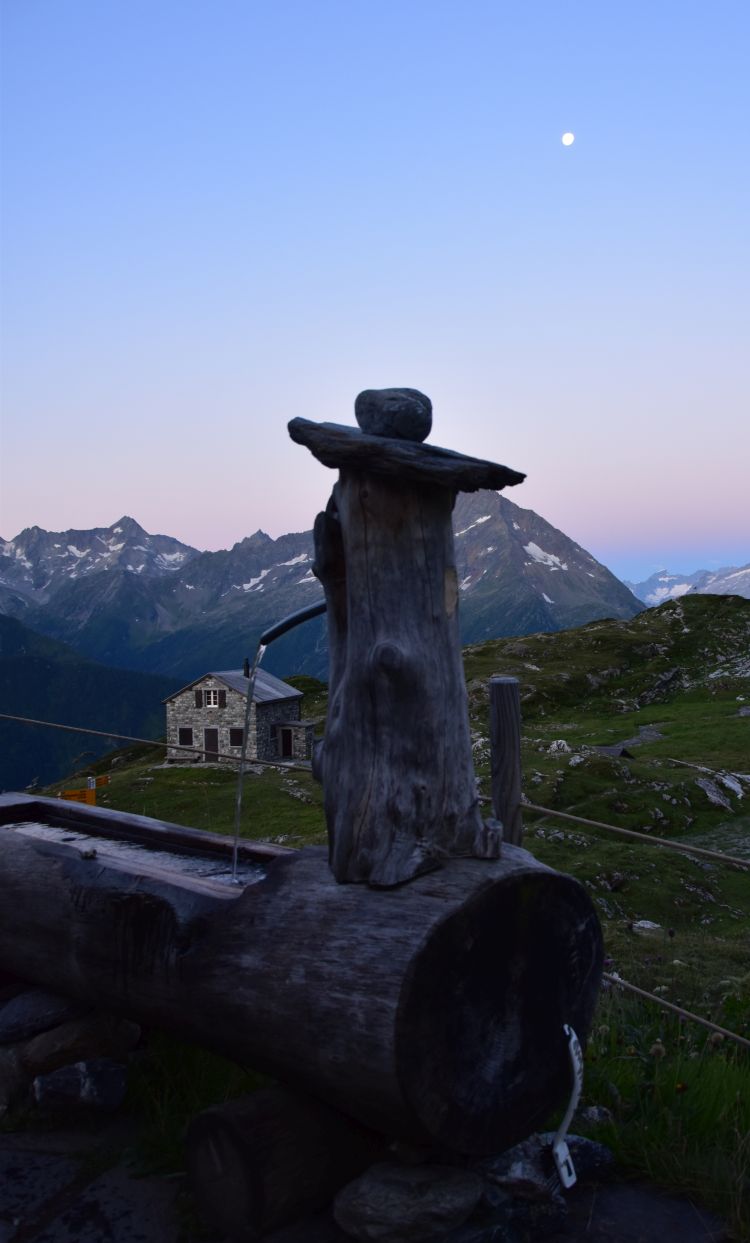
While it is dawning, the fountain in front of the Windgällehütte atrracts me.

.

The mountain peaks start to be touched by the sun

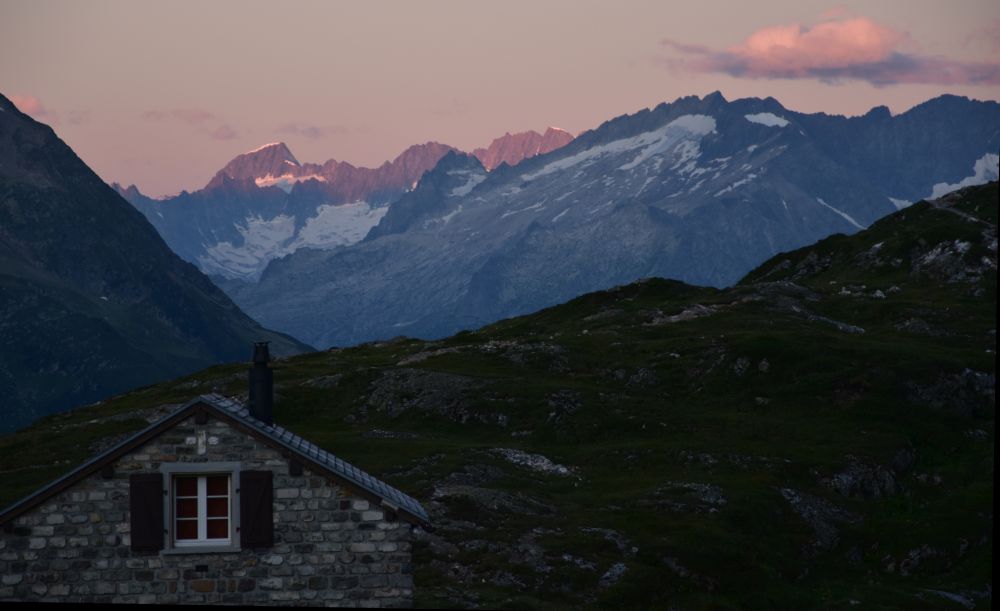
Some red clouds in the west have appeared above what I think is the Susten. The Galenstock shines fully in the sun.

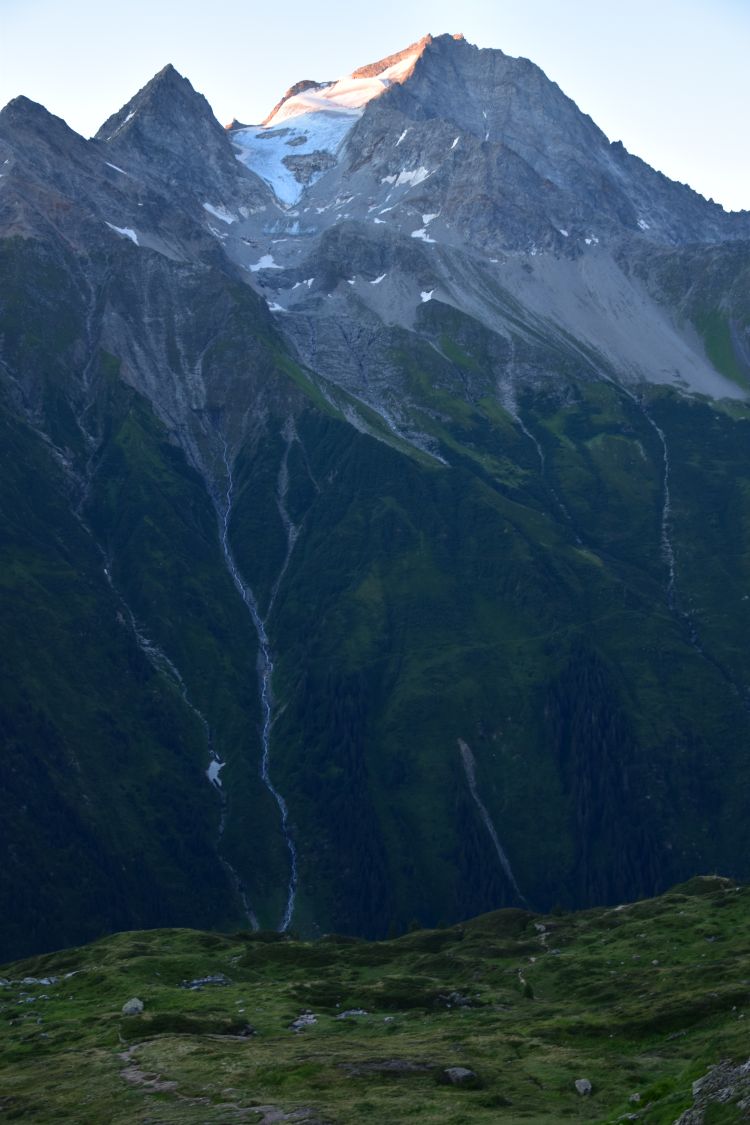
Also what I think is the Oberalpstock above the Maderanertal starts to glow.

.

The sun rises

The sun takes its time and I feel cold. Shortly after seven o’clock, the sun appears above the glacier Hüfi Firn, just for a moment, disappears again and reappears in the next gap of the rock to accompany us for the rest of the day.

Now, we enjoy the excellent breakfast of the Windgällen hut, even with fresh yoghurt. By the way, the Windgällenhütte  is not an SAC hut, but it is owned by the AACZ which is the Academic Alpine Club of Zurich, as I have learnt in the meantime.

.

Saying good-bye to “our” hut and walking down to the Golzeren lake

The family that had slept in the same room with us, is starting for the geology excursion provided by the Windgällenhütte. A documentation hangs around the neck of the husband. He hopes to find some crystals on the way. Back at home I take out my “Die Geologie der Alpen aus der Luft” by Kurt Rüwe and Ruedi Homberger (Weishaupt Verlag 2011) and find a chapter about the Windgällen massif (p. 246/47). The book explains that the top of the Chli Windgälle is made from (older) crystalline basement (kristallines Grundgebirge) and neighbouring Gross Windgälle from (younger) mesozoic sediments. At the Chli Windgälle, the (older) chrystalline basement layer is above the mesozoic (younger) layer. This must be a fascinating excursion.

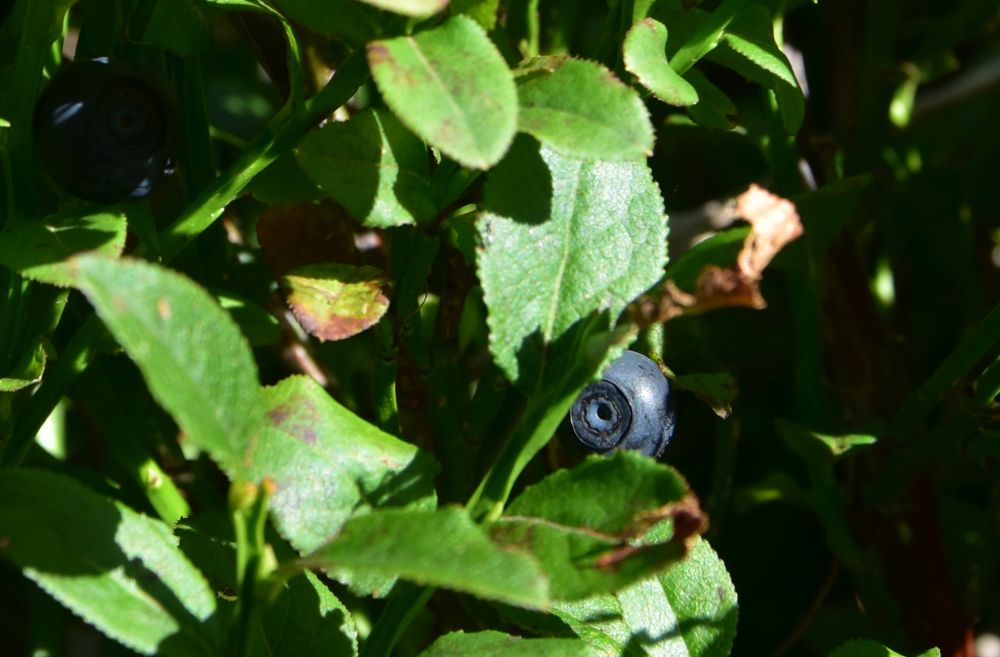
We say good-bye to the family and to the Windgälllen hut and descend to the Golzeren Lake. It is a pretty walk. While my friend takes photos, I eat blueberries – the first ones I find this year.

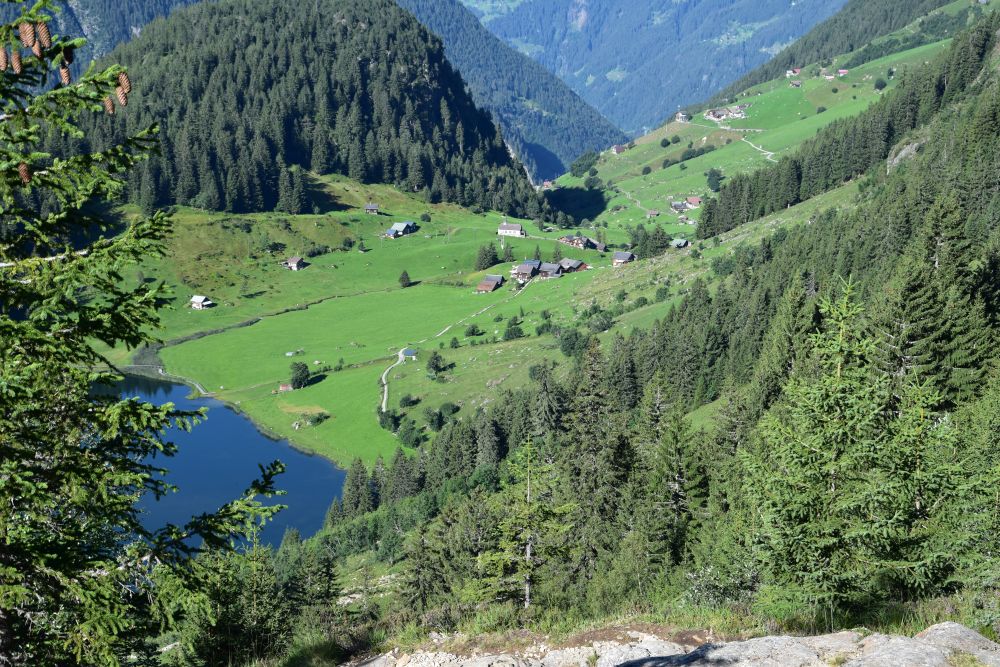
We reach the forest and can see the lake Golzeren and the village Seewen below us.

In Seewen we meet many Sunday tourists that have come up by cable car from Golzern Tal. We join them and walk to the lake.

.

Surrounding the romantic Golzeren lake

A panel explains to the tourists that the Golzeren lake originated by filling the depression, where the retreating glacier left a block of ice that melted later. The village Seewen is located on the end moraine. The lake contains dead wood which provides the habitat for fish and other water creatures. The lake is a paradise for anglers, as young fish are put out regularly, trout and perch, recently also crayfish that eat carrion.

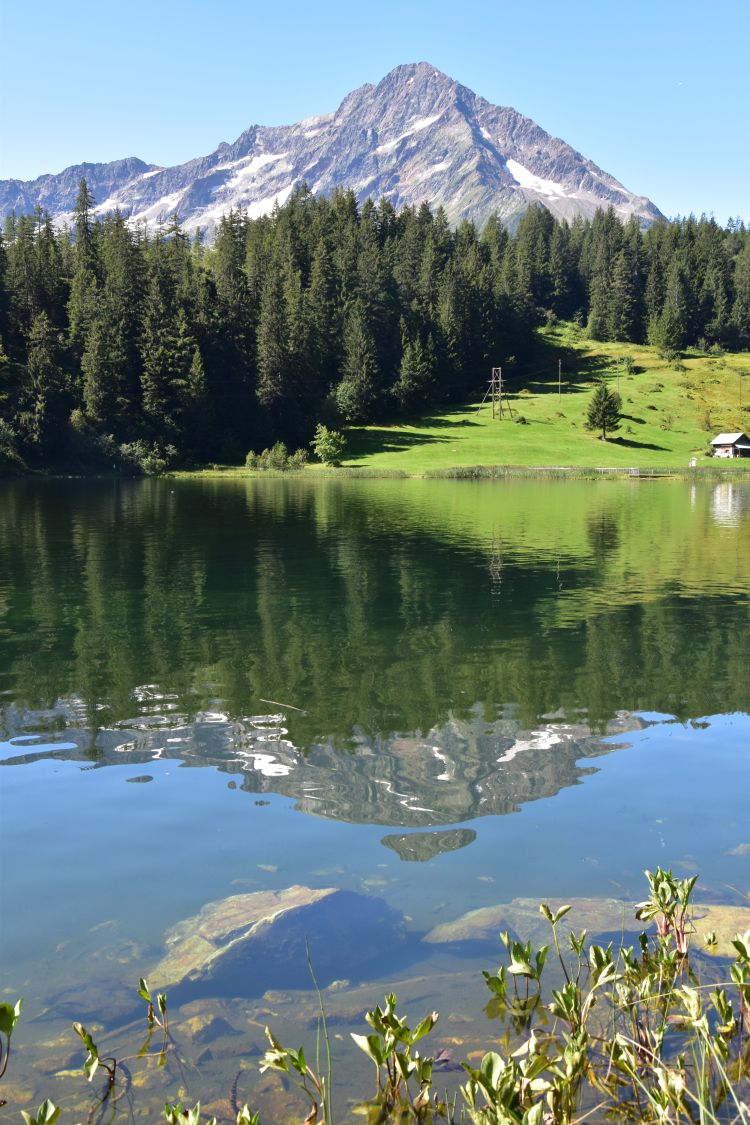
I first focus on mountains and trees reflecting in the lake. This is the Oberalpstock with the stone in the foreground,…

… with the little duck…

… and with some plants. There is a slight wind that changes the image of the reflections.

We reach the eastern shore, amidst swimmers and sunbathers that enjoy the small beach. Great idea to take a swim here. I enjoy the view towards Susten, also reflecting in the lake.

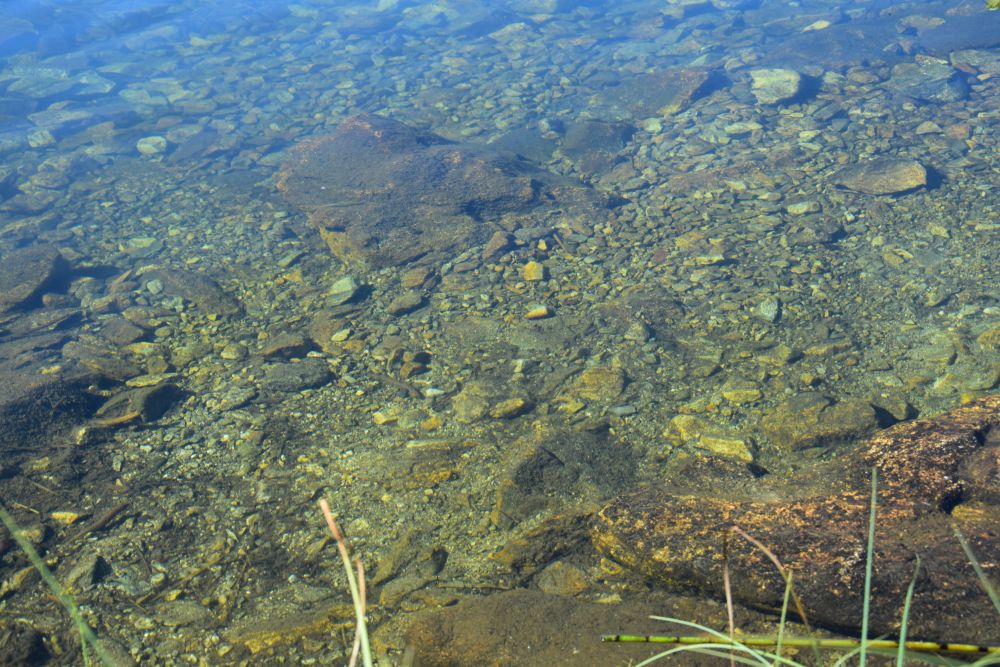
Next I turn to “water games”. There are pebbles,…

… a dead tree (hard to see, yes),…

… a dead wood log that looks like a dog to me (a small rhyme)…

… some water plants and…

… the bear’s breech that is visited by beetles.

.

Saying good-bye to the Golzeren lake and walking down to Golzern Tal

I take a foto of the Chli Windgälle with its (older) crystalline peak above the (younger) mesozoic layers,…

… look back east to the Maderanertal, where we have been…

… and a look ahead west, where a very steep descent down to Golzern Tal is expecting us… we will be zigzagging down some 500 or 600m.

When we arrive in the valley, I feel my legs – perhaps we should have taken the small red cable car that shuttled up and down above our heads.

While waiting for the bus, I have a bowl of blueberry ice cream, freshly made by the Alpenkiosk. With many other Sunday tourists we take the bus to Flüelen and change trains twice to reach Basel. We have experienced two dry and mostly sunny days with great photo spots and a friendly hut. When back at home, I see a very bright lightning around ten at night – with it two days of rain are ahead of us.

Thank you for having taken me out to this valley that I had not known before!


A walk in the Maderanertal, a rough valley that has been shaped by glaciers: Saturday

A good friend of mine, Swiss with Hawaiian background, proposed a photo excursion to the Maderanertal. I had never been there before and I was impressed by the beauty of this steep valley in the canton Uri.

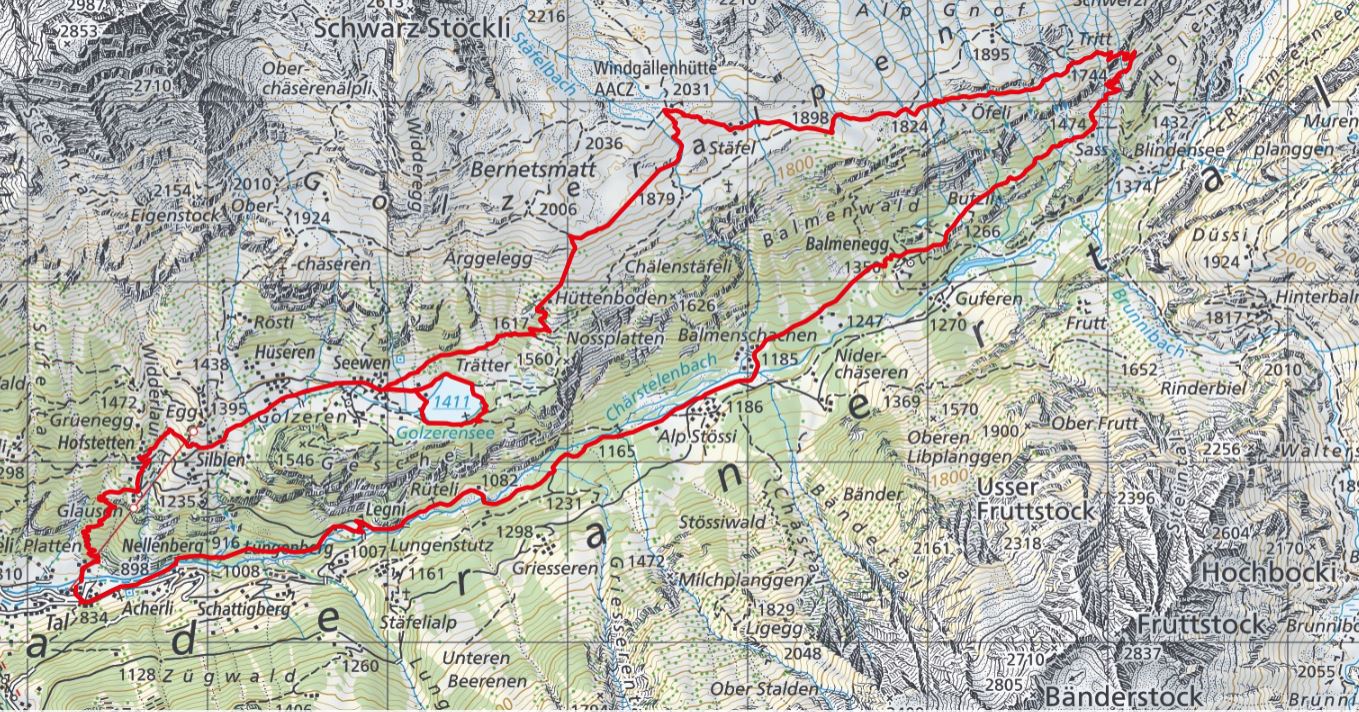
On Saturday, we started at Golzern Tal (about 800m, lower left hand corner of the map), followed the creek Chärstelenbach to Balmenegg, climbed up to Tritt (1744m, upper right hand corner of the map) and continued to the Windgällenhütte (hut at 2031m), where we stayed overnight. On Sunday, we walked down to the romantic Golzerensee (lake, 1411m) and descended to Golzern Tal. In all we walked about 18km, up and down about 1250m .

Source: Schweiz Mobil

The most impressive places for photos I found, when crossing the waterfalls on the way to Tritt, when staying at the Windgällenhütte (sunset and sunrise) and when surrounding the lake Golzeren.

.

Starting along the Chärstelenbach

We started our walk in the valley strolling along the Chärstelenbach. I am not sure, whether this wooden gangway really carries two tons…

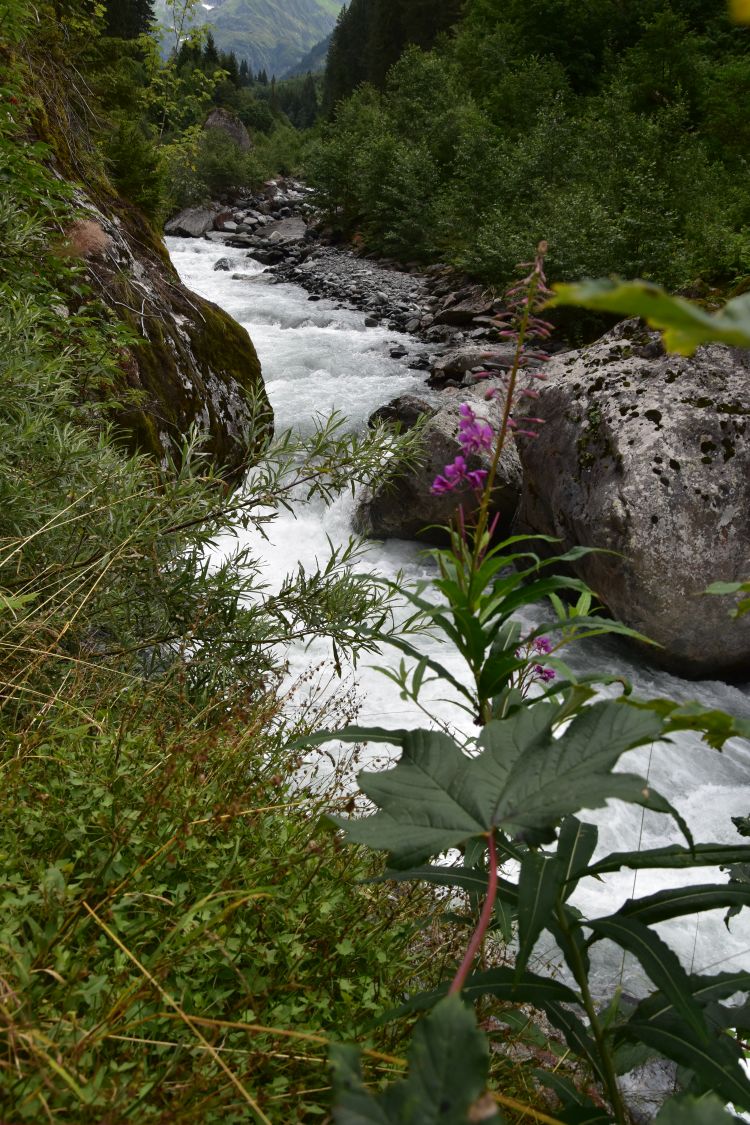
The wildly churning Chärstelenbach offered the first opportunities for taking photos.

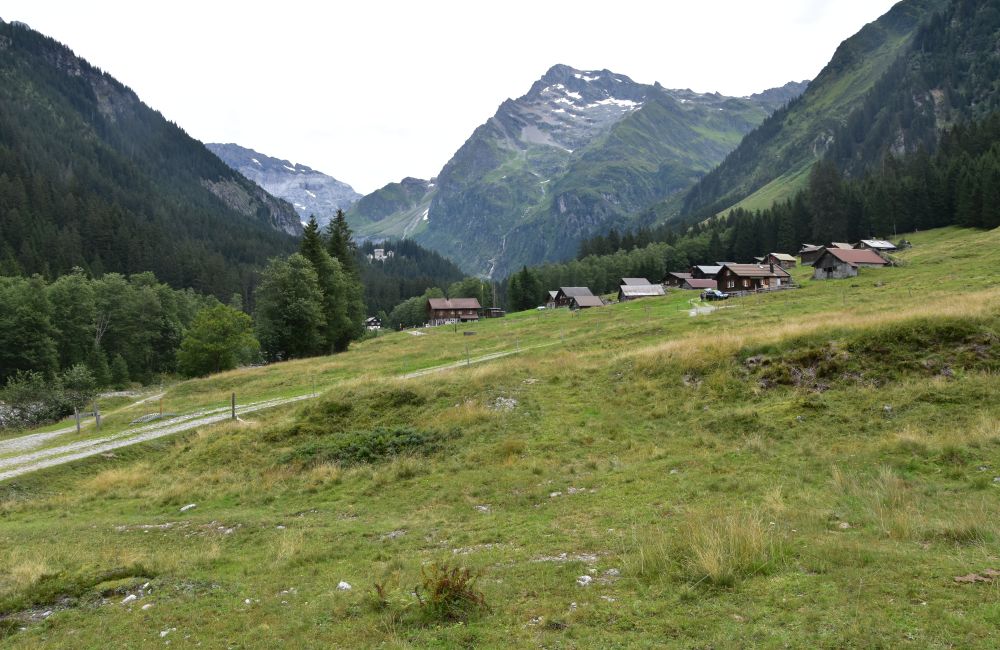
We reach Alp Stössi and see Balmenegg still far away in front of us.

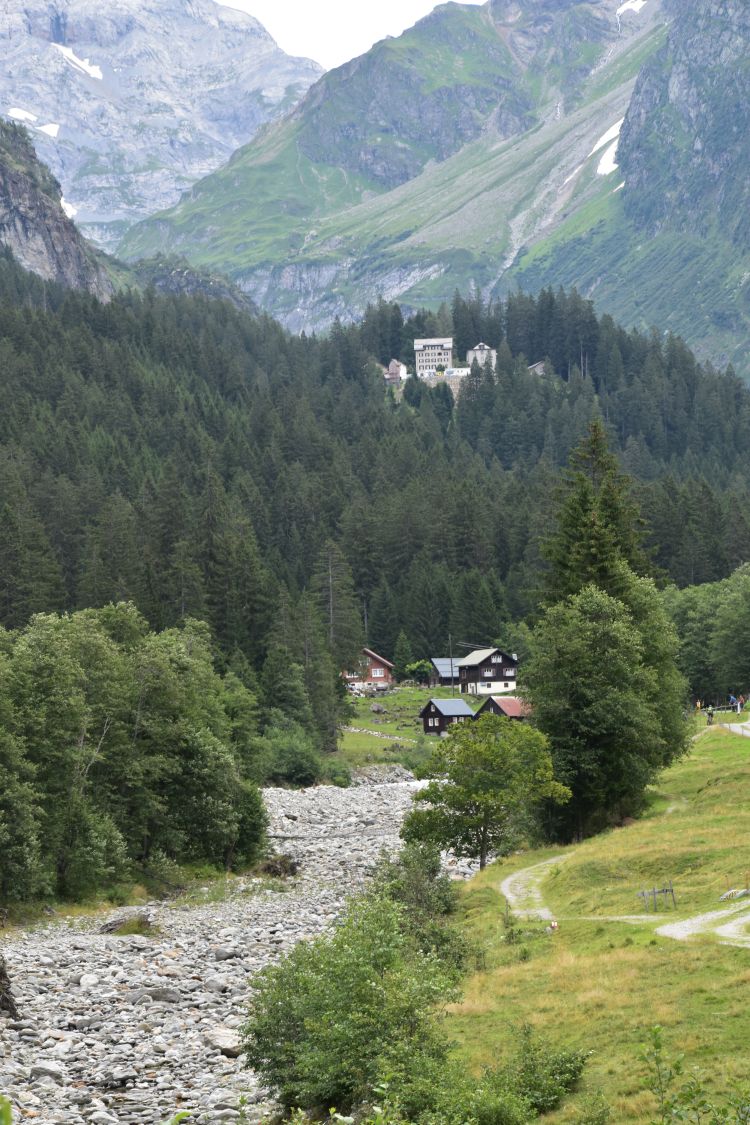
Now I have zoomed in Balmenegg, which is a hotel-restaurant surrounded by trees.

.

Crossing many, many soothing waterfalls on the way to Tritt

After having reached Balmenegg, we climb up to Tritt. It is very, very noisy from the soothing waterfalls on both sides of the valley. I do like the sound of soothing waterfalls.

We cross one waterfall…

… after the next. Here I stand on a metallic bridge. The rocks are polished above the bridge…

… and below the bridge.

Sometimes the water rests before continuing its way down.

We steeply climb up to Tritt and look back into the Maderanertal. I think of my mum who was a geologist – has she ever seen this valley shaped by glaciers?

.

Arriving at the Windgällenhütte, with all sorts of animals

The Windgällenhütte is an SAC mountain hut (Swiss Alpine Club). It is a very busy weekend that the hut team manages with a friendly smile in their faces. I had a delicious home-made chocolate ice cream to recover from the ascent.

The hut  is located at the foot of the Windgällen massif and above this swamp. Cows are grazing,…

… accompanied by some joyful alpacas.

Water enters the swamp and creates puddles.

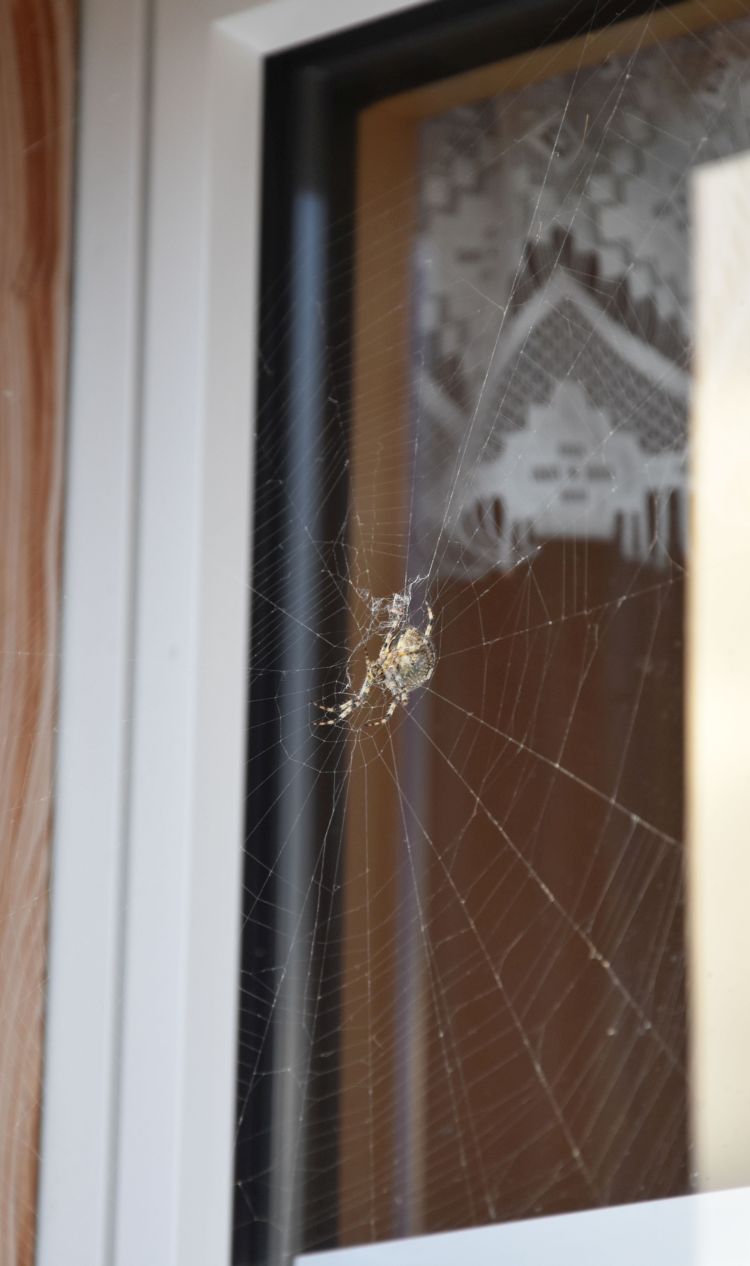
A huge spider has woven its elaborate cobweb in front of the window.

We have dinner – delicious spaghetti with various sauces and the best nut cake that I have ever eaten.

.

The setting sun illuminates the clouds

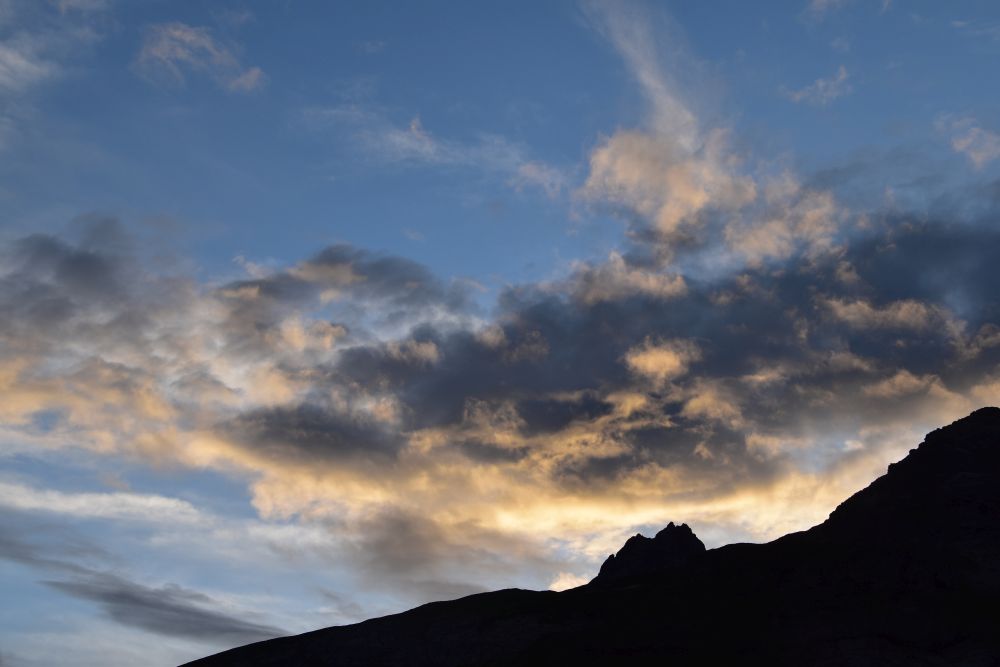
After dinner,  we watch the sun set. The sun is hidden by clouds. It illuminates patches of some mountain slopes…

… and makes the clouds glow. I recognize the Galenstock which is the left-most peak in the background. I know it from a ski tour, many years ago.

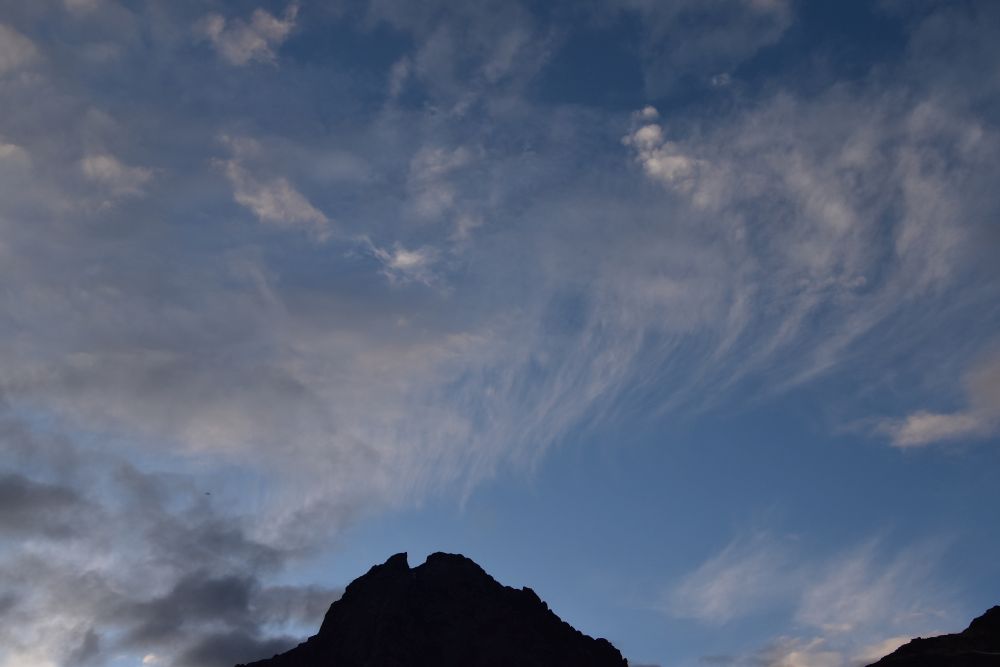
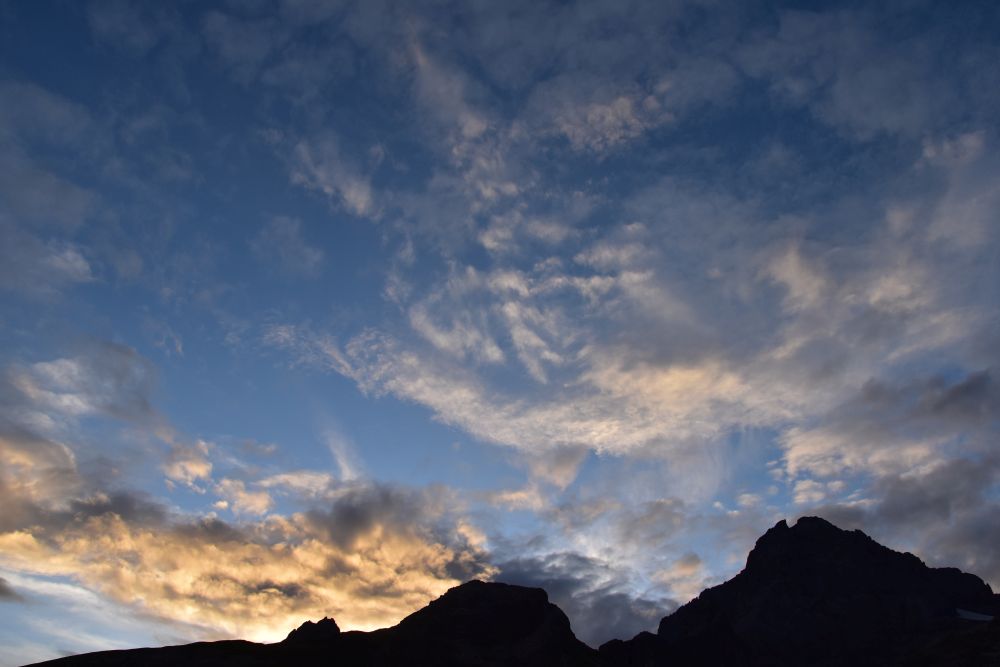
The clouds appear as stripes above the Chli Windgälle….

… and glow intensely farther west,…

… where the sun is setting.

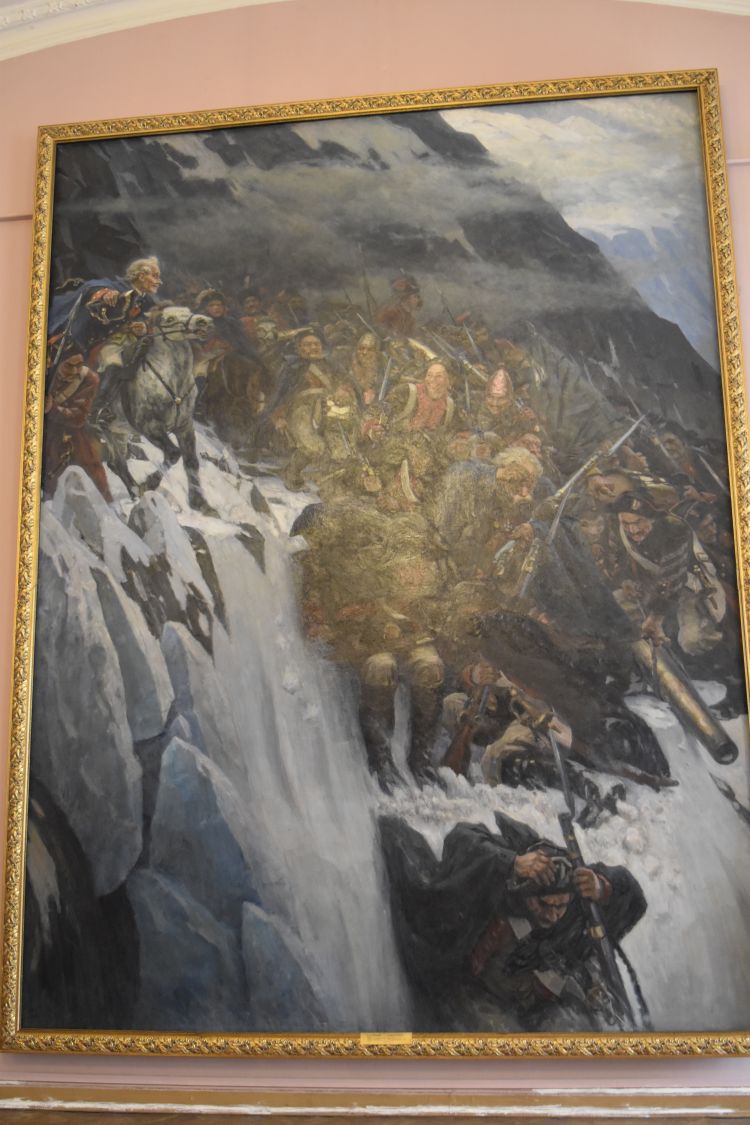
It is soon dark and we go inside. In the hut library, I find a book about the history of the Gotthard Pass during the Napoleon wars. Well written, with an objective view of the facts. Unfortunately, I have not written down the title. The book describes the historical events adding the viewpoint of the people from the mountains that suffered during the war around 1800. After having been successful in Italy, Suworow crossed the Gotthard in 1799, arrived too late in Altdorf, because Napoleon had already defeated the Austrians near Zurich. Suworow had to evade, crossed the Chinzig, the Pragel and the Panixer Pass and, with part of his army, he succeeded to return to Russia. In the book I found a black and white copy of Surikow’s painting – here is my photo of the original in the Russian Museum of Petersburg. Swiss mobile suggests the Via Suworow, an eleven day hike following the route of Suworow from Airolo to Ilanz. Perhaps this would be an idea for another hike?

Good-night! Until Sunday morning!


Basler Fasnacht/carnival 2019 – Impressions from the Laddärne-Uustellig/lantern exhibition: About censorship

This is a difficult topic: Avoiding words that may discriminate those that are different from us, be it cultures, groups of people or peoples. A politically correct language does not imply that discrimination disappears, but more and more we are told to no longer use words that may highlight it.

It took me long to write about the carnival theme “censorship”, as I find it difficult. I was raised with curiosity, with respect and love for what is different around me or elsewhere, with an eagerness to learn and even adopt what I like. Cultures and people are different and I love that. It is an enrichment. Think of food, philosophy, language, religion or history beyond Europe centricity. I take traveling as an opportunity for experiencing diversity and enrichment. Blogging is my way of understanding and learning. Diversity requires deep roots – mine are in central Europe. Sharing my roots with others is also important for me – such as I do with my blogs about Basel and around.

Now this year, the carnival of Basel took up the sensitive topic of the politically correct language and censorship. Whatever I take notice of – people, phenomena – I give a name to them. It is a sign of awareness, respect and it is practical. But many names have now got the label “discrimination”. Yes, I agree, some of the names are related with a bad flavour, but where is the limit? The boundaries are being extended and I start to feel uneasy about what I am still allowed to say and what has now become a no-go. One example: Can I still say, Rome was founded in 753 B.C. which stands for “Before Christ”? Yes, the Romans counted their years “ab urbe condita” which reflects their Roman centric view of history. Counting years starting from the year Christ was born – this is surely a European centric view that has been exported from here to the Americas and to much of the world. It reminds of the European hegemony (now fading?). But it is a practical reference point that I have never thought about. Where is the limit?

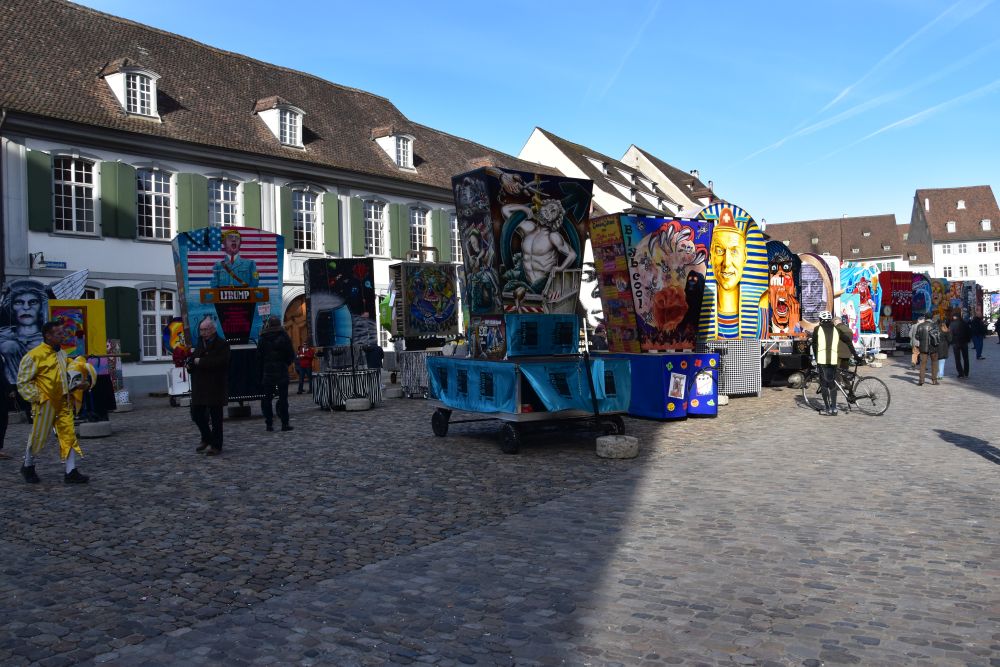
Let us stroll through the lantern exhibition at the Münsterplatz (cathedral square) to study some of the lanterns that talked about politically incorrect names and censorship at this year’s carnival.

While looking at the line of houses across the cathedral of Basel in the morning sun, let us think about how the topic “censorship” came up: In the nineteen fifties two groups of “Guggemuusig” (playing a kind of brass and drum music) were founded under the name of “Negro Rhygass” and “Mohrekopf”.  Perhaps they allude to the fact that Africans are known for being excellent musicians. Since then the groups have played each year and their names have not bothered anybody. But now, someone from a different city (that has their own procession with clichés about different peoples) attacked the two groups for discrimination or even racism. This triggered the topic “censorship”. Let me assure that at the Basel carnival, I have always discovered all sorts of coloured heads under the masks of the carnival groups. I think, the carnival is a great opportunity for integration, which is the contrary of discrimination and racism.

Let us check out the reflections about censorship that appear on some of the lanterns.

.

Reflection #1: Words and expressions forbidden by censorship

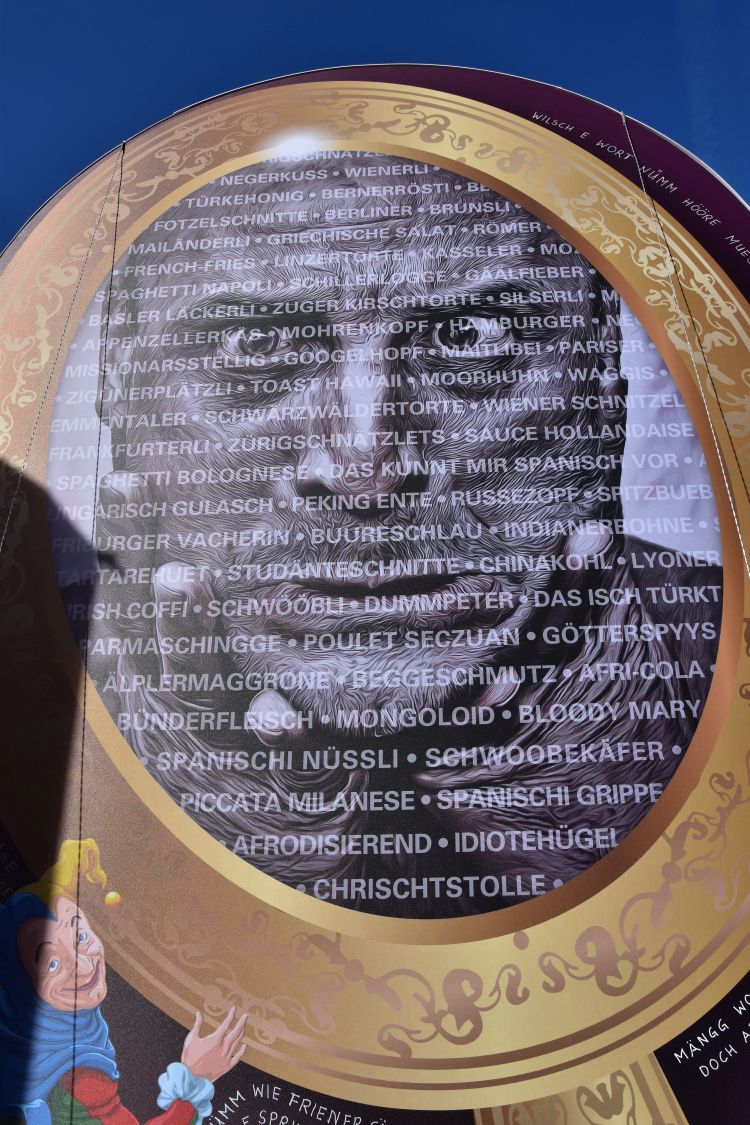
The Gundeli Gniesser are people that enjoy it – gniesse – from the Gundeli – an area in Basel. They list many words that will now be forbidden as they may nastily point at someone. Examples are:

  • “Wienerli” (sausage pointing at the city of Wien with the disrespectful diminutive “li”),
  • “Appenzellerkäs” (cheese from the canton of Appenzell with a rather strong smell),
  • “Peking Ente” (Peking duck) or “Chinakohl” (a sort of cabbage with “China” in its name),
  • “Älplermaggrone” (pasta made by the people in the Alps – called the “Älpler”),
  • “Mongoloid” (a name for the Down syndrome),
  • “Schwarzwäldertorte” (Blackforest cake, contains the word “black” and a region, the “Black Forest”),
  • “Russezopf” (Russian braided cake),
  • “Schwööbli” (small rolls named after the “Schwoobe” or the Swabians – with some fantasy the shape of the roll might remind you of one part of the body; with my own migration background I can easily smile about the “Schwööbli”),
  • “das isch türkt” (this fact has been twisted – why should the Turks twist things?),
  • “Idiotehügel” (idiot hill – small slope for beginners on ski – beginners are not necessarily “idiots”, they are just new to skiing),
  • “Googlehopf” (the cake called “Gugelhopf” – a delicacy in Basel and its surroundings – could be mistaken as pointing at Google)
  • etc etc.

Some of the verses on the lantern say:

  • “Mängg Wort wird zum Politikum, doch ab und zue wird’s äifach zdumm (Many words become a political issue, but sometimes it is simply too stupid)”;
  • “Nur ganz korrägt sötsch hütte schnuure, do blybbt nur s’Schimpfe hindeduure (Today you should only talk fully correctly, that is why you can only grumble covertly)”;
  • “Dr Moorekopf isch inne wyss und usse bruun – was soll das Gschyss? (the “Moorekopf” is brown outside and white inside, why such a fuss?”; the “Moorekopf” is a sweet brown chocolate half sphere with white foam in it; Moor=African; Kopf=head);
  • “Empöörsch Dy vyyl und mit Geduld, denn bisch au nie an öbbis tschuld (As you are often shocked and always point that out, you will never be blamed for anything” – this is very philosophical, I think).

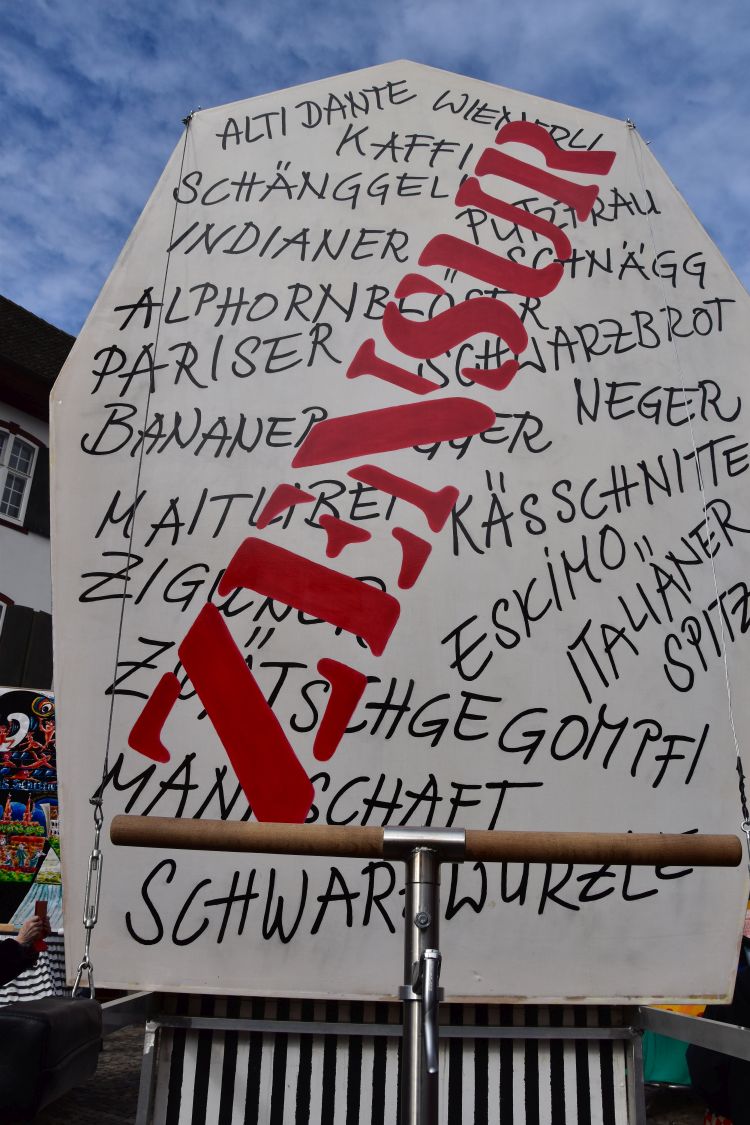
The Rhygwäggi are the “stones – Gwäggi- from the river Rhine – Rhy”. Their Alti Garde (Oldies) list expressions that have now become a no-go… such as

  • “Alti Dante” (elderly aunt, a very common mask at the Basel carnival, could be interpreted to be disrespectful of elderly ladies like me),
  • “Schwarzbrot” (Black bread is our crunchy, delicious dark bread. But… it contains the word “black”),
  • “Schwarzwurzle”… (we call the comfrey “black root” and, yes, “black” is censored, but, after having peeled them, they are all white),
  • “Pariser” (used to protect lovers, but it reminds us of the city Paris),
  • “Maitlibai” or “Schänggeli” (both delicious sweets called “girls’ legs” and “small thighs (of girls)”),
  • “Zwätschgegompfi” (plum marmalade, but a plum or Zwätschge is also a “stupid lady” in Swiss German, “gomfi” stands for marmalade),
  • “Indianer” (Indian; well I remember, as a child we loved to play “Indianerlis” and we dreamt of a wonderful world, where you would smoke the peace pipe to solve conflicts. As teenagers, we watched the film “Winnetou” with that handsome actor we all were in love with – was that wrong? Now in one kindergarden, the teacher forbid the kids to disguise as Indians for their childrens’ carnival),
  • “Mannschaft” (oh yes – a team is called “manship” in German, why not “womanship”, what a discrimination! Hm, I am a lady, and I have never thought about that before, at work we talked about “teams” anyway…).

The Rhygwäggi conclude: “Värsli brünzle isch kai Schlägg, usser de losch d’Wörter wägg (Creating verses is no fun, except you leave out the words” – “kai Schlägg” for “no fun” alludes to the fact that there is nothing to lick (schlägge or schlecken) such as a delicious sweet ice cream, so there is just no fun).

.

Reflection #2: Shut up or remain silent to conform to censorship

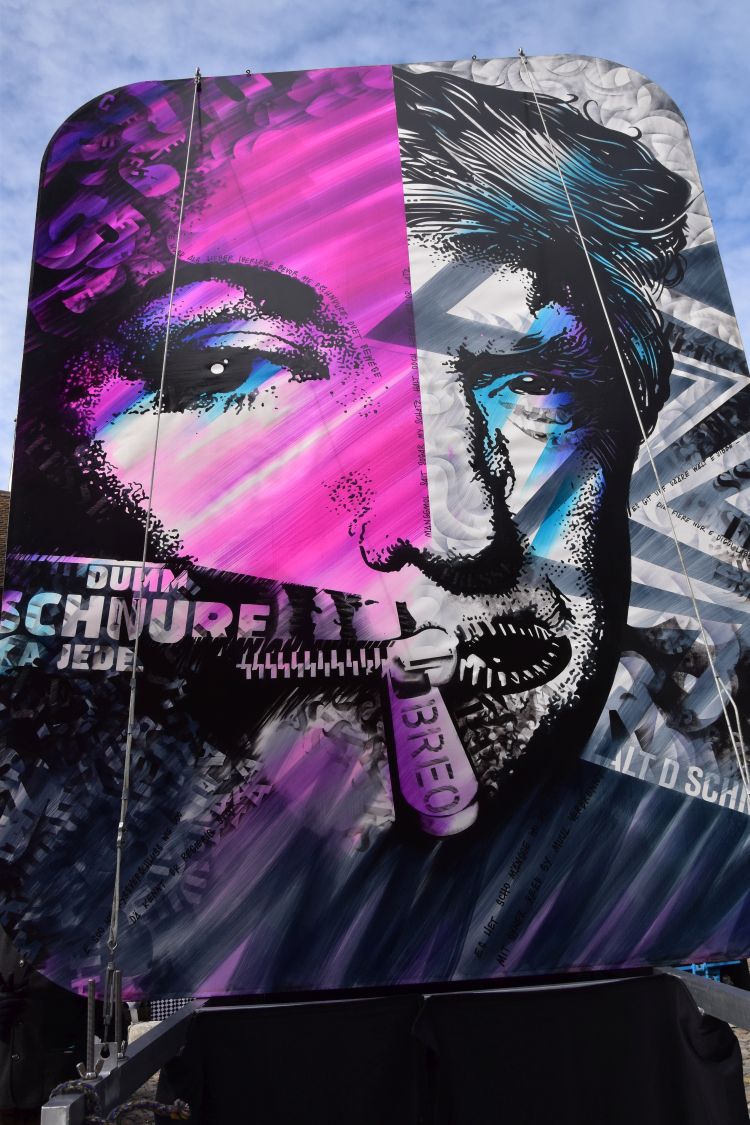
The group Breo named their topic “Halt dini dumm Schnure” (literally: shut up your stupid mouth). On their lantern there is this face closed with a zipper.

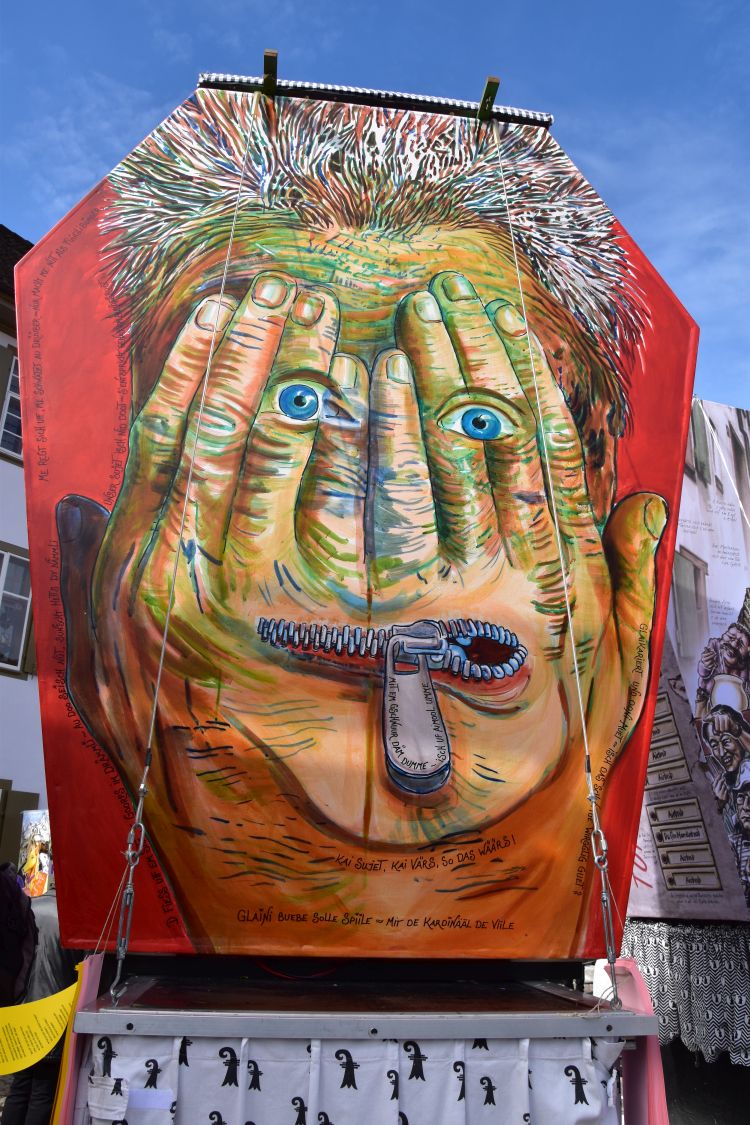
The carnival group D’Gniesser had the same idea, a face with a zipper. They say: “Kai Sujet, kai Värs, so das wärs” (no theme, no verse, well that’s it) and “#kai Sujet, syg gescheit, sag nüt (#no theme, be clever, do not say anything)”. The name of the group “D’Gniesser” can be translated as “the ones who enjoy it”.

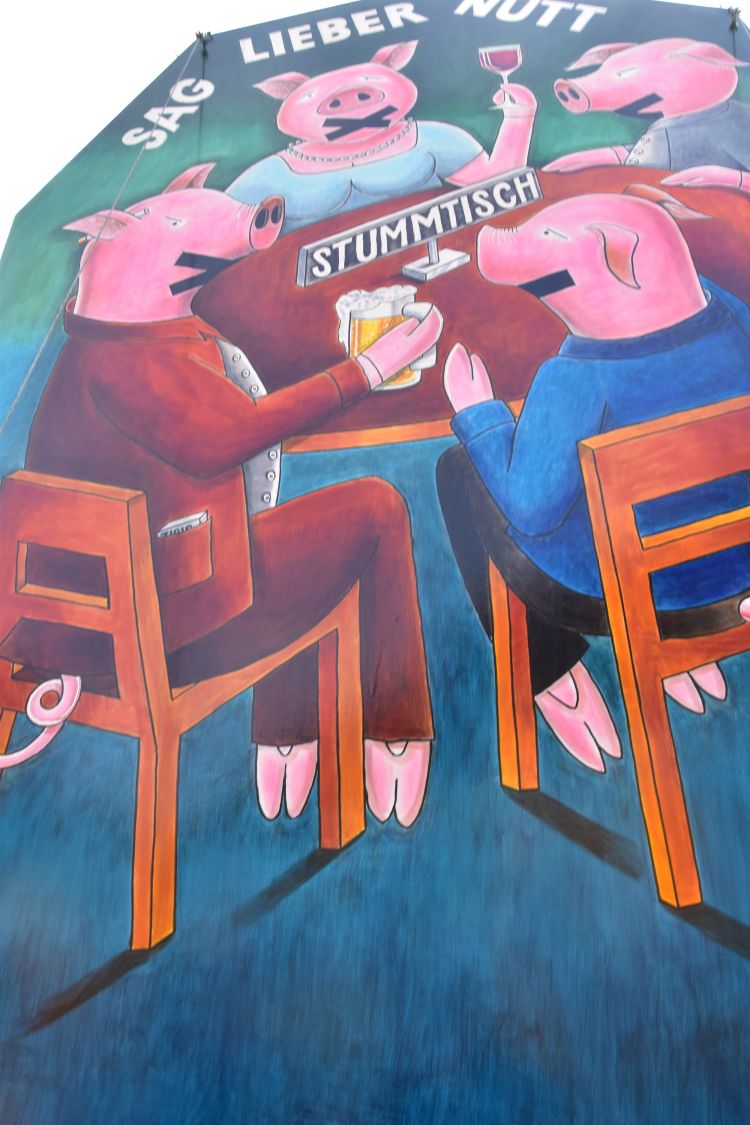
On this lantern, the pigs sit around a table with their mouths sealed up. “Sag lieber nütt – Stummtisch (Do not say anything – silent table)”. This is a play on words: stumm=silent, Stammtisch=regulars’ table; At the “Stamm-Tisch” the regular guests discuss politics and life over some glasses of beer, but due to censorship this table has become the “Stumm-Tisch” – by replacing the “a” by the “u“, “Stamm” turns into “Stumm” and “Stammtisch” into “Stummtisch” – with all regulars sitting silently around the table.

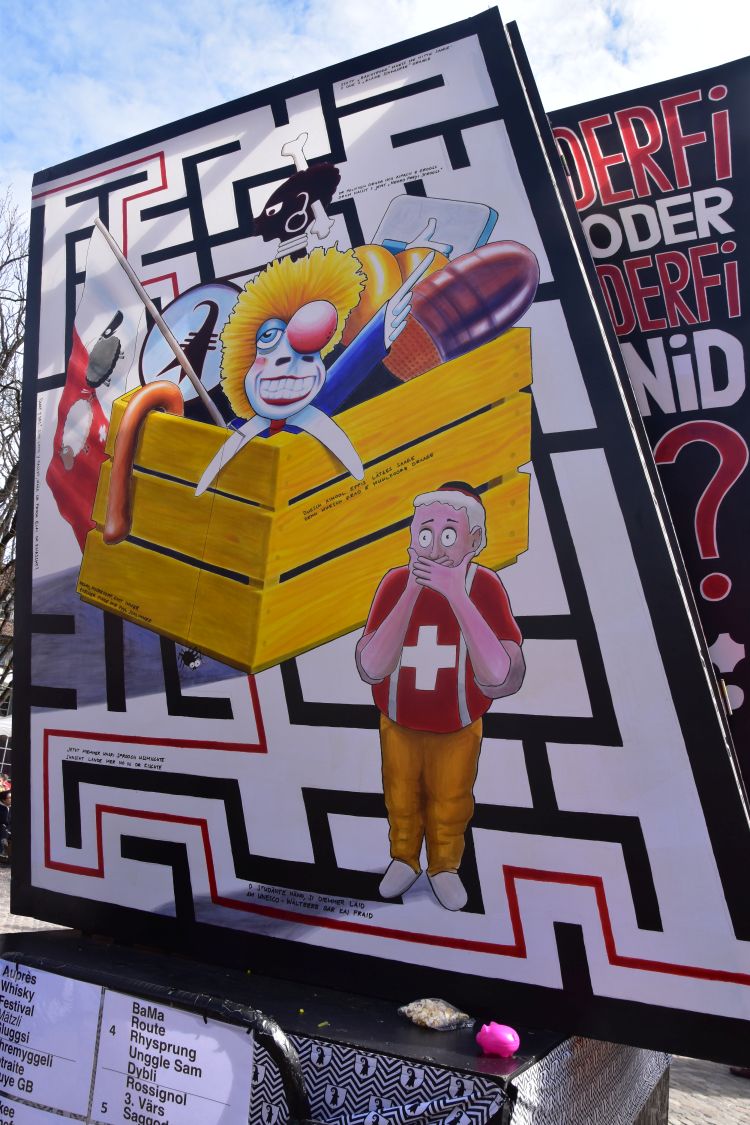
On the lantern of the Basler Dybli (Small Pigeons or Squabs of Basel), this Swiss boy hides his mouth behind his hands to avoid saying anything that might be forbidden. He stands in a maze, not knowing what is right or wrong and asks “Derfi oder derfi nid? (Am I allowed or am I not allowed?)”. In the wooden box you see the “Waggis”, a very common mask at the Basel carnival – but the Waggis with the long nose and wild hair can be taken as making fun of the farmers from neighbouring Alsace – and are we still allowed to make fun of them, is this not discrimination? And then there is the African man, the much disputed symbol of the group “Negro Rhygass”. Is it worse than the white sheep that kicks the black sheep out of Switzerland? I came across these sheep during the voting campaign about stopping immigration and this campaign was present all over in Switzerland. By the way, I believe the campaign with the sheep was invented in the town where attacking the Basel carnival came from… Everyone sits in a glass house. We all should reflect before throwing stones.

One of the verses on this lantern says: “Duesch aimol eppis lätzes saage, denn muesch grad e Muulkoorb draage. Jetzt miemmer unsri Sprooch uusmischte, sunscht lande mer no in dr Kischte. Dr politisch Drugg isch aifach zgross, drum heisst s jetzt Negro Freyi Strooss (If you say something wrong once, you have to take a muzzle. Now we have to clear up our language, otherwise we will end up in prison. The political pressure is simply too high, therefore we now say Negro Freyi Strooss”; meaning the carnival group is to be renamed from Rhygass to Freyi Strooss, as Freyi Strooss (Freie Strasse) is a much better address than Rhygass (Rheingasse) – hence the term “Rhygass” may be discriminating).

.

Reflection #3: Cleaning (Säu…bere) the Basel carnival (cleaning it from forbidden words, amongst other things)

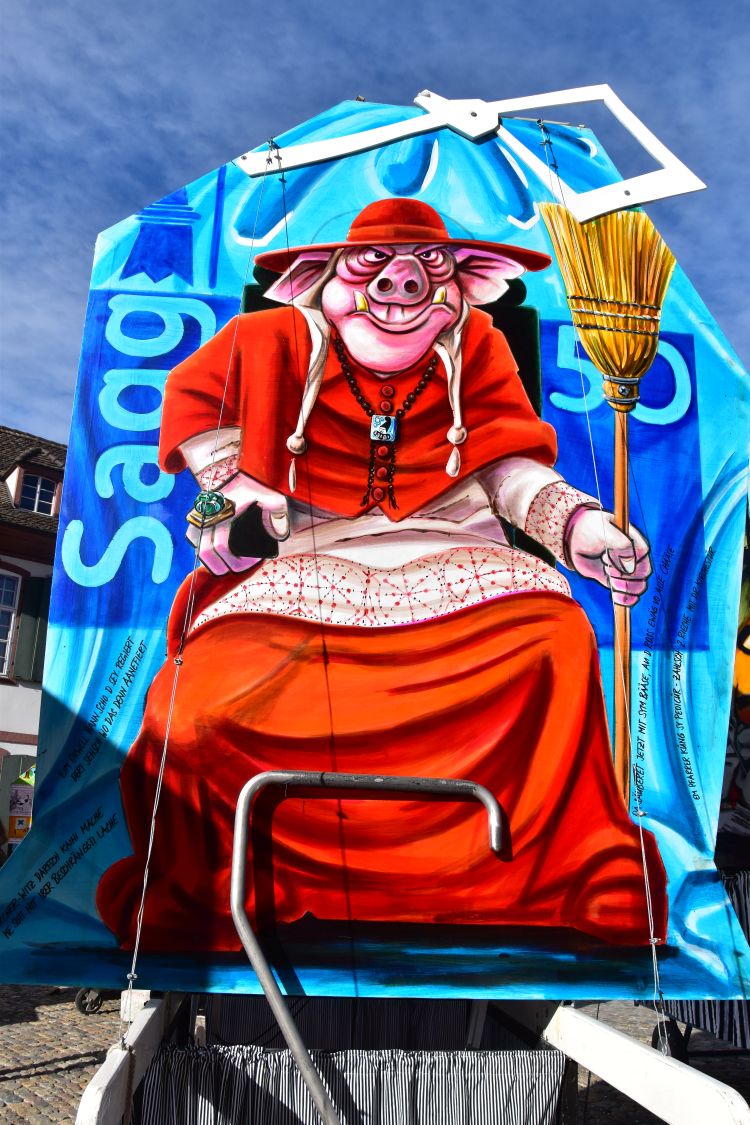
Another carnival group is called “Seibi” which is the colloquial name for the Barfüsserplatz, where pigs (“Säu” or in the older Basel dialect “Sei”) were traded in medieval times. The German word “säubern” (“säubere” in Swiss German) means “to clean”. “Säubere” has been split into “säu…bere”, and “Säu” are pigs in Swiss German (in German: (“Säue”).  “Seibi” and “säu…bern” are perfect plays on words: The “Seibi” group has selected pigs to clean the Basel carnival: “Mir Säu…bere d’Fasnacht.” They allude to censorship, but also to other issues that might need cleaning.

One verse on the lantern says: “Bym Orwell hän scho d’Sey regiert. Dert gsehsch wo das denn aanefiert (In Orwell’s novel, the pigs governed already. There you can see, where this leads to)”.

The Spoorepeter show this specific “dirty” emoticon on their lantern and say: “S’Engagement krängglet. (Engagement is getting weak)”. This may be a consequence of censorhsip – people are afraid get it wrong. Consequently they hide and do no longer engage toy say or do anything.

Two verses on the lantern say:

  • “Engagement, dr Gerd hörsch lache, d’Hauptsach isch, ych muess nüt mache (Engagement – you year Gerd laugh, the main point is, I do not have to do anything)”
  • “Seesch, ass en uufgob uff dy zue will koo, machsch e Schritt uff d’Syte zum se duure loo (if you see a task approaching, you make a step aside and let it pass by)”.

.

Post Scriptum: The Basel carnival is an event with thousands of participants and thousands of visitors

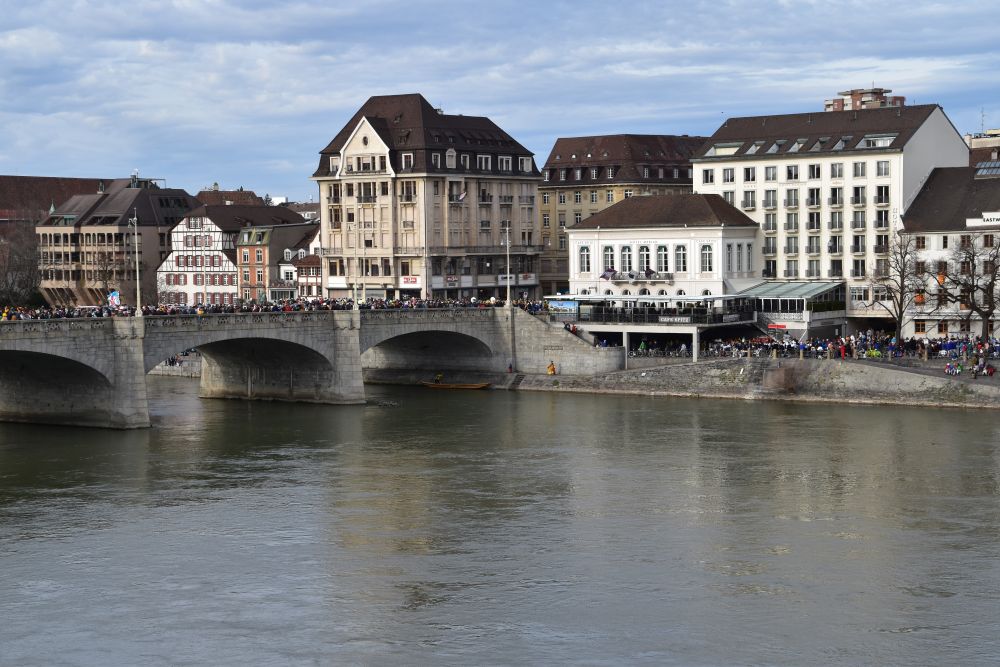
After the lantern exhibition I slender through the narrow streets of Basel. From the terrace of the Old University (founded in 1460), I can see many, many people on the “Mittlere Brücke” (middle bridge) and along the Rhine. They are not only from Basel, but also from many other countries. They enjoy our carnival which plays the role of a jester.

I do hope that censorship will not make the carnival shut up. I do hope that the carnival will continue to play its role as a jester for the people at power and for all of us. It is an organized and discrete valve for the feelings and thoughts of the citizens of Basel. The carnival group “Basler Bebbi” coined the term “shitblizzard” on their lantern: “Das git kai shitstorm of dym Handy, sondern a shitblizzard, Randy (this produces not only a shitstorm on your smartphone, but a shitblizzard)” – I do hope, it was a short shitblizzard.

Post Scriptum of post srciptum: In 2019, the Basel carnival took place from Monday, March 11th, 4 am, until Thursday, March 14th, 4 am. I participated like a butterfly enjoying the parades or the Schnitzelbängg, flour soup and cheese cake in one of the cellars managed by a carnival group and the lantern exhibition on the cathedral square.


Basler Fasnacht/Carnival: Impressions from the Ladärne Uustellig/Exhibition of lanterns, starting with some local topics.

Basler Fasnacht (the Basel Carnival) takes place pretty late this year (2019). It started on Monday, March 11th, at 4 am (Morgestraich). Monday and Wednesday afternoon, there was the Cortège (parade), when the Clique (carnival groups) show their Sujets (topics) and the Waggis (seem to be farmers from the Alsace) distribute gifts and Räppli (confetti). The costumes, lanterns and other requisites illustrate the topics selected by the groups.

On Tuesday the lanterns are displayed on the Münsterplatz. I love to visit the lantern exhibition early in the morning, when there are still few people. This is the the 1000 year old cathedral (reconstructed in the 14th/15th century after the earthquake) with the lantern that discusses selling weapons.
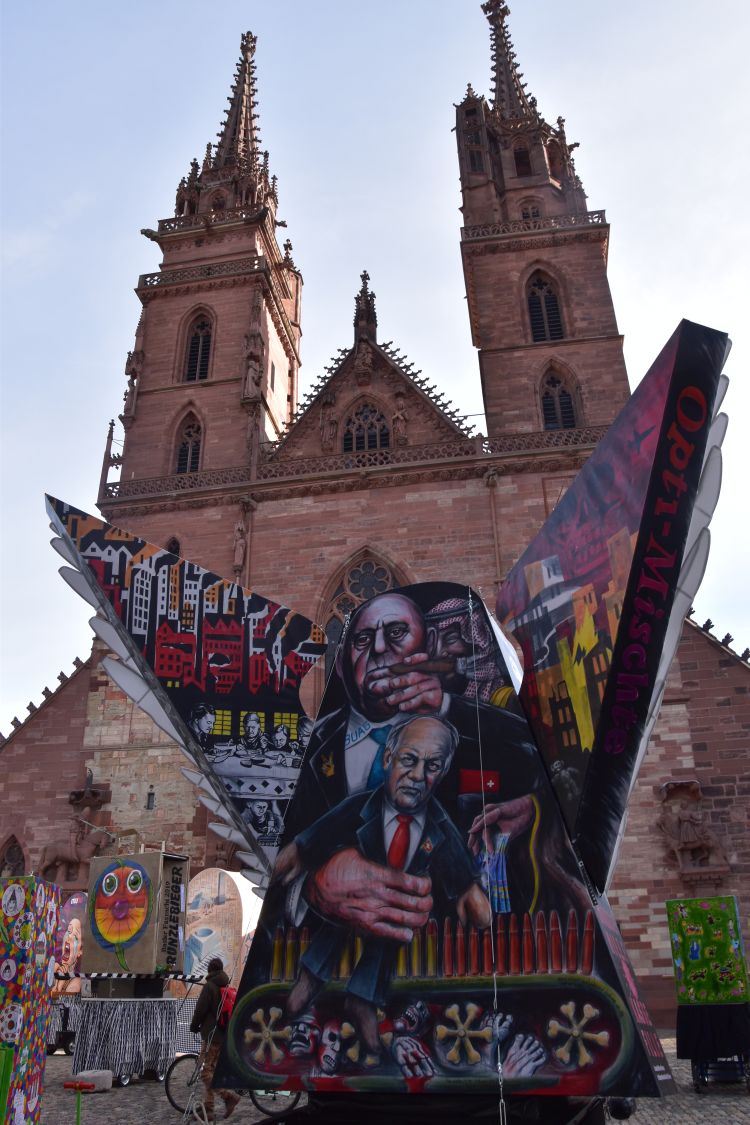
It is great to study the lanterns in detail and I am always overwhelmed by the creativity of the artists. These were some of the main Sujets (topics) in 2019: Local events (above all, the end of the trade fair Muba), censorship/shutting up/not engaging, environmental pollution, China invading economy and the world of beetles, emancipation and politics – e.g. with clowns as rulers.

Let me start with the local topics. It is fun to read the verses on the lanterns – I will select some of them and try to translate them to English, which is not always easy.

.

Muba: Last spring Trade Fair show after 102 years

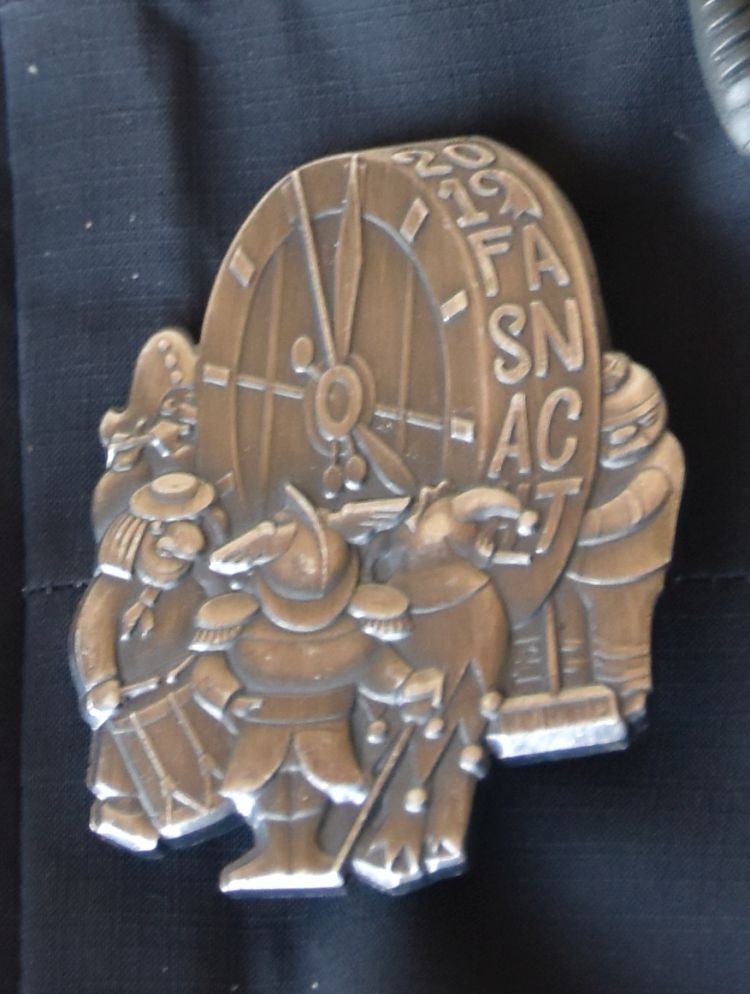
The Muba (Mustermesse Basel or Basel trade fair) opened their gates in spring 1917. When we needed a new refrigerator, a new piece of furniture or some wine, up to the late 80-ies we always did a research at the spring Muba fair and we benefited from the Muba discount. But since then the Muba has lost more and more visitors, perhaps also due to the internet. Now this year, in spring 2019, the last Muba took place and then closed its doors for ever. This was a major topic at this year’s carnival. The Blaggedde (carnival badge) shows the well-known clock of the Muba building alluding to the Muba closing down and the carnival lasting until closing down on Thursday at 4 am (“Ändstraich” or final stroke), when the road sweeper cleans the streets of Basel.

This is my Blaggedde – made out of silver and reflecting in the sun.
The lantern of the Breo and Glunggi, Alti Garde, shows our famous Muba clock that decorates building number 2.
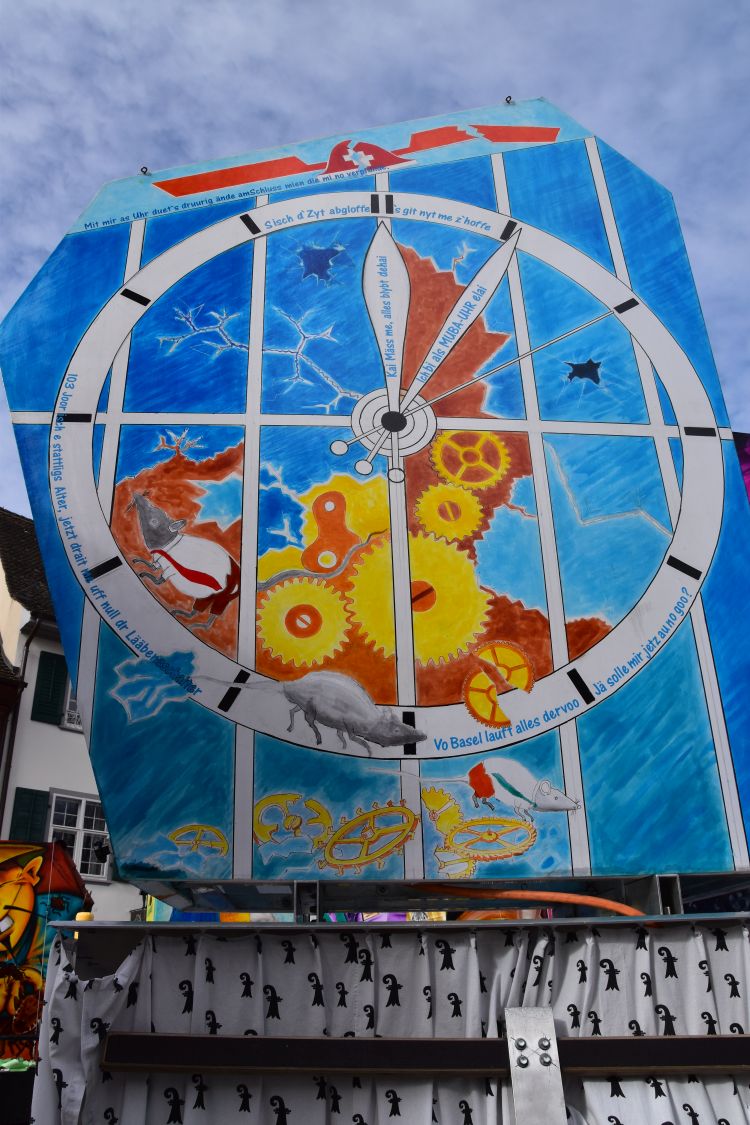
The verses read: “S’isch d’Zyt abgloofe, s’ git nüt me z’hoffe” (“time has expired, there is no hope left”) and “kai Mäss me, alles blybt dehai, I by als Muba Uhr elai” (“no trade fair any more, everybody stays at home and me, the Muba clock, I stay alone”). The rat at the bottom asks: “Vo Basel lauft alles drvo. Jä, sölle mir jetzt au no goo?” (“Everybody runs away from Basel. Well, should we now also leave?”).

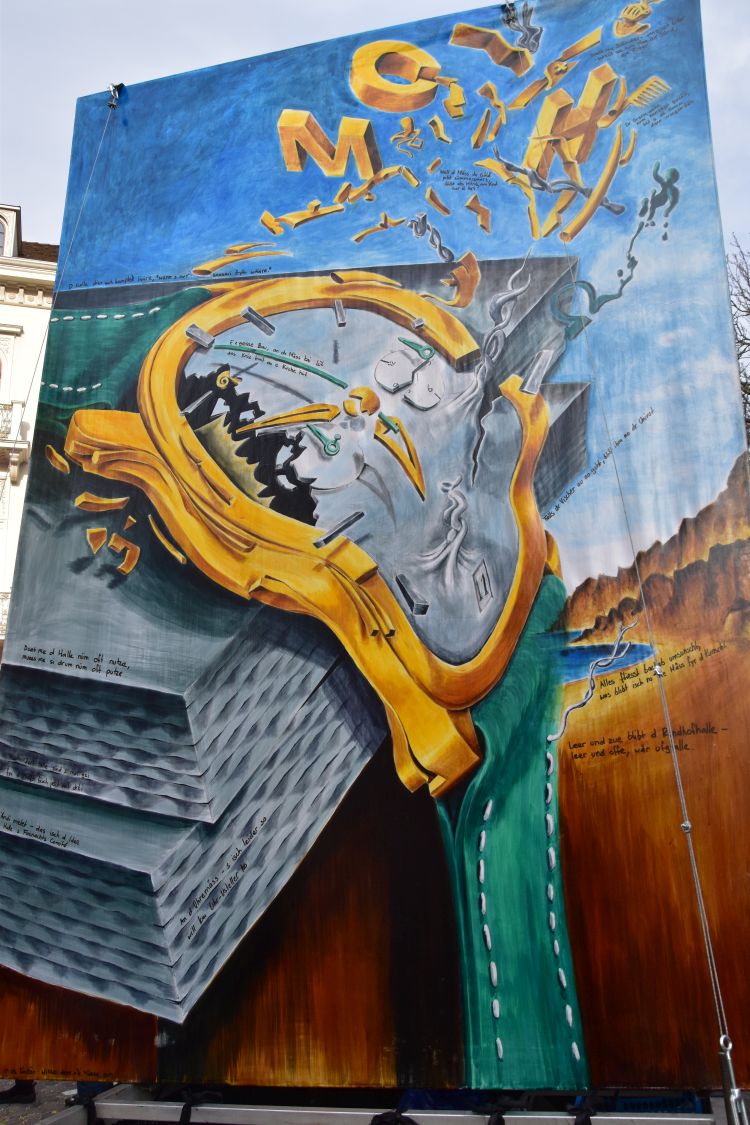
The Lälli Clique feels sad about the “Tempi Passati” (past times) and paint the melting Muba clock on one of the huge exhibition halls – like Dali’s soft watches. On the watch the verse says: “E grosse Bau, an dr Mäss kai Lüt – das Krüz trait au e Kirche hüt” (“A huge building, no people at the fair – this cross is also affecting the church”; “Mäss” means both trade fair and church mass and hence “Mäss” is reused for the mass in the church, where there are also less people now).
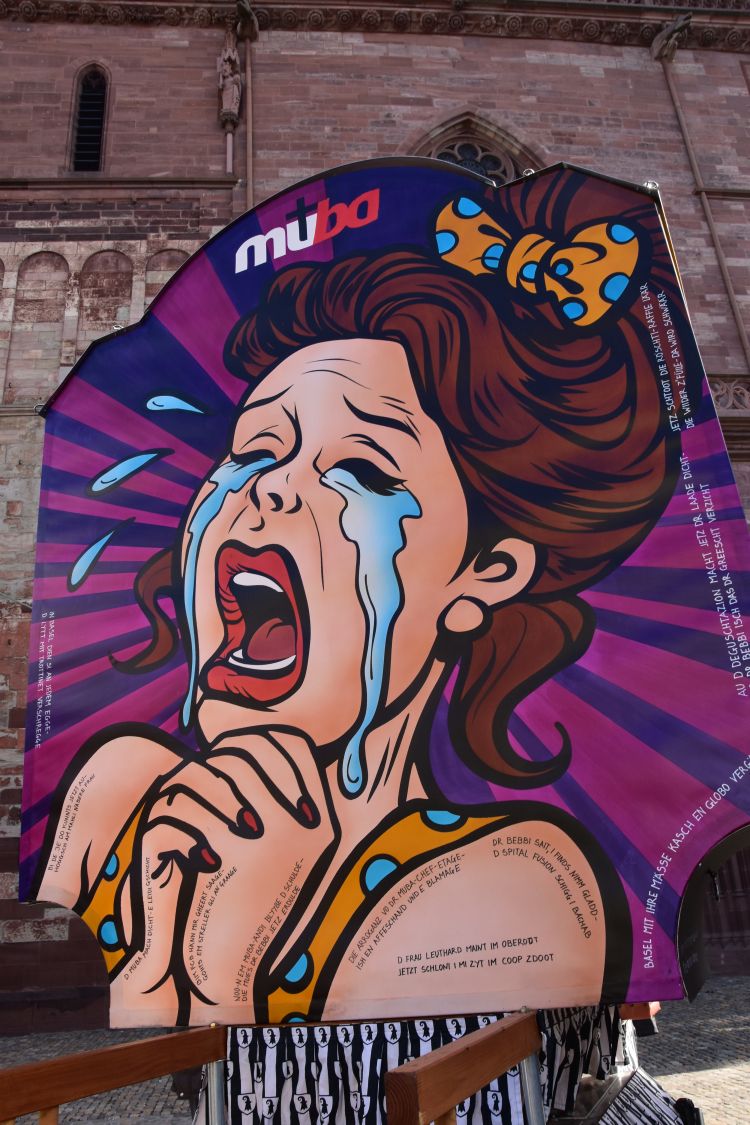
The Muggedätscher merge the words “Muba” and “bachab” (going down the river) to “mubachab”. One verse on their lantern says:”d’Muba macht dicht – e leidi Gschicht” (“the trade fair closes down – what a sad story”) and “Basel mit ihre Mässe, kasch en Globo vergässe” (“Basel with its trade fairs, you can forget that completely”) The lantern shows the federal council Doris Leuthard. She resigned this year and she shed some tears when giving her last speech in Bern.
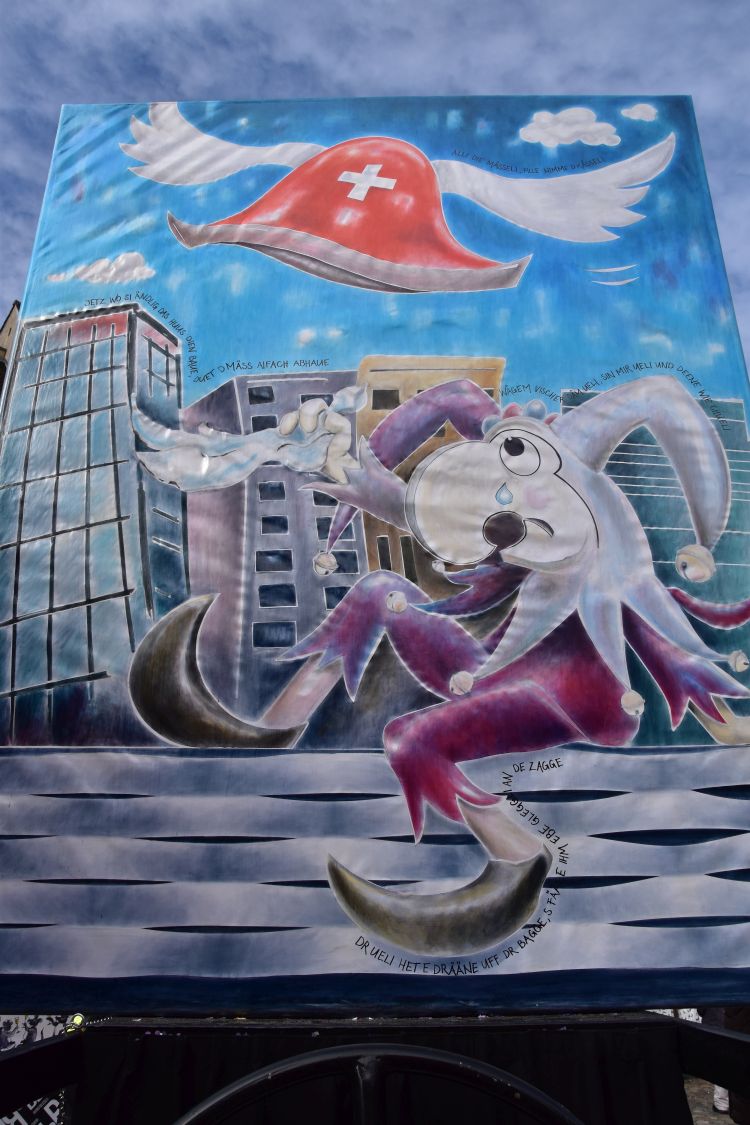
The Ueli on the lantern of the Breo und Glunggi, alti Garde is also very sad – he is waving good-bye with his handkerchief. The Ueli symbolizes the medieval court jester and the jester is one of the traditional costumes at the Basler Fasnacht/carnival. One verse says: “Dr Ueli het Dräne uff dr Bagge…” (Ueli has got tears on his cheeks”).  The jester at the court could tell the truth to the king, and this is what the Basel carnival is about as well – show to our power holders, what the people feel and think.
The Rumpel-Clique discusses the wine fair that was also part of the Muba. I loved to compare wines from various Swiss producers and from all around the world by tasting the wine before ordering it. Well, you had to carefully select, what you wanted to taste… some people staggered through the Muba halls after their wine tastings.

Breo und Glunggi, alti Garde, sum up “Basel Mässe kasch glatt vergässe” (“Basel trade fairs – you can forget them totally”).
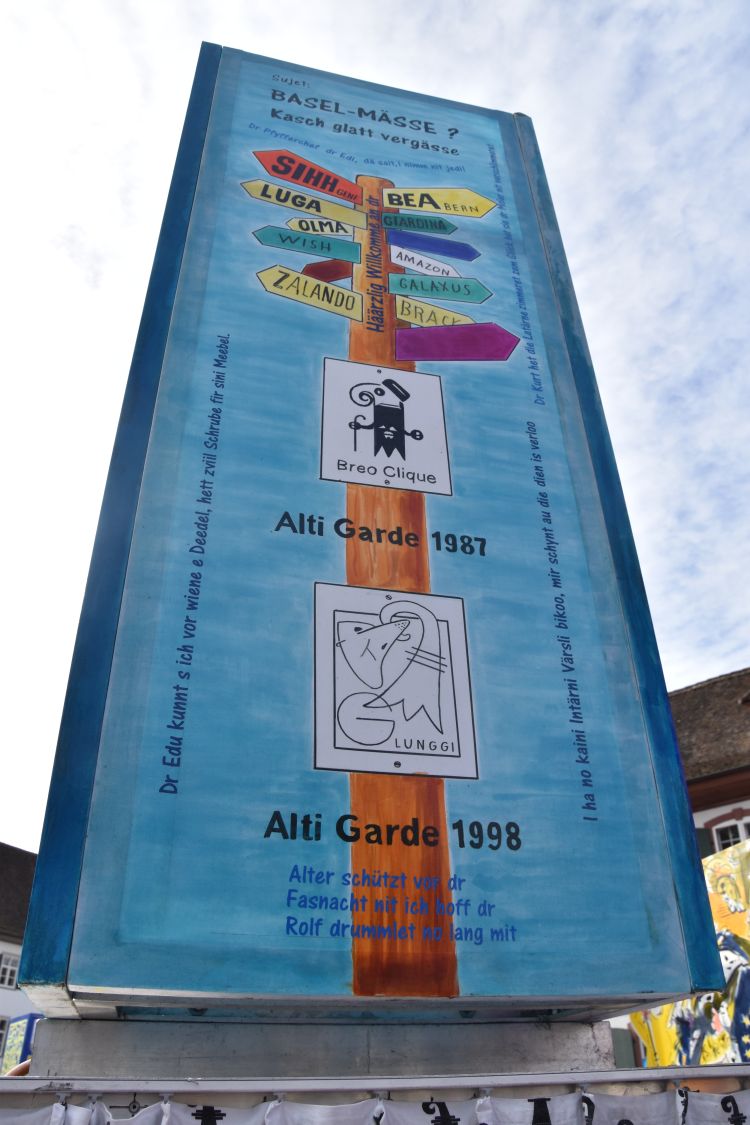
The signpost points to other trade fairs in Switzerland such as BEA or OLMA or to Internet trade markets such as Zalando.

.

Do all citizens (Bebbi) think about leaving Basel?

This is the lantern of the Alti Garde of the AGB (Alti Glaibasler) and Spezi Clique. They think that not only the rats of the Muba, but all Bebbi (citizens of Basel) think about leaving their home town, but where to?  “Dr Bebbi dänggt, he nundefaane. Y wott jo furt vo Basel, aber wo könnt y ächt aane?” (“The citizen of Basel thinks, hm oh dear. I want to go away from Basel, but where on earth could I go to?”; Nundefaane is a softened curse imported from the Alsace. “Faane”=”banner”; “Bebbi” is a gentle name for the citizens of Basel).

A nice detail is the fountain with the Balisisk. There are about 25 of these Basilisk fountains in Basel set up in the late 19th century. They provide drinking water for men and for dogs (separate bowl at the bottom). Some time ago, I blogged about the Basilisks in Basel and their fountains.

.

We want our Basilisks back at the Wettstein bridge – d’Basilisgge zrugg an d’Wettschtaibrugg!

Not everybody wants to leave Basel, the basilisks are faithful, and this is why the Höibärgler want to bring them back to the Wettstein bridge: “Mir hole d’Basilisgge zrugg and d’Wettschtaibrugg” (“We bring back the Basilisks to the Wettstein bridge”).
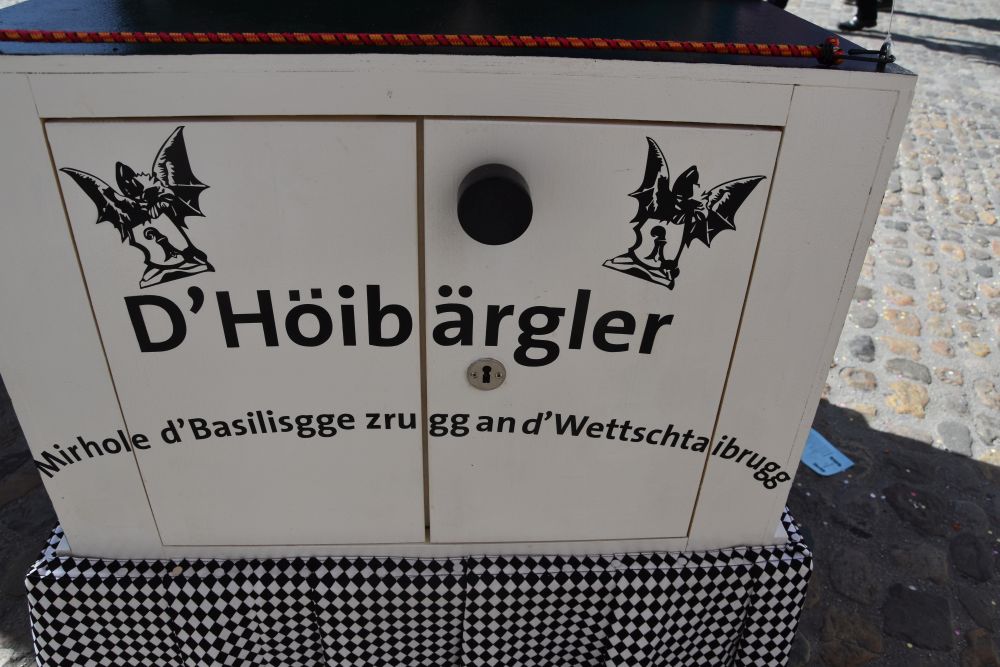
This is a very local topic. For the Wettsteinbrücke, an artist created four basilisks, now only one is left here, two are somewhere else in Basel and one is in Meggen near Lucerne. The Höibärgler want that the other three basilisks return to their original places at the Wettsteinbrücke. This is the one Basilisk that was allowed to stay at the entrance to the Wettsteinbrücke.
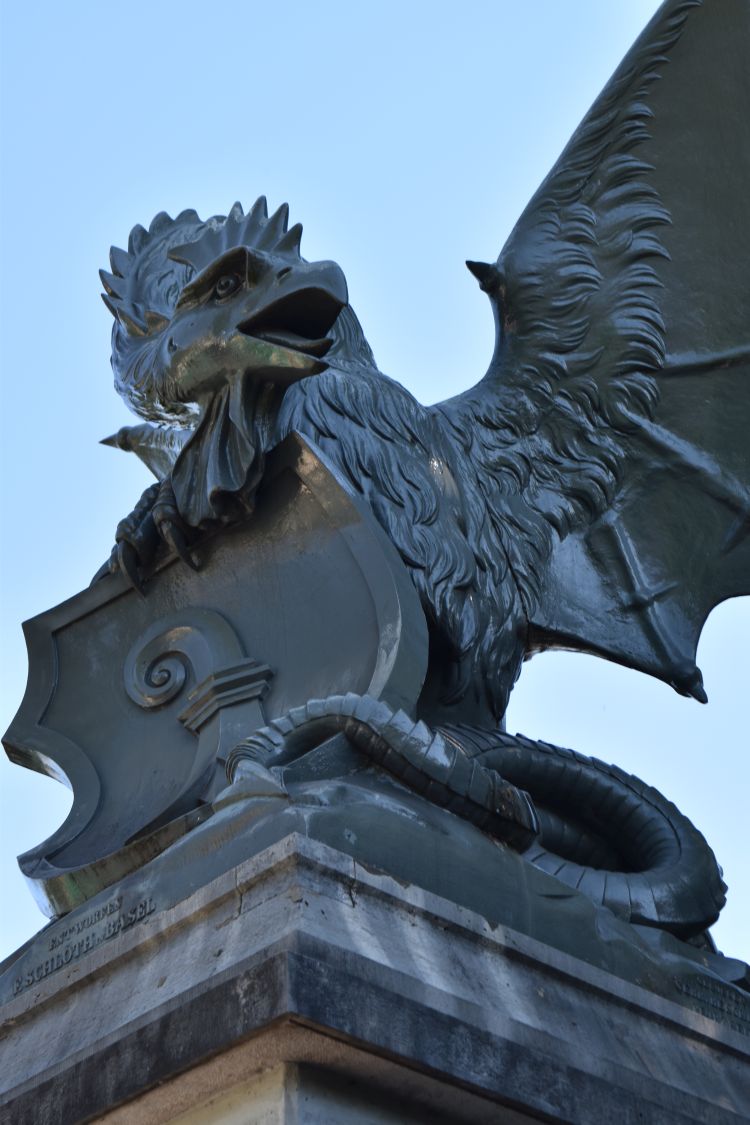
Well, I feel ashamed about the Wettstein bridge that has become an ungraceful bridge in the 1990-ies, after the city of Basel had rejected the proposal of Calatrava. Some more decoration for the bridge is not a bad idea, I believe. Yes, I agree with the Höibärgler: Bring back the Basilisks!

.

Picasso in Beyeler

In 1967 Picasso’s “Harlequin” and “two Brothers” remained in Basel, though the donator who had financial problems intended to sell them. I was a teenager then and I remember the enthusiasm and the legendary decision of the inhabitants of Basel to keep those two paintings. Again this year Picasso is venerated in Basel: The Beyeler museum shows his early paintings of the blue and rose period. The Gellerettli pipers group created a lantern with the topic “himmelblau und rooseroot” (azure and pink): “Z’Basel dräumt me himmelblau und roosarot. Jetzt git’s niemets, wo an d’Muba goot” (“in Basel people are dreaming in azure and pink. Now there is no one visiting the Muba (trade fair) any more”; presumably because they all prefer to see their Picassos in the Beyeler museum).
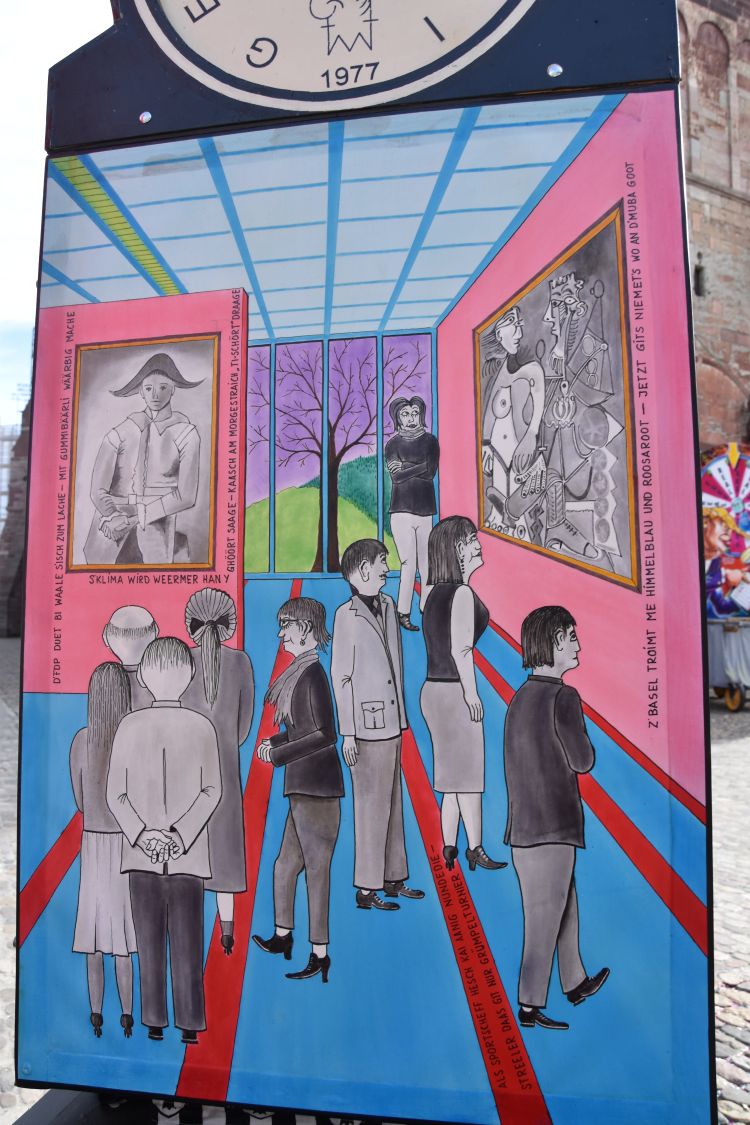
By the way, the name “Gelleretli” comes from the French “quelle heure est-il?” which means “what time is it?”.

.

TV series “Tatort” (“site of crime”) in Basel

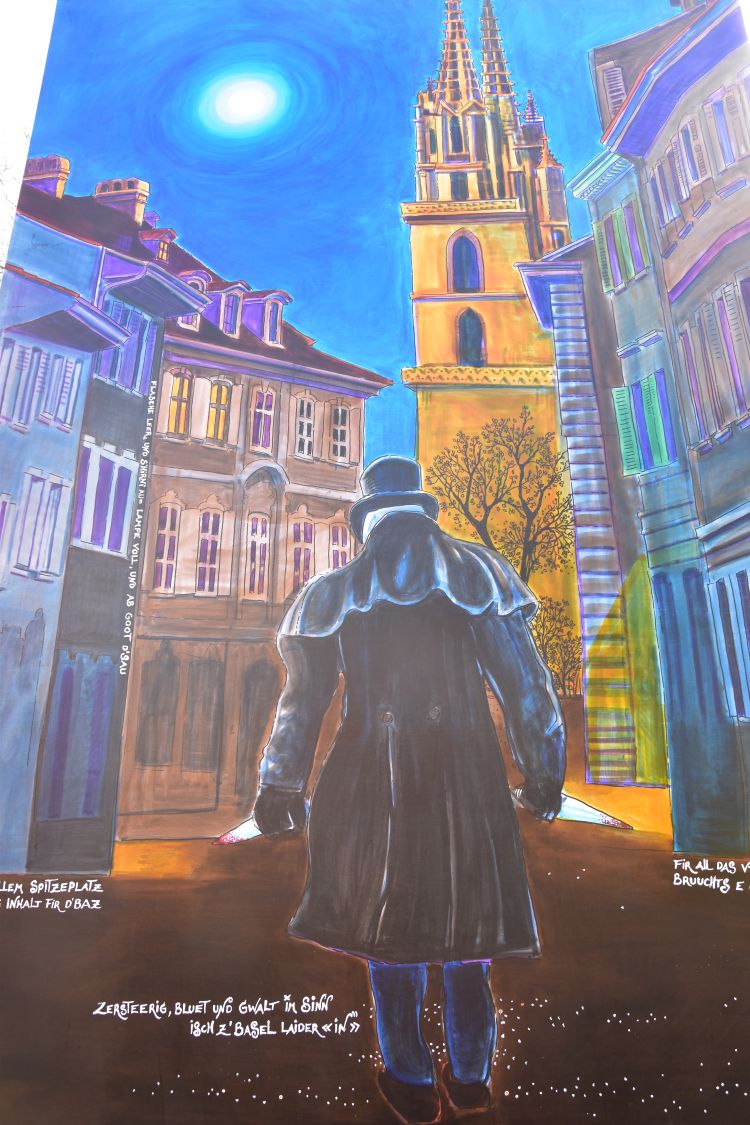
Last summer, the TV criminal story series “Tatort” took place in Basel. The Spezi-Clique Stamm take this up with the lantern that shows the city center. In one of their verses, they play with words: In German you can understand “Tatort” as a “site of crime” or as a “site of action”: “Bim Roothuus froog ich mii, ka das iberhaupt e Tatort sy” (“about the townhall I ask myself, whether this can be a site of action at all” (translating “Tatort” primarily as “action” and not as “crime”, indicating that the town council may not be too active).
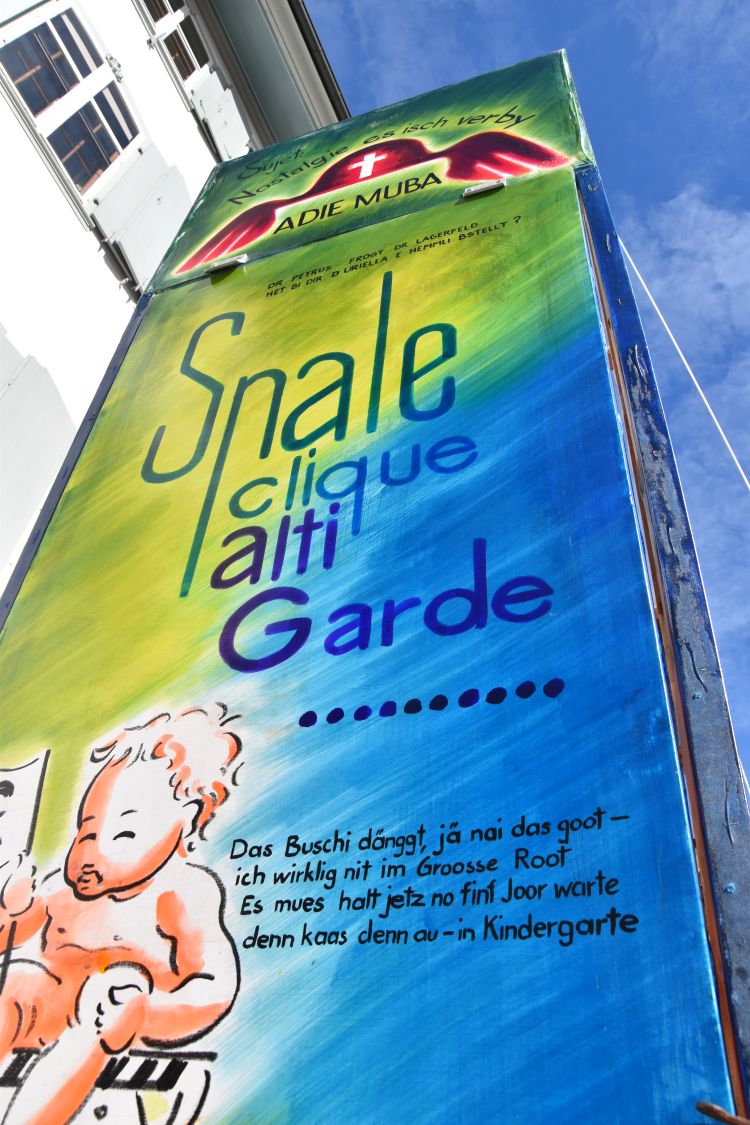
As related to the townhall: There are a lot of jokes about a baby participating in a townhall session with its mother. A baby is called a “Buschi” in Basel and the rhyme says: “The baby thinks that this is really not possible – me at the Grand Council. But it has to wait for another five years, until it can join kindergarden”.
.

Goma in the Basel Zoo, called Zolli here

I remember the year 1959… I was eight years old then and Goma was the first gorilla baby born in a zoo. We were very proud of our “Zolli”. After having given birth to more gorilla babies, the old lady died last year. The Jungi Spale-Clique takes up the topic with their lantern. One side shows this photo album of Goma.
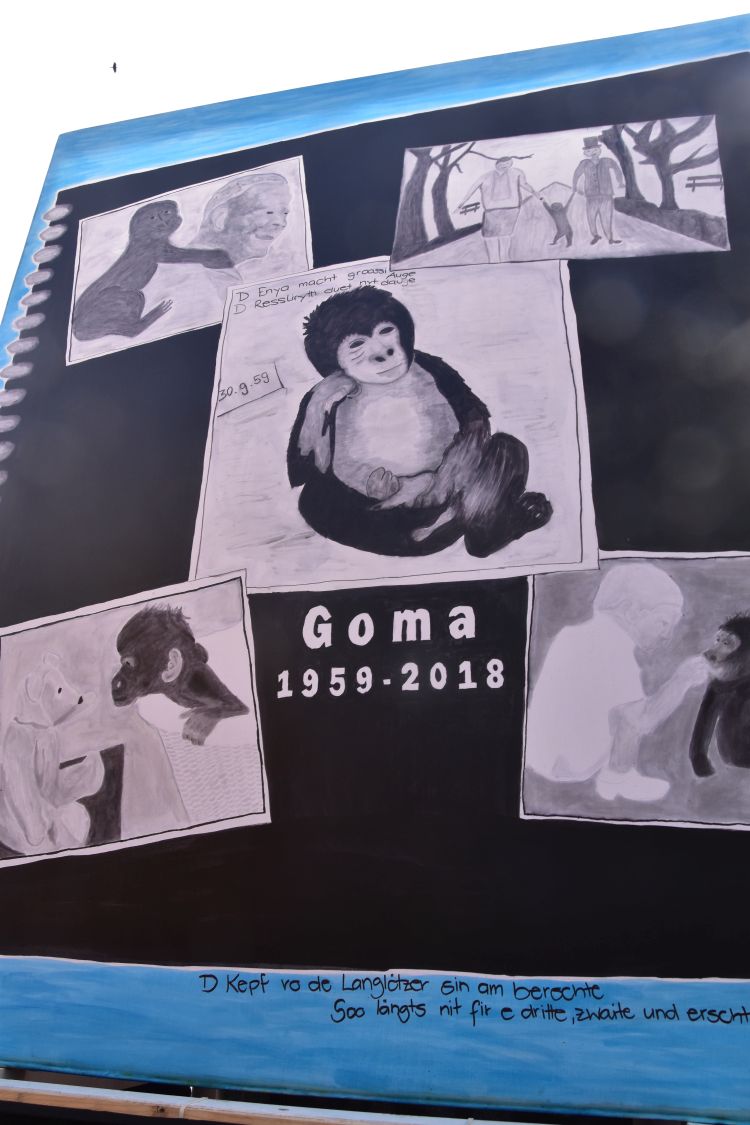
.

Separate tracks and paths for bicycles.: A performance of the Alti Stainlemer

Already at the Morgestraich, after 4 am on Monday, I noticed the rolling wheel of the Alti Stainlemer moving forward in the dark. It is their “rolling stone”. This may be a punch, as the name of the Clique (carnival group) “Alti Stainlemer” contains the word “Stein” or “stone”.
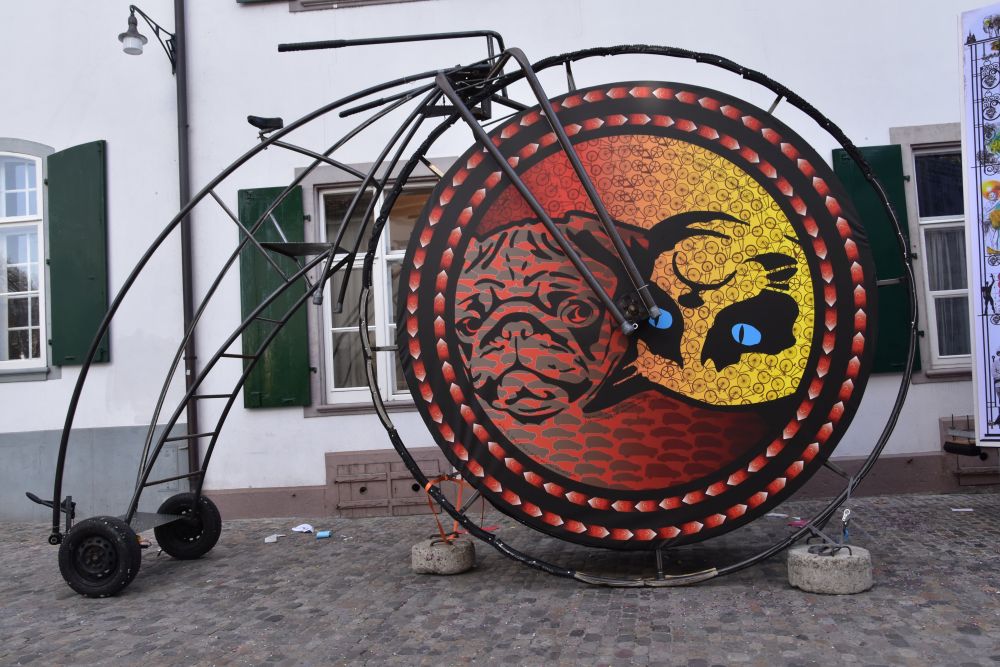
In the Cortège (parade), one guy sat on top of this rolling stone and the whole group was on wheels. Some painted signs for “bicycles only” on to the pavement.
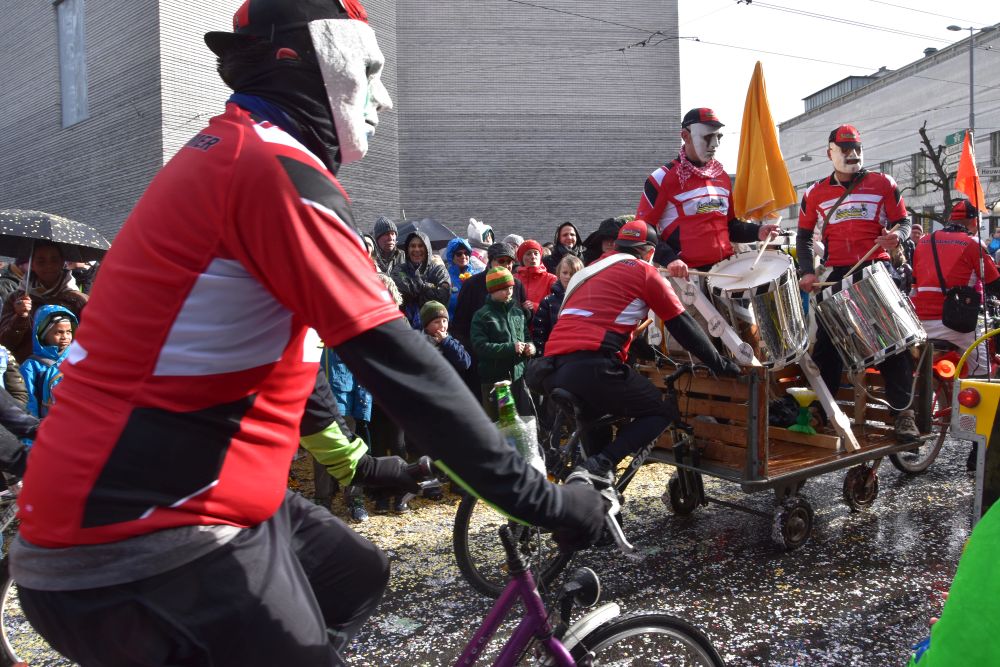
Hence, I conclude, the “rolling stone” is another bicycle, a huge bicycle. I do not know, whether I would like to stand up high on that rolling stone, as one member of the group did. In Basel there have been a series of votings about separate paths for bicycles that the Alti Stainlemer are alluding to.
The verses on the rolling stone lantern are: “Dr Baschi – sträng und ganz bestimmt: “Ass jo ekain my Tesla nimmt”  (“Baschi says severely and clearly: Nobody to steal my Tesla”; the head of the police department, called “Baschi”, acquired Tesla cars for the police of Basel). More verses: “Wär in dr Schwyz en Auti faart, ghört bald scho zuenere gschützten Art” (“those who still drive a car in Switzerland, will soon belong to a protected species”). And:

“Ein uff em Velo schreit “Du Schlampe”
und znacht faart är denn oony Lampe.
Am Schtopp halte macht er nyt.
Worschynts isch das sy letschte Ritt.”

“Someone on a bicycle shouts: “You sloven”
and at night he drives without light.
He does not stop at the stop sign.
Could well be that this is his last ride.”

Yes, macabre… But some cyclists are really brave and audacious, when moving in the city traffic.

With the rolling Alti Stainlemer I end the review of local topics at the Tuesday Ladärneuustellig or lantern exhibition on the Münsterplatz.