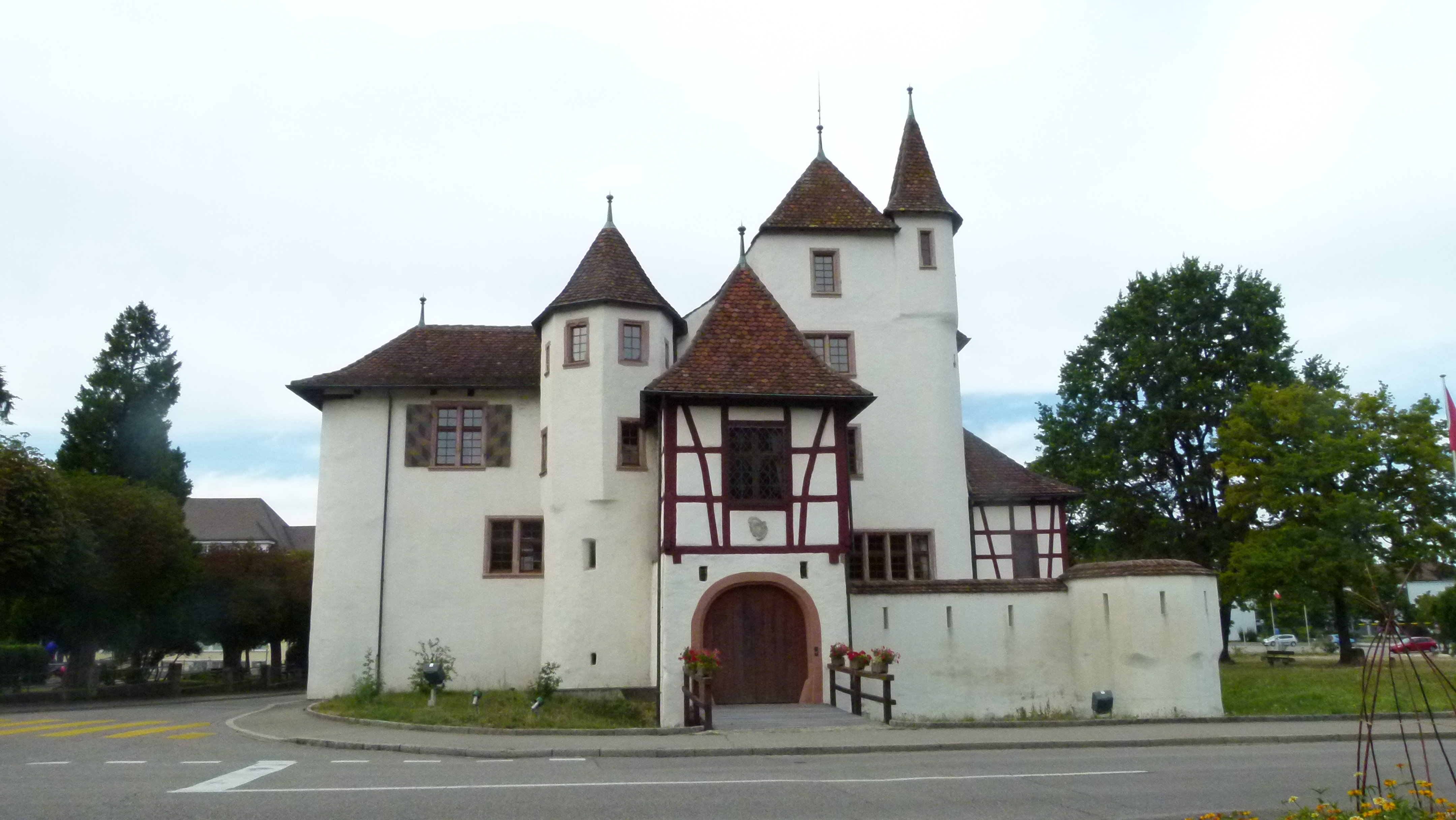
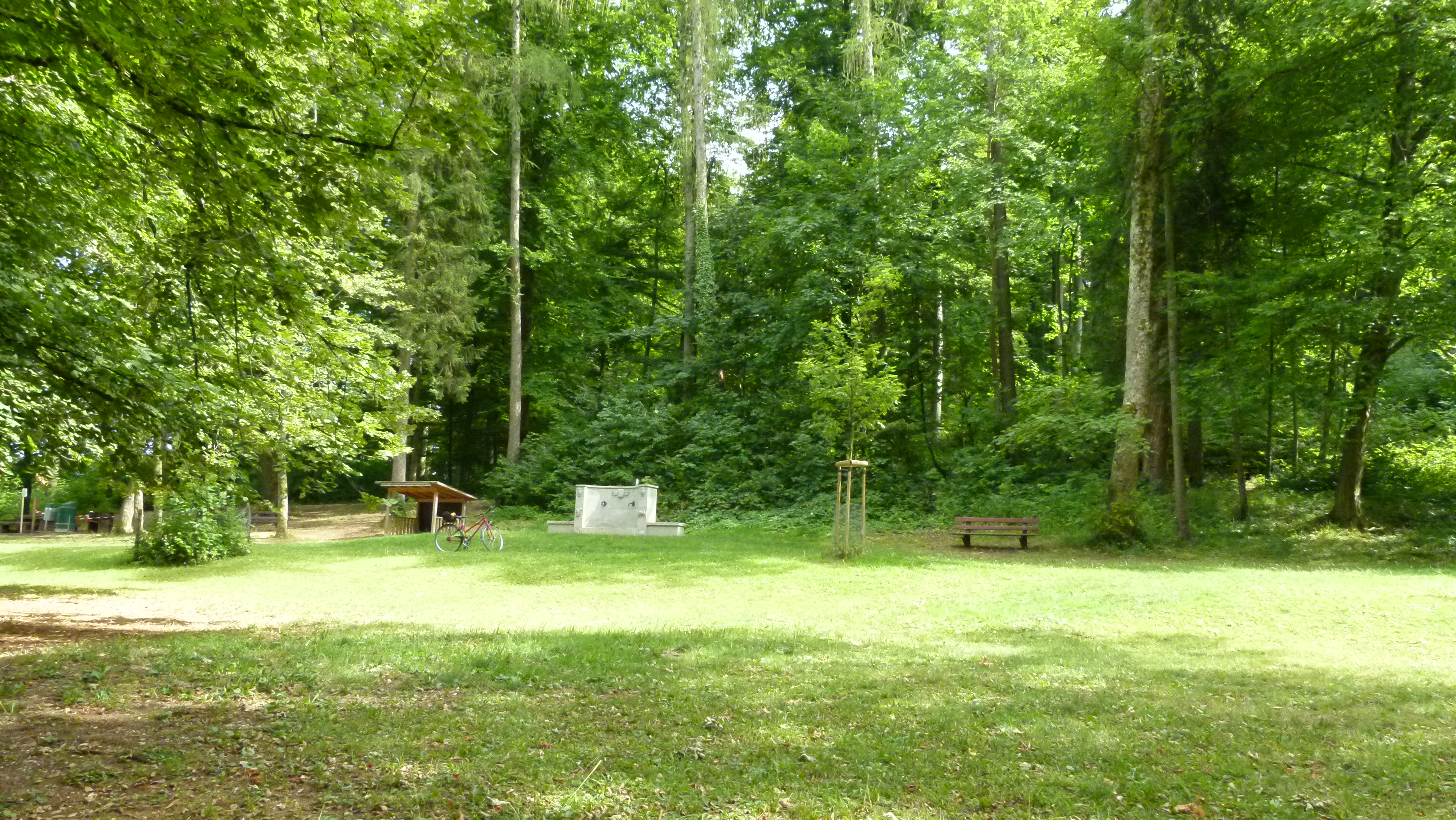
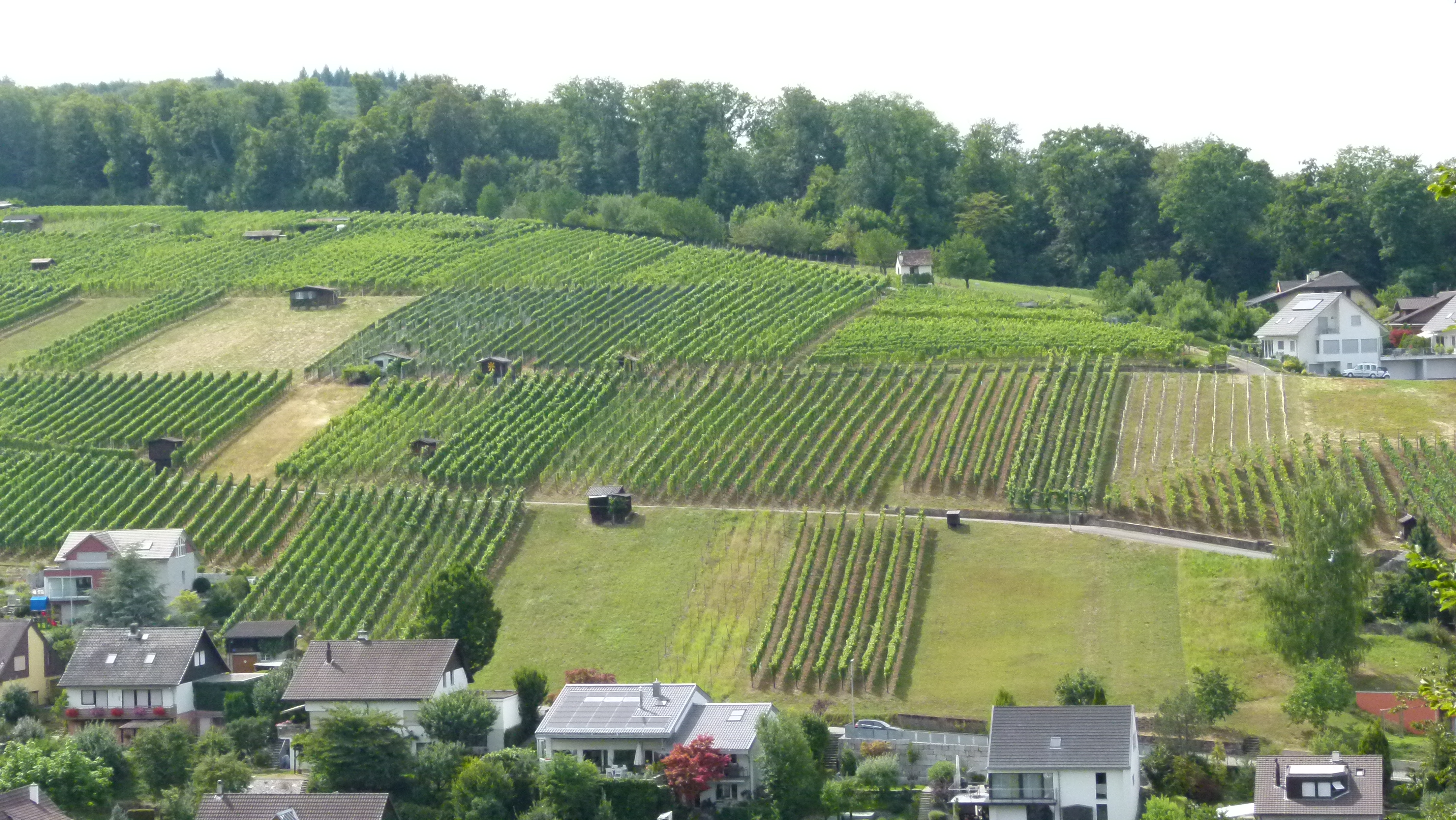
So much to discover around Basel (the Hardwald with water supply and Roman watch tower as well as an idyllic restaurant)

Andreas and Helga love the idyllic restaurant “Gasthof Solbad” just bordering on the Rhine

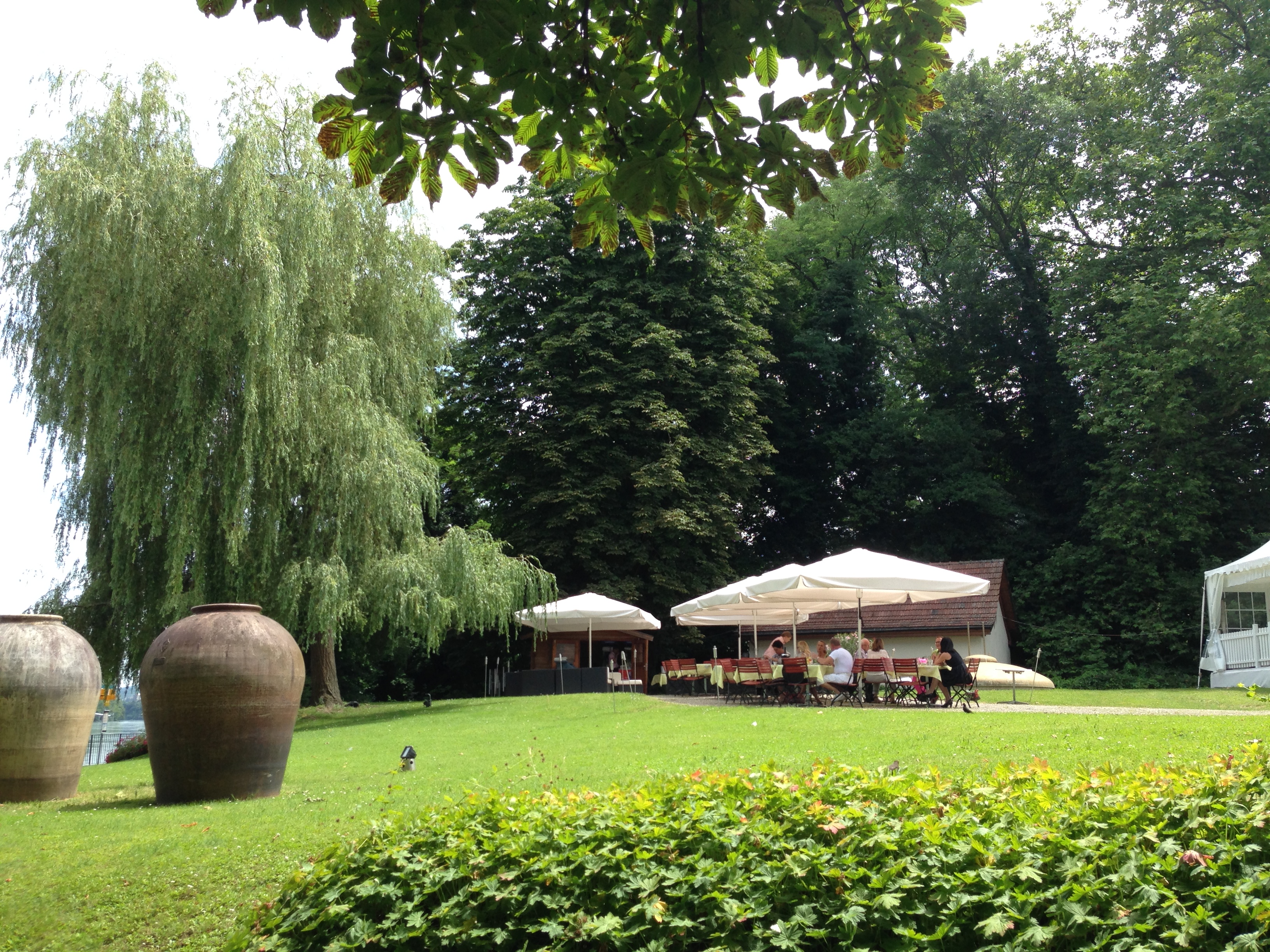
In the summer, the Gastof Solbad opens their garden bordering the Rhine. It is a great setting under a weeping willow. On a sunny day in June 2015, Andreas and Helga take their Nordic walking group to this idyllic place.

IMG_1519

.

Our walk through the Hard and along the river Rhine (Rhein)

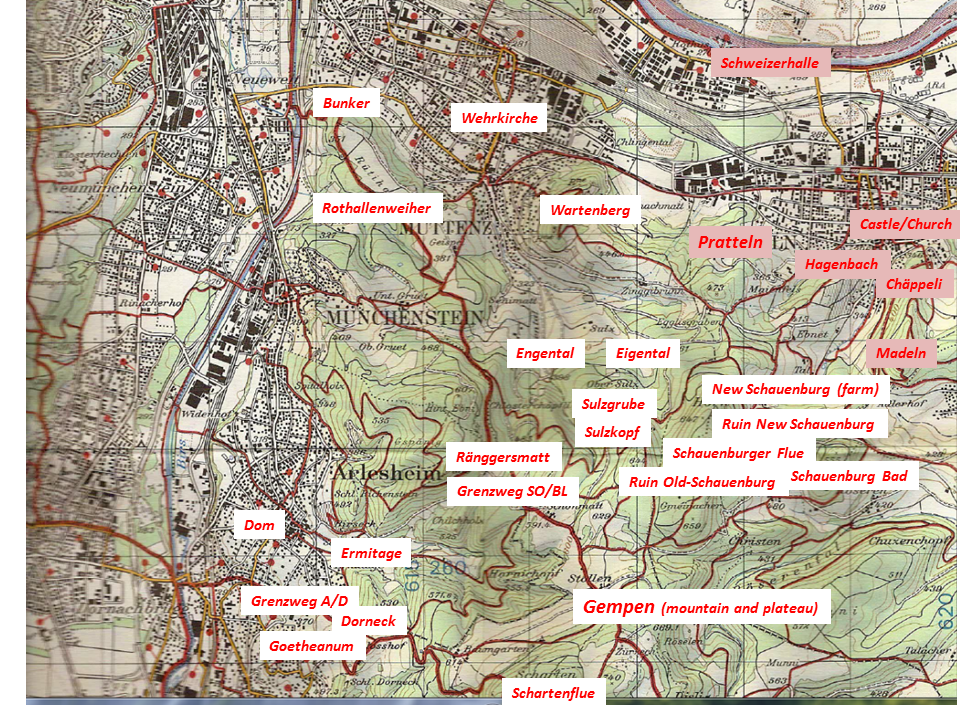
To get to the restaurant Solbad in Schweizerhalle, we have to cross the Hard. “Hard” actually means “forest”. We start in “Neue Welt”, walk along the river Birs, climb up to the Hard, oscillate a bit to make enough kilometers (10 to 15km) and then take the “Rheinpfad” that leads along the Rhine with posts of interest on the way. The restaurant Solbad is in Schweizerhalle.

Karte Hard

Source: Karte Schweizmobil

.

The Hard – a paradise for walkers and indispensable water supply for Basel

The Hard supplies water to Basel.

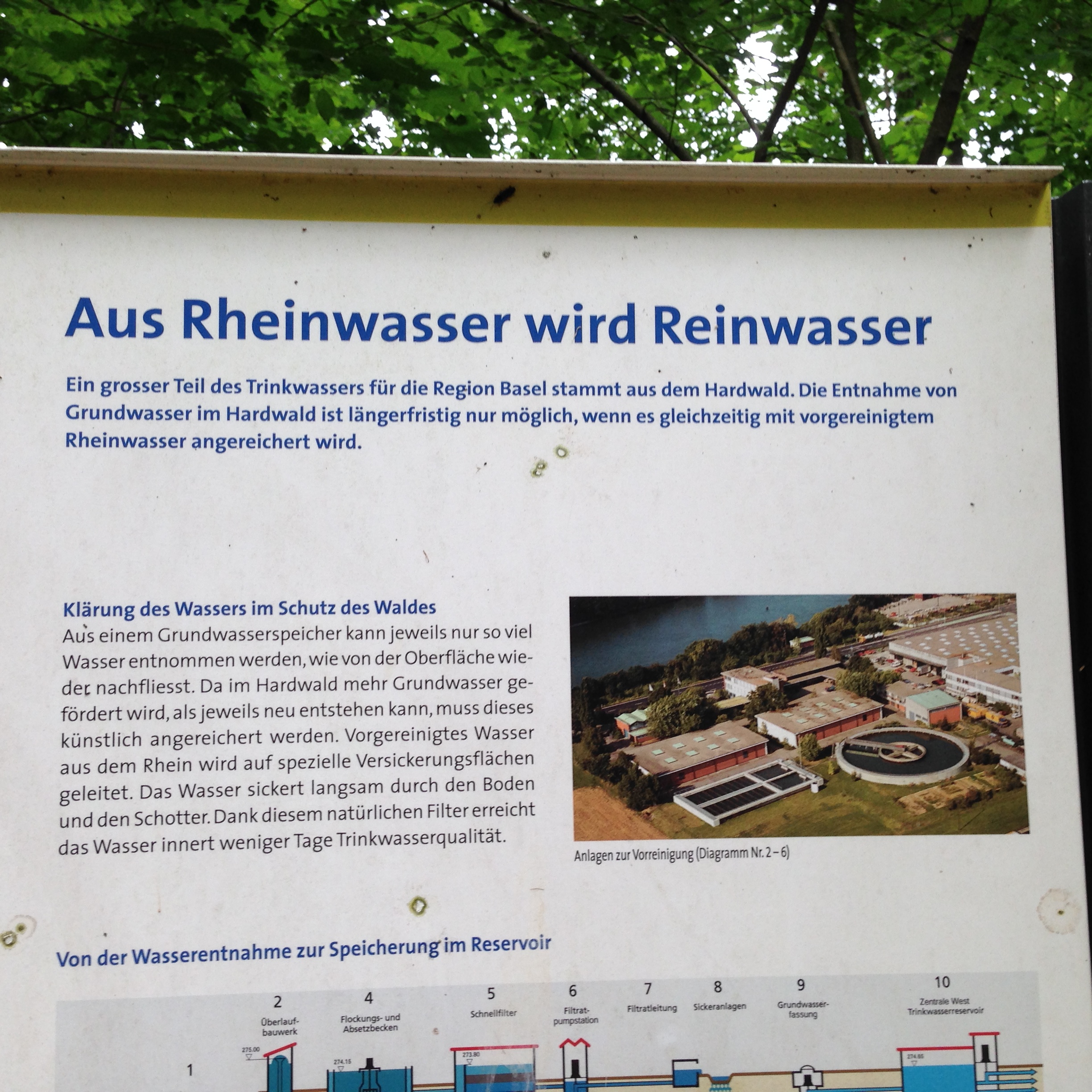
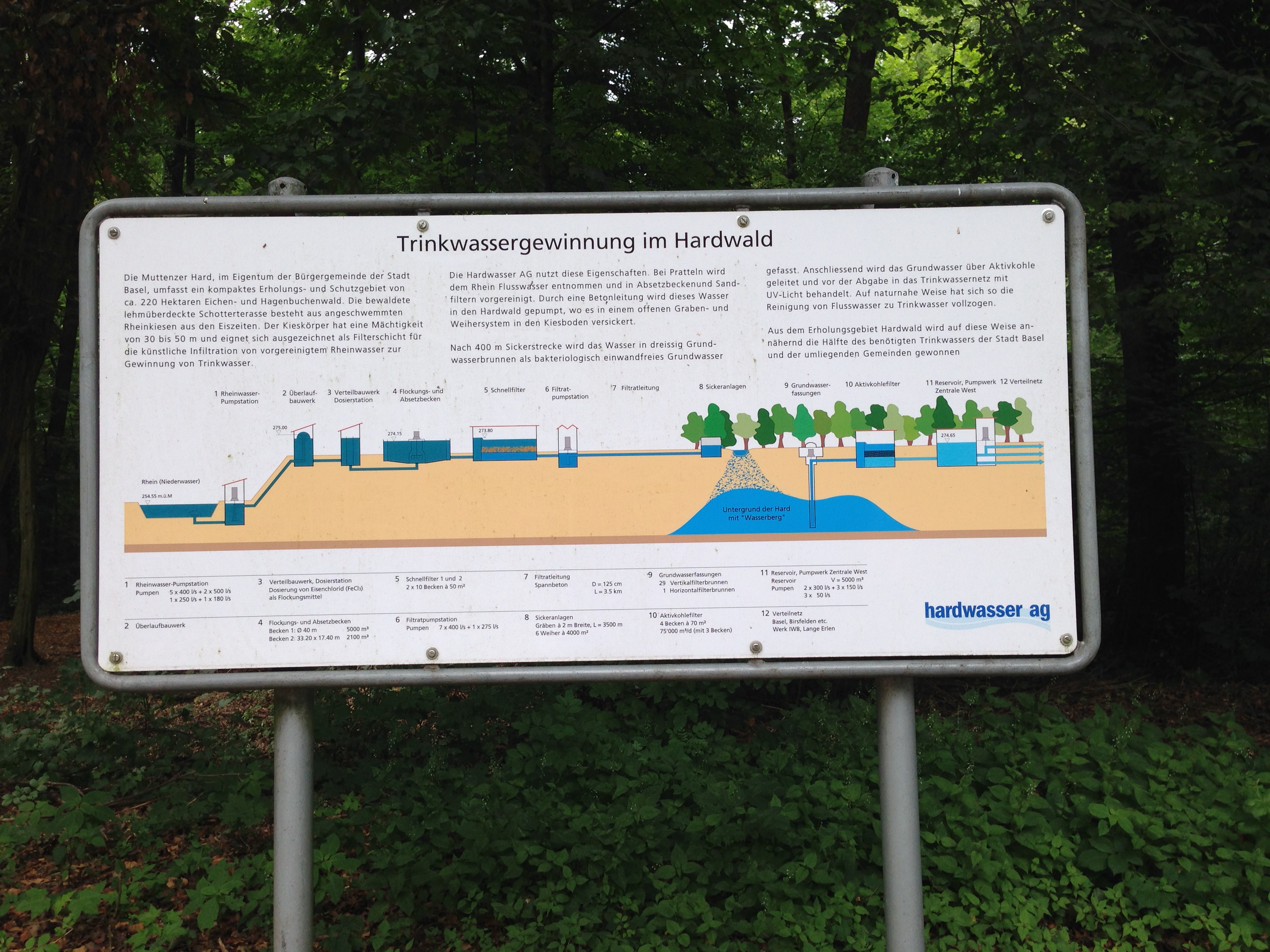
As this panel says, water from the Rhine becomes pristine water (from the Rhine=Rhein, made pristine=”rein” – a game of words in German).  Rhine water is pumped up and then purified in filters.

IMG_1537

The purified Rhine water is directed to water channels with gravel beds. It sinks to the ground and adds to the Hard groundwater. The clean water from the river and the ground is then transfered from the Hard to the Langen Erlen north of Basel that also has its own groundwater. From there it is provided to the town.

IMG_1541

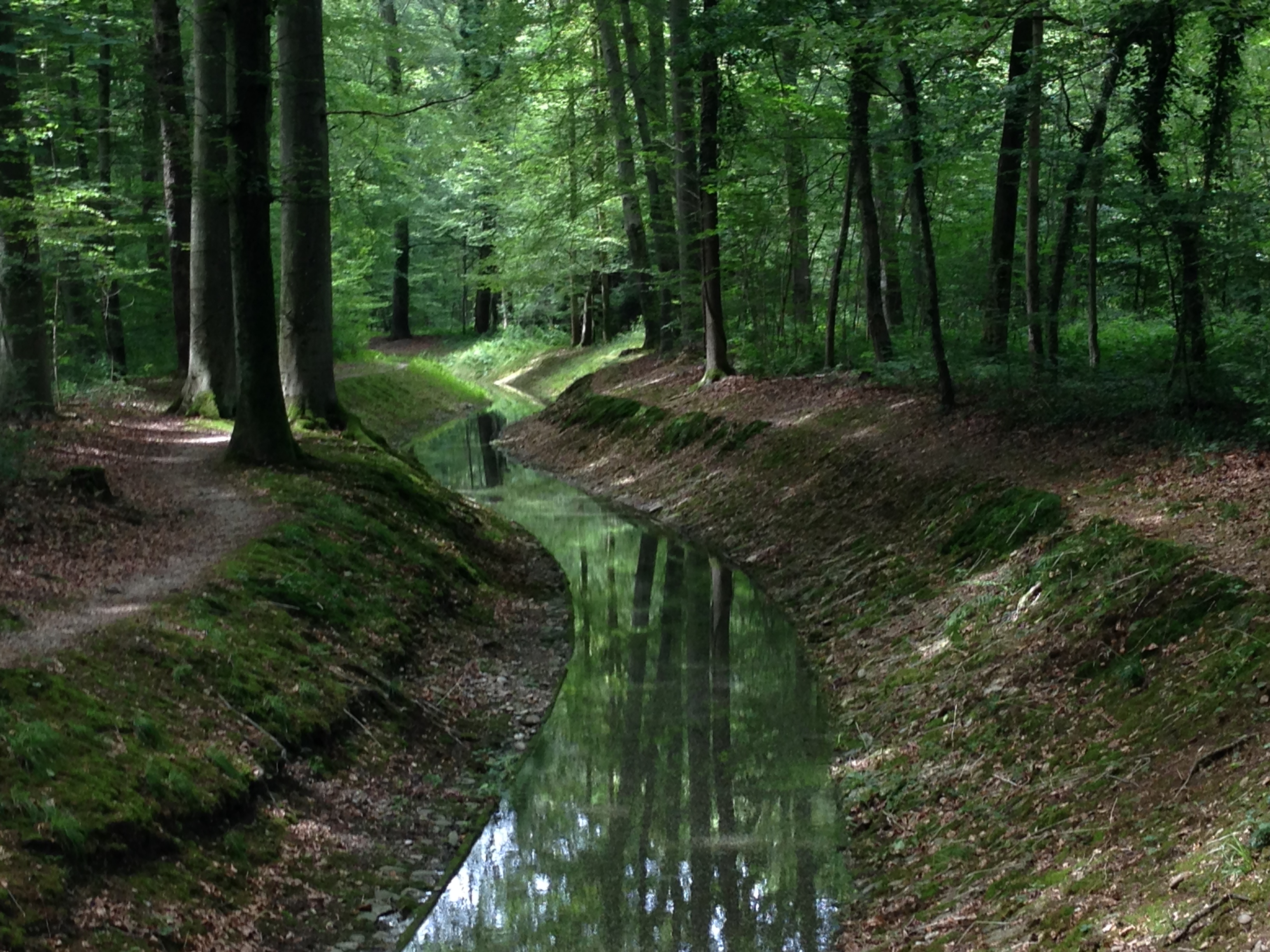
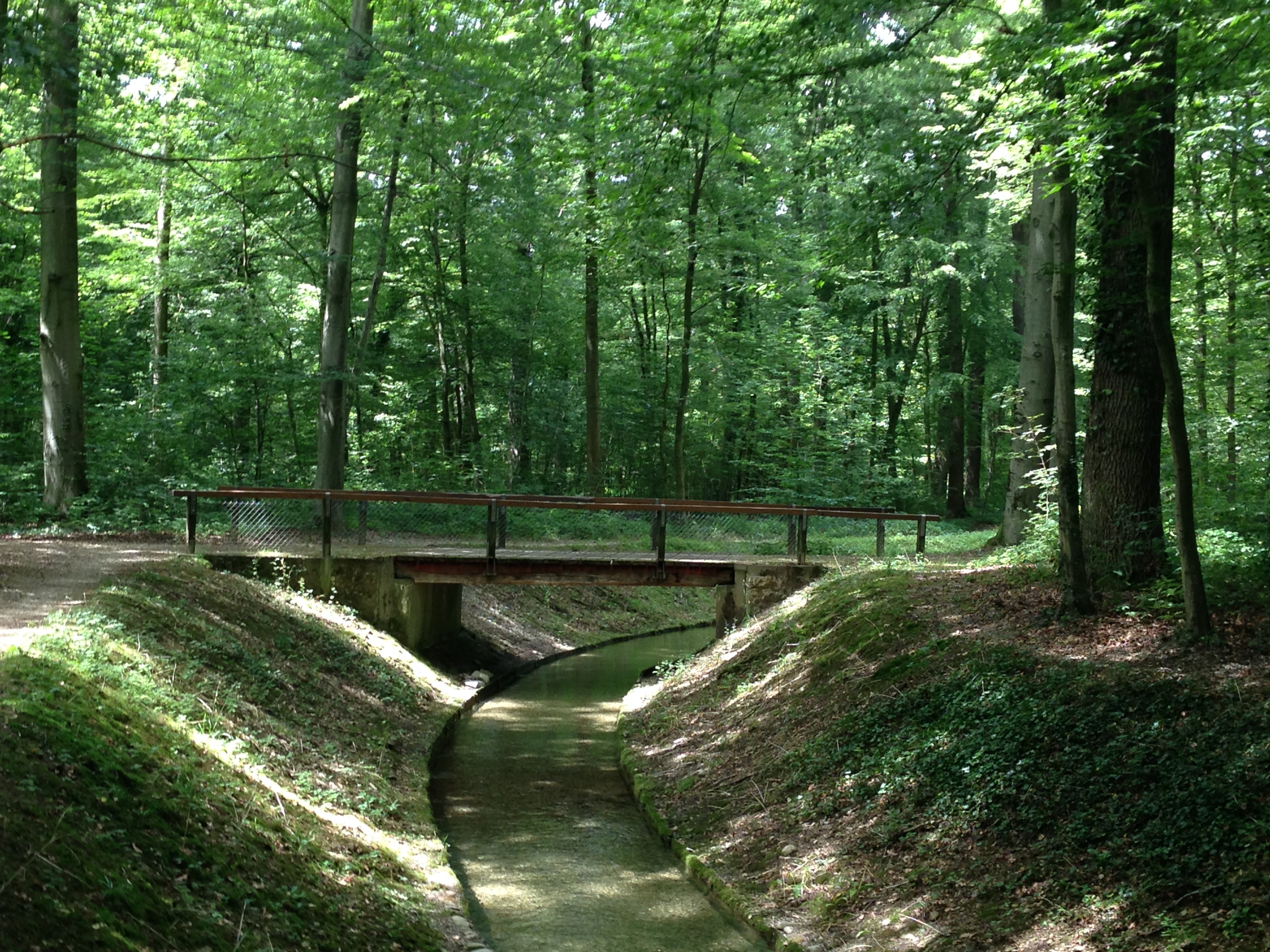
These water channels are part of the purification system in the Hard. They add to the romantic atmosphere that walkers find here.

IMG_1544

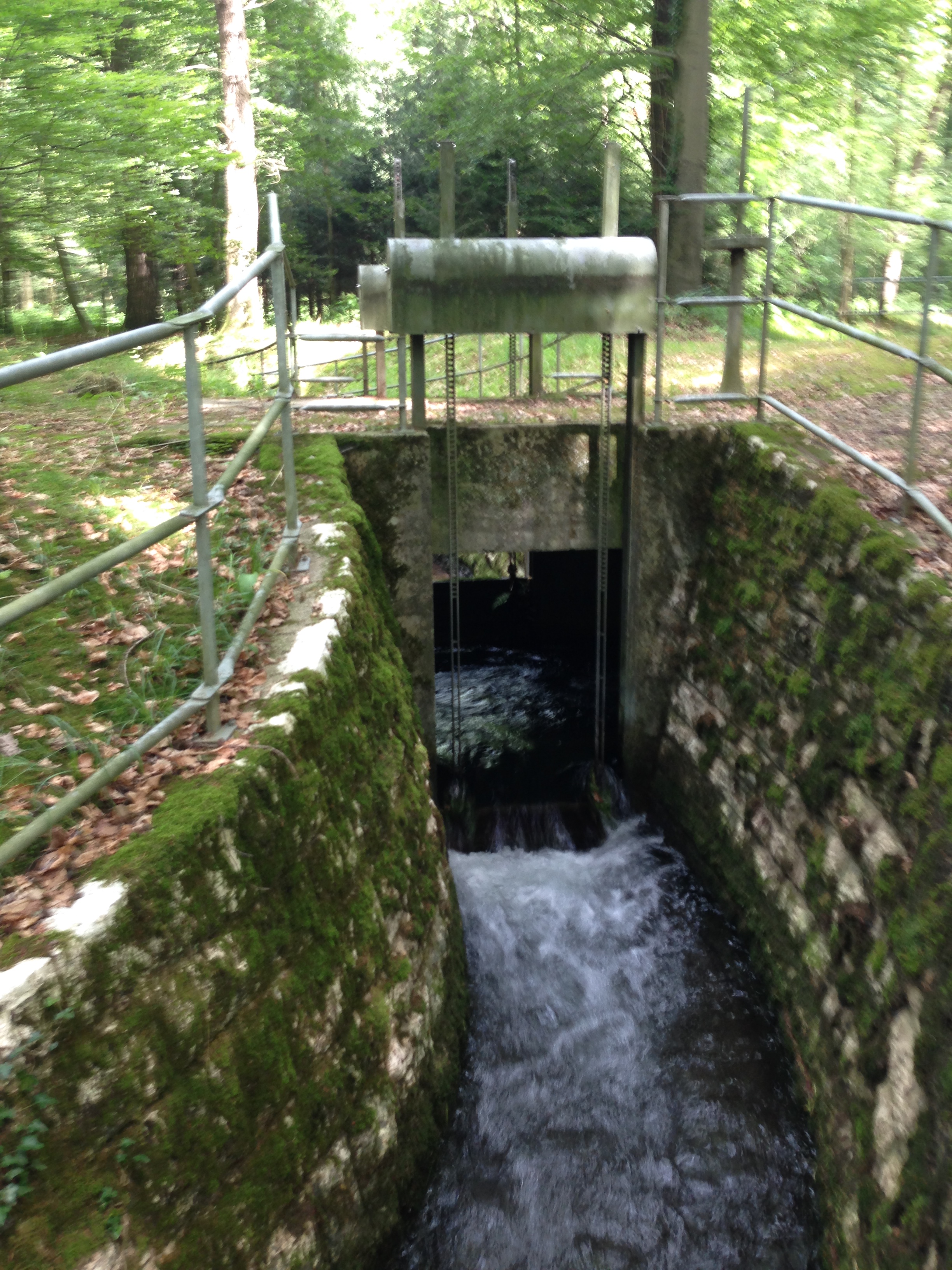
There is a control system to feed the water channels.

IMG_1547

Wooden bridges allow to cross the water channels. We make a loop following the water channels and then leave this area to continue along the Rhine.

IMG_1548

.

Along the Rhine: The Romans were here – and left their marks

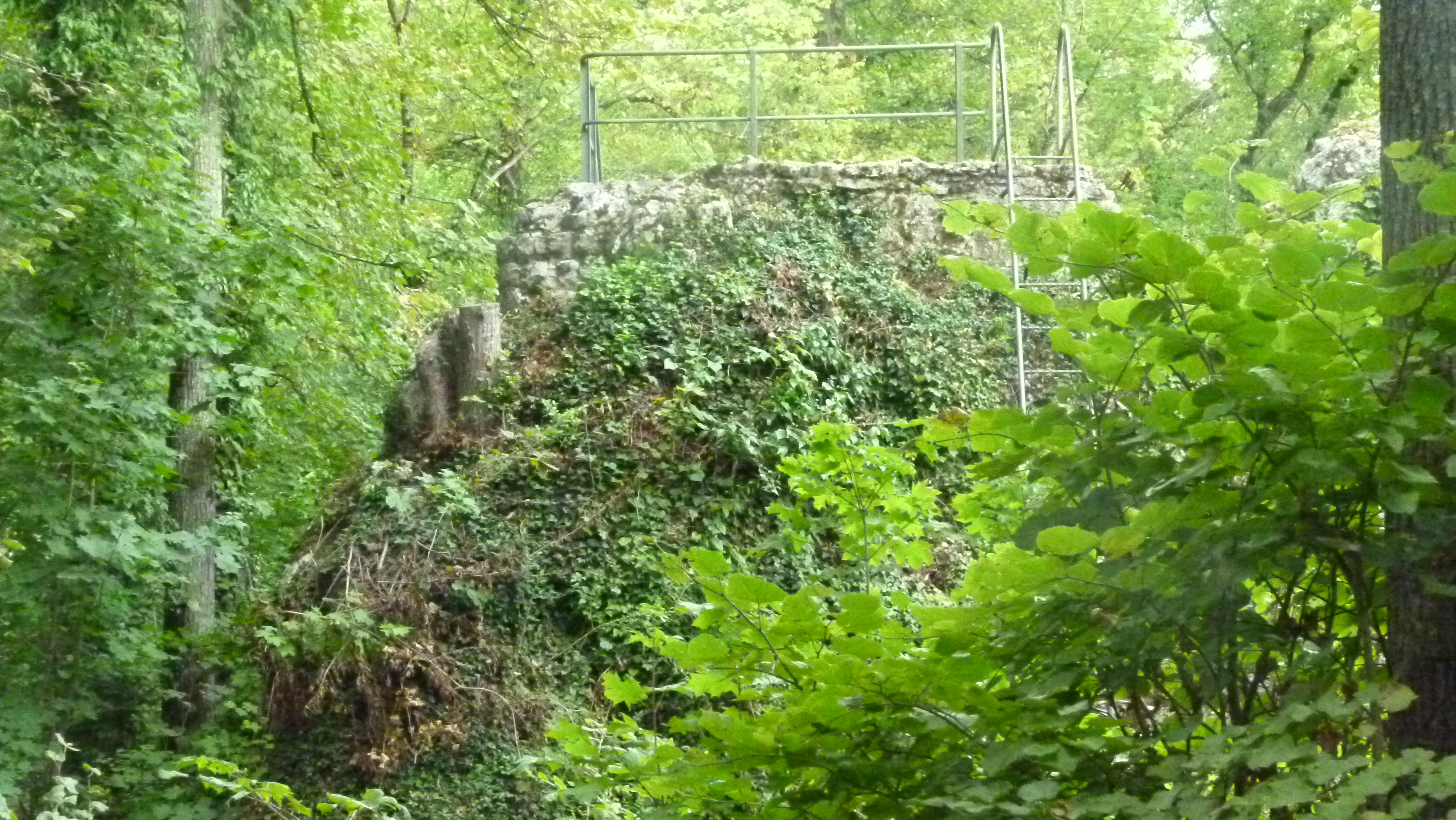
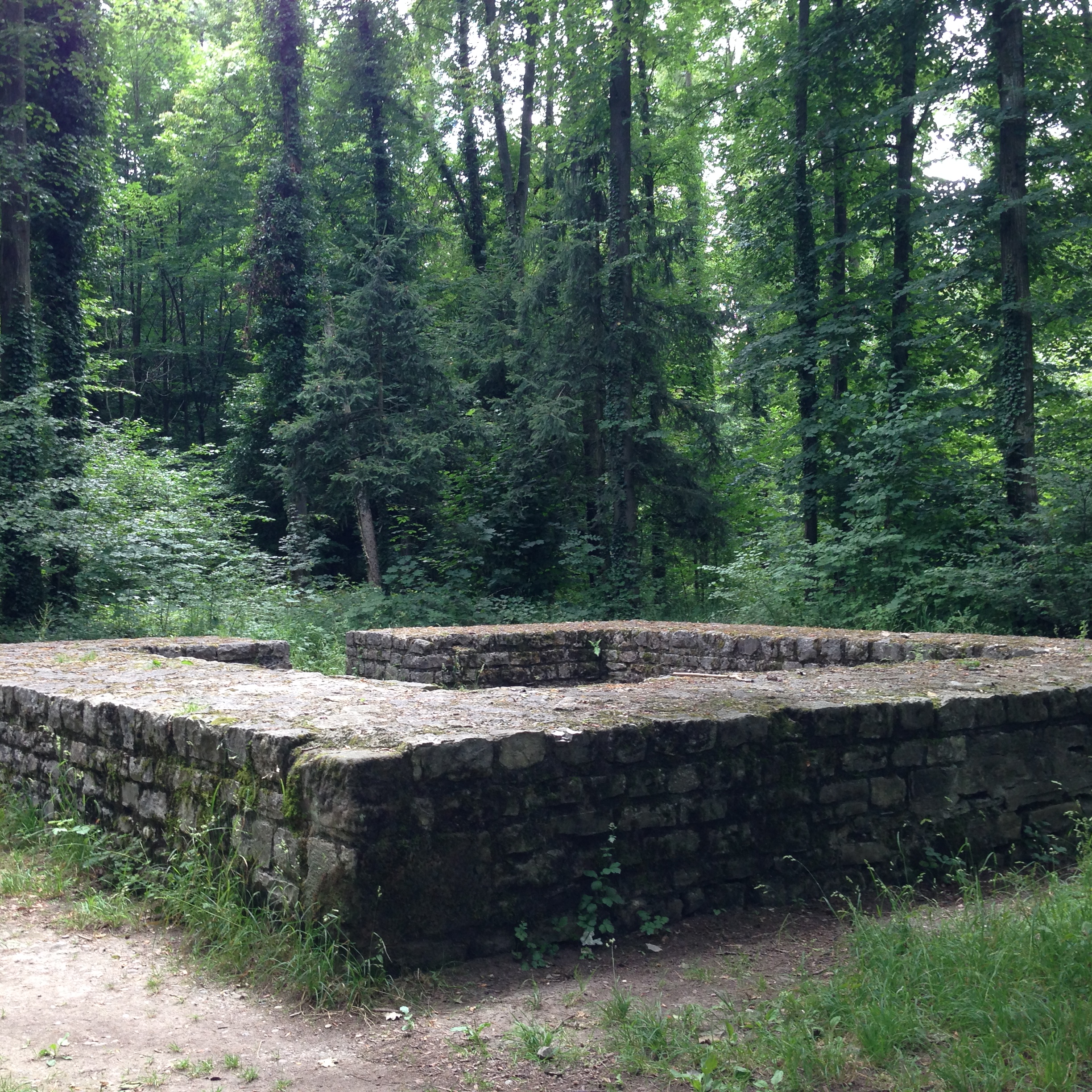
This late Romanic watch tower borders the Rhine. It was built in the late 4th century, when the Romans came more and more under pressure by the Germanic and Alemannic tribes. Just the stone basement is left and has been preserved in 1975.

IMG_1534

.

Dismantling of a huge industrial building in Schweizerhalle

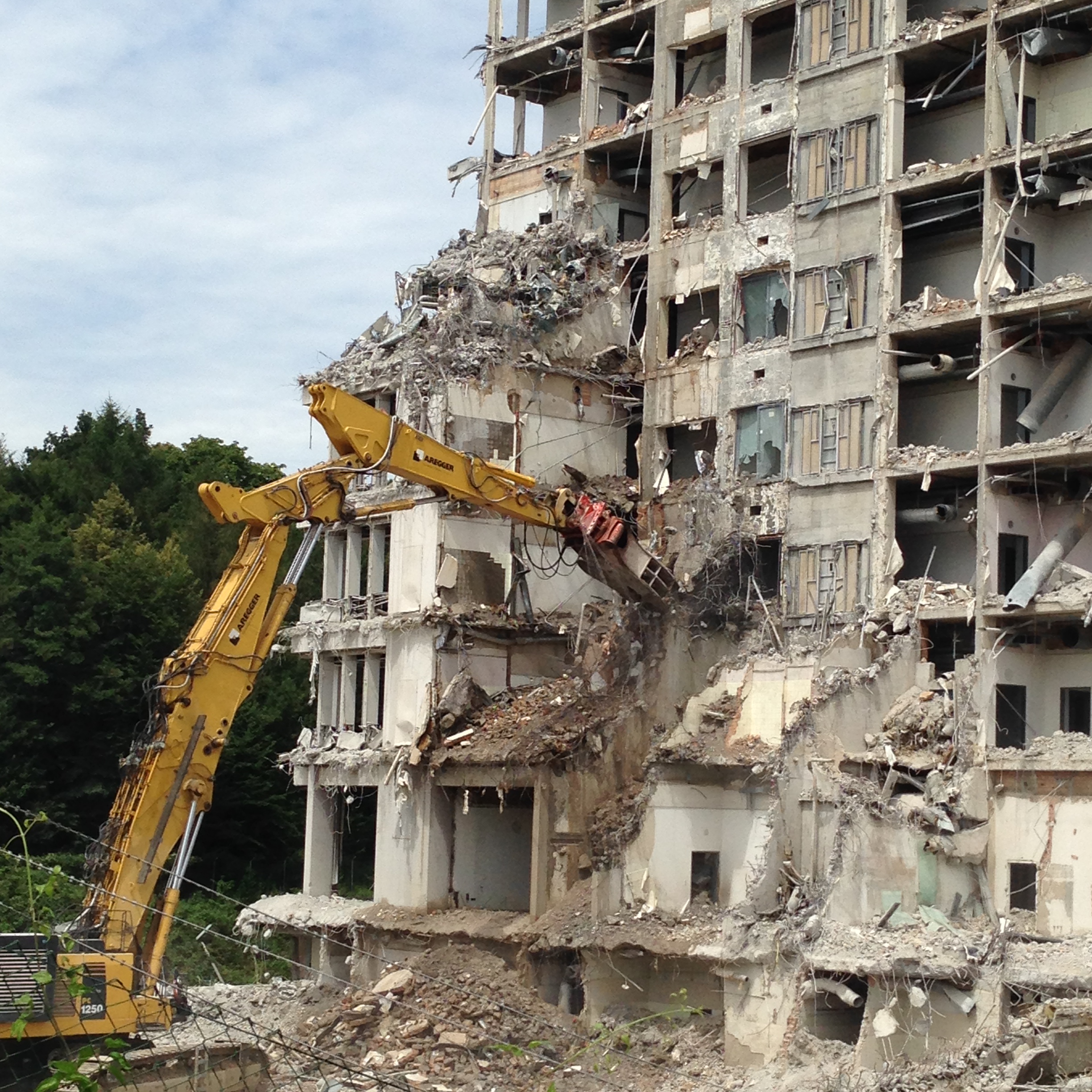
Not far from the watch tower – when still walking in the woods – we hear a terribly loud noise. When leaving the woods, we see this huge industrial building that is now it being dismantled piece by piece. When walking by, we almost have to protect our ears.

IMG_1531

.

Navigation driven by muscles

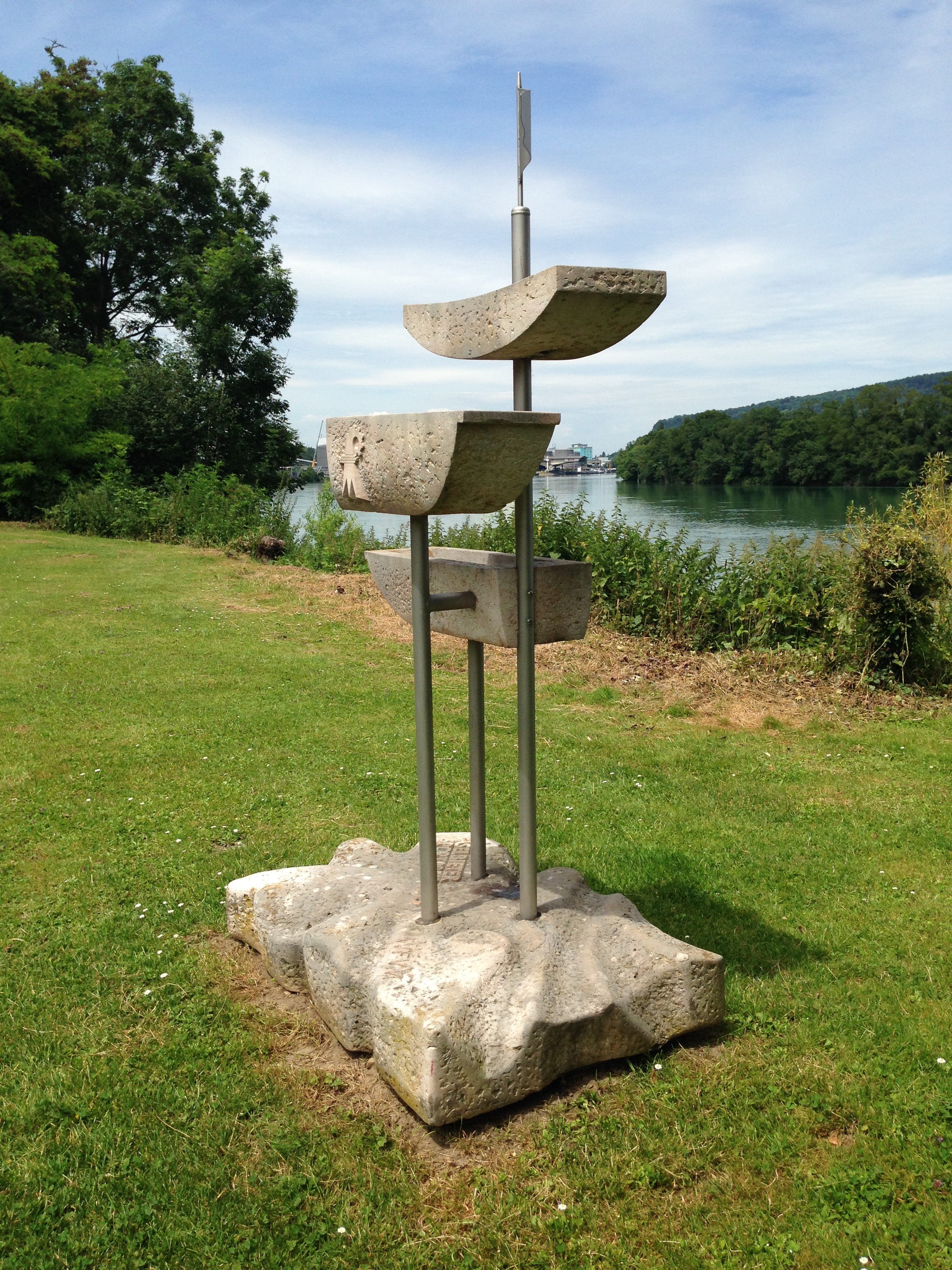
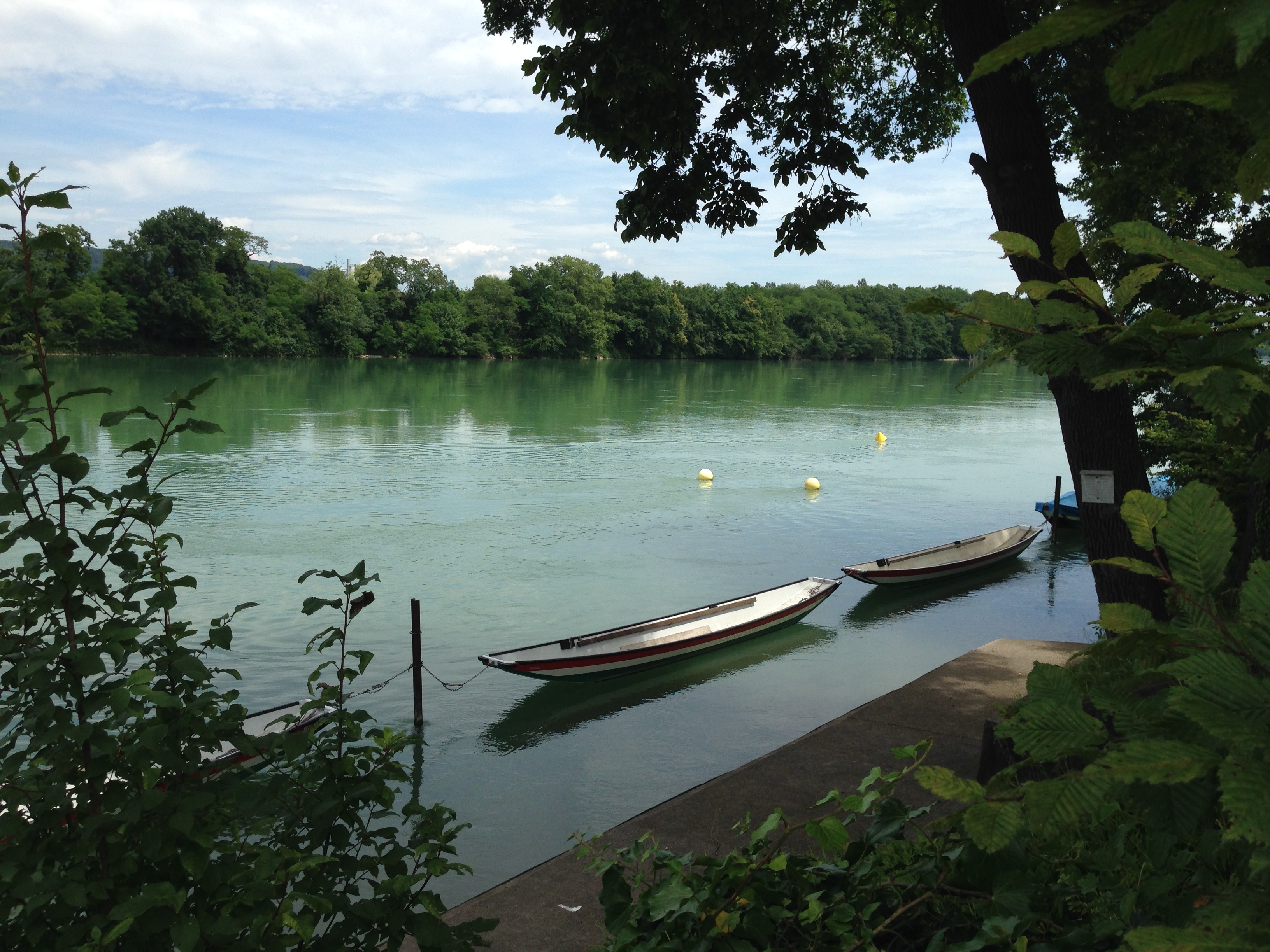
Our last place interest is the “Schiffahrt mit Muskelantrieb” or “navigation driven by muscles” (named “Rothus” on the map).

IMG_1524

These are the boats that are driven by muscles – we call them “Weidling” which is similar to a “punt”, as Wikipedia says.

IMG_1525

Soon after this boats place we reach the garden of the restaurant Solbad and order a drink to cool down.

Thank you, Andreas and Helga, for having showed me some more secrets of Basel region. From the restaurant Solbad I walked back home the same way to enjoy it once more and take the fotos using my iPhone. I look forward to more treasure hunting with you.


Around Basel – The Ermitage near Arlesheim is full of surprises

My grandma loved the Ermitage – and took me there, when I was a child

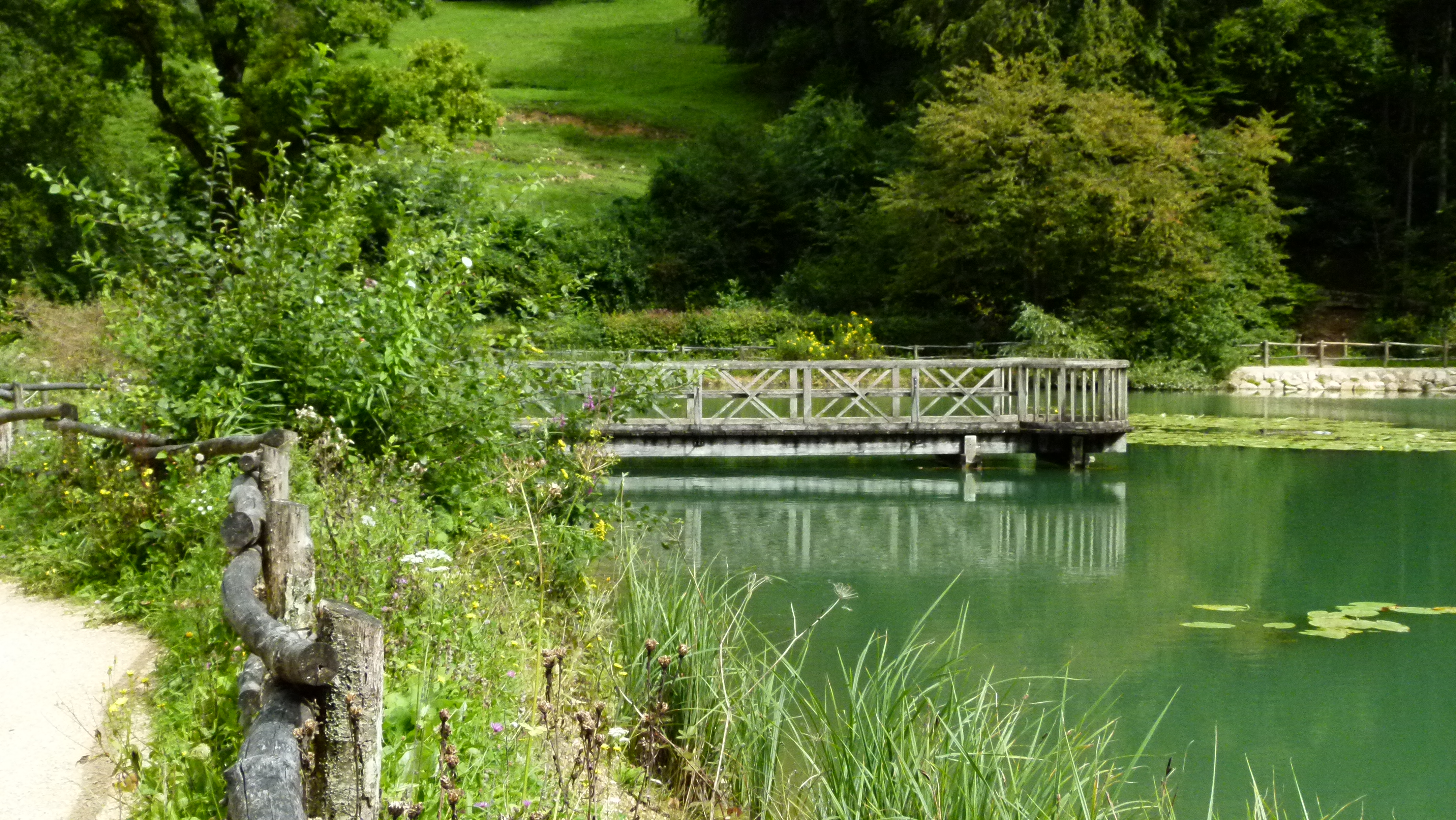
My grandma loved the Ermitage. Around 1900 she went as a child, and later in the 1920-ies she came with her in-laws from Heidelberg. Then in the 1950-ies, she took me to the Ermitage.  I was a child and I still see me stand on this platform and feed the carps with old bread found at the bottom of the huge hand bag of my grandma, amidst great fruit candies. The platform is still the same.

P1060142

.

On June 27th 2015, the Ermitage celebrates the 230th anniversary – a great opportunity to learn more about it

The Ermitage is the largest English garden in Switzerland. It was created in 1785 by Balbina von Andlau-Staal (wife of the bailiff of the prince-bishopric of Basel) and her cousin, Heinrich von Ligerz. As opposed to the geometric French gardens, the  English style gardens were made to look natural, following Chinese garden architecture rules. The rules included setting up places of interest such as caves, ruins, monuments, fountains, water falls or leisure corners, and the Ermitage garden benefited from the steep hill of the Birseck castle with its natural caves. Already in 1785 the garden was open to the public.

A few years later during the French revolution, the garden was devastated by the farmers around Arlesheim and by French troops. Also the castle of Birseck (former seat of the bailiff) was destroyed in the process. In 1811 the son of Balbina, Conrad von Andlau, had the Ermitage rebuilt, supported by Heinrich von Ligerz, now an old man. The castle of Birseck was partially rebuilt and integrated in the Ermitage garden. The garden reopened in 1812. It subsequently changed ownership various times and since 1999 it has belonged to the Stiftung Ermitage Arlesheim und Schloss Birseck.
My sources are: The Ermitage Website , “Die Höhlen der Ermitage bei Arlesheim” (by Erich Plattner) and also listening to the guides in the garden.
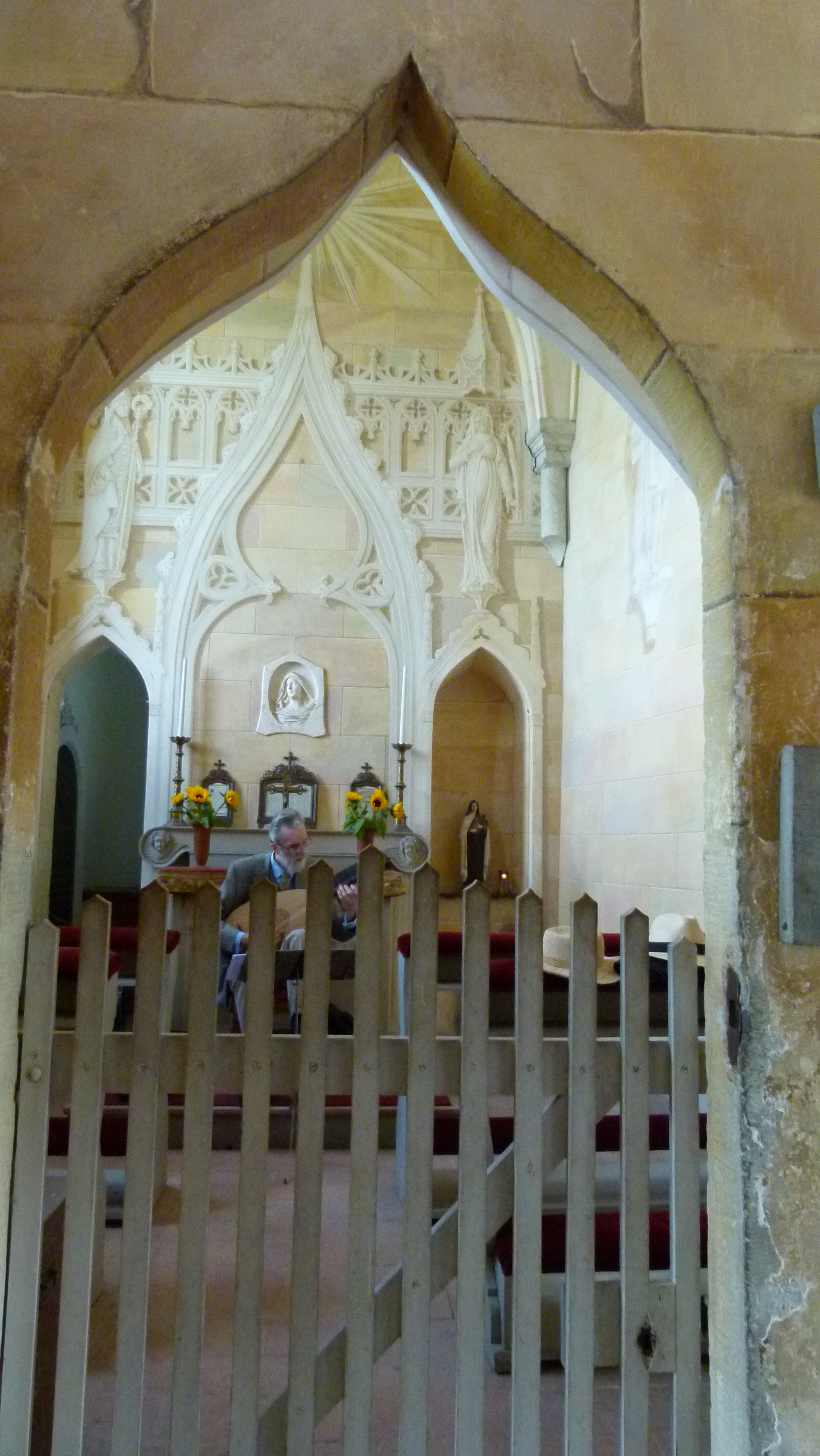
On June 27th 2015, the Ermitage celebrates the 230th anniversary. Places of interest such as the caves or the Birseck castle are open and looked after by members of the foundation (Stiftung) or by citizens of Arlesheim.

.

Ab uff d-Sogge

“Ab uff d’Sogge” –  this is how we Swiss say “let’s go” or literally “let us go on our socks” (“Sogge” are “socks” – as shown on the sign). “Ab uff d’Sogge”… Arlesheim invites us to the Ermitage. Well – let us go and  “ab uff d’Sogge” to explore the surprises of the Ermitage that has dressed up for the anniversary of 230 years.

Abbuffdsogge

Source: “Die Höhlen der Ermitage bei Arlesheim” by Erich Plattner.

.

A cheese cake and a coffee – the cosy garden of the Schleiferei is open

Near the entrance to the Ermitage is the so-called “Schleife”, a small house. A basket contains material about the sights and activities in the Ermitage. The garden is a coffee place today. I have some cake with a coffee. Water is free. It is spiced with fresh mint leaves.

P1080181

In the background above the garden is the Birseck castle sitting on top of the hill. On the slope under the castle, winding narrow paths invite to explore the caves, monuments, the house of the brother in the wood (Waldbruder) and more secrets hidden in the English garden.
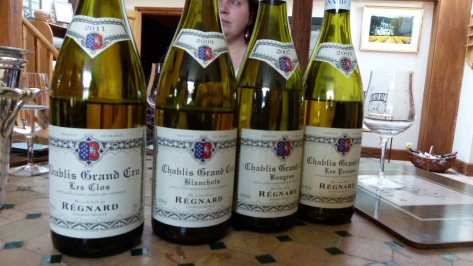
 .

The old mill is open

The old mill is open today. There is a gallery inside. Earlier today there were anniversary speeches held in the mill.

P1060140

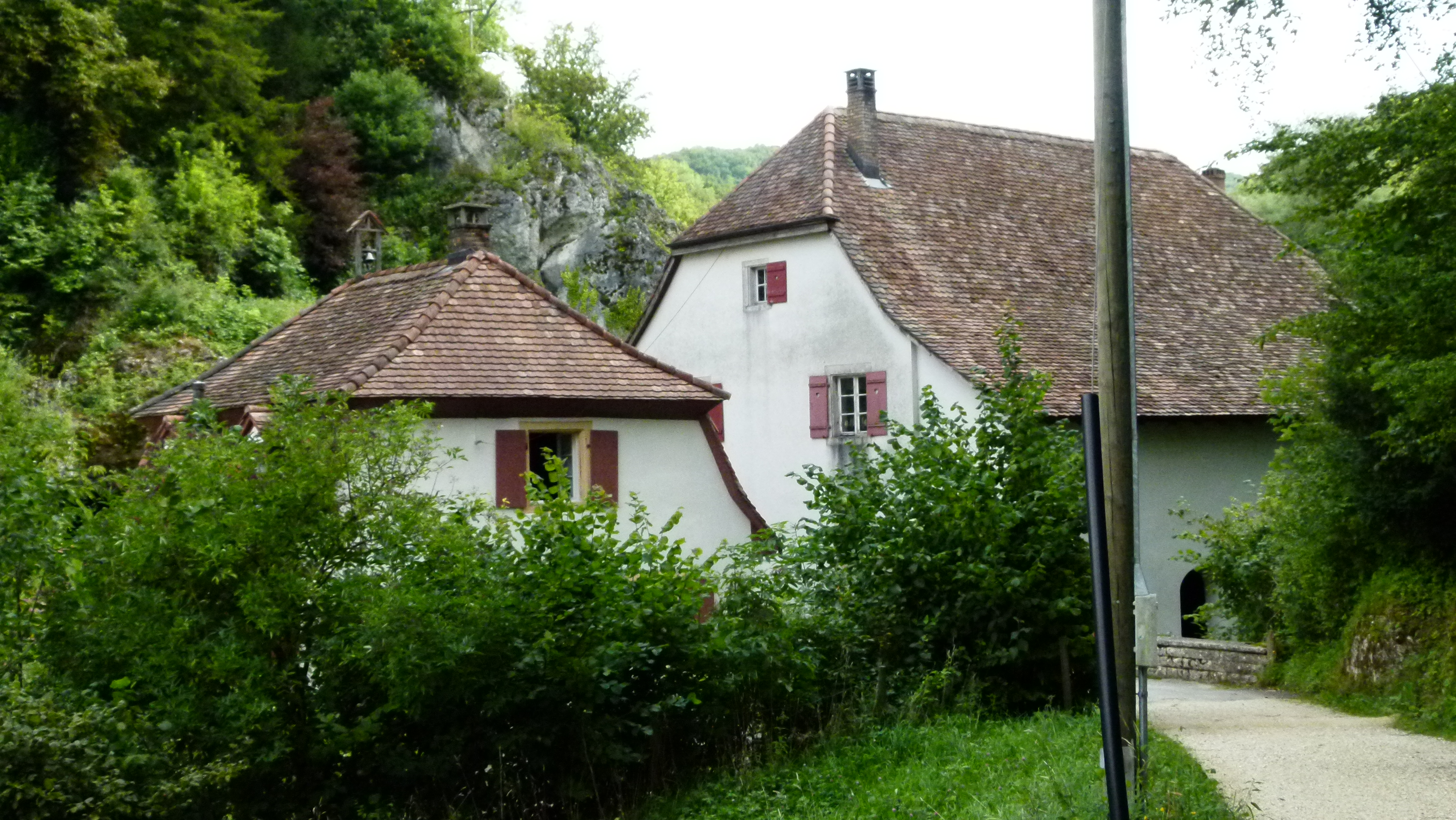
The main entrance to the hill area with the winding paths and caves is behind the mill. It is called Felsentoreingang (rock gate entry). Erich Plattner sells his book just next to the main entrance. I buy two copies, one for me and one for the Austrian friends that have taught me so much history and geography while taking me for walks aorund Basel.

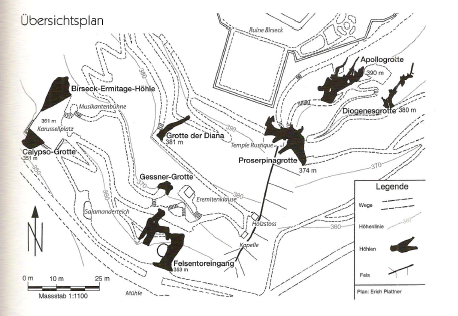
This is Erich Plattner’s plan of the caves and the winding narrow paths leading to the Birseck castle. It is the best map that I could find.

Übersicht Höhlen

Source: “Die Höhlen der Ermitage bei Arlesheim” by Erich Plattner.

In detail, Erich Plattner explains, how the caves emerged in a former riff area (shore of the paleolithic Thetys Sea) and then were transformed at the edge of the later Rhine valley ditch (p. 45ff). He also describes, how the garden architects transformed the caves to fit into their English garden concept. Many caves were enlarged and decorated, however the Calypso cave was destroyed, because they built a large platform above it, for a carousel at that time. Most caves have names taken from the Greek mythology such as Apollo or Diana. Diogenes and Salomon Gessner (around 1780 a famous poet from Zurich) also have received their caves.

.

The Proserpinagrotte – well explained by a professional tour guide

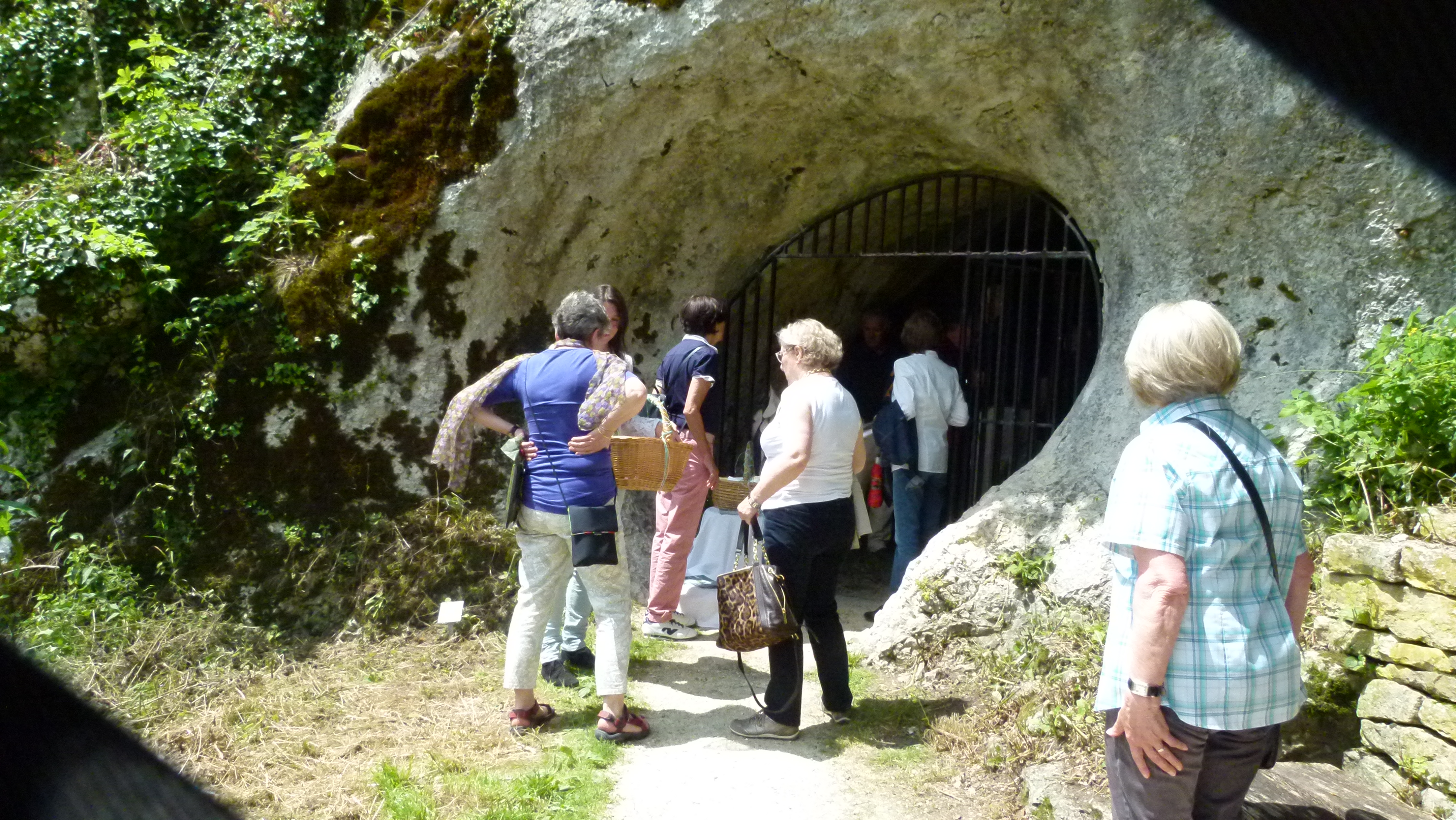
I dive into the garden using the path behind the Felsentor and reach my first cave, the Proserpinagrotte. Every twenty minutes, Sibylle von Heydebrand lays out the history of this cave which is the largest in the garden.

P1080190

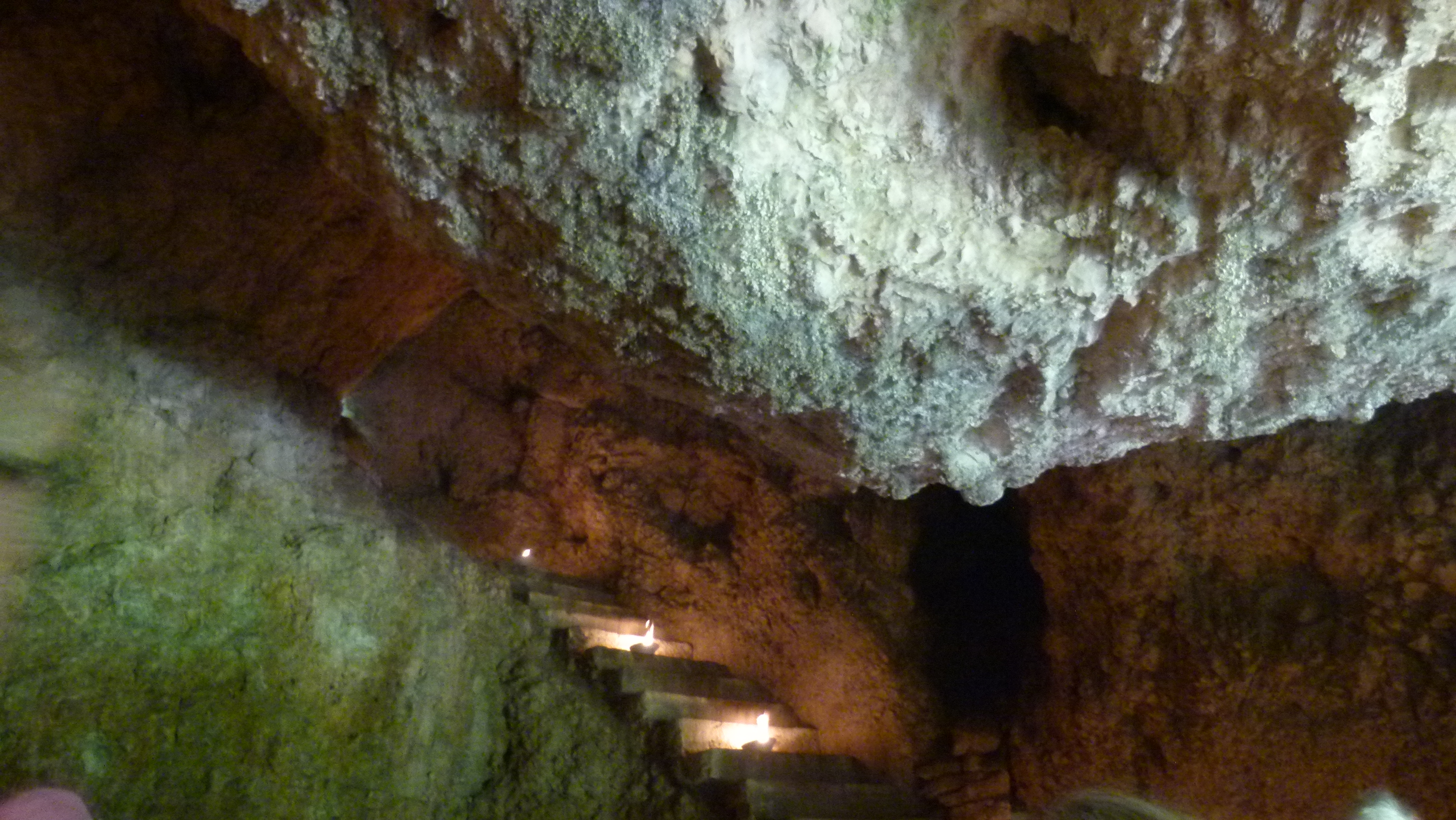
I join the next group. Inside is a large hall. Stairs lead to the next level, and they are lit by petroleum lamps common at the time, when the garden was built.

P1080188

Listening to the guide and reading Erich Plattner’s chapter about the Proserpina cave, I start to understand, how important these caves were for the experience that the English garden architects intended to provide to visitors. The architects enlarged the three halls of the Proserpina cave and connected them using stairs and corridors. Proserpina (or Persephone) was the daughter of Zeus and Demeter and she was kidnapped by Hades. She represents the idea of death and resurrection and this lead to changing arrangements in this cave. In the first setup, there was a gate to the cave – or the underworld. A bench in front of the gate invited to meditate (there is still a bench here today). The first hall was the underworld, represented by a black altar, a spying dragon and a crocodile, all lit by lamps. Stairs lead to a platform with a statue of Proserpina on it. There was also an owl that had eyes lit by a lamp. When going up the stairs, a devil made of wood would jump into the face of the visitor. Rather scary. This tunnel of horror setup was changed after two years; free masons redid the cave. They made the allegory of the death on the first floor less scary and left the Proserpina statue on the platform. Visitors reported that they were very impressed by the allegories of death and resurrection in this cave. During the French revolution the cave was destroyed completely and then rebuilt. In the first hall Heinrich von Ligerz built a tomb to remind of the death of Balbina in 1798. Today there is a copy with a typing error, as our guide points out: The date of death is 1788 – no, it is 1798! (More details in Erich Plattner’s book on p 97ff).

.

The path winds uphill to the Birseck castle

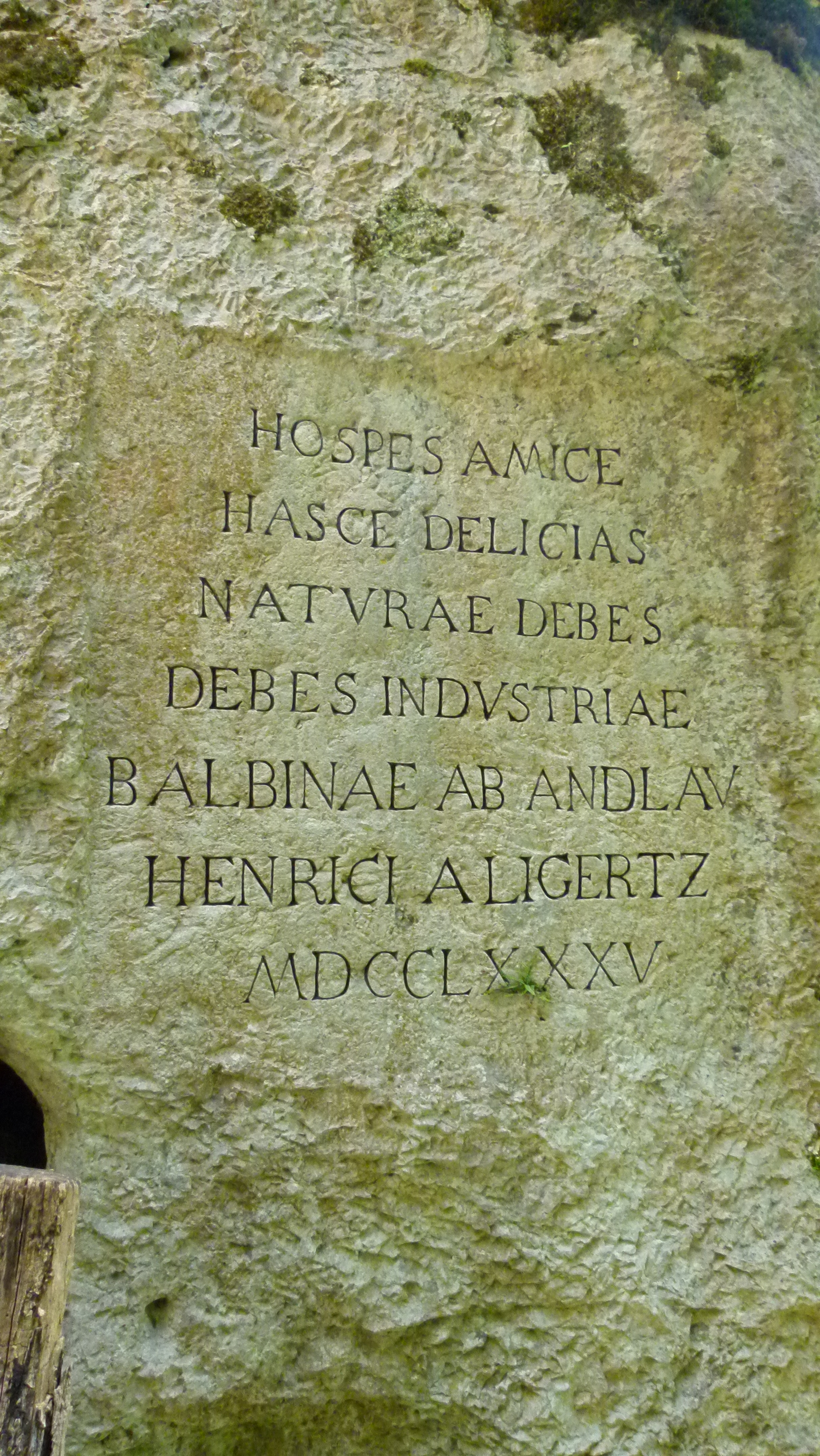
Climbing towards the Birseck castle, I come across this inscription for the founders of the Ermitage… it is near the Diogenes cave.

P1080194

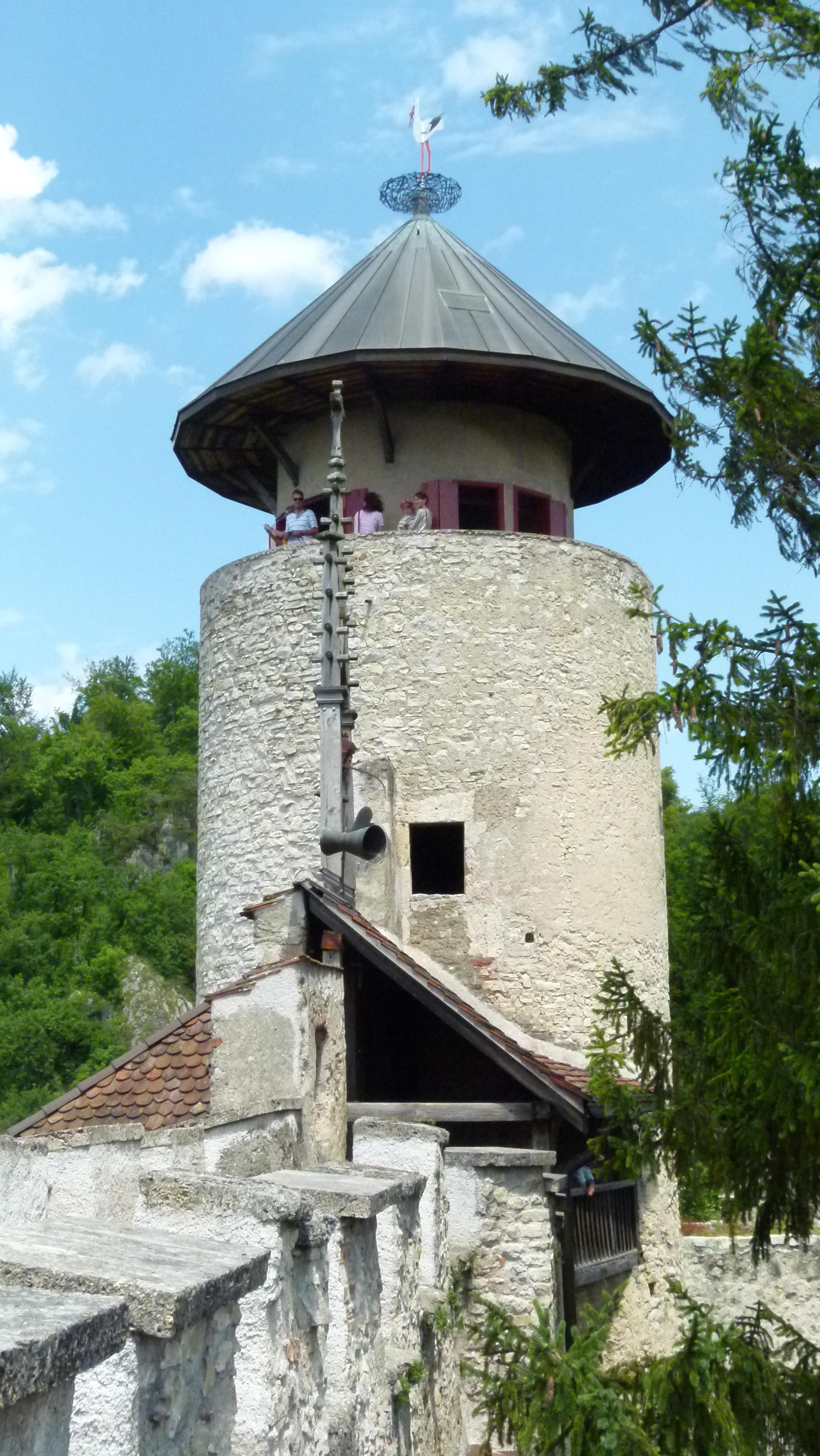
The Birseck castle is open for visitors today. I climb the tower,…

P1080206

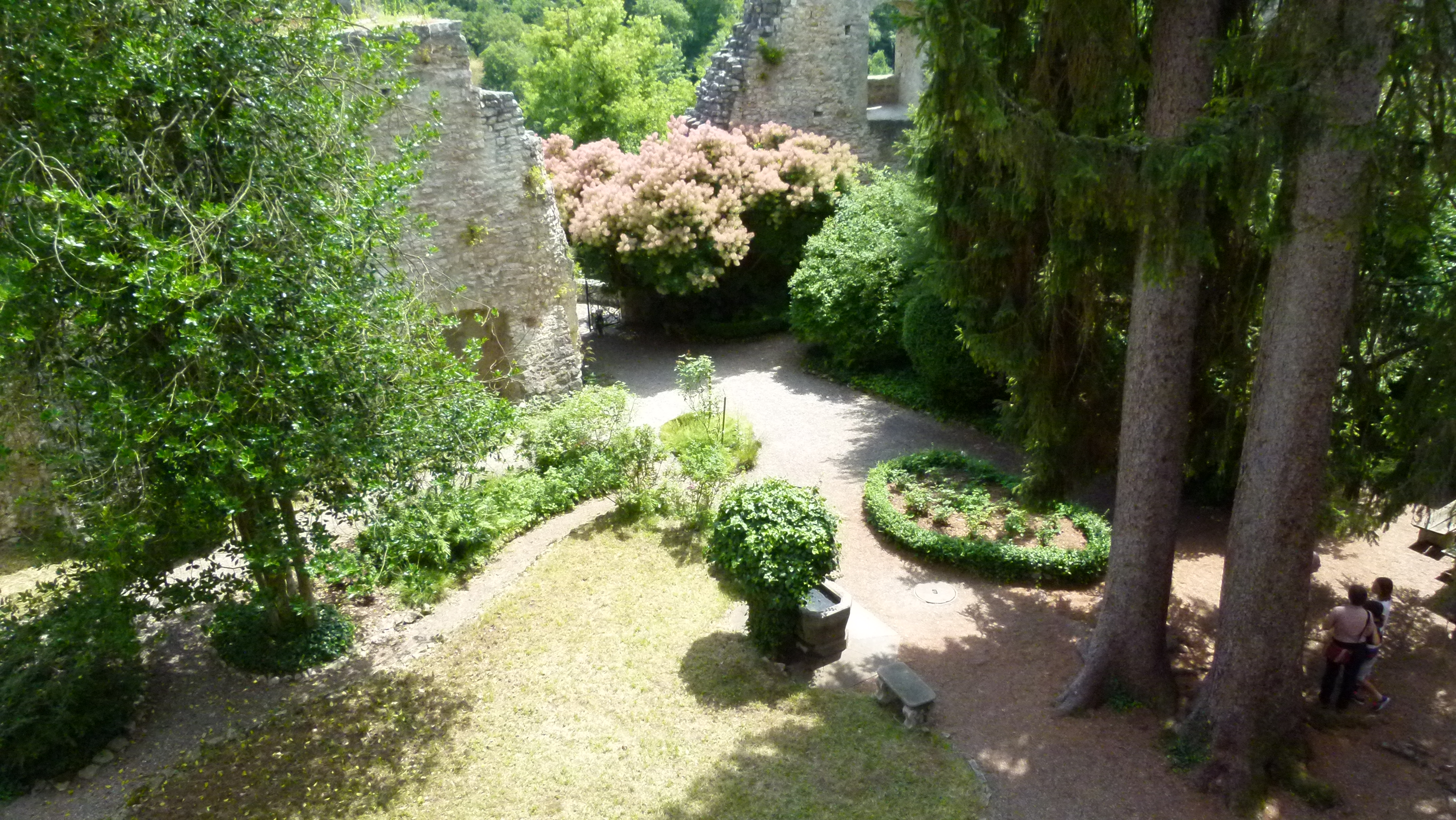
… look down into the garden,…

P1080203

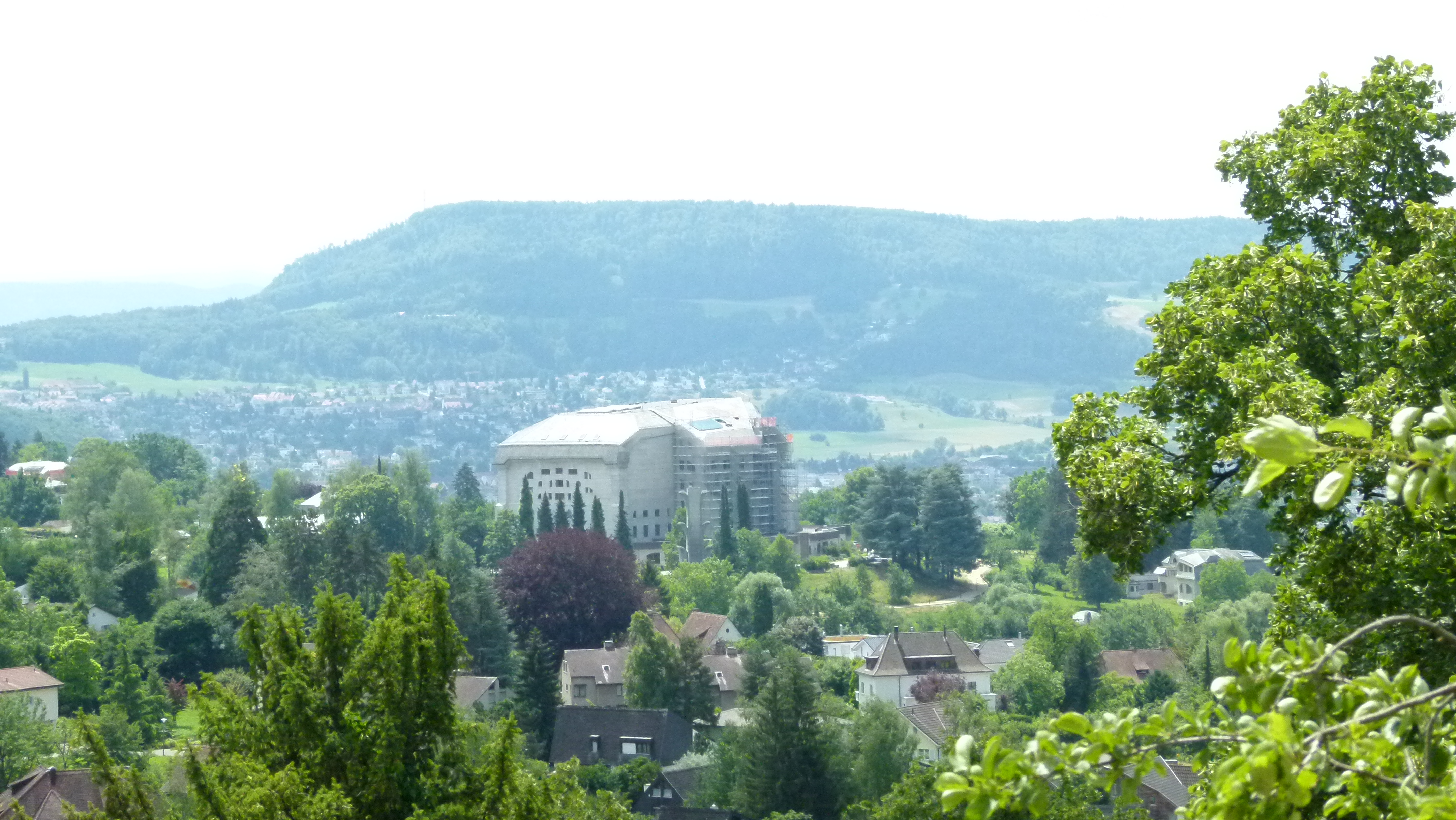
… enjoy the view to the Goetheanum and the Blauen, …

P1080216

… and listen to music played in the chapel.

P1080196

In the great hall nearby, a group of students from the Goetheanum (“Am Wort”) recite Faust and sing songs composed by Schubert. The language of Goethe is very sonorous, but difficult to understand. Well, the Goetheanum is not far and I am impressed by the professionalism of the performance.

The castle keeper tells us that after having been destroyed in the French revolution, the Birseck castle was rebuilt not based on original plans, but based on what was thought to match best an English style garden. The tower and the great hall as well as the pinnacles were the result of those ideas. Only the chapel has remained from the former Birseck castle.

.

Activities for children in the Weidhof just behind the Birseck castle

It is already half past two and the Ermitage event closes at 3 PM. I enter the Weidhof just behind the Birseck castle. A young boy sits next to an empty pastry bowl and a waffle iron.

P1080223

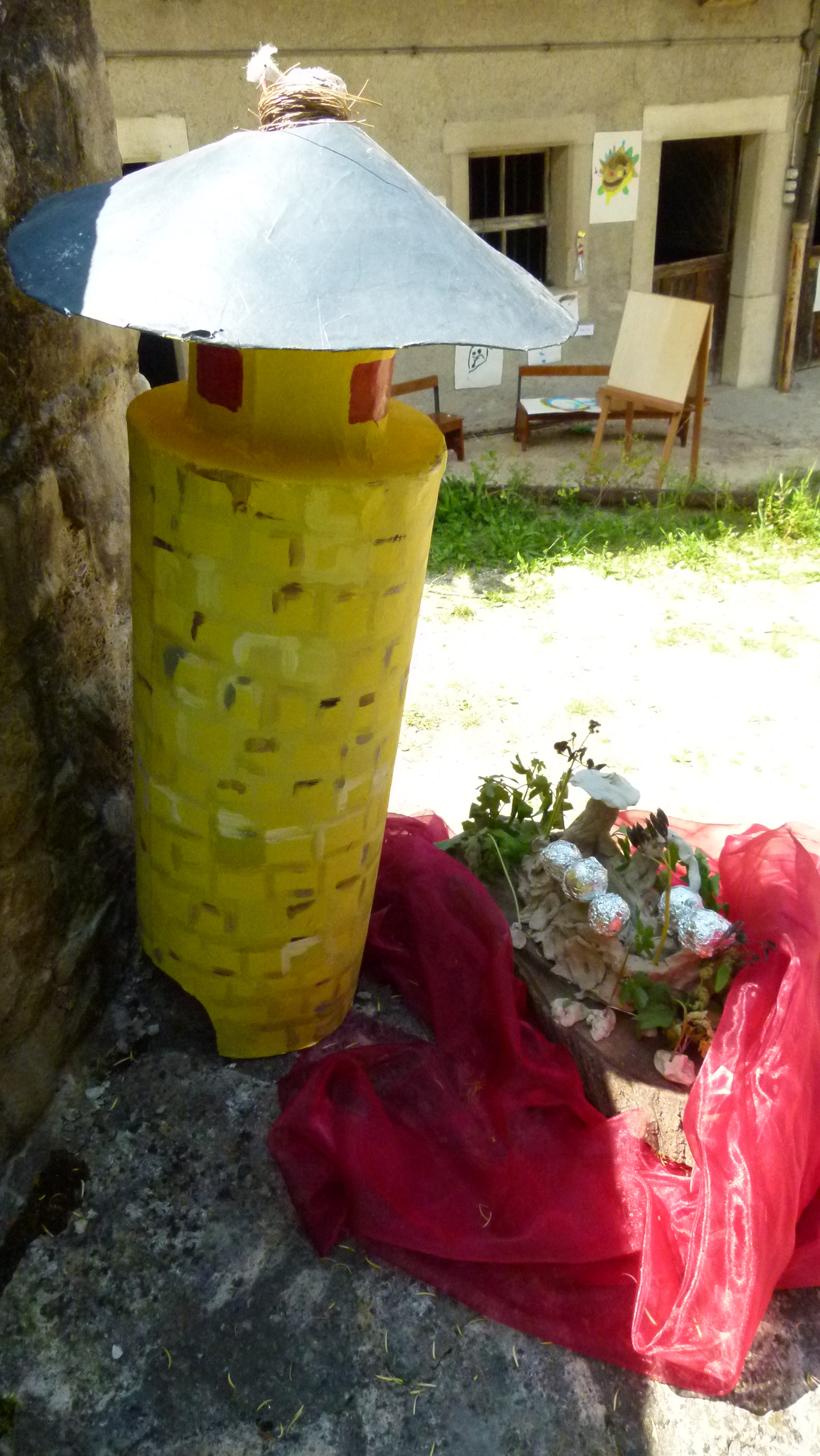
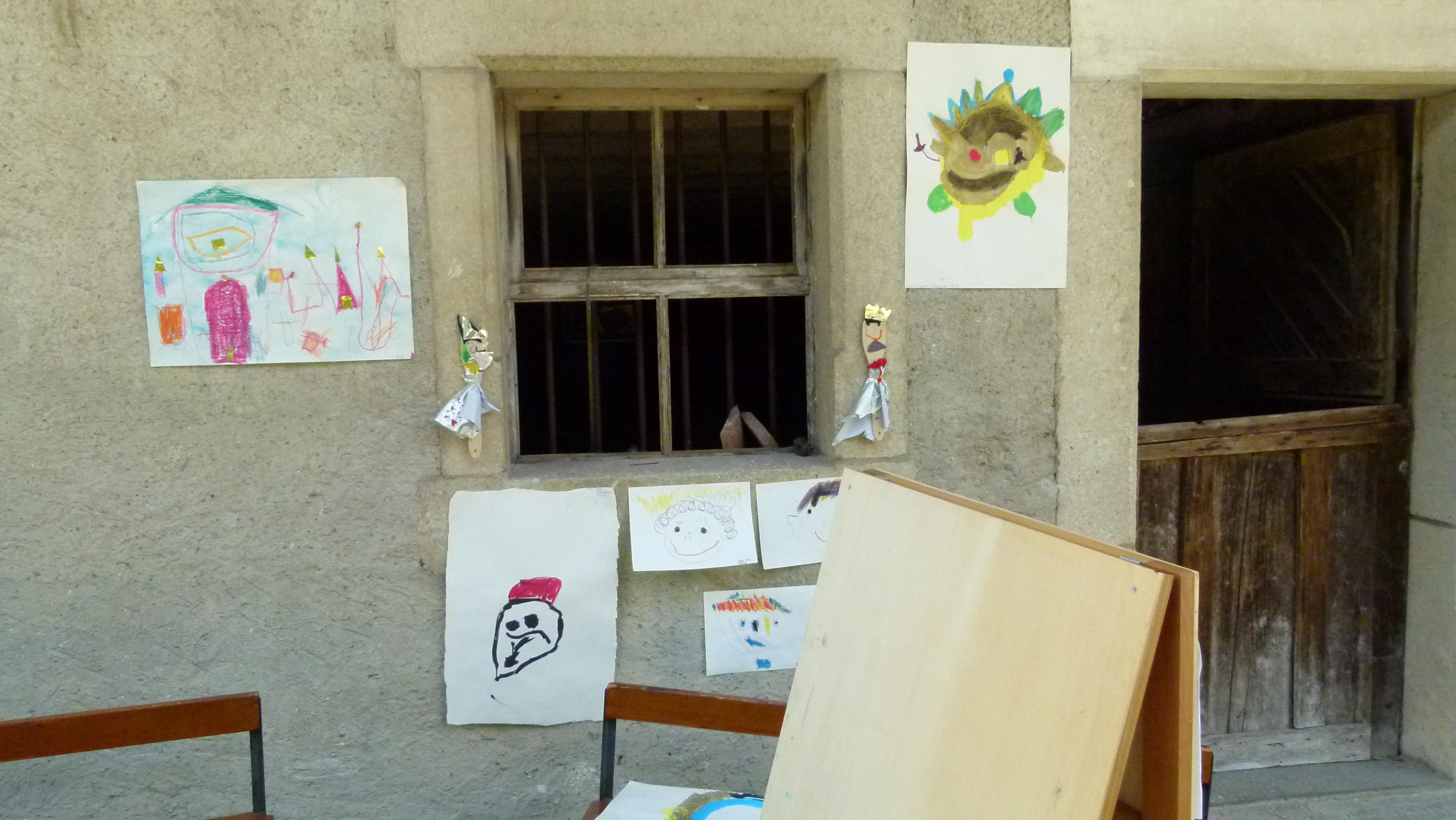
Kindly he tells me that there will be more pastry and he disappears, but then does not come back. I look around and discover with how much love this children’s place has been set up.There is a castle tower with a garden next to it (this must be a garden with mushrooms and flowers, and there is even a stork on the roof),…

P1080222

… a paintings gallery,…

P1080219

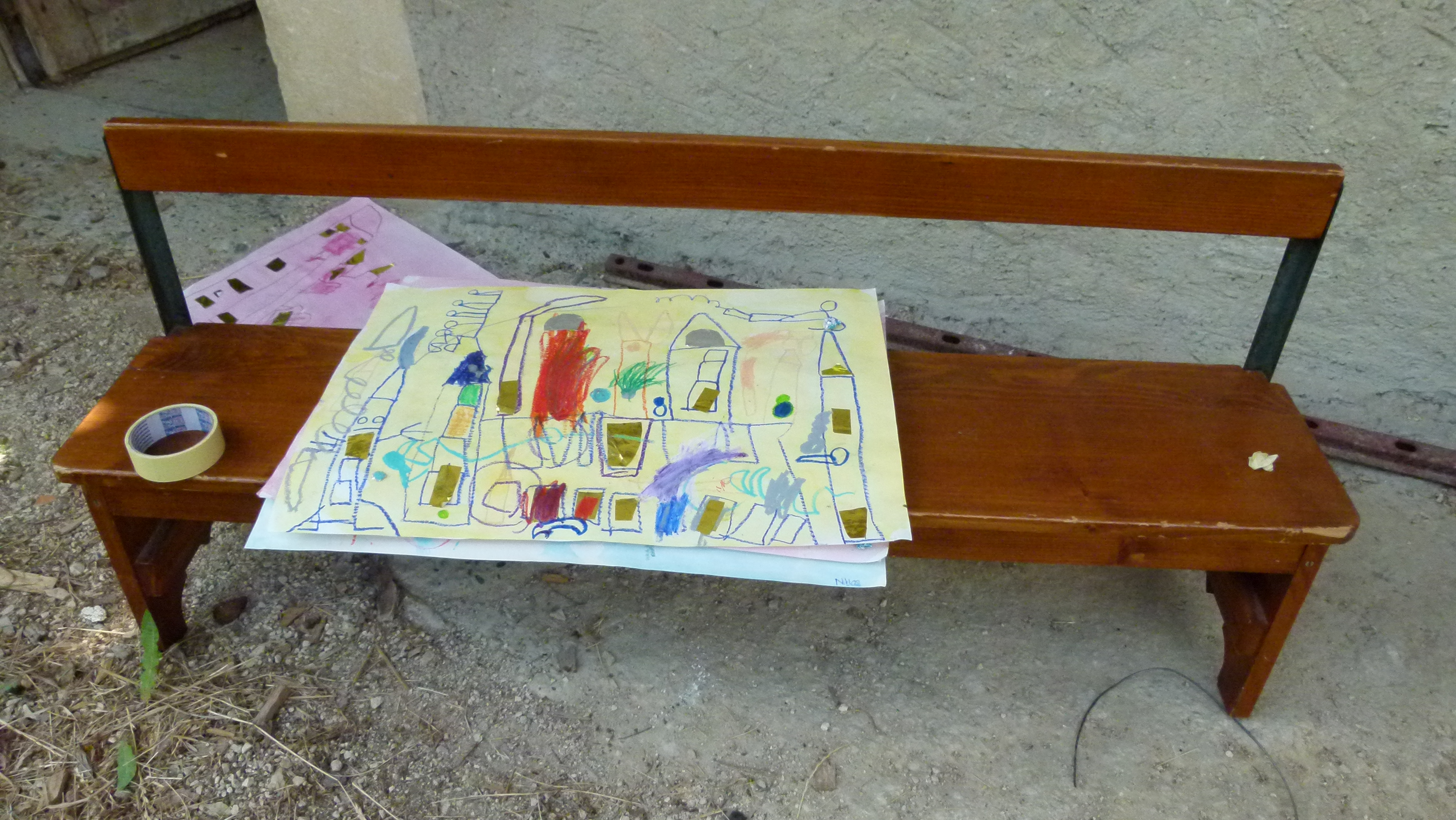
… and this must be a shop to buy paintings.

P1080220

I think back of my childhood and my grand’ma that had often taken me to the Ermitage. With a smile on my face, I leave this place, feeling sorry that I was too late to watch the children producing and selling works of art here. This children’s playground is a great idea.

.

The brother of the wood nods “thank you”, when given money

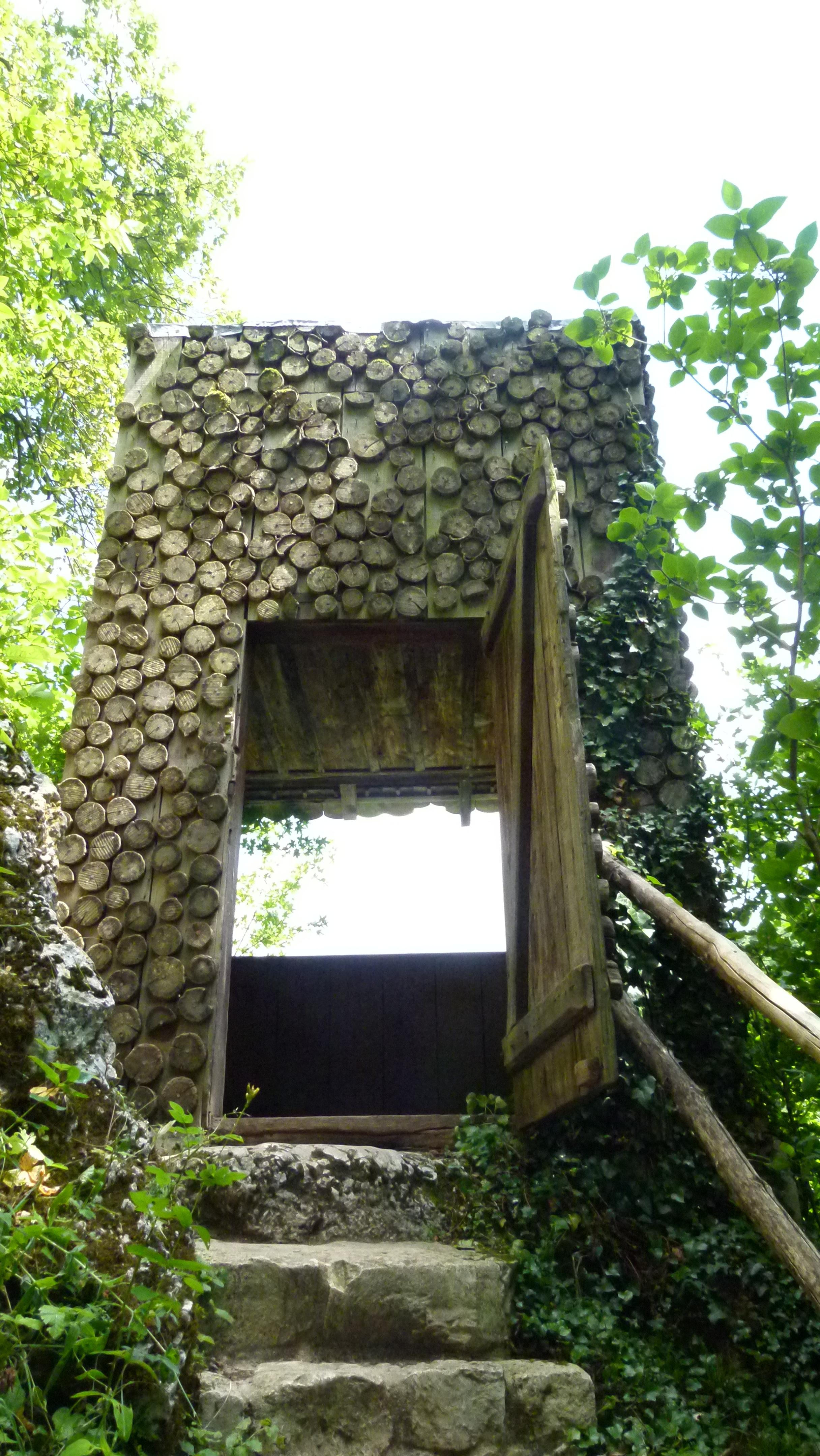
Now I oscillate a bit to find the brother of the wood. I come across this strange hut – or whatever it is. It takes me some time to understand… this is the wood log pile of the brother of the wood. Of course, clear, the brother needs wood to heat his little house. And the pile of wood cannot be too far. When the door is closed, this “thing” looks almost like a pile of wood. But the phantasy of the garden architects was unlimited. They added a door to the pile that can be openend – and from inside there is a great view of the Gobenmatt valley. They must have done this construction with a twinkle of an eye. Or of two eyes even.

P1080225

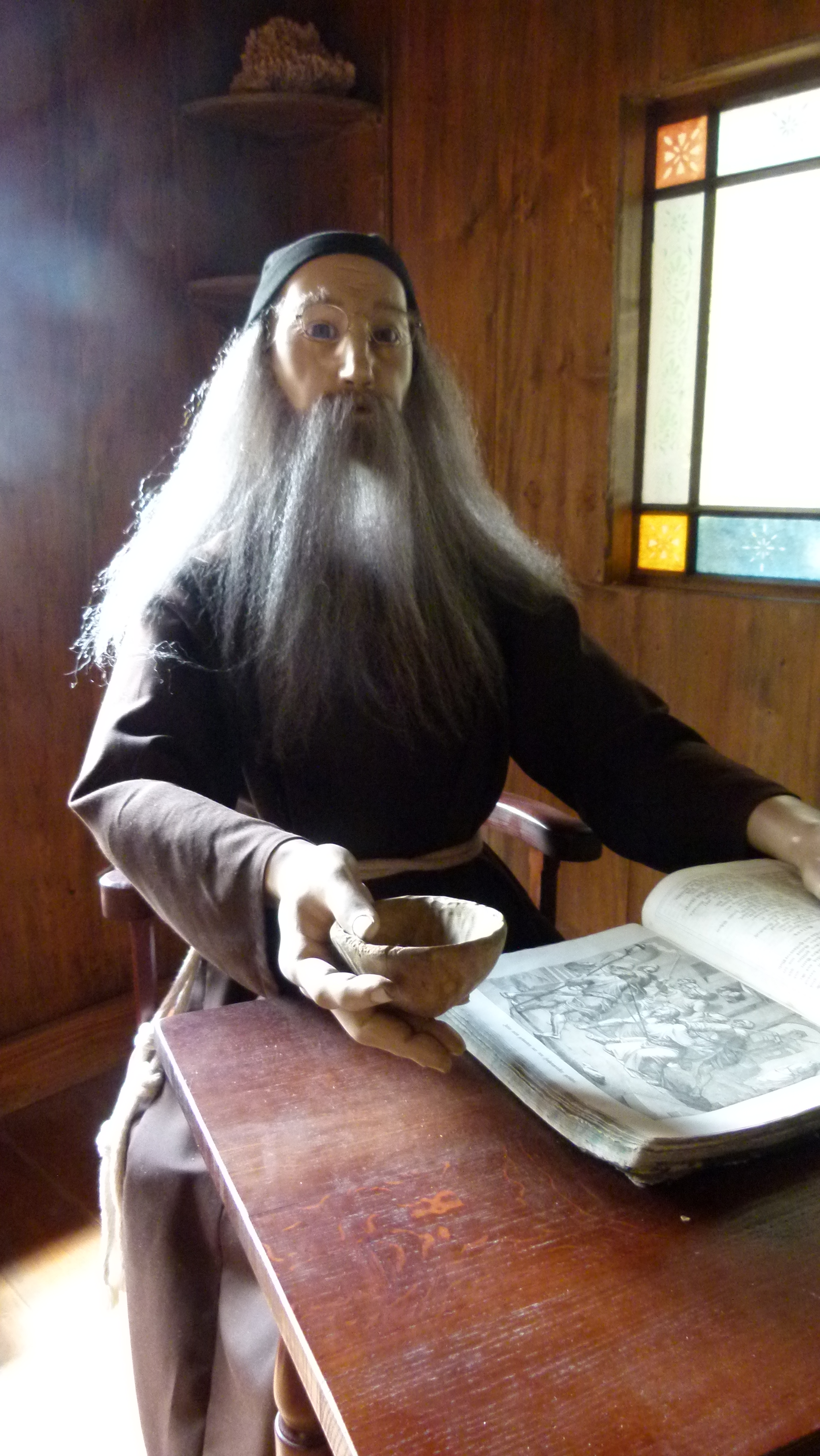
Not far from the wood pile there is a chapel (handy for the brother, should also not be too far to walk) and then I find the brother reading in his book. A girl and her mother are inside the house as well. The girl gives some coins into the bowl and the brother nods. Yes, these garden architects surprise me with all their phantasy. Mum and her daughter leave the place. I am now alone with the member of the Säulizunft that looks after the brother. Together we think about Arlesheim and only now I understand – not all Baselland is protestant. Of course not, I could have understood this before. Arlesheim was part of the prince-bishopric of Basel, which was a catholic institution. And it was only after the Congress of Vienna in 1815 that Arlesheim became part of Basel (and after 1833 it split off with the rest of Baselland to become part of the half canton).

P1080227

Close to the brother of the wood I find the Gessner cave with the memorial of this poet known around 1800.

P1080229

.

Walking down to the Birseck Ermitage cave and the carousel platform

I walk down to the Birseck Ermitage cave and the carousel platform. This was the place for leasure. Once upon a time, there was a carousel here and stairs lead to a stage for musicians.

I P1080230

Well, I just sit down, look up into the crowns of the trees and dream. I think, this is what the garden architects wanted to give us – just dreams.

P1080231

.

Enough for now – I will come back

I am full of new impressions. And I know, I have not found all the surprises that this English garden holds. I leave now, and I intend to come back and book a tour with Sibylle von Heydebrand. May be for our next meeting with my school mates.

P1080236


A “Basler” invited for a hot and sunny summer Sunday in Lucerne

Last Christmas I received a wonderful present: Come to Lucerne!

Last Christmas, I received a very kind present from my niece and her friend: A voucher to spend a day with them in their town Lucerne. I redeemed that present on a hot and sunny Sunday in June 2015. Early in the morning, I took the train to Lucerne investigating some background information using a small guide book and Dr. Google. This is what I found about the history of Lucerne. Take it as a summary written by an interested traveler.

.

Near a monastery, Lucerne emerges, thrives due to the Gotthard pass route and becomes a member of the “Waldstätte” fighting with them for independence

  • The origin of the name “Lucerne” is under debate: It may come from the Latin word “lux” (town of “light”). Or from the celtic word “lozzeria” (“settlement on swampy ground”).
  • 8th century: A small monastery was built where the Hofkirche is located today. It was later called Monasterium Luciaria.
  • 1178 – 1291: The monastery belongs to the powerful Abbey Murbach located in the Alsace, north of Basel. In 1291 Murbach sells the monastery to the Habsburgians.
  • Beginning of the 13th century: The trade route across the Gotthard opens up, after the Schöllenen – a steep and narrow gorge – had been overcome by building the devil’s bridge and a hanging wooden gangway. This gives business to the city located where the river Reuss leaves the lake of four cantons. Around 1300 Lucerne has about 3000 inhabitants.
  • Until 1386 the town fights against the Habsburgians that try to add Lucerne to their possessions (after Rudolf von Habsburg has added Austria in 1278). In 1332 Lucerne teams up with the other three cantons (or “Waldstätte”) bordering the “lake of four cantons” (or “Vierwaldstättersee”). The confederation of cantons successfully expels the Habsburgians by beating them in the battle of Sempach in 1386.  (The Habsburgians were not lucky in Switzerland – in 1415 they also lost their homeland Argovia).

Lucerne is the leader of the catholic cantons, but then loses importance against the protestant towns Zurich, Basel and Bern

  • In 1520 Lucerne does not follow the reformation, but remains catholic. They lead the catholic against the protestant cantons that are defeated in 1531 (battle of Kappel).
  • In 1712 the protestant cantons beat the catholic cantons (war of Villmergen) and they beat them again in the Sonderbundskrieg in 1847 (Jesuits banned from Switzerland until 1973).
  • In 1848 the Swiss federal state emerges, and it is not Lucerne, but Berne that becomes the capital of Switzerland.

The railway, built in 1859, brings tourists and makes Lucerne one of THE tourist destinations of Switzerland

  • In 1859 the railway reaches Lucerne and brings travelers from abroad. Some of the travelers are famous. Thomas Cook with Miss Jemima stay here in 1860 (“our grand finales… were… watching the sunrise from Mount Rigi”). Mark Twain comes to Lucerne on his tramp abroad  in 1880 (“… reached Lucerne about ten o’clock at night. The first discovery I made was that the beauty of the lake had not been exaggerated.” ch 25), Queen Victoria  wants to recover from the death of her husband Albert in 1868 (“… with her fourth daughter Princess Louise, aged twenty… (Victoria traveled) incognito to Lucerne as the Countess of Kent. There she stayed in the Pension Wallace where she lived in relative simplicity… Victoria made expeditions to the Rigi and Pilatus… Victoria had… agreed to receive the Dowager Queen of Prussia who was also about to visit Lucerne.”).
  • In 2013 Lucerne counts about 5 Mio visitors. Locals complain about the traffic – but tourism is an important factor for the economy here.
  • Yes, Lucerne is attractive, with its chapel bridge, the old city center along the Reuss, the festivals (e.g. hosted by the Culture and Congress Center (built by Jean Nouvel – acoustics by Russel Johnson) or the famos Lucerne carneval), the lake and the mountains (Rigi and Pilatus can be reached within a day trip) – and – there is the railway station built by Calatrava (how jealous I am – I would love to have a bridge of Calatrava in Basel and will never understand, why my town has voted against having a Calatrava bridge…)

.

Arriving in Lucerne shortly after nine in the morning

My train arrives shortly after nine in Calatrava’s train station. My niece and her friend pick me up and we have a coffee near the lake. They propose a guided city tour, lunch, a walk along the lake and a visit of the Richard Wagner museum. Great! Off we go! Here is the map of Lucerne taken from Google maps.

luzern plan 1

Visiting the city center with a guide secondo Italian

The guided tour includes the Culture and Congress Center (1), the Chapel Bridge (2), the Chapel Square (3), the Sternenplatz (4), the townhall (5), the line of squares and narrow streets in the old city center (6, e.g. the Weinmarkt), the Spreuerbrücke (7), and the Jesuit church (8). We did not visit the Hofkirche and the Lion’s monument (11). Let me summarize some of my take aways.

The Hofkirche (11) with its twin towers is what has been built and rebuilt at the location of the 8th century monastery. The church is a little off the city center. Up to the 19th century, a wooden bridge connected the Hofkirche to the city center and the Peterskapelle. Then the small bay separating the chapel from the Hof Church was filled and the bridge was demolished.

P1060603

The Chapel Bridge, built early in the 14th century, is called “Chapel” Bridge, because it ended at the Peter’s Chapel (Peterskapelle). The Peter’s Chapel bordered on the lake then. In the 19th century, an embankment was added here and the bridge was shortened, but kept the name “chapel bridge”. The cycle of paintings describing religious topics was added around 1600. After having burnt in 1993, the bridge has been reconstructed including some of the paintings. Some of the black burnt paintings have been left under the roof of the bridge to remind us of what had happened (was it really a cigarette thrown away?).

IMG_1477

The Chapel Square was the place where goods were loaded and unloaded and tolls were paid. A line of white cobble stones shows the location of the former toll  house, before it was removed. On the Chapel Square there is also the Fritschibrunnen, named after the head of the Saffron Guild that kicks off the Lucerne carnival here.

The Sternenplatz is dominated by the Restaurant Fritschi that shows Fritschi and his family. My foto shows the facade of the neighboring house that hosts the Stadtkeller.

IMG_1478

We stroll through the narrow streets. Small shops invite for shopping, but today they are closed. We reach the Kornmarkt with the townhall that has been built around 1600 in Renaissance style. It is topped with a hipped roof (traditional “Walmdach”). Renaissance and a traditional hipped roof – this is a combnation that I have never seen before.

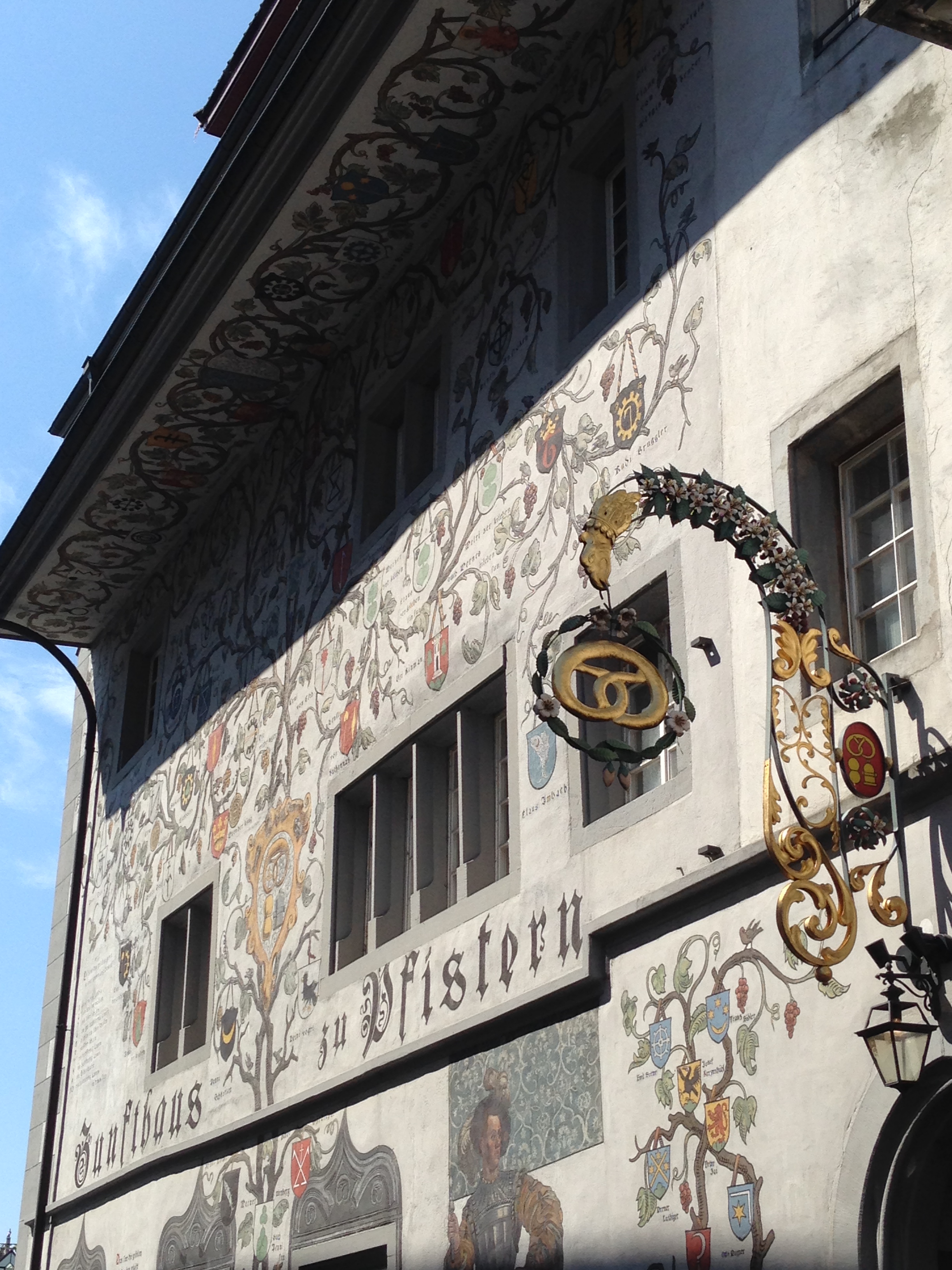
Just opposite of the townhall, there is this old bakery with the traditional bretzel announcing it. Today the house hosts the restaurant Pfistern. It takes the name from the Latin word for baker (pistor). Our guide keeps on praising this restaurant.

IMG_1482

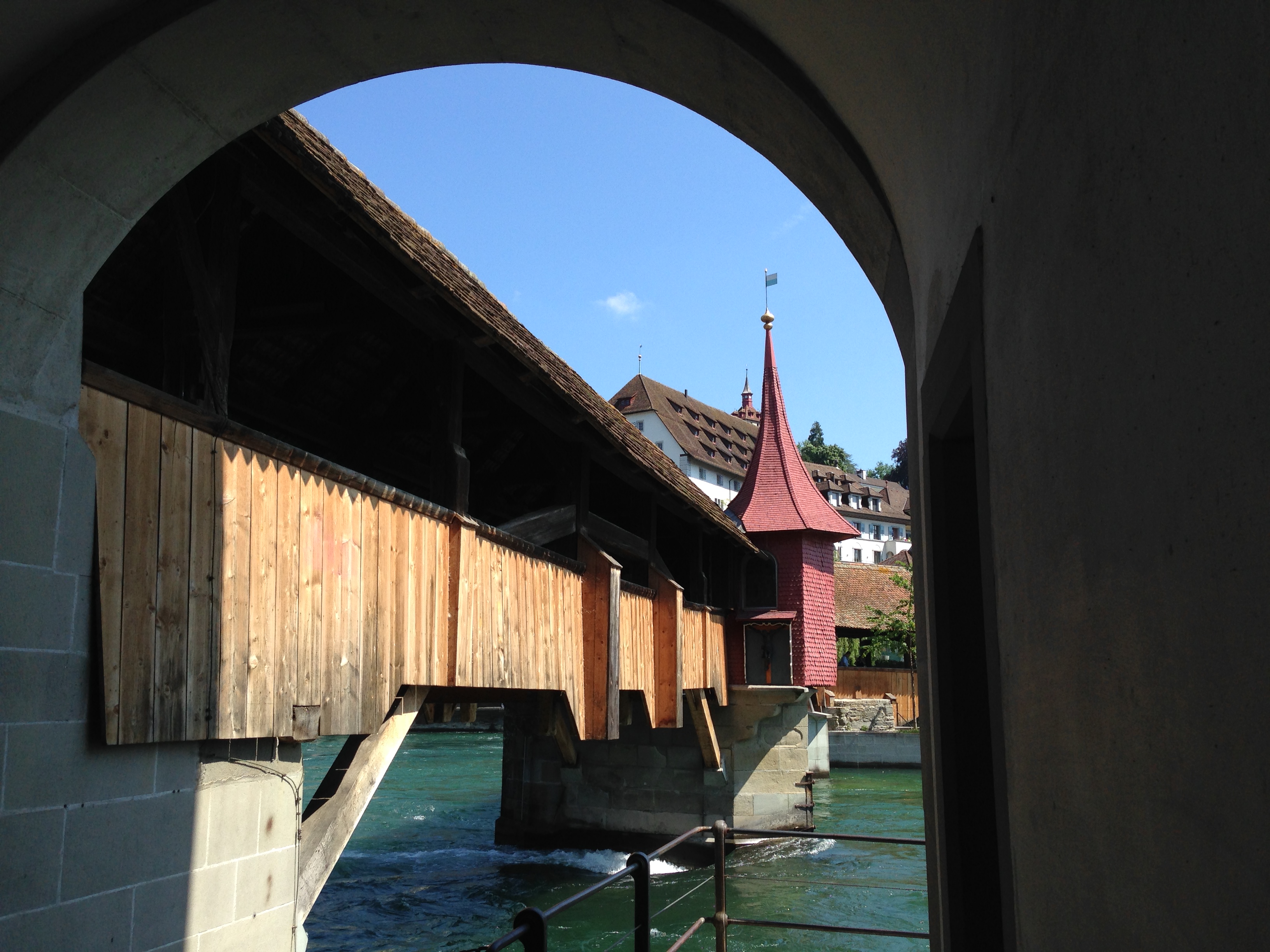
The Spreuer Bridge zigzags across the Reuss. It starts at the Mühleplatz (square of mills – there were mills here before) and was completed around 1400. The name of the bridge comes from “Spreu” or  “chaff”. As this was the last bridge in Lucernce, it was allowed to throw chaff into the river…  it is the next settlement downriver that will have to cope with that…

The bridge is interesting for the paintings showing a Danse Macaber (“Totentanz” in German). Also the water level of the lake is regulated here.

IMG_1488

From the Spreuerbrücke there is a view of the Château Gütsch that has recently been reopenend.

IMG_1489

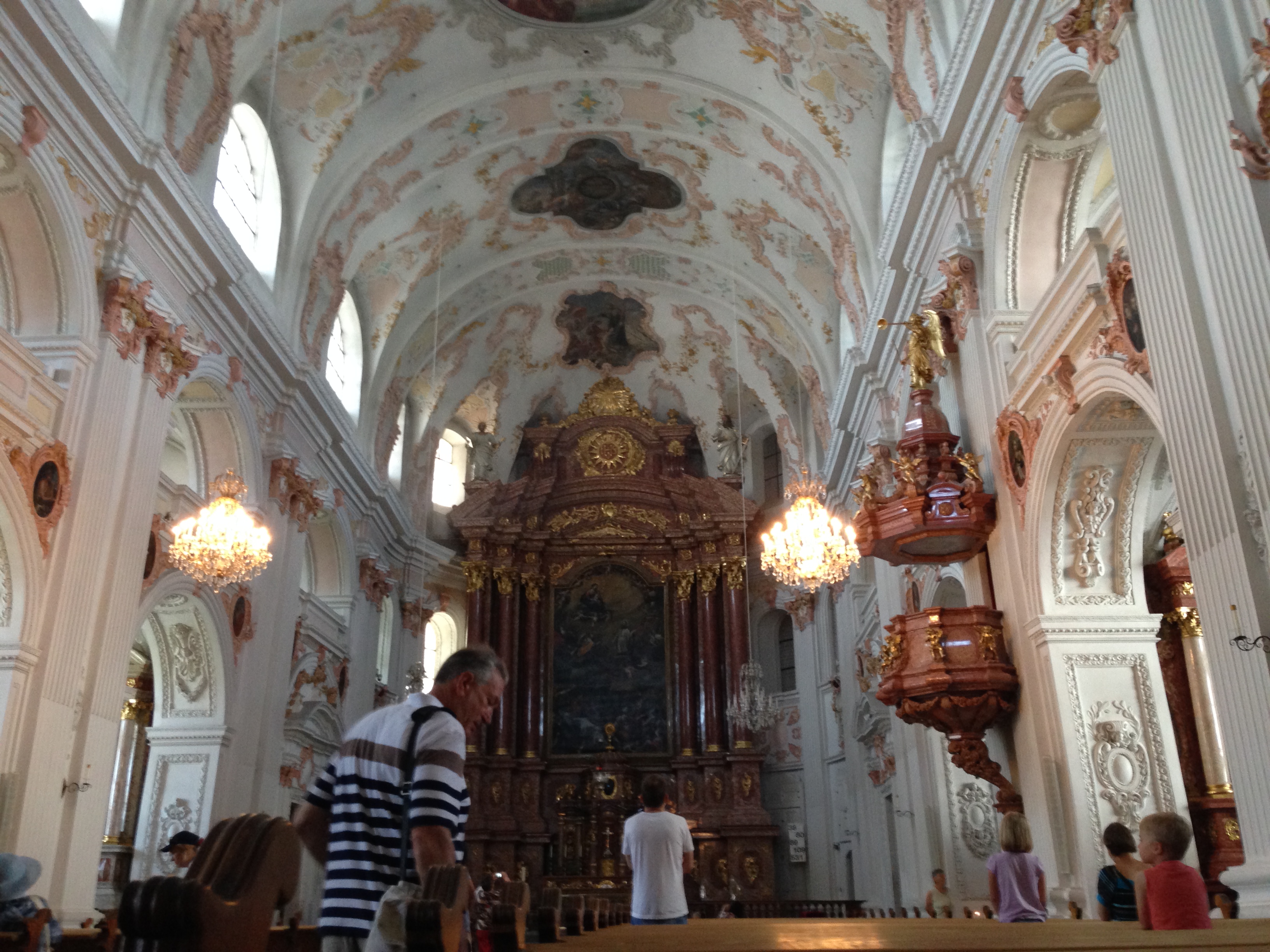
We round off our tour in the Jesuit church. It is a baroque hall church. Since 1973 the Jesuits have been back in Lucerne, after having been banned after the Sonderbundskrieg in 1847.

IMG_1492

The guided city tour gave great insights into the city of Lucerne – most of it was new to me. It is now almost twelve and we are hungry.

.

Eating off the beaten track in the shady Vögeligärtli (9)

We are hungry and try to find a free table for three in one of the restaurants bordering the river Reuss. No way. Already before 12:00 all tables are taken.  My hosts decide to look for a more quiet and less touristy place and take me to the Bellini Ristorante Ticinese in the shady Vögeligärtli close to the protestant Lukas Church. We enjoy the cool shade of the trees and the company of locals. I have a great Risotto con ragú de carciofi (half portion) – the menu selection of specialties from the Ticino is very enticing and I will surely come back here. This restaurant deserves an entry in Tripadvisor.

.

Mingling with the locals along the lake on the town beach up to the Richard Wagner museum (10)

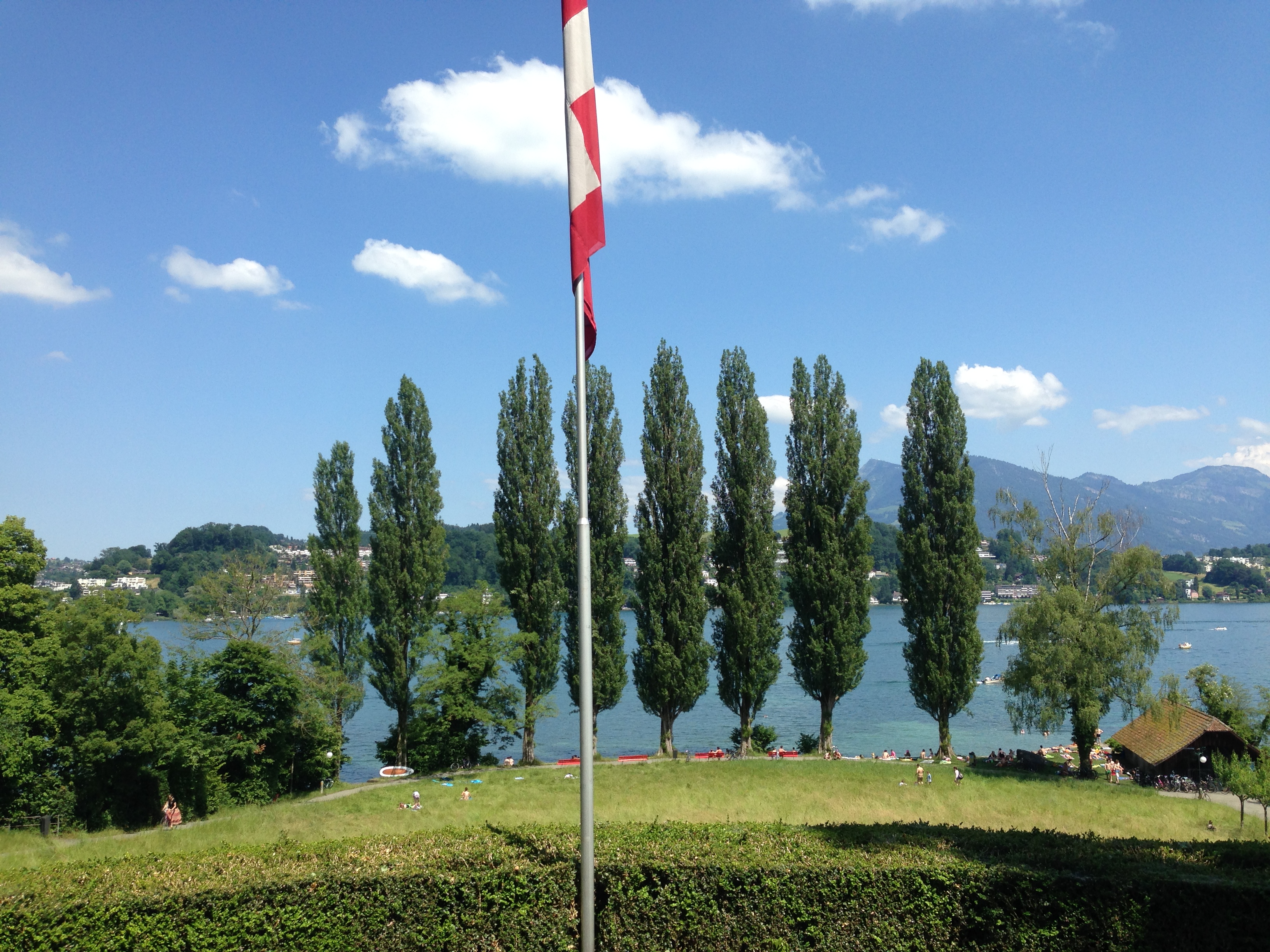
The sun is burning. It is a beautiful Sunday. We stroll along the lake. I believe the whole town of Lucerne has come here to enjoy the sun and a refreshing bath in the lake. A pity that we have no bathing costumes with us. We are sweating. There is a stand on the way that refreshes us with cooled water and cold ice cream. Finally we reach our target, the Richard Wagner museum.

IMG_1493


Following the tracks of Richard Wagner with his second wife Cosima and his unlucky grand-son Wilhelm Franz Beidler – not accepted by the family Wagner

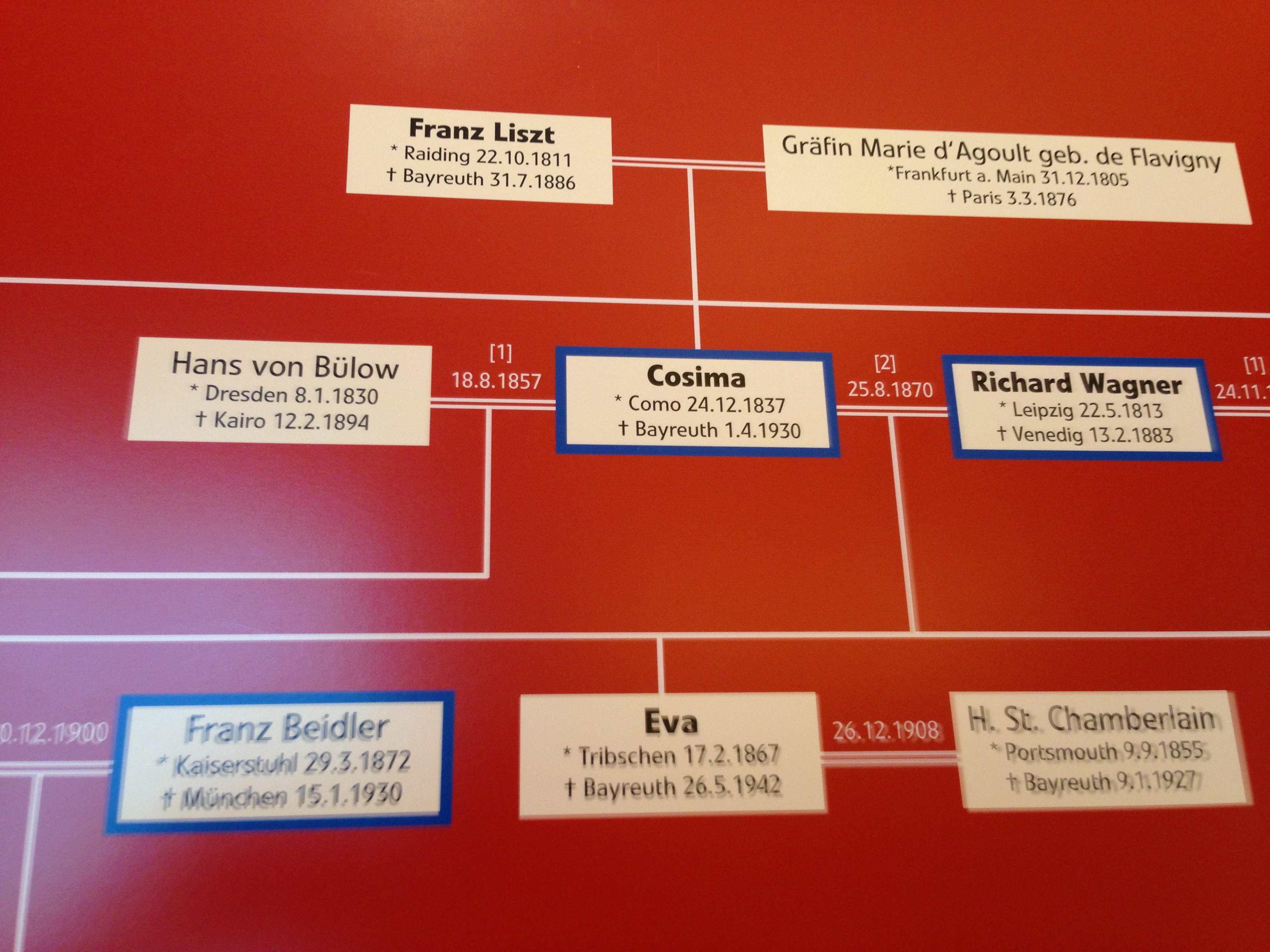
There are no visitors in the Richard Wagner museum (too hot…). At the cash we are welcomed by an enthusiastic lady from Australia. In Swiss German with an Australian touch, she tells us, what we are going to find: Richard Wagner lived in this Tribschener Landhaus for six years. He came here with his second wife, Cosima, the daughter of Liszt. When they arrived the two of them were not yet married… a scandal in the catholic town of Lucerne. They married after their son Siegfried was born. Wagner worked and lived on the ground floor, Cosima with the five children stayed on the first floor.

IMG_1494

There was a drama with Franz Beidler, son of Isolde and Cosimas grandson. Isolde was deemed of as being the daughter of Hans von Bülow (a famos conductor and Cosima’s first husband). But as a matter of fact, she was the first daughter of Richard Wagner. Isolde fought to be acknowledged as Wagner’s daughter, but without success. Hence Isolde’s son, Franz Beidler was also never acknowledged to be Richard Wagner’s grand-son. This drama is layed out on the first floor.

IMG_1497

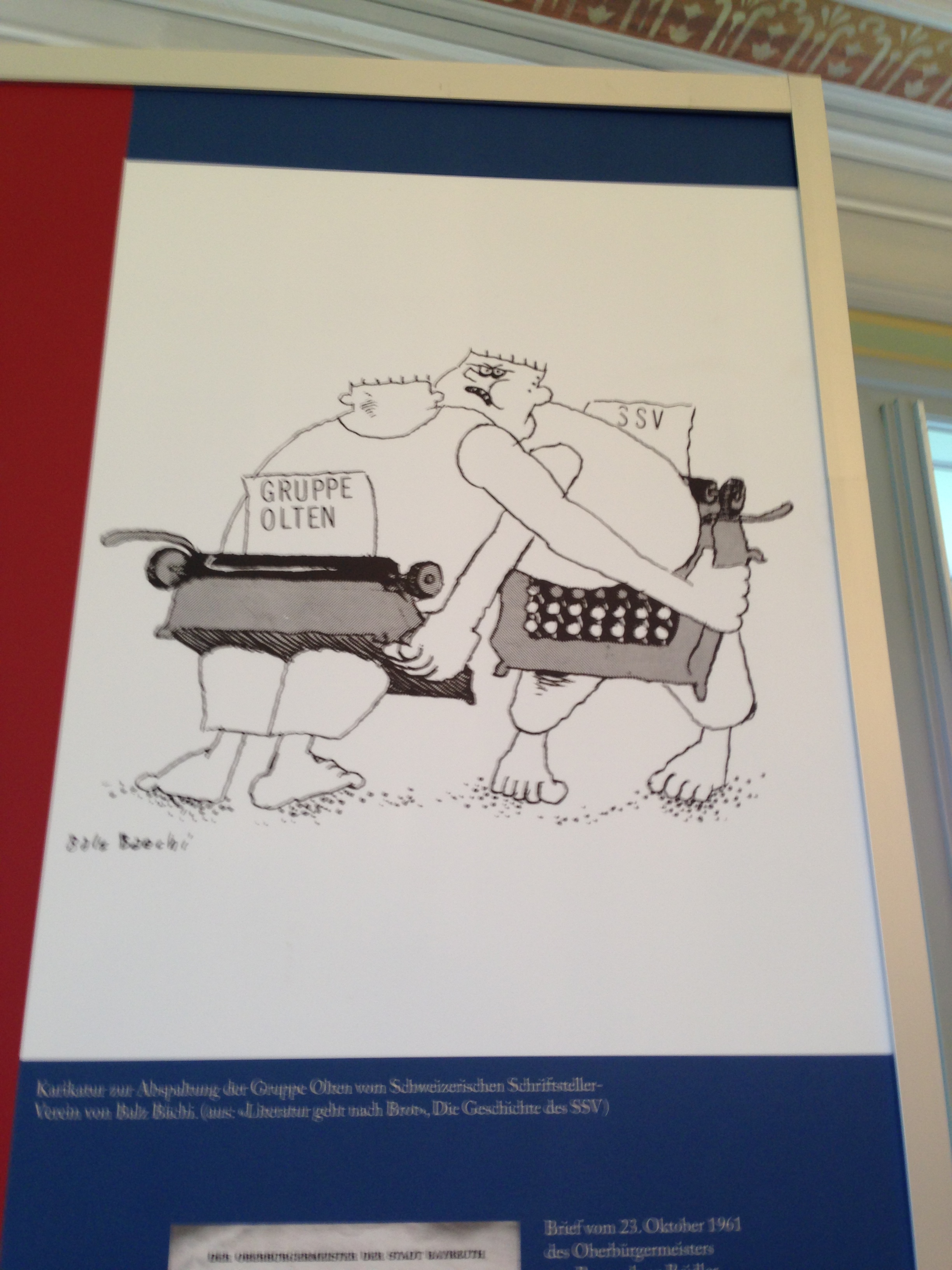
Under Hitler Franz Beidler left Germany for Switzerland and became Swiss. He was the general secretary of the Swiss Author Associaton SSV (Schweizerischer Schriftstellerverband). However in 1970 the group Olten split off – members were among others Max Frisch and Friedrich Dürrenmatt. This cartoon shows the two groups wrestling – yes, it was the time of typewriters – do you remember?

IMG_1496

.

Lucerne – the sink of Switzerland? – No, surely not today!

Sometimes we joke and say that Lucerne is the sink of Switzerland. It is raining here more often than in other places. But today Lucerne must have been the hottest place in Switzerland – the sun has been baking us.

We take the bus back to the city center and enter the Möwenpick restaurant (inside) to cool down from the hot sun. I enjoy a frozen coffee (Ys-Kaffi). Then my hosts take me to the train station (built by Calatrava, again I am jealous). I catch the 5 o’clock train and an hour later I am back in Basel.

Good-bye, thank you… and next time you will join me in Basel! There is plenty to see – perhaps we should plan to visit the Abbey of Murbach that ruled over Lucerne some 800 years ago.

On the road with my friends – reflecting about Pinot Noir and Chardonnay in central Burgundy

… One of the main attractions in Burgundy that I recall from 30 years ago: “Ici commence le Chambertin – ici finit le Chambertin”

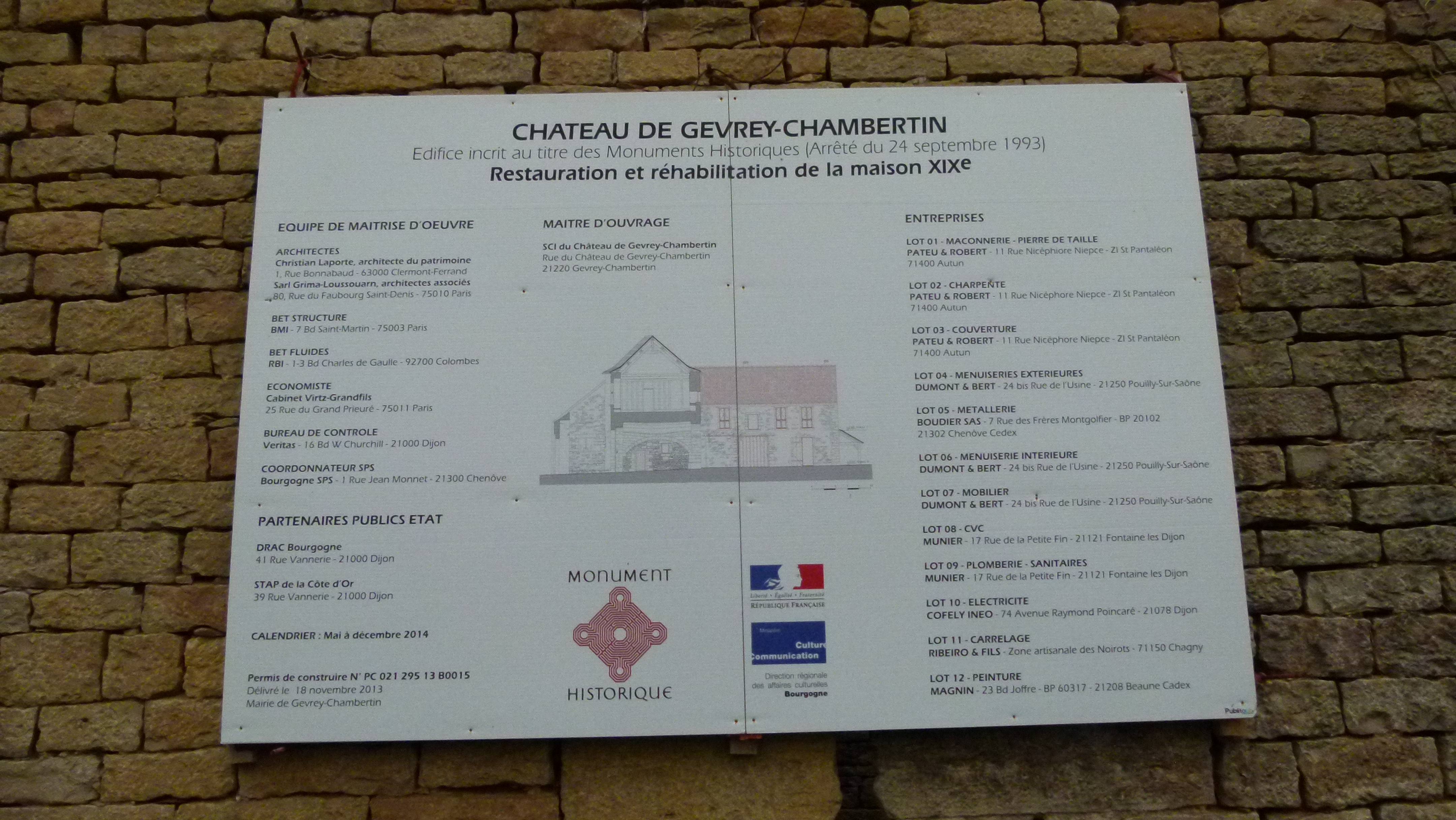
When I was in Burgundy 30 years ago, I visited the vineyards of Gevrey-Chambertin and I remember the panels “ici commence le Chambertin” and “ici finit le Chambertin”.  I loved these merry panels and now, back in Burgundy thirty years later, I keep on looking for them. My friends do not know, what I am talking about. And I am getting more and more frustrated. I could not understand, why I could not find the panels of the Chambertin vineyard. But then, I found out. The direction départementale des territoires (DDT) of Burgundy wanted to give a common “corporate design” to their winegrowing business to become eligible for the list of Unesco World Heritage. They decided that the two Chambertin panels are disturbing that common design image and had the panels removed despite the protest of the wine growers. I was very disappointed about this act of bureaucracy, in particular because later I came across some ugly panels indicating the names of other domains. Why on earth have these charming panels been removed and what was wrong with them in the light of some common design principles? They were THE attraction, mentioned even in the former old Johnson wine atlas. What did my Russian friend Anna always say: “Bureaucrats of all countries – unify.”

.

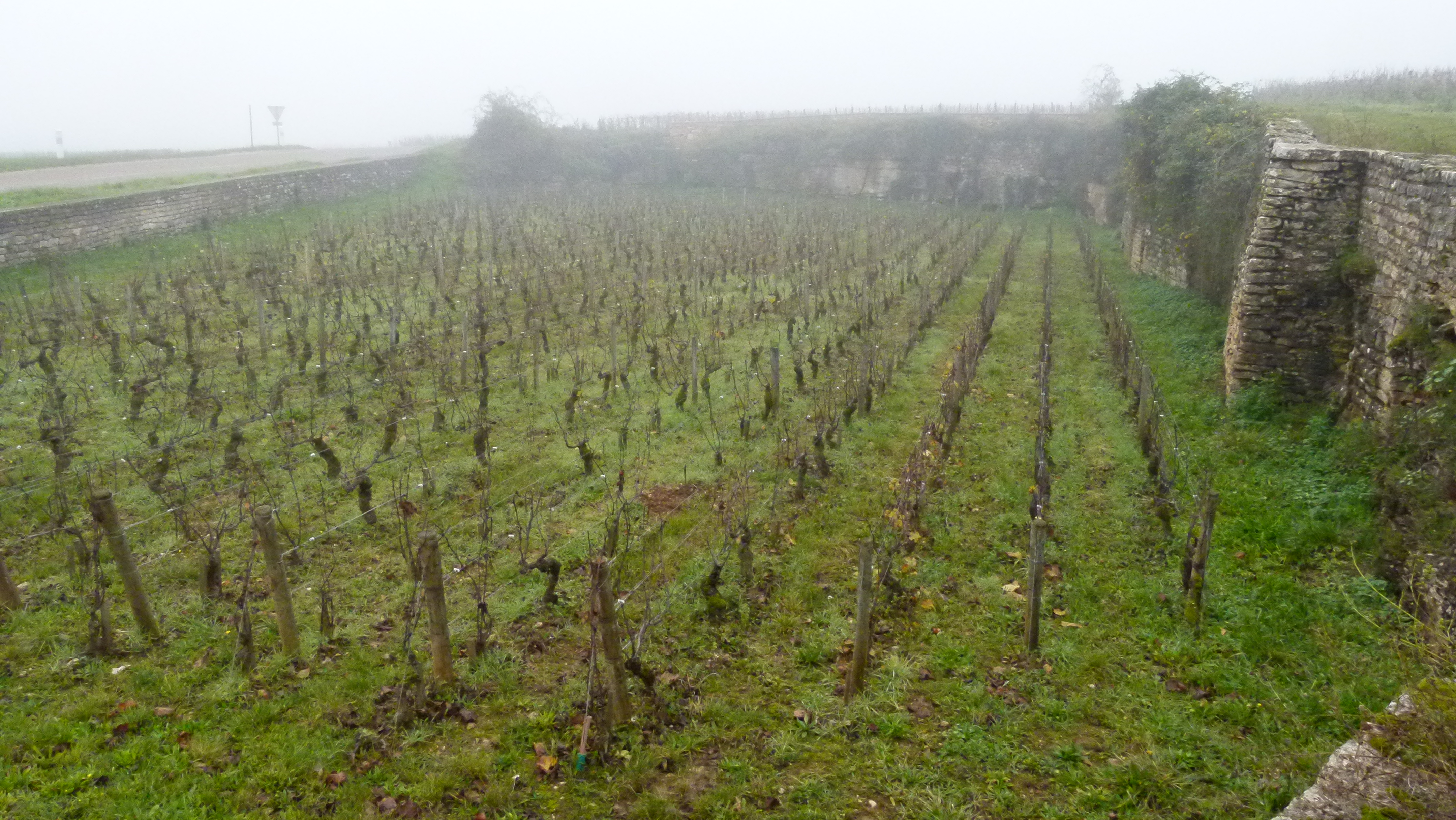
Fortunately, there is another attraction that has not been removed: The smallest vineyard Larissa has ever come across

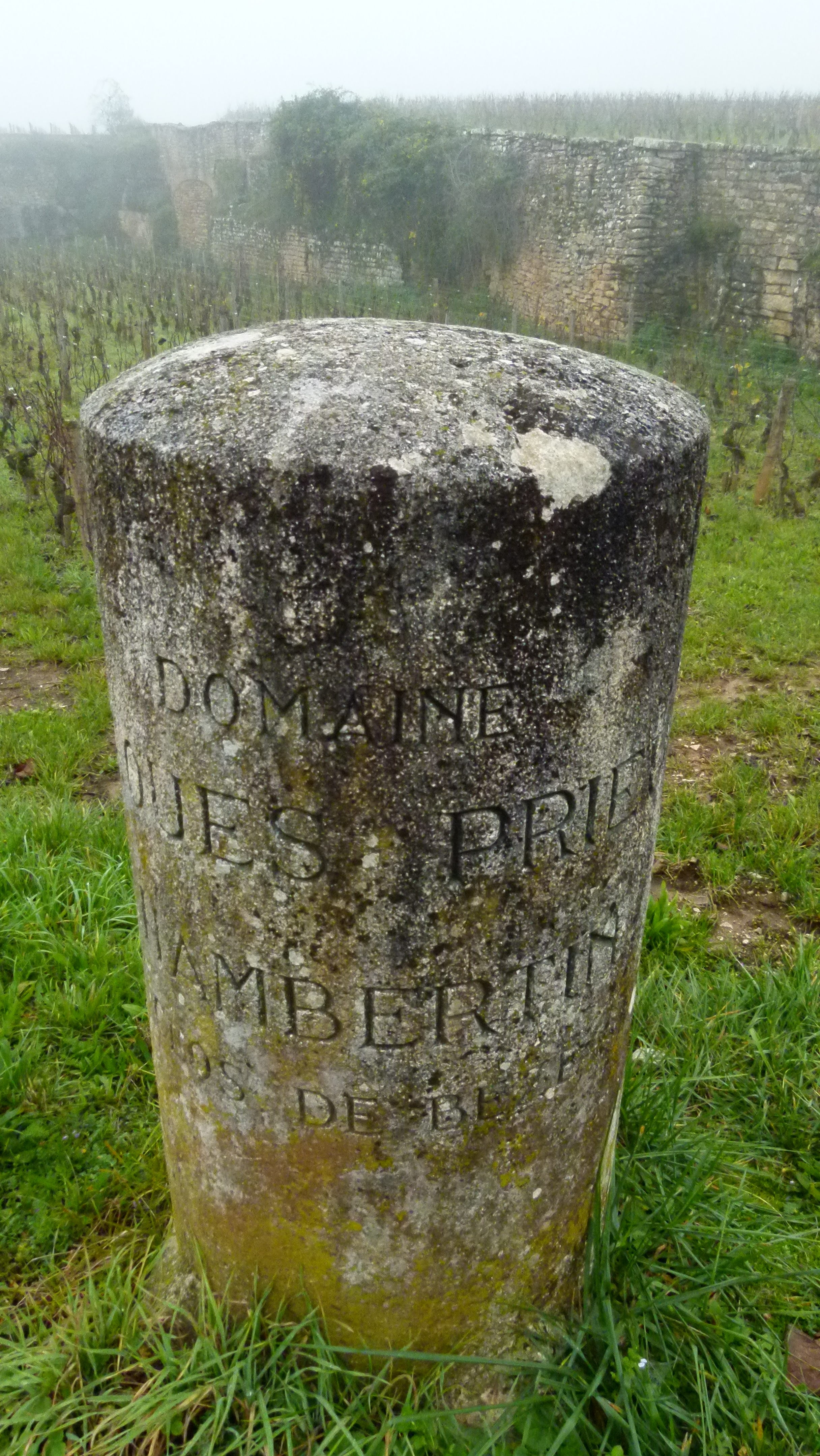
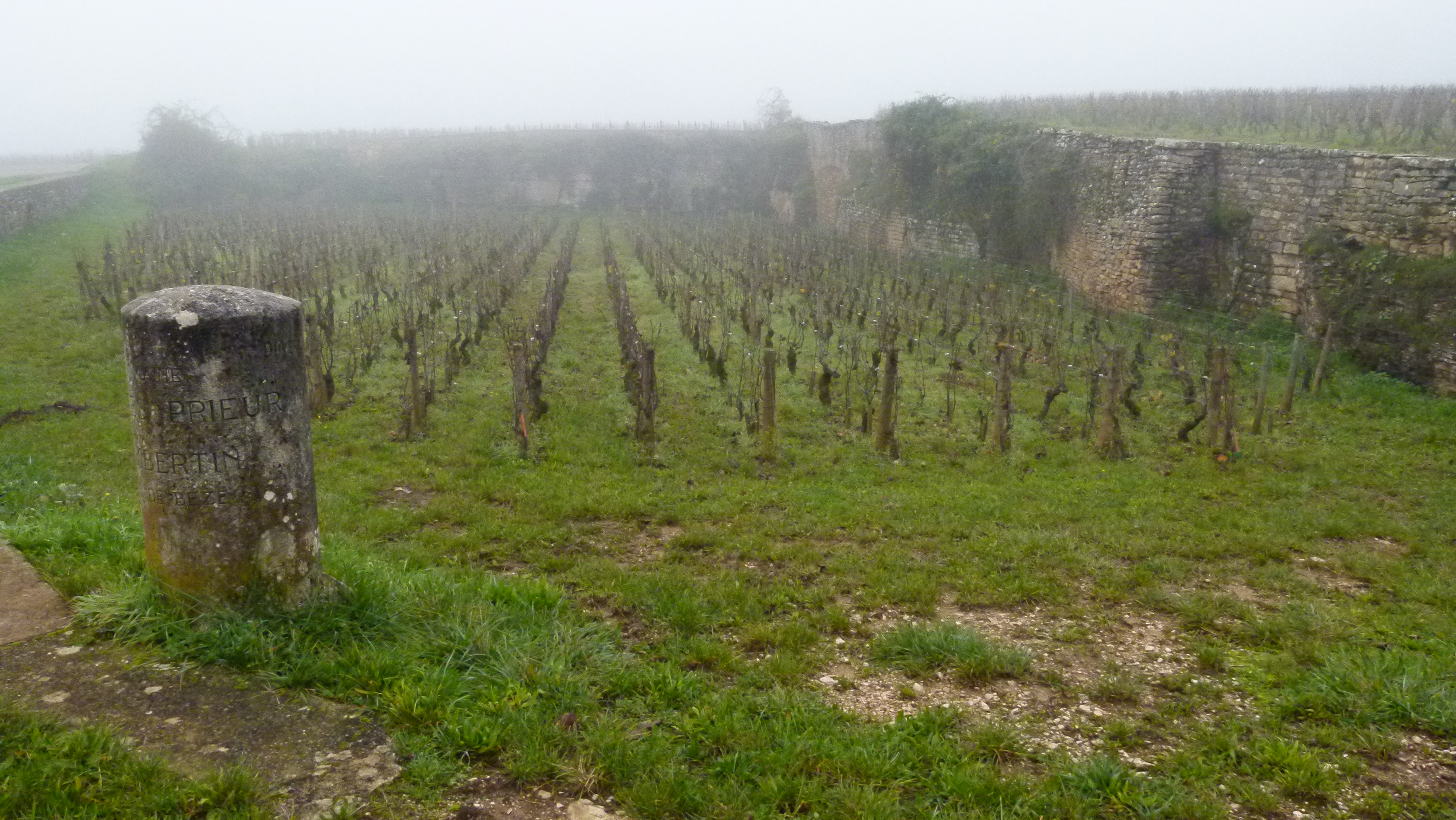
We stop at the smallest vineyard, Domaine de Jaques Prieur, just next to Chambertin Clos de Bèze. Larissa always comes back to this tiny vineyard, when she visits Burgundy.


P1060953

It is now hiding in the November fog.

P1060954P1060967

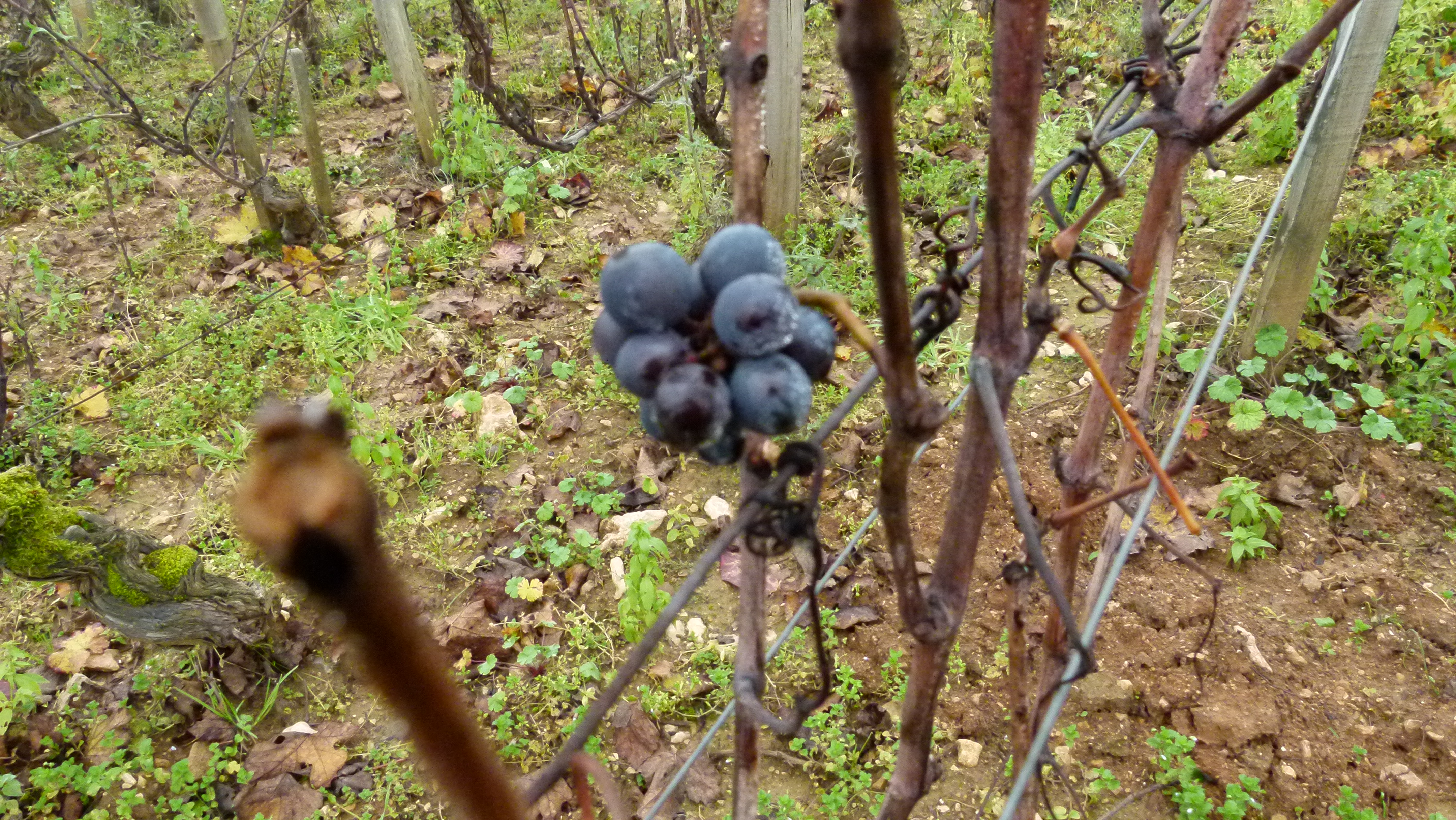
Nearby we try some of the few Pinot Noir grapes that had been left – no one else will pick them, as it is mid November.

P1060959

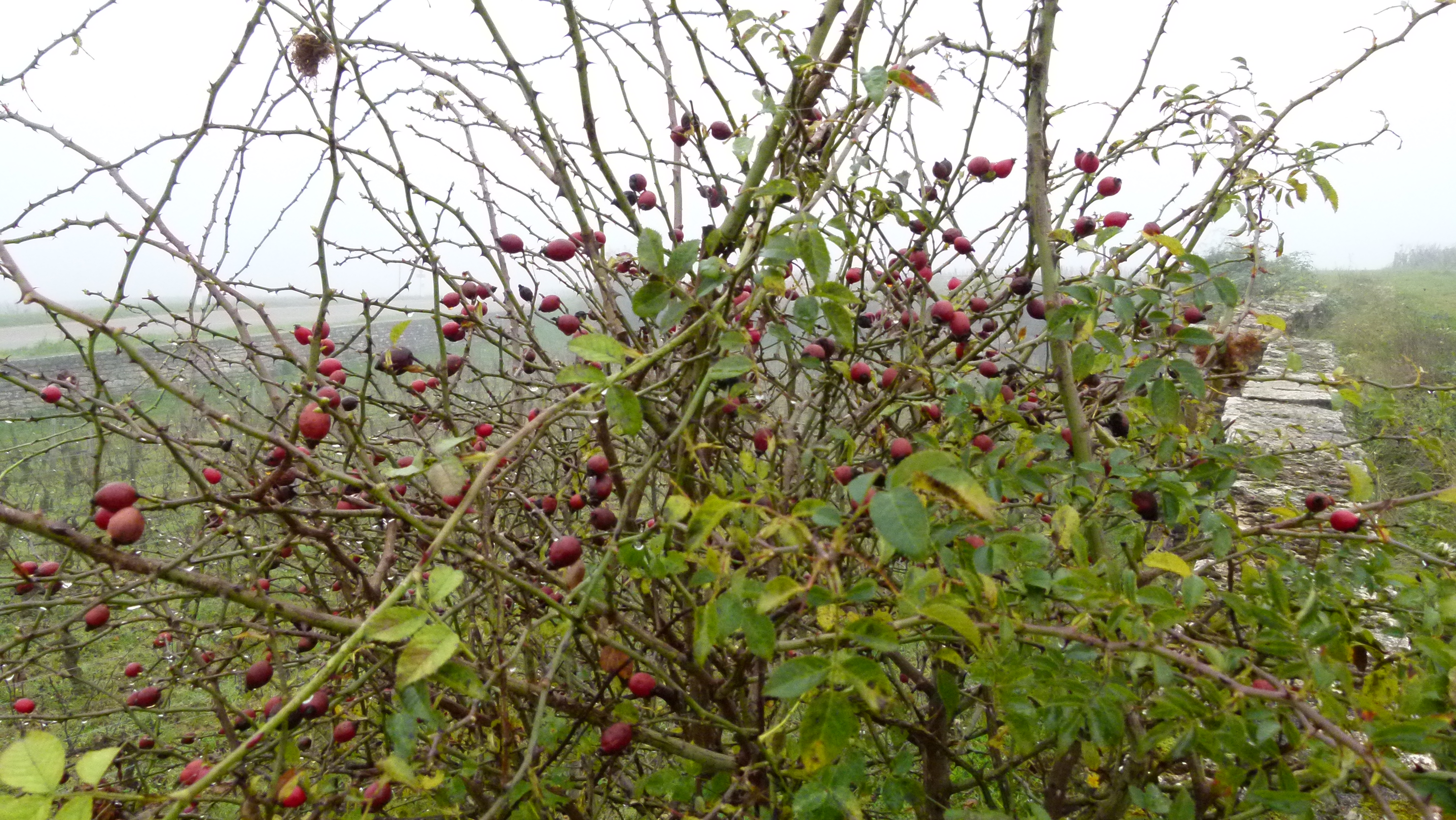
We also enjoy seeing the rose bushes carry rose hips. Roses are often planted along the vineyards as an early indicator for diseases.

P1060958

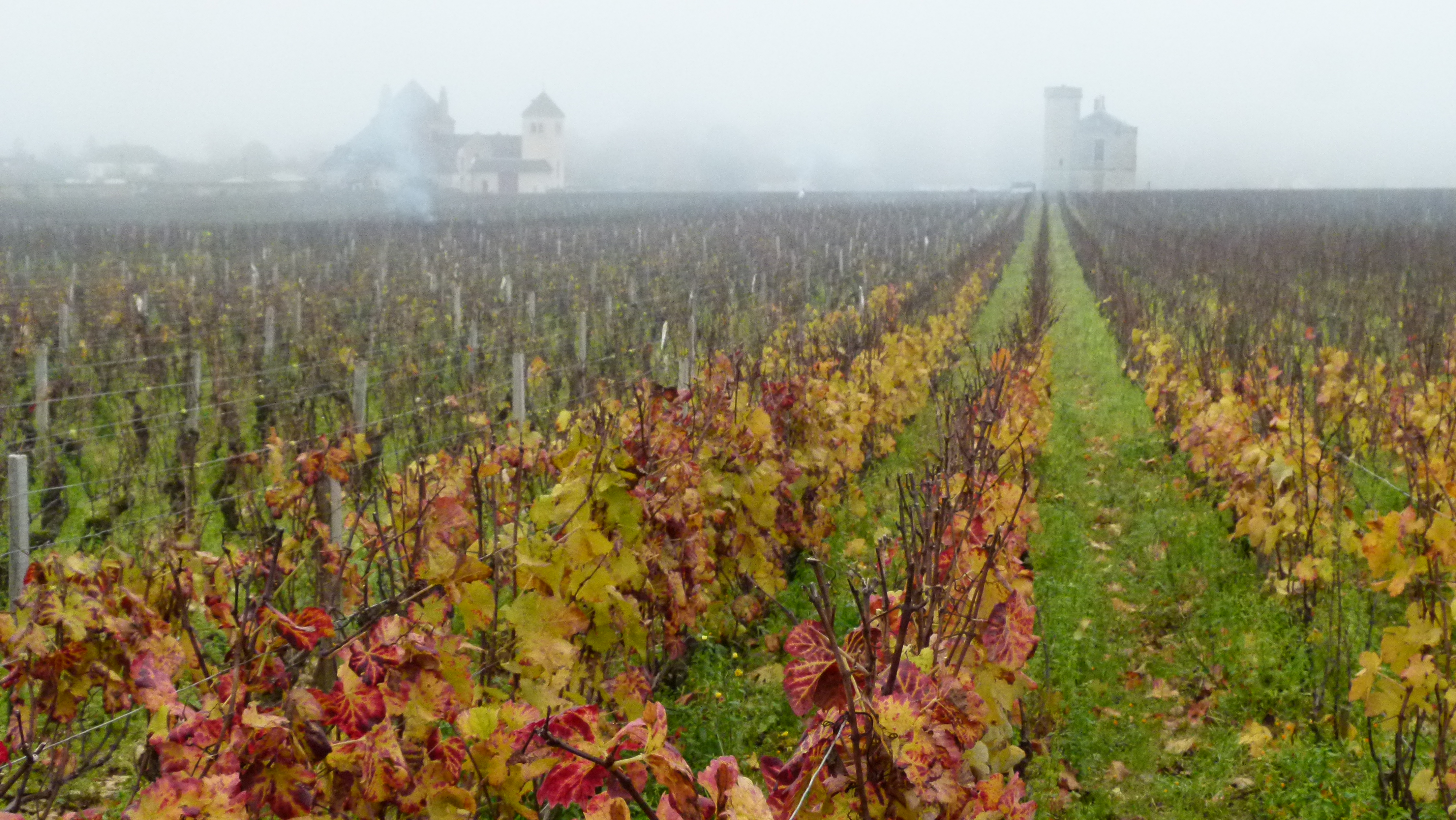
Yes, it is autumn – mid November. We soak in the famous names such as Château de Chambertin.

P1060950

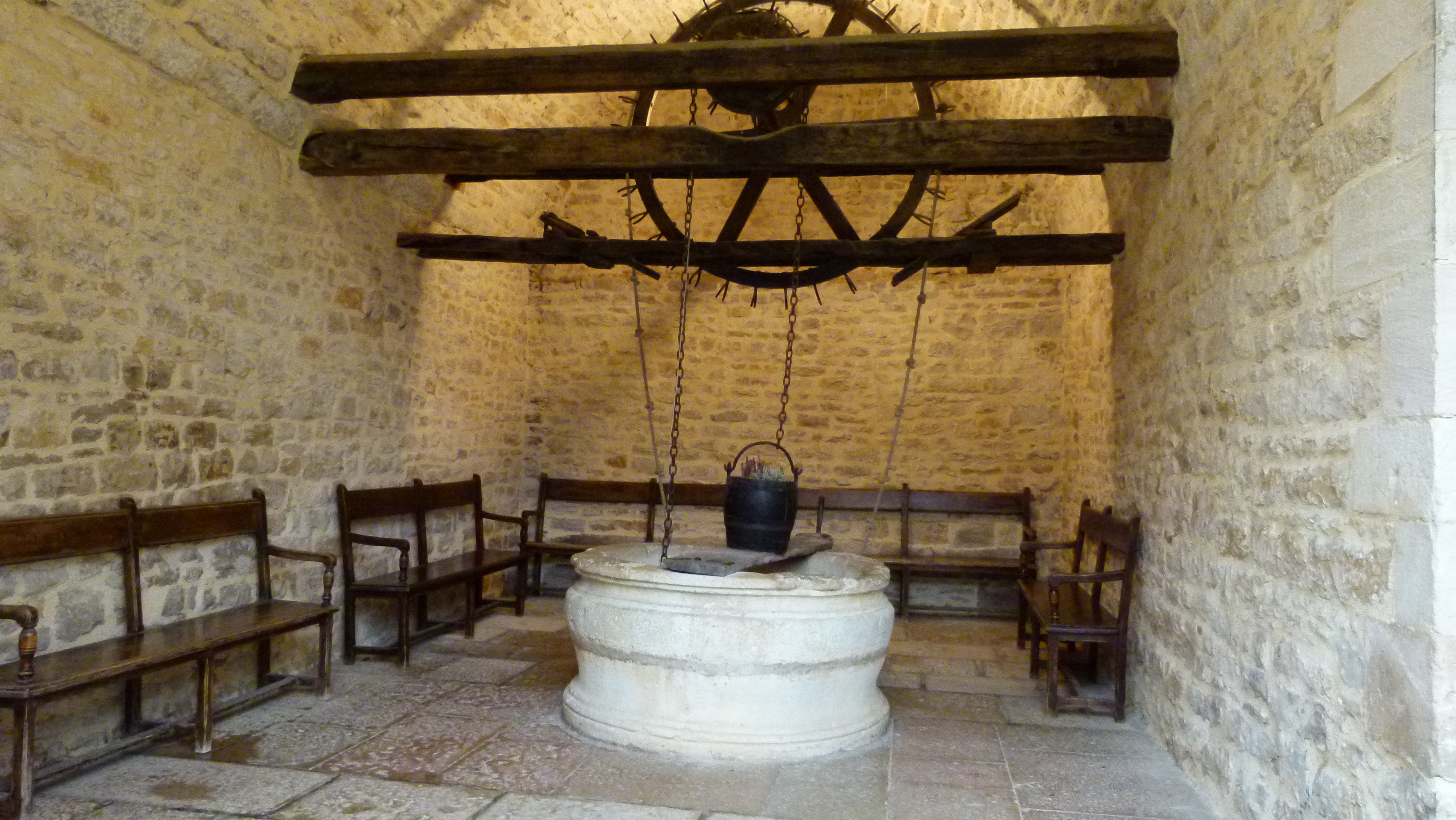
We study the old wine making equipment in Château Clos Vougeot…

P1060969

… with an old wine press and an old fountain…

P1060962

… in the November fog.


It is great to be here with Russian friends and exchange about our wine terminology. For instance how to put the sense of “tannin” into an image. I compare tannin to “fur” tickling and biting my palate (I call this a  “Pelzli” in Swiss German – it is not an official term). My  Russian friends also feel that tickling in their palate and describe it as a knitting woman (“вяжущая женшина”). Yes, the full bodied and sometimes tannic wines – let us look at some of the factors that have shaped Burgundy.

.

Сentral Burgundy has a long history in a varied terrain following a fault line and the vineyards are split between many, many owners

The wines of Burgundy mostly grow on east and south-east facing slopes of the Saône valley, capturing the sun early in the morning and benefiting from the warm temperature retained during the day. The slopes are shaped by a fault line that brings layers of various maritime epochs to the surface. The resulting structure of the slopes is very varied and has been studied by swarms of geologists – they found calcium from defunct shellfish and a mixture of limestone and marlstone, sometimes iron. Pebbles often retain the heat (the wines are then called “Les Cras”, “Les Caillerrets” or “Les Perrières”). Already in the 12th century, monks eagerly explored the potential of the terrain to find the best places for their vines – and wines. As a matter of fact, wine growing goes back to Roman times (mentioned first around 300) and to the early Burgundy empire (in 630 the duke gave a large domain to the Abbaye de Bèze which continues to live in today’s Clos de Bèze). Around 1400 Philippe the Bold (then duke of Burgundy) ordered the Pinot Noir grape to become the only red grape in central Burgundy. After the French revolution (1790) the ground belonging to the abbeys was sold – and this is why ownership of the vineyards is split today: 4900 domains, 115 trader-wine makers (negociant-éleveur) and 19 cooperations.

The terrain shapes the quality of the wines: East/east-southward facing slopes, altitude (less foggy higher up), ascent (the steeper the better), ground (more limestone than clay, sometimes pebbles) are some of the factors. There are about 2% Grand Crus wines, about 11% 1er Crus, and the rest are either labeled AOC communales or AOC régionales. The main grapes are Pinot Noir for red (thanks to Philippe the Bold) and Chardonnay for white.

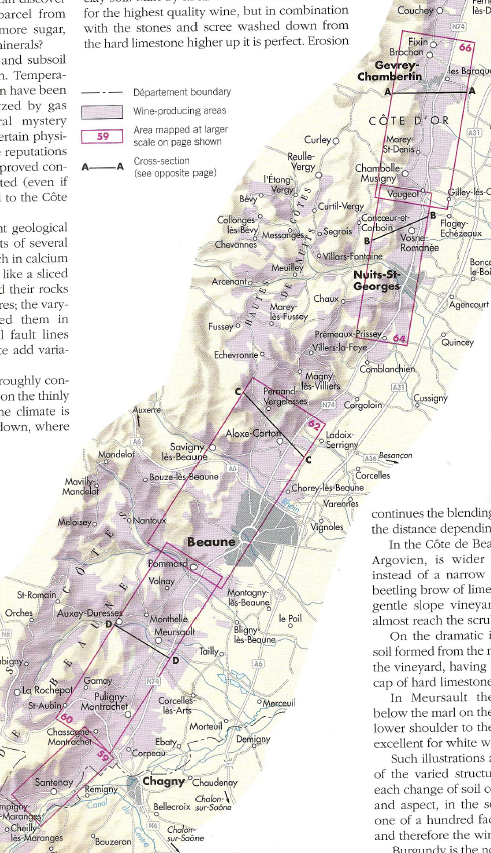
The  Côte d’Or is surrounding Beaune. To the north of Beaune there are Gevrey-Chambertin (AOC wines are all red and there are 9 Grand Crus) and Nuits St. Georges (97% red and 3% white). Then there is the terrain of Beaune (85% red and 15% white). South of Beaune there are Meursault (mostly Chardonnay – white wines with an oak influence resulting in the typical buttery taste), Puligny Montrachet /Chassagne Montrachet (also mostly Chardonnay – white, but also some red from Pinot Noir) and Santenay /Maranges (80 to 90% red and 10 to 20% white). The Meursault/Montrachet Chardonnay wines must have been the model for the oaky/smoky international Chardonnays in the US, Chile or South Africa. The fresh and crispy Chardonnay wines from Chablis were not, what the international world liked – and they made “Chablis” a synomym of “cheap wine”. As Chablis is really my prefered Chardonnay wine, I do not care that the world does not know – let Chablis wines continue to be a well-kept secret…

I also learn that “Passe-Tout-Grain” is a wine blended from Pinot and Gamay (prevailing in Beaujolais)… this is what we call “Dôle” in the Valais (Switzerland).

karte

Source: Hugh Johnson and Jancis Robinson, The World Atlas of Wine, 5th edition, Beazley 2005, p. 55 (also the summary overview has been mostly extracted from Johnson and in addition from “petit guide: Les vins de Bourgogne”, Aedis éditions 03200 Vichy, Florence Kennel et alii).

.

When driving home from Beaune I found out that Burgundy is only a three hours’ drive away from my hometown Basel. Well, in early medieval times Basel was even part of Burgundy*. I decide that I will not wait another thirty years to go back to Burgundy. And maybe then – they will have reinstalled the charming Chambertin panels?

* around 1000 AD, Basel was part of the kingdom of Burgundy, see “historischer Atlas der Region Basel”, Merian Verlag 2010.


On the road – visiting wine growers around Beaune

In November 2014 I was in Beaune to participate in the Beaune wine festivals. I was with friends from Russia. Besides the events in Beaune, we visited wine growers around Beaune – to the north and to the south. My personal highlights around Beaune were the Château Pommard (great wines and welcoming staff) and René Lamy (very welcoming atmosphere). I also liked Henri de Villamont in Savigny (under Swiss management – great cellar tour) and La Veuve Henri Moroni in Puligny-Montrachet (charming, though I prefer her red wines). I felt a little less comfortable at Château Meursault (beautiful cellar, but snobbish staff), Leclerc in Gevrey-Chambertin (a kitchy restaurant, wines okay) and Domaine Bertagna next to Clos Vougeot (wines okay, atmosphere was a little cool).

.

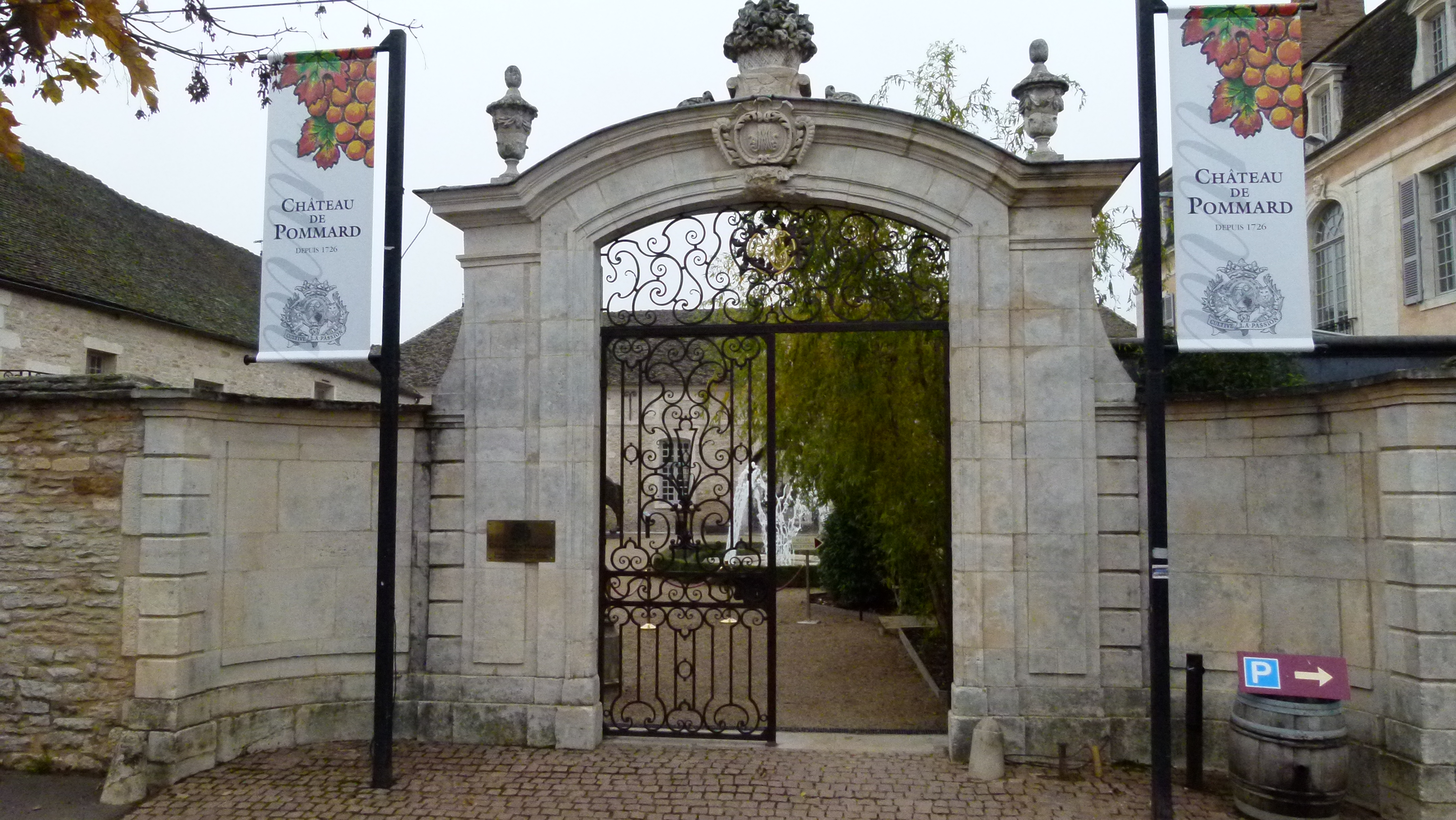
Château Pommard

Château Pommard is a beautiful estate south of Beaune. The gate invites visitors to enter.

P1060976

The garden is well cultivated with carefully trimmed bushes.

P1060975

According to the rules of the château, the ticket for a tasting plus the Pomm’Art Gallery costs 20 Euro per person. We frown – we are not really interested in the gallery right now. The staff is very friendly and lets us in to just have the tasting. The assistant guiding us through the wines is full of enthusiasm. Pommard is the largest private monopole of Burgundy. His enthusiasm is contagious, and we buy some wines. Result: Now the tasting is free, and in addition we can visit the Pomm’Art Gallery for free.

  • Auxey-Duresses 2010: Good, nutty nose, some taste of lemon
  • Pommard 2010: Flowery (geranium), tannin well integrated
  • Pommard 2008: Smoky, spicy, tannin well integrated
  • Pommard 2007: well balanced
  • Monthélie 1er cru les Riottes,  2011: Cherry, little tannin. We buy a bottle for our dinner.

.

René Lamy-Pillot

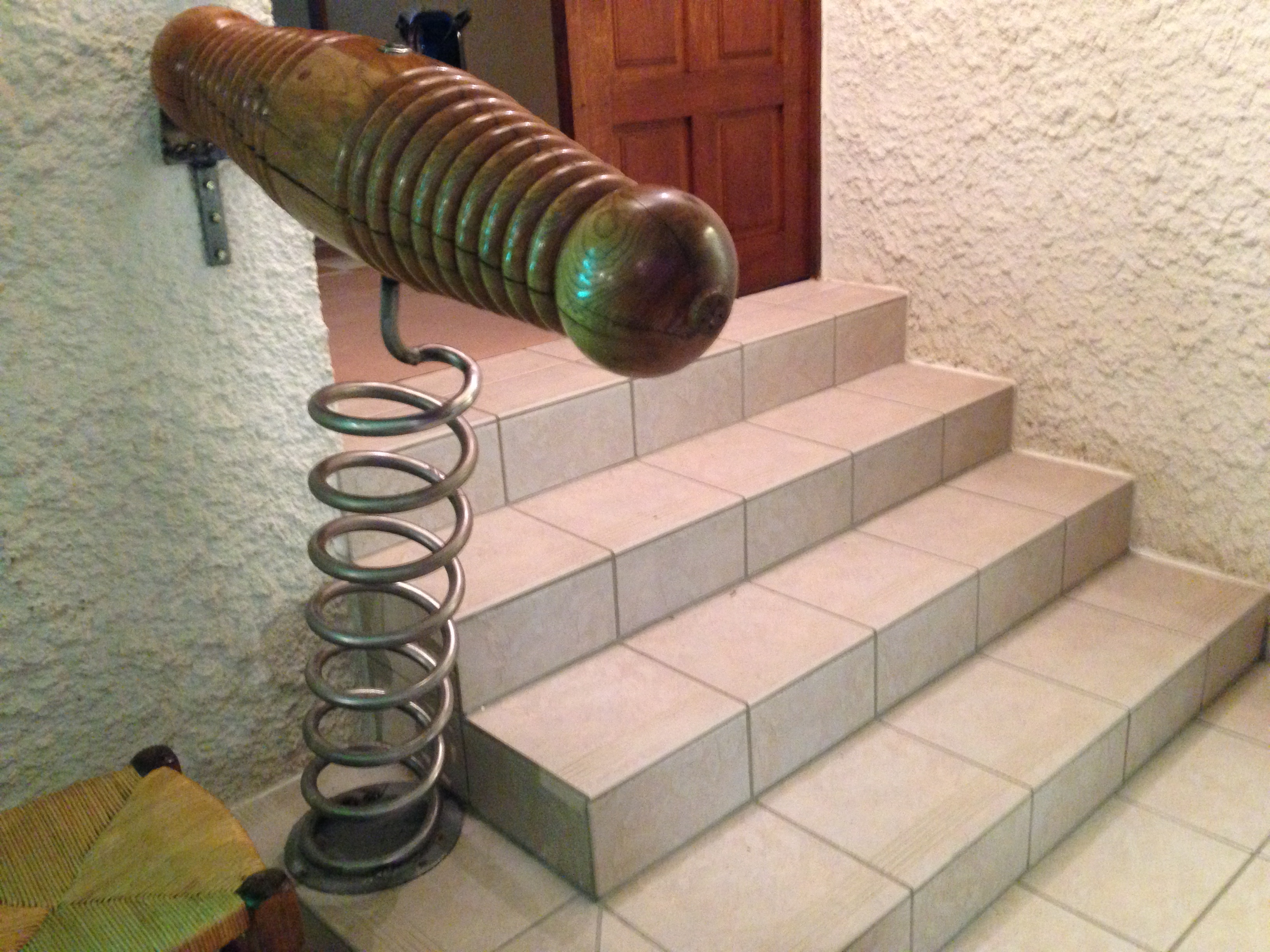
When traveling to Chassagne-Montrachet, we find the winegrower René Lamy-Pillot. A sign indicates “open”. We are kindly welcomed by Florence, the daughter of the house. The cellar is very clean and full of eye twinklings like this stair rail – a perfect match for this wine cellar. Their Website is charming.

IMG_1014

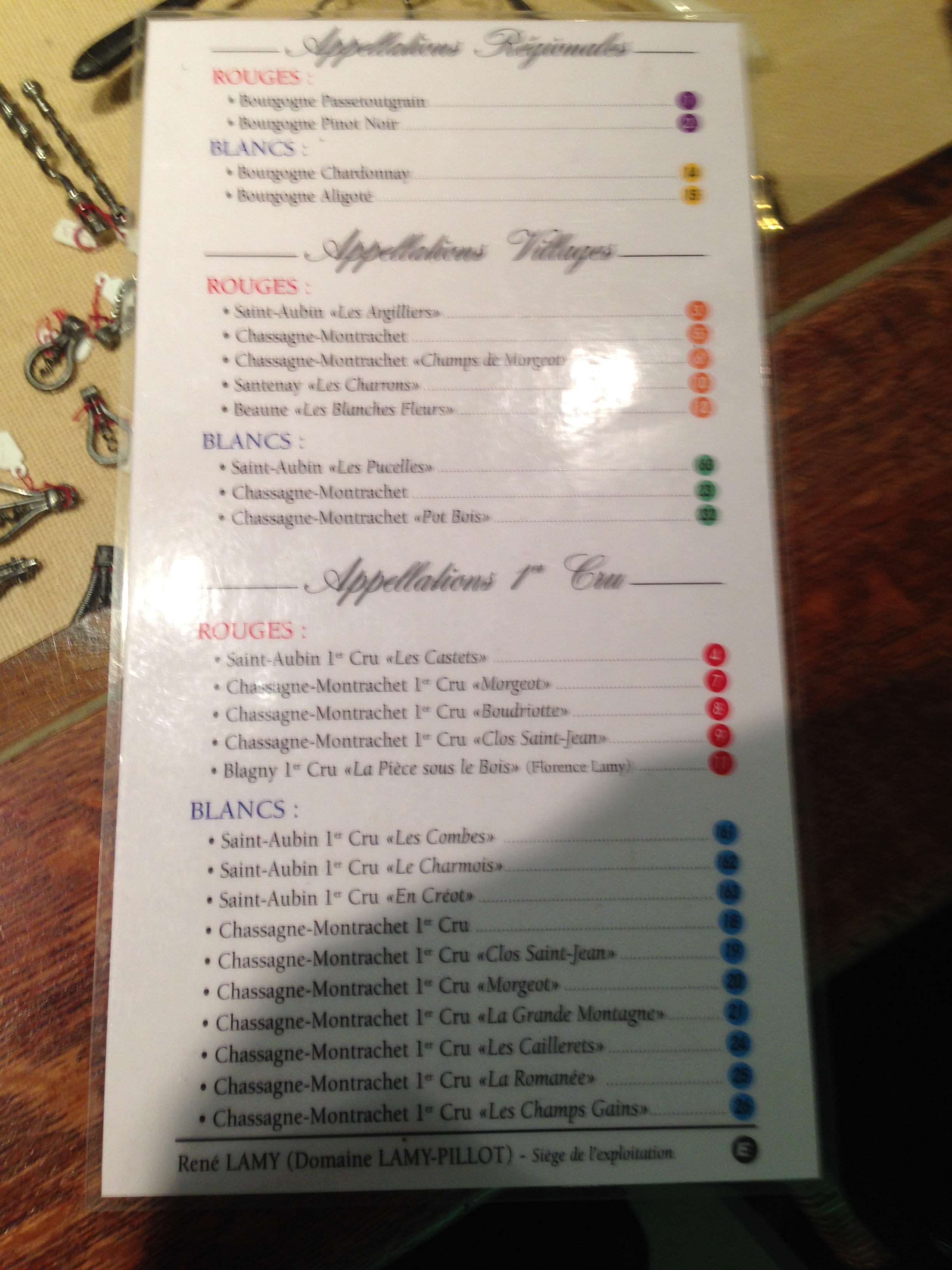
Florence works with her parents, while her husband, Sebastian, buys grapes from various winegrowers and runs his own innovative business under the name “Lamy&Caillat”. Florence’s father, René Lamy, has some 1er Crus, but he also has some vineyards that are a little off the main climats – St. Aubin and Appelations Villages / Régionales – and some are a good value for money!

While we have delved into our tastings, the door opens. Three guys enter in a rush, an Englishman, a Dutchman and a man whose English and French accent identify him clearly as being from Zurich (they just cannot hide their accent). Of course, he immediately notices that I am from Basel (I cannot hide my accent either) and we exchange our impressions. They regularly buy wines in Burgundy and come to see René Lamy every year. He has prepared boxes ordered by them, and they just stay for a short moment to have a glass of wine and say hello.

IMG_1006

IMG_1011

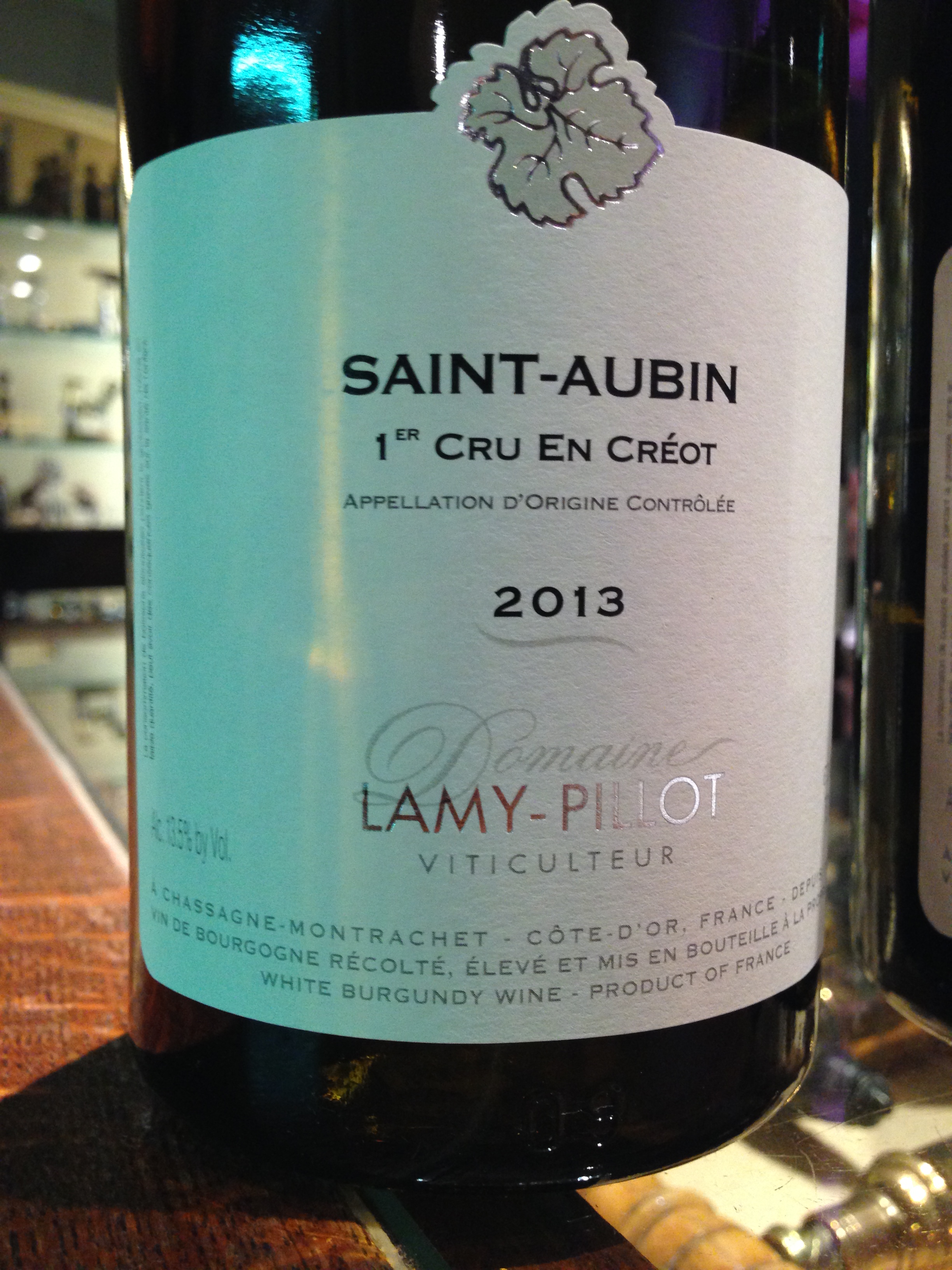
These were some of the wines we tasted:

  • Saint-Aubin Les Pucelles 2013: Lemon, well balanced
  • Chassagne-Montrachet Pot Bois 2009: Well balanced, some oak, flowery
  • Chassagne-Montrachet Morgeot 1er Cru 2011: Toasted bread, nutty, harmonious taste
  • Chassagne-Montrachet La Boudriotte 1er Cru 2012: Almost sweet with cherry taste. Aljoscha feels the leather boots of his father.
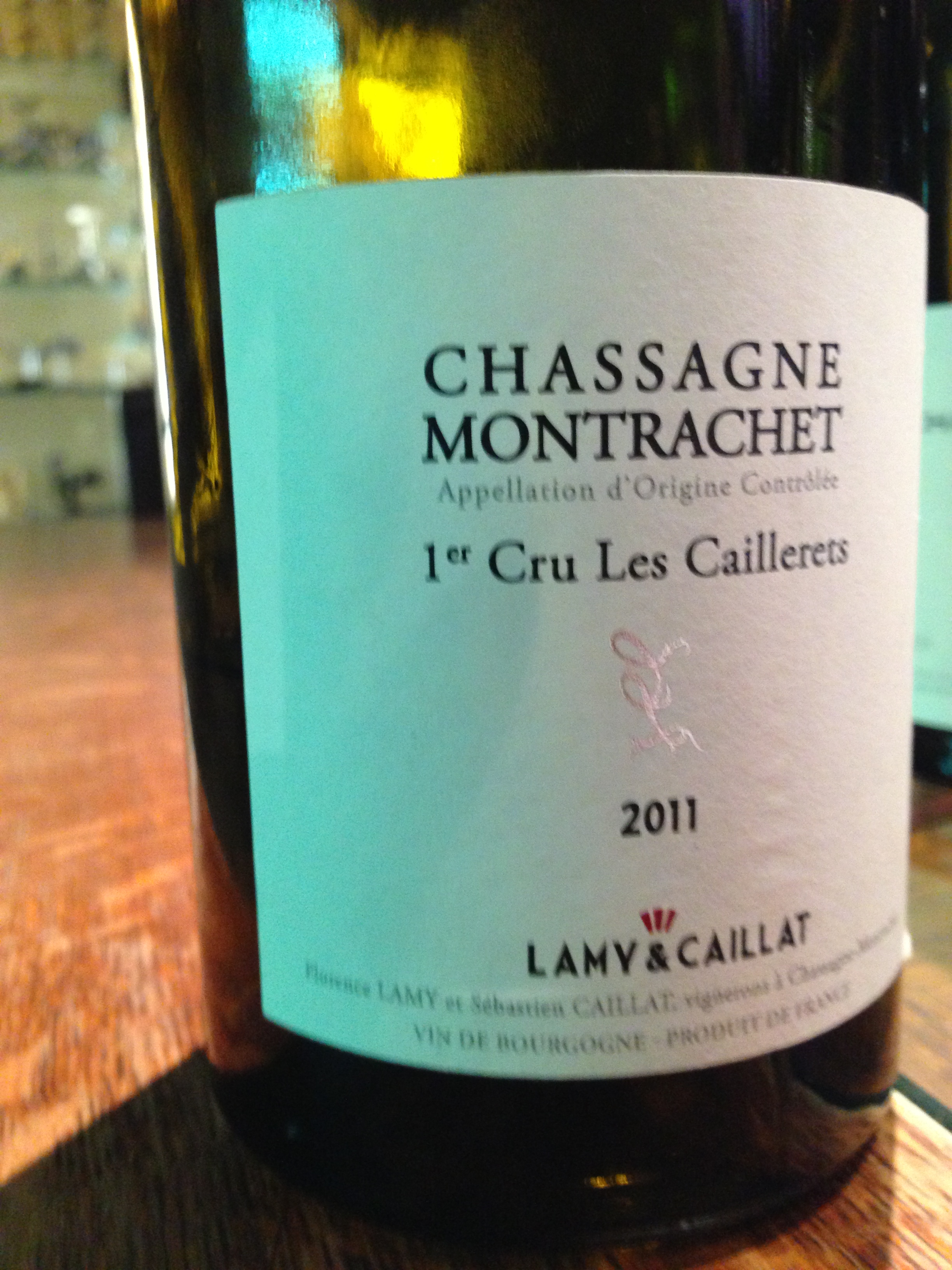
  • Chassagne-Montrachet Les Caillerets 1er Cru (Lamy&Caillat , produced by Sebastian): Nose of peach, nutty

IMG_1012

I will surely also come back to this friendly house!

.

Leclerc in Gevrey-Chambertin, Rue des Halles 15

Coming from Chablis we enter the Côte de Nuits via road D31 crossing a romantic canyon. Our first village is Gevrey-Chambertin. This charming pig welcomes us.

IMG_0952

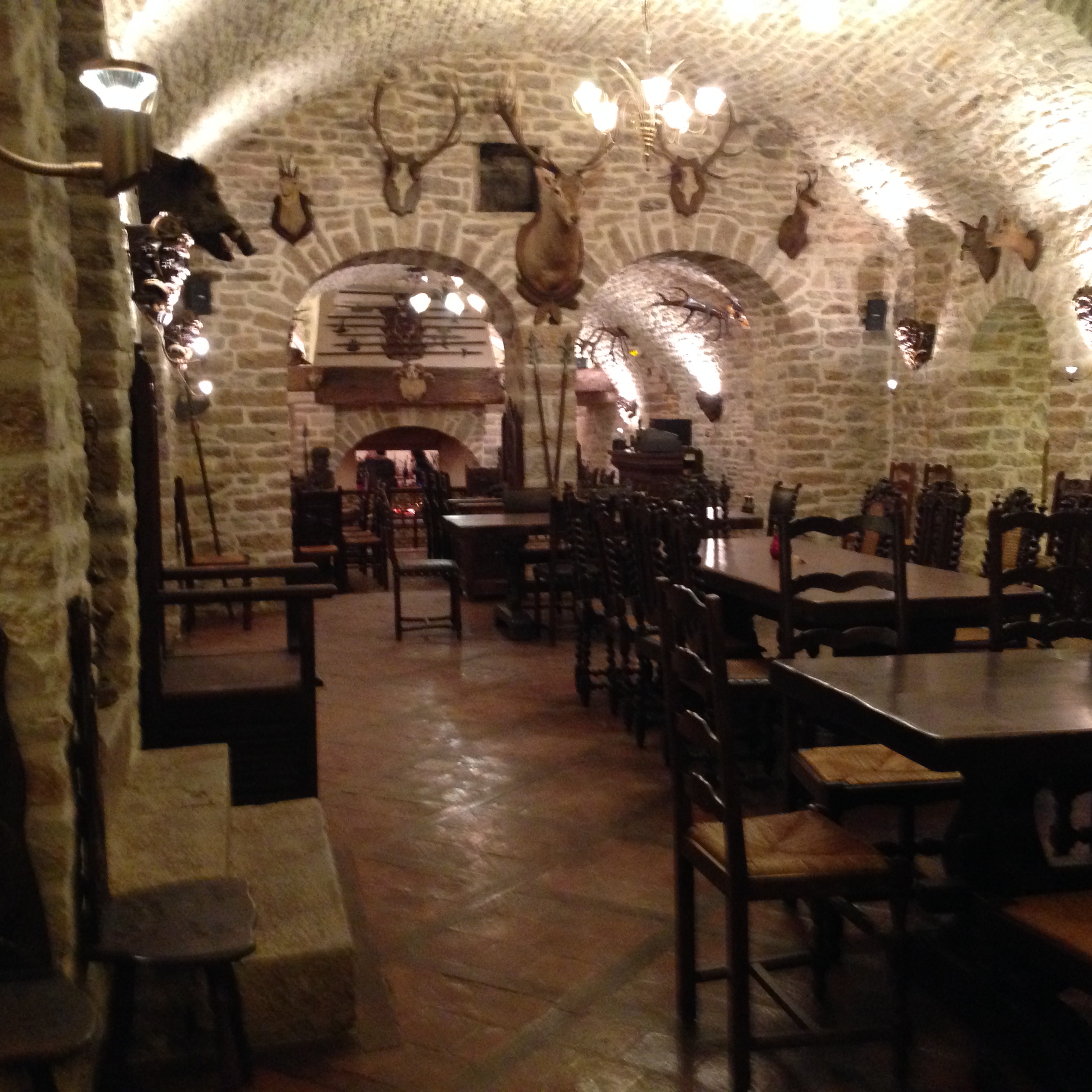
In La Rue des Halles we visit Leclerc, a winegrower that also owns a restaurant. In my opinion, the vaults are a somewhat kitschy with the stuffed animals and horns hanging on the walls.

IMG_0954

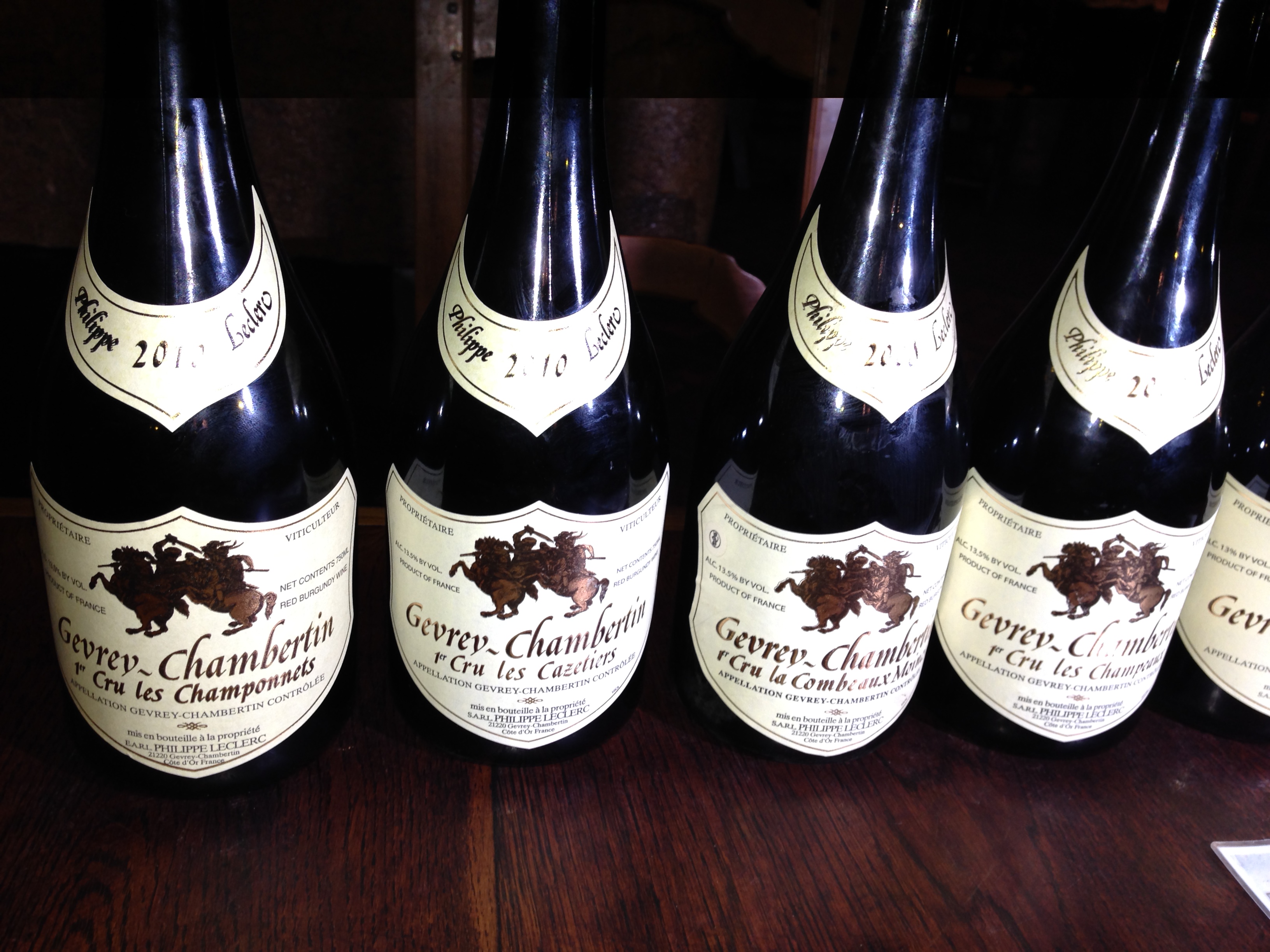
We are offered the following wines for tasting – I can see my Russian friends frown from time to time.

  • Bourgogne 2007: Starter wine “for every day”, a little thin
  • Chambolle-Musigny 2008: Dried prunes, mushrooms
  • Gevrey-Chambertin Appelation Village 2010: Griottes with a toffee twist, somewhat thin
  • Gevrey-Chambertin 1er Cru Les Champeaux 2007: Prune, well integrated tannin
  • Gevrey-Chambertin 1er Cru La Combe aux Moines 2008: Denser, griotte, after taste short
  • Gevrey-Chambertin 1er Cru Les Cazetiers 2010: Dense, fruity (griotte), tannin (he says that the ground is tough and the roots dig 6m down)
  • Gevrey-Chambertin 1er Cru Champonnet 2010: I do not like the nose, but the taste is dense.

IMG_0955


Domaine Bertagna

The Domaine Bertagna is a neighbor of Clos Vougeot. We visit them spontanteously. We are welcomed, though a little bit cool. We taste the following wines:

  • Chambolle -Musigny Les Plantes 1er Cru 2012: Too much biting tannin for me, but it may mature
  • Vougeot Clos de la Perrière 2012: Raspberry, well-integrated tannin – I bought half a bottle
  • Vosne Romanée les Beaux Monts 2012: Licorice, toffee, well integrated tannin
  • Nuits St Georges Aux Murgers 2008: Fruity (dried prunes), after taste a little bitter

.

Château de Meursault

At Château de Meursault we do not feel very welcome. They have their fixed procedures and stick to them. We have to walk through the never ending cellar vaults all alone to find the tasting room. We have to taste red before white. From the red wines, we had two 1er Crus, Beaune Grèves (mushroom, cassis) and Volnay Clos de Chênes (fruity, leather note and spicy, very balanced).  The white wines were Clos de Château Meursault 2011 (nutty, little after taste), Meursault Villages (nutty, toasted bred, mushrooms – chanterelles, little after taste) and Château de Meursault Les Perrières 1er Cru (dry, sweet nose, perhaps butter or honey melon). I will not return to Château Meursault.

.

Veuve Henri Moroni, Puligny-Montrachet

Larissa had recommended La Veuve Moroni. We find her in Puligny-Montrachet. She welcomes us in her plain tasting room and tells us that she has hosted a tasting of her wines with Coquilles Saint Jacques yesterday. She is a dynamic person full of entuhsiasm – her husband has died 30 years ago and she has continued the winegrowing business on her own. When I drink her wines at home, I prefer the red to the white.

  • Meursault les Tillets 2008 : Peach – bought a bottle
  • Puligny –Montrachet la Perrière 1er Cru 2007: Mushrooms, citrus fruit, clean- bought a bottle
  • Auxey-Duresses 2010: Very young and tannin not yet integrated, has potential.
  • Pommard les Noizons 2008: Taste of blackberry, tannin, my friends frown at this wine
  • Beaune les Vignes Franches 1er Cru 2006 / 2007: Soft and spicy
  • Without having tasted it, I bought a Crèmant de Bourgogne brut and a bottle of Clos Saint Denis Grand Cru 2001. The Clos St. Denis was a wonderful match with my beef meat pie Provence style.

IMG_1004

.

Henri de Villamont at Savigny (Rue du Docteur Guyot)

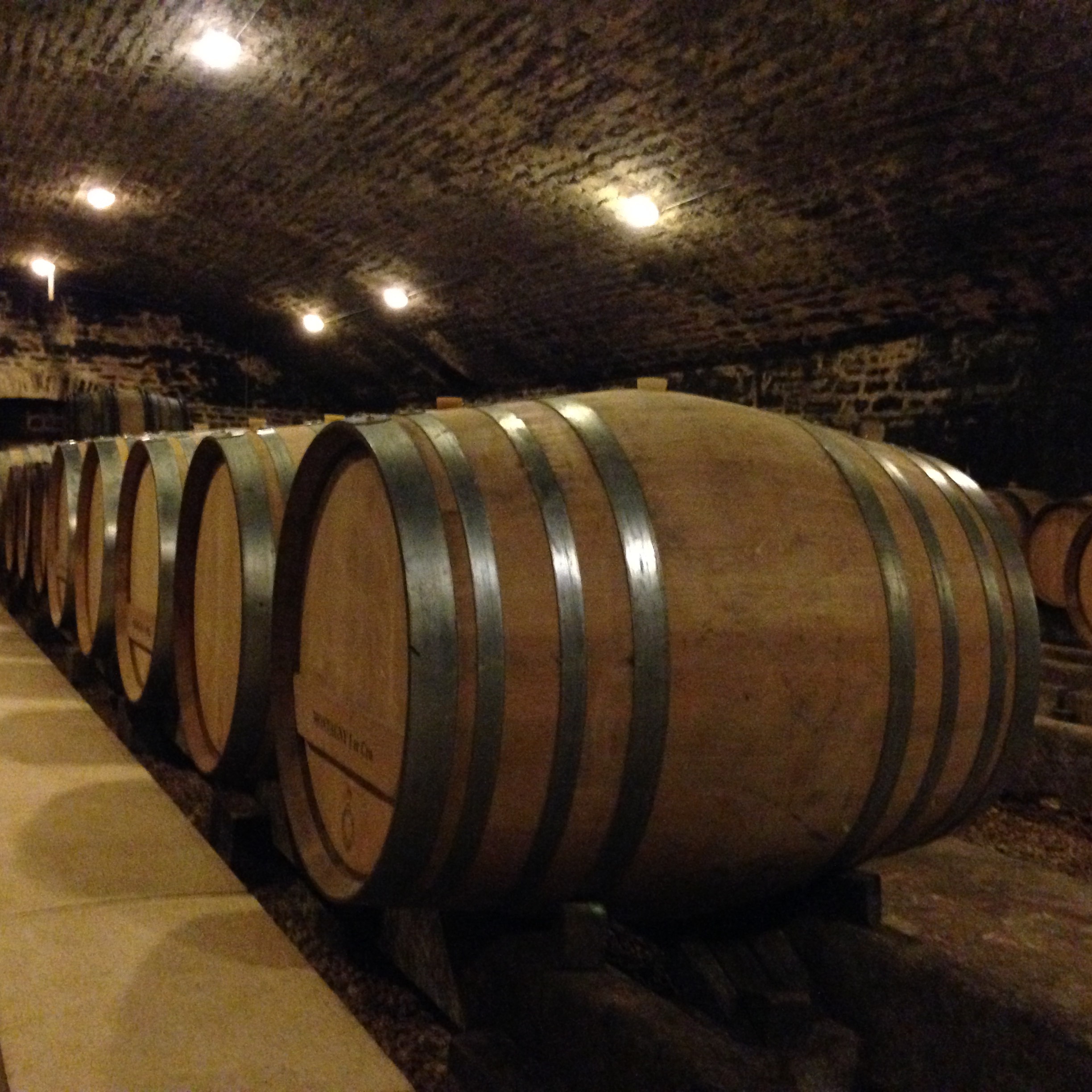
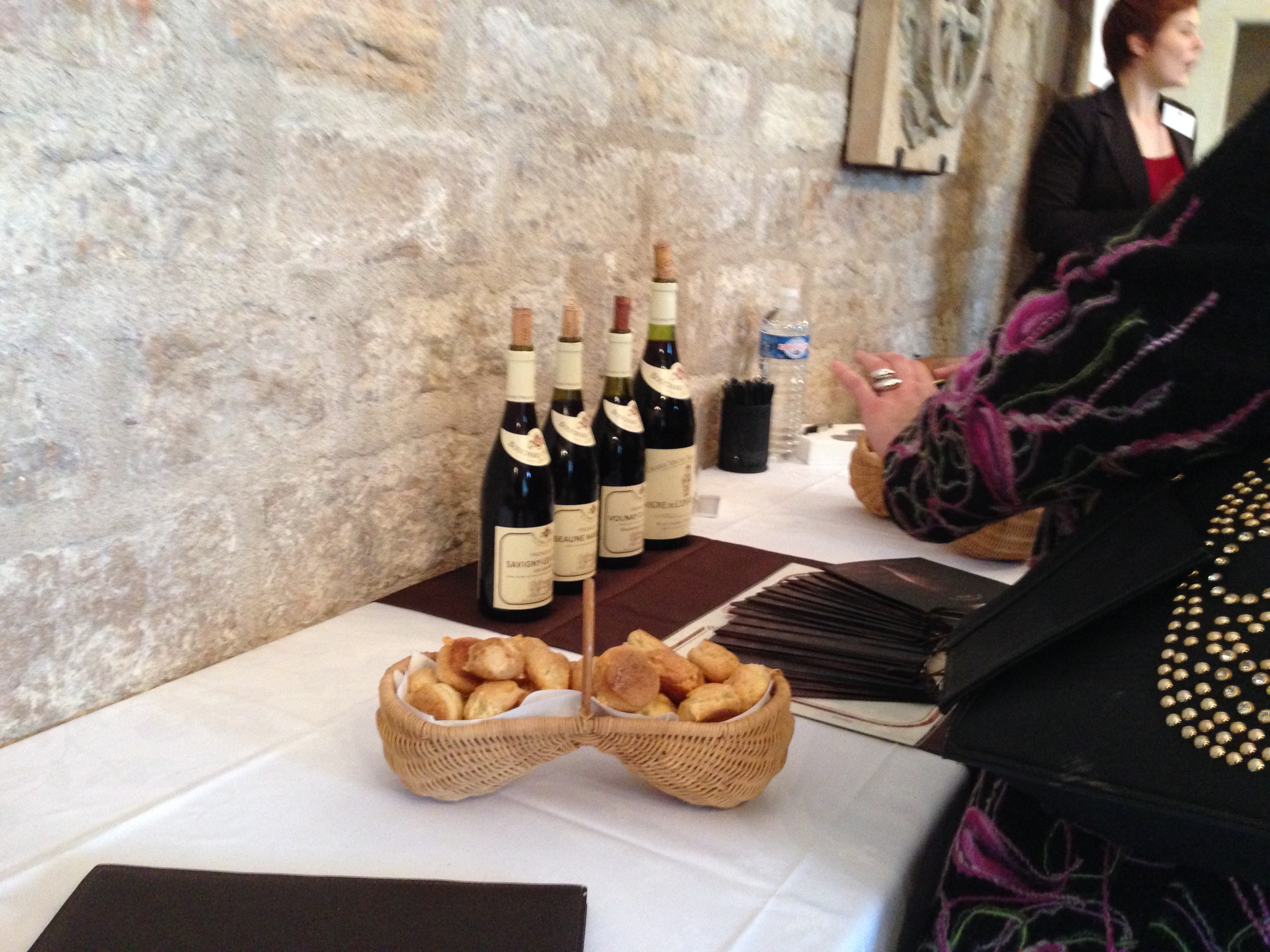
Henry de Villamont’s highlight is the tour through the cellar. Villamont is under Swiss management. They have renovated the estate. The cellar is spotlessly clean. Our guide is very proud of his estate. He takes us first into the cellar for white wines: 4000 barrels of French oak à 228l mature at a temperature of 14-15 degrees. The cellar for red wine is cooler. We are 12m under the earth. Behind a locked gate they keep old treasures… the oldest wine is from 1911.

IMG_1131

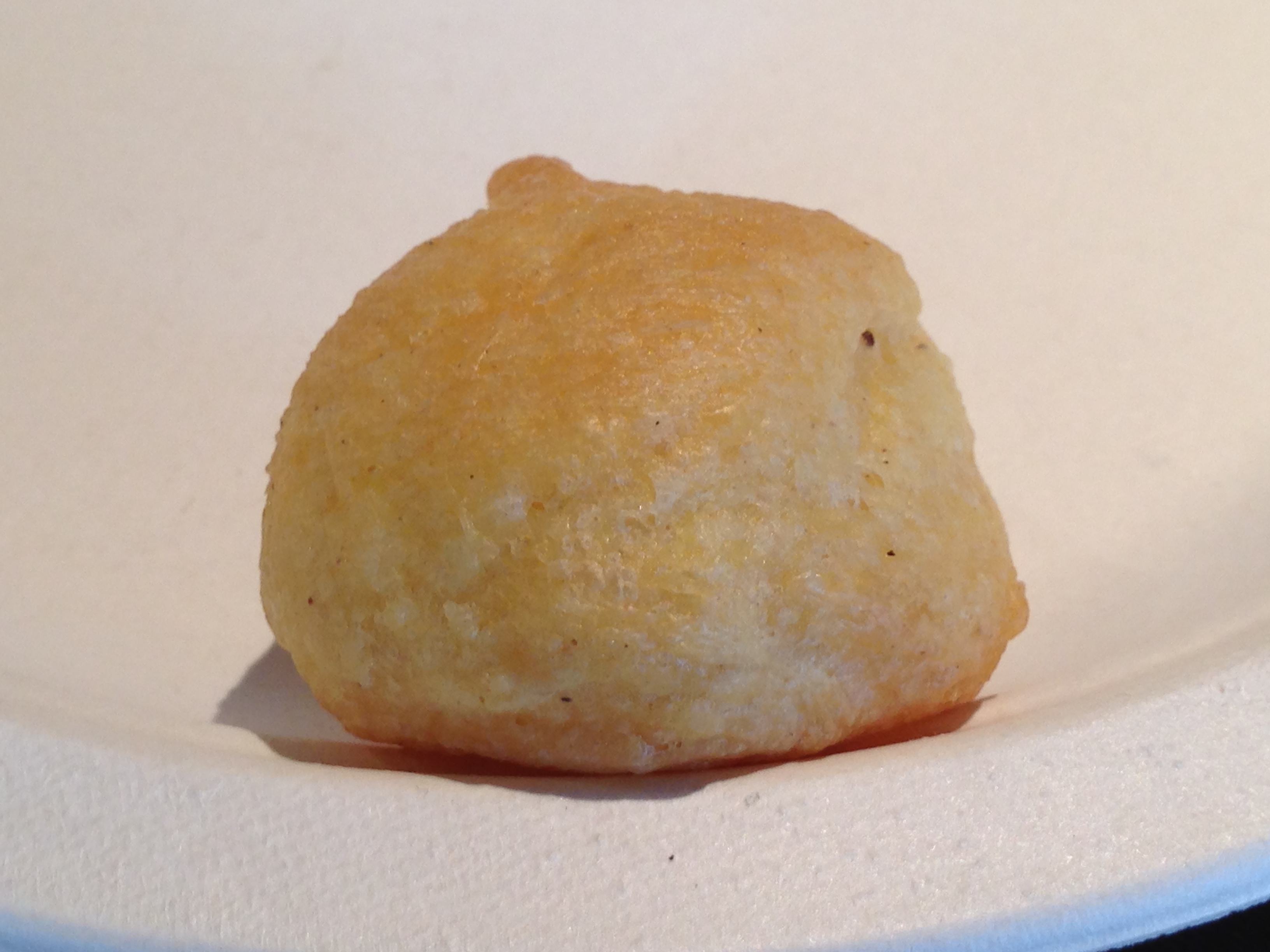
To accompany the wine tasting, we are offered gougères – like in other places. I will have to look for the recipe – they go so well with the wines.

IMG_1133

White wines

  • Savigny-les-Beaunes 2012: Plain, smoky Chardonnay.
  • Chassagne-Montrachet 2010: Nutty (Pistache ), dry-sour, almost too sour.
  • Meursault les Caillerets 2008: Quince, smoky.

Red wines

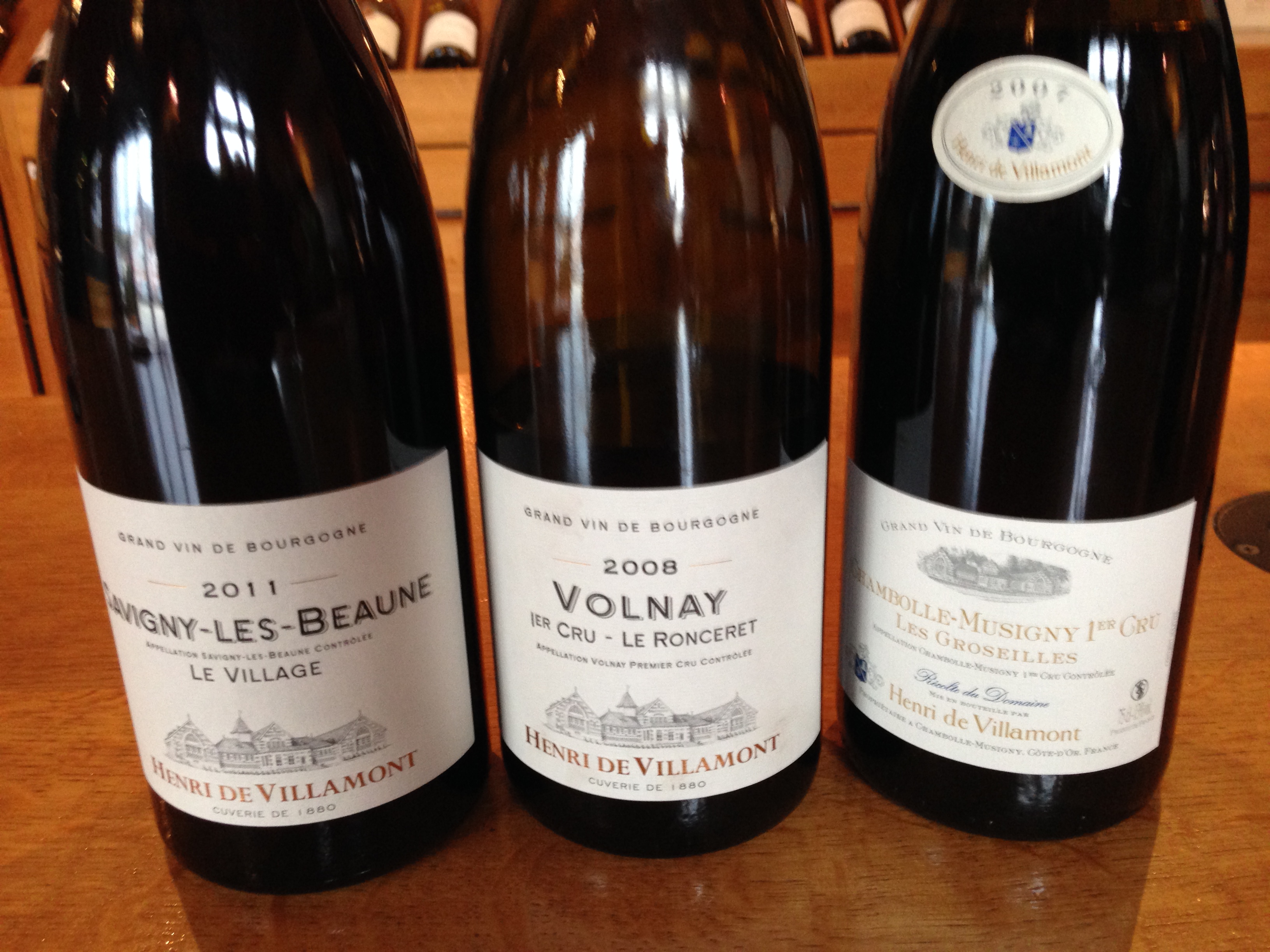
  • Savigny-les Beaunes-Le Village  2011: Cherry, tannin not yet integrated
  • Volnay le Ronceret 1er Cru 2008: Less nose than Villages, tastes flowery and has “furry” tannin
  • Chambolle-Musigny les Groseilles 1er Cru  2007: Pronounced flowery nose, roses, cherry, tannin – very harmonic
  • Pommard les Epenots 1 er Cru 1990: Light mold in the nose, something is wrong in  the palate – bitter and rotten prune. Obviously too old.
  • Nuits-Saint-Georges 1982: Leather, damp rose, caramel, dried prunes and mushrooms.

IMG_1135

Visiting Burgundy with my friends from Russia was a great experience.We visited so many wine growers in Chablis and around Beaune. We shared so many tastings and exchanged our feelings. I was impressed, how careful my friends tasted the wines. I would love to go back to Burgundy to share more tastings – and also culture – with friends… now that I know that Beaune is only three hours’ car drive away from Basel and Chablis is not far from Beaune…

On the road – my highlights from the Beaune wine events

In November 2014 I was in Burgundy with friends from Russia. We tasted wines and I also bought some bottles. Back home I started to share my “treasures” with friends. Recently it was a “St. Denis Premier Cru 2001” (Veuve Moroni) – a perfect match to my beef meat pie Provence style. In the nose I found some fruit and a roasted note, in the palate the wine was spicy and fruity reminding me of dried prunes. This experience motivated me to go back to my notes about Beaune, where we stayed in a wonderful apartment  and enjoyed the wine events.

My personal highlights from the November Beaune wine events were Bouchard Aînée et Fils, Patriarche and the Marché au vin (Hospices de Beaune). I did not enjoy Besancenot very much, but I loved the medieval cellar of Bouchard Frère et Fils, and also the truffle-wine tasting of Vin des Tonneliers was a good experience.

.

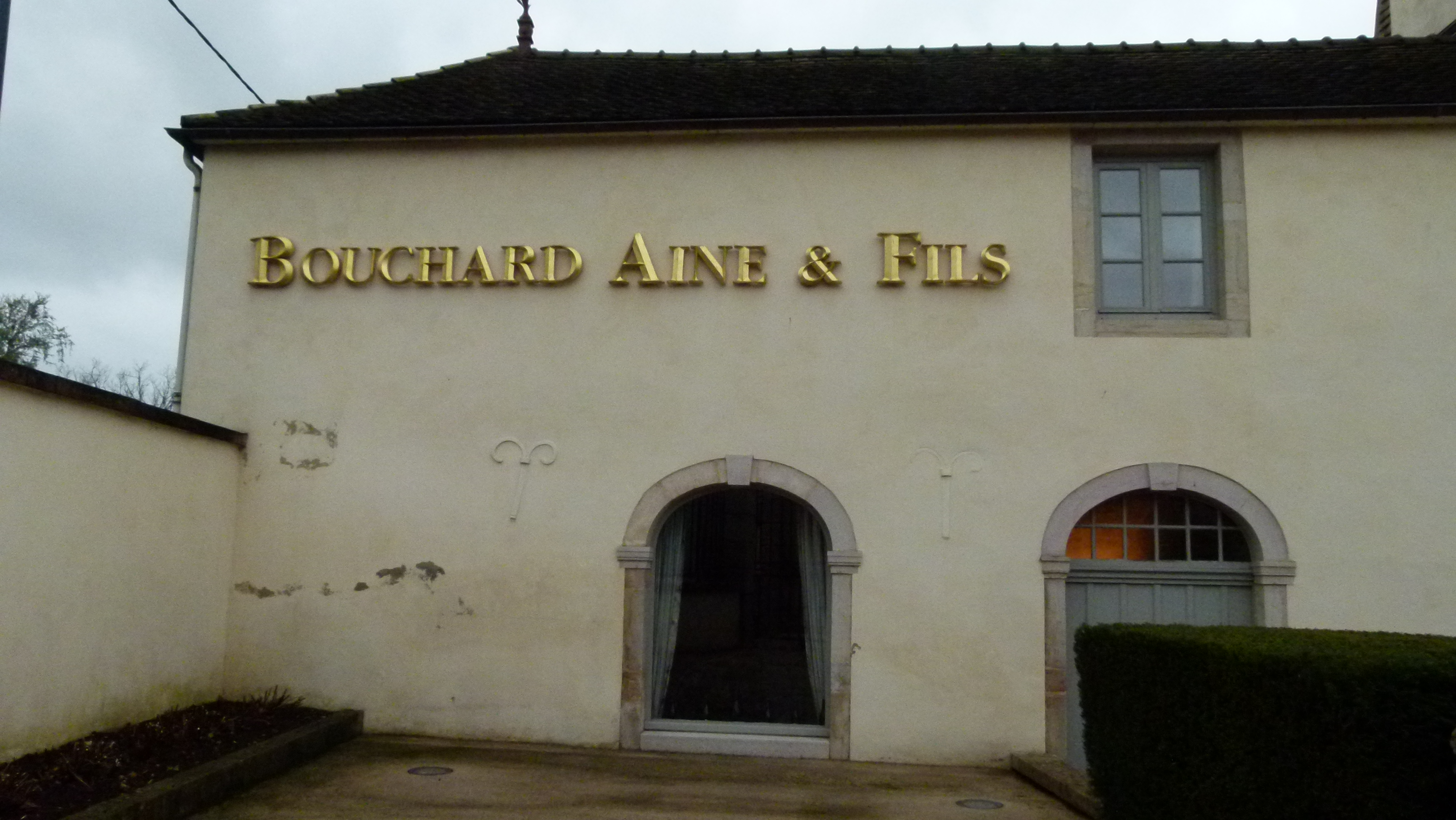
Bouchard Aîné et Fils

P1070003

Within the Beaune wine events, Bouchard Aîné et Fils invited for a tour in their cellar. We found a careful selection of wines and each wine was perfectly matched with a delicious bite (the bites had wonderful French names – as they are only possible in French). The selection contained some vintages even going back to 1962.

Students presented the wines along with the bites were full of enthusiasm, plans and optimism.

This was the selection of wines we tasted:

Grands vins blancs de Bourgogne

  • Crémant de Bourgogne en Magnum: Dry.
  • Rully 2007: Balanced taste of lemon. With it we had a millefeuille des pain d’épices à la gelée de pomme et de foie gras.
  • Chassagne-Montrachet 1er Cru Morgeot 2007: Very strong, almost too much for me.
  • Meursault 1er Cru le Porusots, Cuvée Humblot Hospices de Beaune 2008: Fresh apple, acidity. With “coeur de Tsar de Saumon fumée d’Ecosse sur pain Porlane et beurre Bordier aux alges fumées”.

Grands vins rouges de Bourgogne

  • Beaune 1er Cru Clos du Roi 2014: Bitter and full of tannin (not (yet) perfectly integrated)) – we later had a Clos du Roi 1962 which shows, the 2014 has potential to mature.
  • Beaune 1er Cru les Marconnet 2012: Cherry nose and taste, soft tannin, already drinkable.
  • Gevrey-Chambertin 2012: Dried prunes, can feel the tannin. Served with it was a sausage marinated in Marc or in French “habit de Gentleman Farmer: Sabodet lyonnais … cuit dans le marc frais de pinot noir de Bourgogne”.
  • Savigny-Les-Beaunes 1er Cru Les Peuillets 2005: Smoky taste, prune, astringent tannin (I call this “furry”).
  • Corton Grand Cru Cuvée Docteur Peste, Hospices de Beaune 1998: Soft (“velvet paw”) and note of cacao. Served with “brillat Savarin couronné d’une dentelle de truffe de Bourgogne sur pain Poilâne aux raisins de Corinthe”.
  • Beaune 1er Cru Clos du Roi 1962: Color is orange, for 1962 still fresh and flowery (reminding me of roses).

.

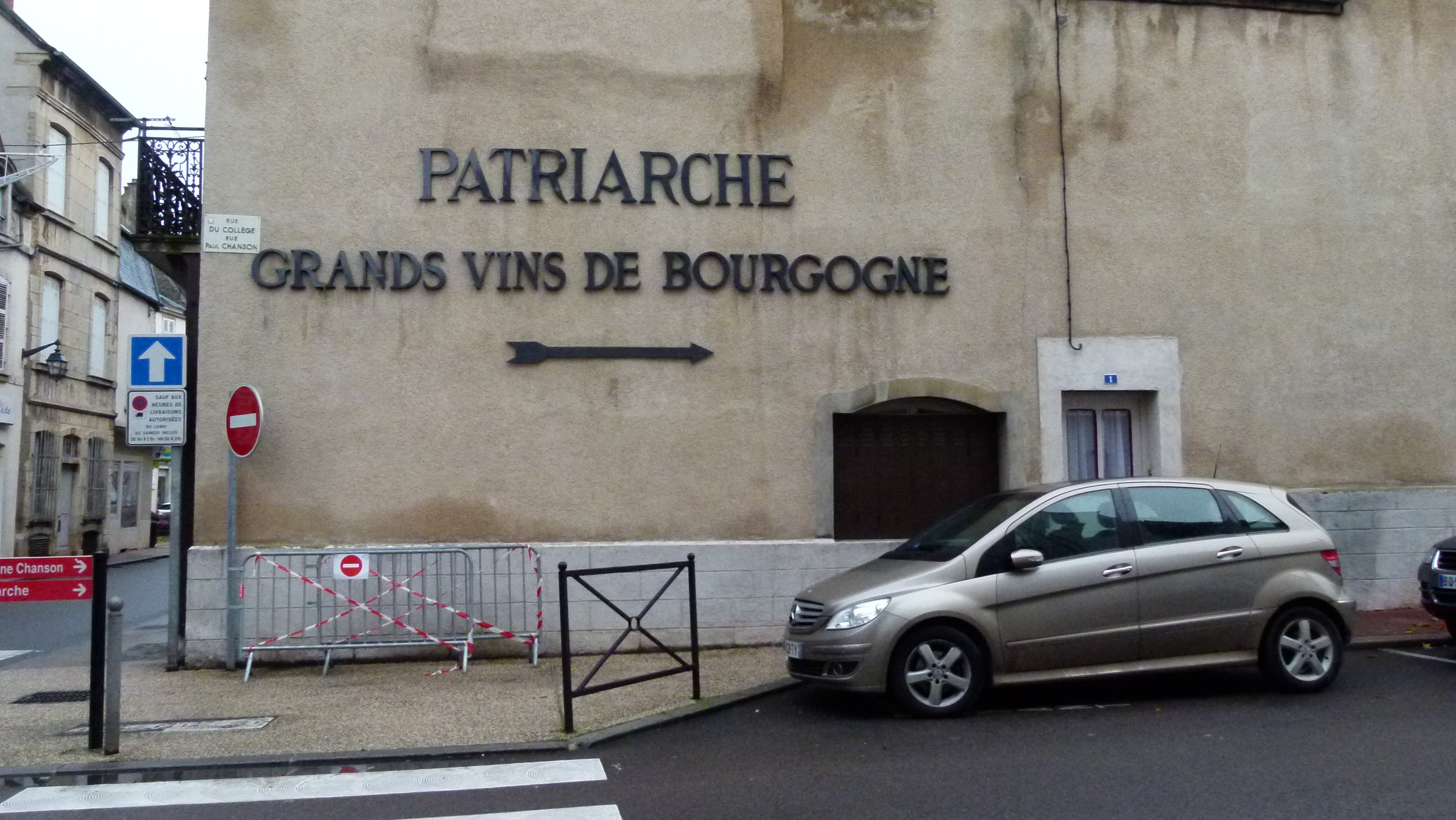
Patriarche

P1070043

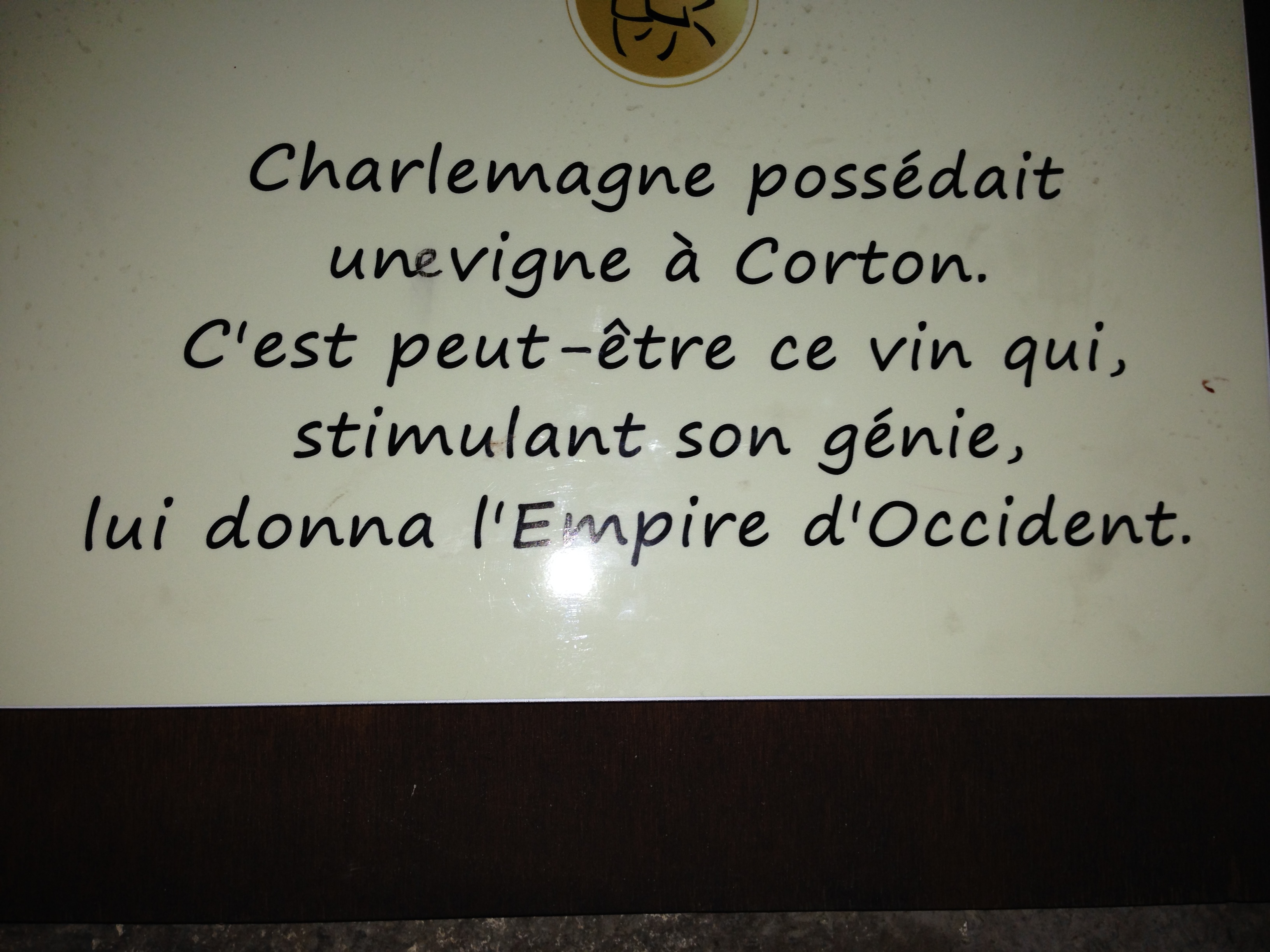
At Patriarche we find this note, that, twinkling with an eye, says “Charlemagne owned a vineyard in Corton. It could well be that this wine stimulated his genius and gave him the empire of the west”. Could well be.

IMG_1114

As in Bouchard Aîné et Fils, students serve the wines and explain to the visitors, what they are tasting.

The student presenting the wine from Pernand-Vergelesses has lived in this village for five years. He loves his village and in particular the old church. The village is located above Aloxe-Corton on 350m, he says. The slopes are exposed to the south, the wines, he continues, show finesse and bitterness. He recommends to drink them with dark chocolate, lamb gigot or Reblochon cheese. The student dreams of runnng a boutique for wine and food, when he has graduated. From his explanations, I learn that a vineyard a little off the grand cru slopes might be a good and affordable option in Burgundy.

The student introducing to the Chambolle-Musigny will take over the winery of his family, Domaine de l’Évêché in Saint Denis De Vaux ( www.domainedeleveche.com). He does not only know his wines, but also his iphone – and he teaches me, how to generate the variations of “e” that are needed for French. Also the student at the stand of Nuits-Saint-Georges 1er Cru Les Cailles proudly tells me that he will take over the winery of his parents. And the young girl that presents the Grands-Echezeaux Grand Cru comes comes from the Côte du Rhone and dreams of emigrating to Australia or South Africa. I enjoy talking to these young people planning their life.

IMG_1106

This is the long list of wines that we could taste.

  • Hospices de Beaune 1er Cru Cuvée Dames Hospitaliéres 2004
  • Aloxe-Corton 2009
  • Pernand-Vergelesses 1er Cru 2012
  • Chassagne-Montrachet 2013: Soft, nutty, buttery; 2010 more open, lemon
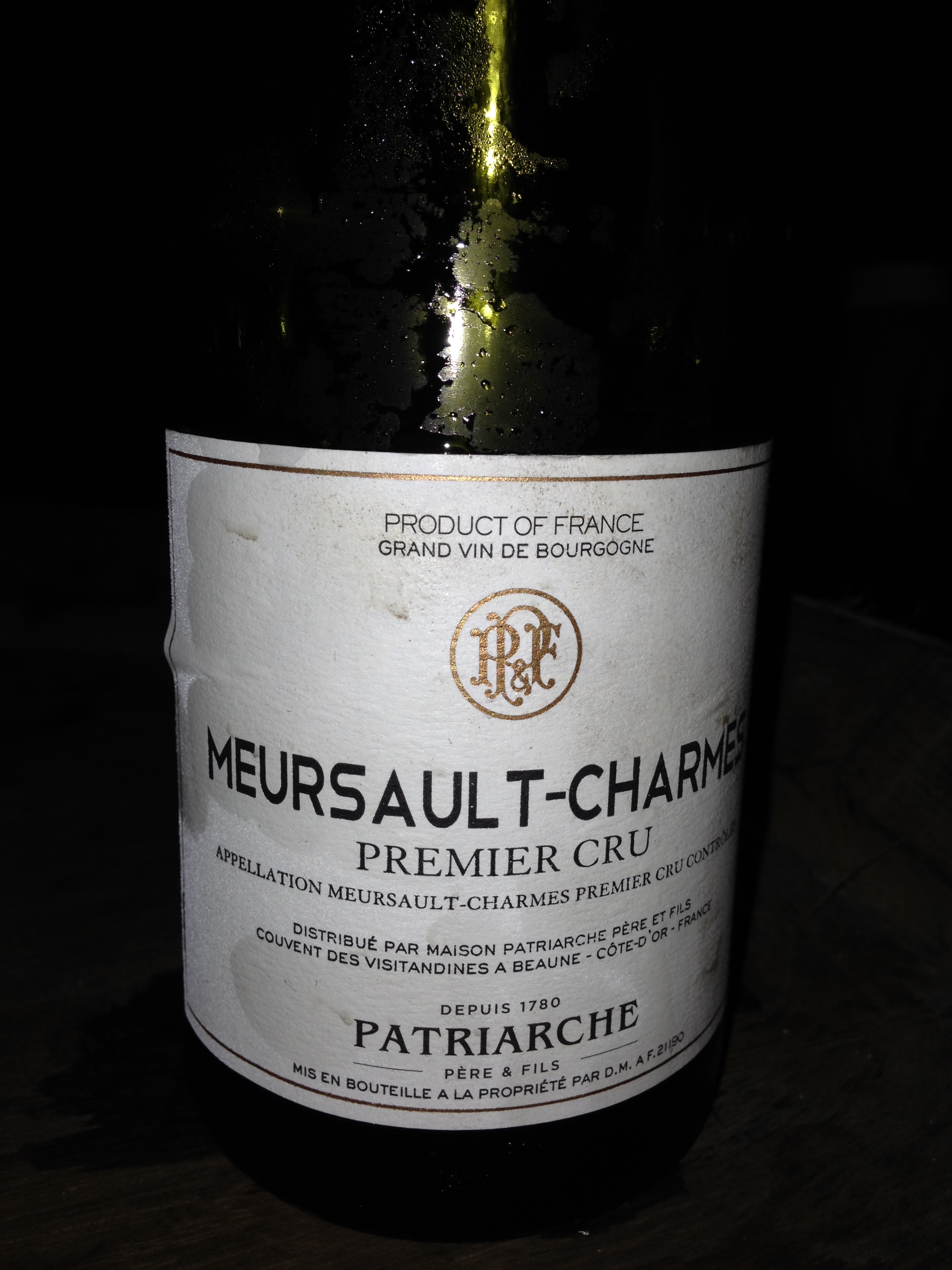
  • Meursault Charmes 1er cru 2008: Reminds me of orange
  • Pernand-Vergelesses 1er Cru 2012: Cherry nose, flowery taste (violet?), tannins well integrated. I bought one bottle
  • Nuits-Saint-Georges 1er Cru Les Cailles 2009: Fruity (prune), good tannin, powdery cacao.
  • Hospices de Beaune 1er Cru Cuvée Dames Hospitaliéres 2004
  • Hospices de Beaune Savigny Les Beaune 1er Cru Cuvée Forneret 2000 (assemblage Vergeresses et Savigny): Soft and outgoing, dried prunes.
  • Chambolle-Musigny 1er cru 1980 (Magnum): soft and dense
  • Grands-Echezeaux Grand Cru 1977 (Magnum): Soft and slight taste of framboise toffees

Larissa has been here before, meets old acquaintances, and they offer an additional tasting just to us:

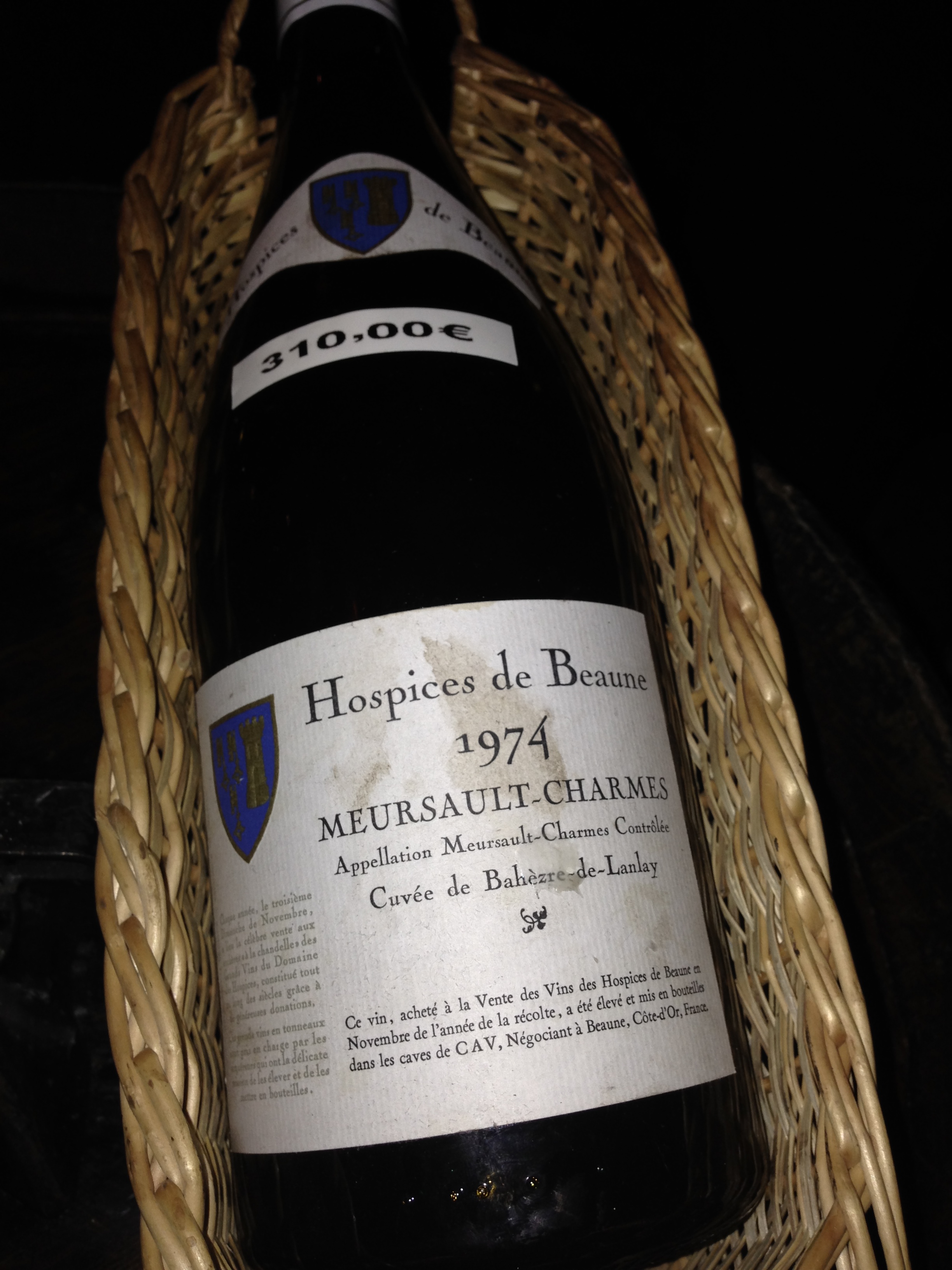
  • Meursault Charmes 1974: Color copper, taste woody and smoky, some caramel
  • Corton Renardes 2008: It was a lighter year. Cherry taste
  • Aloxe-Corton, 2009: Fresh and biting tannin, dense. I buy a bottle.

.

Marché au vin (Hospices de Beaune)

Alla and I had tickets for the “Marché au vin” belonging to the Hospices de Beaune. Again students presented a wonderful selection of wines, not only from the Hospices, but also from other châteaux/castles. The wines of the Hospices have the addtion “Cuvée…” indicating who donated the vineyard to the Hospices founded in 1443 by Chancellor of Nicolas Rolin of Burgundy as a charity hospital – very modern he was at that time!

The student responsible for the Beaune 1 er Cru Les Cents Vignes has a girl friend that is from Belarus. He can speak some Russian which eases our conversation. The student serving the Marsannay tells me with fervor that he wants to trade with wines.

The student at the stand of Gevrey-Chambertin tells me that he was taught not to say “wood”, because clients often associate “wood” with a bad taste that may dominate all other flavors. They should rather say “dense” or “strong”.

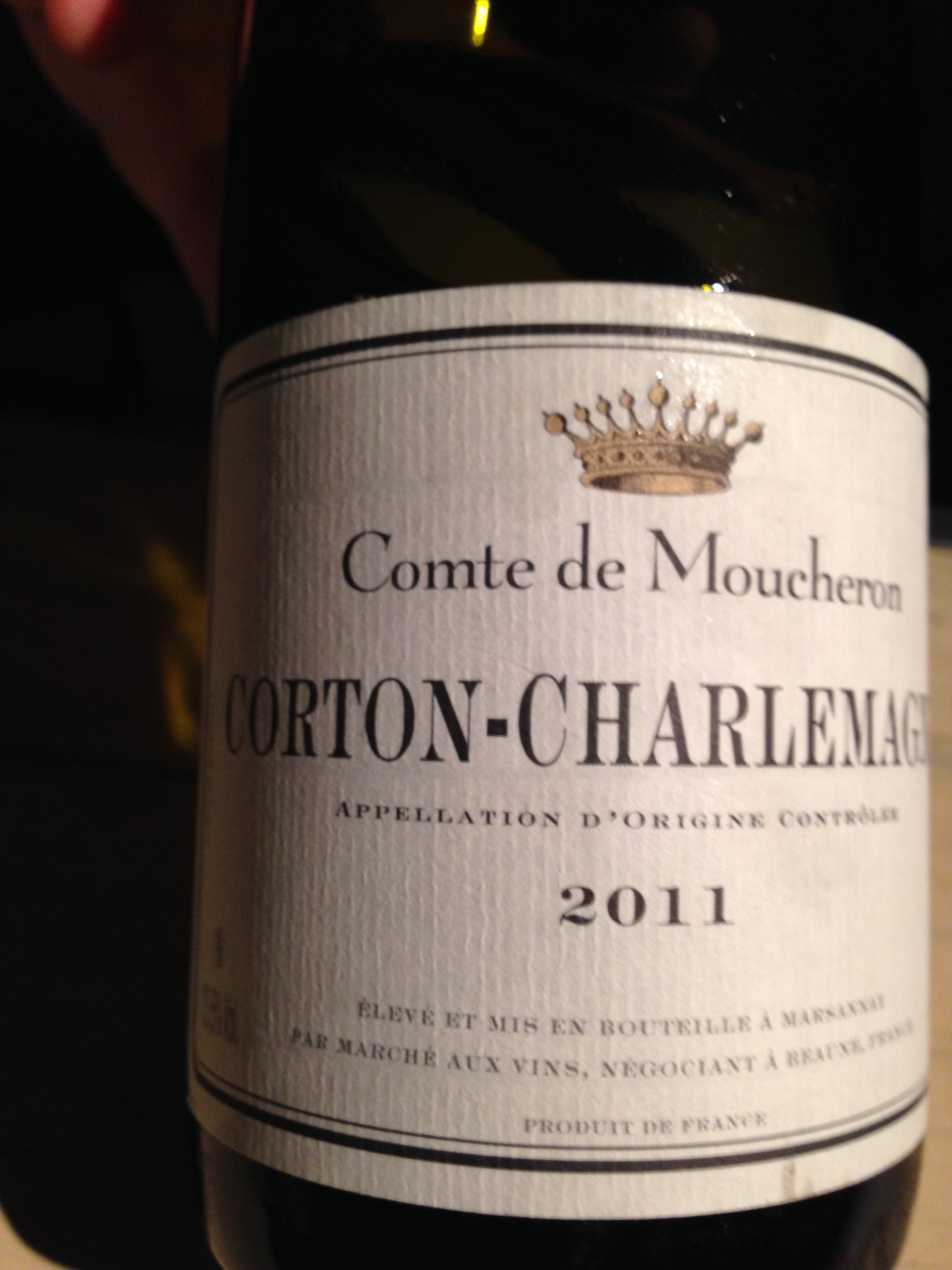
The student presenting the Corton-Charlemagne Grand Cru 2011 asks us, whether we know, why “Charlemagne” is a white wine. The answer: Charlemagne loved red wine, but his wife would always notice drops of red wine in his beard, when he came back home from Burgundy. So Charlemagne decided to switch to white wine which did not leave traces in his beard. If it is not true, it is well invented.

IMG_1140

Some of the wines have their price.

IMG_1122

These were the white wines we tasted:

  • Marsannay Blanc Les Champs Perdrix 2013 : Lemon taste
  • Meursault (Château de Meursault) 2011 : Oily. Nutty taste
  • Meursault (Château Meursault) 1er cru 2008 : Taste of butter and minerals
  • Meursault 1er cru (Château Meursault) 2002: Almond, oily, perhaps some honey
  • Corton-Charlemagne Grand Cru 2011: Flowery, spicy (vanilla), nutty (almond), mineral taste.

The red wines on offer were:

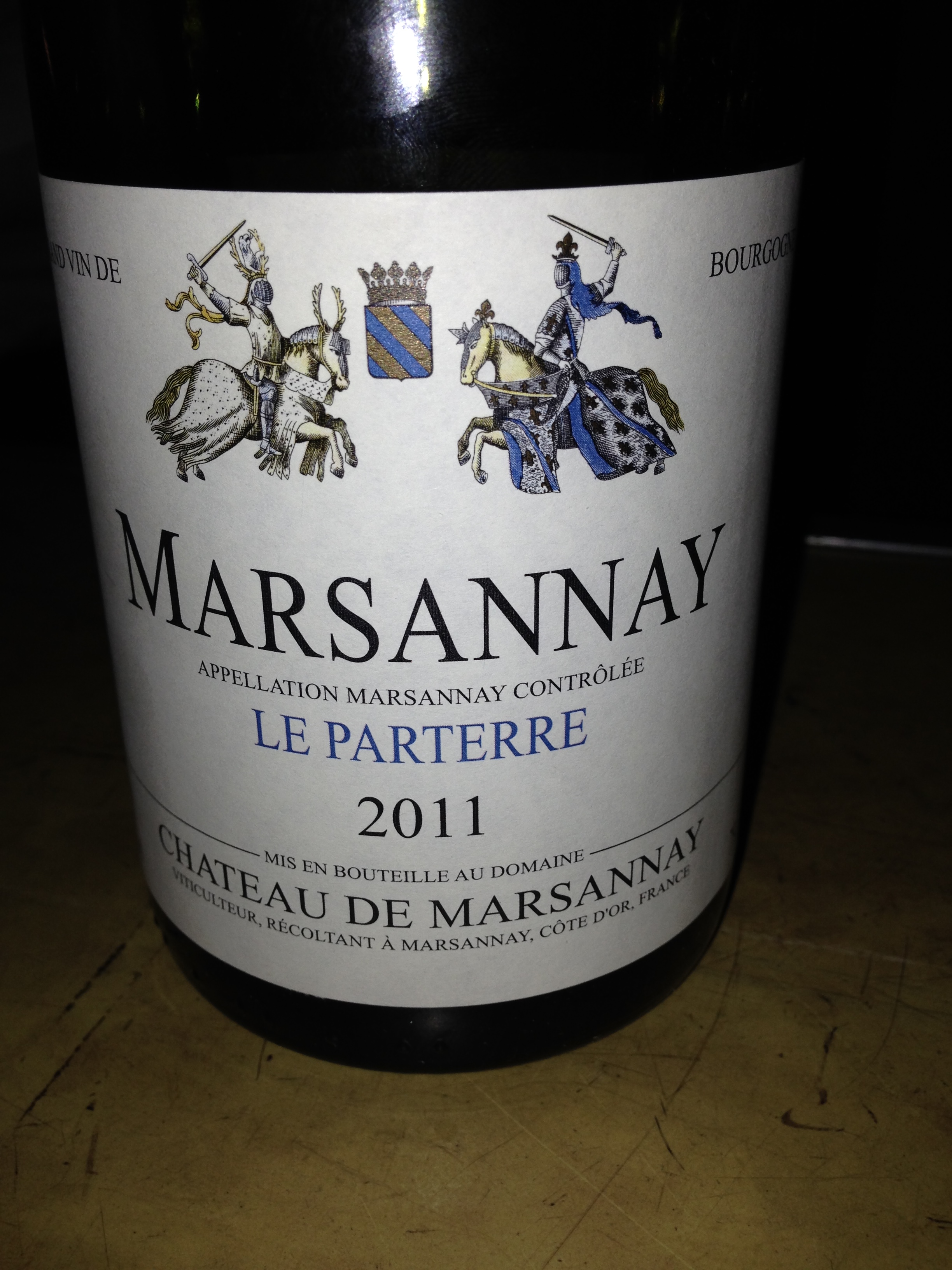
  • Marsannay Le Parterre  2011: Cherry, fresh, light Tannin.

IMG_1142

  • Beaune Cuvée Marie-Sophie Grangier (Hospices de Dijon) 2009: Sour cherry (griotte), wood
  • Gevre- Chambertin  1er Cru 2008: Griottes, toasted bread, spicy (pepper), a little much acidity
  • Vosne-Romanée 1er Cru Les Orveaux 2008:  Prunes, spices, acidity, still closed
  • Volnay 1er Cru  Clos des Chênes 2003: strong, cassis, well-integrated tannin
  • Beaune 1 er Cru Les Cents Vignes: Dried prunes, round, clean, tannin.

.

Vin des Tonneliers – Tasting with truffles

Vin des Tonneliers is a wine dealer that invited to taste wines with truffle bites.

IMG_1019

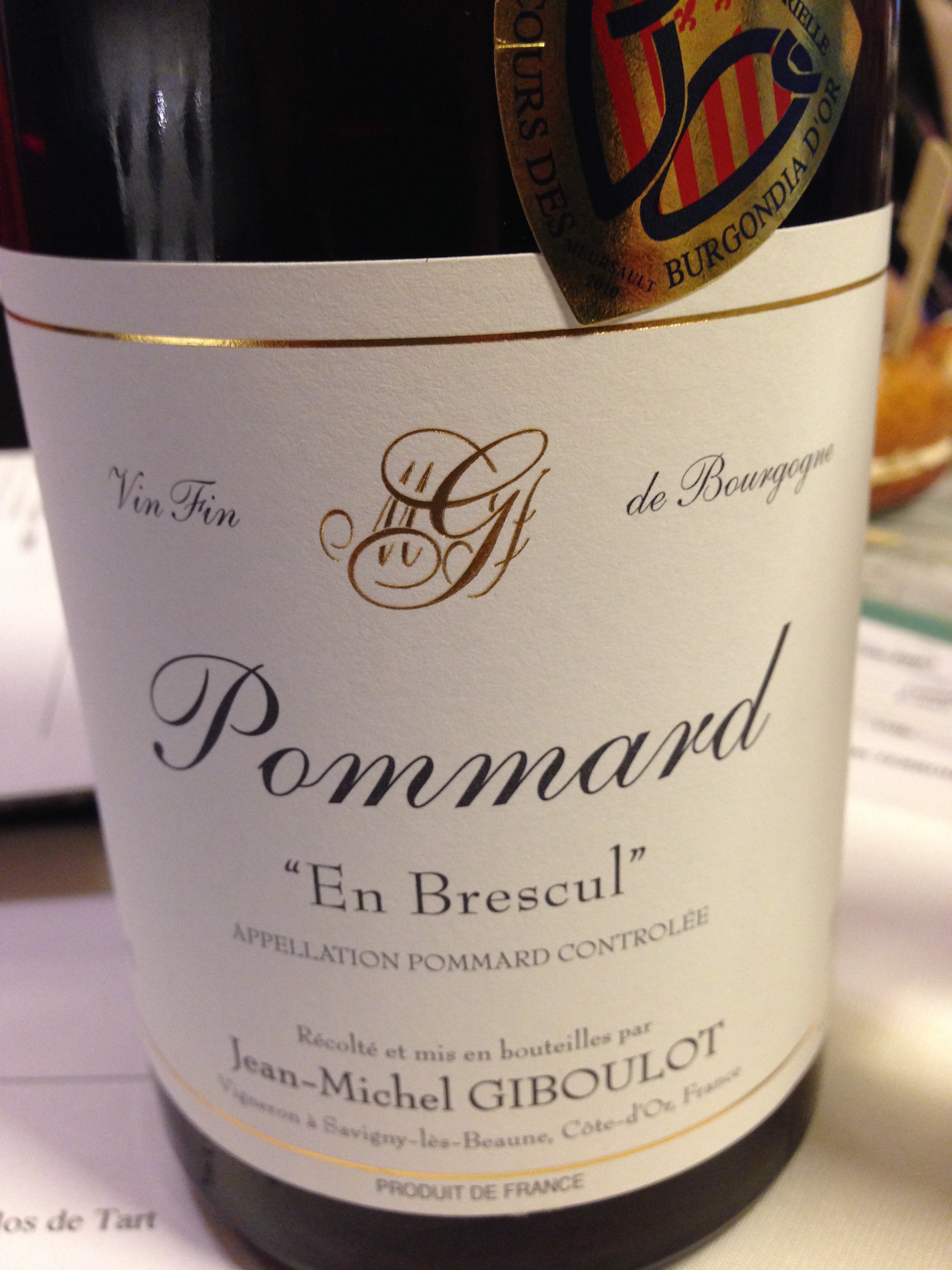
I liked this Pommard en Brescul and bought a bottle.

IMG_1020

These were the wines we tasted with the truffle bites

  • Chassagne-Montrachet 1er Cru Guy Amiot, Baudines 2010: Melon taste, buttery
  • Meursault 1er Cru: good match with meat bites, less good a match with cheese from Savoy
  • Domaine 19 vingt (blended village and grand cru): Well balanced
  • Clos de Vougeot 2006: Griottes
  • Pommard “En Brescul” Giboulot  2008: Balanced
  • Corton 2003 (already harvested in August, as it was a hot year): Cacao, bitter tanning caramel. Recommended to drink it within thenext four years.

.

Bouchard Père et Fils

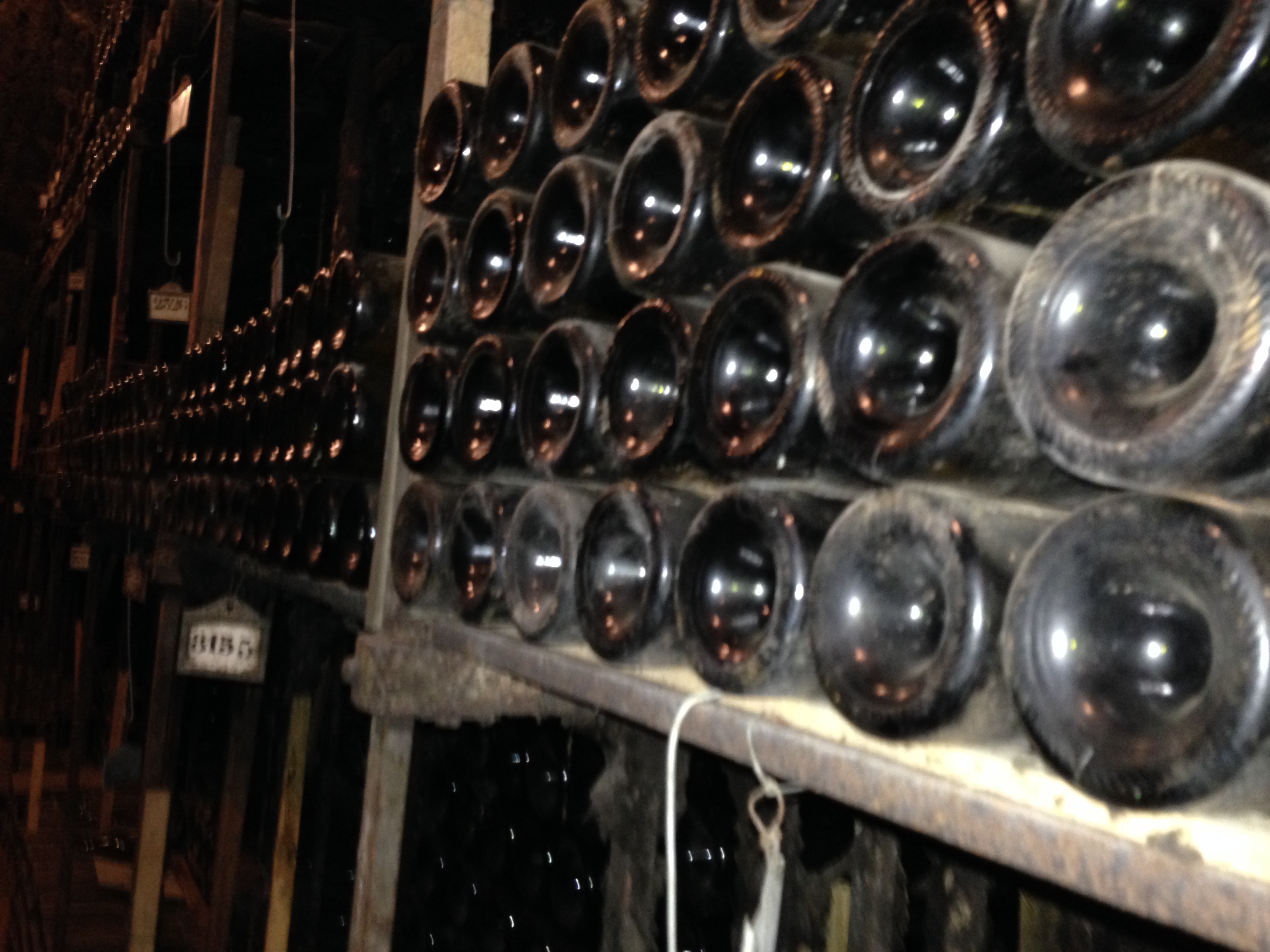
The highlight of Bouchard Père et Fils is their medieval location – in the Beaune Castle. The kings from Louis VI to Louis XIV used it to control the population of Beaune. The family Bouchard acquired the castle in 1775. Also since 1731 the family has been in the winegrowing business which they enhanced after the French revolutiuon, when most wine estates of Burgundy were sold. Today it is Bouchard’s 9th generation; they sold the estate to Henriot in 1995, but continue to manage and enhance it together with Henriot. The vinifcation takes place in Savigny and the wine bottles are stored in the castle caves, on a surface of 4000m2, 10m under the ground, at a constant temperature of 14 degrees and 80% humidity. A guide takes us down the steep stairs into the cellar. We are full of respect, when admiring the many bottles – they are “naked” without labels (the corks keep the identification of the wine). The family also keeps some old bottles, even from the 19th century, to be able to investigate the aging process of their wines. The oldest bottle is a Meursault from 1846 that was still drinkable. They recork their bottles every 30 years and then also taste them.

IMG_1036

After having left the cellar, our guide took us to this romantic garden.

P1060993

The tasting took place above the ground and was accompanied by cougères, the apéritif cookies of Burgundy. A perfect match with the wine.

IMG_1041

These were the wines we tasted

White Crus

  • Beaune Clos Saint-Landry 1er Cru 2011 (Monopole)
  • Meursault Perrières 1er Cru 2011
  • Corton-Charlemagne Grand Cru 2009
  • La Cabotte Chevalier-Montrachet Grand Cru 2003

Red Crus

  • Savigny-le-Beaune Les Lavières 1er Cru 2011
  • Beaune Marconnets 1er Cru 2009
  • Volnay Caillerets Ancienne Cuvée Carnot 1er Cru 1989
  • Beaune Grèves Vigne de l’Enfant Jésus 1er Cru 1976 (Related with the legend of Anne from Austria that  prayed for a son and then gave birth to the later Louis XIV).


Domaine Besancenot

The Domaine de Besancenot invited to taste eight grand cru wines, however… this winegrower was a disappointment for me. The atmosphere was sober and the cellar was not really clean. This was an “anti-highlight” and I would not return here.

IMG_1049

We also visited some winegrowers around Beaune – not related with the November wine days. I will talk about them later, in particular about my personal highlights.

On the road – Chablis tastings – the Tuesday marathon

When spending some days in Chablis with my friends from Russia in November 2014, we did a marathon tasting  tour on Tuesday: We visited three wine cellars. I enjoyed all the tastings and I was impressed, how carefully my Russian friends evaluate each wine.

.

Régnard – an elegant traditional house offering all Grands Crus terroirs

Usually Régnard opens at 9:30 AM, but for us, Marion opens at 9 AM. We stand in front of a closed large gate, until we find out that the boutique is round the corner. Marion is waiting for us. She explains to us that Régnard has all seven Grands Crus (including Les Grenouilles – I do not understand, why La Chablisienne is said to have the quasi-monopole of Les Grenouilles then – and Régnard has Grenouilles on offer as well).

Marion guides us into an elegant room with a round table and proposes us to select the four Grands Crus that we want to taste. The tasting is free, when we buy something.

P1060867

These are the four Grands Crus that we have selected for our tasting.

  • Les Preuses 2003: Due to the age the color is darker yellow. Nose is rich, taste is mellow – perhaps truffles and nuts, ends a bit harsh. Drink now.
  • Bougros 2007  (good year): Smooth , good balance with acidity, fruity (cannot say what fruit). I liked it and bought one bottle of 2006.
  • Blanchots 2009 : Toasted bread and pear in the nose, strong mineral and salty taste (Marion talks about pierre des fusils or flint stone).
  • Les Clos 2011: Mineral, salty and fruity (the Russians find green apple, while a find a touch of peach).

In addition to Bougros, I buy two half bottles of 1er Cru – Fourchaume (2010, vielles vignes) and Montée de Tonnerre. Régnard is a traditional house and carefully packs our treasures into boxes. They also have an excellent Marc.

One of the Fourchaume half bottles I share with a friend later. We had it with a corn soup. My notes: Fruity, nutty (perhaps almond) and mineral flavors.

.

LaRoche – splendid history going back to the 9th century, and more sober atmosphere in the wine shop

In the 9th century Saint Martin and his monks had to flee from the Vikings. They founded the church of St. Martin with a monastery, after having received this area as a feud from the French king, Charles the Bold.

P1060879

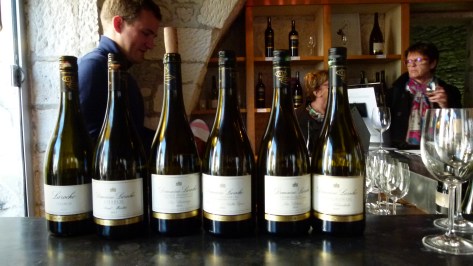
The old cellar of the monastery became the cellar of LaRoche. We visited the impressive vaults and admired the old vintages in the shelves.

P1060871

The tasting takes place in the sober atmosphere of the small wine shop.

P1060878

These are the wines we tried:

  • Chablis 2013: Fresh and crispy.
  • Chablis Saint Martin: Mixed best “plain” Chablis climats. Mineral, balanced acidity, green apple, I like the fresh taste and buy two half bottles.
  •  Beauroy 1er Cru 2011: Mellow and well balanced.
  • Fourchaume 2011: Somewhat unbalanced (“eckig”), touch of almond.
  • Blanchot Grand Cru. 2010 : Pleasant, balanced, flowery (perhaps rose fragrance), I sense the oak. The assistant says:”il n’a  pas encore mangé son fut” (the wine has not yet eaten up its oak) and gives us Blanchot 2009 to compare which has a more fruity touch (perhaps melon).

.

Brocard – a family owned innovative winemakery in a great setting amidst vineyards

After a quick lunch next door to LaRoche, we head off to Brocard. His cave is outside of Chablis, about 5 km south east and amidst vineyards. There is a great view from here. Brocard also offers a large room for business and private events. In the tasting room I see Russian wine magazines.

Brocard is the largest family owned winemaker in Chablis.  Father Jean-Marc Brocard built this production site in the 1970’s. Now his son Julien has taken over. Julien introduced biodynamic methods for a large part of the vineyards. Our tasting assistant explains that Brocard does not mix the climats when producing wine to let the terroir speak. They use oak barrels carefully, just to make the wine softer.

We visit the caves with the oak and steel barrels, and come across these innovative egg-shaped barrels made out of concrete. The yeast circulates better in these barrels, our guide says.

IMG_0938

These are the wines we tasted..

P1060883

  • Chablis, Sainte Claire: Green color, fruity touch of green apple.
  • Chablis, vieille vignes 2012 (vines are 60 years old): Round, touch of celery, I liked it and bought two half bottles.
  • Château Vau de Vey 1er Cru 2012: slightly bitter taste, orangeade.
  • Montee de Tonnerre 1er Cru 2012: Salty, high acidity.
  • Bougros Grand Cru 2011: I can feel the oak.
  • Les Clos Grand Cru 2011: 18  months in barrel, touch of nuts, I sense the oak less.
  • Les Preuses Grand Cru 2011: Was in egg-shaped concrete barrel, salty, round. I like it and imagine it with shellfish. I bought a bottle.

.

Rounding off with a short walk in the vineyards

After our tasting marathon, we stop in the vineyards around Brocard for a short walk….

P1060885

… tasting the grapes that are left in November – they are sweet. Would ice wine not be a business for Chablis as well? Perhaps too risky, when freezing temperatures come early in autumn.

P1060886

Our next tasting adventures will take place around Beaune.


Three Swiss in Florence – taking bus number 7 to Fiesole

Fiesole is an old historical town that was overtaken by Florence later

Situated on a hill north of Florence is Fiesole. The Etruscans founded it far above the Arno by to avoid the floodings. In 59 BC the Romans established Florence next to Fiesole. Diokletian made Florence the capital of Tuscany and Umbria. Medieval Florence conquered Fiesole (around 1000 AD).

Fiesole shows the remains of their Roman city as an archaeological site open to visitors. After a three day culture marathon with the Firence card, we now head to Fiesole to see the Roman remains and to look at Florence from above.

.

How to get to Fiesole – bus number 7

Besides giving access to museums and churches, the Firenze card also provides a bus ticket. We climb bus number 7 near Accademia in Via Giorgio. As the bus follows the winding road upwards, the gardens and houses are getting larger – a suburban residential atmosphere. The view of Florence is spectacular.

.

The archaeology museum closes at 2 PM

At Fiesole, we find out that the archaeology museum closes at 2 PM and now it is 12. No mercy, no lunch… Trying to calm down my empty stomach, I take a photo of these nicely set tables waiting for guests and I had a small power bar that Leni found in her bag.

P1070484

We buy the entry ticket and wander around the Roman ruins. There are an amphitheatre,…

P1070488

… archades that are left from the Roman baths (with a view of the Renaissance cathedral),…

P1070492

… the remains of a Roman temple that was built on the foundations of an Etruscan temple…


P1070497

… and a cobbled Roman road.

P1070499

Beware not to climb around the ruins – this may be dangeorus.

P1070494

We have a short look at the museum, but the guard warns us of a “terremoto” and does not let us access the upper levels. A terremoto? Why a terremoto? We learn later that at 11:36 a terremoto of 4.1 Richter magnitude scale has shaken the area of Florence. And this was the most serious of a series of earth quakes hitting the Chianti area today. Sitting in the bus, we had not noticed anything. We only observed that the cupboards in our hotel room were shaking, when there was a minor earth quake of about 3 around five o’clock early the next morning.

After having seen the Roman ruins, we return to the restaurant on the main square of Fiesole to have a pizza. Outside where the tables are nicely set, it is too chilly for us. We select a table under the garlic garlands…

P1070501

… and soon enjoy a crunchy pizza on the rustic blue plates with the white dots.

Captureplate

The bus number 7 takes us back down to Florence. Again we dive into the streets of Florence, this effervescing city.


Three Swiss in Florence – enjoying more museums and palaces

Again to recapitulate: The architecture timeline  of Florence from Proto-Renaissance to Baroque

Capture_1

Let us now look at more museums, namely the Palazzo Pitti, the Uffizi and the Accademia.

Palazzo Pitti – Palace of the Pitti, then of the Medici, then of the king of Italy – and now a museum

With Leni, I crossed Ponte Vecchio admiring the Vasari Gallery that leads from Palazzo Pitti to the Uffizi. Vasari built this Gallery in 1564, after the Medici (now dukes reporting into Spanish Habsburg) had moved from the Palazzo Vecchio into the larger Palazzo Pitti. Using the Gallery they could walk from their new home to their offices and – at his point – even attend the service in Santa Felicita.

P1070589

The Medici named the Palazzo Vecchio “Palazzo Vecchio” after having moved to their new Palazzo Pitti, and they enlarged their new residence.

P1070592

1813 – 1821, Napoleon had a bathroom here.

P1070639

And from 1860-1865 the king of newly founded Italy resided in this palace, for five years, until Rome became the capital of Italy.

The gardens behind the palace are called Boboli gardens. They are huge. We climb the stairs and reach the fountain with hercules.

P1070600

We climb farther up and look back to the fountain, the palace and the town.

Captureboboli

The Palazzo Pitti includes the Gallery Palatina that extends over several halls that are decorated with frescos by Pietro de Cortona (17th century). This is the allegory of war on the ceiling of the hall of Mars: It praises the Medici, as their emblem shows.

P1070646

The halls are decorated with silk wallpapers. The paintings are arranged on them according to esthetical considerations – as if the Medici would like to come back any time and live in these rooms. In each hall, there is a panel pointing out the outstanding oeuvres. And there are outstanding oeuvres such as this painting by Raffael (the “Mother with Child and St. John the Baptist”)…

P1070633

.. and this is “La Bella” by Titiano. I am impressed with her sleeves – not very practical, but she obviously did not have to do a lot of housework.

P1070650

The Palazzo Pitti is also playing a role in Magdalen Nabb’s Marshal Guarnaccia Investigation stories. Guarnaccia works in the police station of the Palace and from here he uncovers the crimes that happen in the small streets around Santo Spirito. I have read “Death of an Englishman” and “Death of a Dutchman” – two great criminal stories with a lot of humor.

.

Stunning and not digestable in one visit: The Uffizi

The dukes of Medici had the Uffizi built as an administration center. I feel like in a dream when walking up the large stairs to the top floor. There is a long corridor with many, many doors.  For citizens, this maze must have been terrrifying. I remember Mani Matter and his song about such governmental corridors: “Är isch vom Amt ufbotte gsy, am Fritig vor de Nüne, by Schtraf, im Unterlassigsfall, im Houptgebäud, Block zwo, Im Büro 146 persönlich go z’erschiine, Und isch zum Houptiigang am Halbi Nüüni inecho.” – “He has been asked by the government to appear in the main building of block two in office 146, on Friday before nine and risking punishment, when not coming.”  The poor guy gets lost in the corridors with all the many doors and never finds a way back. Perhaps, Mani Matter was in the Uffizi, when he invented that song.


P1070285

Fortunately the Uffizi are now a museum and panels clearly show the way. Behind the first door I say hello to the duke and duchess of Urbino, portrayed by Francesco (ca 1470). Why are you so pale, Lady?

.P1070269

In one of the next rooms there is this highlight of Botticelli, called “the Birth of Venus”. A lady enters the room, walks directly to her Botticelli, opens her chair, sits down and just looks at the painting. Via email I share this foto with the godfather of my Ernst. He is also called Ernst and was a priest. Now he his 90 years old. He guides cultural tours to Florence and Rome. Enthusiastically he writes back: “Look at Botticelli’s wonderful painting. The name is wrong… it is not ‘The birth of Venus’, but it should be called ‘Arrival of Venus onshore’. Look at Zephir. He is blowing to push Venus to the shore and he makes flowers follow her.” Uncle Ernst plans his next tour to Florence in spring. I am sure that his guests will enjoy his lively explanations!

P1070274

One of my favorite artists is Leonardo da Vinci. Well, I know, he was not just an artist, but also a scientist. Dumont says that both paintings in the Uffizi have been completed in the workshop of Verocchio and that Leonardo took part in them. In the “Annunciation” Leonardo must have participated in painting the angel and Maria.

P1070276

And in the “Baptism of Christ”, Leonardo painted the left angel that is much softer than the other angel.

P1070278

We looked at more paintings of Botticelli,  of Ghirlandaio… and then there was also Michelangelo Buonarotti: “the Tondo of the Holy Family”.

P1070288

This painting by Lippi is very charming: “Madonna with Child and St. John.”

P1070268

After a coffee we take the next level of the Uffizi, until we feel dizzy. I think I will have to come back. It is not possible to see and digest the Uffizi in one visit of half a day.

.

Also stunning and not digestable in one visit: The Galleria dell’Accademia

There is one highlight in the Galleria dell’Accademia that all tourists look for – the original sculpture of David by Michelangelo. The copy stands in front of the Palazzo Vecchio, where a committee of town representatives had decided to place it, after Michelangelo had completed it. Originally the statue of David was planned to be raised to the roof of the Duomo. Michelangelo cut  his David out of one block of marmor and it weighs 6 tons. It was impossible to lift David up to the Duomo. And this is why he ended up in front of the Palazzo Vecchio. This is also why his hands are oversized – seen from the ground below the Duomo the hands would have been perfectly in perspective. But on the same level they look huge. Florence knows what their David is worth. Rome wanted to take it (if not kidnap it), but Matteo Renzi, then mayor of Florence, could convince the Italian government that David belongs to Florence.

P1070472

There is much more to be seen in the Accademia. Here is another example, the crucification of Bonaguida in 1310: Each fruit on the twelve branches is said to be a gift to mankind.

P1070483

And I also liked this crucification of Bernardo Daddi, 1340, which shows so much suffering in the face of Christ.

P1070482

.

 So much for the culture in Florence

With the Accademia, I am rounding off the cultural highlights that we visited in Florence. Fortunately, we did not end up in a hospital with the diagnosis “overdosis of literature”. We took our time in the churches and museums and we also relished the atmosphere in this lively town – in markets, restaurants, coffee houses and shops or just strolling through the streets.

Two Swiss – discovering the history and stunning scenery of Innsbruck

Tyrolia is a great destination for ski touring – Mario takes us to Praxmar near Innsbruck

With our mountain guide from the Bernese Oberland, Mario, we travel to Praxmar near Innsbruck. We stay in the comfy and friendly Alpengasthof Praxmar and share dinner for several evenings at this beautiful table.

IMG_1339

I join the team for two ski tours – towards the Lampsenspitze – this is the view from the top…

IMG_5555

…. and to Zischgeles – this is a foto that shows us shortly before reaching the saddle with the ski depot.

IMG_5458

Thank you, Mario, for having provided me with these fotos.

But then – I feel my Achilles tendon – I had strained it too much, when doing cross country skiing. Well, there is always something else to do: It takes half an hour by car to get to Innsbruck, and this is a town with a lot of history in a stunning alpine setting. Something new to discover. Niklas joins me.

The Alpgasthof has a handy map, gives us hints for our excursion and organizes a knowledgeable and experienced tour guide, Elisabeth Grassmayr. I buy “Innsbruck – der  Stadtführer” by Monika Frenzel (Tyrolia Verlag). The “Stadtführer” is my primary source, along with the input of the tour guide and of Dr. Google.

.

Innsbruck is strategic on the way to the Brenner pass and, belonging to Tyrolia, became part of the Habsburgian possessions

Already in Roman times, Innsbruck (Oenipontum and nearby military post Veldidena – today Wilten) was a stopover on the way to the Brenner pass across the Alps. In the twelfth century Innsbruck was in the hands of the Bavarian counts of Andechs. Later the counts of Tyrol took over (hence the name “Tyrolia”), and in 1363 the dukes of Habsburg inherited Tyrolia. In 1420 they moved their Tyrolian residence from Meran to Innsbruck.

.

Rendez-vous with German emperor Maximilian I – also well-known to me from Switzerland

Around 1500, the German emperor Maximilian I used Innsbruck as his second residence.

I have “met” emperor Maximilian before. I know him from the Swabian War (Schwabenkriege). He lost the battle at the Bruderholz and the battle of Dornach near Basel in 1499 and had to definitively give up the original Habsburgian family possessions in Switzerland.  But outside Switzerland Maximilian was able to strengthen the position of the Habsburgians paving the way for his grand-son Karl V (later the sun would never set in Karl’s empire and Habsburg’s policy to arrange political marriages had become famous).

Now I had another rendez-vous with Maximilian in Innsbruck, as he is very present until today. To show his power, he built the “Goldenes Dachl” (“little golden roof”). It overlooks the main street (Herzog-Friedrich-Strasse). Whoever crossed the bridge and headed for the Brenner had to pass by under the Goldenes Dachl. Maximilian used the loggia to watch festivals or tornaments.

IMG_1306

Maximilan’s grand-son, Frederic I, built the Hofkirche in memory of his grand-father.

IMG_1299

Maximilian had planned his cenotaph as a memorial for the Habsburgian family. Its completion took 80 years, until 1584. It is the major attraction in the Hofkirche.

IMG_1302

Maximilian is not buried here. This sarcophagus is empty (hence called “cenotaph”). A bronze statue of Maximilian kneels on top. Reliefs around it show scenes from his life. 28 bronze statues mourn around the cenotaph. They are either relatives (e.g. his wives and parents) and ancestors (e.g. king Rudolf I) or leaders that Maximilian admired (e.g. king Arthur). A detailed description of the “black men” (Schwarze Mander) is on the Website “The World of the Habsburgers“. Renowned Renaissance artists, among them Albrecht Dürer, participated in the work.

Our tour guide knows  every black man (and woman). As she points to Rudolf I, the first Habsburgian to be elected king of Germany (1271), I can proudly add that  my home town Basel was on good terms with Rudolf. He was just besieging Basel. The citizens heard that the duke outside their walls had become king and opened their gates. Rudolf’s wife Anna von Habsburg is buried in the cathedral of Basel, with little son Karl.

There is more to see in the Hofkirche: An old organ from the late 16th century, the tomb of Andreas Hofer (who fought to free Tyrolia from Bavaria in the early 19th century) and the silver chapel wth the tomb of Ferdinand II and his wife Philippine Welser.

Maximilian completed the Hofburg (Imperial Palace) around 1500. It was a gothic castle with a famous tower that was covered with emblems. In the 18th century Maria Theresia had the castle rebuilt in the baroque style. Principal magnet for visitors is the giants hall with paintings of the large family of Maria Theresa (she had given birth to 16 children). My guide knows every family member. She also takes me through the rooms – the tables are set for superb dinners and the sofas and chairs have been renovated based on faded examples found on the attic. This video gives an overview. And here is a foto of the Imperial Palace with the Northern Chains (Nordkette).

IMG_1337

Maria-Theresa was the last Habsburgian. She married Francis from Lorraine. Today she is also present in Innsbruck: The “new town” centers around the “Maria-Theresien”-Strasse. In Innsbruck, her second son, Leopold (later Leopold II) married Maria Louisa of Spain, but a few days later Maria Theresa’s husband, emperor Francis, died.  Maria-Theresa was very, very sad. The triumphal arch at the end of Maria-Theresien-Strasse shows the wedding of Leopold and the death of Francis. Our tour guide still feels sorry for Maria-Theresa.

Today the “new town” area is great for shopping in all the arcades and in the old palaces that turned into shops. Roof top bars and restaurants provide a great view of Innsbruck stretching along the Inn and squeezed between the gorgeous mountain chains.

.

Maria Hilf picture (Maria Help) – a guest present from the duke of Saxony in Dresden to Leopold V, when he was bishop in Passau

The “Maria Hilf” picture by Cranach and its history made a great impression on me. Cranach’s Maria Hilf (Maria Help) picture is integrated on the altar of the baroque dome of Innsbruck.

IMG_1313

“Maria Hilf” is an almost protestant painting – Cranach was a good friend of Luther’s and he painted Maria in a natural way – without a nimbus. How did this painting end up in the strongly catholic town of Innsbruck? This is the answer: Archduke Leopold V was bishop in Passau. When visiting the duke of Saxony in Dresden around 1600, he was given the “Maria Hilf” picture. He first took it to Passau, but when he became archduke of Tyrolia, he left a copy of “Maria Hilf” in Passau and took the original with him to Innsbruck. It is now adorning the choir of the dome of Innsbruck (very small). Usually there is a silver altar around Cranach’s “Maria Hilf”, but during fasting times, the painting around it is revealed – as it presents itself now.

Our tour guide gives me a copy of the “Maria Hilf” picture – in the dome it is so tiny that I could not discern any details.

Maria Hilf

And the tour guide showed me many houses in the city that are decorated with a copy of Cranach’s painting. An almost protestant painting made its way into a catholic stronghold. I enjoy seeing this – it gives hope.

.

Strolling through the old city center

It is a pleasure to stroll through the old city center. The Rokoko Helbling house dominates the Herzog-Friedrich-Strasse near the “Goldenes Dachl”. It once belonged to a rich merchant.

IMG_1305

Across the Helbling house the Town Tower (Stadtturm) dominates the city line, next to the old townhall.

IMG_1311

In the narrow Kiebachgasse we find the traditional restaurant “Weisses Rössl” (white small horse) where we enjoy Apfelstrudel and Palatschinken.


IMG_1307

I read that the word “Palatschinken” is said to come from the Latin word “Placenta” or “cake”.

Later I come back and have a Blunzengröschtl (potatoes roasted with blood sausage and cheese, served with a cabbage salad). I first frowned a bit, but then found that it does not taste bad at all.

 IMG_1326

.

Innsbruck is surrounded by mountains – real mountains, about 2500m high!

While strolling through the city of Innsbruck, I hear the sound of heavy ski boots banging on the pavement. I look up. Yes, there is a skier going by, helmet on his head, boots at his feet, carrying skis and poles. His friend is not so noisy. He is a snow boarder with soft boots, helmet on his head, snow board under his arm. Others come in sneakers, while the ski boots hang over their shoulders. We are in the middle of a town of 130’000 inhabitants. What are the skiers and snowboarders doing here?

Well, Innsbruck is surrounded by real mountains, about 2500m high. Skiing areas are just above the town, to the north (Nordkette) and to the south (Patscherkofel). Other valleys such as the Sellraintal and the Ötztal are not far.

As the sun comes out, we can see the Nordkette just above the “Goldenes Dachl”. Our tour guide confirms, it takes her half an hour to go skiing there, and when there is snow in Innsbruck she can ski down into the garden of her house. She skis practically every day. I hear that students ski during their lunch break and then join the lessons again not taking off their ski boots. I am impresssed. I have always dreamed to live in a town that is so close to skiing opportunities…

IMG_1338

.

Around – and above – Innsbruck

By car we drive south to Igls and see the Bergisel jump with Zaha Hadid’s viewpoint and restaurant.

IMG_1316

Above Igls there is the Patscherkofel ski area. No wonder that Innsbruck has been selected for Olympic Winter Games – even twice, in 1964 and 1976.

We get onto the Brenner motorway and have to pay two Euros for about 5km, until we reach the main motorway of the Inn valley. Not everything is cheap in Austria…

To the north there is a cable railway that takes passengers from the city center to the Hungerburg (literally “castle of hunger”). Zaha Hadid has been here as well, as the train station shows (Basel has refused to build her proposal for the Town Casino).

IMG_1322

At the Hungerburg train station I find a great view of Innsbruck with the river Inn and with the mountains in the south of the town…

IMG_1323

… and a teleferic that leads up to this ski resort in the Northern Chain (Nordkette).

IMG_1319

.

A stunning scenery…

Skiing high above a city… on the Website the scenery looks gorgeous. I may come back just to experience that – and then, in town in the evening, I can dive into the culture of Innsbruck that has played an important role in European history.