In Catalonia (Spain): Discovering modernism in Reus

On a windy day we explore the city of Reus. It is just half an hours’ drive from Hospitalet de l’Infant, where we spend a few days in the apartment of our friends end October until mid November 2016.

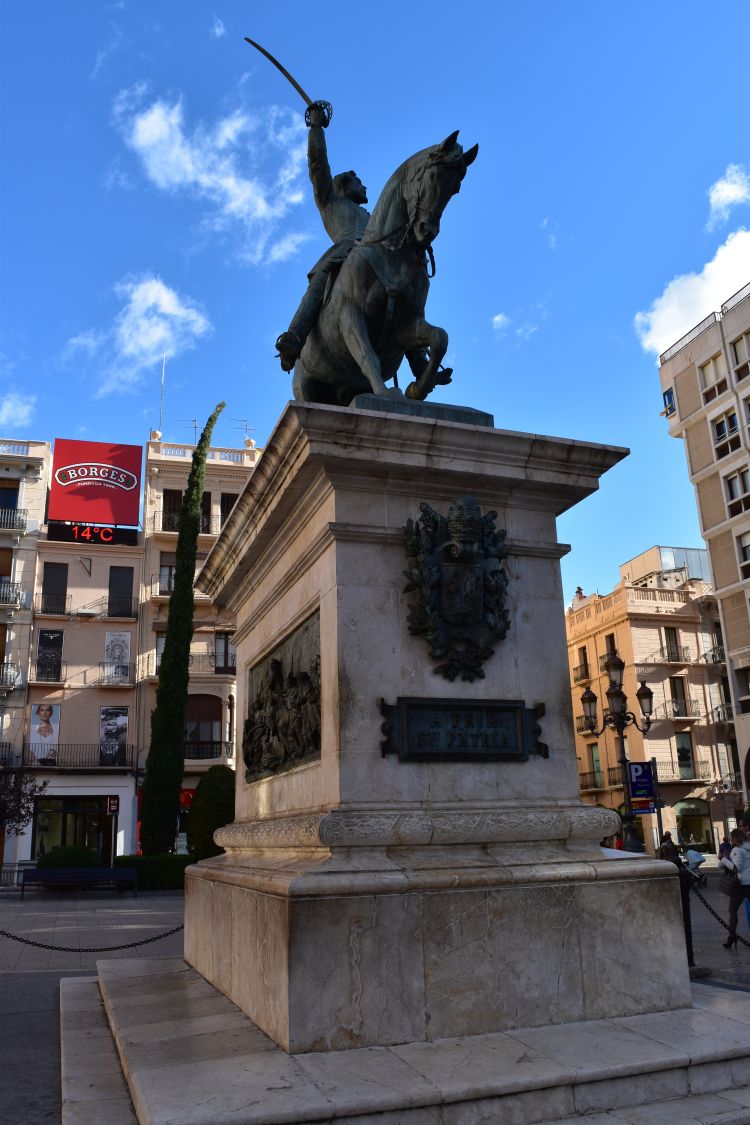
Reus is the home town of Marshall Prim. He fought for the constitution of Spain, and from 1868-70 he was Prime Minister of Spain (look at the cypress – it WAS windy).
aaa_0084-small

We park our car in the parking cellar located under the statue of Marshall Prim. It was another of those parking houses with small parking lots and narrow corridors. We found a comfortable slot on the fifth floor underground… if only I will be able to “climb” up from here again without getting stuck!

.

The Gaudí Centre

Gaudí was born in Reus. Though he never built anything in Reus, the city is proud of their son and has set up a museum about his life, his architecture and the way he worked. The museum is well curated. We learn, how Gaudí experimented to find the laws of nature that he then applied to create harmonic architectural structures. For instance he used straight lines, triangles or quadrats and twisted them to find the harmonic shapes. Based on the “law of chains” he built slim arches that could stand without counterweights (when the sides of the arches stand upright, counterweights have to prevent the arch from collapsing, like in Roman or Gothic architecture, but when they are inclined, the arches do not collapse). These hanging wooden sticks are one of experiments.

aaa_0130-small

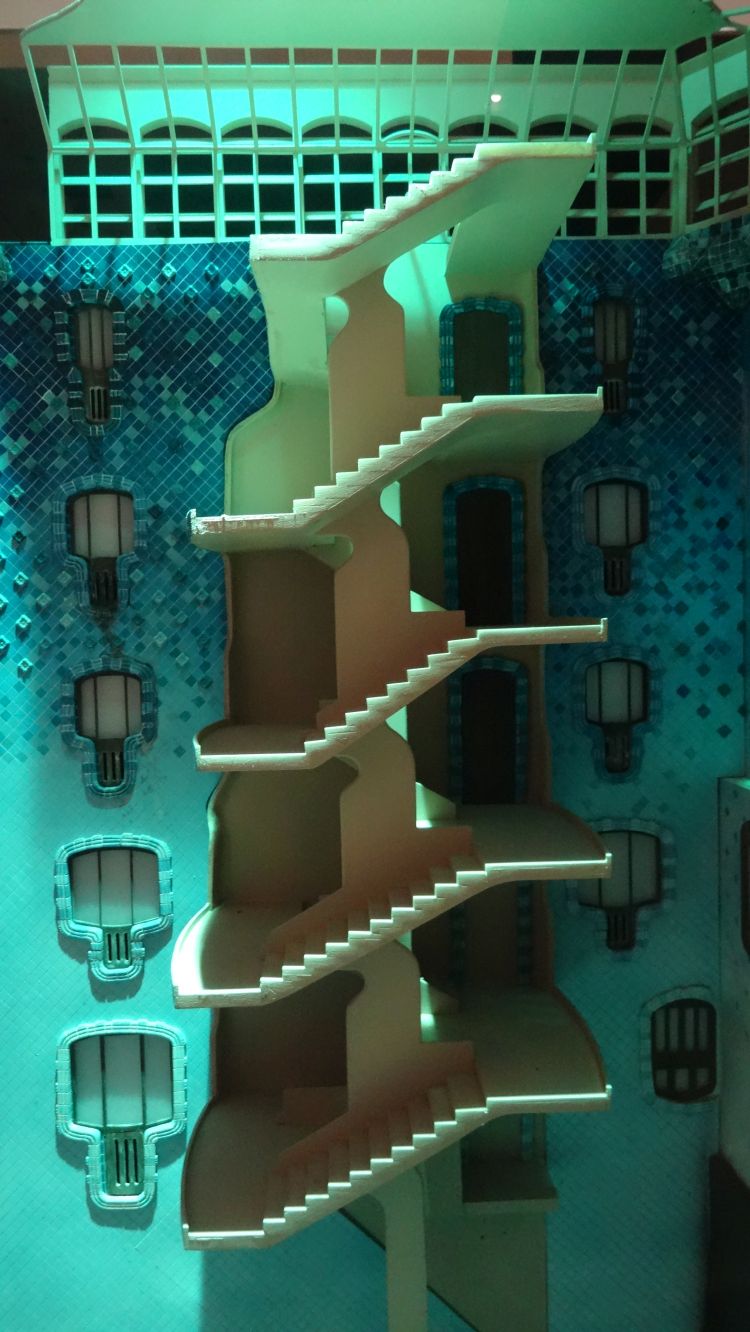
He tested everything with models, before implementing it, even studying the exposure to light.
dsc09286-small

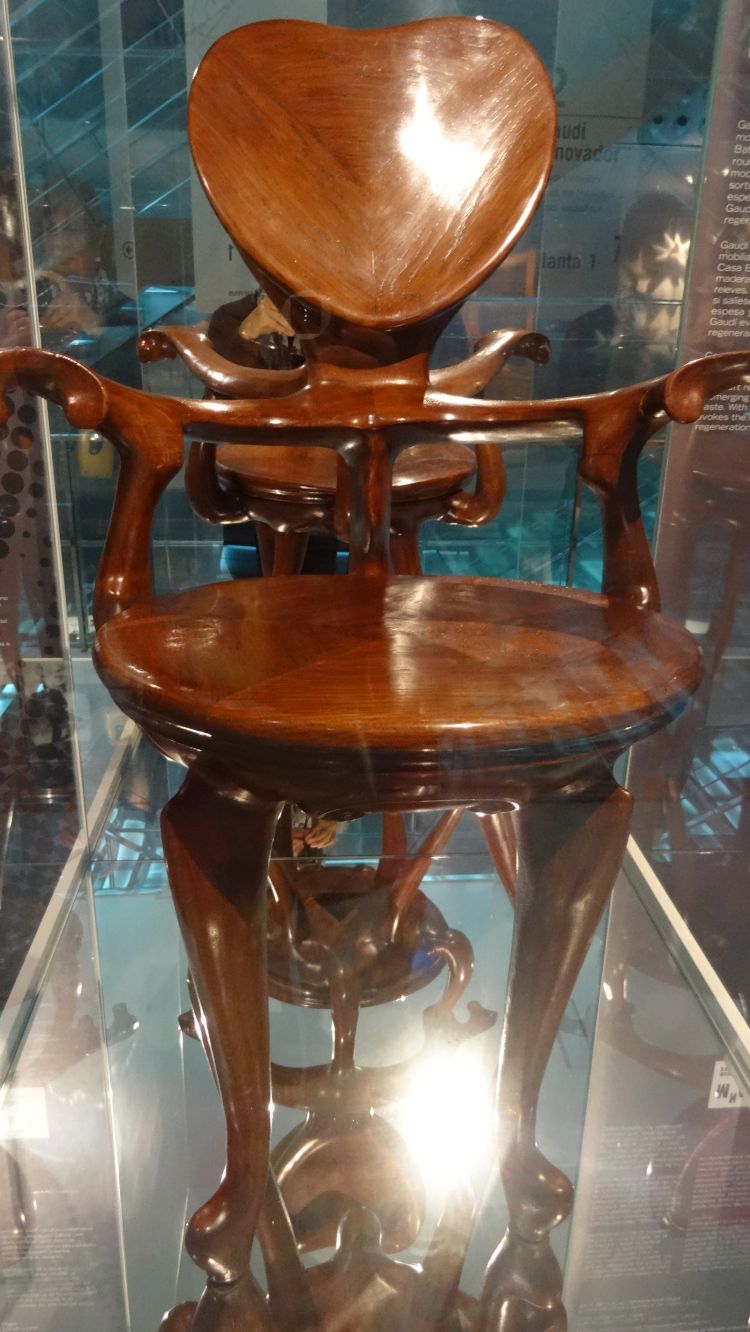
He had an overall approach to architecture also creating the furniture.
dsc09283-small

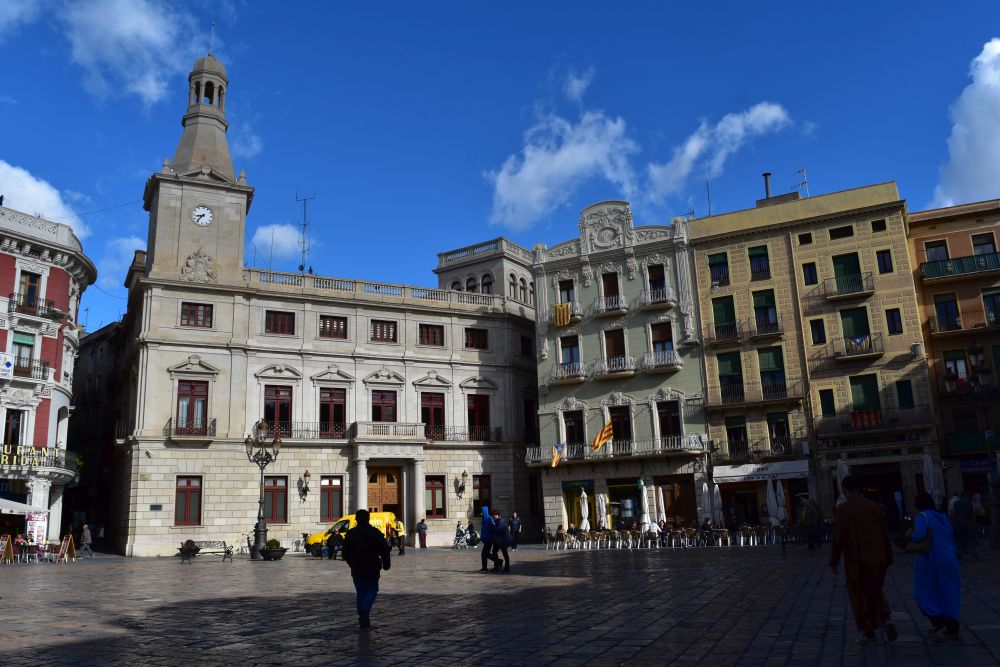
The Gaudí Center is located at the market square (Plaça Mercada), next to the townhall and the green modernist Casa Piñyol.
aaa_0090-small

Across is the modernist Casa Navas with the shop for bath and wellness on the ground floor. I buy a dressing gown (in Spanish: albornoz – the moors must have introduced this to Spain).

aaa_0092-small

We have lunch in the roof top restaurant of the Gaudí Centre. The view is great, but the waiters would have preferred us not to disturb them and the meal was expensive and poor (liver cream from the tube – in Swiss German: Leberpains – served on crackers with a few salad leaves, all for 15 Euros).

.

The cathedral San Pere – late gothic and a no-no tour guide

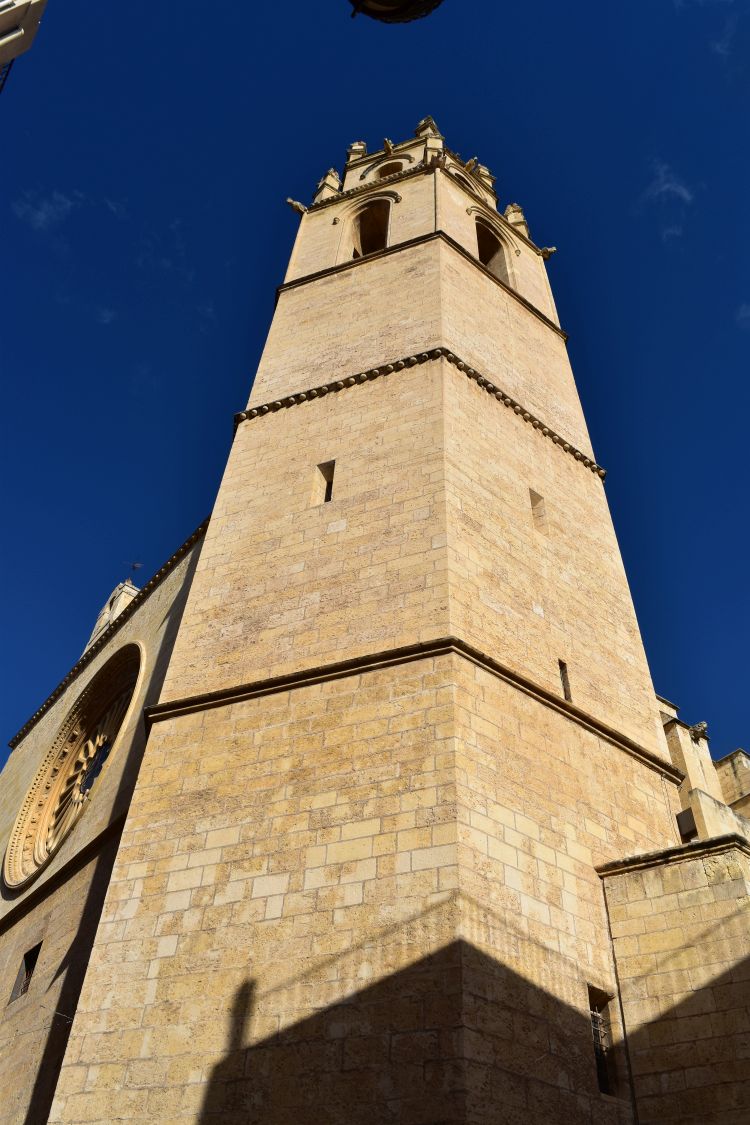
South of the market square we visit the late gothic cathedral San Pere from the early 16th century.
aaa_0099-small

Inside we find two sisters praying and singing at low voices. It is a solemn atmosphere. Bump! A group of tourists enters. Their tour guide starts to talk in a loud voice. The prayers continue gently. Ursula frowns and whispers: “This is an absolute no-go!”

aaa_0109-small

.

The fish market or Peixateria Velles

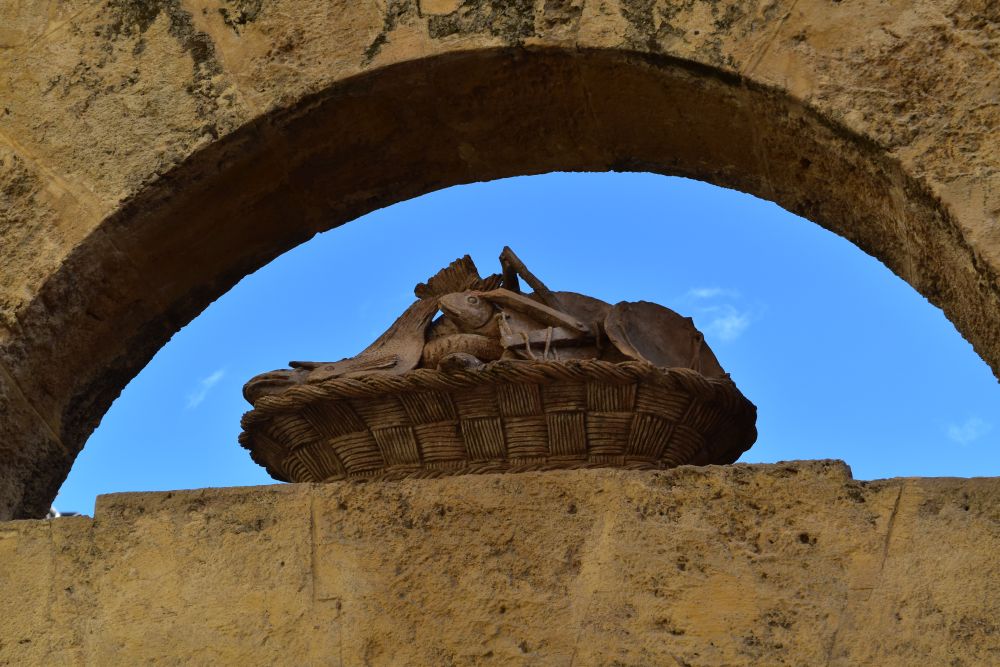
Behind the church we enter the fish market (Peixateria Velles) with the sculpture of a basket containing fish products next to the entrance.
aaa_0136-small

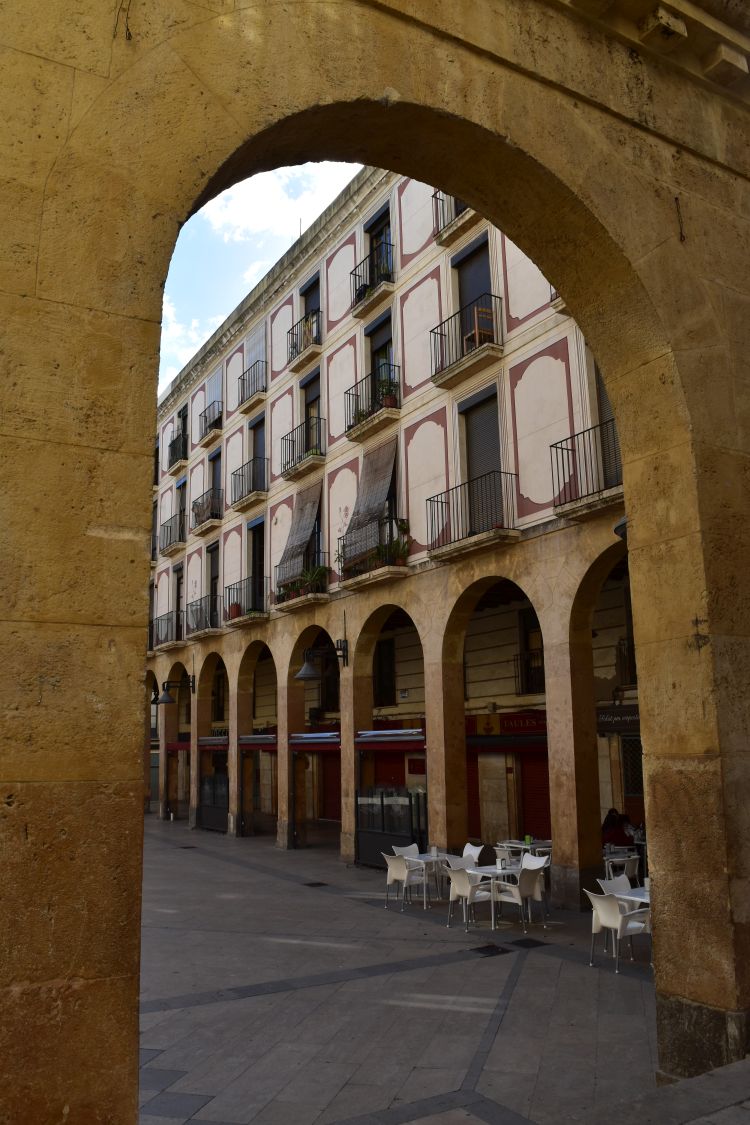
Through the gate we see the galleries and inviting restaurants and bars.
aaa_0105-small

.

Modernist houses in Reus – a selection

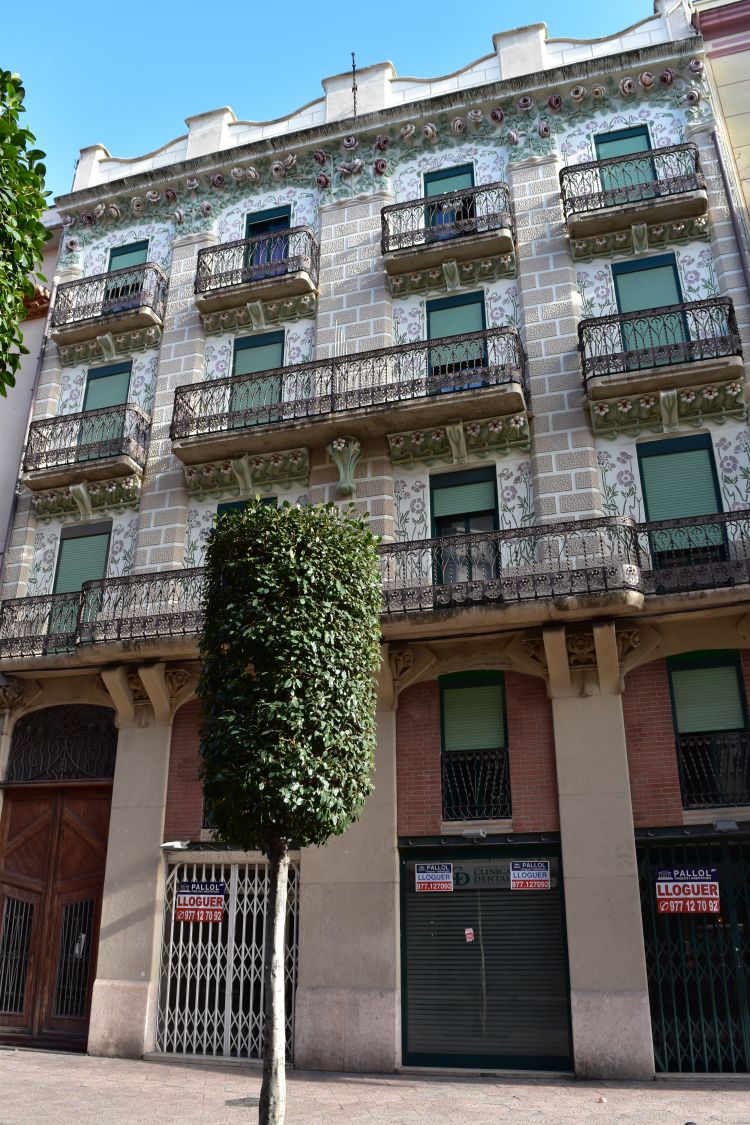
Finishing off our day we follow a walk proposed by Reus tourism to discover a selection of the 29 Art Nouveau buildings proposed. This is the Casa Anguera behind the fish market…
aaa_0143-small

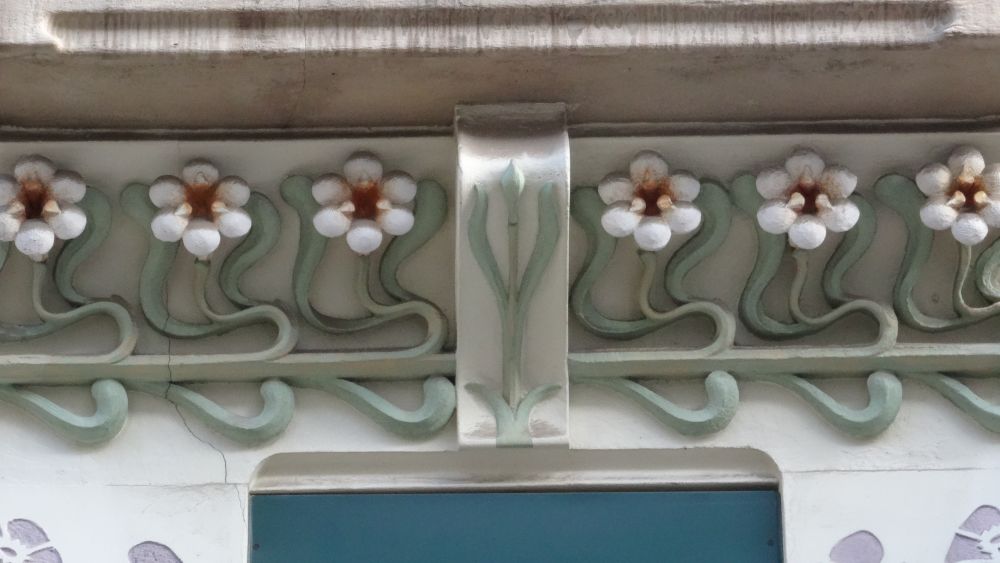
… with a detail of the flower ornaments.
dsc09327-small

The Casa Serra and the Casa Marco mark the entrance to the small street, where Gaudí was born.

dsc09349-small

The blue tiles of the Casa Laguna adorn the street leading from the square of Marshall Prim to the market square

aaa_0151-small

Not far from here is the Casa Carpa with the painted balcony doors.

aaa_0156-small

With Ursula’s directions I succeed to manoeuver my car out of the narrow garage under Marshall Prim (five floors up through rectangular small corridors!).

Reus is a small town worth a visit!

Back at Hospitalet I enjoy the inside pool with the swimming lanes – it is very busy here with swimming courses and water gymnastics going on around me.

In Catalonia (Spain) – some excursions around Hospitalet: Ebro Delta and Tortosa

On a sunny Friday in November 2017, we get up early to take photos in the beautiful landscape of the Ebro delta and then continue to Tortosa on the Ebro. This is another excursion that we go for, while enjoying the small apartment of our friends in Hospitalet de l’Infant at the end of October until mid November 2016.


The morning light in the Ebro Delta

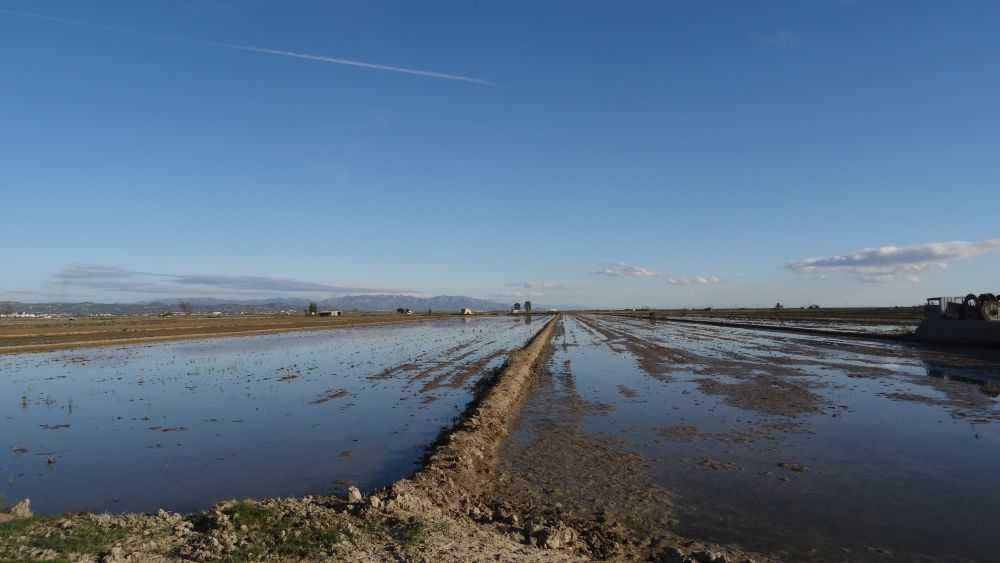
In November the rice fields have been harvested awaiting the next cultivation cycle. We enjoy taking photos in the atmosphere of this morning.

aaa_0202-small

Ursula has a very good “photo eye”, when capturing the fields…

dsc09432-small

… and the black egrets reflecting in them.

dsc09423-small

Then the birds decide, we are too close and fly away.

dsc09433-small

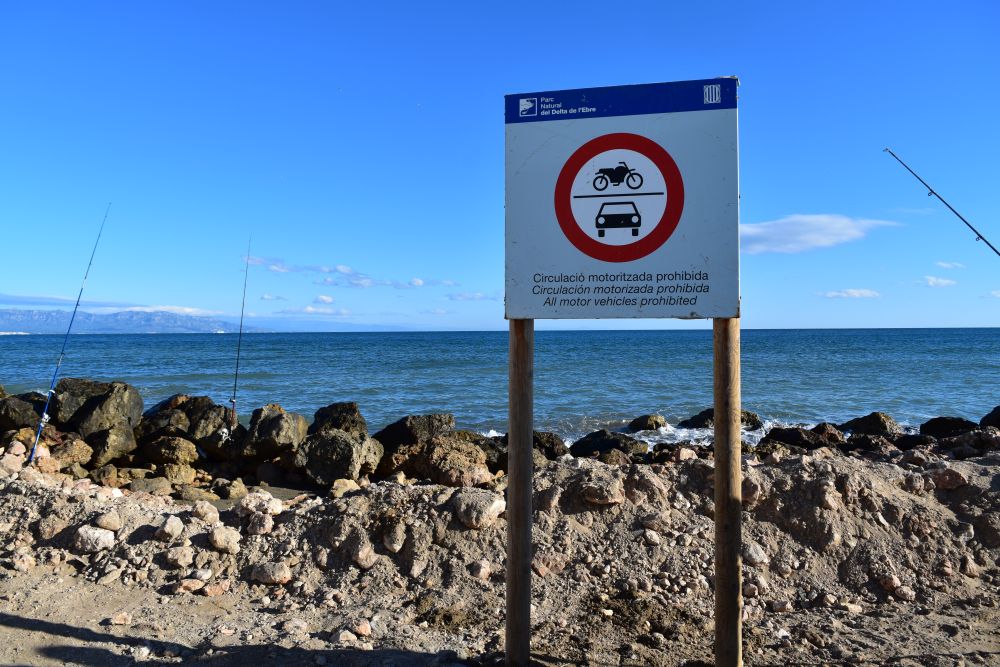
We have a chat with a fisher – he comes here regularly from Andorra. And yes, I do understand that driving is forbidden here…

aaa_0217-small

In Deltebre we visit the Ecomuseum. This place is a miniature Ebro Delta showing its plants and wild life as well as the economy: Fishing, the cultivation of rice and – more inland – the cultivation of vegetables and fruit.

.

Tortosa – Basilica-Catedral de Santa Maria

In summer we had visited Tortosa, and it was pouring with rain. The town seemed grey and not very welcoming and the cathedral was closed. Now we return, leave our car in one of these narrow Catalonian parking houses in the city center and set out to explore the Basilica-Cathedral de Santa Maria  with the bishop’s palace and the convent. The gothic construction started in 1347 (Thomas Schröder: “Katalonien”, Michael Müller Verlag 2015). From outside, the cathedral seems “uncompleted”: The roof is flat.

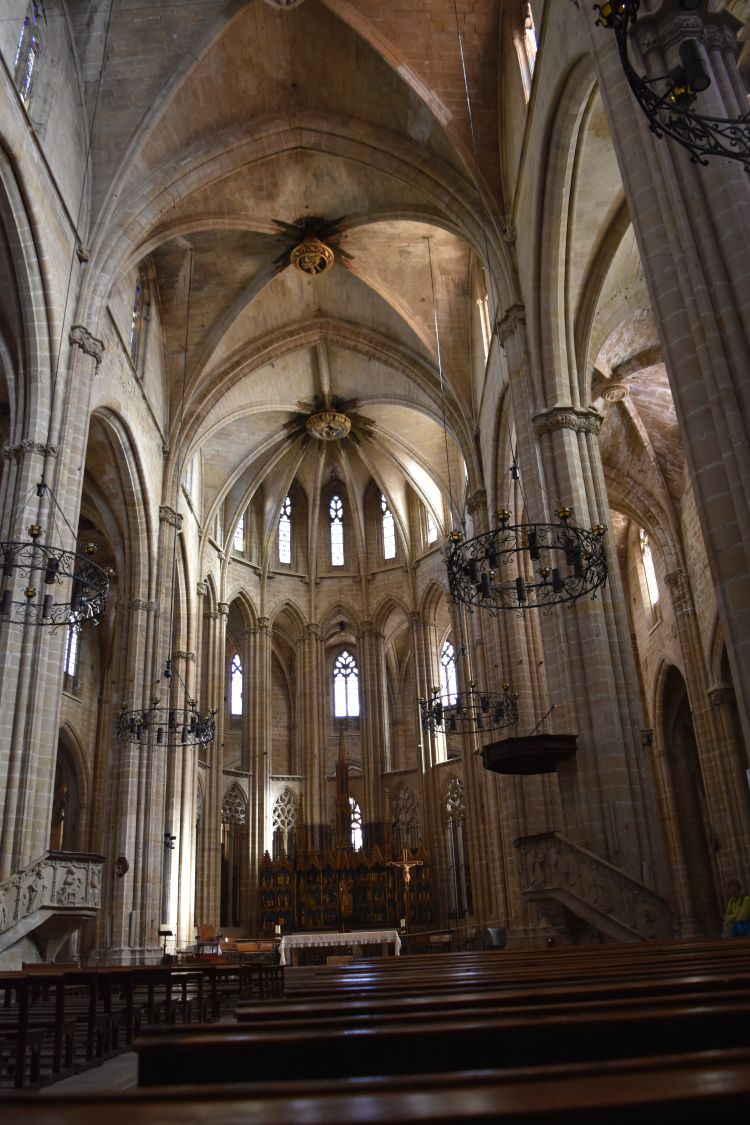
The nave is spacious with high vaults – just right for the archbishop in the 15th century.

aaa_0240-small

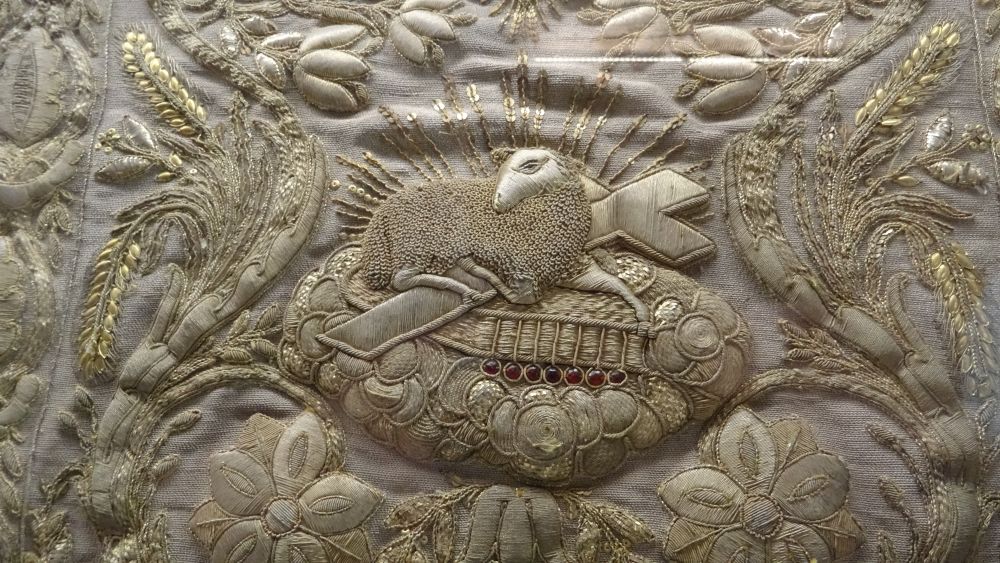
The exhibition shows treasures such as this lamb embroidered in gold…

dsc09482-small

… or this funerary object.

dsc09484-small

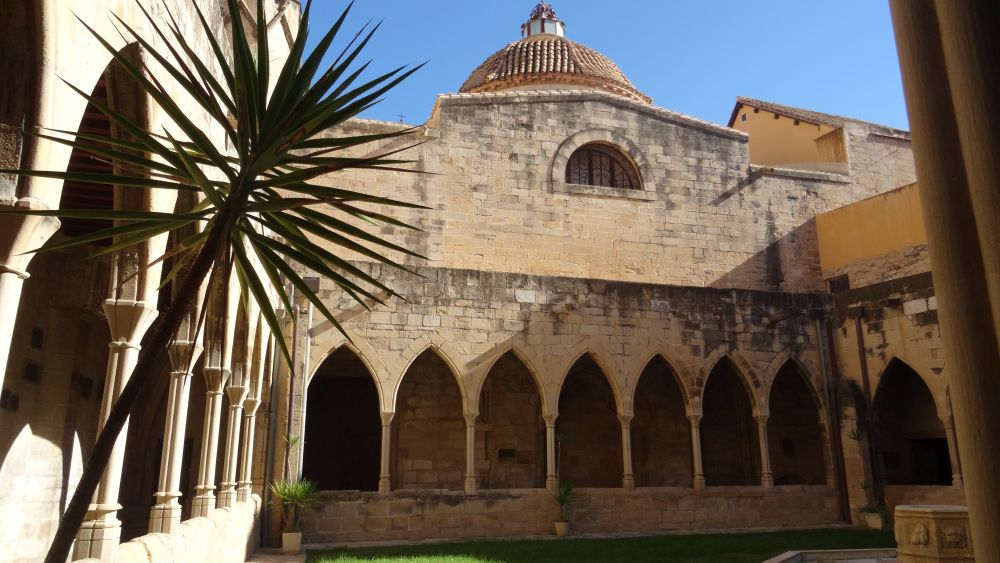
I love the cloister dating from the 13th century…

dsc09500-small

… and use this photo of the arches for my 2016 Christmas card.

aaa_0233-small

.

Tortosa – Jewish center

After a break in a small bar that serves excellent tapas, we stroll through the former Jewish quarter.

aaa_0244-small

All that is left are the street names (such Carrer and Travessia de Jerusalem) and some plates explaining where the synagogue and the kosher butcher were located.

aaa_0248-small

Now we find a halal butcher instead.

aaa_0245-small

.

Tortosa – history  in the former slaughterhouse

The slaughterhouse has been built by Pau Monguió. This art-nouveau building now hosts an exhibition of the history of Catalonia. The display starts with the stone age, continues with the Iberians trading with the Phoenicians (“Iberians” comes from “Ebro”) , the Romans (Tortosa was then called “Dertosa”), the Visigots and the Moors. In 1148 Tortosa was sieged during the Second Crusade and reconquered by an allied army. In the 15th century, Tortosa became an important regional center and the seat of the archbishop. It lost its importance in the 19th century and particularly suffered from bombings in the civil war of 1936-1939.

aaa_0258-small

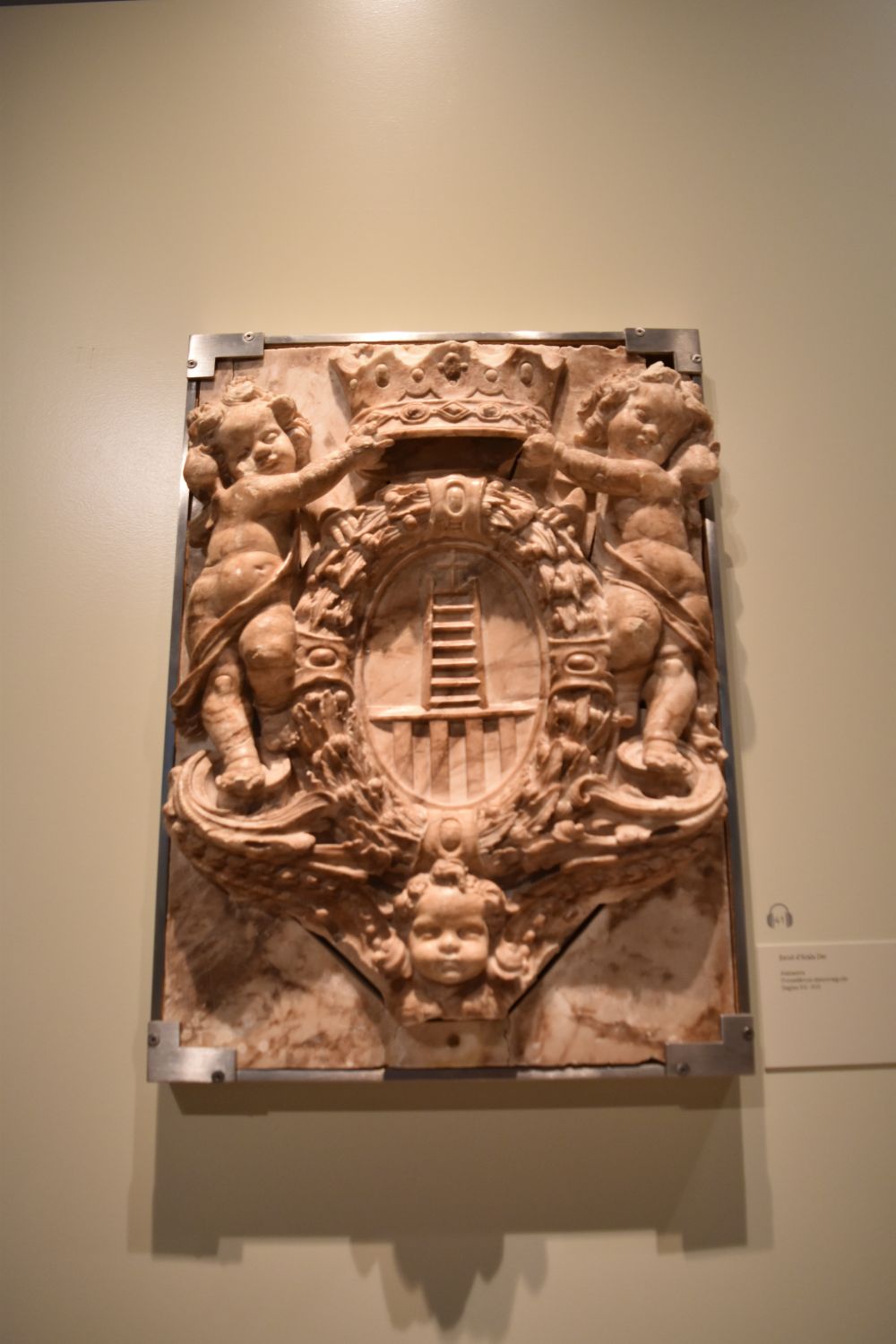
I particularly like the coat of arms of the monastery Scala Dei near Montsant made from alabaster – it represents the Escala Dei or the ladder of God.

aaa_0264-small

After a short visit in the Tortosa market, we maneuver our car out of the narrow, narrow parking house and drive back to our small apartment in Hospitalet de l’Infant.


In Catalonia – Spain: Discovering Escornalbou, Falset and Siurana

On a very windy, chilly and cristal celar day we explore the monastery Escornalbou, the small town of Falset and gorgeous Siurana perched on a steep rock. All these places we find near Hospitalet de l’Infant, where – in the apartment of our friends – we spend a few days end October until mid November 2016 .

.

Castillo-Monasterio de Sant Miguel d’Escornalbou

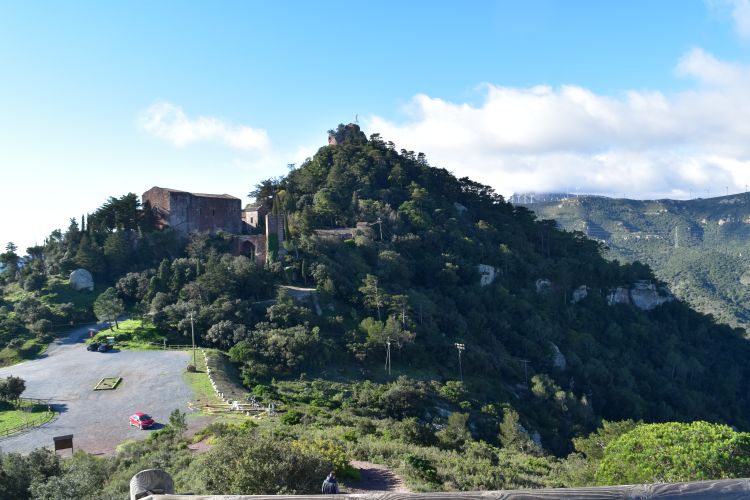
A sinuous road takes us up to the Castillo-Monasterio de Sant Miguel d’Escornalbou on about 800m above sea level. The monastery is perched on a pass with the chapel Santa Barbara above it. We look at the monastery from the viewpoint across.

aaa_1189-small

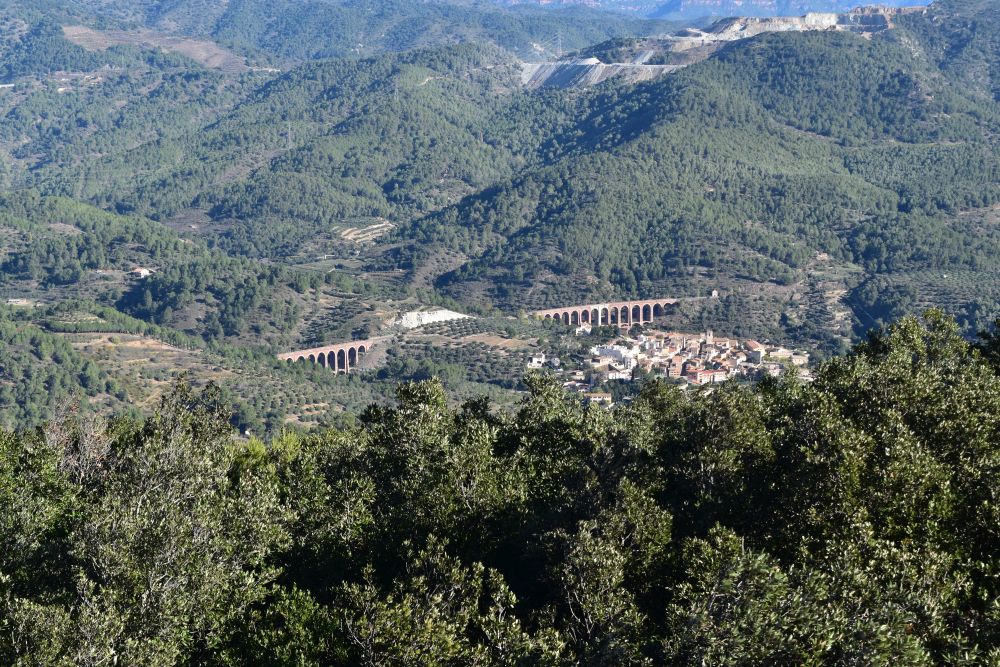
From here we also have a gorgeous view of the mountains…

aaa_1190-small

… and of the sea.

aaa_1195-small

The monastery was built in the 12th/13th century. First Augustinian monks lived here and later it was inhabited by Franciscan monks. In 1835 the monastery was confiscated.

This is the façade of the Romanesque church.

aaa_1200-small

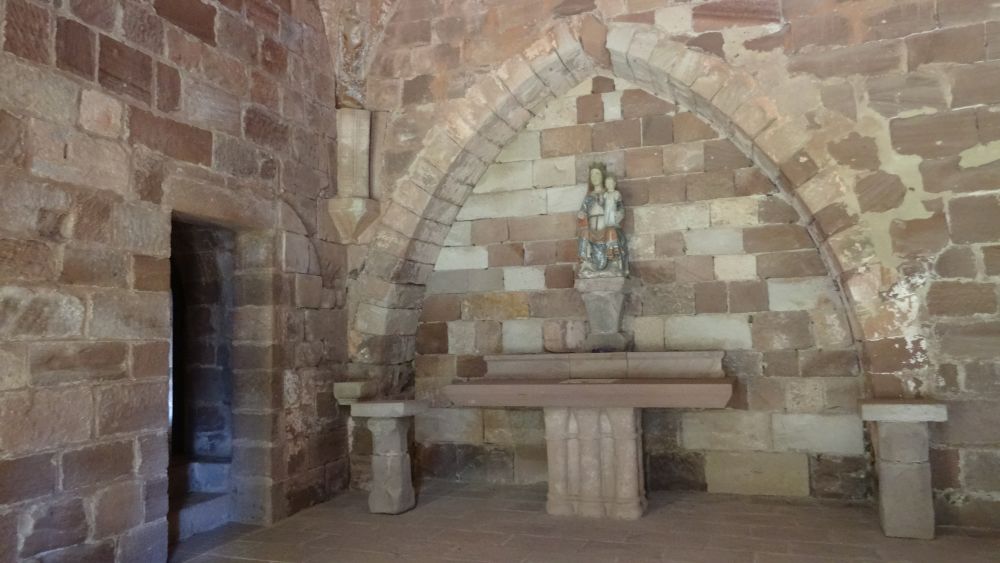
Inside we find Maria and her son.

dsc09188-small

From the cloister there is an impressive view of the Mediterranean Sea. It must have been a pleasure to pray and meditate here.

aaa_0005-small

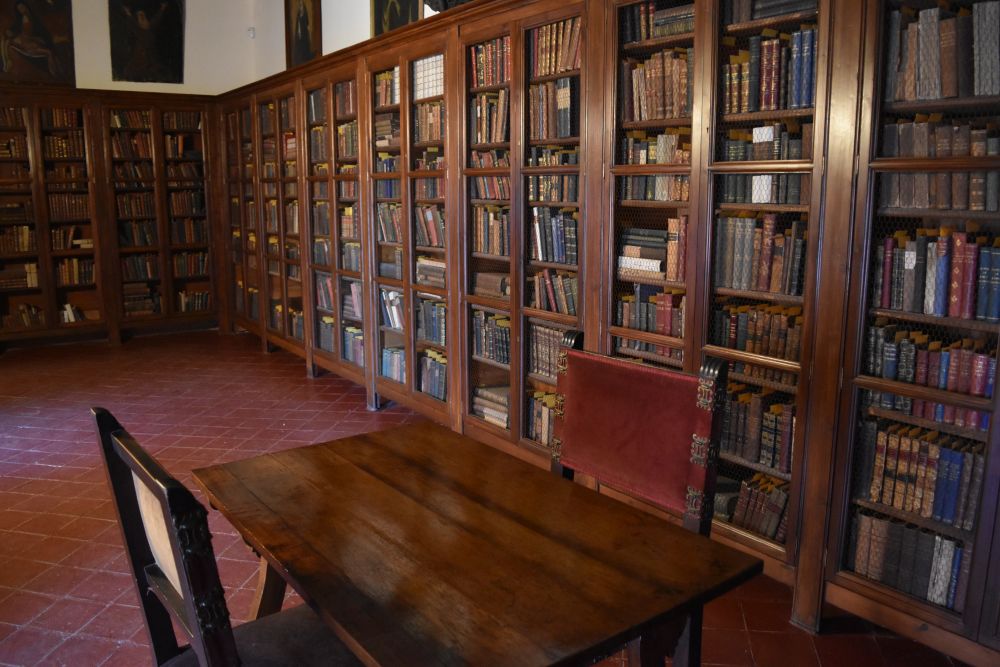
In the 17/18t century the castle has been added to the monastery. It was in use until about 1980. Mr Toda lived here. I am impressed by the luxury and in particular by the library…

aaa_0024-small

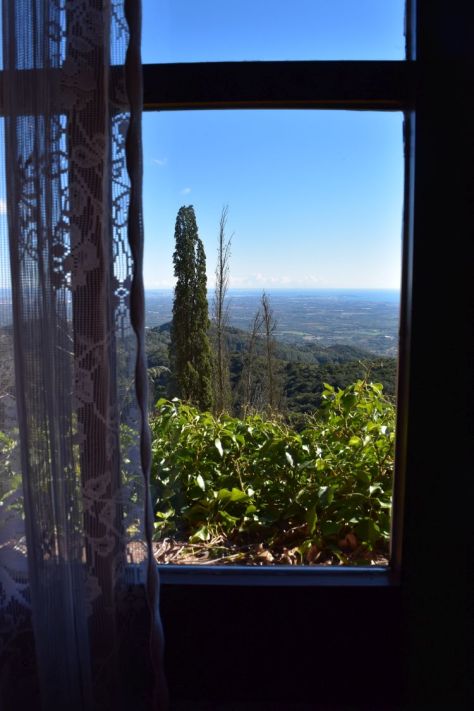
… and by the view from the window.

aaa_0019-small

Perhaps it was a bit lonely to live up here.

.

Shopping and lunch in Falset

We continue our way on the sinuous path through the mountains to stop in Falset. This is the central town of the Montsant and Priorat area. The name “Falset” comes from sickle – and their are two sickles in their coat of arms (see Wikipedia and Miquel Hudin: “Vinologue Montsant”, Leavenworth Press 2014, p. 64).

My “Vinologue” tells me that Vins I Olis offers a good selection of wines from the area of Monsant and Priorat on one spot. We buy some cheese…

aaa_0032-small

… and some wine – in particular I look for “Scala Dei” (Granatxa), and with the advice of the shopkeeper, Marc, I acquire a selection of cuvées with local and international grapes.

aaa_0033-small

Marc, reserves a table for us in the El Cairet in the old city center – for 13:30, which is early here. The restaurant opens so early – just for us.

aaa_0036-small

It is a small and cosy place.

dsc09207-small

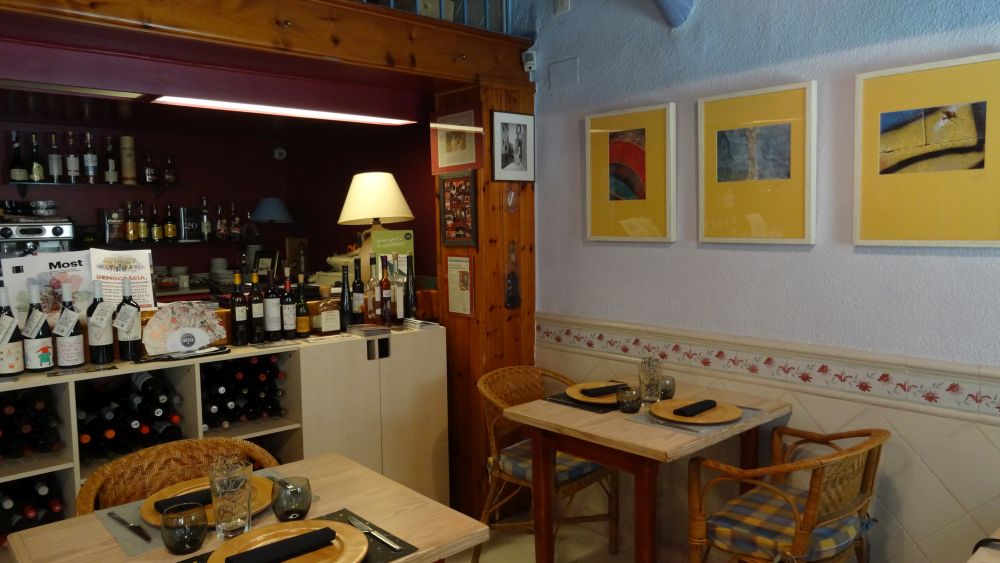
The restaurant owner is proud of the meals that she prepares with great care using regional products. Hence we order the local menus suggested by her. We particularly loved the hazelnut soup, the autumn salad with dried fruit, the bacalao (codfish) a la plancha and the fig dessert on puff pastry. This restaurant is a place to remember and return!

.

Siurana – perched on a steep rock – an Eldorado for climbers

We leave Falset and using sinuous roads we drive to the small town Siurana perched on a rock above the river Siurana. Campers are bordering the road and climbers are hanging in the cliffs or crags. This is an eldorado for climbers. The recent edition of “Insipiration”, the newspaper of one of “my” Swiss outdoor shops, talks about “Sehnsucht Siurana” or “Longing for Siurana”. Also the Internet is full of information about the climbing routes (e.g. planet mountain). One route is called after the princess Abdelaza that jumped down with her horse, because she did not want to be captured by the Christians, when they conquered Siurana in 1150.

aaa_0052-small

On three sides the village is surrounded by cliffs. Using the small gate we enter and stroll through the narrow streets.

dsc09236-small

The Romanesque church Santa Maria is located above the cliffs.

dsc09229-small

The portal has a modestly decorated tympanum with Christ, the sun, the moon, two lions and eight persons, presumably apostles.

dsc09220-small

Across we see the table mountain Montsant under clouds. It is chilly and very windy in Siurana.

aaa_0078-small

Before leaving we have a cafecito in the friendly bakery at Cornudellas. We are by far the oldest guests. We are surrounded by young climbers that are taking a warm drink before spending the night in their campers. We are happy to return to our warm apartment in Hospitalet, and I look forward to having a swim in the heated public inside pool.


In Catalonia (Spain) – some excursions around Hospitalet: L’Ametlla

On 1st of November, we visit l’Amettla del Mar – south of Hospitalet de l’Infant, where we spend some weeks end October to mid November 2016 enjoying the small apartment of our friends.

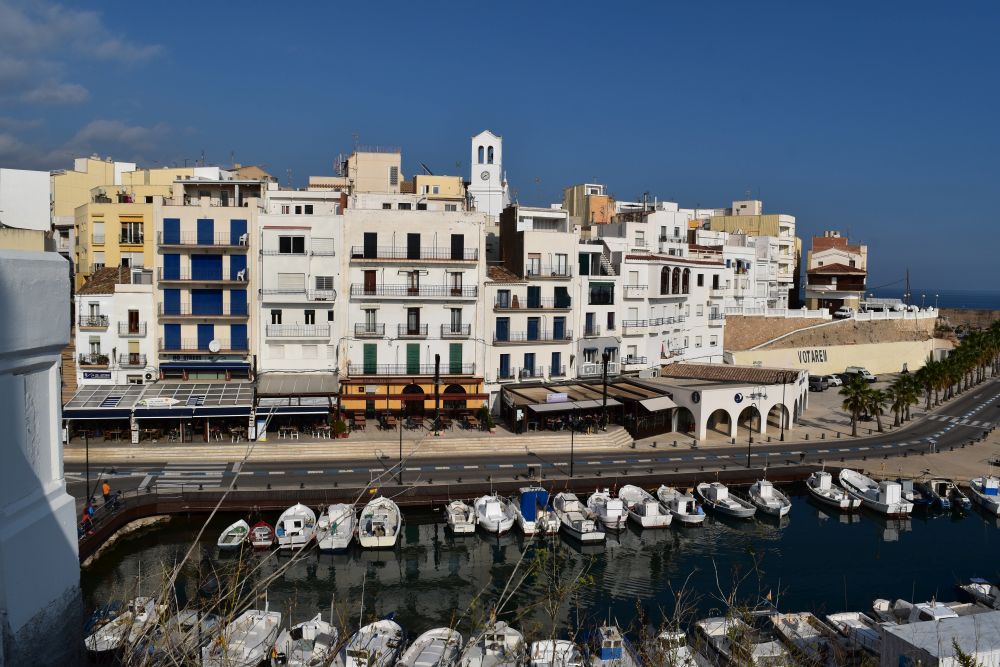
L’Amettla del Mar is a small fishers’ town. We always buy fresh fish from l’Amettla at Jordi’s in Hospitalet (delicious!). Also Wikipedia says that fishing is the main activity of l’Amettla. The town is built on rocks overlooking the natural harbour where the fishing boats are resting during the day.

aaa_0912-small

The weather is warm and sunny.

aaa_0928-small

Along the rocks there is a promenade with outlook points.

aaa_0925-small

It is three pm – just the right time for dinner in Catalonia (uff, so late for me, my stomach always rebels much earlier).

dsc08805-small

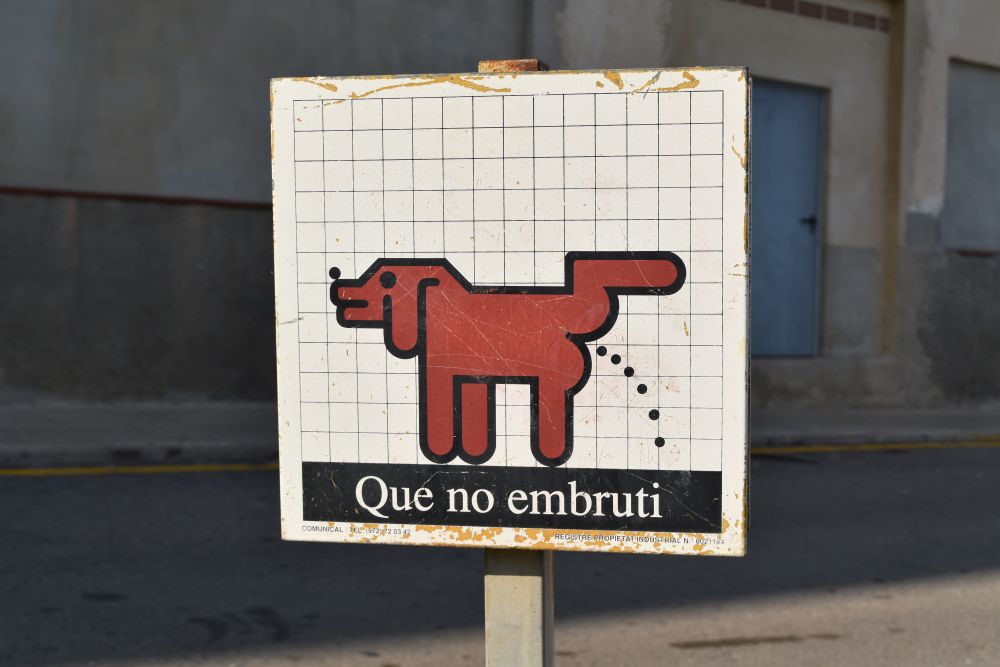
Dogs may understand Catalonian here.

aaa_0938-small

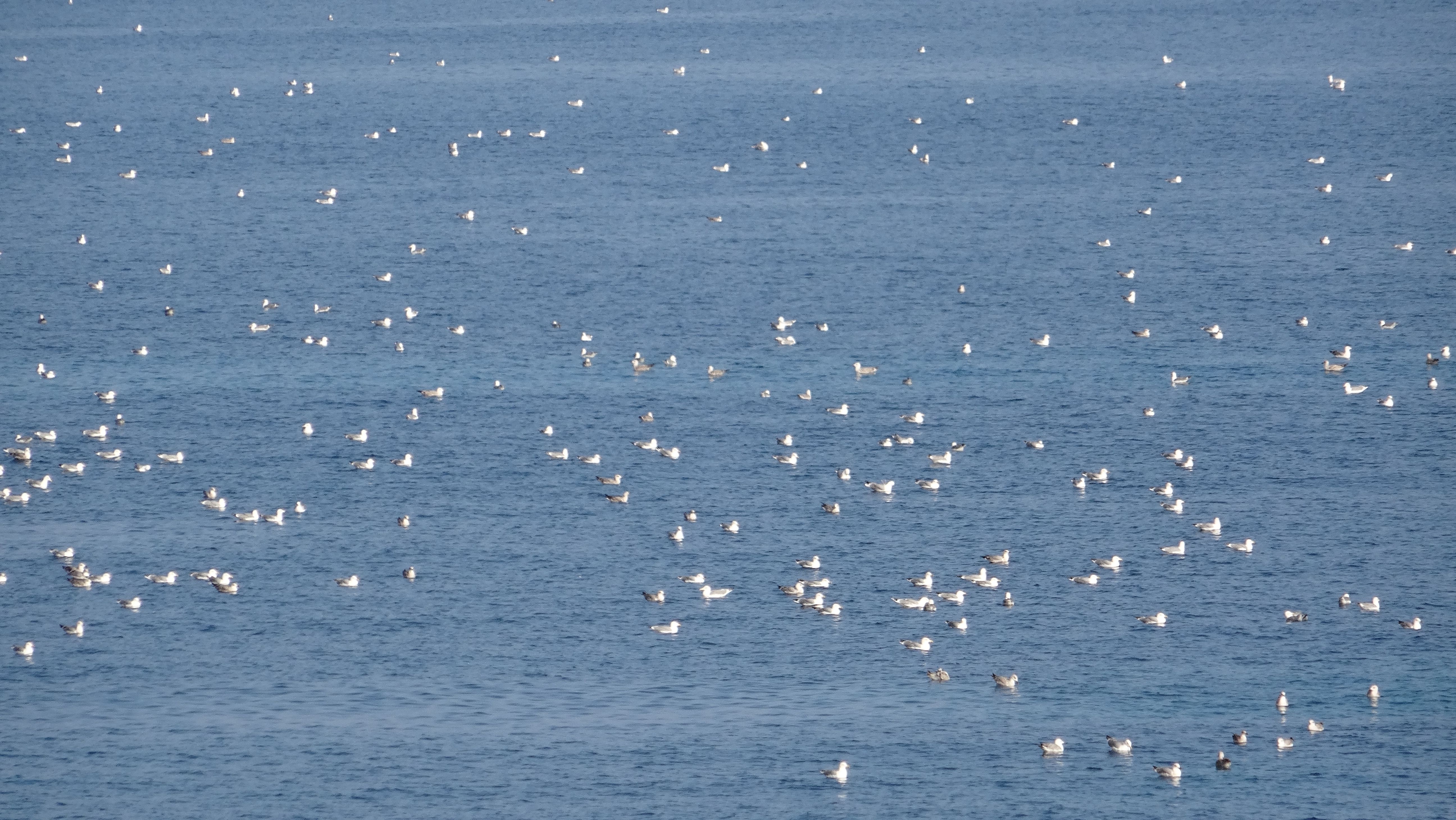
Many, many seagulls have congregated on the water of the Mediterranean Sea. These small white spots are seagulls…

aaa_0941-small

… and they are enlarged now.

dsc08810-small

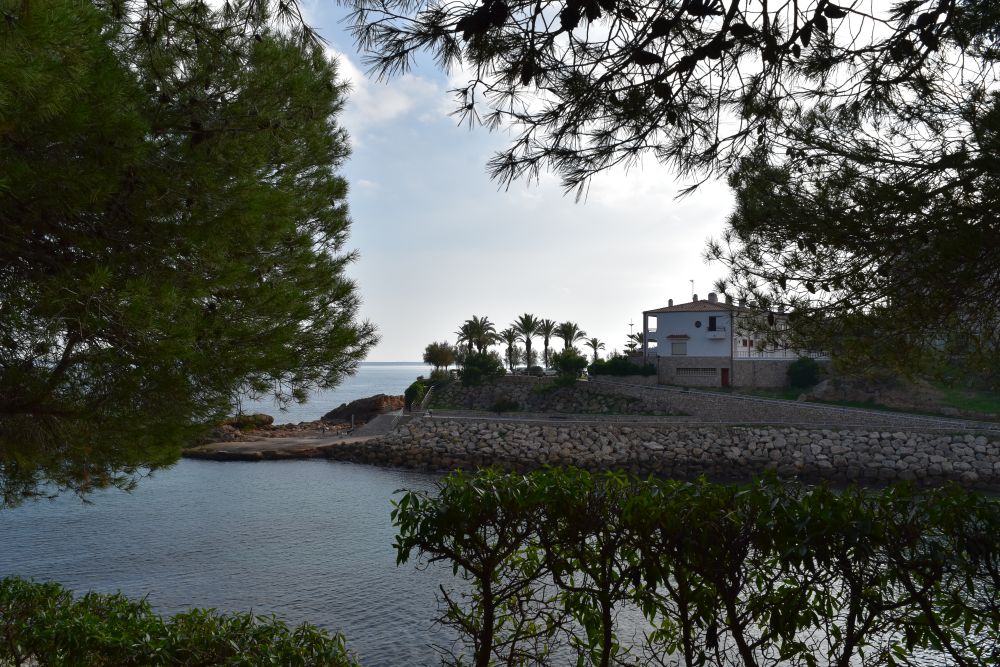
Tourism is the second source of income of l’Ametlla – north of the city we find wealthy private houses.

aaa_0946-small

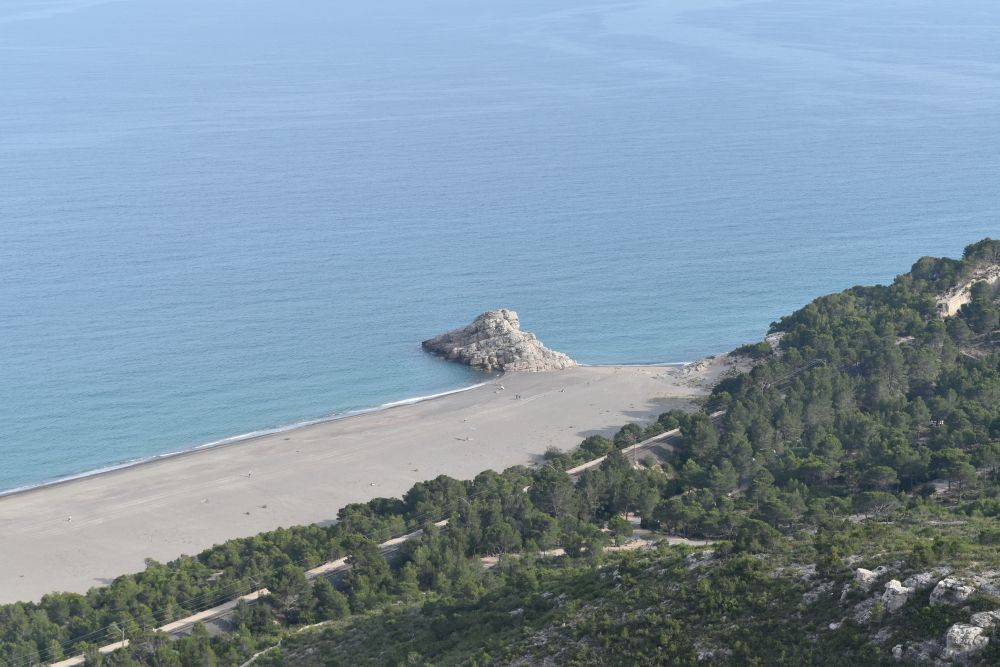
Behind this bay there is a camping site with an Olympia size pool (now closed) and a hiking path. A good place to camp in summer.

aaa_0949-small

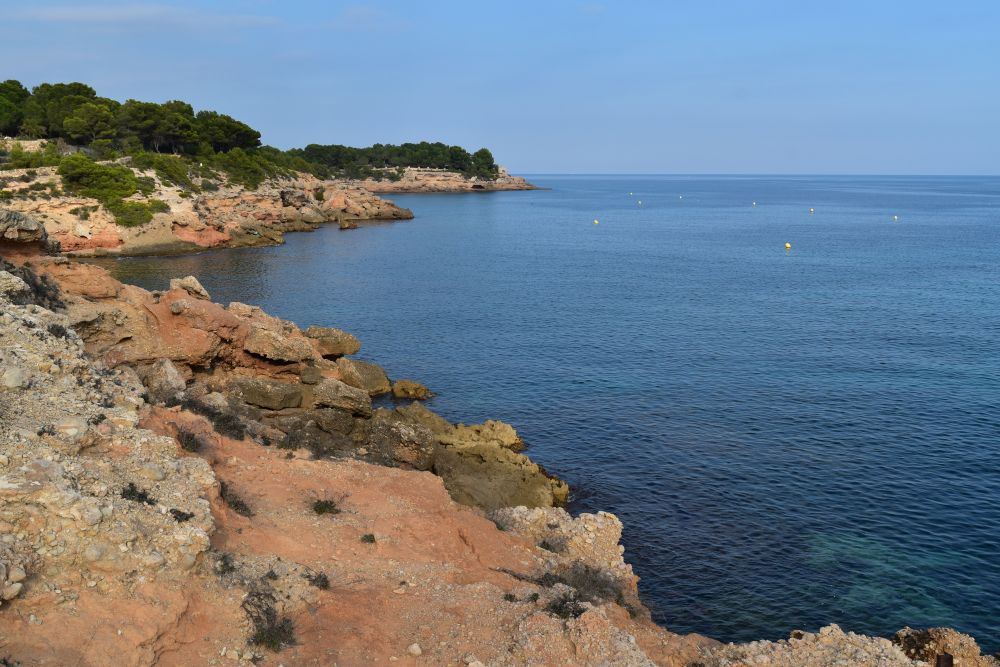
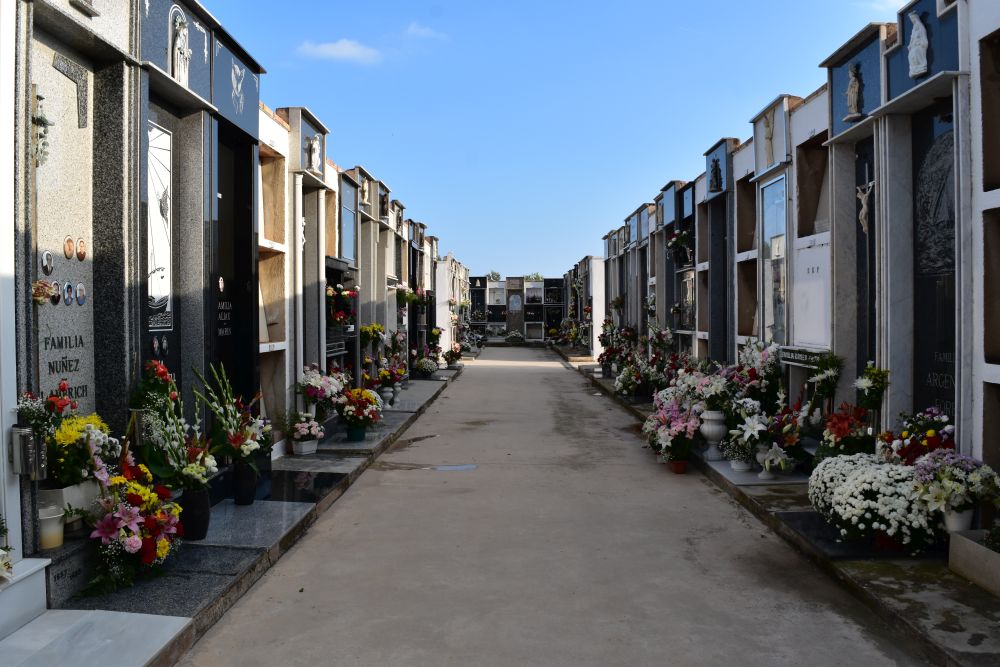
We follow the rocky coast line and reach this cemetery that is now – on 1st of November – richly adorned with flowers and well visited by local people that remember their ancestors.

aaa_0967-small

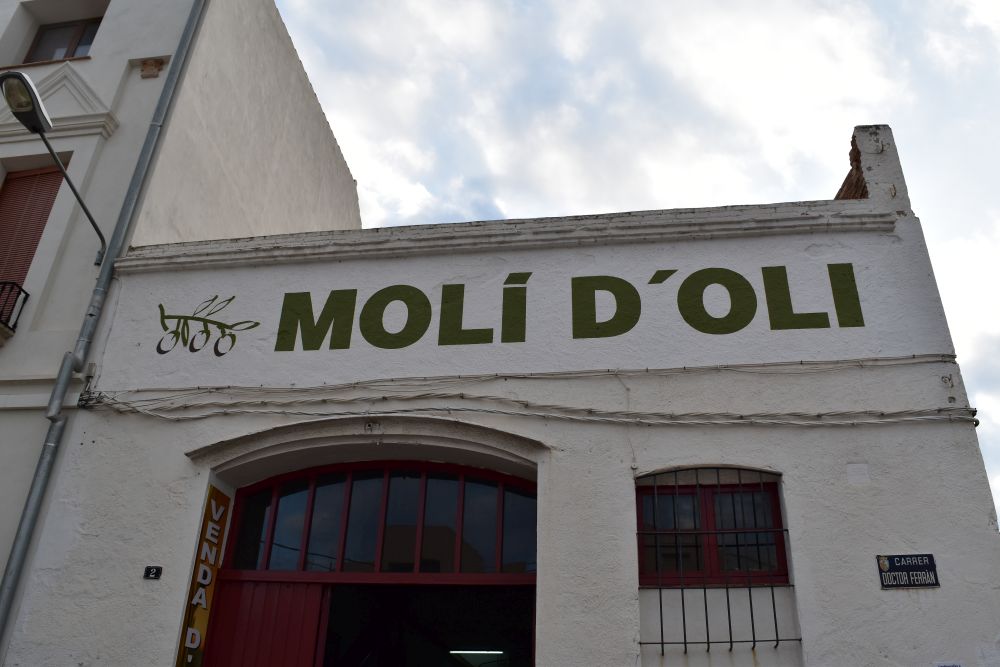
Just before driving “home” to Hospitalet de l’Infant, we stop in this small oil mill – the third pillar of income of l’Ametlla is agriculture.

aaa_0981-small

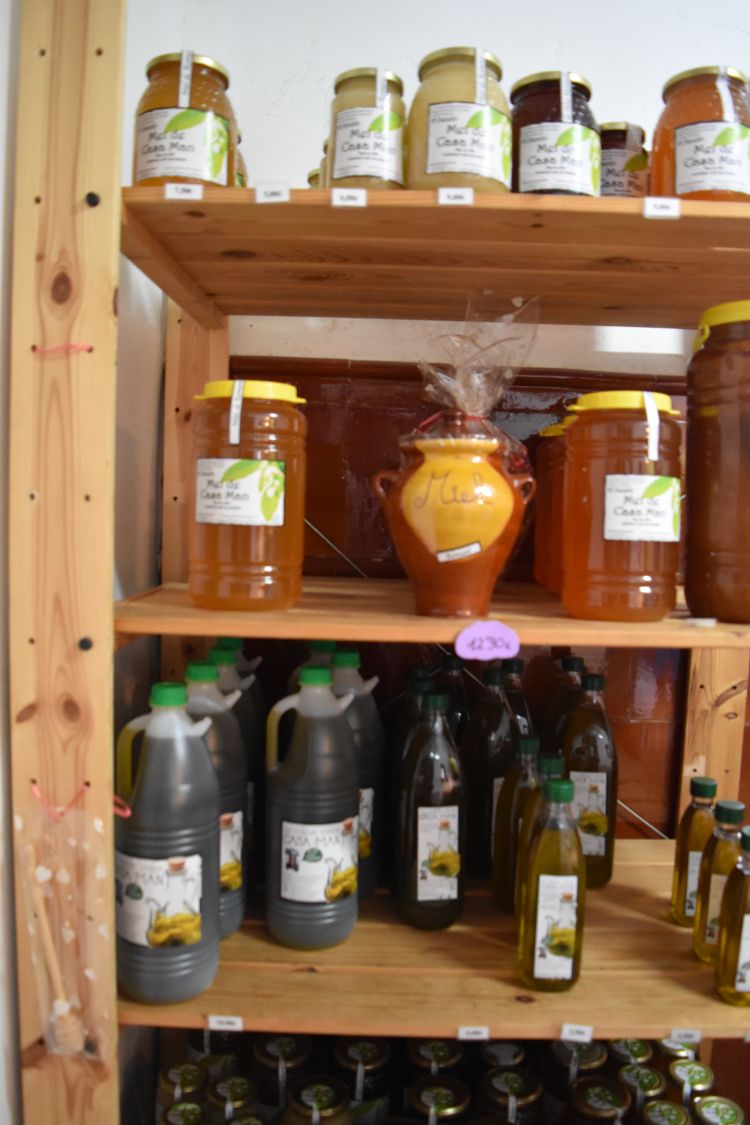
We buy honey and virgin olive oil.

aaa_0974-small

Great souvenirs and gifts for Christmas – at home I savour the tasty rosemary honey – it is delicious.

L’Ametlla was a charming experience – there is so much to see around Hospitalet.


In Catalonia (Spain): Discovering Capçanes, Gandesa, El Pinell de Brai and Miravet

On a sunny Sunday we explore the Montsant and Terra Alta region near Hospitalet de l’Infant. In Hospitalet we spend a few days in the apartment of our friends (October/November 2016).

.

Capçanes – a success story of some brave Montsant wine growers

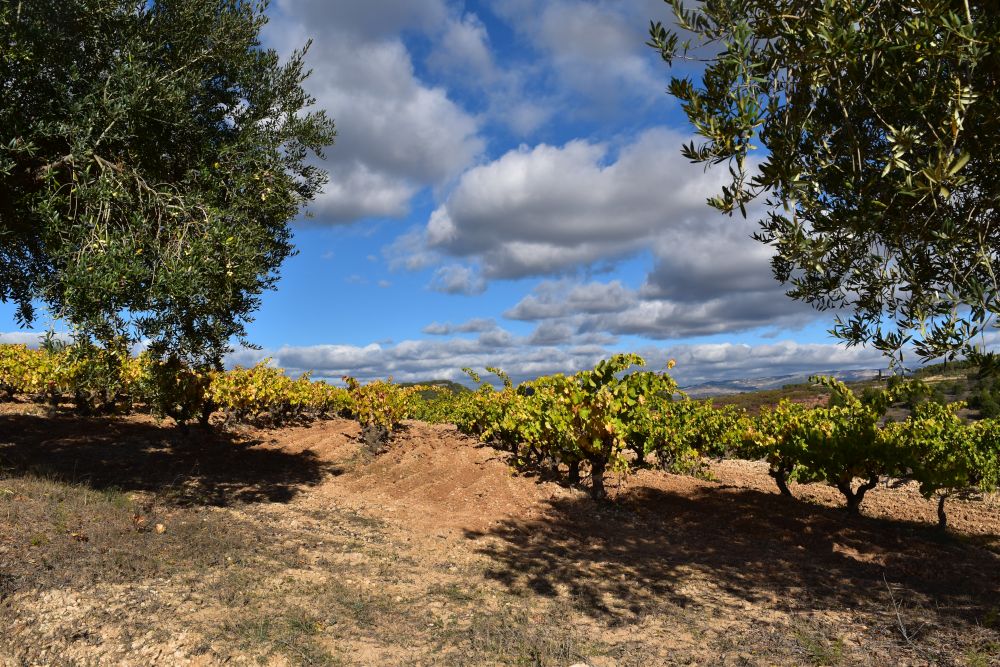
My “Little Johnson” says that the cellar of Capçanes produces the kosher wine Peraj Ha’Abib that is to be recommended. We are curious and drive to Capçanes located in the hills not far from the sea with the vineyards slowly turning yellow now.

 aaa_1128-small

aaa_1131-small

The history of the cellar of Capçanes and their kosher wine impresses me. As described on their Website, the wine growers established their cooperative cellar in 1933. In 1995 the cooperative was asked by the Jewish community of Barcelona, whether they could produce kosher wine. We join a tour to the cellar. Our guide explains us that the wine growers decided to face the risk, took a credit and rebuilt the cellar of their cooperative including a separate production line for kosher wine. They were just ready, when the demand for bio wine emerged – and much of the production of kosher wines is similar to the natural and biological production methods (“beautifying” is not allowed for kosher wines). Now they had a regular buyer of their kosher wines (the Jewish communities) and their wines are also in high demand from  all over the world.
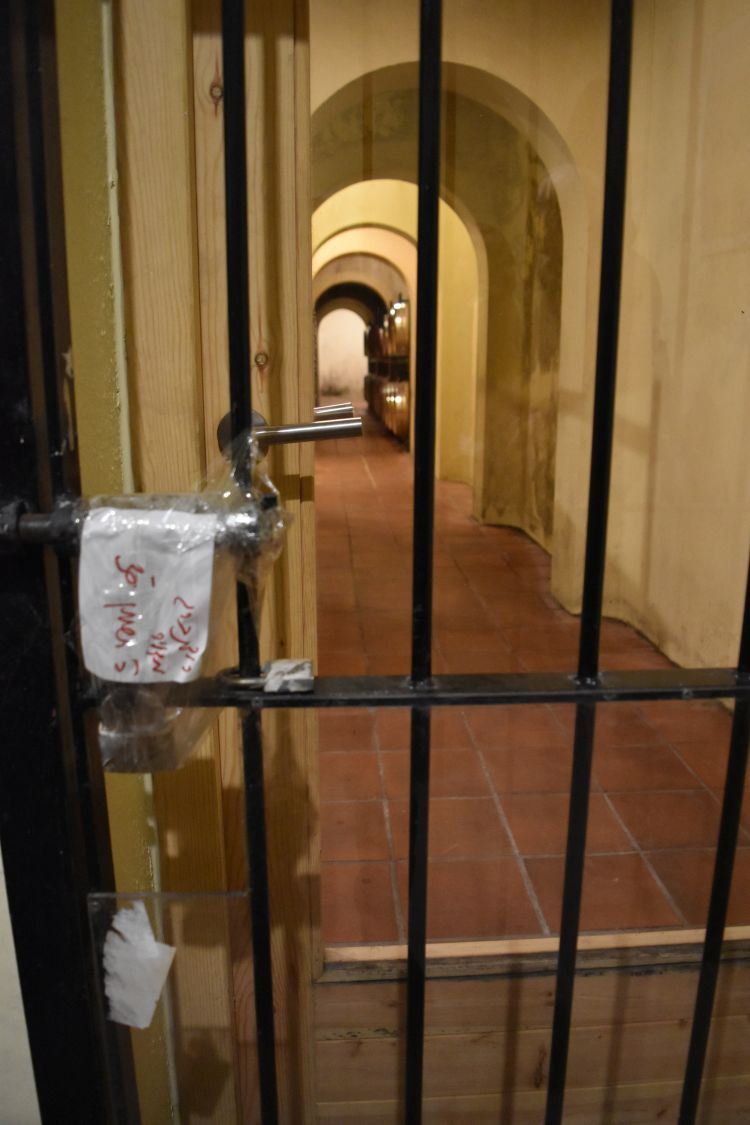
The Tagesanzeiger of 27th January 2017 (Michaelis Pantelouris) describes in detail, how strict the rules are for the separate kosher production line. This is the cellar for developing kosher wines.

aaa_1134-small

It is locked and sealed and only the Rabbi is allowed to access this part of the cooperative cellar. The enologist (Jürgen Wagner) has a cellar with the same setup, and he surveys the development of the kosher wines “indirectly” in cooperation with the Rabbi.

We buy some wines including a bottle of the Peraj Ha’Abib (from the non kosher production line). I will share it with a good friend of mine. Innovative is also their series of four terroir wines “La Nit de les Garnatxes” – I take a selection of two bottles. Furthermore we bought vinegar and olive oil called “Siurana” – gifts for Christmas 2016. I gave one bottle of Siurana oil to my nephew, an agroecologist, and he loves it.

.

Gandesa – the welcoming capital of Terra Alta

Gandesa is the capital of Terra Alta, like Montsant also a DO wine region. Narrow streets in the old town. We can see the church of Assumpcio.

aaa_1148-small

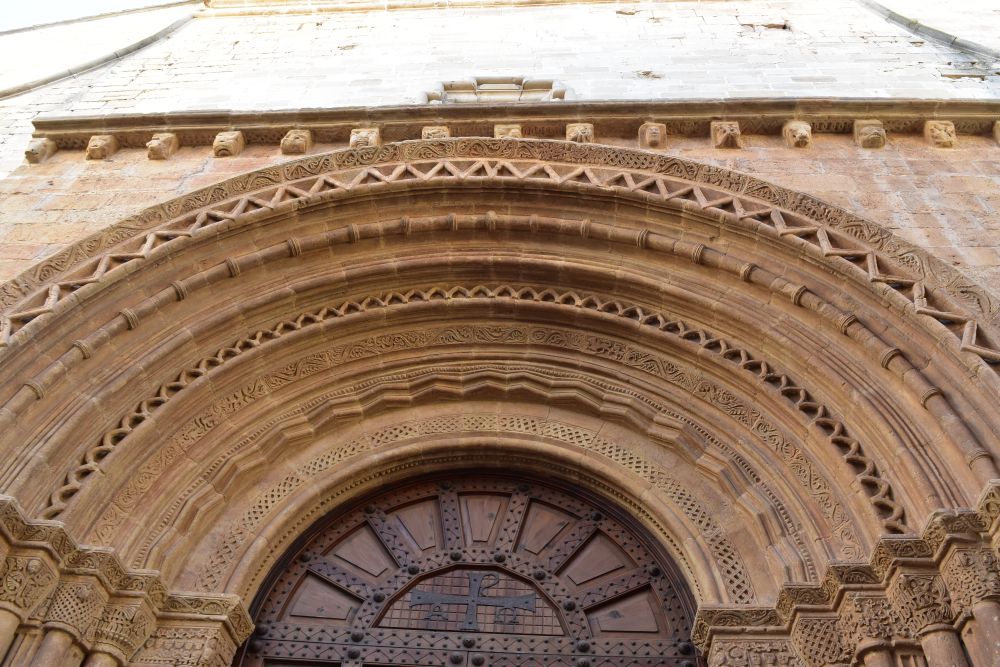
The gate has just closed, because the Sunday service has finished. This is the Romanesque west gate of the church of Assumpcio. The PDF linked in describes the sculptures and freezes  (“Gandesa – a church in New Catalonia”, no author).

aaa_1139-small

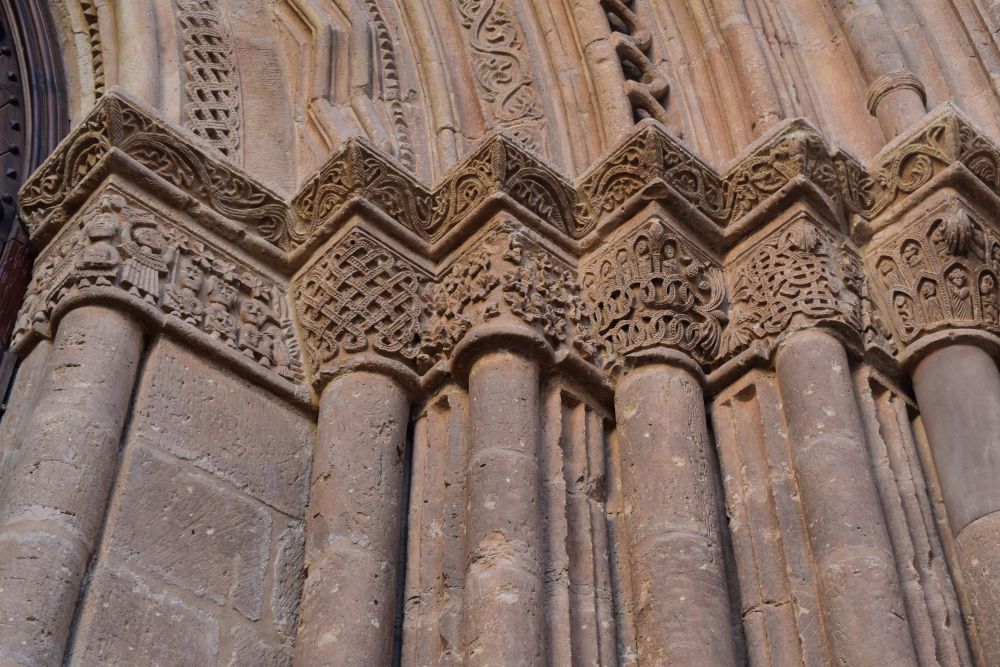
The modillions above the arch and the sculptures on the capitals are, says the PDF document, modelled after Lleida, and they tell biblical stories and give advise for good behaviour.

aaa_1143-small

We say hello to St. Jacob the pilgrim standing in a shell with his walking stick and his large hat. This is a more recent statue.

 aaa_1137-small

Now we are hungry. We find an unpretentious small restaurant. Inside we are heartily welcomed and the owner-cook tailors our lunch meal according to our wishes. “We are a restaurant, we have salad, we have tapas, we have whatever you wish…”, he says. With us are eating more guests and they all look happy. So did we. Our meal was delicious.

.

El Pinell de Brai – the art nouveau wine cathedral or Catedral del Vi

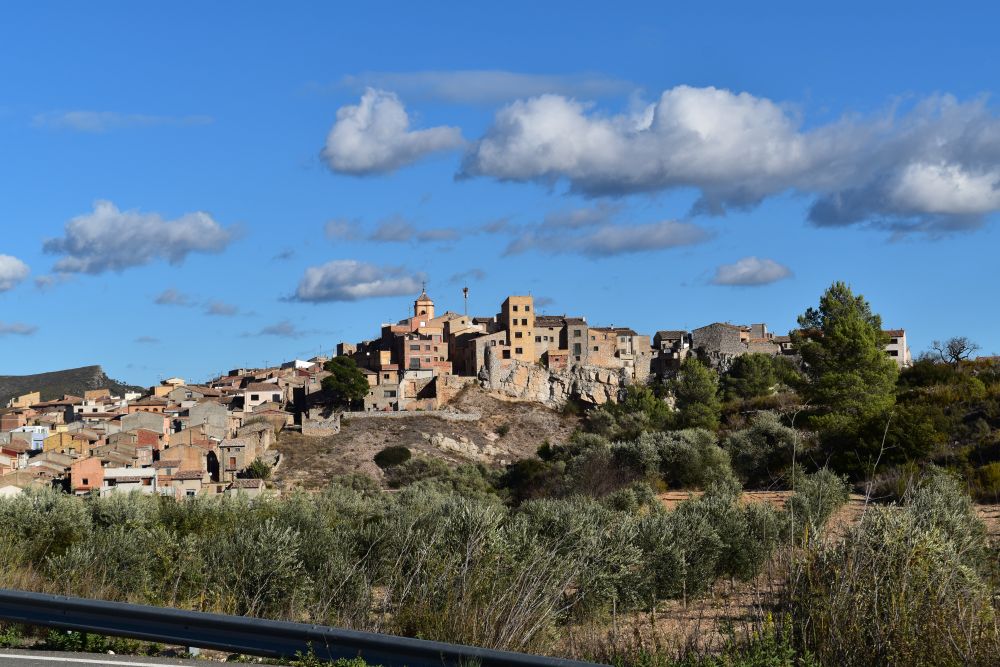
We continue our way through the hills of Terra Alta. Our destination is El Pinell de Brai, marvellously located on a rock.

aaa_1149-small

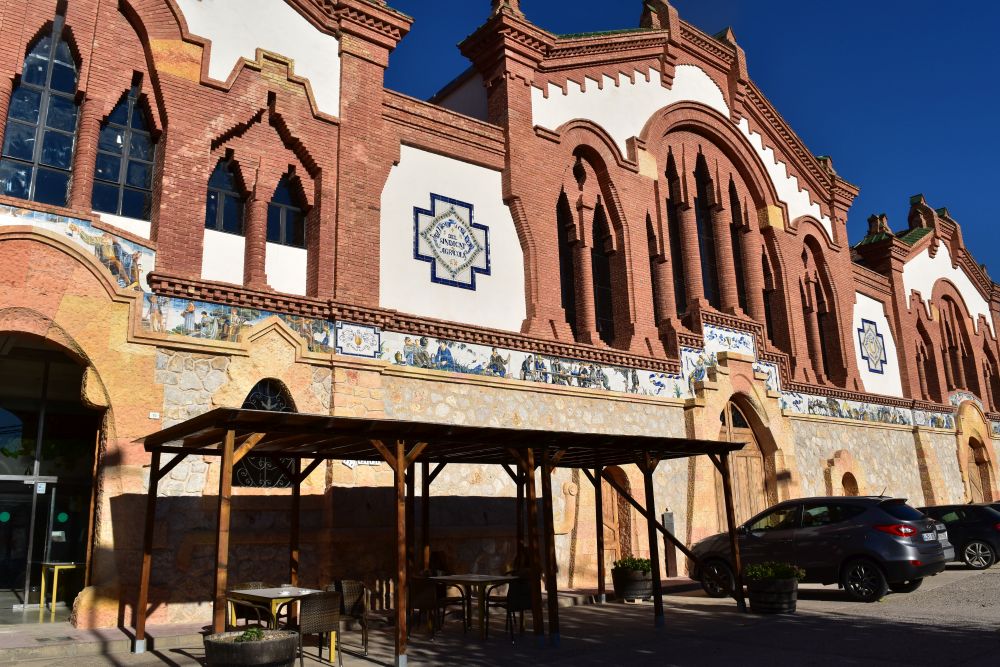
We park our car at the entrance of the small town in front of the Catedral del Vi built in modernist style by César Martinell between 1918 and 1922.  The frieze is the work of Xavier Nogues. There are many more such wine cathedrals in Catalonia. At that time cooperatives were founded and many villages joined their forces to build beautiful and functional cellars for the future. As Don Ferranti Wines explains, the people of Pinell had to mortgage their houses to finance their wine cathedral (see Don Ferranti Wines).

aaa_1151-small

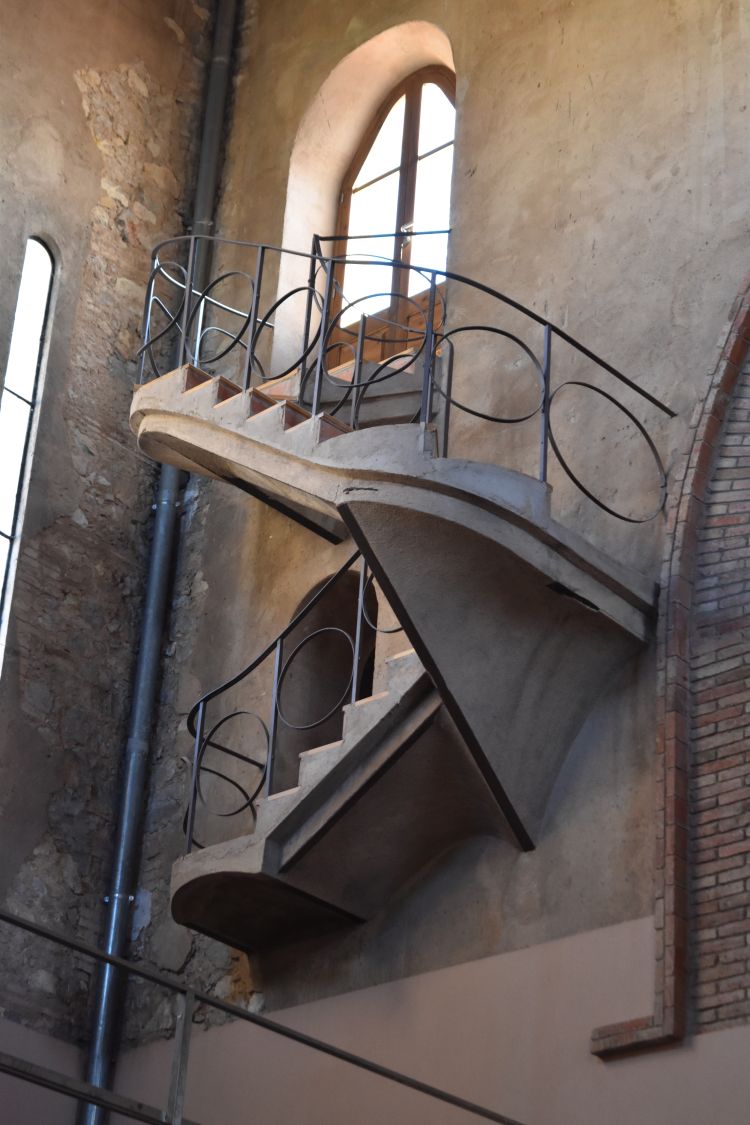
With an audio guide we follow the round tour. We love these stairs hanging on the wall.

aaa_1157-small

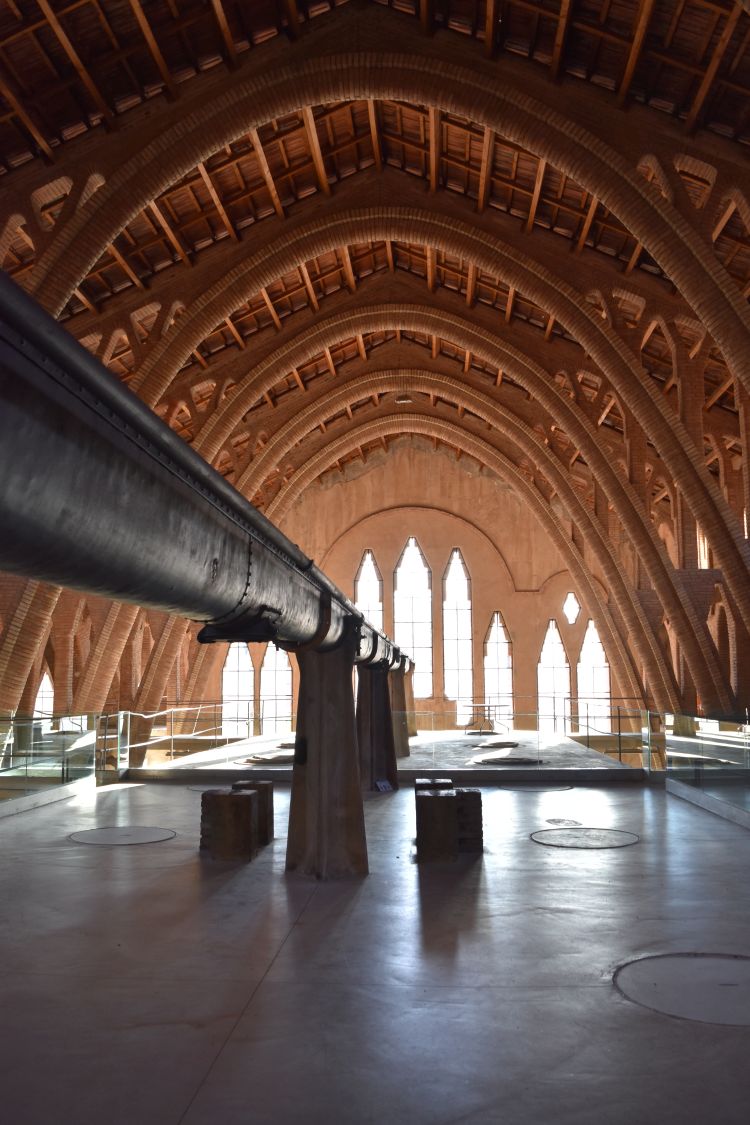
Here we are above the vats (where the wine developed). This viaduct has an Archimedes screw inside to transport the grape pulps. The pressing area is behind us. The high vaults prevent the production area from warming up too much. There is also a cooling system that helps to slow down the fermentation process which gives the wine or more intense taste. The construction of the cellar-cathedral was well thought-out.

aaa_1164-small

This area is no longer used for producing wine. There is a separate cellar was steel tanks for that (see Don Ferranti).

Also in Pinell we buy some souvenirs such as vinegar, olive oil and wine. One bottle we share with our friends at Monthey, when returning the key of the apartment.

.

Miravet – the castle above the river Ebro in the evening light

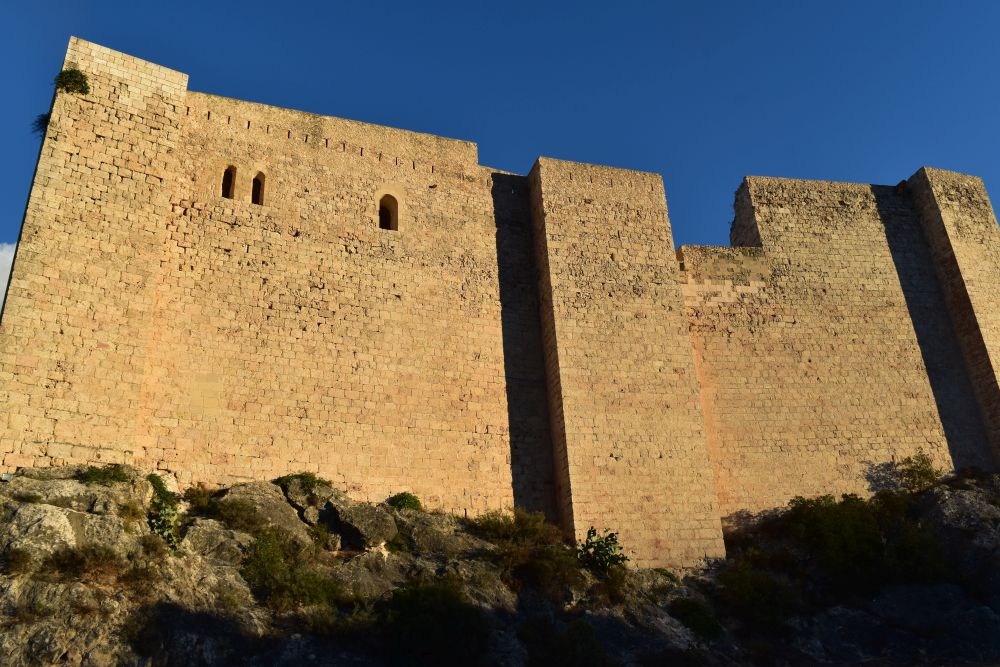
Miravet is a castle above the Ebro river. It dates from Arabic times and after having been conquered by the Christians in 1153, it was the property of the Order of the Knights Templars.

We look at the defensive walls – the castle has closed its gates just a few minutes before we arrived. We will have to return some other time.
 aaa_1166-small

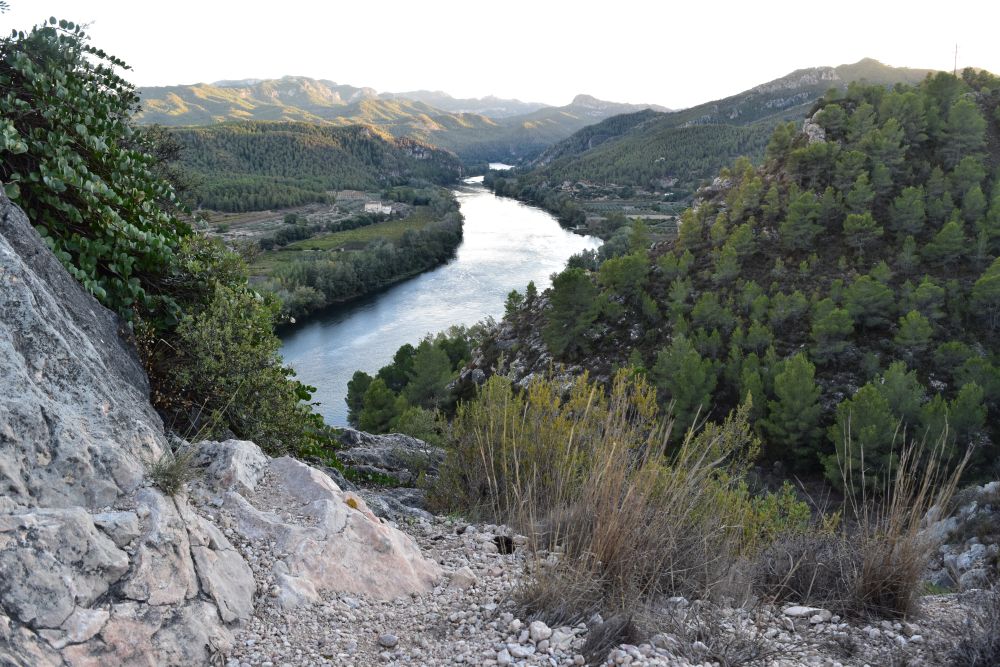
We enjoy the evening atmosphere of the river Ebro instead.

aaa_1176-small

Then we return “home” to our cosy apartment in Hospitalet.


In Catalonia – enyoing the mild late autumn days in Hospitalet de l’Infant

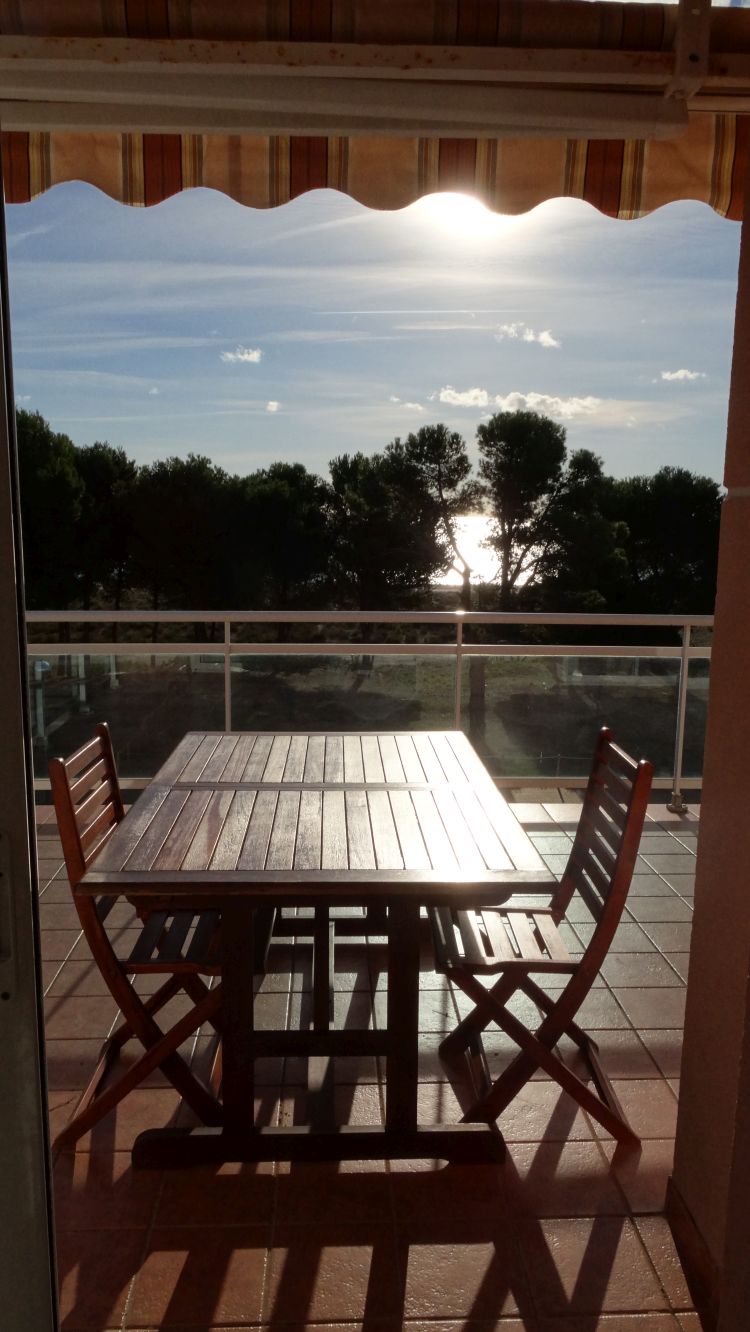
On October 28th 2016 we arrive in Hospitalet de l’Infant and settle in the small apartment of our friends. We enjoy the balcony – the weather is still warm enough for that.

dsc09365-small

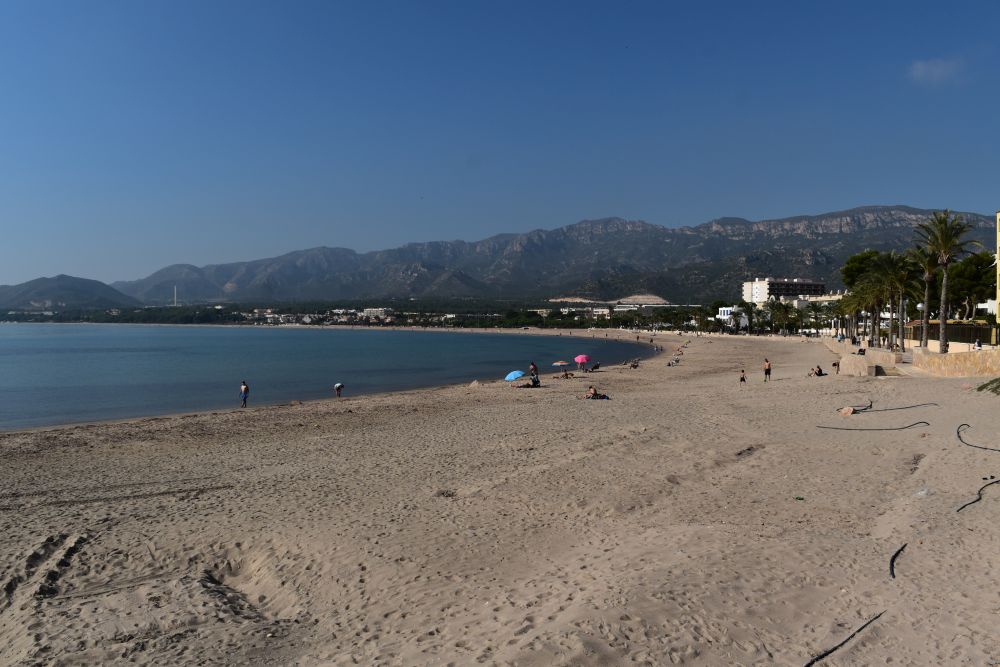
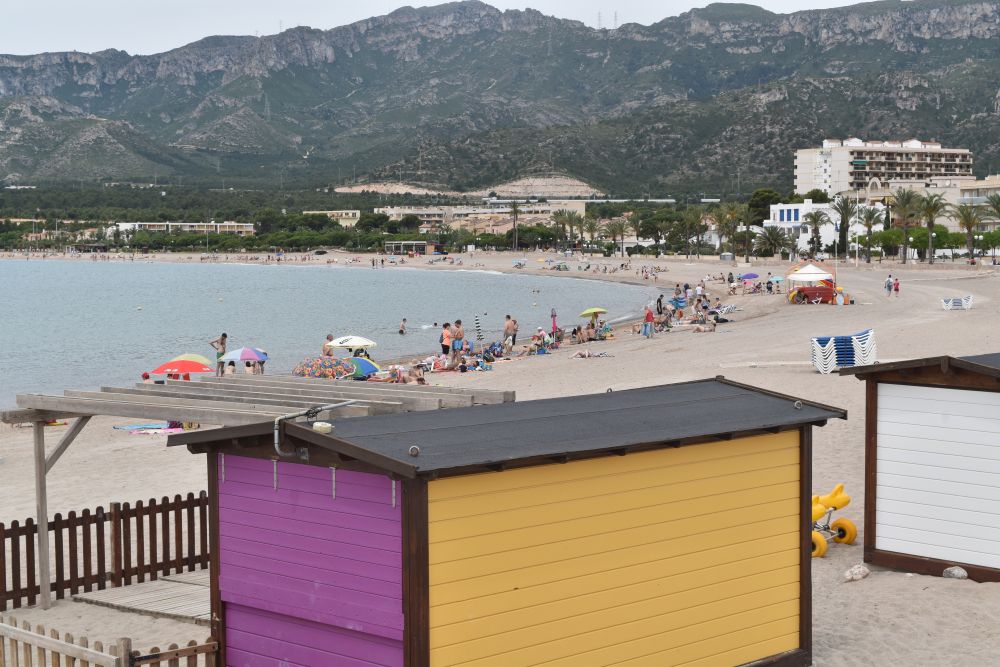
The late autumn days here are mild (around 20 degrees and more) and some people (most of them retired) populate the beach.

aaa_0871-small

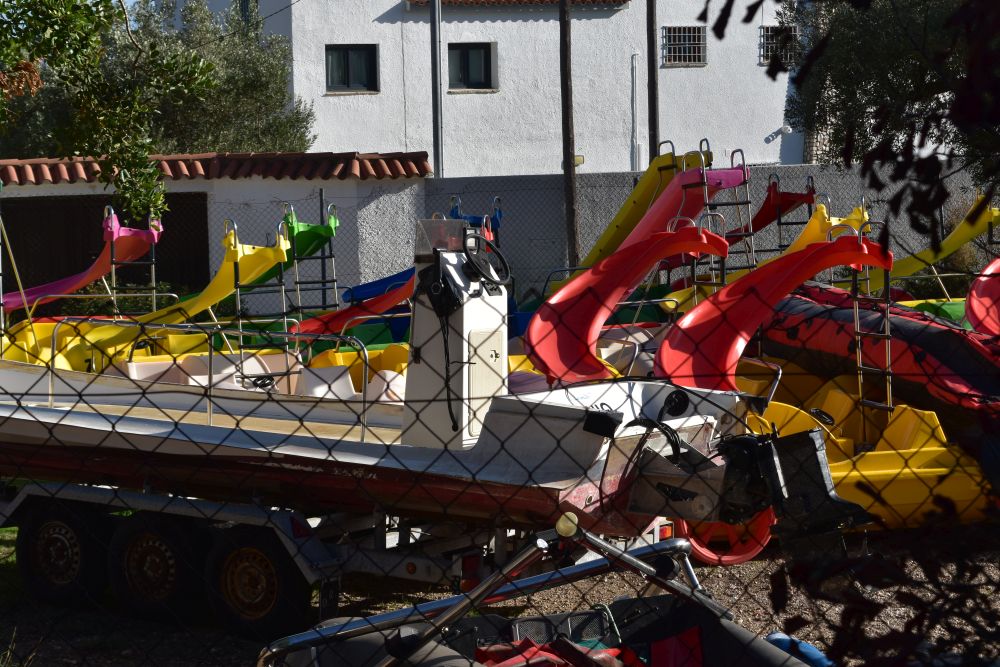
However, the small bars have been dismounted and the slide-boats are now hidden in this backyard waiting for the next summer.

aaa_1114-small

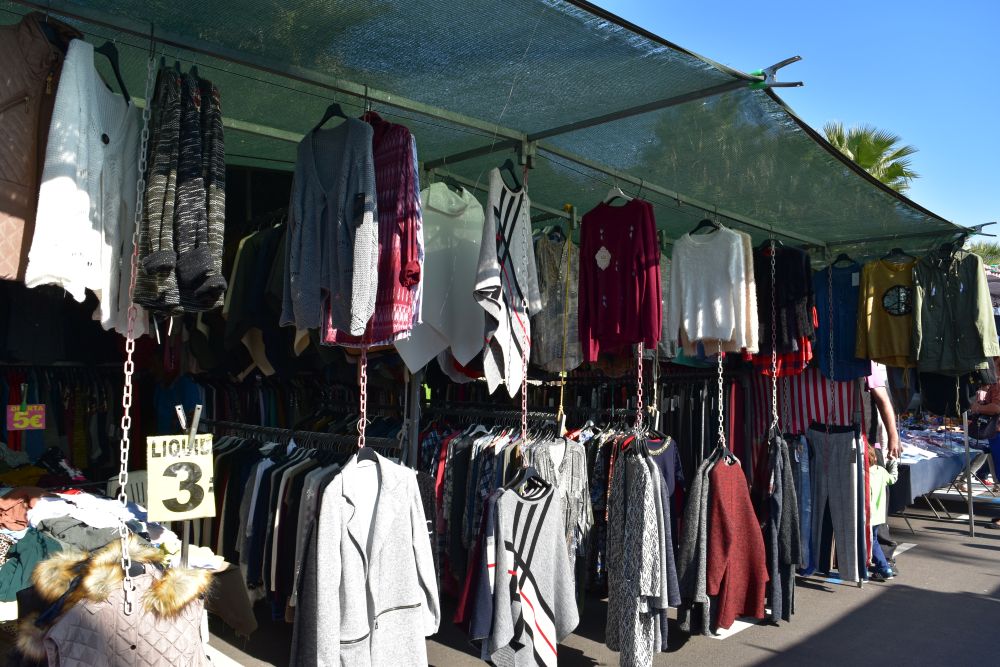
The offerings of the Sunday market have changed: Now we can buy warm sweaters and socks – in summer it was bathing suits and light blouses.

aaa_0869-small

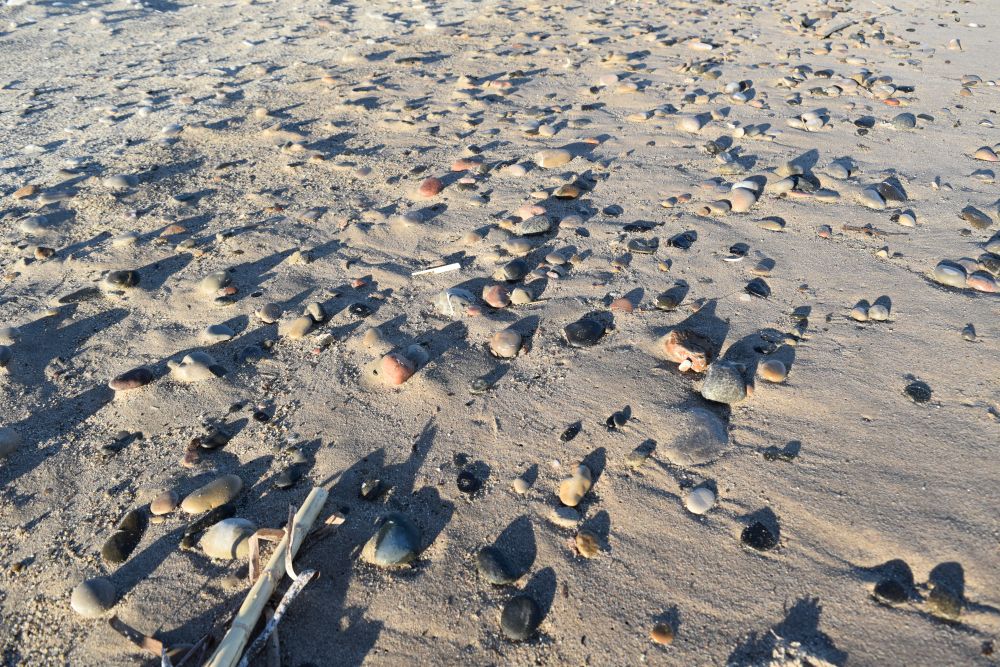
The late afternoon sun produces long shades on the beach.

aaa_0173-small

The waves play gently with the sand.

dsc09384-small

The clouds remind me of our southwind clouds from the Alps, called “Föhn”. Actually it is a similar phenomena: The wind comes from the north west descending from the mountains behind our coast line and clearing up the sky.

aaa_0181-small

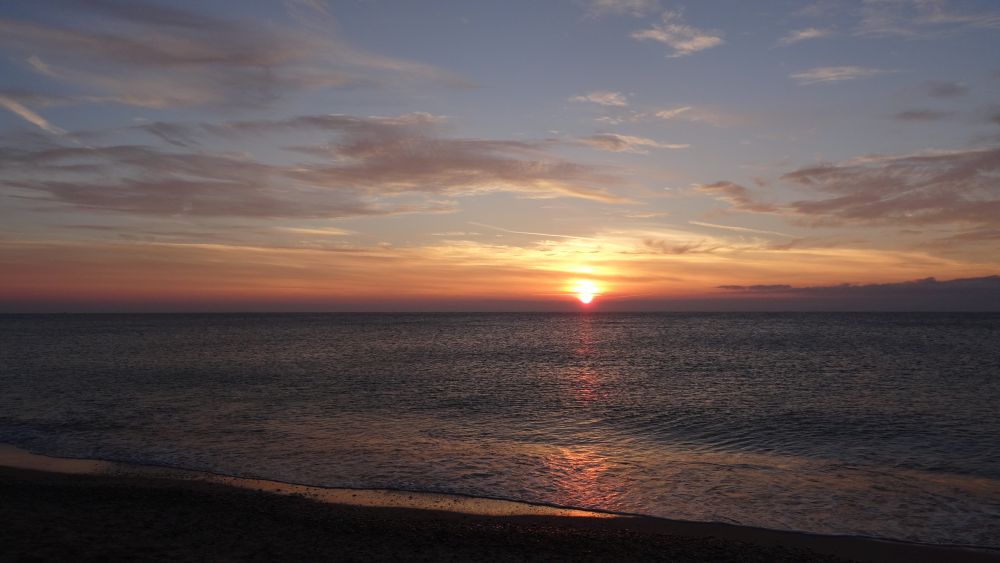
In the morning, Ursula captures the rising sun above the Mediterranean Sea.

dsc08872-small

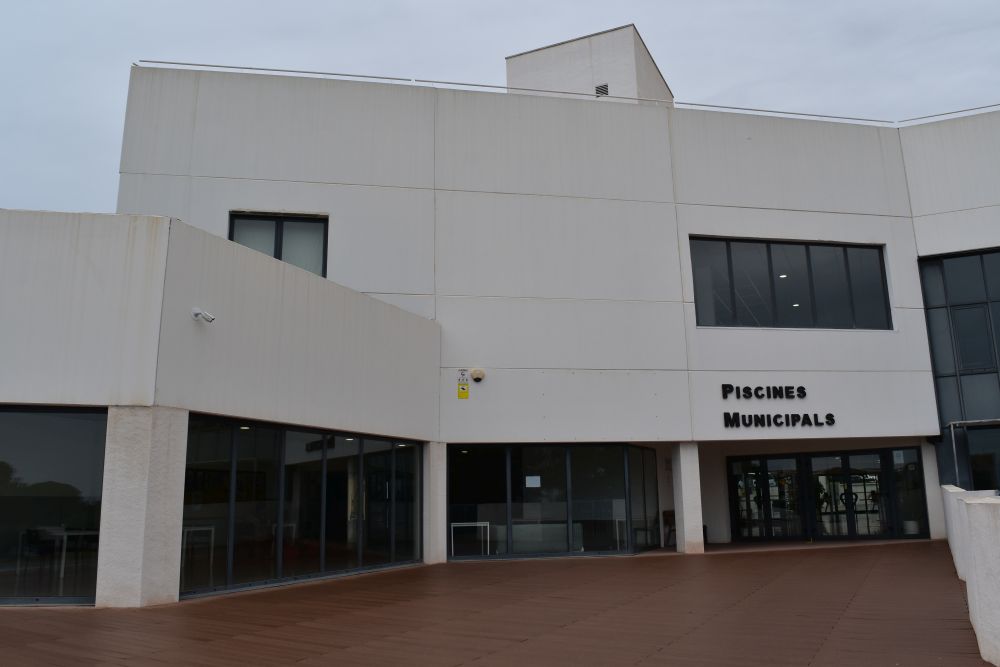
Later during our stay, the north west wind is blowing heftily, and I prefer to do my swimming in the large public swimming pool that is open until ten at night. Hospitalet seems to be a wealthy small town: They provide these piscines municipals with attached fitness center and in addition a public library, where we as “simple” tourists can rent out books for free.

aaa_1092-small

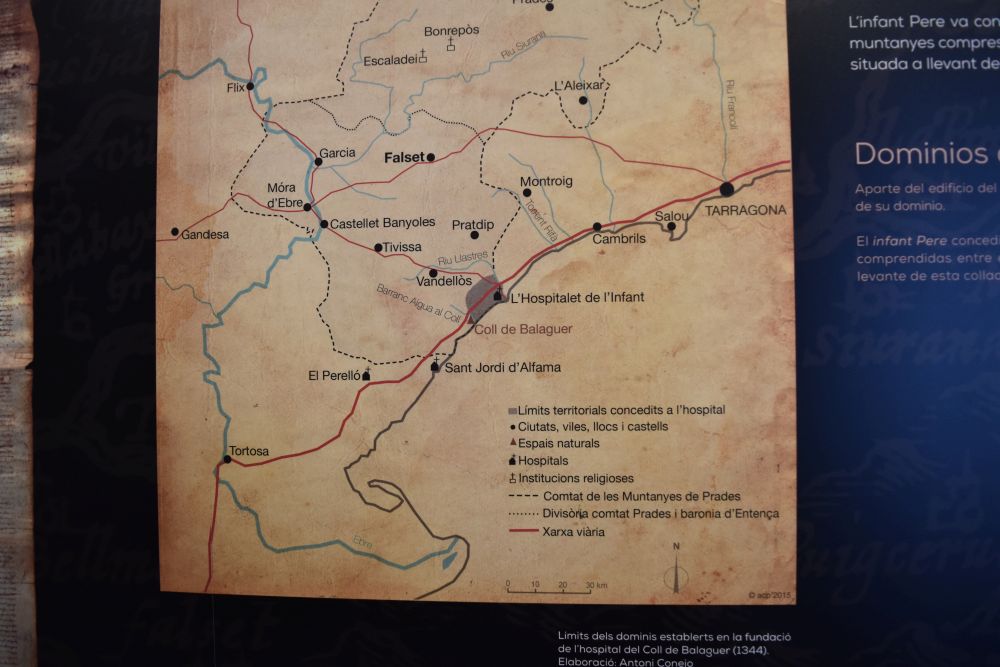
In 1306 the Infant Peter of Arragon and Anjou built the hospital of Hospitalet near the pass of Balaguer where the Via Augusta crosses the hills towards Tortosa and the Ebro valley.
aaa_1107-small

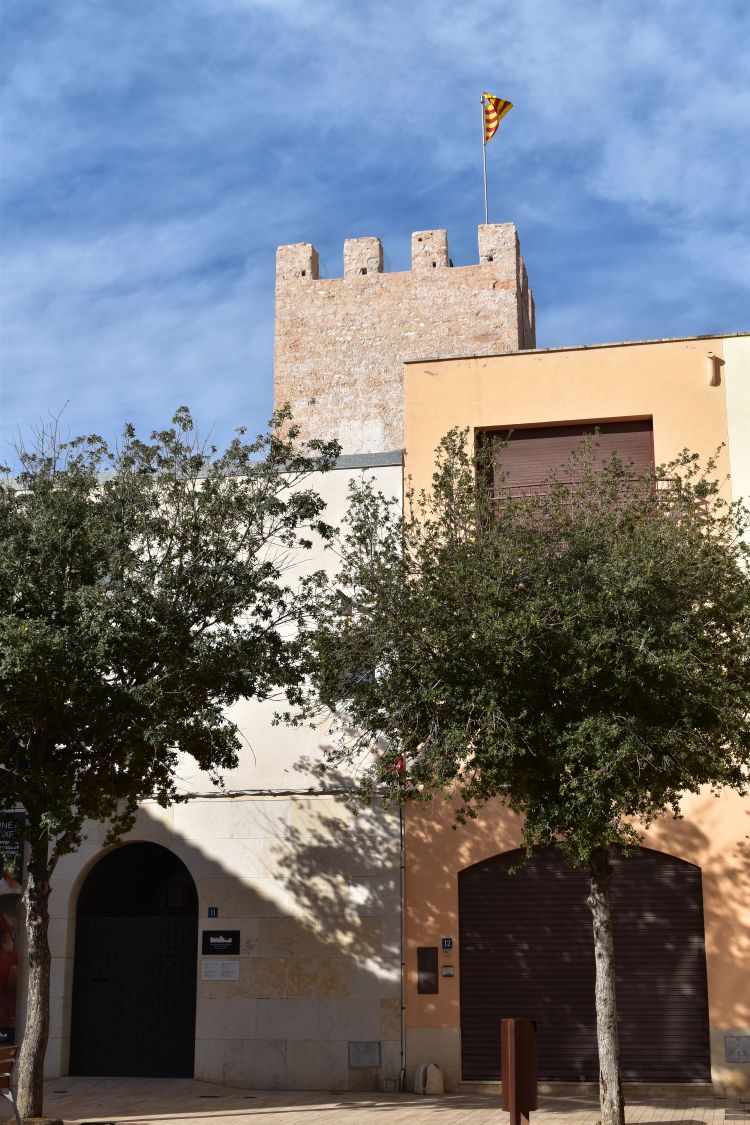
The hospital was in use for several centuries. It was destroyed several times, the final and last time by a storm in 1910. One highlight was the visit of Elizabeth Fox, a noble lady from England, that stayed here overnight around 1800. The museum tells her story with much humor.

aaa_1110-small

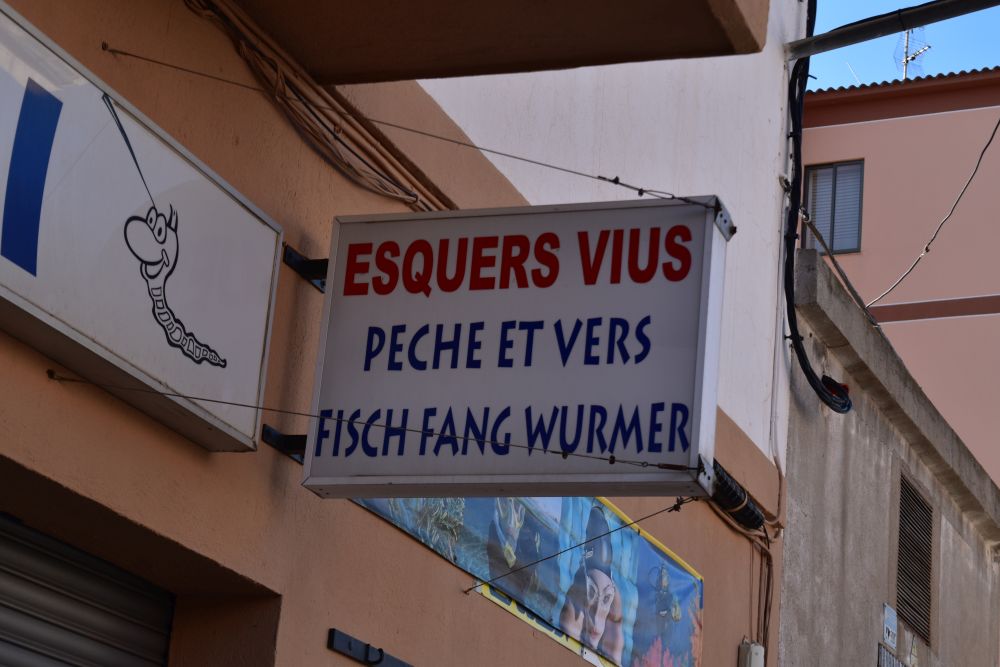
The shops are open – bakeries have fresh bread, Jordi offers fresh fish from l’Amettla, the grocery shop has delicious fruit and vegetables, the Chinese shop has all we need to complete our small household, the electrician shop repairs our broken vacuum cleaner in two days (and how proud the electrician is of that!), the mercer has everything you may need for sewing, the arts shop frames our pictures and fotos (to decorate our small apartment), the sports shop sells bathing suits… and this shop sells “Fisch Fang Wurmer” or worms for fishing (it is open on weekdays – I am just not sure, how happy the worms will be when used to fang fish).

aaa_0864-small

We have all we need for our two weeks’ vacation – and while enjoying that, we also undertake many excursions into the surroundings of Hospitalet de l’Infant. There is so much to discover in Catalonia.

On the way to Spain – second stop in charming Collioure

We are on our way to Spain again in October 2016. We first stopped in Le Puy en Velay, the gorgeous pilgrim town perched on basalt needles. We stopped a second time in charming Collioure near the French border with Spain, in the Languedoc-Roussillon.

We drive south through the hills of the Auvergne – huge bridges swing over the valleys – always a great scenery. Then the highway winds down. Cypresses and pine trees are welcoming us. The rain has stopped, the sun shines. The temperatures are warmer and my jeans are too hot. We arrive in the Mediterranean climate.

.

Our hotel of charm, Casa Païral, tucked away in a tiny dead street

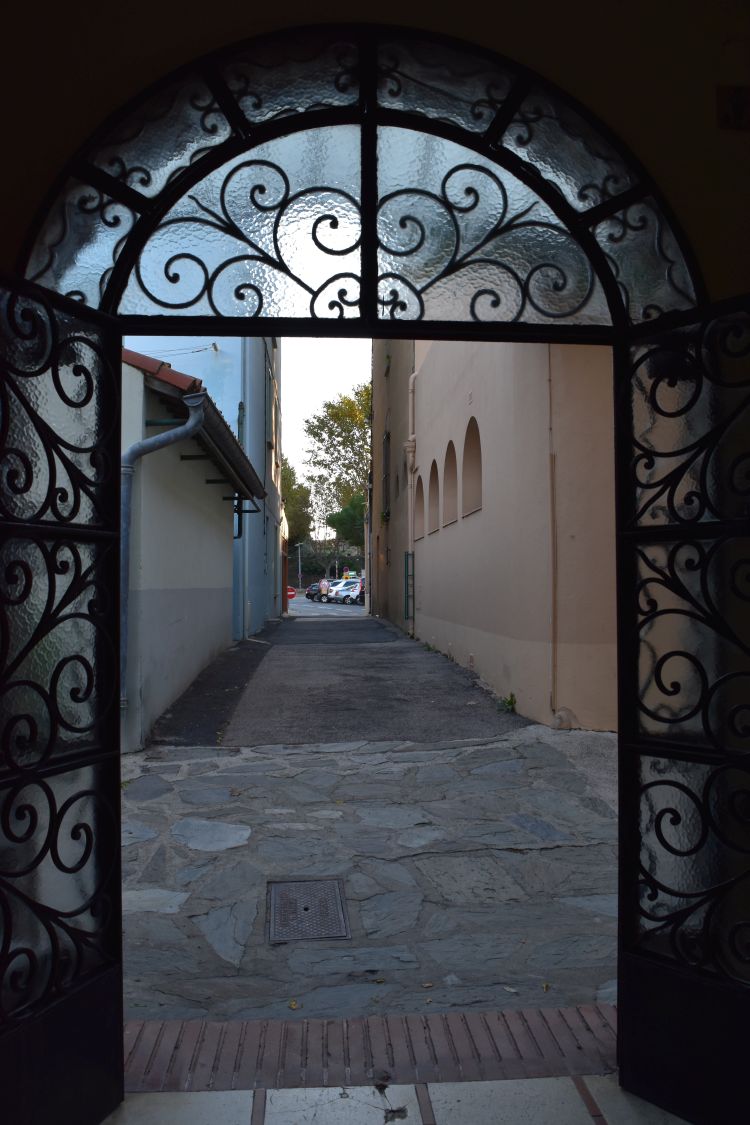
In Collioure we now have selected a hotel of charm and “Relais de Silence”, the Casa Païral. Indeed, after several turns we find it tucked away in the tiny dead end street Rue du Pasteur. I enter with our car and stop in front of the gate. After having unloaded our luggage, I have to leave this narrow dead end street backwards – I had beads of perspiration on my forehead.

aaa_0785-small

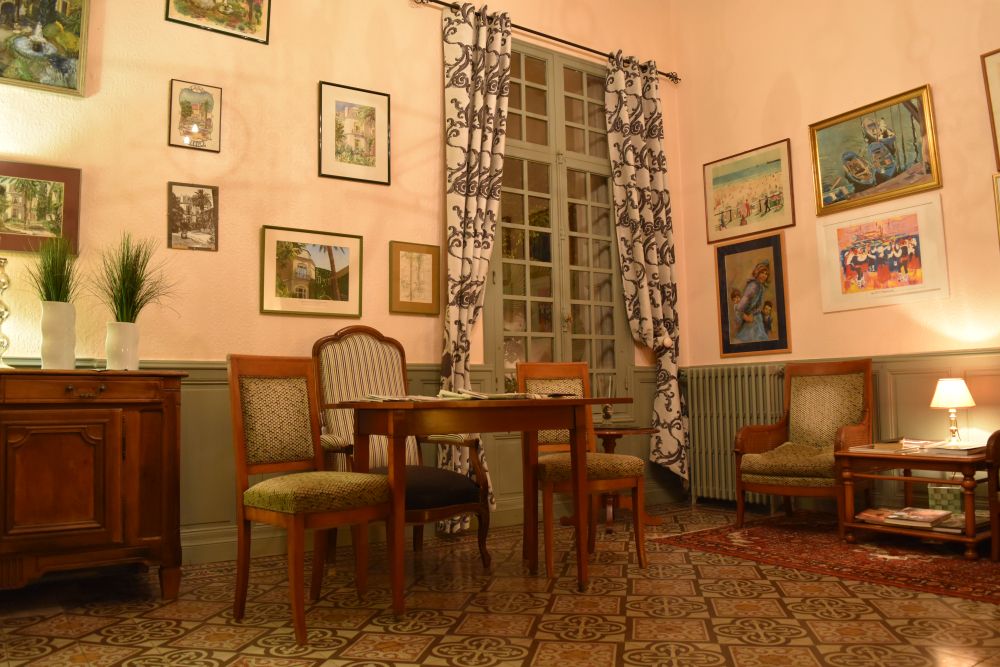
The hotel is quite a contrast to the sober IBIS hotel from last night. We immediately feel at home.

aaa_0779-small

.

Charming Collioure at night

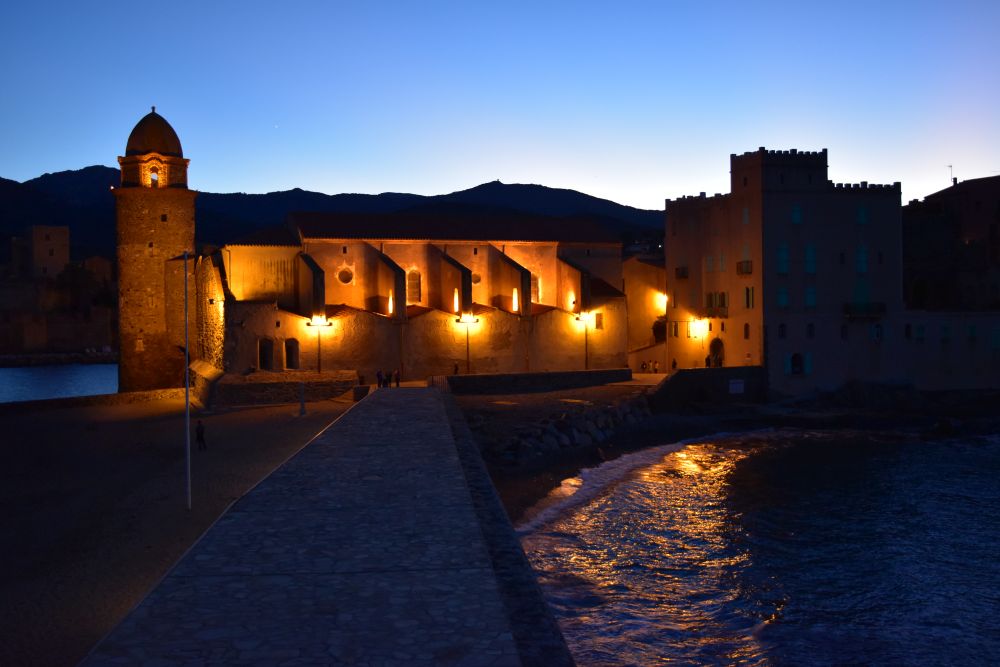
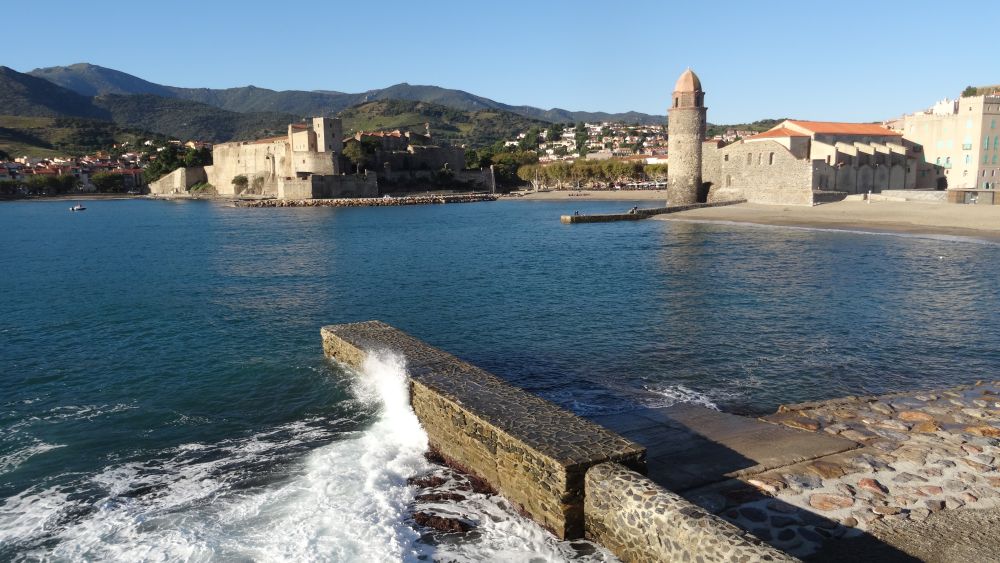
It is already late. We stroll along the harbour. The fortified church “Eglise Notre Dames des Anges” has been built by Vauban in the 17th century, when he planned to change Collioure into a garnison town (as this region has become part of the French empire in the 17th century). The clock tower looks like a light house.

aaa_0768-small

There are quite a few restaurants at this central square. We have fish at Casa Leon. We love sea fish, when we are close to the sea.

aaa_0776-small

.

Collioure inspired the fauvism artists in 1905

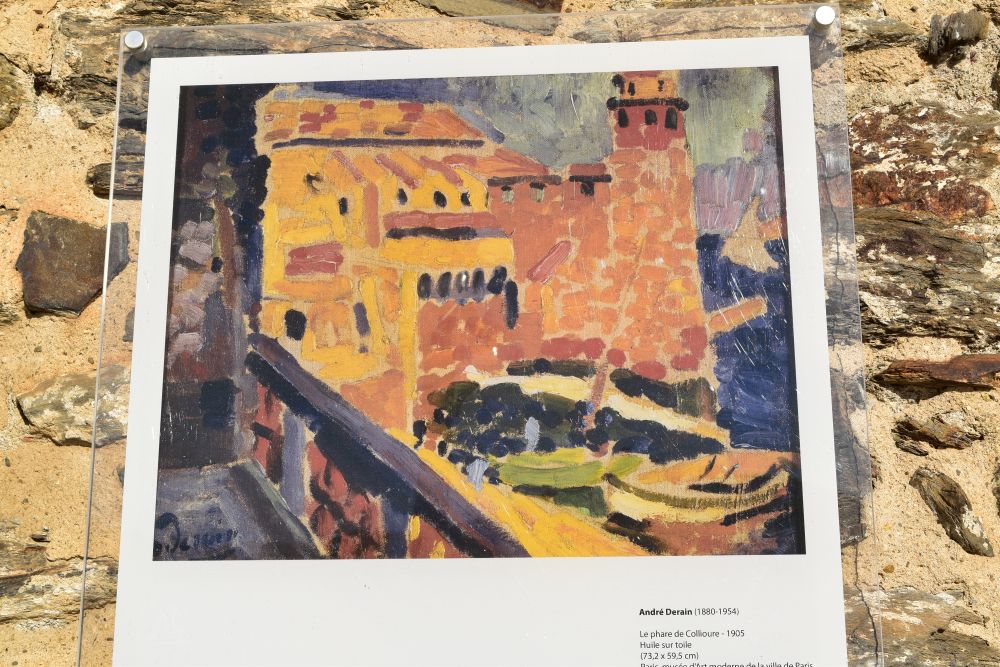
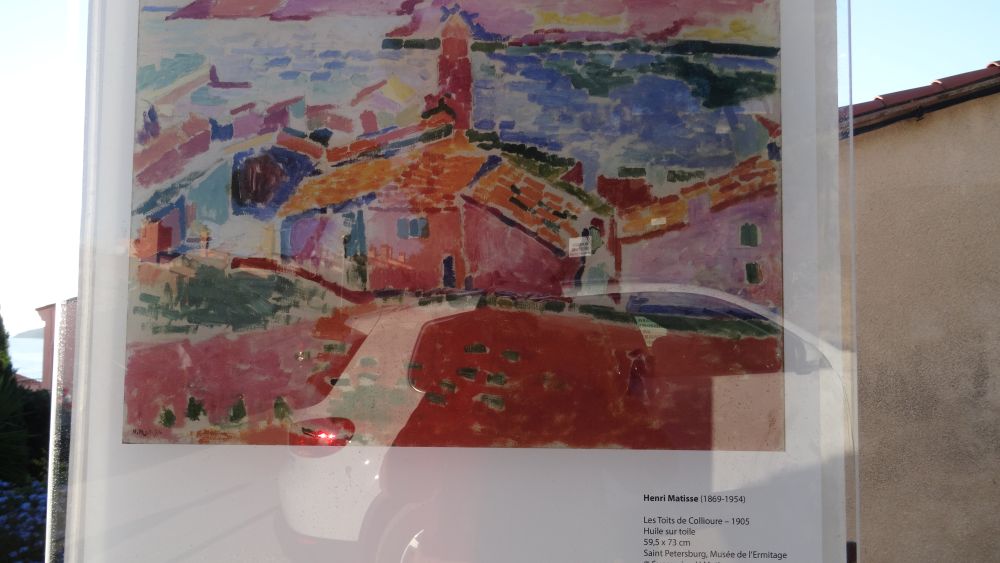
On an early morning walk we follow the tracks of Henri Matisse and André Derain. They came to Collioure in 1905 to paint fauvism art.

aaa_0831-small

Fauvism art gives priority to the color that creates the visual impression of the painting.

dsc08659-small

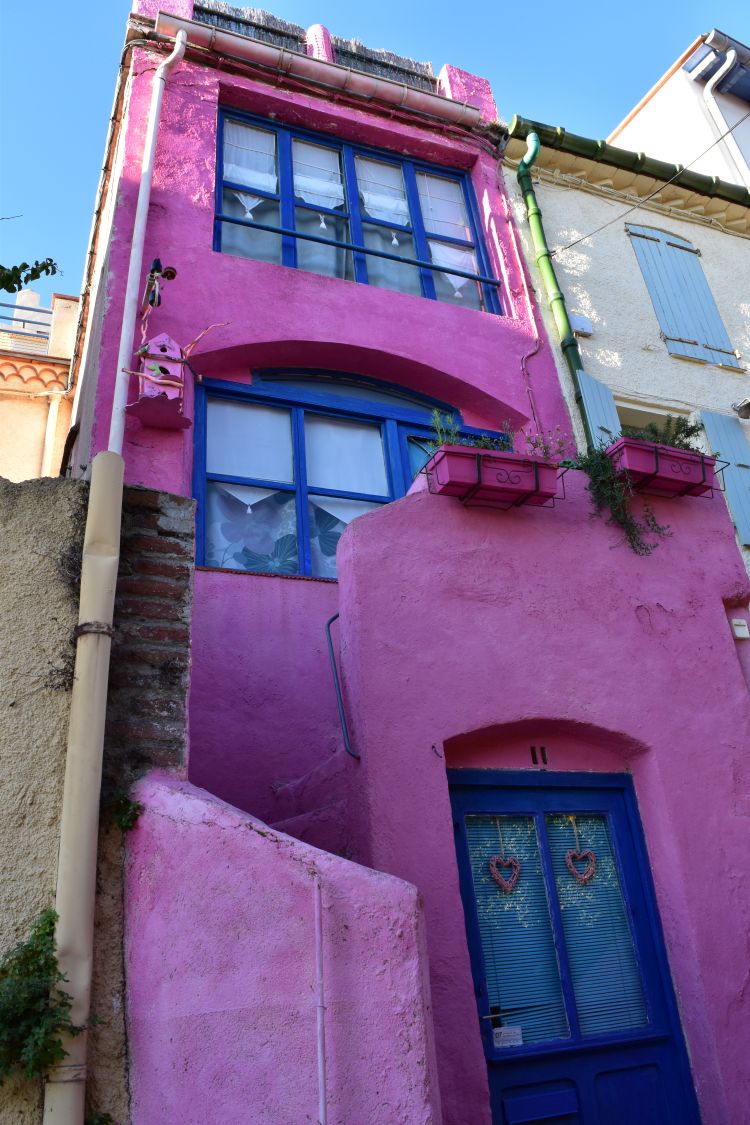
We gather some memories in the narrow streets of Collioure. Colorfully painted houses,…

aaa_0809-small

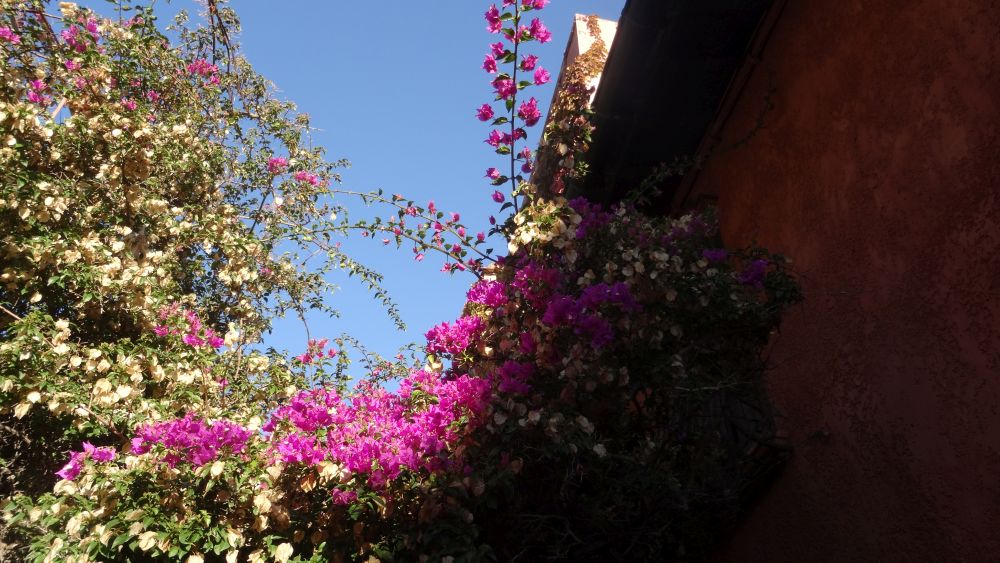
… flowers all over,…

dsc08664-small

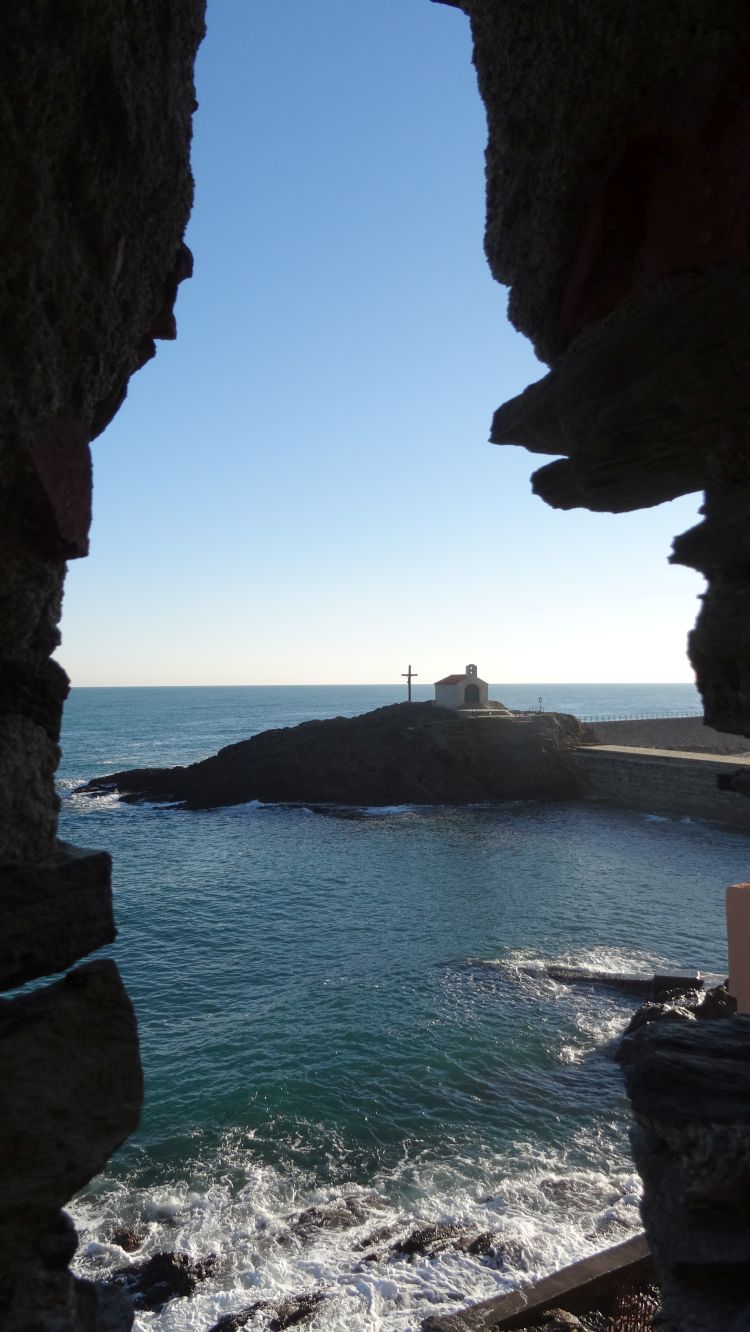
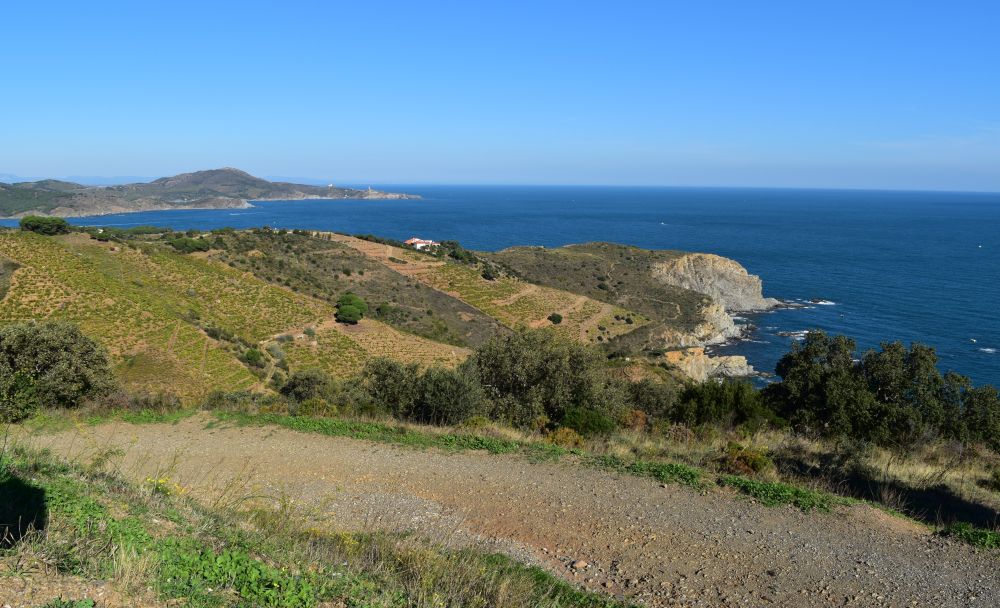
… and a great view of the Mediterranean Sea with the small chapel on the small island St. Vicent.

dsc08671-small

Once again we look back to the harbour that the waves play with.

dsc08696-small

.

Farther south to Spain

We say good-bye to Collioure and drive south following the sinuous street along the Côte de Vermeille.

aaa_0837-small

We enter Spain, follow the coast for some more time and then turn towards Barcelona and Hospitalet del’Infant.


From L’Hospitalet through the Pyrenees to Carcassone

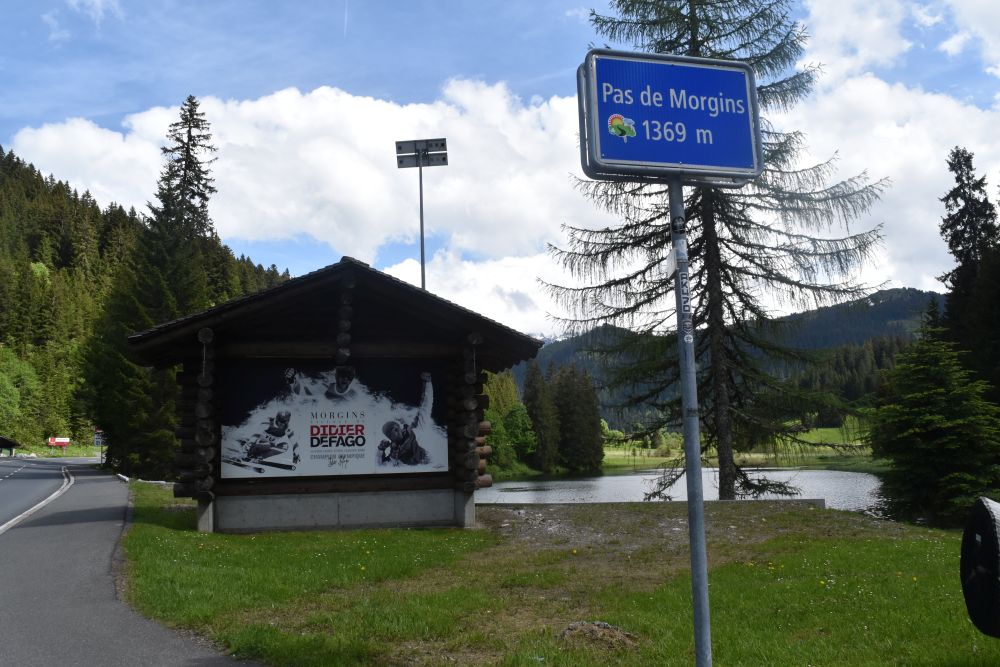
From L’Hospitalet we drive back to Switzerland, first crossing the Pyrenees and stopping at Carcassone. The next day we continue through the rough plateau mountains of Causses and stay overnight at Laguiole. Finally on the third day we take the French motorway end enter Switzerland crossing the Pas de Morgins. Let me start with the first segment from Spain to Carcassone.

.

Crossing the Penedès with Santa Creuz

Penedès is the wine region south of Barcelona that among other things produces the well-known sparkling wine Cava. Amidst the vineyards is the monastery Santa Creuz. The Kings of Aragon have been buried here, until the monastery of Poblet took over.

DSC_0750 small

Inside the walls there is a small town. The monastery is closed at lunch time. It will  be on our list of excursions when coming back to L’Hospitalet.

DSC_0760¨small

The vineyards of the Penedès are not as steep as the vineyards of Priorat.

DSC_0768 small

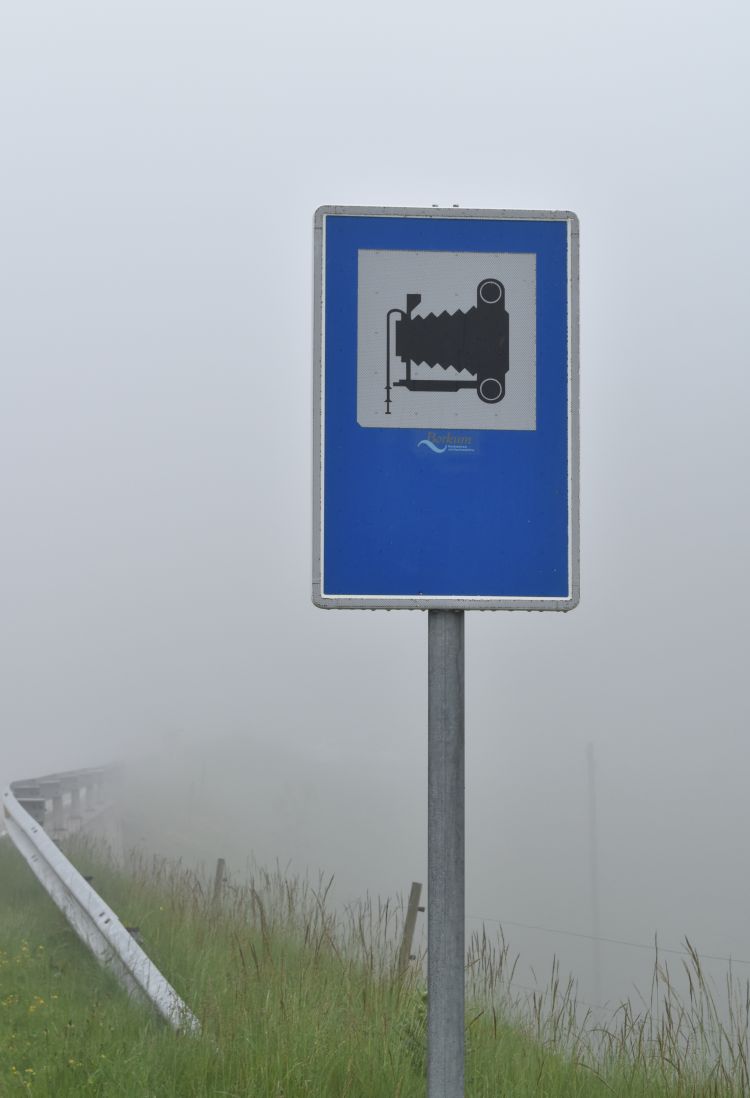
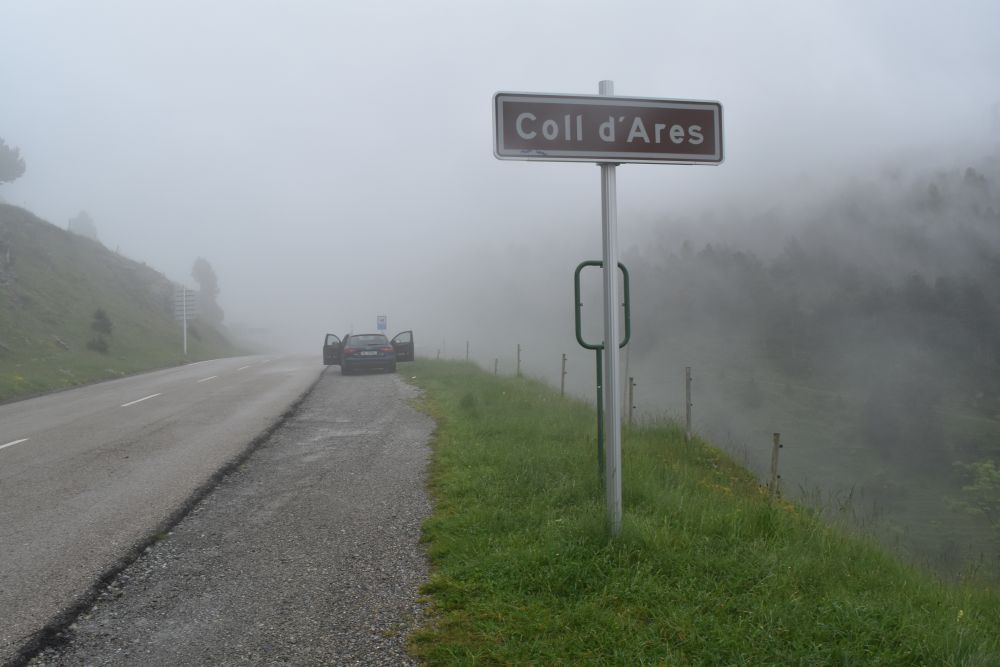
We reach the Pyrenees and drive uphill on a sinuous road. It starts to rain. At the Coll d’Ares or Col d’Arès we cross the border to France. This sign promises great photos here.

DSC_0780 small

And this was the view… it WAS misty here.

DSC_0781 small

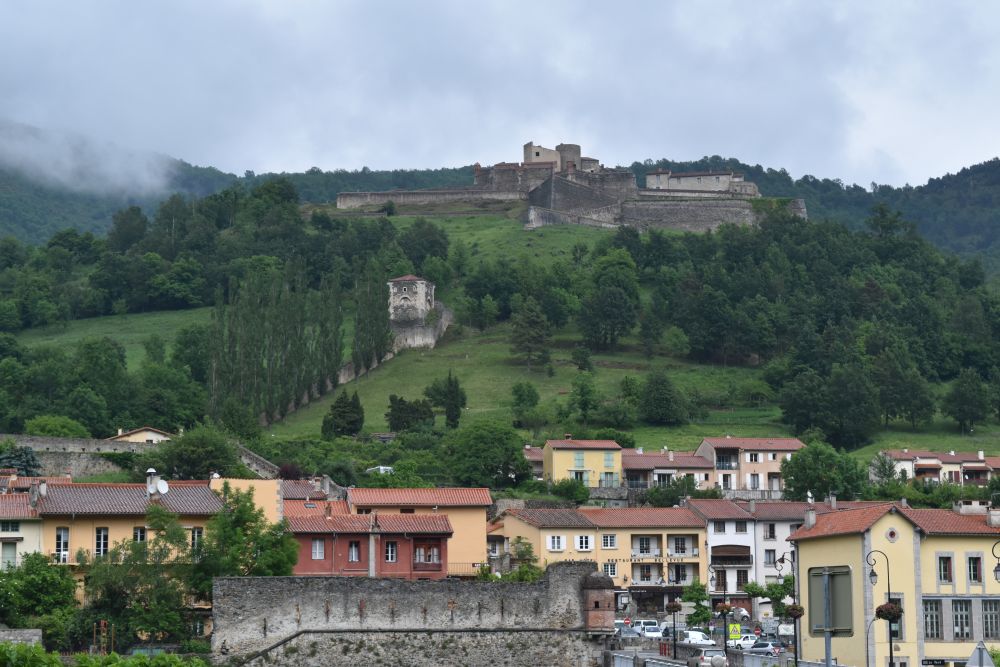
Above Prats-de-Mollo, Vauban (the architect of Louis XIV) has built the Fort Lagarde with the bastions typical of his strategy of defense (late 17th century). In the narrow streets the traffic halts for some time, as a lorry got stuck. All cars are waiting calmly.

DSC_0784 small

At Narbonne we take the motorway. Heavy wind makes the cypresses bend. We cross the vineyards of the Langedoc-Roussilon and reach gorgeous Carcassone where we stop for a night.

.

Carcassone – a fairy tale fortress

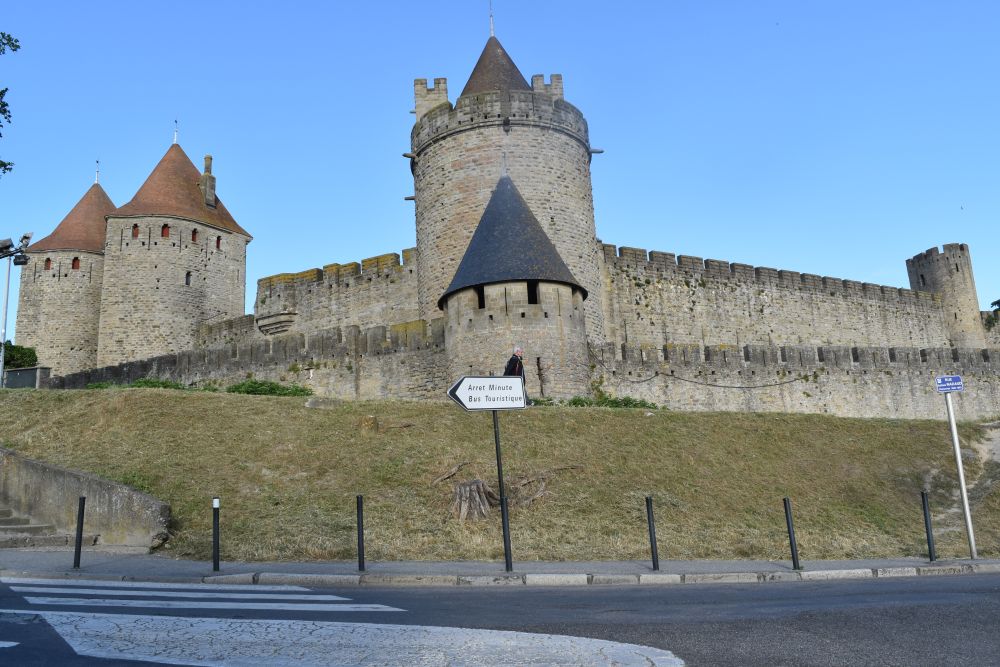
Carcassone is located in the Aude plain between the Massif Central and the Pyrenees. It was of strategic importance. The Romans had a fortification here, the Visigoths conquered it in the 5th century and the Saracens defended it successfully in the 8th century. Around 1200 the Cathars used it. In the Hundred Years War it withstood attacks by the English. Until the 17th century it was a fortress at the border between Aragon (Spain) and France, but then the Languedoc-Roussillon was transferred to France and Carcassone lost its importance as a fortress (“Carcassone – katharische Burgen”, Estel 2011).

Tourists love Carcassone. Buses are allowed to to stop here for a few minutes and “download” tourists.

DSC_0813 small

Inside the walls is a city with narrow streets. Many restaurants invite for dinner…

DSC_0828 small

… and many, many shops invite to buy souvenirs (but not to sit down).

DSC_0819 small

The restaurants offer home made cassoulet (fait maison). This meal is more for people who have worked in the fields all day.

DSC_0821 small

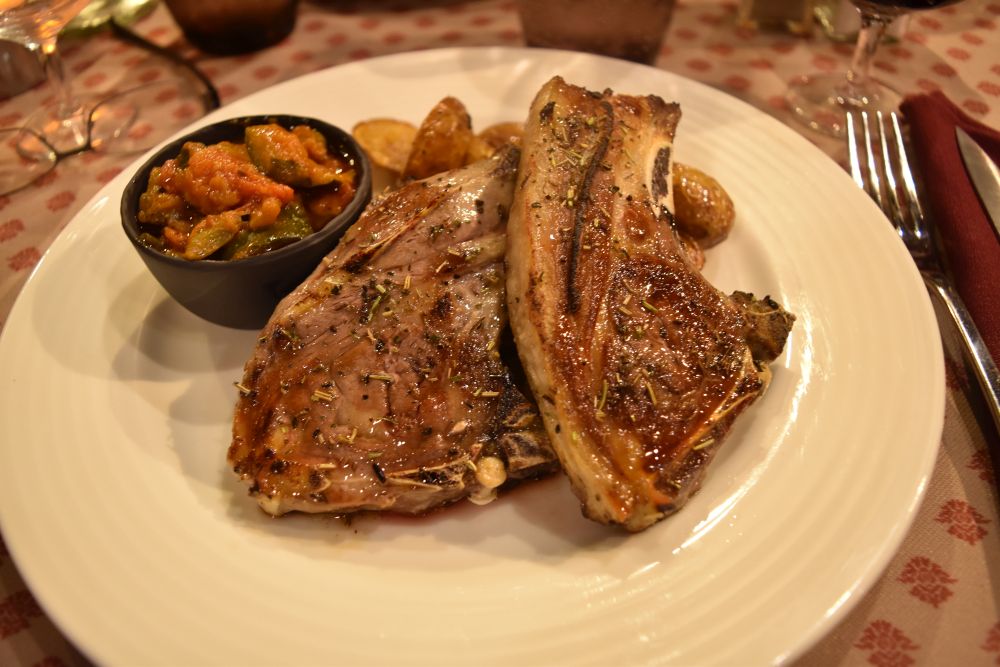
I prefer lamb with herbs.

DSC_0801 small

… and then we sleep well in our quiet hotel.


Quiet days in L’Hospitalet de l’Infant

Some of our days in L’Hospitalet are very quiet.We stayed “at home” shopping, swimming, reading, walking and enjoying our balcony. I am not a beach person… but leisure in this “off-the-beaten-tracks” village L’Hospitalet de l’Infant has its charms, especially now in early June, before the season has started off.

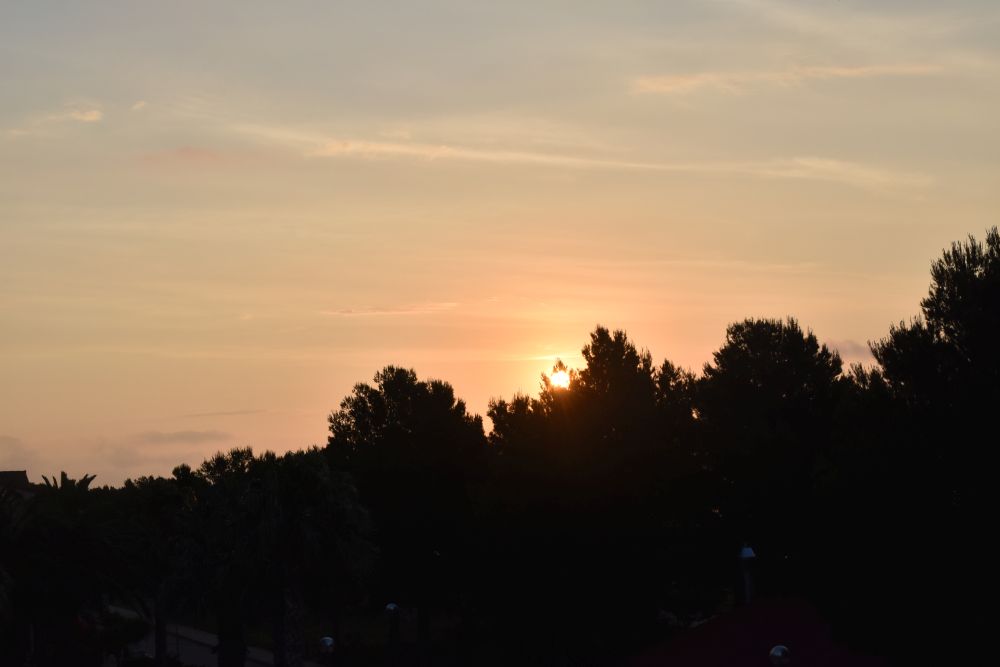
In the morning we would watch the sunrise.

DSC_0267 small

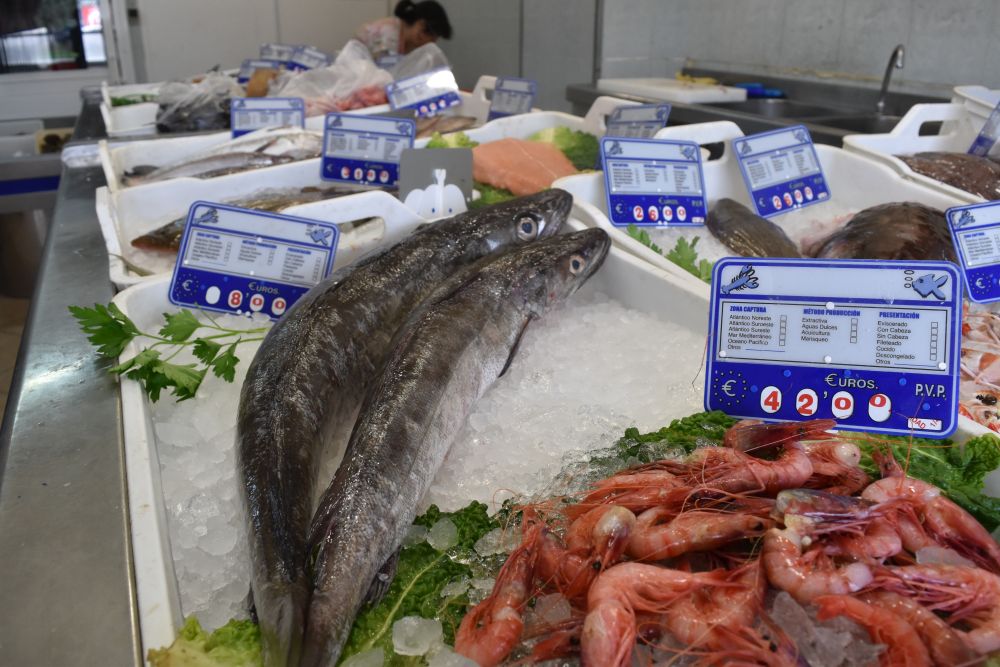
In town we would do some shopping – for instance buy fresh fruit or vegetables in the Fruites i Verduras Shop – tasty cherries and strawberries. Or we would buy fresh fish in the Peixateria. They have it from l’Ametlla de Mar, a village not far from Hospitalet. We love their codfish and sole. We prepared it just with butter and some rosemary that we had collected in the hills near Hospitalet. Delicious.

DSC_0702 small

The apartment house has a pool – we would swim in it, sometimes together with the first guests from Spain. One couple is from San Sebastian. Another couple has a baby. And one man has come just with his dog.

.

Walking…

When temperatures cool down a bit in the late afternoon, we would walk along the beach line of Hospitalet or follow the GR 92 from Hospitalet to climb the hills.

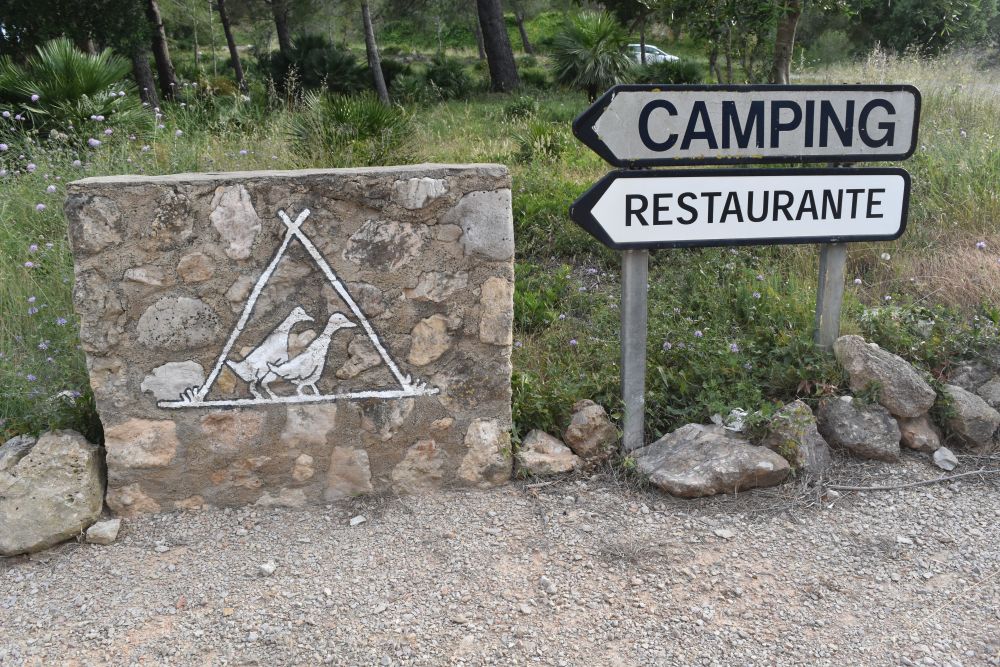
Once we visited the camping site Cala d’Oques. “Oques” is Catalan. It is the plural of “oca” which means “goose”.  The emblem of the camping site matches its name. The small restaurant serves excellent tapas – even rated in TripAdvisor. Buen provecho.

DSC_0172 small

From here GR 92 leads up to the Punto de les Rojales (well marked).

DSC_0165 small

We enjoy the view of the sea…

DSC_0163 small

… and of Hospitalet.

DSC_0162 small

The landscape towards the mountains is a harsh contrast to the romantic coast line. There are motorways paralleled by well constructed roads and factories or power stations.

DSC_0167 small

.

The village beaches are getting ready for July/August… they just start to become populated

The guests are slowly arriving in L’Hospitalet – on our second Sunday the beach was more populated than on our first Sunday, but there is still space left.

DSC_0733 small

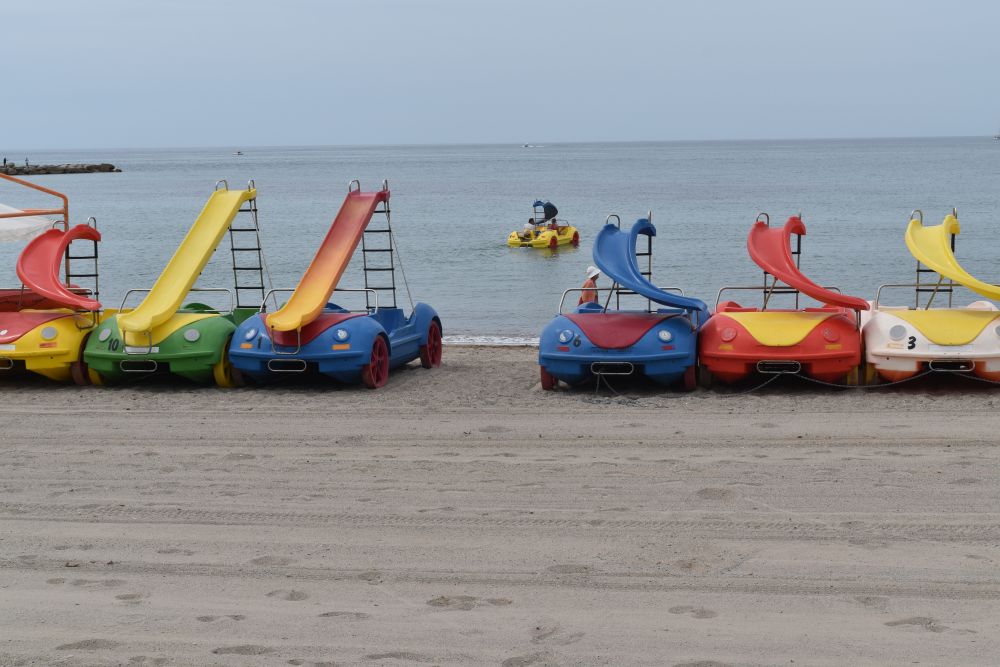
The beaches and the water are clean. We frown at these plastic cars and find out, they are pedal boats with a slide.

DSC_0727 small

When back home we will learn that such pedal boats are also in use on the lake of Zurich. We must have missed an important evolution of water games…

.


Market on Sundays

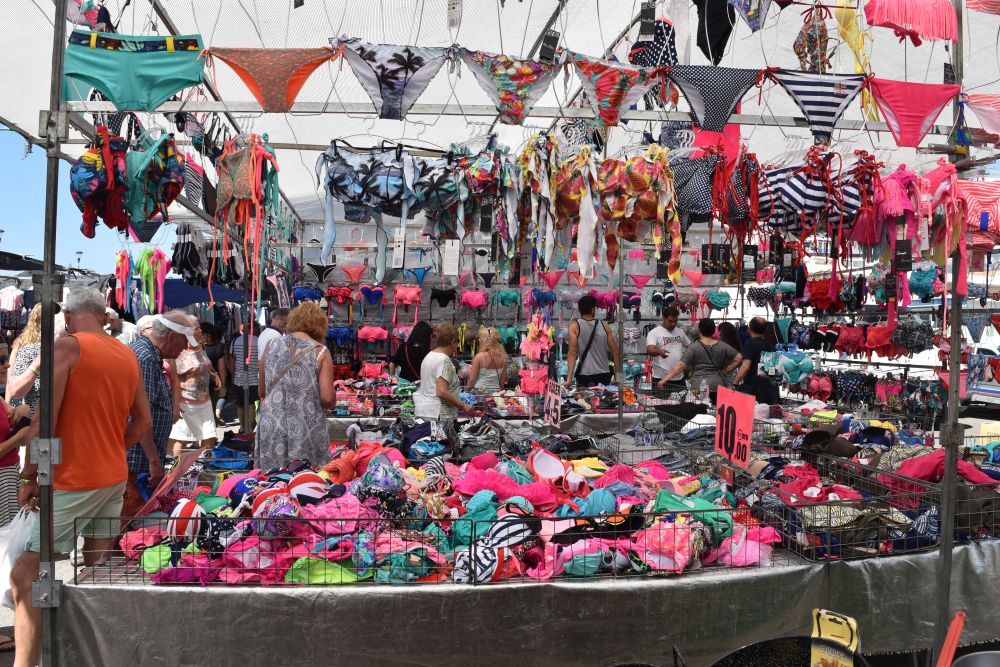
Every Sunday there is a street market on the quay. We hear Swiss German, German, French, Russian, Spanish… but also much Catalan. Products on sale are for swimming,…

DSC_0198 small

… household,…

DSC_0197 small

… and there are also fresh products on sale – fruit, vegetables, cheese and fish.

DSC_0195 small

It is not just a souvenir market, but also a resource used by the locals.

.

Rounding off a quiet day

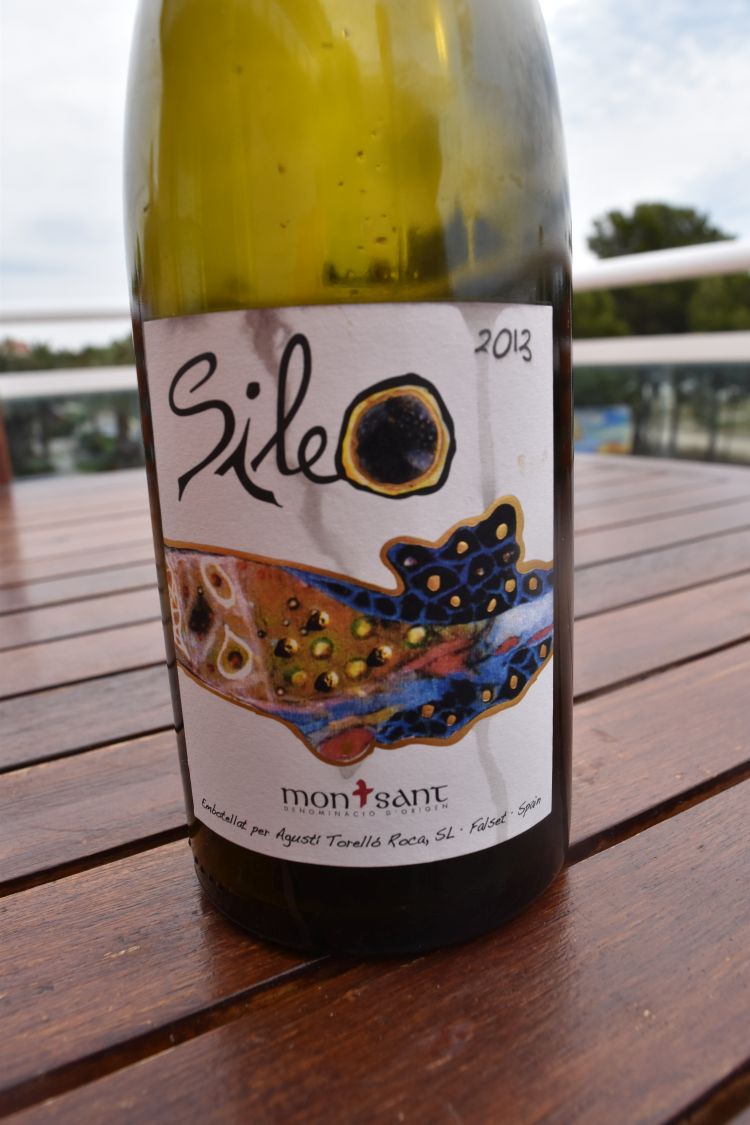
To round off a quiet day, we have a tasty Montsant wine…

DSC_0714 small

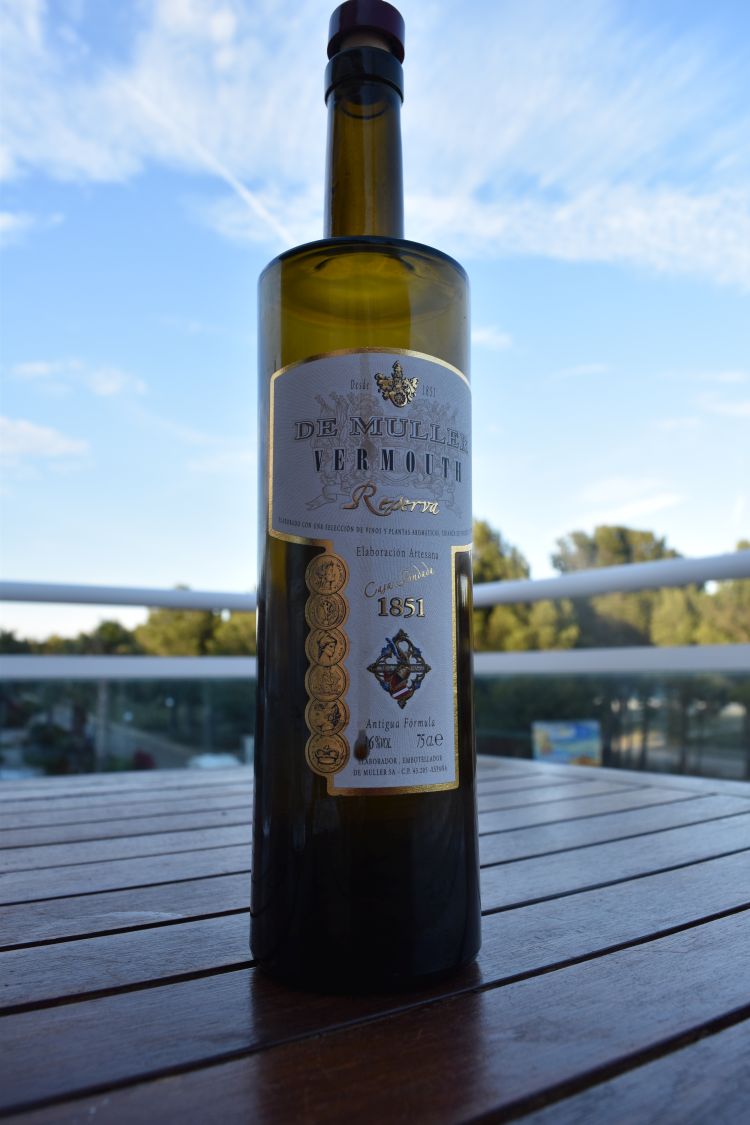
or a Vermouth – this is pretty common apetizer here.

DSC_0742 small

Yes, I am not a beach person, but leisure in this place has its charm.

A day in Barcelona – modernism and gothic

Barcelona with its modernist and gothic districts – this is our plan for Friday. We take the train at 6:40, should arrive at 8:11, but arrive more than one hour late at 9:30. Trains in Spain – this is a special rhyme.

.

Barcelona’s swinging modernism
At the Passeig de Gracia station we leave the train. We refresh ourselves with two very, very excellent espressos and very, very delicious croissants… and then we start to scout for the modernist houses on the Passeig de Gracia and around it. We are in the Art Nouveau Eixample district that was plannend and built in the beginning of the 20th century.

Near the train and metro station is the block of houses that is called “La Manzana de la Discòrdia”. There are four modernist houses here and a fight (discòrdia) about which being the most beautiful of them. Gaudí’s Batlla house surely attracts the most tourists now.
DSC_0576 small

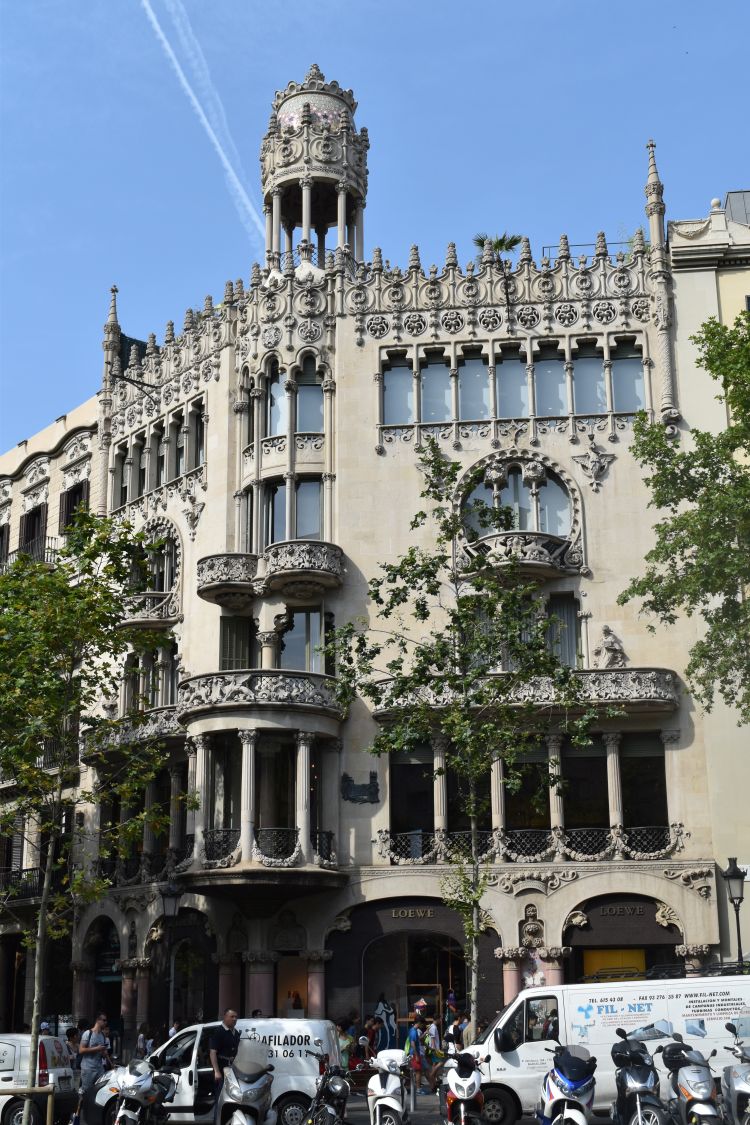
The other three houses have a lively and cheerful decoration that I prefer. This is the Casa Léo Morera built by Lluis Domenech i Montaner. We will meet this architect later in the Paleu de la Musica.
DSC_0571 small

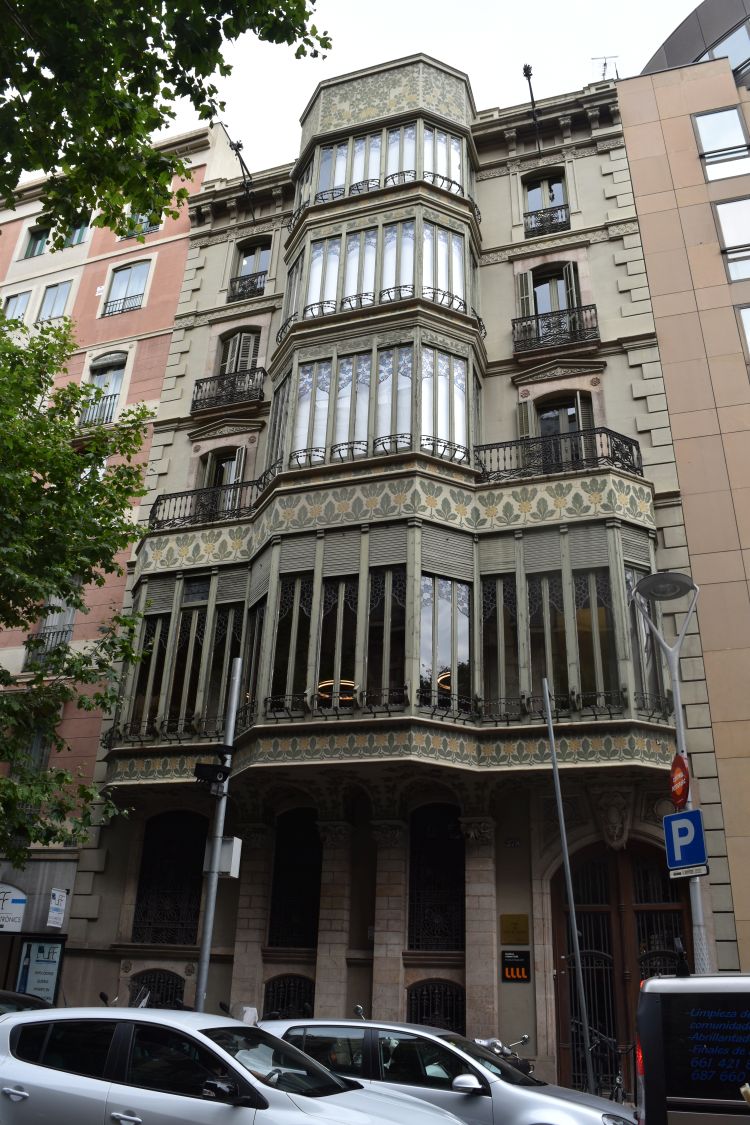
We discover many more nicely decorated modernist houses, not all of them described in the guide books, and I cannot stop clicking:
DSC_0595 small

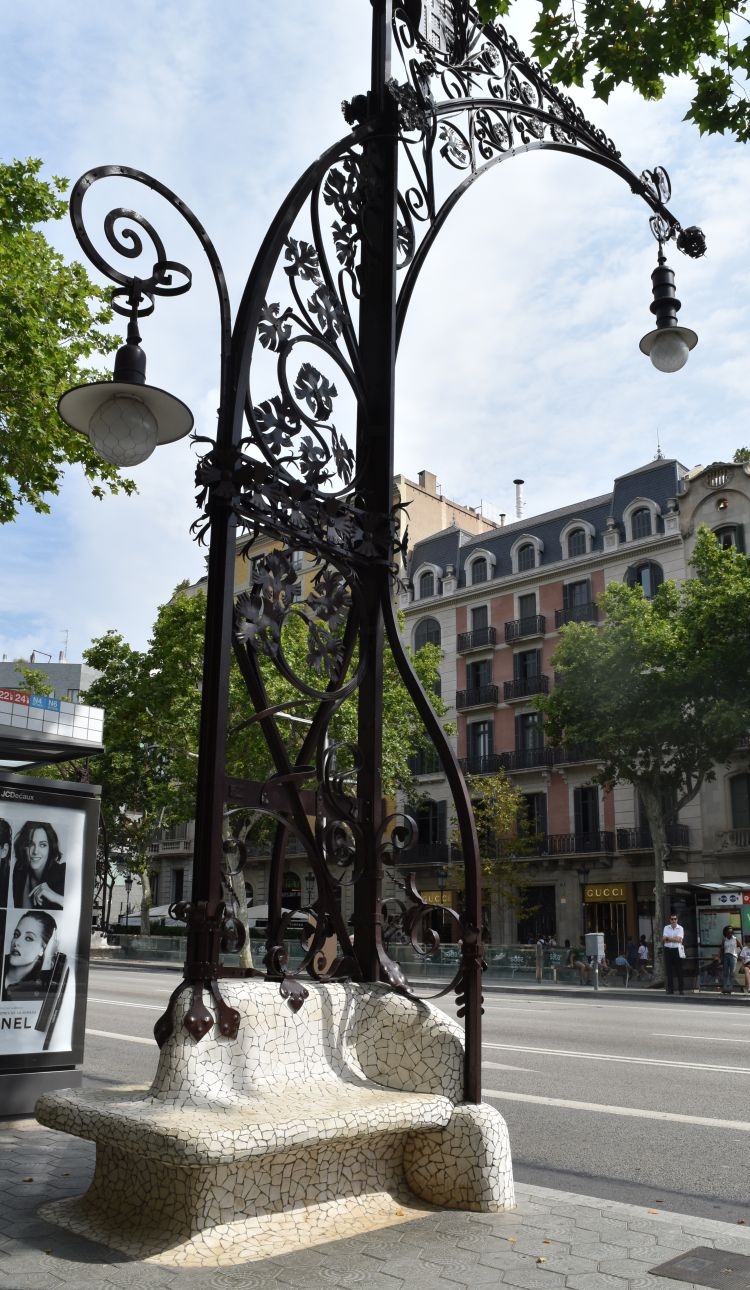
Even the public benches are a good match to the “swinging” modernist atmosphere here.
DSC_0583 small

.

The Sagrada Familia – impressive and unfortunately overcrowded
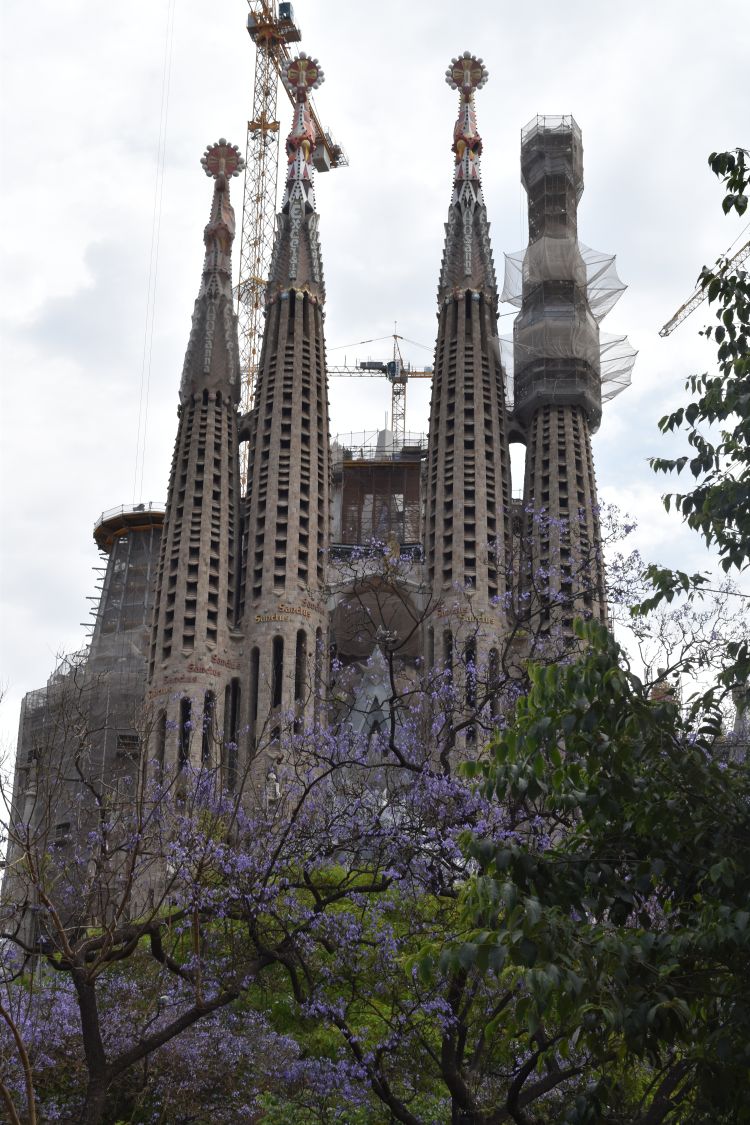
Walking in Carrer Mallorca, we see them already from far: The towers of Gaudí’s unachieved master piece, the Sagrada Familia, point to heaven like slim needles, akwardly accompanied by construction cranes, as this church has not yet been accomplished. (Gaudí had started building it in the beginning of the 20th century, then died and the construction had been stopped for some time during the civil war of the thirties and the Franco regime).
DSC_0608 small
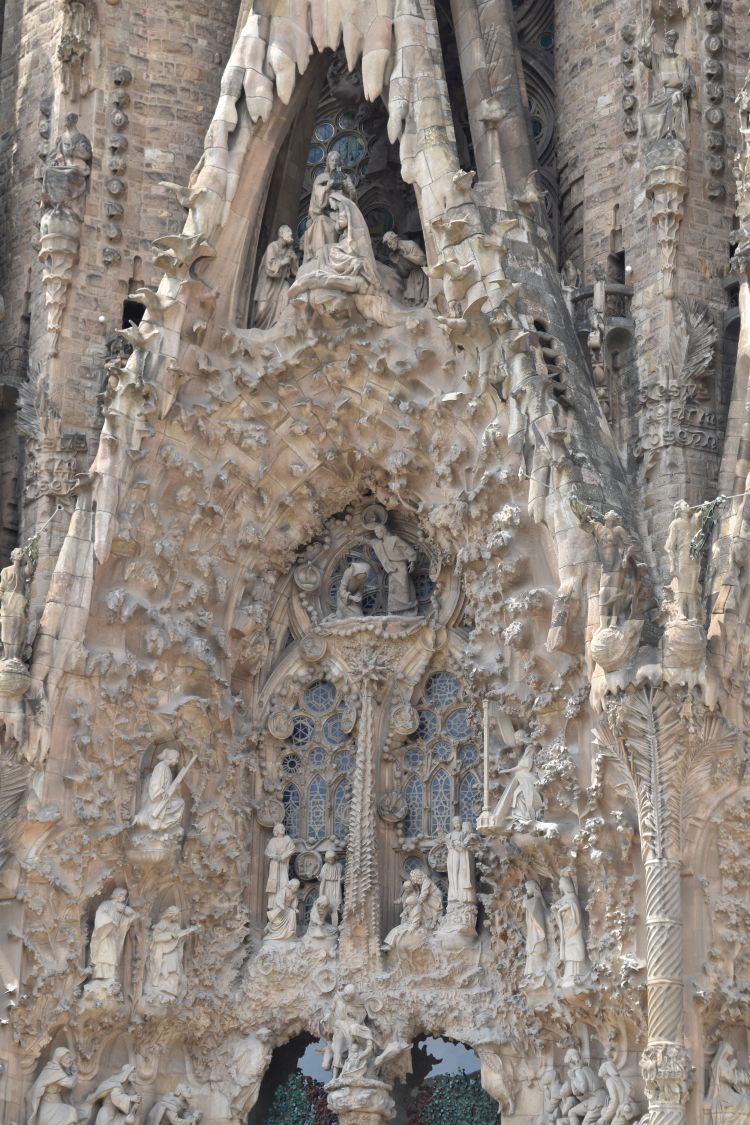
I look forward to the museum that explains, how Gaudí wants his buildings to look like natural trees and flowers. BUT, now around midday, we would have to wait for perhaps an hour (long queue) to buy a ticket that allows us to enter the Sagrada Familia at 4pm…  No, not for us. We sit down in the park and study the richly decorated Nativity facade…
DSC_0611 small

… and then continue by metro to the Palau de la Musica.

.

The Palau de la Musica… a cheerful modernist music palace
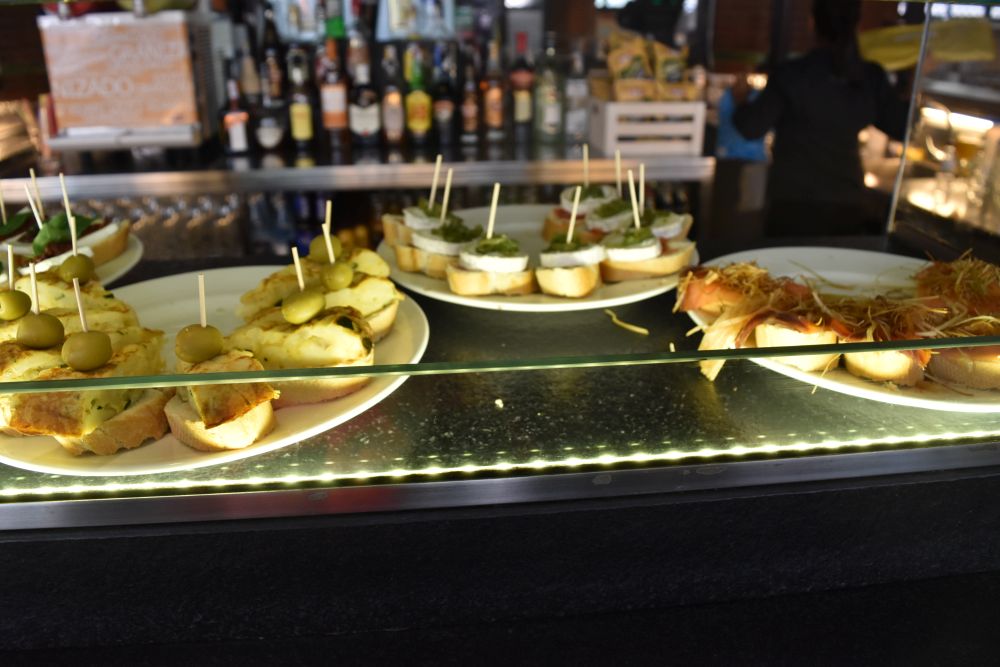
The modernist Palau de la Musica Catalana is located in the Barrí Gotic amidst narrow streets. There is a nice cafeteria, where we first recover eating tasty montaditos varts.
DSC_0616 small
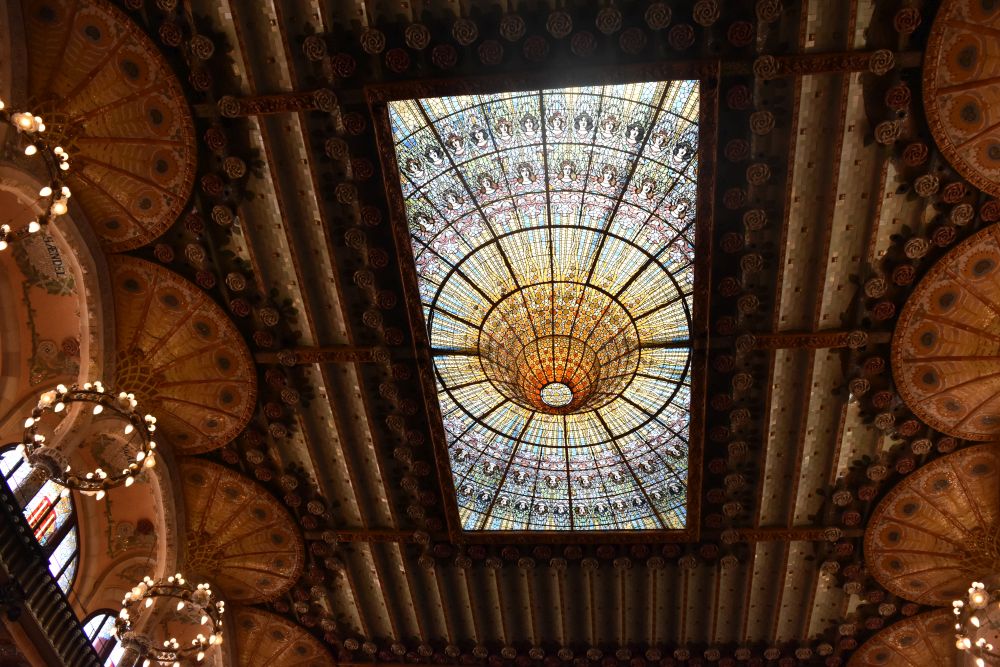
Then we join an Italian speaking group (they are the smallest group) to explore the modernist palace of music. The highlight is the concert hall for about 2000 people: The lamp on the ceiling is a window that lets in natural light.

DSC_0651 small

The stage is decorated with muses holding a ribbon.
DSC_0635 small
The main entry is in a narrow street. There are two large gates. The coaches used to enter the first gate, let the passengers out and then leave through the second gate. No longer today. Concert visitors enter through two huge revolving doors built into the gates.

I love this cheerful palace of music. It has been built in 1908 as a stage for the national choir (orfeo) of Catalonia. The architect was Lluis Domenech i Montaner that we already know from the Manzana de Discòrdia. And yes, this music palace has a nationalist purpose for the Catalans, but it has also become a stage for many very different renowned music artists – classic, jazz and folklore.
.
Let us switch times – the Gothic Cathedral is not far
Enough Art Nouveau or Modernism. We feel like more modest gothic master pieces. The gothic cathedral is not far and we walk through the narrow streets (“Gässli”) of the Barrí Gotic.

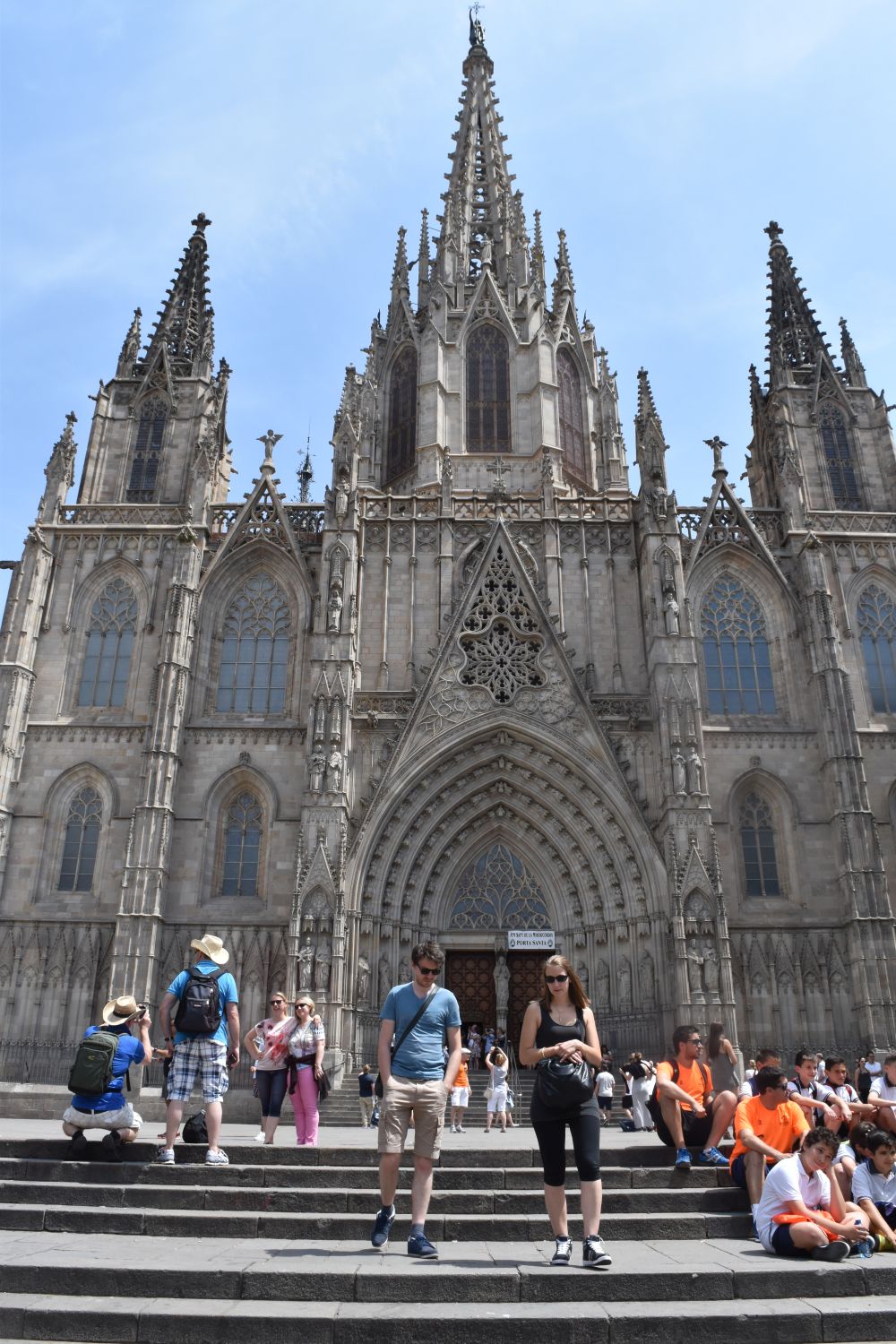
Construction of the Cathedral of Barcelona started in 1298 and lasted until 1450. The facade has been completed in the 19th century.
DSC_0660 small
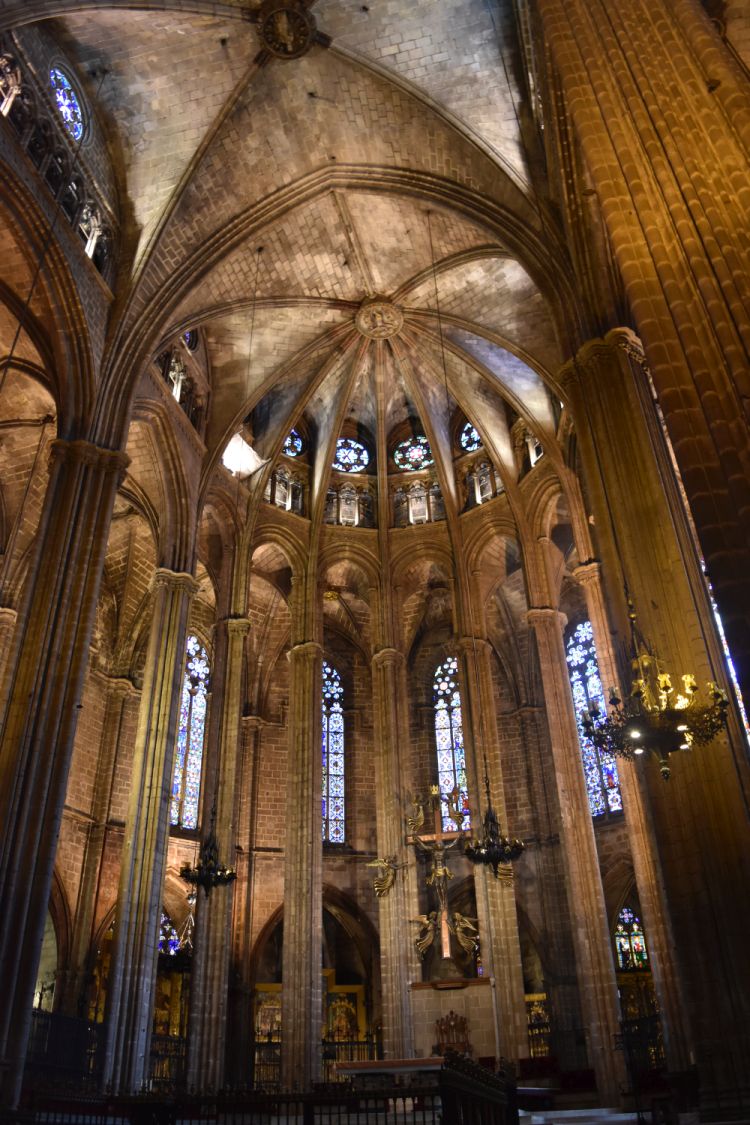
The nave points to heaven with its high gothic vaults.
DSC_0667 small
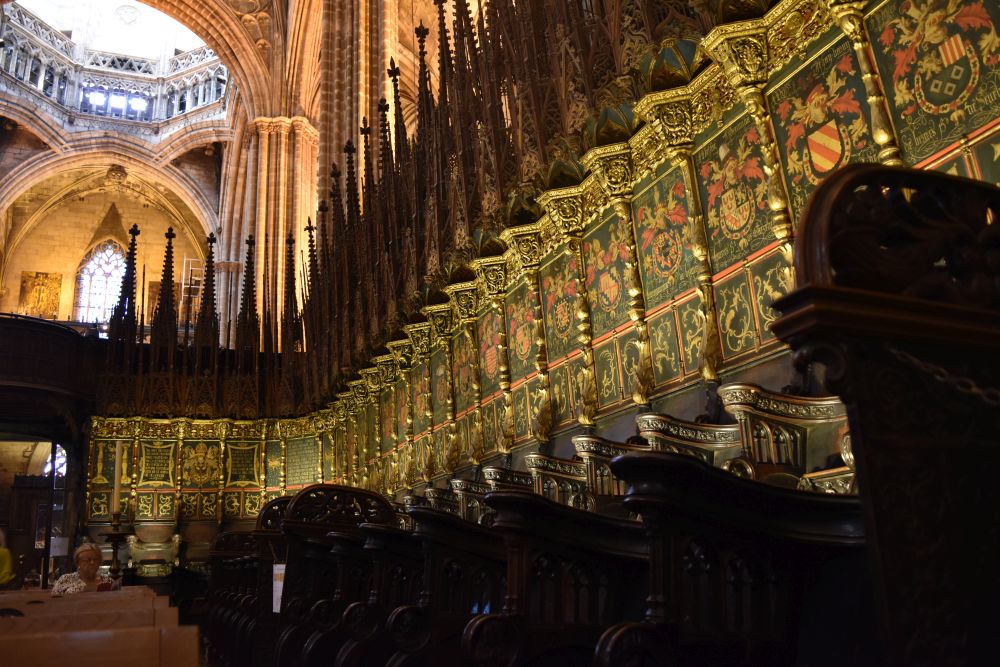
The choir is in the middle – for me a heavy design somewhat offsetting the airiness of the gothic vaults. Here are the richly decorated stalls.
DSC_0662 small

“Do you believe these geese are kept appropriately to their species”, Ursula asks me. I am not sure. 13 geese walk and stand on the cloister tiles. If they wish they can have a bath in  the fountain. The 13 geese commemorate the martyr Eulalia that died at the age  of 13 years.
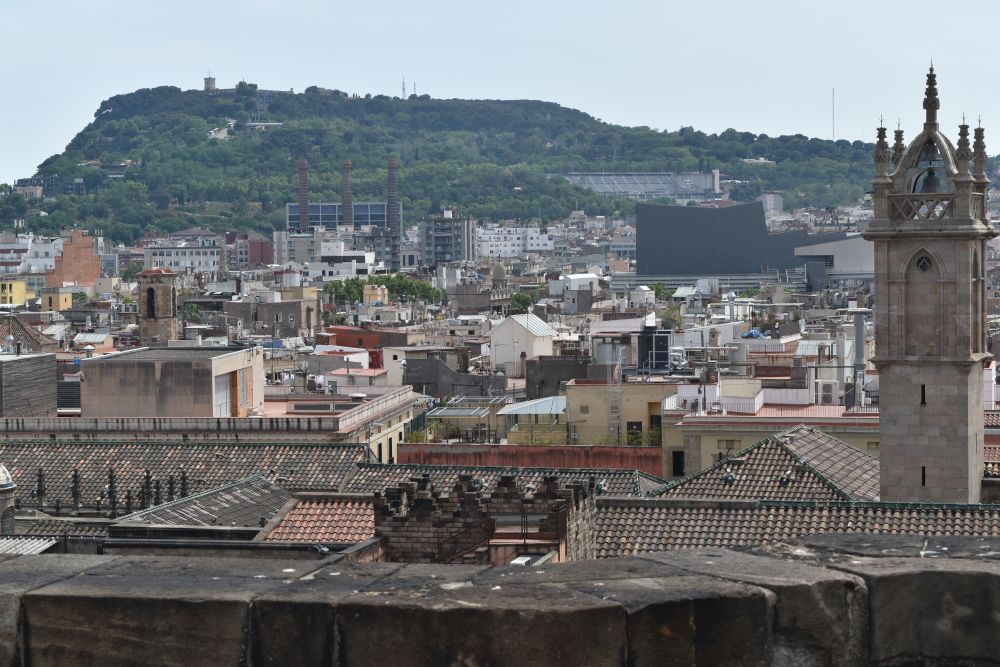
A lift takes us to the roof. We enjoy a beautiful view to the Mountjuïc and the church Santa Maria del Pi which is our next target.

DSC_0672 small

.

The narrow streets of the Barrí Gotic and Santa Maria del Pi
We continue to stroll through the narrow streets of the Barri Gotic and at the charming Plaça del Pi we have a drink. A group of musicians plays one tune of about 2 minutes five times – no, not all of them have talent.

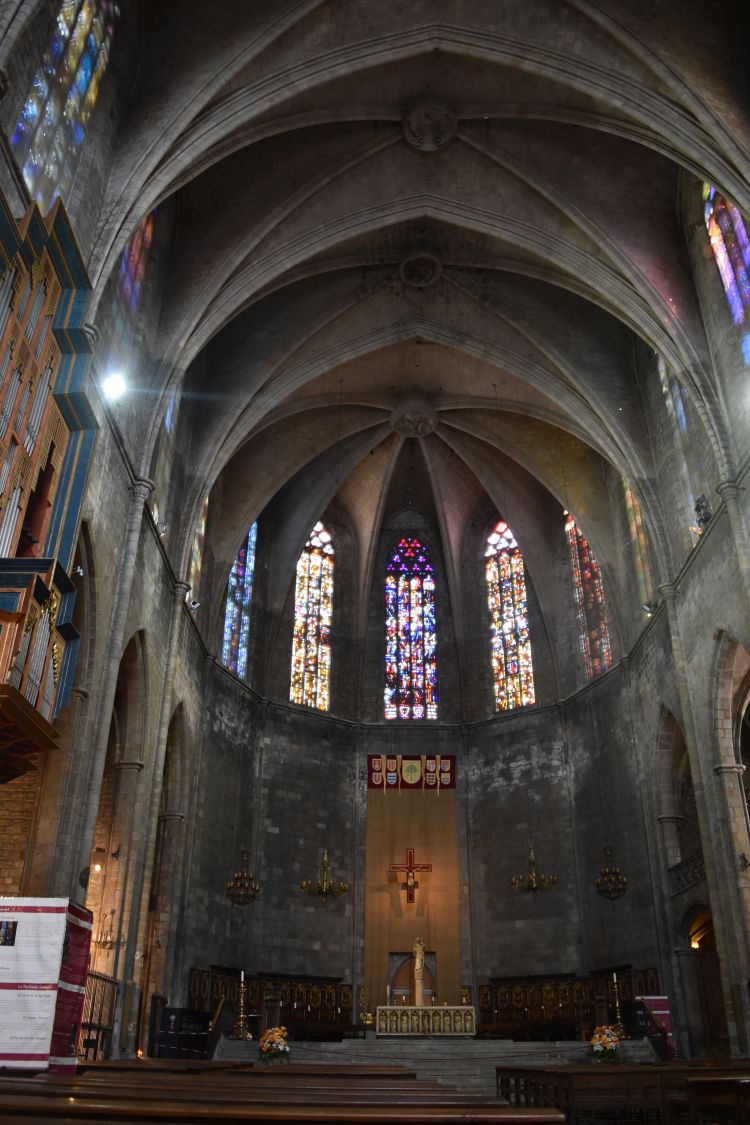
The church Santa Maria del Pi is one of my favorite in Barcelona. We sit on the bench and breathe in the harmonious atmosphere.
DSC_0677 small
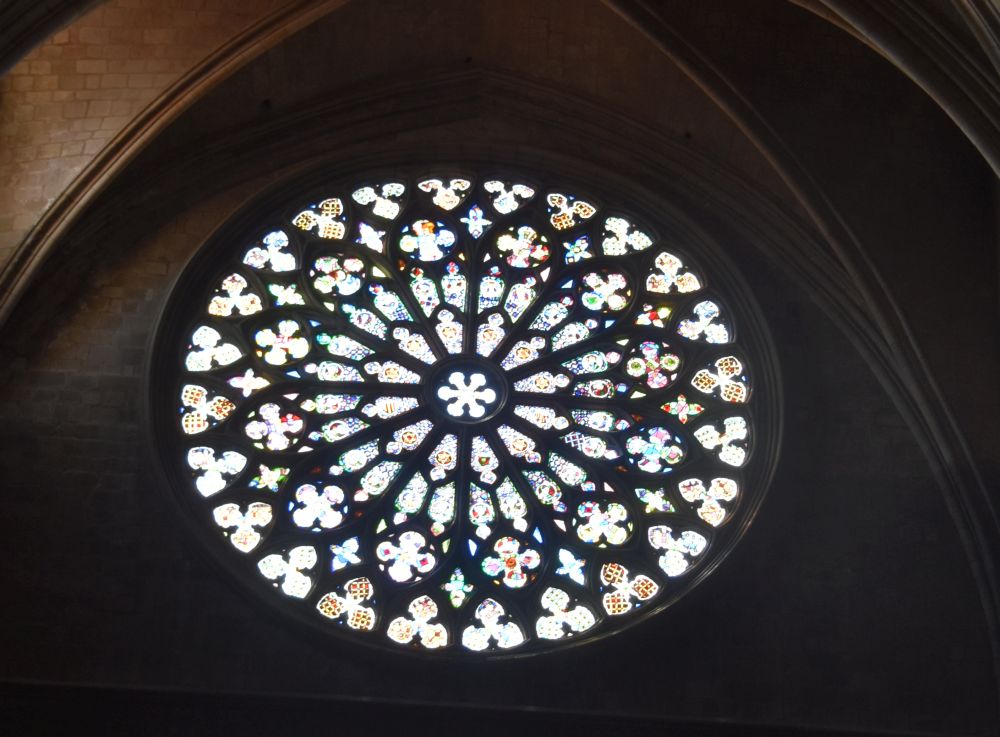
The windows have been destroyed in the Spanish War of Succession and the Rosette – one of the largest in the world – in the Spanish civil war of the 1930’s.
DSC_0681 small

Yes, the Catalans have been unlucky teaming up with the “wrong” side, and I learn that another problem was that the rich upper class not really supported the Catalan fight for their independence, but cooperated with Madrid. Hence they lost in the War of Succession shortly after 1700 and in the Civil War in the 30’s of the 20th century.

.

Ramblas and then Plaça Real
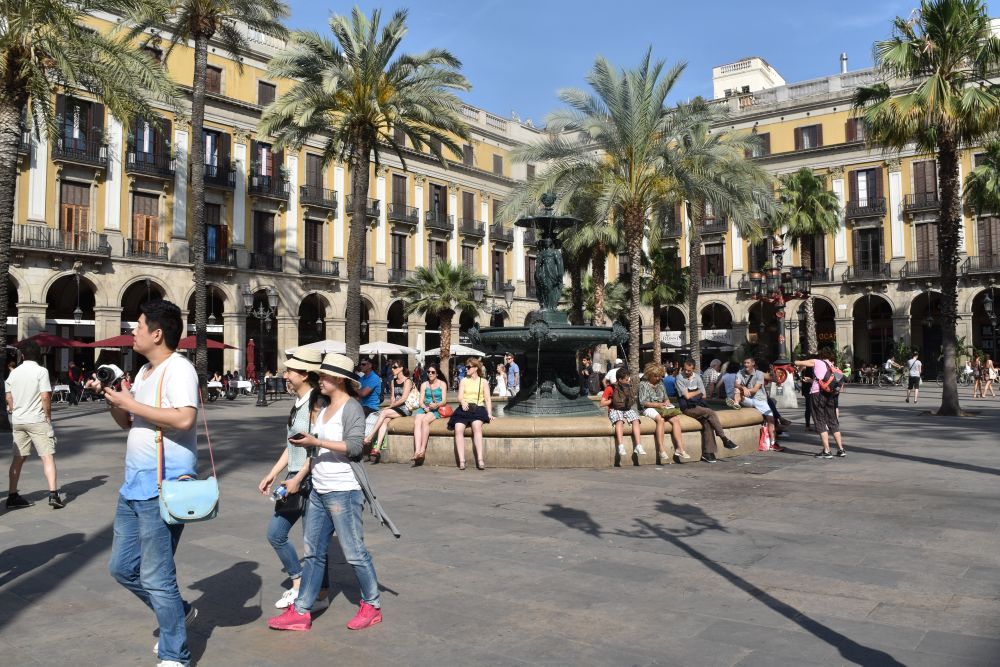
We join the crowds on the Ramblas of Barcelona and then turn left to say hello to the Plaça Real.
DSC_0684 small

.

Santa Maria del Mar – also one of my favourite churches in Barcelona
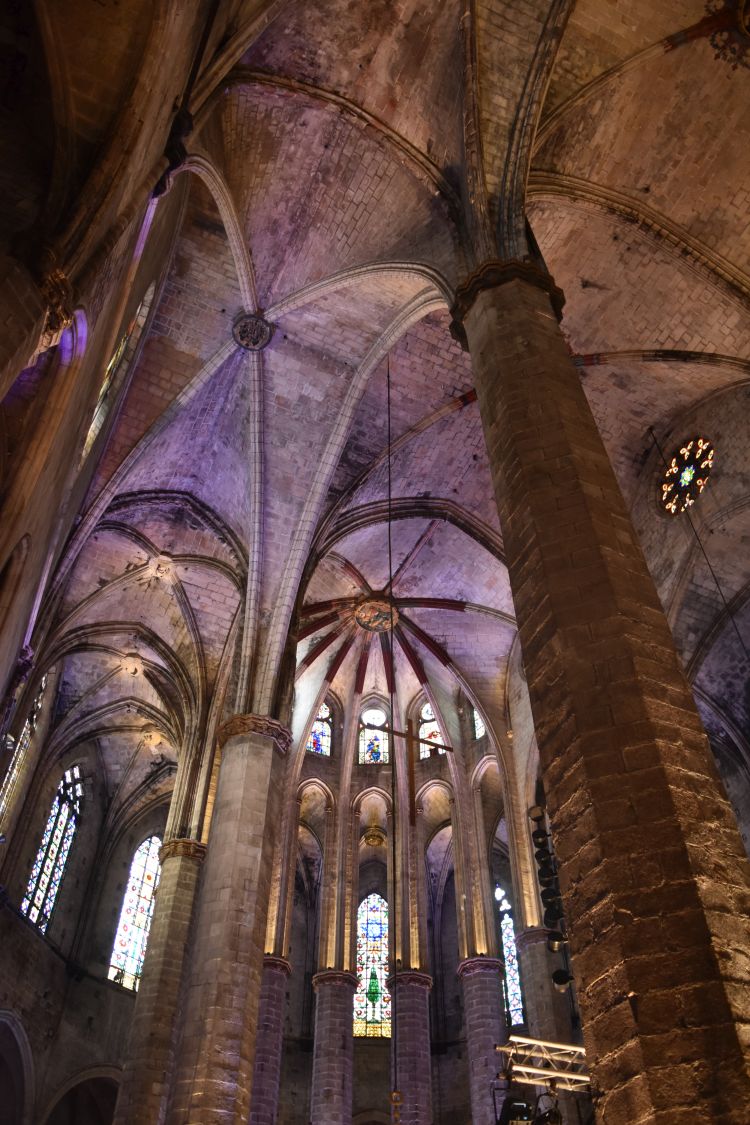
Santa Maria del Mar has been built rapidly from 1329 to 1370. I love the harmony of the homogenous style. We sit on a bench and enjoy the harmony.
DSC_0695 small

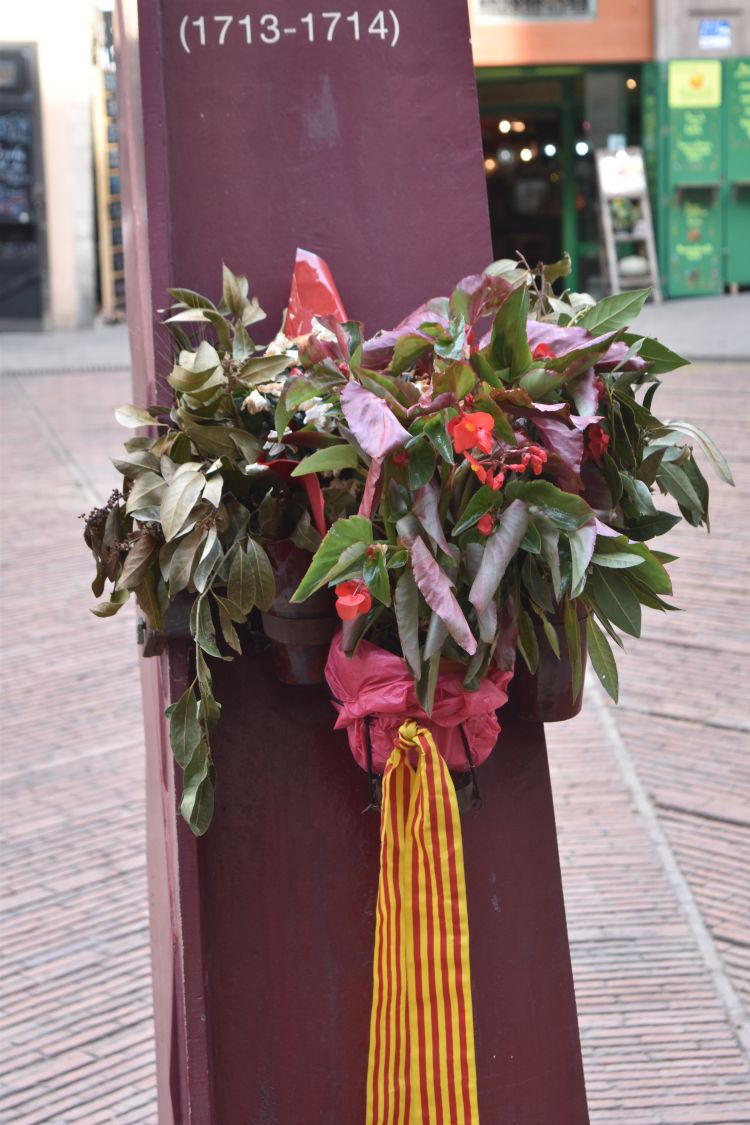
As always when in Barcelona, I say hello to the monument of the Catalans which is not far from Santa Maria del Mar. Yes, the Catalans fought bravely on the side of the Habsburgians in the war of succession in 1713/14 – but it was the Bourbons that won this war.

DSC_0696 small
The Ribera district would be great for dinner or Tapas, but now we head back to the Passeig de Gracia to catch the 19:25 train.

.

Returning to Hospitalet – not straightforward and again late
How does access to the Renfe trains work in Barcelona? Not straightforward…

Arriving with the metro at Passeig de Gracia we first figure out which metro entry gives access to the trains. We find this entry three cross-streets to the  north. Under the earth, we are confronted with automatic gates, but our tickets (sold in the train) do not open them.We ask and are told to press “the” button (a bell) – then someone will open a special gate. Okay, but where is that magic “the” button? Ah, here it is, the rightmost gate has such a button that could be “the” button. We press it to ring. No one opens… But then a man leaves the Renfe train area through the flipping door next to the button and we catch the moment to enter. Uff.

The train leaves precisely on time at 19:25. In Tarragona we are precisely on time. Ursula says: “Look, at 9:15 we will be at home on our balcony in L’Hospitalet.” But then the train stands for half an hour in Salou and loses another half hour, until we arrive in Hospitalet one hour late. No, no… train and Spain ARE not a good rhyme.
With a glass of Vermouth from Gallatrops we finish another beautiful sightseeing day.