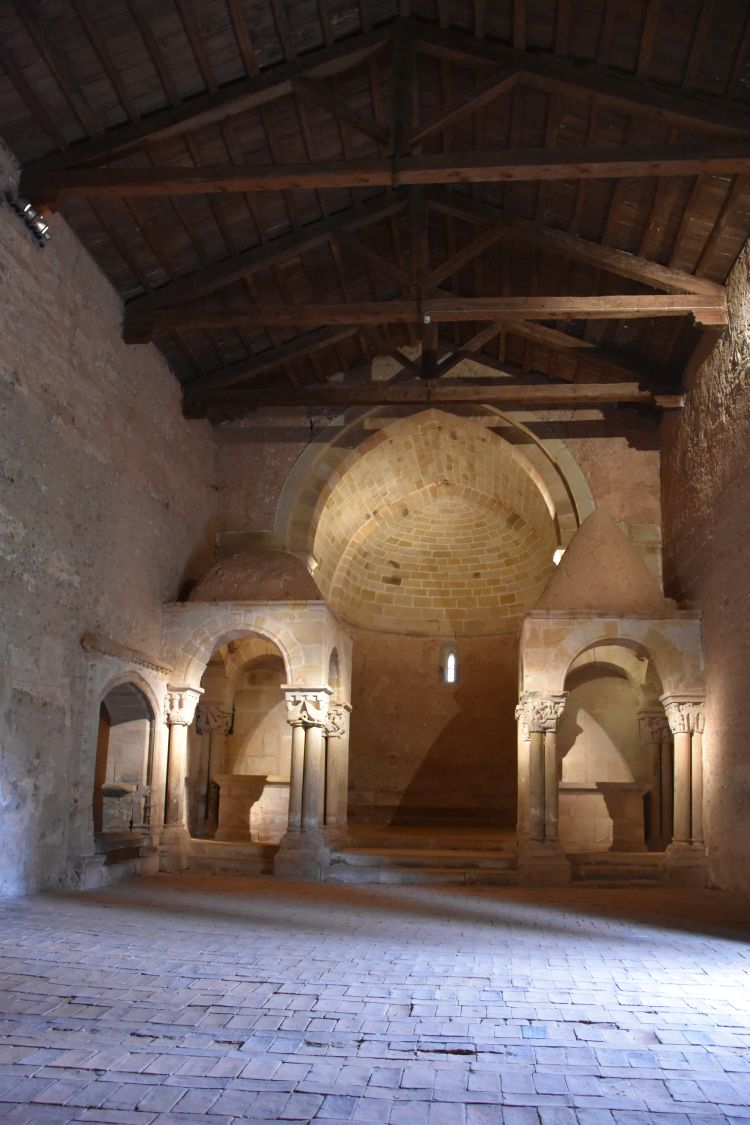
On the road to Spain: Rioja Alavesa, Laguardia and Elciego

In rainy November 2019, we spend a few days in Pamplona and explore the city and the surroundings. Our first excursion has taken us to Puente de la Reina. Now, our second excursion takes us to the vineyards of Rioja Alavesa, Laguardia and Elciego. Because it starts to pour with rain around midday, we return to Pamplona early and return to Laguardia on the next day.
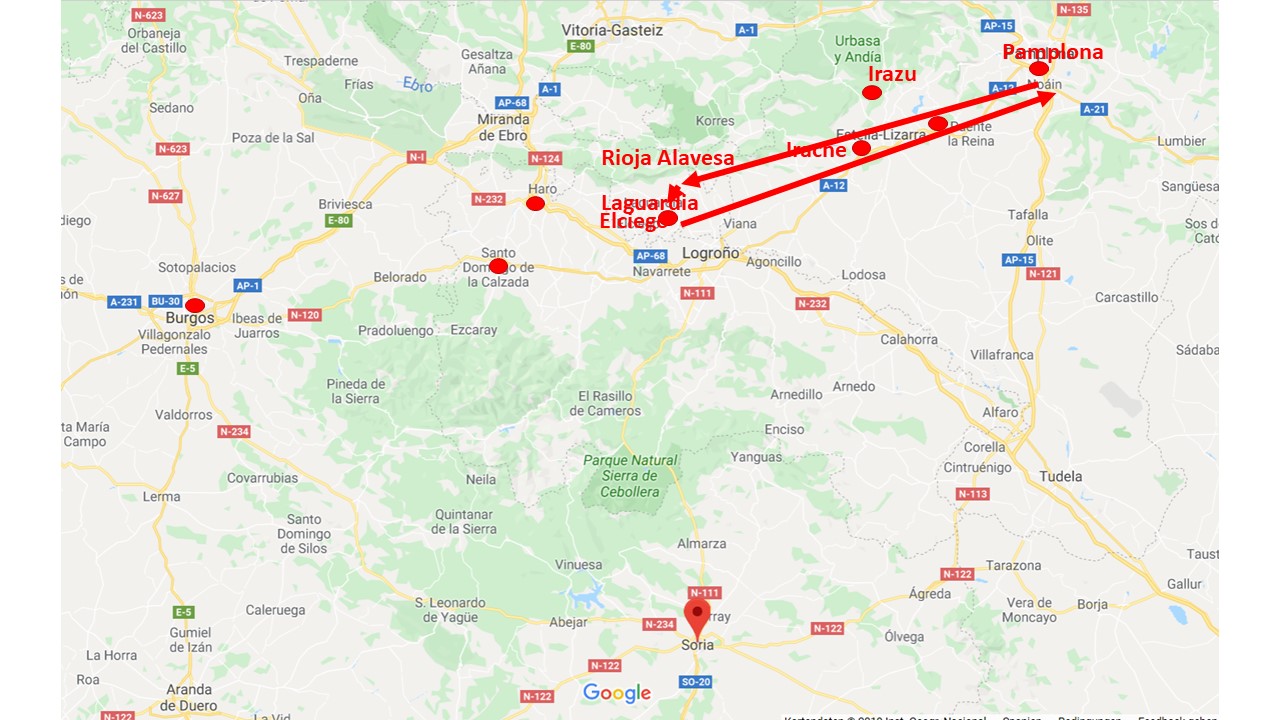
Source: Google Maps


Beautiful Rioja Alavesa in the Basque hills north of the Ebro

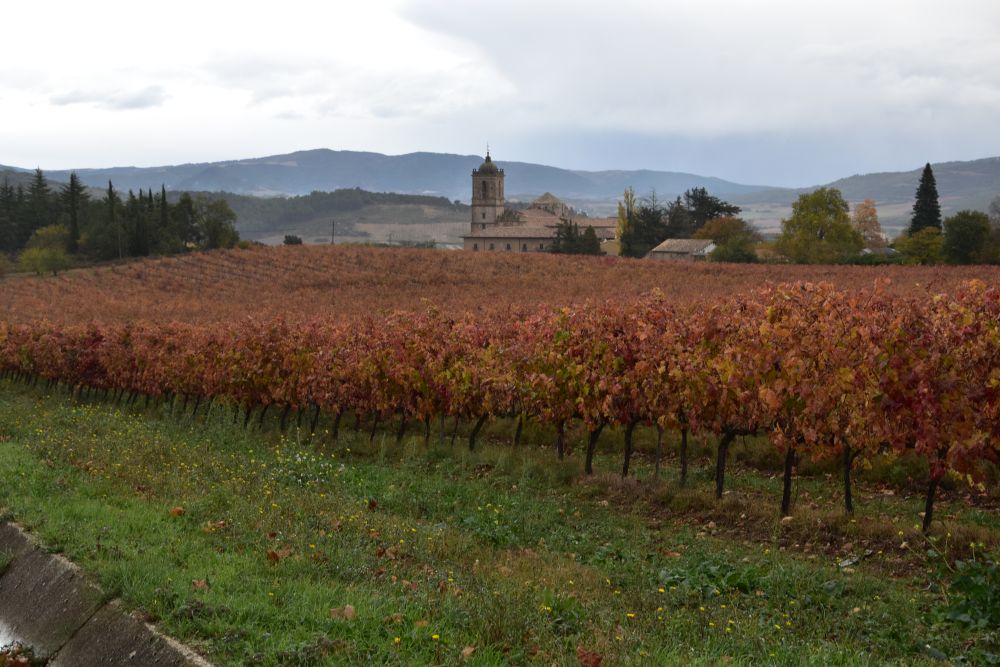
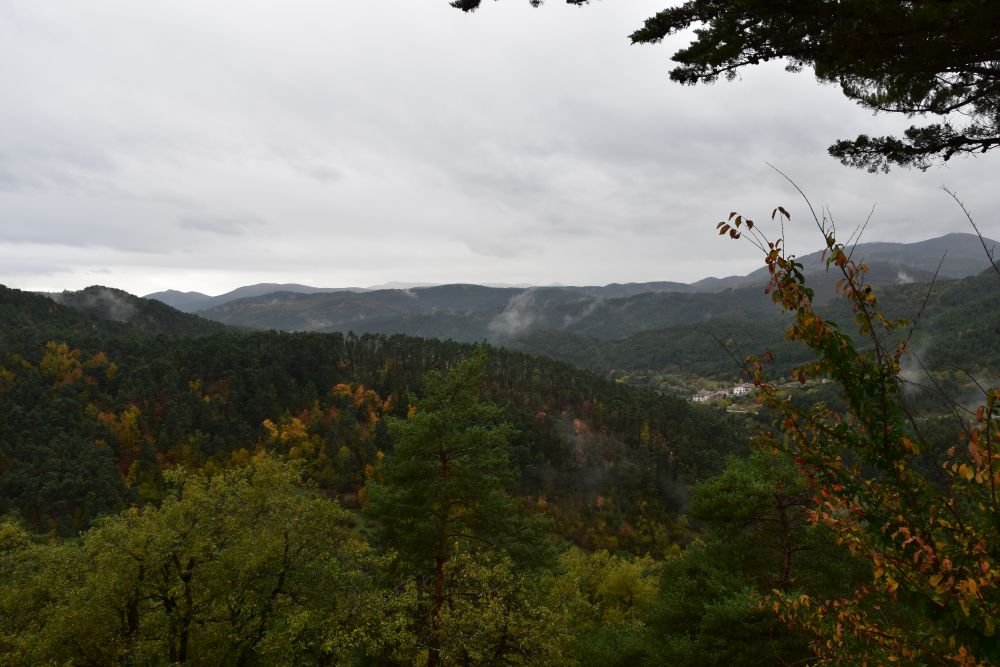
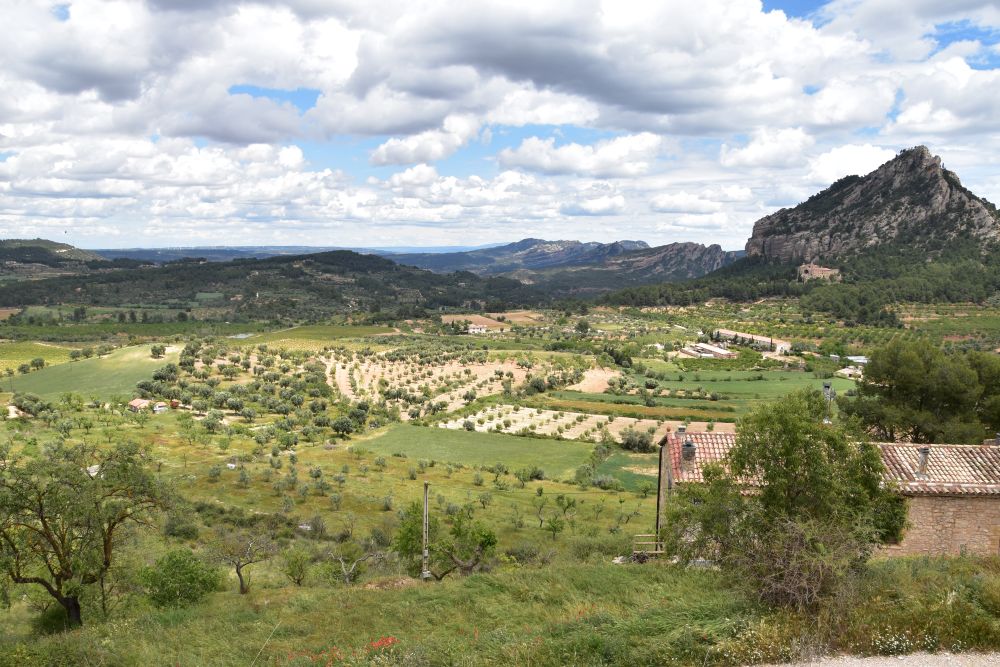
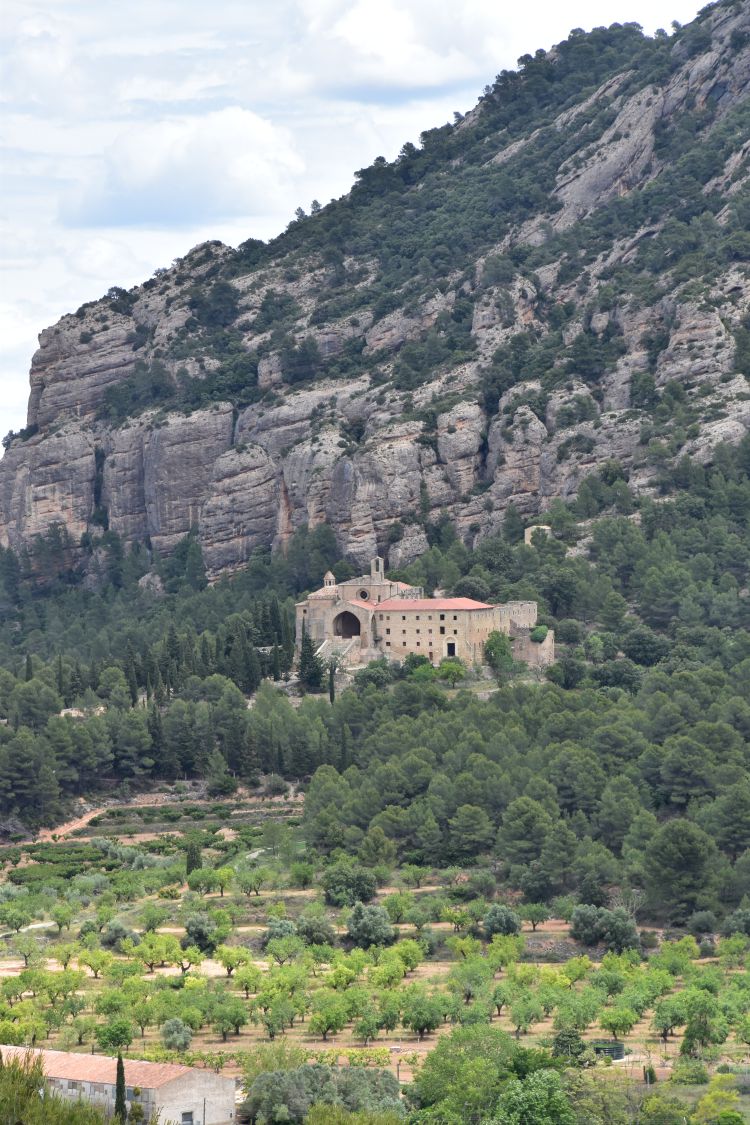
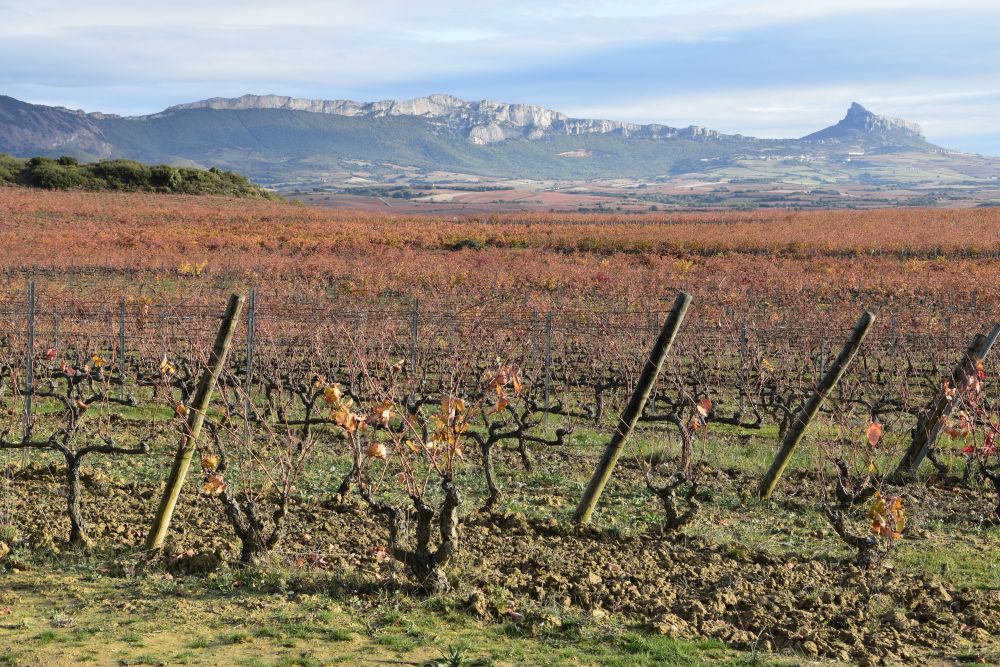
North of Laguardia in the hills, we find the yellow and red vineyards of Rioja Alavesa that politically is part of the Basque country, but belongs to the wine region Rioja.
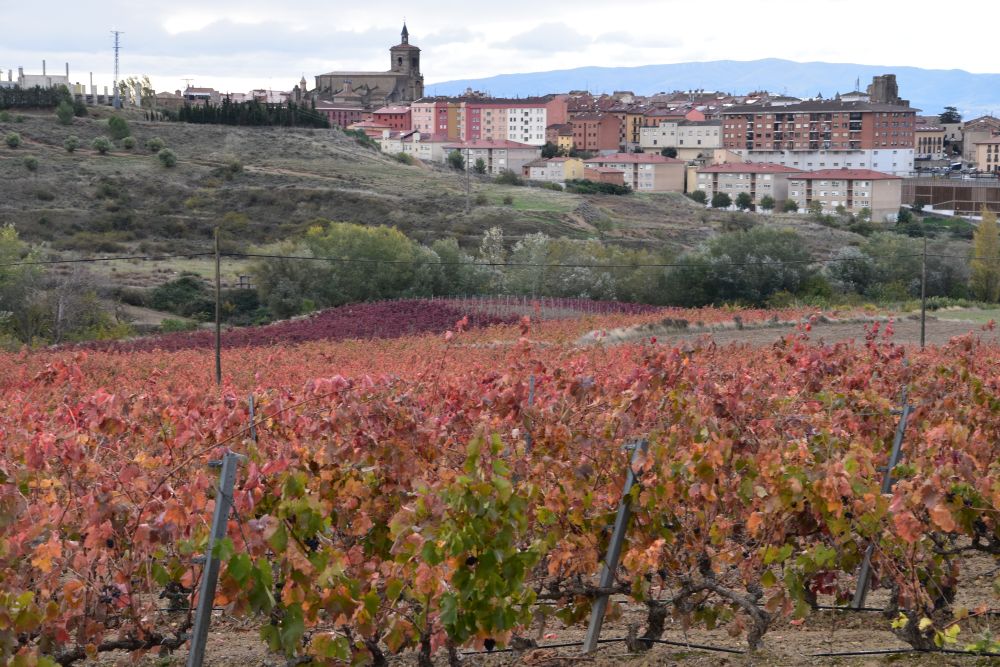
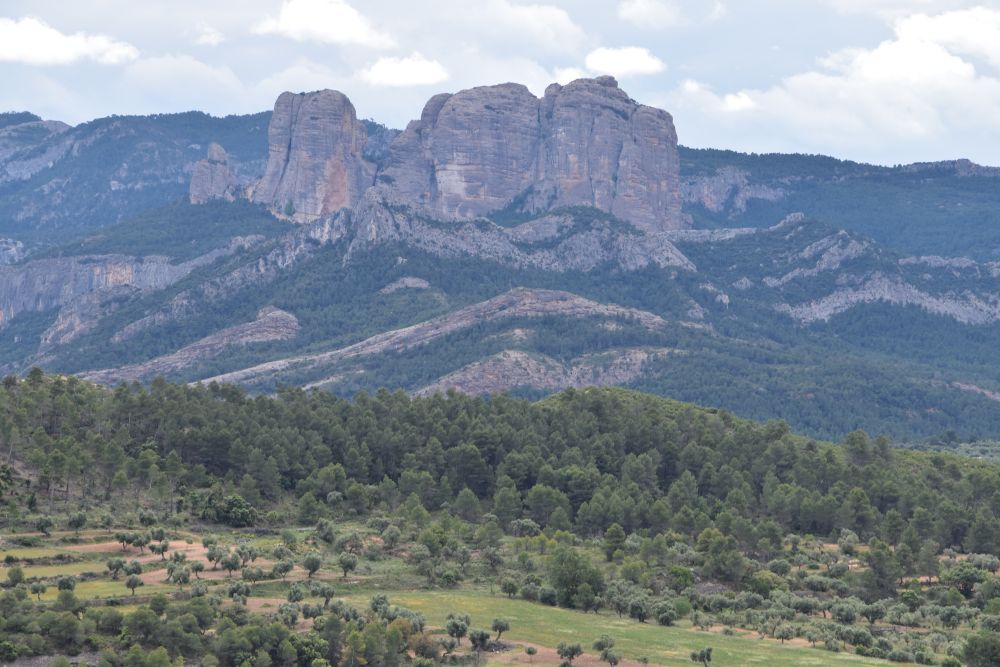
We are just below the Sierra de Cantabria. Dark clouds are looming, but the sun breaks through the clouds.
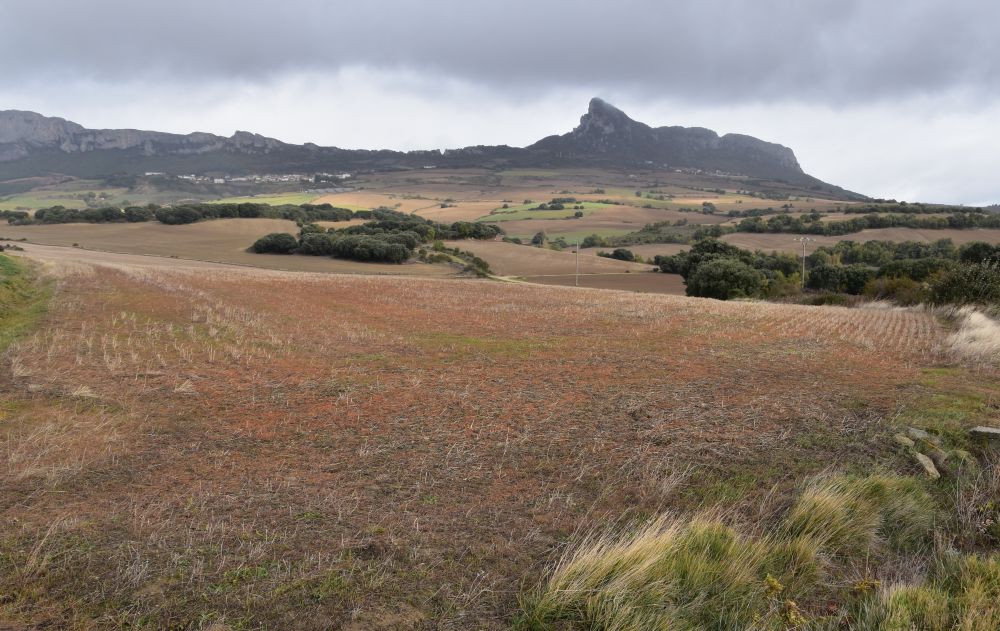
When we return the next day, the weather looks much more friendly…
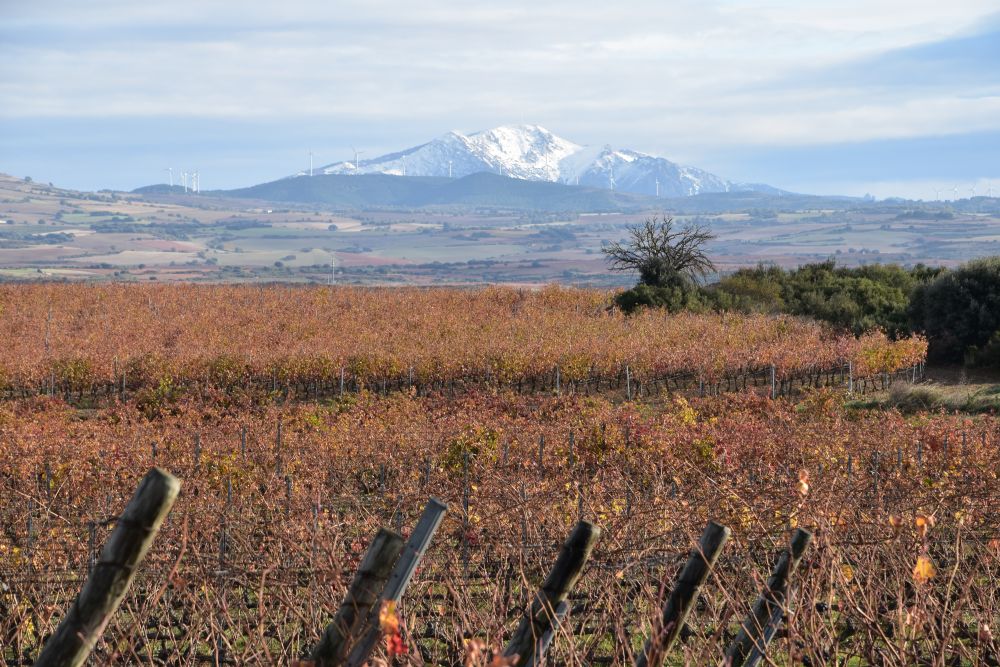
… and the mountains now have a snow cap. The Rioja wine region is surrounded by mountains.
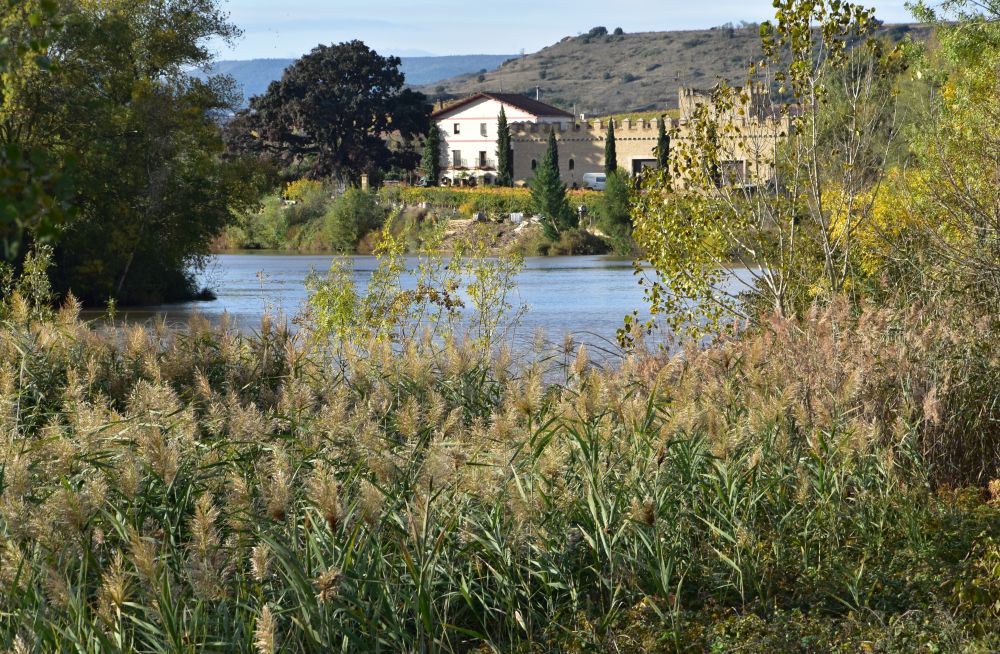
Near Laguardia, we say hello to our old friend, the river Ebro.
 

Elciego, where the success story of Rioja started in the 19th century

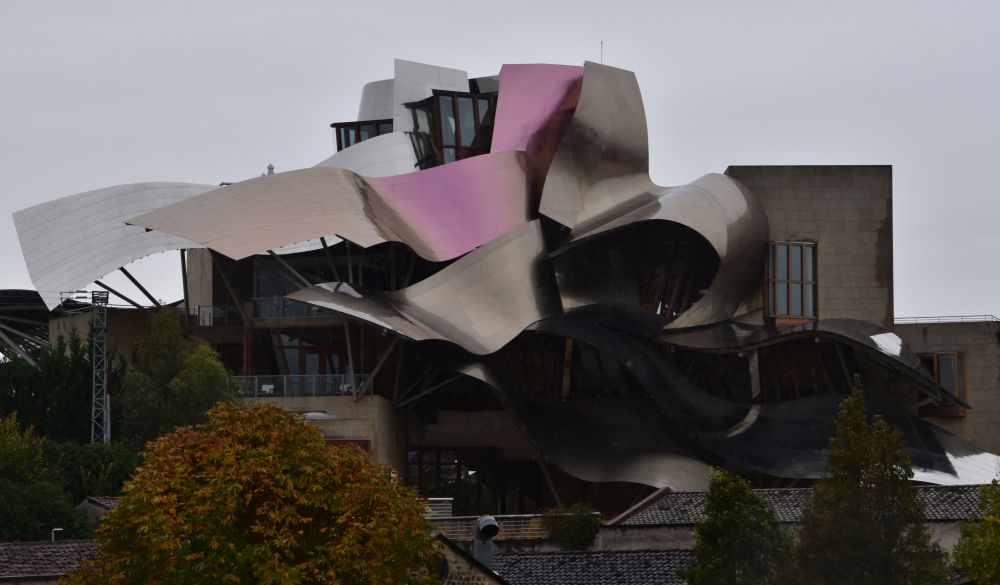
Elciego is located close to Laguardia. It is here, where in 1858 Marqués de Riscal founded the first bodega in Rioja. It is one of the most prestigious bodegas of Rioja today, with the brave architecture built by Frank Gehry.  Even on this rainy November day, the large Riscal parking is completely full with buses and cars.
There are more such prestigious bodegas around Laguardia, one of them (Ysios) built by Calatrava.  We prefer the more modest bodega Valdelana and I buy a Tinto Reserva from 2007 and a Malvasia (I am curious about the Malvasia from Rioja).
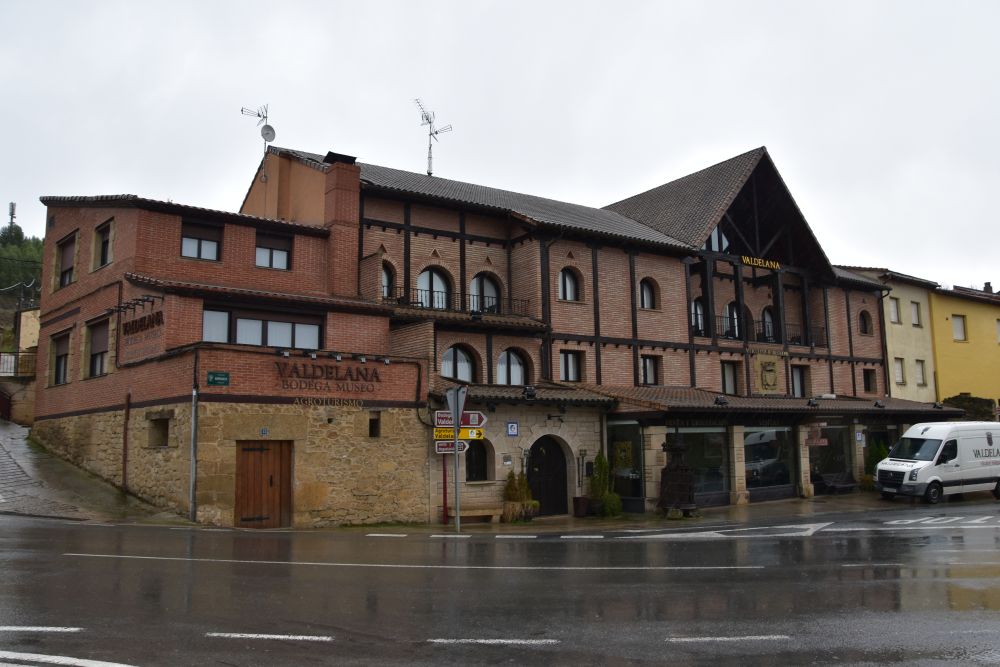
Wine production in Rioja started to thrive, when at the end of the 19th century, Phylloxera hit Bordeaux and destroyed their vineyards. The French winemakers turned to Rioja then. In the 70’s, when I was a student, “Rioja” meant “Spanish wine” for me. That has changed – I value the diversity of the Spanish wine regions, with Rioja being one of them.


Laguardia – medieval city hiding many bodegas and the most colourful porch I have ever seen

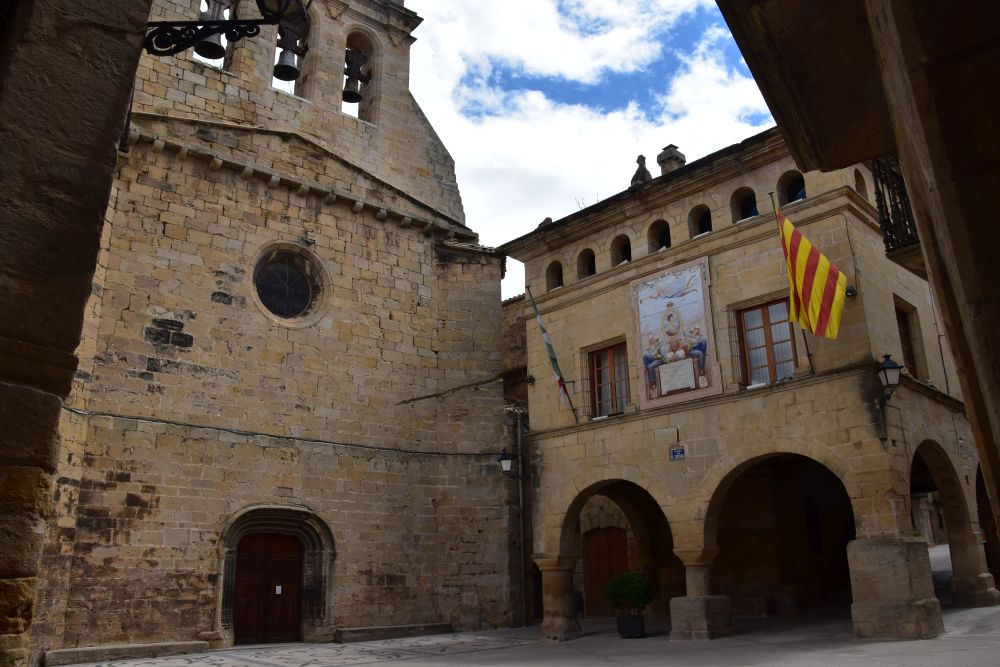
Laguardia is a medieval, small city from the 13th century, until today surrounded by the town wall. This is the defensive abbey tower from the 13th century that serves as the belfry of the “Iglesia de Santa Maria de los Reyes”.

When we return the next day, this tower shines in the sun.
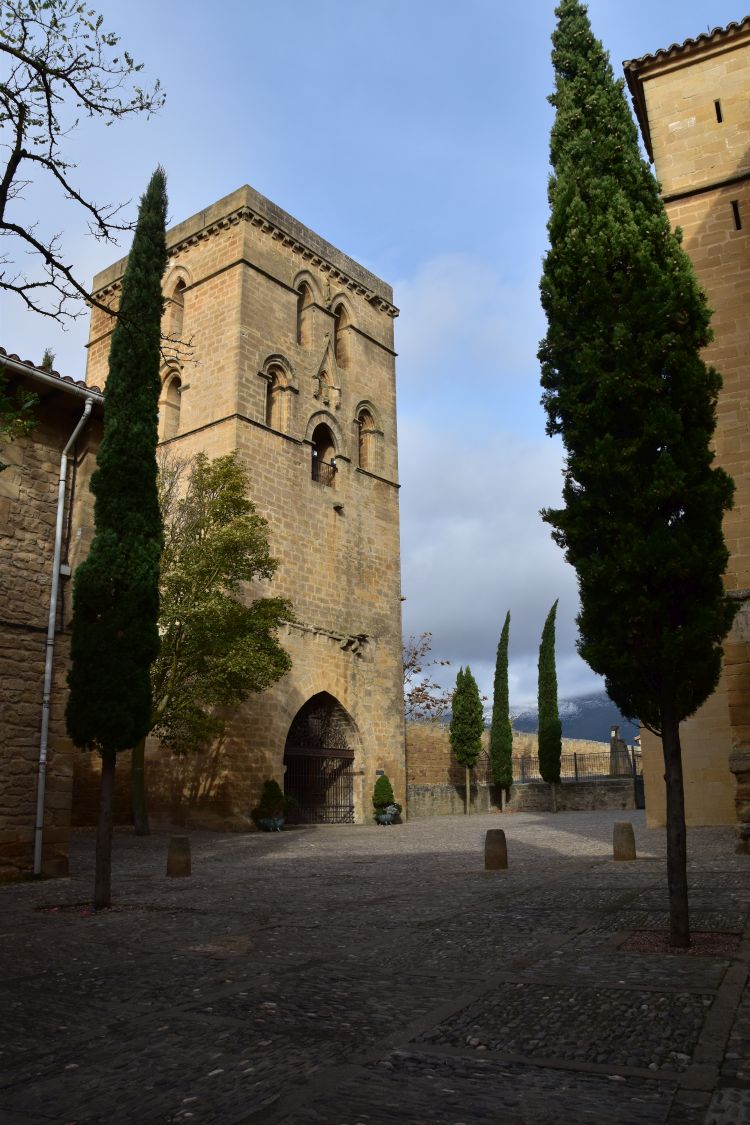
On our first visit, the narrow streets are wet… we walk through them hidden under our umbrellas.

This is the Plaza Mayor in the rain, with the new town hall.
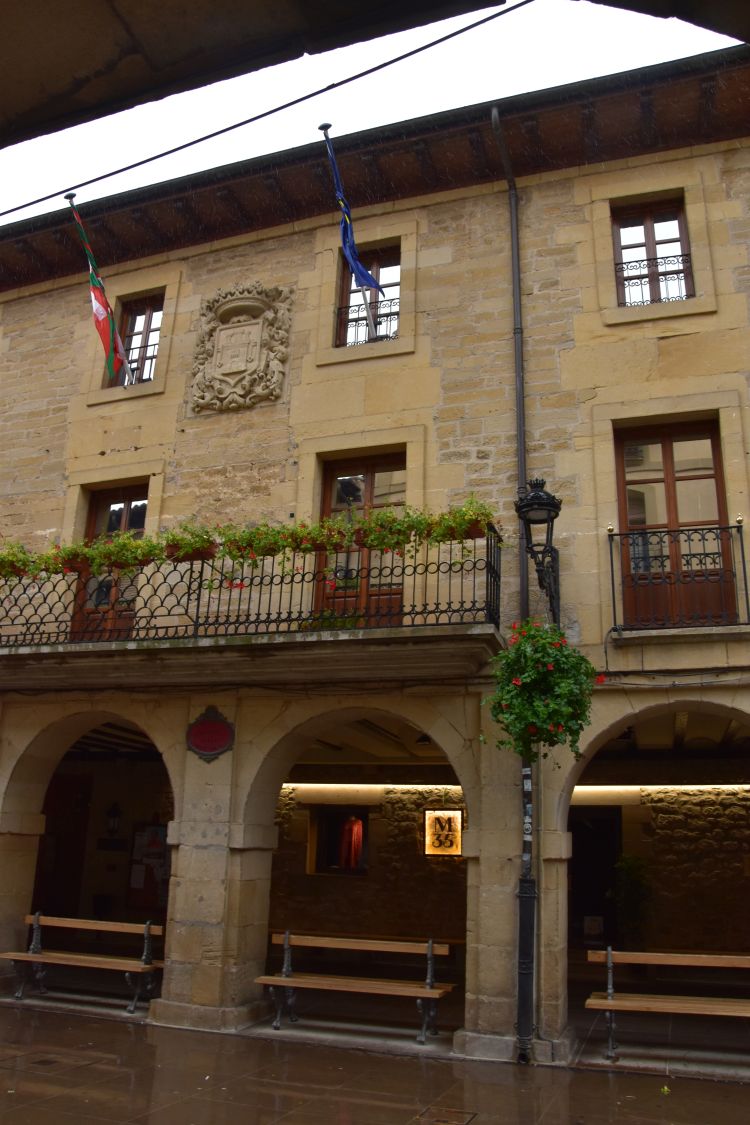
When we come back the next day, the small town welcomes us with sunshine. The houses are crouched on the hill.

Laguardia is a town full of bodegas that are visited by many tourists, now that the sun has come out.

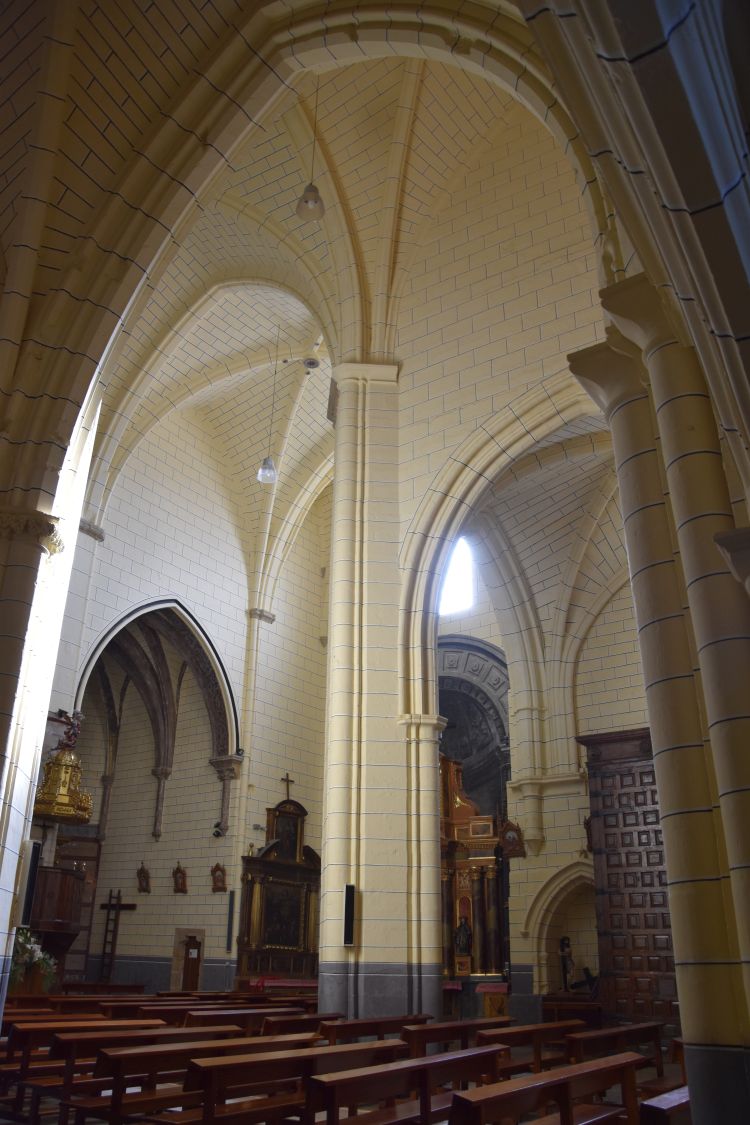
We stop at the church San Juan from the 14th century with the belfry worked into the town gate.

The church is in principle closed for a wedding today. As the doors are open, we enter and listen to the singer practicing solemnly for her performance at the wedding.
We have tickets for 11:15 to visit the porch of the Santa Maria church. It is only possible to see the porch as a guided tour. The porch is from the 14th century and has been repainted in the 17th century. To protect the colours, the porch has always been protected by a wooden door. Therefore the colours have been preserved illustrating to us, what porches might have looked like really. I have never seen that before.

The iconography centers around Maria, as the church carries her name. She stands in the middle of the porch.

She wears a dress with a beautiful pattern, meticulously worked out. Her face expresses sadness – she may think of the fate of her son.
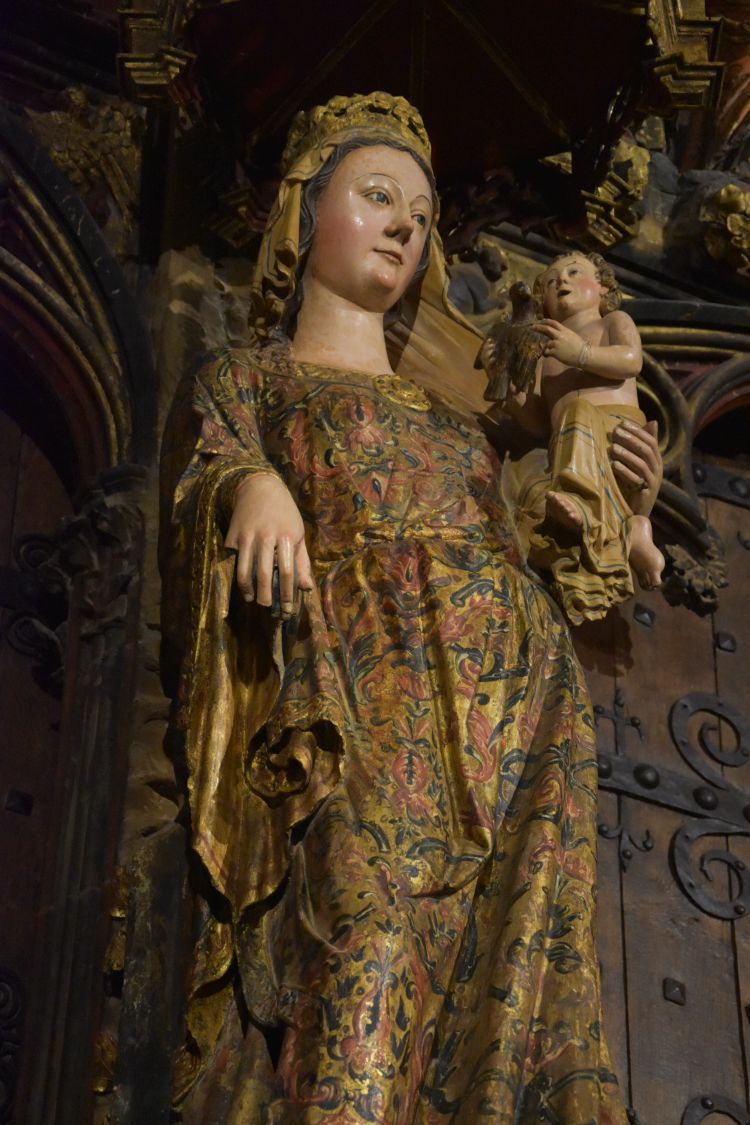
To her sides are the apostles, beginning with Paulus to the right…
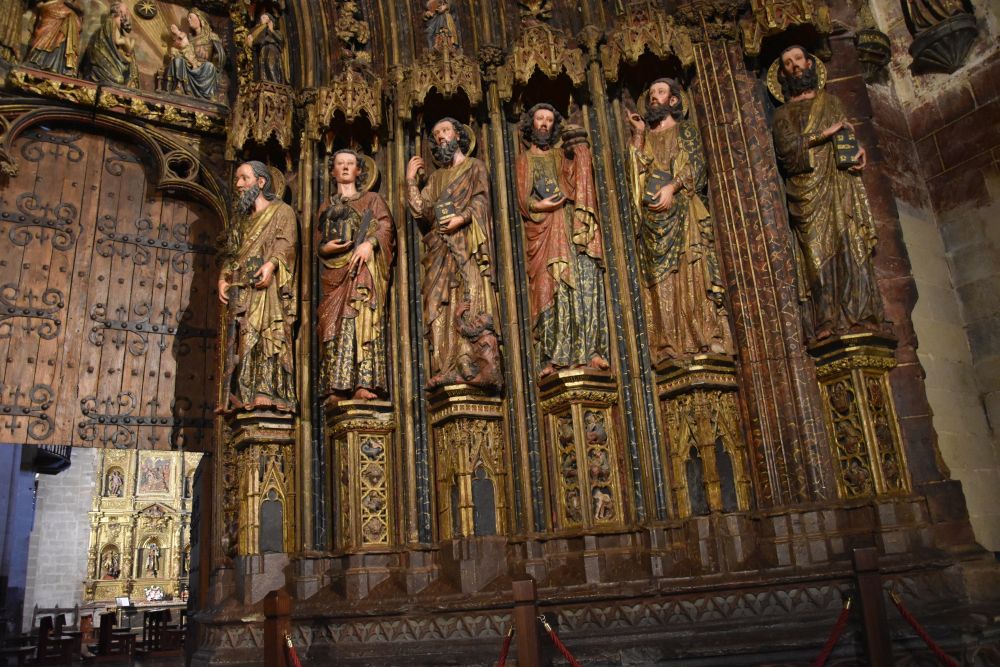
… and with Petrus to the left.
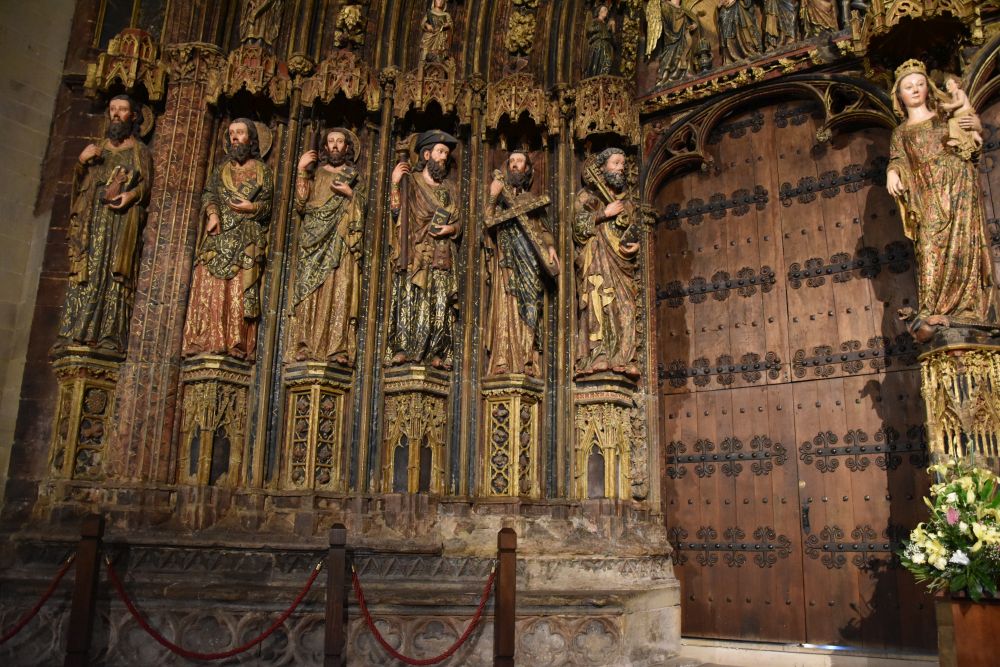
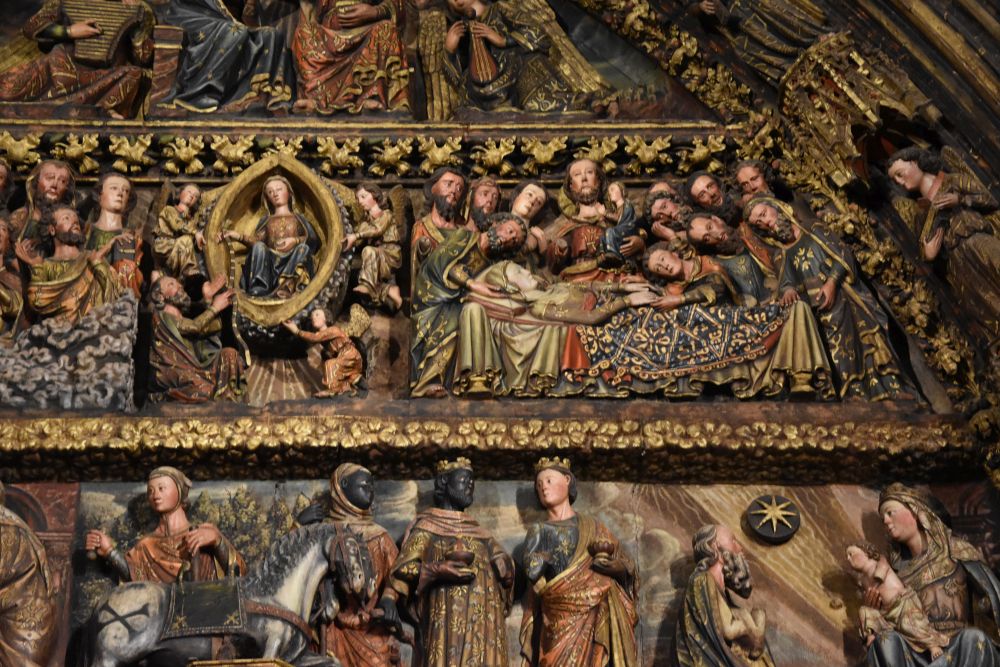
Above are the Annunciation (Gabriel announces to Maria that she will have a son) and the Visitation (Maria, pregnant from Jesus, visits Elizabeth, pregnant from Juan).
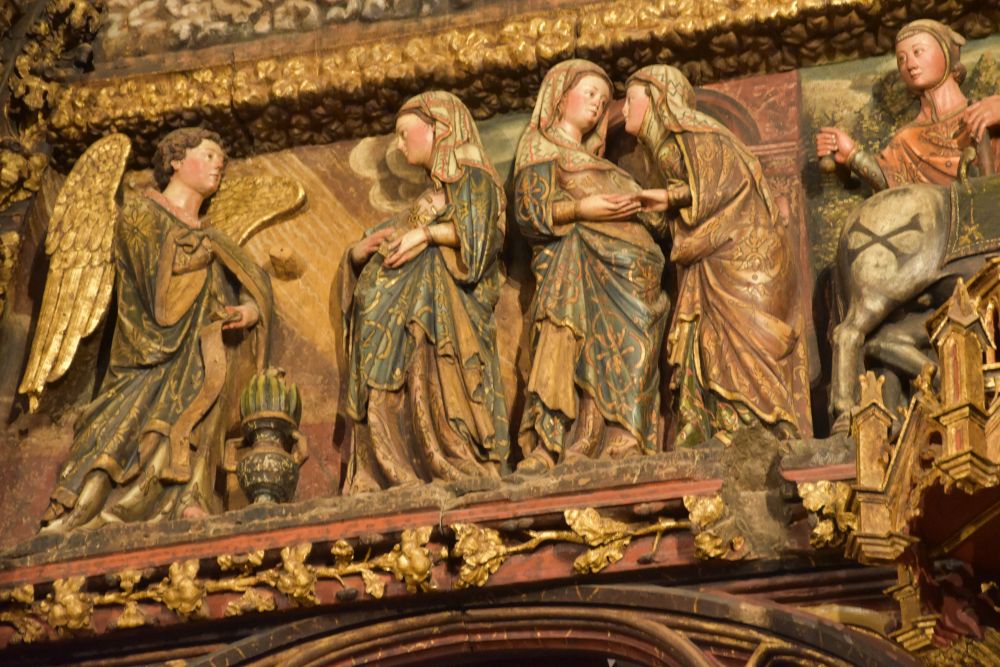
The story continues with the flight of Maria and Joseph to Egypt and the Adoration of the Kings. Above are Maria’s death and her ascension.
We leave Laguardia and continue our way to Burgos.

Sources: Marion Golder: “Nordspanien und der Jakobsweg”, Dumont Reise-Handbuch, Ostfildern 2018 and Marion Trutter (Editor): “Culinario España, Spanische Spezialitäten”, Tandem Verlag 2015.
On the road to Spain – Puente de la Reina and the monasteries Iranzu and Irache

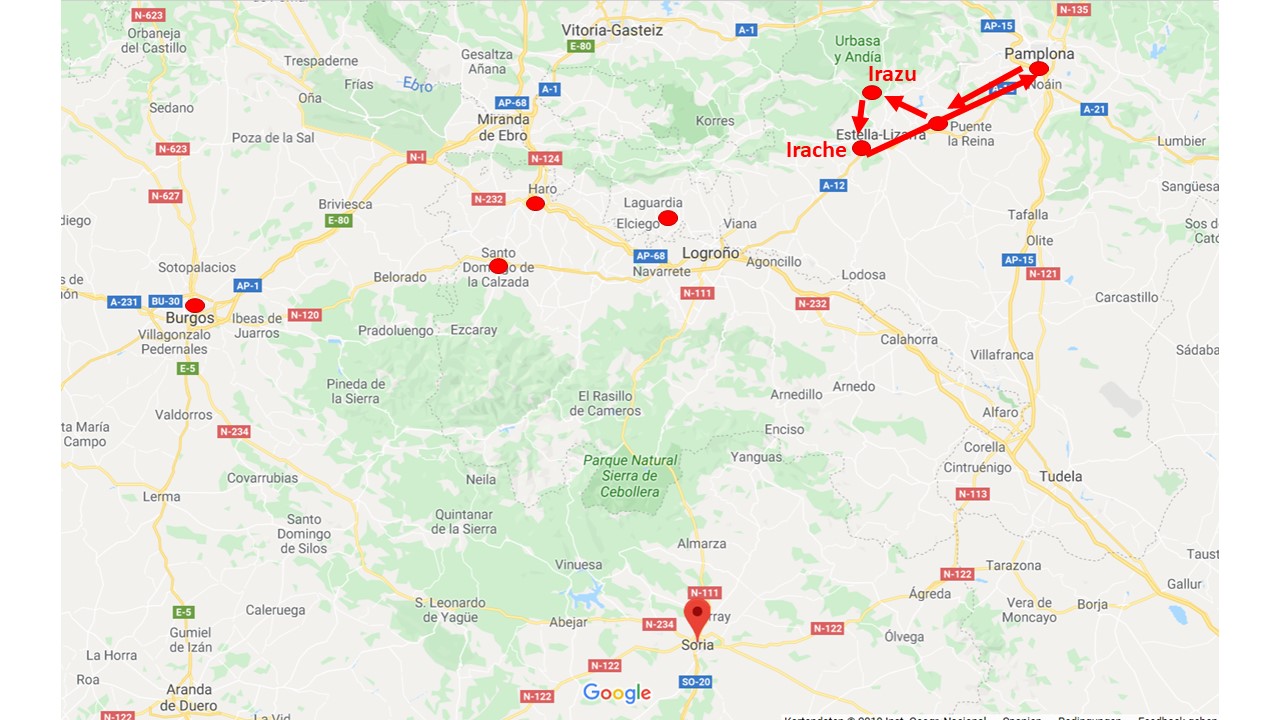
In November 2019, we spend some days in Pamplona to explore the city and the surroundings. Our first excursion takes us to Puente de la Reina (a small town with a Romanesque bridge), to the Cistersian monastery Iranzu and to the Benedictine monastery Irache (which is also a bodega).

Source: Google Maps


Puente de la Reina – Romanesque Bridge from the 11th century, built for the pilgrims

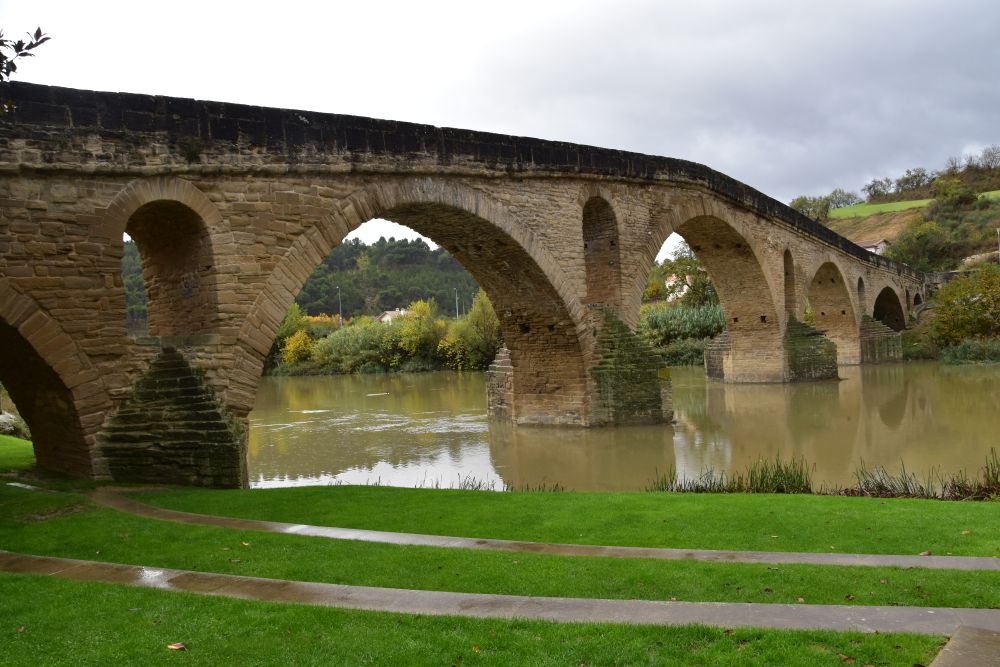
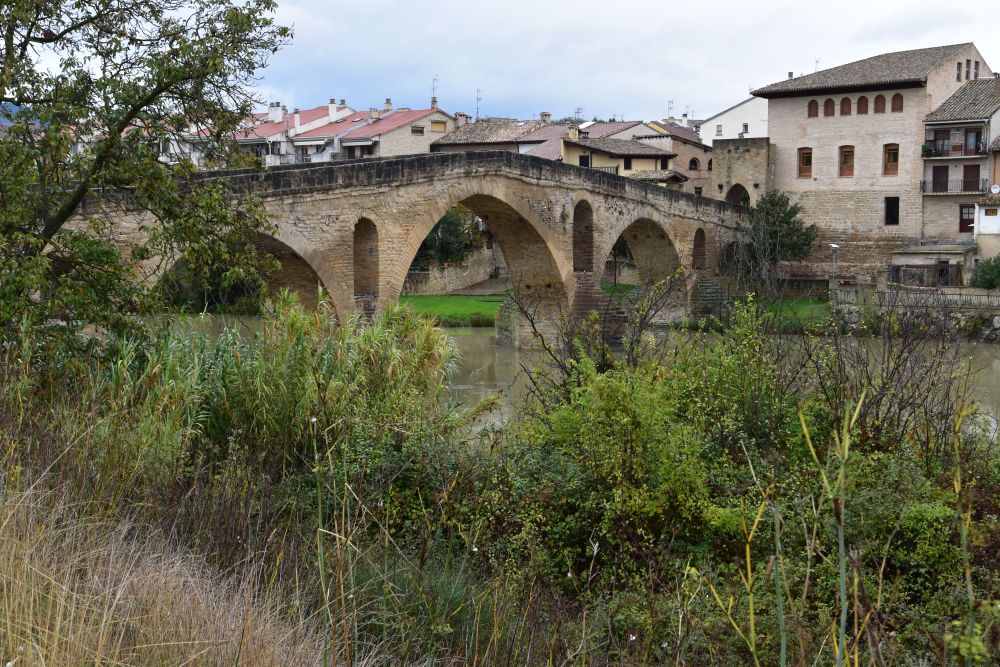
In the early 11th century, pilgrimage on the Way of St. James thrived. Two branches of the Way of St. James meet here to cross the river Agra. The wife of Sanchez III the Great (or her daughter in law) decided to build a bridge and for that it was called “Puente de la Reina”. This is the bridge providing access to the city…

… and leading out of the city.


Puente de la Reina is a pretty town – with various churches

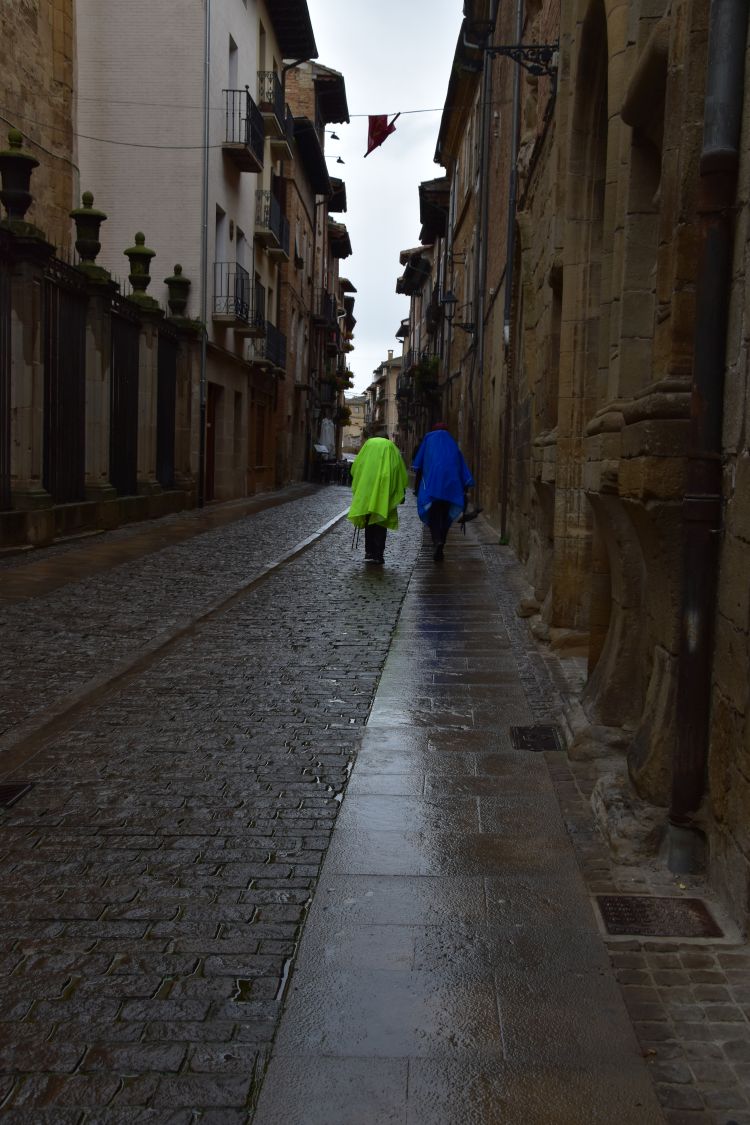
With the bridge for the pilgrims, the town Puente de la Reina evolved. Until today, brave pilgrims are withstanding the rain…

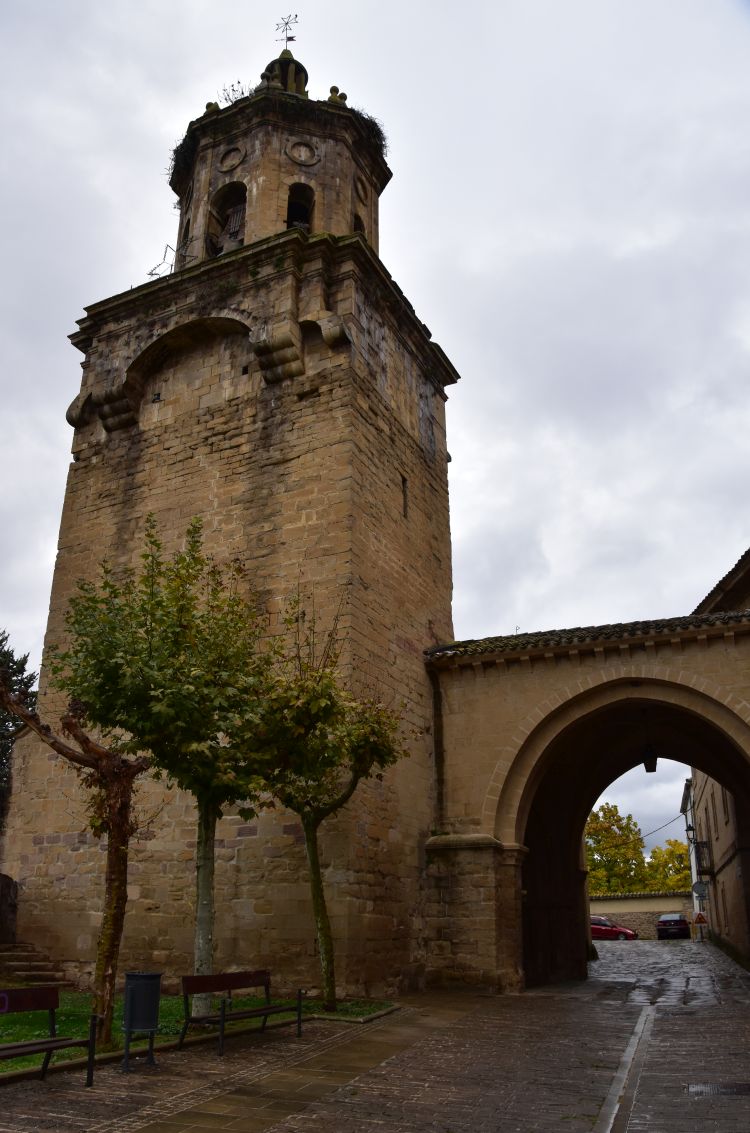
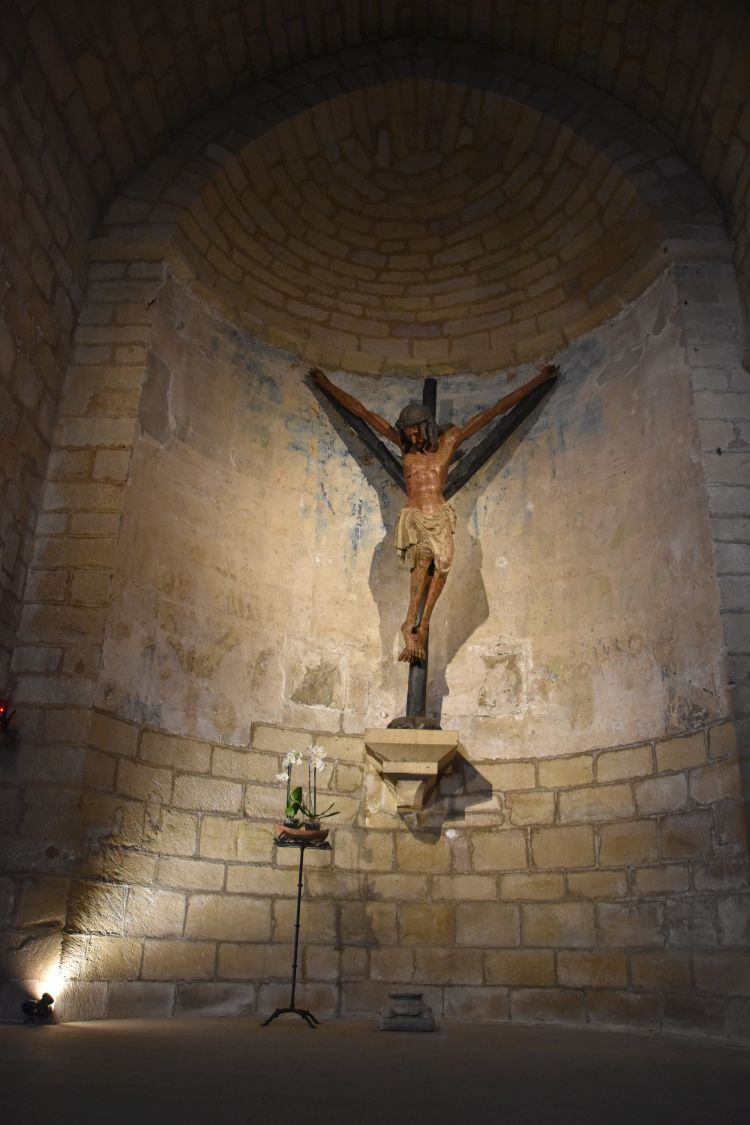
… to visit the churches such as this Crucifixion Church from the 13/14th century…

… with Christ crucified hanging inside.

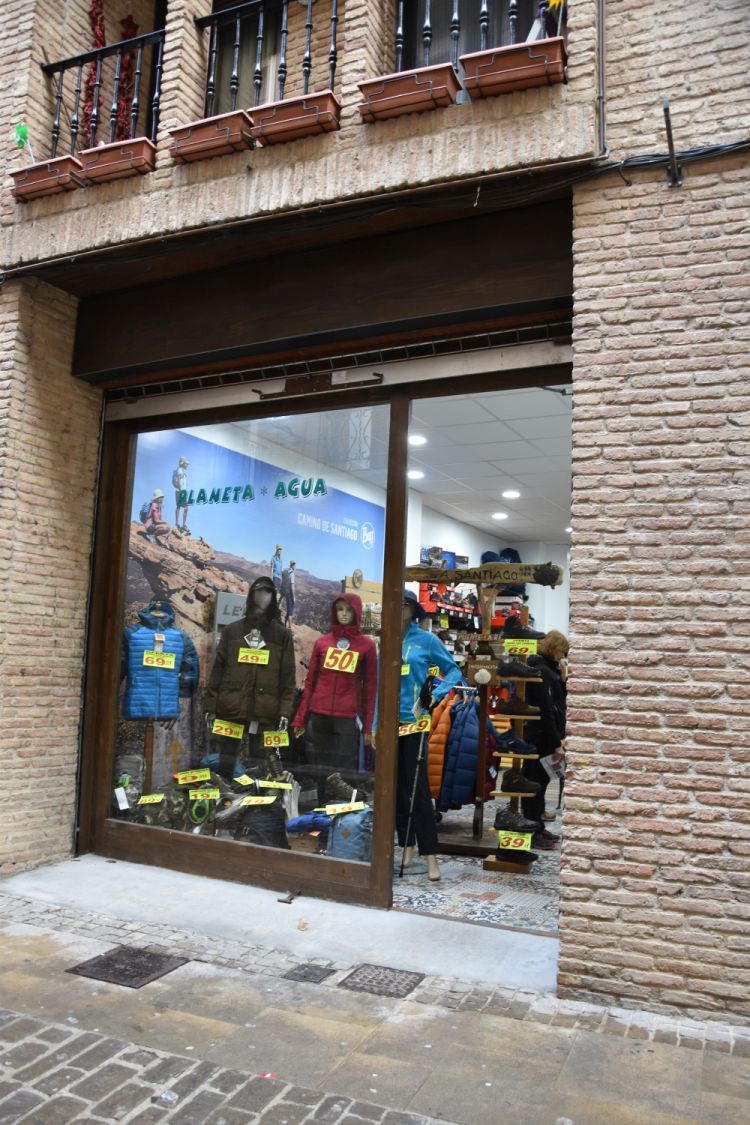
The city also caters for the pilgrims. The restaurants offer cheap pilgrim menus for 5 to 6 Euros and shops sell trekking clothes that are particularly useful now that it rains so much. We buy jackets and shoes here (though not being pilgrims). The “Planeta Agua” belongs to a chain that we also find in other towns along the Way of St. James.


Red pimientos (sweet pepper) are omnipresent in Puente de La Reina

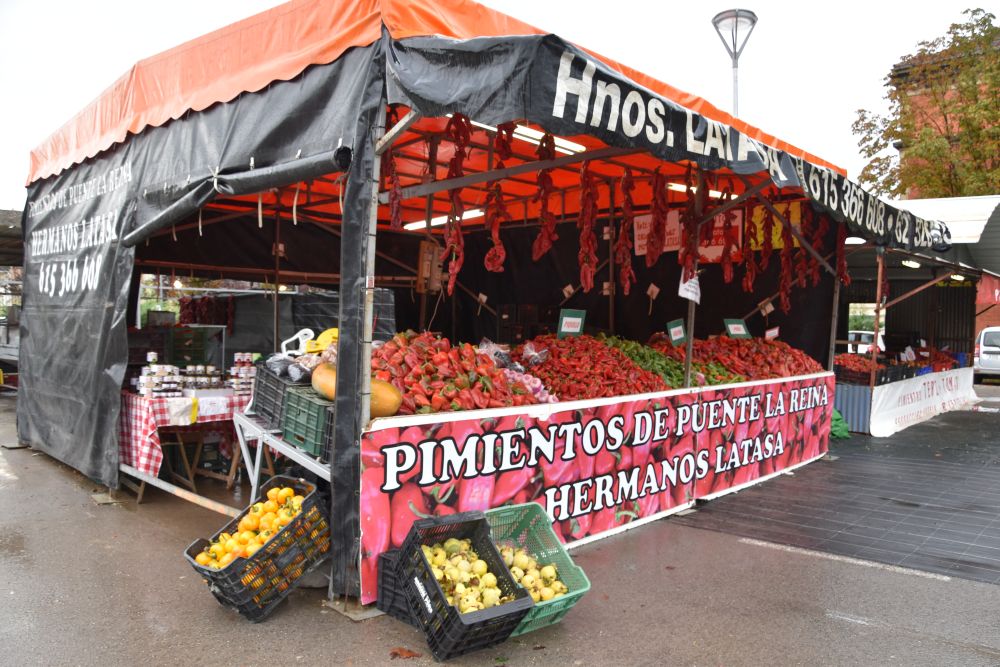
We have parked our car near the market that sells primarily pimientos or sweet pepper.

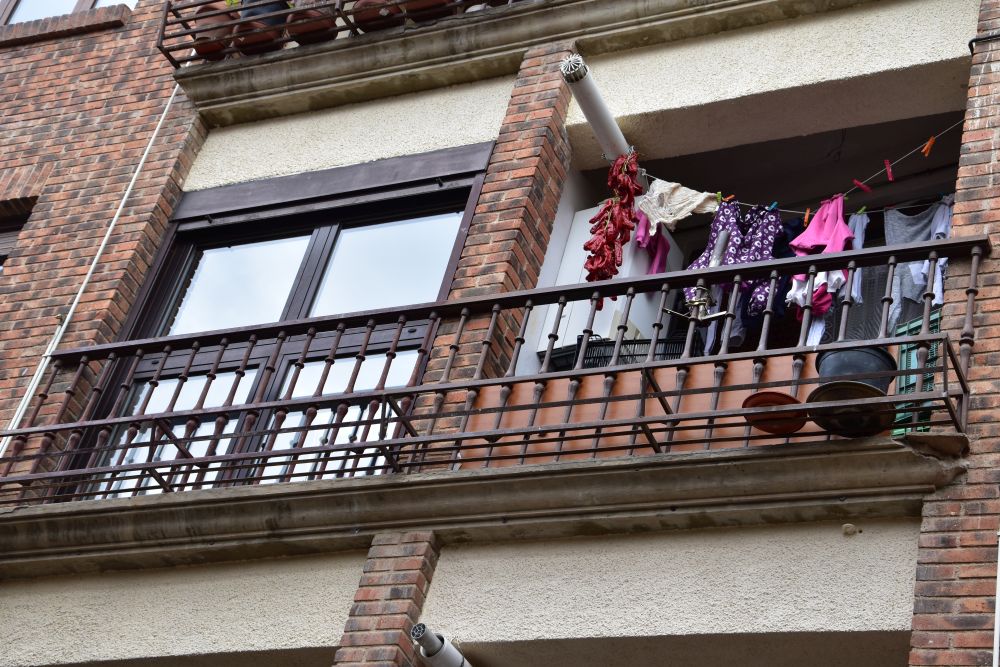
Sweet pepper hangs on the balconies…

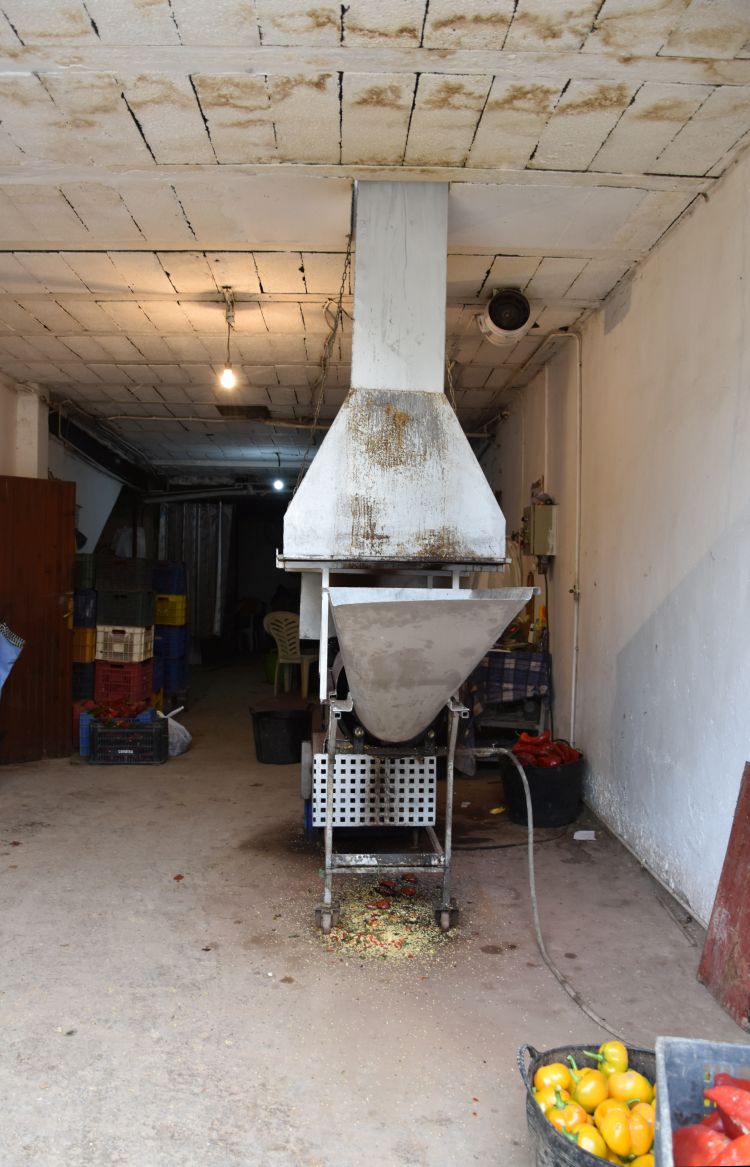
… and they are on offer in every vegetable shop, where they are being roasted and peeled using these machines.

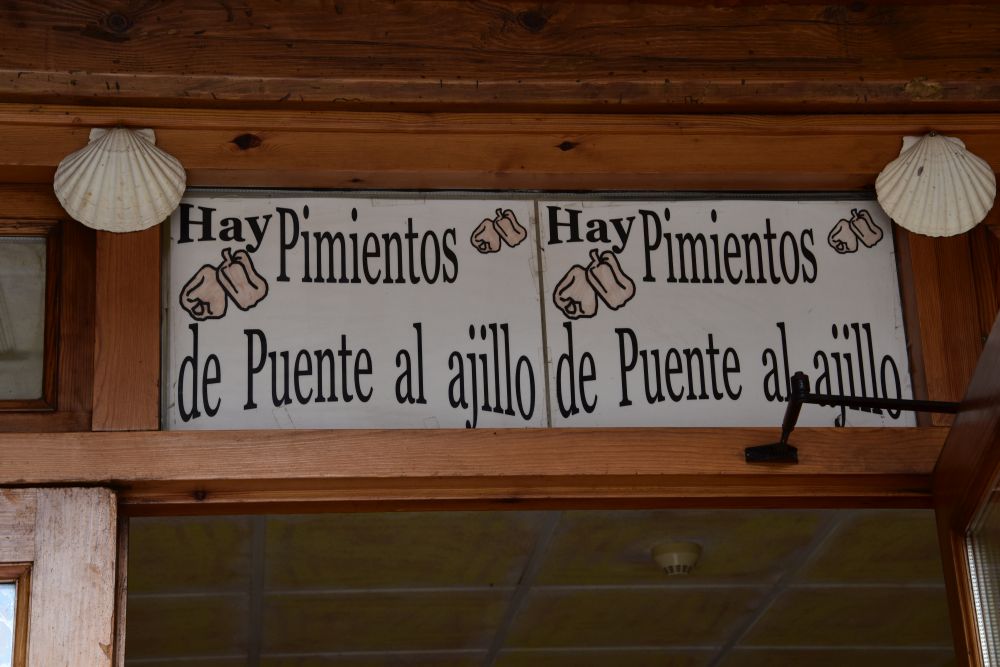
Then they are marinated in garlic. Shops and restaurants sell them (note the two pilgrim’s scallops).

In the restaurant La Plaza, I eat marinated pimientos as a pintxo (snack) and they are very, very delicious.


The monastery Iranzu

The sun shines for some hours and we benefit from this rare occurrence by driving to the mountains, where the secluded Cistersian Monastery Iranzu from the 12th century welcomes us.

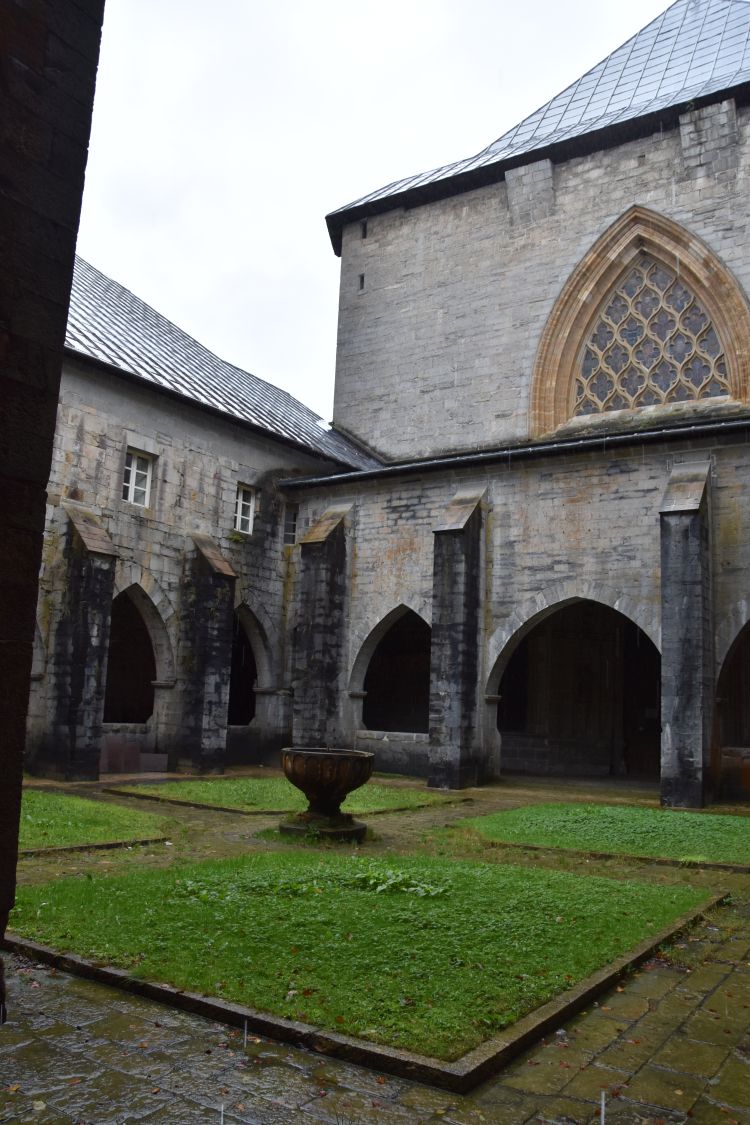
We arrive just in time to visit the monastery, before it closes. This is the cloister…

… with the beautiful fountain.

The sun brings the rosettes on to the wall of the gangway.

The church is sober. The Cistercians were masters in laying bricks precisely.

In the sun, we head off to walk in the canyon behind the monastery.

Panels explain the geology and the biology of the valley. The mediterranean vegetation is changing to a eurosiberian vegetation, as we climb higher. Typical of the mediterranean vegetation are for example ilex (Steineiche), acorns, poplars and pine-trees, whereby higher up, in the eurosiberian vegetation, oak trees and beeches are dominating.

We are caught by rain again, return to our car as fast as possible and, swish-swish-swish, drive to Irache.


The Benedictine monastery Irache is also a bodega

The Benedictine Monastery Irache is beautifully located within its vineyards.

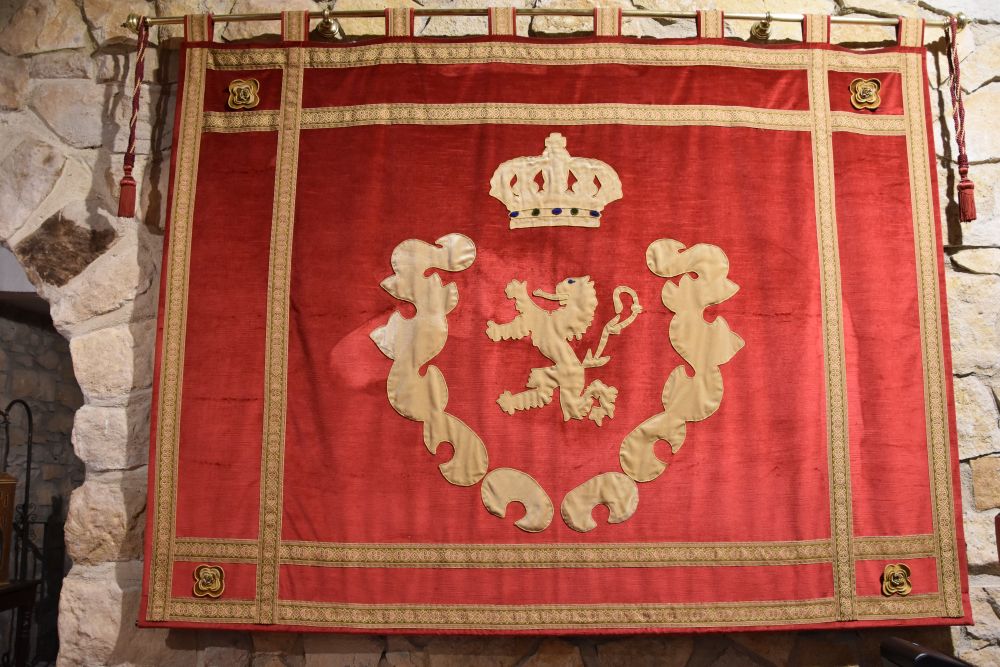
Their emblem is the golden lion on red background. In the shop, I buy a bottle of Garnacha rosé and a bottle of Vino de Pago (Tinto). Vino di Pago is a label that only three bodegas of Navarra carry, as they process their own grapes, which gives their wines the character of their territory, while the territory as such does not carry the DO label.

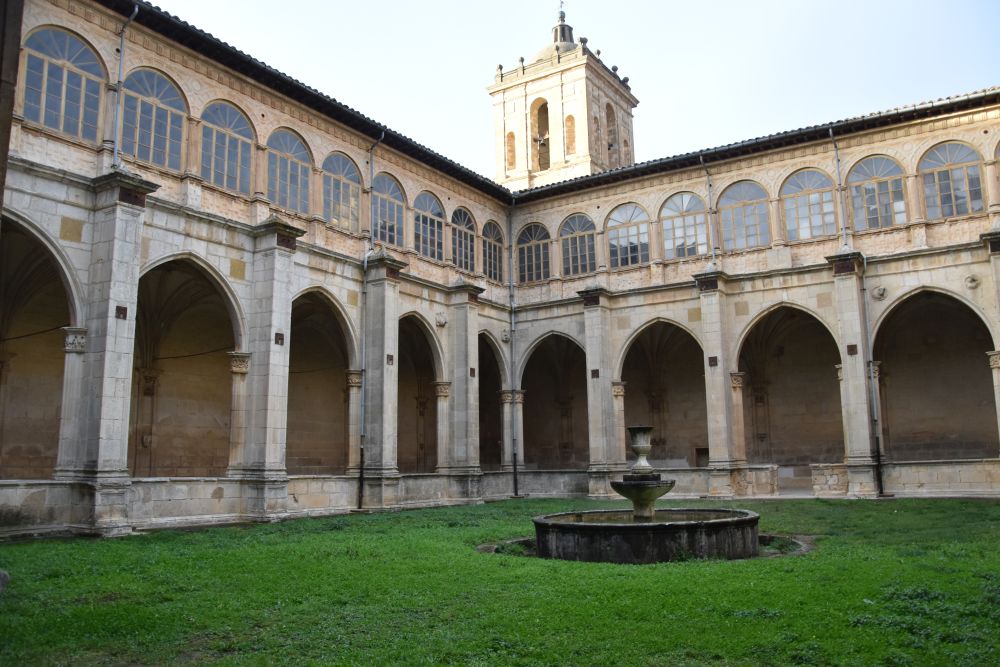
The monastery can be visited for free. It is under restoration and only the Plateresque cloister is accessible,…

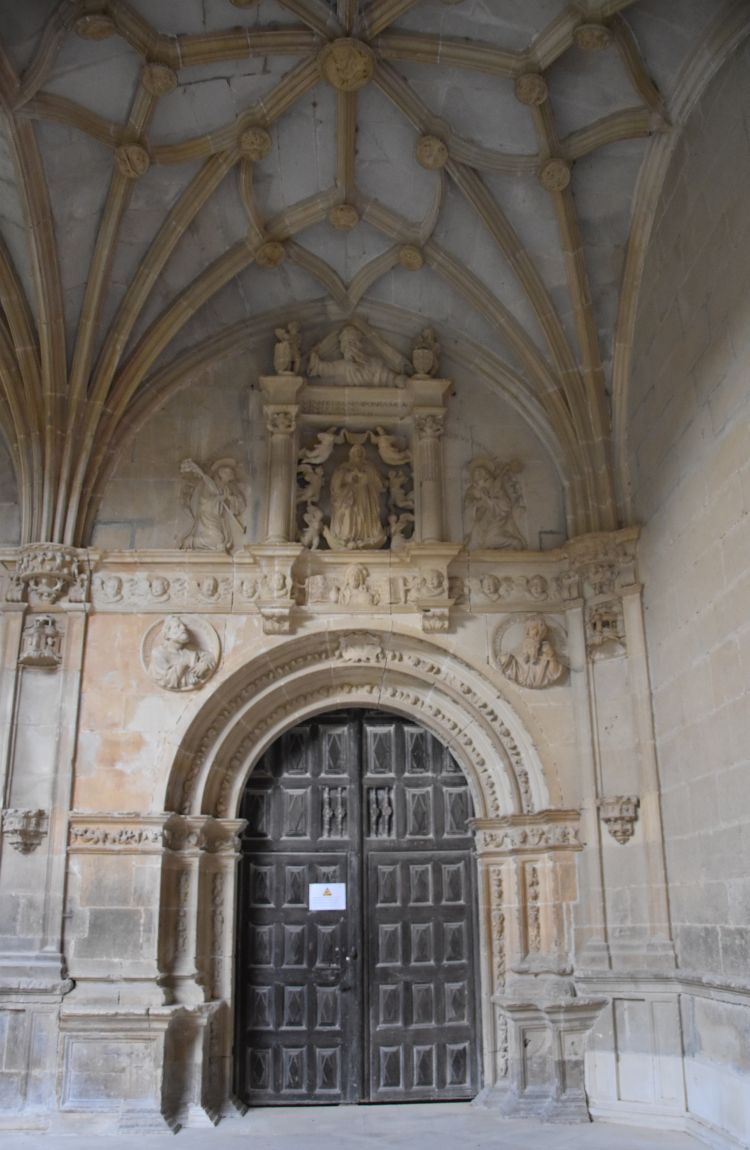
… with the porch and the medaillons that they are proud of; they explain each of them.

We drive back to Pamplona. Fog and rain accompany us.

Tomorrow we plan to see Rioja Alavesa, Laguardia and Elciego.

Sources: Marion Golder: “Nordspanien und der Jakobsweg”, Dumont Reise-Handbuch, Ostfildern 2018; Marion Trutter (Editor): “Culinario España, Spanische Spezialitäten”, Tandem Verlag 2015; “El mundo del vino”, Edition Larousse.

On the road to Spain: Pamplona – treasures in the Cathedral and the Museum of Navarra

In November 2019, we spend four nights in Pamplona on the Agra River exploring the City and the treasures in the Cathedral Santa Maria La Real and in the Museum of Navarra.


The Cathedral of Santa Maria La Real

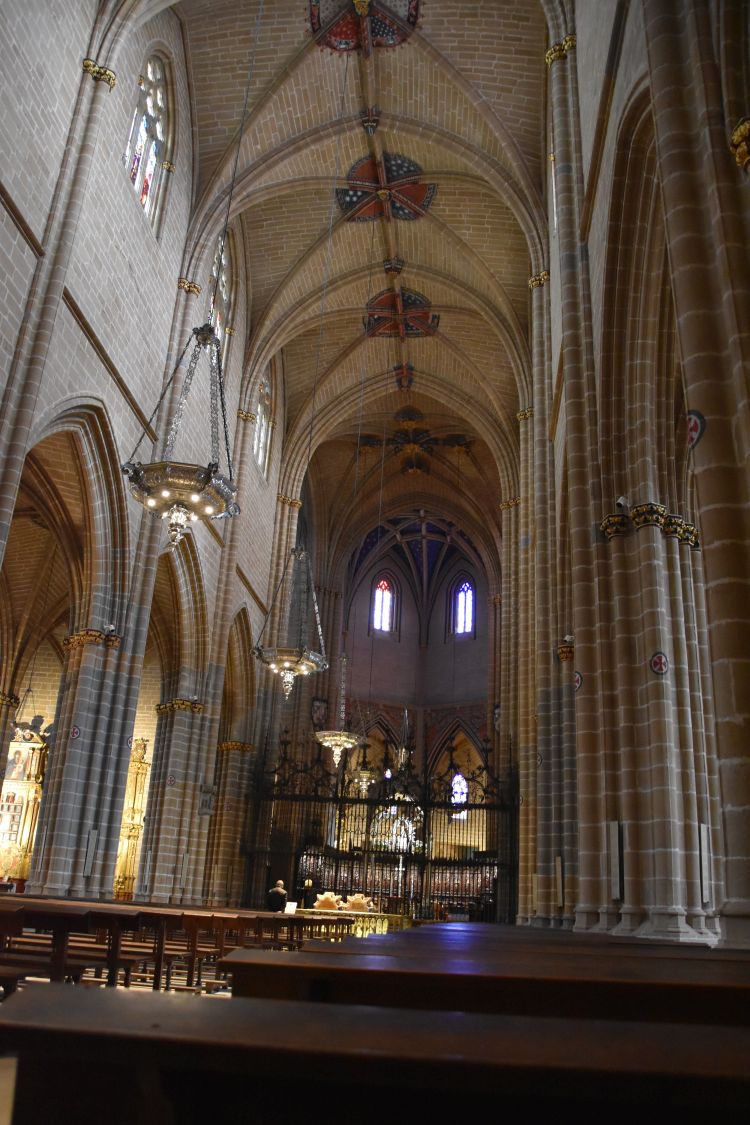
The Cathedral of Santa Maria La Real is located above the river Agra. The church was built in the 14/15th century and is of gothic style. The choir with the stalls is in front, which makes the nave open and uncongested (differing from many Spanish cathedrals, where the choir is in the middle of the nave impeding the view of the overall beauty of the nave).

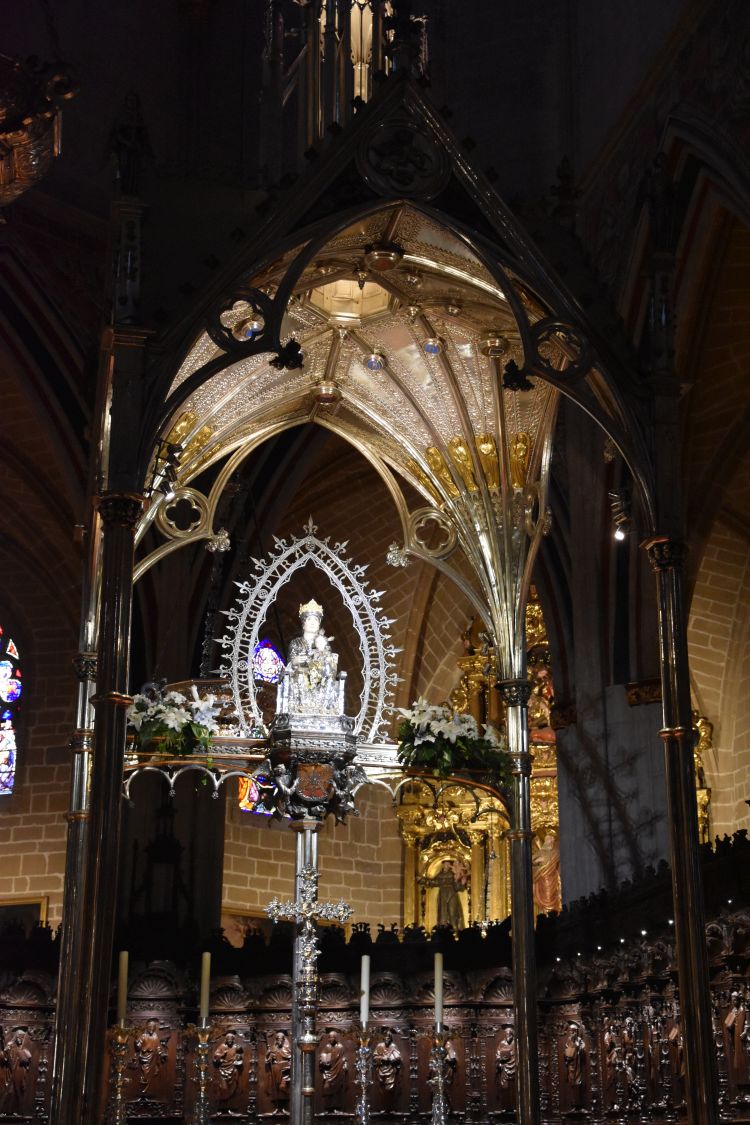
The statue of Maria from the 12th century sits under the silver baldachin.

Carlos III the Noble and his wife are buried in front of the choir. The15th century tomb slab made of alabaster has been beautifully carved. Carlos III is the king that managed to make peace between the local Navarrese and the “foreign” Franconians. The latter had immigrated to Pamplona in the 11th century and had kept on living in a town district of their own, even separated by a town wall. Carlos III mediated between the antagonists, pulled down the wall and constructed the townhall at the former borderline. With respect, I look at him.

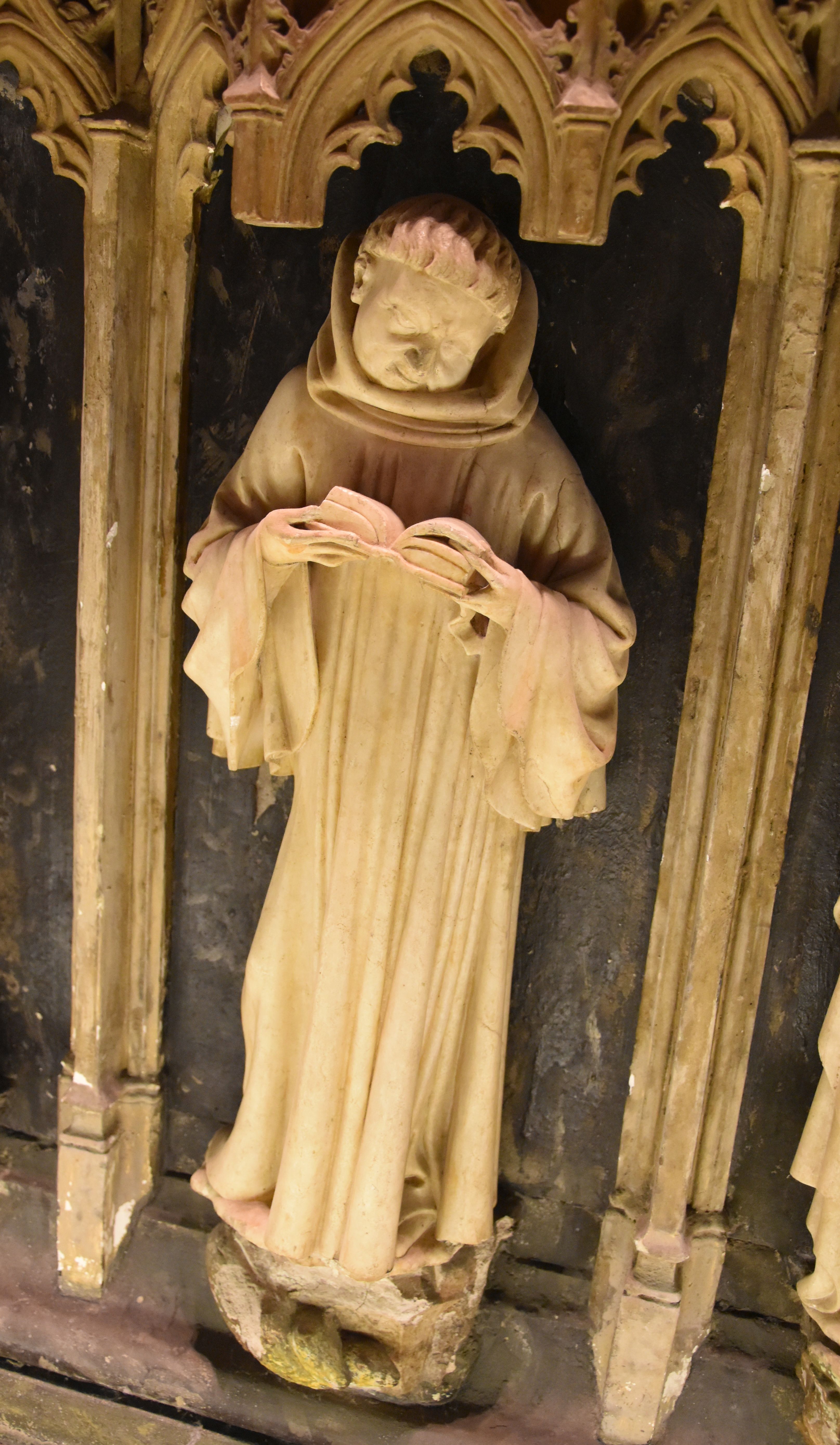
And with respect, his subjects mourned, as the beautiful small statues around the tomb illustrate.

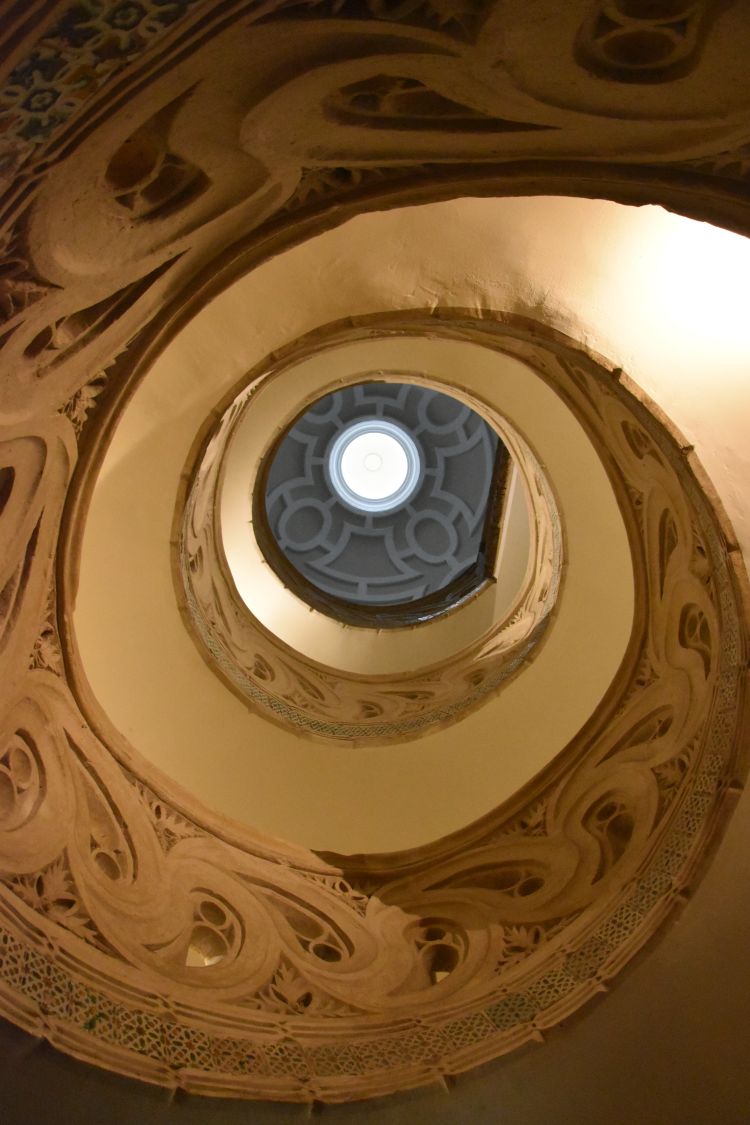
In the gangway to the cloister, I find this elegant spiral staircase.

The filigree arches in the cloister seem to dance.

Bishop Barbazán was buried in the chapter house in 1355. A small angel seems to adjust his cushion carefully.
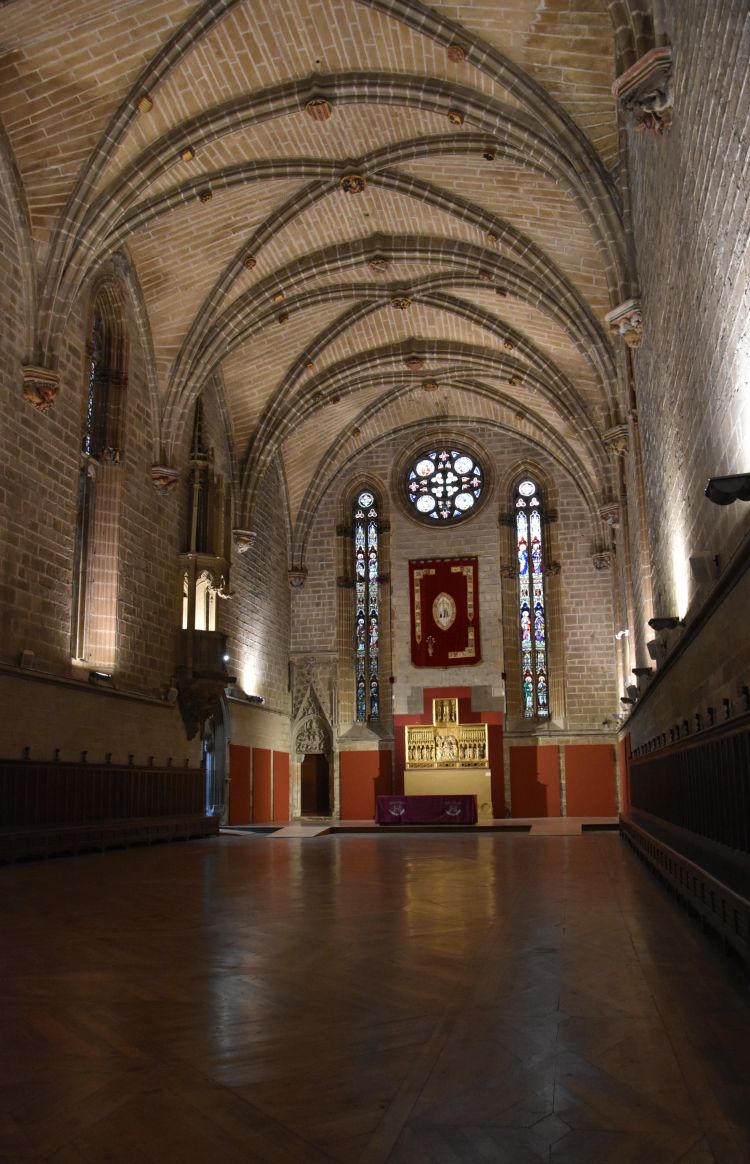
The refectory looks like it was a stylish place to eat. It was built around 1300 and measures 30mx10m.
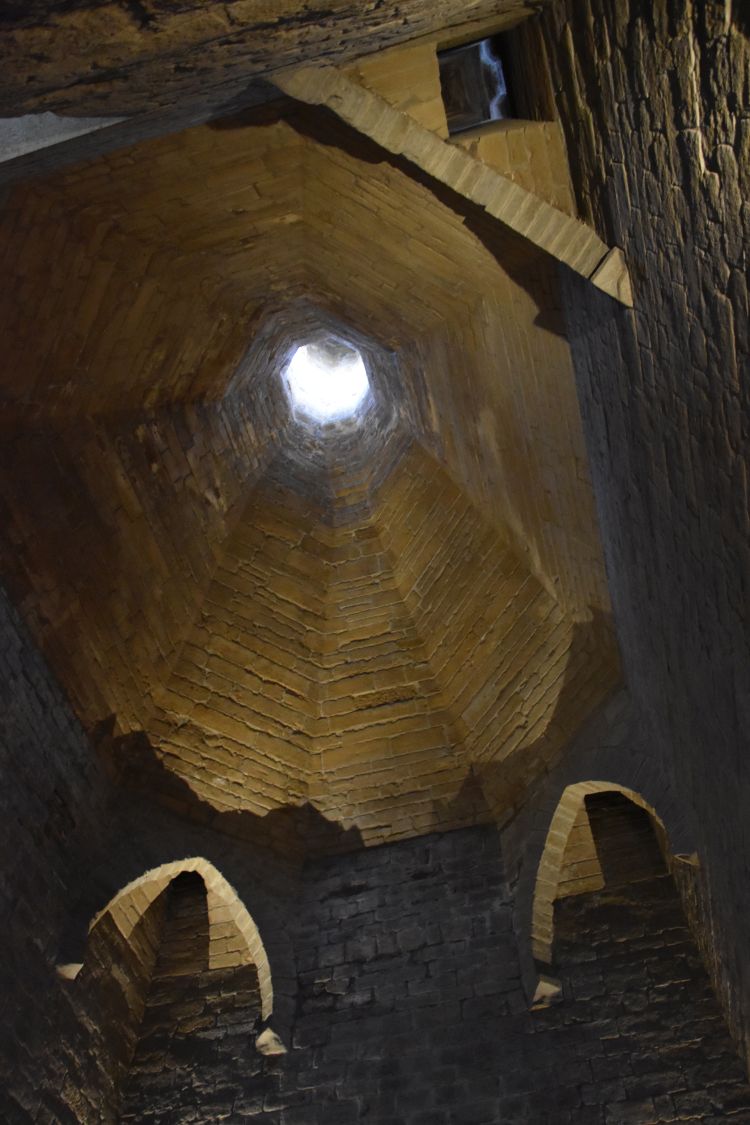
Nearby is the kitchen from the 14th century, with the long-long chimney.

Attached to the cloister is the Museo Diocesano with the exhibition “Occident” that illustrates the history of Christian culture in Europe.


The Museum of Navarra

We spend a full day in the Museum of Navarra that shows exhibits from archaeology and art that are related with the history of Navarra from prehistoric times until today.

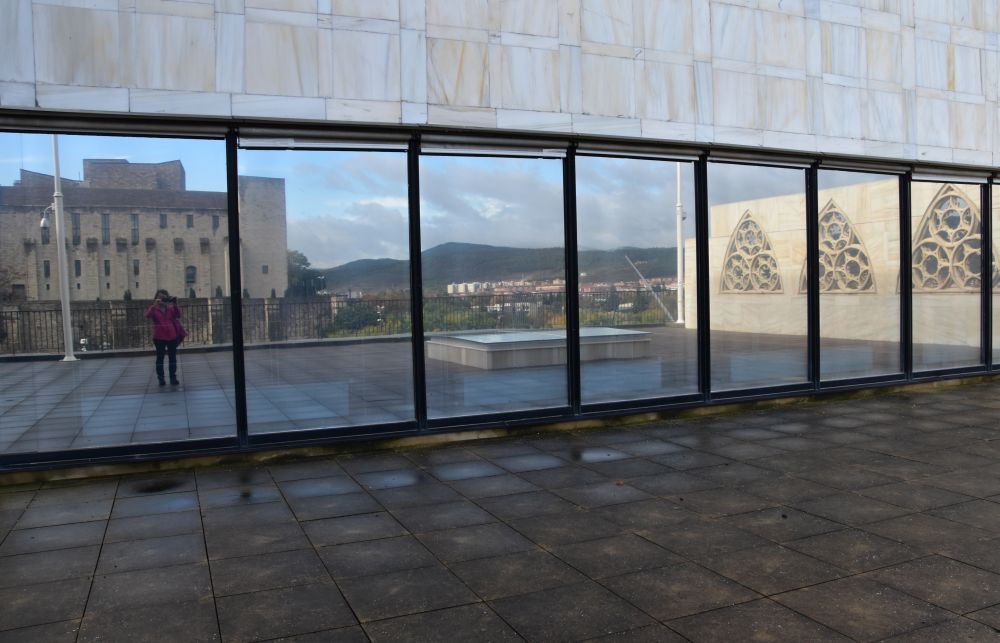
The Museum is located in a former hospital. On the terrace, we find a great view of the Pyrenees and the city.

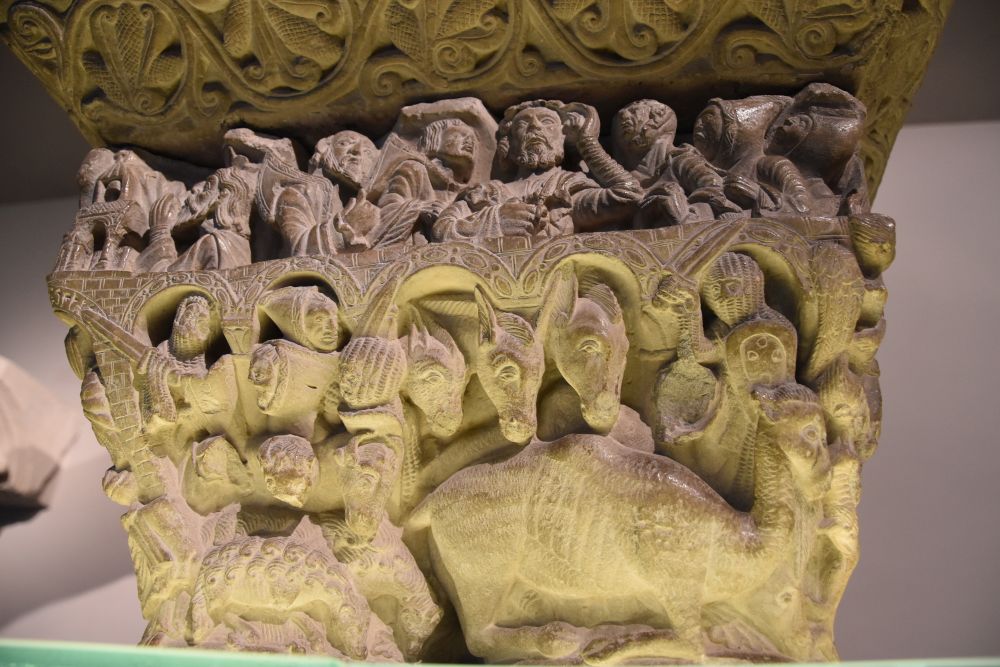
In the halls about Romanesque, we study Hiob’s fate in detail. Maestro del Claustro de la Catedral de Pamplona created it in the 12th century. The happy days of Hiob, his fall and his resurgence are illustrated on all four sides of the column. This is Hiob living happily with his family and his animals.

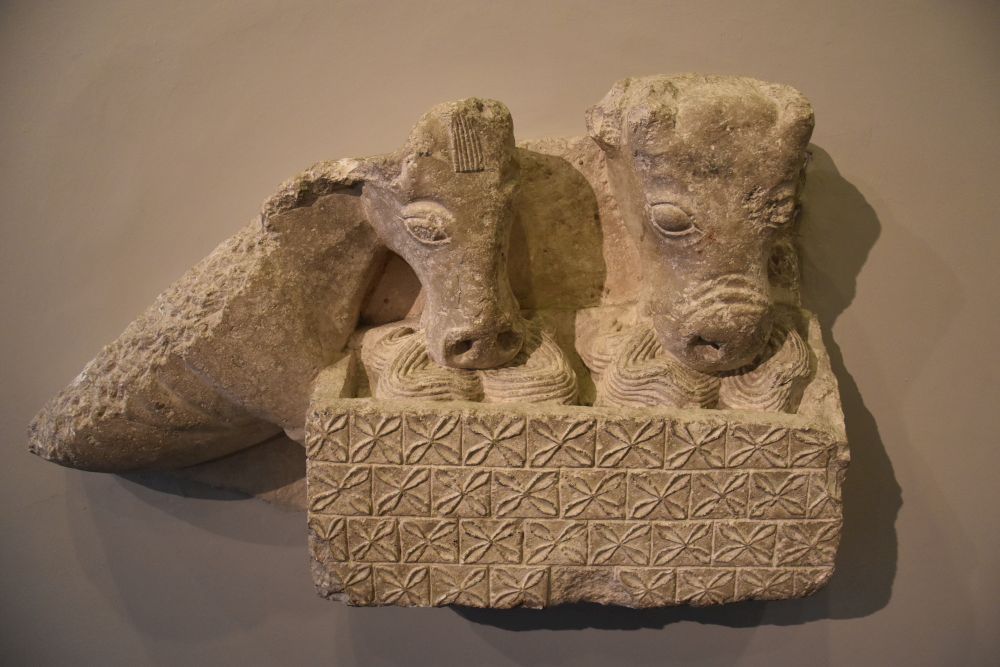
I very much like the elegance of this ox and donkey, a fragment from a nativity sculpture from the Cathedral of Pamplona.  Maestro Estebán made it in the 12th century.

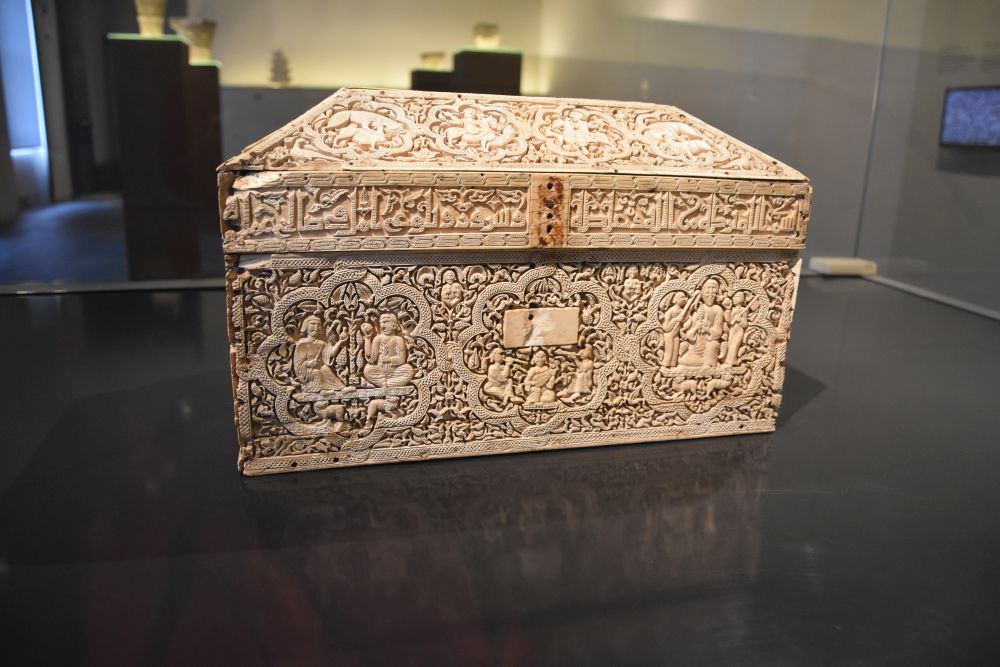
The ivory case “Arqueta de Leire” has been carved by Maestro Faray in Córdoba during the Umayyad Caliphate (up to 1031). It shows fine hunting scenes. The representation of human beings and animals is unusual for Islamic work of art. The case is from the Monasterio de San Salvator de Leyre. One of the inscriptions says “En el nombre de Allah”.

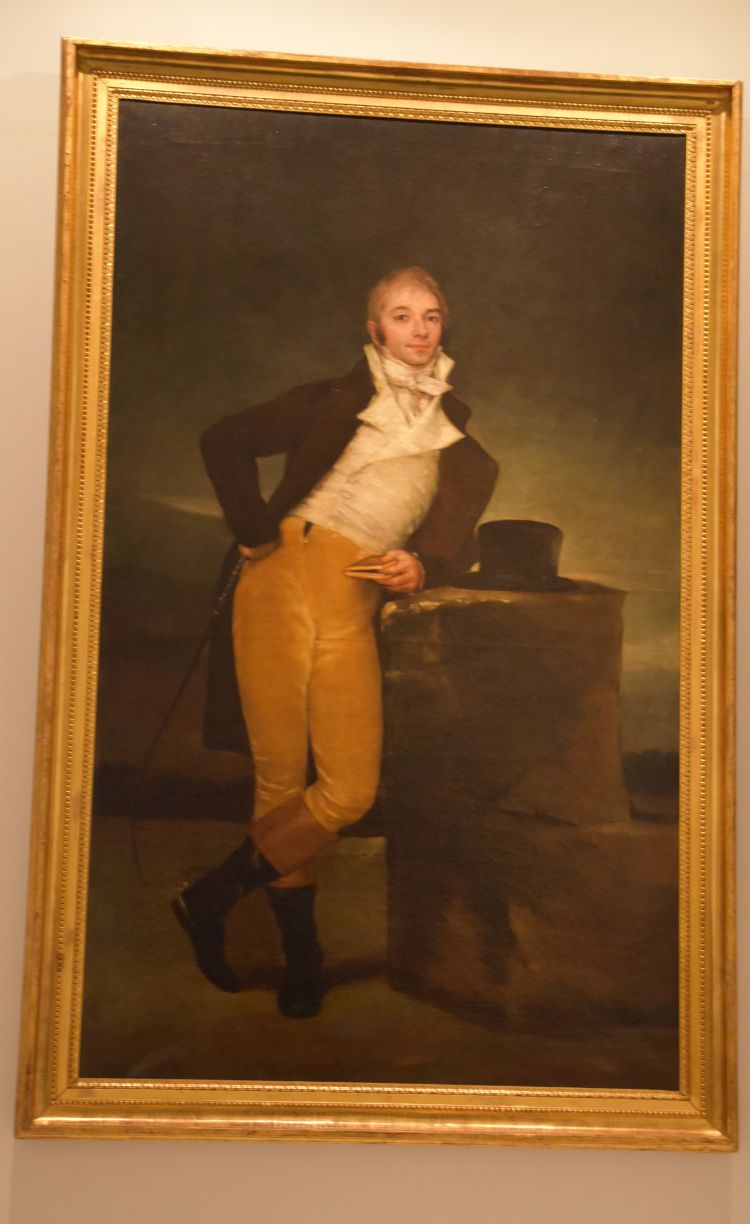
Goya painted a friend of his, Marqués de San Adrián. A noble young man in elegant velvet trousers. He has taken off his hat which creates an atmosphere of casualty and confidentiality.

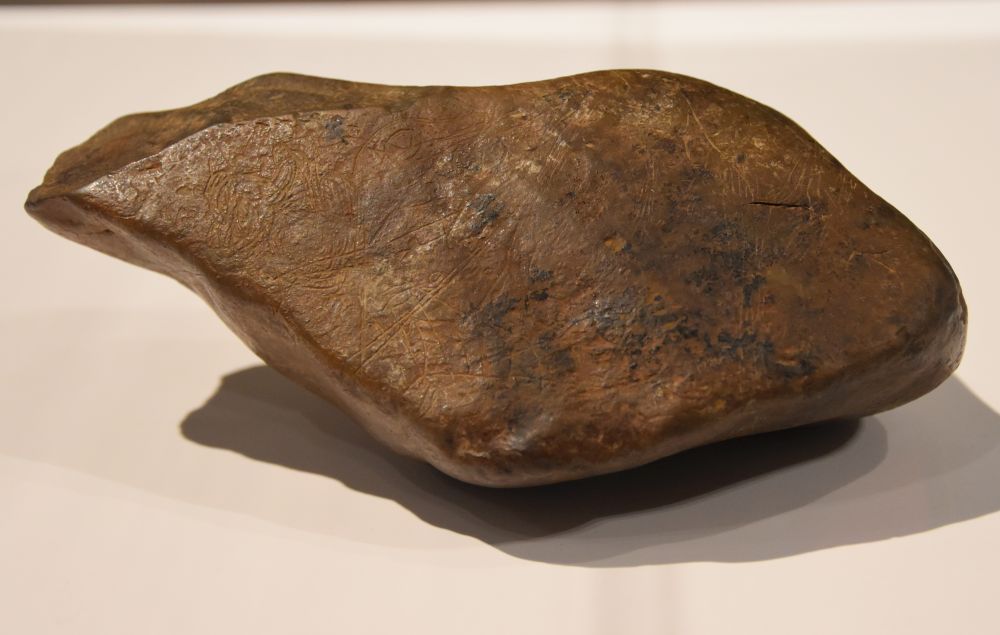
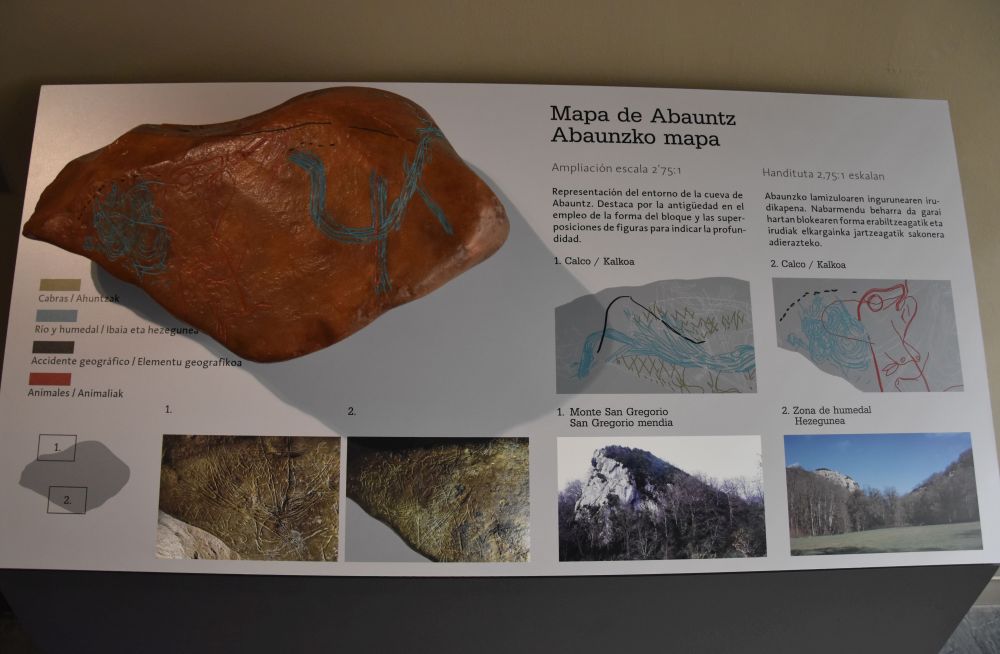
The Museum is proud of their Mapa de Abauntz. Never have I seen a prehistoric map engraved on a stone. It is the most ancient map ever found, about 13’000 years old. Abauntz is a cave located about 25km north of Pamplona.

Panels explain what archaologists found on the map: Rivers, mountais and places for hunting goats (cabras) and other animals.

These maps are not as easy to read as the Swiss topological Maps of today… I admire the imagination of the archaeologists.

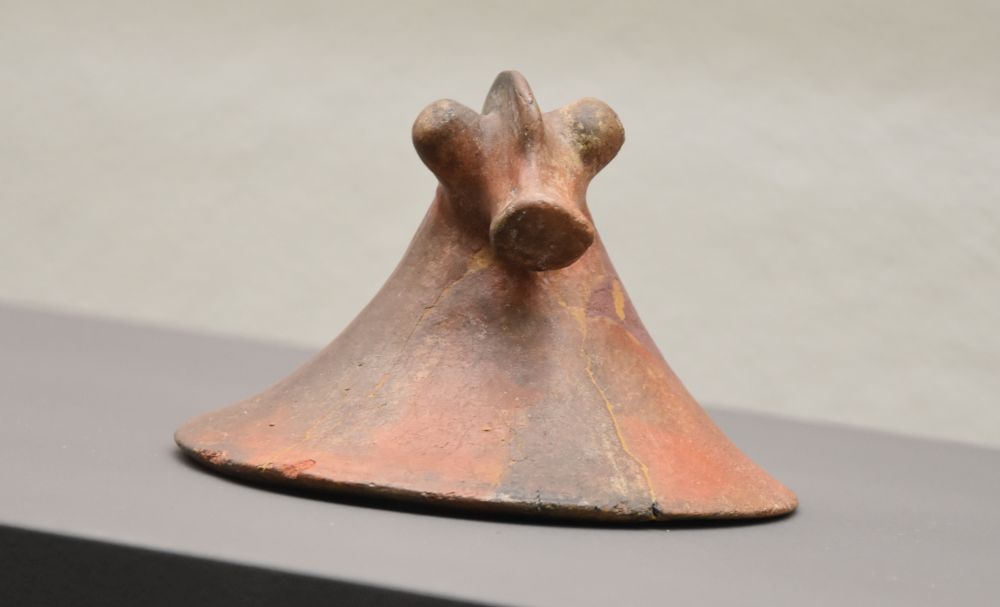
From the necropolis of Castejón (about 80km south of Pamplona), this charming horse shaped urn cover has been brought to the Museum of Navarra.

We spent a full day in this interesting Museum of Navarra – to be recommended! Especially on the rainy days that we experience now.

Next we explore the surroundings of Pamplona, Punta de Reina and Laguardia.


Sources: Marion Golder: “Nordspanien und der Jakobsweg”, Dumont Reise-Handbuch, Ostfildern 2018 and “Museo de Navarra”, edited by the Gobierno de Navarra.

On the road to Spain: Via Zubiri to Pamplona

In November 2019, we are traveling through France to Spain. From our first stop in Spain, Roncesvalles, we drive to Pamplona, with a stop over in Zubiri.

Source: Googlemaps


Crossing foggy and rainy hills to Zubiri with the Puente de la Rabia

From Roncesvalles, the road leads over two passes. The rainfall never stops and we feel compassion with the humpy pilgrims that, hidden under their rain capes (covering their back bags as well), bravely walk along the path of St. James crossing the main road from time to time. It has been raining for a week now, and there is no end in sight for at least another week. I do not know, whether I would feel like joining the pilgrims walking in the rain. I am pretty sure that I prefer to remain dry in our car, while our windscreen wipers go “swish-swish-swish”.

The villages on the way are full with guest houses for pilgrims. Good business, since the 11th century.

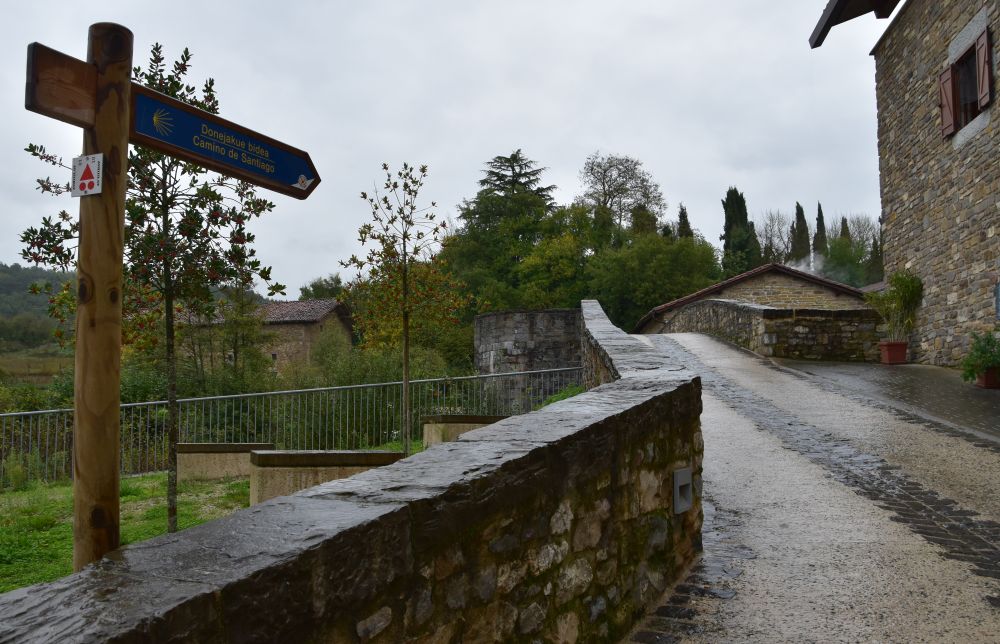
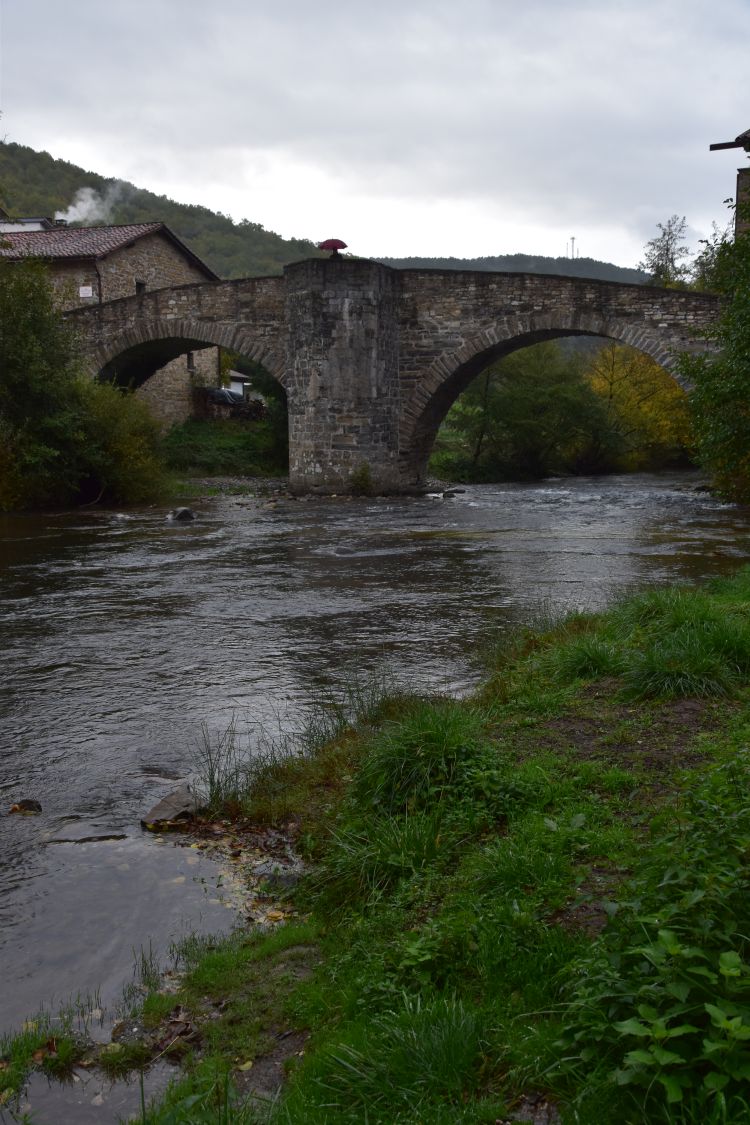
Zubiri is known for the medieval Puente de la Rabia over the river Agra. The Way of St. James crosses the bridge.

The bridge cures animals suffering from rabies – this is the legend. It seems that relics of Santa Quiteria, a martyr from the second century, have been found here. She would calm barking dogs and for this reason, she became known for curing rabia. Somewhat interesting. Nevertheless, I would not miss vaccination against rabia, when traveling to countries, where I could come across it, even after having been on this bridge.

People cross the rabies bridge with their umbrellas. Yes, it IS raining.

After Zubiri the valley opens and the mountains recede. We reach the basin of Pamplona.


Pamplona – known for their bulls

In Pamplona, we settle in the business hotel Los Tres Reyes, conveniently located, where the old city begins. Three kings, this alludes to the union of the kings of Navarra, Castilia and Aragon.

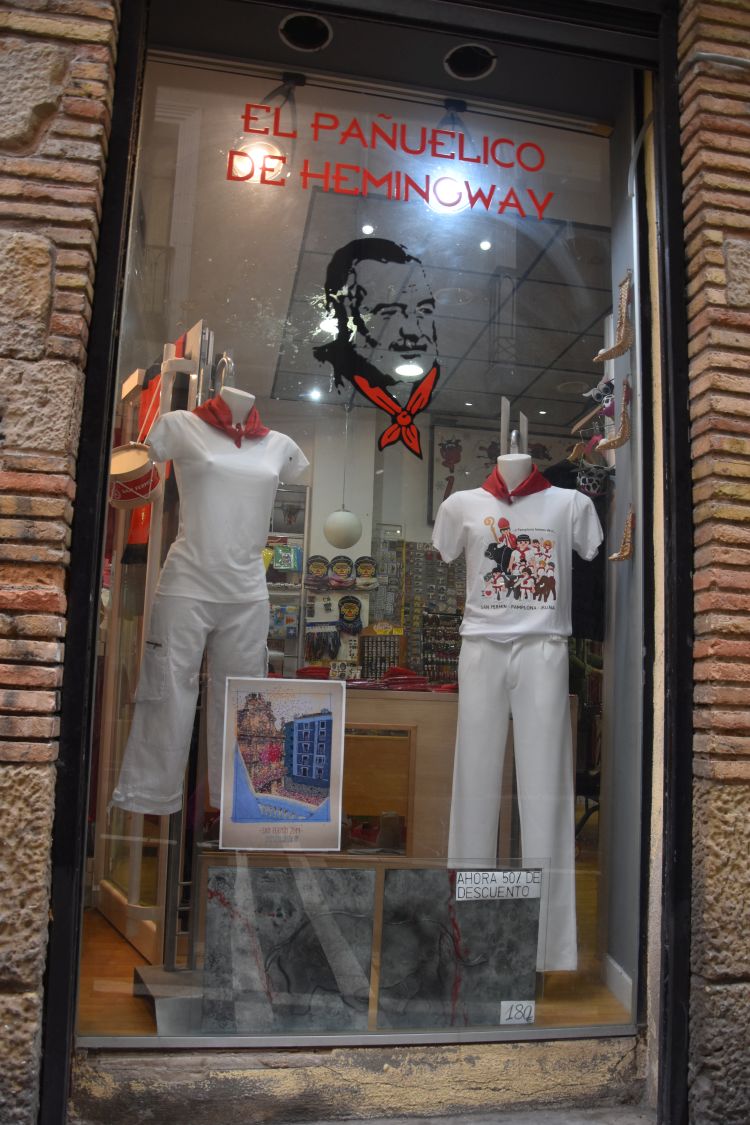
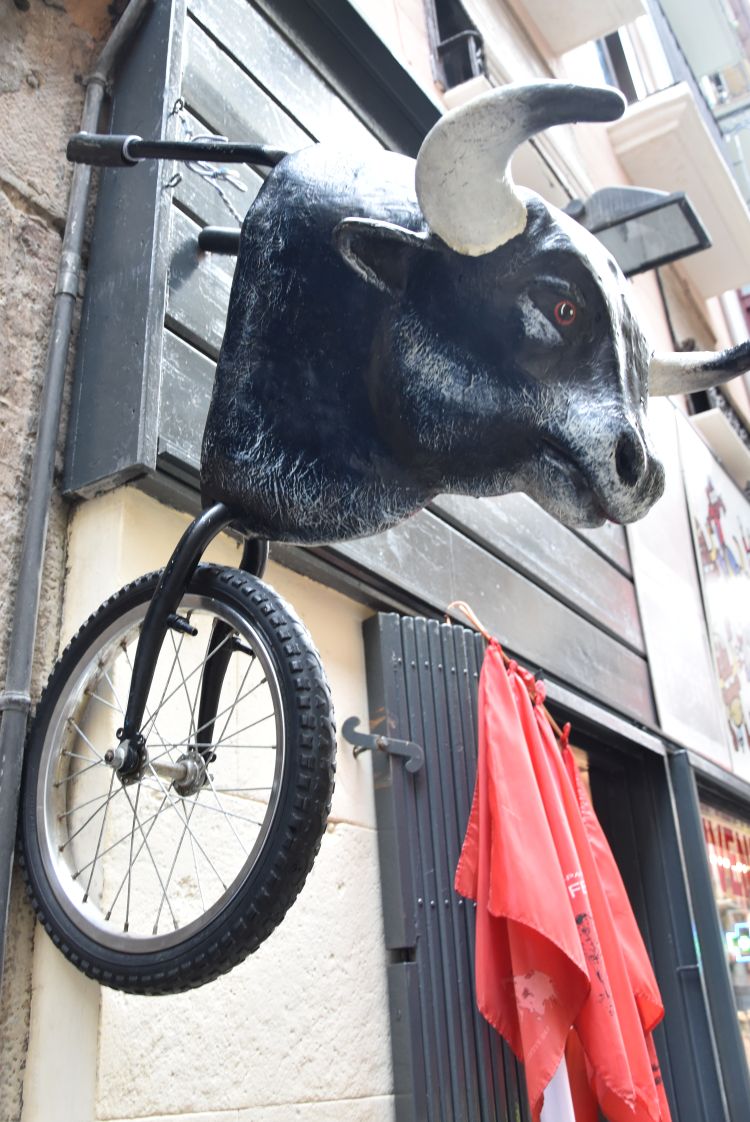
The city is known for bullfighting. In July (Sanfermin), the bulls run from their corrales through the narrow streets of the city center to the bullfight arena. Young men dressed in white with red scarves and red belts run with them, a pretty dangerous event. That is reflected in the shops. They sell the typical outfit and they also remind of Hemingway who has described Sanfermin in his novel “the sun also rises”.

Shop windows show videos about Sanfermin and childrens’ toy shops have sets to practice bullfighting.

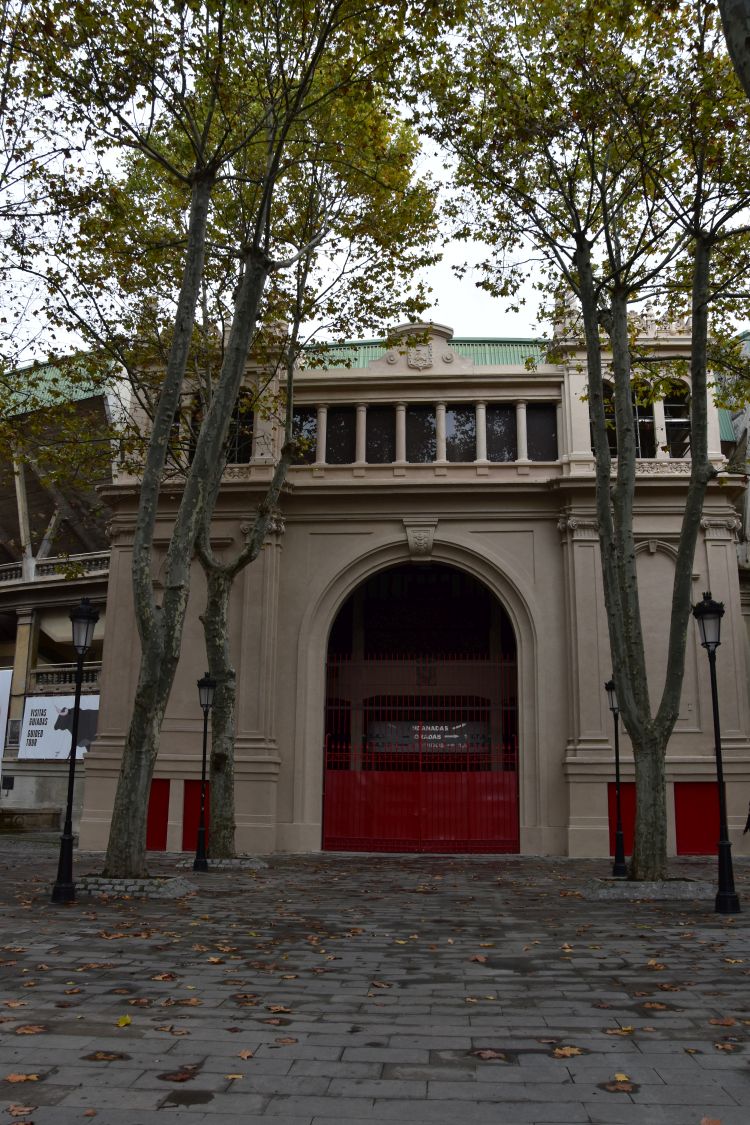
This is the entrance to the bullfighting arena.

Bullfighting is not really for me… I fell in love with Pamplona for other reasons, namely for the nice old town that invites for strolling and for all the works of art we found in the Cathedral and in the Museum of Navarra. Let me talk about some impressions in the city center first.


Strolling through the old city center of Pamplona

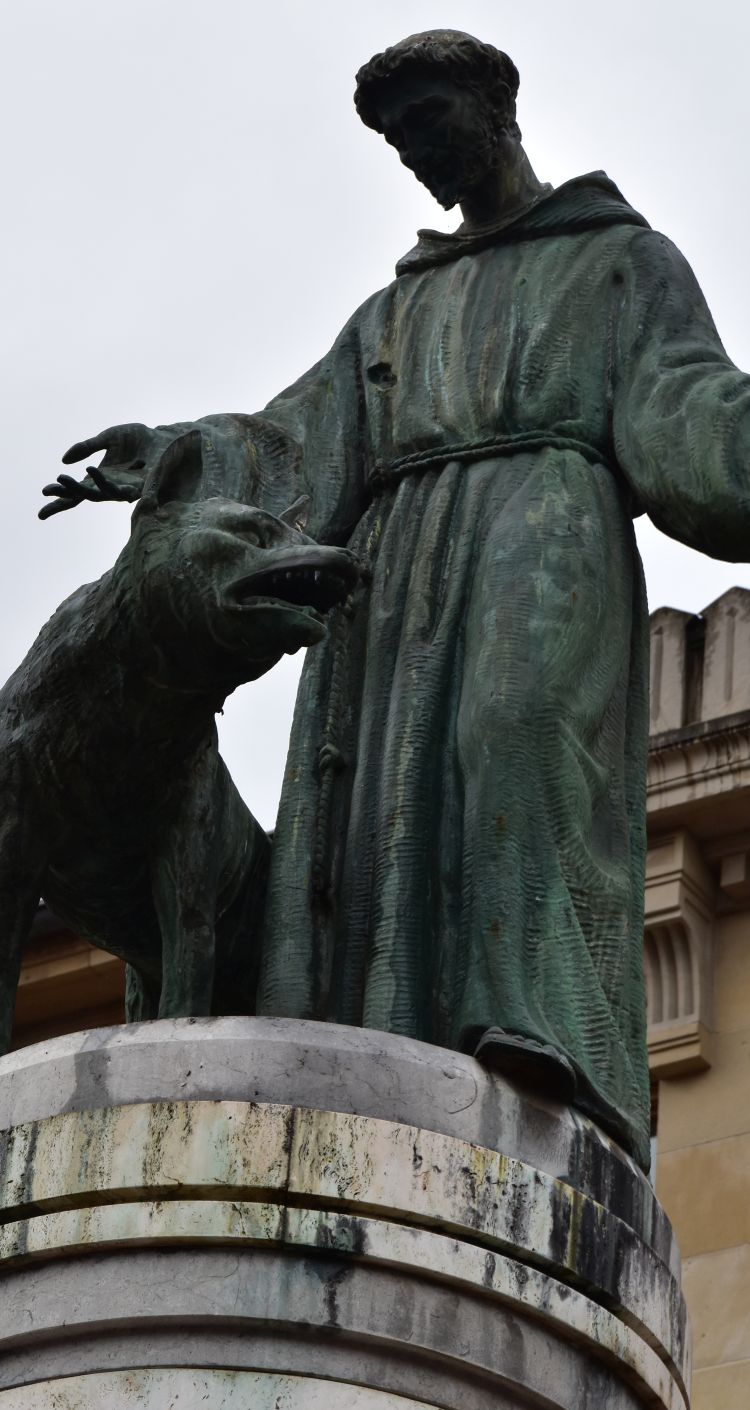
Not far from our hotel, St Francis welcomes us on the namesake square. He seems to have a discussion with this wolf.

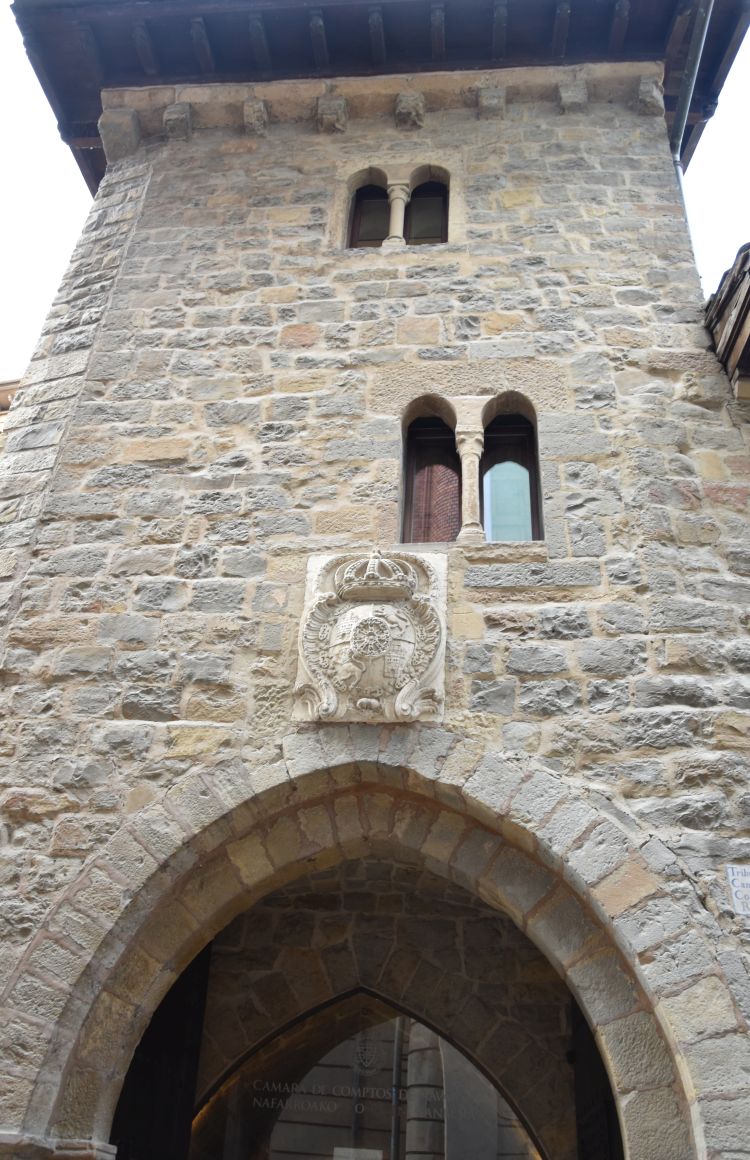
There are various Palaces in the city, with the Tribunal de Cámara de Comptos Reales being the oldest. It was built in gothic style in the 13th century. The public finances are controlled here.

The town hall or Casa Constitutional was constructed by Charles III the Noble in the 15th century at the point where two city districts fighting one another had their frontiers. In one district lived the Navarrians, in the second district the Franconians. Charles III is called “the Noble”, because he succeeded to mediate between the two antagonizing parties. The town hall was reconstructed in the 19th century, but the baroque facade was preserved.

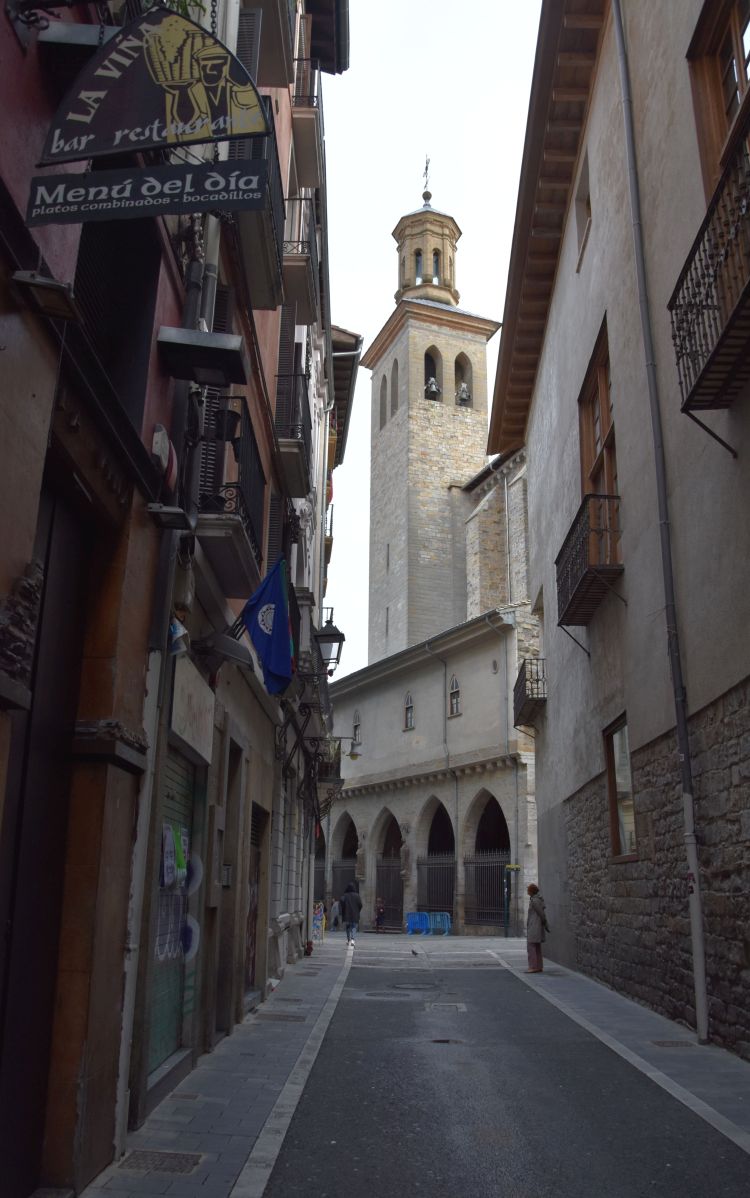
The Romanesque church of San Saturnino is from the 12/13th century.

It is of defiant stance. This is the tower with the narthex.

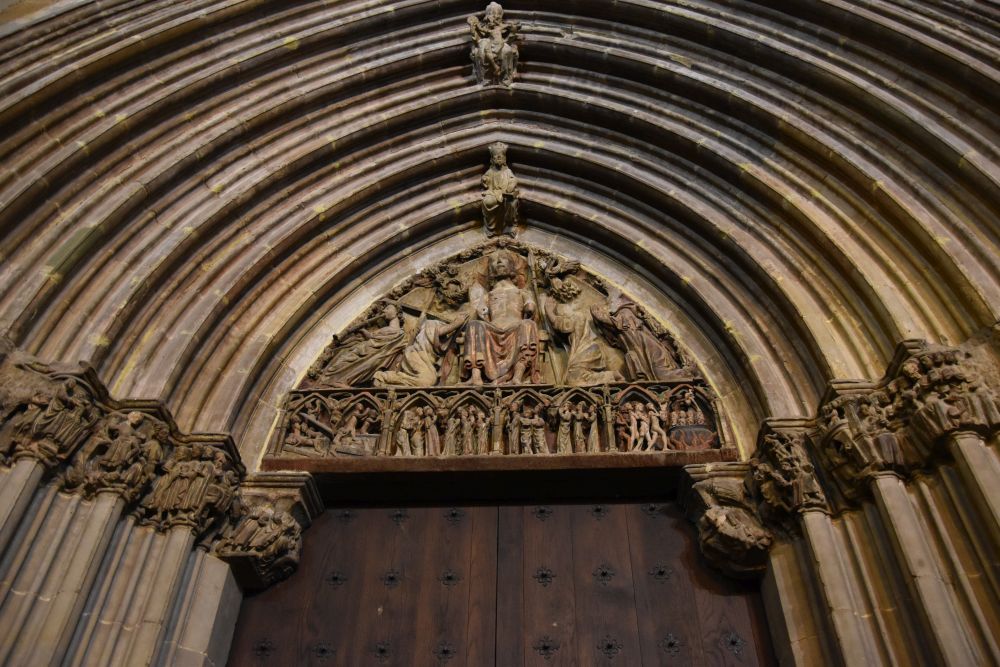
Inside the narthex, the tympanon above the porch presents the Last Judgment with Paradise and Hell.

A service is going on inside the church. We attend it for a little while. The priest in front of the altar wears a red gown. The altar is decorated with white flowers. What a solemn atmosphere under the sober Romanesque vaults!

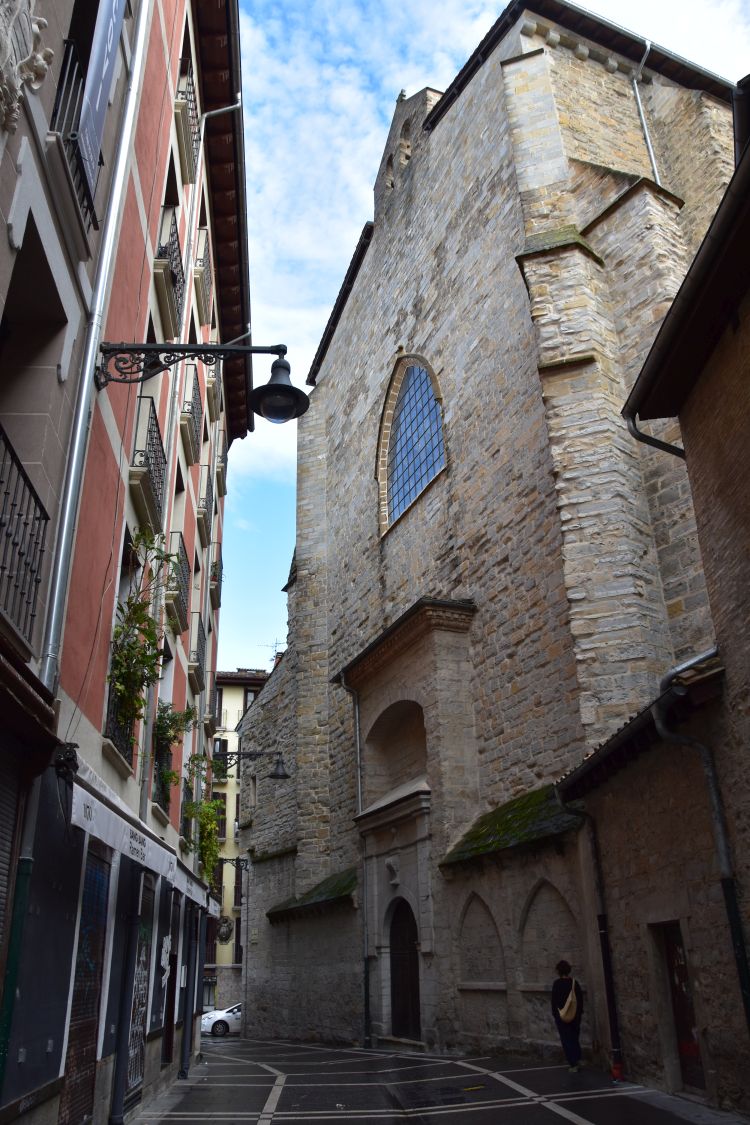
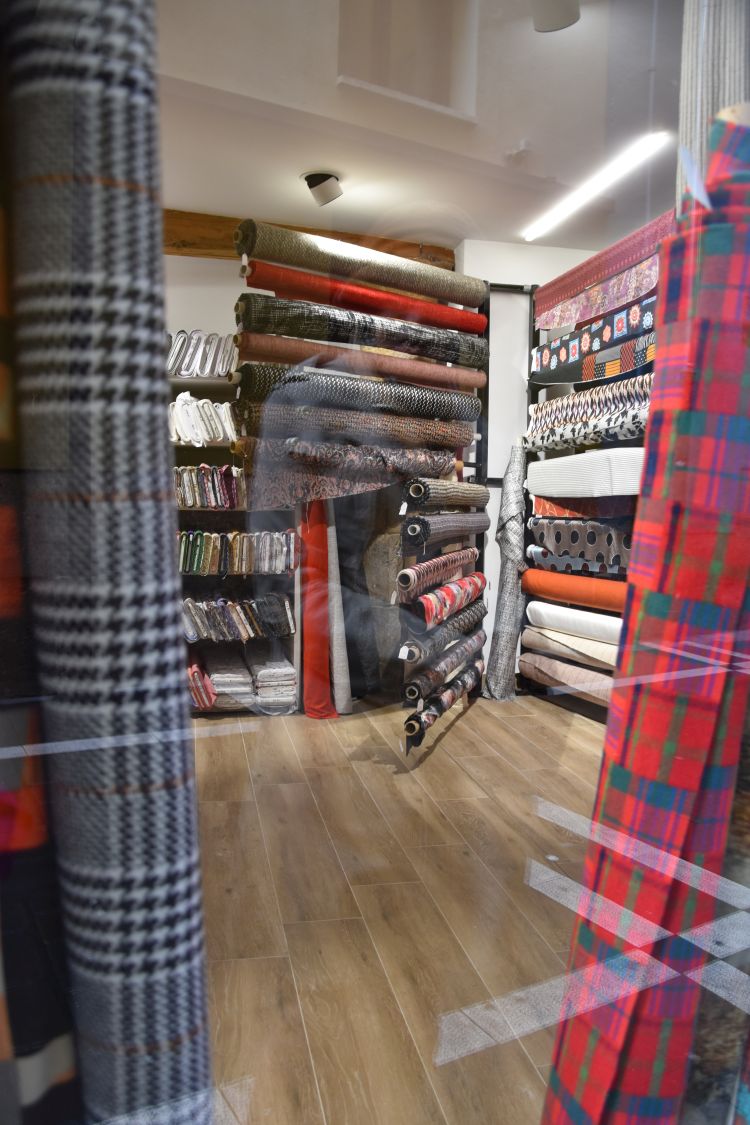
We leave the service and continue to walk through the narrow streets. Never before have we seen so many draperies and in some of them tailors are working at their sewing machines.

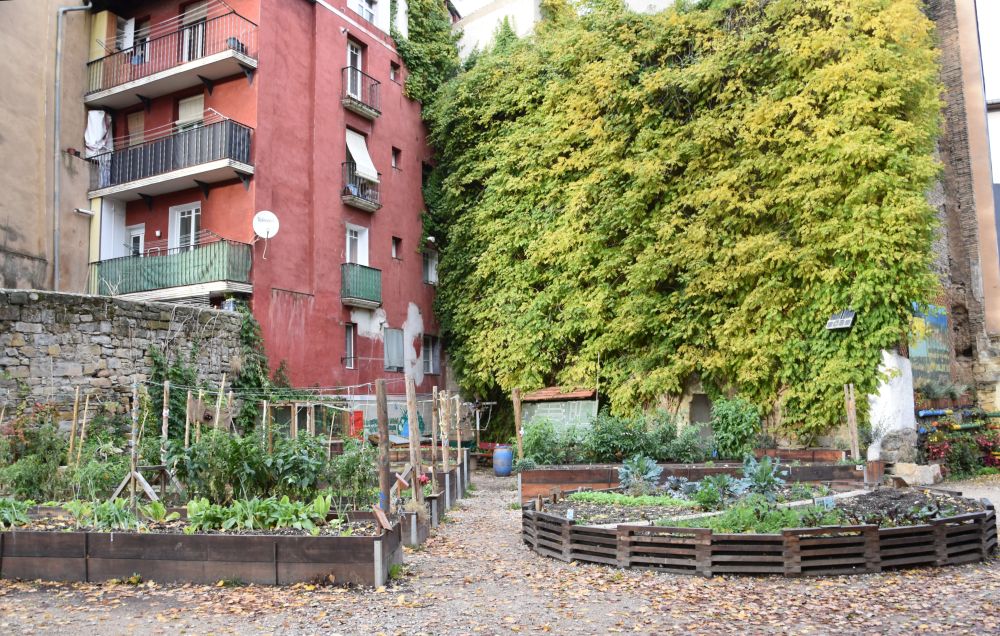
This backyard has been turned into a vegetable garden. What a great initiative.

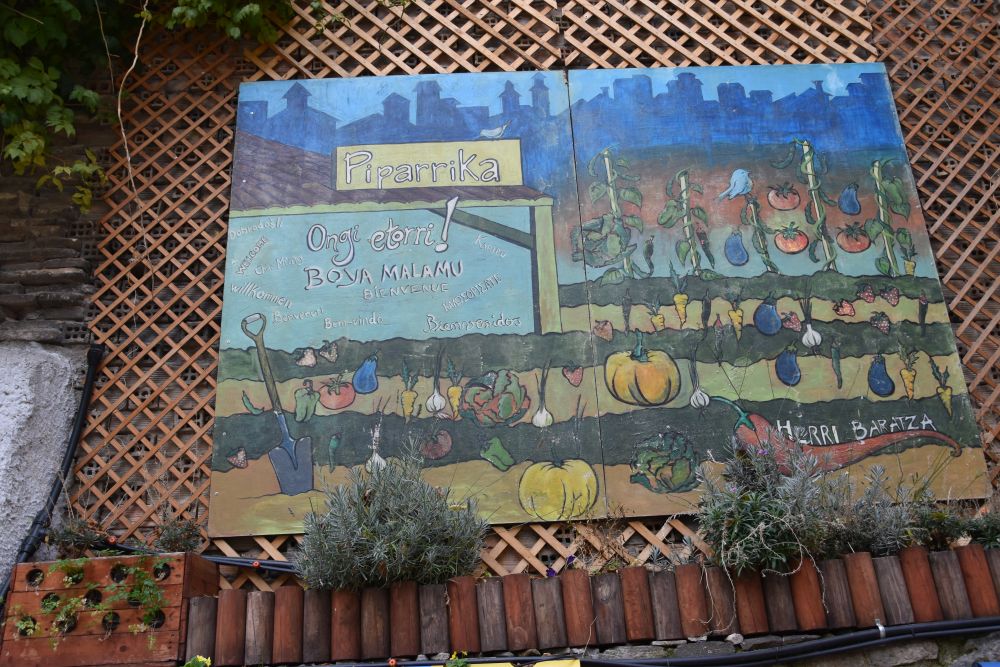
The habitants call it “Pipparika” which might be Basque.

Inside the city, we find many small bars that sell pintxos (called tapas elsewhere in Spain). Great for short breaks, when strolling through the streets.

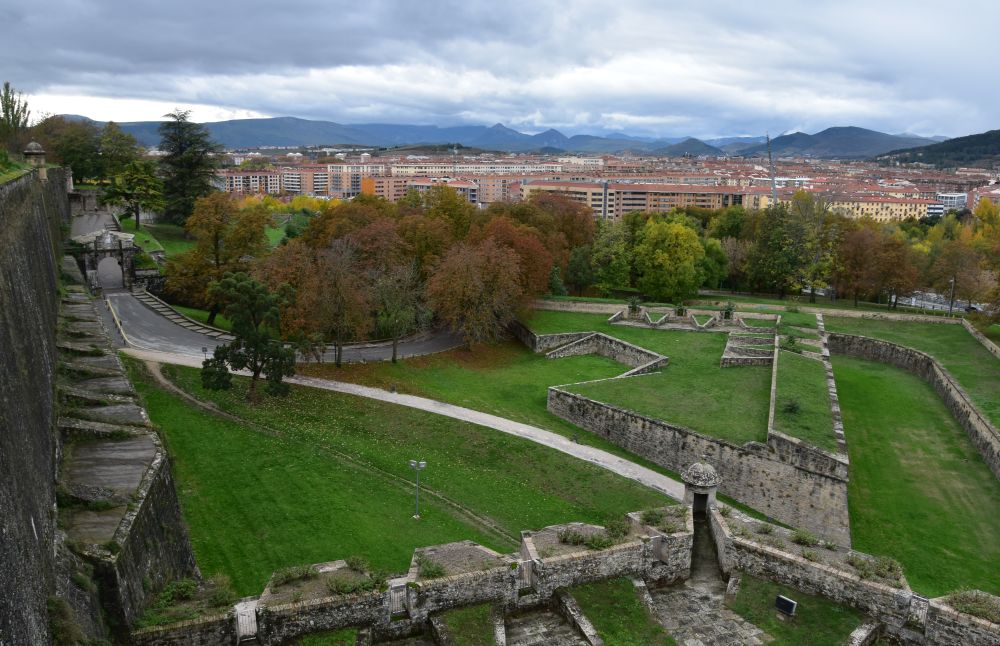
Walking along the fortifications of Pamplona tops our visit. It was the Spanish-Habsburgian king Philipp II who had fortified the city in the late 16th century, because he feared a French invasion. Part of the wall and the bastions have been kept until today and allow for a nice walk with a great view of the Pyrenees.

Sources: “Sehenswürdigkeiten und interessante Gebäude” von Tourismus Navarra und Marion Golder: “Nordspanien und der Jakosbweg”, Dumont Reise-Handbuch, Ostfildern 2018.

On the Road to Spain: Roncesvalles, where Roland was ambushed

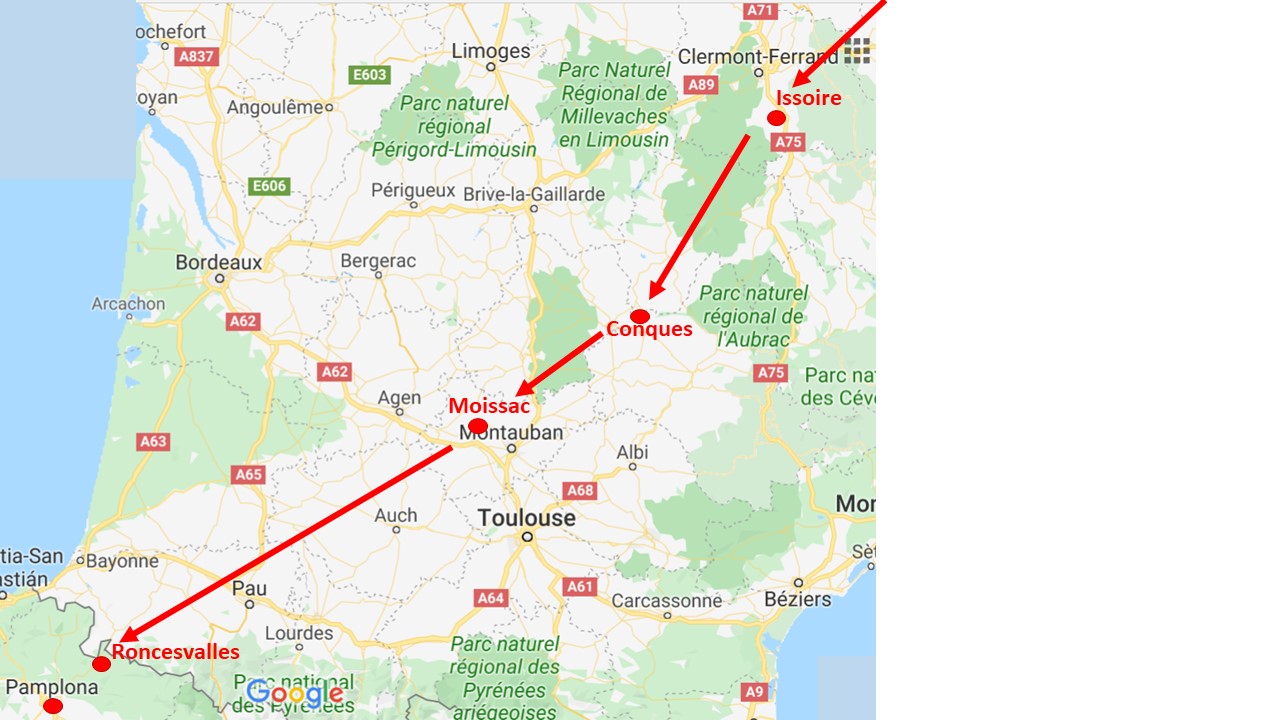
In November 2019 we drive from Moissac to Saint-Jean-Pied-de-Port, then up to the pass Ibañeta and to Roncesvalles, where Roland was ambushed in 778 and where pilgrims stay overnight on the Way of St. James (Via Podiensis).


Saint-Jean-Pied-de-Port

Saint-Jean-Pied-de-Port is a fortified small town on the river Nive de Béhérobie.

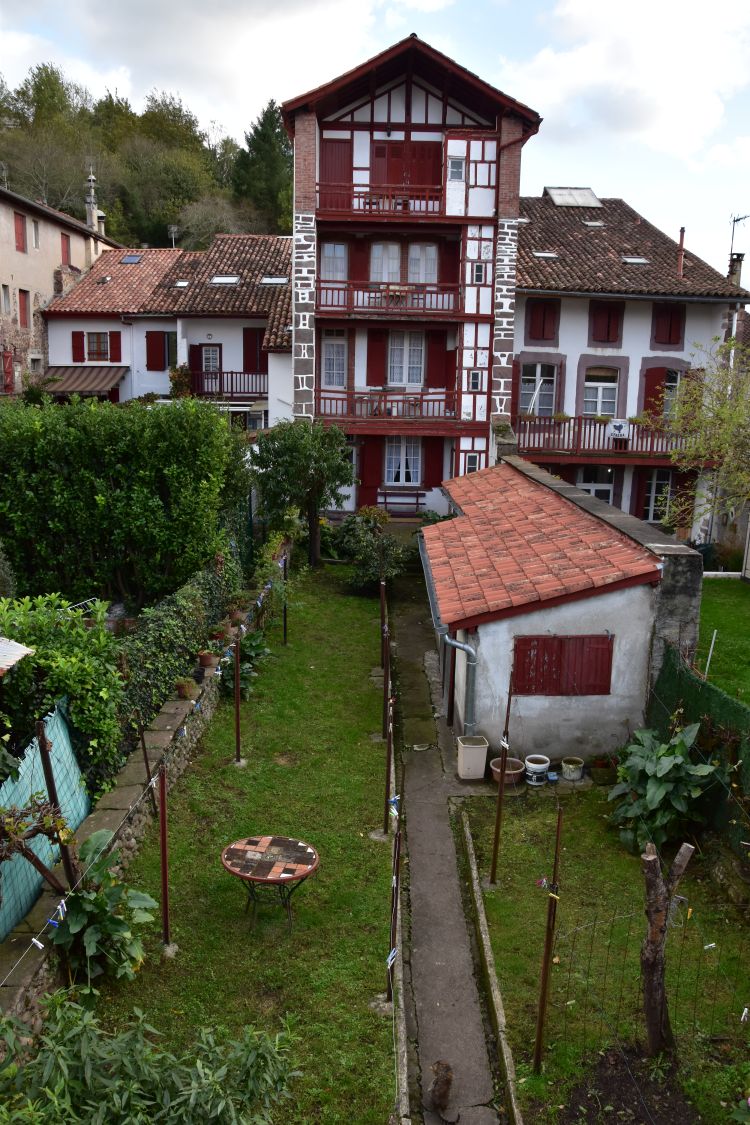
We stroll through the narrow streets, climb up to the town wall and look at the half-timbered houses from the backsides, with lush gardens.

Saint-Jean-Pied-de-Port is the last larger stop on the French side of the Pyrenees, located at about 200m above sea level. From here our car climbs up into the Pyrenees.


Puerta de Ibañeta (1057m)

We reach the pass of Ibañeta on 1057m and look back north towards Saint-Jean-Pied-de-Port, where we came from (Valcarlos). Two young pilgrims from South Korea reach the pass at the same time. They look exhausted and thankfully accept the lift to Roncesvalles in our car.

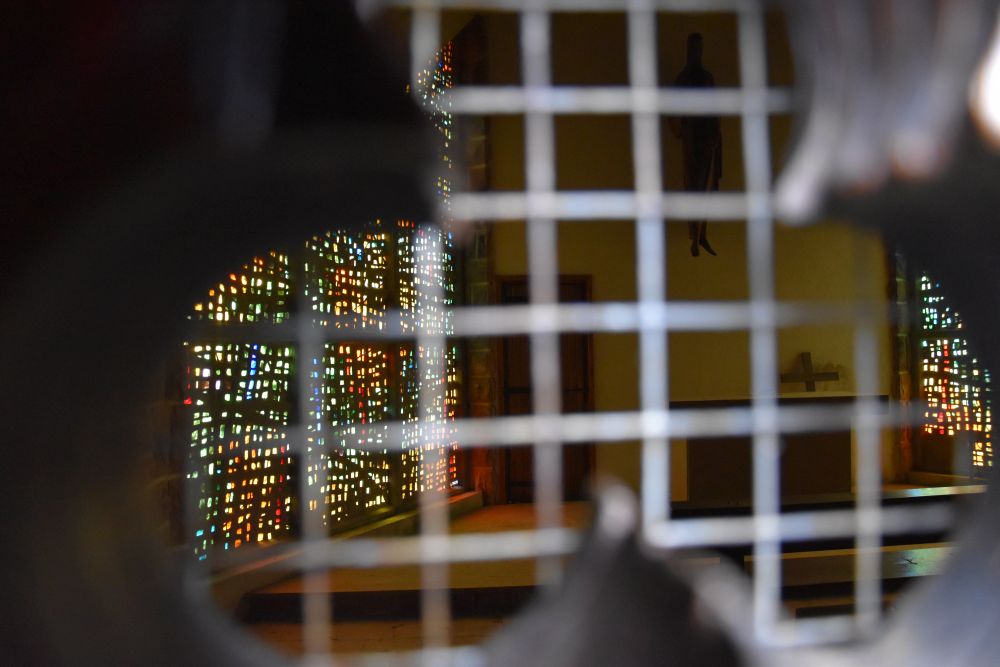
A small and modern chapel greets the pilgrims on the pass. The legend goes that monks used to ring the bell of the chapel to make sure, they do not lose their way in the fog. The chapel is locked. We look through the tiny hole. It is full of atmosphere with the colored windows and the sober altar.

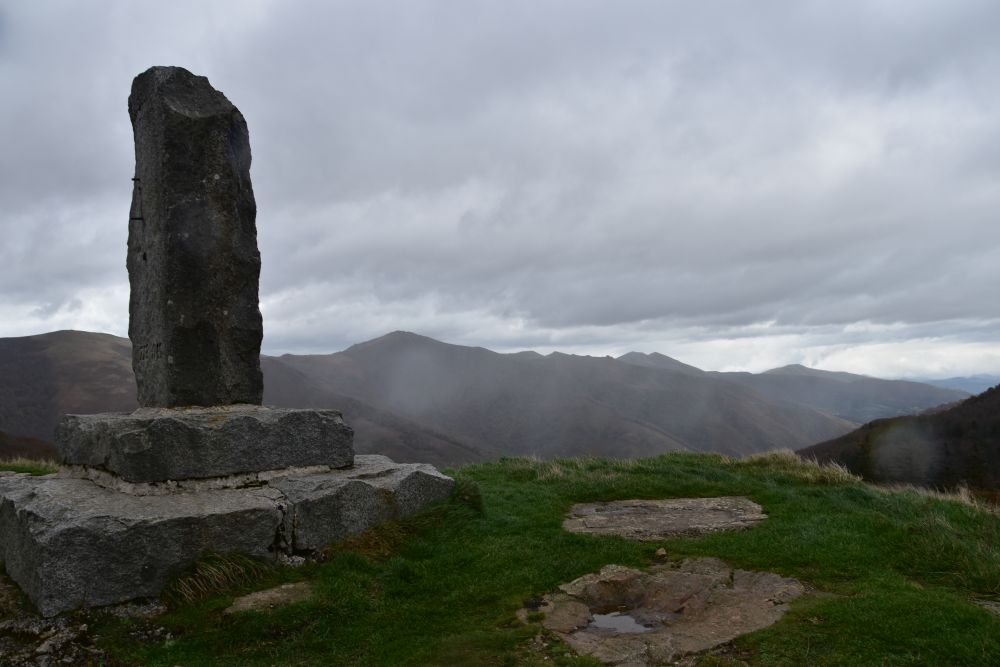
Above the chapel, the Roland monument reminds us that he has been ambushed somewhere here in 778, when returning with Charlemagne from their campaign to Spain. Charlemagne had been called by the governors of the northern Islamic principalities to support them against the Emir of Córdoba. When returning to France, Charlemagne had Pamplona destroyed, before leading his army up to the Puerta de Ibañueta. The Basques revenged the destruction of Pamplona by ambushing the Franconian rear guard led by Roland, governor of the Breton March. This is the monument – the rain has started again.

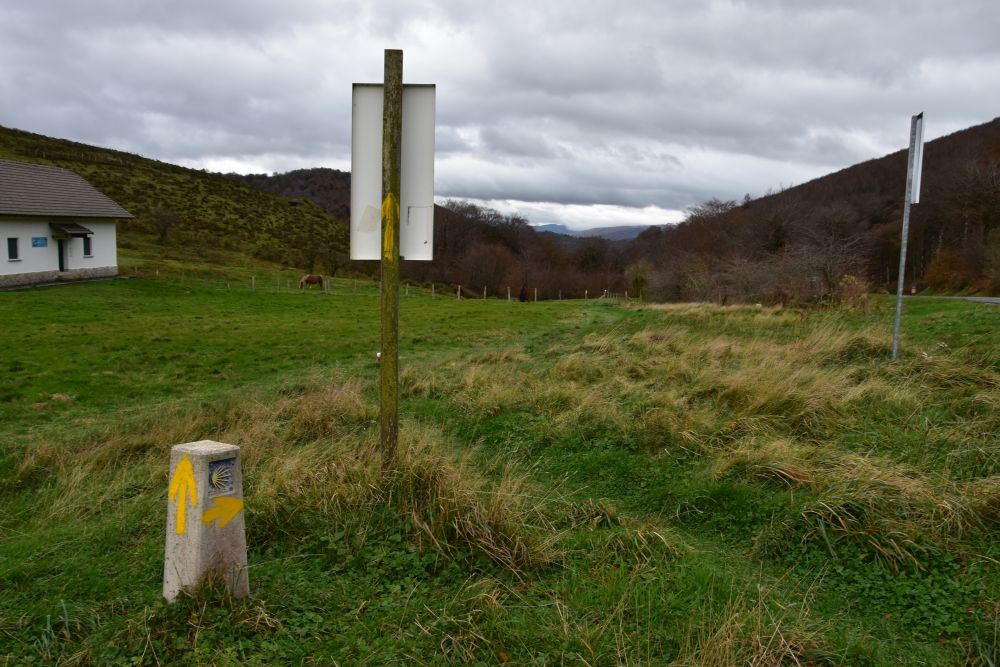
The hikers on the Way of St. James are directed to use this path down to Roncesvalles, which is at a 2kms’ foot walk from here.

Our exhausted pilgrims happily jump into our car and we drive to Roncesvalles. We settle in the Hotel Roncesvalles. They continue their way to another hostel.

.

Roncesvalles (Orreage in Basque)

We spend two nights in the cosy Hotel Roncesvalles. Roncesvalles means “valley of thorny bushes”.

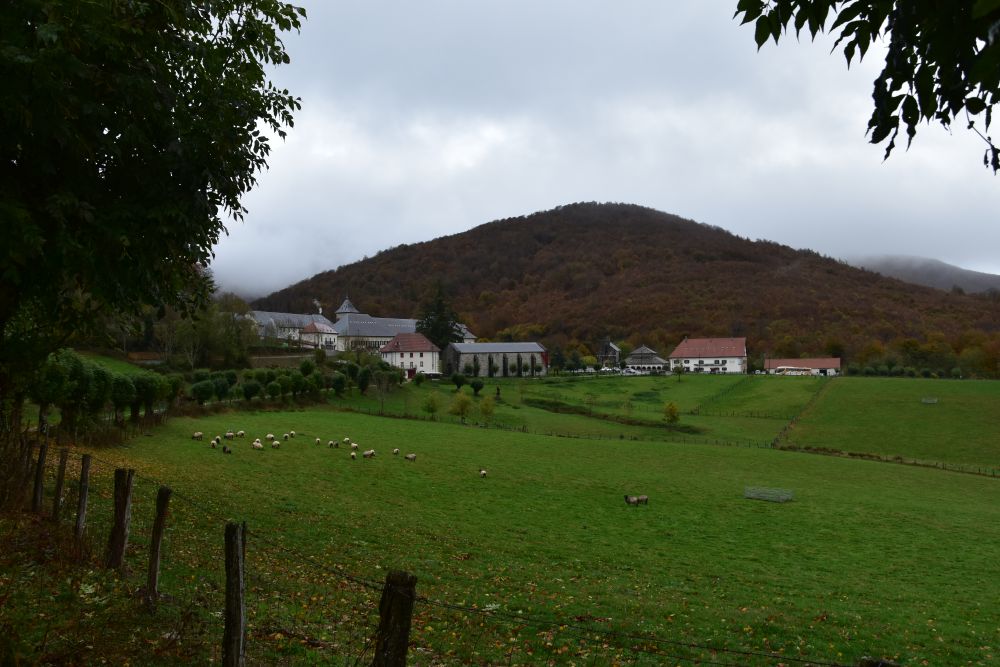
The complex of the former Augustinian monastery from the 12th century is beautifully located below green hills and on green meadows.

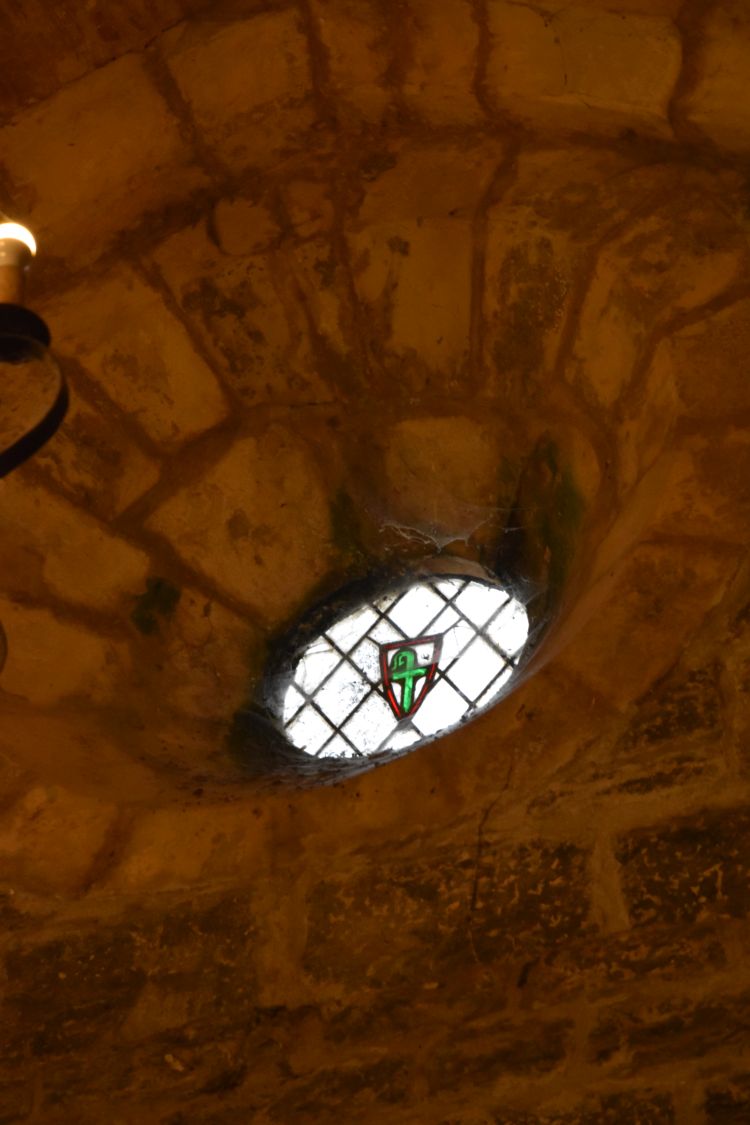
The emblem of Roncesvalles is the green bishop’s crook. It is present all over here, in windows, on fountains, tombstones, doors, ground slabs etc.

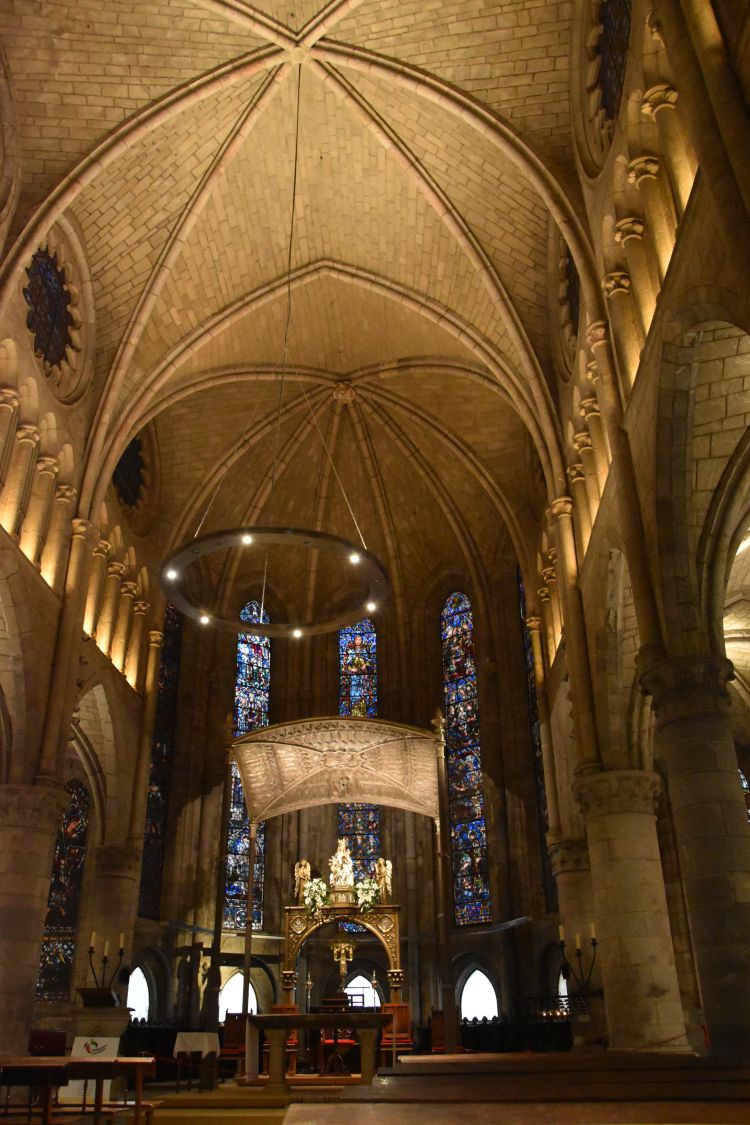
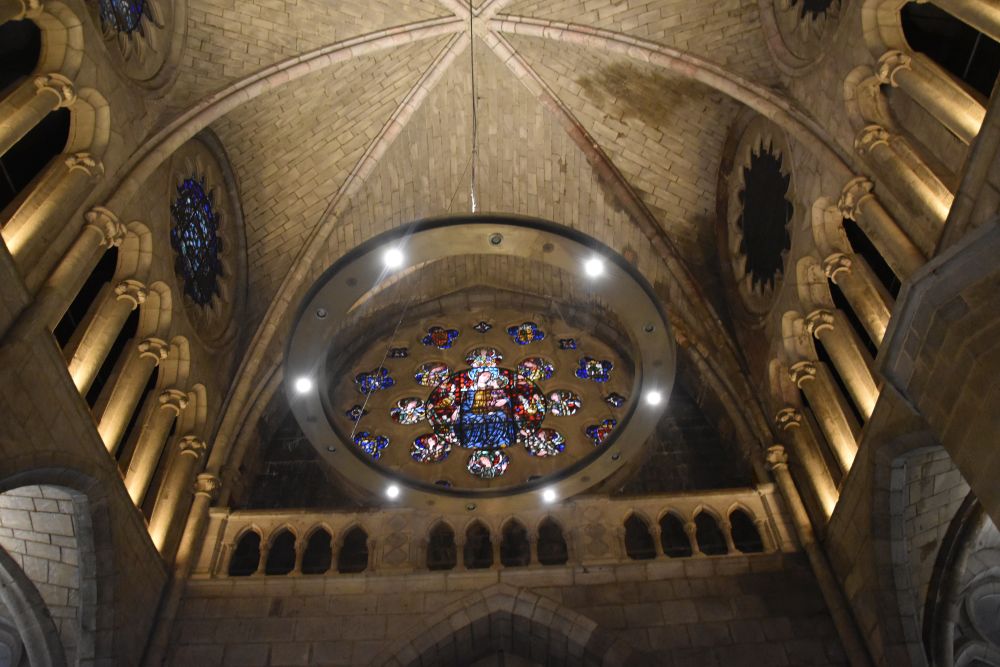
The Collegiate Church Santa Maria is of Gothic style (the construction followed the model of Notre Dame in Paris).

The choir holds the much venerated Virgen de Roncesvalles from the 13th century. It is said that a shepherd found her.

The cloister has been rebuilt after heavy snow falls that made the old gothic cloister collapse.

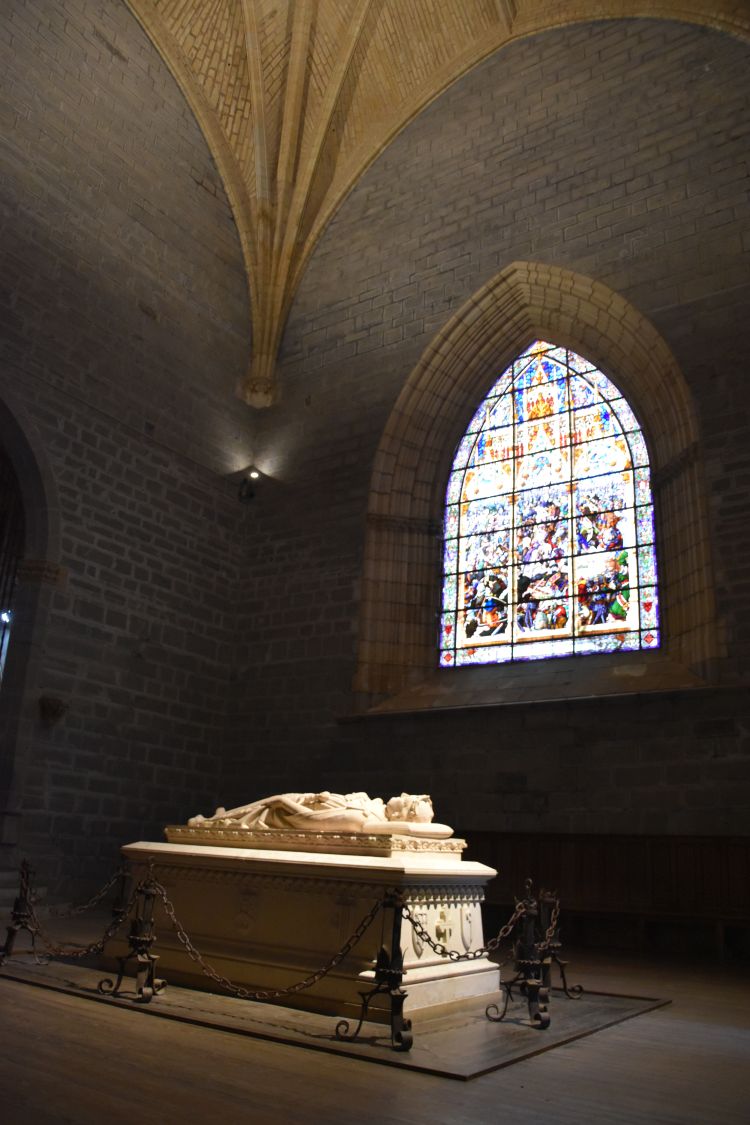
Sanchez VII, king of Navarra (1194-1234) has been buried here. He is known for the battle of Las Navas de Tolosa (1212) which was decisive for the further course of the Spanish Reconquista.

The window above his tomb tells about the battle of Las Navas de Tolosa.

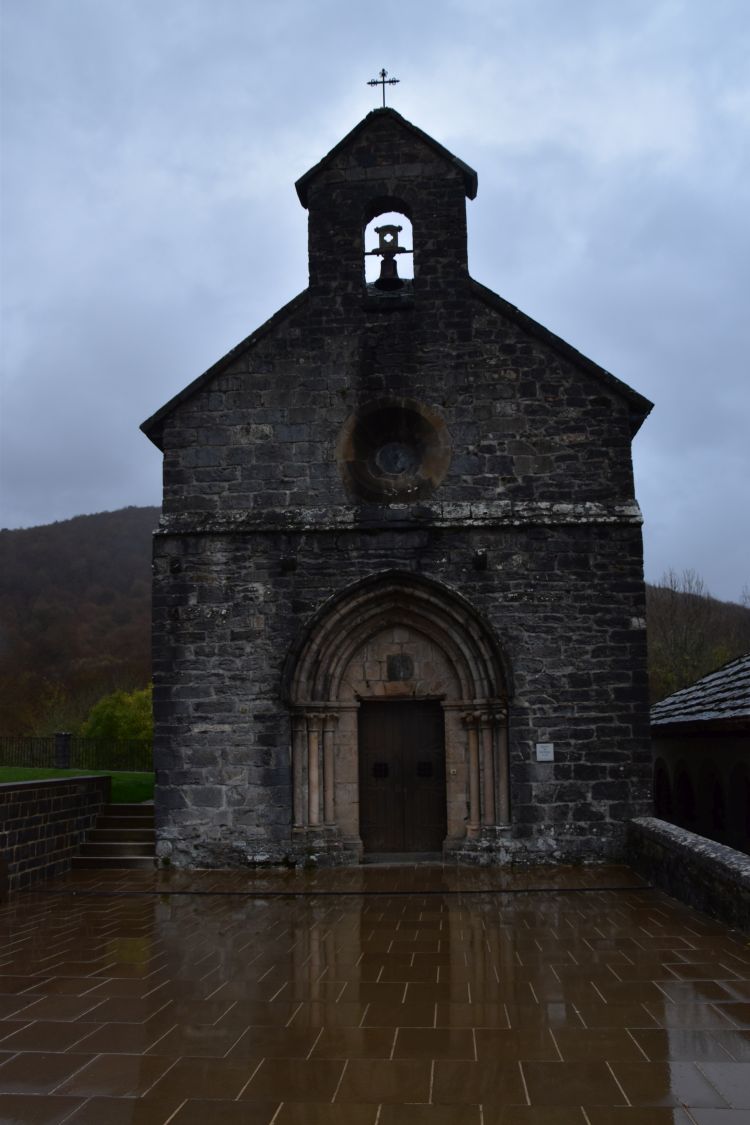
The Chapel of St. James from the 12th century reflects in the ground slabs that are wet from all the rain of the last days.

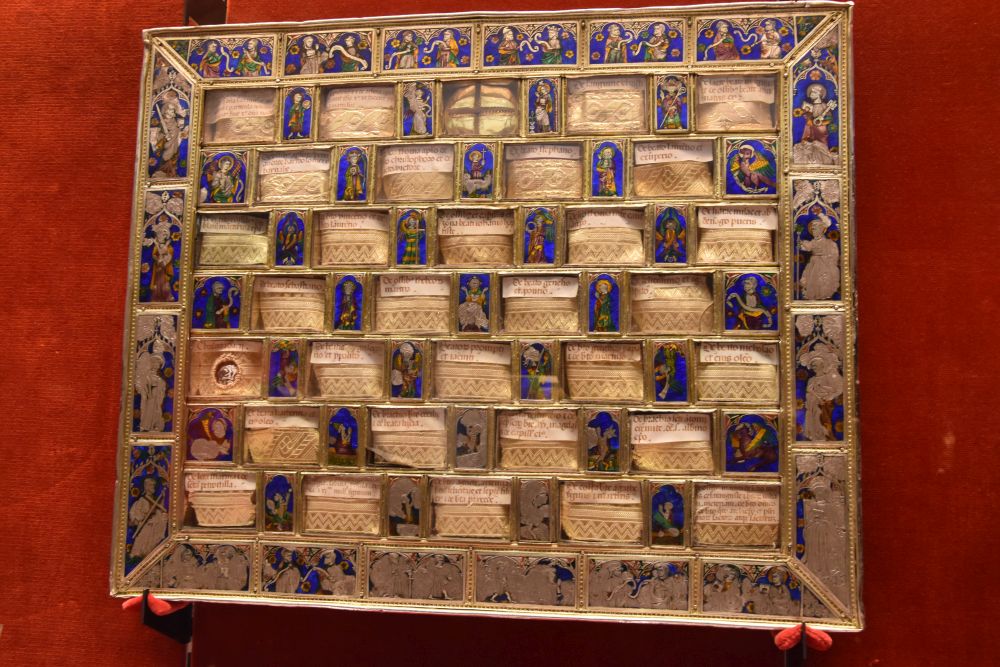
In a guided tour, we visit the Museo-Tesorio. Amongst the treasures, we admire the so-called chessboard of Charlemagne. It is not a chessboard, because it has only 63 fields. Furthermore it is not from around 800 (when Charlemagne lived), but it is a beautiful work of email from gothic times (14/15th century). But – it is known as the chessboard of Charlemagne.

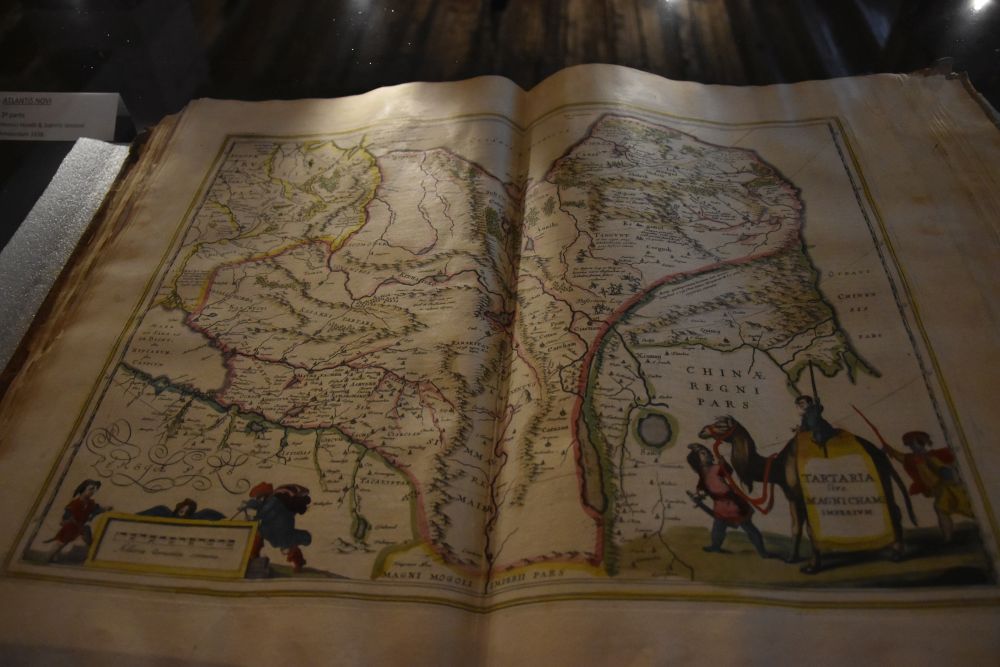
As I have just come back from Usbekistan, this map from the early 17th century fascinates me. It shows Central Asia with the country of the Tatars. In the very east, China is presented as a relatively small country, separated from the Tatars by their Chinese Wall.

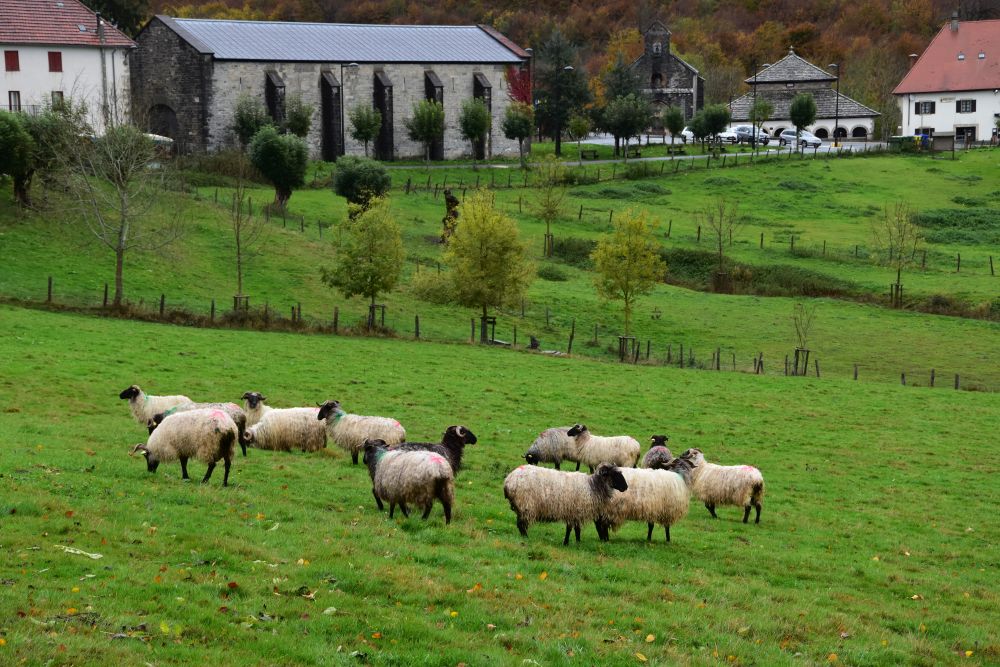
The sheep of Navarra have black legs, black tails and black faces. There are many of them here. The cheese made from them is called Roncal.

We say good-bye to Roncesvalles and continue to Pamplona.

Marion Golder: “Nordspanien und der Jakonsweg”, Dumont Reisehandbuch, Ortsfildern 2018.

Empordá with its rich heritage from the past

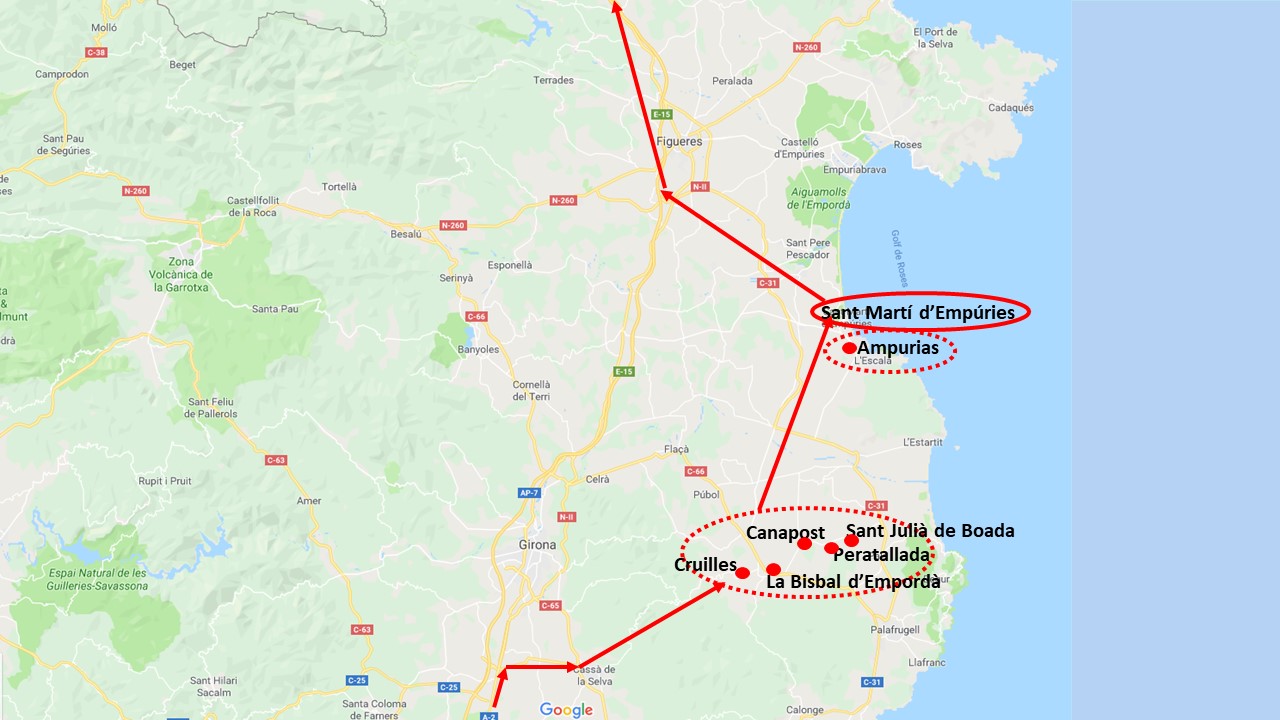
Monday, June 5th 2019, our quiet days on the sunny balcony with the view of the Mediterranean sea are over. From Hospitalet, we head north towards Switzerland, with two breaks, the first in the Empordá (still in Spain or, more precisely, in Catalonia) and the second in Valence (France). Let me start with the Empordá region.

.

Romanesque churches – there are many, many of them in Northern Catalonia and also here in the Empordá 

The publication “Routen der Romanik in Katalonien” (edited by the Generalitat de Catalunya) promises three Romanesque churches around Bisbal, in Cruilles, in Canapost and in Sant Julià de Boada. We find another one in Peratallada.

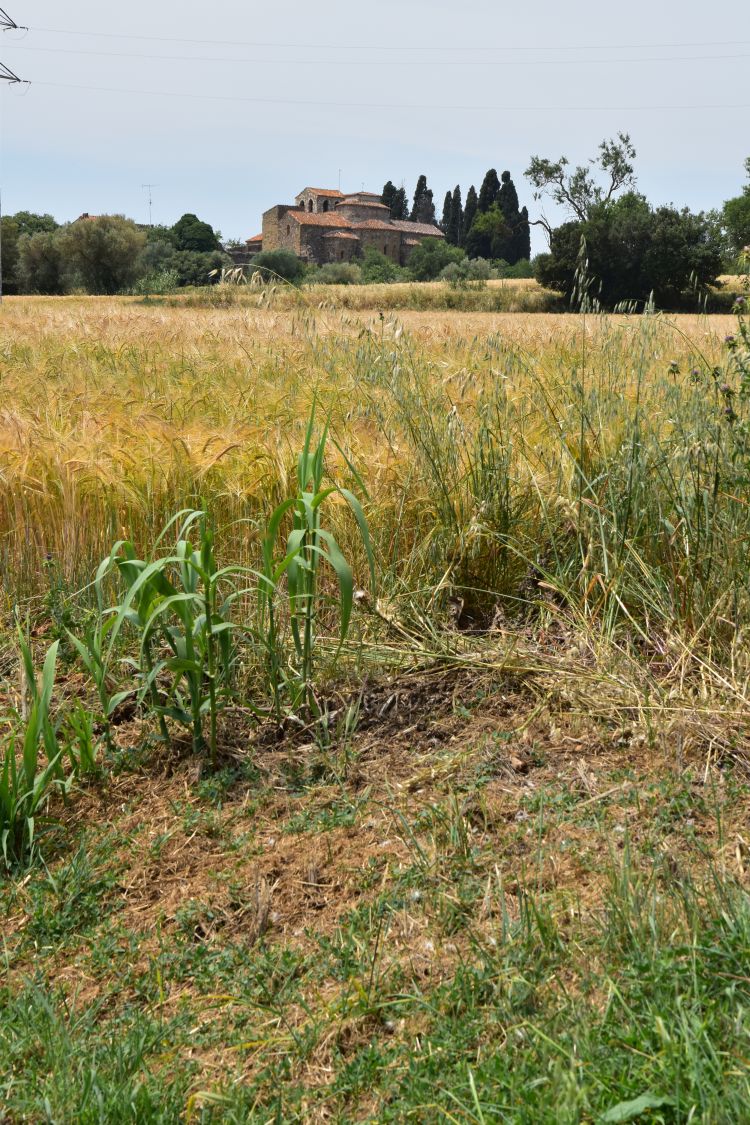
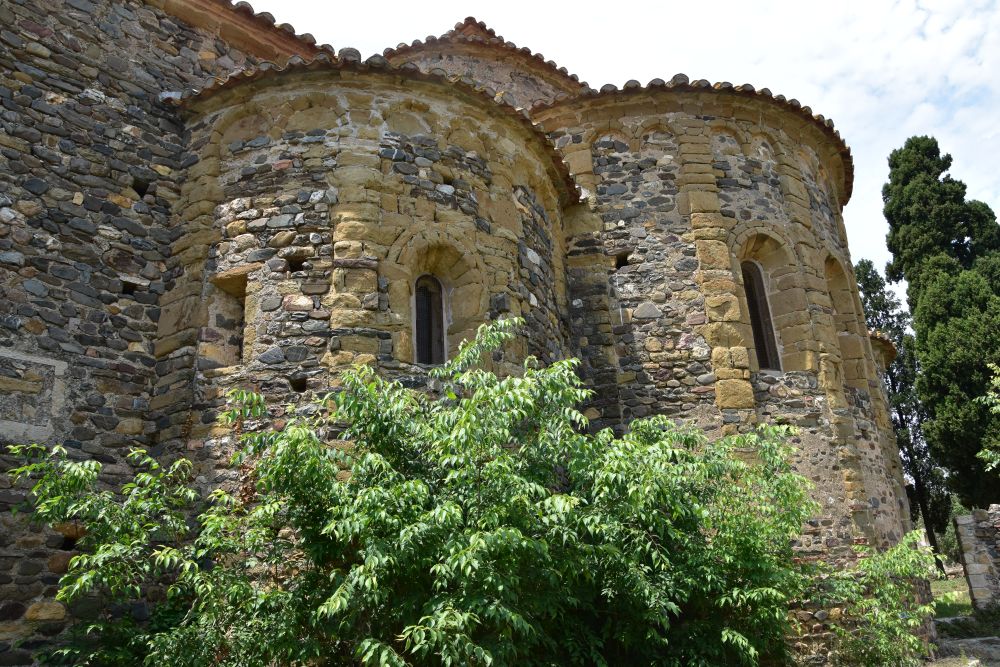
Our first target is Cruilles with the church Sant Miquel, located amidst fertile wheat fields.

It is a former Benedictine monastery from the 11th century built in Lombardic style.

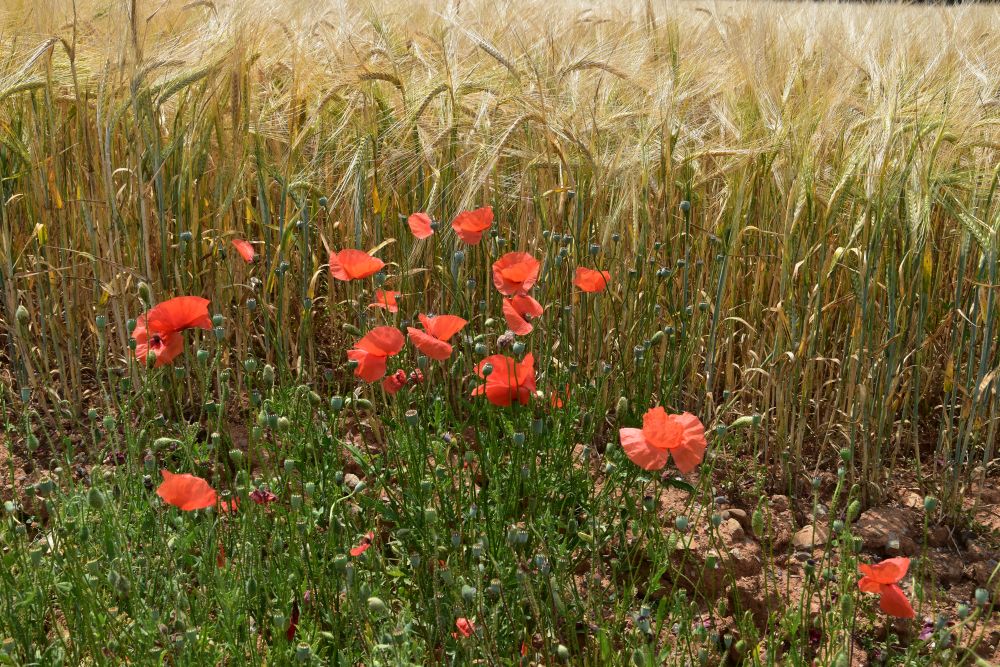
We continue our route through fields surrounded by poppies,…

… have lunch in La Bisbal de Empordà and continue to Peratallada, where we find another Romanesque church, Sant Esteve with this “wall” belfry, where the bells hang side by side.

Sant Esteve is late Romanesque from the 13th century.

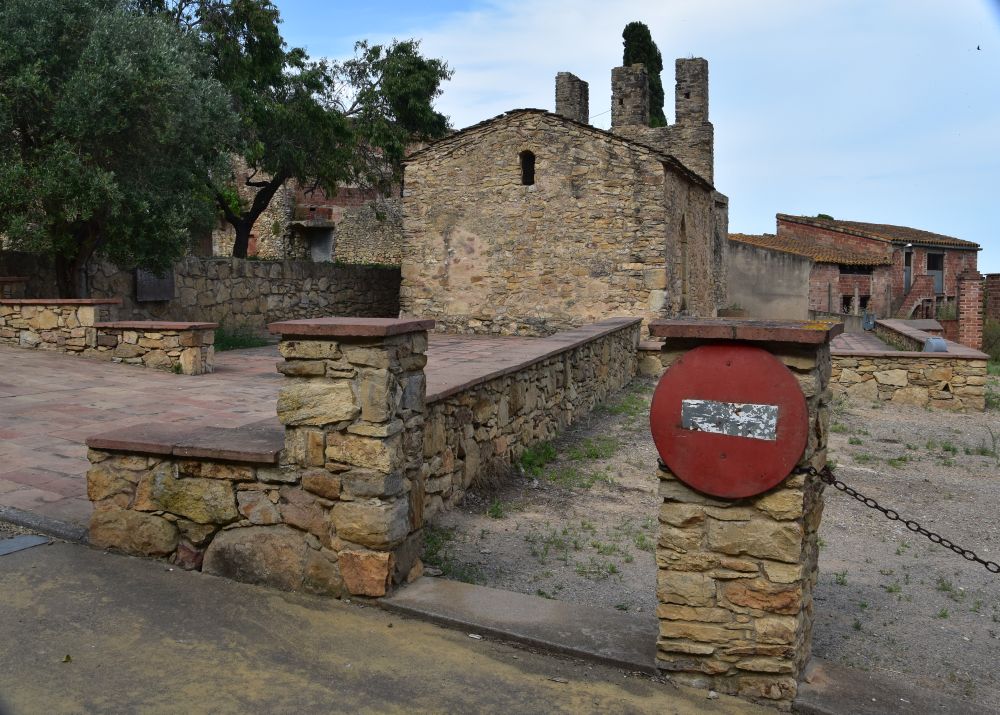
But… what we really look for is the Preromanesque church Sant Julià de Boada. Finding it requires quite some persistence. There is the villlage called Sant Julià de Boada, and there are no signs directing us to that church. We oscillate around the village, continue to Sant Feliú de Boada, turn back to the village Sant Julià de Boada – it MUST be here! The church has got the same name: Sant Julià de Boada ! We enter something that looks like a dead-end street, are about to take another turn… and – unexpectedly – I see this.

“Could it be that this is, what we are looking for?” I ask. We both hop out of our car to explore this unimposing church.

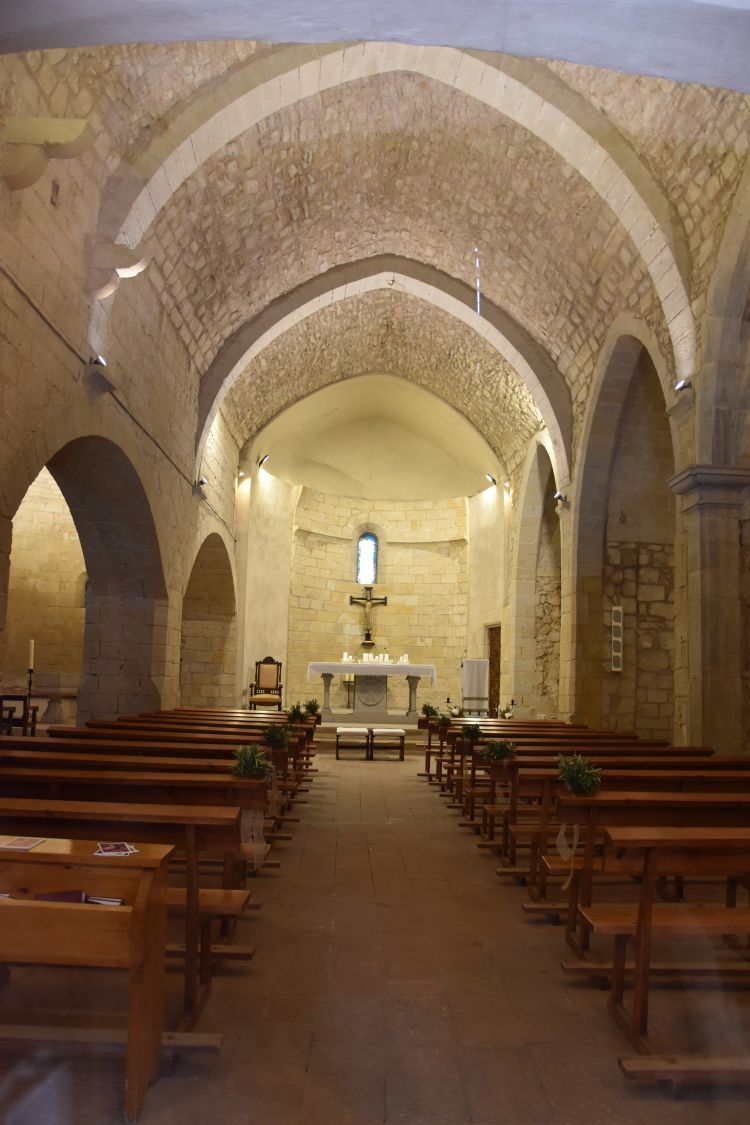
The entry door shows the form of a horseshoe pointing to the Visigoths. Inside there are more arches in horseshoe shape that Ursula carefully photographs across the mirroring glass door.

We are happy – finally we found this Preromanesque gem. And then, what a mishap, then we lose part of “our” paper “Routen der Romanik in Katalonien” published by the Generalitat de Catalunya that we take so much care of. Some kilometers away, we discover the mishap – half of “our” paper is missing. We drive back to this small Visigothic church – and there we find the other half of “our” paper on the pavement. We are happy, as we plan to visit more Romanesque churches in Northern Catalonia – we have not seen all of them so far, and “our” paper of the Generalitat is a very useful guide.

Our next Romanesque church is Sant Esteve in Canapost.

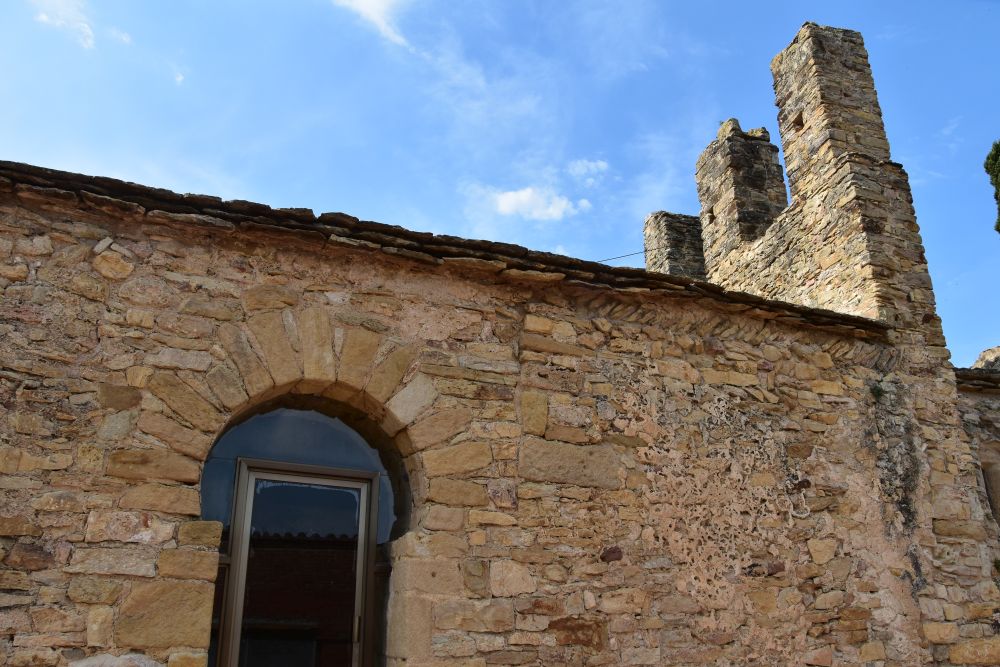
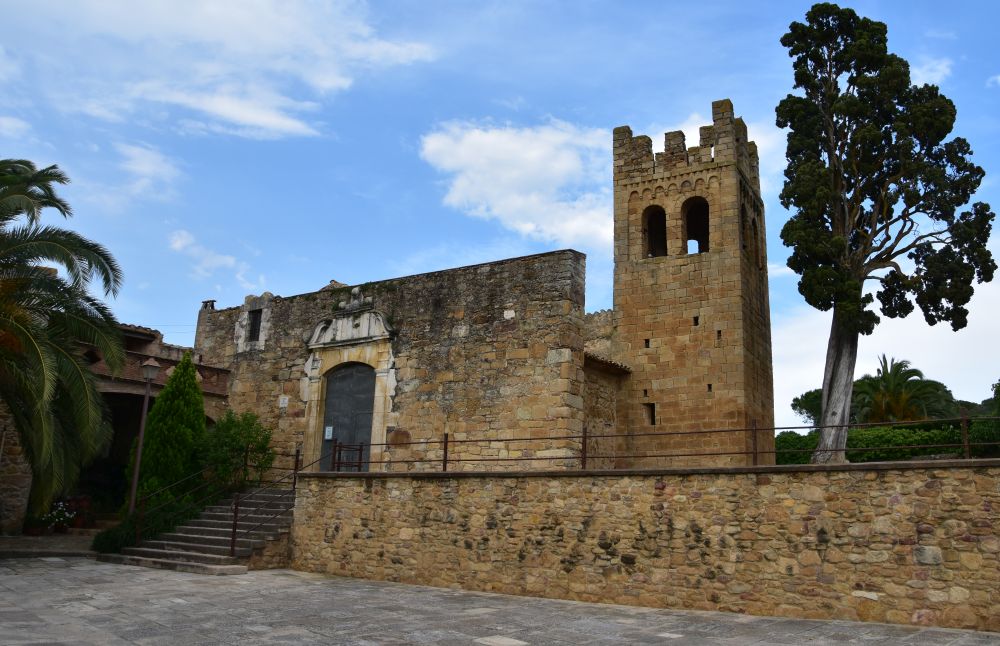
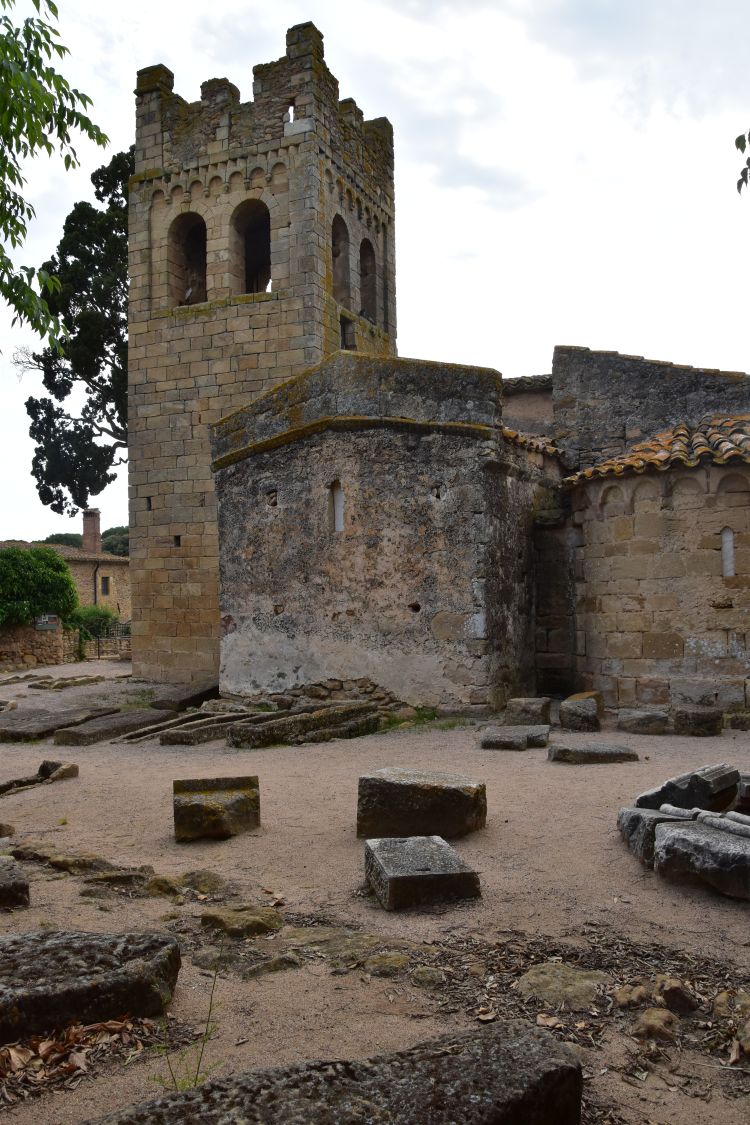
Behind the church we find the necropolis from medieval times (14/15th century). The church was built in the 9th/10th century (rectangular shape, Preromanesque) and extended in the 11th/12th century (Romanesque apsis and belfry of Lombardian style). The modest main entry (see above) is from the 18th century and remained incomplete.

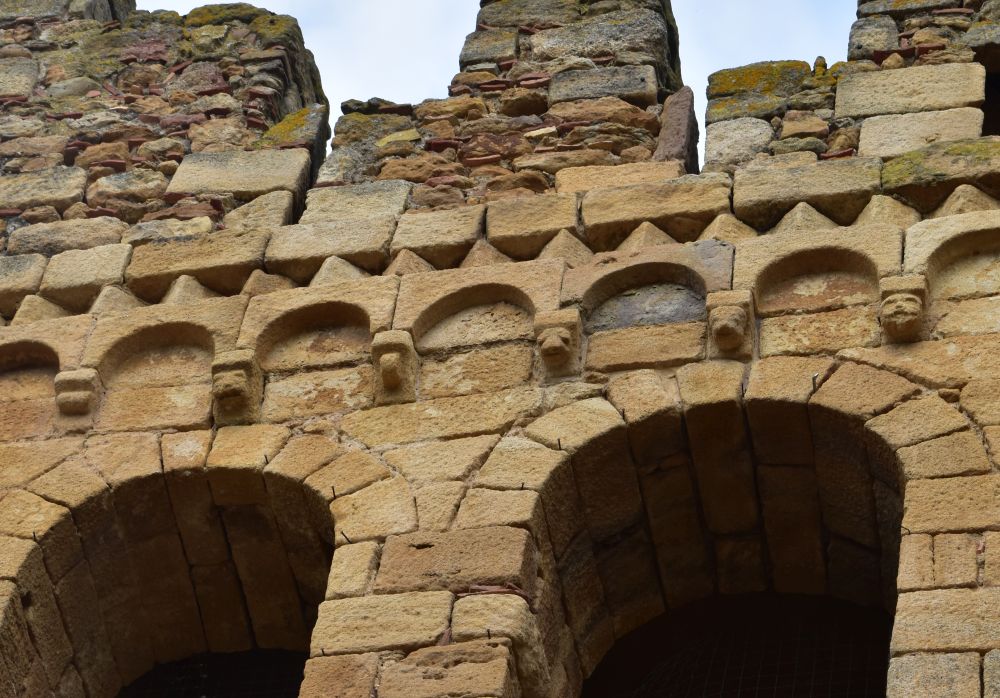
There are sculptured heads above the windows of the belfry.

.

Medieval small city Peratallada

Between visiting the pretty churches, we enjoy the medieval city of Peratallada that has kept its appearance from the 16th century. Peratallada may come from “pedra tailada” which means “carved stone”.

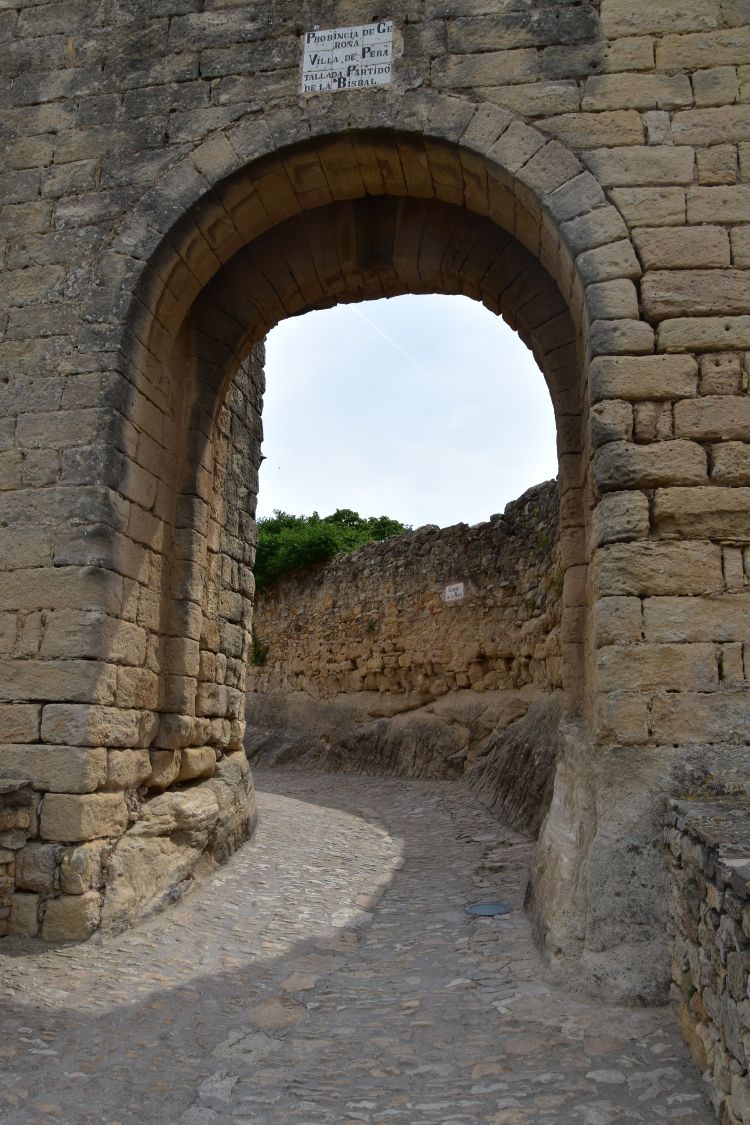
Across a deep ditch carved into the rock (7m deep), we enter the city through the Portal de la Virgen.

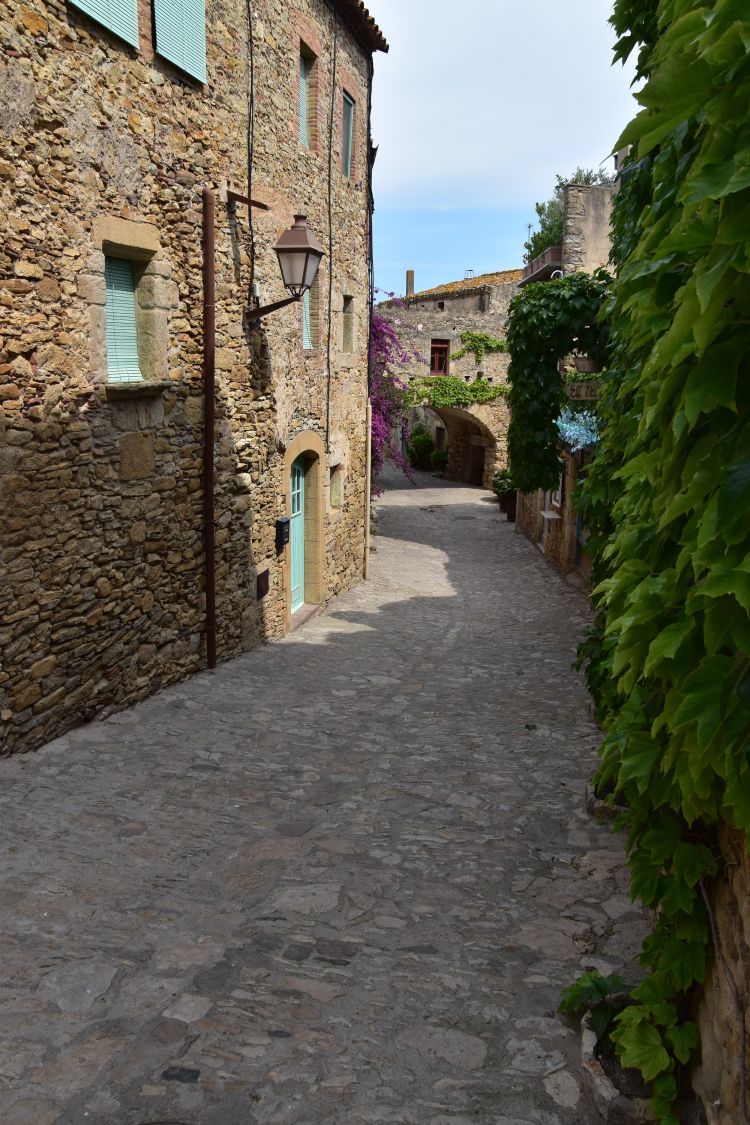
Narrow streets,…

… cosy restaurants,…

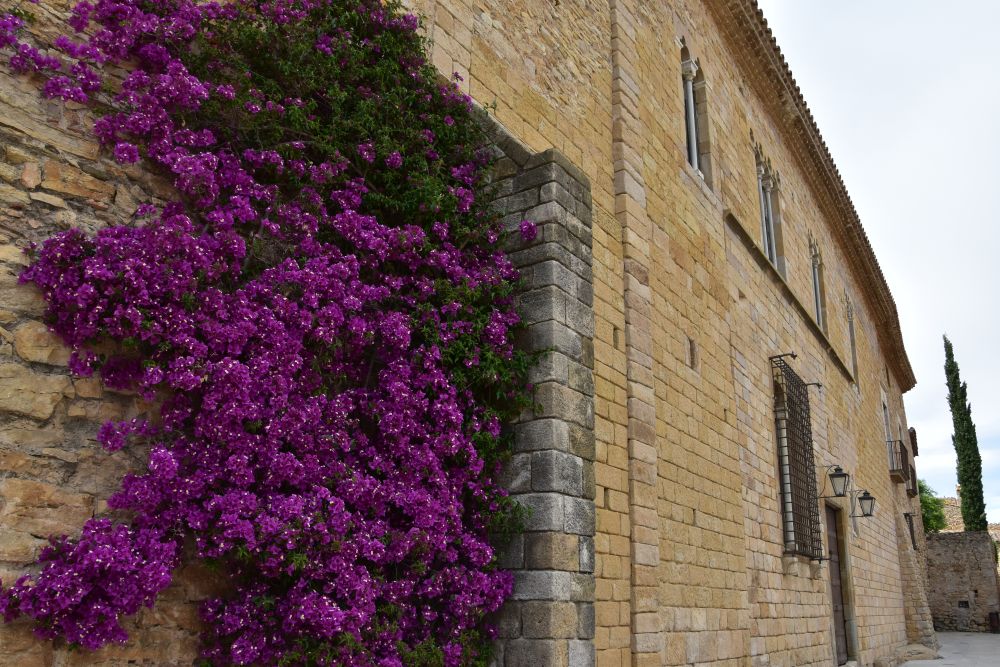
… this castle adorned with the Bougainvillea in full bloom…

… and there is more to see such as medieval towers, squares with vaults along narrow streets. Perhaps a little too many shops and too many restaurants. I am sure, in summer, this small town is busy with tourists that take a break from the beaches nearby.

.

Sant Martí de Empúries – beaches and medieval village with many restaurants

It is late afternoon. Enough sightseeing for today. We drive to Sant Martí de Empúrias, where we have booked a room in the Hotel Riomar, north of Sant Martí. The Riomar may have been built by the friendly elderly couple that still runs it today. The pool and the garden DO welcome children, as the inflated swan illustrates.

The garden has been planted with much care. There is even a tennis court and there are ping pong tables. But they are at the brink of decay.

The rooms – and that is important to us – have been nicely refurbished and, from our room, we have a nice view of the sea .

We have a delicious dinner in the hotel Riomar. Everything cooked a la plancha (barbecued), but never before have I had such juicy and tasty grilled vegetables and fish.

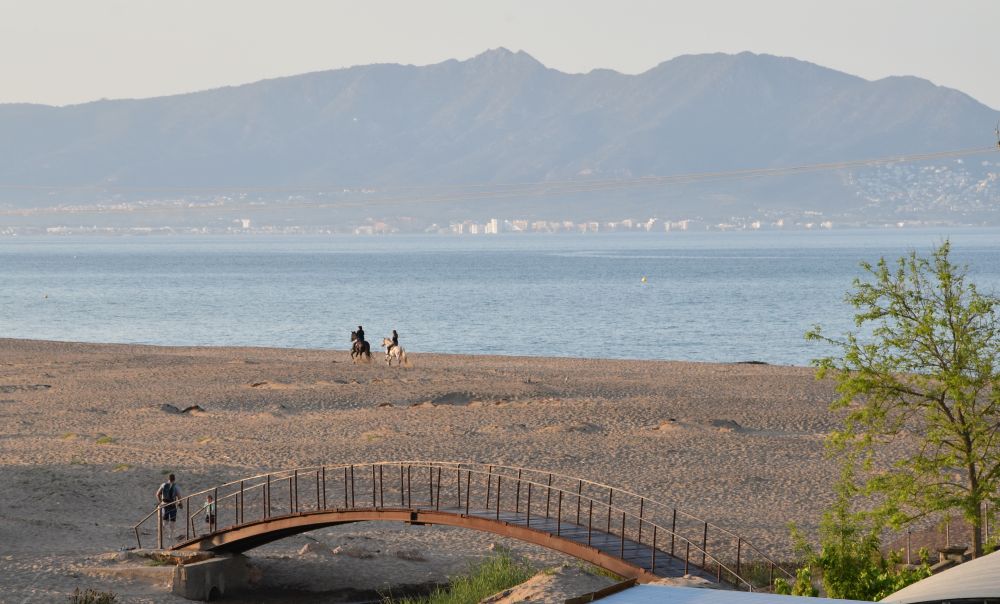
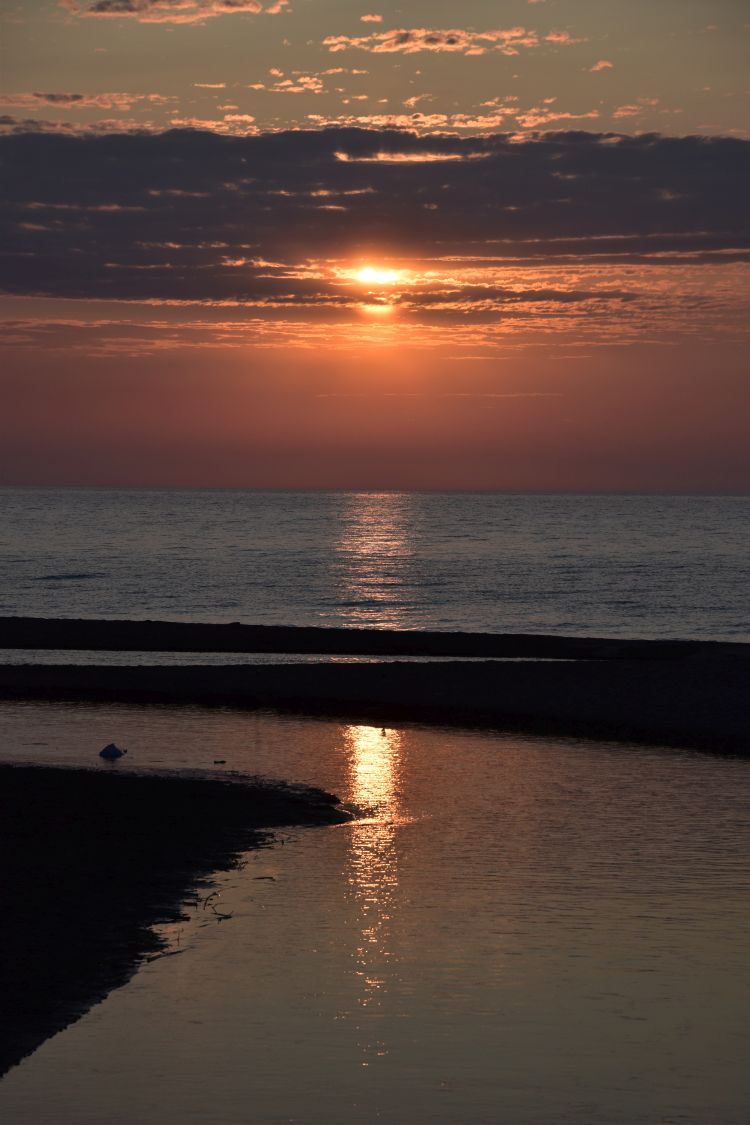
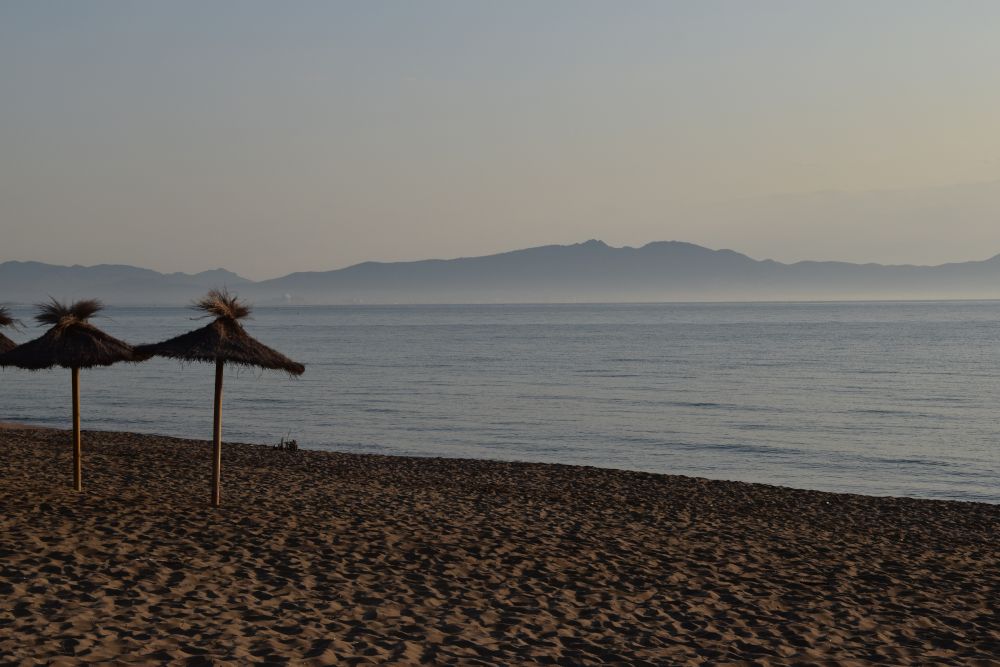
We are so close to the beach that I feel like an early morning walk, when the rising sun starts to hide behind some clouds.

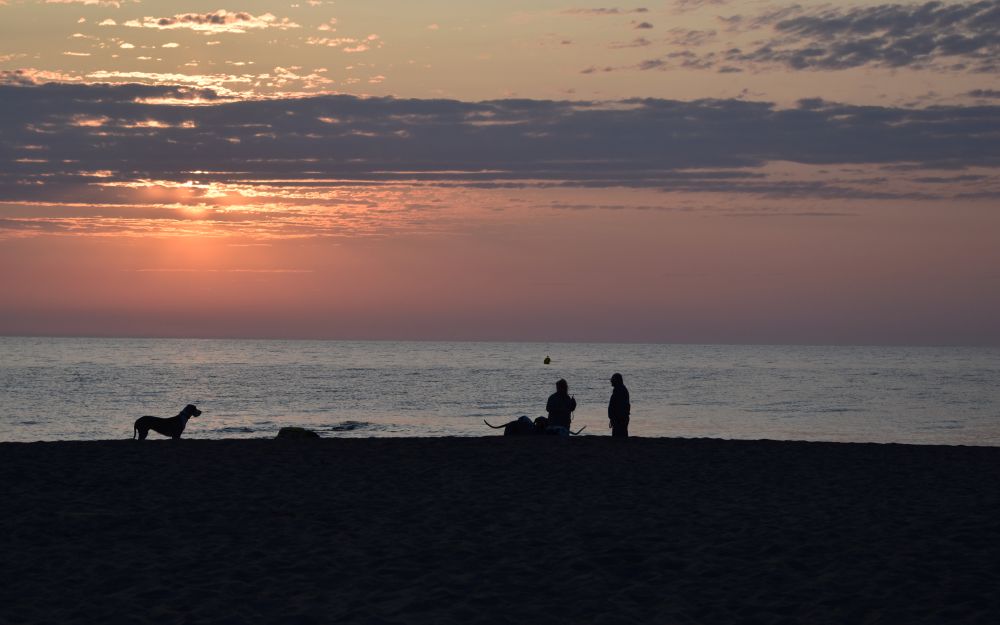
I am not alone. People walk their dogs along the beach.

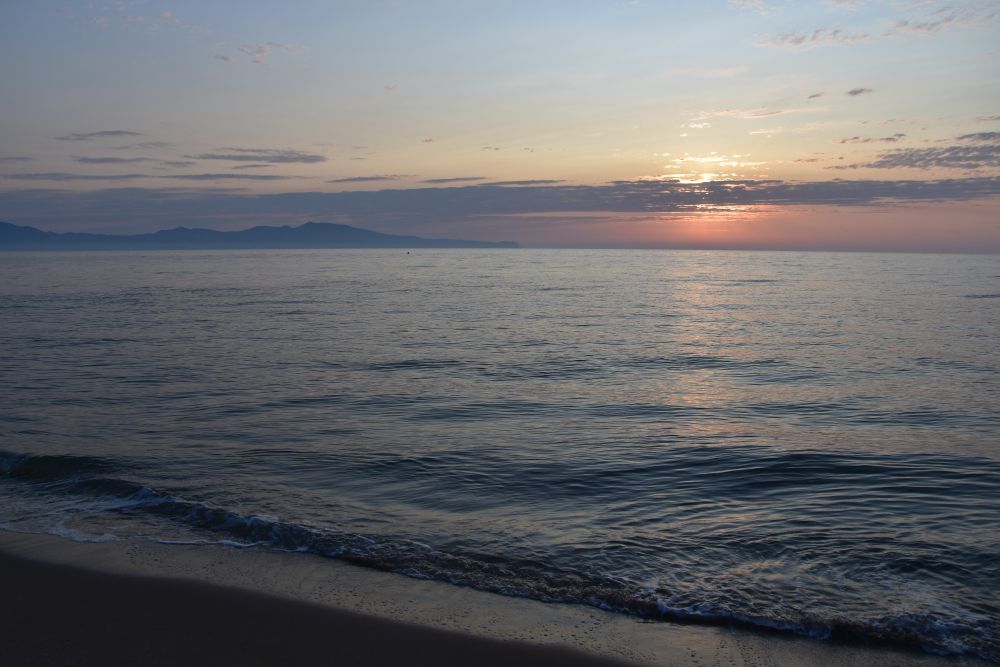
I enjoy the symphony in blue and purple…

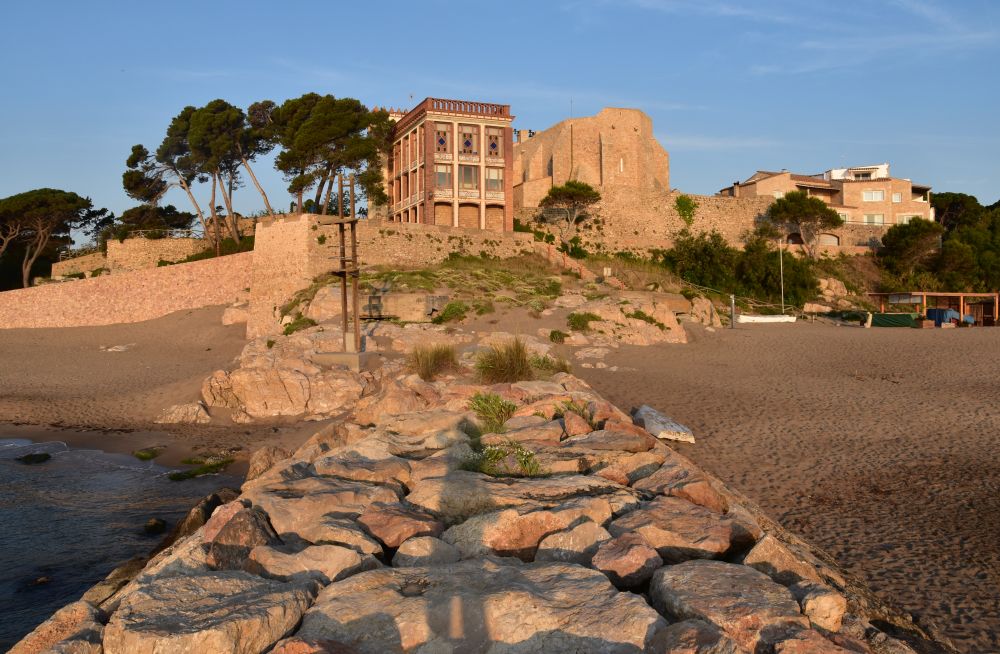
… and reach the small city of Sant Martí, located on a rock above the beach. This was an island that became the first Greek trading settlement in 600 BC. Later the Greek transferred their city to the main land which is now Ampurias. In the mean time nature has connected the island of Sant Martí, with the main land…

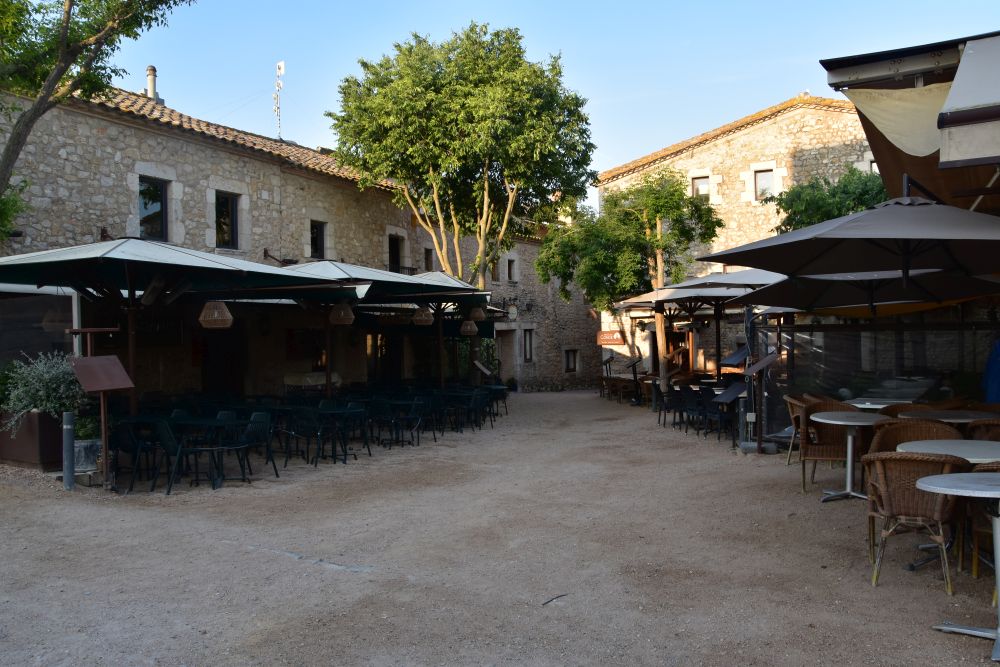
… and the medieval city of Sant Martí has replaced the first settlement of the Greeks. The Plaza Mayor is full of restaurants.

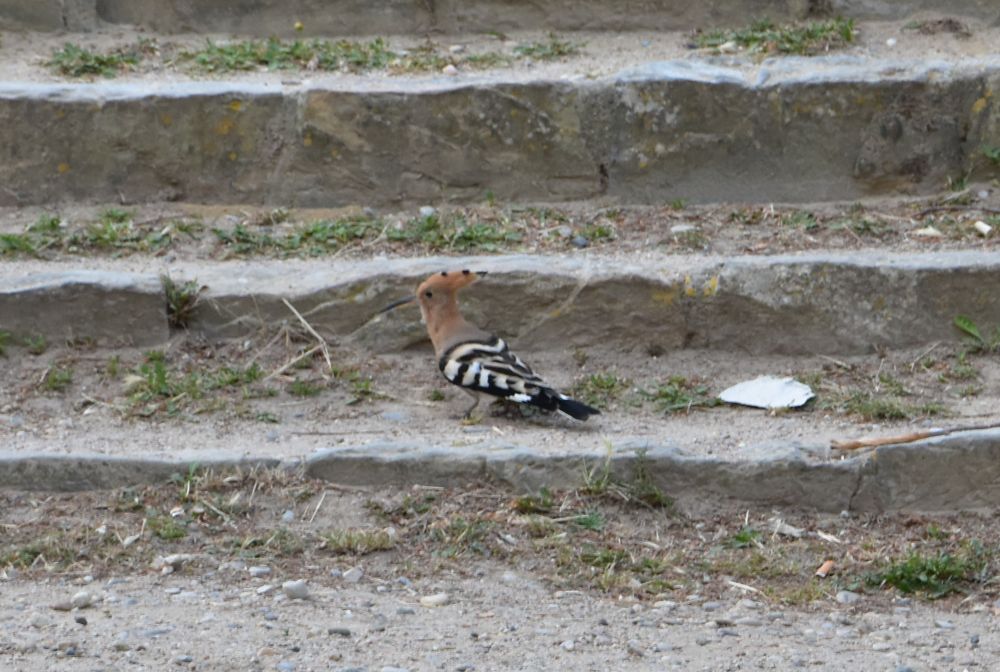
Not far from here is a famous bird reserve. This hoopoe (Wiedehopf) is currently visiting the small town. I have never seen a hoopoe before, what a beautiful bird!

I return to the beach, …

… and to the hotel Riomar. It serves breakfast in the garden – what a nice atmosphere.

.

Ampurias – Greek and Roman settlement

“Our” Allemann (who wrote the DuMont Kunstführer) has visited Ampurias, this Greek-Roman settlement, in 1980 (Fritz René Allemann and Xenia v. Bahder, “Katalonien und Andorra”, DuMont Buchverlag Köln 1980). He tells us that not much is left and that it is difficult to imagine the former grandeur of the Greek and Roman cities. In the meantime, the Catalans have installed a video center that tells the history and they have placed explanatory panels all over that explain what may have been here before (often though, they are also not a hundert percent sure).

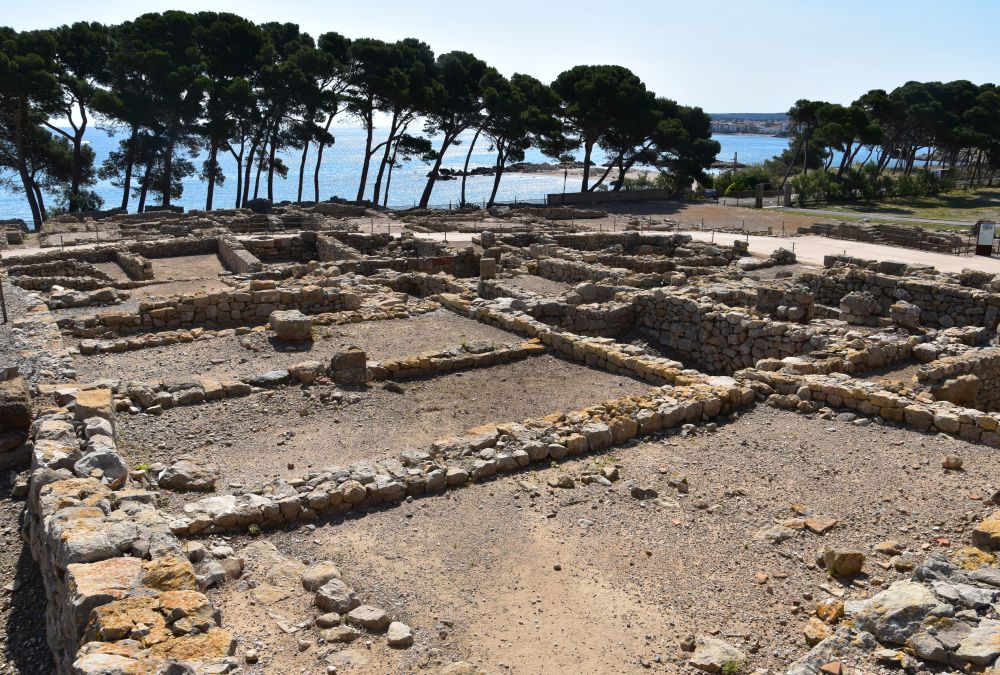
The Greeks founded Emporion on the former island of Sant Martí (they called it “Palaiapolis”), and later they founded Neapolis on the main land. From Neapolis, foundations are left, with this magnificent view of the Mediterranean.

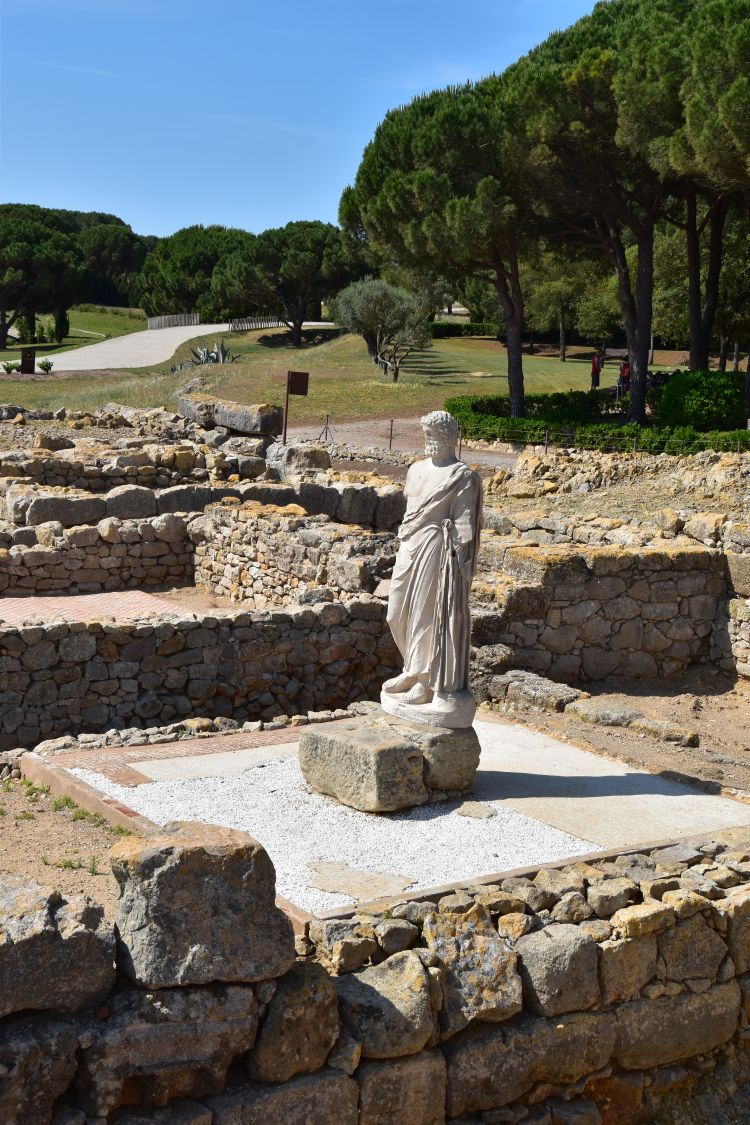
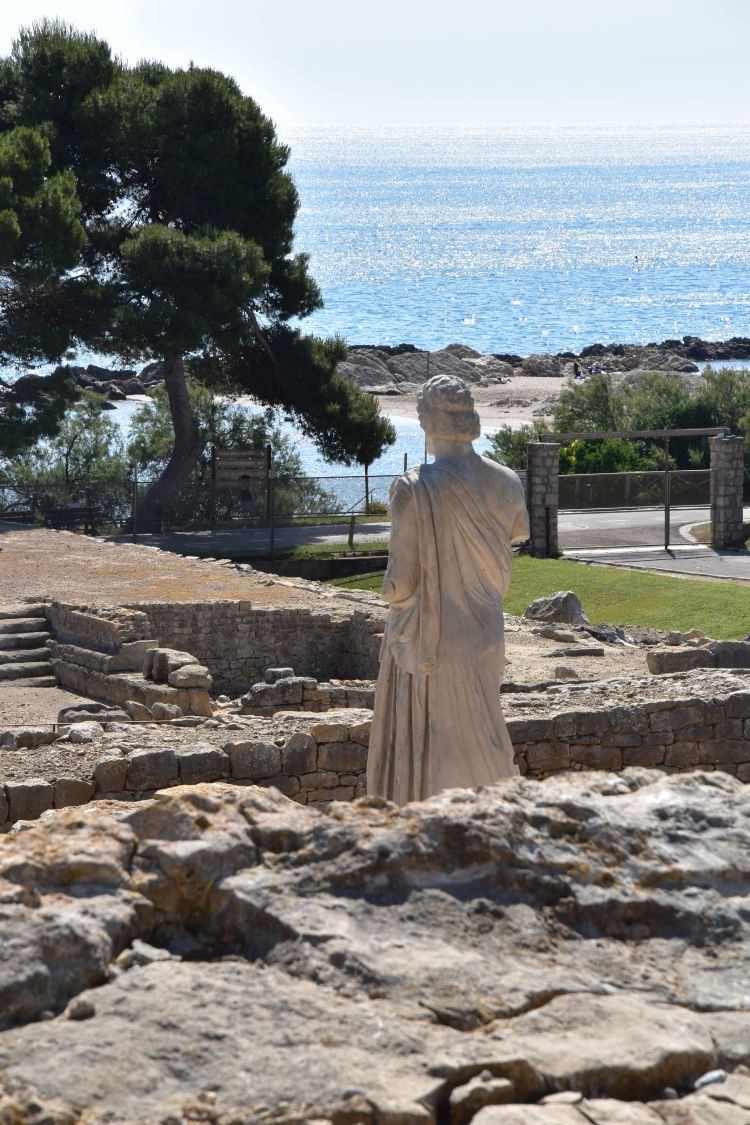
Famous is the statue of Asklepios, the god of medicine. The statue is a copy, the original is in the archaeological museum of Barcelona.

Does Asklepios not have a magnificent view of the sea?

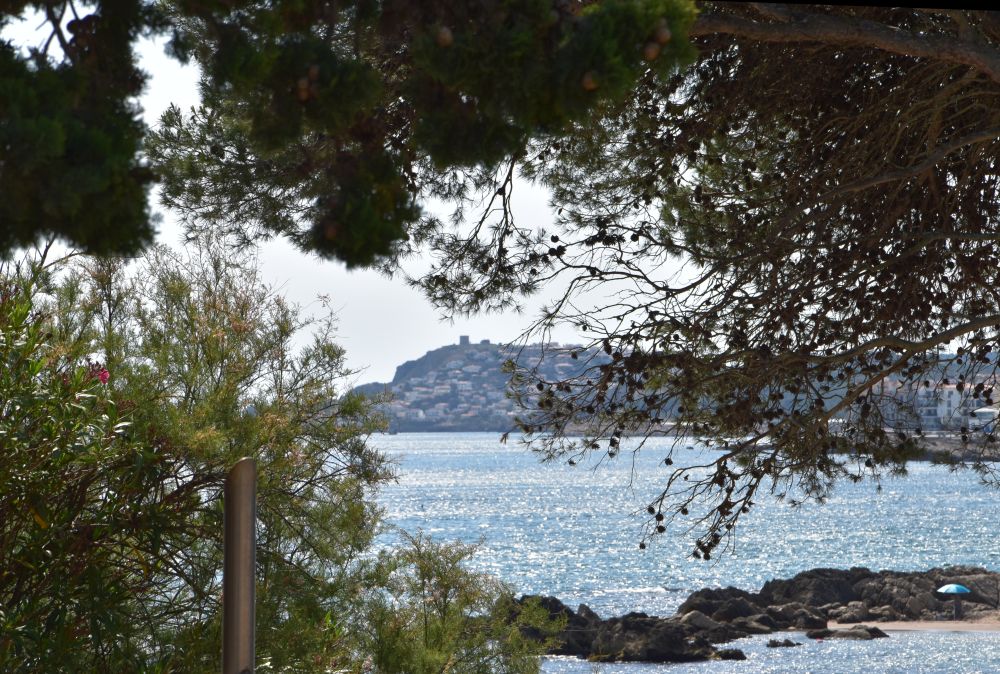
What might he think about the cities that arose around the bay and grew with the tourists. This is the view of l’Escala, taken not far away from Asklepios.

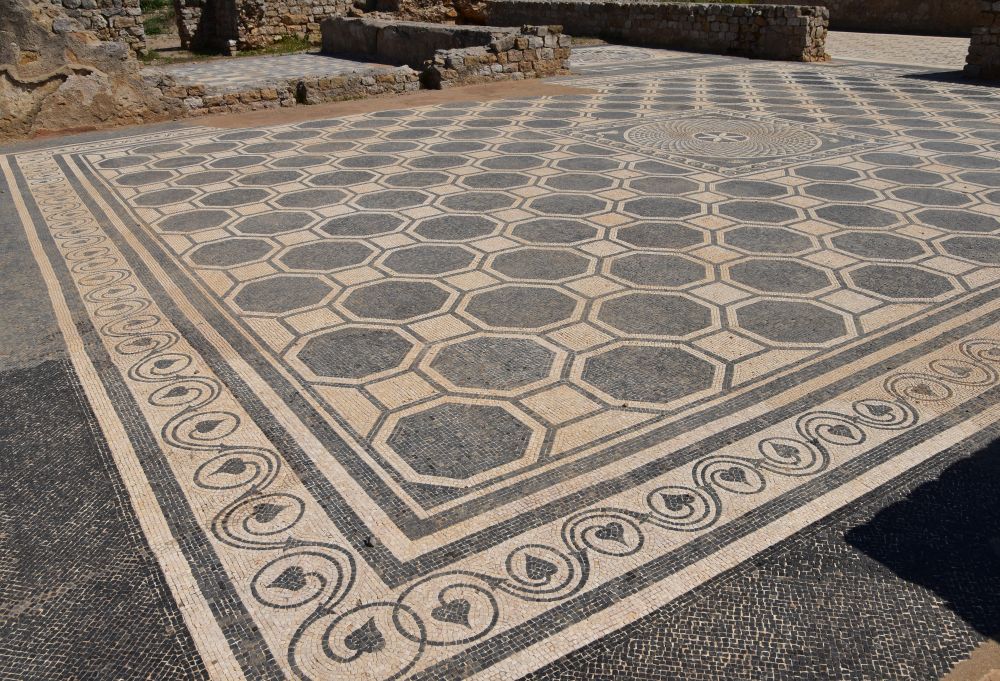
It was in Emporion, where Scipio landed in 218 BC to attack Hannibal from behind. In 195 BC, Cato started to subdue the Iberian tribes from here. And later, Caesar had the Roman city Ampuriae built above the former Greek settlement of Emporion. Retired soldiers lived here. We stroll along the remains of the Cardo and the Decumanus between the mosaics that decorated the Roman villas.

Ursula dreams of being a Roman soldier in retirement that was so lucky to be sent here with this gorgeous view of the sea.

We now say good-bye and drive north, to France. In France, we plan to stay one more night in Valence and visit another Romanesque church, Léoncel.


Hospitalet de l’Infant – larger excursions

While spending two quiet weeks in Hospitalet de l’Infant in May 2019, we go for two larger excursions, first to the Ebro Delta, then to the Roman villa Centcelles returning via Reus.

.

The Ebro Delta – again worth a visit

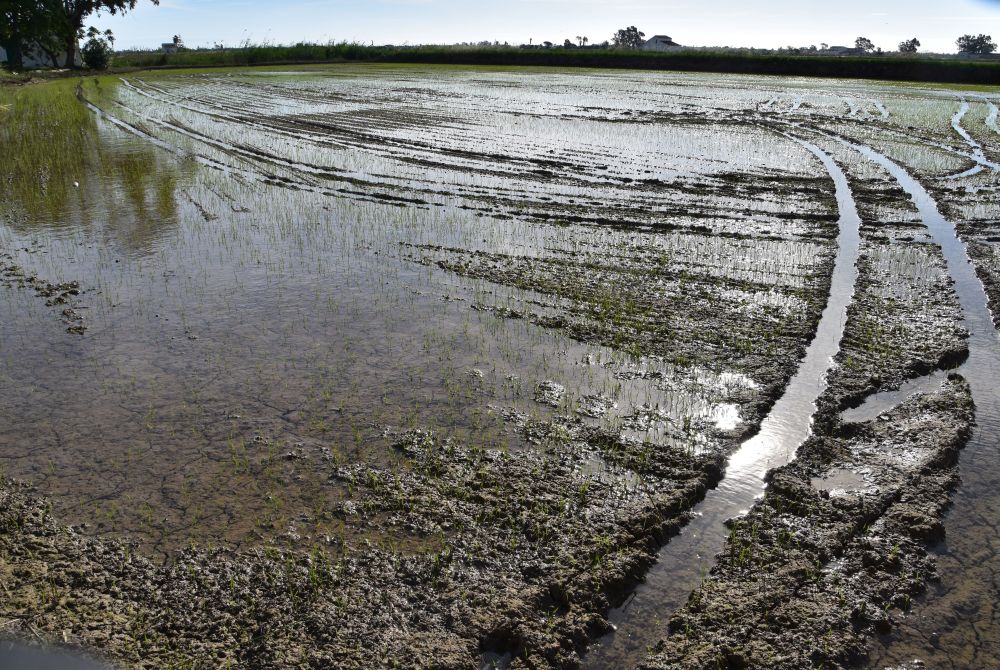
We have visited the Ebrodelta again and again, also now we drive there early in the morning to capture  the morning sun. The rice has been seeded and has started to grow.

Ursula tells me, what she has learnt from a TV show (Arte): The ampullariidae or apple snails (Apfelschnecke in German) eat rice offsprings. In the last seven years, their population has grown strongly in the water of the irrigated rice fields. The damage was such that the farmers had to seed the rice once more. As a consequence, the farmers started to seed their rice in less or no water to make it less comfortable for the snails. In addition the glossy ibis (plegadis falcinellus) love to eat the snails and their population also grew which is help from nature to fight the snails. This is what we understood from the TV show.

With snails and Ibis in mind, we play with the light in the rice fields…

… and in the ponds of the delta.

Then we lose our orientation in this flat land with one rice field after the next and a few ponds around, end up near Ell Muntells and find some flamingos in the ponds nearby.

We have lunch in Amettla and then return to our balcony overlooking the Mediterranean in the sun.

.

Centcelles – astounding Roman mosaics

Tarragona was the capital of Hispania Citerior in Roman times (since 200 BC). We have seen the city wall, the circus, the theatre, the cathedral and the archaeological museum in Tarragona some years ago. In the museum, we then noticed  the special exhibition of children’s drawings of Centcelles, the Roman villa that later was used as a Roman mausoleum. Centcelles is some kilometres northwest of Tarragona, in a small city called Constantí, and this is where we head to today.

What we see in the villa-mausoleum of Centcelles is from the 4th century AD. Perhaps Constans, the son of the Roman emperor Constantin the Great, was buried here (he died in 350 AD).

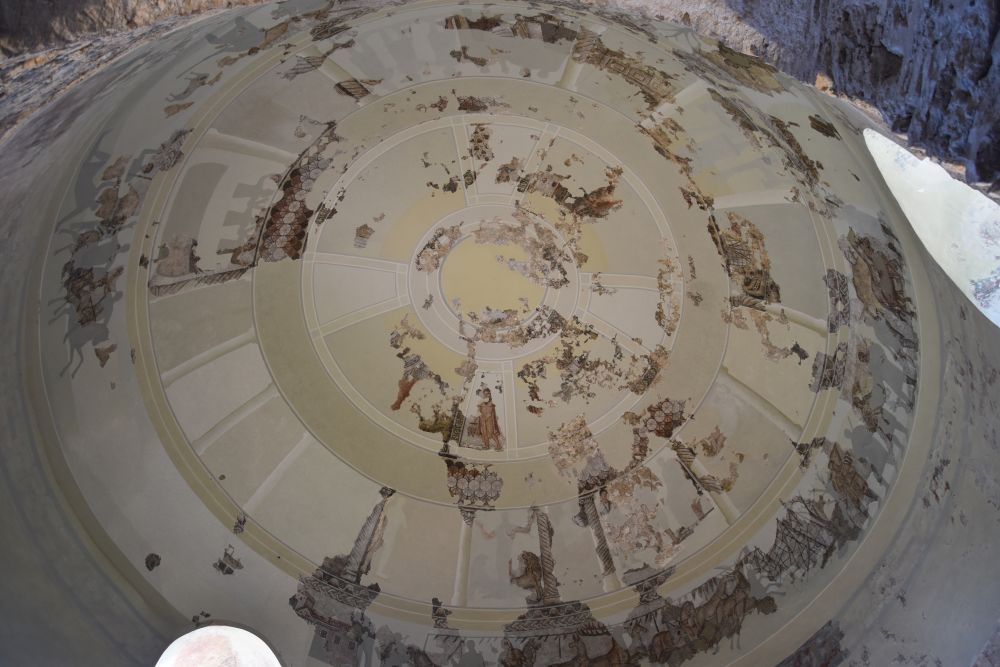
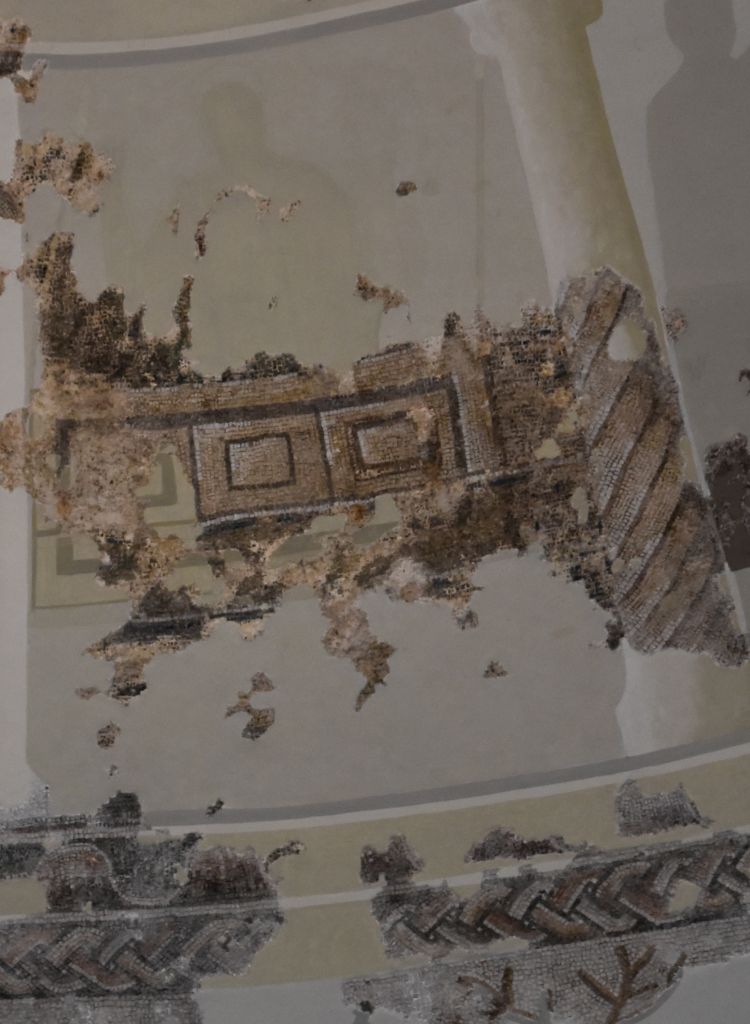
The main attraction is the hall with the cupola decorated with mosaics.

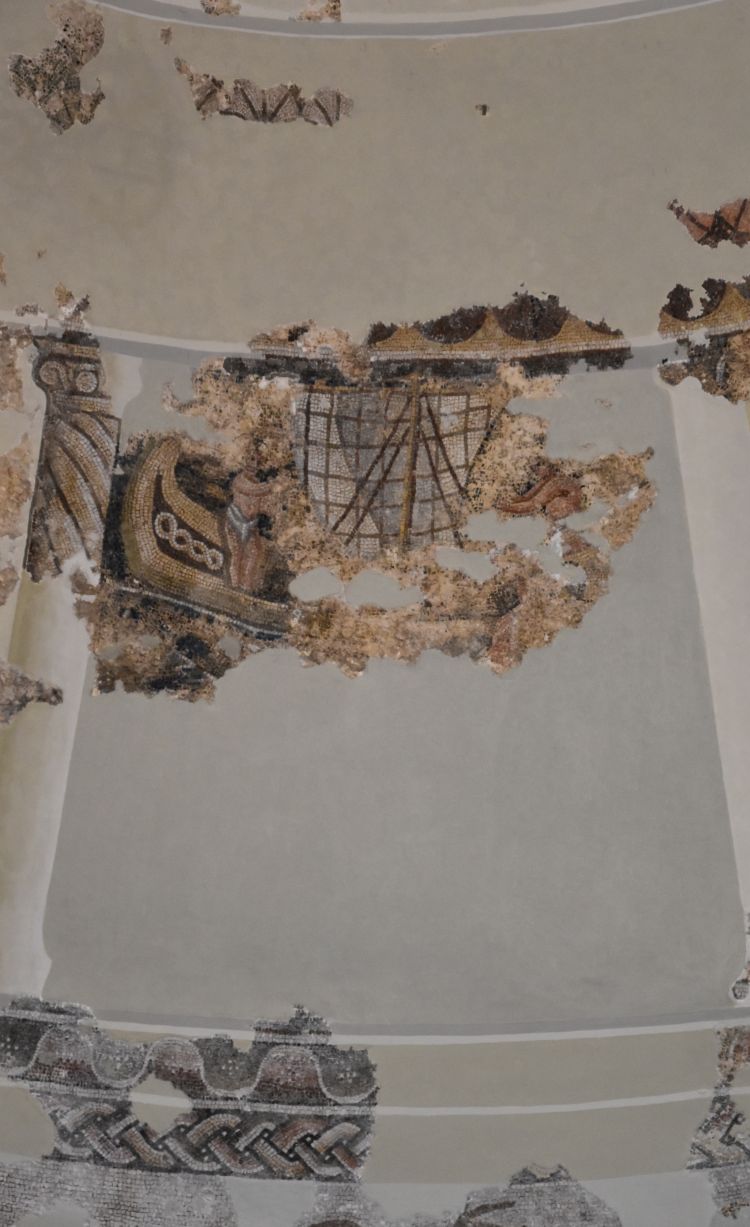
The mosaics are unique. They were redicscovered in the late 19th century and restored in the 1950s. The scenes of the mosaics have been completed by the renovators, but very discretely, just to help visitors identify the scenes. 

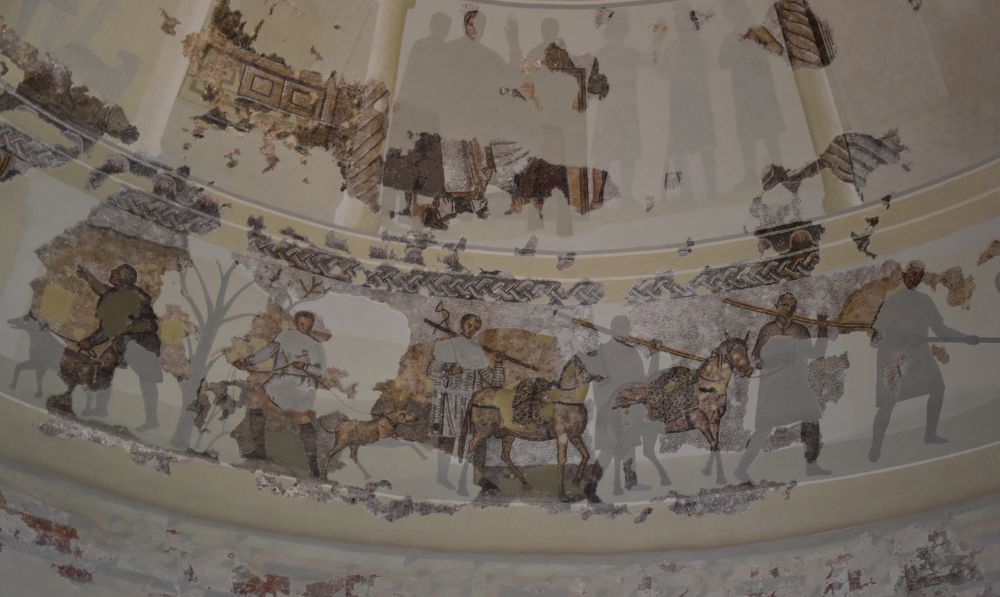
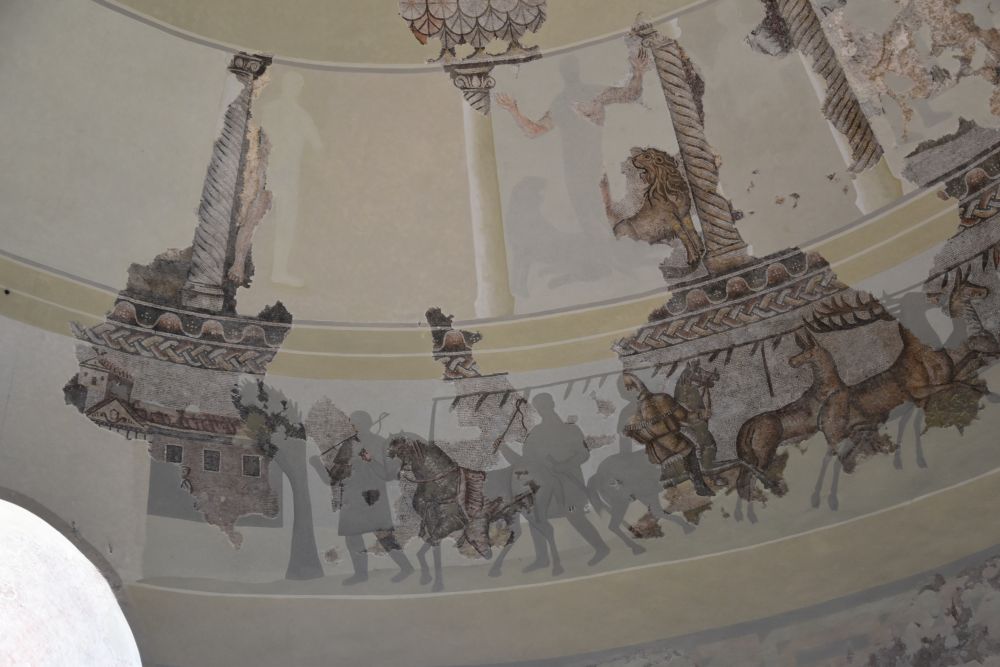
The lowest row of mosaics shows hunting scenes…

... near a villa that is supposed to be this villa of Centcelles.

The second level refers to the bible – a very early documentation of Christianism in the Roman Empire. The Arche Noah looks like a box.

Daniel stands in the lions ditch… the lion is full of life.

This mosaic shows the scene of Jonas being swallowed by the whale.

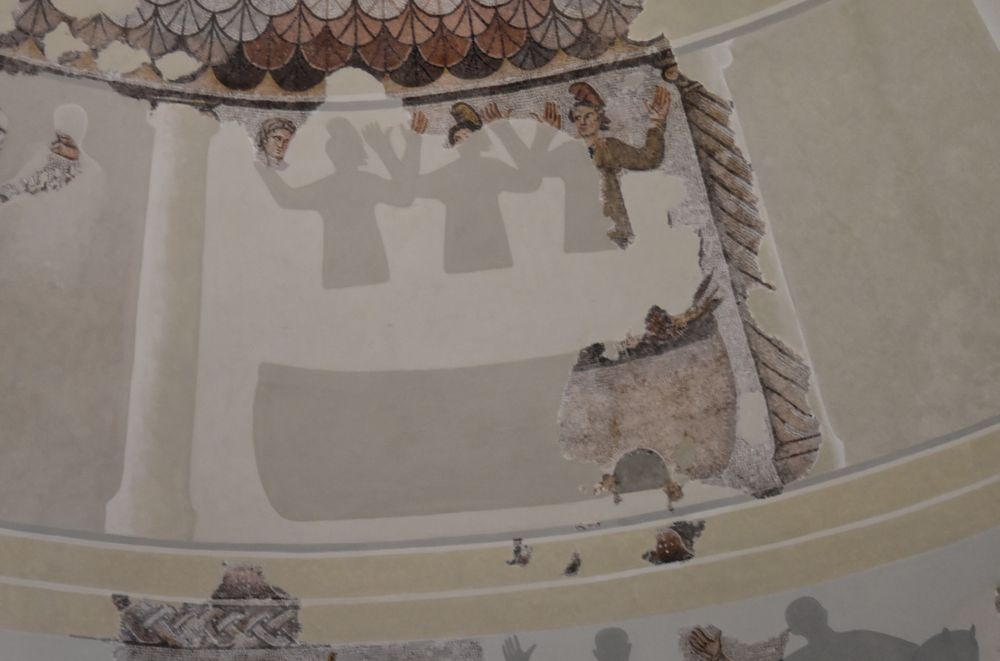
On another mosaic, three men can be distinguished. It is assumed that they are martyrs that denied to pray to gods and had to die in the fire (which can be seen in the right-hand lower corner).

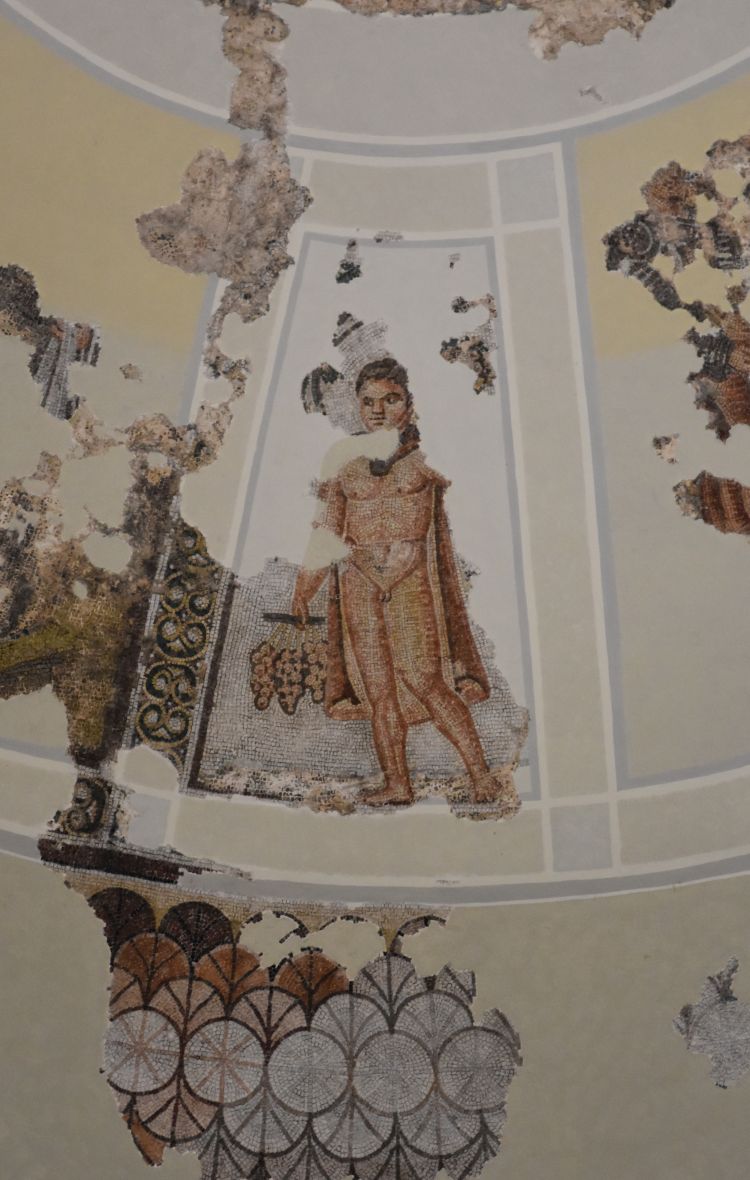
The third level is dedicated to the seasons. The best kept mosaic here is the boy that carries grapes-  obviosly representing “autumn”.

Next to the cupola hall with the mosaics are some amenities of the Roman villa such as this bath.

Source: Barbara Bongässer: Katalonien, Kunst, Landschaft, Kultur, Könemann, Köln 2000.

Returning from Centcelles we stop over in Reus.

.

Reus – a charming small town

We have visited Reus before to explore the route of modernism and the museum about Gaudí who was born here.

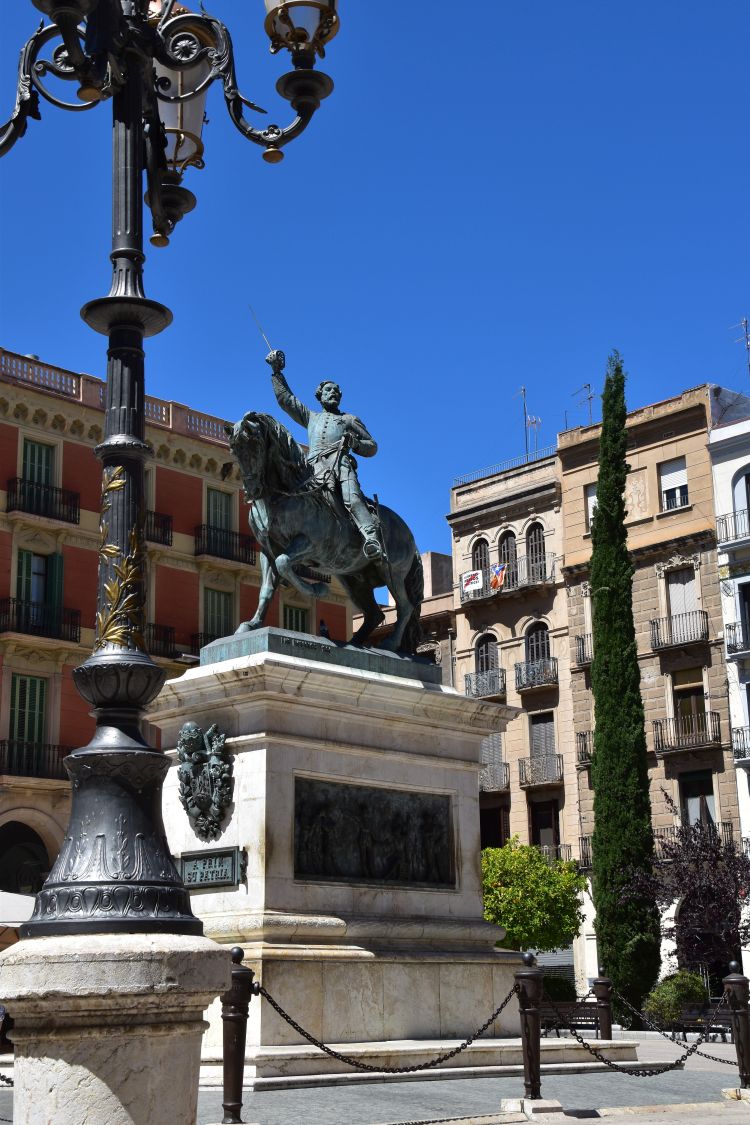
We now return for a short stroll through the center of this charming town starting with Plaça Prim, named after General Prim who was born here and became Prime Minister of Spain in the late 19th century.

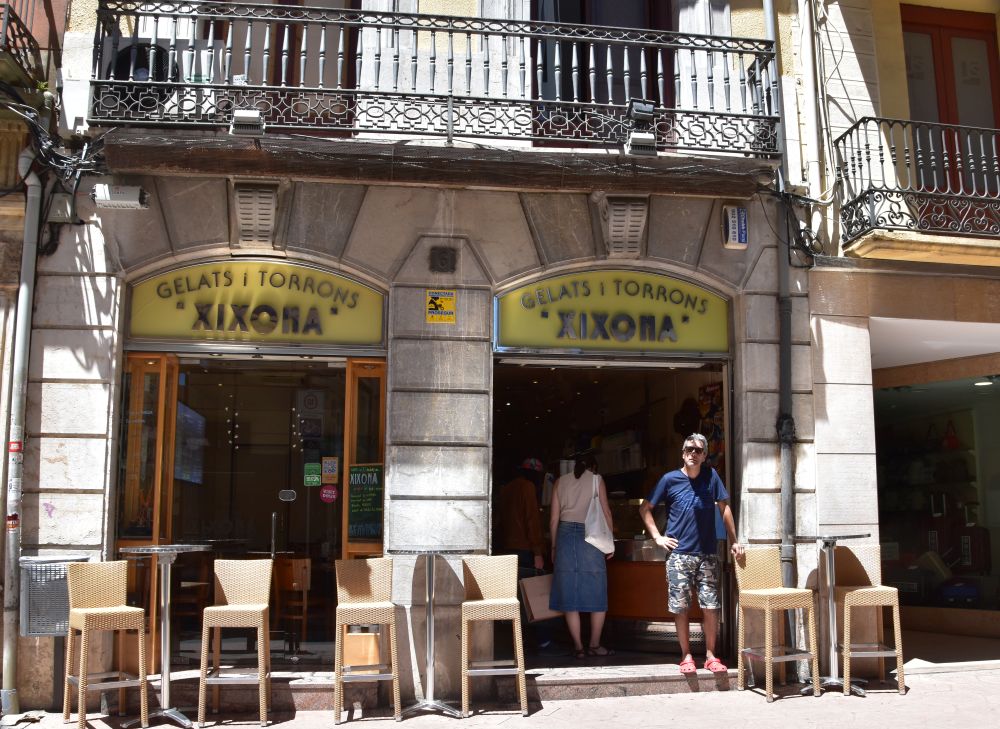
Just round the corner we find the Xixona that sells gelats i torrons. Their selection of ice creams is extraordinary. I have ice cream made from fresh goat cheese (reminding me of the Catalan dessert mel i mato) and Ursula has lemon ice cream with little nibbles of lemon zest.

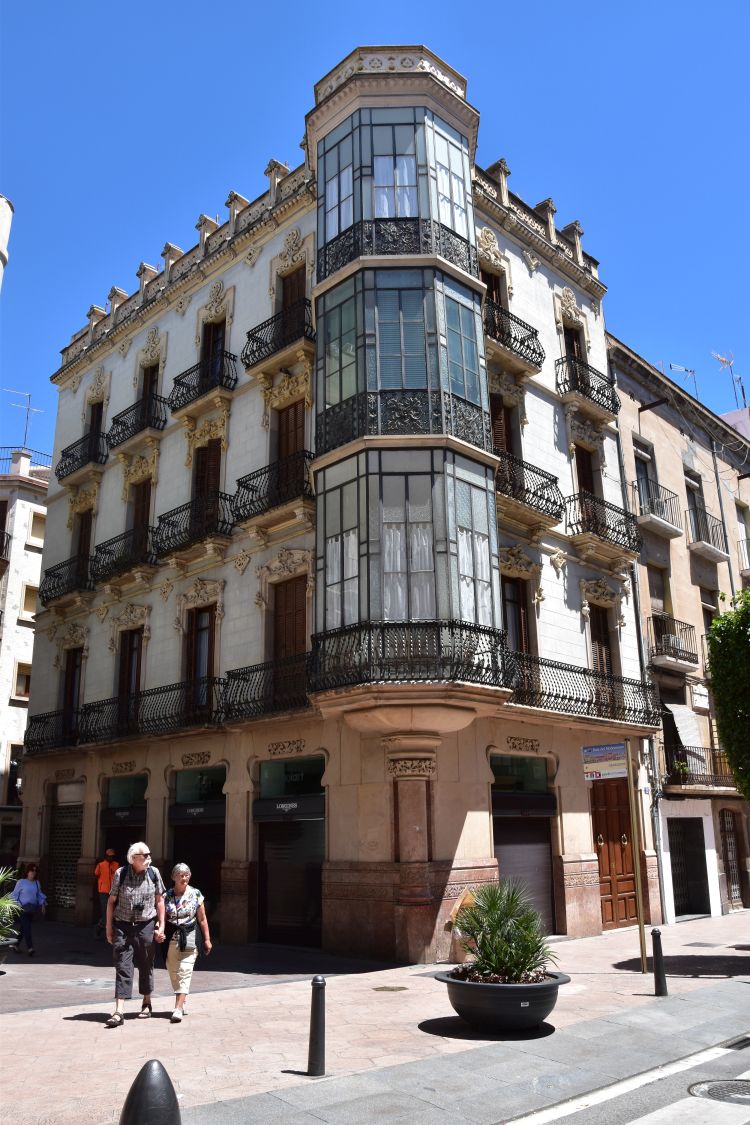
We stroll through the pedestrian area with the art nouveau buildings…

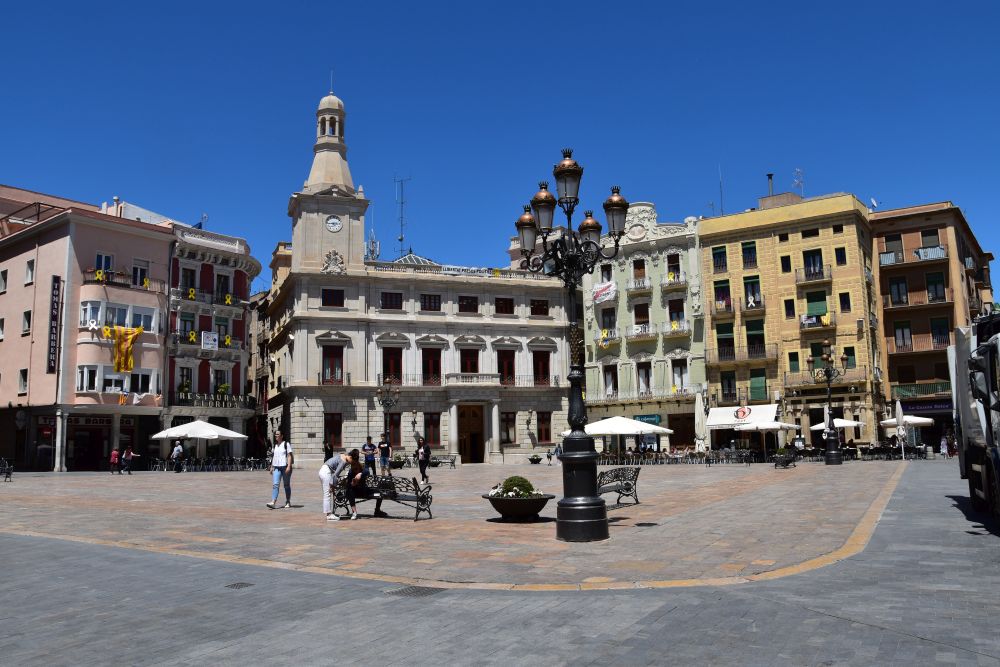
… cross the Plaça Mercadal with the townhall and the green modernist Casa Pinyol…,

… pass by the Casa Rull, another art nouveau building from 1901…

… and return to our balcony with the view of the Mediterranean.

Yes, Reus was again worth the detour.


In Hospitalet de l’Infant – relaxing

It is two quiet weeks that we spend in Hospitalet de l’Infant, end of May 2019, after our grand tour across northern Spain.

.

Enjoying beach life – reading, walking…

There are various beaches in and around Hospitalet. In May they are still pretty quiet.

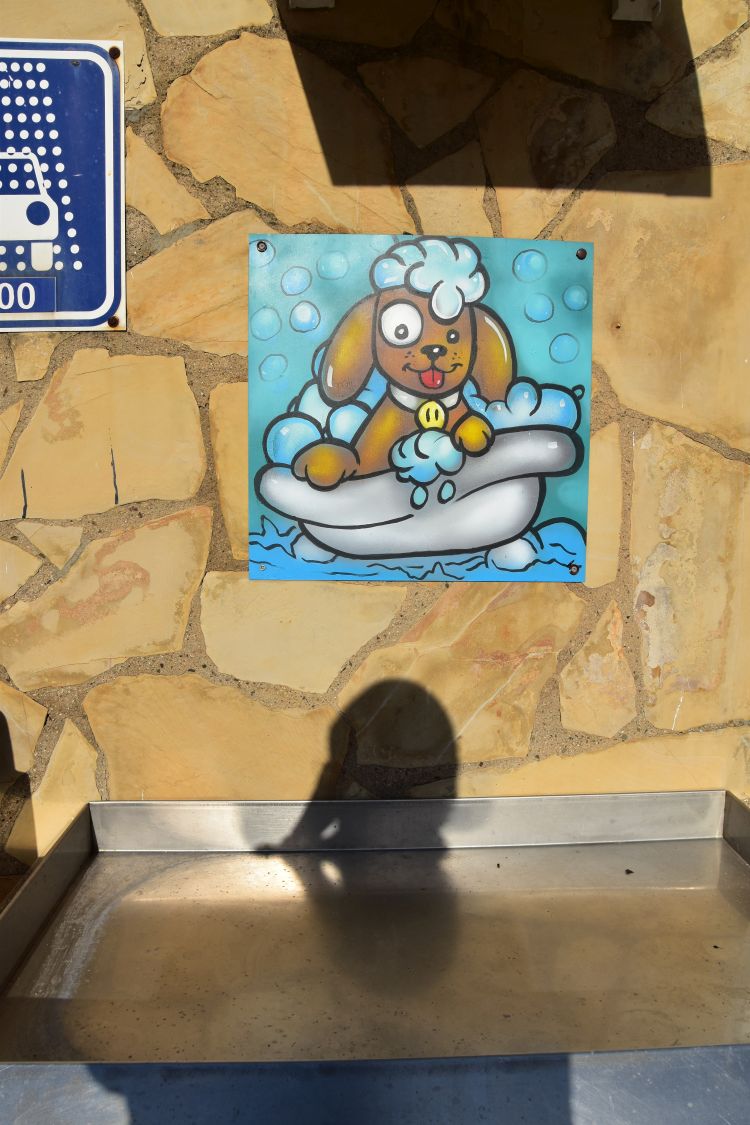
Dogs may need washing after a day on the beach.

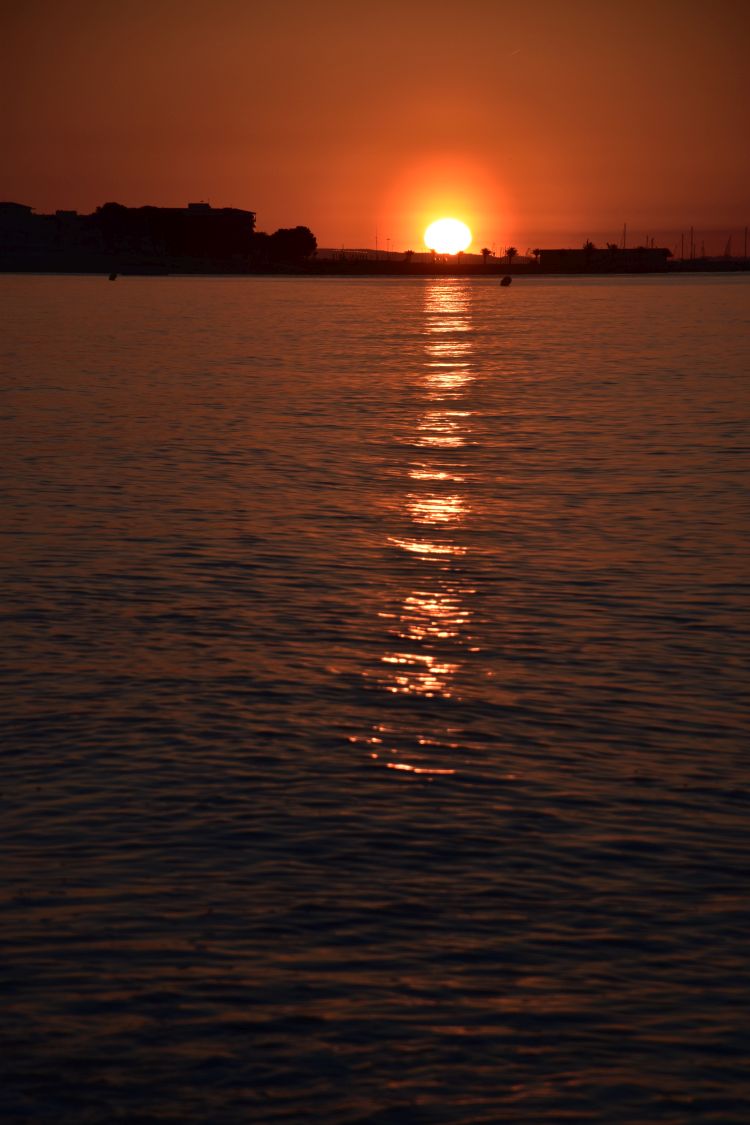
The sun rises early behind the port of Hospitalet,…

… soon makes long shades…

… and then warms our balcony, where we stay during the day, sunbathing, swimming…

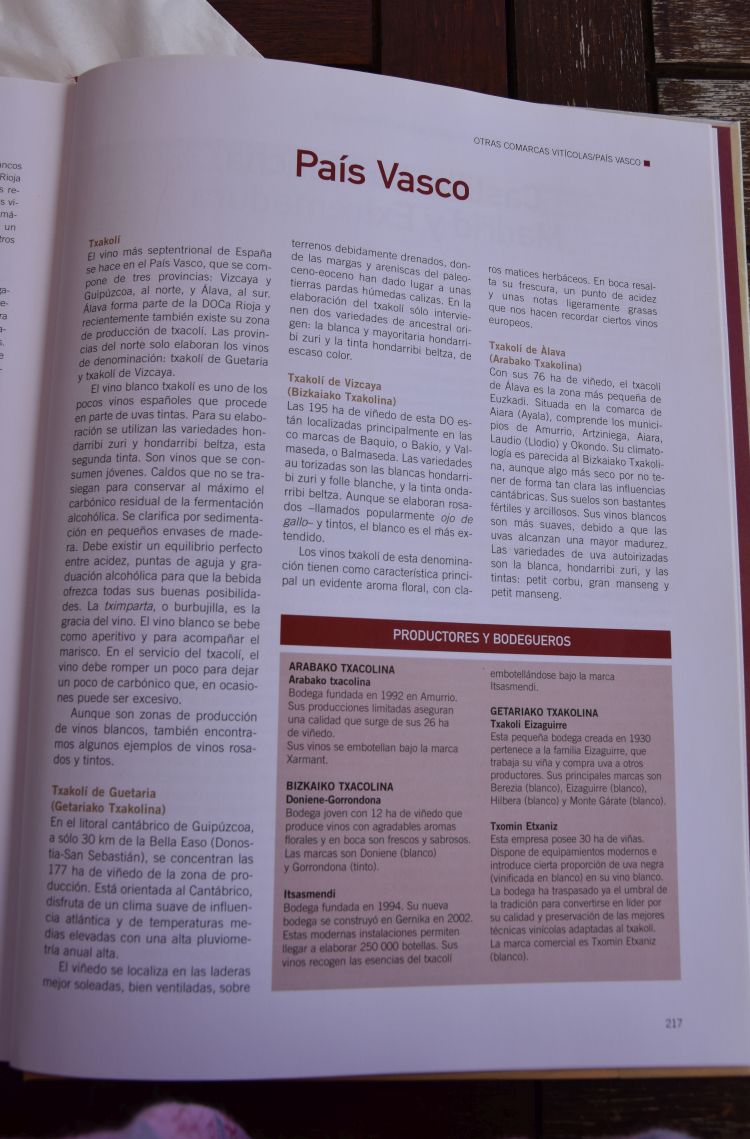
… and reading. Some of our topics are art and landscape in Catalonia, the history of the Iberian Peninsula and Spanish cooking and wines. In the Larousse about Spanish wines (2008), I learn more about the Txakolí wine from the Basque Country. There is a white variety called “Zuri” and a red grape called “Beltza” and the vineyards are in three areas, one of which we have seen, namely Getaria.

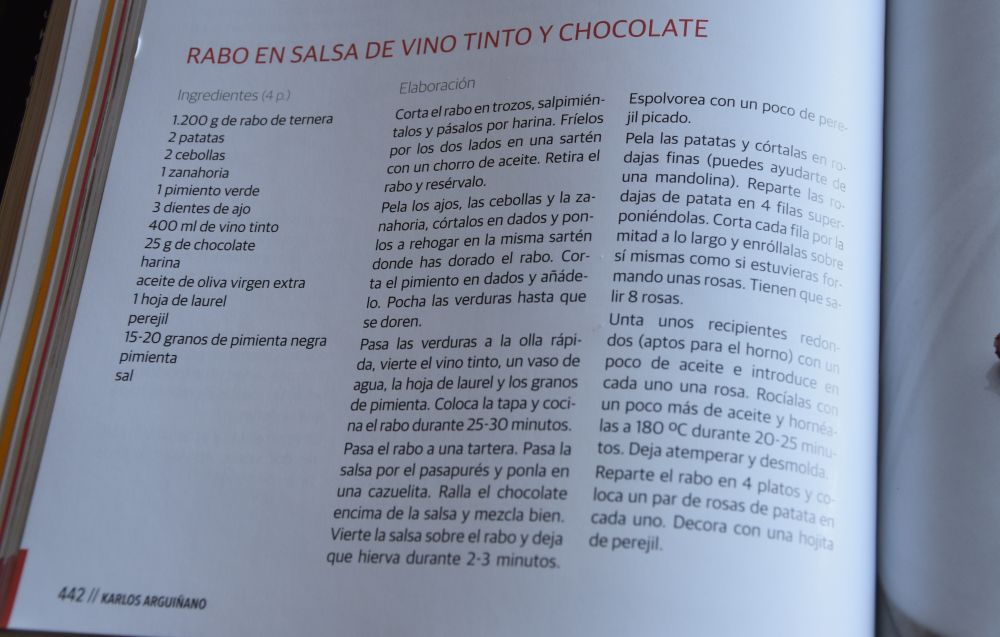
When back at home, I will have to try cooking the oxtail in wine sauce with chocolate. I have eaten it once, and it was delicious (Karlos Arguiñano, “1000 recetas de oro”, Barcelona 2019).

We have found these books in the library of Hospitalet. They dispose of an excellent book selection and rent them out free of cost, even to tourists (we just had to register our names).

Sometimes we have lunch in one of our favorite restaurants such as in La Becana in Ametlla where I eat steamed mussels…

… and, for dessert, a crema Catalana with the crunchy sugar.

.

Small walks around Hospitalet – to the Ermita, the Punta or the Iberian village

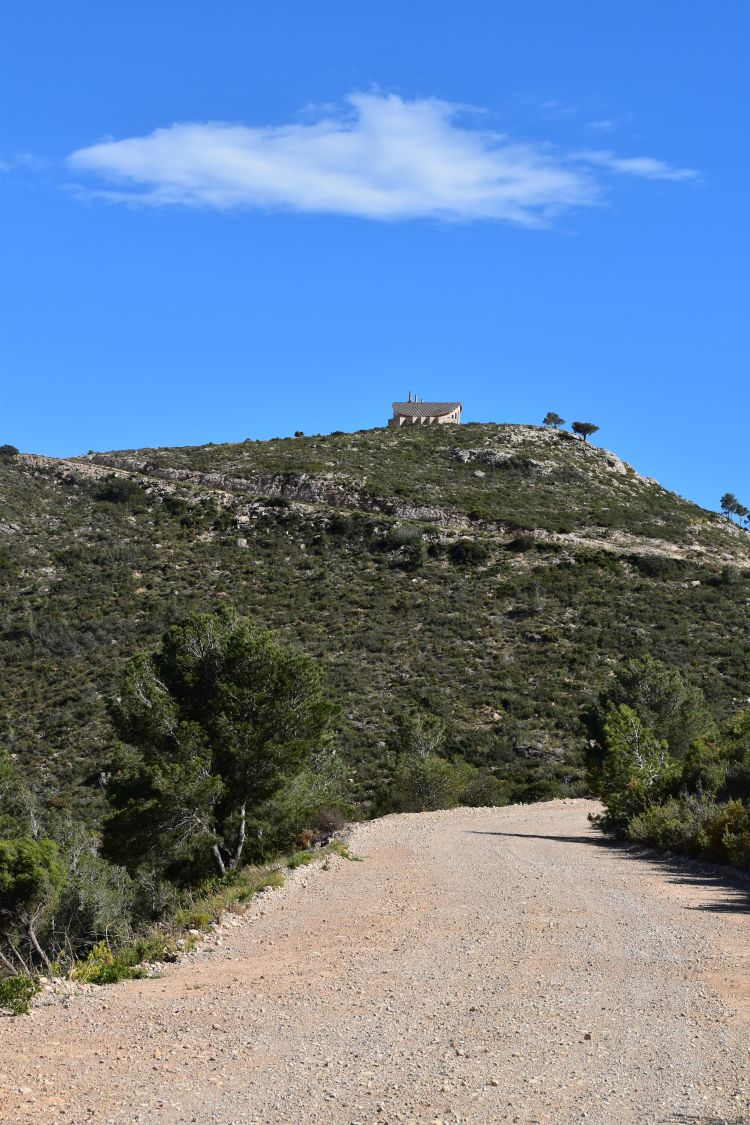
From time to time we go for a walk around Hospitalet. One of our destinations is the Ermita de Sant Roc. A drivable road leads up to the Ermita. We walk and pick some rosemary to spice our meals.

From here the view of Hospitalet and the coast line towards Salou is magnificent.

Another small walk takes us up to Punto de los Rojales…

… with another magnificent view of the Mediterranean sea.

High above the Ebro near Tivissa, we love to walk to the Iberian settlement dating from 400 to 600 BC and to the medieval Castellet de Banyoles. The Ebro could be well controlled from this point.

.

Special event at Hospitalet de l’Infant – Cursa BTT

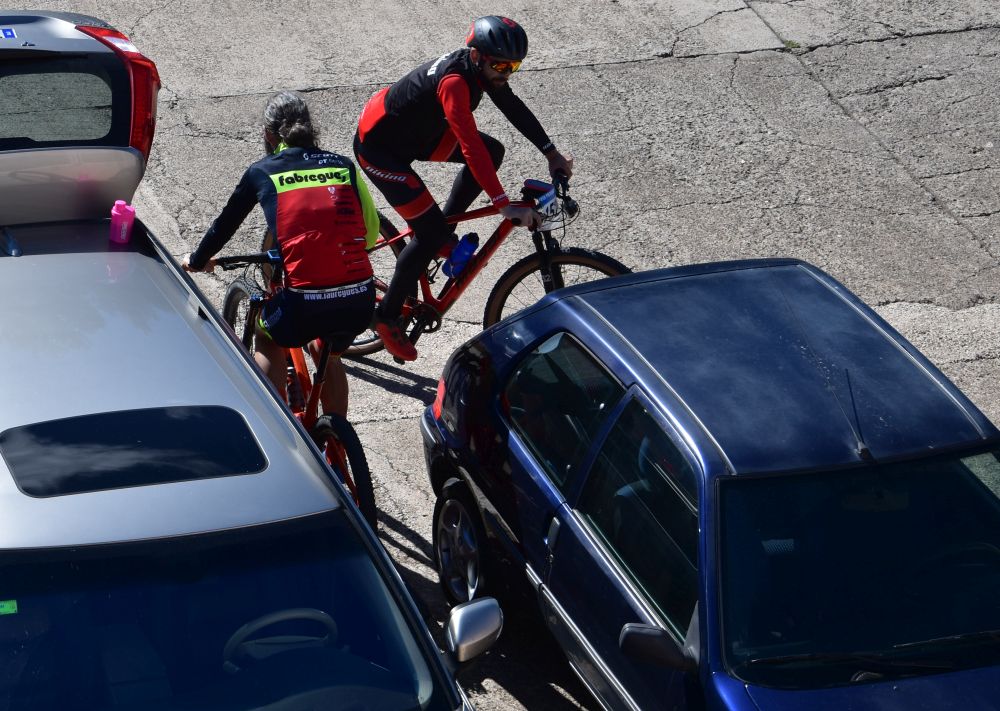
Hospitalet is a quiet place, especially now, in May. But…  one Sunday promises to be busy. Signs announce a mountain bike race, starting at ten up to two o’clock.

On Saturday evening, the trails are ready.

On Sunday morning the bikers arrive. They take out their bikes and warm up diligently by spinning on their bikes fixed to a stand.

Then they leave in groups behind the pine trees (teenagers, young men, veterans, ladies…)

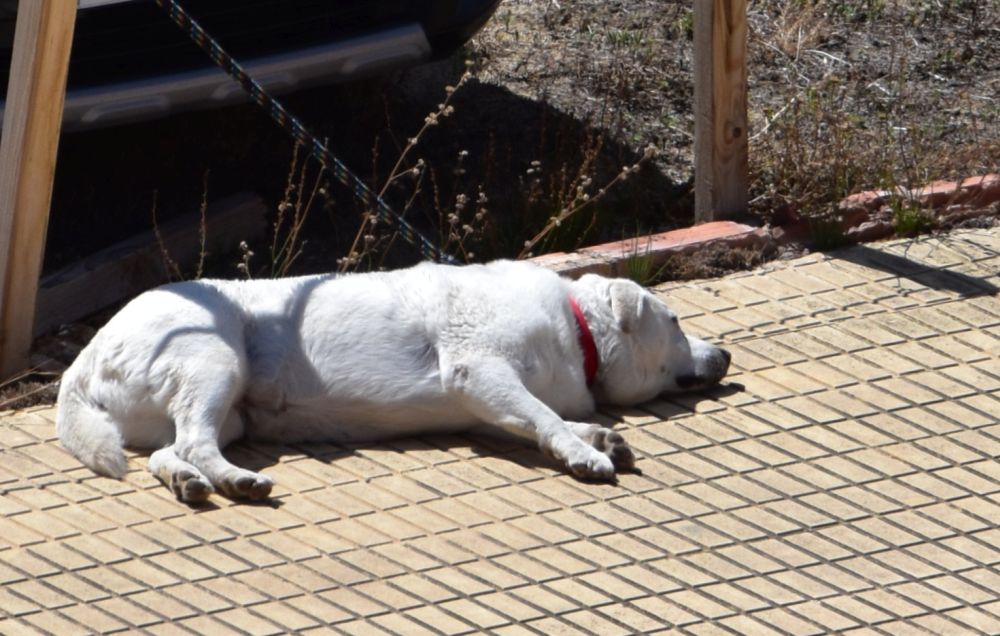
The dog of one biker couple is waiting for the masters – what may take them so long, it may ask himself.

Yes, we spend two quiet weeks in Hospitalet recovering from our grand tour across the north of Spain.


Back to Catalonia (Hospitalet), with two stops in the mountains

On Saturday, May 19th, we drive from Zaragoza through the mountains to Hospitalet de l’Infant, south of Tarragona in Catalonia. On the way, we stop in Alcañiz and Horta de San Joan.

.

Alcañiz – domicile of the Calatrava order (still in Aragón)

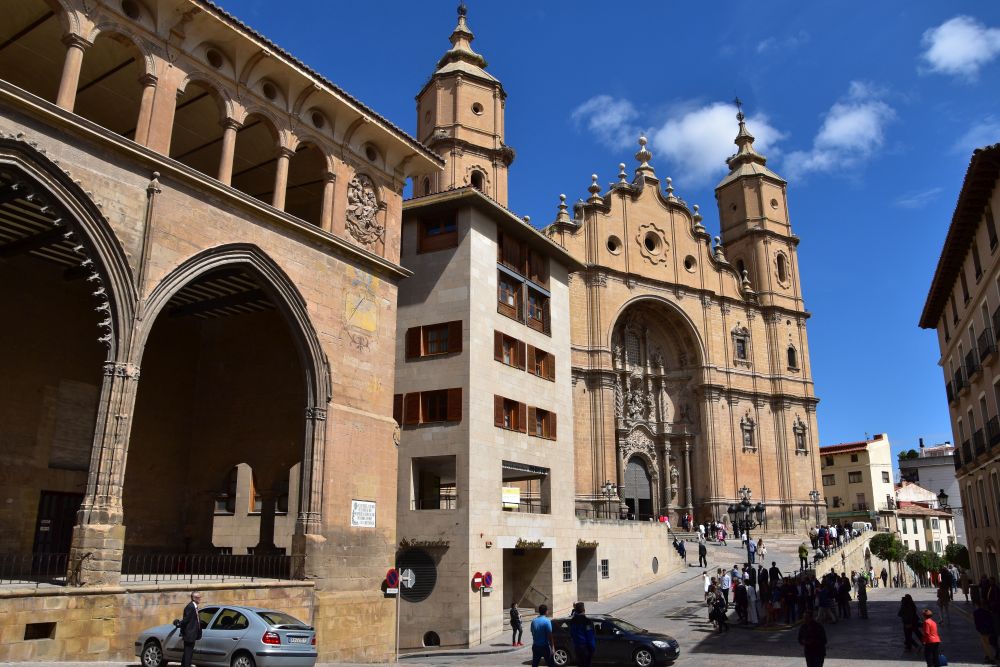
We follow the road to Morella up to Alcañiz. Here we maneuver our Audi through narrow-narrow streets, find the last parking slot near the city wall and walk to the  Iglesia de Santa Maria Mayor – baroque  from the 18th century – where we have a café solo.

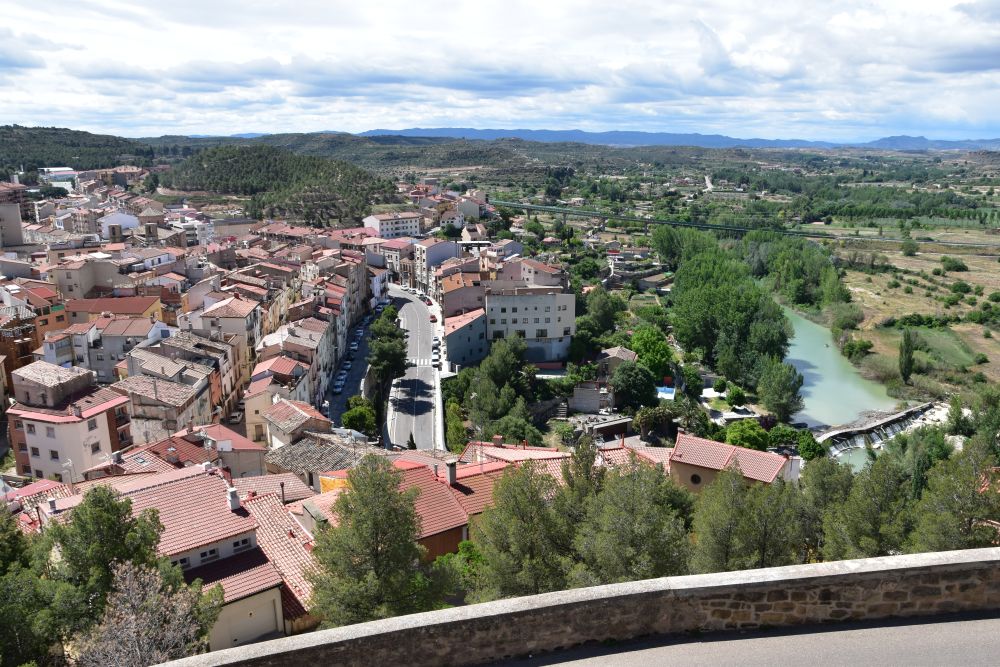
We do not find the way out of the small town and land on top with its castle (now a parador) and this gorgeous view. This was the domicile of the order of the Calatrava.

Does our famous architect Calatrava have a relation with this order?

.

Culture and lunch break in Horta de San Joan (now in Catalonia)

Horta de San Joan is a pretty small town in the mountains El Ports. Young Picasso was here twice, once as a teenager, when he stayed with the family of a friend of his and about ten years later again. This quote in Catalonian says: “Everything that I know, I have learnt at Horta”.

We visit the museum that tells the story of Picasso and Horta de San Joan. All the places that he painted are documented with photos. When he was here the first time, he recovered from an illness. And when he was here for the second time, he is said to have started his cubist way of painting.

Horta de San Joan also appears in literature. Perucho in his “Las historias naturales” described, how the scientist Montpalau (an invented figure) visited Horta de San Joan, when looking for the vampire Dip that terrorized the area in the first Carlist War, in 1840 (p. 164f): “Días más tarde… nuestras caballeros… abandaron Gandesa, en busca de la pista sangrante del vampiro… En Horta de San Juan visitaron la Plaza gótica porticada…

… y el convento de San Salvador…

… El aíre era muy frío y tuvieron que abrocharse hasta el último botón de la levita…El paisaje había cambiado ahora: Salvaje, grandioso, y como telón de fondo las altas montañas del Maestrazgo…”

(Some days later, our men left Gandesa, looking for the bloody track of the vampire… in Horta San Joan they visited the gothic square with the arches… the monastery of San Salvador… The air was very cold and they had to close their jackets up to the last button… The landscape had changed now: Wild, magnificent, and in the background the high mountains of the Maestrazgo…).

We do what  Perucho’s Montpalau has done… we visit the gothic square, enjoy the view of the wild mountains and the monastery and stroll through the narrow streets…

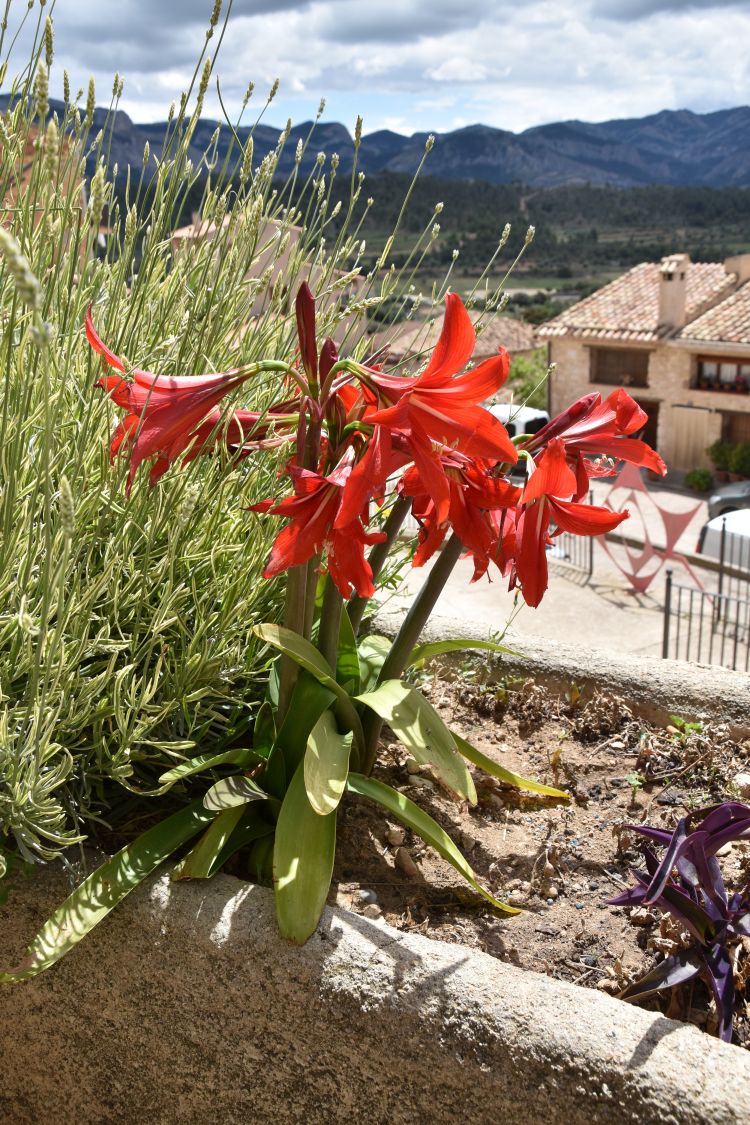
… adorned with Amaryllis…

… and barked at by cute little dogs,…

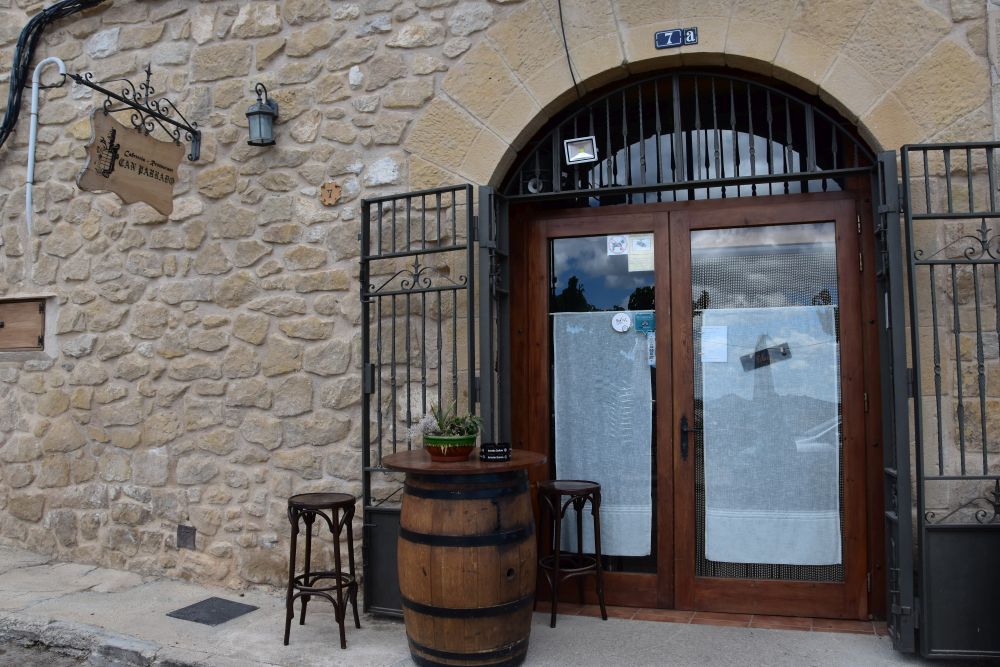
… until we lose our way and in the maze of streets and end up in front of this door. It is the restaurant “Gran Parrado”. It is one o’clock and we are hungry.

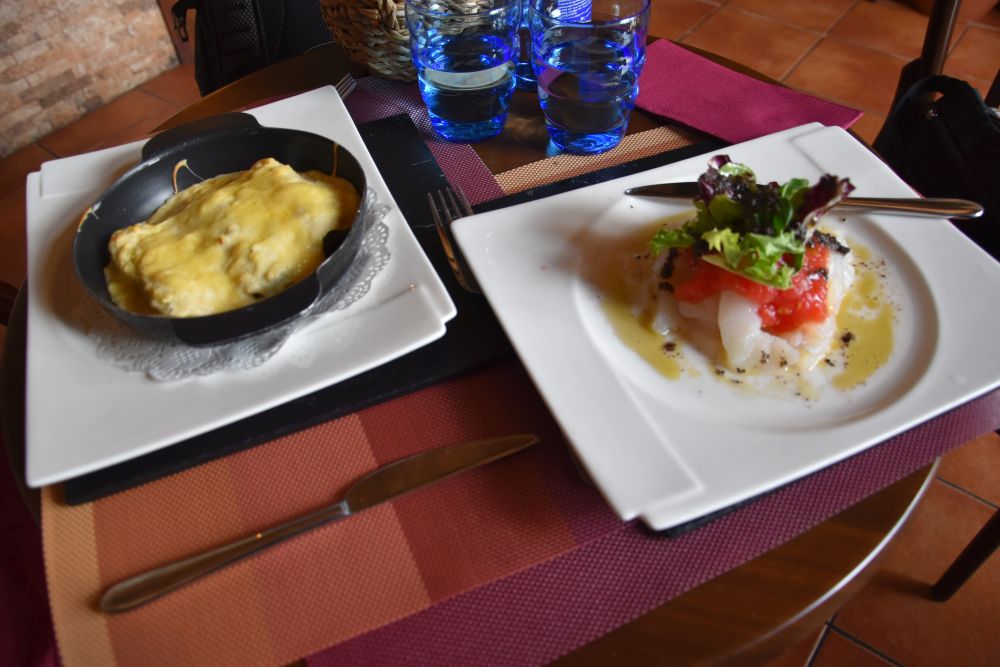
All tables are taken… the friendly manager offers a table in the bar. Lucky we are. We have a delicious lunch. This is the first course, cannelloni (yes, the Catalonians picked that up in Italy) and codfish salad. My second course is oxtail in chocolate sauce – very tasty. For dessert we choose fresh goat cheese with honey – a marvellous Catalonian specialty.

The host has a small wine cellar that he is proud of. Already Perucho’s Montpalau praised the wines from Terra Alta: “Se consumieron grandes bocoyes de vino de lágrima, finísimo al paladar…” (we drank large glasses of Lagrima wine, very fine in the palate”), p.163. I buy two bottles, one of them produced in Horta de San Joan (Els Costums made from Granatxa negra).

.

Back at Hospitalet in the apartment of or friends

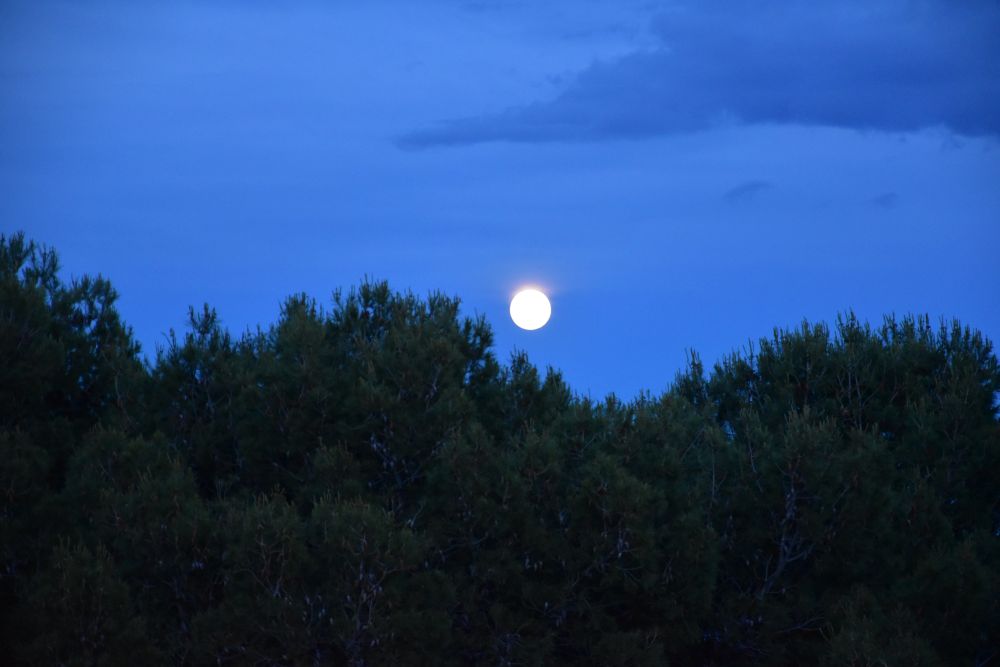
About one hour later, we are in Hospitalet. The full moon welcomes us.

Two quiet weeks are ahead of us. Reading, swimming, going for excursions and enjoying the Mediterranean.

.

Looking back at our tour that we have completed in Northern Spain

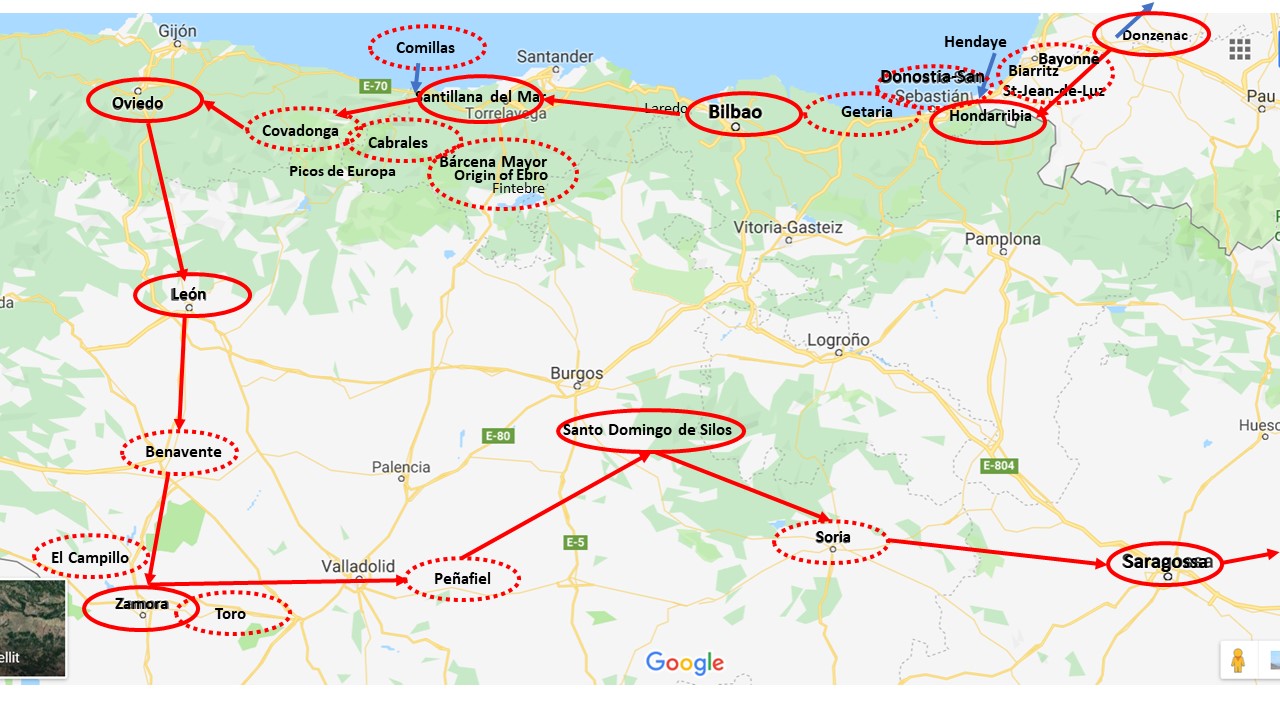
Our route through Northern Spain started with a short break in Donzenac in France and then continued to

  • Hondarribia (with excursions to Bayonne, Biaritz, St-Jean-de-Luz and Hendaye as well as San Sebastián)
  • Bilbao (visiting Getaria on the way)
  • Santillana del Mar (with excursions to Altamira, Comillas, Bárçena Mayor and the origin of the Ebro, Cabrales)
  • Oviedo (visiting Covadonga on the way)
  • León
  • Zamora (visiting Benavente on the way, excursions to El Campillo and Toro)
  • Santo Domingo de Silos (visiting Peñafiel on the way)
  • Zaragoza (or Sarragossa)
  • Back to Catalonia (visiting Alcañiz and Horta de San Joan on the way)

Soria – back at the Duero to visit the unparalleled cloister

On May 17th, Friday, we drive to Zaragoza with a stop in Soria. We are slowly heading eastward. In Soria, we want to visit the cloister of the Monastery San Juan de Duero.

.

In Soria we are back at the Duero 

We have been at the Duero in Zamora and we have driven along it through the vineyards of the Ribera del Duero. Now, in Soria, we are back at the Duero and close to its origin, in the mountain range called “Sistema Ibérico” (Atlas geográfico, Esther Carrión Fernandez et alii, Ediciones SM Madrid).  In Soria the Duero is much smaller than in Zamora. Also Soria has its historic bridge from the 12th century, which has been rebuilt over the years.

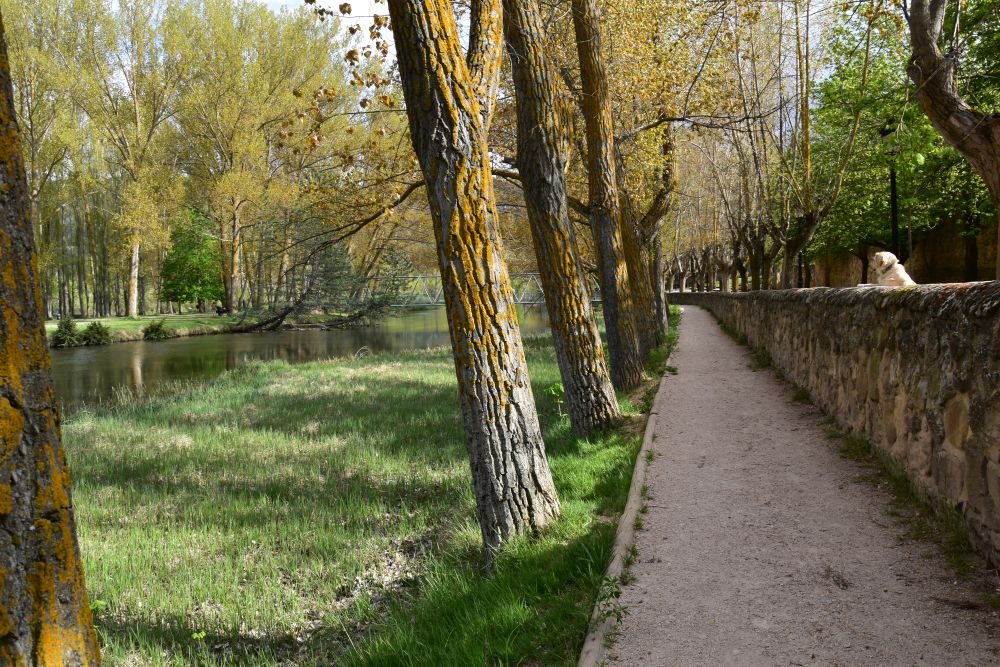
We were in Soria a year ago, in May 2018. Like Zamora, Soria has layed out a path along the banks of the Duero that I loved to stroll along then, watched by the curious white dog.

In the city center, we found a relaxed atmosphere in May 2018. The inhabitants celebrate Saint John’s Eve all May and June. They played music in the streets and I was invited to drink wine from a leather pouch – well, I thanked, but did not dare try that.

Our hotel was at the Plaza de Oliva.

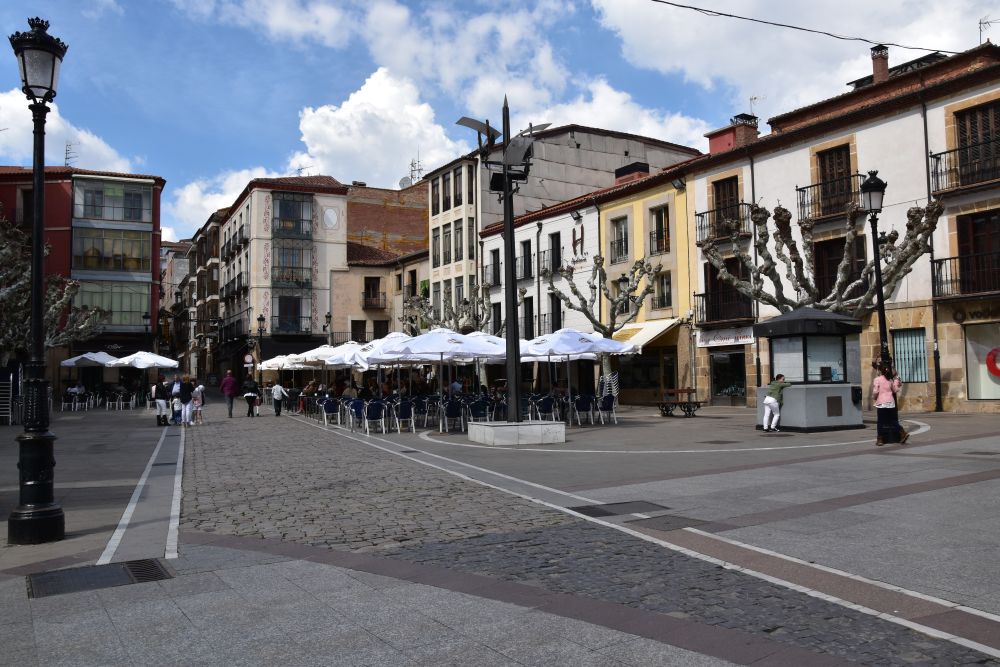
This is the Plaza Mayor with the ayuntamento and the Fountain of the Lions.

Soria hosts cultural heritage such as the Romanesque San Nicolás church – unfortunately in ruins.

The Renaissance Palace de los Condes de Gómara from the 16th century is impressive.

This is the Concathedral San Pedro, somewhat lost in a meadow. Its origins are Romanesque, and it has been refurbished again and again.

San Pedro or Petrus sits above the gate, with the keys in his hands.

In the past, Soria experienced dramatic events: As a Celto-Iberic settling it resisted the Romans for a century. Just before being conquered, they all committed suicide to avoid becoming Roman slaves. From the 8th century up to 1134, the city was ruled by the Muslims. Having become Christian again, Soria flourished, thanks to the wool industry, a capable Jewish community and the support of the Castilian king. The decline started in the 15th century, when the unified crown of Castilia and Aragón lost interest in Soria and when the Jews had to be exiled. The city suffered again and again, in the wars around 1700 and 1800.

Today, Soria is a quiet town that mainly belongs to the people of Soria. They have started to promote their touristic potential.

.

The Monasterio San Juan de Duero with the unparalleled cloister

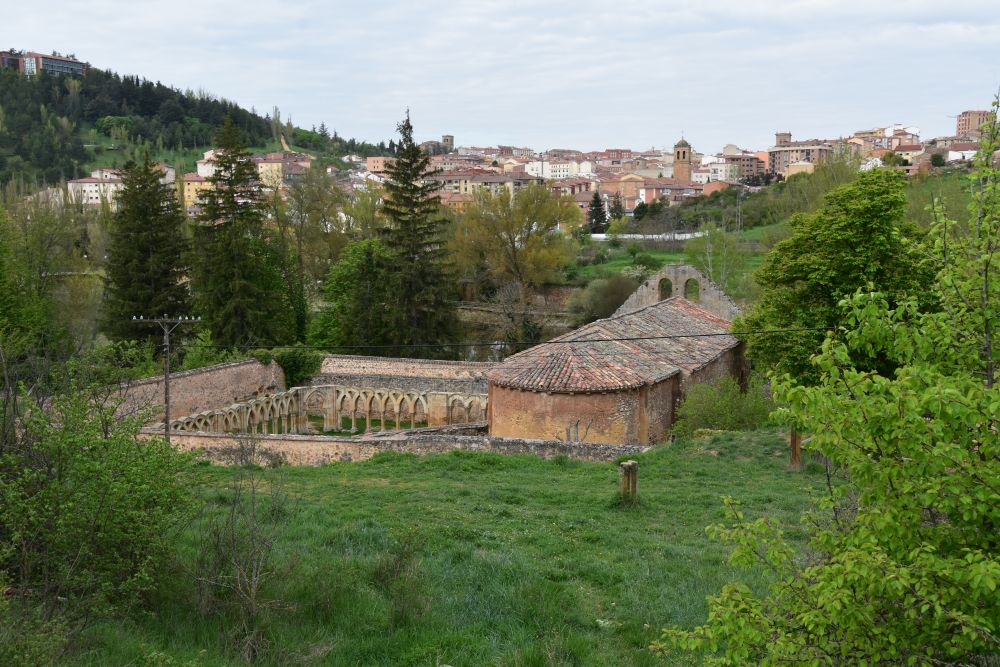
The most impressive attraction of Soria is the Monasterio San Juan de Duero. A year ago, it was closed, and we took fotos from outside with the city of Soria in the background.

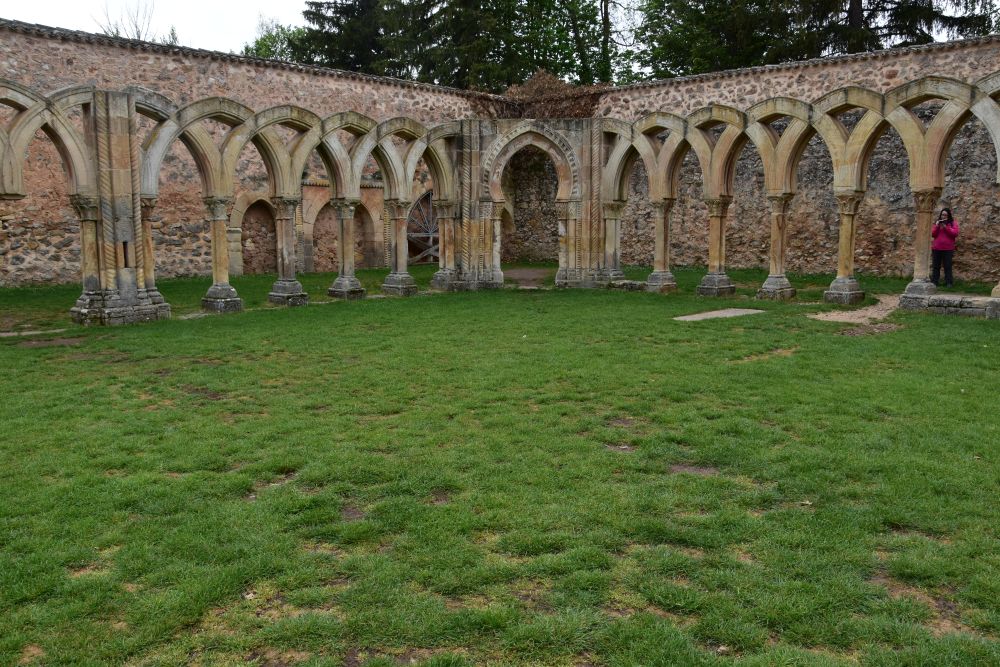
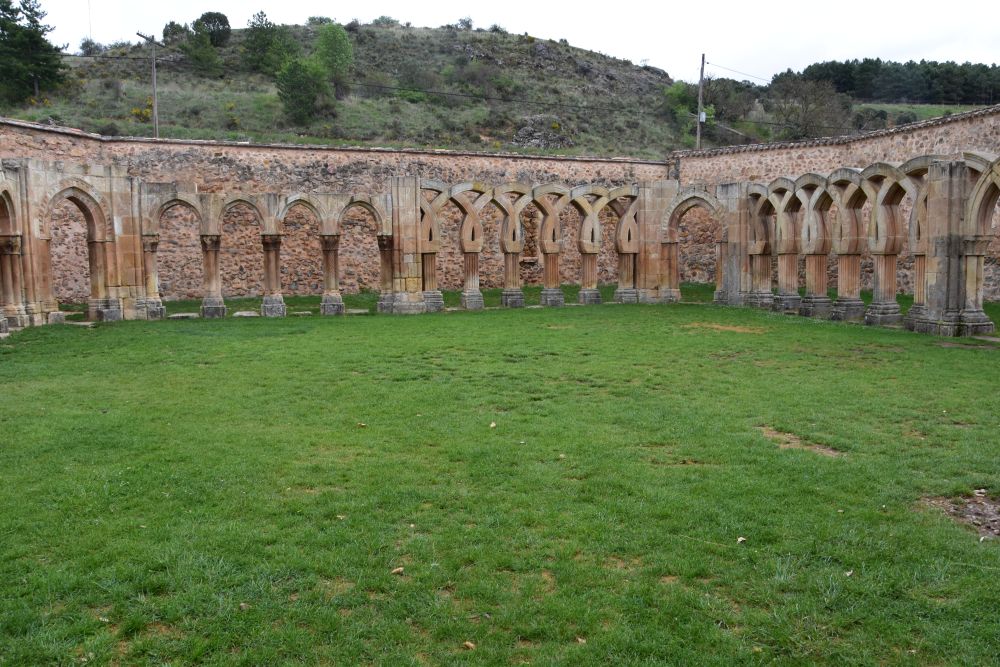
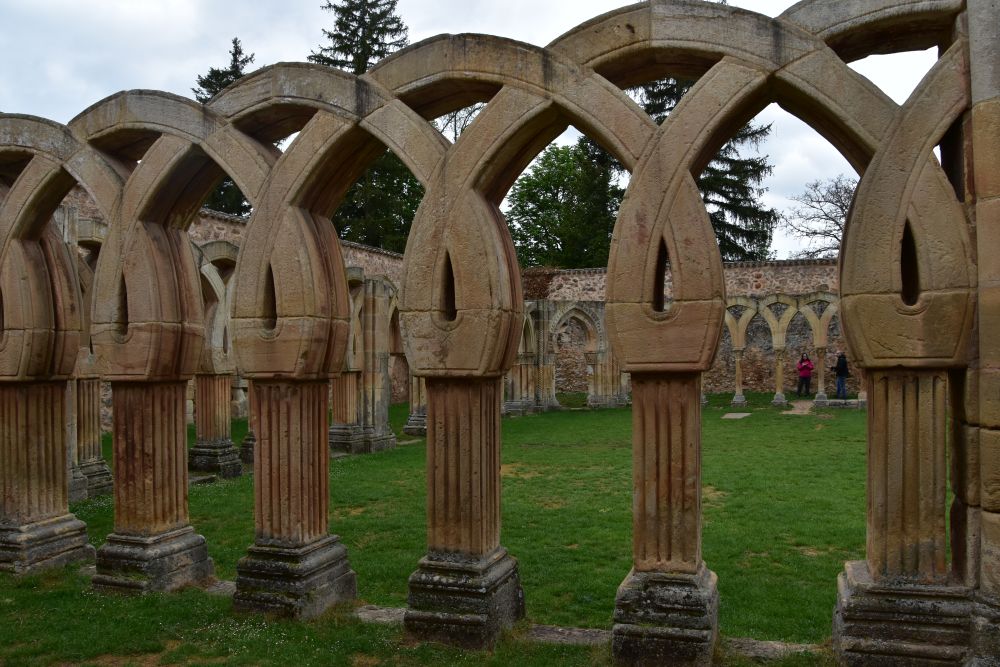
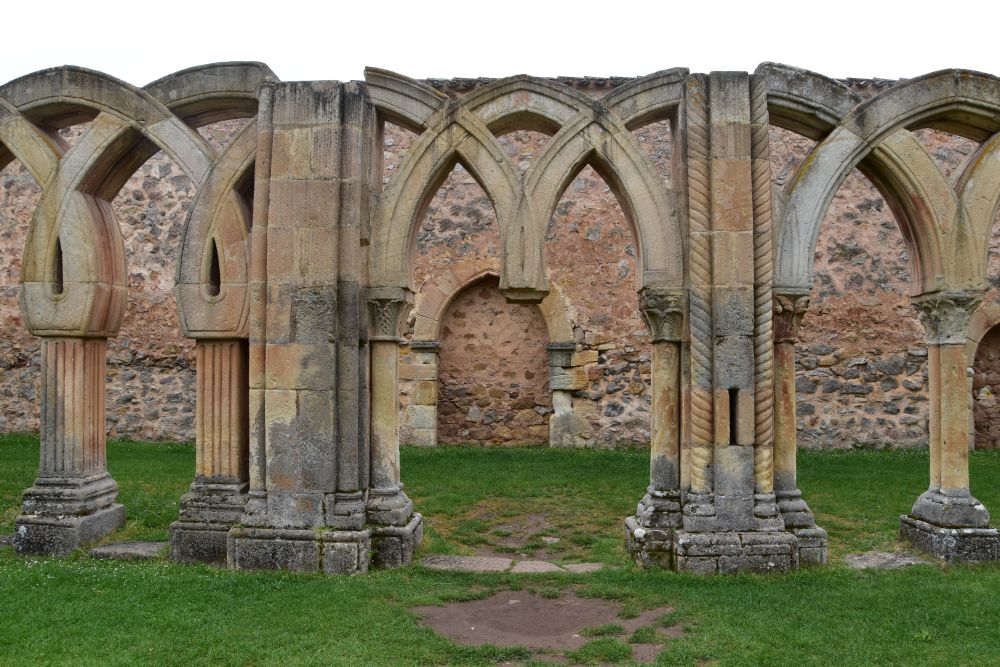
Now we returned after having carefully checked that the cloister is open. The cloister was built in Romanesque style in the beginnings of the 13th century, but Romanesque was interpreted here, as I have never seen it before. It is a mixture of Romanesque and Muslim elements. The arches dance and in the corners they become horseshoes.

The severe Romanesque forms on the left turn into swirling, elegant forms on the right.

Have you ever seen such Romanesque architecture?

It is just magnificent, what we can achieve across cultures and beliefs, when coming together.

I would wish more of that happened today.

Next to the amazing cloister, we enter the small Romanesque church…

… with its sculptured capitals.

It was great to see Soria again, in particular the gorgeous cloister San Juan.

Now we will continue our way eastward leaving the Duero behind us, crossing the mountain range of the Sistema Ibérico and switching to the valley of the Ebro. We intend to spend one night in Zaragoza.