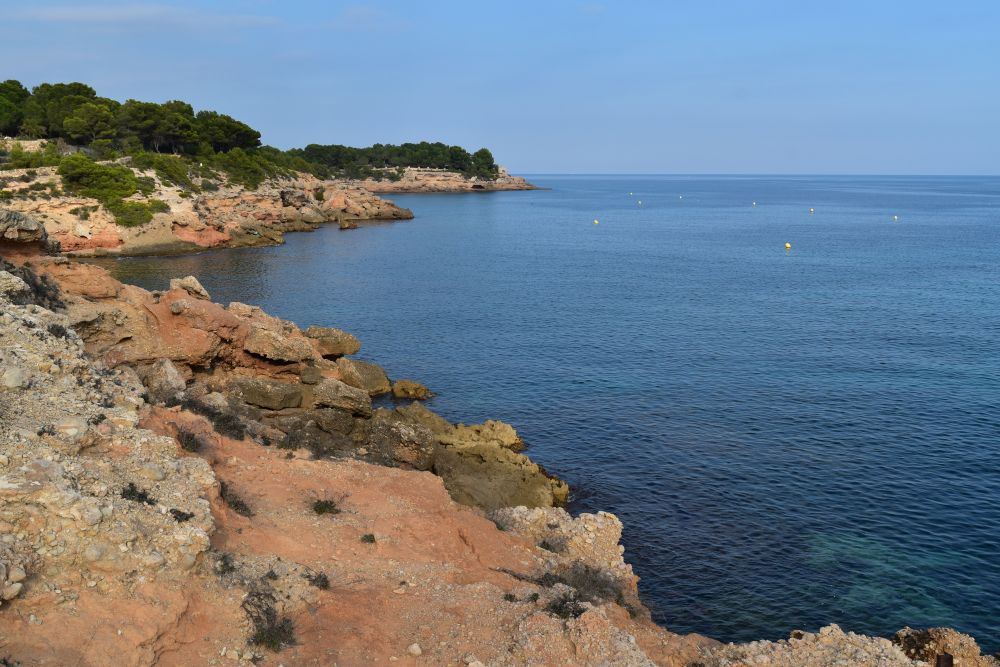
In Catalonia (Spain): Excursion to Zaragoza

Zaragoza, the capital of Aragón is our longest excursion. It is a three hours’ drive from Hospitalet de l’Infant. In Hospitalet we spend a few days in the apartment of our friends end October until mid November 2016.
We start in sunny Hospitalet crossing the hills to reach the Ebro valley where the scenery is hidden in grey fog. After three hours, we park our car right in the center under the Plaza del Pilar. With Ursula we always first enter the Tourist Office to get some maps and advice about what to see. We are told that the old Islamic Palace and Parliament Seat (Aljaferia) is closed for renovation. That means our sightseeing will be restricted to the very city center.
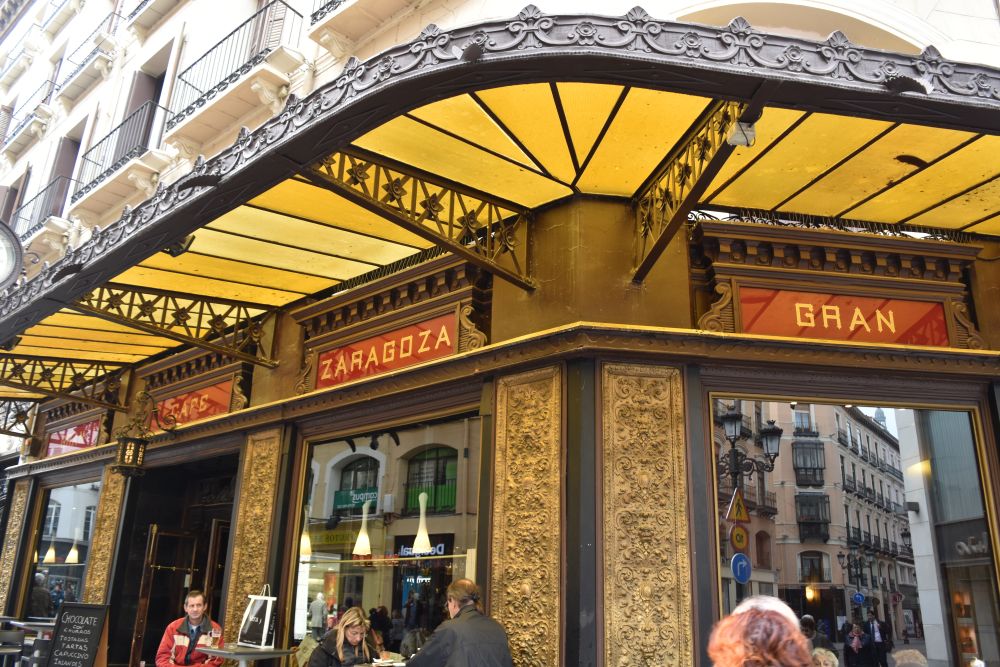
We feel like hot chocolate in the famous Gran Café. What a disappointment! We are served churros that are not fresh and melted chocolate that is dense and tepid. Well, it seems that this is how chocolate is made in Spain, but I do not think that “old” churros are a particular Spanish specialty. As for the chocolate drink it is a pity that Spain seems not to have adopted the Mexican way of preparing it – the Mexicans prepare much lighter chocolate using hot water.

aaa_1000-small

.

The Catedral-Basilica de Nuestra Señora de Pilar – an important stop on the Way of St. James

In front of the Catedral-Basilica de Nuestra Señora de Pilar four pilgrims are absorbed by their prayings. This cathedral is important on the Way of St. James. Right here, it is said, the Virgin Maria appeared to St. James (Jakob) on a pillar (in Spanish “pilar”) in 40 AD. In the hazy background, the Cathedral of Seo can be seen.

aaa_1015-small

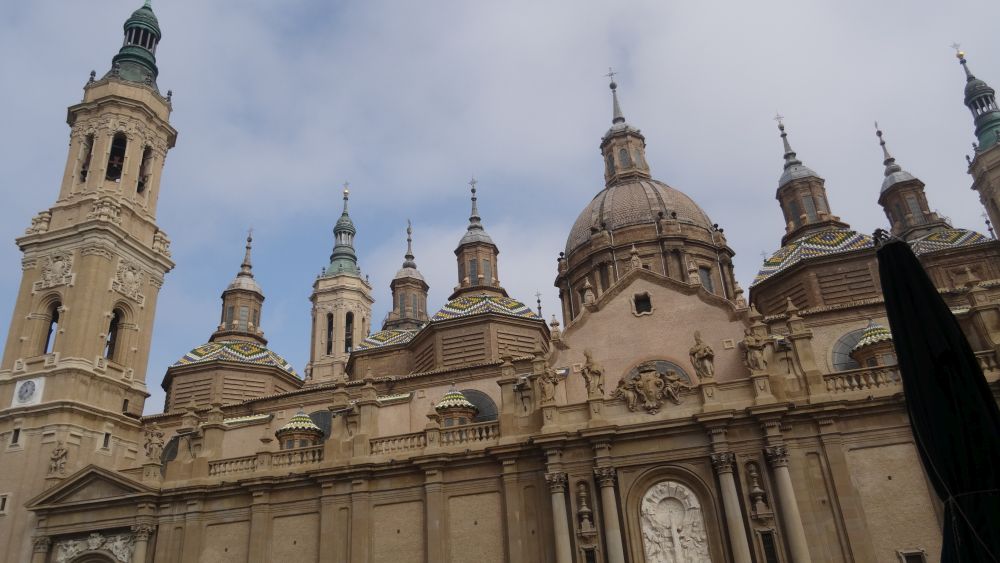
The Catedral-Basilica de Nuestra Señora de Pilar has been built in Baroque style in the late 17th century. Inside it is richly decorated. Some vaults (or domes) are painted with frescos by Francisco Goya. It is not allowed to take photos inside the cathedral. This is the view of the Cathedral of Pilar from the Plaza Pilar.

aaa_1091-croptot-small

Eleven vaults (or domes) decorate the roof of the cathedral.

dsc08878-small

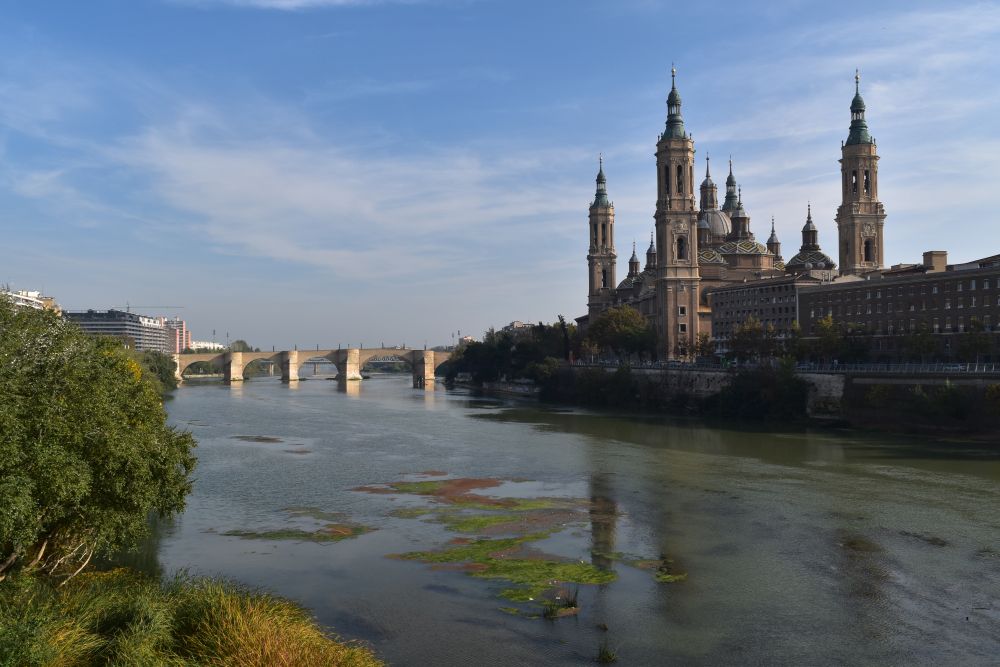
From the Ebro river we take more photos of the Cathedral of Pilar with the stone bridge.

aaa_1080-small

Fishing seems to be a rewarding activity here.

dsc08989-small


The Archbishop’s Catedral de Seo with Mudejar elements

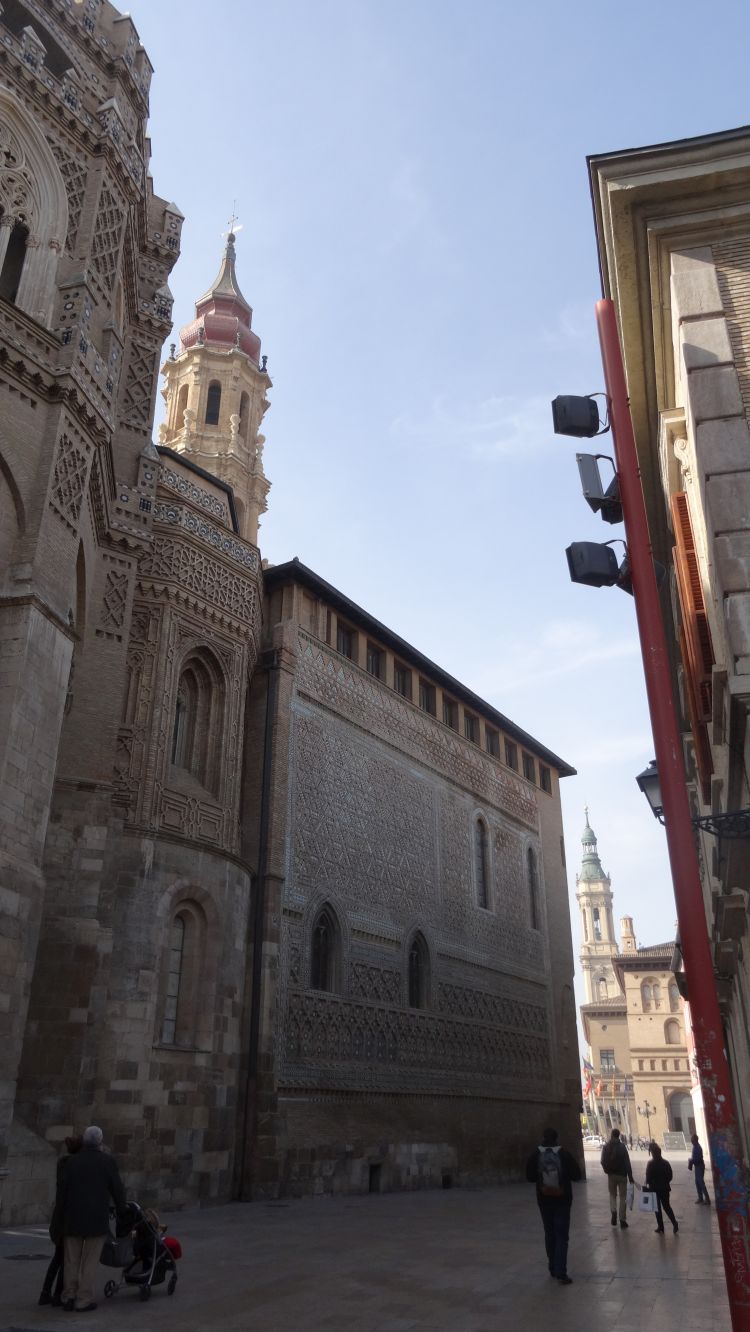
Also on the Plaza Pilar, there is the Archbishop Cathedral of Seo. The construction started in the 12th century (some Roman elements are left in the apsis), and it was newly built in the 14th century (hence primarily Gothic in style). The tower is the late 17th century work of an Italian architect. The Cathedral of Seo has been UNESCO world heritage since 2001.

dsc08911-small

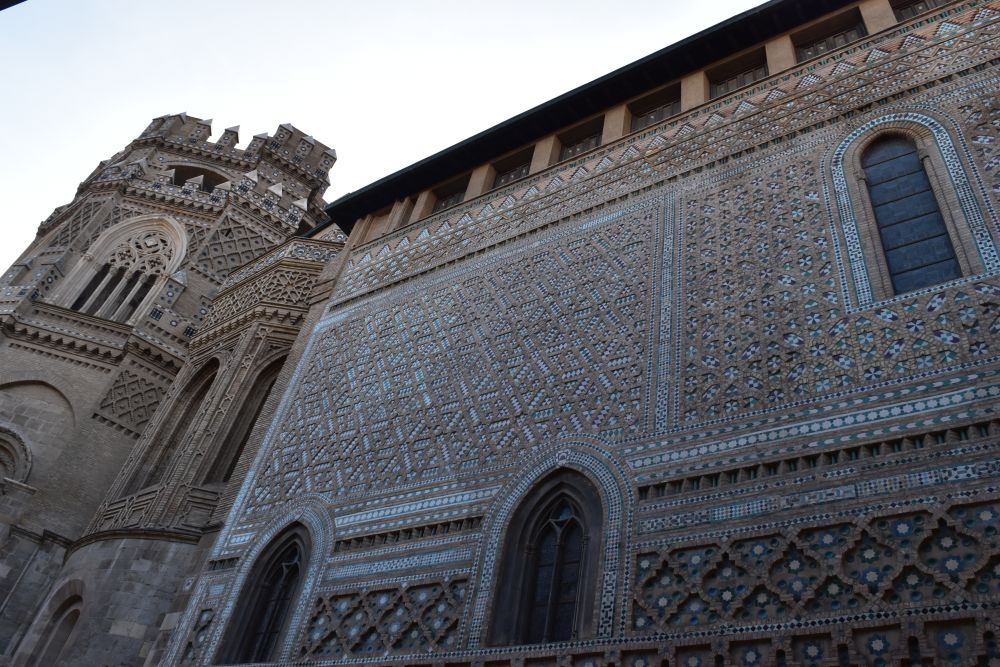
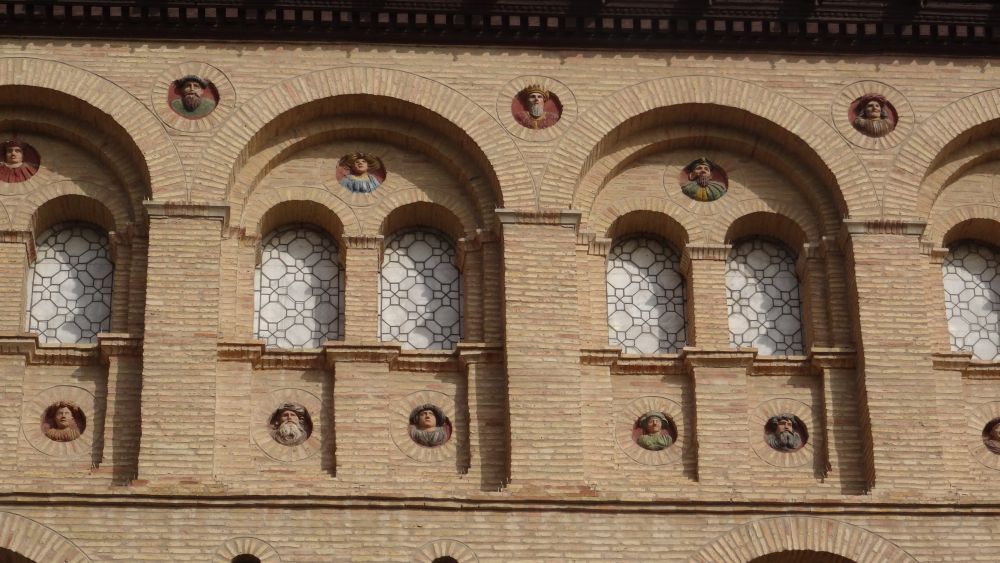
The northern wall is of fine Gothic-Mudejar style.

aaa_1026-small

Inside we find innumerable chapels – some of them of Renaissance and some of Baroque style. Each chapel is explained in detail. A nice detail: A statue of Joseph holding his baby – I saw that only in Tarragona before. One chapel is devoted to the young Domingo that was said to have been murdered by Jews – which was taken as a reason for pogroms. Later it was concluded that the crime never took place, which makes me feel bad. Why do we invent crimes and make someone guilty for them?


The Lonja (bourse) 

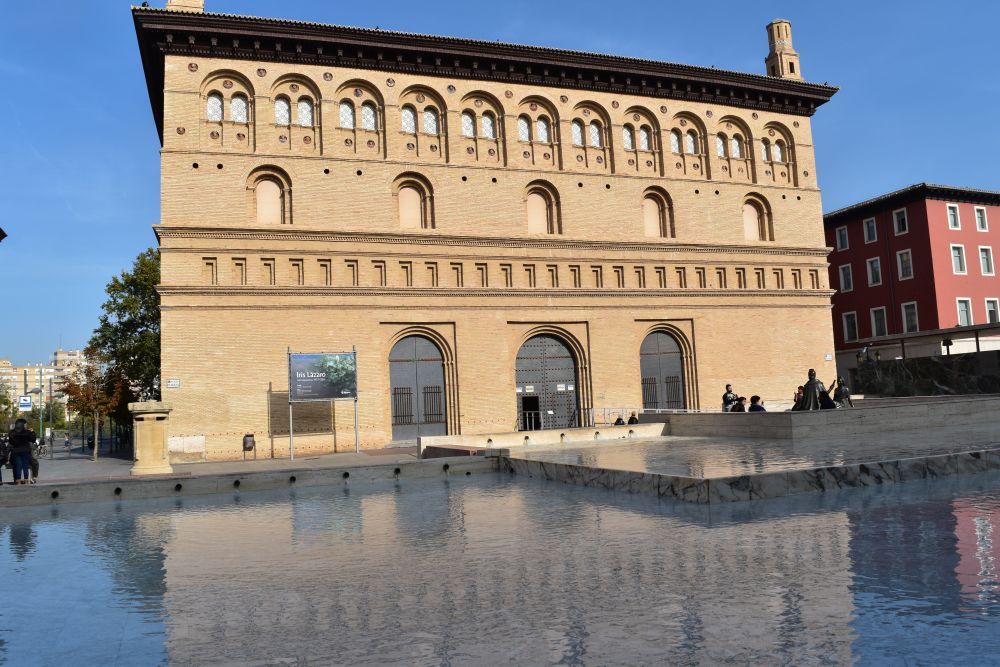
The Lonja (bourse) was built in the 16th century to provide a public space for traders that so far have used the churches for trading.

aaa_1040-small

It is Renaissance in style. Ursula focuses on some details of the façade.

dsc08899-small


Iglesia Parroquial de San Pablo

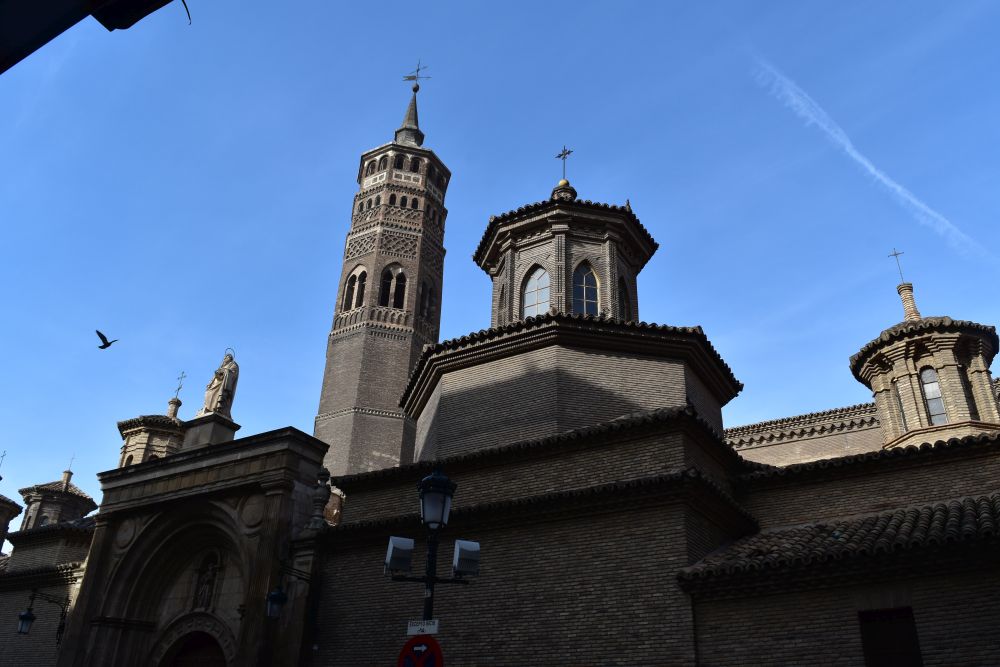
Outside of the old town wall we look for the Iglesia Parroquial de San Pablo from the 13/14th century. It contains Mudejar elements, in particular the octagonal tower. It has been UNESCO world heritage since 2001. Unfortunately, we find the church closed.

aaa_1061-small

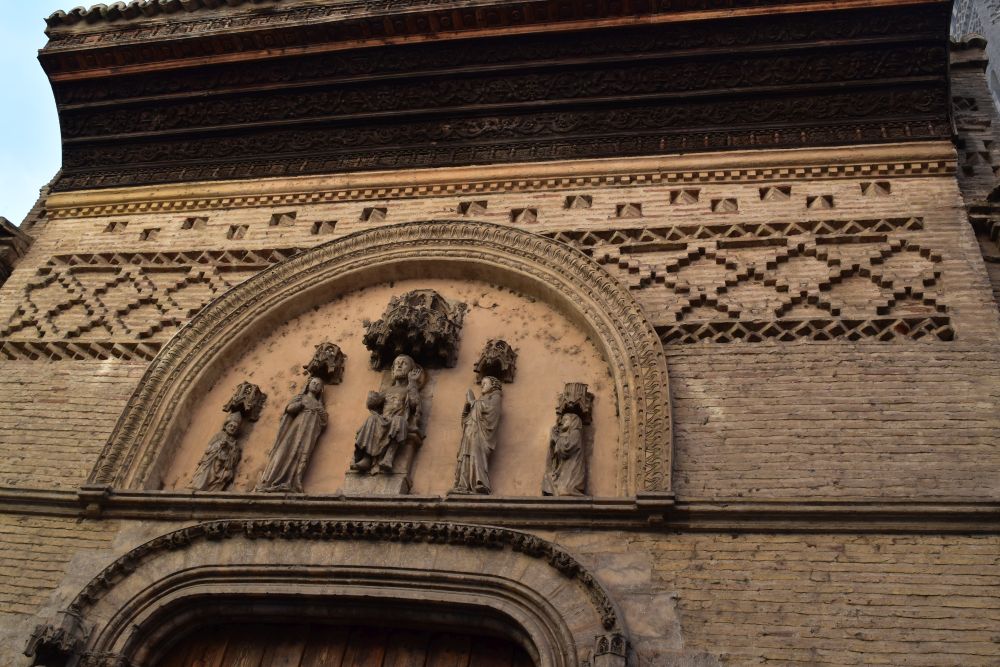
This is the Puerta Tramontana with Christ in the middle and Maria, Saint John and Saint Blasius. One of the saints cannot be identified.

aaa_1055-small

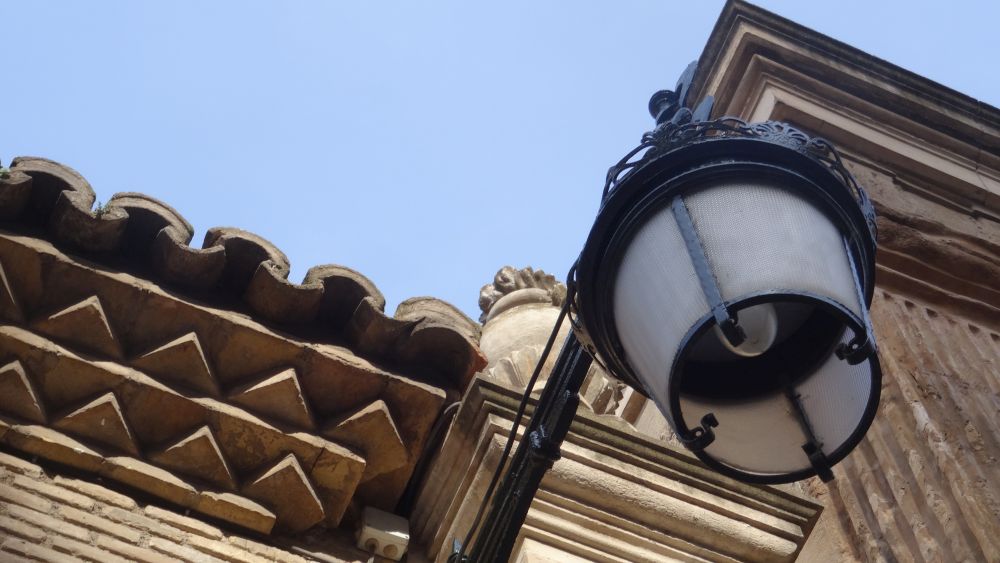
Ursula’s photographic eye spots the lamp with the ornaments.

dsc08959-small

In the Calle San Pablo we have delicious tapas in a friendly small bar. We have chat with the people from the area and with a lady from Vladivostok in Russia – far, far away from here.


More sights in the city center: The Central Market, the Roman Wall and the Museum of Goya

The Central Market was built in 1903. Plants on the roof add to the decoration. The market is now closed – it is afternoon.
aaa_1069-small

Across the market a shop sells traditional regional clothing.
aaa_1073-small

In front of the ruins of the Roman Wall, Augustus watches a carousel being demounted. Augustus gave his name to Zaragoza (Caesaraugusta).

aaa_1075-small

We finish visiting Zaragoza with the Museum of Francisco Goya (1746-1828). He is from Aragon. First, he painted for churches, then portraits at the court (pretty realistic portraits) and in his last years he made engravings of the war with France that was a nightmare for him (Zaragoza was occupied by the French from 1809-13). Goya is considered to be a predecessor of the Surrealists.

dsc09006-small

We take our car out of the garage (rather a spacious garage, if I remember right) and drive back home – another three hours. It was a long day. Zaragoza was worth visiting.

In Catalonia (Spain): Discovering modernism in Reus

On a windy day we explore the city of Reus. It is just half an hours’ drive from Hospitalet de l’Infant, where we spend a few days in the apartment of our friends end October until mid November 2016.

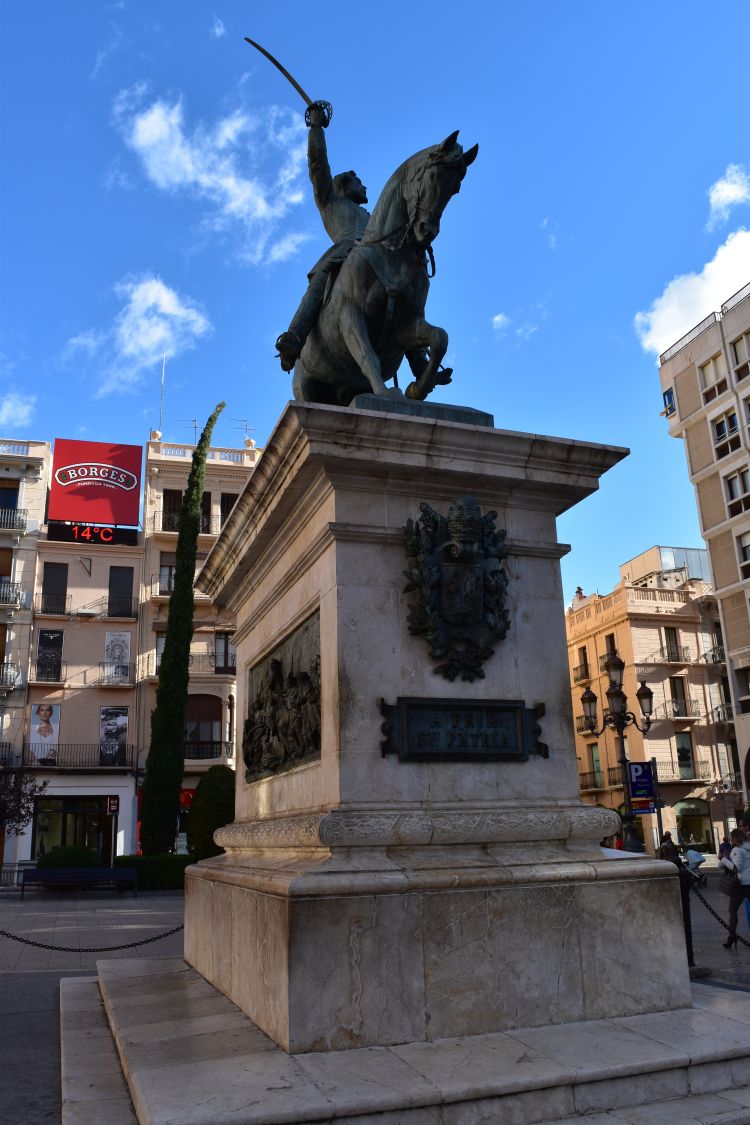
Reus is the home town of Marshall Prim. He fought for the constitution of Spain, and from 1868-70 he was Prime Minister of Spain (look at the cypress – it WAS windy).

aaa_0084-small

We park our car in the parking cellar located under the statue of Marshall Prim. It was another of those parking houses with small parking lots and narrow corridors. We found a comfortable slot on the fifth floor underground… if only I will be able to “climb” up from here again without getting stuck!

.

The Gaudí Centre

Gaudí was born in Reus. Though he never built anything in Reus, the city is proud of their son and has set up a museum about his life, his architecture and the way he worked. The museum is well curated. We learn, how Gaudí experimented to find the laws of nature that he then applied to create harmonic architectural structures. For instance he used straight lines, triangles or quadrats and twisted them to find the harmonic shapes. Based on the “law of chains” he built slim arches that could stand without counterweights (when the sides of the arches stand upright, counterweights have to prevent the arch from collapsing, like in Roman or Gothic architecture, but when they are inclined, the arches do not collapse). These hanging wooden sticks are one of experiments.

aaa_0130-small

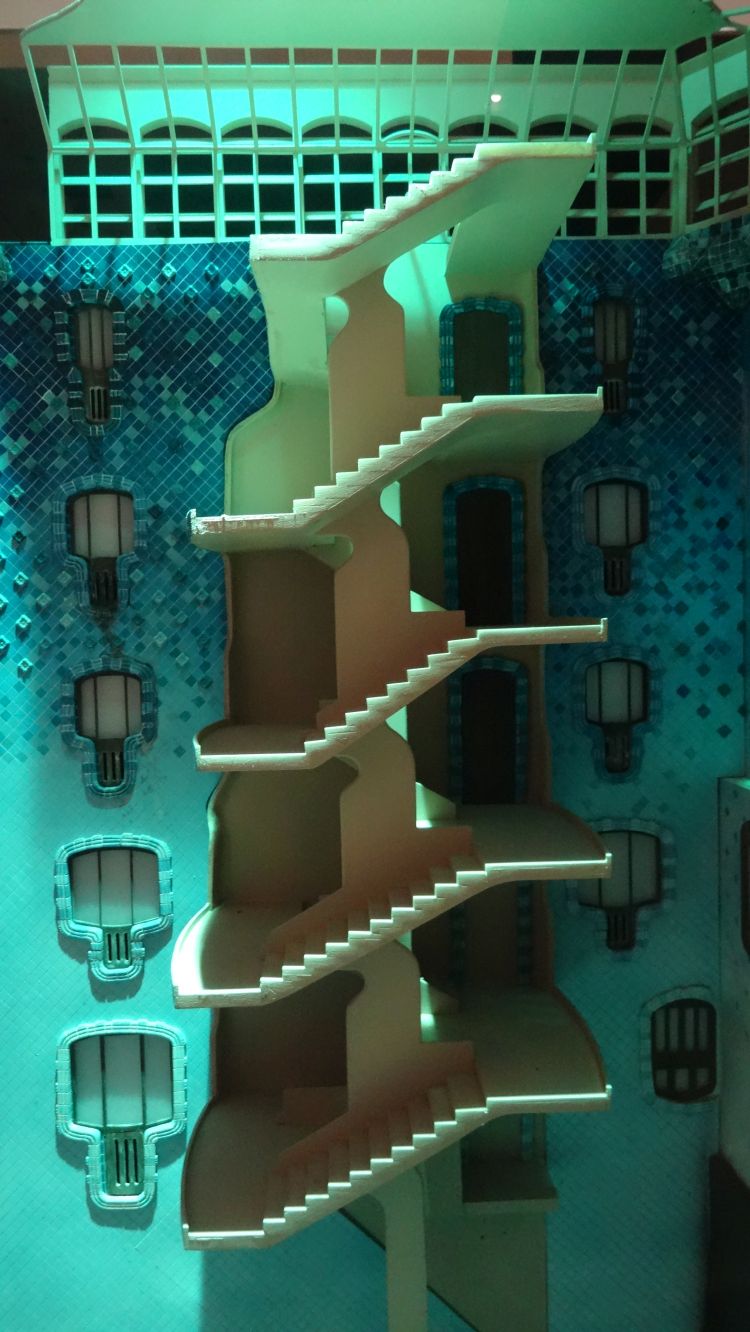
He tested everything with models, before implementing it, even studying the exposure to light.

dsc09286-small

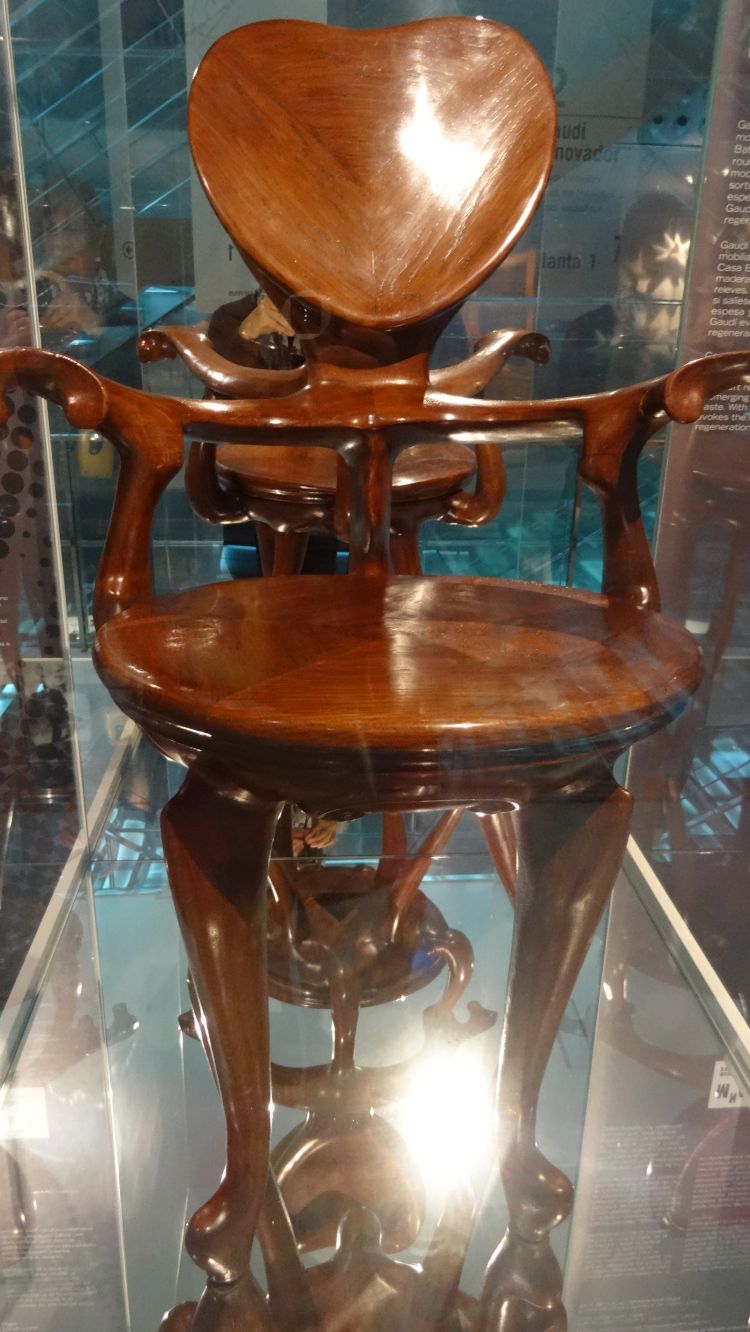
He had an overall approach to architecture also creating the furniture.

dsc09283-small

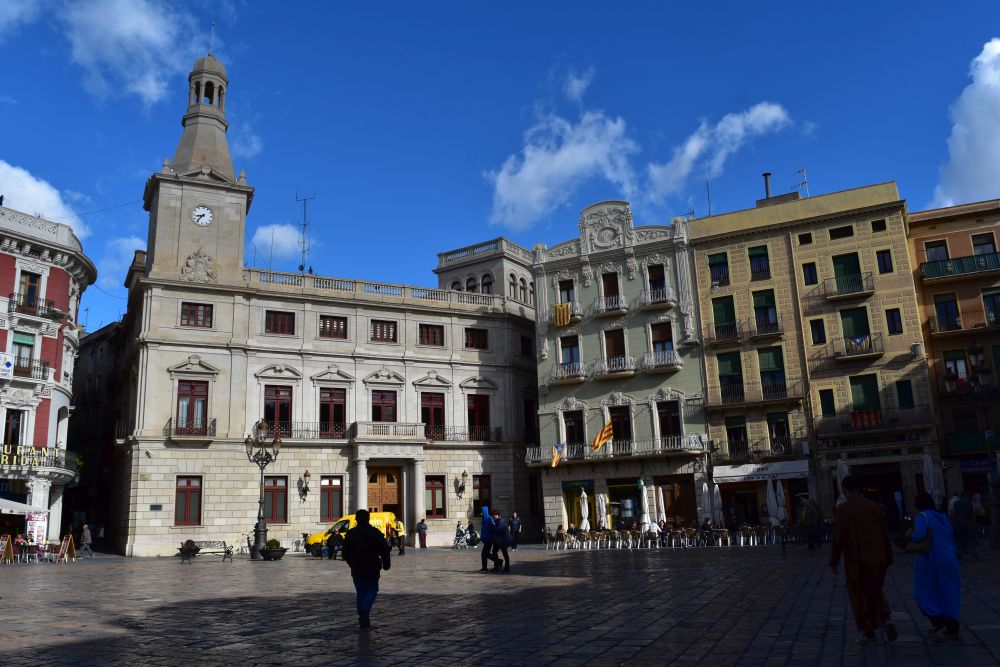
The Gaudí Center is located at the market square (Plaça Mercada), next to the townhall and the green modernist Casa Piñyol.

aaa_0090-small

Across is the modernist Casa Navas with the shop for bath and wellness on the ground floor. I buy a dressing gown (in Spanish: albornoz – the moors must have introduced this to Spain).

aaa_0092-small

We have lunch in the roof top restaurant of the Gaudí Centre. The view is great, but the waiters would have preferred us not to disturb them and the meal was expensive and poor (liver cream from the tube – in Swiss German: Leberpains – served on crackers with a few salad leaves, all for 15 Euros).

.

The cathedral San Pere – late gothic and a no-no tour guide

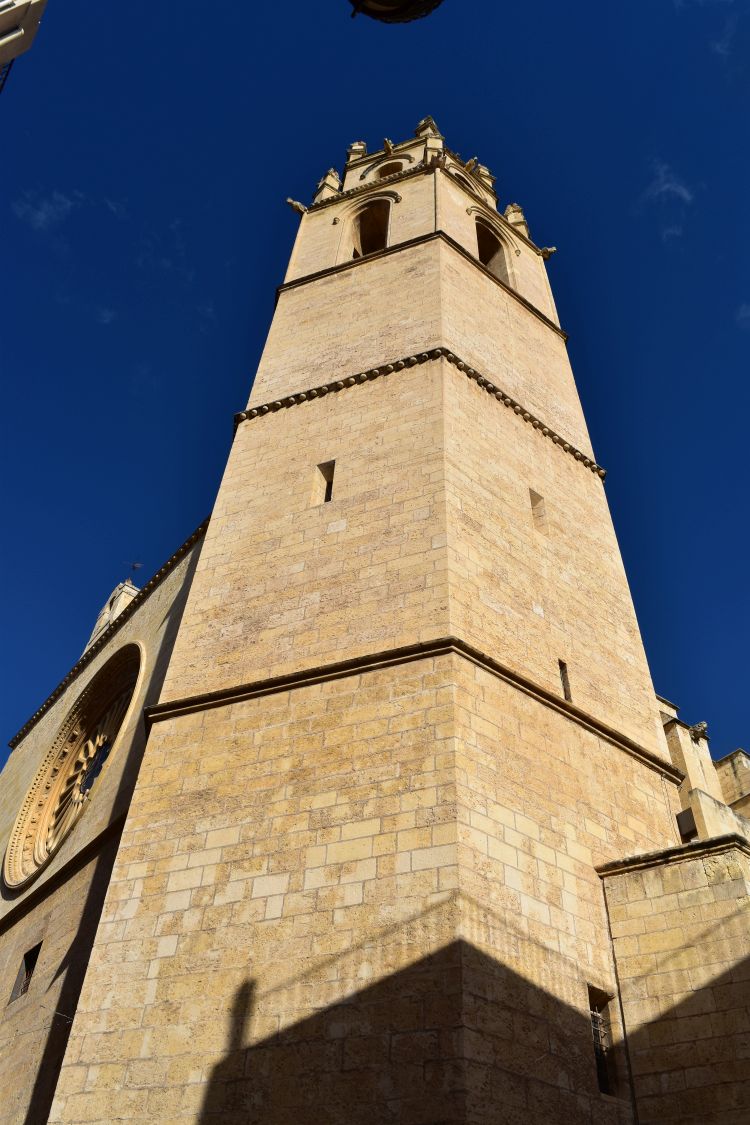
South of the market square we visit the late gothic cathedral San Pere from the early 16th century.

aaa_0099-small

Inside we find two sisters praying and singing at low voices. It is a solemn atmosphere. Bump! A group of tourists enters. Their tour guide starts to talk in a loud voice. The prayers continue gently. Ursula frowns and whispers: “This is an absolute no-go!”

aaa_0109-small

.

The fish market or Peixateria Velles

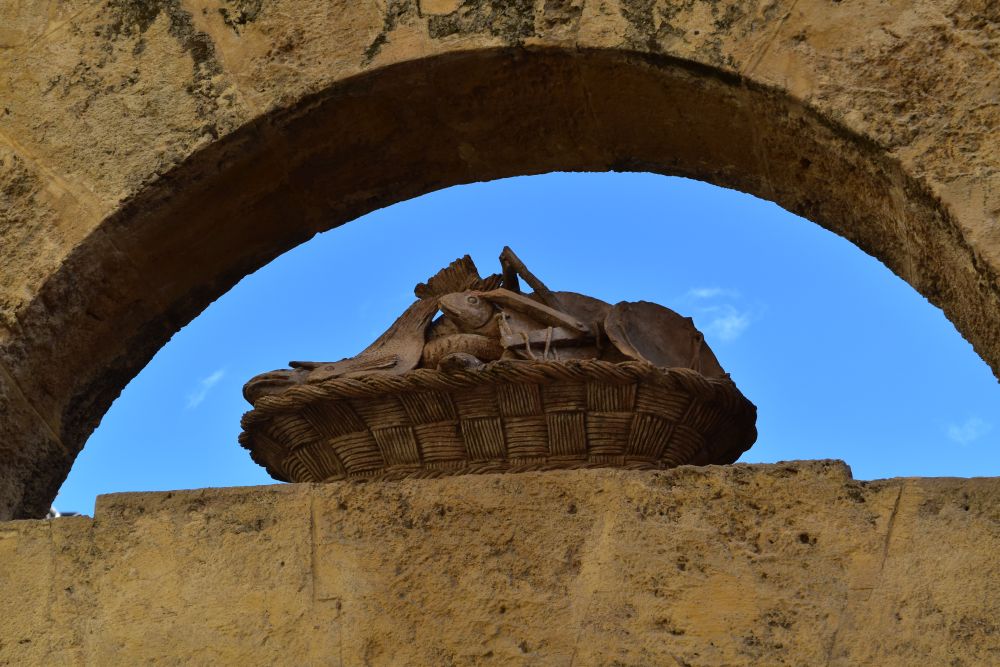
Behind the church we enter the fish market (Peixateria Velles) with the sculpture of a basket containing fish products next to the entrance.

aaa_0136-small

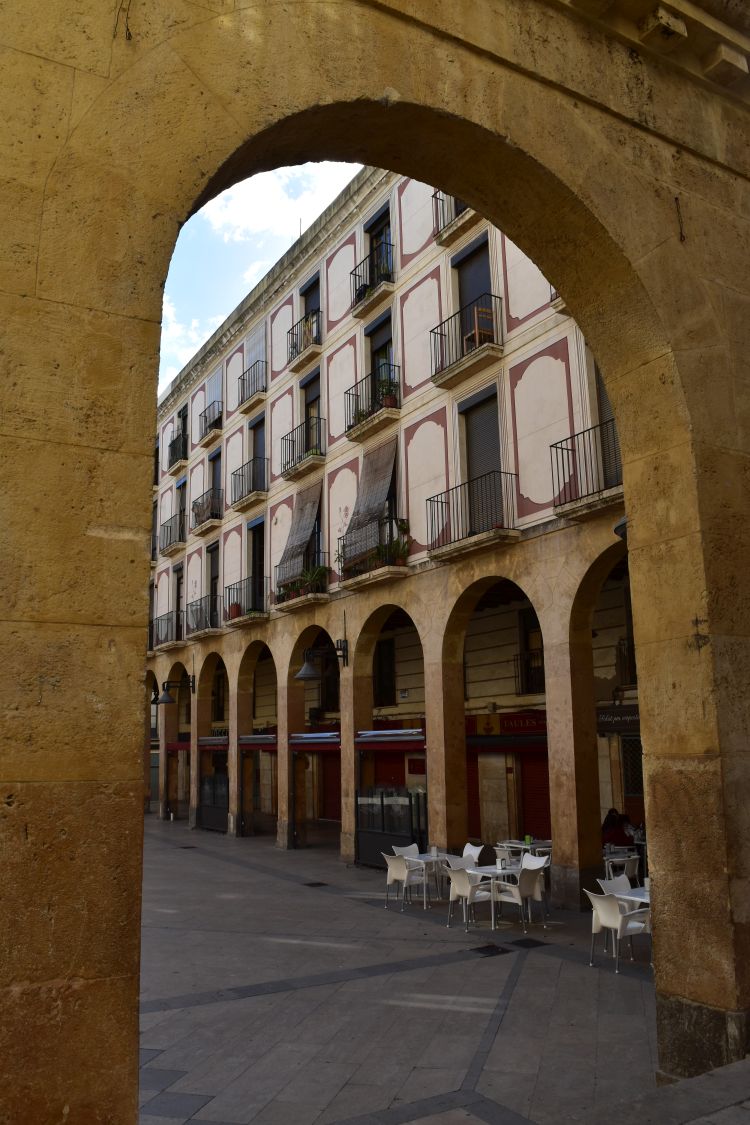
Through the gate we see the galleries and inviting restaurants and bars.

aaa_0105-small

.

Modernist houses in Reus – a selection

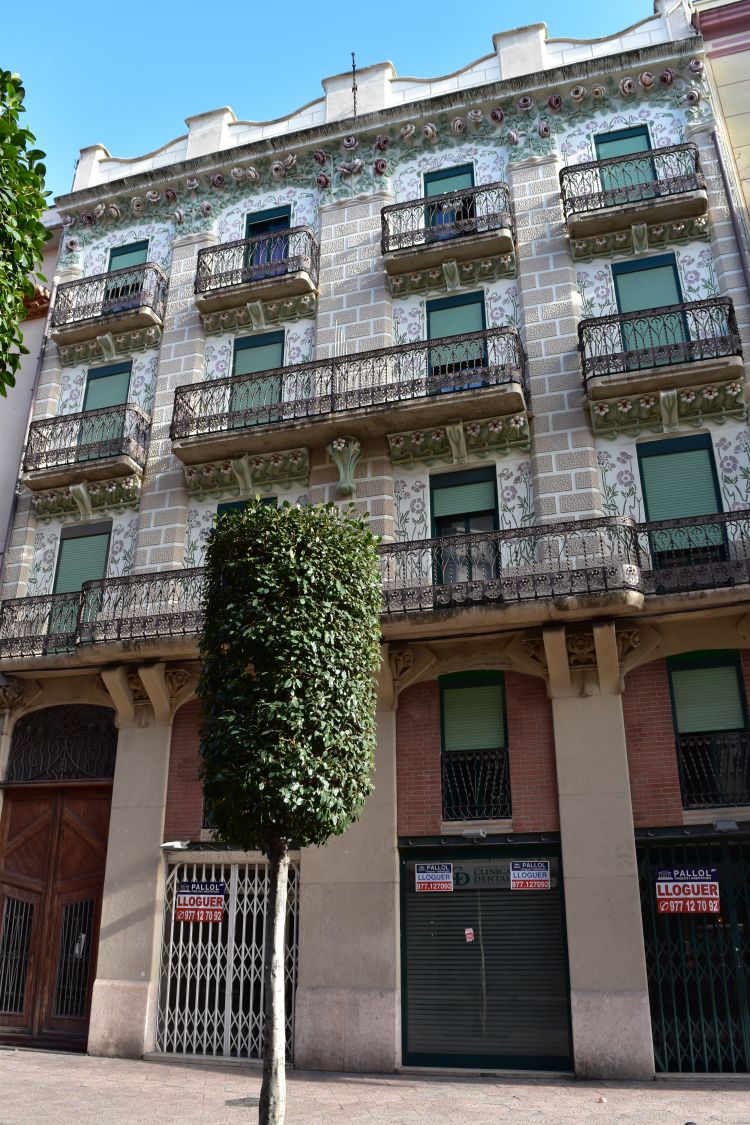
Finishing off our day we follow a walk proposed by Reus tourism to discover a selection of the 29 Art Nouveau buildings proposed. This is the Casa Anguera behind the fish market…

aaa_0143-small

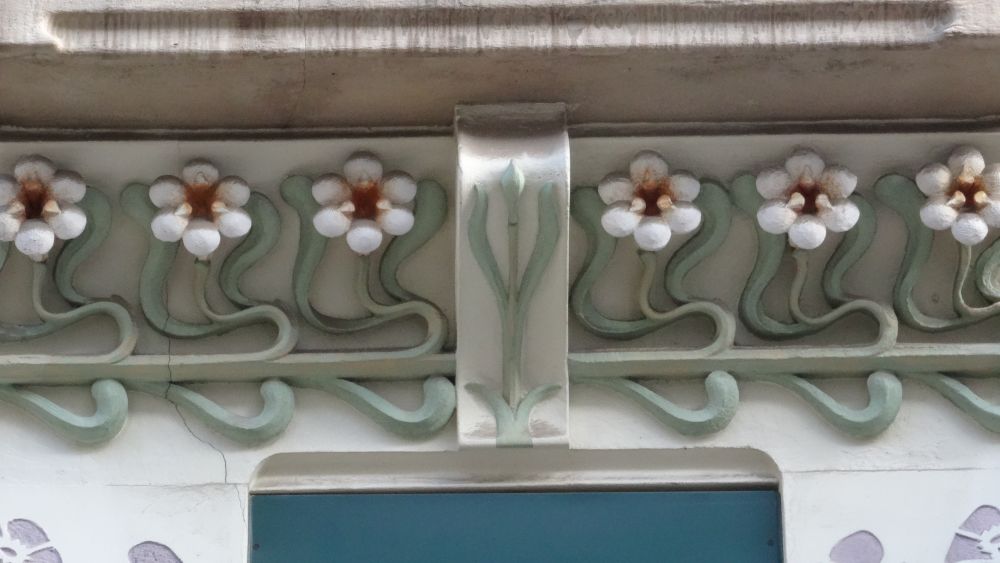
… with a detail of the flower ornaments.

dsc09327-small

The Casa Serra and the Casa Marco mark the entrance to the small street, where Gaudí was born.

dsc09349-small

The blue tiles of the Casa Laguna adorn the street leading from the square of Marshall Prim to the market square

aaa_0151-small

Not far from here is the Casa Carpa with the painted balcony doors.

aaa_0156-small

With Ursula’s directions I succeed to manoeuver my car out of the narrow garage under Marshall Prim (five floors up through rectangular small corridors!).

Reus is a small town worth a visit!

Back at Hospitalet I enjoy the inside pool with the swimming lanes – it is very busy here with swimming courses and water gymnastics going on around me.

In Catalonia (Spain) – some excursions around Hospitalet: Ebro Delta and Tortosa

On a sunny Friday in November 2017, we get up early to take photos in the beautiful landscape of the Ebro delta and then continue to Tortosa on the Ebro. This is another excursion that we go for, while enjoying the small apartment of our friends in Hospitalet de l’Infant at the end of October until mid November 2016.


The morning light in the Ebro Delta

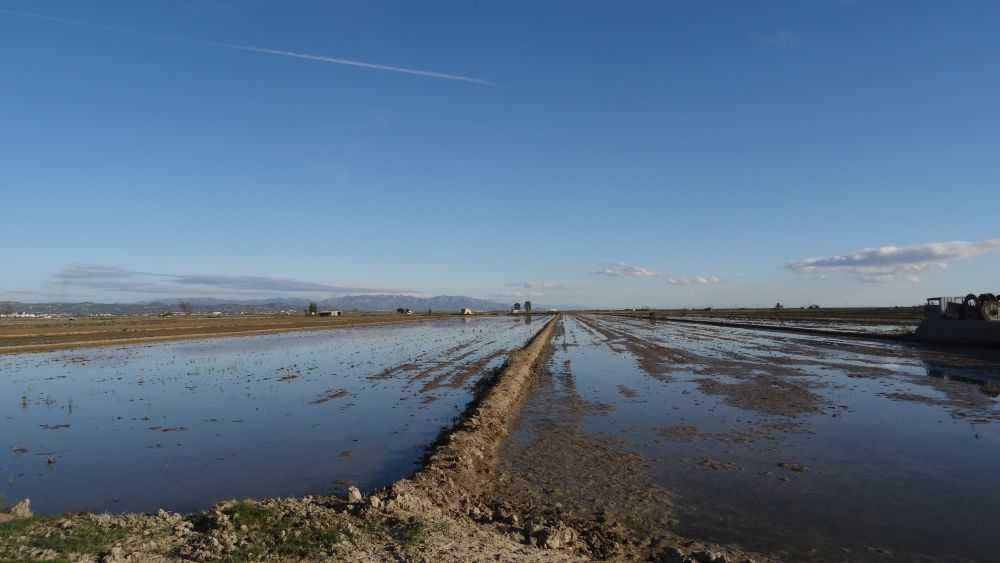
In November the rice fields have been harvested awaiting the next cultivation cycle. We enjoy taking photos in the atmosphere of this morning.

aaa_0202-small

Ursula has a very good “photo eye”, when capturing the fields…

dsc09432-small

… and the black egrets reflecting in them.

dsc09423-small

Then the birds decide, we are too close and fly away.

dsc09433-small

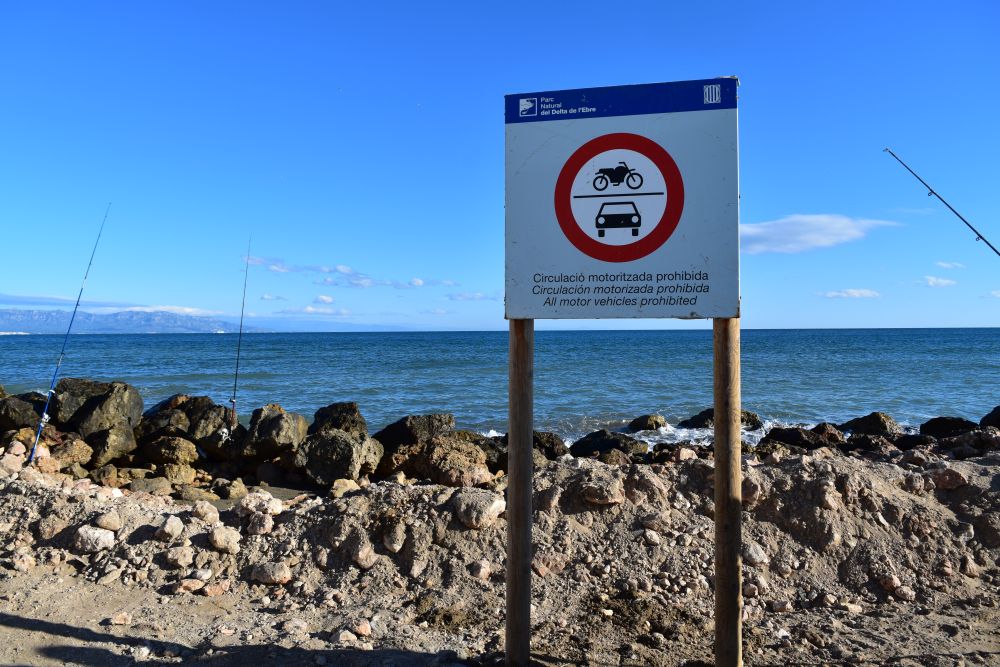
We have a chat with a fisher – he comes here regularly from Andorra. And yes, I do understand that driving is forbidden here…

aaa_0217-small

In Deltebre we visit the Ecomuseum. This place is a miniature Ebro Delta showing its plants and wild life as well as the economy: Fishing, the cultivation of rice and – more inland – the cultivation of vegetables and fruit.

.

Tortosa – Basilica-Catedral de Santa Maria

In summer we had visited Tortosa, and it was pouring with rain. The town seemed grey and not very welcoming and the cathedral was closed. Now we return, leave our car in one of these narrow Catalonian parking houses in the city center and set out to explore the Basilica-Cathedral de Santa Maria  with the bishop’s palace and the convent. The gothic construction started in 1347 (Thomas Schröder: “Katalonien”, Michael Müller Verlag 2015). From outside, the cathedral seems “uncompleted”: The roof is flat.

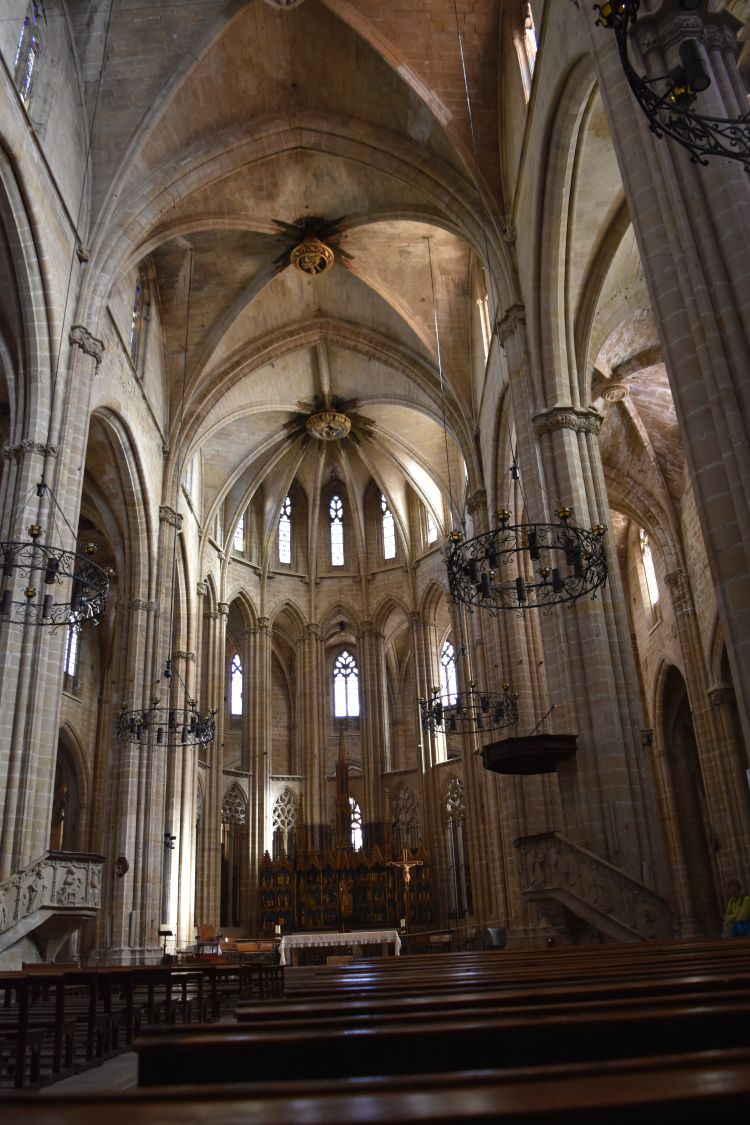
The nave is spacious with high vaults – just right for the archbishop in the 15th century.

aaa_0240-small

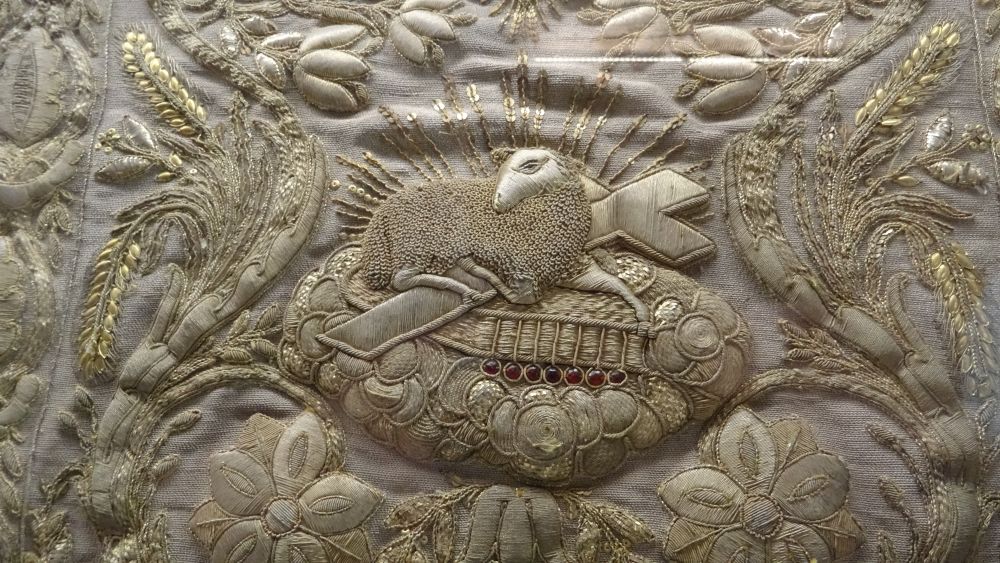
The exhibition shows treasures such as this lamb embroidered in gold…

dsc09482-small

… or this funerary object.

dsc09484-small

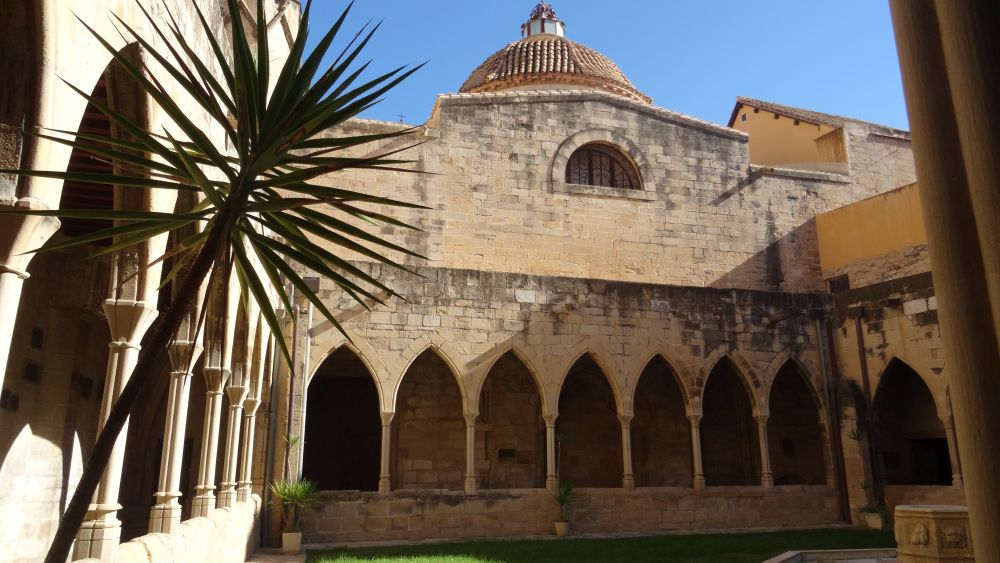
I love the cloister dating from the 13th century…

dsc09500-small

… and use this photo of the arches for my 2016 Christmas card.

aaa_0233-small

.

Tortosa – Jewish center

After a break in a small bar that serves excellent tapas, we stroll through the former Jewish quarter.

aaa_0244-small

All that is left are the street names (such Carrer and Travessia de Jerusalem) and some plates explaining where the synagogue and the kosher butcher were located.

aaa_0248-small

Now we find a halal butcher instead.

aaa_0245-small

.

Tortosa – history  in the former slaughterhouse

The slaughterhouse has been built by Pau Monguió. This art-nouveau building now hosts an exhibition of the history of Catalonia. The display starts with the stone age, continues with the Iberians trading with the Phoenicians (“Iberians” comes from “Ebro”) , the Romans (Tortosa was then called “Dertosa”), the Visigots and the Moors. In 1148 Tortosa was sieged during the Second Crusade and reconquered by an allied army. In the 15th century, Tortosa became an important regional center and the seat of the archbishop. It lost its importance in the 19th century and particularly suffered from bombings in the civil war of 1936-1939.

aaa_0258-small

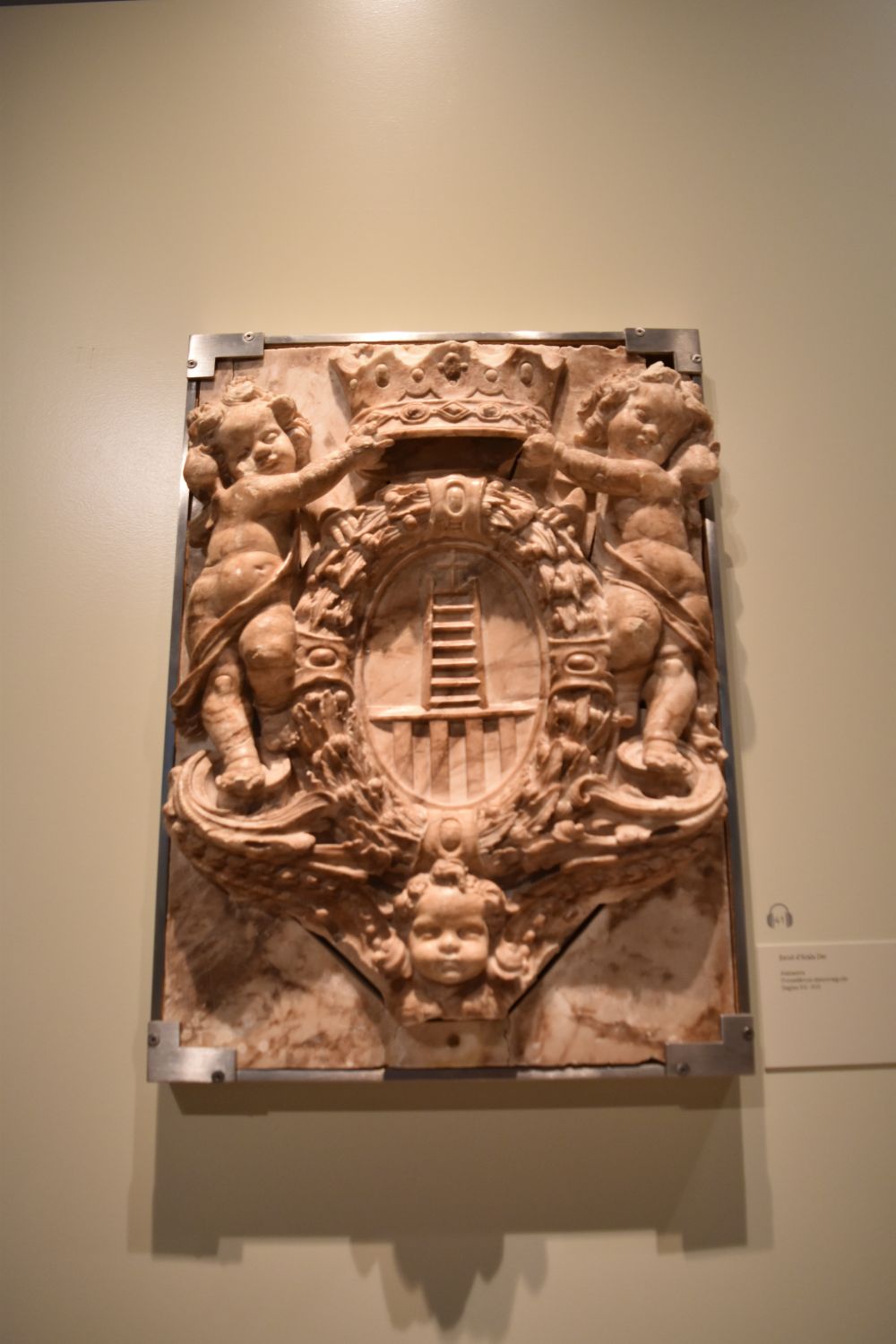
I particularly like the coat of arms of the monastery Scala Dei near Montsant made from alabaster – it represents the Escala Dei or the ladder of God.

aaa_0264-small

After a short visit in the Tortosa market, we maneuver our car out of the narrow, narrow parking house and drive back to our small apartment in Hospitalet de l’Infant.


In Catalonia – Spain: Discovering Escornalbou, Falset and Siurana

On a very windy, chilly and cristal celar day we explore the monastery Escornalbou, the small town of Falset and gorgeous Siurana perched on a steep rock. All these places we find near Hospitalet de l’Infant, where – in the apartment of our friends – we spend a few days end October until mid November 2016 .

.

Castillo-Monasterio de Sant Miguel d’Escornalbou

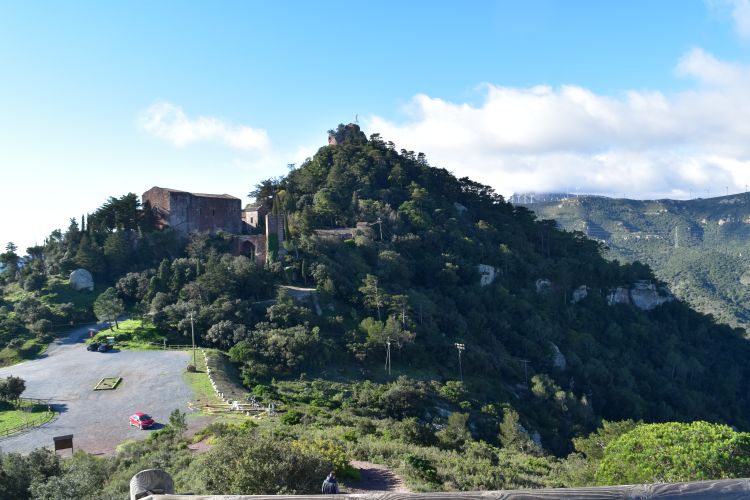
A sinuous road takes us up to the Castillo-Monasterio de Sant Miguel d’Escornalbou on about 800m above sea level. The monastery is perched on a pass with the chapel Santa Barbara above it. We look at the monastery from the viewpoint across.

aaa_1189-small

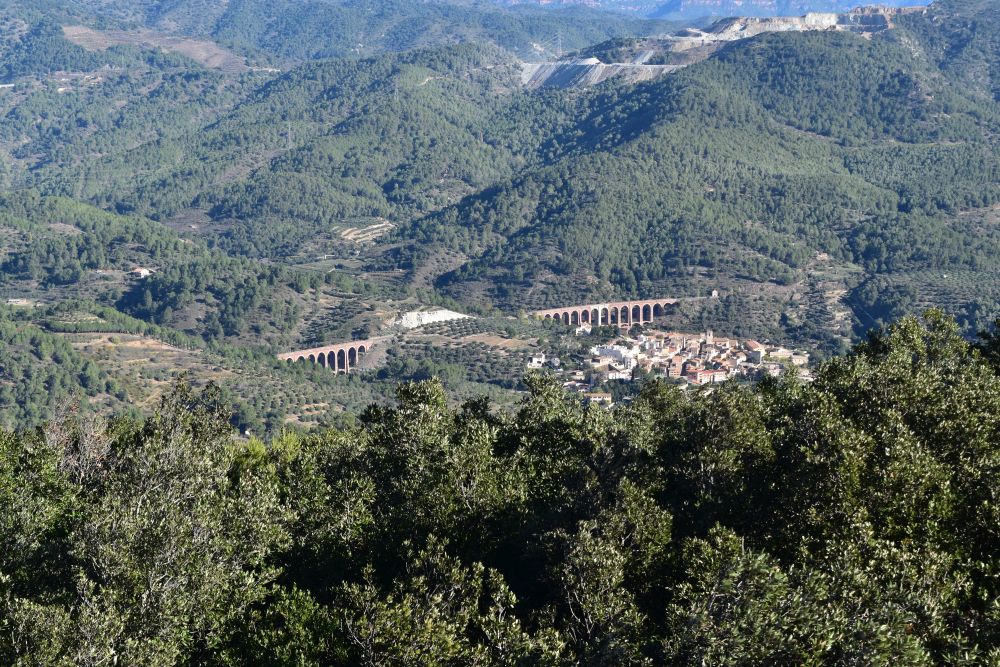
From here we also have a gorgeous view of the mountains…

aaa_1190-small

… and of the sea.

aaa_1195-small

The monastery was built in the 12th/13th century. First Augustinian monks lived here and later it was inhabited by Franciscan monks. In 1835 the monastery was confiscated.

This is the façade of the Romanesque church.

aaa_1200-small

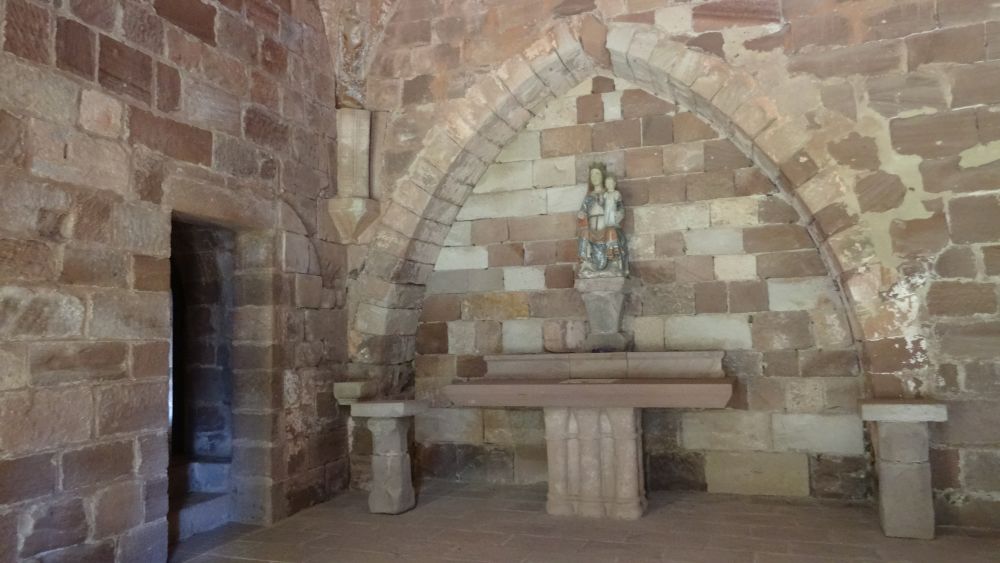
Inside we find Maria and her son.

dsc09188-small

From the cloister there is an impressive view of the Mediterranean Sea. It must have been a pleasure to pray and meditate here.

aaa_0005-small

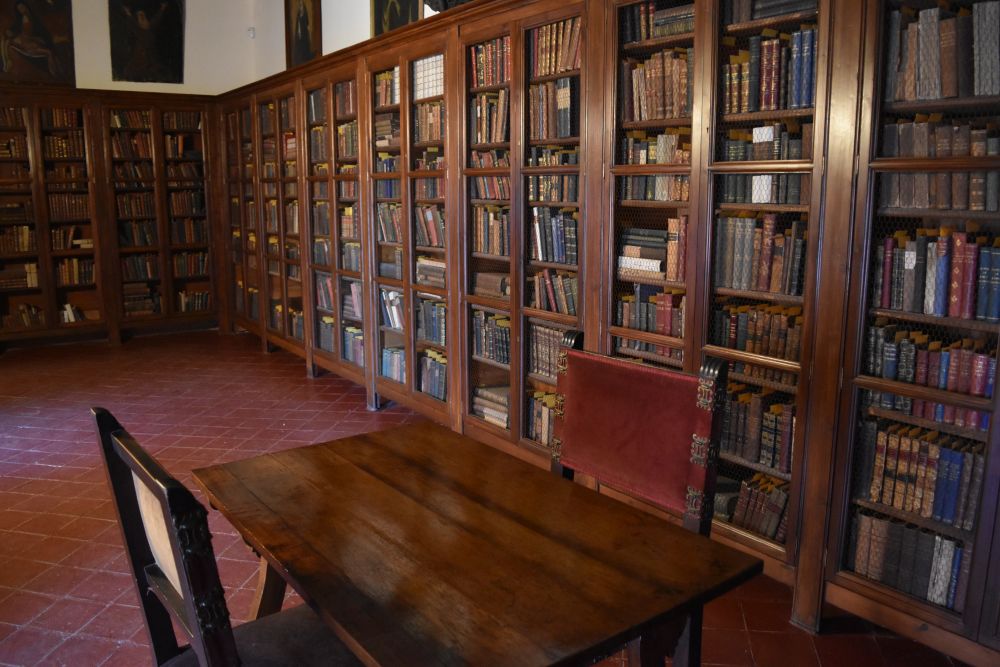
In the 17/18t century the castle has been added to the monastery. It was in use until about 1980. Mr Toda lived here. I am impressed by the luxury and in particular by the library…

aaa_0024-small

… and by the view from the window.

aaa_0019-small

Perhaps it was a bit lonely to live up here.

.

Shopping and lunch in Falset

We continue our way on the sinuous path through the mountains to stop in Falset. This is the central town of the Montsant and Priorat area. The name “Falset” comes from sickle – and their are two sickles in their coat of arms (see Wikipedia and Miquel Hudin: “Vinologue Montsant”, Leavenworth Press 2014, p. 64).

My “Vinologue” tells me that Vins I Olis offers a good selection of wines from the area of Monsant and Priorat on one spot. We buy some cheese…

aaa_0032-small

… and some wine – in particular I look for “Scala Dei” (Granatxa), and with the advice of the shopkeeper, Marc, I acquire a selection of cuvées with local and international grapes.

aaa_0033-small

Marc, reserves a table for us in the El Cairet in the old city center – for 13:30, which is early here. The restaurant opens so early – just for us.

aaa_0036-small

It is a small and cosy place.

dsc09207-small

The restaurant owner is proud of the meals that she prepares with great care using regional products. Hence we order the local menus suggested by her. We particularly loved the hazelnut soup, the autumn salad with dried fruit, the bacalao (codfish) a la plancha and the fig dessert on puff pastry. This restaurant is a place to remember and return!

.

Siurana – perched on a steep rock – an Eldorado for climbers

We leave Falset and using sinuous roads we drive to the small town Siurana perched on a rock above the river Siurana. Campers are bordering the road and climbers are hanging in the cliffs or crags. This is an eldorado for climbers. The recent edition of “Insipiration”, the newspaper of one of “my” Swiss outdoor shops, talks about “Sehnsucht Siurana” or “Longing for Siurana”. Also the Internet is full of information about the climbing routes (e.g. planet mountain). One route is called after the princess Abdelaza that jumped down with her horse, because she did not want to be captured by the Christians, when they conquered Siurana in 1150.

aaa_0052-small

On three sides the village is surrounded by cliffs. Using the small gate we enter and stroll through the narrow streets.

dsc09236-small

The Romanesque church Santa Maria is located above the cliffs.

dsc09229-small

The portal has a modestly decorated tympanum with Christ, the sun, the moon, two lions and eight persons, presumably apostles.

dsc09220-small

Across we see the table mountain Montsant under clouds. It is chilly and very windy in Siurana.

aaa_0078-small

Before leaving we have a cafecito in the friendly bakery at Cornudellas. We are by far the oldest guests. We are surrounded by young climbers that are taking a warm drink before spending the night in their campers. We are happy to return to our warm apartment in Hospitalet, and I look forward to having a swim in the heated public inside pool.


In Catalonia (Spain) – some excursions around Hospitalet: L’Ametlla

On 1st of November, we visit l’Amettla del Mar – south of Hospitalet de l’Infant, where we spend some weeks end October to mid November 2016 enjoying the small apartment of our friends.

L’Amettla del Mar is a small fishers’ town. We always buy fresh fish from l’Amettla at Jordi’s in Hospitalet (delicious!). Also Wikipedia says that fishing is the main activity of l’Amettla. The town is built on rocks overlooking the natural harbour where the fishing boats are resting during the day.

aaa_0912-small

The weather is warm and sunny.

aaa_0928-small

Along the rocks there is a promenade with outlook points.

aaa_0925-small

It is three pm – just the right time for dinner in Catalonia (uff, so late for me, my stomach always rebels much earlier).

dsc08805-small

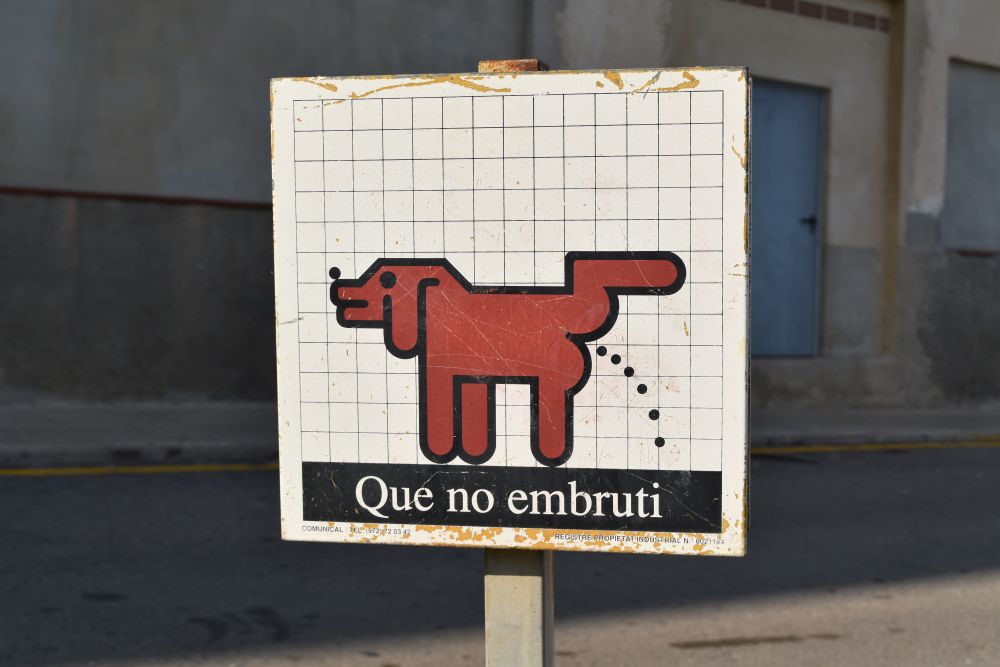
Dogs may understand Catalonian here.

aaa_0938-small

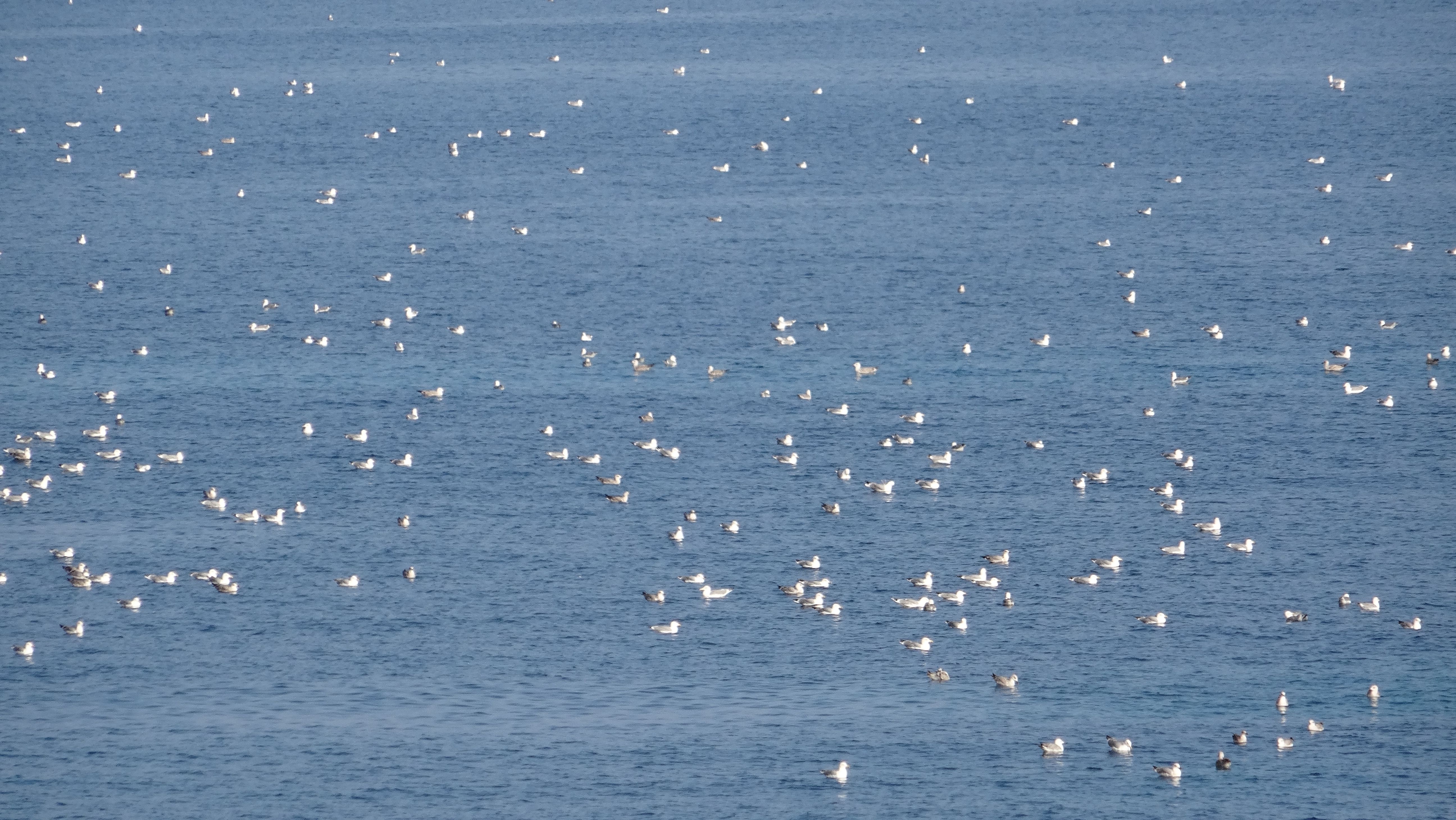
Many, many seagulls have congregated on the water of the Mediterranean Sea. These small white spots are seagulls…

aaa_0941-small

… and they are enlarged now.

dsc08810-small

Tourism is the second source of income of l’Ametlla – north of the city we find wealthy private houses.

aaa_0946-small

Behind this bay there is a camping site with an Olympia size pool (now closed) and a hiking path. A good place to camp in summer.

aaa_0949-small

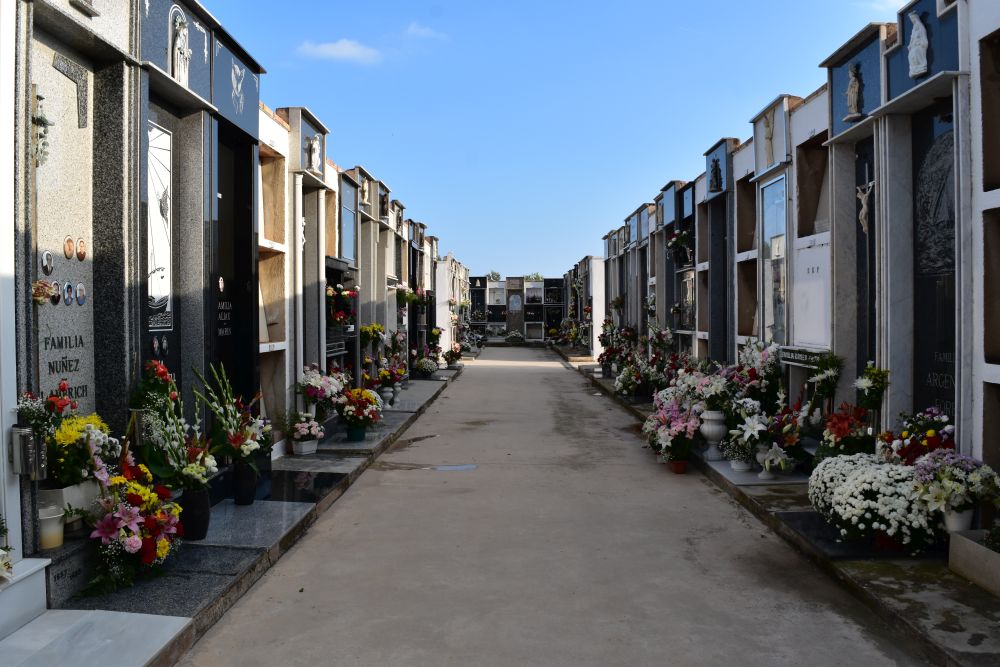
We follow the rocky coast line and reach this cemetery that is now – on 1st of November – richly adorned with flowers and well visited by local people that remember their ancestors.

aaa_0967-small

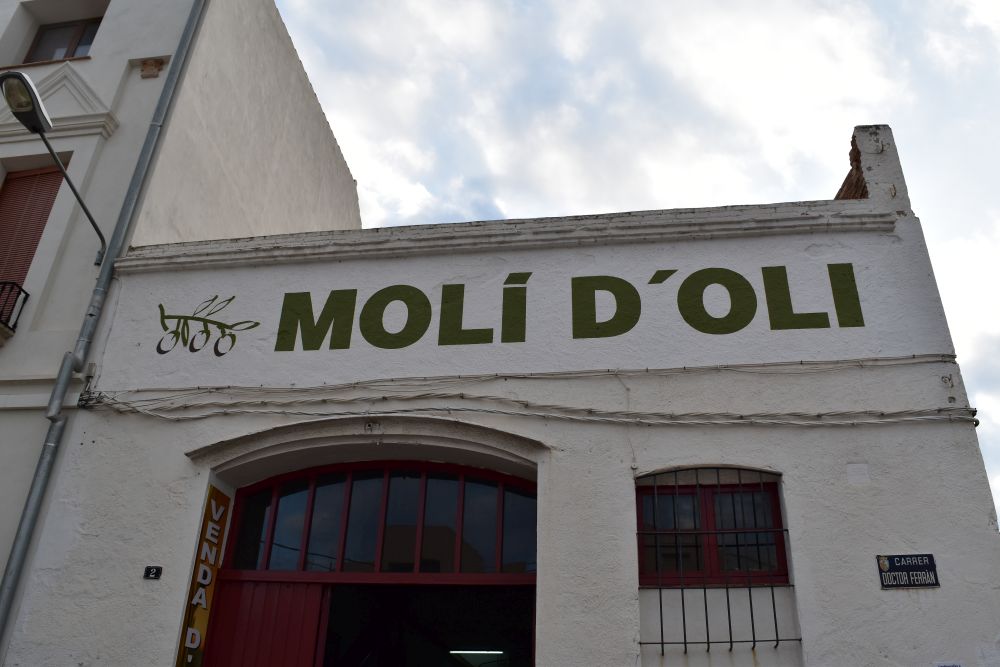
Just before driving “home” to Hospitalet de l’Infant, we stop in this small oil mill – the third pillar of income of l’Ametlla is agriculture.

aaa_0981-small

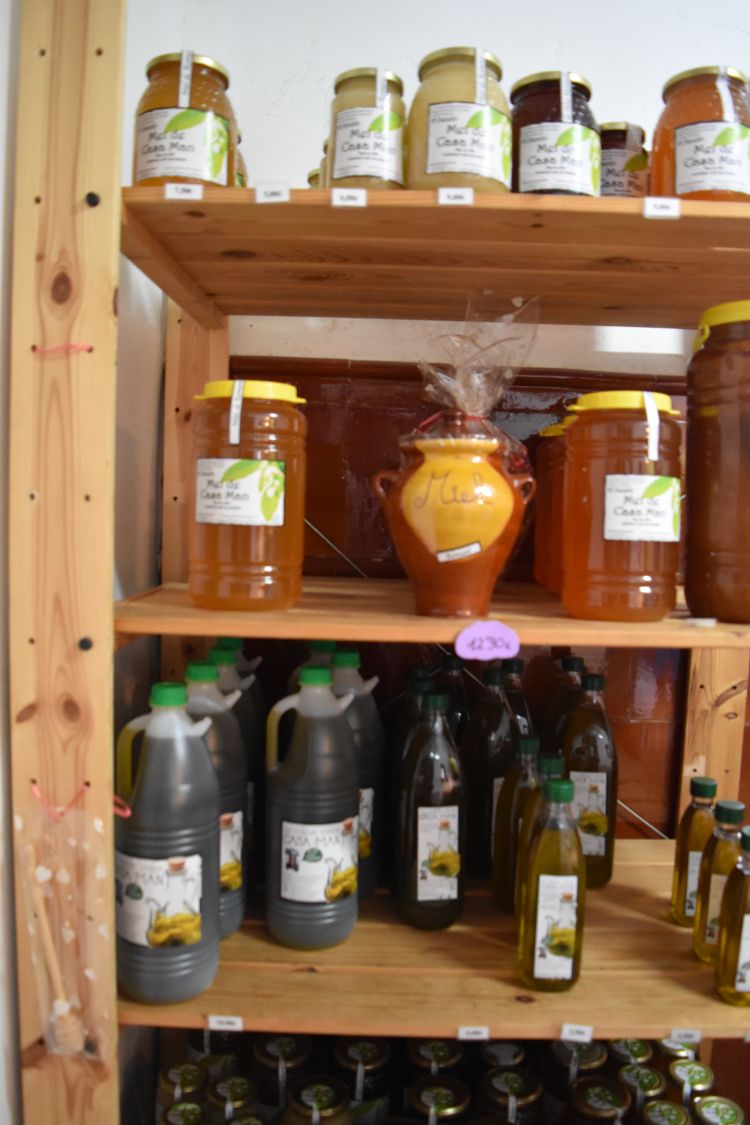
We buy honey and virgin olive oil.

aaa_0974-small

Great souvenirs and gifts for Christmas – at home I savour the tasty rosemary honey – it is delicious.

L’Ametlla was a charming experience – there is so much to see around Hospitalet.


In Catalonia (Spain): Discovering Capçanes, Gandesa, El Pinell de Brai and Miravet

On a sunny Sunday we explore the Montsant and Terra Alta region near Hospitalet de l’Infant. In Hospitalet we spend a few days in the apartment of our friends (October/November 2016).

.

Capçanes – a success story of some brave Montsant wine growers

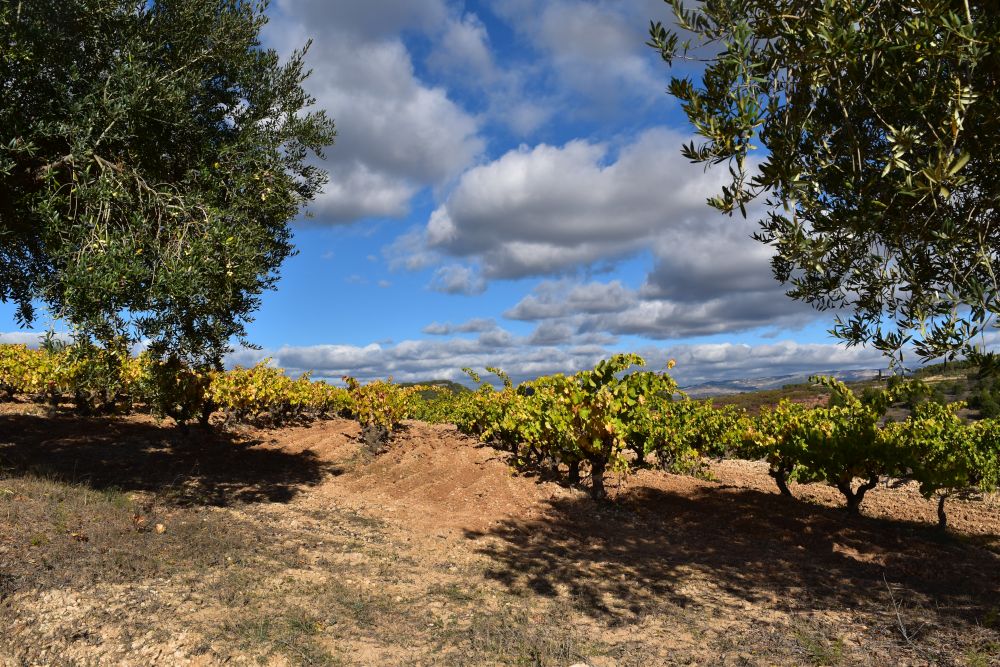
My “Little Johnson” says that the cellar of Capçanes produces the kosher wine Peraj Ha’Abib that is to be recommended. We are curious and drive to Capçanes located in the hills not far from the sea with the vineyards slowly turning yellow now.

 aaa_1128-small

aaa_1131-small

The history of the cellar of Capçanes and their kosher wine impresses me. As described on their Website, the wine growers established their cooperative cellar in 1933. In 1995 the cooperative was asked by the Jewish community of Barcelona, whether they could produce kosher wine. We join a tour to the cellar. Our guide explains us that the wine growers decided to face the risk, took a credit and rebuilt the cellar of their cooperative including a separate production line for kosher wine. They were just ready, when the demand for bio wine emerged – and much of the production of kosher wines is similar to the natural and biological production methods (“beautifying” is not allowed for kosher wines). Now they had a regular buyer of their kosher wines (the Jewish communities) and their wines are also in high demand from  all over the world.

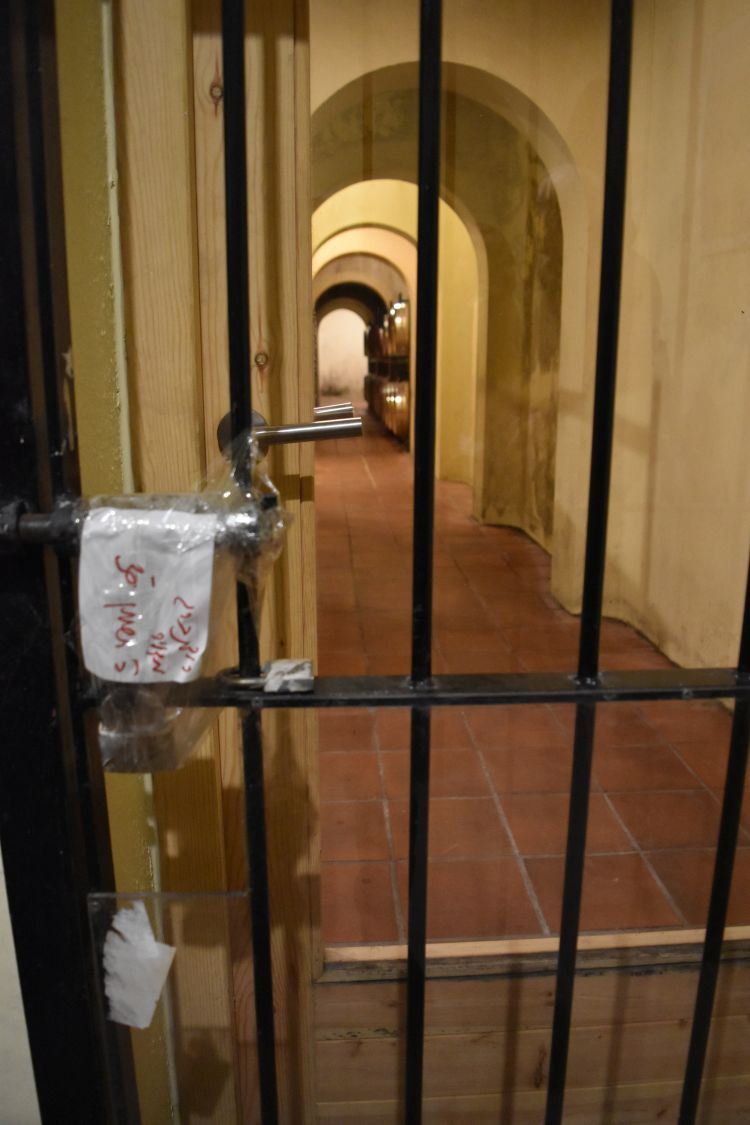
The Tagesanzeiger of 27th January 2017 (Michaelis Pantelouris) describes in detail, how strict the rules are for the separate kosher production line. This is the cellar for developing kosher wines.

aaa_1134-small

It is locked and sealed and only the Rabbi is allowed to access this part of the cooperative cellar. The enologist (Jürgen Wagner) has a cellar with the same setup, and he surveys the development of the kosher wines “indirectly” in cooperation with the Rabbi.

We buy some wines including a bottle of the Peraj Ha’Abib (from the non kosher production line). I will share it with a good friend of mine. Innovative is also their series of four terroir wines “La Nit de les Garnatxes” – I take a selection of two bottles. Furthermore we bought vinegar and olive oil called “Siurana” – gifts for Christmas 2016. I gave one bottle of Siurana oil to my nephew, an agroecologist, and he loves it.

.

Gandesa – the welcoming capital of Terra Alta

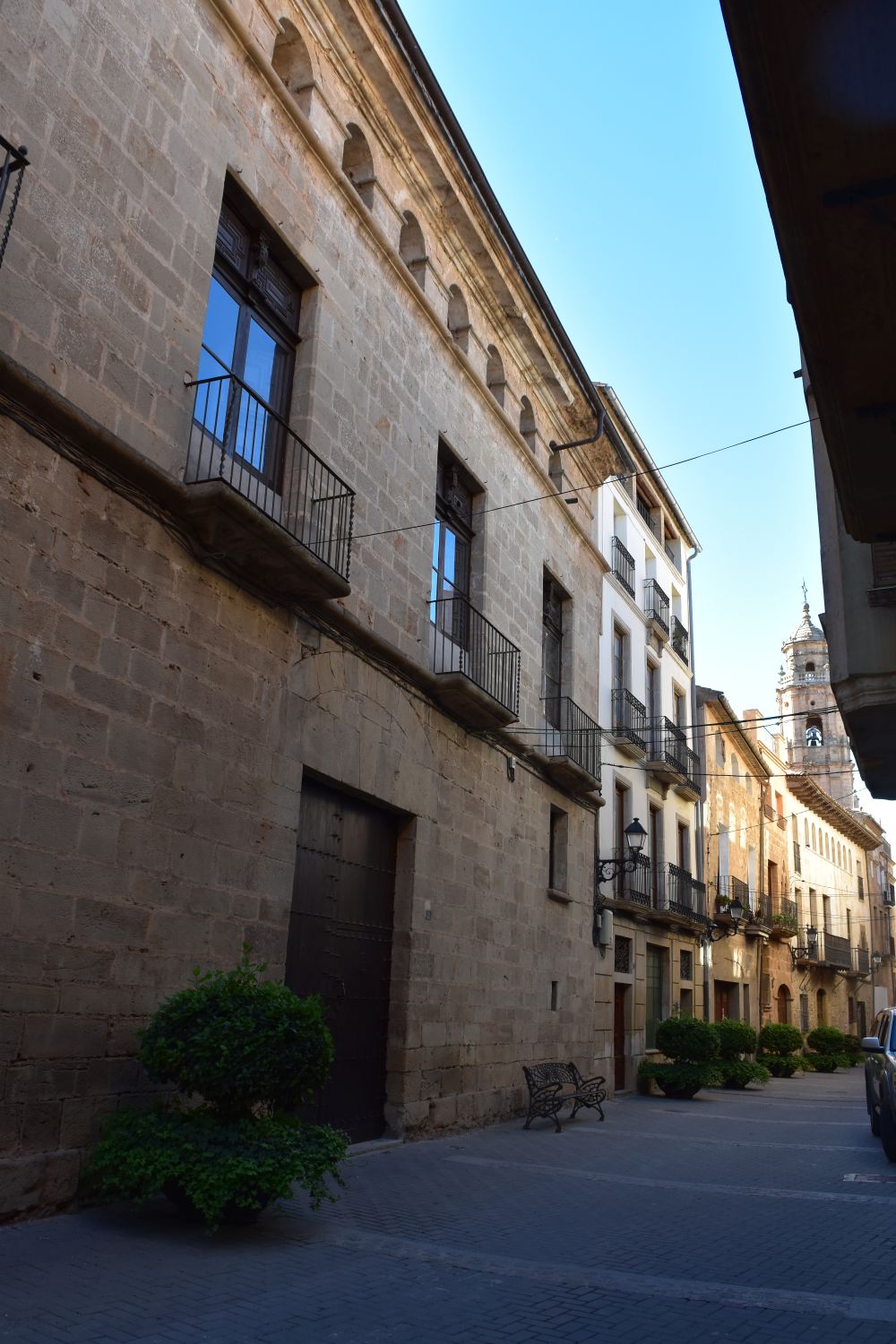
Gandesa is the capital of Terra Alta, like Montsant also a DO wine region. Narrow streets in the old town. We can see the church of Assumpcio.

aaa_1148-small

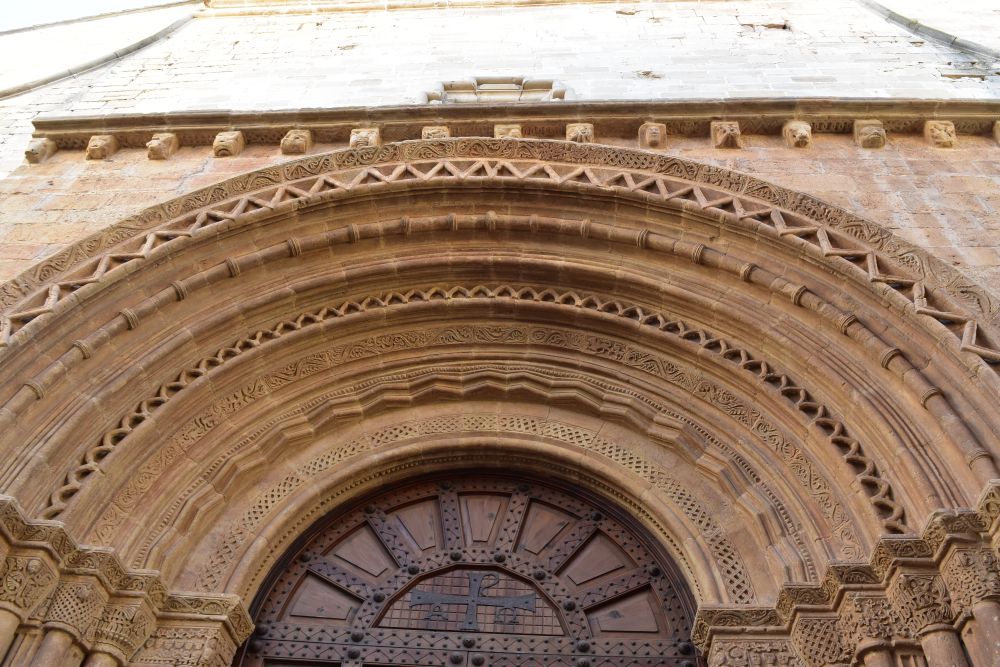
The gate has just closed, because the Sunday service has finished. This is the Romanesque west gate of the church of Assumpcio. The PDF linked in describes the sculptures and freezes  (“Gandesa – a church in New Catalonia”, no author).

aaa_1139-small

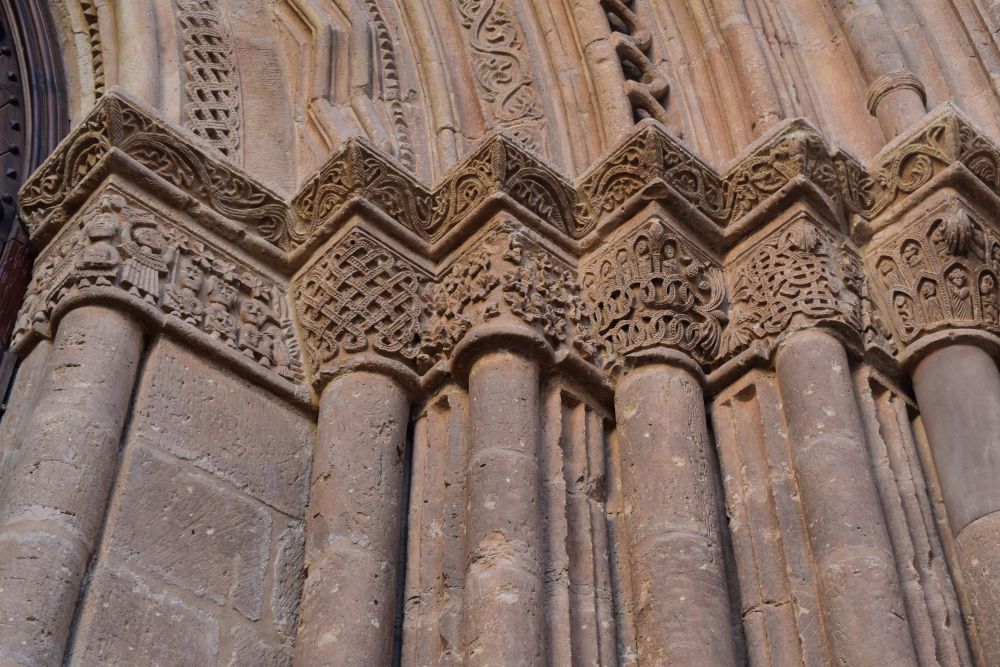
The modillions above the arch and the sculptures on the capitals are, says the PDF document, modelled after Lleida, and they tell biblical stories and give advise for good behaviour.

aaa_1143-small

We say hello to St. Jacob the pilgrim standing in a shell with his walking stick and his large hat. This is a more recent statue.

 aaa_1137-small

Now we are hungry. We find an unpretentious small restaurant. Inside we are heartily welcomed and the owner-cook tailors our lunch meal according to our wishes. “We are a restaurant, we have salad, we have tapas, we have whatever you wish…”, he says. With us are eating more guests and they all look happy. So did we. Our meal was delicious.

.

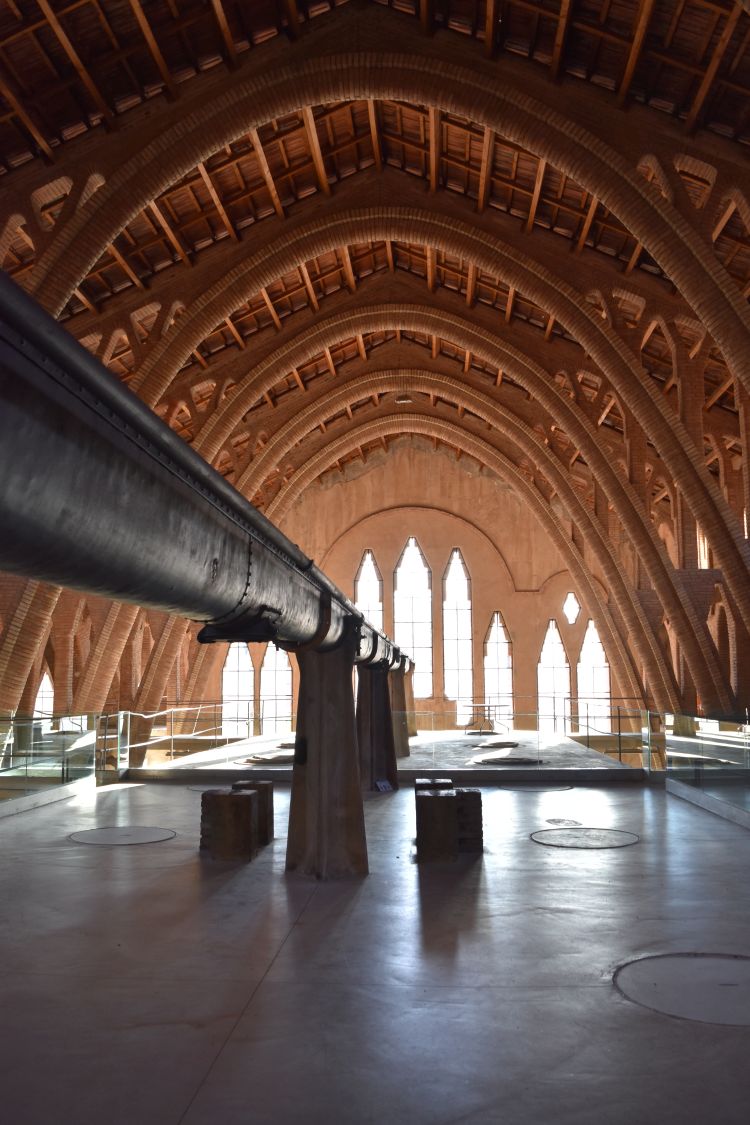
El Pinell de Brai – the art nouveau wine cathedral or Catedral del Vi

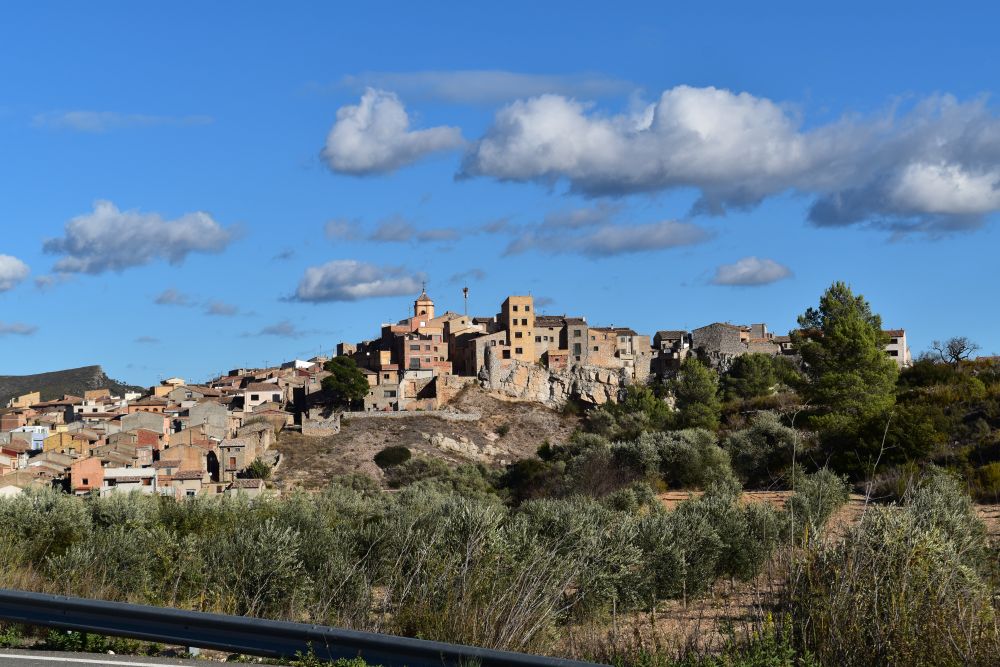
We continue our way through the hills of Terra Alta. Our destination is El Pinell de Brai, marvellously located on a rock.

aaa_1149-small

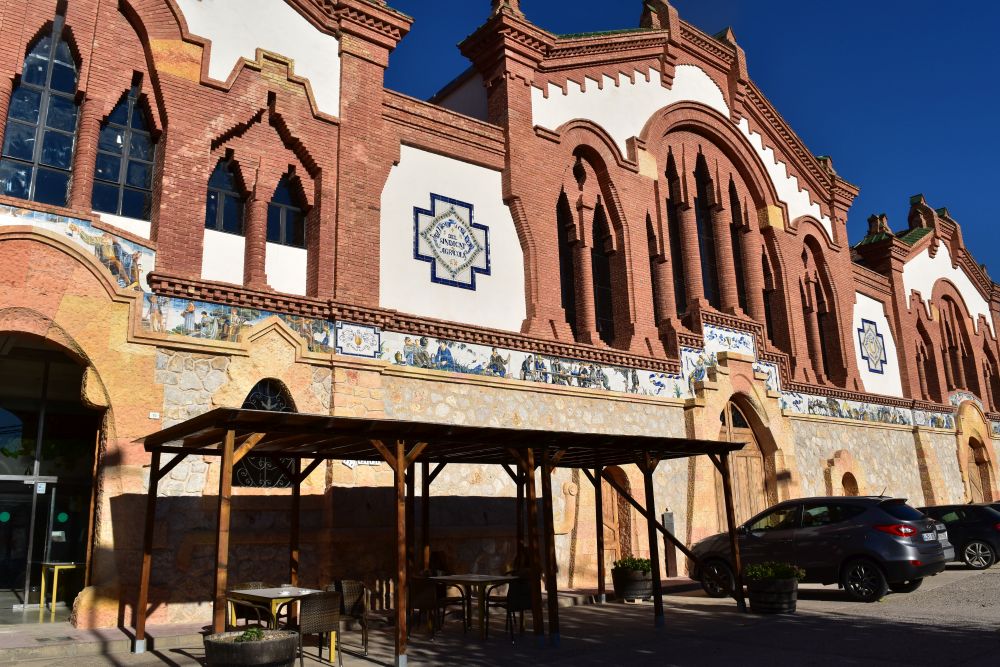
We park our car at the entrance of the small town in front of the Catedral del Vi built in modernist style by César Martinell between 1918 and 1922.  The frieze is the work of Xavier Nogues. There are many more such wine cathedrals in Catalonia. At that time cooperatives were founded and many villages joined their forces to build beautiful and functional cellars for the future. As Don Ferranti Wines explains, the people of Pinell had to mortgage their houses to finance their wine cathedral (see Don Ferranti Wines).

aaa_1151-small

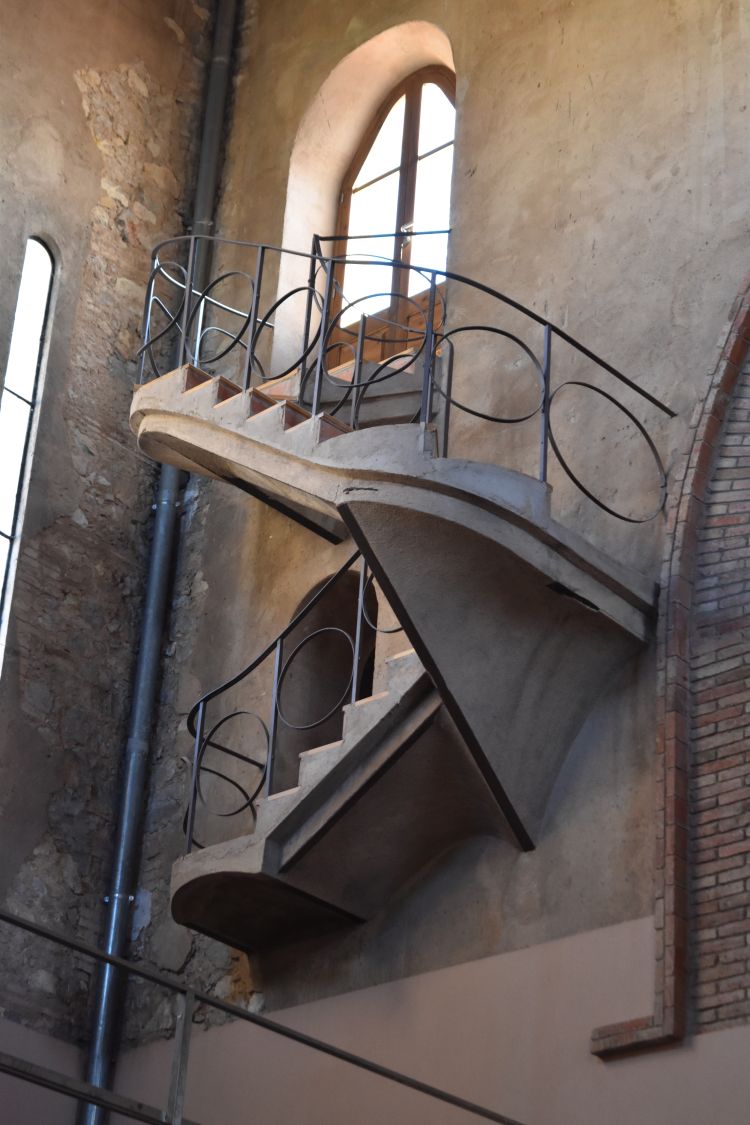
With an audio guide we follow the round tour. We love these stairs hanging on the wall.

aaa_1157-small

Here we are above the vats (where the wine developed). This viaduct has an Archimedes screw inside to transport the grape pulps. The pressing area is behind us. The high vaults prevent the production area from warming up too much. There is also a cooling system that helps to slow down the fermentation process which gives the wine or more intense taste. The construction of the cellar-cathedral was well thought-out.

aaa_1164-small

This area is no longer used for producing wine. There is a separate cellar was steel tanks for that (see Don Ferranti).

Also in Pinell we buy some souvenirs such as vinegar, olive oil and wine. One bottle we share with our friends at Monthey, when returning the key of the apartment.

.

Miravet – the castle above the river Ebro in the evening light

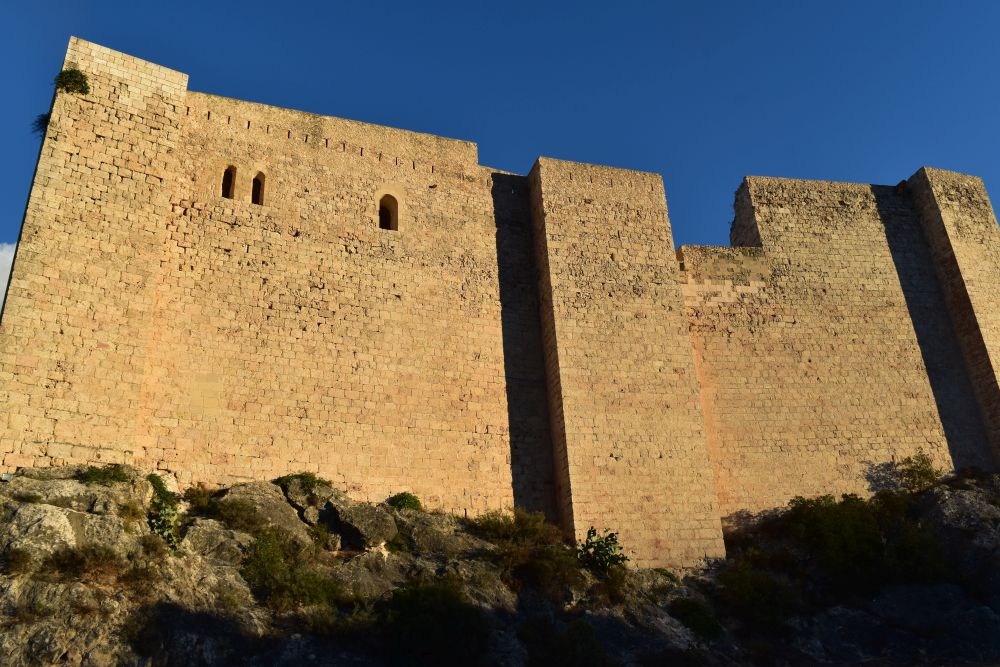
Miravet is a castle above the Ebro river. It dates from Arabic times and after having been conquered by the Christians in 1153, it was the property of the Order of the Knights Templars.

We look at the defensive walls – the castle has closed its gates just a few minutes before we arrived. We will have to return some other time.

 aaa_1166-small

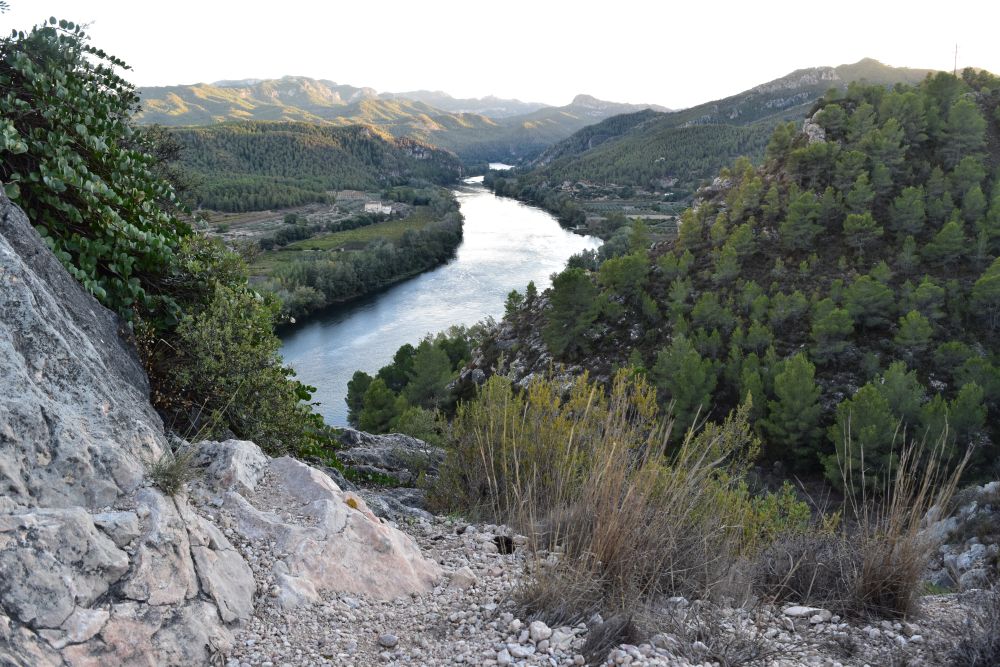
We enjoy the evening atmosphere of the river Ebro instead.

aaa_1176-small

Then we return “home” to our cosy apartment in Hospitalet.


Around Basel on a rainy day – in search of the Benkenspitz or Bänggeschpitz

Today it is a rainy and rather warm mid-February day in 2017. I set out to discover the Benkenspitz or “Bängeschpitz”. This is a narrow forest “wedge” of Benken (Switzerland) extending into France between the two French villages Hagenthal and Neuwiller (the border between Switzerland and France is drawn in pink on this Swissmobility map).

benkenspitz

This “wedge” called “Benkenspitz” is some 900m long and some 100m wide. The narrowest place is at the “entrance” in the south – just 62m wide. In the Internet I found some secondary information that says this forest “wedge” has already belonged to Benken, when Basel acquired it in the early 16th century. It is assumed that this might have been a good place for hunting. Actually I came across quite a few hunting stands in this area both on the Swiss and on the French side.

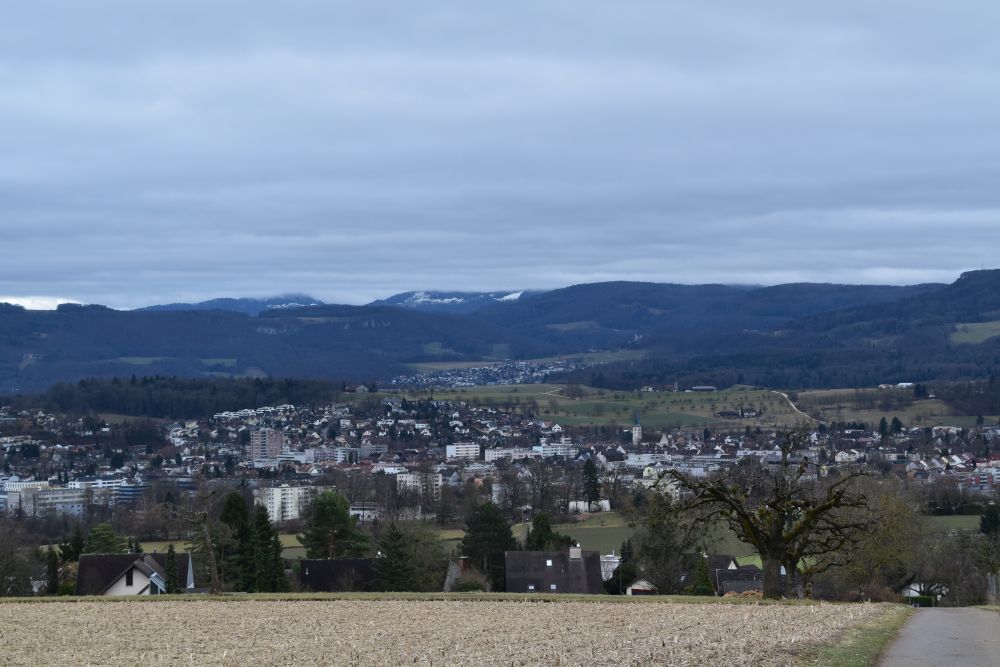
My  blog “Around Basel – looking for old boundary stones on a sunny cold day” talks about my cold winter walk to the boundary stones between Oberwil (that until about 1800 belonged to the Bishopric of Basel) and Benken (that – with Biel – had been acquired by the town Basel soon after 1500). Today it is rather warm and rainy. The Passwang is still covered with snow.

aaa_0422-small

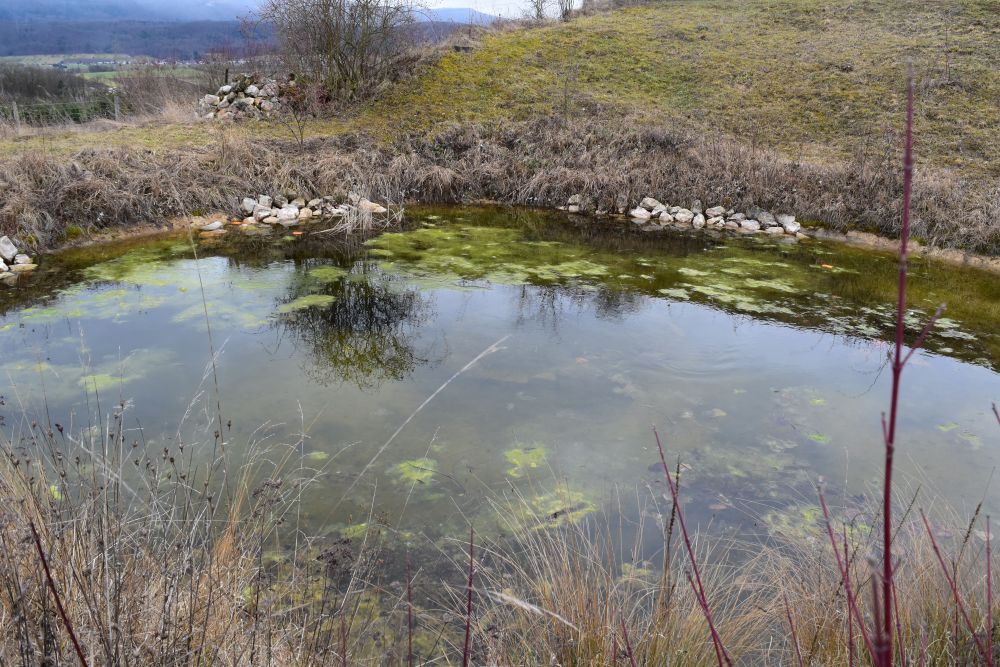
I am on the Bielhübel in front of the water reservoir with its natural pond.

aaa_0419-small

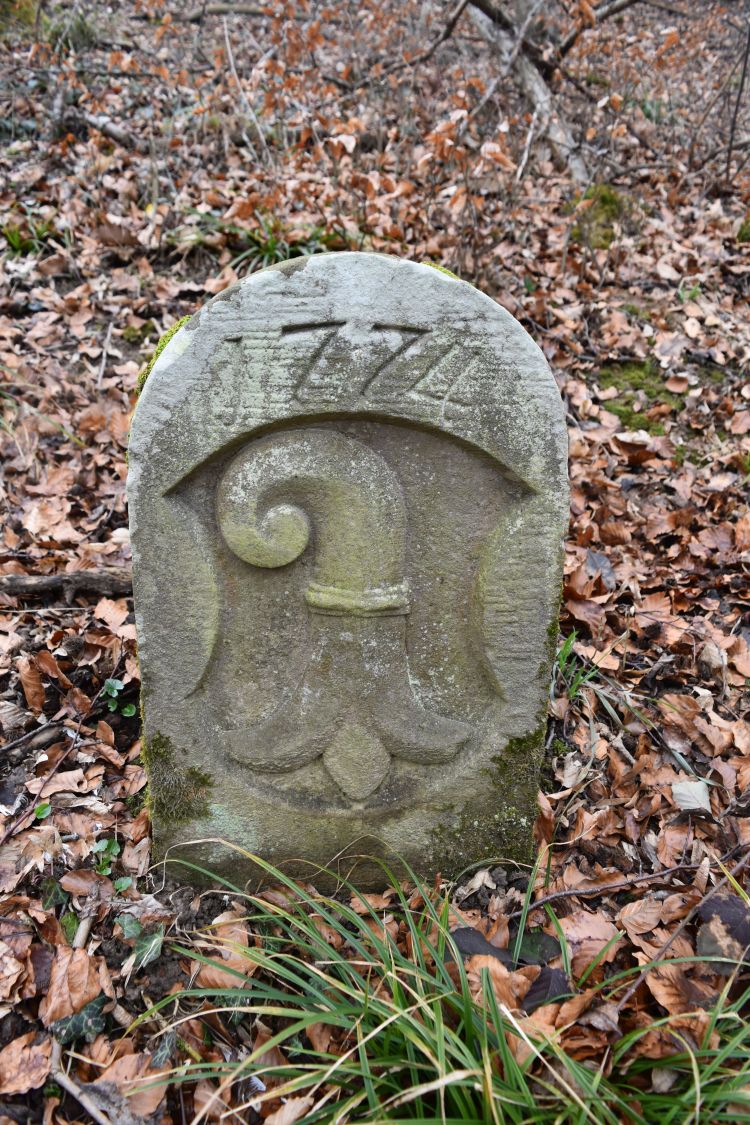
Not far from here are the beautifully restored boundary stones from the 17th and 18th century that mark the border between Oberwil (Bishopric of Basel) and Biel-Benken (belonging to Basel).

aaa_0426-small

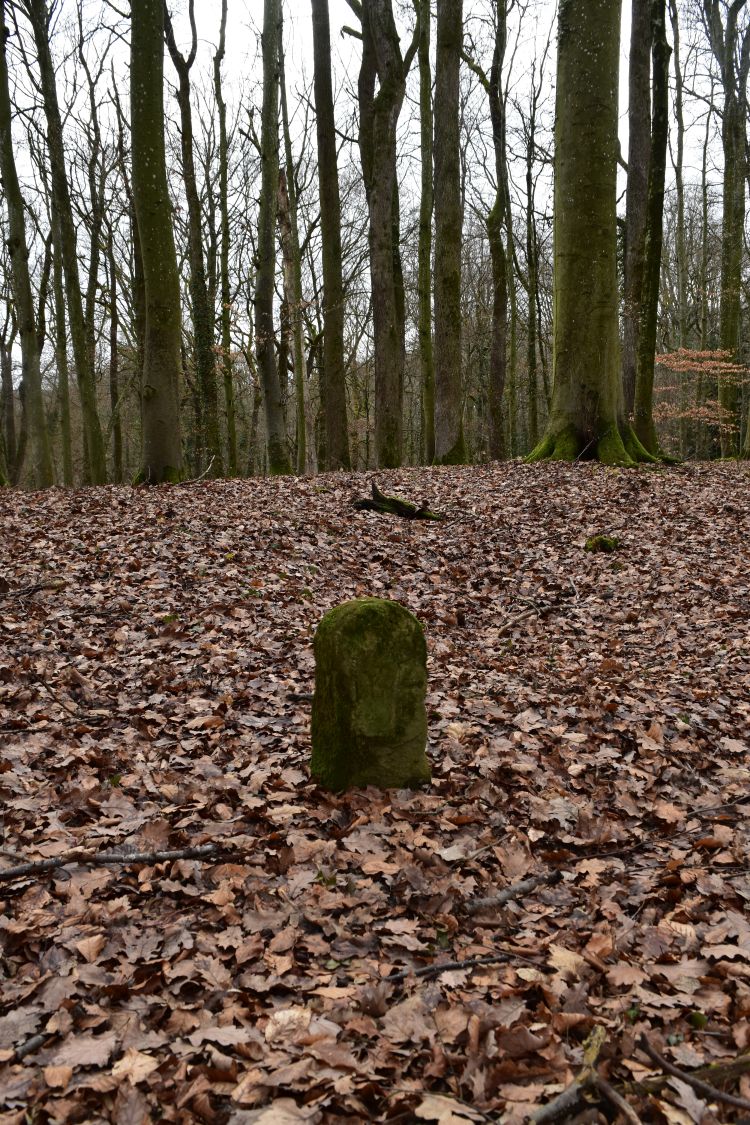
I continue my way above Biel and come across a lady on a very, very dirty mountain bike. “Have you seen anyone on a mountain bike – I have lost my husband… no?… “Matthias, Matthiaaaas”… I do not want to frighten the animals, there is so much deer around here… I am from Spain… Matthiaaaas, Matthiaaaaaaass…” and finally Matthias replies and she is happy. “You are looking for boundary stones?… there is one not far from here…”, she says knowing well the history of Biel-Benken. Right, here it is, shortly before reaching the Swiss hiking path marked in green at the Swiss-French border.

aaa_0429-small

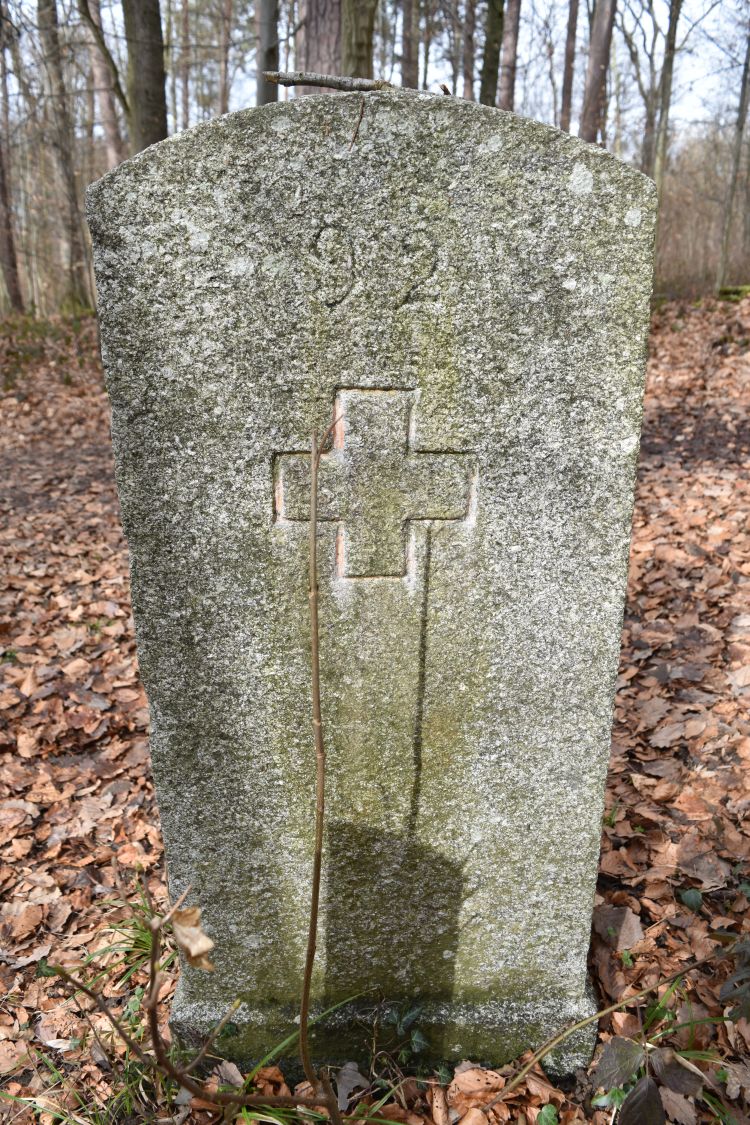
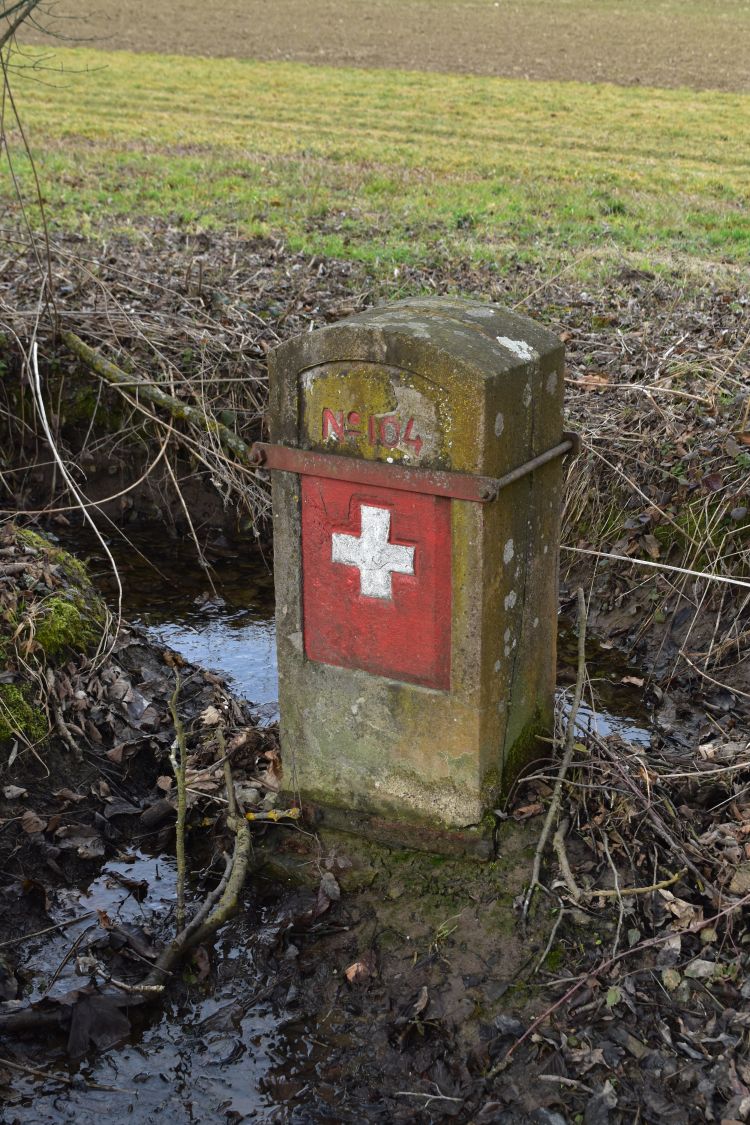
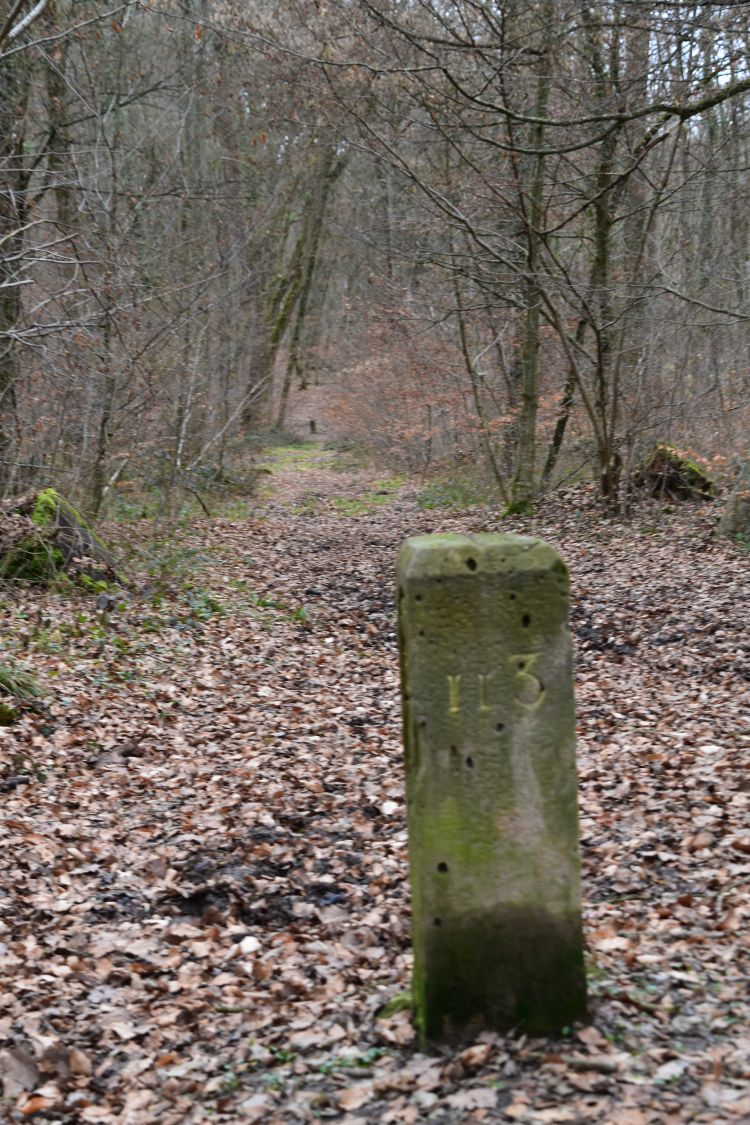
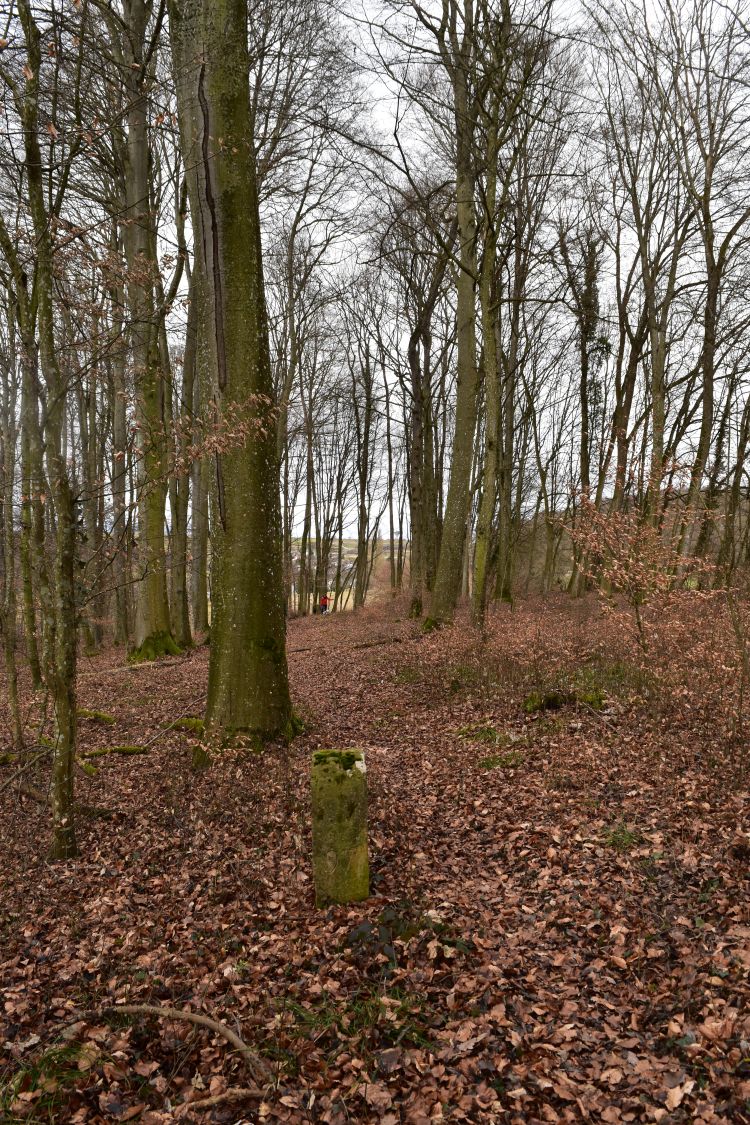
From here I continue along the Swiss-French border between Neuwiller and Biel-Benken. A small footpath follows the boundary stones, marked with the Swiss cross on one side…

aaa_0433-small

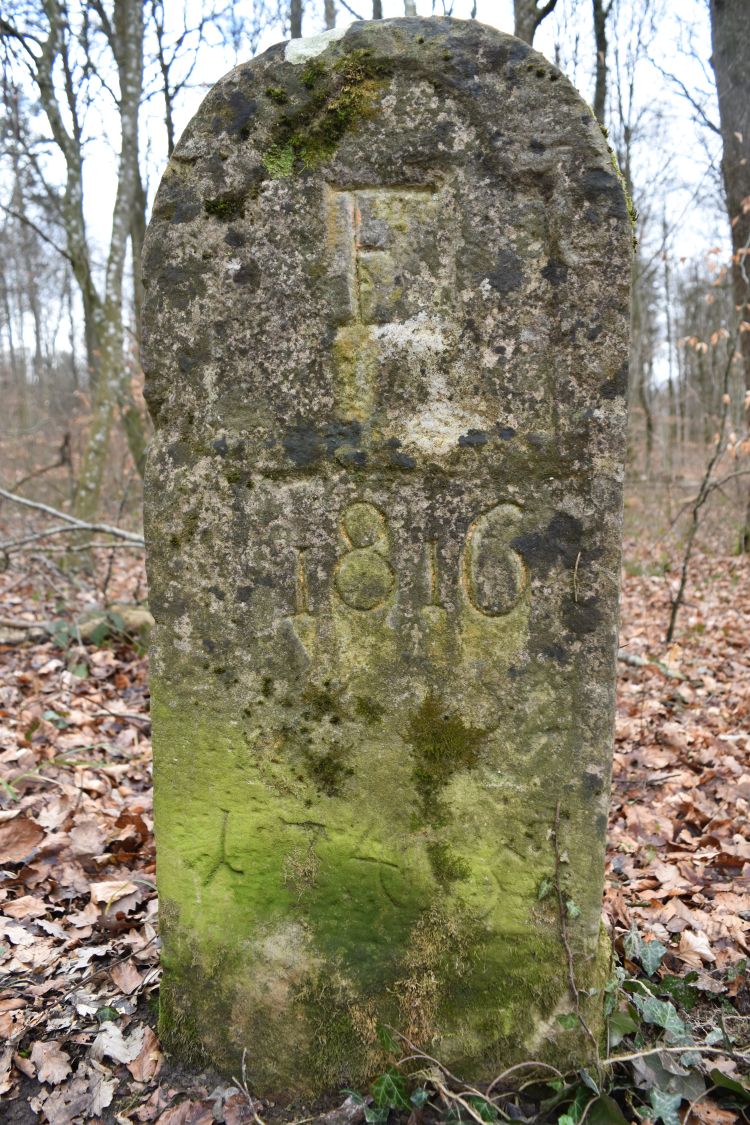
… and with the “F” for France on the other side (1816 – this was just after the Congress of Vienna in 1815).

aaa_0434-small

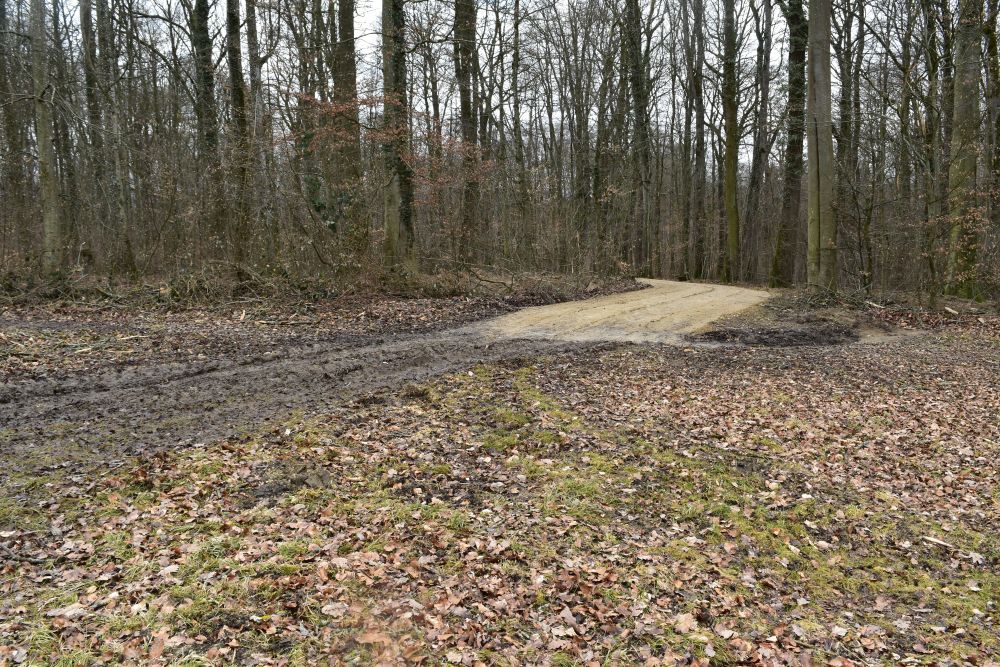
Later this well prepared hiking path ends and continues as a muddy path. EXACTLY where the nice path ends and the mud begins is – guess what – the border between France and Switzerland.

aaa_0437-small

I cross this road to continue following the boundary stones. I meet a lady with two dogs. She comes from Neuwiller in France and takes out dogs of various owners. We speak French with one another while one of the dogs barks loudly at me – with a French accent.

aaa_0440-small

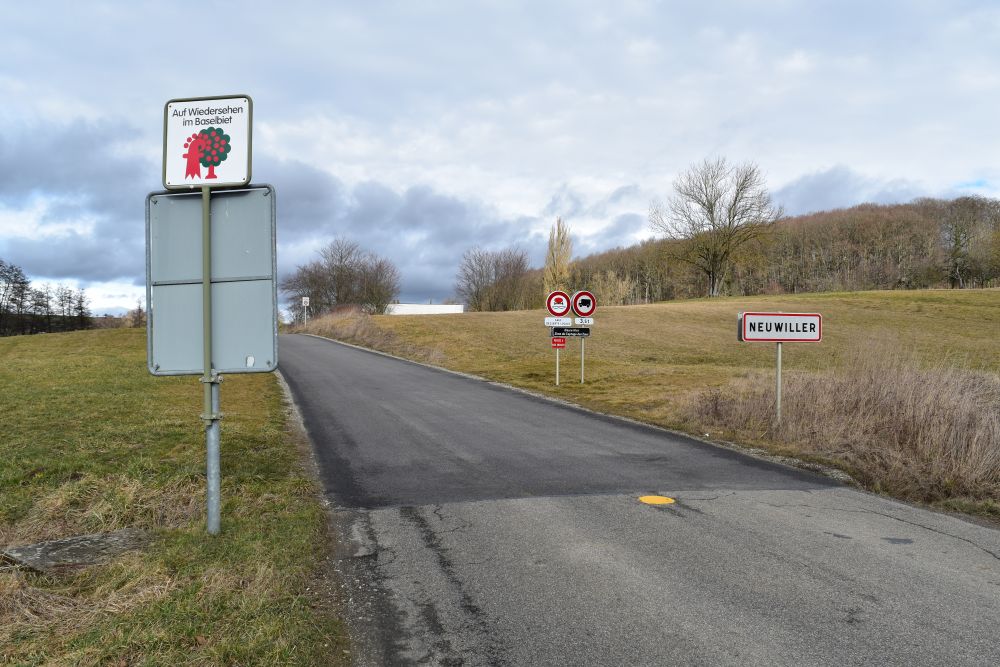
After having paved my way through a muddy meadow, I cross the road connecting Benken with Neuwiller. Again, it is very clear, where the border is. Baselland (Basle Country), the canton of cherry trees, says good-bye to the cars crossing the border and driving to Neuwiller in France.

aaa_0444-small

I cross the road and follow the ditch that is the border between Switzerland and France. This one boundary stone is nicely coloured on the Swiss side.

aaa_0449-small

Still following the ditch I approach the “entrance” of the Benkenspitz. It starts on the meadow between the two forests.

aaa_0452-small

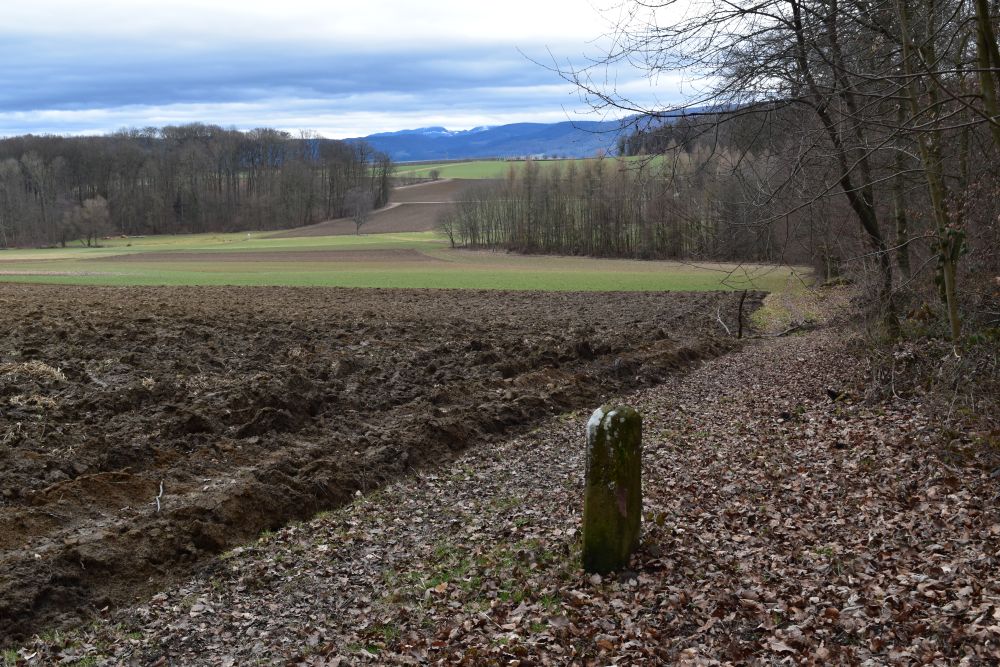
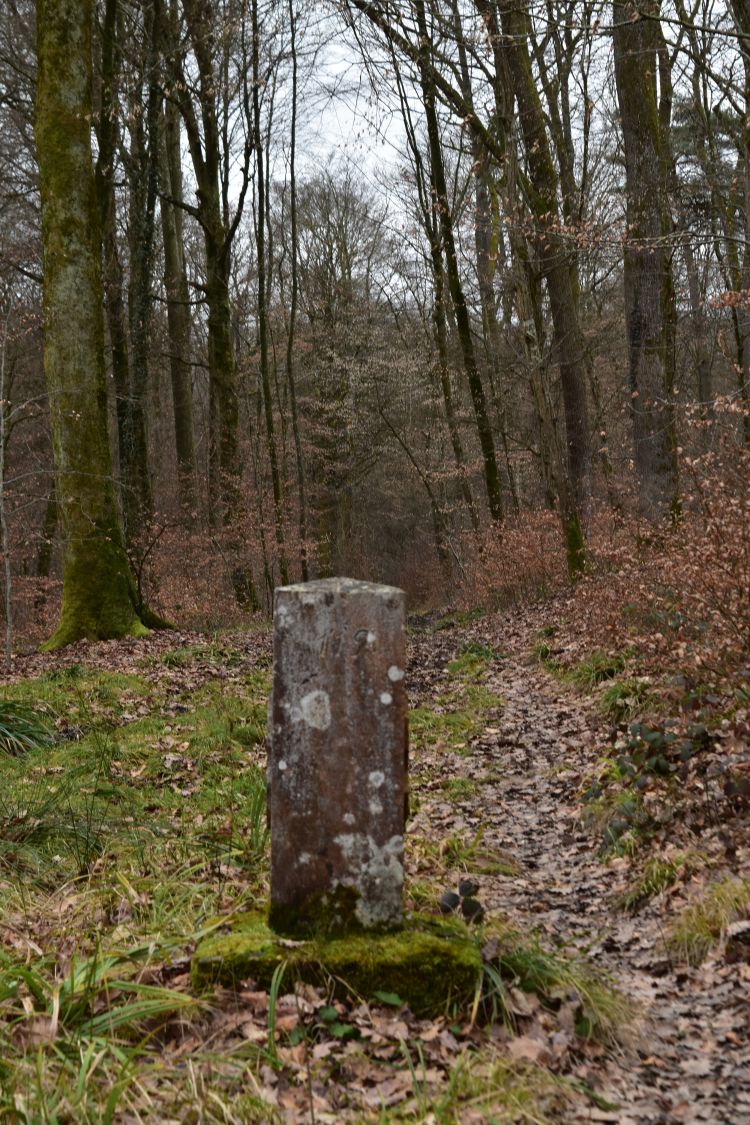
I first see the boundary stone to the west of the “entrance”. I am confused, but then I find the stone marking the east of the “entrance” to the forest “wedge” and enjoy the view of the Jura hills in Switzerland.

aaa_0462-small

I continue along the east line – one boundary stone after the next to make it all clear, where Switzerland ends in this narrow wedge and where France starts.

aaa_0463-small

A huge tractor cuts trees – in France. I  have reached the end of the Swiss wedge called “Benkenspitz” and return back along the west border – again well  marked.

aaa_0469-small

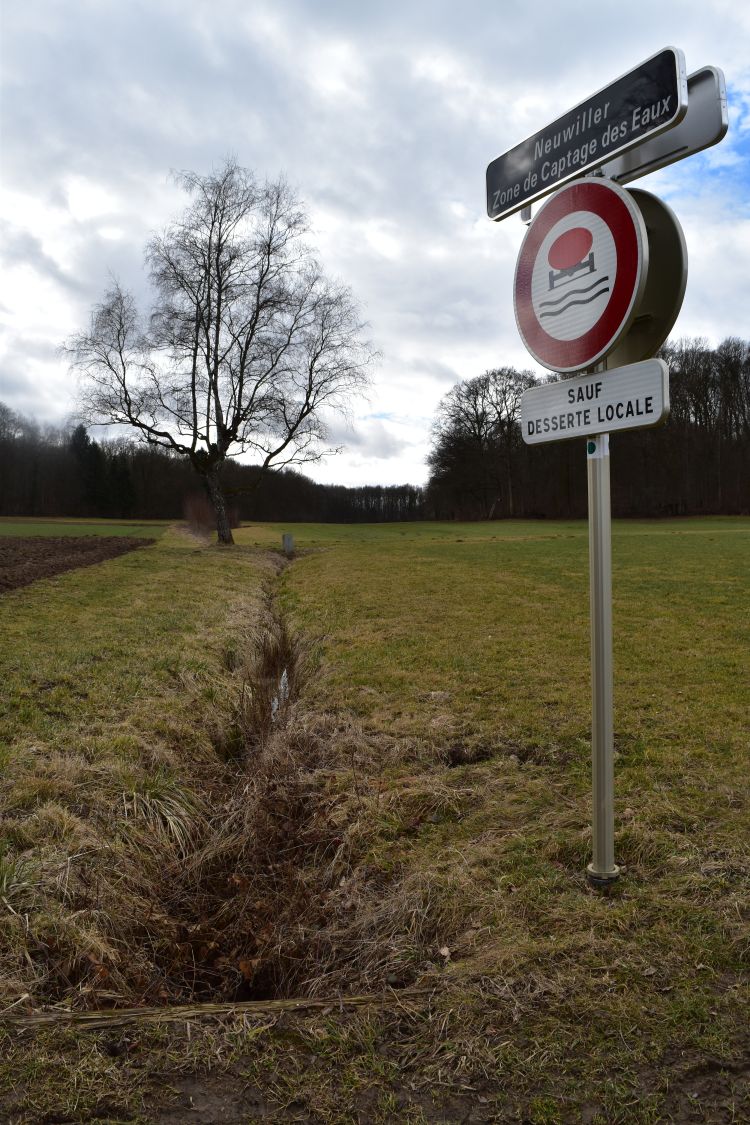
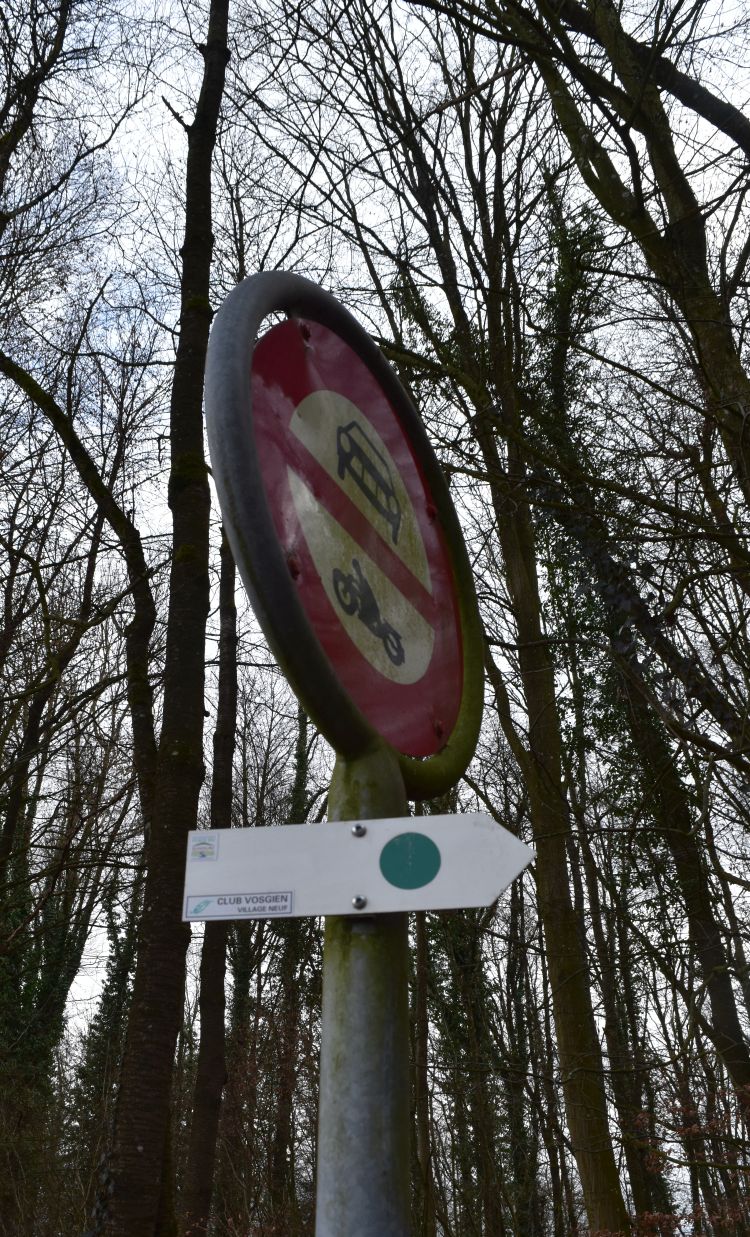
I leave the Benkenspitz behind me and continue to follow the French-Swiss border. This is an interesting cooperation: A Swiss traffic sign (only residents are allowed to drive here) and a French hiking sign of the Club Vosgien.

aaa_0474-small

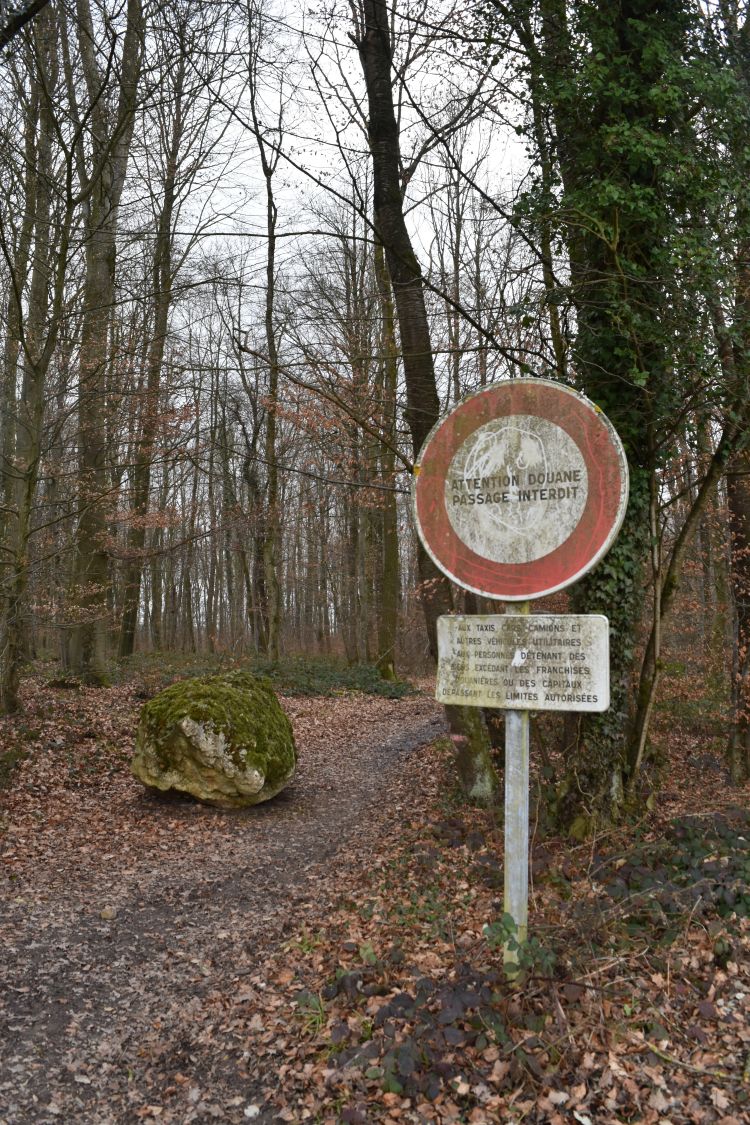
And – across of this French-Swiss cooperation – be aware, following this hiking sign takes you to France, only allowed when having nothing to declare!

aaa_0475-small

Along vineyards the boundary stones lead me down towards Benken.

aaa_0477-small

I take the bus back to Bottmingen – good that public transportation works so efficiently.

Around Basel – looking for old boundary stones on a sunny cold day

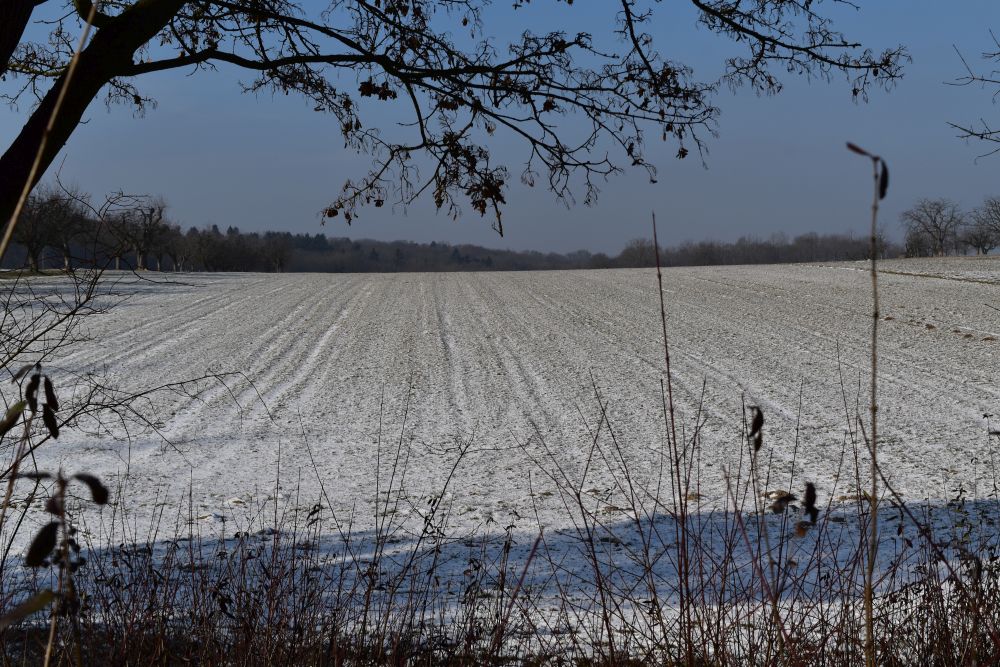
It is one of those winter days in January when I am happy to live in Basel, because the sun shines here, while the plateau of Switzerland including Zurich is covered with clouds. It is a sunny, but very, very cold day today. The fields on the Bruderholz are “dressed up” for winter.

aaa_0103-small

I start my winter hike here.

gernzweg-7

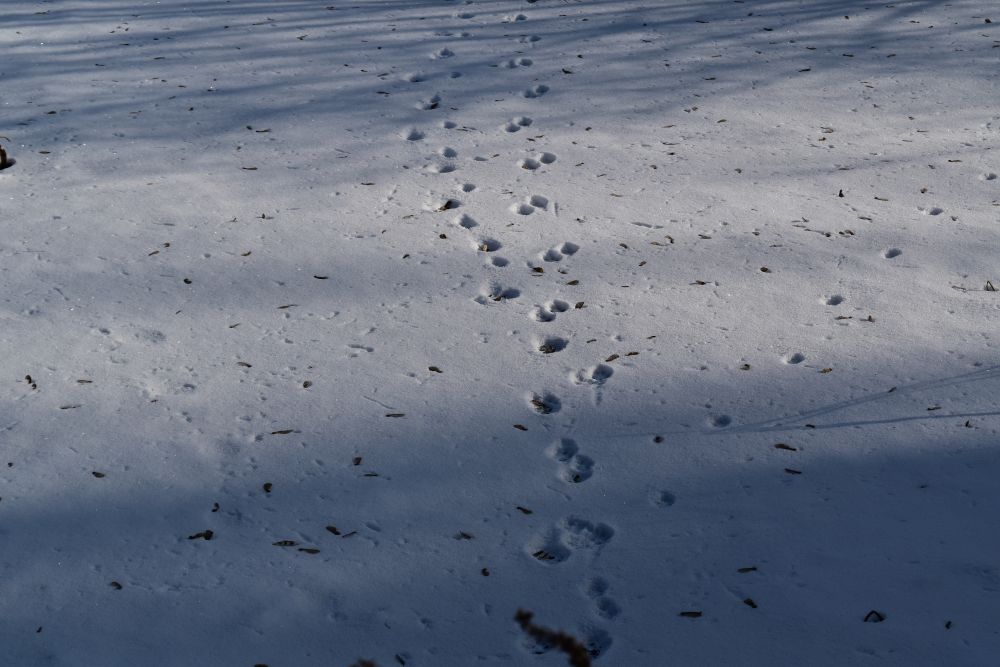
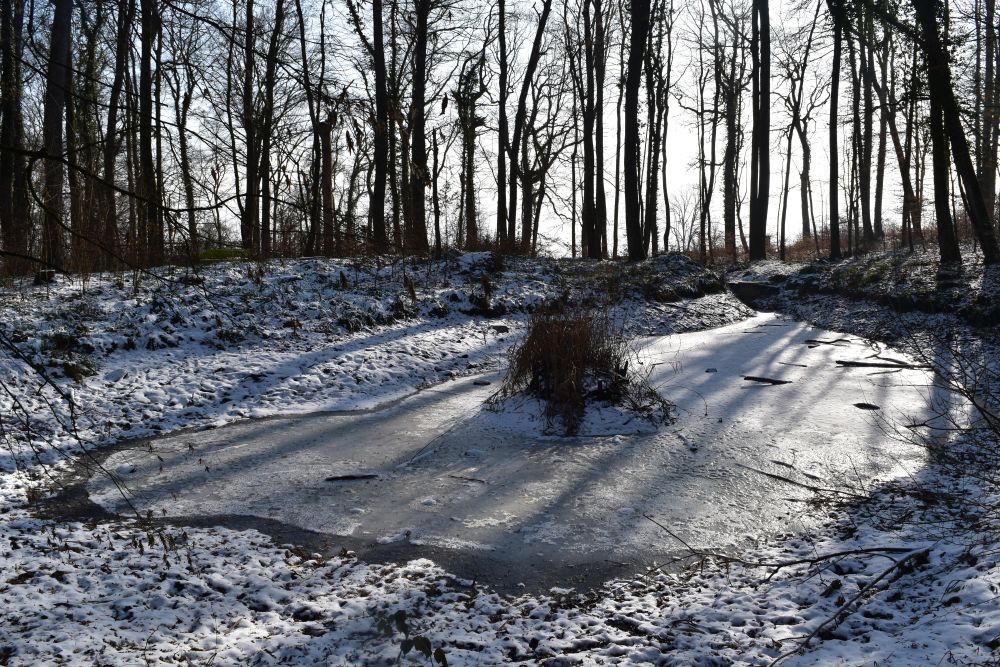
The small nature reserve lakes are frozen and covered with snow that are decorated by animal tracks.

aaa_0110-small

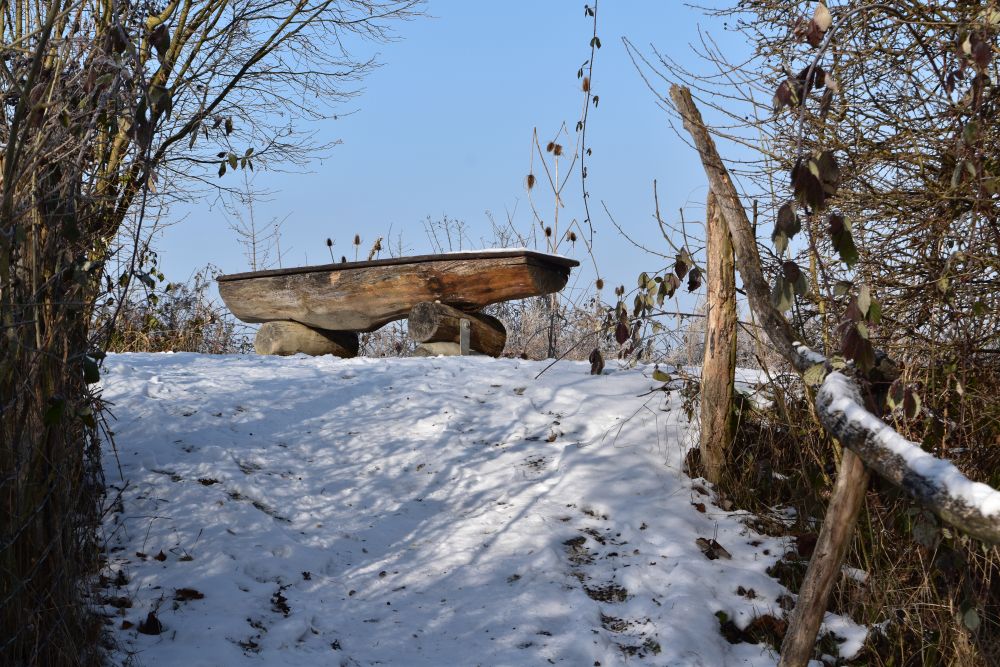
The bench looks inviting, but a little cold.

aaa_0111-small

I approach Therwil and capture the view of the Blauen mountain range and the border with France in the haze (looking west).

aaa_0114-small

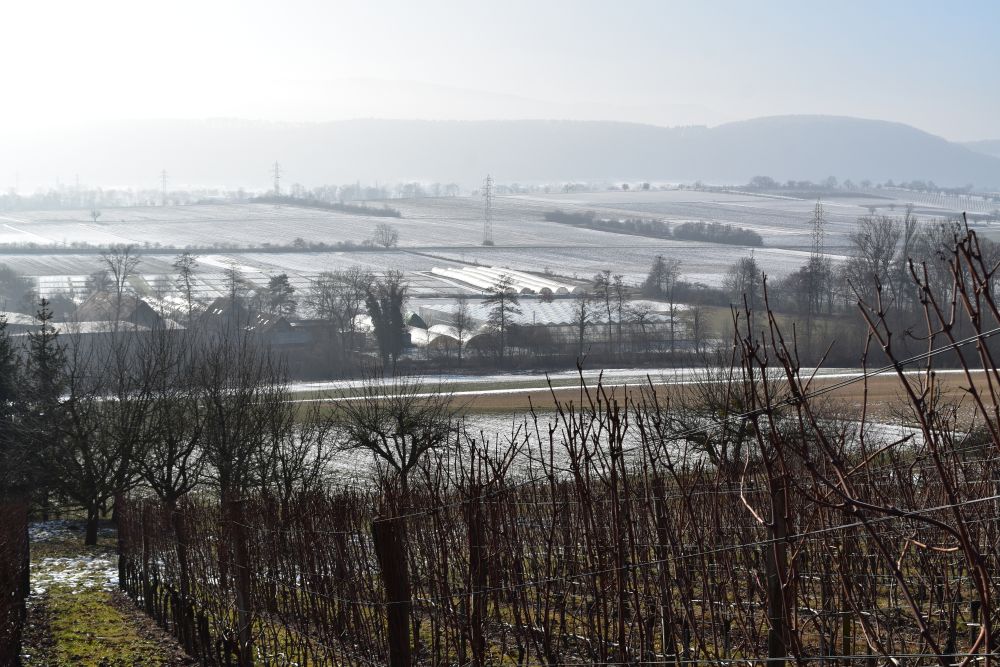
I have crossed Therwil and look south across the vineyards of Therwil.

aaa_0115-small

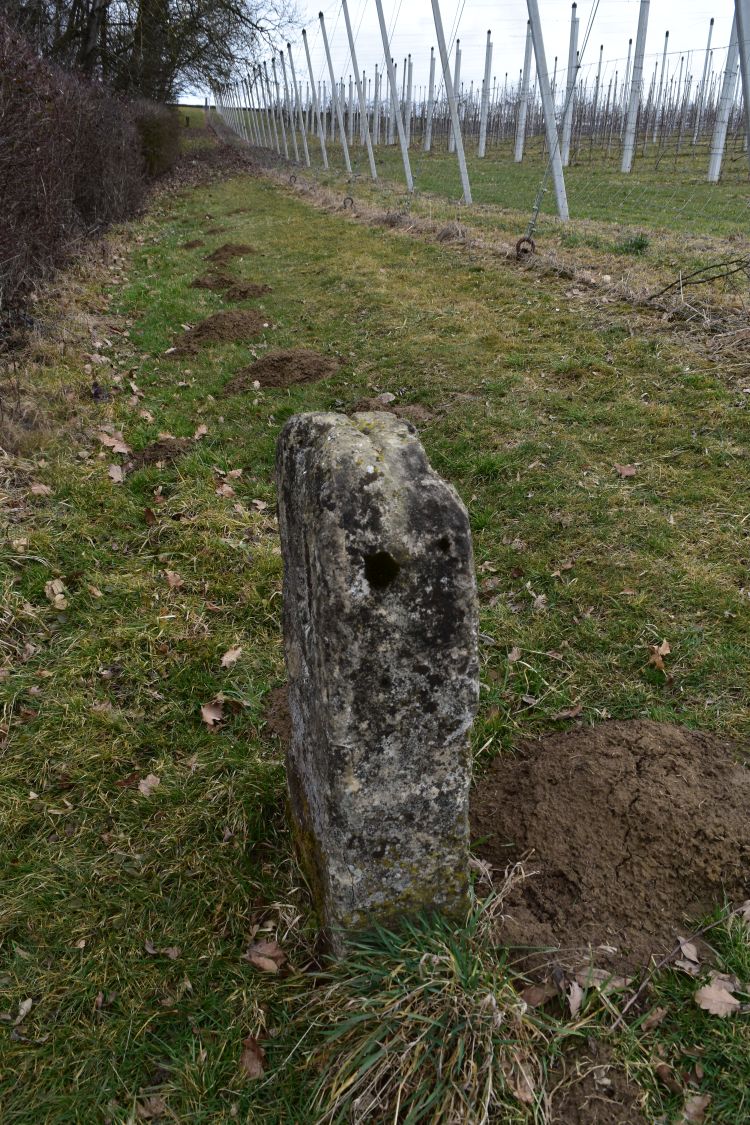
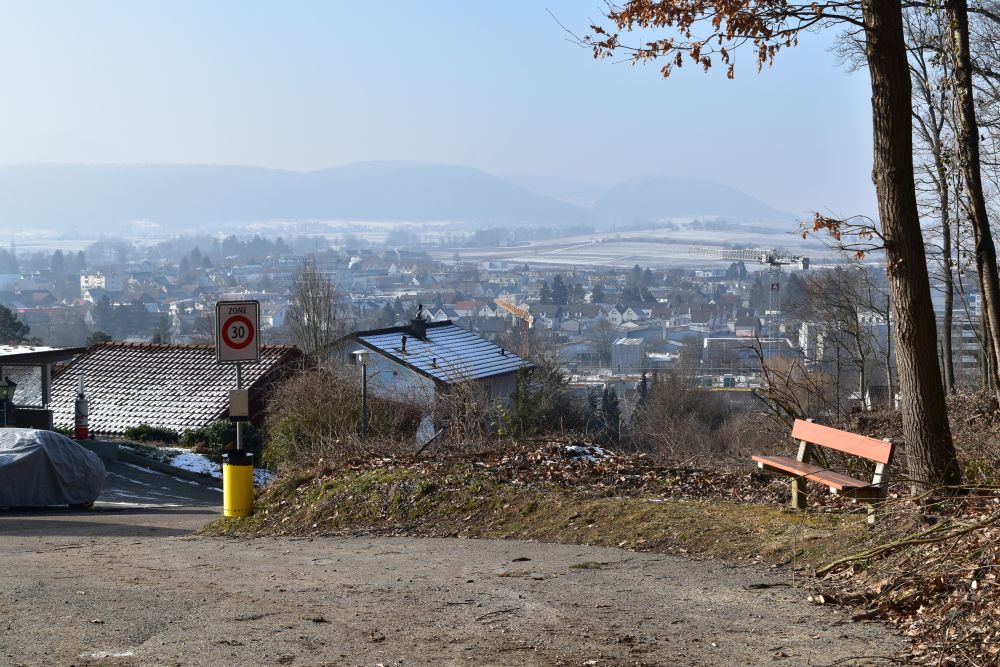
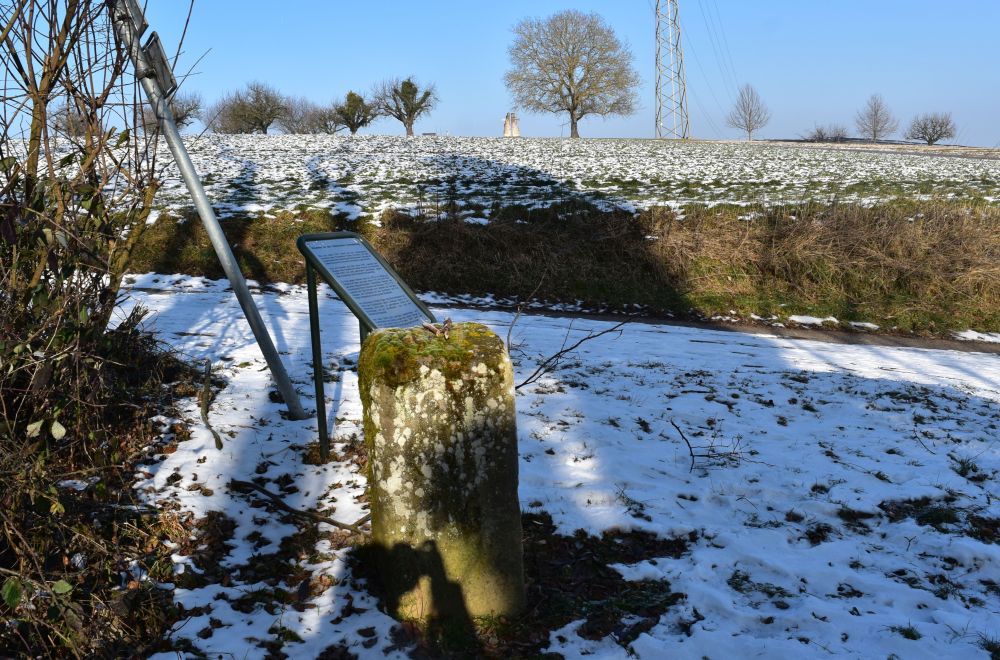
In Therwil, I am on the ground of the former Prince- Bishopric of Basel. Then I approach the border of protestant Biel-Benken that has belonged to the city of Basel. The border between Biel-Benken and Therwil/Oberwil has been carefully marked by boundary stones. This is the first boundary stone I come across – I call it  “corner stone”.

aaa_0123-small

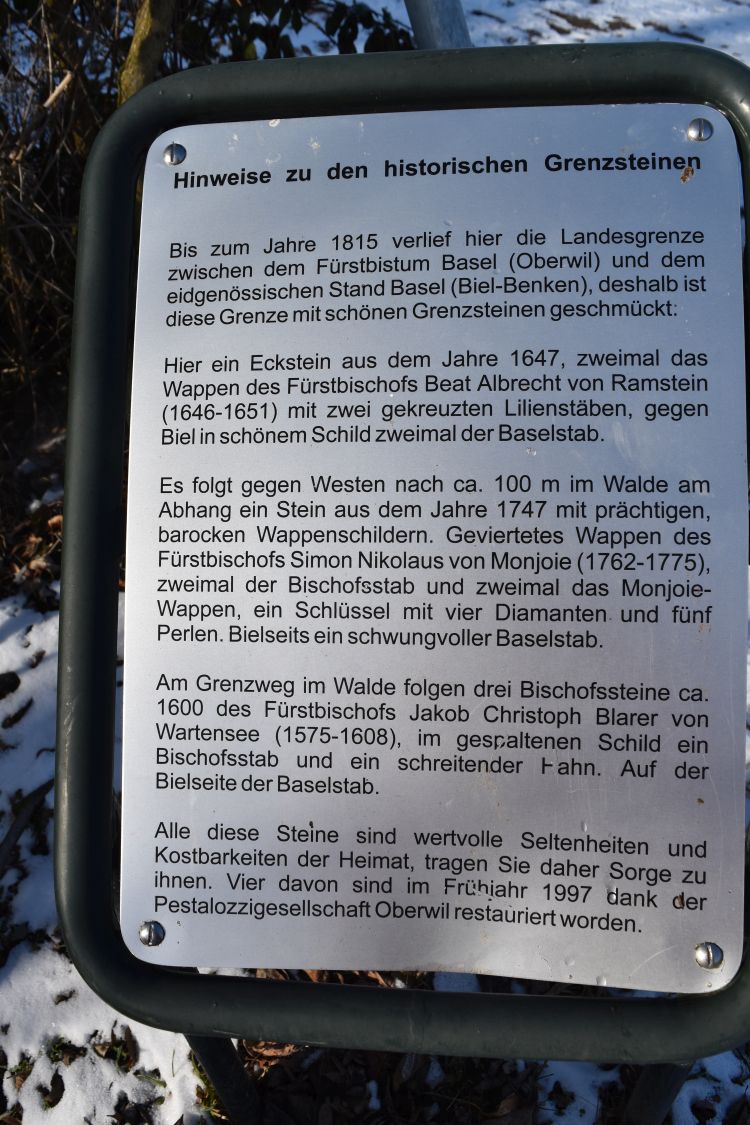
Next to the stone, this panel explains the history.

aaa_0119-small

The border between Therwil/Oberwil and Biel-Benken was a major frontier in history. In the beginning of 16th century, Basel acquired areas from the impoverishing noblemen, one of these areas being Biel-Benken. Also at that time, Basel joined Switzerland and became protestant. The bishop of Basel had to leave “his town”; he moved to Pruntrut and continued to belong to Germany and the German emperor. The possessions of the bishop were called “the Prince-Bishopric of Basel”. The bishop owned Therwil and Oberwil that were located between Biel-Benken and Basel. Biel-Benken – belonging to Basel – was an exclave.  Around 1800 the Prince-Bishopric was dissolved and in 1815, the Congress of Vienna allocated Therwil and Oberwil to Basel (see also André Salvisberg u.a.: “Historischer Atlas der Region Basel”, Christoph Merian Verlag 2010). The once important border separating two countries (Germany and Switzerland) became a border separating just communities.

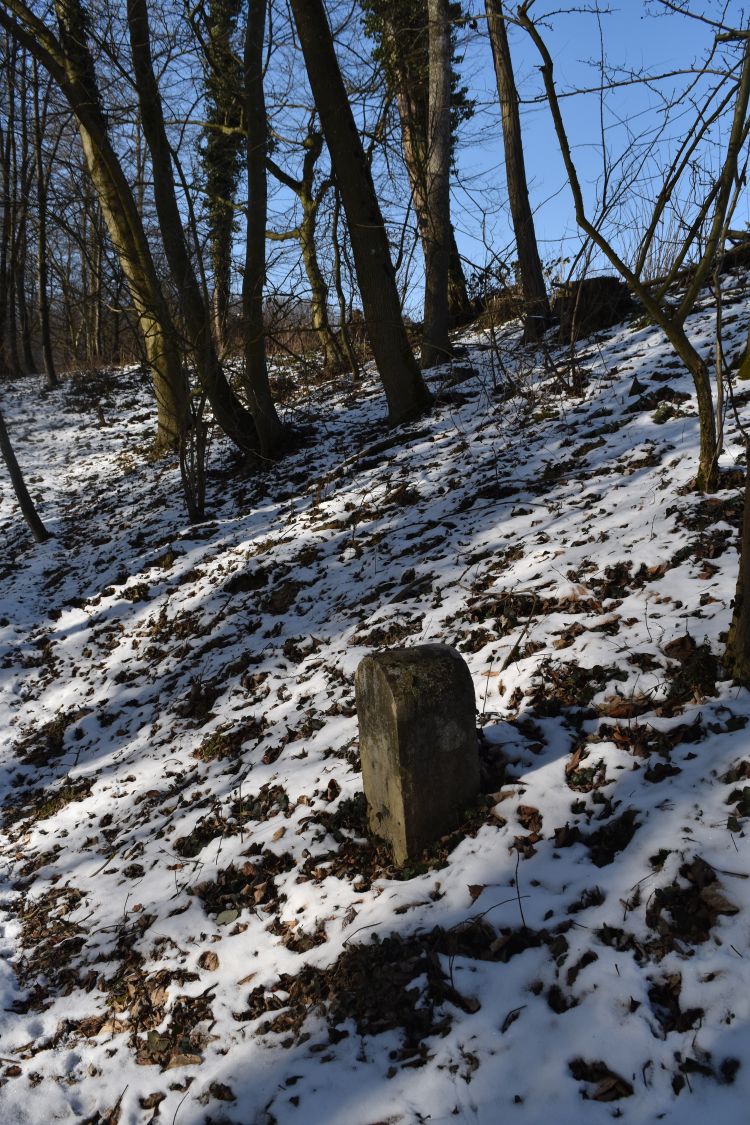
The (historical) border around Biel-Benken is adorned with boundary stones from the 17th and 18th century marking the frontier between Basel and the Prince-Bishopric of Basel. I look for the stones in the forest above Biel-Benken.

aaa_0128-small

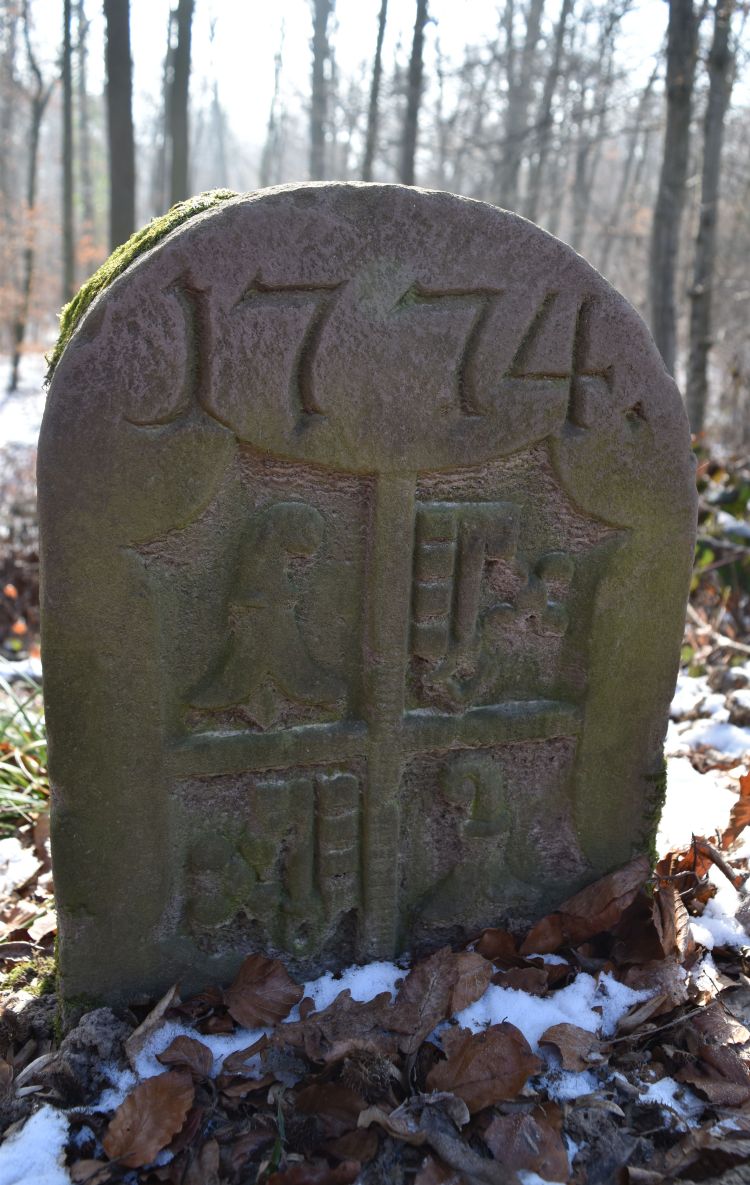
This stone from 1774 has been beautifully restored. It shows the coat of arms of the prince-bishop Simon Nikolaus de Monjoie pointing to the Prince-Bishopric side.

aaa_0134-small

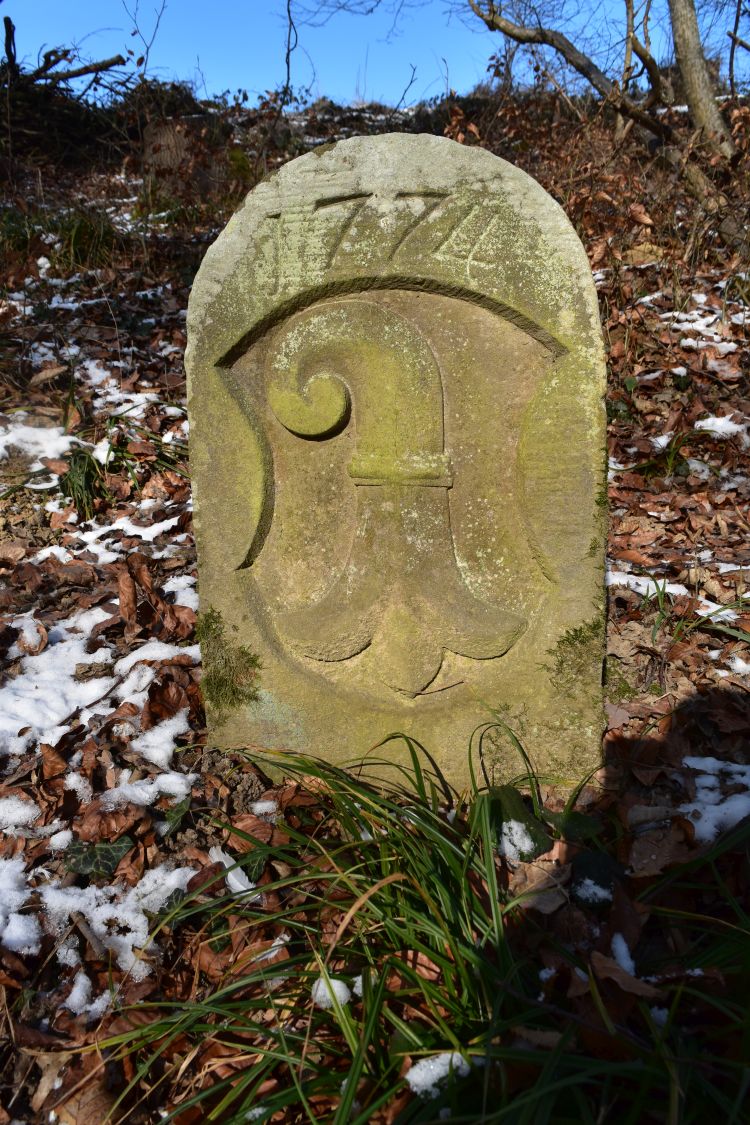
Towards Biel-Benken there is the coat of arms of Basel – as Biel-Benken belonged to Basel.

aaa_0136-small

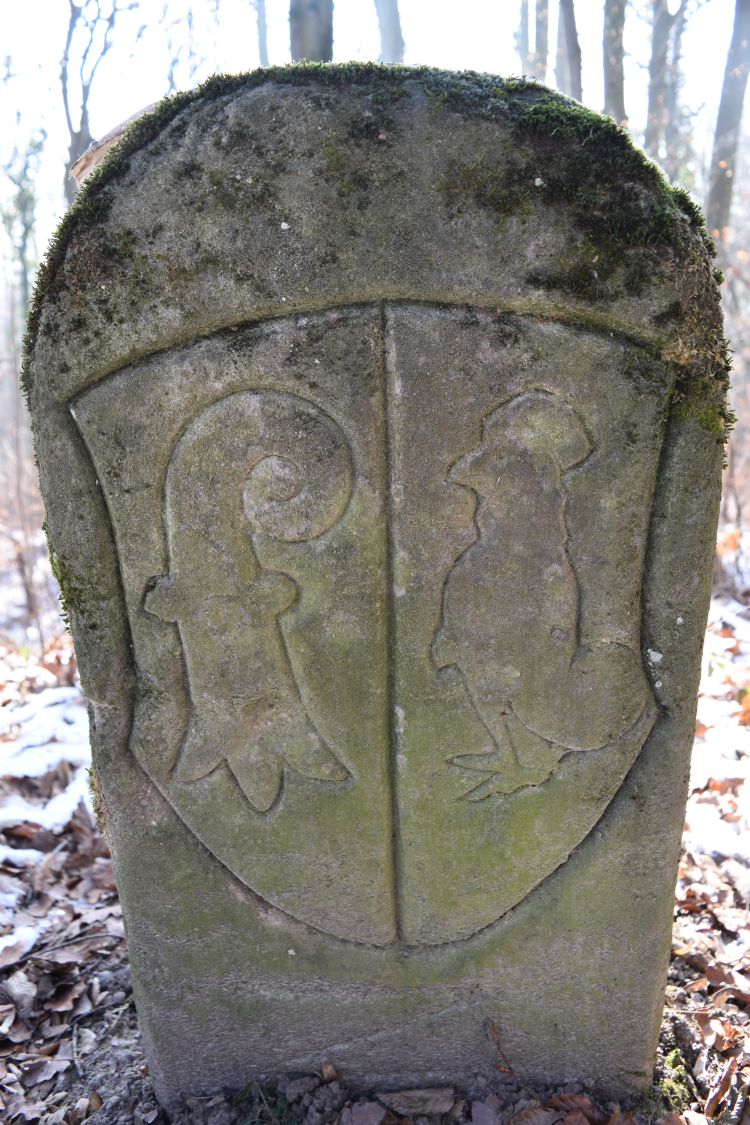
This boundary stone shows the bishop’s crook and a coq on the side pointing to the Prince-Bishopric. This must be the coat of arms of Christoph Blarer that the panel near the “corner stone” mentions.


aaa_0137-small

I finish my walk at the Friedrich Oser monument above Biel-Benken with the hazy view of the Blauen. I think the citizens of Basel have done a good job acquiring Biel-Benken with the southwards facing slope that produces quite a good wine (I liked it).

aaa_0139-small

The pond near the monument of Oser is covered with ice and the sun plays with the trees.

aaa_0140-small

With many history lessons learned I return home to warm myself up – it WAS cold today, though the sun had made my heart jump.

I think I will return to Biel-Benken to search for more boundary stones, but perhaps I will wait for warmer weather…

In Catalonia – enyoing the mild late autumn days in Hospitalet de l’Infant

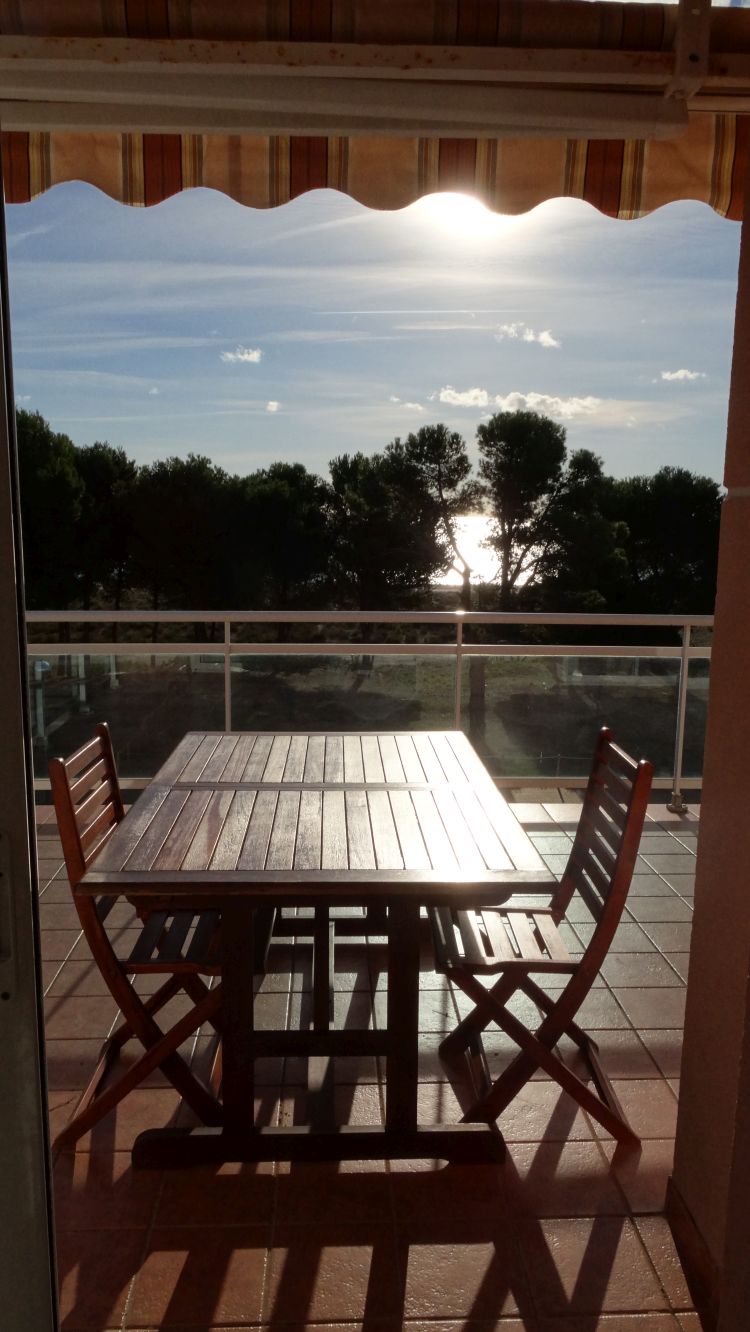
On October 28th 2016 we arrive in Hospitalet de l’Infant and settle in the small apartment of our friends. We enjoy the balcony – the weather is still warm enough for that.

dsc09365-small

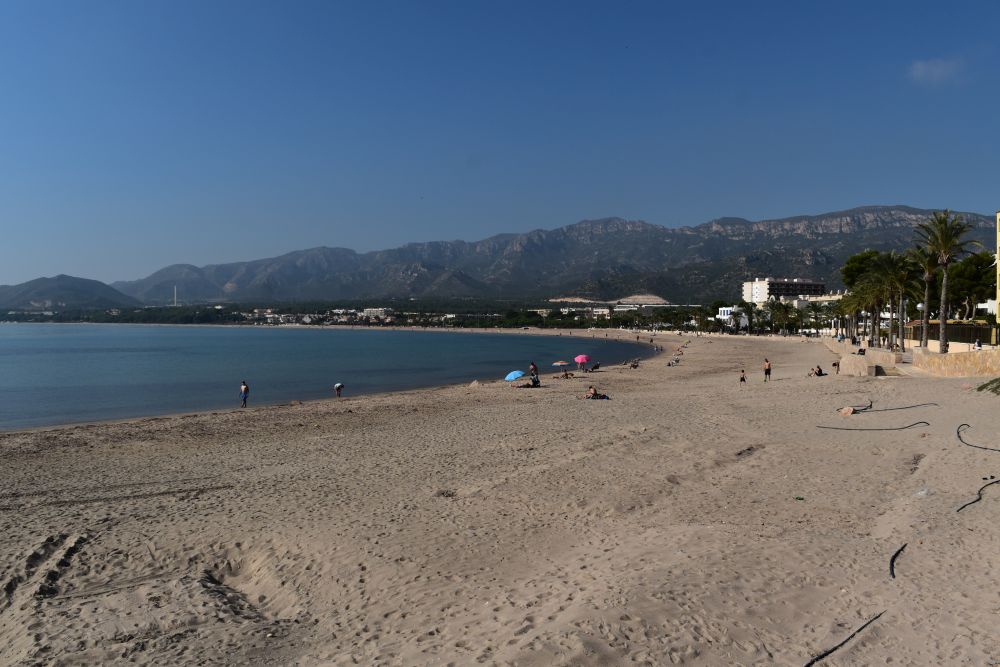
The late autumn days here are mild (around 20 degrees and more) and some people (most of them retired) populate the beach.

aaa_0871-small

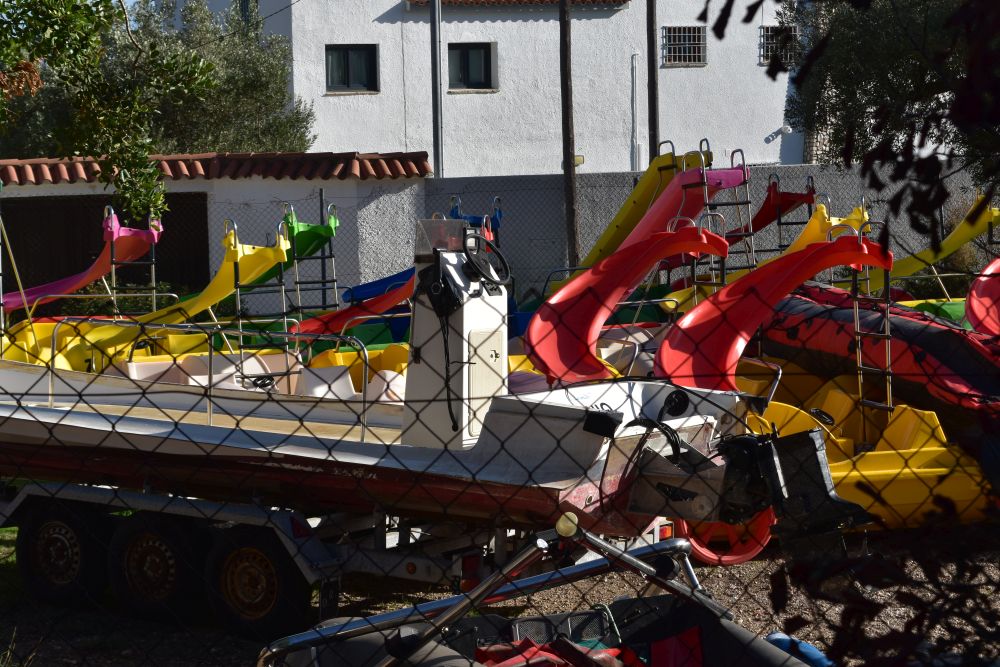
However, the small bars have been dismounted and the slide-boats are now hidden in this backyard waiting for the next summer.

aaa_1114-small

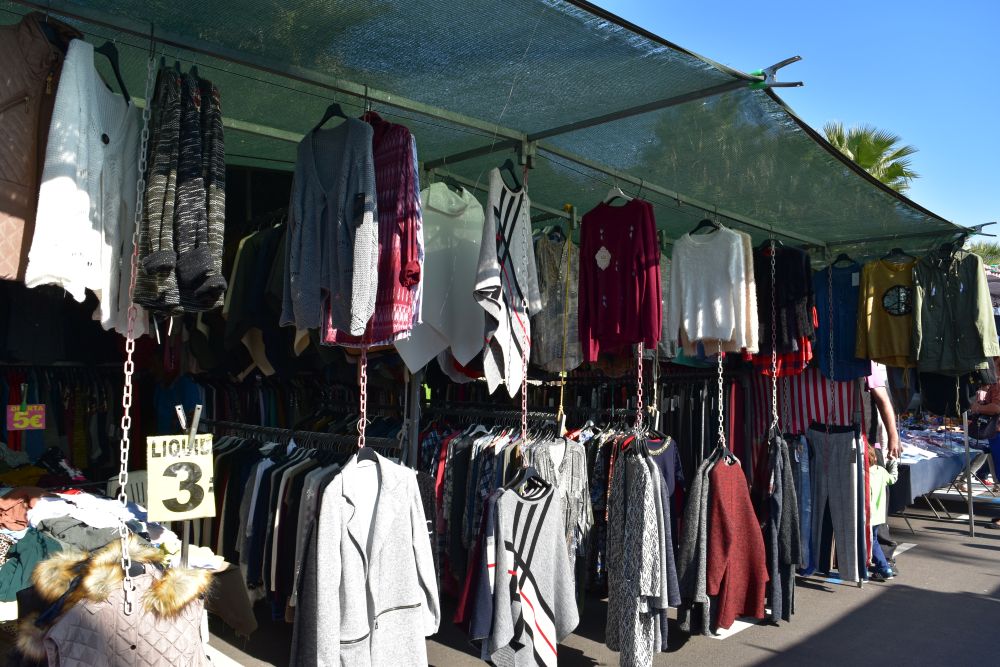
The offerings of the Sunday market have changed: Now we can buy warm sweaters and socks – in summer it was bathing suits and light blouses.

aaa_0869-small

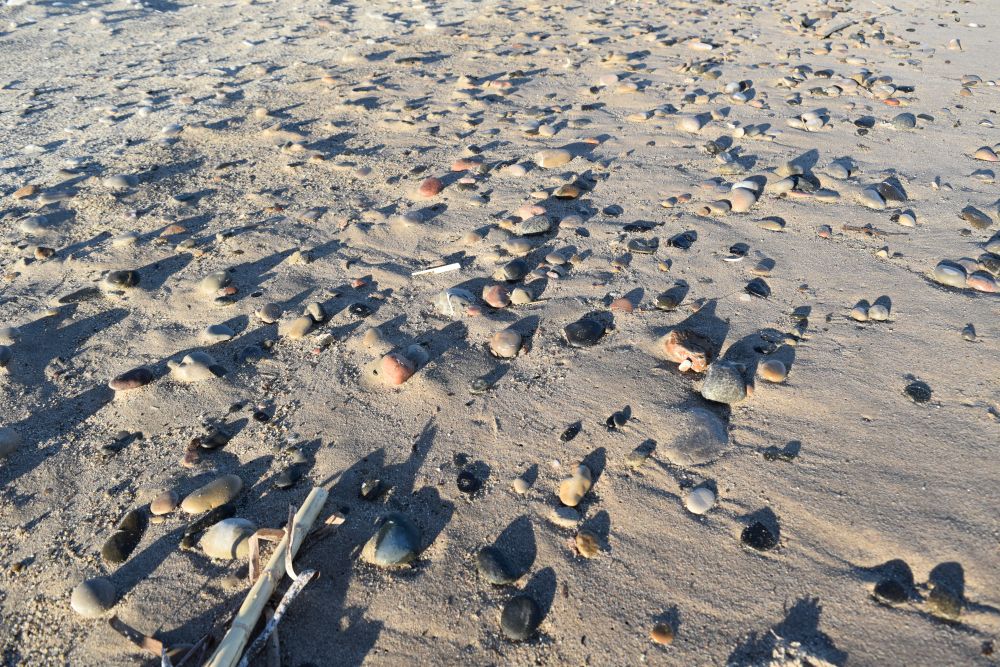
The late afternoon sun produces long shades on the beach.

aaa_0173-small

The waves play gently with the sand.

dsc09384-small

The clouds remind me of our southwind clouds from the Alps, called “Föhn”. Actually it is a similar phenomena: The wind comes from the north west descending from the mountains behind our coast line and clearing up the sky.

aaa_0181-small

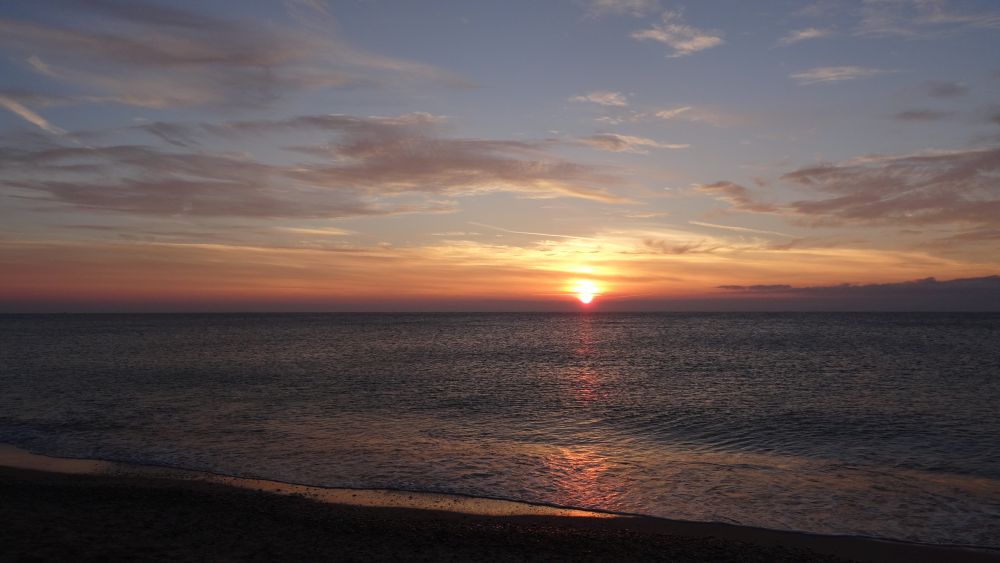
In the morning, Ursula captures the rising sun above the Mediterranean Sea.

dsc08872-small

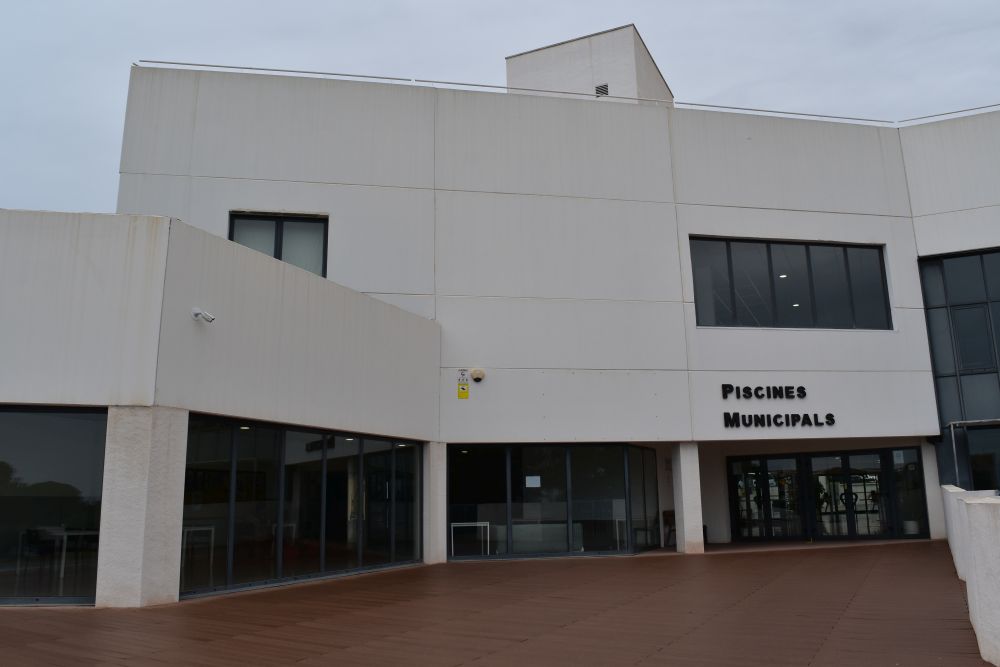
Later during our stay, the north west wind is blowing heftily, and I prefer to do my swimming in the large public swimming pool that is open until ten at night. Hospitalet seems to be a wealthy small town: They provide these piscines municipals with attached fitness center and in addition a public library, where we as “simple” tourists can rent out books for free.

aaa_1092-small

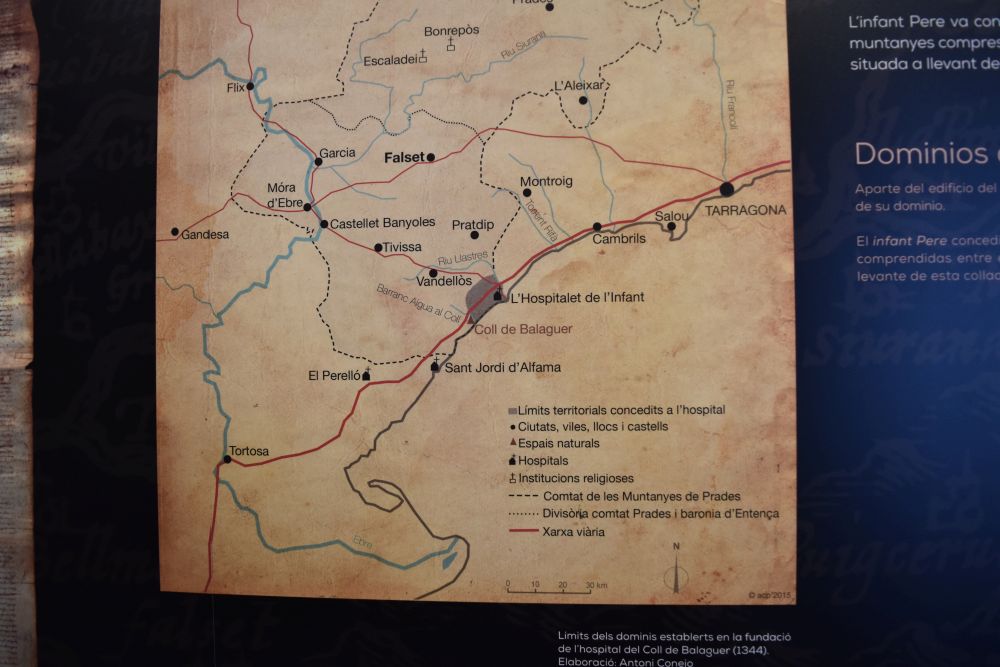
In 1306 the Infant Peter of Arragon and Anjou built the hospital of Hospitalet near the pass of Balaguer where the Via Augusta crosses the hills towards Tortosa and the Ebro valley.

aaa_1107-small

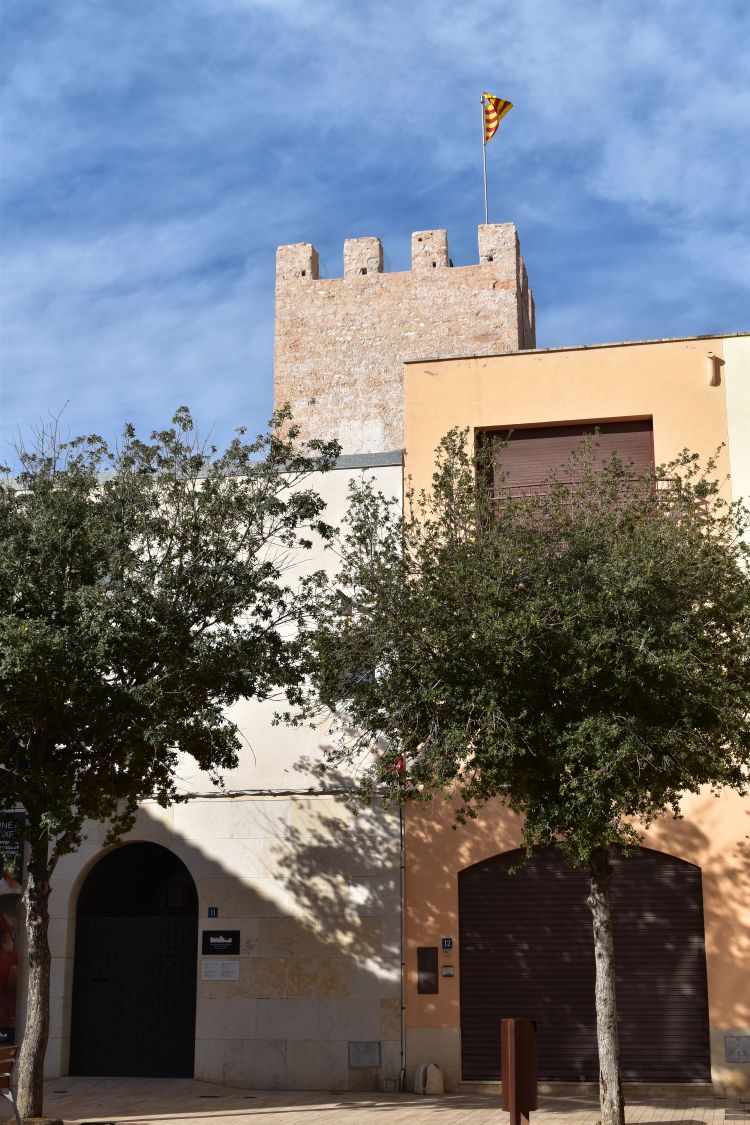
The hospital was in use for several centuries. It was destroyed several times, the final and last time by a storm in 1910. One highlight was the visit of Elizabeth Fox, a noble lady from England, that stayed here overnight around 1800. The museum tells her story with much humor.

aaa_1110-small

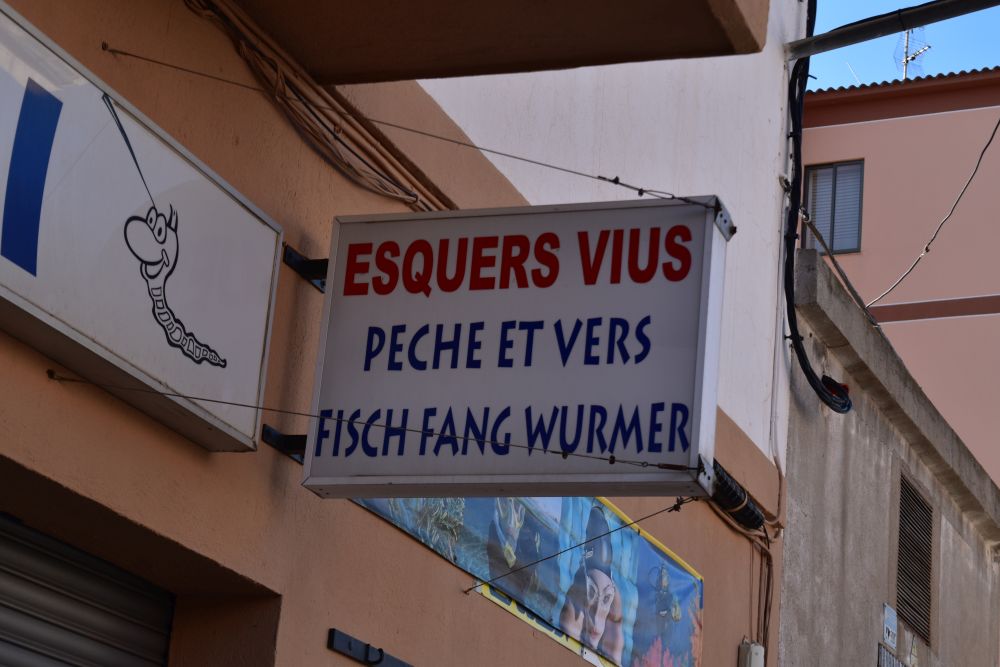
The shops are open – bakeries have fresh bread, Jordi offers fresh fish from l’Amettla, the grocery shop has delicious fruit and vegetables, the Chinese shop has all we need to complete our small household, the electrician shop repairs our broken vacuum cleaner in two days (and how proud the electrician is of that!), the mercer has everything you may need for sewing, the arts shop frames our pictures and fotos (to decorate our small apartment), the sports shop sells bathing suits… and this shop sells “Fisch Fang Wurmer” or worms for fishing (it is open on weekdays – I am just not sure, how happy the worms will be when used to fang fish).

aaa_0864-small

We have all we need for our two weeks’ vacation – and while enjoying that, we also undertake many excursions into the surroundings of Hospitalet de l’Infant. There is so much to discover in Catalonia.

On the way to Spain – second stop in charming Collioure

We are on our way to Spain again in October 2016. We first stopped in Le Puy en Velay, the gorgeous pilgrim town perched on basalt needles. We stopped a second time in charming Collioure near the French border with Spain, in the Languedoc-Roussillon.

We drive south through the hills of the Auvergne – huge bridges swing over the valleys – always a great scenery. Then the highway winds down. Cypresses and pine trees are welcoming us. The rain has stopped, the sun shines. The temperatures are warmer and my jeans are too hot. We arrive in the Mediterranean climate.

.

Our hotel of charm, Casa Païral, tucked away in a tiny dead street

In Collioure we now have selected a hotel of charm and “Relais de Silence”, the Casa Païral. Indeed, after several turns we find it tucked away in the tiny dead end street Rue du Pasteur. I enter with our car and stop in front of the gate. After having unloaded our luggage, I have to leave this narrow dead end street backwards – I had beads of perspiration on my forehead.

aaa_0785-small

The hotel is quite a contrast to the sober IBIS hotel from last night. We immediately feel at home.

aaa_0779-small

.

Charming Collioure at night

It is already late. We stroll along the harbour. The fortified church “Eglise Notre Dames des Anges” has been built by Vauban in the 17th century, when he planned to change Collioure into a garnison town (as this region has become part of the French empire in the 17th century). The clock tower looks like a light house.

aaa_0768-small

There are quite a few restaurants at this central square. We have fish at Casa Leon. We love sea fish, when we are close to the sea.

aaa_0776-small

.

Collioure inspired the fauvism artists in 1905

On an early morning walk we follow the tracks of Henri Matisse and André Derain. They came to Collioure in 1905 to paint fauvism art.

aaa_0831-small

Fauvism art gives priority to the color that creates the visual impression of the painting.

dsc08659-small

We gather some memories in the narrow streets of Collioure. Colorfully painted houses,…

aaa_0809-small

… flowers all over,…

dsc08664-small

… and a great view of the Mediterranean Sea with the small chapel on the small island St. Vicent.

dsc08671-small

Once again we look back to the harbour that the waves play with.

dsc08696-small

.

Farther south to Spain

We say good-bye to Collioure and drive south following the sinuous street along the Côte de Vermeille.

aaa_0837-small

We enter Spain, follow the coast for some more time and then turn towards Barcelona and Hospitalet del’Infant.