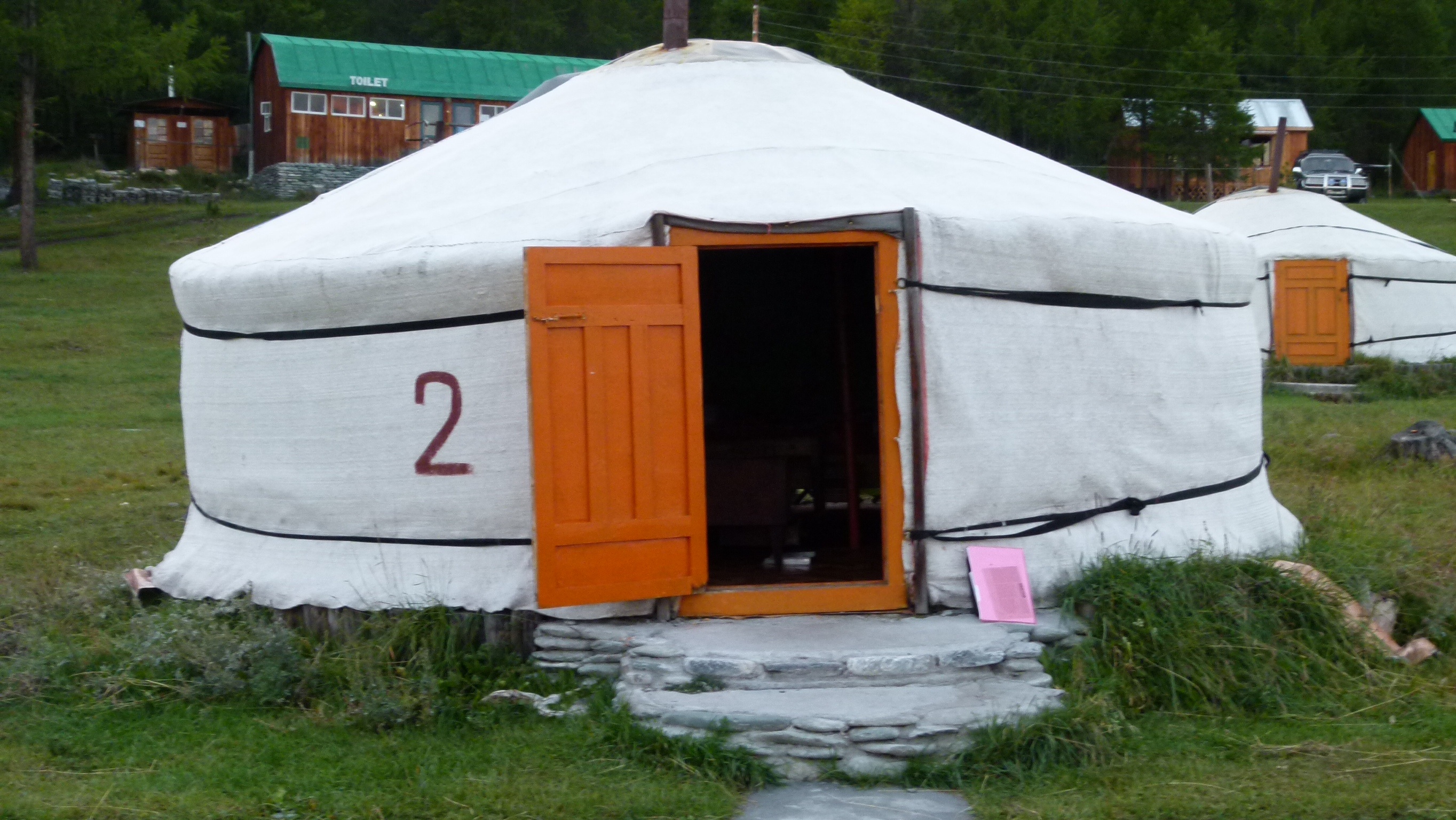
Two Swiss in Mongolia – visiting a ger

Saying good-bye to Döltur

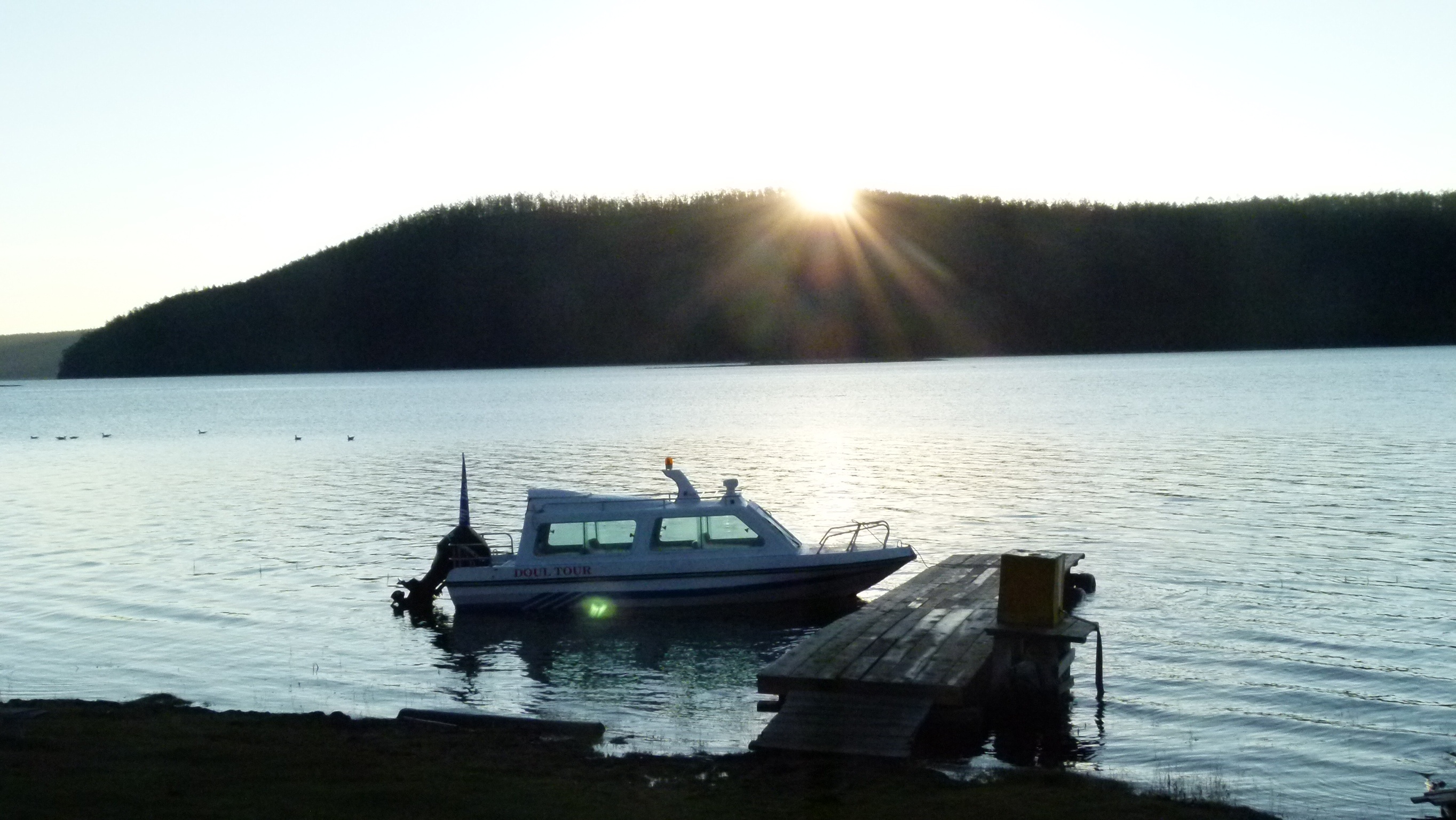
Today we move from the Döltur camp to Tolgoit which is about 50km away to the north. A the gate of Döltur, we receive a very kind farewell: Two ladies have a wooden bucket and a spoon. With the spoon they sprinkle a liquid (tea or milk) on the ground and wave, until we disappear. This is a Mongolian tradition. Waving until the guest disappears round the next corner is what we also do in Switzerland.

Grandma welcomes us in her ger

Pudje drives our car north and suddenly leaves the road heading uphill towards a lonely ger. Pagmajaw  welcomes us. Aika translates. Pagmajaw is 65 years old, and we tell her that we are 62. She has retired and selected this nomadic life with her husband.

She has two daughters and four grand children. One daughter is studying in Ulanbaator and the second daughter works as a secretary in  a national park.

She has 60 yaks and 200 sheep. Every morning she milks 16 yak animals, her forces do not suffice for more.  We watch her boil about 20l of milk on the central oven. She carefully watches it, stirs it with a scoop and then pours the boiled milk into smaller pots. On the next day she will take the cream off the milk. She offers us bread and some of this cream which tastes like cream cheese. She also offers milk tea and explains that when preparing it, it is crucial to add water to milk and never milk to water.

Mushrooms are for animals

Next to the oven there are some brown lamella mushrooms. Pudje takes a hat of a mushroom, fills it with cream and roasts it in the wooden fire. Delicious.

image

Pagmajaw dries the mushrooms. Some hang on the side wall in the wooden grill that supports the ger. She feeds these mushrooms to the animals. Only occasionally they use mushrooms for their meals, mostly as spices. I tell her that we love to eat mushrooms, but have to look for them, while here you have to be careful not to step on them while walking, and she laughs.

image

The ger has all that is needed for life here

Pagmajew tells us that they move their ger four times per year. Construction and deconstruction is done in a few hours. They now load their material on a car to move from one place to the next. Before horses transported their household. The ger is not full with a lot of superfluous things. It has exactly, what is needed to live here.

There is a kitchen to the right of the entrance,
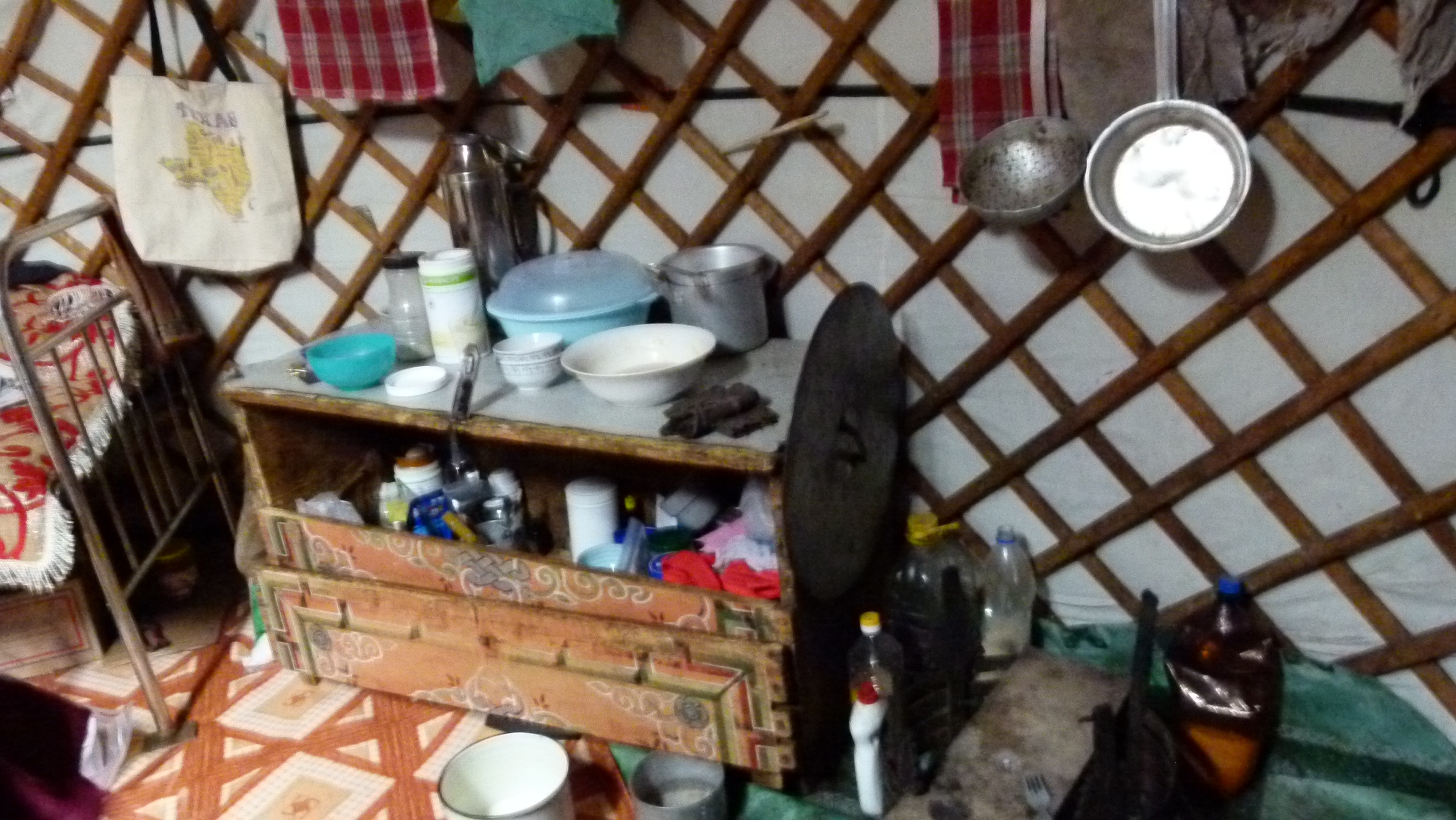
image

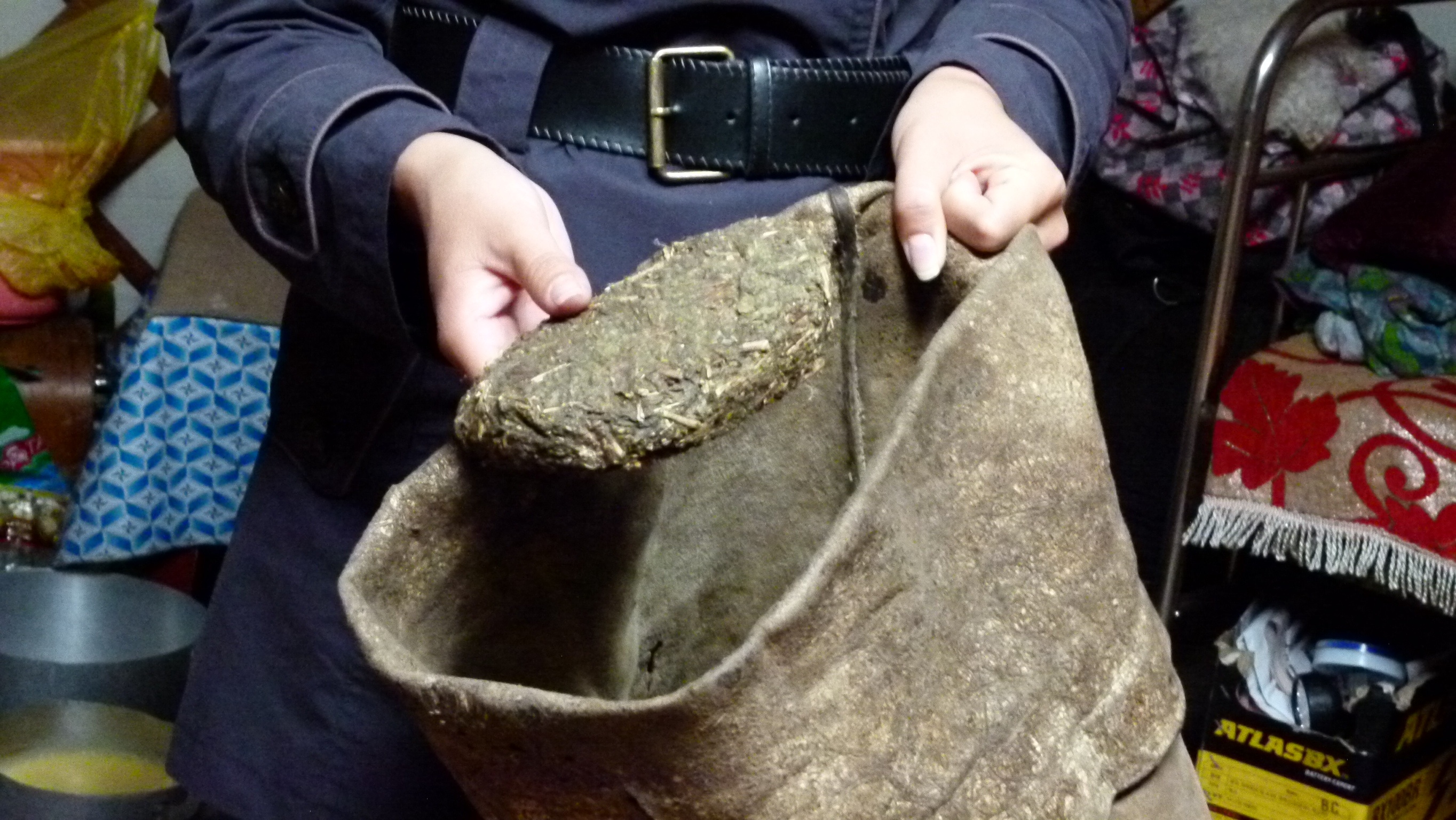
next a sack with tea leaf bricks,

image

next her bed,

image

near the bed a sack – she takes lamb skin out of it that she will use to insulate the house in winter. Next some boxes and the pots with the cooked milk.
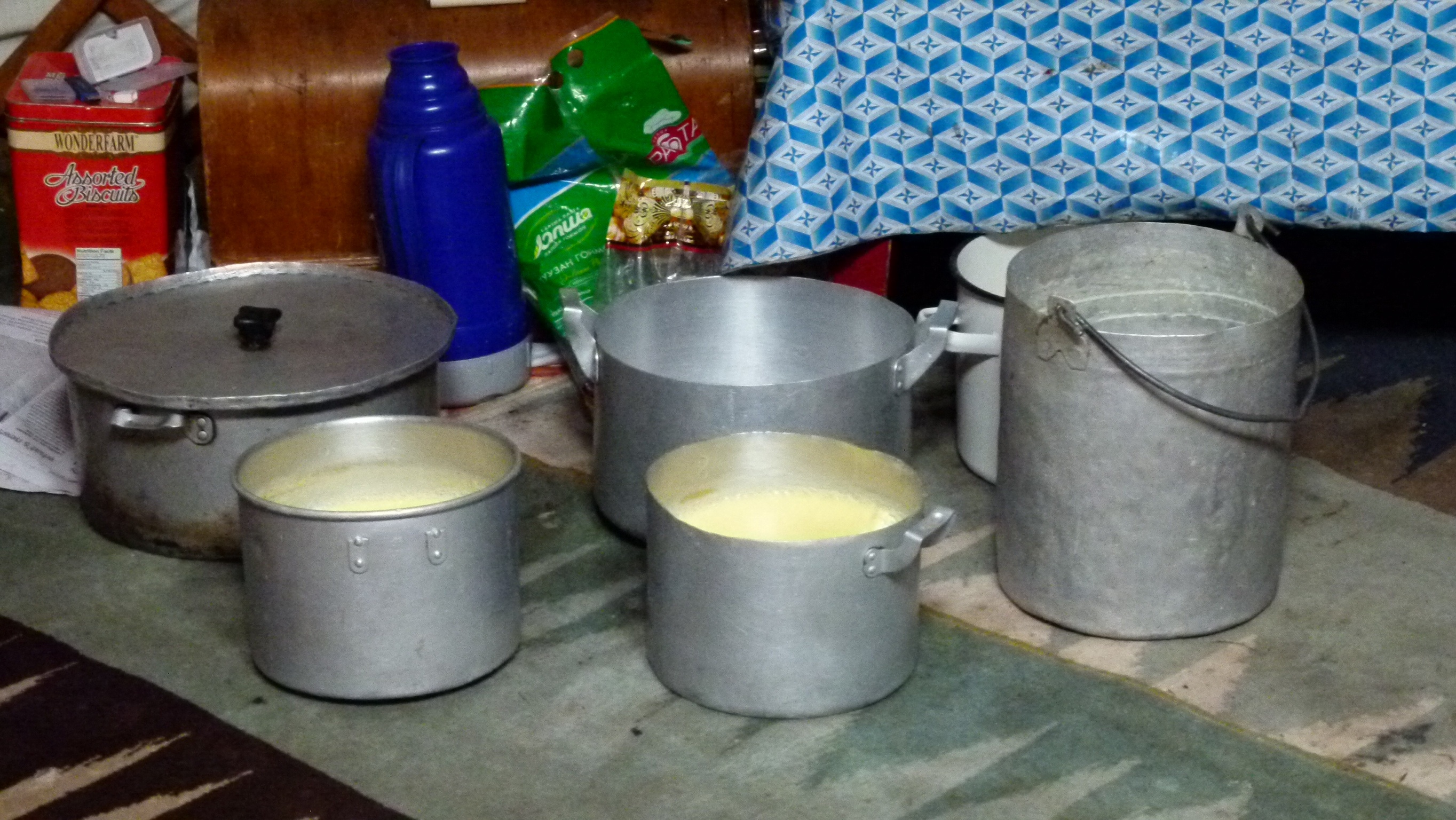
image

The holy corner opposite the entrance is a sack and a rolled piece of silk fabric (yellow, green, blue and red). On the men’s side are his bed, the dried mushrooms and a wooden board with cheese that is ready to be cut and then dried.
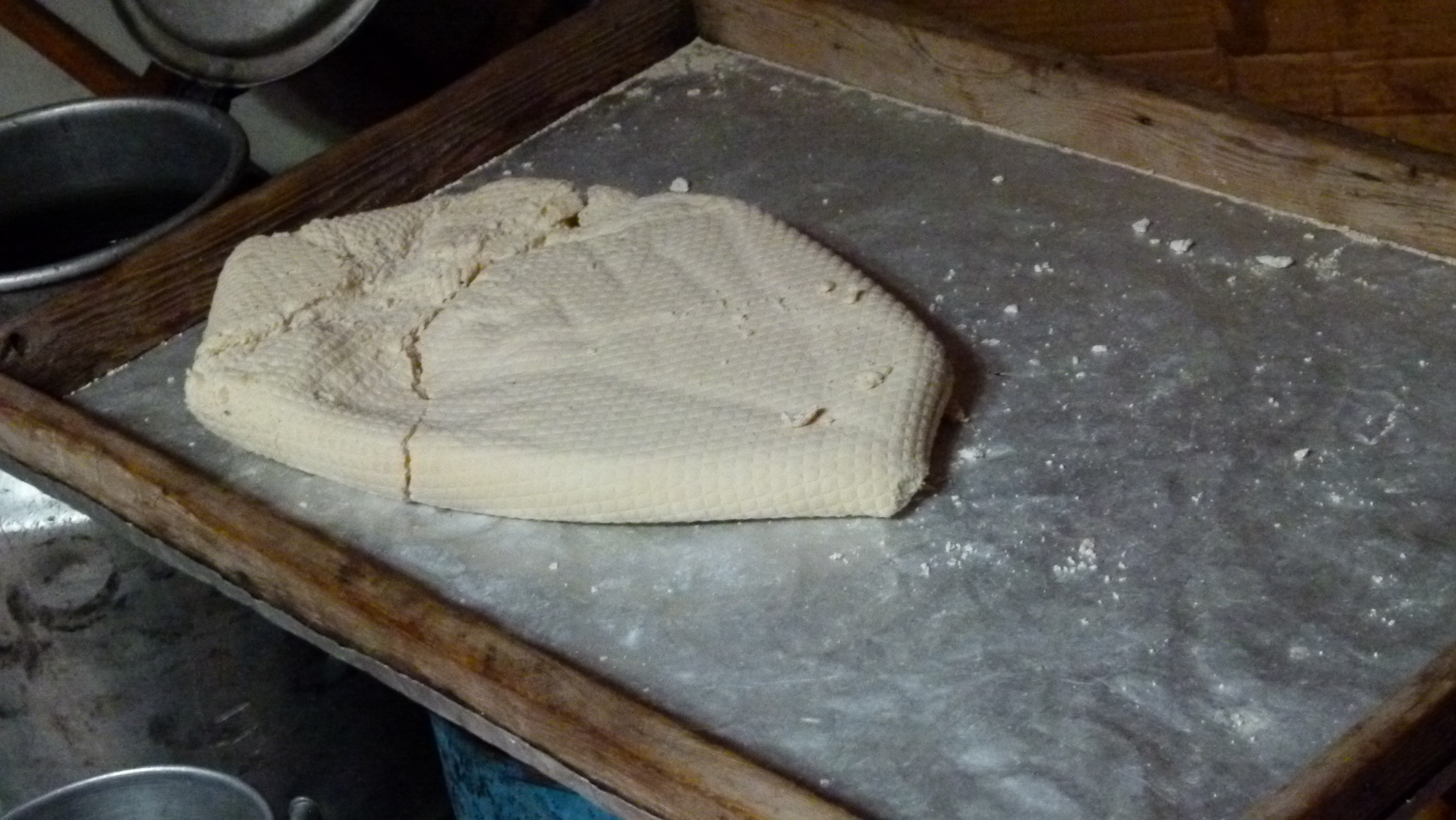
image

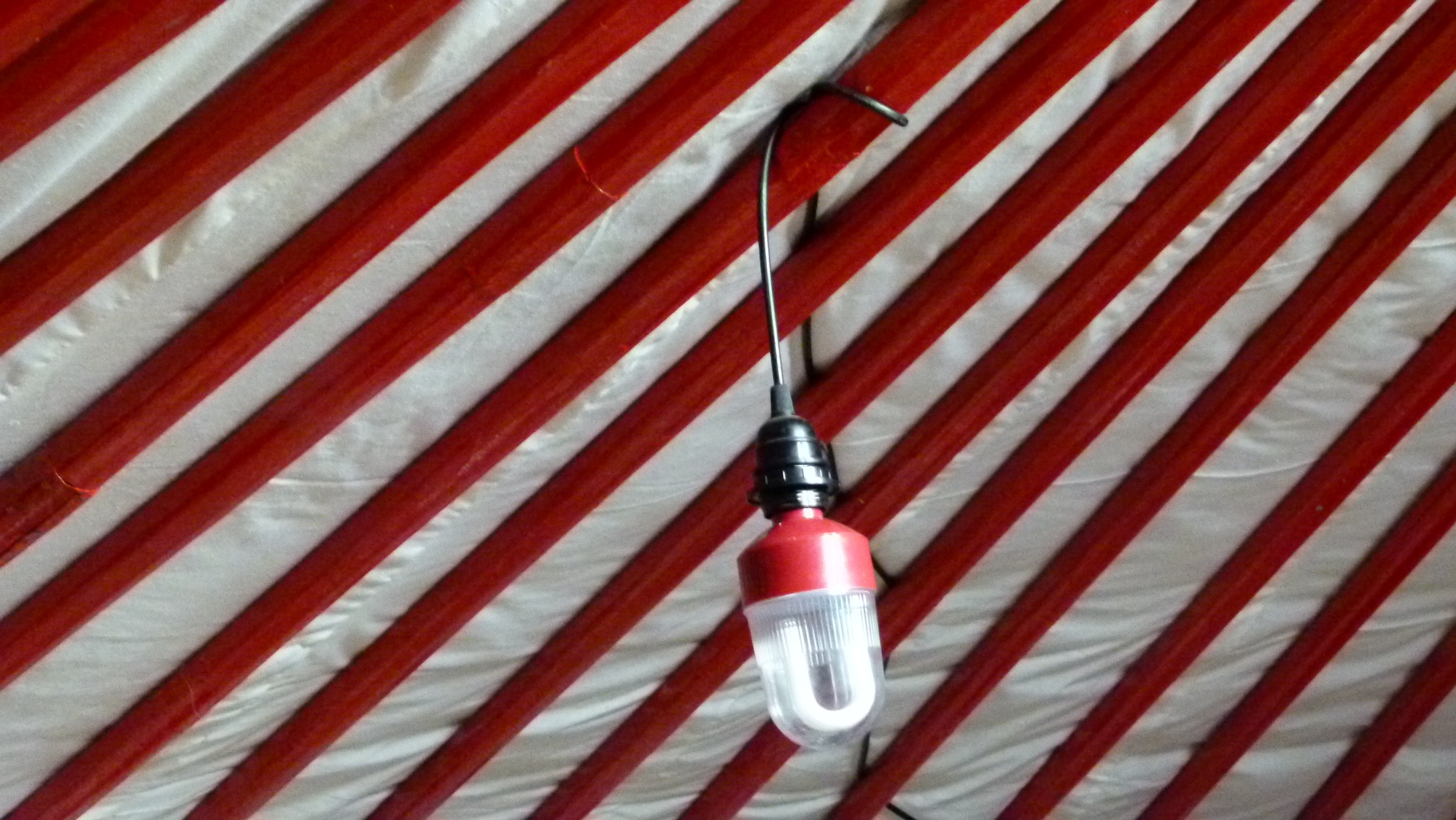
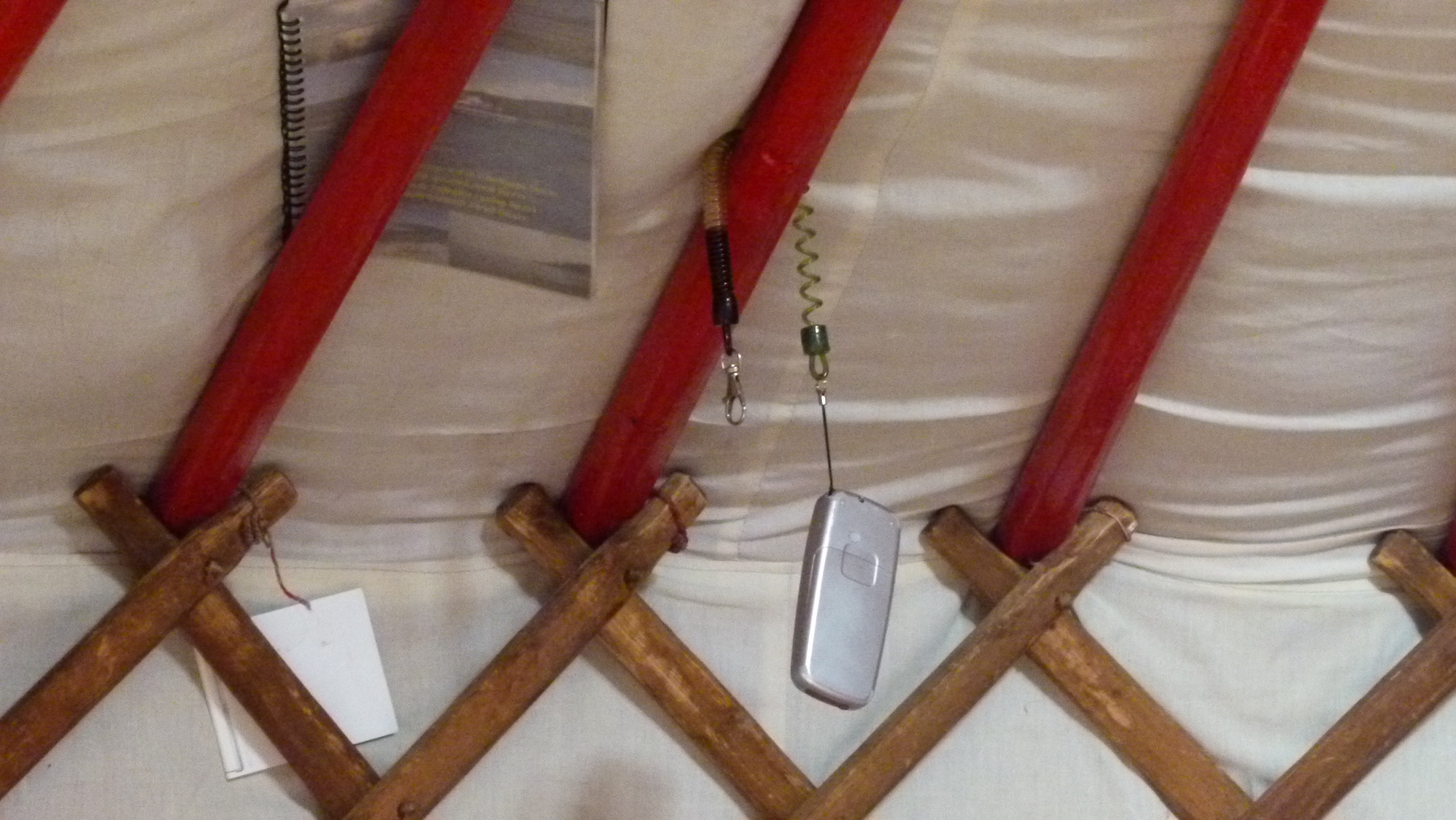
In the wooden grid are hanging tools of daily life like sun glasses or a small book.

And also there are the signs of modern times

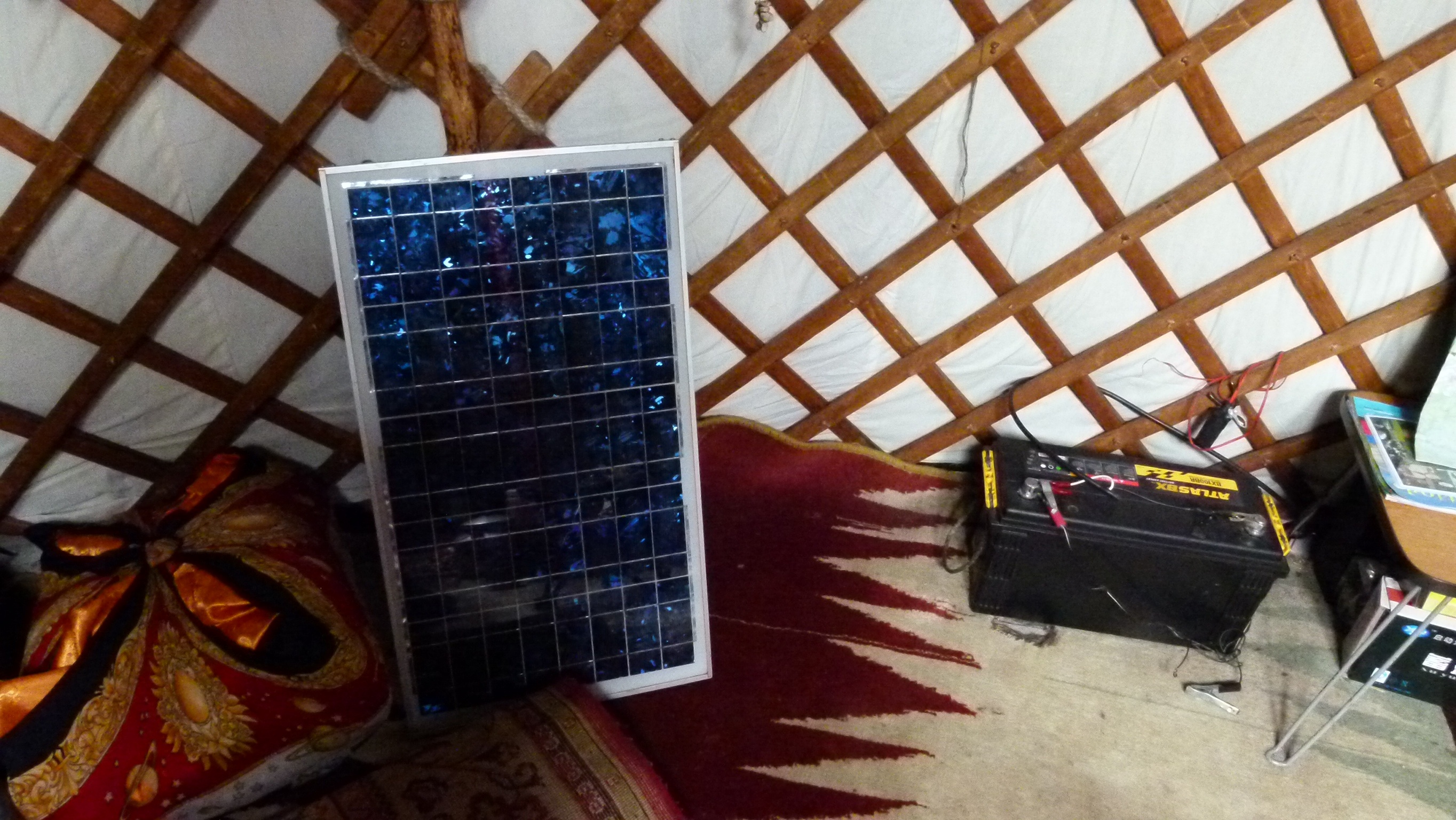
There is a satellite telephone that keeps on ringing (the daughters are calling), a mobile phone, a radio, a collection of cables, a sewing machine (she uses it to sew her traditional tuffed long jacket made out of dark red silk), an alarm clock, two batteries and a solar panel. Also this ger owns a car.
image

image

image

With a hearty good-bye we hand over our small gifts.

To the Tolgoit camp

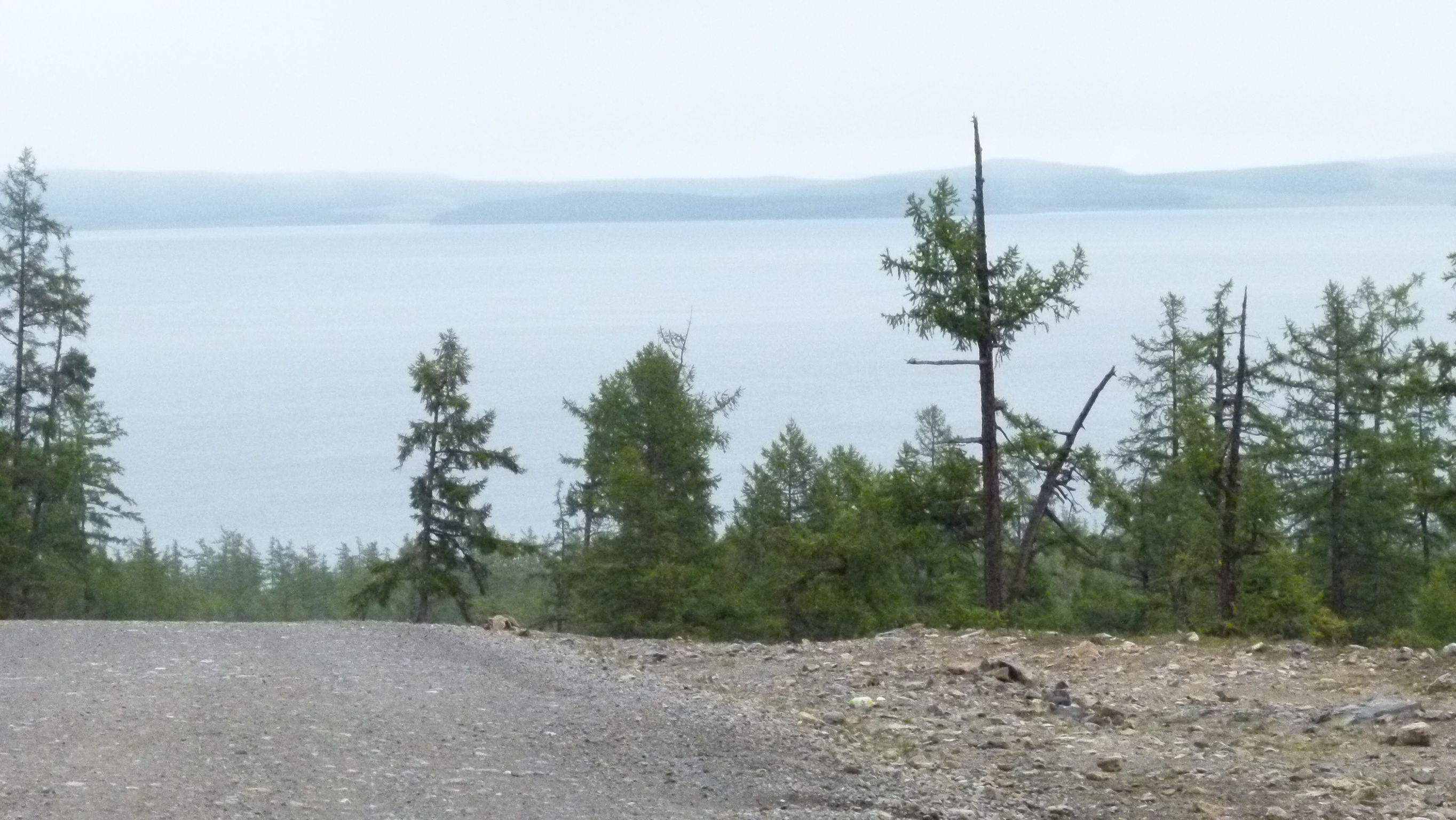
We continue our way to the Tolgoit camp. We cross the Yankhi pass. Overlooking the pass are the slopes that had ben hurt by the Russian scientists. They needed a road. In front of us the lake, a gorgeous view.
image

Shortly afterwards we enter the Toilgot camp and move into a ger that has been heated so well that we open the door to breathe.

Reflecting our visit on the afternoon walk

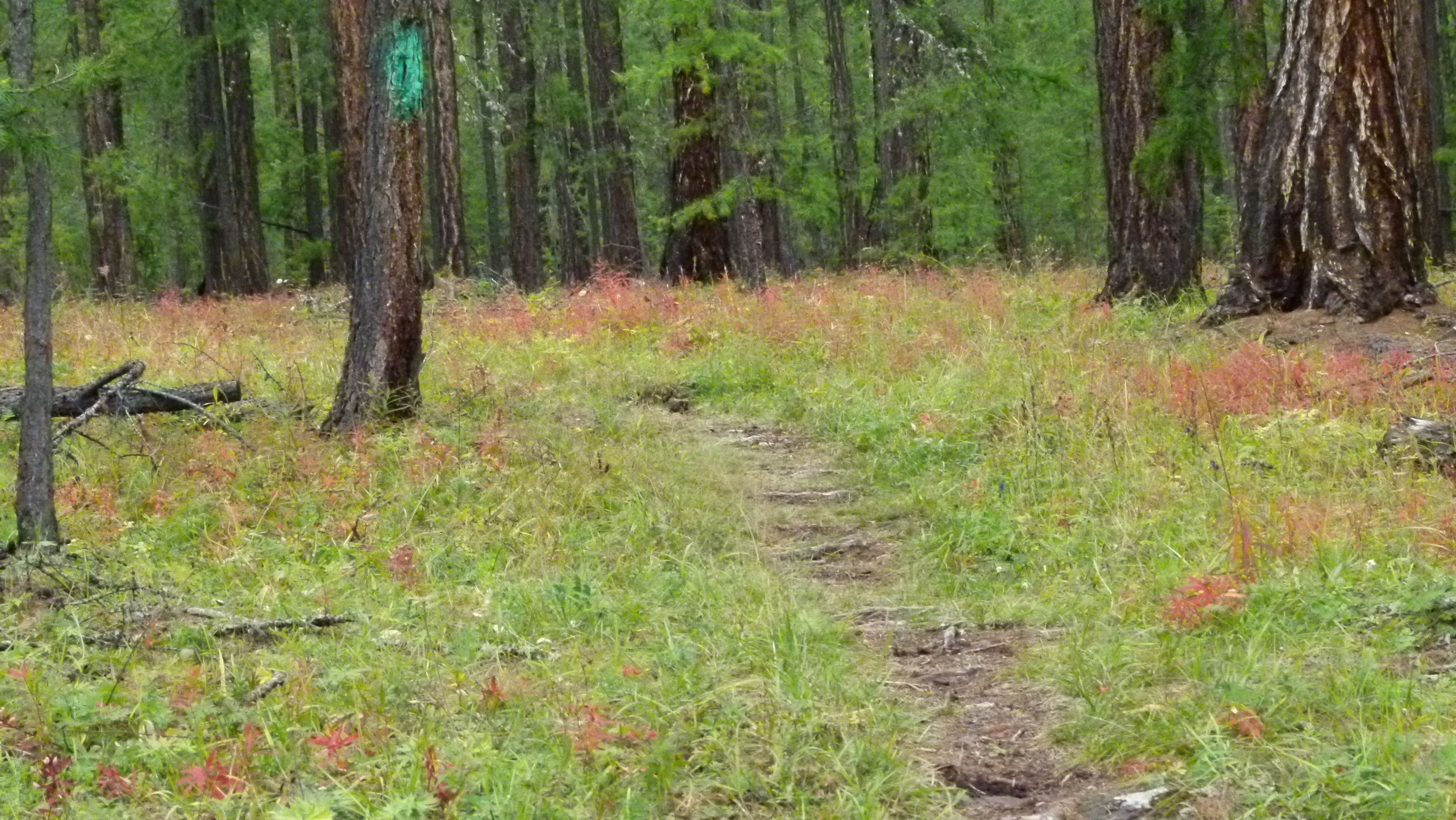
After lunch we stroll amidst lark trees and mushrooms. We walk softly on the needles.
image

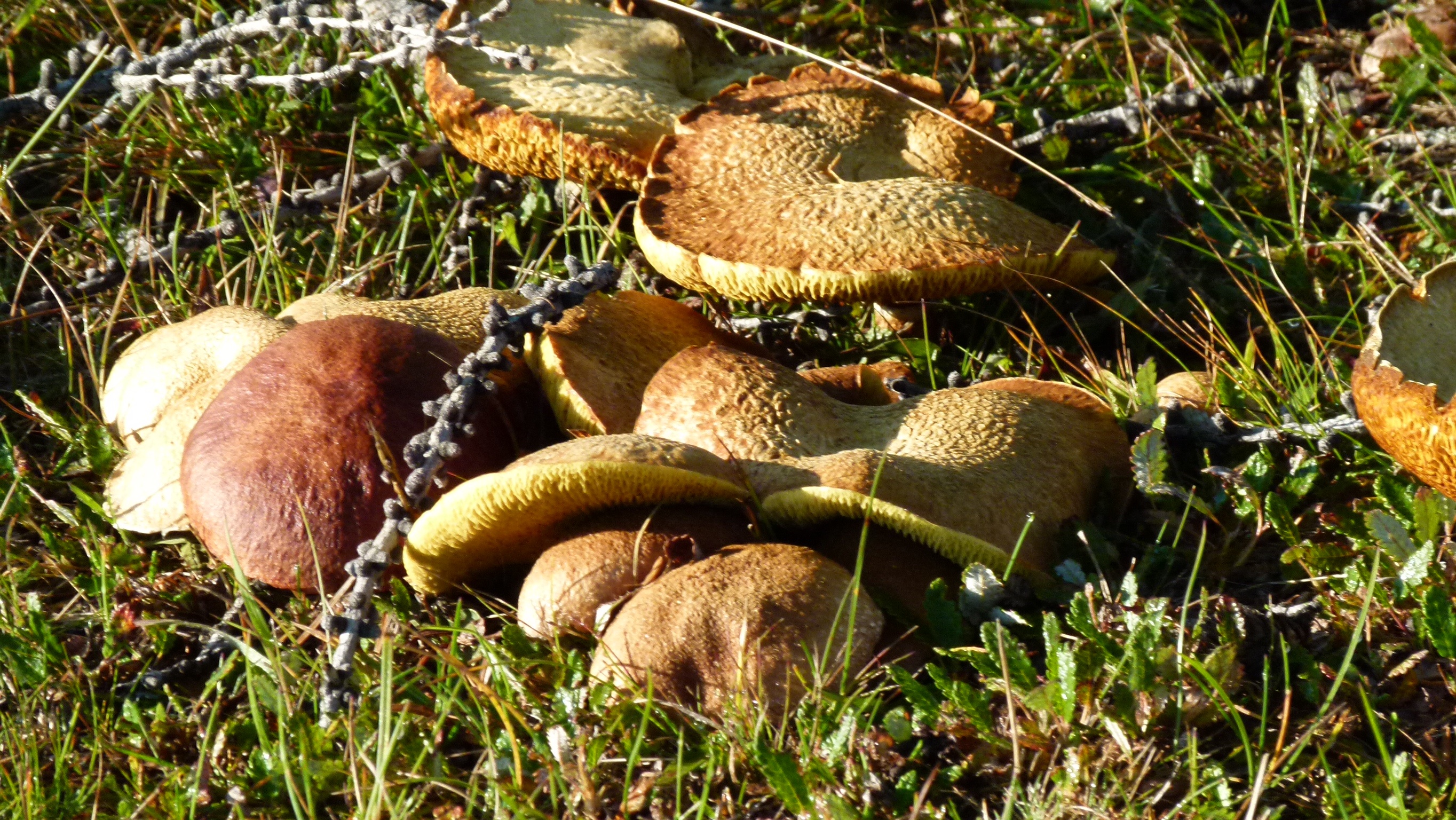
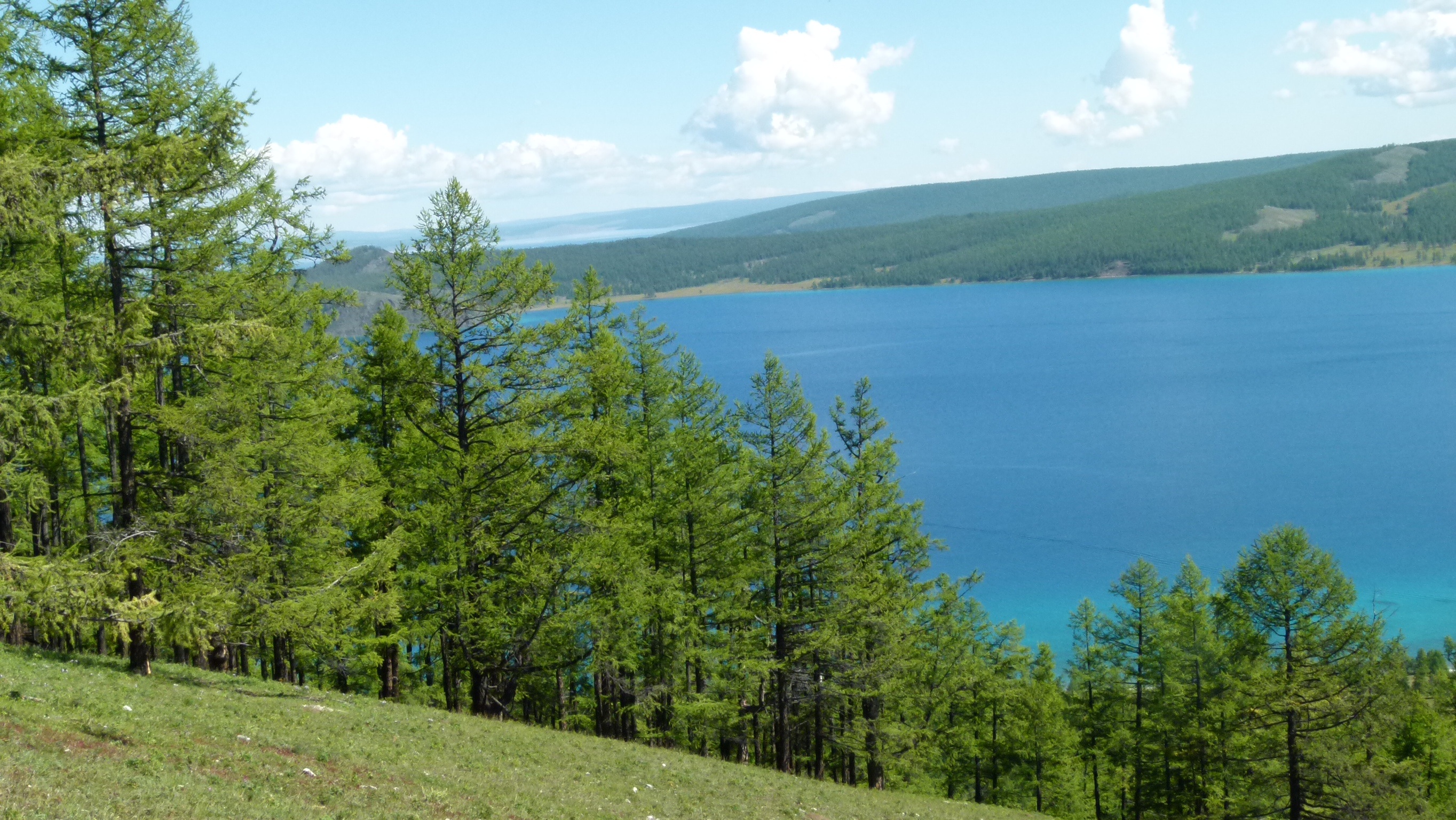
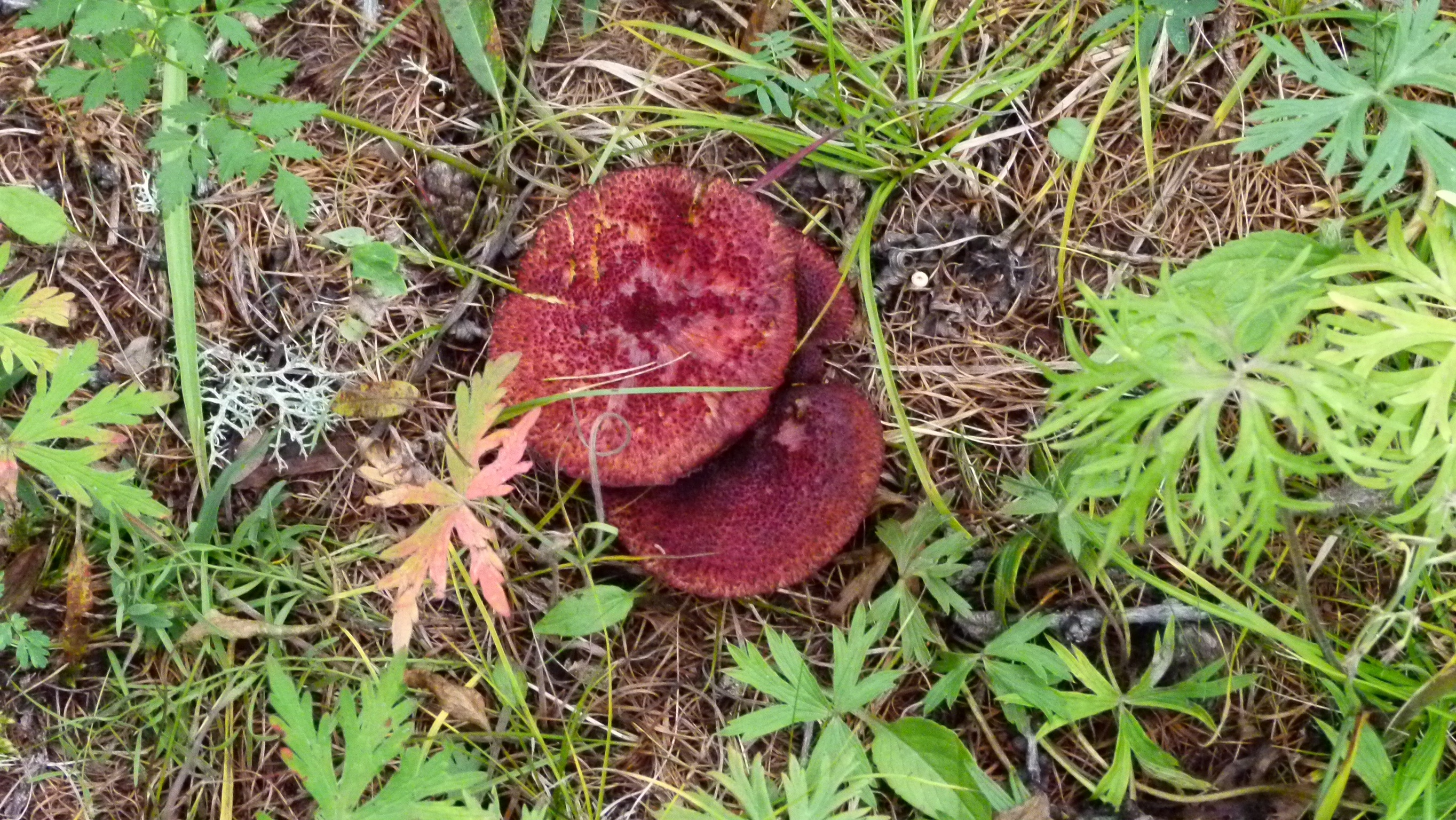
On the way back there is a nice view of the lake. Mushrooms, mushrooms, mushrooms, especially the red boletus (Rotfussröhrling)…
image

I imagine the risotto prepared with them! Ursula’s comment: “No nutritive value in mushrooms; this might be why the nomads ignore them.”

We reflect that Mongolia is transforming quickly. Half the population lives in towns now. The nomads use cars and motor cycles instead of horses. They use it to move gers and to guard their animals. At the elections four years ago, everybody came on horseback, and this year almost all came by car or motor bike.

Aika confirms that it might be true that the daughter of Pagmajew is studying in Ulanbaator, even if she might be forty years old. There are many older students. They receive a monthly salary of about USD 50, as the government thinks education to be important. Good marks lead to additional payments. “Some students go to the disco instead of studying”, she frowns.

We tell Aika about our flight that has been diverted to Edinburgh to take the army music band to some festival. She then tells me about the elections. The candidate of the opposition was in prison, until the elections were over, she says. There might be more capriciousness  such as the black market burning down and now there is room for street construction. It is said that the shopkeepers could buy an insurance  beforehand and were compensated. If this is true, there might be more room for change in Mongolia.
Two Swiss in Mongolia – visiting bronze age

We propose to visit the deer stones
Around lunch time, we  arrived in Mörön, flying in from Ulanbaator.
image
Pudje will be our driver for the next days.
We propose to visit the deer stones that are just a few kilometers away from the airport. Pudje carefully drives our car over a bumpy earth road to a dusty parking space.
About 40 stones with deer paintings
We find about 40 stones decorated with deer paintings and ornaments from the bronze age. The body of the animals is a blend of deer and bird. Their body is stretched, ends with peaks and has with wings on the back. The stones seem to have formed a ring. It must have been a place of worship.
image
image
Horse sculls within the ring
Excavation is going on. Russian and Ukrainan archaologists had found sculls of horses They explain that these sculls are from the same times as the deer stones and that they believe that they were sacrifices (жертва). Initially the archaologists were unfriendly towards us tourists that dare walk around their scientific site, but they thawed up, when I ut talked to them in Russian.
image
Later Ursula smiles… look, I saw immediately that these sculls are from horses, as I had to study and compare the sculls of frogs, sharks and horses at university.
Continuing to the Döltur camp
Now Pudje drives us to Khatgar and to the Döltur camp  beautifully located on the shore of the Khövsgöl lake.
image

Two Swiss in Mongolia – first walk near the Khövsgöl Lake

Sunrise behind the hill

When I wake up, Ursula comes back from a sunrise walk. There is a chilly wind and blue sky. Promising. And yes, it will be around 20 degrees today, a warm summer day.

image

Walking to the Ashishai Sant hill

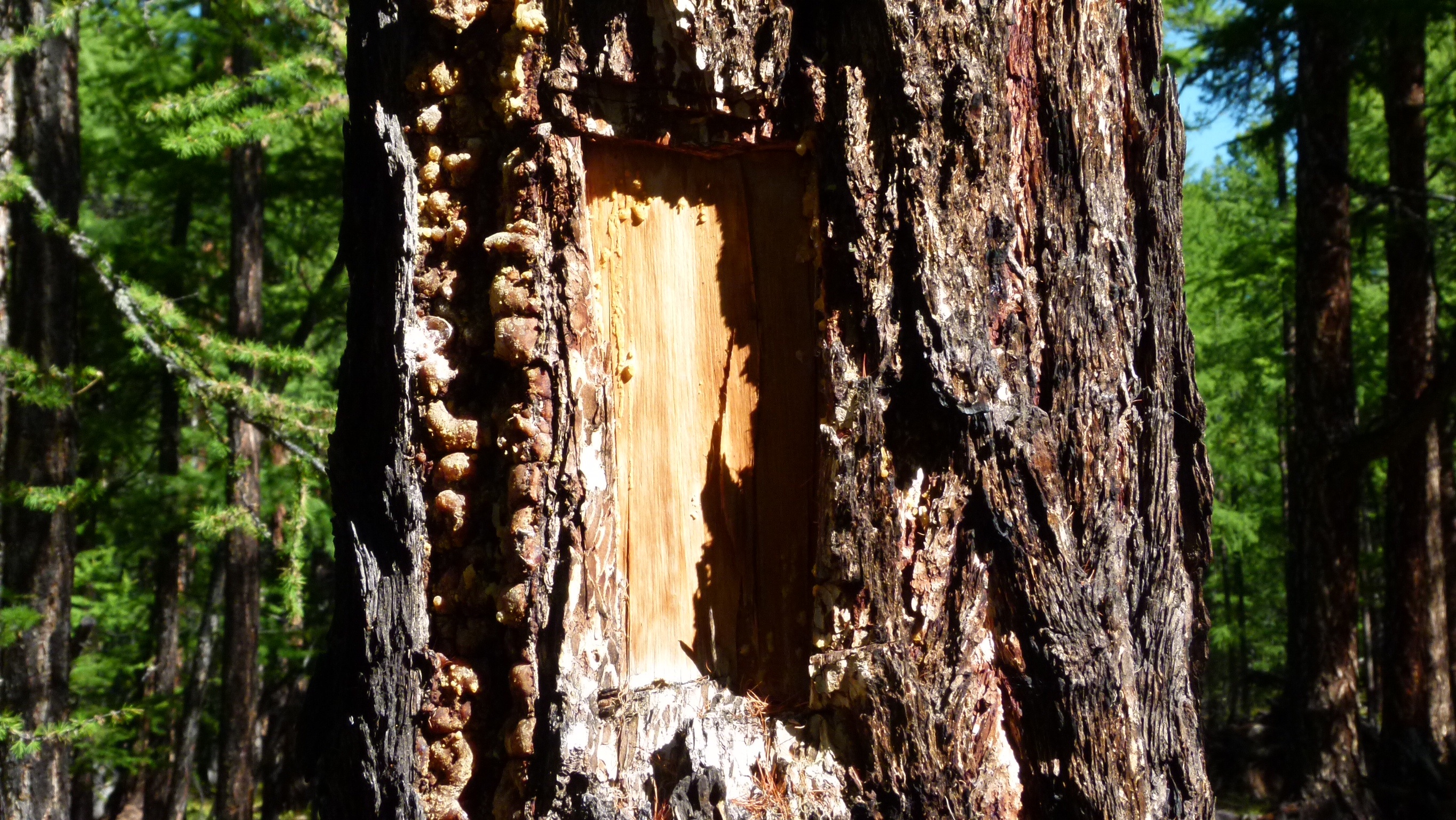
Armed with a promising box lunch, we walk uphill – directly behind our camp.  Our driver, Pudje, has taken over the lead, as he is from the area. Lark tree forest and soft ground – this is the taiga.  Pudje  scratches off the resin of the lark tree and chews it lie a chewing gum. I try it and it has a bitter taste.

image

We have to be careful not to step on the mushrooms, there are puffballs, russola, chanterelles, relatives of the bolet and many more. Here we could just collect them. Pudje kneels down in front of a white mushroom in the meadow, looks at the bottom of the stem and frowns. Yes, he is right, also the lamellas are white. It is a death cap.

image

Though late in summer, there are many flowers, like carnation or gentiane

image

Worshiping the ovoo on the top

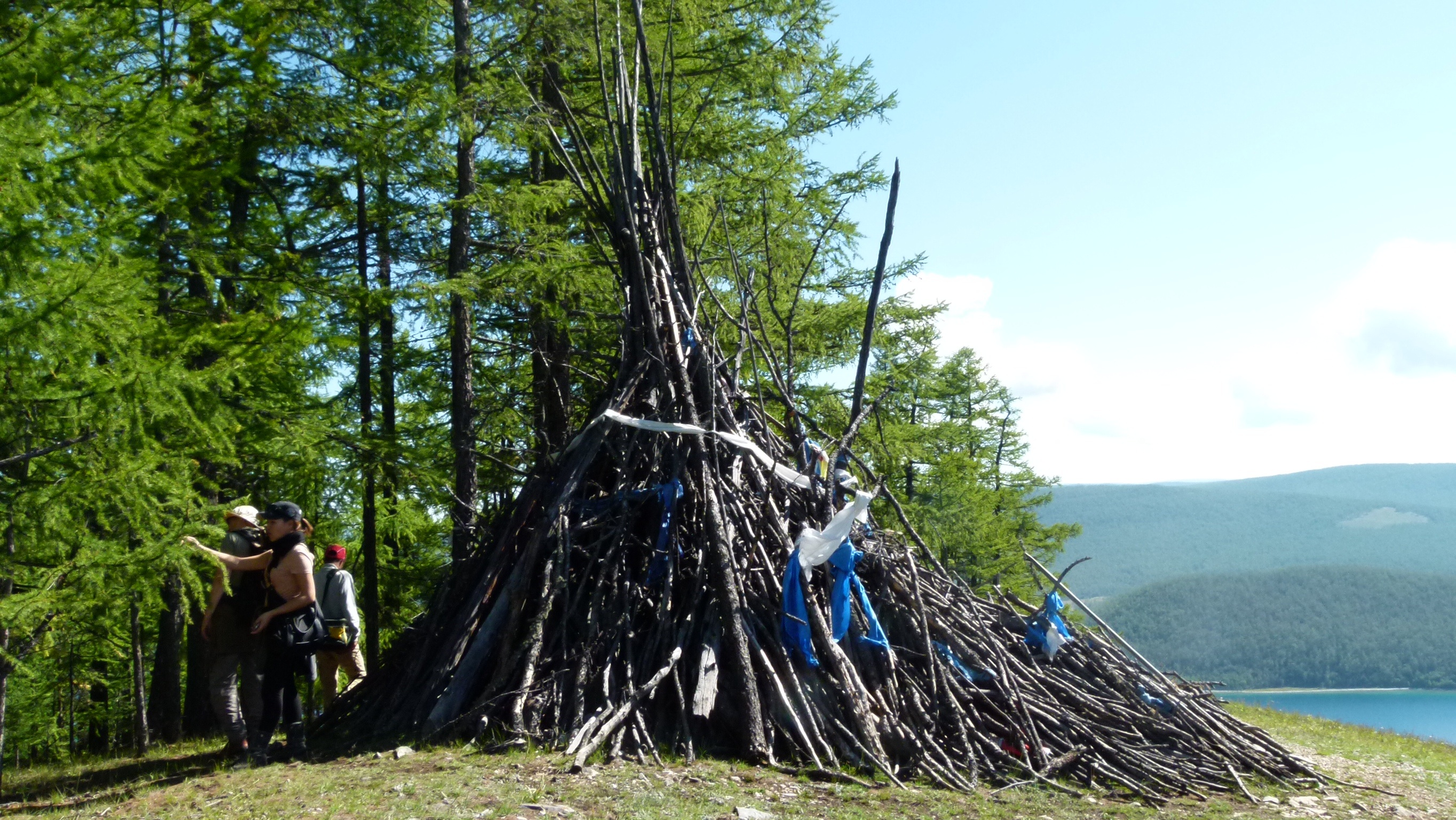
On the top of the hill, there are two piles of branches decorated with colorful ribbons. Pudje adds a few branches. As this is how Mongolians show their respect for nature in Mongolia, we do the same. Then we walk around the ovoo – clockwise- and I notice that Pudje takes his cap off.

image

image

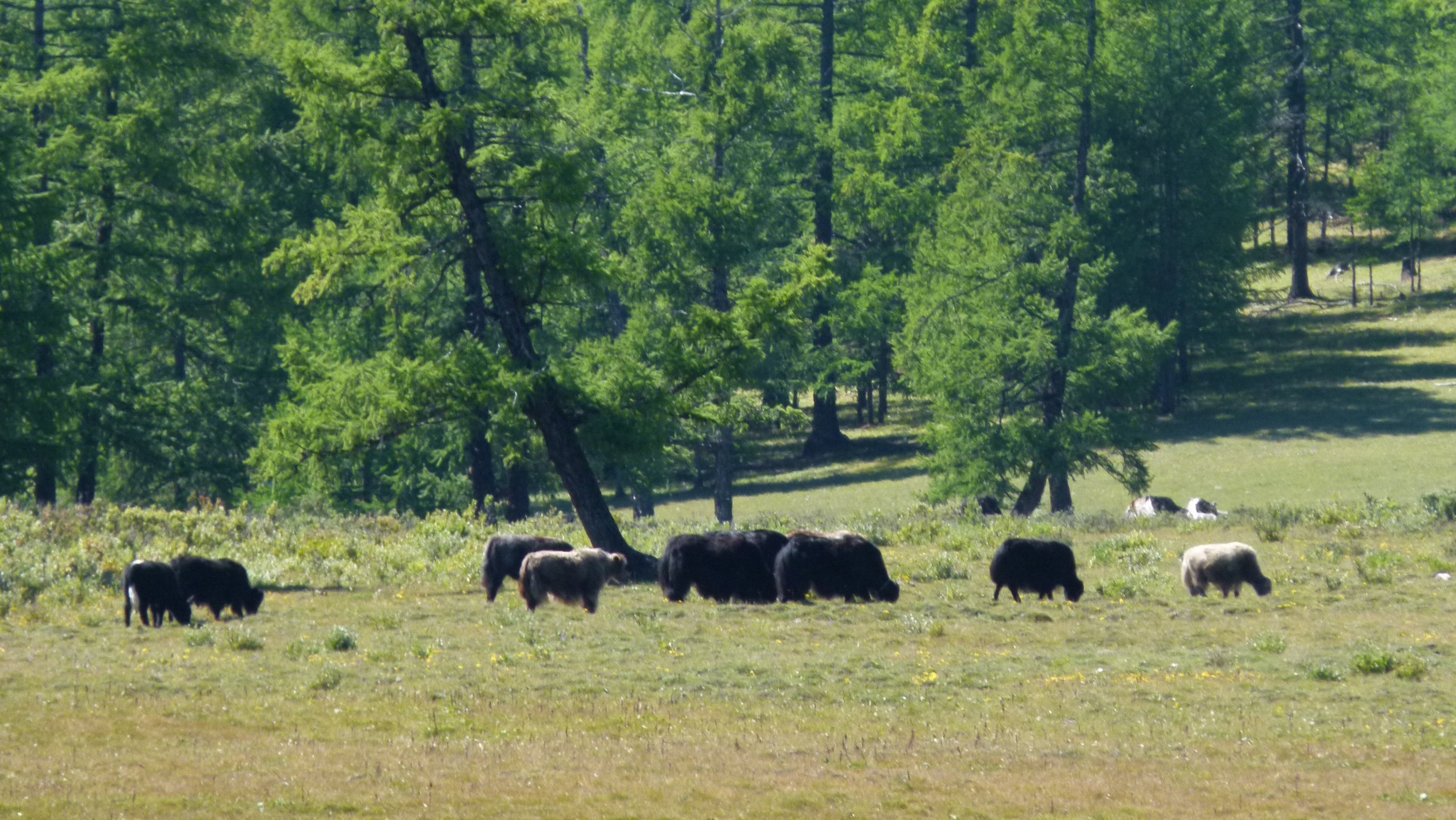
We enjoy the view. Our lunch box is delicious:  Soup, dumplings (bansh) with beef and a cabbage-carrot salad. Then we continue to a pretty swamp field. We share it with a herd of Yak.

image

Back in our ger

Around 3 PM we are back in our ger and enjoy our siesta to recover from our short night in Ulanbaator.

image

Two Swiss in Mongolia – flight delayed

Bad weather in Mongolia?

At 3PM we try to check in to our flight to Mongolia. The information desk at Tegel frowns, cannot find the flight, and then finds out that the flight of Mongolian airlines beeb delayed to tomorrow. The reason: Bad weather in Ulanbataar

Hotel Mercur and another visit to Berlin

Close to the airport there is the Hotel Mercur. It has a shuttle bus. We settle in a room here.  Then we take the bus to Bahnhof Zoo… to visit Berlin. Kaiser Wilhelm Gedächtniskirche – Ursula liked the blue modern church.  The memorial place is open and we learn that they considered to rebuild the church from 1890. S-Bahn to Hacke’scher Markt. We stroll through the Hacke’sche Höfe and we like the Freitag Shop. Then we walk to the Museumsinsel, Gendarmenmarkt and Brandenburgertor. I show once more, where the wall ended separating the two towns, as I have always done for Ernst.

Is the minister so… that he takes the whole plane?

Back at the airport we find out that a minister has taken our flight and that our plane flew to Edinburgh.  When I tell a friend about the Mongolian minister, he asks me: ” Well, does this minister need a full plane for himself?”

Well… let us hope we make it to Mongolia tomorrow, after having enjoyed our short walk through Berlin.

Mongolia: Discovering the peoples from the steppes – diving into their history


Mongolia – The mysterious peoples from the steppes

Huns and Attila, Turks, Chinggis Khan and his horsemen conquering Europe and Asia, the Moguls in India, the emperors in China – to connect up the links between all these fragments of knowledge about Mongolian history, Ursula and I spend a sunny afternoon in the garden of my mountain apartment. We felt like back in our school days some 40 years ago, when ploughing through the guide books (Dumont, Lonely Planet and more) and when surfing through the Internet with Drs Google and Wikipedia. This is what we found – and we may have misinterpreted some of the complex facts while trying to make a short overview.

Three invasions by the peoples from the steppes

(1) The Huns and Attila around 400 AD left their steppes. In 450 the empire of Attila stretched from Korea to Germany.
(2) Turkish/Uighur tribes blended their nomadic life and agriculture. There are ruins of their small cities in the Orkhon valley and a monument near the Lake Ögoi reminds of Bilge Khan, their greatest leader. Their empire reached out to the Mediterranean. It existed until around 840. The Uighurs were then expelled by Kyrgyz tribes (also Turkish) and migrated to the east, where they controlled part of the silk road for the next 1000 years.
(3)  In the early 13th century, Chinggis Khan unified the rival Mongolian tribes. He built an army of horsemen (9×10’000 and a personal guard of 10’000). Chinggis Khan and later his son and successor Ögodoi Khan conquered an empire from Korea to Hungary and from India to Russia. Ögodoi founded the capital Karakorum in 1241.

Around 1270, Kublai Khan divided Mongolia  into four regions called khanats. First Central Mongolia, second China (where Kublai Khan created the Yuan dynasty described by Marco Polo; Kublai’s dynasty lasted until 1368), third Russia (the Golden Hordes, later defeated by Dimitrij Donskoj in 1380), and fourth Persia (converting to the Islam and around 1500 creating the Mogul dynasty in Northern India).

In the second half of the 14th century, most of the Mongolian rulers had retreated to Mongolia, both from the West as well as from China. The now rival tribes were unified once again by Mongolia’s greatest queen, Manduhai. The Mongols revere her even today.

Adopting the Tibetan buddhism

In 1585 Altan Khan founded the monastery (khid) of Erdene Zuu, after having coverted to the yellow hat buddhism influenced by Phagpa, a Tibetan buddhist.

Under Manchurian/Chinese rule

The Mongols supported their neighbors, the Manchus, to conquer China and establish the dynasty of the Quing. Nevertheless the Mongols became a people colonised and oppressed by the Chinese. The Quing were overthrown in 1911. They were the last dynasty of Chinese emperors.

Revolutions and Sowjet rule

Until 1990, Mongolia was mostly a Sowjet state. Their prime minister Gender bravely opposed Stalin and defended the monasteries, but he was executed and his successor then destroyed them. Mongolia used the cyrillic alphabet.

Transition and democracy

In 1990, Mongolia (“outer” Mongolia) became independent and successfully established democratic rules. The former president has just been confirmed in the elections of July 2013 – he belongs to the democratic party.

On the road again – via Berlin to Mongolia

At the airport in Basel

Friday 23rd of August. I am waiting for my Easyjet flight to Berlin. The plan: A few days in the town of my mother, Berlin. I love this town and I will meet Antoinette. Next week, Ursula will join us… and with her I will leave for Mongolia.  We are all friends from the school days that we completed some 40 years ago. It is good to be with friends.

A full month on the road again. I hope to find some Internet Connections to blog about the two Swiss traveling in Mongolia.

Leaving life at home behind me
Life has been breathtaking since I came back from Petersburg. Renovation in my house… I lived amidst piles of books, carpets and folders in the living room, while the first floor is empty to be overhauled. I did some consulting work for a few days… I enjoyed this change to my retirement and I plan to do more of this later.Then a person very close to me left this world… I am very sad.

Now, I leave life at home behind me, with one more friend in my heart.

Ahead of me is Mongolia

Mongolia has always been a mysterious spot in this world for me. I came across the peoples from Mongolia, when learning about the Huns that invaded Europe (I once sat on the chair of Attila in Italy), about the Turks that invaded Anatolia (the ruins of the Byzantine cities were one example that told me about them). Then Chinggis Khan – he became a pop star in the 1980’s. I came across them in Russia as the “Golden Hordes”, in India as the Moguls (Sha Jahan’s Tadj Mahal shows how powerful they were). And China feared them, built the Great Wall, and could not prevent being invaded; the Mongols became even emperors of China.

The mysterious peoples from the steppes. I look forward to discovering them and to understanding why I came across them in so many corners of this world.