The Pfälzerwald – ironworks, shoemaking and bizarre sandstone rocks

Now we are on our fifth day in Germany. The German weather forecast shows “official warnings”: Heat. Yes, we have noticed the heat, when walking in the vineyards. We decide to escape the heat by driving into the Palatine Forest (Pfälzerwald) which is the largest coherent forest in Europe. In Bad Dürkheim we buy a guidebook. Our plan: Get an idea about the former mining industry and the shoe making and then go for a walk in the area of the bizarre sandstone rocks around Dahn – in the shade.

.

Trippstadt- old mining town and now a favorite place of motor cyclists

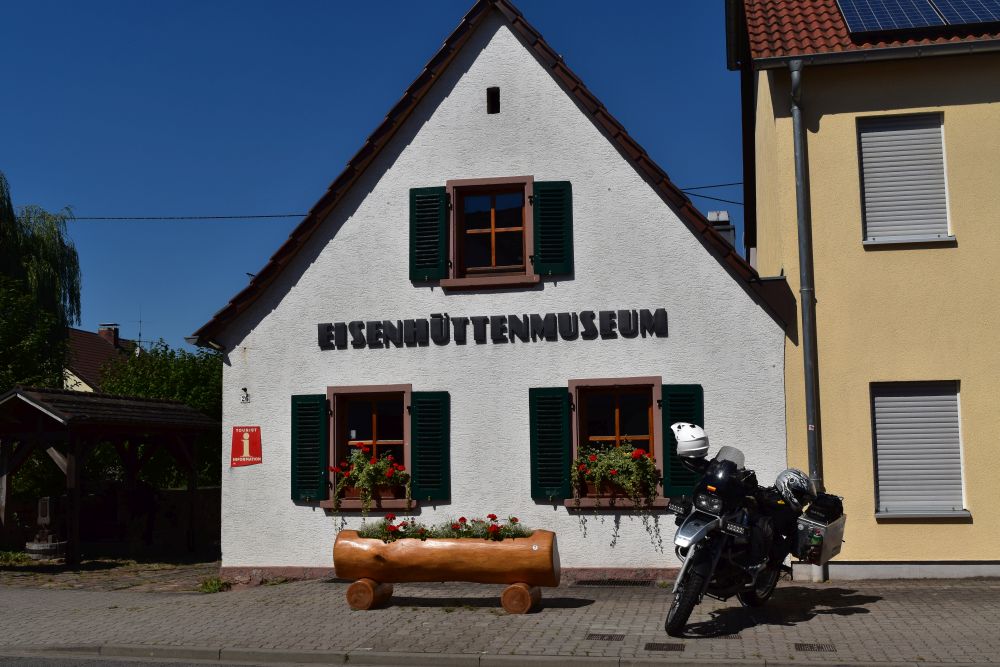
Through shady forests we drive to Trippstadt. This is a relaxed small town in the middle of the Palatine Forest. Motor cyclist love this place – a group of them is just celebrating a wedding – all dressed in black. The photographer parked his motor bike in front of the museum for ironworks.

The Eisenhüttenmuseum (museum for ironworks) documents the history and the ancient production methods of the mining industry that started here in the 15th century.
dsc_0046-small

First the workers had to dig out the stone containing iron from the mountains. Then they had to smash the stones using stampers.

dsc_0028-small

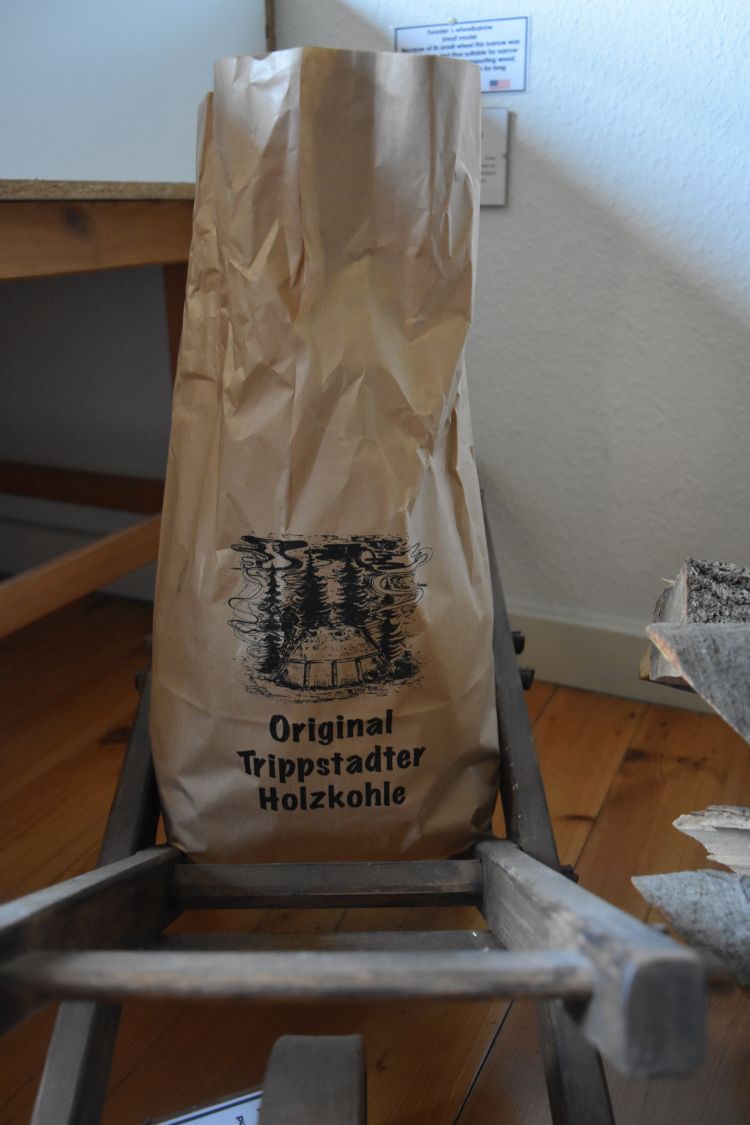
In large ovens the smashed stones are being heated to extract the iron. The heating energy required wood charcoal – charcoal burning was the profession for that.
dsc_0041-small

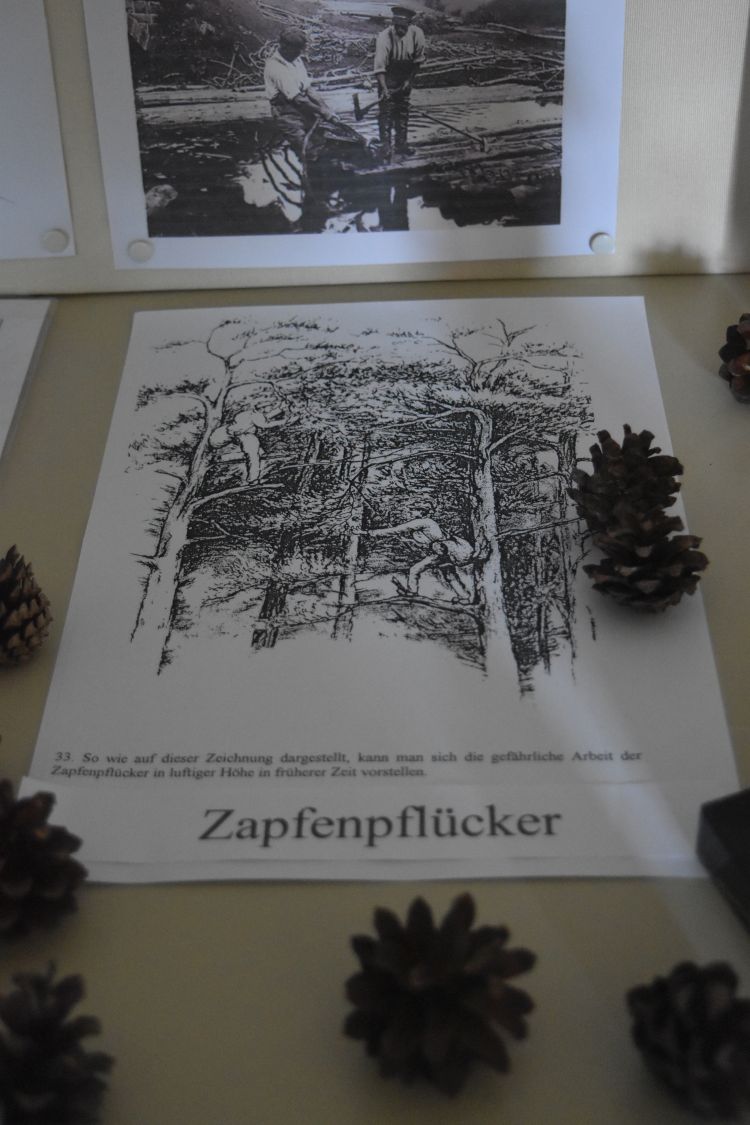
Additional professions needed were the resin burners (Kiefernpechbrenner) and the fir cone gatherers (climbing firs to collect the cones – pretty dangerous).
dsc_0038-small

We use the end products such as ovens…

dsc_0034-small

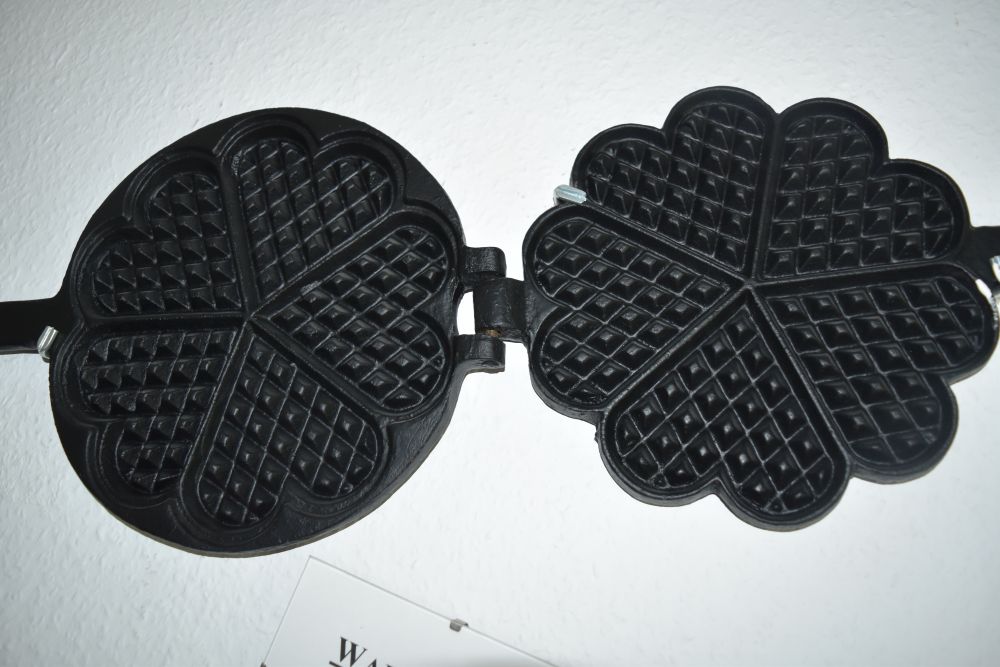
… or waffle irons…

dsc_0037-small

… without thinking of the work that went into extracting the iron from the mountains and from the stones.

In the 18th century, industrialization starts. The family Gienanth becomes the main factory owners in the valley. I am scared, when I read the directions. A work day lasts from seven to twelve and from one to six. Breaks are not allowed, only one half hour break for children in the morning and one in the afternoon.  And children older than nine are admitted to work in the factories and mines.

Mining in the Pfälzerwald halted in the beginning of the 20th century. Another industry became important, shoe making.

.

Shoe making – the shoe museum in Hauenstein

The Schuhmuseum (shoe museum) in Hauenstein lays out production technologies on one hand and shows shoes across time and countries on the other hand.

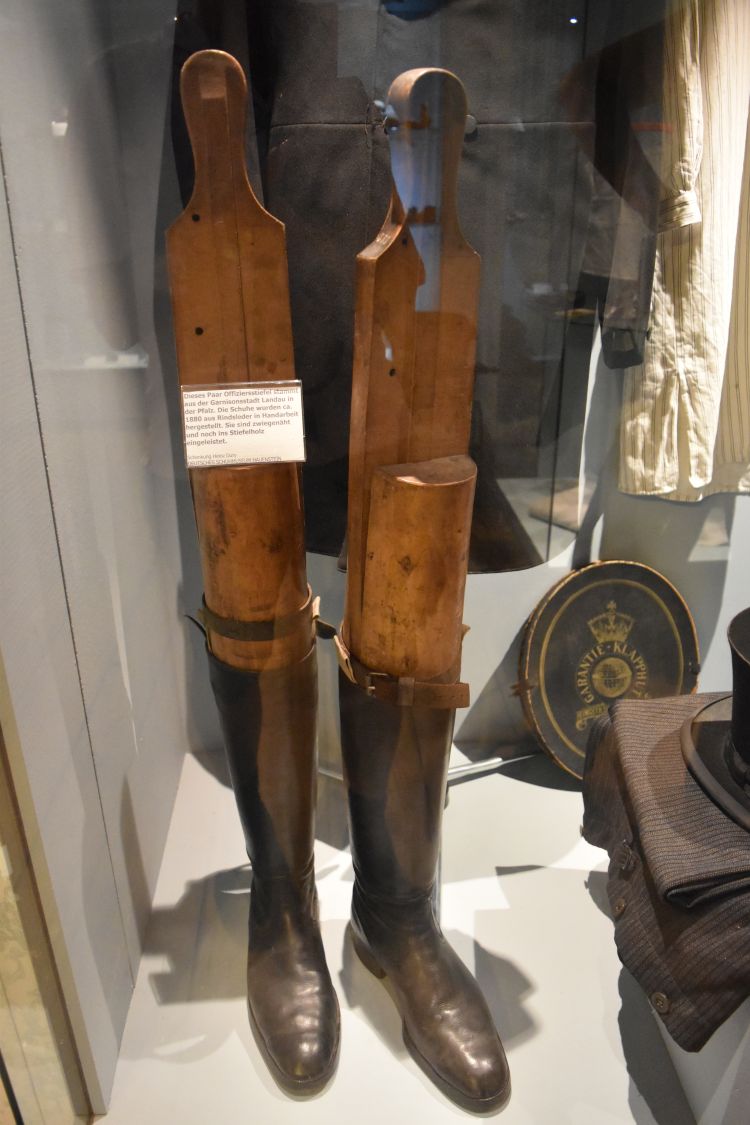
For the first time in my life I understand, what “Schuster bleib’ bei Deinen Leisten” (“cobbler stick to your last”) means: The cobblers used the wooden models or last of the feet of their clients to design the shoes for them.  The museum  owns the wooden models of Charles de Gaule and Helmut Kohl – huge they are both. This is a last with the matching boots:
dsc_0051-small

The museum shows all the machines needed for shoemaking such as to prepare the leather, cut it, sew it onto the shoes and add the heals.
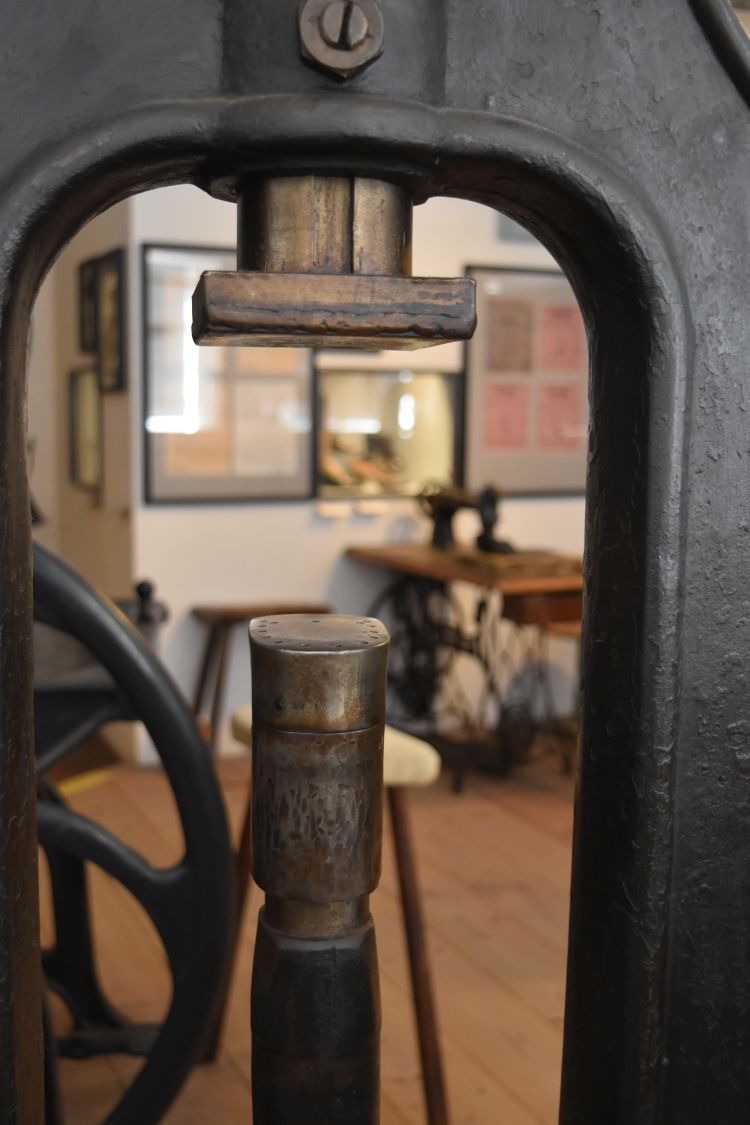
dsc_0056-small

Shoes from all over the world are on display. These are childrens’ shoes – and they HAVE been used.
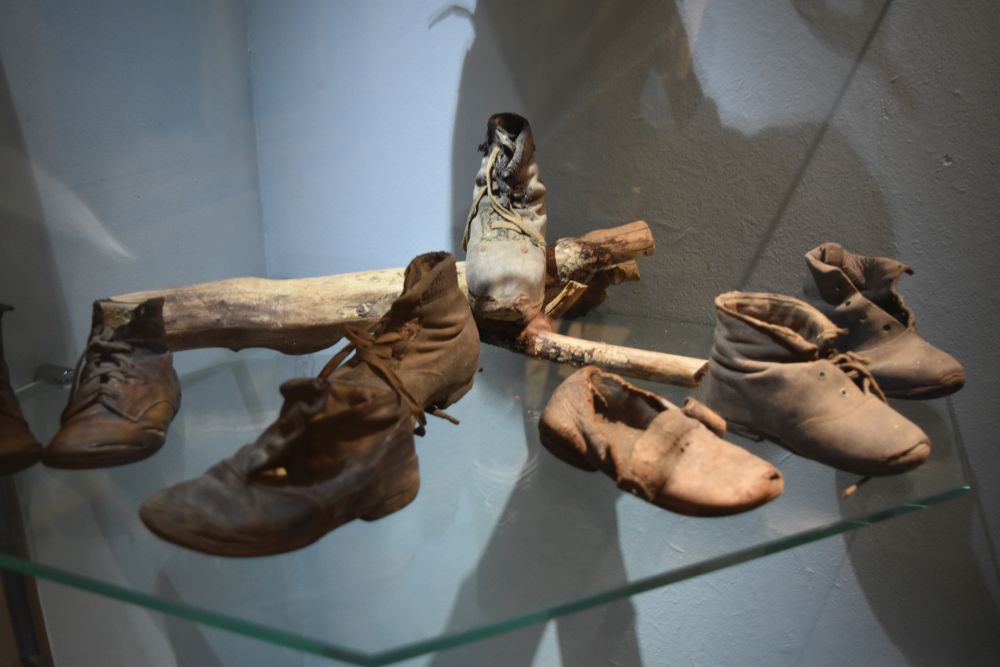
dsc_0052-small

And this is an elegant white ladies’ boot.
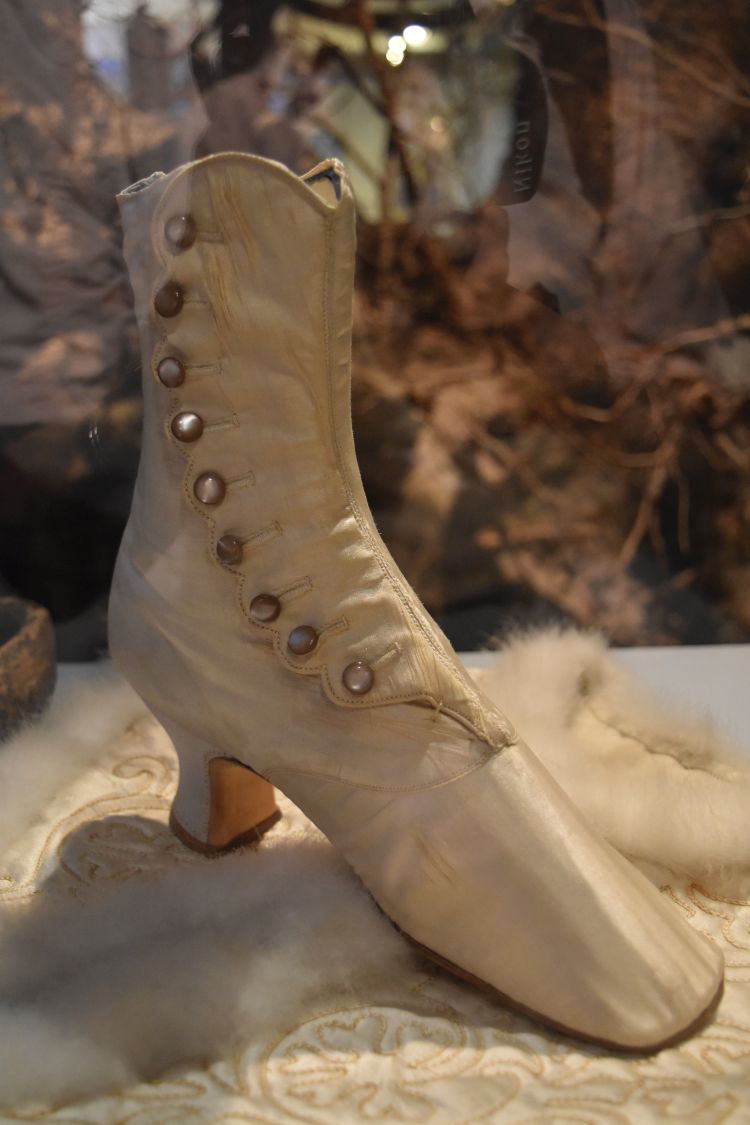
dsc_0049-small

.

Die Kleine Blume” (“The Small Flower”) in Erfweiler – a welcoming hotel

We continue to Dahn in the Pfälzer Wald, where we will find bizarre sandrock formations, fortifications on top of some of these rocks, and hiking opportunities. We stop in the hotel “Die Kleine Blume” Erfweiler where we find a comfortable bed, a small swimming pool, and a great dinner with fresh trout from the Dahn region accompanied by a Grauburgunder Meerspinne from Gimmeldingen. We book two nights and plan a walk in the hills, forests and rocks around Erfweiler for tomorrow.


Germany – to Speyer and the Pfalz: “Umleitungen” and wine

From Eberbach on the Neckar, we continue to Speyer and the German Wine Route in the Pfalz.

.

Meeting our  friends from Russia near their “Fewo” in Speyer

This is our third day in Germany. We have arranged to meet my Russian teacher and her husband to take them around the German Wine Route in Pfalz (Palatine).

Our Russian friends have booked a Fewo in the city center of Speyer. Ursula laughs: “You do not know, what “Fewo” means? This is easy, it is a “Ferienwohnung” or “holiday apartment”!” – Yes, right your are… “Fewo” stands for “Ferienwohnung”. Germans are great at inventing abbreviations.

On the map, it looks easy to find this “Fewo”, but then we get blocked by road constructions and dead end streets. Uff. Finally our friends hop into our Swiss car.

.

The dome of Speyer – I was here fifty years ago – I am again impressed

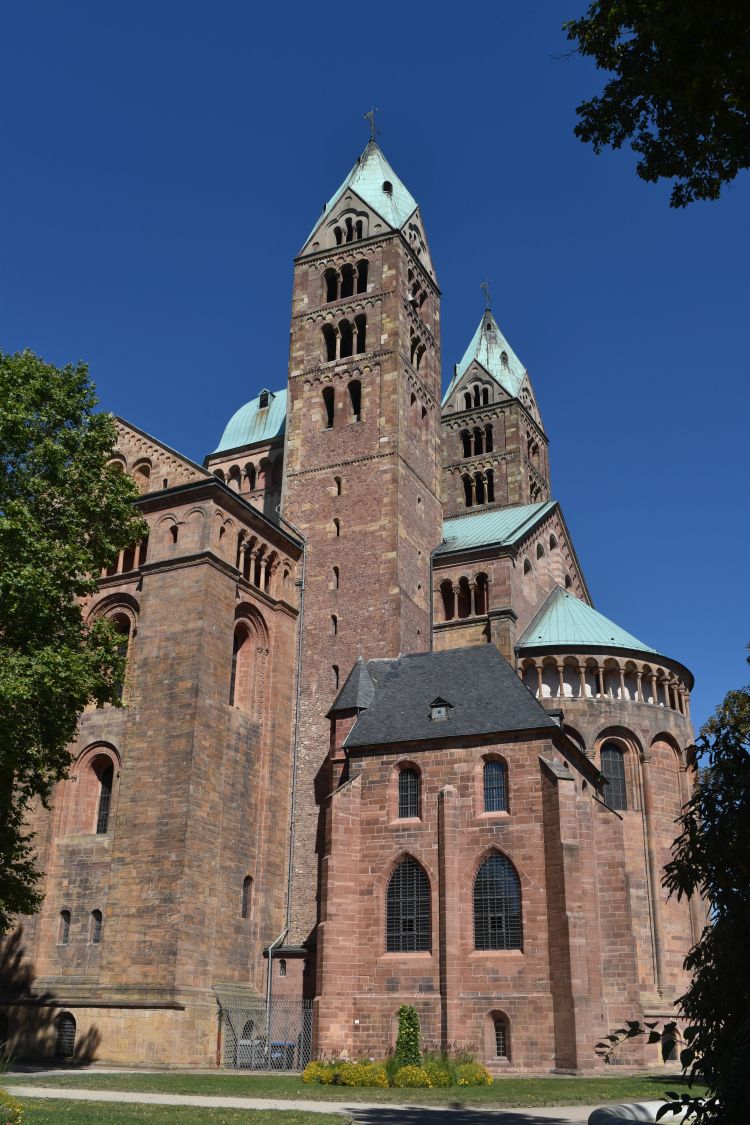
We visit the dome of Speyer… these Romanesque twin towers can be seen from far.

dsc_0501-small

I was here fifty years ago with my mum. I remember having suffered from a fierce headache on that day. The dome healed my headache. Again now, I am impressed by the sober and harmonic architecture. I learn that at this place the Celts had already built a sanctuary and the Romans build a Christian church around 360 A.D. The current dome goes back to the 11th century. It served as a model for other Romanesque churches in the Alsace and in Germany. Over the course of the centuries the dome has been amplified, changed, destroyed, rebuilt and renovated. In the middle of the 20th century, its old Romasque structure has been restored (Source: “Der Kaiserdom zu Speyer”, Jaeger Druck, 1978).

This is the central nave – grand and calming atmosphere – cool on a hot day.

dsc_0506-small

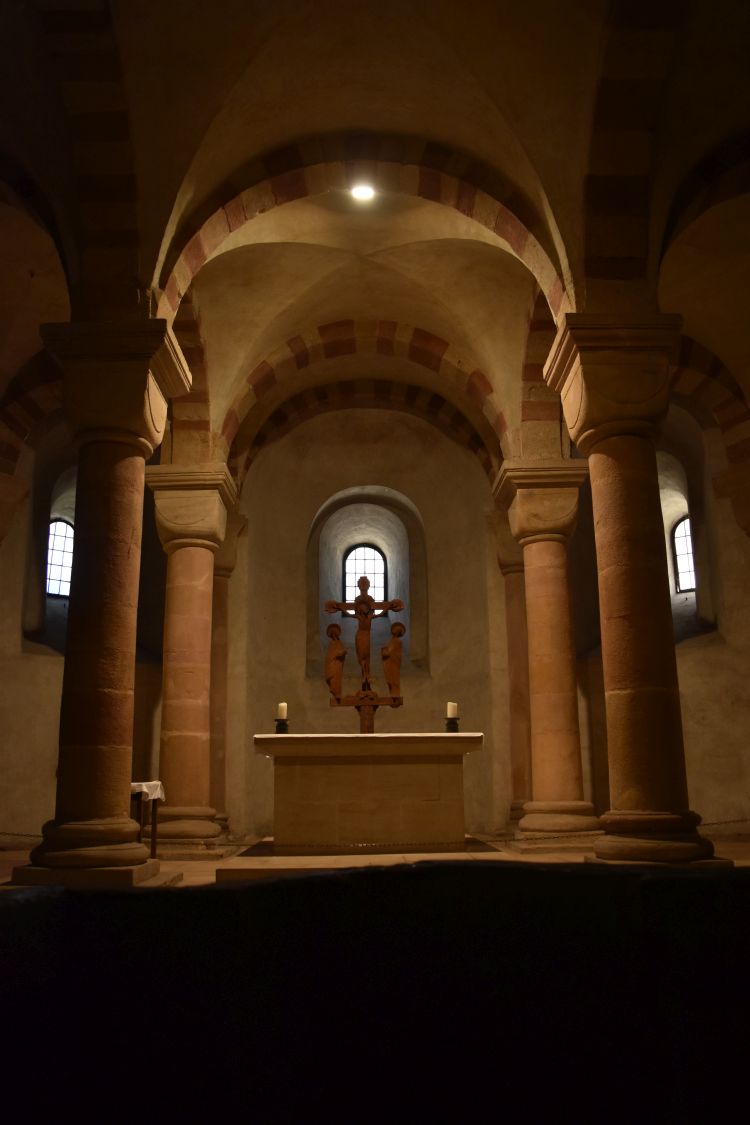
The crypta with its columns and arcs remind me a bit of the mosque in Cordoba…

dsc_0513-small

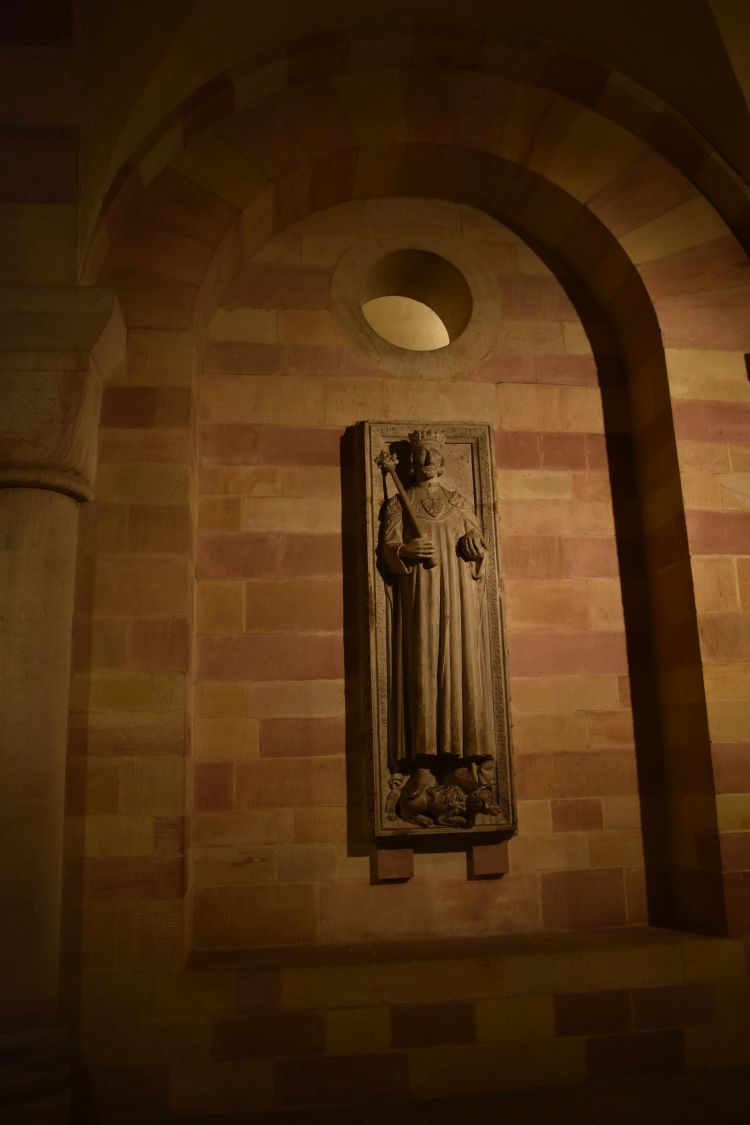
We say hell0 to Rudolf von Habsburg (he became king of Germany in 1271, when besieging Basel). I notice the aquiline nose and the strong jaws of the Habsburgians.

dsc_0511-small

I would like to stop the clock and stay in this church… but time cannot be stopped.

.

The German Wine Route – sooo many road blocks… what are you doing to the tourists?

Our Russian friends want to see Neustadt, Maikammer and St. Martin. They are our guests and hence their wish is our command. What an adventure! The German Wine Route is lined with road blocks… we keep on landing in front of stop signs and barriers… interestingly without any indication of alternative routes. We try again and again – one route after the next – always the same result – stop and a barrier, and that’s it. With and without GPS. Our Russian friends learn the word “Umleitung” (deviation or in Russian “объезд”). It takes us quite some time to get to Neustadt and to Maikammer. Finally we arrive, taste some wine, and our Russian friends buy some bottles to take back home. August Ziegler was a nice wine grower in Maikammer.

dsc_0518-small

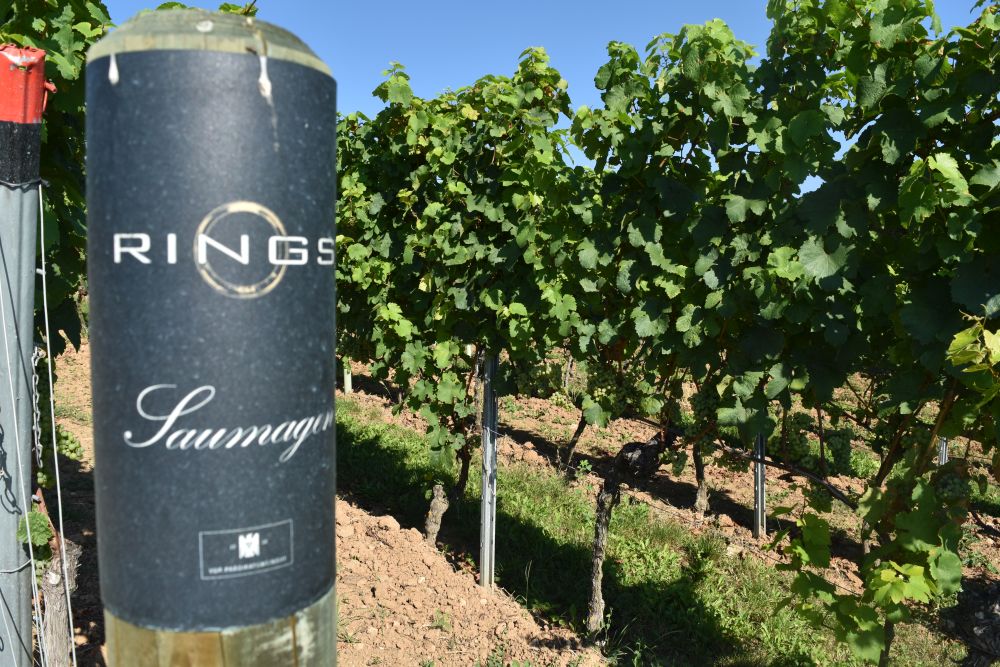
We have dinner in Kallstadt and then take our friends back to Speyer. Before going to sleep in the Kallstädter Hof, I relax with a glass of Riesling from the vineyard Saumagen.

.

A hot and sunny day in Kallstadt and around – we walk through the vineyards and later visit two selected wine growers

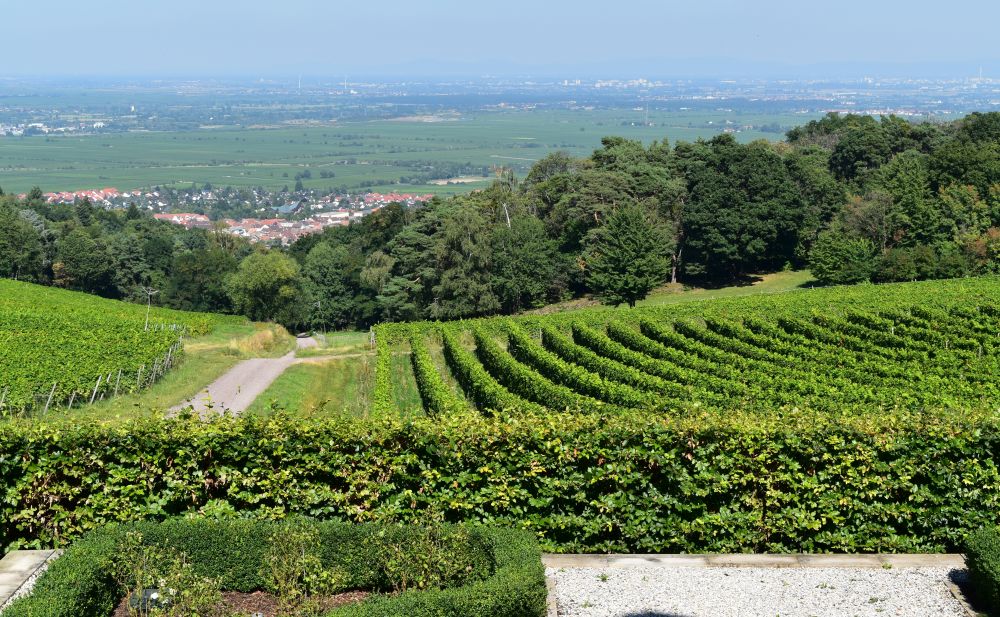
On our fourth day in Germany we explore the area around Kallstadt that is located on the northern part of the German Wine Route. We follow the Riesling path and walk through the vineyards “Saumagen” and “Annaberg”.

dsc_0540-small

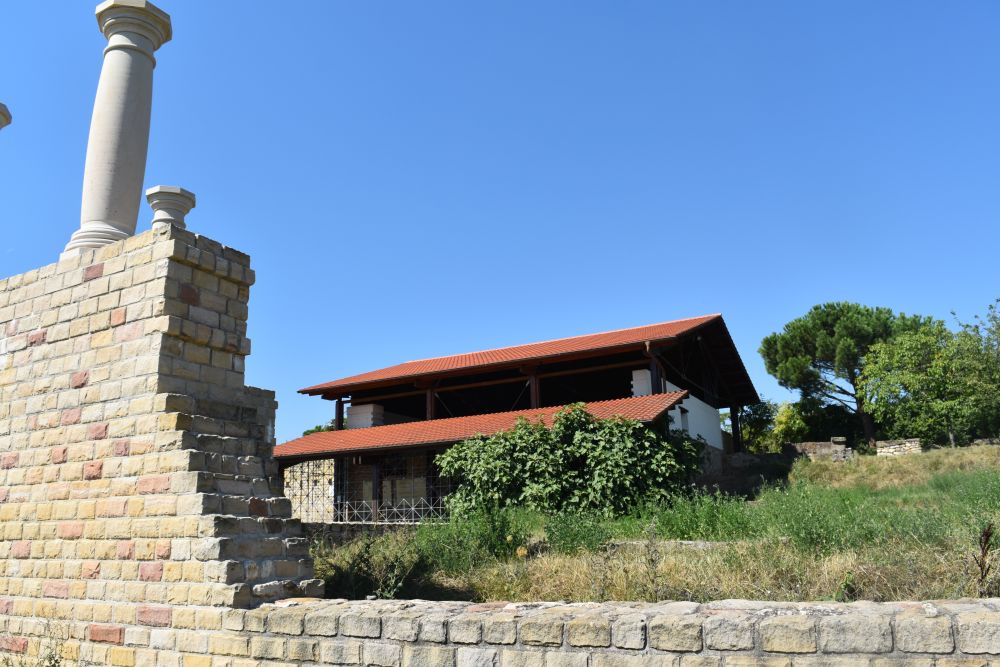
It IS hot, this must be good for the grapes. The Romans had brought the tradition of wine growing to the Pfalz, as the ruins and the reconstruction of this rustic Roman villa shows.

dsc_0002-small

We come across one of the vineyards of the Brothers Rings living in Freinsheim – I later buy three bottles of Riesling from the vineyards Nussriegel and Steinacker.

dsc_0528-small

We also visit the highest vineyard in the Pfalz. We are welcomed by a dog, then by the wife of the house.

dsc_0013-small

In the kitchen we meet a friend of my uncle Gerhard and share a glass of wine with the owners. The friend of my uncle says: “He has taught me so much about wine, and please give my regards to the Kallstädter Hof.” The world is small.  I buy a bottle of Riesling Basalt and a bottle of Riesling Buntsandstein (variegated sandstone).

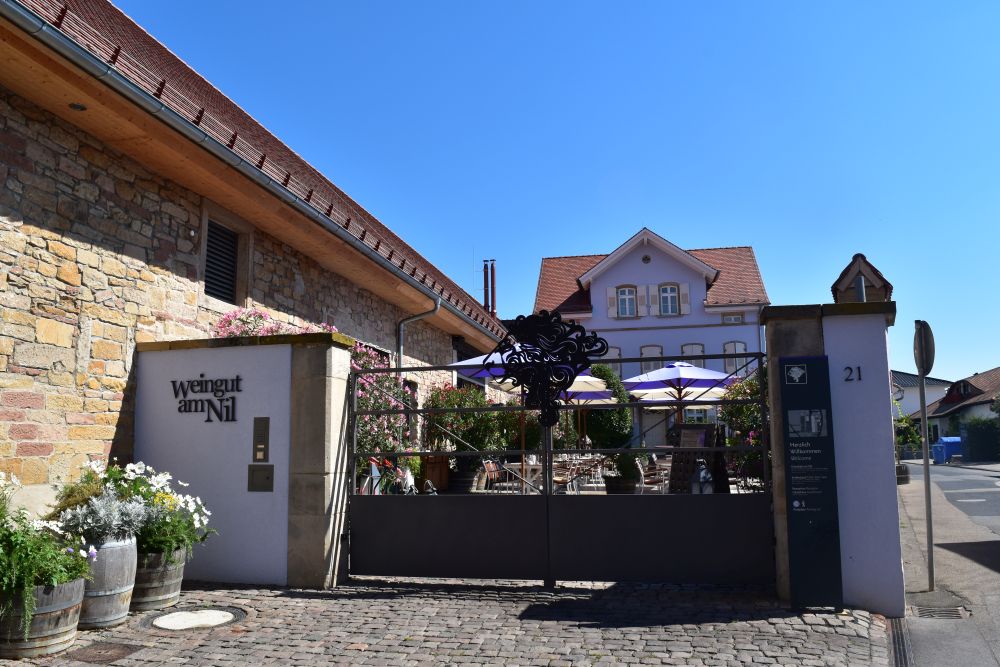
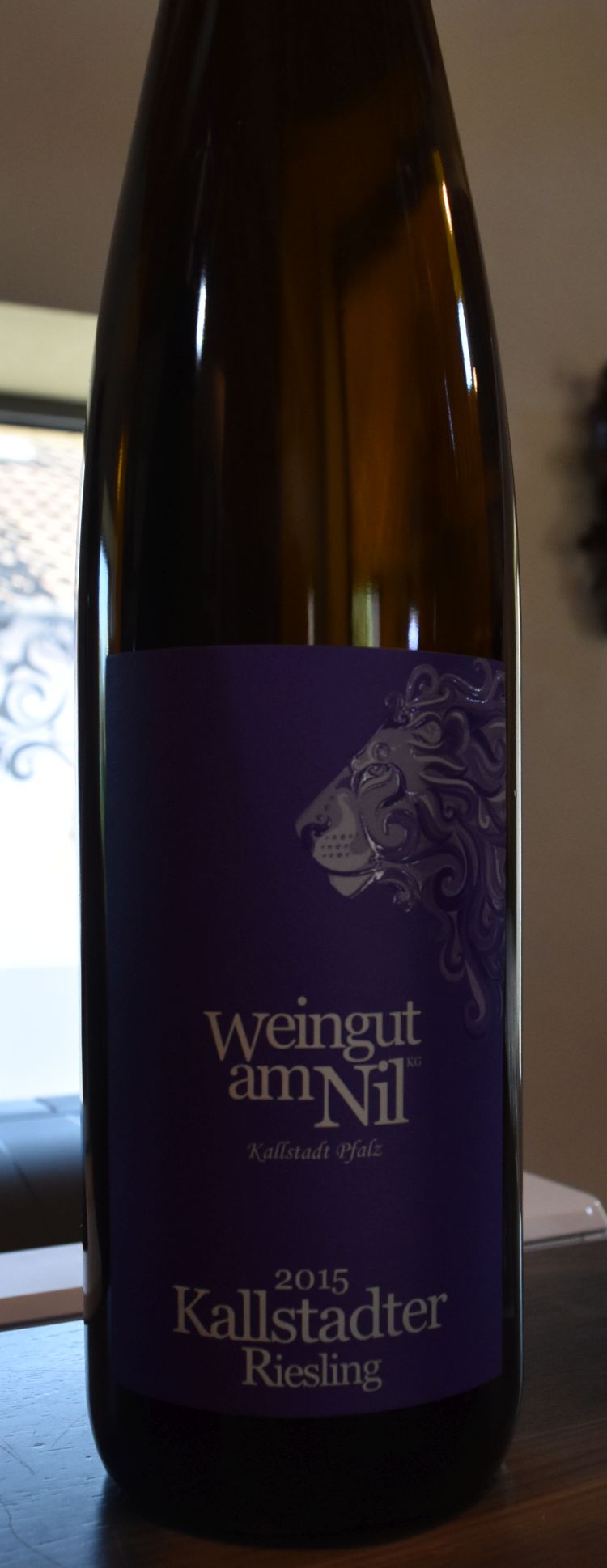
Yes, I have family relations in Kallstadt. For centuries my family has owned the winery “Eduard Schuster”. Due to lacking succession it has been sold and now became the Weingut am Nil. “Nil” is a tiny vineyard near Kallstadt. The new owners have given the winery a new purple design.

dsc_0548-small

In the courtyard there is a restaurant where we have an apéritif. The choice of wines has been streamlined and the labels match the purple appearance.

dsc_0021-small

On one hand I am sad, but on the other hand, I am happy to see the modern marketing style which indicates that the new owners care and add fresh blood to the traditional Schuster winery.

We have a great dinner in the courtyard of the Kallstädter Hof, and the next morning we continue to the Pfälzer Wald.

Germany: Along the Neckar from Rottenburg to Eberbach

We drive north always following the Neckar… this is the second day of our sunny end summer tour through Germany.

.

Tübingen? An old university town since 1377? Let us stop  here…

Tübingen? It has one of the oldest universities in Europe – founded in 1377. From the Königsparking we climb to the university hospital area to get this overview of the old town with the castle.

dsc_0390-small

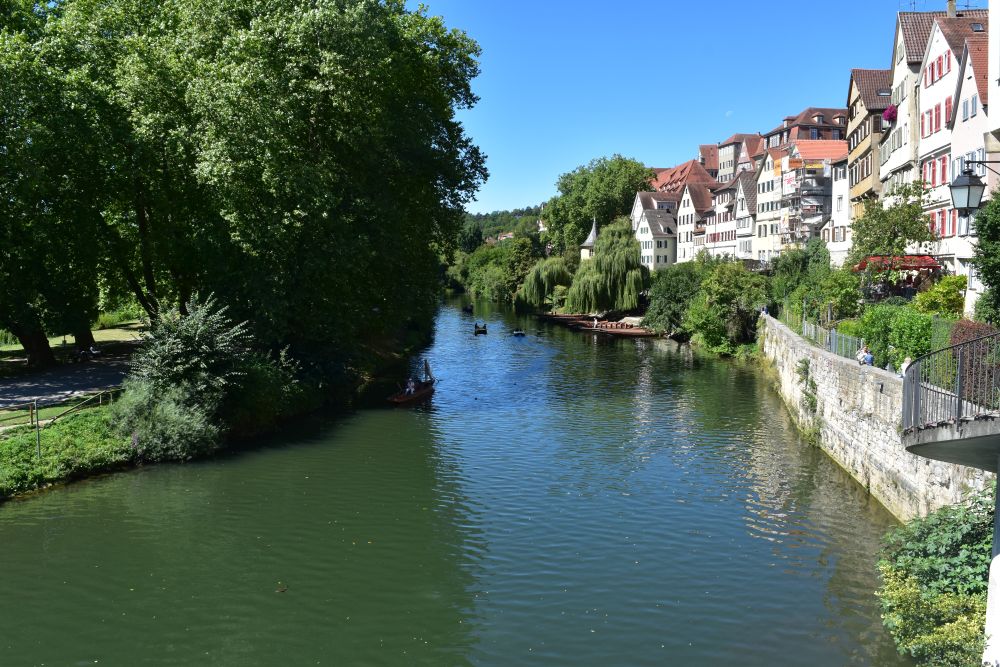
The old town and the castle are located between the former defense ditch and the Neckar. This is the Neckar side.

dsc_0409-small

The city is tidy and well kept with half-timbered houses.

dsc_0404-small

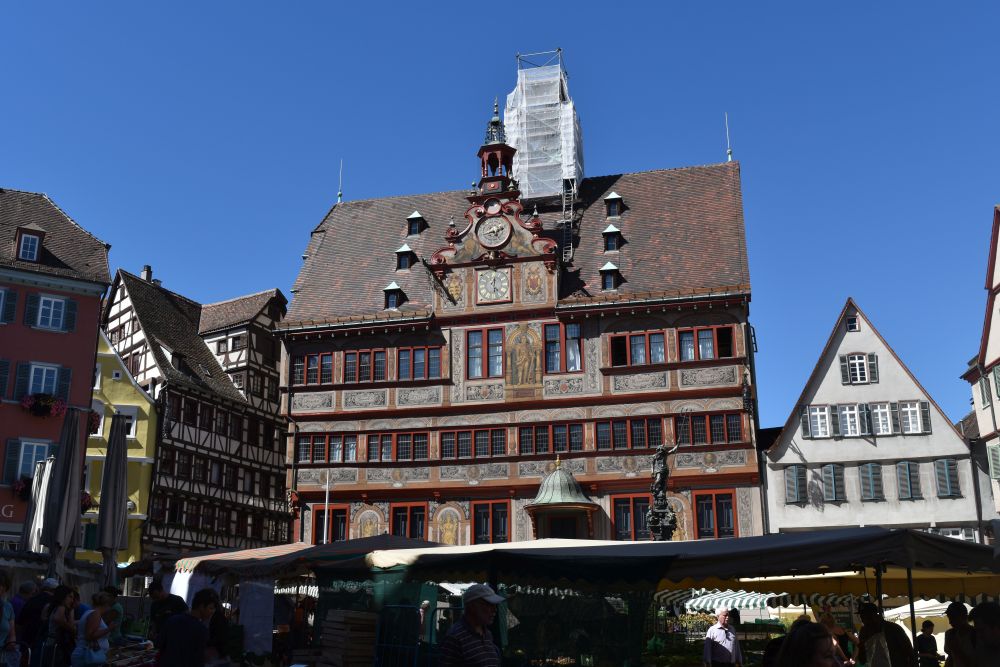
The market square is busy. The painted townhall shows that this is a proud town.

dsc_0402-small

The organ is played in the gothic church. We stop and listen.

dsc_0406-small

We are glad to see another of those German towns that have been preserved during the Second World War. Tübingen has a history of resistance: A brave priest and a brave mayor withstood Hitler; both, unfortunately, were killed just shortly before the war ended.

.

Heilbronn – it was also one of these gorgeous half-timbered towns, but – sorely suffered during the war

Heilbronn has suffered from bombings in the Second World War. Some gems have been rebuilt. This is beautiful townhall with its astronomical clock.

dsc_0415-small

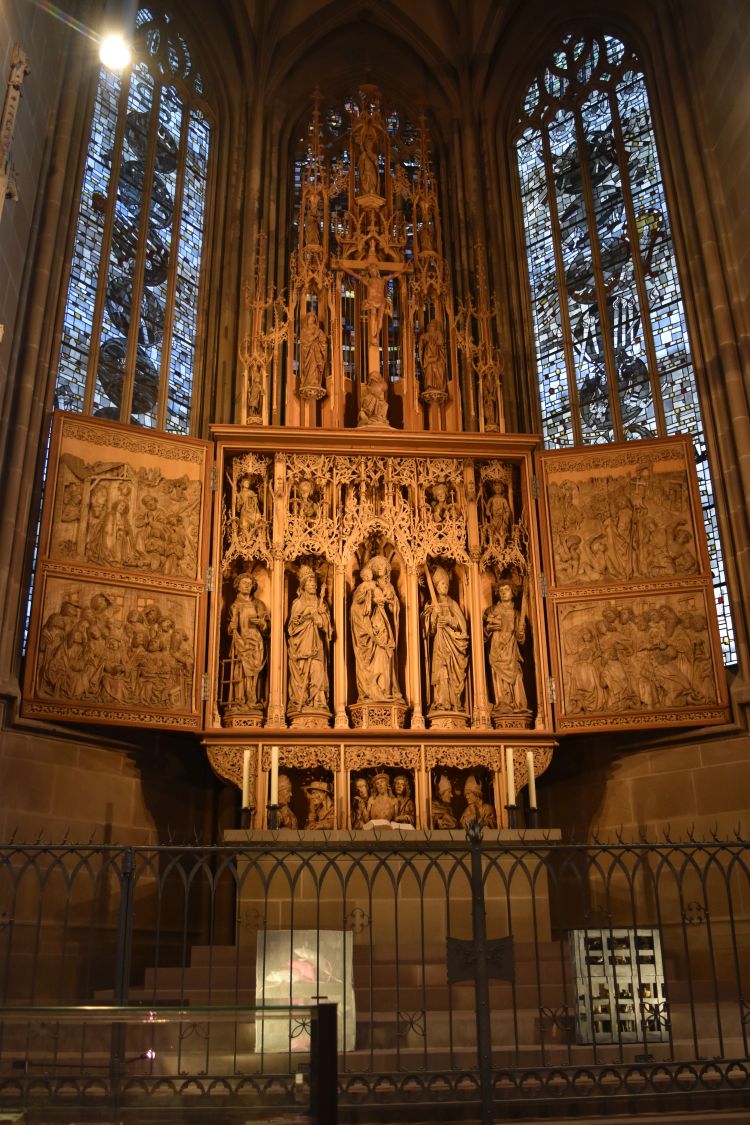
Also the gothic Kilian church has been reconstructed. I particularly like this wood carved altar from the beginning of the 15th century, with Maria in the center and Kilian to her right. I admire that they saved it during the war.

dsc_0418-small

These remains of three sculptures show, how the Kilian church has been decorated inside, before having been attacked in that war that should have never happened. The remains are beautifully arranged, but being deprived of legs and arms they make me shiver as well.

dsc_0419-small

We continue north following the Neckar that works his way north through steep vineyards. I had not been aware of wine growing here and may return for that.

.

Bad Wimpfen, the largest Kaiserpfalz around 1200

Bad Wimpfen is another gorgeous small town with well-kept half-timbered houses that give shade from the hot end summer sun.

dsc_0427-small

Bad Wimpfen is located on top of a hill. This is the view of the Neckar and the lower town of Wimpfen with the church St. Peter, another gem that we visited later.

dsc_0436-small

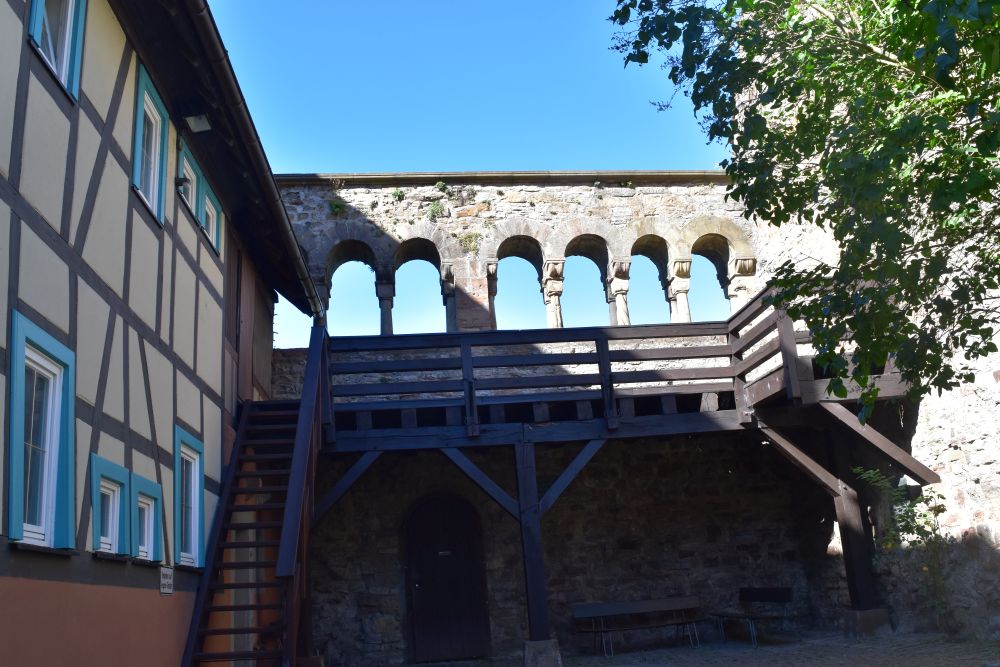
Bad Wimpfen was an imperial palace (Kaiserpfalz) of the dynasty of the Staufen  around 1200 (well known are Barbarossa and Friedrich II). These Romanesque arcades remind of those days

dsc_0437-small

… and also this small chapel.

dsc_0445-small

The pretty dog is waiting for his master that is just approaching the house: “Maybe he has one of those delicious German sausages for me?”

dsc_0451-small

We visit the church in lower Wimpfen, called “Stiftkirche Sankt Peter”.  It has been built in early gothic style in the 14th century. The monastery was dissolved in 1803. Now the Maltese run it as a guest house and as a center for religious exercises (“St. Peter, Bad Wimpfen im Tal”, Schnell+Steiner, 2011).

dsc_0459-small

It is famous for its cloister that we find closed now. I take with me these thoughts.
dsc_0460-small

“Wer nach aussen schaut, träumt, wer nach innen blickt, erwacht” meaning “who looks outside, dreams, who looks inside, awakes.” I found this thought also in the internet: “When we look inside our heart, we discover what we are, who we are, and what we truly believe”. I agree, looking inside is important (perhaps sometimes forgotten), but having dreams, I believe, is also an important ingredient of life.

.

Along the Neckar to Eberbach

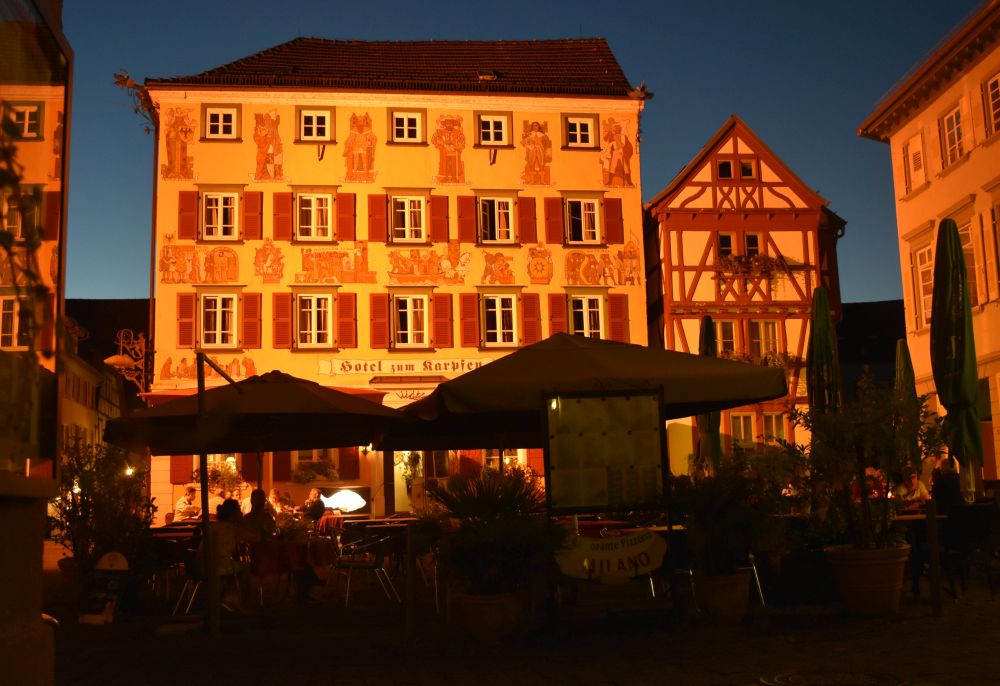
Along the Neckar who winds through the Odenwald, we continue to drive north. We love the soft landscape. We reach Eberbach and settle under the roof of the cosy hotel Karpfen. After a great dinner with fish and a local Pinot Gris we stroll through another gem town with half-timbered houses. This is our hotel in the night (a large rubbish bin served as my tripod).

dsc_0468-small

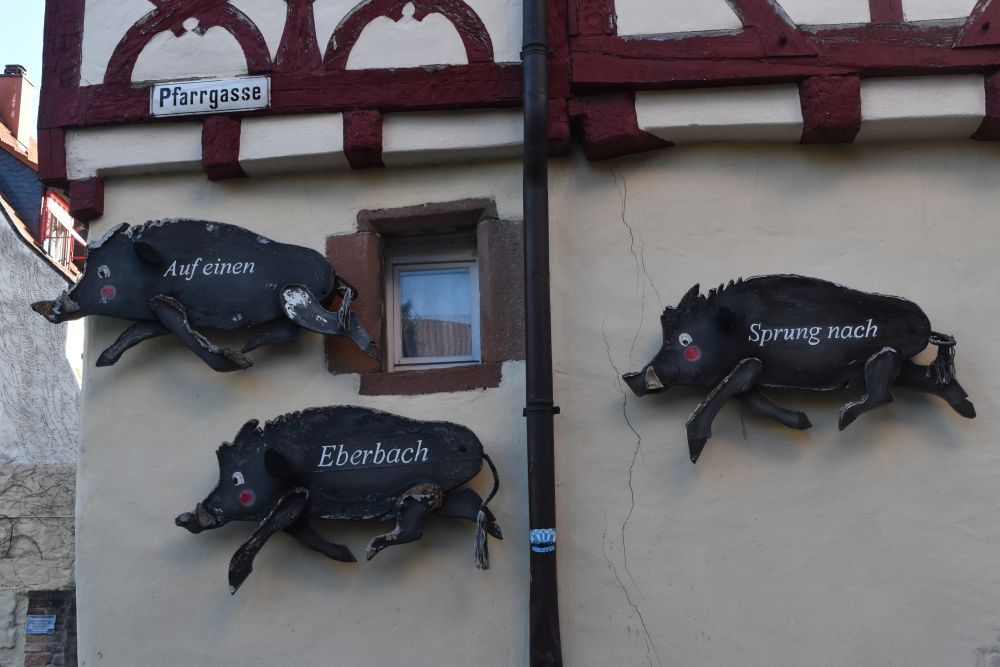
In the early morning we stroll through the town again. We enyoy the boar that gives its name to Eberbach (literally “boar creek”)

dsc_0496-small

“Auf einen Sprung nach Eberbach” means “for a quick visit/”leap” to Eberbach”, Yes, we can recommend a stop over in the well preserved small town of Eberbach bordering the Neckar…

dsc_0488-small

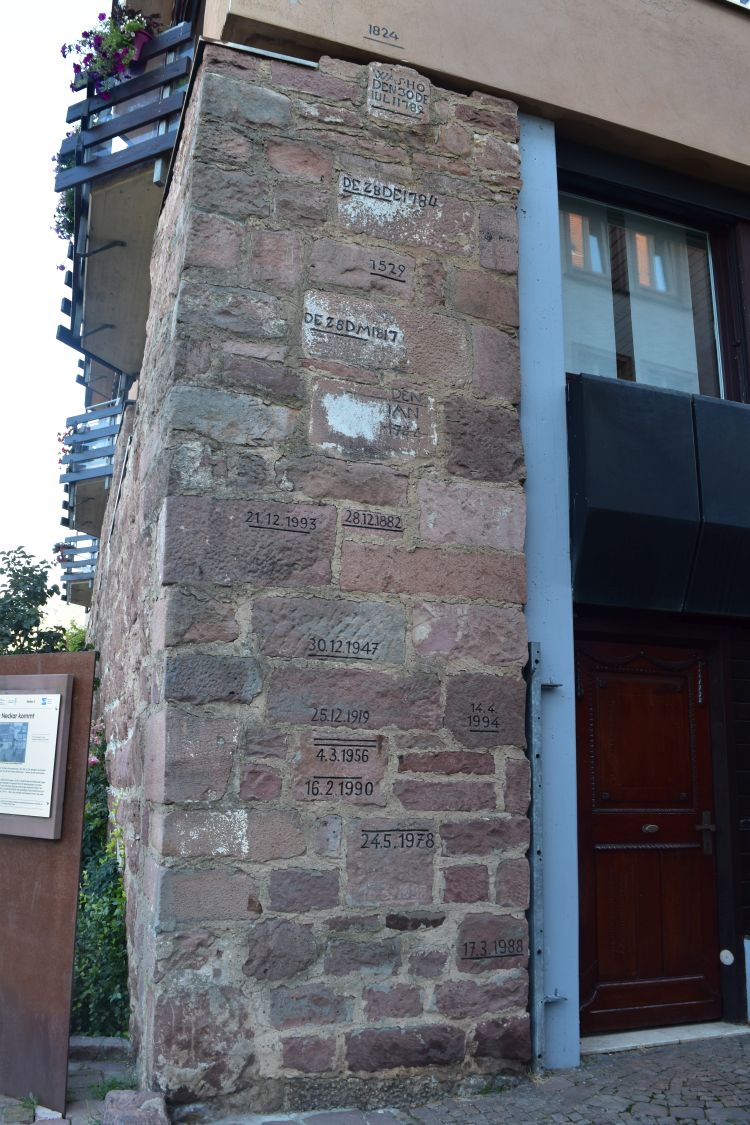
… that sometimes becomes dangerous, as these flood lines show.

dsc_0487-small

Our next targets will be Speyer and the Pfalz.


On the road again – to Germany: St. Blasien and Rottenburg

There I am on the road again. It is end August 2016. With Ursula I travel to Germany: Neckar, Pfalz, Nahe, Mosel, Mittelrhein and Alsace. No fixed plans – we will stop, when we like it. The forecast is “sunshine, sunshine and sunshine”. Great prospect.

.

Our first picnic not far from St. Blasien – great view of the Alps

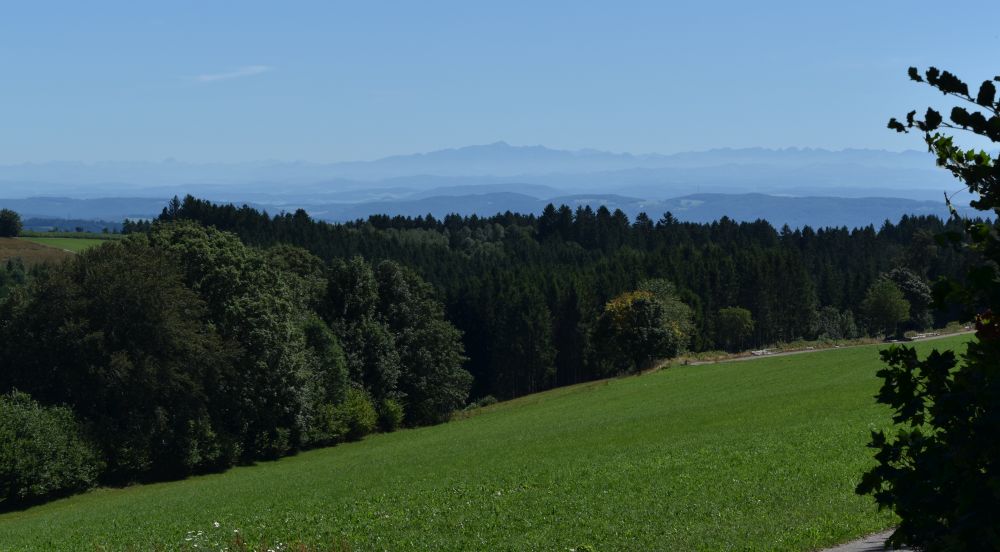
We have lunch on a bench on our way to St. Blasien in the Black Forest. The air has been cleaned by rain two days ago. We see the Alps from the Appenzell to the Bernese Oberland – somewhat in the haze.

dsc_0230-small

.

St. Blasien – the neo classic dome with its huge cupola

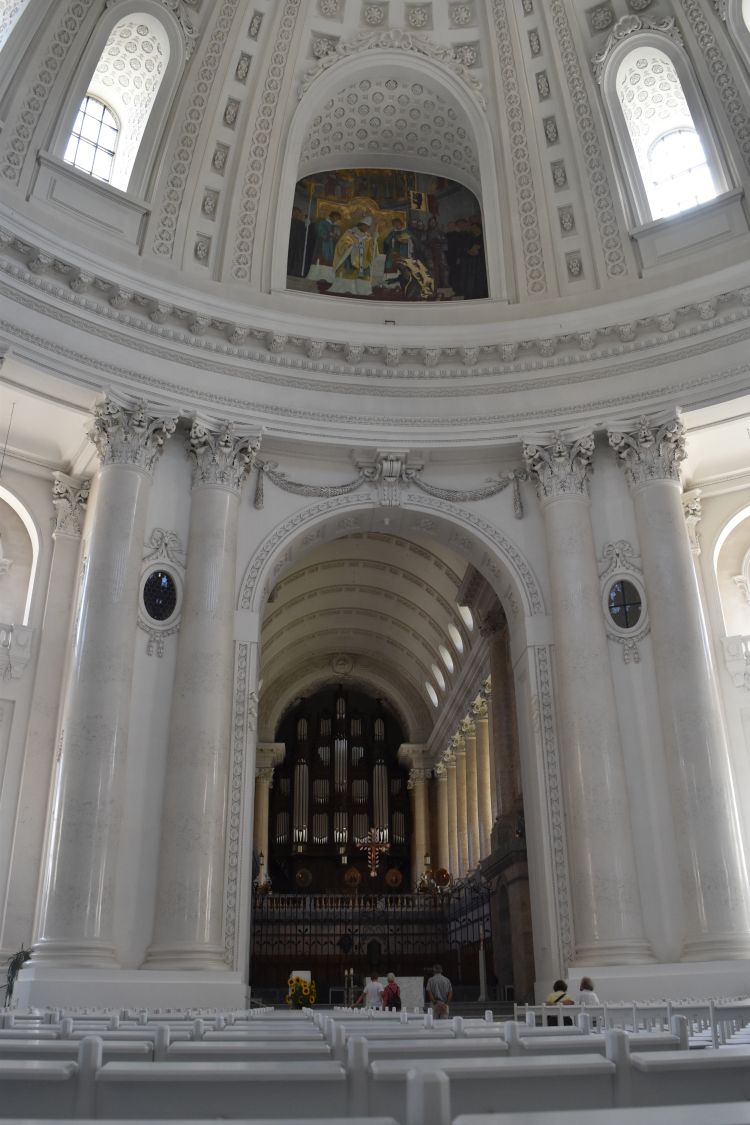
St. Blasien is a surprise in the middle of the Black Forest, far away from any larger town: They have this majestic dome with one of the largest cupolas in Europe.

dsc_0267-small

Inside it has been painted in white. The height and the diameter are 36m.

dsc_0242-small

Maria entering heaven is the nouveau art painting that decorates the cupola…

dsc_0239-small

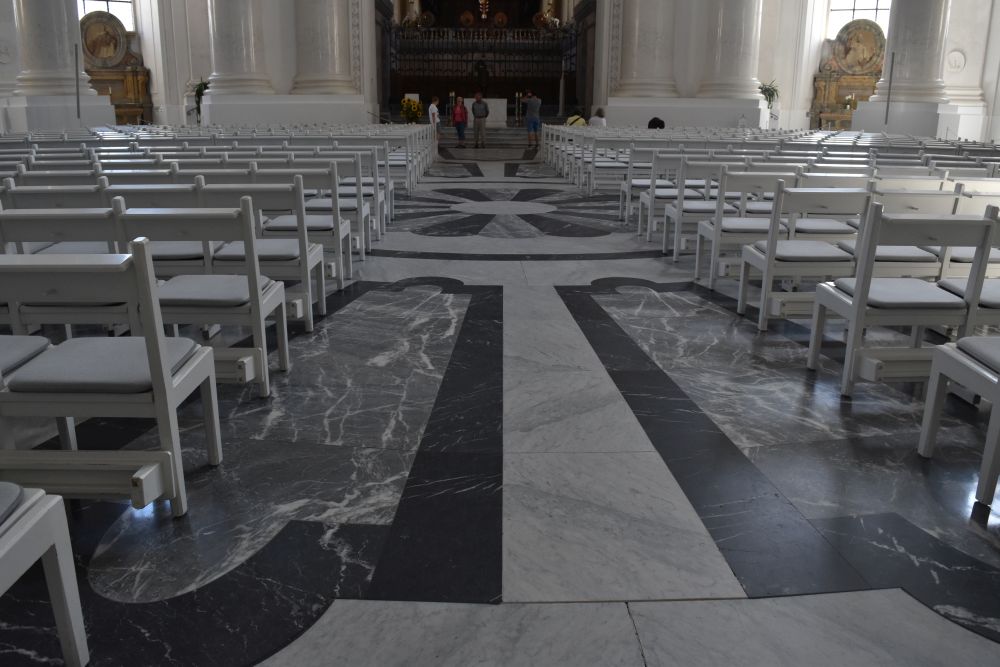
… and a bright marble mosaic completes the cool and tidy atmosphere.

dsc_0243-small

Why do we find such a large dome in the middle of “nowhere” in the Black Forest? Already in the 9th century, monks lived in this valley. In the 11th century there was a monastery here that took over the Benedictine rules. It became a Habsburgian-Austrian monastery later. It flourished in the 18th century and the abbots were promoted – they were now prince-bishops. They wanted a representative cathedral and had the dome constructed in early classical style; the cupola was the third-largest in Europe. Napoleon dissolved the monastery and gave St. Blasien to Germany. In 1933 the Jesuits bought the remains of the monastery and opened a school. In the late 20th century the dome was renovated (source: “Dom St. Blasien im Südschwarzwald”, Kunstverlag Josef Fink, 2012).

.

Donaueschingen – the sources of the Danube (Donau)

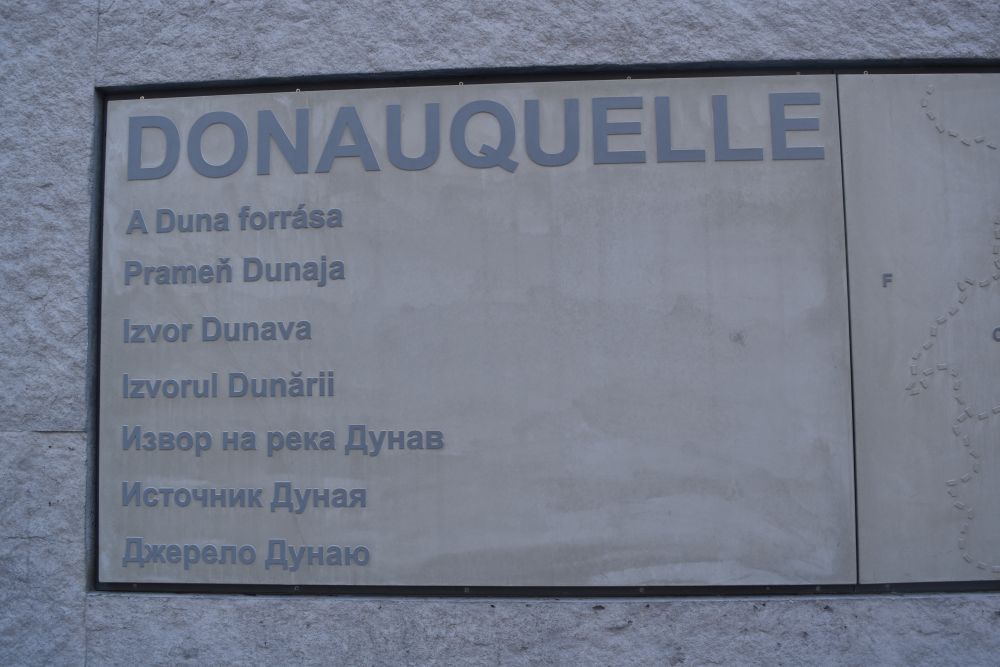
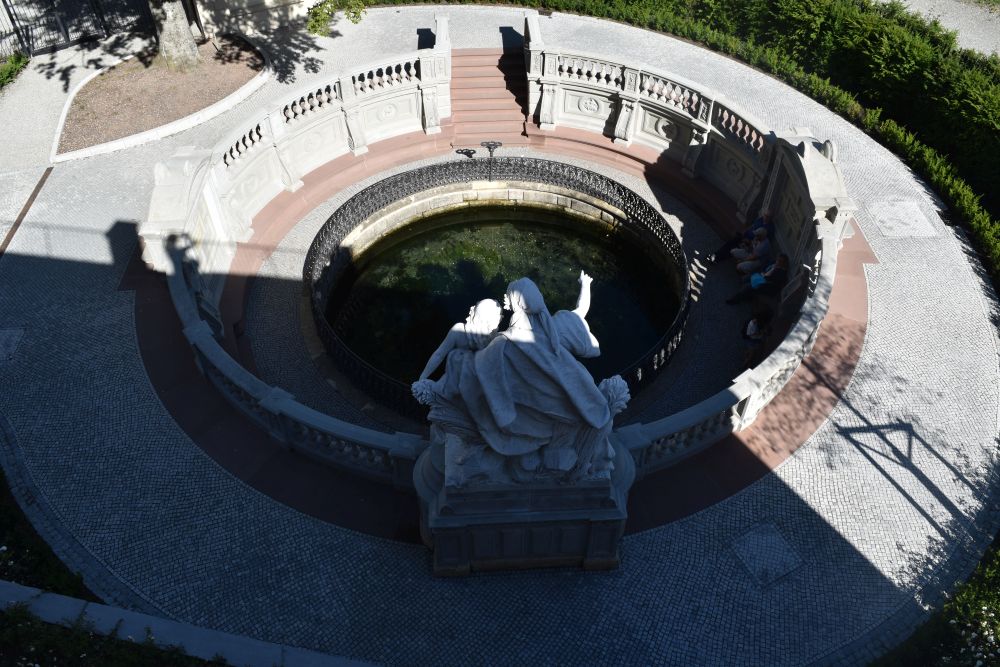
We continued our way to Donaueschingen that proudly says they own the source of the Danube (Donau).

dsc_0276-small

Well, they do not own the “real” source. The “real” source is in Furtwangen. The Breg originates here. It disappears and re-emerges from the ground in Donaueschingen meeting a second river, the Brigach. I remember that I stood at this second source of the Danube some fifty years ago, with my mum-geologist who taught me about karst formations and underground rivers.

dsc_0277-small

.

Along the Neckar to Rottenburg

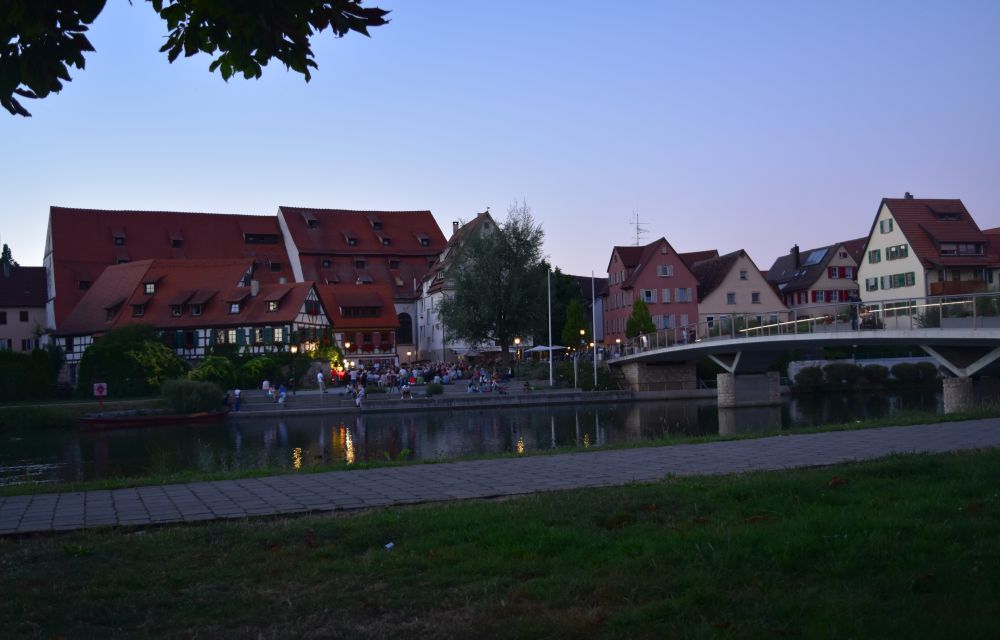
Now we head north to find the Neckar that emerges near Schwenningen. We follow the still narrow river that winds through the hills topped by fortifications and beautiful old cities with timbered houses. We stop at one of these pretty cities, at Rottenburg. We find a room in the welcoming hotel St. Martin and have dinner near the fountain of the Austrian Landsknecht (like St. Blasien, this area belonged to Habsburg-Austria, before Napoleon aligned the possessions around 1800).

dsc_0285-small

Rottenburg has been the bishop town of Württemberg since 1831. The Bishop’s  palace is a beautiful modern building – I think it is about to fly to heaven.

dsc_0291-small

A bishop town has a dome… this is the dome St. Martin on the market square (St. Martin was called “church”, until there was a bishop, then its status was raised to “dome”).

dsc_0304-small

The water line of the Neckar with the weeping willows is romantic, also the ducks enjoy the evening.

dsc_0315-small

A poet reads her works at the border of the Neckar – the audience congregates around her under the lamps.

dsc_0323-small

In the morning we go for a short walk. We visit the dome St. Martin…

dsc_0350-small

… and enjoy the morning atmosphere along the Neckar.

dsc_0371-small

Then we drive north always following the Neckar…


On the road – a short stop over in Munich

After having recovered from my 6:35 flight from Kraków to Munich (oh Lufthansa…) in the house of my friends, I take the metro U5 to the Munich city center to say hello to some of my favorite places here.

. Citycenter1

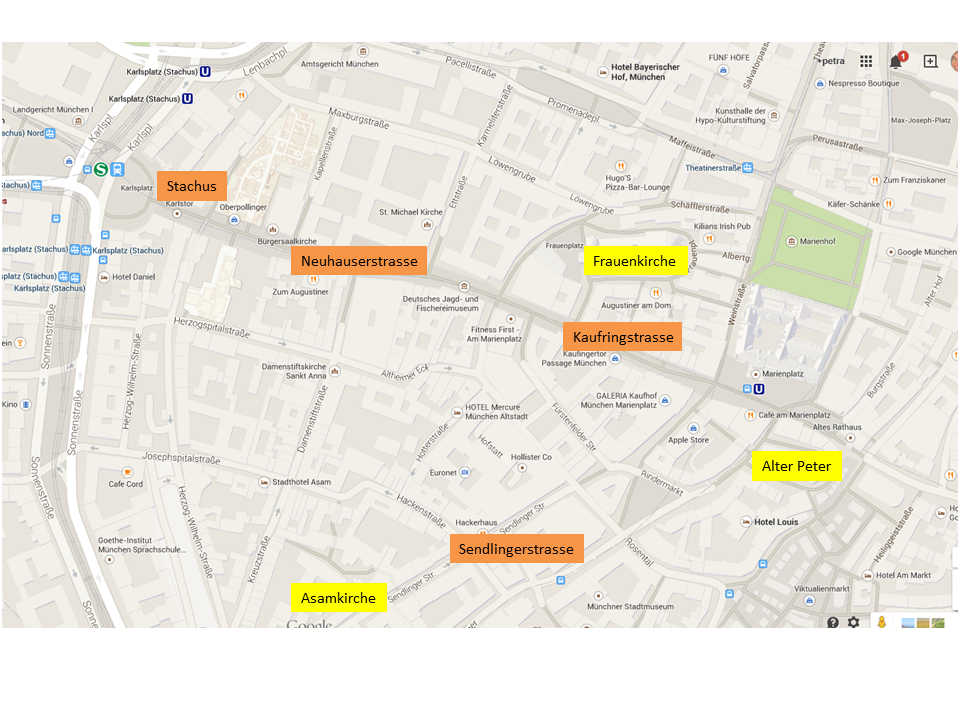
Karlsplatz or Stachus

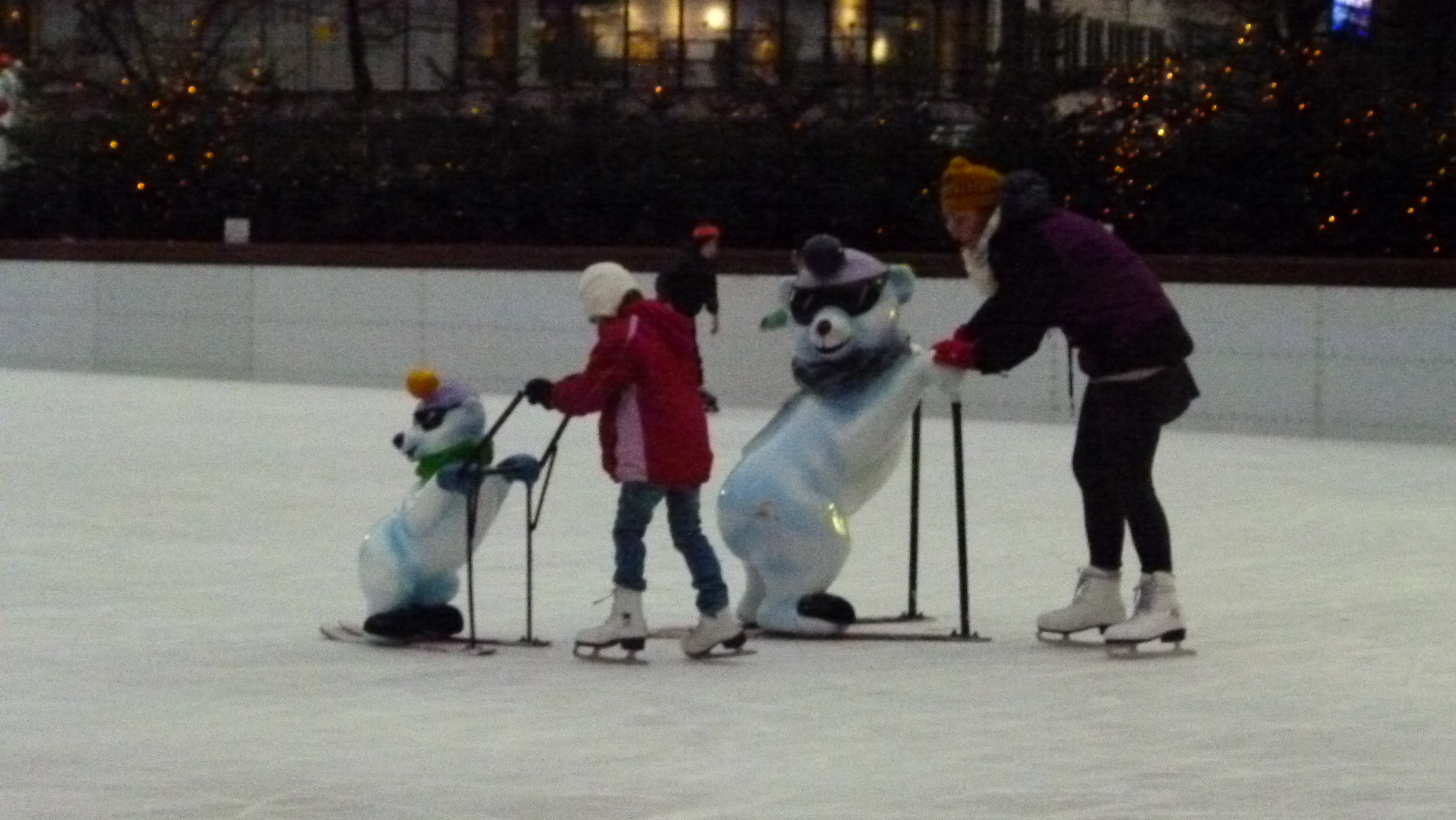
The Stachus is the entry gate to the city center. The Christmas market starts here with an ice rink. I have never seen wheeled walkers (in German: Rollatoren) that support ice skaters… “Ja, sind die nicht nett?” (Yes, are they not cute?), my friend asks me, when I am back at her place.

P1070136

I buy a cup of hot wine (Glühwein) and watch the ice skating scene for a while from the terrace.

.

Shopping at Stachus and in Neuhauser-/Kaufringstrasse

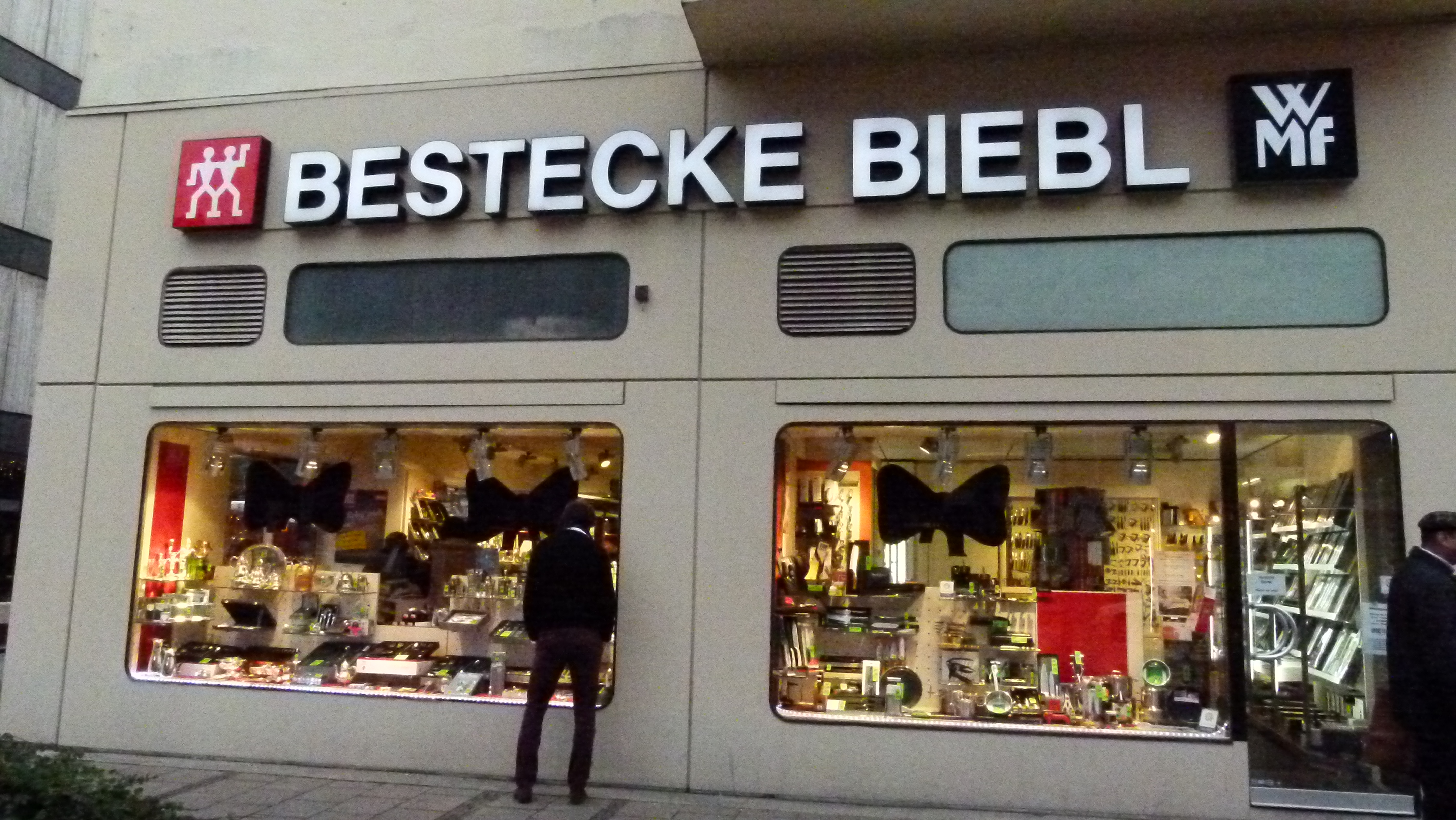
I try some large shops and then enter Biebl at the Stachus. I buy three cheese graters from Alessi. The shopkeeper frowns: “Now there are just a few Euros missing for your gift… let me give you a knife, you deserve it and it is Christmas time.”  Then he drops a small kitchen knife into my bag with the graters. Nice. I like smaller shops.

P1070113

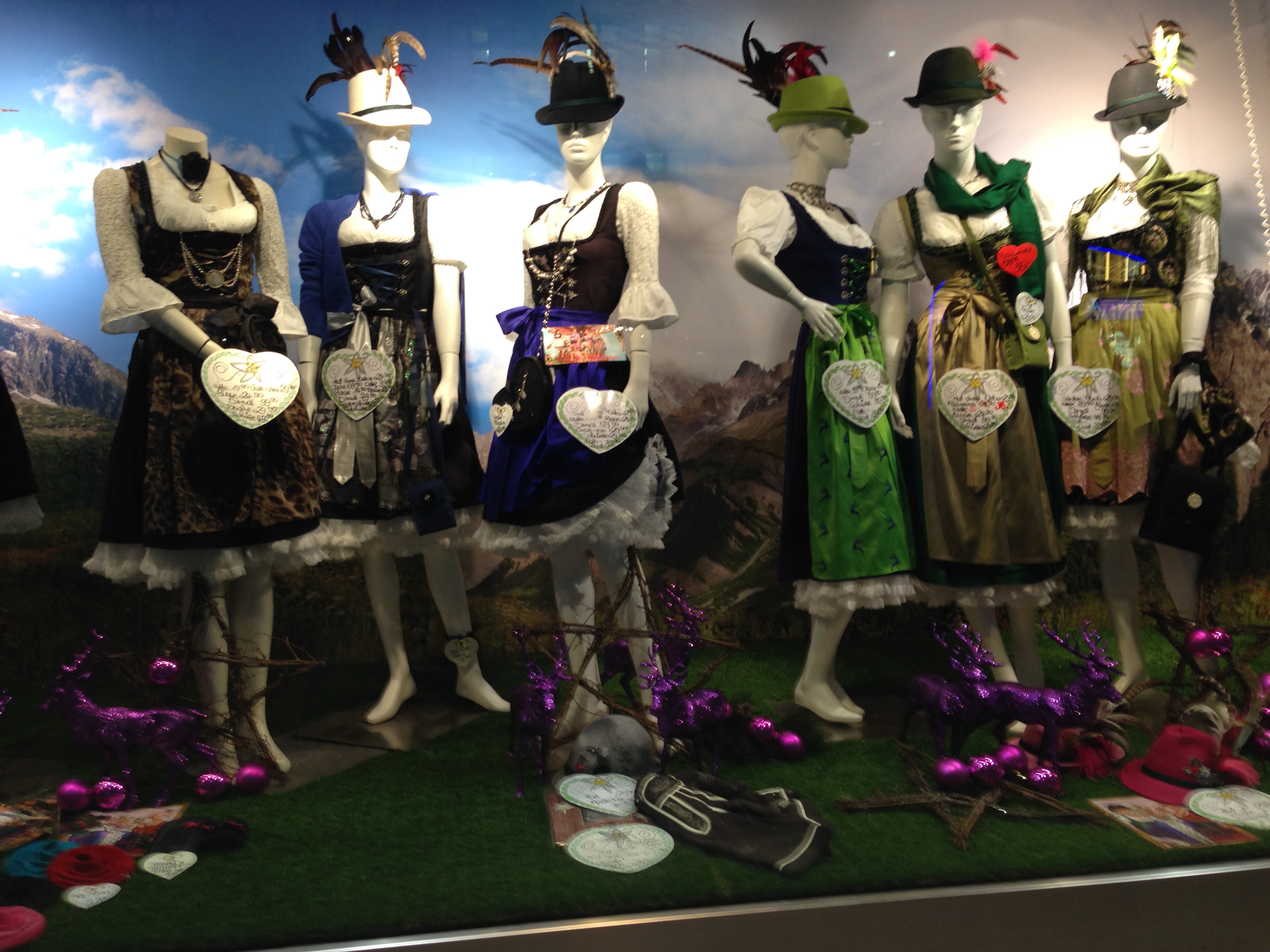
In Bayern it is perfectly okay to wear a dirndl – in the theatre, at the party, at the business reception or at the wedding. There are shops selling just dirndls. When I look at some of them, I feel sad not to live in Munich. In Basel it is not possible to wear a dirndl – except perhaps at the Basel carneval when the dirndl dress matches a specific “sujet”.

IMG_1237

From Stachus to the Viktualienmarkt, there is one huge Christmas market with wooden stands selling everything from Christmas decoration to cloths, and of course there are many stands with hot wine, sausages, Reiberdatschi (small potato omlets) etc etc. There are many tourists and – like on the Christmas market of Kraków – I hear Russian, Swiss German, English, French and Spanish around me… there seems to be a real Christmas market tourism going on in Europe.

.

Frauenkirche (Cathedral of Our Dear Lady)

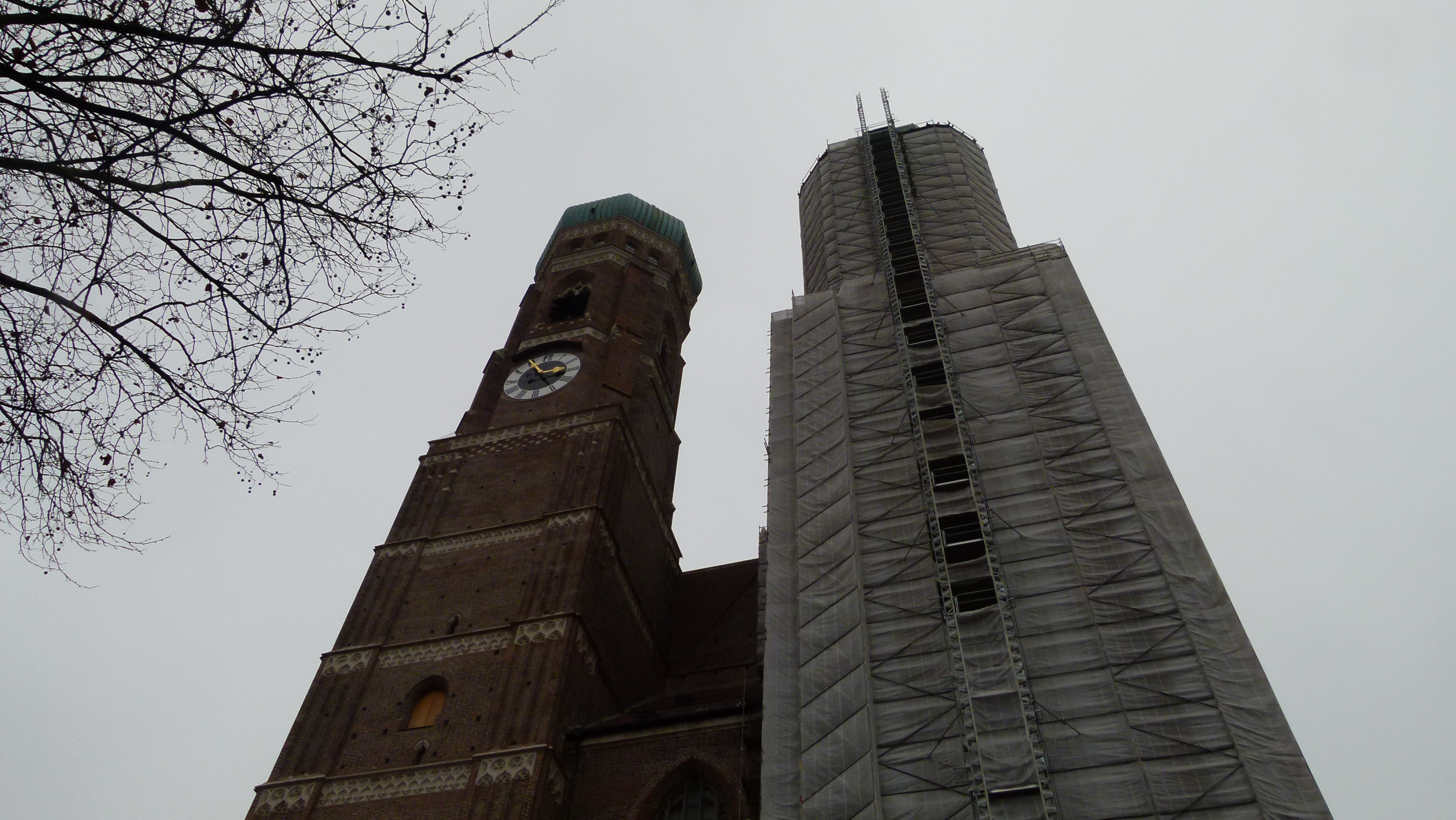
I look for a more quiet place away from the busy Christmas market scene and turn to the Frauenkirche. One of the towers is being renovated. Is the church open? – Yes it is.

P1070138

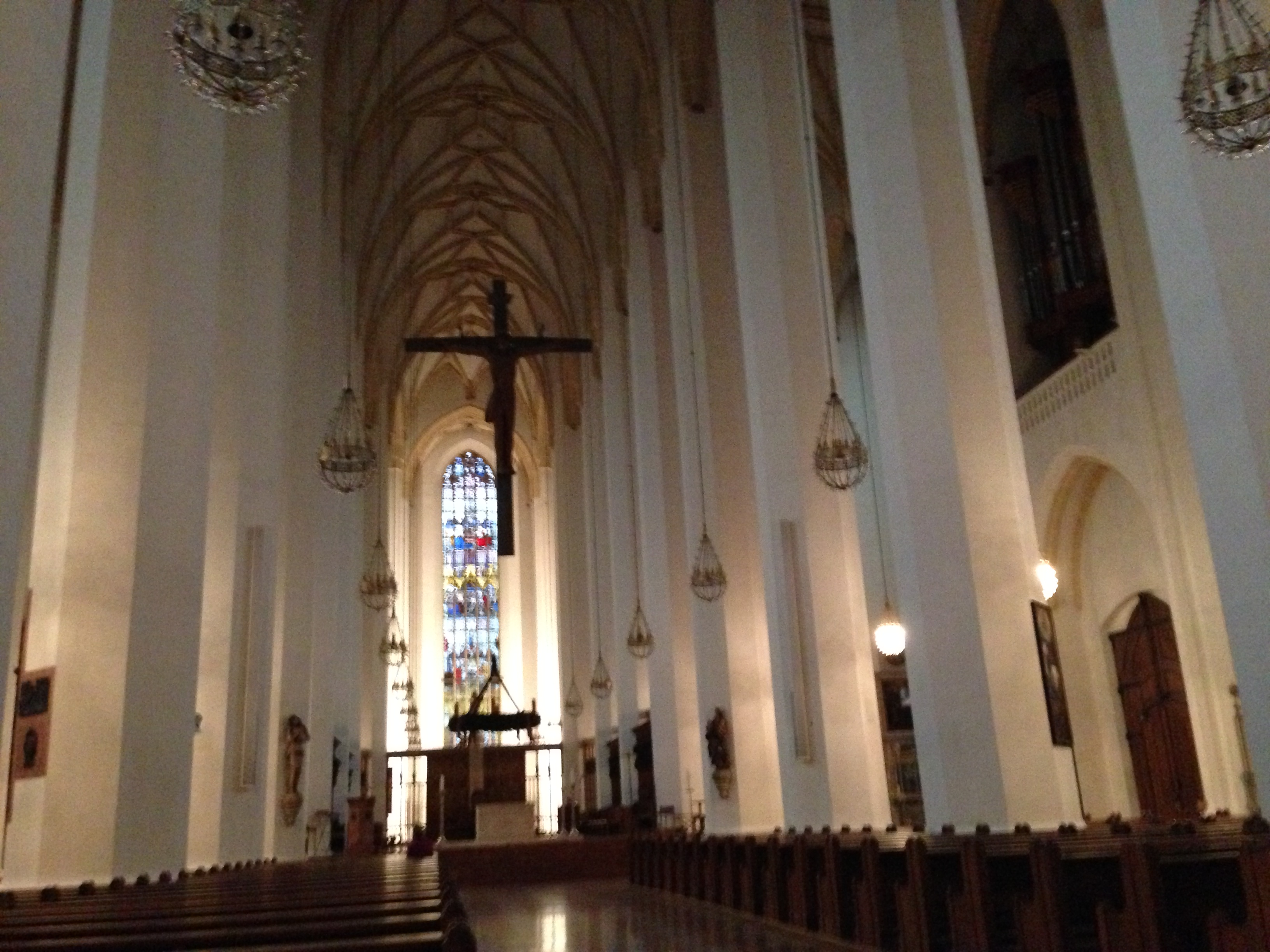
I love the Frauenkirche. It is an exceptional church in Bayern. All churches in Bayern that I know are full of decoration and a lot of gold. The Frauenkirche has suffered severely in the second world war. It has been reconstructed in the old gothic style with adding the decoration that has been saved in the war. This is not much. The decoration is unostentatious and breathes a touching solemnity that also reminds us of that ugly war.

IMG_1232

.

Alter Peter (Peterskirche or St. Peter’s church)

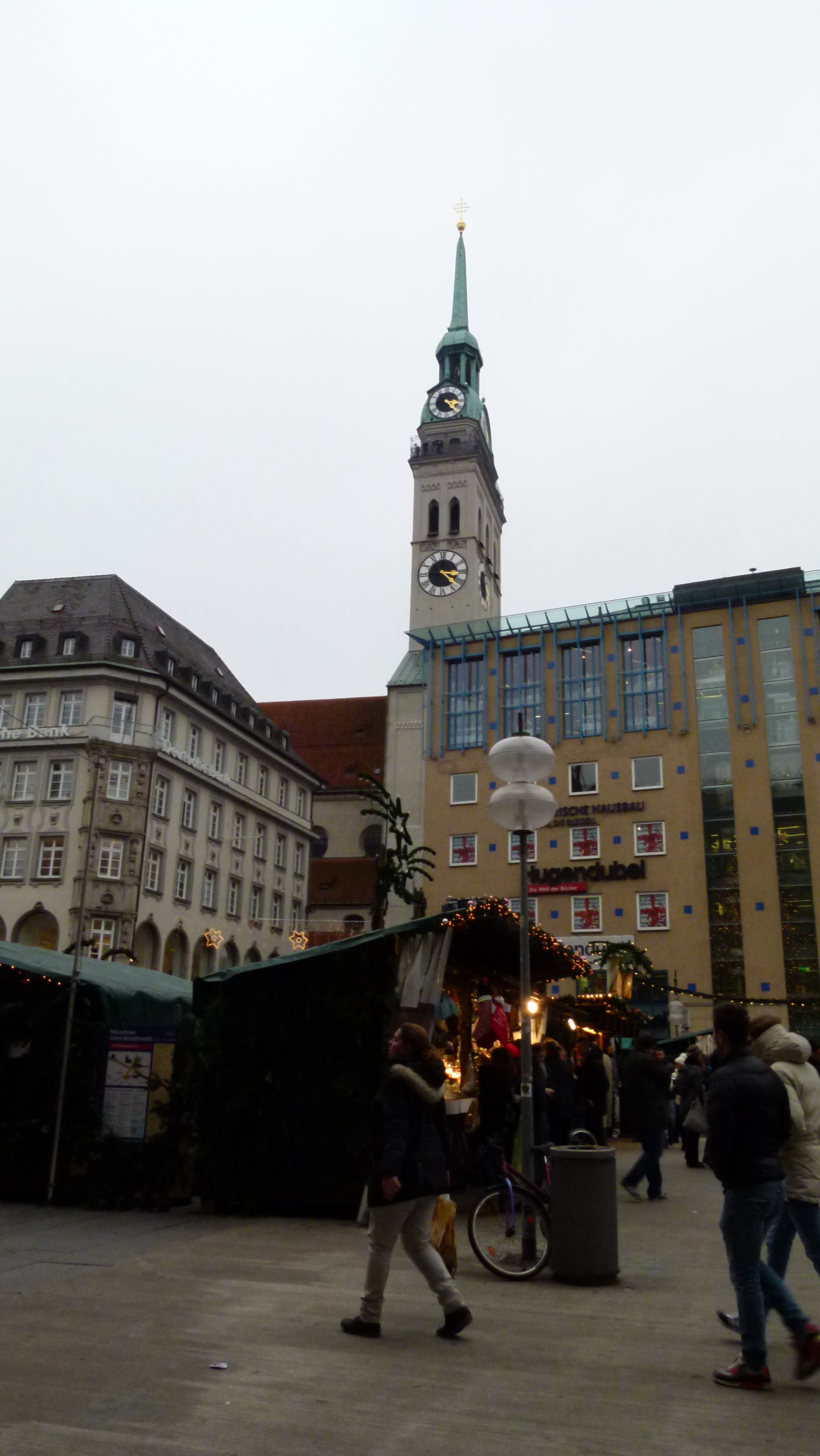
Most church towers have a regular shape and four clocks – one on each side. The Peterskirche is different. The tower is “flat” and an additional clock is hanging on the roof. They call this tower just “Alter Peter” (Old Peter). For me it is a symbol of the charming stubborness of the Bavarians that I love.

P1070141

.

Asamkirche (Asam Church)

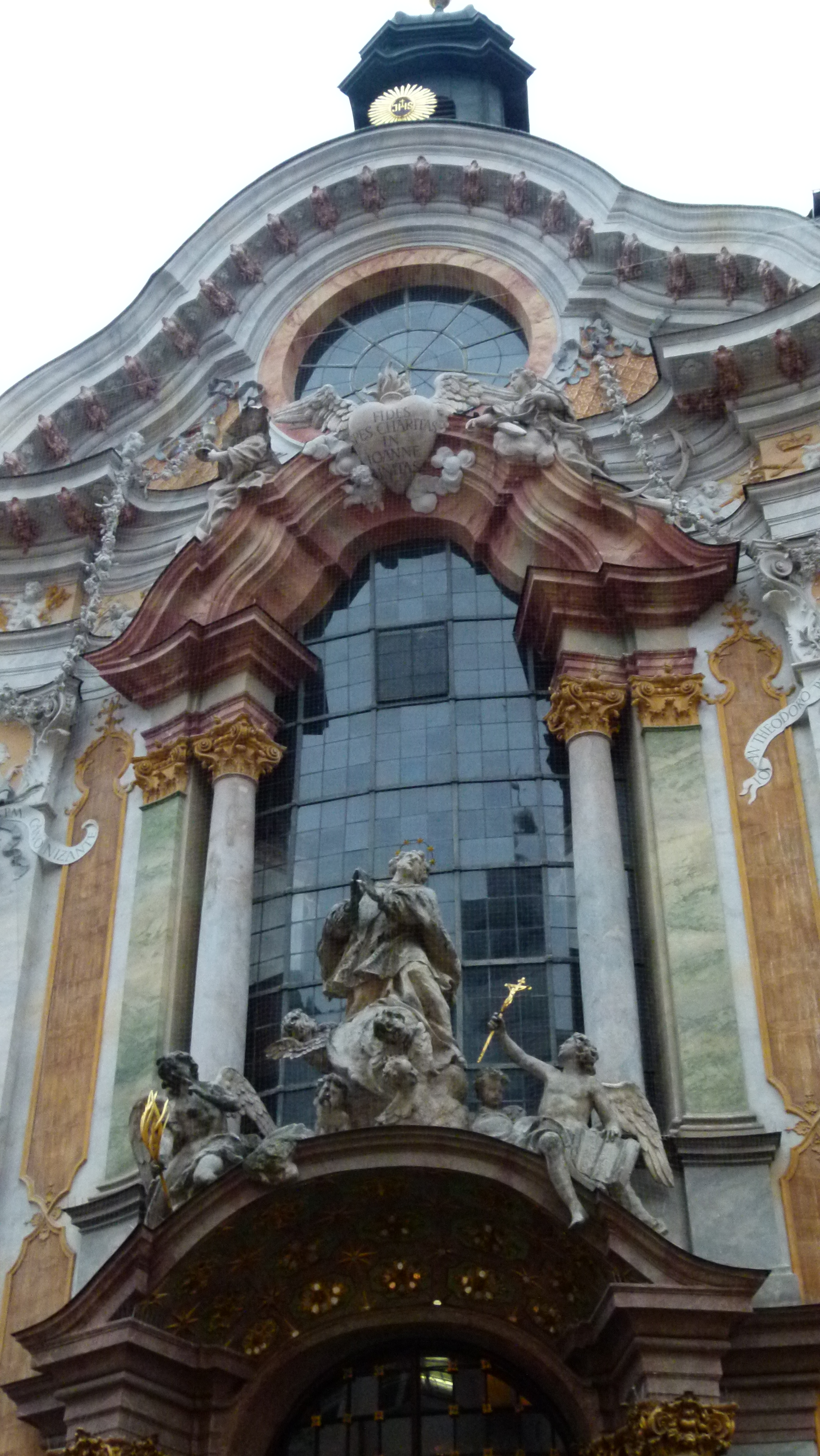
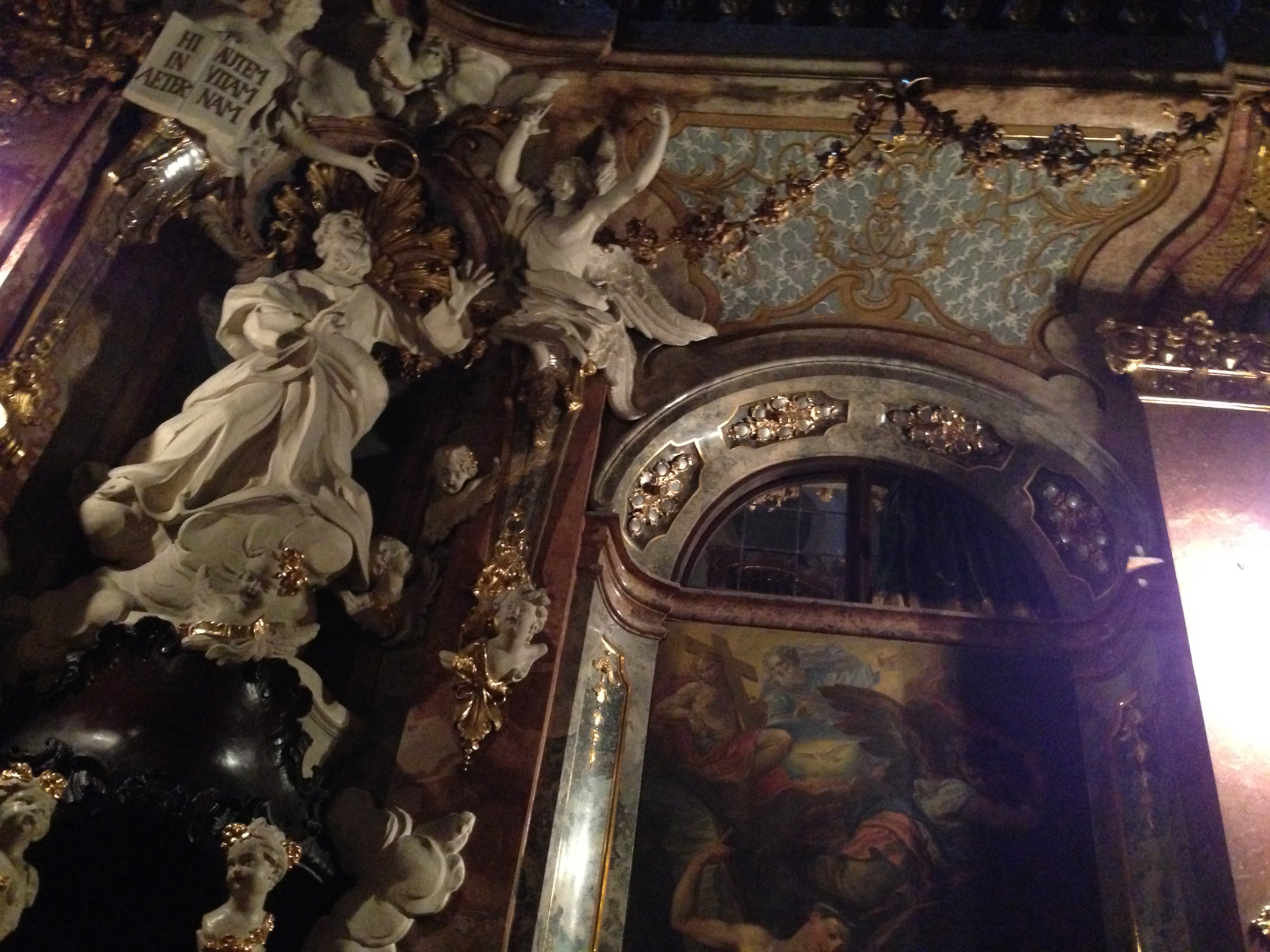
The Asamkirche is on Sendlingerstrasse. It is a late baroque church built by the brothers Asam and it hides memories for me.

I came across the brothers Asam in Weltenburg – my mum took me there, when I was a teenager. It is a monastery located on the Danube, and I was impressed by the baroque church that the two brothers had built – as legend says, because they were in trouble in their boat, and, when saved, built this church out of gratitude. I was very impressed by the cupola that seemed to float high above me. I had never seen such a floating cupola before.

The brothers Asam furthermore built the Asam church in Munich. It was first their private church and was then opened to the public. As a teeager, my mum introduced me also to this church –  and much later I came back several times with Ernst. Now I am here again, with my mum and Ernst in my heart.

P1070142

IMG_1235

.

Dinner in the Il Sorriso with my friends

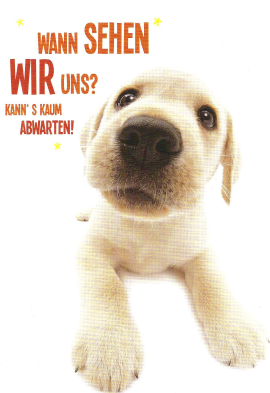
In the evening my friends take me to their favorite Italian restaurant, Il Sorriso. We have spaghetti with clams and noodles with truffles. We do not select the best Nero d’Avola, perhaps we should have asked for another bottle (would not have been a problem). The place is friendly and has a selection of postcards that guests can take with them as a souvenir. Here is an example – this card is useful for someone who is in love.

Karte

It says: “When do we meet again? I can barely await it.”

.

Back to Basel by train from Munich-Pasing

How lucky I am that I had planned to take the train to Basel instead of flying Lufthansa. Lufthansa is also on strike on Tuesday – today. Yesterday I had bought my first class ticket at the Munich main train station for 120 Euros. My SBB “Halbtax” entitles me to a discount of 25% for German trains. The lady at the counter was sighing. I was the first client that was friendly with her – before me she had been confronted with many frustrated Lufthansa passengers.

After a long evening entrenched in vivid debates with my friends, a quiet night and a wonderful breakfast, I catch the train in München-Pasing at 1 pm, settle in first class and I arrive in Basel shortly before 6 pm.

It was great to stop over in Munich on my way back from Kraków – I will do that again. And I will avoid Lufthansa…

On the road – discovering the Reichstagskuppel and Rixdorf in Berlin

Berlin never stops to have suprises for me. This time I explore the Reichstagskuppel and the village Rixdorf.

.

The cupola of the Reichstag (Reichstagskuppel)

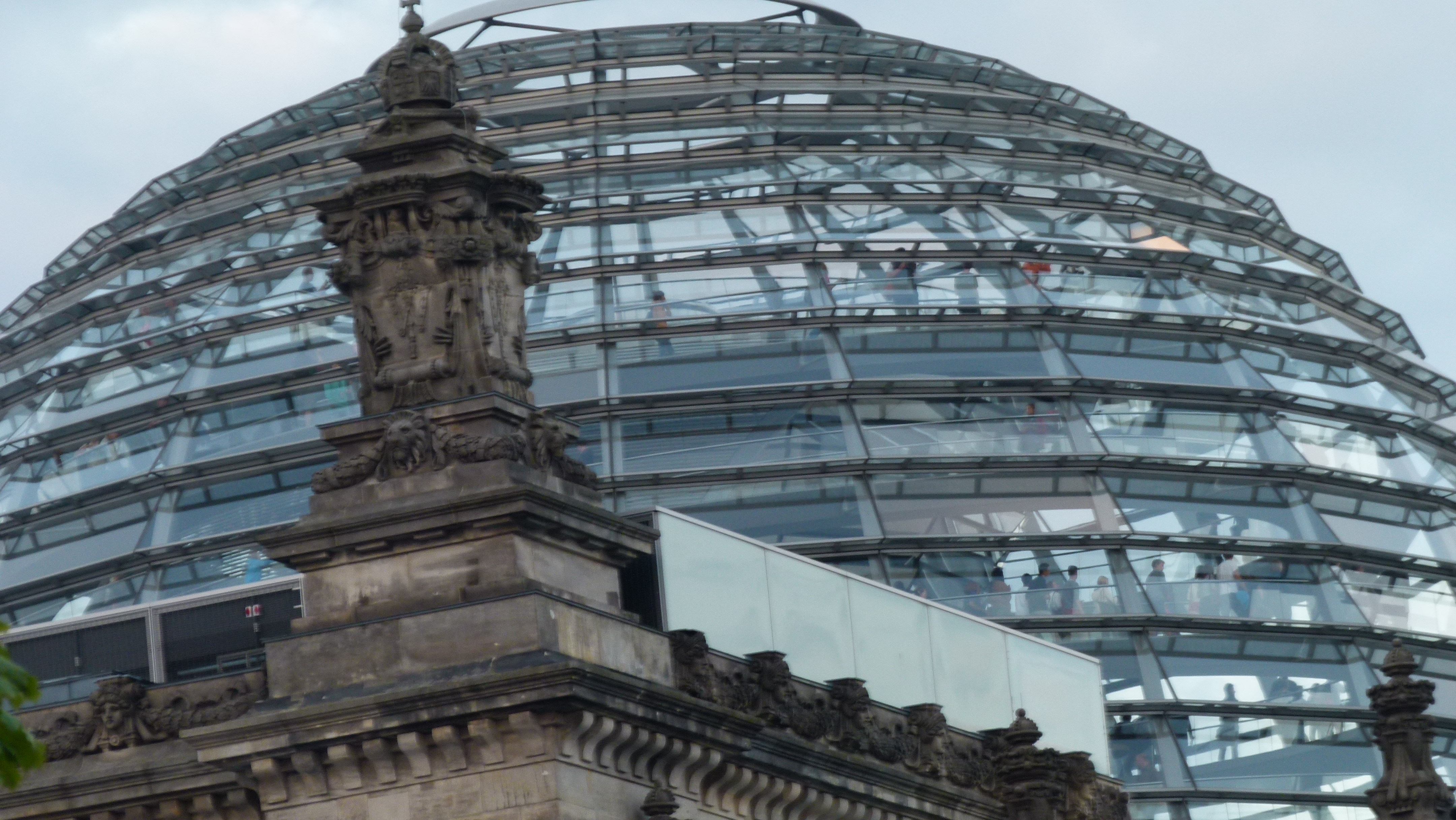
The architect Norman Foster has renovated the Reichstag incorporating modern elements. The most visible modern element is the cupola. The long queuing lines had always discouraged me to visit the cupola. To avoid the lines, Sabine has ordered tickets and reserved two seats in the restaurant Käfer next to the cupola.

P1020760

The cupola gives light to the plenary chamber with its white eagle. From the cupola we cannot see the plenary chamber. We walk up and down the revolving stairs and enjoy the view of the city. In the restaurant Käfer we share a meal – it is Buletten for me, the Berlin interpretation of  “hamburgers” that my mum had often prepared, when I was a child.

Today it is hard for me to imagine that the wall separating West and East Berlin was right behind the building of the Reichstag – but I remember those years.

.

Rixdorf

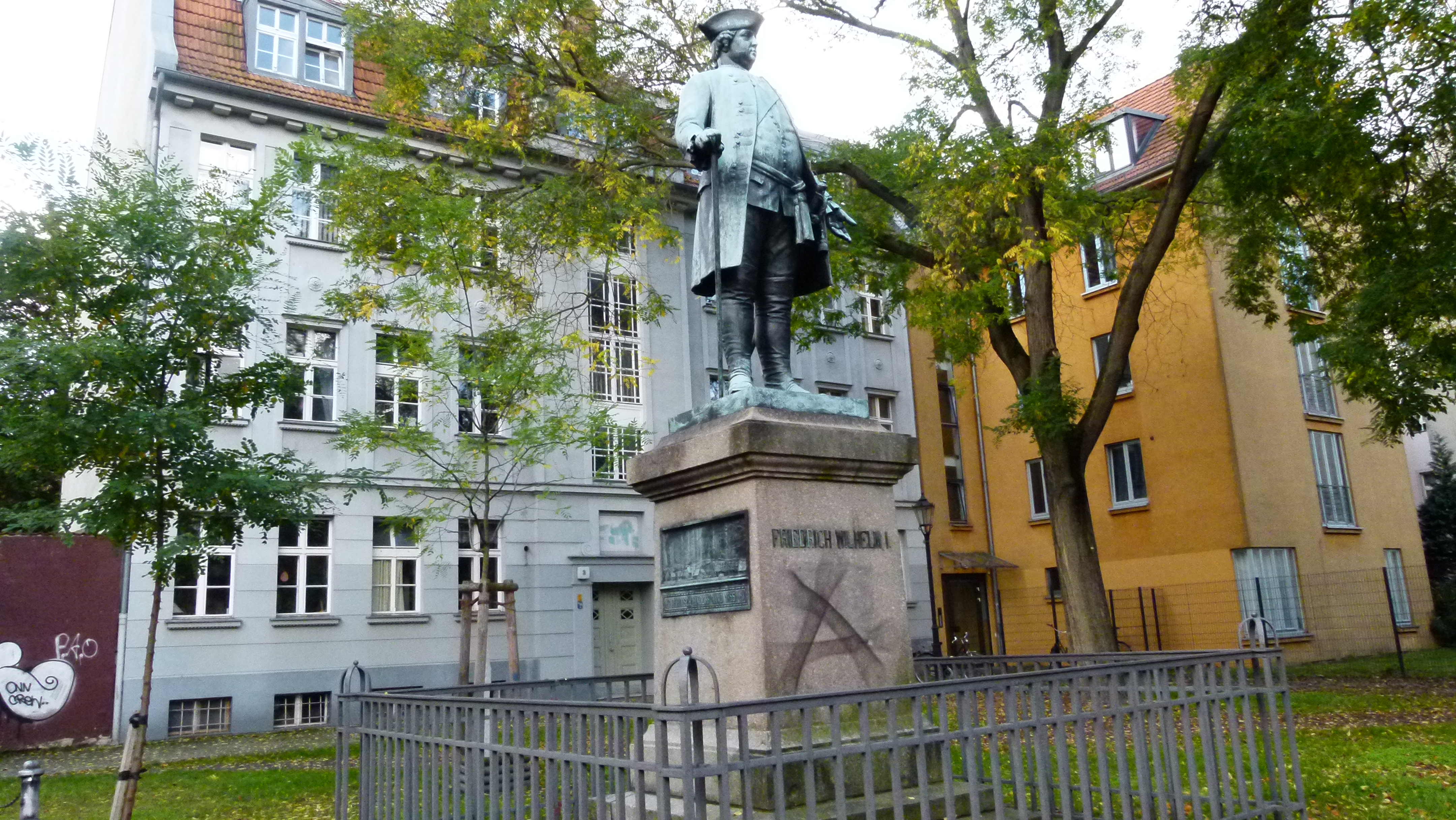
One afternoon, my friend Antoinette takes me to Rixdorf which is part of Neukölln. “In search of Rixdorf” is a blog that nicely tells about the history and the ambiance today. In 1737 King Friedrich Wilhelm I. had invited protestants from Bohemia (Böhmen)  to settle near Rixdorf. Here he is – proudly overlooking the Richardplatz. This square is at the heart of Rixdorf.

P1060694

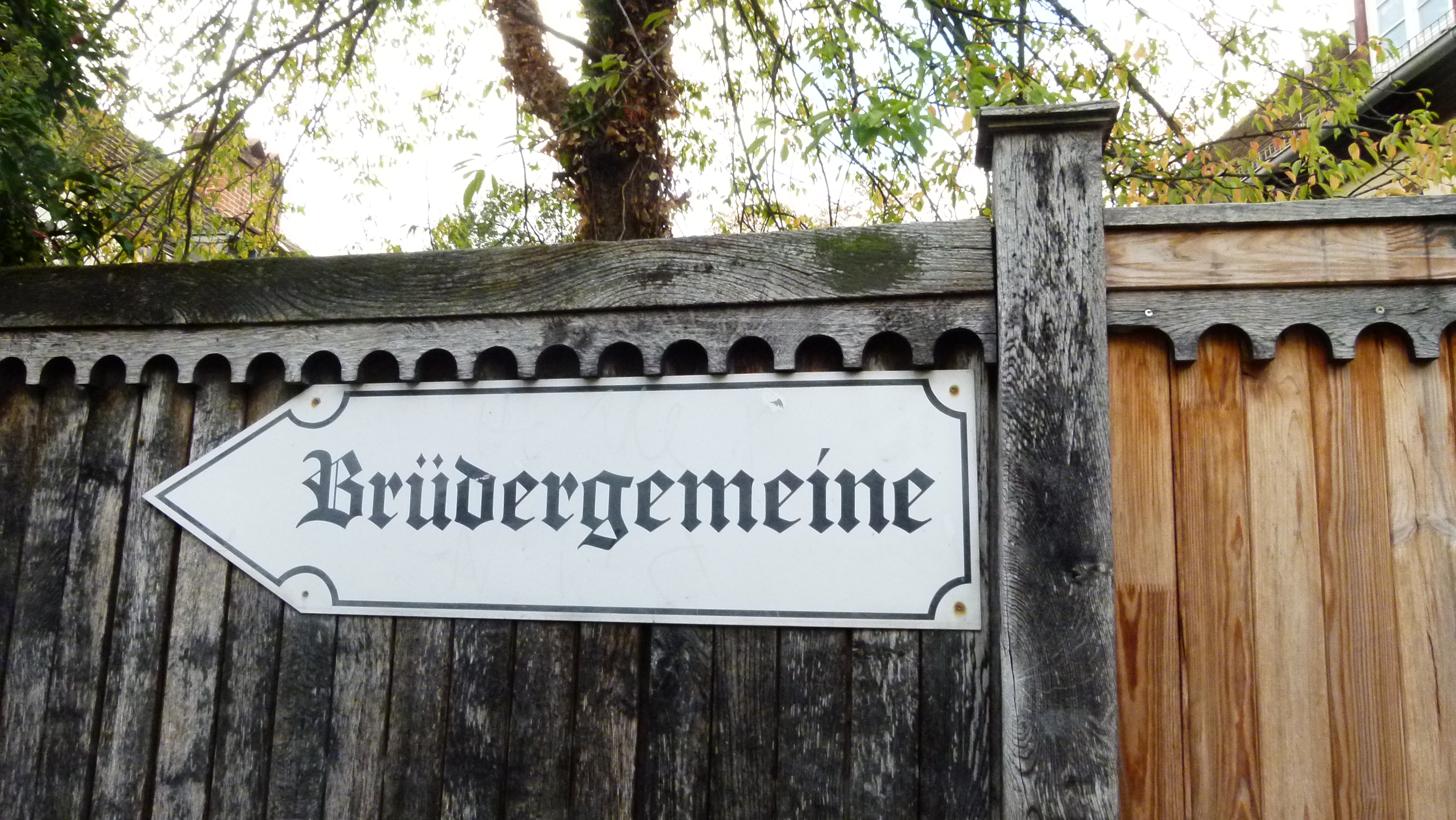
This panel points to the Bohemian brother community of Rixdorf.

P1060696

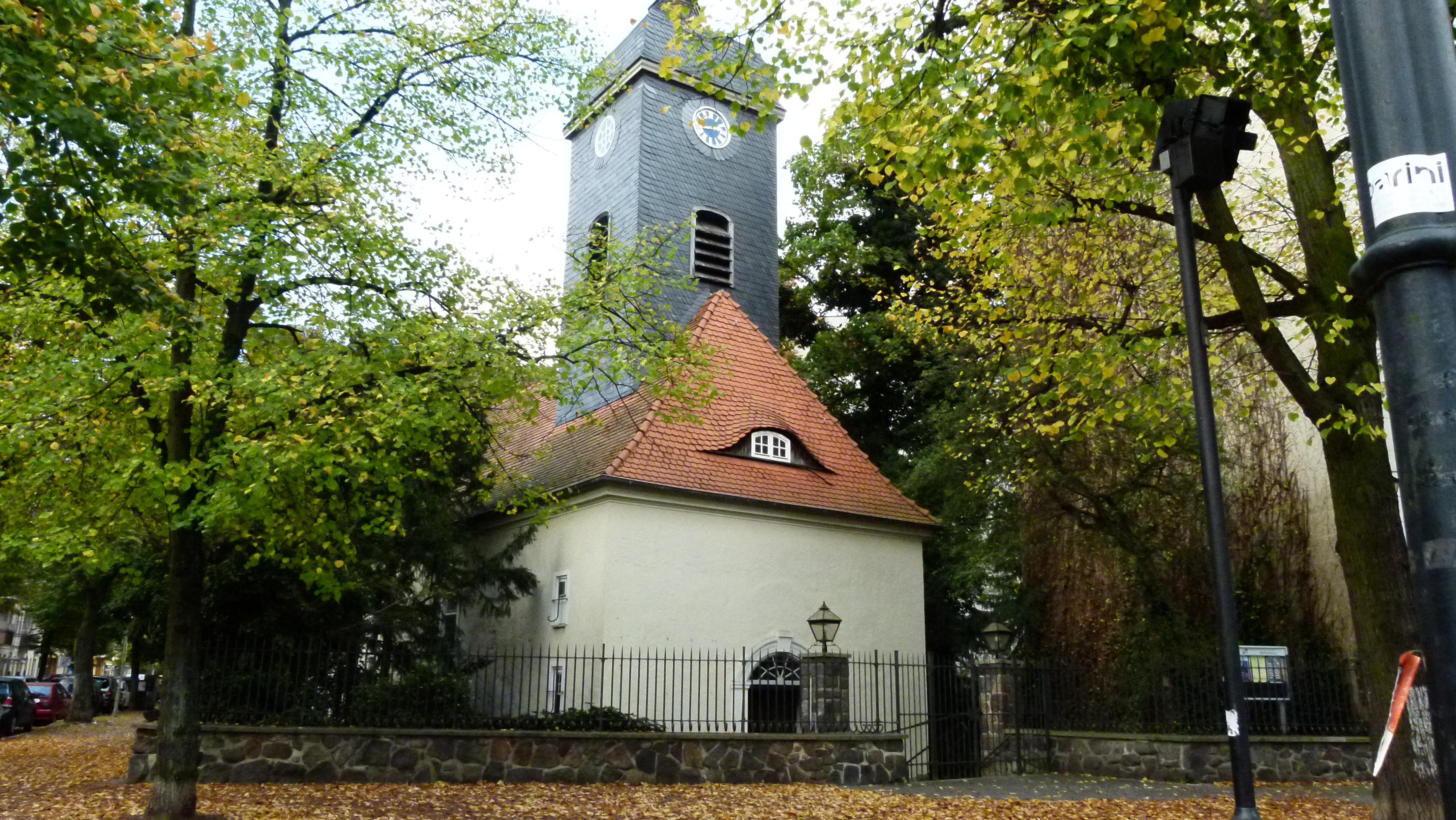
The Bethlehemkirche (church) at Richardplatz dates from the late 14th century. It was rebuilt after a fire in the middle of the 17th century reusing the old gothic elements. The entrance is below the surface of the Richardplatz.

P1060693

The Rixdorf of the Bohemians has kept its rural character.   We stroll along the cobbled streets.

P1060691

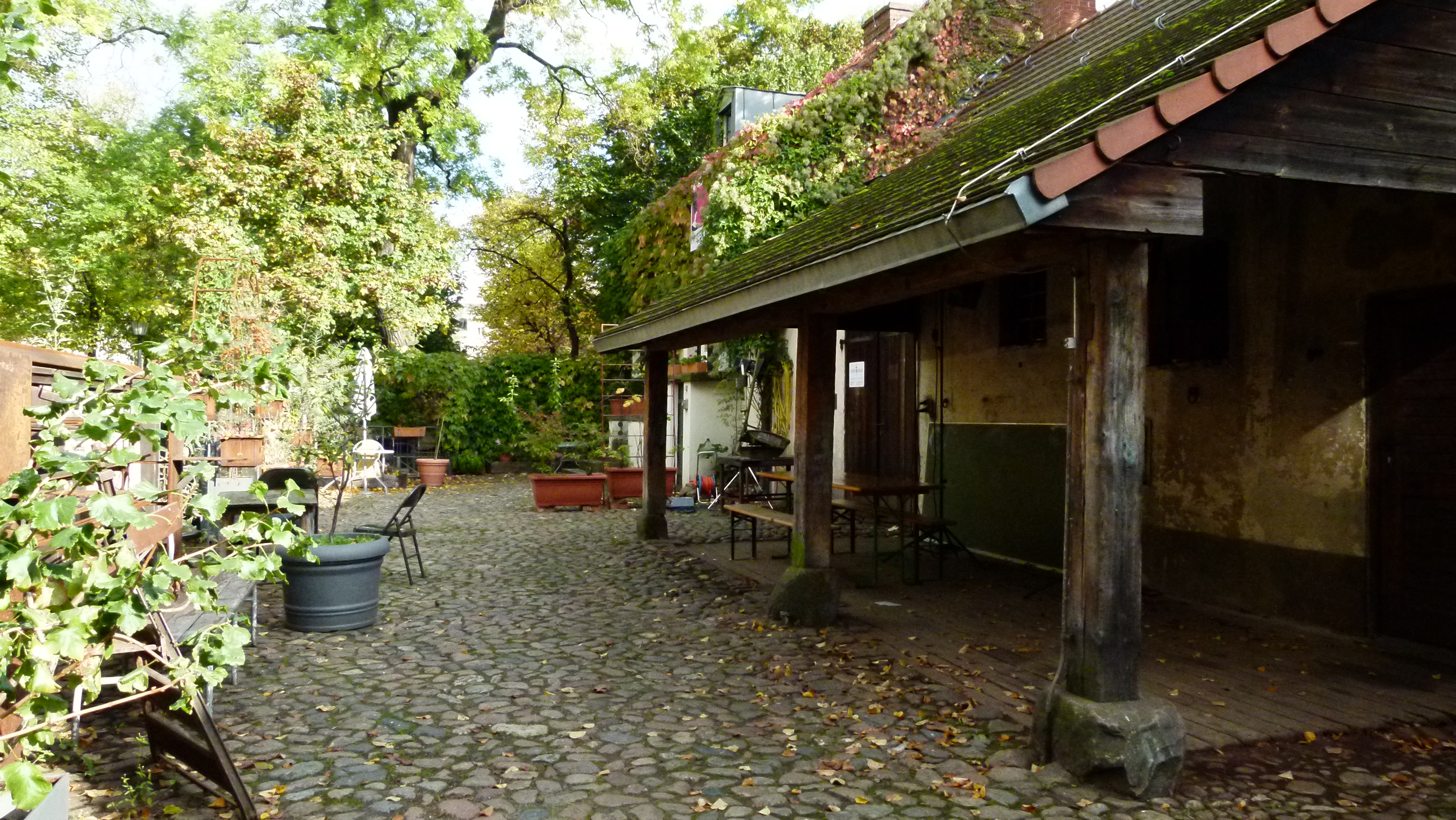
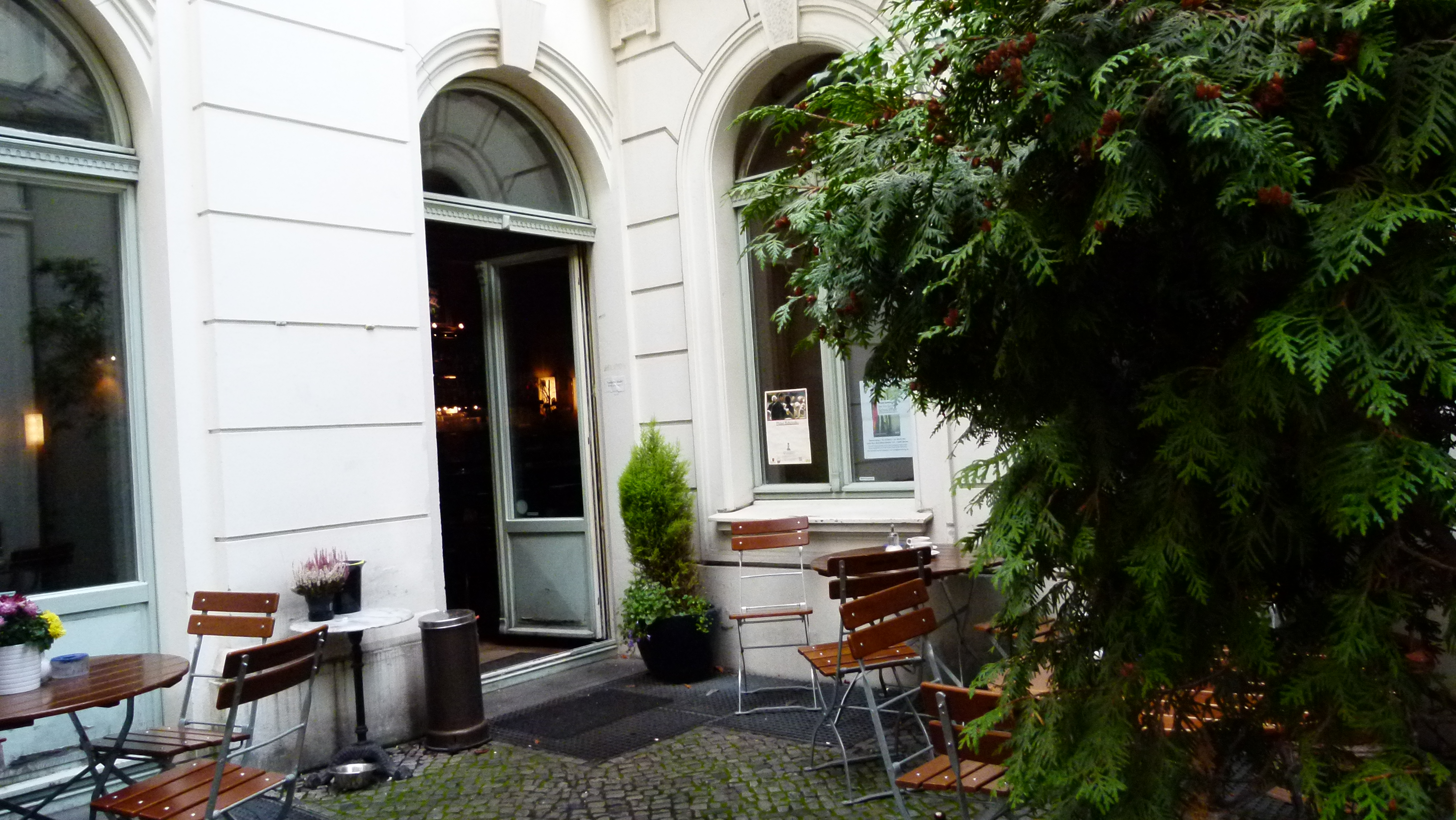
Returning back to busy Karl Marx Strasse, we stop in the Café Rix (Saalbau Neukölln) to share a cup of coffee and a piece of cake in the inviting garden.

P1060702

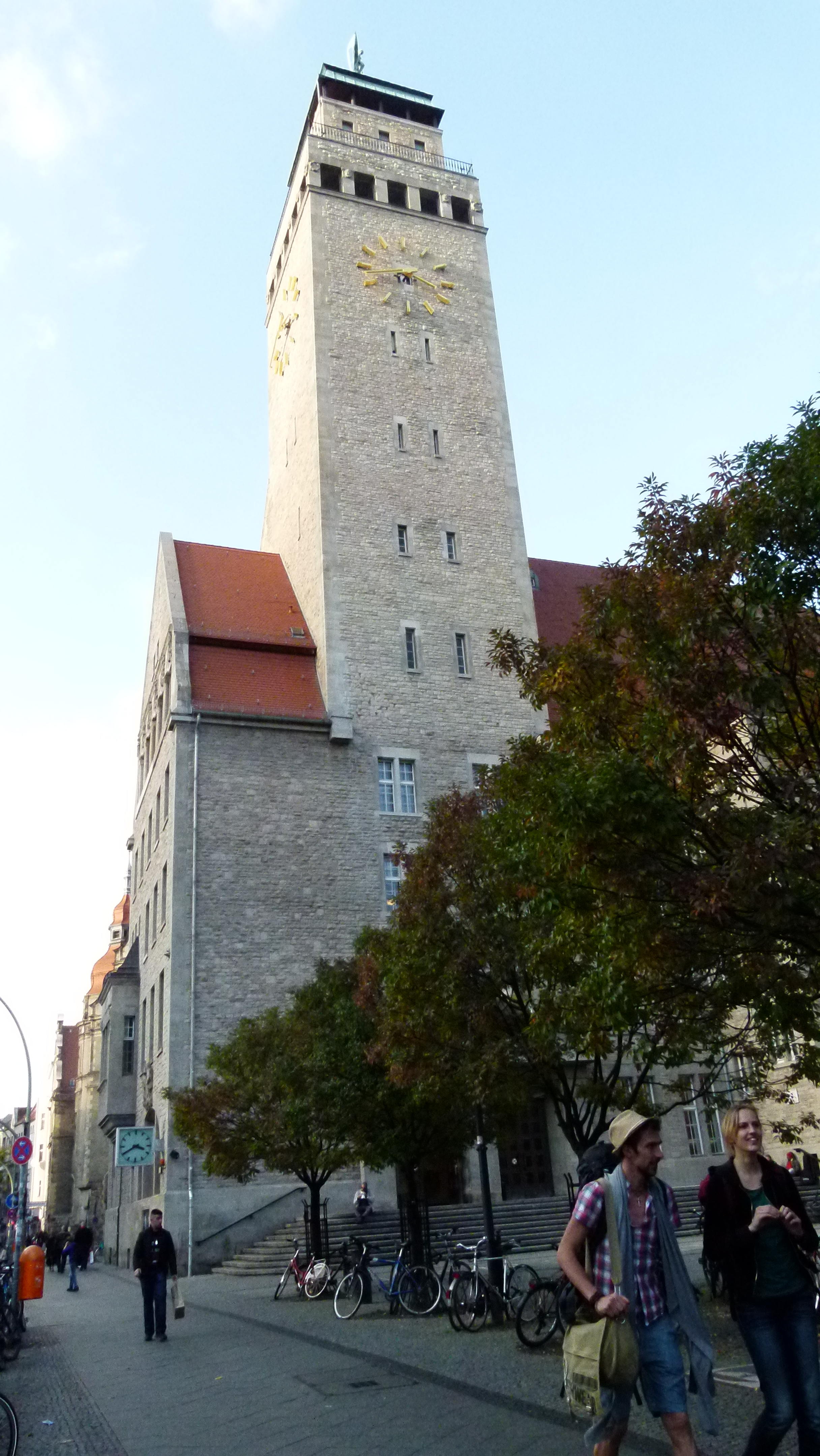
On the way to the metro, we come across the Rathaus Neukölln.

P1060705

At Hermannplatz we take the metro U7 that rattles under the ground. In the dark tunnels, Antoinette sighs: “I prefer to travel above ground”. We soon say good-bye and I continue my way underground, back to Theodor Heuss Platz and the comfy hotel Kastanienhof. Thank you, Antoinette, it was a great experience to see the village of Rixdorf – one more village that also is part of the big city of Berlin. Berlin never stops to have suprises for me.

On the road – three new cultural adventures in Berlin

Always new things to discover – Berlin is large and it is evolving quickly

Whenever I come back to Berlin, I keep on finding that I still do not know everything. This time I had three new cultural experiences:

  • the Berlin Philharmonie
  • the inauguration of the society of friends of the Museum of Music Instruments,
  • the Martin Gropius building with an exhibition about the Vikings.

.

The Berlin Philharmonie: The concert with the promising and young conductor Andris Nelsons

Of course I had often looked at the Berlin Philharmonie, the concert hall with the courageous tent like roof that caused it to be called “Circus Karajan” (according to the famous conductor of the time). The concert hall has been built in the sixties of the last century. Now I entered the Berlin Philharmonie for the first time.

Sabine noticed that there are still tickets available for the concert of the promising young conductor Andris Nelson. He conducts a piano concert by Mozart, “Burleske” (also with piano) by Richard Wagner and “Also sprach Zarathustra” by Richard Wagner. Emanual Ax will play the piano. We order tickets for Friday, October 17th.

Entering the Berlin Philharmonie, I indeed feel like in a circus. The roof is hanging high above us and we reach our seats using a maze of staircases. On the way to my seat, I notice the Sony Center just in front of the window. The Sony Center? So close? Hence they have built the concert hall in close vicinity of the Berlin wall! 50 years ago they built it at the periphery of West Berlin, overlooking the muddy grass pit that then was the Potsdamer Platz. And now, the Berlin Philharmonic is rounding off the burstling Potsdamerplatz that has emerged simce the wall has disappeared.

I take my seat. Below me there are the fortepiano and the empty places for the musicians. Almost every seat in the audience is taken.

IMG_0878

I enjoy the concert. The young conductor is full of energy. I notice myself copy his movements (more in mind) – for me they “reflect” the music. Mozart’s harmonies always calm me down. The Burleske of Strauss I find more difficult to listen to. In the lucent wood above the piano keys I sometimes watch the agile hands of Emanuel Ax. After the break, “Also sprach Zarathstra” starts very loudly. Nelsons conducts a much larger orchestra now. The banging start is too loud for me – like a shock. But the critique seems to like this start. As the flow continues more quietly, I try to understand, what Zarathustra is saying. While I liked to watch this conductor that shows emotion, the critique concludes that Nelsons has not yet reached the maturity to take over the Berlin Philharmonics from Simon Rattle. Well, I am not an expert at all. Can it be that the high average age of conductors determines, how much body movement ia allowed to young conductors?

.

Museum of Musical Instruments (Musikinstrumentenmuseum)

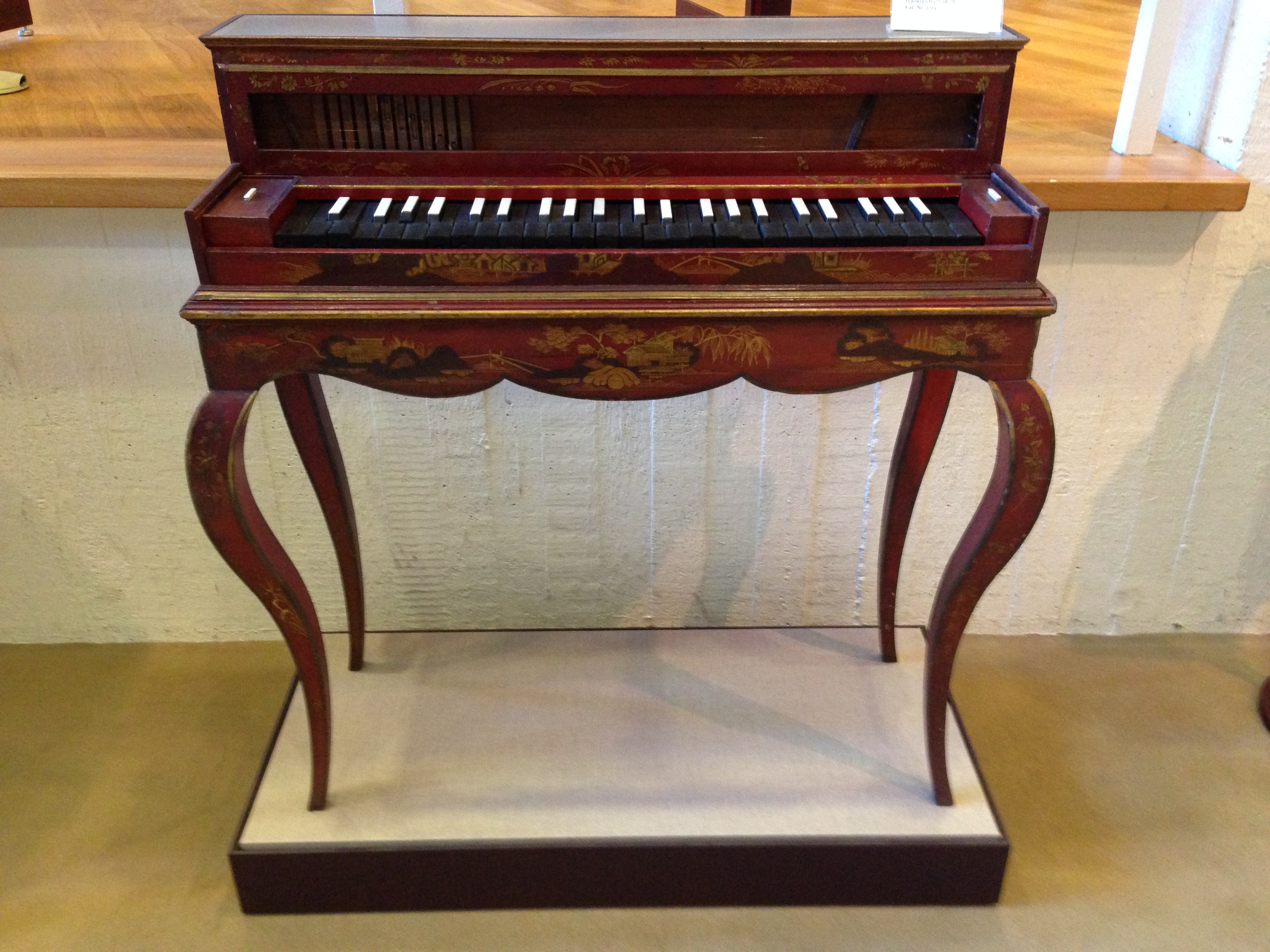
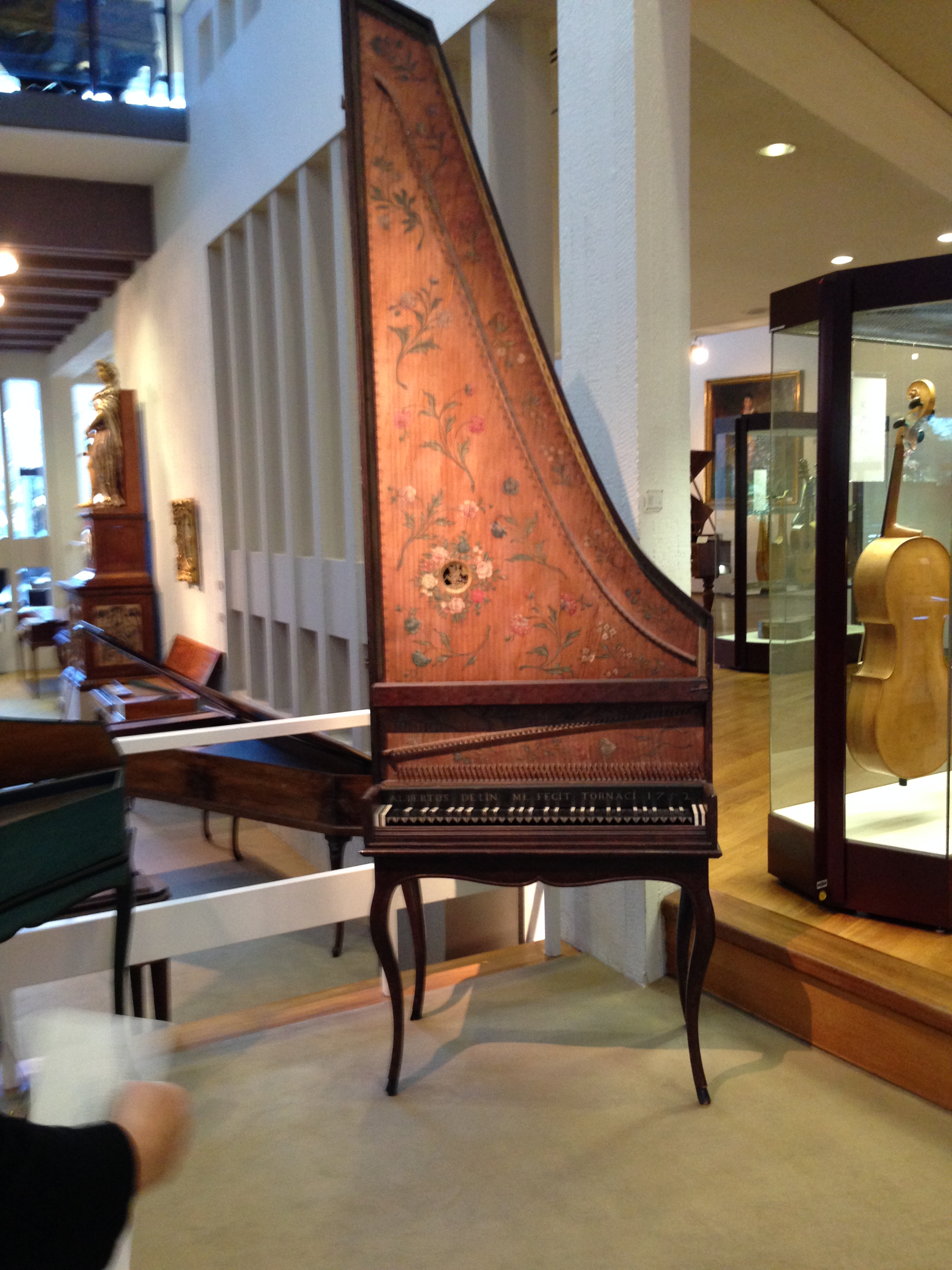
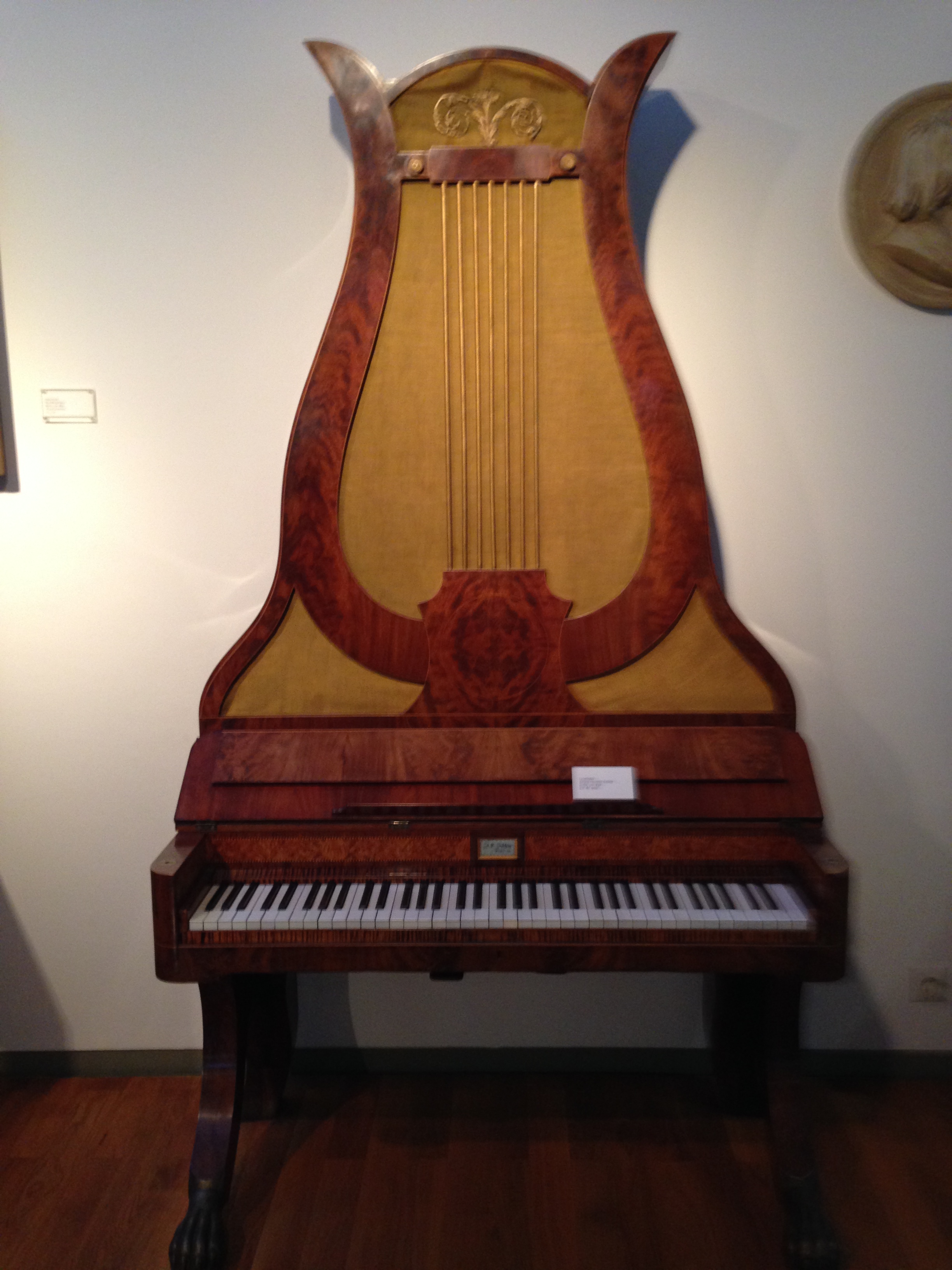
Just next door to the Berlin Philharmonie, there is the Museum of Musical Instruments. Wikipedia says “The Museum holds over 3,500 musical instruments from the 16th century onward and is one of the largest and most representative musical instrument collections in Germany.” Here is a selection of three instruments.

IMG_0887

IMG_0886

IMG_0883

The museum is also proud of its mighty Wurlitzer.

On Sunday October 19th, the museum invites for the “Fest der Freunde” (party of the friends) to celebrate the foundation of the society that will support the Museum of Musical Instruments. Antoinette, my friend from school times, told me about the event. Conny guides through the museum, explains the background of the key instruments and has samples played (sometimes she plays herself). Andreas presents his evaluation of one clavichorde from around 1800. It has very unusual design, as it has a second sound board and the sound board is not well strutted. The builder wanted to make the clavichorde louder, but this design made the instrument less loud. “I think this is not a good development”, Andreas says politely. Now he considers to renovate the clavichorde as is – and then it cannot be played well – or to document the status and reonovate it such that it can be played properly. Very interesting.

.

Wikingerausstellung in Martin Gropius House

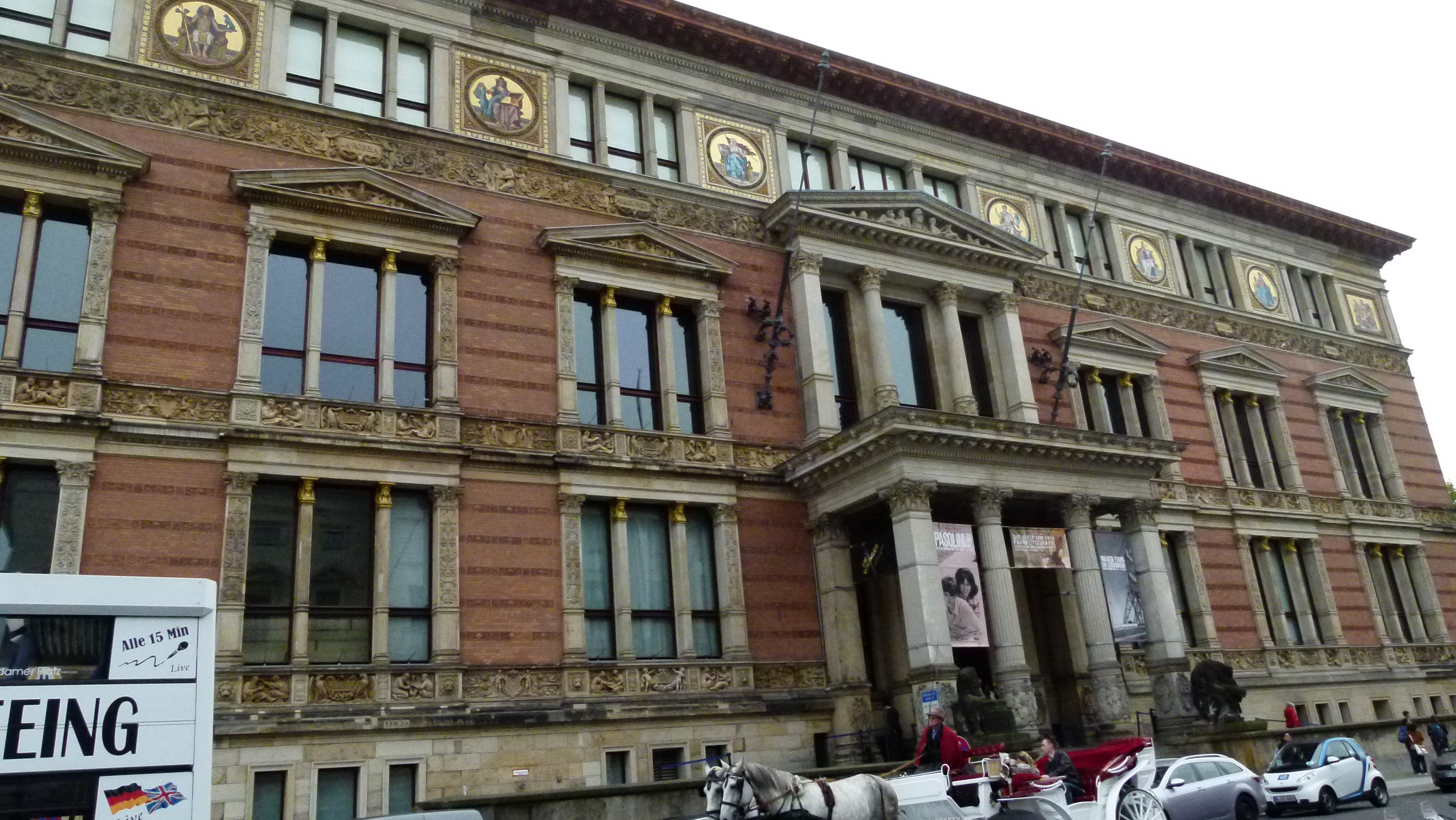
Also not far from the Potsdamerplatz there is the Martin Gropius House. Gropius? I expect a modern building in the Bauhaus style. And then – I find this classical late 18th century building. The explanation: Martin Gropius is not Walter Gropius, but his great uncle. Walter Gropius was a member of the Bauhaus, not Martin. And this is why, it is not a Bauhaus building, but has a more classical appearance.

P1060713

The Martin Gropius House hosts excellent temporary exhibitions. Currently there is an exhibition about the Vikings. In the central court yard there are the remains of a boat – a viking longship. It was 37m long. Just the wooden bottom of the ship has been preserved. Metallic sticks have been added to give the idea of the longship. A lady teacher explains the boat to her boys and girls. Her presentation is lively and highly interactive. To round it off, she asks the children to draw a boat. One boy draws a wonderful sailing boat with a huge veil that inflates in the wind. He shows it proudly to Sabine.

Detailed topics are elaborated in the rooms around the central court yard. We have received audio guides with one track for children and one track for grown-ups. We both prefer the track for chlidren. In a dramatic tone, the voice says that Harald Blauzahn had a challenging life. In the tenth century he ruled over Denmark and Norway. He was invading the Normandie – successfully -, but Otto I (the strong ruler of the Holy Roman Empire of the German Nation) withstood his attacks. Harald Blauzahn adopted the Christian religion. On display is his rune stone that says: “King Harald ordered that this monument was made for his father Gorm and his mother Tyra, by Harald who subdued Denmark and Norway and converted the Danes to Christianity.” After the visit I google a bit, and I discover that I have met Harald Blauzahn before… under the name of “Bluetooth” which is a communication protocolle named after “Harald Blauzahn” – or “Harald Bluetooth”: The logo shows his initials in rune script (source: Wikipedia on Harald Blauzahn; see also the report of Stern: “Ein Wikinger namens Blauzahn“).

The Vikings were feared for their attacks, especially along the Atlantic and the Mediterranian coast line as well as along the rivers that they could reach from the Baltic Sea. They also traded. Some of their trading ports were Novgorod and Kiev. They founded the Kievian  Rus – the Ruriks were the first Russian emperor  dynasty (until 1610). The vikings also settled in Greenland and found North America. The rooms around the central yard illustrate their achievements. In the 11th century one of the Viking trading business models was no longer applicable: Christianity did not accept slavery between fellow Christians. The northern Christian kingdoms started to emerge (see Wikipedia about the vikings).

.

Well, Berlin always has some new insights ready for me.

P1060710


On the road – coming across humor in Berlin

Berlin humor is special and refreshing, I believe

I enjoy the humor in Berlin.

For instance the buildings all have an official name as well as a second name. – such as the Victory Goddess on the Victory Column in Tierpark is called “Goldelse” (Golden Elsa). The Funkturm is the “Langer Lulatsch” (Long Guy). The TV Tower is named “Samkt Ulbricht” (after the GDR minister Ulbricht) or “Die Rache des Papstes” (The Venge of the Pope), as it shows a cross on the restaurant platform, when the sun shines (unthinkable for the GDR). The University Library has always been the “Kommode” (Commode, also my mum would always talk about the Commode). The Congress Hall is the “Schwangere Auster” (Pregnant Oyster), because of the shape that reminds of an oyster. There are many more of these  surnames – and they are consistently used in Berlin.

The people from Berlin are also good at telling anectodes. I like this one (though it is a little chauvinistic): Two cars stand in front of the red light, in the first car a lady, in the second car an impatient man. The light changes to green. The man shouts at the lady in the first car “Jriener wird’s nicht mehr” (it will never become greener or grüner wird es nicht mehr).

.

This time I come across rubbish bins full of humor

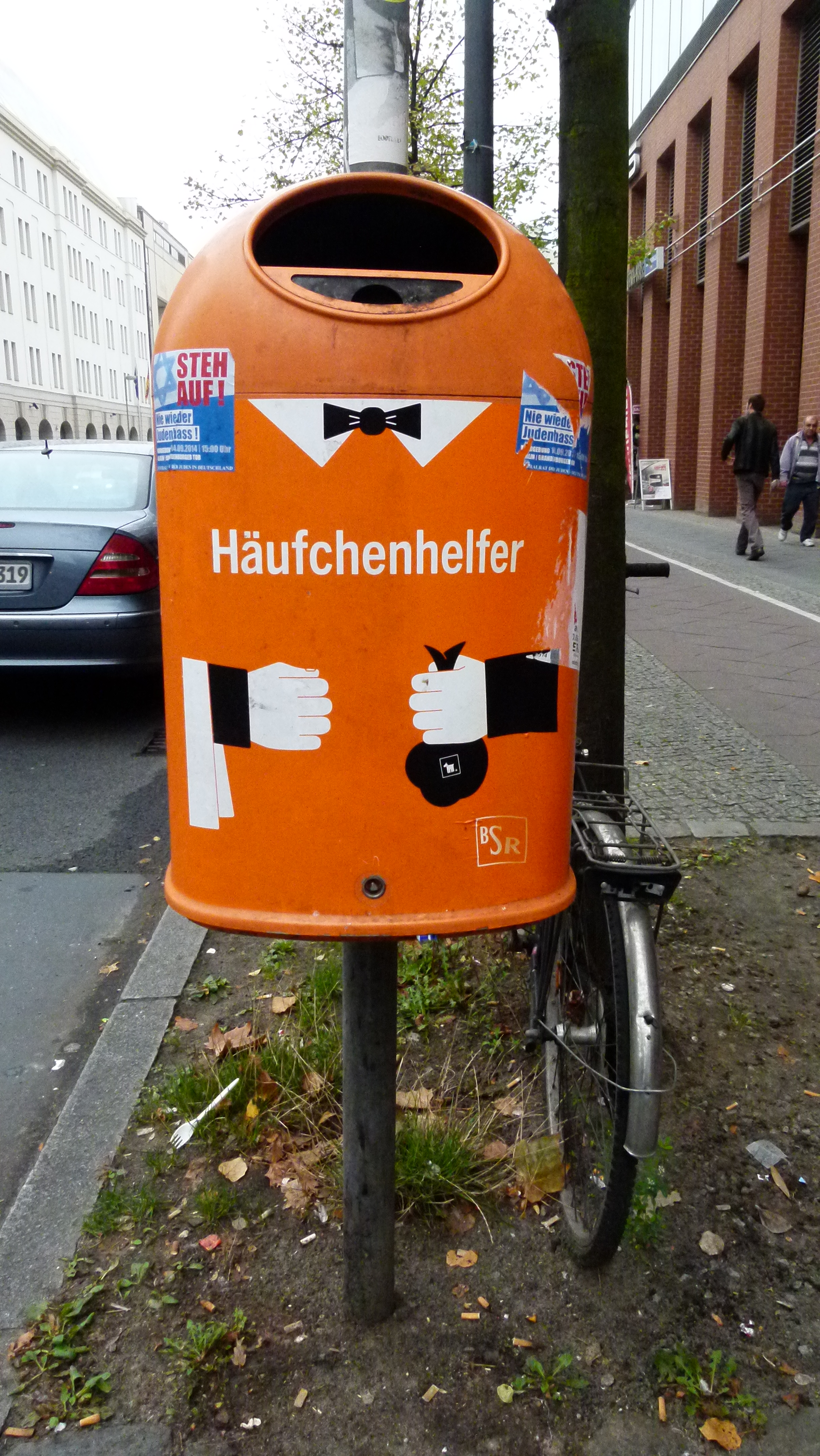
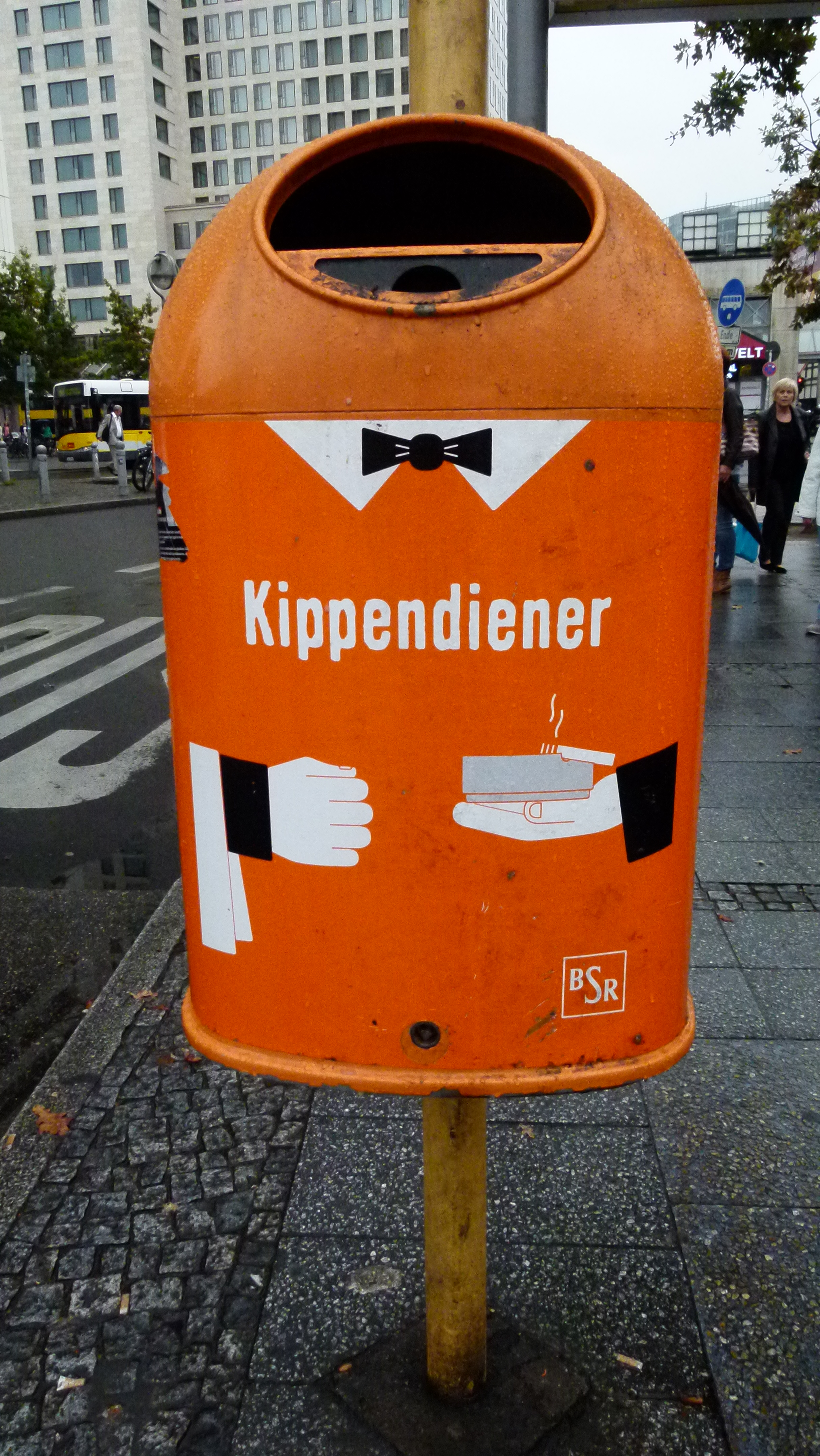
With humor the government of Berlin now tries to motivate the population to use the rubbish bins. This one says “heap helper”. Obviously a success – I have not come across any of these small heaps in Berlin.

P1060708

This second bin invites smokers to use it for their cigarette butts, called Kippen.Literally translated, this is a “servant for cigarette butts”

P1060678

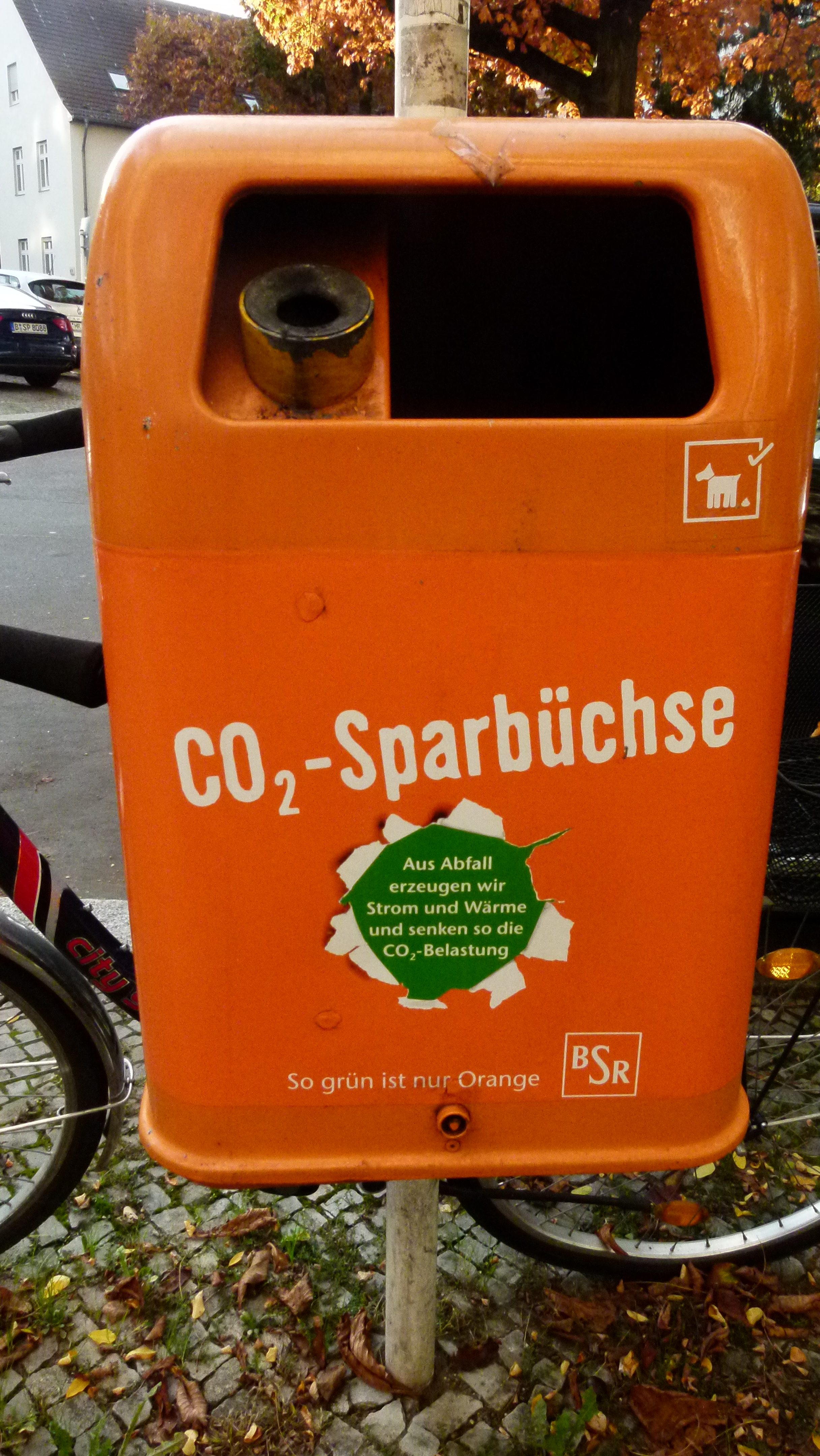
And in this bin we can save CO2. Literally it is a “savings box for CO2”.

P1060706

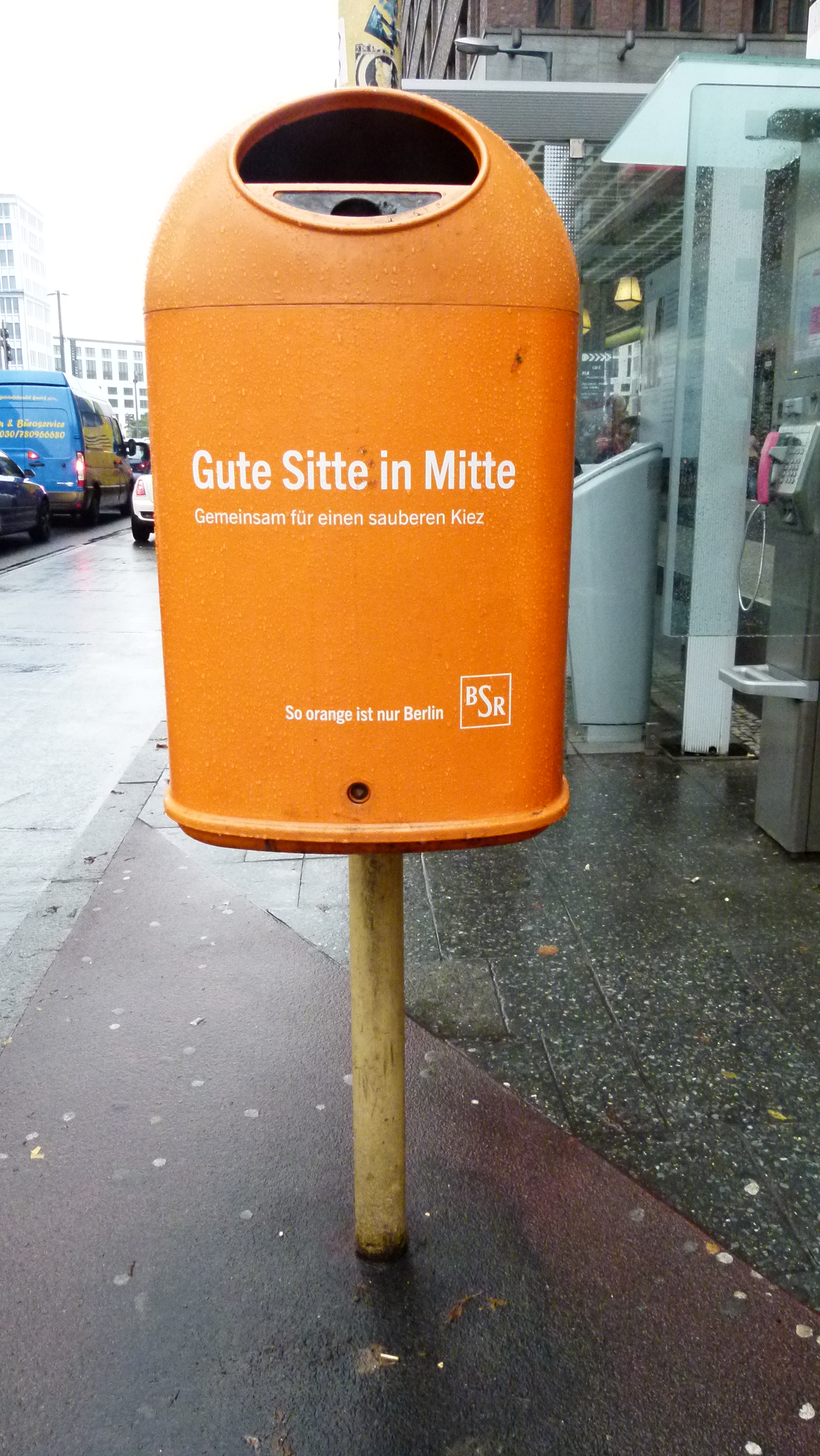
The last bin in these series just reminds to behave properly in the city center or in the middle of Berlin (called “Mitte”). Literally: “Good manners in the metropolitan area “Mitte””. This rhymes well in  German.

P1060680

The traditional Berlin dialect that my mum spoke has almost disappeared in Berlin. I enjoy to hear it, when I come across it. Near Alexanderplatz I was not sure whether I found the right bus to Pankow – and the driver said simply: “Gen Se rin” which in Berlin slang means “enter” (Gehen Sie hinein). The slang is now almost restricted to former East Berlin – and it has a slightly rough and at the same time humorous touch – like some of the slogans on the rubbish bins.

On the road again – as always saying hello to my favorite places in Berlin

Berlin – simplified map with hints

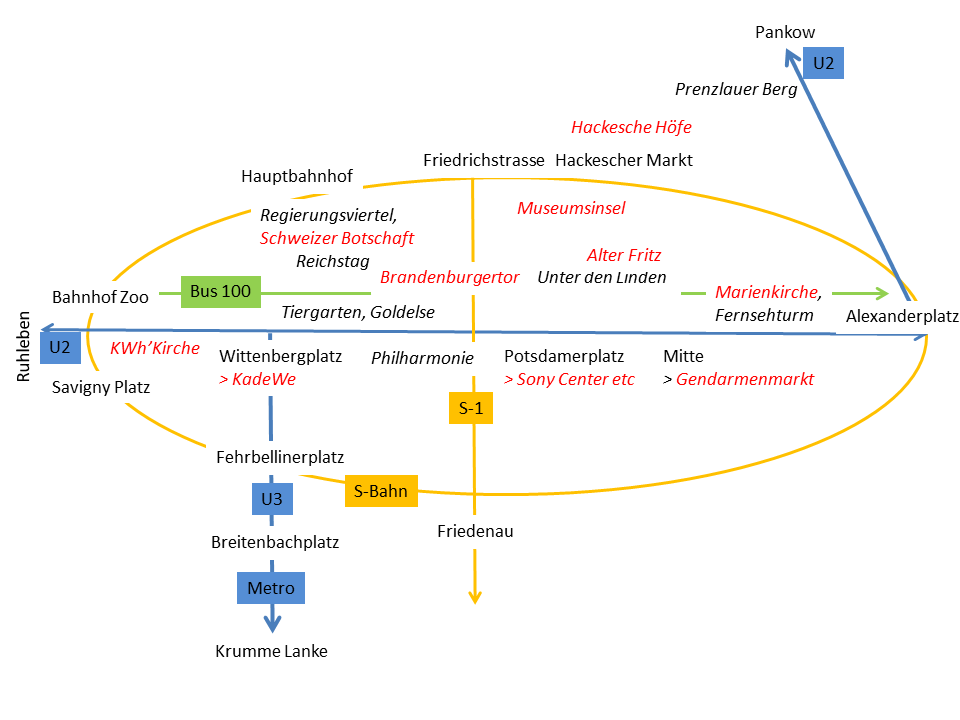
This is a very simplifiied map of Berlin with “my” main traffic lines: The S-Bahn, U2 and Bus number 100 between Bahnhof Zoo and Alexanderplatz are a wonderful way to explore the sprawled city center of Berlin – and to say hello to my favorite places – all in one.

Simplemap


Kaiser Wilhelm Gedächtniskirche with “Powder Box”

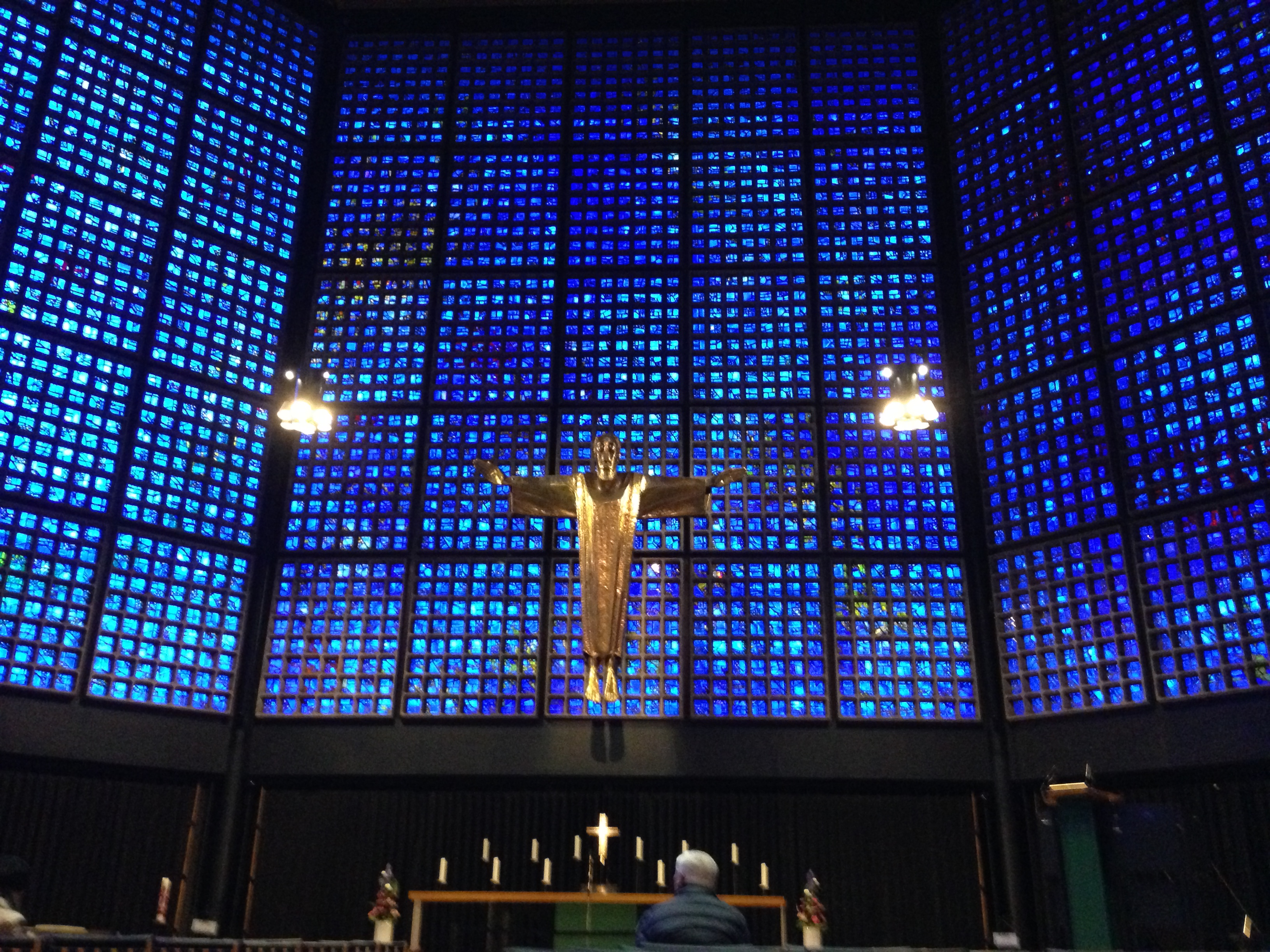
I take the metro U2 and leave it soon again at Bahnhof Zoo. The metro “disgorges” me just in front of the “Puderdose” or  “Powder Box”. This is the nickname that Berlin gave to the modern Kaiser Wilhelm Gedächtniskirche. I love to welcome Berlin in the “Powder Box” with its blue stained windows and the golden sculpture of Christ. I stand still for a while and breathe.

IMG_0891

Outside are the “Hollow Tooth” (the nickname for the ruins of the old church) and the Lip Stick” (the new church tower). This is an older picture, the “Lip Stick” is currently under renovation.

Berlin 2008 066

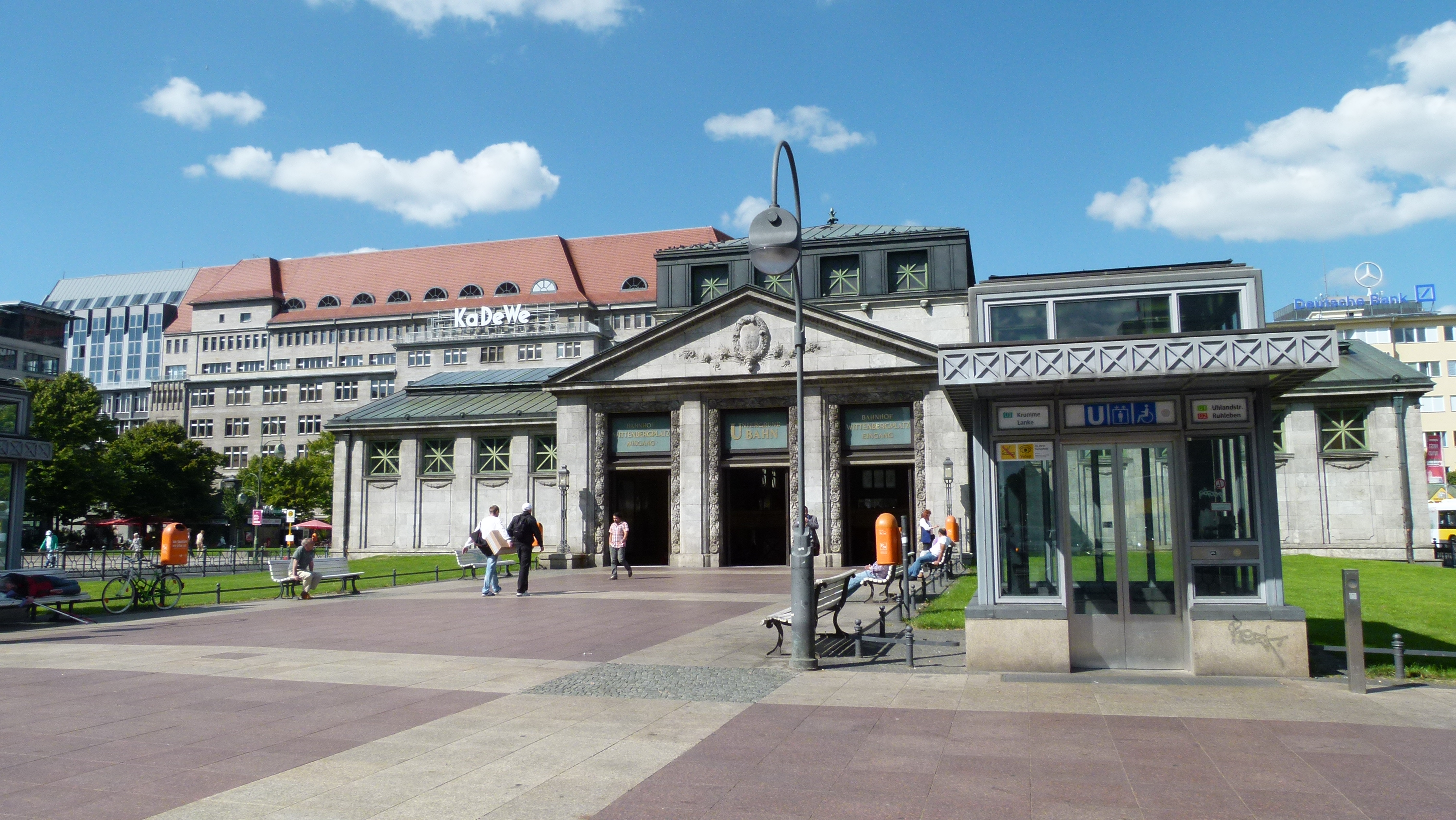
I stroll down Ku’damm and Tauentzienstrasse towards Wittenbergplatz with my favorite metro station and the “Kaufhaus des Westens” or “KadeWe”.

P1020709

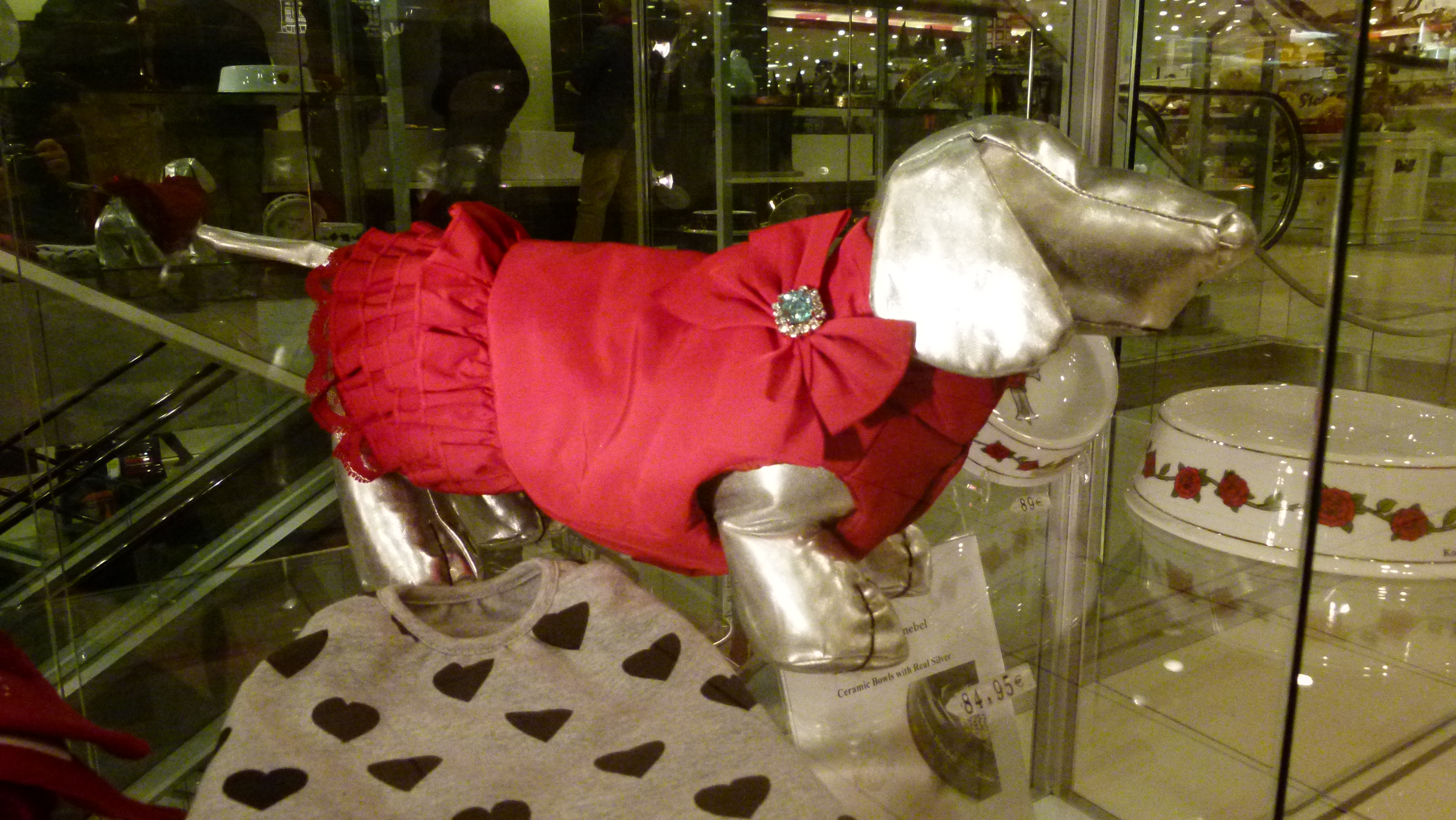
KadeWe is a posh shopping mall that even has great design for dogs – well, perhaps I would not dress up my dog like this, if I had one.

P1060675

The 6th floor hosts delicacies from wine, chocolate, fish, oysters – just about everything… I will come back for lunch to eat a Bouillabaise and later to eat a shrimp  soup (Büsumer Krabbensuppe).

.

Metro station Wittenbergplatz

Under the iron construction of my favorite metro station Wittenbergplatz,

P1060672

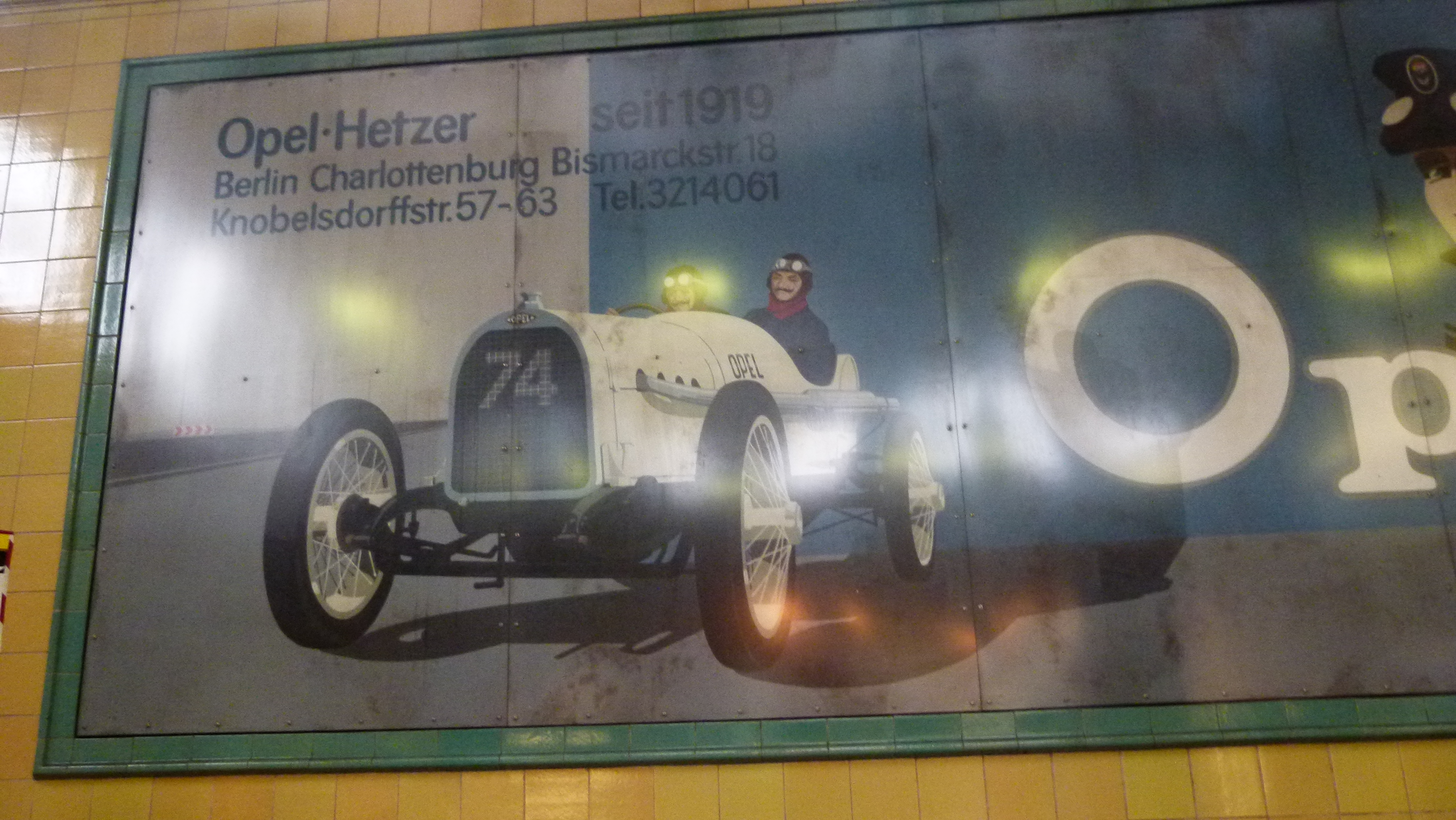
there are posters from the twenties in the last century – like this one announcing the “newest” Opel-Hetzer – well it was new at the time the metro was constructed.

P1060673

.

Potsdamerplatz

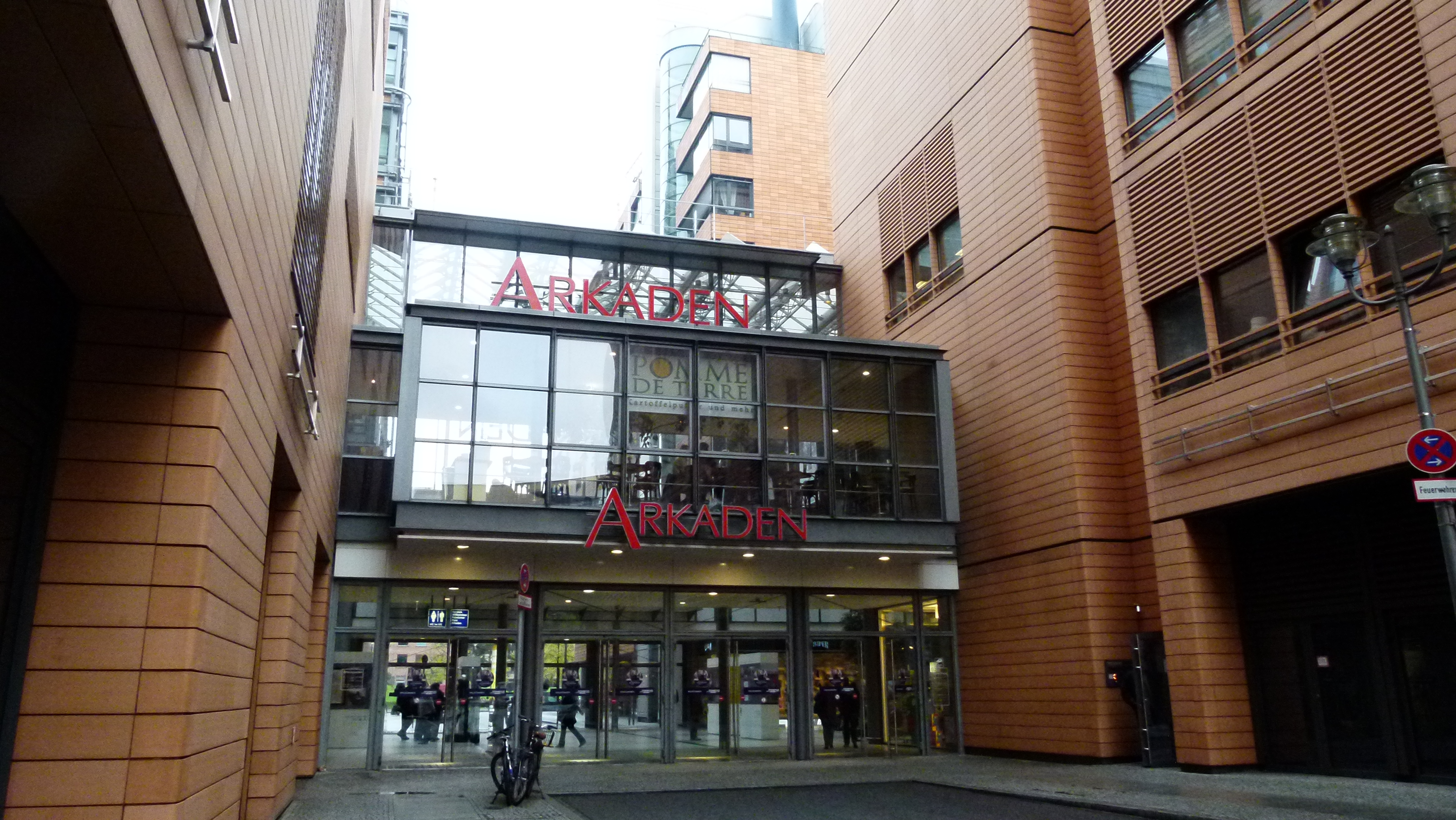
I catch U2 again, and a few stations later I am at Postdamerplatz. I feel very small between the skyscrapers – among them the Sony Center – and enter the Arcades (Arkaden).

P1060681

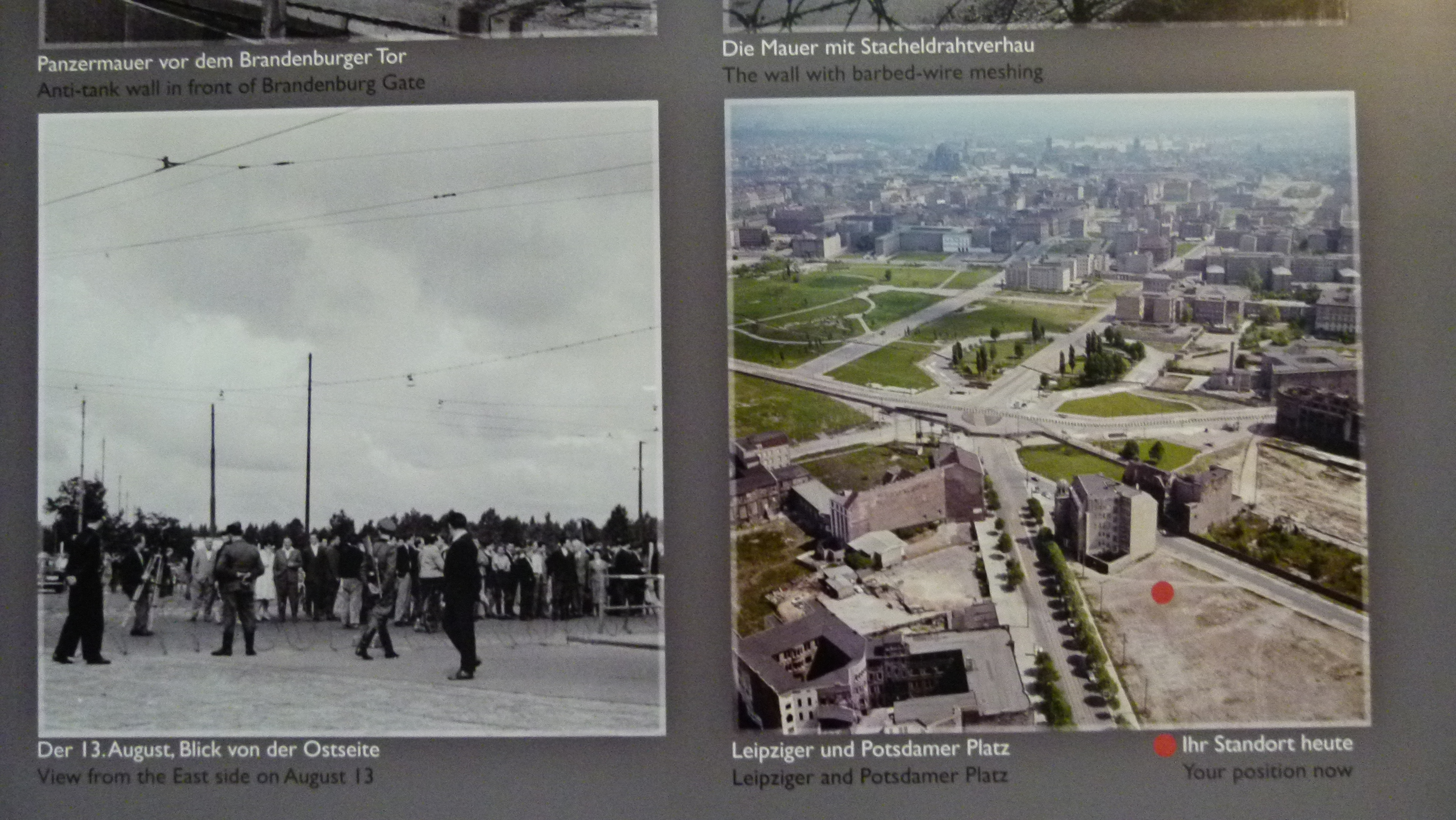
There is an exhibition about the Berlin wall that separated the town from 1961 (though Ulbricht said that no one could think of building a wall) up to 1989 (when the iron curtain fell and people climbed over the wall).

P1060682

Pupils walk around with questionnaires. One boy looks at me: “Do you know the answer to this question – does the wall (or their remains) belong to the Unesco world heritage?” I frown. I cannot think that anything that dreadful is eligible for the list of world heritages. The answer is in wikipedia: The wall has been proposed, but not accepted. The boy apologizes: “I have a disorder that cannot be diagnosed, I always make mistakes, when I write.” I frown again. I remember that at school my teacher was desparate about all the orthograpic corrections in whatever I wrote. I say: “I have had that as well, it has never been diagnosed and it disappeared.” The boy looks at me and repeats in earnest: “I have an undiagnosed disorder…” What are these school psychologists doing to the kids today? Destroying their motivation to learn and improve?

.

The Gendarmenmarkt

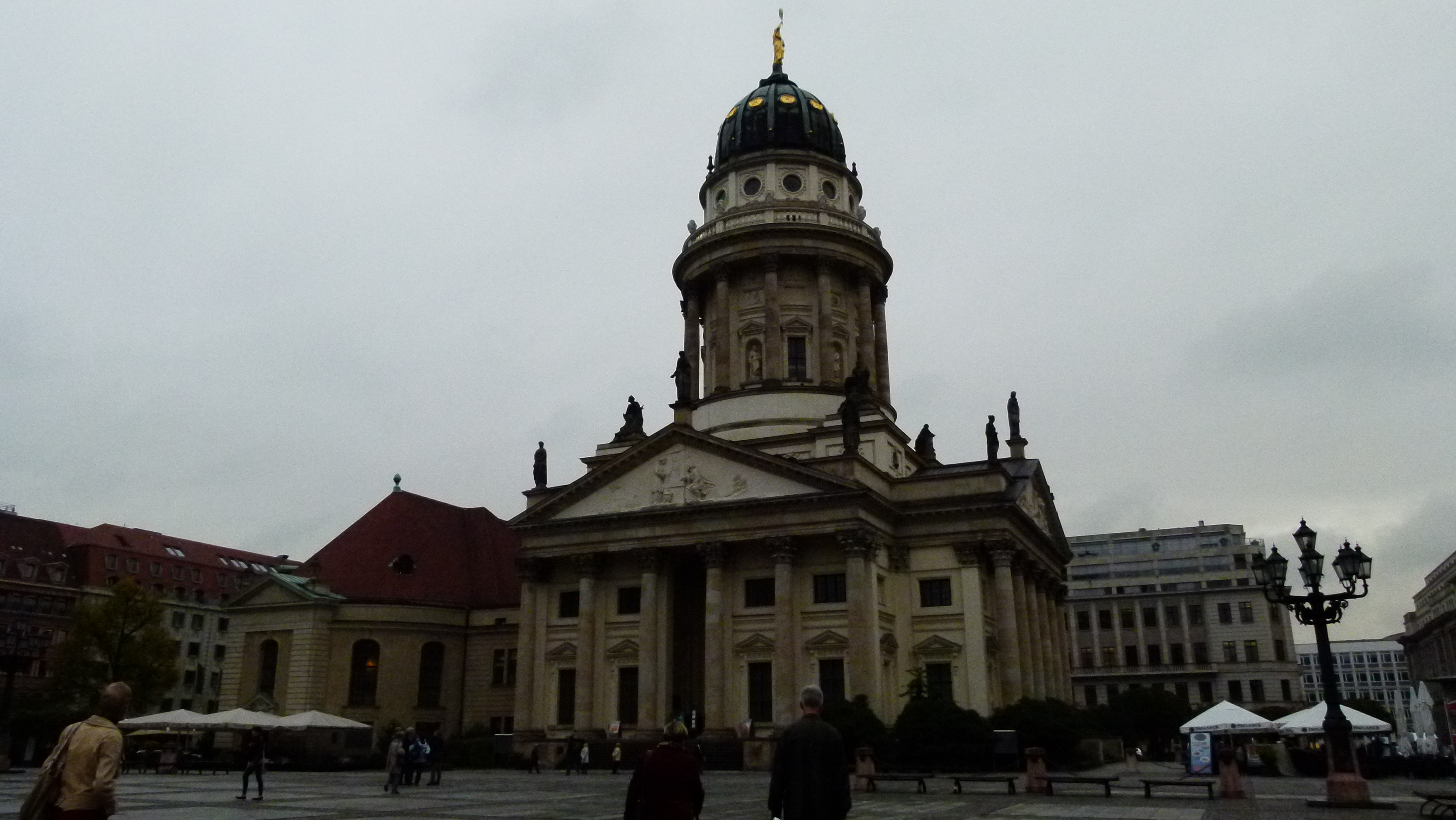
Again I go down under earth to take U2. I leave it at “Berlin Mitte”. The metro disgorges me just in front of the German dome that marks the southern end of the Gendarmenmarkt. To the north is the French dome.

P1060684

Do I feel like a coffee? There are many inviting coffee places here. No, not yet. I go back to U2 to leave it again at Alexanderplatz.

.

Alexanderplatz

From Alexanderplatz I walk over to the all dominating TV tower and to the Marienkirche. The TV tower shows no cross on the restaurant floor today, as the sky is cloudy (there is a cross, as soon as the sun shines, and this is why the tower is called “Sankt Ulbricht”).

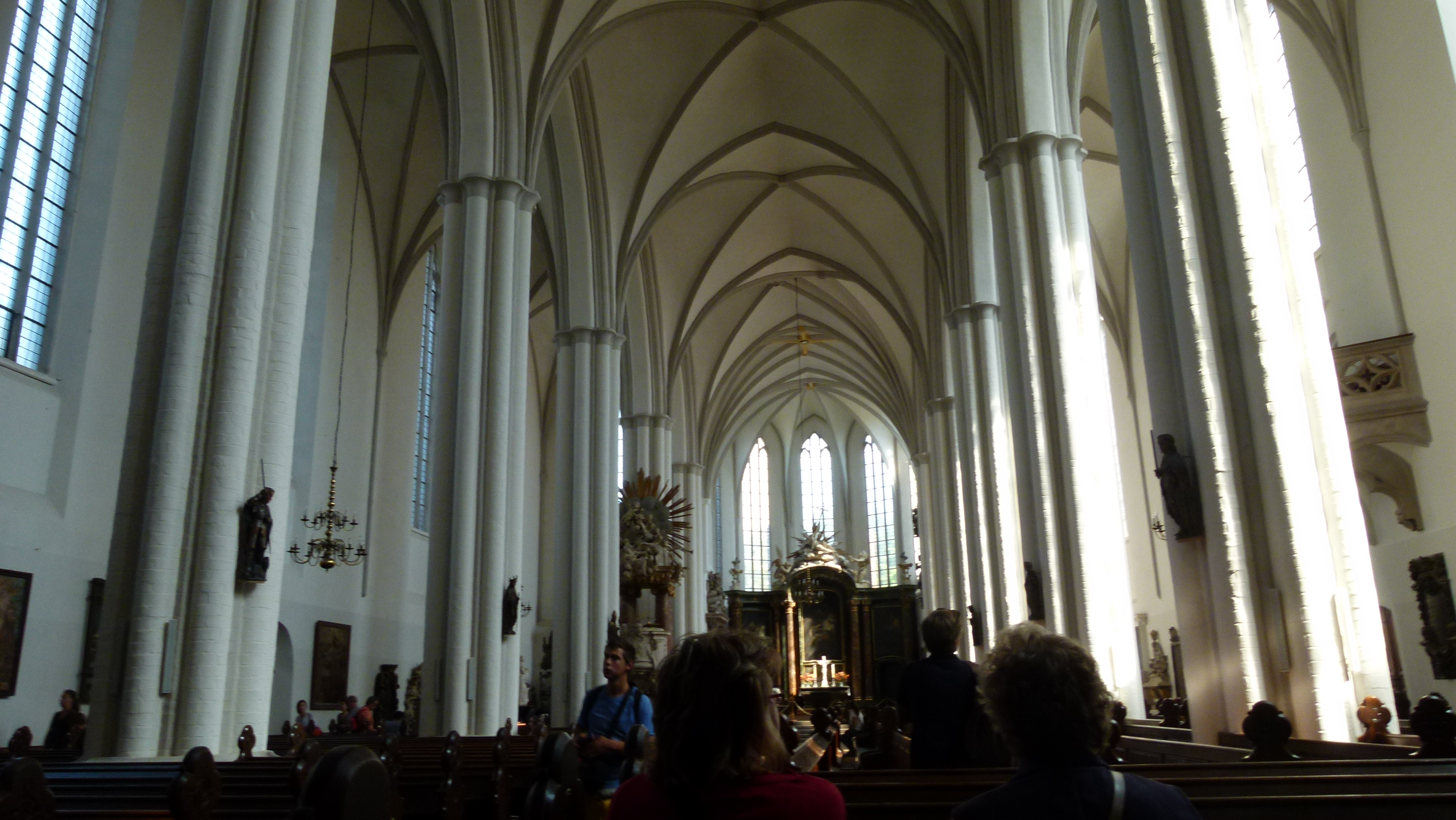
The Marienkirche is one of the oldest churches in Berlin, from the 14th century.

P1020733

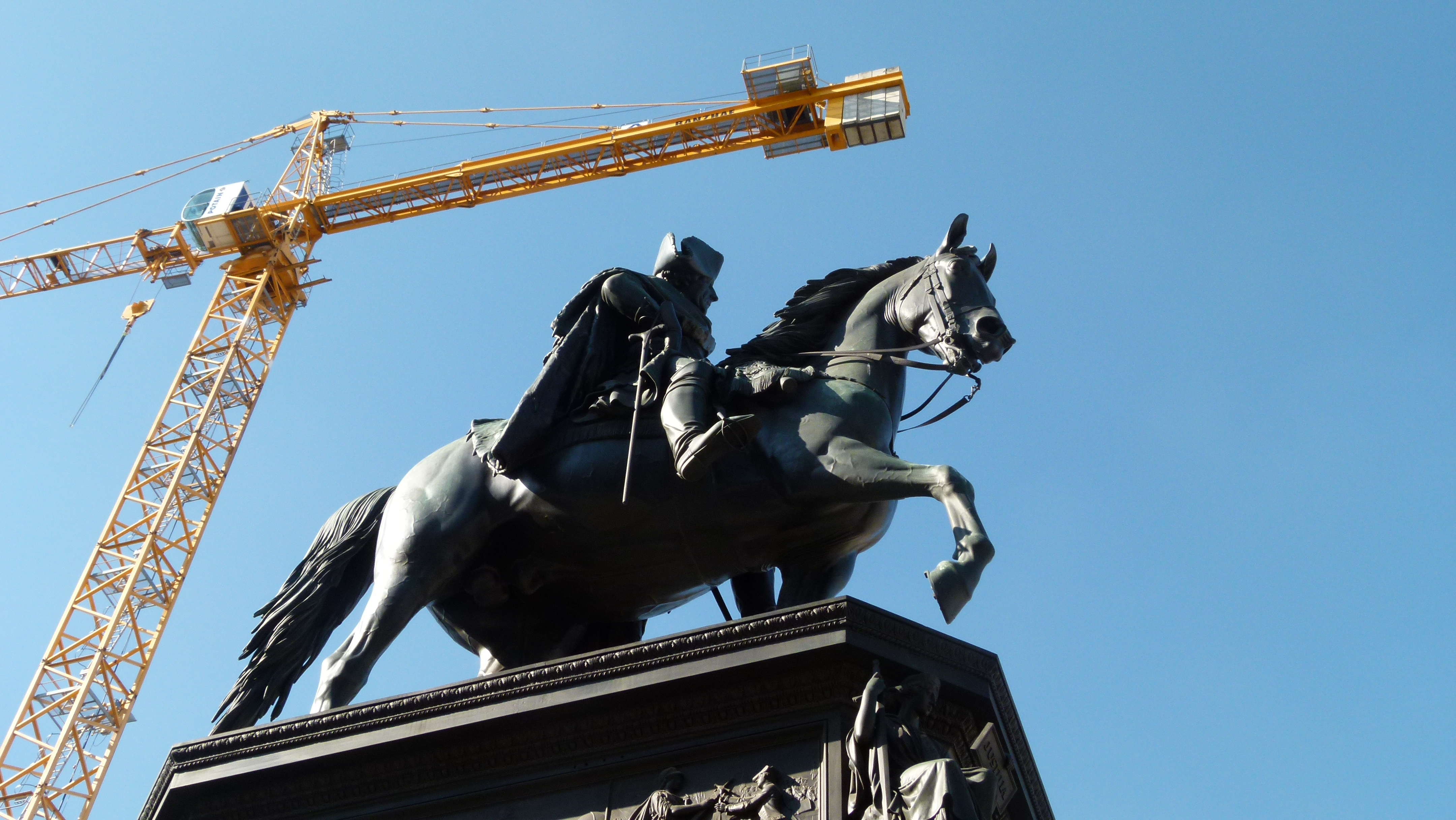
Just across the street there is a bus stop. I catch bus number 100 here to take my way back to Bahnhof Zoo staying above the ground. We roll along Unter den Linden with the Museumsinsel (my favorite: The Pergamon museum and the museum of German history). The Prussian king Frederic the Great (nicknamed “Alter Fritz”) watches his castle now being reconstructed.

P1020739

May be “Alter Fritz” frowns a bit, as for now his castle are nothing but walls made out of concrete. I do not think that he has ordered these construction techniques to be used.

After having crossed Friedrichstrasse, we can see the Brandenburger Gate. Bus number 100 turns northwards to the Reichstag and traverses Tiergarten with the Victory Column (“Goldelse”, as Berlin calls her). Eventually we reach Bahnhof Zoo, the endstation.

.

S-Bahn to Hacke’sche Höfe

Later I come back with Sabine, my friend, to take the S-Bahn from Bahnhof Zoo. After the Hauptbahnhof, we stand at the window in order to not miss the quick glance of the Swiss flag amidst the German government buildings (“Regierungsviertel”). Switzerland owns ground here and has built its embassy.

Shortly afterwards, the S-Bahn stops at Hacke’scher Markt. From here it is a few meters to the Hacke’sche Höfe.

P1020726

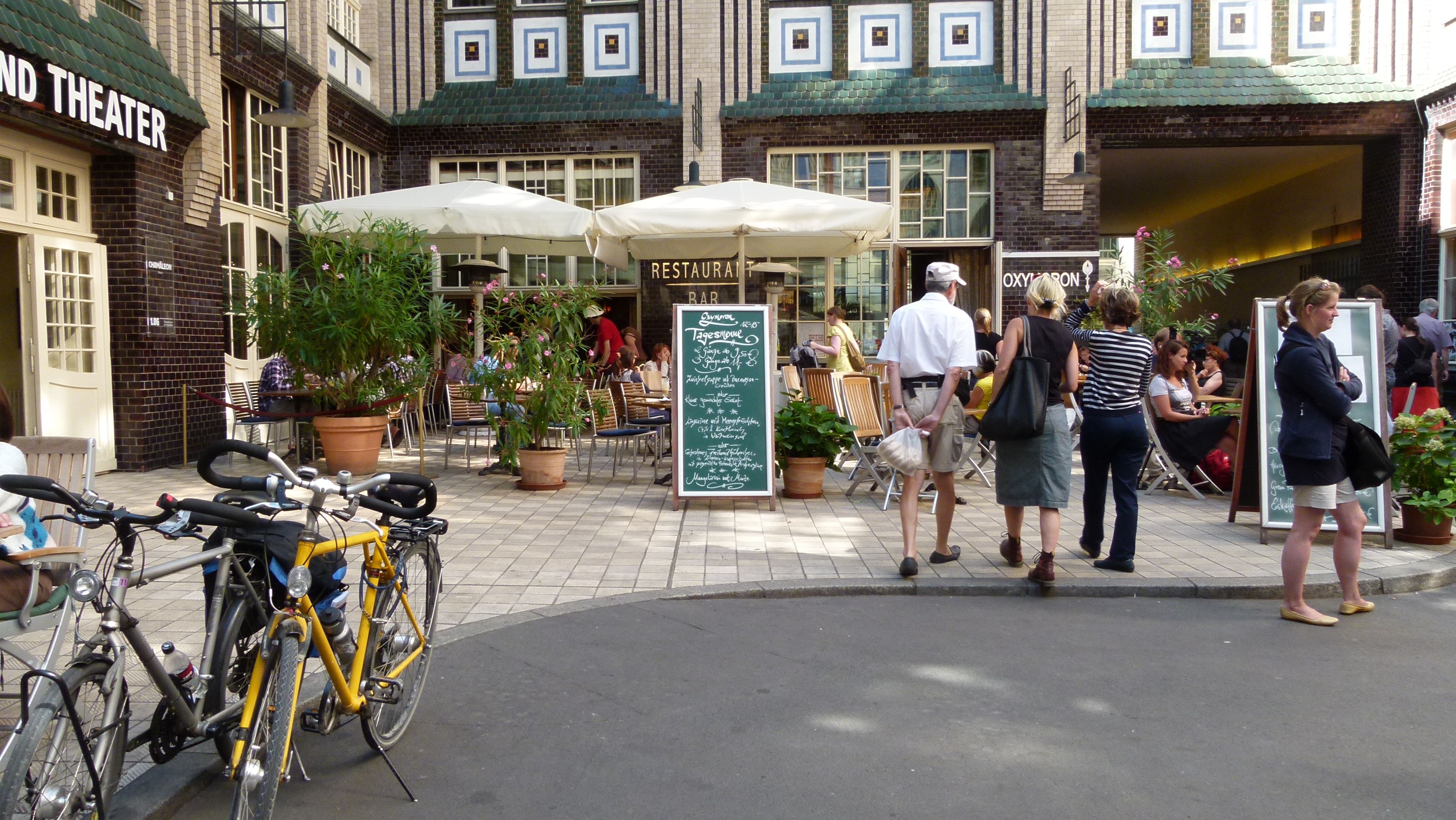
We both love to come here. We buy some small Ampelmann gifts. We enjoy the elegance of the Royal (KPM) porcelain . I have  Klopse in the restaurant Oxymoron. With Sabine’s advise, I buy a waterproof raincoat at the FREItag shop.  It is a black trenchcoat with a colored pattern at the sleeves and the collar. There is always something to see and do in the Hacke’sche Höfe. Well, yes, many people complain that this is no longer what the Hacke’sche Höfe have been before 1989 – but I think times are allowed to change, and Berlin has changed a lot since then, not only in the Hacke’sche Höfe.

Again, the S-Bahn, U2 and Bus number 100 between Bahnhof Zoo and Alexanderplatz have proven to be a wonderful way to explore the sprawled city center of Berlin.


On the road again – arriving in Berlin

Planning to visit my mother town

After having discovered so much around my home town Basel, I feel homesick for my mother town Berlin. Sabine has booked two rooms in the Hotel Villa Kastania. I look forward to strolling through Berlin – first alone, then on the weekend – with her.

.

Arriving in the old Berlin Schöneberg airport with S-Bahn on strike

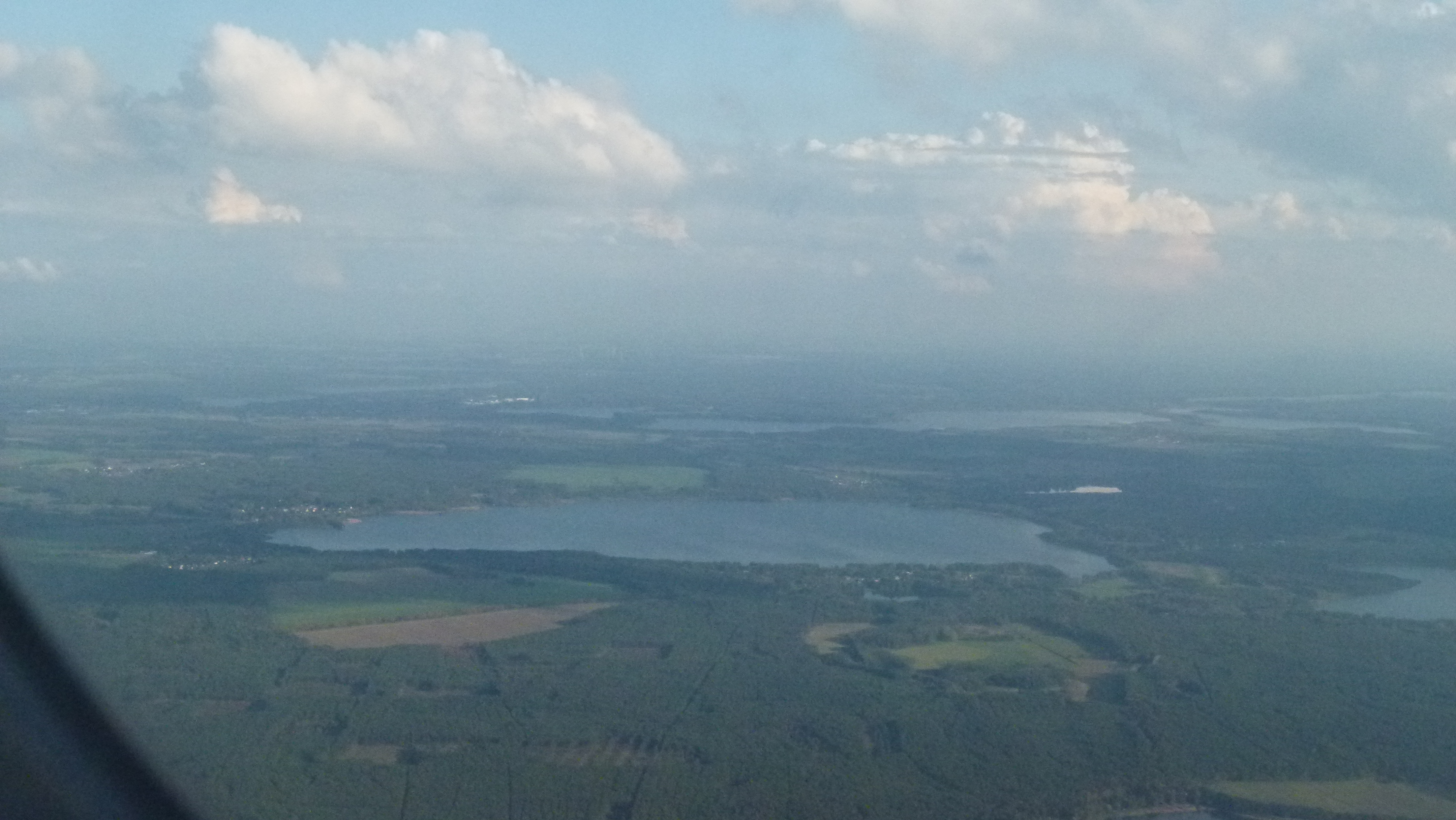
Easyjet loses height and the Müggelseen (lakes)  appear in the window.

P1060655

We land softly at the sober ex-GDR airport of Schönenberg in the far south east of Berlin. It is about five pm.  Immediately I notice that I am in a large town: Plates announce that the S-Bahn is not working due to strikes. Strikes – this is unknown in Switzerland. Shall I take a taxi? – Probably not a good idea. Instead I opt for the bus X7. Good decision. From the bus I can see traffic jams being announced. My bus quickly reaches the Rudow metro station.  The metro is packed with people that try to get home using alternatives to the S-Bahn. At Bismarckstrasse I switch to the Ruhleben metro  (I like this – Ruhleben means “quiet life”). I reach Theodor Heuss Platz about an hour after having landed.

.

The quiet and friendly Hotel Villa Kastania

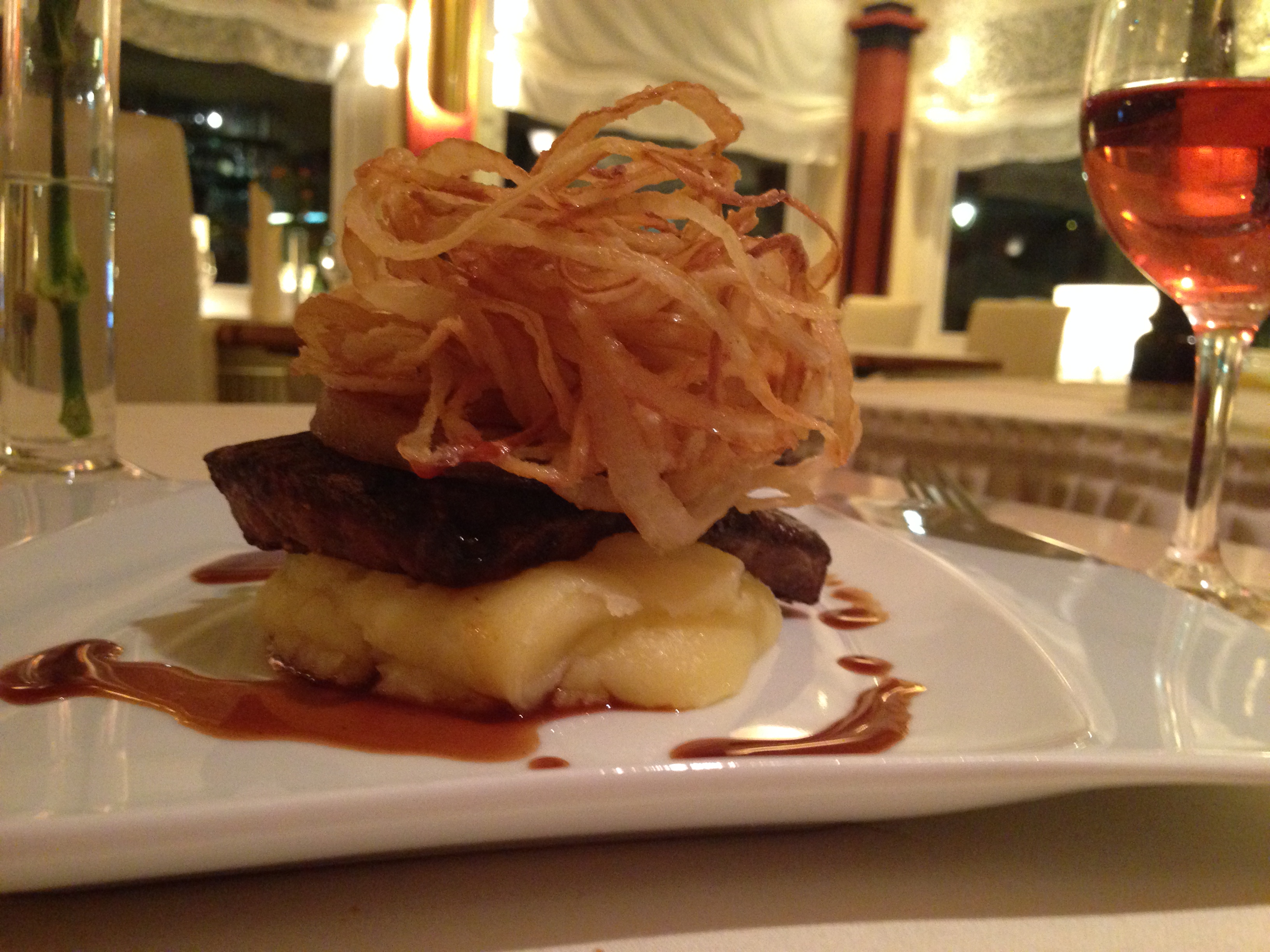
Just around the corner of Theodor Heuss Platz I find my Hotel Villa Kastania and settle in a quiet room. The restaurant looks welcoming. I take my dinner here: Liver cooked with apple and ognion – one of the dishes that my mum has brought me up with. Well, the hotel restaurant serves a “design version” of this common and delicious Berlin specialty.

IMG_0873

After having slept deeply in the quiet Kastanienallee, I take a swim in an Italian garden under a blue sky with a few cyrrhus clouds.

P1060725

Hungry I go to the breakfast room, and I am surprised by the morning buffet: It even includes fresh oranges and an orange squeezer. I have never had freshly pressed orange juice at a hotel breakfast buffet before.

After the delicious breakfast I leave to see my favorite spots in Berlin again.