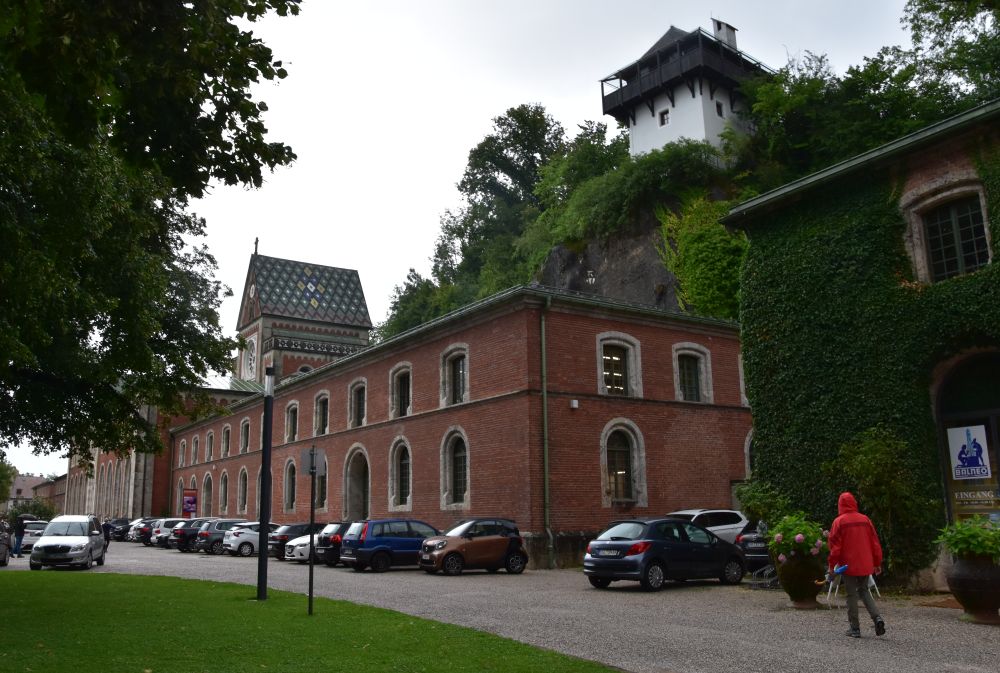
Berlin: Liebermann Villa and House of Wannsee Conference

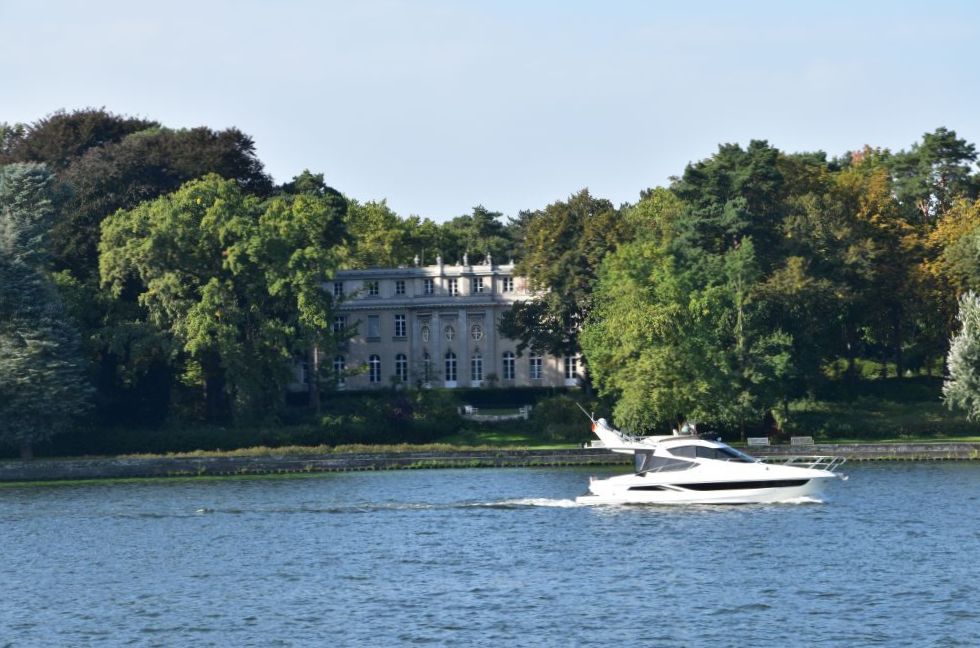
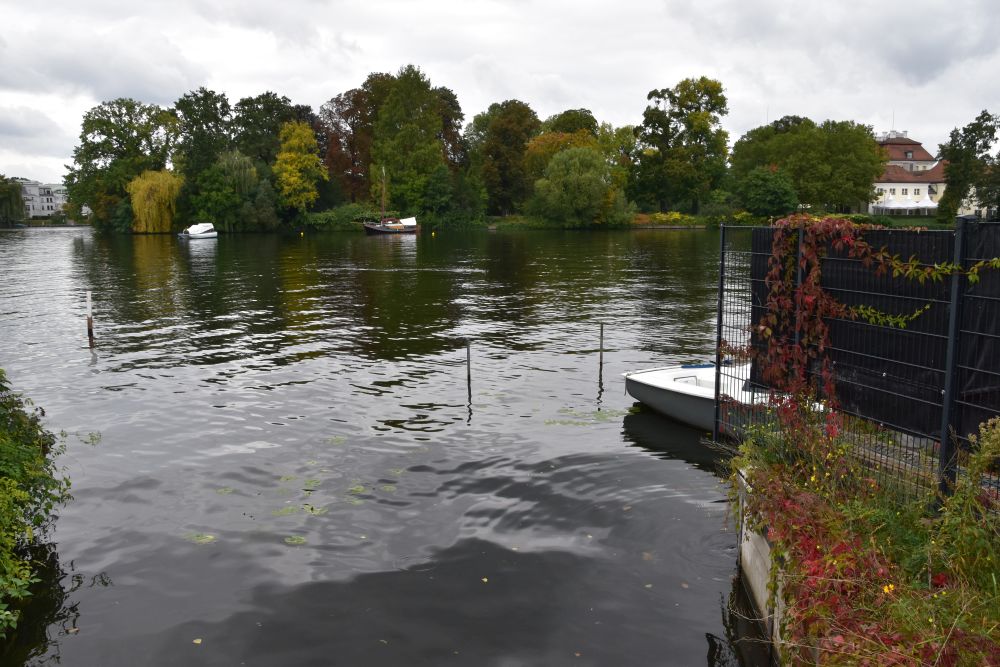
In 2021, I was in Berlin – four times. Once we visited the Villa Liebermann and the House of the Wannsee Conference in the Berlin area Heckesdorn bordering the Wannsee.


The Max Liebermann Villa – charming country house in a lush garden

Max Liebermann was a painter. He lived from 1847-1935. He belonged to the secessionists of Berlin taking their lead in 1898.

On the border of the Wannsee, in the settlement Alsen, Liebermann acquired land in 1909 to build his cosy villa as a summer residence. Here he spent his summers painting the garden and his family. 

The villa in the lush garden is open to the public. It is a museum that presents some of Lieberman’s paintings as a well as changing special exhibitions.

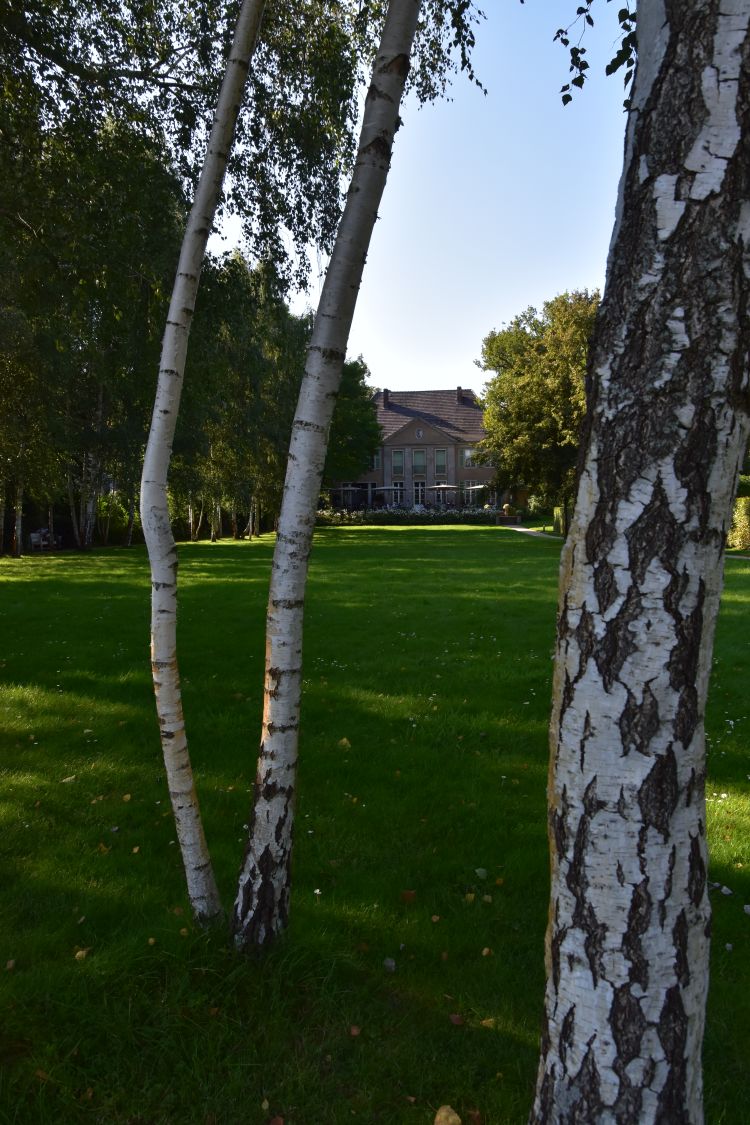
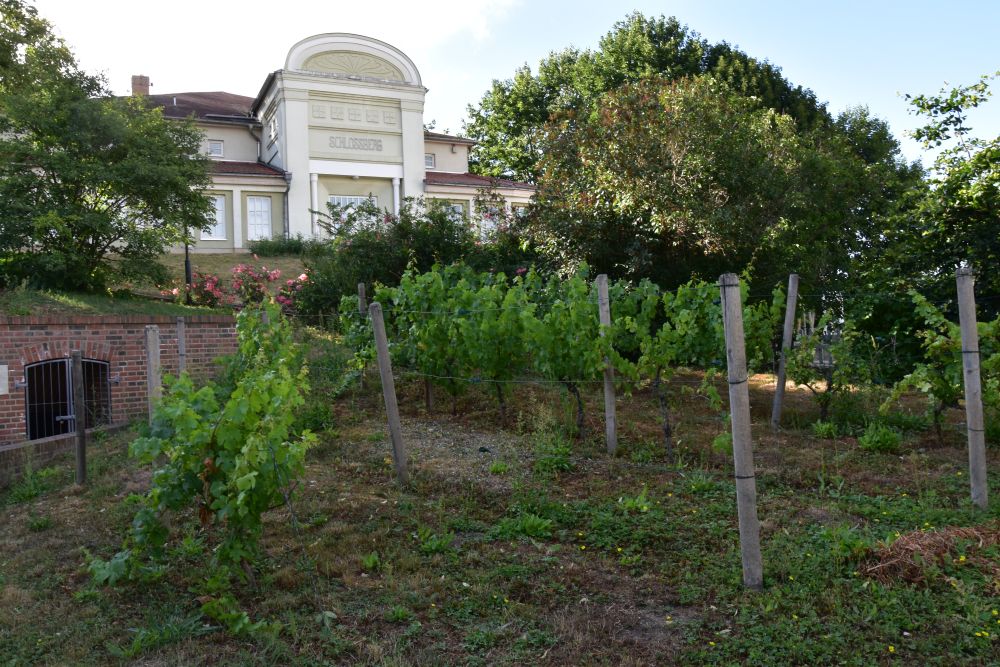
Behind the house, vegetables are cultivated. It is now a mid-September garden.

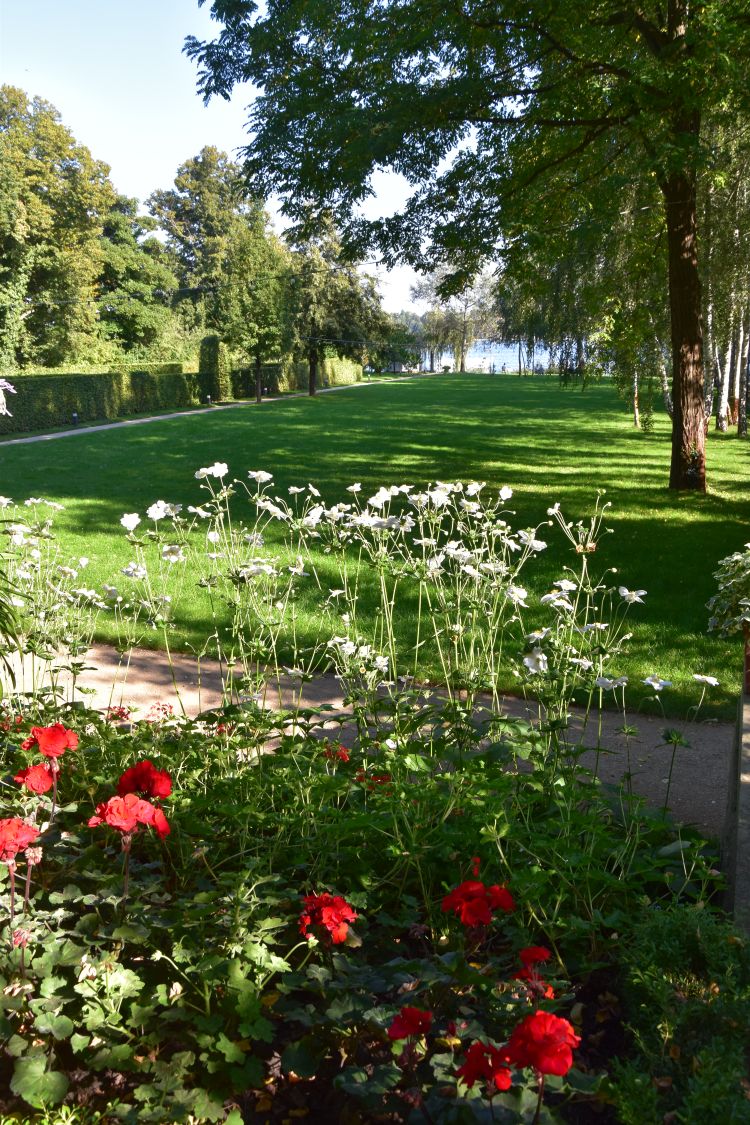
Bordering the Wannsee, there is a meadow with shady trees. It invites to have a rest. A flower garden behind the hedge allows for small promenades. 

Chairs in the meadow indicate that the visitors have accepted the invitation to have a rest. 

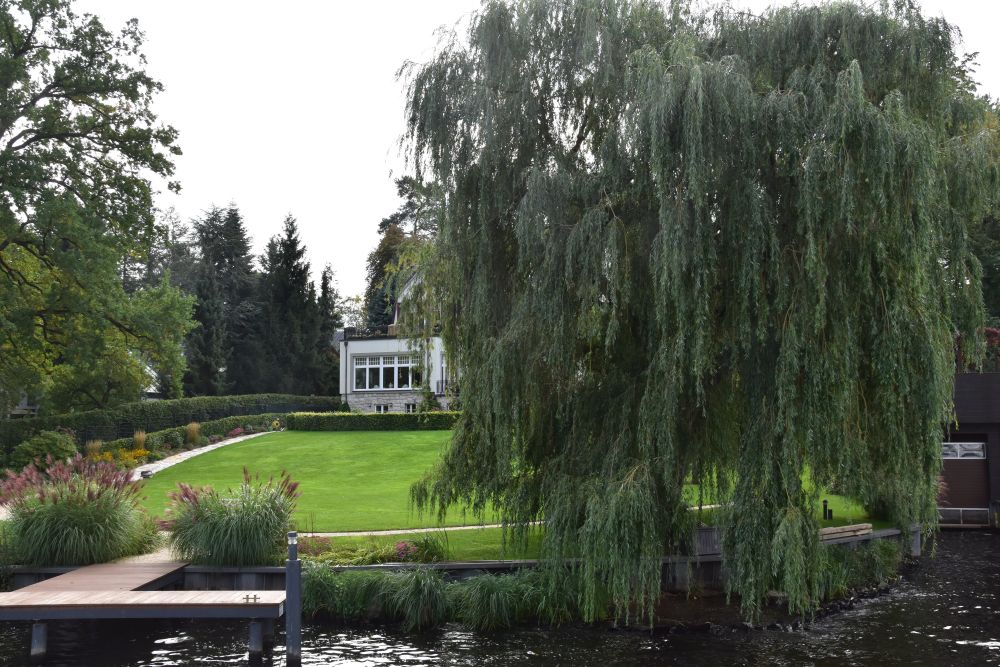
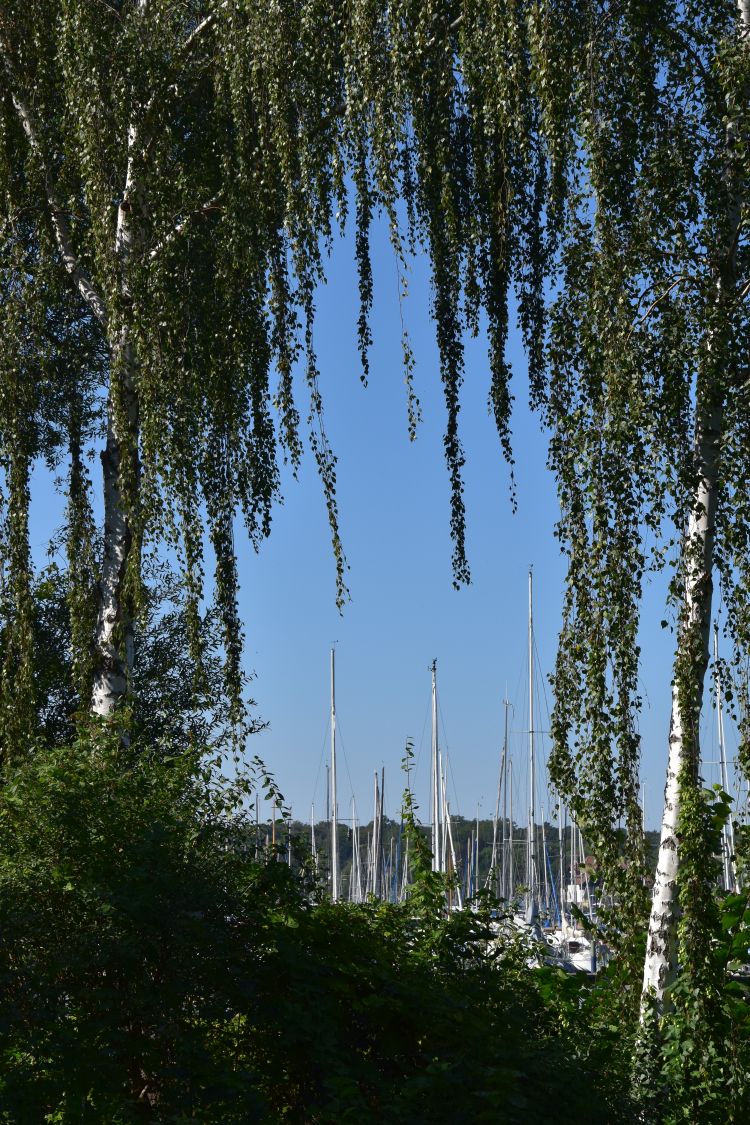
The weeping willow near the landing stage waves in the wind. 

The willow and the birch trees take up the shape of the empty sailboat masts.

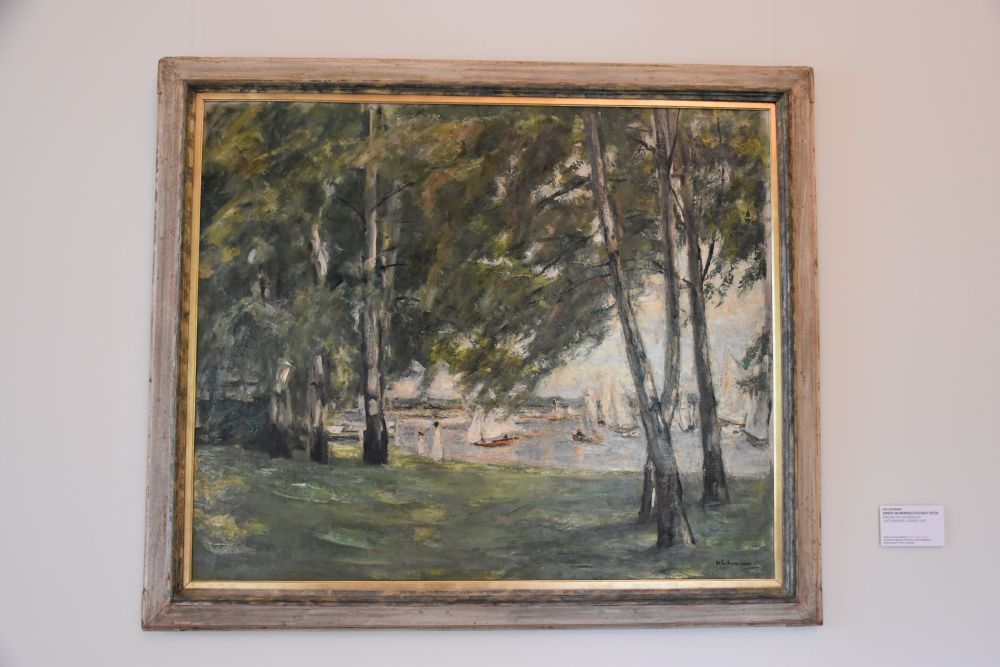
This is how Liebermann painted his birch trees facing the Wannsee in his garden.

We return to the villa to visit the museum inside.

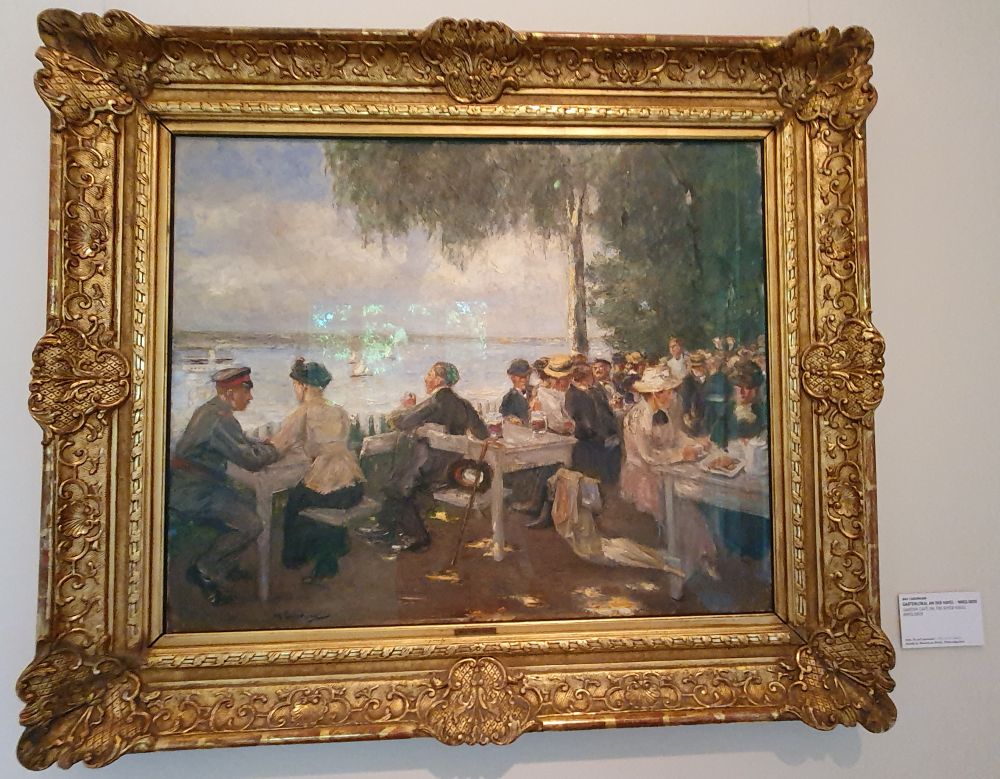
This is the scene in an open-air restaurant on the shore of the Havel presented in the permanent exhibition.  

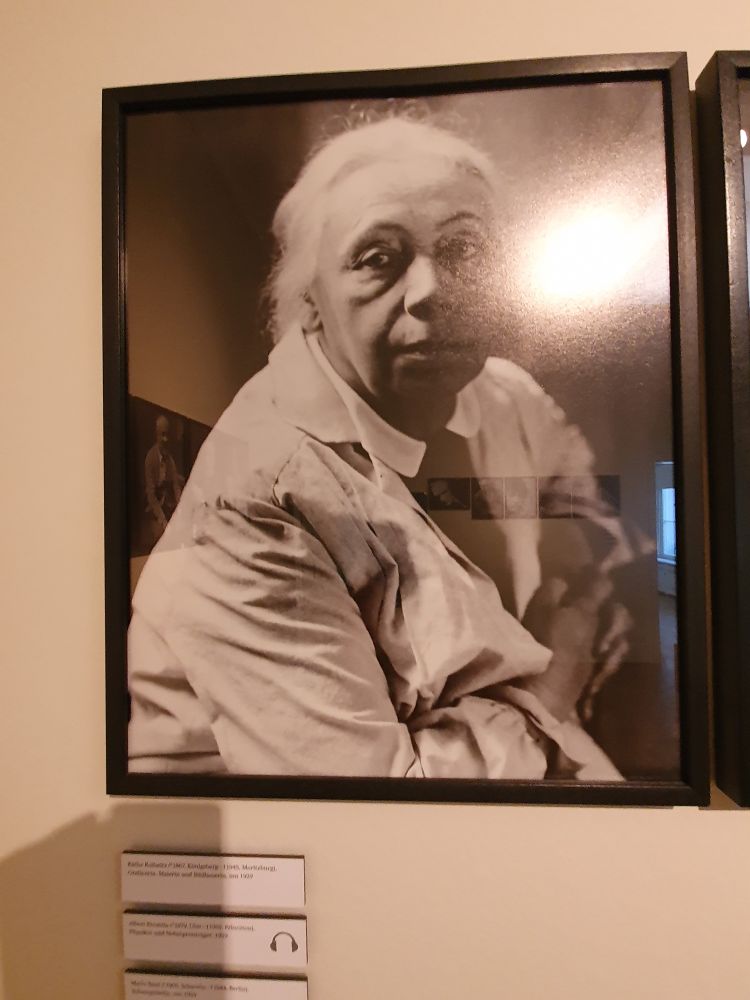
The current special exhibition is devoted to portrait photos that Gerty Simon took from known personalities. One example is Käthe Kollwitz.

I am touched by the fate of Gerty Simon: From Germany, she emigrated to Great Britain, was arrested in the Second World War for being German and acquired the British citizenship after the Second World War.  


The Wannsee Conference of 1942 – impressive presentation of the extremely gloomy breakfast  

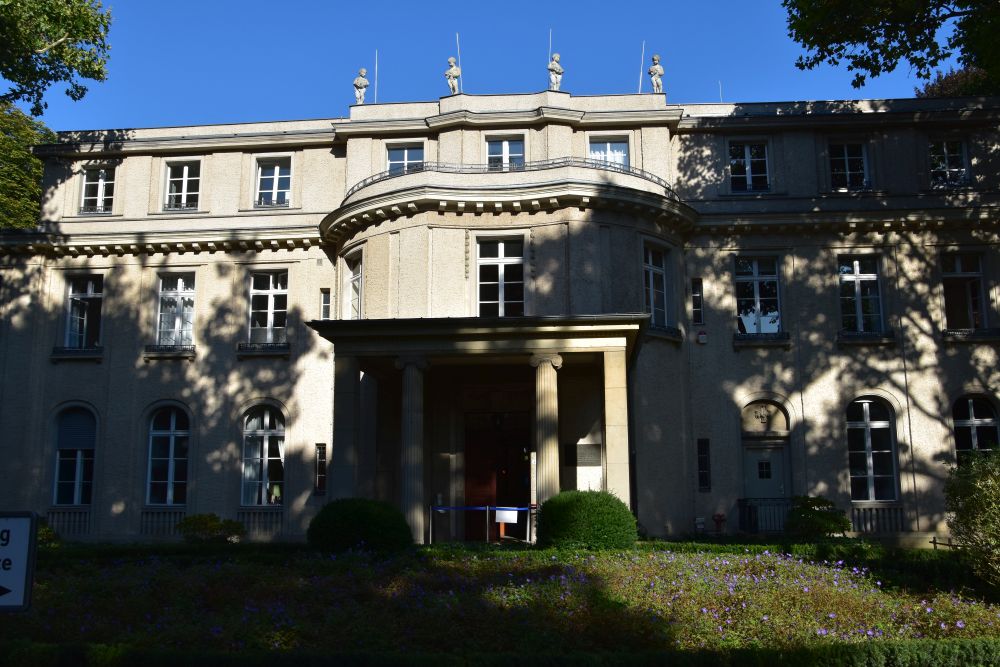
At the request of Göbbels, Heydrich invited various governmental leaders to the former Villa Marlier for a work meeting with breakfast. Their task was to coordinate the efforts between various governmental institutions to organize transferring the Jews to the east, primarily to Poland. The invitation letter makes me shiver: It reflects, how diligently the second layer of the ministers obeys the orders of their superiors, even such horrible orders. And how carelessly they combine this disaster with having breakfast together. 

What happened to the conference participants after 1942? Five members died before 1945 (whereby one of them disappeared; perhaps he escaped). Four members were sentenced or died before 1948.  They were prosecuted due to their entire role in the destruction process, not just due to the participation in the conference. Four more members were arrested and released later. Together with other proponents, they lived a “normal” life after that. 

Eichmann wrote the minutes. His case was spectacular. He escaped to Argentina, was found by the Mossad, transferred to Israel and sentenced here in 1962. 

On Thursday 20th of January, I find an article about the Wannsee Conference in “my” NZZ (Neue Zürcher Zeitung), as the conference had occurred exactly 80 years ago. Frank Bajohr, a German historian specializing in the Holocaust, describes the – also in my opinion – dystopic setup: Representatives of the government discuss how to kill millions of people and they do so in the relaxed atmosphere of a breakfast. However, Bajohr says, this conference was not a key event for the Holocaust; the second level ministers at this conference did not make decisions nor were they the primary drivers. But the minutes written by Eichmann are a major key document illustrating what was going on then. The House of the Wannsee Conference has a similar iconic quality, says Bajohr, as Auschwitz.

After our visit, I watch a group of young students discussing their impressions with the teacher; their faces  express grief. I hope and I do wish that all this grief prevents such horribleness in future. 


The Lion of Flensburg – the manifestation of victories and defeats in the 19th century

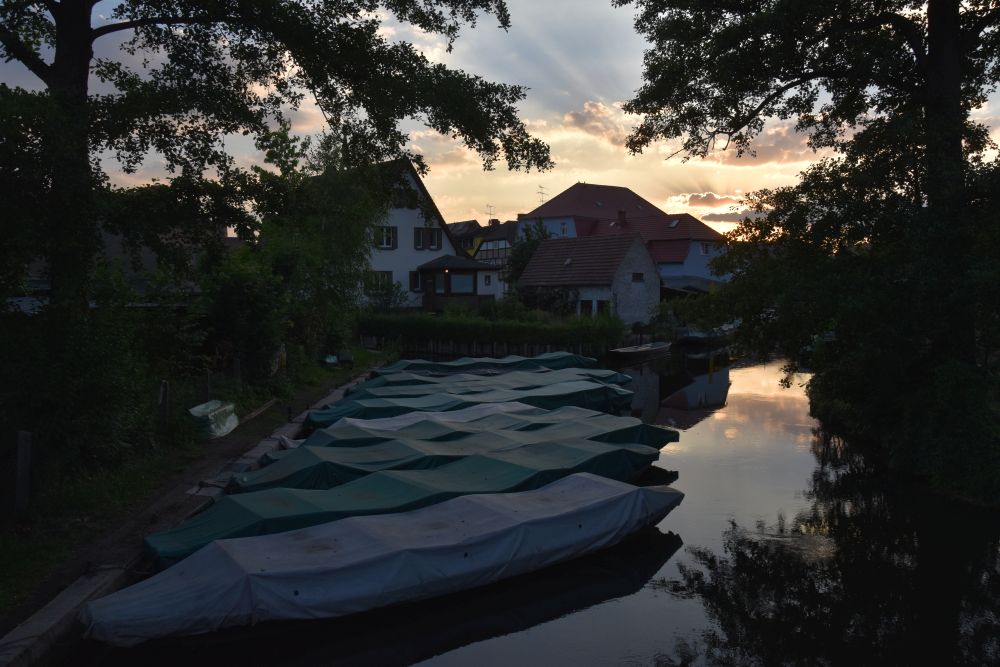
It is evening now. We have a drink at Bolle near the boat harbour – my brother-in-law checks, at what prices boats can be hired here.

The copy of the Lion of Flensburg watches over this Wannsee boat harbour. It tells the history of victories and defeats.

The Danes created the Lion of Flensburg, after having vanquished Schleswig-Holstein in 1850. In 1864, the German Federation vanquished the Danes and confiscated their lion. In 1865, a copy of the Lion was produced for the then new settlement Alsen, today part of the Wannsee district. Since 1938, the copy of the Lion of Flensburg has stood here watching over the Wannsee boat harbour. After 1945, the original Lion of Flensburg was returned to the Danes by the Americans.  

Good-bye, severe lion, may be one of us will return soon to rent a boat in “your” harbour. 

Sources:

Berlin: Excursion to Köpenick and the Müggelsee

In 2021, I was in Berlin four times. I love to return to my mother town to discover new corners and to rediscover known corners.

With a friend, I visited Köpenick. We parked conveniently at the Kirchstrasse 5-6 parking, just opposite of the famous townhall of Köpenick.

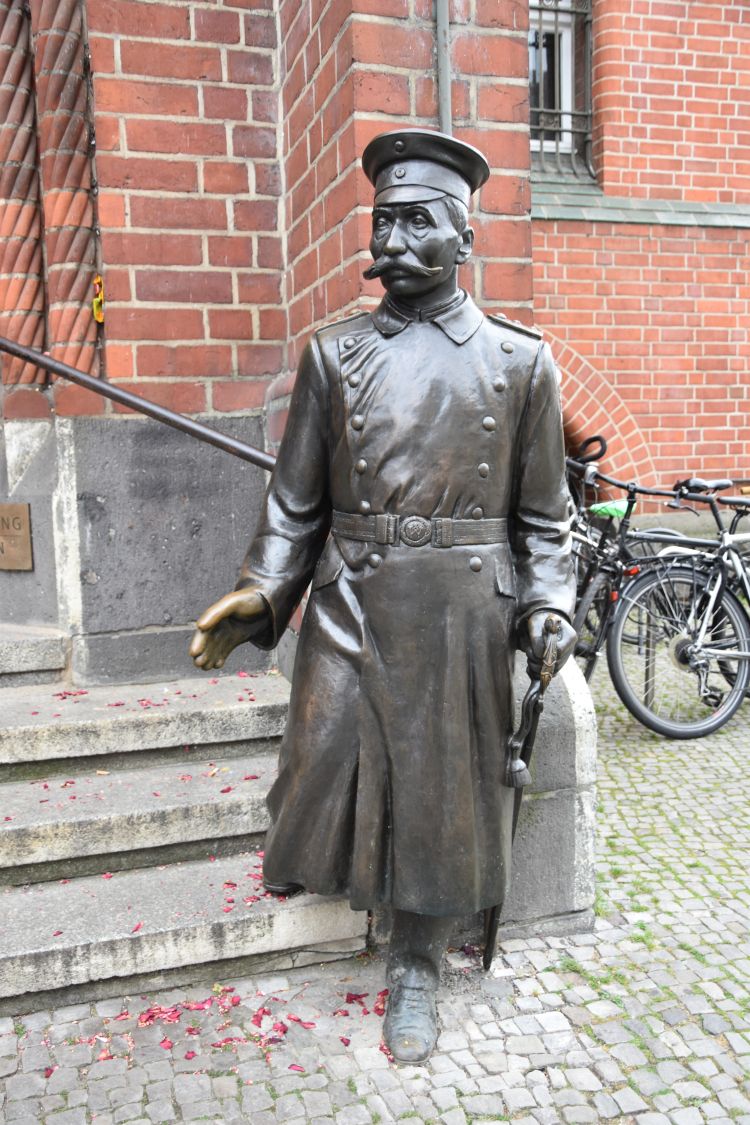
The townhall is famous for the Captain of Köpenick. He stands next to the main entrance.


The Captain of Köpenick – the imposter that arrested the mayor and confiscated the town coffer

We enter the town hall of Köpenick. The atmosphere inside must have an intimidating effect on their citizens. 

The townhall was inaugurated in October 1905 and enlarged in 1949. 

Dogs have to remain outside.

It was one year after the inauguration, that, in 1906, the cobbler Wilhelm Voigt made his coup as the “Captain of Köpenick”.

The life of Walter Voigt, born at Tilsit in Prussia, already went off rails during his apprenticeship as a cobbler in 1863. Between 1863 and 1891, he was sentenced seven times, in 1867 even for twelve years of jail. In 1906, he was expelled from Wismar and later from Rixdorf. He was jobless then.   

In 1906, he bought the uniform of a captain from a second-hand-dealer, investigated several town halls in Berlin and selected Köpenick, one reason being the good train connections. He collected a group of soldiers and with them, he took the suburban train to Köpenick. He performed his role as a captain with determination and was successful, because order and obedience were engrained in the German society at the times of Emperor Wilhelm II. The imposter Captain arrested the mayor and confiscated the money of the city. He even signed for having received the money. He escaped, was arrested ten days later and sentenced to four years of jail. However, Emperor William II amnestied him in 1908. 

After 1908, he earned money by telling about his imposter coup. He registered his voice on a disk and received 200 Mark for that. He made speeches, not only in Berlin, but in all Germany; the advertisements appeared in the newspapers of that time, as the exhibition panel explains. However, the outbreak of the First World War ended this “business” opportunity. Wilhelm Voigt died as a poor and ill man in Luxembourg in 1922.

Various films present the story of the Captain of Köpenick, one of them with Heinz Rühmann as the protagonist in 1956.

In addition, his imposter adventure entered literature; Carl Zuckmayer wrote the play “der Hauptmann von Köpenick” in 1930, and in 1931, it was performed for the first time in the German Theatre of Berlin.


Strolling through Köpenick

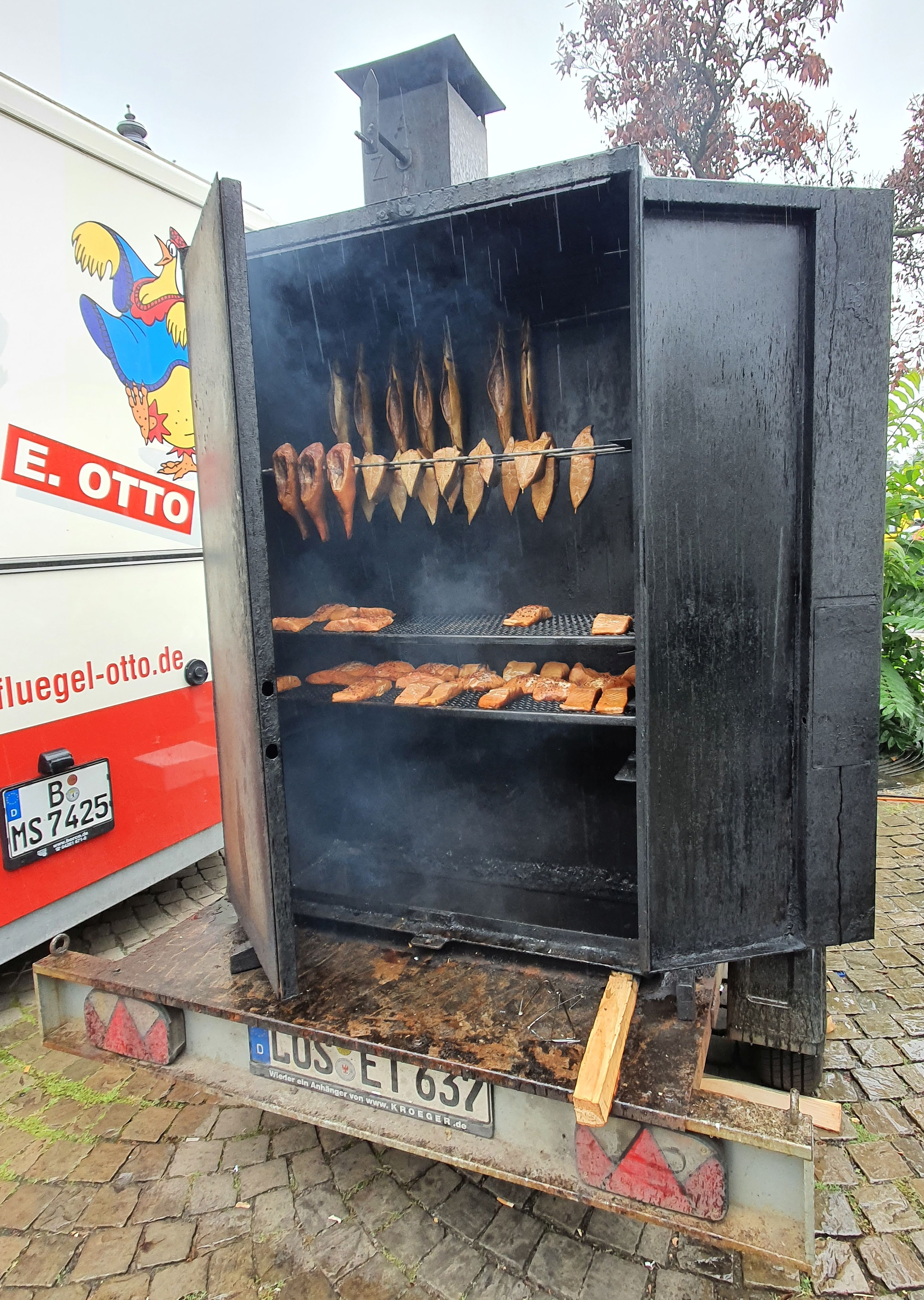
It is raining. There is a small market on the Schlossplatz. Geflügelotto presents his pieces of grilled chicken.

Even the Berliner Sparkasse, a bank, offers their services, making it all clear that this mobile bank branch office does not carry any money. It just provides advice.

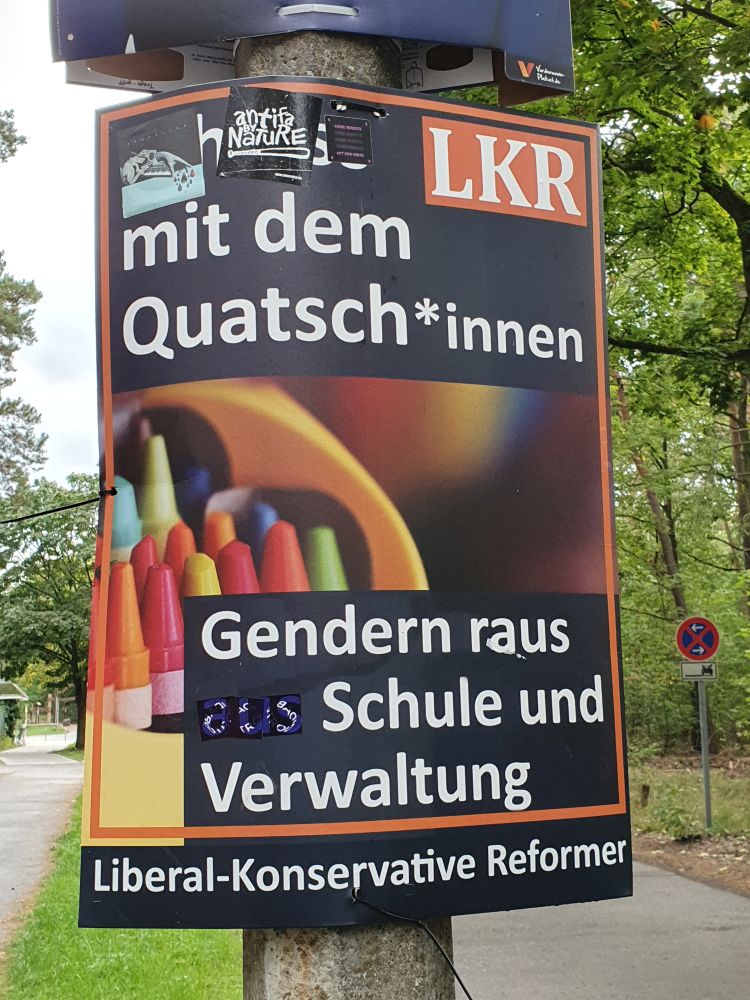
Also Köpenick is getting ready for the German and Berlin September elections. The LKR are liberal conservative reformers that dislike the extensive gender equality used in the German language by adding “*innen” to include the female gender. They want it to be removed from schools and governmental activities. “Quatsch” means “nonsense”, and “Quatsch” includes the female gender here. 


The baroque castle of Köpenick with the exhibition of furniture and dishes

From the rain, we escape to the castle of Köpenick, located on the Schlossinsel or castle island surrounded by the river Dahme. 

A panel explains that the castle island has been inhabited since almost 5000 years. In 850, the Slavs built a fortification here. The baroque castle that we see today is from the end of the 17th century. The castle is now part of the Berlin State Museums. 

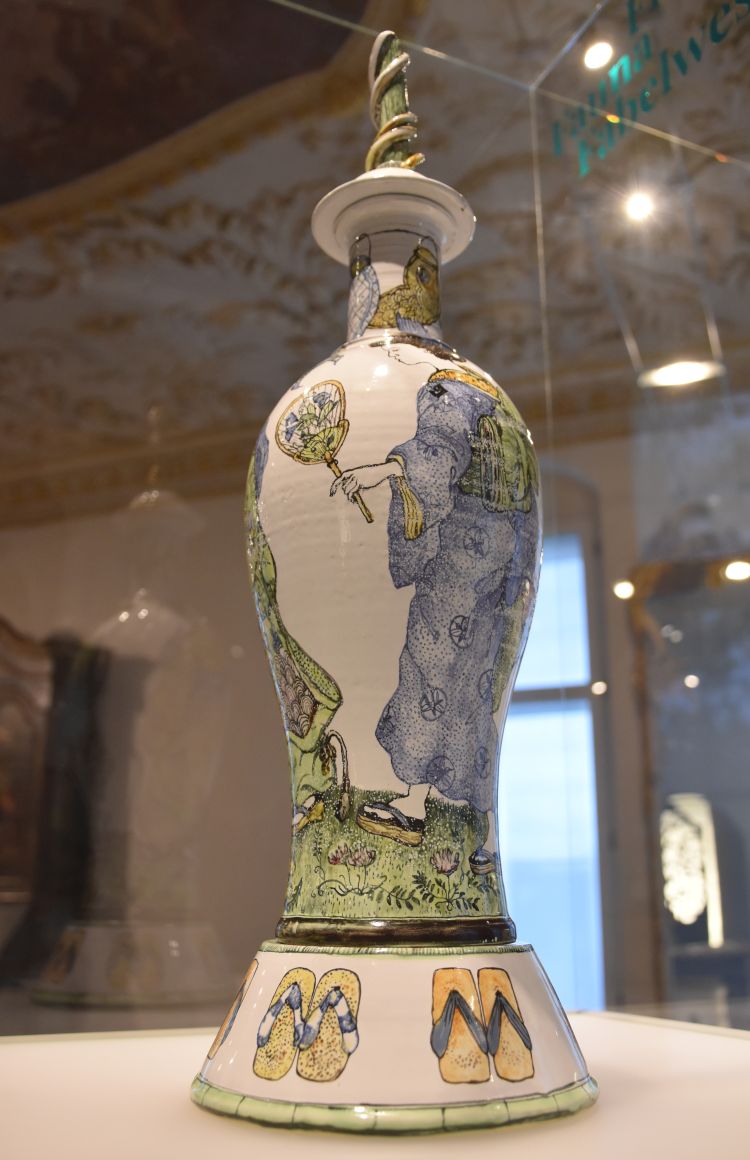
We are amazed by the beauty of the modern porcelain and ceramic works presented. This is the plate named “Unkraut” (weeds) by Grita Götze.

From Sonngard Marcks, I have selected three works, first the “Faltschale” (folded bowl),…
… second the “Scherbengericht” (this correctly translates to “ostracism”, but this translation loses the allusion to  “Scherben” = “broken pieces” and “Gericht” which means either “court” or “dish”)… 

… and third the Deckeldose Zori (Deckeldose = container with lid).

In addition, original porcelain is presented such as this rococo dinnerware made by KPM for Frederic the Great in 1767.

Furthermore, there is a permanent exhibition of furniture (Raumkunst) from renaissance, baroque and rococo. I select three highlights.

I am surprised to find this noble baroque buffet of the Basel guild of zaffron (Safranzunft), crafted by the carpenter Johann Heinrich Keller in 1666. The panel does not describe, how this buffet came to Berlin. 

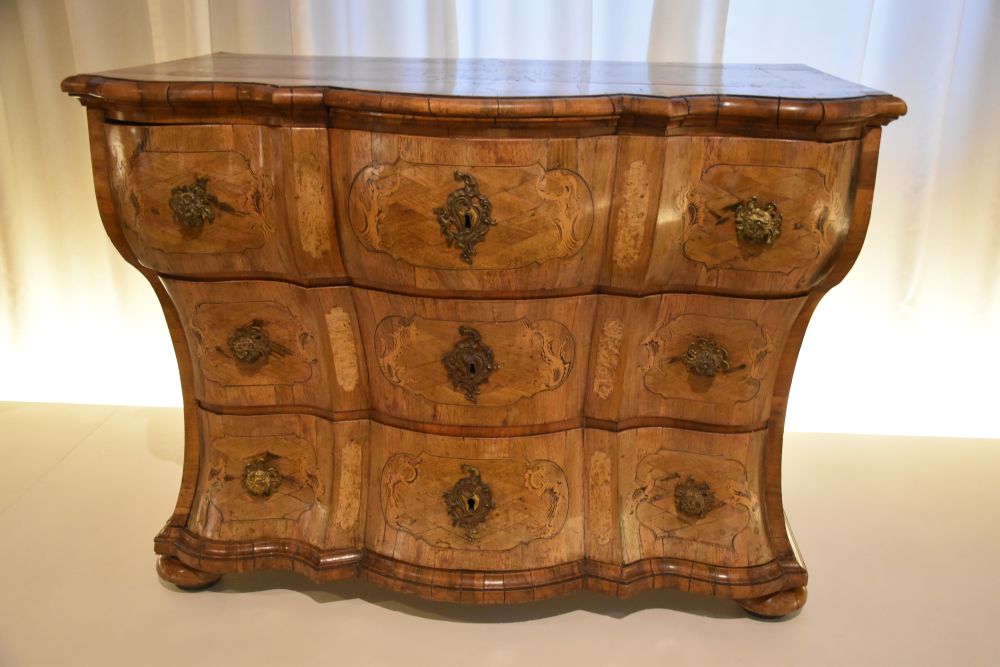
This commode is from Würzburg, 1750. 

From the panel, I learn that commodes are called “commodes”, because they are “commode” (French for convenient, practical) with the drawers providing easy access to the content (I guess, as opposed to coffers in use until now; commodes were an innovation of the 18th century). 

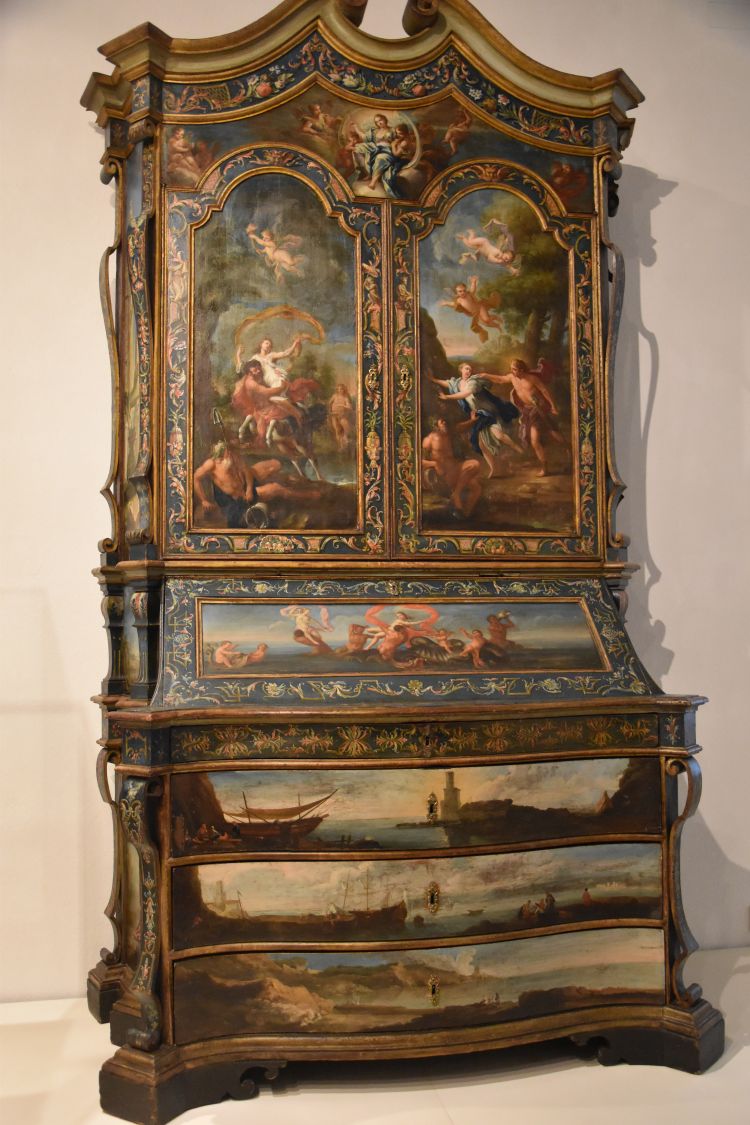
This “Pultschreibeschrank” (desk and cupboard) is made from poplar and decorated with oil paintings showing mythological scenes (1730, probably from Rome).  


Köpenick – walking around the Kiez

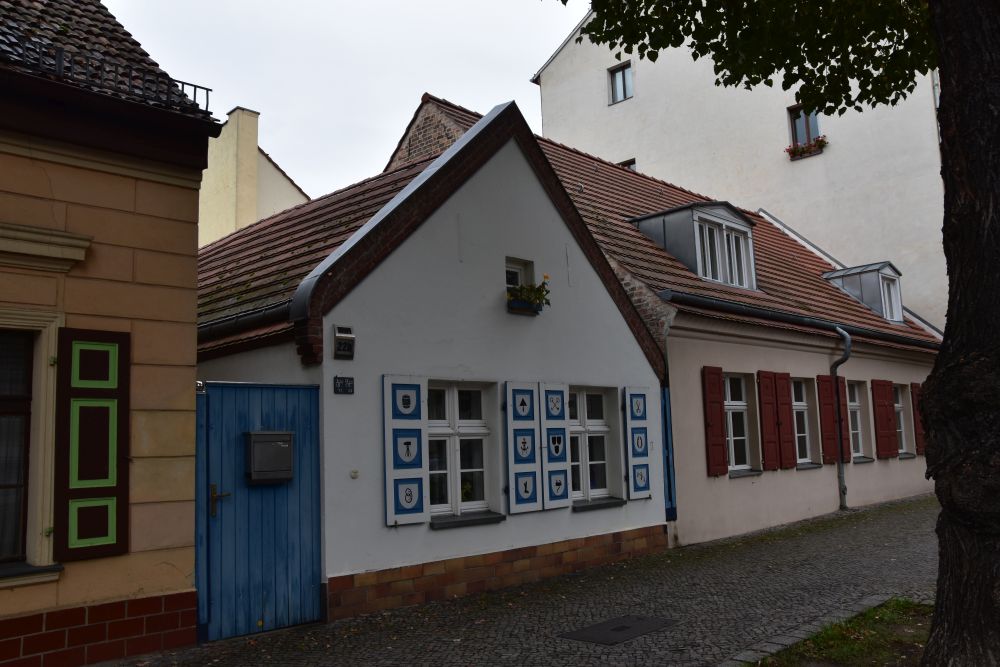
The rain has stopped. We walk around the so called Kiez, which is the old village of Köpenick.

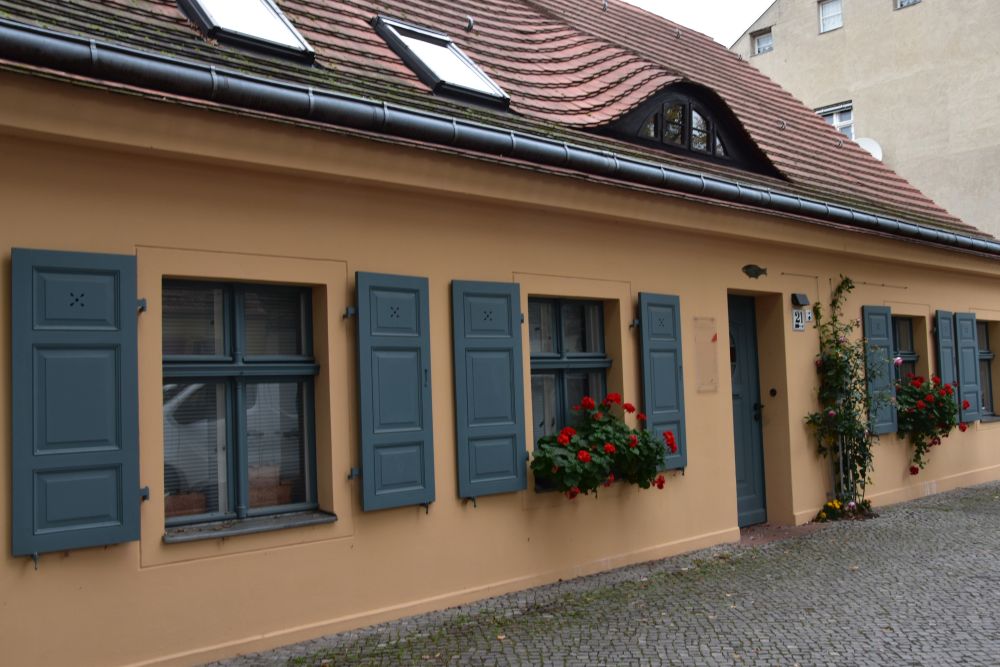
The houses have been renovated… 

… and decorated with care.


Müggelsee with lookout

My friend would feel like getting an overview of the area. We find it above the Müggelsee, where we climb the lookout that has been constructed in 1961.

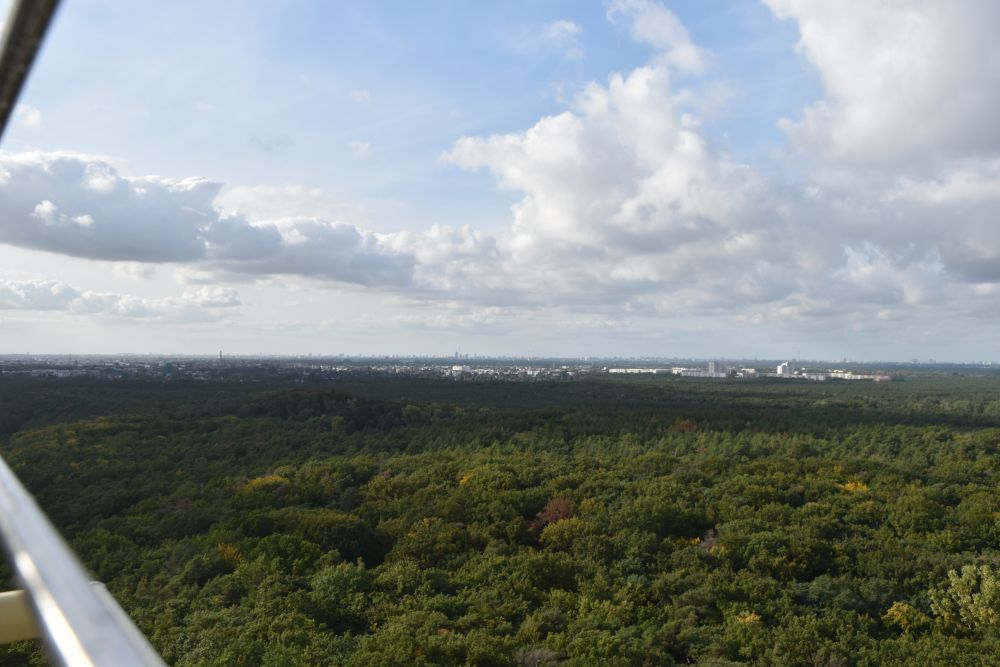
The tower has the charm of a socialist building. The view is superb. Here we see the skyline of Berlin far behind the forest.

Now we have turned south and look at the river Dahme that joins the Spree at Köpenick. 


Müggelsee – boat harbour Rübezahl

We have a drink near the boat harbour “Rübezahl”. The name alludes to the giant that lives in the Riesengebirge (Giants mountains or Karkonosze) in Silesia, now part of Poland. 

The reeds are a protected biotope.

We walk along the lake. In the background we can see the outskirts of Köpenick. 

My mother had always told me, how much she loved to be here, when she was young. 

My friend wanted to take a boat ride – but now it is almost six p.m.

We leave Köpenick and accomplish the day with an excellent dinner in the Italian restaurant Il Giardino at Hackerstrasse. 


Sources:

Berlin – excursion to Lübbenau and the Spreewald

In 2021, I was in Berlin four times. Once, we made an excursion to Lübbenau with the beautiful Renaissance castle of the noble family Lynar, now a noble hotel. 

We find a boat that offers a comfortable two hour tour along the channels of the Spreewald to Lehde. 

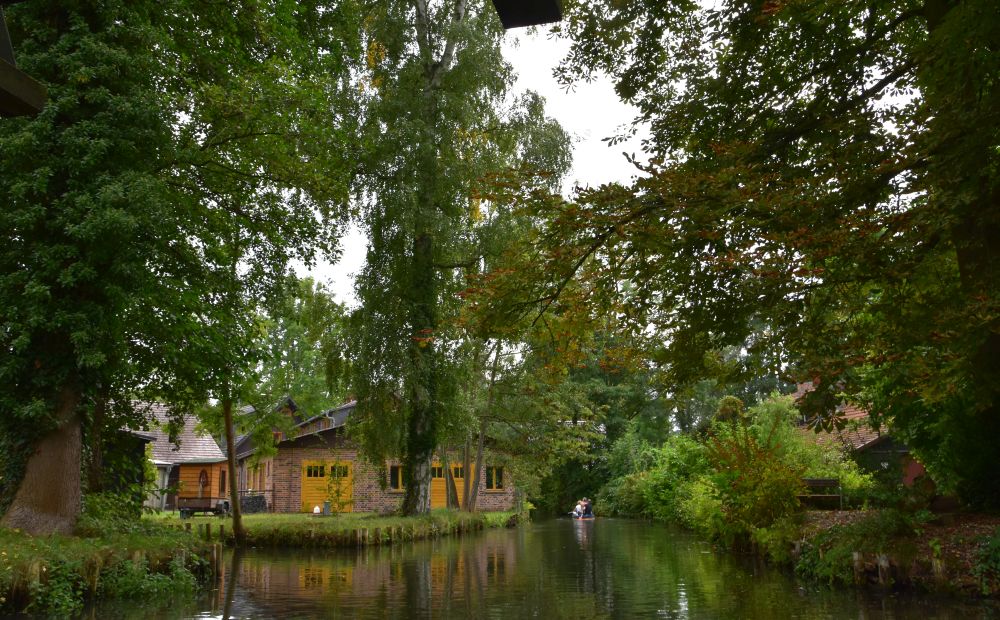
We pass under the bridges that I remember as obstacles for bikers, when biking in the Spreewald in 2019. 

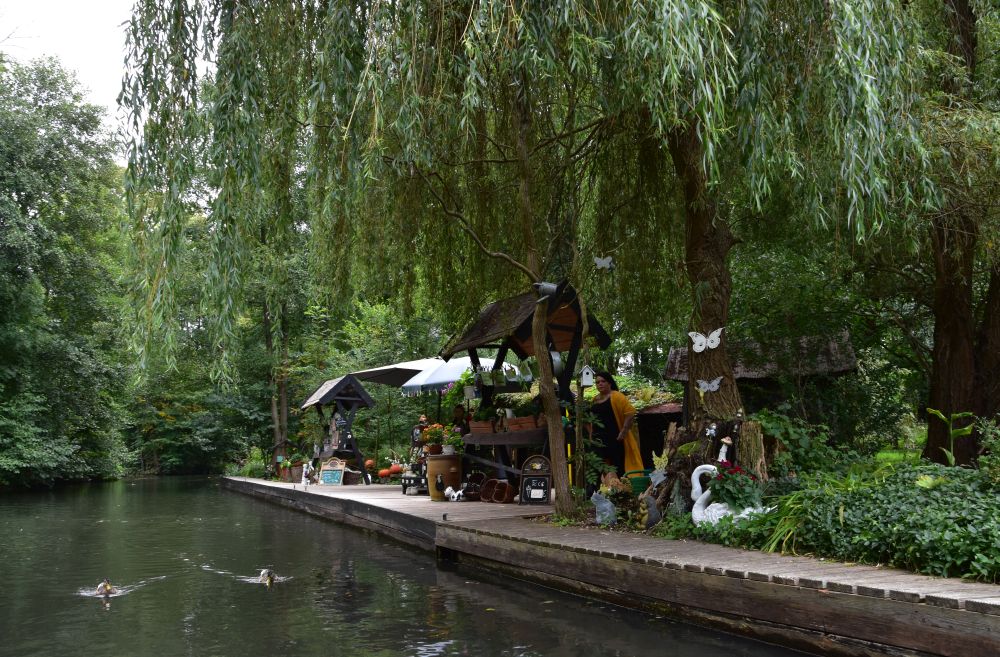
We fly along houses and are served refreshments on the way.

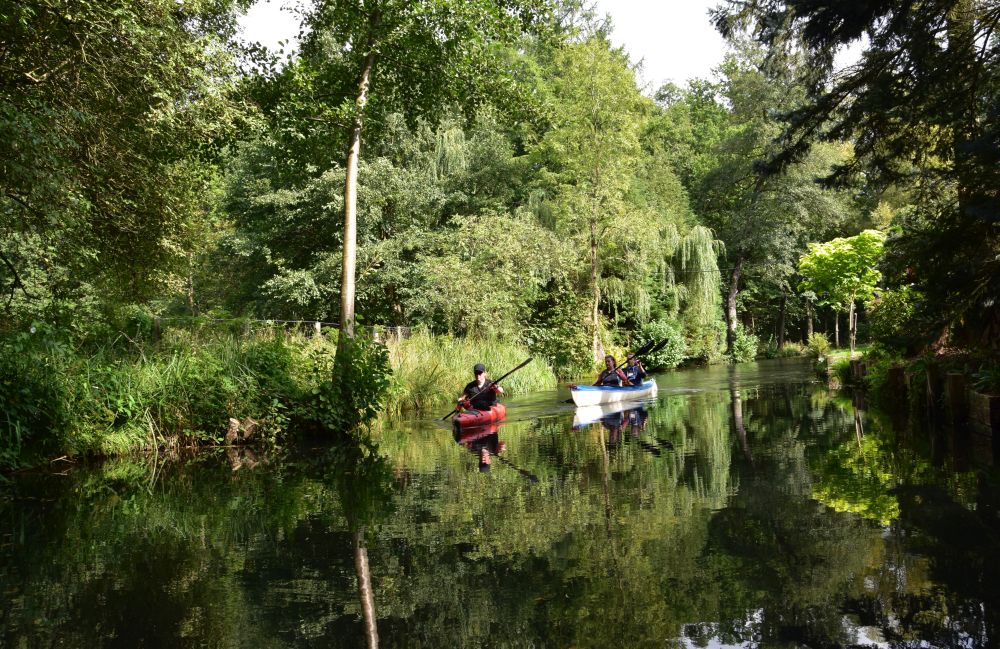
Paddling in your own canoe is common here.

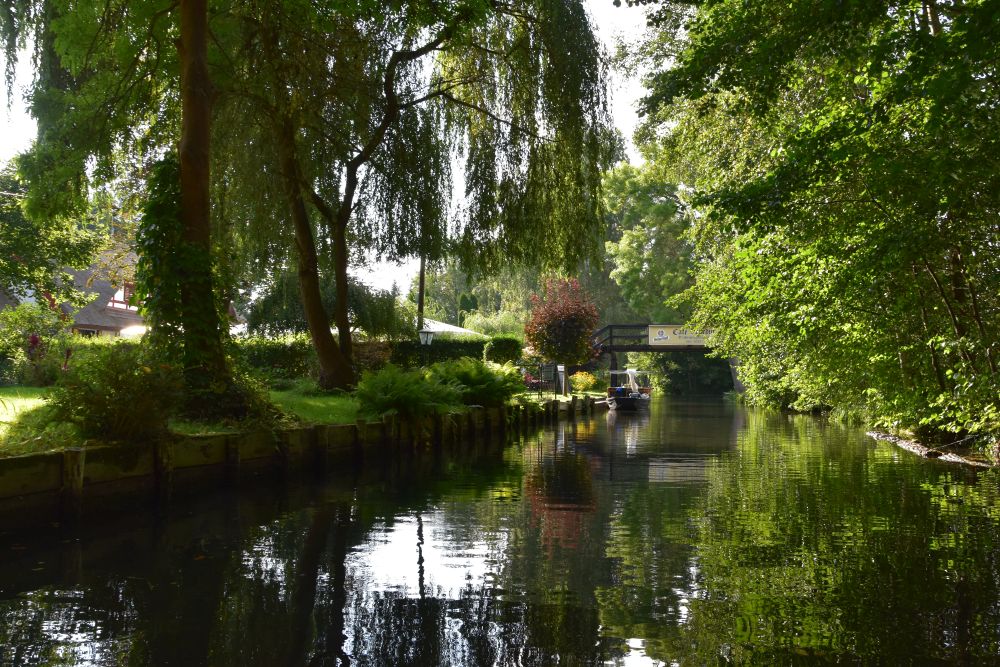
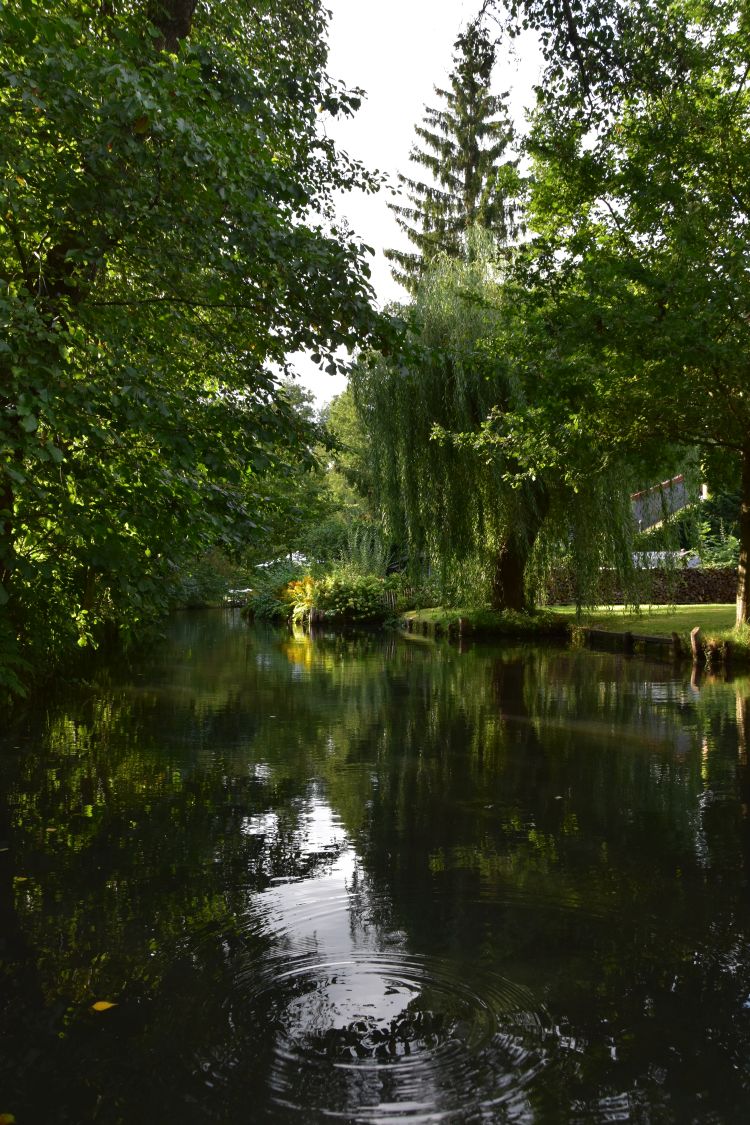
The trees reflect in the water.

More wooden bridges on the way.

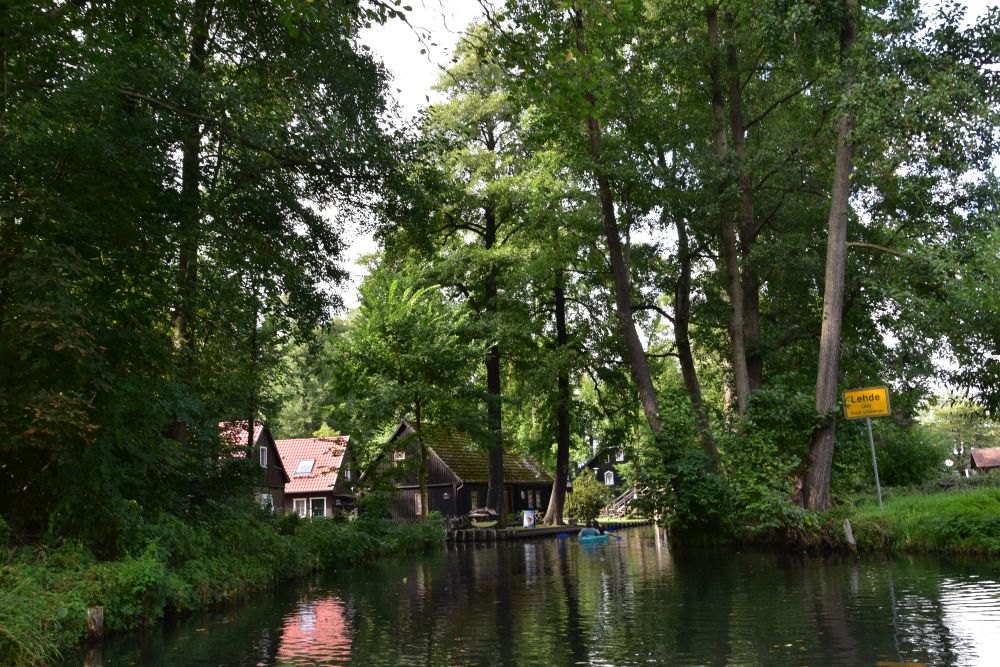
We arrive at Lehde.

Restaurants offer refreshments and meals.

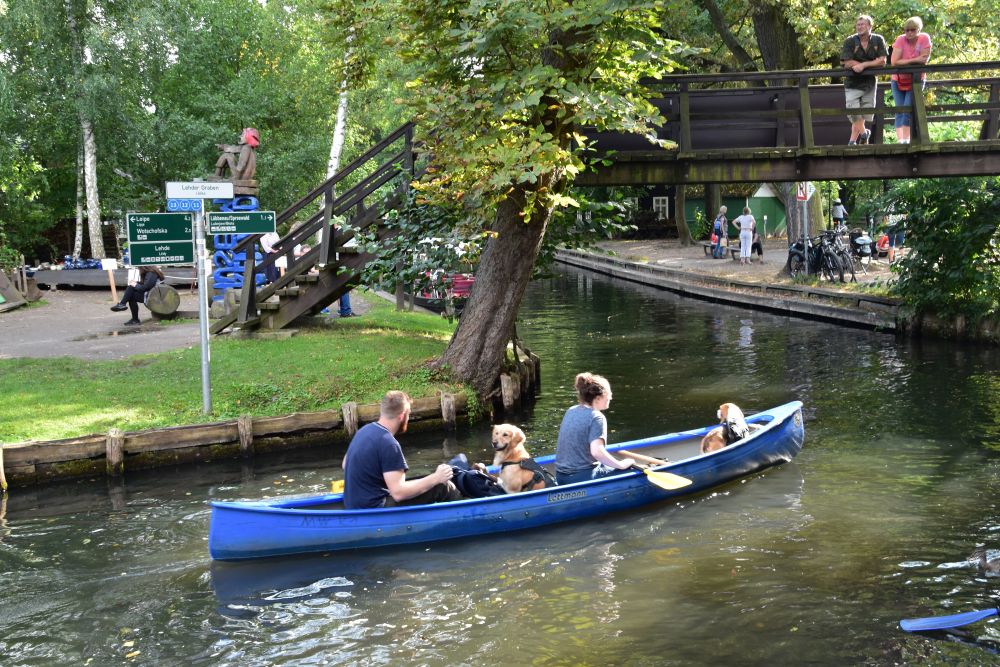
We are not the only guests here.

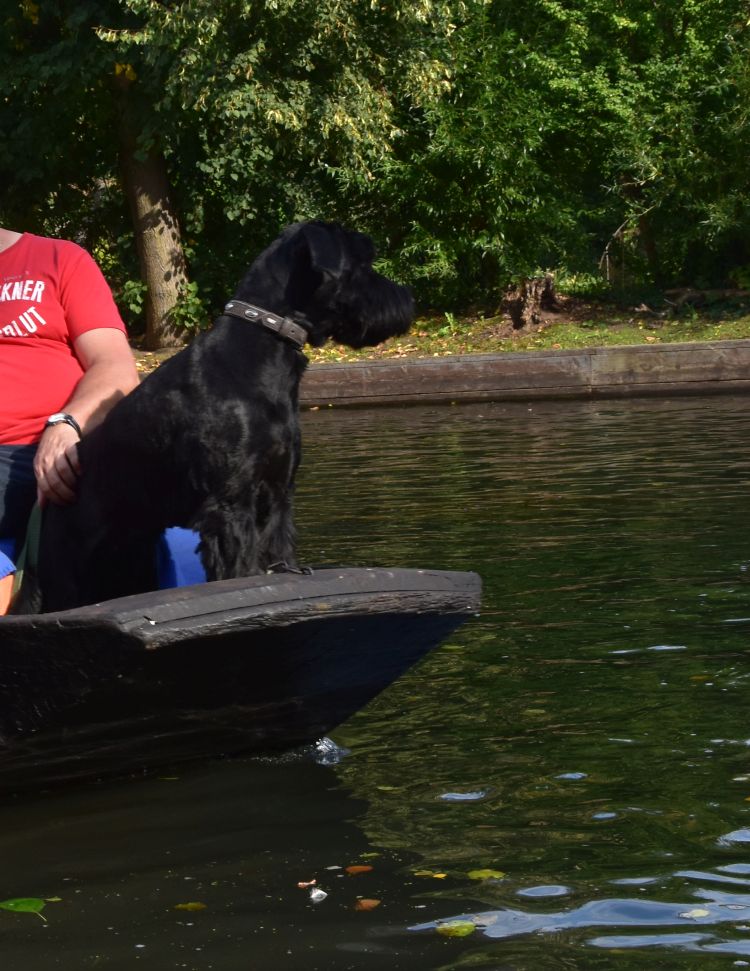
Even dogs like to sit in the canoes…

… or in the comfortable passenger boats.

We leave Lehde,…

continue our way along lush gardens…

and channels…

back to Lübbenau. 

We take our car back to Berlin. I am happy to have given my brother-in-law an impression of the romantic Spreewald about 100km south east of Berlin. 

Berlin: Observations with the twinkling of an eye

In 2021, I visited my mother town Berlin four times, discovering new places, rediscovering known places and making observations with the twinkling of an eye. Let us look at some of my observations and twinkle with our eyes.

Once upon a time, this was perhaps a kiosk, where people could buy newspapers. Now two guys are hiding behind their newspapers reading them avidly.


In case of Radlosigkeit find your Radhaus

The “Radhaus” sells “Räder” which are bicycles in Germany. Not far from this “RaDhaus” is the “RaThaus” (city hall) of Steglitz that the RaDhaus alludes to. 

The owner of this RaDhaus being close to the RaThaus must be a genius in marketing.

Wir helfen bei “RaTlosigkeit”? In German, this translates to “we help you, in case of lack of advice”. Playing with “RaTlosigkeit”, the plate on the bicycle says: Wir helfen bei “RaDlosigkeit”? Meaning “We help in case of lack of a bicycle (“Rad”=bicycle)!” 

Just hire me and you are no longer “raDlos” nor “ratlos” translated to “without bike” nor “without advice”.


Does “a-petit” allude to Frederick and Voltaire or just to Asian Petit Tapas?

This restaurant at Prenzlauer Berg has an interesting Website: a-petit.de.  

It sounds like “appetite” and reminds me of the correspondence of Frederick the Great (nicknamed “der Alte Fritz”, 1712-1786) with Voltaire (1684-1778).

Frederick sent Voltaire the following rebus invitation:

   P
venez – which translates to “venez souPer” (à Sanssouci)

Voltaire answered with another rebus:

J a – or more in detail: “J grand a petit” which translates to “j’ai grand appétit”

In English, the invitation soberly translates to “come for dinner” which Voltaire accepts with the answer “I have a big appetite”. 

When looking at the Website “a-petit.de”, I am no longer sure, whether the owner alludes to the rebus exchange between Frederick and Voltaire. The restaurant at Prenzlauer Berg is called “Asian Petit Tapas” shortened to a-petit. I would have to visit the restaurant to find out. 


Elections inspire the phantasy of those who want to be elected

September 2021 was the time for elections in Germany and Berlin.

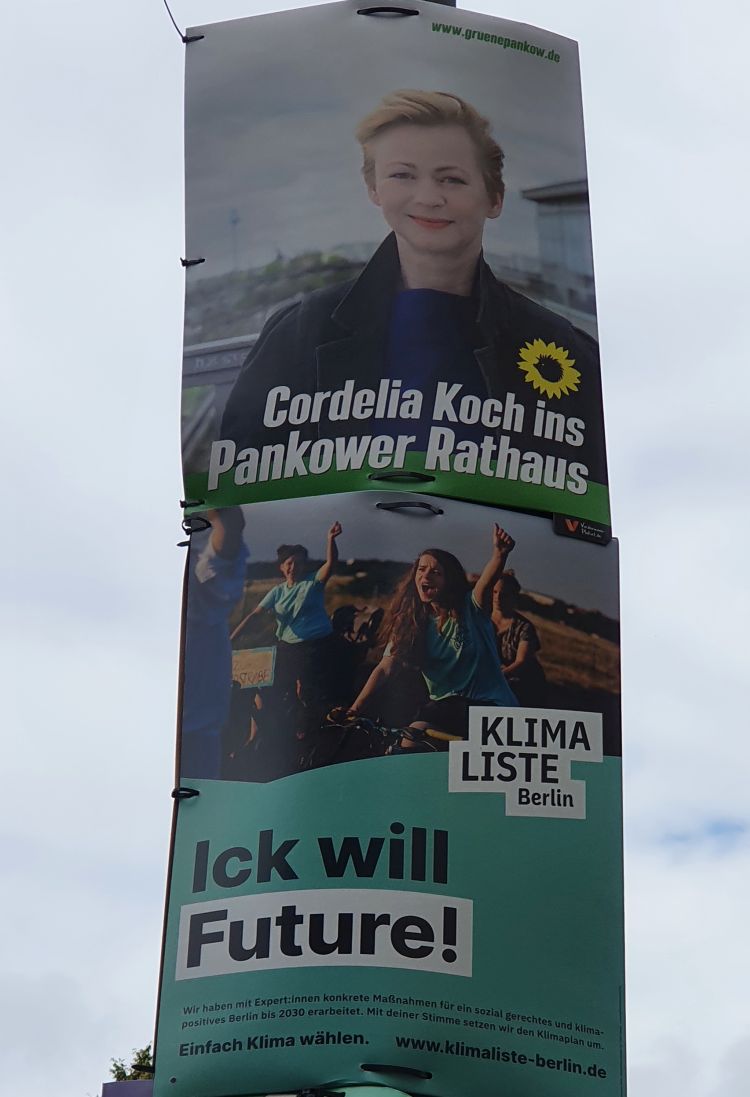
Those who want to be elected, mix English and German without hesitation. Is this the “new modern” of the younger generation?

The “old” lobby (as old as fossiles) – should disappear and give way to the young generation that will fight for a FAIRer redistribution of resources or for UmFAIRteilung (UmVERteilung = redistribution does not suffice). I frown at the “fossiles”, they must be younger than I am… And I wish luck to the younger generation.

Even the Berlinese dialect (ick) comes mixed up with English (future): “Ick will Future”.  (“Ick” is Berlinese for the German word “ich” or “I” in English).

Ick verstehe det jut… I understand that well. It seems Cordelia Koch made it to the town hall of Pankow and I wish that her future materializes. 


Interesting traffic signs

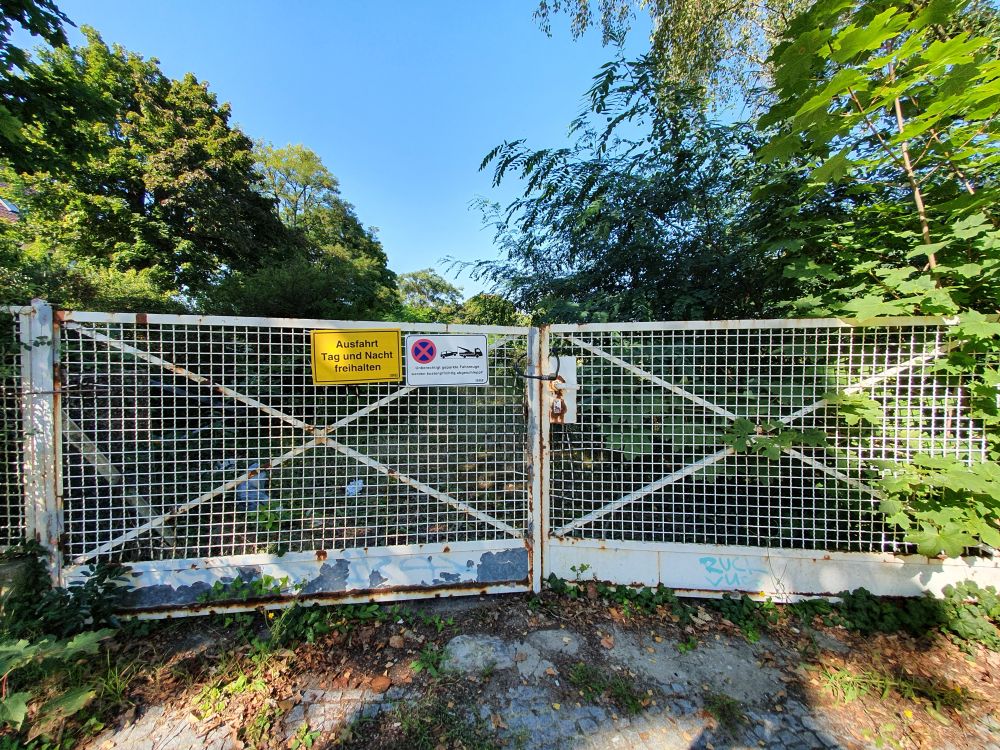
Near the Wannsee, I found this gate. “Einfahrt freihalten – Tag und Nacht” (“Please keep the entry free – day and night”), the sign says. The consequences are clear, your car will be carried away, when you park it here.

Looking at the rusty gate and the weeds and bushes behind it, I wonder, how long ago it was that a vehicle tried to enter or leave this wilderness. 

Also this gate, not far from here, seems not to have been in use for quite a while. 

But also here – you have to keep the entry free.

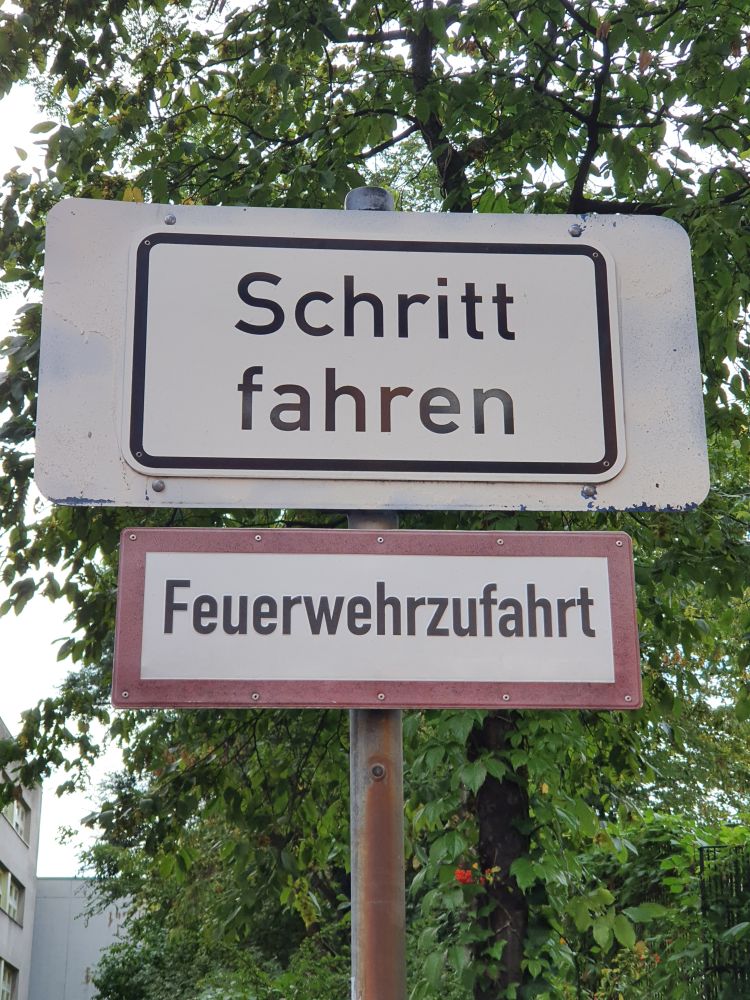
In Switzerland, we say “Schritt-Tempo fahren” or “drive at the speed of walking”. In Germany, this order can be shortened to “Schritt fahren”, which sounds like “drive walking” to me.

Cyclists seem to have a lot of phantasy to find places, where they can attach their bicycles, but beware, here, it is not allowed to do so!

The Covid pandemic forces us to keep distance. Does Queen Elizabeth know that Berlin uses her corgis to illustrate the distance of 1.5m required – it is equivalent to 3 of her dogs. 

I do not believe that hippos walk in front of this garage, as the sign on the gate suggests. I just liked the illustration.


Two vehicles that made me smile

This is the “Räumschiff”. “Räumen” means “to clear” and a “Raumschiff” is a space shuttle. Hence the “Räumschiff” cleans the streets (literally “clearing boat”) alluding to a space shuttle. A play of words that only works in German.

Furthermore – I have never seen such a tiny caravan before, and above that, it has been painted in such a friendly green colour. 

There is even a devil wearing red pants on the side.


A wonderful city for happy dogs

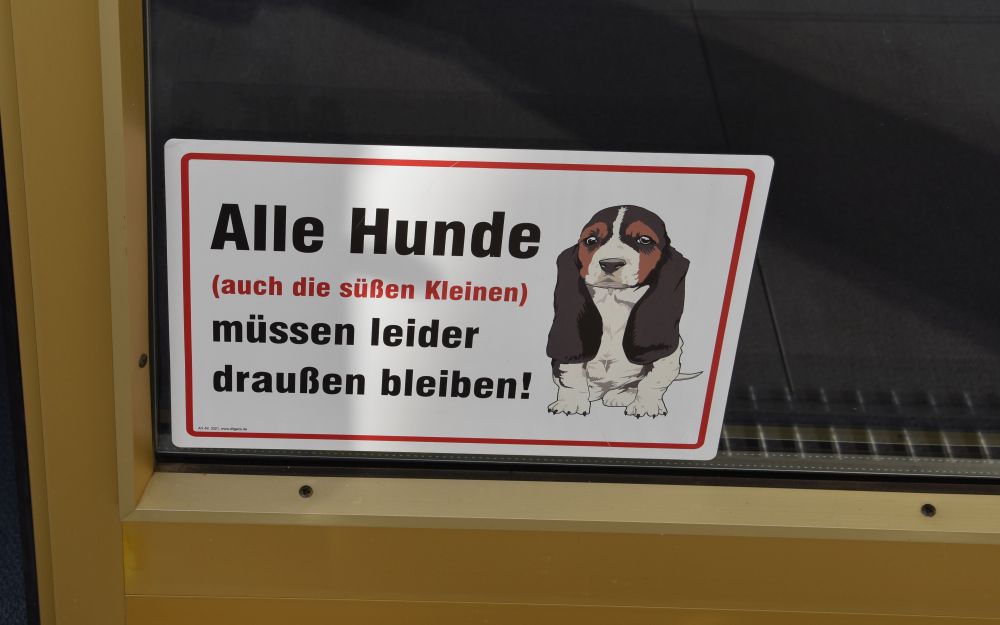
Though Berlin is a wonderful city for happy dogs, not everything is allowed to them. However, what is prohibited, is prohibited gently: “All dogs (even the cute small ones) unfortunately have to remain outside”. This is, what this plate says that I found in Köpenick.

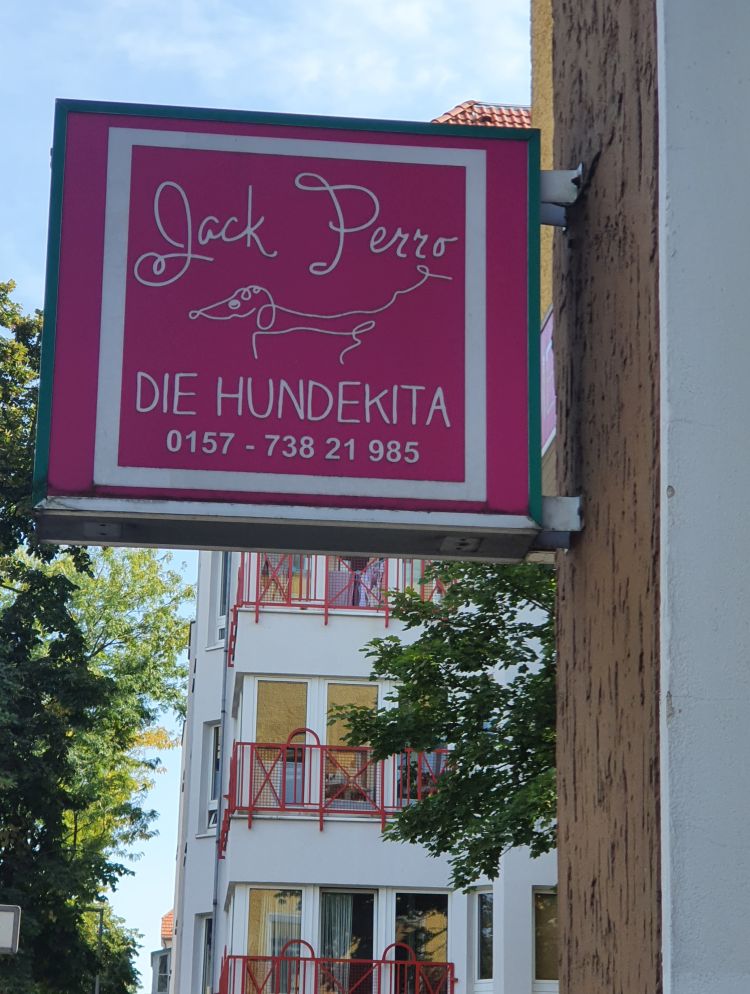
The city does a lot for their dogs. Not far from busy Schloss-Strasse, you have the option to drop your dog at the “Hundekita” (dog day school) of Mr. Perro. 

Perhaps your dog will learn to bark in Spanish (perro is Spanish for dog). Or the dog will bark in English, because Jack Perro seems to have Anglo-Saxon roots, too.

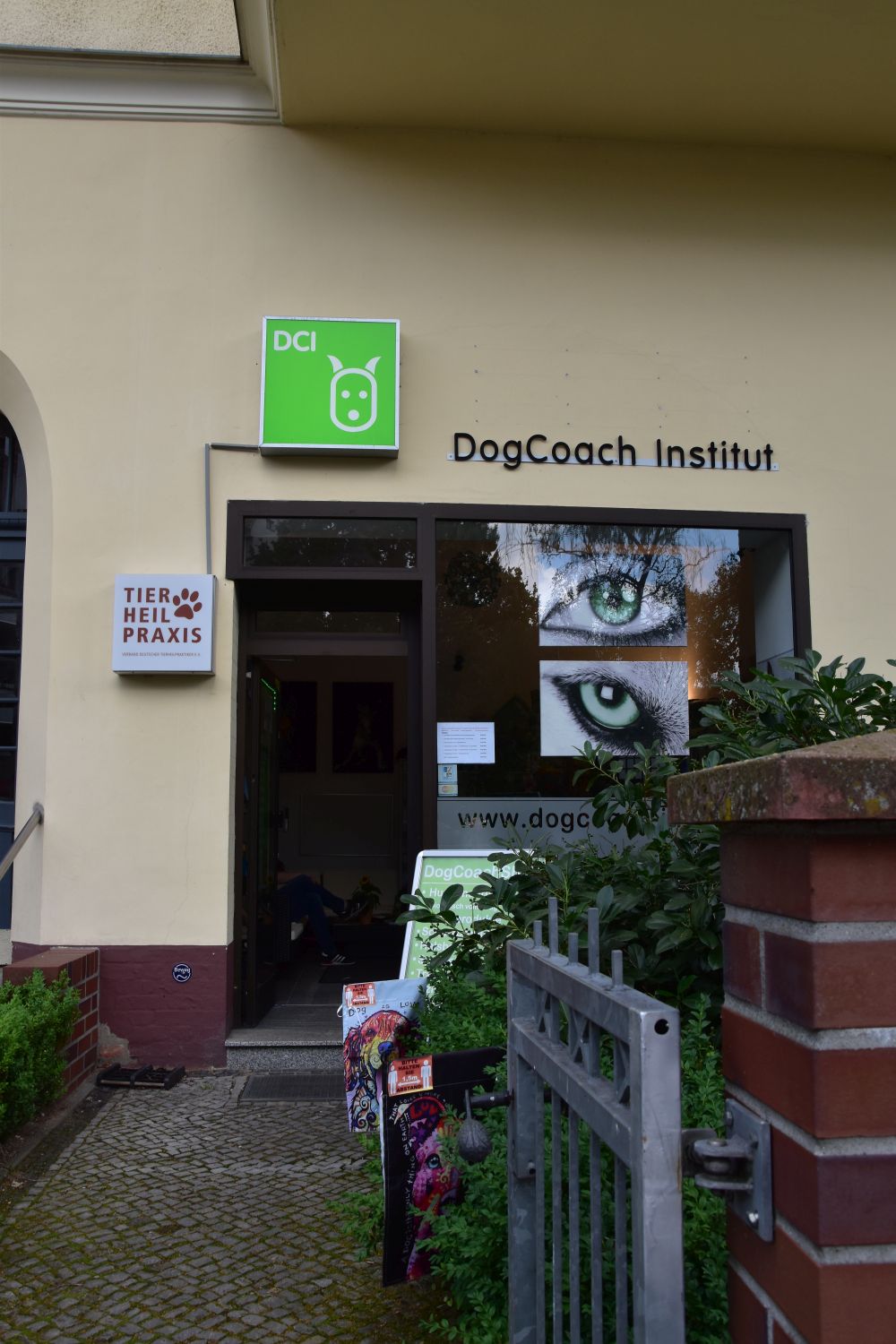
Not far from here, dogs find coaching at the DogCoach Institute.

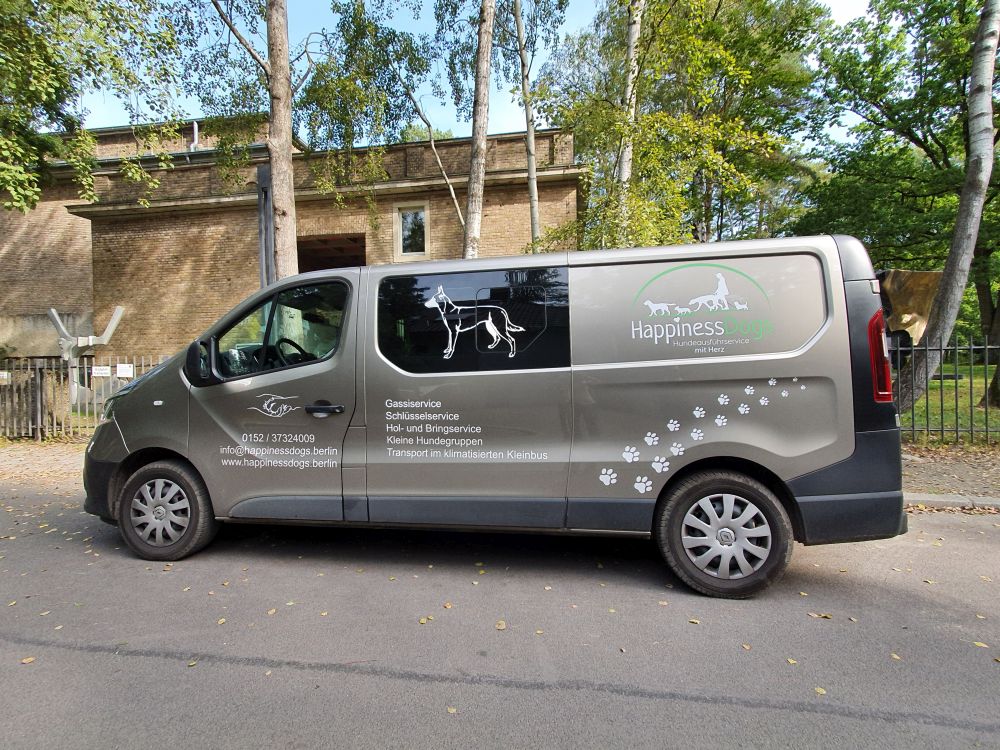
This “happiness” van takes dogs to the Grunewald, where, in the dog walking areas (“Hundeauslaufgebiete”), they are allowed to walk without leash.

At the pretty Renaissance hunting castle “Grunewaldschloss”,…

… the dogs can have a rest and enjoy some ice cream (“Hunde-Eis”)… 

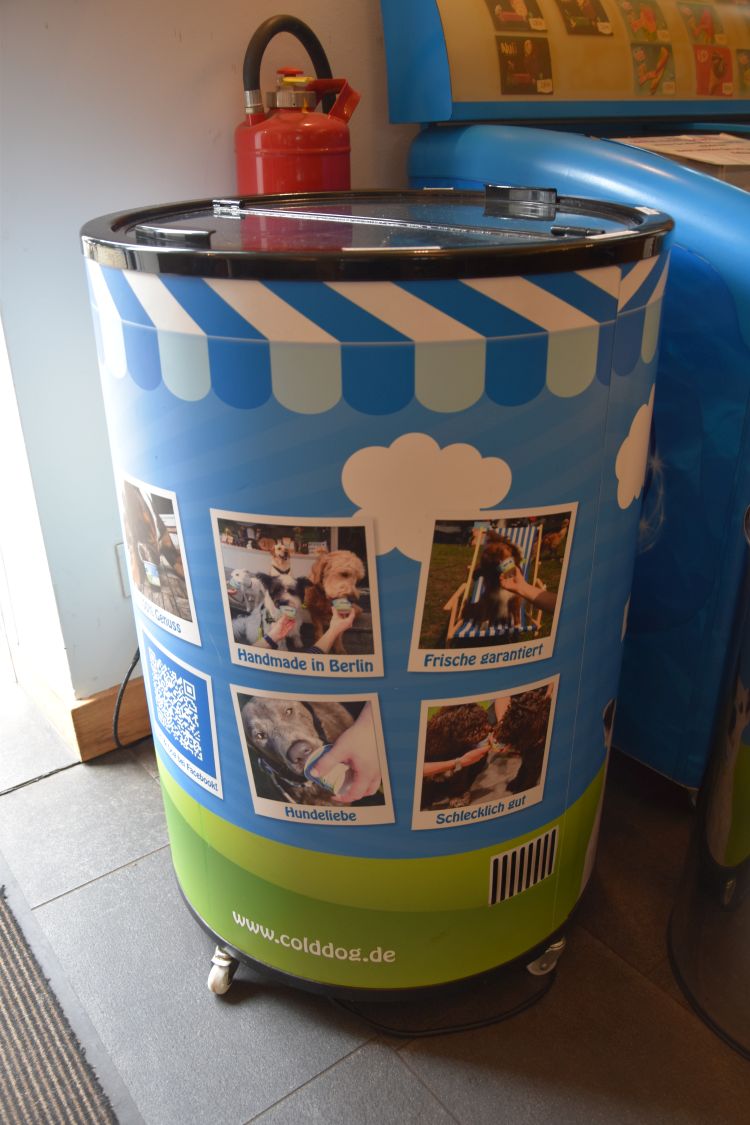
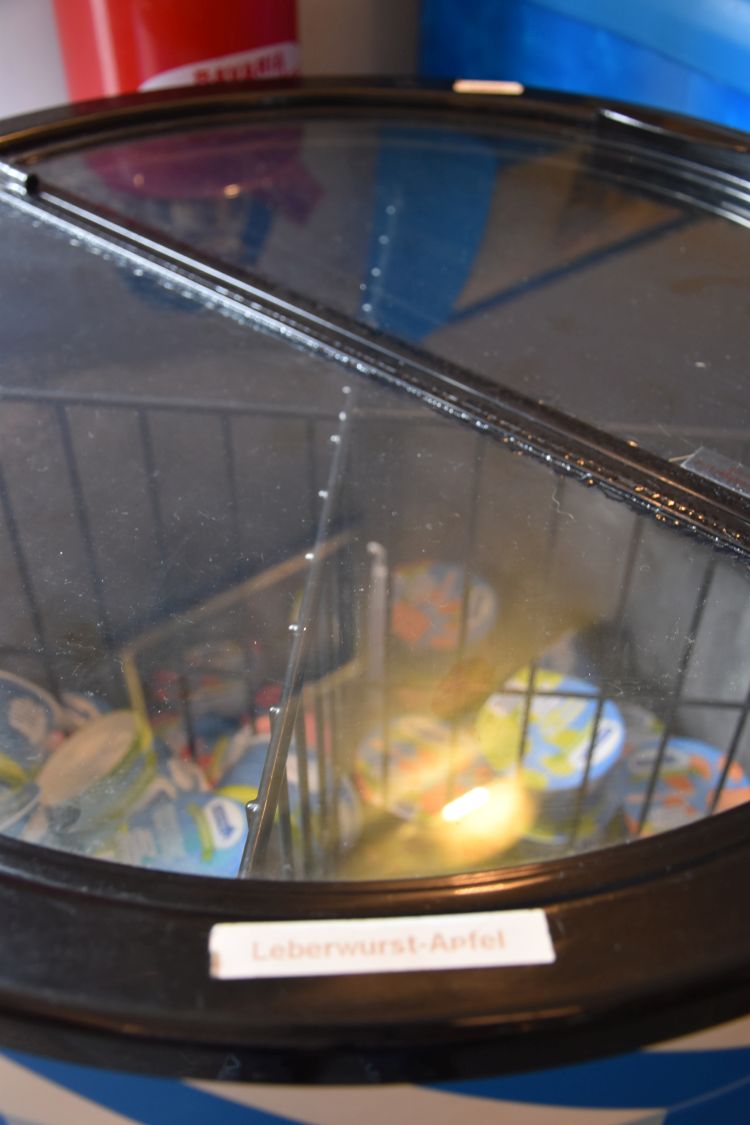
… with flavours delicious for dogs such as “liver sausage – apple”… 

… offered in this deep freezer barrel. The dog ice cream has been handmade in Berlin, is assuredly fresh and tastes “awfully good”. You prove love for your dog, when buying ice cream for him.

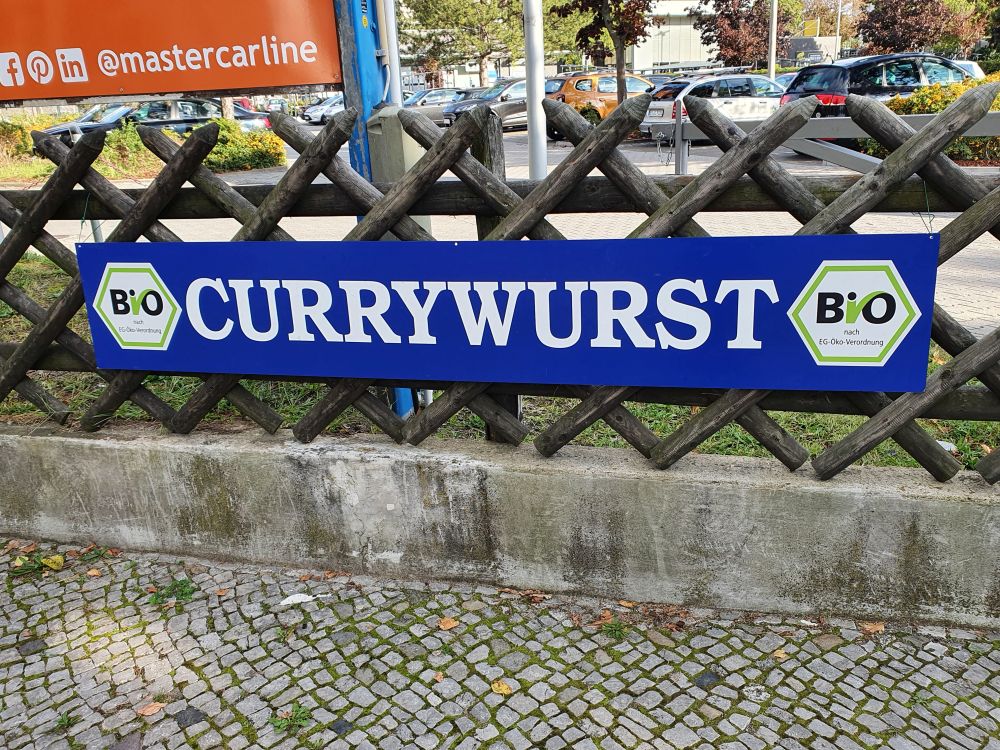
In addition, the dog sitters and other citizens have the option to eat healthy “Bio” curry sausages. 

Never before have I thought of the curry sausage being healthy, but perhaps I should try this Bio alternative. May be, even a dog would like this healthy Bio sausage. 

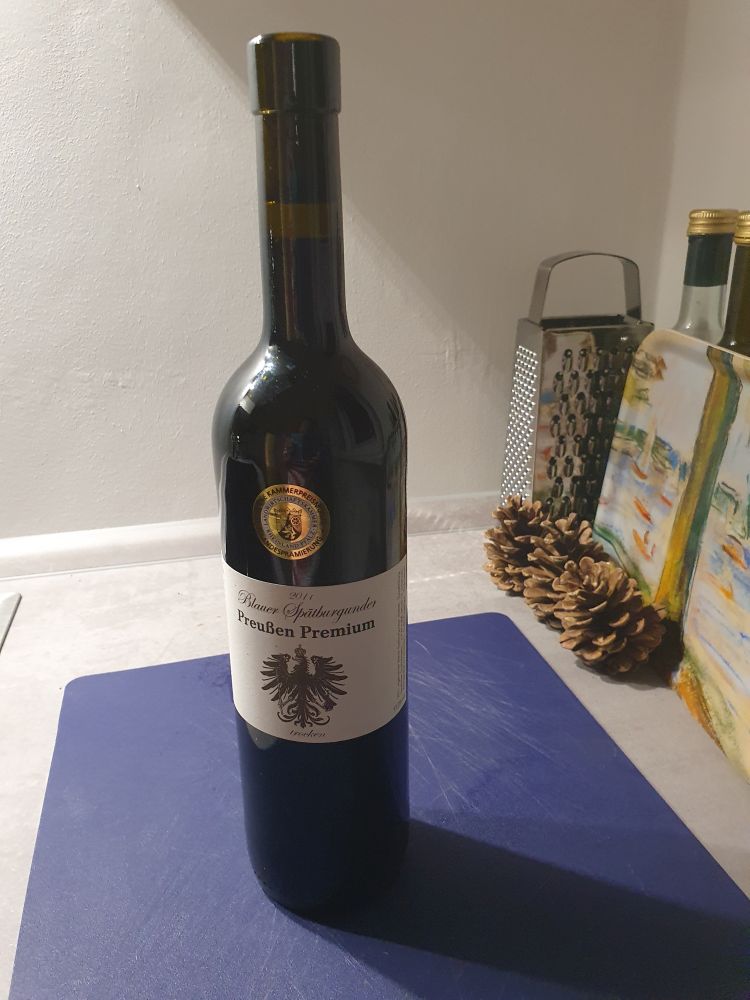
Fortunately, the Renaissance castle of Grunewald did not only have ice cream for dogs, but also this Pinot Noir “Preussen Premium” from Potsdam. 

I shared it with a friend of mine after having walked through the Grunewald, and the wine was excellent. Yes, Brandenburg is also a wine region, and some of the wines are quite good.


A Swiss butterfly – from Wroclaw to Berlin

End of August 2021, I am on the road to Berlin, via Slovakia and Poland. 

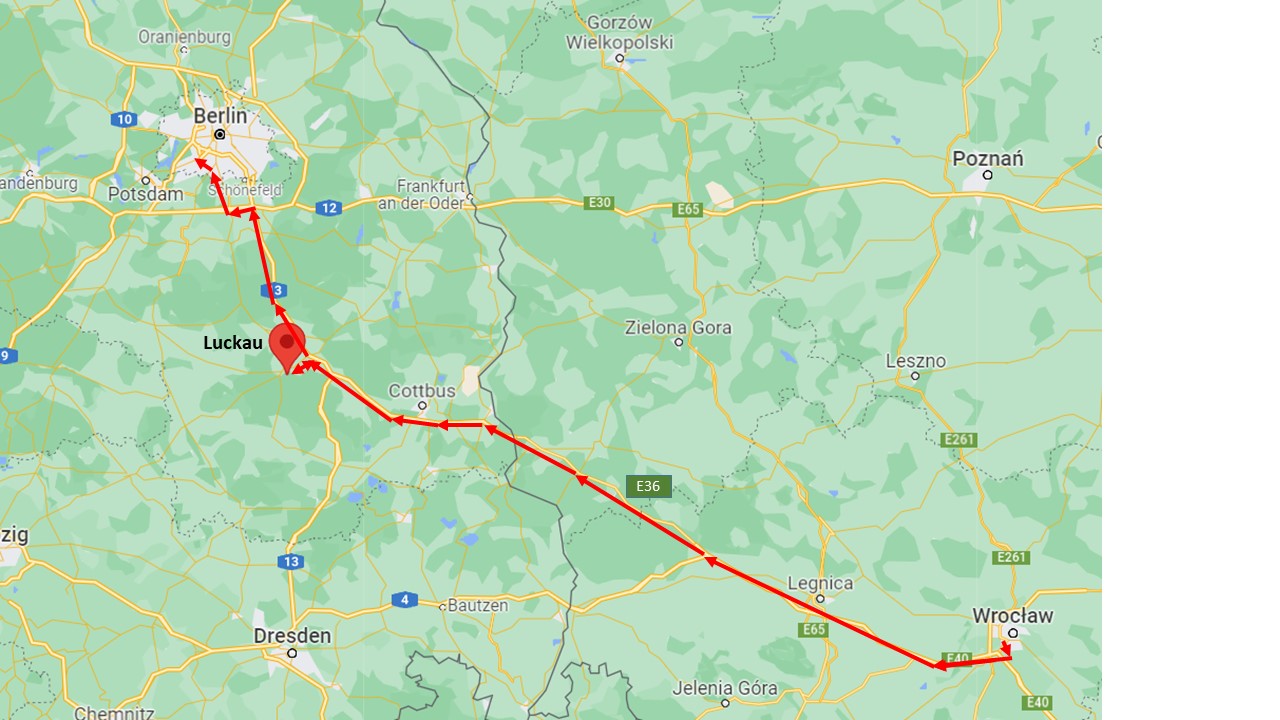
My route begins in Slovakia: Bratislava – Trnava – Nitra – Žilina – Strečno and Terchová – Dolny KubinPodbiel and Tvrdošín. It continues in Poland: Wilkowisko – Kraków – Szklarska PorębaWroclaw, and now I am driving to Berlin, via Cottbus and Luckau. 


From Wroclaw to Cottbus

The highway E65 from Wroclaw through Poland to Dresden is very busy; even on a Saturday it is full of trucks. I leave this busy highway to catch the E36 to Cottbus. The E36 is under construction. One track has been completed and provides two-way traffic. I reach Cottbus shortly before lunch time. I am in Germany now. No one takes notice of me at the border; I hardly notice crossing it.

Source: Google maps


Lunch at Luckau

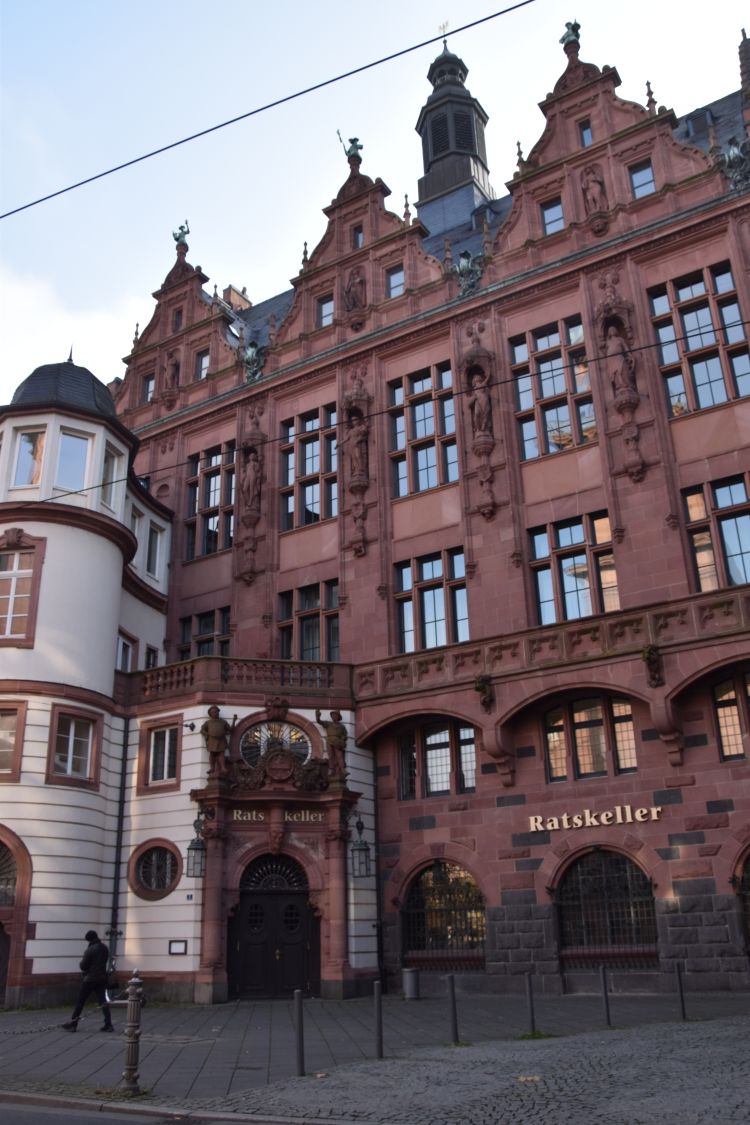
From Luckau, I keep wonderful  memories. I had lunch at the Ratskeller in 2018. Now I take the detour to enjoy an excellent lunch again: Potatoes with curd cheese and linseed oil and, as a dessert, the sweet pancakes called “Plinsen”, both typical local dishes.  

The restaurant keeper is still the same as in 2018; he has worked in Zurich and enjoys remembering his years in Switzerland. 

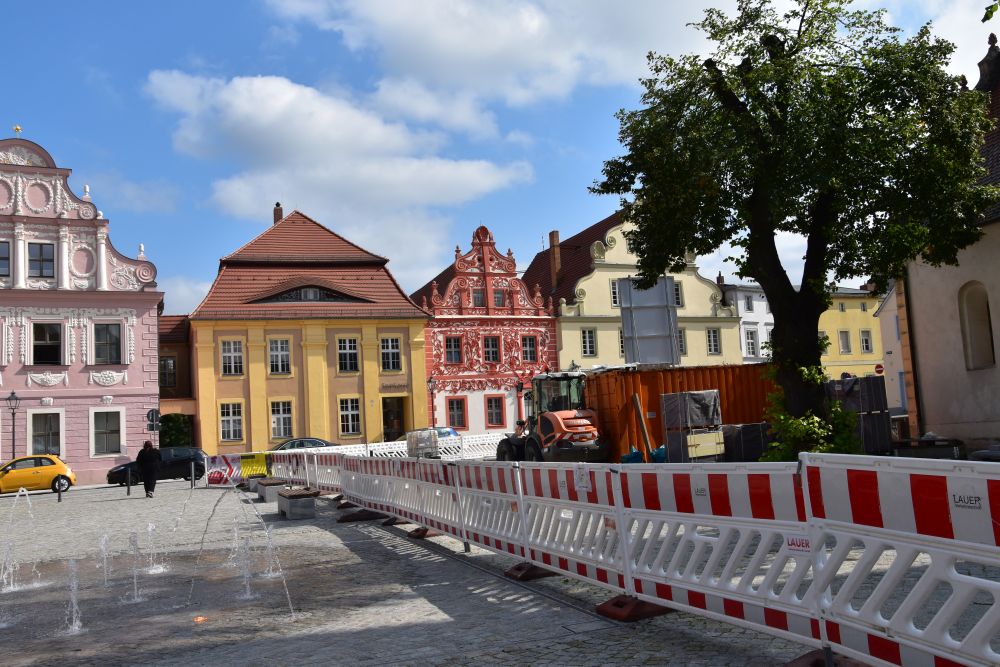
The market square has undergone a thorough renovation to be a cosy place for pedestrians; …

… the red and white barriers are about to disappear. 

The restaurant owner is happy that the works will soon be accomplished. 

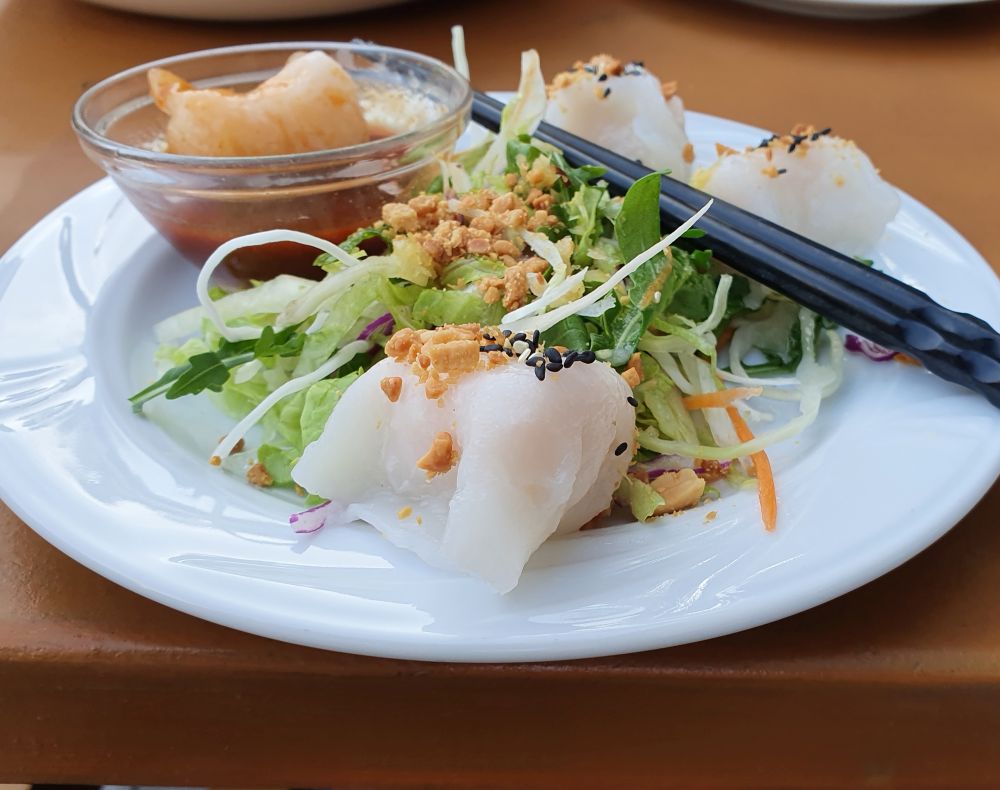
I continue my way to Berlin, my mother town. I arrive, feel at home and have another excellent dish, now at my favourite Vietnamese restaurant Viet Koch BBQ at the Breitenbachplatz. 


I will stay in Berlin for about ten days.


Remembering Luckau in 2018

In summer 2018, I visited Luckau with a friend of mine. Standing in front of the Ratskeller, we debated, whether we should eat here – it was lunch time. The owner heard us speak Swiss German and asked us in. He had worked in Switzerland for some years and he loved to hear our dialect.

We entered – what a good choice!

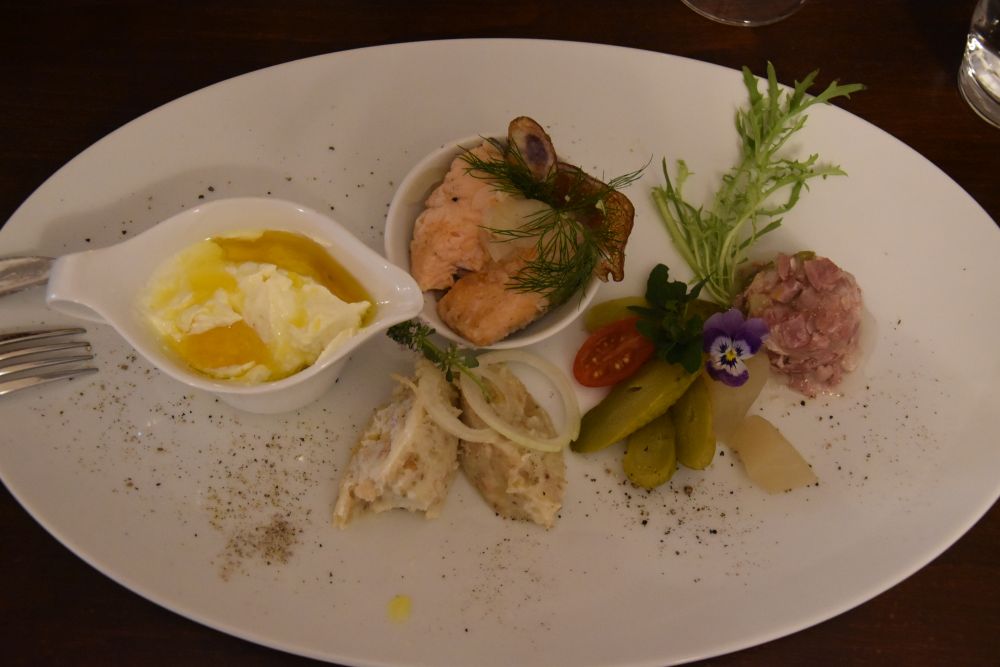
I had “Lausitzer Leibgerichte” (Lausitzer favourites): Fried trout filet, regional curd with horse radish and linseed oil, aspic of pickled pork knuckle,  pickled gherkins, corniness (or schmalz) with apple and onion. It was delicious.

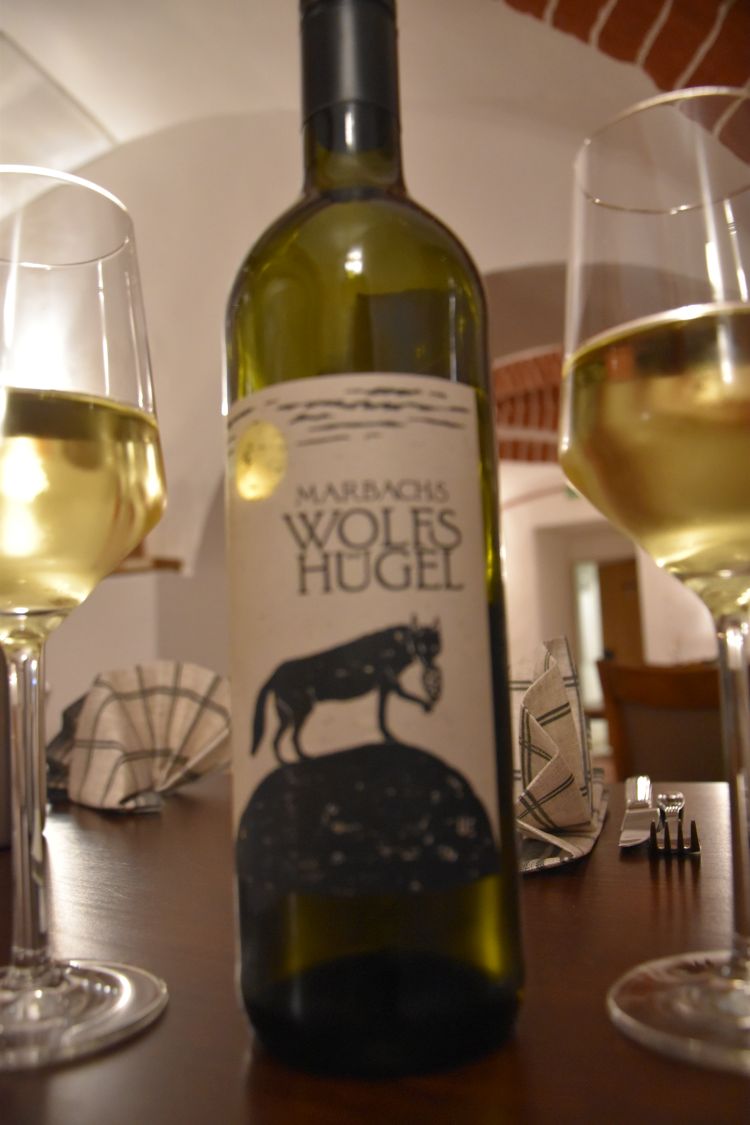
With our dishes we had a glass of local wine, Marbachs Wolfshügel. I had a mouthful – not more, as I was driving; we took the rest of the bottle with us.

After lunch, we strolled through the small town. 

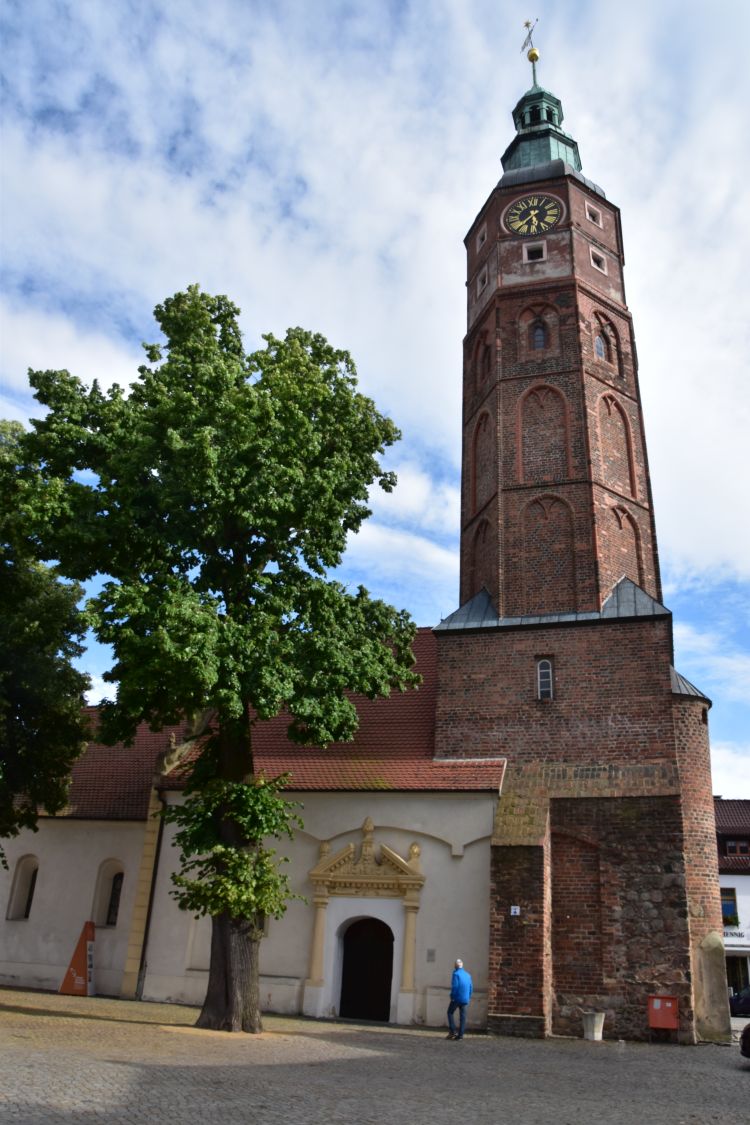
Just next to the Ratskeller is the Georgenkapelle (Chapel of Saint George, also called Hausmannsturm), built around 1200 in late Romanic style. Until the reformation in the 16th century, it was a chapel . In 1679 the tower was enhanced to 47m; it was now the seat of the city guard. Since 1969 the tower has been used as a festival hall. (Source: Information plate).  

Building the church of Saint Nicolas (Nikolai Kirche) started in the early 13th century. After a fire, the church was rebuilt around 1400, in gothic style now. After another fire in 1644, the interior was renovated in baroque style (a rarity in protestant Brandenburg; source: Information plate).  

The moat and the town fortification have been well preserved and provide a nice stroll around the city. 

Luckau has an 800 year long tradition of growing wine that halted in 1926. It has now been reactivated. This is castle hill vineyard that was renewed in the year 2000. 

Jürgen Rietze owns a vineyard west of Luckau. We met him working here. After the fall of the iron curtain, he learnt the wine business in the Stuttgart region. In 2005, he returned and started his own vineyard  in Luckau. In 2012, he was included in the wine guide of Berlin. He is proud of his vineyard – he points out that it is facing south. We frown. He laughs. Well, you, being Swiss, might have steeper slopes, here we are in Brandenburg, he adds. Yes, looking at the vineyard carefully, I can see, it is slightly slanting. I would love to try his wine, but he has no bottle for us right now.

Now, three years later, in 2021, I have returned to the welcoming little town Luckau, and I hope to return soon again with my long-year friend from Berlin.


Sources:


On the road: Following Romanesque and Gothic heritage in Oberbayern

In August 2020, I spend four days in Upper Bavaria with my long-time friend from Munich. The weather is very rainy and we take the opportunity to learn about the cultural heritage of Bavaria that goes back to Romanesque and Gothic times: The church of Sankt Georg at Ruhpolding, the chapel of Sankt Servatius auf dem Streichen, Sankt Valentin at Zell (part of Ruhpolding), Sankt Nikolaus at Einsiedl.

Source: Googlemaps


Ruhpolding: Church of Saint George

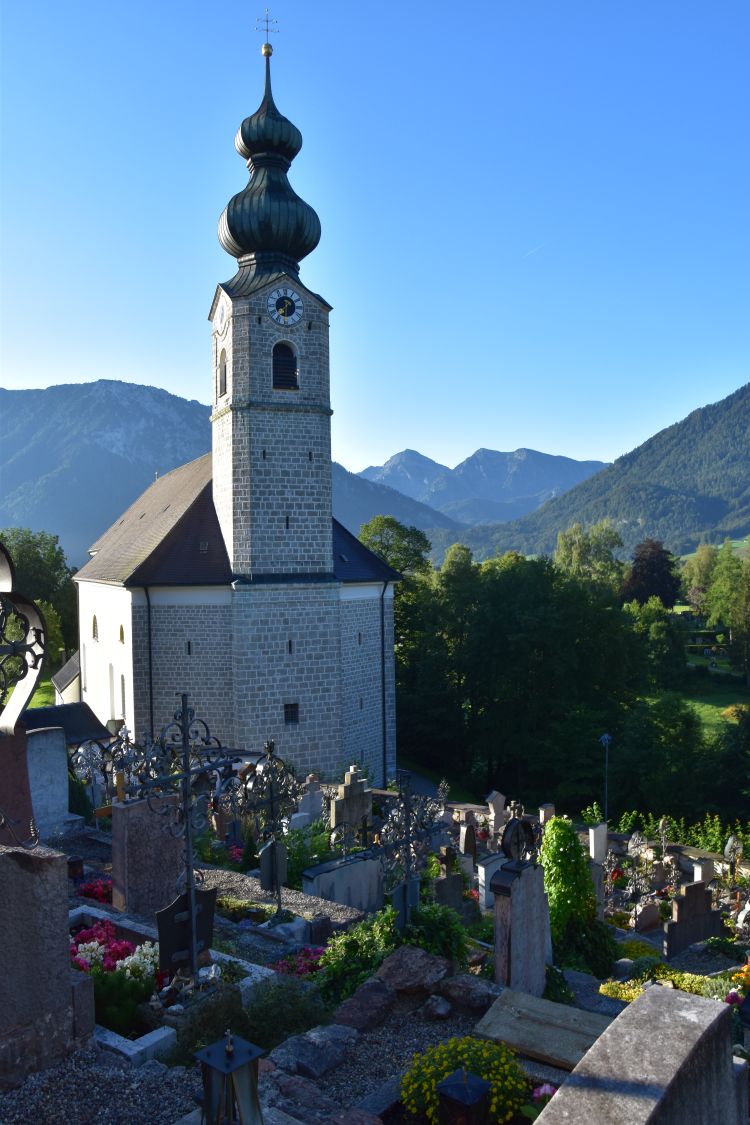
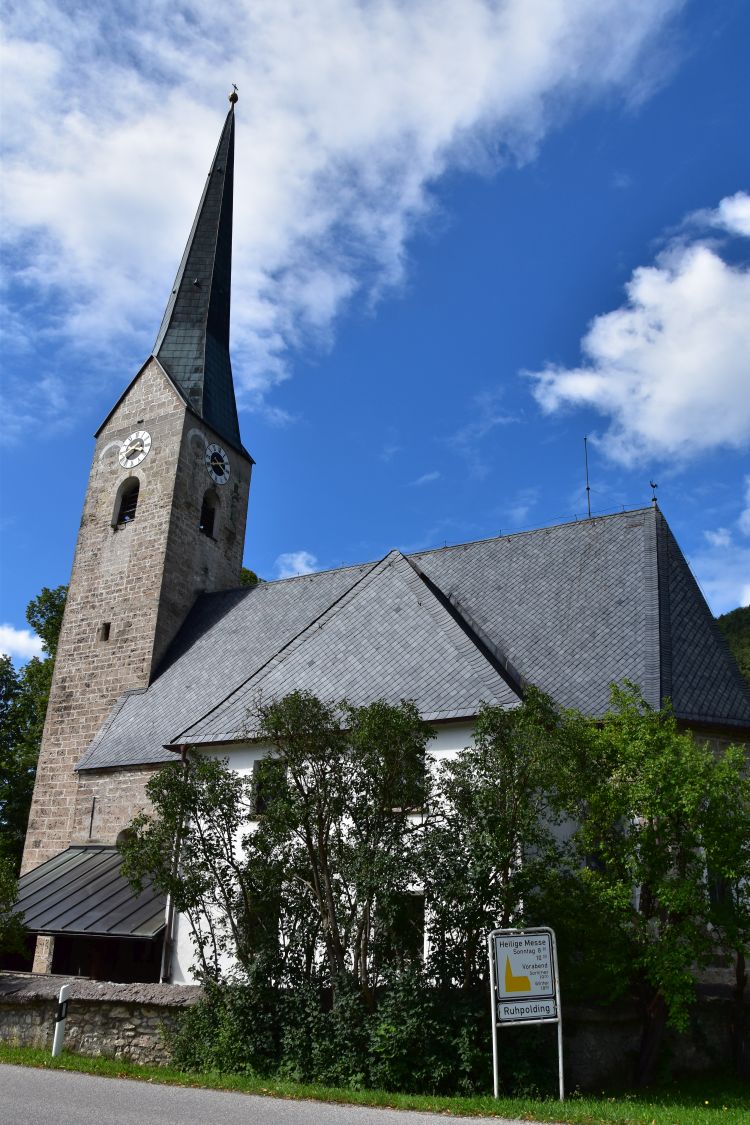
Not far from our hotel is the Church Saint George, nicely located on a hill above Ruhpolding. After the rainfalls, when the sun has returned on the last day of our vacation, I take this photo with the Sonntagshorn in the background.

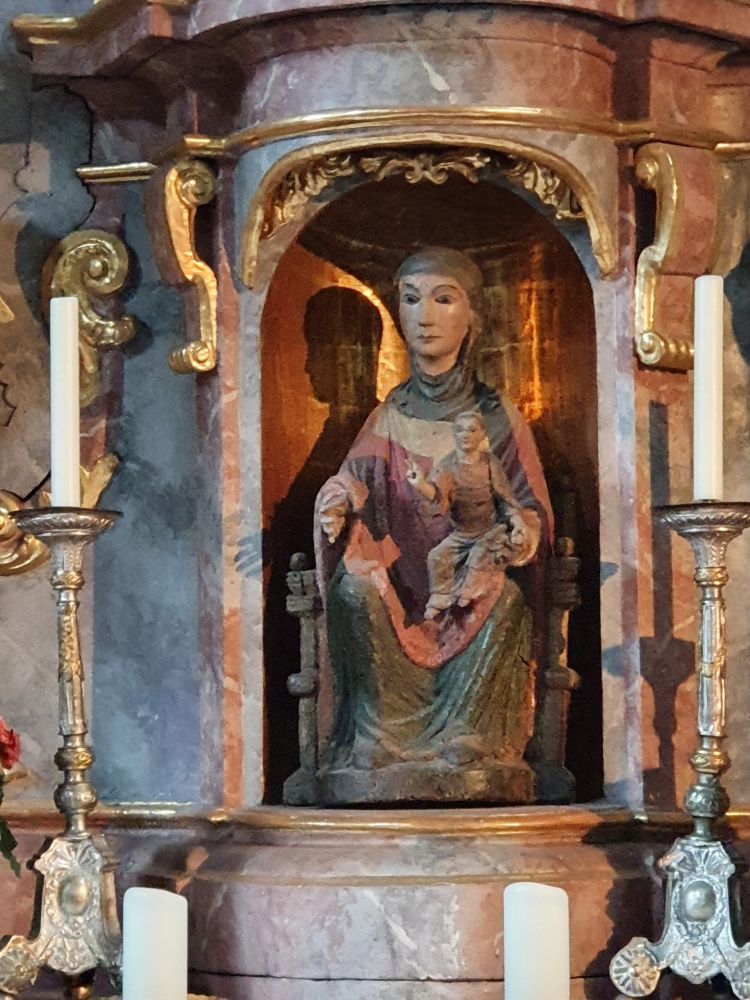
This church has the typical Bavarian Baroque or Rococo appearance, whereby the right-hand altar embeds…

… the beautiful Madonna with the Child from between 1190 and 1230.

The people from Ruhpolding call her proudly the “Ruhpoldinger Madonna”.


Chapel Sankt Servatius auf dem Streichen

It is drizzling, when we park our car close to the border between Bavaria and Austria, above the Schlechinger Tal. In the misty forest we walk uphill to the Chapel Sankt Servatius auf dem Streichen, located on a path for traders that transported goods from Bavaria (Unterwössen) to Tirol (Kössen). The attribute “auf dem Streichen” alludes to the trading traffic: “Streichen” is an older word for “Säumerpfad”, and “Säumer” or “Streicher” are the people transporting goods; “Säumerpfad” translates as mule track – the Anglosaxons seem to think of the mules on such  tracks.

Saint Servatius is an unusual patron in Bavaria. He was a bishop in today’s Netherlands (Maasland) that died in 384.

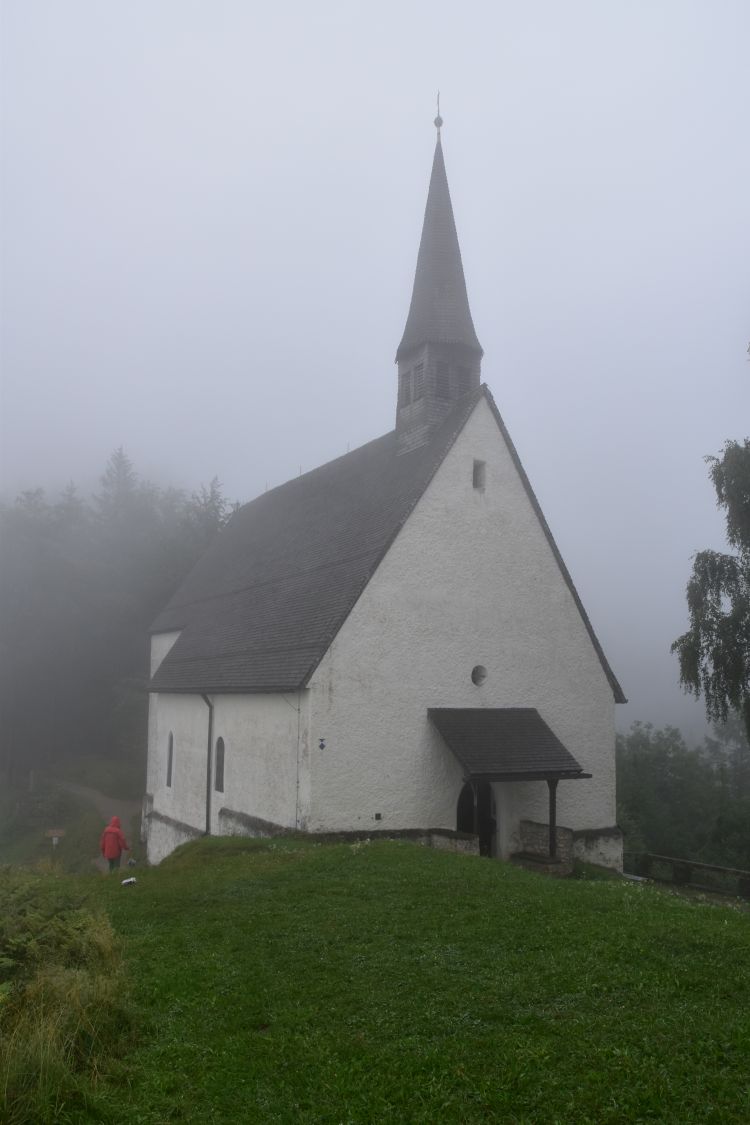
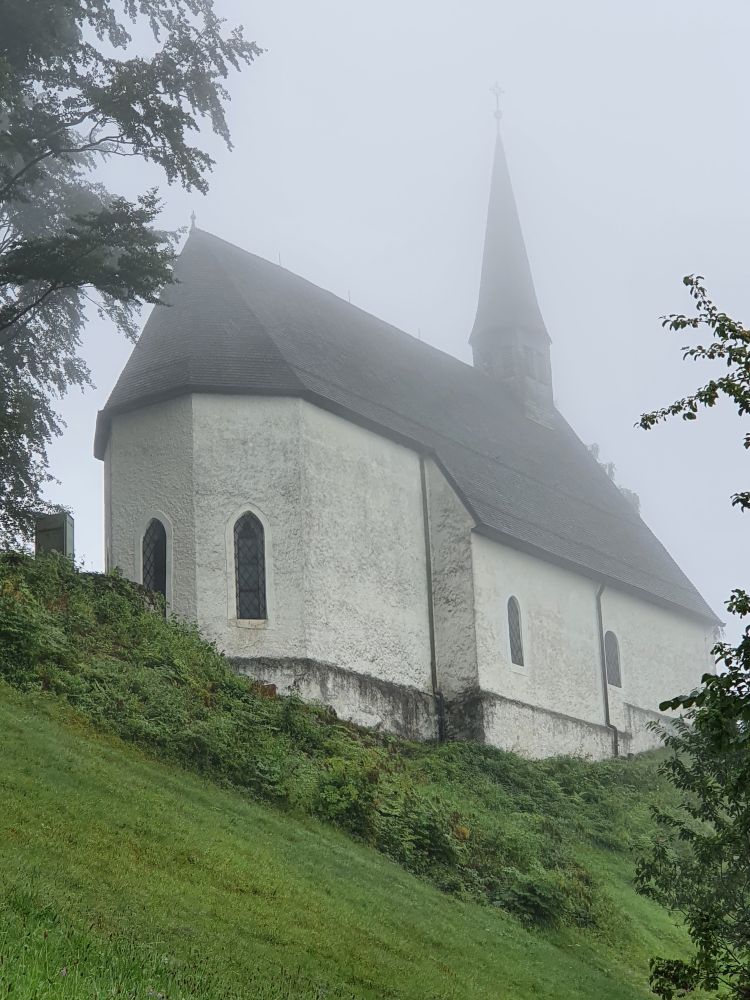
We reach our chapel Sankt Servatius in the mist. It is a mysterious atmosphere.

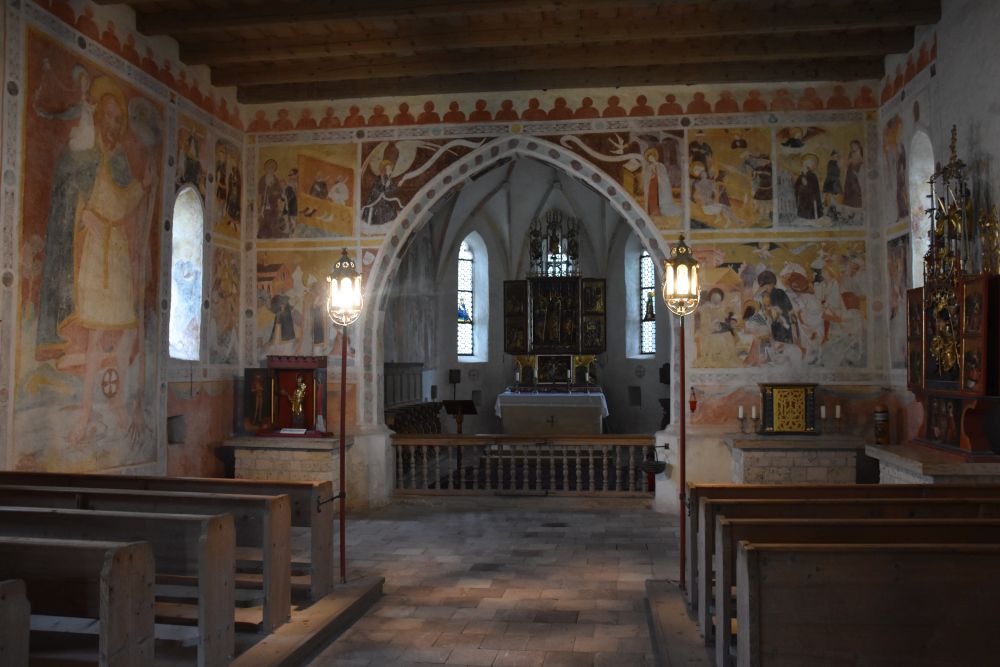
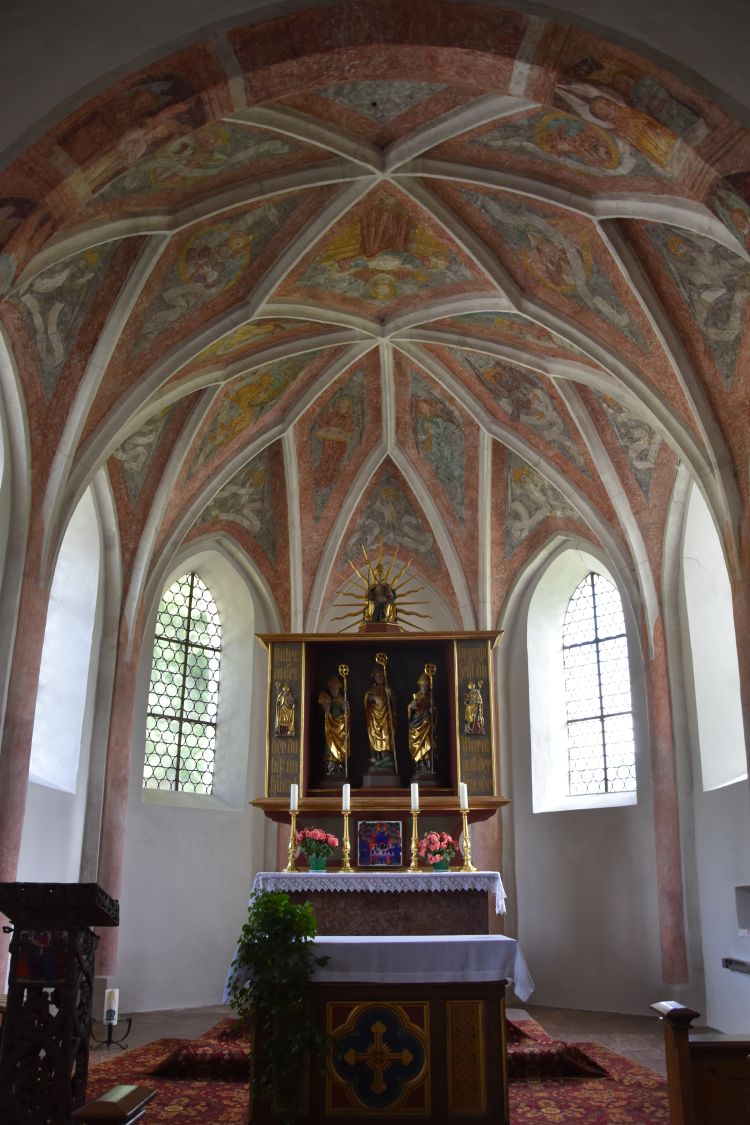
The booklet of the chapel, edited by Schnell and Steiner, assumes that the nave has been constructed in the 13th century, though the first records of the church appear only in 1440. At that time, the apsis was replaced by the more spacious choir with the rib vaults that we see today. In addition, the chapel was then decorated with frescoes that, with some changes in the 16th century, have been preserved under whitewash. It was a cultured and art-minded priest that initiated the uncovering of the frescoes in 1943/44. The stepwise renovation of the chapel was completed in 2014. Most of the windows in the choir are the originals; the glass roundels have been preserved.

An iron grating prevents visitors from entering the nave. We look at the precious frescoes of the nave from behind the grating. Above the entrance to the choir, I discern the annunciation scene with Maria and the Archangel Gabriel. The next fresco to the left shows Saint Leonhard, patron of the prisoners, with two prisoners whose feet are fixed in a block. Below, to the right hand side of the choir, the three Kings are visiting Christ after his birth. The writer of the booklet edited by Schnell and Steiner is of the opinion that this is the most precious fresco of this church.

There are more frescoes in the choir, on the wall separating the choir from the nave. One of them illustrates the Last Judgment. We cannot see them.

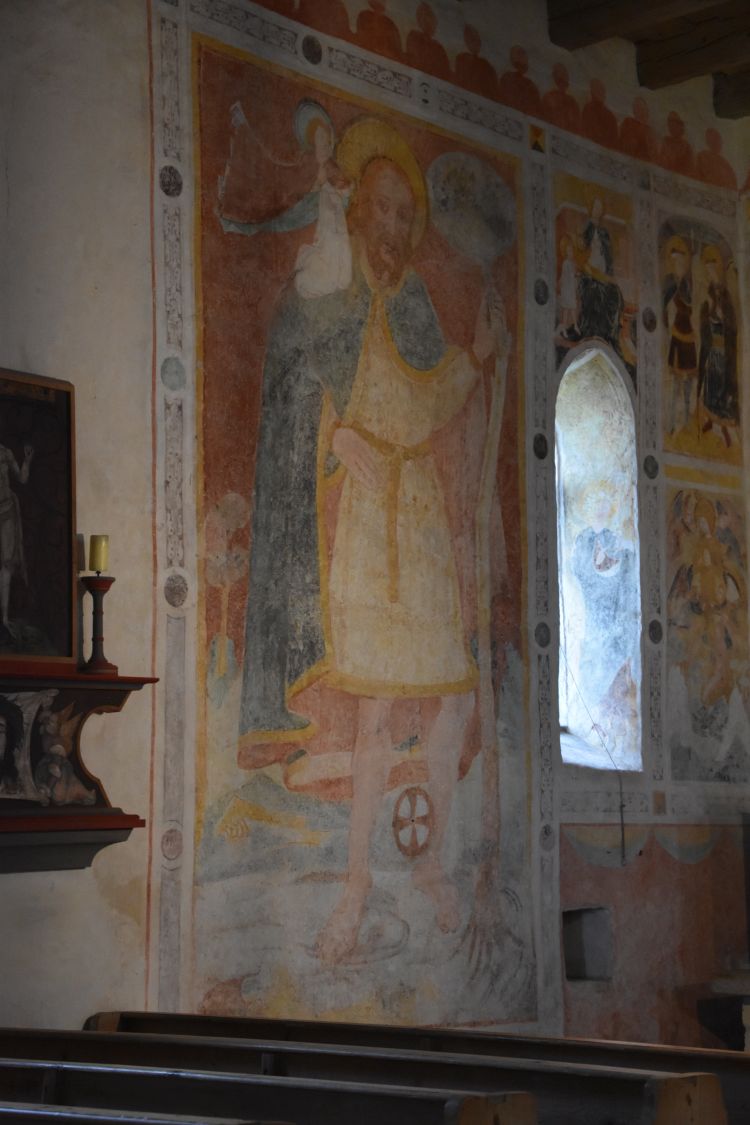
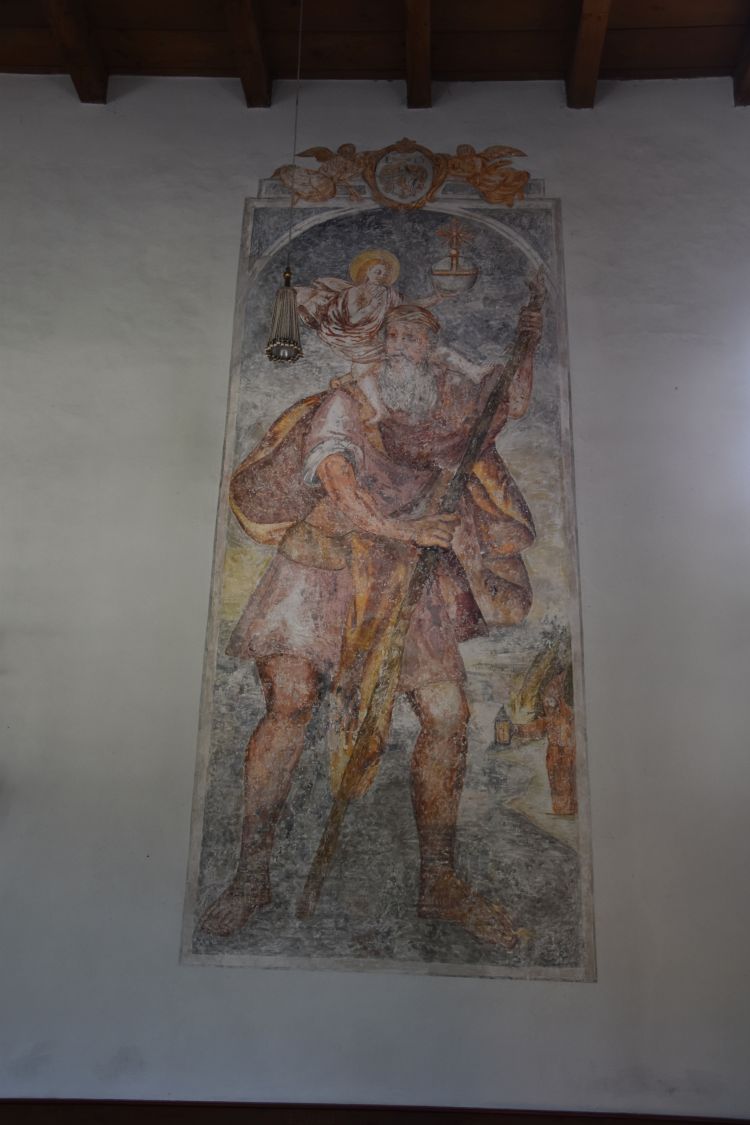
Saint Christopher greets us from the sidewall; Jesus child sits on his shoulder becoming heavier and heavier. Christopher is the patron of the travellers, ready to be invoked here by those who once transported goods across this pass.

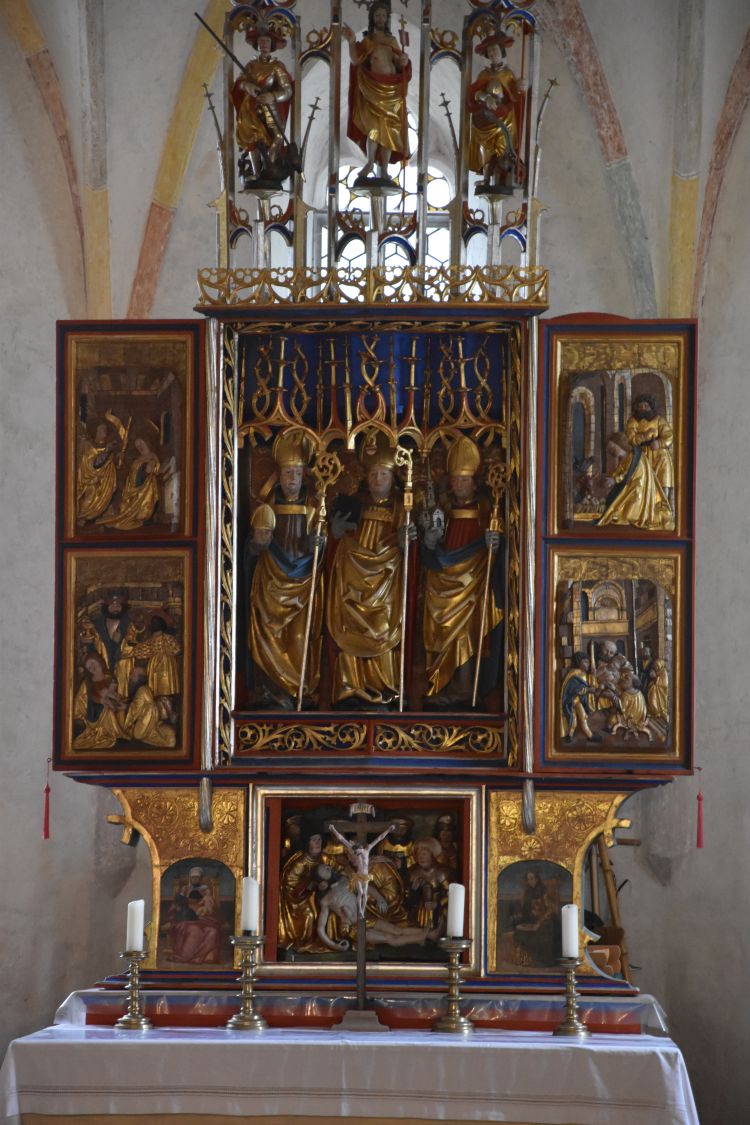
The altar in the choir was created in 1524. Saint Servatius is flanked by Saint Dionysius and Saint Wolfgang. It is interesting that Saint Dionysus or Saint Denis carries his head in his hands, but also has a head where it belongs. In Paris, he just has that one head in his hand, whereby sometimes the nimbus is around the head on his hand, sometimes above his headless body; he was bishop of Paris and was decapitated in the third century. Saint Wolfgang was bishop at Regensburg in the 10th century.

This small box altar (to the left of the choir, 1400) is deemed to be the most precious piece of art in the chapel. Only two of the eight figures can be seen, Sebastian (with the arrows) and Laurentius (with the grill). The figures are graceful, the style is called “soft gothic”.

We enjoy this lonely solemn place in the middle of the forest and say farewell.

Below the chapel, there is a mountain inn that is closed today.


Ruhpolding/Zell: Sankt Valentin

Ruhpolding and Zell have been unified to one village. Zell is proud of their church Saint Valentin.

The frescoes in the gothic choir are from 1450. They have been uncovered in 1955. Christ is in the middle.

In the altar we can see Saint Valentin in the middle, Saint Dionysus to the left (again with his second head in his hand like in the Streichen chapel) and Saint Conrad of Konstanz (his typical sign is the cup) to the right. In the wings are Saint Augustinus and Saint Zeno (the latter we have already met at Bad Reichenhall).

Looking back at the gallery with the organ, we can see the wooden ceiling that is still the original. the brochure says.

Also the church Saint Valentin has its Saint Christopher; the fresco is baroque, from the 17th century.


Einsiedl: Sankt Nikolaus im Oberland

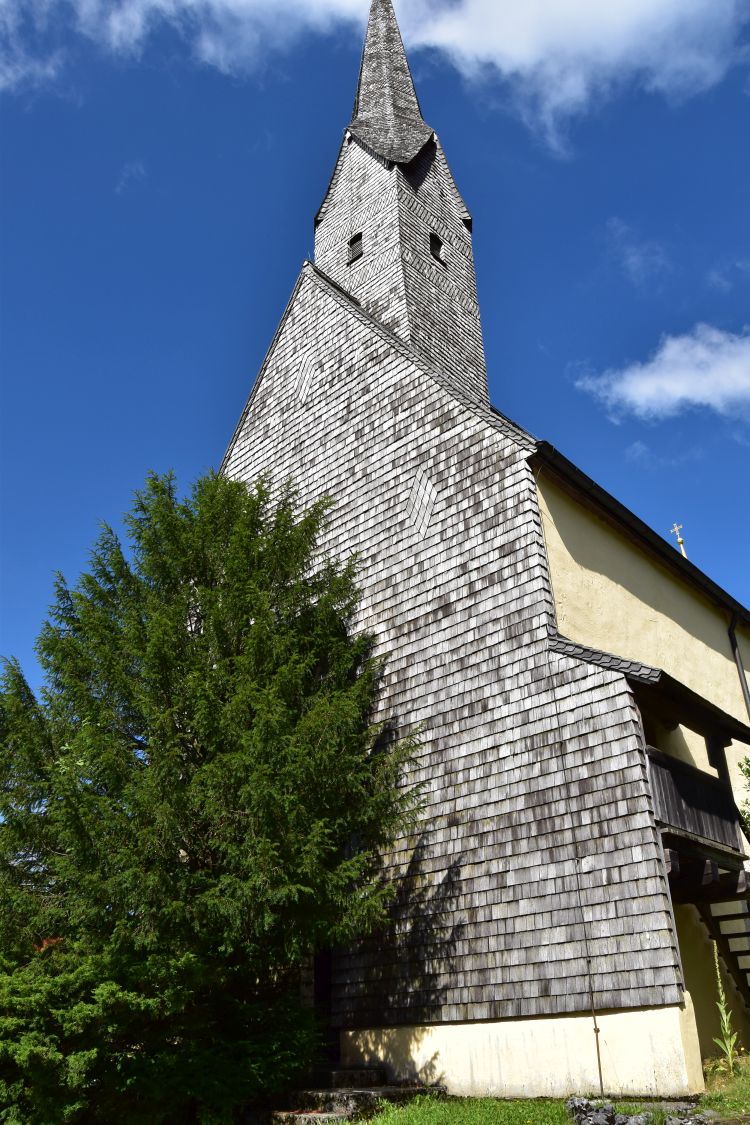
On our third day, the sky is brightening up, and we go for our first hike. We visit the nearby small church Sankt Nikolaus im Oberland in the hamlet Einsiedl. The church was built around 1200. Legend tells that a duke serving Barbarossa fought war against Salzburg and destroyed the city. This was too much. He should not have destroyed the city. Barbarossa banned him and sent him to this lonely place, where the duke built the small church dedicated to Saint Nikolaus and a farm.

The farm is called “zum Einsiedl” and the family living here looks after the church. The owners have a talent to cultivate flowers.

Wooden shingles cover the roof, the tower and one side of the church building.

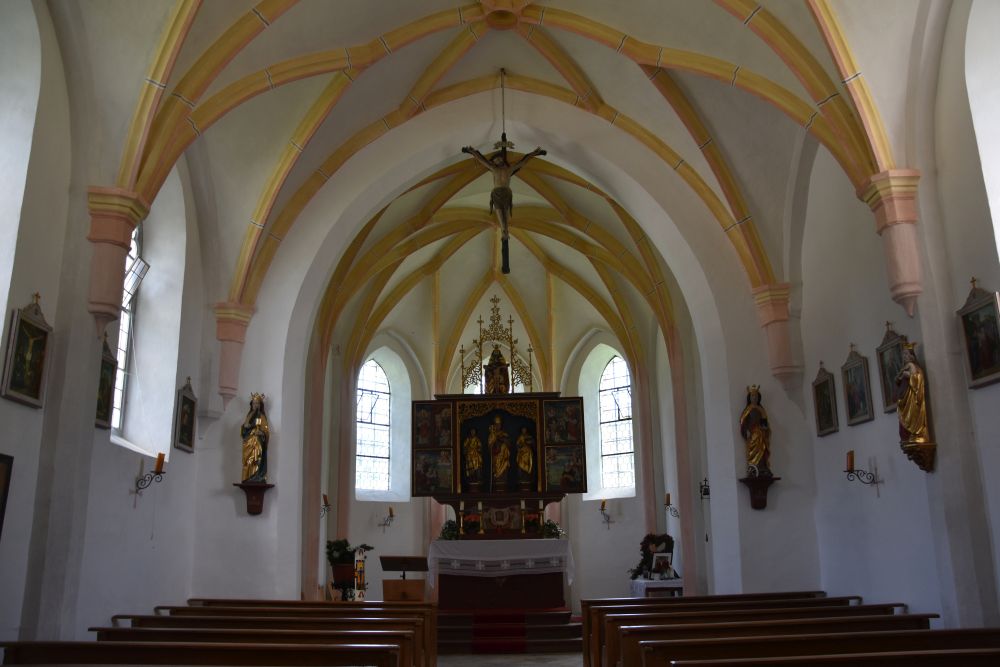
Inside the church shows its original gothic habit.

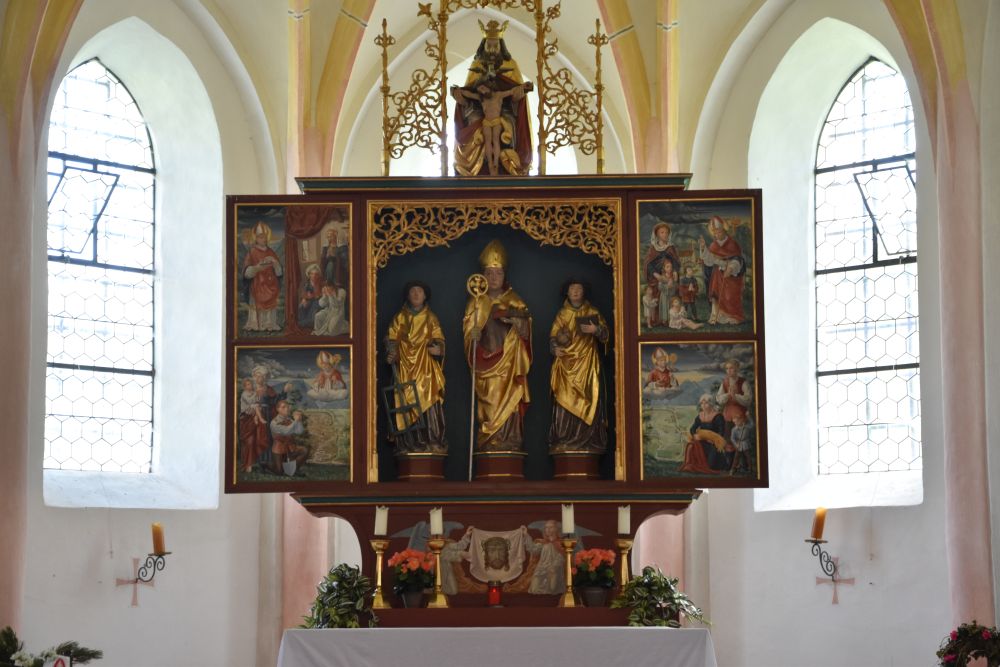
In the altar from 1940 are a figure of Saint Nicolas (around 1700) and Stephan (to the right) as well as Laurentius with the grill (to the left, both early 16th century).

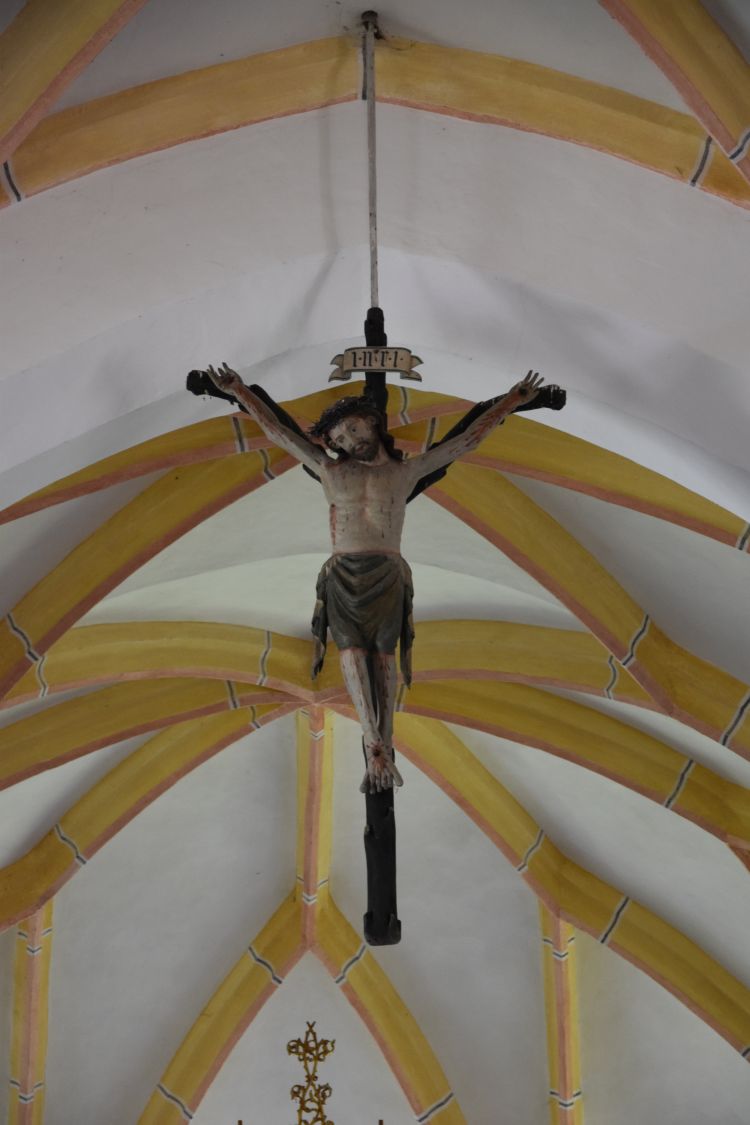
The cross in the arch to the choir has been created in the late 14th century and renovated in 1997.

The booklet by Heinz Scholz mentions the old window from 1420 showing the Annunciation and the birth of Christ. We look for that window everywhere. We see a coloured window near the entrance to the church. My friend looks through the key hole of the entry on the gallery, but no, this is not this window. What has happened to this treasure?

Or have we just not been able to find it? Perhaps we should have asked the farmer? We will do so the next time.

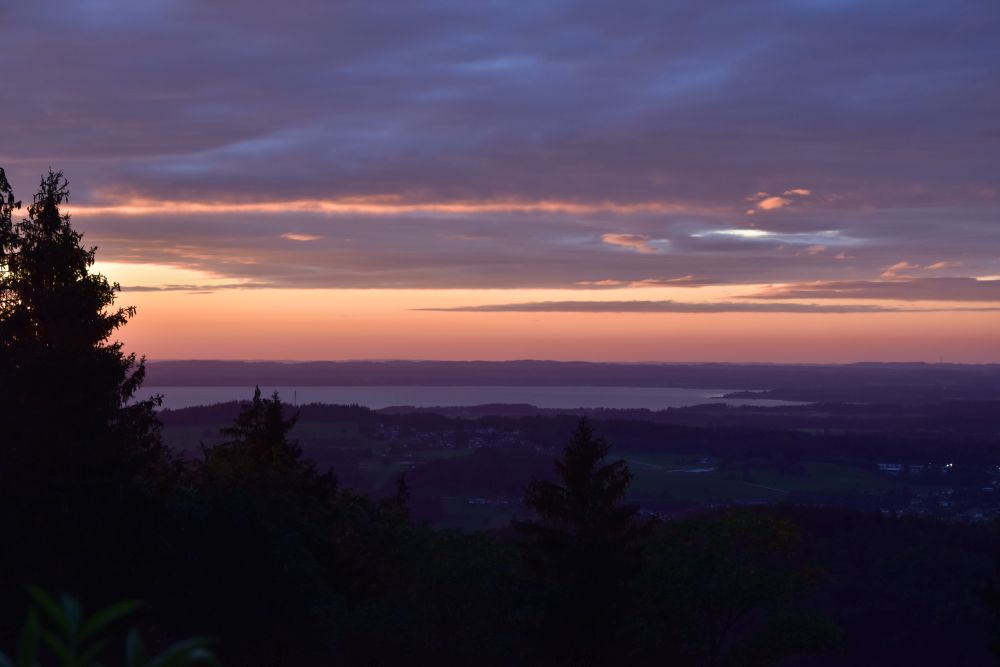
This ends our tour discovering cultural treasures in and around Ruhpolding. On our last evening in Upper Bavaria, we enjoy the sun set from Maria Eck.

And on our fourth and last day in and around Ruhpolding we climb the Unternberg with a magnificent view of Ruhpolding.

We say good-bye to Ruhpolding and, after a swim in the small and chilly Tütternsee, we return to the traffic jams of Munich to celebrate the sixth wedding anniversary in the restaurant with the Venetian name “Canal Grande”.


Sources:

“Ruhpolding”,Verlag Schnell und Steiner Regensburg 2002
“St. Servatius auf dem Streichen”, Verlag Schnell und Steiner 2017
Heinz Scholz, “Pfarrkirche St. Michael, Inzell”, A. Miller & Sohn Traunstein 2004

On the road: Thoughts about Corona in Oberbayern (Upper Bavaria)

In August 2020, we spend a four day vacation in and around Ruhpolding in Oberbayern (Chiemgau). It has been the first time since the start of the pandemic that I am staying in a hotel, going for shopping and eating in restaurants every day.

Tourists are back in Oberbayern (Upper Bavaria). The hotels seem to be well booked. But the atmosphere has changed. The tourists are primarily Germans, except for a few Dutch, a few Englishmen and a few Swiss (besides me).

In shops, we have to wear masks. Some shops take great care, have installed separate entry and exit doors, restrict the number of clients inside and offer disinfectant. In these shops, I feel safe to do shopping. Other shops are careless: Entry and exit are not separated, many clients crowd between narrow shelves. Such shops I leave out.

In restaurants, we have to put on our masks, when moving away from our table and the waiters also wear masks (or vizors).  While some waiters follow the rules carefully, others do not cover their noses with their masks which makes it all useless. In our hotel, there is no breakfast buffet. Instead we have to indicate on a list, what we want for breakfast, and in the morning, we receive everything on a tray. The bar is lonely, the jolly barkeeper of last year has left the hotel.

Some beach places at the lakes are crowded, while others allow to keep distance, and the personnel respects the rules. We particularly enjoyed our swim at the small and less well-known Tüttensee with the friendly and corona conscious personnel and with corona aware guests.


The Bavarian language gives orders a friendly touch

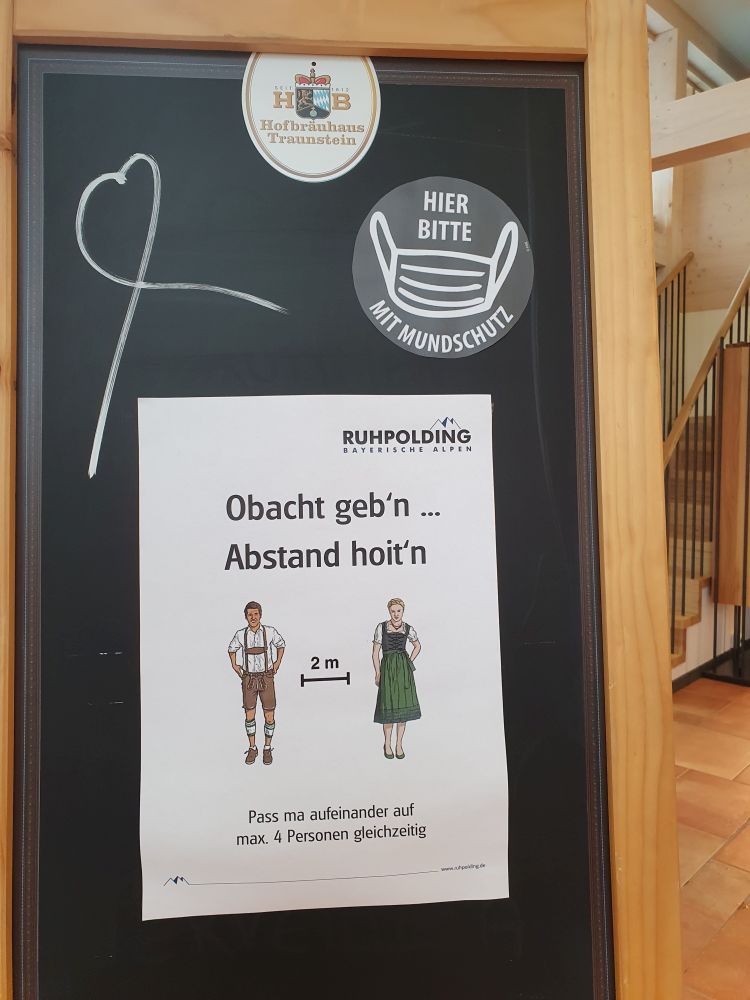
In a restaurant in Ruhpolding, I found this invitation to pay attention and to keep distance. “Obacht geb’n” means “pay attention” (“Obacht” = “Achtung” or “attention”).  “Abstand hoit’n” stands for “keep distance” (“hoit’n” means “halten” or “keep”). And, of course, you have to wear the mask inside (“hier bitte mit Mundschutz”).

In this restaurant, guests are invited to come in (“kemmt’s eina”) and the invitation to keep distance is kept in “normal” German (“bitte Abstand halten” = “please keep distance”).


Touching testimonies of children about the pandemic

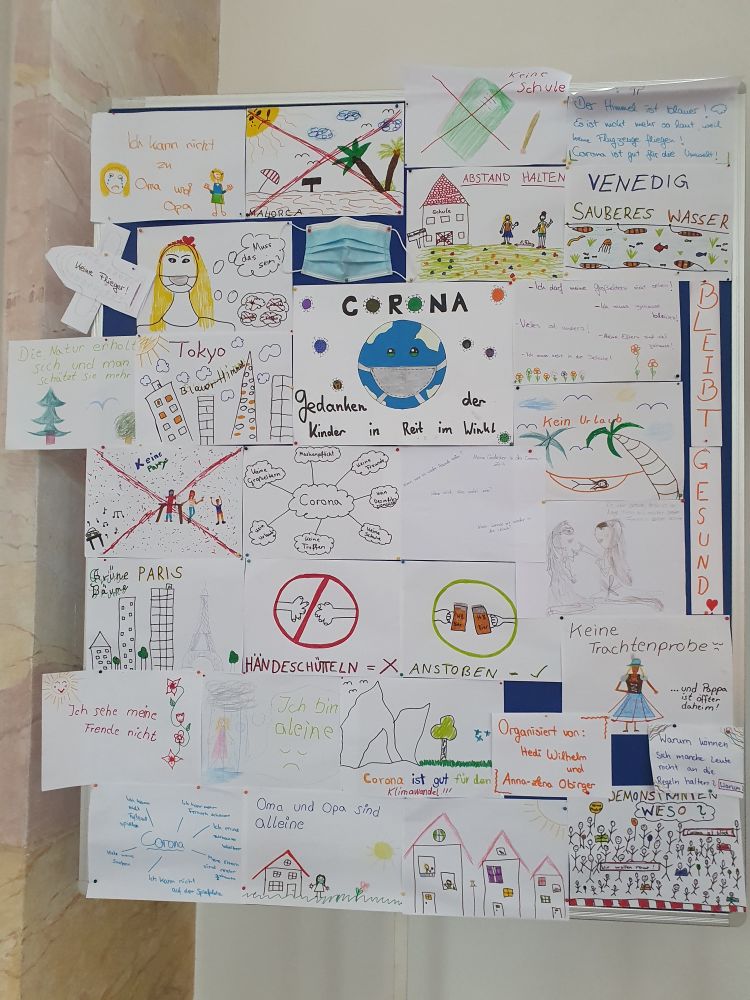
In the baroque church St. Pankratius at Reit im Winkl, we come across these thoughts about the pandemic written down by children.

Let us zoom in some of the testimonies.

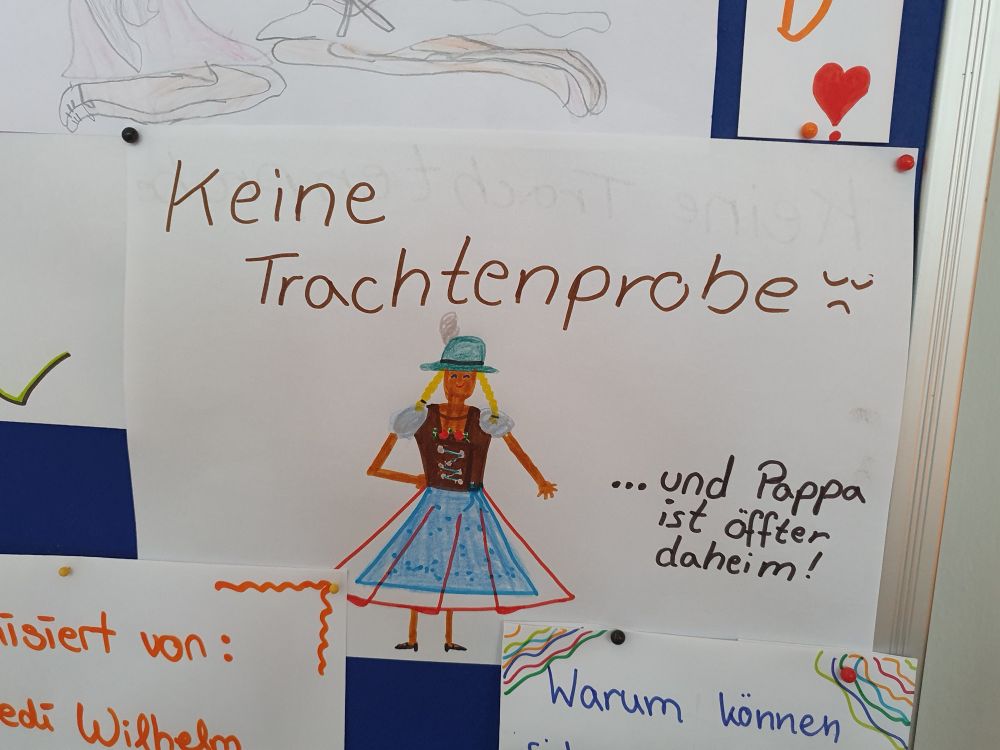
“Keine Trachtenprobe” means “no trying on traditional costumes”… and “und Pappa ist öffter daheim” translates as “and papa is at home more often”, whereby “ff” in “öffter” emphasizes “öfter” (“more often”) and also “pp” in “pappa” makes him more present. Children have their own spelling rules to express their feelings.

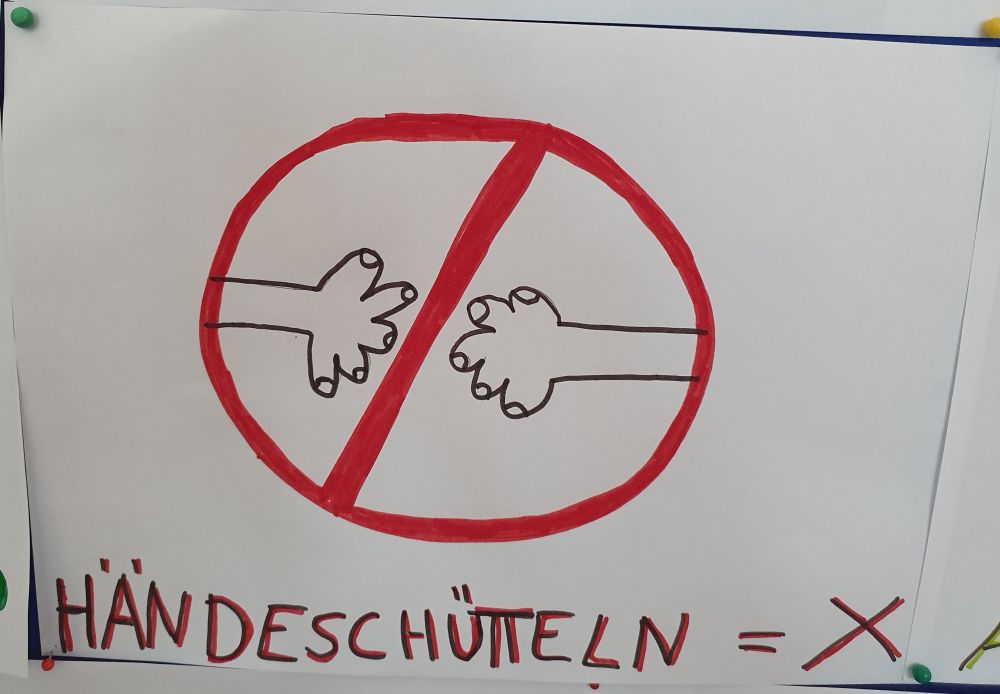
“Händeschütteln” or “shaking hands” is obviously forbidden.

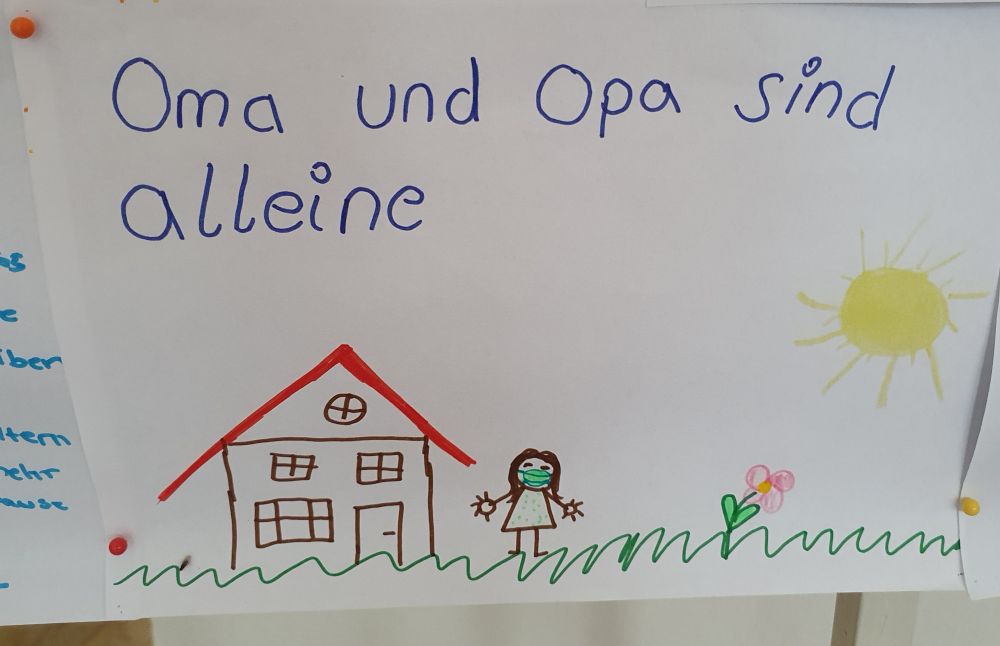
“Oma und Opa sind alleine” – “grandma and grandpa are alone”. The girl has to stay outside the house of her grand-parents, how touching. She is even wearing a mask.

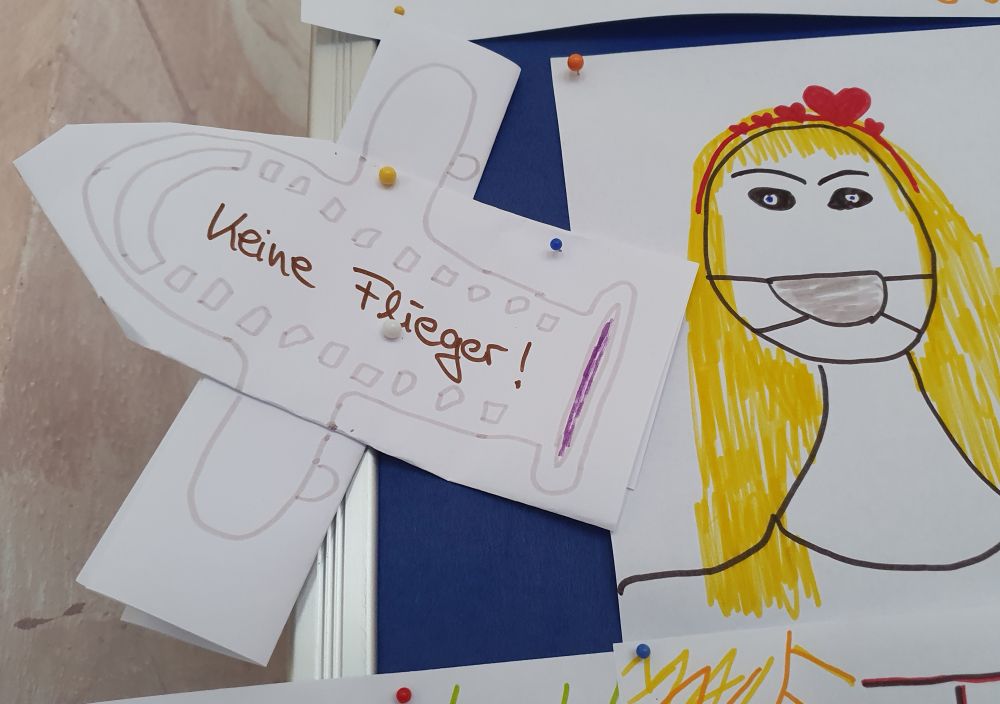
“Keine Flieger” – “no airplanes”. Yes, the sky has become much more quiet. The girl wears a mask and holds her hair back with a beautiful ribbon decorated with hearts.

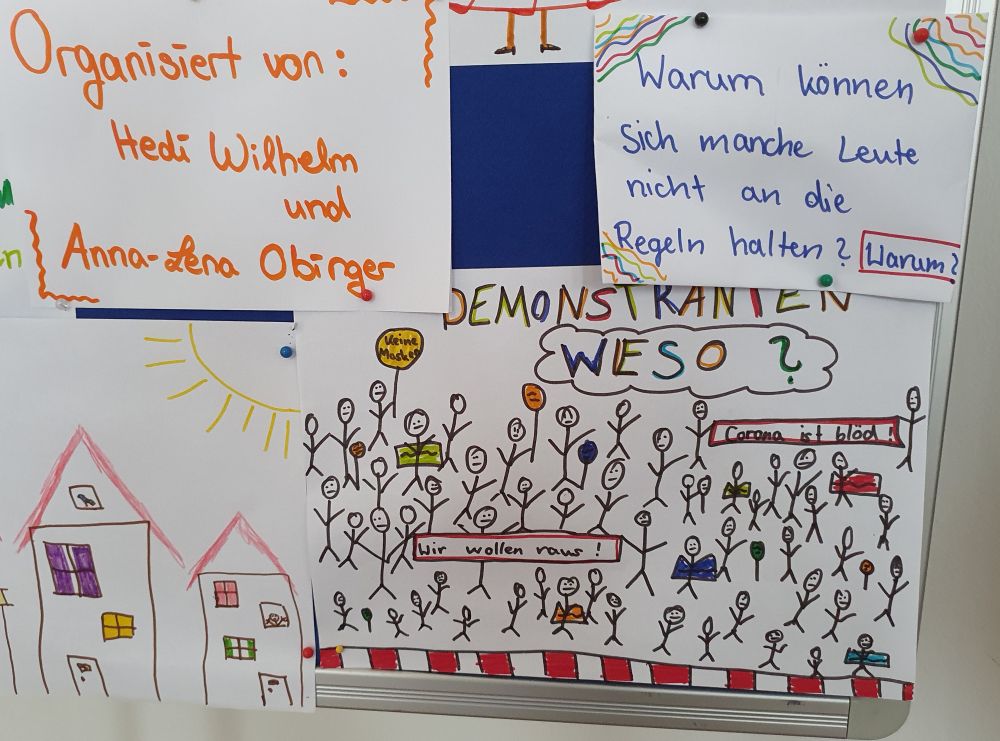
“Warum können sich manche Leute nicht an die Regeln halten? Warum?” – “Why can some people not follow the rules? Why?” And “Demonstranten – wieso?” – “demonstrators – why?” The demonstrators want “keine Masken” (“no masks”), postulate “wir wollen raus!” (“we want to go outside”) and claim that “Corona ist blöd” (Corona is dumb”).

I do feel with these touching observations and remarks of the children of Reit im Winkl. They are so young and go through this pandemic experience with their eyes open. The pandemic is even difficult for us adults. I heard a high level Swiss politician say: “Life has become less safe and it is less fun”.

The baroque church that displays the children’s thoughts is painted in soft pink. Pink is the colour of happiness. The pink colour contrasts with the moving observations of the children, but it also gives an atmosphere of hope… I do hope that these children and all our children will go through more serene times with less worries pretty soon.


On the road: Bad Reichenhall in Upper Bavaria

In August 2020, we spend four days in Oberbayern (Upper Bavaria). We are in the middle of a severe weather front with heavy rainfall which gives us the opportunity to explore the culture of the area (instead of going for hikes). After past night with the splashing rain that made the rivers leave their beds, we visit Bad Reichenhall, where already the Romans had found salt. Bad Reichenhall is near the border with Austria.


Eye twinkling at Bad Reichenhall

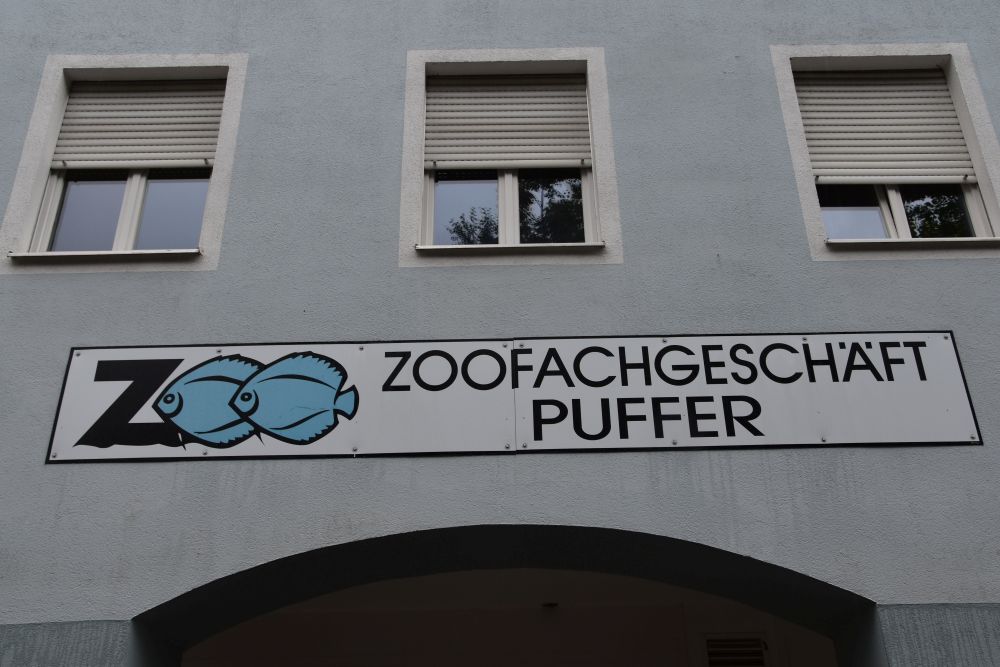
First we notice nice signs of humour at Bad Reichenhall. “Puffer” (buffer) is a nice name for a zoological shop, and the way they write “ZOO” is very inventive, even “eye twinkling”. It is a nice coincidence that “puffer” is also a fish in English (“Kugelfisch” in German).

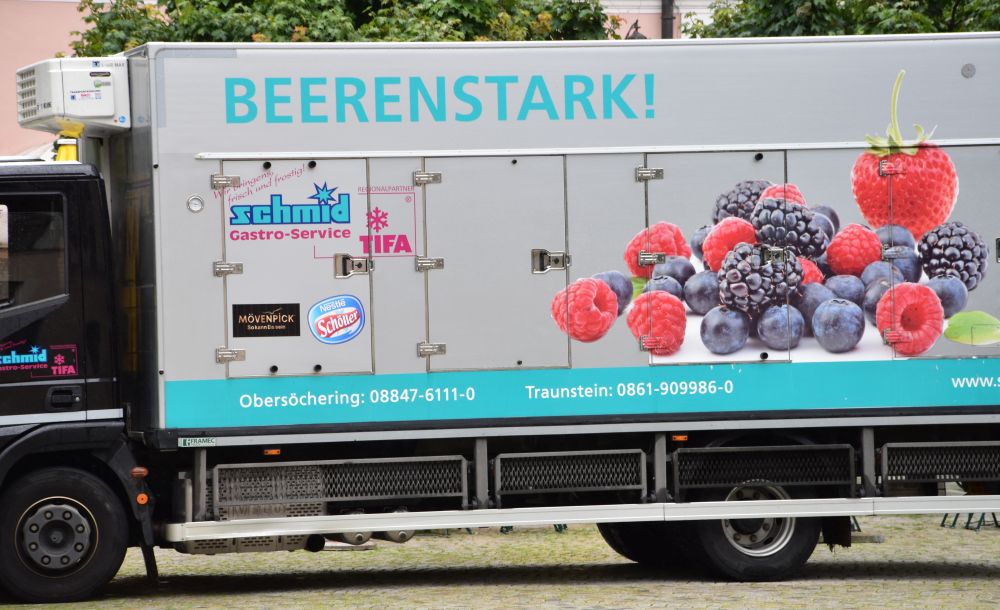
“Bärenstark” means “as strong as a bear”. May be, you will be as strong as a bear, after having eaten these berries or Beeren. “Beerenstark” is an allusion to “bärenstark” – the two words sound similar. May be, the driver is also “bärenstark”, as he has to carry the boxes with the berries when delivering them.

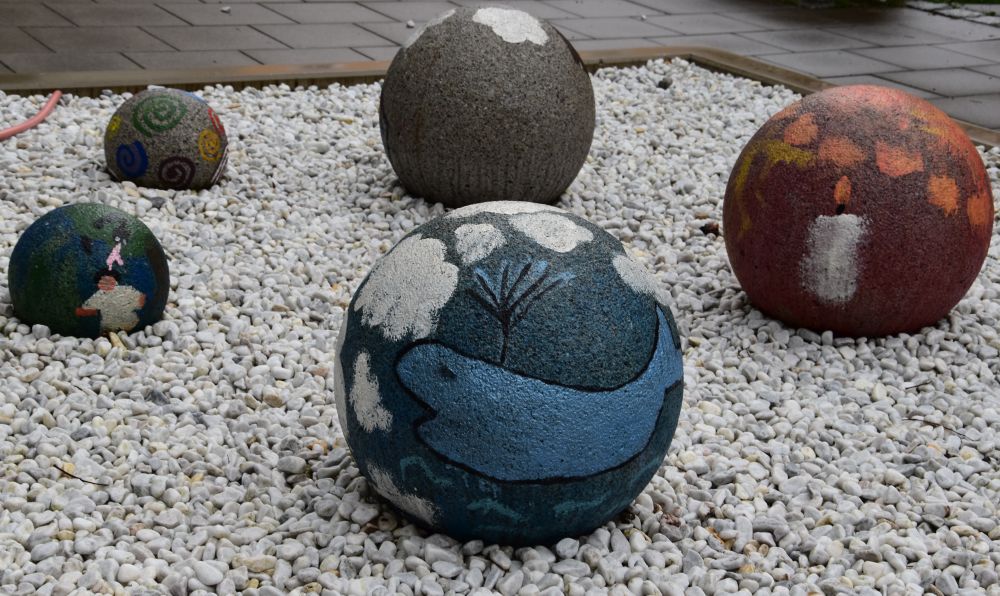
This whale reminds me of the whale that swallowed (and gave back) Jonah. Nice children’s paintings!


Welcoming city centre of Bad Reichenhall

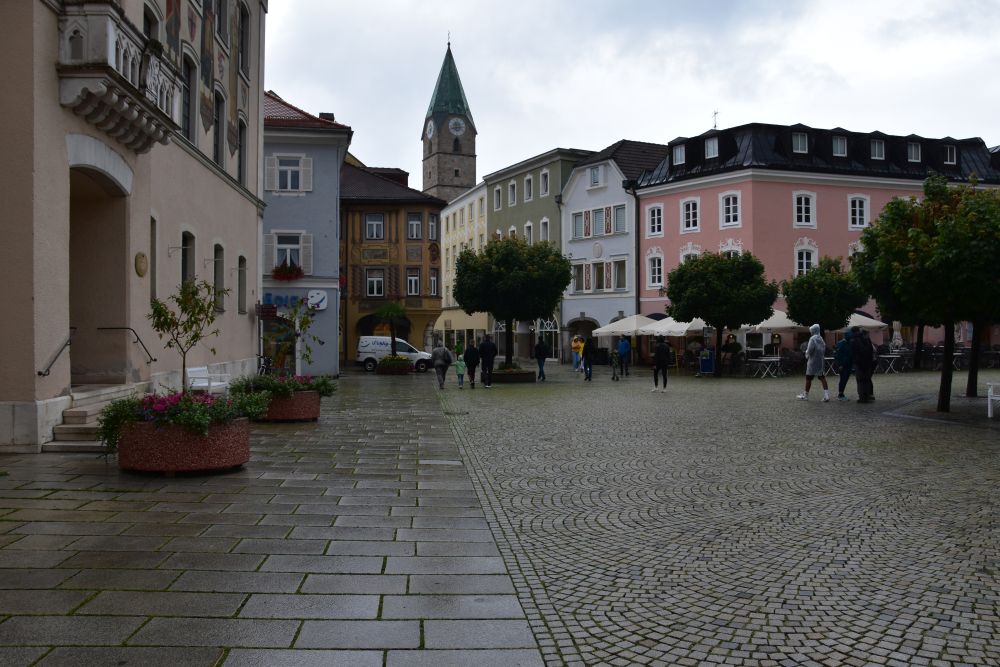
The city has an old tradition, but in 1834 a fire destroyed it completely. The city centre has been reconstructed nicely after 1834 and is now a pedestrian area.

Here we stand in front of the old townhall built in 1849.

The frescoes show Saint Rupertus (7th century), Charlemagne (emperor of the Romans 800-814, king of the Franks from 768), Frederick Barbarossa (Holy Roman Emperor, 1152-1190) and king Ludwig I of Bavaria (1825-1848). To their sides stand Caritas and Justitia.

I shake my head wondering: What an interesting mixture of personalities across so many centuries! But then I learn that they are all connected with Bad Reichenhall. Rupertus is said to have rediscovered the existence of salt after the Romans had left, Charlemagne seems to have supported the foundation of the first Zeno church (which later became the Zeno monastery), Barbarossa is one of the patrons of the Zeno monastery and Ludwig I ordered the salt factory to be rebuilt.

The pedestrian area with the Church Saint Aegidius in the background is pretty and tidy…

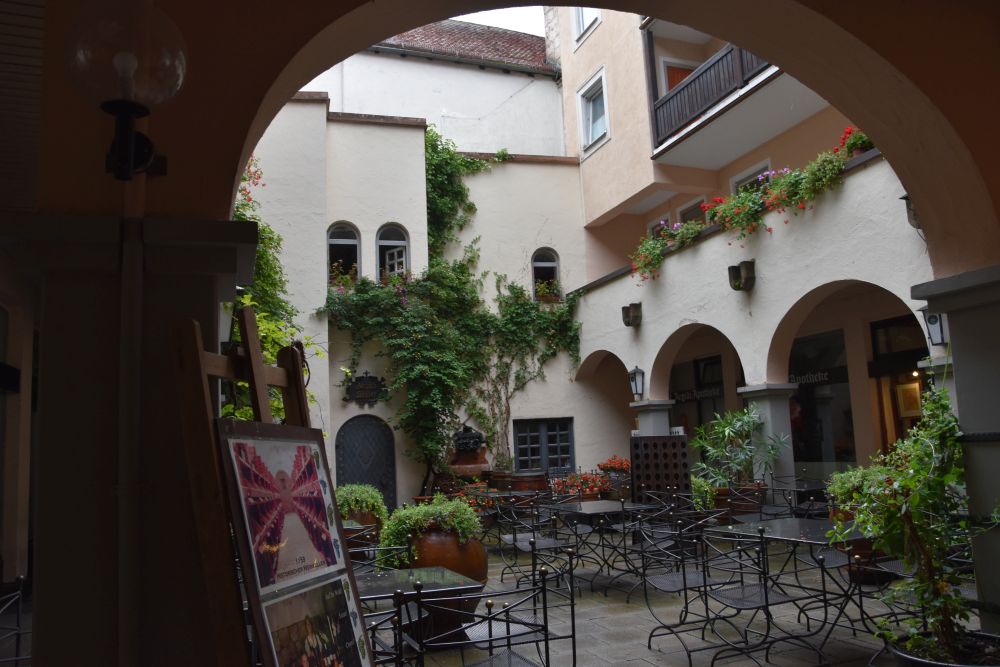
… with inviting backyards. Everything is just a bit wet at the moment after that much rain.

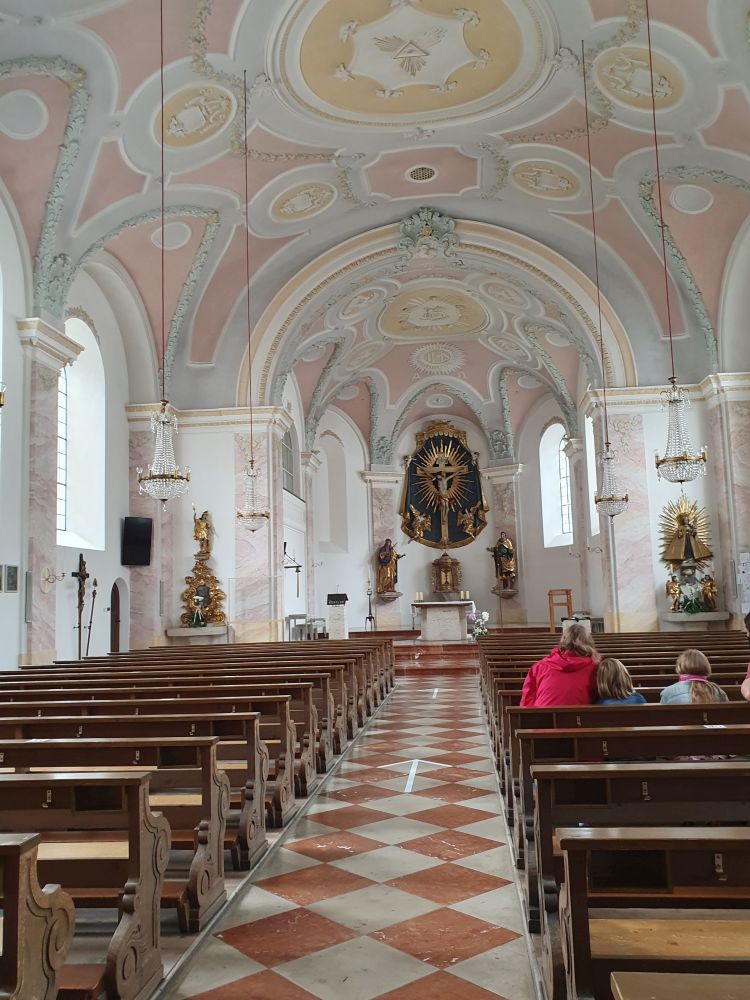
We enter the church Saint Aegidius. It has been remodeled in gothic style in the 15th century and had to be reconstructed entirely after the fire of 1834.


The baths of “Bad” Reichenhall must have seen better days

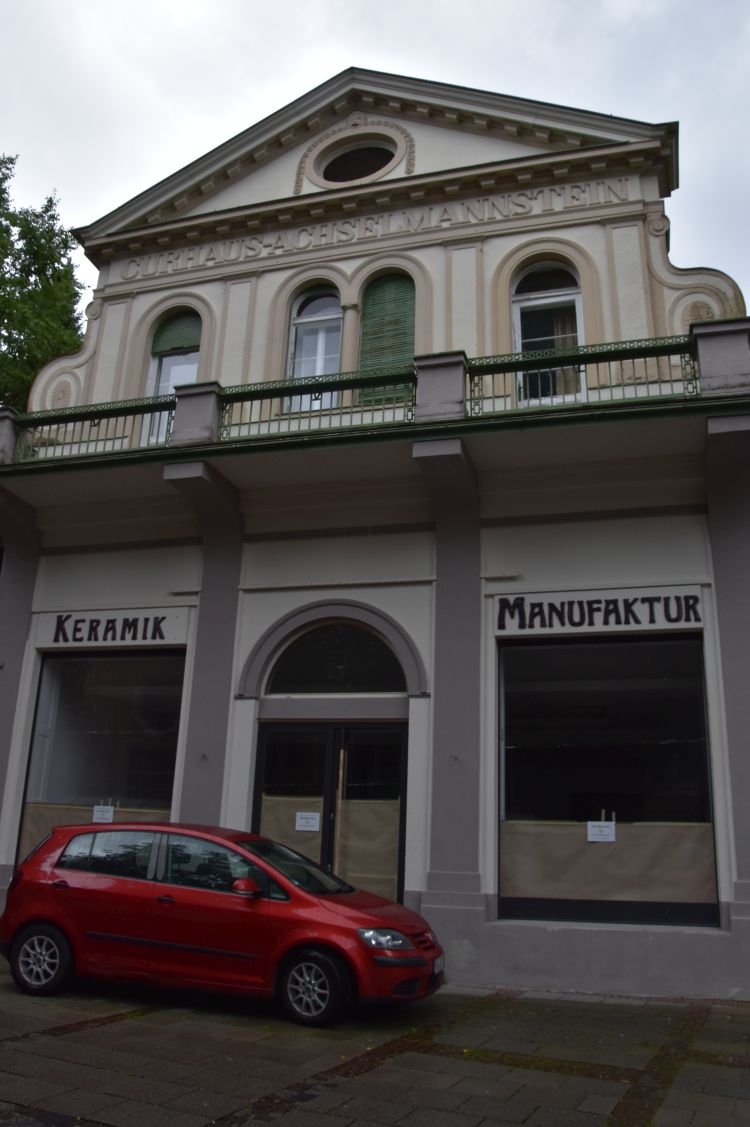
In the 19th century, Bad Reichenhall started to make use of the medicinal benefits of salt. In 1848 the Bavarian king Maximilian recovered here for five weeks, and then, Bad Reichenhall was an important venue for High Society. Art Nouveau buildings and the garden (Kurgarten) of 4 hectares remain from those days. During National Socialism Bad Reichenhall became a garrison city and after the Second World War, the caserns were used by the Americans and then by the German army. The first casino of Bayern was built here in 1955. In 1996 the German Health Care System was reformed and Health Insurance stopped paying for treatments at health resorts. Bad Reichenhall lost its main clientele. Though their government started to adapt the offerings to a younger clientele, the signs of past grandeur can be seen. For instance one of the luxury hotels offered rooms for 39 Euros per night and this “Curhaus” looks deserted.

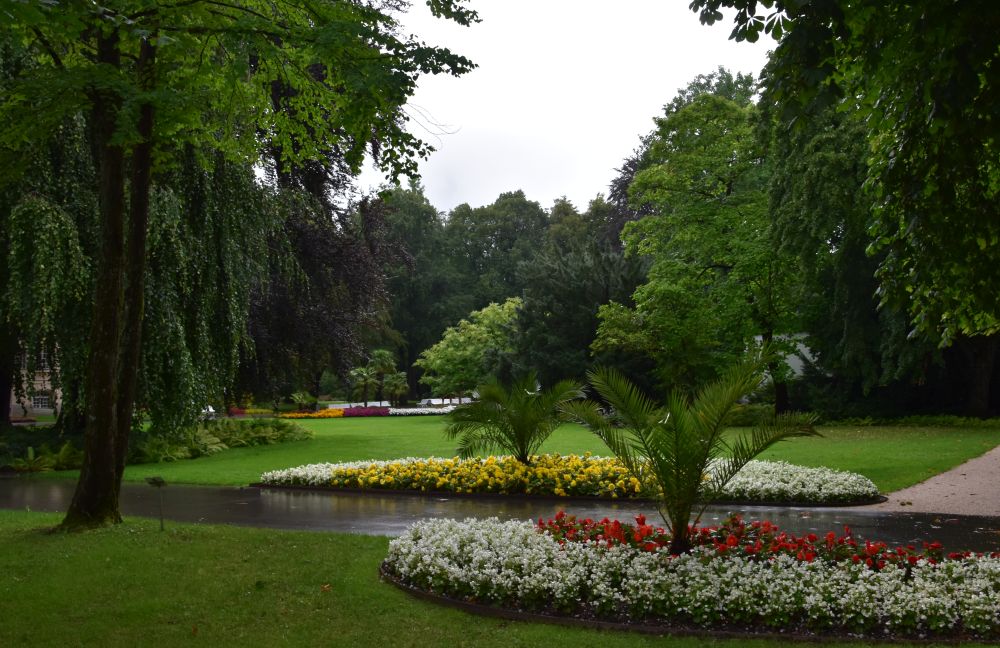
However, the “Kurgarten” is beautiful…

… and the adjacent Jugendstil Kurmittelhaus der Moderne from 1927 has been carefully renovated.

May the efforts of the city to attract more guests be successful, as it has more to offer than baths and health care: Hiking in the mountains with and without the support of cable cars, the tradition of winning salt (and telling about it in a museum) and the rich cultural heritage.


The Church Sankt Nikolaus with the Neo-Lombardian belfry

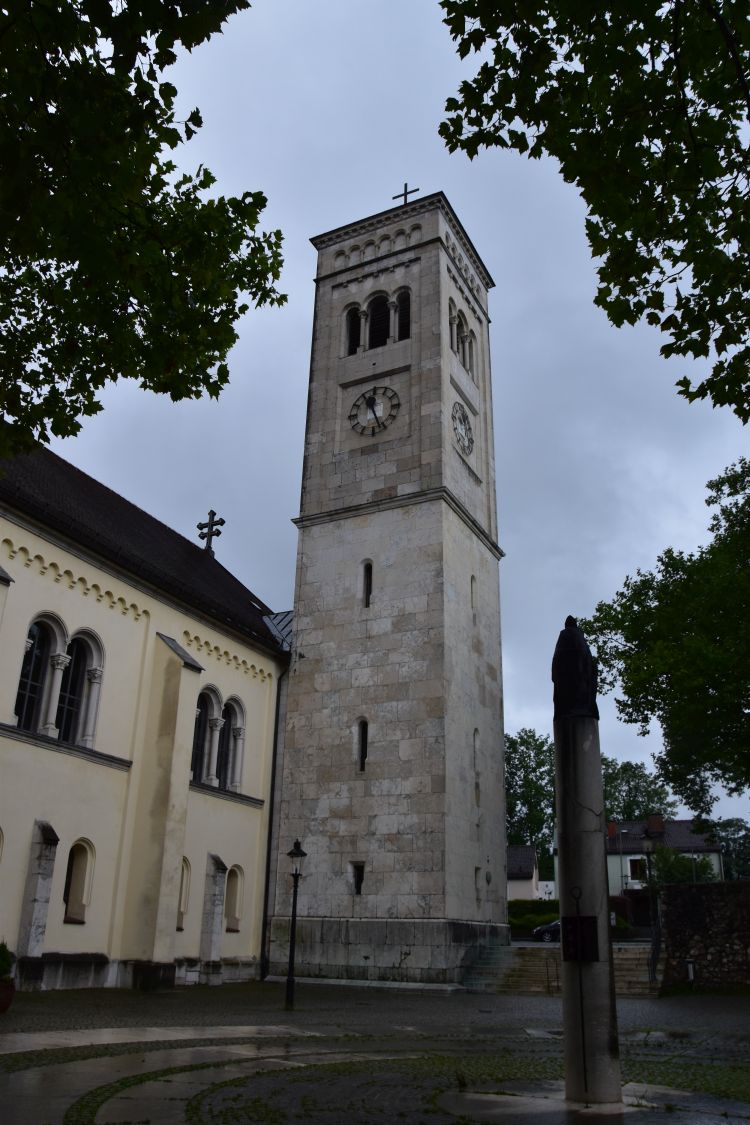
When entering Bad Reichenhall by car, I can notice the belfry of the Church Sankt Nikolaus.

The original belfry was teared down in 1861 and then reconstructed in Neo-Romanesque Lombardian style.

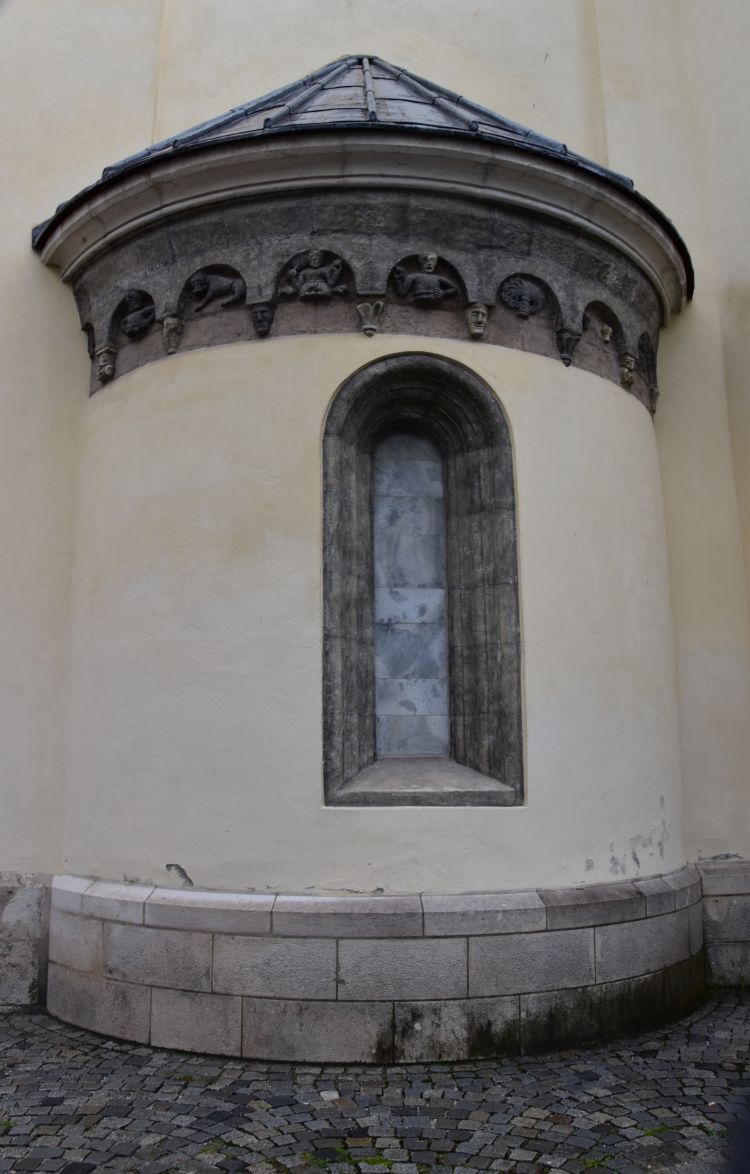
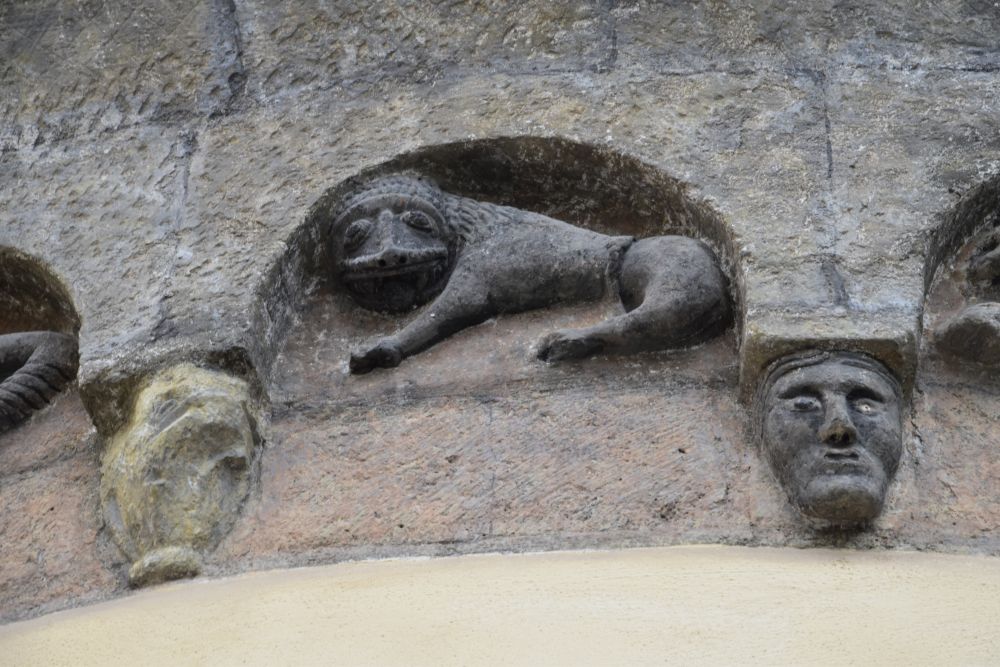
The apsis is the original from the 12th century. Human sculptures and lions are alternating in the frieze.

I like the lions that look at me.

Sankt Nikolaus is the parish church of Bad Reichenhall. It was built in 1181-1189, enlarged in the 19th century and renovated in 1967 to restore the Romanesque overall impression. The fresco in the choir is from the 19th century.


A beautiful Romanesque portal and gothic treasures: The cathedral of Saint Zeno

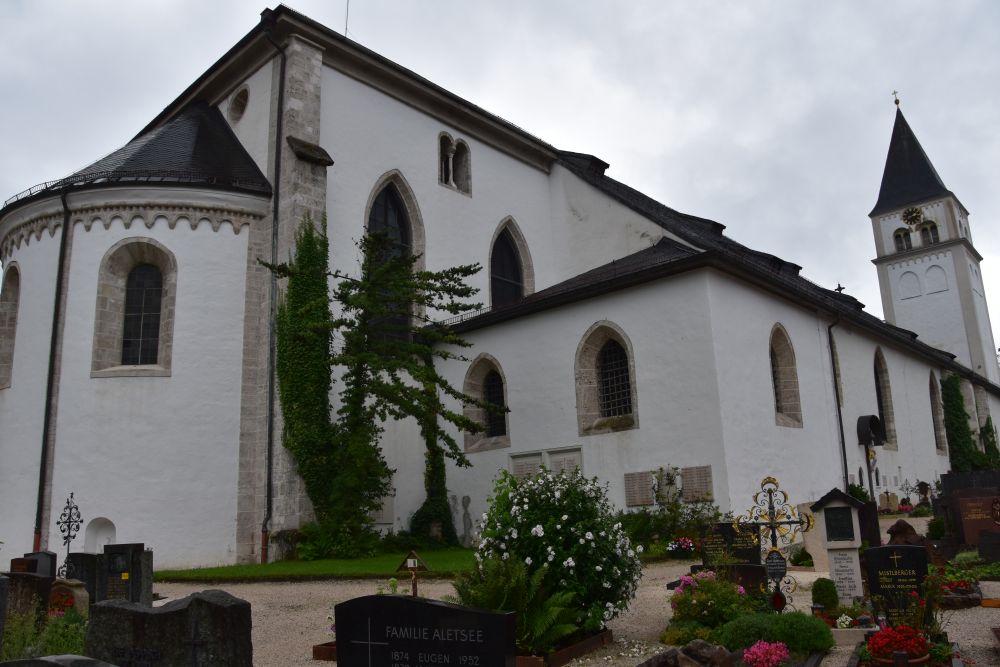
The Augustinian monastery of Saint Zeno was founded in 1131. The cathedral replaced the former building from Carolingian times (806 A.D.). Saint Zeno protects from floodwater which was a problem at that time and it is still a problem today, as the inundations of this past night show.

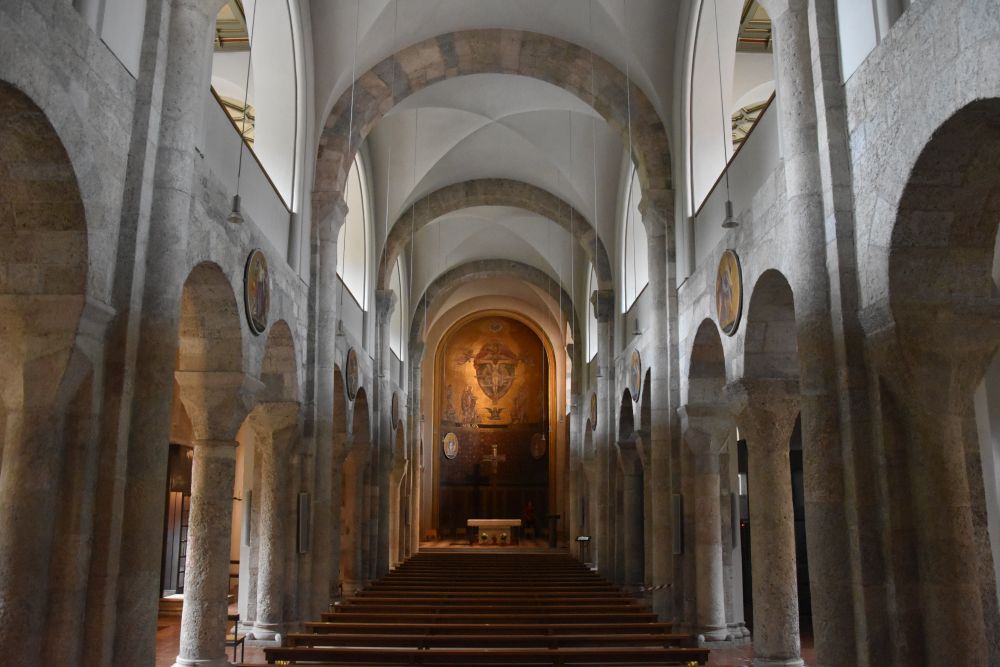
The plans for the construction of the cathedral were ambitious – a nave 90m long. Construction halted around 1160, but completing the cathedral was then supported by emperor Barbarossa – the monastery thanks him with his portrait in the cloister (which we cannot visit). Built in Romanesque style, the cathedral was enhanced by gothic elements after a severe fire in 1512. Much of the equipment in the cathedral is from the early 16th century.

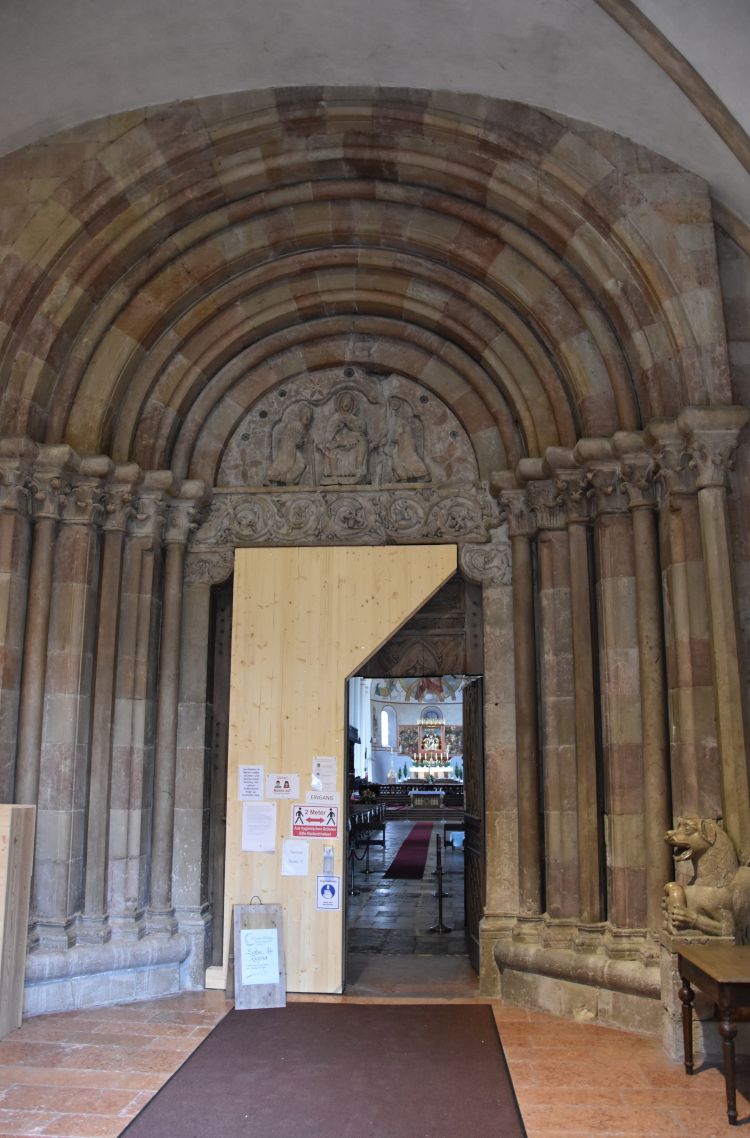
The Romanesque portal from the second half of the 12th century is the show-piece of the cathedral. It is assumed that the masters came from Piacenza. The portal is made from white and red (local) marble. Two lions holding prey animals in their paws guard the entry (one of the lions is hidden).

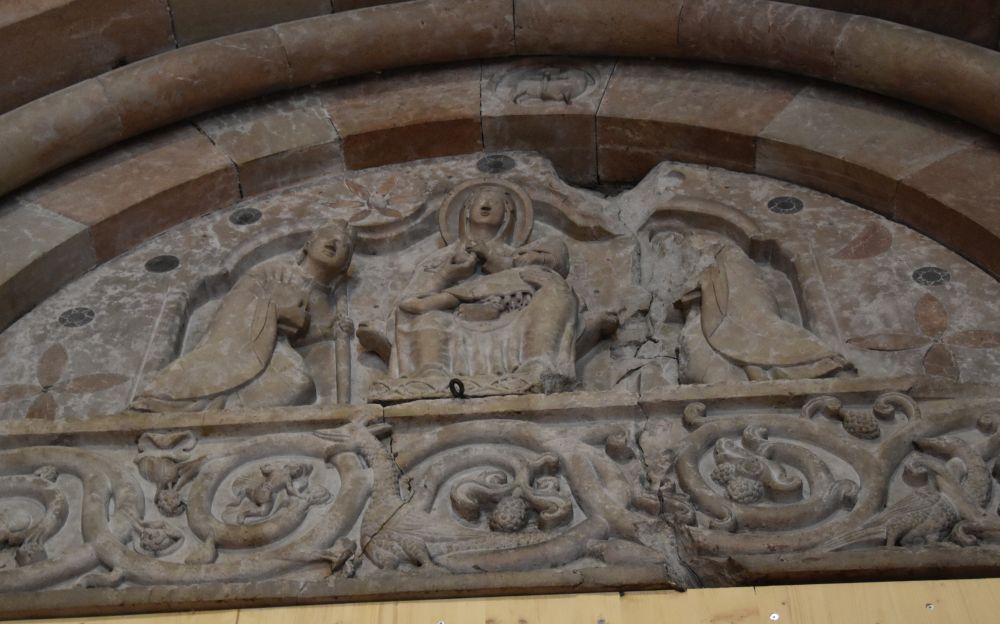
Madonna with the child sits in the middle of the tympanum. She is flanked by Saint Zeno (left, patron of the cathedral) and Saint Rupert (right, the man who rediscovered the existence of salt around 700).

The choir stalls of 1520 are made out of oak wood. Also the Coronation of the Virgin on the altar is from 1520. The fresco in the choir, painted in 1935, follows the tradition of early Christianism showing Christ as Pantocrator.

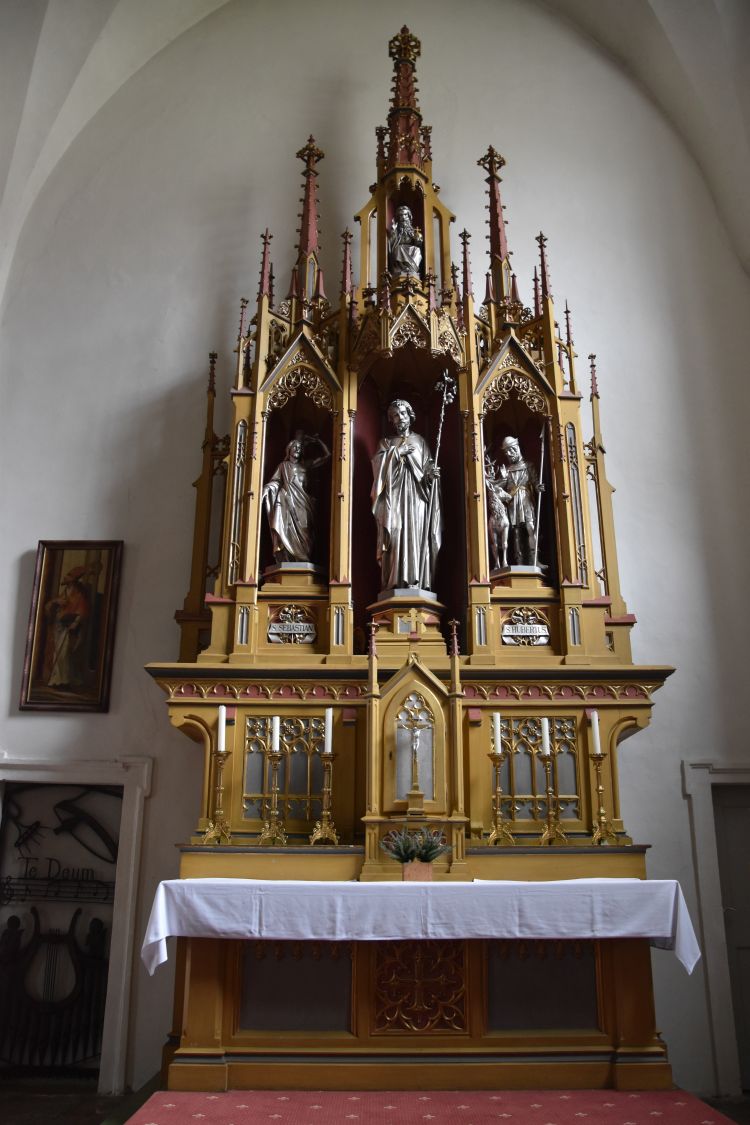
The altar of Joseph is newer; it is from 1875. I am astonished to see Hubertus with a deer. Later I learn that the baron who donated the altar was a passionate hunter and he wanted to see Hubertus on his altar. Joseph heads the altar and to his left side stands Sebastian.

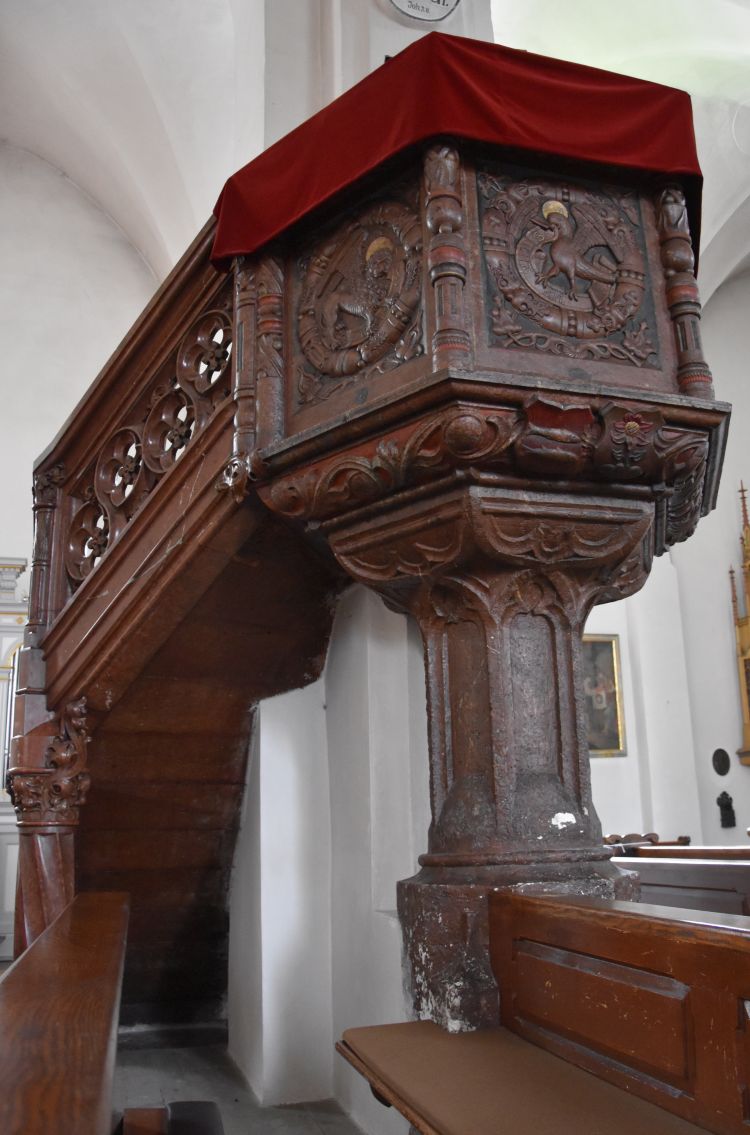
The beautifully carved wooden pulpit with the evangelists’ symbols is late gothic or even early Renaissance, from 1522.

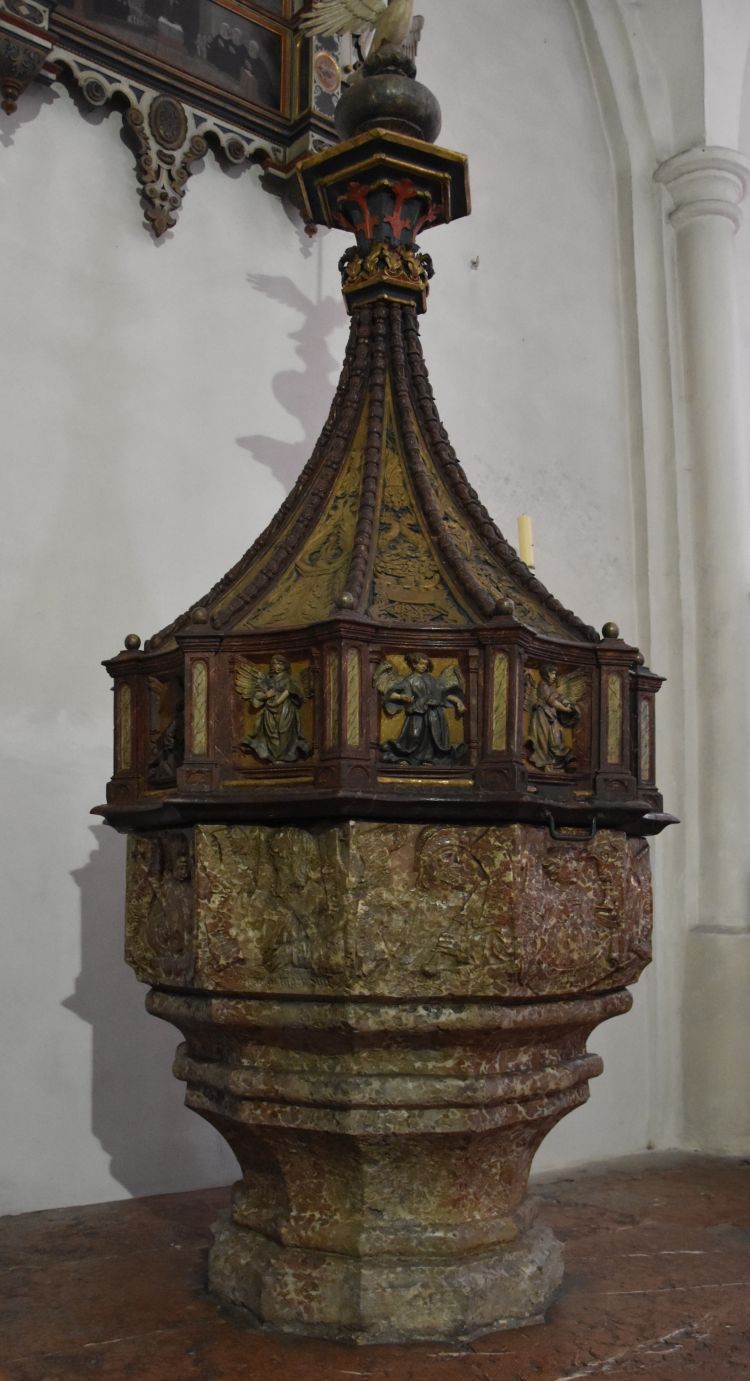
Also the baptismal font with the frieze of angels carrying instruments of the Christ’s Passion originates from 1522.

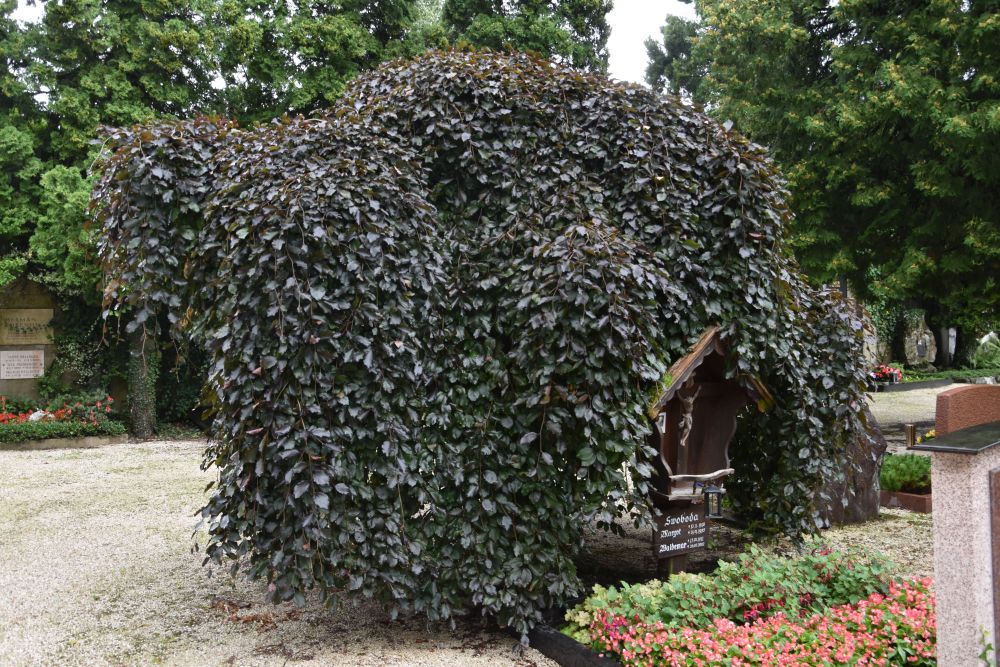
To round off our visit of Saint Zeno, we stroll through the romantic cemetery with old trees and enchanted corners.

May be we have to return one day to see the cloister that is mostly closed. This would require some pre-organization.


Salt – already used in Roman times

Already the Romans used the salt deposits in the area of Bad Reichenhall. As we already saw, Saint Rupertus found the salt fields again around 700. Even today, 50% of the salt consumed in Germany is provided by Bad Reichenhall.

In the old salt factory built in 1844, salt was produced until 1929. It is now a museum. Unfortunately, the line of tourists at the entrance looks like an hour waiting time or so. We take a photo of the well house with the well chapel Saint Rupertus…

… and start our city excursion without waiting in line. After our stroll through the city centre we return and have lunch in the old salt factory. I love the modern furnishing in this traditional factory building and we enjoy delicious salads. To be recommended.

Our car waits for us not far from the salt factory. Through puddles – some pretty deep – we return to Ruhpolding.


Sources:

Markus Moderegger and Martin Wirth: “Die Kirchen in und um Bad Reichenhall”, Verlag Plenk Berchtersgaden 2019;
“Bad Reichenhall – St. Zeno”, Verlag Schnell und Steiner 2008
Bad Reichenhall in Wikipedia
St. Nikolaus in Wikipedia

On the road again: Romance and Romanesque culture at the Chiemsee

In the beginning of August 2020, I visit my friend at Munich and we spend a few days at Ruhpolding in the Chiemgauer Alps of Oberbayern (Upper Bavaria). I am surprised to find so many churches with a Romanesque and Gothic heritage here. So far I have mostly come across churches built in baroque or rococo style in Bayern.

On the way from Munich to Ruhpolding, we visit first the St. James church of Urschalling with the gothic frescoes. Then we take the boat to the Fraueninsel that promises Romanesque culture and romantic gardens.


Urschalling  – St. James church with frescoes from the 12th and the 14th century

Since having read Eugen Diesel’s “philosophy at the steering wheel” (1951) earlier this year, the St. James church of Urschalling has been on my travel agenda. Now, I am here, above the Chiemsee, south of Prien.

The church originates from the 9/10th century and has been rebuilt later.

In the nave, an iron grating prevents visitors from approaching the choir. I take this photo standing behind the grating. The frescoes are from the 14th century.

Jesus Christ is in the middle of the choir, surrounded by the symbols of the evangelists. Wikipedia  assumes that in the 14th century, the frescoes from the 12th century were repainted preserving the earlier Romanesque themes. This explains the Byzantine representation of Christ as Pantocrator that was common for early “western” Christianity as well. Below Christ are the apostles.

Female Saints decorate the  vault of the choir. To the left is Saint Hedwig carrying a model of the church.

The presentation of Trinity in the northern pendentive of the choir merits a separate entry in wikipedia. It shows godfather to the right (white hair), Christ to the left (fair hair) and the Holy Spirit in the middle (looks like a woman, whereby it is under debate, whether this is a young man or a woman). At the bottom, the three elements of Trinity end in ONE dress and coat (Brugger et alii, p. 12). This is an exceptional and creative representation of the Holy Trinity.

The south wall shows the passion of Christ starting with the Last Supper that has been cut out partially by the window.

Above the entrance to the tower is the gloomy picture of a hanged boy.

It is difficult to discern all frescoes from where we stand behind the grating. We enjoy the solemn atmosphere.

The church had already been decorated with frescoes in the 12th century. Adam and Eva have been preserved. I took them out of the brochure of Brugger et alii. This fresco is on the northern wall of the choir, and can hardly be seen from the grating.

After a delicious lunch at Urschalling, we take the boat to the Fraueninsel.

The roof of the famous cathedral belfry appears behind the trees.


Fraueninsel: The Carolingian Torhalle (gate hall) 

In 782, Tassilo III, duke of Bayern, founded the Benedictine nun monastery on the Fraueninsel. The Torhalle or gate hall has been preserved from those times.

It reminds me of the Torhalle of Lorsch near Heidelberg that I have seen in 2016.

On the first floor, we find a museum with frescoes and with some interesting exhibits.

This lion served as a door handle to the cathedral. The lion was the heraldic animal of duke Tassilo.

In addition, the elegant wedding cup of Tassilo III and his wife Liutberga has  been preserved.

I liked the vine branches on this gilded cross from the 8th or 9th century.


Fraueninsel: The cathedral

The octagonal tower of the cathedral is THE landmark of the Chiemsee region. Originally it has been built as a fortification tower in the 11th century. In the 13th/14th century it became the belfry of the cathedral. In the 16th century, the onion shaped “Bavarian” roof was added.

Irmgard, a grand-grand-daughter of Charlemagne, was the first abbess of the nun monastery. She was beatified in 1928 and was then painted for the altar of her cathedral under the gothic vaults. She is also buried here.

I look back at the organ of 1980 on the gallery.

The plain Romanesque entrance is protected by a second door. Taking a photo is difficult.


Fraueninsel – romantic gardens

To round off our visit to the Fraueninsel, we stroll along the so-called ladies’ walk around the island and we see many beautiful gardens. From this small house with the yellow rose bush we can see the big brother of the Fraueninsel, Herrenchiemsee, with one of the castles. Ducks seem to love this garden.

I would like to enjoy a barbecue at this charming spot…

…or just to read and rest here.

All the gardens are well kept – such as this one with dahlias.

The huge oak tree above this garden has been planted in 1901, 120 years ago, as a small seedling that was protected against the sun by a cabbage leaf. The seedling developed marvellously.

The cathedral belfry appears behind these colourful flower bushes.

My friend shows me her favourite swimming spot with the view of Herrenchiemsee.

But – no swimming today. It is already late and we have a date with my friend’s friend at Ruhpolding. We take the boat back and leave the Chiemsee to settle at Ruhpolding.


Sources:

Walter Brugger and Lisa Bahnmüller, “Urschalling”, Katholische Filialkirchenstiftung Urschalling, Prien am Chiemsee 2016.
“Abtei Frauenwörth und die Fraueninsel – kleiner Inselführer”, Benediktinerinnen-Abtei Frauenwört im Chiemsee, without year.

On the road again: Oberbayern, where severe weather is announced

August 7th 2020, my friends celebrate their sixth wedding anniversary at Munich, and I visit them. This has been my first vacation abroad since March 2020. From Sunday, 3rd to Thursday, 6th, my friend has ordered two hotel rooms in Ruhpolding in the Pre-Alps of Bayern (Oberbayern, Chiemgau Alps).

The weather forecast announces severe weather conditions for Monday and Tuesday. Let me start with our experience of the changeable and even severe weather conditions.


Warm Saturday summer evening in Munich

Saturday evening at Munich is very warm. It is a beautiful summer evening, almost too warm.

My friends prepare a delicious barbecue.

We eat in the shade of their cosy garden.


Sunday: Driving to Ruhpolding via Chiemsee. The first clouds start to cover the mountains

The next day, Sunday, we take the busy highway to Salzburg and stop at the lake, the Chiemsee. It is overcast and the mountains are hiding.

We visit the Romanesque-gothic church of Urschalling…

… and the Fraueninsel with their monastery and the beautiful gardens.

In the evening, I enjoy a delicious trout stuffed with herbs at the restaurant Fischerwirt and we close the day with a glass of wine in the garden of our hotel at Ruhpolding. It is still warm.


Monday: Excursion by car to Reit im Winkl and the Streicher church Sankt Servatius in the drizzling rain 

On Monday, we go for an excursion by car to do some shopping at Reit im Winkel and order a table for Tuesday in the restaurant Peternhof just across the border in Austria. The rain drizzles, when we walk through the foggy forest to see the charming “Streicher church” Sankt Servatius that hides between trees.


Tuesday: The rain splashes all night. We are in the centre of the severe weather front “Gitta”

Monday night, I sleep with the windows open (under the roof), and I can hear the rain splash loudly. It is pouring with rain all night. In the morning we see that the rivers have left their beds.

This is the raging river Traun with the “Traunweg”, the path bordering the river.

The branches are floating on the waves of the river Traun.

The mountains surrounding Ruhpolding have completely disappeared in the clouds.

In the news we read that in Siegsdorf, just 9km away, 146l/m2 of rain have fallen in 24 hours. The busy highway A8 to Salzburg as well as some local roads have been closed. Traffic jams all over. Cars have drowned in the floods. Some policemen are standing in water – up to their hips, also their car has drowned in the floods. In addition, train connections are interrupted. Also the Salzburg area in Austria and Eastern Switzerland have suffered under these severe weather conditions.

Bad weather is good weather for sightseeing. We drive to Bad Reichenhall and explore the charming city centre with the colourful townhall.

In the drizzling rain, we visit some Romanesque-gothic churches and have lunch in the restaurant of the salt factory.

We close the day with an excellent dinner in Austria, just across the border of Reit im Winkl, at the restaurant Peternhof, from where we watch the first shafts of sunlight appear.

We look forward to better weather to do some hiking and to enjoy restaurant terraces again.


Wednesday: The “Falkenstein loop path”, the Einsiedl church and dinner with the setting sun at Maria Eck

In the morning, we drive to Inzell to go for our first hike, the “Falkenstein loop path”. The sky is still grey and the paths are wet, but it is no longer raining.

The cooler temperatures are good for walking along the romantic ponds.

In the afternoon, we visit this charming Einsiedl church “St. Nikolaus im Oberland”, covered with wooden shingles.

The sky is blue again. We drive to the monastery Maria Eck, where we have a wonderful dinner on the restaurant terrace…

… and enjoy the sunset above the Chiemsee.


Thursday: Ruhpolding surrounded by mountains again. Climbing the Unternberg and cooling down in the Tüttensee

Early in the morning, I go for a walk to take pictures of the St. Georgskirche with the mountains surrounding Ruhpolding, including the Sonntagshorn in the background. It is the first time during our vacation that I can see the Sonntagshorn.

Ruhploding is surrounded by mountains again. As a farewell, we climb the Unterberghorn and enjoy the view of the Sonntagshorn from here as well.

Ruhpolding is far below us, now in the sun and under blue sky.

We take the amazingly slow chairlift to return to Ruhpolding and say good-bye. We have a short swim in the chilly Tüttensee that has been cooled down by the pouring rain. Then we return to Munich on the busy A8 escaping a traffic jam on the first kilometers by using the local roads.

We were perhaps not too lucky with the weather during our vacation in the Chiemgau Alps of Bayern. Nevertheless, we have enjoyed our stay discovering nice places, excellent restaurants and – amazingly in Bayern – quite a few Romanesque-gothic churches that I will talk about in the next blogs.