Three Swiss in Florence – taking bus number 7 to Fiesole

Fiesole is an old historical town that was overtaken by Florence later

Situated on a hill north of Florence is Fiesole. The Etruscans founded it far above the Arno by to avoid the floodings. In 59 BC the Romans established Florence next to Fiesole. Diokletian made Florence the capital of Tuscany and Umbria. Medieval Florence conquered Fiesole (around 1000 AD).

Fiesole shows the remains of their Roman city as an archaeological site open to visitors. After a three day culture marathon with the Firence card, we now head to Fiesole to see the Roman remains and to look at Florence from above.

.

How to get to Fiesole – bus number 7

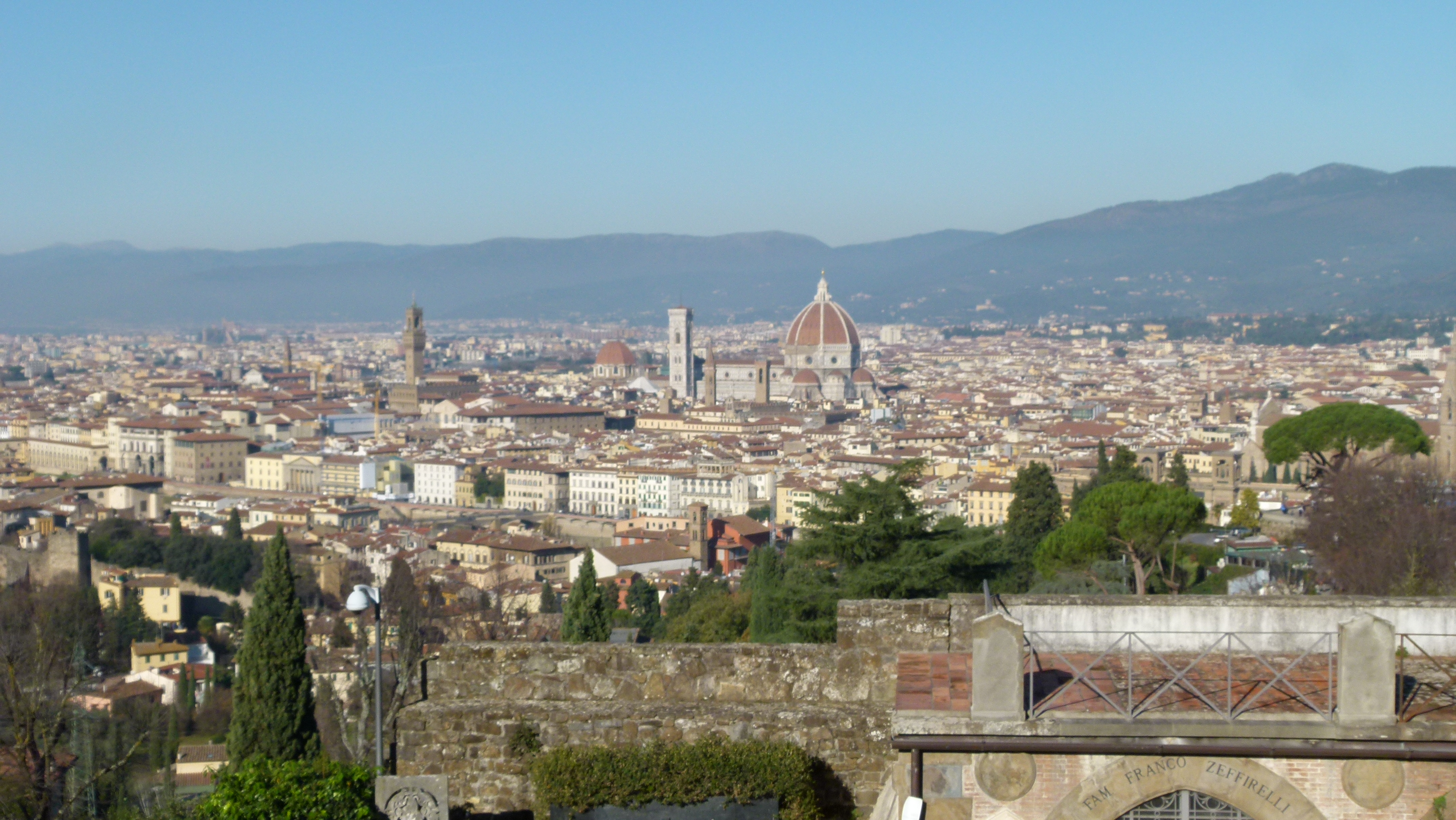
Besides giving access to museums and churches, the Firenze card also provides a bus ticket. We climb bus number 7 near Accademia in Via Giorgio. As the bus follows the winding road upwards, the gardens and houses are getting larger – a suburban residential atmosphere. The view of Florence is spectacular.

.

The archaeology museum closes at 2 PM

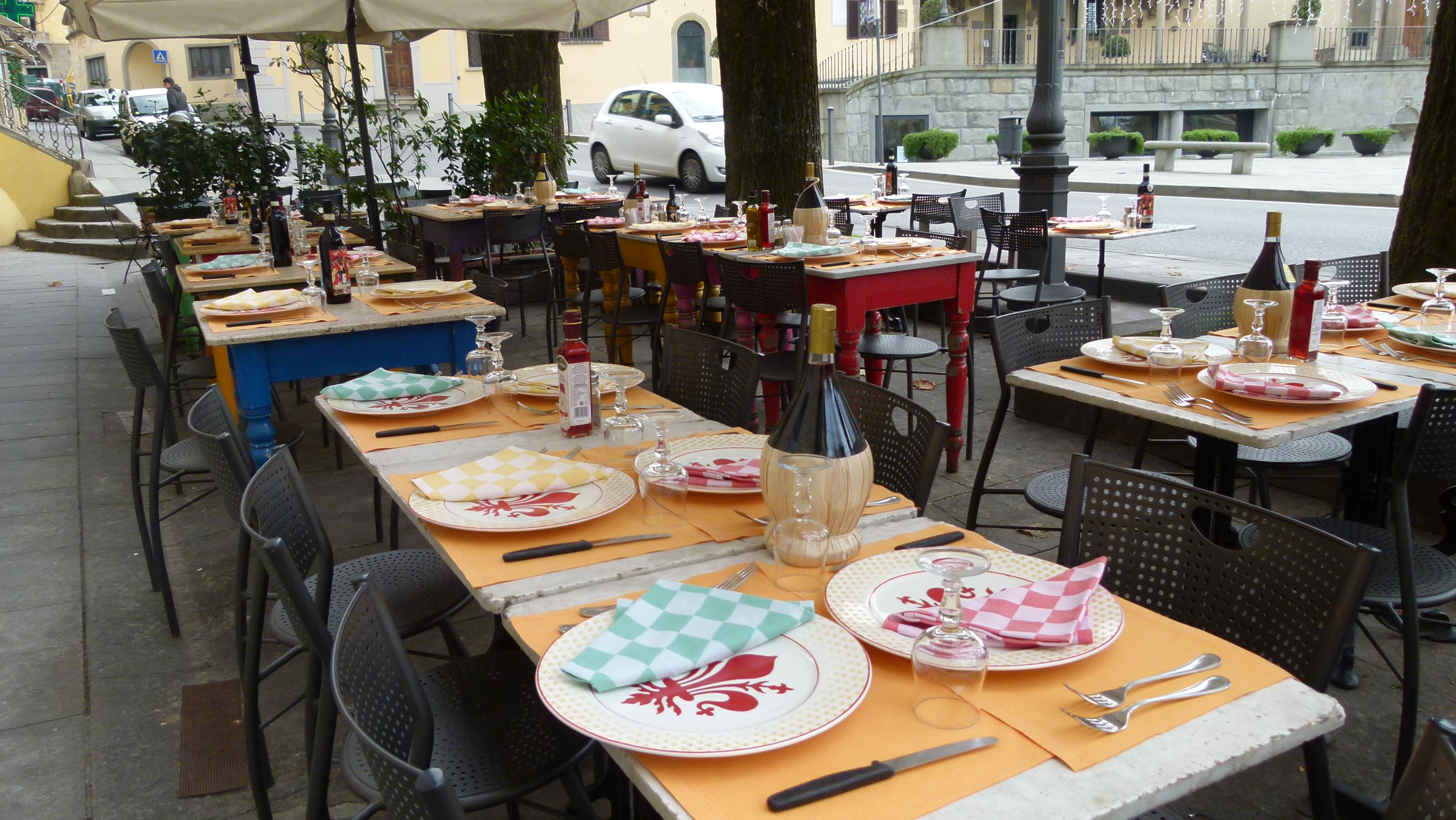
At Fiesole, we find out that the archaeology museum closes at 2 PM and now it is 12. No mercy, no lunch… Trying to calm down my empty stomach, I take a photo of these nicely set tables waiting for guests and I had a small power bar that Leni found in her bag.

P1070484

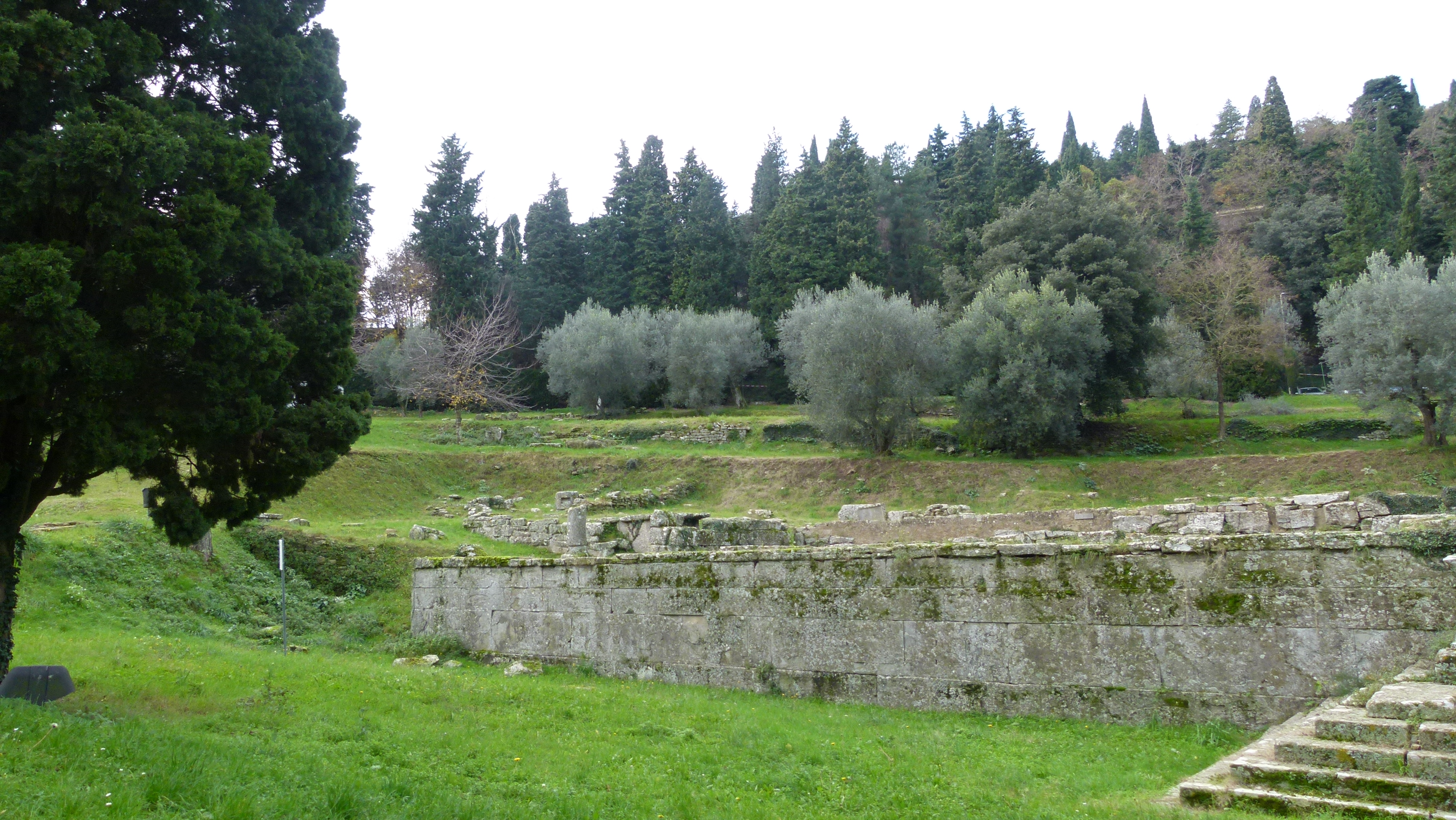
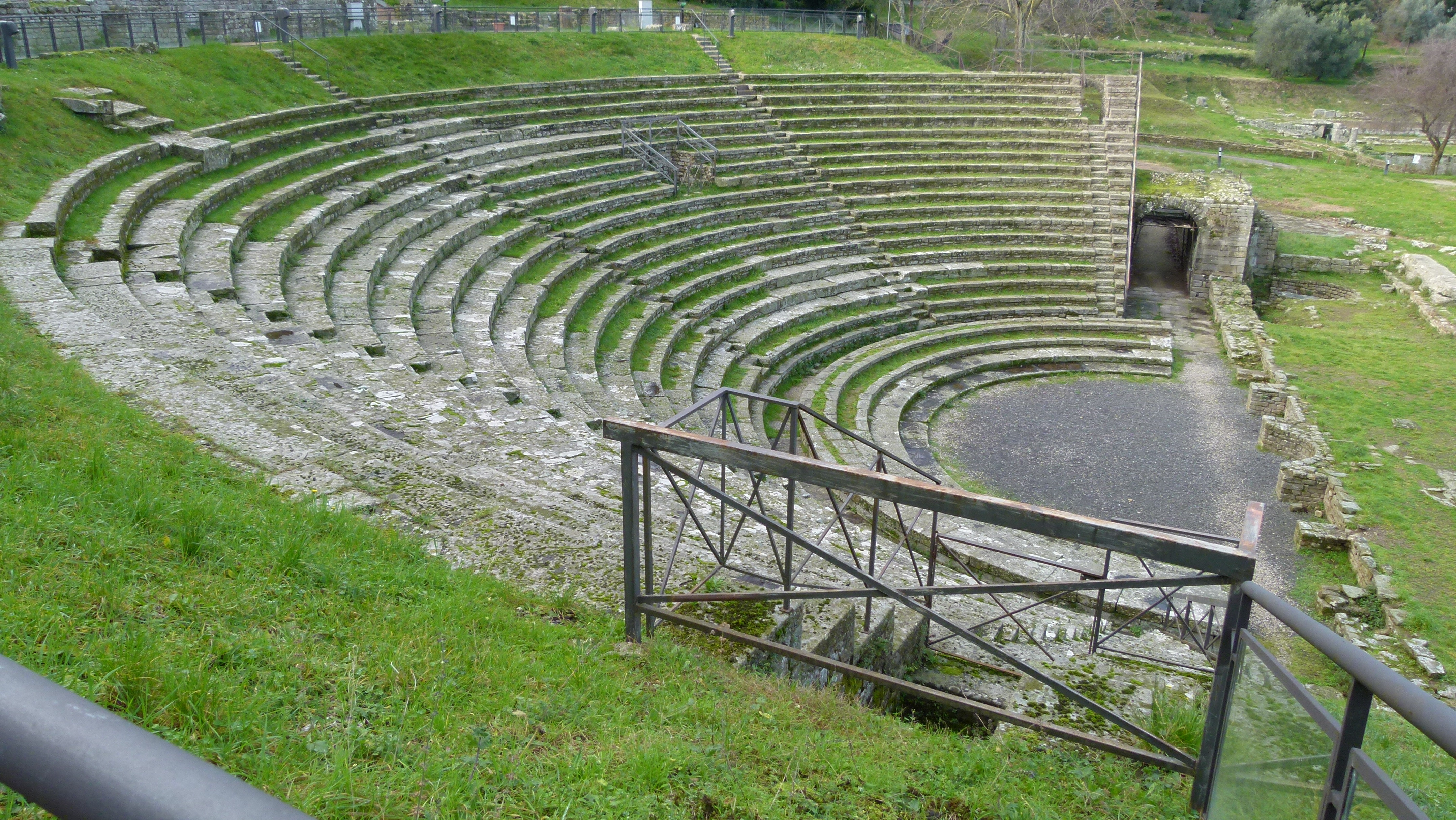
We buy the entry ticket and wander around the Roman ruins. There are an amphitheatre,…

P1070488

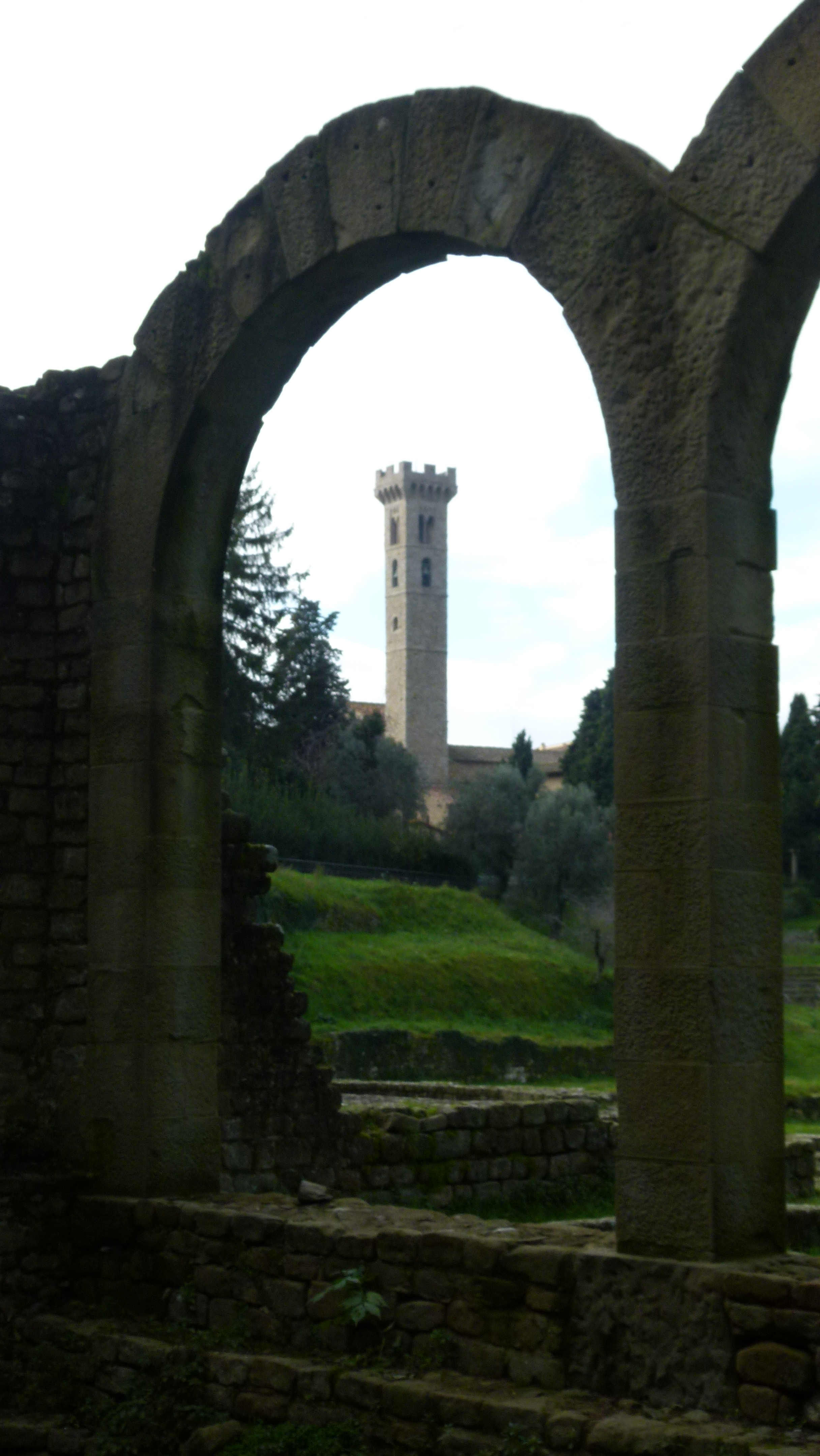
… archades that are left from the Roman baths (with a view of the Renaissance cathedral),…

P1070492

… the remains of a Roman temple that was built on the foundations of an Etruscan temple…


P1070497

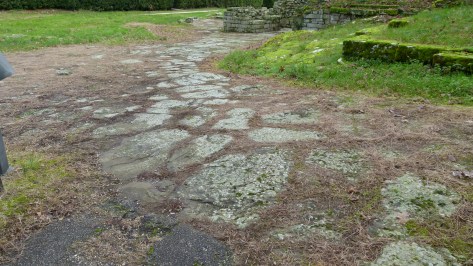
… and a cobbled Roman road.

P1070499

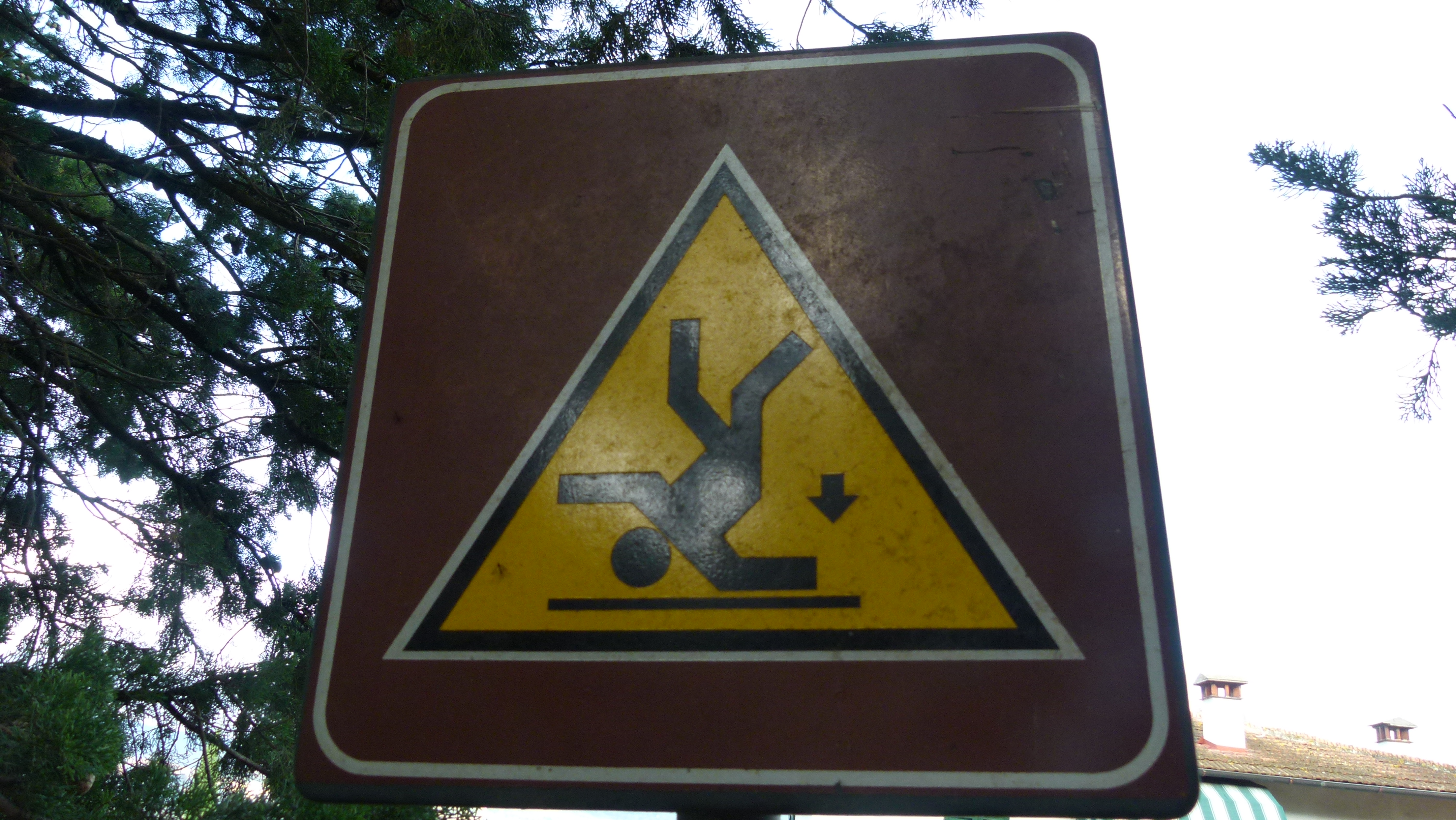
Beware not to climb around the ruins – this may be dangeorus.

P1070494

We have a short look at the museum, but the guard warns us of a “terremoto” and does not let us access the upper levels. A terremoto? Why a terremoto? We learn later that at 11:36 a terremoto of 4.1 Richter magnitude scale has shaken the area of Florence. And this was the most serious of a series of earth quakes hitting the Chianti area today. Sitting in the bus, we had not noticed anything. We only observed that the cupboards in our hotel room were shaking, when there was a minor earth quake of about 3 around five o’clock early the next morning.

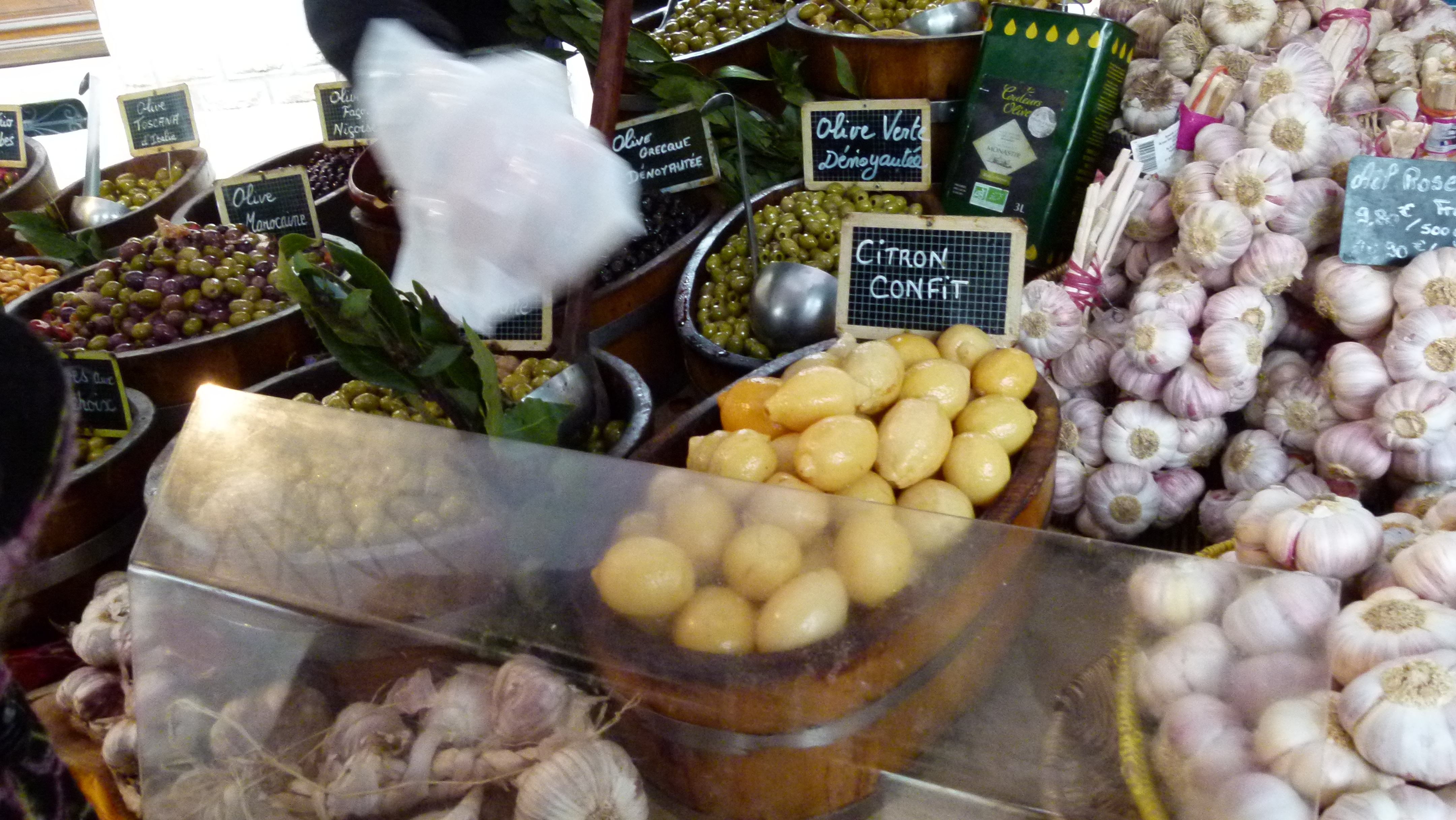
After having seen the Roman ruins, we return to the restaurant on the main square of Fiesole to have a pizza. Outside where the tables are nicely set, it is too chilly for us. We select a table under the garlic garlands…

P1070501

… and soon enjoy a crunchy pizza on the rustic blue plates with the white dots.

Captureplate

The bus number 7 takes us back down to Florence. Again we dive into the streets of Florence, this effervescing city.


Three Swiss in Florence – enjoying more museums and palaces

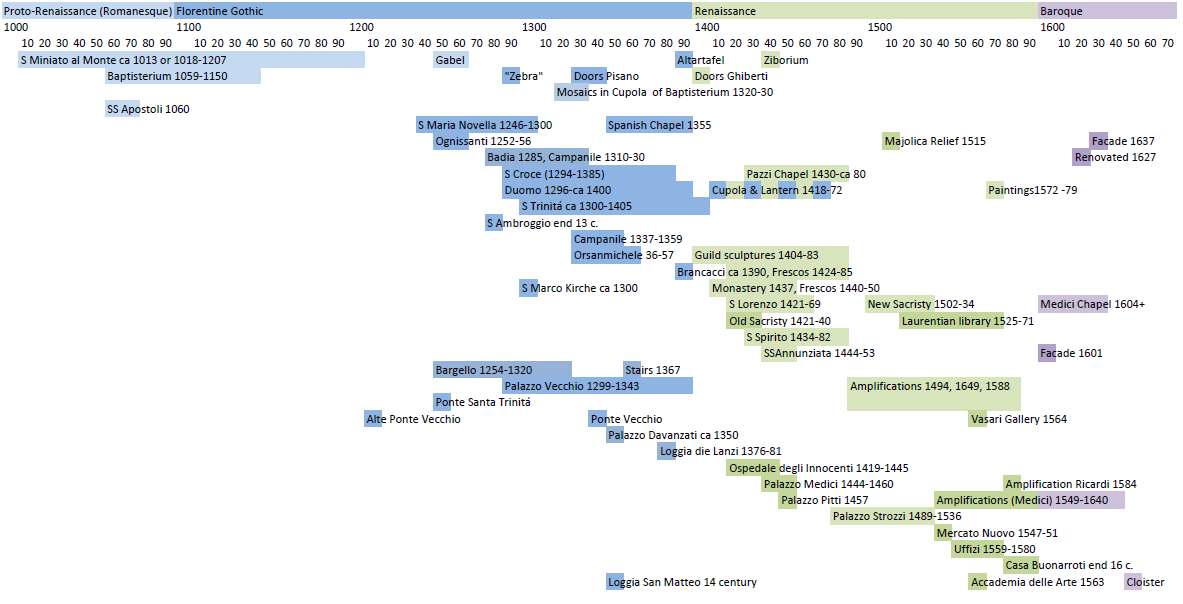
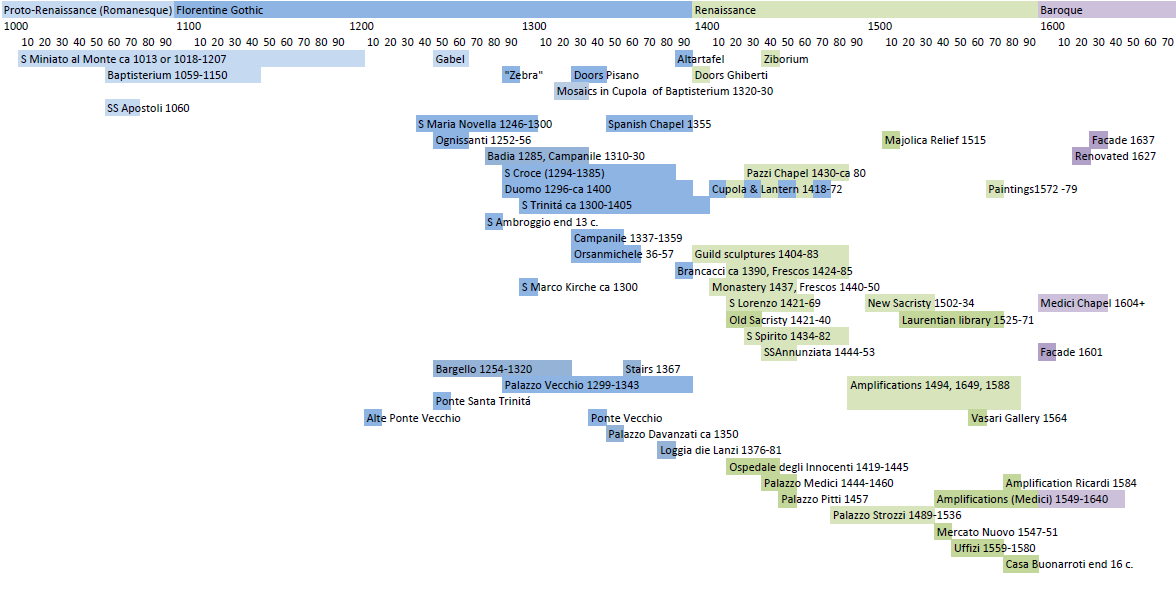
Again to recapitulate: The architecture timeline  of Florence from Proto-Renaissance to Baroque

Capture_1

Let us now look at more museums, namely the Palazzo Pitti, the Uffizi and the Accademia.

Palazzo Pitti – Palace of the Pitti, then of the Medici, then of the king of Italy – and now a museum

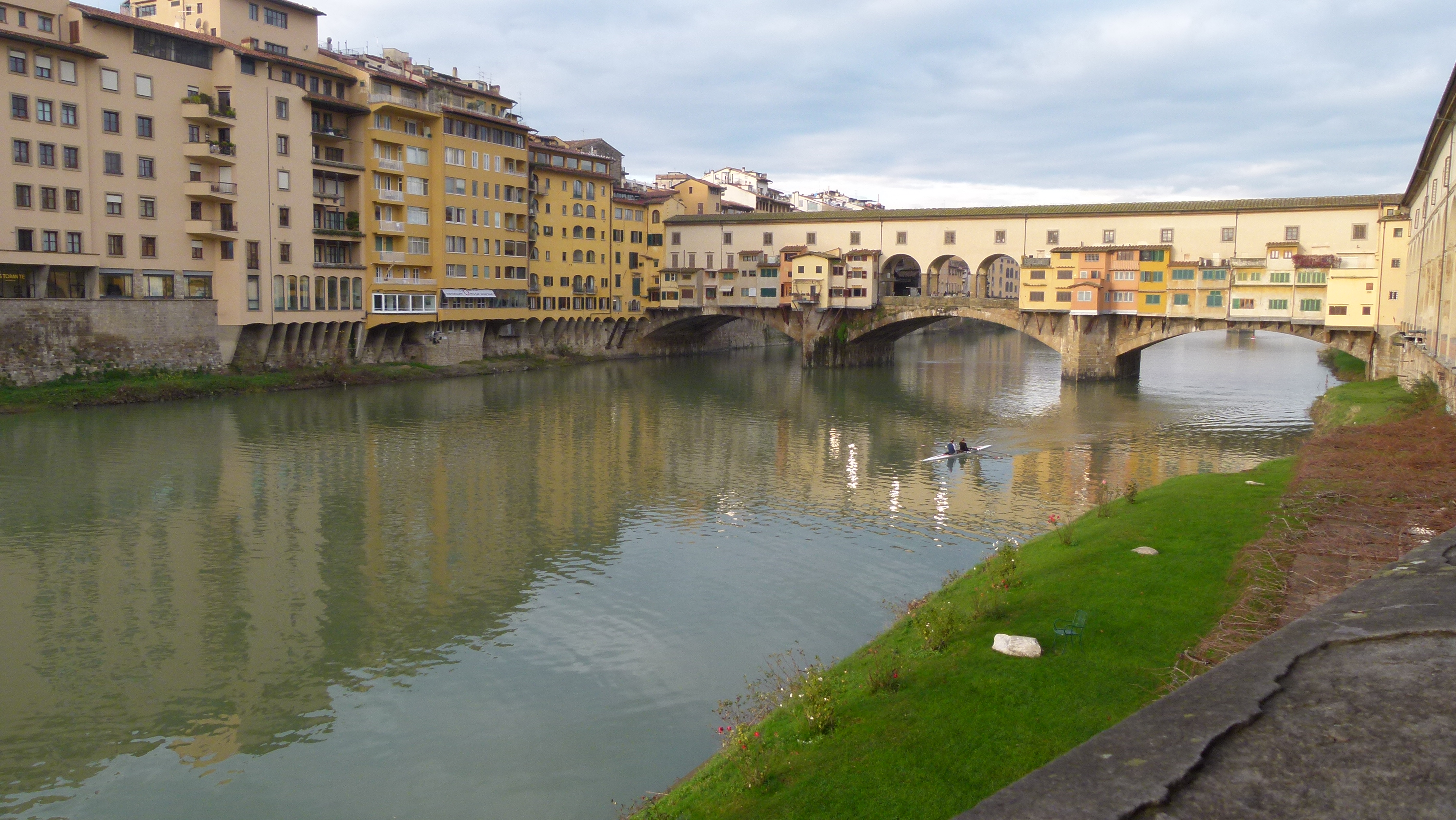
With Leni, I crossed Ponte Vecchio admiring the Vasari Gallery that leads from Palazzo Pitti to the Uffizi. Vasari built this Gallery in 1564, after the Medici (now dukes reporting into Spanish Habsburg) had moved from the Palazzo Vecchio into the larger Palazzo Pitti. Using the Gallery they could walk from their new home to their offices and – at his point – even attend the service in Santa Felicita.

P1070589

The Medici named the Palazzo Vecchio “Palazzo Vecchio” after having moved to their new Palazzo Pitti, and they enlarged their new residence.

P1070592

1813 – 1821, Napoleon had a bathroom here.

P1070639

And from 1860-1865 the king of newly founded Italy resided in this palace, for five years, until Rome became the capital of Italy.

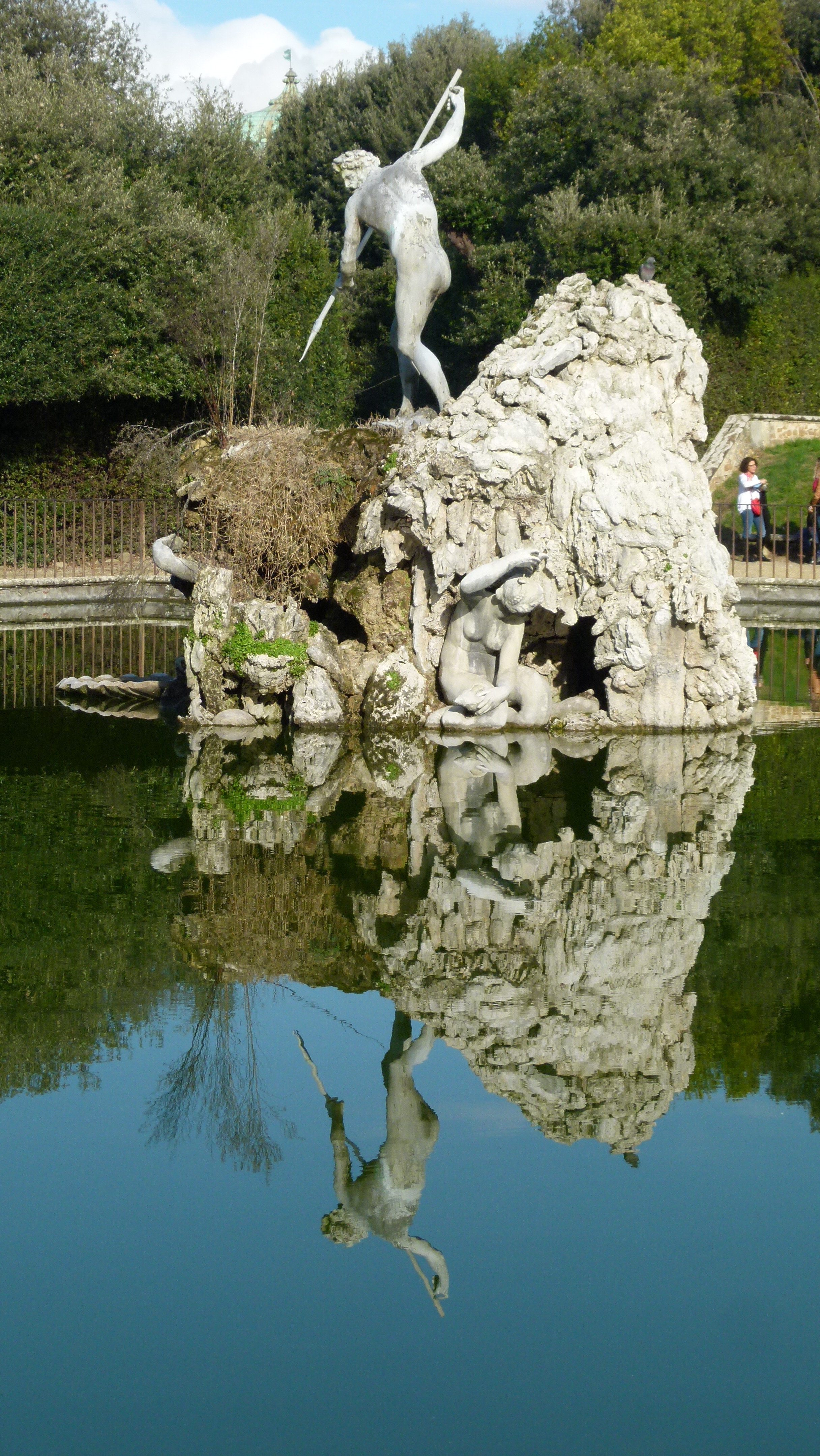
The gardens behind the palace are called Boboli gardens. They are huge. We climb the stairs and reach the fountain with hercules.

P1070600

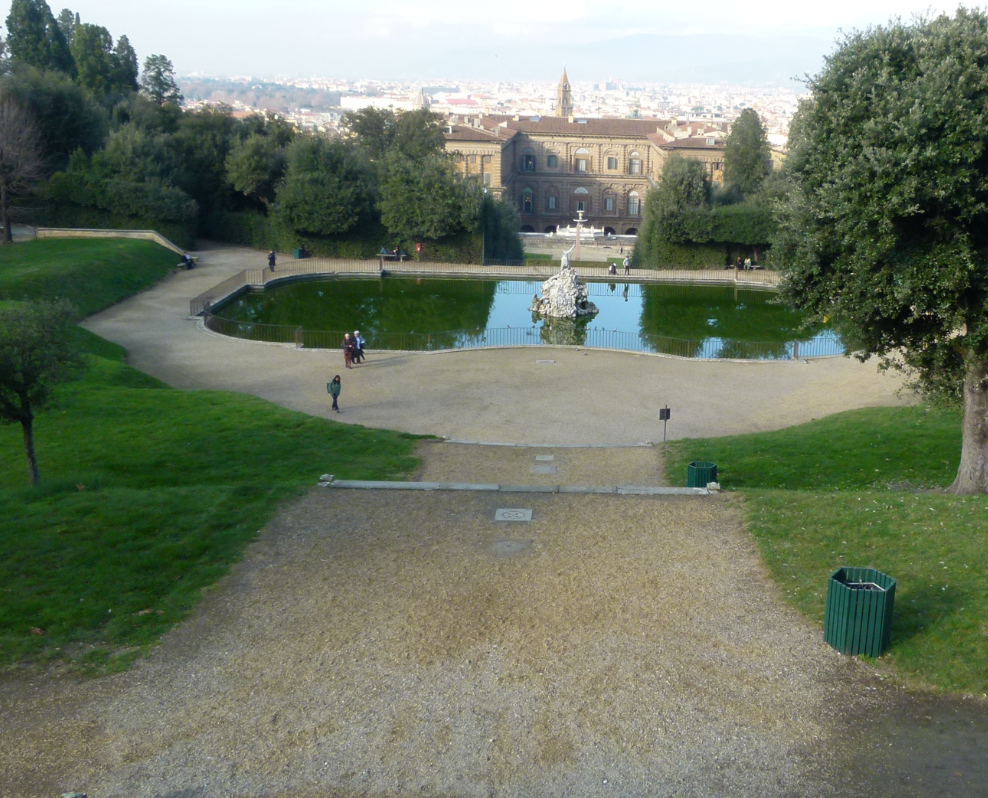
We climb farther up and look back to the fountain, the palace and the town.

Captureboboli

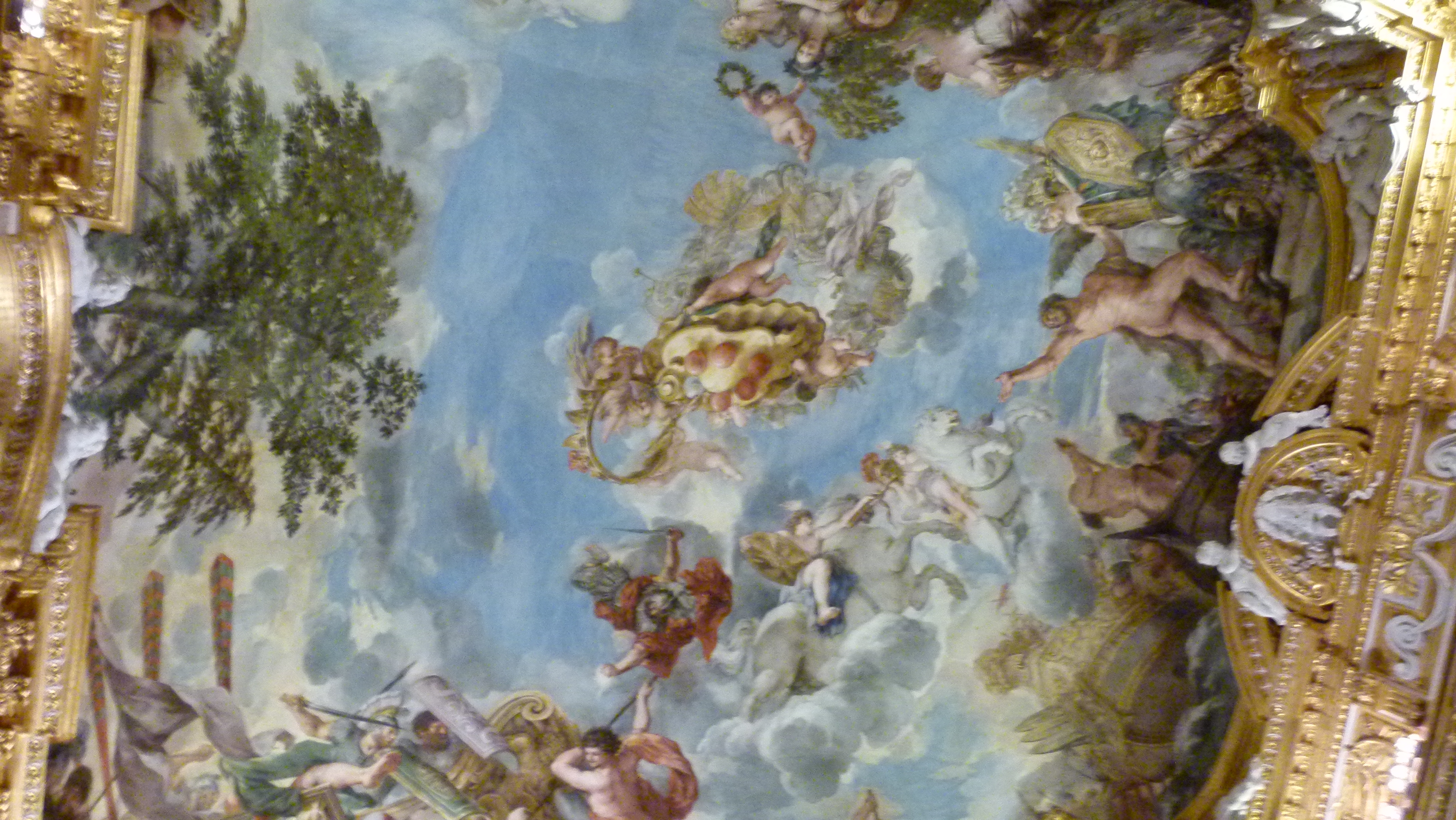
The Palazzo Pitti includes the Gallery Palatina that extends over several halls that are decorated with frescos by Pietro de Cortona (17th century). This is the allegory of war on the ceiling of the hall of Mars: It praises the Medici, as their emblem shows.

P1070646

The halls are decorated with silk wallpapers. The paintings are arranged on them according to esthetical considerations – as if the Medici would like to come back any time and live in these rooms. In each hall, there is a panel pointing out the outstanding oeuvres. And there are outstanding oeuvres such as this painting by Raffael (the “Mother with Child and St. John the Baptist”)…

P1070633

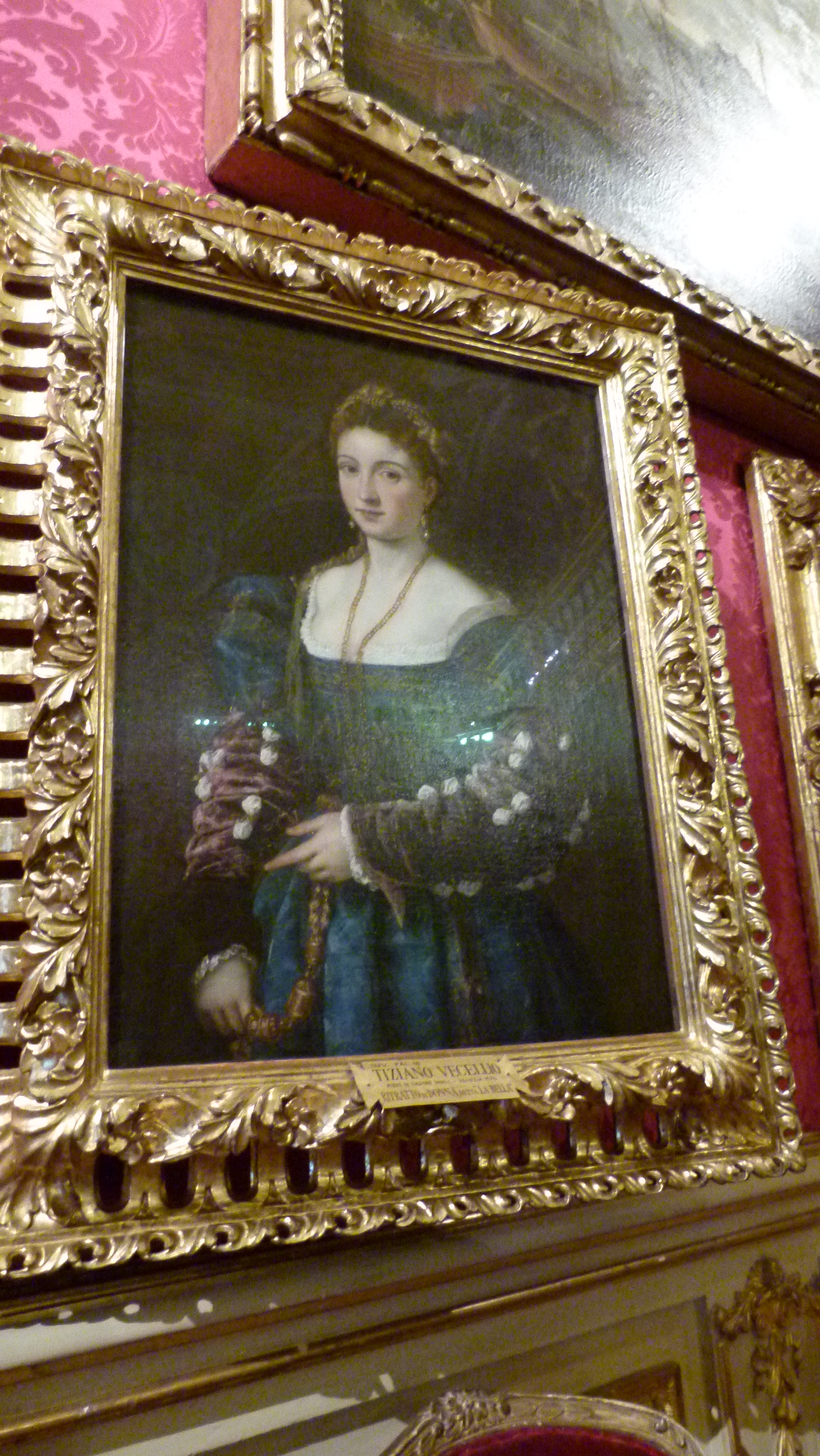
.. and this is “La Bella” by Titiano. I am impressed with her sleeves – not very practical, but she obviously did not have to do a lot of housework.

P1070650

The Palazzo Pitti is also playing a role in Magdalen Nabb’s Marshal Guarnaccia Investigation stories. Guarnaccia works in the police station of the Palace and from here he uncovers the crimes that happen in the small streets around Santo Spirito. I have read “Death of an Englishman” and “Death of a Dutchman” – two great criminal stories with a lot of humor.

.

Stunning and not digestable in one visit: The Uffizi

The dukes of Medici had the Uffizi built as an administration center. I feel like in a dream when walking up the large stairs to the top floor. There is a long corridor with many, many doors.  For citizens, this maze must have been terrrifying. I remember Mani Matter and his song about such governmental corridors: “Är isch vom Amt ufbotte gsy, am Fritig vor de Nüne, by Schtraf, im Unterlassigsfall, im Houptgebäud, Block zwo, Im Büro 146 persönlich go z’erschiine, Und isch zum Houptiigang am Halbi Nüüni inecho.” – “He has been asked by the government to appear in the main building of block two in office 146, on Friday before nine and risking punishment, when not coming.”  The poor guy gets lost in the corridors with all the many doors and never finds a way back. Perhaps, Mani Matter was in the Uffizi, when he invented that song.


P1070285

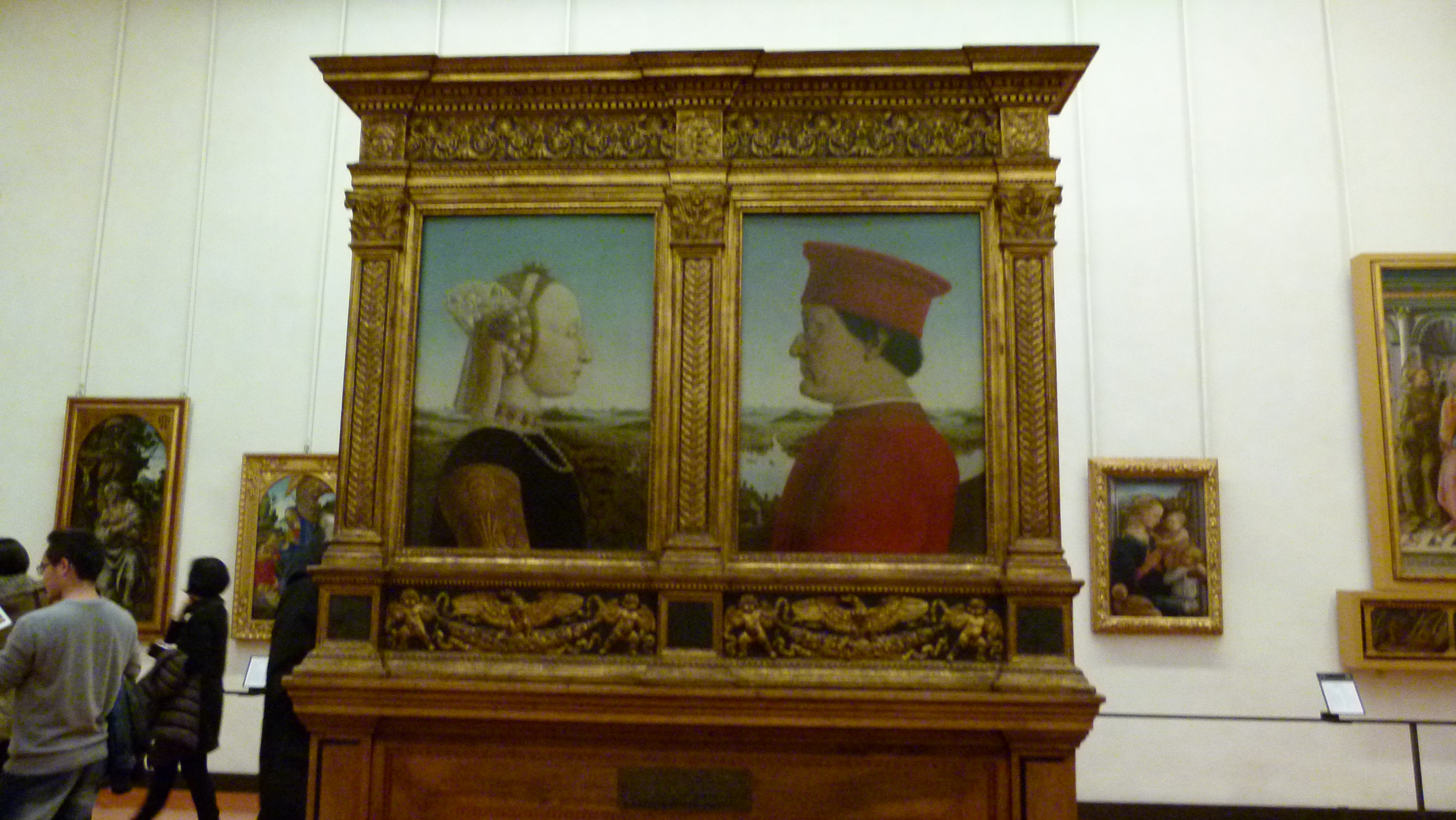
Fortunately the Uffizi are now a museum and panels clearly show the way. Behind the first door I say hello to the duke and duchess of Urbino, portrayed by Francesco (ca 1470). Why are you so pale, Lady?

.P1070269

In one of the next rooms there is this highlight of Botticelli, called “the Birth of Venus”. A lady enters the room, walks directly to her Botticelli, opens her chair, sits down and just looks at the painting. Via email I share this foto with the godfather of my Ernst. He is also called Ernst and was a priest. Now he his 90 years old. He guides cultural tours to Florence and Rome. Enthusiastically he writes back: “Look at Botticelli’s wonderful painting. The name is wrong… it is not ‘The birth of Venus’, but it should be called ‘Arrival of Venus onshore’. Look at Zephir. He is blowing to push Venus to the shore and he makes flowers follow her.” Uncle Ernst plans his next tour to Florence in spring. I am sure that his guests will enjoy his lively explanations!

P1070274

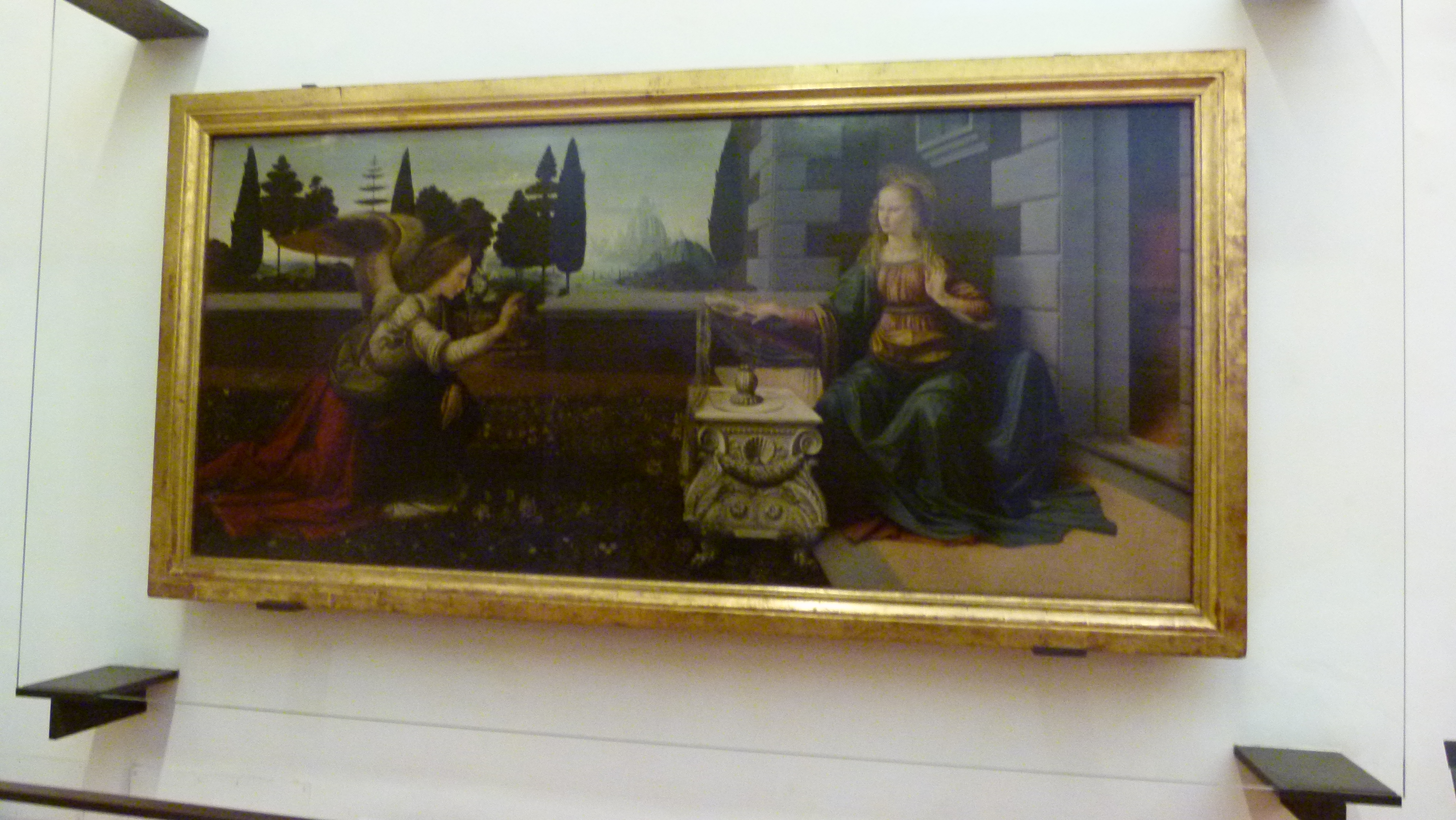
One of my favorite artists is Leonardo da Vinci. Well, I know, he was not just an artist, but also a scientist. Dumont says that both paintings in the Uffizi have been completed in the workshop of Verocchio and that Leonardo took part in them. In the “Annunciation” Leonardo must have participated in painting the angel and Maria.

P1070276

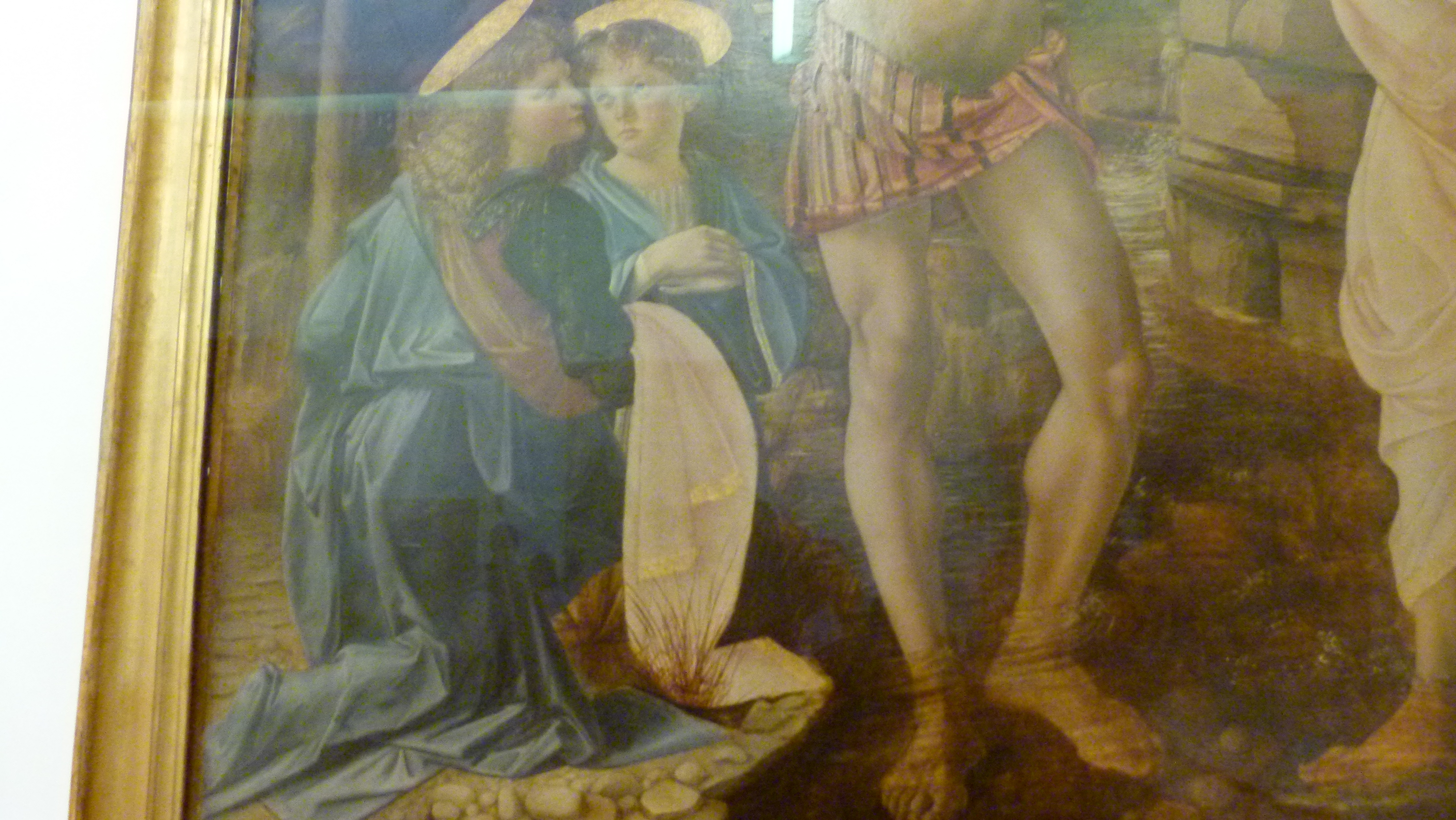
And in the “Baptism of Christ”, Leonardo painted the left angel that is much softer than the other angel.

P1070278

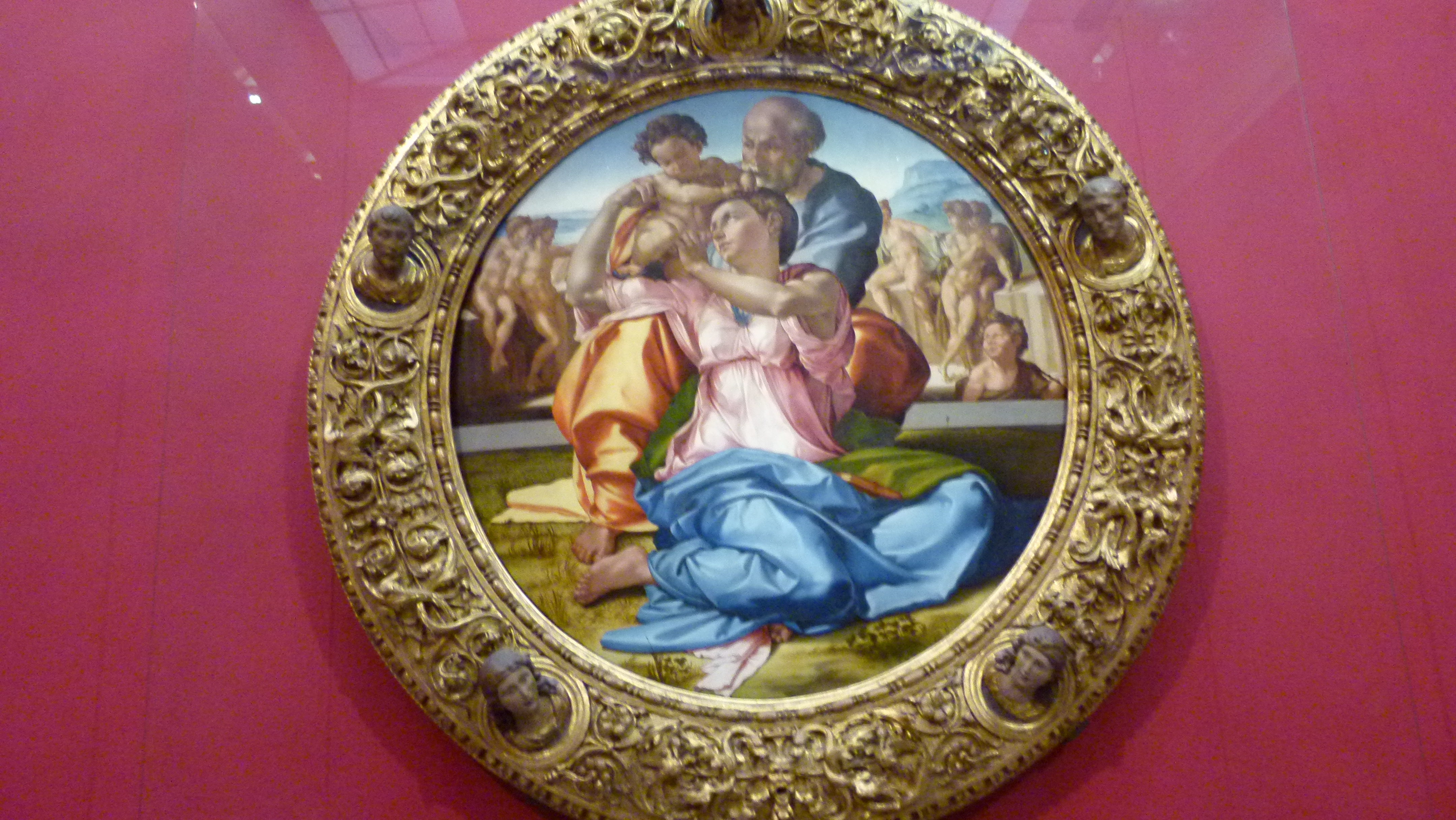
We looked at more paintings of Botticelli,  of Ghirlandaio… and then there was also Michelangelo Buonarotti: “the Tondo of the Holy Family”.

P1070288

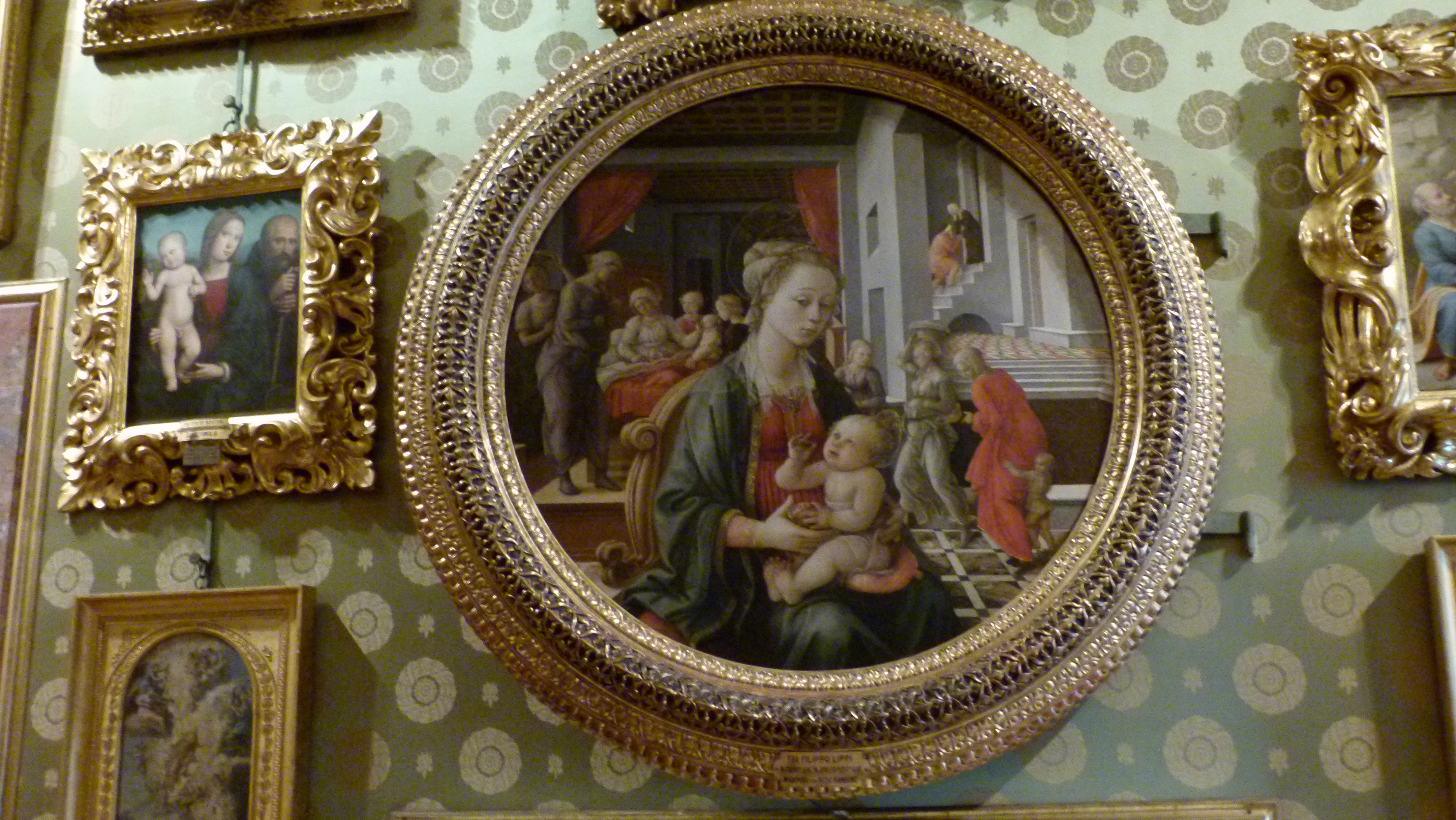
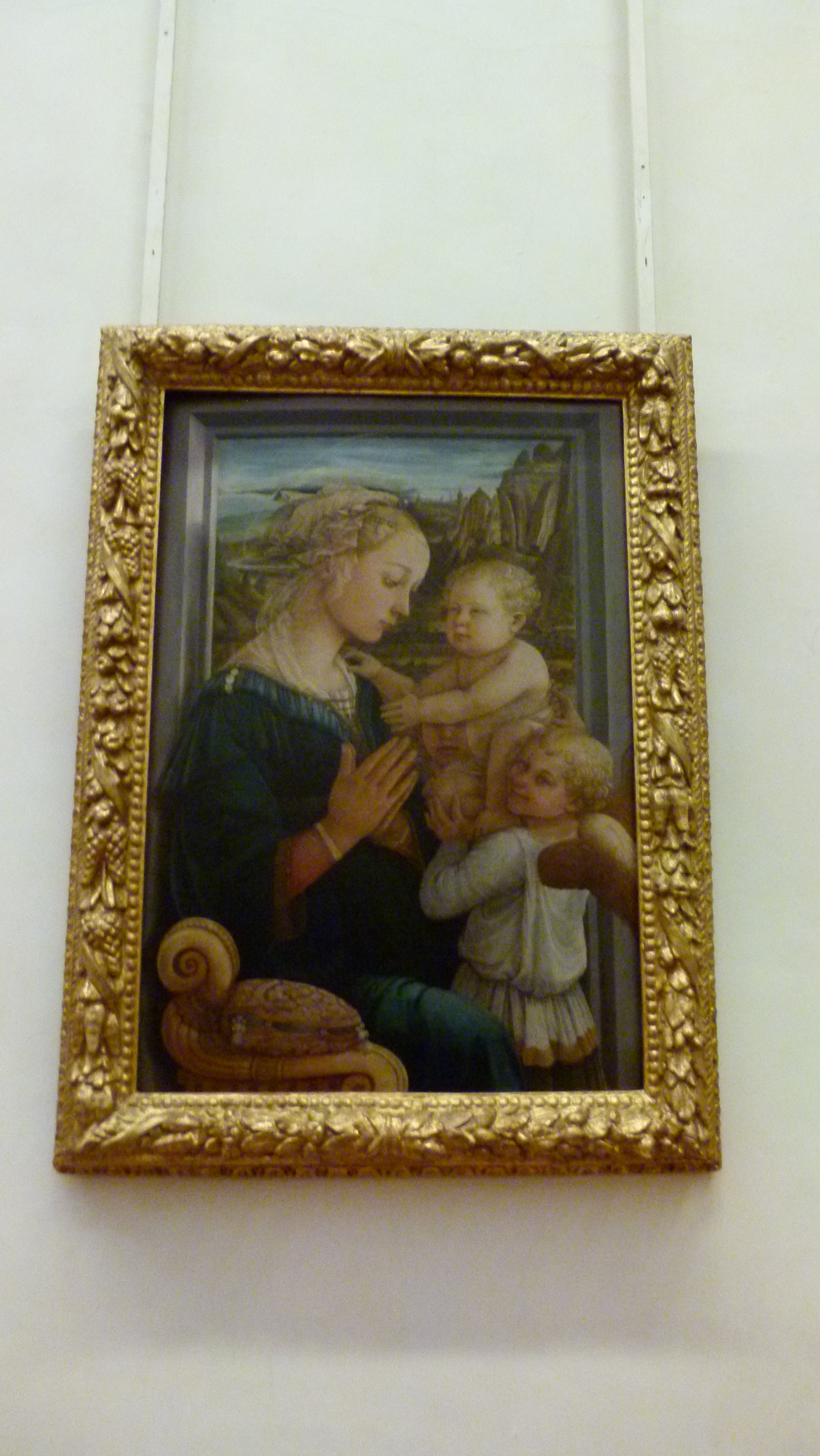
This painting by Lippi is very charming: “Madonna with Child and St. John.”

P1070268

After a coffee we take the next level of the Uffizi, until we feel dizzy. I think I will have to come back. It is not possible to see and digest the Uffizi in one visit of half a day.

.

Also stunning and not digestable in one visit: The Galleria dell’Accademia

There is one highlight in the Galleria dell’Accademia that all tourists look for – the original sculpture of David by Michelangelo. The copy stands in front of the Palazzo Vecchio, where a committee of town representatives had decided to place it, after Michelangelo had completed it. Originally the statue of David was planned to be raised to the roof of the Duomo. Michelangelo cut  his David out of one block of marmor and it weighs 6 tons. It was impossible to lift David up to the Duomo. And this is why he ended up in front of the Palazzo Vecchio. This is also why his hands are oversized – seen from the ground below the Duomo the hands would have been perfectly in perspective. But on the same level they look huge. Florence knows what their David is worth. Rome wanted to take it (if not kidnap it), but Matteo Renzi, then mayor of Florence, could convince the Italian government that David belongs to Florence.

P1070472

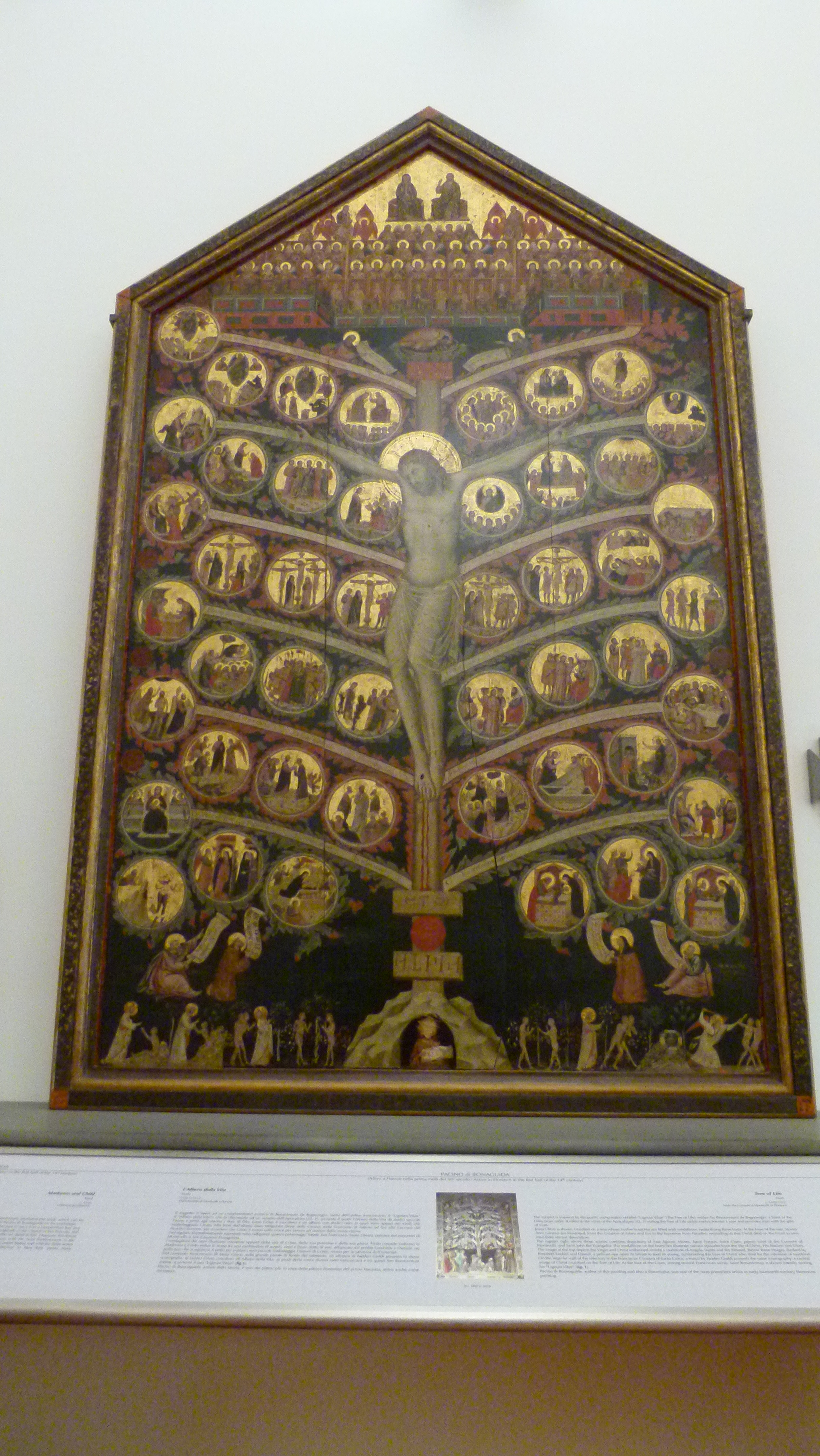
There is much more to be seen in the Accademia. Here is another example, the crucification of Bonaguida in 1310: Each fruit on the twelve branches is said to be a gift to mankind.

P1070483

And I also liked this crucification of Bernardo Daddi, 1340, which shows so much suffering in the face of Christ.

P1070482

.

 So much for the culture in Florence

With the Accademia, I am rounding off the cultural highlights that we visited in Florence. Fortunately, we did not end up in a hospital with the diagnosis “overdosis of literature”. We took our time in the churches and museums and we also relished the atmosphere in this lively town – in markets, restaurants, coffee houses and shops or just strolling through the streets.

Two Swiss – discovering the history and stunning scenery of Innsbruck

Tyrolia is a great destination for ski touring – Mario takes us to Praxmar near Innsbruck

With our mountain guide from the Bernese Oberland, Mario, we travel to Praxmar near Innsbruck. We stay in the comfy and friendly Alpengasthof Praxmar and share dinner for several evenings at this beautiful table.
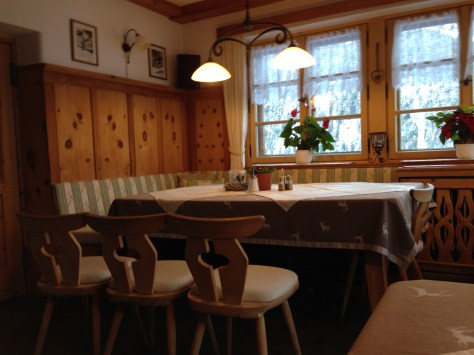
IMG_1339

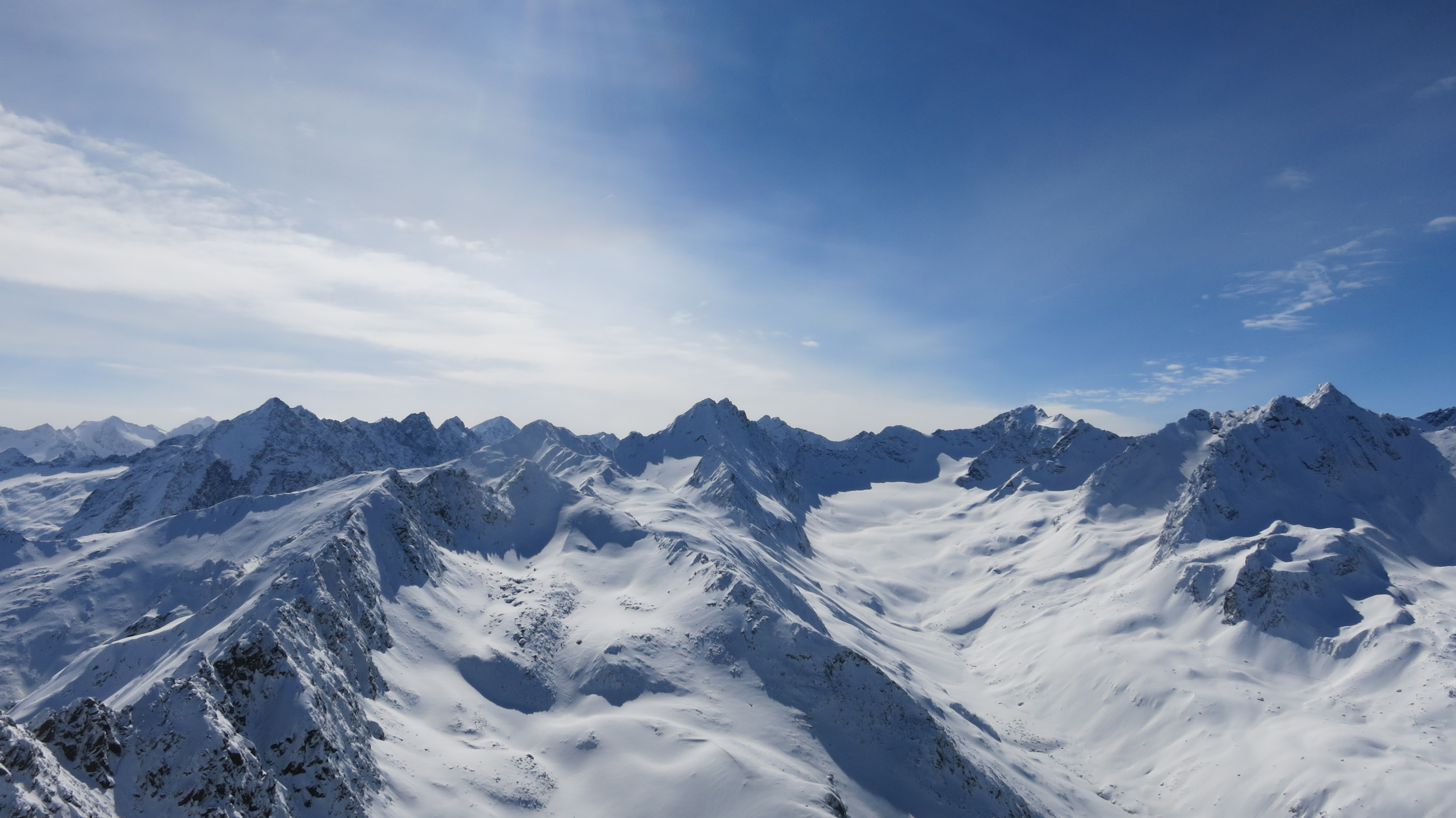
I join the team for two ski tours – towards the Lampsenspitze – this is the view from the top…
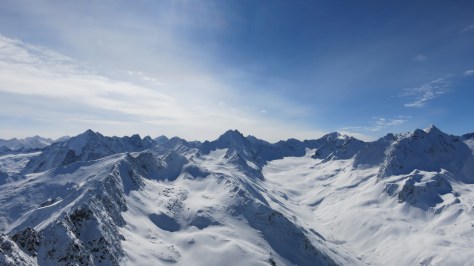
IMG_5555

…. and to Zischgeles – this is a foto that shows us shortly before reaching the saddle with the ski depot.
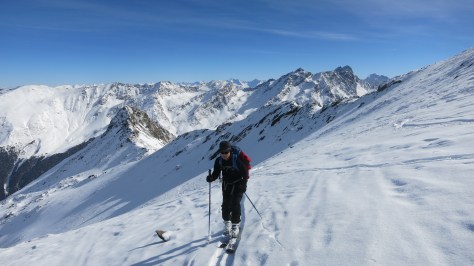
IMG_5458

Thank you, Mario, for having provided me with these fotos.

But then – I feel my Achilles tendon – I had strained it too much, when doing cross country skiing. Well, there is always something else to do: It takes half an hour by car to get to Innsbruck, and this is a town with a lot of history in a stunning alpine setting. Something new to discover. Niklas joins me.

The Alpgasthof has a handy map, gives us hints for our excursion and organizes a knowledgeable and experienced tour guide, Elisabeth Grassmayr. I buy “Innsbruck – der  Stadtführer” by Monika Frenzel (Tyrolia Verlag). The “Stadtführer” is my primary source, along with the input of the tour guide and of Dr. Google.

.

Innsbruck is strategic on the way to the Brenner pass and, belonging to Tyrolia, became part of the Habsburgian possessions

Already in Roman times, Innsbruck (Oenipontum and nearby military post Veldidena – today Wilten) was a stopover on the way to the Brenner pass across the Alps. In the twelfth century Innsbruck was in the hands of the Bavarian counts of Andechs. Later the counts of Tyrol took over (hence the name “Tyrolia”), and in 1363 the dukes of Habsburg inherited Tyrolia. In 1420 they moved their Tyrolian residence from Meran to Innsbruck.

.

Rendez-vous with German emperor Maximilian I – also well-known to me from Switzerland

Around 1500, the German emperor Maximilian I used Innsbruck as his second residence.

I have “met” emperor Maximilian before. I know him from the Swabian War (Schwabenkriege). He lost the battle at the Bruderholz and the battle of Dornach near Basel in 1499 and had to definitively give up the original Habsburgian family possessions in Switzerland.  But outside Switzerland Maximilian was able to strengthen the position of the Habsburgians paving the way for his grand-son Karl V (later the sun would never set in Karl’s empire and Habsburg’s policy to arrange political marriages had become famous).

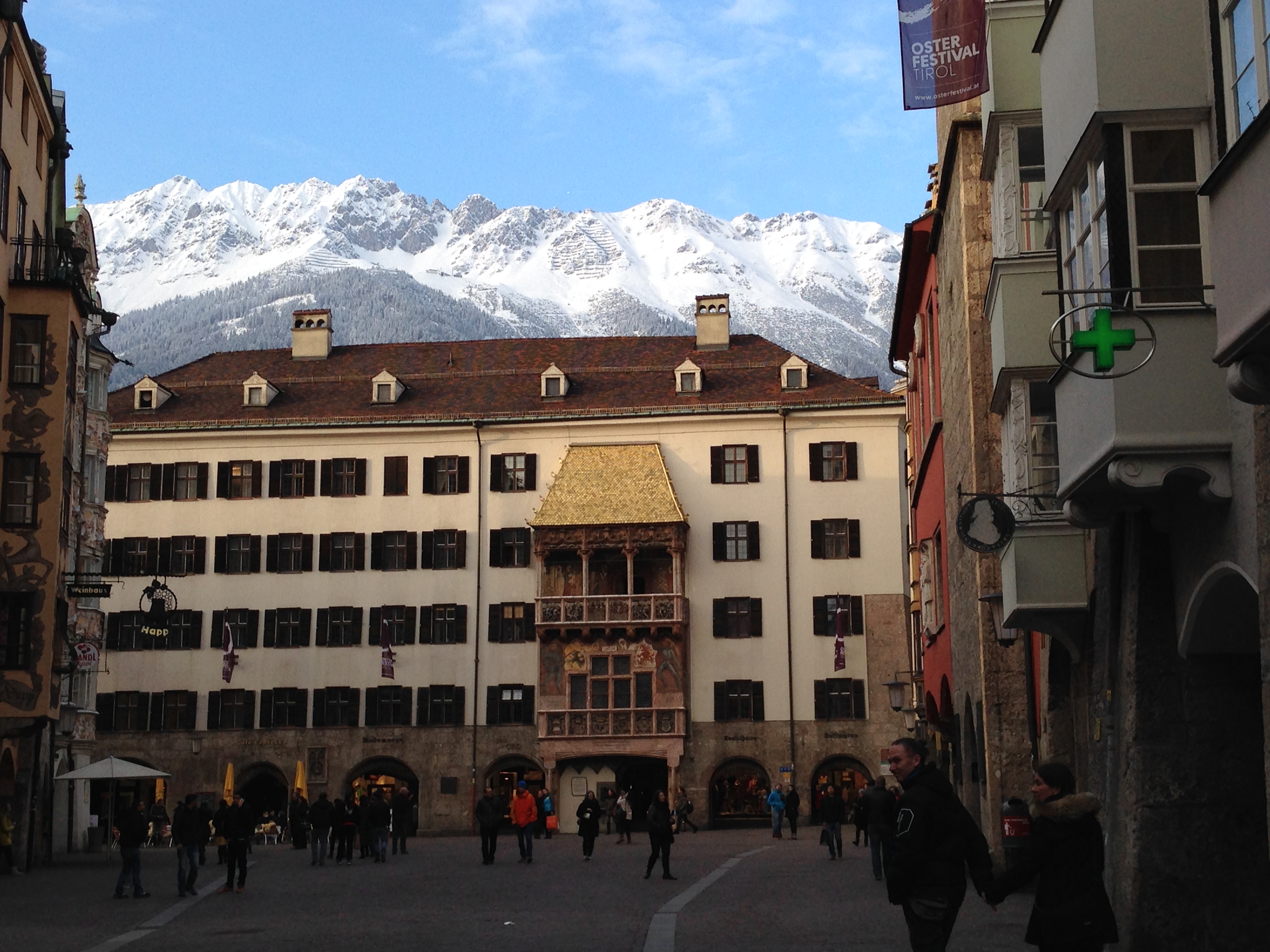
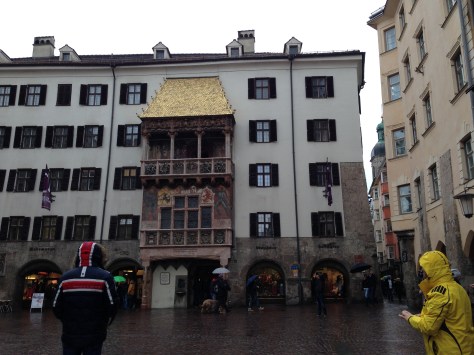
Now I had another rendez-vous with Maximilian in Innsbruck, as he is very present until today. To show his power, he built the “Goldenes Dachl” (“little golden roof”). It overlooks the main street (Herzog-Friedrich-Strasse). Whoever crossed the bridge and headed for the Brenner had to pass by under the Goldenes Dachl. Maximilian used the loggia to watch festivals or tornaments.
IMG_1306

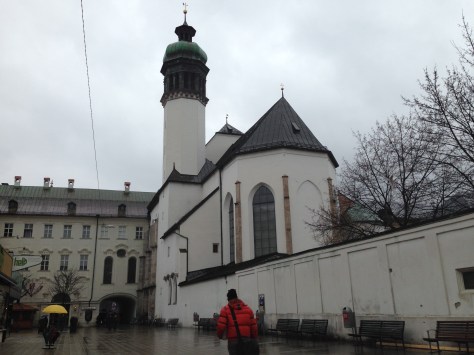
Maximilan’s grand-son, Frederic I, built the Hofkirche in memory of his grand-father.
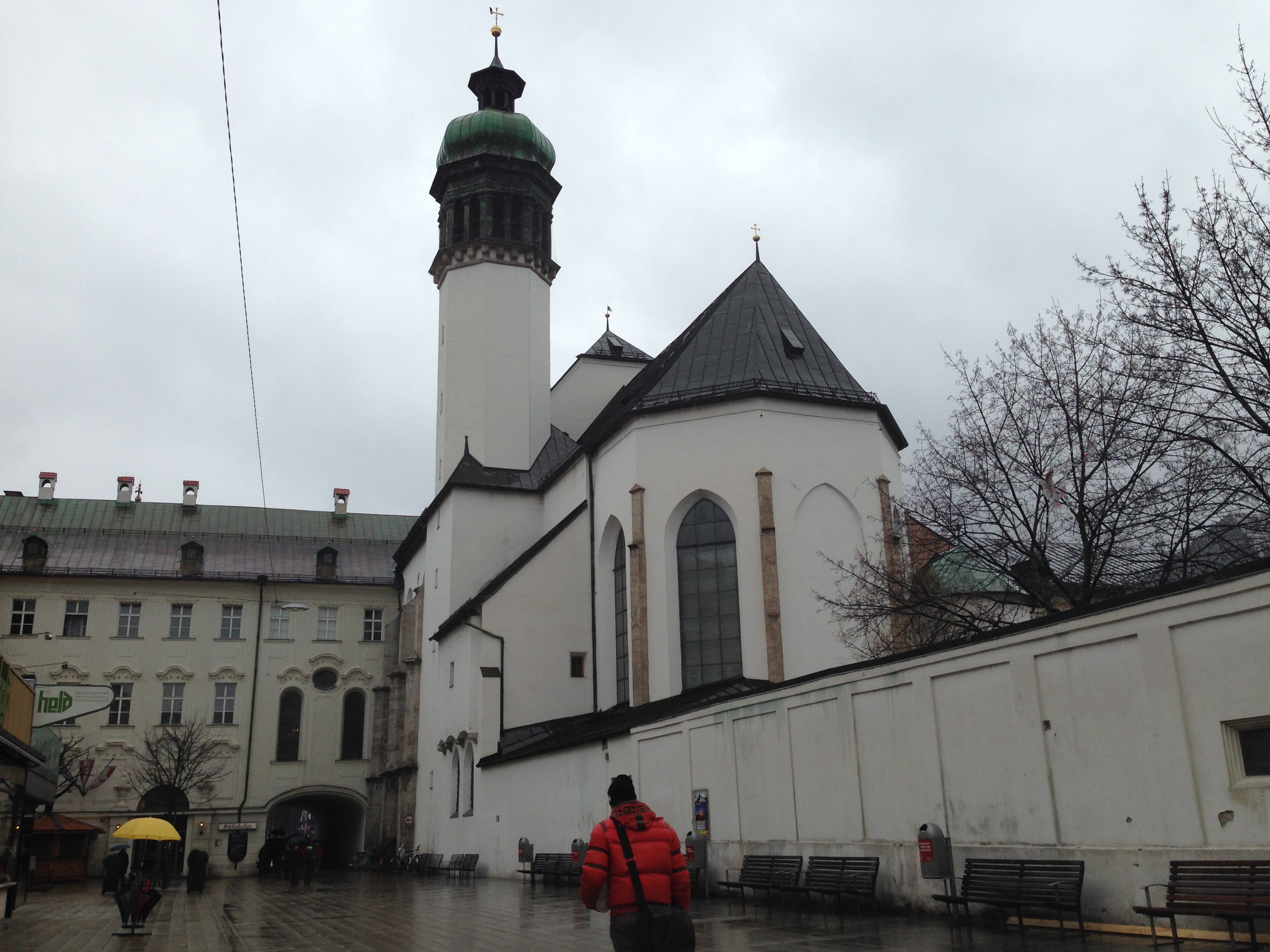
IMG_1299

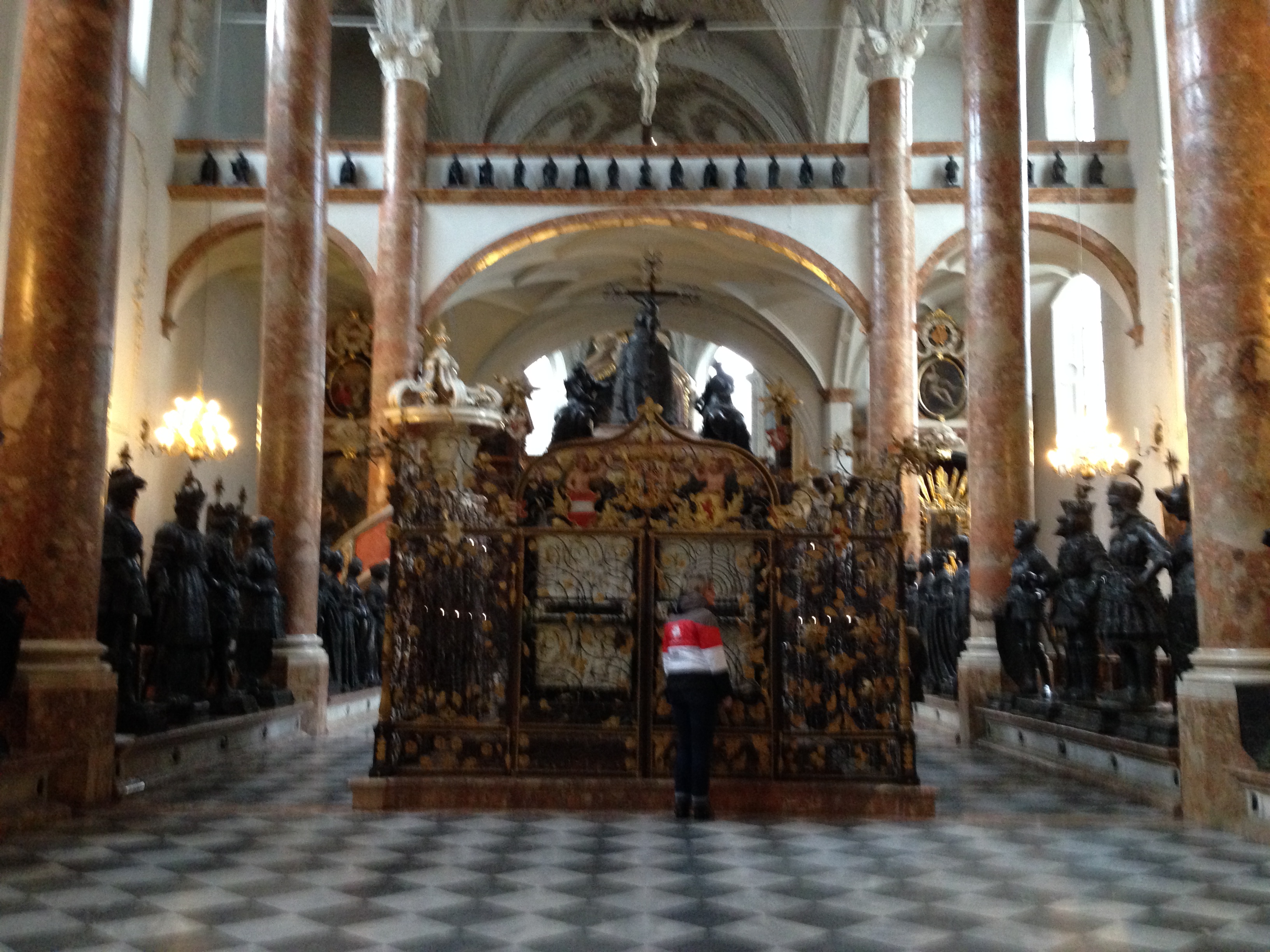
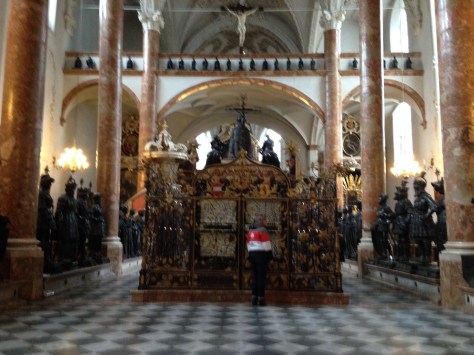
Maximilian had planned his cenotaph as a memorial for the Habsburgian family. Its completion took 80 years, until 1584. It is the major attraction in the Hofkirche.
IMG_1302

Maximilian is not buried here. This sarcophagus is empty (hence called “cenotaph”). A bronze statue of Maximilian kneels on top. Reliefs around it show scenes from his life. 28 bronze statues mourn around the cenotaph. They are either relatives (e.g. his wives and parents) and ancestors (e.g. king Rudolf I) or leaders that Maximilian admired (e.g. king Arthur). A detailed description of the “black men” (Schwarze Mander) is on the Website “The World of the Habsburgers“. Renowned Renaissance artists, among them Albrecht Dürer, participated in the work.

Our tour guide knows  every black man (and woman). As she points to Rudolf I, the first Habsburgian to be elected king of Germany (1271), I can proudly add that  my home town Basel was on good terms with Rudolf. He was just besieging Basel. The citizens heard that the duke outside their walls had become king and opened their gates. Rudolf’s wife Anna von Habsburg is buried in the cathedral of Basel, with little son Karl.

There is more to see in the Hofkirche: An old organ from the late 16th century, the tomb of Andreas Hofer (who fought to free Tyrolia from Bavaria in the early 19th century) and the silver chapel wth the tomb of Ferdinand II and his wife Philippine Welser.

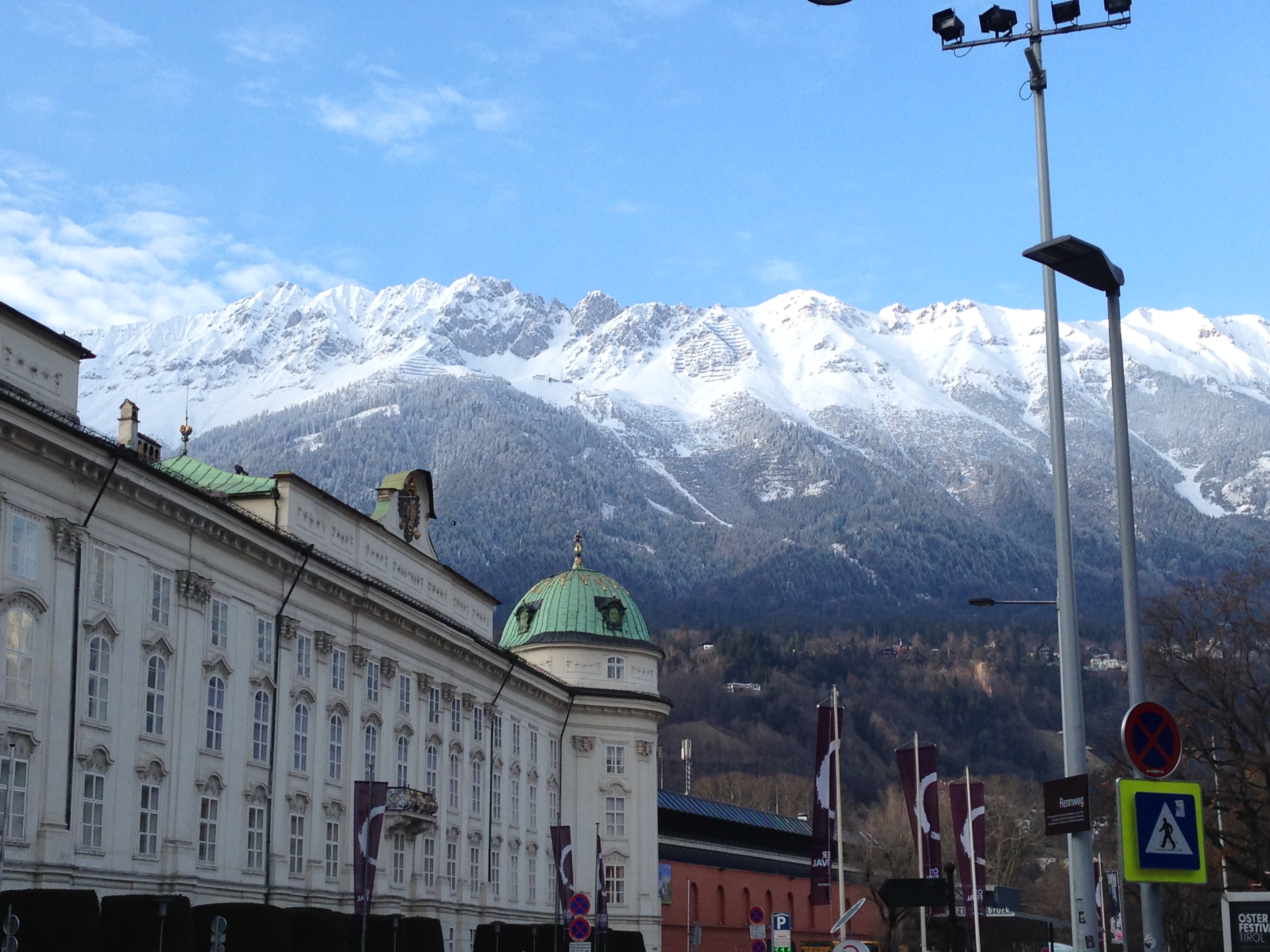
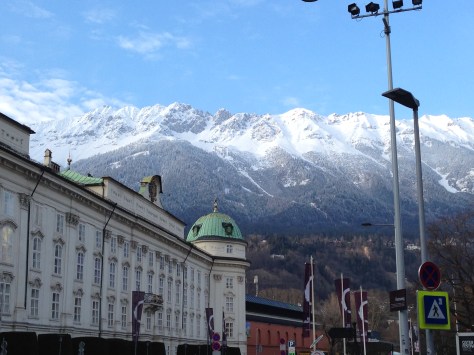
Maximilian completed the Hofburg (Imperial Palace) around 1500. It was a gothic castle with a famous tower that was covered with emblems. In the 18th century Maria Theresia had the castle rebuilt in the baroque style. Principal magnet for visitors is the giants hall with paintings of the large family of Maria Theresa (she had given birth to 16 children). My guide knows every family member. She also takes me through the rooms – the tables are set for superb dinners and the sofas and chairs have been renovated based on faded examples found on the attic. This video gives an overview. And here is a foto of the Imperial Palace with the Northern Chains (Nordkette).
IMG_1337

Maria-Theresa was the last Habsburgian. She married Francis from Lorraine. Today she is also present in Innsbruck: The “new town” centers around the “Maria-Theresien”-Strasse. In Innsbruck, her second son, Leopold (later Leopold II) married Maria Louisa of Spain, but a few days later Maria Theresa’s husband, emperor Francis, died.  Maria-Theresa was very, very sad. The triumphal arch at the end of Maria-Theresien-Strasse shows the wedding of Leopold and the death of Francis. Our tour guide still feels sorry for Maria-Theresa.

Today the “new town” area is great for shopping in all the arcades and in the old palaces that turned into shops. Roof top bars and restaurants provide a great view of Innsbruck stretching along the Inn and squeezed between the gorgeous mountain chains.

.

Maria Hilf picture (Maria Help) – a guest present from the duke of Saxony in Dresden to Leopold V, when he was bishop in Passau

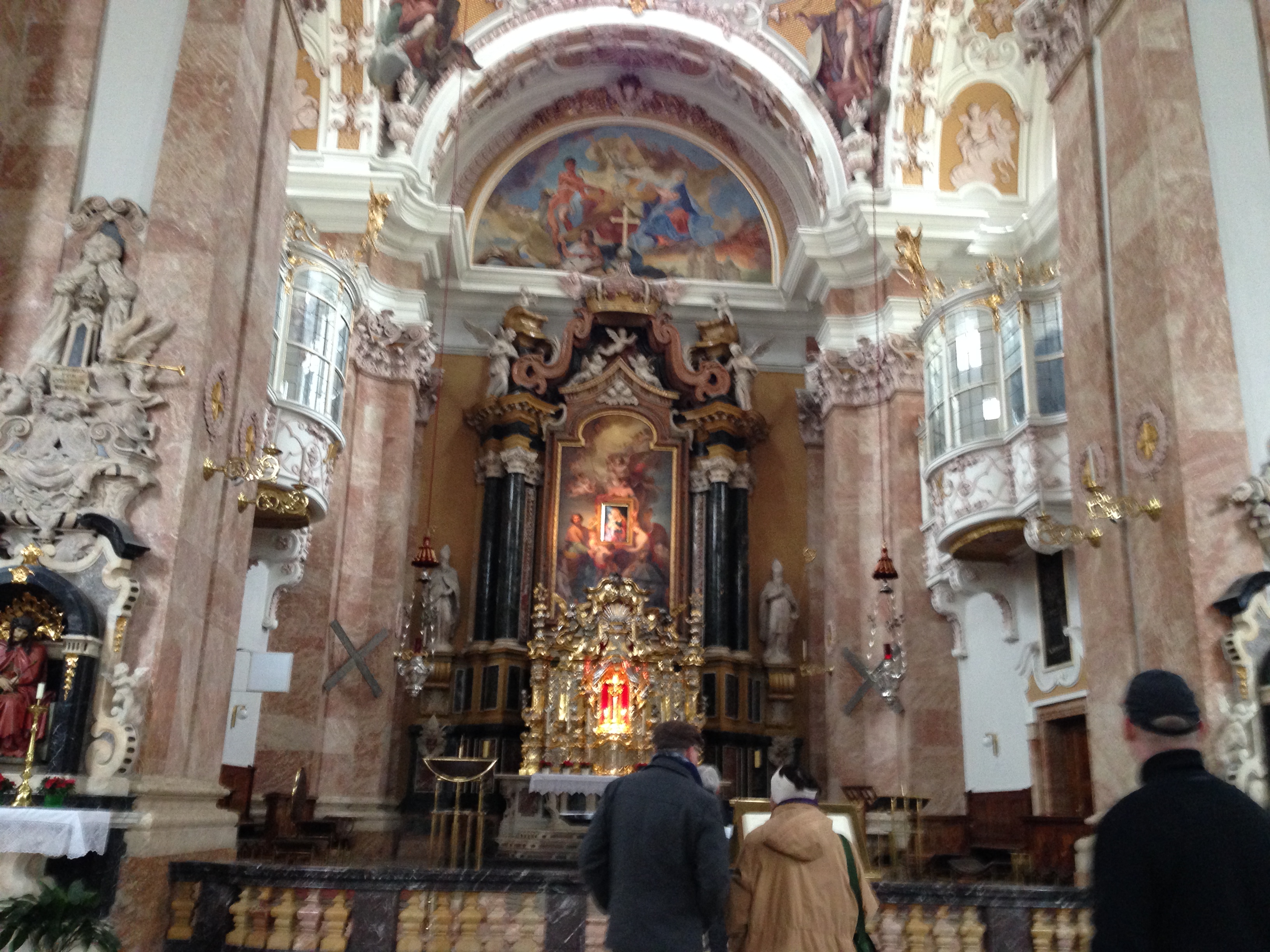
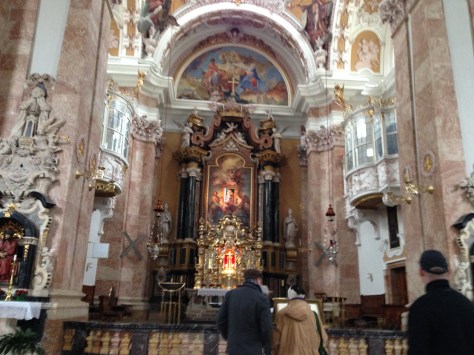
The “Maria Hilf” picture by Cranach and its history made a great impression on me. Cranach’s Maria Hilf (Maria Help) picture is integrated on the altar of the baroque dome of Innsbruck.
IMG_1313

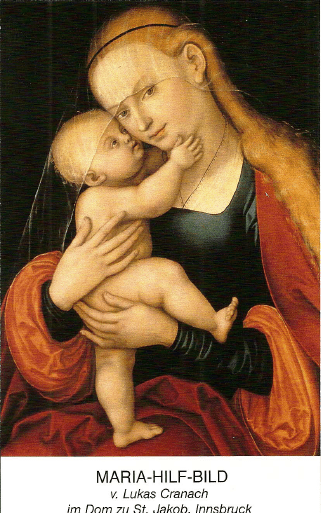
“Maria Hilf” is an almost protestant painting – Cranach was a good friend of Luther’s and he painted Maria in a natural way – without a nimbus. How did this painting end up in the strongly catholic town of Innsbruck? This is the answer: Archduke Leopold V was bishop in Passau. When visiting the duke of Saxony in Dresden around 1600, he was given the “Maria Hilf” picture. He first took it to Passau, but when he became archduke of Tyrolia, he left a copy of “Maria Hilf” in Passau and took the original with him to Innsbruck. It is now adorning the choir of the dome of Innsbruck (very small). Usually there is a silver altar around Cranach’s “Maria Hilf”, but during fasting times, the painting around it is revealed – as it presents itself now.

Our tour guide gives me a copy of the “Maria Hilf” picture – in the dome it is so tiny that I could not discern any details.
Maria Hilf

And the tour guide showed me many houses in the city that are decorated with a copy of Cranach’s painting. An almost protestant painting made its way into a catholic stronghold. I enjoy seeing this – it gives hope.

.

Strolling through the old city center

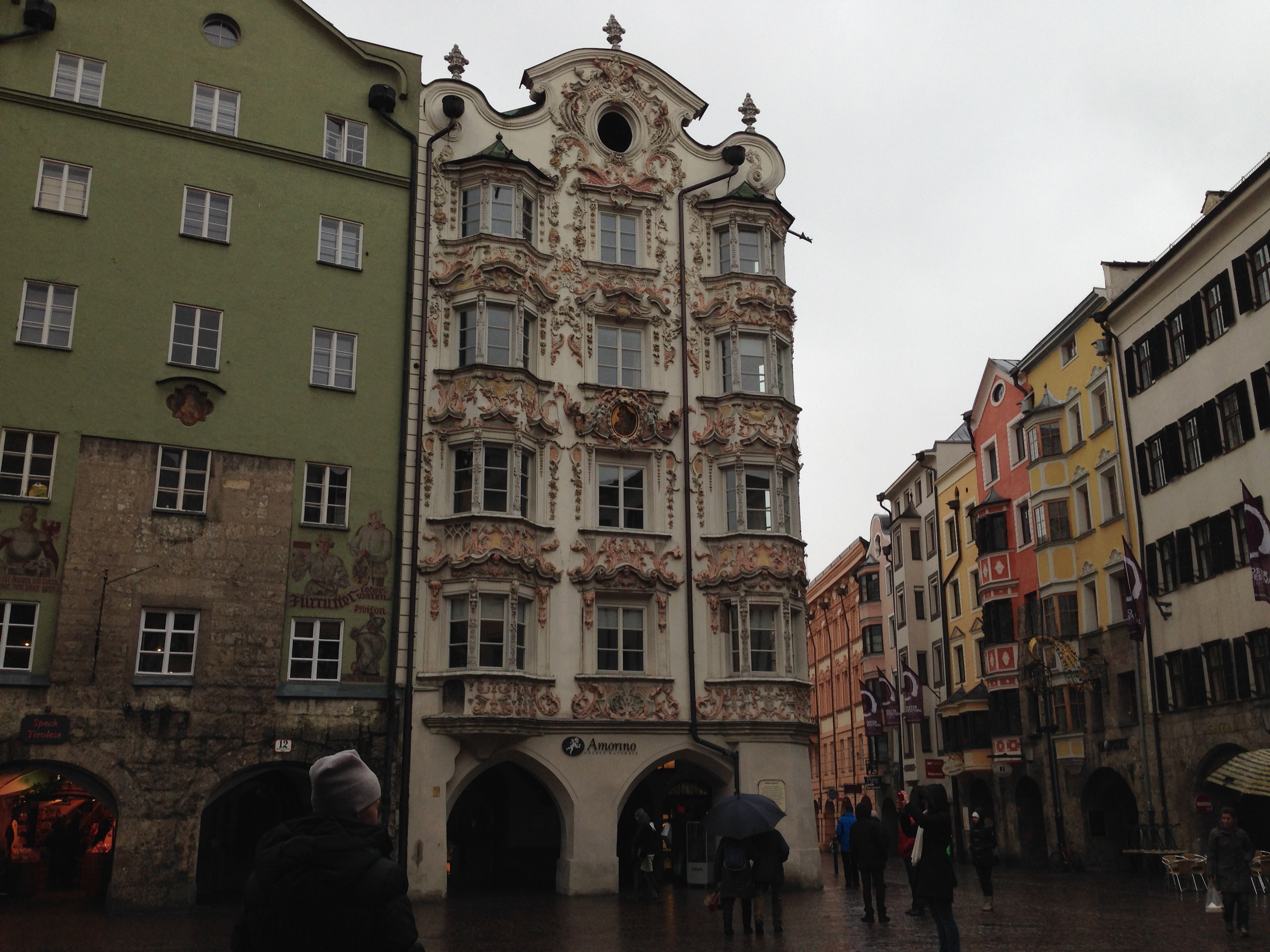
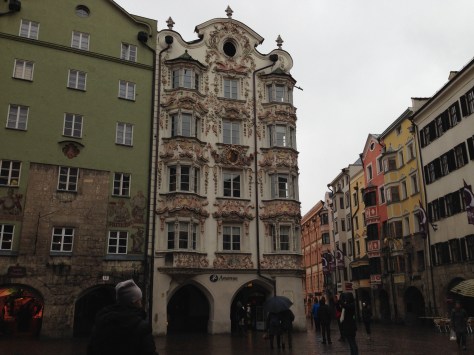
It is a pleasure to stroll through the old city center. The Rokoko Helbling house dominates the Herzog-Friedrich-Strasse near the “Goldenes Dachl”. It once belonged to a rich merchant.
IMG_1305

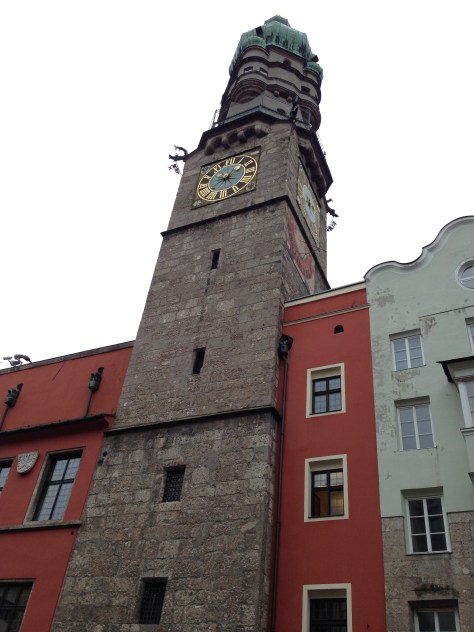
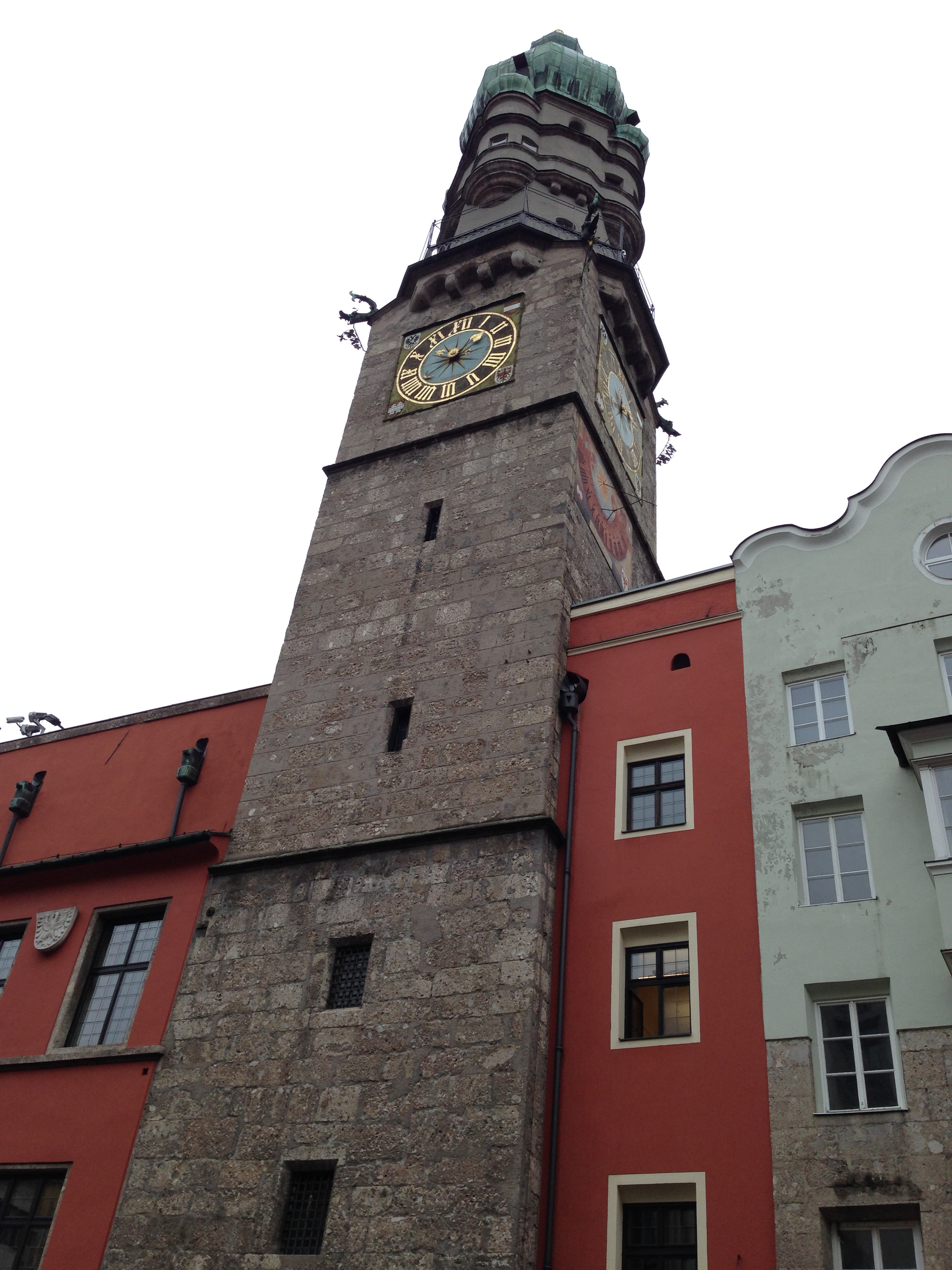
Across the Helbling house the Town Tower (Stadtturm) dominates the city line, next to the old townhall.
IMG_1311

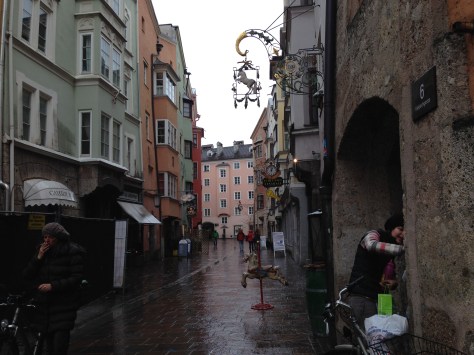
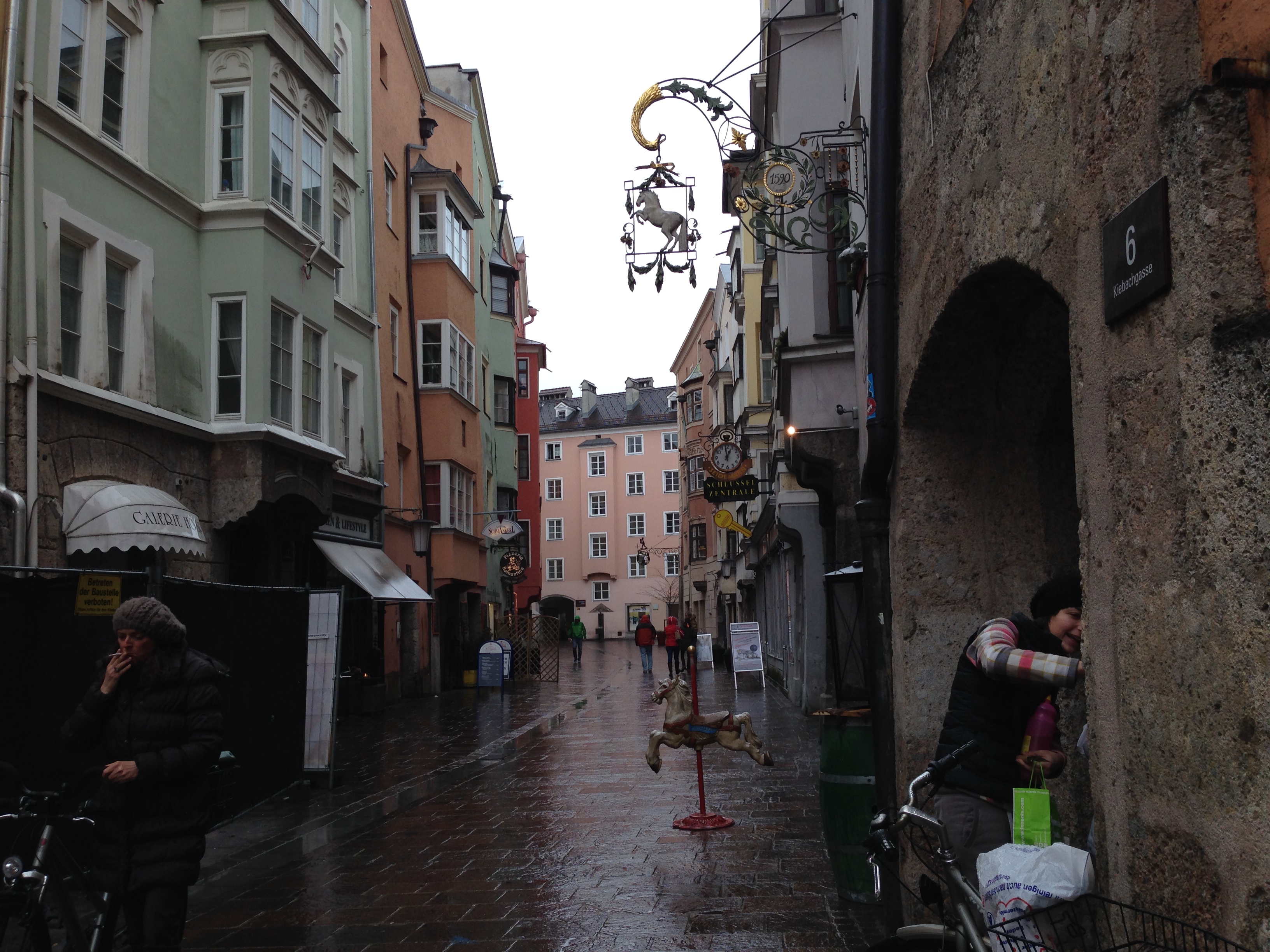
In the narrow Kiebachgasse we find the traditional restaurant “Weisses Rössl” (white small horse) where we enjoy Apfelstrudel and Palatschinken.
 

IMG_1307

I read that the word “Palatschinken” is said to come from the Latin word “Placenta” or “cake”.

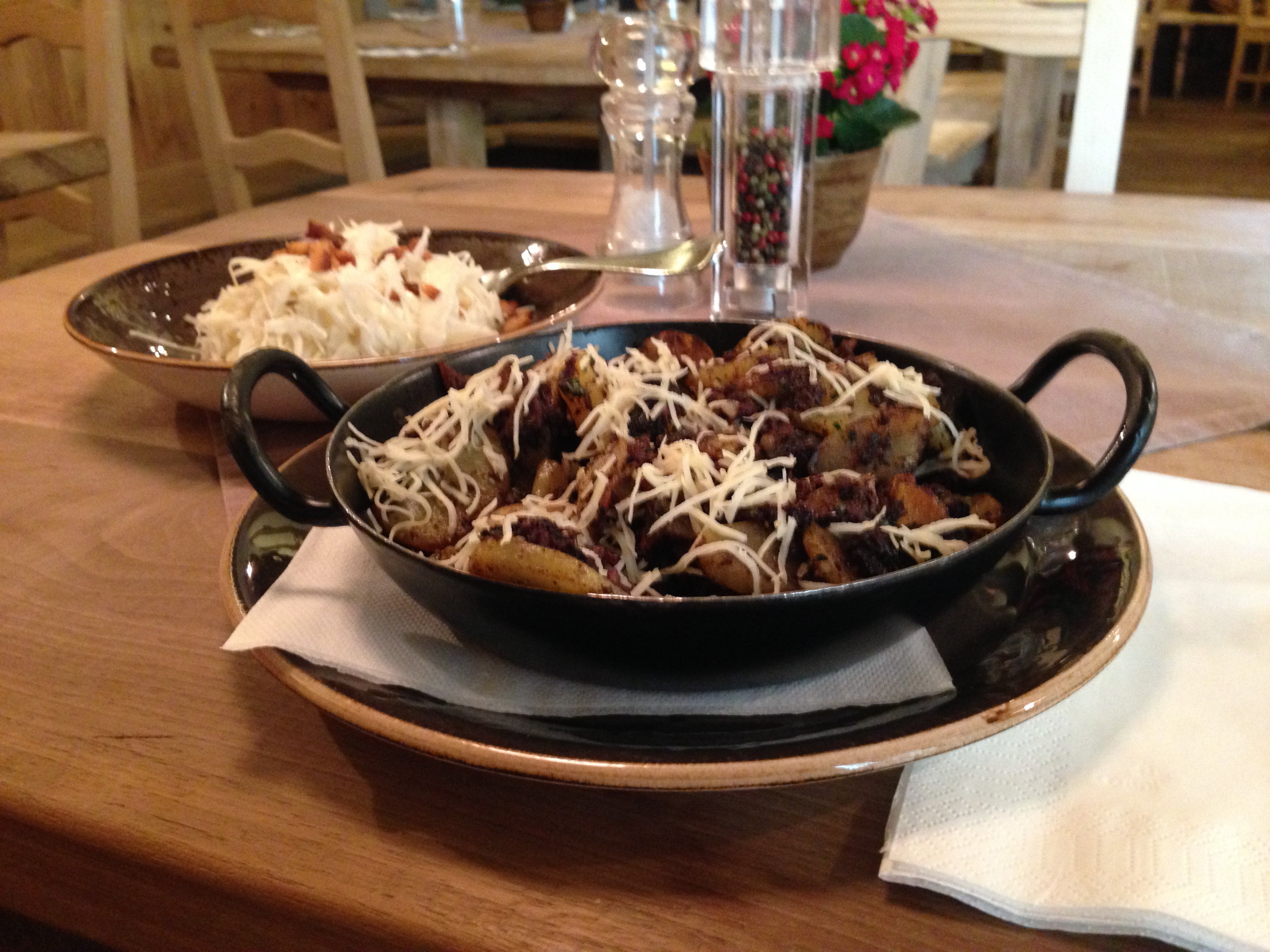
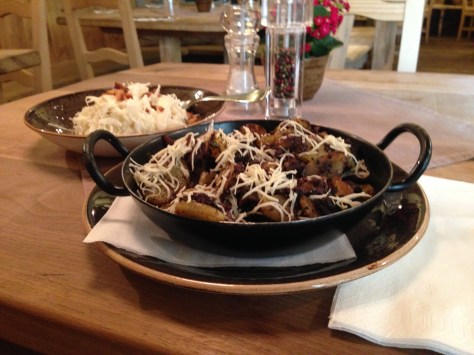
Later I come back and have a Blunzengröschtl (potatoes roasted with blood sausage and cheese, served with a cabbage salad). I first frowned a bit, but then found that it does not taste bad at all.
 IMG_1326

.

Innsbruck is surrounded by mountains – real mountains, about 2500m high!

While strolling through the city of Innsbruck, I hear the sound of heavy ski boots banging on the pavement. I look up. Yes, there is a skier going by, helmet on his head, boots at his feet, carrying skis and poles. His friend is not so noisy. He is a snow boarder with soft boots, helmet on his head, snow board under his arm. Others come in sneakers, while the ski boots hang over their shoulders. We are in the middle of a town of 130’000 inhabitants. What are the skiers and snowboarders doing here?

Well, Innsbruck is surrounded by real mountains, about 2500m high. Skiing areas are just above the town, to the north (Nordkette) and to the south (Patscherkofel). Other valleys such as the Sellraintal and the Ötztal are not far.

As the sun comes out, we can see the Nordkette just above the “Goldenes Dachl”. Our tour guide confirms, it takes her half an hour to go skiing there, and when there is snow in Innsbruck she can ski down into the garden of her house. She skis practically every day. I hear that students ski during their lunch break and then join the lessons again not taking off their ski boots. I am impresssed. I have always dreamed to live in a town that is so close to skiing opportunities…

IMG_1338

.

Around – and above – Innsbruck

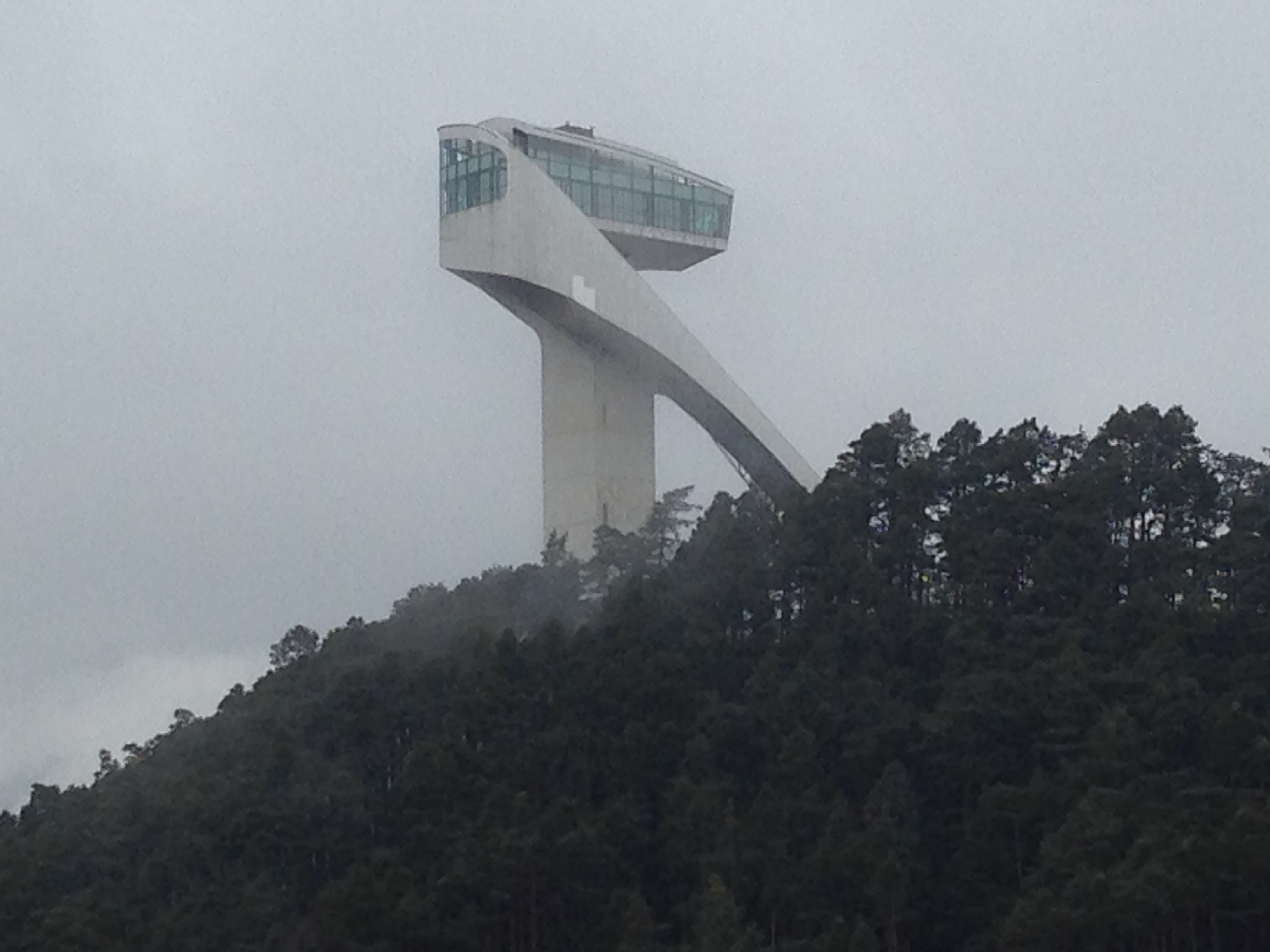
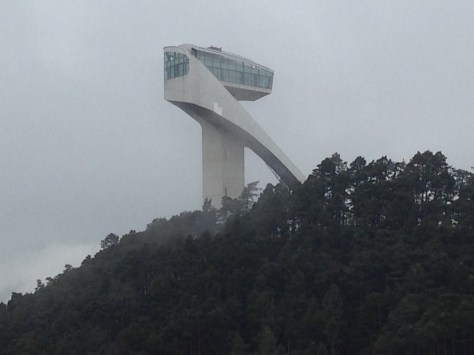
By car we drive south to Igls and see the Bergisel jump with Zaha Hadid’s viewpoint and restaurant.
IMG_1316

Above Igls there is the Patscherkofel ski area. No wonder that Innsbruck has been selected for Olympic Winter Games – even twice, in 1964 and 1976.

We get onto the Brenner motorway and have to pay two Euros for about 5km, until we reach the main motorway of the Inn valley. Not everything is cheap in Austria…

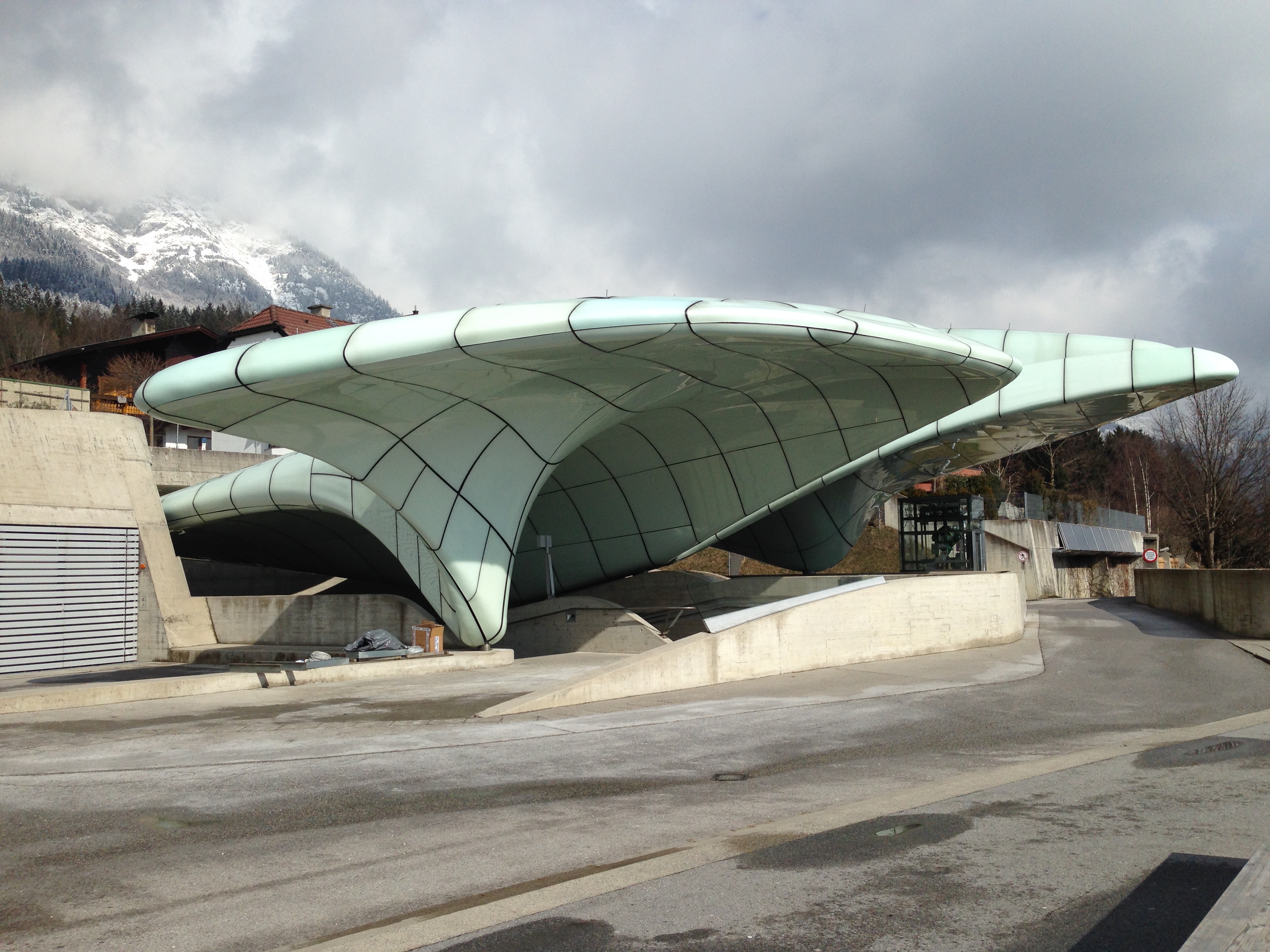
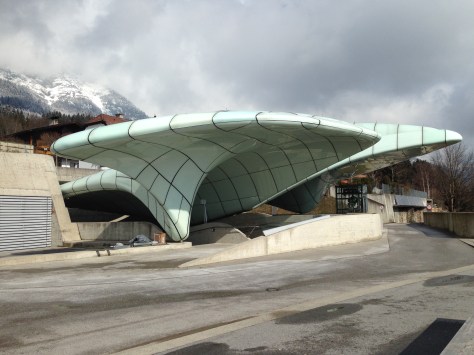
To the north there is a cable railway that takes passengers from the city center to the Hungerburg (literally “castle of hunger”). Zaha Hadid has been here as well, as the train station shows (Basel has refused to build her proposal for the Town Casino).
IMG_1322

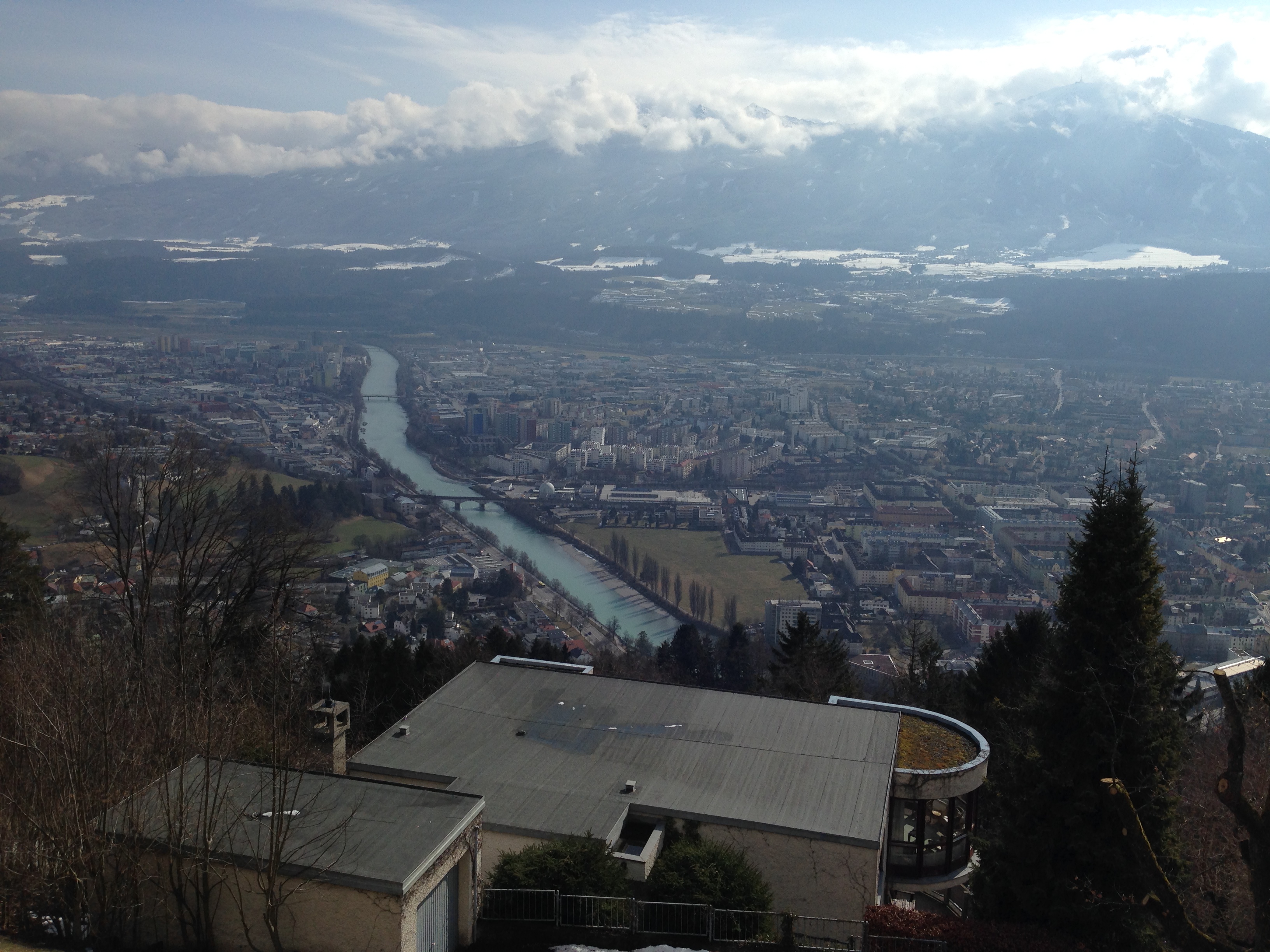
At the Hungerburg train station I find a great view of Innsbruck with the river Inn and with the mountains in the south of the town…

IMG_1323

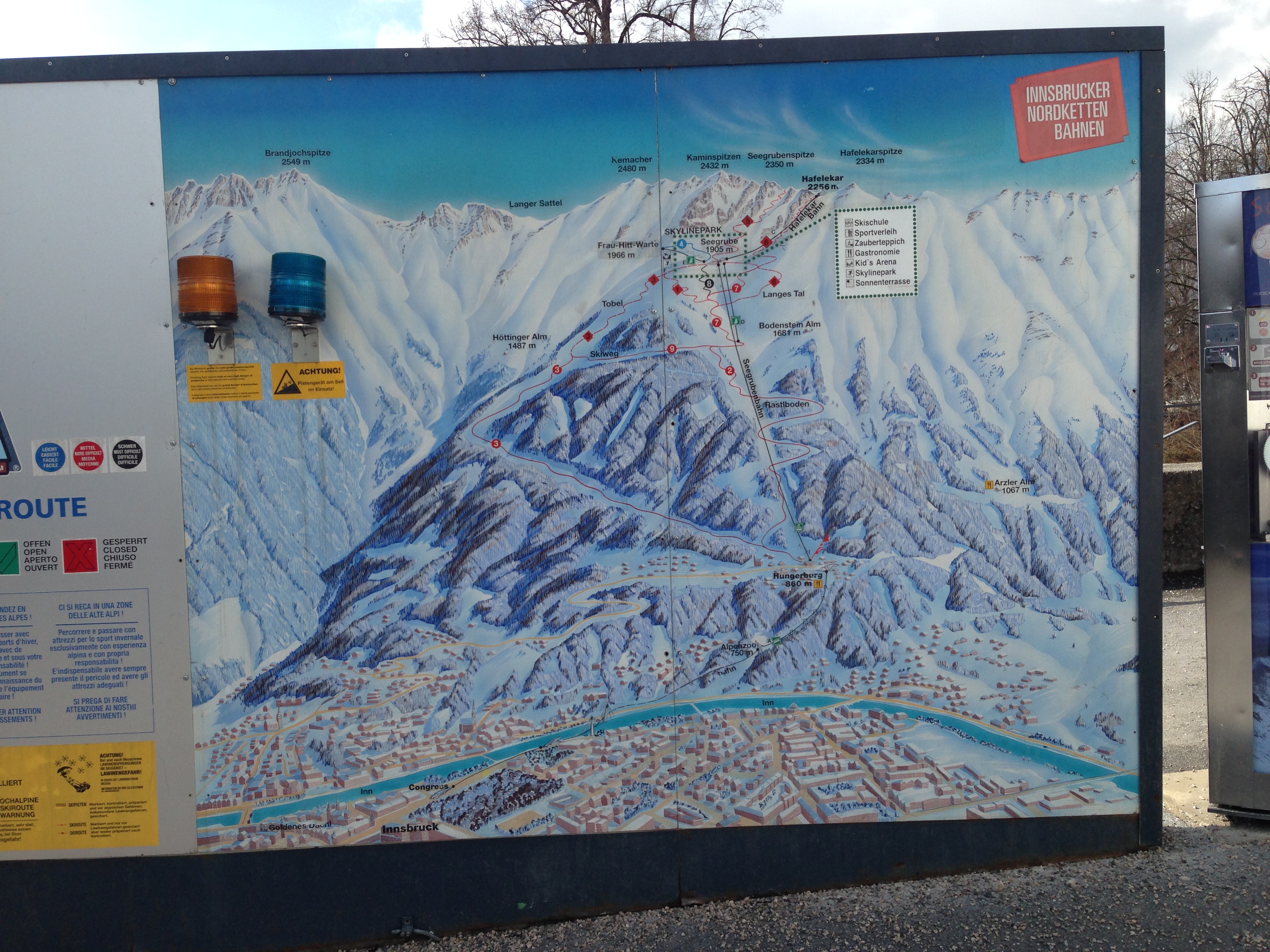
… and a teleferic that leads up to this ski resort in the Northern Chain (Nordkette).
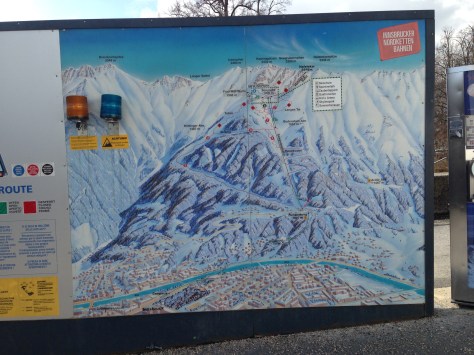
IMG_1319

.

A stunning scenery…

Skiing high above a city… on the Website the scenery looks gorgeous. I may come back just to experience that – and then, in town in the evening, I can dive into the culture of Innsbruck that has played an important role in European history.


Three Swiss in Florence – Enjoying museums and palaces

Again to recapitulate: The architecture time line – now focusing on the second part with the secular buildings

Capture_1

Let me now present some of  the museums and palaces we visited…

.

Bargello

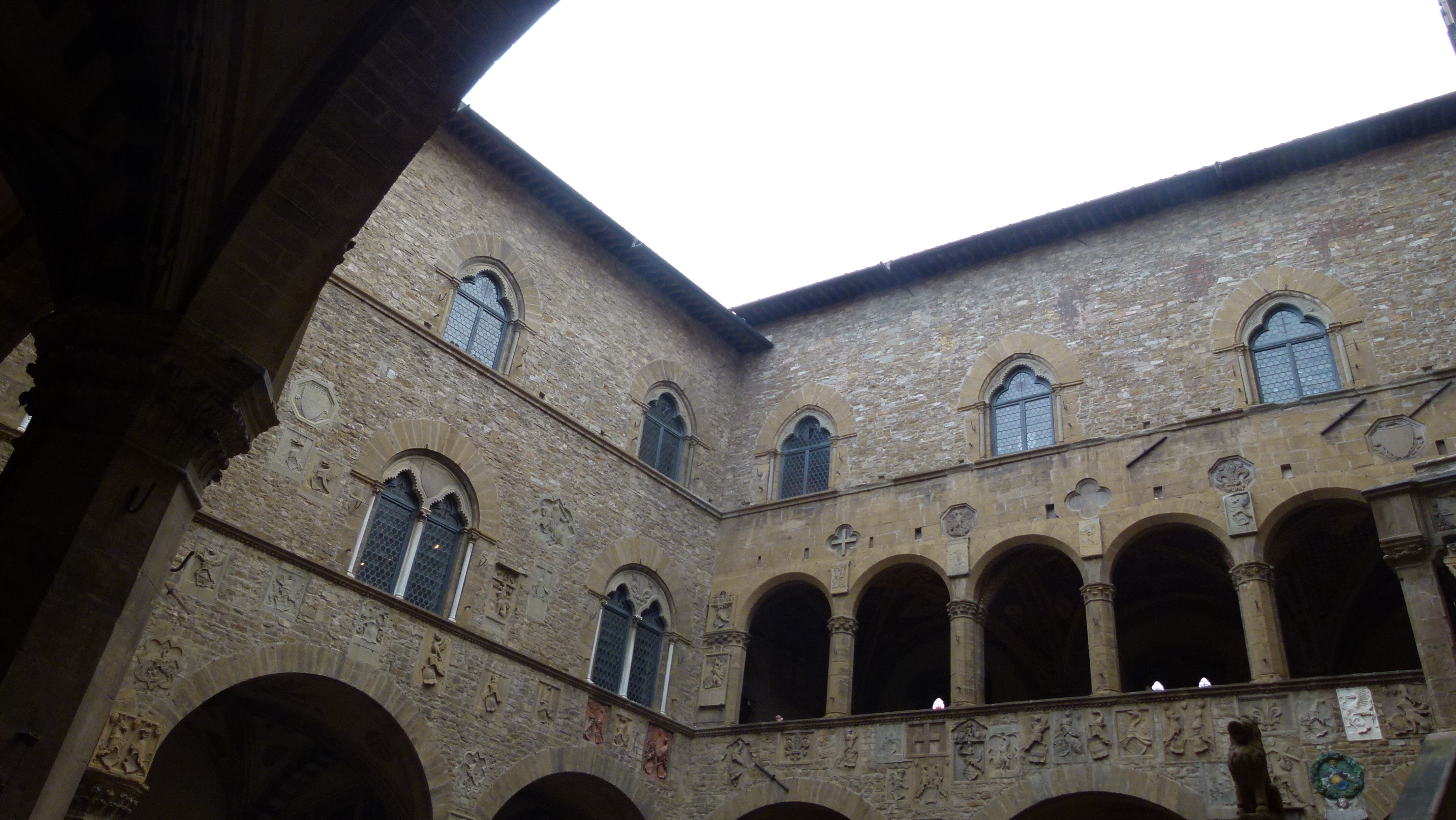
The palace was built in 1254. Some say that 40 years later this palace was the model for the Palazzo Vecchio. I can see similiarities and even confused the two buildings in the beginning. Town leaders lived in this palace – sometimes local  representatives, sometimes representatives of the German emperor. In 1574 the Bargello became the seat of the “bargello”, the head of the Florentine police. Today, the palace is another renowned art museum.

P1070297

In the ground floor I am impressed by the works of Michelangelo – below is his Bacchus.

P1070298

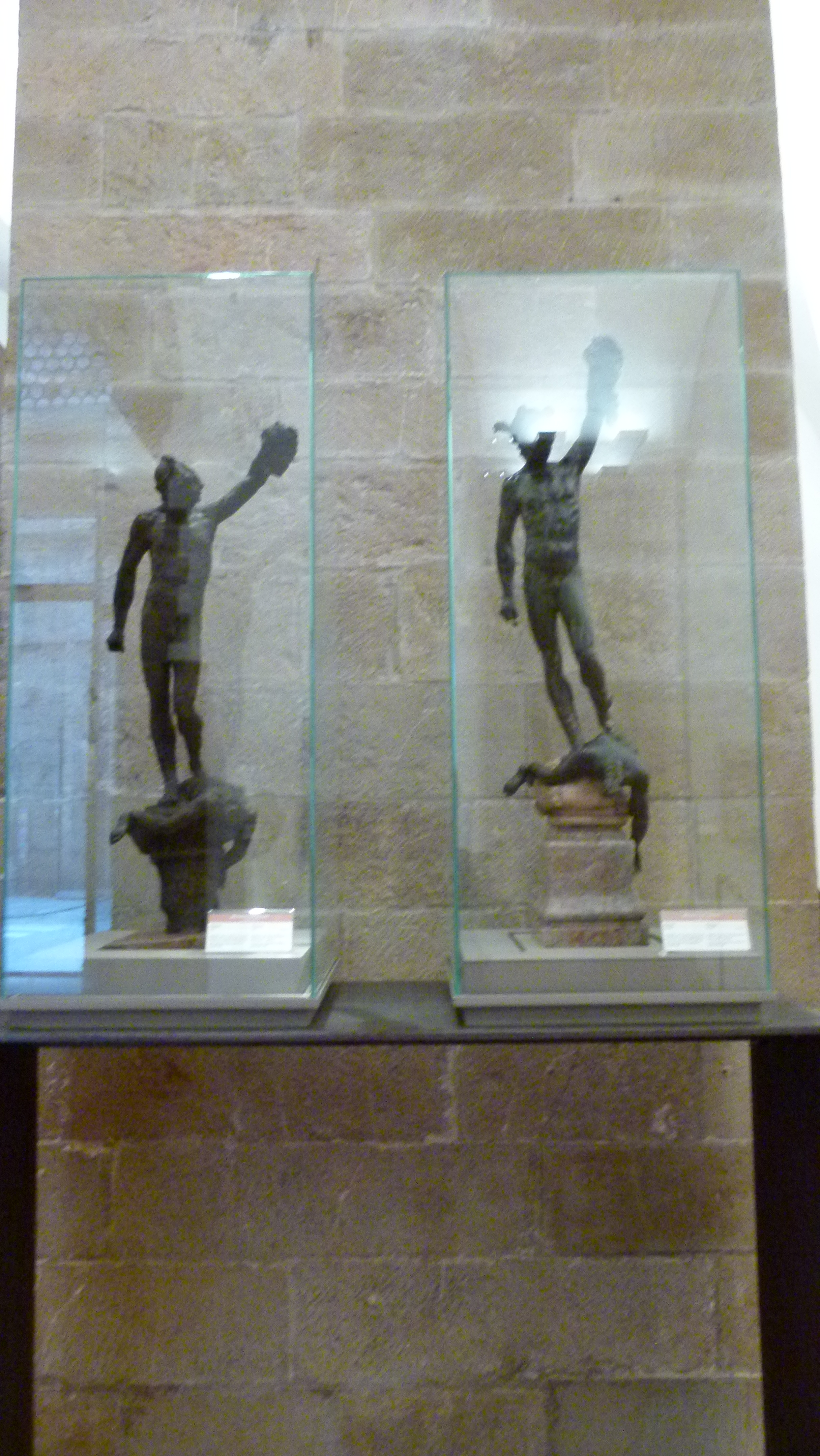
Also on the ground floor are the prototypes that Cellini casted before creating his famous Bronzeperseus with the head of Medusa around 1550.

P1070299

Cellini’s Perseus stands in the Loggia near Palazzo Vecchio. Cellini was a goldsmith. His bust is venerated on Ponte Vecchio. Franz Kotteder gives this title to the biography of Benvenuto Cellini “the life of an artist like an overheated roadmovie” (“Florenz, eine Stadt in Biographien”, Merian 2014). He repeatedly got involved in quarrels and fights. Due to his good connections (even to the Pope) he always obtained pardon.

On the first floor there are various gothic and renaissance sculptures and paintings. Here is the marble statue of David that Donatello created in 1409 – it attracted my attention.

P1070309

About 30 years later Donatello made a second David out of bronze that is more famous than his first David.

On the first floor there is also an exhibition of artworks from various countries. For instance this porcelain elephant from Persia.

P1070303

.

Palazzo Vecchio

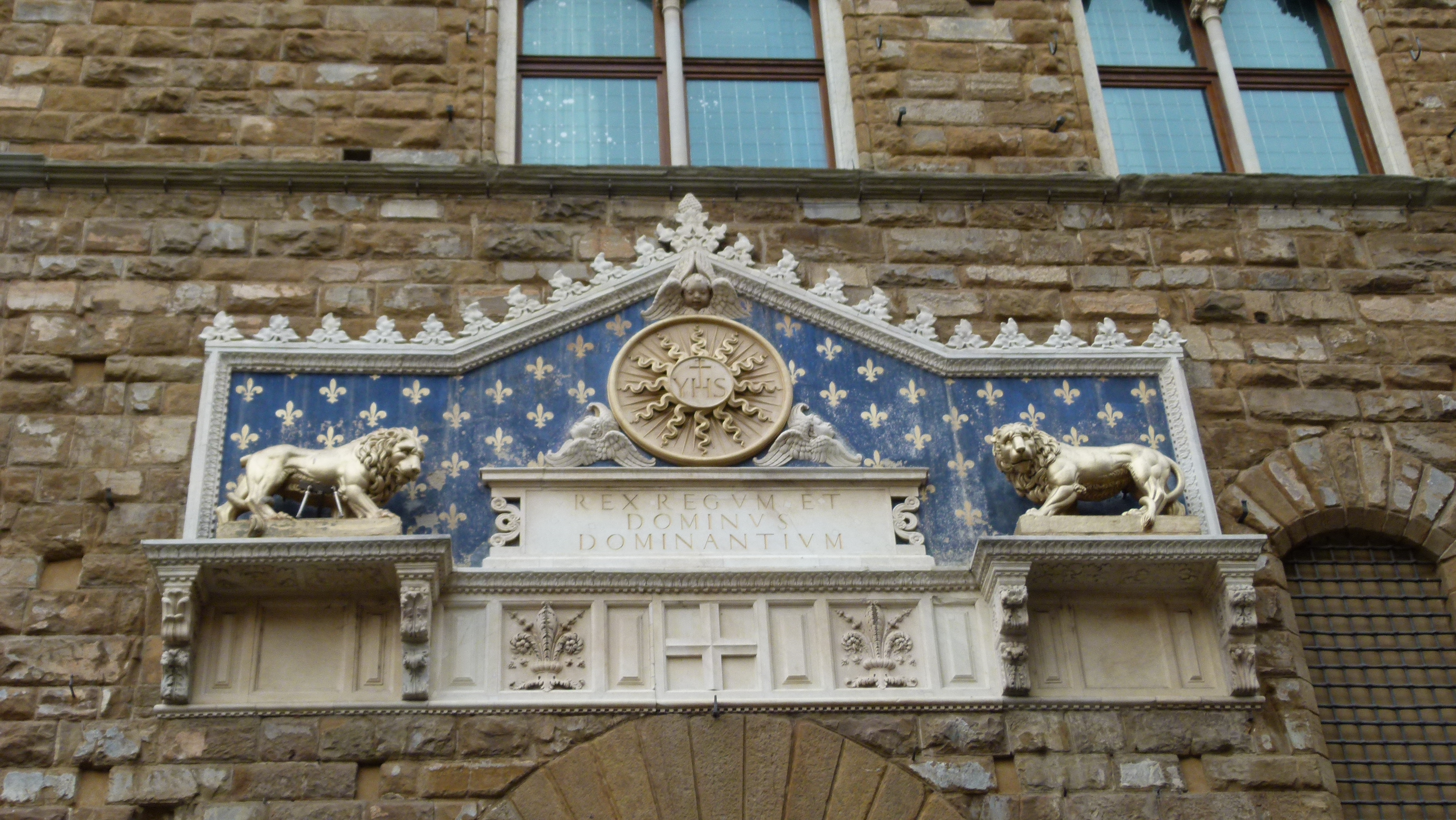
Originally the Palazzo Vecchio was called “Palazzo della Signoria”. It was built between 1299 and 1343, as the townhall for the town republic or the place of work and residence for their “Signoria”. The Palazzo was amplified several times, for instance in the 16th century, when the Medici reconstructed it – it was then their “Palazzo Duccale”. When the Medici moved to the Palazzo Pitti around 1570, they renamed their “old” palace to “Palazzo Vecchio” Above the front door are lions protecting the lily flowers. Lions and the flower are symbols of the town. Often they appear as a lion protecting a lily with his paw (called “Marzocco”). The lion is the symbol of the pope or the Guelphs (symbol of freedom as opposed to the eagle that is the symbol of the German emperor). Why the lily became the symbol of Florence is subject to guesses. Some say that the goddess “Flora” had founded Florence.

P1070181

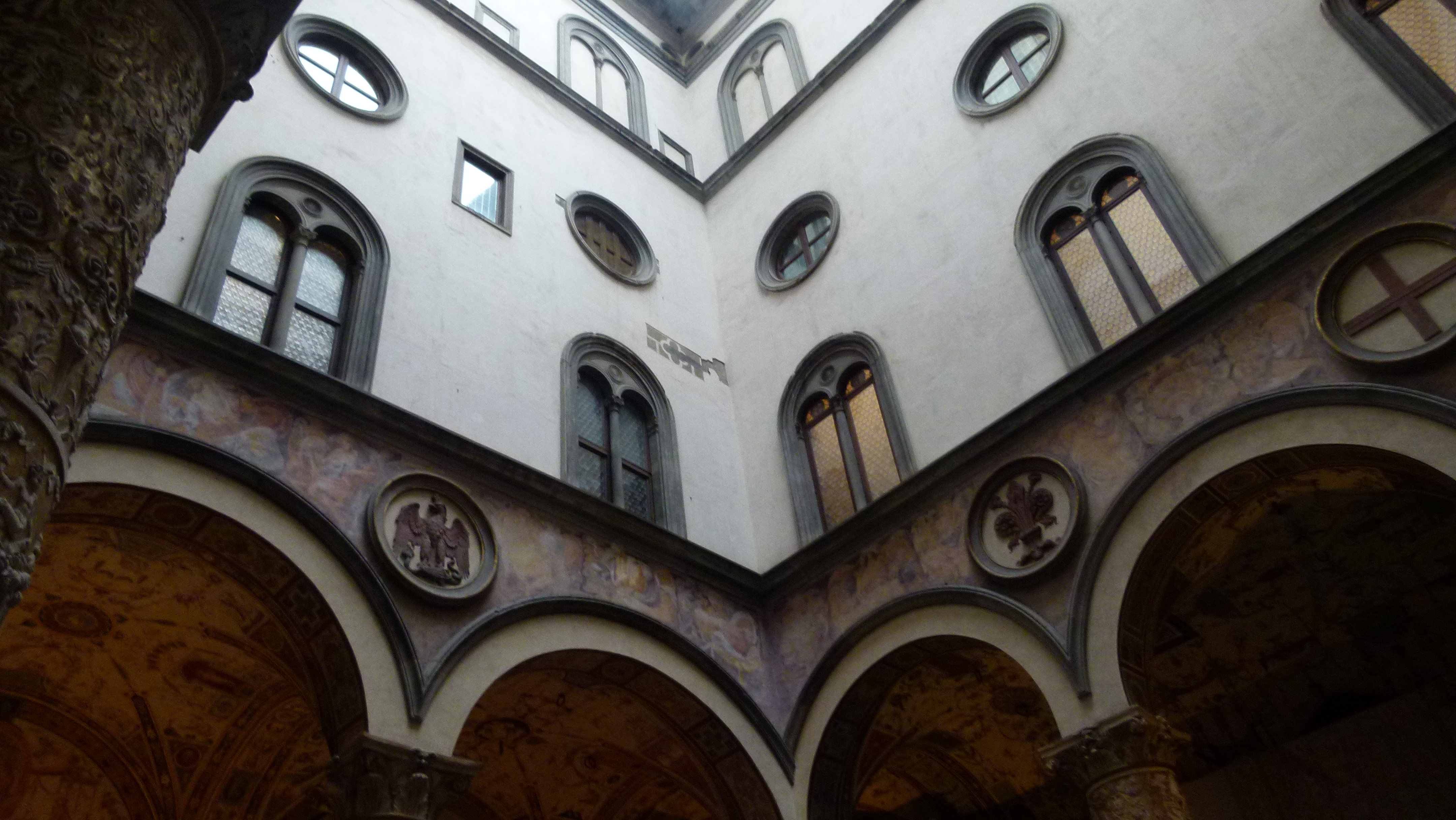
The Palazzo Vecchio can be visited, but we decided to postpone it to our next trip to Florence. This is an impression taken in the first courtyard. P1070184

.

Ponte Vecchio

The Ponte Vecchio is THE place in Florence. If a tourist does not remember anything else, he always remembers this bridge crossing the Arno. This bridge was built around 1340.  The common roof above the small houses is the Vasari Corridor. It was ordered by the Medici after they had settled in the Palazzo Pitti around 1560 to connect their “new” palace with the Uffizi and their “old” palace. Until 1593 there were butchers in the small houses on the bridge, but the dukes did not like the smell, when walking through their corridor. They doubled the rent and goldsmiths and jewelers moved in (Dumont).

P1070264

We spent quite some time with one of the jewelers in his shop. From his workbench, he has a great view of the Arno.

.

Palazzo Davanzati

There are many, many rich palaces in the city center. We visited one of them, the Palazzo Davanzati. It was constructed around 1350.

P1070656

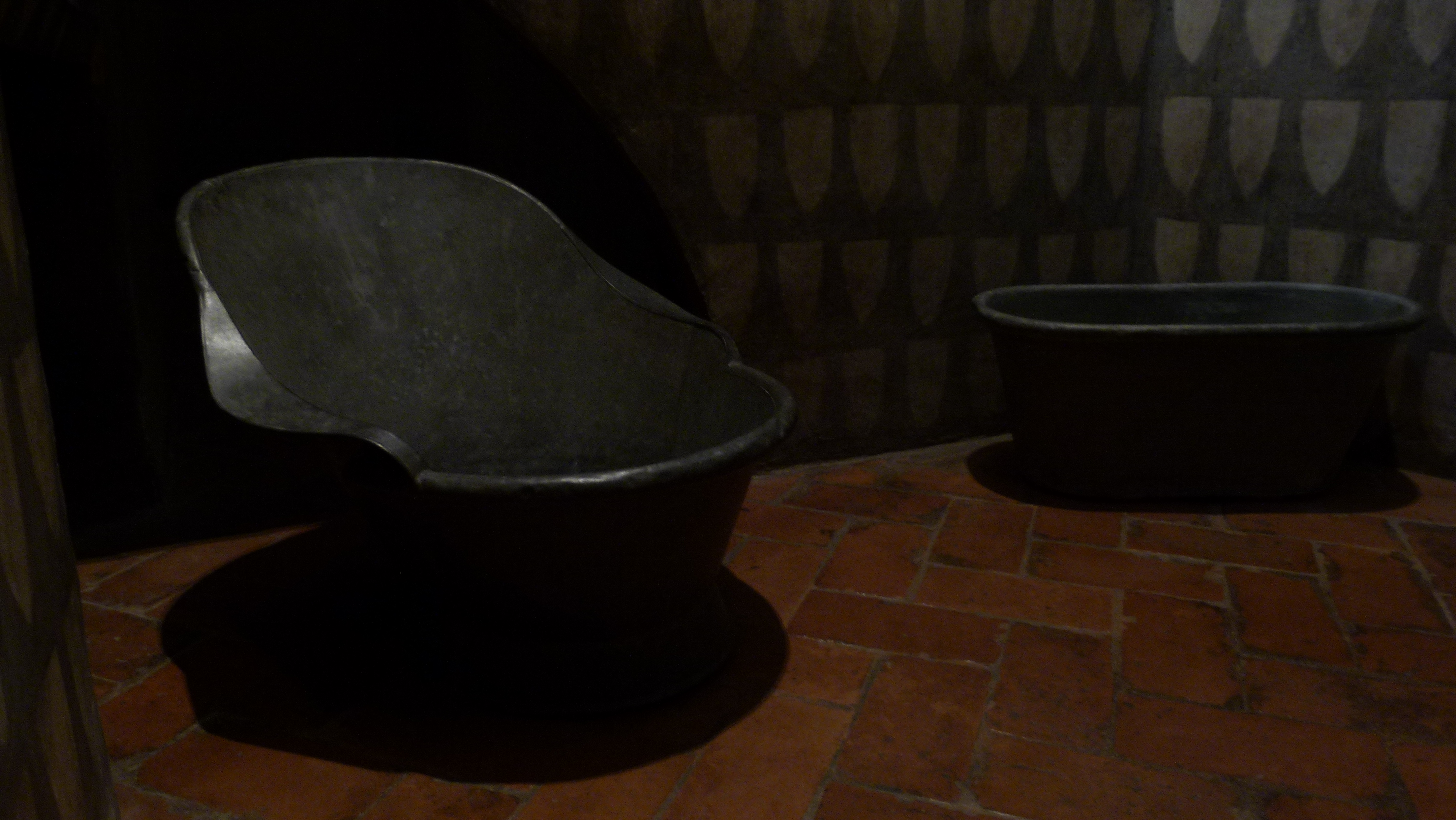
I am impressed how modern this palace is. A tube brings water into the upper floors.

P1070664

There is a toilet on each floor.

P1070672

And there is a bathroom on each floor.

P1070701

The most beautiful salon is the Papagalli room with the frescos covering the walls.

P1070667

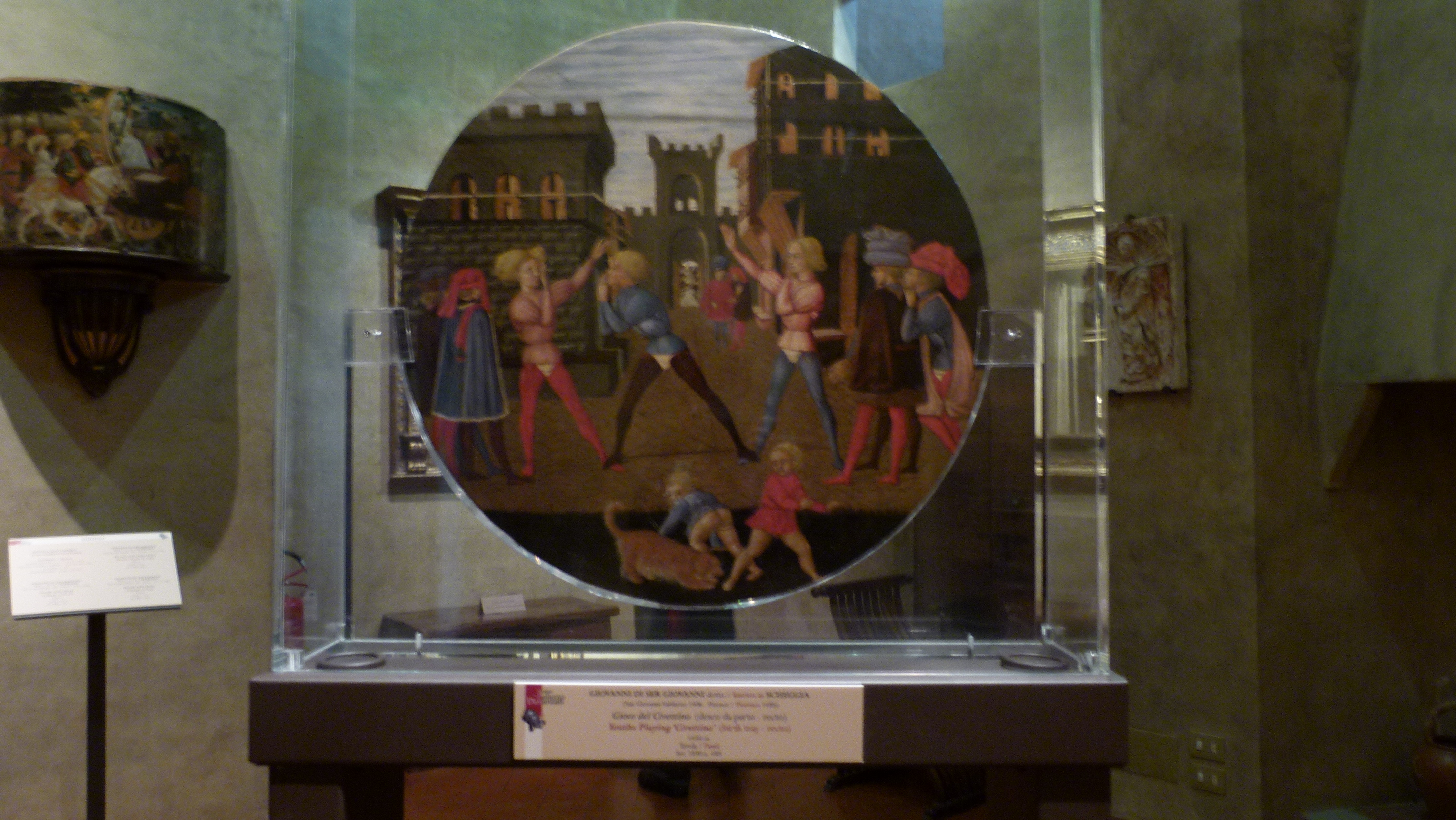
In one of the rooms we come across the brother of the famous Masaccio that died at the age of 27 after having painted the magnificent “Expulsion from the Paradise” and the “Crucification”. His brother Scheggia painted scenes from everyday life – and this helps today to understand what life in Florence was like.

P1070693

.

Ospedale degli Innocenti

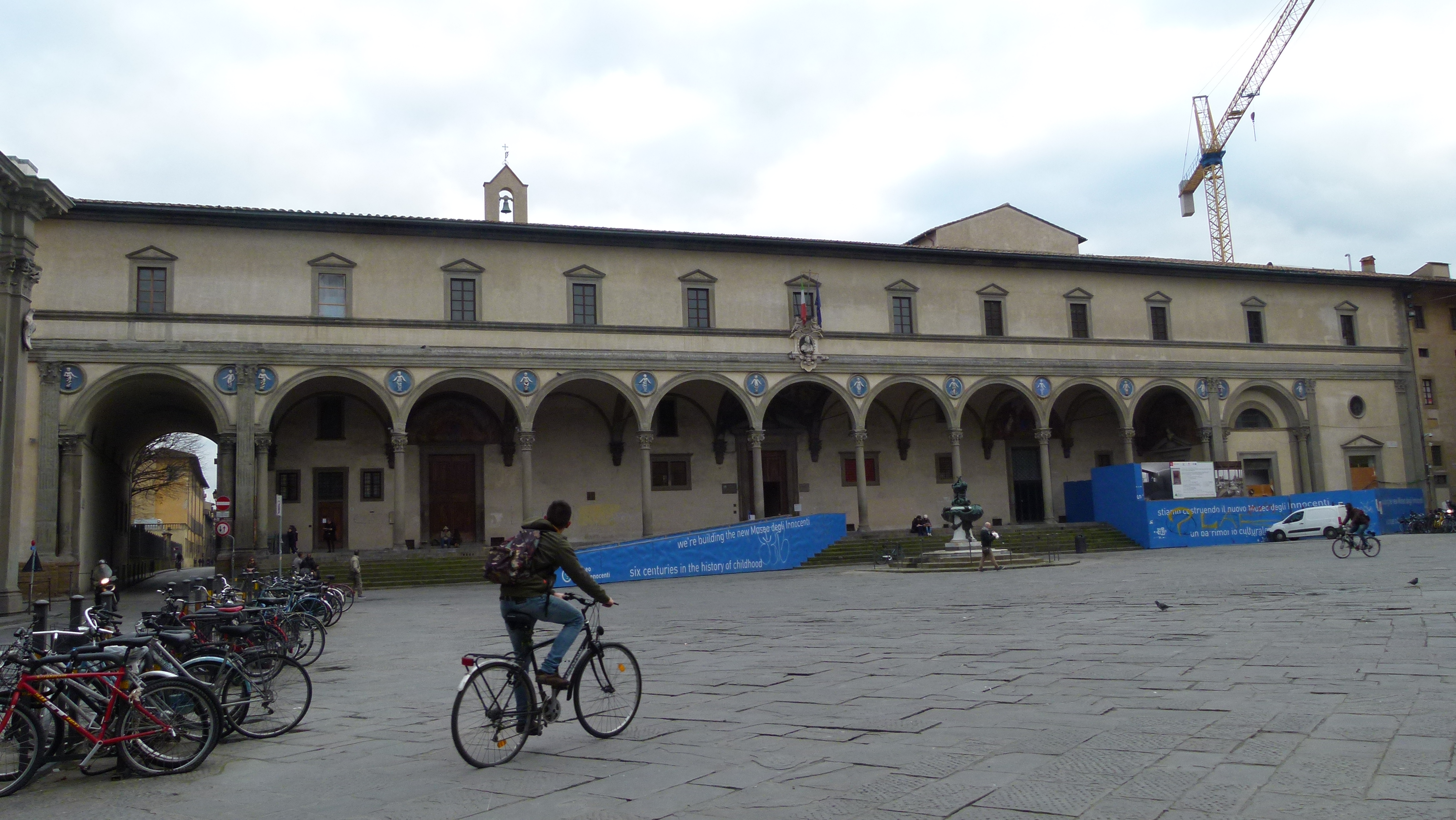
The Ospedale degli Innocenti or the house for the orphans is not only a great piece of Renaissance architecture built by Brunelleschi, but it was also a very social institution. It was completed in 1445. Today it is still an orphan house, and also a museum. We just enjoyed the harmonic architecture of the Piazza SS Annunziata dominated by the archades of the Ospedale and the church.

P1070504

.

Palazzo Medici-Ricardi

The Palazzo Medici, Renaissance from around 1450, was later amplified by Ricardi after they had acquired the palace in 1584.

P1070383

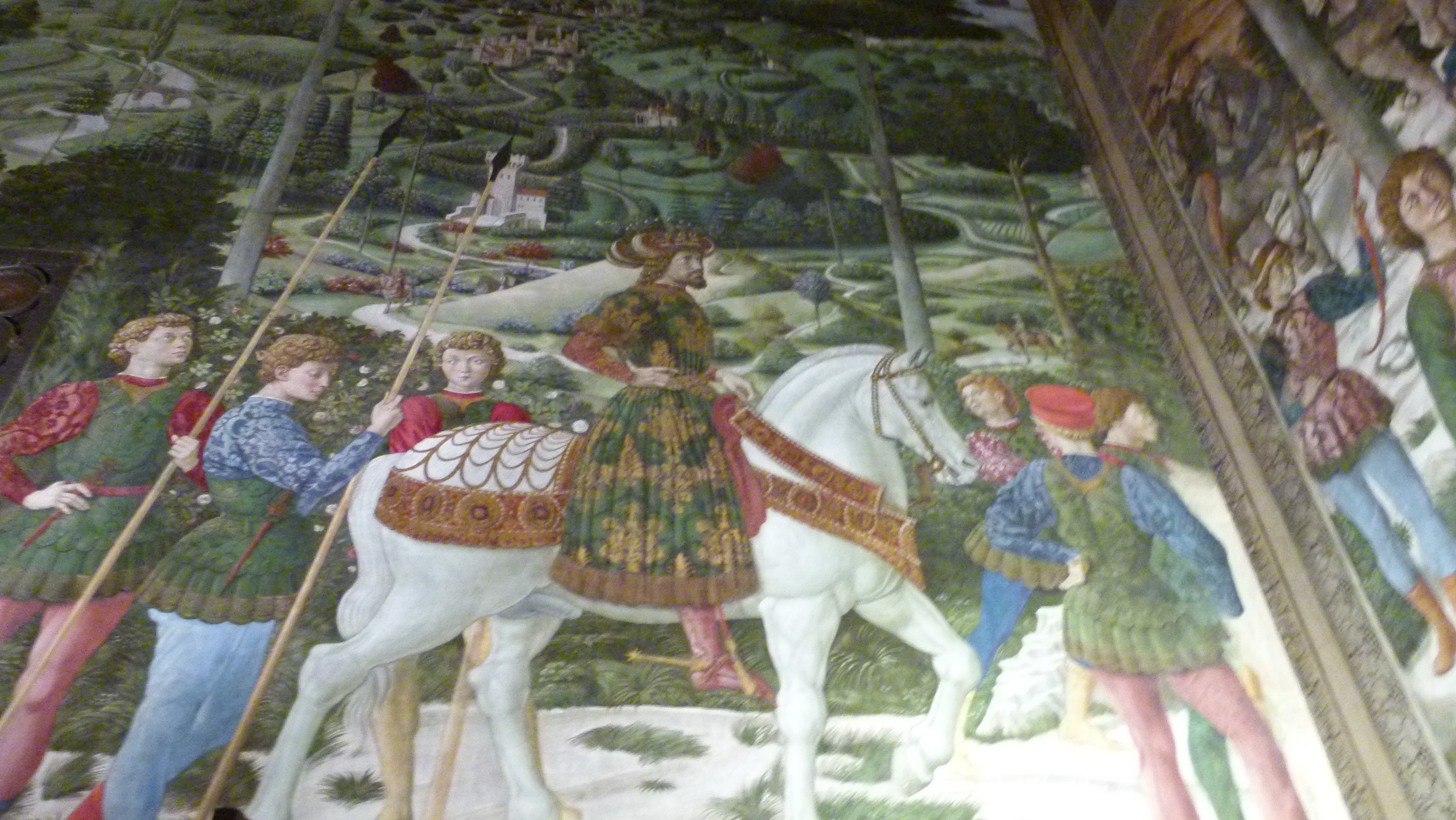
THE treasure here is the small chapel with the frescos by Benozzo Gozzoli, ca 1460, showing the adoration of the kings. There are guidebooks that claim to recognize the Zar from Byzanz and the Patriarch from Jerusalem as wel as Lorenzo Il Magnifico. Dumont does not believe this. He just recognizes Piero de Medici and the artist.

P1070377

.

Let us continue with the Palazzo Pitti, the Uffizi and the Accademia in one of the next blogs.      

Three Swiss in Florence – enjoying some more Gothic and some Renaissance churches

Again to recapitulate: The architecture time line of Florence

churches and palaces

The former blog started wîth our visiting Proto-Renaisance and Gohic churches. Let me now continue with some more Gothic churches of Florence.

.

A Gothic church for Maria and Renaissance sculptures ordered by the guilds: Orsanmichele

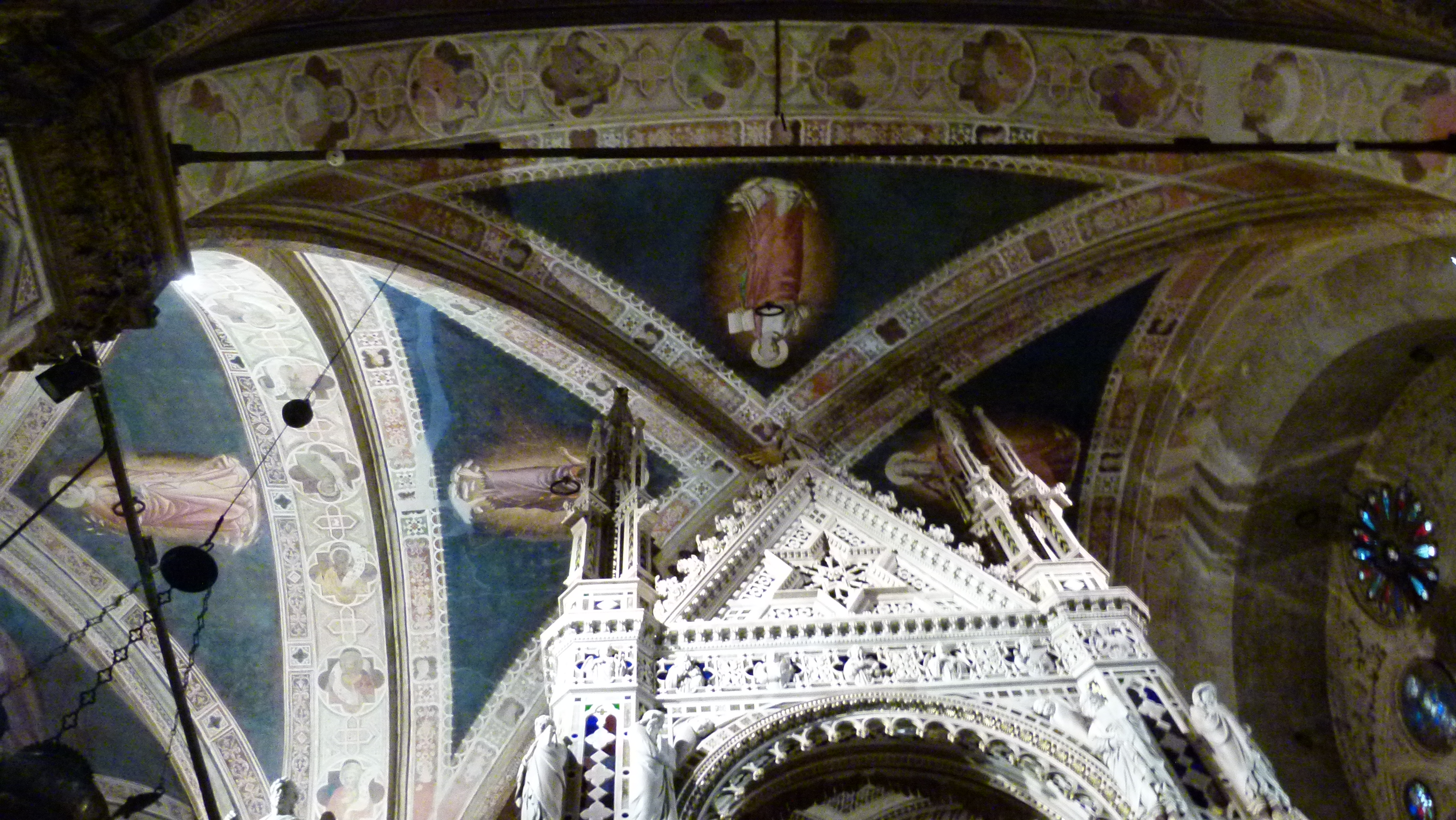
Orsanmichele was built around 1340. The oratorium or church is gothic, with harmonious blue ogives.

P1070150

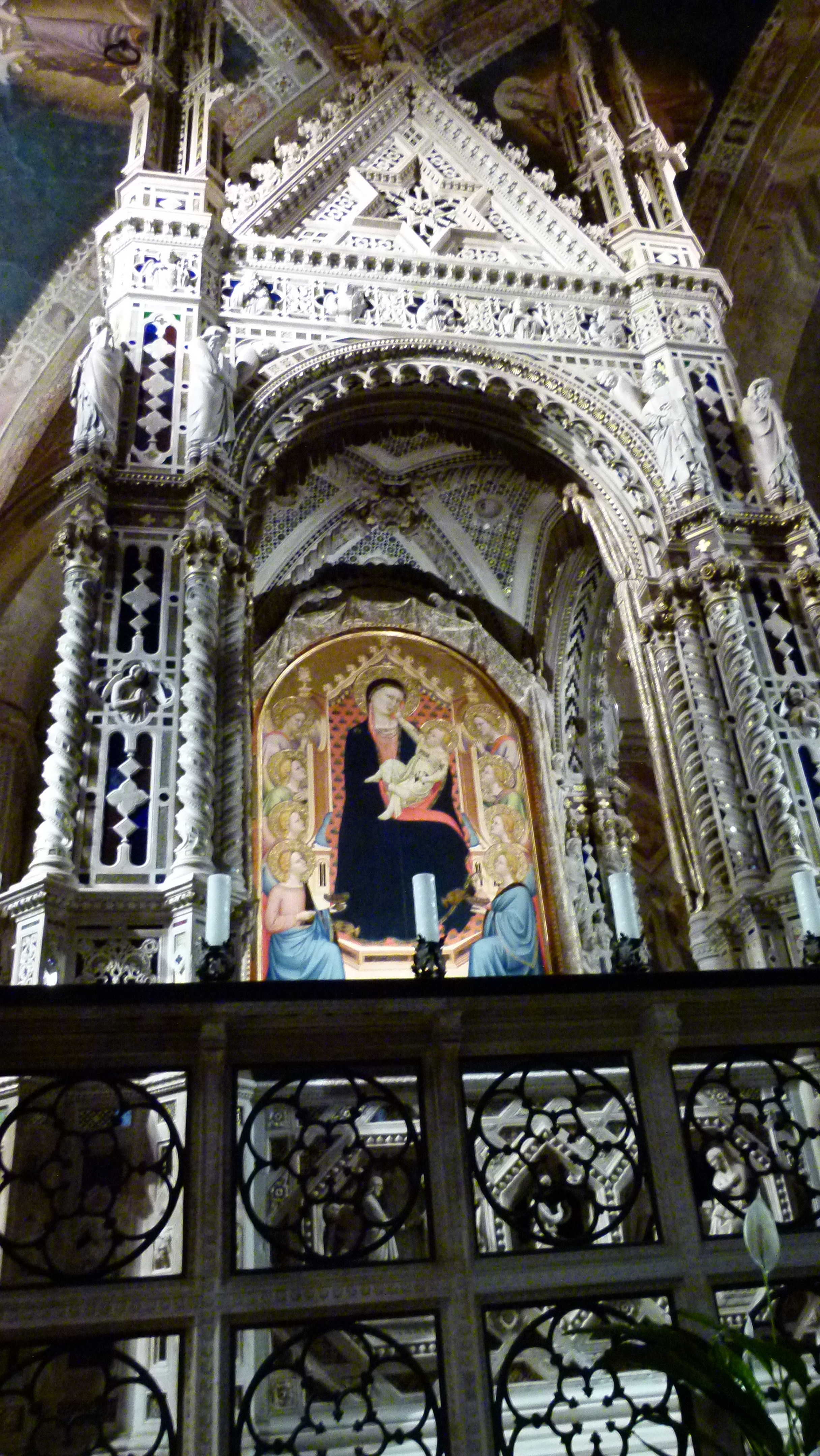
Center piece is Maria with the child painted by Bernardo Daddi  and sitting in the tabernacle shaped by Oracagna.

P1070149

There was a market here before. A Maria painting was adorning the market and it was said to have performed miracles. Daddi’s Maria replaced the original and the church was built for it. Above the church were grain stores.

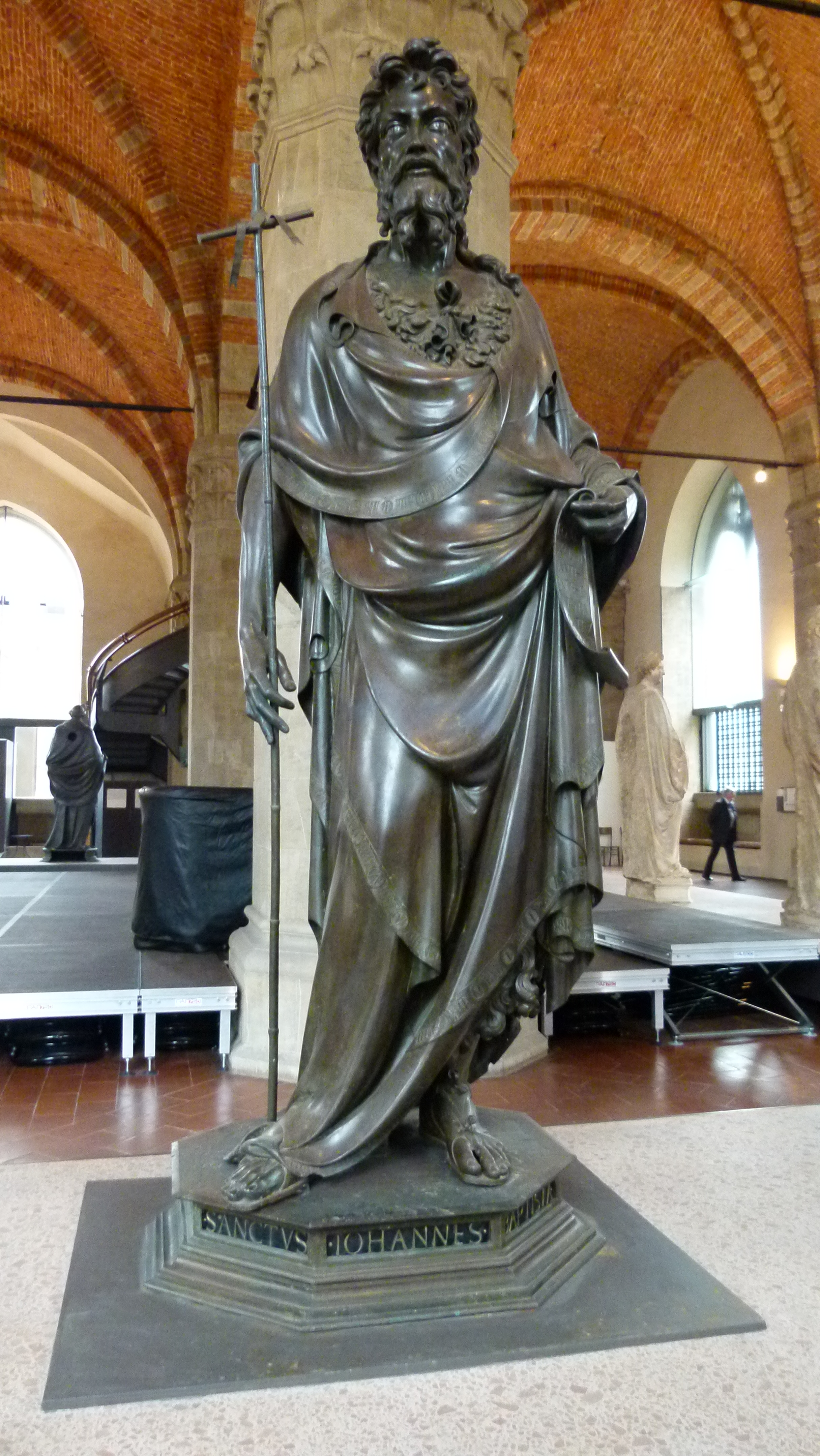
Orsanmichele belonged to the guilds of Florence. The guilds ordered statues for the niches around their building. The originals are now in the museum above the church (where the guilds had stored their grain before). Here is one example: St. John the Baptist by Ghiberti. I now start to recognize St. John, as he always carries this stick with him. There are 14 statues by Ghiberti, Donatello, Nanni di Banco and others, all from the 15th century – pure elegant Renaissance.

P1070158

.

Transition between Gothic and Renaissance: The Brancacci Chapel

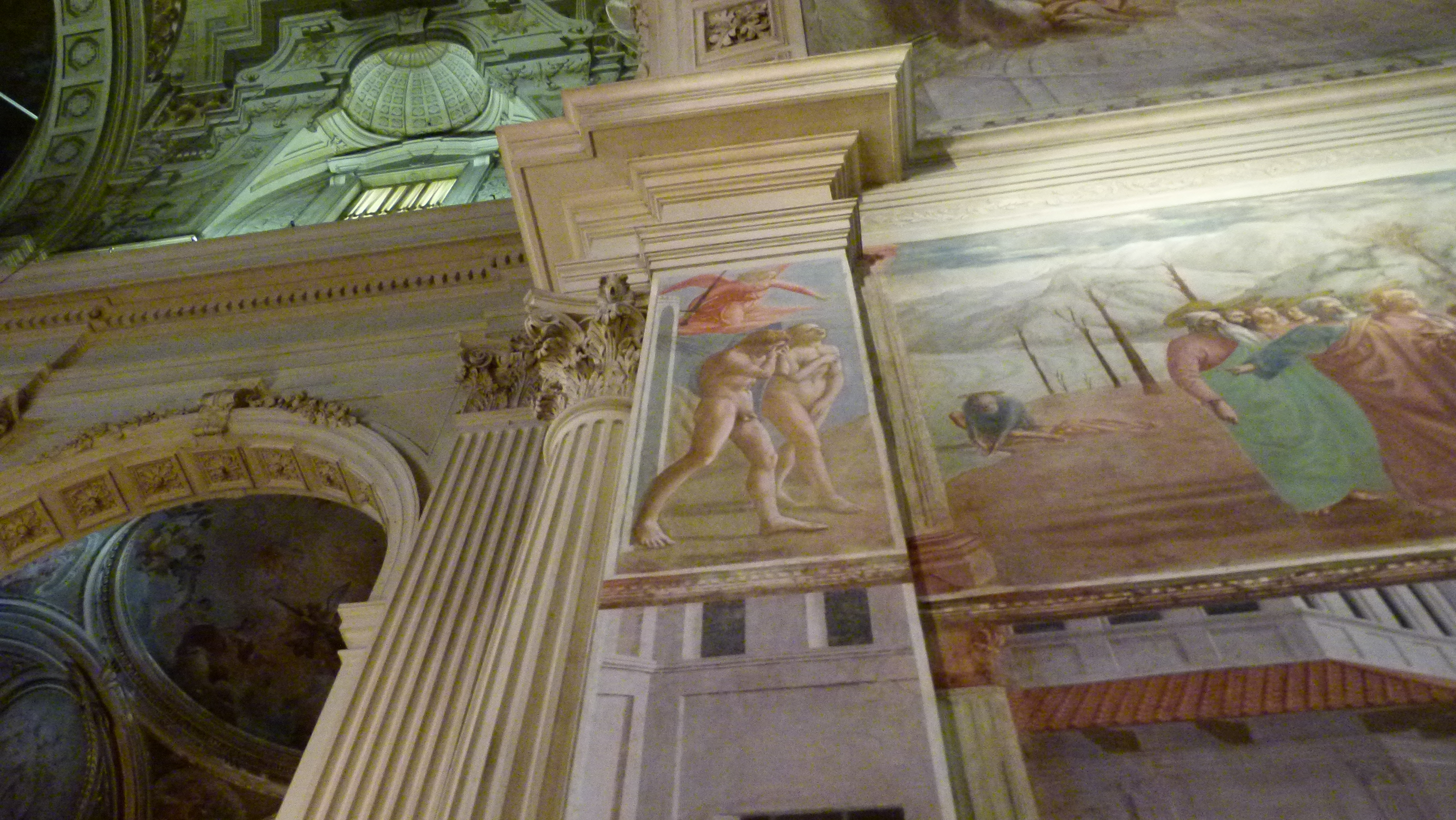
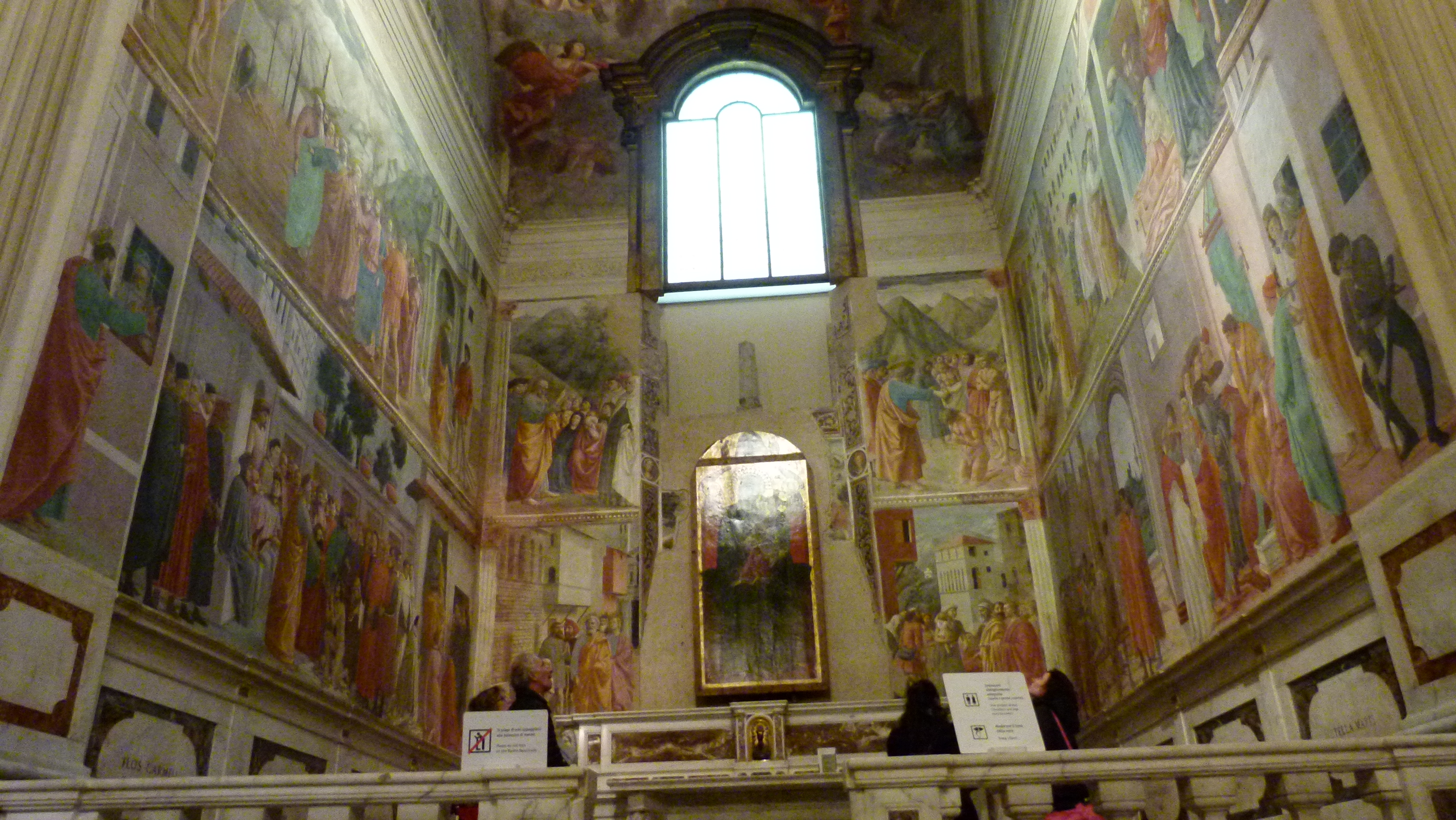
While strolling through Oltrarno on our first day in Florence, Leni and I come across the church Santa Maria del Carmine that is currently closed. A group of students from the Alsace are buying tickets for the attached Brancacci Chapel and we join them. THIS chapel is THE treasure of Santa Maria del Carmine. We sit between the students that start to copy the frescos on paper. The master piece is Massaccio’s “Expulsion from the Paradise” that marks the transition from Gothic to Renaissance painting. The angel directs Adam and Eva to leave the paradise and the distress can be seen on their faces – it is a shock for them. Massaccio is the artist that also painted the “Crucification” in Santa Maria Novella and that died at the age of 27.

P1070198

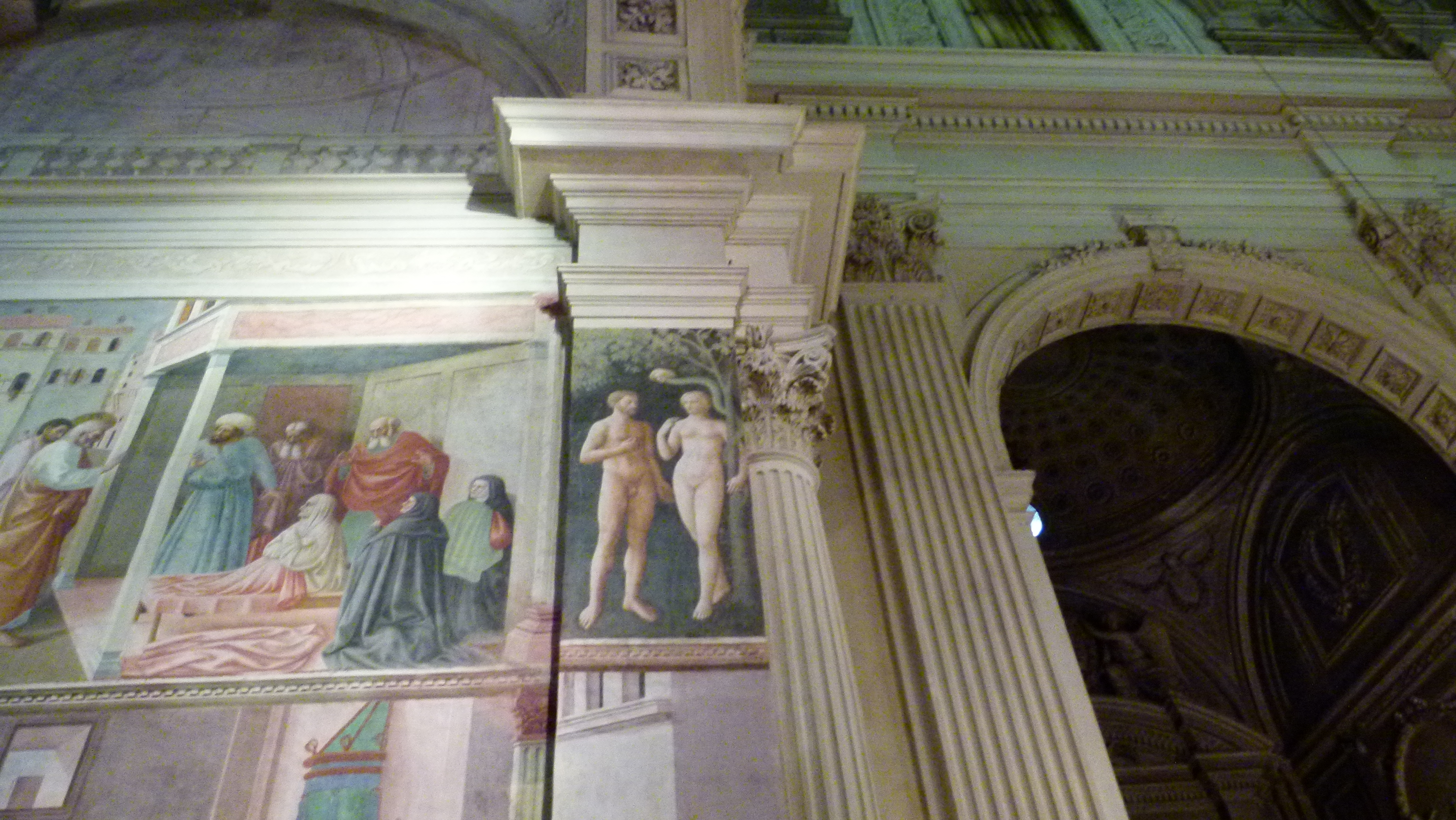
Opposed to that is the fresco of Masolino showing the “Tempation”. It is still clearly Gothic – Adam and Eva are far less natural than in Massaccios fresco.

P1070197

These two frescos made a great impression on me. Never before had I seen so clearly the difference between Gothic and Renaissance painting.

It was Lippi who completed the gorgeous fresco cycle of this chapel. Our Dumont has a detailed legend of all stories. Interesting is the scene of tax paying: Christ asks Petrus to catch a fish who will carry a double drachme in his mouth, and Christ is right. Petrus catches the fish and they pay the double drachme needed.

P1070199

.

Renaissance frescos that helped the Dominican monks meditate and pray: San Marco

Fra Angelico was both a Domincan monk and an artist. Around 1440 he adorned the cells of his brethren with frescos that tell the story of Jesus. He adorned more than forty cells.

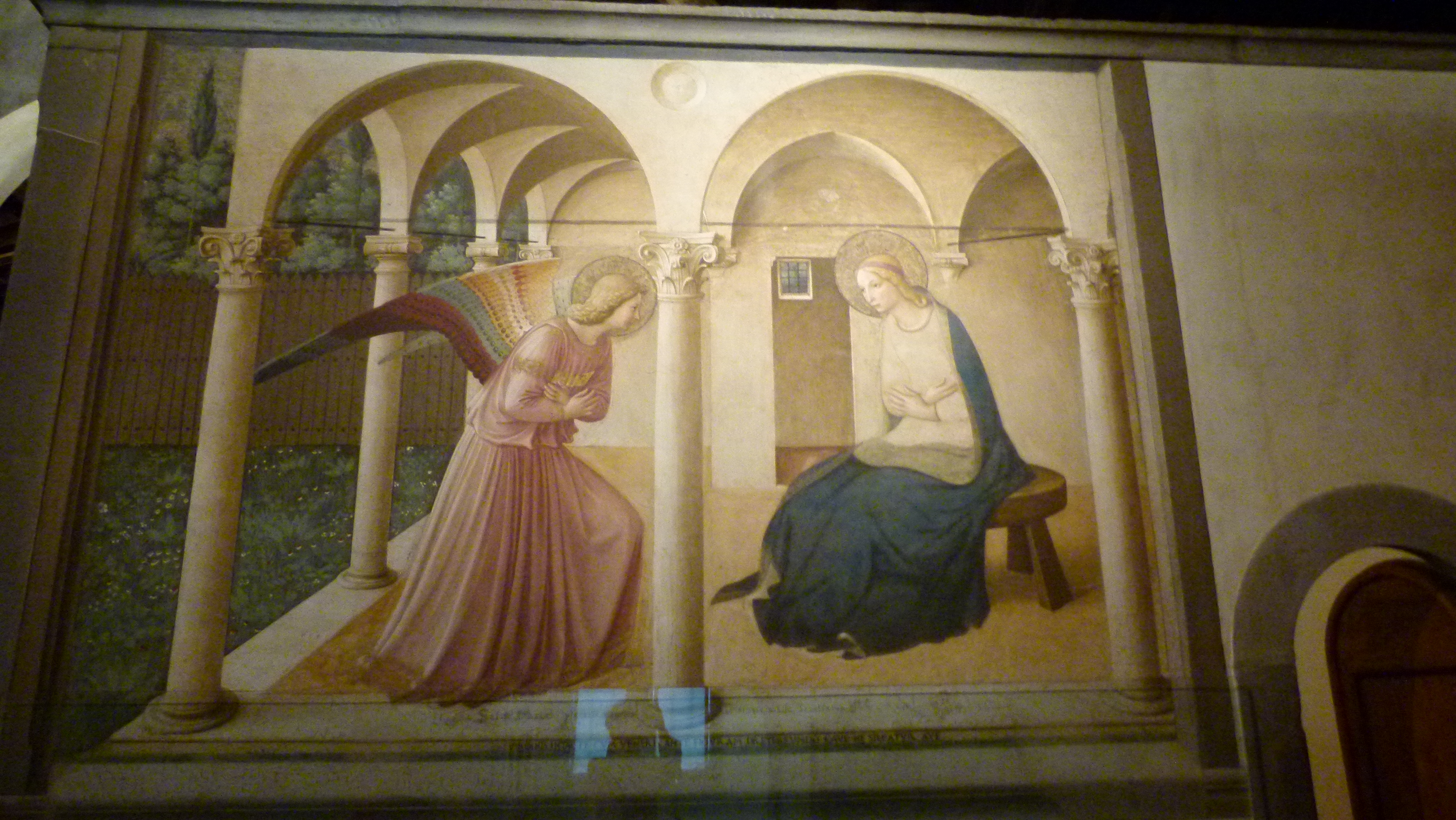
The “Annunciation” welcomes us at the entrance.

P1070451

From the 40 plus frescos I select just two. The first shows faithful people leaving the limbo towards Christ – while he devil is locked under the door to his hell, unable to move – I like the humor in this fresco.

P1070452

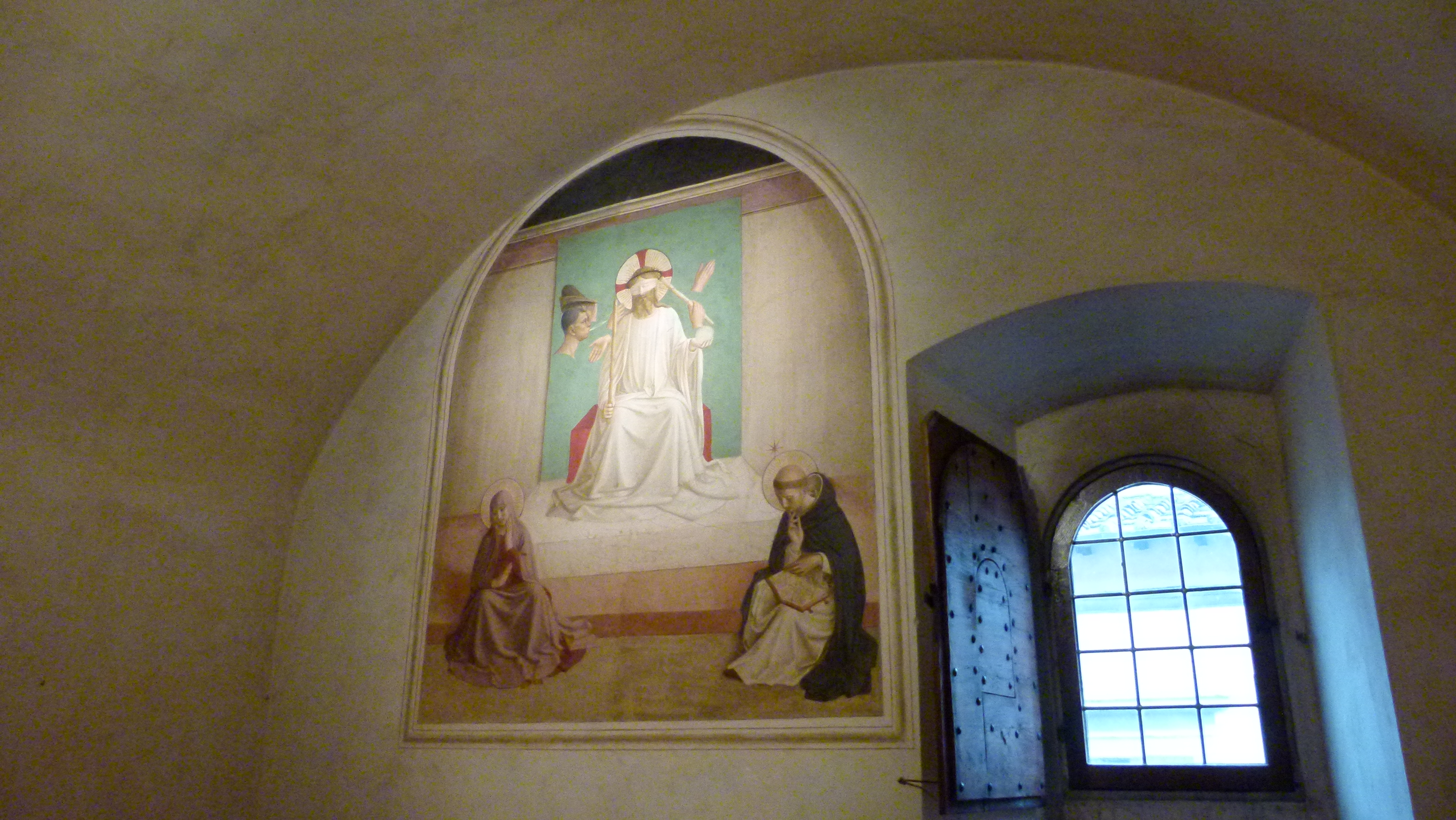
The second is an scene rarely painted: “the Mocking of Christ”. Fra Angelico symbolizes the mockers by painting a head with a speech balloon shouting at Christ.

P1070461

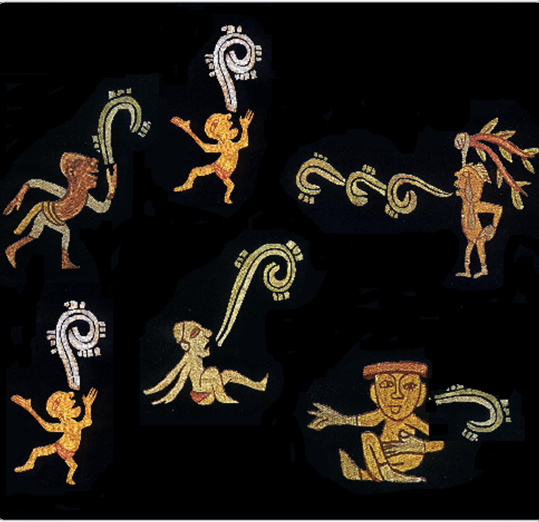
I remember such speech balloons from Mayan drawings and I am impressed that very different cultures use similar symbols to represent speech.

Capture

.

The first Renaissance church and the first oeuvre by Brunelleschi: San Lorenzo – extended later by the Baroque Medici Chapel

San Lorenzo is a clear landmark in the silhouette of Florence: The cupola of the Medici Chapel can be seen from far – the San Lorenzo church looks almost small next to it. San Lorenzo is the first Renaissance church in town and is based on the architetural principles of the former churches from Proto-Renaissance and Gothic, in particular the shape of a Basilica with 3 naves.

P1070406

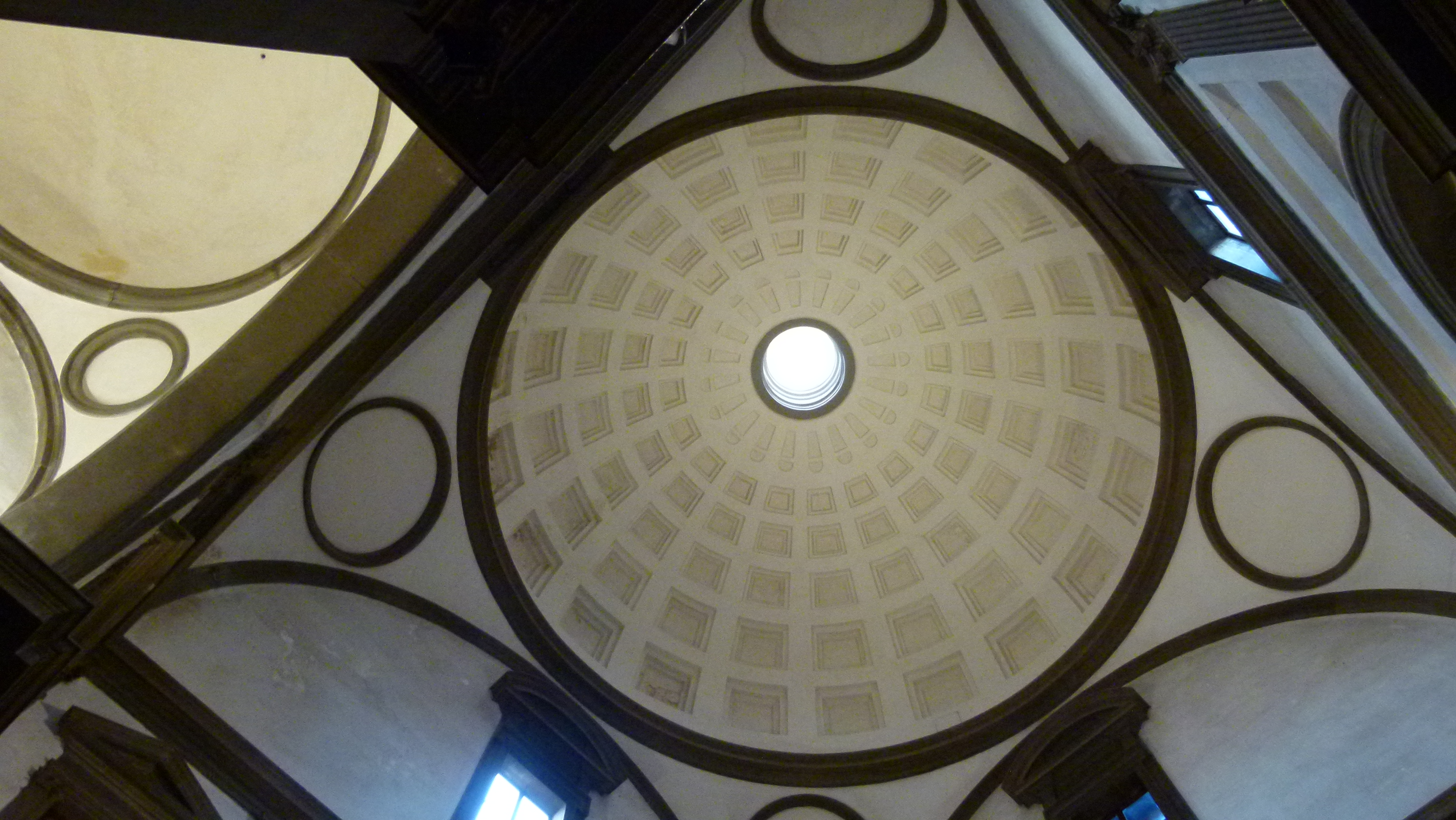
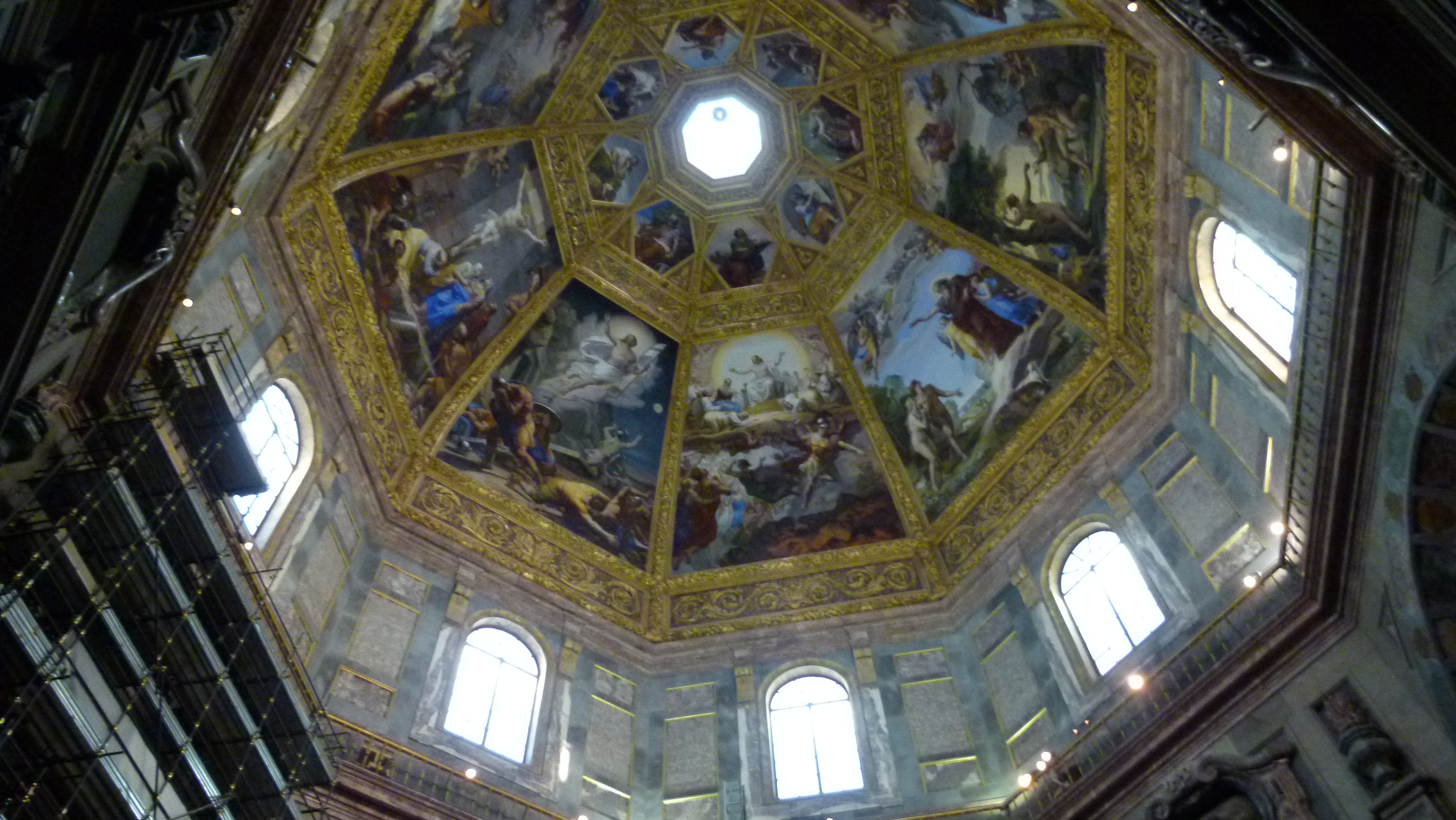
A factor that appears again and again in the Renaissance architecture are “pietra serena” (grey sandstone) combined with white plaster. This shapes the naves of San Lorenzo, the Old Sacristy built by Brunelleschi and also the New Sacristy built by Michelangelo – here is the cupola of the New Sacristy.

P1070335

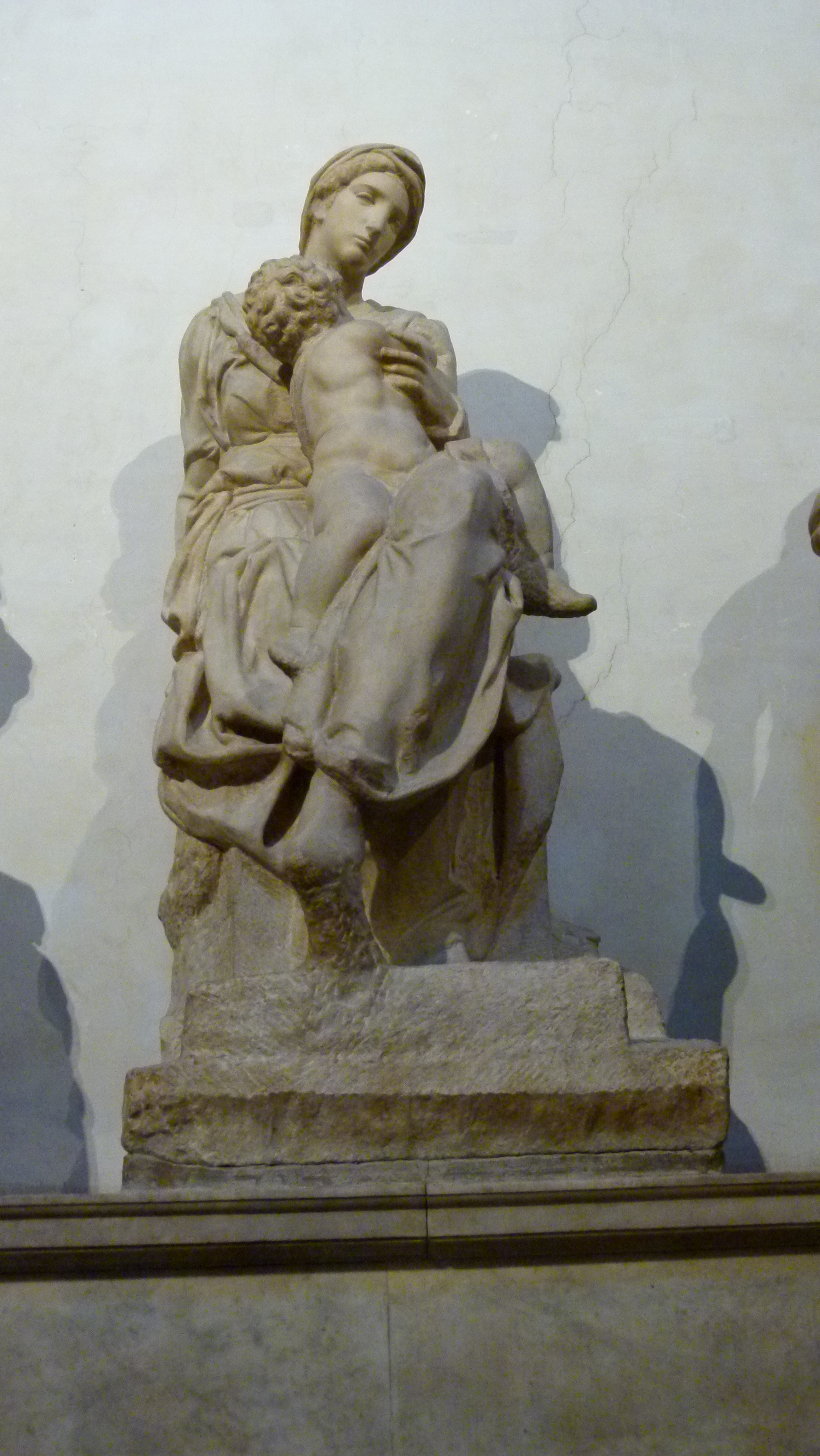
“Mother and child” is an incompleted sculpture by Michelangelo that stands at the backwall of the New Sacristy.

P1070331

The baroque Chapel has been built for the Medici in the 17th century, when they had become dukes. The Medici Chapel shows, how rich they are – the decoration is almost too much for me with all the marble tiles and precious inlays in pietra dura.

P1070321

I like this ceremonial ribbon with silk embroideries that shows the family emblem of the Medici.

P1070329

.

The second Renaissance church, also architectured by Brunelleschi: Santo Spirito

South of the Arno is the second Renaissance church that Brunelleschi has built. Inside are again three naves adorned with white plaster and pietra serena (or grey sandstone). They give harmony to the church. The Dumont complains that there is a Baroque altar in the middle interrupting the clear lines of the nave.

P1070203

.

With Santo Spirito I end our virtual walk through the churches of Florence. The target of us three Swiss – Ursula, Leni and Petra – will next be museums and palaces.


Three Swiss in Florence – enjoying some of the Gothic churches

To recapitulate – Here is the architecture timeline of Florence:

churches and palaces

After having shared some impressions about Proto-Renaissance, I will now continue with some churches from Florentine Gothic.

.

Santa Maria Novella and the Spanish Chapel built by the watchdogs of the Lord

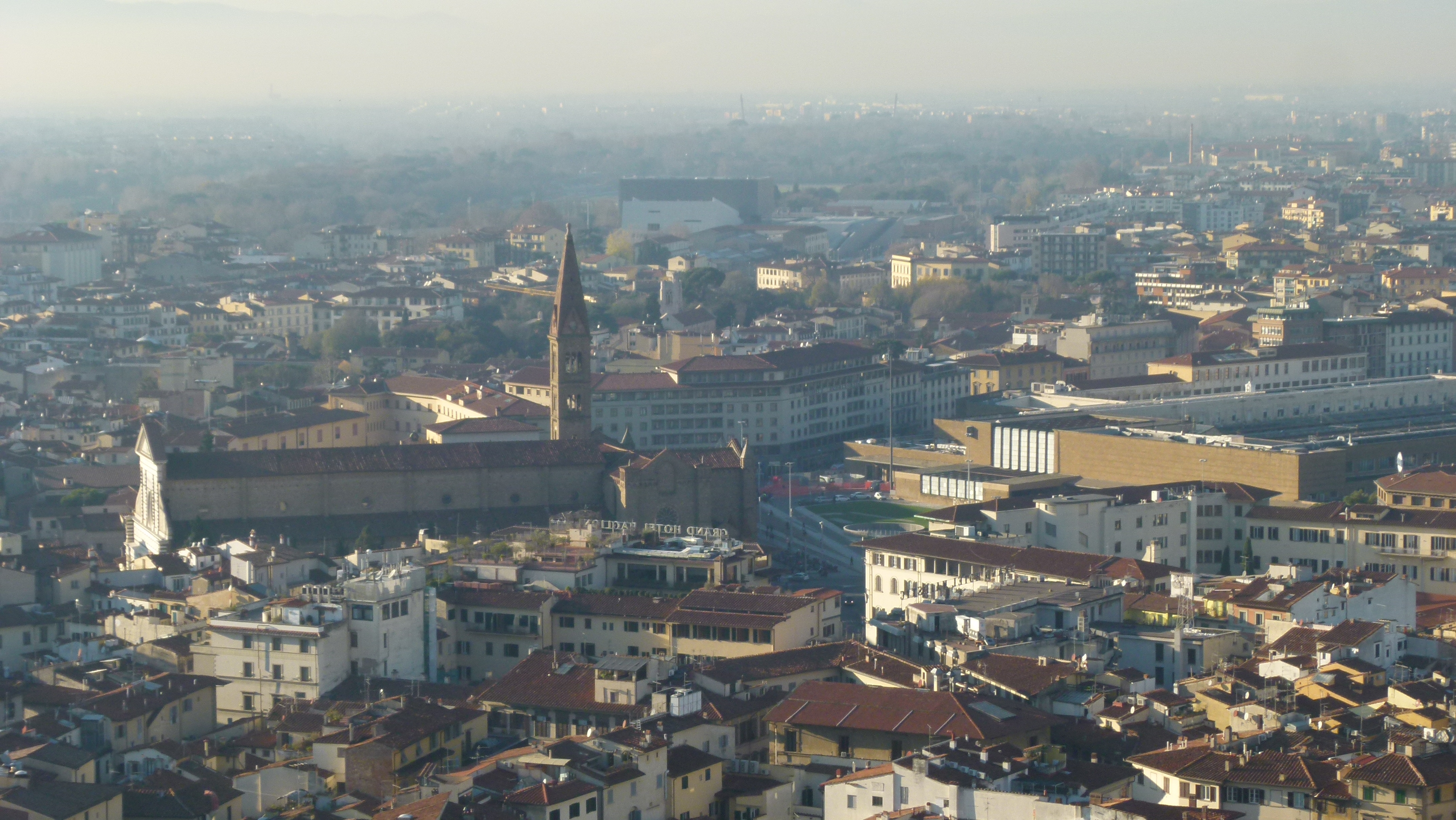
Santa Maria Novella is the first gothic church in Florence. The Dominicans started the construction in 1246. Here is a foto taken from the cupola of the Duomo. The railway station is just across.

P1070431

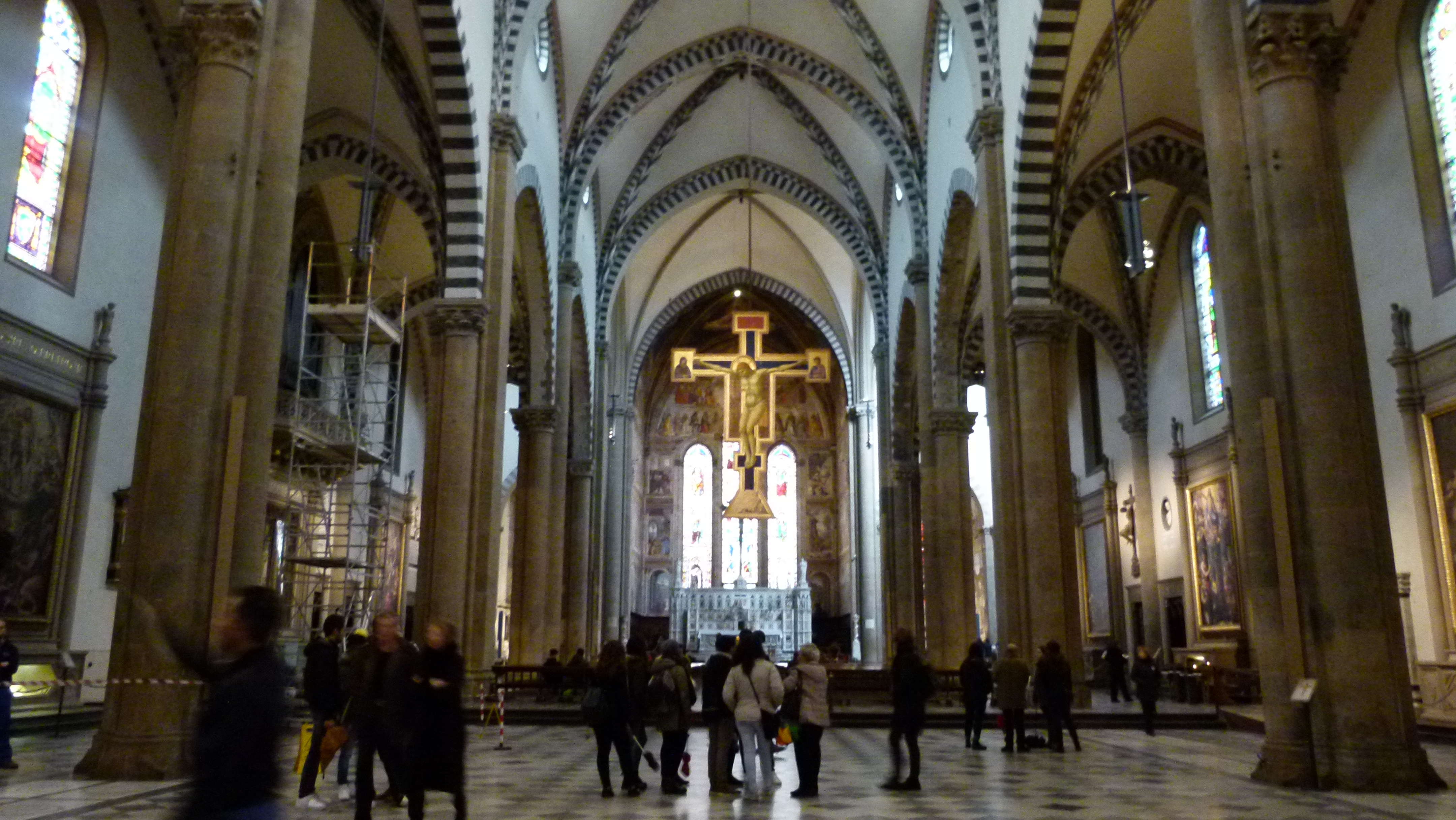
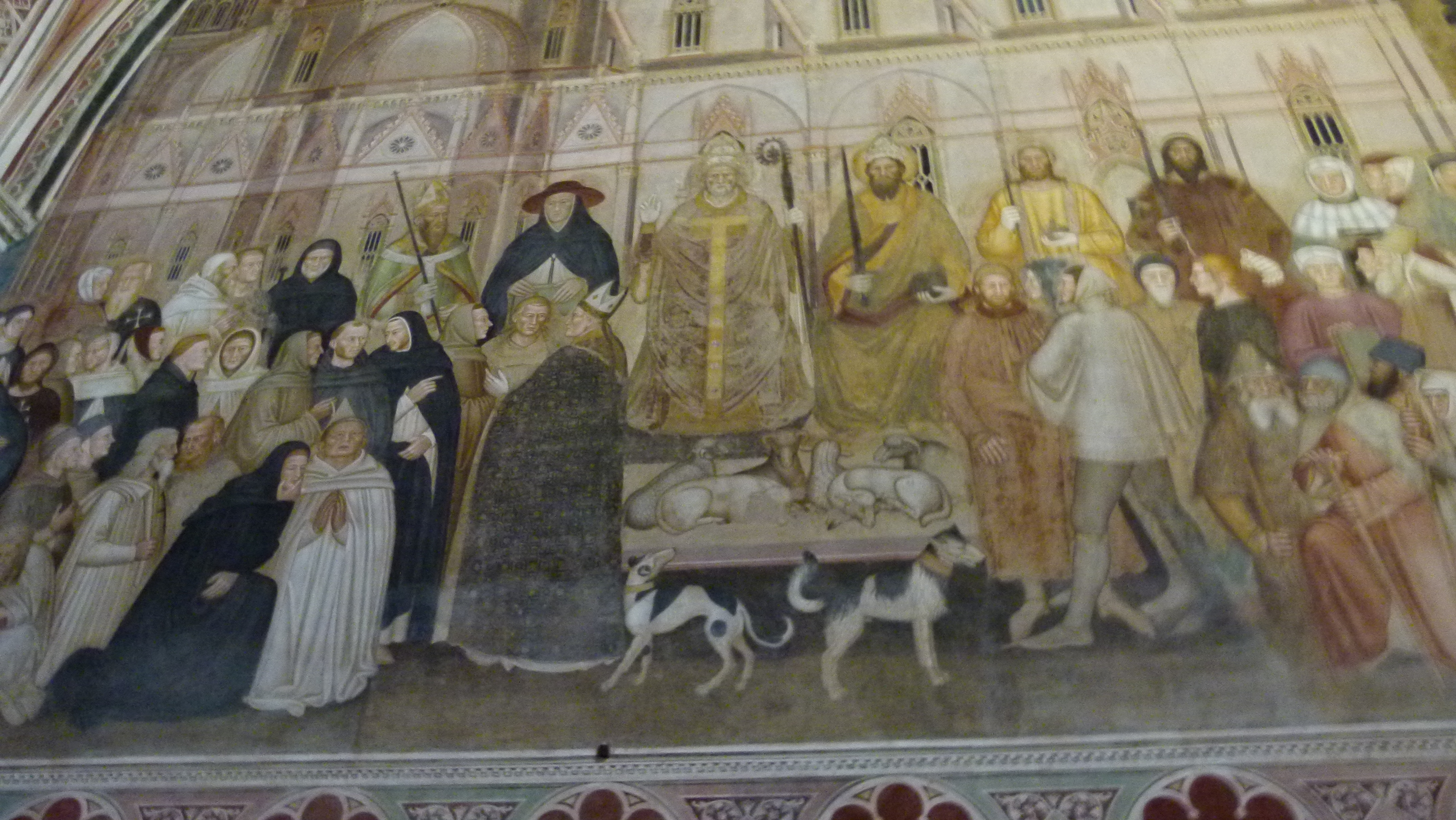
This is the nave. There are ogives, but less pronounced than in central Europe. The wooden cross of Giotto (1290) is one of the highlights.

P1070206

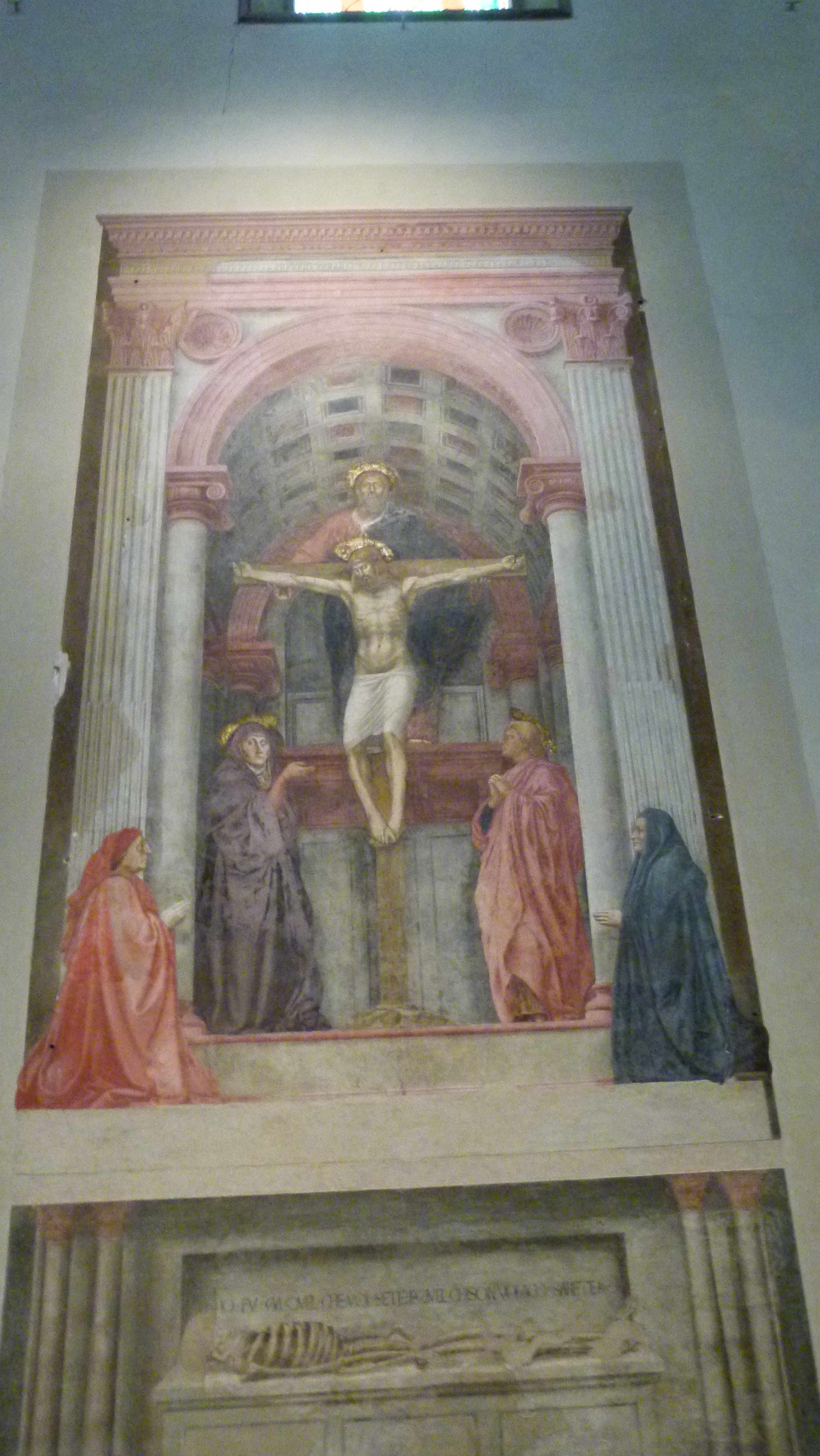
Masaccio was an outstanding artist at the transition between Gothic and Renaissance who died at the age of 27. His “Santa Trinitá” (ca 1428) is famous for the perspective that was innovative  at that time and helped pave the way for Renaissance paintings.

P1070208

In the attached  Spanish Chapel we come across the watchdogs of the Lord. They are black and white. I learn that “Dominicans” stands for “Canes Domini” or watchdogs of the Lord. The Spanish Chapel tells the history of the Dominicans that have built Santa Maria Novella.

P1070217

.

Monastery and Campanile of Badia – a quick glance in the cloister

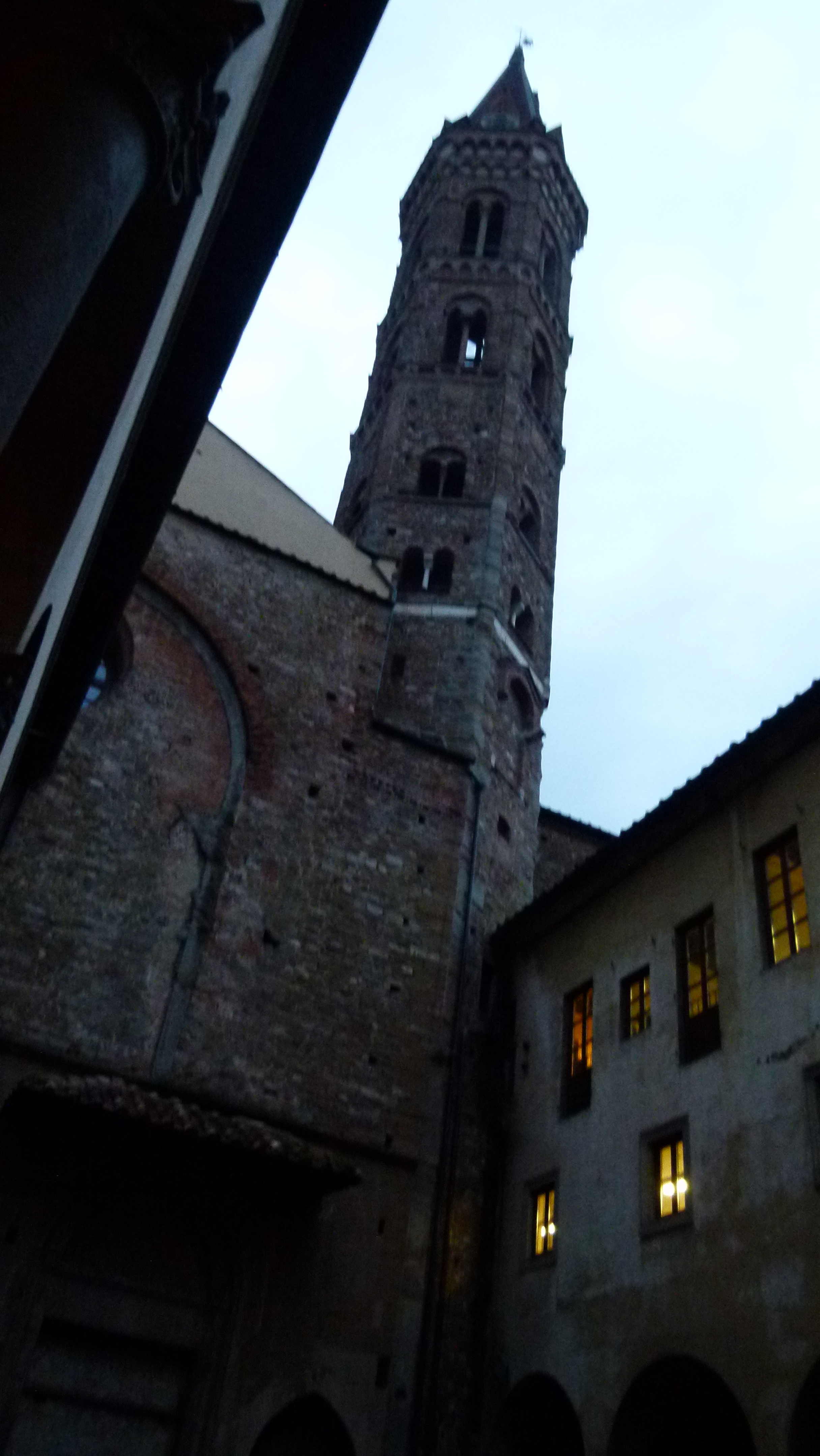
Badia means “monastery” and today belongs to the Fratenernity of Jerusalem. We just visit the cloister with the view of the gothic Campanile. The nuns are inventive and sell unusual souvenirs. I buy soap made from the milk of donkeys and some honeydrops.

P1070243

.

More Florentine Gothic: Sant’Ambrogio

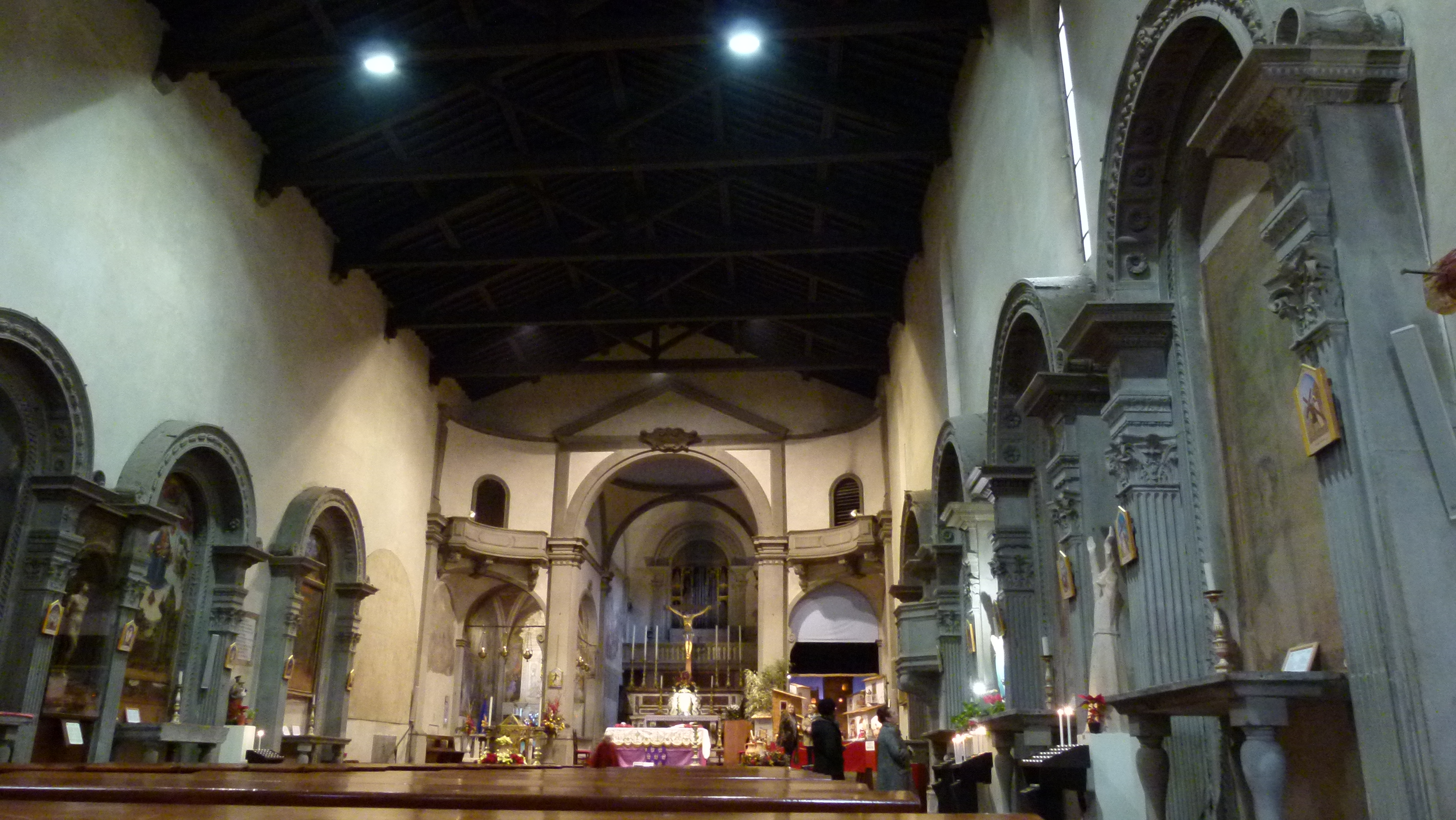
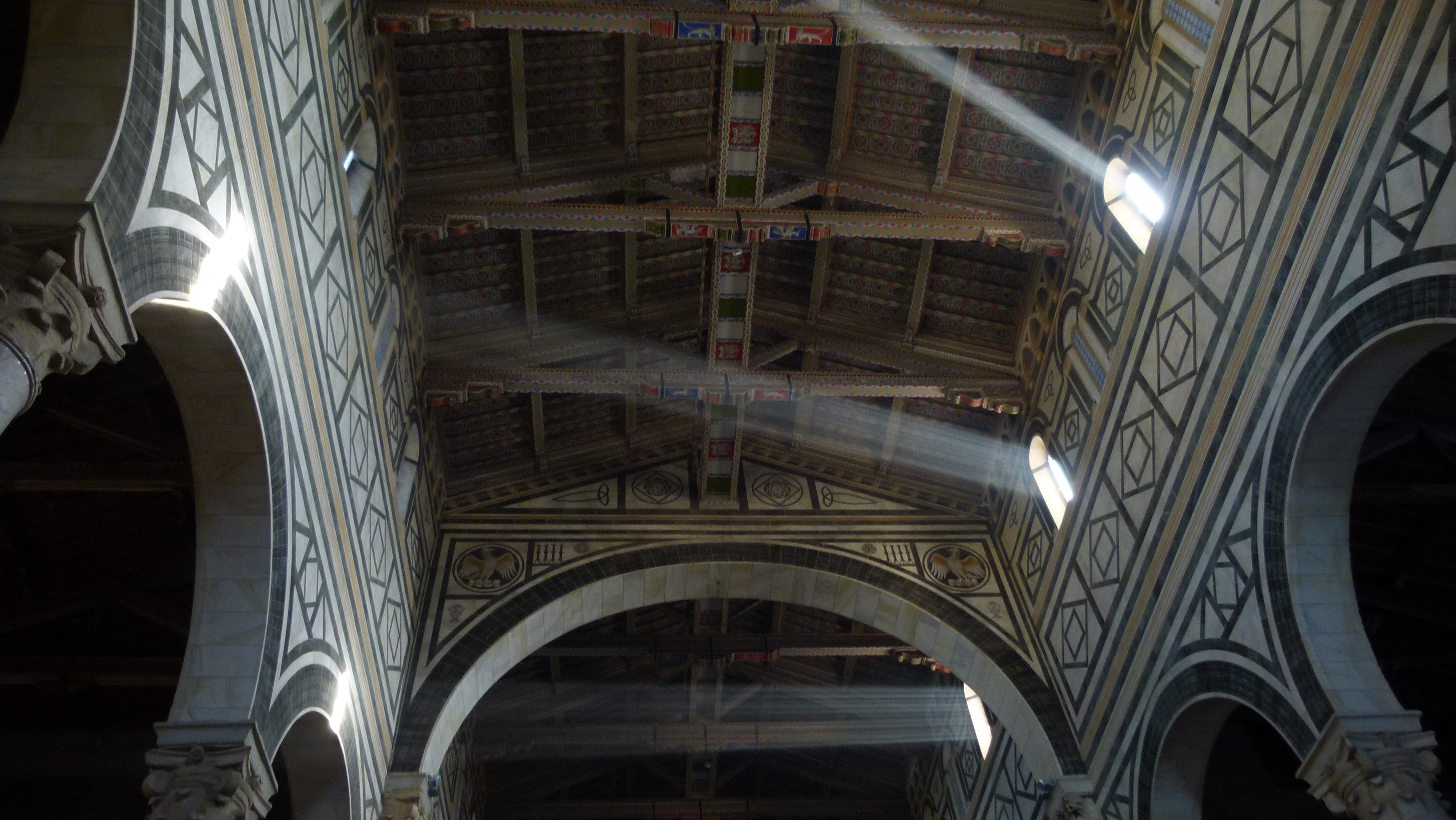
Sant’Ambrogio is located east of the city center. Very easy to reach from our hotel near Santa Maria Novella: We just have to follow the streets aligned along the old Roman Decumanus. I like this church with its open roof framework and beautiful frescos such as the “Maria Lactans” by Orcagna. My fotos of the frescos are blurred, as the church is rather dark inside.

P1070516

.

In a way the heart of Florence Gothic: The Duomo and the Campanile

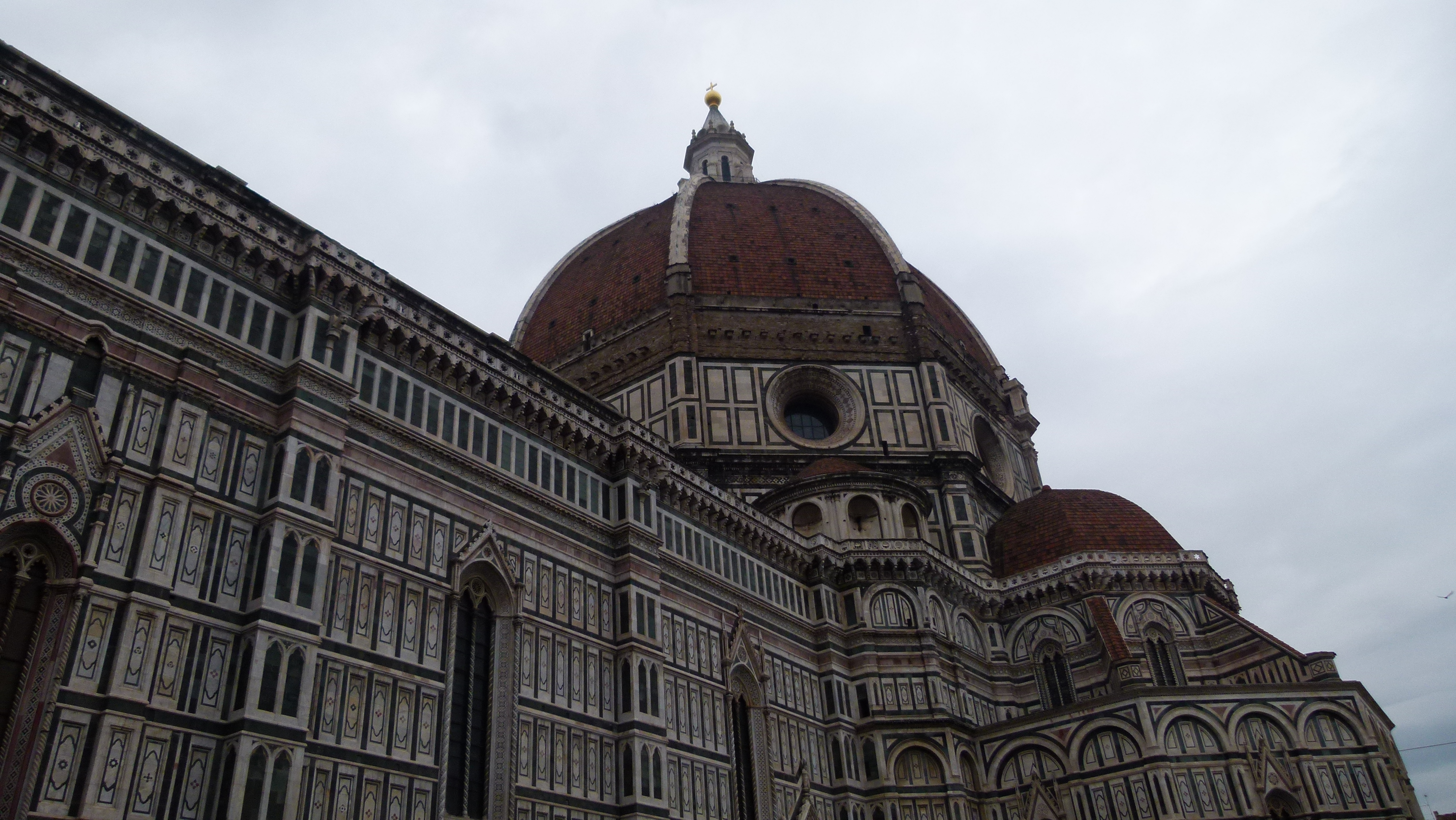
The full name of the Duomo is “Santa Maria del Fiore” and this name is related to the lilly flower that is the symbol of Florence. We loved to come back to the Duomo again and again. The gothic construction plan was followed by the architects until the Cupola and the Lantern were completed in the 15th century. The names of the architects included Cambio (1296), Talenti (1350) and above all Brunelleschi who after 1418 was the genius implementing the cupola based on the original plans. His breakthrough was the idea to avoid using a huge scaffold from the ground, but a hanging scaffold that would grow with the cupola. He meticulously planned the construction and checked the progress every day. Vasari and his successor later completed the paintings in the cupola.

P1070147

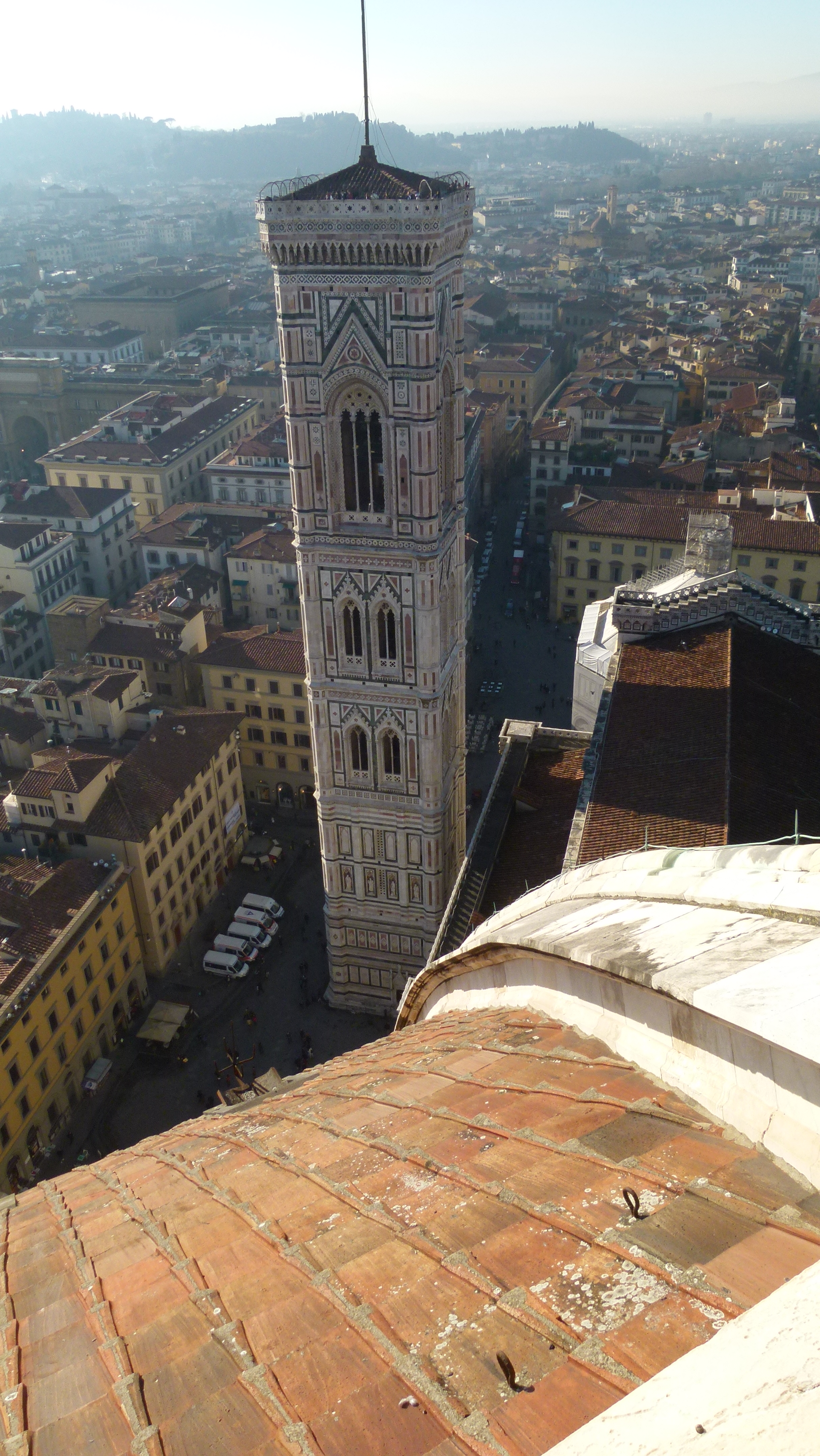
On a sunny day, I climbed Brunelleschi’s Cupola and enjoyed the magnificent view of the town.

P1070400

The Campanile (around 1340) was Giotto’s masterpiece that his successors completed, among them Andrea Pisano and Talenti.


And more Gothic: Santa Croce and the attached Pazzi Chapel, the last Renaissance masterpiece of Brunelleschi

Santa Croce is the church of the Franciscans. Like San Miniato and Santa Maria Novella, the facade is adorned with white marble and grey Pietra serena, but this facade was completed only around 1860 – it is assumed that the facade is based on the orignal plans.

P1070775

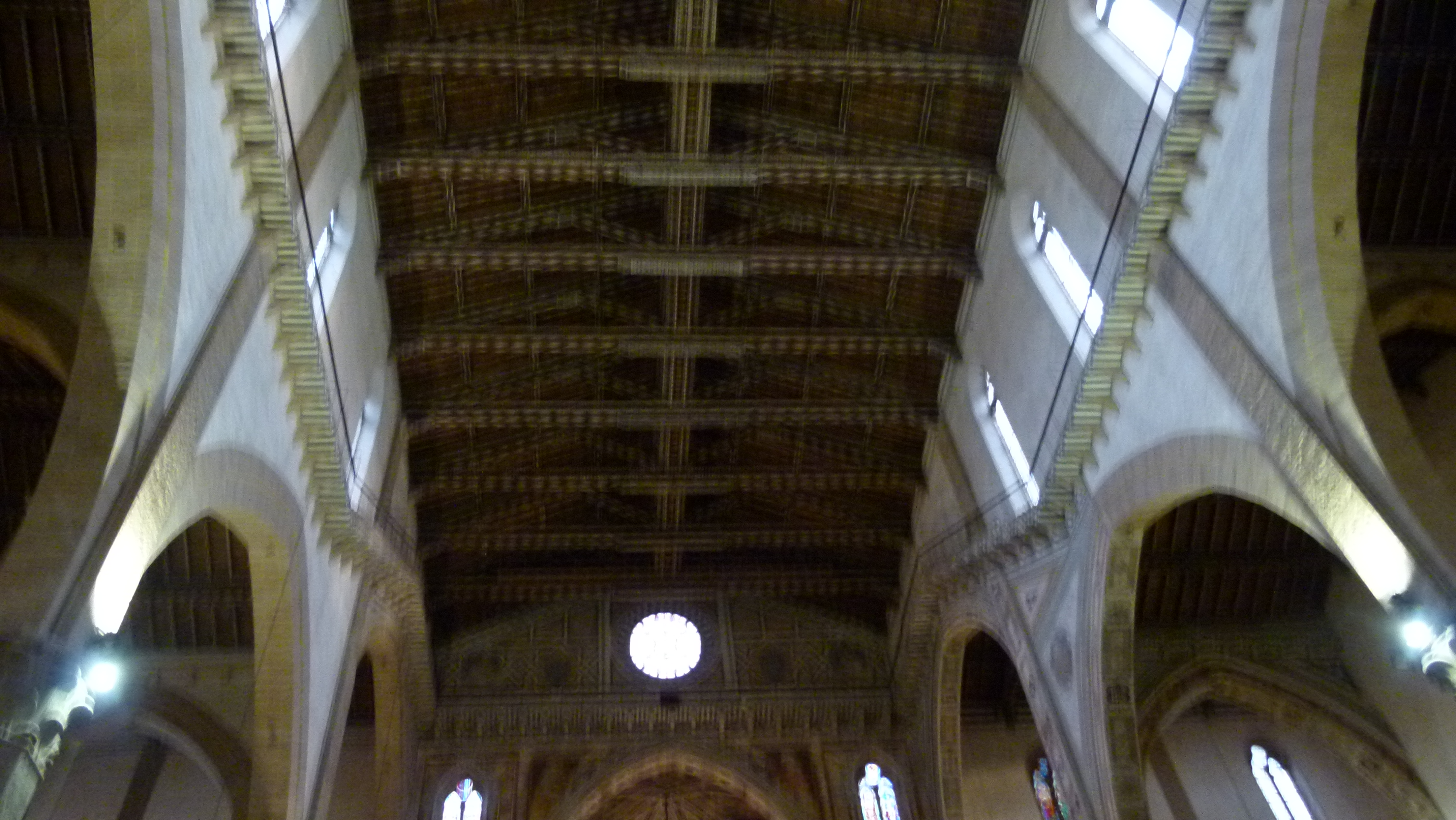
The woodwork of the ceiling is open, reflecting the modesty of the Franciscans. The nave gives the impression of a uniform entity, as the woodwork of the central nave is repeated in the aisles and the floor tiles are also the same.

P1070314

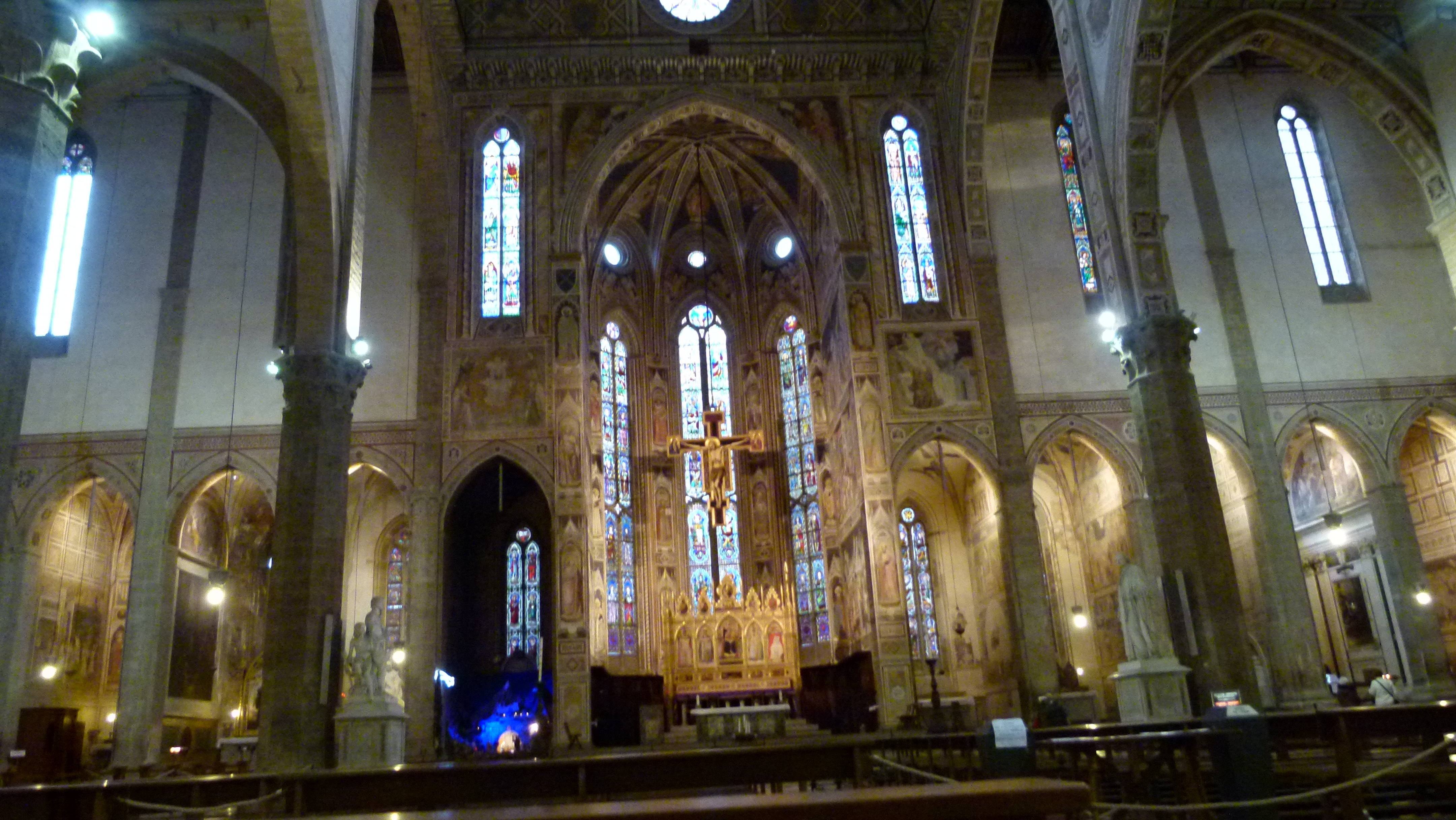
Only the choir reminds a bit of central European Gothic. Beautiful chapels are on the side, with frescos from the first half of the 14th century (many by Giotto and his workshop).

P1070313

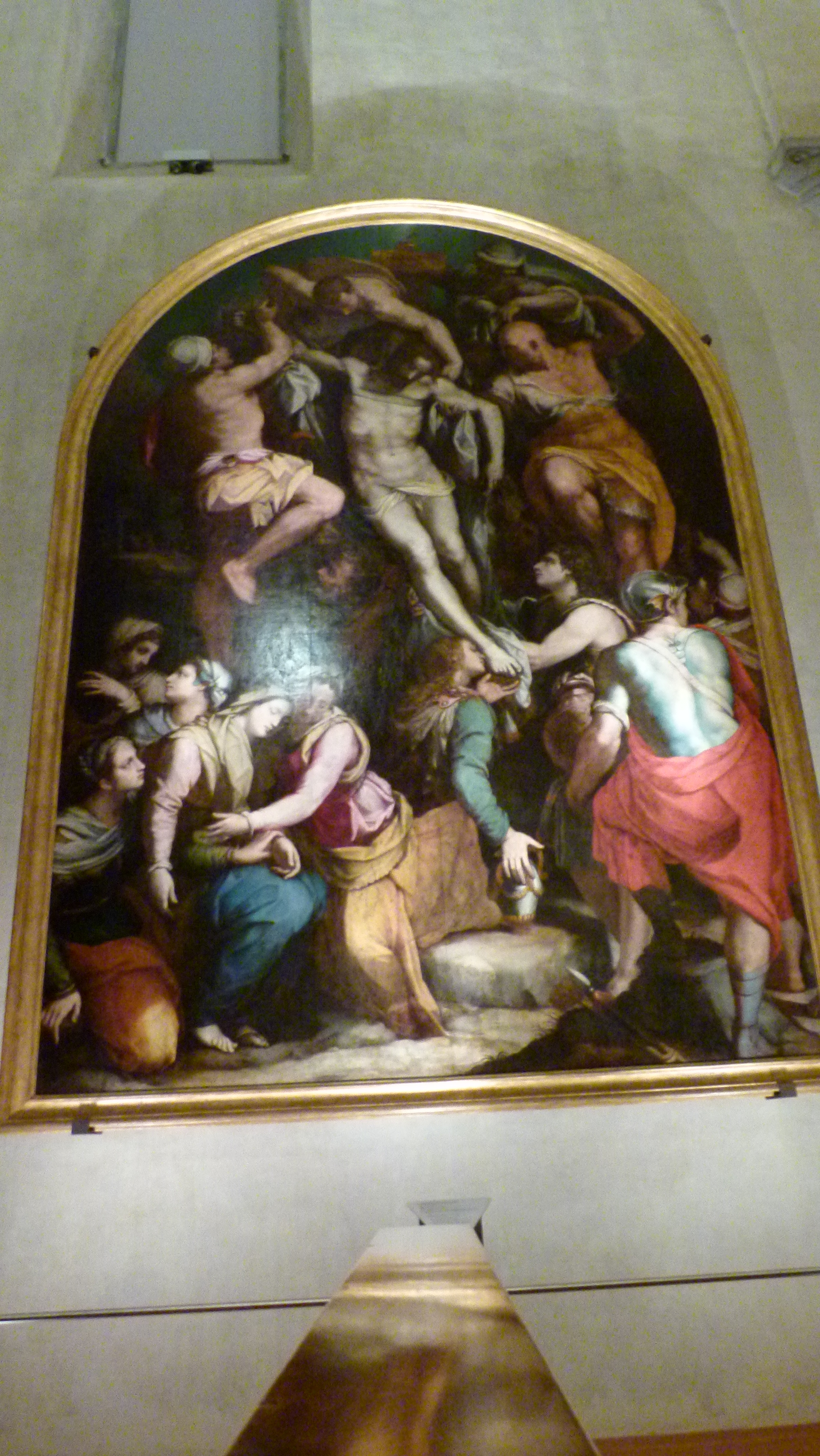
Santa Croce is rich of artwork. Leni loves this vivid painting of the “Deposition from the Cross” by Francesco Salviati.

P1070316

Leni and I spend so  much time in the main church that we miss the attached Pazzi Chapel on our first visit. The guardian watching over Santa Croce feels sorry for us: “You HAVE to see the Pazzi Chapel”, he says, “you HAVE to come back”, and he writes on our ticket that we are allowed to enter a second time, adding his personal signature. Great that the guard working here loves his church.

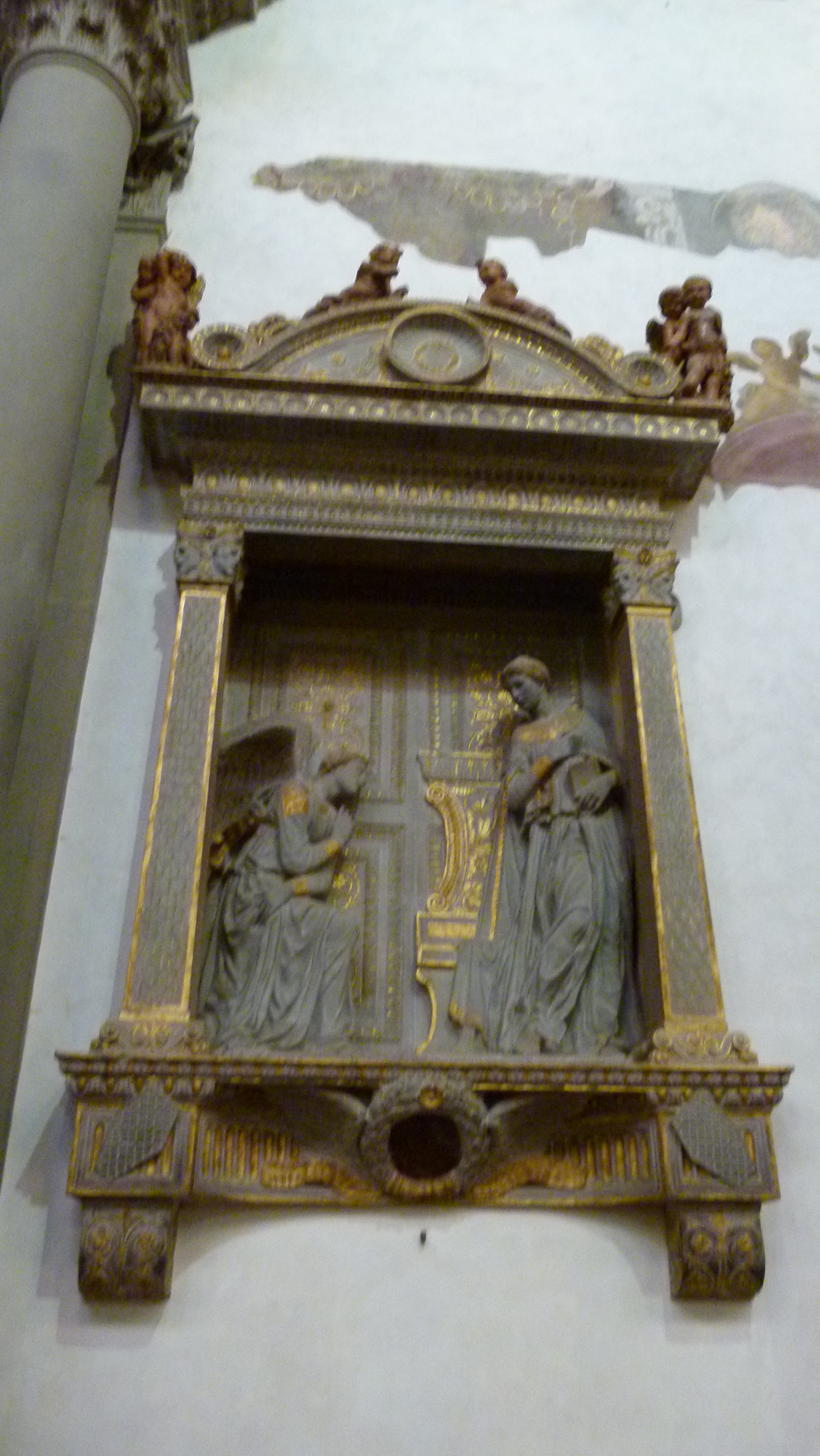
When we come back later, Ursula shows us her favorite artwork, Donatello’s “Annunciation”.

P1070436

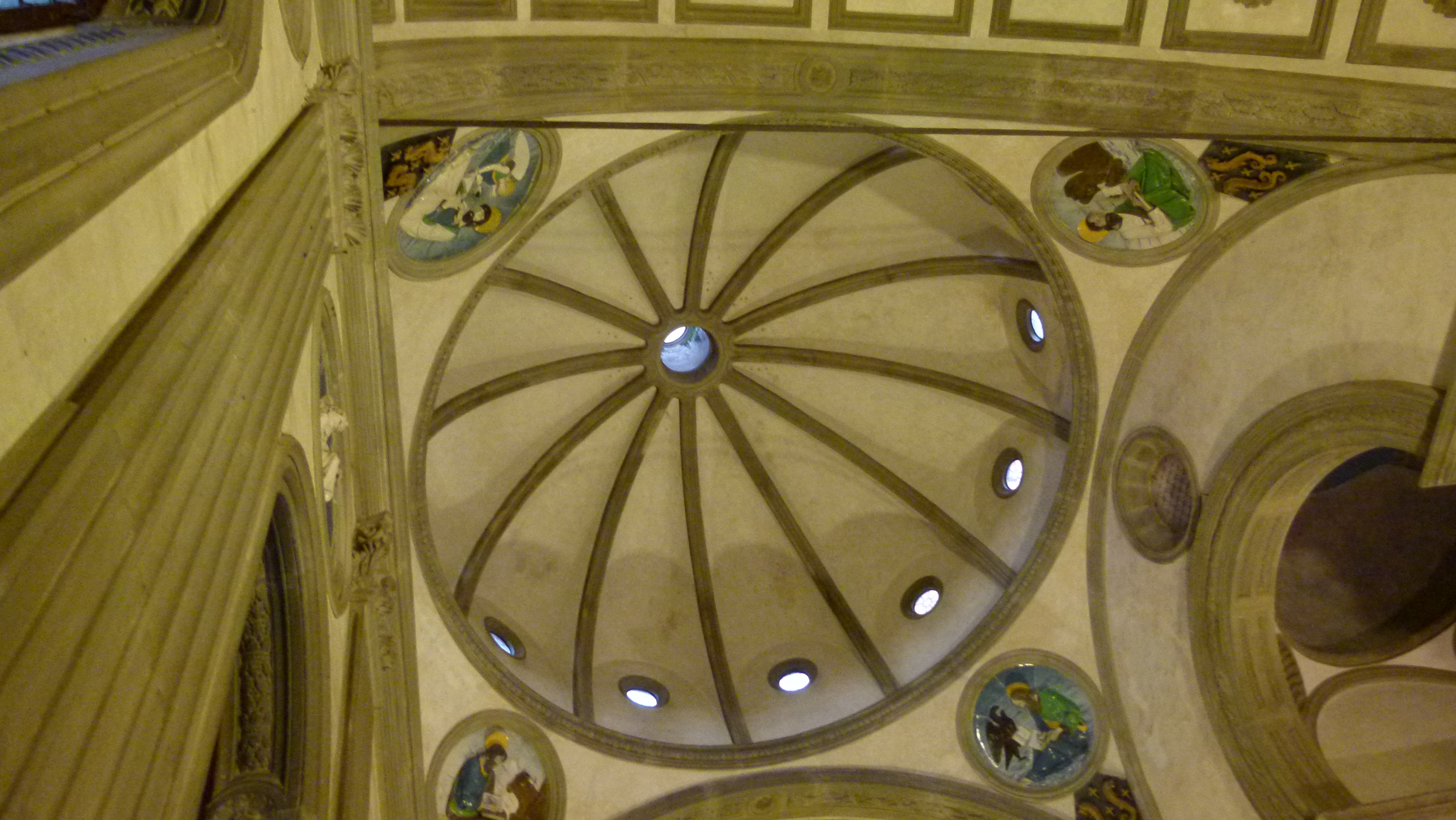
And we visit Brunelleschi’s Pazzi Chapel. The chapel was his last Renaissance master piece. We just sit inside and meditate in this unostentatious hall full of harmony.

P1070441

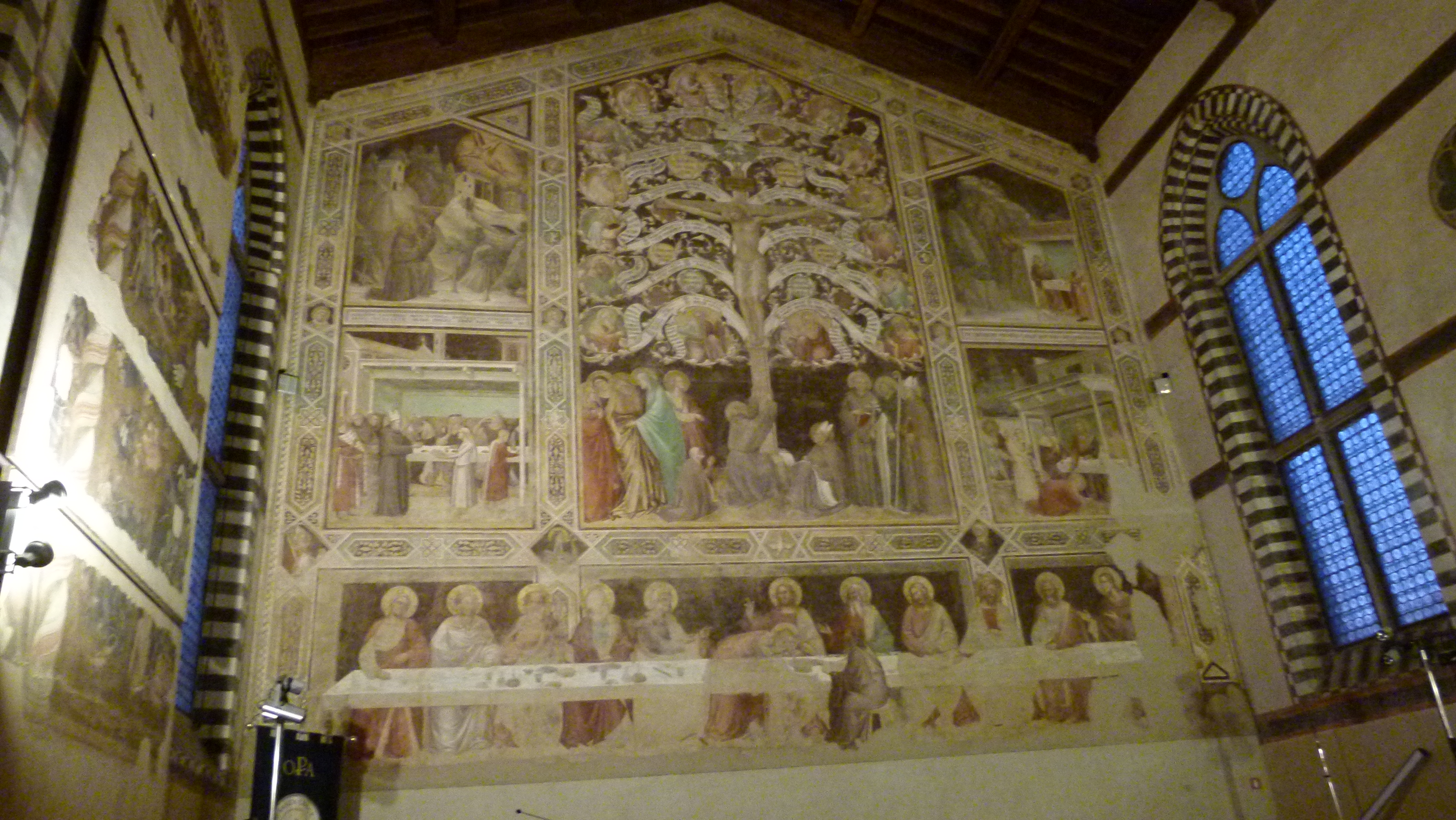
Later we enjoy the treasures in the attached museum. I particularly like the crucification on the tree that adorns the backwall of the former refectorium.

P1070443

.

Let me continue later with some more Gothic and with some Renaissance churches – again following the achitecture time line of Florence.


Three Swiss in Florence – Enjoying two churches from Proto Renaissance

After having completed my simplified town map of Florence, I want to understand where the treasures of Florence fit into the architectural history.

.

Trying to get order into my head: The churches and secular buildings from Proto-Renaissance to Baroque

As I am not a professional historian – and hence I am just “trying” to get order into my head by aligning the churches and secular building from Proto-Renaissance to Baroque, primarily based on the Dumont Kunst-Reiseführer.

When around 1000 AD Florence started to gain economic power, they built their first Romanesque churches. The period was called “Proto-Renaissance”, because the later Renaissance artists  based their clean and harmonic architectural principles on it. I also sense that the gothic period  is a smooth continuation of the Florentine Romanesque style – “Gothic” in Florence looks very different from “Gothic”  known in central Europe. The main construction activities in Florence took place between 1250 and 1600 – from Gothic to Renaissance. I have a personal preference for the clean and unostentatious taste that prevailed before the 17 century started with its baroque “gold and glitter”.

churches and palaces

Let me now present some of the churches we visited…

.

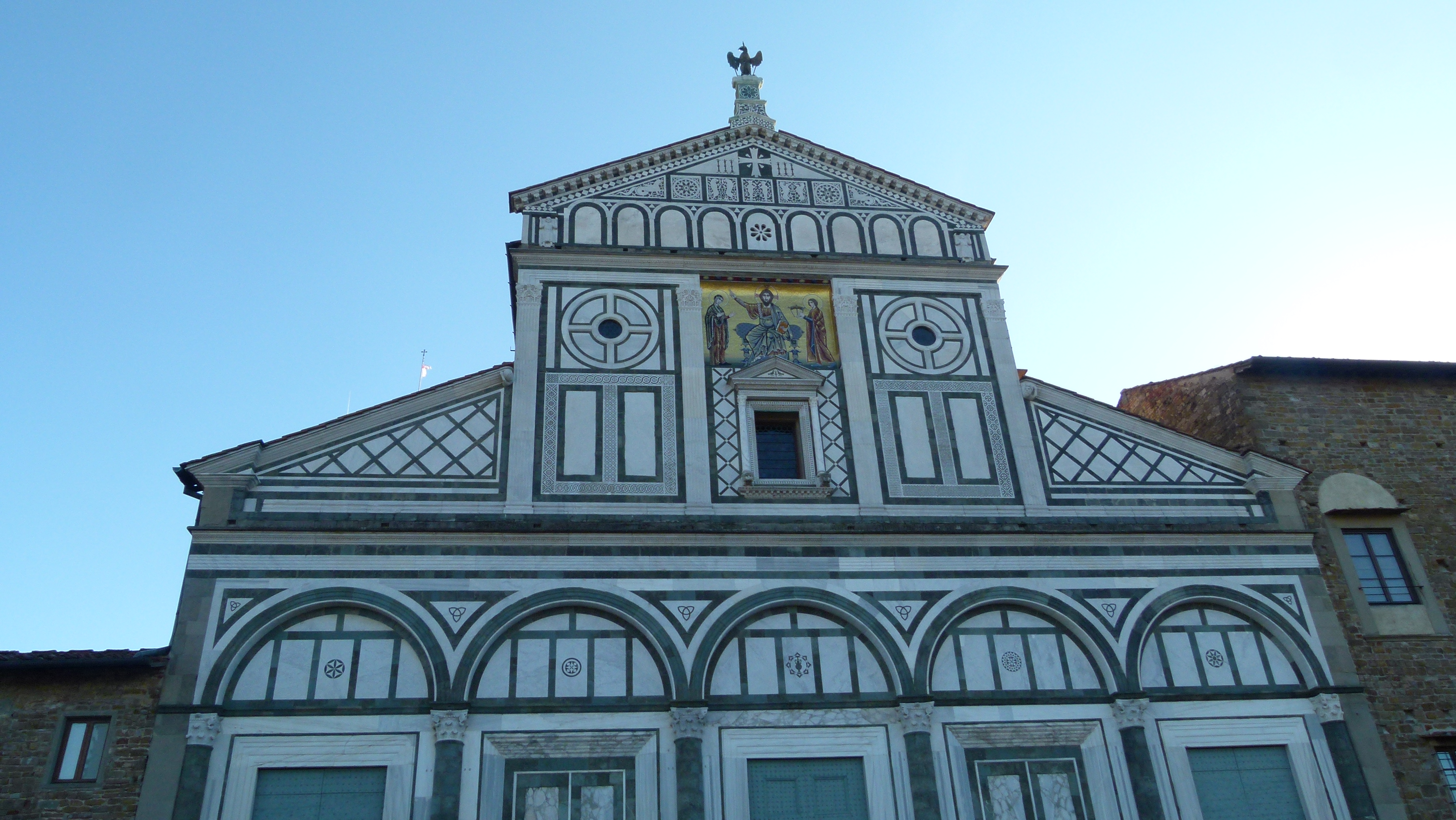
Proto-Renaissance: San Miniato al Monte

Minias – according to legend – was a martyr that was decapitated around 250 AD. At this place the construction of the monastery and church of San Miniato al Monte started around 1000 AD.

It took us about an hour to to reach San Miniato al Monte via Piazzolla Michelangelo. We enjoyed the view of the city with the Duomo, the Campanile, San Lorenzo and the Palazzo Vecchio.

P1070734

San Miniato welcomed us with the facade topped by the eagle of the woolmakers (who sponsored the church) and the mosaic completed around 1250. The patterns of this facade I recognize in the gothic churches Santa Maria Novella and Santa Croce and in the later Renaissance architecture.

P1070731

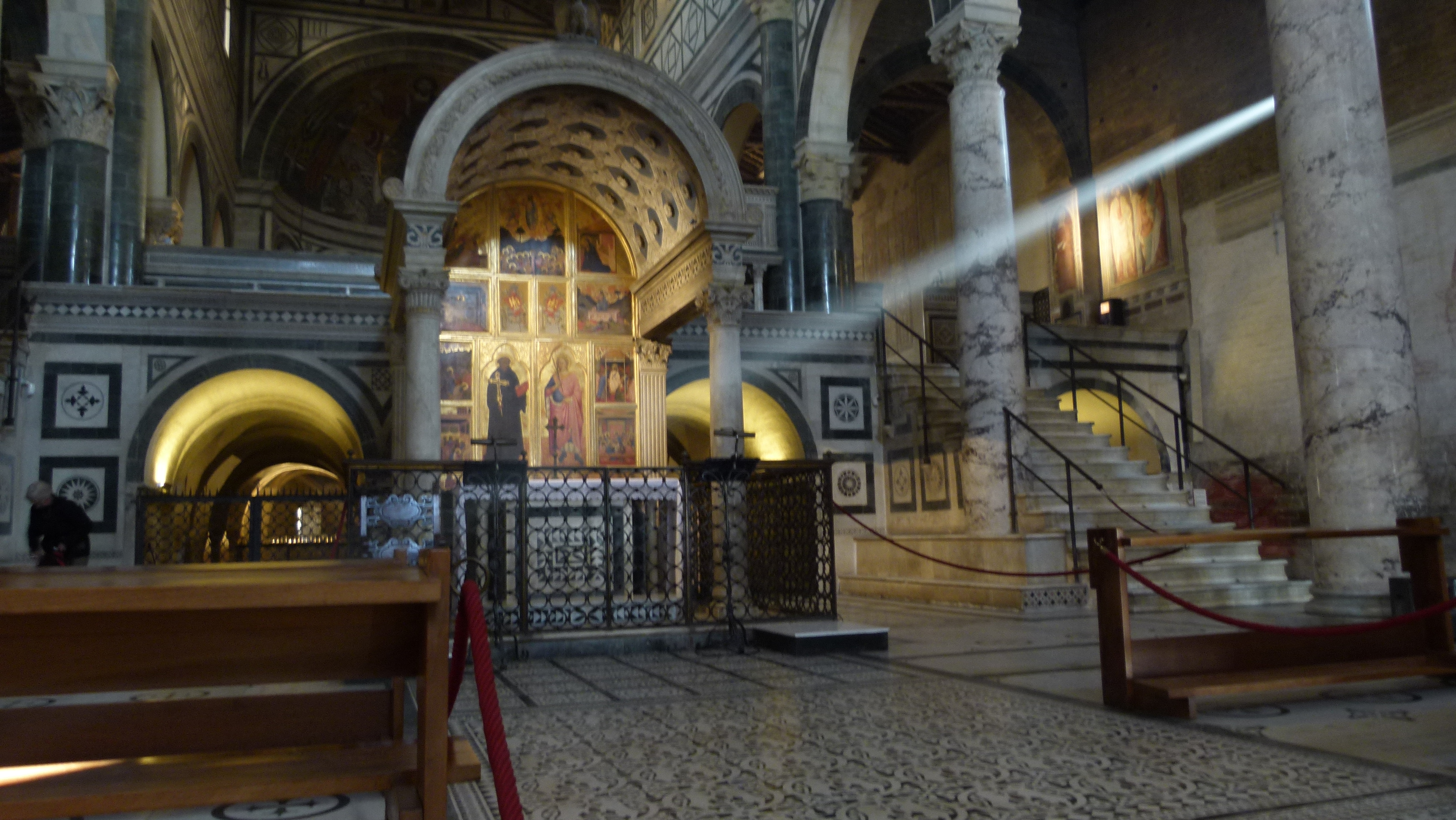
Inside the mass is going on solemnely enlighted by mystic sunrays.  The rays point to the Ziborium of Michelozzo (1448) and the altar paintings of Agnolo Gaddi (around 1400).

P1070738

I used this foto as my Christmas card, along with this small poem:

Seeing – looking – is it a dream?
Seeing – amazing – is this true?
I do thank for this renaissance,
I look and wonder, all in trance.

For me it was like being reborn (“Renaissance”), when looking at the treasures of this Renaissance town and enjoying my eyesight.

The sunrays also point to the wood framework that I find beautiful.

P1070736

.

More Proto-Renaissance: The Baptisterium of St. John the Baptist (with Gothic  and Renaissance adornments)

Currently the Baptisterium, built around 1100, is under renovation and fully wrapped up. The Baptisterium is devoted to St. John the Baptist. Until the 19th century it was the only place in Florence where Christians were baptized. It stands close to the Duomo and the Campanile that were built later.

P1070798

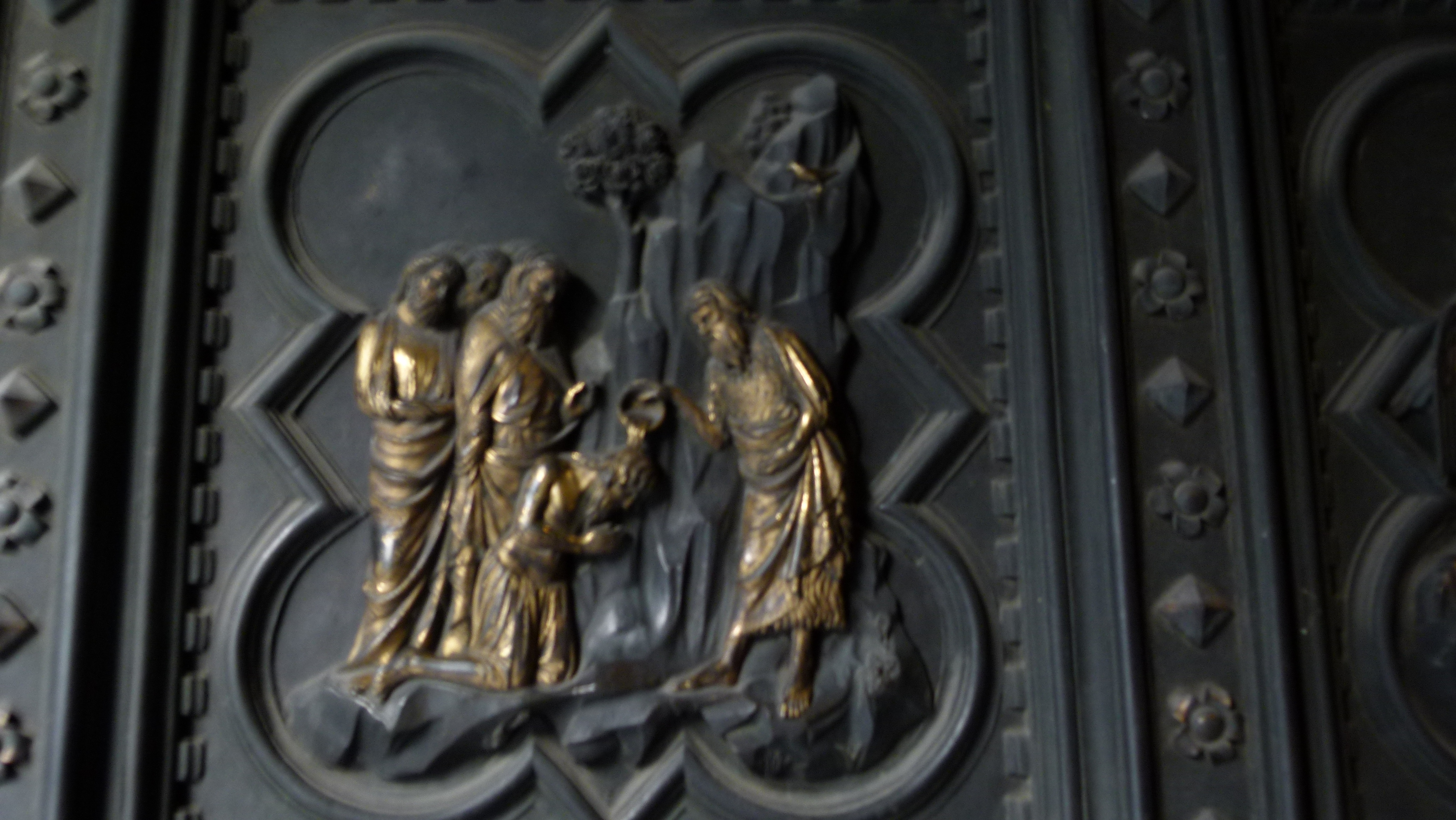
The Gothic bronze portal of Andrea Pisano was added around 1330.  This is one of the tiles showing the baptization of the people.

P1070796

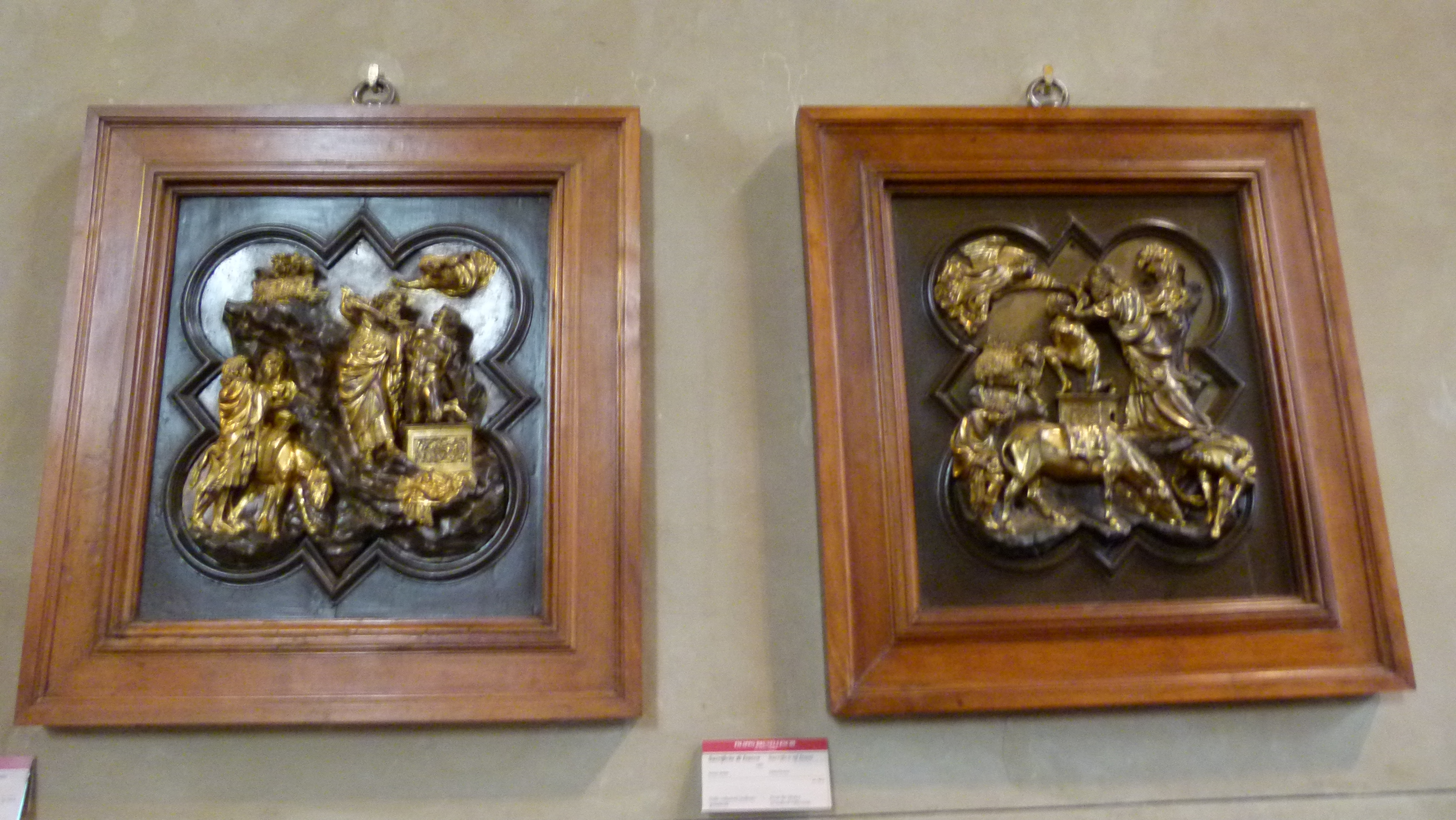
For the other, the Renaissance portal there was a competition.  The Bargello museum shows the works of Isaac’s sacrifice that Ghiberti (left) and Brunelleschi (right) had handed in. Ghiberti won the competition. Well, Bruneschelli had a lot more opportunities to embellish his town!

P1070312

Inside the Baptisterium we could not stop looking at the mosaics in the cupola. The new Dumont has a detailed map of all the mosaics. We sat on the benches and studied the life of St. John in the first line (from being announced – and his father Zacharias could not believe that his wife will give birth to a child) until his dramatic death (decapitated in the palace of Herodes). Then we followed the life of Jesus laid out in the second row, from being announced to his resurrection. An interesting detail here: After having adored the child, the three kings leave by boat. I asked myself, where their camels went, as I have always imagined them traveling with camels.

P1070224

.

In my next blogs I will continue along that architecture timeline presented at the start.

Three Swiss in Florence – overwhelmed by so much culture and history

My old dream – Florence – a mysterious town full of culture and history

Florence has always made me dream, in particular the Uffizi – one of the greatest museums in Europe. Then the Ponte Vecchio has always impressed me – topped with houses and crossing the Arno.

P1070264

I knew about three Renaissance artists that worked in Florence – Leonardo da Vinci, Michelangelo and Raffael. I knew that Catharina de Medici had married the French king Henry II and later, Maria married Henry IV – they became the grand-parents of Louis XIV. Here is a painting showing Maria (Uffizi).

P1070294

Obviously, Florence played an important role in European history. Yes, it was an old dream of mine to visit Florence. But I have never made it there so far.
.

Ursula organizes a trip to Florence for us three Swiss ladies

Ursula has spent many weeks in Florence before. I had told her about my dream. Now she makes it come true: For December 2014 she organizes a trip to Florence for her, for me and for her mum. Zurich – Milano using the Swiss Railway SBB and Milano – Florence in the high speed train Frecciarossa. She reserves rooms in the hotel Minerva at Piazza Santa Maria Novella, close to the main railway station.

When we are about to leave for Florence, I hear news about “scioperi”. The Italian railways on strike? No problem for us. SBB takes us to Milano without hesitating. And Frecciarossa is a private railway organization that does not participate in the strikes. We arrive in Florence on time, more precisely than on “normal” days, when our trains would have competed for track capacity with the public trains. After having arrived in Florence, we reach our hotel within five minutes.

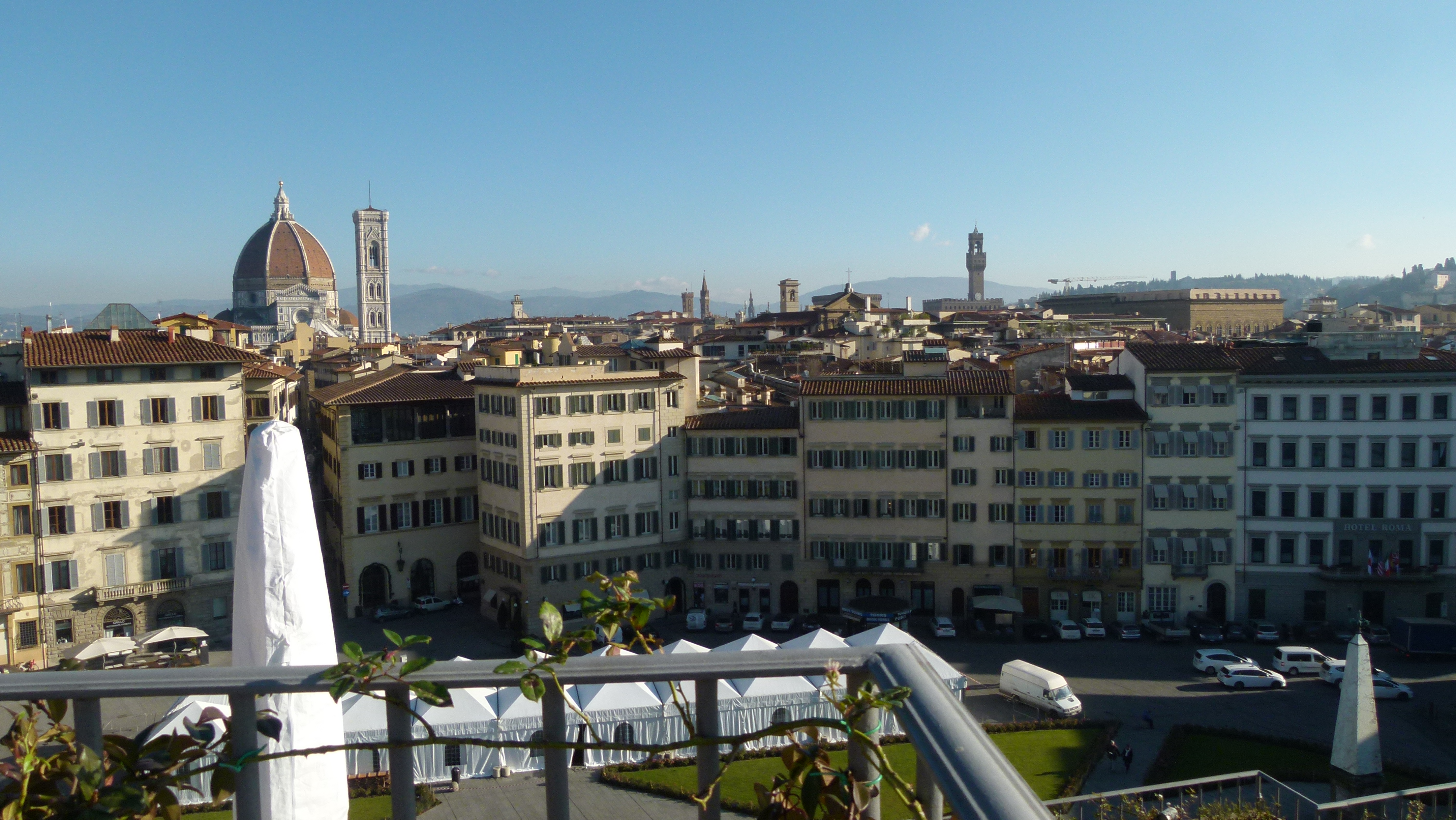
Here is the view from the roof of our hotel to the Dome with the Campanile and Palazzo Vecchio.

P1070391

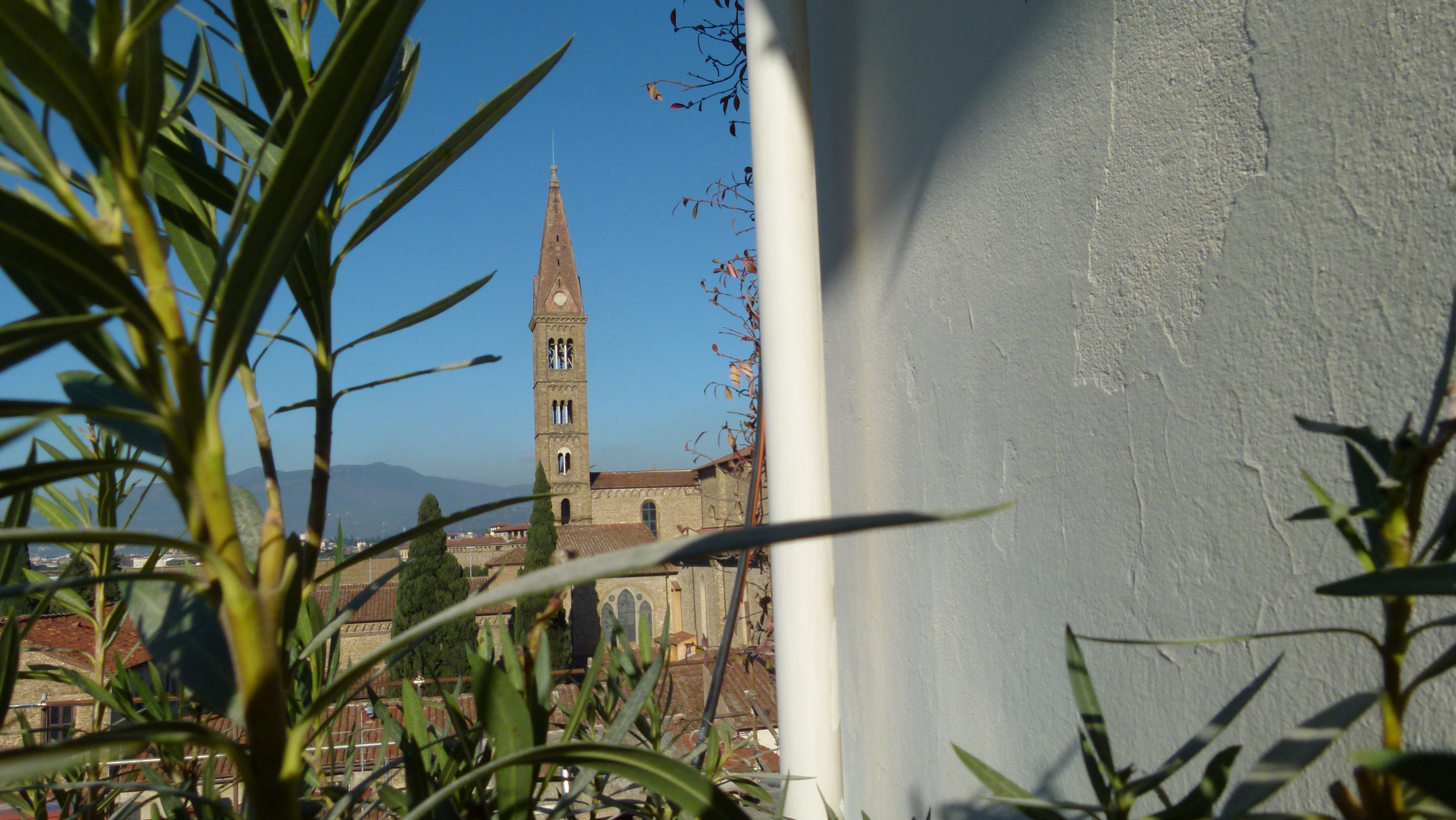
And this is view of the tower of Santa Maria Novella taken from one of the balconies – we are close.

P1070394

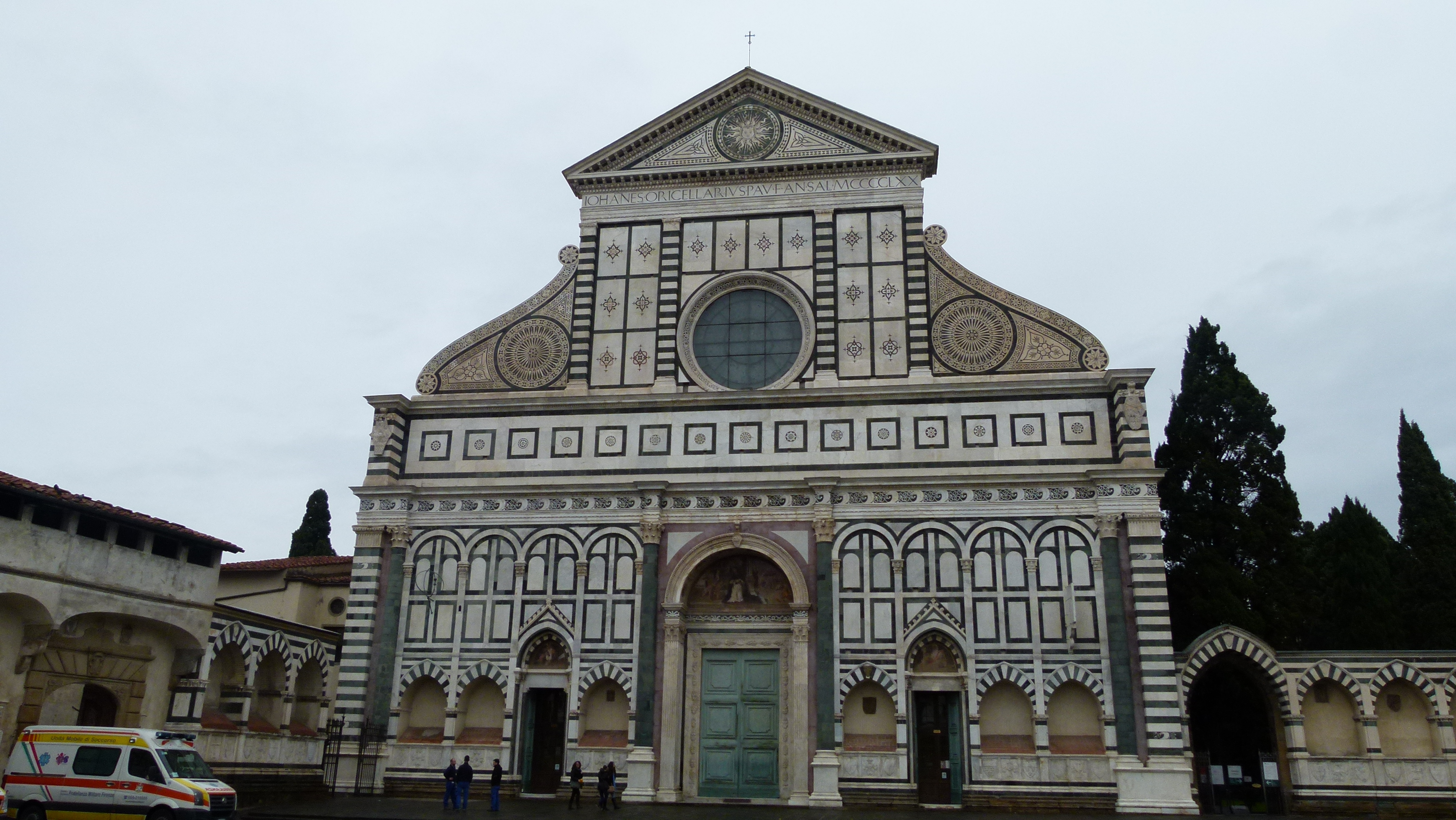
When we leave the front door of the hotel we stand in front of the renaissance facade of Santa Maria Novella.

 P1070223

.

Trying to get an overview of all this culture – my simplified map of Florence

Ursula enthusiastically tells me about San Lorenzo, the Baptisterium, the Palazzo Vecchio, Santa Croce, San Miniate al Monte, the Palazzo Pitti and… and… I feel overwhelmed. There is much, much more to be seen than just the Uffizi and the Ponte Vecchio. I hear that sometimes tourists end up in the emergency department of the local hospital, and the diagnosis is “overload with culture” – it is said to be a well-known phenomenon. I believe, if it is not true, it is well invented (or in Italian: si non è vero, è ben trovato).

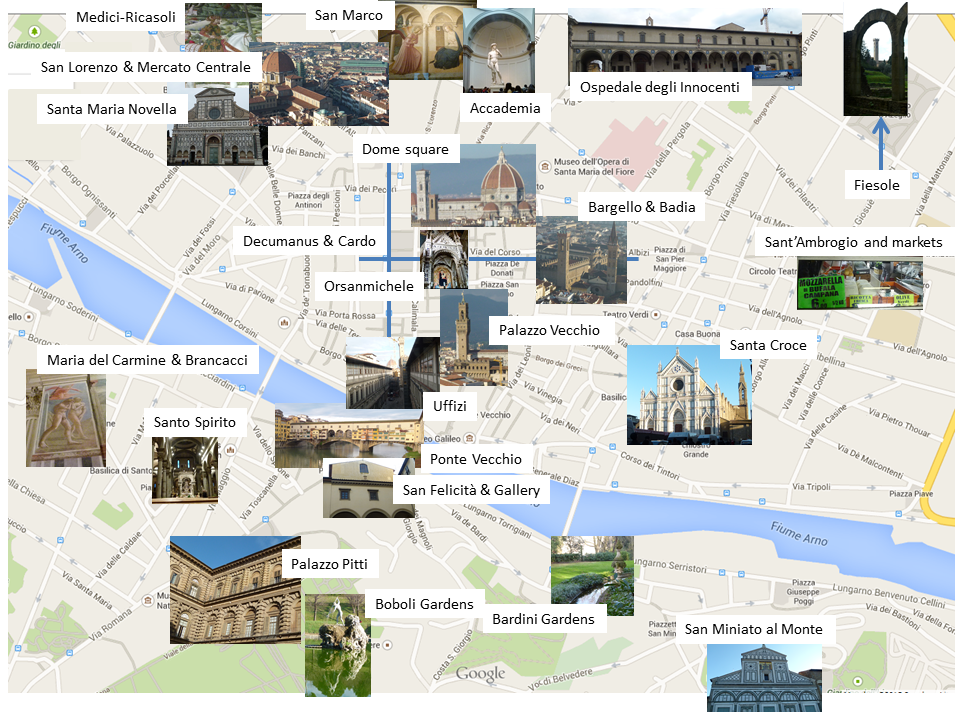
I try to get some order into my head and draw a simplified map of the town with their places of interest. Except Fiesole, they are all within walking distance.

Simplemap_florenz_english

The center of medieval Florence is the area around the Dome square (with the Dome, the Baptisterium and the Campanile). The Roman Decumanus and the Cardo  can still be noticed in the rectangular street pattern (they cross at today’s Piazza della Repubblica). Grouped in the center are the Palazzo Vecchio (the old townhall in Piazza della Signoria), the Bargello Palace (formerly the residence of the “Bargello”, the head of the police), Badia (a monastery, Brothers of Jerusalem), Orsanmichele (the center and curch of the trade- and craft guilds) and the Uffizi (the administrative center of the dukes of Medici, now THE museum). The center ends with Ponte Vecchio that connects to “Oltrarno” (the area “beyond” the Arno).

To the west/north west are Santa Maria Novella (belonging to the Dominicans), San Lorenzo (where the Medici dukes are buried), the nearby Mercato Centrale and the Palace of Medici-Ricasoli (with the chapel hosting gorgeous frescos of the kings traveling to adore Jesus).

To the north there are the monastery of San Marco (each cell decorated with a fresco), the Accademia (highlight: David by Michelangelo) and the Ospedale degli Innocenti (forming the harmony of Piazza SS Annunziata with the namesake church).

On a hill farther away to the north, the town of Fiesole can be reached using bus number 7 (archaeological center with Roman ruins).

To the east we find the beautiful church Santa Croce and – still farther more to the east – Sant’Ambrogio with its markets.

Beyond (or south of) the Arno (Oltrarno) is Santo Spirito (the small streets are the scene of Magdalen Nabb’s detective stories). Nearby is Santa Maria del Carmine with the Branccacci chapel (highlight: the fresco “expulsion from the paradise”). The Palazzo Pitti was home of the dukes of Medici (“hidden” in the Gallery they walked to the Uffizi, sometimes stopping by behind Santa Felicitá to attend the service; today the Palazzo is another art museum). Behind the Palazzo Pitti are the Boboli gardens (climbing uphill) and the Bardini gardens (with a wonderful view of the city). San Miniato al Monte on top of another hill is the oldest church in Florence  (church and monastery belong to the Benedictines).

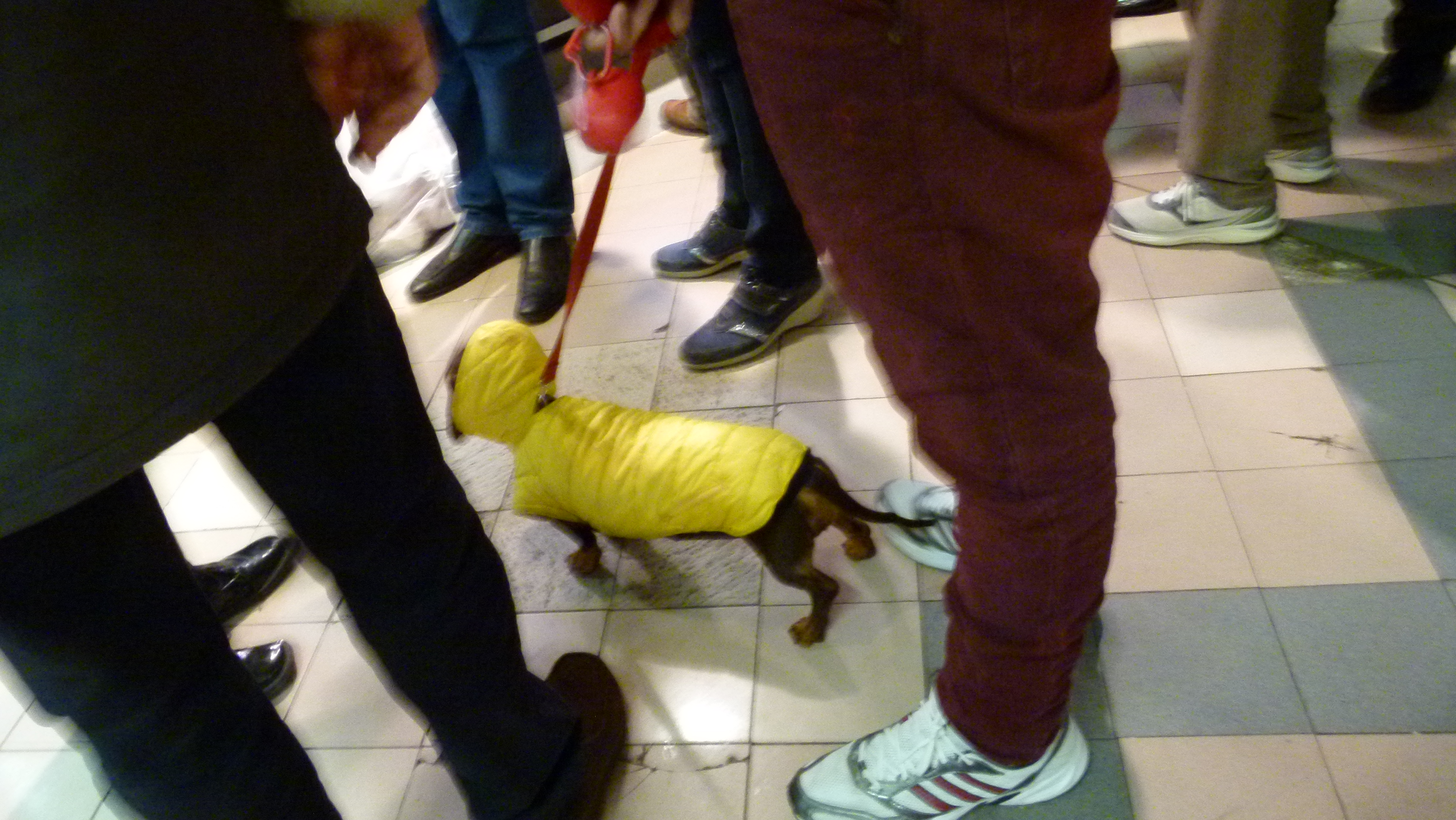
These are the cultural highlights that we visited. We also spent wonderful hours eating in exellent and friendly restaurants, shopping in the markets or leather -, dress -, gem – and book stores (Florence is famous for its design culture) or just enjoying the atmosphere in the small streets where each individual house/palace has a story to tell (such as Palazzo Strozzi, Davanzati or Antinori). It is good to be in Florence in December: There are less tourists now and the temperatures seem moderate to us (15 degrees during the day) – even if some dog owners would not agree, as this snapshot taken hastily illustrates.

P1070546

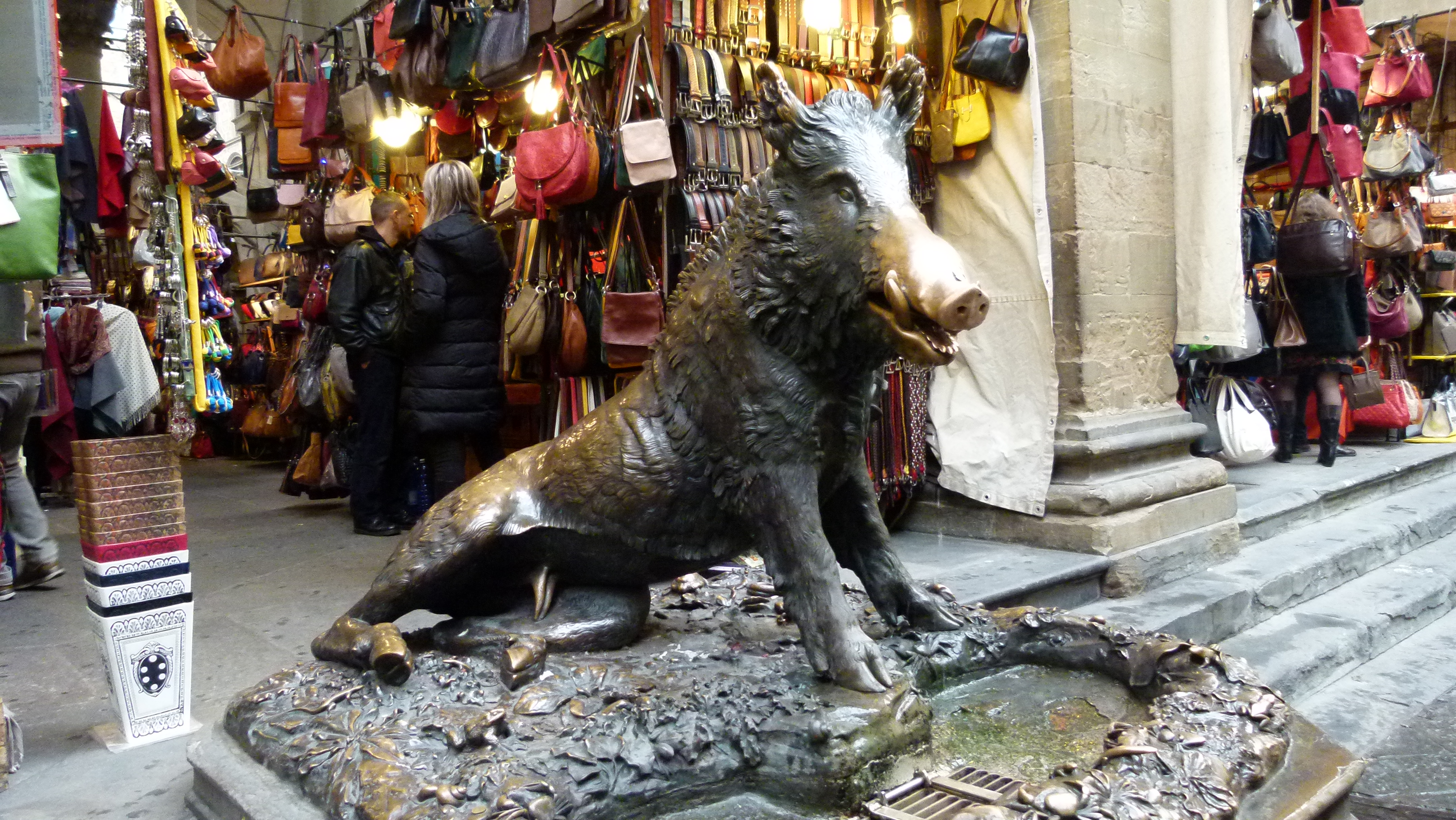
The shining nose of the Porcellino indicates that most tourists want to come back to Florence.

P1070177

I feel the same – After having spent a week here, I would like to come back. However, I do not touch this nose that so many people have touched before.

.

This is the literature that I used to understand more of Florence

  • Loney Planet: “Pocket Florence & Tuscany”, Feb 2014
  • ADAC Reiseführer: “Florenz” (extremely practical guide with a pull out map that my eyes could read – each place of interest has a number that allows to find the related explanations quickly and the depth of the explanations is exactly right, when walking around)
  • DuMont Kunstreiseführer: “Florenz”, 1988 and 2012 (in depth information to  dig deeper)
  • DuMont Reisetaschenbücher: “Florenz”, 1996
  • Merian Porträts: “Florenz, eine Stadt in Biographien”, 2014 (Franz Kotteder explores the biographies of 20 celebrities, including Dante, Giotto, Brunelleschi, Guccio Gucci or Magdalen Nabb)
  • Magdalen Nabb: “Death of an Englishman” and “Death of a Dutchman”, A Marshal Guarnaccia Investigation, Diogenes, 1992 and 1999 and Soho 2007 and 2001
  • Various information sources on the Internet, in particular the useful official website of the museums in Florence.

.

Let me pick out some memories of this rich and enticing trip to Florence

Thank you, Ursula, for organizing and guiding us and thank you, Leni, for the great company.  It was good to travel with you, as all three of us loved to stop, watch and take our time to think and digest, when visiting the churches and museums of Florence. And we all enjoyed to do shopping and recover in comfy coffee houses or restaurants.

I want to pick out some memories and think about the history of Florence that played an important part in the European history.
On the road – Finding truffles (l’Or des Valois) with Elf, the lagotto romagnole

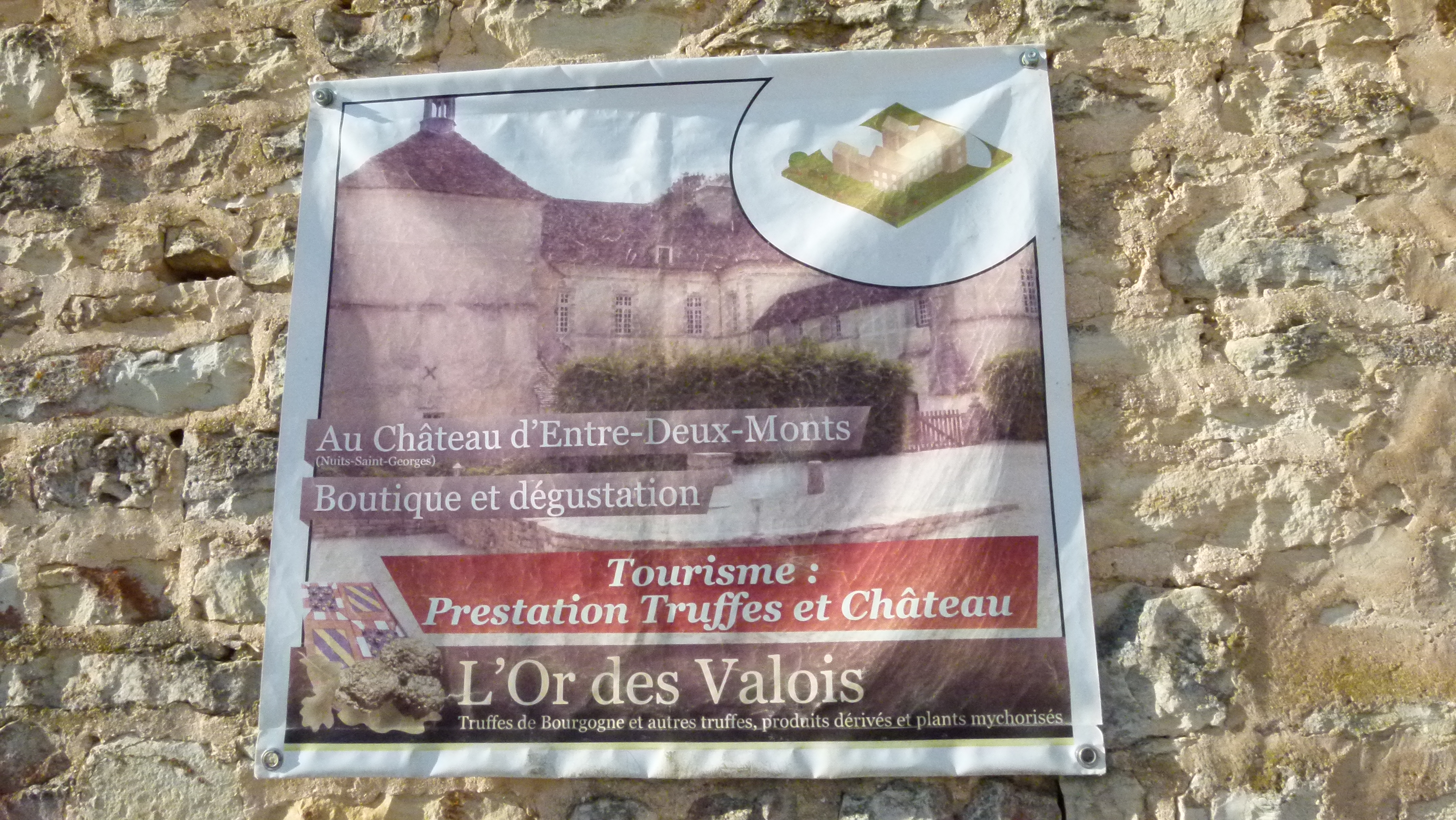
At Château d’Entre Deux Monts – the truffle farm (truffles are “the gold of the Valois” or “l’Or des Valois”)

At the Château d’Entre Deux Monts Thierry Bézeux and his family grow truffles, convert them to truffle delicacies (sold in the boutique) and in addition show tourists their truffles (visits to their orchard and truffle tastings). Tripadvisor gives good reports. Larissa has visited and liked this place before and has arranged a visit with us.

The Burgundy truffles are also called “the Gold of the Valois”” or “l’Or des Valois” (The Valois were kings of France from the early 14th to the late 16th century, then the Bourbons took over with Henry IV).

.

Finding the Château with l’Or des Valois

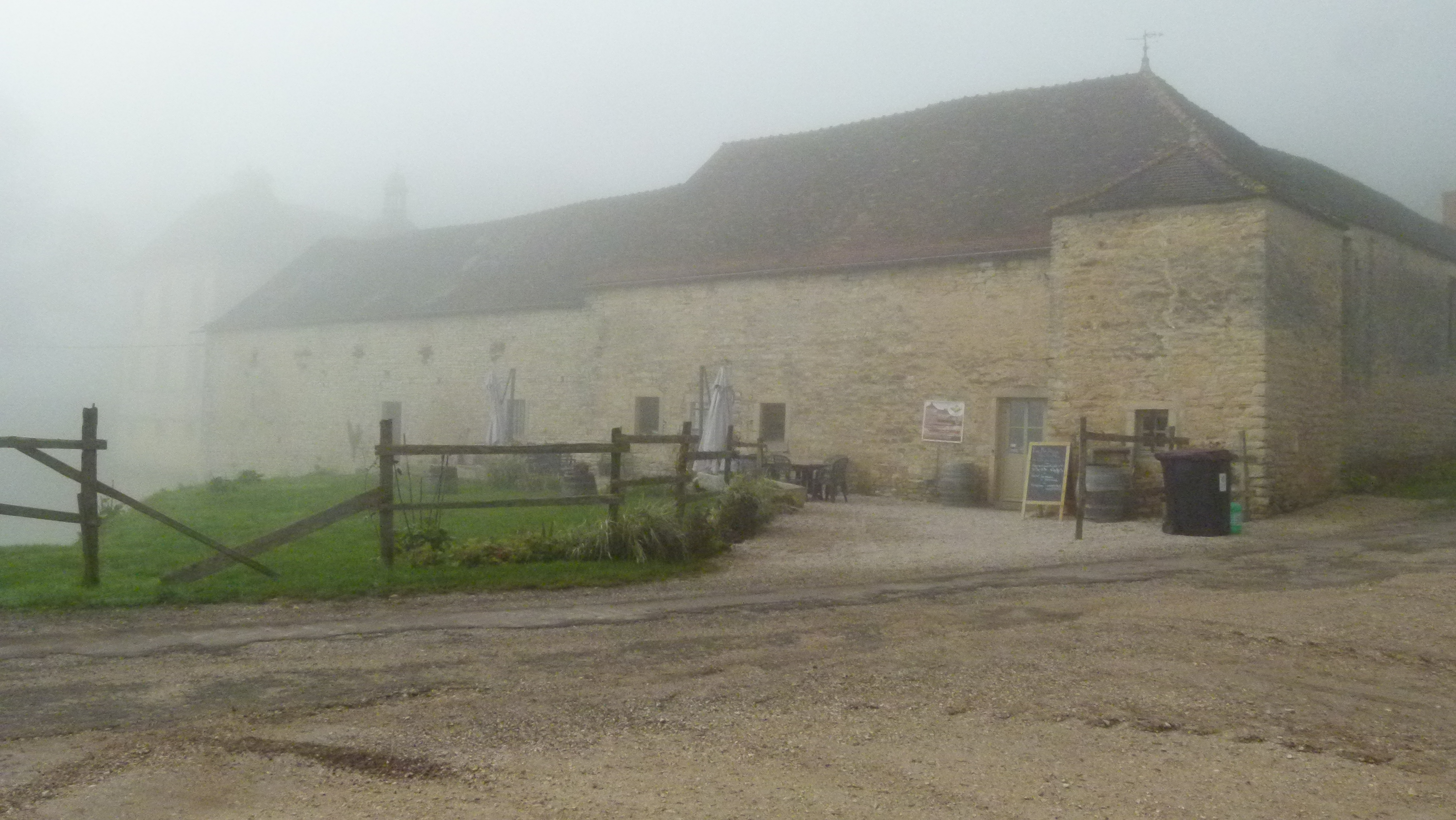
There is a mysterious mist lying over the hills above the Côte de Nuits and the village Nuits-Saint George.

P1060938

Hidden in the mist is the Château d’Entre Deux Monts de Thierry Bézeux.

P1060913

The boutique is open and Thierry Bézeux welcomes us.

P1060943

.

Looking for truffles in the “truffle orchard” – with Elf

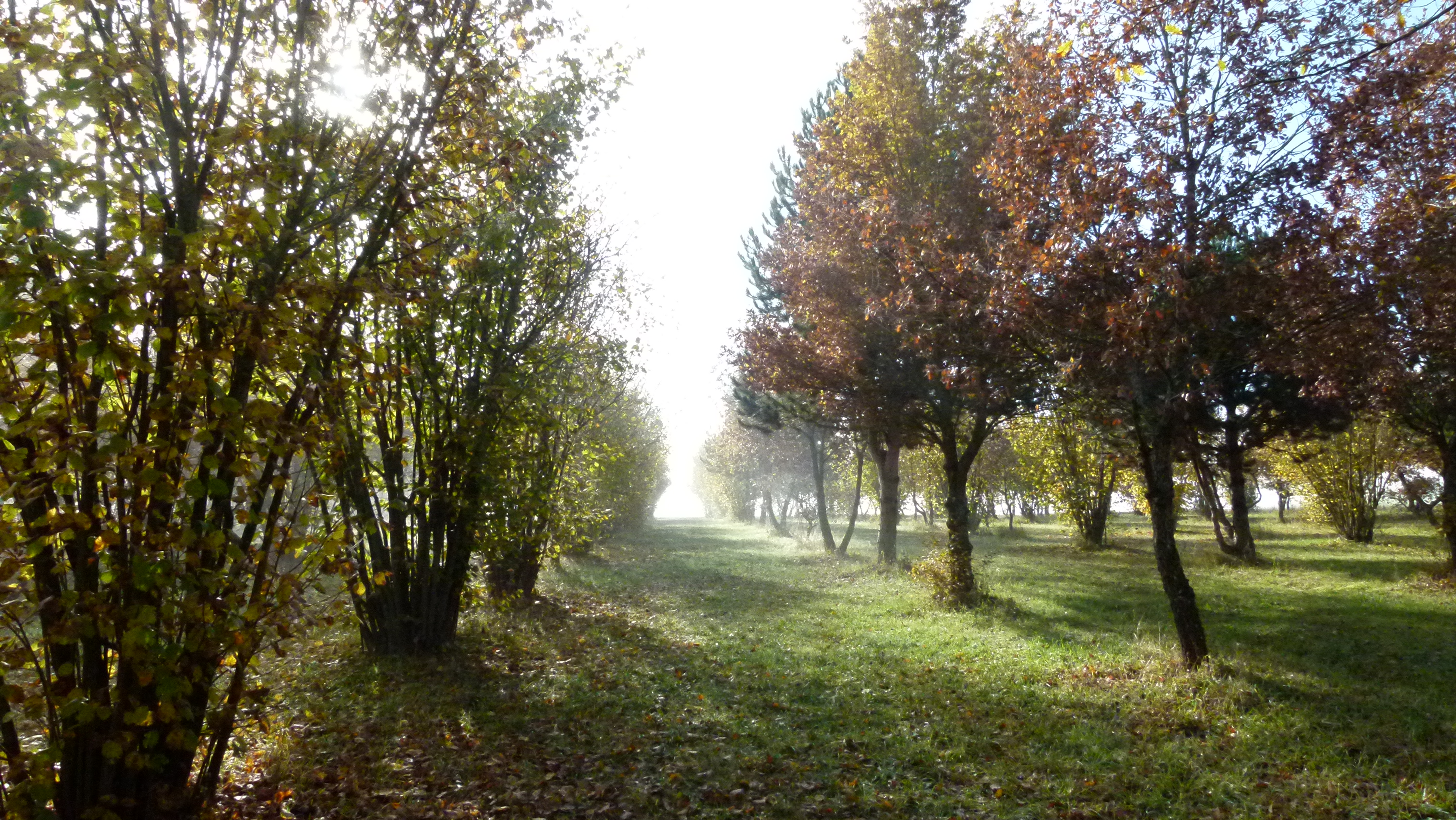
The son of Thierry and his dog Elf take us to their “truffle orchard” planted with trees that truffles like. I later found a study about growing truffles in the US, and they say that the Burgundy truffle is well suited for plantations, in particular with trees such as hazelnut and oak, but can only be harvested with a dog, as they grow under the ground.

P1060922

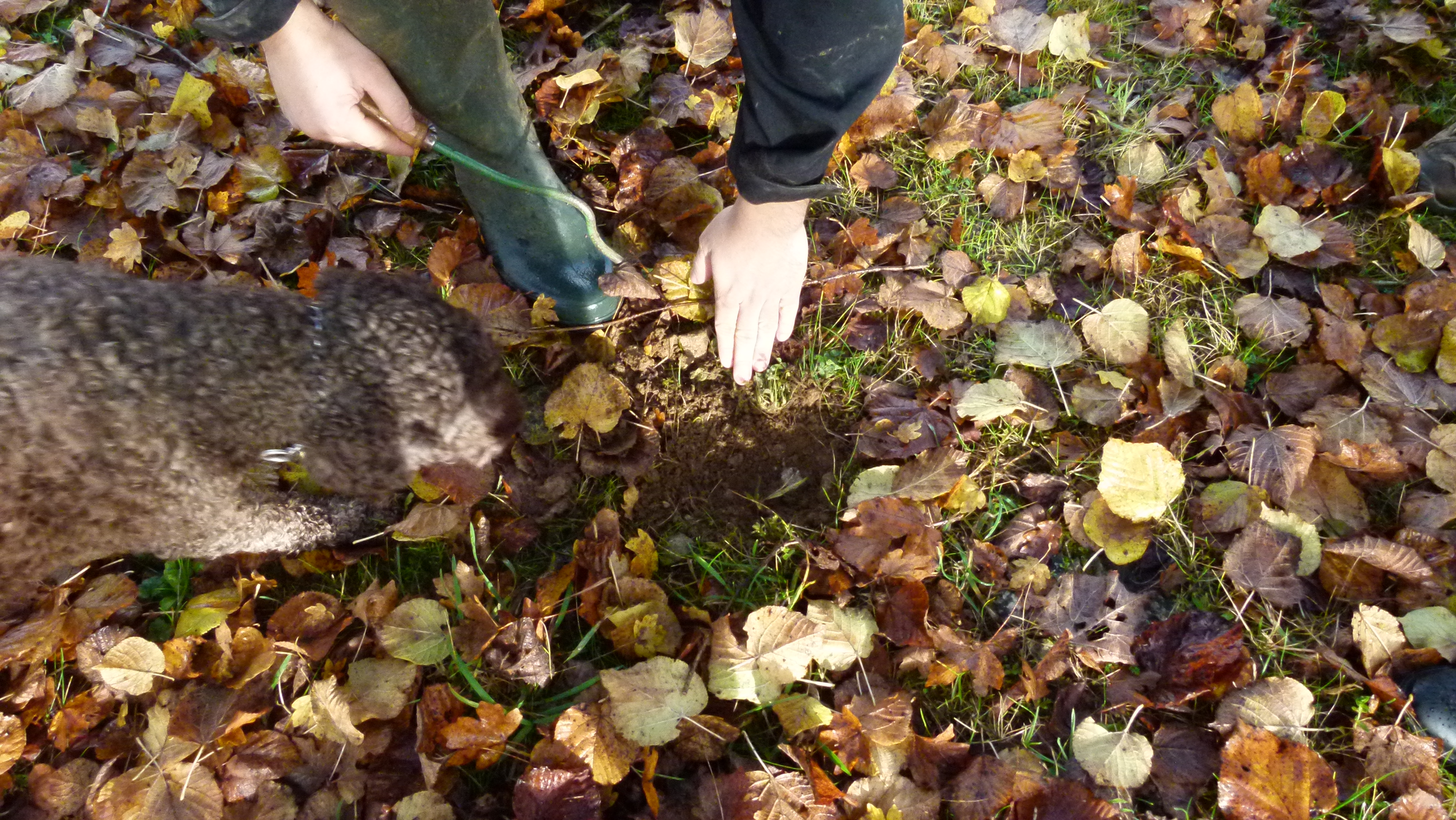
Elf is a lagotto romagnole, similar to a poodle. When Yann opens the gate to the orchard, she starts to run around and immediately finds the first truffle hidden under the ground. Elf loves truffles and wants to eat the black ball it found, but Yann stops her and gives her a dog bisquit instead. Maybe the bisquit has a truffle taste, at least?

P1060915

Elf continues to look for more truffles. Sometimes she loses interest in truffles and sniffs around the trees. Perhaps a badger (blaireau in French) has visited the orchard and Elf is reading what the bagder has to say. In the end, we have a handful of truffles to take home. Thank you, Elf.
P1060930

.

Back in the castle, we taste the truffle delicacies

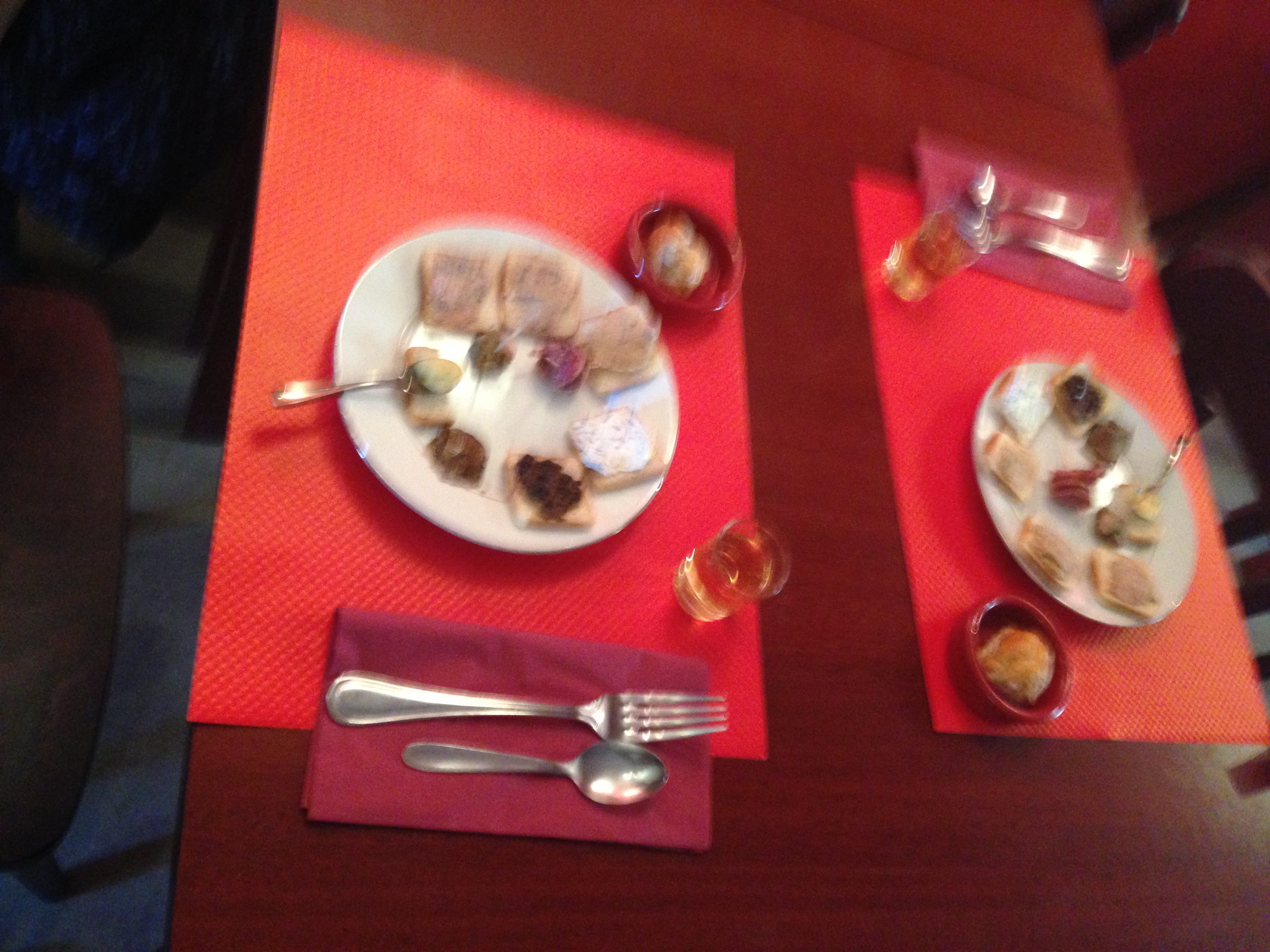
Back in the château we find the table set for our truffle tasting: Mustard, terrine of rabbit and pintade (guinea fowl or цеcарка), cheese, sauce aux truffes d’Italie, some slices of fresh truffle, ham with parsley (jambon persillé), saucisson, ice cream (glace) and Ratatruffe (Marc de Bourgogne marinated with truffles). The Ratatruffe may have influenced my camera… in the internet there are bettter images of this tasting set.


IMG_0969

.

My thanks in the Château guest book

There is a guest book on the table and I leave this entry: « Merci, Elf, tu as bien travaillé, et j’aimerais bien savoir ce que le blaireau t’as raconté. La degustation était délicieuse. Petra de Bâle en Suisse.” (Thank y ou, Elf, you have worked well, and I would like to know, what the badger has told you. The tasting was delicious.)


On the road – our Sunday tastings in Chablis: William Fèvre and La Chablisienne

Our first day in Chablis was a Sunday. A  few wine making places are open on Sundays, amongst them the boutiques of La Chablisienne and of William Fèvre. No reservations are needed. Great.
On that Sunday, we also visited the Chablis market…

P1060802

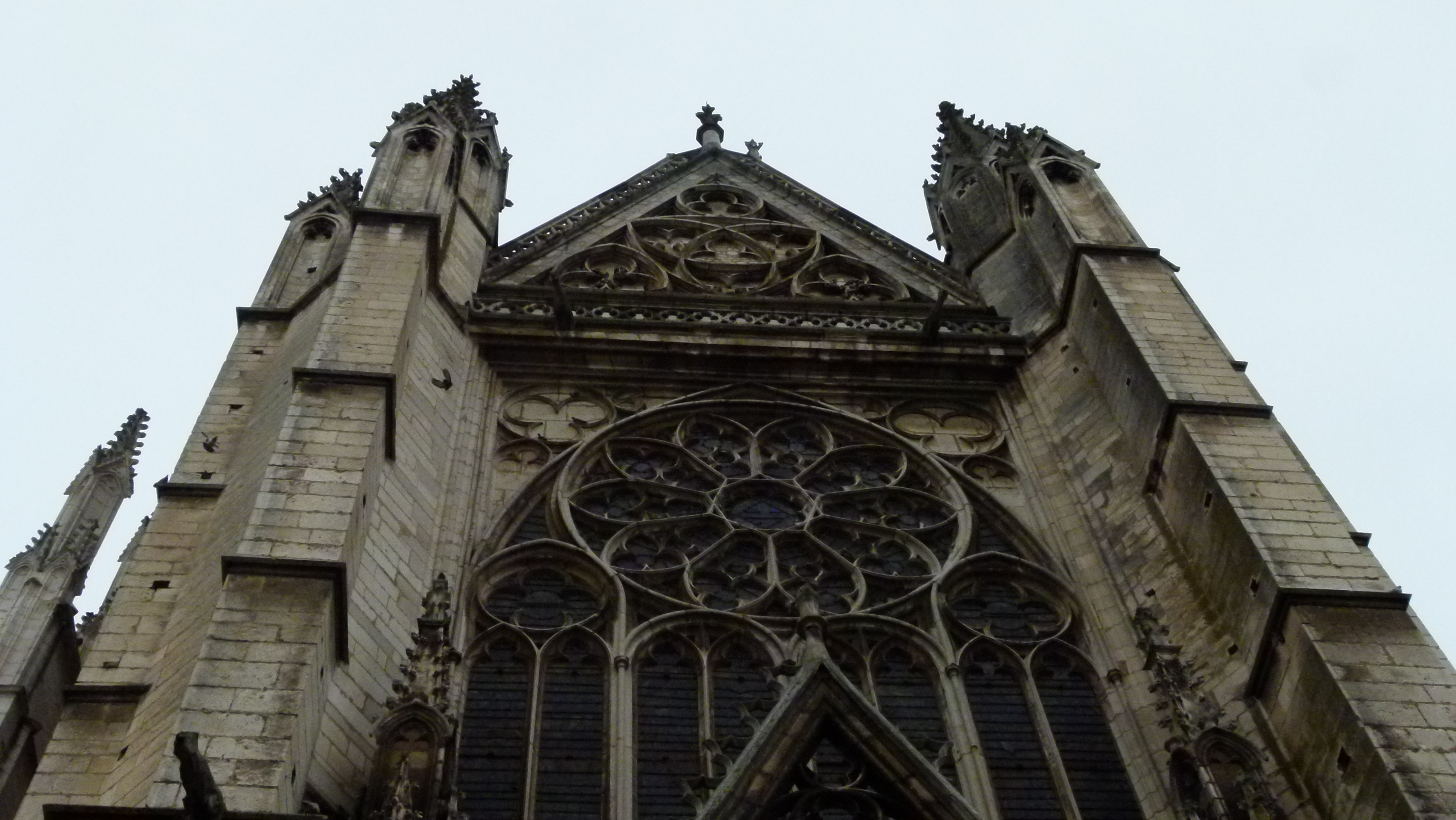
… and Auxerre with its beautiful gothic church of St. Etienne.

P1060822

.

La Chablisienne – valued in Pocket Johnson and surely worth visiting with its broad selection of wines

P1060810

P1060816

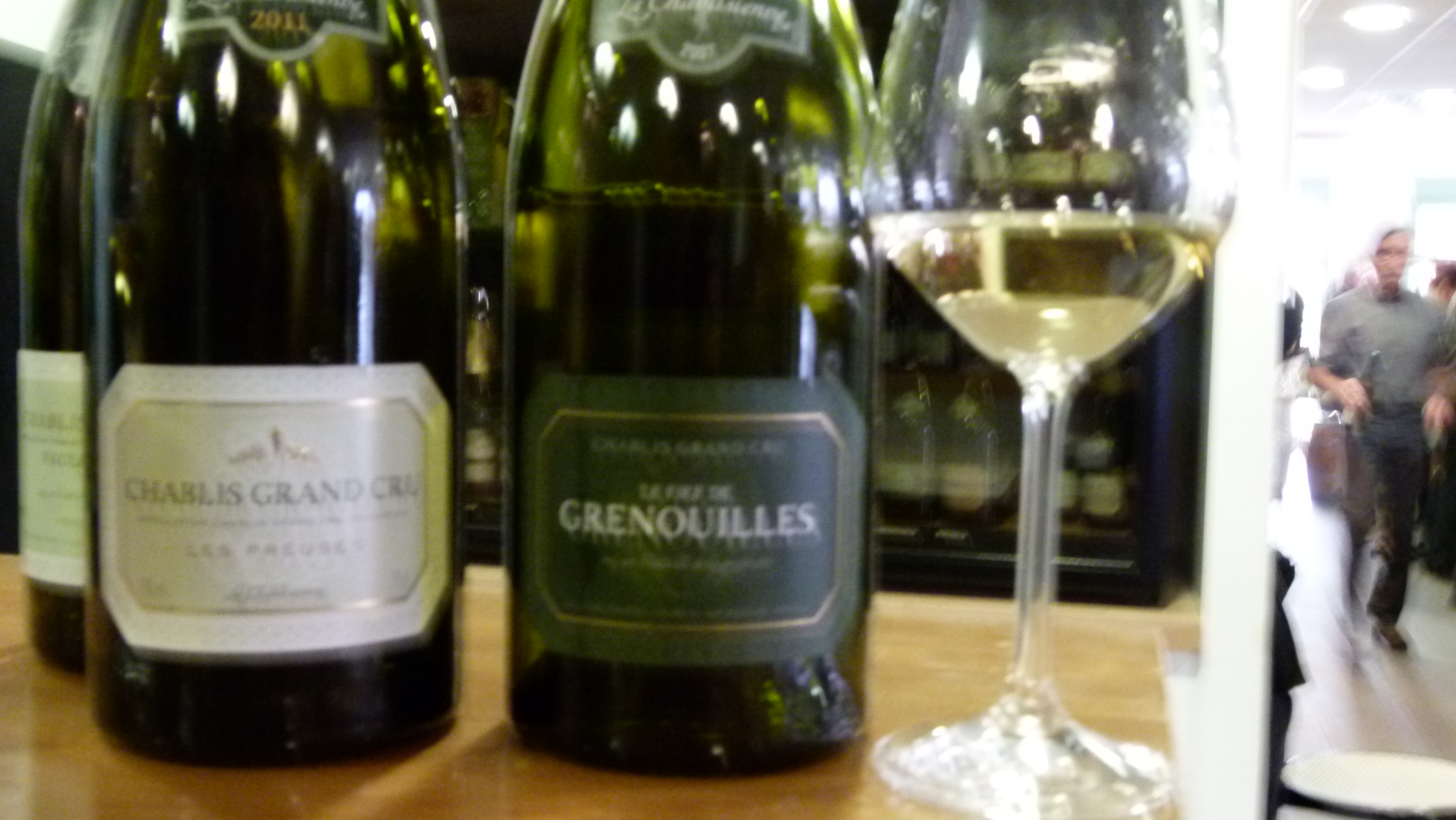
La Chablisienne is a Cooperative that makes wines for about 300 wine growers. They are the largest wine maker in Chablis. They offer wines from a broad variety of climats (about 30 different Chablis wines), and they own the Château Grand Cru “Grenouilles”, the smallest of the seven Grands Crus terroirs (they acquired the quasi-monopole of Grenouilles in 1999).

Jean-Michel guides us through our tasting – with a lot of charm – listening and reacting, e.g. by bringing another Grenouilles from a different year… This is what we tasted:

  • Beauroy 1er Cru: Fruity – perhaps quince. Nose is more pronounced than taste.
  • Vaulorent 1er Cru : Fruity – perhaps quince and nuts. Nose also stronger than taste.
  • Fourchaume 1er Cru 2013: Young, fruity – orange, both nose and taste. Would like it with shellfish. Liked it and bought a bottle.
  • Montmains 1er Cru 2009: Liked it and bought a bottle.
  • Les Preuses Grand Cru 2011: More yellow than 1er Cru, less acidity, flowery, can imagine it with Asian food. Can age more.
  • Les Grenouilles Grand Cru 2007: Ready to drink, salty, mineral note, but somewhat ponderous (on “heavy feet” or “schwerfüssig”). 2010 is fresher than 2007.

It is surely worth visiting La Chablisienne with its broad selection. On  our Sunday they also hosted a cheese tasting event. Unfortunately, the cheese tasting lady was a little grumpy.

.

William Fèvre – “three stars” in Pocket Johnson and a lot of enthusiasm in the boutique – for me my second tasting highlight in Chablis

William Fèvre has three stars in the “Pocket Johnson”. For lack of family heirs, he sold his business to Henriot in 1998. He has the largest Grand Crus possessions in Chablis.

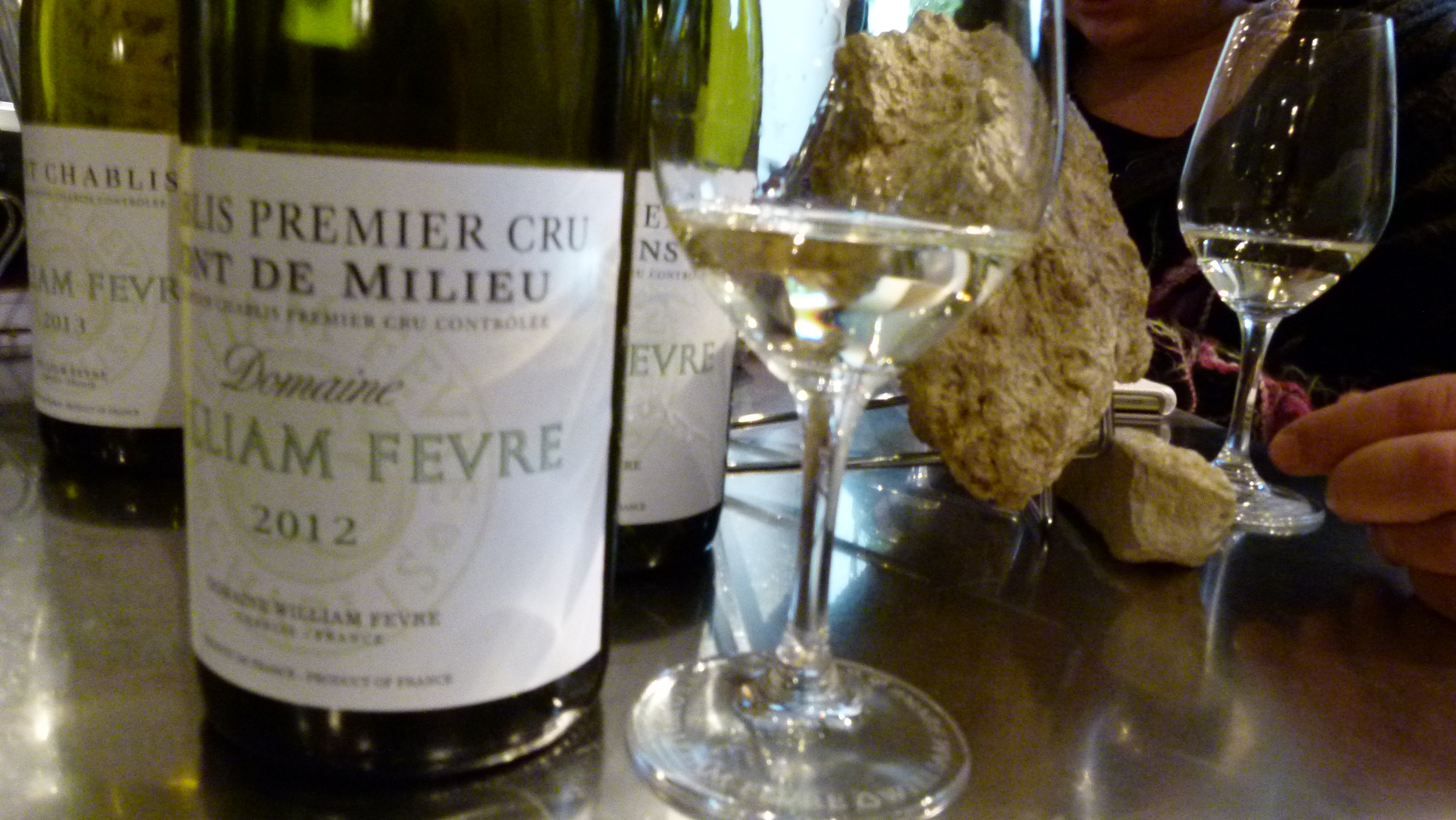
His boutique is nicely set up. To illustrate the terroir, there are brochures and samples of the Kimmeridgian soil. I enjoy the enthusiasm that the boutique assistant shows when explaining the Kimmeridgian stone samples to us. I ask him why William Fèvre is called “William”, though the family has long lived in Chablis – no Anglosaxon background. He smiles. And then tells me the story: When William was born, his parents could not agree on his name. After three days, the mayor reset the date of birth and gave him the name “William”. The assistant sees the “Pocket Johnson” in my hands. “May I see, what Johnson has written about us, I have not checked this out recently”, he says and then adds: “I have met Johnson once, he is an impressive person.”

This is what we tasted:

  • Petit Chablis 2013: Fresh, brisk, on “light feet” (“leichtfüssig”)
  • “Plain” Chablis: Almost no nose, a little more dense than the Petit Chablis
  • Chablis 1er Cru 2012, Montmains:  Round and crispy, I liked it again (liked it already at Chablisienne)
  • Chablis 1er Cru 2012, Mont de Milieu: Mineral taste, I like it less than Montmains.
  • Grand Cru Les Preuses: They assemble the wine from two vineyards in this climat, the one having more sun in the morning, the other more in the evening.
  • Grand Cru Les Clos: Touch of peach, sold out, but still some half bottles from 2010 left .

P1060833

I buy a half bottle of Petit Chablis (great for an apéritif in summer), a half bottle of Les Clos and a bottle of  Montmains. The assistant packs my buyings carefully into boxes, whereby he fixes the half bottles with a “collar” to prevent them from bouncing in the box. I like these details. To me it shows that the winemaker is caring about his wines and his clients.