Around Erfweiler- the Hahnfels walking tour

On our sixth day in Germany we walk around Erfweiler in the Pfälzerwald. It will be another hot and sunny day.

.

The Hahnfels tour around Erfweiler

We have selected the Hahnfels tour of some 14km that takes us around Erfweiler on the forested hills. We start at about nine in the morning. It is already getting warm and we are glad to walk in the trees. The sign of this cock will guide us today.

dsc_0073-small

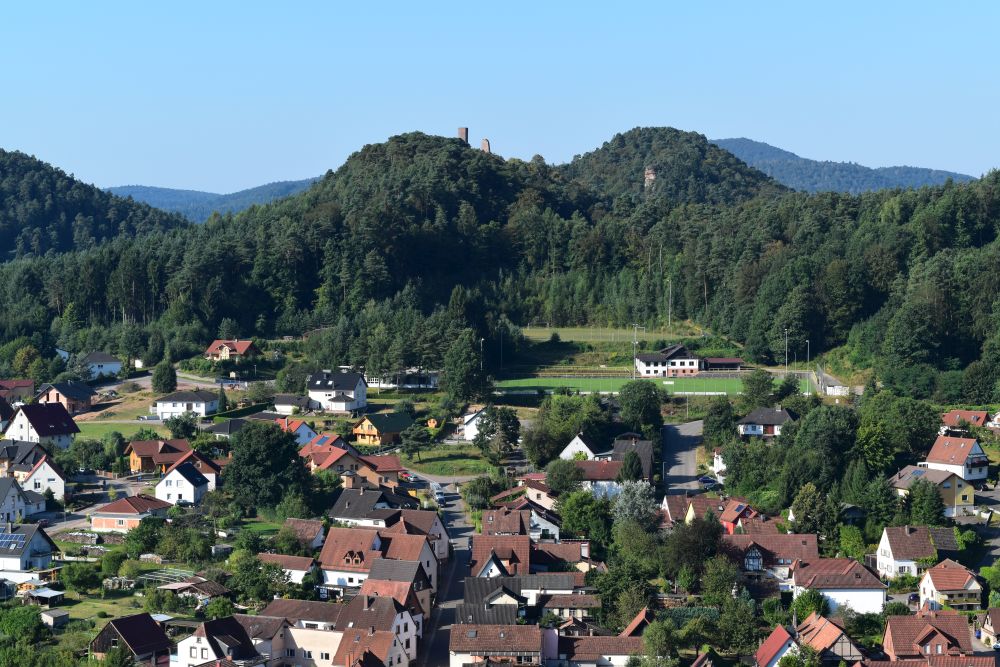
We walk uphill on sandy ground and reach our first viewpoint, the Hahnfels. It is a sandstone block and we have a good view of Erfweiler with the Dahn fortifications.

dsc_0077-small

This is Ursula’s panoramic view.

dsc07686-small

The village of Erfweiler was very poor, until they managed to earn some money in the mining and related charcoal industry in the 19th century. Only then they could afford a church.

The next viewpoint is another sandstone block amidst the trees.

dsc_0090-small

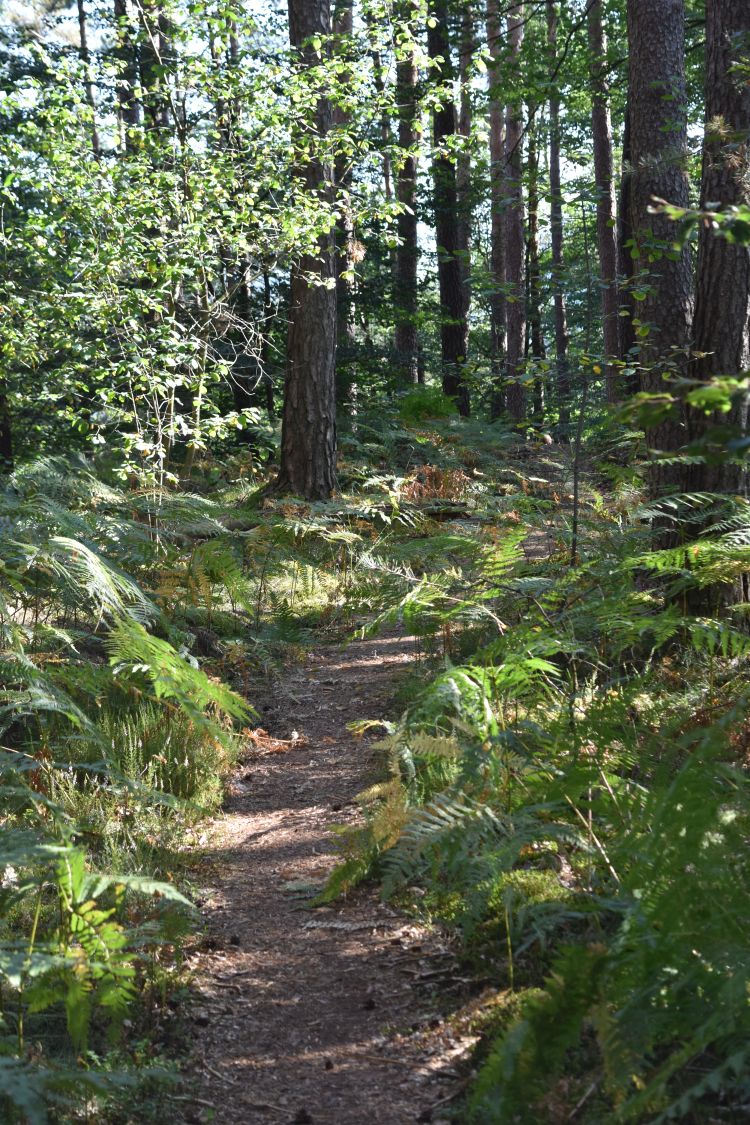
Our footpath winds gently through the forest.

dsc_0096-small

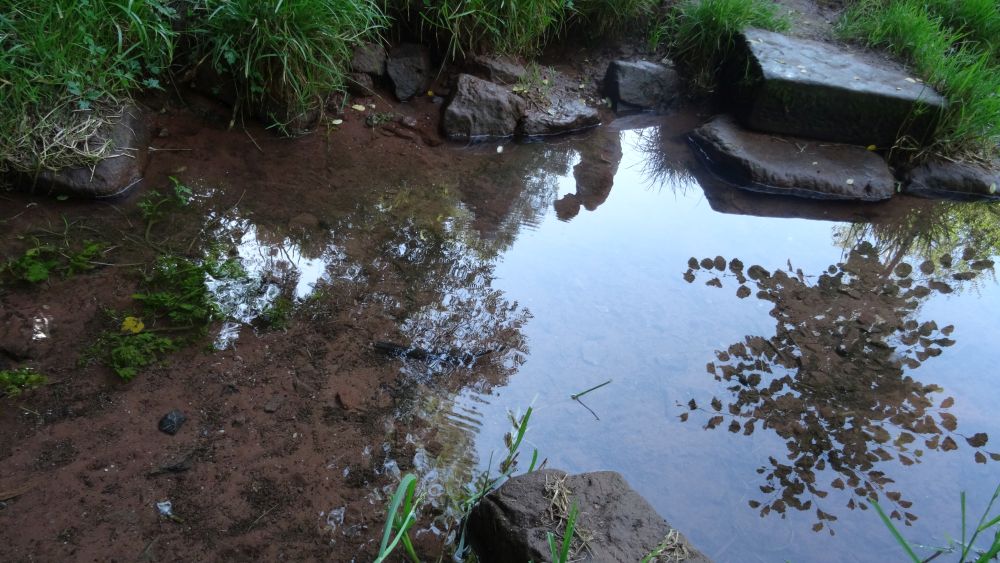
We cross the valley at this spring (Breitenbachquelle – this is Ursula’s romantic photo).

dsc07697-small

.

And more… up and down and up and down and up… 

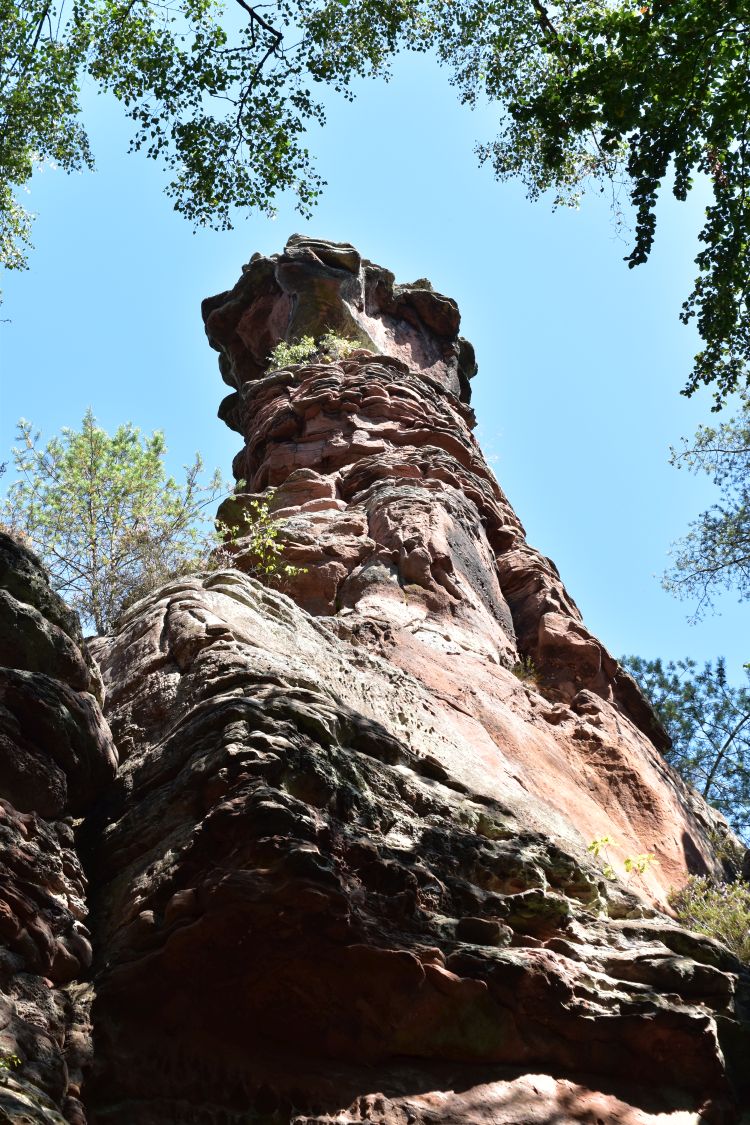
Uphill we walk again to the Schaffelsen (literally “sheep rock”). Climbers have just started to tackle this rock.

dsc_0108-small

We stop at the viewpoint called “Wasgau”. I ask myself, whether “Wasgau” is related to “Vogesen” – the name of the mountains across the border in France. Also “Was-” points to swamps, as I have learnt in the Black Forest (Stübenwasen is a swampy area where I do cross country skiing in winter).

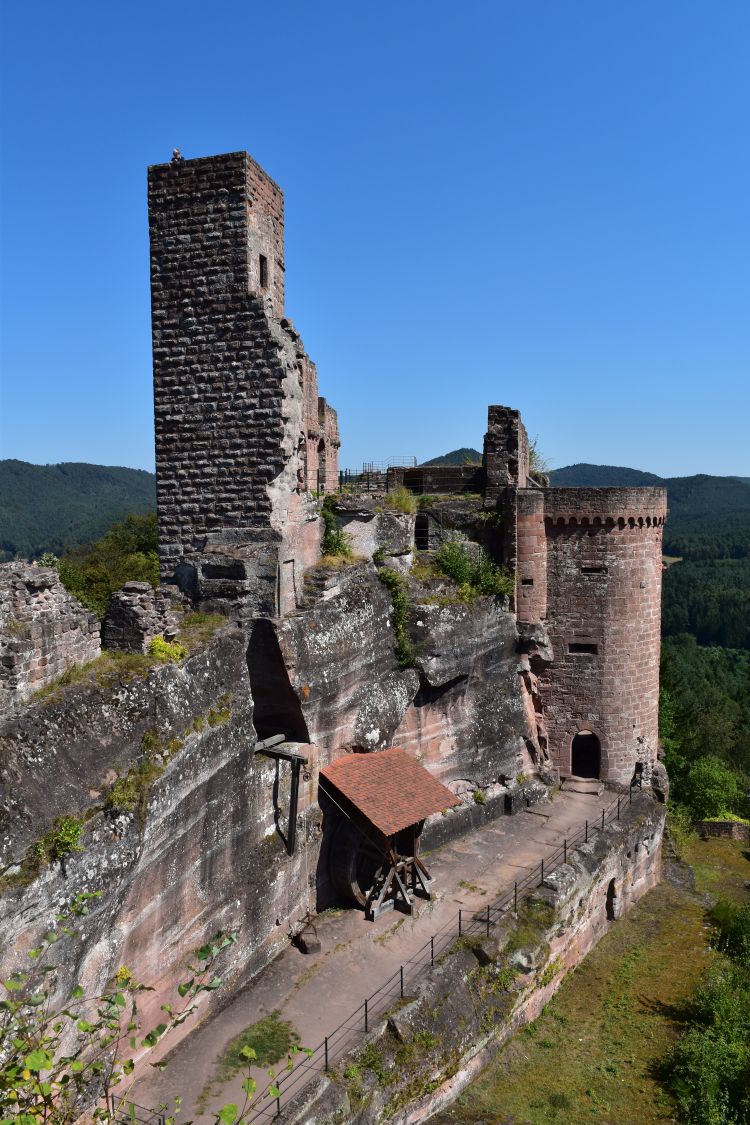
Downhill again and then uphill again. We reach the fortification Alt-Dahn hanging on one of these sandstone rocks.

dsc_0121-small

The path takes us down one last time – we reach Erfweiler. The climate is mild enough to allow edible chestnuts to grow.

dsc_0127-small

.

The romantic valley behind Erfweiler

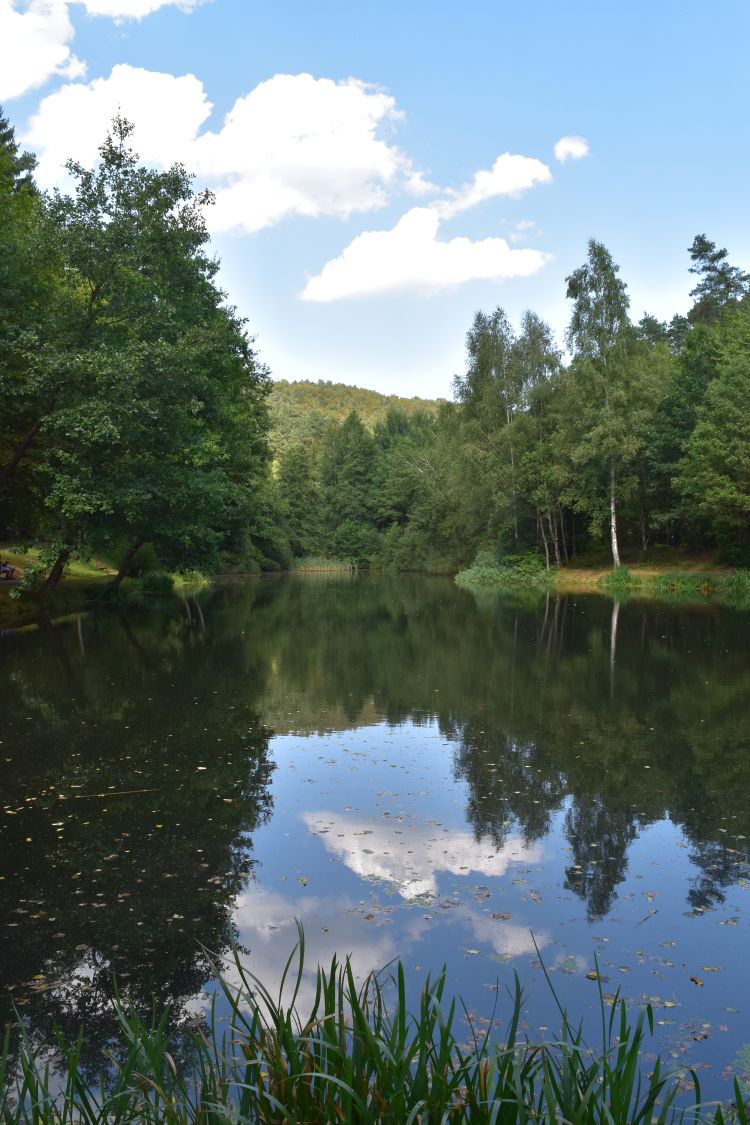
From Erfweiler, a final round tour of about 5km takes us into a small valley with this romantic small lake…

dsc_0136-small

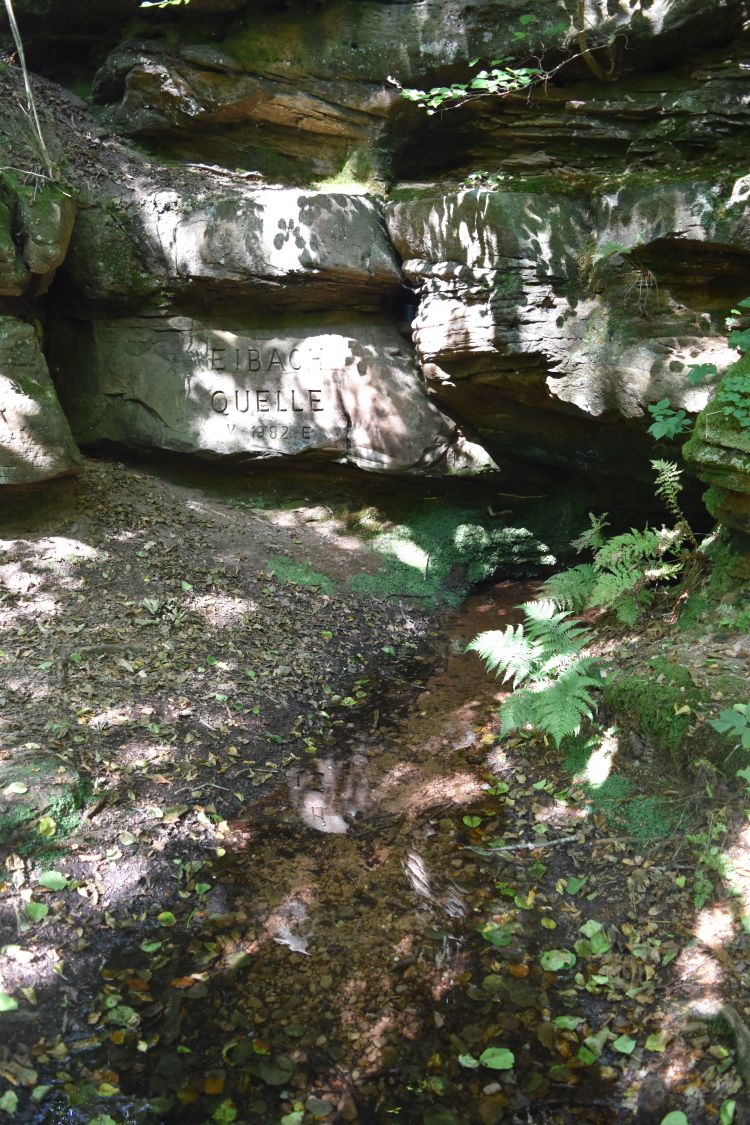
… and the Eibach spring.

dsc_0143-small

From far signs have announced the highlight of this valley, the waterfall. This is the waterfall…

dsc_0152-small

Well… okay… we Swiss are spoilt by waterfalls – but the geology behind this small waterfall is interesting: 120m higher up there is a spring. The nascient creek disappears in the ground, re-emerges just above this waterfall and then rushes down into the valley.

Our hotel “Die Kleine Blume” appears at the end of the street. We finish our walk through the shaded forest with all its places of interest. We have met about ten people on this sunny Sunday; Erfweiler is a quiet place to relax and move. And how good that we could move in the shade here. The temperature has risen to more than 30 degrees today.

We finish the day with a buffet of specialties from Pfalz such as “Saumagen” (kind of sausage wrapped up in pork stomach) and “Leberknödel” (liver dumplings). No light meals. We can “afford” that after our long hike.

The Pfälzerwald – ironworks, shoemaking and bizarre sandstone rocks

Now we are on our fifth day in Germany. The German weather forecast shows “official warnings”: Heat. Yes, we have noticed the heat, when walking in the vineyards. We decide to escape the heat by driving into the Palatine Forest (Pfälzerwald) which is the largest coherent forest in Europe. In Bad Dürkheim we buy a guidebook. Our plan: Get an idea about the former mining industry and the shoe making and then go for a walk in the area of the bizarre sandstone rocks around Dahn – in the shade.

.

Trippstadt- old mining town and now a favorite place of motor cyclists

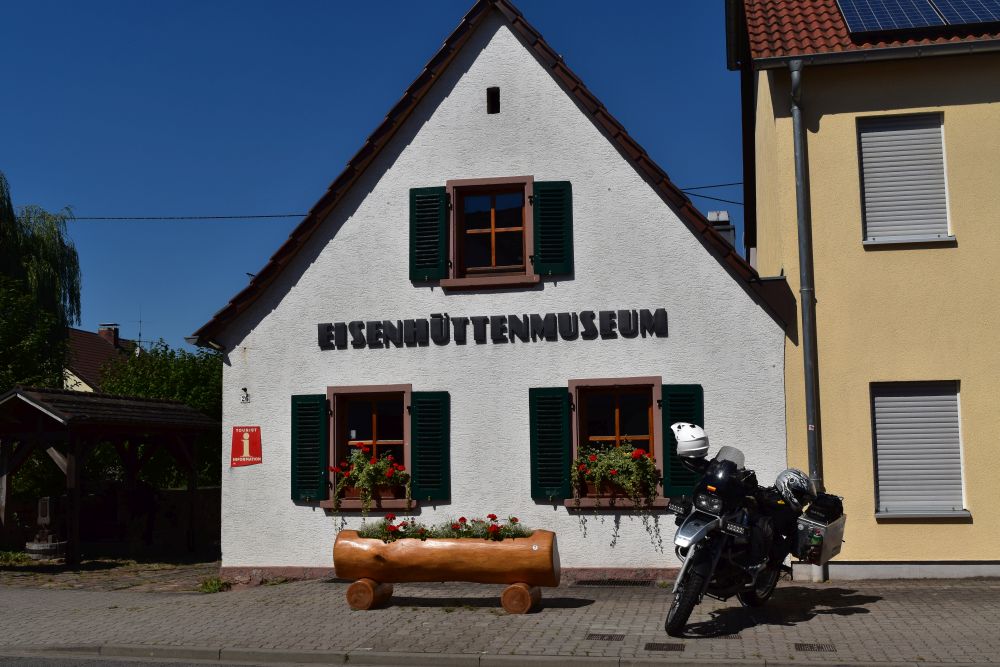
Through shady forests we drive to Trippstadt. This is a relaxed small town in the middle of the Palatine Forest. Motor cyclist love this place – a group of them is just celebrating a wedding – all dressed in black. The photographer parked his motor bike in front of the museum for ironworks.

The Eisenhüttenmuseum (museum for ironworks) documents the history and the ancient production methods of the mining industry that started here in the 15th century.

dsc_0046-small

First the workers had to dig out the stone containing iron from the mountains. Then they had to smash the stones using stampers.

dsc_0028-small

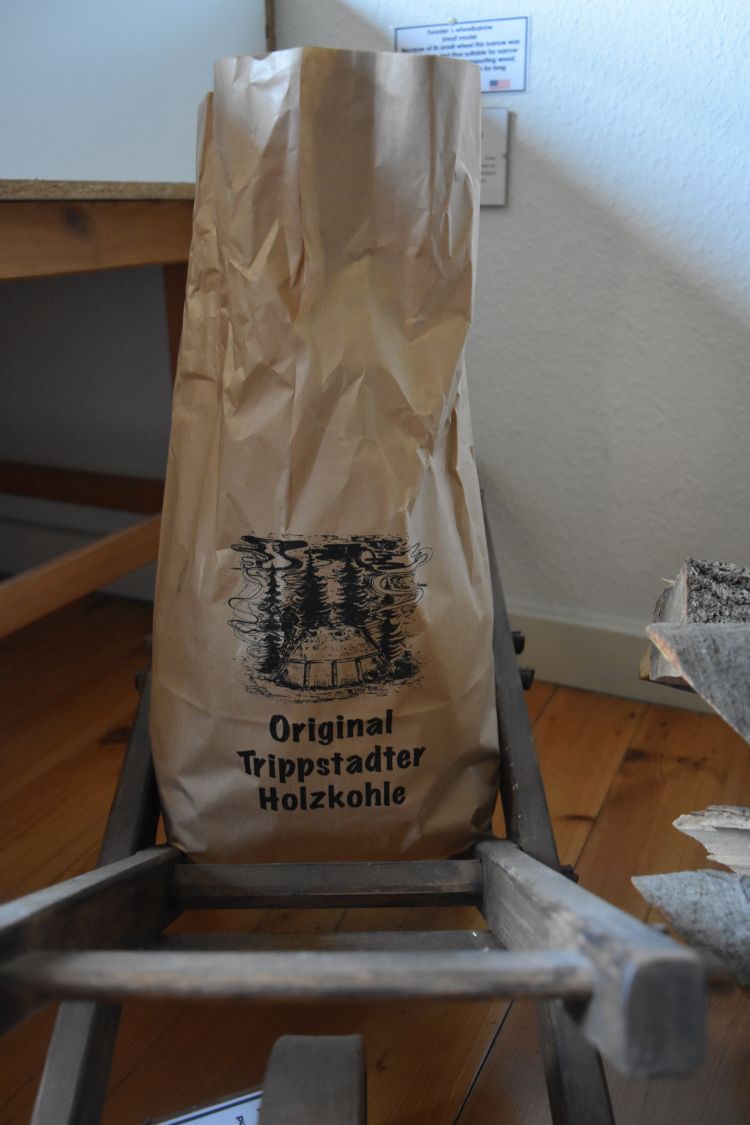
In large ovens the smashed stones are being heated to extract the iron. The heating energy required wood charcoal – charcoal burning was the profession for that.

dsc_0041-small

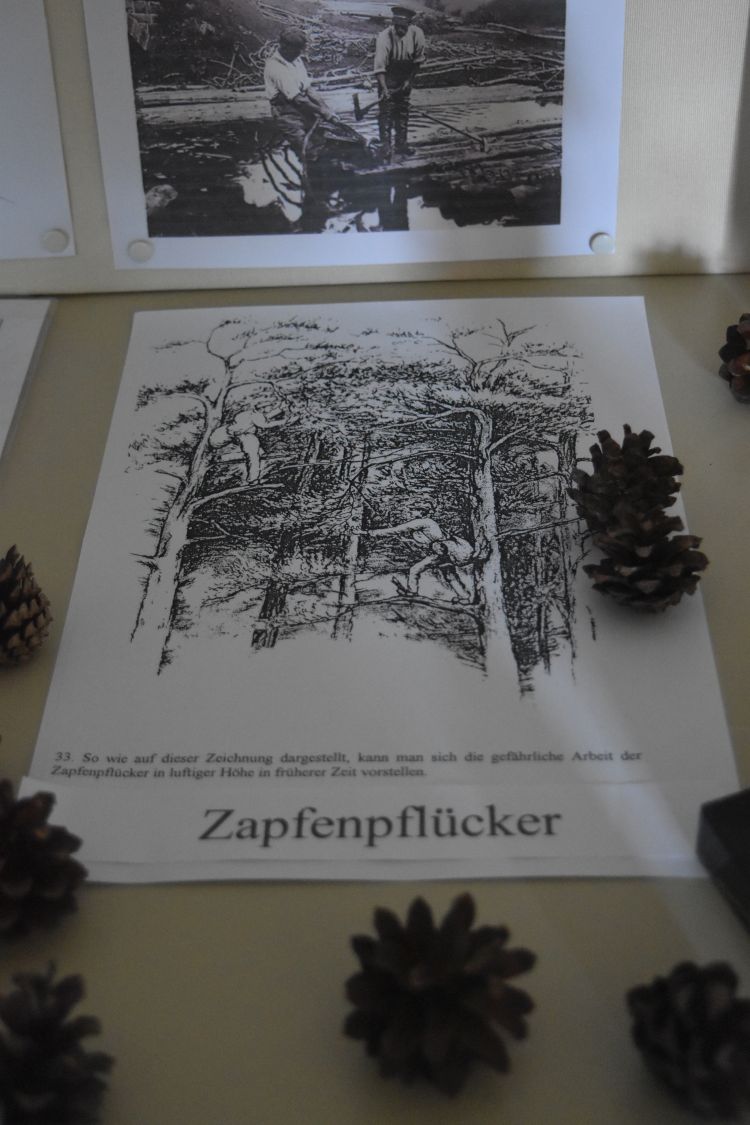
Additional professions needed were the resin burners (Kiefernpechbrenner) and the fir cone gatherers (climbing firs to collect the cones – pretty dangerous).

dsc_0038-small

We use the end products such as ovens…

dsc_0034-small

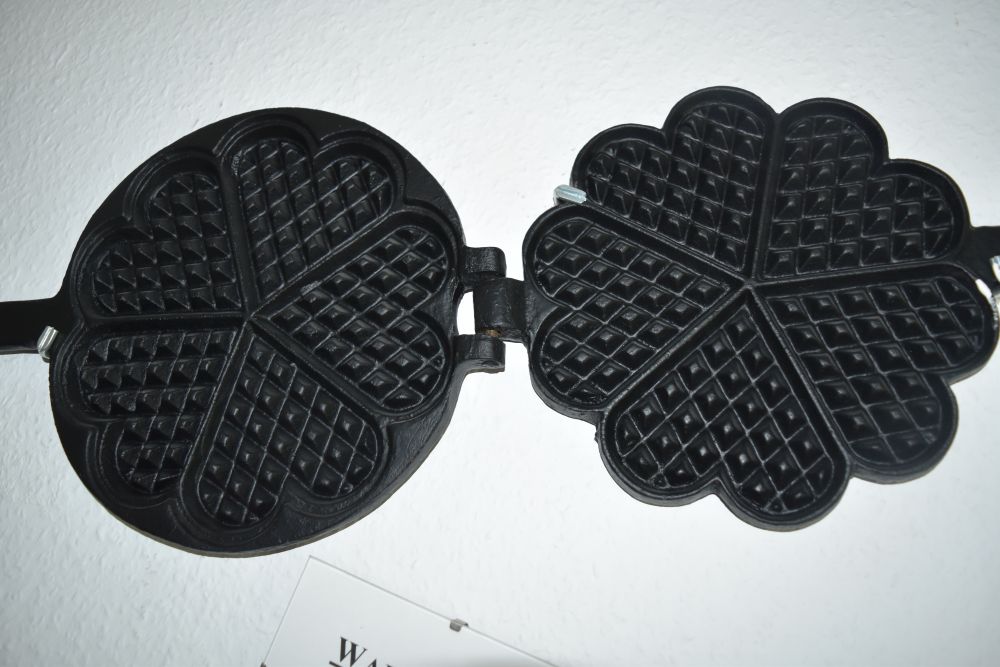
… or waffle irons…

dsc_0037-small

… without thinking of the work that went into extracting the iron from the mountains and from the stones.

In the 18th century, industrialization starts. The family Gienanth becomes the main factory owners in the valley. I am scared, when I read the directions. A work day lasts from seven to twelve and from one to six. Breaks are not allowed, only one half hour break for children in the morning and one in the afternoon.  And children older than nine are admitted to work in the factories and mines.

Mining in the Pfälzerwald halted in the beginning of the 20th century. Another industry became important, shoe making.

.

Shoe making – the shoe museum in Hauenstein

The Schuhmuseum (shoe museum) in Hauenstein lays out production technologies on one hand and shows shoes across time and countries on the other hand.

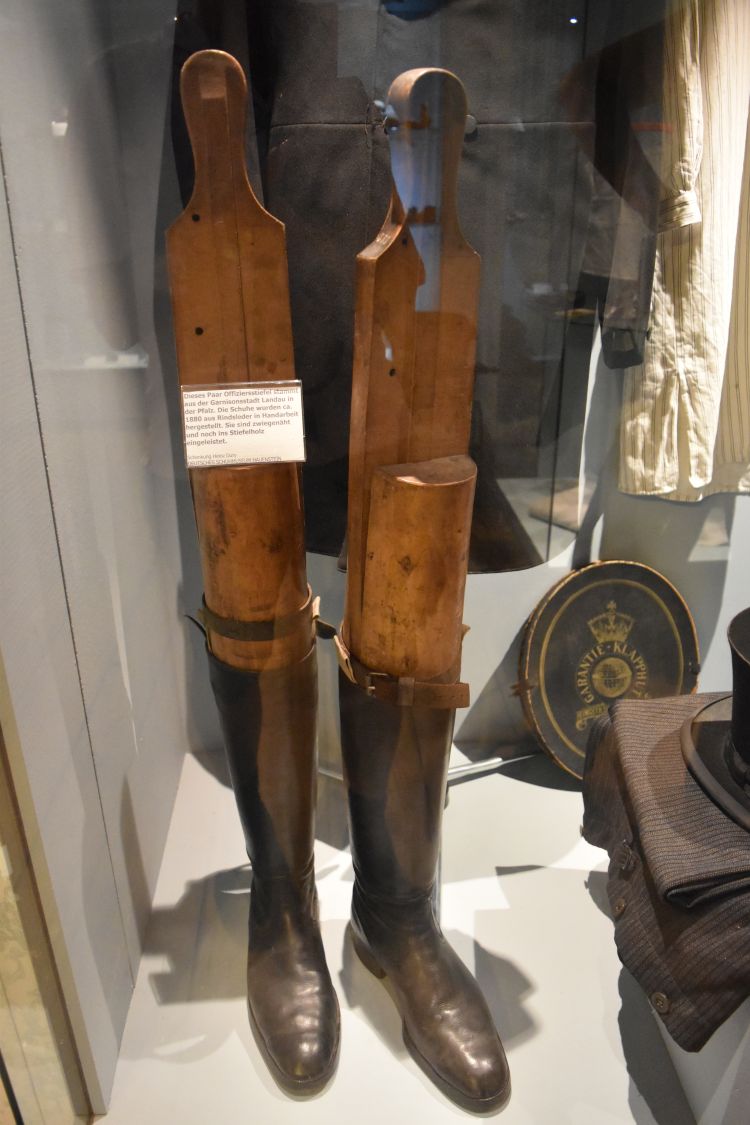
For the first time in my life I understand, what “Schuster bleib’ bei Deinen Leisten” (“cobbler stick to your last”) means: The cobblers used the wooden models or last of the feet of their clients to design the shoes for them.  The museum  owns the wooden models of Charles de Gaule and Helmut Kohl – huge they are both. This is a last with the matching boots:

dsc_0051-small

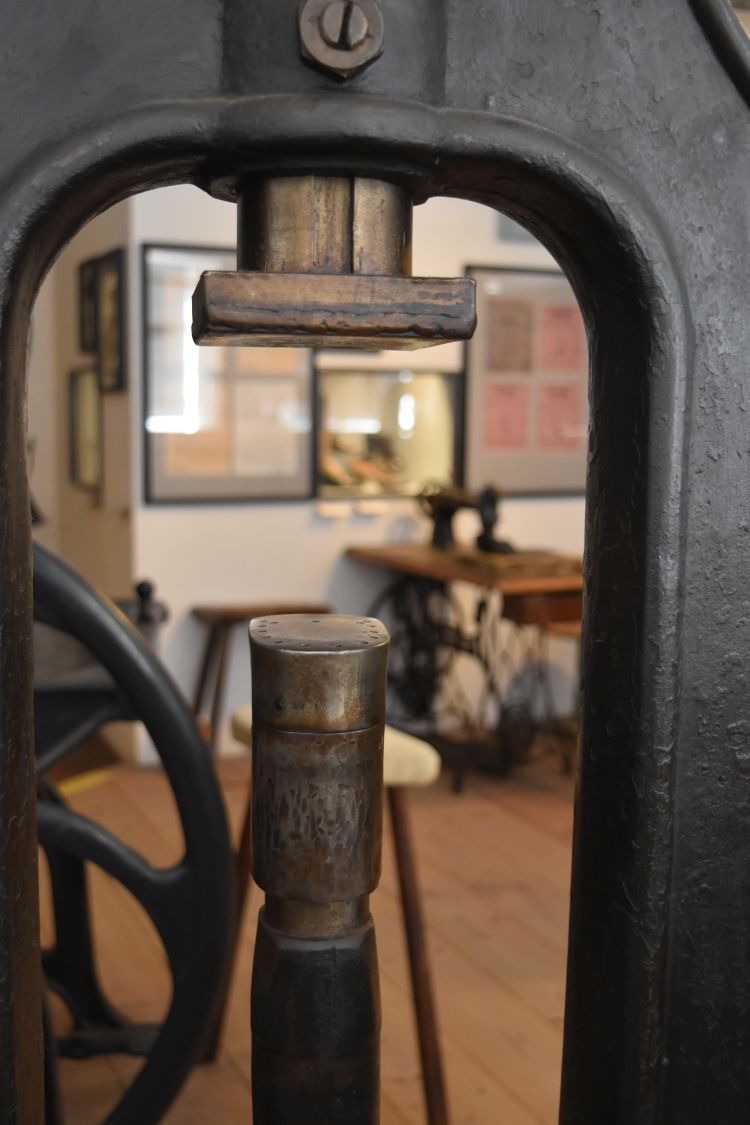
The museum shows all the machines needed for shoemaking such as to prepare the leather, cut it, sew it onto the shoes and add the heals.

dsc_0056-small

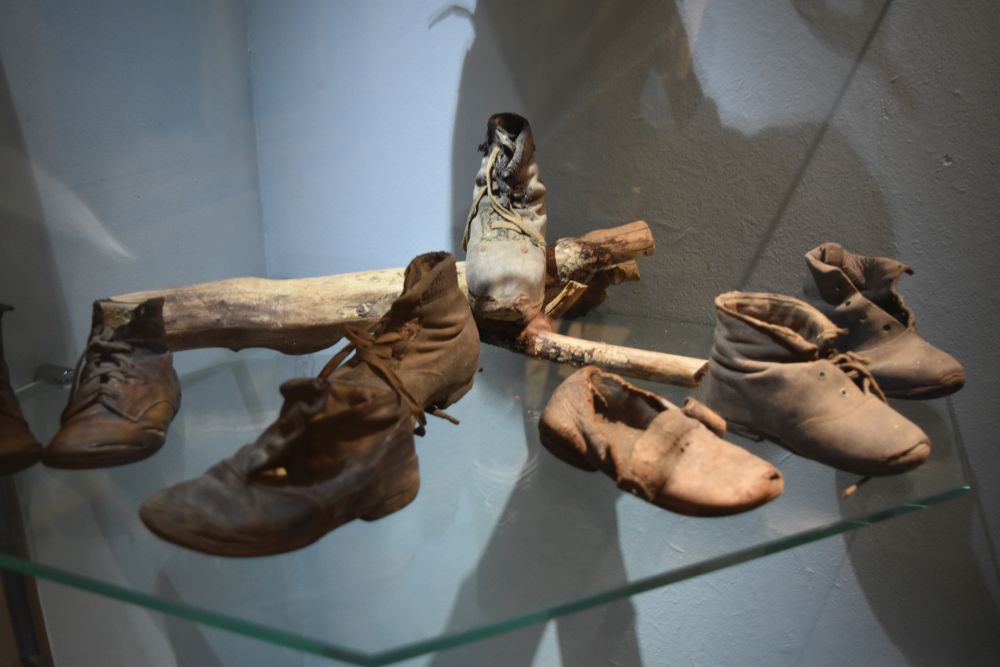
Shoes from all over the world are on display. These are childrens’ shoes – and they HAVE been used.

dsc_0052-small

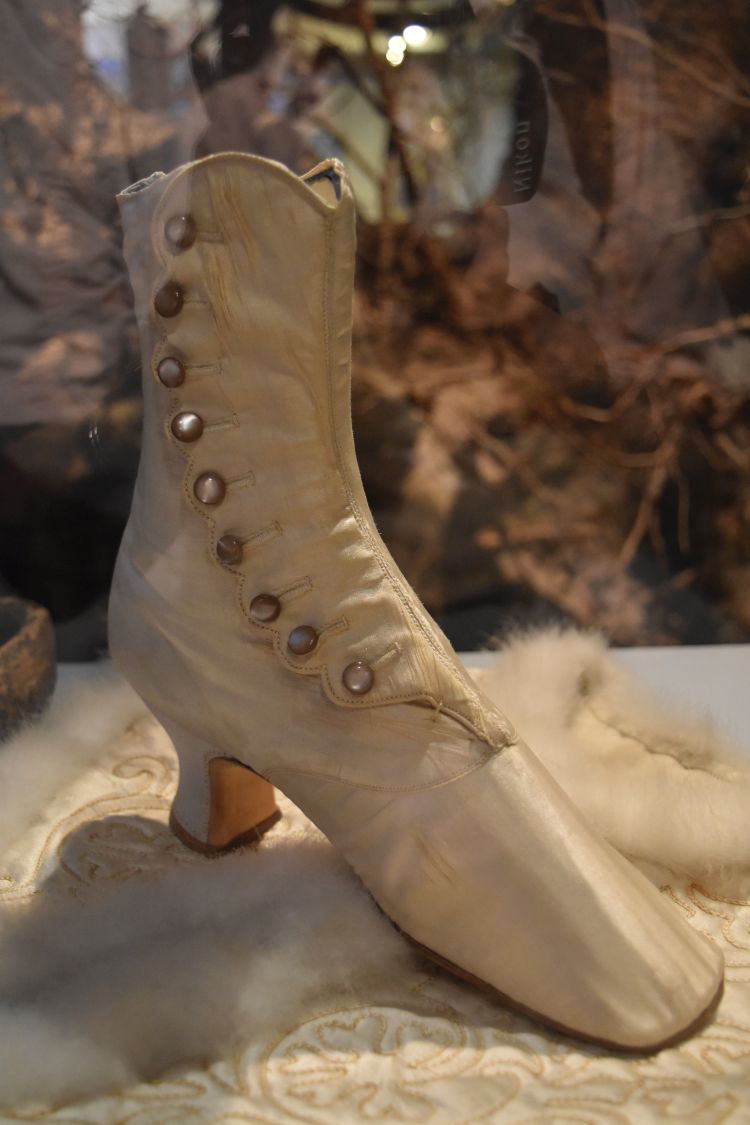
And this is an elegant white ladies’ boot.

dsc_0049-small

.

Die Kleine Blume” (“The Small Flower”) in Erfweiler – a welcoming hotel

We continue to Dahn in the Pfälzer Wald, where we will find bizarre sandrock formations, fortifications on top of some of these rocks, and hiking opportunities. We stop in the hotel “Die Kleine Blume” Erfweiler where we find a comfortable bed, a small swimming pool, and a great dinner with fresh trout from the Dahn region accompanied by a Grauburgunder Meerspinne from Gimmeldingen. We book two nights and plan a walk in the hills, forests and rocks around Erfweiler for tomorrow.


Germany – to Speyer and the Pfalz: “Umleitungen” and wine

From Eberbach on the Neckar, we continue to Speyer and the German Wine Route in the Pfalz.

.

Meeting our  friends from Russia near their “Fewo” in Speyer

This is our third day in Germany. We have arranged to meet my Russian teacher and her husband to take them around the German Wine Route in Pfalz (Palatine).

Our Russian friends have booked a Fewo in the city center of Speyer. Ursula laughs: “You do not know, what “Fewo” means? This is easy, it is a “Ferienwohnung” or “holiday apartment”!” – Yes, right your are… “Fewo” stands for “Ferienwohnung”. Germans are great at inventing abbreviations.

On the map, it looks easy to find this “Fewo”, but then we get blocked by road constructions and dead end streets. Uff. Finally our friends hop into our Swiss car.

.

The dome of Speyer – I was here fifty years ago – I am again impressed

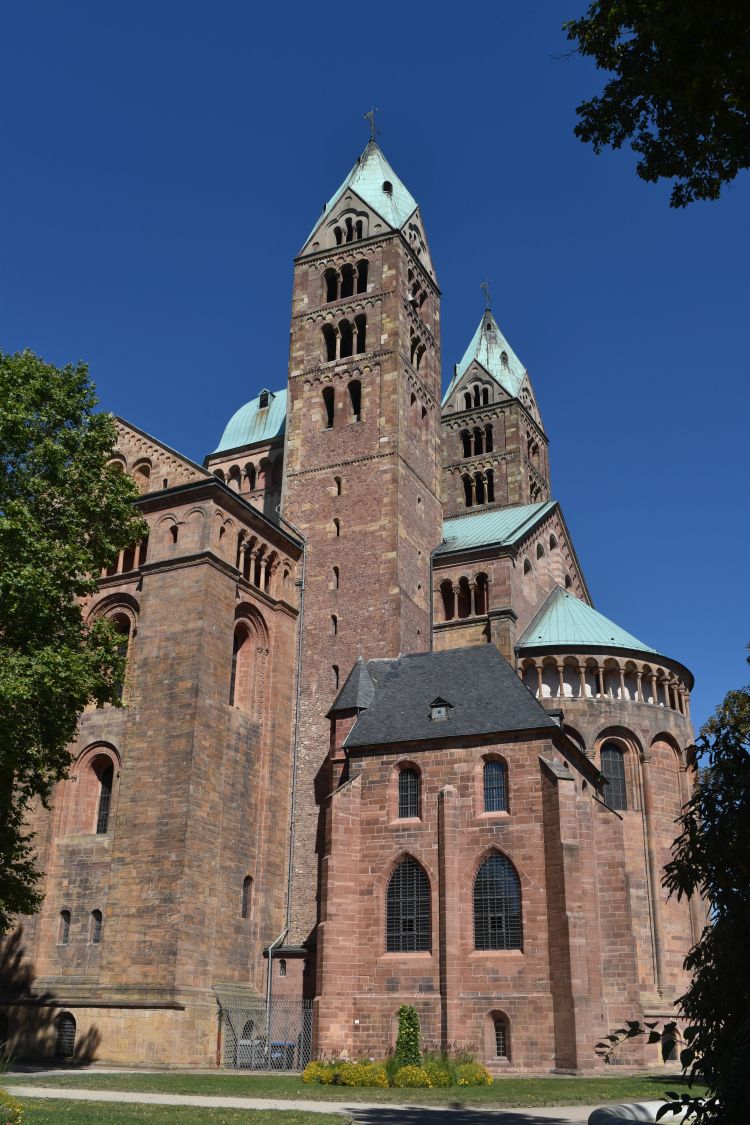
We visit the dome of Speyer… these Romanesque twin towers can be seen from far.

dsc_0501-small

I was here fifty years ago with my mum. I remember having suffered from a fierce headache on that day. The dome healed my headache. Again now, I am impressed by the sober and harmonic architecture. I learn that at this place the Celts had already built a sanctuary and the Romans build a Christian church around 360 A.D. The current dome goes back to the 11th century. It served as a model for other Romanesque churches in the Alsace and in Germany. Over the course of the centuries the dome has been amplified, changed, destroyed, rebuilt and renovated. In the middle of the 20th century, its old Romasque structure has been restored (Source: “Der Kaiserdom zu Speyer”, Jaeger Druck, 1978).

This is the central nave – grand and calming atmosphere – cool on a hot day.

dsc_0506-small

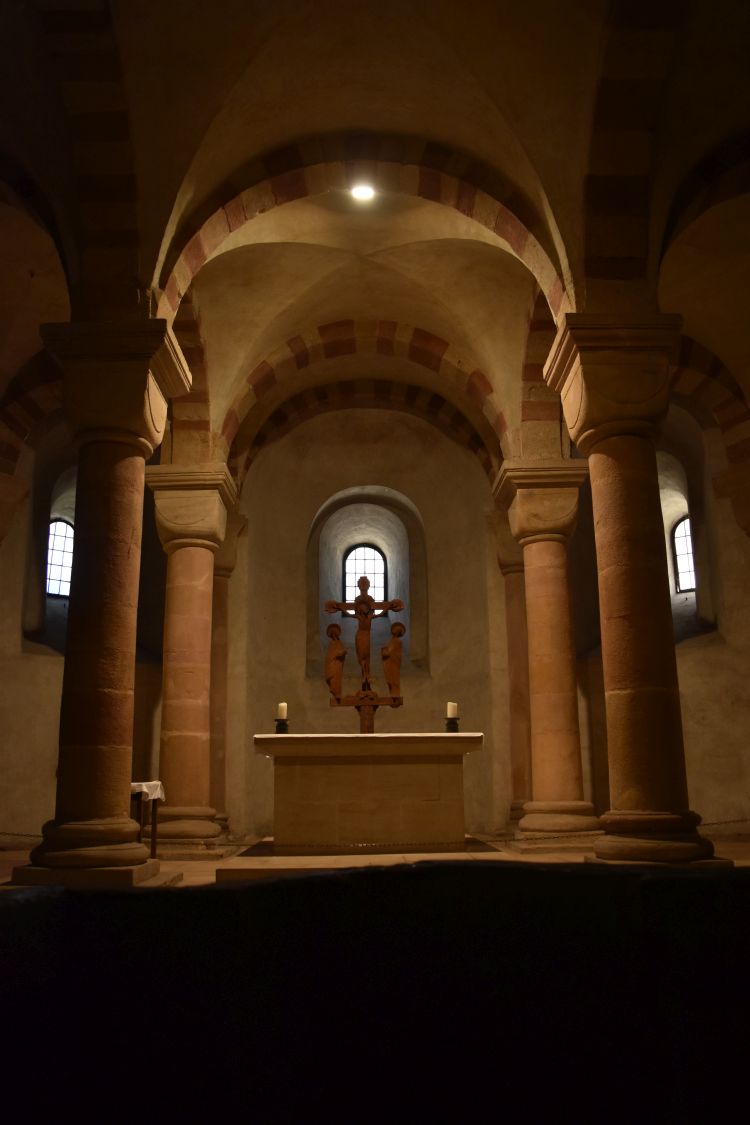
The crypta with its columns and arcs remind me a bit of the mosque in Cordoba…

dsc_0513-small

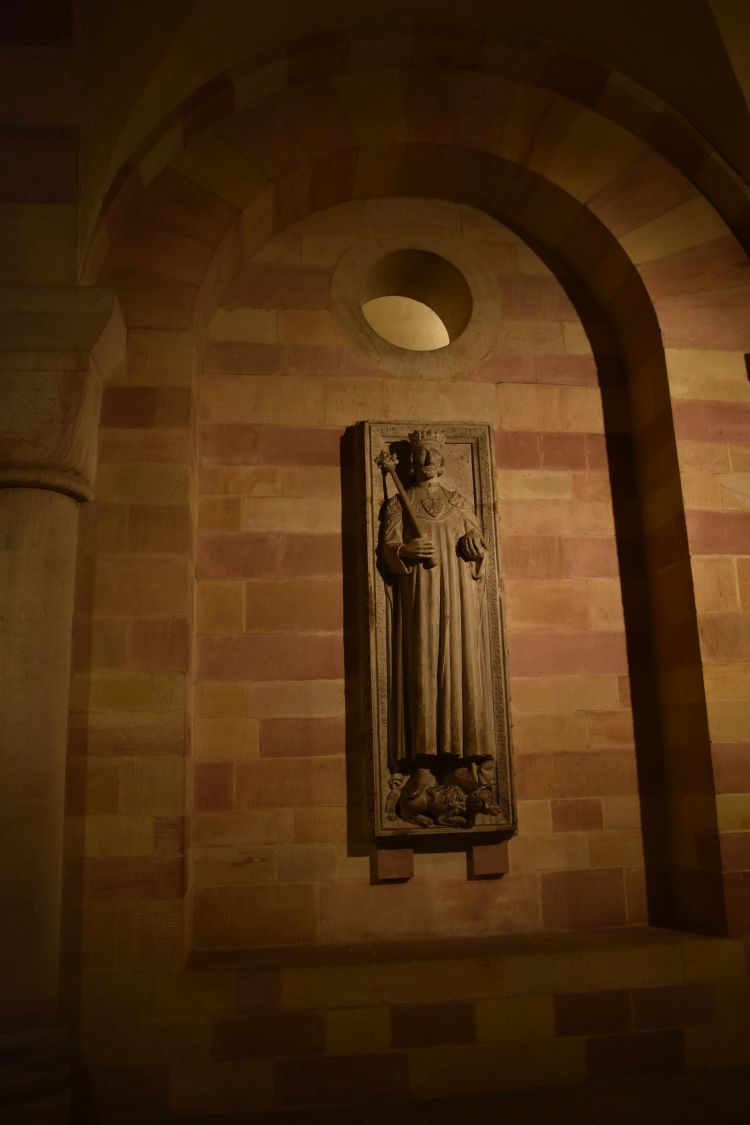
We say hell0 to Rudolf von Habsburg (he became king of Germany in 1271, when besieging Basel). I notice the aquiline nose and the strong jaws of the Habsburgians.

dsc_0511-small

I would like to stop the clock and stay in this church… but time cannot be stopped.

.

The German Wine Route – sooo many road blocks… what are you doing to the tourists?

Our Russian friends want to see Neustadt, Maikammer and St. Martin. They are our guests and hence their wish is our command. What an adventure! The German Wine Route is lined with road blocks… we keep on landing in front of stop signs and barriers… interestingly without any indication of alternative routes. We try again and again – one route after the next – always the same result – stop and a barrier, and that’s it. With and without GPS. Our Russian friends learn the word “Umleitung” (deviation or in Russian “объезд”). It takes us quite some time to get to Neustadt and to Maikammer. Finally we arrive, taste some wine, and our Russian friends buy some bottles to take back home. August Ziegler was a nice wine grower in Maikammer.

dsc_0518-small

We have dinner in Kallstadt and then take our friends back to Speyer. Before going to sleep in the Kallstädter Hof, I relax with a glass of Riesling from the vineyard Saumagen.

.

A hot and sunny day in Kallstadt and around – we walk through the vineyards and later visit two selected wine growers

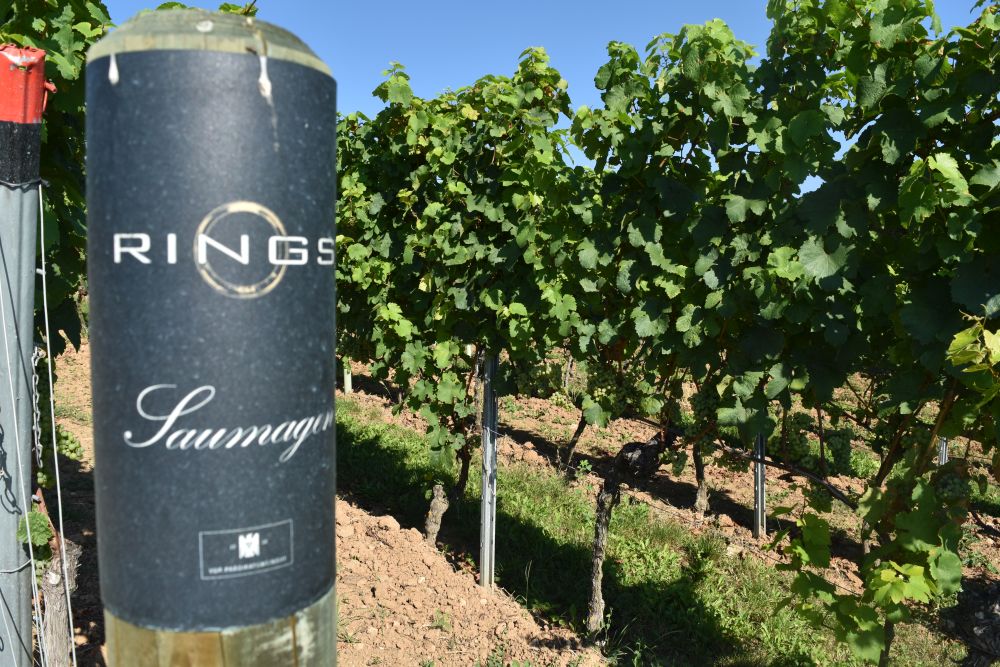
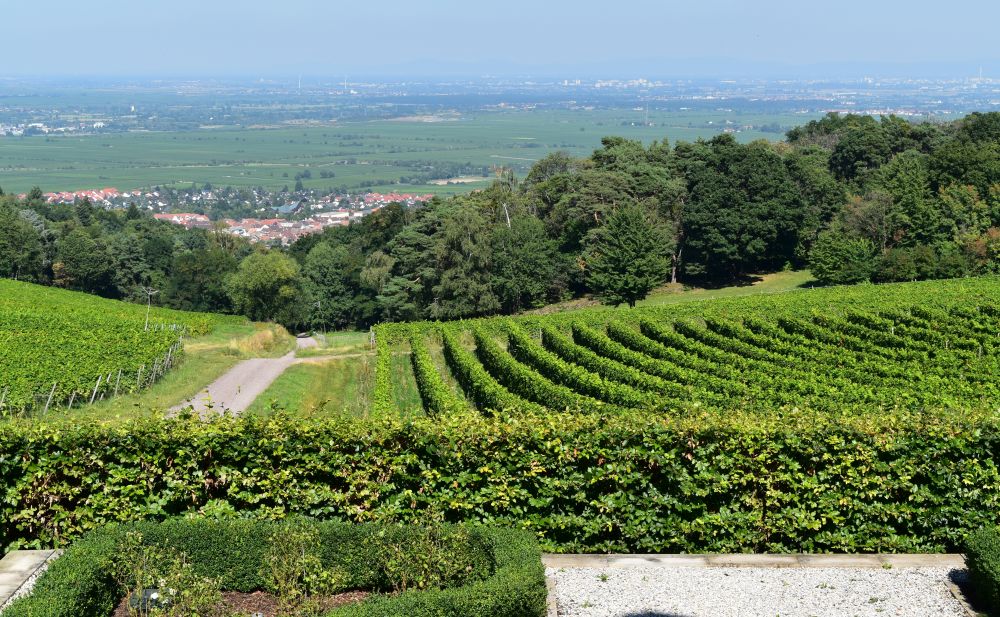
On our fourth day in Germany we explore the area around Kallstadt that is located on the northern part of the German Wine Route. We follow the Riesling path and walk through the vineyards “Saumagen” and “Annaberg”.

dsc_0540-small

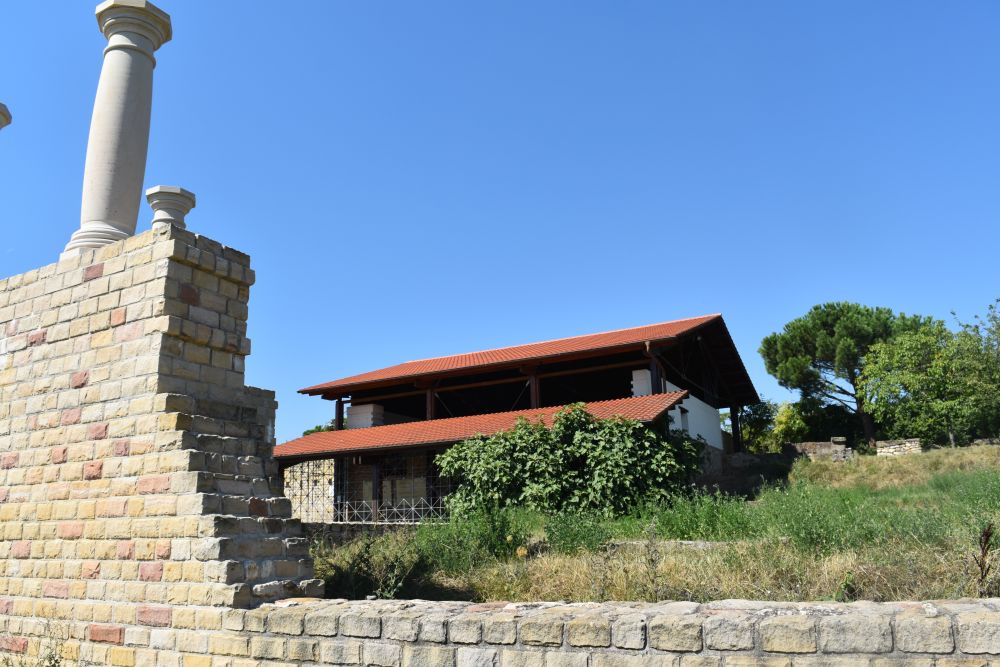
It IS hot, this must be good for the grapes. The Romans had brought the tradition of wine growing to the Pfalz, as the ruins and the reconstruction of this rustic Roman villa shows.

dsc_0002-small

We come across one of the vineyards of the Brothers Rings living in Freinsheim – I later buy three bottles of Riesling from the vineyards Nussriegel and Steinacker.

dsc_0528-small

We also visit the highest vineyard in the Pfalz. We are welcomed by a dog, then by the wife of the house.

dsc_0013-small

In the kitchen we meet a friend of my uncle Gerhard and share a glass of wine with the owners. The friend of my uncle says: “He has taught me so much about wine, and please give my regards to the Kallstädter Hof.” The world is small.  I buy a bottle of Riesling Basalt and a bottle of Riesling Buntsandstein (variegated sandstone).

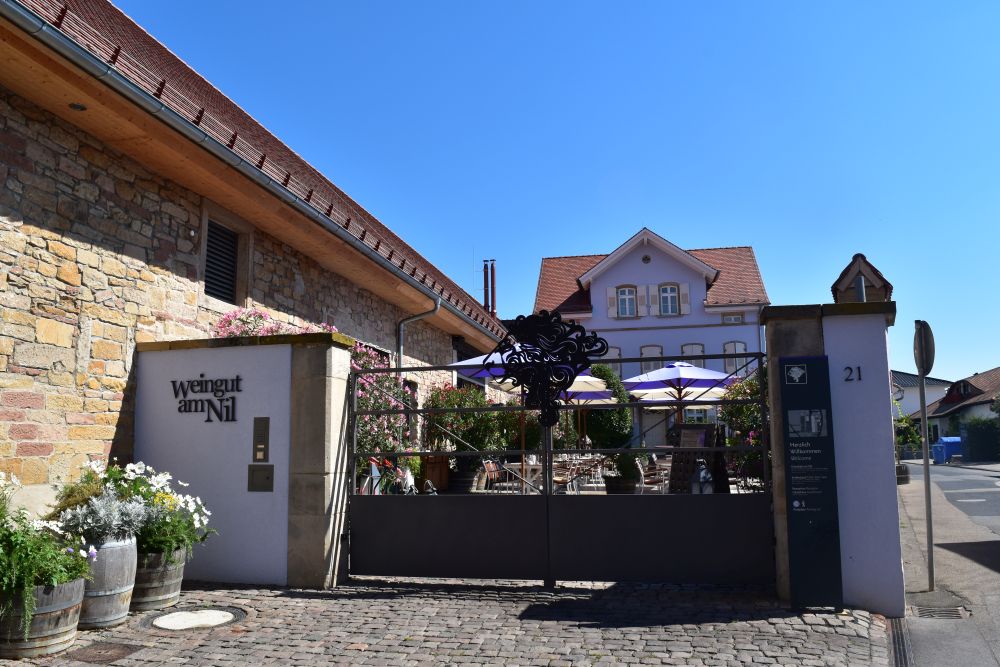
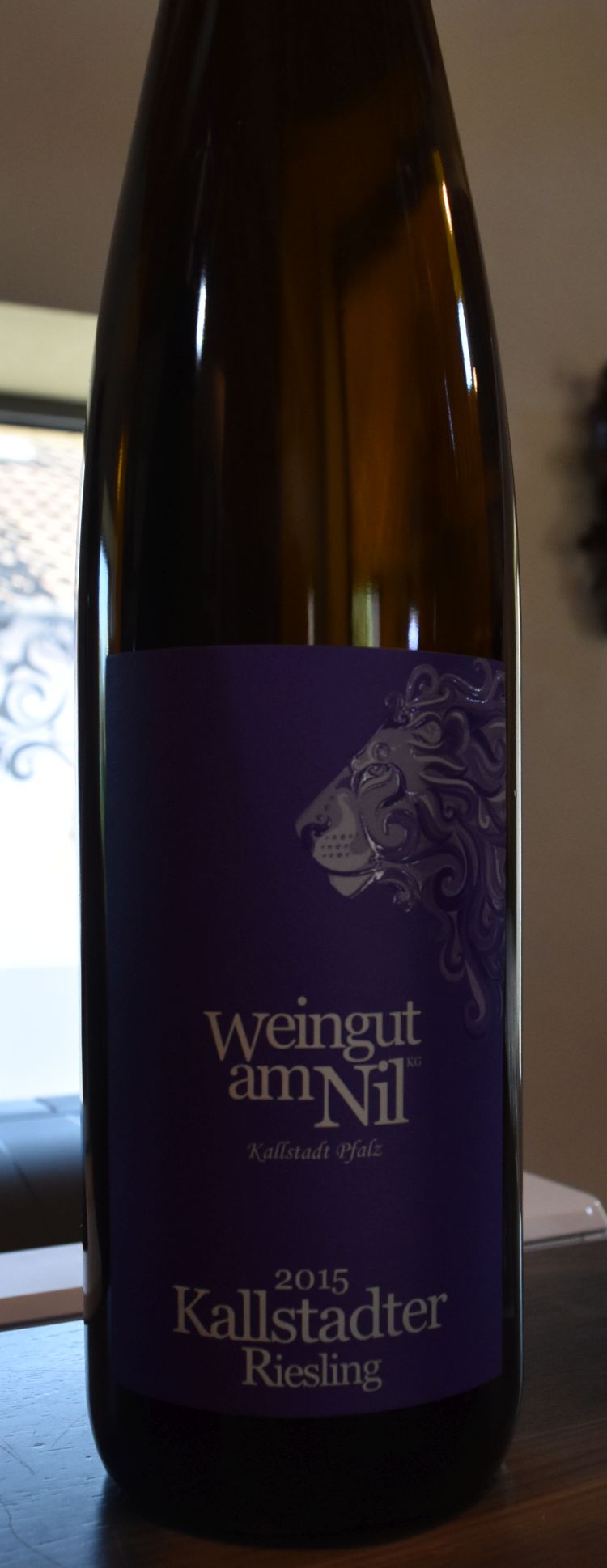
Yes, I have family relations in Kallstadt. For centuries my family has owned the winery “Eduard Schuster”. Due to lacking succession it has been sold and now became the Weingut am Nil. “Nil” is a tiny vineyard near Kallstadt. The new owners have given the winery a new purple design.

dsc_0548-small

In the courtyard there is a restaurant where we have an apéritif. The choice of wines has been streamlined and the labels match the purple appearance.

dsc_0021-small

On one hand I am sad, but on the other hand, I am happy to see the modern marketing style which indicates that the new owners care and add fresh blood to the traditional Schuster winery.

We have a great dinner in the courtyard of the Kallstädter Hof, and the next morning we continue to the Pfälzer Wald.

Germany: Along the Neckar from Rottenburg to Eberbach

We drive north always following the Neckar… this is the second day of our sunny end summer tour through Germany.

.

Tübingen? An old university town since 1377? Let us stop  here…

Tübingen? It has one of the oldest universities in Europe – founded in 1377. From the Königsparking we climb to the university hospital area to get this overview of the old town with the castle.

dsc_0390-small

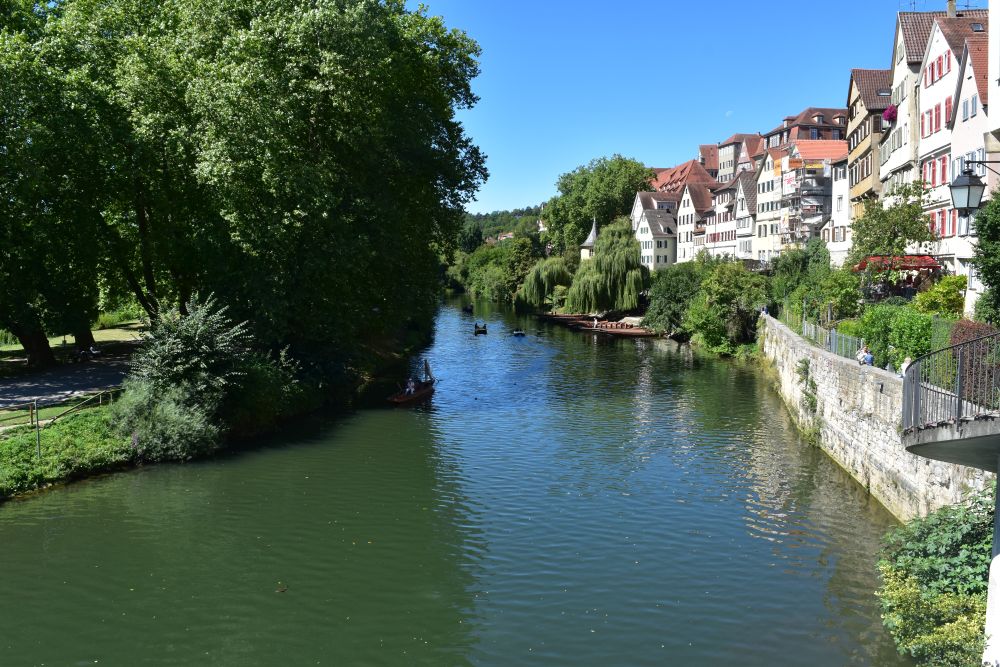
The old town and the castle are located between the former defense ditch and the Neckar. This is the Neckar side.

dsc_0409-small

The city is tidy and well kept with half-timbered houses.

dsc_0404-small

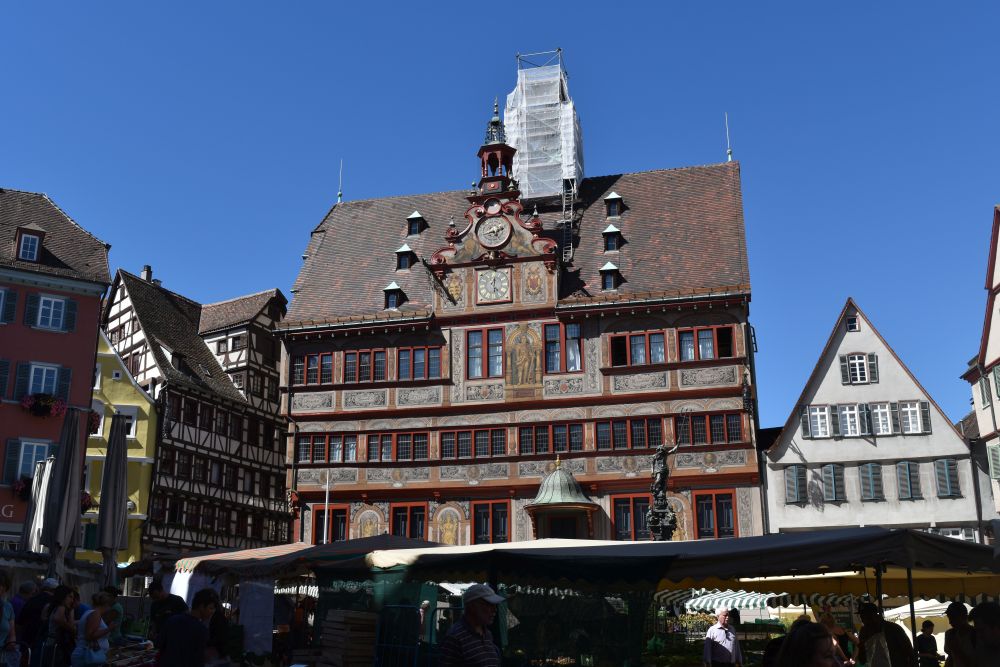
The market square is busy. The painted townhall shows that this is a proud town.

dsc_0402-small

The organ is played in the gothic church. We stop and listen.

dsc_0406-small

We are glad to see another of those German towns that have been preserved during the Second World War. Tübingen has a history of resistance: A brave priest and a brave mayor withstood Hitler; both, unfortunately, were killed just shortly before the war ended.

.

Heilbronn – it was also one of these gorgeous half-timbered towns, but – sorely suffered during the war

Heilbronn has suffered from bombings in the Second World War. Some gems have been rebuilt. This is beautiful townhall with its astronomical clock.

dsc_0415-small

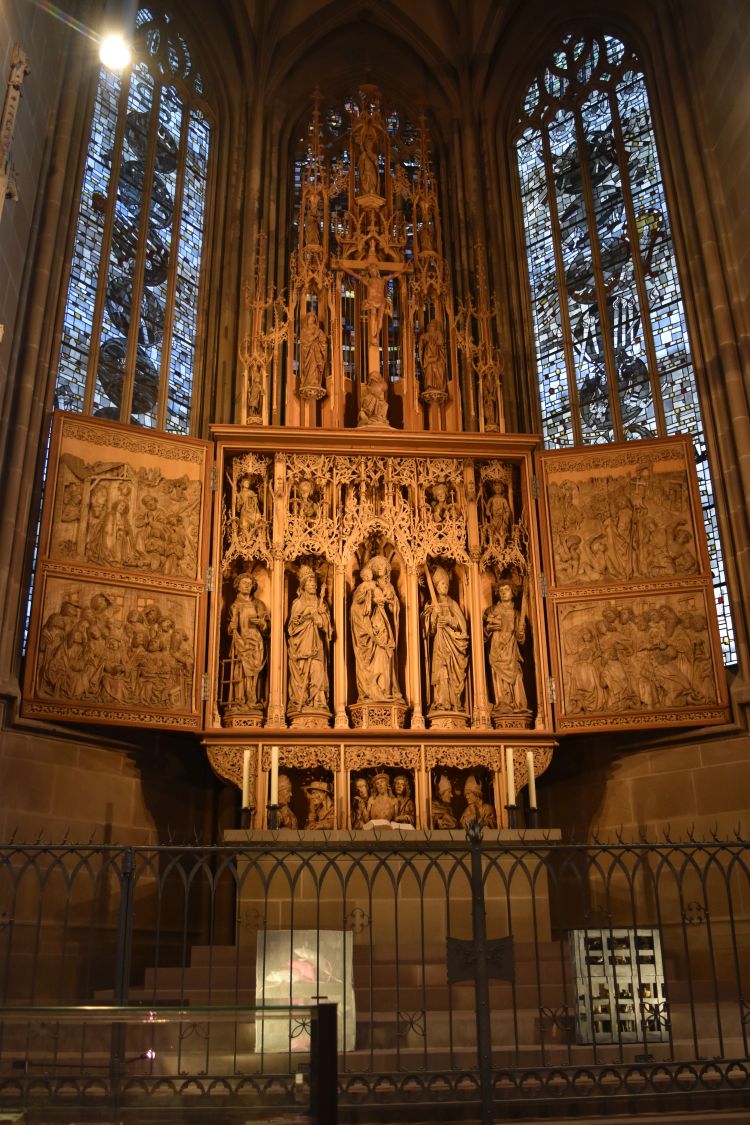
Also the gothic Kilian church has been reconstructed. I particularly like this wood carved altar from the beginning of the 15th century, with Maria in the center and Kilian to her right. I admire that they saved it during the war.

dsc_0418-small

These remains of three sculptures show, how the Kilian church has been decorated inside, before having been attacked in that war that should have never happened. The remains are beautifully arranged, but being deprived of legs and arms they make me shiver as well.

dsc_0419-small

We continue north following the Neckar that works his way north through steep vineyards. I had not been aware of wine growing here and may return for that.

.

Bad Wimpfen, the largest Kaiserpfalz around 1200

Bad Wimpfen is another gorgeous small town with well-kept half-timbered houses that give shade from the hot end summer sun.

dsc_0427-small

Bad Wimpfen is located on top of a hill. This is the view of the Neckar and the lower town of Wimpfen with the church St. Peter, another gem that we visited later.

dsc_0436-small

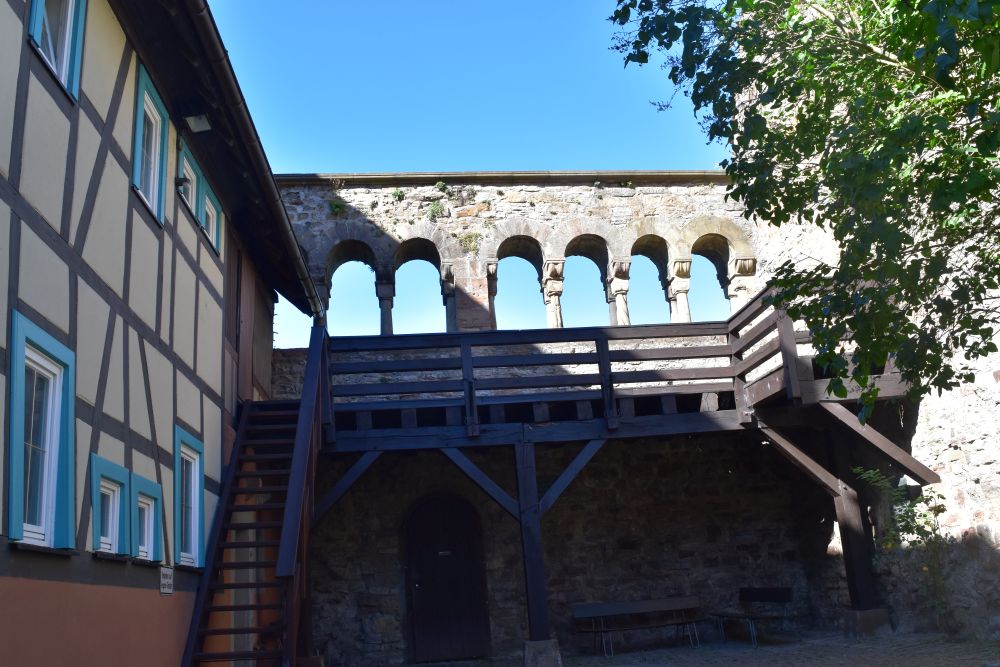
Bad Wimpfen was an imperial palace (Kaiserpfalz) of the dynasty of the Staufen  around 1200 (well known are Barbarossa and Friedrich II). These Romanesque arcades remind of those days

dsc_0437-small

… and also this small chapel.

dsc_0445-small

The pretty dog is waiting for his master that is just approaching the house: “Maybe he has one of those delicious German sausages for me?”

dsc_0451-small

We visit the church in lower Wimpfen, called “Stiftkirche Sankt Peter”.  It has been built in early gothic style in the 14th century. The monastery was dissolved in 1803. Now the Maltese run it as a guest house and as a center for religious exercises (“St. Peter, Bad Wimpfen im Tal”, Schnell+Steiner, 2011).

dsc_0459-small

It is famous for its cloister that we find closed now. I take with me these thoughts.

dsc_0460-small

“Wer nach aussen schaut, träumt, wer nach innen blickt, erwacht” meaning “who looks outside, dreams, who looks inside, awakes.” I found this thought also in the internet: “When we look inside our heart, we discover what we are, who we are, and what we truly believe”. I agree, looking inside is important (perhaps sometimes forgotten), but having dreams, I believe, is also an important ingredient of life.

.

Along the Neckar to Eberbach

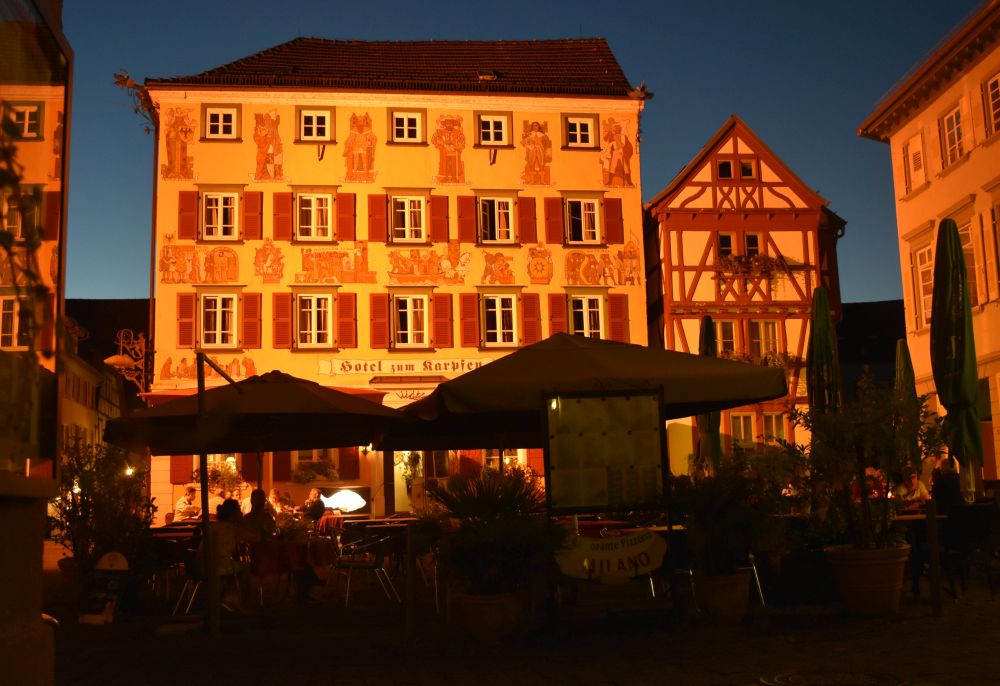
Along the Neckar who winds through the Odenwald, we continue to drive north. We love the soft landscape. We reach Eberbach and settle under the roof of the cosy hotel Karpfen. After a great dinner with fish and a local Pinot Gris we stroll through another gem town with half-timbered houses. This is our hotel in the night (a large rubbish bin served as my tripod).

dsc_0468-small

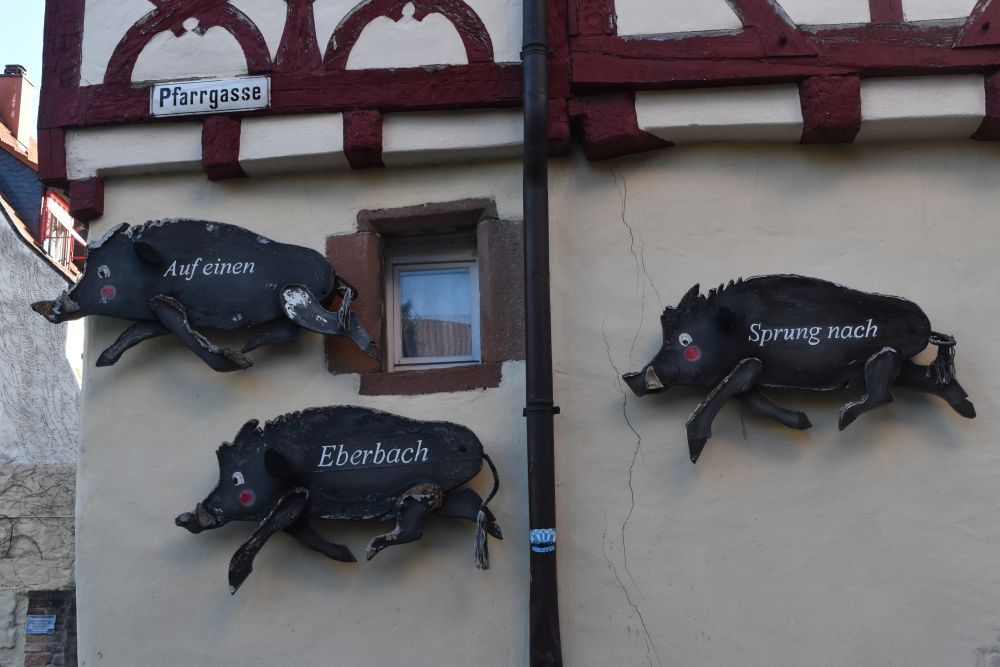
In the early morning we stroll through the town again. We enyoy the boar that gives its name to Eberbach (literally “boar creek”)

dsc_0496-small

“Auf einen Sprung nach Eberbach” means “for a quick visit/”leap” to Eberbach”, Yes, we can recommend a stop over in the well preserved small town of Eberbach bordering the Neckar…

dsc_0488-small

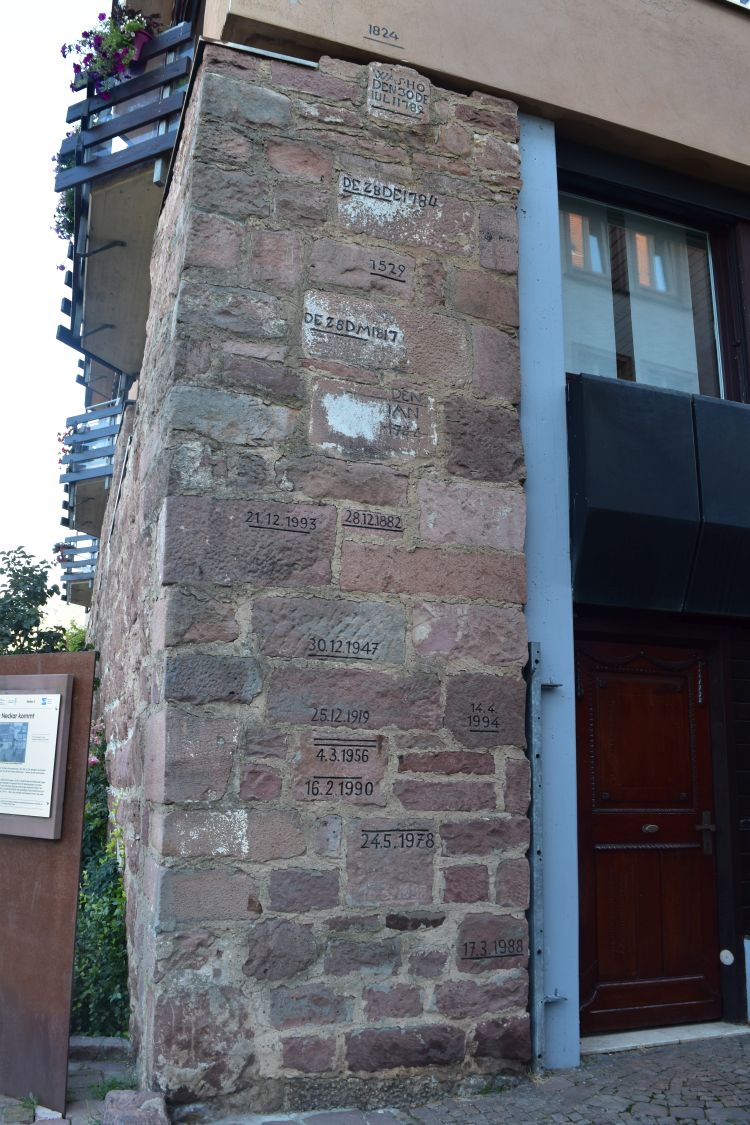
… that sometimes becomes dangerous, as these flood lines show.

dsc_0487-small

Our next targets will be Speyer and the Pfalz.


On the road again – to Germany: St. Blasien and Rottenburg

There I am on the road again. It is end August 2016. With Ursula I travel to Germany: Neckar, Pfalz, Nahe, Mosel, Mittelrhein and Alsace. No fixed plans – we will stop, when we like it. The forecast is “sunshine, sunshine and sunshine”. Great prospect.

.

Our first picnic not far from St. Blasien – great view of the Alps

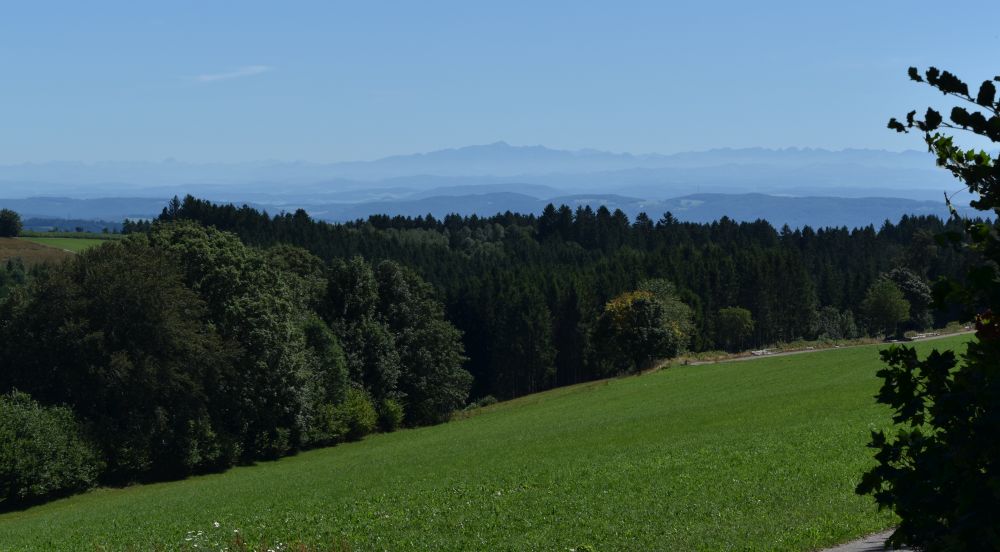
We have lunch on a bench on our way to St. Blasien in the Black Forest. The air has been cleaned by rain two days ago. We see the Alps from the Appenzell to the Bernese Oberland – somewhat in the haze.

dsc_0230-small

.

St. Blasien – the neo classic dome with its huge cupola

St. Blasien is a surprise in the middle of the Black Forest, far away from any larger town: They have this majestic dome with one of the largest cupolas in Europe.

dsc_0267-small

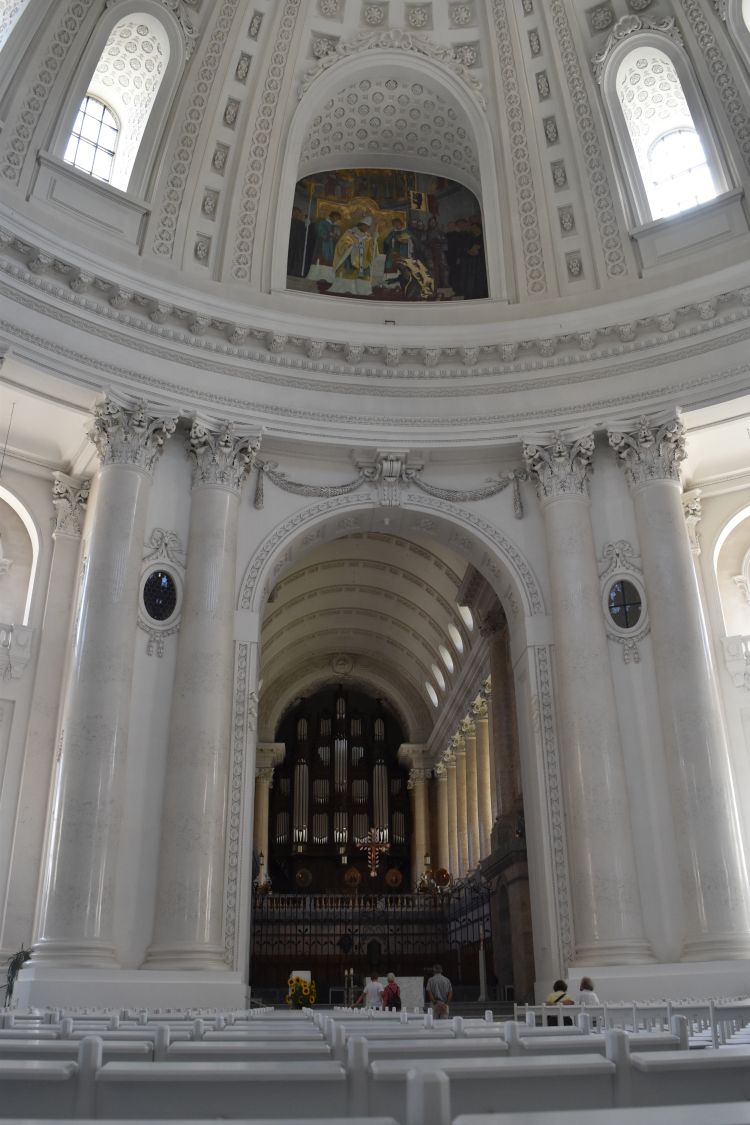
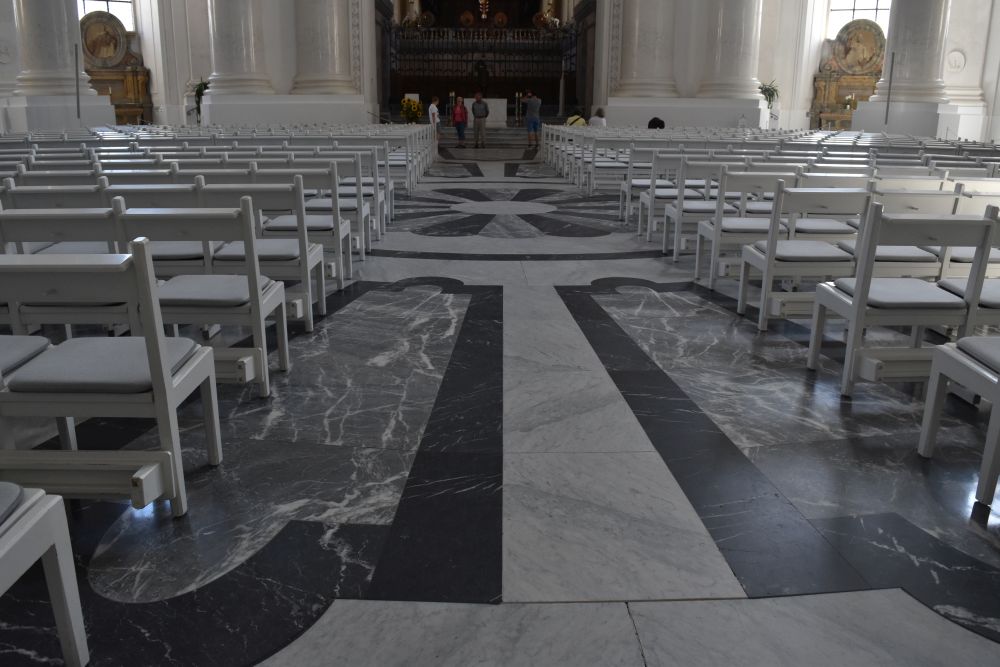
Inside it has been painted in white. The height and the diameter are 36m.

dsc_0242-small

Maria entering heaven is the nouveau art painting that decorates the cupola…

dsc_0239-small

… and a bright marble mosaic completes the cool and tidy atmosphere.

dsc_0243-small

Why do we find such a large dome in the middle of “nowhere” in the Black Forest? Already in the 9th century, monks lived in this valley. In the 11th century there was a monastery here that took over the Benedictine rules. It became a Habsburgian-Austrian monastery later. It flourished in the 18th century and the abbots were promoted – they were now prince-bishops. They wanted a representative cathedral and had the dome constructed in early classical style; the cupola was the third-largest in Europe. Napoleon dissolved the monastery and gave St. Blasien to Germany. In 1933 the Jesuits bought the remains of the monastery and opened a school. In the late 20th century the dome was renovated (source: “Dom St. Blasien im Südschwarzwald”, Kunstverlag Josef Fink, 2012).

.

Donaueschingen – the sources of the Danube (Donau)

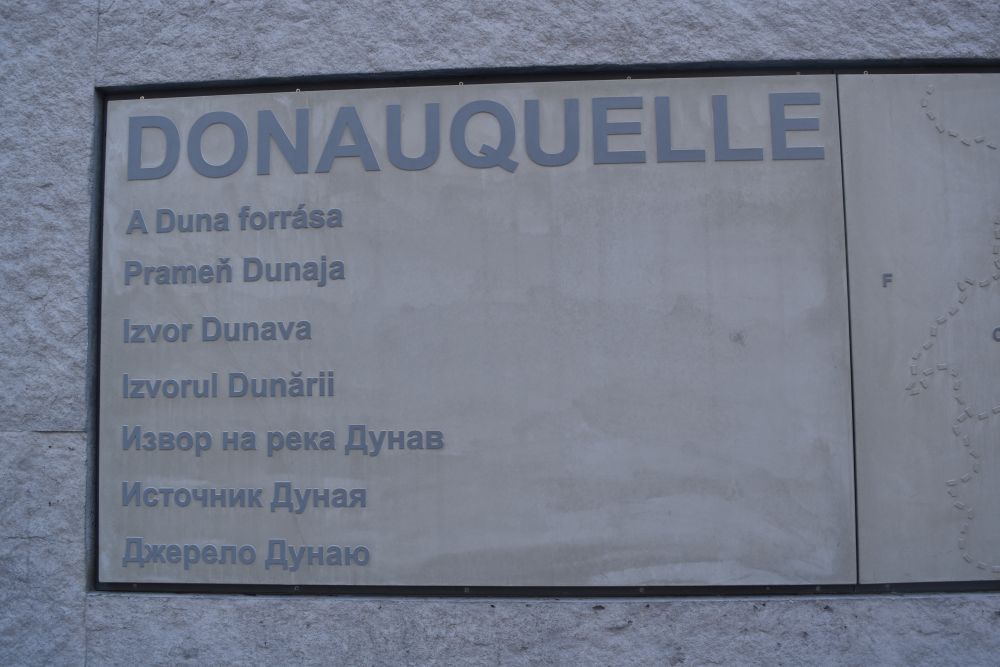
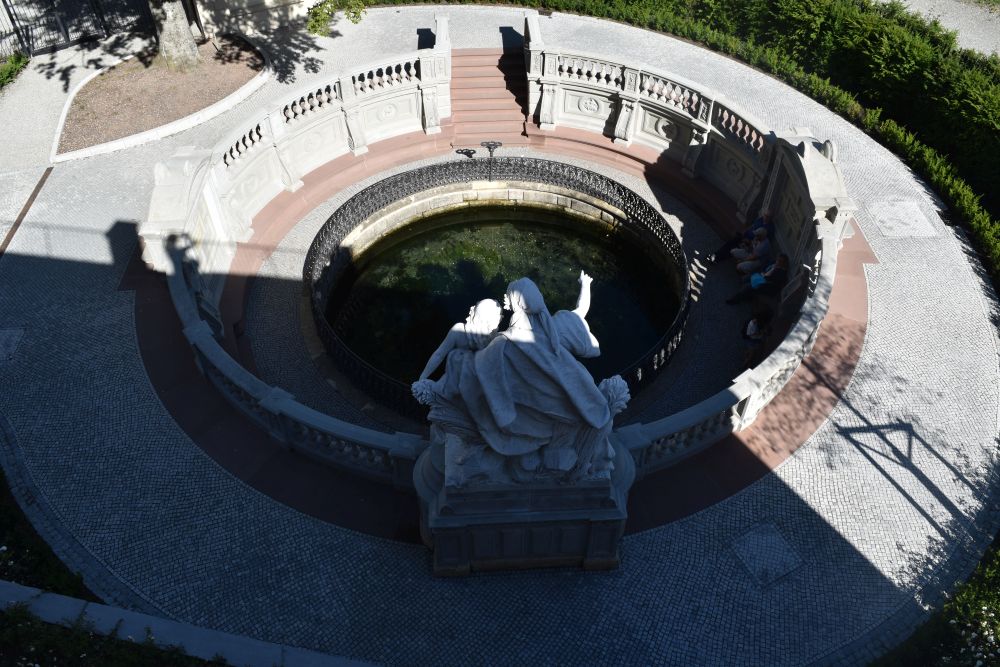
We continued our way to Donaueschingen that proudly says they own the source of the Danube (Donau).

dsc_0276-small

Well, they do not own the “real” source. The “real” source is in Furtwangen. The Breg originates here. It disappears and re-emerges from the ground in Donaueschingen meeting a second river, the Brigach. I remember that I stood at this second source of the Danube some fifty years ago, with my mum-geologist who taught me about karst formations and underground rivers.

dsc_0277-small

.

Along the Neckar to Rottenburg

Now we head north to find the Neckar that emerges near Schwenningen. We follow the still narrow river that winds through the hills topped by fortifications and beautiful old cities with timbered houses. We stop at one of these pretty cities, at Rottenburg. We find a room in the welcoming hotel St. Martin and have dinner near the fountain of the Austrian Landsknecht (like St. Blasien, this area belonged to Habsburg-Austria, before Napoleon aligned the possessions around 1800).

dsc_0285-small

Rottenburg has been the bishop town of Württemberg since 1831. The Bishop’s  palace is a beautiful modern building – I think it is about to fly to heaven.

dsc_0291-small

A bishop town has a dome… this is the dome St. Martin on the market square (St. Martin was called “church”, until there was a bishop, then its status was raised to “dome”).

dsc_0304-small

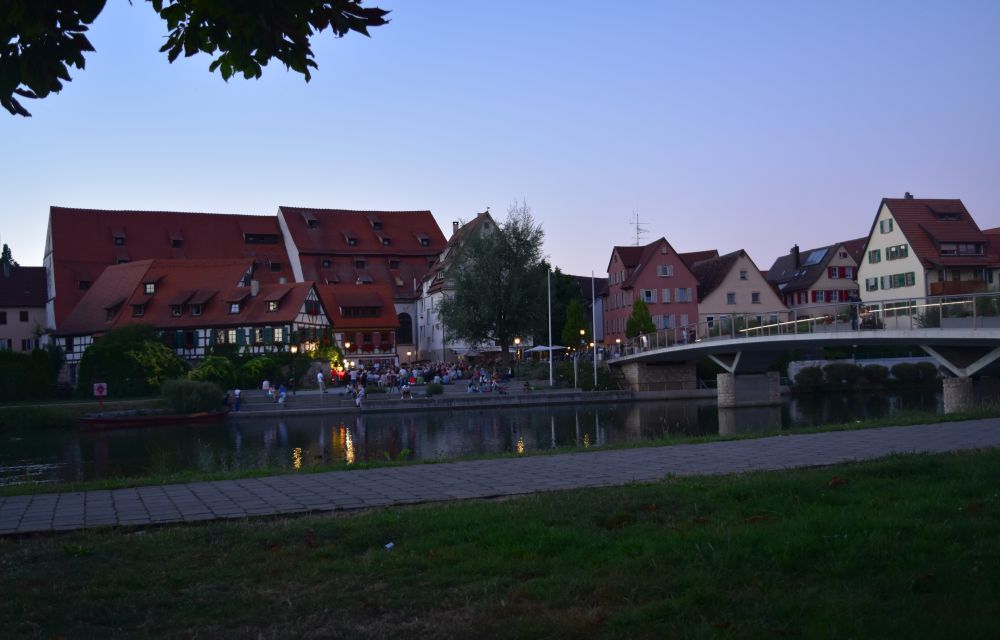
The water line of the Neckar with the weeping willows is romantic, also the ducks enjoy the evening.

dsc_0315-small

A poet reads her works at the border of the Neckar – the audience congregates around her under the lamps.

dsc_0323-small

In the morning we go for a short walk. We visit the dome St. Martin…

dsc_0350-small

… and enjoy the morning atmosphere along the Neckar.

dsc_0371-small

Then we drive north always following the Neckar…


Back to some business – mentoring a student at the verge of work life

Recently I have signed up with the alumni organisation of “my” university to participate in their mentoring program for students at the verge of work life. Mentoring – I have done that before and my former mentee is now a good friend of mine.

Let me reflect about what mentoring is and what an effective approach may look like.

.

What is mentoring?

In the Internet I found this definition of the Alberta Learning Information Service ALIS that resonates with me:

«Mentors are experienced, trusted advisors or counsellors who have successful careers and proven track records. Mentors are not usually paid for their services.

As a mentor, your role will be to:

  • make a commitment to support and encourage your mentee
  • encourage your mentee to develop careers that reflect their skills, potential and goals
  • offer wisdom, knowledge, experience, constructive criticism, connections and resources
  • focus on the overall career directions like advancement and training rather than on day-to-day concerns of your mentee
  • set an example for the level of professional conduct and success your mentee hopes to achieve»

In alignment with this definition and with my previous mentoring experience I understand that…

  • The mentor accompanies the overall career development of his mentee in a one to one setup independent of the current work place. He acts as a sparring partner bringing in his long year experience, with the target to help the mentee find a career path that matches his/her strengths and interests. The relationship is based on mutual trust and confidentiality. The time horizon is longer term and can be several years.
  • Mentoring is different from coaching. I understand that a coach accompanies an employee at his/her work place – to perform efficiently and effectively according to his potential.

.

How would I conceive our mentoring process to be effective?

To mentor a student at the verge of work life, I think of these steps for the process to be satisfactory and effective. 

for blogwhite

  • Basis: Initiative is with Mentee / Mentor is a responsive sparring partner
    From the mentee, I expect that he/she will drive the relationship, invite for meetings and/or ask for support, when he is ready or needs it. As a mentor, I will be the responsive (reachable) and  supportive sparring partner bringing in my experience and network. The mentee has to solve his “problem” and he can count on my mentor support. As a mentor, I cannot impose my ideas, I just give suggestions, hopefully good suggestions based on my experience.
  • Align mentor and mentee / revise relation: Trust and commitment
    As a first step, we, the mentor and the mentee will get to know one another, exchange about our motivations and backgrounds and find alignment. The target is to build trust. Trust is indispensable for our mentor/mentee relationship. Without trust it is not possible to proceed and achieve results. Based on trust, we make the commitment to start our mentor/mentee relationship. This relationship is not expected to be short term, and hence it is also necessary to revise it from time to time to verify trust and commitment still exist.
  • Identify mentee strengths/interests/personality: Profile
    As a second step, the mentee will identify his profile, with my mentor support. The profile consists out of his strengths (capabilities/talents/knowledge), his personality (e.g. more a researcher or an entrepreneur) and his interests (what activities turn me on). Useful structures to identify the profile are provided by Tim Clark, Alexander Osterwald and Yves Pingeur: “Business Model You“, Campus Verlag, Frankfurt am Main 2012). They call it “key resources”.
  • Find targets: Value propositions
    Based on the profile or key resources, the next step is to find the activities that are of value for potential customers and that allow my mentee to make a living (earn money) and perhaps harness more personal benefits (such as satisfaction from living his mission or from doing what he likes to do). Tim Clark et alii recommend to find the “value propositions” using their structured “business canvas“.
  • Sell and apply: CVs, job selection > job
    Based on the profile and targets identified, we can act and apply for jobs. The profile will be phrased out in CVs (for media such as LinkedIn and for the “paper” CV that  might need adaption for individual applications. As a mentor, I also think of using my network and of coaching the interview process (letter of motivation, what the interviewer may ask/expect or ideas on how to react when being rejected). 
  • Digest lessons: Updated profiles, value propositions and CVs
    The experience gained during job applications will help us to loop back and update the profile and value proposition and the CVs (in the media (such as LinkedIn) and in the paper CV. Then more applications may follow – or it is also an alternative to look for options to open a business.
  • Hand over to work life: Business mentor
    Once, a job is found, I will have to retreat. I suggest to find a business mentor for similar support in the new work life. Well, in case our mentor/mentee relation was one of trust all the way through, I might have found another friend that would perhaps come back and ask for ideas and support from time to time.


Basel and the basilisks – following the traces of Baschi Zischer

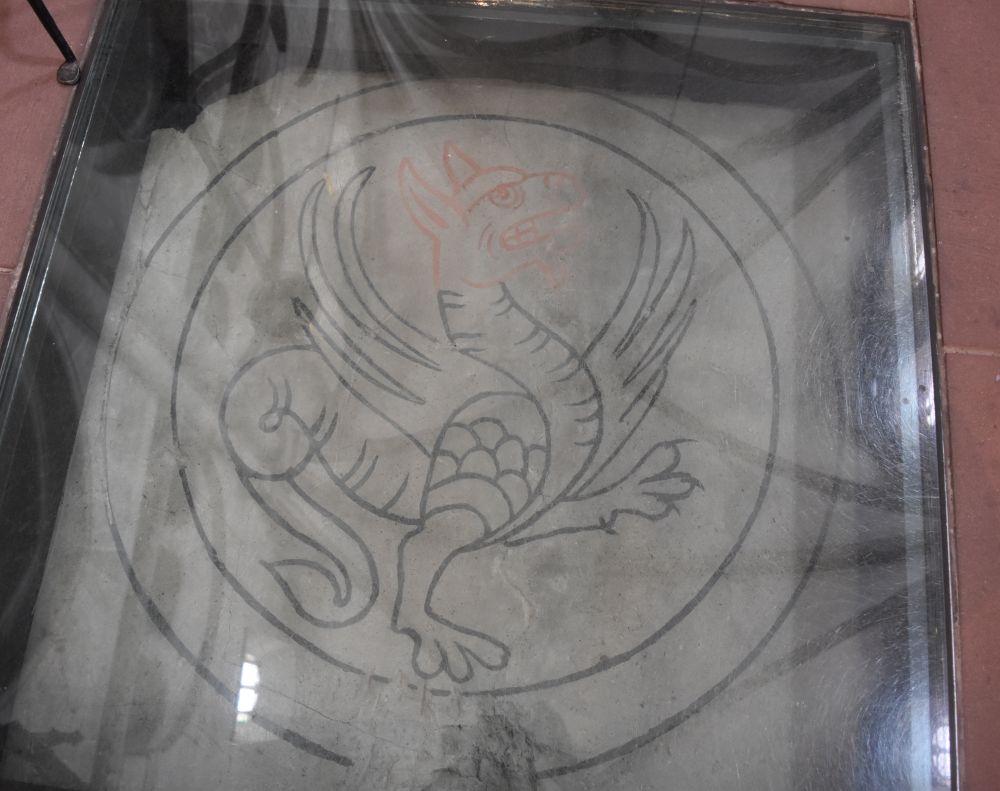
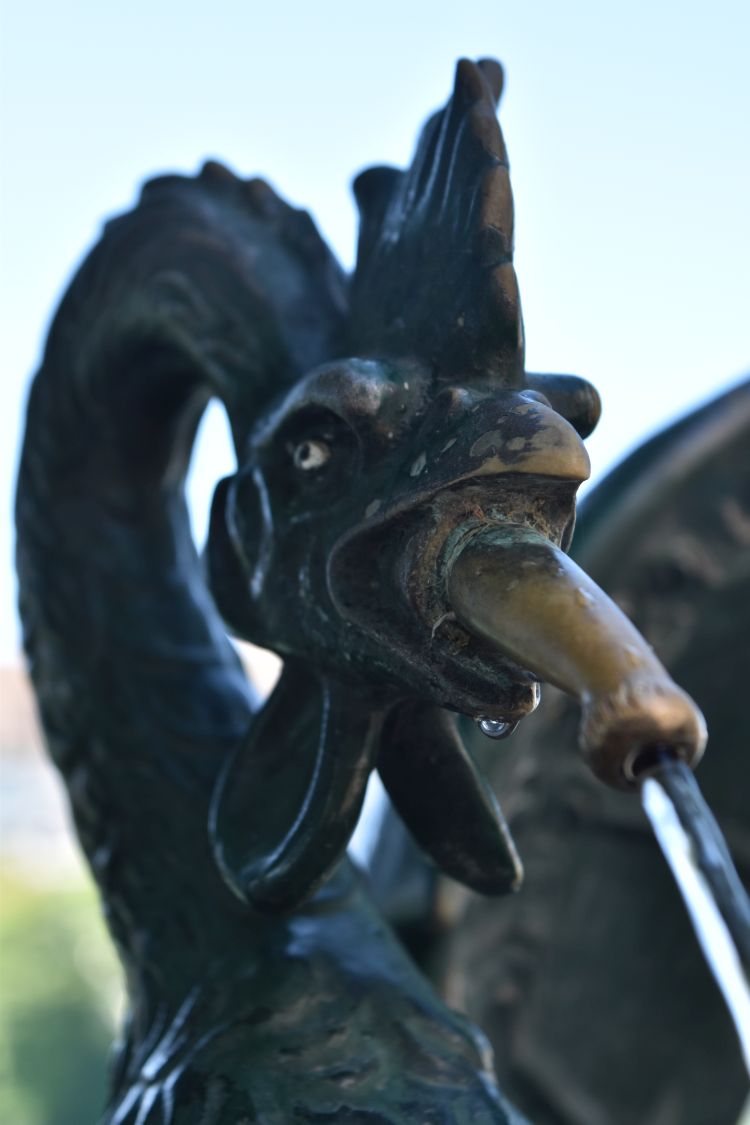
Basilisks have been known since ancient times, in Egypt, Greece and Rome. Konrad Gessner from Zurich writes about them in the 16th century.  They are legendary animals – a mixture between a coq and a snake – and they take on various forms. Sometimes they have the second name “sibilus” = “hissing” or in German “zischen”). Basilisks hatch out of eggs that have been laid by a coq and bred by a snake (well, there are also variations to this). On the 4th of August 1474 a coq laid an egg in Basel and was then killed. So dangerous – imagine, a basilisk could have emerged out of this egg. In a beautiful small book, Thomas Hofmeier describes the various forms of basilisks, their history and their presence, in particular in Basel (“Basels Ungeheuer, eine kleine Basiliskenkunde“, Berlin and Basel 2016).

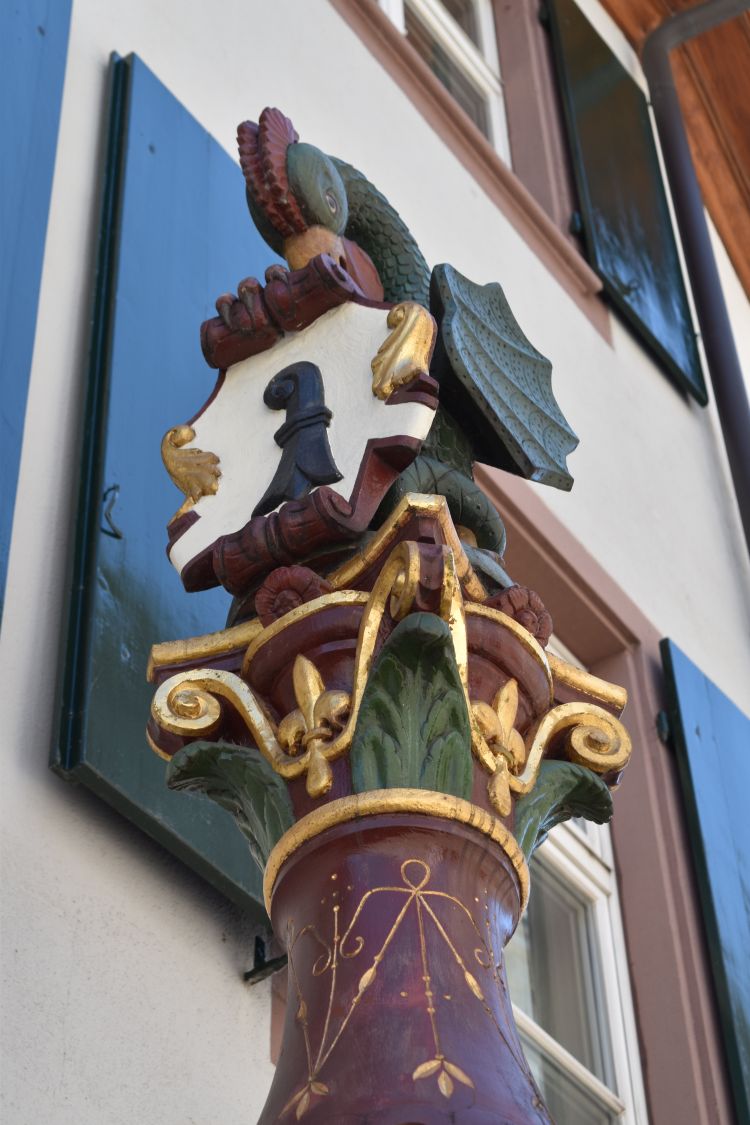
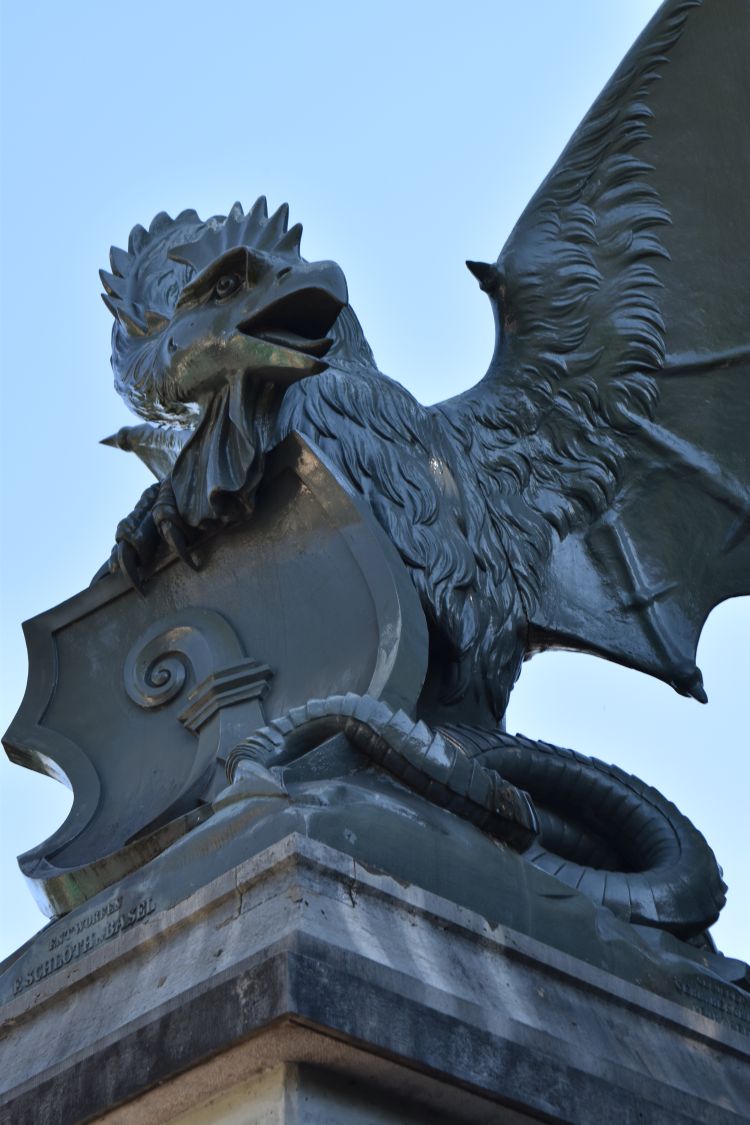
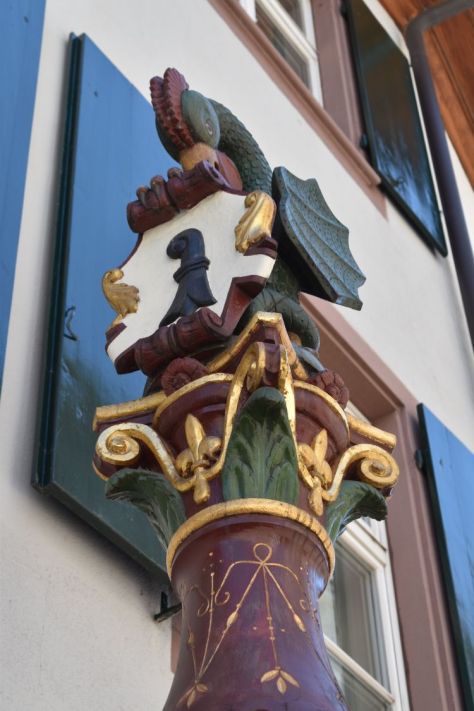
In the 15th century, Basel started to use the basilisk to hold their coat of arms, the “Baslerstab”, perhaps, because “Basel” sounds a bit like “Basilisk”. Basilisks do not only exist in Basel, but they are very important and omnipresent here. They sit on fountains (Augustinerbrunnen),…
DSC_0028 small

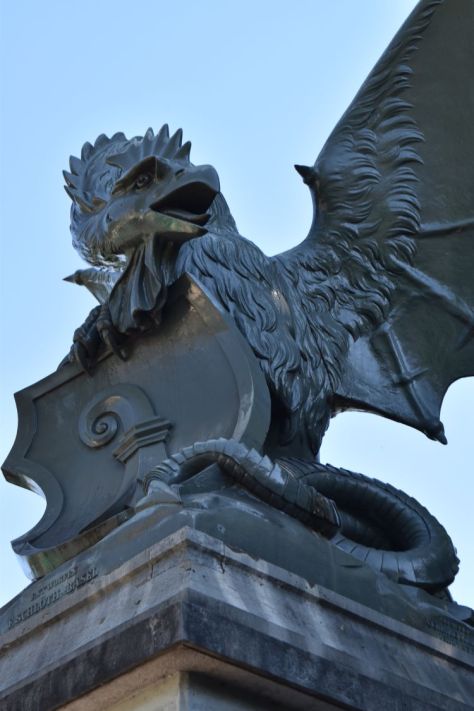
… they guard bridges (Wettsteinbrücke, his brother watches over the entrance to Langen Erlen and he has two more brothers),…
DSC_0012 small

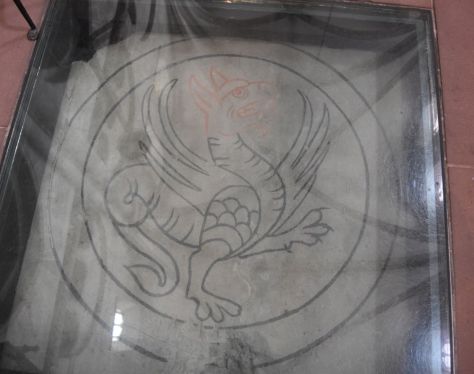
… they hide in the cathedral (Münster, in front of the pulpit)…
DSC_0210 small

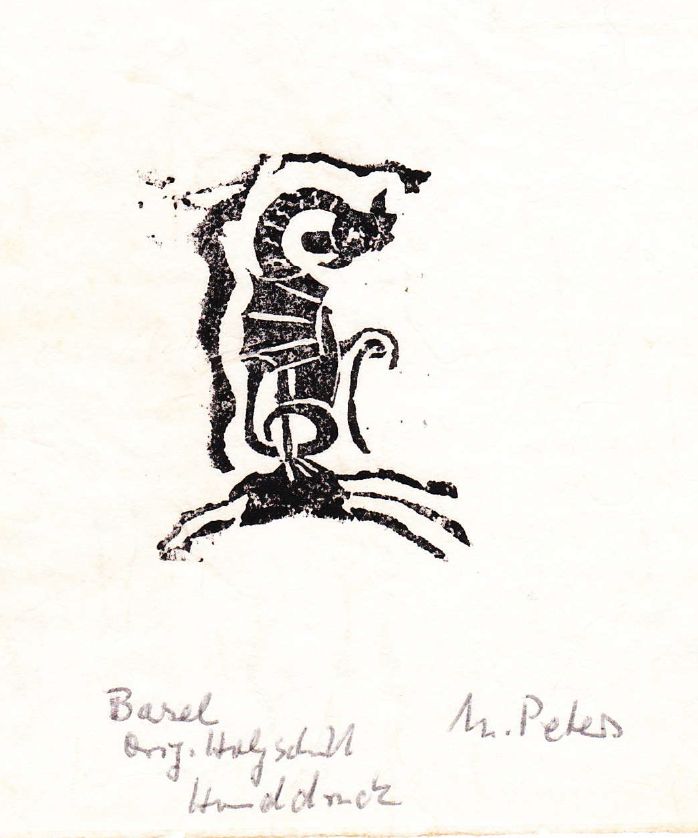
… they appear in my mum’s woodcarvings,…
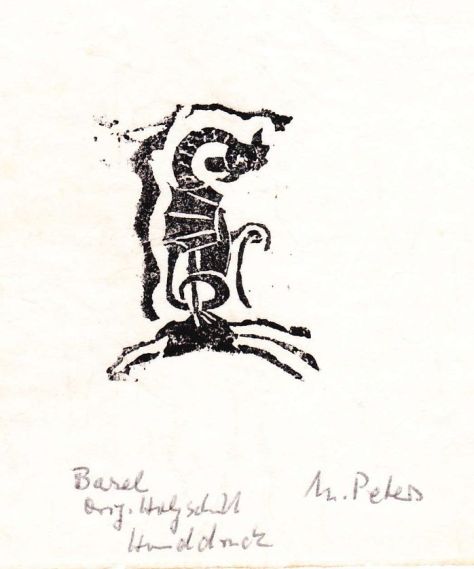
Basilisk

and then there is the small basilisk Baschi Zischer.

.

Baschi Zischer? He is a small basilisk that gets lost and looks for his home, with the help of Mia (a wonderful children’s book)

Baschi Zischer is a small basilisk. He lives near the water somewhere in the city center and leaves home, because he hears a lot of “bumbum” and “weeeweeee” outside. It is the drums and pipes of the Basel carnival (Fasnacht). Baschi gets lost and Mia finds him in the front garden of her parents’ house near the river Rhine.  Anita Siegfried and Nicolas d’Aujourd’hui have written and illustrated the story about Mia that looks for Baschi’s home in the city center of Basel (“Baschi Zischer – ein Jahr quer durch Basel (a year in all corners of Basel)”, Basel 2007).

Always on search for fairy tales, I loved to read the story of Baschi and Mia. On a hot summer day, I looked for the places that they visited, when looking for Baschi’s home. Here are some samples.

The basilisk on the fountain near Mia’s home has no idea where Baschi lives.

DSC_0194 small

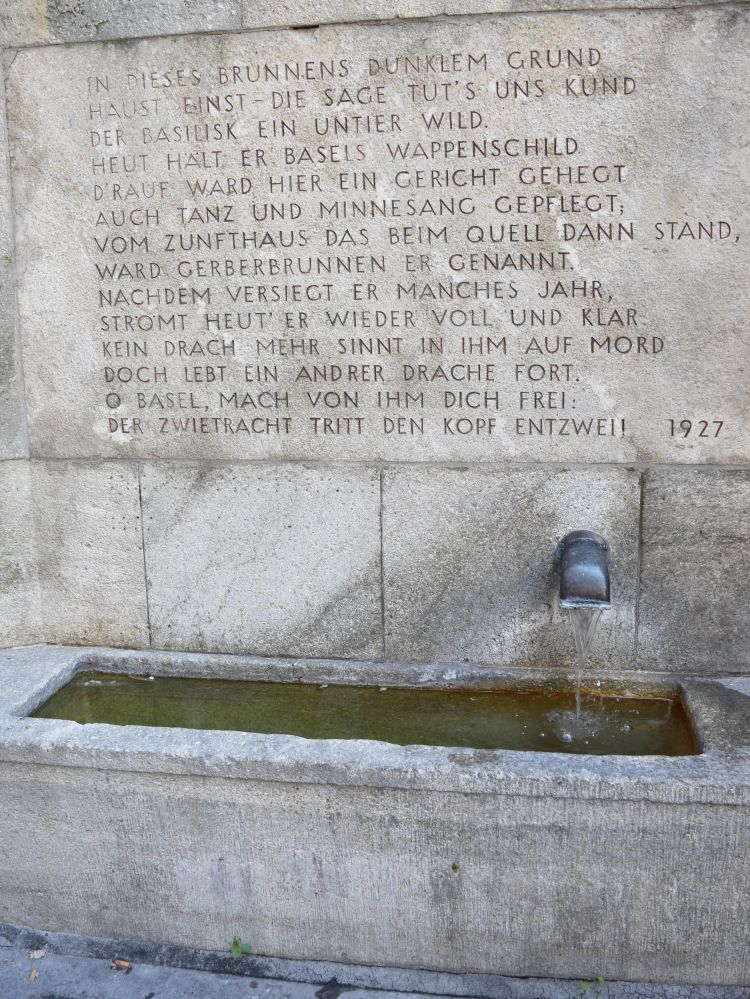
The fountain monkey on the Andreas Platz just knows that in earlier times the basilisks lived in the cave behind the Gerberbrunnen (fountain of the tanners).
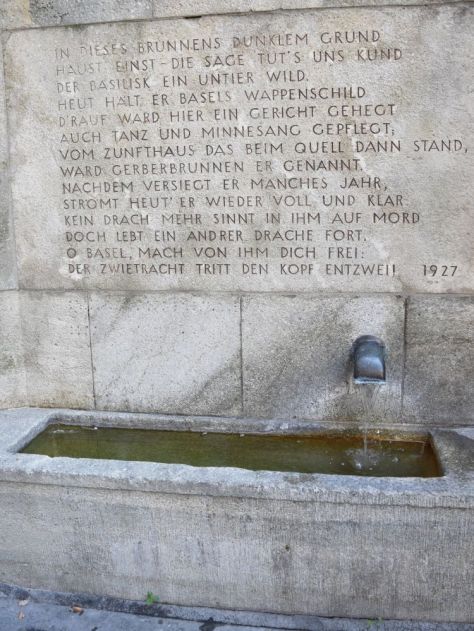
DSC_0050 small

The historian of the museum of history does not know where Baschi’s home is. At Mia’s school Baschi plays the basketball right into the basket. Baschi slips into the river Rhine and has to be saved by the ferryman. At the old townwall (Letziturm) they meet a group of people disguised as knights that are happy to see a real basilisk. They make a selfie with him.
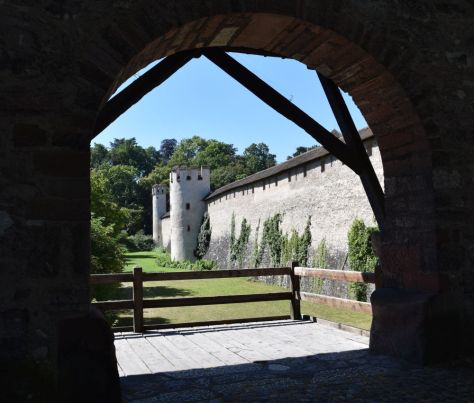
DSC_0020 small

(When I was here, I did not meet knights, but a group of Chinese – old friends from school, and one of them was a professional photographer capturing the memories).

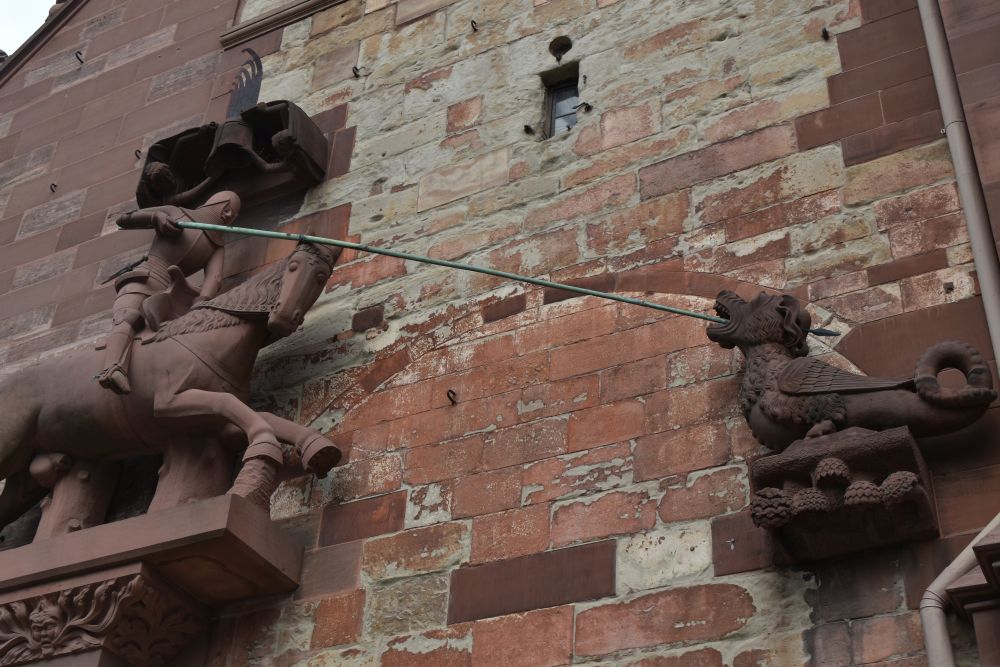
In front of the Münster (cathedral) there is Knight George who kills the dragon.
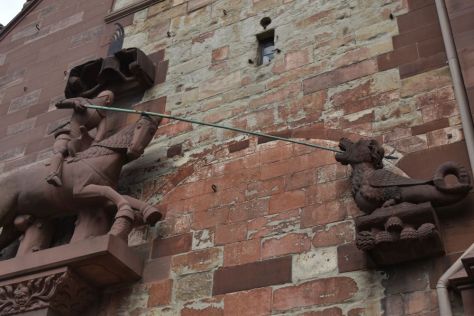
DSC_0216 small

Baschi gets angry. What a nuisance, this dragon made out of stone is not dangerous at all.

While looking for Baschi’s home, Mia and her basilisk live through many more adventures in Basel. And as the next Fasnacht starts, yes – just right in time, Mia understands that Baschi lives, where the Birsig enters the Rhine. Baschi disappears in the tunnel and the next Fasnacht starts with drummers and pipers.

A wonderful children’s story, well told and well illustrated. I invite the two girls of friends of mine to follow the traces of Mia and her basilisk Baschi. It is the grils’ first guided tour through a town. The next day we visited the mini golf court in Grün 80 (a green park with play grounds and lakes), and the two girls shouted: “Look, another basilisk fountain!” Yes, right, I have never noticed that there is another one here. Later I notice a basilisk fountain near the central post office… there are many more such fountains in Basel. Let us have a closer look at them.

.

The basilisk fountains in Basel – a clever design

There are about 25 basilisk fountains in Basel. One of them was on my way to primary school on the Bruderholz. Believe me, I saw that fountain every day, more than 50 years ago, for four years. I knew it was there, always, reliably. But I never looked at it in detail. Now, thanks to Baschi Zischer, I discovered the clever design of these fountains.

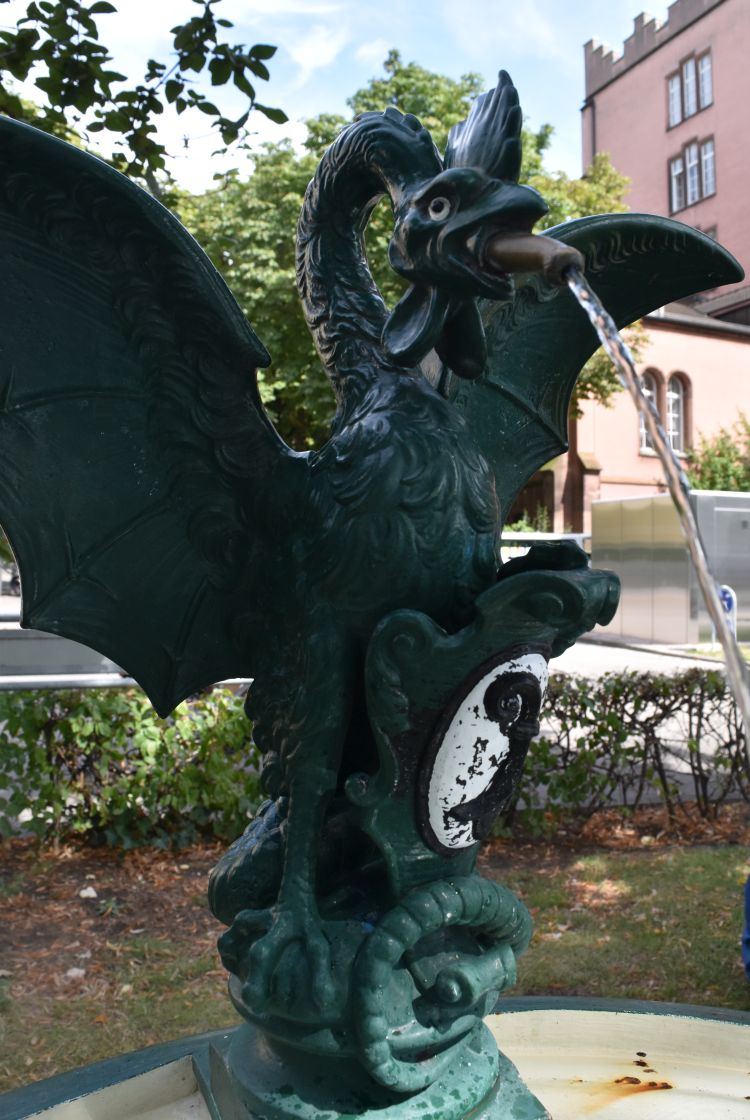
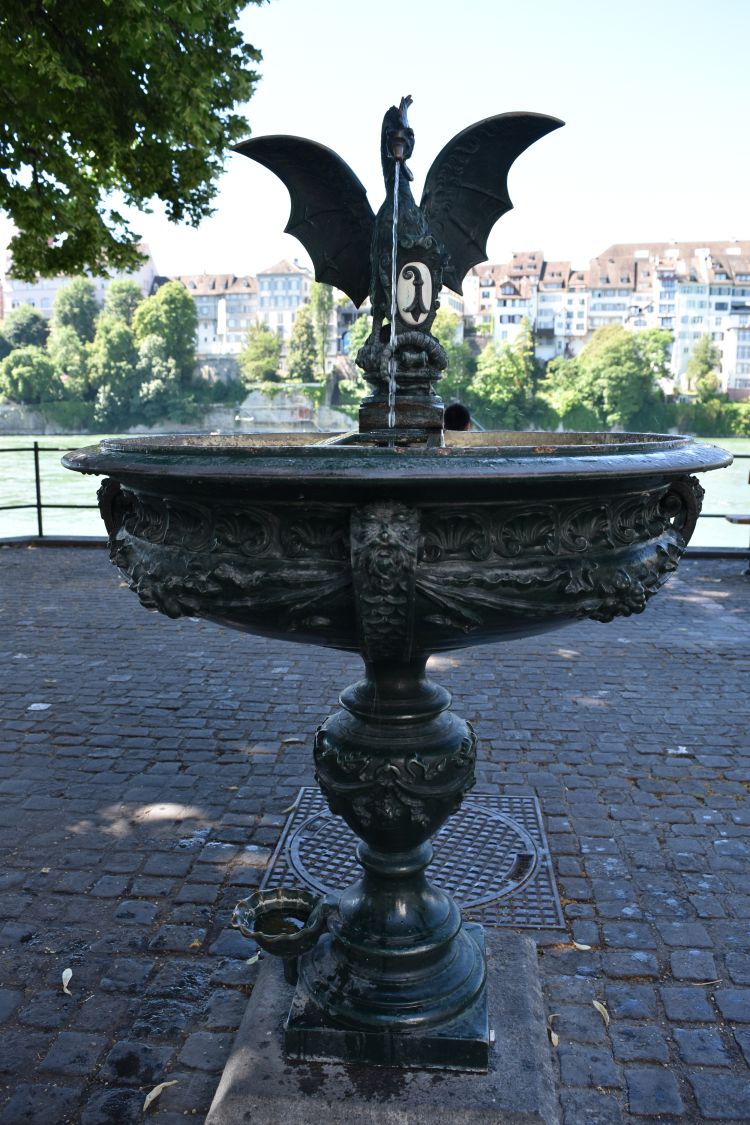
This is the basilisk fountain on the water front of the Rhine (Reverenzgässlein). The basilisk holds the “Baslerstab” (coat of arms) and presents “him”-self to the people that may take a photo of the old city line above the Rhine.
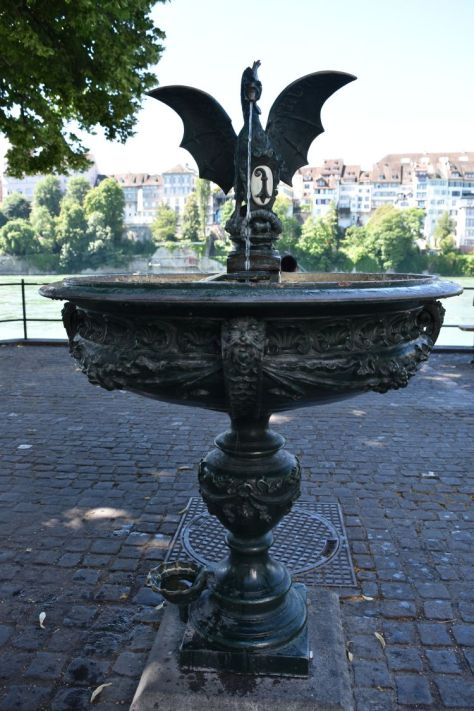
DSC_0029 small

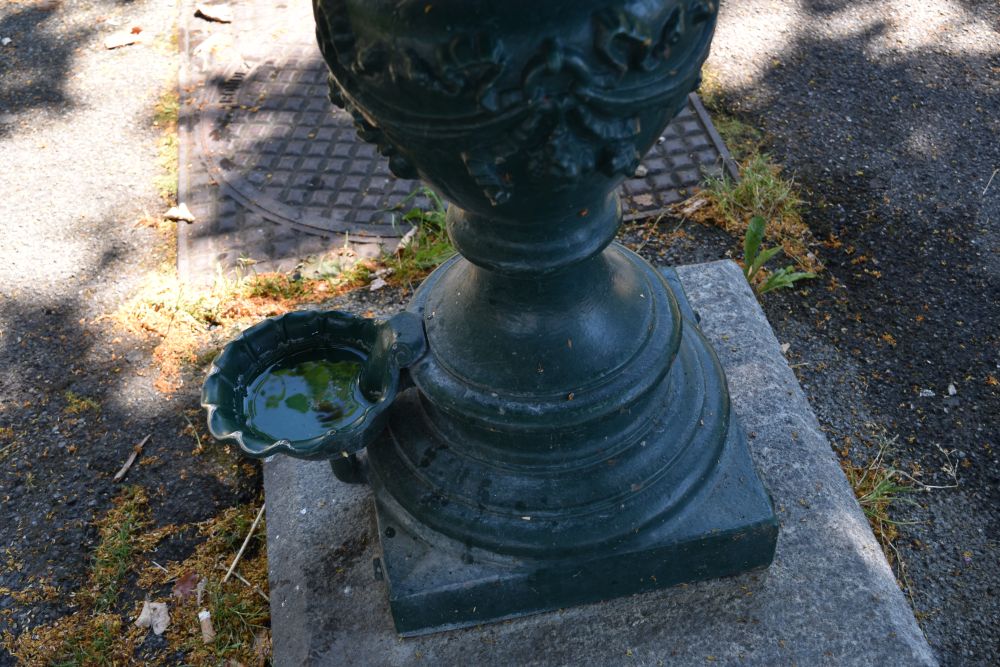
The basilisk fountain gives drinking water – to us people, …
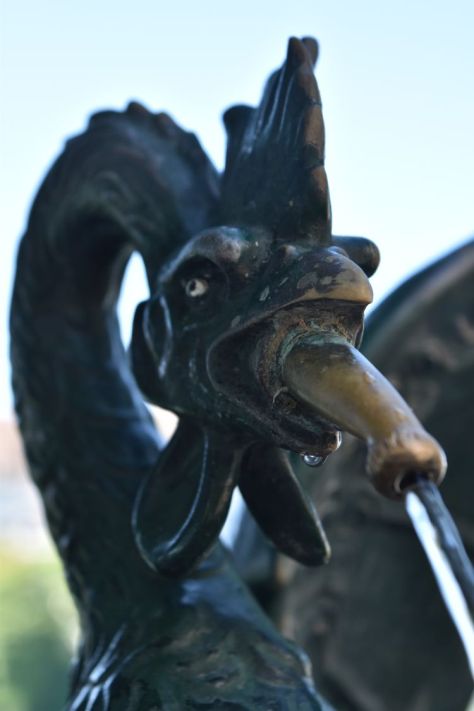
DSC_0032 small

and also to our best friends, the dogs.
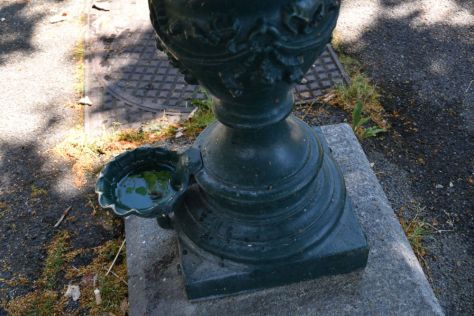
DSC_0034 small

At the end of the 19th century, Basel started to provide water directly into the houses. The huge fountains scattered over Basel were now in the way. Basel invited for a competition and selected the fountain of Wilhelm Bubeck (see Wikipedia). They installed about 50 of them. Today about 25 are left in Basel, one is in Zurich (perhaps as a sign of friendship, where sometimes “teasing” prevails) and one has even traveled to Moscow. Bubeck has done a great job, I believe, when designing the basilisk fountain for the thirst of people and their dogs.

Thank you, Baschi Zischer, you have opened my eyes. I may take more children of friends and of my family to discover my town Basel based on your adventures.

P.S. Also visitbasel.ch offers guided visits for kids following the traces of Baschi.


Göscheneralp – moor and highmoor reserve above the artificial lake – a photo hike

Would you join me for a photo hike on the Göscheneralp?

My friend Richard asks me: “Would you like to join me for a photo hike on the Göscheneralp?” Oh, yes, of course I would. I have been on the Göscheneralp some fifteen years ago, with Ernst. I would love to see it again and use my new Nikon camera, while benefiting from Richard’s experience. We buy train tickets to Göschenen, Richard reserves seats in the local bus to the Göscheneralp and one night in the Dammahütte (a Swiss Alpine Club mountain hut run by Lydia and Frank). And off we go, taking the early morning train at 6:04 AM in Basel arriving at the dam at 9:30 AM.
.

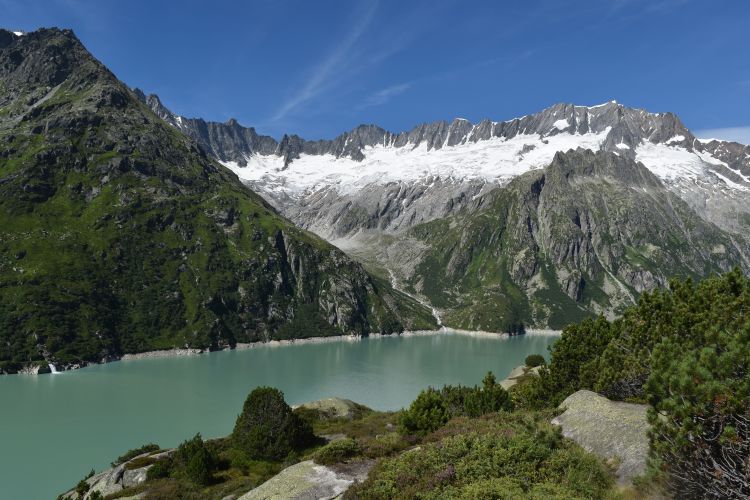
What is the Göscheneralp? It is an artificial lake with a nature reserve, a loop path and welcoming mountain huts in front of the Dammastock

The Göscheneralp was covered by an artificial lake in 1960. Water energy from the mountains –  this is ecological on one hand, but on the other hand I have mixed feelings about the village Hinteralp that is now under the water – including the church.

DSC_0002 small

May be I am not alone with my mixed feelings. The northern slopes above the artificial lake are now a nature reserve with moors and highmoors.

The loop path leads around the lake. The Swiss love to hike around the lake. Families with their kids (including their grandmothers and grandfathers) master the 3 hour walk on a narrow path going up and down and up and down.

The welcoming mountain huts cater for the hikers. The huts are called Bergseehütte, Chelenalphütte and Dammahütte. The Bergseehütte is managed by Toni Fullin. He is an institution. He is a mountain guide that documents the climbing routes and the traditional dishes that make use of what the mountains of Uri deliver. Such as soup made out of bread and cheese. The Dammahütte is where we have reserved to stay – it is about 650m above the lake level.

.

The moors and highmoors

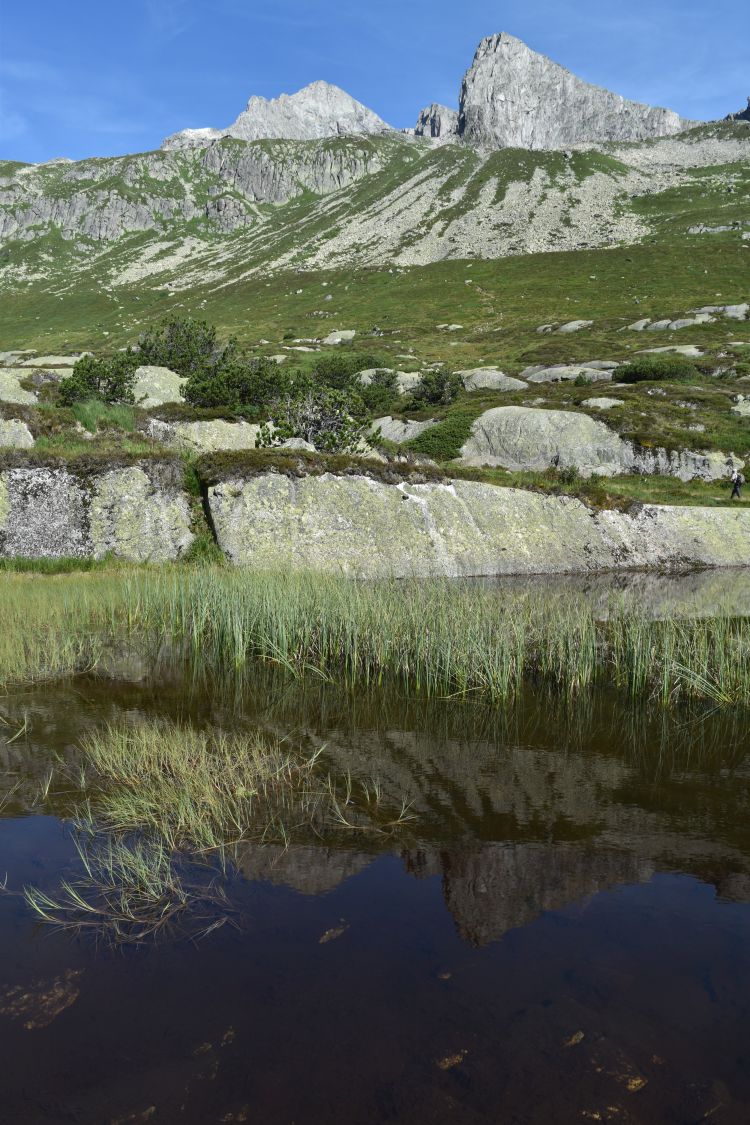
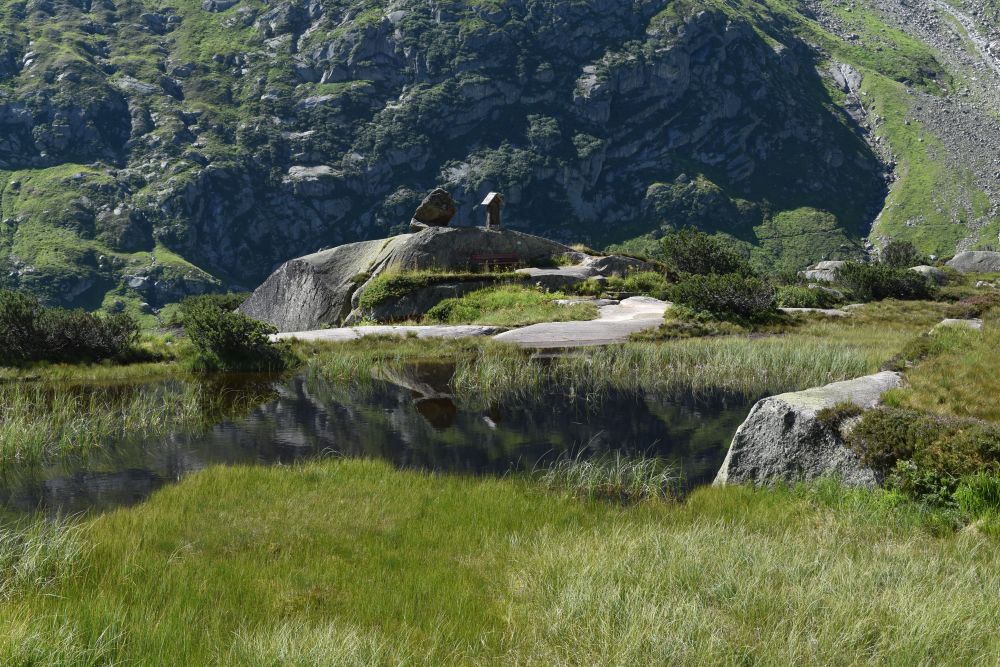
We start north of the lake to take pictures in the moors and highmoors. The ponds reflect the mountains…

DSC_0009 small

… and the small chapel.

DSC_0019 small

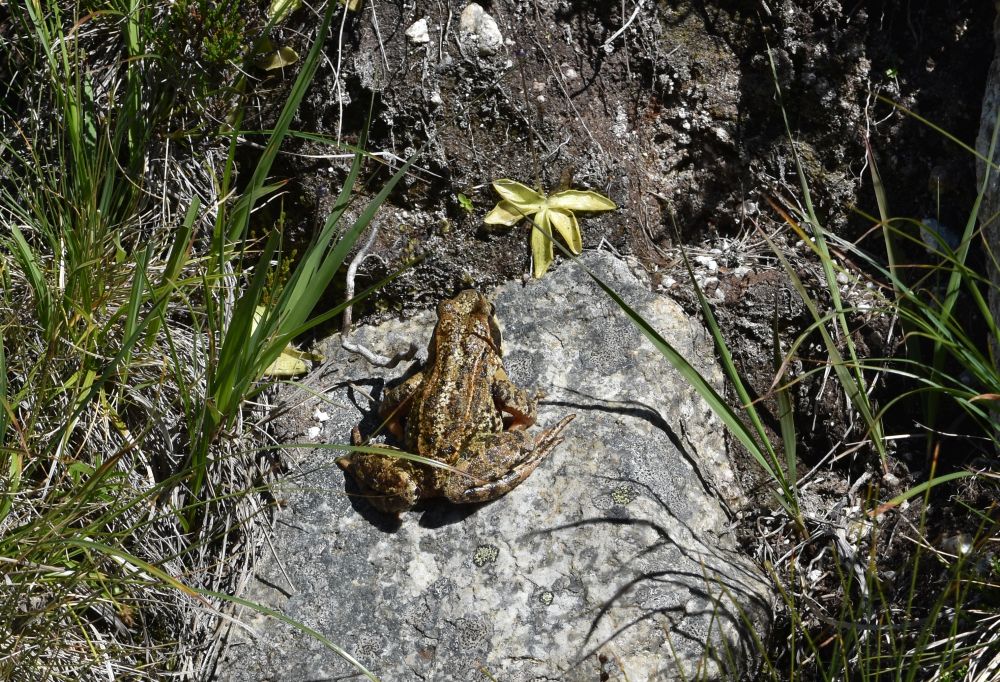
We also come across a frog,…

DSC_0023 small

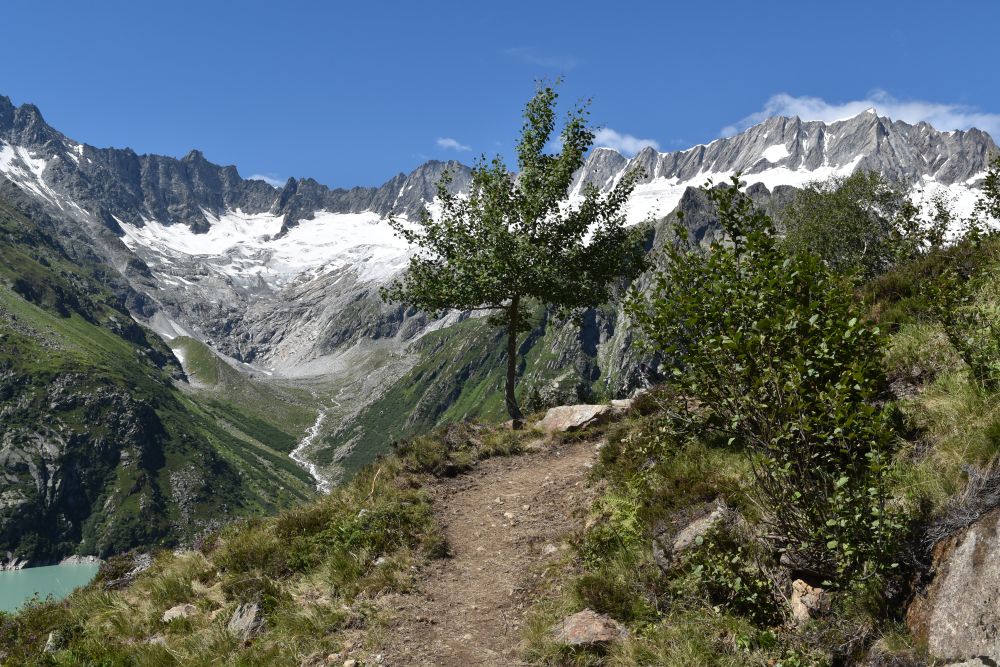
… enjoy the view of the Dammastock with its glacier,…

DSC_0025 small

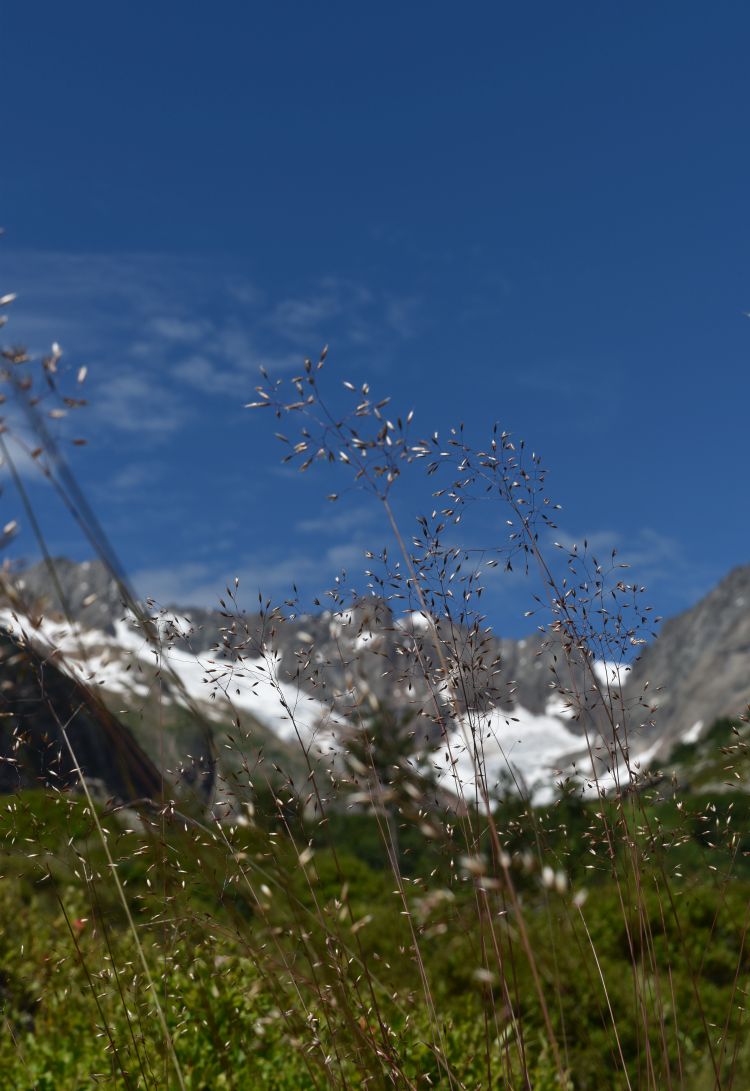
… and play with background and foreground.

DSC_0043 small

.

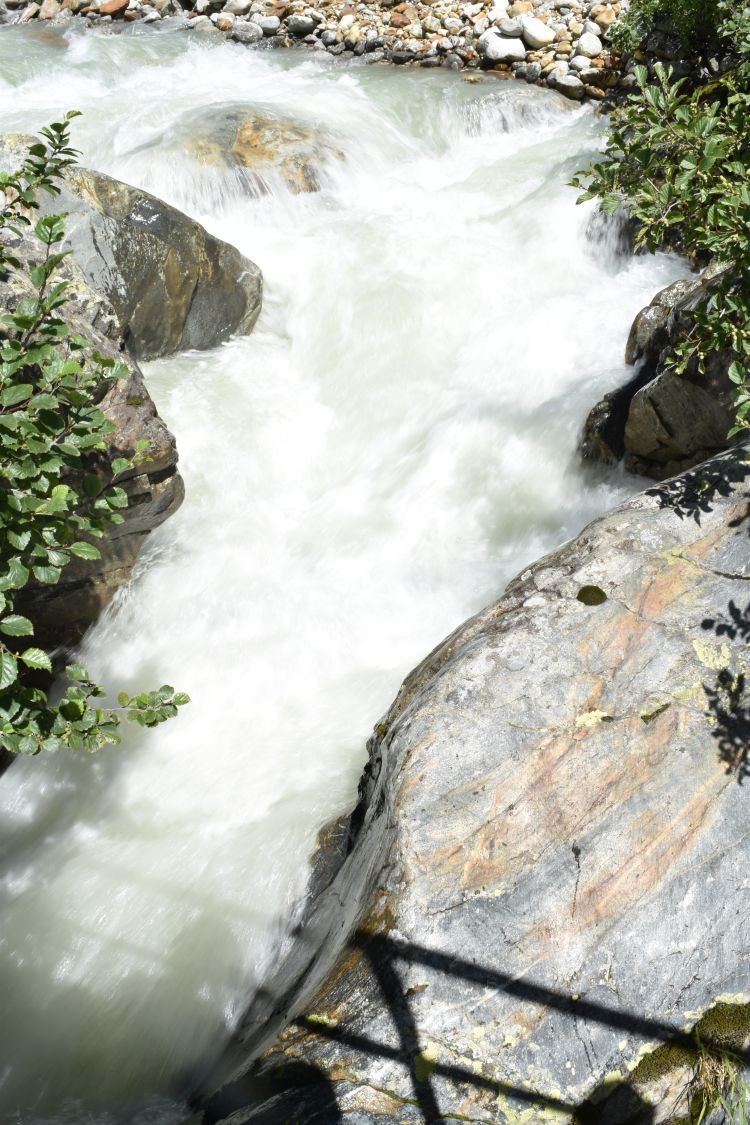
The Chelenen Reuss… flowing water… let us play with the shutter time

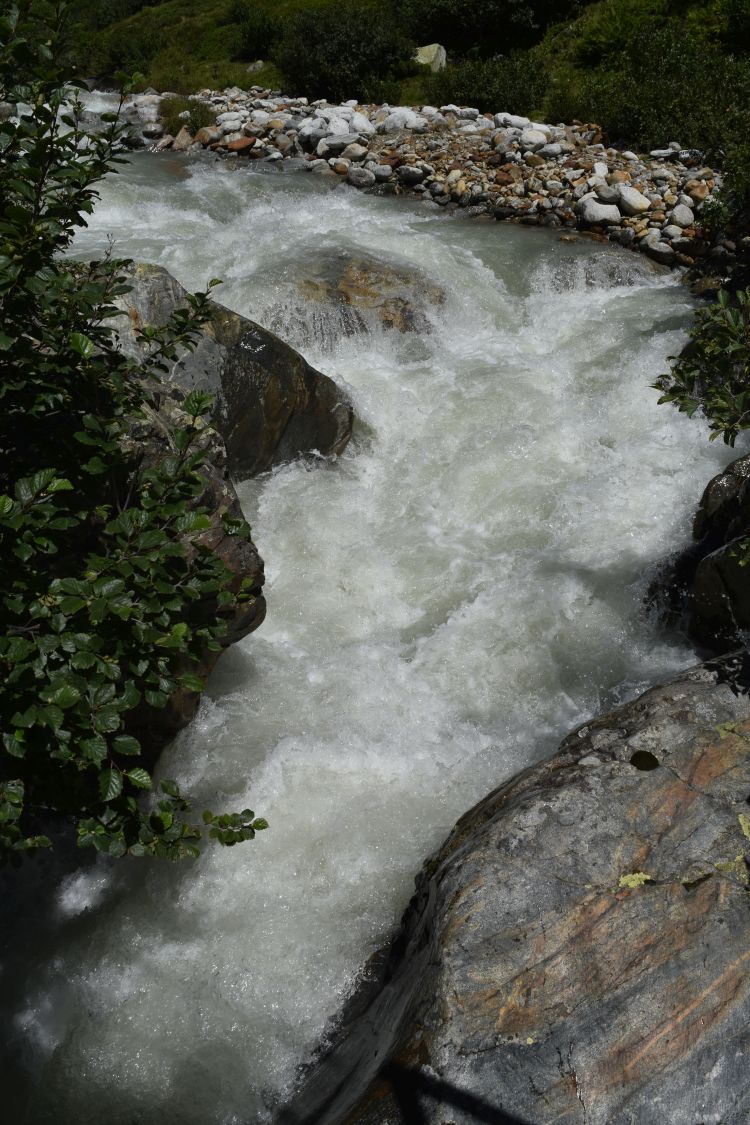
We leave the moors and highmoors and cross the Chelenen Reuss. Here we practice changing the shutter time – short…

DSC_0033 small

… and longer.

DSC_0034 small

I prefer it shorter.

.

Up to the Dammahütte in the burning sun – a hearty welcome by Lydia and Frank

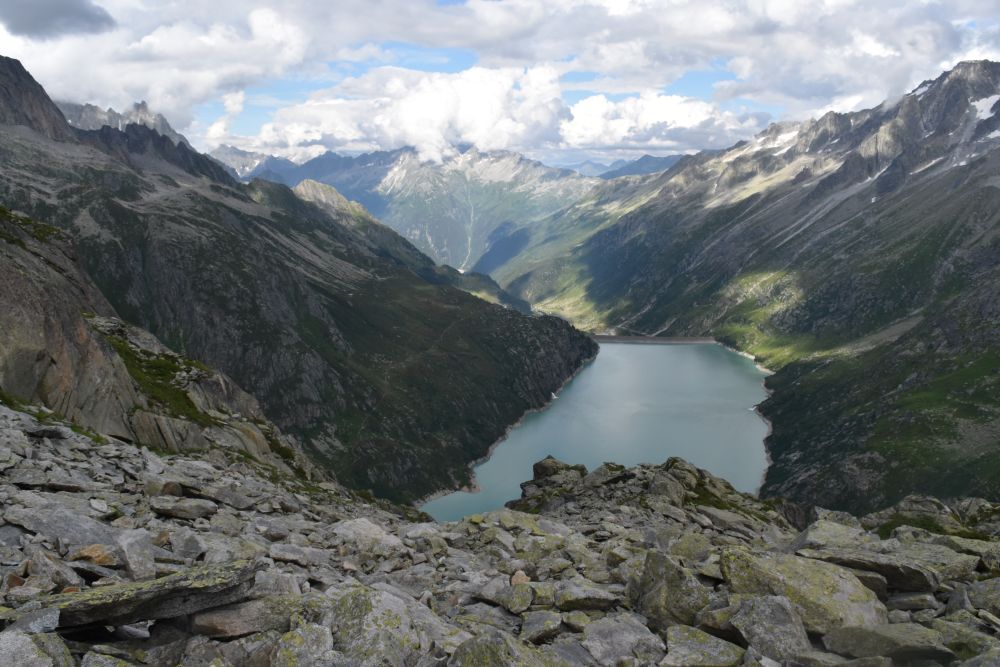
In the burning sun we walk up to the Dammahütte, about 2450m above sea level. Lydia and Frank with their daughter give us a hearty welcome. This is the evening view of the Göscheneralp Lake taken near the Dammahütte.

DSC_0059 small

We have an excellent dinner with soup, salad, Spaghetti and pine apple dessert.

.

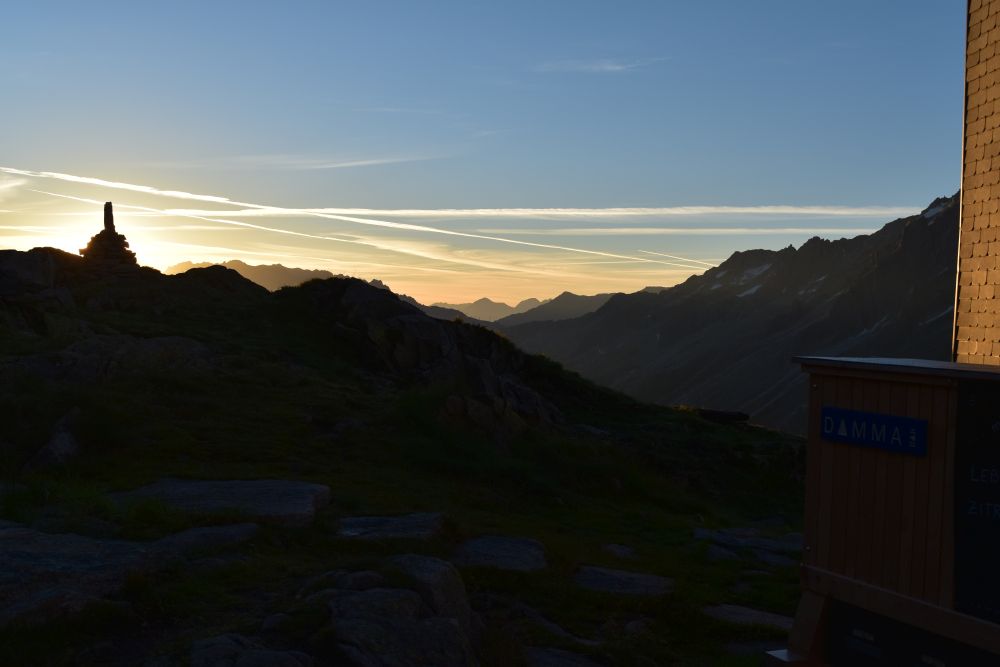
Morning at six… the sky is clear

Early at six we look forward to a great and sunny day. This is the view of the morning sky

DSC_0068 small

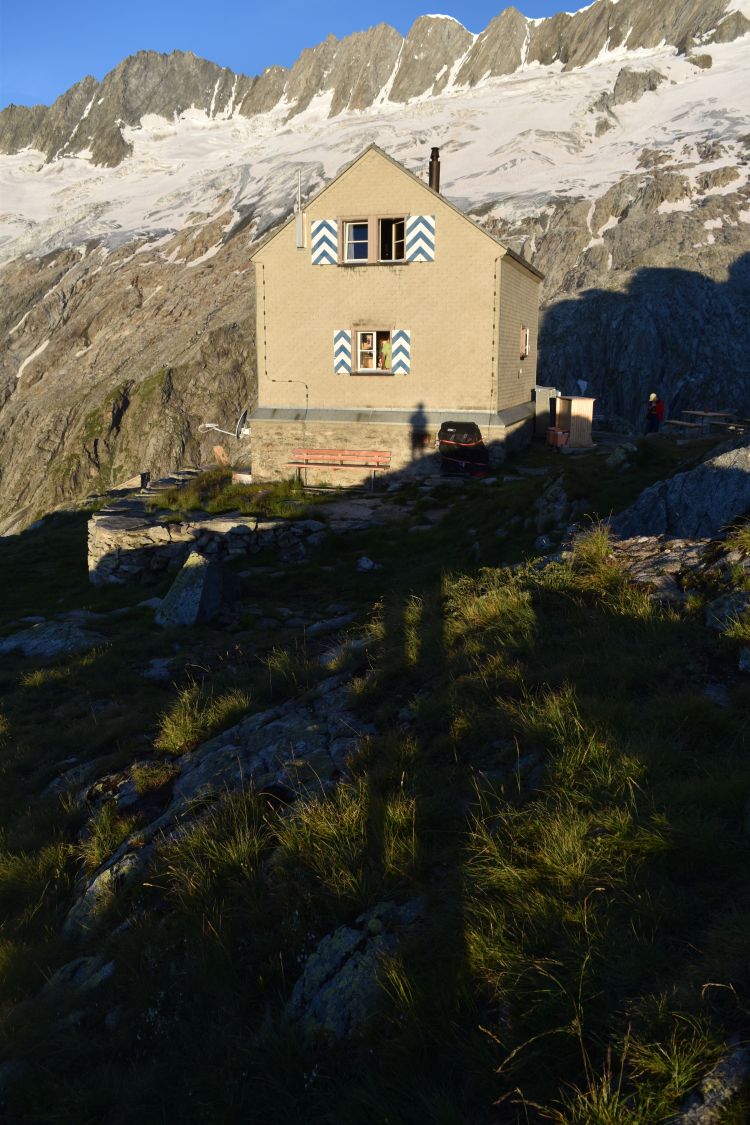
The sun is still low and gives light to the Dammahütte in front of the Dammastock.

DSC_0078 small

After a tasty breakfast with Birchermüesli and rolled mountain cheese, we talk with the owners of the hut. As they expect more tourists today, the daughter prepares a Schlorzifladen. This is a cake common in Toggenburg near the lake of Constance (Bodensee).

.

Panorama walk with goats and more water games

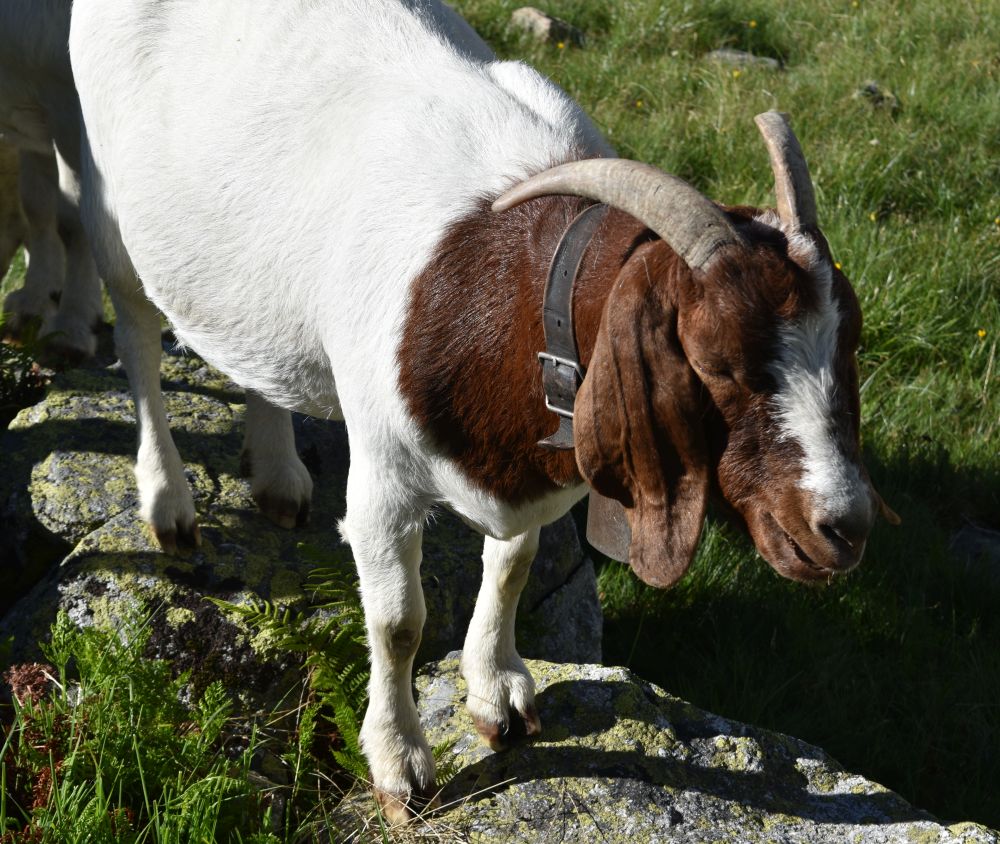
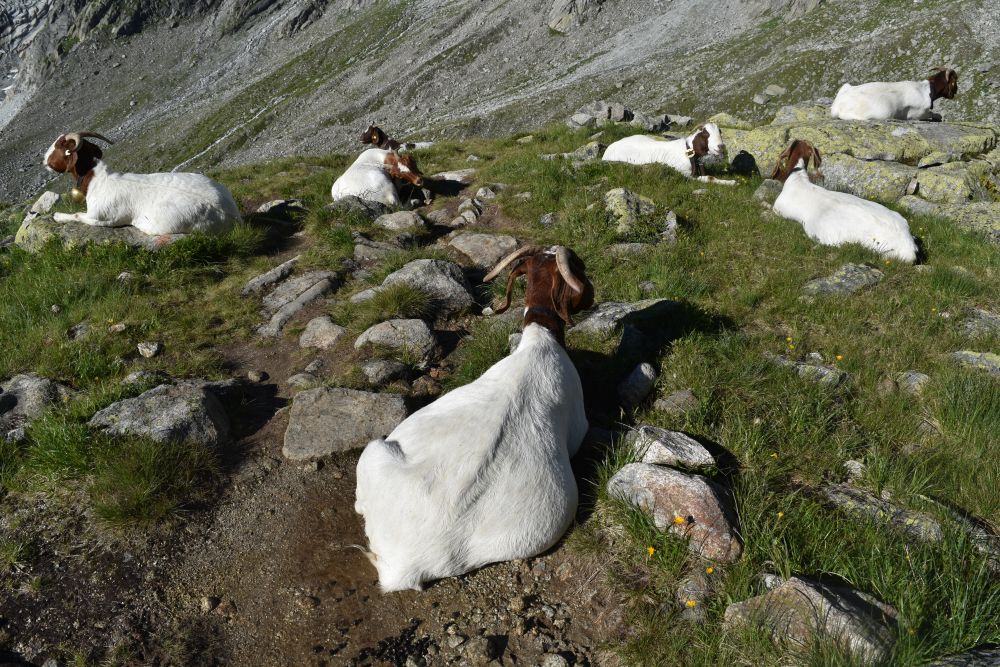
We take the Panorama walk down to the lake. Hello goats!

DSC_0106 small

Yes, YOU MUST enjoy the view!

DSC_0112 small

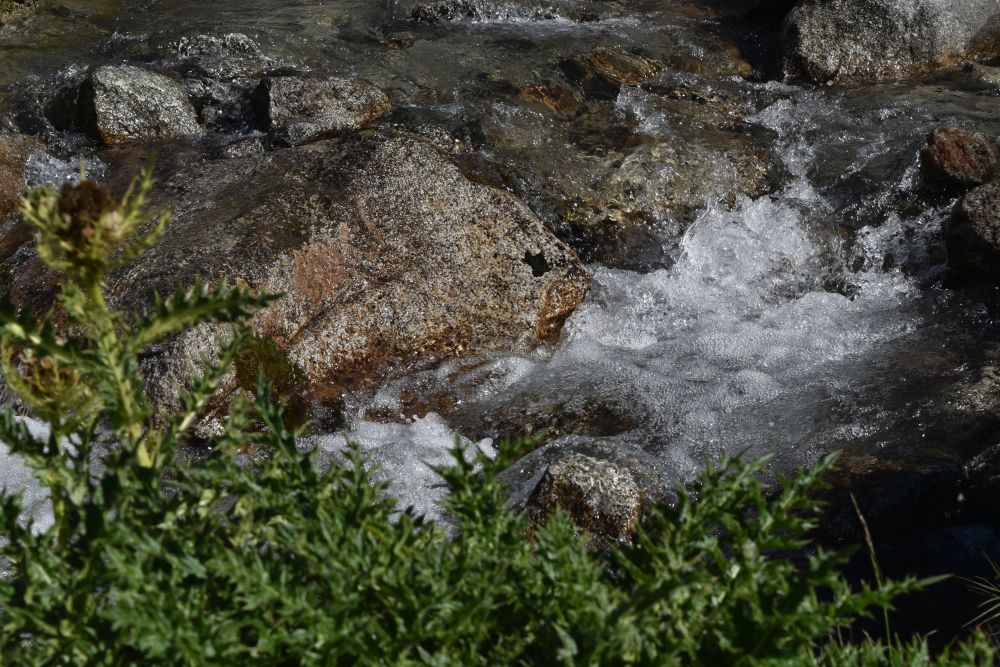
The Damma Reuss – again we change the shutter time from short…

DSC_0129 small

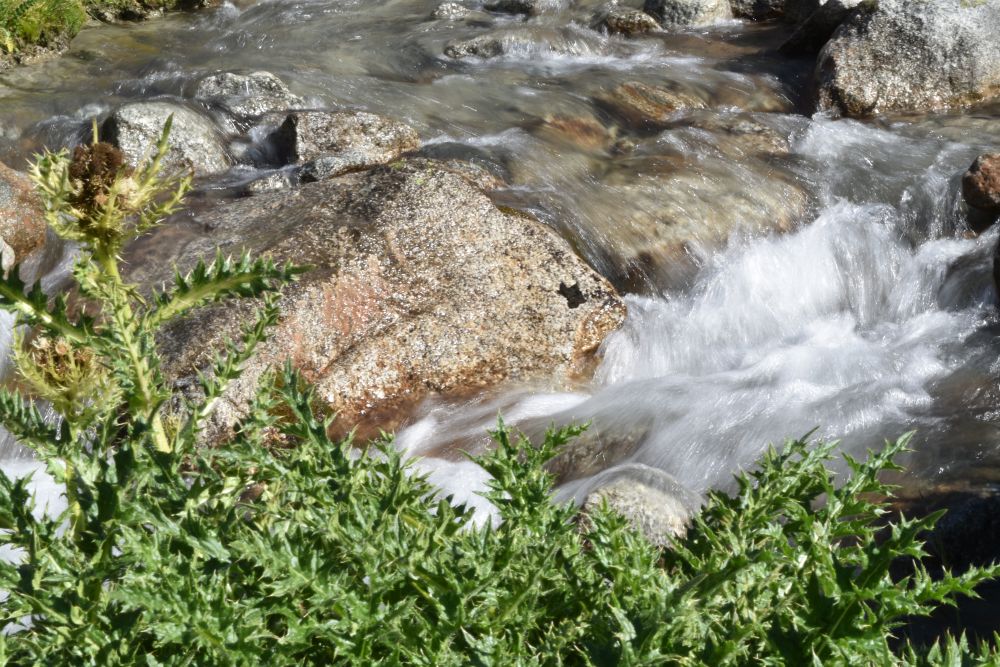
… to longer.

DSC_0130 small

And then I look back with the thistle in the foreground.

DSC_0133 small

.

Back along the lake catching the 13:30 bus

Now we head down to the lake, join the families on their round walk south of the lake…

DSC_0162 small

and at the dam catch the 13:30 bus to Göschenen. Already around 5 PM we are back in Basel. It starts to rain and then it pours with rain. Lucky we have been having enjoyed two wonderful, sunny days.

From Carcassone through the Causses to Laguiole and back to Switzerland

We made three days to return from Spain to Switzerland. The first day has ended in Carcassone. The second day takes us to Albi, to Espalion and to Laguiole, where we spend another night. On the third day we just “eat up” kilometers on motorways and enter Switzerland on the Pas de Morgins.

.

Albi – town of the Cathars or Albigienses

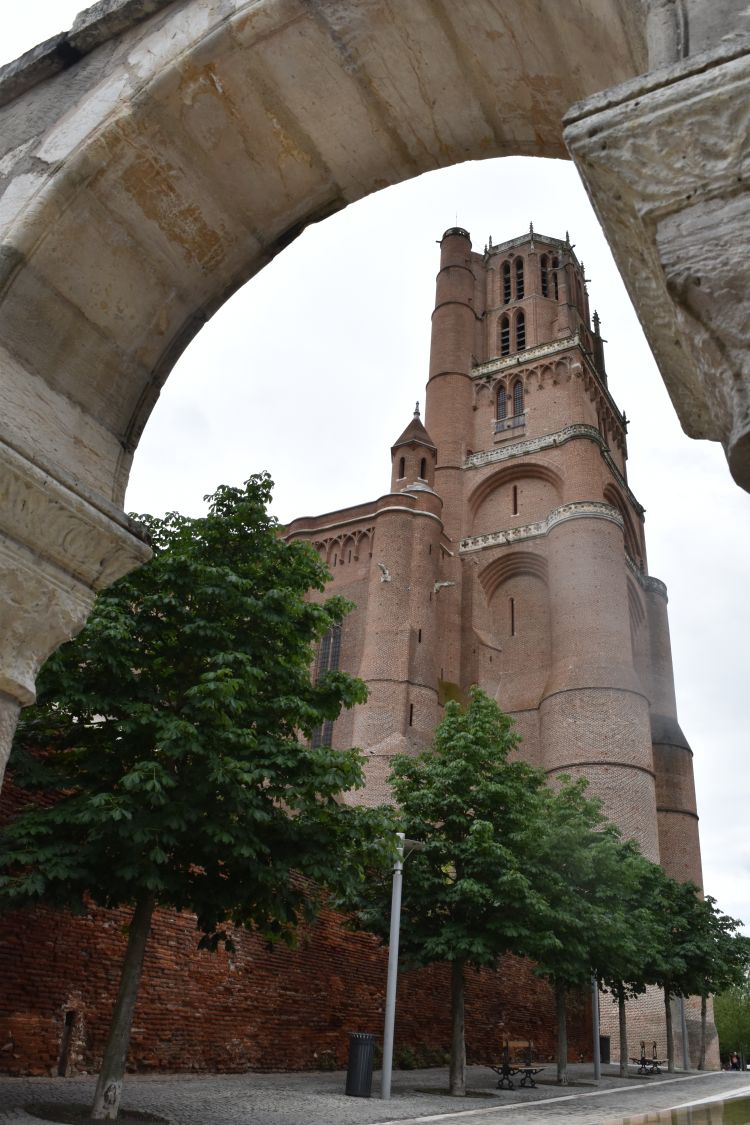
In the pouring rain, we reach Albi located on the river Tarn. It was an important centre of the Cathars, also called Albigienses. The old city has mostly been built from red bricks and their cathedral Saint Cécile is made of the same material.

DSC_0849 small

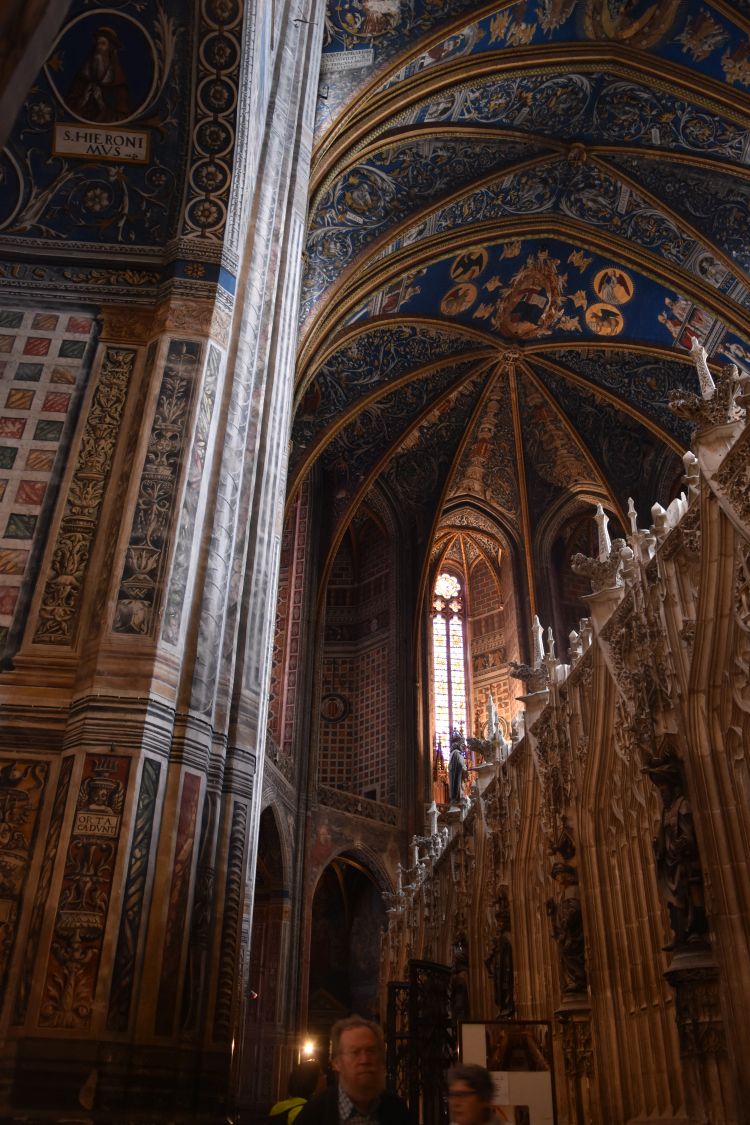
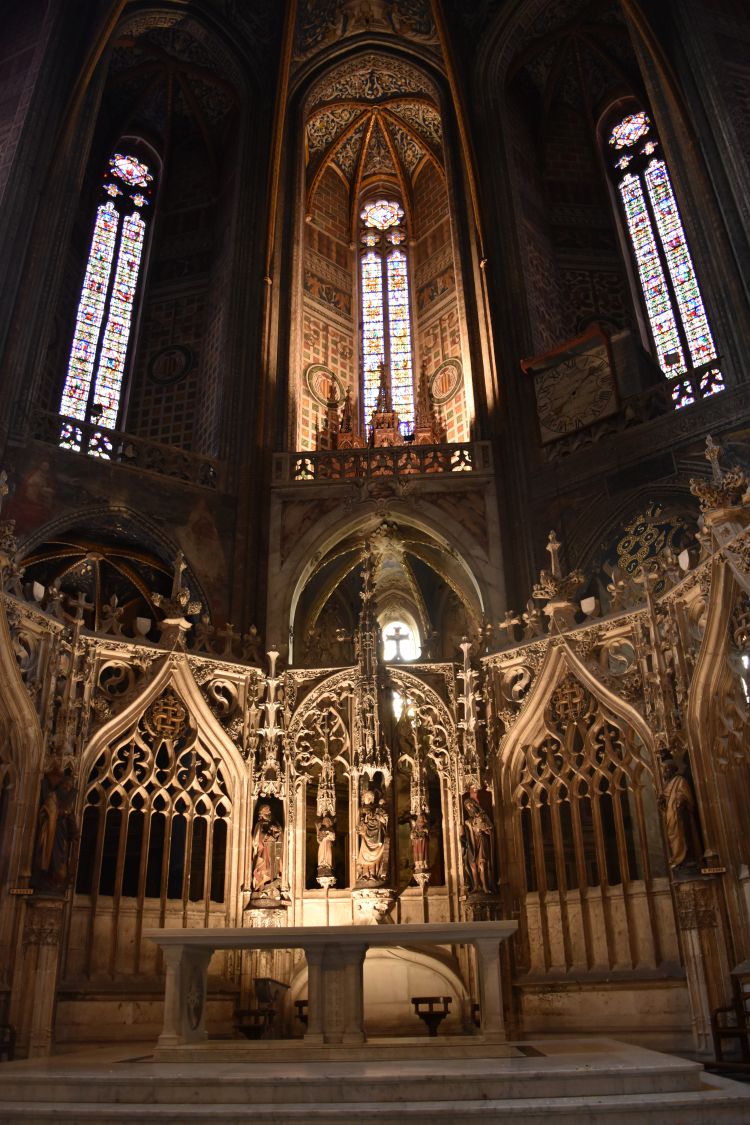
Inside the cathedral is painted in blue which gives it a harmonious atmosphere.

DSC_0858 small

The choir and the stalls are a Unesco world heritage

DSC_0861 small

In the pouring rain we do not feel like more sightseeing in this charming town and continue north.

.

Espalion – small town with old bridge

We continue north through the Causses plateau mountains. It is a rough landscape that the pilgrims to Santiago de Compostela feared – for the wind, for the cold temperatures and also for the robbers.

DSC_0870 small

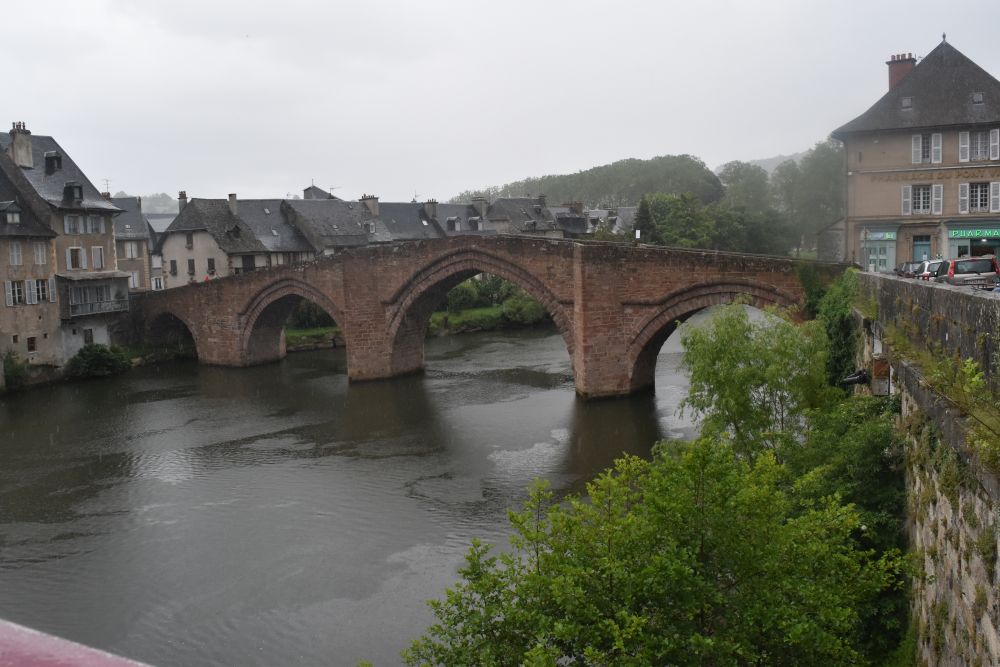
The cities lie in the valleys. Espalion is one of these. The gothic bridge crosses the river Lot.

DSC_0878 small

The shoreline of this small town is charming and so are the narrow streets, but the only one hotel in town is booked out. And – it is pouring with rain. We decide to continue to Laguiole.

.

Laguiole – the dynamic mountain village has a lot to offer – a discovery for me

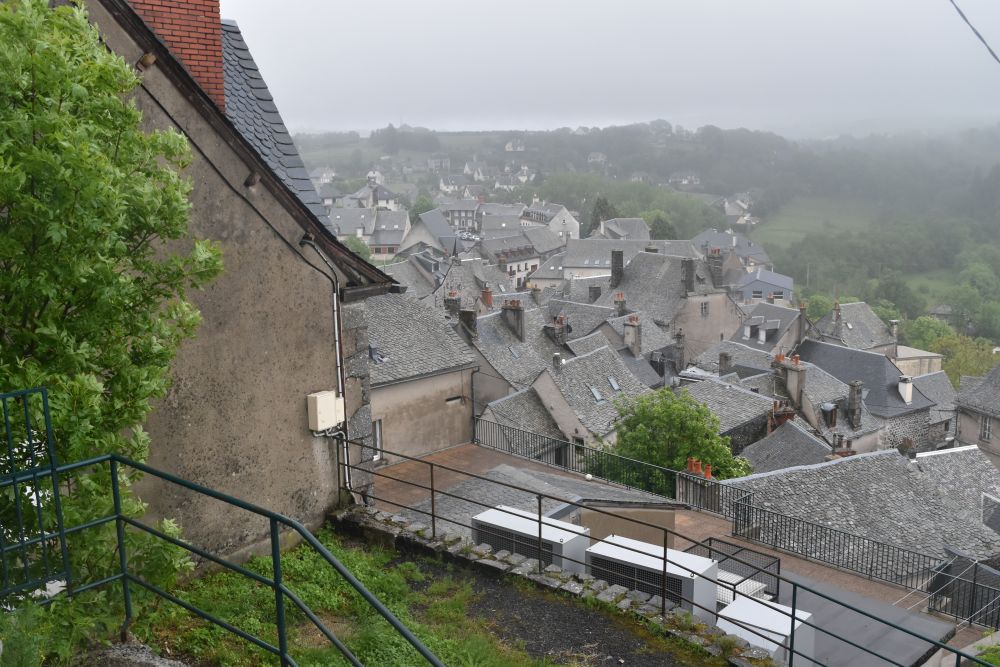
Laguiole is a mountain village located in the Aubrac. The temperatures are now down to 9 degrees – it is chilly, rainy and misty. This is the impression from our evening walk.

DSC_0890 small

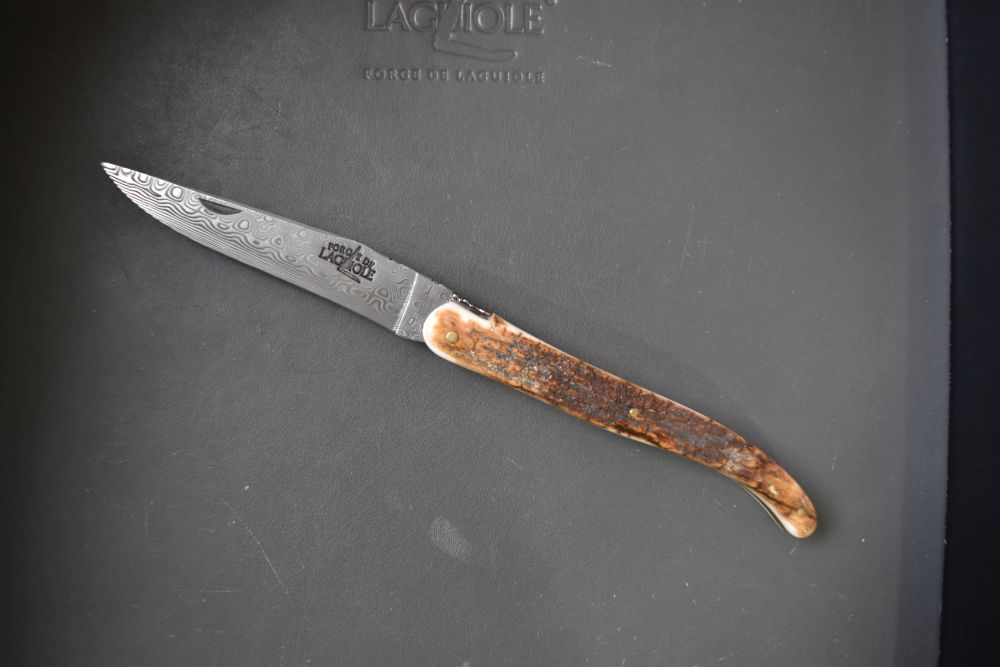
Laguiole is famous for its high quality knives. Their speciality are the foldable knives – this is one of them with a damascene blade.

DSC_0883 small

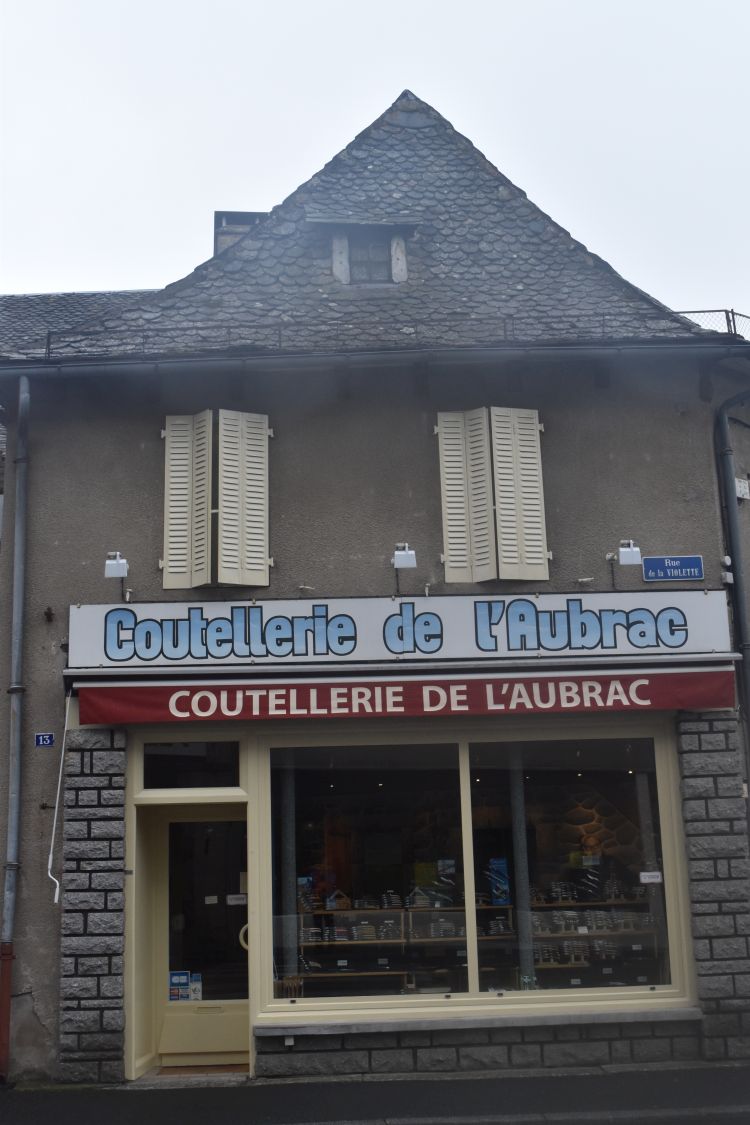
But they also have knives, forks and spoons for the table – beautifully designed by star designers. The village is full of knife  shops (called “Coutellerie”). Also tours to factories are on offer.

DSC_0895 small

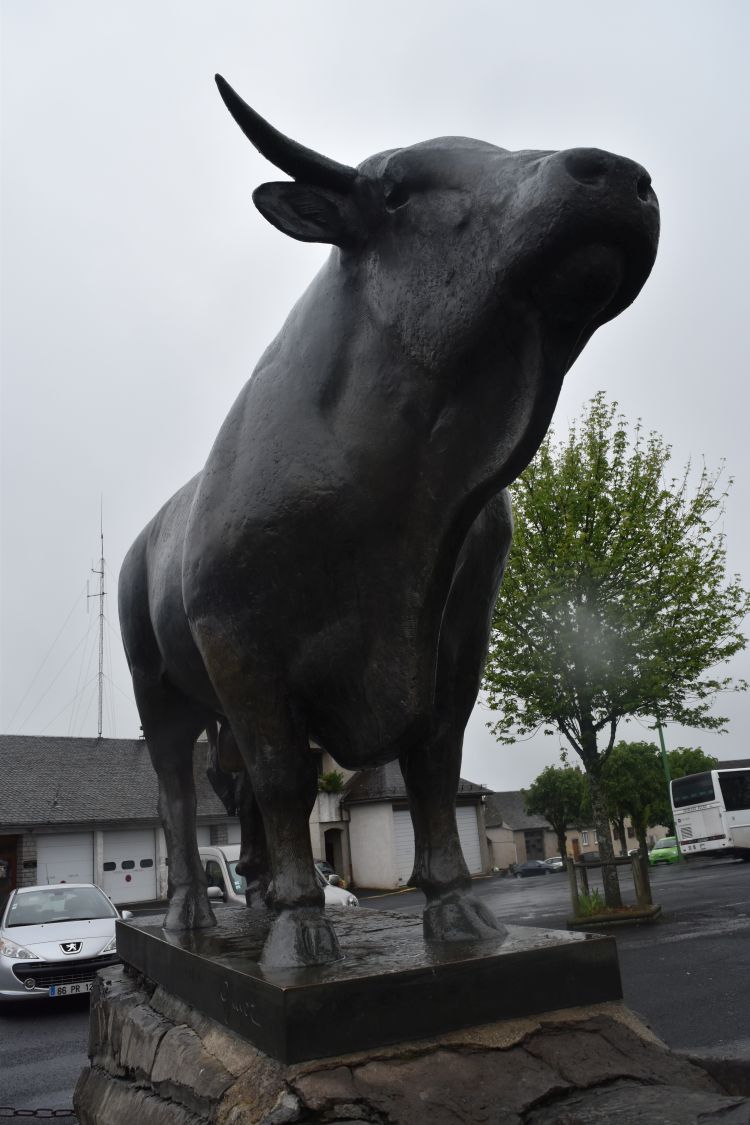
In addition the Aubrac and Laguiole are famous for their regional “Aubrac” cattle, a robust species that is used for milk and meat production. The cattle is brown with a dark brown line decorating the border of the ears. This cattle enjoys an excellent diet of mountain herbs and delivers AOC cheese and savoury meat. The “Aubrac” cattle is so much valued that it has received a memorial in the village center.

DSC_0904 small

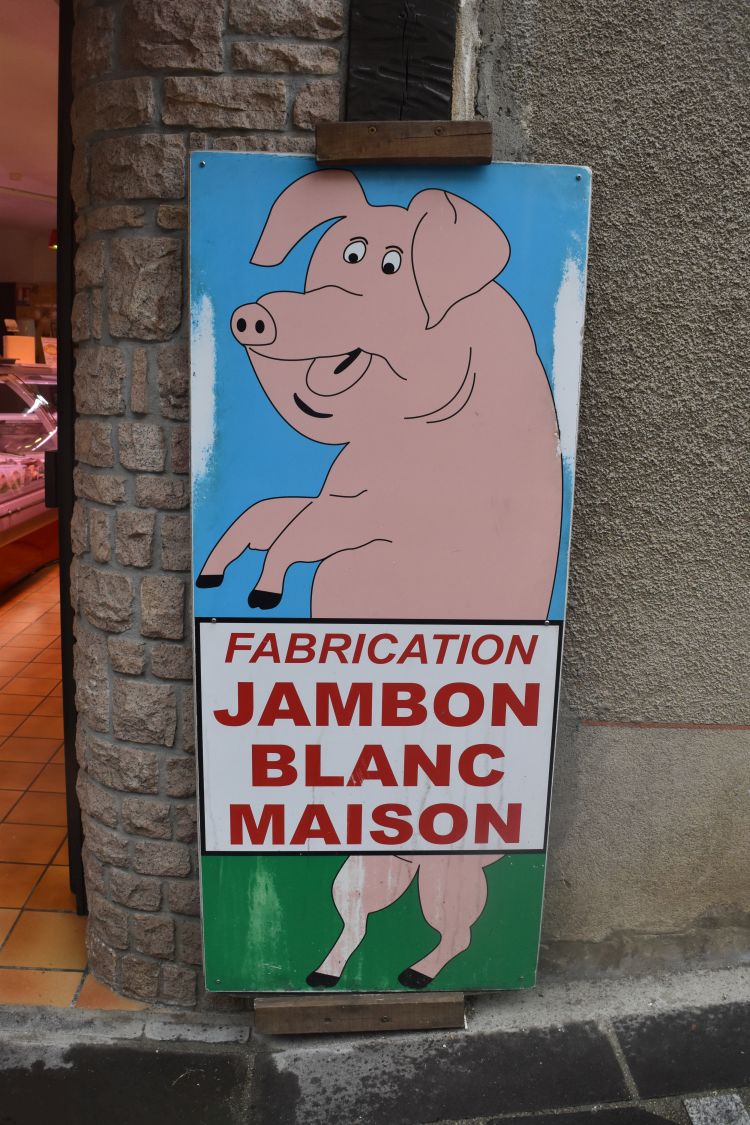
In addition to the products of the Aubrac cows, the butchers also sell white ham and other specialties from pigs.

DSC_0884 small

I bought some of their cooked white ham, and enjoyed it, when back home.

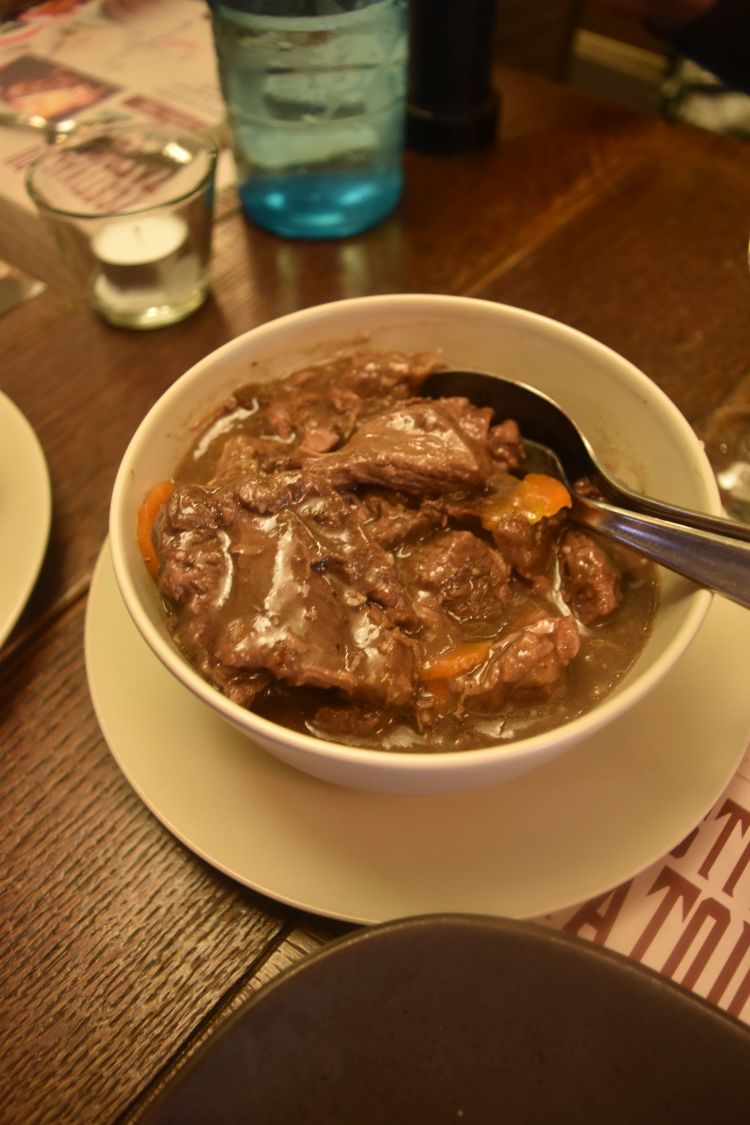
We find a room in the friendly Hotel de l’Aubrac. The house is also an excellent restaurant that serves tasty meals from regional products. We have a menu – this was my beef bourguignon made in wine and gentian liquor.

DSC_0898 small

The people here know, how to make use of their natural products. The meal was authentic and well prepared. The beef was served with Aligot which is potato purée mixed with local cheese which gives it a firm texture. A red wine from Marcillac (some 50km south from Laguiole) was a perfect match with my beef. Ursula liked her pot-au-feu. An excellent choice of local cheese followed as part of the menu: Ecir (cow milk), a regional goat cheese and Roquefort (which originates not far from here).  We top our meal with a sweet wine from Pellehaut (Gascogne, west of Toulouse, made out of Chardonnay and Petit Manseng; the latter can mature until December thanks to its hard skin; it is the basic ingredient of sweet wines in South West France and in North Spain).

The two star Hotel and Restaurant de l’Aubrac is a great place to stay – welcoming atmosphere, great dinner, good breakfast and quiet rooms.

.

Heading back to Switzerland and then to the Pas de Morgins

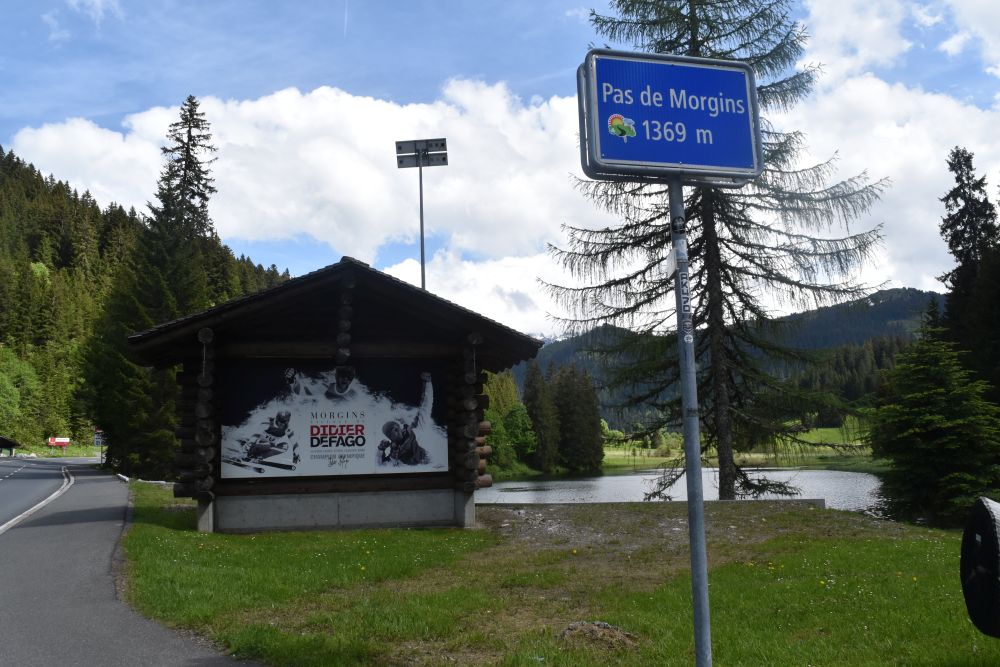
On the third day we head back to Switzerland – all on highways – and enter our country crossing the Pas de Morgins.

DSC_0915 small

We give back the the apartment keys and thank our friends for having let us stay in their beautiful apartment in L’Hospitalet de l’Infant with its gorgeous view of the pine trees and the sea.

From L’Hospitalet through the Pyrenees to Carcassone

From L’Hospitalet we drive back to Switzerland, first crossing the Pyrenees and stopping at Carcassone. The next day we continue through the rough plateau mountains of Causses and stay overnight at Laguiole. Finally on the third day we take the French motorway end enter Switzerland crossing the Pas de Morgins. Let me start with the first segment from Spain to Carcassone.

.

Crossing the Penedès with Santa Creuz

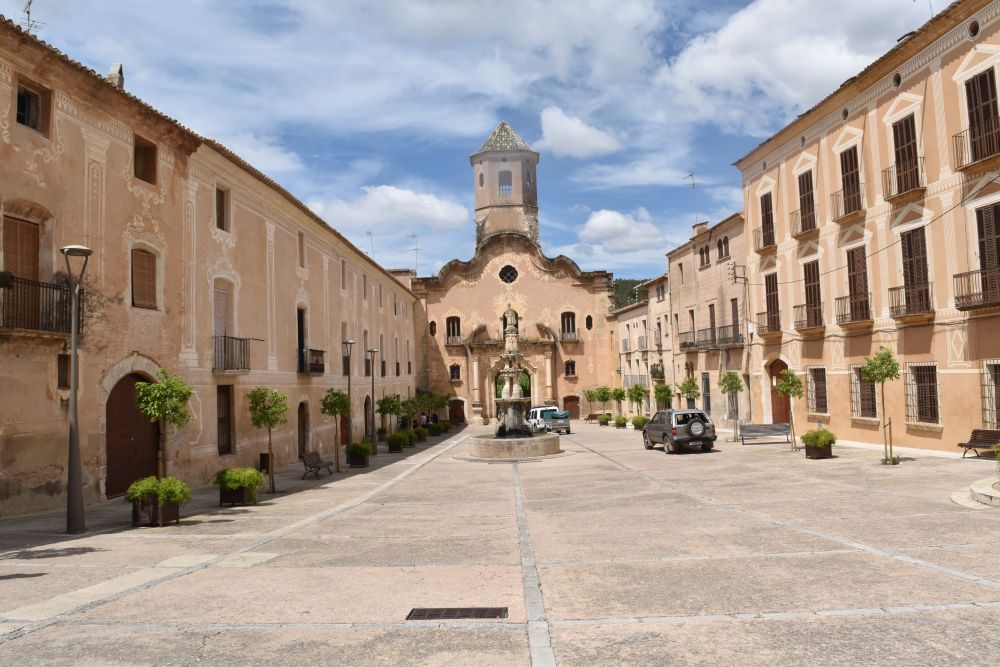
Penedès is the wine region south of Barcelona that among other things produces the well-known sparkling wine Cava. Amidst the vineyards is the monastery Santa Creuz. The Kings of Aragon have been buried here, until the monastery of Poblet took over.

DSC_0750 small

Inside the walls there is a small town. The monastery is closed at lunch time. It will  be on our list of excursions when coming back to L’Hospitalet.

DSC_0760¨small

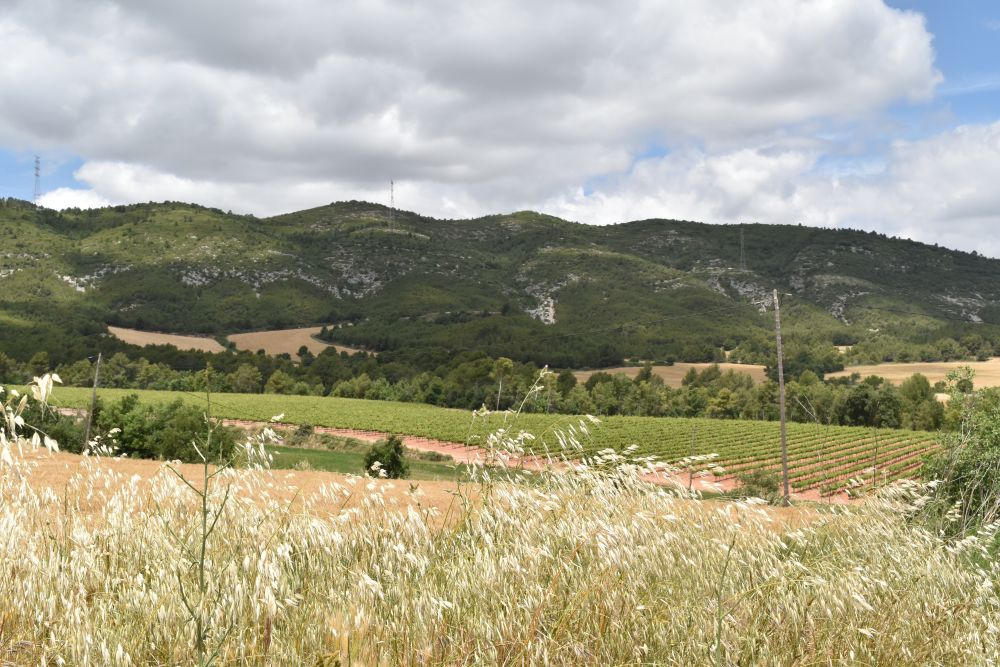
The vineyards of the Penedès are not as steep as the vineyards of Priorat.

DSC_0768 small

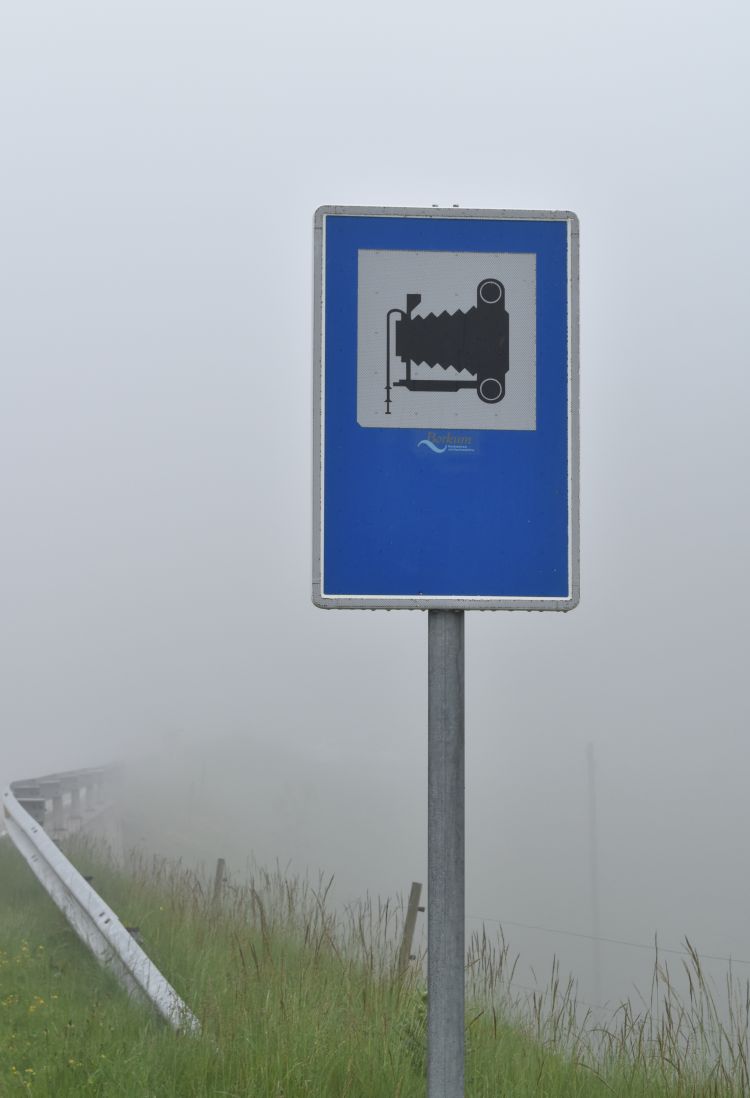
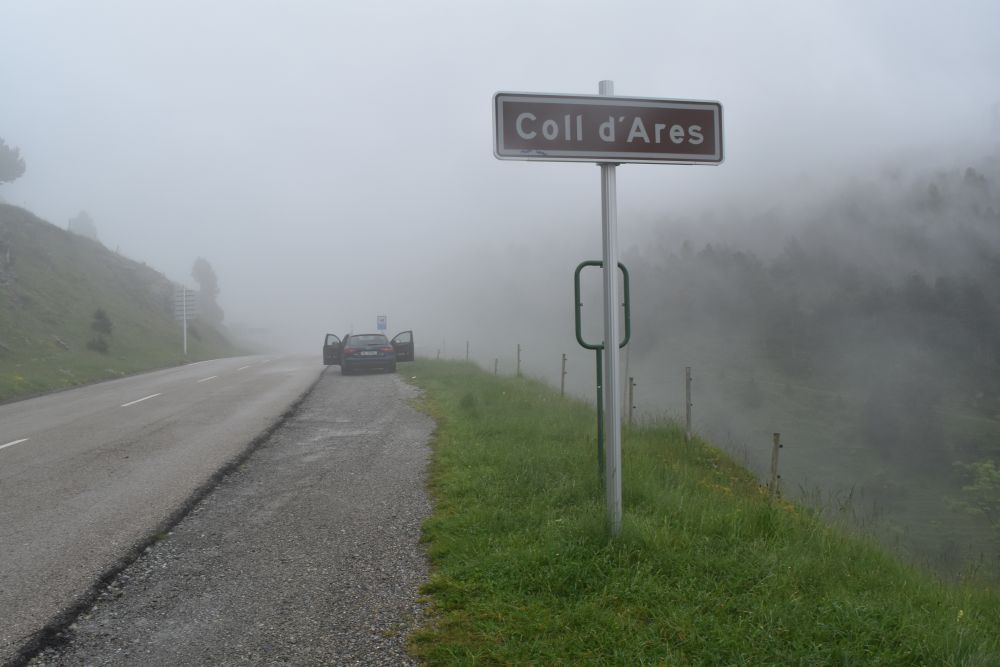
We reach the Pyrenees and drive uphill on a sinuous road. It starts to rain. At the Coll d’Ares or Col d’Arès we cross the border to France. This sign promises great photos here.

DSC_0780 small

And this was the view… it WAS misty here.

DSC_0781 small

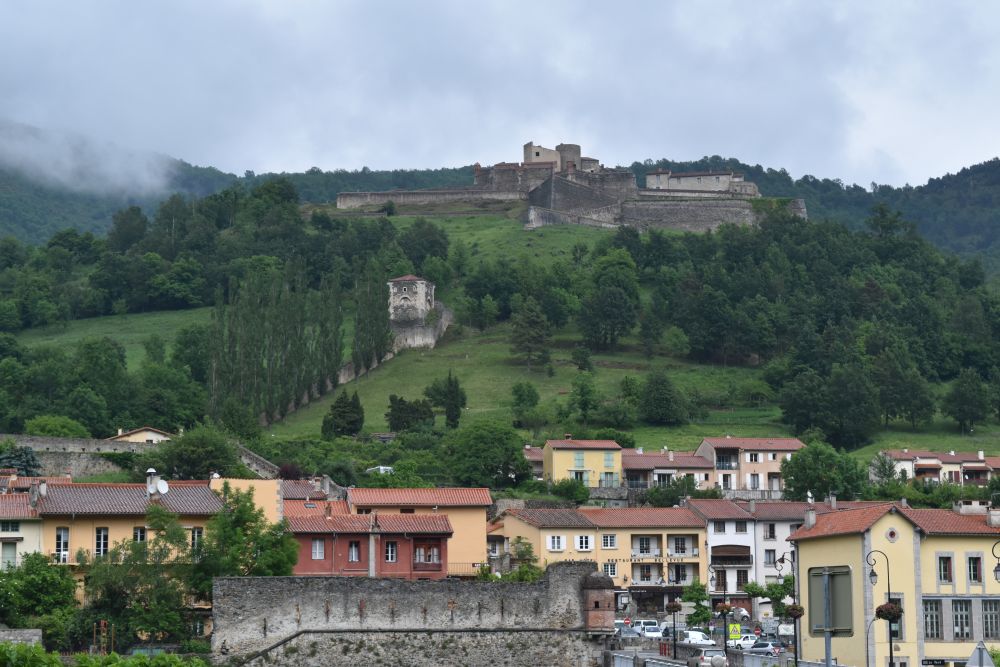
Above Prats-de-Mollo, Vauban (the architect of Louis XIV) has built the Fort Lagarde with the bastions typical of his strategy of defense (late 17th century). In the narrow streets the traffic halts for some time, as a lorry got stuck. All cars are waiting calmly.

DSC_0784 small

At Narbonne we take the motorway. Heavy wind makes the cypresses bend. We cross the vineyards of the Langedoc-Roussilon and reach gorgeous Carcassone where we stop for a night.

.

Carcassone – a fairy tale fortress

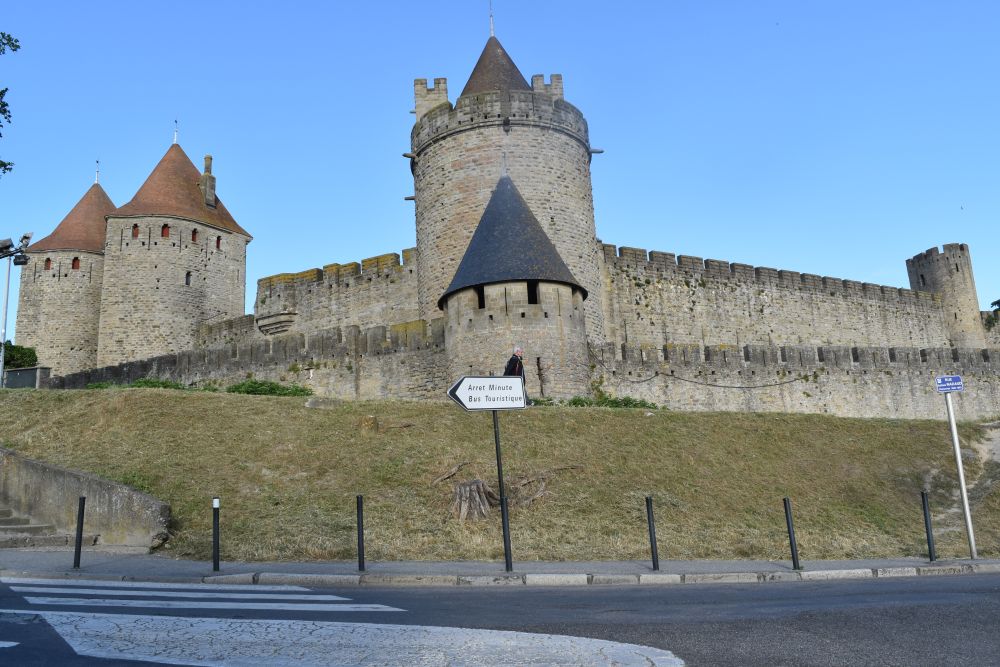
Carcassone is located in the Aude plain between the Massif Central and the Pyrenees. It was of strategic importance. The Romans had a fortification here, the Visigoths conquered it in the 5th century and the Saracens defended it successfully in the 8th century. Around 1200 the Cathars used it. In the Hundred Years War it withstood attacks by the English. Until the 17th century it was a fortress at the border between Aragon (Spain) and France, but then the Languedoc-Roussillon was transferred to France and Carcassone lost its importance as a fortress (“Carcassone – katharische Burgen”, Estel 2011).

Tourists love Carcassone. Buses are allowed to to stop here for a few minutes and “download” tourists.

DSC_0813 small

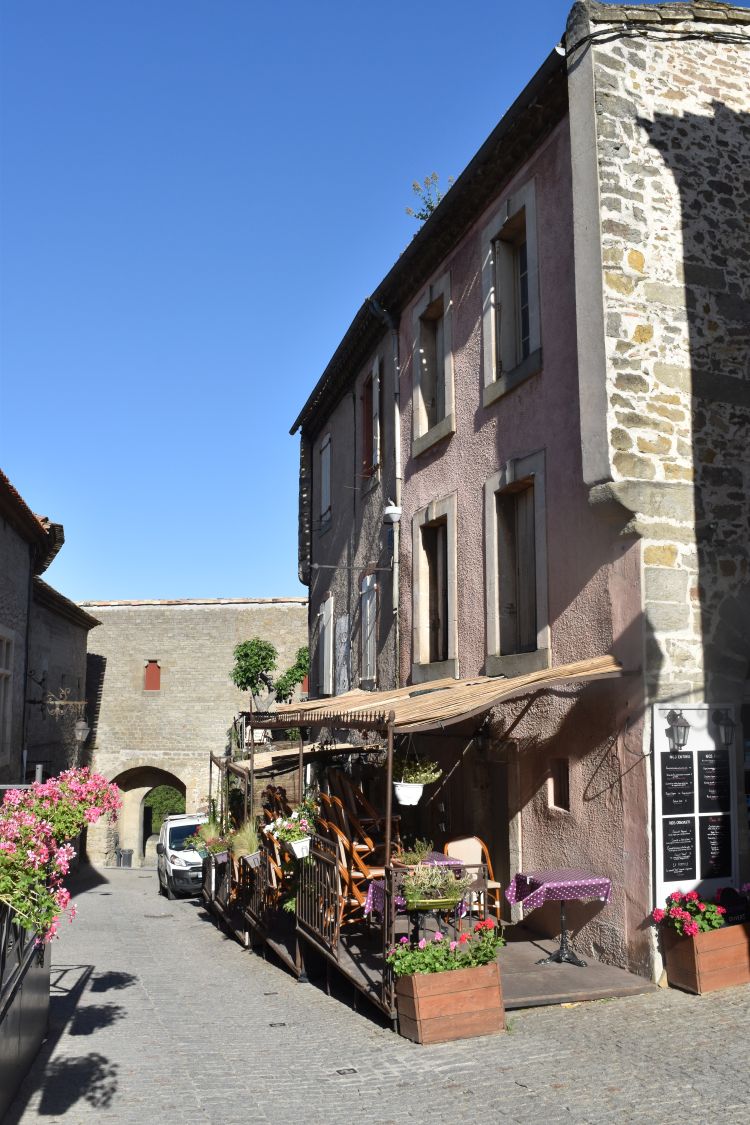
Inside the walls is a city with narrow streets. Many restaurants invite for dinner…

DSC_0828 small

… and many, many shops invite to buy souvenirs (but not to sit down).

DSC_0819 small

The restaurants offer home made cassoulet (fait maison). This meal is more for people who have worked in the fields all day.

DSC_0821 small

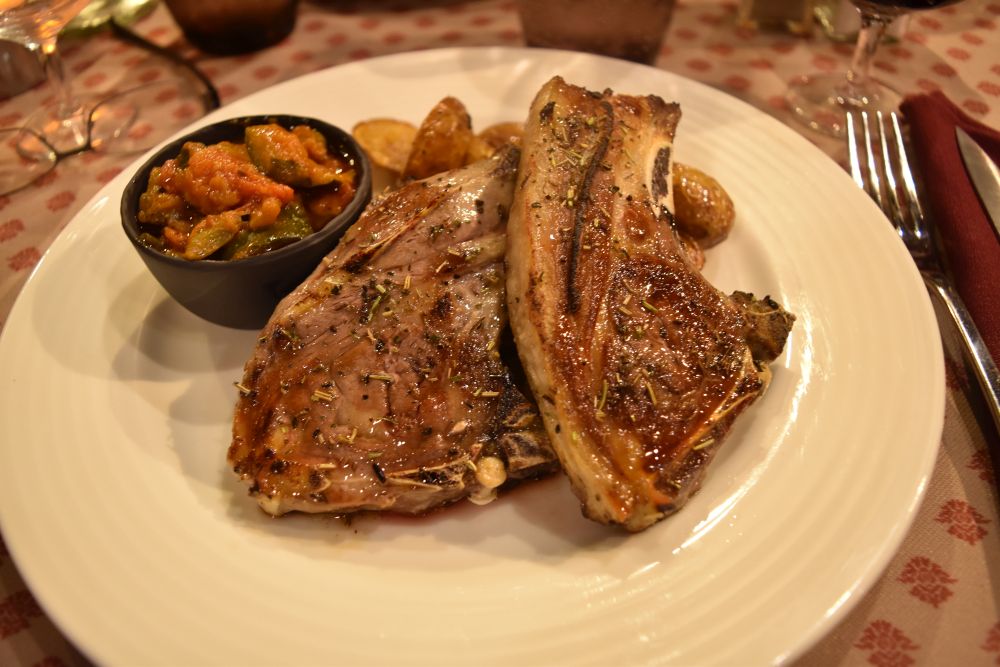
I prefer lamb with herbs.

DSC_0801 small

… and then we sleep well in our quiet hotel.