In Kraków – back again for a short visit and a Fondue with friends

Also this year I am flying to Kraków, just for two days. I want to see my friends and share a cheese fondue with them. I also intend to visit some of my favorite places.

.

Friday morning – 4 am – this IS early

The alarm clock wakes me up at 4am. This IS early. The taxi driver talks about the philosophy of the Dervishes and about how much he wished tolerance between religions in this world – he is from Konya. I agree with him.

Shortly after 9 am my plane lands in Kraków airport. The new airport is now in use – there is much space and all is modern. Perhaps Berlin should come and learn from the Krakówians, how to complete building an airport… An hour later I am already in the city center.

.

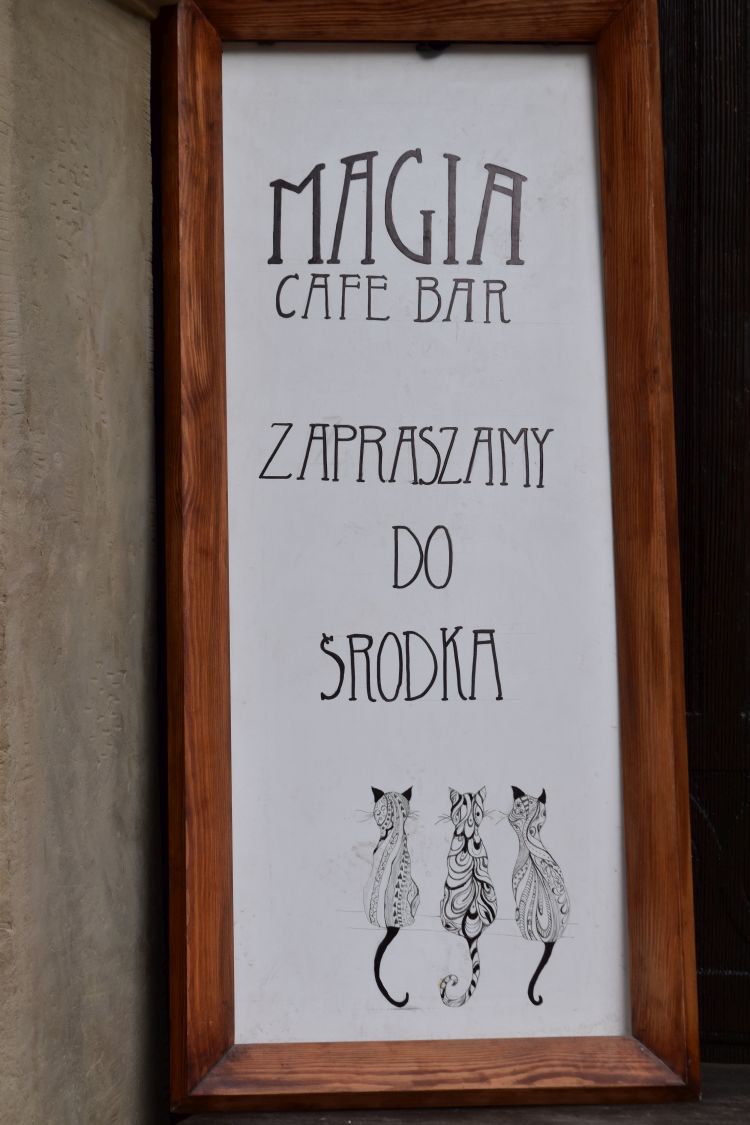
The yoghurt with nuts and honey in the Magia Coffee Bar strengthens me

The Magia is one of my favorite coffee bars in Kraków. The internet welcomes me immediately. I am hungry and order the yoghurt with nuts and honey – delicious as always. I feel better after my early flight.
aaa_0613-small

.

The Christmas market on the Rynek

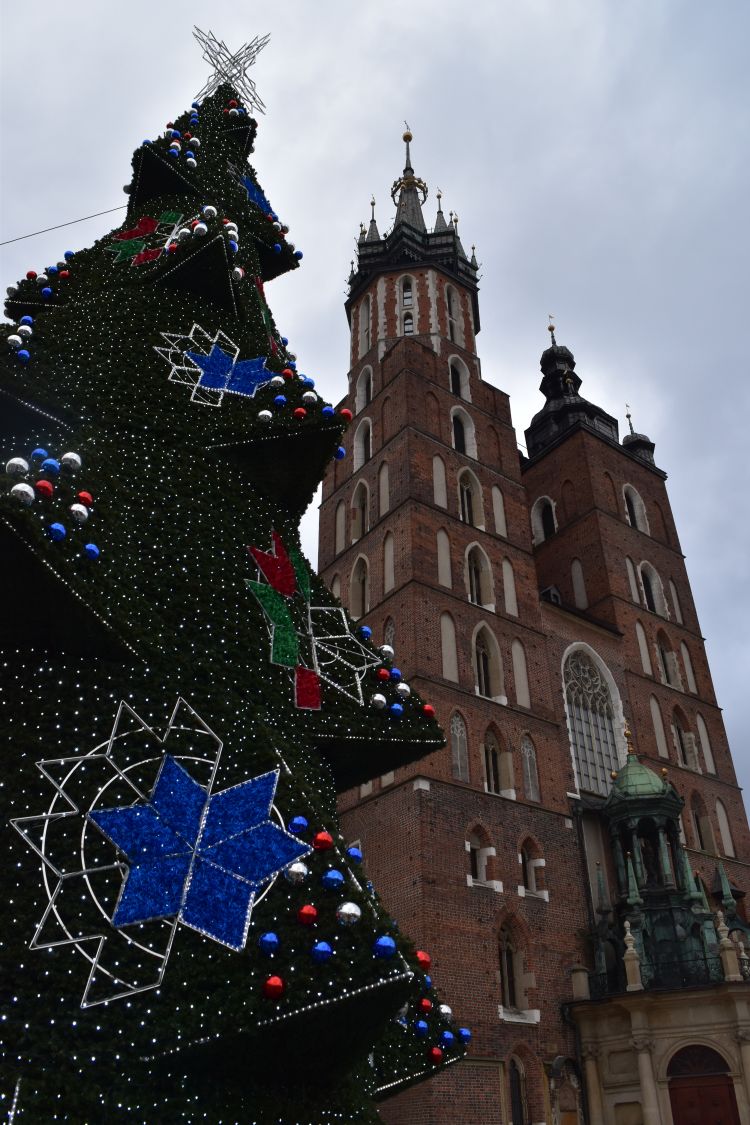
The Christmas market is busy. The Krakówians have set up a colorful Christmas tree in front of St. Mary’s cathedral.
aaa_0622-small

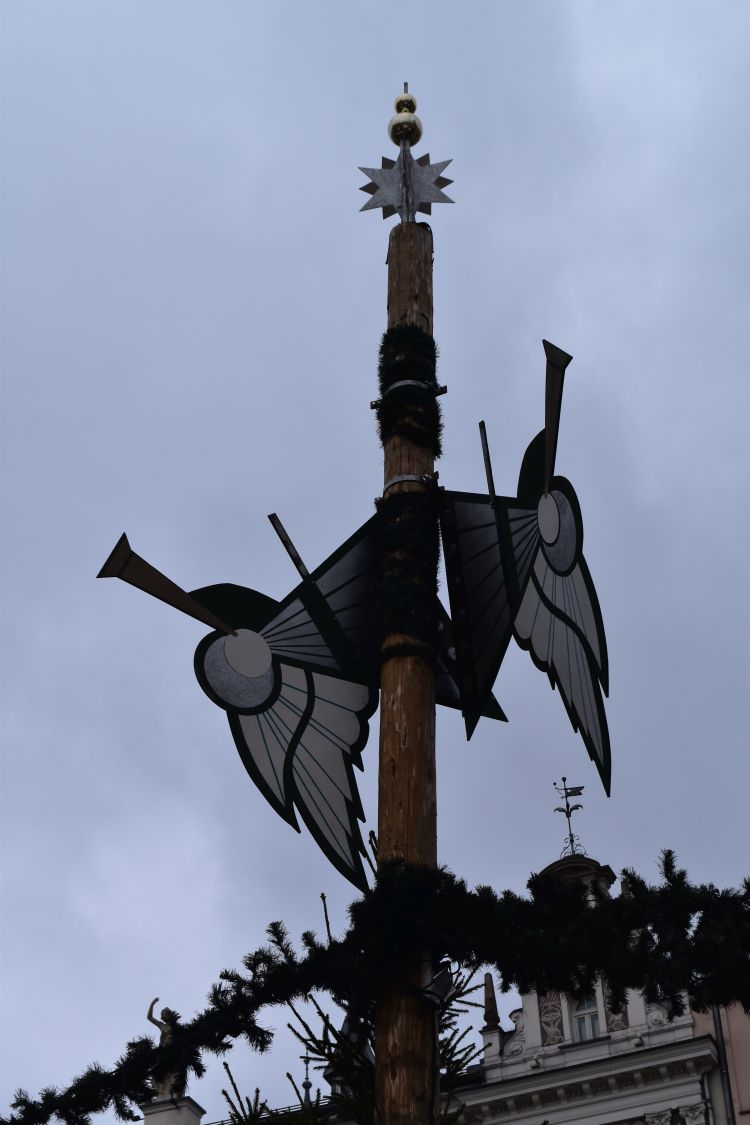
The weather must have been very windy – some of the angels are hanging heads down.
aaa_0626-small

I stroll amidst tourists. The dragon or smok of Kraków is omnipresent, in all colors. I did not know that dragons can be black and pink and even purple as well… are dragons not green “in reality”?

aaa_0630-small

It is chilly and I take a Zurek (a sour rye flour soup) to warm me up.

aaa_0632-small

.

Saying hello to some of my favorite places in Stare Miasto

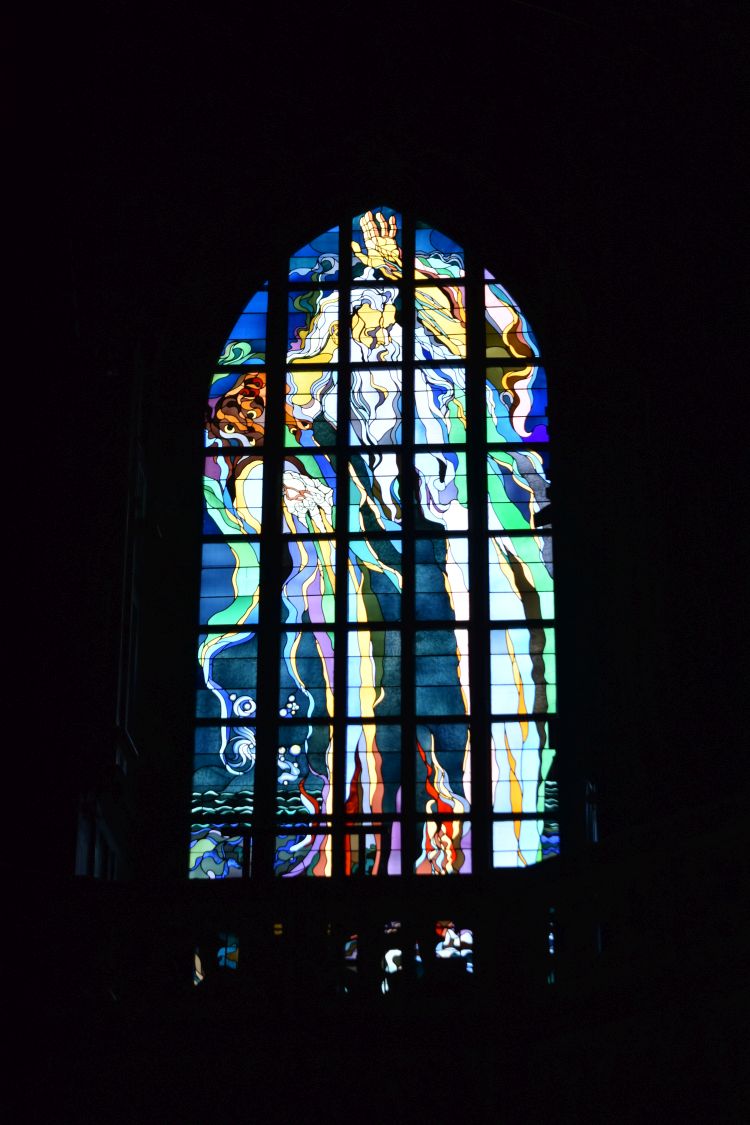
I enter St. Mary’s Church for a short moment of reflection, slender through the Sukiennice (Cloth Hall from Renaissance times) and sadly look at the tower that remained from the old 14th century townhall (Ferdinand of Vienna and Habsburg, why did you destroy this town hall in 1820?). I move on to the old university of 1364 (Collegium Maius). Then I stop in the solemnity of the gothic Franciscan church and admire the gorgeous modern art window “Become” by Wyspianski.
aaa_0641-small

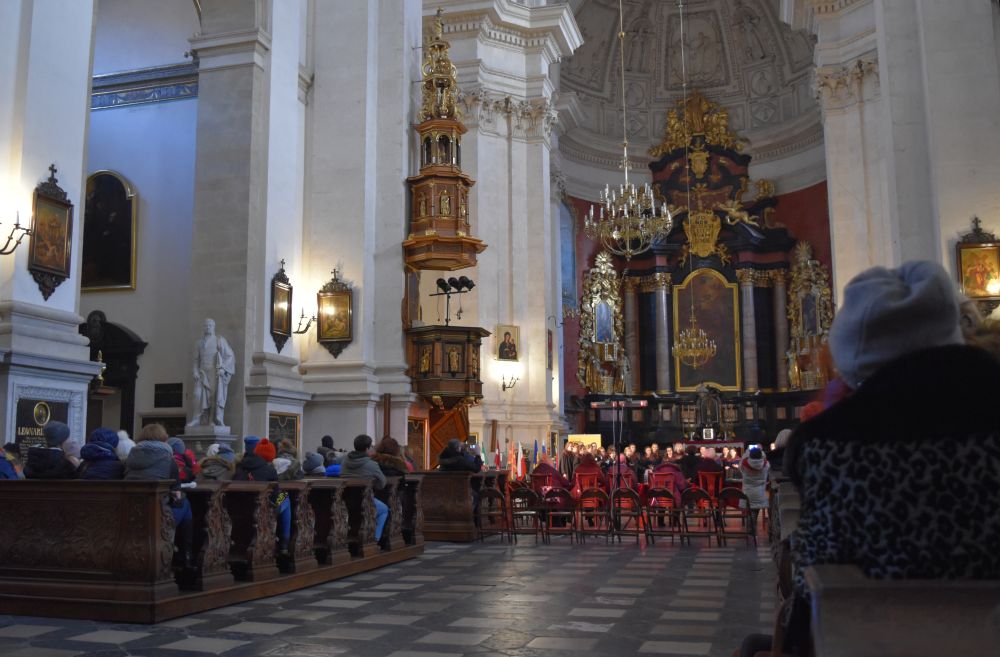
The baroque Peter and Paul Church is being renovated. There is a youth choir festival in Kraków and young groups are singing in this church.
aaa_0680-small

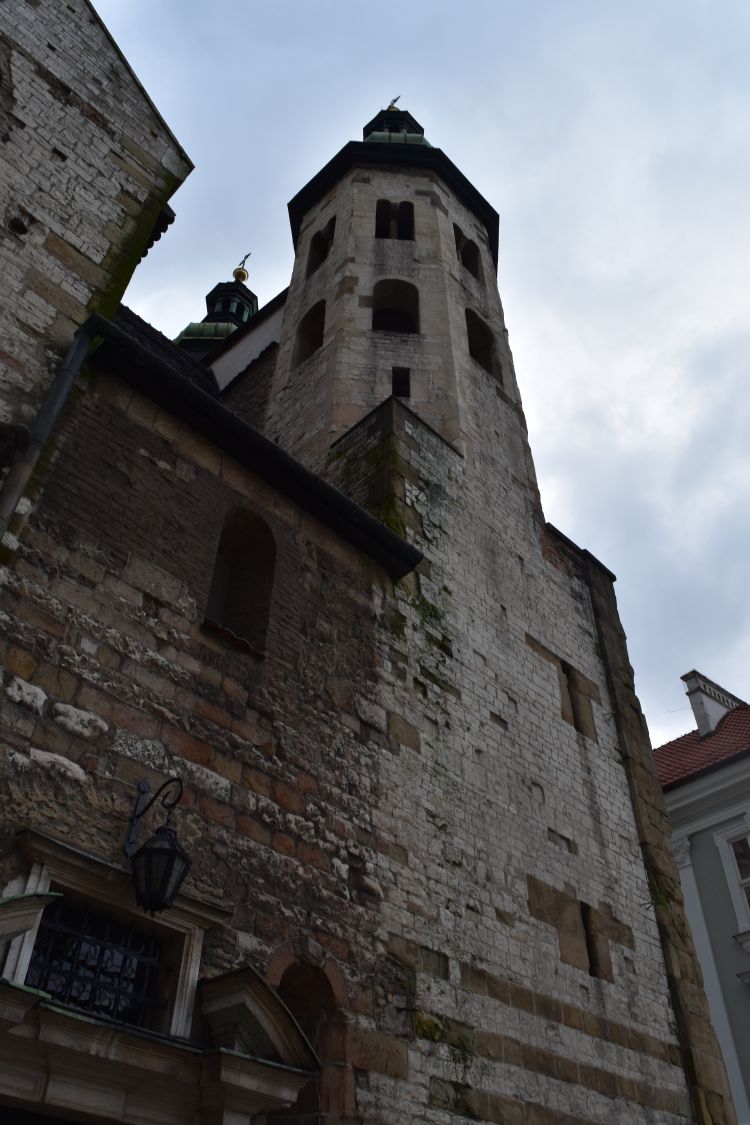
The romanesque Saint Andrews Church is next to St. Peter and Paul’s church.
aaa_0645-small

.

Continuing to Kazimierz, the former Jewish quarter

Walking by the Wawel castle I enter Kazimierz, the former Jewish city. I reflect woefully what I had read in my faithful guide book, when eating my yoghurt with nuts this morning: Former Kraków was a tolerant city. Christians (from catholic and orthodox belief), Muslims and Jews lived together peacefully, and later, also protestants joined. Poland guaranteed the freedom of belief in 1573 (Source: M. Niedzielska and Jan Szurmant:”Krakau”, Michael Müller Verlag 2011). Then in 1697, a hundred years later, August the Strong from Saxony converted to catholism, when he was elected king of Poland. Today we perceive Poland as being a Roman catholic country. And here in Kazimierz I am reminded of what has happened to the Jewish community in the 1930s and 1940s. I always feel guilty for that.

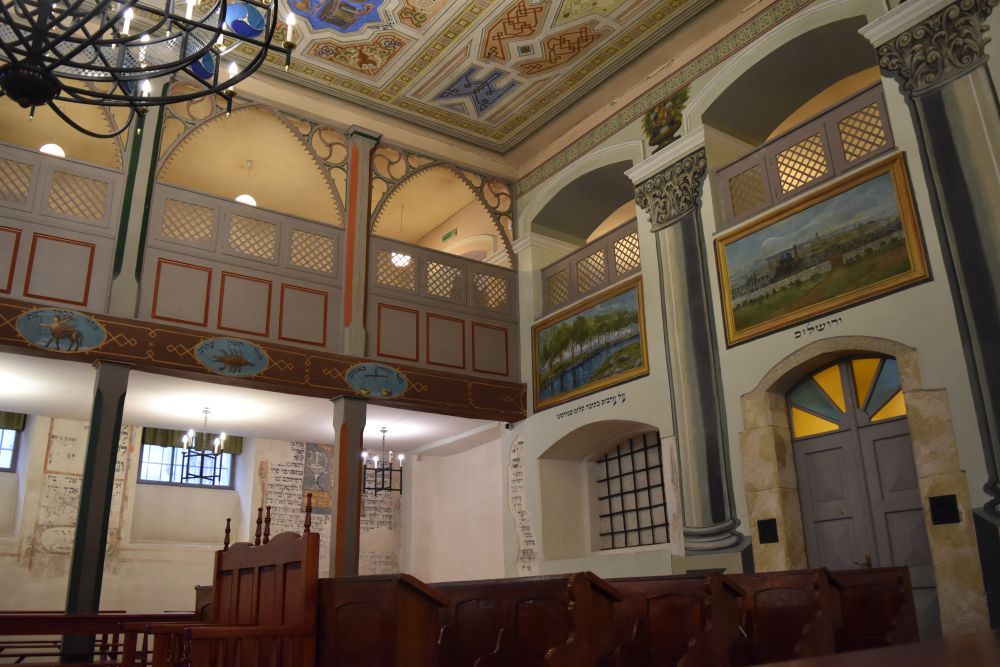
Today, I discover Jewish life again: The Kupa Synagogue has been reopened, and visitors are invited. I have never been in a synagogue before and enter respectfully.
aaa_0646-small

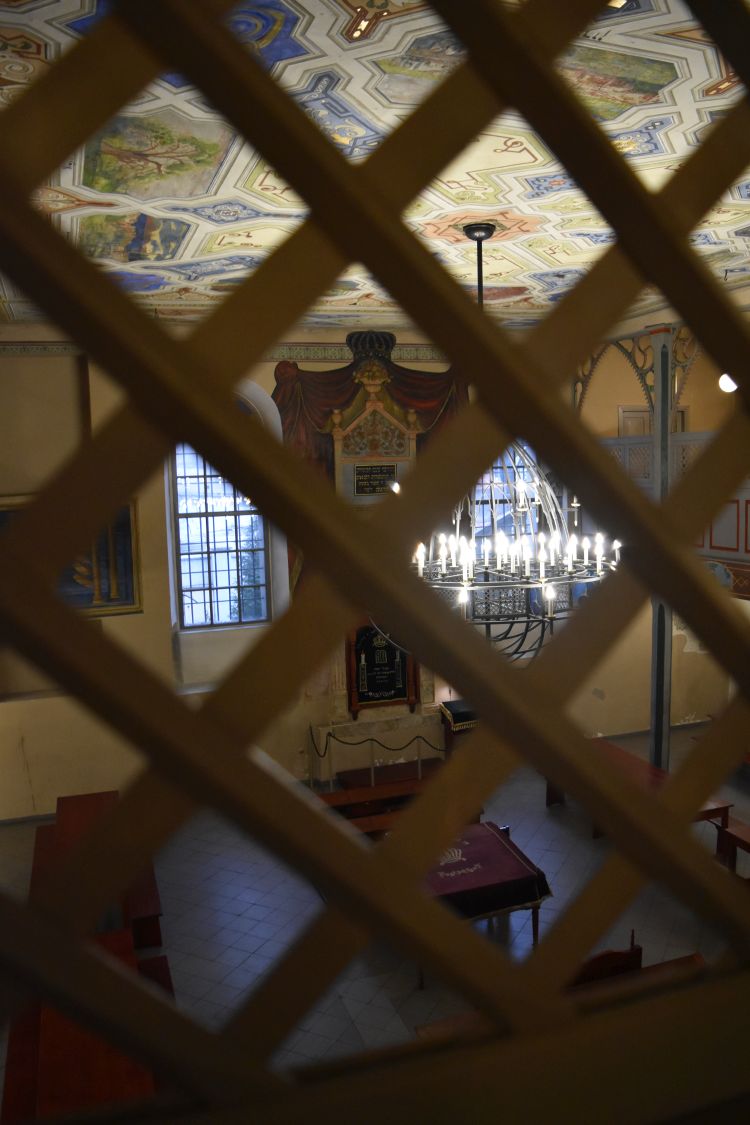
This is the view from the second floor where the women pray.
aaa_0651-small

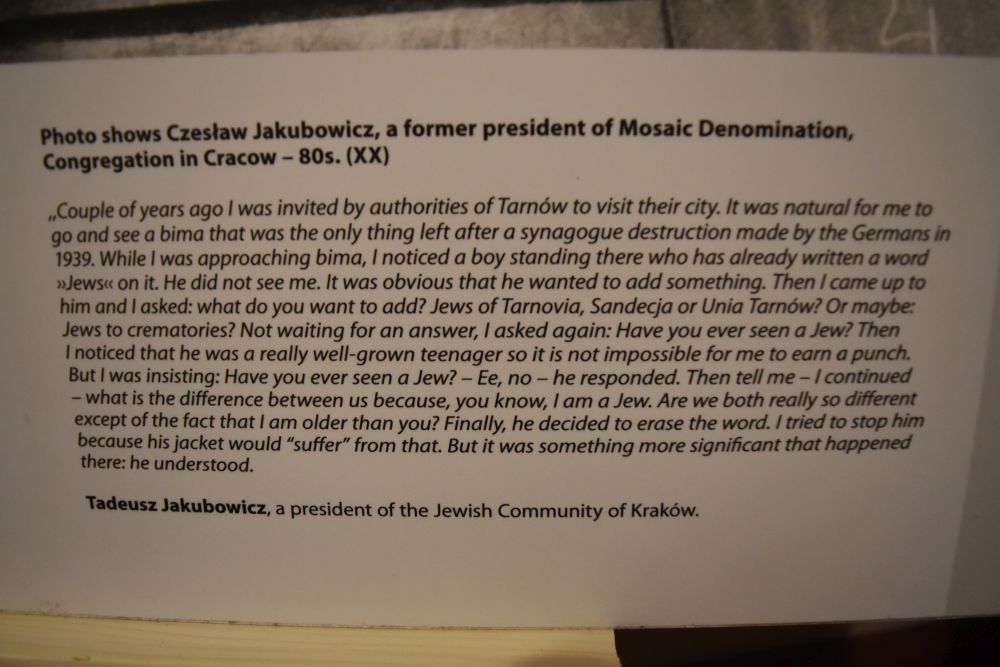
There is a photo exhibition here. I am impressd by this statement:
aaa_0655-small

I wish we would find back to tolerance –  as wished my taxi driver from Konya early this morning. Happily I say good-bye to this small synagogue that I hope will be another sustainable start for tolerance, not only in Poland, but also in this world. And I do hope that especially Poland might find back to its earlier roots, when people with various religions and from various countries lived together here. And when it was a center of European culture and education.

.

Tea in the Czajowina and a walk along the Wisla

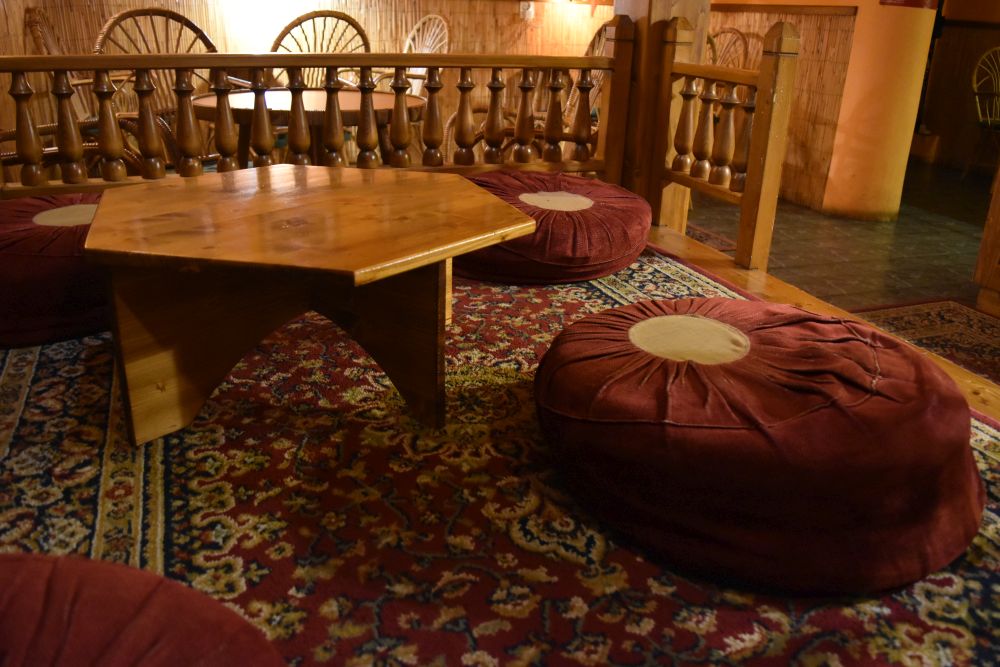
It is chilly and I need to warm up again. I have an Assam tea in the cosy Czajowina in Józefa street. There are so many cosy coffee and tea places in Kraków and this is one of my favorite.
aaa_0661-small

At four pm it is already dark. I walk down to the Wisla and follow it. The white Stanislaus church on the rock shines in the dark.

aaa_0662-small

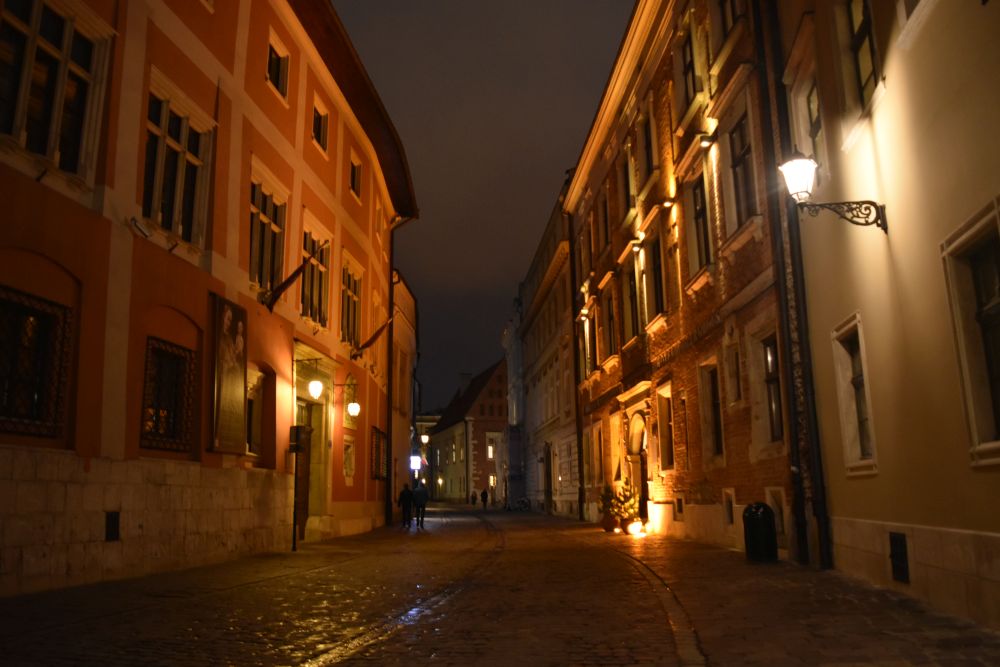
I walk around the Wawel hill to catch up with Kanonicza street. This morning I had also learnt that the last years of the golden age of Kraków happened during Renaissance and that king Sigismund I had taken his wife from the Sforza family in Milano. She hired Italian architects and consequently the Kanonicza street with its Renaissance palaces could be located in Italy, but no, we are in Kraków right now.
aaa_0664-small

The history of towns is present in their architecture, and I always discover more of the history of Kraków, when I return.

With Radek, I close the day in the Sushi restaurant Zen near the Rynek. We have not seen one another for a year, there is a lot to chat. I look forward to another day in Kraków and our fondue evening.


To the north of Vienna – Grinzing, Altenberg and Neuburg

It is a rainy October day in and around Vienna. Our friends take the car out of the narrow, narrow garage and drive north of Vienna to the hills of the Wienerwald and the wetlands of the Danube.

.

Grinzing – THE tourist place for Heurigen

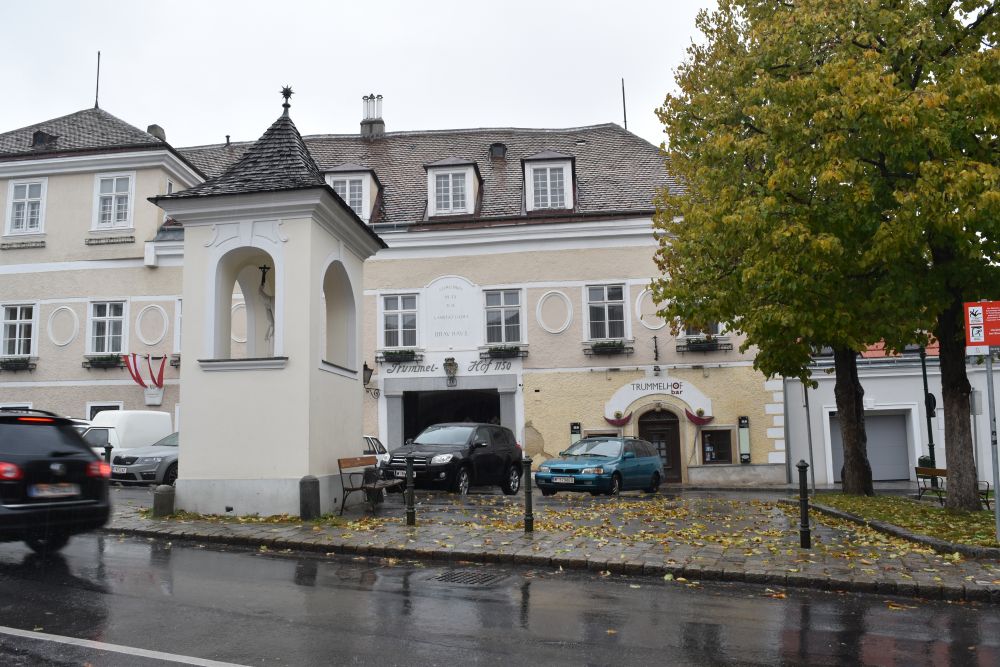
This is a quick impression of Grinzing located north of Vienna. It is THE tourist place for “Heurigen” (taverns that serve new wine). The Trummelhof is their most traditional tavern – its roots go back to the times of the House of Babenberg around 1150.

aaa_0296-small

.

Altenberg and the wetlands of the Danube – the home of excellent scientists

We continue our way to Altenberg where my friends have family roots. They were neighbors of Konrad Lorenz that here, in the wetlands of the Danube, studied geese, crows and dogs (he owned a mixture of chow and shepherd). My gift drawer always contains his book “So kam der Mensch auf den Hund” (“Man meets Dog”). Another of their neighbors was Karl Popper – his thoughts about conjectures and refutations (Verifikation und Falsifikation) had shaped my critical mind about statistical analysis and making hypotheses. And all these achievements had their foundation in this small village of Altenberg north of Vienna.

.

The Wienerwald with Lourdes

The hills north of Vienna are called “Wienerwald”. Wienerwald? When I was young, this was the name of a chain of restaurants that provided poultry with french fries – often in baskets. Now I see, this is also the name of the hills north of Vienna. From here the Polish king Sobieski attacked and defeated the Turks in 1683, when they besieged Vienna.

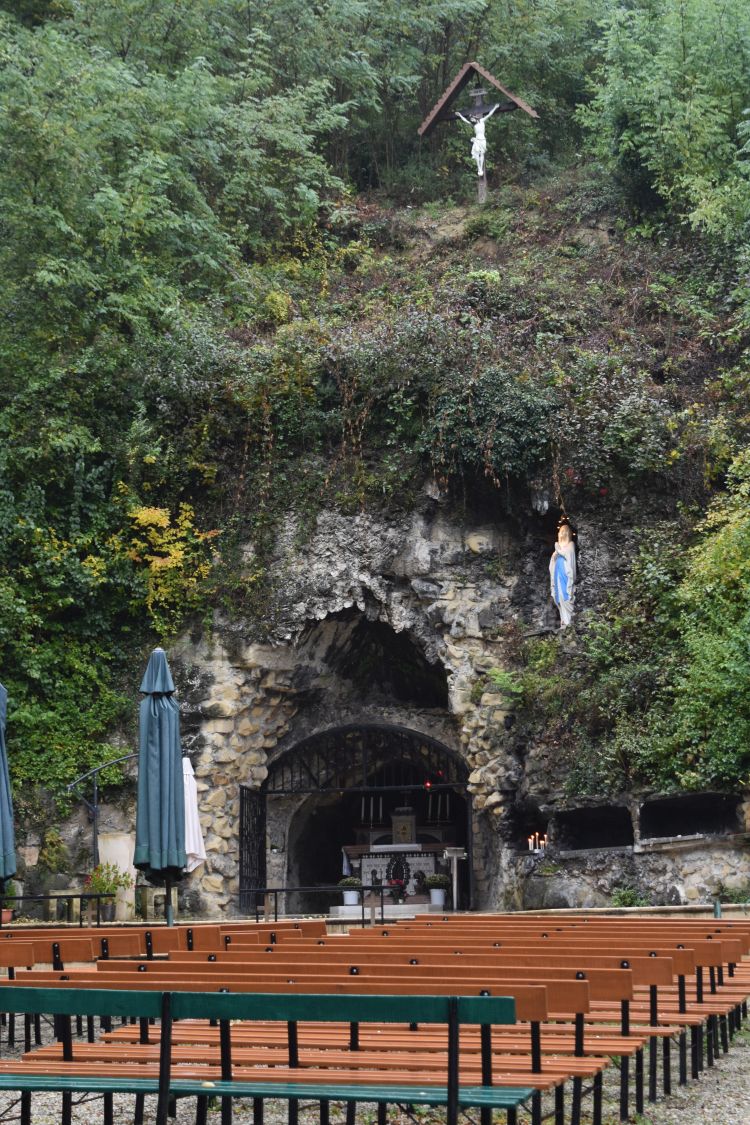
In the hills there is a pilgrimage place called Lourdes (pronounced Lurd-e-s). The Granma of the cousin of my friends had donated the land to set up the pilgrimage, though being protestant. Today we are alone here in the pouring rain. We find the guard in his small wooden house near the site and buy a map. He is surprised to see guests on this rainy day.

aaa_0334-small

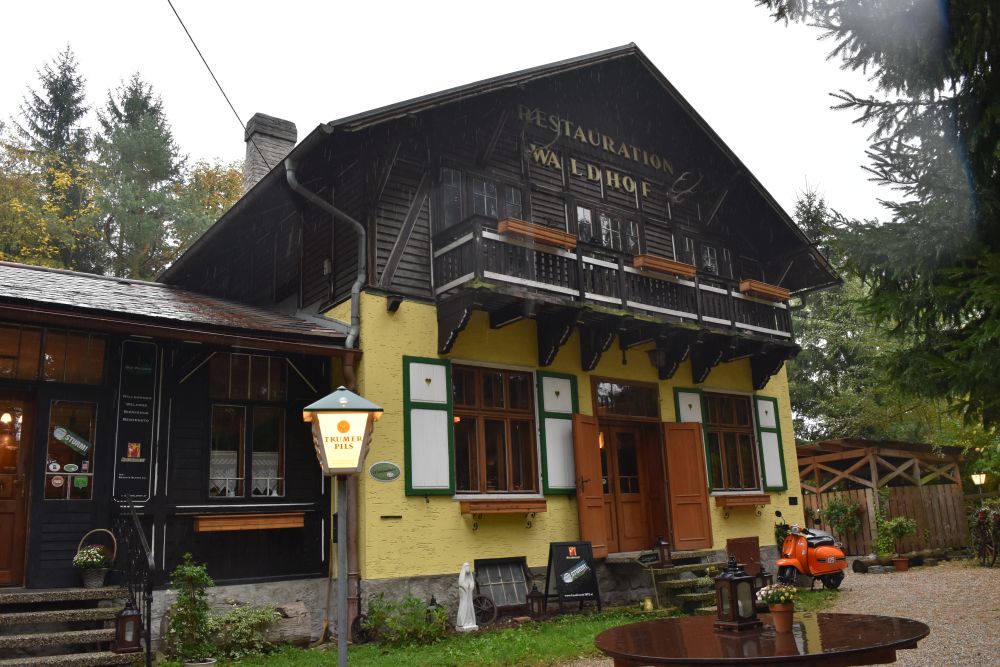
Nearby we escape the rain in the restaurant Waldhaus (there are even rain drops on my optical lens).

aaa_0350-small

We sit down in the cosy room. I  have roasted pork with Serviettenknödel. I learn that for “Serviettenknödel” you roll up the paste in a napkin (Serviette) and then cut pieces from the resulting “snake”. My meal was solid, but tasty. With it we drink “Sturm”. This is freshly fermented raisin juice – and when it becomes available in Vienna, they announce it as “Sturm-Alarm” (“storm alarm”).

.

Kloster Stift Neuburg – Monastery and Wine Cellar

After our tasty and solid meal we stop in Neuburg on a rocky hill above the Danube.  The margraves and dukes of Babenberg are still very present here. Hotels and restaurants are called after them. The Babenbergs had died out in the 13th century – then the Habsburgians took over in Austria.

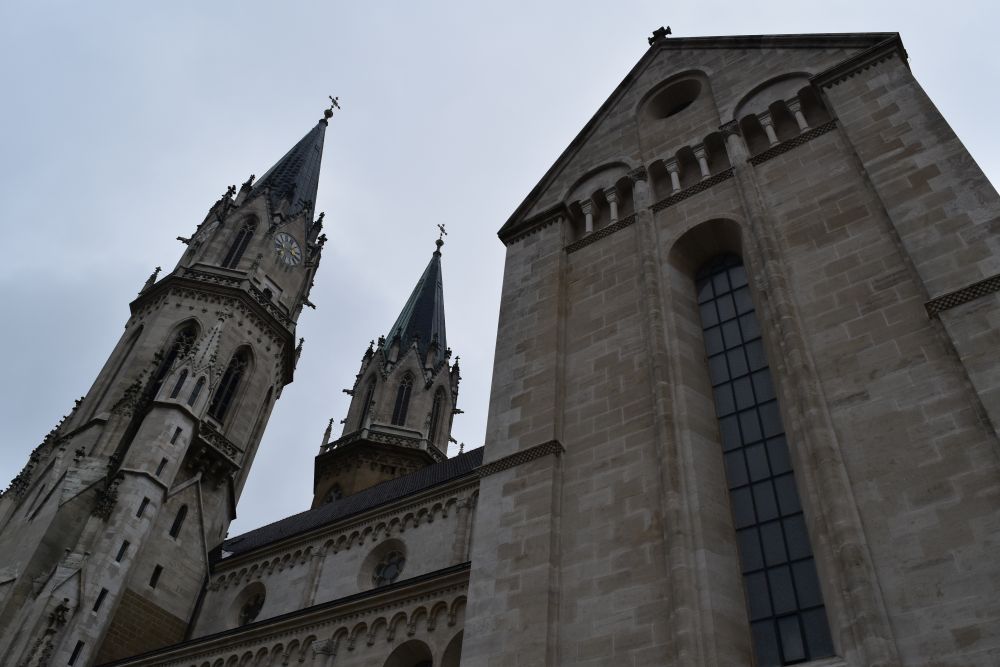
The Babenbergs founded the monastery  Kloster Stift Neuburg in the 12th century. It was an Augustinian monastery for women.

aaa_0358-small

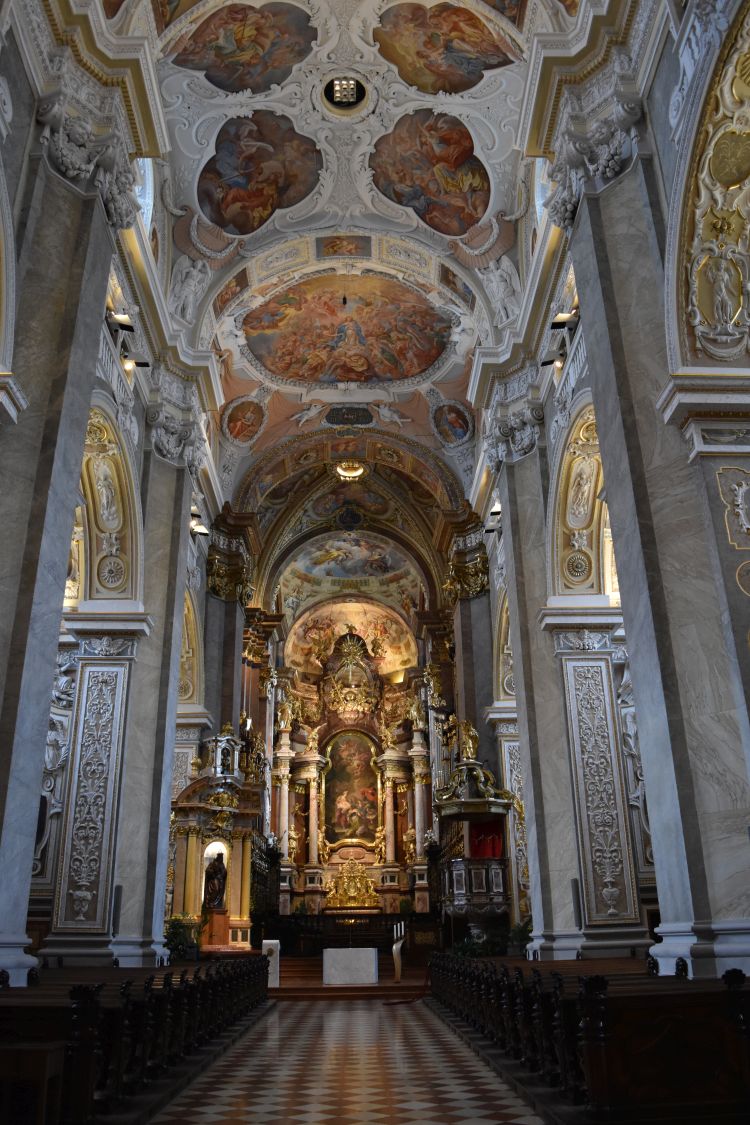
The church inside is baroque.

aaa_0357-small

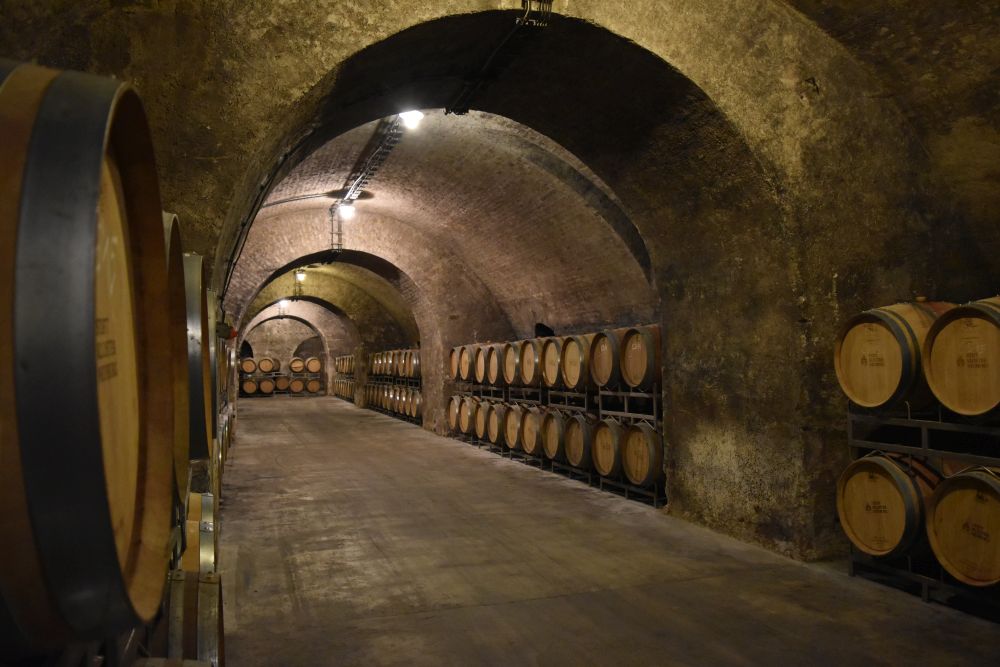
We visit the wine production and the caves that go down 35m in the rock to reach the level of the Danube. The walls are 10m thick, with a gap that allows the air to circulate and keep the cellar dry. The oldest wine bottle stored here is from 1938. Also the museums of Vienna use the excellent climate of the cellars to store material in it.

aaa_0368-small

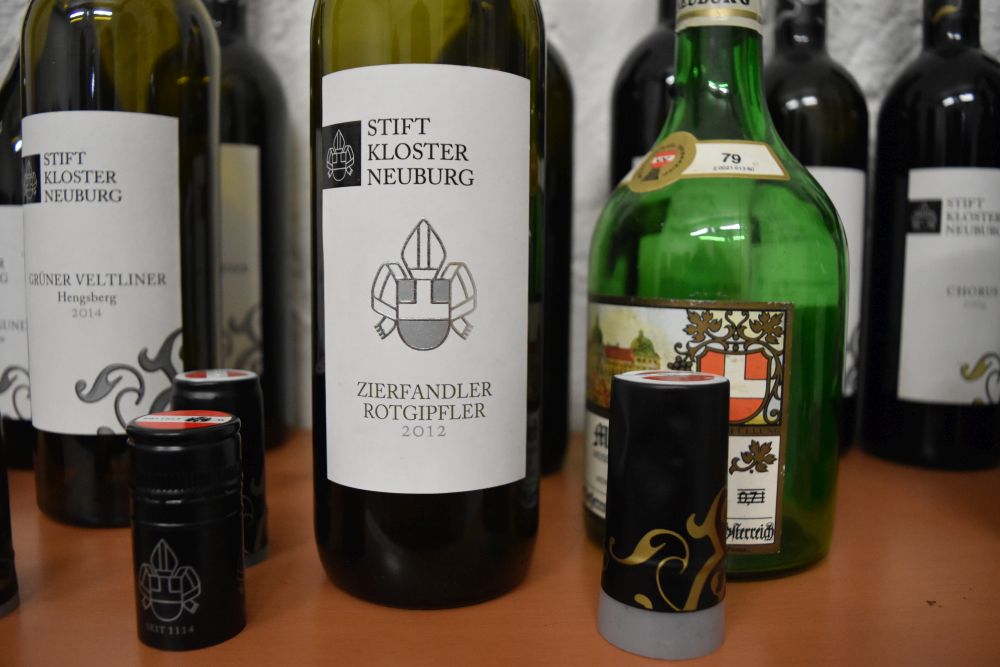
I learn about the Austrian white grapes called Rotgipfler  and Zierfandler. This is an assemblage of the two.

aaa_0372-small

I buy some St.Laurent, a Pinot Noir that made a gold medal and Patronis, which is dedicated to Leopold and Agnes, the founders of the monastery.

There is a legend related to the foundation of the monastery. When Margrave Leopold III of Babenberg married Agnes von Waiblingen, a sudden windswept carried away the veil of Agnes. Nine years later Leopold found the veil in the forest on an elder bush – undamaged. He decided that this must be a sign of Heaven telling him to build the monastery here – and he founded this monastery – Kloster Stift Neuburg. The plate at the entrance to the wine cellar illustrates the legend.

aaa_0365-small

.

Culture in the evening: Tschaikowskij in the Musikverein

We finish off the day in the Musikverein (Grosser Saal). Vladimir Fedosejev directs the Vienna Symphony Orchestra. He is 84 years old and vital. The orchestra plays Tschaikowskij. Andrei Korobeinikovs (born in 1986) plays the piano in the b-Moll-piano concert. The young pianist makes a great impression on me. The comment about this Russian evening is enthusiastic. Thank you for this.

Vienna – visiting some churches

Let us visit some of the churches in Vienna (see Feliz Czeike: “Wien. Kunst, Kultur und Geschichte der Donaumetropole”, Dumont 2013) .

The best known church is the Stephansdom or St. Stephen’s Cathedral. It dominates the skyline of the city center – this is the view from the Softel tower.

aaa_0108-small

Its construction lasted from 1230 (romanesque style – west facade) to 1523 (gothic style). The tower – 136m high and called “Steffl” – was useful to observe the Turks, when they attacked Vienna in 1529 and 1683.

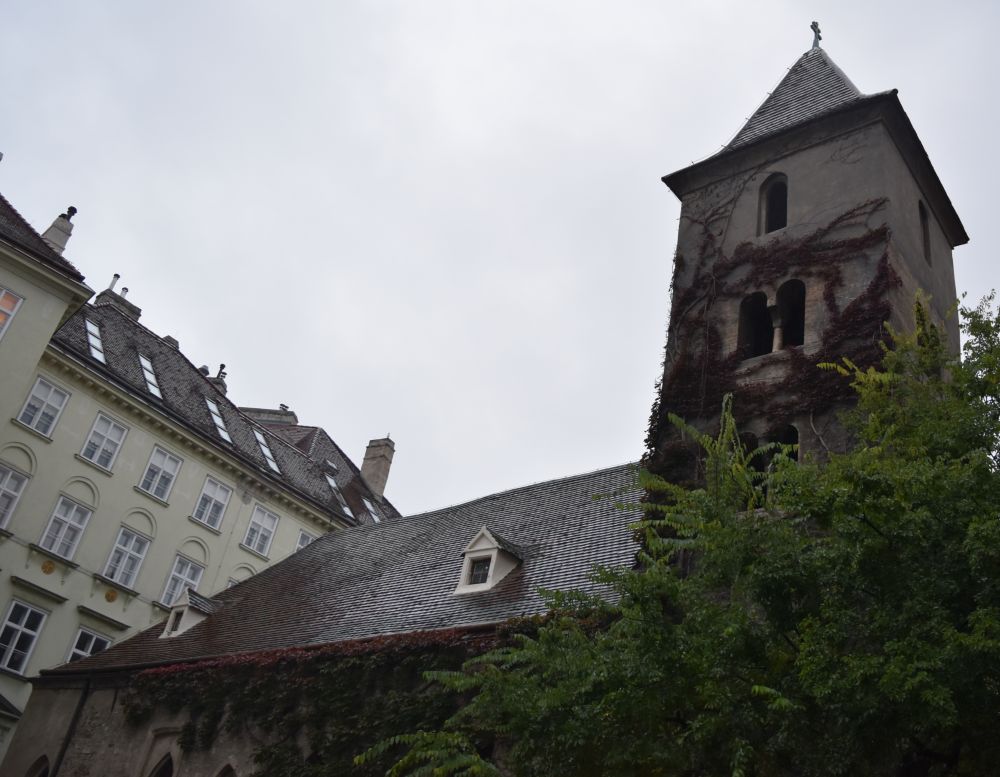
The oldest church in today’s Vienna is the romanesque Ruprechtskirche near the Danube Channel. It is assumed that part of it was built around 825 during Carolingian times (Dumont, p. 170).

aaa_0477-small

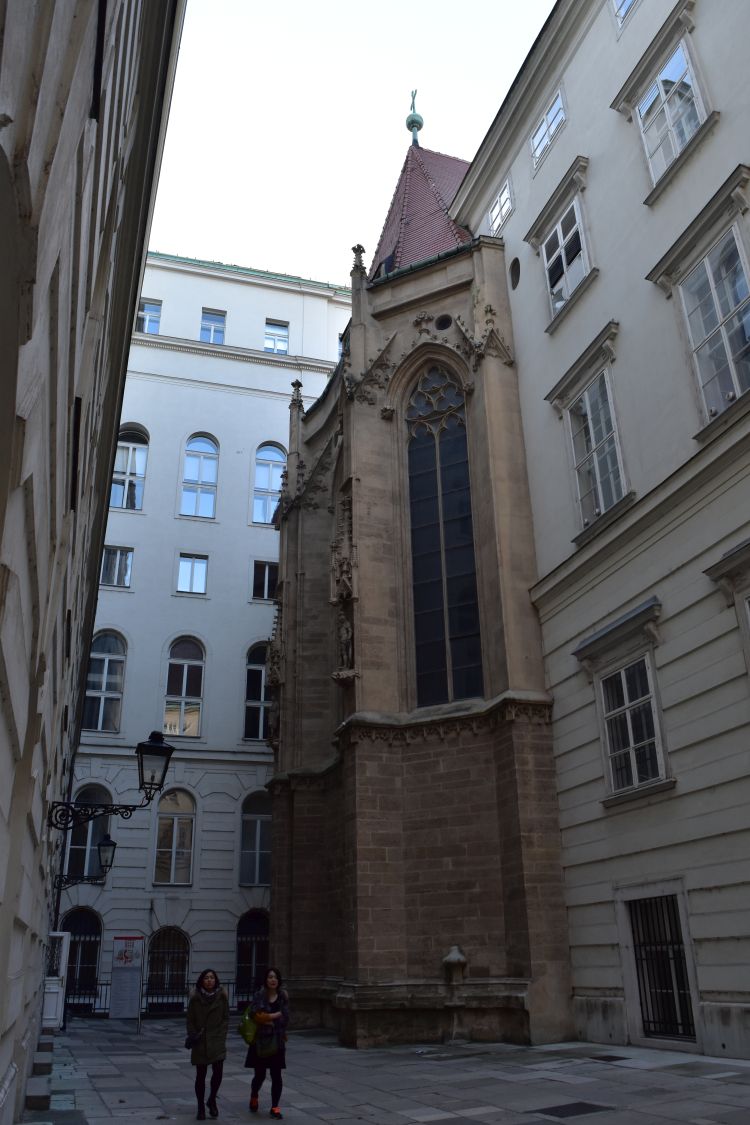
Not far from here we find the gothic church Maria am Gestade or St. Mary’s on the Bank from the 14th century, squeezed into the narrow streets of the city center, but well visible for the former mariners on the Danube. Today this church is used by the Czeks in Vienna.

aaa_0472-small

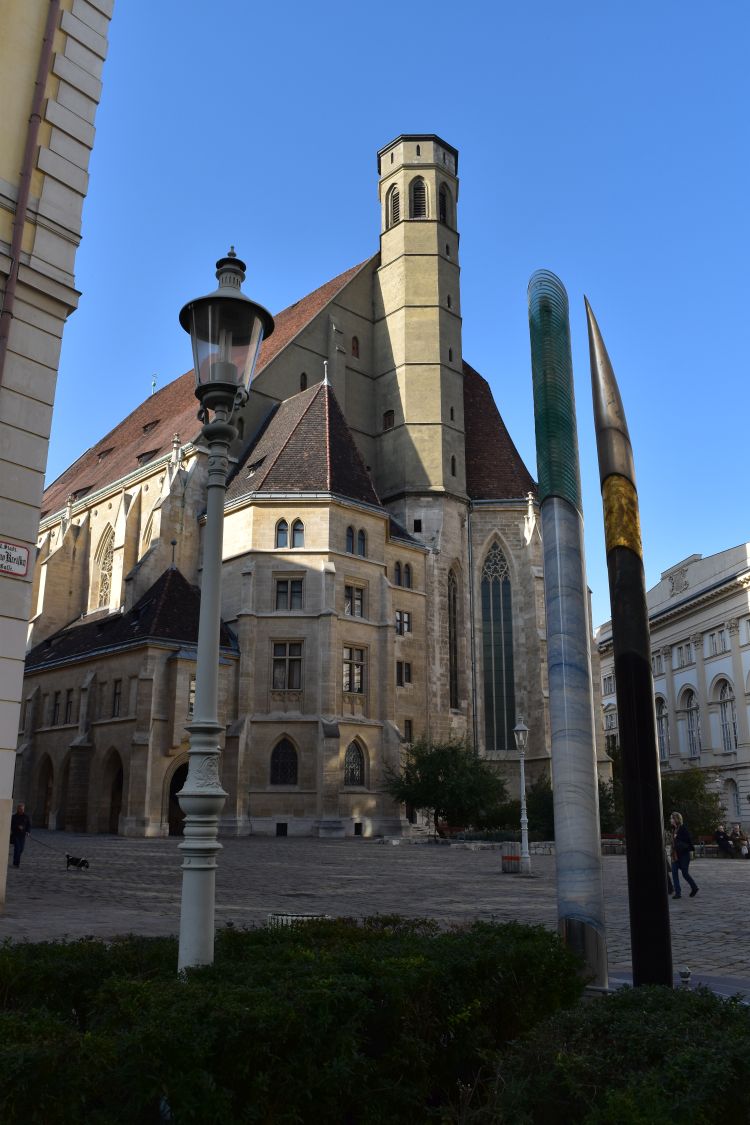
Near the Hofburg, we visit the gothic Minoritenkirche or Minorites Church today used by the Italians in Vienna. The original tower had been destroyed in 1683 and then topped with this flat roof. The sacistry house was added in 1909 – from outside the Minoriten church does almost not look like a church.

aaa_0028-small

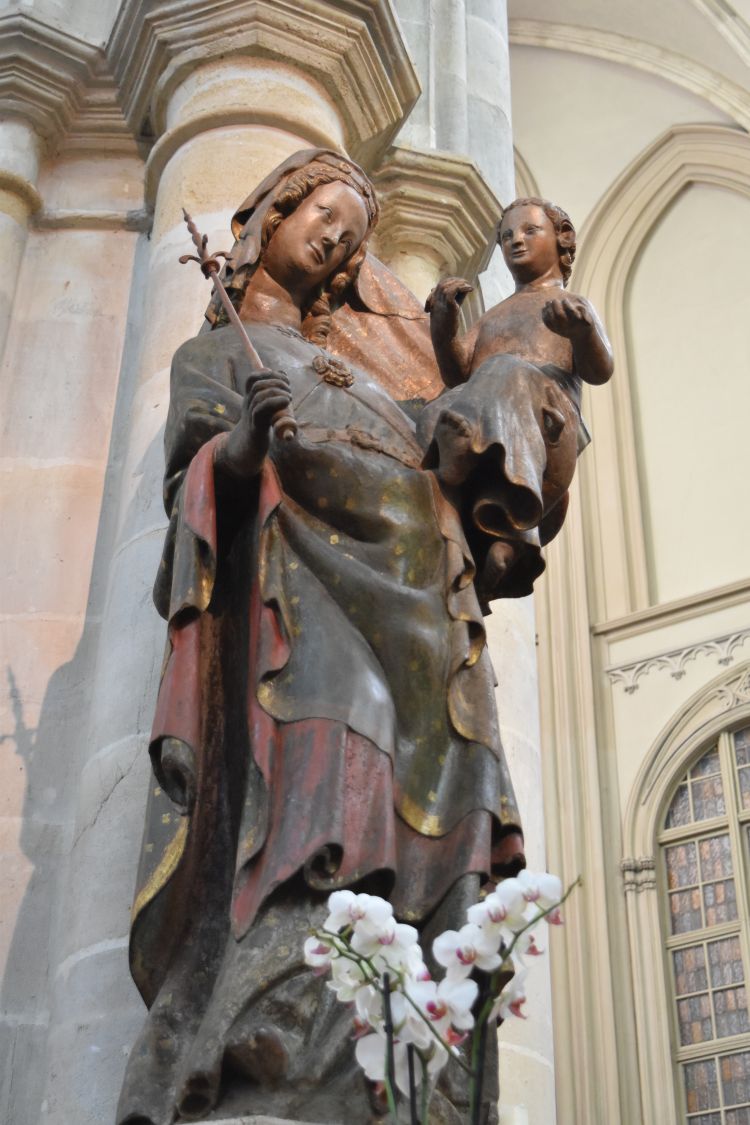
I like the solemn atmosphere inside and particularly this statue of Maria (Madonna della famiglia from ca 1350)

aaa_0022-small

The main chapel of the imperial Hofburg had to fit into the narrow streets around the castle.

aaa_0040%c2%a8small

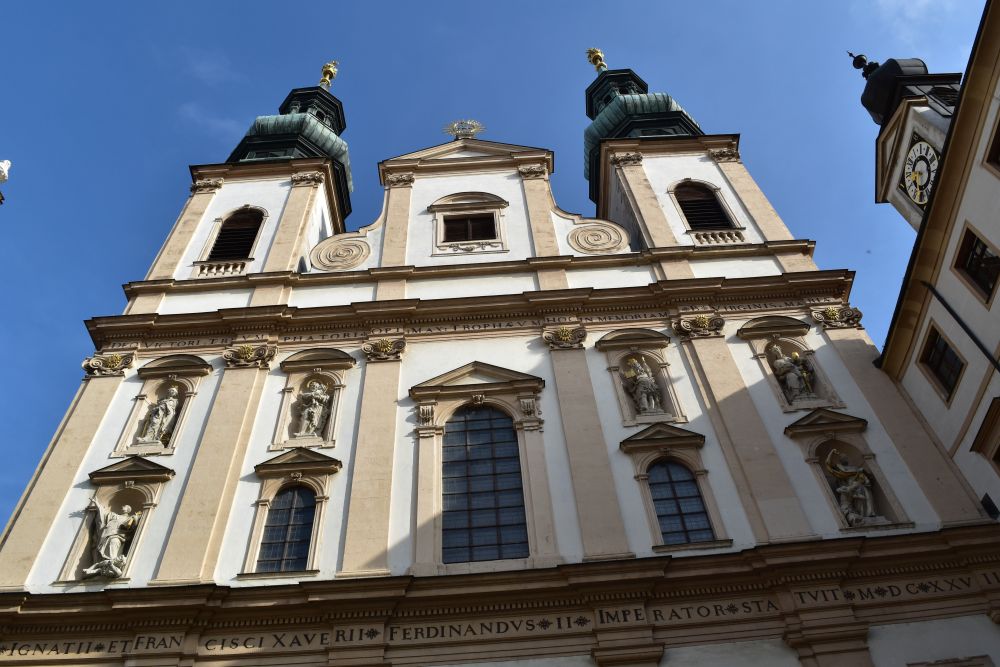
Many of the churches in Vienna are of baroque style. In the city center we visit the church that the Jesuits had built from 1623 – 27, next to their university.

aaa_1246-small

Inside the church has been opulently decorated.

aaa_1247-small

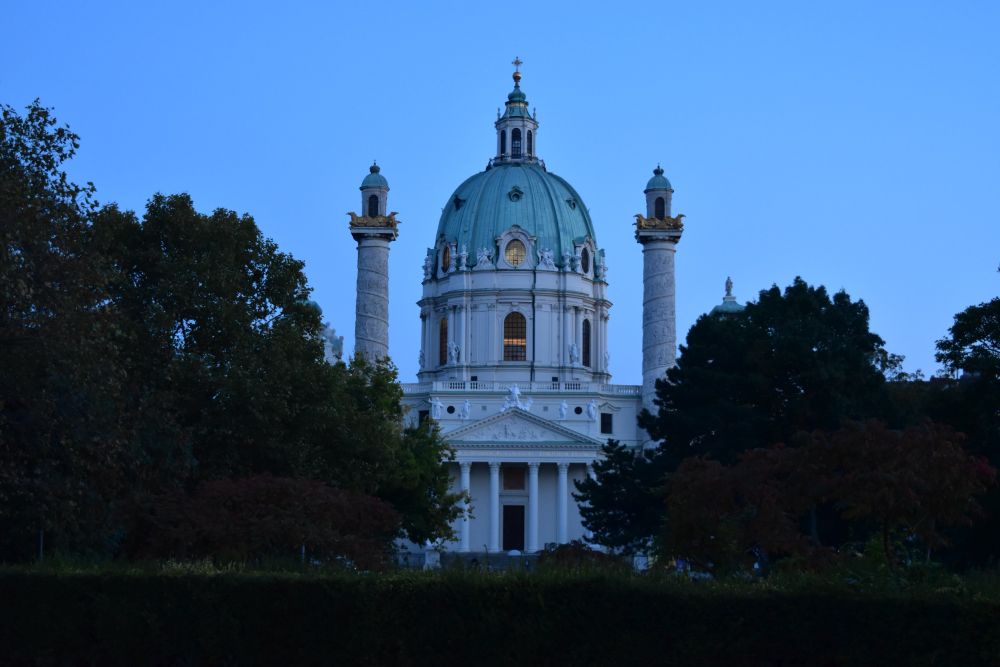
South of the old city walls is the Karlskirche or St. Charles’s Church (erected by Charles VI in 1716-1737 and dedicated to Charles Borromeo). The two towers remind me of minarets (apologies, and yes, I read in Dumont that they remind us of Roman victory columns and that they show the life of Saint Borromeo (Dumont, p. 244)).

aaa_0196-small

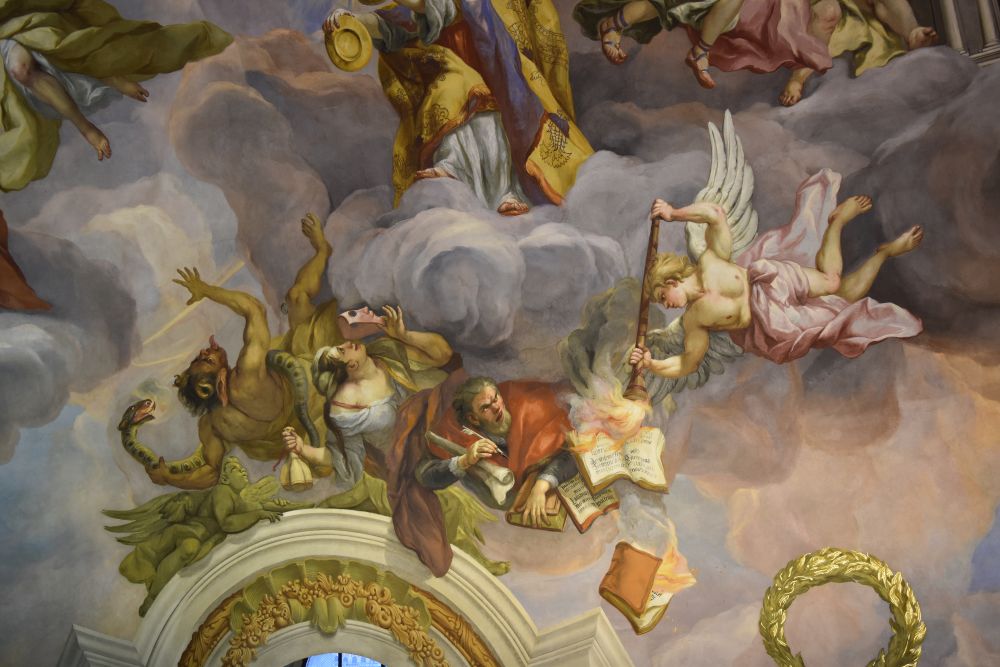
Charles Borromeo was a counter-reformer in the 16th century. The cupola is 72m high and can be accessed using a lift (and paying 8 Euros). Up there we find this painting of Luther going to hell and an angel burning his bible. Dramatic scenery.

aaa_0187-small

Well, in 2017 Germany will celebrate the 500th anniversary of Luther having posted his 95 theses in 1517. Luther’s heritage has persisted longer than this painting may have suggested.

With the Karlskirche we end our church tour through Vienna, leaving more churches for our next visit – “my” Dumont recommends particularly the Augustinerkirche (Augustinian church) and the Michaelerkirche (St. Michael’s church).


Vienna – a day in the museums quarter learning about Vienna architecture and the Secession

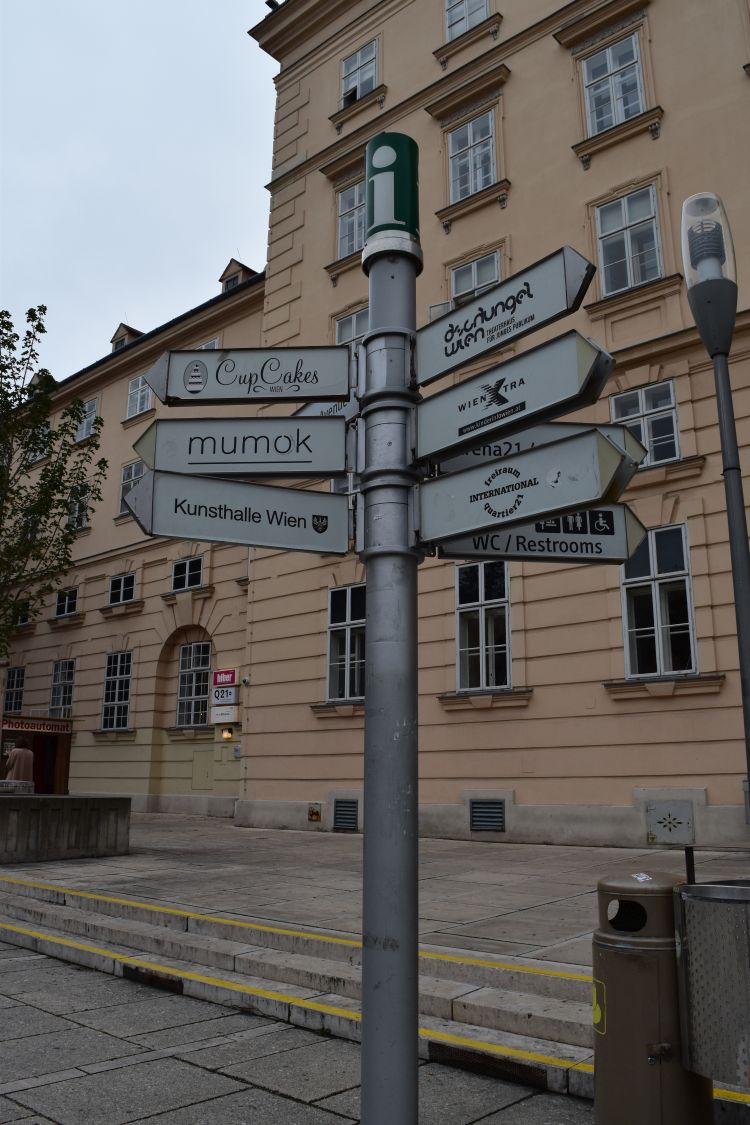
Maria-Theresia was the brave empress of Austria who had married Franz of Lothringen and given birth to 16 children while ruling over Austria in the 18th century. Her monument stands across the Hofburg and outside of the old town wall which is now the busy city ring. We say hello to her. Behind her back we enter the museums quarter. Wikipedia says it is “the eighth largest cultural area in the world”. So many museums – we do not know where to start!
aaa_0432-small

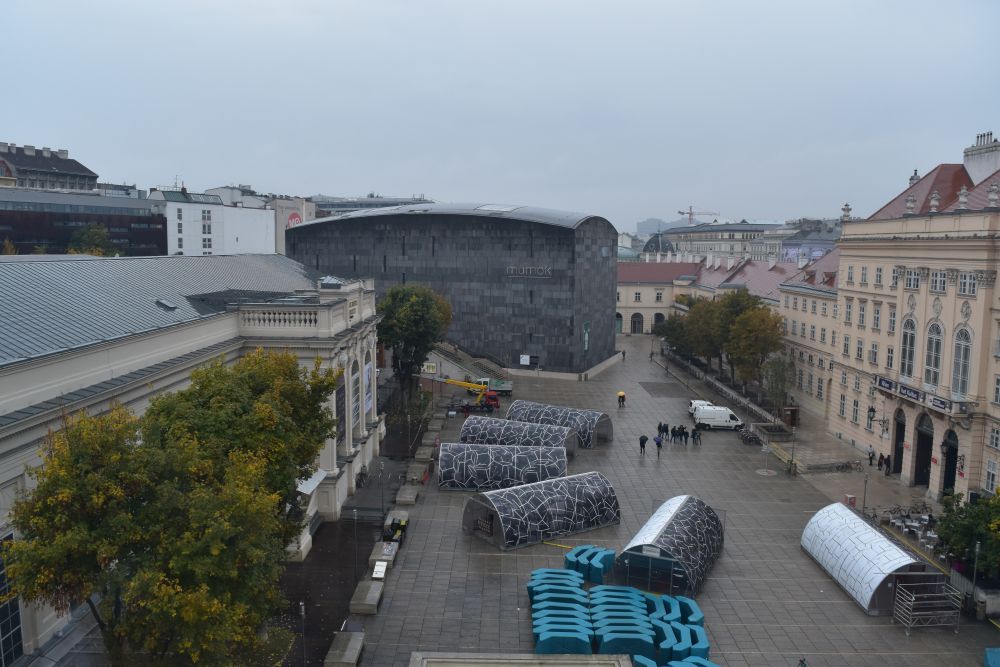
The museums quarter is an impressive combination of historic and modern buildings.

aaa_0451-small

.

The Architekturzentrum – well curated overview of Vienna’s architecture in the 20th/21st centuries

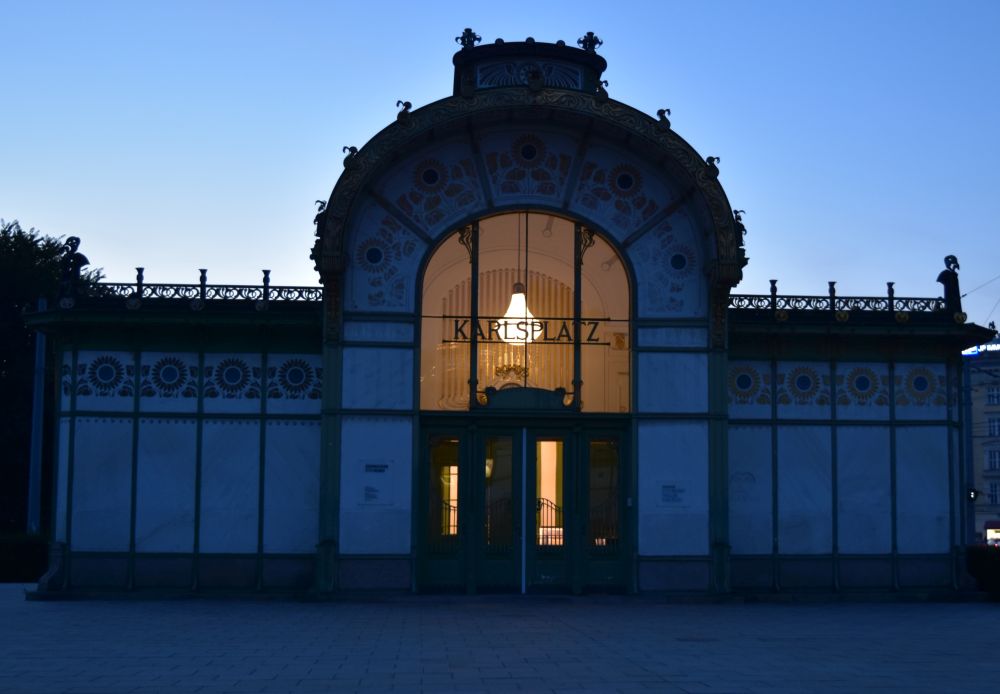
Then we make a deicision. We want to learn more about architecture in Vienna and enter the architecture center (Architekturzentrum) that shows the evolution of Vienna’s architecture in the 20th and 21st century. Otto Wagner, professor of architecture and member of the Vienna Secession, was the predominant architect of Vienna around 1900. This is his S-Bahn (Rapid Train) station at Karlsplatz (“real” foto taken at night).

aaa_0194-small

He is famous for many buildings, including some villas and the Postal Office Savings Bank.

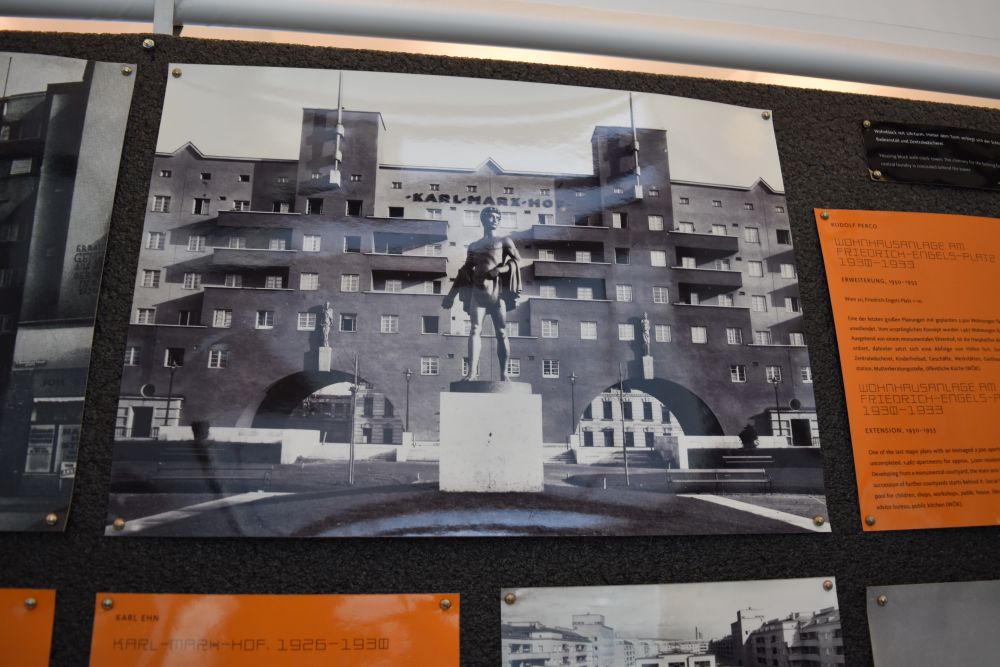
After 1918 a social construction movement lead to houses for the working class being constructed. This is the museum display of the Karl Marx Hof, the longest single residential building of the world.  Karl Marx stands in front of the building that bears his name. The appartments comprise about 40m2 for families. It was the years of “Red Vienna” that lasted until 1934.

aaa_0422-small

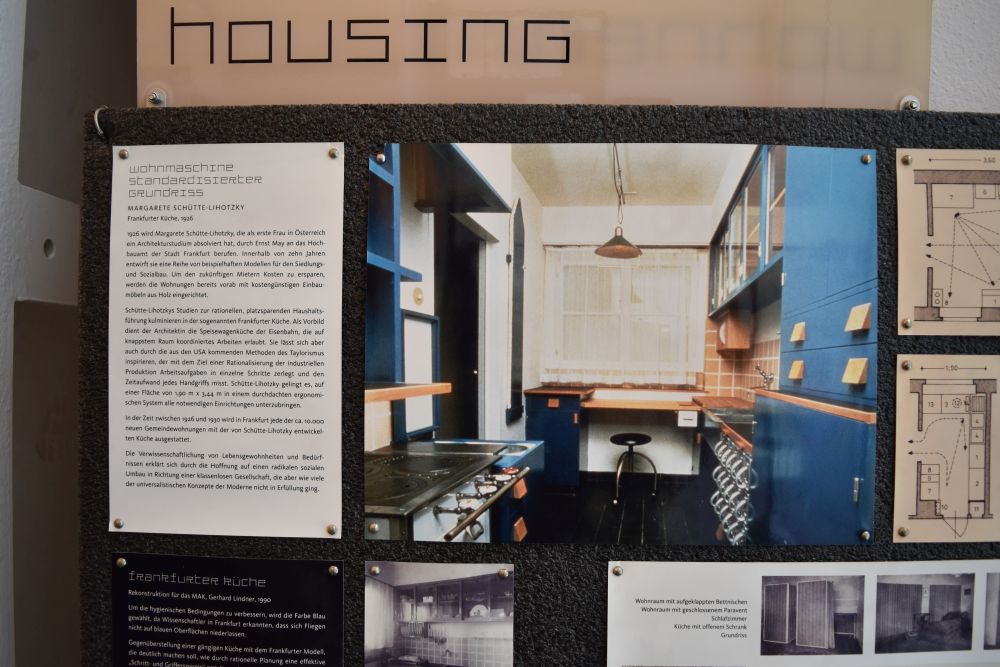
At the same time there was an initiative towards “functional housing” (Wohnmaschinen). Margarete Lihotzki invented a kitchen that maximized comfort and equipment while minimizing space. This reminds me of Taylor who studied the work flow to optimize industrial production. Lihotzki’s kitchen is the predecessor of our modern built-in kitchens. The kitchenette looks like a laboratory and everything needed is within convenient reach.

aaa_0426-small

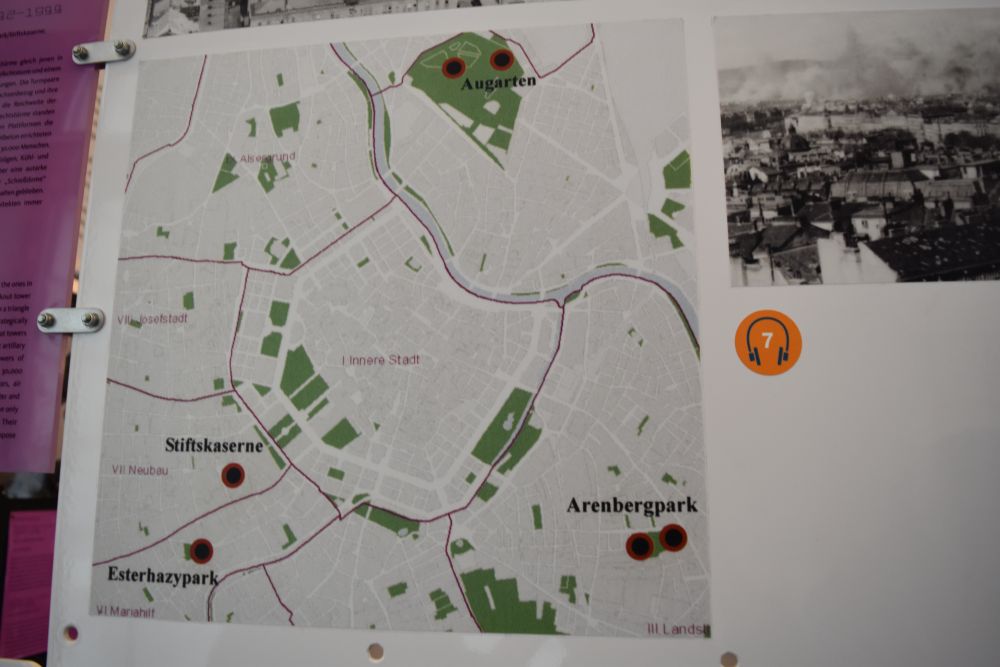
In the Second World War Austria had to join Germany. Later Vienna had to be protected in the air raids. Three complexes of huge bunkers remain from that time – and with their thick concrete walls they cannot be blown up now.

aaa_0424-small

So they keep shaping the city line. These are the northern bunkers seen from the Softel tower.

aaa_0100-small

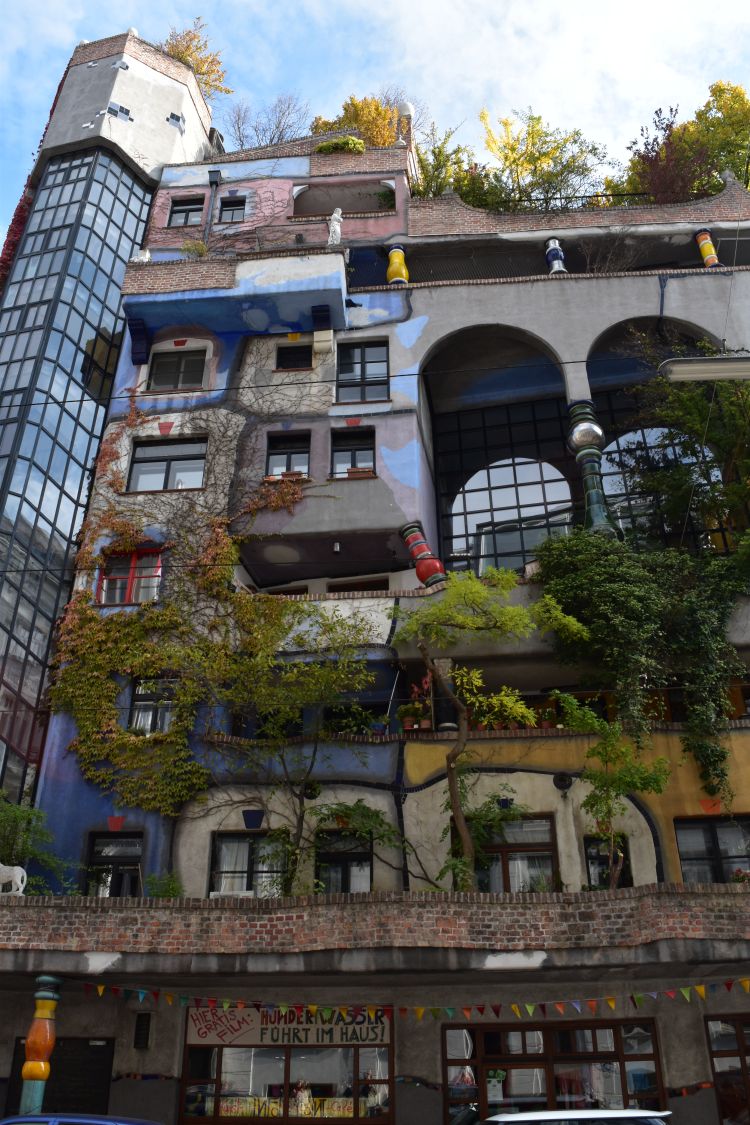
After the Second World War there is another wave of construction to create room for living that was scarce, as one fourth of the houses had been destroyed by bombings. These community buildings are omnipresent. A very visible though excentric proponent of the architecture after 1945 was Friedrich Hundertwasser (born “Stowasser”; “sto” = hundred in slawic languages). This is the “House of Hundertwasser” near the Donau Channel that we visited later – together with lots of tourists from all over the world.

aaa_0079-small

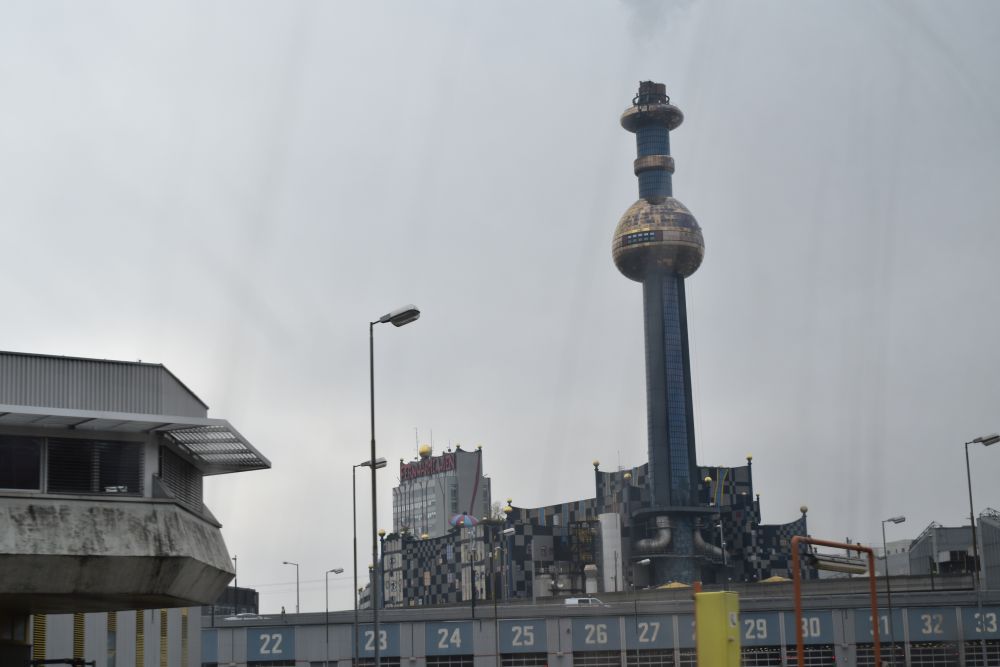
From the metro we always see his garbage incineration – adding color to the grey concrete of  an industrial area.

aaa_0393-small

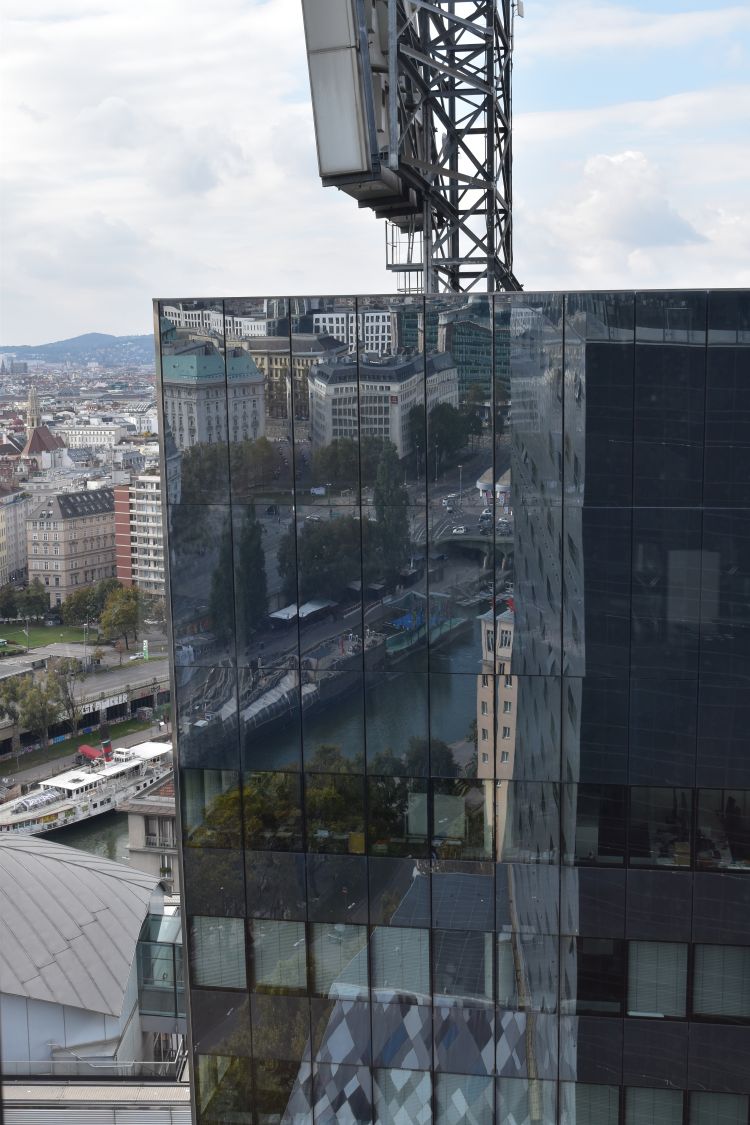
I illustrate the latest modern architecture with this view from the bar of the Softel Tower – the Danube channel is reflecting in the glass wall.

aaa_0106-small

The Architekturzentrum gives a well curated architecture overview. Along the wall there is a timeline that shows what has happened in the world – to add some background information to the construction activities of the 20th/21st centuries .

.

The Leopoldmuseum –  fascinating displays from the times of the Vienna Secession, modern art and exhibitionism

After a quick lunch in the museum bistrot we head for the Leopold Museum with its collection of paintings and artefacts of the Vienna Secession and Modern Art (Jugendstil) as well as the transition to Exhibitionist style.

The Vienna Secession was founded in 1897 by a group of artists that wanted to move away from the historian architecture style that had prevailed so far. Their first president was Gustav Klimt (his most famous painting is “the kiss“).

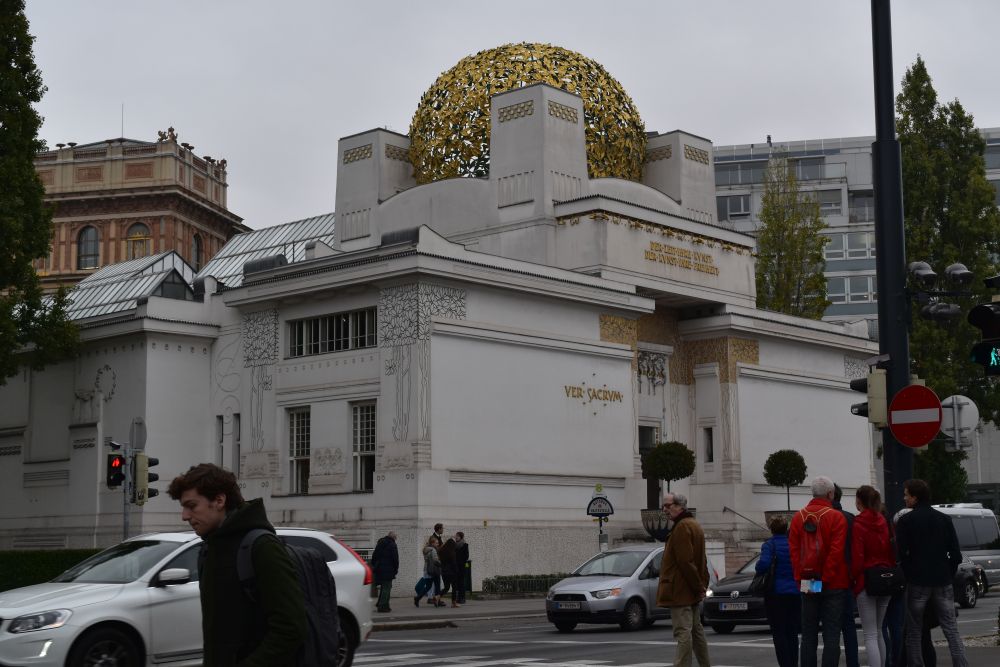
For their exhibitions they built this “temple” with the inscription “Der Zeit ihre Kunst. Der Kunst ihre Freiheit” (meaning: To every age its art. To every art its freedom). Later the Wiener Werkstätte (Vienna’s Workshops) were founded for the production of their artefacts designed such as furnishings and even hats.

aaa_0218-small

The Leopold exihibition starts with the windows that Kolo Moser had designed for the Church am Steinhof. Kolo Moser was one of the most influential members of the Secession.

aaa_0435-small

On display are also works designed and produced by the Vienna Workshops. This chair with the flexible back has been designed by Josef Hoffmann. He calls it “sit engine” (Sitzmaschine). My grandpa loved his sit engine – it was much more massive with its leather upholstery, but now I learn, it was the design made by Hoffmann.

aaa_0443-small

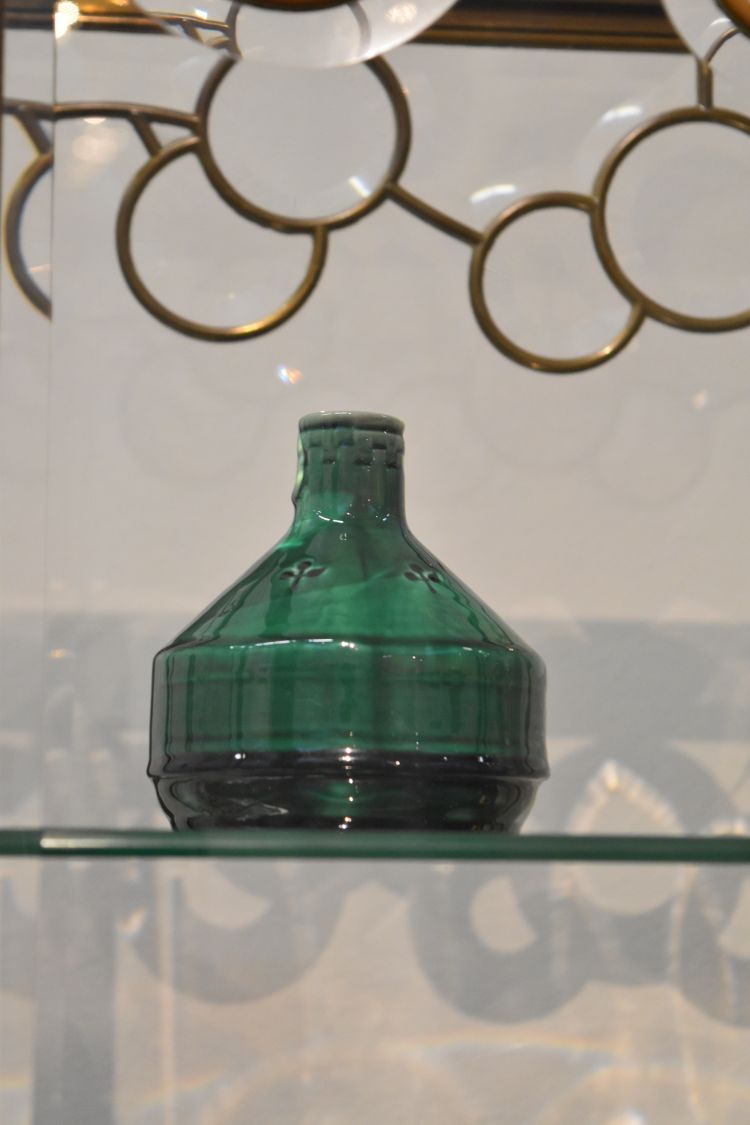
The green liquor bottle by Joseph Maria Olbrich was used for flowers in the household of my parents. I grew up with it and now I find it again in the Leopold Museum. Unfortunately I do not know, where our “vase” has gone.

aaa_0448-small

From the painters I am particularly impressed by Richard Gerstl. He was supported by Arnold Schönberg, but then fell in love with his wife and eventually committed suicide.

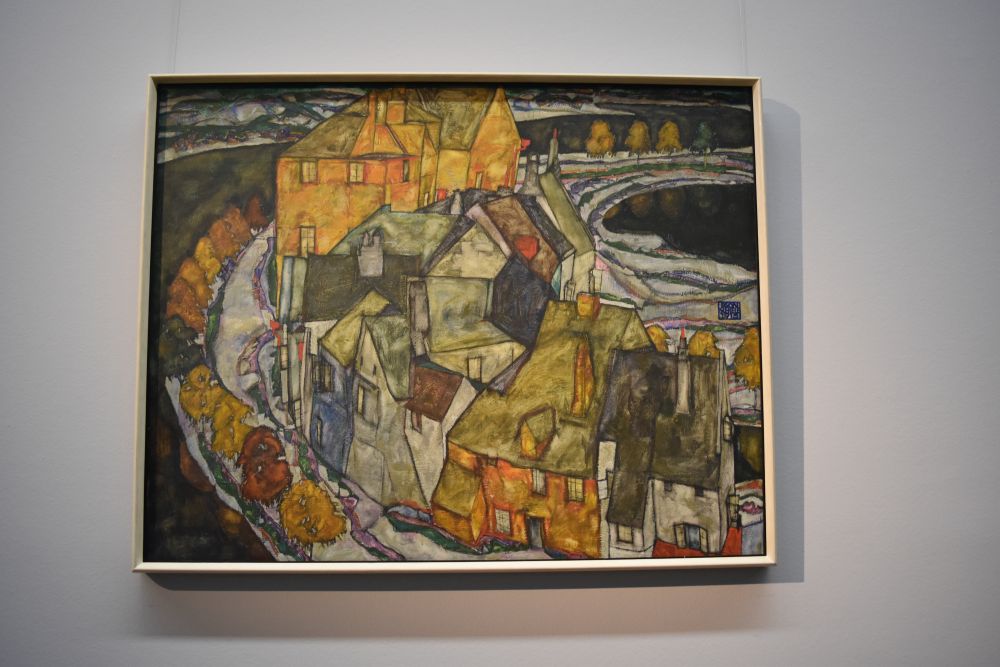
Egon Schiele I already knew from the Beyeler museum where they had shown his paintings of women that I do not feel fully comfortable with. Now I discover he also produced powerful expressionist paintings of landscapes and towns. Schiele died from the Spanish flue in 1918 – he was 28 years old then.

aaa_0457-small

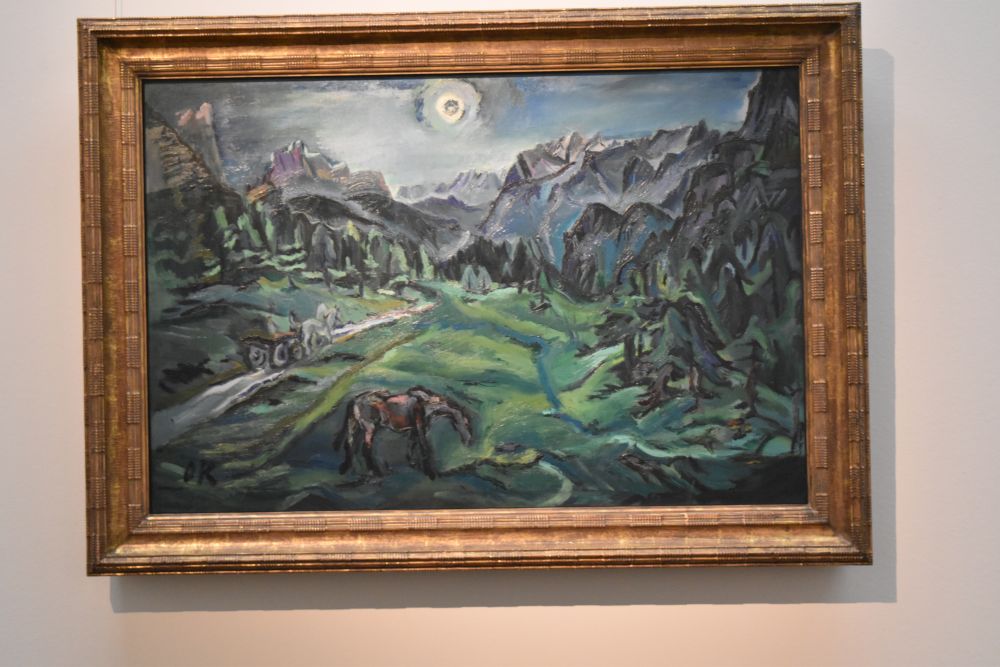
Also young Oskar Kokoschka was member of the Secession. This is a paiting of “The Croci” in the Dolomites.

aaa_0453-small

In the museum shop I buy the book “Wien 1900” which gives an excellent overview of the time, the Secession movement, the Vienna Workshops and also the general atmosphere in the society that found their expression in Sigmund Freud’s psychoanalytics and in the poems of Georg Trakl. Europe is at the verge of World War One. The Secession  artists made a great impression on me. Four of their most important artists died in 1918: Gustav Klimt, Otto Wagner, Kolo Moser and Egon Schiele, while Kokoschka left Vienna to move to Dresden to become part of the Bauhaus movement.


Vienna and the charm of their humor and of the Austrian language

In Vienna I fell in love with the charm of the Austrian humor and of the Austrian flavor of German.

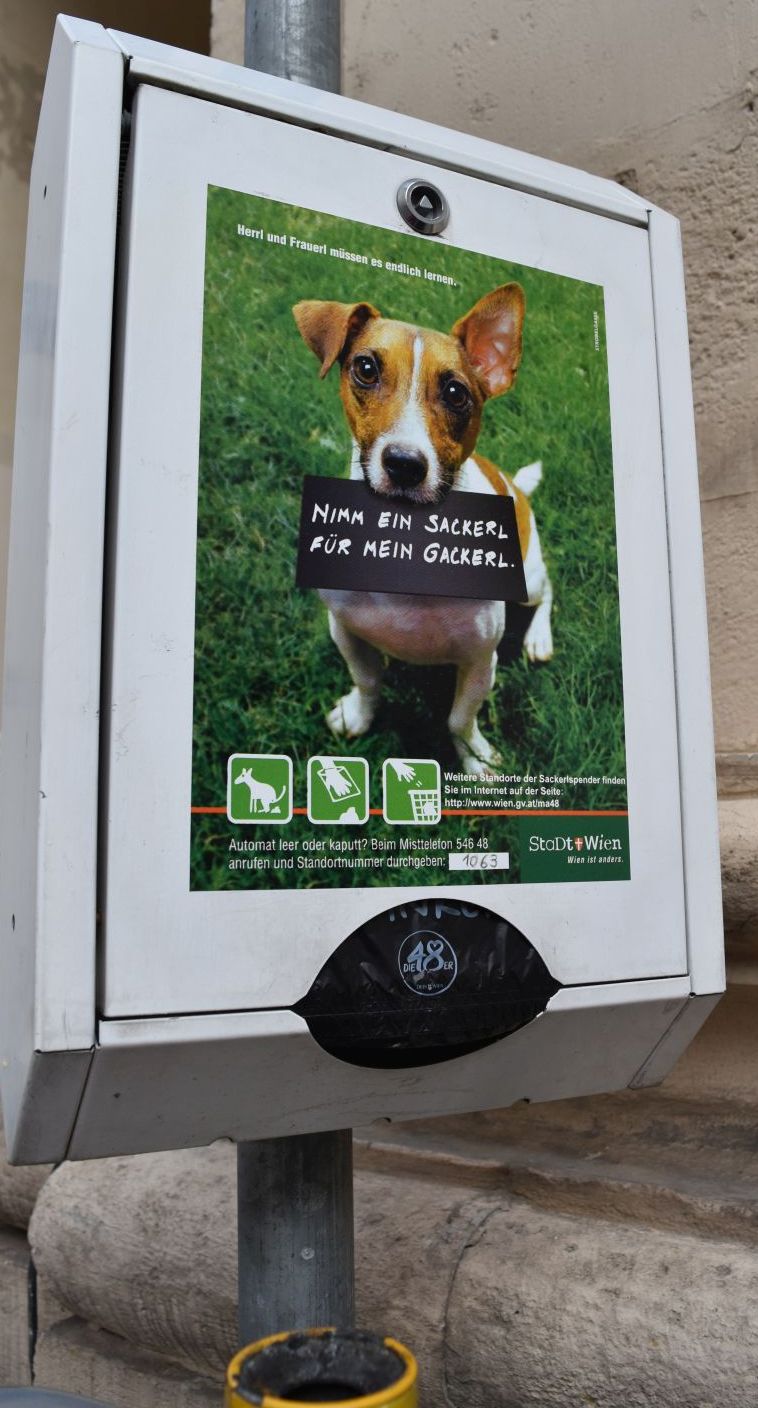
The city tries to avoid dog’s mucks on the pavement. This rhyme only works in Austria.

aaa_1250-small

The dog says: “Take a small sack for my small ….”

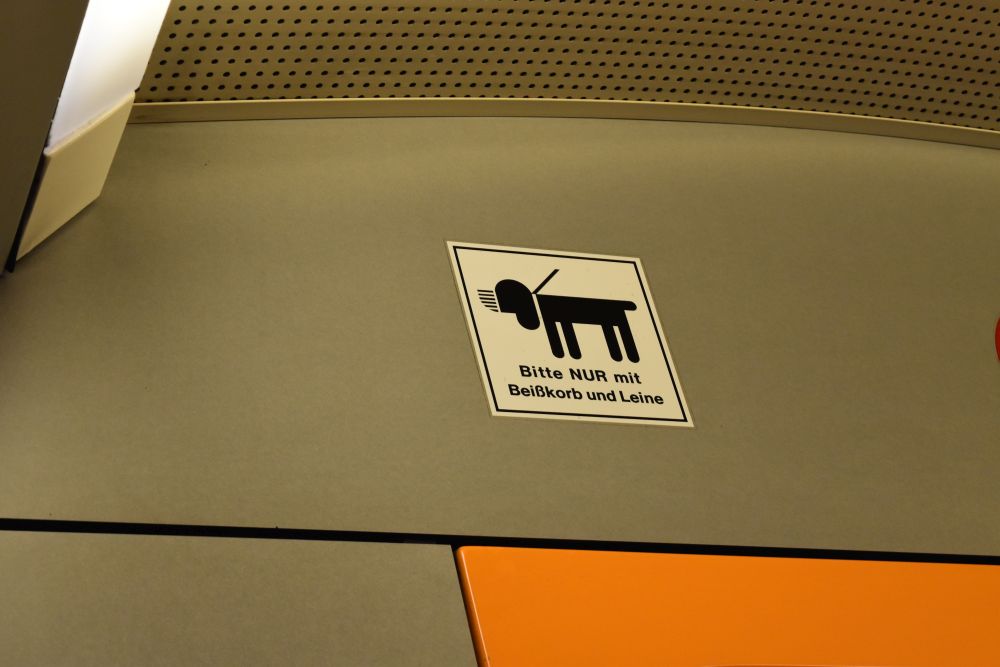
In the metro, dogs are only allowed on the leash and with the muzzle, as this nice little sketch clearly illustrates. Note that in Austrian, a muzzle is a “Beisskorb” which means it is a “basket for biting” (hopefully preventing the dog from doing that). In Switzerland we call it a “Maulkorb” indicating that this is just a “basket” for the “muzzle”.

aaa_0395-small

The #echtshopper initiative wants to support the shops in Vienna – and suggests that you go to the “real” shops returning home with a “chic bag” (“chices Sackerl”) instead of buying online and receiving a “brown parcel” (“braunes Packerl” that comes by post). “Sackerl” and “Packerl” – a nice rhyme that no one can resist to, I assume. I do wish Vienna many buyers in their shops.

aaa_1275-small

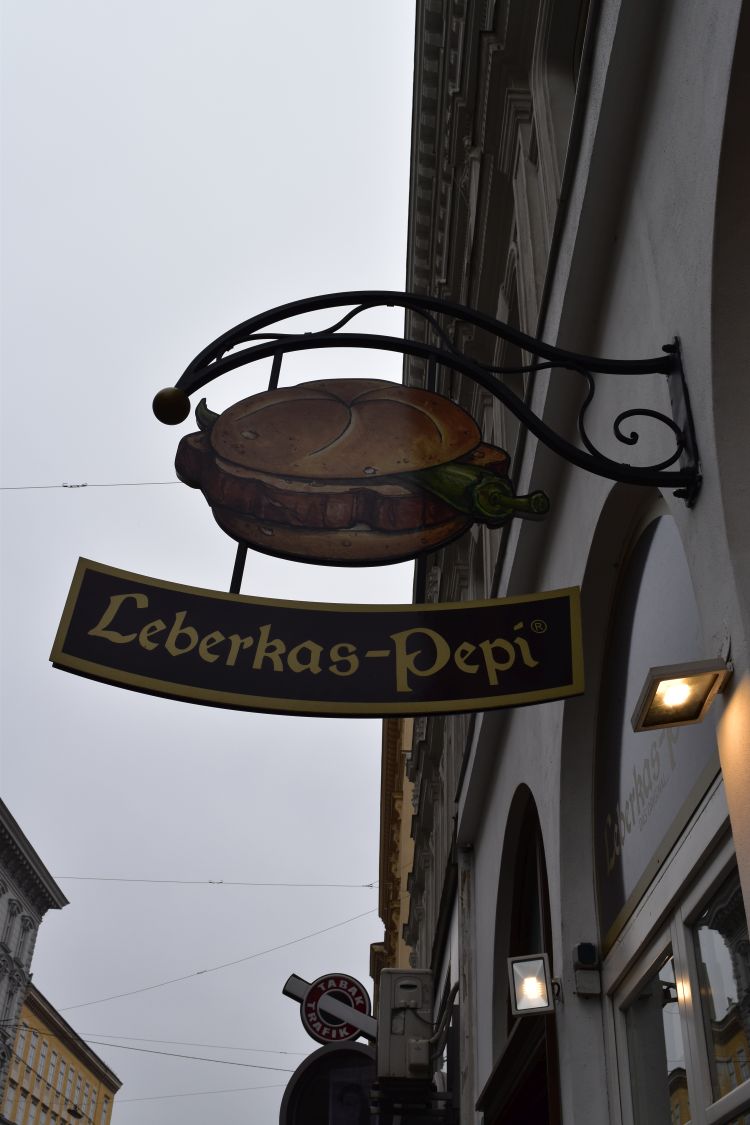
People from Basel – my town – are called “Basler Bebbi”. In Vienna I come across the “Leberkas-Pepi”. This “Pepi” (resembling our “Bebbi”) provides meat loaf (Leberkas or Leberkäse).

aaa_0237-small

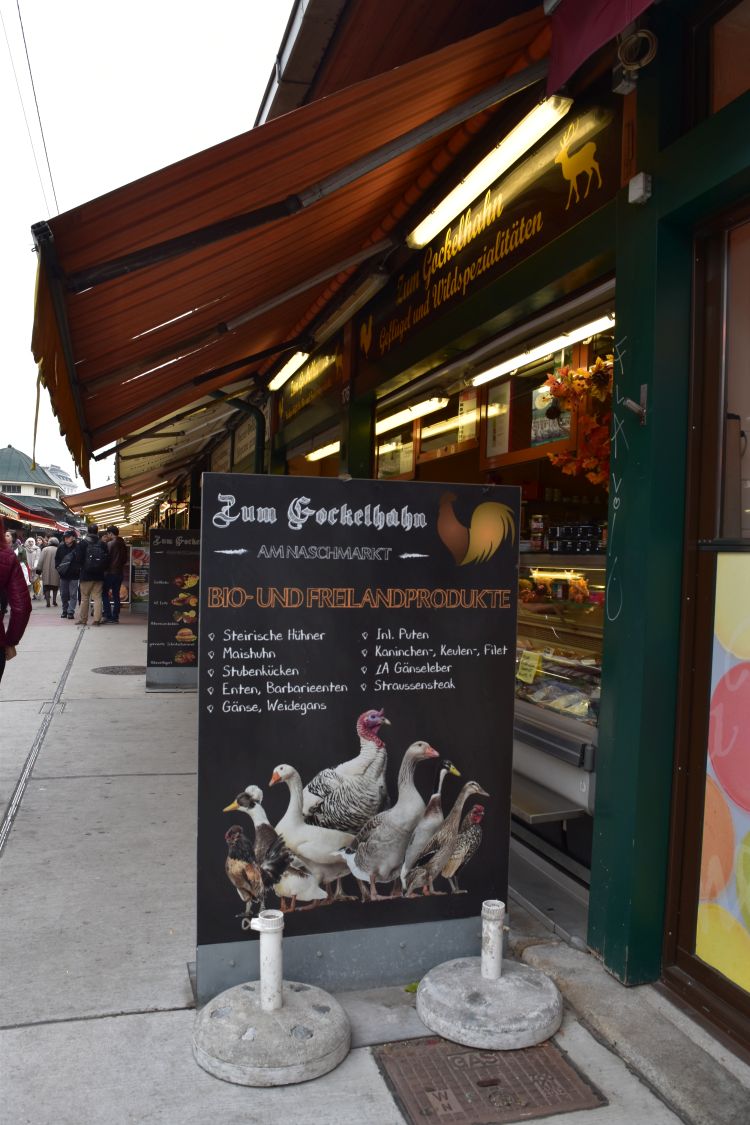
On the Naschmarkt I found the “Zum Gockelhahn”. Literally “Gockelhahn”  translates to “Cockcock”, because “Gockel” means “cock” and “Hahn” also means “cock”. It is two words for the same, combined to one word which makes it all clear that this shop sells products made from cocks, right?

aaa_0225-small

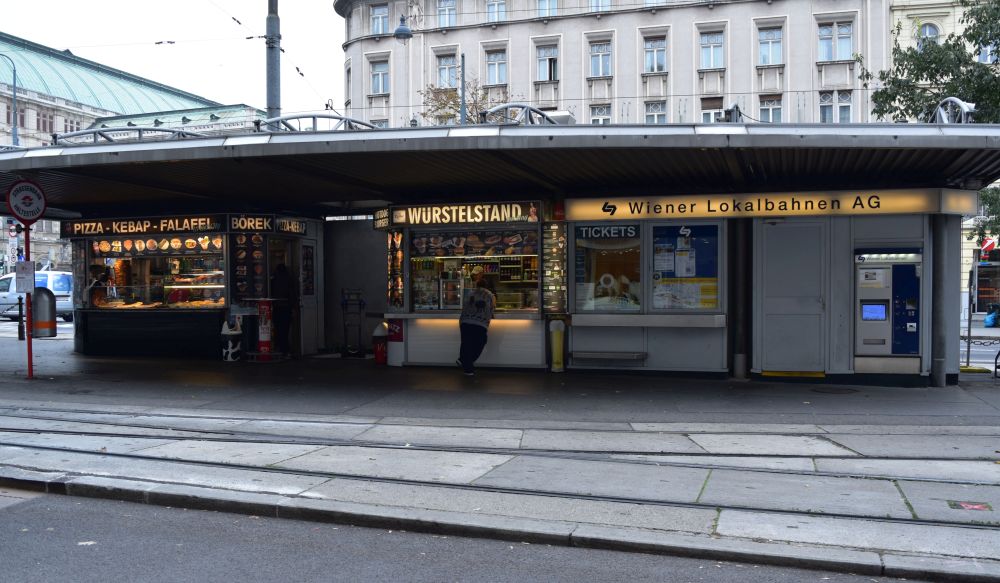
The “Würstelstand” (stand for little sausages) also offers Pizza, Falafel and Kebab – Vienna is international – including the “Würstel” or “small sausage”.

aaa_0198-small

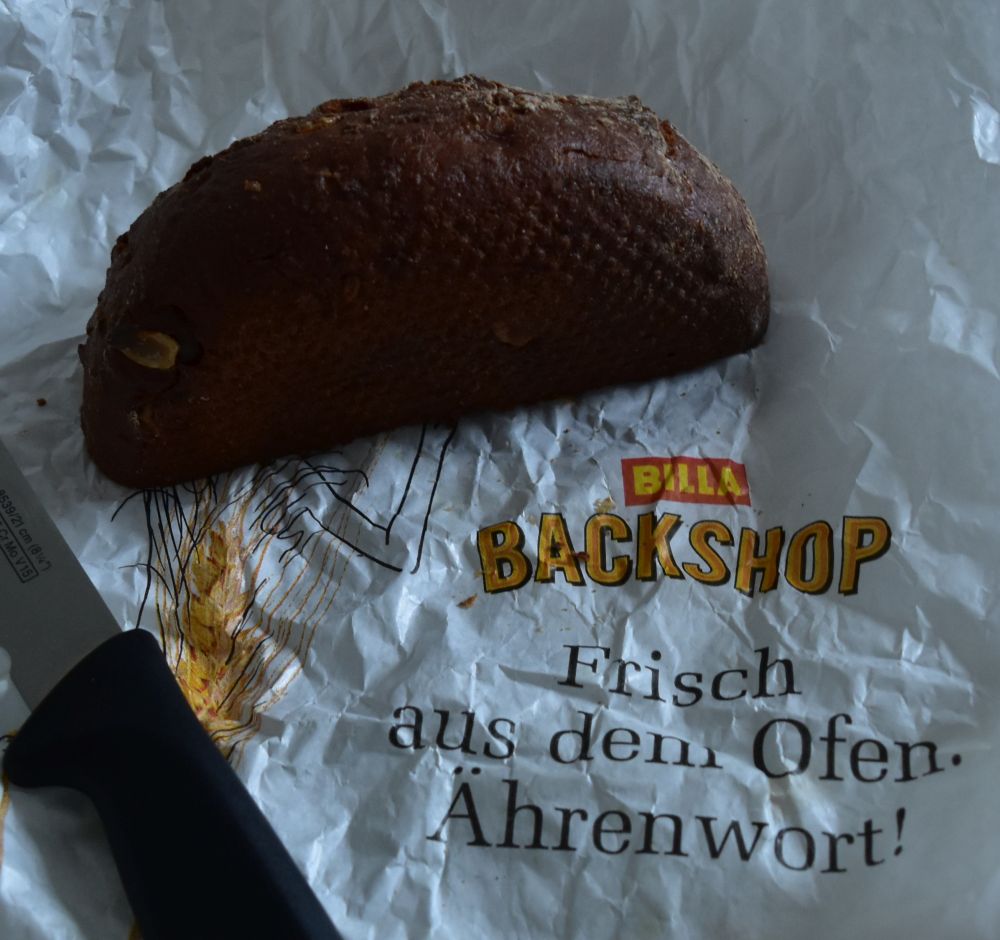
The bakery of the discounter Billa is inventive.  They say: “The bread is fresh from the oven. Honestly.” Well, not exactly… Billa plays with the word “honestly” – in German: “Ehrenwort” (literally “honest word”). Instead of “Ehrenwort” (“honest word”), Billa writes “Ährenwort” or “spike word” (“spike”= Ähre) and, if you speak that out loudly, it also sounds like “Ehrenwort”, but alludes to the ingredients of the bread. This is a punch that only works in German and it was invented in Austria. I have to admit, the Billa bread was delicious, honestly or – excuse me – Ähren-/Ehrenwort.

aaa_0197-small

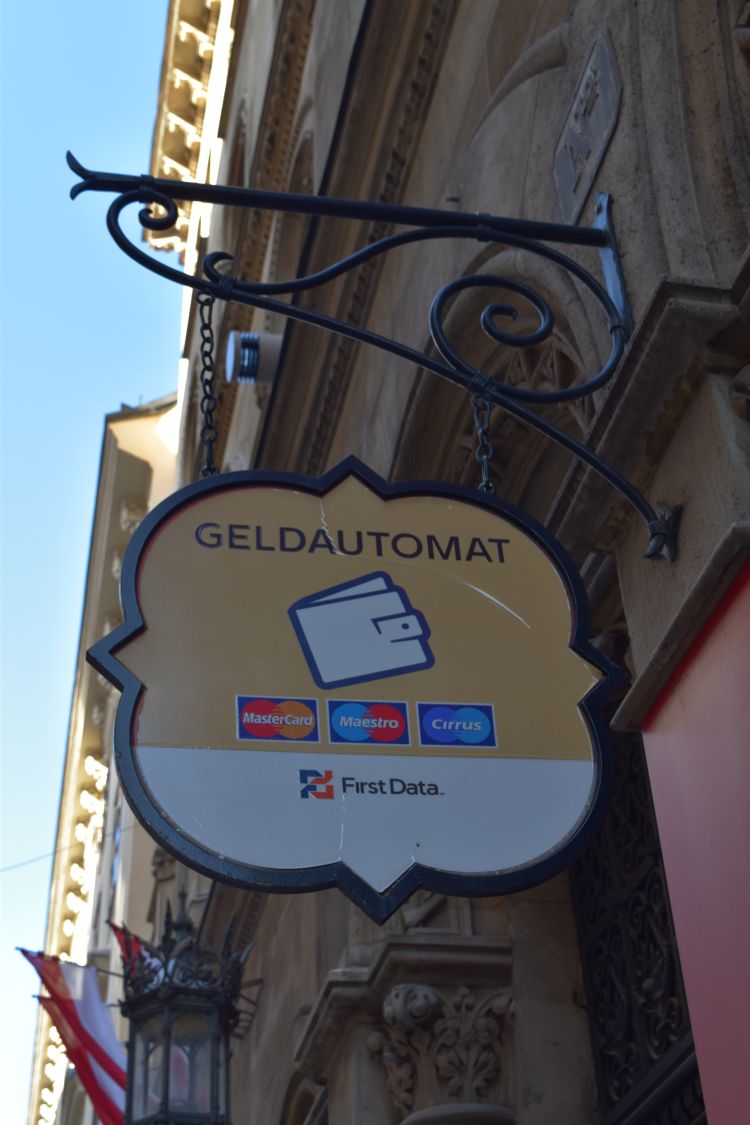
In Vienna even ATMs have an imperial touch, as the sign for this “Geldautomat” or “money engine” shows.

aaa_0003-small

Yes, Vienna’s humor and their flavour of German have a special charm, do you agree?

Vienna – the Center of Europe: A mighty emperor and his noble entourage

My Austrian friends that have shown me so much around my own home town, Basel, are now taking me to Austria. Under their knowledgeable guidance I set out to discover Vienna.

.

My “old” perception of Vienna as a peripheral town – and now I understand why the Turks attacked Vienna twice – this would have been strategic for conquering Europe

Somewhat Vienna had always been peripheral in my perception: It was located close to the Eastern border of a small country – Austria – and this border in addition was the impermeable Iron Curtain until 1989. Though I knew that Vienna was the main seat of the Habsburgians that we, the Swiss, fought against in the 13th, 14th and 15th century – a long time ago. Though I knew that the Habsburgians provided emperors  to the German Holy Empire for about 400 years. Though I knew that in today’s Vienna you find famous theatres, opera houses and museums, white dancing horses and famous coffee houses selling “heavy” sweets. And – yes – though I knew this joke about Crown Prince Otto von Habsburg who is accredited of having said: “A football match Austria-Hungary – interesting – and who is the opponent?”.

Yes, I know that Vienna must have played an important part in history, but nevertheless during my lifetime it was the rather peripheral capital of Austria, a country not much larger than Switzerland.

Now I understand better. It becomes obvious when seeing the historical center of Vienna. The Habsburgians resided in the Hofburg which is a huge castle that has grown over the centuries and that is the ostentatious manifestation of imperial power. Around the Hofburg I discover a cluster of luxurious baroque styled palaces that the noblemen built to be close to the imperial center of power. The streets here are narrow, but not as narrow as in the medieval centers of towns such as in my home town Basel. I immediately fall in love with the charm of the Vienna city center (or district one)with its palaces, coffee places and k&k court providers (k&k Hoflieferanten).

The Turks knew, how important Vienna was as a gate to Christian Europe and attacked it twice, in 1529 (they gave up, when the winter started) and in 1683 (they were defeated by an allied army led by King Sobieski from Poland). Austria was then able to expand gaining possessions from the Ottomans (also thanks to Prince Eugen of Savoy) and Eastern Europe (Galicia). It became one of the European Great Powers – still continuing to provide emperors to the Holy German Empire until 1806. They continued to be the emperor of Austria and the king of Hungary (k&k stands for Kaiser – emperor and König – king). However after having lost the battle of Königsgrätz in 1866, the Austrian emperor never became emperor of the new German Nation now excluding Austria. Instead it was Wilhelm II from the Prussian family of Hohenzollern who took over and became the last emperor of Germany.

After the Second World War, Vienna became this city close to the Iron Curtain, now cut off from their former hinterland. Today the international flavour is back in Vienna and we hear al lot of slawic languages and also Hungarian.

Yes, I immediately fall in love with the charm of this city center with the castle, its palaces, coffee places and k&k court providers. Let us stroll through the district one.

.

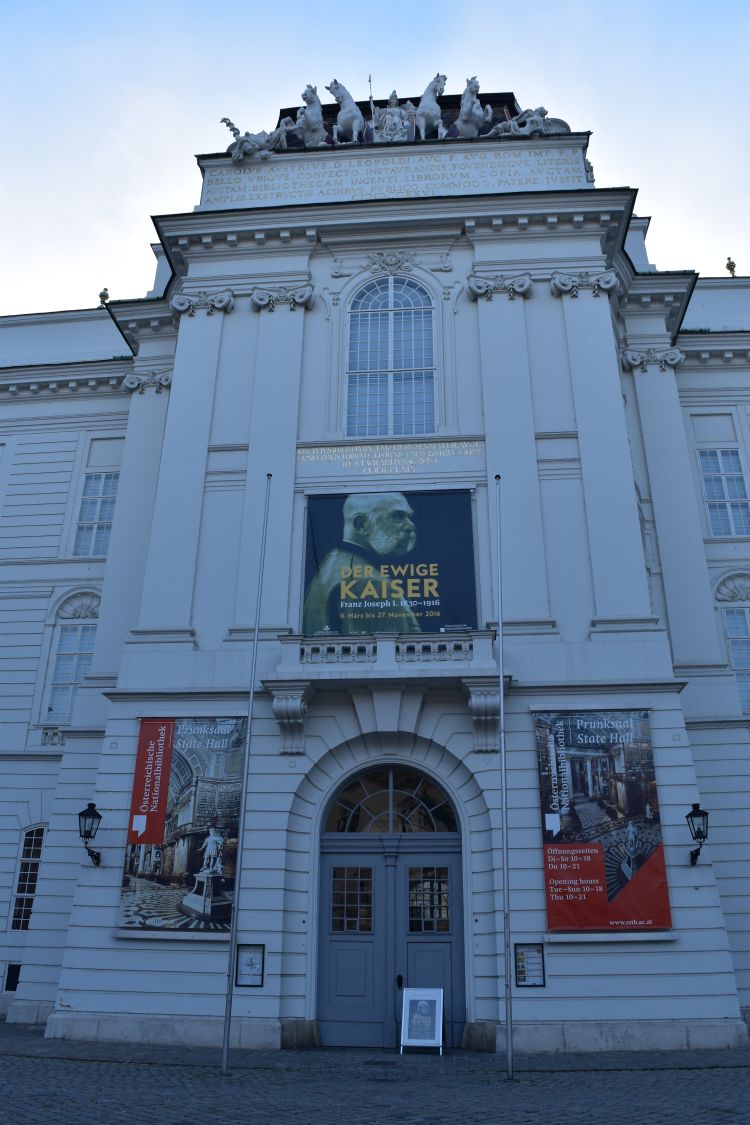
The imperial Hofburg of Vienna is celebrating the “eternal emperor” Franz Josef I

The “eternal emperor” with his characteristic  sideburns is now omnipresent in the Hofburg, as it has been a hundred years ago that he died after having reigned for almost 70 years.

aaa_0041-small

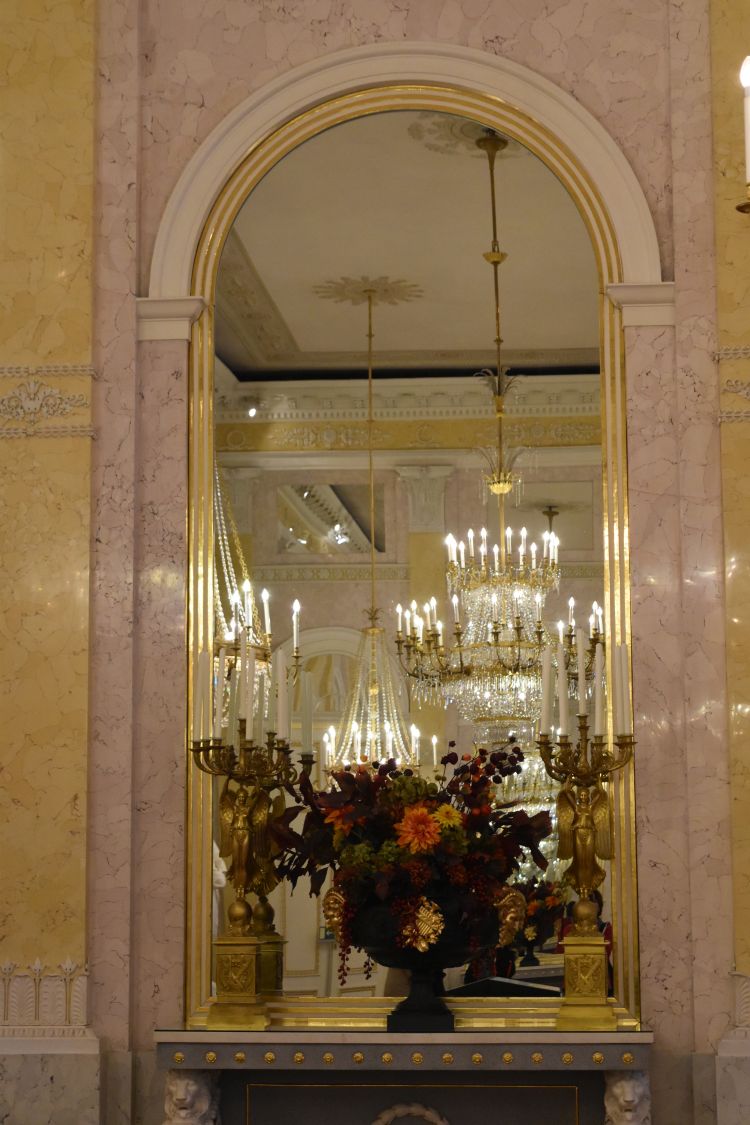
The neighboring Albertina is named after Duke Albert of Saxen-Teschen. We visit the luxury rooms (Prunksäle) – and they are luxurious, indeed.

aaa_0266-small

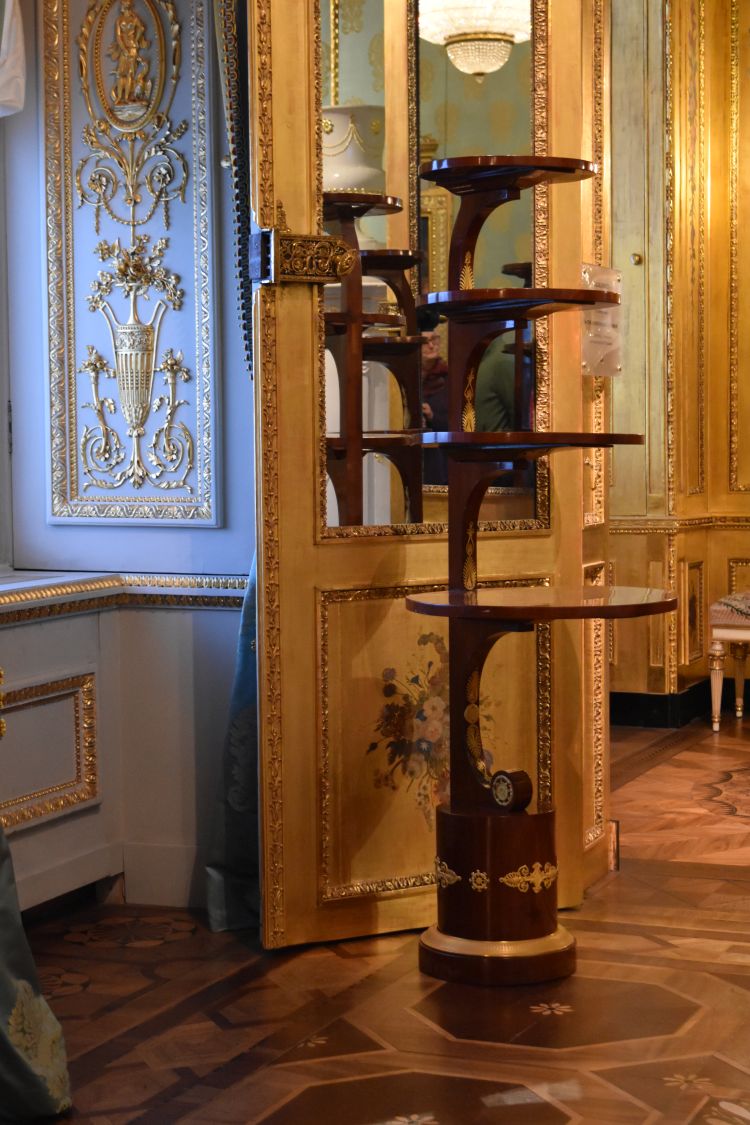
Emperor Franz-Josef hated that servants permanently followed him to ask, whether he wants to drop this or that – he just invented “silent servants” and dropped this or that on them. Very practical.

aaa_0279-small

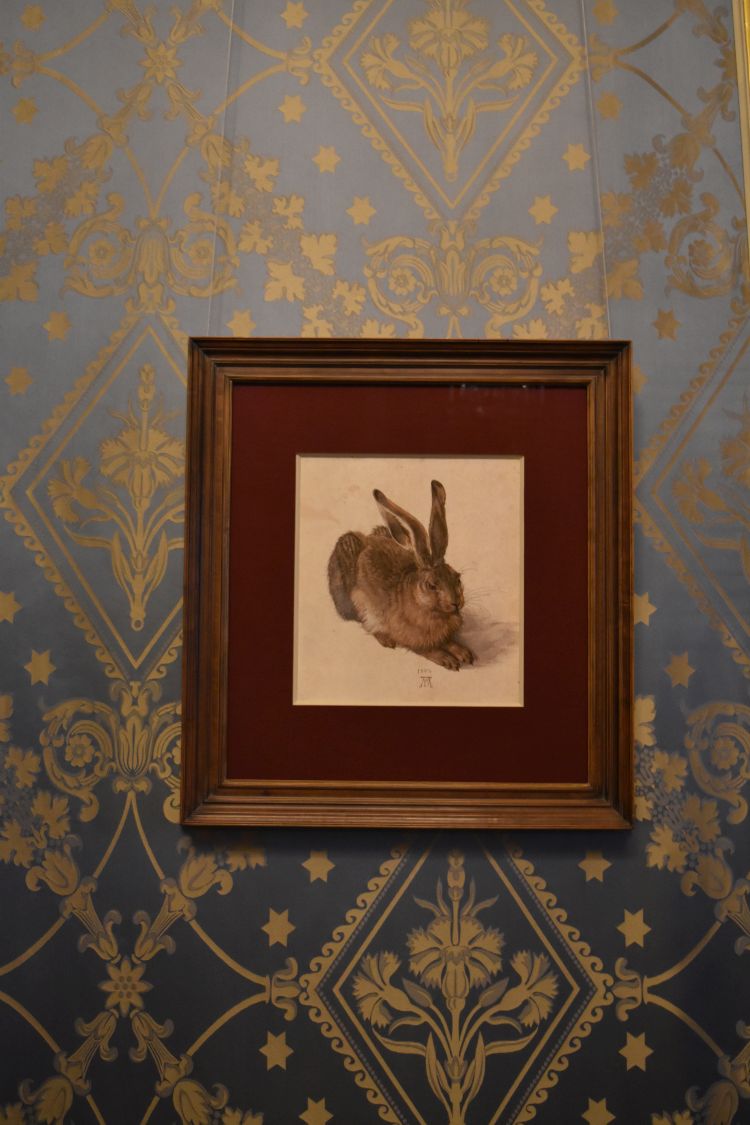
Amongst Albert’s private collection I find the “Hare” by Albrecht Dürer. I have grown up with a copy of this hare – great to see the original. You can see every single hair of his fur and almost would love to take one of them with you as a souvenir.

aaa_0271-small

The Albertina in addition hosts an exhibition from pointillists to impressionists and also Picasso. Well curated and well worth a visit.

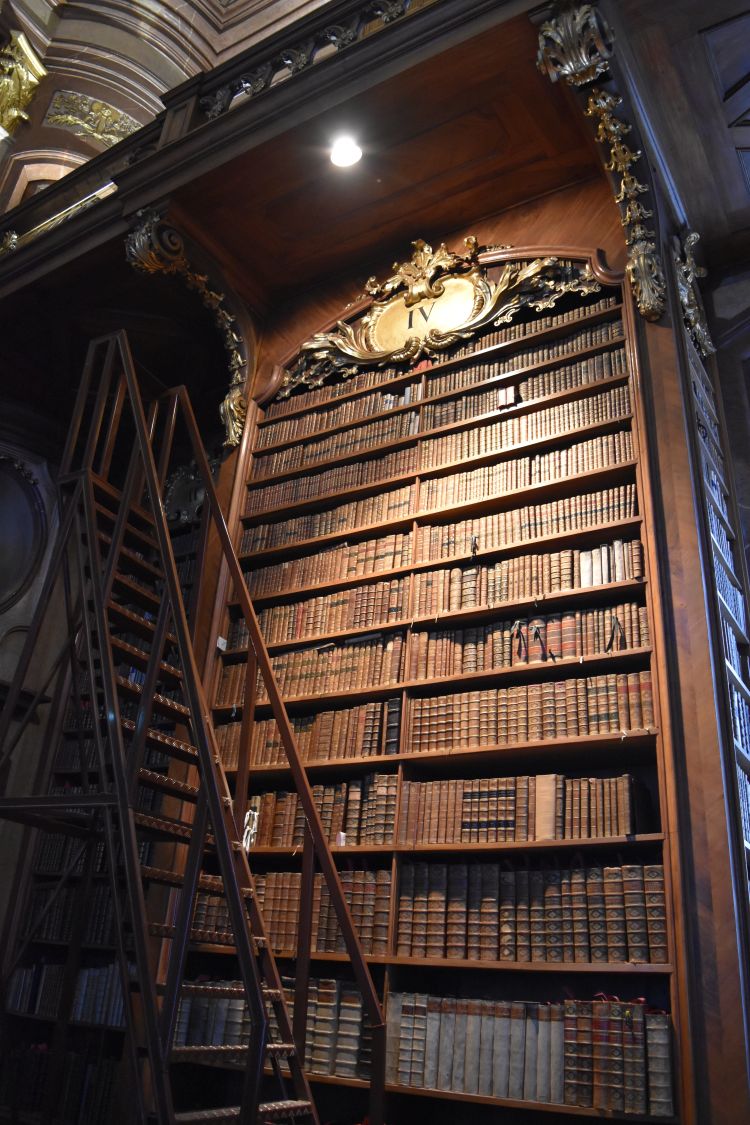
In the imperial library I almost get lost: So many books and ladders leading to the tops of the shelves!

aaa_0044-small

The library hosts an exhibition about the life and reign of emperor Franz-Josef. He was a handsome young man who had to take over the empire at the age of 17. He married Sissi – a dream couple at the time. But he lost her and his son, the crown prince – very sad. He loved nature and I like this portrait of him hunting.

aaa_0049-small

.

The lush palaces around the Hofburg

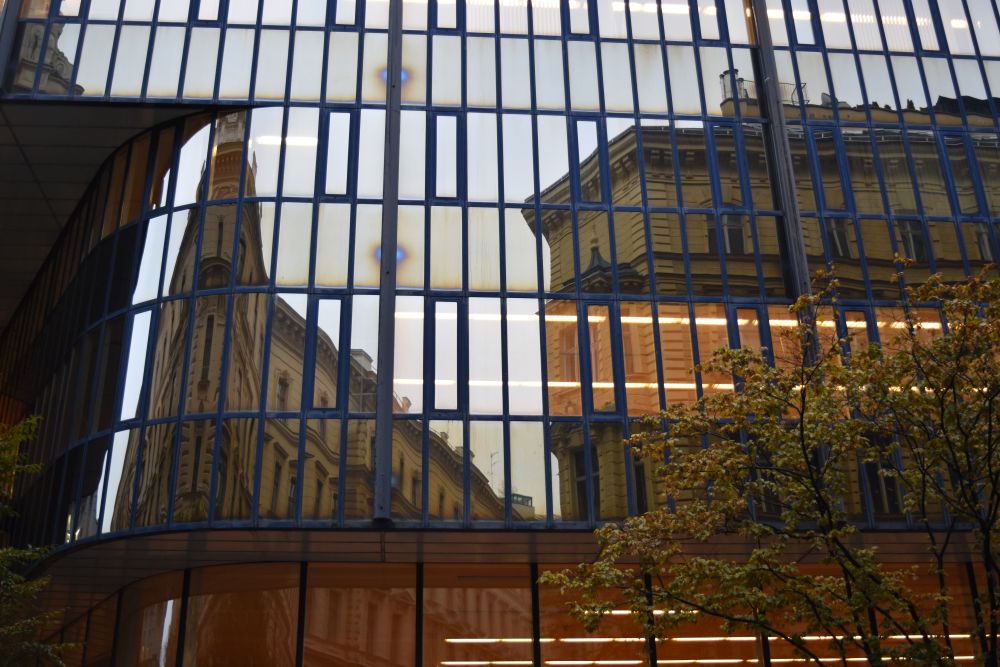
It is great to stroll through the narrow streets around the Hofburg and see all the palaces of the noblemen that wanted to be close to the center of power. Some of the palaces are reflecting in the glass facades of more modern buildings.

aaa_0459-small

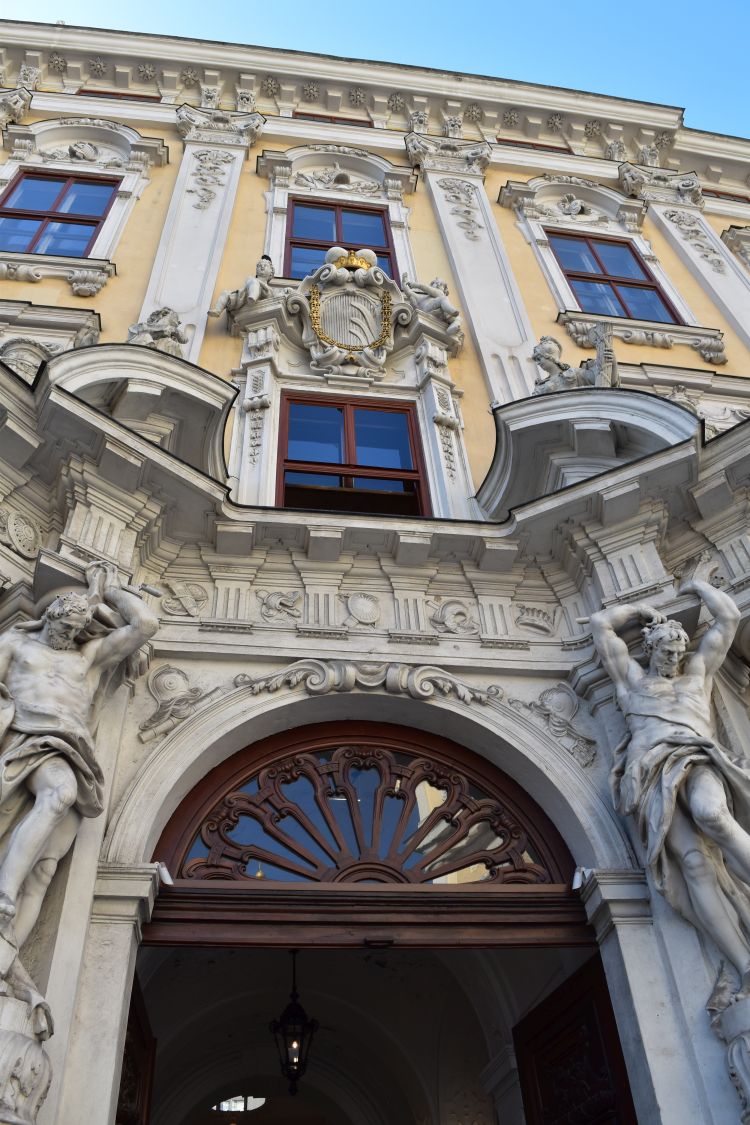
We visit the Kinsky palace. This is the gate…

aaa_0006-small

… and the decoration inside.

aaa_0016-small

aaa_0013-small

The Kinsky palace hosts auction exhibitions.

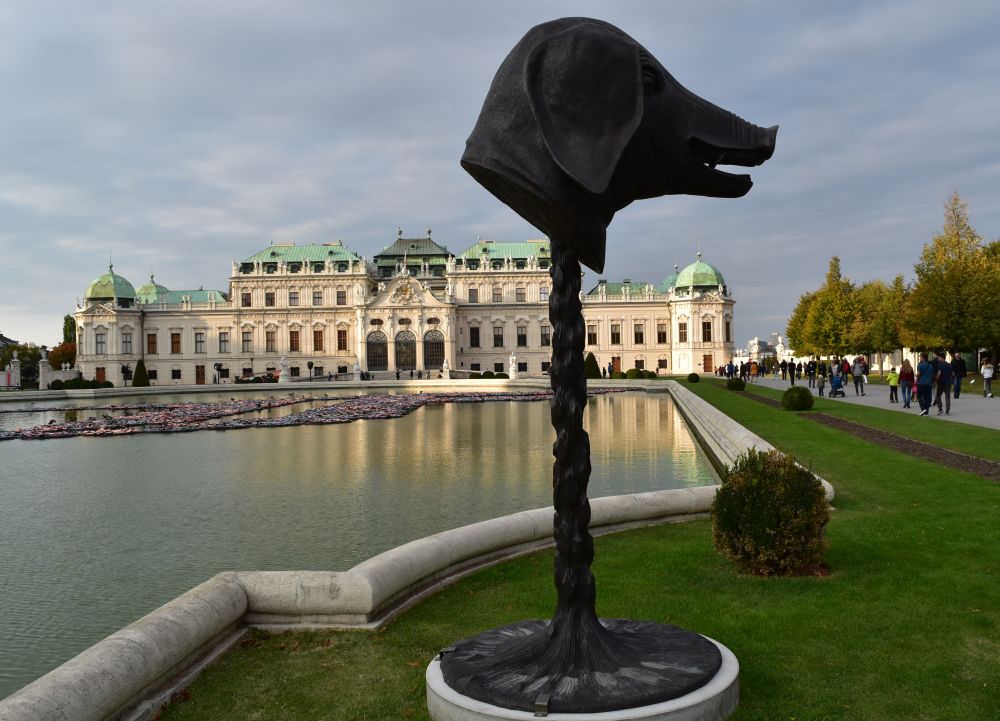
Located on a hill outside the very city center we visit the Castle Belvedere. It is the palace of Prince Eugen who around 1700 fought many victorious battles for the Austrian emperors, also against the Turks. Inside the upper palace there are exhibitions of sacral art, of impressionists and – also here – portraits of emperor Franz-Josef. The pond is covered with life jackets installed by the Chinese artist Wai-wai.

aaa_0148-small

Prince Eugen has selected a beautiful place for his Belvedere – the view of Vienna is great, indeed, with the Stephansdom and the Kahlenberg.
aaa_0137-small

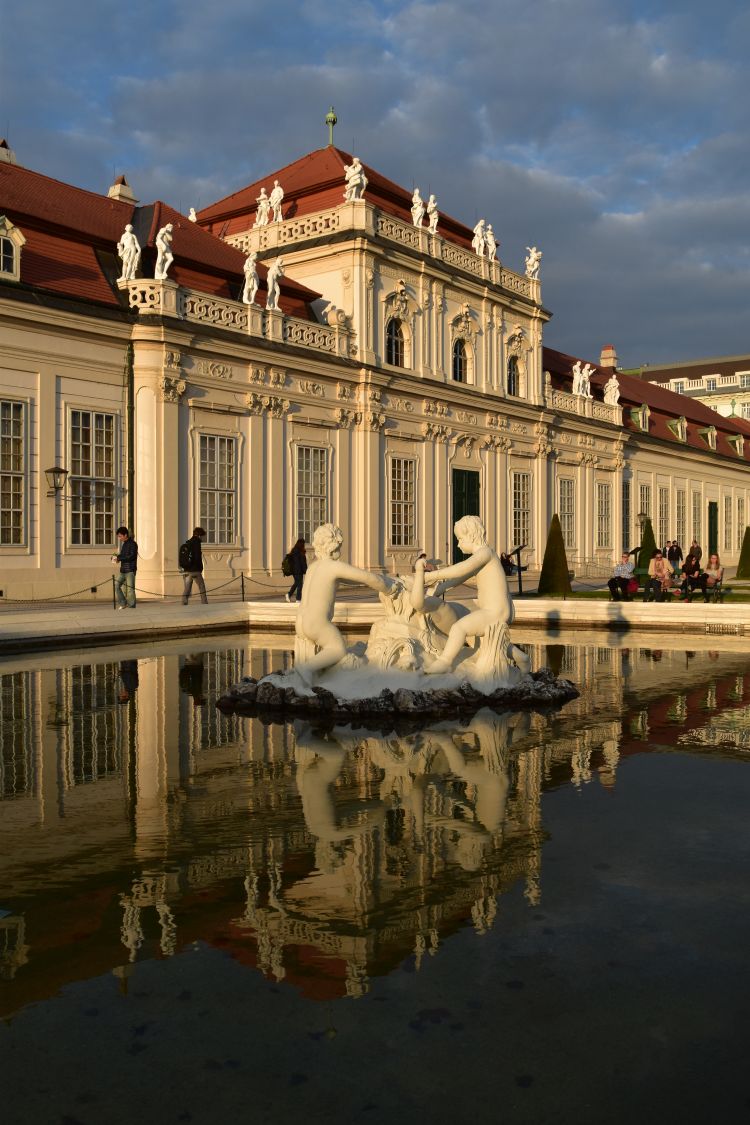
The lower palace Belvedere is reflecting in the pond.
aaa_0156-small

.

Culture and K.u.K. court providers

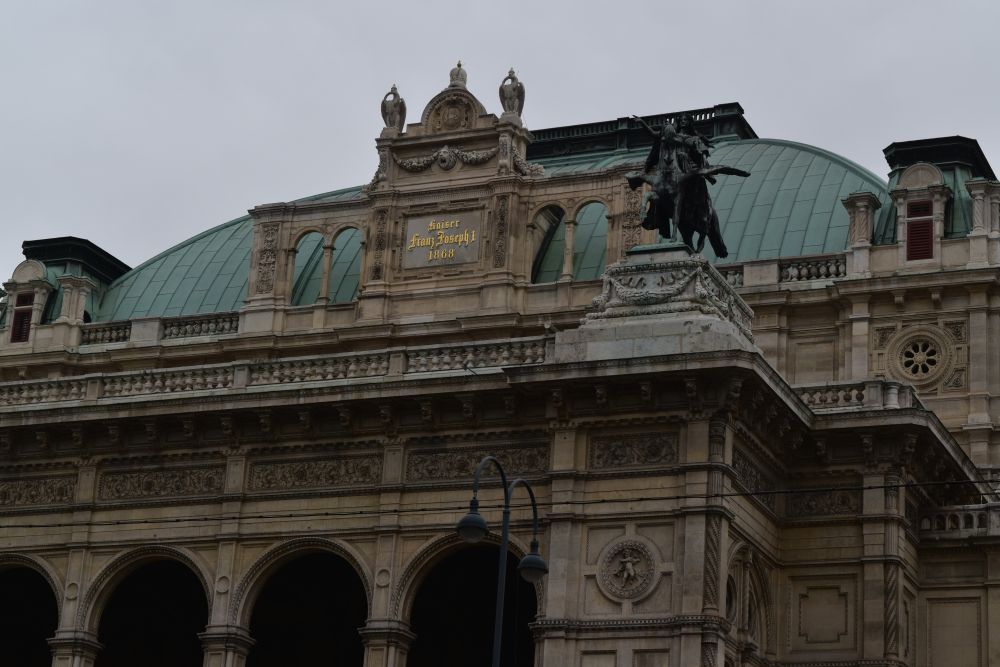
Around the Hofburg are theatres (famous is the Burgtheater) and opera houses – the name of Franz-Josef is again omnipresent.

aaa_0201-small

The imperial court was an economic factor as it needed many services such as tailors, butchers, this K.u.K. Court Barber…

aaa_0205-small

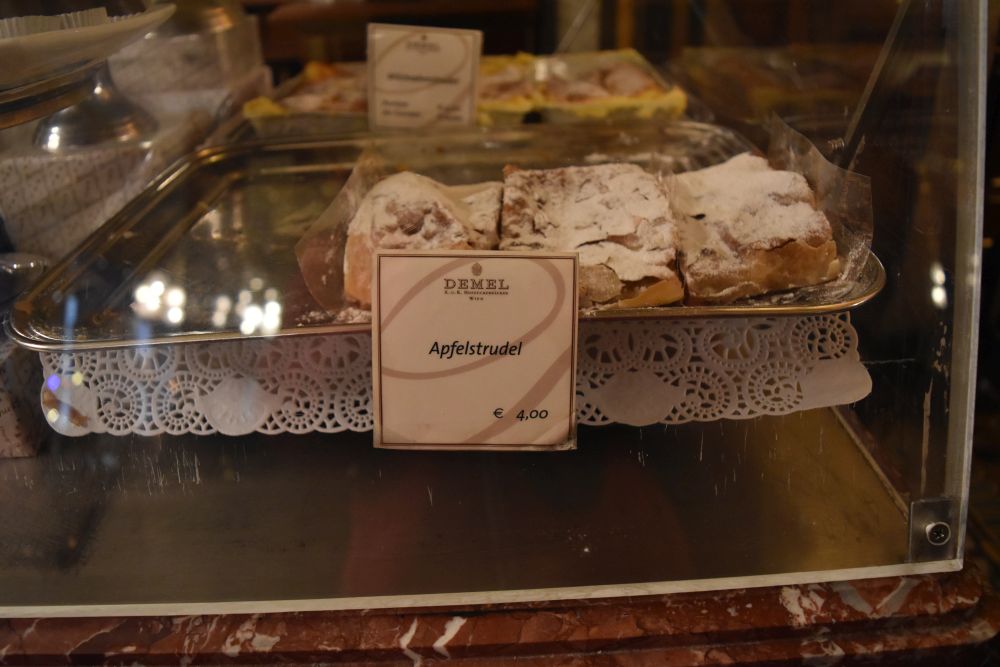
… or the famous K.u.K. Hofzuckerbäckerei or Chocolate Provider Demel – his chocolate looks enticing.
aaa_0253-small

Note that in Vienna the puff paste around Apfelstrudel is almost inexistent – it is very, very thin – Demel knows how to prepare it.

aaa_0254-small

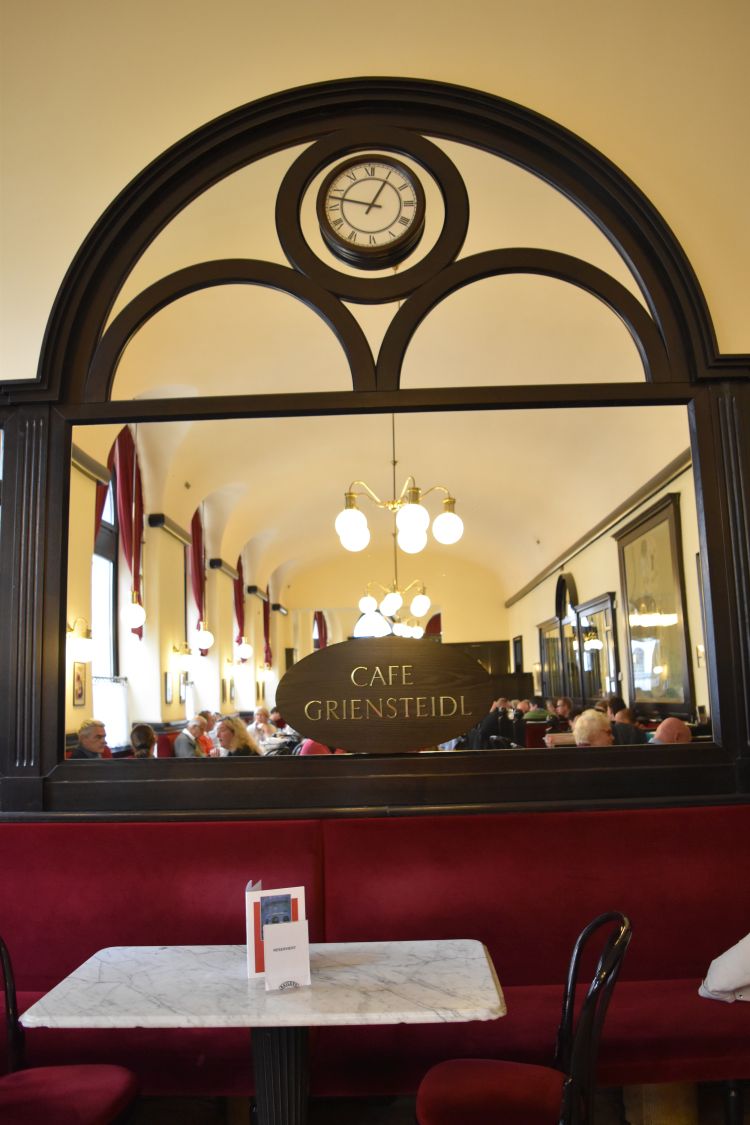
There are so many cosy coffe places in the city. This one of them, Griensteidl.

aaa_0242-small

.

Where the citizens live

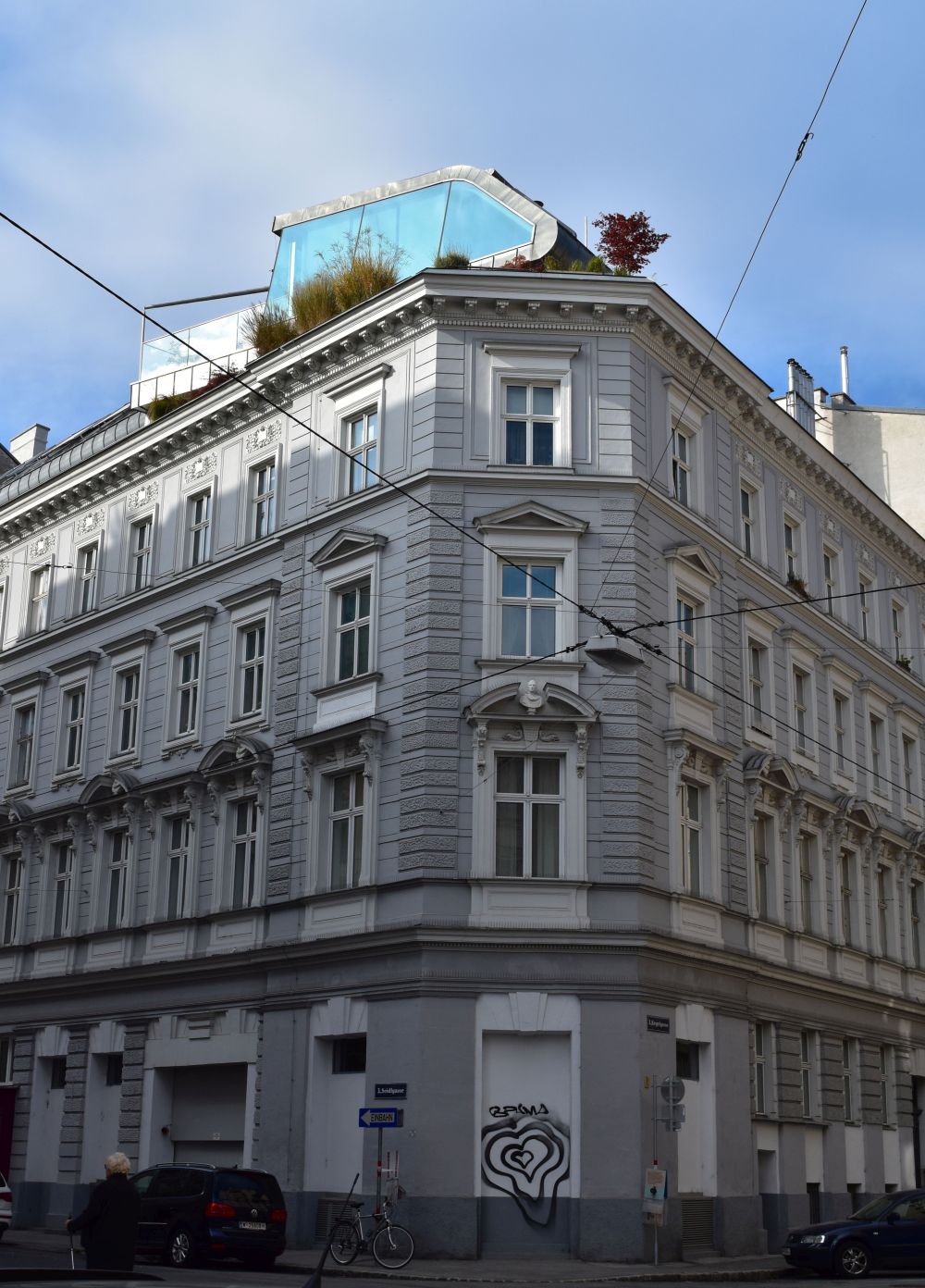
The “normal” citizens live outside the former city walls – and, when wealthy, they live in huge appartments. This is such a house – and they have added a modern apartment on top.

aaa_0082-small

.

Sommerfrische

In summer, the emperors, noblemen and wealthy citizens loved to stay in the mountains and at the lakes. This habit is called “Sommerfrische”. Well – you can really refresh yourself at places like this – the Mondsee near Salzburg.

aaa_0484-small


Again in Berlin – catching up with the history of Prussia and enjoying Sans Souci

Another day of ours starts at the Gendarmenmarkt

From our hotel near Theodor Heuss Platz, the metro U2 takes us directly to Stadtmitte and to the Gendarmenmarkt – the French dome looks at us through the yellow leaves of late autumn.

aaa_0440-small

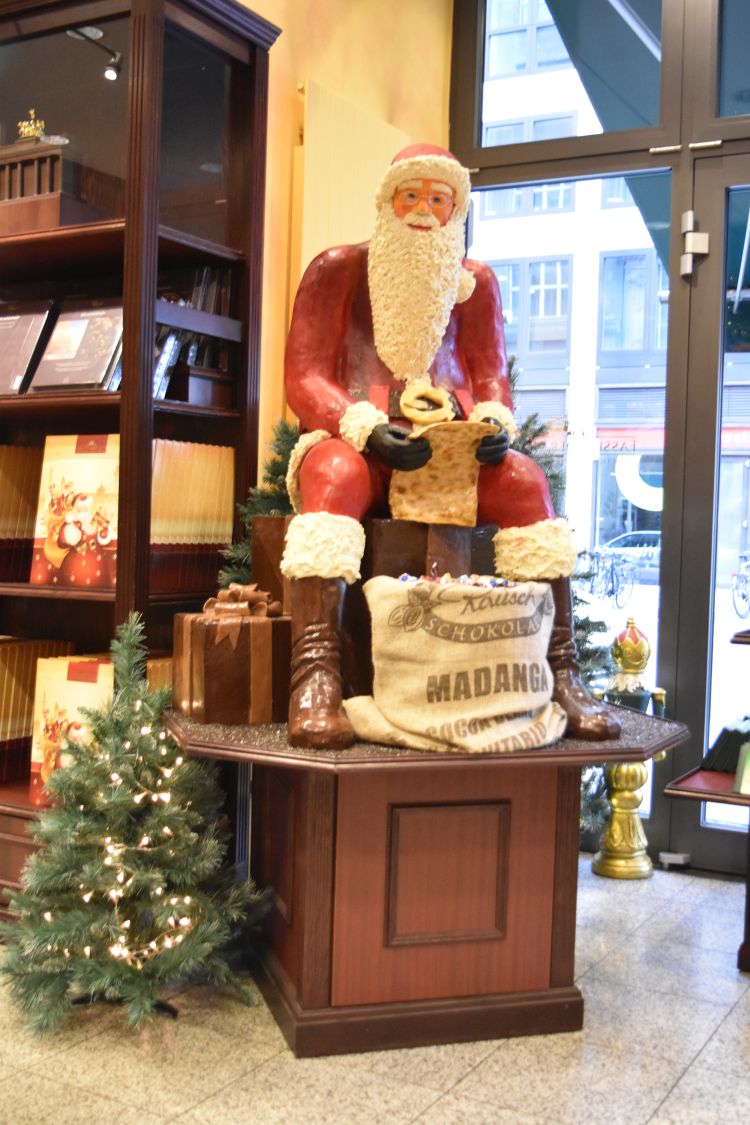
“You do not know Fassbender&Rausch at the Gendarmenmarkt?” My friend asks me, “then come and have a look at their magic shop.” We enter and I am overwhelmed – the shop is full of so many shelves filled with chocolate delicacies. And out of chocolate they have built the Reichstag, the Kaiser Wilhelm Gedächtnis Kirche, the Brandenburgertor and a huge Santa Claus.

aaa_0475-small

I almost feel bad: Is it not a waste to take tons of chocolate to cast buildings and santa clauses? Food is made for eating…

From Gendarmenmarkt it is just a few steps to the German Museum.

.

How did Berlin become the capital of Germany? How did it happen that the Hohenzollern from Prussia overtook the Habsburgians from Vienna?

Today I want to learn more about the rise of Prussia, the foundation of nowadays Germany and how Austria and the Habsburgians lost their dominant position visavis Prussia and the house of Hohenzollern in the 19th century. The German Museum (Deutsches Museum) is the right place to study that. Here we focus on the 18th and 19th century. I am writing down what I took with me from the excellent curation of the museum –  though not being a historian by profession.

The Holy German Empire had ceased to exist with Napoleon. After the Congress of Vienna (1815), a loose federation of German speaking principalities was founded. In this federation there was competition between the Hohenzollern (Prussia) and the Habsburgians (Austria). In 1866 Prussia won the battle of Königgrätz (today in Poland). The Prussian army used their strategy of independent commanding officers that were given their own targets to fight and bind Austrian forces at various front lines. In addition the Prussian king Wilhelm and his minister Bismarck were present in the battle motivating their army. The Austrian officers were not fully loyal to their general and emperor Franz-Josef I of Austria lost this battle. Without Austria, the Prussians founded the German Empire (Deutsches Reich) and Wilhelm II of Hohenzollern became emperor of this (reduced) Germany. The Habsburgians had been emperors of the (former) Holy German Empire for about 400 years and Franz-Josef now remained emperor of his multination empire Austria and king of Hungary (k&k monarchy).

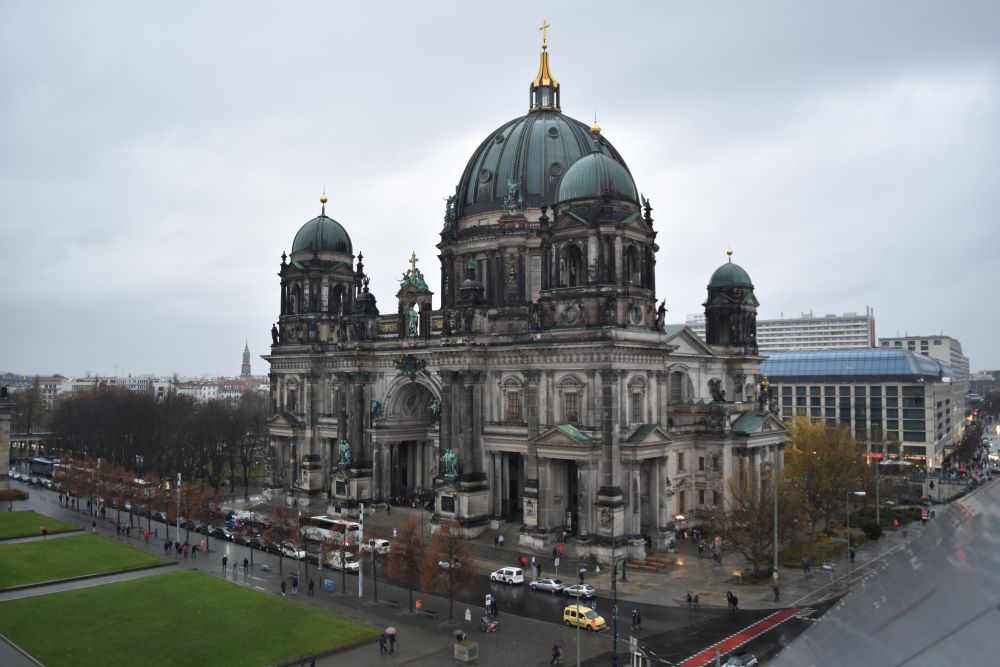
BUT Prussia was a relative newcomer in the power play of German principalities: In the 17th century it had gained importance, thanks to the Great Elector Friedrich Wilhelm who prepared the ground for Prussia to become a kingdom in the Holy German Empire in 1701. Friedrich I, Friedrich Wilhelm I and Friedrich II the Great (nick named “Alter Fritz”) were the first kings of Prussia. Prussia formed a strong army to expand their territory and they lived religious tolerance which attracted Huguenots that were excellent craftmen and trademen. When Friedrich II conquered Silesia (Schlesien) in 1763, Prussia rose to the rank of one of the high power principalities alongside with Austria and Bavaria. The center of Germany (without Austria) moved to Berlin in the late 19th century after the victory of the Prussians over the Austrians in 1866. The new mighty city of Berlin needed representative buildings. Ostentatious Baroque buildings (such as the castle or Stadtschloss) and Neoclassic complexes (such as the Museumsinsel – island of museums – and the Dome of Berlin) were built during the rise of Prussia and for Berlin as a young capital. Modern Art houses on wide alleys were constructed and surrounding villages became part of Berlin. They needed to be connected which gave rise to the metro and S-Bahn network – planned with a broad mind and equipped with Modern Art stations. And after the Second World War and the fall of the Iron Curtain, modern architecture was added to rebuild Berlin (such as the Potsdamer Platz).

Now I understand: Prussia is a very successful newcomer in the power play of German principalities – this may be the reason, why I feel that the Prussian language is not always welcomed in the rest of Germany. Now I know, why I have learnt to be careful not to use my second language to aggressively.

In the evening we attend a concert in the Dome of Berlin – this manifestation of power. It is Mozart’s Requiem in f-Moll given by the Choir of the Johanneskirche Schlachtensee near Berlin. The acustics is great.  I particularly like the Alt voice of Franziska Markowitsch.

aaa_0508-small

.

Visiting Potsdam and Friedrich II’s castle and park of Sans Souci

Early in the morning we take the S-Bahn (or Rapid Railway) to Potsdam. We enter the station at Heerstrasse. I enjoy the Modern Art construction of the 1920’s…

aaa_0510-small

… and the humor of Berlin. When caught without ticket you do not pay a “penalty” of 60 Euros. No, what you pay is “erhöhtes Beförderungsgeld” or “an enhanced price for transportation”.

aaa_0511-small

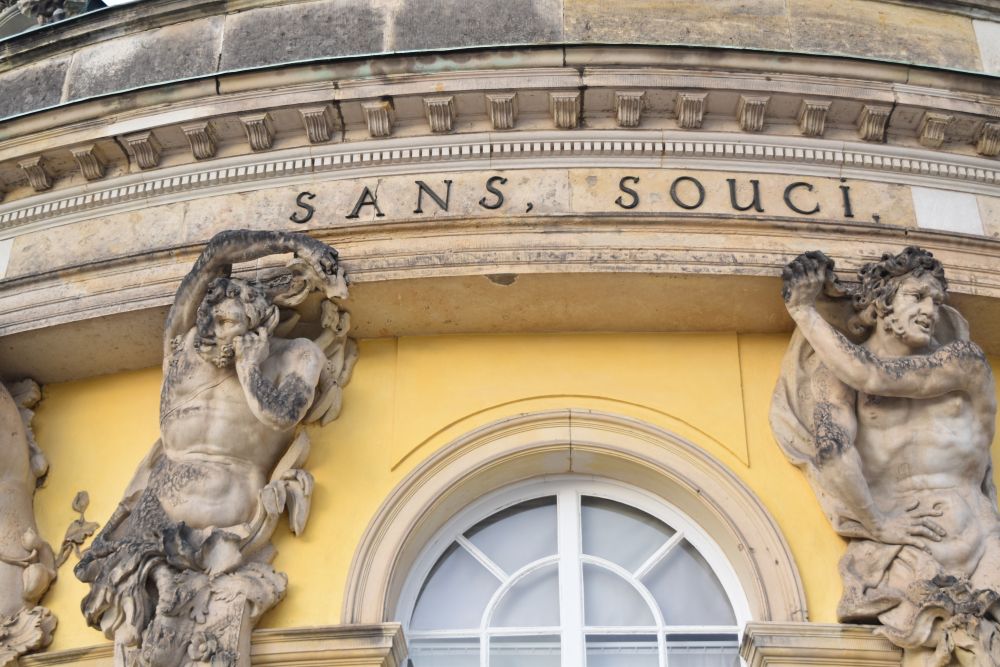
At Potdsdam Friedrich II the Great has built his charming small castle Sans Souci, …

aaa_0591-small

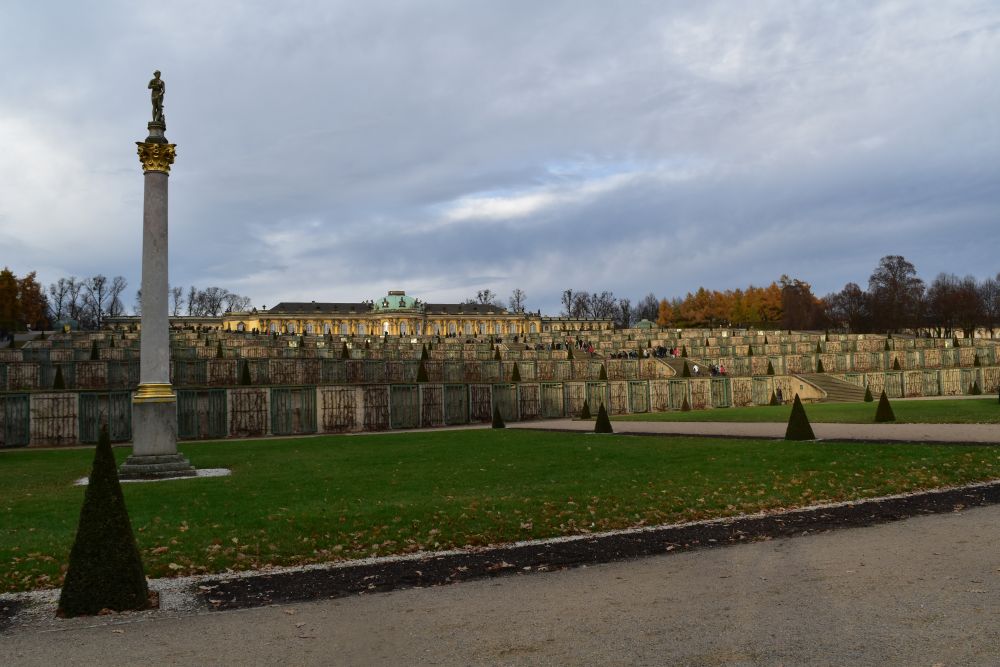
… with the wine garden climbing up to his castle.

aaa_0580-small

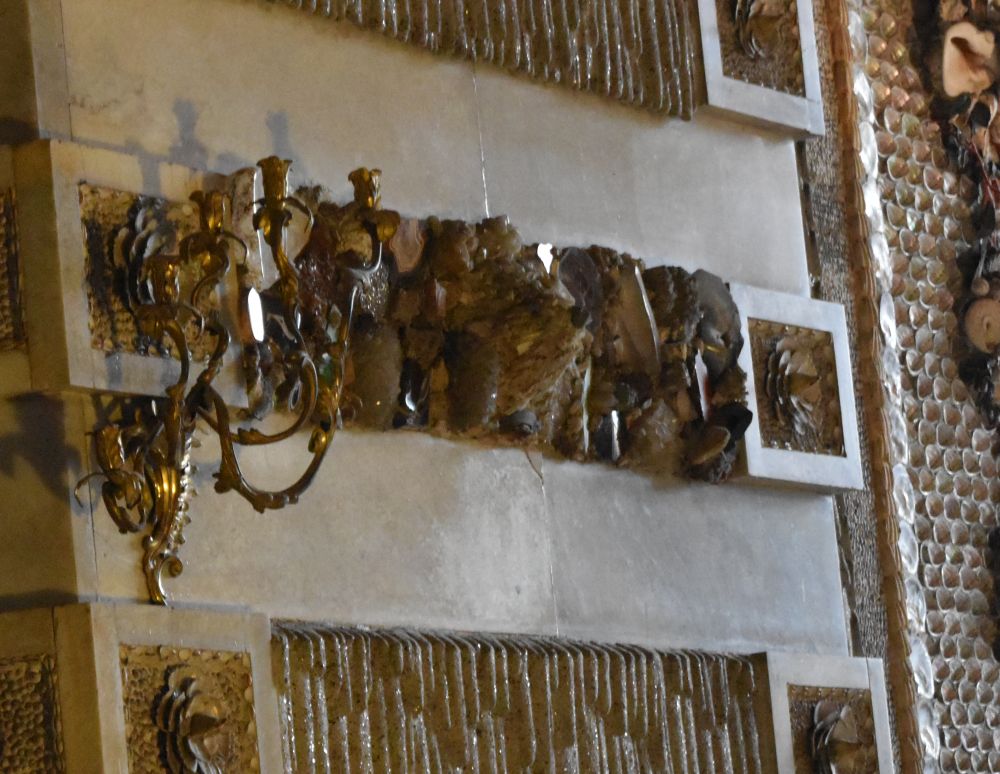
For his guests Friedrich II had the New Palais built (Neues Palais).  It is under permanent renovation and every time more of the luxury rooms are open. We attend a guided tour. This is the floor of the “cave” room…

aaa_0521-small

… and this is a small piece of the Kibo summit, given to emperor William II by Hans Meyer who was the first to climb the Kilimanjaro in 1889 (he then named the highest point on the crater rim after Kaiser Wilhelm).

aaa_0531-smallcrop

The bathroom of empress Augusta Victoria (the wife of emperor William II) was integrated in a wardrobe.

aaa_0547-small

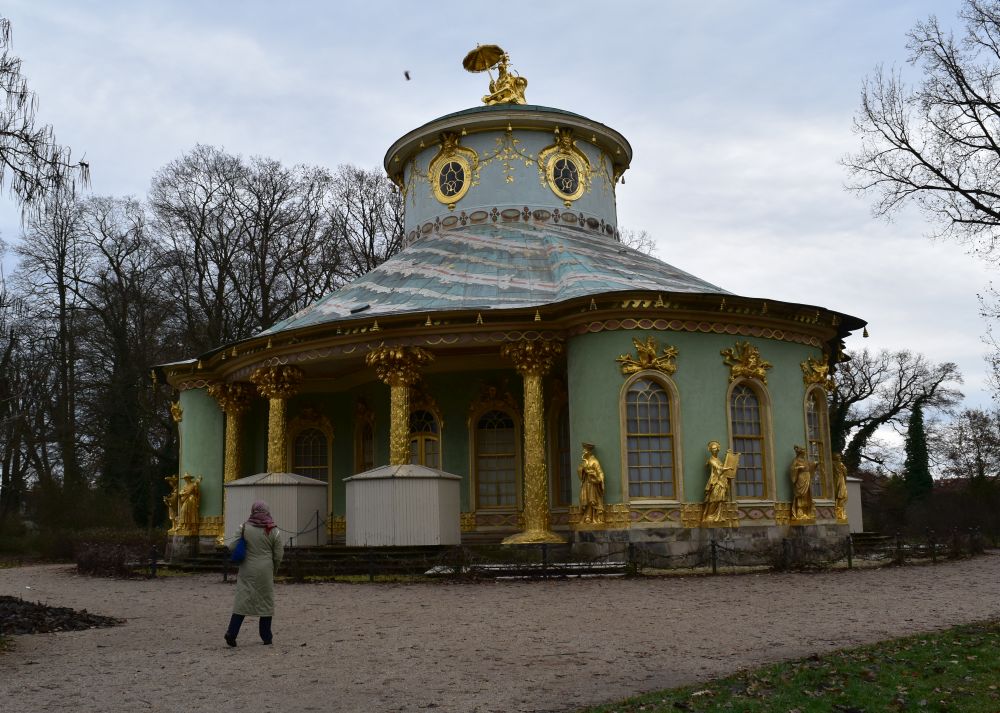
After having spent an hour in the chilly New Palais, we warm up by strolling through the park of Sanssouci with its teahouse…

aaa_0568-small

… and its colorful November  atmosphere.

aaa_0574-small

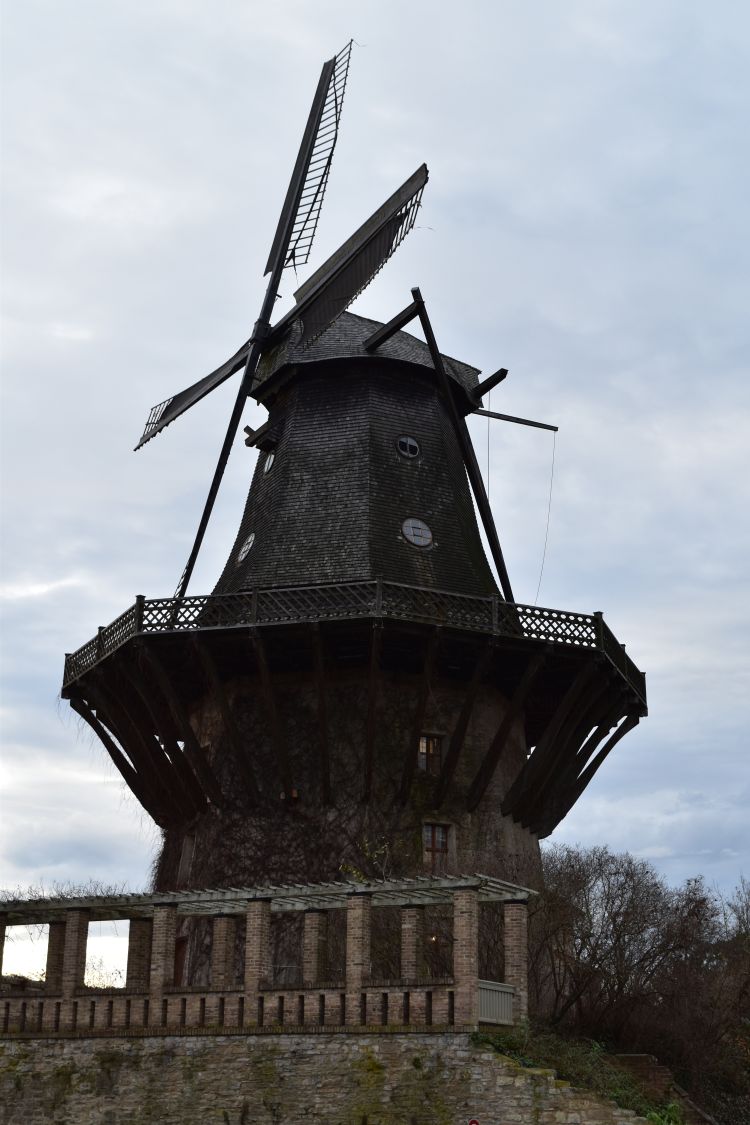
Friedrich II wanted to tear down this mill, because it was in his way. But the owner warned him that he would appeal to the court. The king was impressed and changed the plans for his park. The mill has been here until today.

aaa_0597-small

.

Good-bye Berlin and see you next year

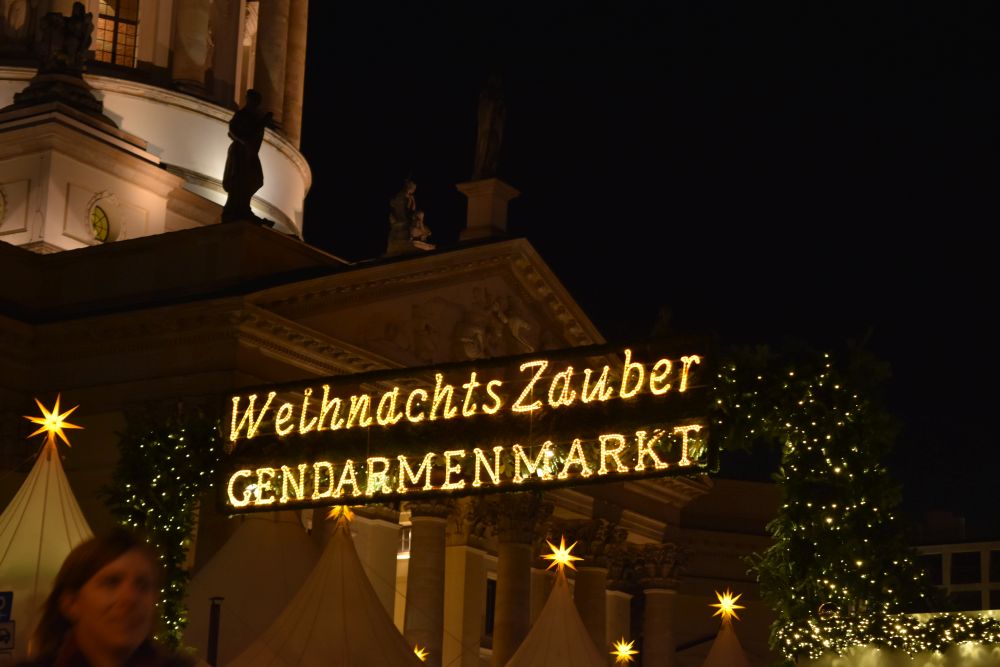
On Monday many, many Christmas markets opened in Berlin. One of them is at the Gendarmenmarkt where restaurants are inviting to eat.

aaa_0610-small

We have dinner at the small Italian restaurant Adelino near our hotel and then I say good-bye to Berlin. I am pretty sure that I will return to my mother town next year.


Again – in Berlin, my mother town – welcome and Prenzlauerberg

It is mid November 2016.  Again I am in Berlin, my mother town, just for a few days. I  say hello to some of my favorite places, want to discover some new places and meet friends.

.

Berlin is welcoming me

As always I am welcomed by Berlin in the modern Kaiser Wilhelm Gedächtniskirche called “powder box”. I love the solemn atmosphere produced by the blue stain windows. The floating Christ figure looks to me as if he would bless the church and its visitors.

aaa_0431-small

Next stop is in the traditional shop Kadewe, where I have my Büsümer Krabbensüppchen (shrimps soup from Büsüm on Sylt) – as always delicious.

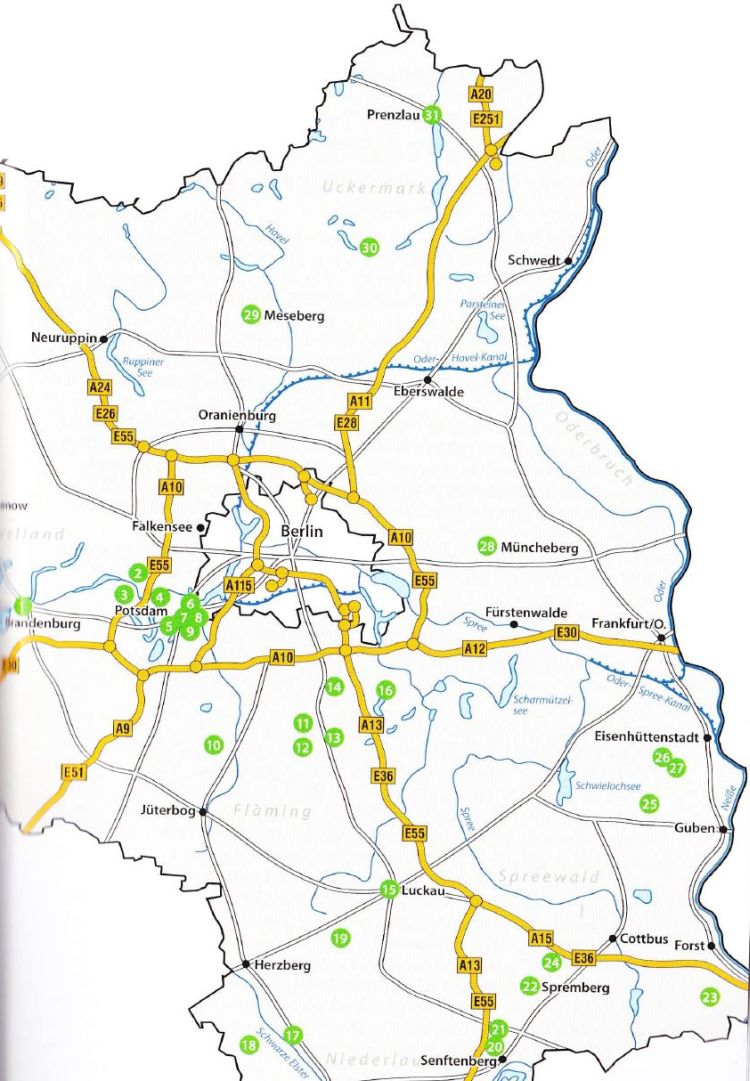
I move on to Dussmann in Friedrichstrasse and find the book: “Weinland Brandenburg” by Tom Wolf, 2016. “Wine in Brandenburg? Is this not the land where there is nothing but sand?” Tom Wolf asks and then describes 31 wine growers. Perhaps I should plan to go for a bike tour around Berlin? Who would like to join me? This is the map taken from the book.

weinbrandenburg

.

Prenzlauerberg – charming mix of small shops, restaurants, markets and culture

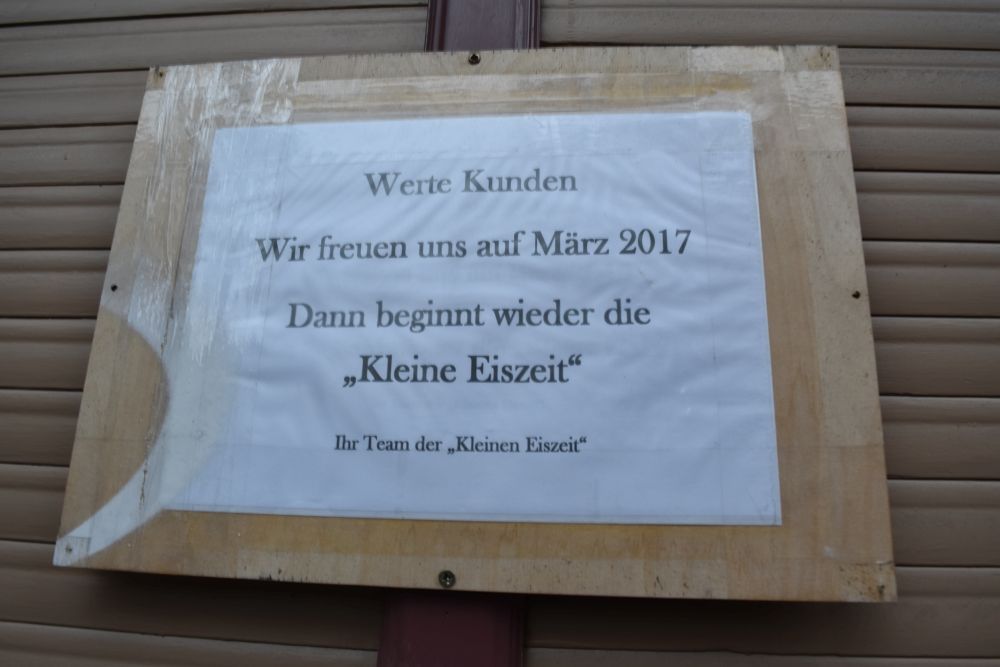
I have a dinner appointment in Prenzlauerberg. Metro number 2 takes me there and I dive into the charming mix of small shops, restaurants, markets and culture. The “Kleine Eiszeit” sells ice cream, but is closed during winter. They are looking forward to March 2017, when the “small Ice Age” will start again.

aaa_0450-small

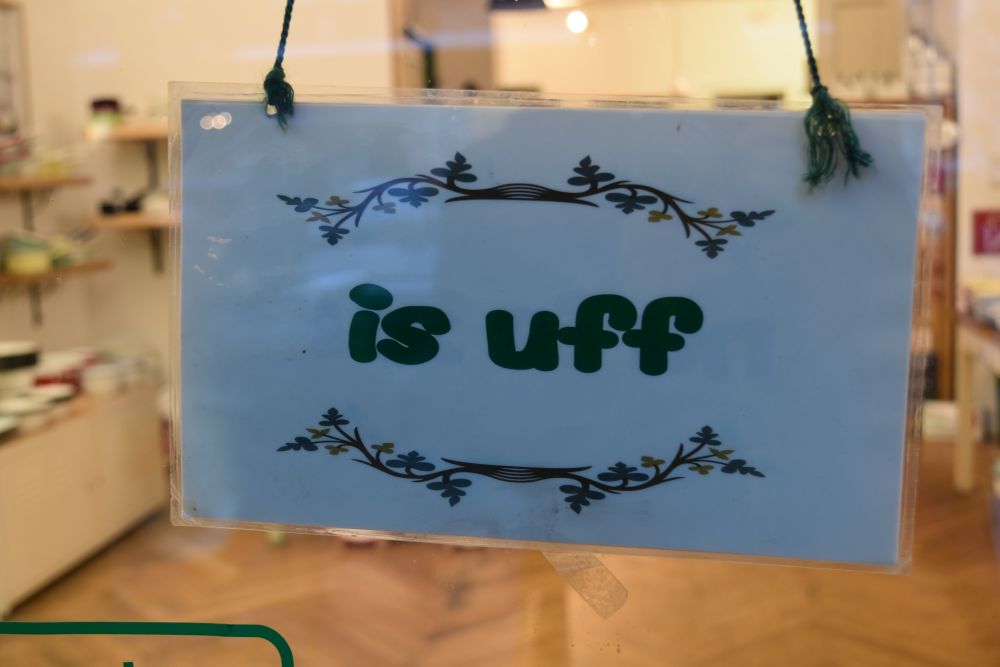
This shop is open – and he announces it in Berlinese – “is uff” or “ist offen” (meaning “is open”).

aaa_0453-small

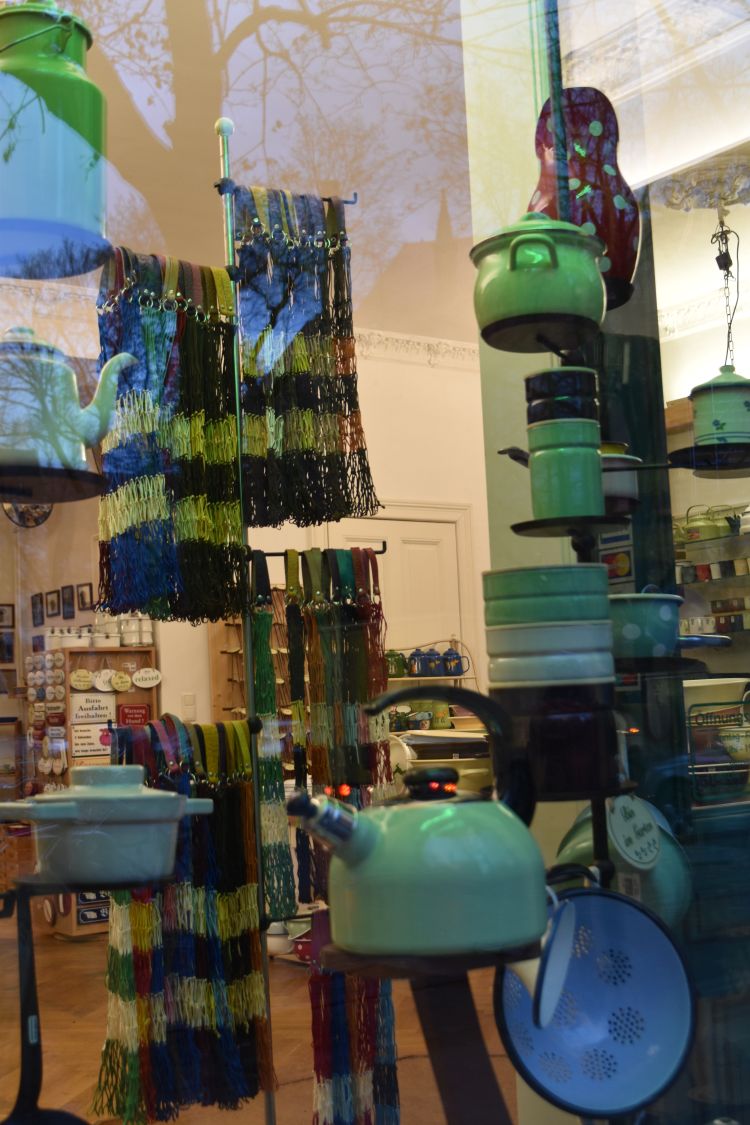
The shop’s layout shows a good taste for colors.

aaa_0454-smaoo

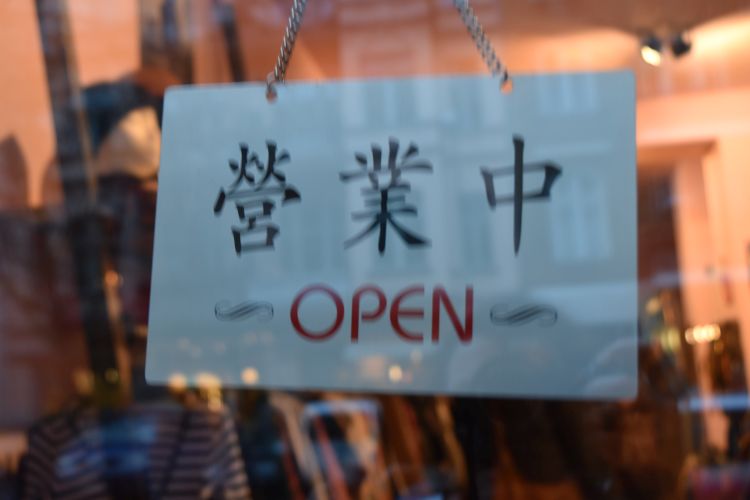
The shop next door seems to have a more international clientèle.

aaa_0455-small

This restaurant recommends to have a chat with one another.

aaa_0457-small

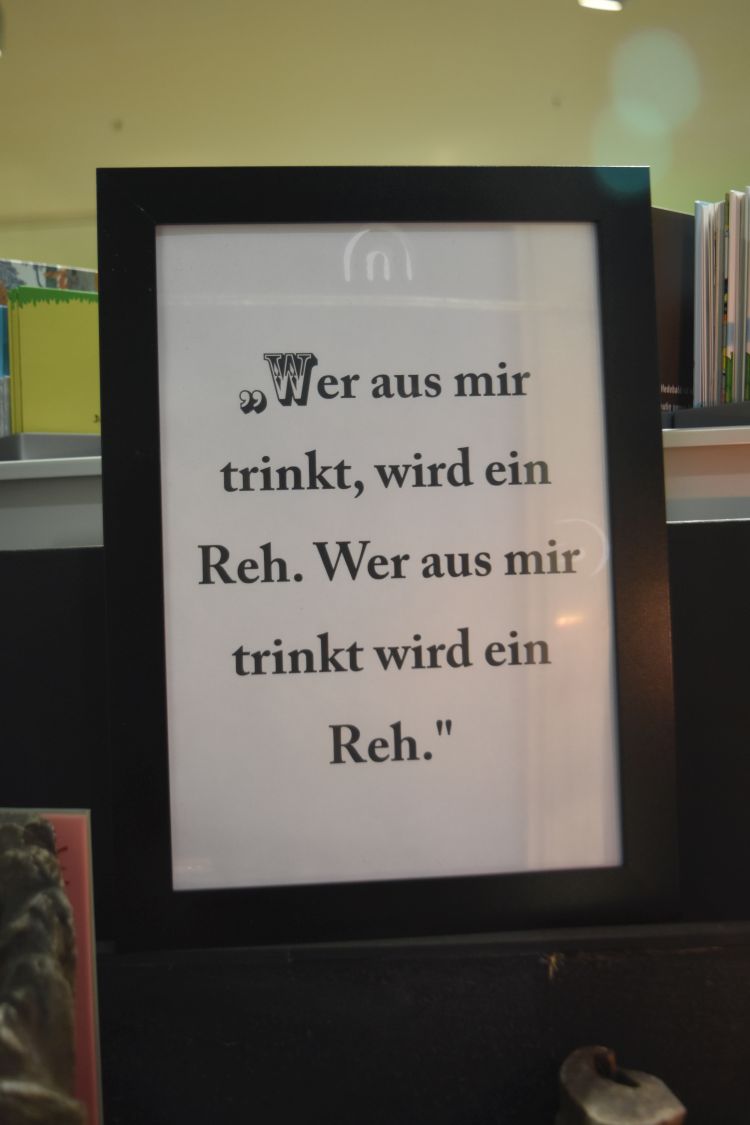
And not far from here I am tempted to buy loads of children’s books in the small bookshop that attracts clients with this fairy tale quote.

aaa_0461-small

“Who drinks from me, will be a deer. Who drinks from me, will be a deer.” Do you know the fairy tale? – It is “Brüderchen und Schwesterchen” or “Little Brother and Little Sister” by the Brothers Grimm.

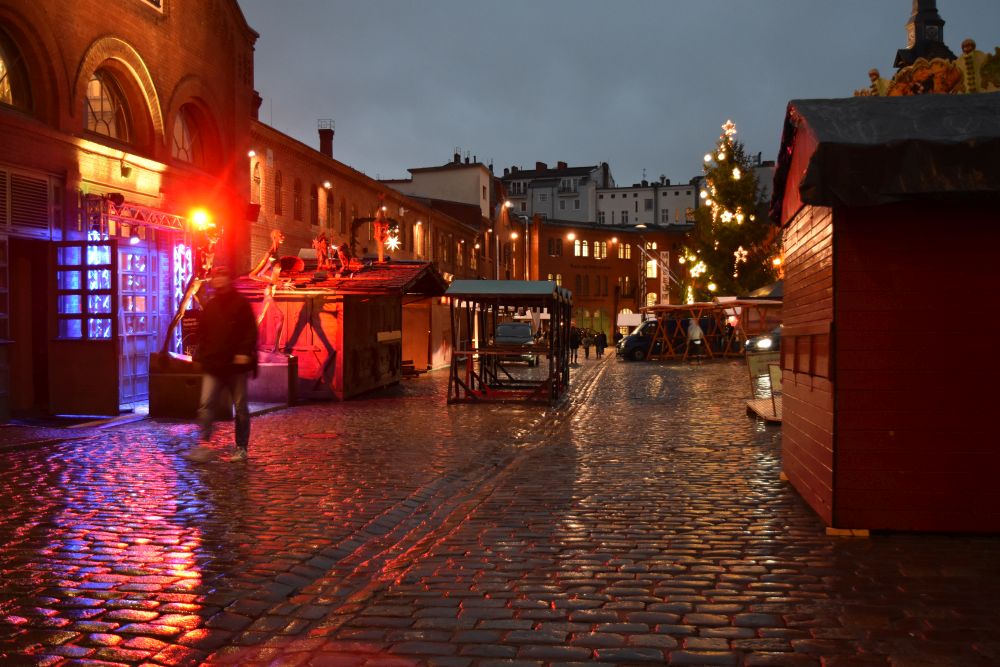
The Old Brewery (which is now a cultural center with restaurants) is busy setting up its Christmas market.

aaa_0463-small

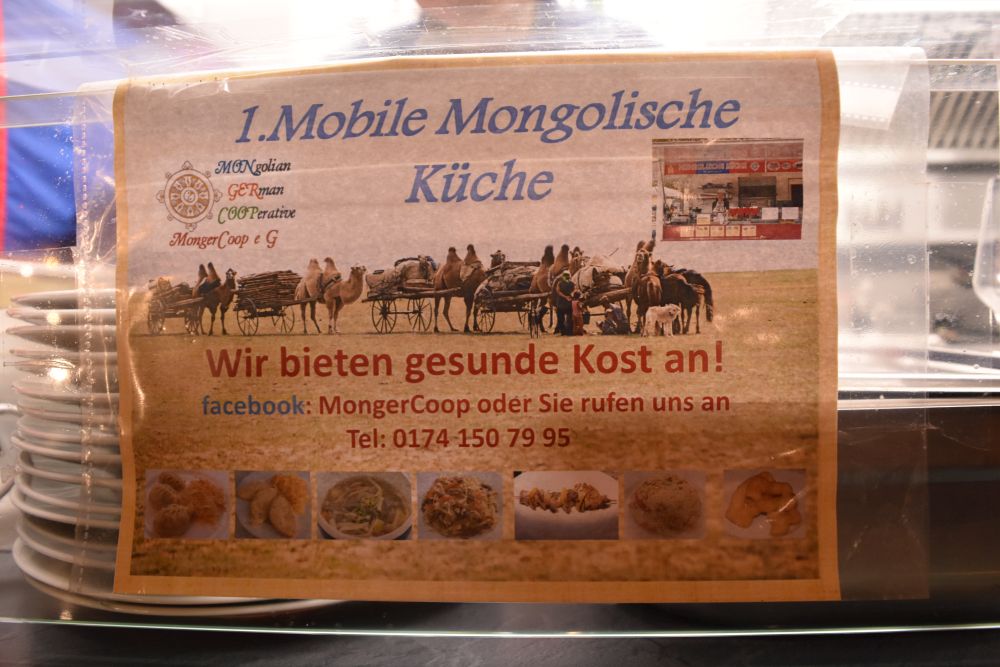
At Kollwitz square I find a busy market. First I try Kwas over a chat with Russians. And then I exchange memories with a Mongolian lady and try her milk drink and some Mongolian ravioli – delicious – bairlla or thank you.

aaa_0466-small

With a Vietnamese meal in noisy Umami at Knackstrasse and a quiet apero in the friendly restaurant Breslau at Sredzkistrasse I finish off my day, with a friend of mine from Poland.

.

My second day: Pouring rain

In the pouring rain I walk from Potsdamer Platz to the Hacke’scher Markt. The sky IS grey and so is the TV tower on Alexander Platz, seen from the small promenade along the Spree.

aaa_0471-small

The pouring rain makes me buy a warm rain coat lined with fleece. I get it at Freitag’s in the Hacke’sche Höfe – the shopkeeper is exactly my age and we have a long chat, also about a duchess that bought some 25 coats and jackets here, not for herself, but for the model dolls in her villa. She walks around them to enjoy the beauty of what she has acquired. Berlin can be a crazy town.

I close off the day with one of my best friends… in the restaurant Pastis at Rüdesheimerplatz, where the owner and her staff speak French. Our meals are delicious.


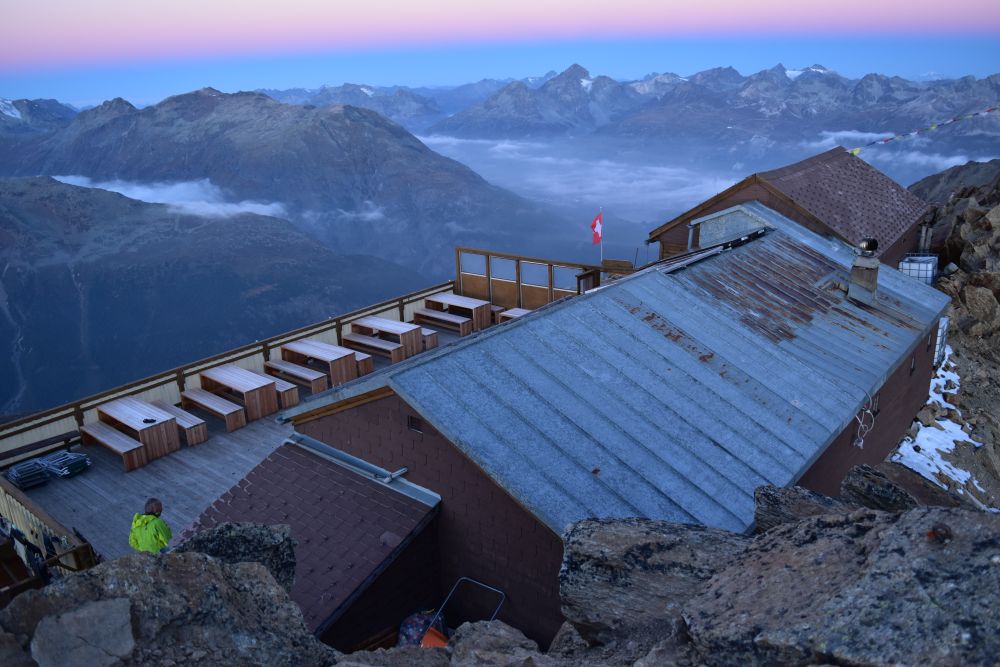
After having taken our fotos of the sunset around the Georgy hut, we sleep well though being on 3200m. Thanks to our alarm clock, we wake up early enough to watch the dawn before seven am – looking to the west in the direction of St. Moritz and the Julier.

aaa_0859-small

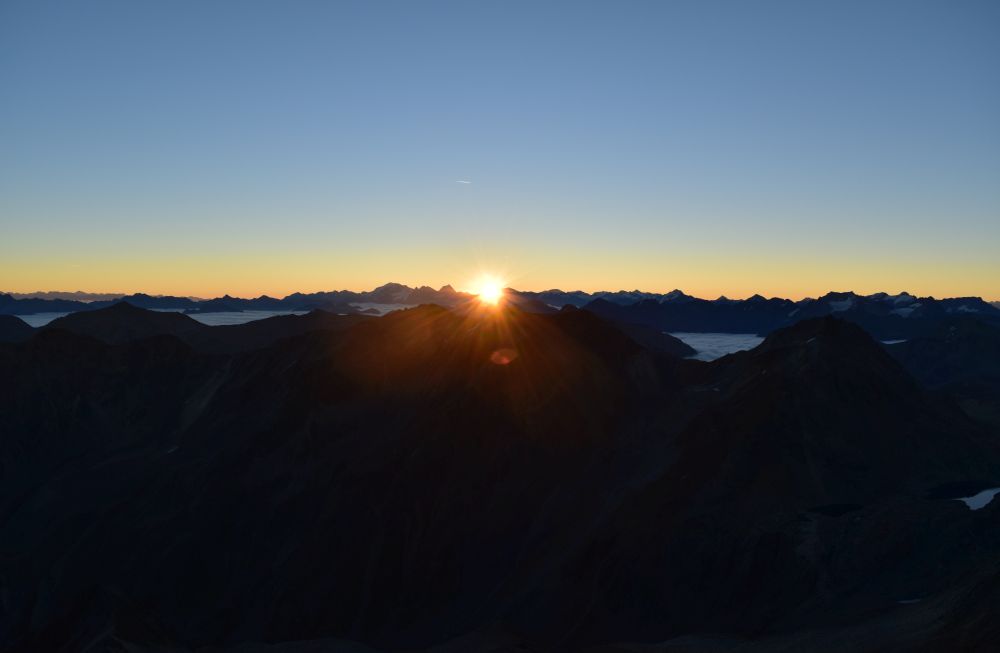
We are standing on the tiny helicopter landing spot just above the hut and around seven am, the sun rises in the east.

aaa_0873-small

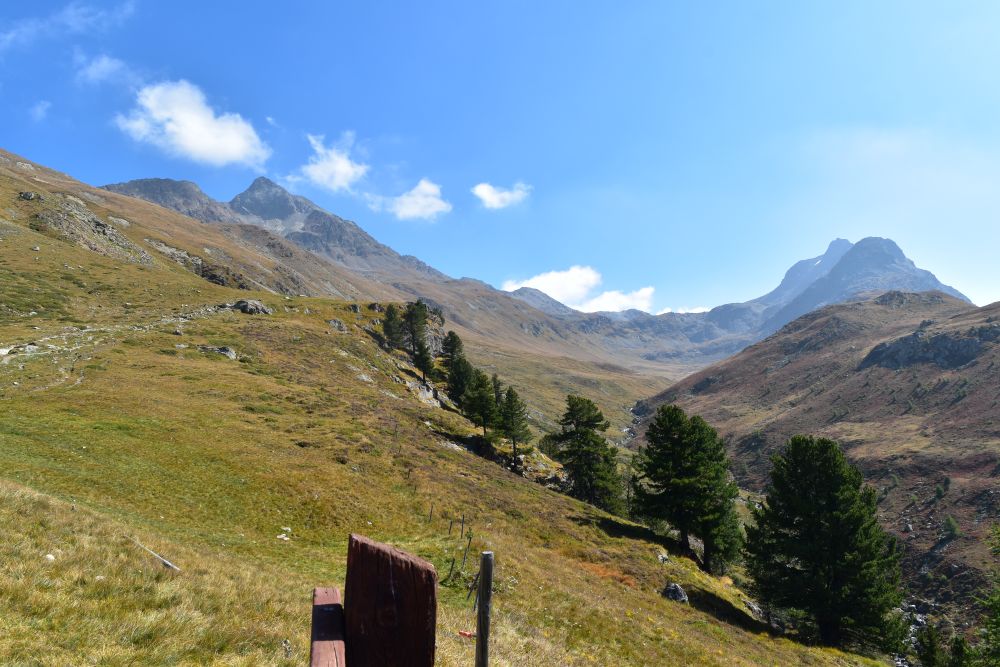
Claudio and his friend from Nepal serve an excellent breakfast. After having walked down some 900m, we look back to the Piz Languard.  The Piz is the triangular peak to the left. We say good-bye to the Georgy hut that lies just below that peak.

aaa_0906-small

We take the chairlift down to Pontresina, then hop on to the bus to Maloja and settle in the Sport hotel. From here, we visit the Bithaberg lake, just half an hour away.

aaa_0919-small

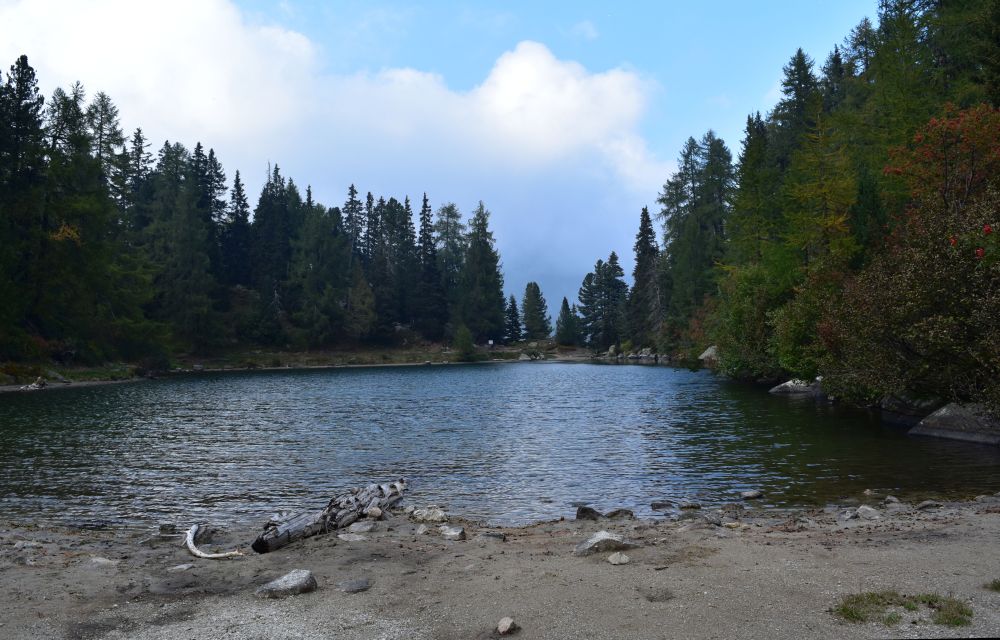
Autumn has just started shily with some first yellow leaves here at the Bitabergh lake.

aaa_0925-small

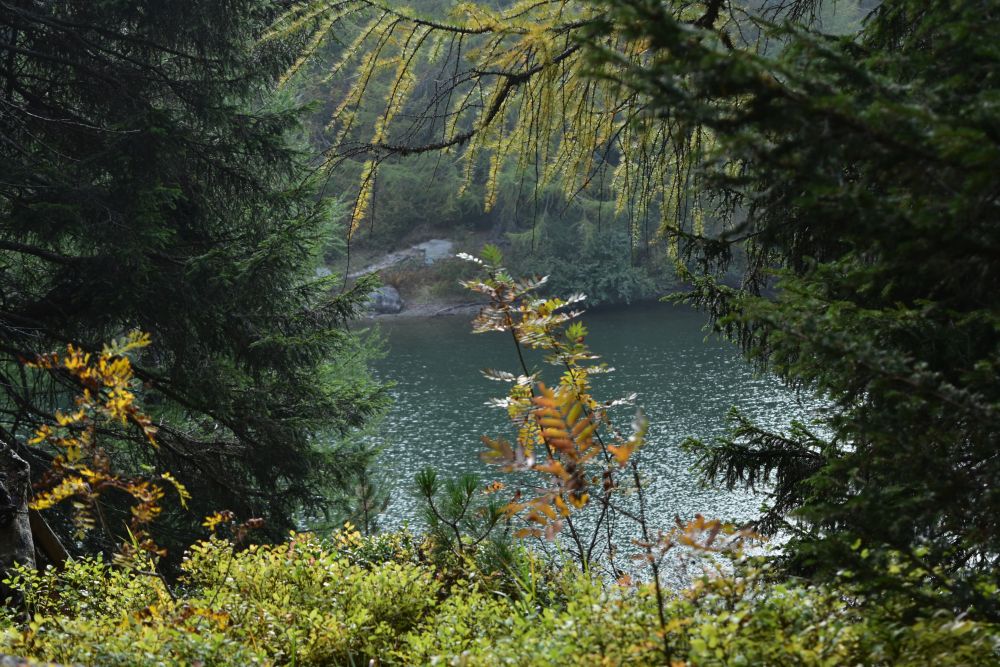
I am convinced that an old knight will now emerge from this lake, because after having loved a noble lady he cannot find peace. However, neither our host nor “Dr. Google”  know any legends about this romantic lake.

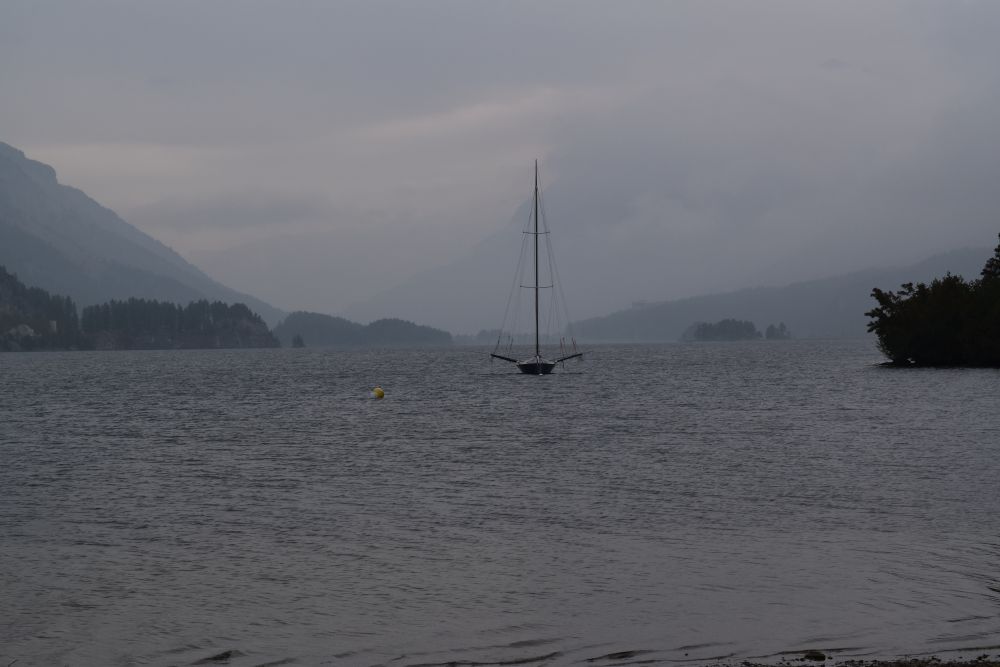
On our third day in the Engadin, the weather has changed. In the drizzling rain, we walk along the Maloja lake to Isola and Sils Maria. This is a sailing boat that is waiting for better weather and some wind –   in the middle of a blue-greyish scenery.

aaa_0936-small

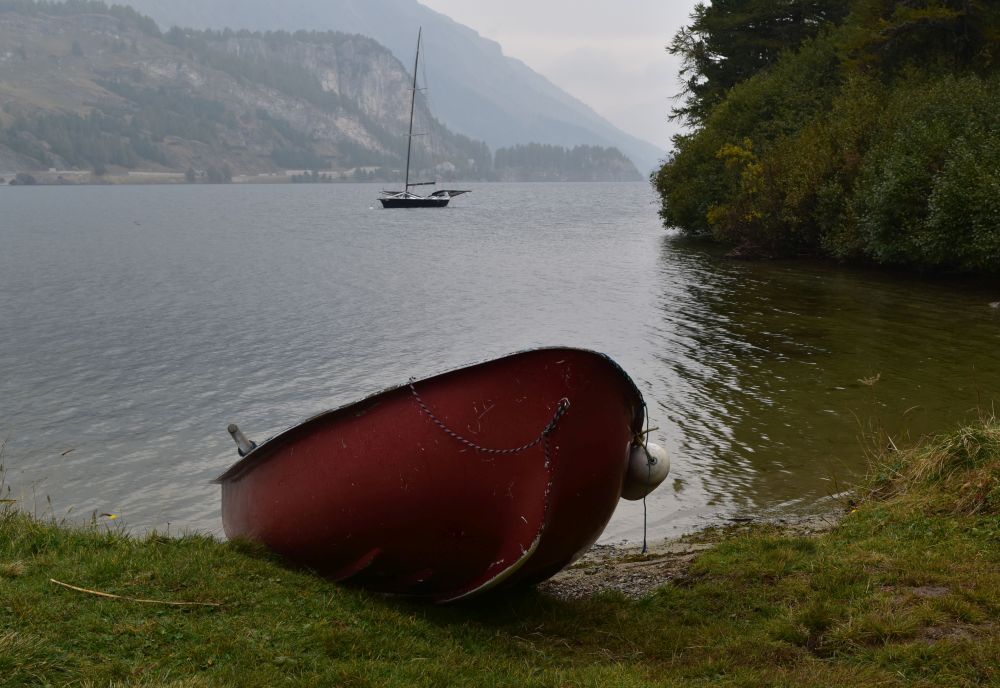
It is waiting together with this red rowing boat.

aaa_0941-small

The clouds hang over the lake – we are looking back to Maloja.

aaa_0996-small

The lake is transparent and clean, another blue-grey variation.

aaa_0976-small

Segantini has painted one of these peers that I now find in the mist.

aaa_1023-small

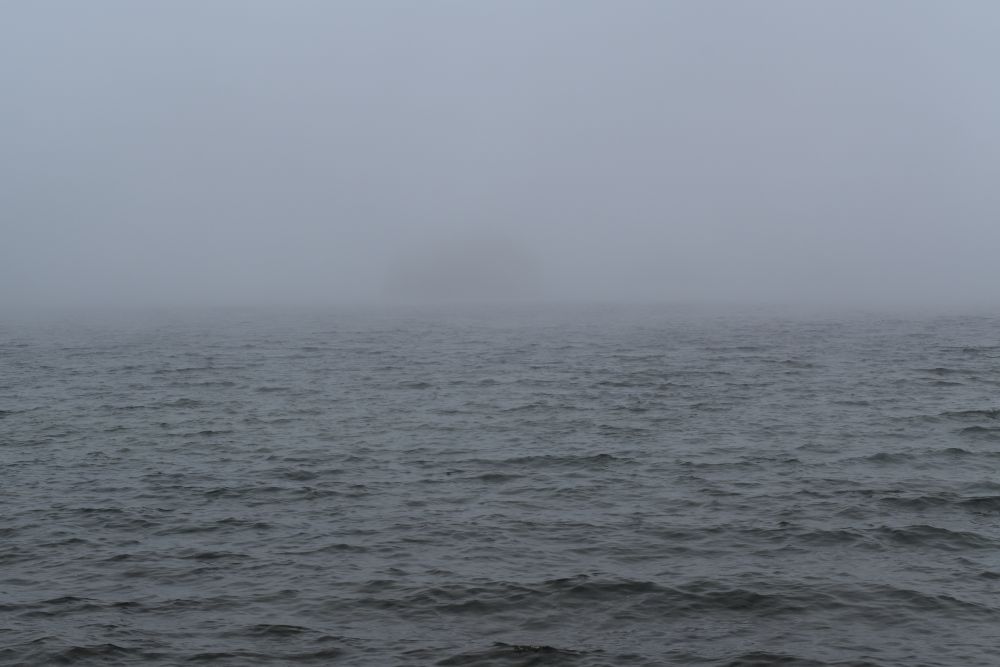
The lake and clouds… do you see the small island in the middle? This is another blue-grey variation.

aaa_1030-small

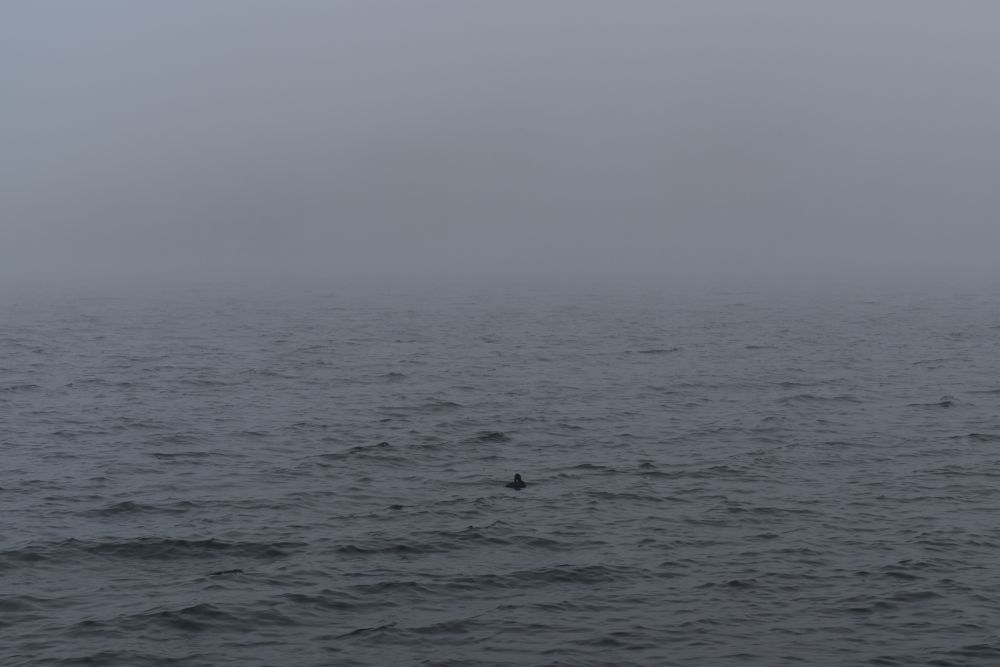
More water and clouds – two shades of greyish blue with one little duck.

aaa_1022-small

Yes, it is lovely weather for ducks, but it is also lovely weather for some interesting fotos – not just sunshine, mountains and blue sky, but mono color variations. In a way I have been inspired by the black and white fotos of Guido Baselgia. In some of them I see nothing but grey, however my friend explains to me that there are different shades of grey. Hm, maybe you are right?

From Sils Maria we take the bus and train back to Basel. Some four hours later we are back at home. We have spent three wonderful days taking fotos and walking – and my muscles tell me clearly: “You have walked down some 1000m, we have not enjoyed that at all and we make you feel it!”


Engadin – looking for the sunrise on 3200m – and then for blue-greyish clouds

Engadin – looking for the sunset on 3200m

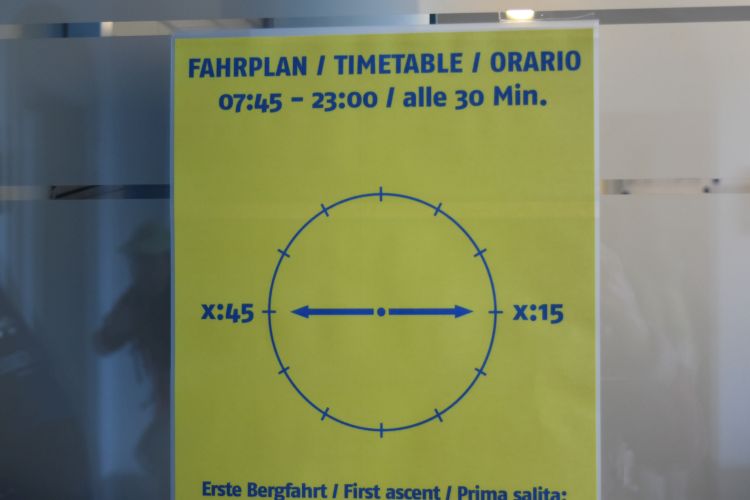
With a good friend of mine, I take the train from Basel to the Engadin. It is Early September and the leaves of the trees and the needles of the larches are still green. Our target is Pontresina. At x=8 we take the  45 train to Muottas Muragl.

aaa_0743-small

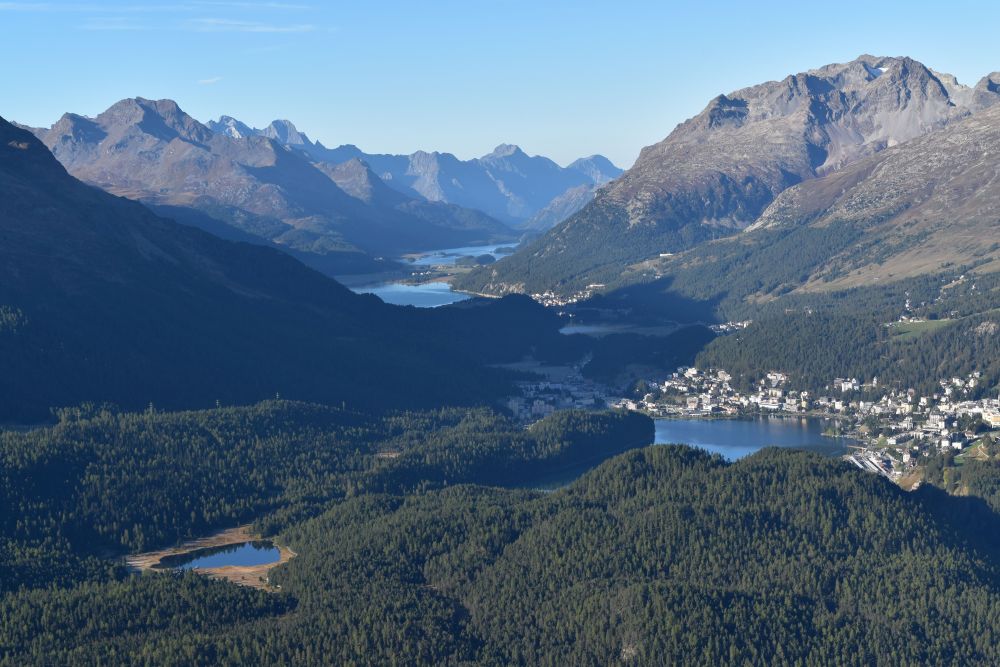
Muottas Muragl is a hill with a gorgeous view of the lakes of the upper Engadin ending with the Maloja pass.

aaa_0745-small

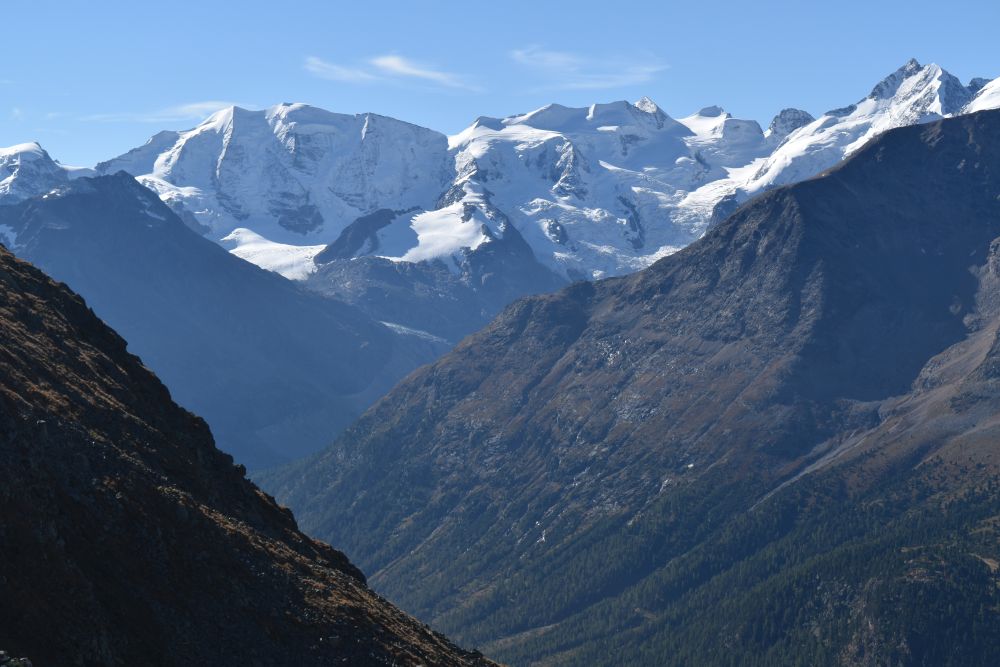
This is the view of the Palü mountains above the Bernina path.

aaa_0751-small

We are approaching the Segantini hut on 2730m. The hut takes its name from Segantini who loved to paint here. When he was working at the famous Alpine Triptychon, he died here in 1899.

aaa_0754-small

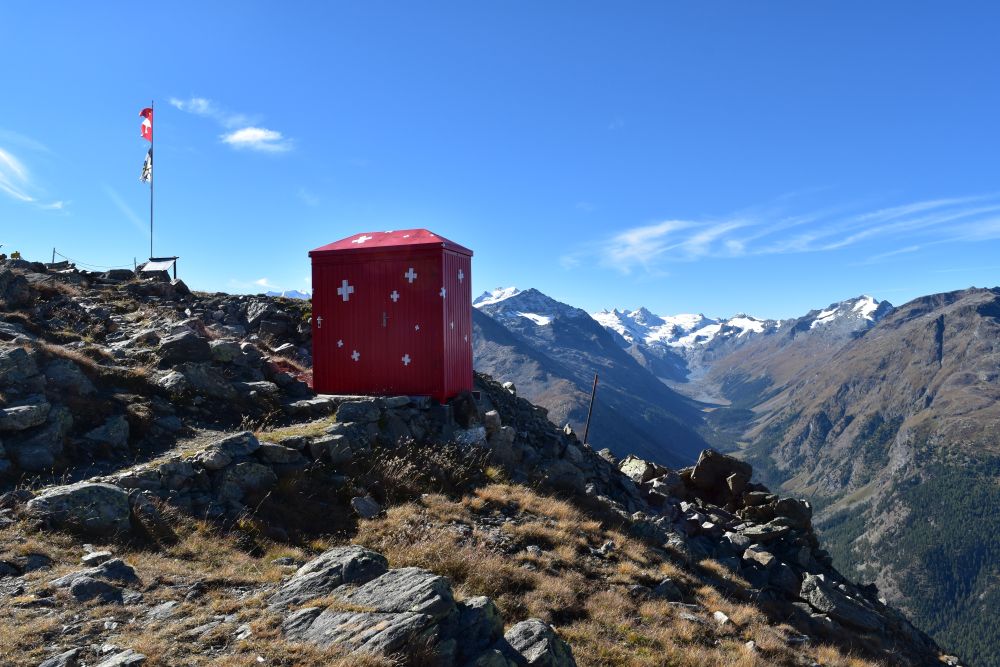
This is the “Swiss” toilet of the Segantini hut.

aaa_0758-small

Perhaps someone has forgotten his shoes here.

aaa_0764-small

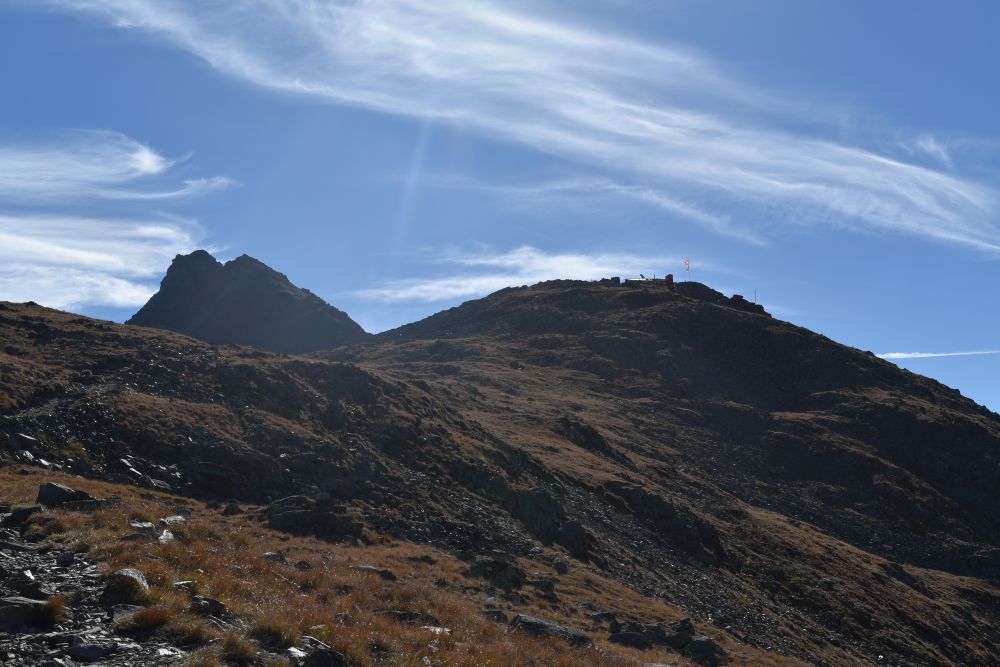
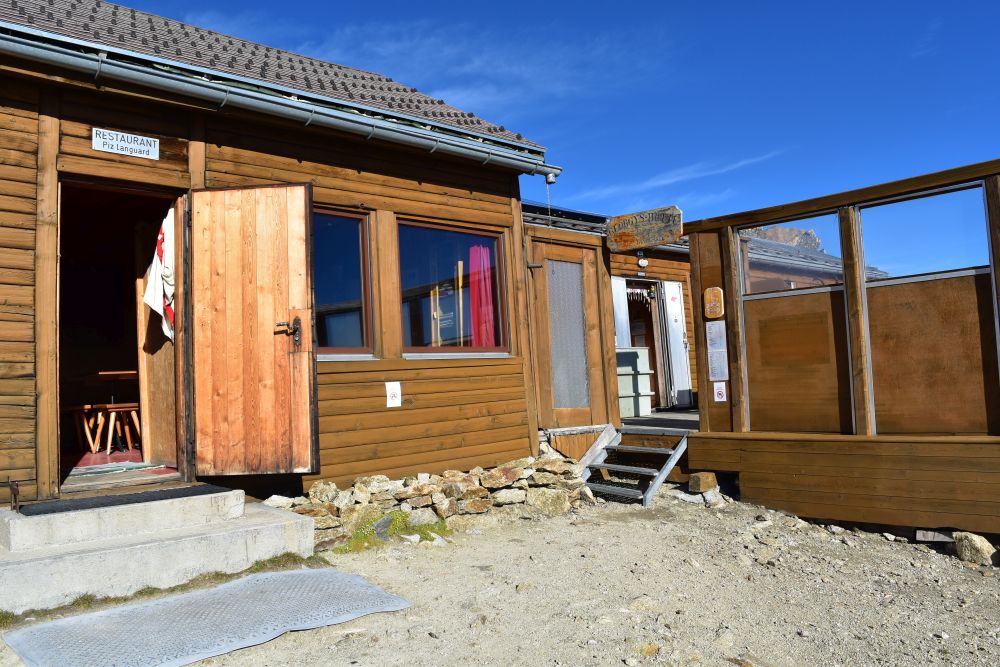
After a long climb we reach the Georgy hut on 3200m, located just below the Piz Languard. Also Georgy was a painter.

aaa_0796-small

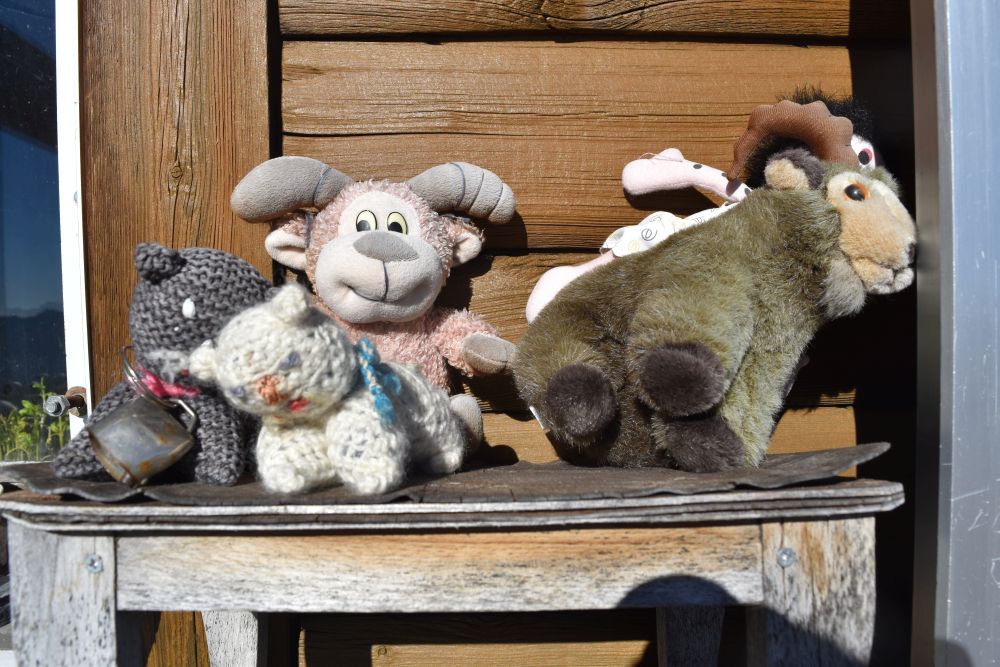
Claudio gives us a hearty welcome here, together with his colleague from Nepal. This is their souvenir shop…

aaa_0785-small

… and this is the toilet.

aaa_0790-small

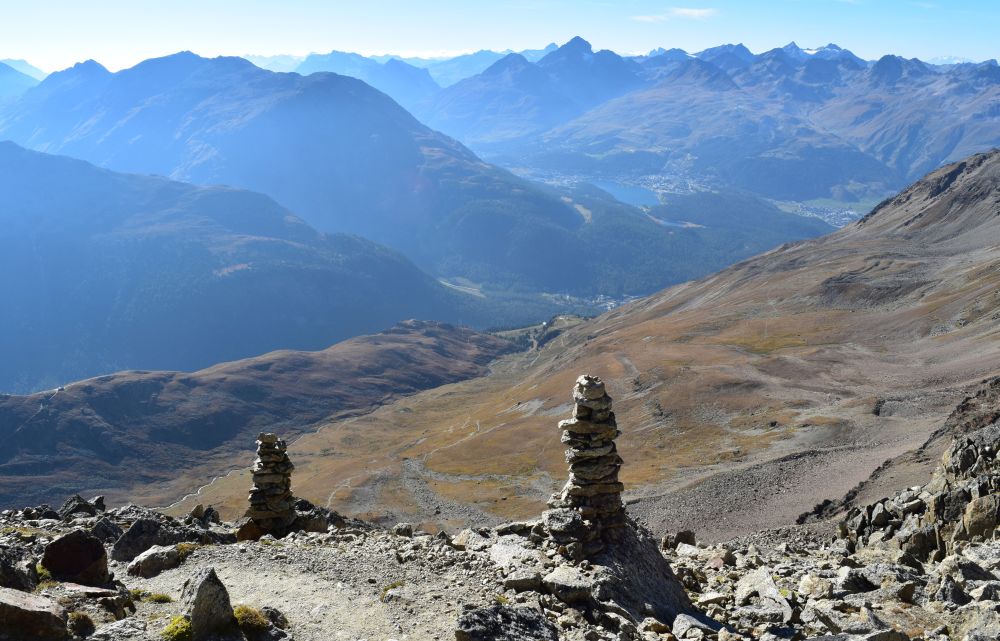
Later in the afternoon I take a photo of the view towards St. Moritz with its lake.

aaa_0792-small

Then the “snake of Maloja” (Malojaschlange) starts to come up…

aaa_0805-small

… and is materializing more and more.

aaa_0815-small

Clouds are now covering the Bernina pass below us.

aaa_0829-small

Shortly after seven pm the sun is setting.

aaa_0835-small

Claudio has deferred the dinner to after the sunset – thank you. We enjoy dinner with a couple and their friend from the Bernese Oberland. Under sparkling stars we sleep well, sometimes getting up to pay a visit to Helmut’s thron above the rocks.