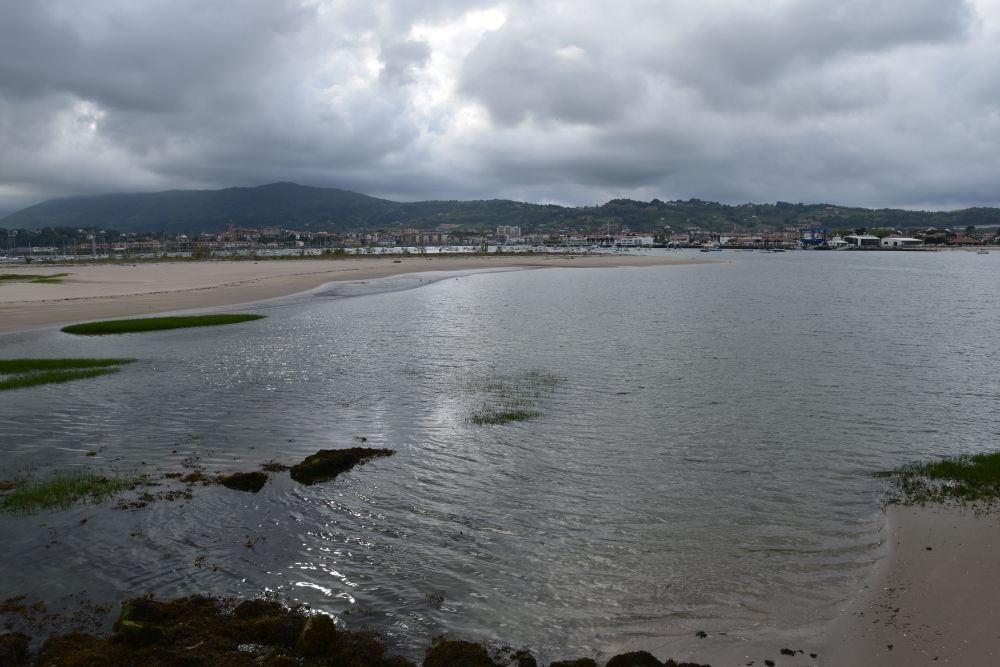
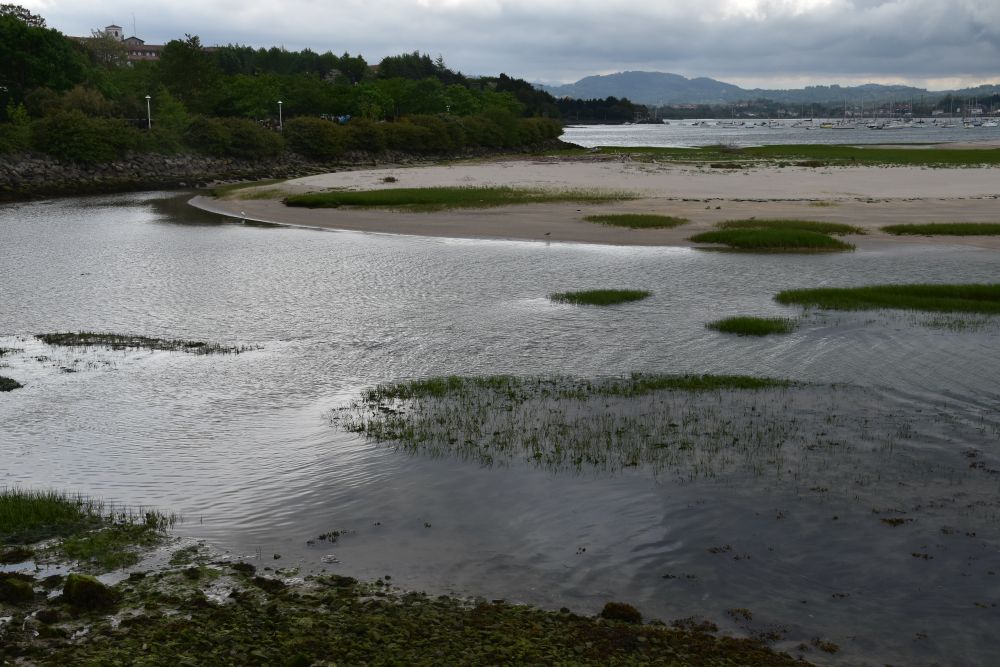
Oviedo… Pre-Romanesque churches and a relaxed city center

Friday, May 10th – today we aren going to visit Oviedo, the capital of Asturia.

.

The two Pre-Romanesque churches on the Naranco hill

First thing in the morning, our GPS goes crazy, drives us up on very, very steep narrow roads, until we reach a dead end in the middle of the forest. The view is spectacular: We see Oviedo surrounded by mountains.
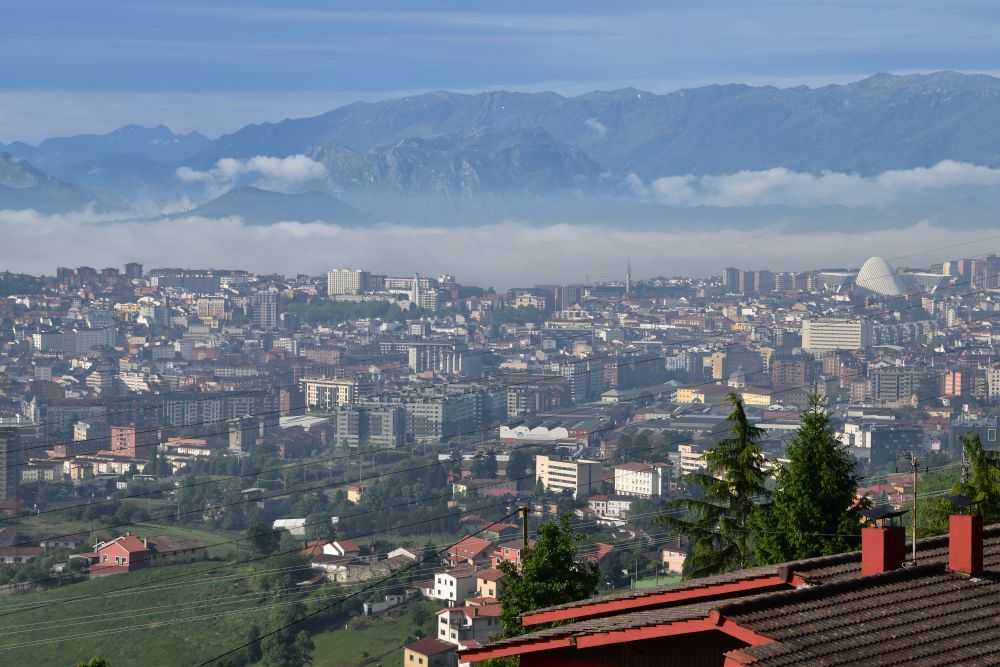
We drive back down, up again and finally we find the Pre-Romanesque church Santa Maria del Naranco.

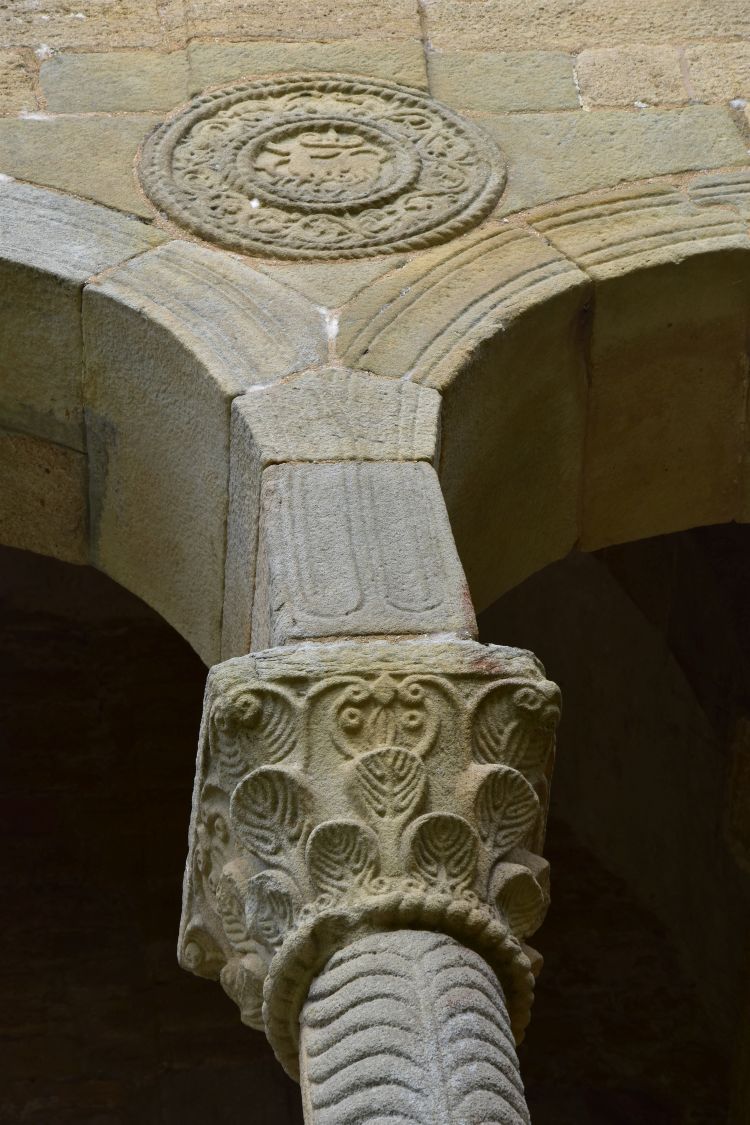
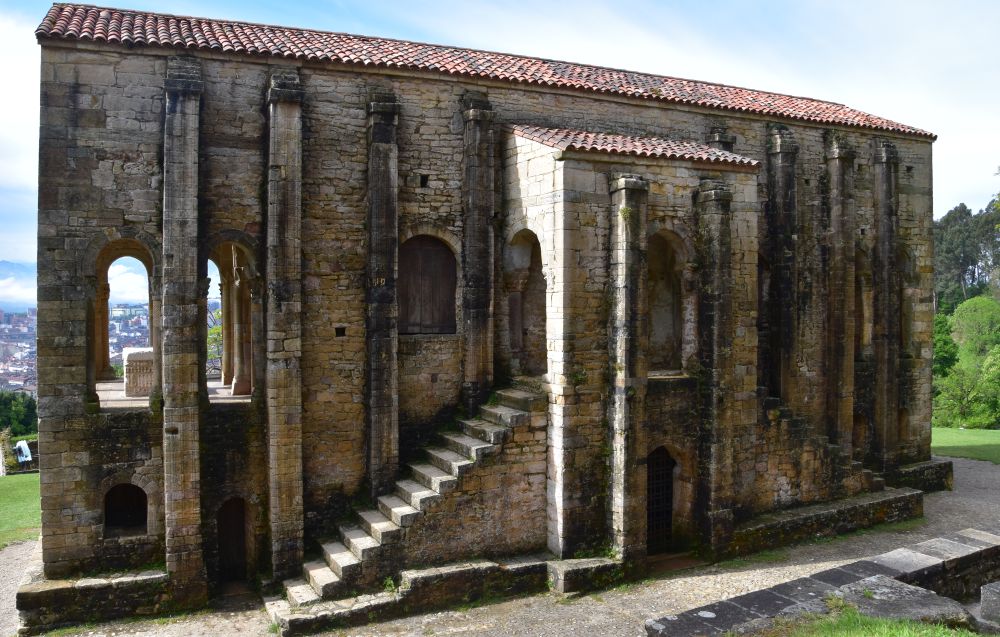
This church was built by the Asturian king Ramiro I around 850, first as a palace and still in the 9th century it was rebuilt as a church. We study the discreet and pretty decoration.

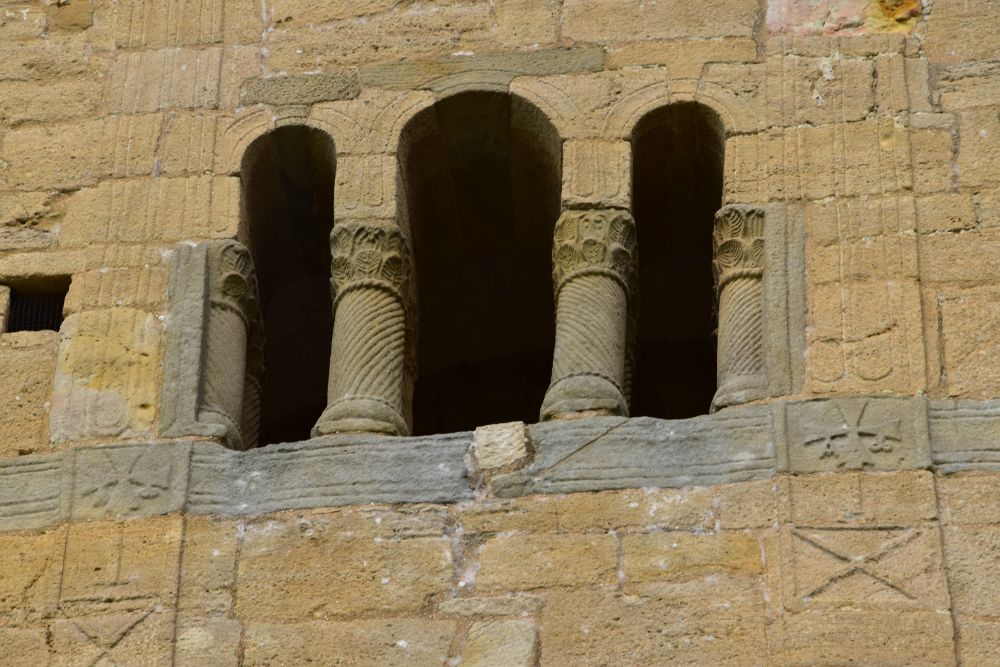
There are small medaillons above the arches.
The window above the terrace is elegant.
The view of the valley and the mountains of Oviedo is great from this palace-church.
Some hundred meters from here we find the chapel San Miguel de Lillo, built at the same time.

Elegantly decorated windows here as well.

This church is closed for renovation.


The third Pre-Romanesque church on the meadows (los Prados)

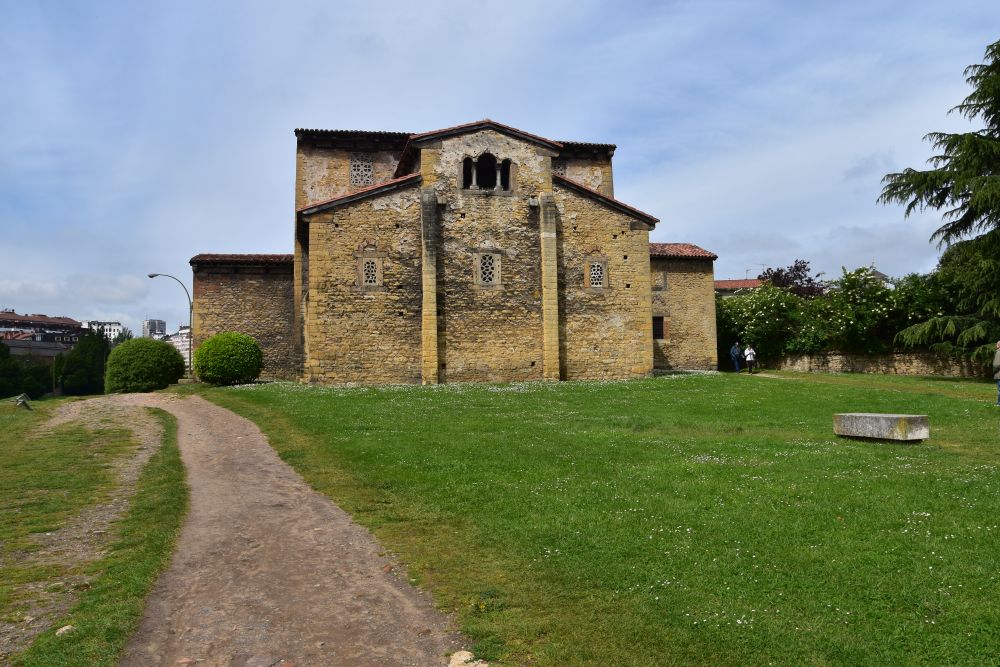
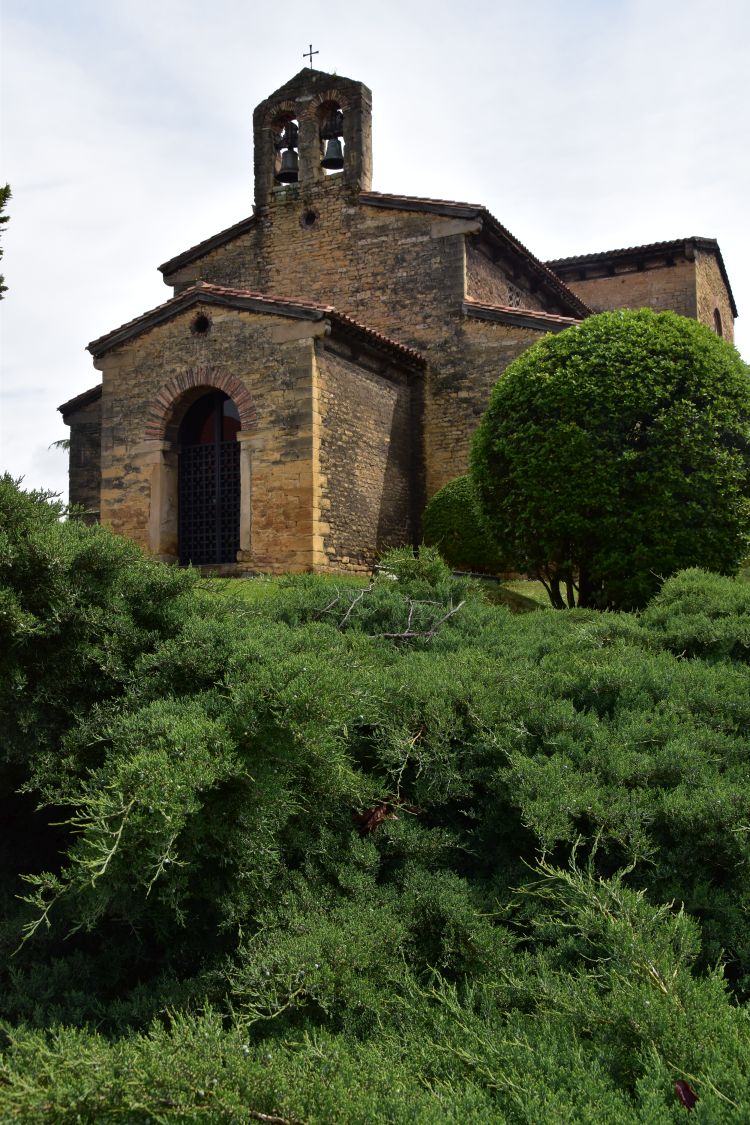
The third Pre-Romanesque church is San Julián de los Prados, on the meadows next to a large road with heavy traffic.
Inside we find beautiful frescoes – they show floral patterns and buildings (but no people or animals) and have been restored in the 1980’s. Photos are not allowed inside.
We return to our hotel with the lush garden and join Spain for siesta.


The Cathedral San Salvador in the city center

The Cathedral San Salvador, Gothic in style, was built between the 14th and the 16th century. The city planned two towers and completed one of them. I find it graceful.

Sculptures like this woman are all over the city center. This one is called “La Regenta”.

The Cathedral has an open nave, which is untypical for Spain; usually the choir is in the middle filling the nave ungracefully. Not here. The choir has been removed, the nave is open and the view of the golden altar is free. The altar has been created at the brink of Gothic to Renaissance (which is called “Isabelline” in Spain).

Not far from here we find this expressive Romanesque sculpture of San Salvador from the 11th century.

The most important piece in the treasury chamber is the Victory Cross. It is said that Maria handed this cross over to the commander Peylao who defeated the Arabs near Covadonga in 722 (yesterday we were in Covadonga, the craddle of Spain).
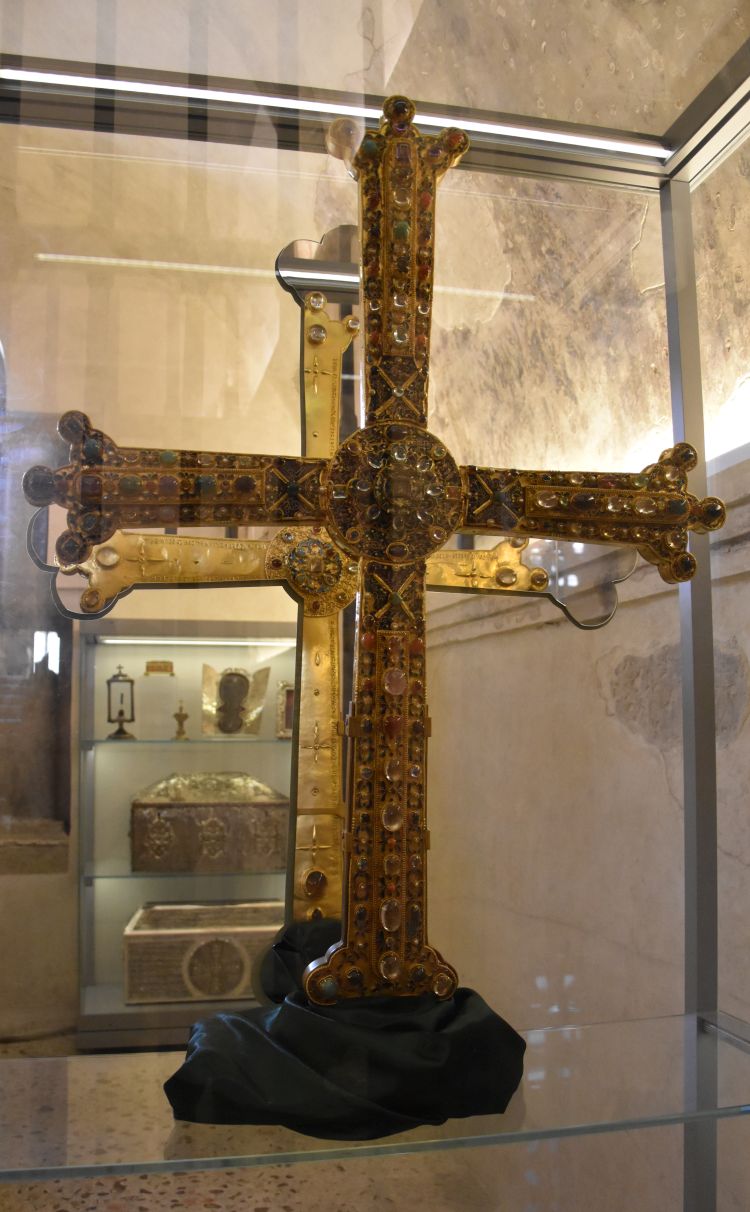
 

Strolling through the narrow streets of the city center

The narrow streets in the city center are good for strolling around. At the end of this pretty street, we can see the tower of the townhall.
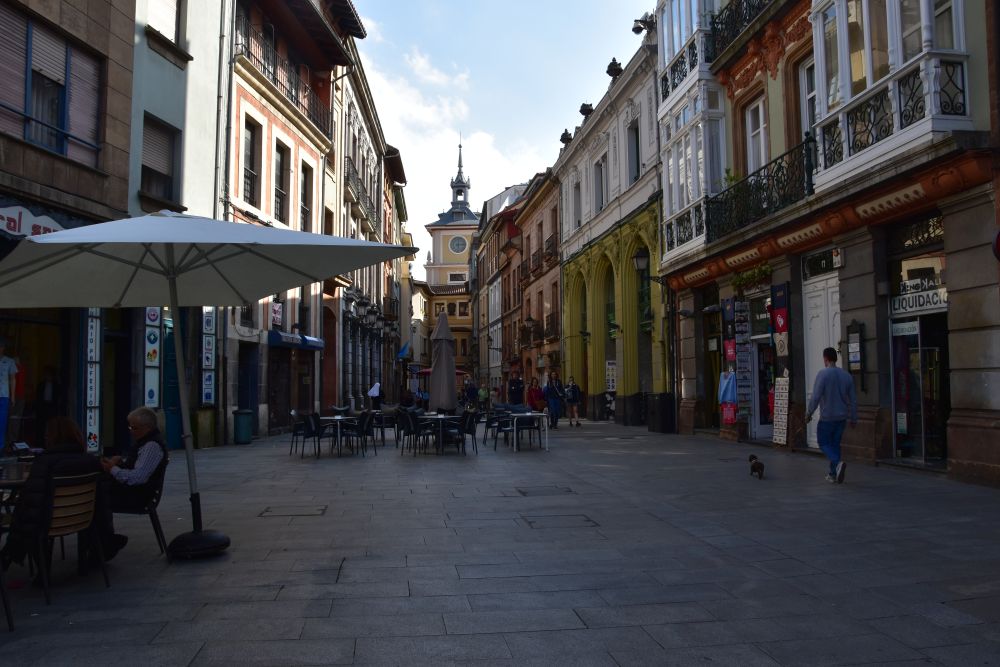
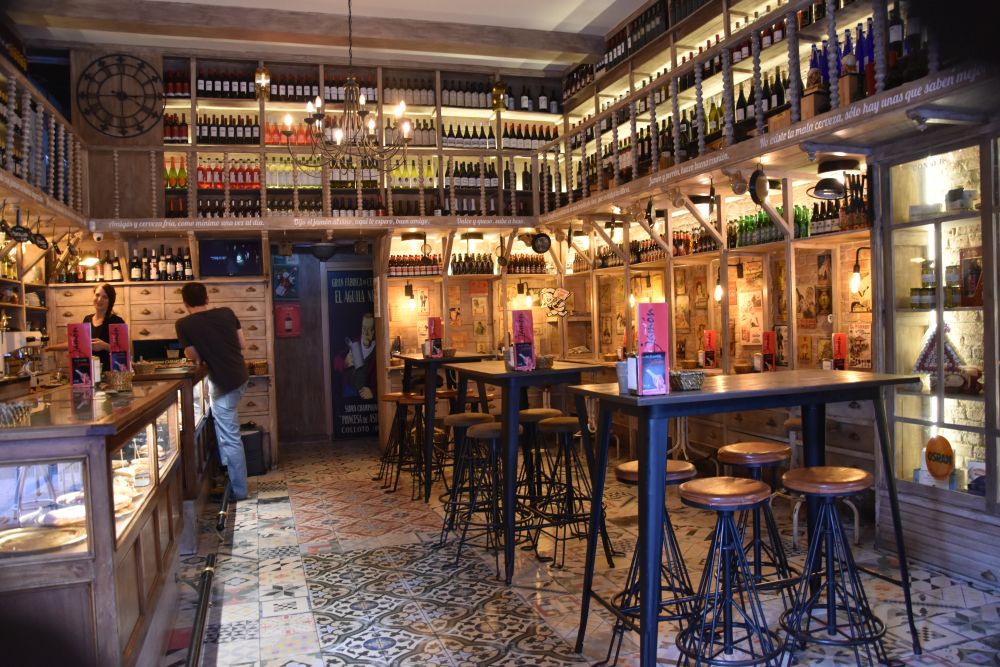
Relaxed squares all over and many, many inviting bars like this one.
To wrap up our Pre-Romanesque culture tour, we look at the back of the San Triso church right next to the Cathedral.

.

Dinner and good-bye

We return to our hotel and have dinner in one of the busy bar-restaurants nearby, in the Tonel. An extremely professional waitor serves us. I have pike stuffed with seafood – prepared the Asturian way. We watch a very tall waitor, as he pours out the cider holding the bottle high above a tilted glass – a real art.

There is much more to see in Oviedo – perhaps we will return…
The cradle of Spain – Covadonga

It is Thursday 9th of May and we discover the cradle of Spain: Covadonga in the Picos de Europa.

.

The lakes high above the cradle of Spain: Lago Enol and Lago de la Ercina

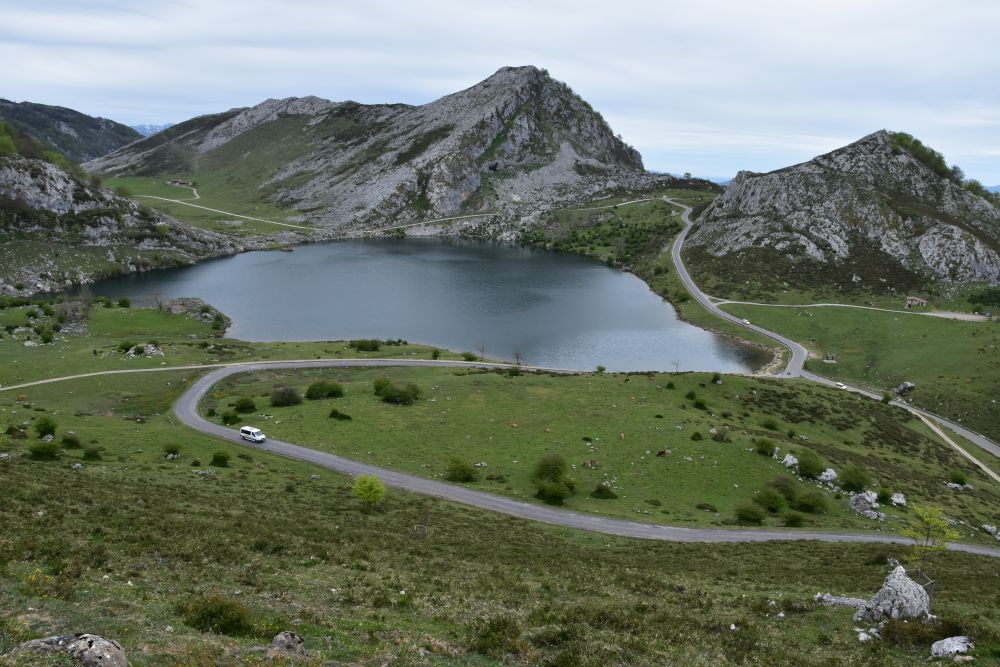
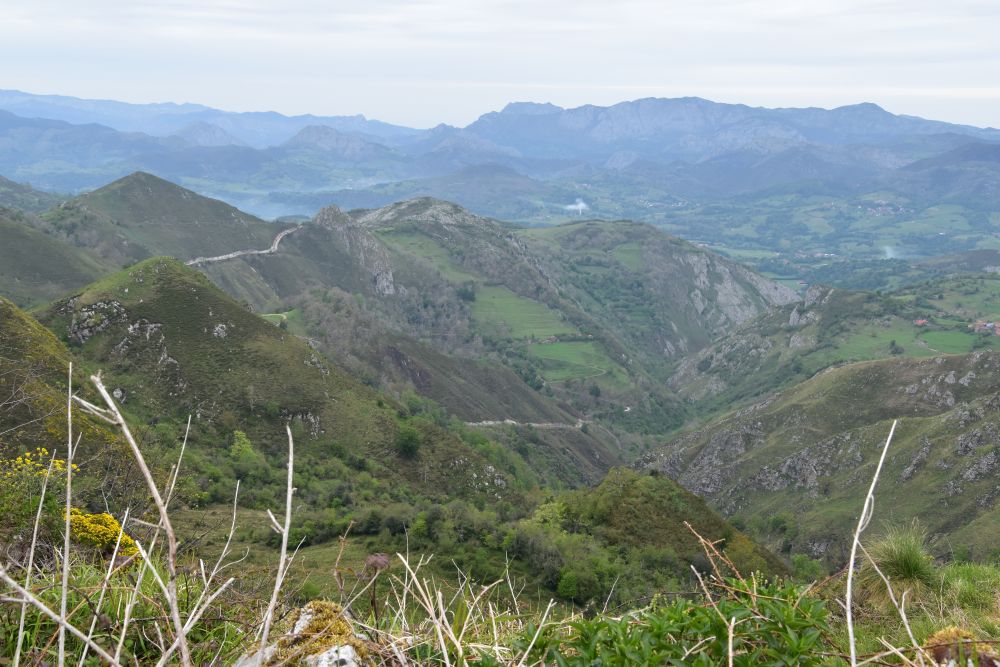
The forecast announces rain for the afternoon. We arrive in Covadonga around eleven and decide to drive the additional 10km to the glacier lakes above. The route is spectacular, climbs up from the valley (you see it on the photo), then follows the steep hills and after each turn we see more and more peaks of the Picos de Europa.

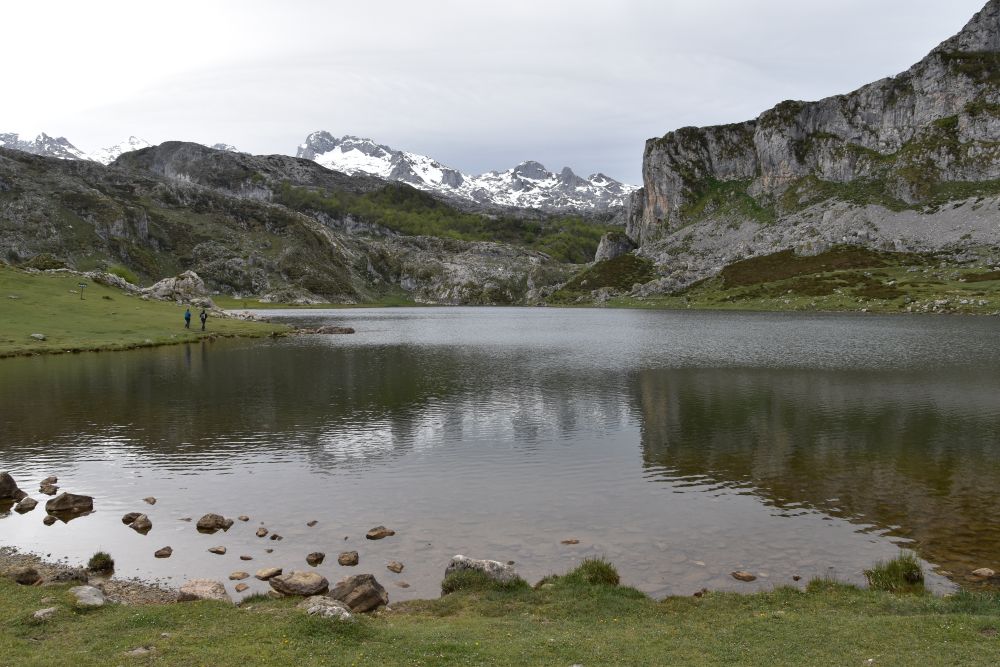
The first lake, Lago Enol, lies on 1080m. 

The second lake, Lago Ercina, at 1108m, is just below the snow mountains.


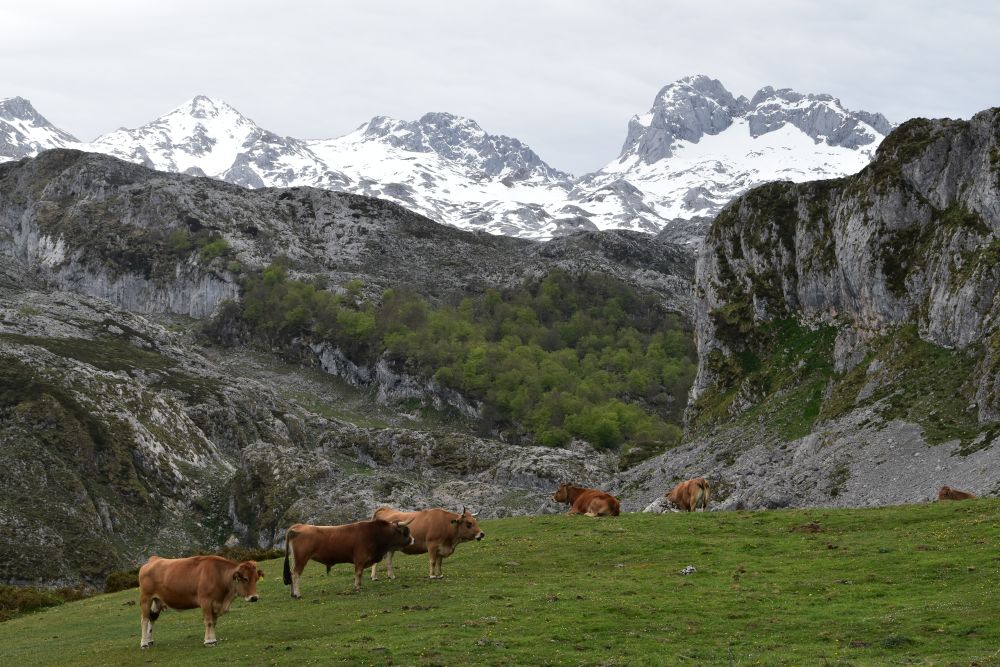
With the Asturian cows, we enjoy the view here.

Ursula loves the flowers, gentianes, Christmas Roses and Affodills.

.

Covadonga – the cradle of Spain

We learn that the two lakes, formed by glaciers, give birth to creeks that disappear later, flow through various karst tunnels and reappear, one such secondary source being under the Cueva Santa, the cradle of Spain. 

The Spanish Reconquista started here in Covadonga in the mountains of Asturia. That was in 722*. The charismatic commander of the Visigoths, Pelayo, was able to unify the mountain people,  motivate them to oppose to the taxes imposed by the Emir of Córdoba (the “Arabs”), lead the Arab troops into traps and vanquished them. It is said that Pelayo and his troops hid in this cave that is now the Cueva Santa.

No photos allowed of the Virgin that is said to have given the wooden cross to Pelayo and this was crucial for his victory. This cross can now be seen in the Cathedral of Oviedo.

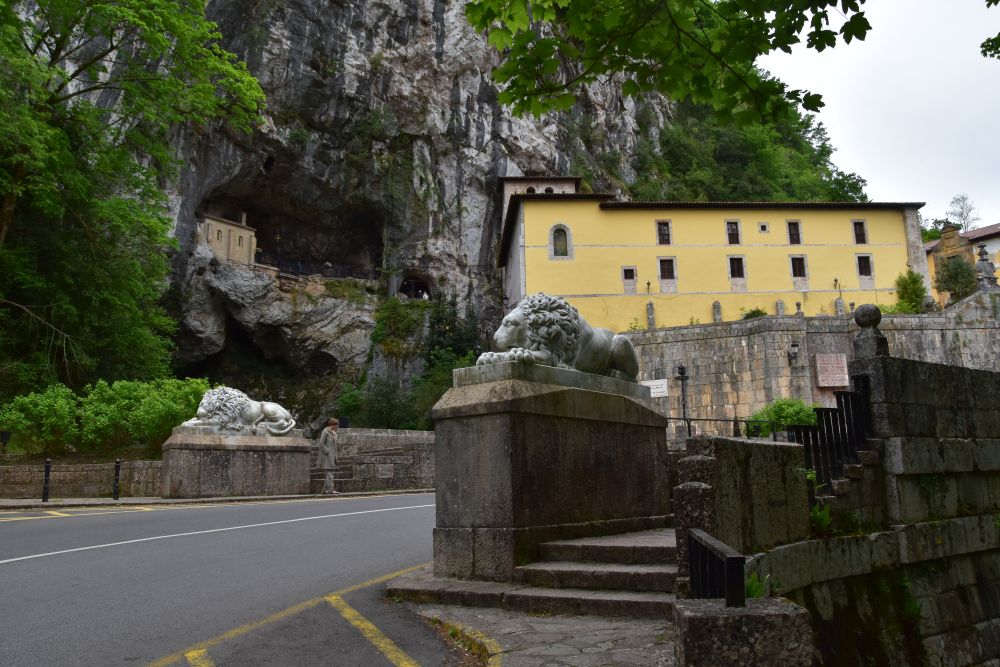
As the lions may indicate, it was León with Castilia that later took the lead of the Reconquista. The cradle, Asturia, was downgraded from kingdom to principality. But until today, the Spaniards venerate Covadonga and the Cueva Santa very much.

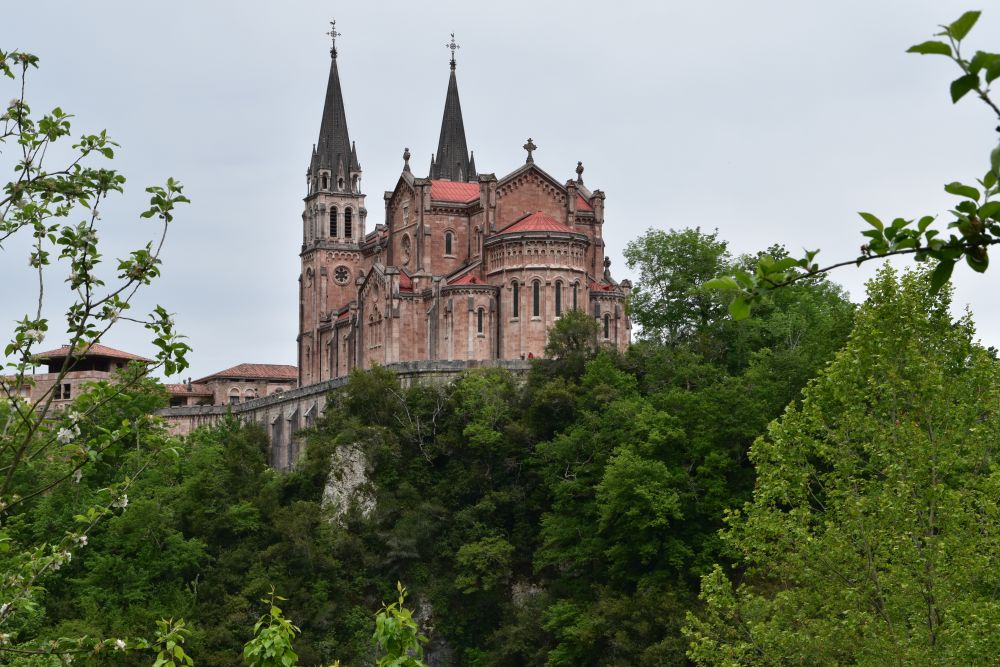
Near the cave is the Neo-Romanesque Basilika San Fernando.

.

Heavy rain – we retreat to our next hotel in Oviedo

We have just accomplished visiting the lakes and the cradle of Spain in dry weather. The first rain drops start to fall, when we leave Covadonga. An hour later we reach Oviedo in the pouring rain. The hotel Palacio de la Viñona is comfortable.

We make a short visit of the city center of Oviedo, watch the waitors pour the cider into the glass from high above and eat veal with sauce made from mountain cheese. 

We are wet-through. We return to our comfortable and warm hotel. From tomorrow on the weather forecast announces better weather and warmer temperatures. We look forward to that.

.

More about the Reconquista

The mountain people of Asturias defeated the Arabs in 722. In Poitiers in France Charles Martel halted the invasion of the Muslims in 732. In 801, Charlemagne conquered the Marca España around Barcelona to prevent the Arabs from further attacking what is Southern France today. At school we had learnt about the two Charles, but not about  Asturias and Covadonga. It was from Asturias and from Catalunya that the Reconquista continued. The two lines unified their forces later, in particular the catholic king couple Ferdinand and Isabella that in 1492 completed it by conquering Granada.

Excursion to Gaudi’s El Capricho and to the Picos

It is Wednesday, May 8th. Our excursion takes us from Santillano del Mar to Comillas with Gaudi’s El Capricho and then to the Picos of Europe, where the blue cheese DOP Cabrales is produced.


Comillas – perched on a hill above the sea

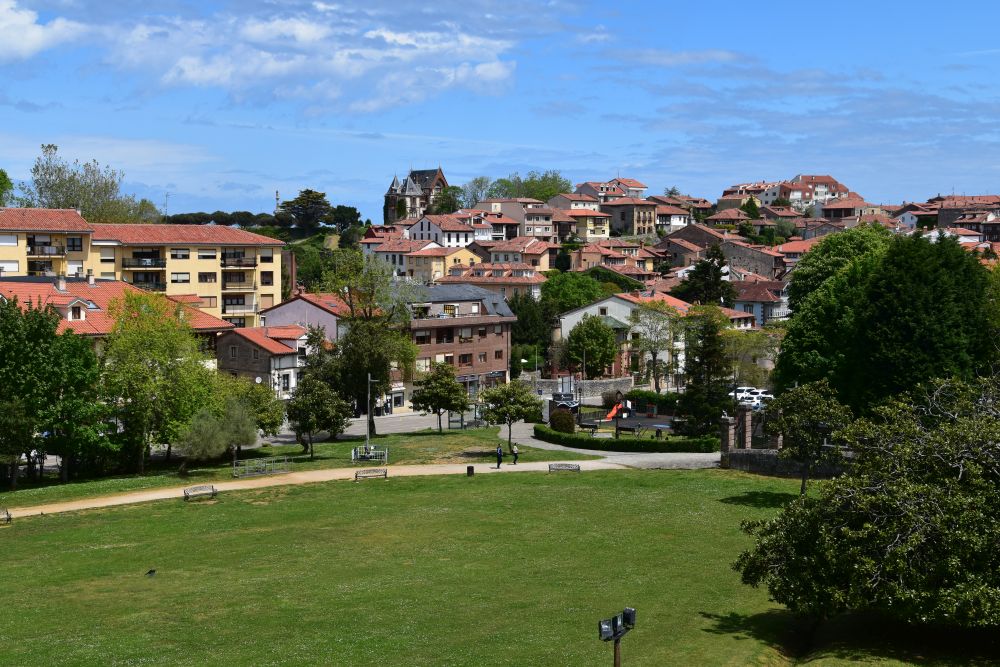
The old city of Comillas is perched on a hill above the sea.

On the other side of this hill, inviting small cottages stretch along the sea.

In the center, we find small houses along cobbled streets.

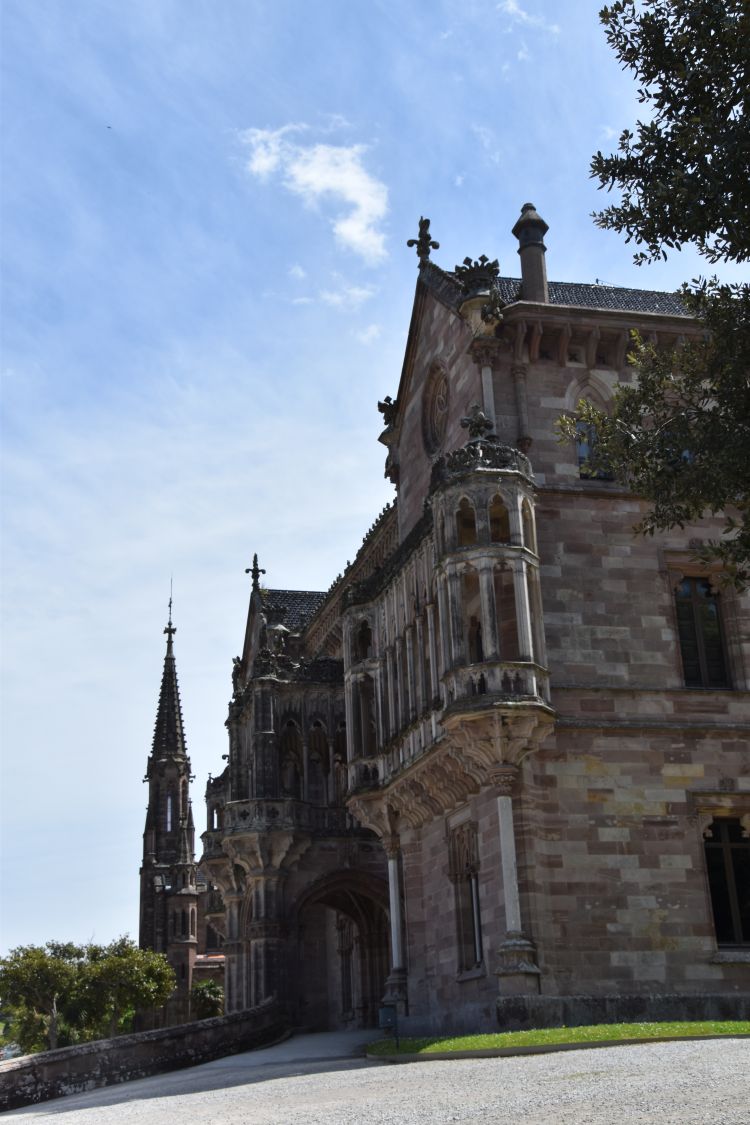
Comillas was a posh seaside resort around 1900, when the king of Spain, Alphonse XII, used to spend his vacation here, attracting other aristocrats that built villas such as the noble and spacious neogothic Palacio de Sobrellano.

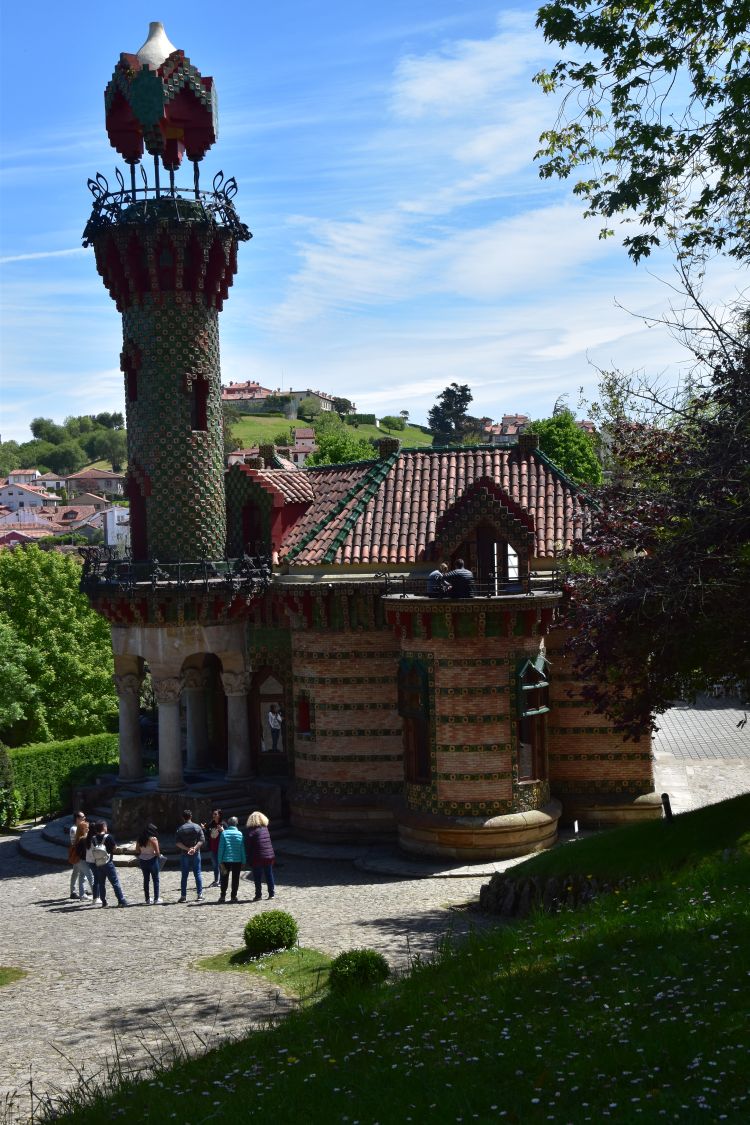
In addition art nouveau palaces have been built here, the most famous of which is Gaudi’s El Capricho.


Gaudi’s early work: El Capricho

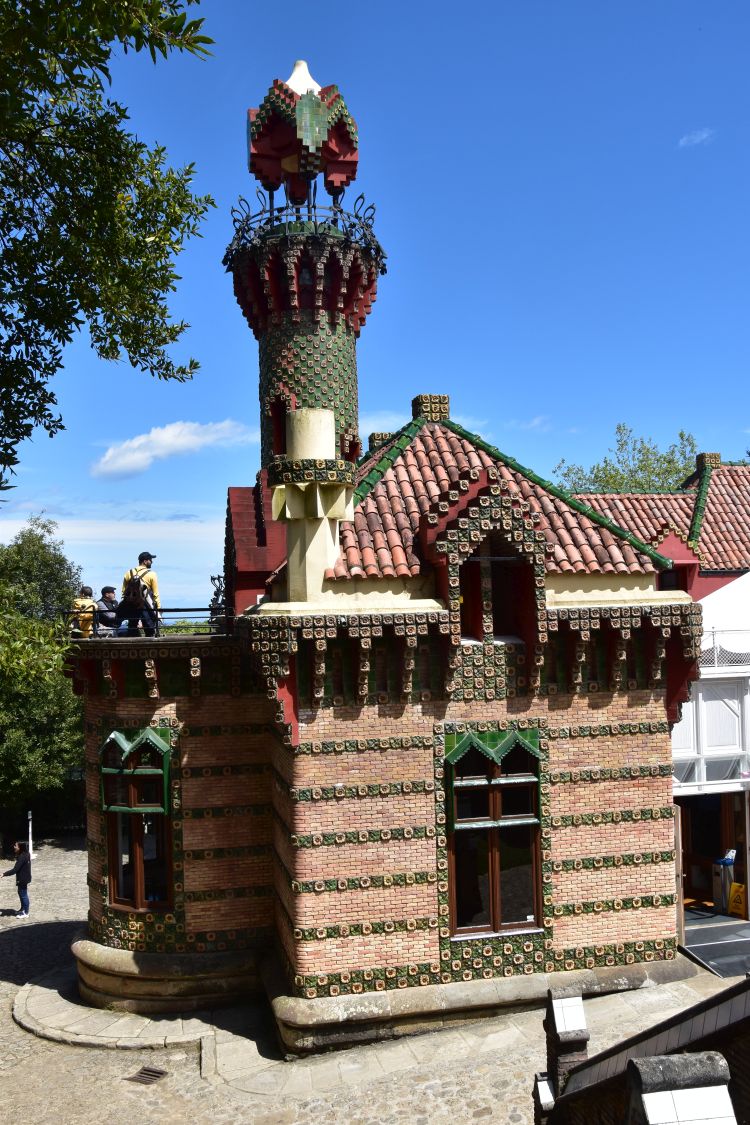
The villa El Capricho (the Caprice) is an early work by Gaudí built in the 1880’s. It is a playful building, decorated with green tiles and yellow sun flowers, adorned with a minaret like tower – somewhat reminding of the Mudejar style. This is the view from below.

And this is the view from above. The white winter garden is attached to the house.

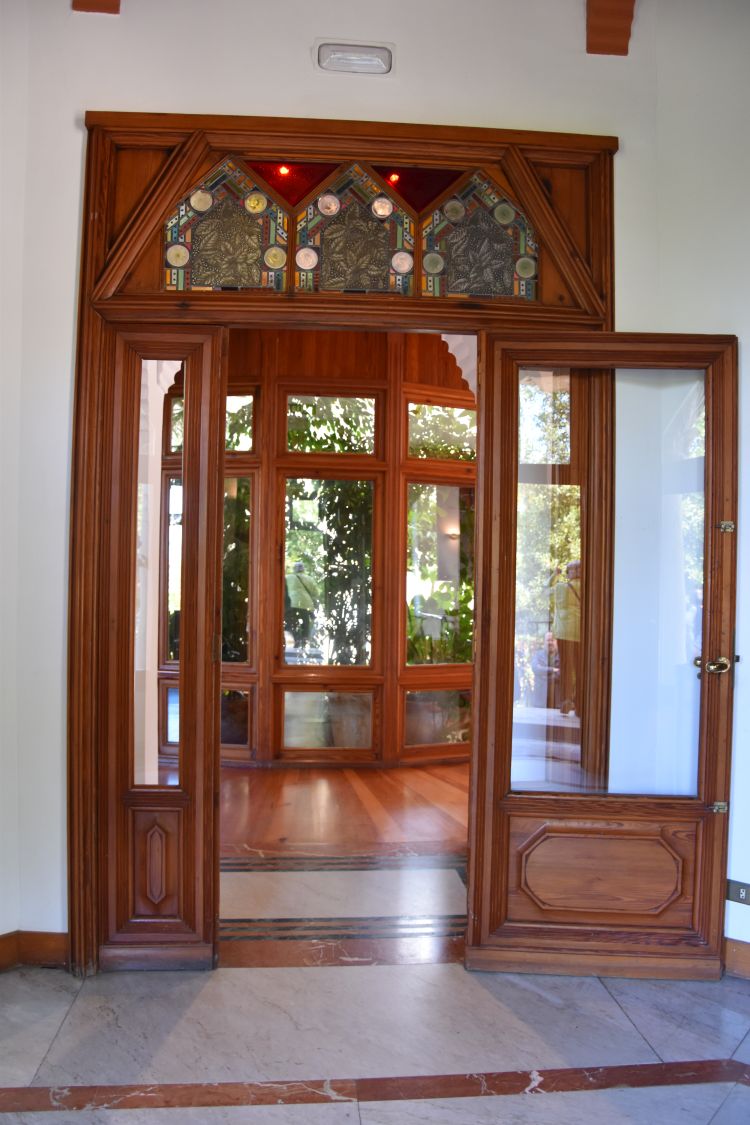
Several doors provide access to the villa – this is the one leading to the winter garden.

I like the somewhat intimate low rooms under the roof.

Then I feel like playing with the mirror.

When leaving Gaudí’s villa, we look at one another and agree, the villa was interesting, but to our taste, Gaudí’s style is close to what we would call kitsch.


Continuing to the mountains, the Picos de Europa

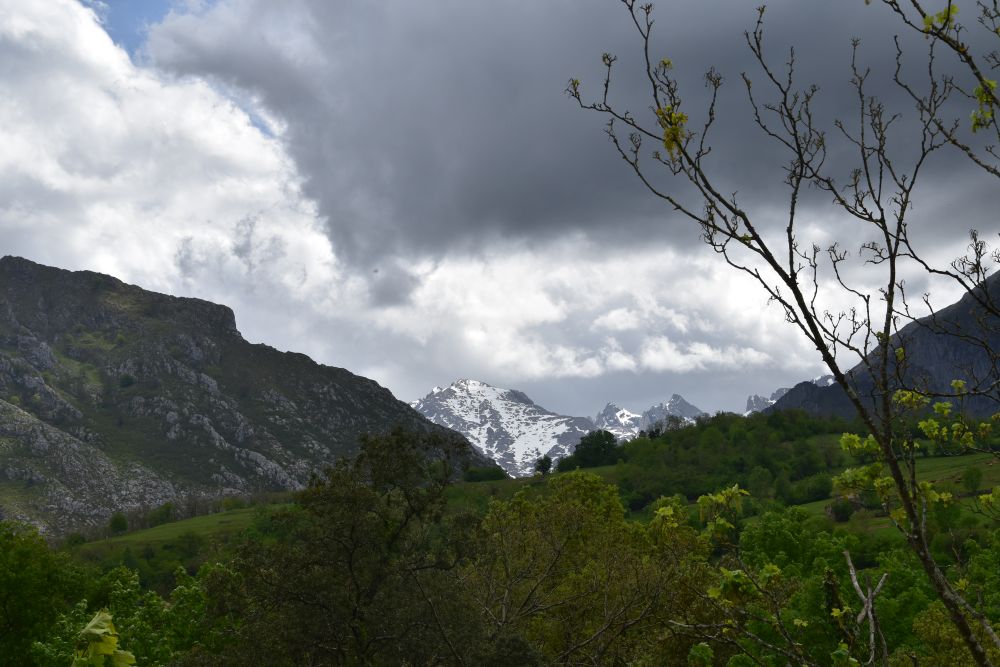
The sun has come out and we continue our way to the mountains, the Picos de Europa. They are still covered with snow.

Where we stop our car, we find orchids.

We head to Las Arenas de Cabrales and on the way, we admire this mountain farm on a steep slope. Tough work here.

In Las Arenas de Cabrales, we arrive just right in time to join the tour to the caves, where the DOP cheese Cabrales is maturing. We learn about the production of the Cabrales cheese. It is made out of 95% cow milk, 5% goat and sheep, and the mixture is flexible, according to whatever is available. The cattle spends summer in the mountains and returns to the valleys in autumn. The cheese is first dried and then transfered to the limestone caves, where the temperature is constant at 8 to 12 degrees, and where water dripples from the rocks producing a humidity of 90%. In this microclimate the Penicilium Claverum (similar to Roquefort) emerges spontaneously and is allowed to grow for three to six months. In the process the white cheese loafs become blue. I buy a piece of sealed Cabrales cheese.

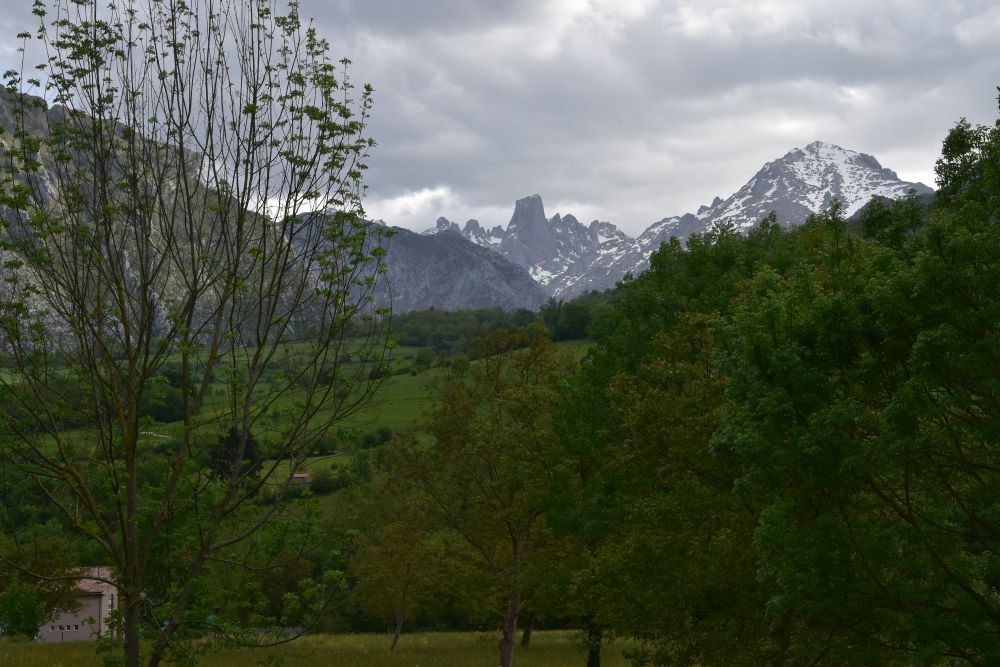
When continuing our ride, I see this panorama in my back mirror. Wauu. The tower like mountain is called Picu Urriellu or Naranja de Bulnes (2519m).

We return home to our Casa de los Güelitos and eat a tasty cocido (hot pot) with white beans. Then we sleep once more in our quiet room – tomorrow we will change to Oviedo, the capital of Asturias.


Altamira – an old dream of mine comes true

On Tuesday, 7th of May, we visit Altamira and the medieval town of Santillana del Mar.

.

The caves of Altamira – an old dream of mine comes true

When I was a child, I read the book about how the caves of Lascaux in France were discovered: Some children walked with their dog in the valley of the river Vézère in the Périgord. The dog disappeared all of a sudden. It had fallen into a hole that turned out to be the cave of Lascaux with the beautiful prehistorian paintings. The book then talked about Altamira that had been discovered earlier, in the late 19th century. I had seen the caves of Lascaux some 30 years ago (the copy) and I had always wished to see the caves of Altamira. Now I am here. My dream has come true. Oh yes, I know, what I see is a copy, but a well made copy. The bisons seem to look at me with their eyes wide open.

The prehistorian artists made use of the natural forms of the rock to place their animals. This one has been hit by arrows.

And this is another bison – just amazing.

An excellent museum is attached to the reproduction of the cave. The map shows the occurrence of prehistoric paintings in Europe, and such paintings have been found all over the continents (not only in Europe), as another map explains.

This was a wonderful experience and it would be wonderful with children, as there are many videos and animations that explain the history.

.

Strolling through medieval Santillana del Mar

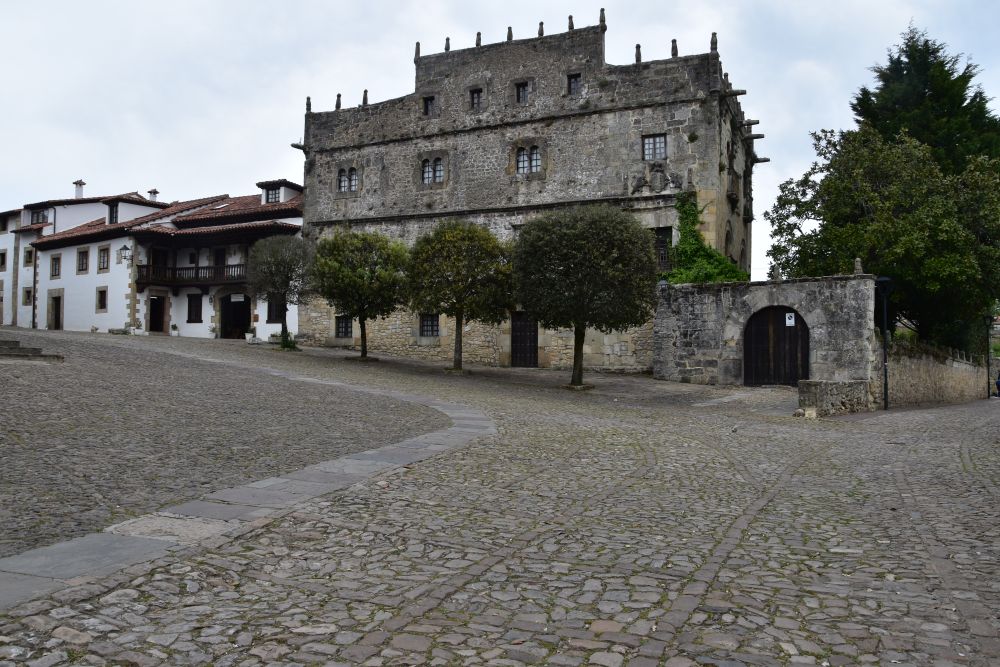
Our Dumont announces Santillana del Mar as a medieval small town with palaces that have been built by “Indians” or Spaniards after having returned wealthy from the Americas. The Palacio de los Velarde is one example.

The palaces are decorated with coats of arms. 

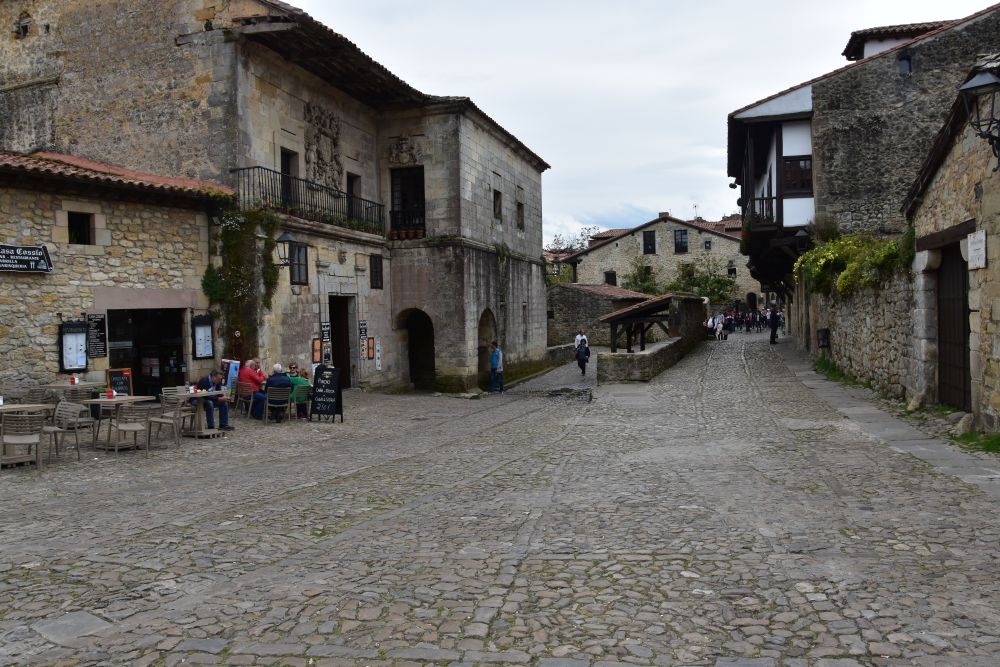
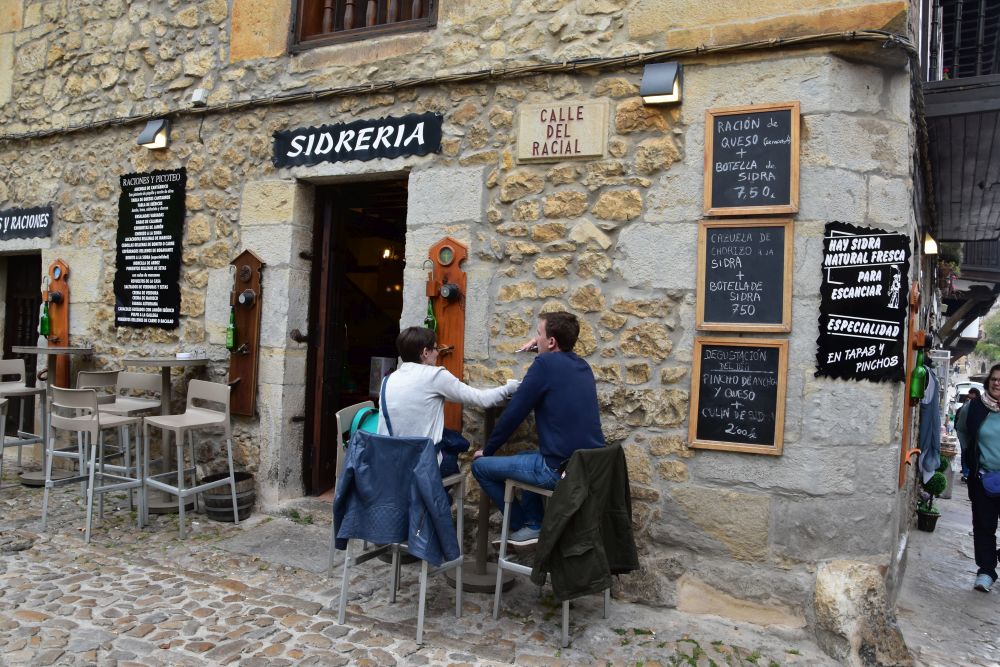
Between the medieval buildings, there is the laundry house, and in the bar to the left, we have a zumo de naranja (an orange juice).

Santillana del Mar is pretty – I can understand Sartre who said that this is the most beautiful town of Spain. But that was at the time, when Sartre lived. The town is still pretty with all the houses perfectly renovated… but it is almost “too” pretty: Too many souvenir shops, too many bars, too many restaurants and too many hotels. The town just seems to live for and from tourists.

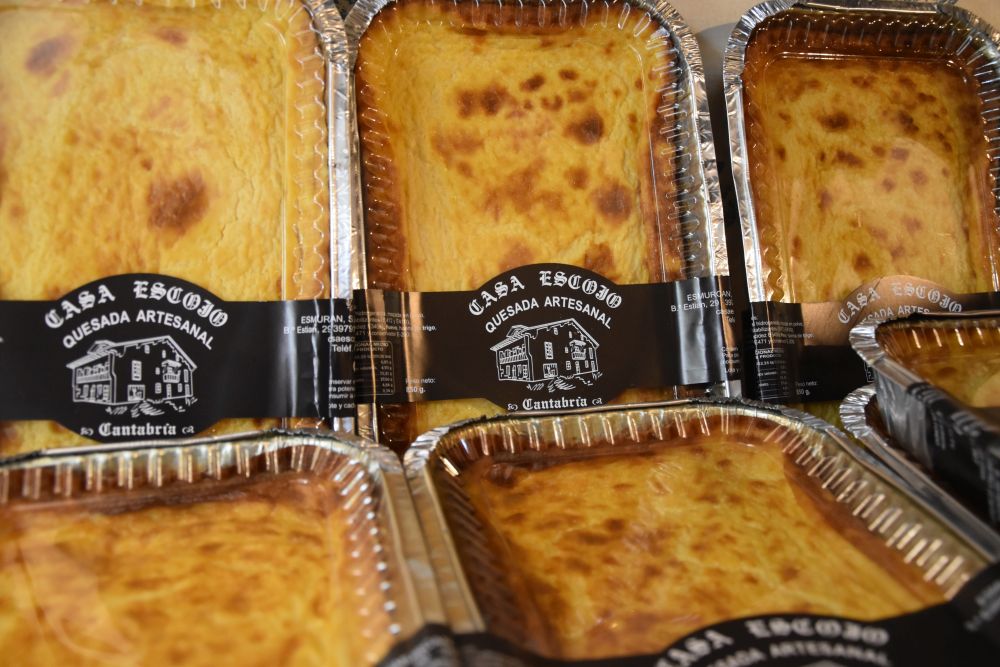
In the shops we learn about local products such as the quesado (a cheese casserole)…

or soboa (similar to our Madeleine). In a somewhat “normal” shop, I buy a sausage of jabalí (wild boar).

The Romanesque church of Santillana was built in the 11th century. It is dedicated to Santa Juliana. In Roman times, Juliana’s father found a husband for his daughter, but she had become Christian ad did not want a non-Christian husband. For that, her father tortured and killed her. She is buried in the church. This is the main gate…

… and this is the choir.

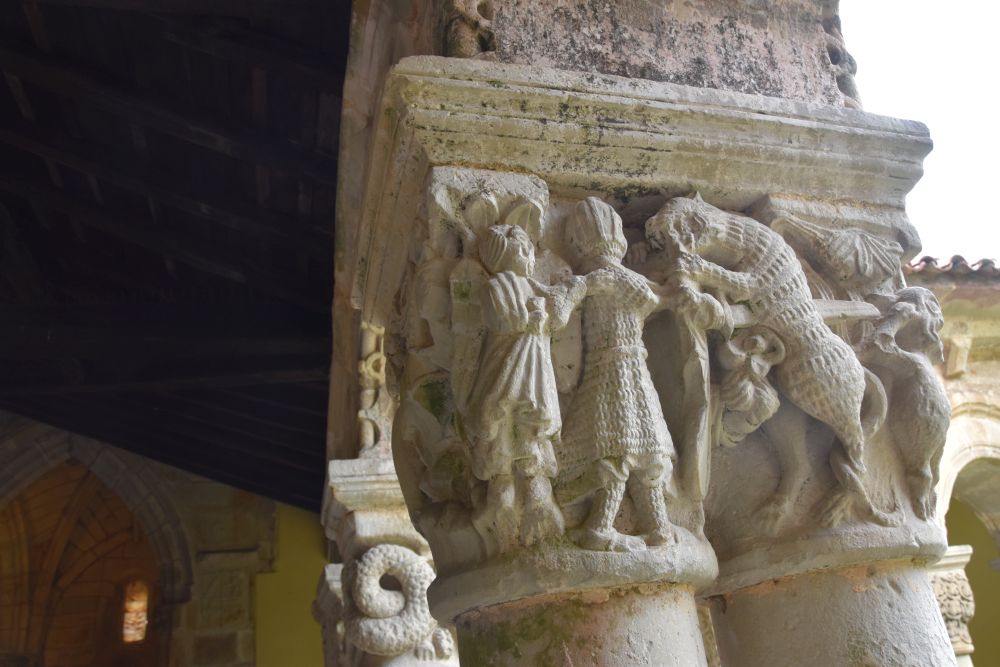
We pay the entrance fee and enter the cloister. Ursula says, look here – uoarmmmm, look, George kills the dragon by penetrating it with his sword – right in the middle.

The interior of the church is sober.

The altar is of Isabelline style from around 1500. Isabelline is late Gothic at the transition to Renaissance.

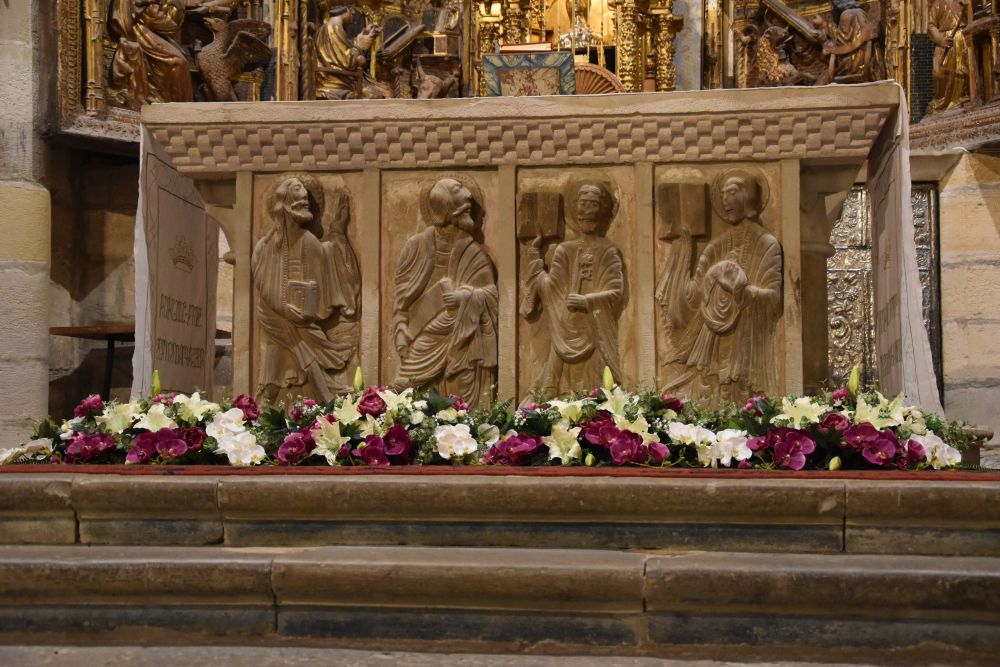
“Look, this must be a modern antependium,” Ursula says. But no, the antependium is from the 11th century. Not modern at all. Well, it is not the first time that we thought a Romanesque sculpture to be modern – Romanesque art just holds for ever.

On the antependium, the second person from the left is Petrus with his key, the other half reliefs cannot be identified. The altar, the antependium and the martyrdom of Juliana are carefully documented in the church.

T

Santillana del Mar has a beautiful Plaza Mayor,…

… with two towers from the 14th century.

After three hours, we leave the pretty town that is full of tourists and souvenir shops. WeIl, we had expected more local shops and more local people here – this really looks like an open- air museum to us.

.

Evening meal

We return to our Casona de los Güelitos and enjoy a nice dinner. We do feel at home in this cosy house.

From Bilbao to Santillana del Mar

On Monday, May 6th, we travel from Bilbao to Santillana del Mar, along the coast.

.

From Bilbao along the Ría Bilbao to the sea

Our GPS takes us to the modern and well-kept residential area with apartment buildings on the right hand side of the Ría Bilboa. Soon, we reach Portugalete.

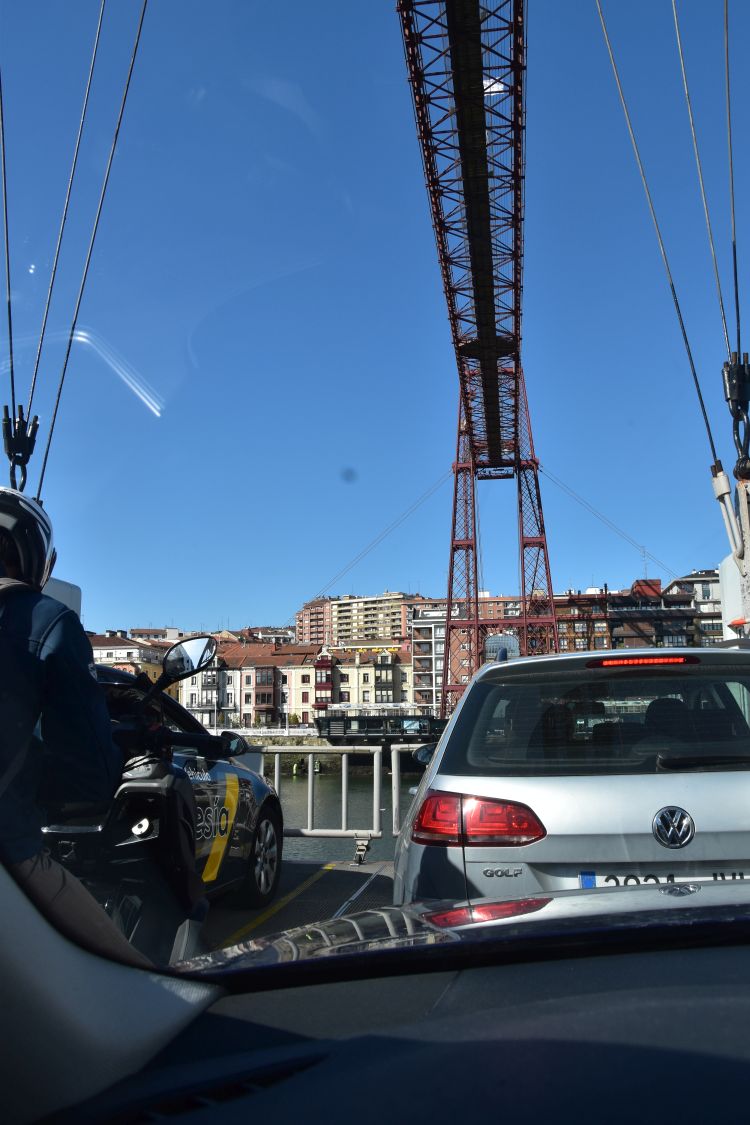
Ursula talks about crossing the Ría using a puente colgante with a cabin. I am a little worried: I see our Audi hang above the river. But then it is easy: The puente colgante is a ferry boat that works like the four Rhine ferries in Basel (a wooden boat is attached to a rope). This ferry is larger (for cars) and attached to a metallic rope that glides along an iron beam, the design of one of Eiffel’s pupils. The guard tells me strictly that I am not allowed to leave the car…

After having crossed the Ría, we continue north to Santurtzi, located at the sea. We park our car in a narrow parking house.

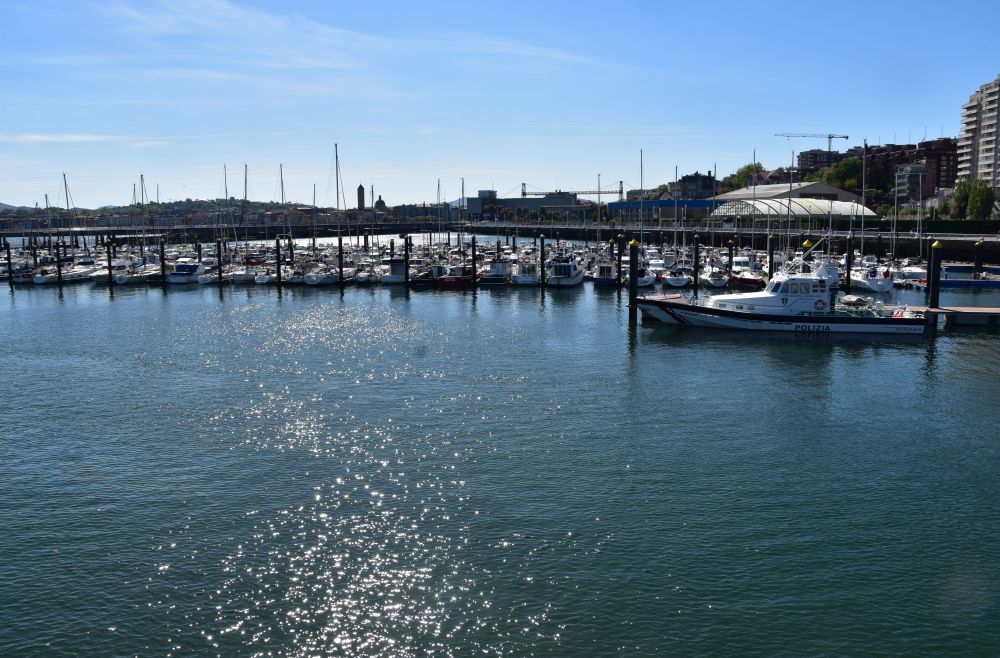
The sun makes the port sparkle, and in the background, I can see the Puente Colgante that we had used half an hour ago.

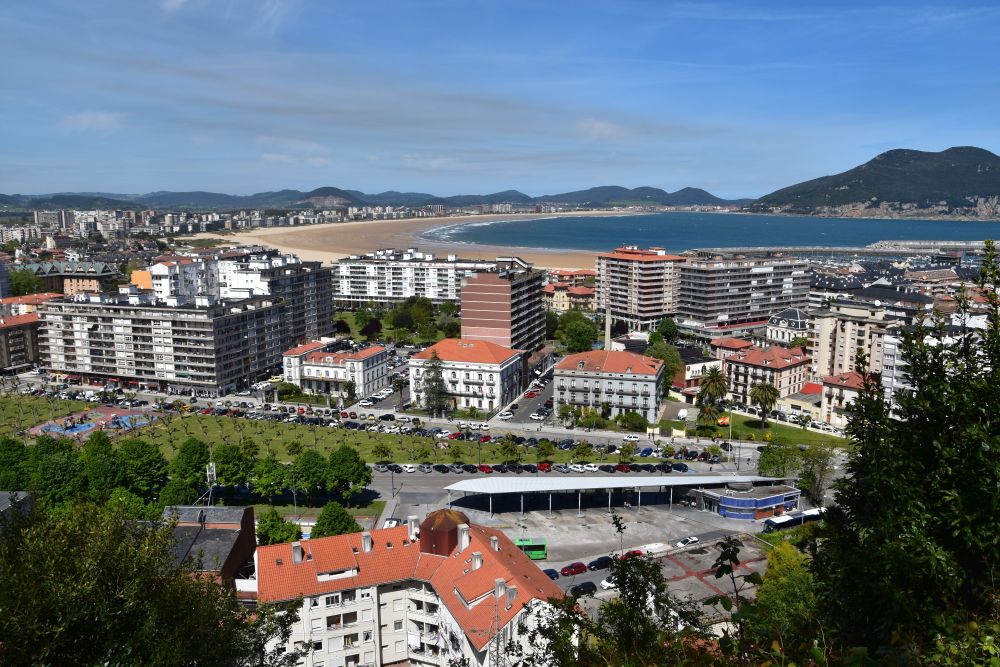
We continue crossing mountains and ugly beach resorts with beautiful sand beaches, until we reach Laredo. It is another old city center with another sandy beach and many more ugly apartment houses.

I am hungry. Heavy traffic here and not one single free parking lot. Finally, we find one single free slot right in front of a pintxo bar. We have some tapas, drink some water, and as we want to leave… we find our car locked behind two cars parked on my side. One driver sits in his car and leaves. The second driver is nowhere. Ursula contends that now it is possible to get out. I am not convinced. Maneuvering on to the sidewalk around a tree and a hydrant and with the help of Ursula, of two more men and one women showing to me, how close I am to all that, I finally get out – but I am not really amused. “Land und Leute” or “country and people”, Ursula says, shrugging her shoulder. Hmm. I am not against “Land und Leute”, but to my opinion, there are limits…

We take the motor way and, one hour later, we arrive in La Casona de los Güelitos in Santillana del Mar. I do feel at home in this quiet old country house that has been tastefully renovated.

The sun shines and after a short siesta we decide to visit the mountains south of Santillana. Ursula has selected Bárcena Mayor that is said to be a typical Cantabrian mountain village. Driving through smooth, green hills with pastures, we reach a large parking area. A signboard promises restaurants, shops, hotels and guest houses. We get to a well-kept pretty village with thriving flowers all over, but it is empty. Not one shop open, not one restaurant open, everything dead. Pretty, but empty on this Monday.

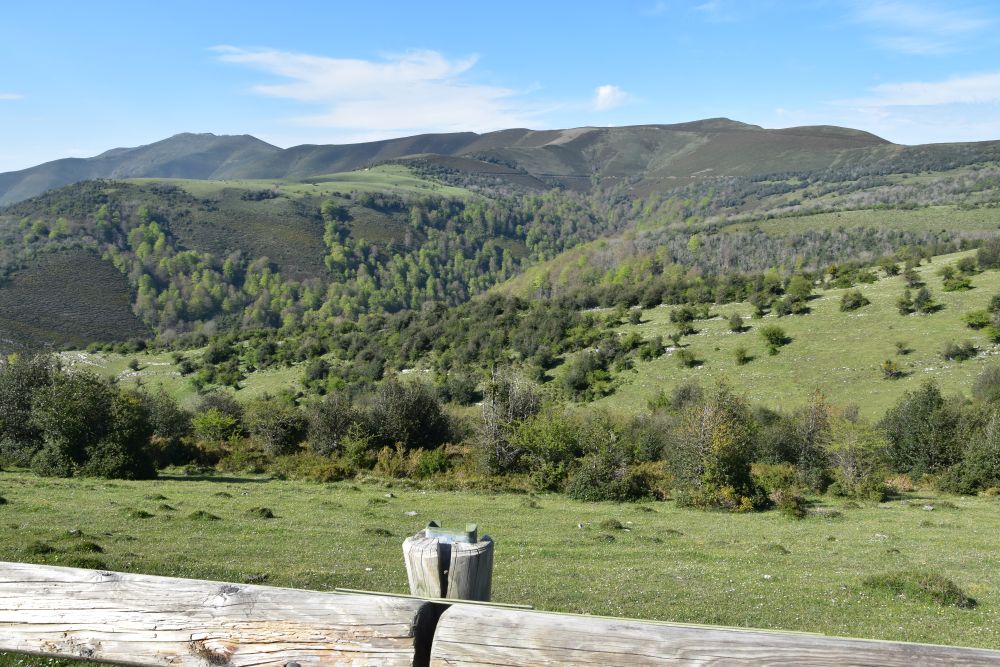
We leave this place and continue uphill, uphill, uphill. A gorgeous panorama here. Smooth hills, green pastures with cattle – cows of all colours, goat and sheep.

After the Puerto de Palombera on 1250 above sea level, we reach a high plateau with the Alto Campo and the Pico Tres Mares behind us. The rivers that emerge here go either to the Atlantic in the north, to the Atlantic in the west or to the Mediterranean (hence tres mares). Signs point to the source of the Ebro. We find it, blue-green, in a lush forest.

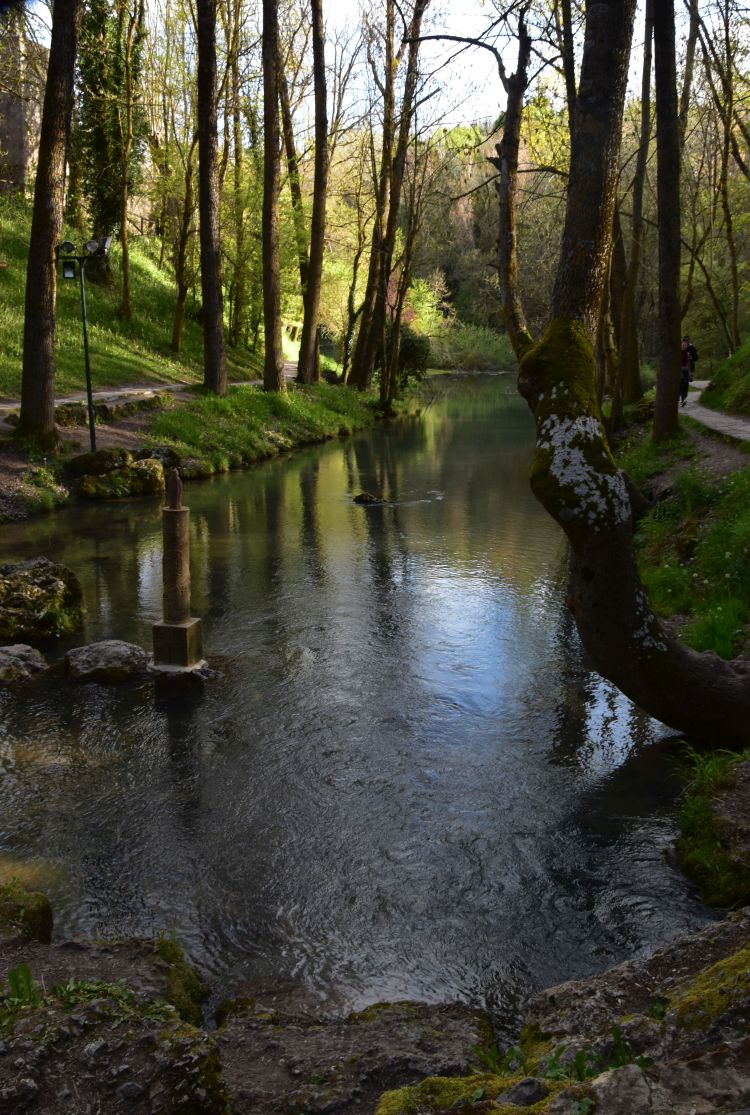
It is a pozo (well) that emerges from the karst ground. The water comes from the creek El Hijar that originates at the sides of the Pico Tres Mares, disappears and appears again here, near Fontibre. The water is blue-green, due to the plaster, clay and limestone that the water picks up underground before emerging. This is one of several wells of the Ebro, there are more that have the label “source of the Ebro”.

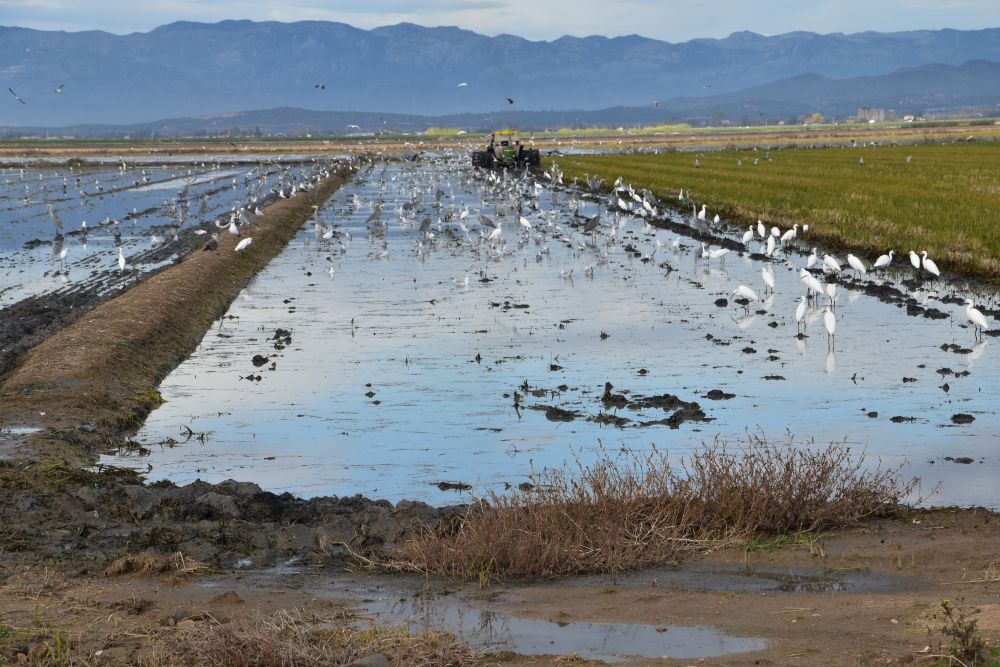
What starts here as a small creek, flows through Spain – 910 km – ending in the Ebro Delta with its abundant bird life and rice fields (photo taken in November 2018).

We return to our Casa de Güelitos to have dinner in the small restaurant. I have three kinds of cheese from Cantabria, a solomillo and a glass of Rioja tinto.

We sleep well in our quiet guest house. In the morning, I can hear a cock crow.

Bilbao on the Ría de Bilbao and between mountains

On Saturday/Sunday, May 4th/5th 2019 we are in Bilbao.

Bilbao stretches out along the Ría de Bilbao. The Ría de Bilbao is the mouth of the river Nervión. Bilbao lies 14km away from the sea. The surrounding mountains do leave little space for Bilbao. About 400’000 inhabitants live densely, with 8000 persons per square meter, as my Dumont says. The inhabitants of Bilbao call their city “el bocho” or “eye of a needle”.

The city center is split between the old and the new town, the old town on the right-hand side of the Ría, the new town on the left side.

.

The old town on the right-hand side of the Ría

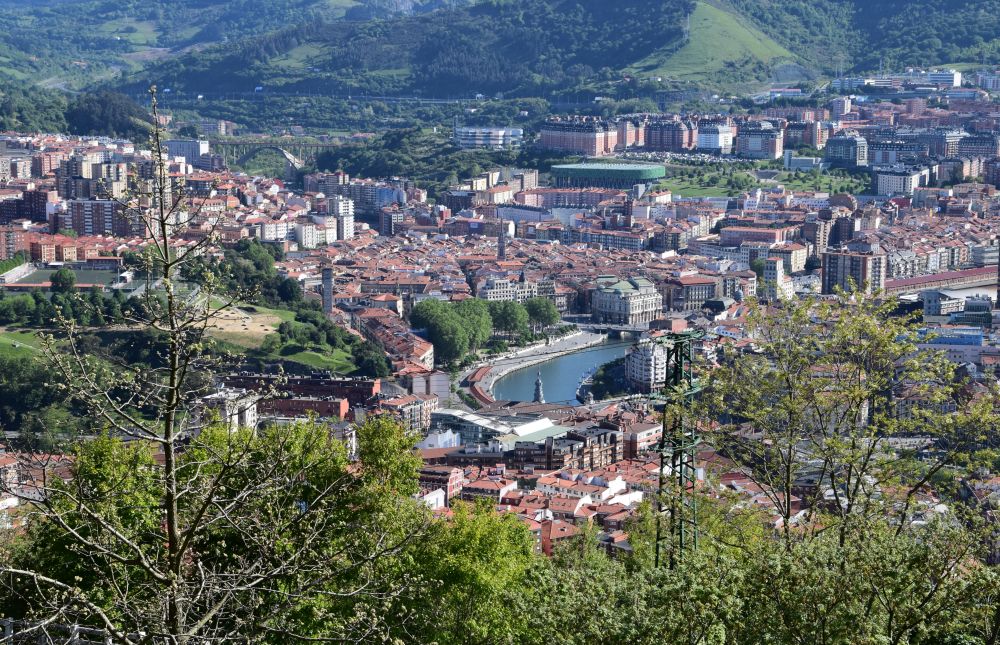
Near the water are the roofs of the small old town with the Cathedral Santiago seen from the Artxanda hill.

Elevators are used to overcome the height differences from the old center. A guard takes 45 cents per person. The button for the elevator is labelled “llamada” and I understand, you have to call (llamar) the guard to take you up and down.

The elevators built in concrete are scattered around the city center.

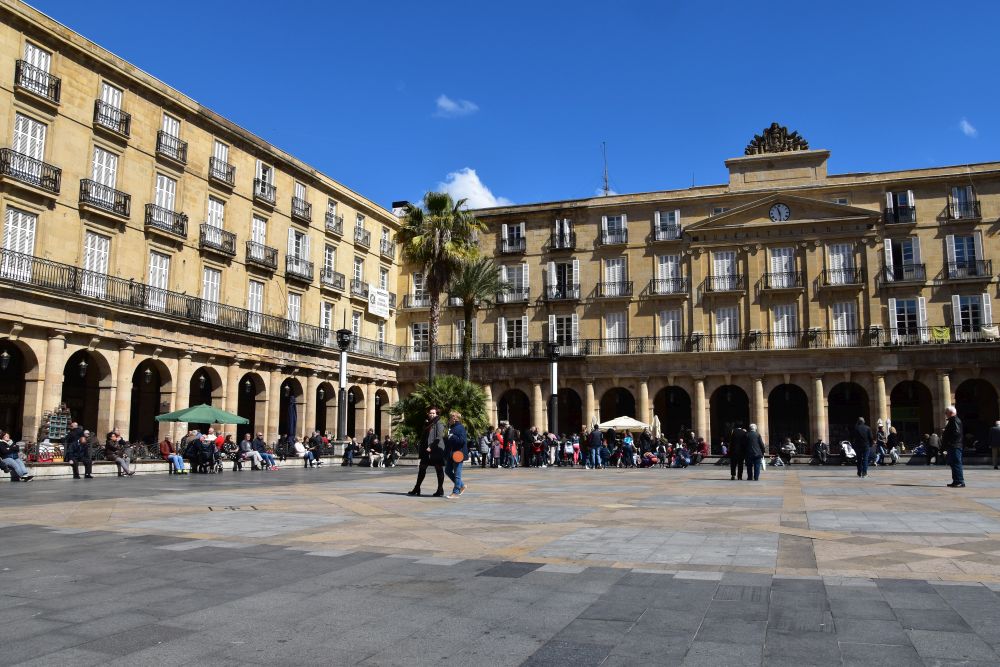
The heart of the old town is the Plaza Nueva with its arcades and the many, many bars and restaurants.

In the Cathedral de Santiago, it is the cloister that I like most, with the lemon trees.

The old town is small and full of bars and restaurants, pintxos are on display everywhere.

.

The new town on the left-hand side of the bay

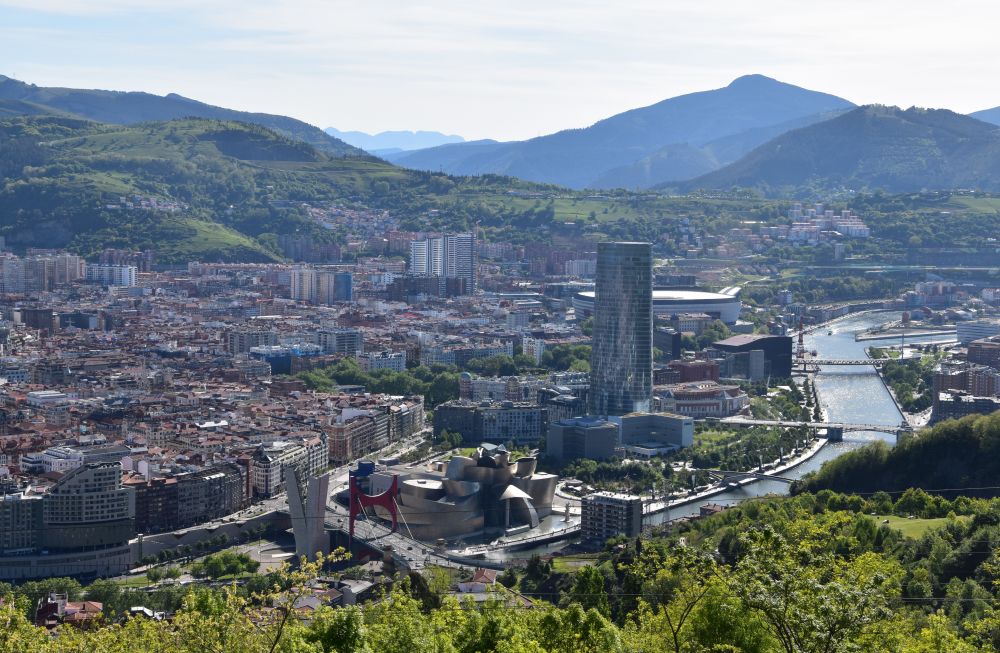
This is the new town with its modern appearance, also seen from the Artxanda hill.

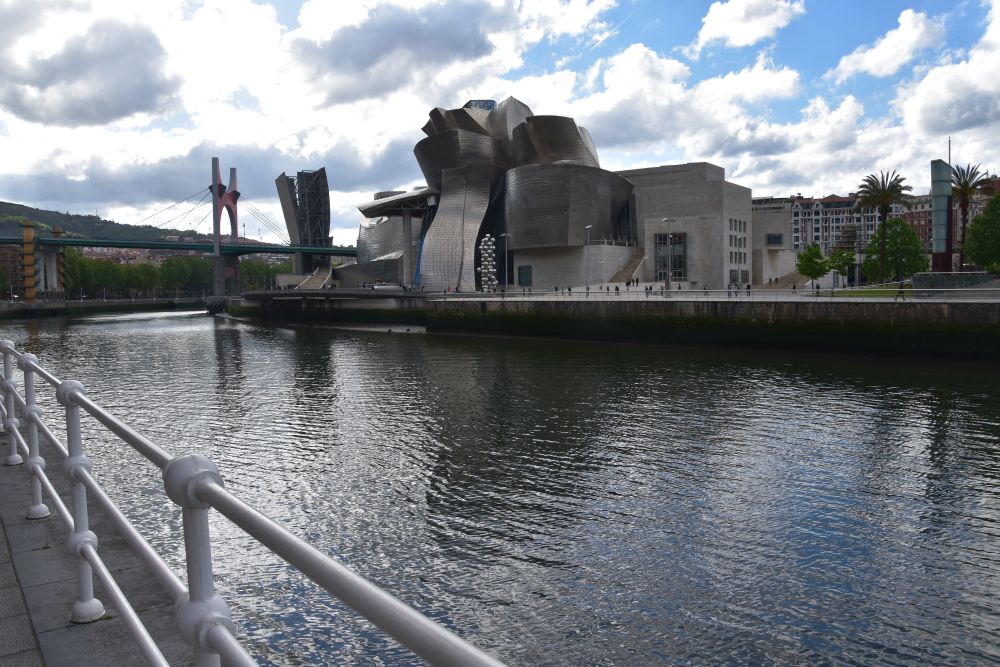
I had always imagined the famous Guggenheim Museum to stand close to the sea. But this “heap” of Titan stands inland on the banks of the Ría Bilbao.

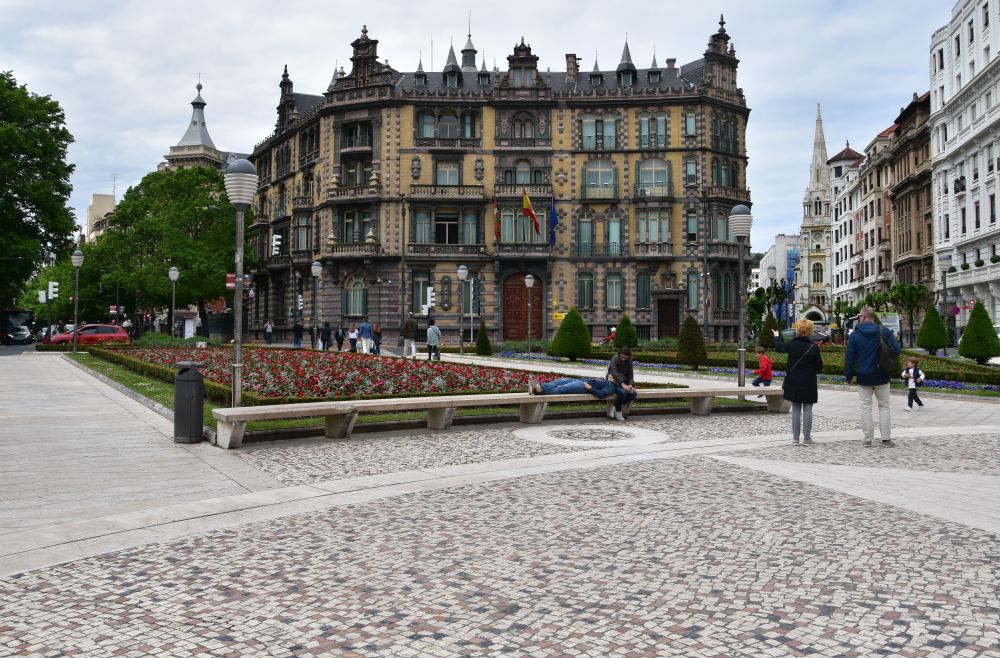
The streets are ample in the new town. The lifeline is the Gran Via named after the founder of Bilbao, Don Diego Lopez de Haro.

There are great shops here such as Rosa Clara’s wedding dresses.

The style of the buildings is either promoterism (also called wilhelminian, second half of the 19th century)…

… or they are art nouveau (built in the early 20th century).

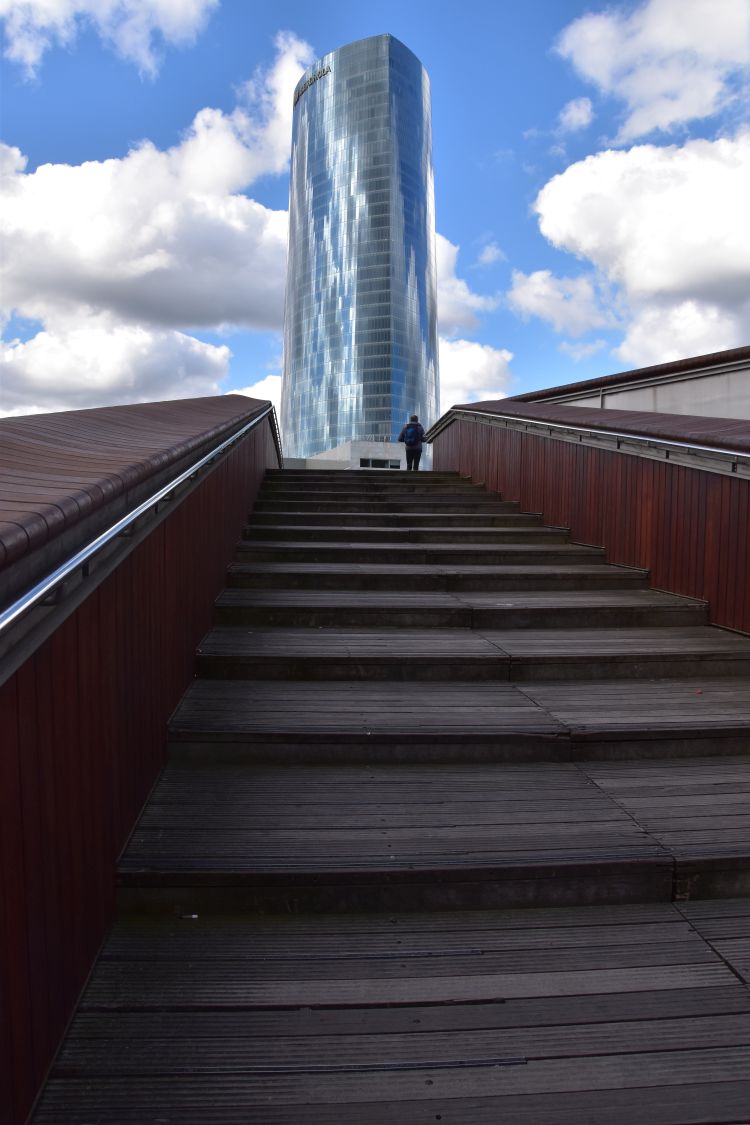
Then there are modern buildings, many of them built be renowned architects. One example is the Office Tower of Iberdola.

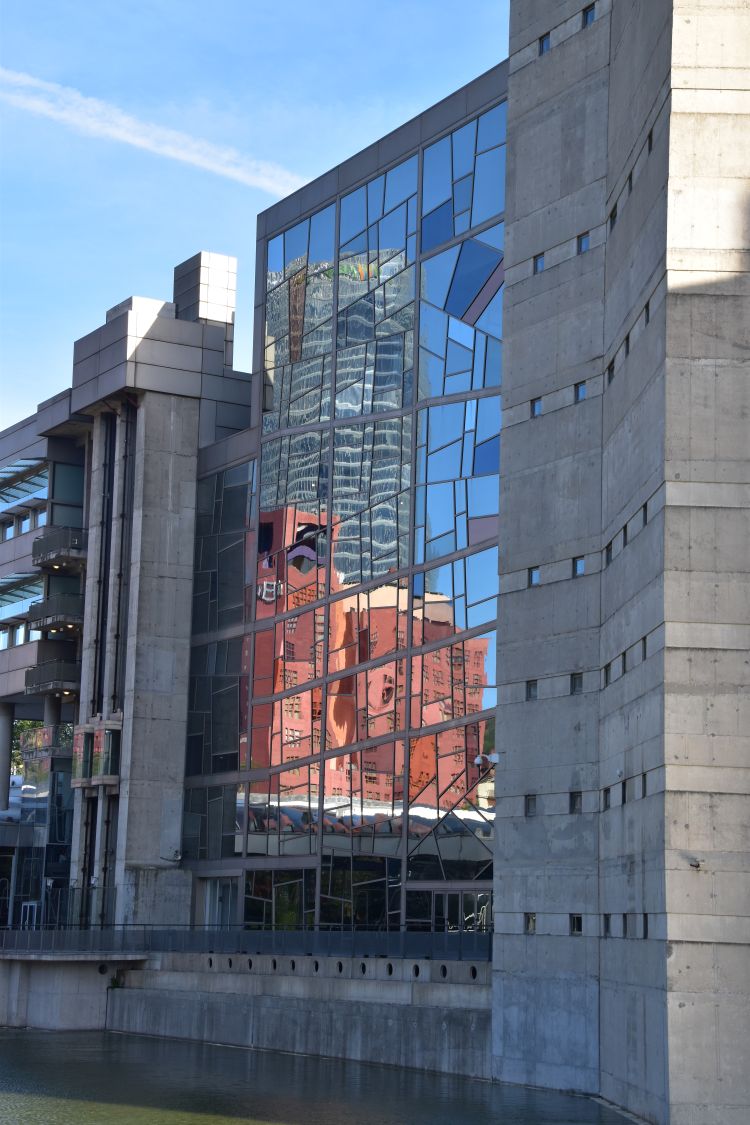
Another example is the Congress Center. The – also modern – red brick posh five star hotel Melia is mirroring in the windows.

.

The Guggenheim Museum marks Bilbao´s revival in the 90’s

THE highlight, the Guggenheim Museum, has been designed by the Canadian architect Frank O. Gehry and was inaugurated in 1997.

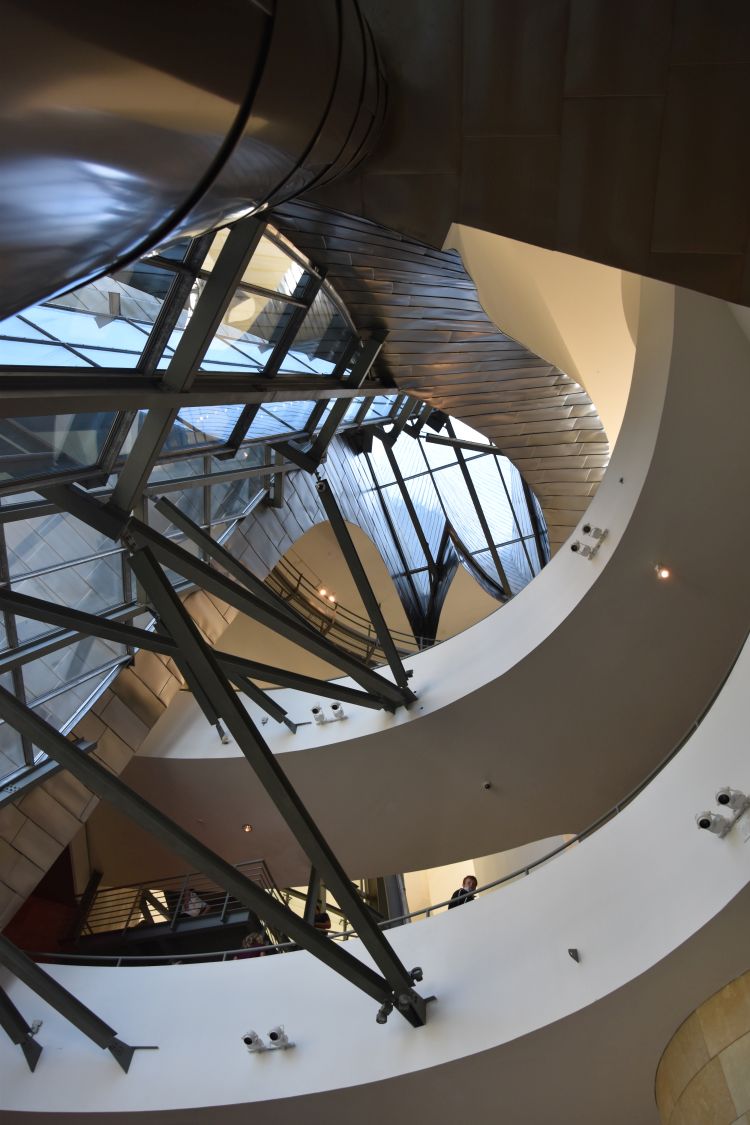
On three levels, the museum shows modern art.

On the second floor, we find the temporary exhibition of Jenny Holzer. Using words, she captures violence on plates, benches and in video installations – haunting. Another exhibition are the still-life paintings of Giorgio Morandi, put into relation with classical paintings of Jean Siméon Chardin (I like the boys playing with cards), El Greco or Zurbarán.

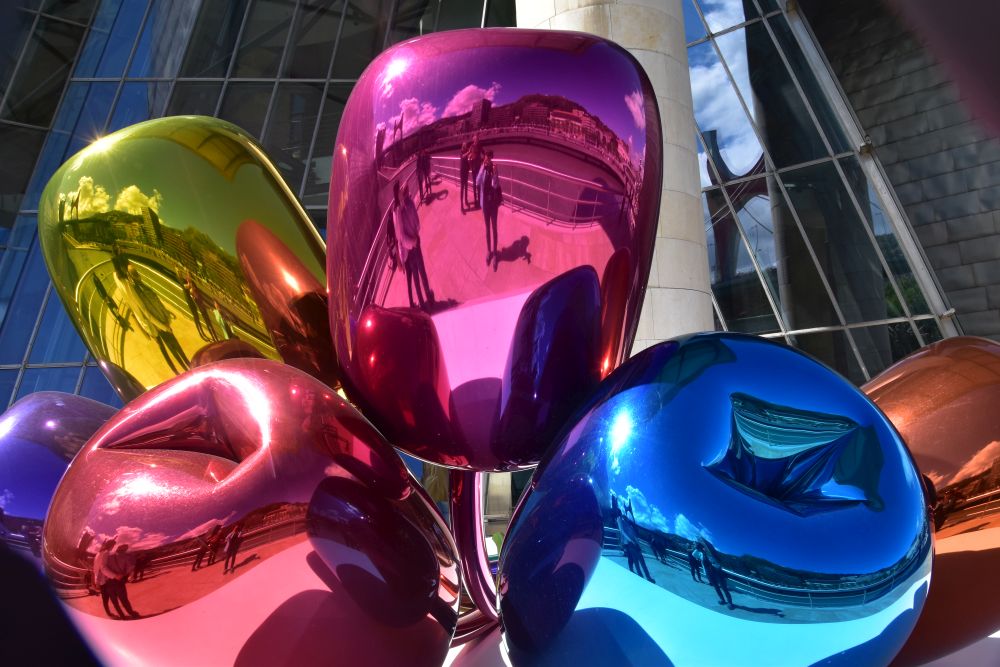
Outside on the terrace, the colourful balloons make great mirrors.

It is said that Bilbao benefited from the “Guggenheim impact” which initiated the revival of the city in the 90’s, after the decline of the steel, metal and shipbuilding industry.

.

Bridges are also the footprints of great architects

Some great architects also left footprints building bridges that cross the Ría Bilboa.

The White Bridge (Zubizuri) designed by Calatrava is playful with the strings and the transparent glass floor. It is said that Calatrava was not very pleased to see his glass floor being covered with a carpet, for the benefit of the pedestrians. Well, glass is slippery…

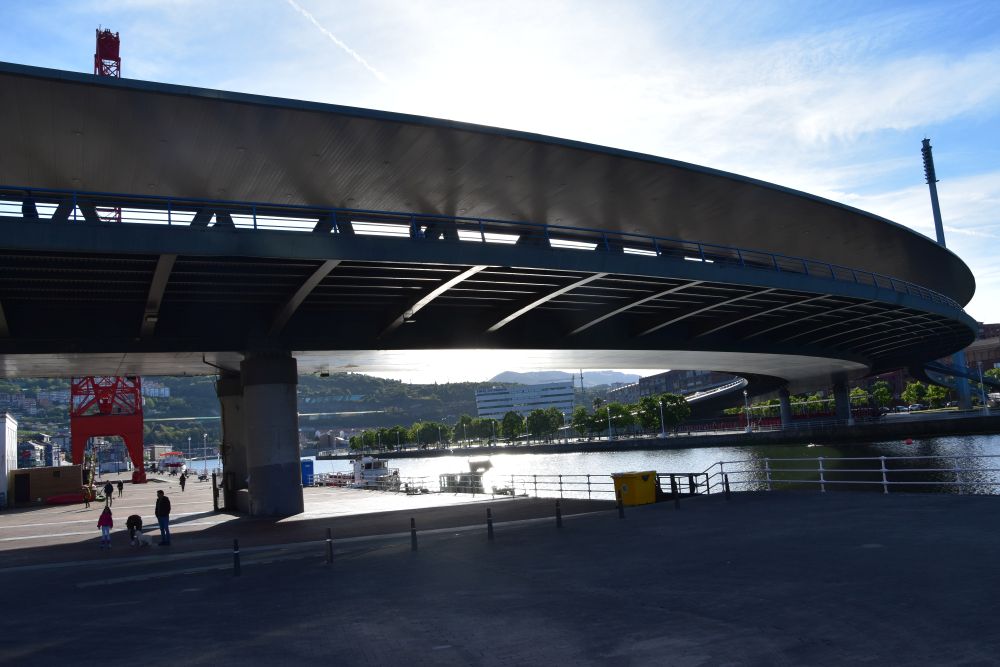
The Puente de Euskalduna has been designed by Frank O. Gehry. He was kind with the pedestrians: They walk under a roof. His bridge swings over the bay.

.

History of Bilbao

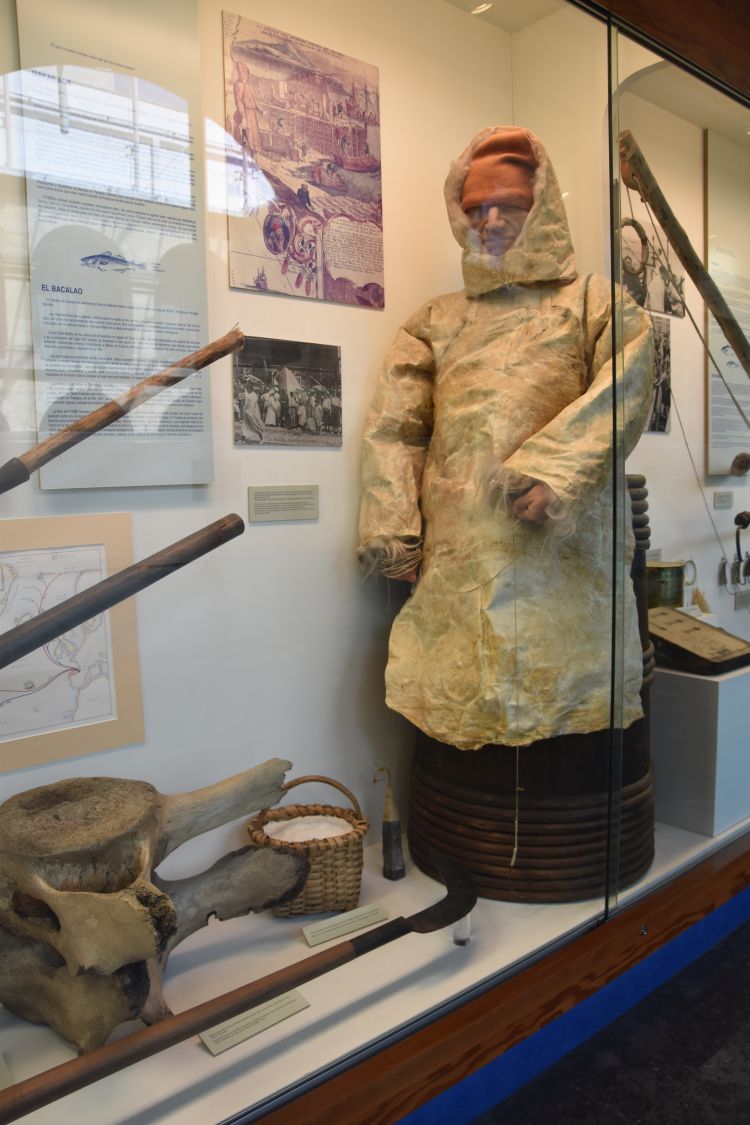
We visit the ethnological museum to learn more about the history of Bilbao. Around 1300, Don Diego Lopez de Haro transformed the fishing village into a city. After 1500, it was the center of wool and fabric trade with Flanders, later in addition for whaling.

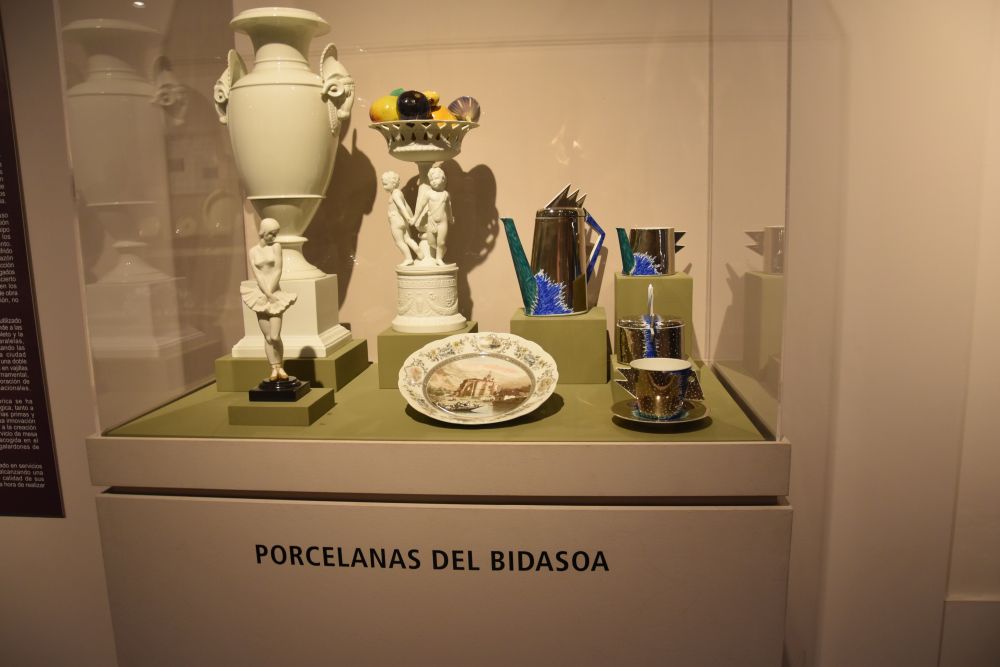
In the 19th century, it was the mining, steel, metal and ship building industry that made Bilbao rich, and I discover, they also had porcelain production.

After the decline of the steel, metal and shipbuilding industry in 1990, Bilbao was able to win Frank O. Gehry to build the Guggenheim Museum. This set the base to motivate more renowned architects to build for Bilbao… and, as a consequence, the number of overnight stays doubled.

.

I felt at home in Bilbao

I felt at home in Bilbao, as this lively city with its modern appearance reminds me of my mother town Berlin, though Bilbao is much smaller and more manageable.

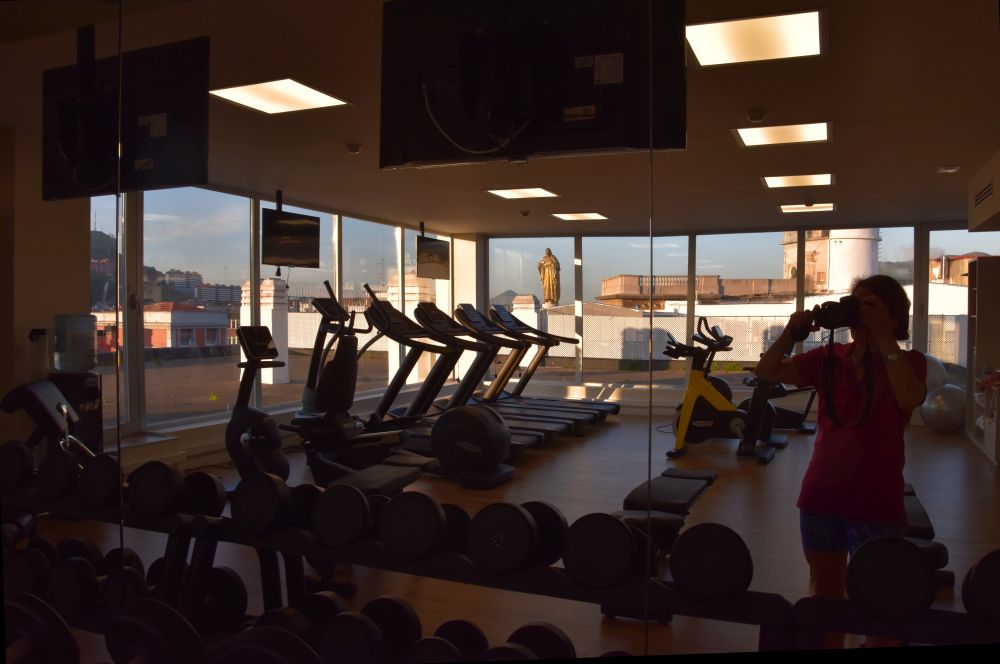
Our hotel NH Collection Villa de Bilbao was located near the Plaza del Sagrado Corazón de Jesús. From the fitness room on the seventh floor, I could see the statue of Jesús.

Yes, I will keep the memory of Bilbao in my heart.

Source: Mario Golder: “Nordspanien und der Jakobsweg”, Dumont 2017

Getaria – center of Txakoli and fashion

On May 3rd, we drive from Hondarribia to Bilbao. We stop in Getaria. It is a small town perched on a rock.

The gothic church San Salvador is from the 14th century. Inside you have to walk uphill to reach the choir – on the rock, it was not possible to build a church with a flat floor. This is the view of the windows.

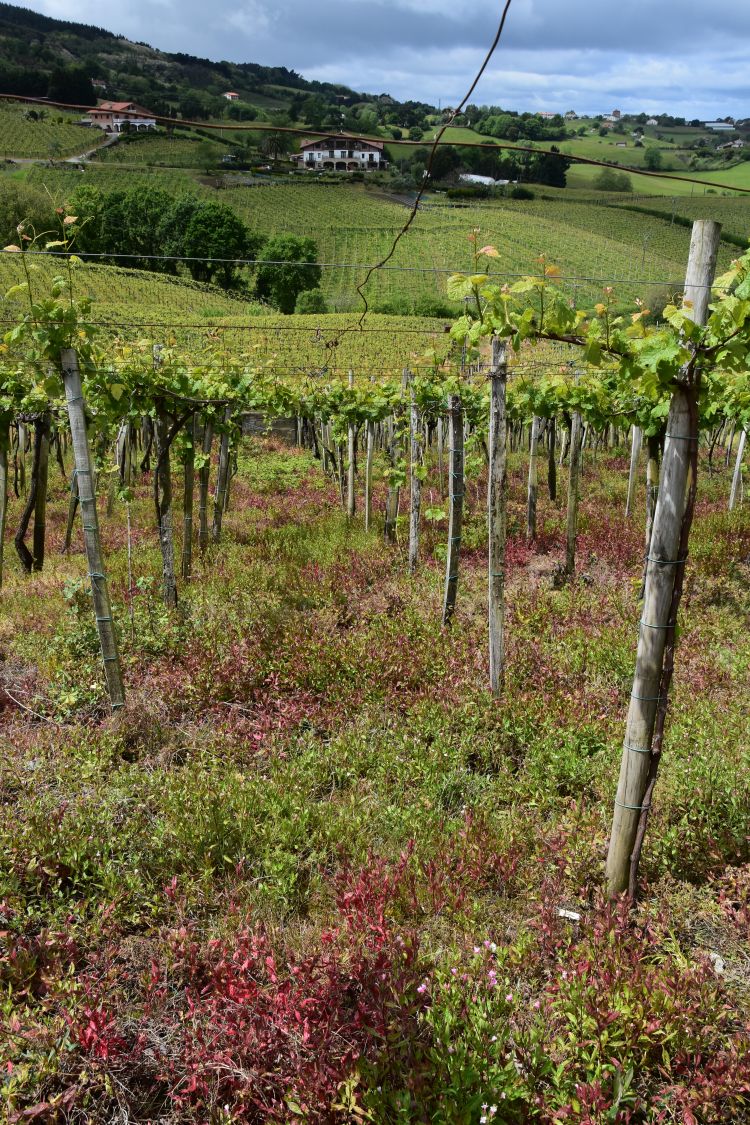
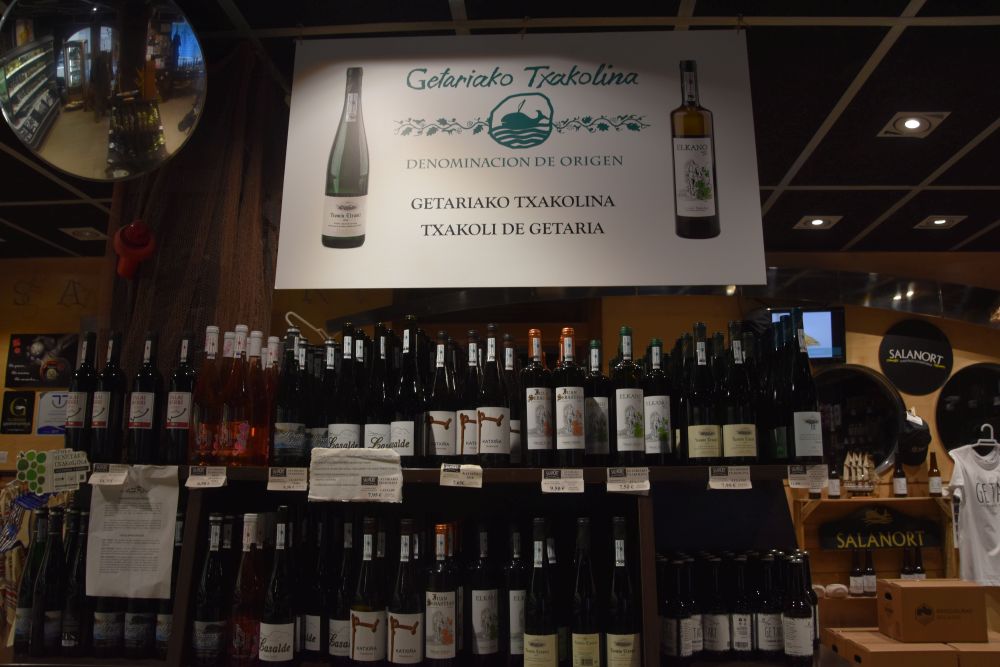
Getaria is the center of Txakoli wine growing.

Txakoli is the grape of the Basque Country. I buy a bottle in a small shop.

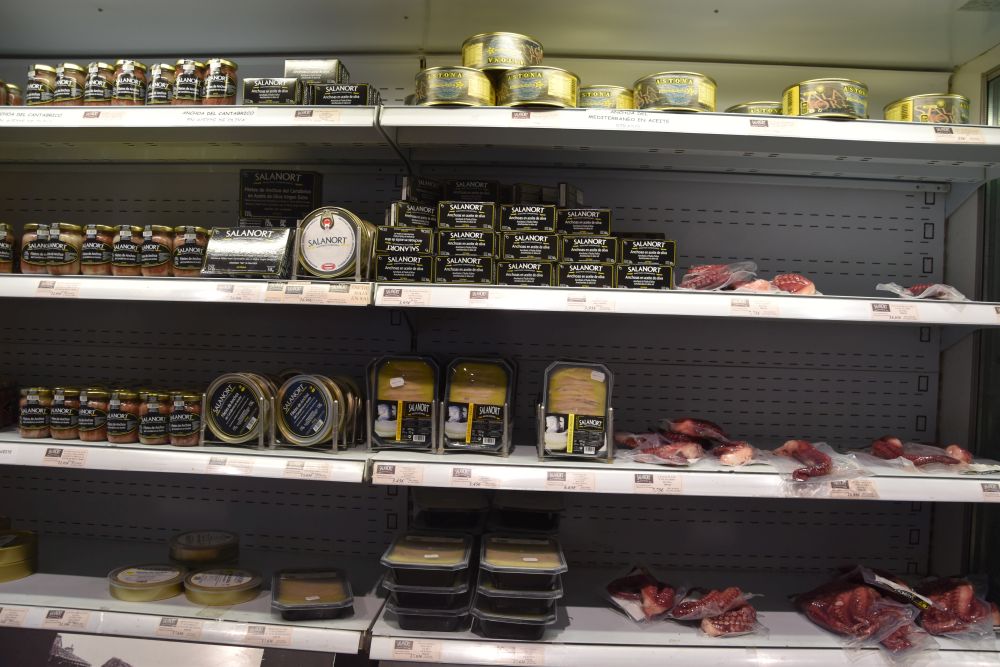
The shop also sells tins with seafood or other regional products – this is an old tradition here.

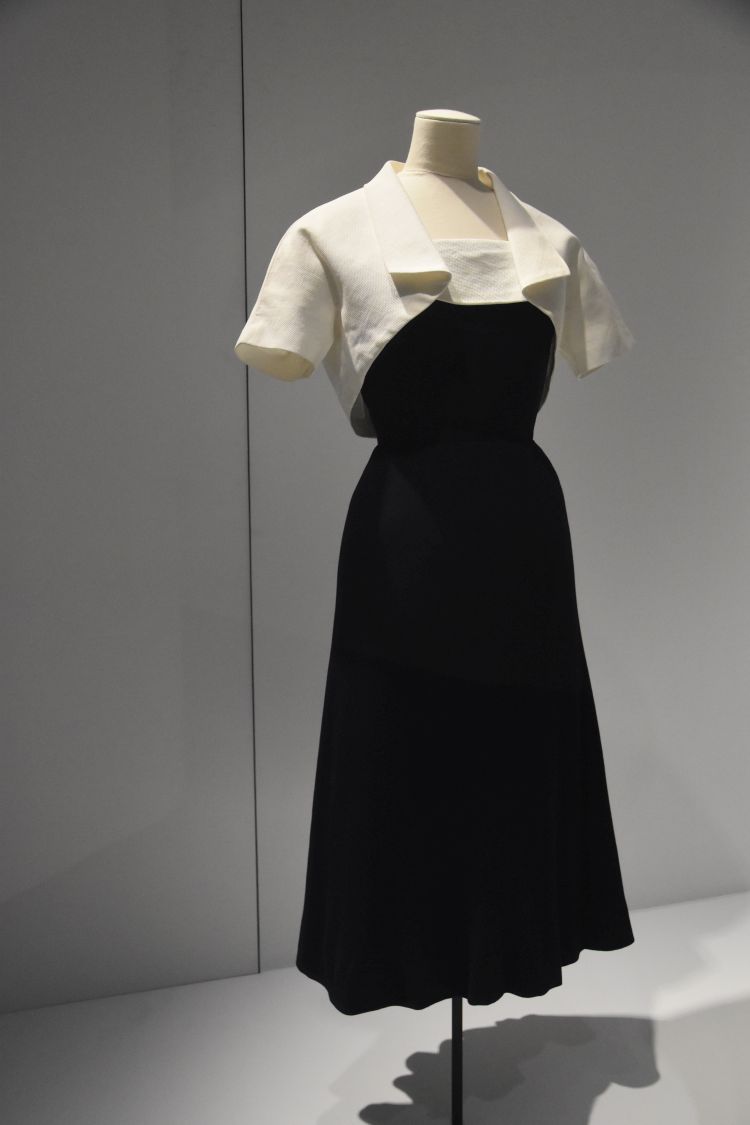
Two important men are from Getaria, the first Born in the 16th century, the second in the 19th century. The first is Juan Sebastián Elcano who joined Magellan on his first round the world tour in 1515. It was him who completed the tour, after Magellan had died on the Philippine islands. The second man is Cristobál Balenciaga, the famous fashion designer from the 1920’s to the 1960’s. His work is on display in a modern building in Getaria. I am impressed. His creations are straightforward and look wearable to me. He makes the material flow. He started with waisted lines – all close to the body.

More and more his creations became less waisted. In the sixties, he designed straight dresses (white dress) or “remodelled” the body (black dress).

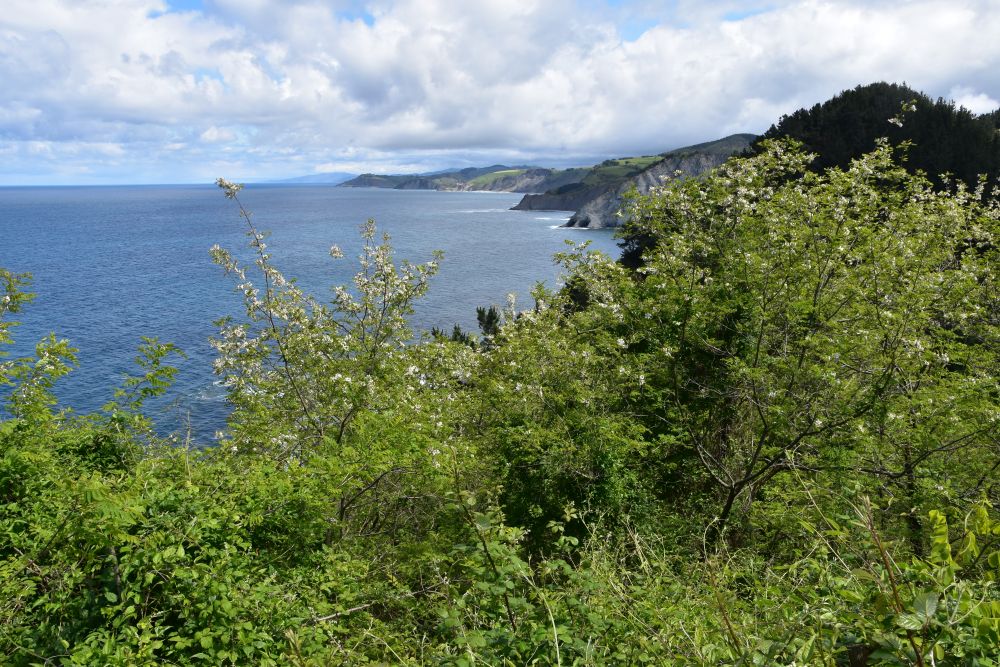
After the museum, we continue our way along the wild coast, just amazing.

Then the road takes us into the mountains and we cross one industrial village after the next. I start to understand that the Basques are industrious.

We arrive in Bilbao and look forward to discovering this lively city.


Discovering San Sebastián stretching along La Concha

On Thursday, 2nd of May 2019, we visit San Sebastián, called Donostia by the Basques. 


Driving along the coast via Jaizkibel to San Sebastián

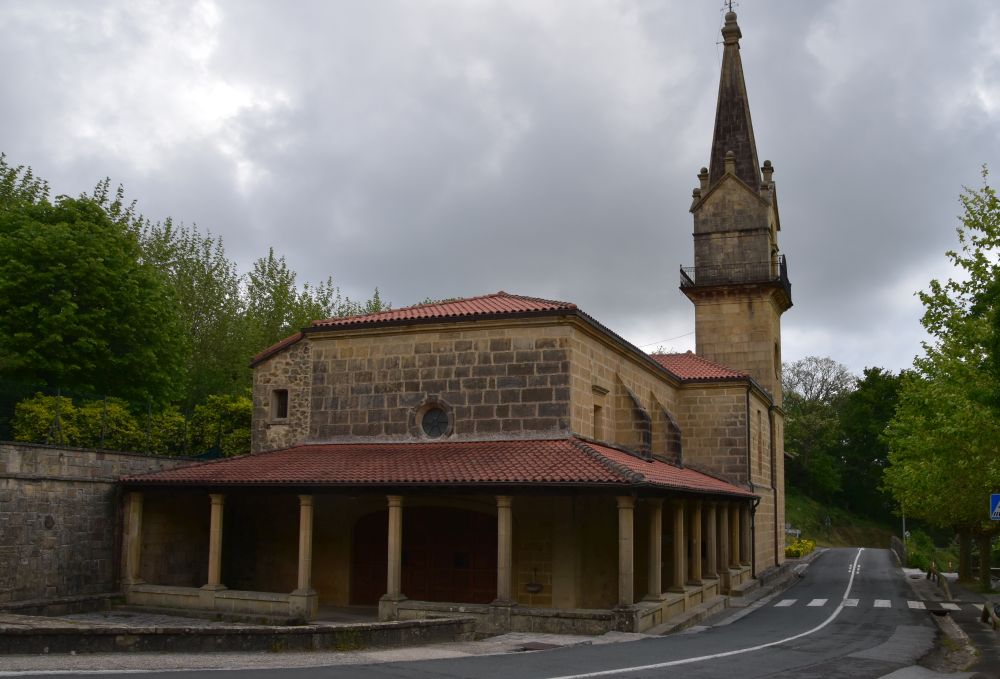
From Hondarribia we drive along the coast and cross the mountain Jaizkibel. Our first stop is at the chapel Nuestra Señora de Guadalupe. Inside there are a black Madonna and boat models; yes, the Basque country needs support for their fishing boats.

From here, we see the Bidasoa’s river mouth with Hondarribia (Spain), Hendaye (France) and the Pyrenées in the background. 

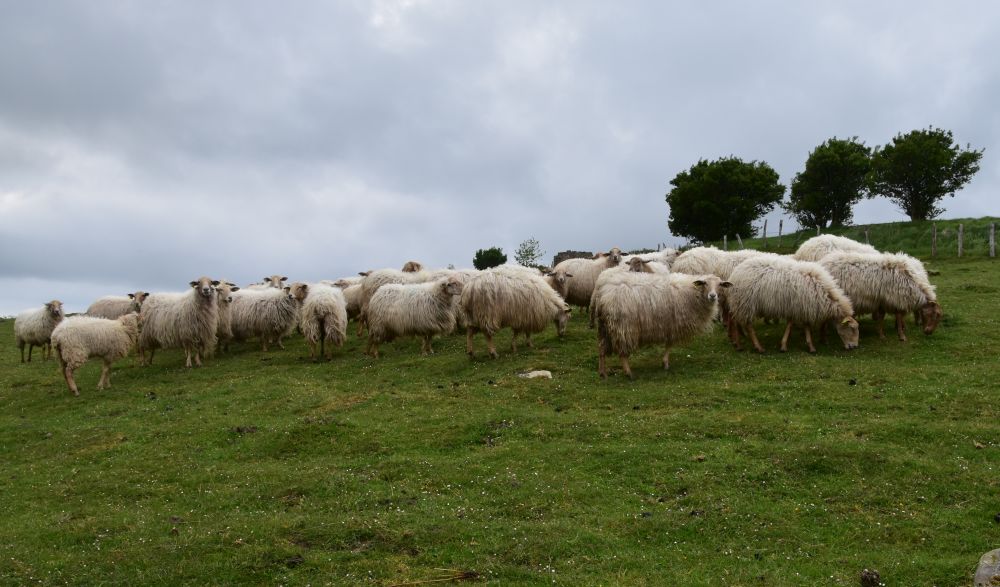
On the Jaizkibel at point 455m, we find these Latxa sheep with their long, thick hair.

I ask myself, how these sheep full of wool handle rain. Do they get all wet? No, Ursula tells me, the Lanolin, or adeps lanae, protects them from the rain.

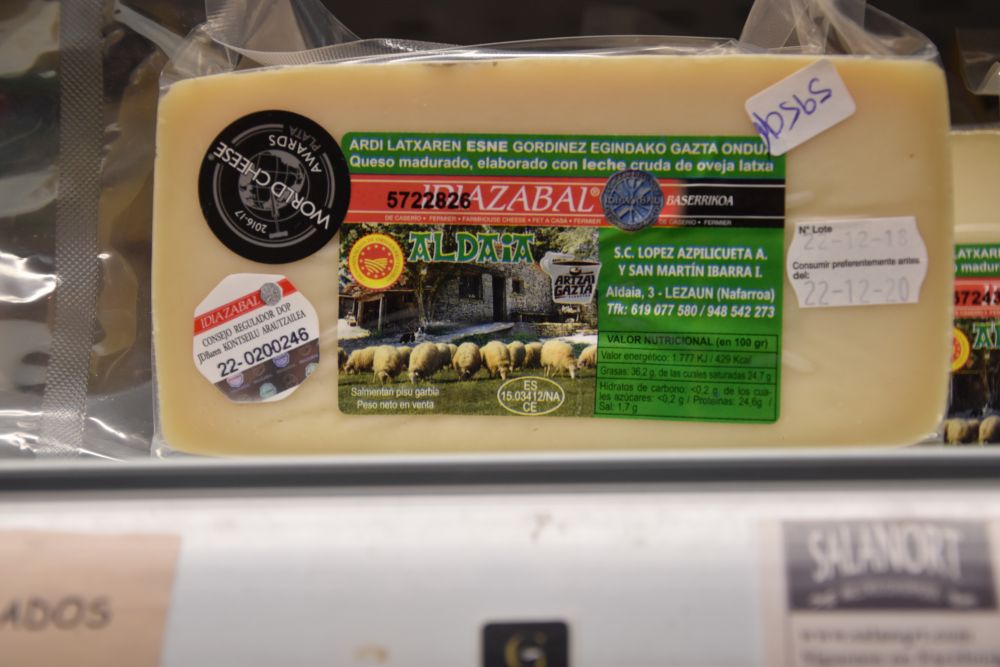
The Latxa sheep are typical of the Basque Country and give the milk for the cheese called Idiazabal.

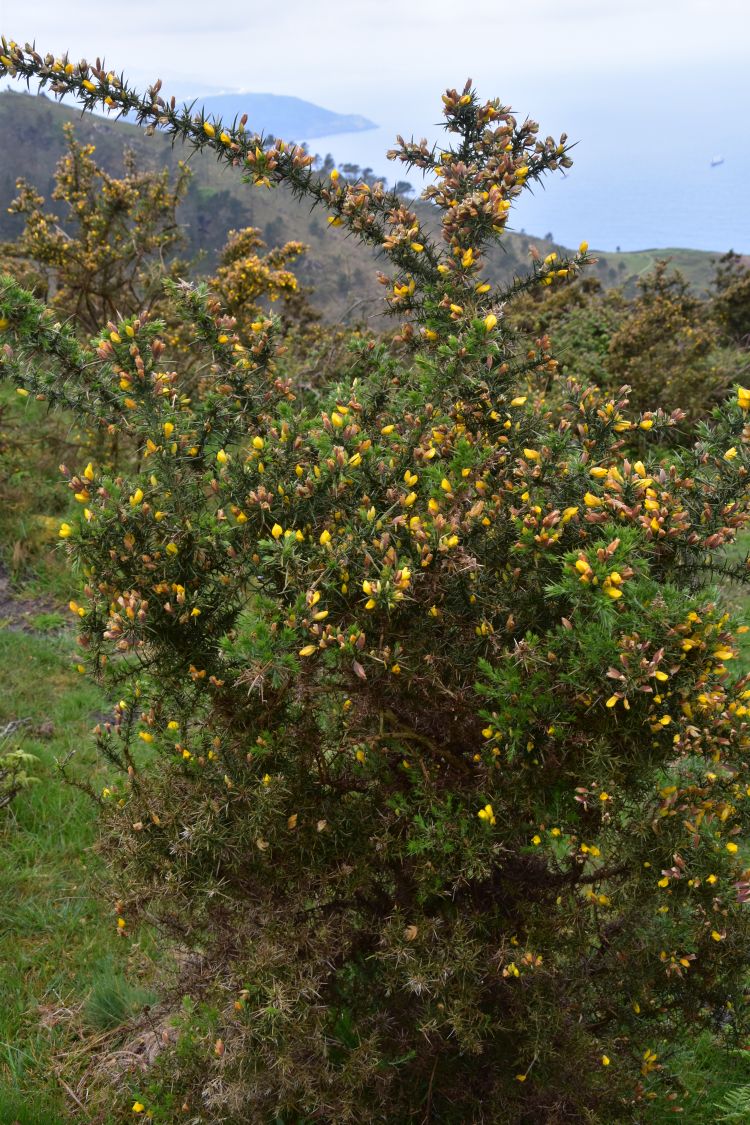
From the Jaizkibel, we can see San Sebastián in the haze. The brooms are yellow.

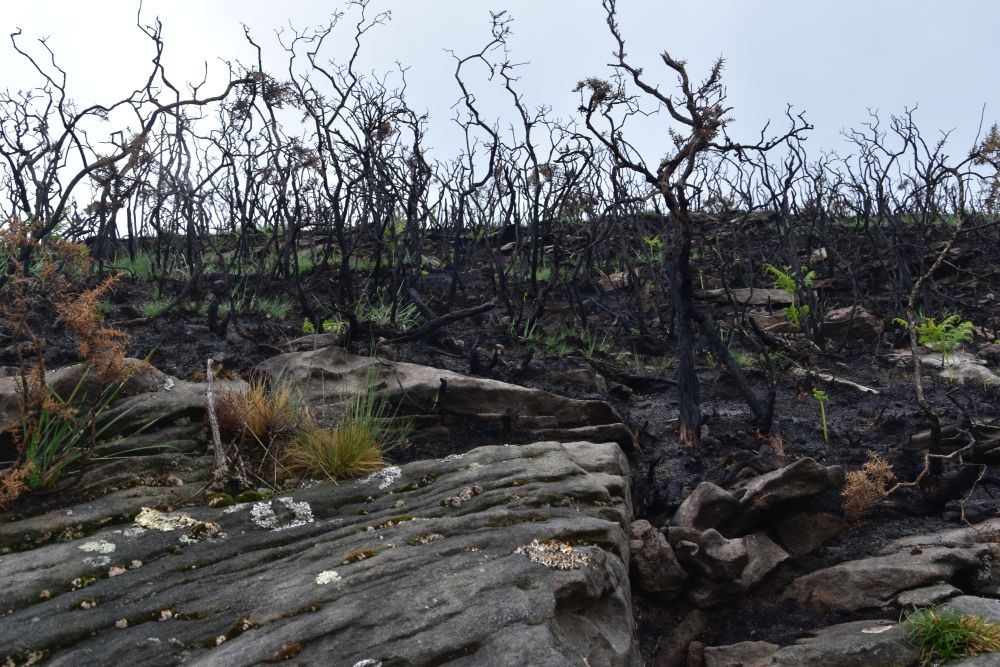
A fire must have burnt these bushes.

.

San Sebastián – the old town with narrow streets and neoclassial houses

San Sebastián was devastated by a fire in the early 19th century. The old city was then rebuilt along the old street lines, in neoclassical style.

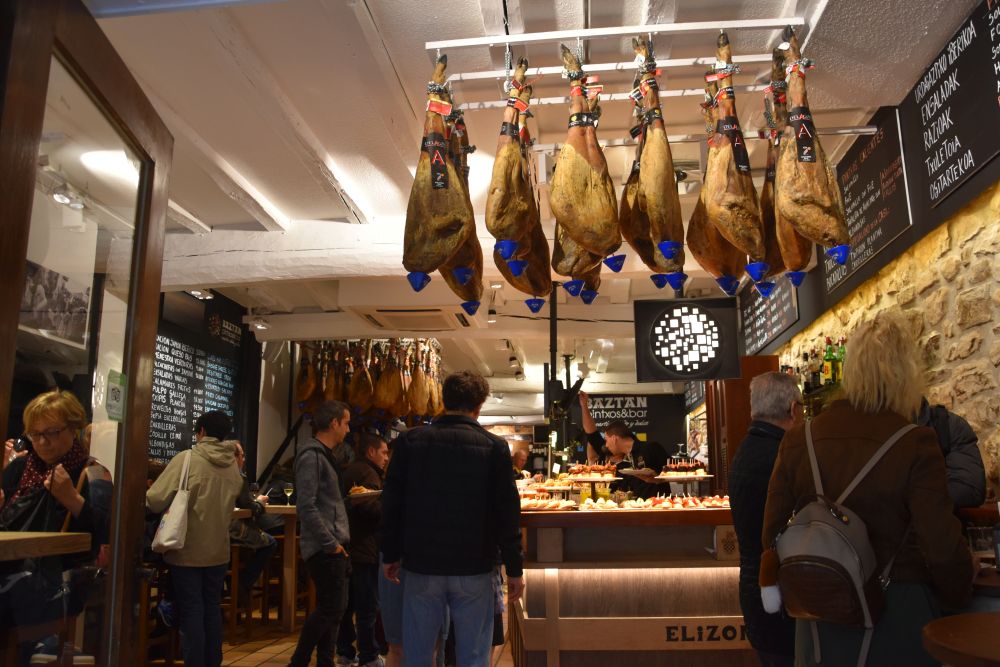
We stop in one of the many tapas bars to eat some pintxos, as tapas are called in the Basque Country.

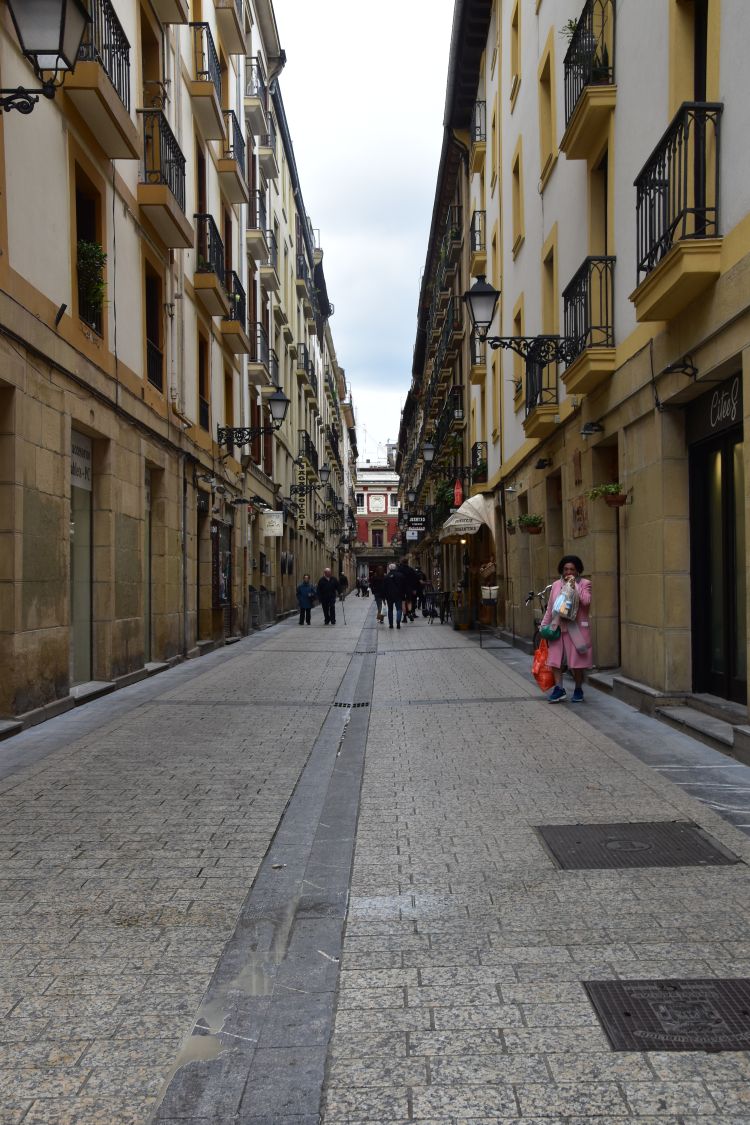
We stroll through the narrow streets. I wonder, why the windows (and balconies) at the Plaza de la Constitución have numbers. My Dumont tells me, that the Plaza was used for bullfights and the spectators watched them from the numbered balconies (Marion Golder: “Nordspanien und der Jakobsweg”, Dumont Hamburg 2017).

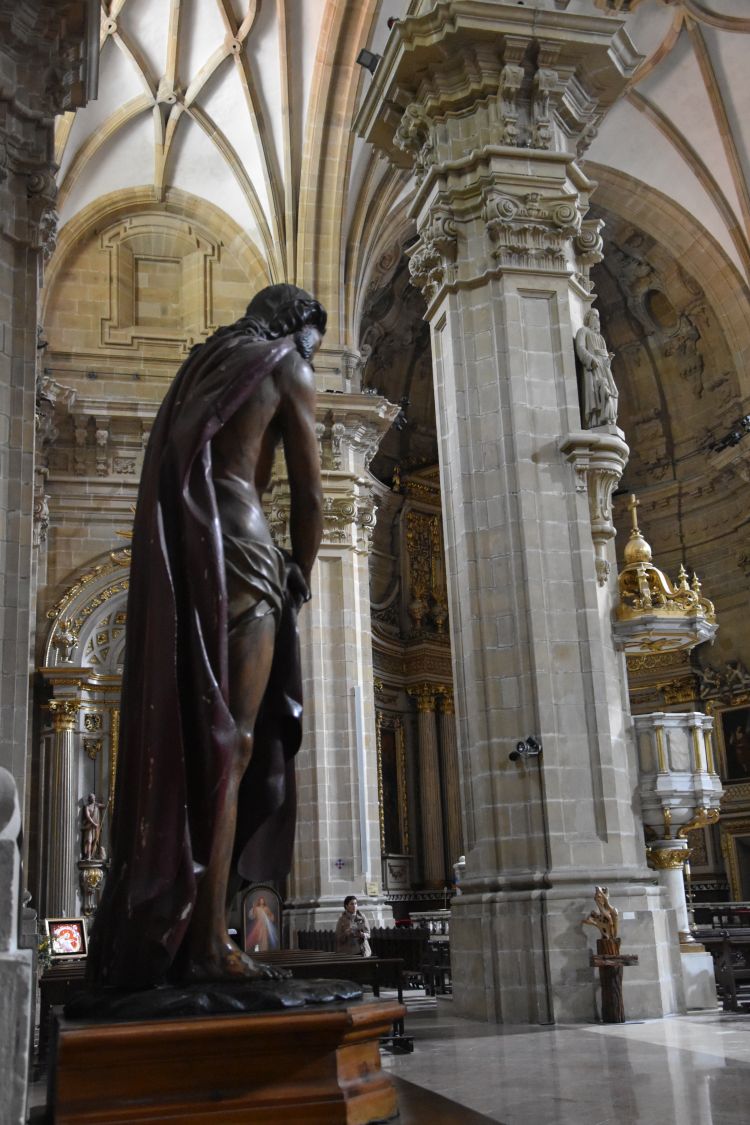
In the baroque Iglesia de Santa Maria from the 18th century we find two statues of San Sebastián (or Done Sebastian, a name that the Basques shortened to Donostia). This is the traditional wooden sculpture…

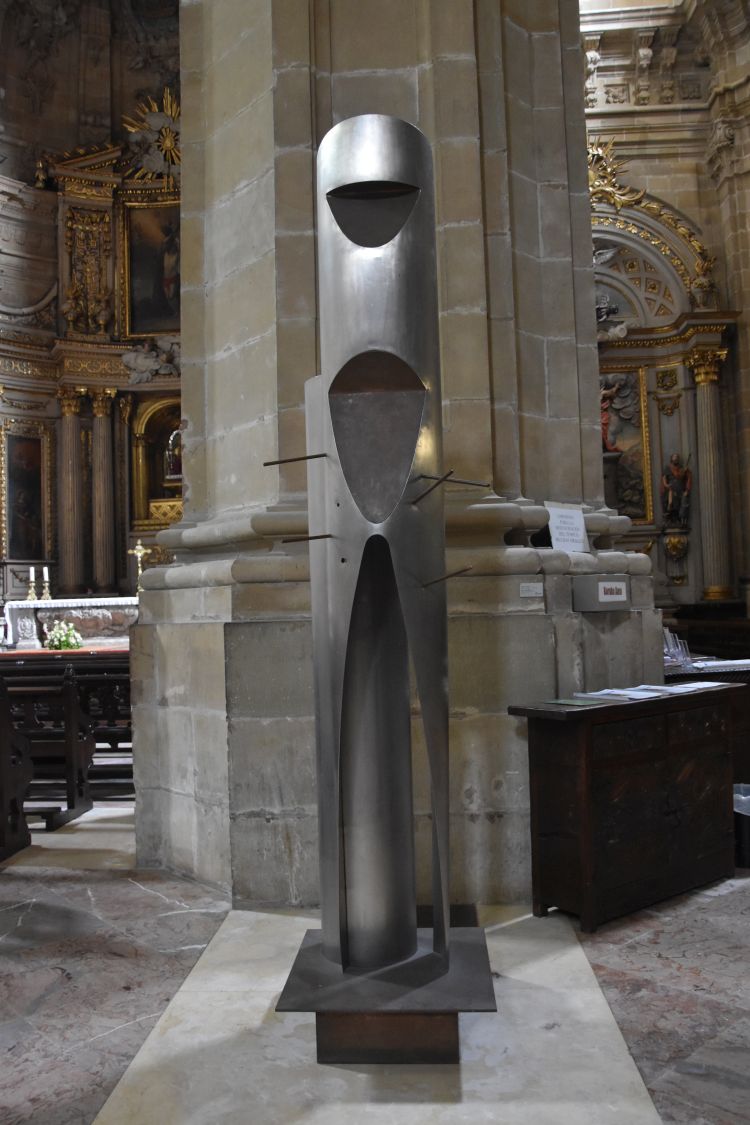
… and here is the modern version of San Sebastián (he died from arrows).

.

San Sebastián – the bay La Concha between two hills

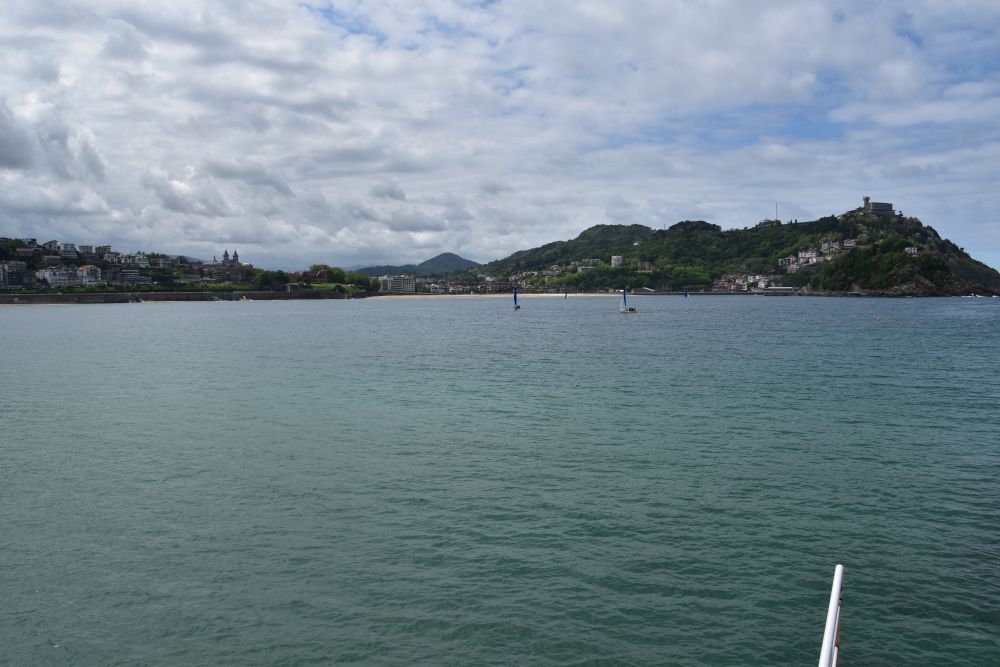
We continue to the famous bay called “La Concha”. It IS beautiful. I can understand why people select the sandy beach here to recover and swim. In the background, there is the Monte Igueldo.

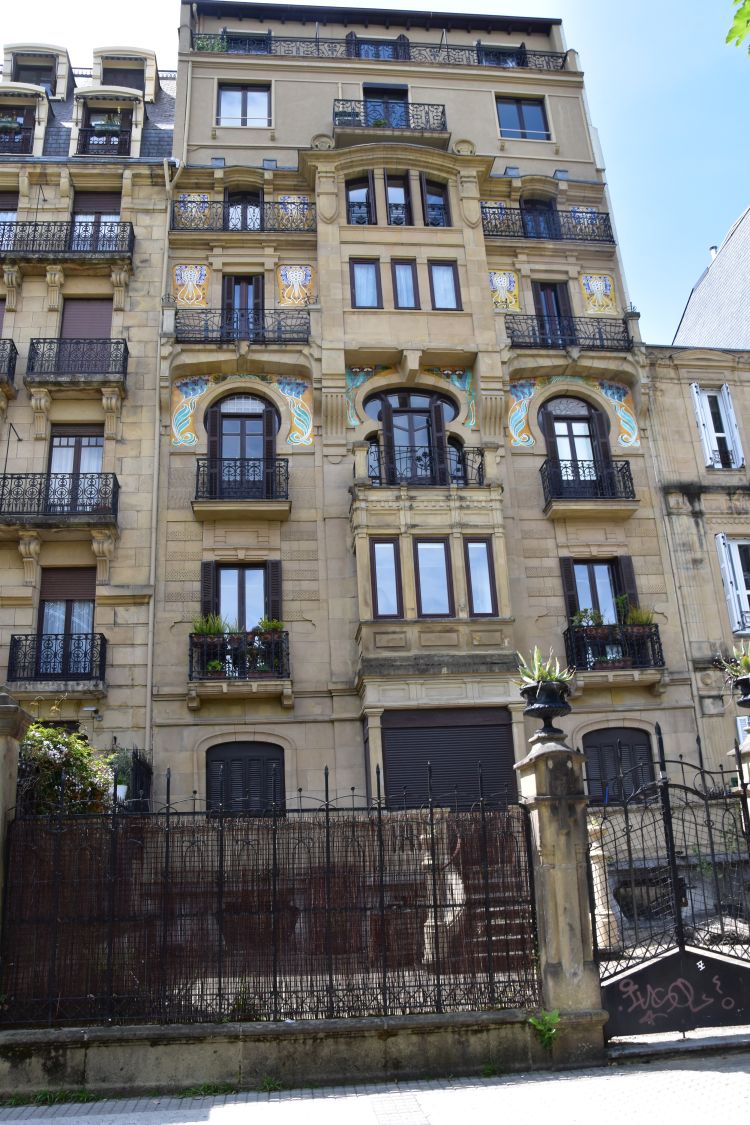
Along the Rio Urumea, we find houses from the area of promotorism (late 19th century) and Art Nouveau (after 1900).

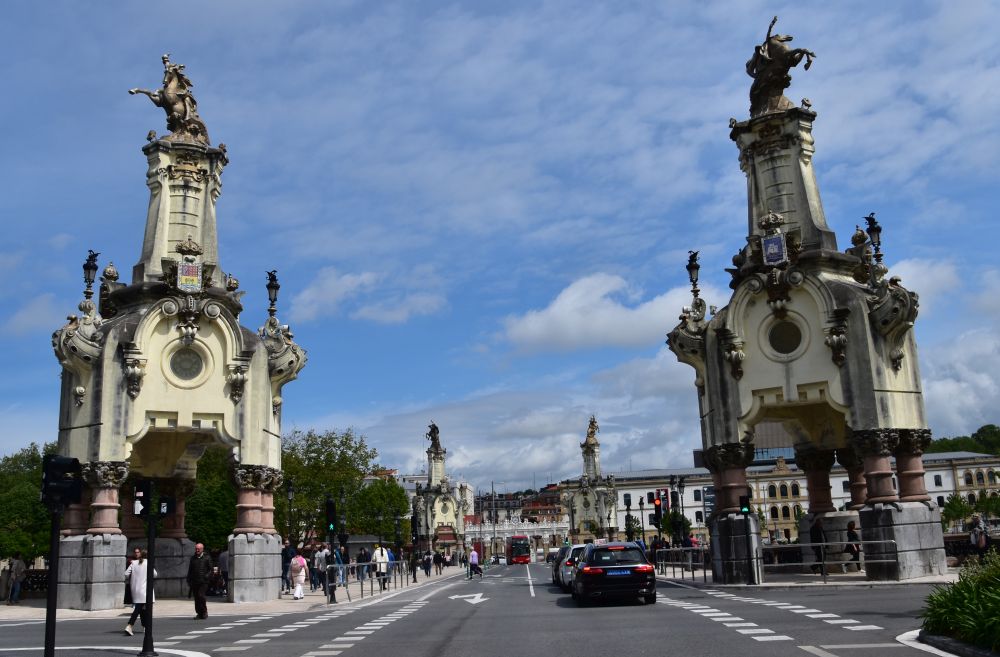
Also the ostentatious Puente Maria Christina was built around 1900.

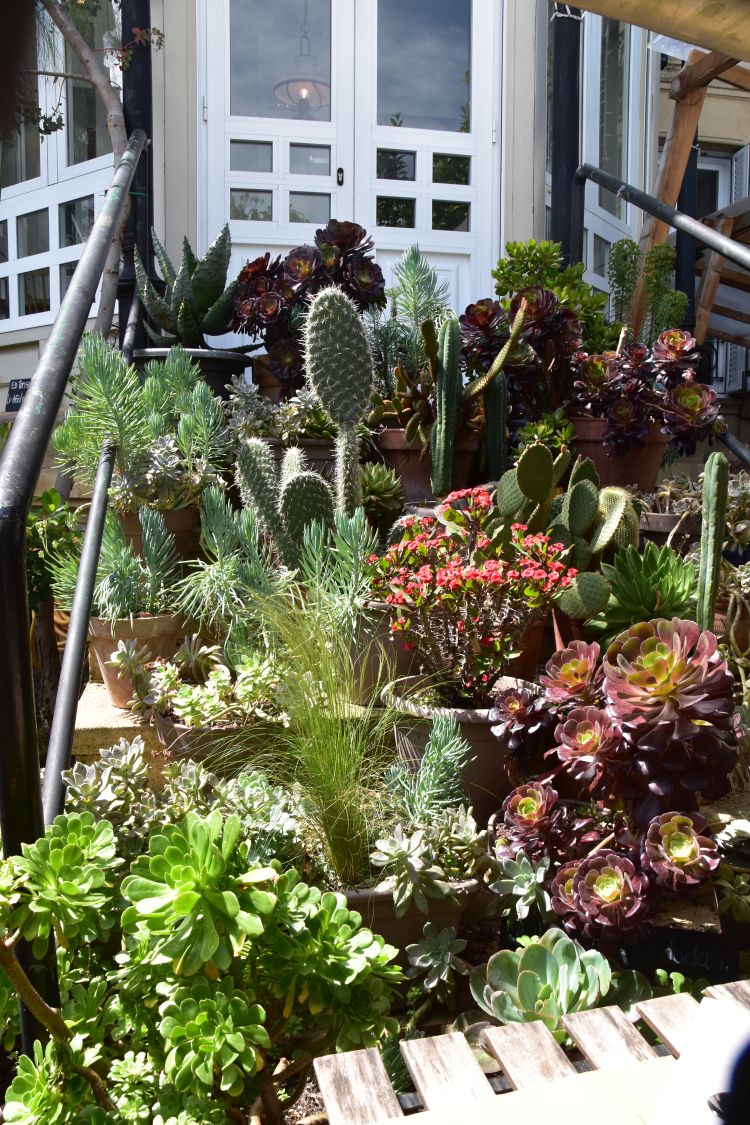
Not far from here, we find the Jardín Bótanico. It is a cosy coffee bar with a lush garden. We wrap off our visit of San Sebastián, with a cup of coffee and a carrot cake.


Driving back to Hondarribia through green mountains

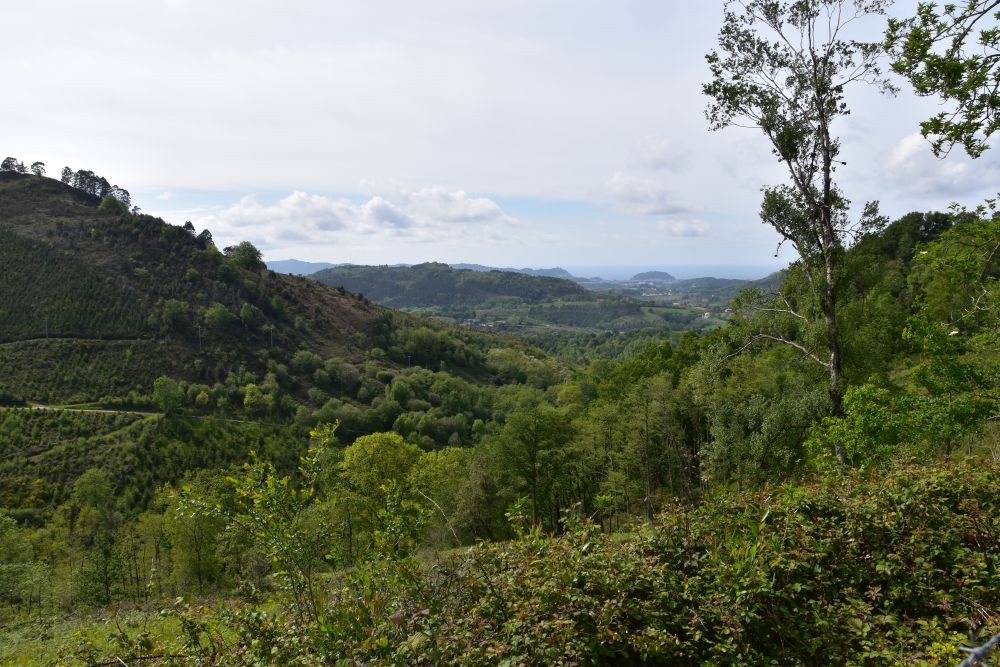
To drive back to Hondarribia, we select a road through the steep and green Basque mountains. The sea is far away, north of us.

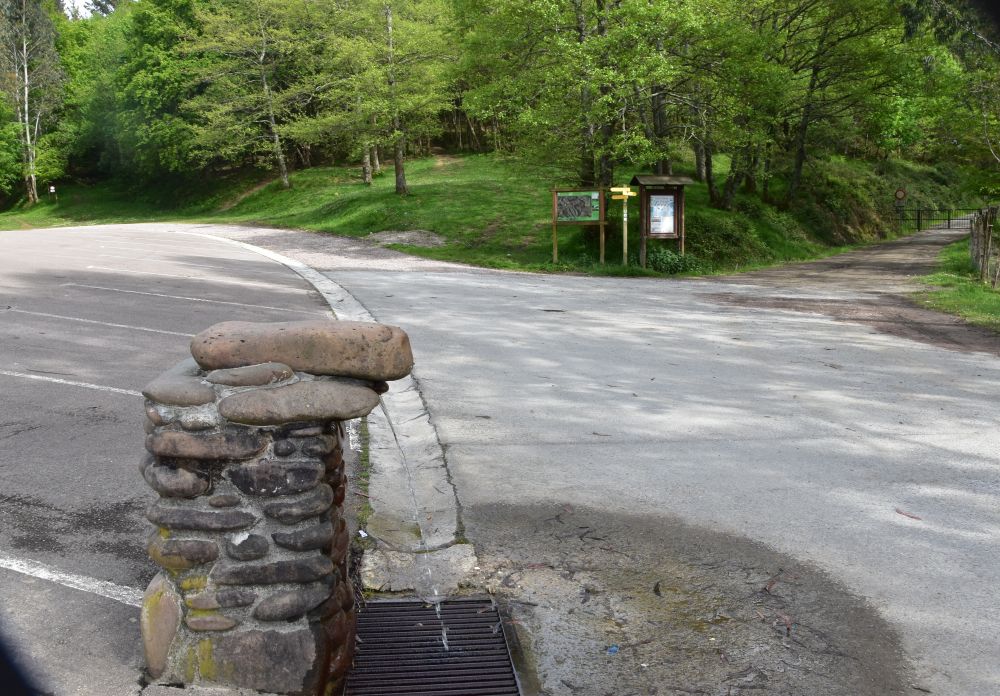
Our GPS gets lost, leads us uphill and uphill, until we end up in this dead end street.

We turn back, find the main road again and finish the day in the restaurant Abarka with an excellent rodaballo or turbot and a glass of Txakoli, the wine from the Basque Country.


Hondarribia, the Basque gem on the Spanish side

On April 30th 2019, we drive from Donzenac in France to Hondarribia in the Basque country and settle in the B&B Bista Eder above the city.

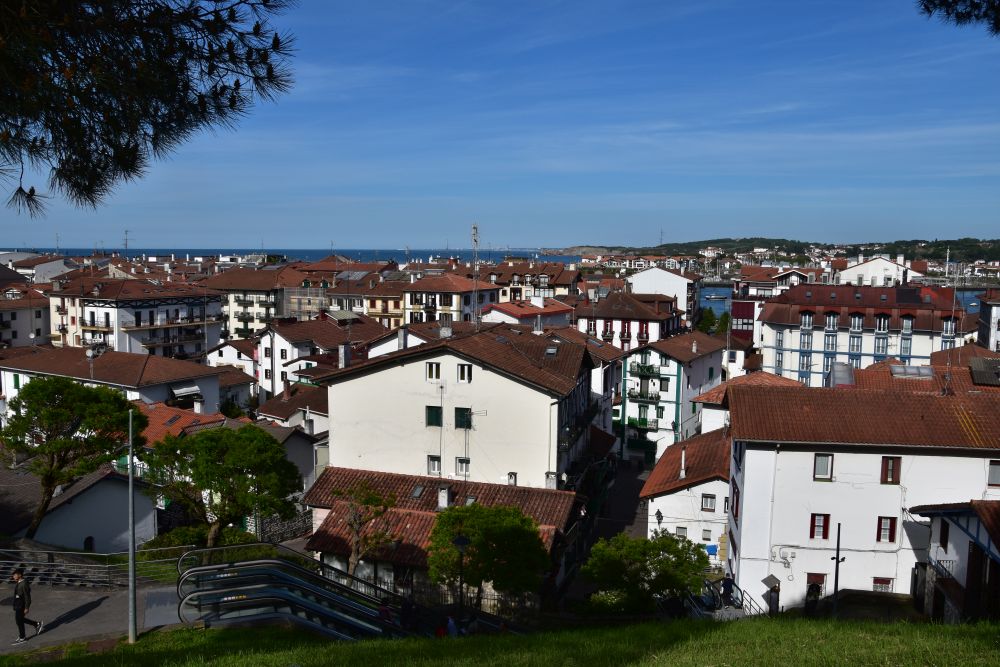
Bista Eder means great view in Basque. And indeed, from this lush garden, we have a marvellous view of the Bidasoa river, the Txingudi bay and Hendaye in France. The city center is about half an hour’s foot walk away from our B&B. Escalators lead down to the quarters of the fishermen, where we find half timbered houses and many tapas bars and restaurants.

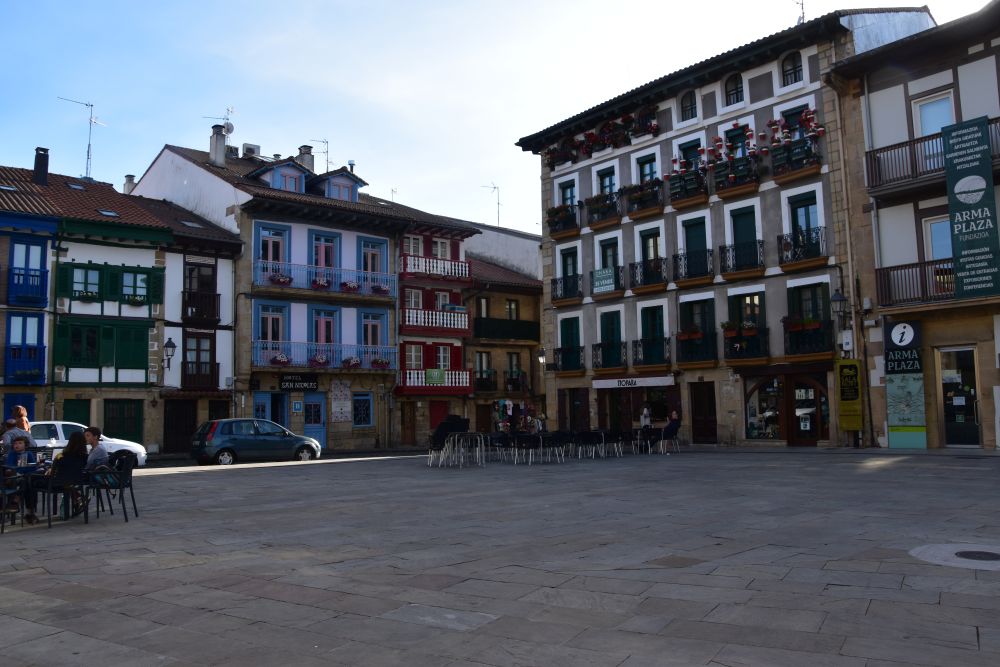
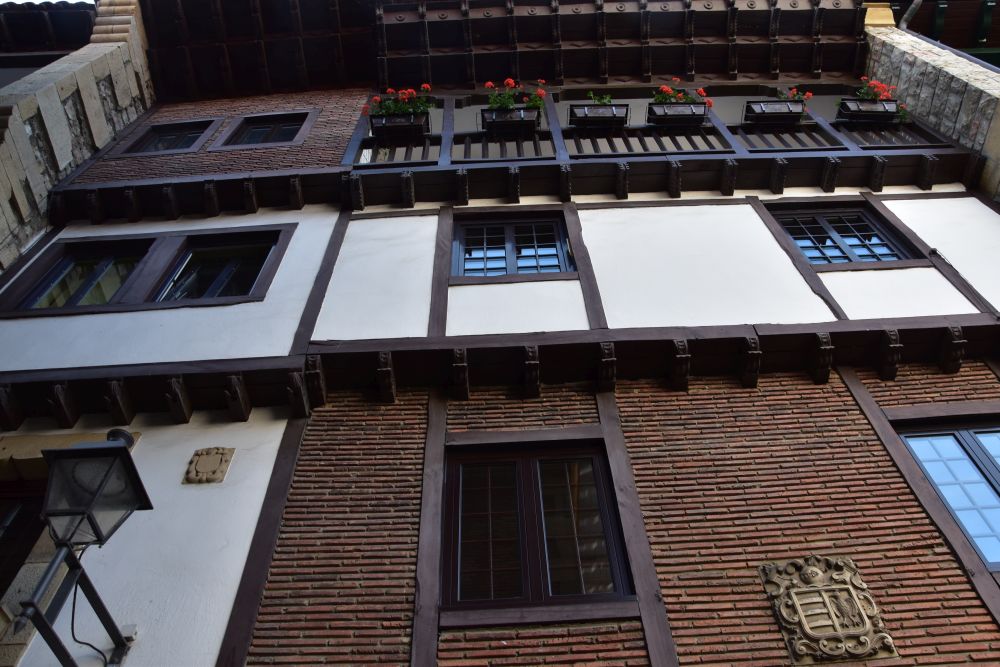
The old fortified city center is located on a rocky hill. The city has been documented since 1150. The former castle accomplished by Charles V is now the Parador with a coffee bar, but otherwise closed for non-guests. The Plaza de Armas is surrounded by typical Basque houses.

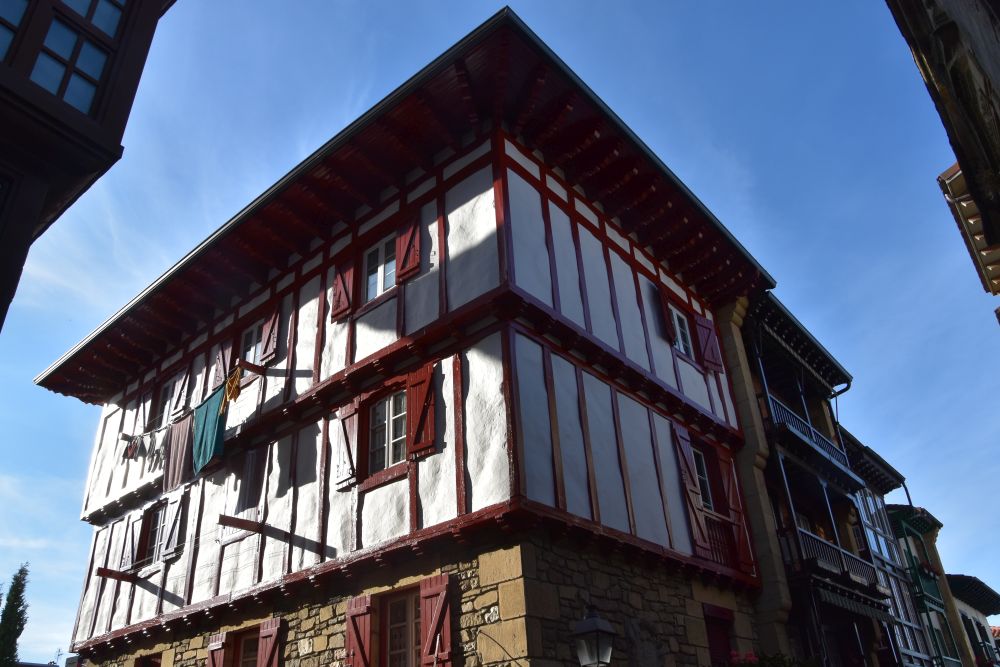
Many of these houses are half-timbered with vertical beams.

Some also have brick structures…

… and some have the brick structures that remind me of the houses in Bergerac in the Périgord.

The church Santa Maria de la Asunción from the 16th century can be seen from the narrow streets.

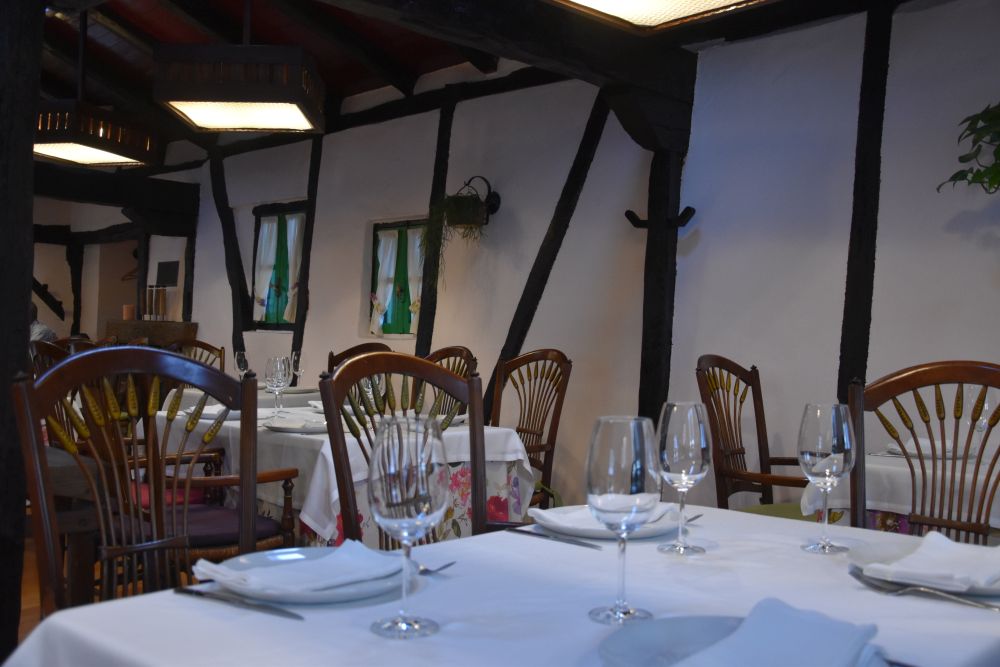
We return to the fishermen area La Marina and have a wonderful dinner with fish and gambas in the La Zeria. It is a tiny restaurant in a tiny house, built like a chalet. This is the cosy dining room.

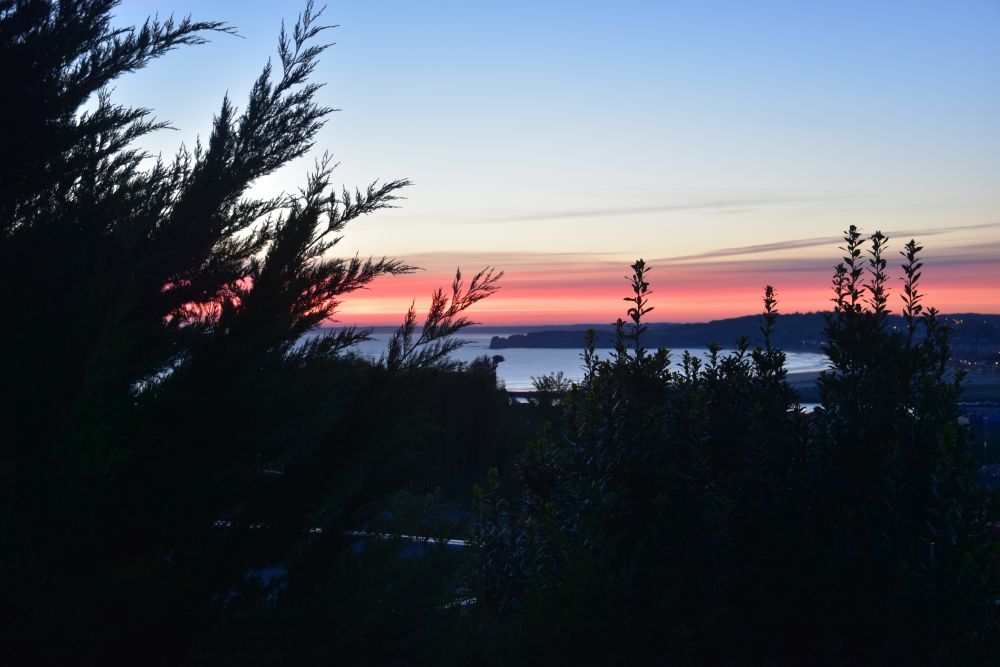
We return to our B&B using the stairs and escalators and sleep well (though it is a little chilly in our room). On 1st of May, we enjoy the beautiful sunrise with the view of the bay and the river Bidasoa.

Well – red sky in the morning, fishermen’s warning – this means that the weather may not be as sunny all week as it has been today.

Around Bayonne – much visited coast in France

On first of May 2019 we take our car, leave Hondarribia and Spain and return to France. It is only about 30kms to Bayonne. At the border we get confused. We are in France, but at the next roundabout, we find a Repsol gasoline station. Right, we are back in Spain.

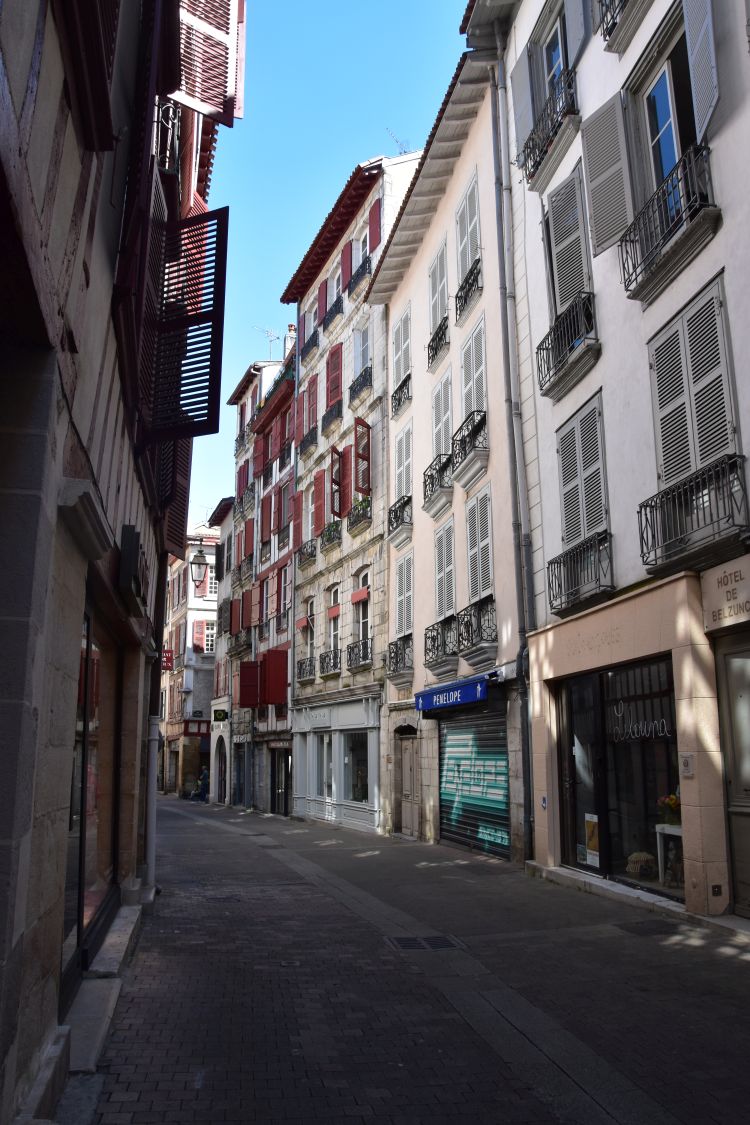
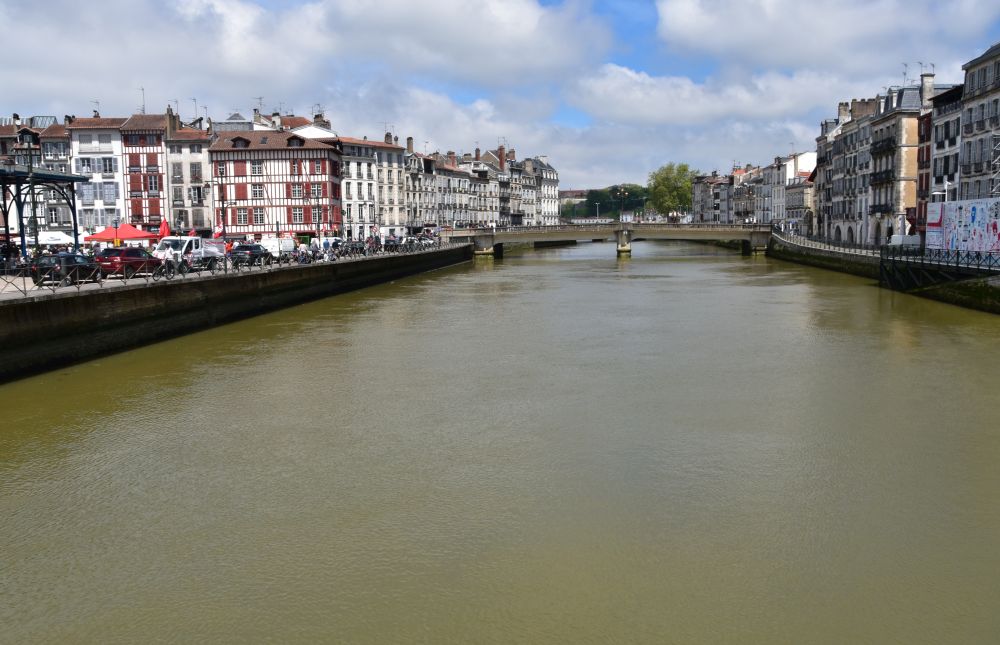
Using the Route Nationale, we drive along the coast line and find a free parking space right near the old castle in the center of Bayonne. We walk through the narrow streets of Grand Bayonne, with the typical half-timbered Basque houses that we already know from Hondarribia in Spain.

We reach the river Nive which separates Grande Bayonne from Petite Bayonne and which enters the river Adour later.

After an espresso, we visit the gothic cathedral Ste Marie which is not far from the river.

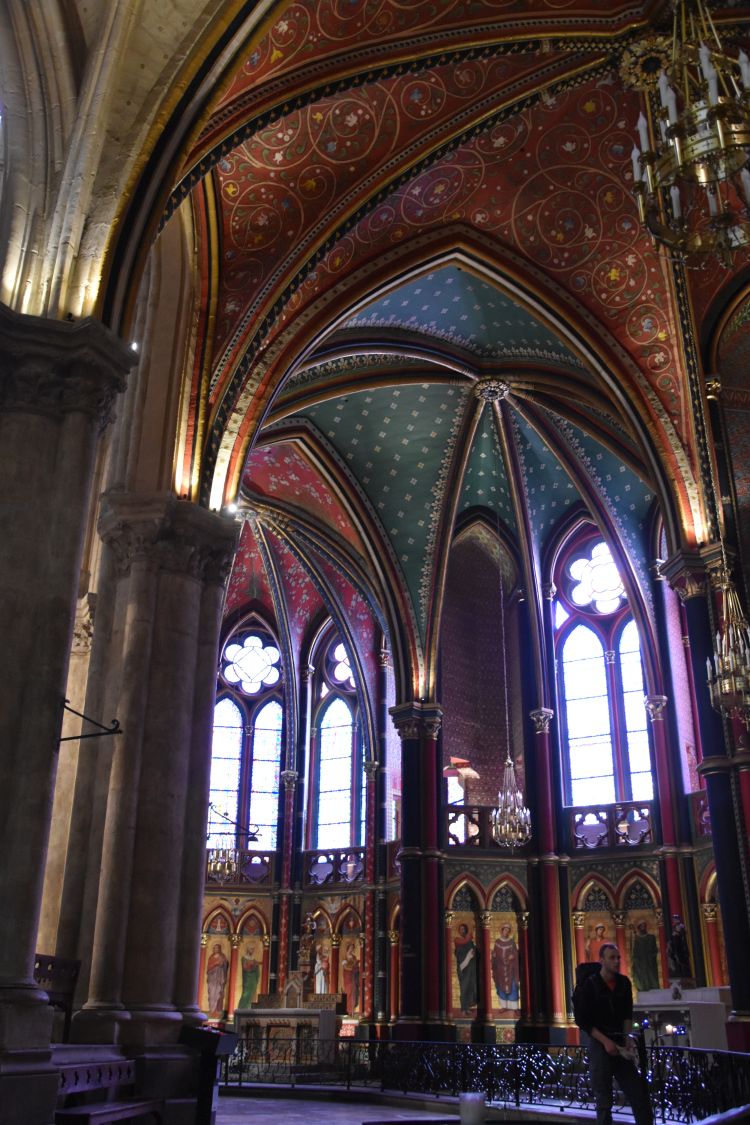
We love the ambiance inside the cathedral…

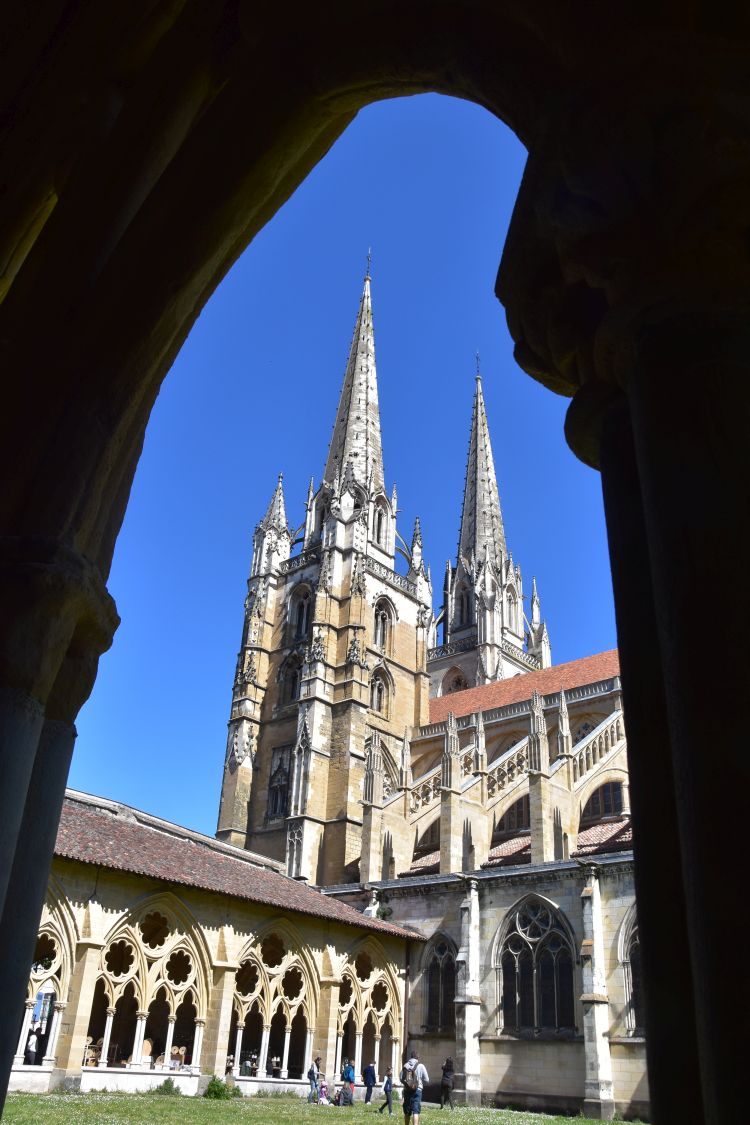
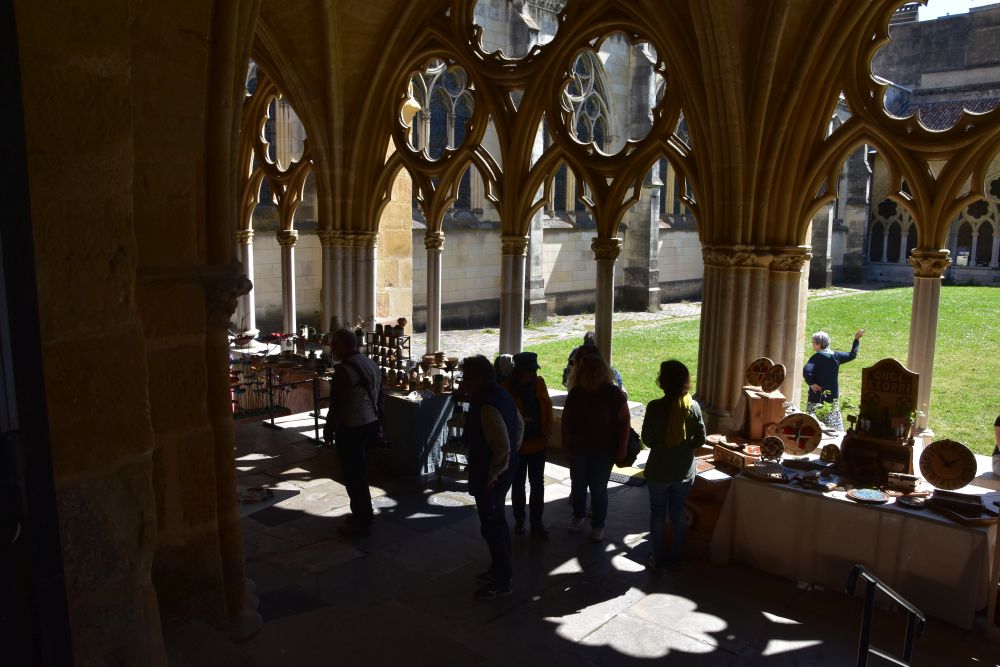
… and in the cloister.

The cloister is very busy on this first of May. There is a market of creative handicrafts, made by artists from the area.

For lunch we enjoy tapas, ham of Bayonne, cheese from the area and tasty paté.

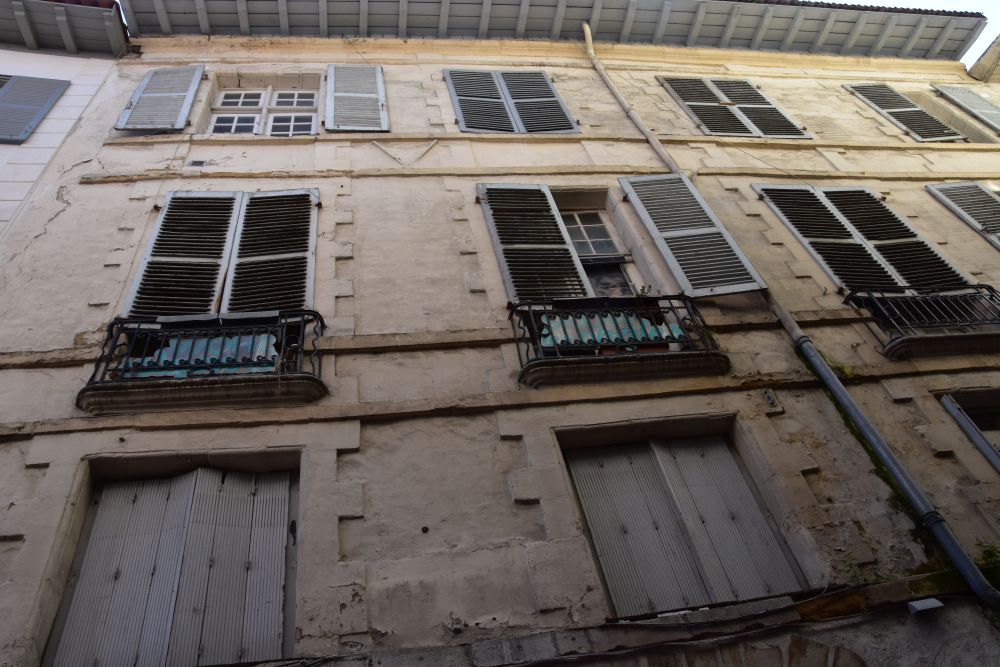
In the narrow streets we look for the old palace Bélzunce from the 15th century.

This house may need some renovation, though the Salon de Thé on the ground floor looks inviting.

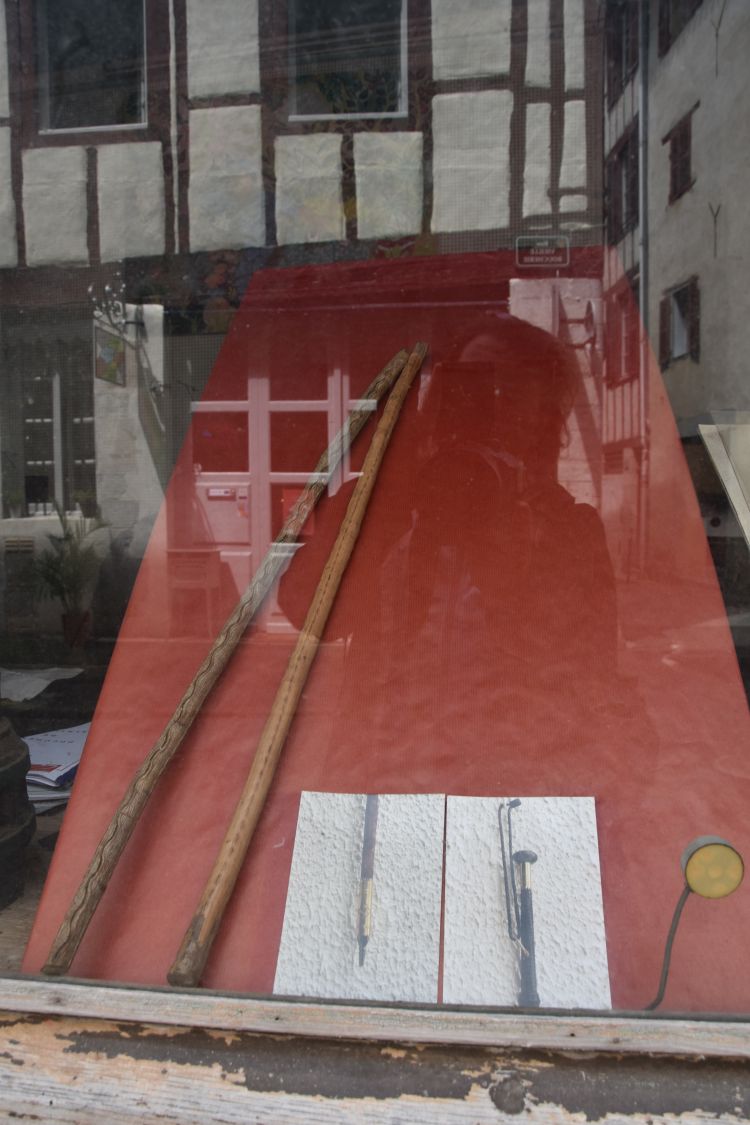
I have already learnt that the Bayonet was invented in Bayonne in 1703. This window tells me that the Makila, the armed stick (la canne armée), has also been invented in Bayonne.

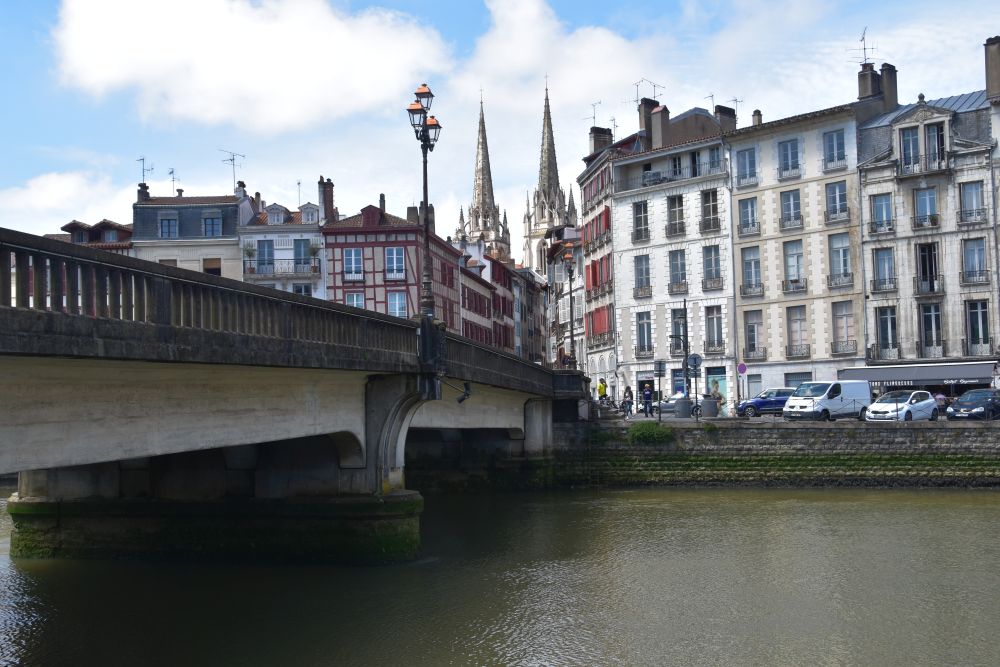
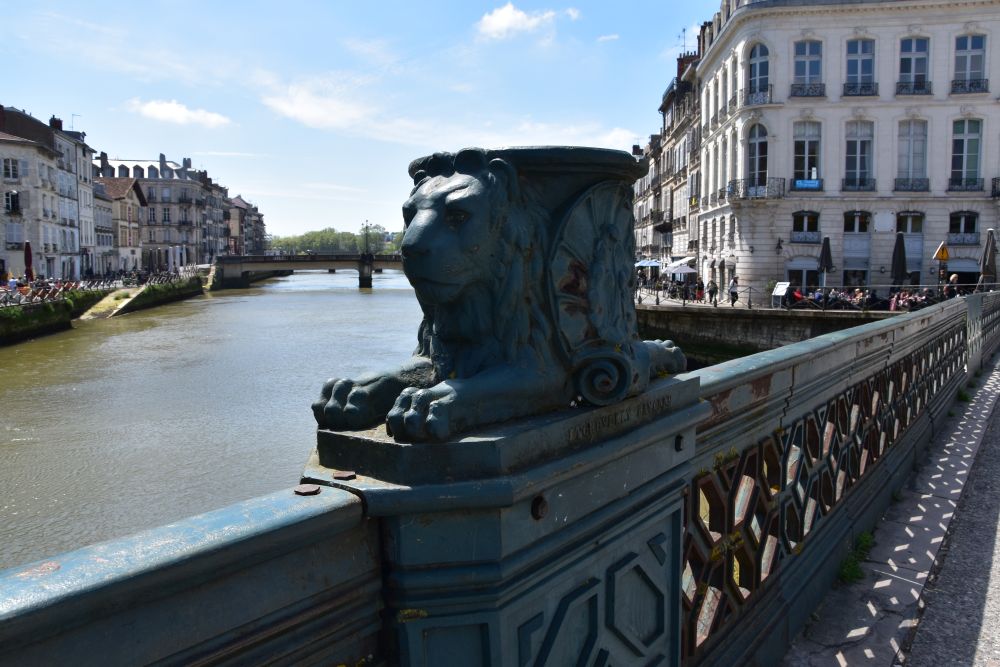
We cross the Nive using the lowest bridge and look upriver.

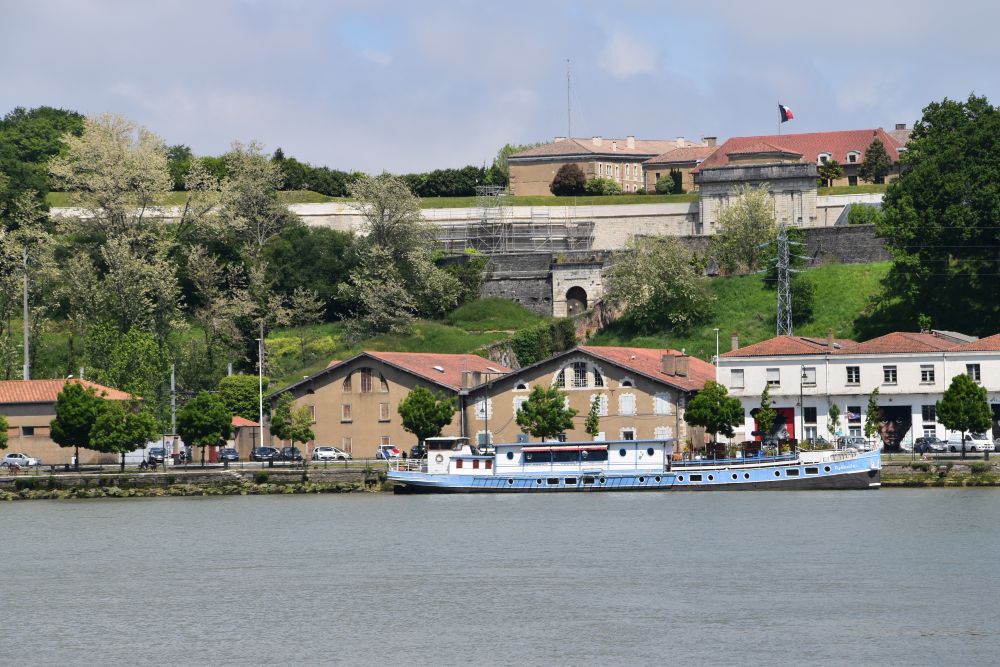
Vauban has fortified Bayonne after the Peace Treaty of the Pyrenées in 1659. This is the part that protected Petite Bayonne.

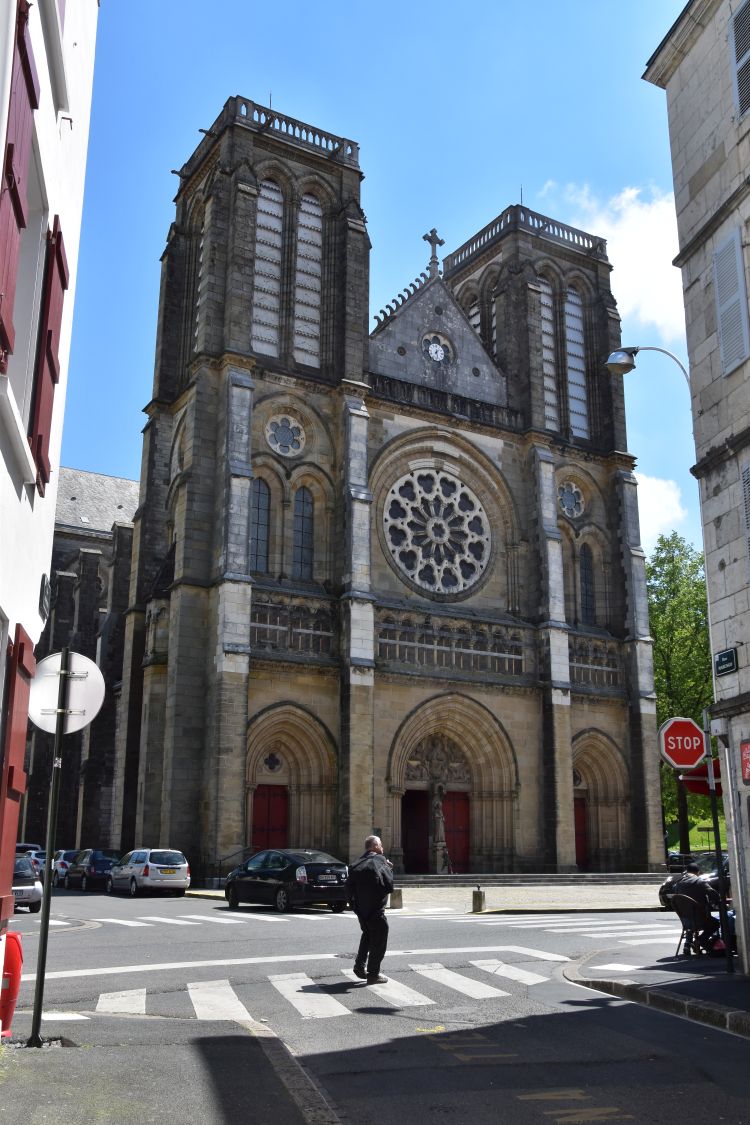
The main church in Petite Bayonne is called Saint André. It has been built around 1850.

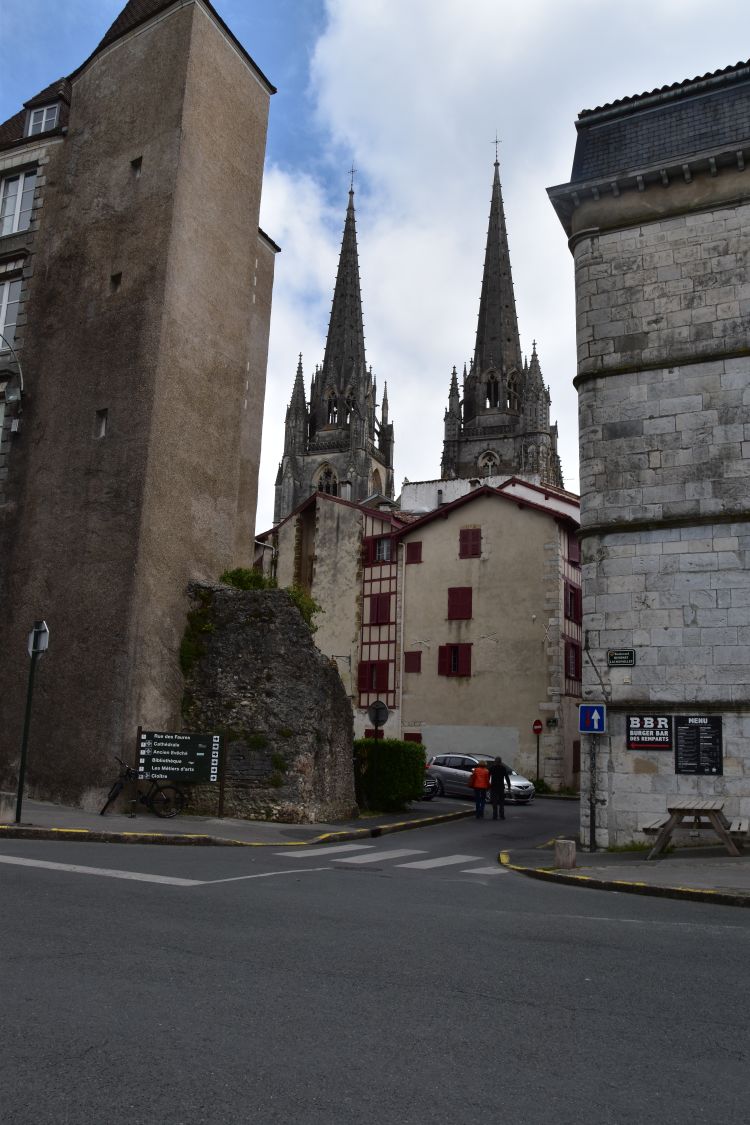
We return to Grande Bayonne. Not far from the old castle we catch another view of the cathedral Ste Marie.

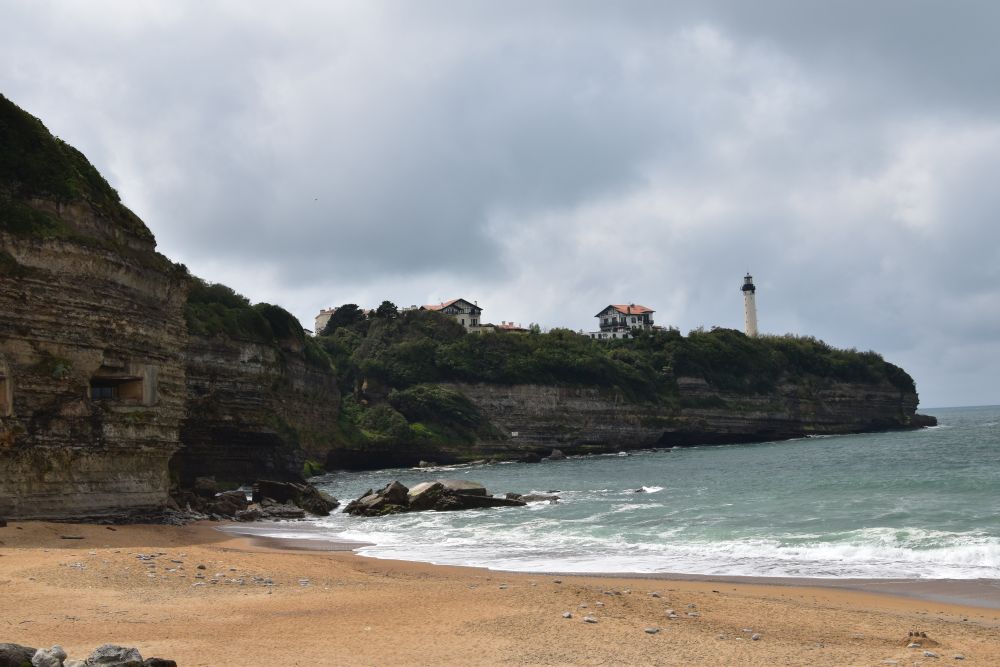
Then we pick up our car and drive along the coast to Biarritz. We drive along the coast line with many, many fin de siècle grand hotels. The coast line promenade is full with tourists, and there is no place to stop. We continued south of Biarritz to a place called “Chambre d’Amour” with lush mansions, huge hotels and cliffs.

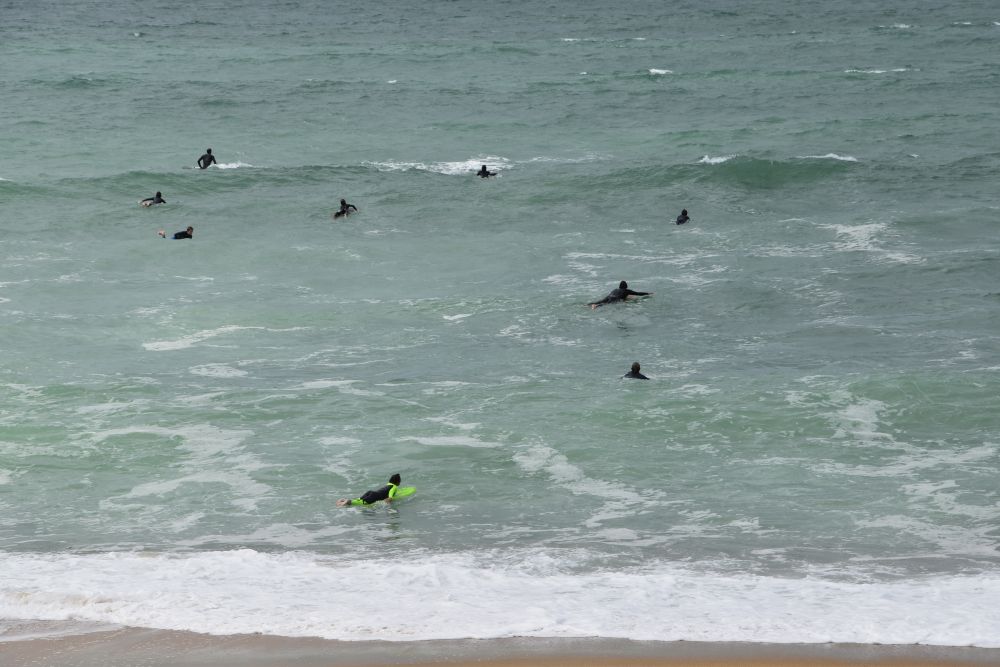
People are swimming in the cold water enjoying the waves of the Atlantique.

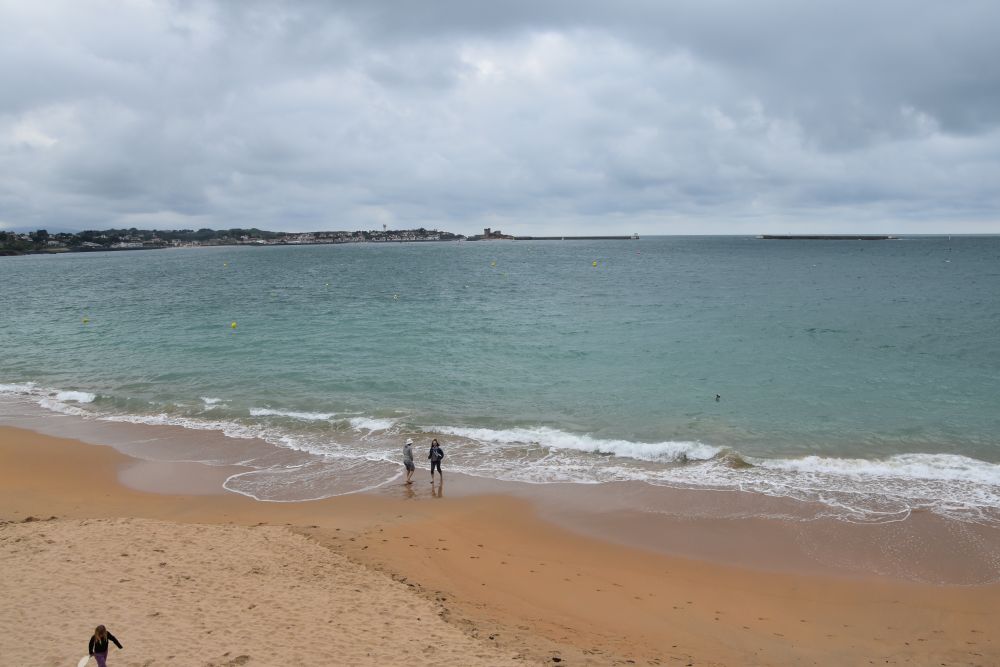
We continue to St-Jean-de-Luz. Tourists and tourists… just 7 parking spaces left in one of the park houses. We found one of the slots (uff, narrow!), have a drink in the Pergola and watch life on the windy beach of this beautiful protected bay.

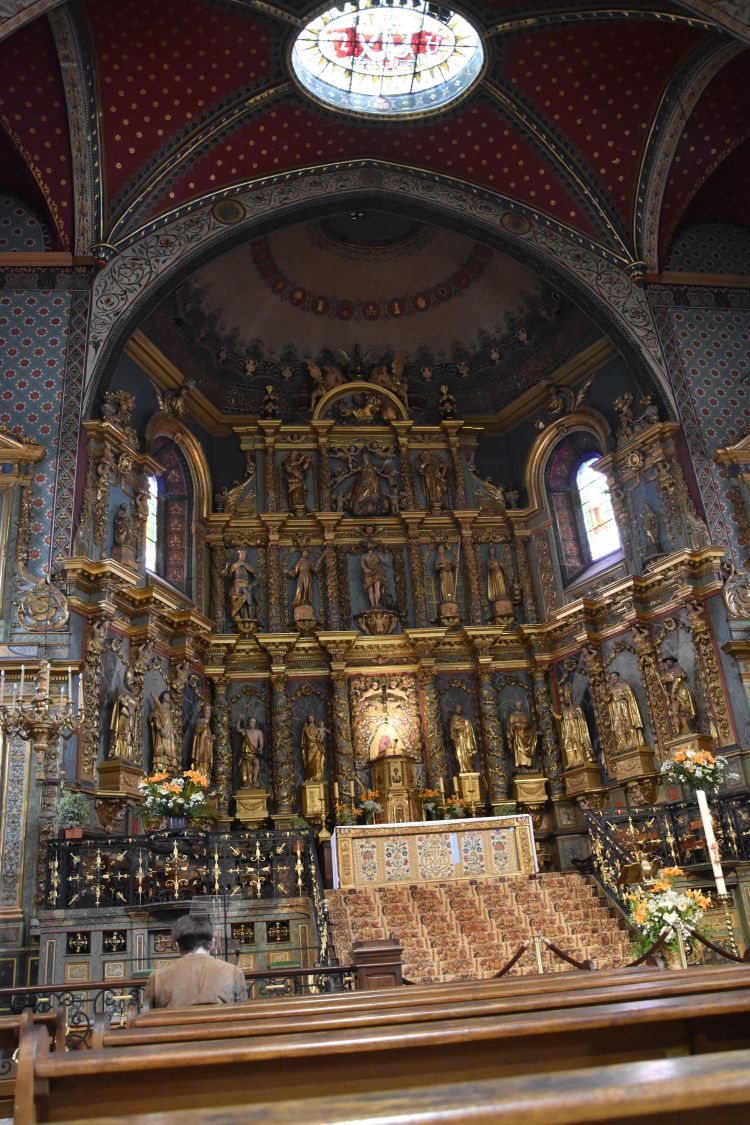
St-Jean-de-Luz has a pretty old city with the cathedral Saint Jean the Baptist built in the 17th century.

The altar and the wooden balconies give it a solemn atmosphere. When Louis XIV married the oldest daughter of Philippe IV from Spain here in 1660, this church was still under construction.

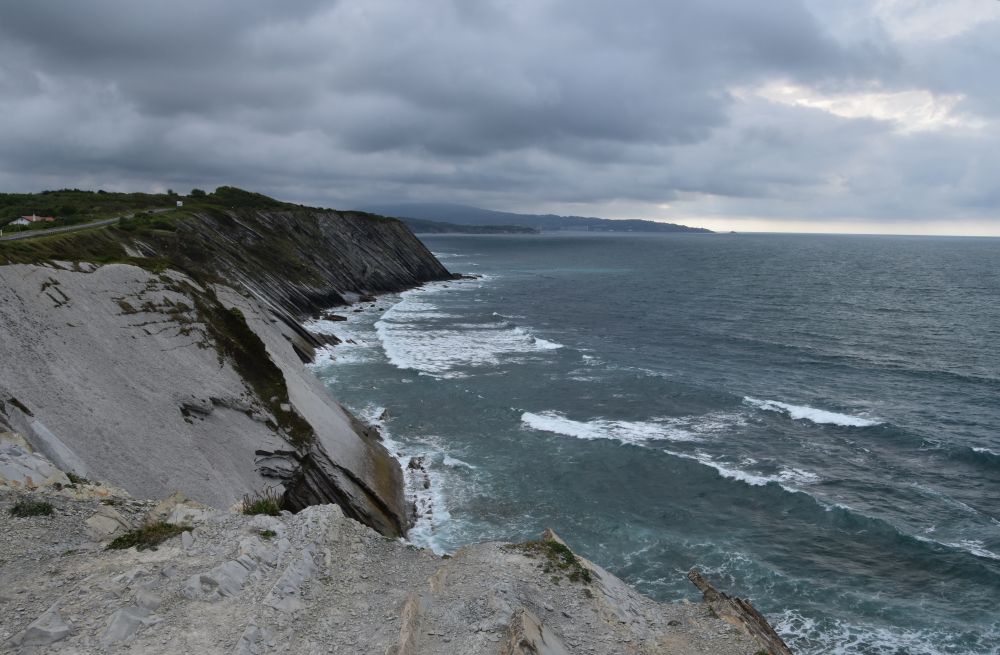
We follow the coast line to Hendaye and stop above the cliffs. I catch the evening ambiance.

Hendaye and Hondarribia both stretch along the Rio Bidasoa, Hendaye on the French side and Hondarribia on the Spanish side. This is the view of Hondarribia seen from Hendaye.

The evening sun plays with the water here.

We say good-bye to another great day. Now we understand why Napoleon III loved to recover near the rocky Basque coast that also offers sandy beaches.