Bilbao on the Ría de Bilbao and between mountains

On Saturday/Sunday, May 4th/5th 2019 we are in Bilbao.

Bilbao stretches out along the Ría de Bilbao. The Ría de Bilbao is the mouth of the river Nervión. Bilbao lies 14km away from the sea. The surrounding mountains do leave little space for Bilbao. About 400’000 inhabitants live densely, with 8000 persons per square meter, as my Dumont says. The inhabitants of Bilbao call their city “el bocho” or “eye of a needle”.

The city center is split between the old and the new town, the old town on the right-hand side of the Ría, the new town on the left side.

.

The old town on the right-hand side of the Ría

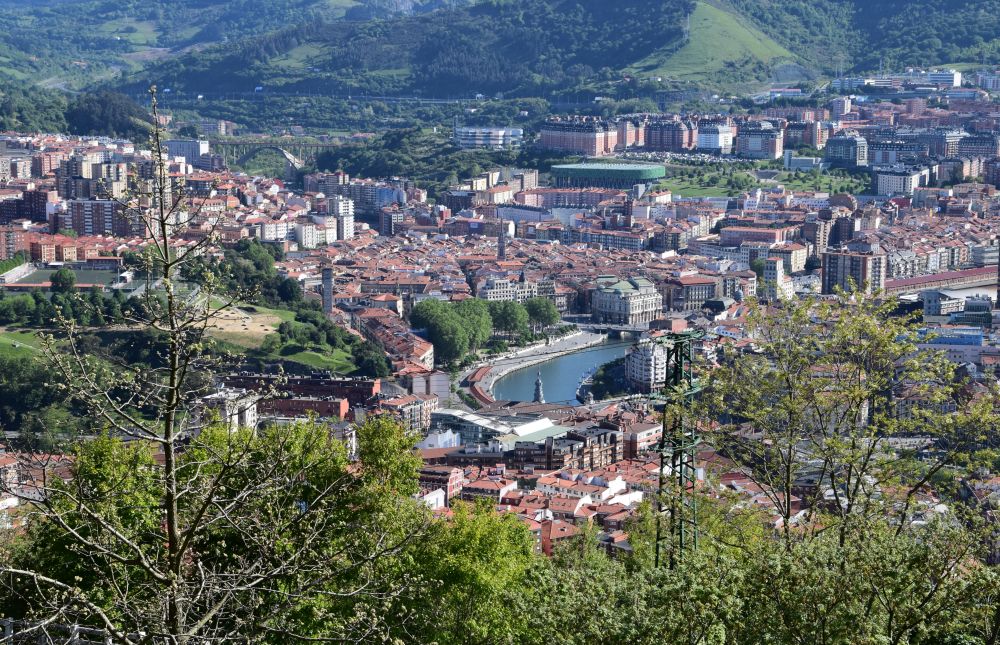
Near the water are the roofs of the small old town with the Cathedral Santiago seen from the Artxanda hill.
Elevators are used to overcome the height differences from the old center. A guard takes 45 cents per person. The button for the elevator is labelled “llamada” and I understand, you have to call (llamar) the guard to take you up and down.

The elevators built in concrete are scattered around the city center.

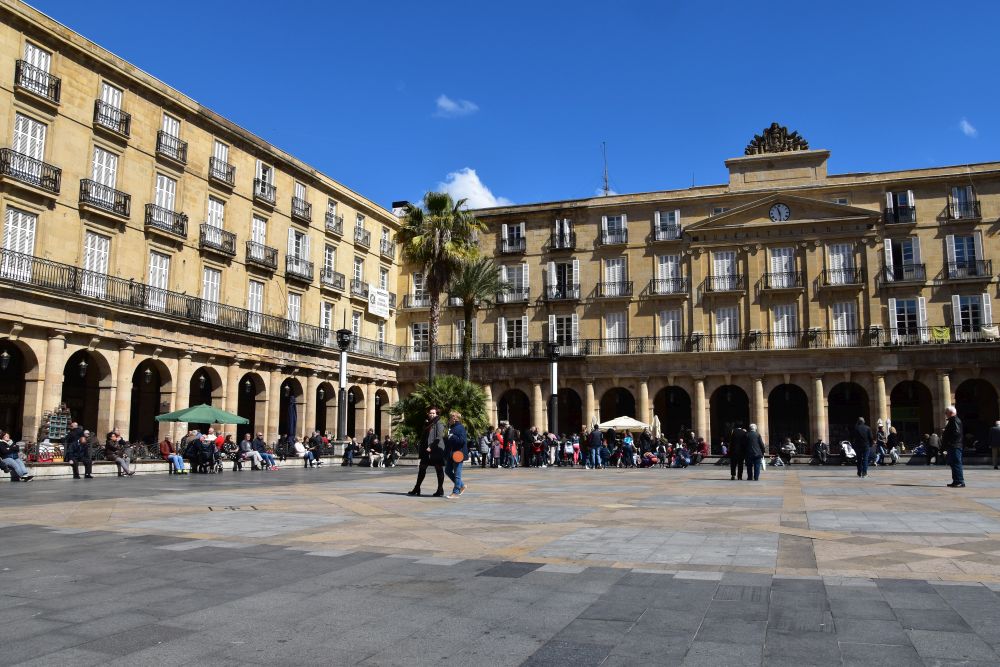
The heart of the old town is the Plaza Nueva with its arcades and the many, many bars and restaurants.
In the Cathedral de Santiago, it is the cloister that I like most, with the lemon trees.

The old town is small and full of bars and restaurants, pintxos are on display everywhere.

.

The new town on the left-hand side of the bay

This is the new town with its modern appearance, also seen from the Artxanda hill.
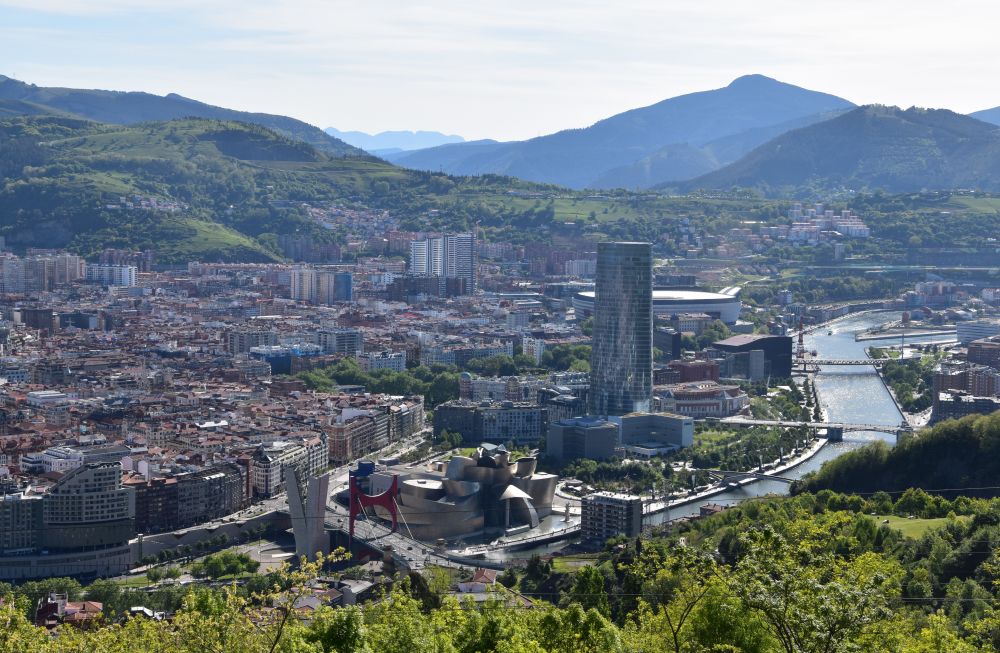
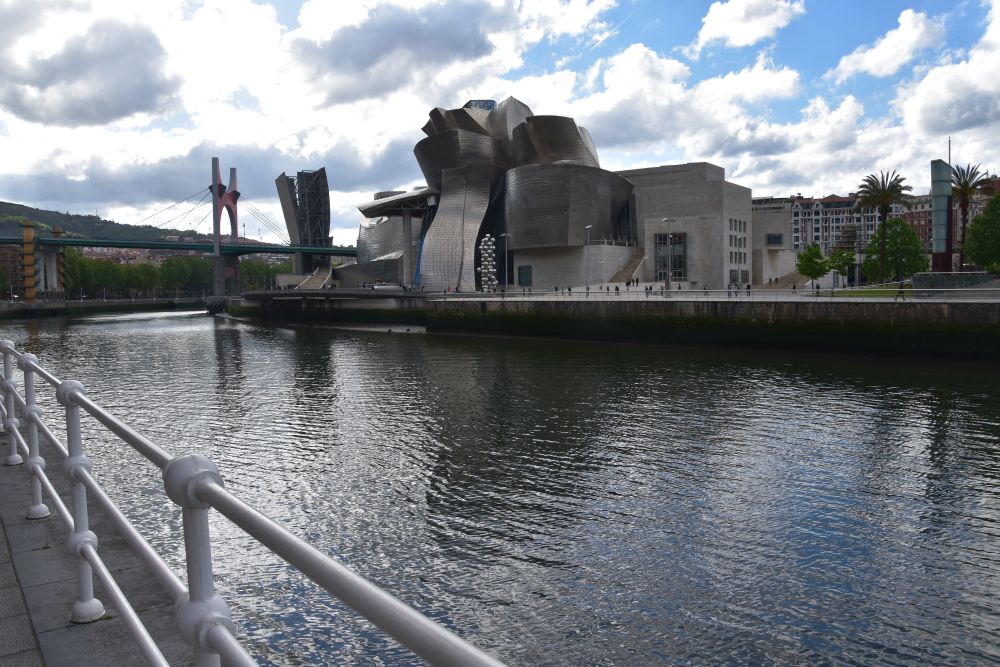
I had always imagined the famous Guggenheim Museum to stand close to the sea. But this “heap” of Titan stands inland on the banks of the Ría Bilbao.

The streets are ample in the new town. The lifeline is the Gran Via named after the founder of Bilbao, Don Diego Lopez de Haro.

There are great shops here such as Rosa Clara’s wedding dresses.

The style of the buildings is either promoterism (also called wilhelminian, second half of the 19th century)…
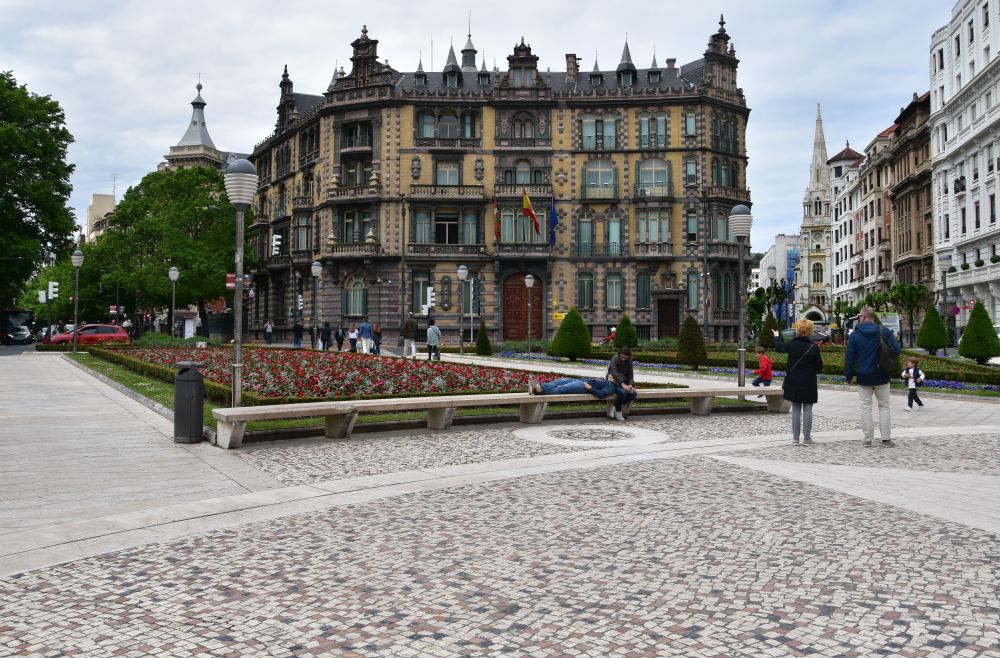
… or they are art nouveau (built in the early 20th century).

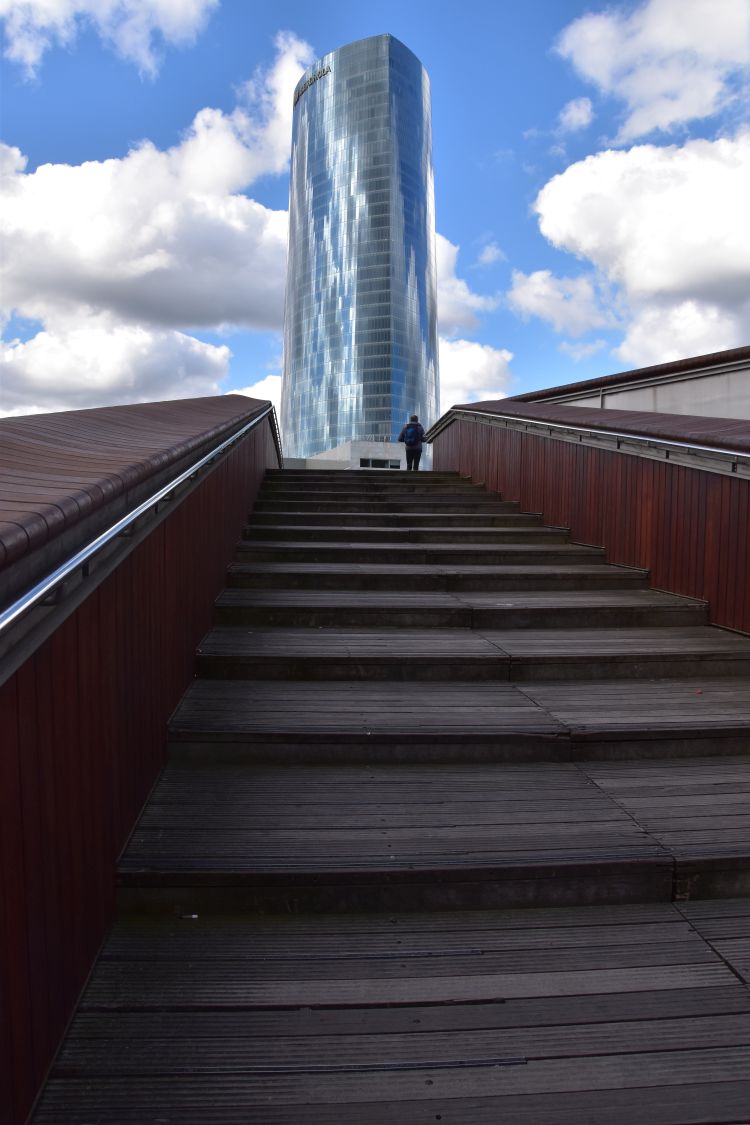
Then there are modern buildings, many of them built be renowned architects. One example is the Office Tower of Iberdola.
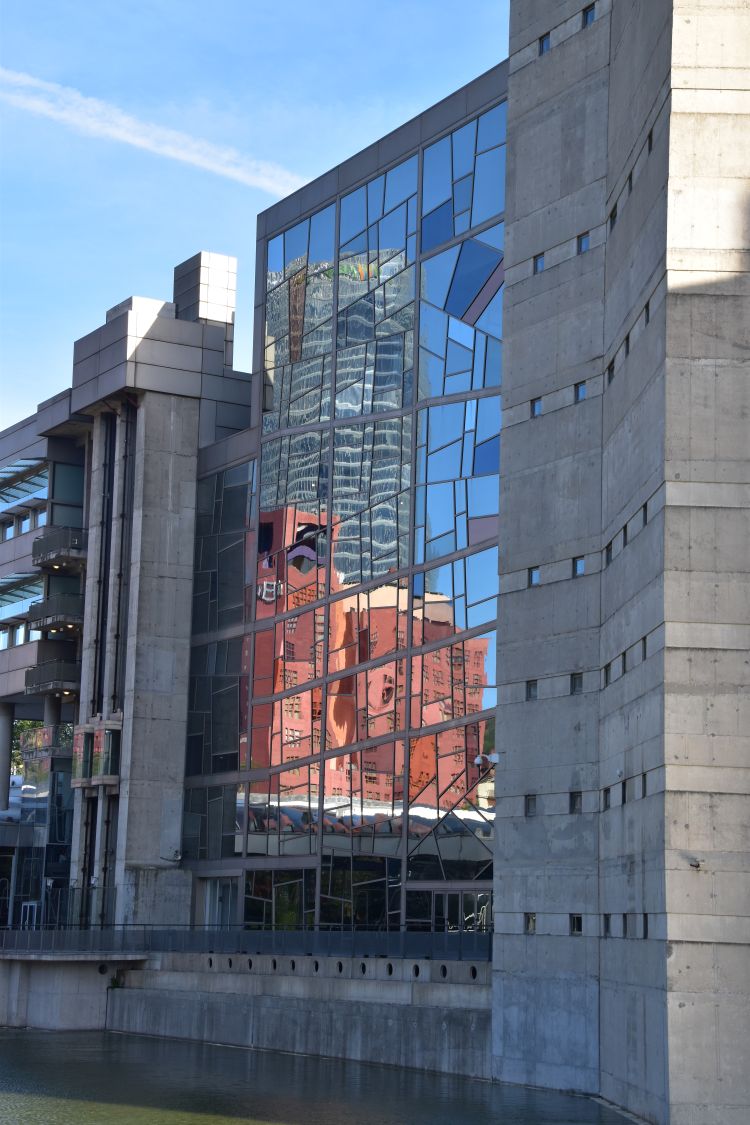
Another example is the Congress Center. The – also modern – red brick posh five star hotel Melia is mirroring in the windows.
.

The Guggenheim Museum marks Bilbao´s revival in the 90’s

THE highlight, the Guggenheim Museum, has been designed by the Canadian architect Frank O. Gehry and was inaugurated in 1997.
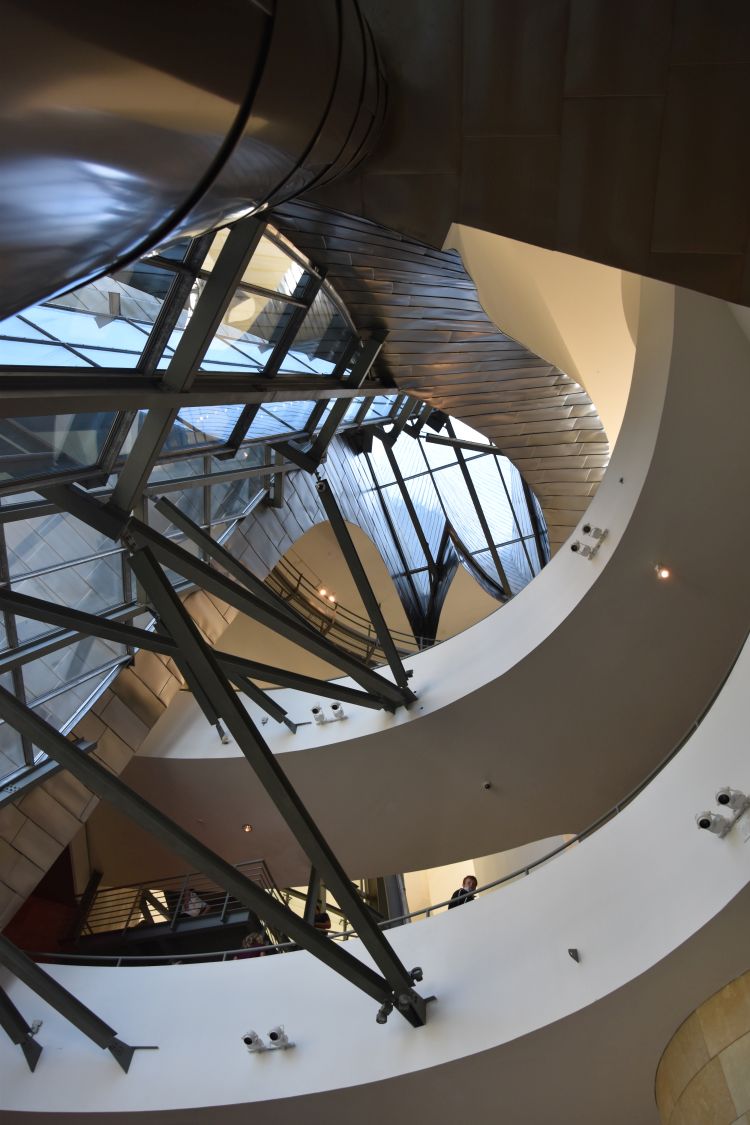
On three levels, the museum shows modern art.
On the second floor, we find the temporary exhibition of Jenny Holzer. Using words, she captures violence on plates, benches and in video installations – haunting. Another exhibition are the still-life paintings of Giorgio Morandi, put into relation with classical paintings of Jean Siméon Chardin (I like the boys playing with cards), El Greco or Zurbarán.

Outside on the terrace, the colourful balloons make great mirrors.
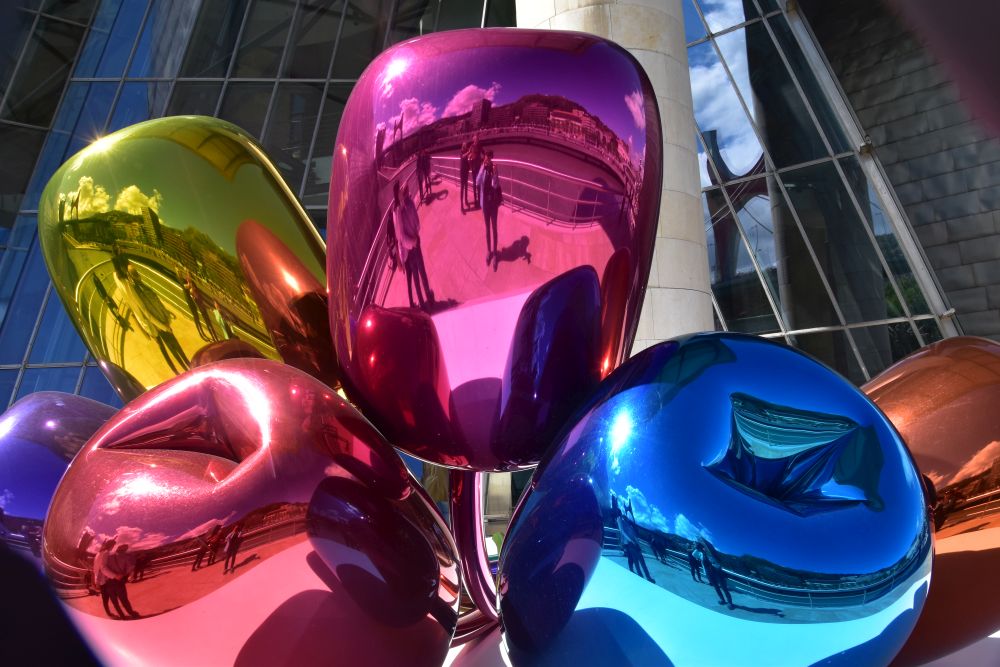
It is said that Bilbao benefited from the “Guggenheim impact” which initiated the revival of the city in the 90’s, after the decline of the steel, metal and shipbuilding industry.

.

Bridges are also the footprints of great architects

Some great architects also left footprints building bridges that cross the Ría Bilboa.

The White Bridge (Zubizuri) designed by Calatrava is playful with the strings and the transparent glass floor. It is said that Calatrava was not very pleased to see his glass floor being covered with a carpet, for the benefit of the pedestrians. Well, glass is slippery…

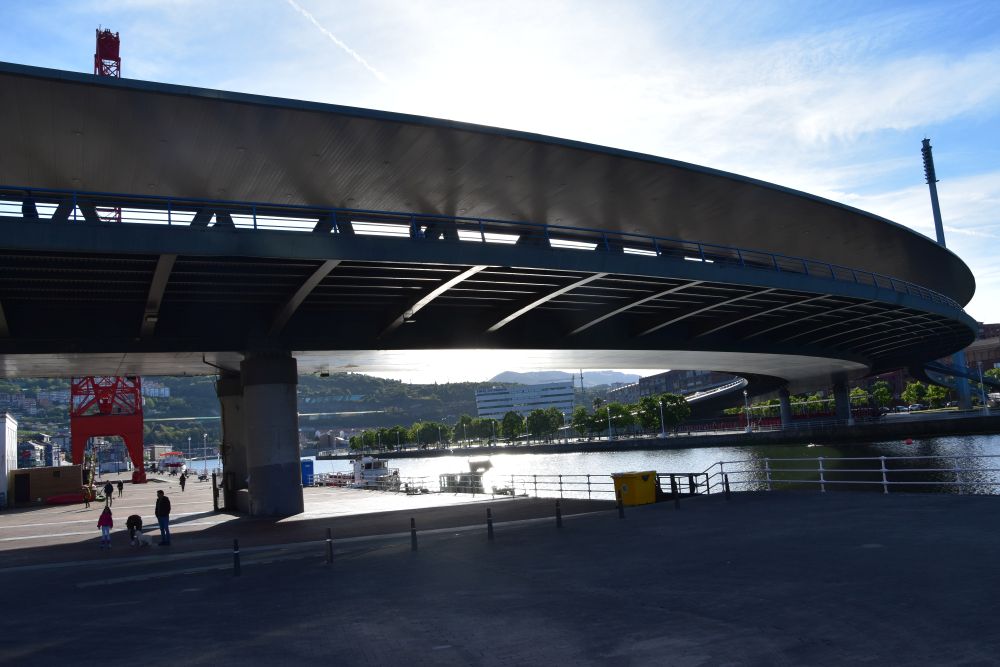
The Puente de Euskalduna has been designed by Frank O. Gehry. He was kind with the pedestrians: They walk under a roof. His bridge swings over the bay.
.

History of Bilbao

We visit the ethnological museum to learn more about the history of Bilbao. Around 1300, Don Diego Lopez de Haro transformed the fishing village into a city. After 1500, it was the center of wool and fabric trade with Flanders, later in addition for whaling.
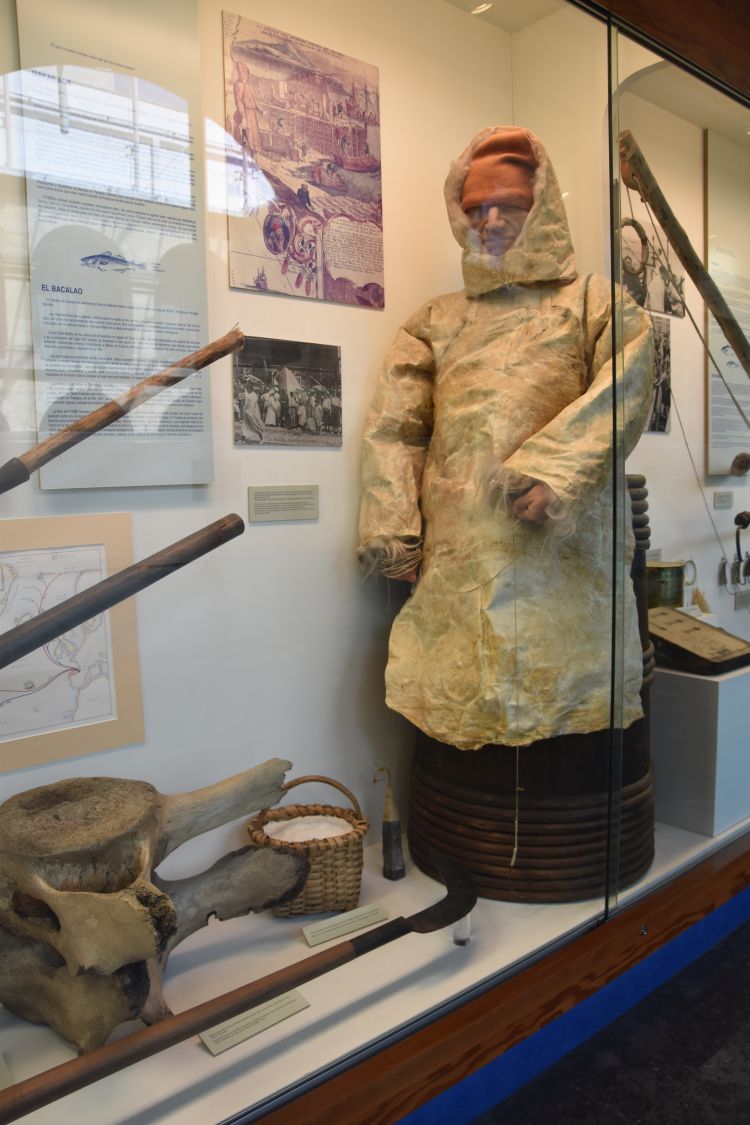
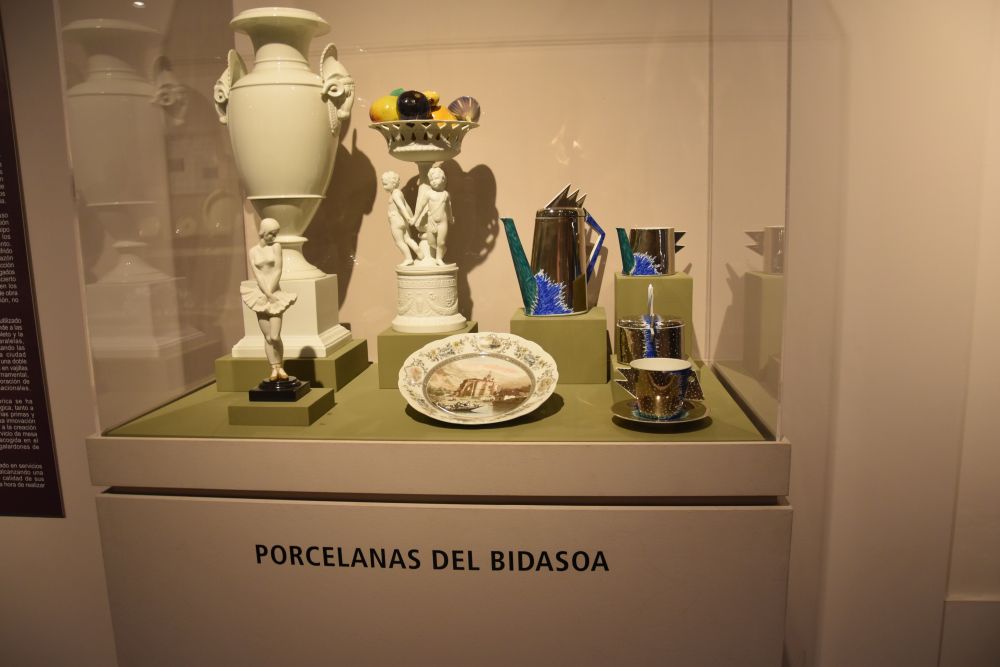
In the 19th century, it was the mining, steel, metal and ship building industry that made Bilbao rich, and I discover, they also had porcelain production.
After the decline of the steel, metal and shipbuilding industry in 1990, Bilbao was able to win Frank O. Gehry to build the Guggenheim Museum. This set the base to motivate more renowned architects to build for Bilbao… and, as a consequence, the number of overnight stays doubled.

.

I felt at home in Bilbao

I felt at home in Bilbao, as this lively city with its modern appearance reminds me of my mother town Berlin, though Bilbao is much smaller and more manageable.

Our hotel NH Collection Villa de Bilbao was located near the Plaza del Sagrado Corazón de Jesús. From the fitness room on the seventh floor, I could see the statue of Jesús.
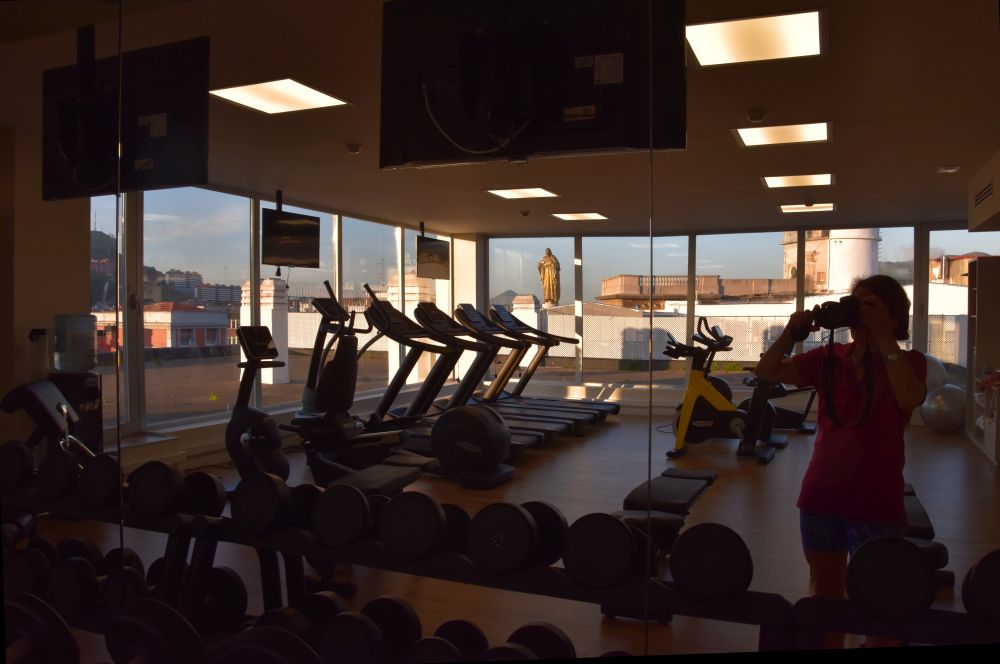
Yes, I will keep the memory of Bilbao in my heart.

Source: Mario Golder: “Nordspanien und der Jakobsweg”, Dumont 2017

Getaria – center of Txakoli and fashion

On May 3rd, we drive from Hondarribia to Bilbao. We stop in Getaria. It is a small town perched on a rock.

The gothic church San Salvador is from the 14th century. Inside you have to walk uphill to reach the choir – on the rock, it was not possible to build a church with a flat floor. This is the view of the windows.

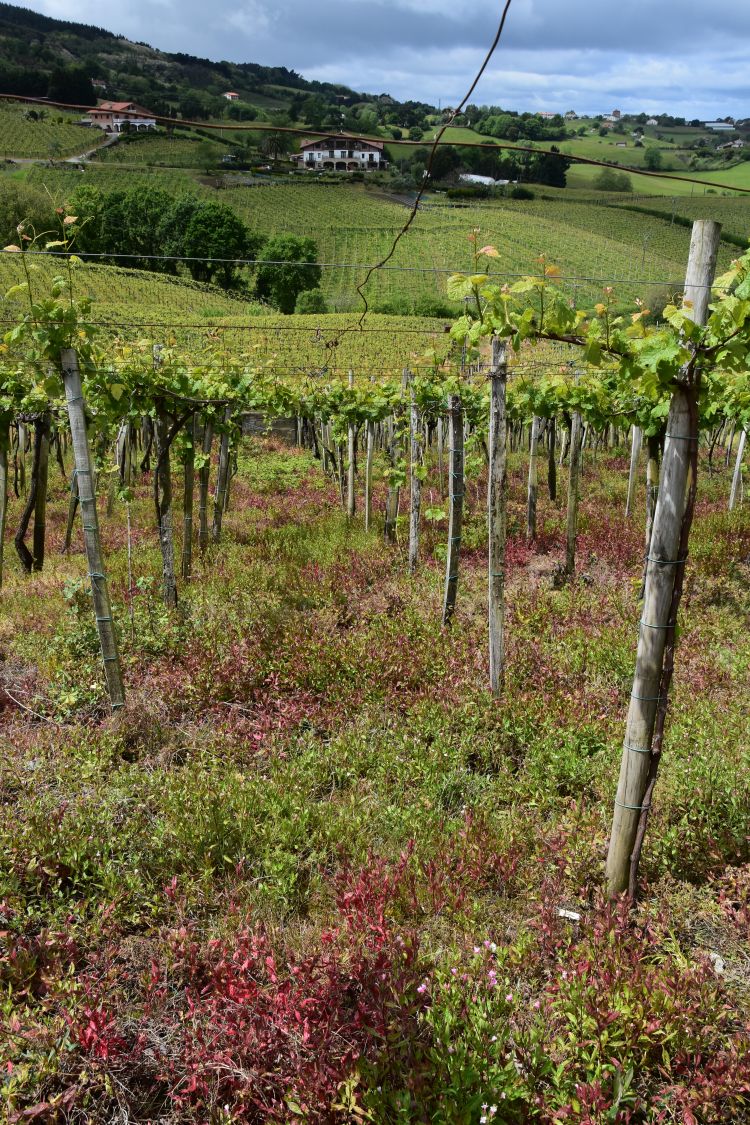
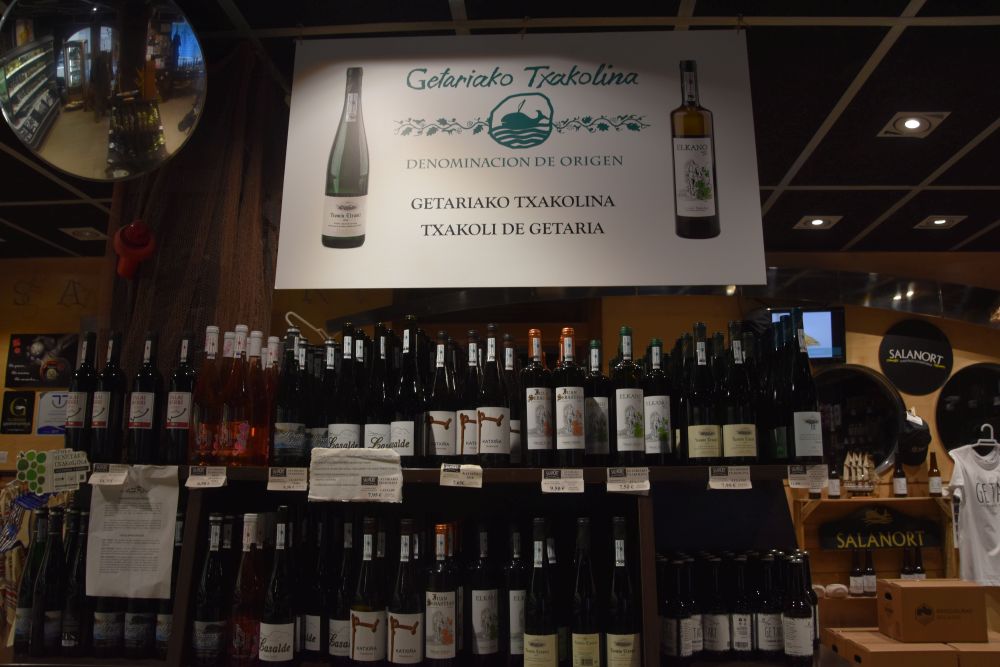
Getaria is the center of Txakoli wine growing.

Txakoli is the grape of the Basque Country. I buy a bottle in a small shop.

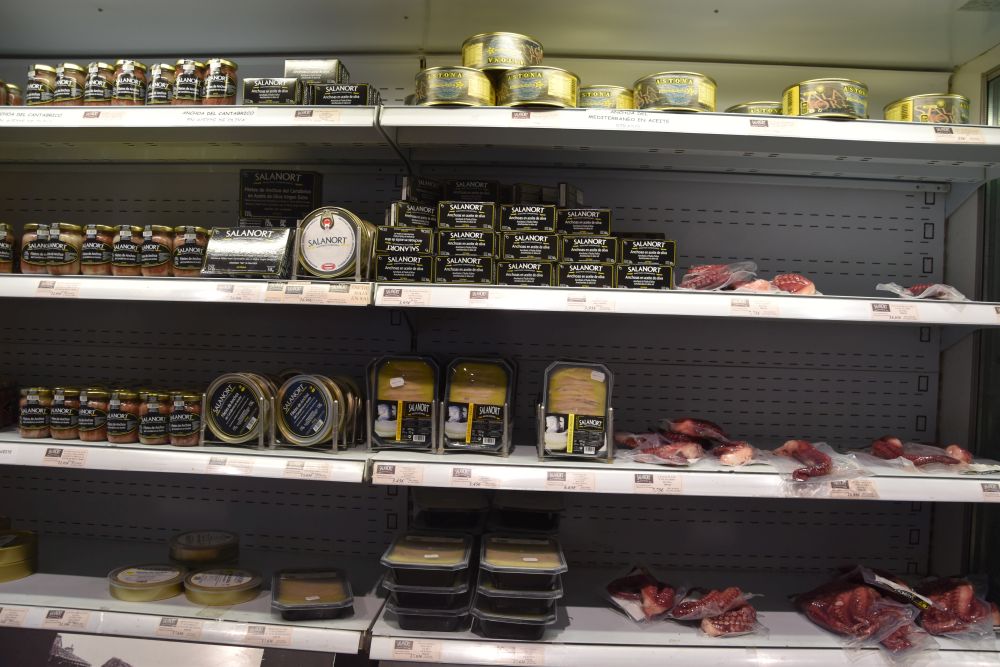
The shop also sells tins with seafood or other regional products – this is an old tradition here.

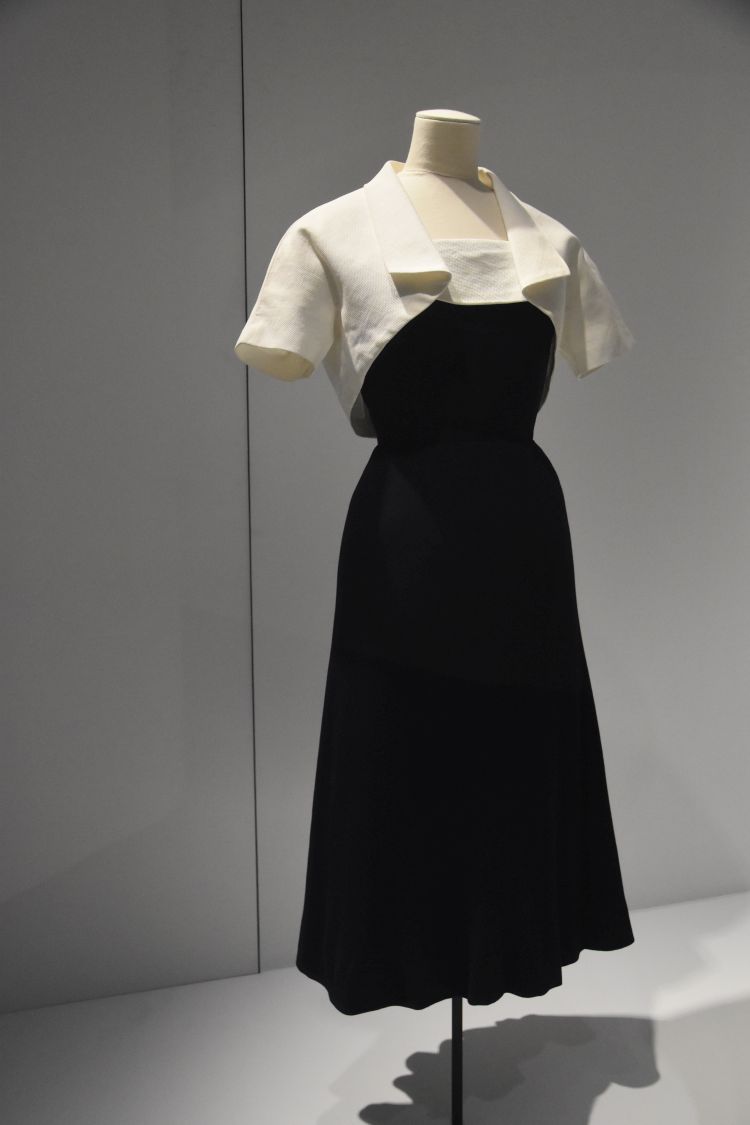
Two important men are from Getaria, the first Born in the 16th century, the second in the 19th century. The first is Juan Sebastián Elcano who joined Magellan on his first round the world tour in 1515. It was him who completed the tour, after Magellan had died on the Philippine islands. The second man is Cristobál Balenciaga, the famous fashion designer from the 1920’s to the 1960’s. His work is on display in a modern building in Getaria. I am impressed. His creations are straightforward and look wearable to me. He makes the material flow. He started with waisted lines – all close to the body.

More and more his creations became less waisted. In the sixties, he designed straight dresses (white dress) or “remodelled” the body (black dress).

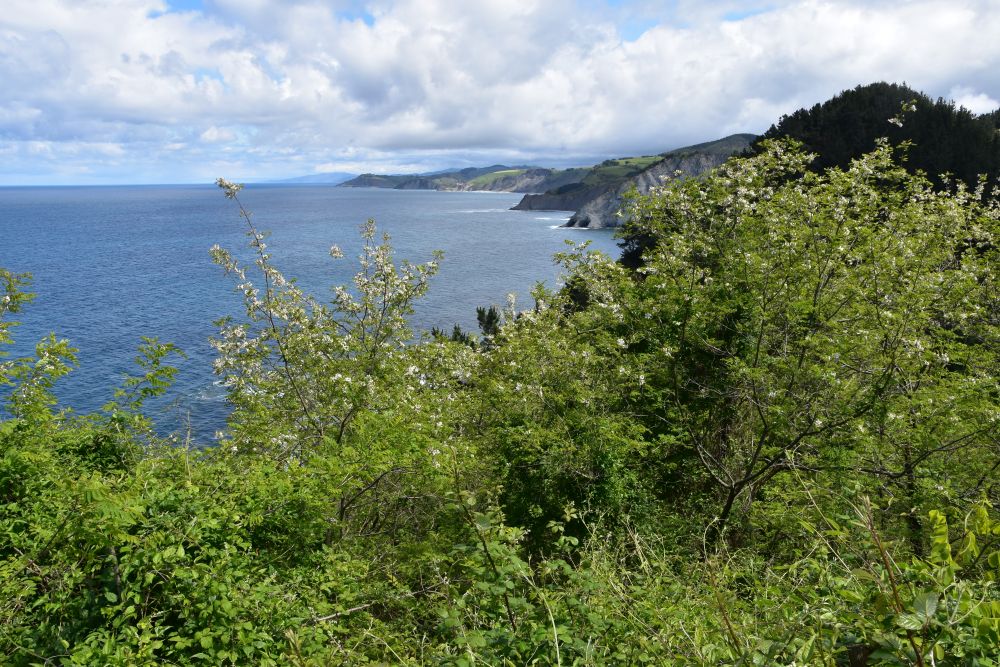
After the museum, we continue our way along the wild coast, just amazing.

Then the road takes us into the mountains and we cross one industrial village after the next. I start to understand that the Basques are industrious.

We arrive in Bilbao and look forward to discovering this lively city.


Discovering San Sebastián stretching along La Concha

On Thursday, 2nd of May 2019, we visit San Sebastián, called Donostia by the Basques. 


Driving along the coast via Jaizkibel to San Sebastián

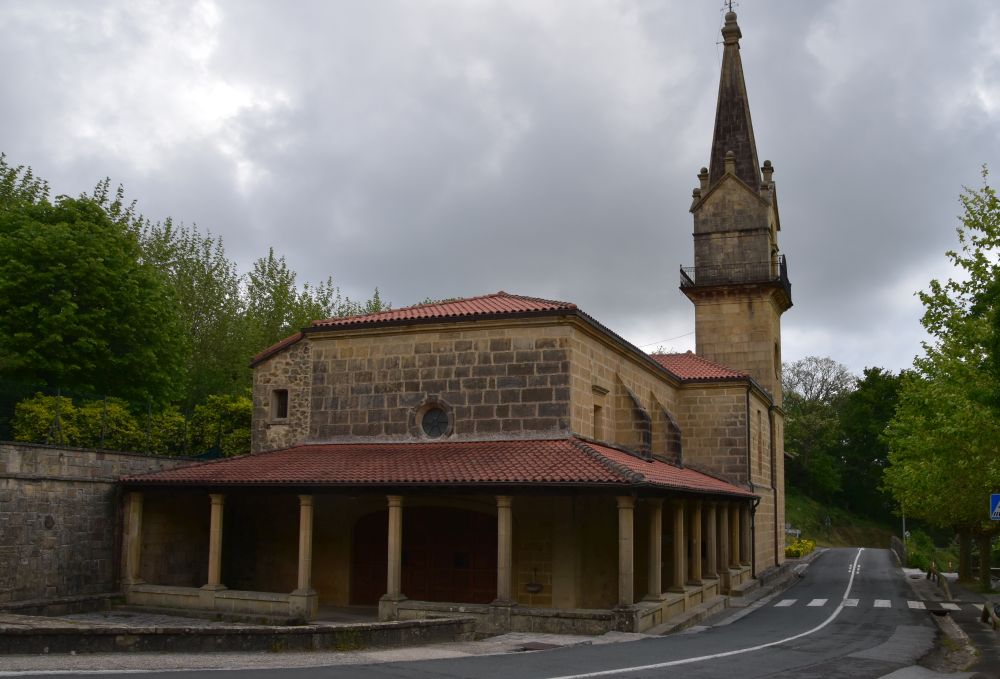
From Hondarribia we drive along the coast and cross the mountain Jaizkibel. Our first stop is at the chapel Nuestra Señora de Guadalupe. Inside there are a black Madonna and boat models; yes, the Basque country needs support for their fishing boats.

From here, we see the Bidasoa’s river mouth with Hondarribia (Spain), Hendaye (France) and the Pyrenées in the background. 

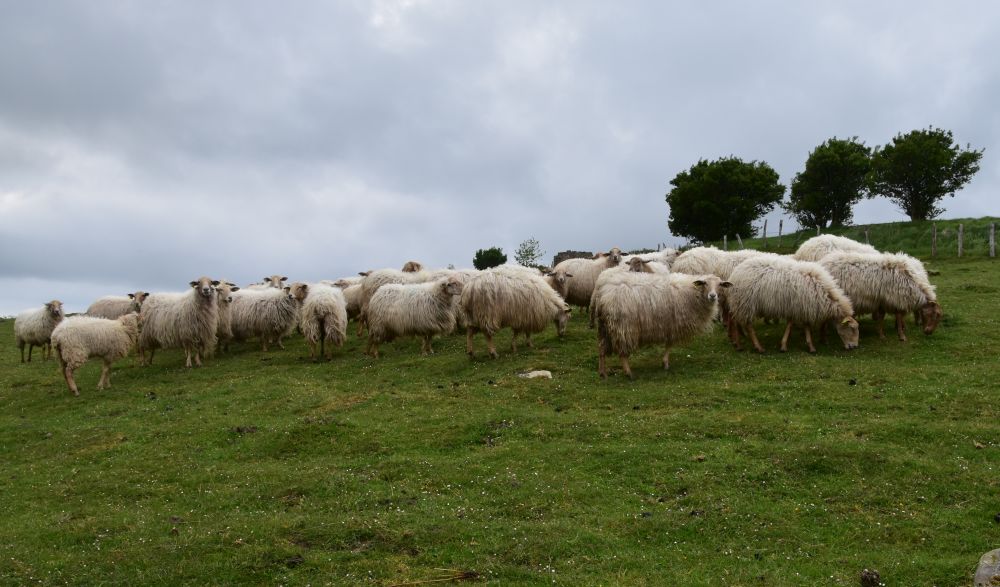
On the Jaizkibel at point 455m, we find these Latxa sheep with their long, thick hair.

I ask myself, how these sheep full of wool handle rain. Do they get all wet? No, Ursula tells me, the Lanolin, or adeps lanae, protects them from the rain.

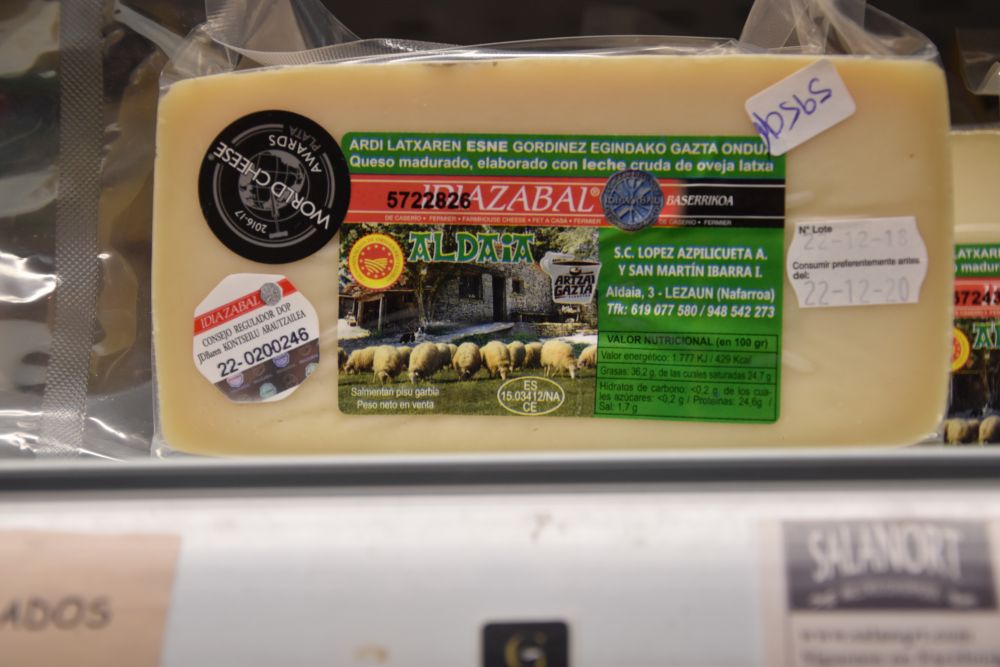
The Latxa sheep are typical of the Basque Country and give the milk for the cheese called Idiazabal.

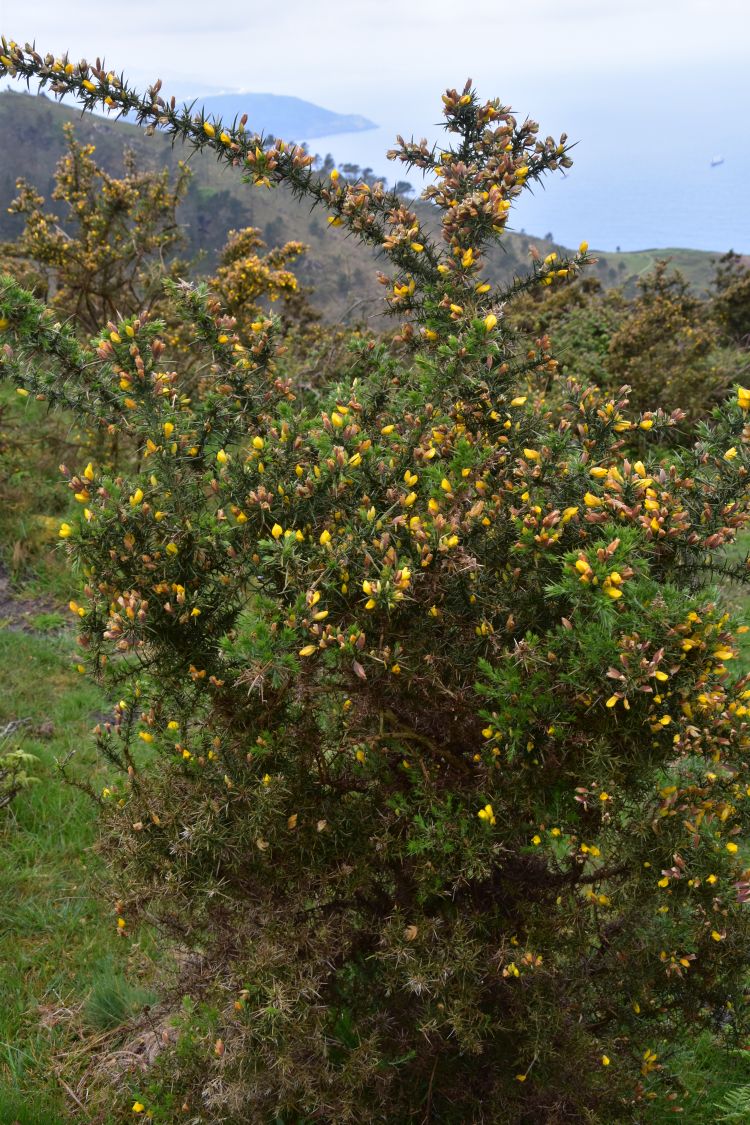
From the Jaizkibel, we can see San Sebastián in the haze. The brooms are yellow.

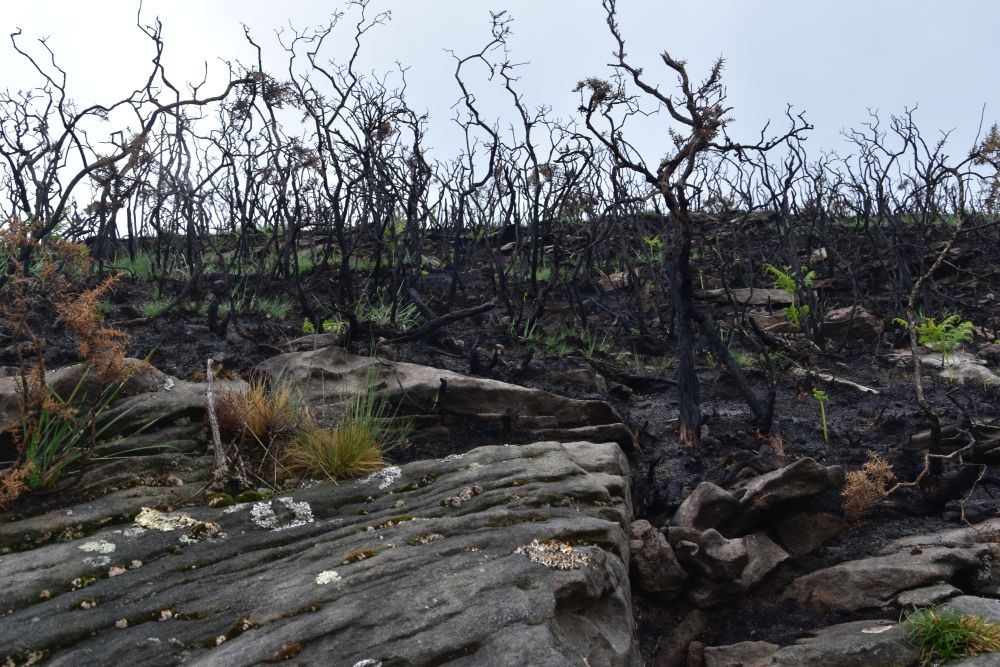
A fire must have burnt these bushes.

.

San Sebastián – the old town with narrow streets and neoclassial houses

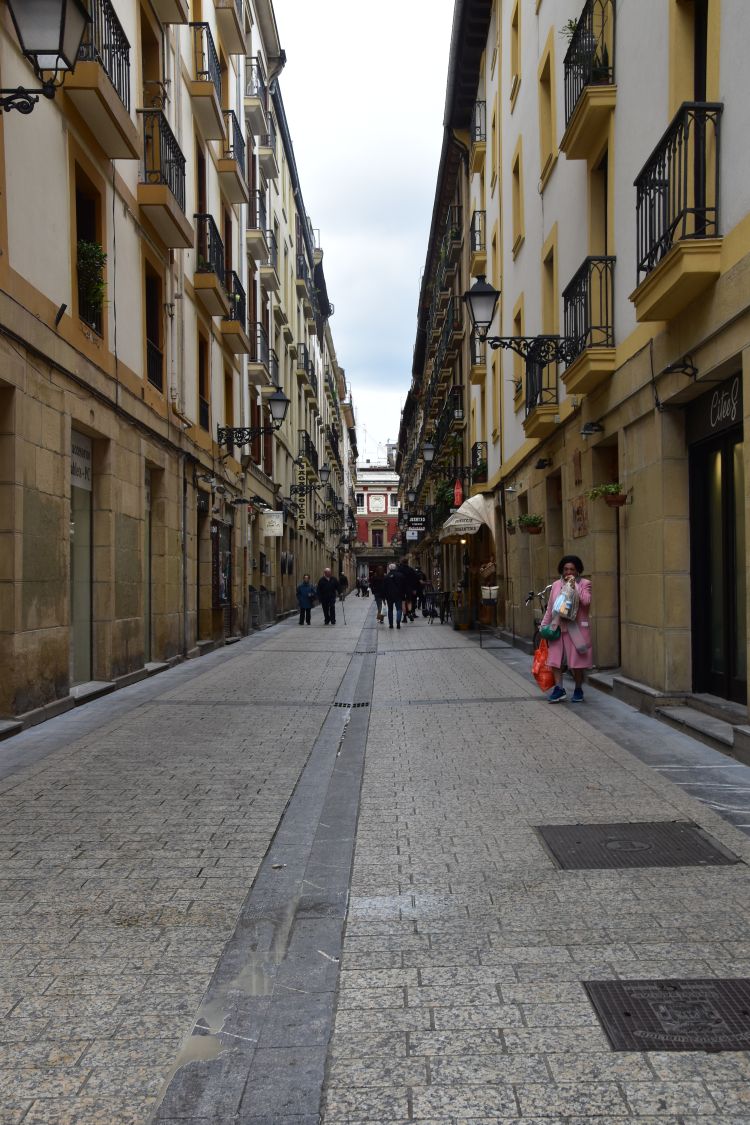
San Sebastián was devastated by a fire in the early 19th century. The old city was then rebuilt along the old street lines, in neoclassical style.

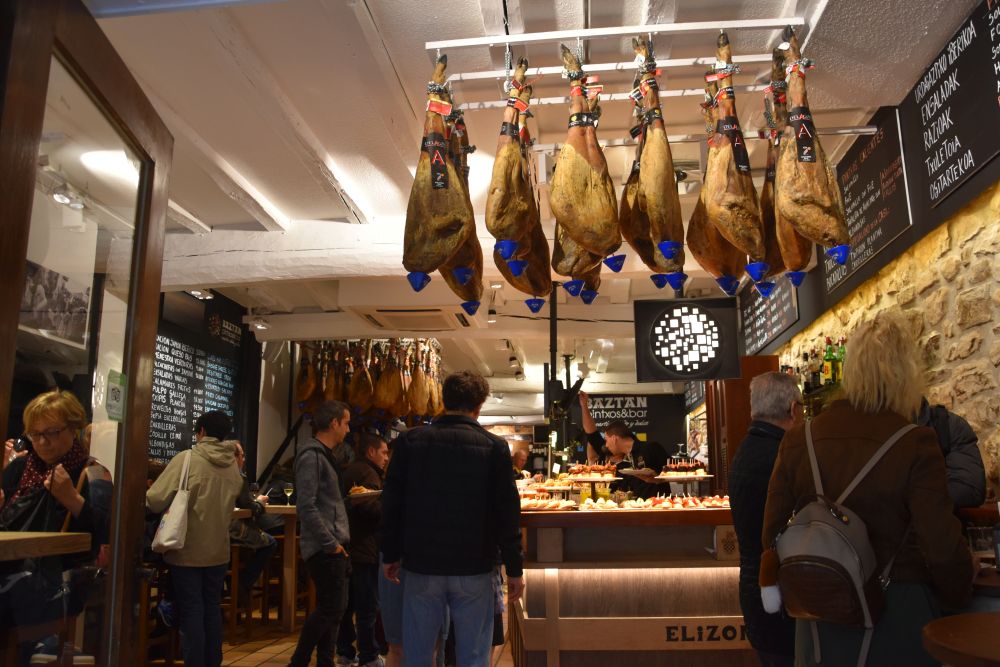
We stop in one of the many tapas bars to eat some pintxos, as tapas are called in the Basque Country.

We stroll through the narrow streets. I wonder, why the windows (and balconies) at the Plaza de la Constitución have numbers. My Dumont tells me, that the Plaza was used for bullfights and the spectators watched them from the numbered balconies (Marion Golder: “Nordspanien und der Jakobsweg”, Dumont Hamburg 2017).

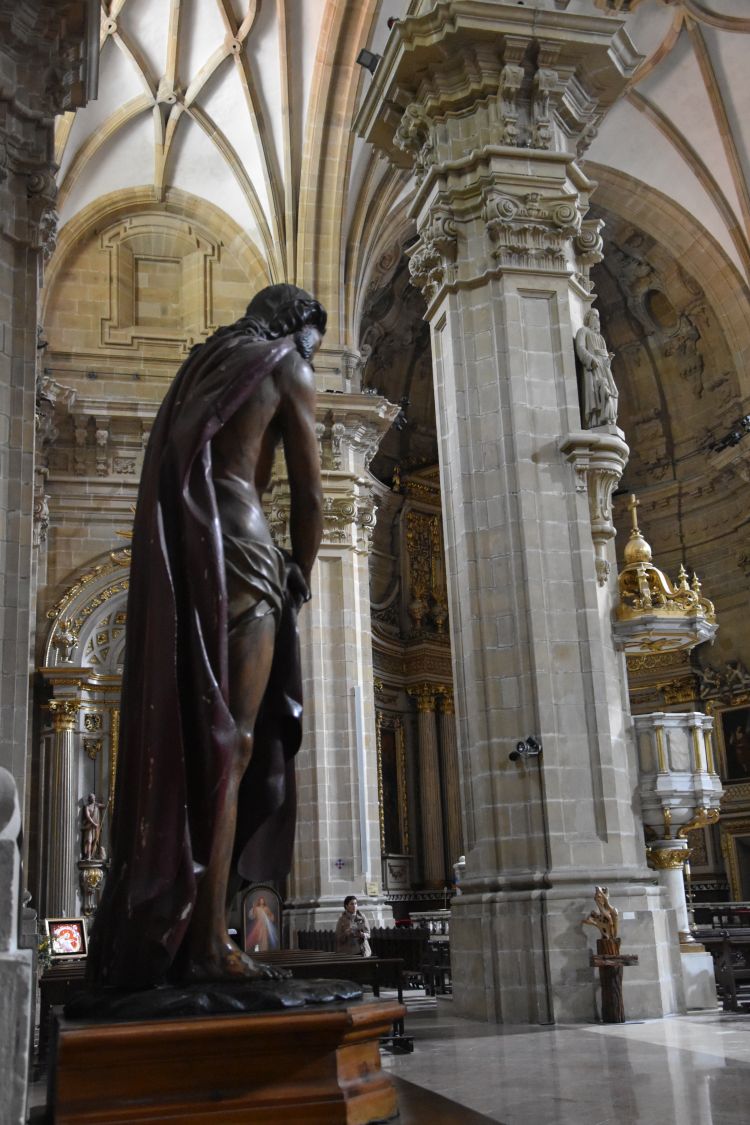
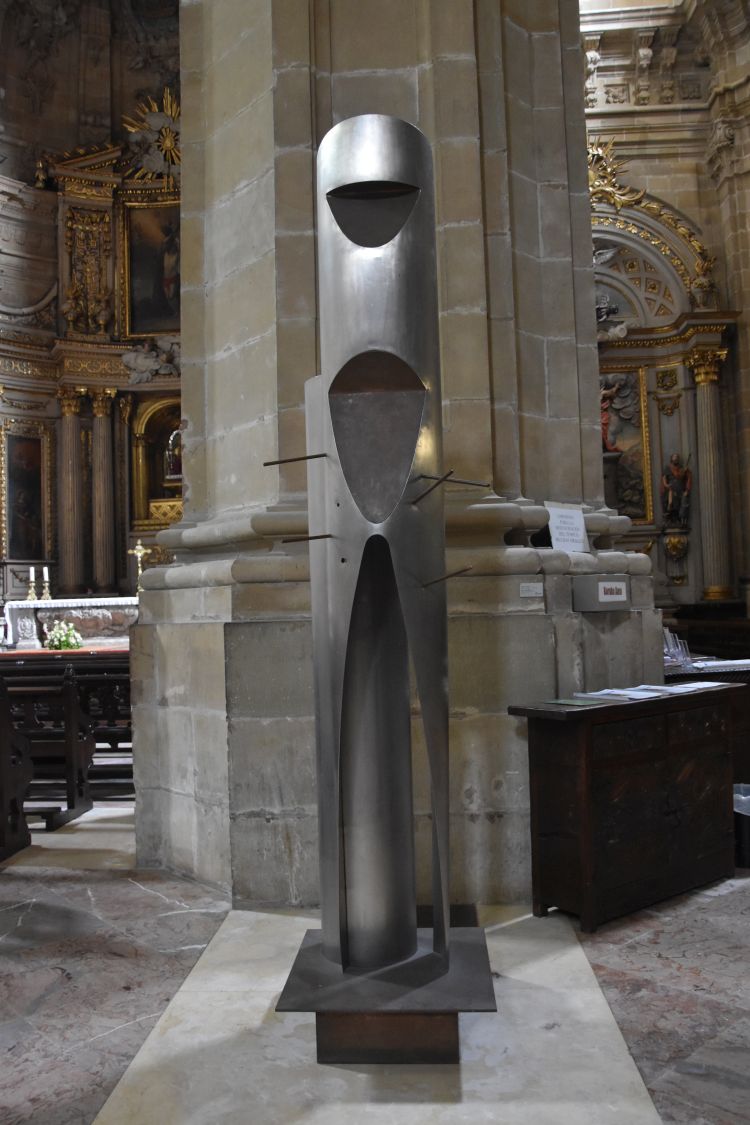
In the baroque Iglesia de Santa Maria from the 18th century we find two statues of San Sebastián (or Done Sebastian, a name that the Basques shortened to Donostia). This is the traditional wooden sculpture…

… and here is the modern version of San Sebastián (he died from arrows).

.

San Sebastián – the bay La Concha between two hills

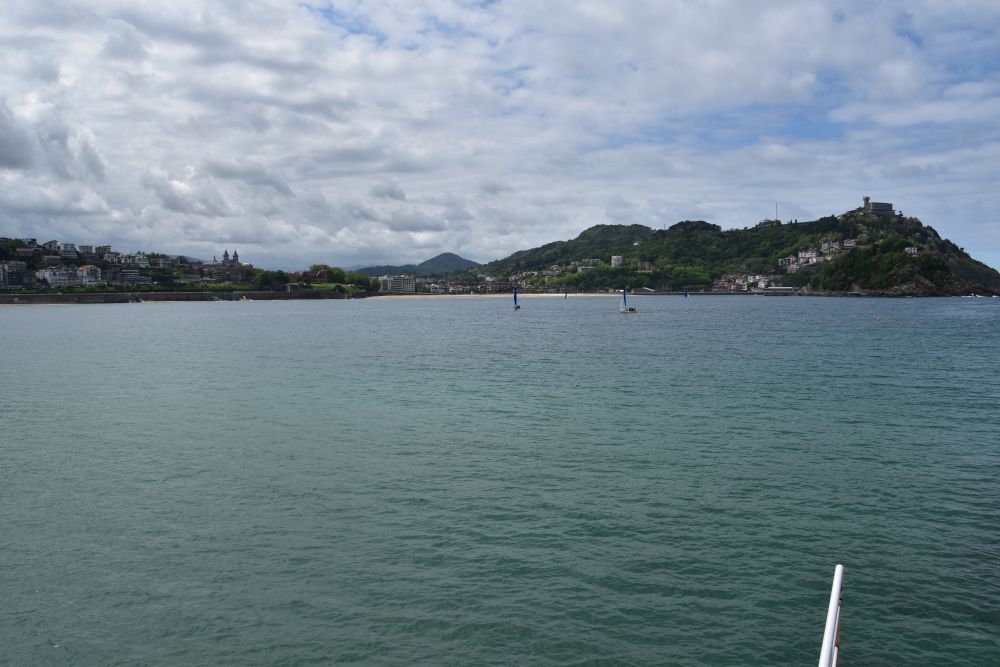
We continue to the famous bay called “La Concha”. It IS beautiful. I can understand why people select the sandy beach here to recover and swim. In the background, there is the Monte Igueldo.

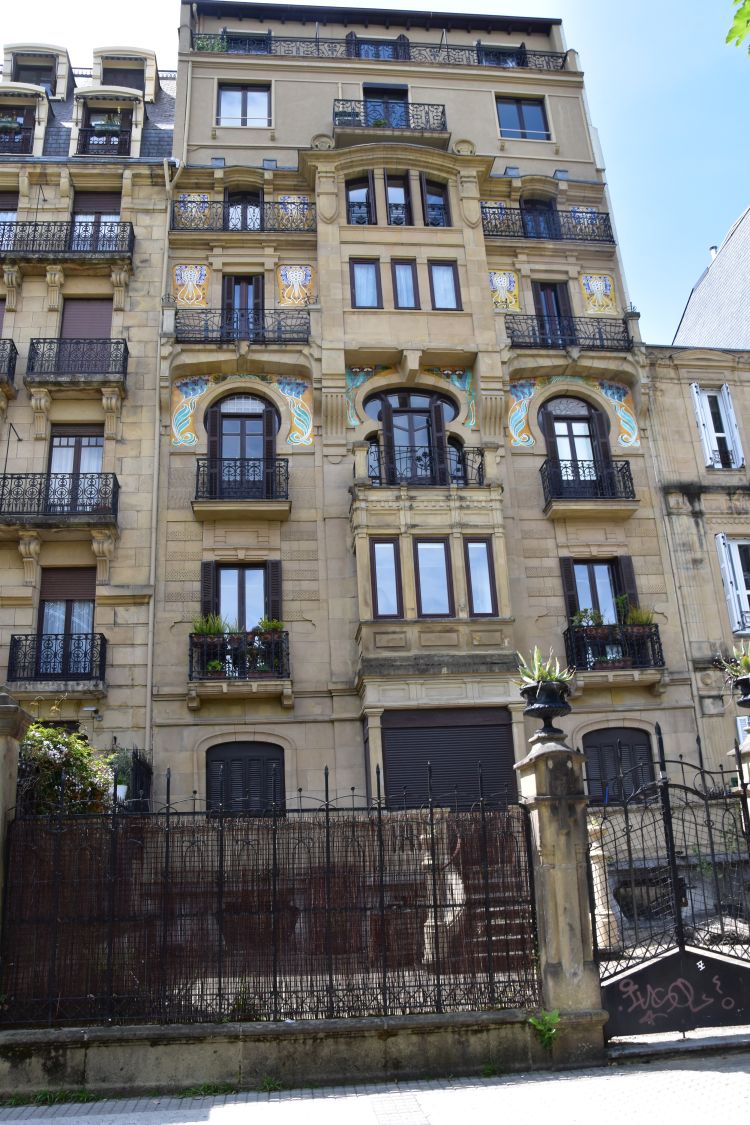
Along the Rio Urumea, we find houses from the area of promotorism (late 19th century) and Art Nouveau (after 1900).

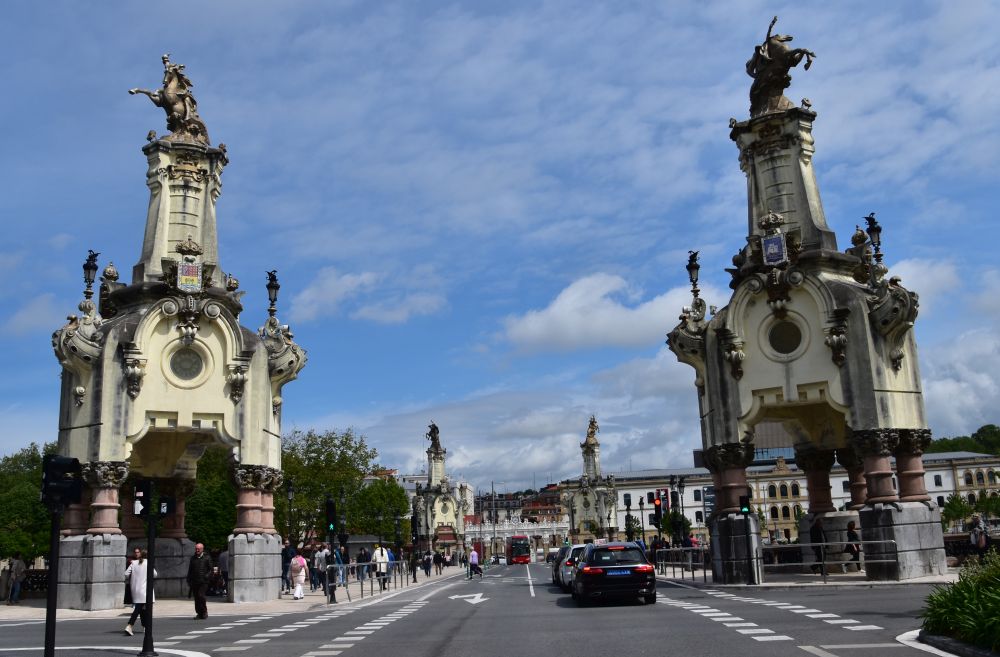
Also the ostentatious Puente Maria Christina was built around 1900.

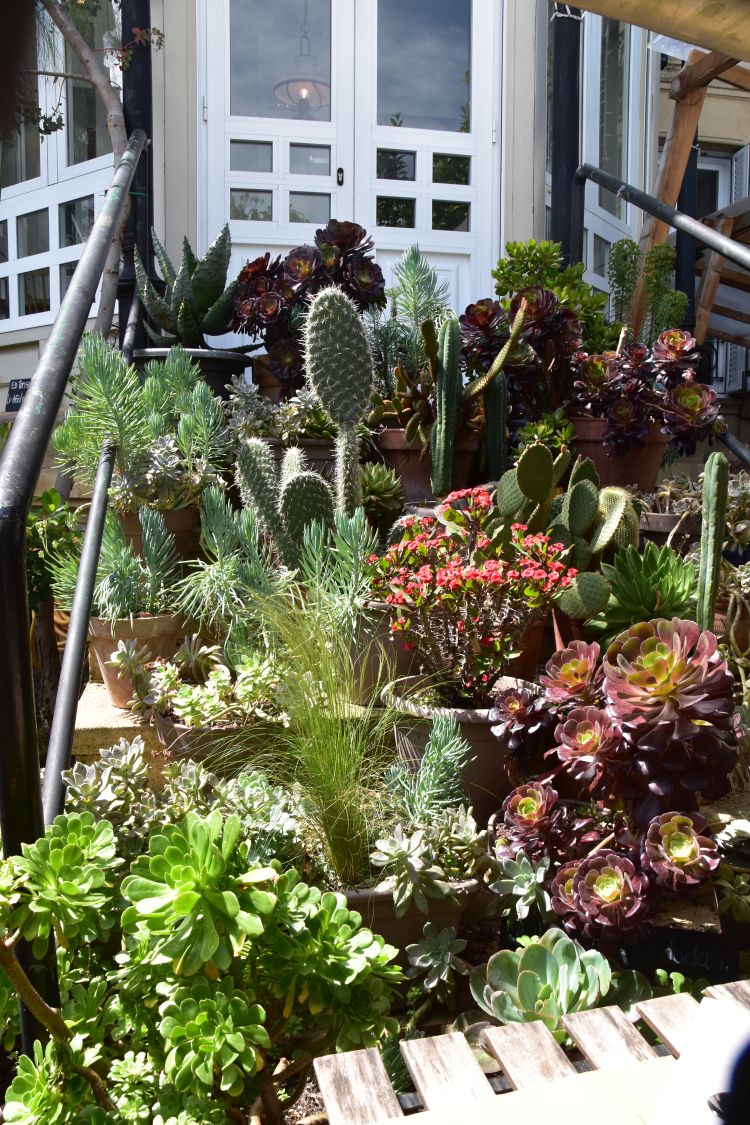
Not far from here, we find the Jardín Bótanico. It is a cosy coffee bar with a lush garden. We wrap off our visit of San Sebastián, with a cup of coffee and a carrot cake.


Driving back to Hondarribia through green mountains

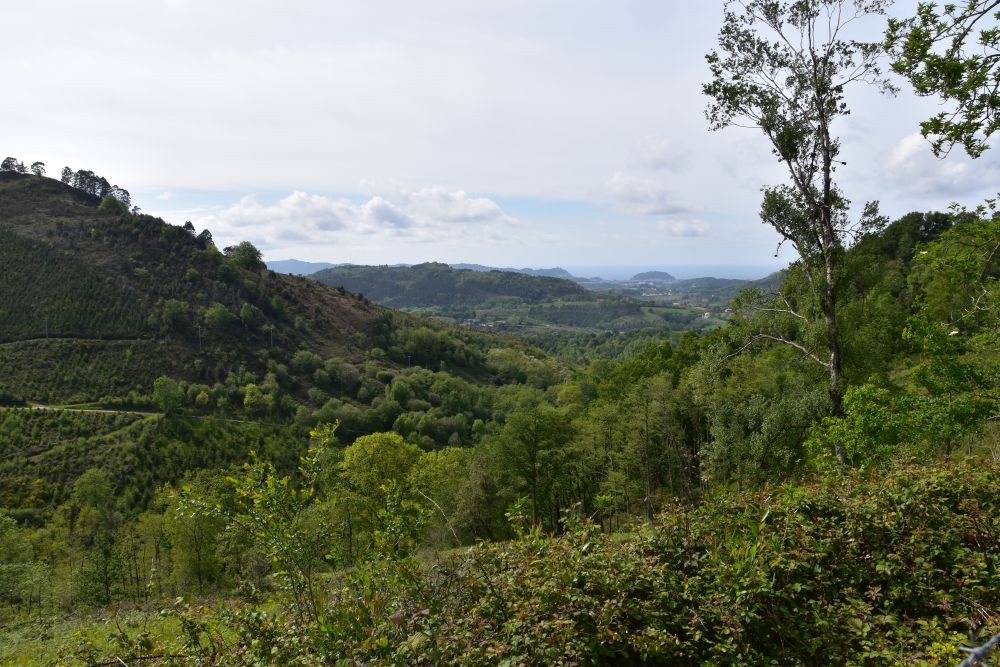
To drive back to Hondarribia, we select a road through the steep and green Basque mountains. The sea is far away, north of us.

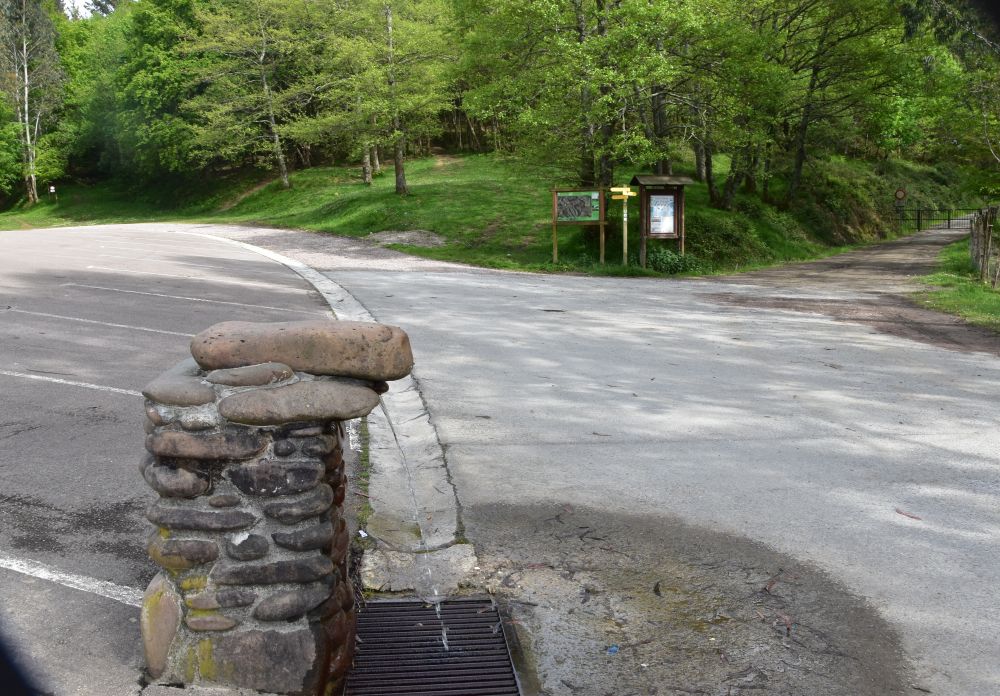
Our GPS gets lost, leads us uphill and uphill, until we end up in this dead end street.

We turn back, find the main road again and finish the day in the restaurant Abarka with an excellent rodaballo or turbot and a glass of Txakoli, the wine from the Basque Country.


Around Bayonne – much visited coast in France

On first of May 2019 we take our car, leave Hondarribia and Spain and return to France. It is only about 30kms to Bayonne. At the border we get confused. We are in France, but at the next roundabout, we find a Repsol gasoline station. Right, we are back in Spain.

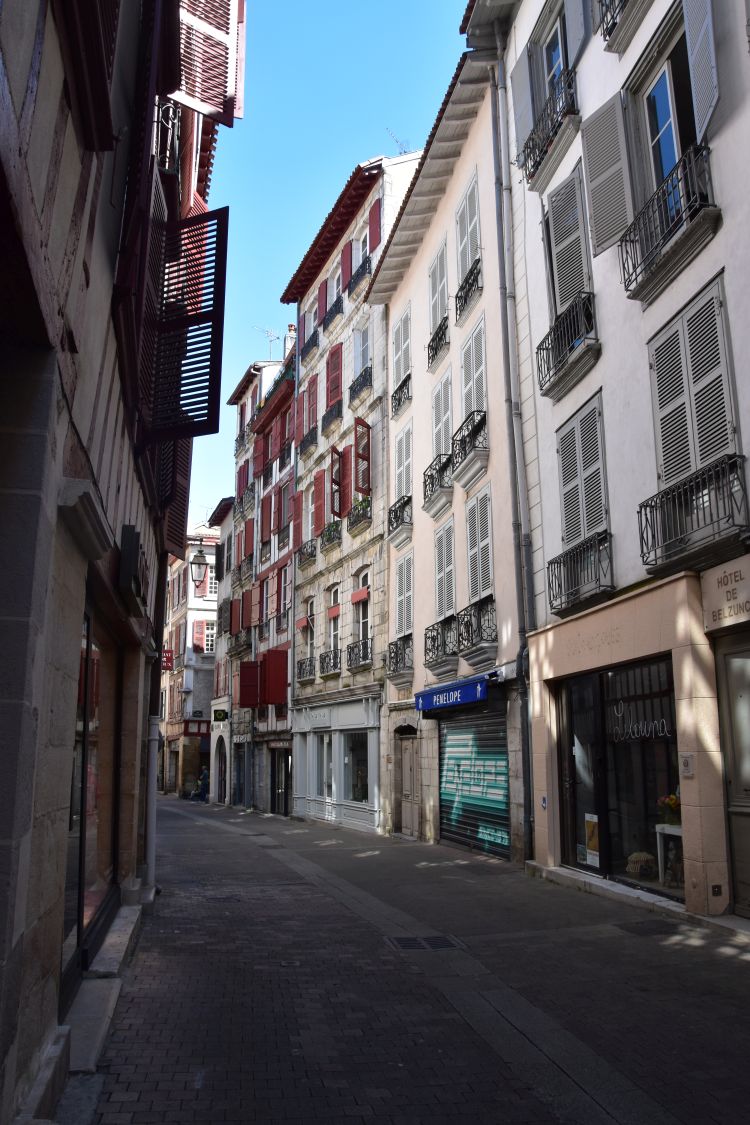
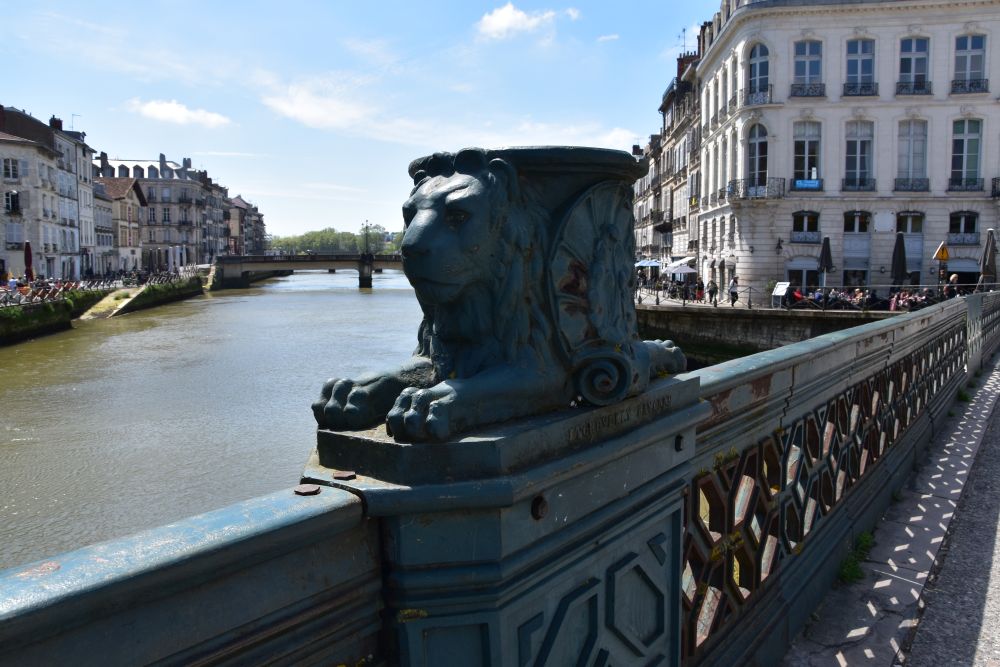
Using the Route Nationale, we drive along the coast line and find a free parking space right near the old castle in the center of Bayonne. We walk through the narrow streets of Grand Bayonne, with the typical half-timbered Basque houses that we already know from Hondarribia in Spain.

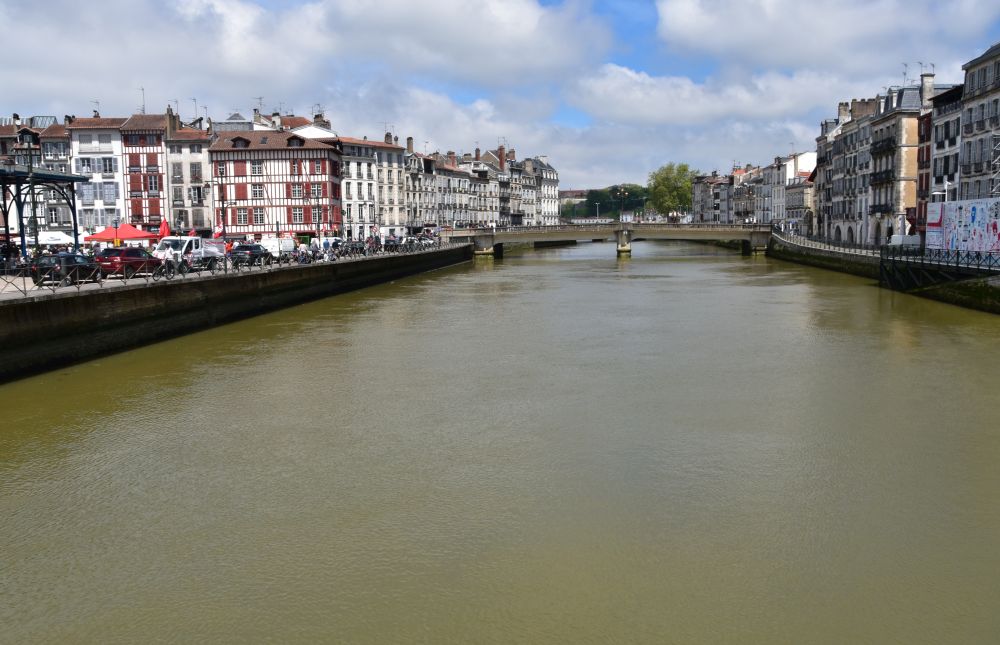
We reach the river Nive which separates Grande Bayonne from Petite Bayonne and which enters the river Adour later.

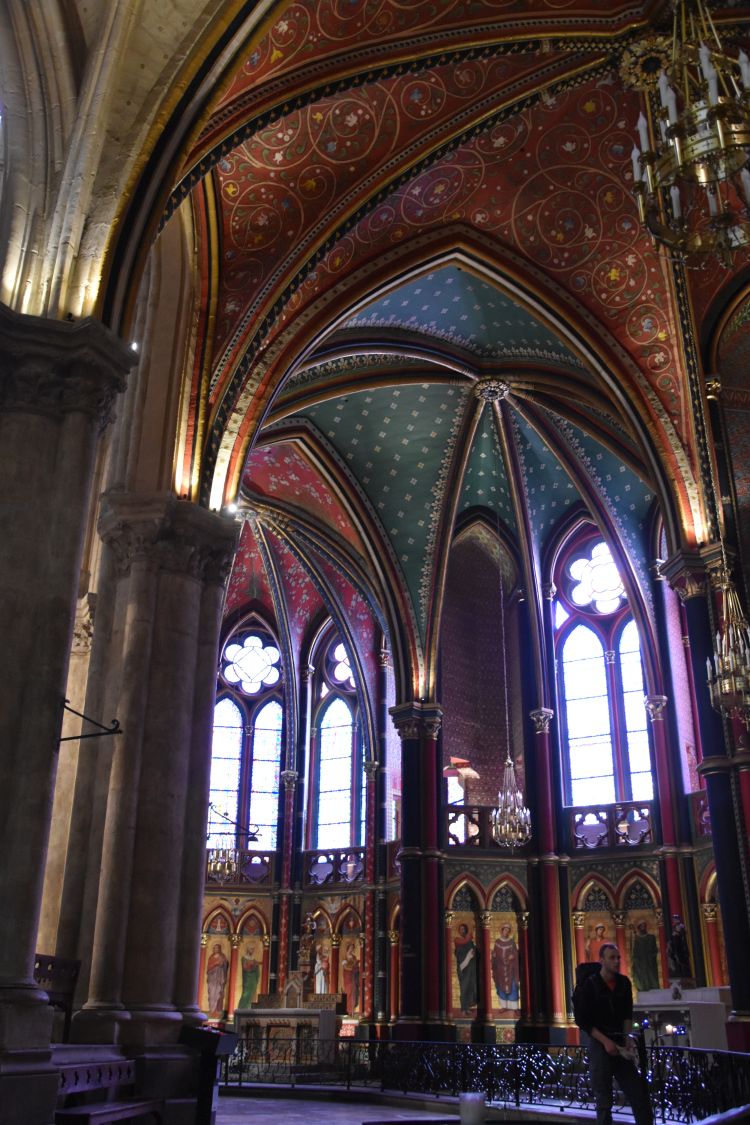
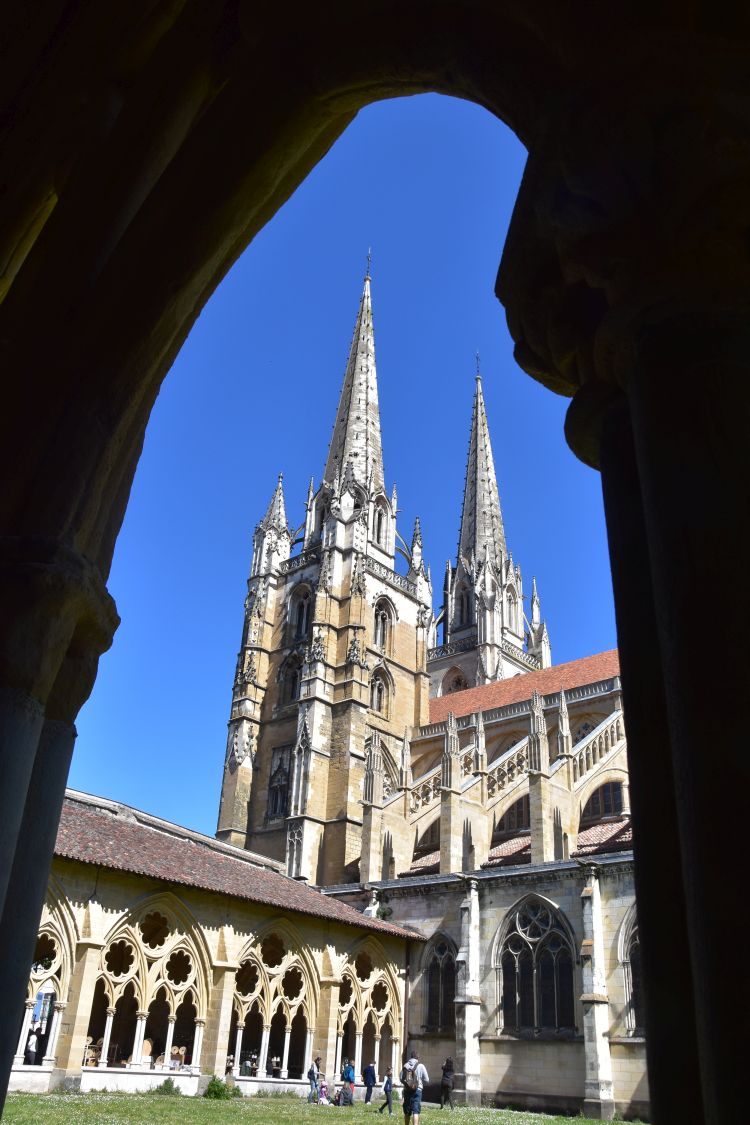
After an espresso, we visit the gothic cathedral Ste Marie which is not far from the river.

We love the ambiance inside the cathedral…

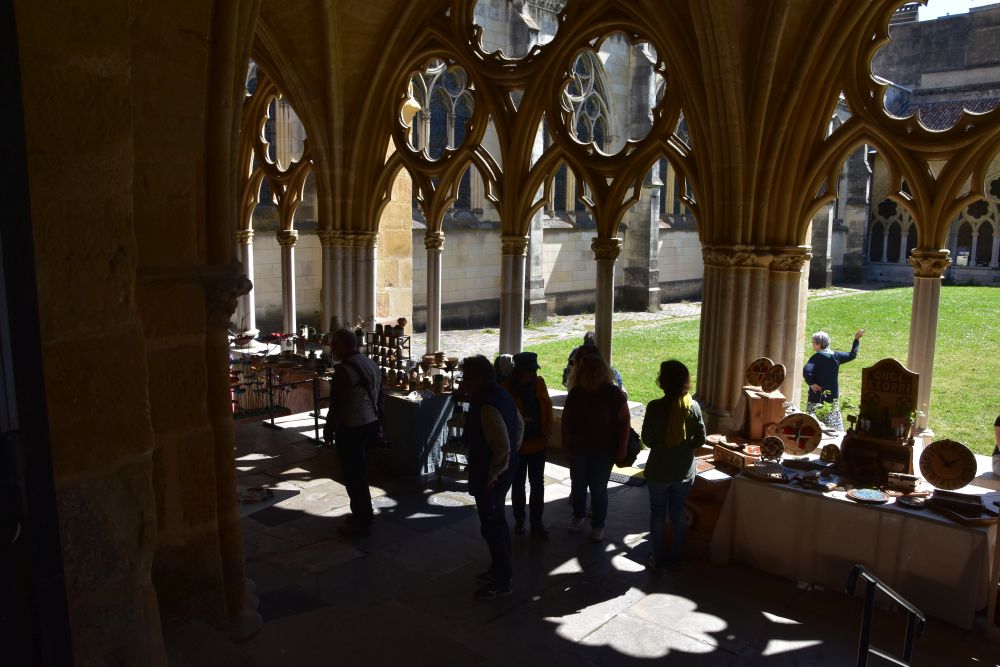
… and in the cloister.

The cloister is very busy on this first of May. There is a market of creative handicrafts, made by artists from the area.

For lunch we enjoy tapas, ham of Bayonne, cheese from the area and tasty paté.

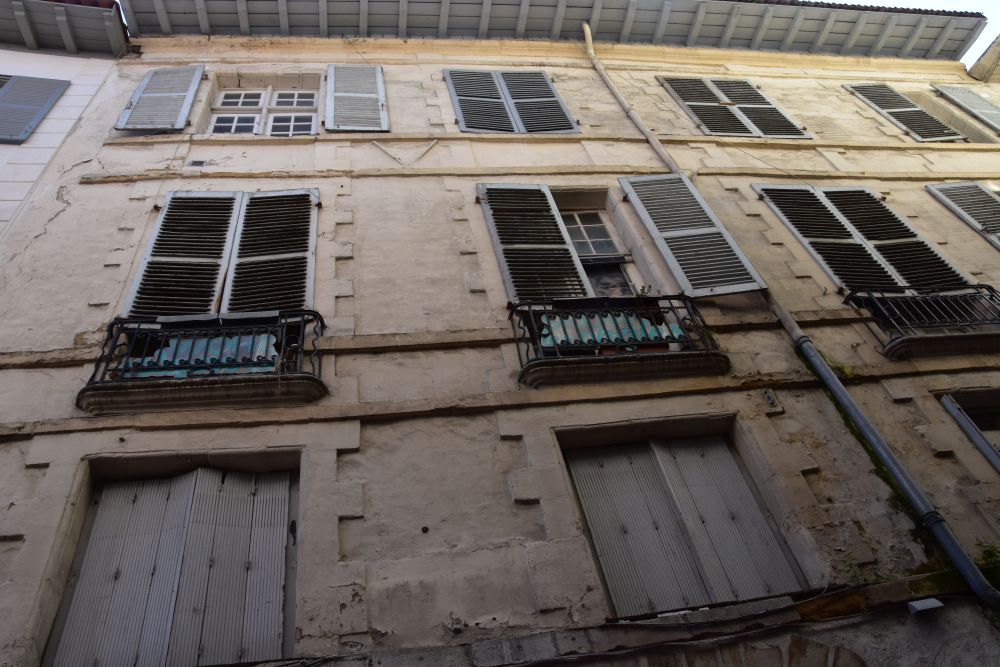
In the narrow streets we look for the old palace Bélzunce from the 15th century.

This house may need some renovation, though the Salon de Thé on the ground floor looks inviting.

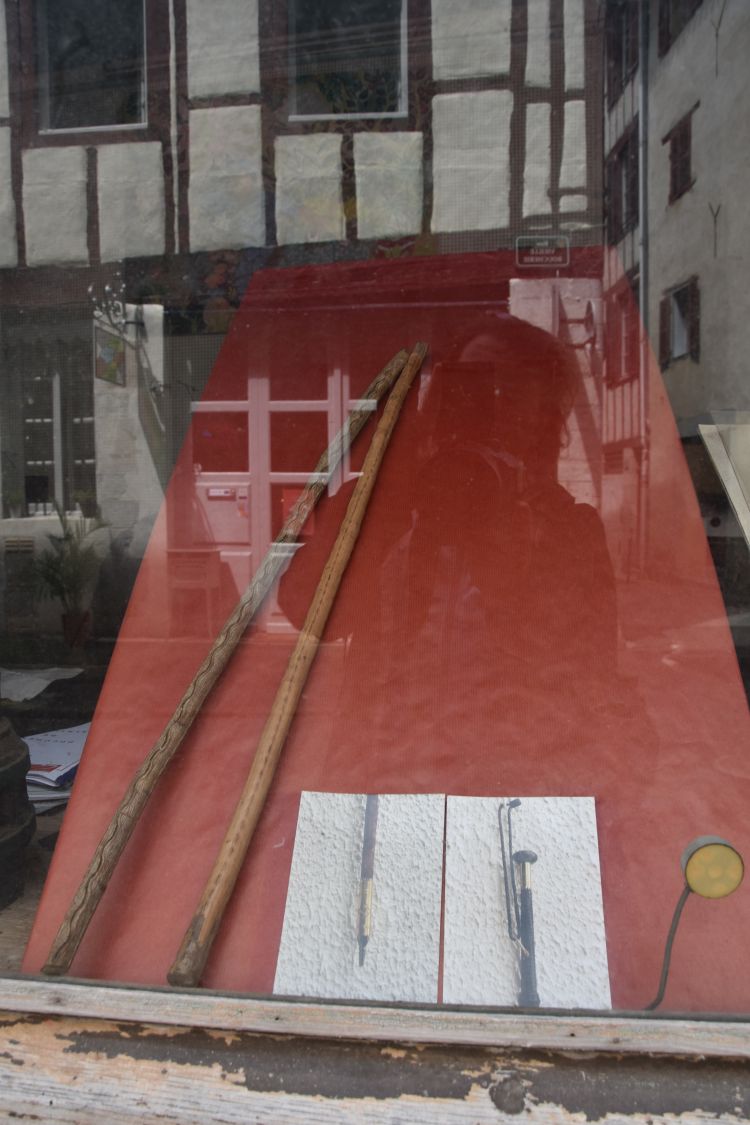
I have already learnt that the Bayonet was invented in Bayonne in 1703. This window tells me that the Makila, the armed stick (la canne armée), has also been invented in Bayonne.

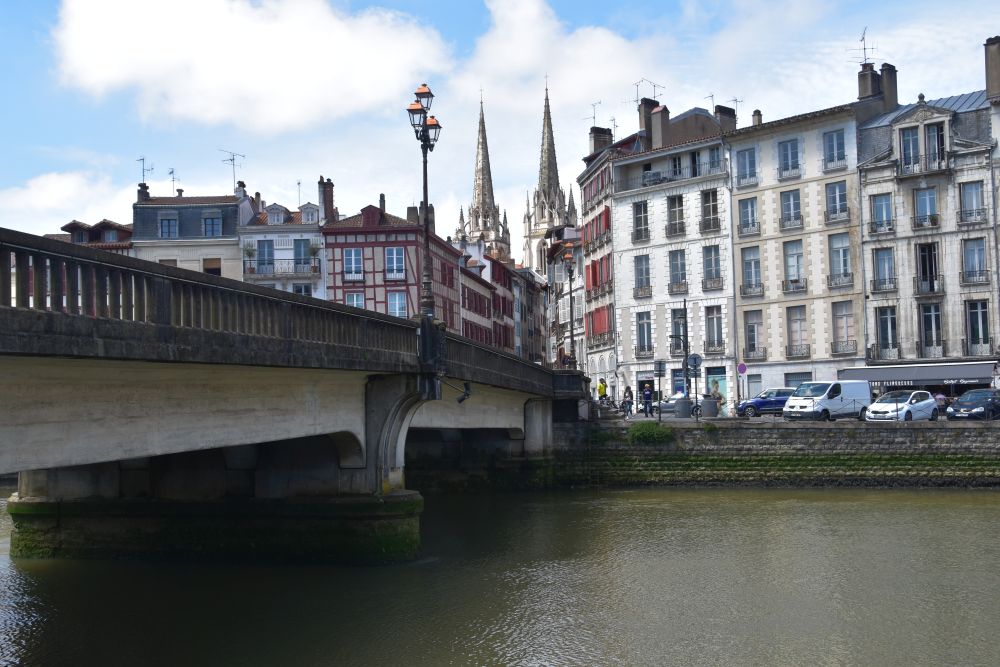
We cross the Nive using the lowest bridge and look upriver.

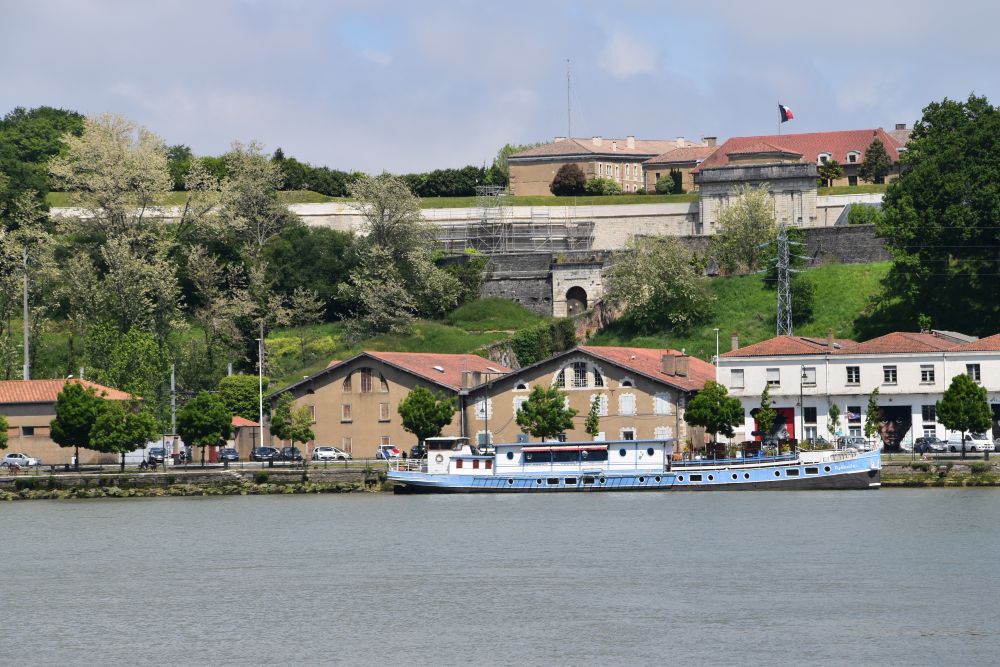
Vauban has fortified Bayonne after the Peace Treaty of the Pyrenées in 1659. This is the part that protected Petite Bayonne.

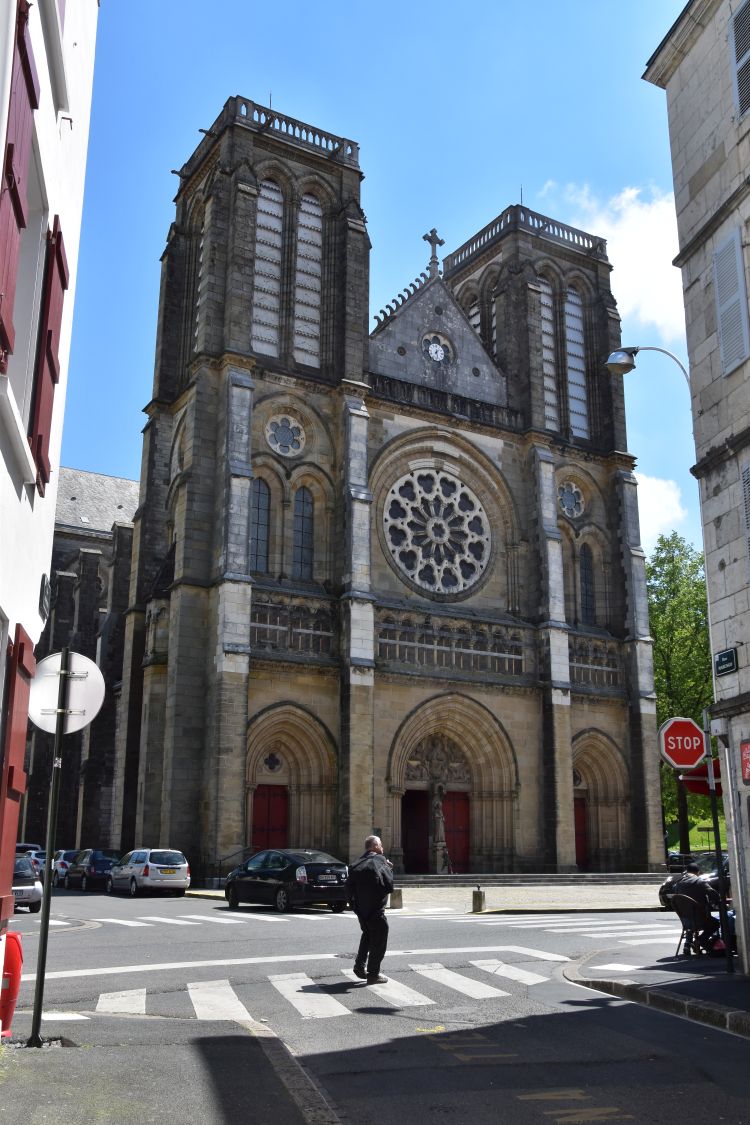
The main church in Petite Bayonne is called Saint André. It has been built around 1850.

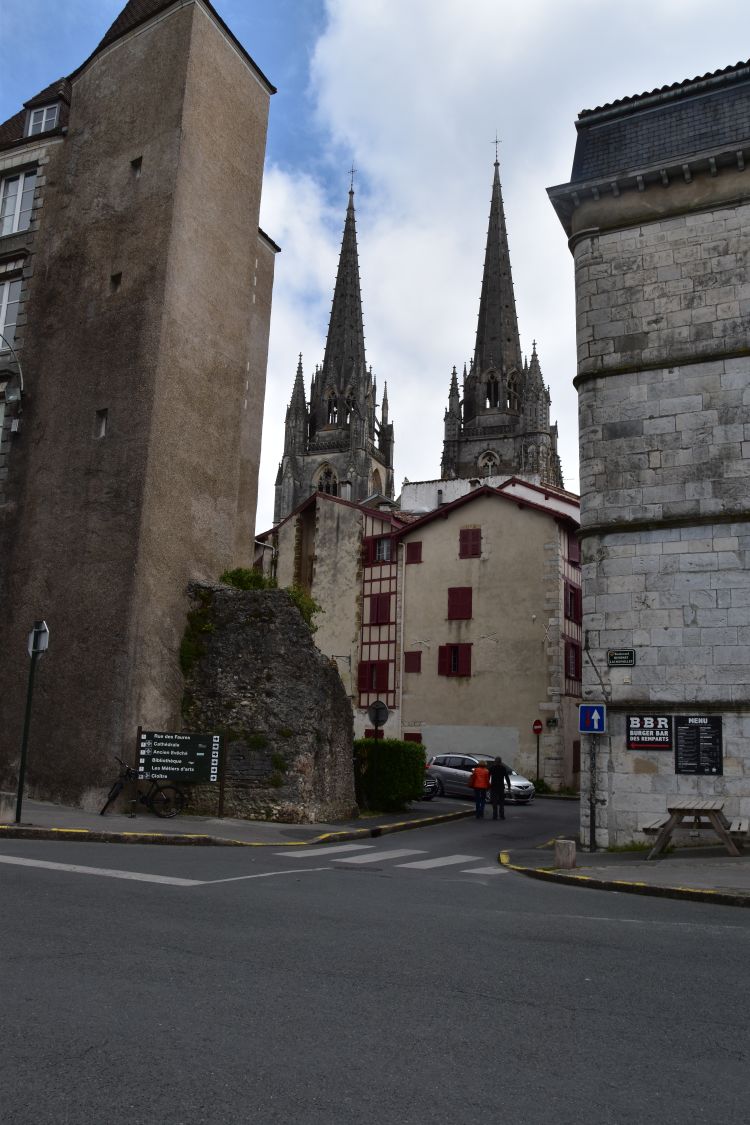
We return to Grande Bayonne. Not far from the old castle we catch another view of the cathedral Ste Marie.

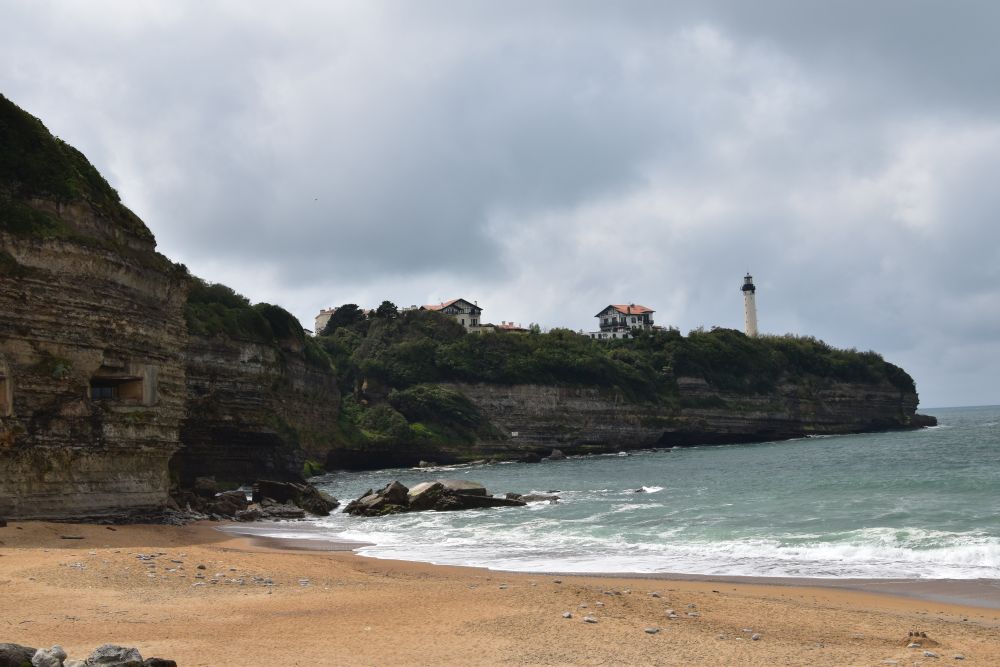
Then we pick up our car and drive along the coast to Biarritz. We drive along the coast line with many, many fin de siècle grand hotels. The coast line promenade is full with tourists, and there is no place to stop. We continued south of Biarritz to a place called “Chambre d’Amour” with lush mansions, huge hotels and cliffs.

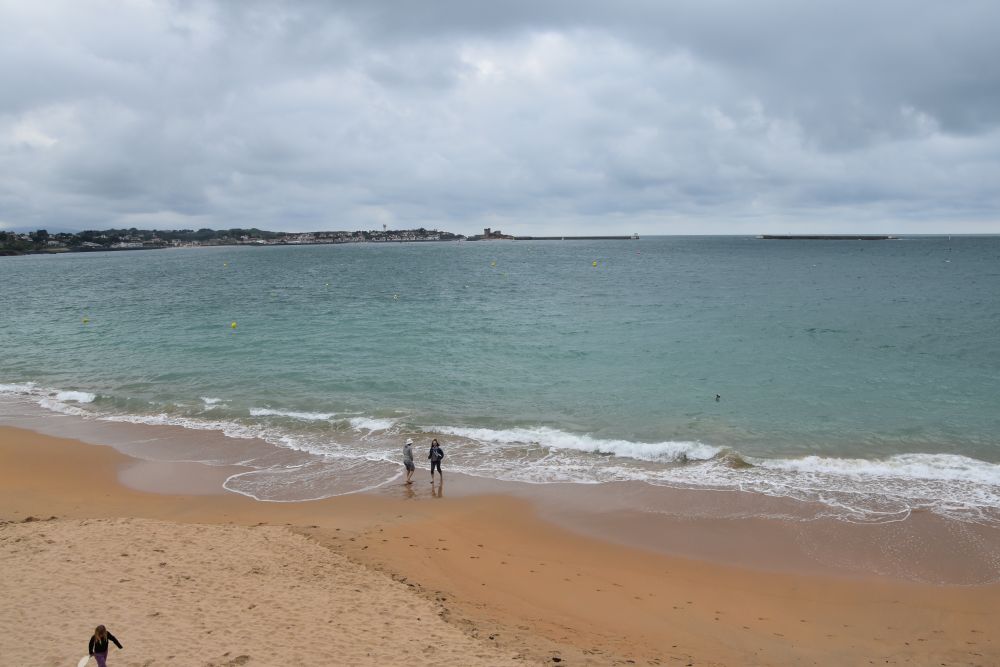
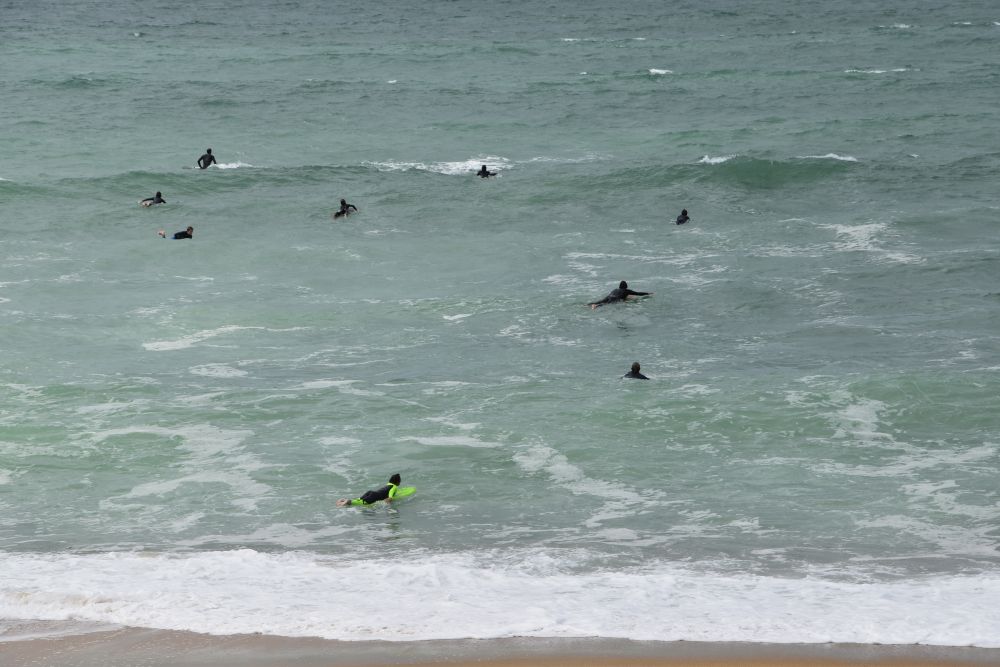
People are swimming in the cold water enjoying the waves of the Atlantique.

We continue to St-Jean-de-Luz. Tourists and tourists… just 7 parking spaces left in one of the park houses. We found one of the slots (uff, narrow!), have a drink in the Pergola and watch life on the windy beach of this beautiful protected bay.

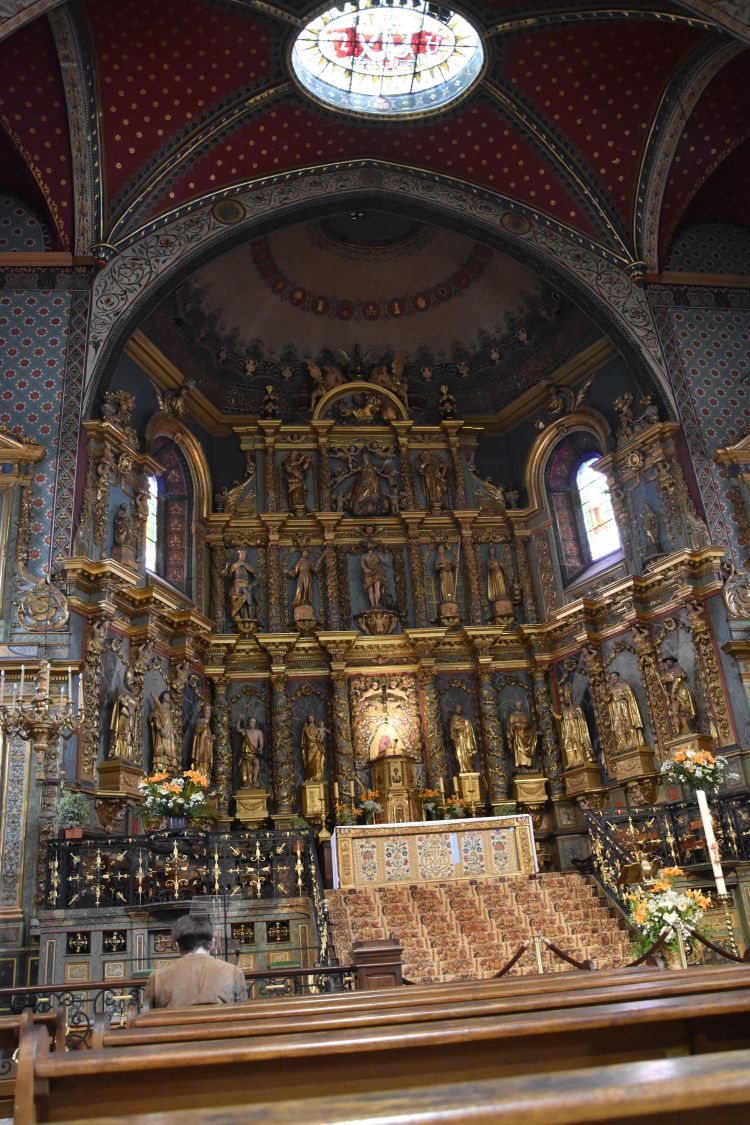
St-Jean-de-Luz has a pretty old city with the cathedral Saint Jean the Baptist built in the 17th century.

The altar and the wooden balconies give it a solemn atmosphere. When Louis XIV married the oldest daughter of Philippe IV from Spain here in 1660, this church was still under construction.

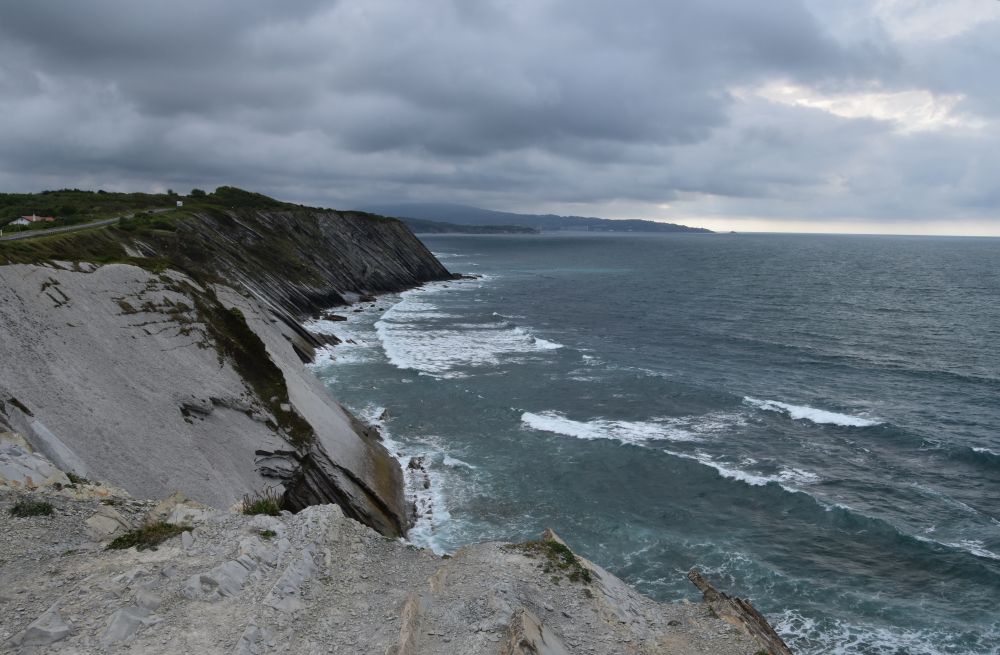
We follow the coast line to Hendaye and stop above the cliffs. I catch the evening ambiance.

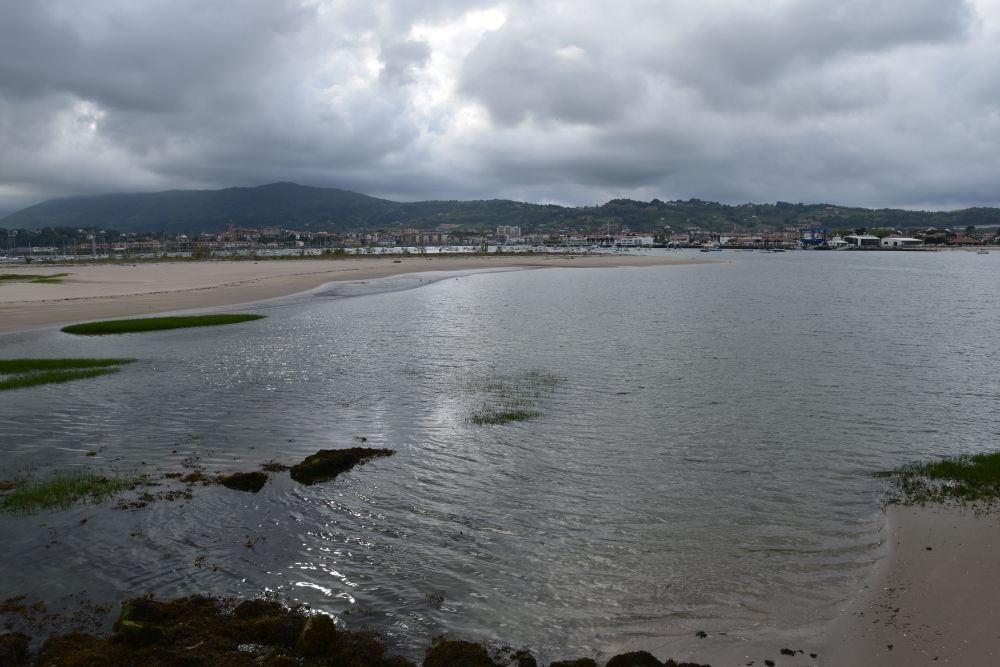
Hendaye and Hondarribia both stretch along the Rio Bidasoa, Hendaye on the French side and Hondarribia on the Spanish side. This is the view of Hondarribia seen from Hendaye.

The evening sun plays with the water here.

We say good-bye to another great day. Now we understand why Napoleon III loved to recover near the rocky Basque coast that also offers sandy beaches.


Via Portbou in Catalonia to Valence, another ancient Roman city in France

In November 2018 we spent three weeks near Tarragona. Now I tell you about the last stage on our way north and home, starting from Cadaqués to Valence in France, with a commemoration stop in Portbou (Catalonia).

.

Portbo, the small city next to the border with France, reminds of the drama of Walter Benjamin

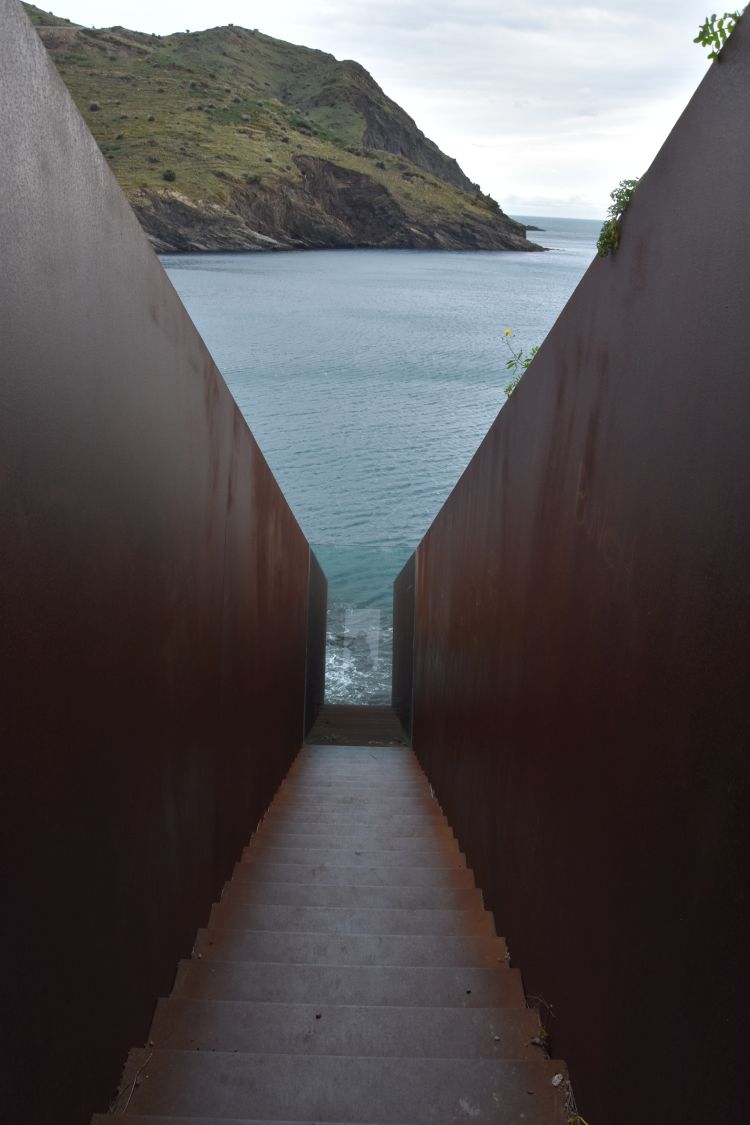
Portbou was the scene of the dramatic death of the German Jewish philosopher Walter Benjamin in autumn 1940. We stopped in Portbou to commerate him. Walter Benjamin succeeded in crossing the border from France to Franconian Spain. He and a group of Jews intended to travel on to Lissabon and then to the US. But Franconian Spain had just changed the law and would not let the group continue to Lissabon without a valid confirmation that they were allowed to leave France. Which, of course, they did not have. Benjamin committed suicide, and the rest of the group could then travel on to Lissabon. This monument called Passatges reminds us of that drama: Stairs lead into the sea.

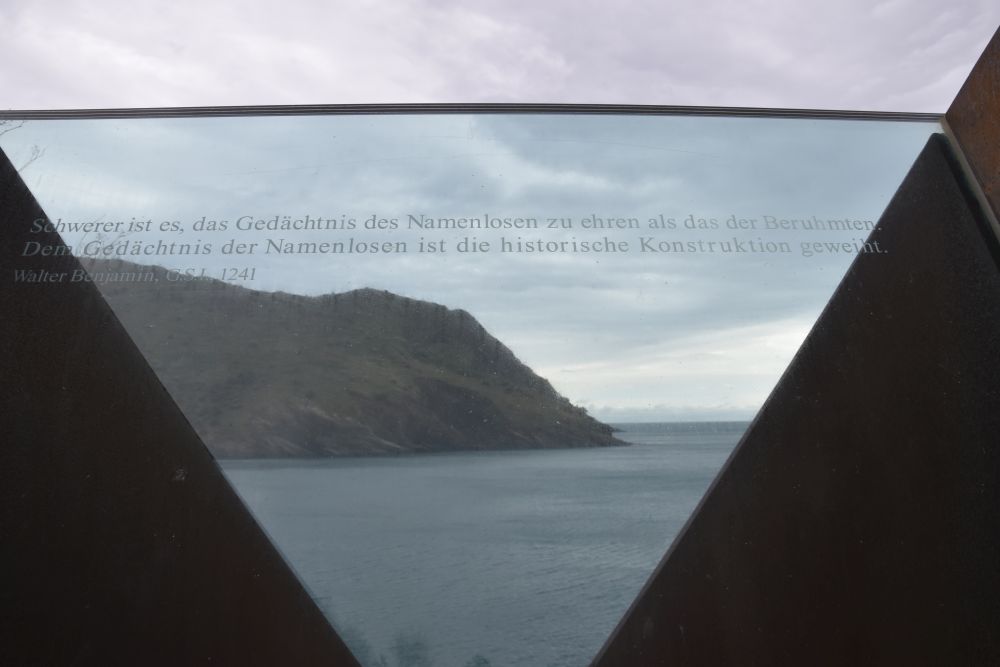
At the bottom there is this thought of Benjamin: “Schwerer ist es, das Gedächtnis des Namenlosen zu ehren als das der Berühmten. Dem Gedächtnis der Namenlosen ist die historische Konstruktion geweiht.”  This has been taken from Benjamin’s thoughts about the term “history”. This is the translation: “It is more difficult to honor the memory of the anonymous persons than that of the famous. To the memory of the anonymous the historical construction has been dedicated.” For me, these thoughts are difficult to understand. Yes, the flow of history is told to us as the series of deeds by famous actors, but in addition it is the result of many more actors that remained anonymous. Is it that, what Benjamin had in mind?

What touched me was to be again confronted with the sadest part of German history. I hope that nothing like that will happen again. The monument was erected with support of Germany in 1994.

.

Growing wine on steep slopes above the Mediterranean Sea

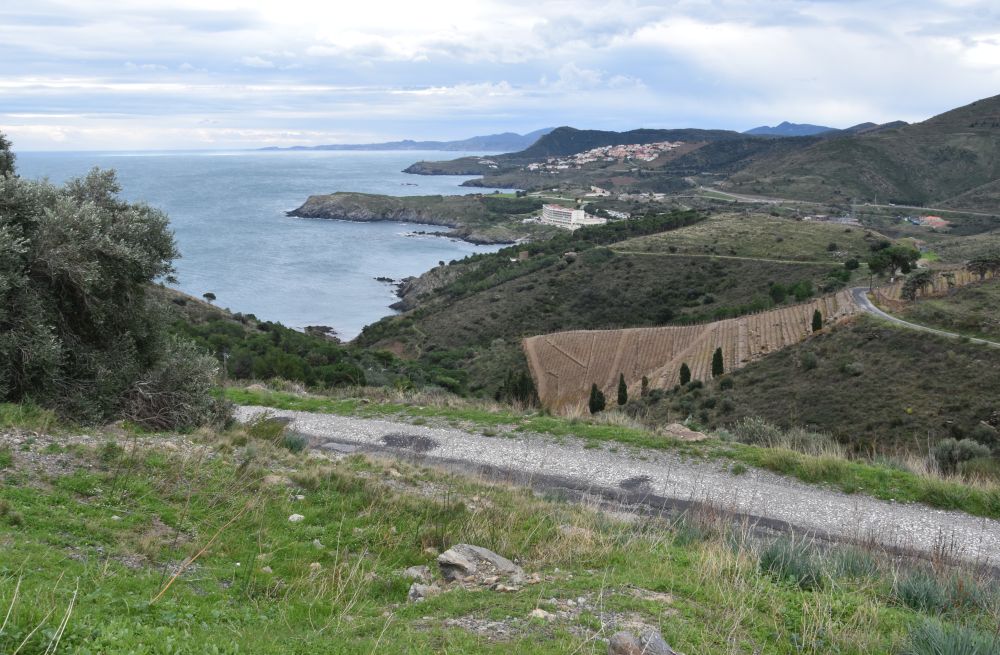
We cross the border to France and drive through the steep vineyards of Banyuls. It must be tough to grow wine here. Along the road, we come across a small wine shop, where I buy a bottle of Mourvèdre from Collioure.

.

Valence – an ancient city with some charming corners

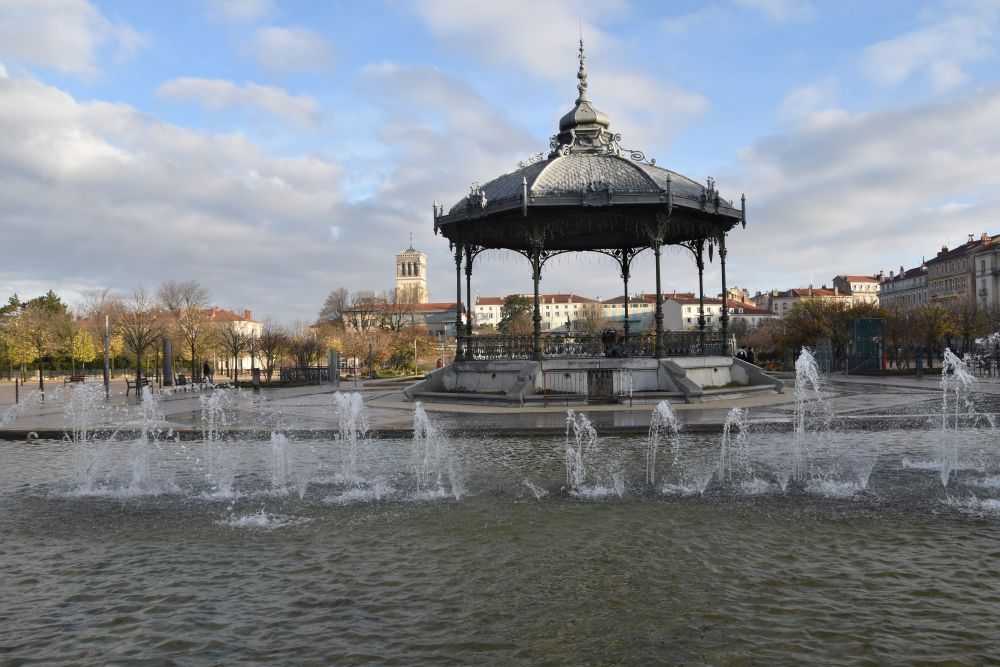
After a quiet night in the sober, but practical IBIS hotel of Valencia, we park our car under the Champs de Mars or Mars Field.

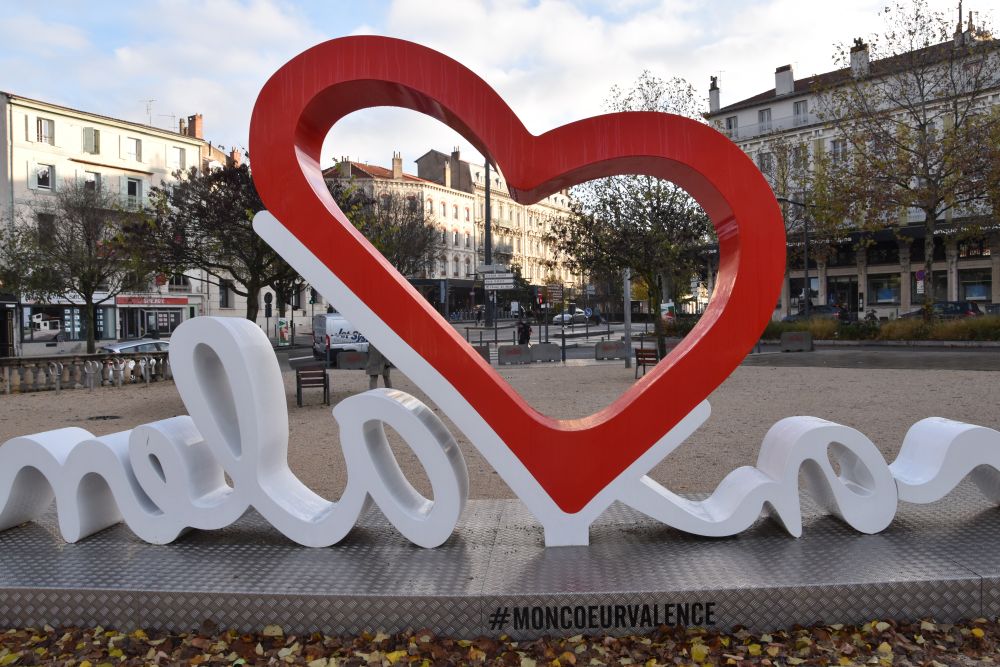
Emerging from under the ground we find this heart of Valence.

It carries the hashtag #moncoeurvalence. Sorry, we are not selfie addicts (the hashtag suggests to make selfies here). We enter the old city center, as seen through the heart.

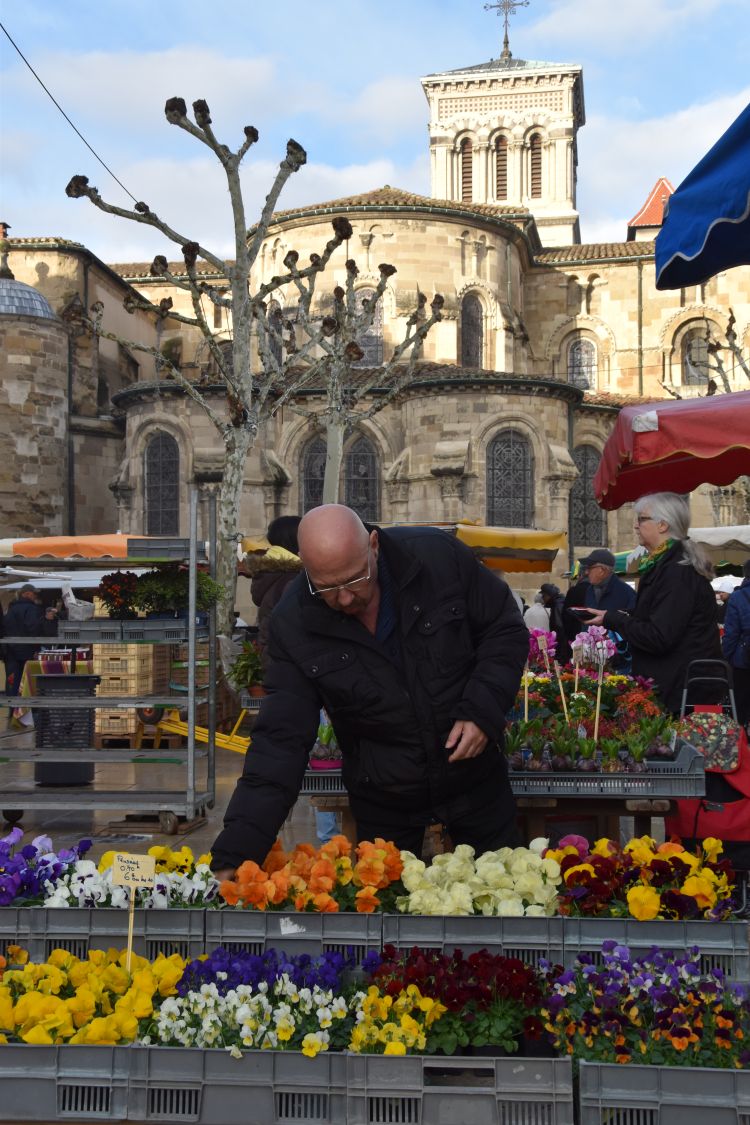
We slender through streets and enjoy the busy market – everything looks tempting here. Then we walk over to the cathedral behind the market.

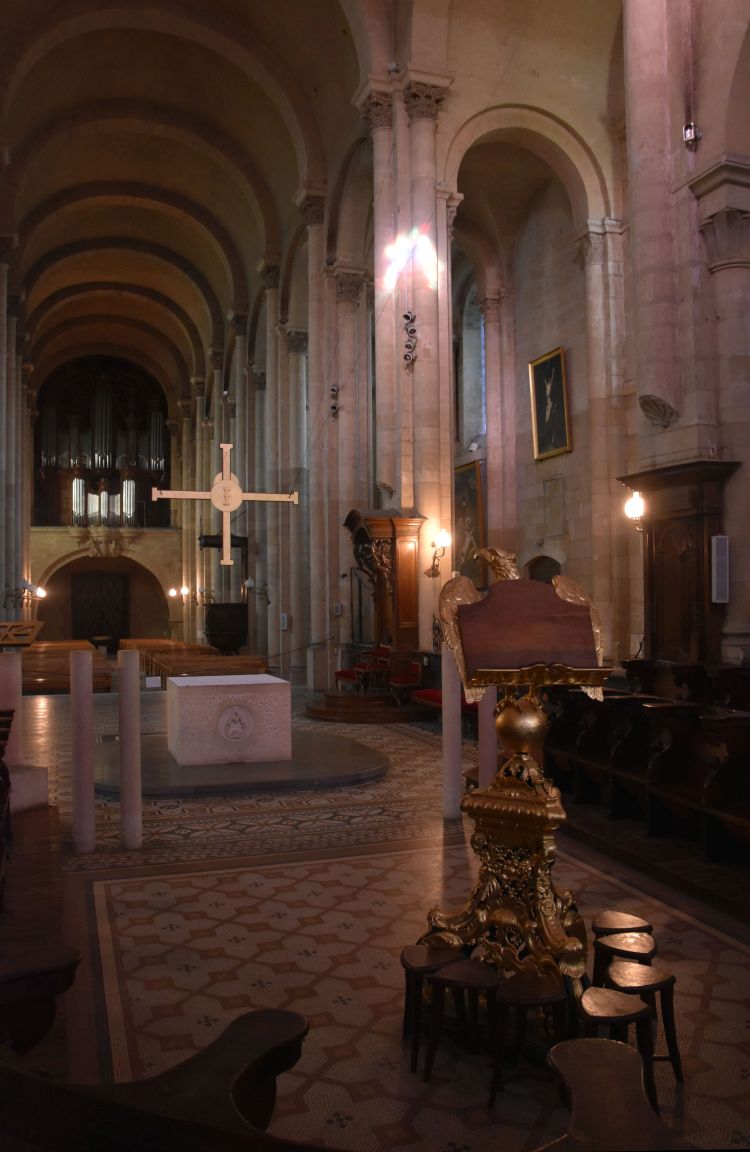
The Romansque cathedral St. Apollinaire collapsed in the 17th century, but has been reconstructed true to the original. Inside are three naves of almost the same height…

… and the colours of the windows are reflecting mysteriously on the wall.

It was here that in the 12th century, Barbarossa married Beatrix, the heir of Burgundy.

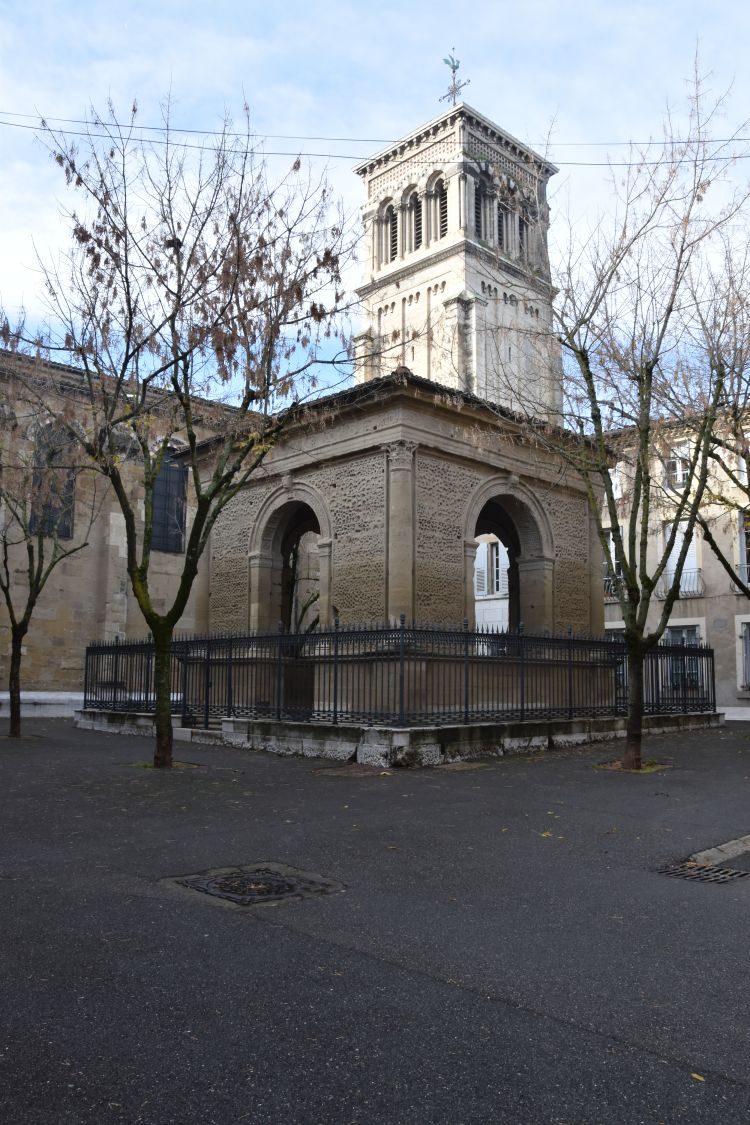
The only construction left from the cloister behind the cathedral is the so-called “Le Pendentif”, erected in renaissance style in 1548. It is the tomb of a capitular.

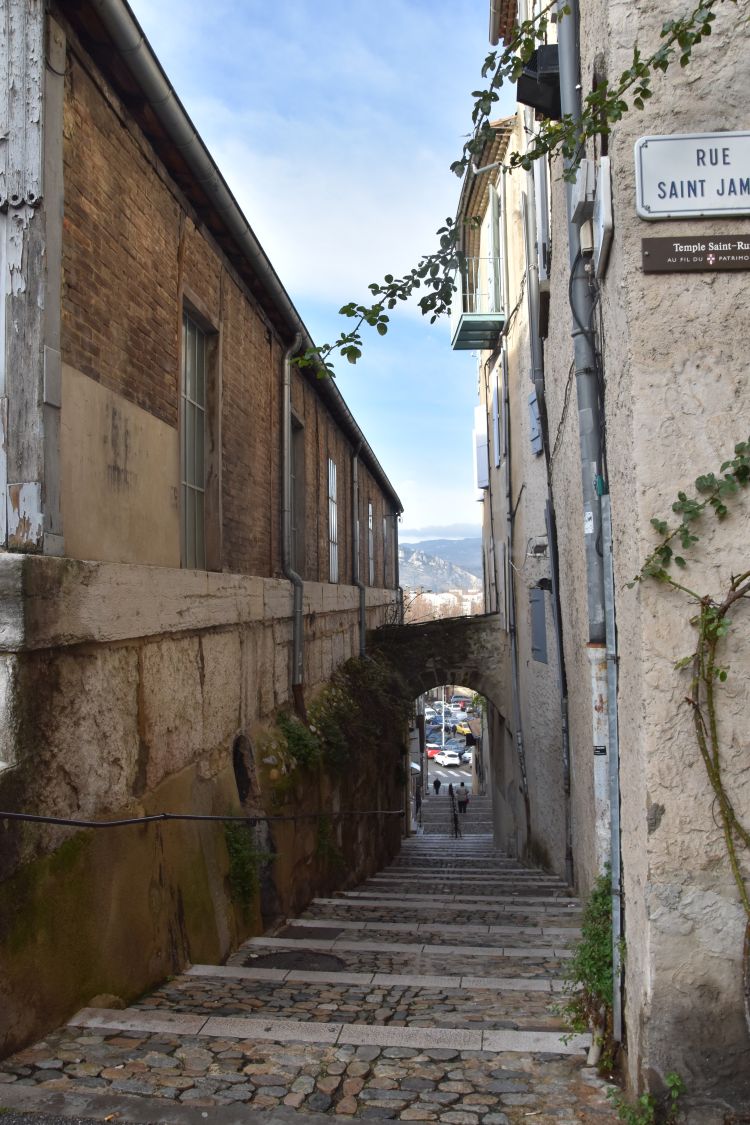
We stroll through the narrow streets.

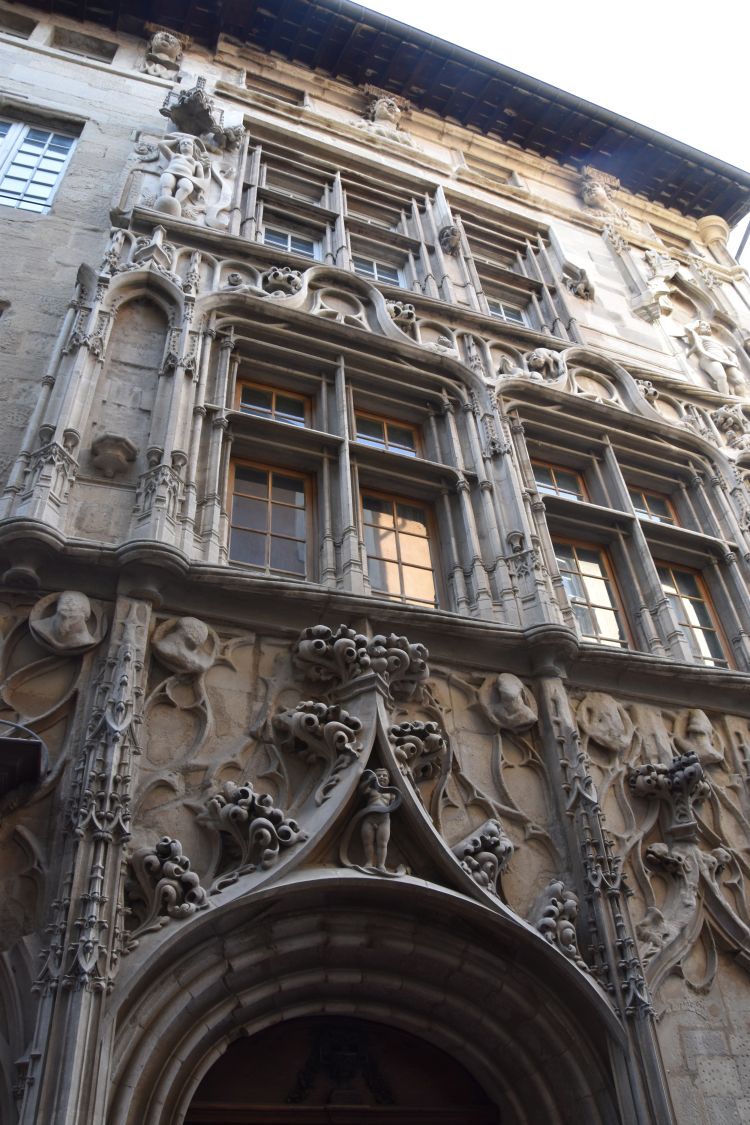
The House of Heads or La Maison de Têtes has been built by a university professor in 1530, as a plate explains. Its style is characteristic for the transition from late gotic to renaissance.

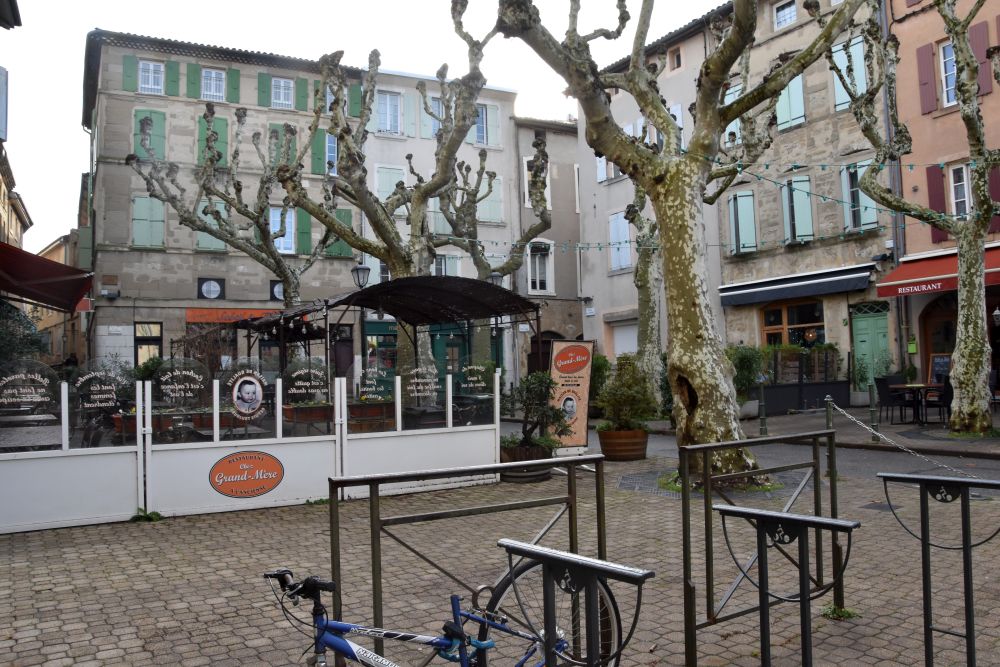
French style squares or plazas are always inviting with their trees and restaurants. It is just a bit cold now.

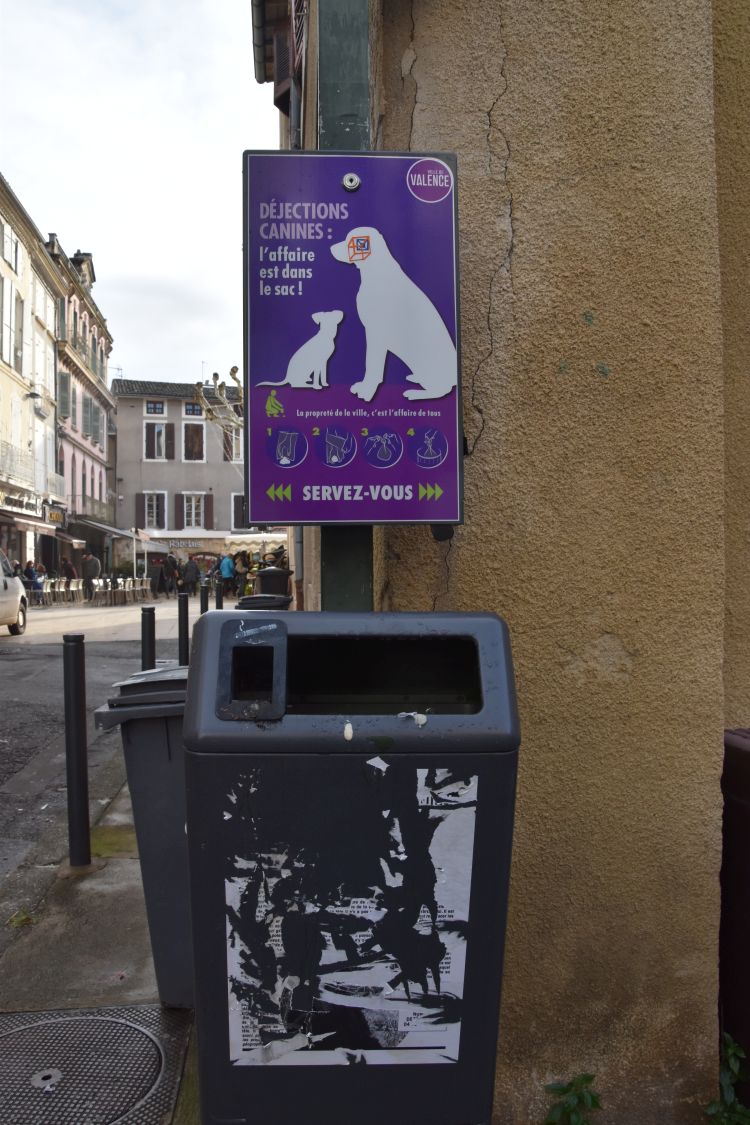
Valence strives to be clean, but how did we say forty years ago at university: “French planning is more French than planning”. I really could not find, where I could take the sack, in case I had  a dog, be it small or tall… but I love the humor that guided the author of this plate.

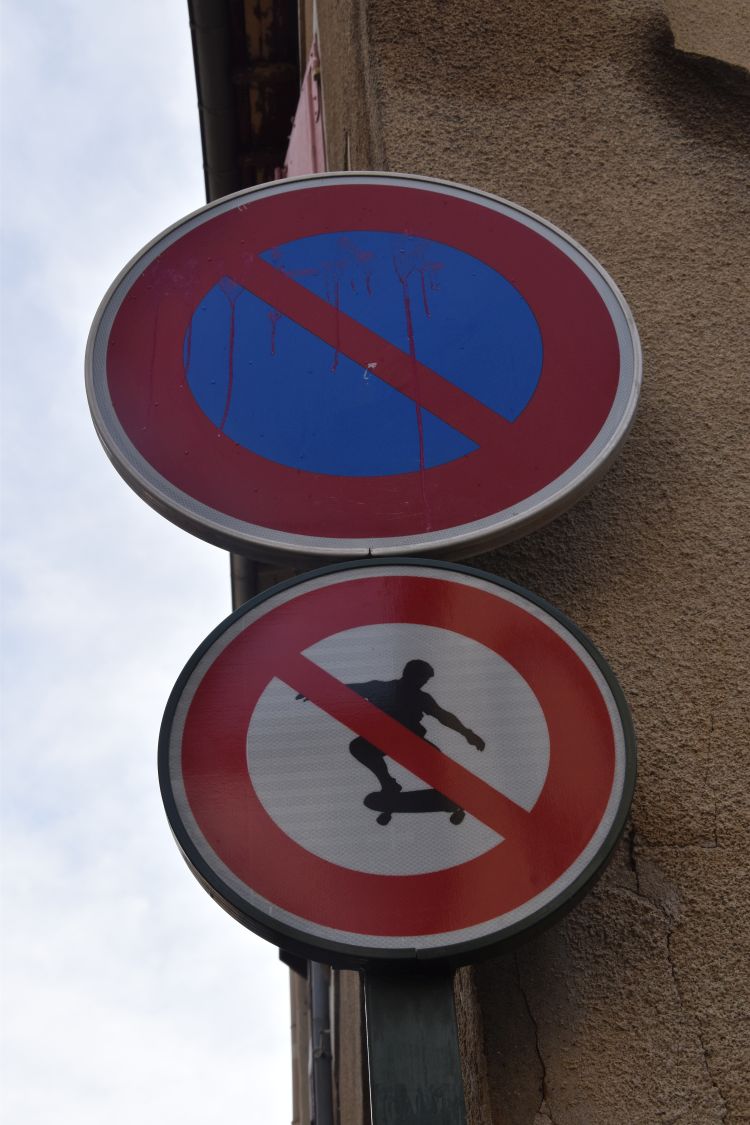
Never have I seen this street sign before – surfboards are forbidden here, only that! Bicycles, rollerblades, everything else is allowed – or am I mistaken?

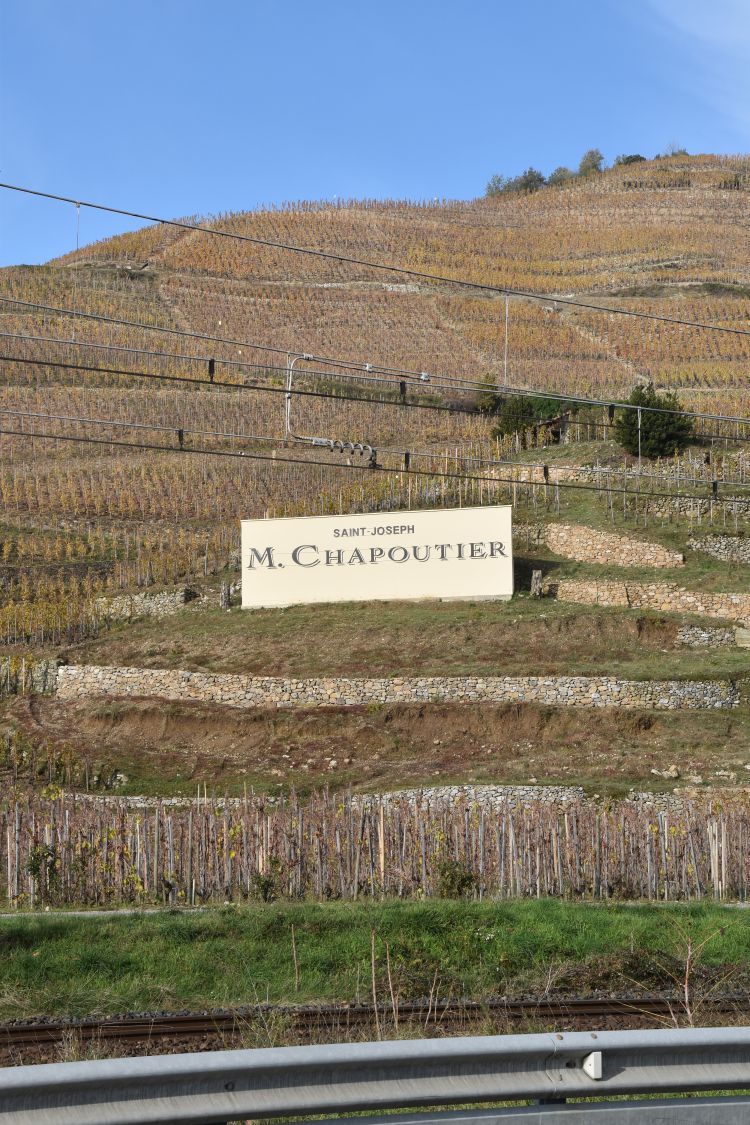
We leave Valence and head north following the vineyards of the Côte du Rhone. In the Saint Joseph area, I take a foto of the vineyard of one of my favourite wine growers, Chapoutier.

In Serrières, we park our car to eat a a sandwich. When we come back, some Gilets Jaunes with their motor cycles have filled up the parking. They tell us that they like the Swiss and show to me, how to get out of my parking lot amidst their motor cycles without damaging one of them. Some four hours later we are back in Monthey in Switzerland to share a night with our friends that allowed us once more to stay in their apartment in Catalonia. We look back at another wonderful trip.


Sources:

  • Thomas Schröder: “Katalonien”, Michael Müller Verlag, Erlangen 2015
  • Thorsten Droste: “Romanische Kunst in Frankreich”, DuMont Kunstreiseführer, Köln 1992
  • Thorsten Droste: “Provence”, Dumont Kunst-Reiseführer, Köln 2011

Catalonia: White Cadaques and Sant Pere de Rodes on the rocks

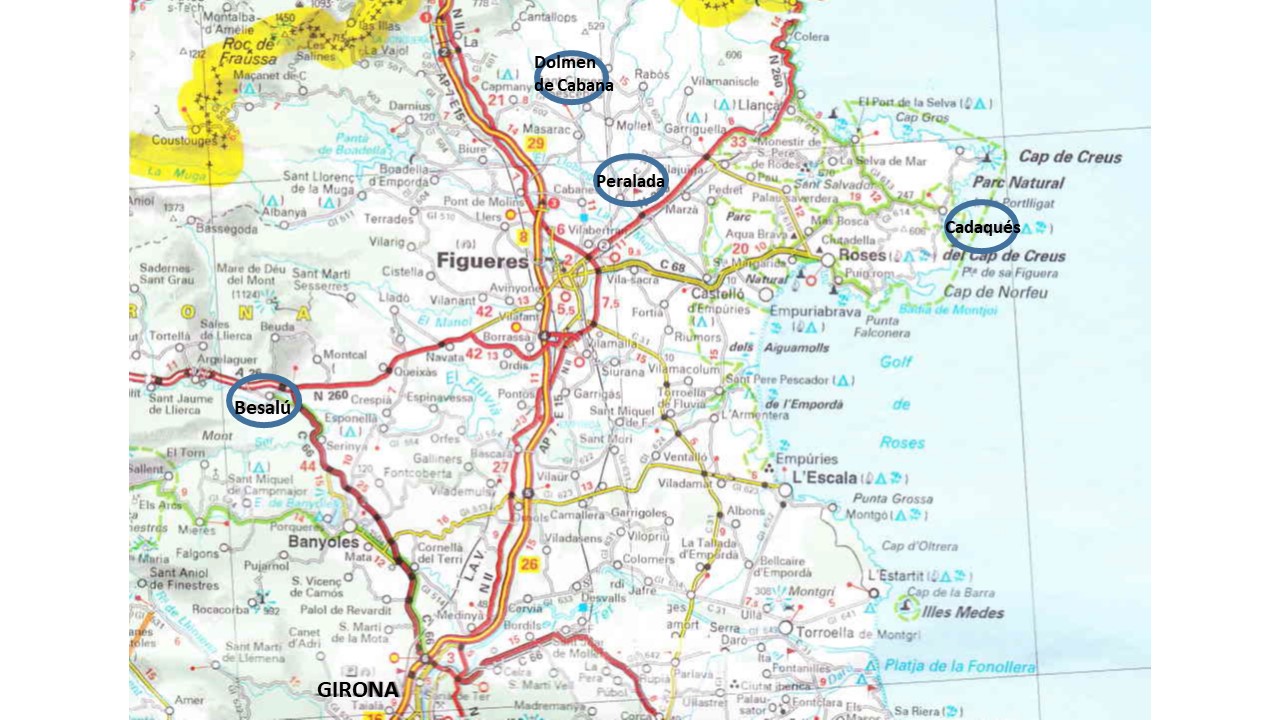
In November 2018 we spent three weeks near Tarragona. Now I tell you about our way north, where we stop in Cadaqués and go for an excursion to the monastery Sant Pere de Rodes and to the nature reserve Cap de Creus. For a map see my former blog Catalonia: Besalú and Peralada.

.

Cadaques – the white resort in a secluded bay of the Costa Brava

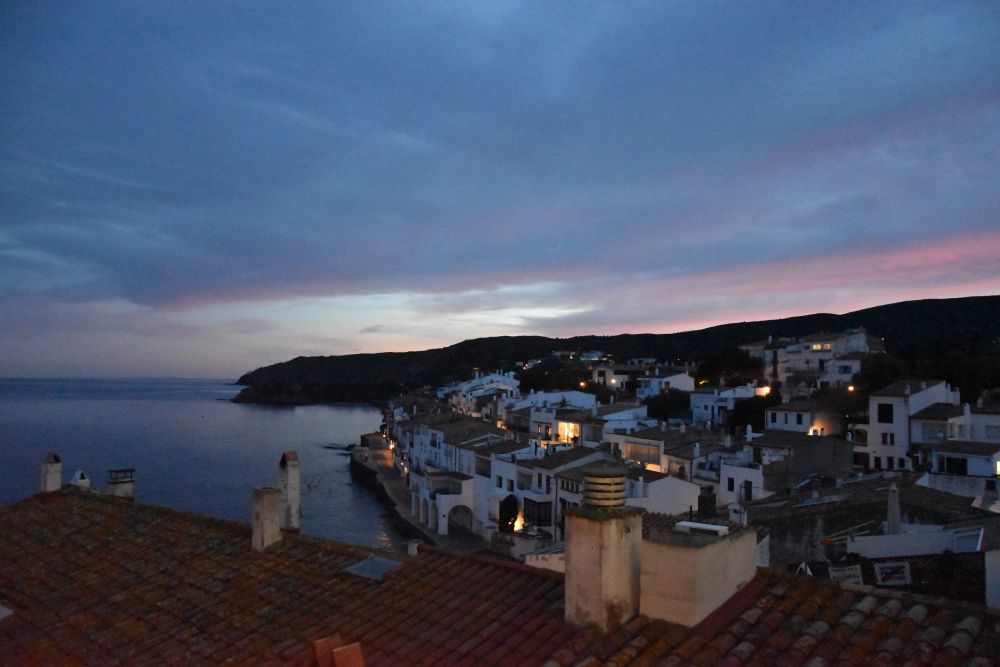
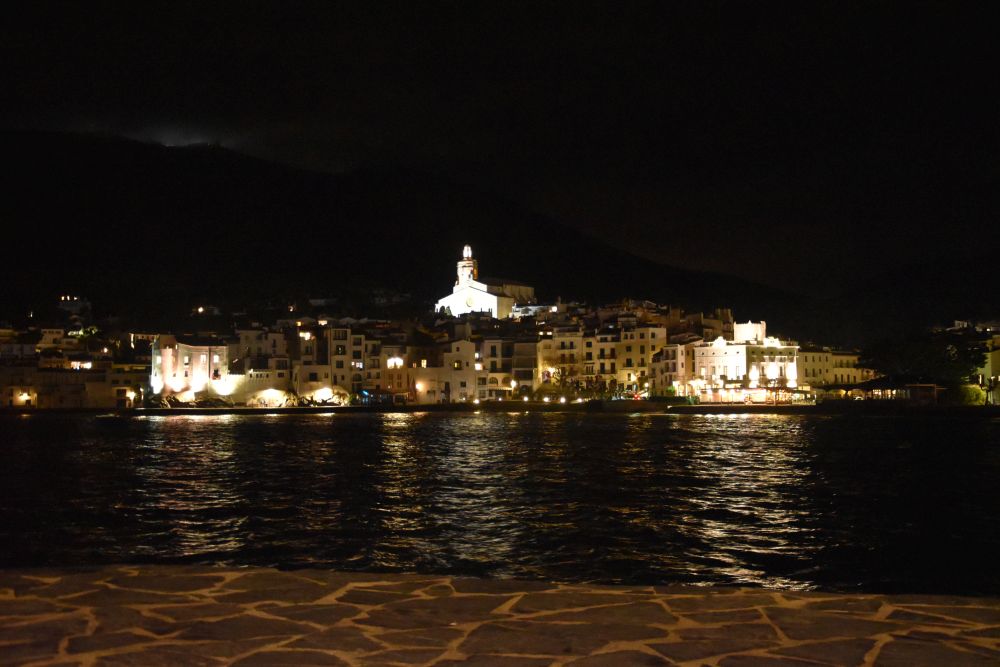
Cadaqués is a small resort that shares one bay on the Mediterranean with Port Lligat. Only one curvy road crosses the mountains that separate this bay from the rest of Catalonia. The father of Salvador Dalí originated from Cadaqués and Salvador Dalí lived in Port Lligat. We stayed in the centrally located hotel La Residencia that is decorated with Dalí items – the owner suffers from horror vacui – hilarious. In summer the Plaça Frederic Rahola below the hotel may be busy, but in November everything is quiet. From our room, we enjoy the view of the bay and the sea in the morning.

In Port Lligat we eat at the restaurant Nord-Est. It serves Paella for one person – usually the minimum for paella is two persons. We have dinner with the view of the bay and Cadaqués at night.

.

The Benedectine monastery Sant Pere de Rodes located high above the bay amidst rocks

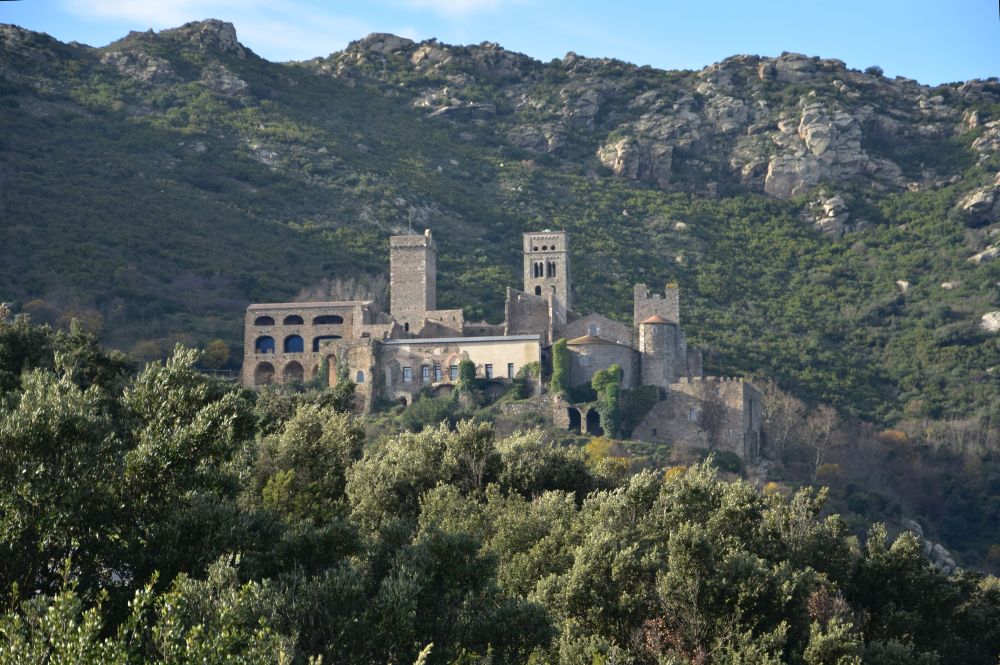
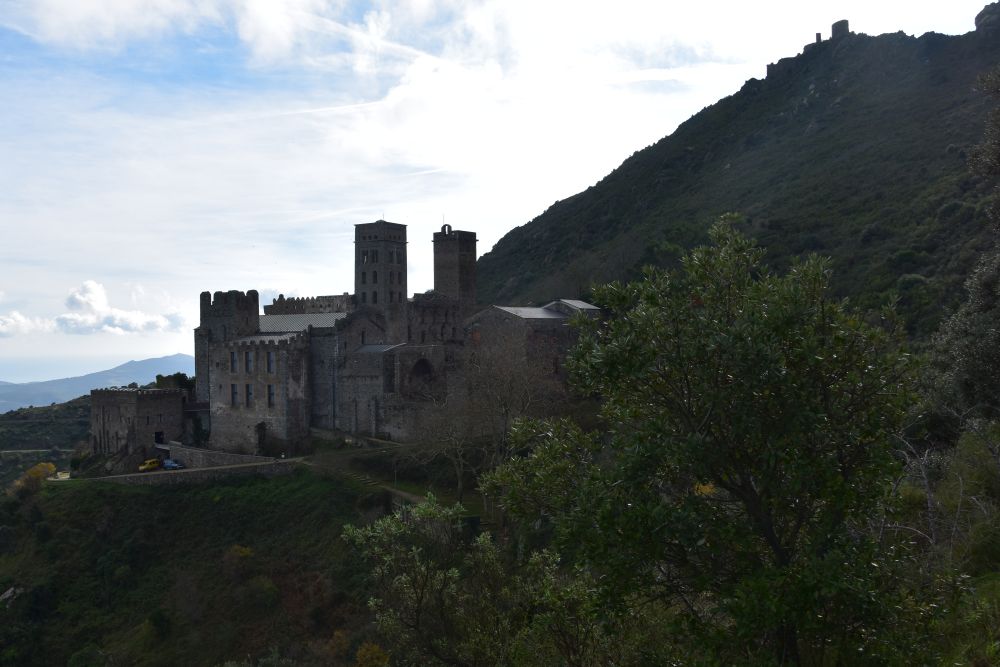
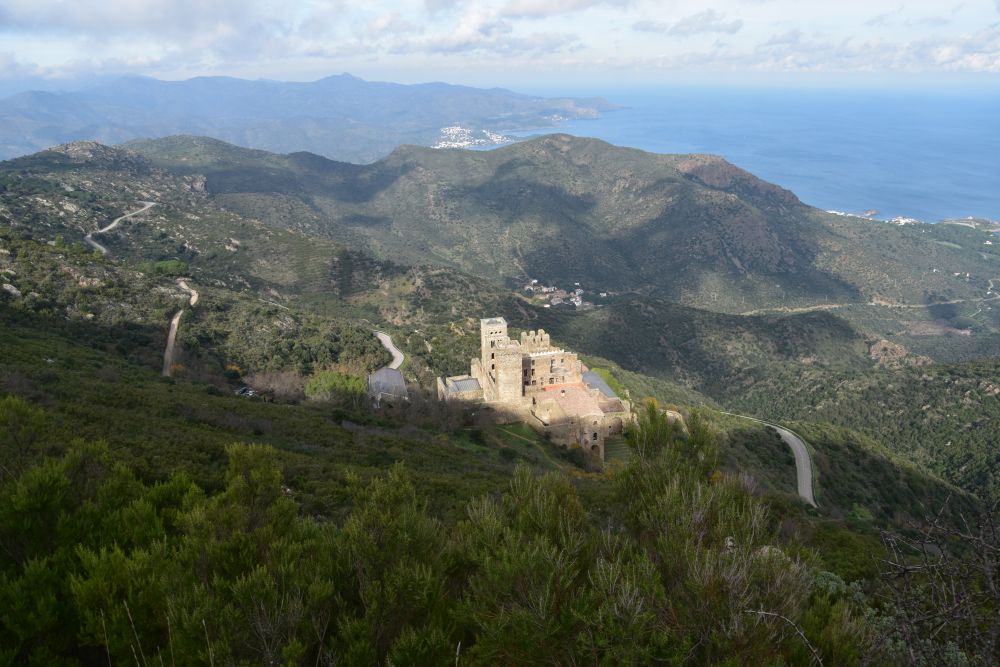
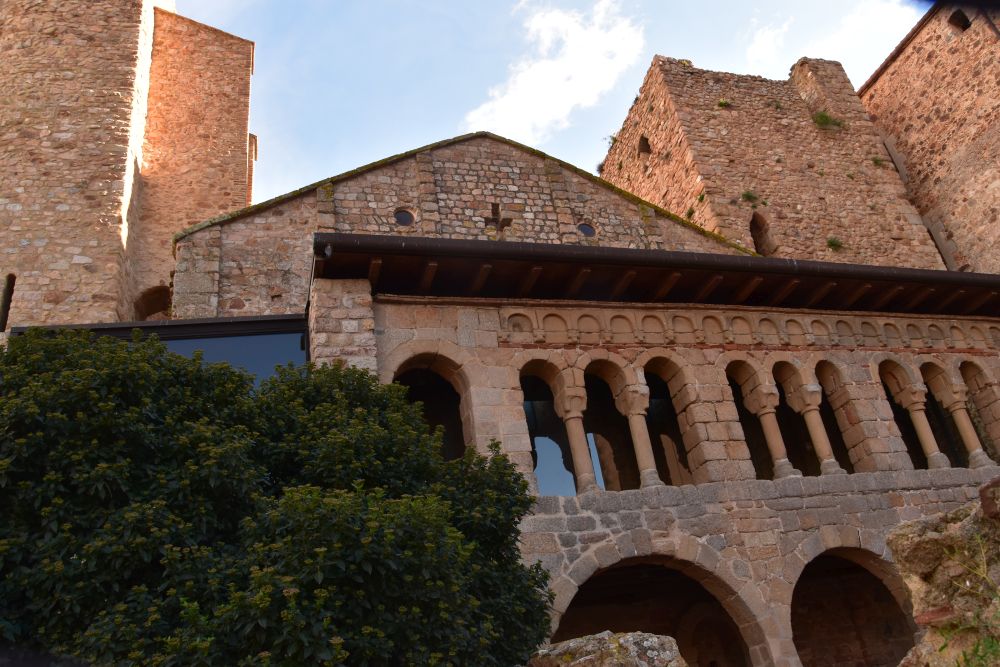
Crossing the mountains from Cadaqués to the north, we reach El Port de Selva. From here our car climbs uphill on a narrow road. At about 500m above sea level, the Benedictine monastery Sant Pere de Rodes appears behind one of the turns in front of the rocks.

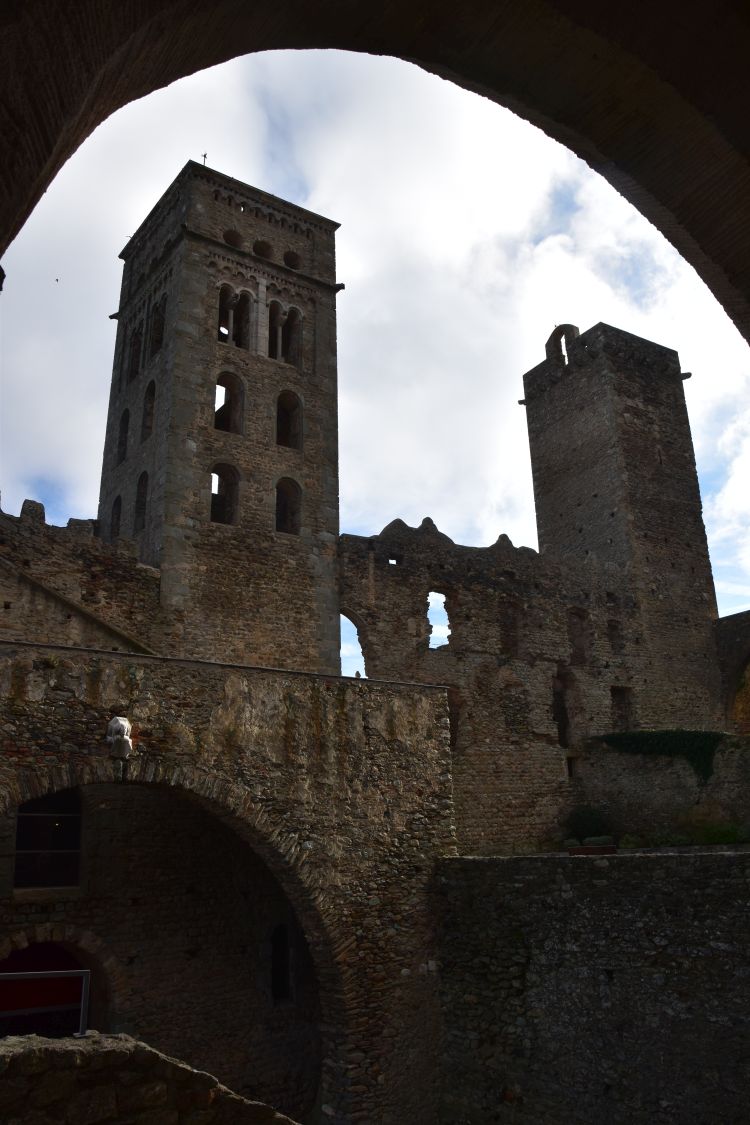
The belfry has been built in the 12th century. It is shaped in Lombardian style, though that was no longer fashionable then. The second tower has been erected to defend the monastery.

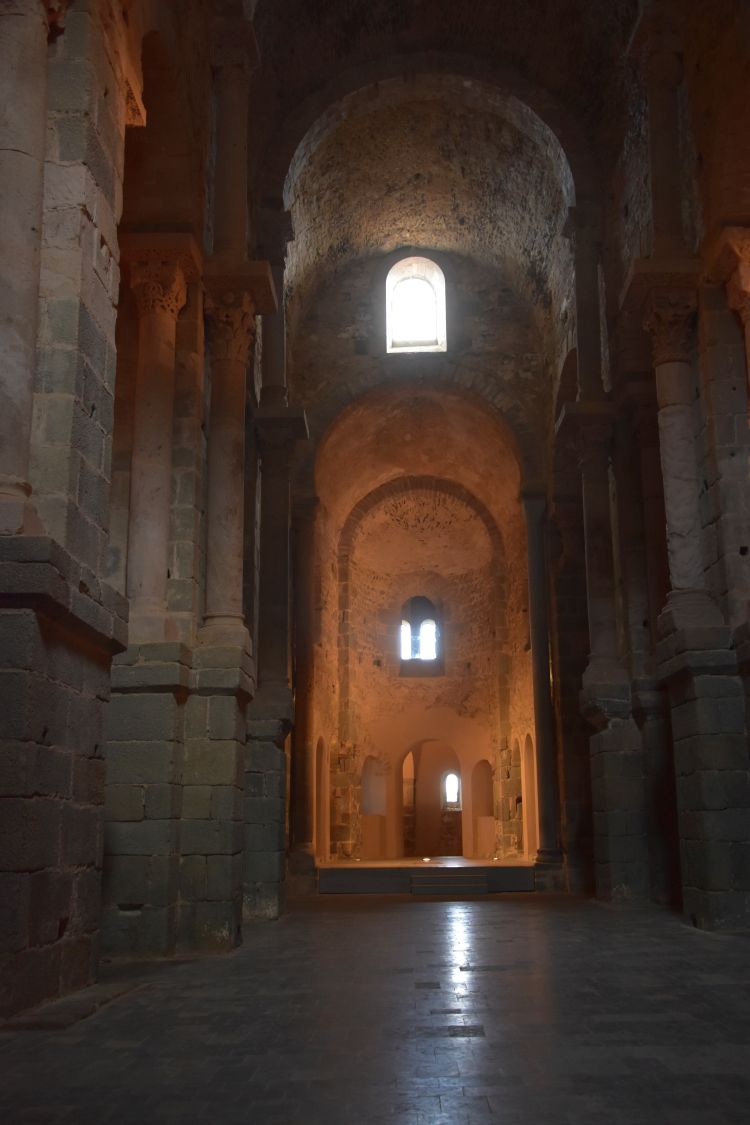
The church has been inaugurated in 1022. The nave is covered with a barrel vault. This was unique – at that time, the churches had naves with wooden ceilings. Never before have I seen such solid pedestals as a base for the columns.  The nave is large, 37m long and 15m high. Incredible that they built this huge church high in the mountains a 1000 years ago.

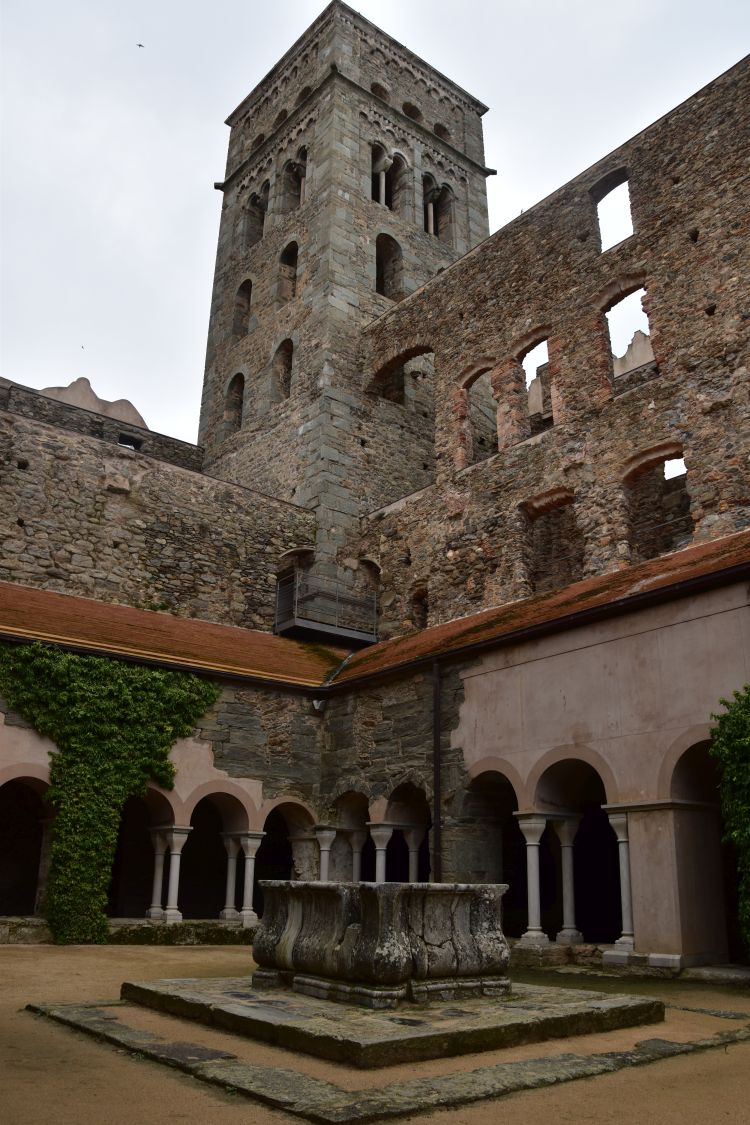
There are two Romanesque cloisters, the newer from the 13th century is on top of the older from the 11th century. This is the more recent cloister.

It has been reconstructed to give an impression of what it might have looked like.

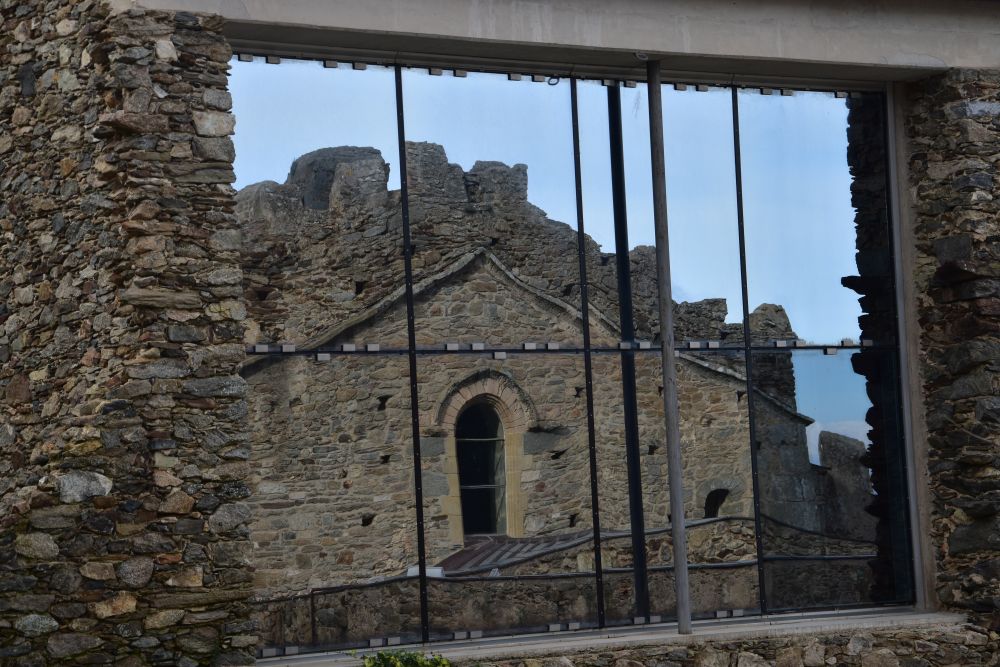
The remains of the monastery reflect in the window above the entrance hall.

The monastery flourished until the 14th century. It was left around 1800 and decayed after that. Restoration started in 1935.

Above the monastery, there is a fortification, the Castell de Verdera.

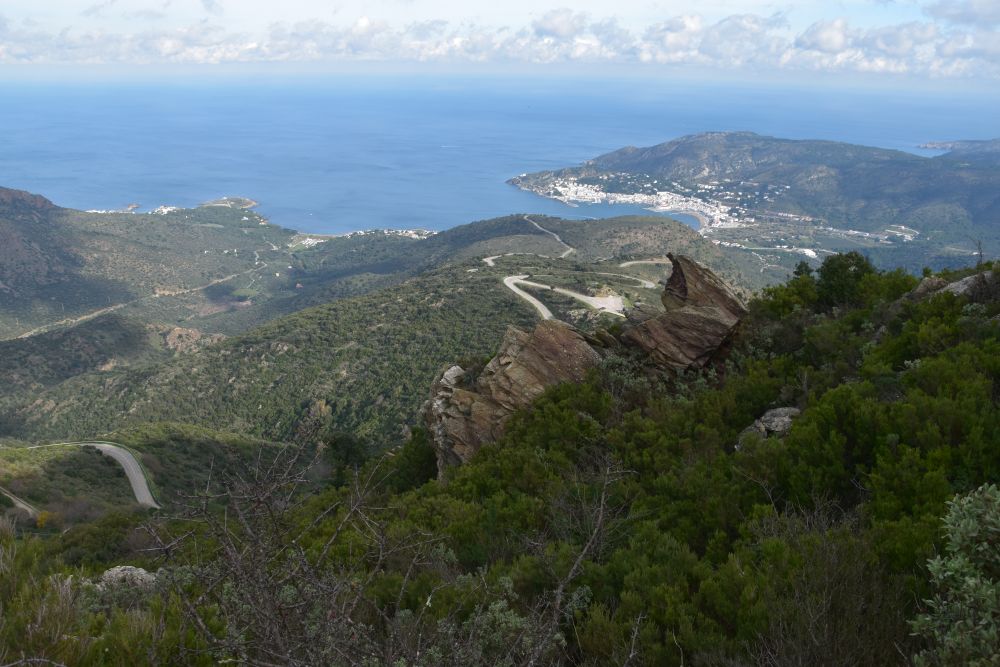
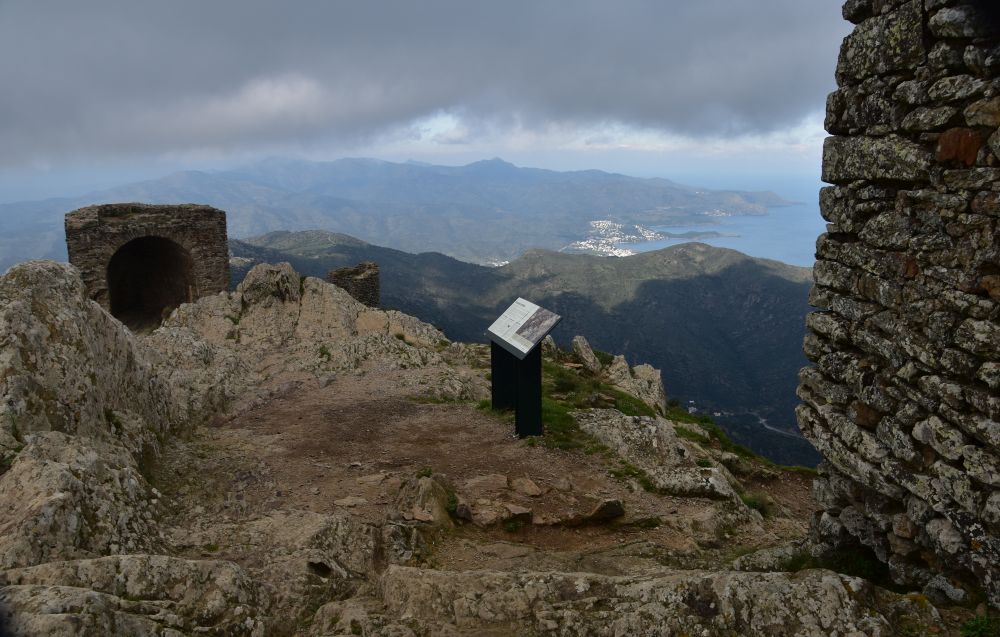
A small zigzagging footpath takes me about 300 meters up to the fortification. The view of the bay El Port de la Selva is getting more and more extensive…

… and the monastery below me is shining in the sun…

Now I am at the very top. To me this fortification seems to be unconquerable.

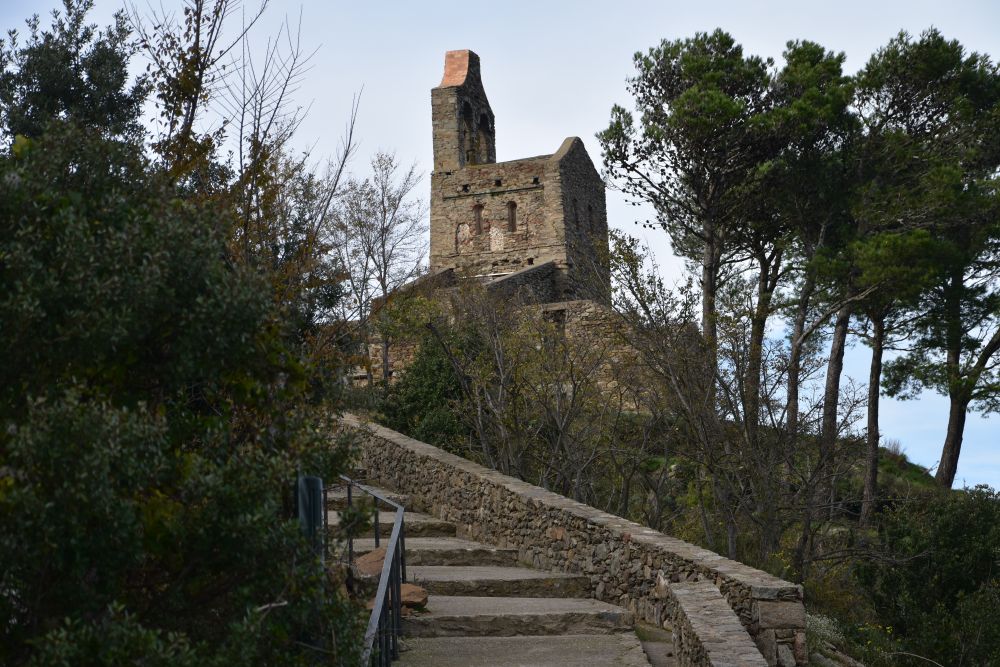
Walking back to the car we come by the small hermitage Ermitá de Santa Creu de Rodes.

.

The Cap de Creus – a windy nature reserve

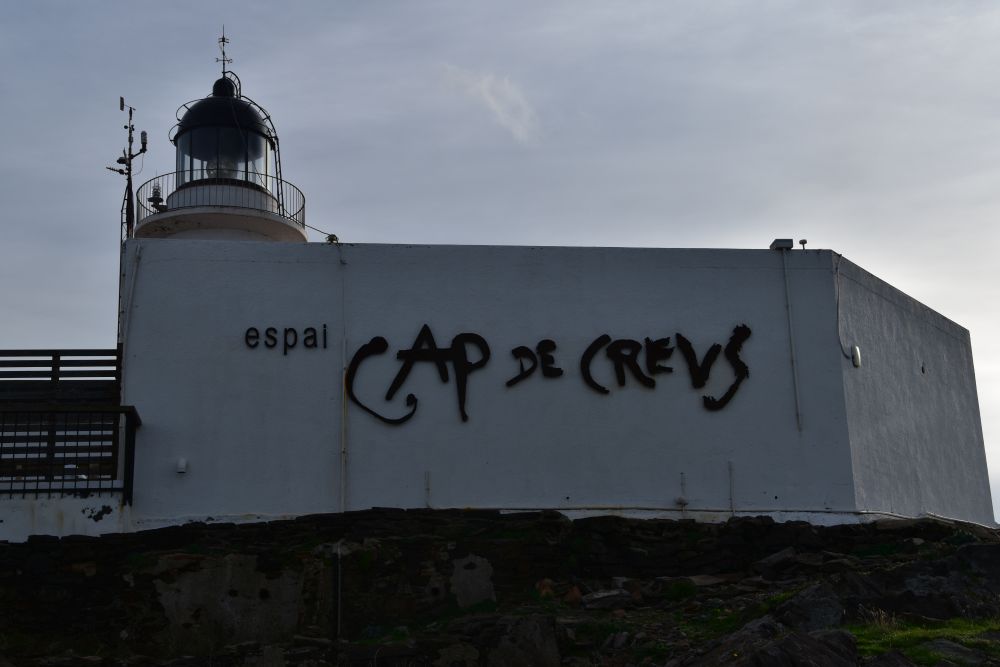
We round up our tour today with a visit to the Cap de Creus.

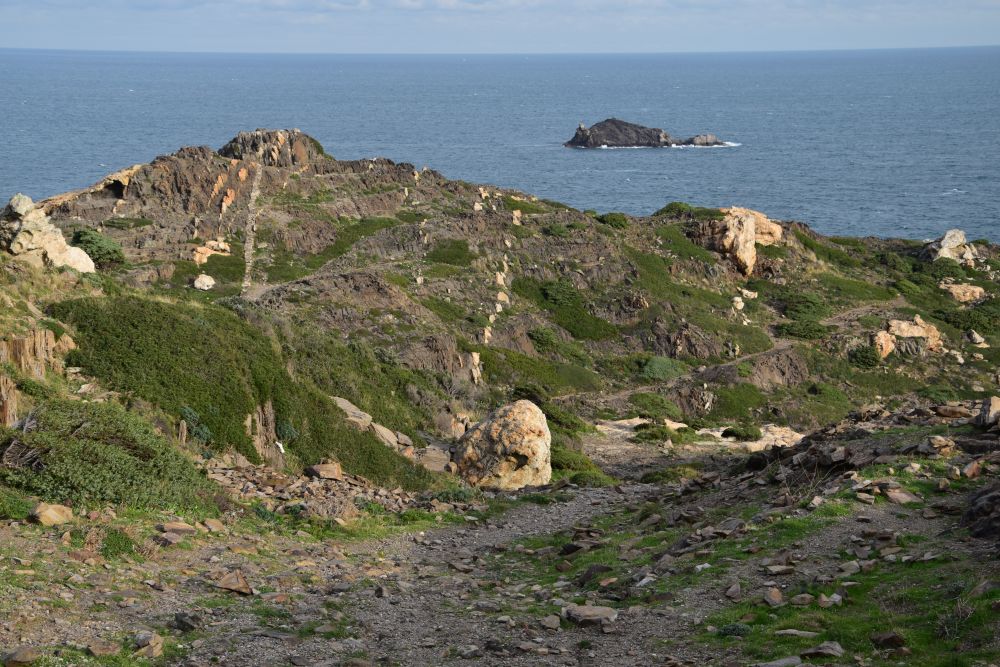
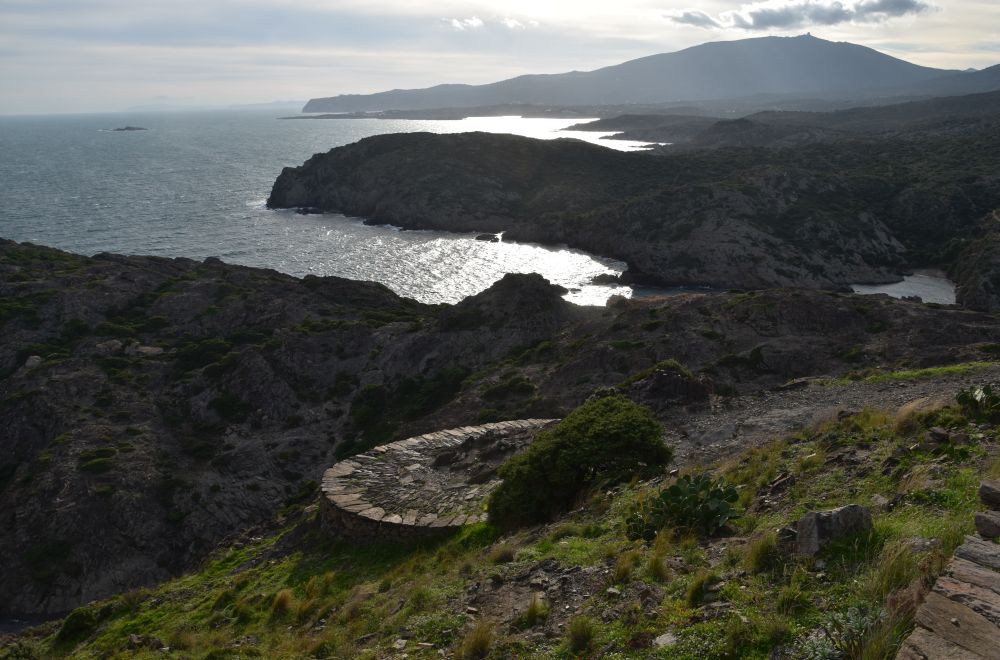
It is a nature reserve with a barren landscape.

The sea gloes in the sun. A narrow hiking path winds along the coast line. It is very windy and chilly.

In the bar behind this terrace, we take a hot drink to warm up…

… and the return to our fancy hotel Residencia with its Dalí decoration in Cadaqués. Tomorrow we plan to continue our way along the coast to France.


Sources:

  • Thomas Schneider: Katalonien”, Michael Müller Verlag 2015.
  • Fritz René Allemann and Xenia v. Bahder: “Katalonien und Andorra”, DuMont Kunstreiseführer Köln 1980.


Catalonia: Besalú and Peralada – treasures at the foot of the Pyrenees

After having spent three weeks near Tarragona, we slowly drive back home. Now I will tell you about our visit to Besalú, to the Dolmen de Cabana and to Peralada on the way to Cadaqués.

Source: España Noreste, Michelin Cartes et Plans 1:400’000

.

Besalú – an old earl city with an old bridge

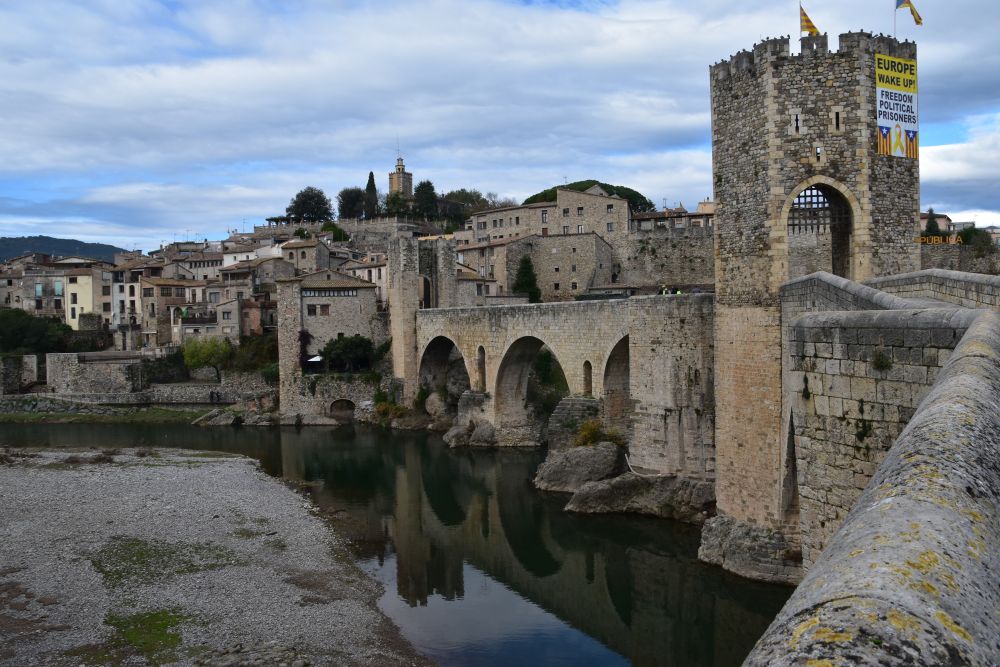
Besalú was an early reconquest of the Christians from the Moors. In 812, it was named the capital of the Franconian county in the Spanish March. It was independent until the 12th century, when it became part of the county of Barcelona. Besalú has been classified as a historic national property of Spain, as it has kept its medieval appearance due to having lost importance in the 14th/15th century. Though counting only 2500 inhabitants now, Besalú has clearly the appearance of a city, preserved from medieval times.

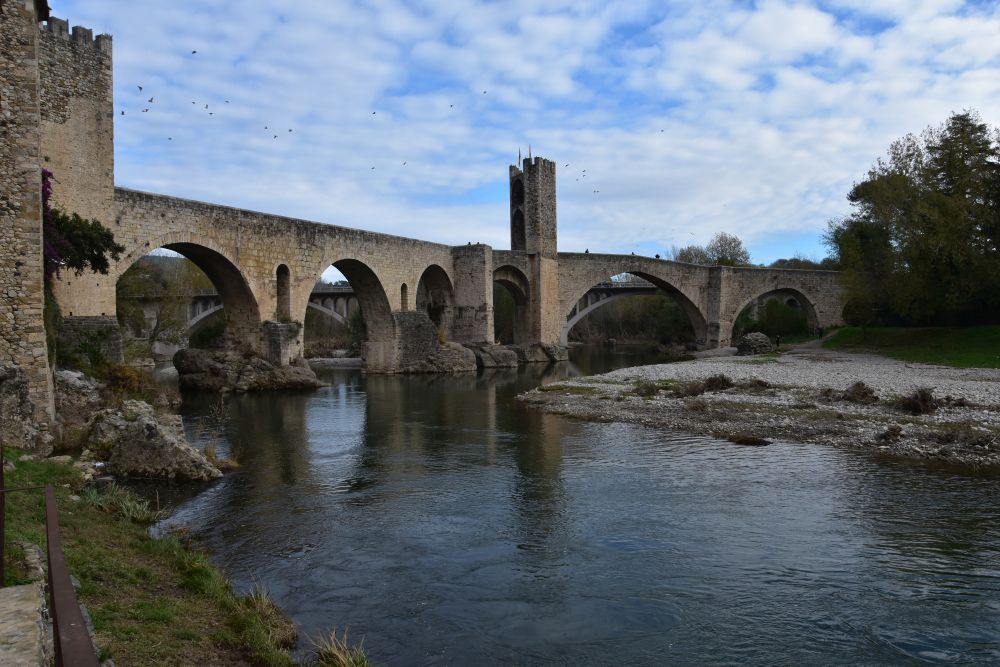
The old bridge (Pont Vell) crosses the Fluvià river. It uses rocks as the natural basis for the arches, which is the reason for it bending across the river.

The small city crouches on a hill. To the left of the bridge, the remains of a Jewish site for ritual washing (Mikwah) have been found.

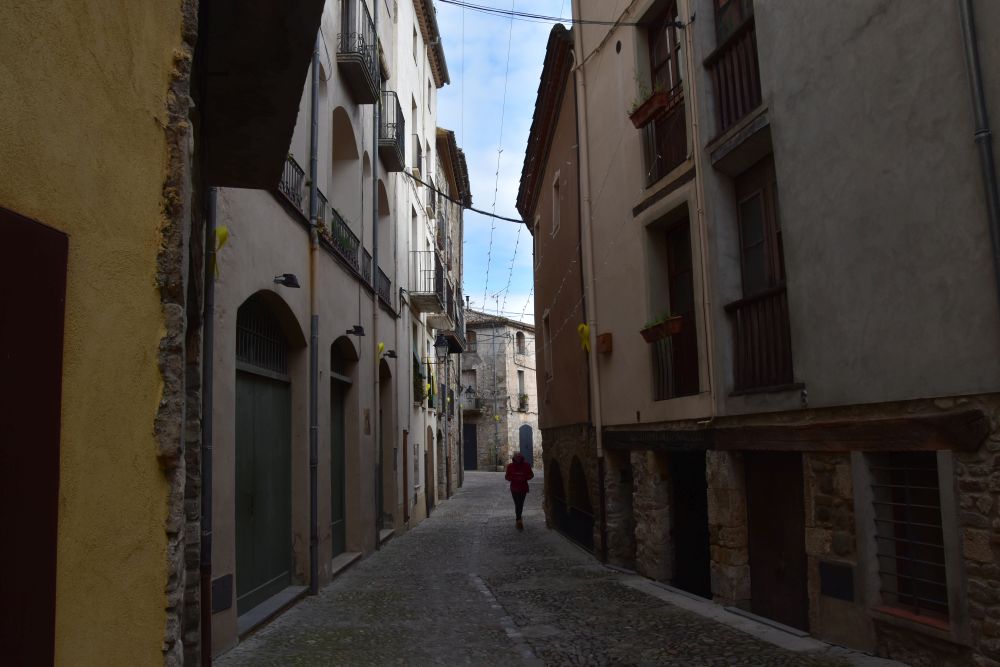
The medieval streets inside the city walls are narrow.

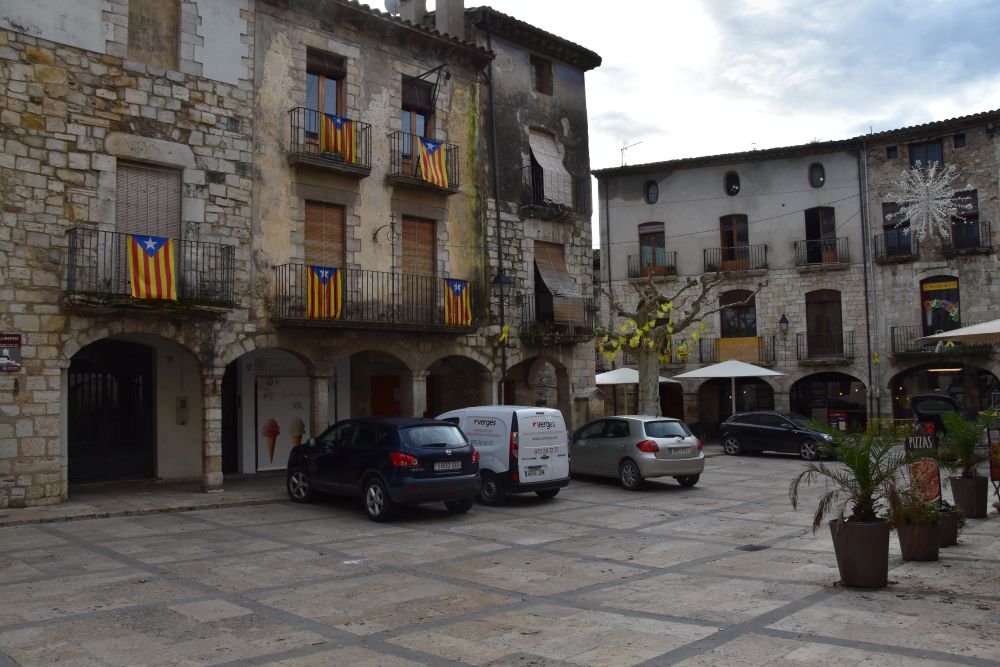
The Plaça Llibertat is bordered by arches.


Besalú: The church San Vicenç with its remarkable western side port

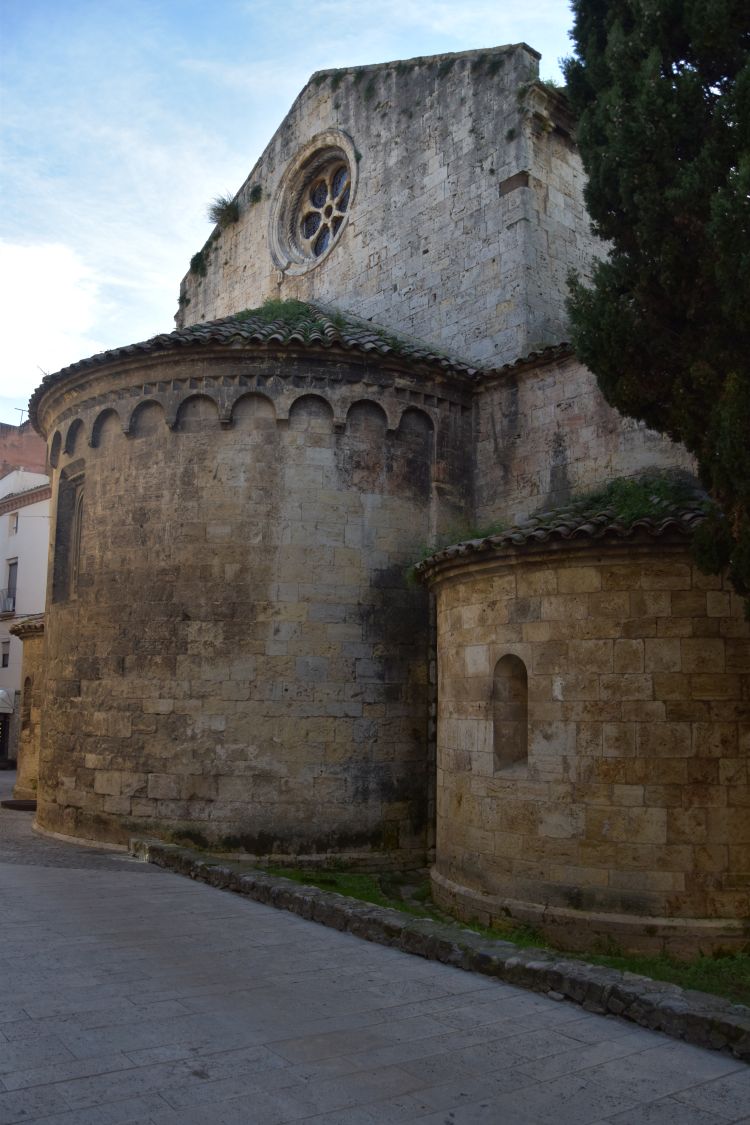
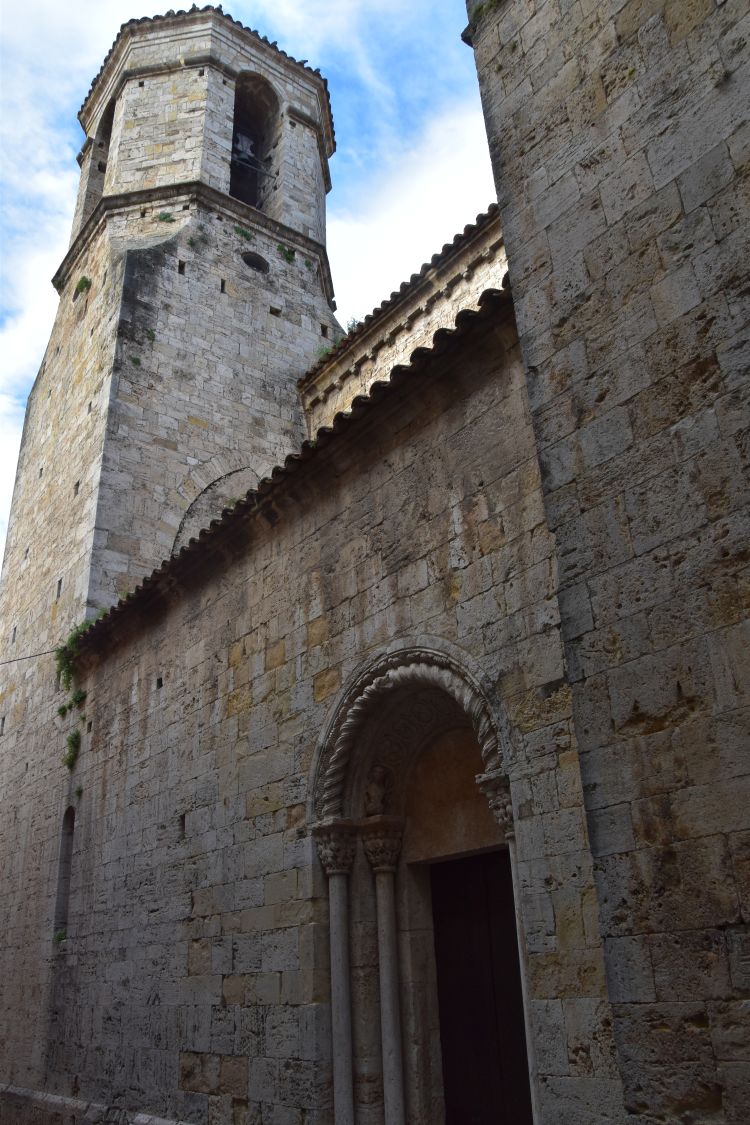
According to our “Dumont”, the style of the church San Vicenç is late Romanesque – beginning Gothic. The choir seems Lombardian to me.

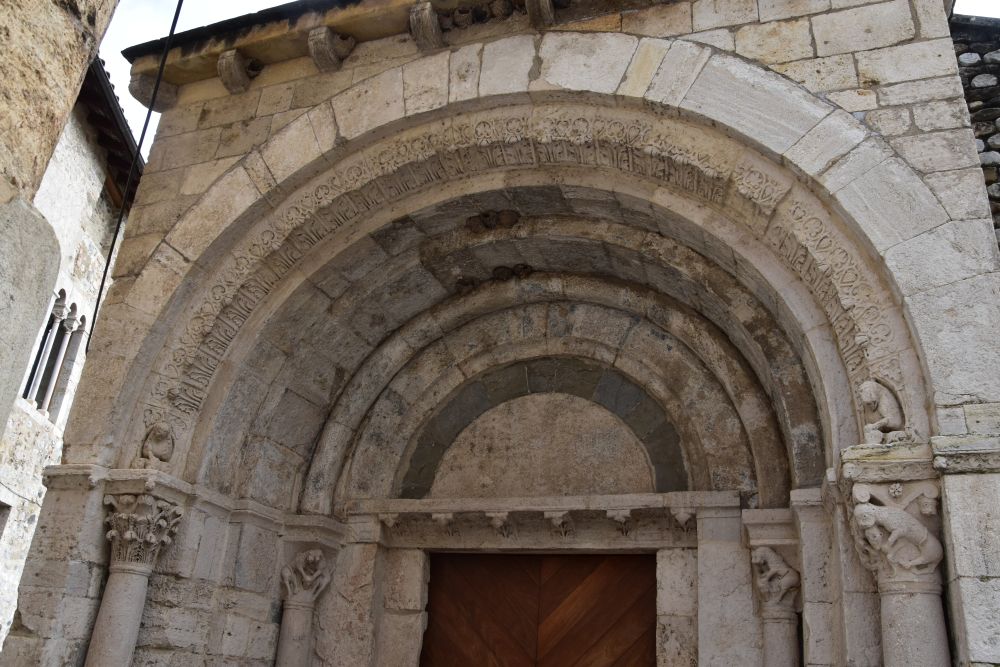
The western side port is beautifully decorated.

Fierce animals and a spiraled arch as well as plants are the elements of the decoration.


Hospital de Sant Julià built to receive pilgrims

Besalú is a center on the pilgrimage route of Sant James and has therefore built the Hospital de Sant Julià. Constructed in the 12th century, it is now a museum. This gate is finely adorned.


Sant Pere de Besalú

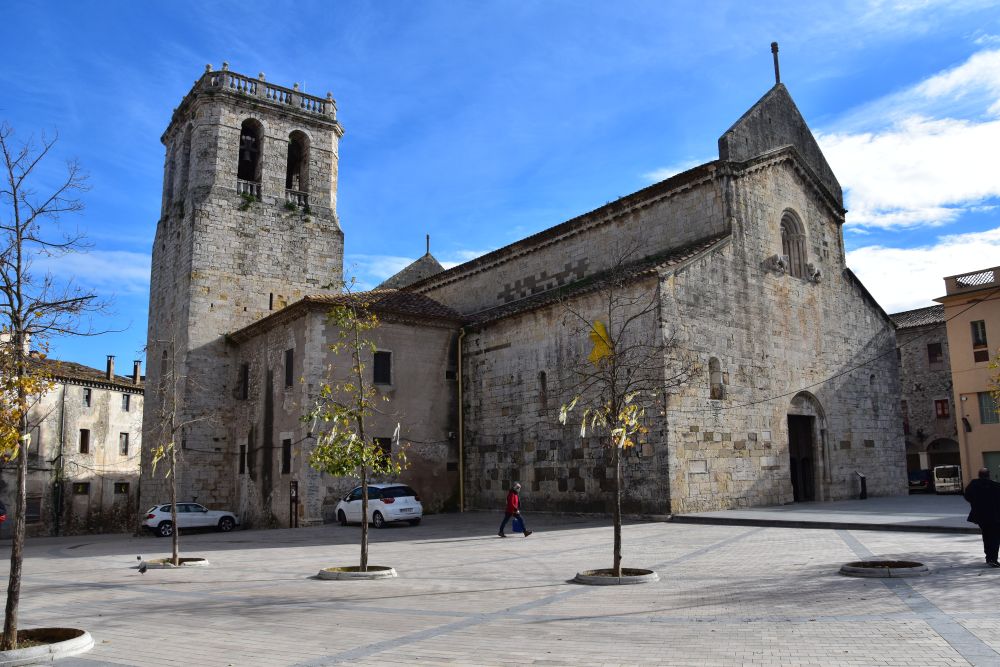
The Plaça de Sant Pere was once the Benedictine Sant Pere Monastery that has been destroyed around 1800 in the French Wars. Only the church from the 12th century is left.

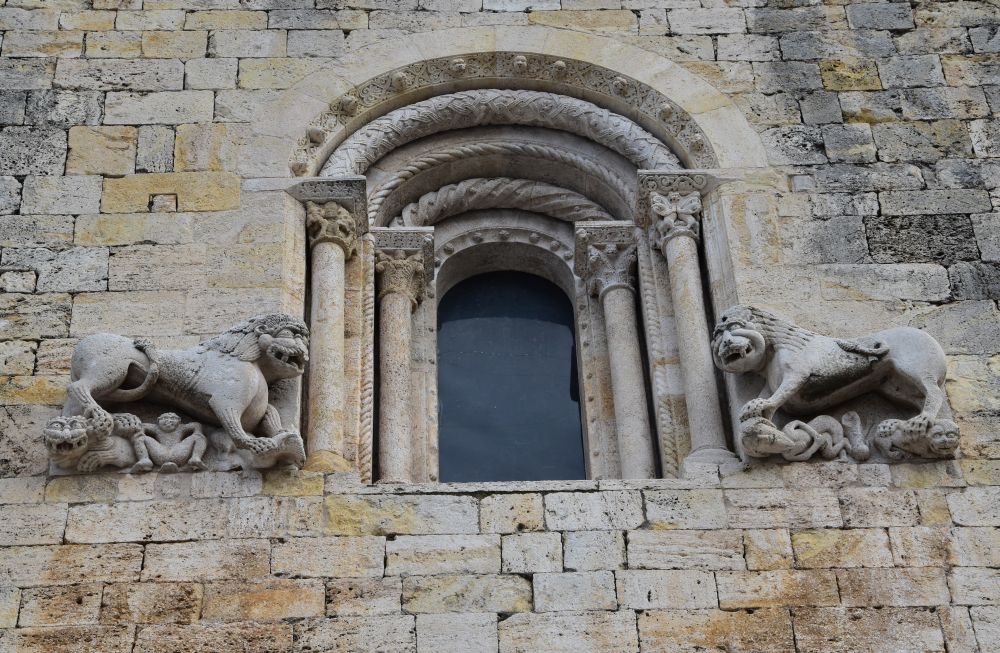
Below the gable on the western façade is this beautiful window with the two furious lions.

The vaulted nave is sparsely illuminated by small windows. I took this photo from the ambulatory with its decorated columns.


Refreshing ourselves in the friendly Xocolateria

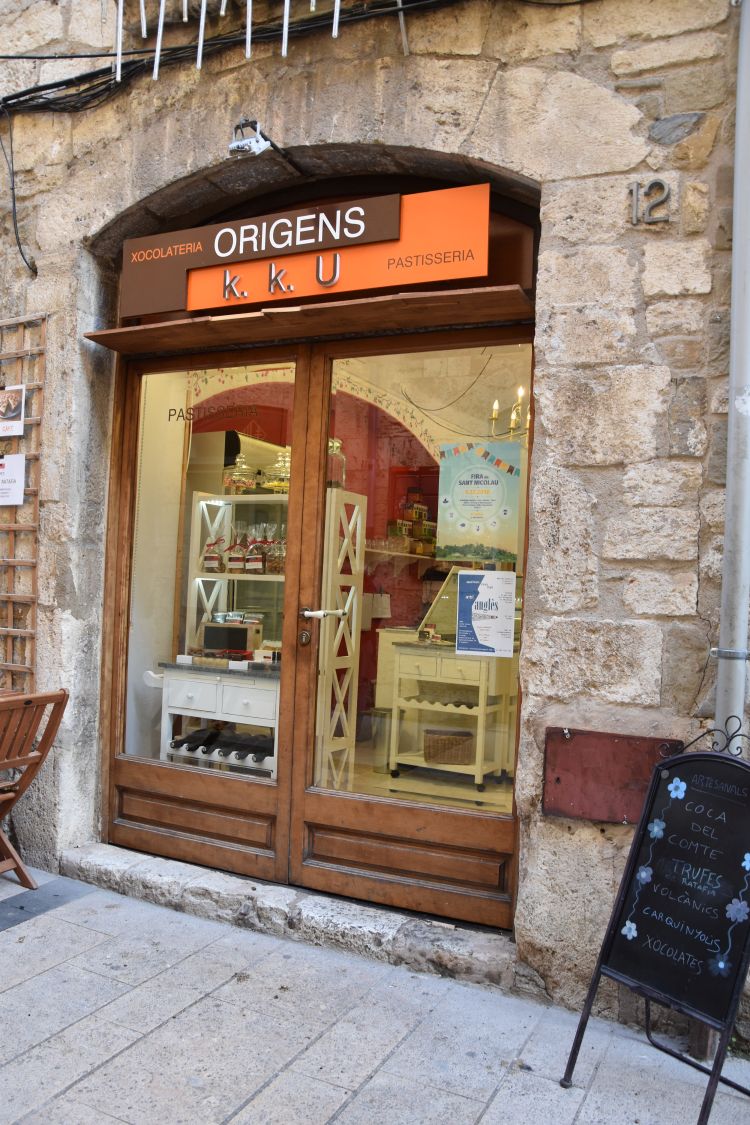
Before continuing our way, we have coffee in the friendly Xocolateria.

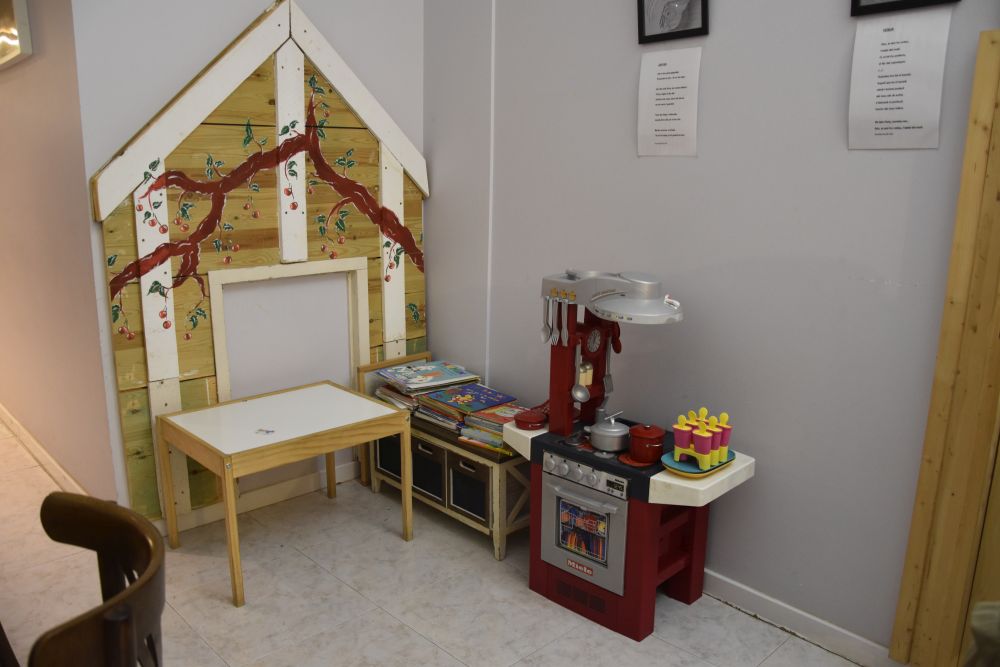
The kids corner has been installed with much care in this welcoming place – there is even rubber ice cream in the small kitchen.


The Dolmen amidst the vineyards of the Empordà

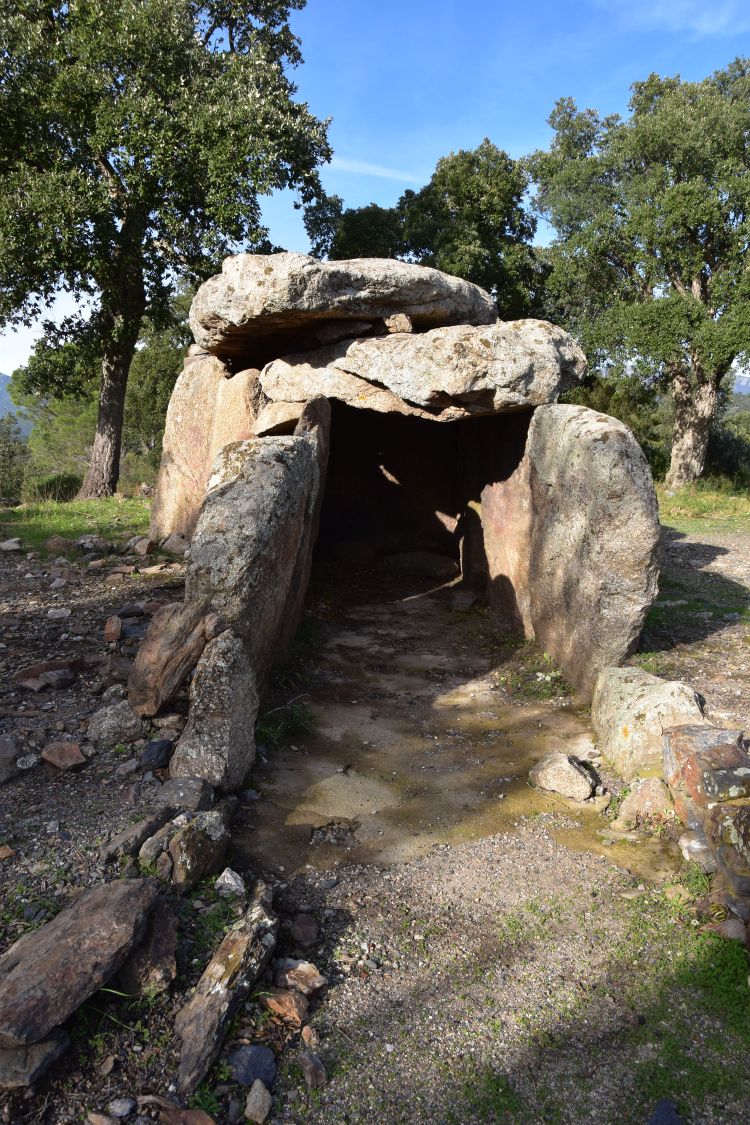
Our Müller guidebook talks about the Dolmen of Cabana. I love dolmens as a relict from prehistoric times, about 4000 years ago. I saw some dolmens in Bretagne (France), in Ireland (Newgrange) and there is even one near my home in Basel (Aesch). Ursula agrees to visit the Dolmen of Cabana in the Empordà at the foot of the Pyrenees. We follow the bumpy small road to the very end and we find the remains of the covered tomb…

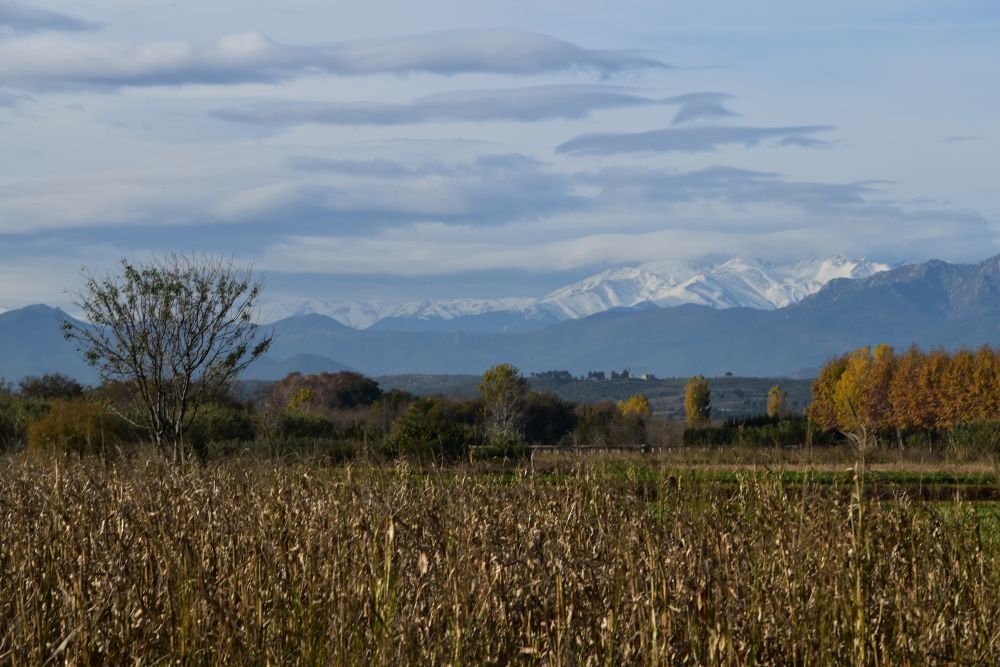
… with a gorgeous view of the Canigou…

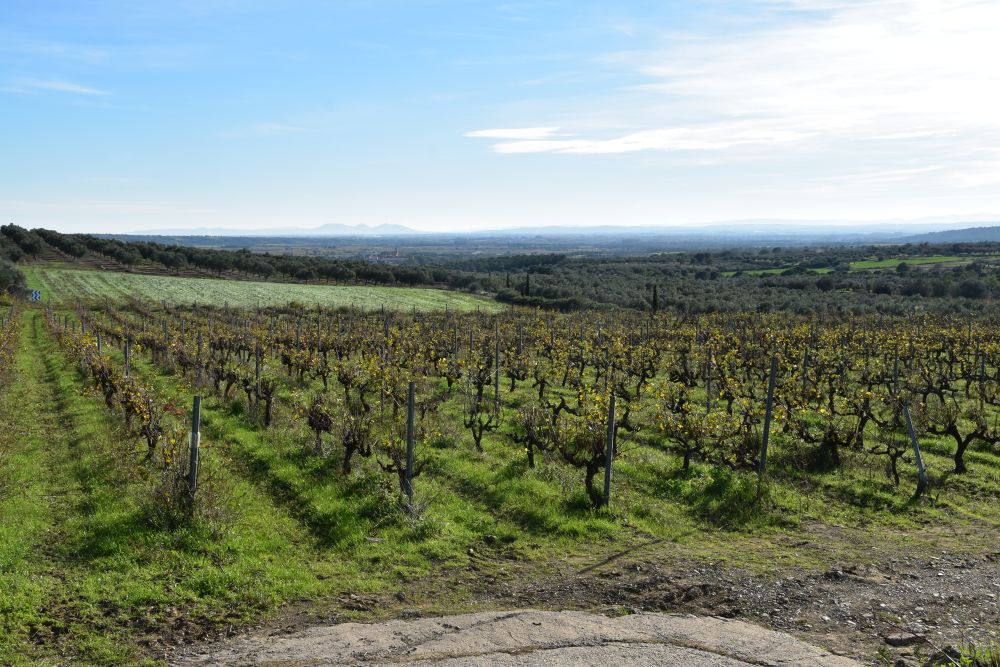
… and amidst the DOC wine region of Empordà. I acquired a bottle of cava “méthode champenoise” from here (more famous for cava in Catalonia is the Penedès, but it is also elaborated here).


Peralada – another Romanesque gem – the cloister of the former monastery Sant Domènec

Peralada is a pretty small fortified town with narrow streets, located on a hill.

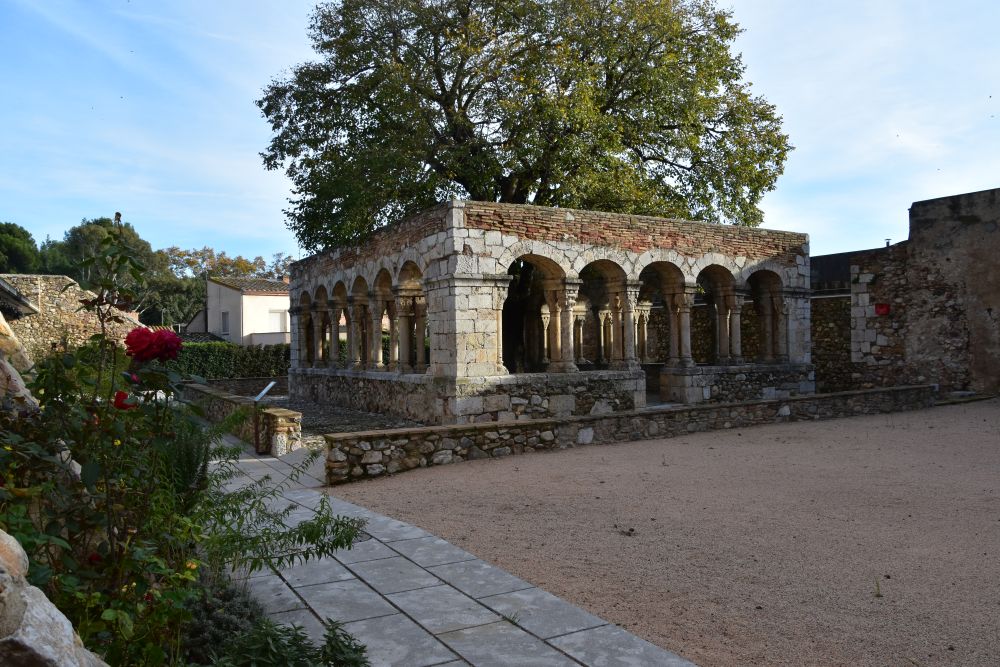
We visit the cloister of the ancient Augustinian monastery Sant Domènec from the 11th century. Only the cloister remains from the former monastery.

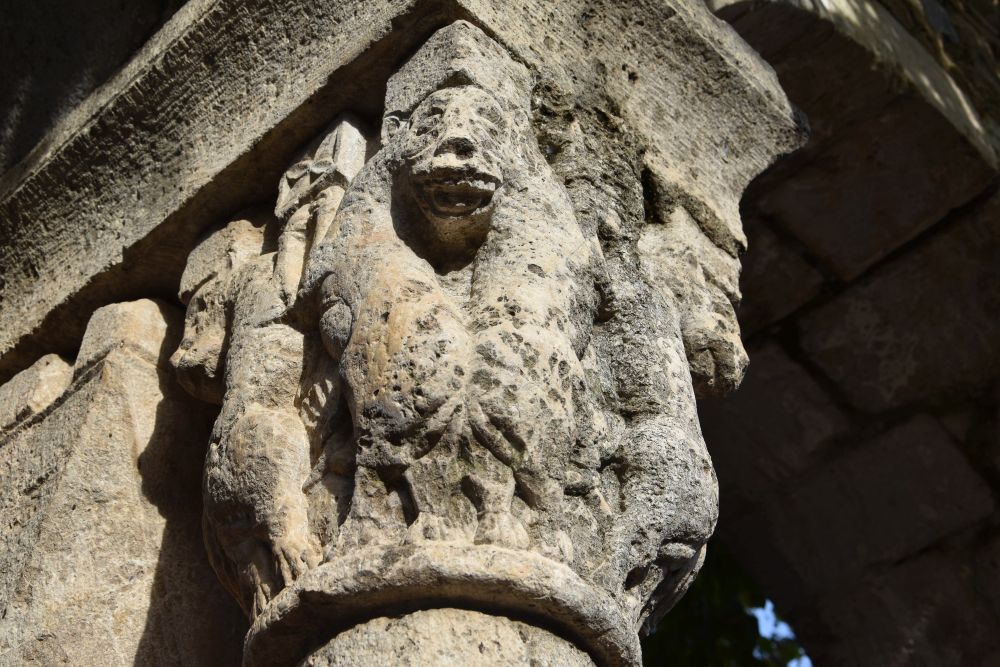
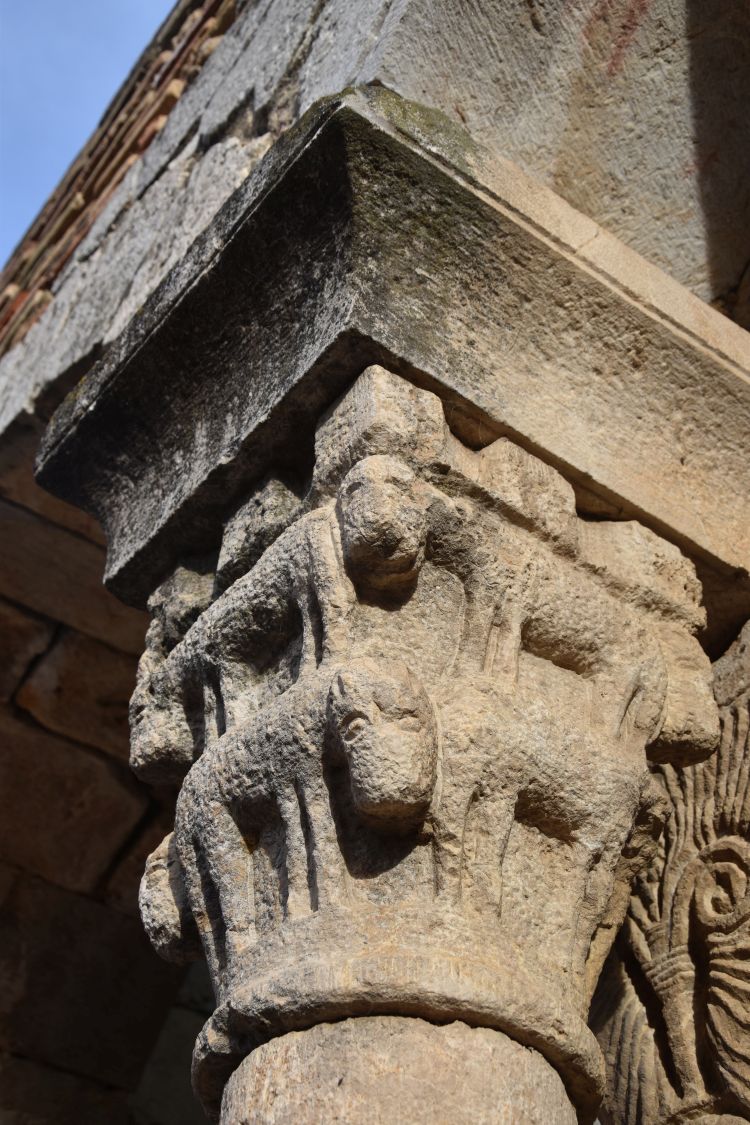
The capitals are decorated with wild animals…

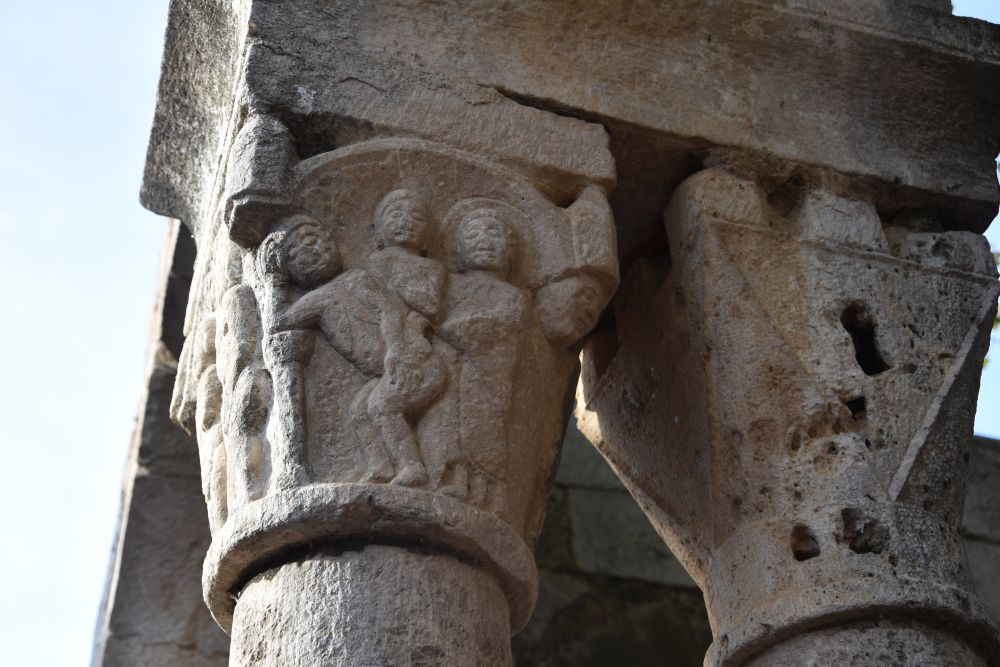
… and with scenes from the bible such as Eva being born from the ribs of Adam…

…  and Adam and Eva in the paradise – well, they seem to have eaten the apple already.

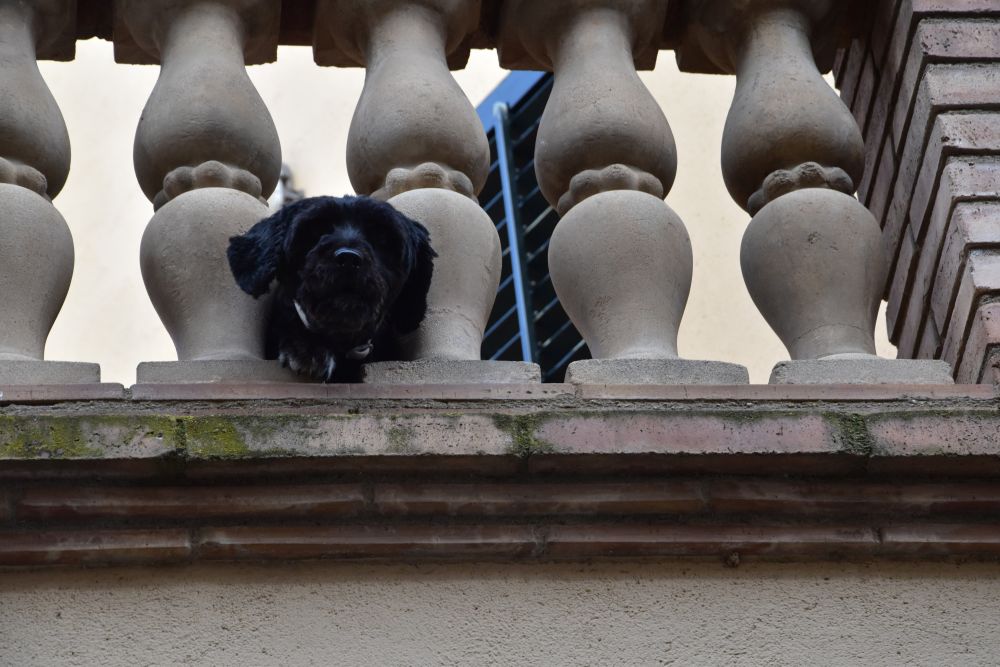
We say good-bye to the small teckle barking at us from the balcony and we say good-bye to Peralada…

Now we continue our way through the hills to Cadaqués on the Mediterrenean Sea where we have booked two nights.

Sources:

  • Fritz Allemann and Xeniua v. Bahder: “Katalonien und Andorra”, DuMont Kunstreiseführer, Köln 1980
  • Thomas Schröder: “Katalonien”, Michael Müller Verlag, Ebermannstadt 2015

Girona with its charming old city centre

In November 2018 we spent three weeks near Tarragona. Now we head north again, to the Costa Brava, Girona and Cadaqués.

.

The Costa Brava – wild rocks above the blue sea

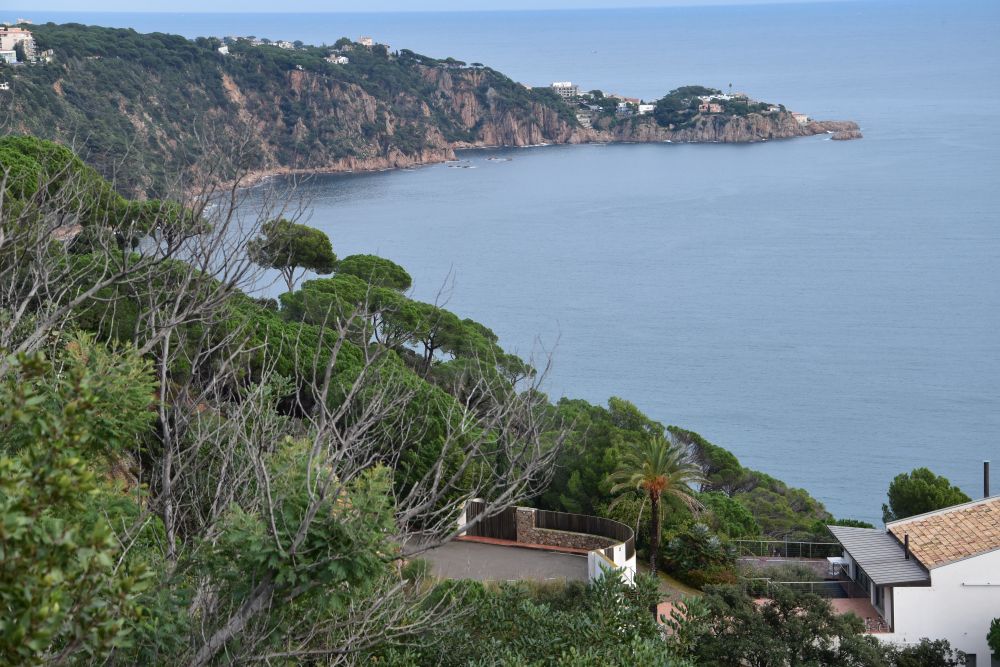
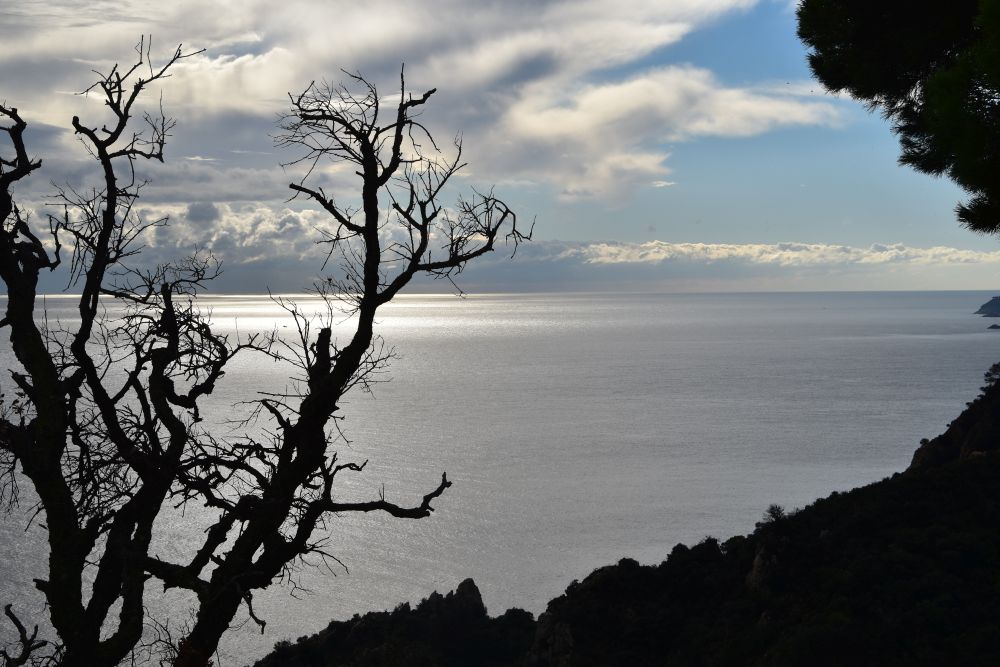
From Torres del Mar we follow the coast line of the Costa Brava. On the map, the road looks very curvy… and yes, they ARE curvy. One bay after the next. Wild rocks. Some houses along the steep rocky slopes. And at the foot of the rocks, in the bay, a small sand beach with amenities for bathing in the Mediterranean Sea.

We enjoy the romantic views, as the sun plays with the clouds.

.

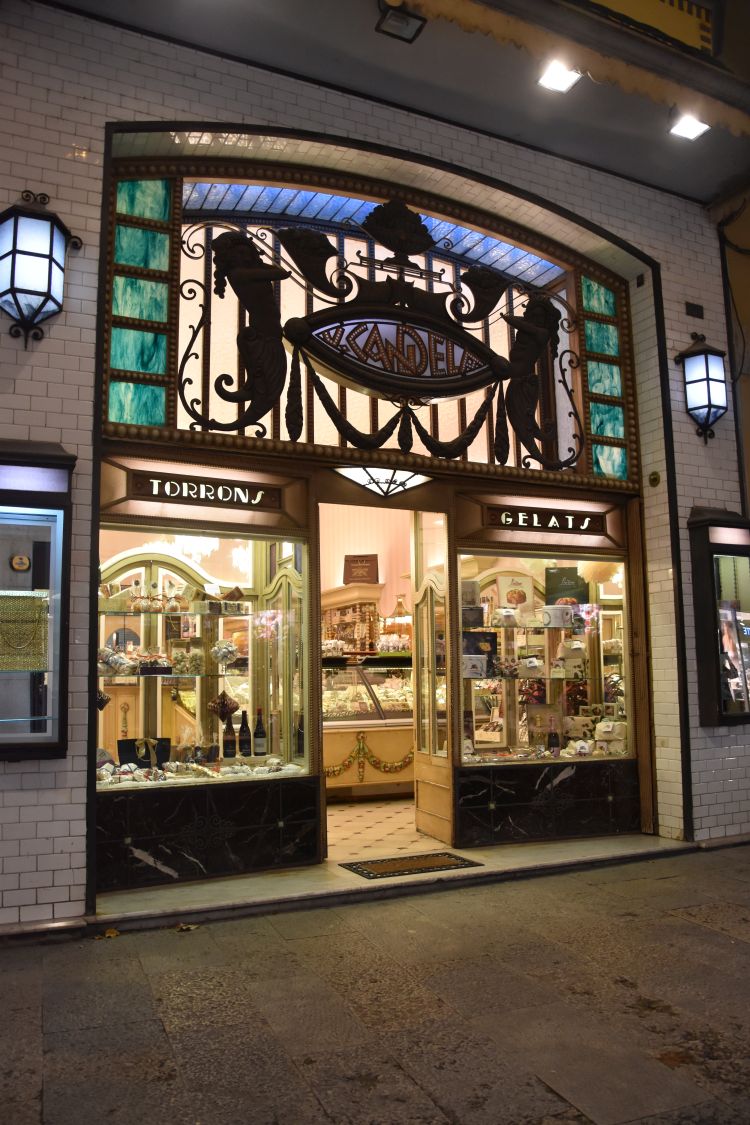
Sant Feliu de Guíxols – large holiday resort with a 10th century monastery

After having curved along the scarcely populated rocky bays, we reach the resort Sant Feliu de Guíxols with ist Benedictine monastery from the 10th century.

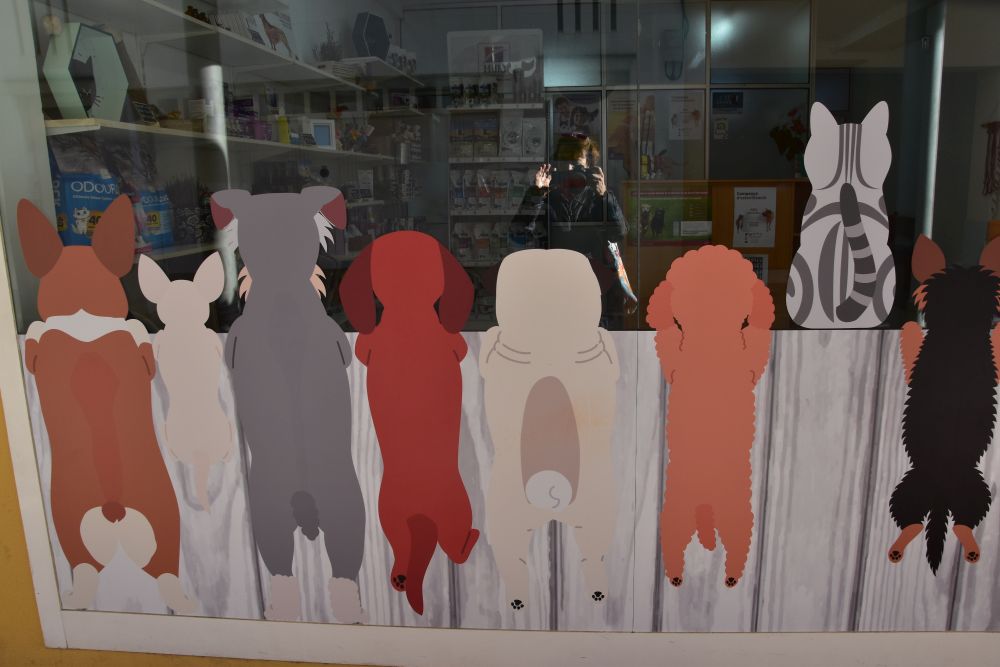
All Museums, everything is closed now, end of November. We walk through the narrow streets of the old town, find a nice restaurant open in the otherwise quiet Rambla and yes, there is even a shop for pets. I am sure, this place will be very busy in summer.

.

Welcoming Girona at night

A fast national road takes us to Girona (pronounced Jirona). We stay in the hotel Carlemany, and I learn, “Carlemany” is Catalan for “Charles the Great”, “Karl der Grosse” or “Charlemagne”. The people of Girona remember him. He conquered Girona from the muslims already at the end of the 8th century. It was then pingponged between Christians and Muslims until the 11th century. Then it remained with the Christians as part of Catalonia.

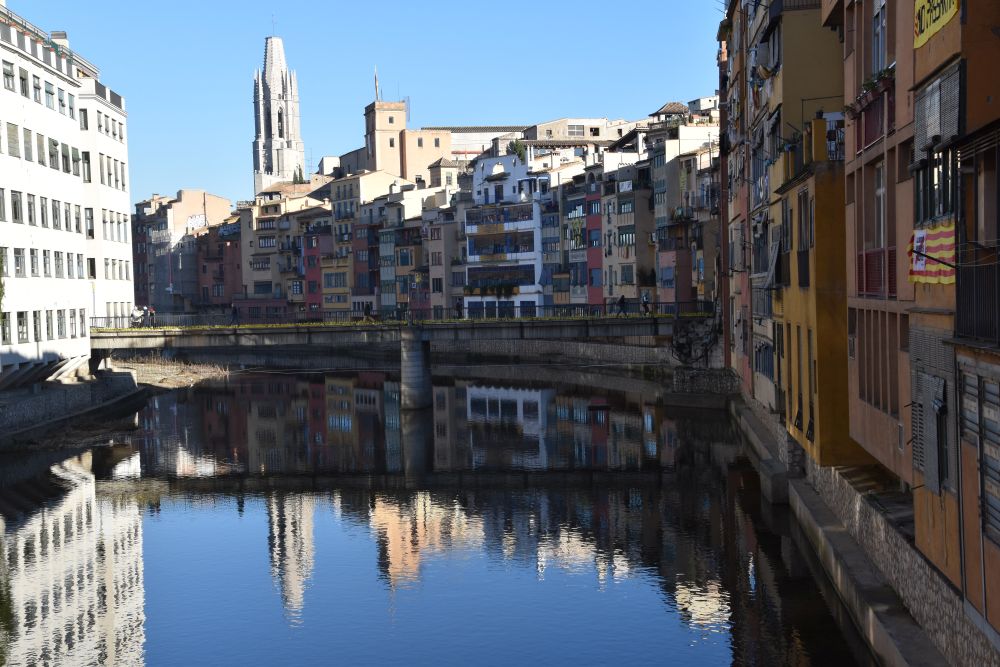
In the evening, we stroll through the narrow streets along the river Onyar with the view of the Cathedral Santa Maria…

… and we discover some Art Modern that is present all over in Catalonia.

.

A full day in Girona – we start with the river and the medieval bath 

The next morning we return  back to the river Onyar and the medieval city…

… and visit the “Els Banys Arabs”. They have been built around 1200, after the Arabs had left, perhaps by mudejar masters (Dumont, p. 123). This is the tower above the entrance hall. It gives access to the remains of the cold, the warm and the hot room.

.

Sant Pere de Calligants: The Romanesque Benedictine monastery is now a museum

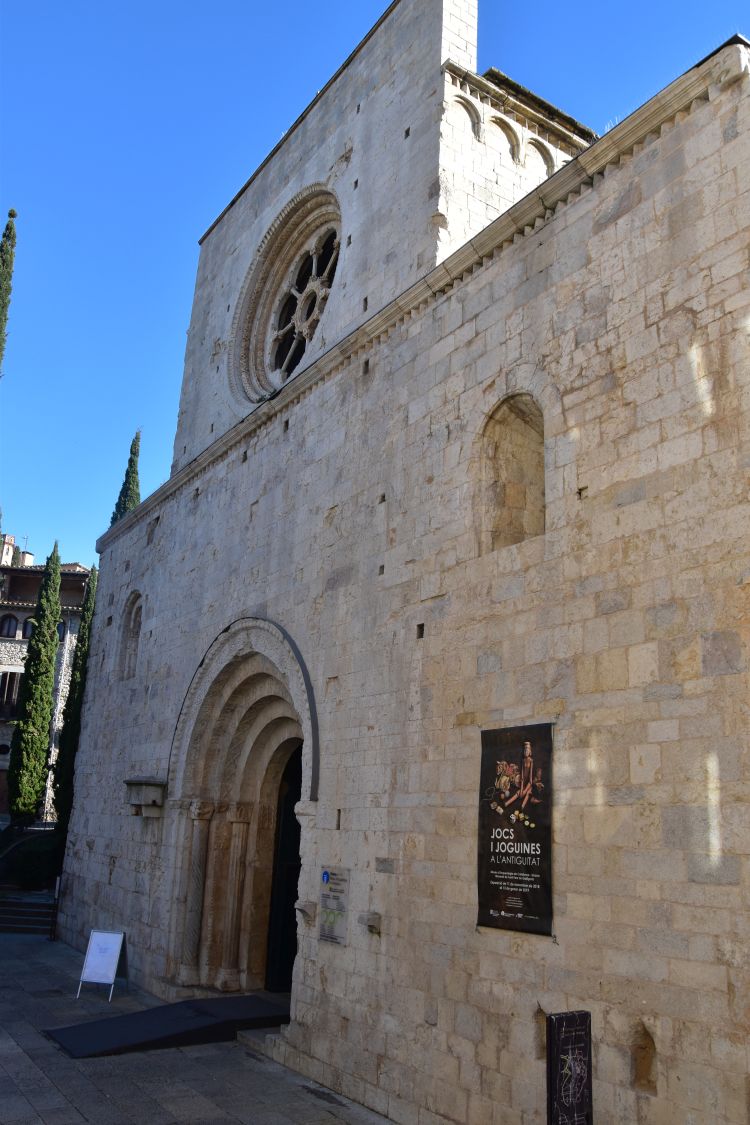
Sant Pere de Calligants is the former monastery of the Benedictines from the 12th century. This is the entrance…

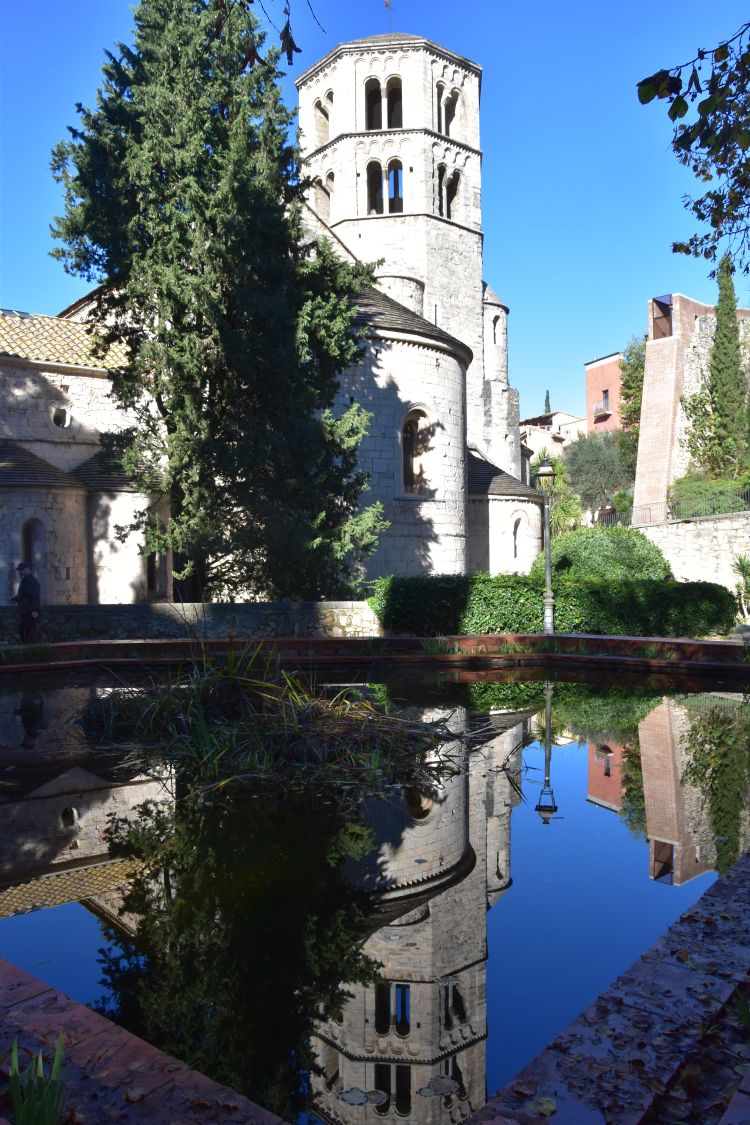
… an this is the charming belfry in Lombardian style reflecting in the pond of the garden.

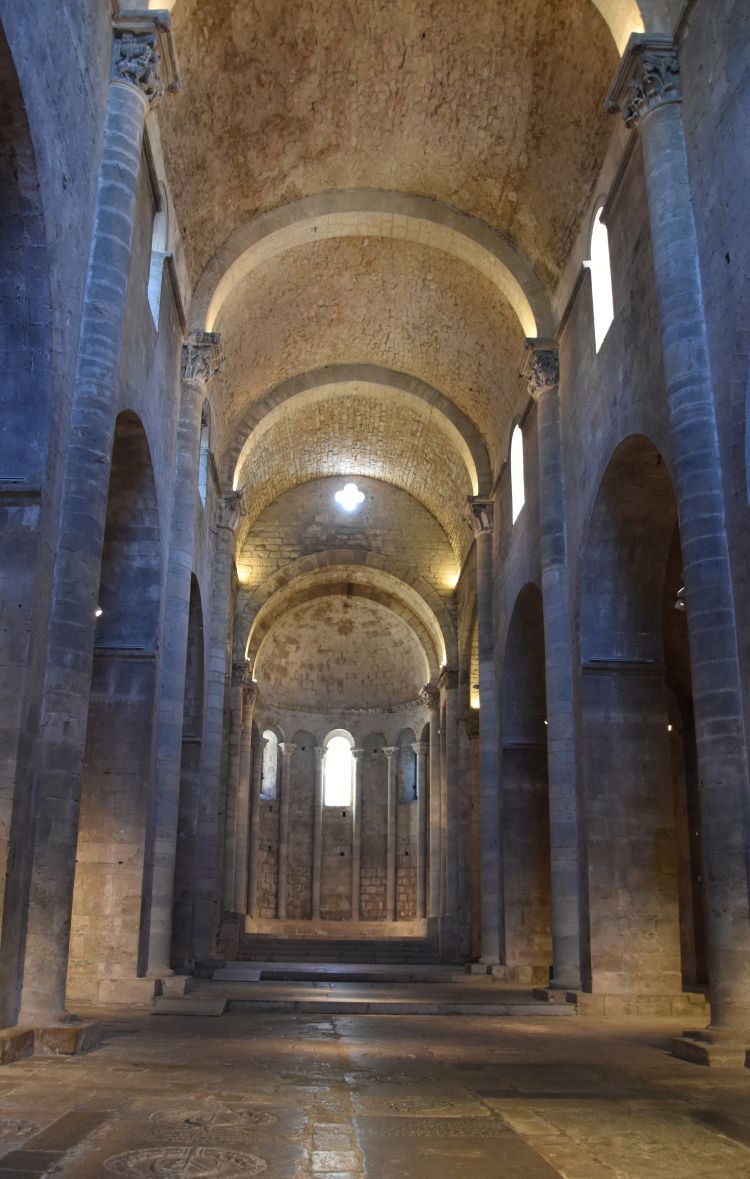
Inside we find the harmonic barrel vault…

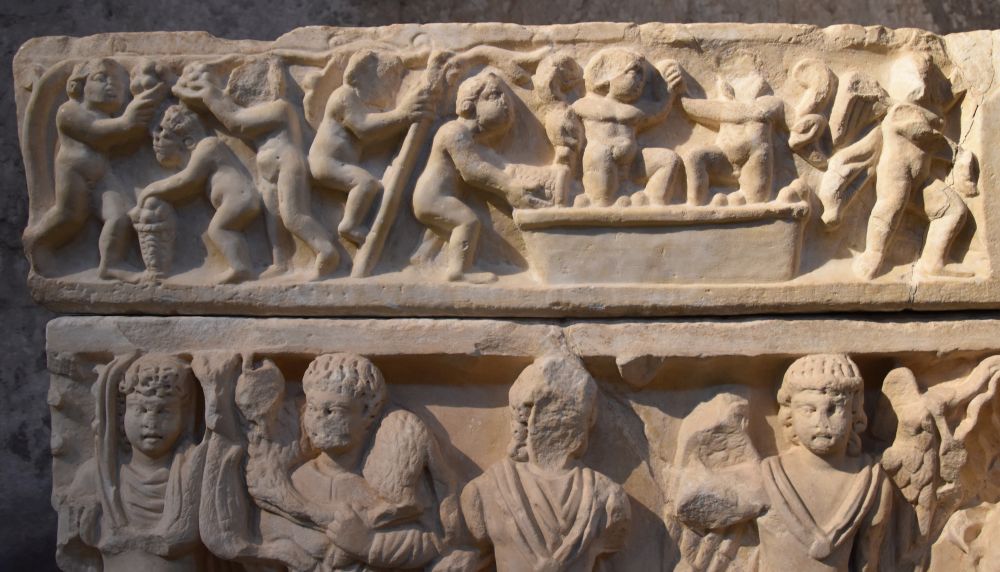
… with some treasures such as the Roman tomb that shows the elaboration of wine: The grapes are picked in the vineyard and then tramped in the trough.

I also like the baptismal font.

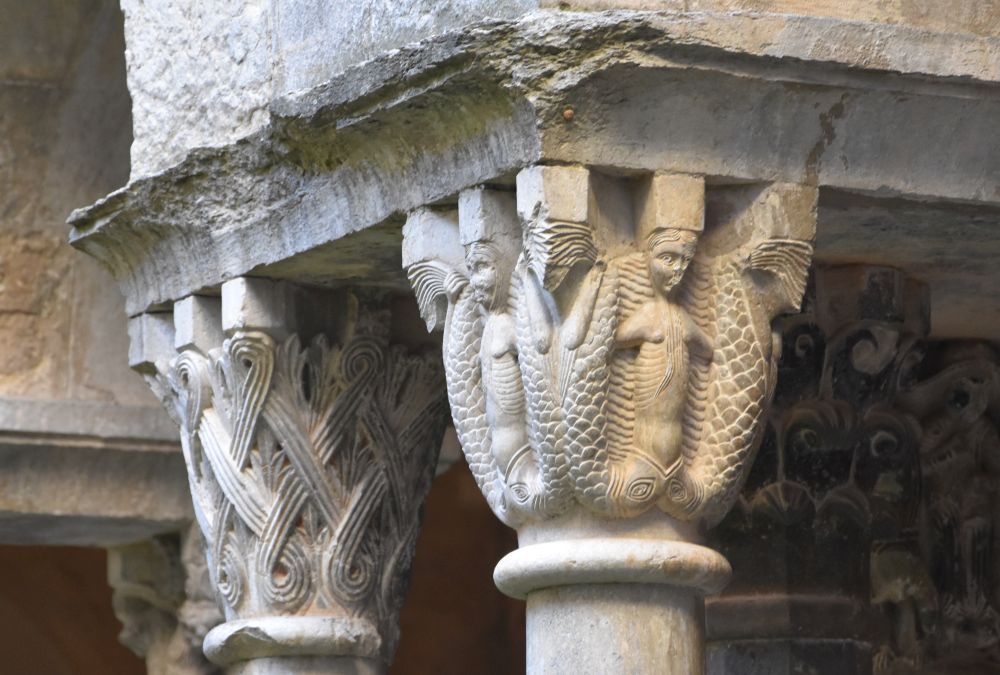
The Romanesque cloister has some nice capitals…

… such as this one where two fish seem to swallow a women.

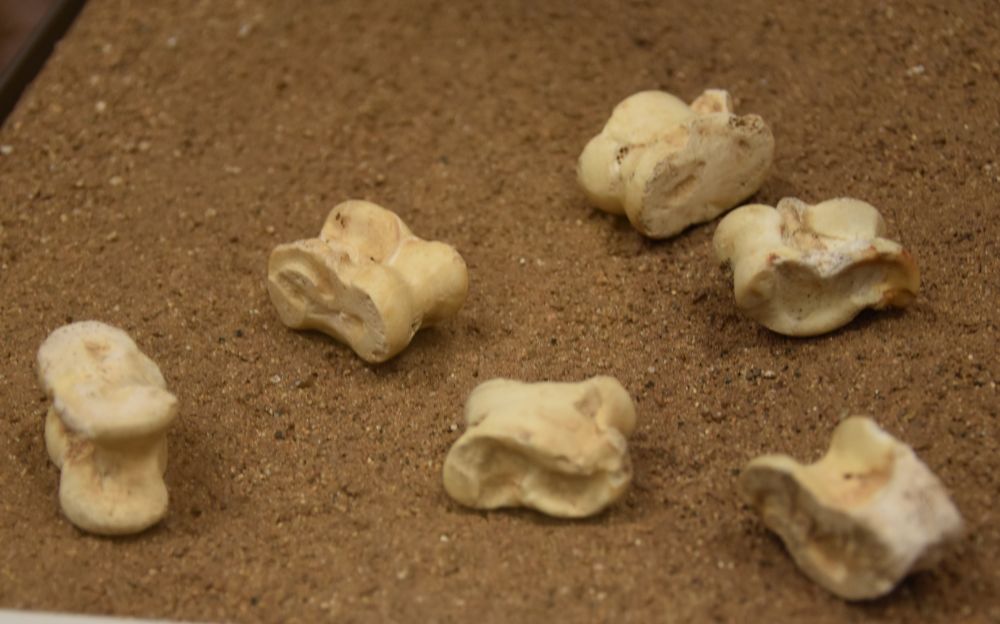
In the museum we find a wonderful exihibition of Roman toys, amongst them bones. Interesting, in Mongolia we have played with such bones as well .

.

Sant Nicolau: Modern art in the 12th century chapel

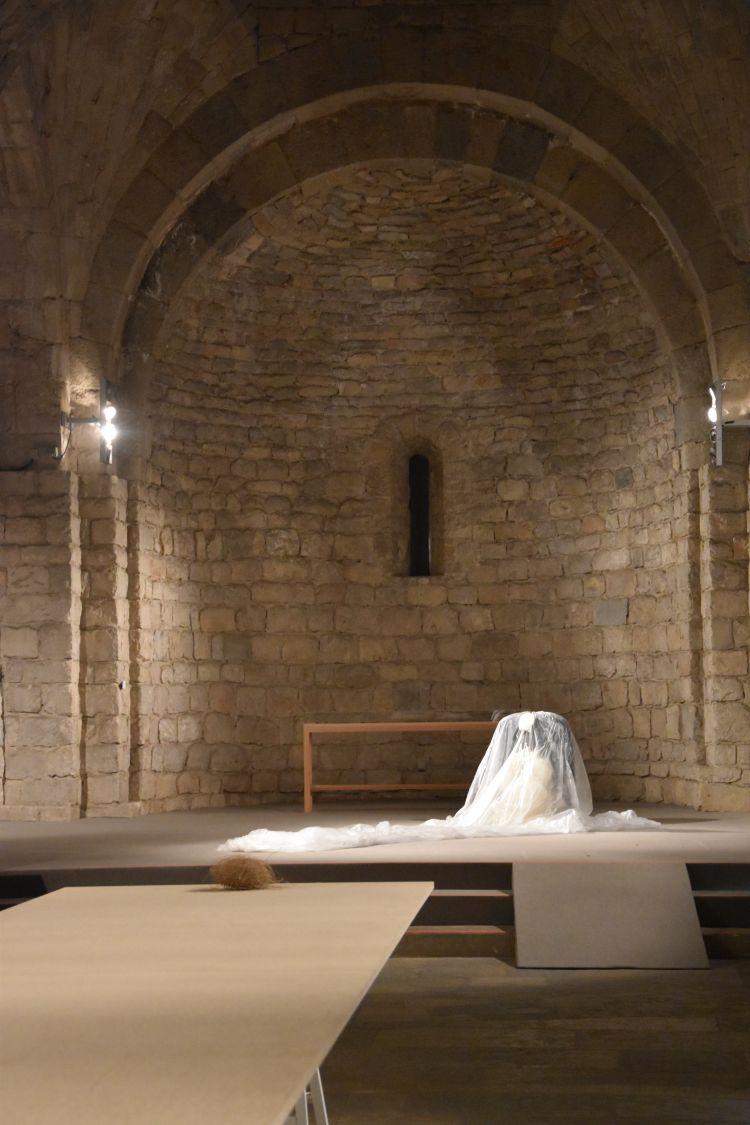
Next to Sant Pere de Calligans, we enter the 12th century chapel of Sant Nicolau with its Romanesque vaults. It is now an art gallery. We find a transparent plastic plane with a brush (I believe) and white spots as well as a long chipboard with some bales of straw.

Interesting pieces of art and for me somewhat difficult to understand.

.

The Cathedral of Santa Maria with the old carpet of world creation 

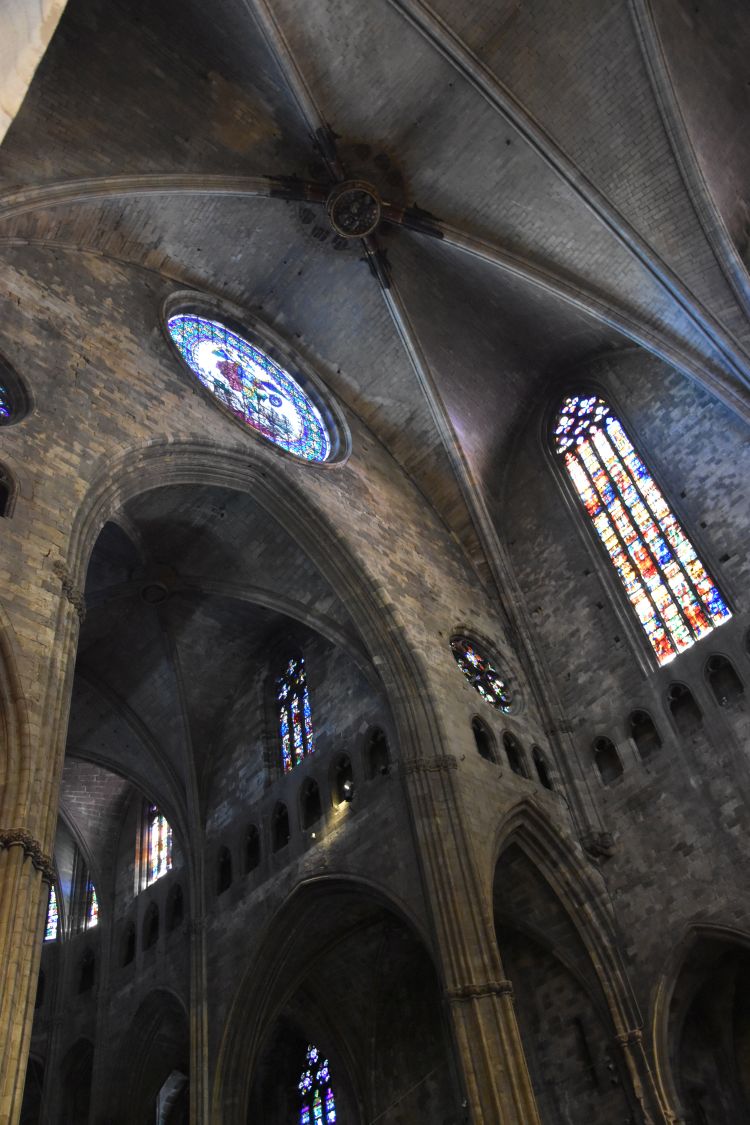
It took a thousand years to complete the Cathedral of Santa Maria – the styles of several periods are mixed. Imposing reverence, the cathedral welcomes the visitors with the 18th century baroque facade above the long stariway completed in the 17th century – 3 times 30 steps.

The huge gothic nave covered with the ONE sequence of ribbed vaults is impressive. The nave is 34m high and 22.6m wide. This is the largest of all gothic vault constructions. The choir built in the 14th century has still been conceived with three naves. Later the idea came up to build the longhouse as one single nave. The risk was high. In 1417 the architect Guillem Bofill accepted the task and completed it (Dumont, p. 118).
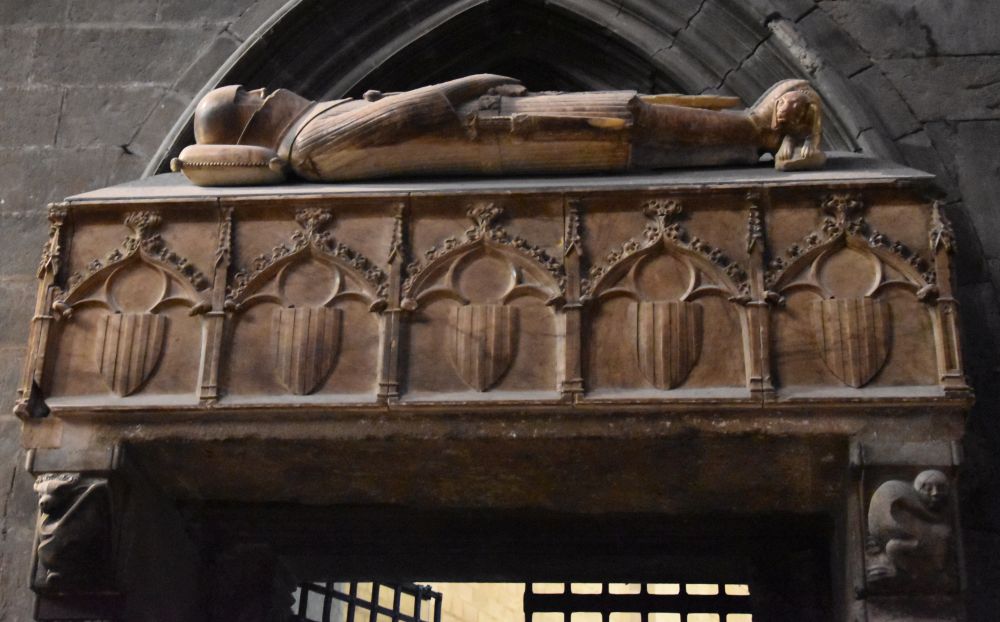
Treasures inside include this tomb – the bishop lies on his comfortable cushion made out of stone and his feet are resting on his faithful dog.

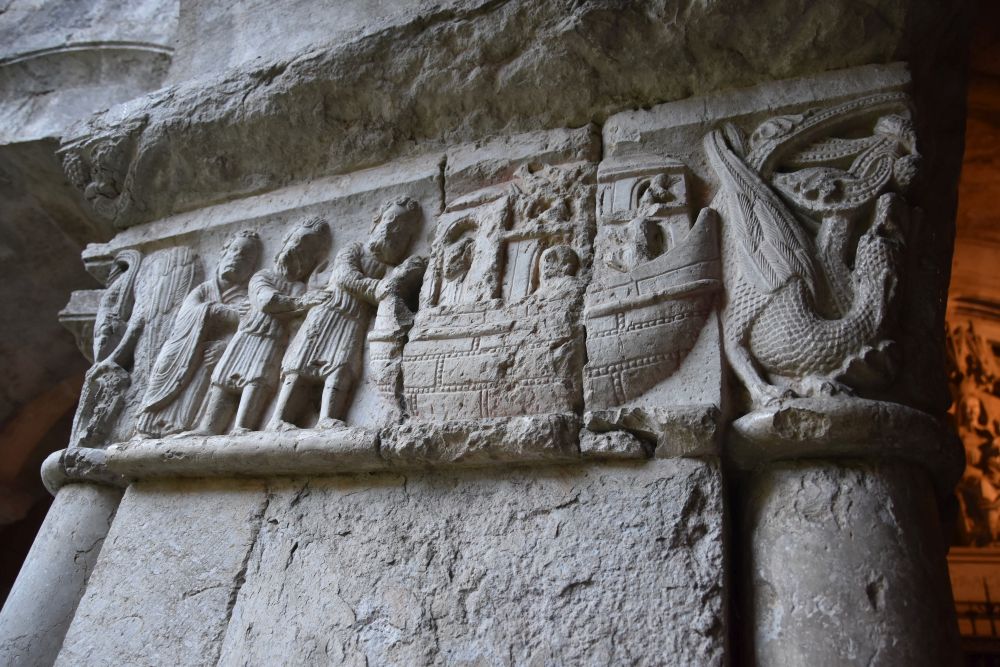
The beautiful cloister from the 12th century covers primarily themes from the Old Testament. Below Noah’s ark is being loaded with his family and the animals in pairs.

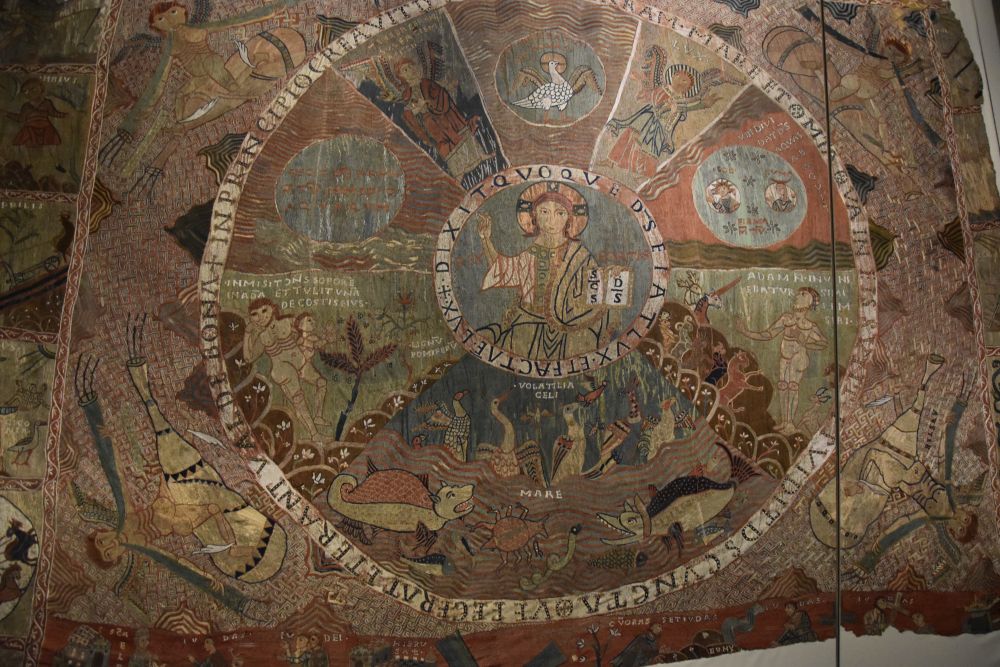
In the marvellous museum attached to the Cathedral we find the carpet of world creation from around 1100. It is silk embroidery. The Pantocrator is surrounded by several episodes of the world creation such as Adam giving names to the animals and Eva being born from his ribs. The pictures are perhaps based on an early Christian mosaic from Roman times (Dumont, p. 122).

.

Wrap up: Walk on the wall, with a view of the city and the Pyrenees

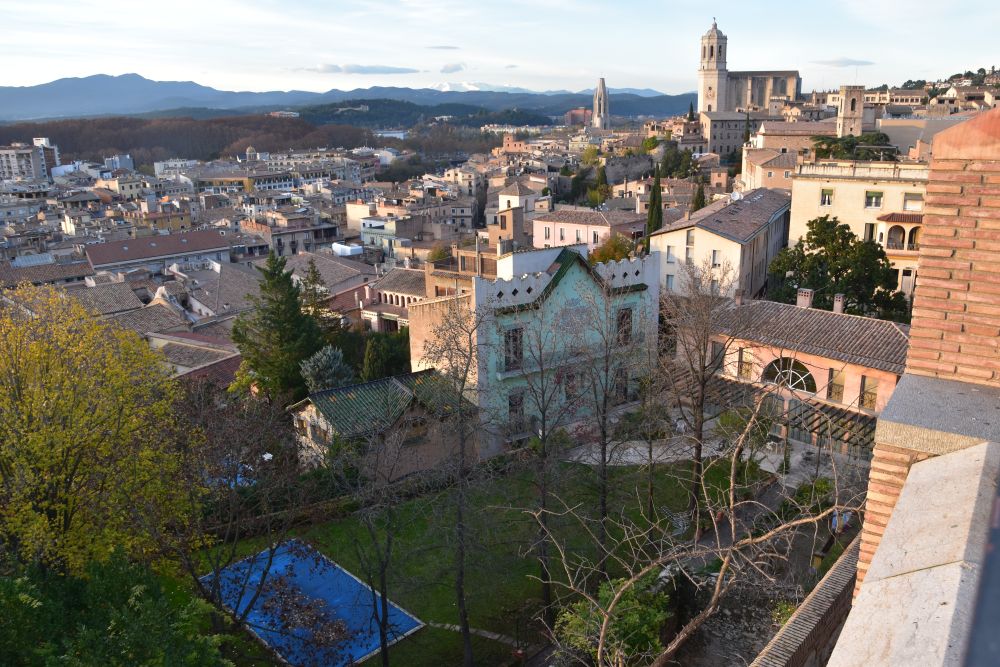
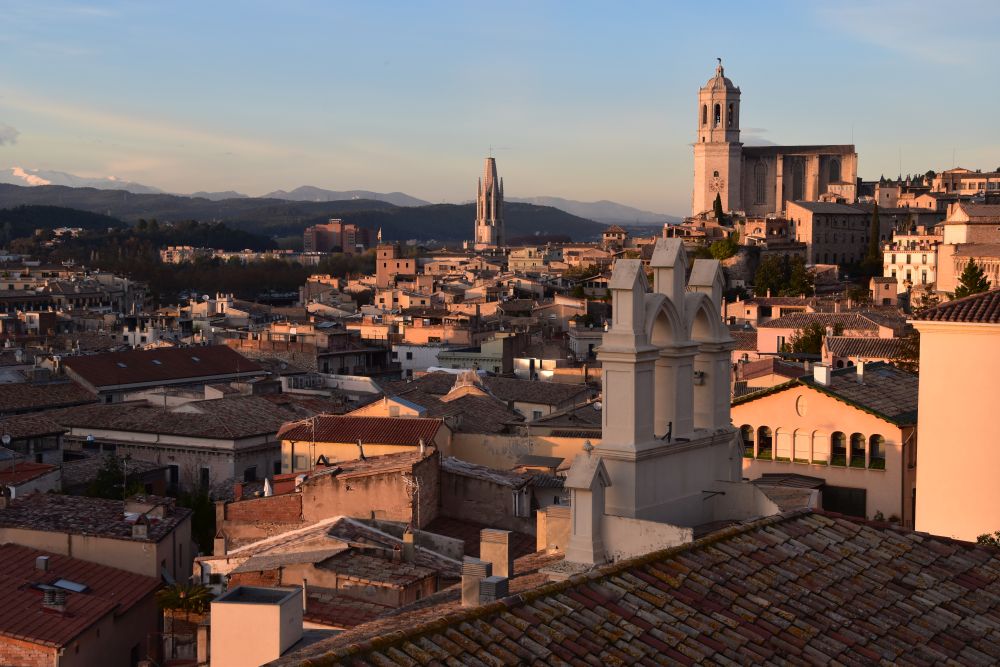
To wrap up our day, we climb the city walls near the Cathedral and walk on them up to Plaça Catalunya.  The views of the old town with the Cathedral and the Pyrenees are gorgeous.

To the right is the Cathedral and to the left San Feliu church – they are dominating the landscape of roofs.

In the backogrund, THE mountain of the Catalans, the Canigou, has already been covered with snow.

The sun is setting and we return to our hotel Carlemany to enjoy dinner.

Good-bye Girona, it was a wonderful visit.

Source: Fritz René Allemann und Xenia v. Bahder: “Katalonien und Andorra”, Dumont Kunst-Reiseführer, Köln 1980.

Escornalbou – the monastery and the castle on top of the “ox horn”

In November 2018, we are spending three weeks in Catalonia, near Tarragona and in-between we explore the surroundings.  

Today our target is Escornalbou. We have visited it a few years ago, and now we return.

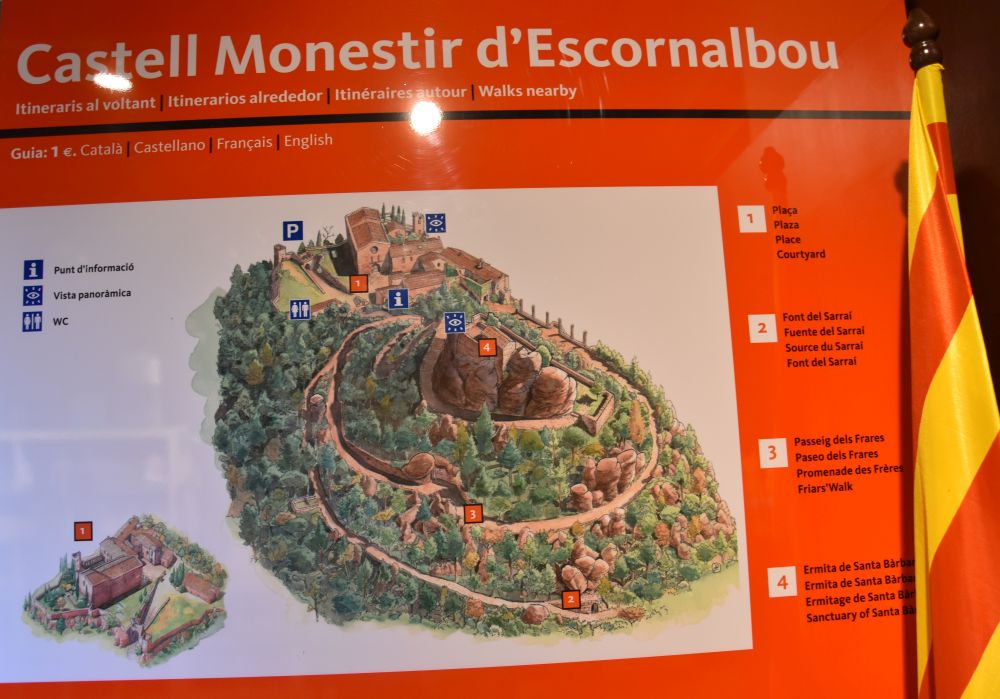
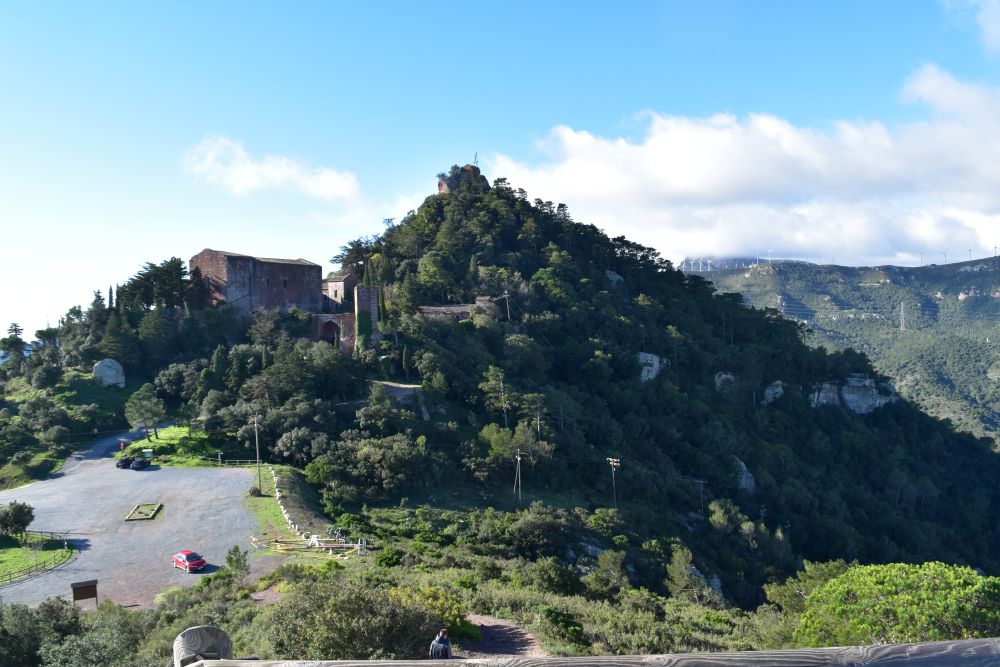
Escornalbou is a rocky peak at about 650m above sea level located in the first line of the mountain ranges and above the plane of Tarragona (Camp de Tarragona). This rocky peak is the spectacular stage for a castle, a monastery and, on the very top, a small hermit.

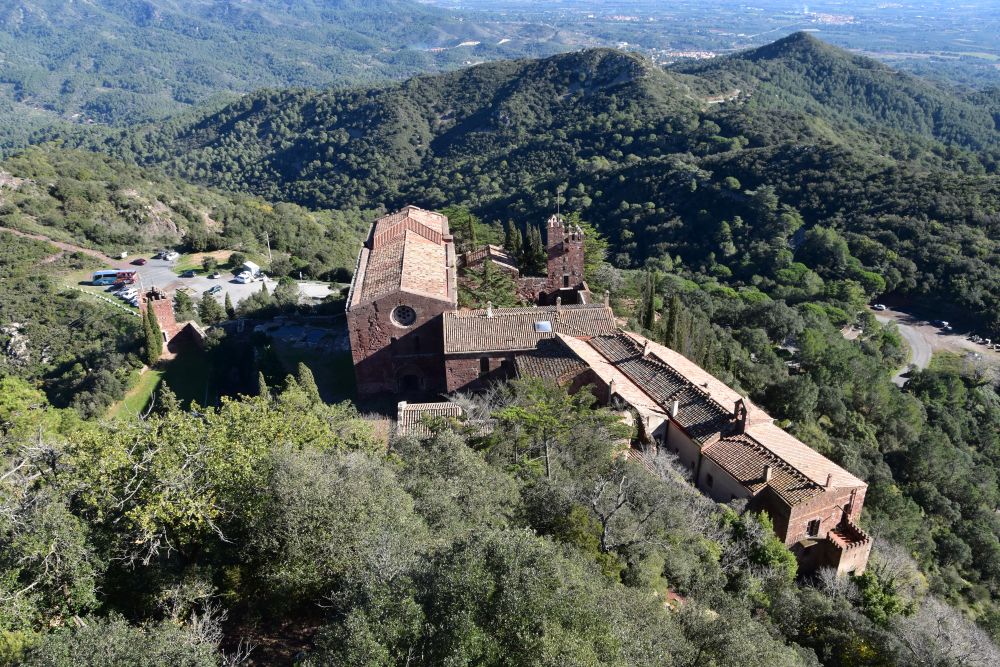
This is the Castell Monastir with its small Hermit Santa Barbara above, taken from the viewpoint across.

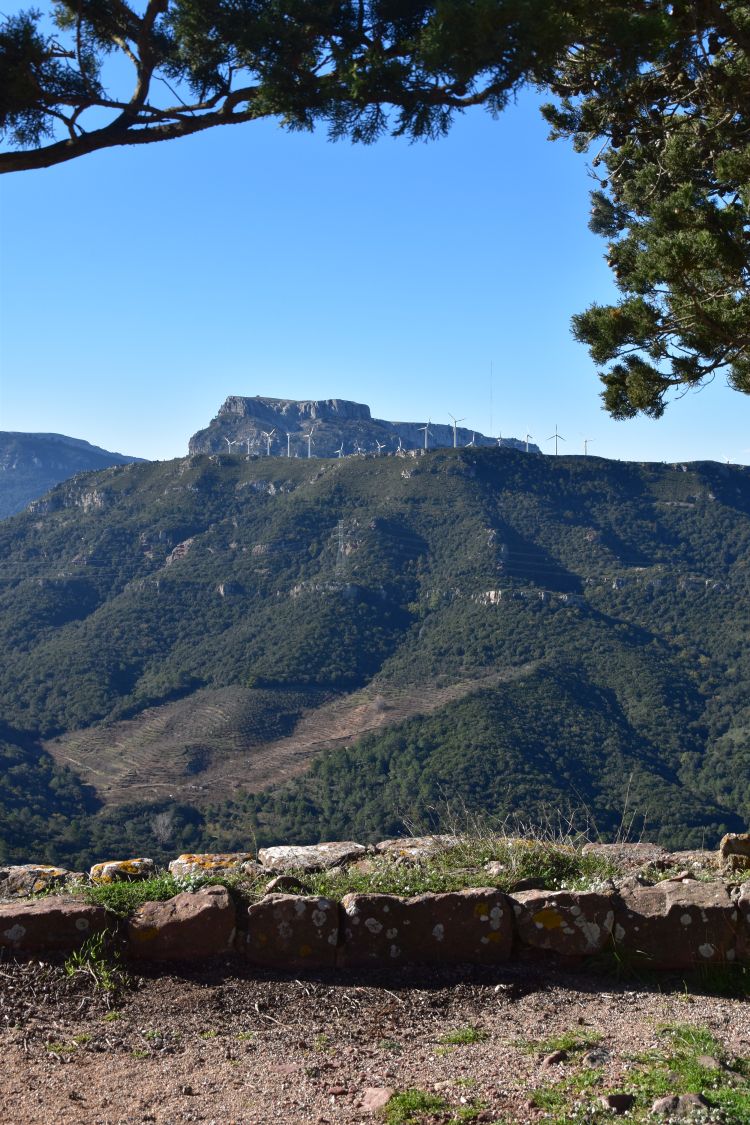
From the small hermit Santa Bàrbara, we can see the unique location of the Castle Monastir overlooking the mountains of Prades, the Camp de Tarragona and the Mediterranean Sea.

.

The exposed rock of Escornalbou has always been a fortification

Due to its strategic location, Escornalbou has been fortified since ancient times: The Romans had a castle here (3rd century), the Saracens (8th century) and the muslims until the middle of the 12th century. After the expulsion of the muslims, the rock continued to be a fortification. The monastery was added then to mark presence of Christianity. The complex suffered in the Carlist wars of the 19th century. Only ruins were left.

In 1910 Eduard Toda (1852-1941) bought the hill with the ruins. Toda had worked as a diplomat in China, Cairo, Helsinki, then as a merchant he made a fortune. In 1918 he returned to Spain, became professor in Barcelona and published various books about Egypt and his travelling.

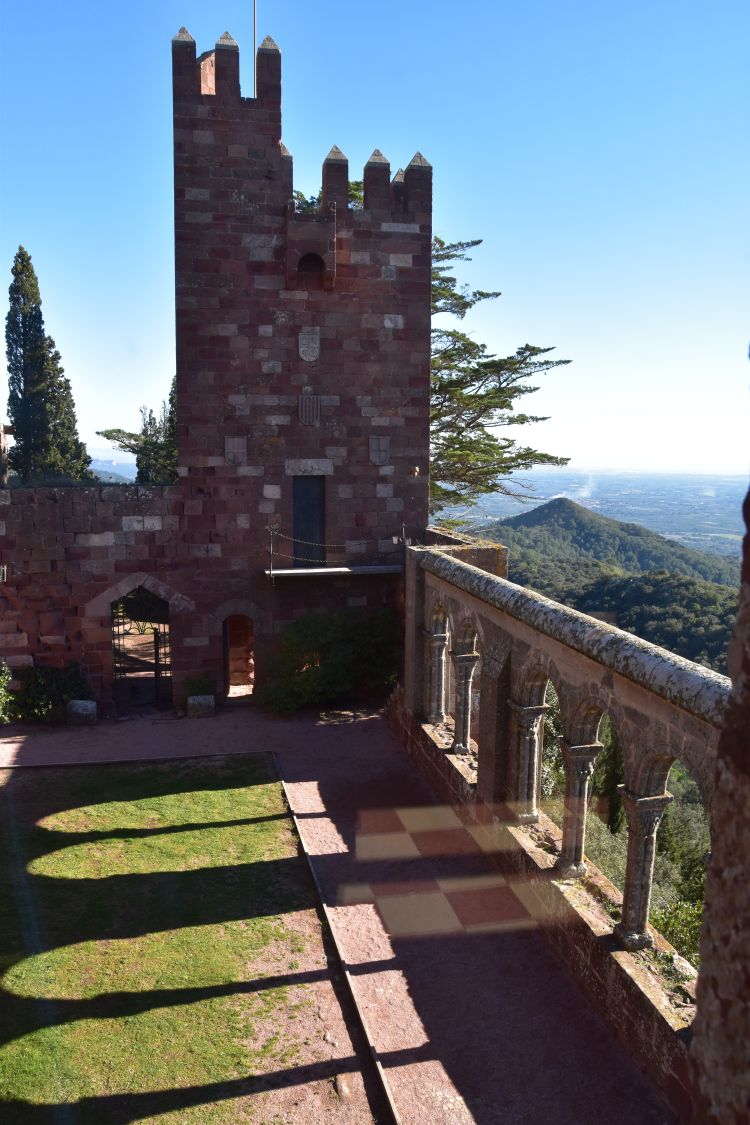
Puig i Cadafalch advised him to rebuild the Escornalbou site based on all that was known about its history. But Toda built a comfortable mansion, based on romantic historism modern at that time. He even had a “medieval” tower added to the former cloister that he remodeled to become his garden with a marvellous view. I took this photo from one of the palace windows.

The mother of Toda managed much of the reconstruction. In 1924 the mansion-castle was completed.

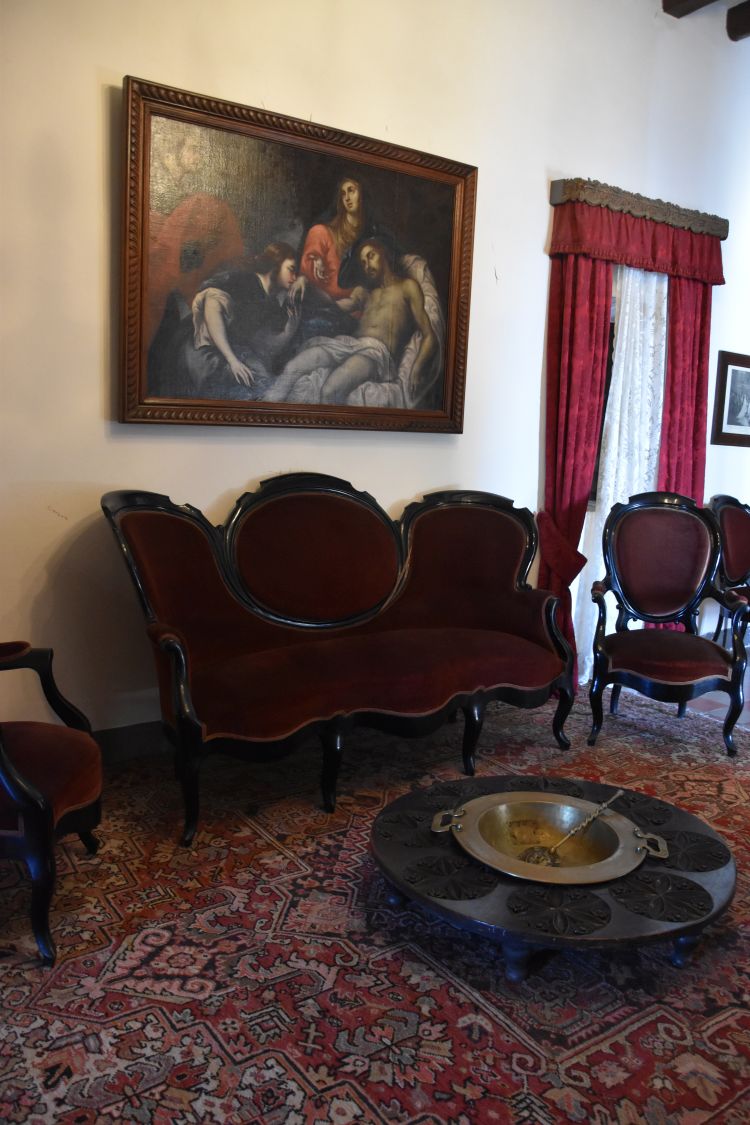
This is one of the cosy rooms that you can heat with coal in the middle.

Toda loved to invite guests, mostly men, once even the Spanish king. The second floor of his palace had bedrooms for men and the third floor was reserved for ladies. In the dining hall, they would celebrate and eat. Ursula murmurs something about “Völlerei” or gluttony.

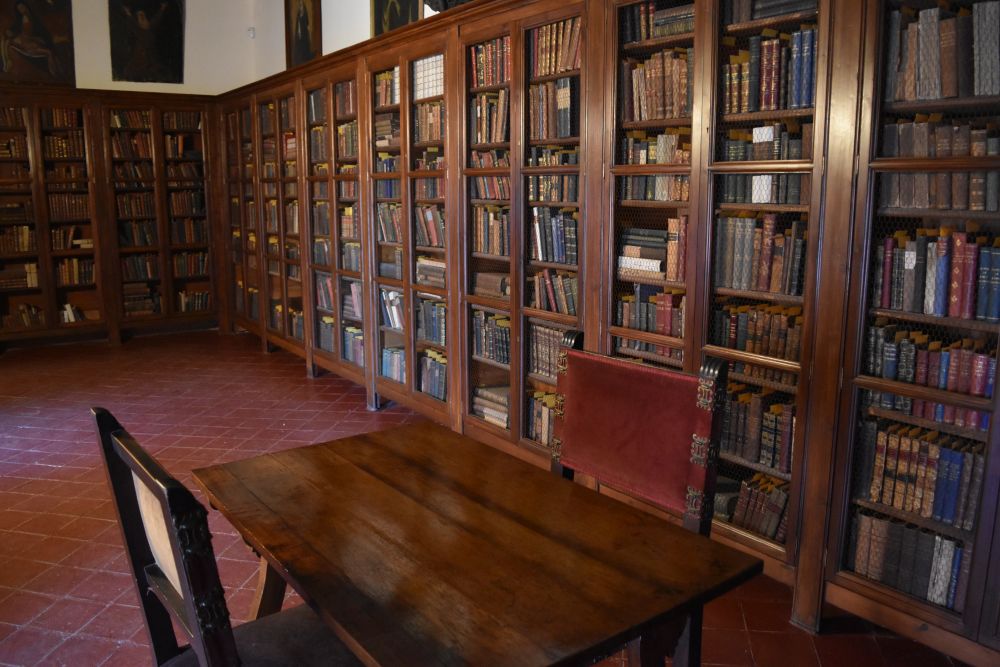
As a diplomat and merchant, he has seen much of the world. He collected books, and built up a huge library. 

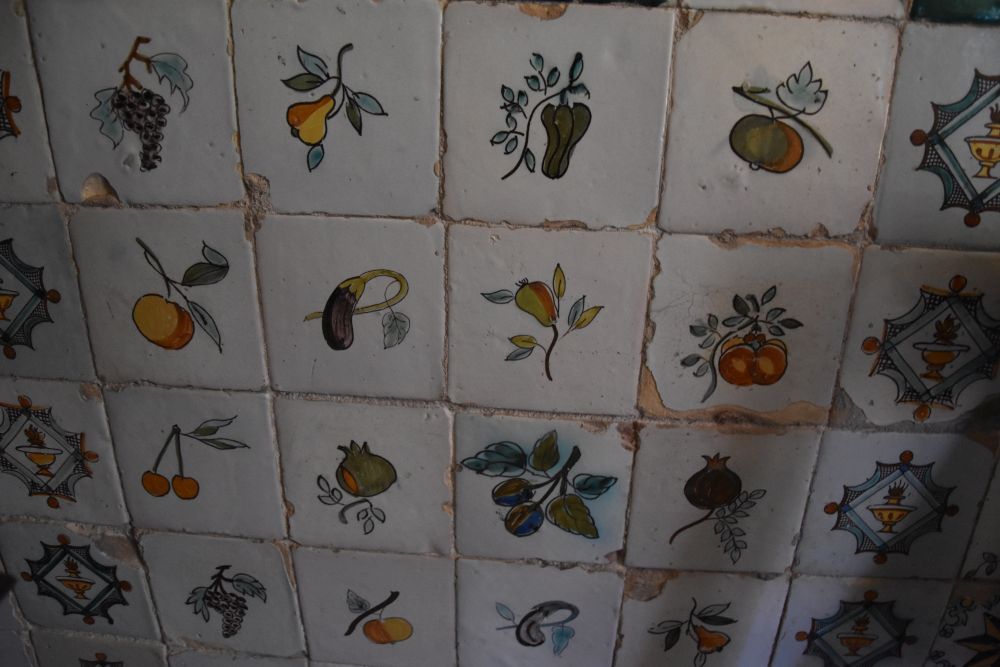
He also acquired souvenirs such as the tiles that are decorating all walls of a small room. We would love to have these pretty tiles in our kitchens.

Escornalbou changed hands later. In 1979, the Bank Urquijo and the government bought the complex and renovated the palace to illustrate the life of notables in the early 20th century.

The palace can only be visited with a guide. We were the first group of the day, a German with his Spanish wife and the two of us. The guide must have been from Castile, because he spoke like a machine gun and he did not slow down, when being asked to do so. I needed some time to get used to him.

.

The monastery Sant Miguel with the church – today the stage for a wedding

When the muslims had been exiled from the area, Alphonse I founded the monastery San Miguel. First the Augustinian Order lived here, then, in 1574, the Franciscans took over. They left the place in 1835, when the properties of the church in Spain were sold.

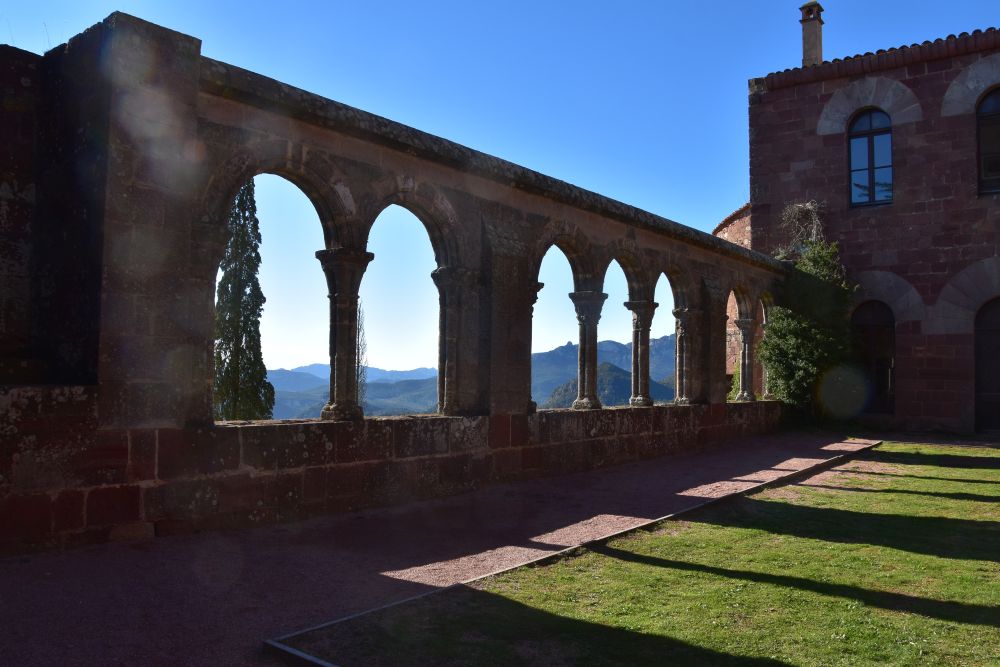
Today’s oldest parts of the monastery are from the 12th century: The Romanesque church and the chapter house. Toda had the belfry removed and the cloister remodeled to become his garden.

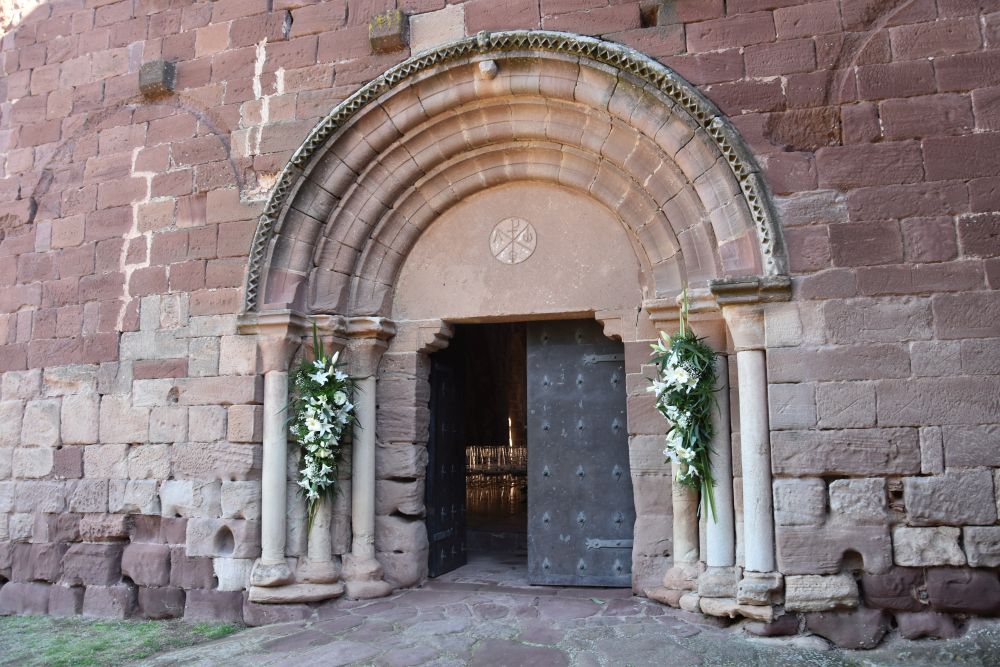
The Romanesque church has dressed up. A wedding is being prepared, as white flowers at the entry portal indicate.

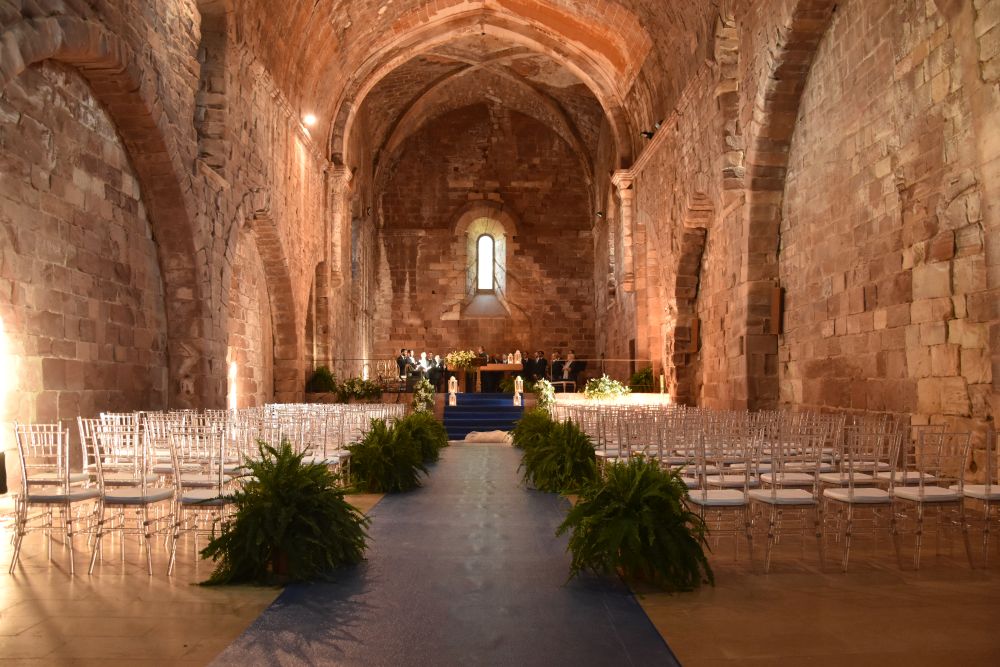
Inside we find more flowers, white chairs and a blue carpet. Under the ribbed vault in front, the choir is practicing. The setting is very romantic for a wedding, but it is chilly here. 

The ribbed vaults – typical for gothic churches – are unique in a Romanesque church – it seems that the architect has been trained in France.

.

Castle and monastery on the exposed ox horn give rise to legends: El jorobado (the forger)

The museum of Pratdip, attached to their Oficina de Turismo, tells the following charming legend on a panel: “Once upon a time the nights in the castle of Escornalbou were odd. Few people approached the castle, and those that did, heard a terrible noise and voices coming from underneath the earth. Worse even, they heard a metallic sound – alarming and frightening. Perhaps chains from the afterworld? “Are there ghosts in desolation?” the people asked, ”tormented souls roving around in the crypts of the monastery?” Those who could not sleep would pray the rosary. At night they often watched a crooked man descend the hill walking with difficulties. It always seemed to be the same man, tall and corpulent, and miraculously his hump was sometimes to the right, and sometimes to the left.

One day, the people from the village of Colldejou assembled and decided to send a delegation of courageous young men to the castle. The young men did, as they were told, and what a surprise… they discovered a counterfeit production. The forgers and their machines were the reason for the infernal noise and the crooked man was the one mandated to carry the counterfeit money down in a huge sack, and in one night he carried the sack to the right, and in the other night to the left.”

Today I learn from the guide that the legend remembered by the people living in Colldejou near Escornalbou is based on real facts: At the end of the 19th century, when the castle and the monastery were in ruins, a man called Macià Vila installed the counterfeit production here. He was a friend of General Prim who is much venerated in Reus.

.

Wrapping up the visit by climbing to the Ermita Santa Bàrbara at the very top of the ox horn

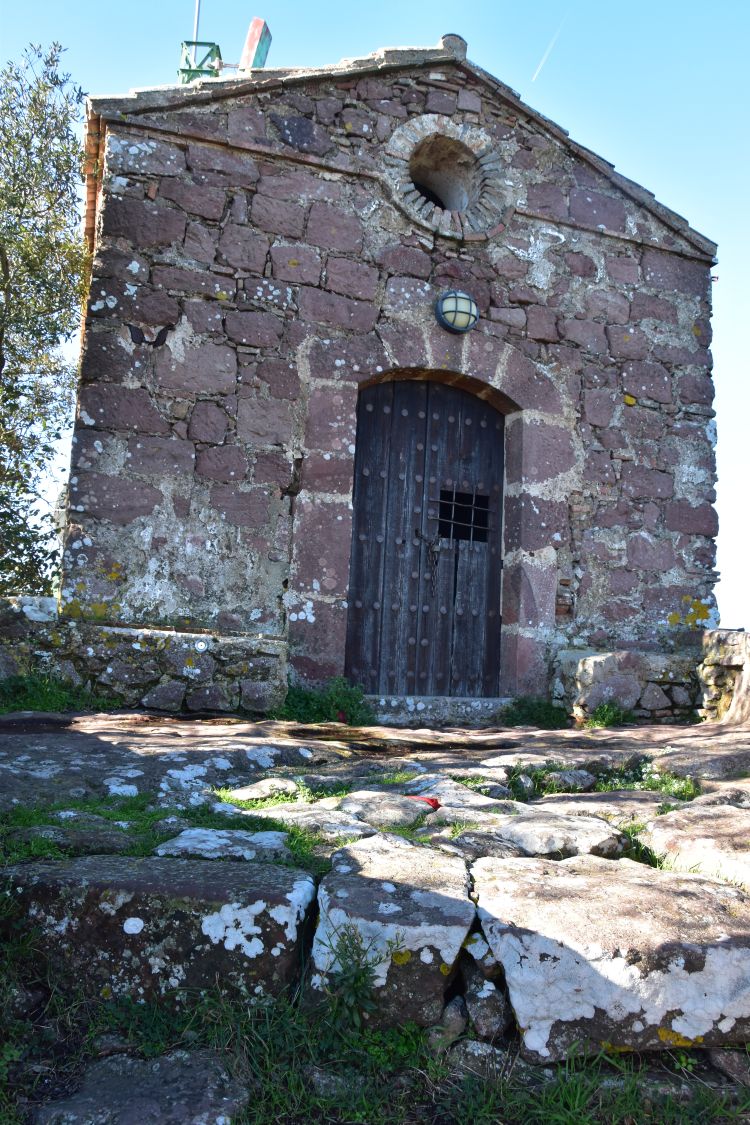
At the end of the 19th century, the chapel Santa Bàrbara was added on top of the “ox horn”, made out of stones from the Romanesque tower.

I went up to wrap up my visit. From here the view is just marvellous, of the mountains in the west (with wind mills)…

… and of the Castell Monastir below, with the church to the left and the palace to the right.

.

Good-bye Escornalabou

The parking is now brimful of Saturday tourists and wedding guests. The location for the marriage is extremely romantic.  But, a cold wind blows and I feel sorry for the wedding guests that come festively dressed, some ladies just with a light jacket and transparent (or even no) stockings. They must be shivering soon in the church. I wish that the sun having come out today, after a few rainy days, may be a good omen for the bridal couple.

We return to our cosy apartment to warm up.

Source: Website Castell d’Escornabou

Lleida: The precious cathedral Seu Vella resurrected from being a casern

In November 2018, we spend three weeks near Tarragona in Catalonia, as we have done many times already.

On the way we have sometimes driven around Lleida. What a headache. Multilane avenues with endless traffic lights and complicated circuses amidst faceless multi-storey houses. I have always tried to get through Lleida as quickly as possible.

But… we read that the cathedral of Lleida is worth a visit and that the pedestrian zone around Carrer Major is pretty (Dumont and “newspaper”). Hence we decided to visit Lleida. And yes, our sources are right, Lleida is worth a visit.  

.

The old Cathedral or Seu Vella – resurrected from being the stage of fights and being maltreated as a casern

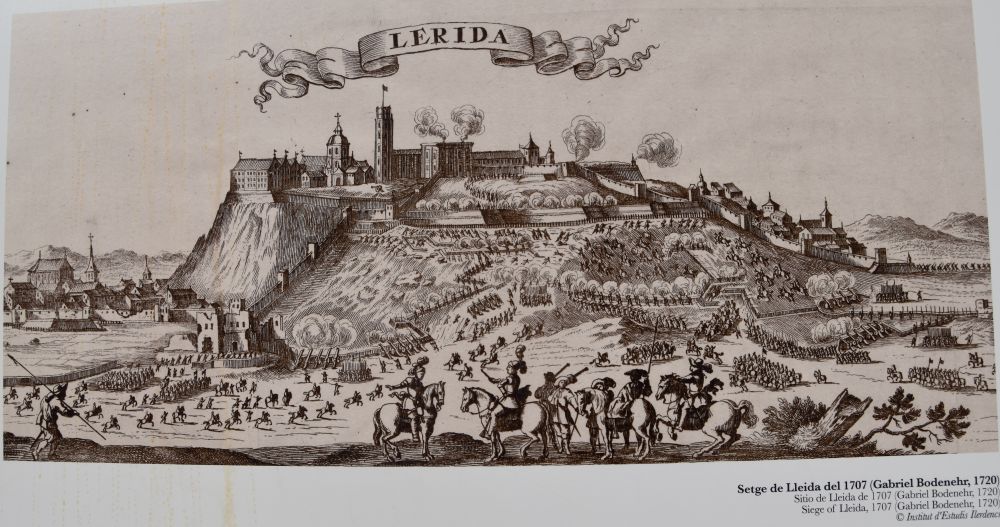
The engraving below shows the siege of Lleida in 1707, during the Spanish War of Succession. French troops fighting for the Bourbons attacked Lleida that – being part of Catalonia – had taken the side of the Habsburgians, as the latter were less centralistic than the French Bourbons (I suspect). Much of the cathedral was destroyed then and the complete top of the hill was turned into a fortification and a military casern (engraving found in the Museu de Lleida).

In the 1960’s, the army retreated and the restoration of the maltreated Seu Vella started, after all the destruction that had taken place since more than 200 years.

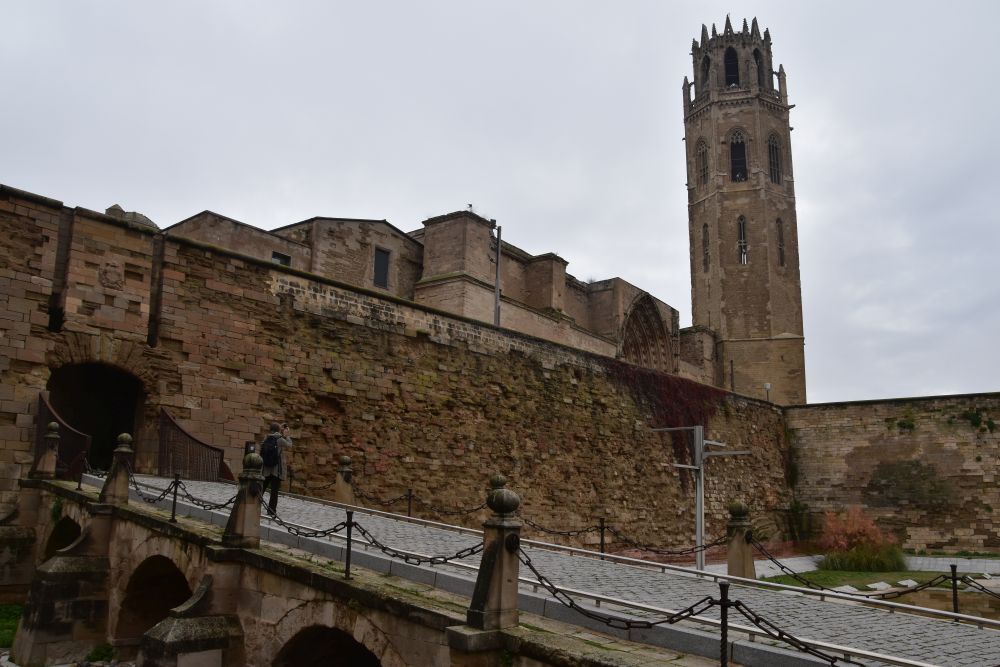
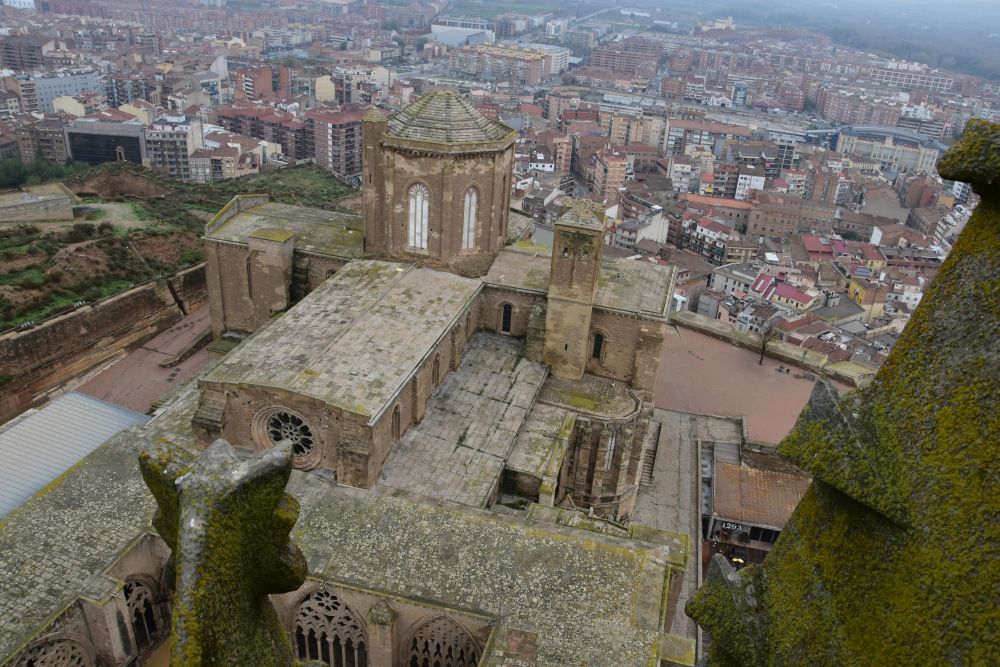
The cathedral is surrounded by rings of thick walls, it still looks a fortification today.

We had accessed the fortification using the lift in the triangular modern tower (a lazy mountain biker joined the two lazy ladies…). The wooden bridge had taken us from the lift to the fortification wall. The river below is the Rio Segre coming from the Pyrenees.

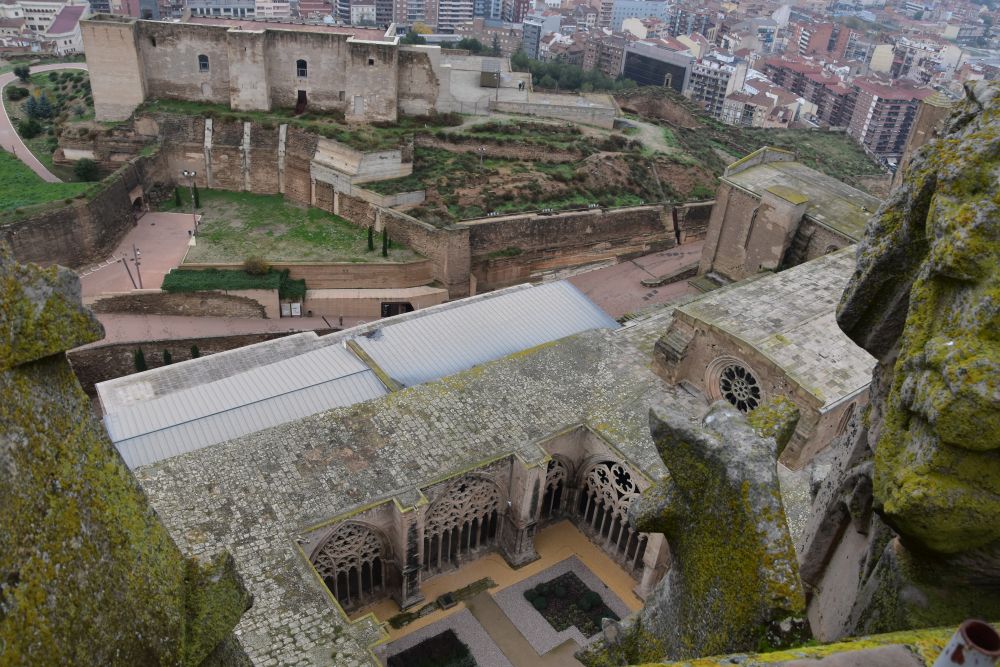
After having reconquered Lleida from the Muslims in 1149, the king of Aragon started construction of the cathedral in 1203. It is at the brink from the Romanesque to the Gothic style. The footprint of the church is peculiar: The nave consists only of three bays…

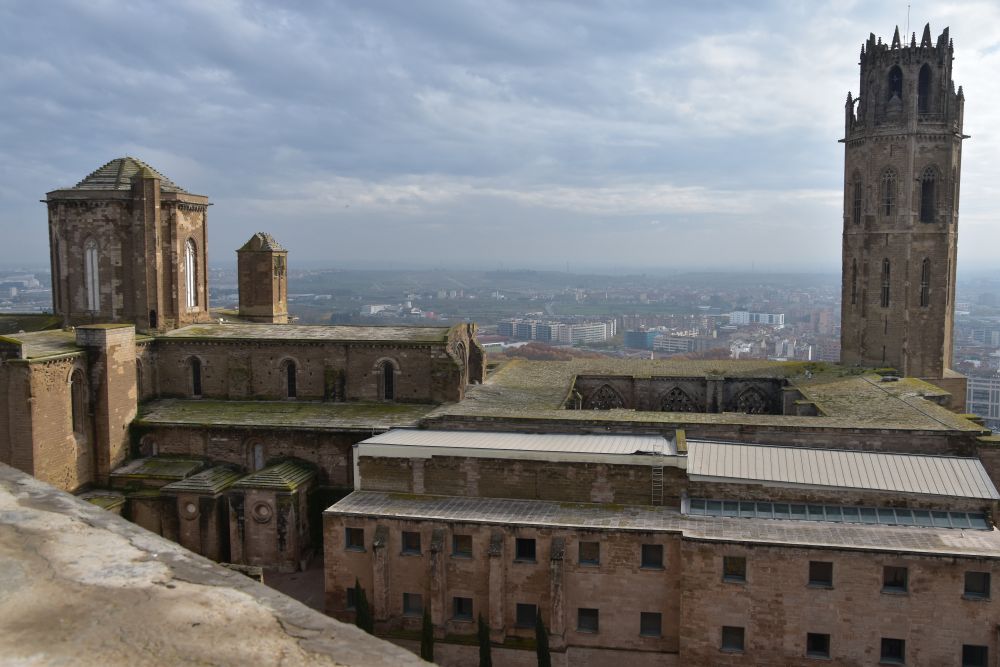
… and continues to the west with the marvellous cloister in pure Gothic style, as the views taken from the belfry show. In the background is the so-called royal Castle.  

The unusual layout of nave and cloister can also be seen from the royal Castle.

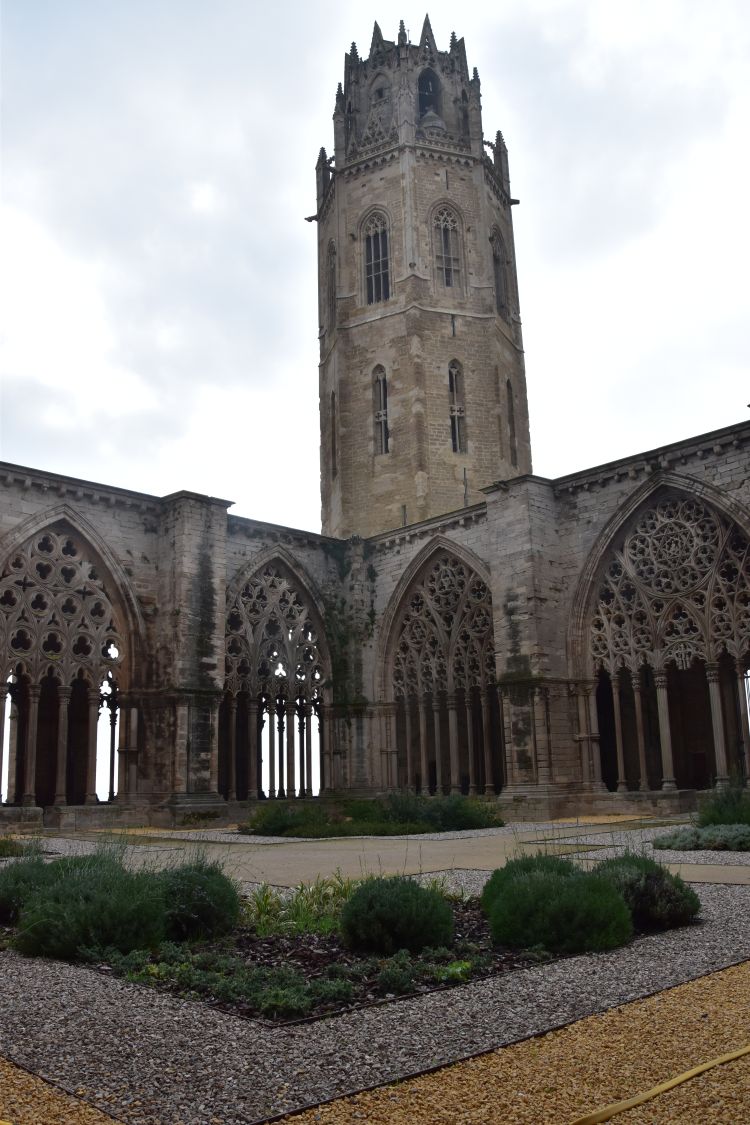
At the end of the 14th century, the octagonal belfry was added. It can be climbed, which requires taking some 280 huge steps winding up on narrow corkscrew stairs. It has never happened to me before that my muscles ached after having climbed a belfry, but the steps were somewhat unergonomic and high for a person as small as I am (twinkling…).

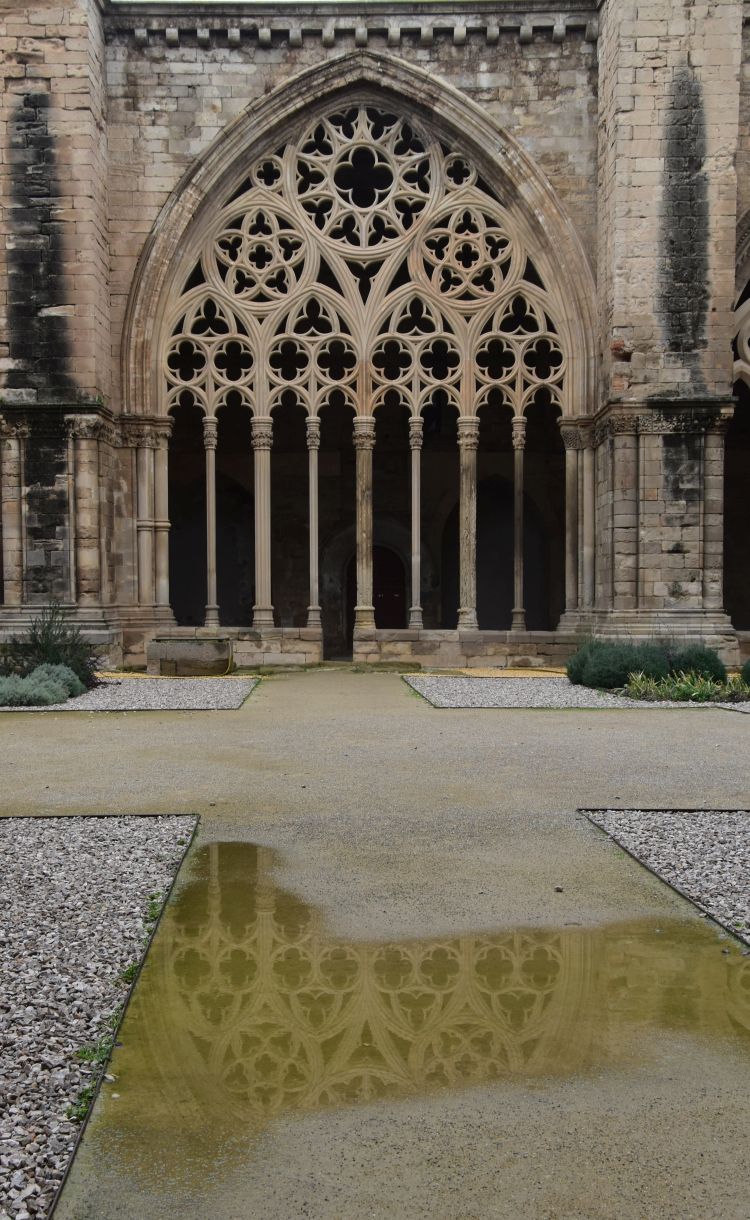
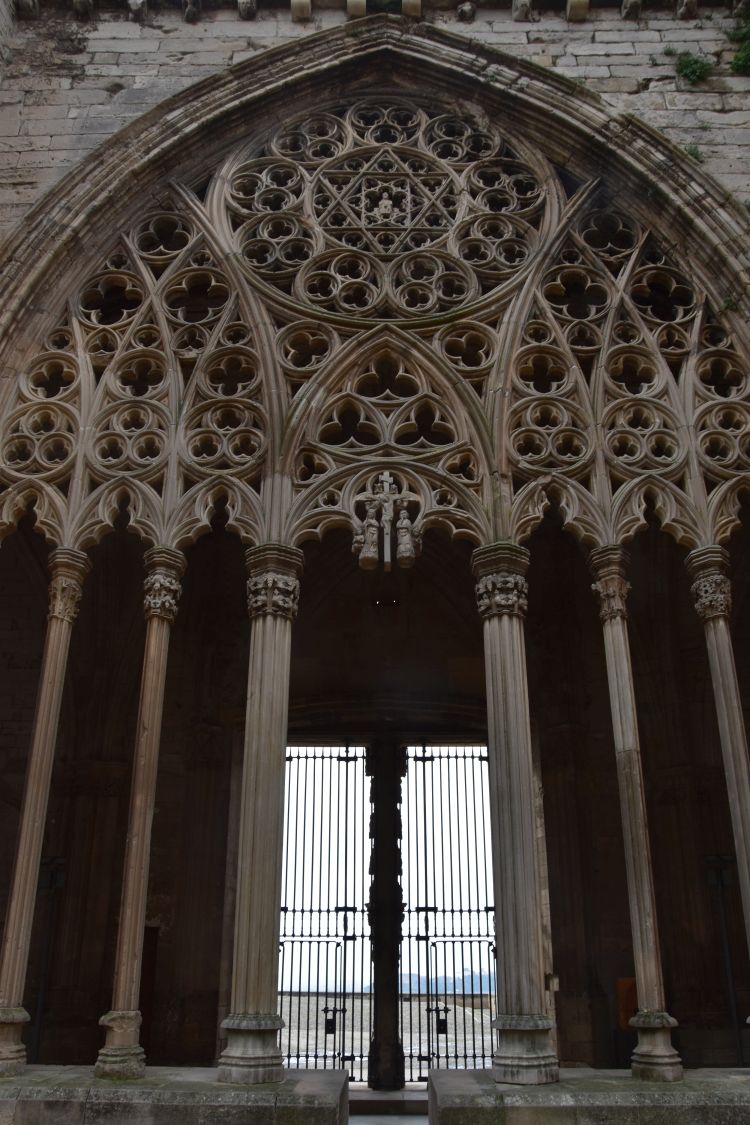
The cloister is a masterpiece. Each of the Gothic arches is differently chiselled, perhaps influenced by muslim architecture.

The rain has left puddles reflecting the fine arches.

A photographer has mounted his camera on a tripod so high that he needs a ladder to access his camera and shoot photos of the capitals. I ask him, whether he will edit a book about the cathedral. His eyes glow: “Well, these capitals are marvellous. I take pictures for the anniversary of the renovation that has started 60 years ago. My father was then responsible for the renovation. He was an architect”, he says. “So, you are a professional photographer”, I ask. “Yes, and I am also an architect.” Later I find him taking pictures of the arches reflecting in the puddles. “Muy divertido”, he says – great fun. “Yes”, I reply, “I have also taken photos with the puddles.”

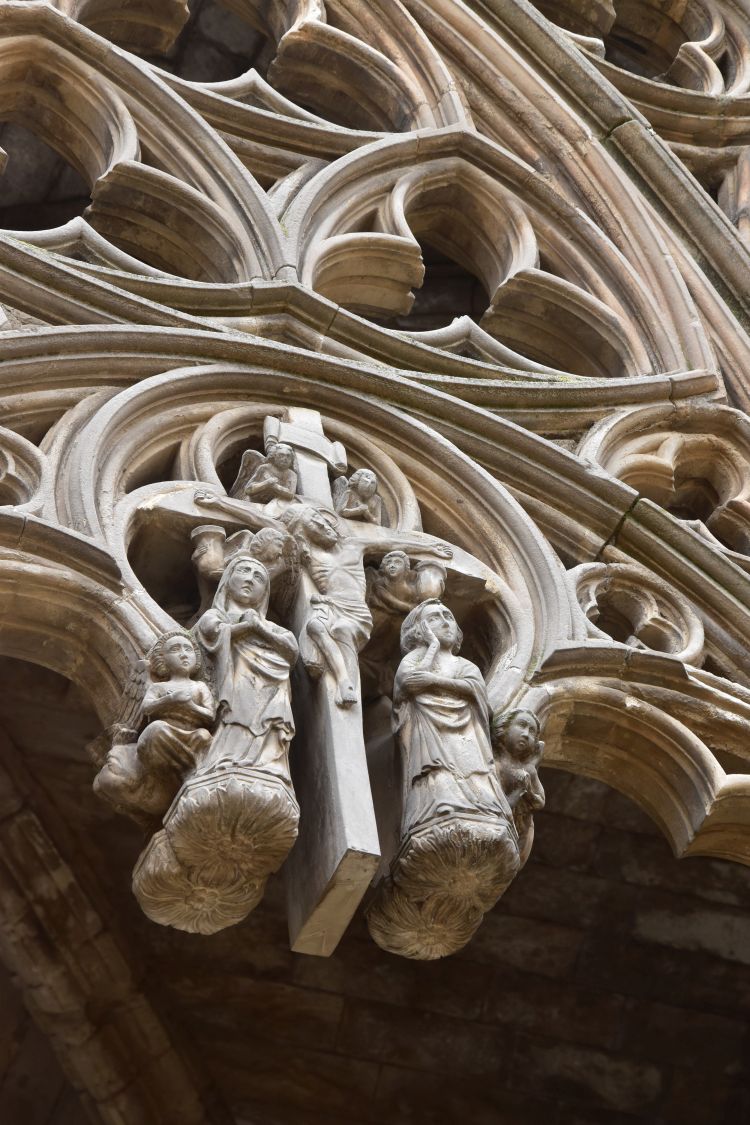
This arch attracts my attention: Something is hanging in the middle – very unusual.

I have a closer look. It is a crucifixion with Maria to the left and the disciple John to the right. Some angels are surrounding the group.

From the cloister, we enter the church with its ribbed vaults.  

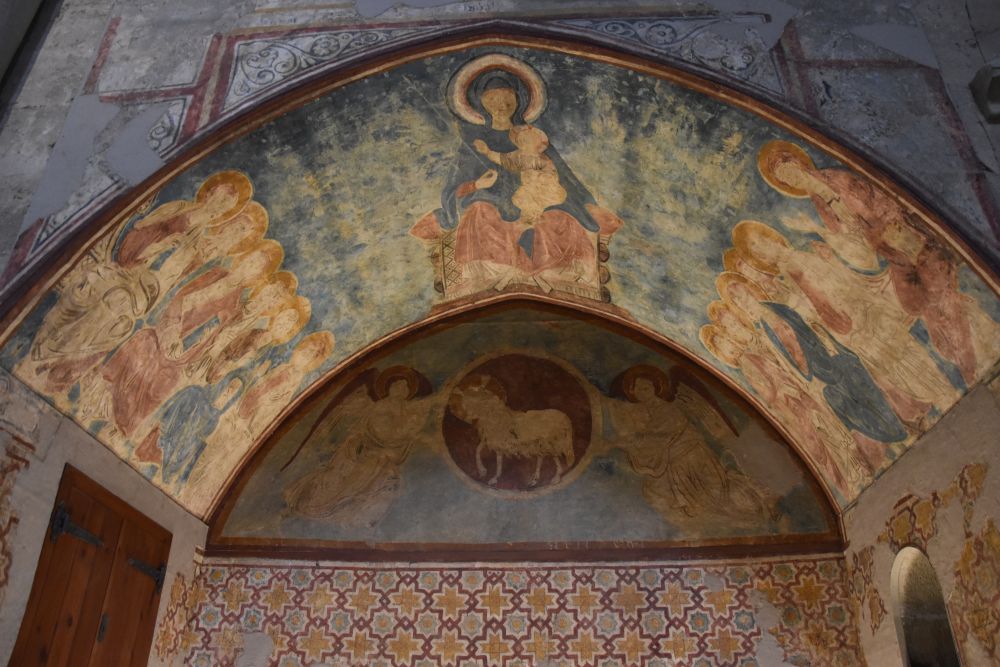
I am particularly attracted by this fresco with Maria in the middle. The decorated tiles below the fresco show a clear influence of the muslims that had just been exiled from here, when the church was built.

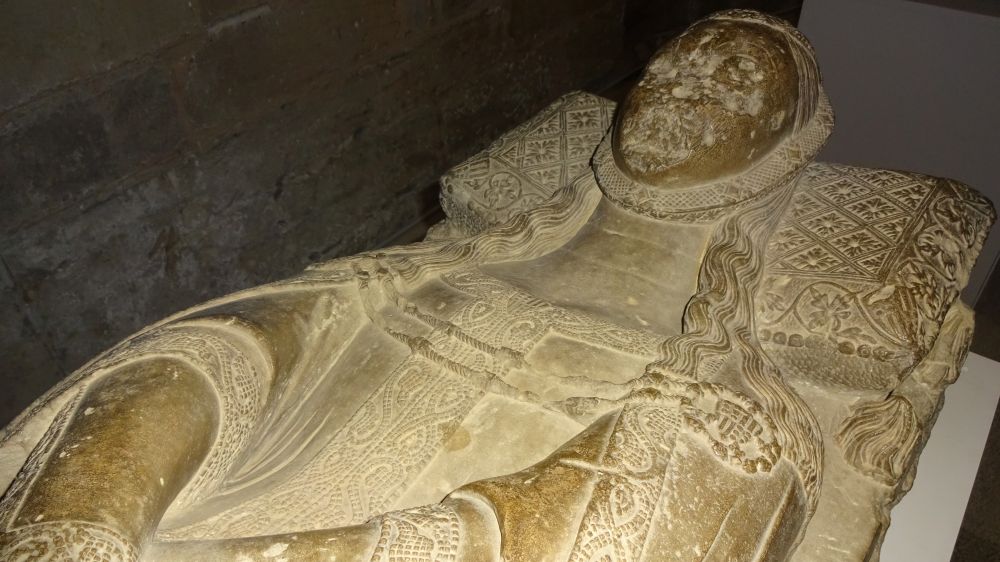
We find many tomb slabs in the front area of the church. Ursula took photos of them. This head has been bedded on a comfortable cushion.

From outside we can see the apsides…

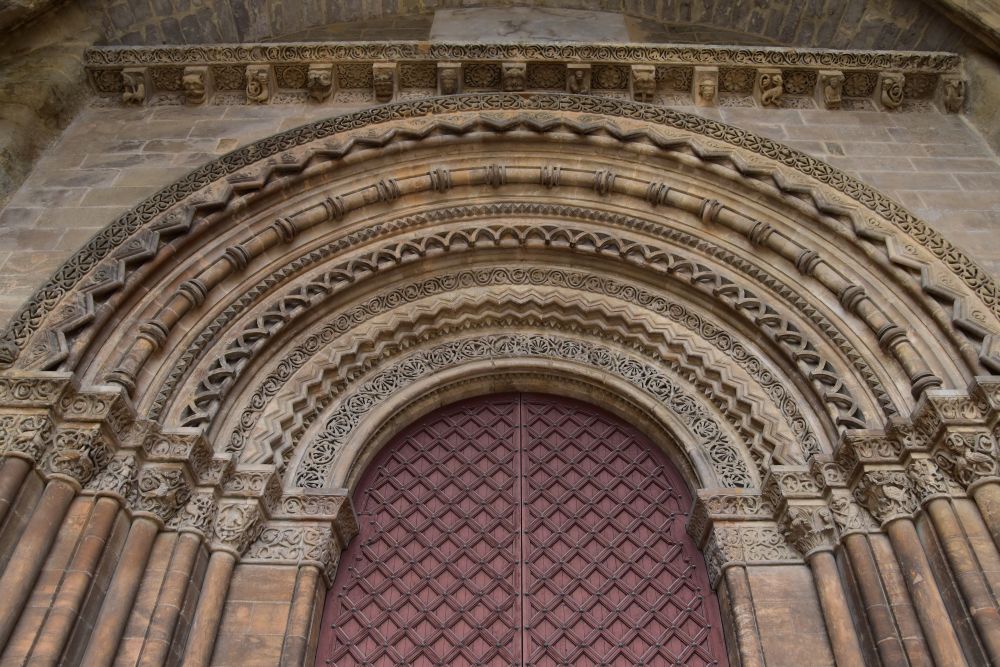
… and two beautiful portals. This is one of them, the Porta dels Fillols. The decoration also shows muslim influence.

From the cloister and from the belfry the view is marvellous, though on this grey day not up to the Pyrenees. We have to come back on a clear day to see the Pyrenees and to visit the Seu Vella or old cathedral again – perhaps by then the book of the photographer-architect will have come out.

.

The Carrer Major and around

After having visited the old cathedral, we stroll along the Carrer Major and adjacent areas.

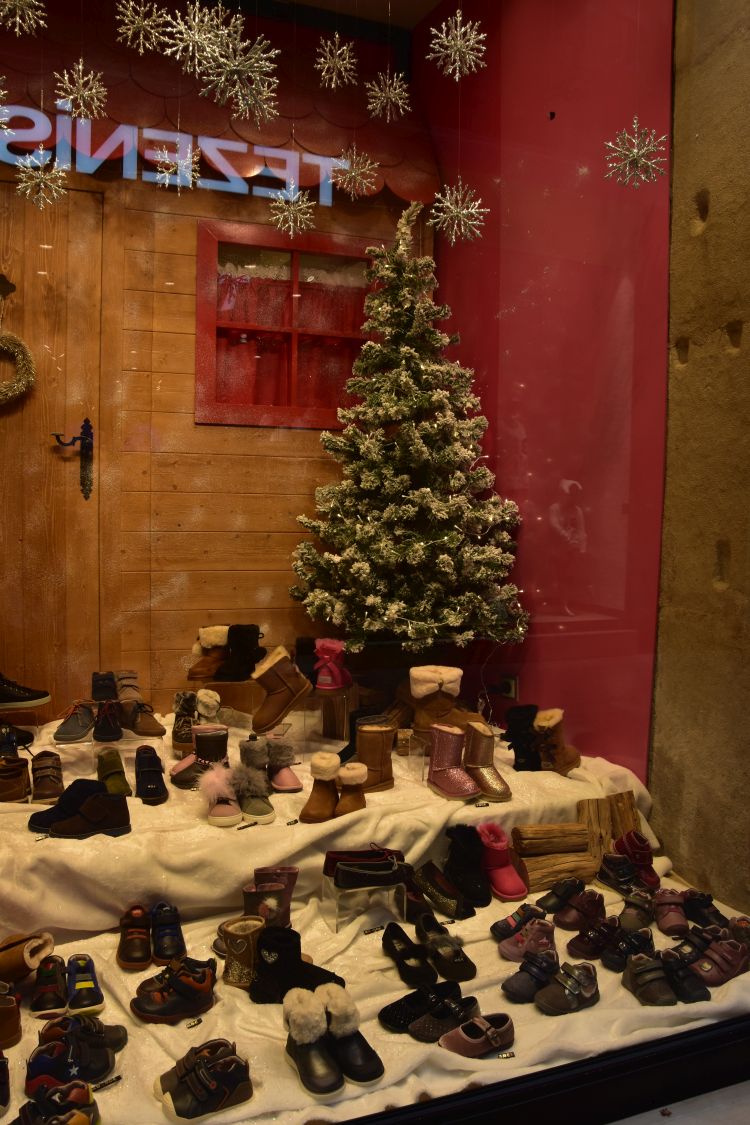
Christmas is ahead of us, as the decorations in the many clothing and shoe shops show.

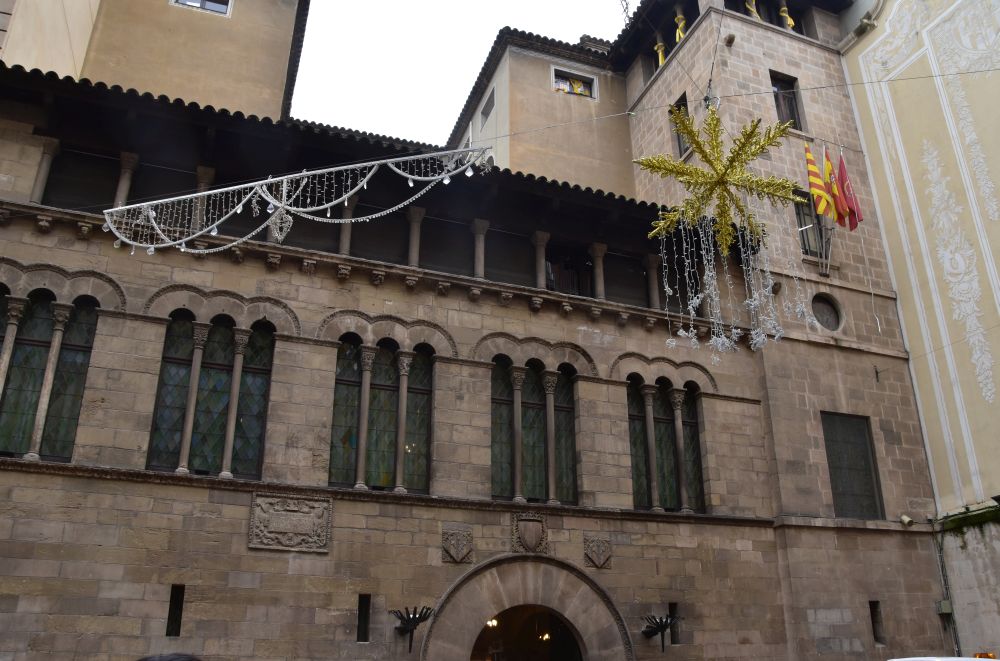
Also the Plaça de la Paeria with the Gothic townhall is decorated for Christmas.

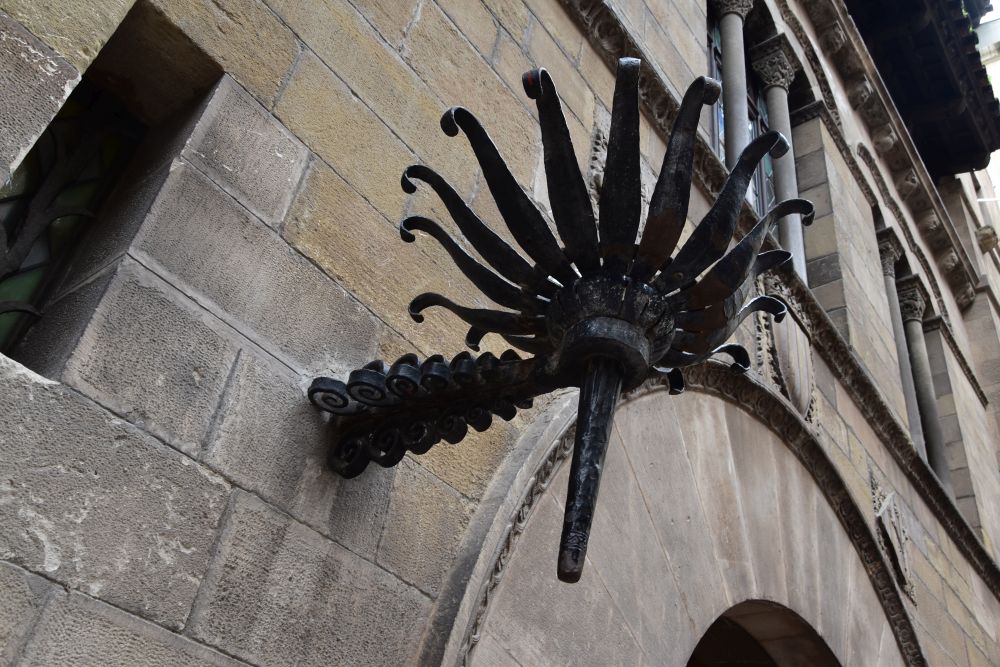
The wrought-iron lamps are next to the entry of the townhall.

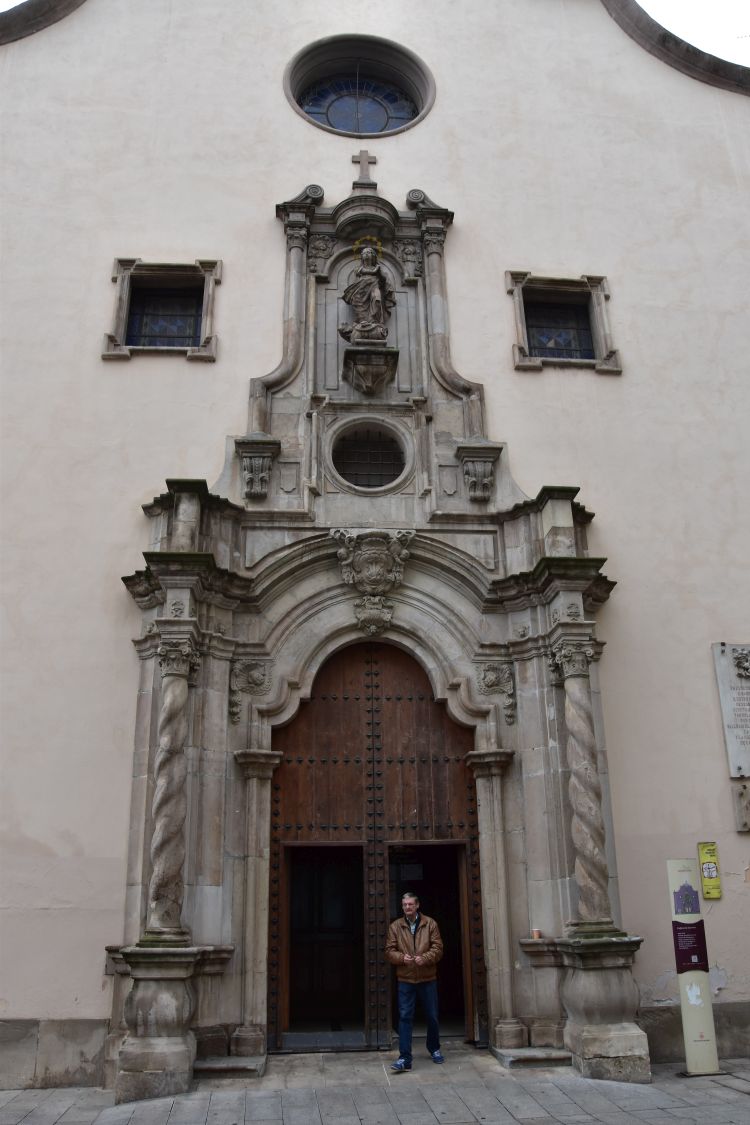
In the 18th century church Sant Pere, we find an old friend of ours, Gaspar de Portolá. He is buried here. We know him from the Aran Valley in the Pyrenees where we have stayed four nights in the former Palace of the noble family Portolá – the palace is now a Parador. In the 18th century, Gaspar de Portolá set off to America and discovered San Francisco and the Monterrey Bay in California.

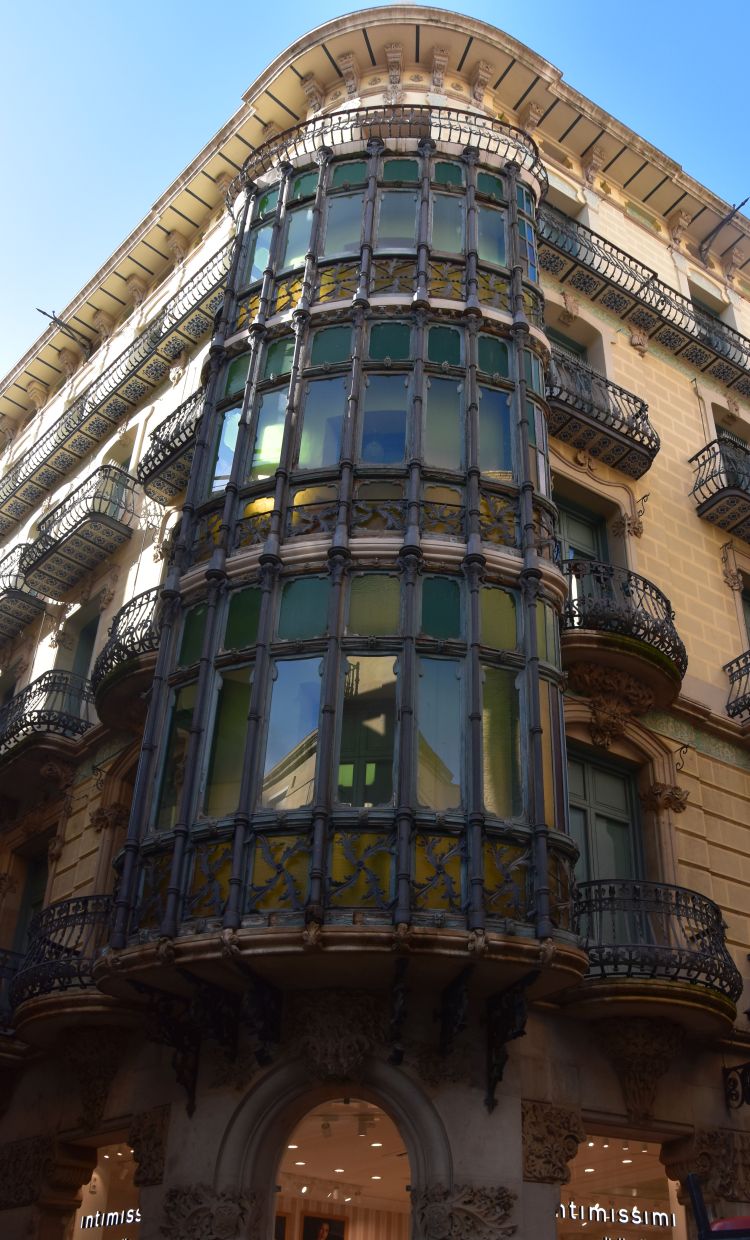
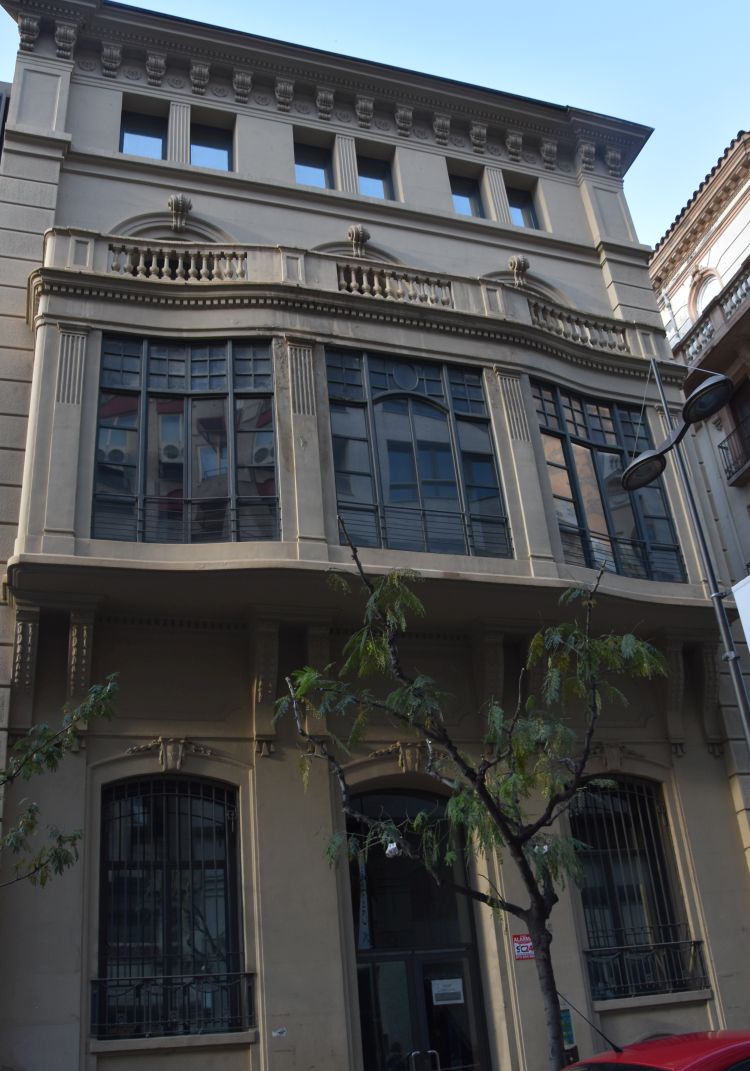
There are also quite a few Art Nouveau buildings in Carrer Major. I love the fancy and playful Art Nouveau style in Catalonia – also outside of Barcelona.

This house is called Casa Magí Llorenç (1918).

And this is the Casal de la Joventut Republicana (built in 1919).

Again and again we return to the Carrer Major to savour the buzzing atmosphere.

.

The Museu de Lleida – very instructive – with the streets around it

Outside the old city center we visit the Museu de Lleida to learn about the history of the region and of Spain. The museum starts with the first men and we get as far as the 15th century. Then the museum closes. The explanations are very instructive and we forget the time. Here are two take aways.

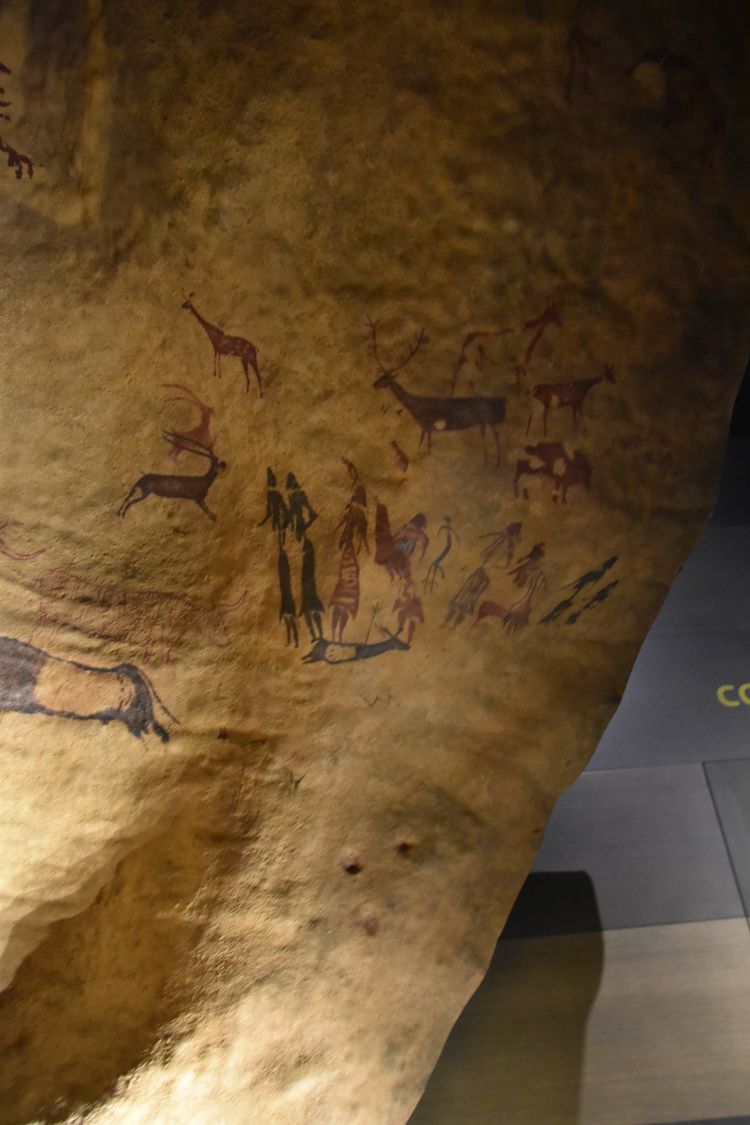
Not far from Lleida is El Cogul that is famous for its rock paintings called Roca dels Moros – but the paintings are, of course, much older than the muslim times. Archeologists concluded that this is a group of dancing women.

El Cogul will be another day trip target, when returning to Catalonia (then I might also visit the wine region Costers del Segre nearby).

From the many marvellous sacral sculptures on display we liked this expressive figure of John the Baptist in full concentration with the small Agnus Dei on his left arm.

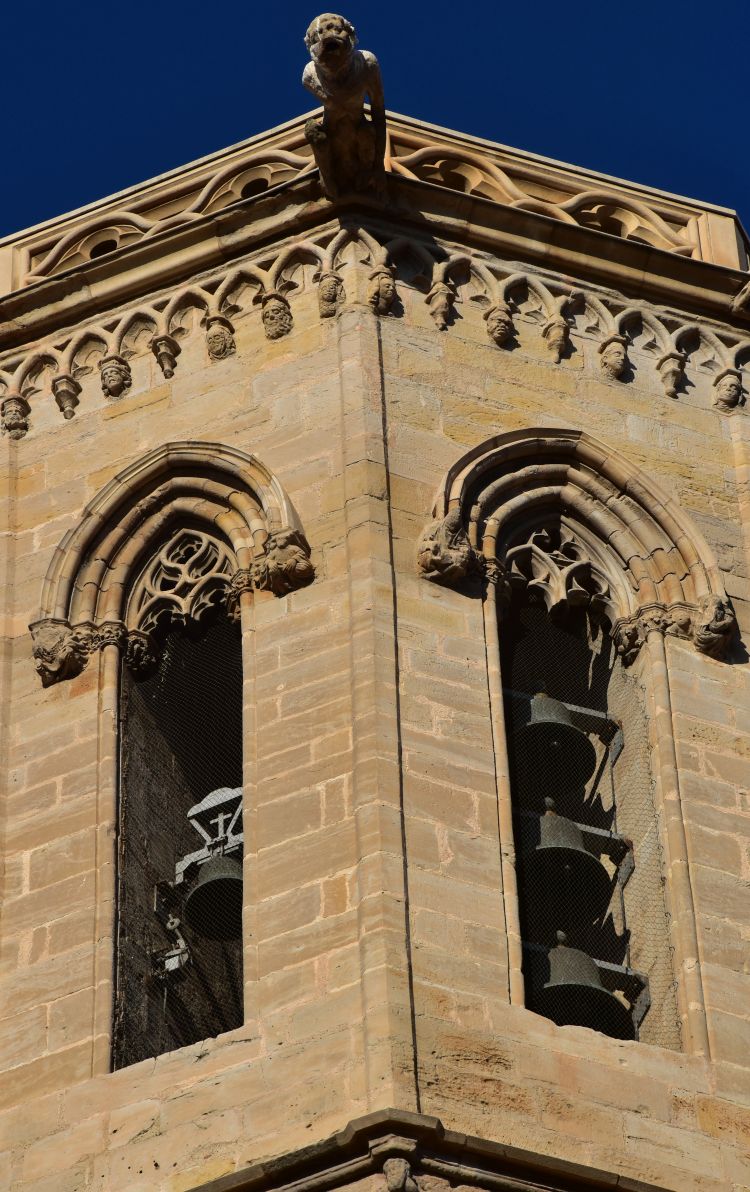
Near the museum we find the church Sant Llorenç from the 13th century, completed in Gothic style. I like the huge gargoyle against the dark blue sky… the fog has disappeared in the afternoon.

Hm, I did not know, that bees are also good for therapy.

The area around the Museum is much poorer than the Carrer Major.

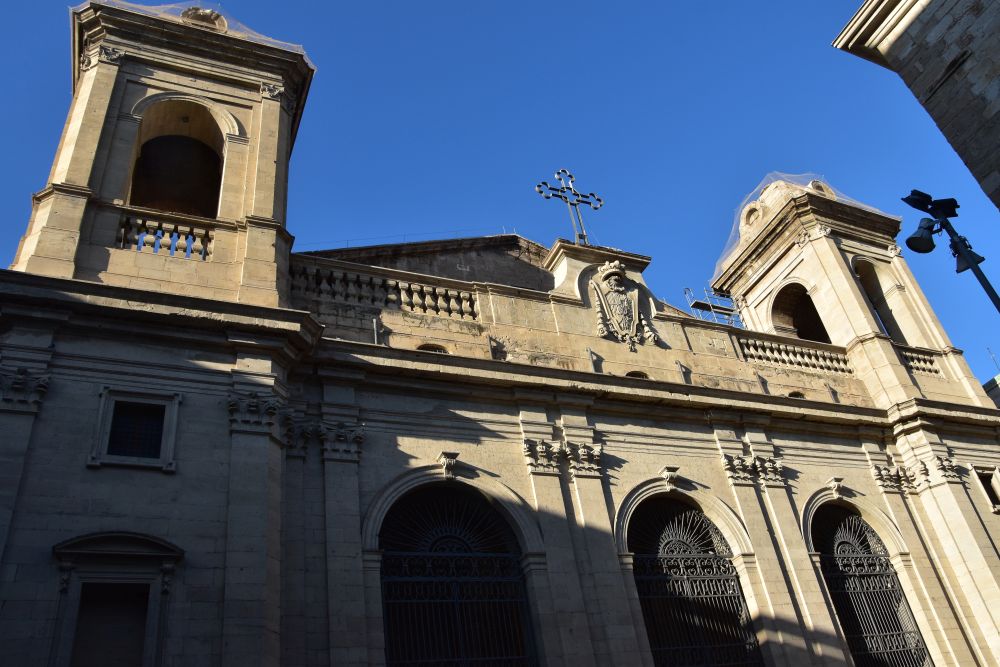
When, after the War of Succession in the beginning of the 18th century, the Bourbons transformed the castle hill into a military casern, they donated a new cathedral to the city, built in the then modern baroque style. Since then, Lleida has owned two cathedrals which, however, have not always  been ready for use.

Just across we find the charming Gothic patio of the Hospital de Santa Maria.

.

Recovering and saying good-bye

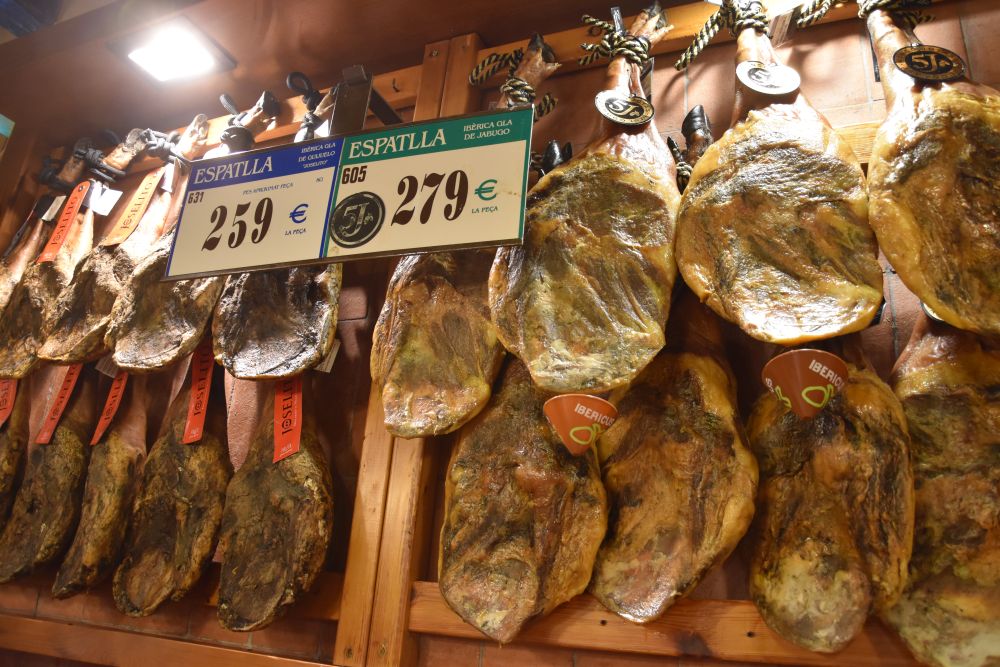
In between we take a coffee with a tasty, crusty ham sandwich in the Mesón Rincón Iberico. It is full of noble ham legs, amidst them the best from Jabugo labelled “5J”.  I buy sliced ham to take home.

For lunch we find the quiet and cosy restaurant Romeu, where the menu costs 11.50 Euros – well worth the price.

In the evening – it is now dark -we say good-bye to the lively Carrer Major.

I manoeuvre my car out of the utterly narrow parking house (why are they all so narrow here?). Along the C-12 to Flix and Mora d’Ebre we return to our cosy apartment near Tarragona.

When traversing Lleida the next time and fighting with the traffic lights and complex circuses, we might stop for a coffee in the Carrer Major.


Sources:

« Routen der Romanik in Katalonien », Generalitat de Catalunya, Departement de Commerç, Consum i Turisme, 1987 (I call it « newspaper »)
Fritz René Allemann und Xenia v. Bahder, «Katalonien und Andorra», Kunstreiseführer DuMont, Köln 1980