Discovering the language the Val d’Aran: Some insights into Aranese

When arriving in the Val d’Aran end of October 2018, I noticed announcements along the road that had a clear Romance touch, but they were neither French nor Spanish nor Catalann – they were different. For example:

  • Restaurant and others: Eth Triton, Tauèrna Urtau, Era Coquela, Apartementos deth Camin Reiau, Musèu dera Val d’Aran
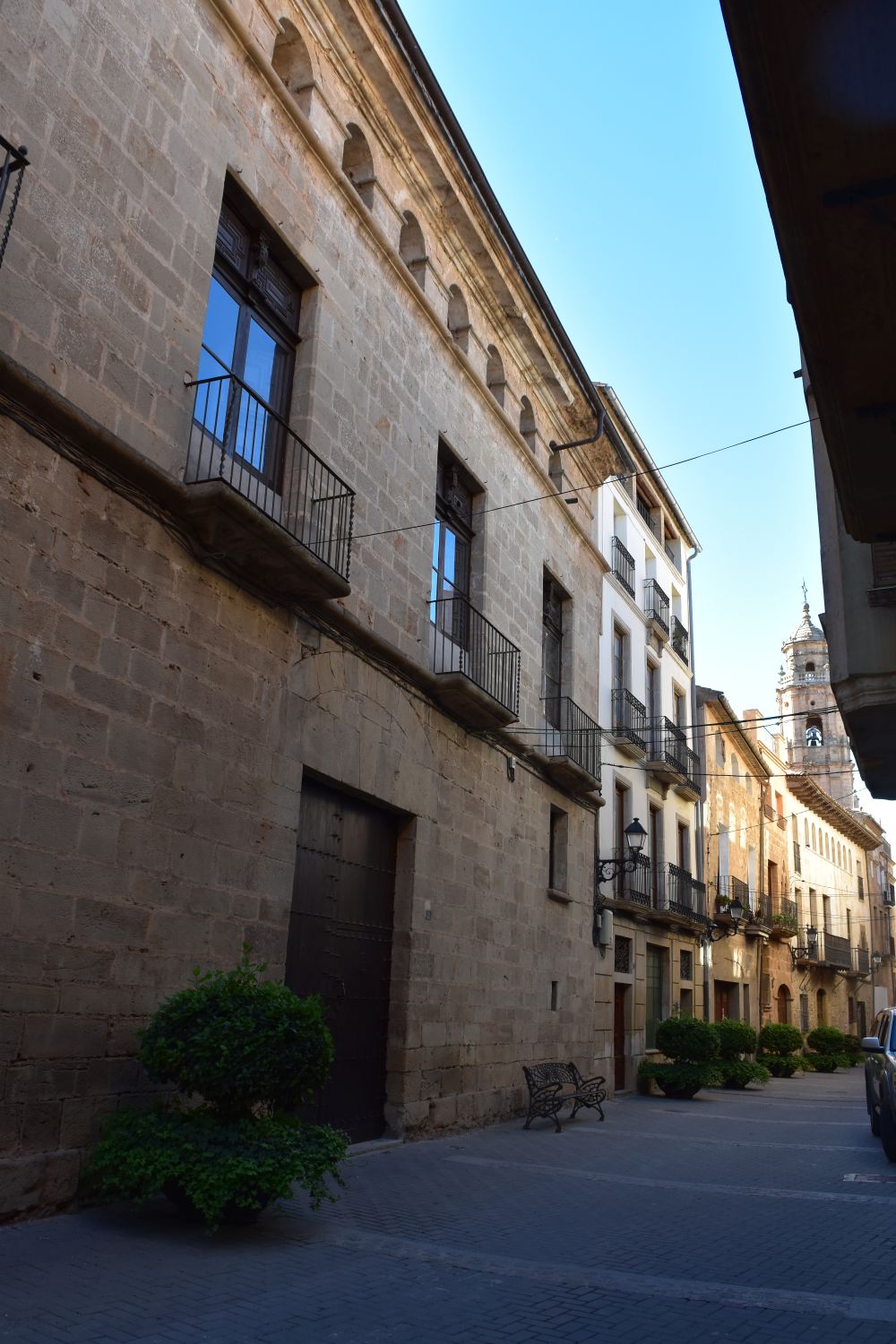
  • Street names : Carrèr dera Hònt, Carrèr des Banhs, Carrèr Espitau, Carrèr deth Centre
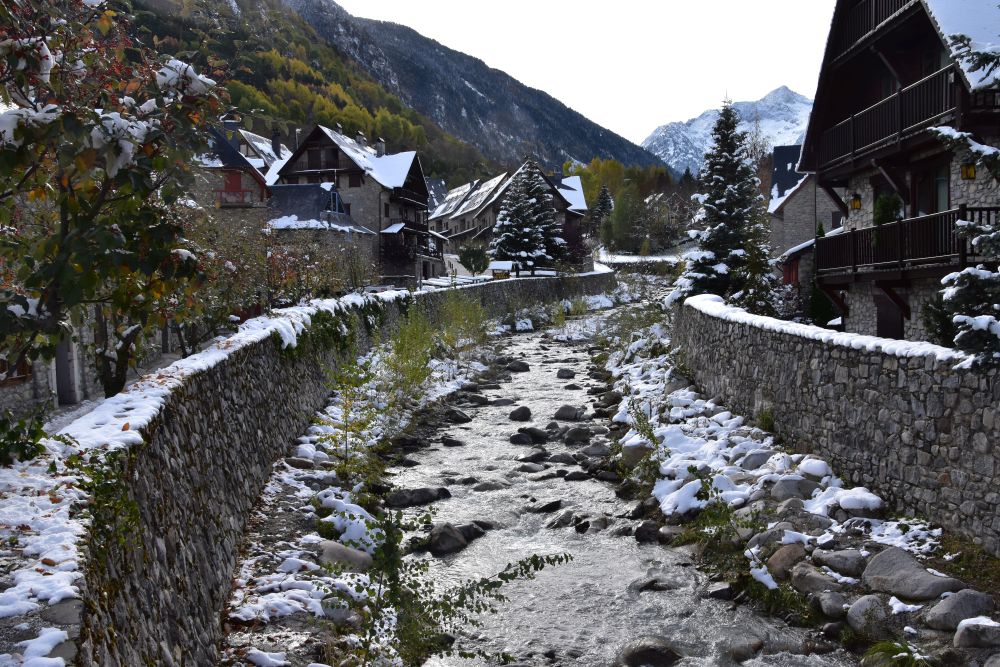
  • Rivers : Arriu de Salient, Arriu de Valarties, Barranc des Pales, Saut deth pish

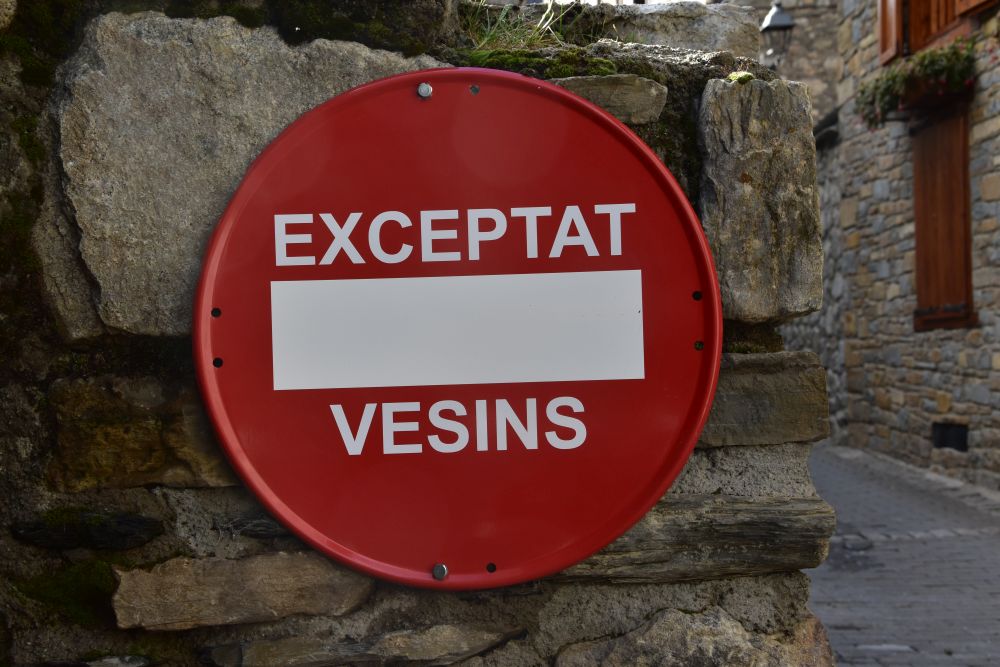
This sign is somewhat familiar and somewhat unfamiliar. “Neighbours” are “voisins” in French, “vecinos” in Spanish and “veís” in Catalan. Obviously, they are “vesins” in Aranese.
.

The origins of the Aranese language

The servant at the bar of our parador in Arties is from Barcelona. “Oh yes”, she says, “I can understand the people in the Val d’Aran, they speak a local dialect of Catalan.” “No, no, the language of the Val d’Aran is not a local dialect of Catalan, it is a different language deriving from Gasconian”, Ursula replies. Our servant frowns: “Really? That sounds interesting.”

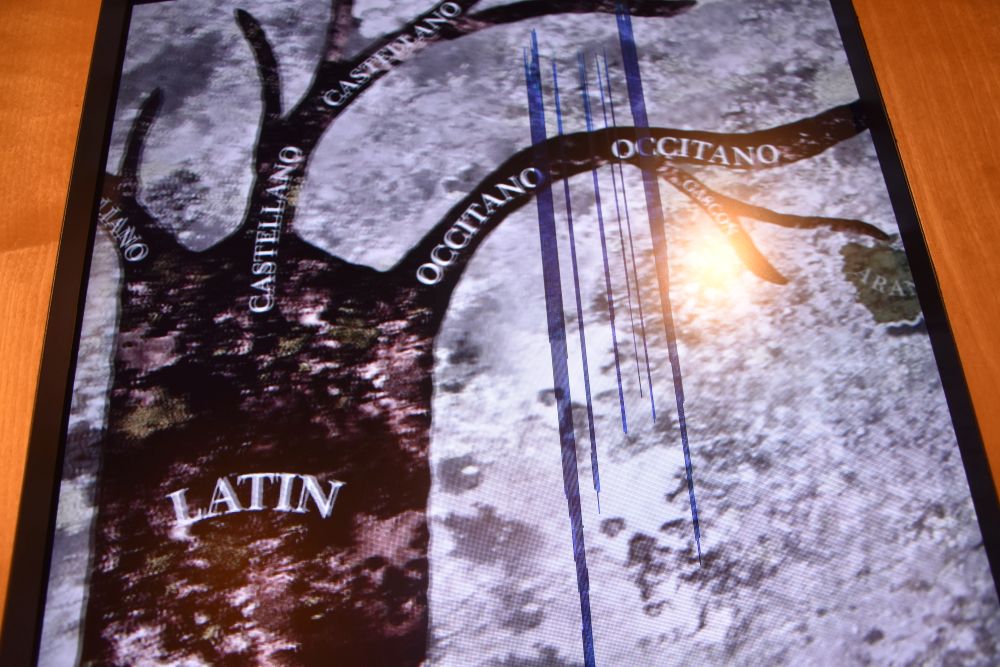
In the Musèu dera Val d’Aran in Vielha, the elegant lady at the reception desk switches seamlessly between French and Spanish. She proudly explains to us: “You will see the language tree in the video of our museum: Latin is the main trunk, the Occitan languages are one branch, then Gasconian branches off and from the Gasconian branch the Aranese language derives.” I tried to capture that tree flying by on the screen – Aranese can be seen on the very righthand side branching off from Gasconian.
“We, the people in the Val d’Aran are fluent in four languages, Aranese, Spanish, French and Catalonian”, the friendly lady at the museum reception adds. Madeleine and Françoise Besson confirm that the people here speak four languages, in former times even without having attended school: „… eux qui, pour les générations anciennes surtout, savent parler quatre idiomes: l‘aranais, le castillan, le français et le catalan. Un professeur de langue … se rappelle que sa grand-mère n‘était jamais allé à l‘école et parlait quatre langues (tome I, p. 35).“ Some speak in addition several local dialects of the neighbouring valleys.

 Let us approach the Aranese language to understand the expressions at the beginning of this blog.

.

Eth, era, deth, dera , des

What I first noticed were the words “eth”and “era” as well as “deth”, “dera” and “des”. They appeared in the names of streets and restaurants: Eth Triton, Era Coquela, Carrèr deth Centre, Musèus dera Val d’Aran, Barranc des Pales.

“Eth” and “Era” are the articles, masculine and feminine. They can be combined with “de” to make “of the”. Hence:

  • Eth Triton = The Triton
  • Era Coquela = The Saucepan/Casserole
  • Carrèr deth Centre = Street of the Centre
  • Musèus dera Val d’Aran = Museum of the Val d’Aran
  • Barranc des Pales = Canyon of the Shovels (Bessons, Tome II, p. 79; pales or pelles in French)

Actually “eth” and “era” derive from Latin “ille” and “illa” (Wikipedia).

.

About the orthography

In the past, Aranese was just spoken, but not written down. The people of the Val d’Aran had to agree, how to write their language. There were several approaches, that, if I understand correctly, were settled in 1982 (Conselh Generau d’Aran: “Normes ortografiques der Aranès”). Some rules are:

  • “lh” = Spanish or French “ll” (Vielha = Viella = central city of the Val d’Aran, calhau = caillou = pebble, familh = famiglia = famille)
  • “nh” = Spanish ñ/ni/ny or French “gn/in” (banhs = baños = bain = baths, senho = señor = seigneur)
  •  u = v between two vowels (escriuer = escribir = write, shivau = caballo = cheval = horse)
  • Final “l” becomes “u” (mau = mal = bad)

(Sometimes the Aranese word is closer to French, sometimes more to Spanish).

Now I understand

  • Carrèr des Banhs = street of the baths
  • Carrèr Espitau = street of the hospital
  • Arriu = river

Saut deth pish is composed of “saut” (= forest, related to Spanish “selva”) and “pish” = waterfall (in Spanish cascada). This must be the forest of the waterfall.

.

About the etymological correspondence if “f” and “h”

When I started to learn Spanish, I noticed that the Latin “f” often transformed to “h”, but remained “f” in French. Examples are:

  • formica (Latin) = hormiga (Spanish) = fourmi (French) = aunt
  • fornax (Latin) = horno (Spanish) = four (French) = oven
  • ferrum (Latin) = hierro (Spanish) = fer (French) = iron

…but not always:

  • Fons (Latin) = fuente (Spanish) = fontaine (French) = source or fountain


The Aranese language transformed “f” into “h” as well, but sometimes Spanish keeps the “f”:

  • hormiga (Aranese) =  hormiga (Spanish) = fourmi (French) = aunt
  • horn (Aranese) = horno (Spanish) = four (French) = oven
  • hont (Aranese) = fuente (Spanish) = font (French) = source/fountain
  • hum (Aranese) = humo (Spanish) = fumée (French) = smoke / fume
  • haria (Aranese) = harina (Spanish) = farine (French) = flour
  • haus (Aranese) = hoz (Spanish) = faucille (French) = sickle
  • huec (Aranese) = fuego (Spanish) = feu (French) = fire
  • hesta (Aranese) = fiesta (Spanish) = fête (French) = festivity
  • heira (Aranese) = feria (Spanish) = foire (French) = fair / exposition

but sometimes the “f” remains in Aranese:

  • forquilla (Aranese) = tenedor (Spanish) = fourchette (French) = fork
  • faucon (Aranese) = halcón(Spanish) = faucon (French) = falcon

and sometimes the Spanish word is totally different:

  • hormatge (Aranese) = queso (Spanish) = fromage (French) = cheese
  • horment (Aranese) = trigo (Spanish) = froment (French) = wheat

Now I understand that Carrèr dera Hònt is the Fountain street.

.

The Aranese – officially recognised by Catalonia

Since 2010, the Aranese has been one of three official languages in Catalonia, besides Catalan and Spanish. Since 1984 it has been taught at schools in the Val d’Aran. According to a census of 2008, about 80% of the inhabitants in the Val d’Aran understand Aranese and about 60% speak it s well. I do hope that the federalistic solution for the Aranese language will continue to flourish.
 

Discovering the Romanesque and early Gothic churches in the Val d’Aran

Discovering the Romanesque and early Gothic churches in the Val d’Aran

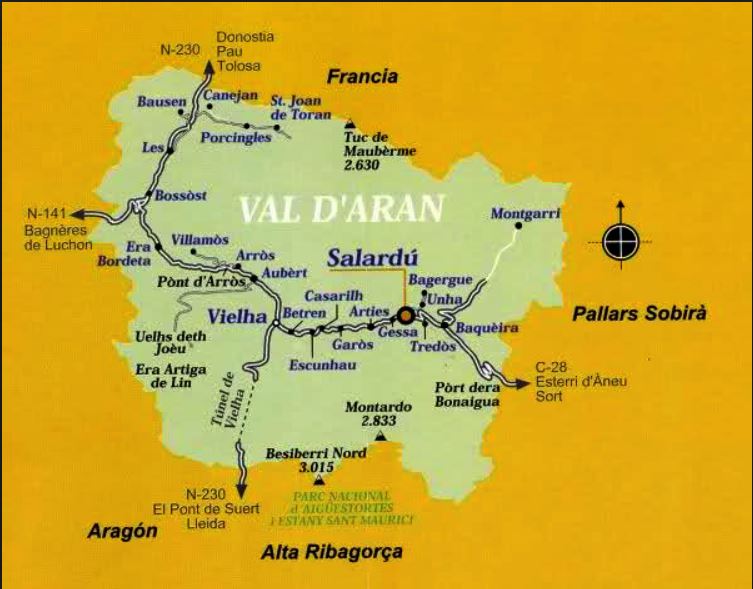
For end October/beginning November 2018 we had booked four nights in the Parador of Arties in the Val d’Aran. We found much to discover. Each mountain village has its own church and most of them are of Romanesque or early Gothic style.

Source: El valle de Aran

Besides Santa Maria in Arties, we have visited the churches of Vielha, Bossòst, Les, Escunhau, Salardú, Tredòs and Unha (main source: “Los caminos Pirenaicos del Arte Romanico”).

.

Vielha – Iglesia de Sant Miquèu

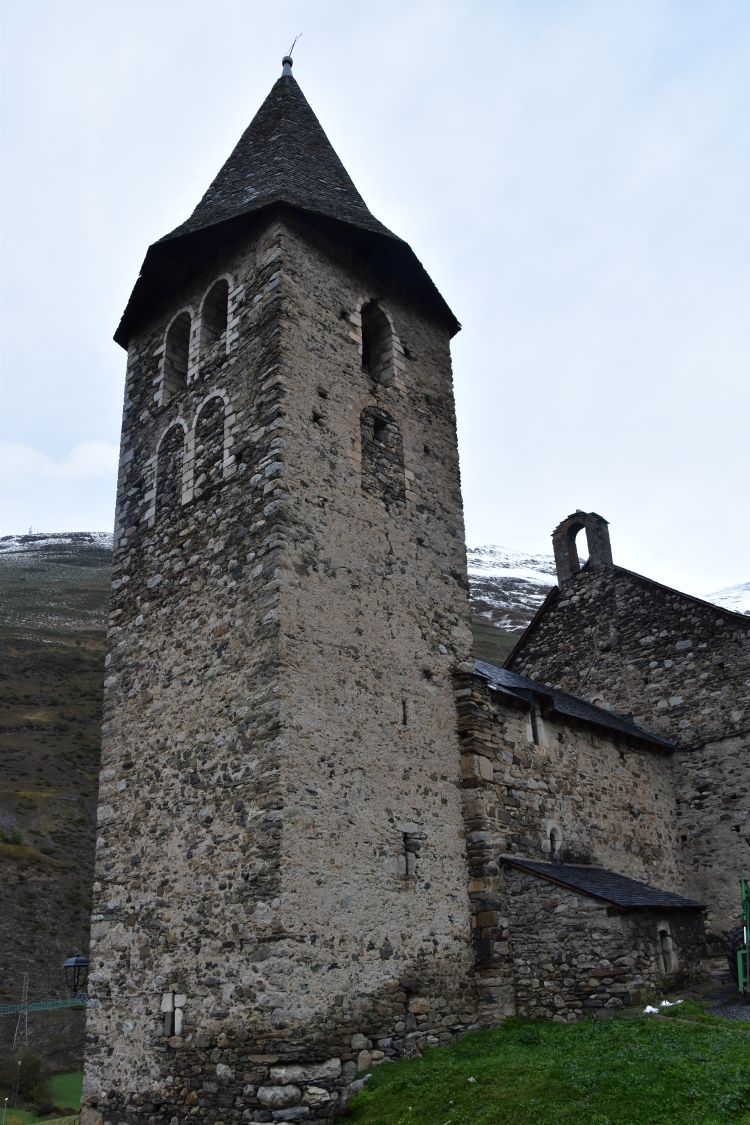
Vielha is the main town of the Aran valley. The octagonal tower of the church Sant Miquèu can be seen from far (early Gothic).

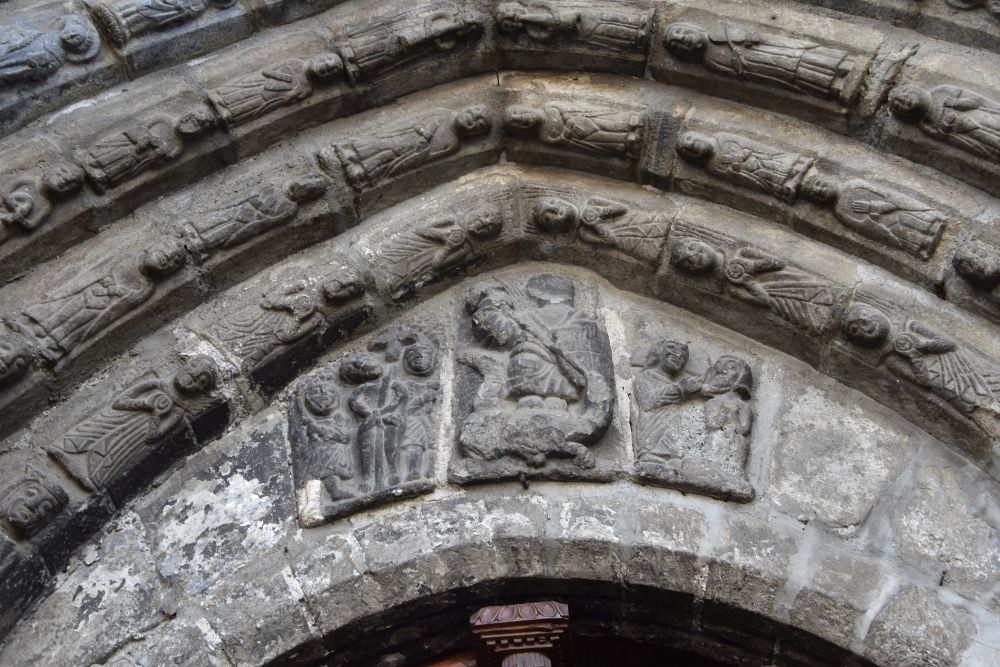
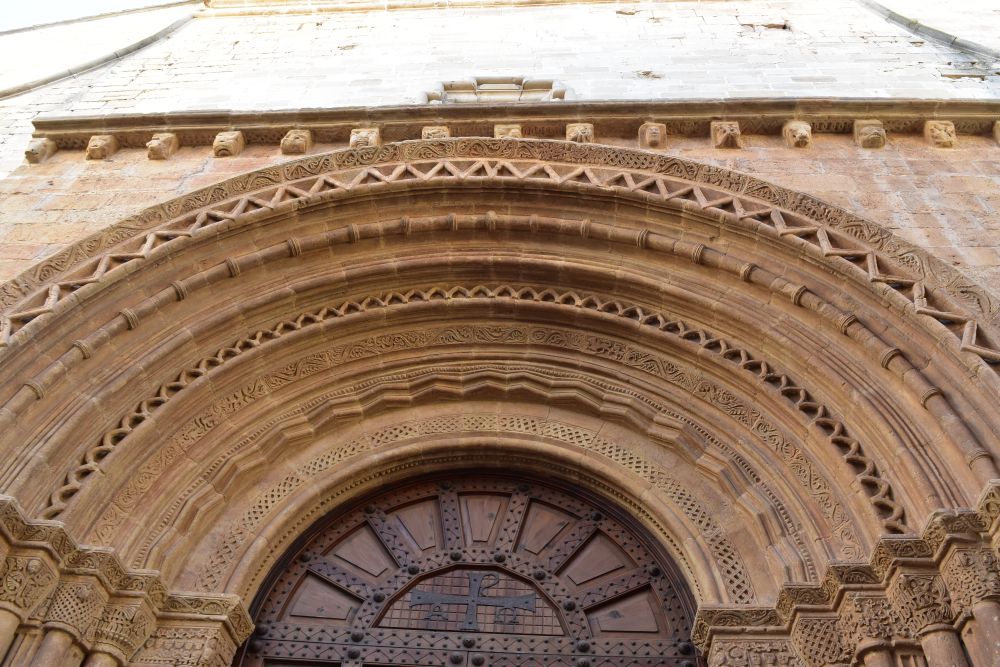
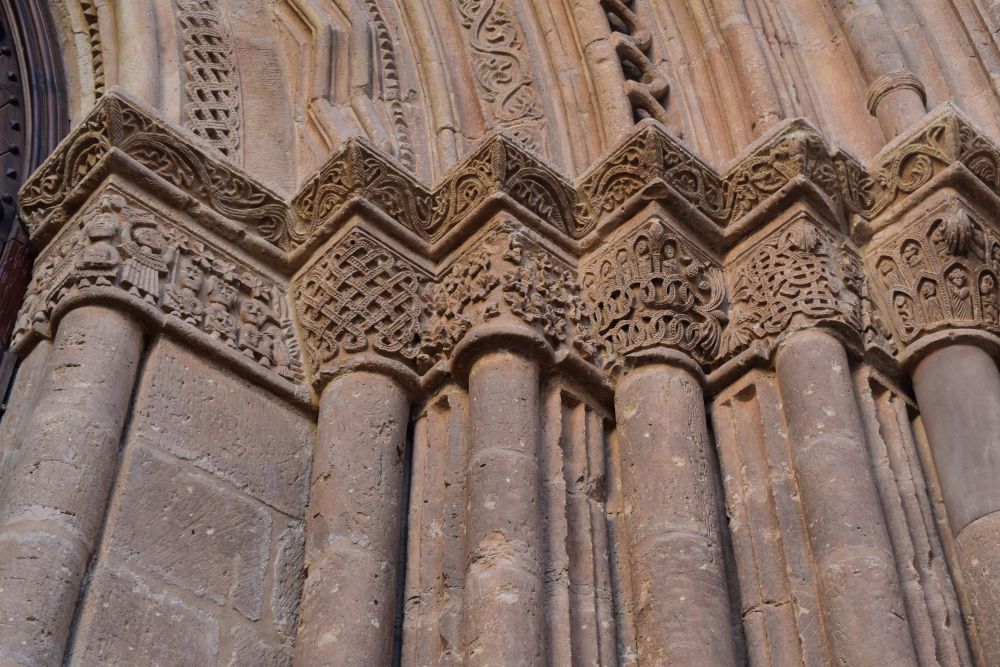
The portal is decorated with the Saint of the church, Michael who defeats the dragon-devil (early Gothic, 14th century). The five arcs of the portal contain sculptures to discover.  

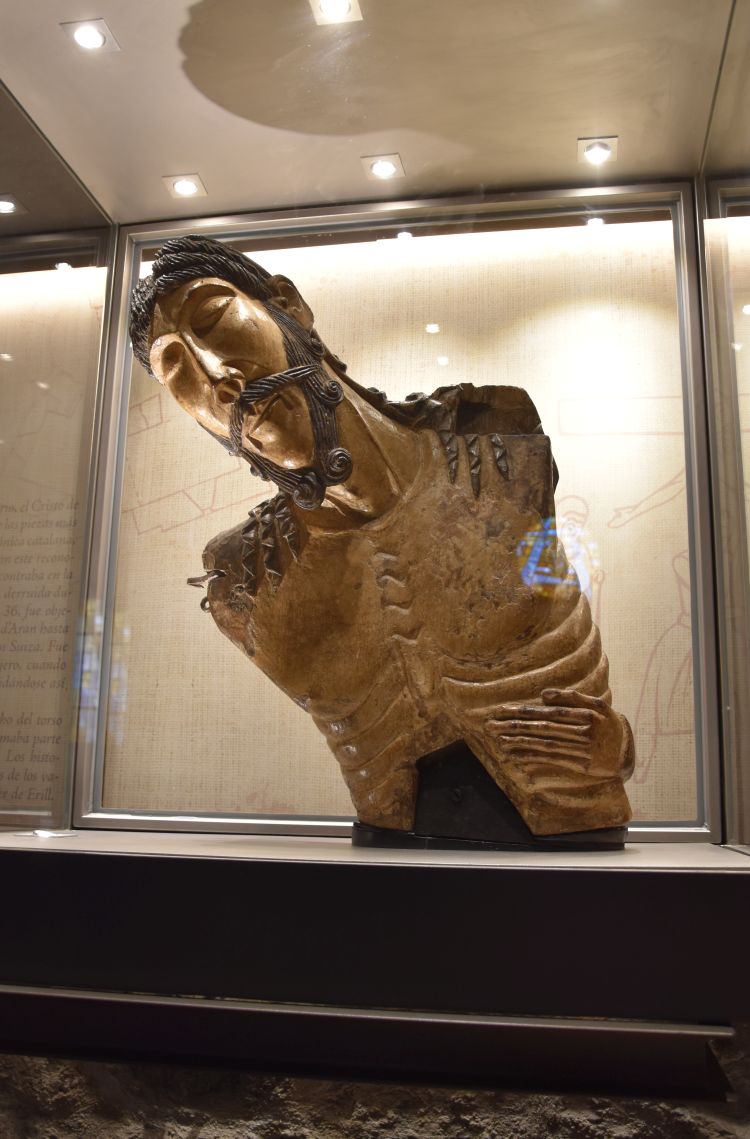
Inside the church we find the most precious treasure, the Christ of Mijaran. It is the only remaining part of a larger sculpture showing the deposition from the cross (12th century). It was crafted by master Erill from the Val de Boí. The Val de Boí is not far from here and last year we have visited their impressive Romanesque churches as well.

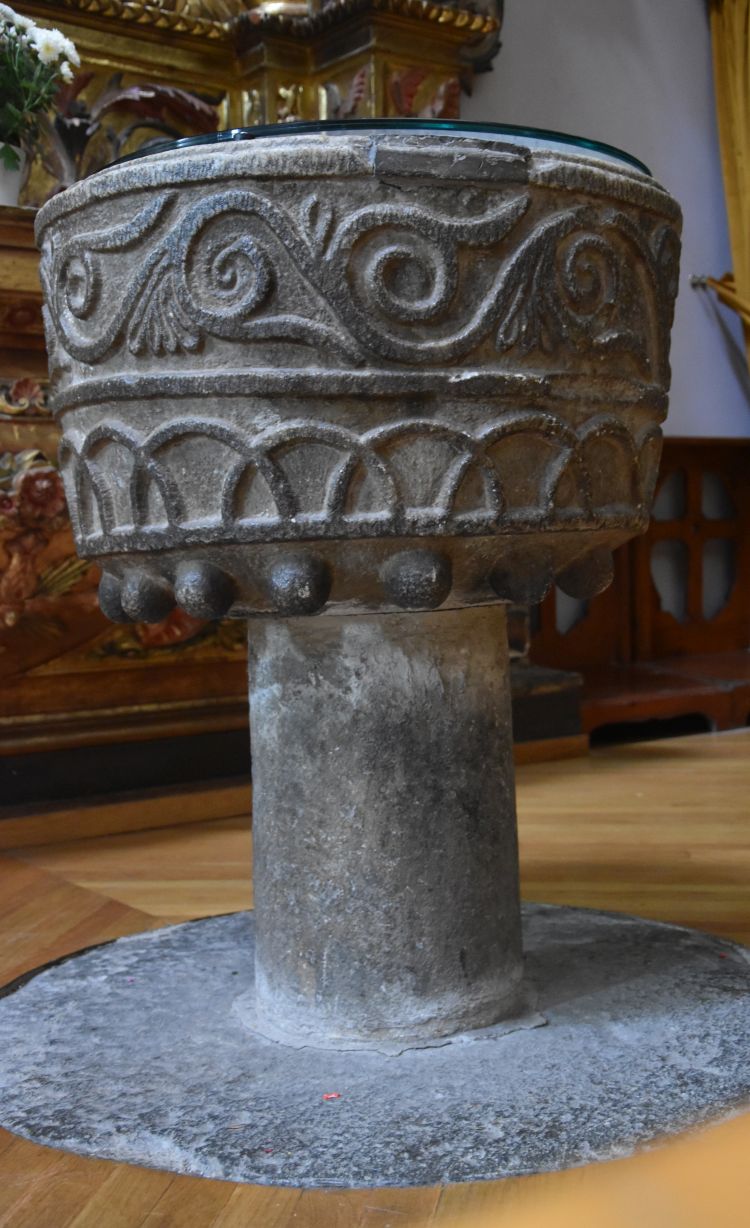
The Romanesque baptismal font is carefully decorated.

Inside the church are furthermore a gothic altar and gothic frescos.

.

Bossòst – Iglesia de la Mair de Diu dera Purificacion

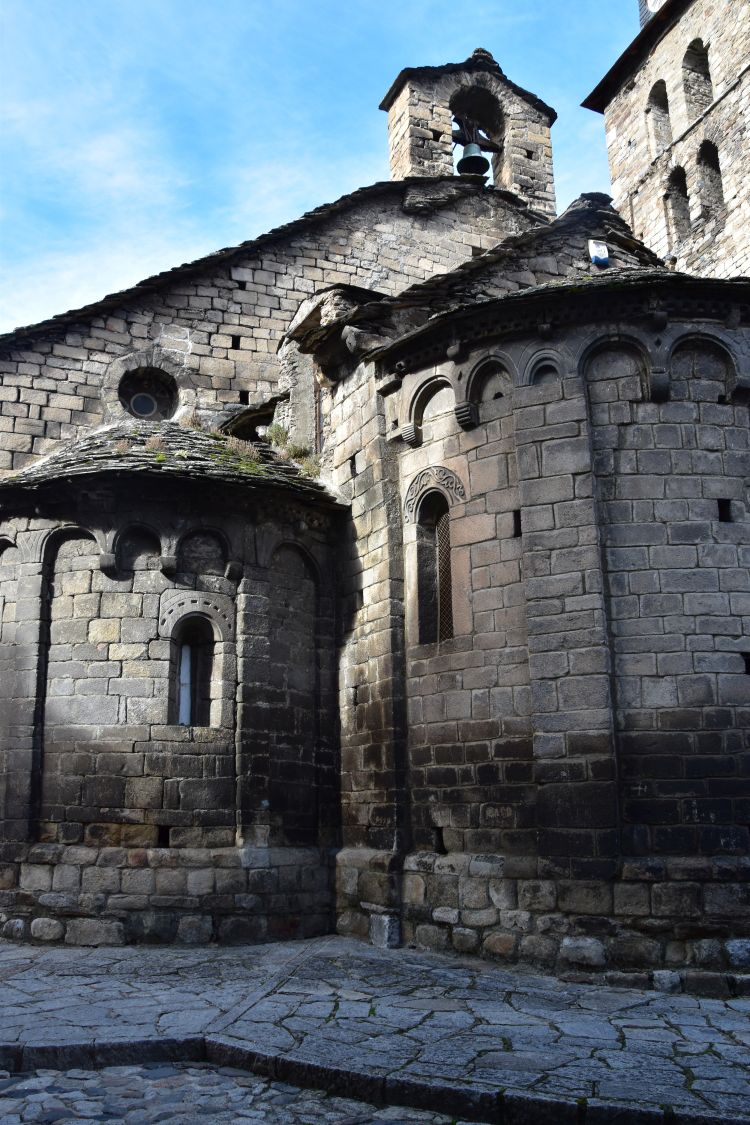
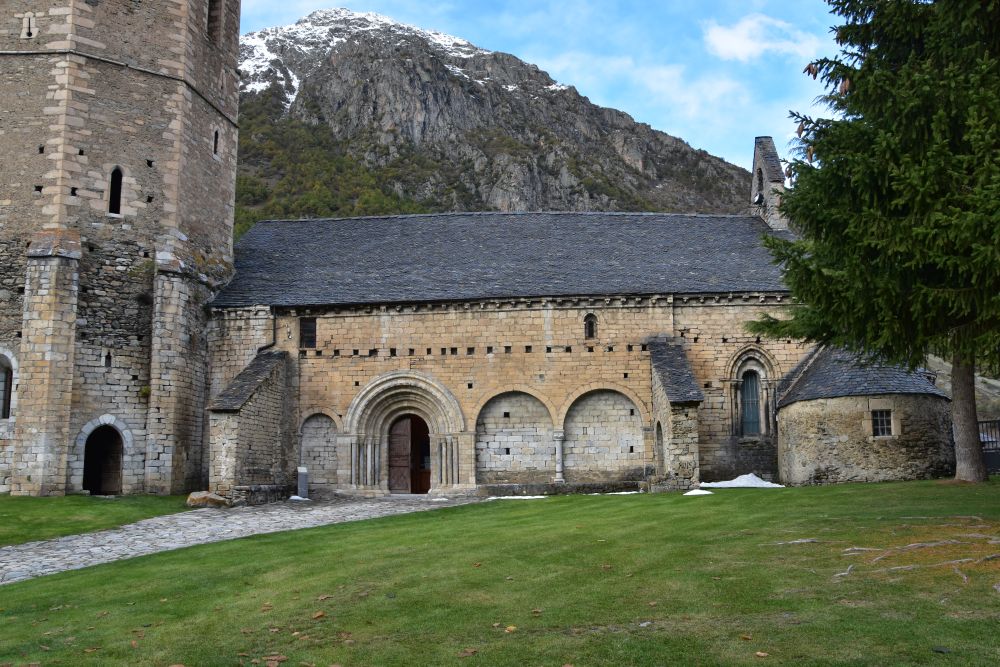
Bossòst is another village with narrow streets, neat houses with shingled roofs and a Romanesque church, the Iglesia de la Mair de Diu dera Puricifacion (12th century). The bell tower with its twin windows and the threefold apsis are typical of the Lombardian stlye.

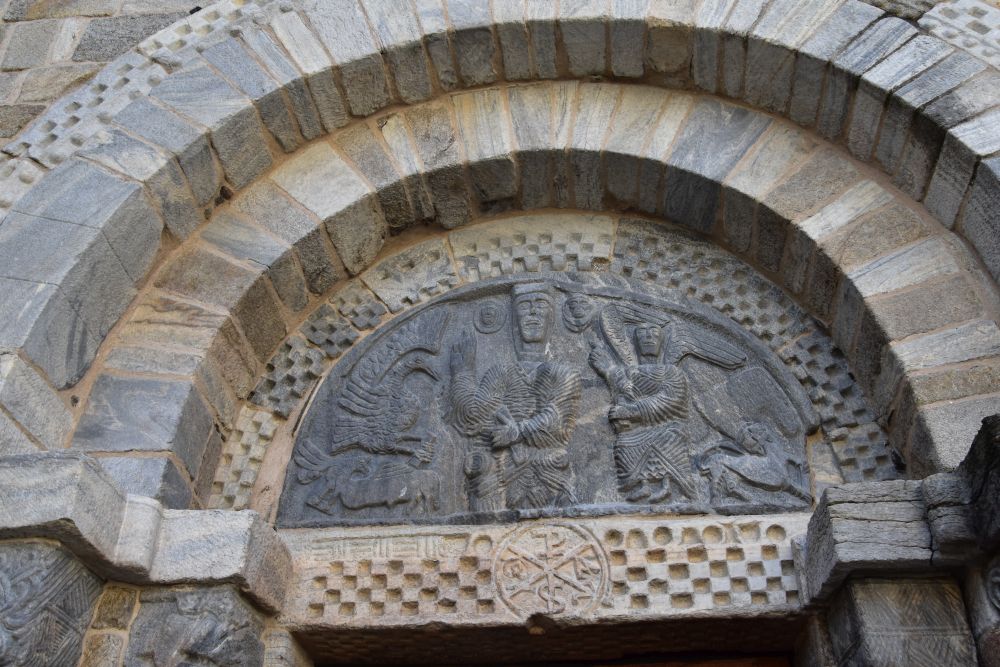
I particularly like the northern portal with Christ surrounded by the sun, the moon and the symbols of the evangelists.

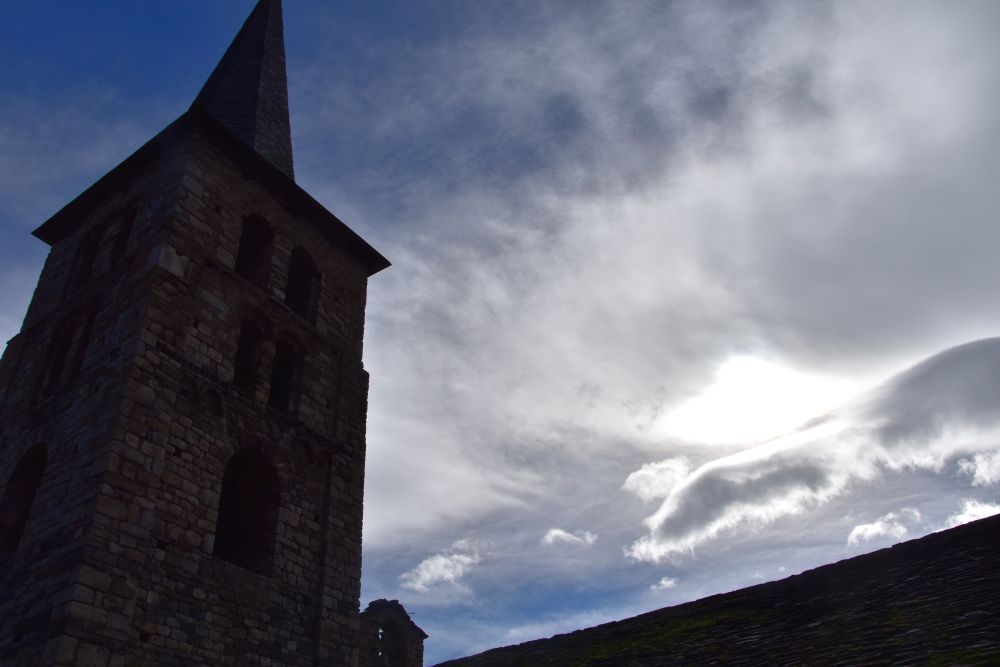
The weather is about to change – the clouds shaped by the south wind are hanging above the belfry.

.

Les – Capilla de Sant Blas

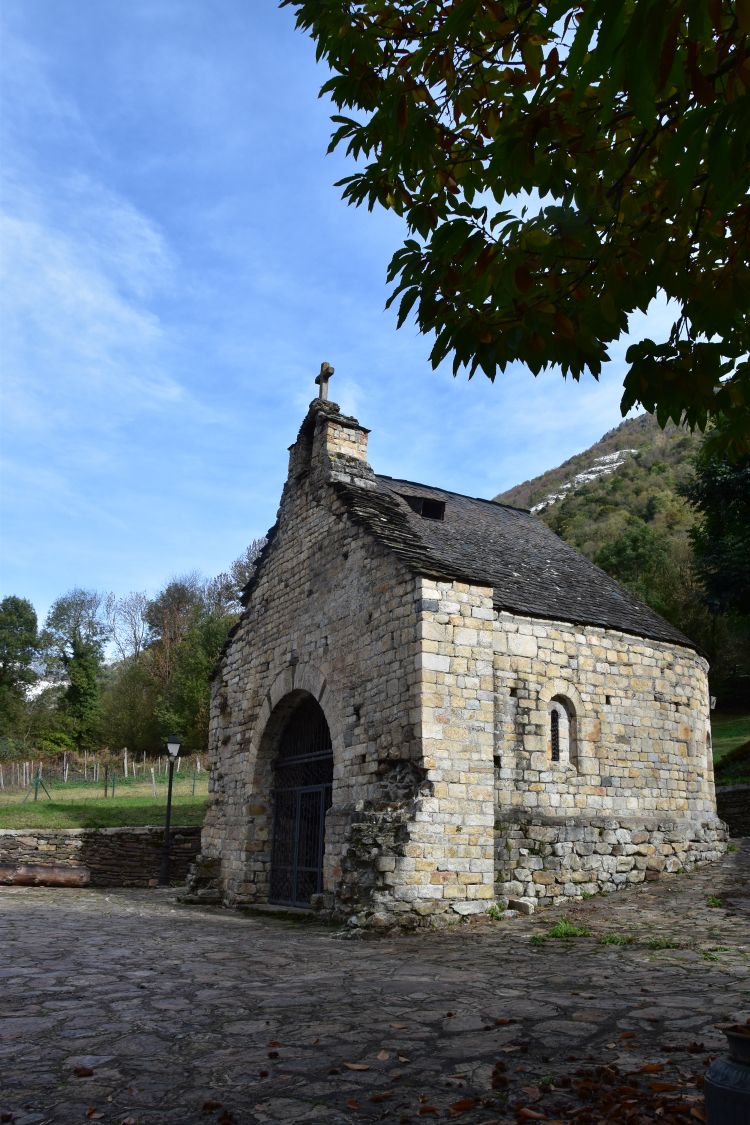
In the next village, Les, we find the small Romanesque chapel called after Saint Blasius. It could well be that once upon a time this chapel was part of a larger church.

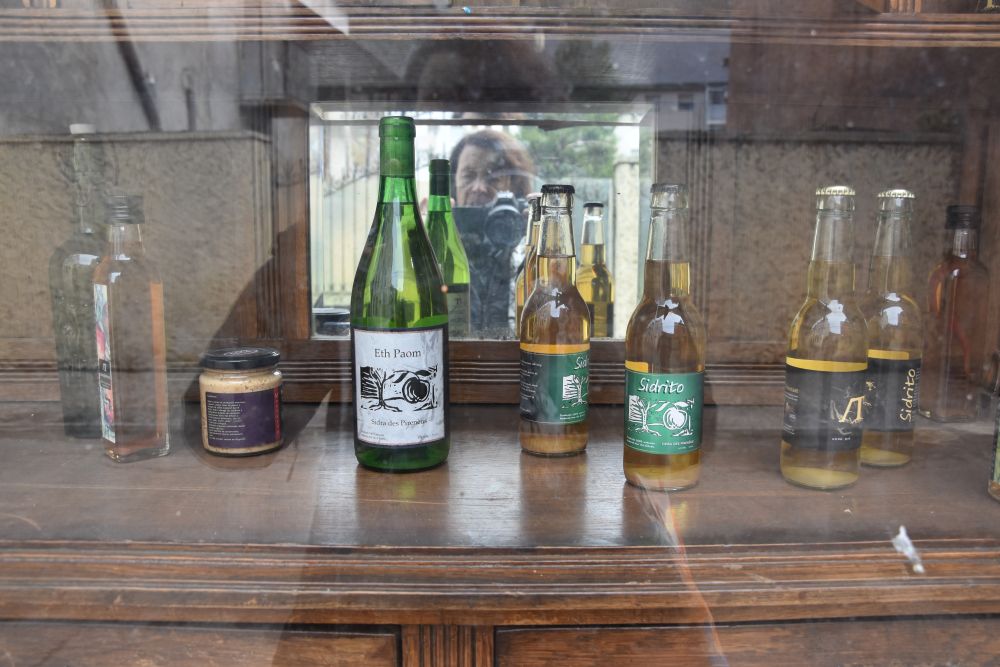
Strolling along the cobbled streets of Les, I find this shop that sells cider.

.

Escunhau – Iglesia de Sant Pèir

Just neighbouring Vielha, Escunhau is another one of those pretty villages. The Iglesia de Sant Pèir is above it.

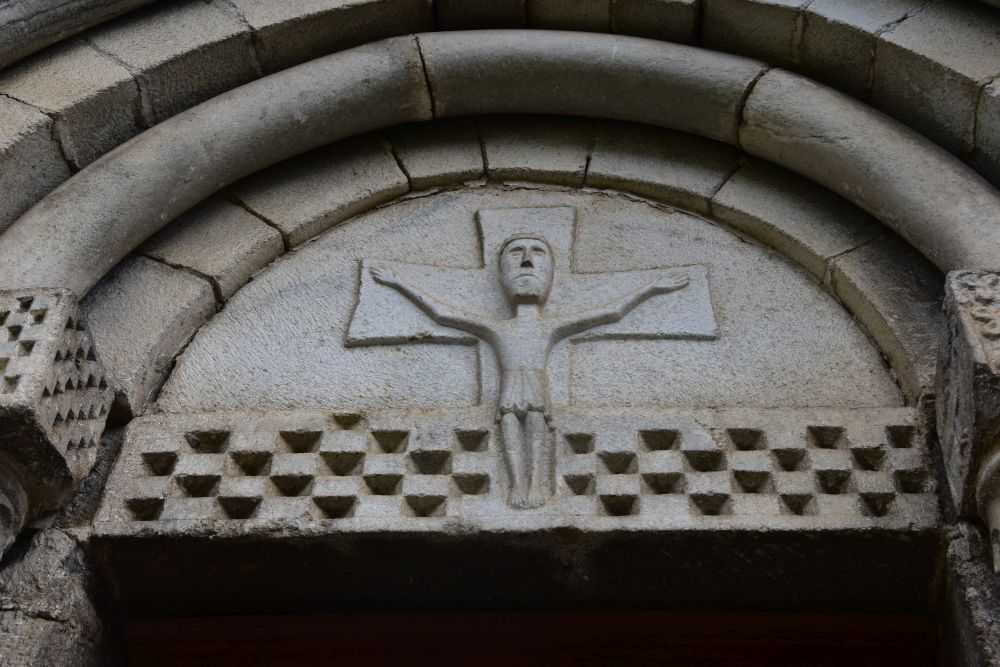
The main portal is decorated with this plain and elegant sculpture showing Christ crucified. Can it be that some architects of 20th century churches came here for inspiration? 

The cemetery has been decorated for 1st of November (All Saints).


Salardú: Iglesia de Sant Andrèu

The church of Salardú is named after Saint Andrew (13th century).

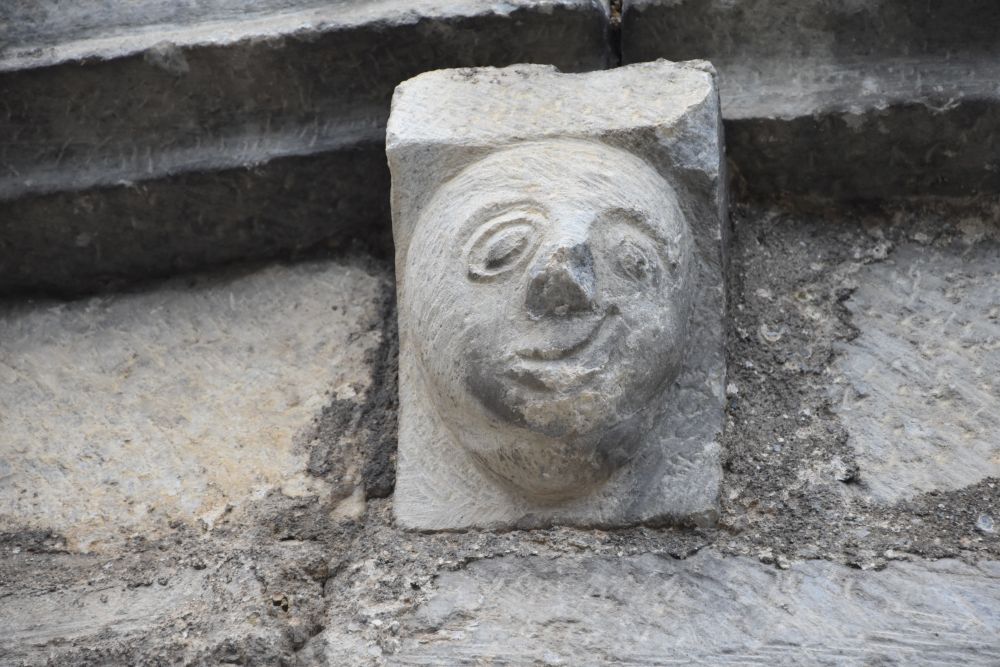
From the outside decoration, I above all like the “twinkling” face – it looks a bit like our “twinkle” emoticon.

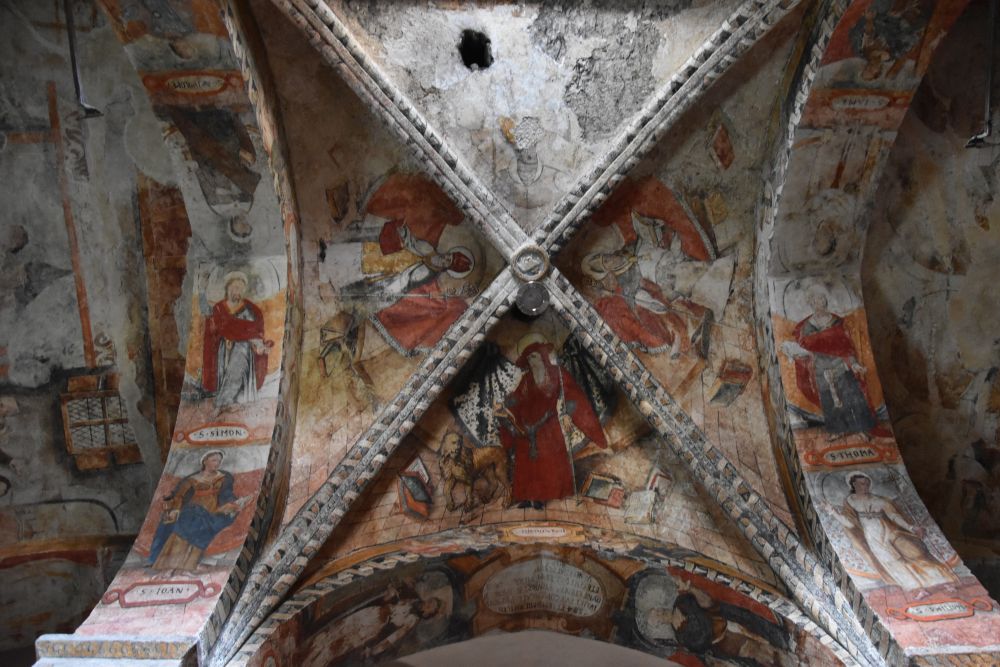
Inside the church we find early gothic vaults.

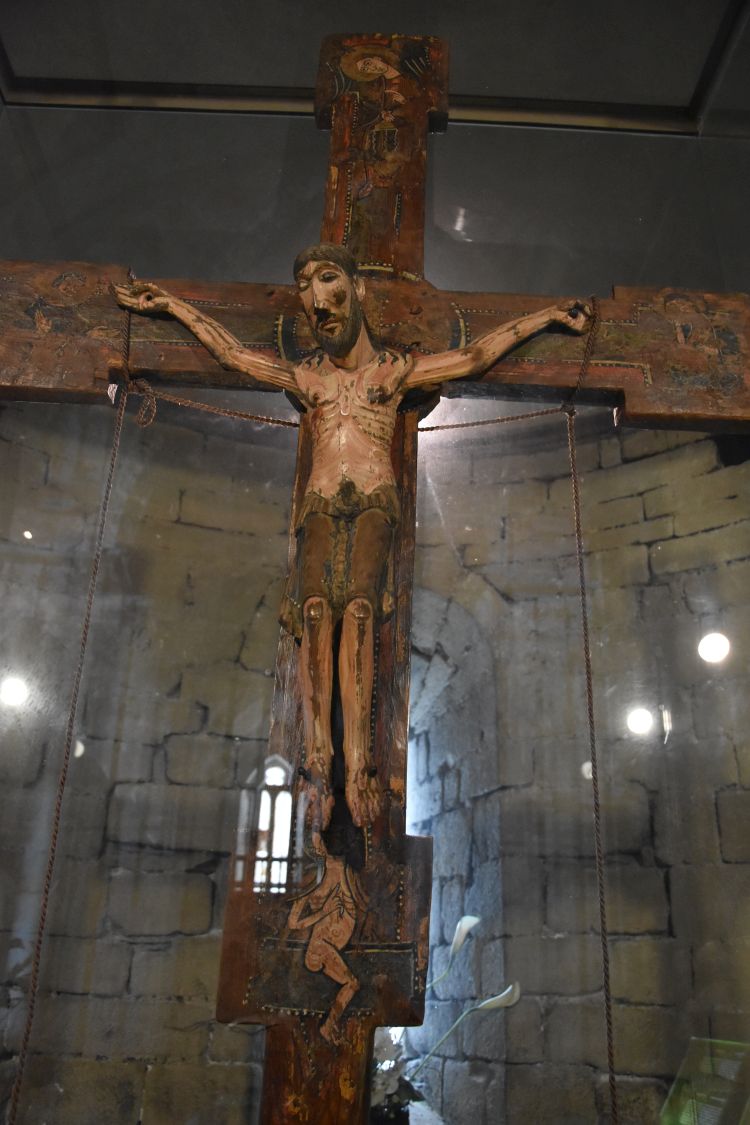
The highlight is the wooden cross with Christ of Salardú. It is attributed to the same master Erill from the Val de Boí as the Christ in Vielha. Under the feet of Christ, Adam is about to revive from his grave.

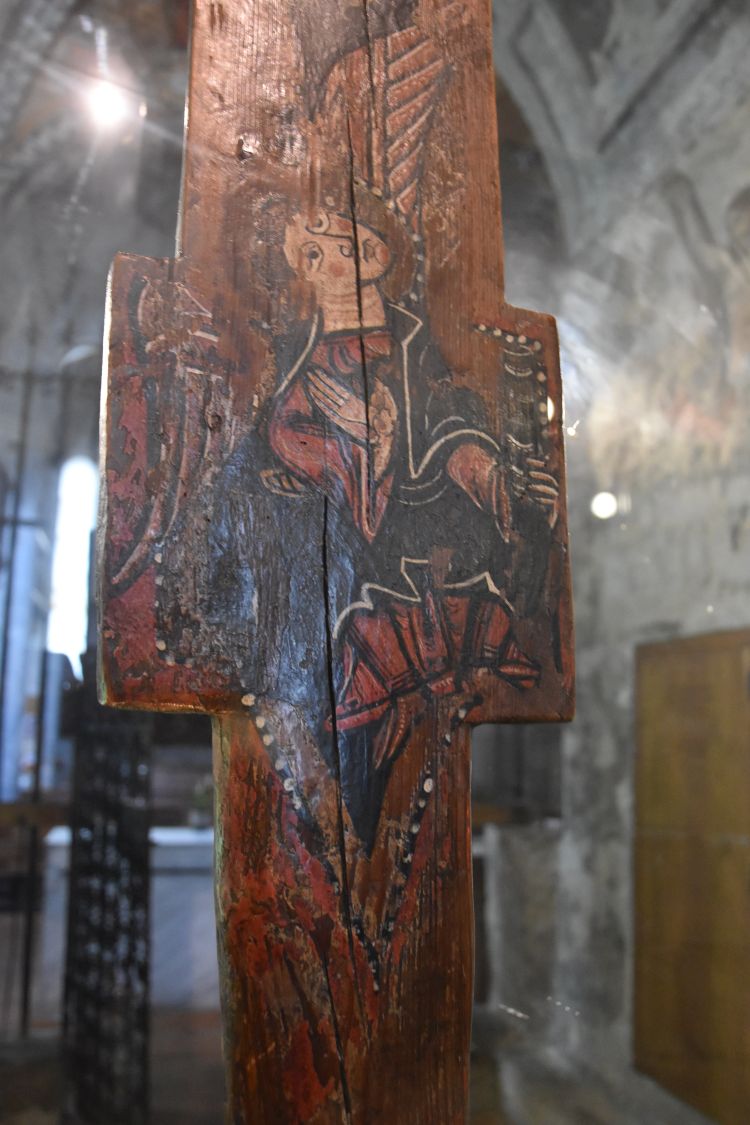
On the back of the cross this beautiful angel looks at us.

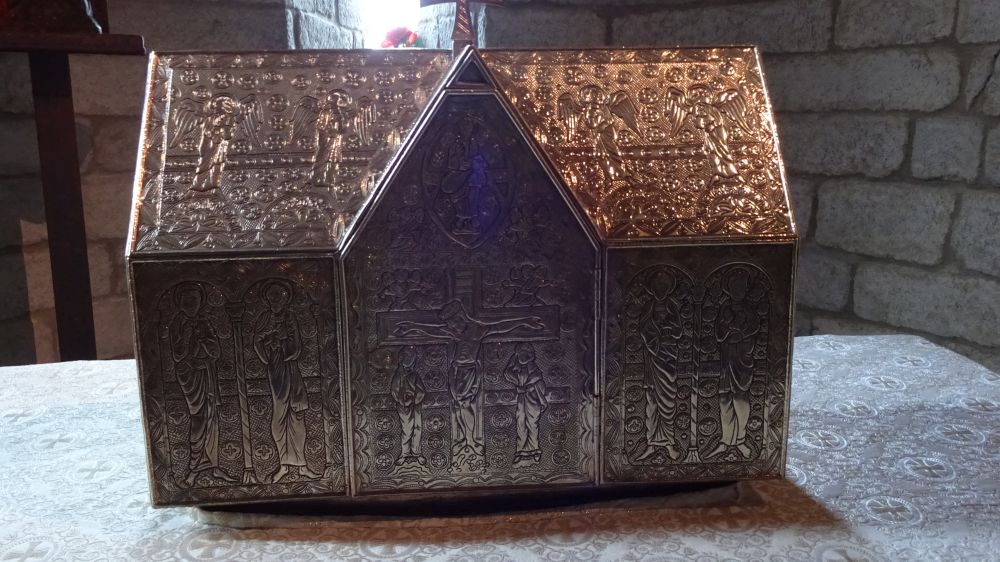
I was so fascinated by the wooden cross that I did not notice, what Ursula noticed… this shrine…

… and the sculpture of Maria with her child.

The presbyterium is decorated with frescos showing biblical scenes; they are from the 17th century – Renaissance.

.

Tredòs – Santa Maria de Cap d’Aran

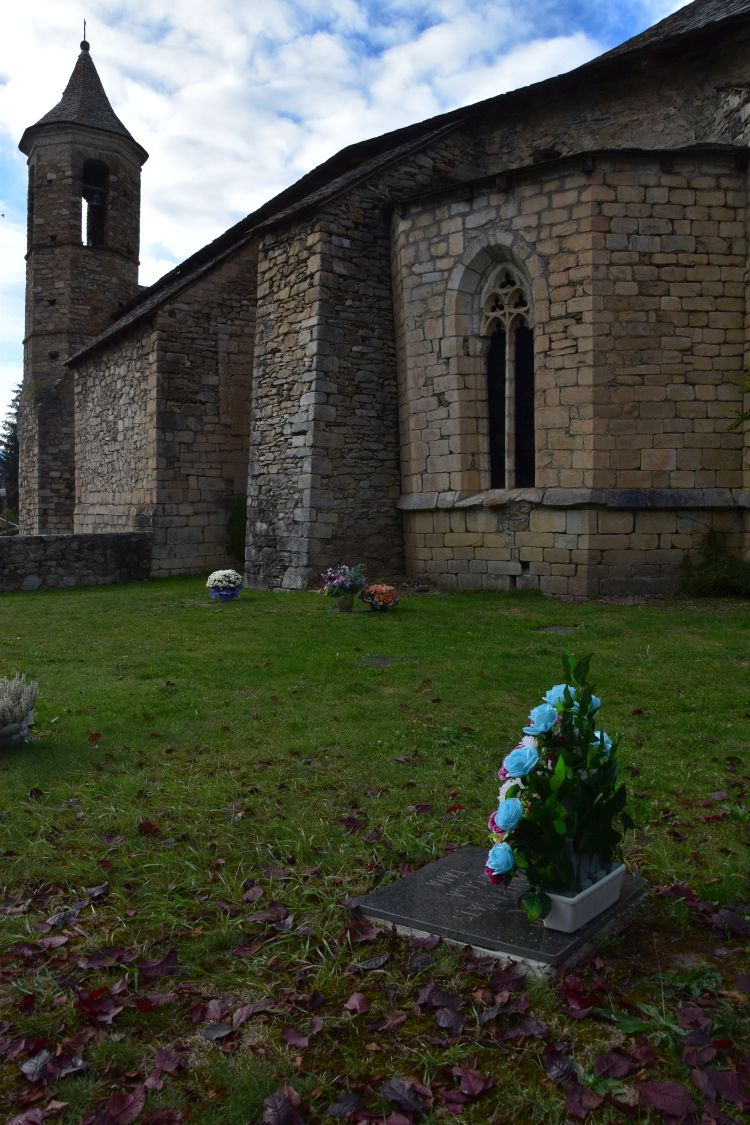
Tredòs is located in the upper part of the Val d’Aran. Their Romanesque church Santa Maria de Cap d’Aran from the 11th century is closed.  The inhabitants are busy decorating the tombs in the cemetery.

The paintings that once were inside this church are now in the Cloisters Museum of New York (this may sound unbelievable, but it is true).

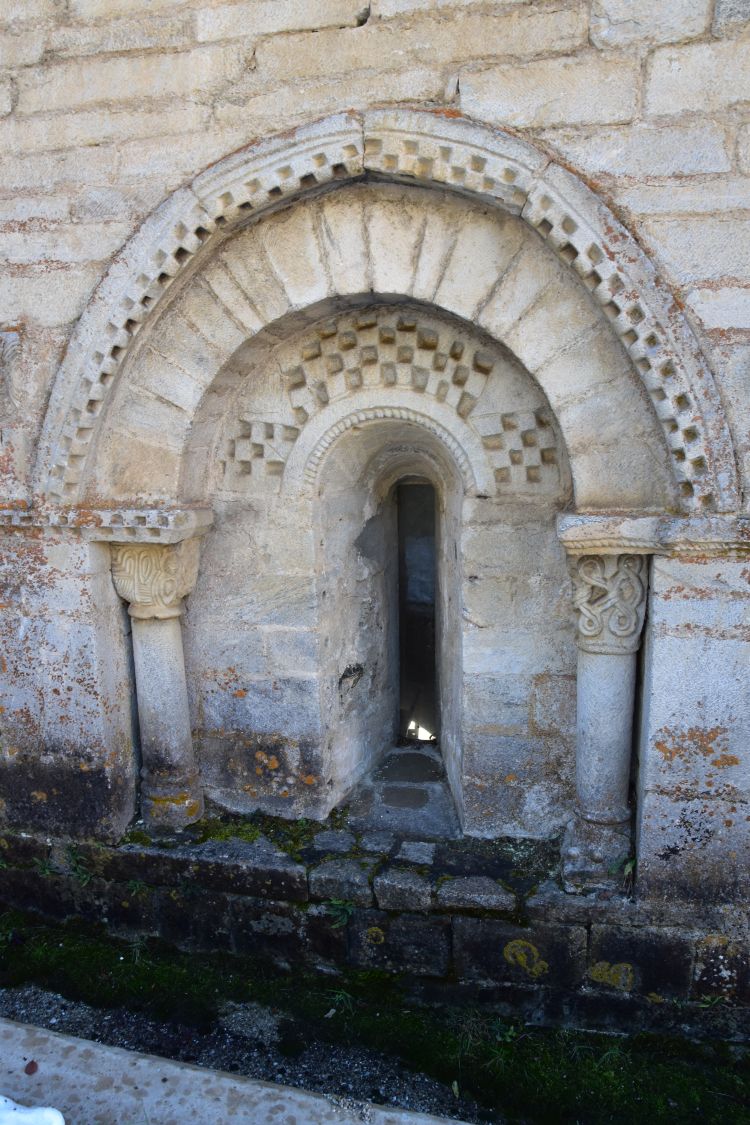
The small window fortunately has remained here.

.

Unha – Iglesia de Santa Eulària

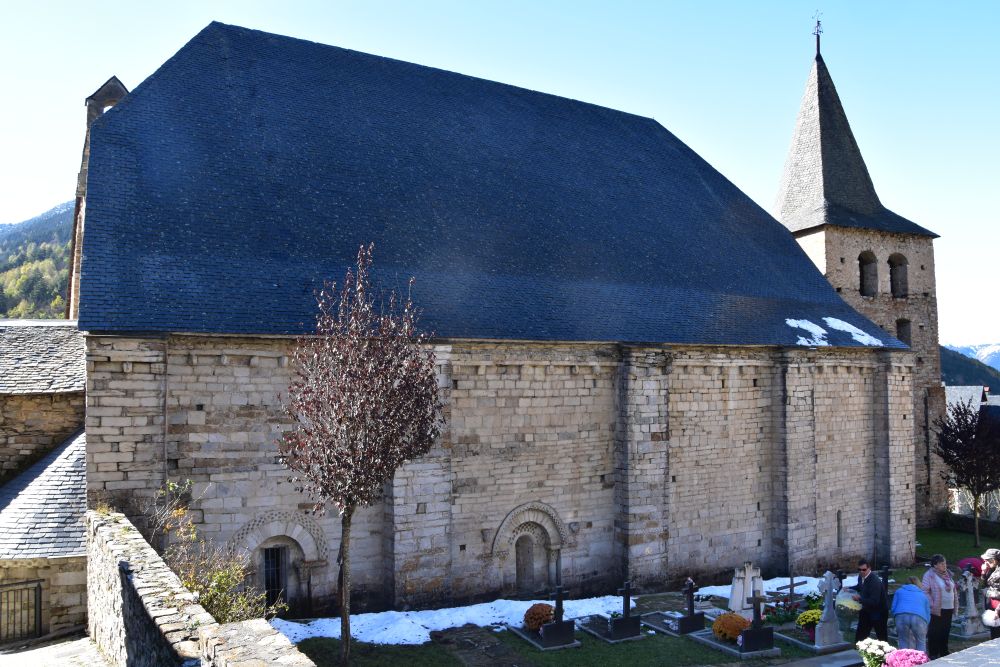
Our last church visited is Santa Eulària in Unha. The mountains make a wonderful background for the Lombardian apsis.

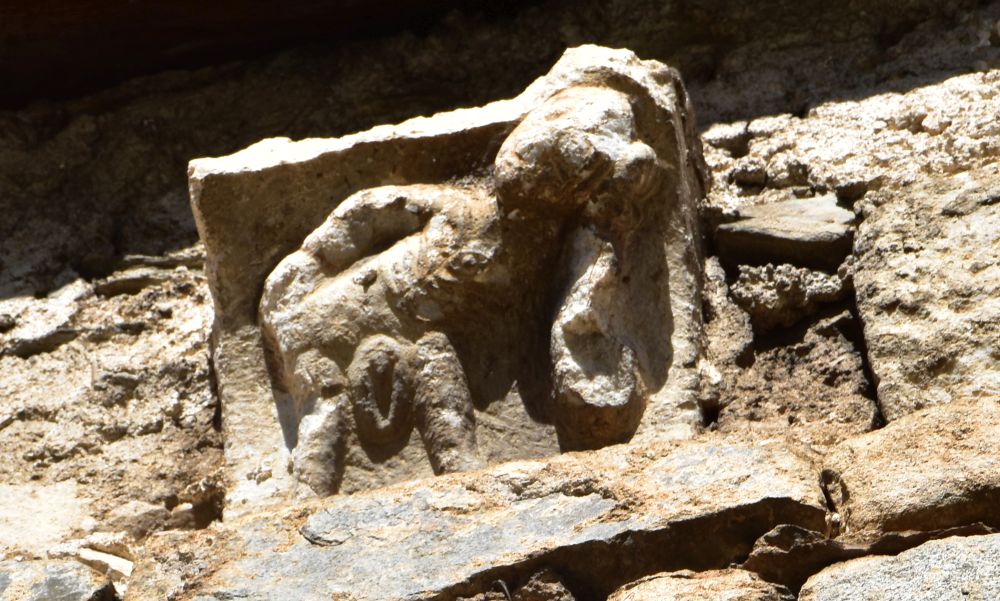
Under the roof, there are various small faces and figures. This figure seems to have a pain in his back.

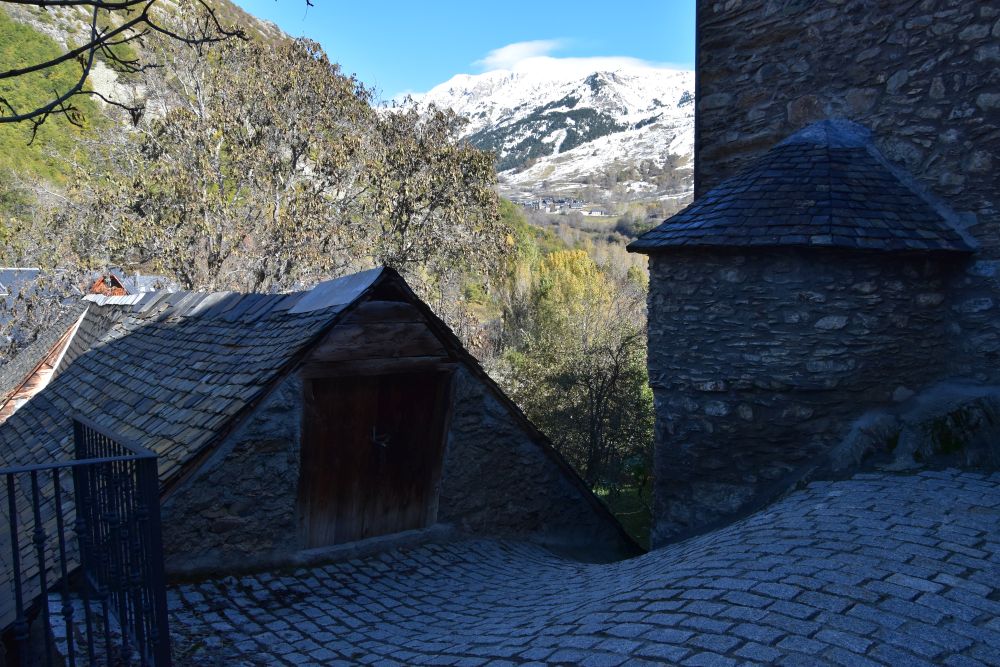
We stroll through the narrow, cobbled streets of Unha and admire the shingled roofs.

Like all villages also Unha is still asleep waiting for the winter season to start and for the tourists to come. We find a bar open and we have an espresso on the balcony.

.

What a rich and well-kept culture in the rough mountains!

The Romanesque and early gothic churches are a rich and well-kept culture. The Val d’Aran is not the only valley with such a rich heritage at the border between Spain and France. To me the churches look like solid fortifications in the rough mountain valleys. The few ornaments are solemn and precious. They make the churches a wonderful place for worship.

It fascinates me to find the same style elements from Lombardy in the Pyrenées, in the Alps and even in Germany.  In the 11th century, the masters from Lombardy had exported their way of building churches throughout central Europe. Networking was successful, though the infrastructure for travelling was very, very basic.

I could imagine going back to the Val d’Aran and neighbouring Valleys and combine hiking with visiting more Romanesque and early Gothic churches.


Sources:

Conselh Generau d’Aran (Elisa Ros Barbosa): Er Art Romanic dera Val d’Aran, 2007

Pauline Chaboussou et alii: « Los caminos Pirenaicos del Arte Romanico”, Synidcat mixed du Pays Couserans, Anfigraf 2008


Discovering the charming Val d’Aran: Arties and its nobleman Portola

For end October/beginning November 2018 we had booked four nights at the Parador of Arties in the Val d’Aran.

The Val d’Aran belongs to Catalonia. It is located south of Toulouse in the Pyrenees. While most Spanish valleys in the Pyrenees are oriented towards Spain, the Val d’Aran faces north. In 1659, France under Louis XIV and Spain under Philip IV agreed that the Val d’Aran is to remain with Spain. However, in winter, the snow prohibited to access the Val d’Aran from the south. For being somewhat isolated, the valley has kept its own character which is different from Catalonia. There is much to discover such as Romanesque churches, the Aranese language, hiking paths in a rough landscape, the favourite ski resort of the king of Spain and the source(s) of the Garonne.

.

The former castle of the family Portolá – now the Parador – in snow and ice

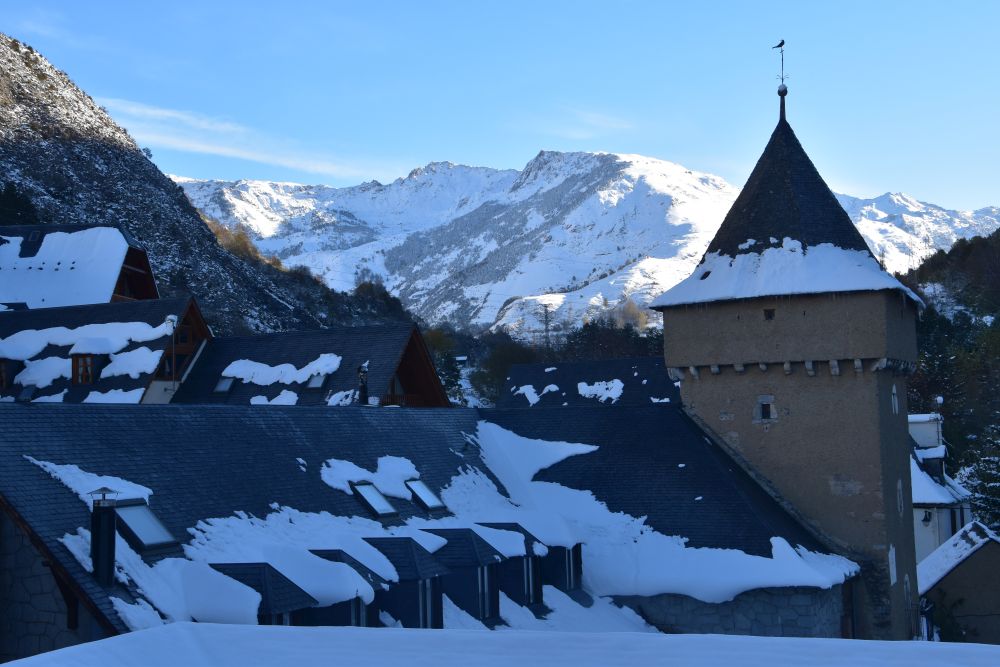
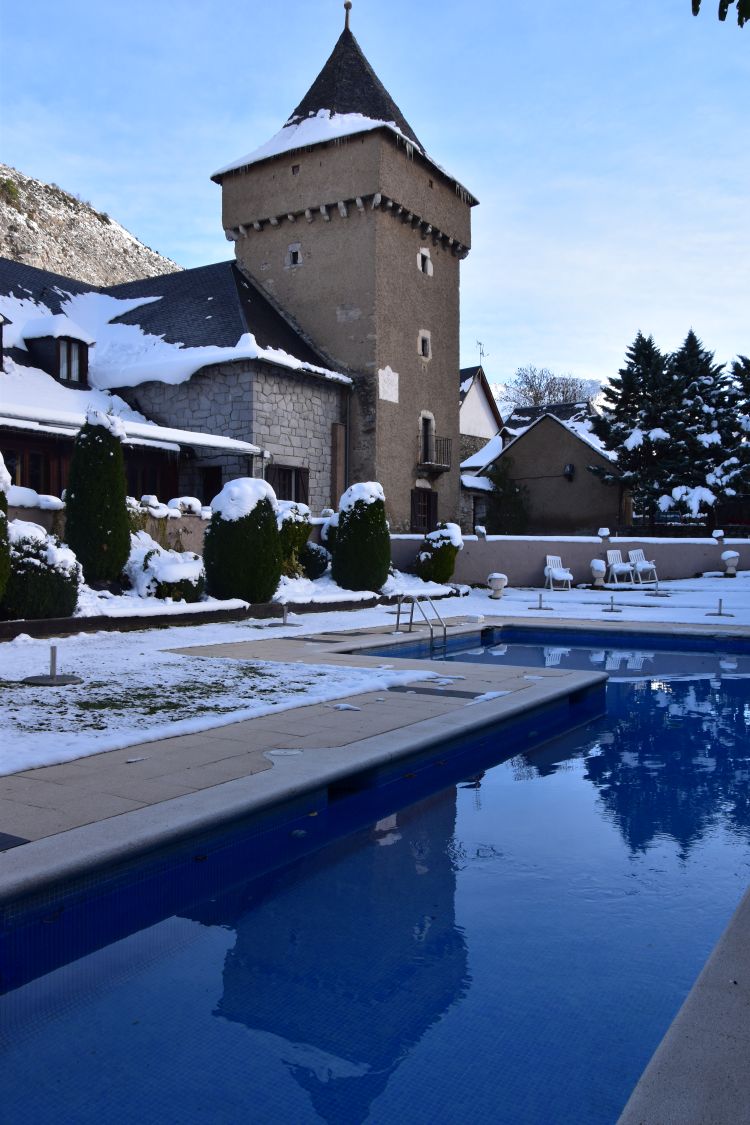
The Parador of Arties is a former castle of the noble family Portolà. From our room we can see the Montardo -THE mountain of the area (2883m). It is cold. All is covered with snow and the roof is icicled.

The tower reminds us of the fact that the parador once was a castle. In the background we can see the skiing area of Baquiera and Beret where the king of Spain practices skiing.

The tower reflects in the swimming pool that now does not seem to be inviting me for a swim.

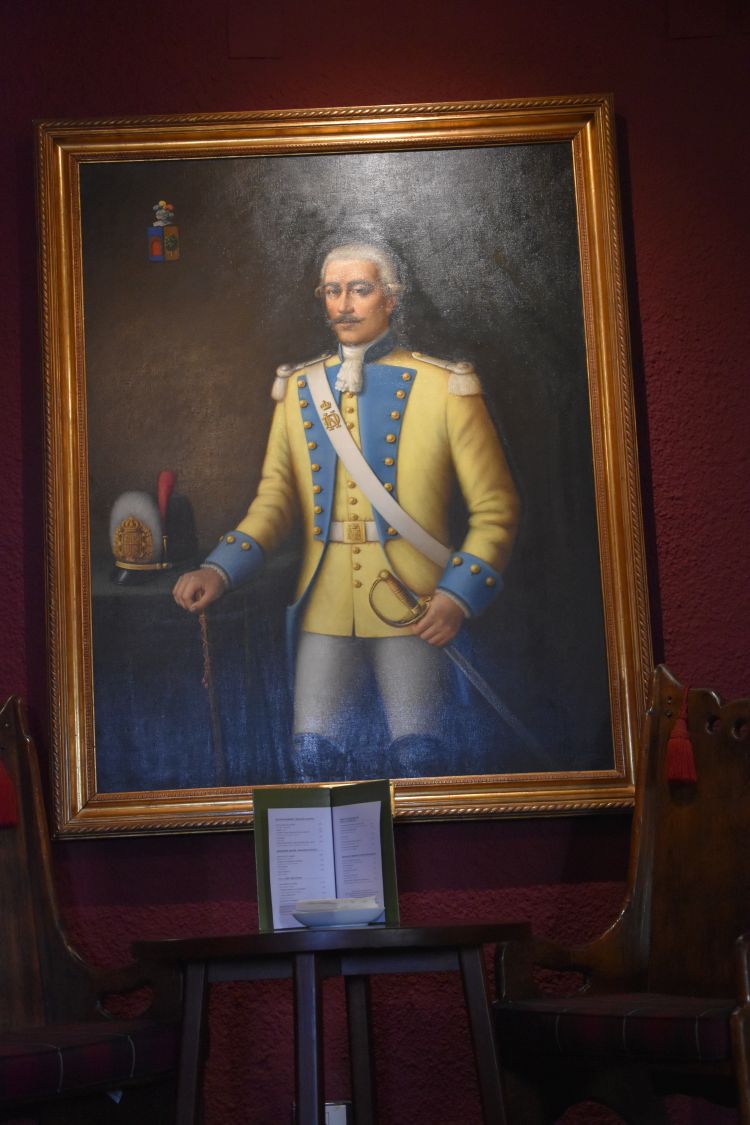
Arties is proud of their noble family Portolà with Gaspar de Portolà being their most famous representative (1723-1786). Starting from what is Baja California today, he discovered California, first San Francisco and then the Monterey Bay. An area in San Francisco, a valley and a city are called “Portola” in California.

Near the Tower of the Parador, there is a statue of Gaspar de Portola…

… and in the saloon of the Parador near the fireplace we found his portrait as well.

.

Arties on the Garonne, first covered by snow, then green again

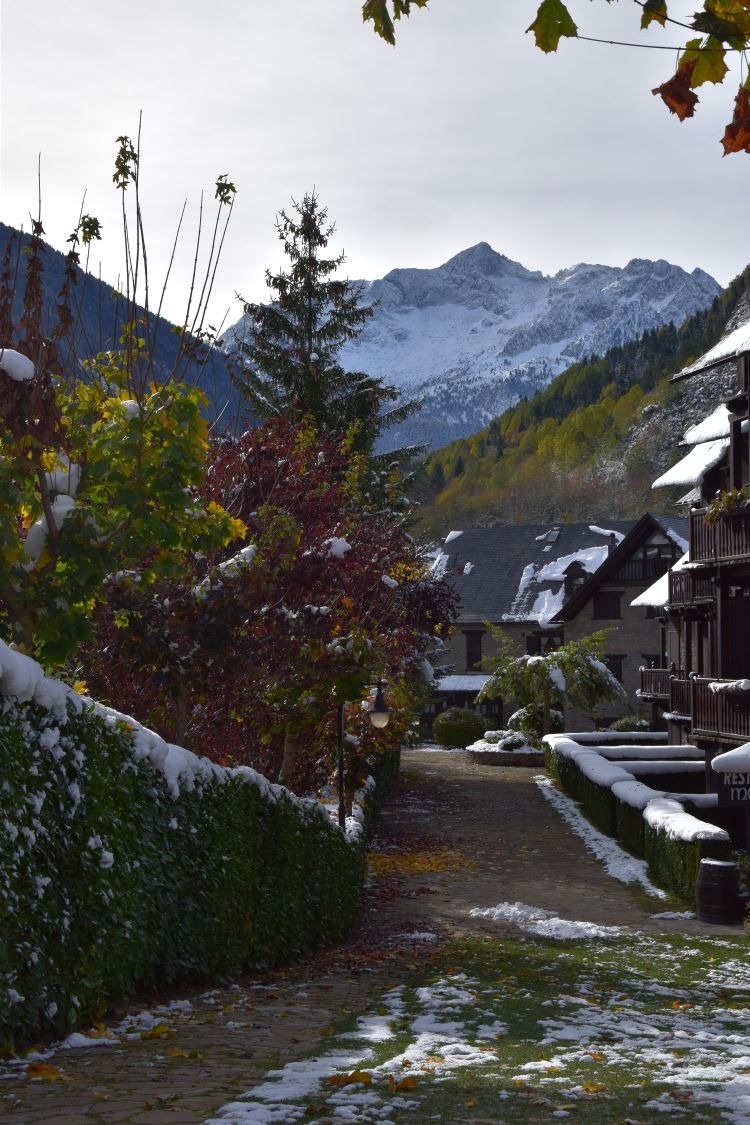
Walking through the village we discover neat stone houses covered with shingles, most of them with closed shutters. Many restaurants, now also closed, make us assume that this village will be busy, when the skiing season starts. The yellow autumn leaves reflect in the sun and contrast with the snow and the Montardo mountain.

The village Arties stretches along the Garonne that originates in the Val d’Aran to continue its way to France and to the Atlantic Ocean.

Every village in the Val d’Aran has its own small Romanesque or early Gothic church. In Arties it is the Església de Santa Maria from the 12th century. The threefold apsis is decorated with pilaster strips and arcades, as it is typical of the Lombardian style. The church is closed.

The second church of Arties in early gothic style is called “Sant Joan” (a day later the snow has disappeared). It is a museum now. 

The village of Arties is located where the rivers Garonne and Artigues join. 

Madeleine & Françoise Besson wrote two beautiful books about their home village Arties that starts, when the village, located between two rivers, was inundated in the 1960s after heavy rainfalls. The village was poor at that time, before tourism started. The Bessons also write about the impressions of the rough life and the brave mountain people that travellers from the 19th century reported.

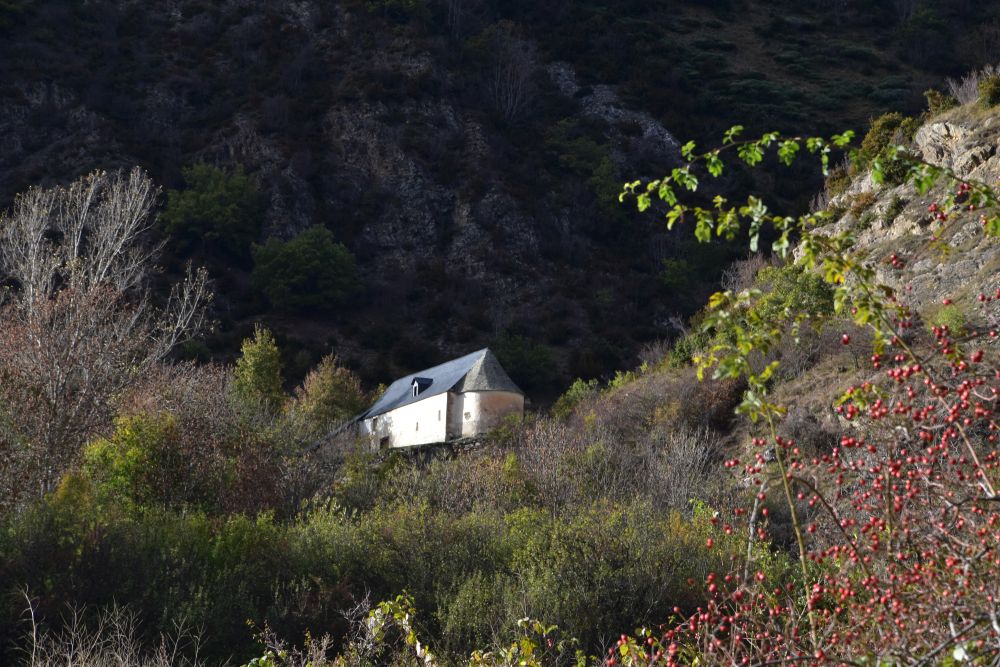
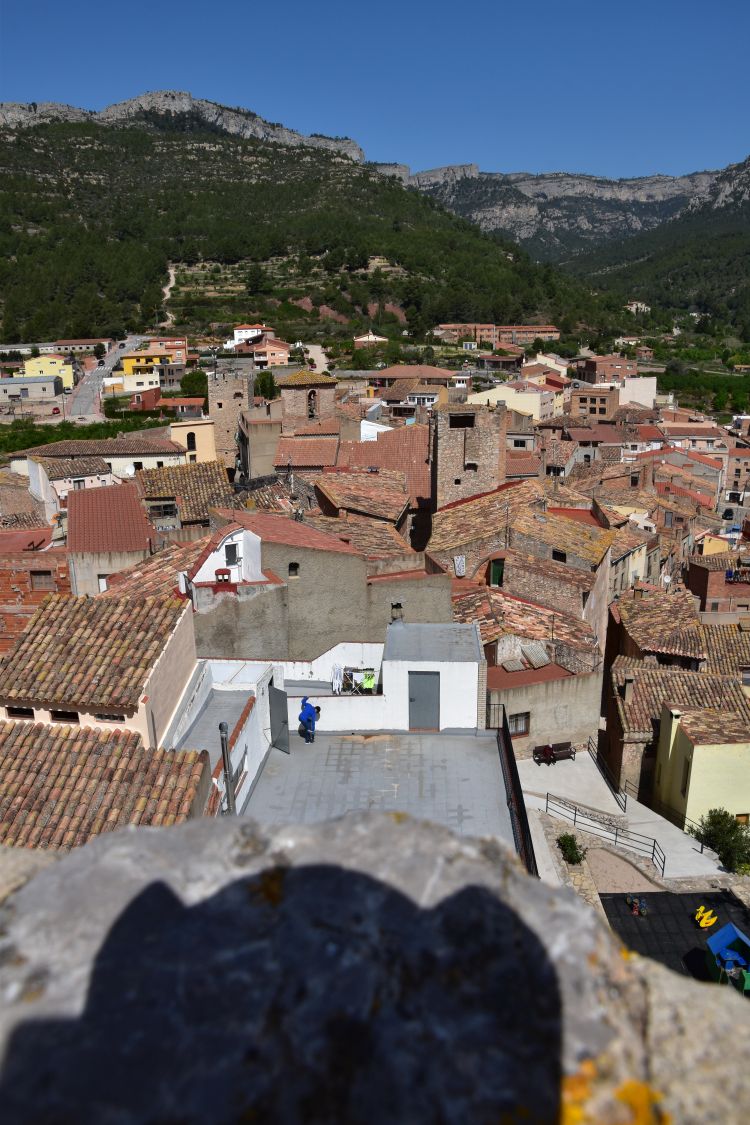
I captured the overview foto of Arties from the small Ermita de Sant Jaime.

Let me keep more Romanesque churches of the Aran valley for my coming blog. 


Sources:

  • Conselh Generau d’Aran (Elisa Ros Barbosa): Er Art Romanic dera Val d’Aran, 2007
  • Madeleine & Françoise Besson : « Sur les chemins du Val d’Aran – Voyage autour d’Arties – Tome I », Lacour 2005
  • Madeleine & Françoise Besson : « Sur les chemins du Val d’Aran – ses habitants, ses mots, ses fleurs  Tome II», Lacour 2005
  • Pauline Chaboussou et alii: « Los caminos Pirenaicos del Arte Romanico”, Synidcat mixed du Pays Couserans, Anfigraf 2008


Pratdip (Catalonia) and Perucho’s natural history of the vampire Dip


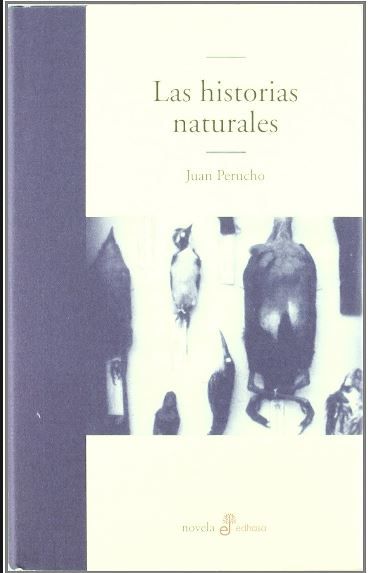
Again and again we traveled to Catalonia, south of Tarragona. Again and again we noticed the sign to the village Pratdip pointing to the mountains. One day, we followed them and we found Dip and Joan Perucho’s novel „natural history“ or in Spanish “las historias naturales”.

Let me tell you more about Pratdip and its vampire Dip.

.

Pratdip is a small village and the inhabitants are proud of their Dip

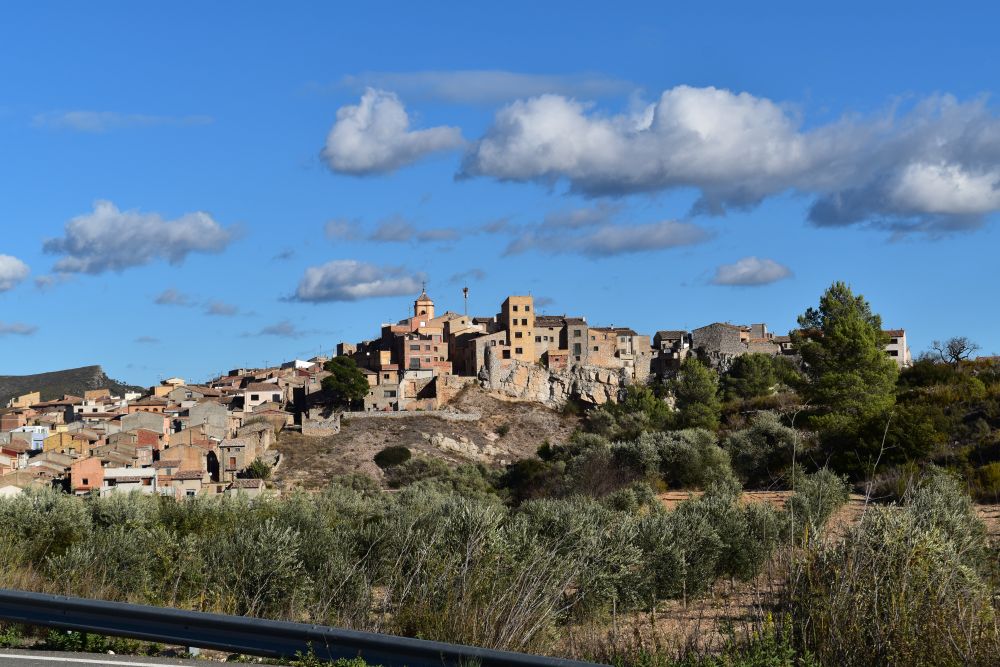
Pratdip is located in the mountains of Llaberia, some 40km southwest of Tarragona.

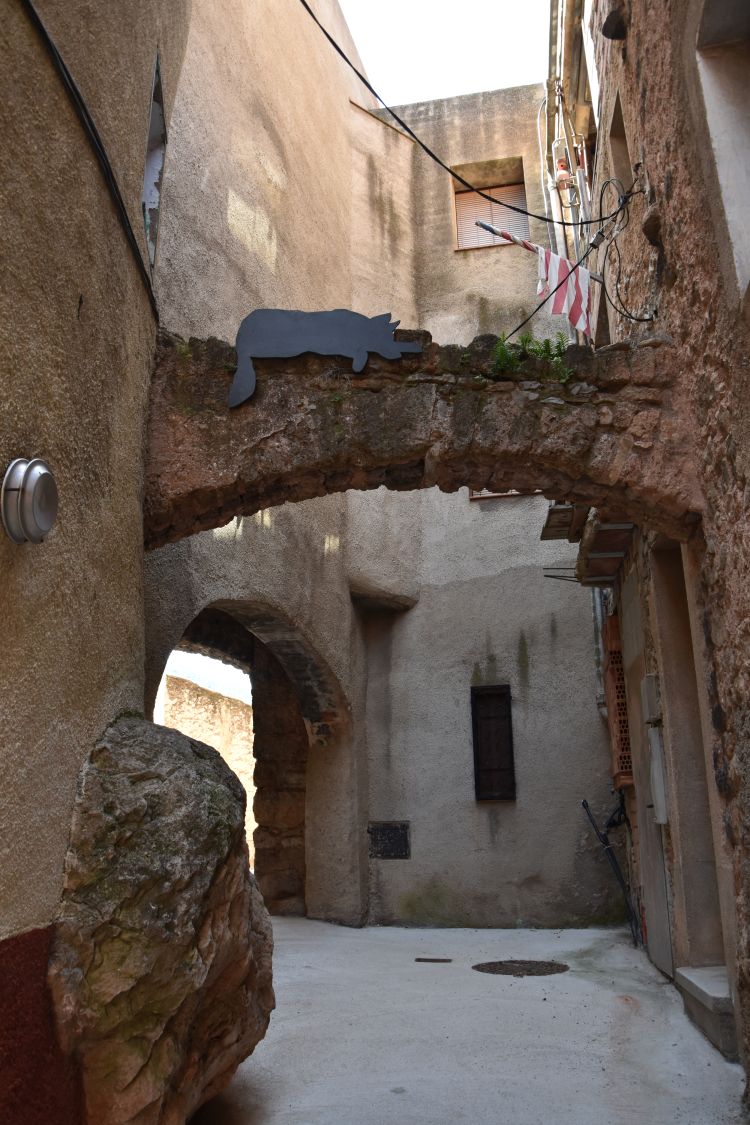
Narrow steep streets are overseen by the ruins of their castle that sits on a steep rock.

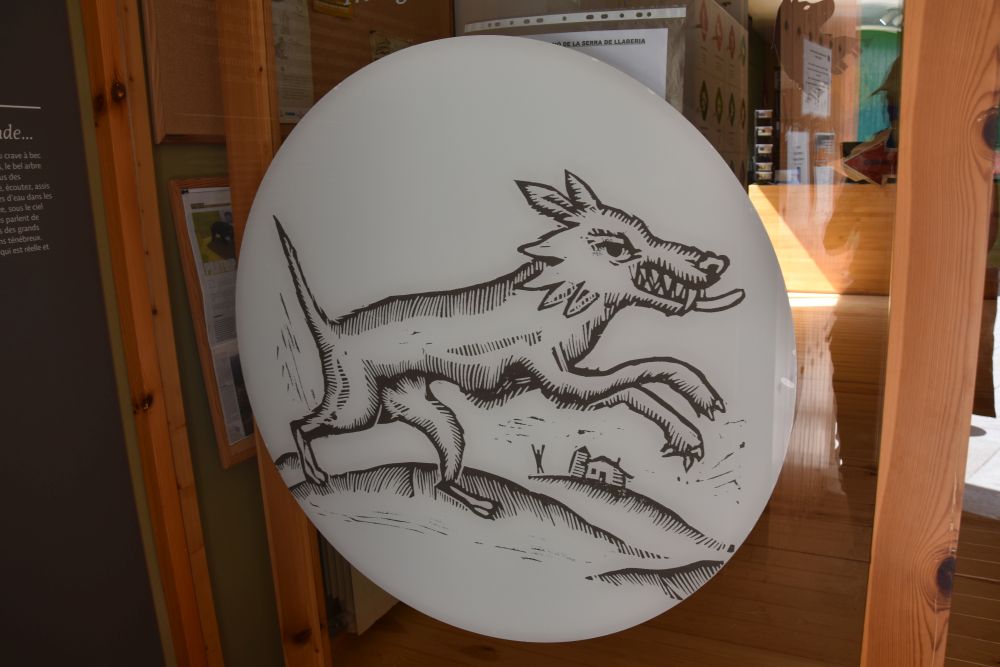
In the village there are various portraits of the vampire Dip in his incarnation as a dog-vampire (vampires can change their appearances rapidly).

When we enter the tourist office, we find another dip.

The assistant laughs: „You are looking for the vampire Dip“, she asks and proudly shows us the book of Joan Perucho with the title „Las historias naturales“. She adds: „Perucho tells you everything about the Dip and what he has done to Pratdip.“ The original version of the novel is in Catalan. I buy the Spanish version.

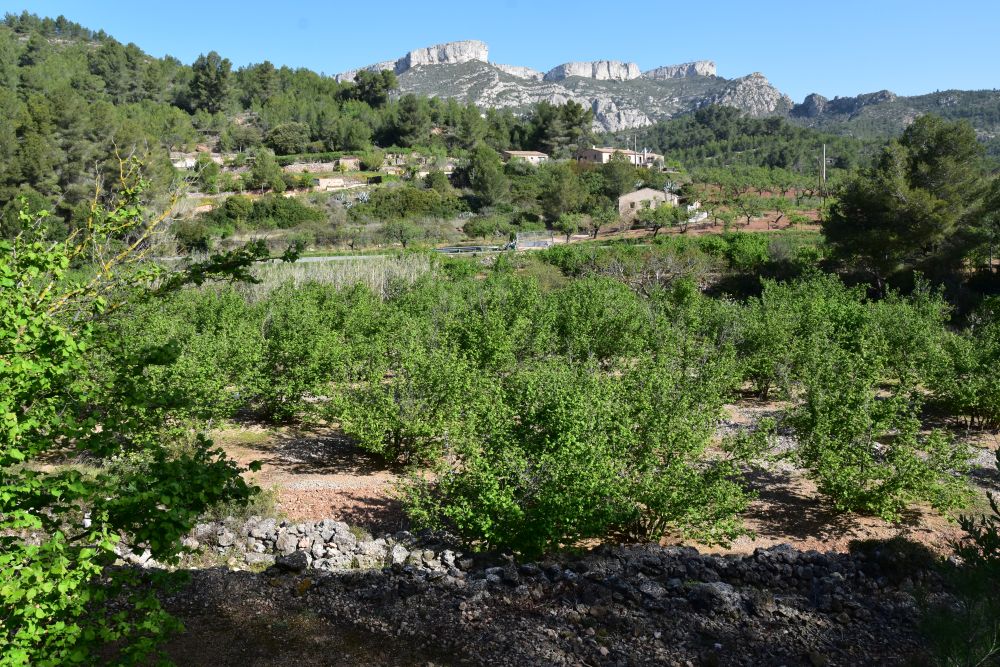
Then we walk to the hermitage of Santa Maria, along orchards with hazelnut trees…

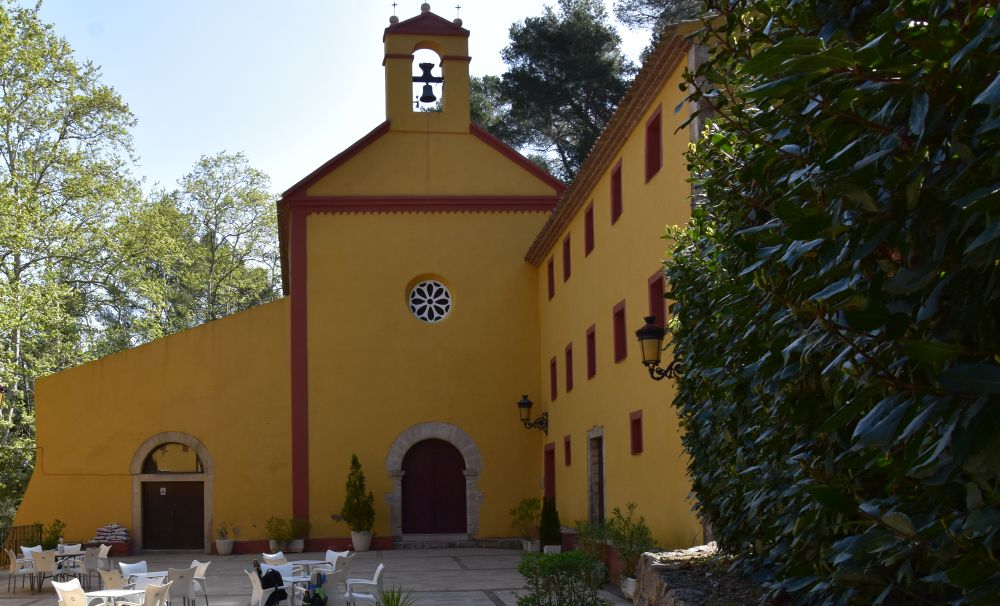
… and enjoy the hermitage Santa Marina in the mountains…

… where we find a friendly restaurant.

To round our excursion up, we climb the castle rock and enjoy the view.

.

Back at home: I enjoy reading „natural history“ by Joan Perucho to learn all about the dip

Back at home I read the novel of Joan Perucho. In his normal life, Perucho was a serious judge. When writing his „historias naturales“ or „natural history“, he must have twinkled with his eyes. The novel can be located somewhere between fable and reality and is full of humor. I could find five threads of interlaced actions.

  • First, the novel is about the vampire Dip –  his full name is Onofro de Dip. In the 13th century, he had owned the „meadows“ around Pratdip (hence the “prats of dip”). He traveled to Hungary to prepare the marriage for his king James I with Yolanda (or Violant) of Hungary (James and Violant are a historical fact). On the way to Hungary, Onofro de Dip fell in love with the lady vampire Meczyr who turned him into a vampire and „Non-Dead“ (No Muerto). He returned to Pratdip in the early 19th century and terrorized the village killing inhabitants every night. The current owner of Pratdip, Baroness Urpí, asks her brother, Marqués de La Gralla, for help (Gralla is a „real“ noble family from Barcelona; they owned a palace that no longer exists today). A friend of the Marqués de Gralla, the young natural scientist Antonio de Montpalau (an invented person), travels to Pratdip, neutralizes the vampire with the help of garlic, parsley and wooden crosses. Then he finds Dip’s grave in the castle and expulses Dip from Pratdip. Onofro de Dip morphs into the solo guerillero El Mochuelo (the Owl) fighting for the (conservative) Carlists and terrorizing the region of Tortosa and Berga. Montpalau pursues him, finds him finally in a crypta near Berga (castle Mataplana) and by speaking out some magic words, Montpalau makes Onofro de Dip die „properly“ and find his peace.
  • Second, the novel is the portrait of the higher society of the Barcelona area in the early 19th century. Montpalau as a young scientist belongs to that higher society. The members of the high society enjoy meeting in the Gralla palace, eating and discussing history, natural science, mathematics or music. As a reader you feel the luxury and shake your head about the sometimes detached, elitist or even absurd discussions. Once Frédéric Chopin and George Sand are invited to a banquet, as they stop over in Barcelona.
    Antonio de Montpalau is a scientist focused on classifying animals and plants around him. He is also interested in geography and geology. Before going to Pratdip, he  researches all literature available and he finds scientific literature about vampires that recommends using garlic, parsley, portulak, wooden crosses and mirrors to fight vampires (I can feel Perucho smile, when he lets Montpalau buy ten dozens of mirrors before leaving for Pratdip).
  • Third, the novel has a historical background: The year 1840 in the first Carlist War in which the male pretendent of the throne, Carl V, fought against his niece, the actual Queen Isabel II.
    • One one hand, the Carlists that fought for Carl V, were conservative. Their target was a federation of several states unified by the king of Spain and the catholic church as the only two common denominators of the federation, conserving, what Spain had been before. A man made constitution was not required in their eyes. Federation, of course, was welcomed by Catalonia (or also by the Basque region). Carlists were strong in Catalonia.
    • On the other hand, the followers of the actual Queen Isabel II were classified as liberals, as they based their ideas on the French Revolution. The wanted the separation of church and state, a centralized state based on the constitution (as set up in 1812, like France). The idea of the centralized state was not, what Catalonia strived for, but the high society in Barcelona, including Antonio de Montpalau, was liberal.
    • Some real persons give a realistic background, the most important being Ramón Cabrera. He was the outstanding leader of the conservative Carlists in Catalonia. His liberal (pro Isabel) opponent was Baldomero Espartero.  In 1840, Espartero defeated Cabrera and his Carlists in Berga not far from the Pyrenees.
    • Montpalau and Onofro de Dip interact with the real persons. Ramón Cabrera has been photographed wearing a large scarf around the collar of his shirt. Furthermore, he has been reported to feel ill, when trying to conquer Gandesa. Perucho tells us the reason. Cabrera attacked Gandesa at the time, when Dip morphed into the Carlist guerilla „El Mochuelo” that wanted to become a Carlist leader himself. He bit Cabrera such that he will become an immortal vampire. This is why Cabrera felt weak and this is why, he had to wear a large scarf (to hide the stitches of the vampire – twinkle). Perucho continues to describe that the liberal Antonio de Montpalau was captured by the conservative (Carlist) troups of Cabrera, how he could ease the symptoms of the bite for Cabrera and how finally Montpalau succeeded to free Cabrera from his gloomy destiny by making Onofro de Dip die properly – as described in the first thread of actions – in the crypta near Berga, just after the Carlist Cabrera had been fully defeated in Berga by the (pro Isabel) Espartero.
  • Fourth, the novel is a travel report about Catalonia in the early 19th century. Antonio de Montpalau, his nephew Novau and his coachman Amadeo travel from Barcelona via Villafranca, Reus and Falset to Pratdip. After having expulsed the vampire-Dip from Pratdip, they leave to pursue the vampire-El Mochuelo, cross the Ebro near Miravet, stay for some time in Gandesa, continue to Morella. Cabrera resides in Morella and Montpalau and his followers are captured here. Then as prisoners, they accompany Cabrera to Berga. Our travelers visit places of interest on the way (e.g. the monastery Vallbona de los Monges where the Queen Violant from Hungary has been buried), admire the beauty of the landscape, eat local specialties and drink delicious wines from Terra Alta. The travel reports are full of humor, e.g. about real places of interest such as the cathedral of Tarragona that they like though their travel handbook by (real) Alexandre Laborde does not recommend to visit it. Or about less real events: The three heroes meet giant fleas, but luckily Monpalau knows, how to escape them: They inflame branches of pine trees and carry them like torches (twinkle).
  • Fifth, it is a love story with a very, very happy end. While Antonio de Montpalau is fighting the Dip in Pratdip, he and Inés fall in love. Inés is the daughter of the baroness Urpí that has asked her brother, Marqués de Gralla, for help against the Dip. Montpalau has to leave his love to pursue the Dip.  A historian has encouraged Montpalau to do so, as he found (historic-scientific) sources that reveil, it is Montpalau’s fate to defeat the Dip (twinkle). After having vanquished the vampire Dip-El Mochuelo near Berga, Montpalau returns to Barcelona. At the palace of Marqués de Gralla he finds his love Inés (the Marqués‘ niece) waiting for him. What a happy end!

Perucho’s novel was the first book that I accomplished reading in Spanish. In the beginning, it was a bit of a tough start for me, because Perucho takes his time to set the stage. But then, when the action of neutralizing and chasing the Dip-El Mochuelo accelerates, what a pleasure! And it was even more pleasure to go back to the start to enjoy the setting of the stage, once I understood more about the historical background. The novel is full of humor and of fantasy with links to real history and geography. I did enjoy reading about many places in Catalonia that I know and that Perucho moves to the early 19th century presenting them with the eyes of Antonio Montpalau and his followers. And I did enjoy to learn more about Spanish history which helps to understand what is going on in Spain today.
 

Back in Saint Petersburg – visiting the Russian Museum Folk Art department – found the burial of the cat once more

The Russian Museum (Государственный Русский музей) is located in the neoclassical Mikhailovsky Palace. It opened in March 1898. The 400’000 exhibits are primarily based on the collections of Alexander III, the Russian artifacts of the Hermitage and the nationalization of private collections after the revolution of 1917. The museum gives an overview of Russian paintings and sculptures from the 11th to the 19th century and of Russian Folk Art. In addition the Benois Wing displays works of the early Russian avant-garde and its leading artists (i.e. late 19th and 20th century up to present).

I have been in the Russian Museum before, once in 2002 with Ernst and then alone in 2013. Now, when visiting Sankt Petersburg with Ursula in June 2017, we went twice and we bought the book “Russisches Museum: Museumsführer”, Palace Editions, Sankt Petersburg 2014. It gives an excellent overview of the museum and the history of Russian art.

Let us first go to the Folk Art department where we found a surprise – the mice burying the cat.

.

Burial of the cat in Russia – the same theme as in Tarragona

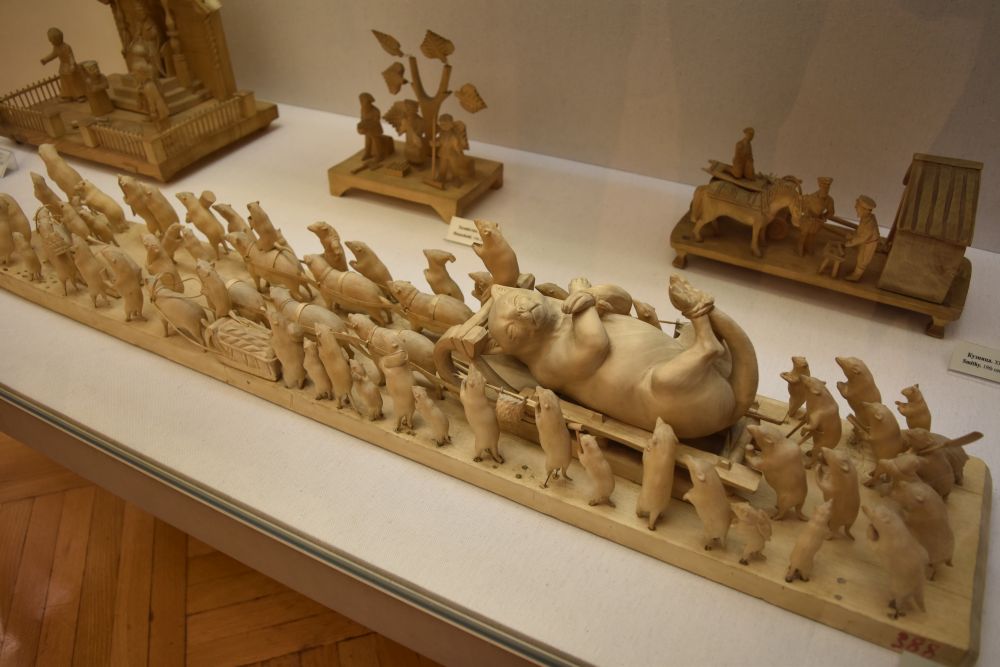
This small sculpture shows, how the mice buried the cat.

F.D. Yeroshkin: How the mice buried the cat, late 19th/early 20th century

This seems to be an important topic in Russia, as this second representation of the mice burying the cat shows.

Lubok: How the mice buried the cat, early 20th century copy (Lubok: popular print from literature, religious stories and popular tales)

The related Russian tale is: The cat was sleeping. The mice thought that the cat was dead and put it onto a sledge attaching its paws (just in case). They celebrated the death of the cat joyfully pulling the sledge to bury the cat. After some time the cat woke up, freed itself and ate the mice.

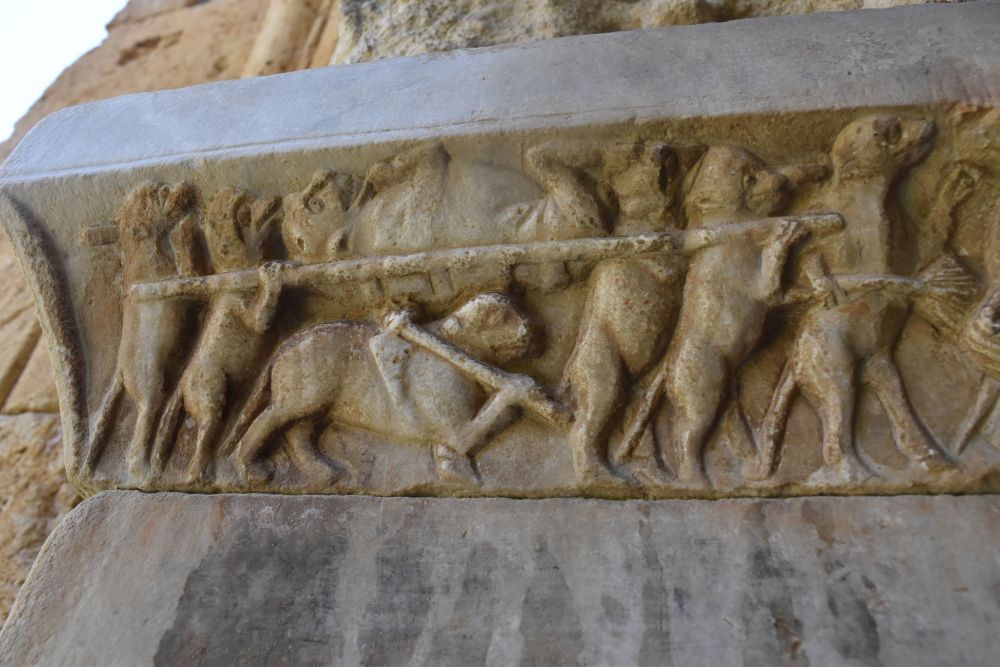
We found the same theme in the cloister of the Cathedral in Tarragona (Spain), except that there they say it  is rats (and not mice) that are trying to bury the cat.

The procession of the rats (my blog about our excursion to Tarragona).

A blog  on “Tarragona Experience” explains it well: The cat only pretends to be dead, then “wakes up” and eats the rats. This alludes to temptation: “Never think that you are in full control of a situation, it might change rapidly.” Thank you, Ivan Rodon, for clarifying this. Same theme, same story and – I assume – same morale in catholic Spain and in orthodox Russia.

.

Now I understand, what a “полотенце с петухом” or “a towel with the cock” looks like

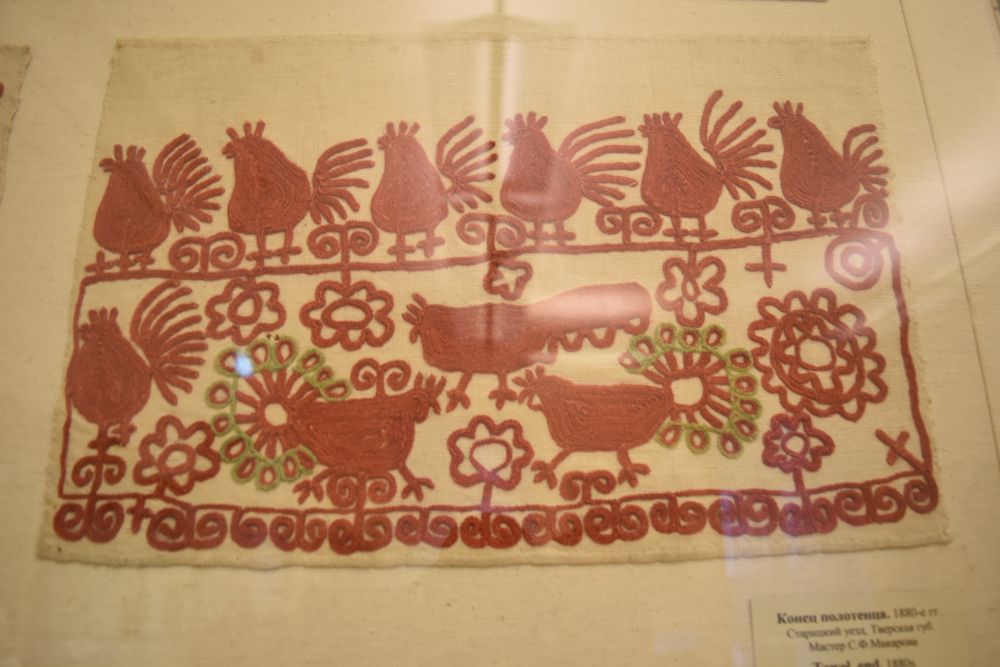
This towel with the cock amidst the hens opened my eyes.

Part of a towel, 1880

The towel opened my eyes, because it reminded me of “the towel with the cock” or “полотенце с петухом”. This is a very touching story that Bulgakow wrote about the time, when he was a young country doctor. By amputating one leg of a beautiful young lady, he saved her life (she had fallen into the brake). As a thank you she gave him a white towel with a red cock embroidered onto it. I had read Bulgakow’s short story many years ago, but only now I understand that the red cock must have looked like this cock standing amidst the hens.

.

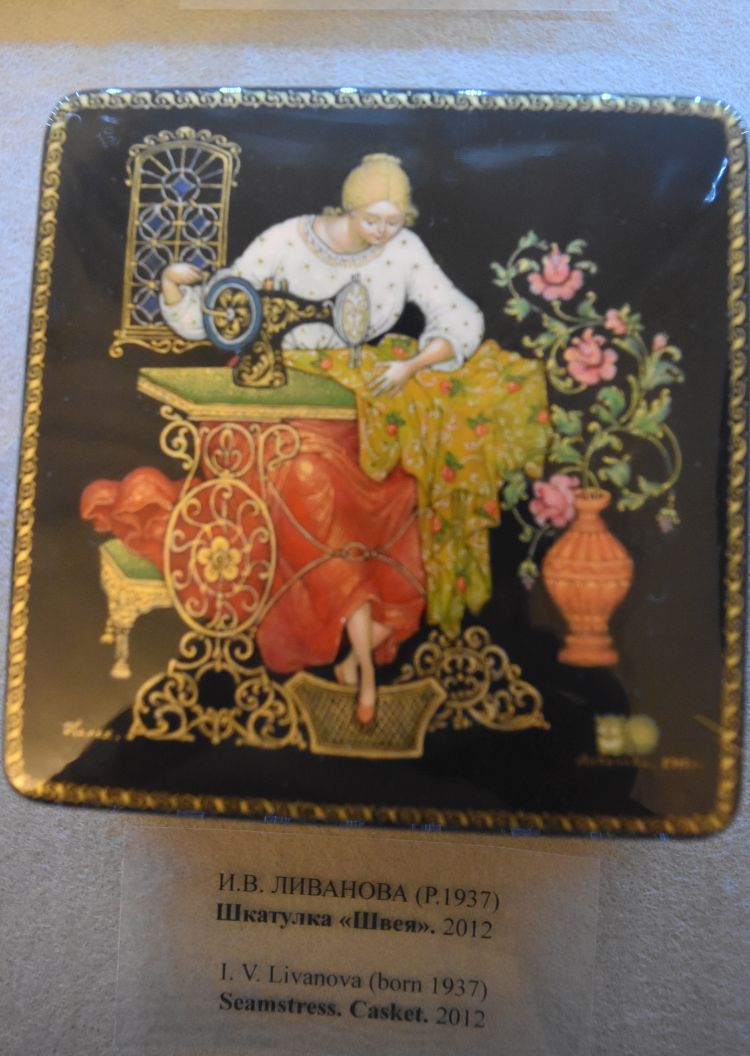
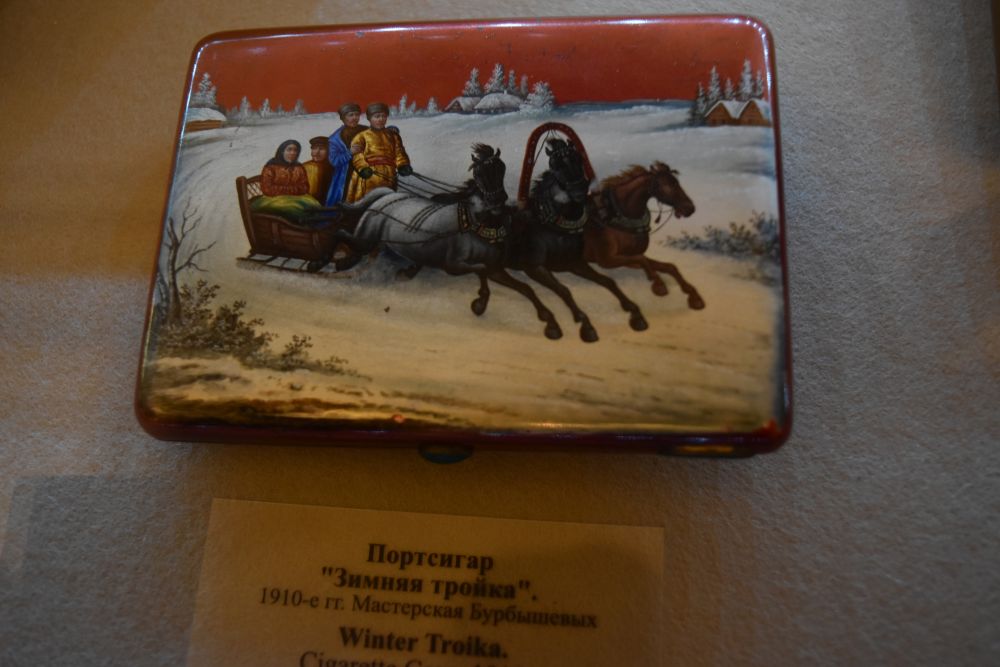
Good eyes needed to see all the details of these small lackerware boxes

The lackerware boxes are tiny and you need good eyes to see the miniature paintings. There are many of them. This is a lady sewing…

and this is a box for cigars showing a troika in the Russian winter.

.

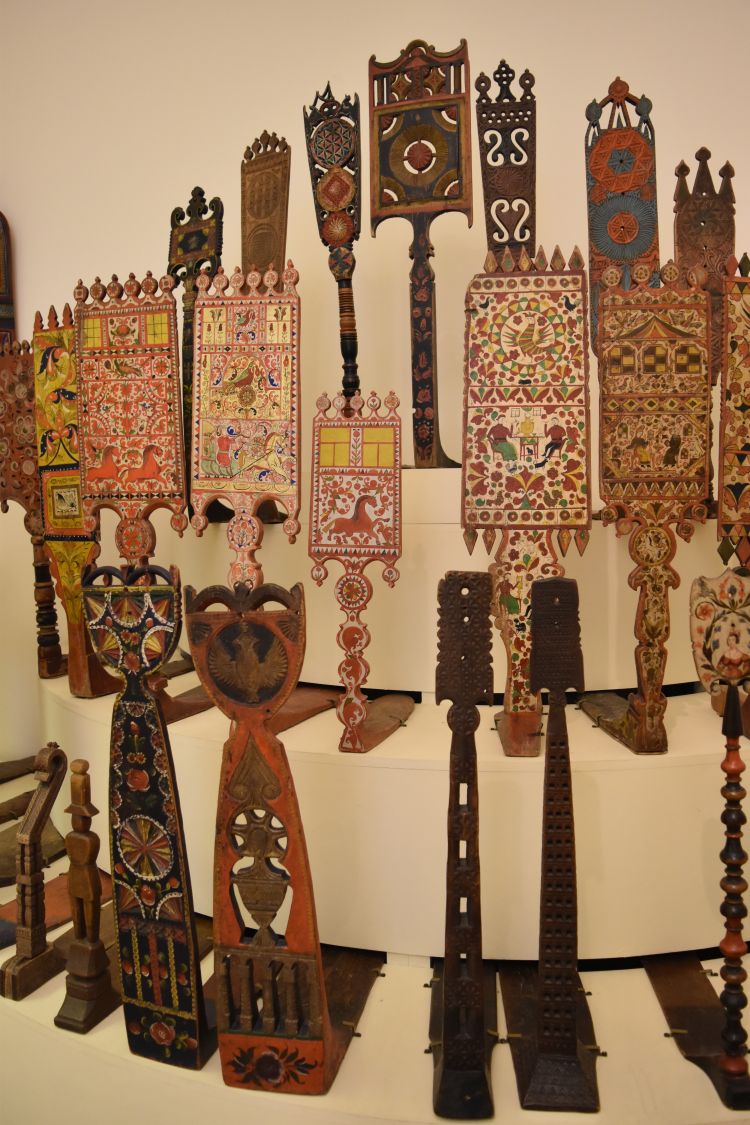
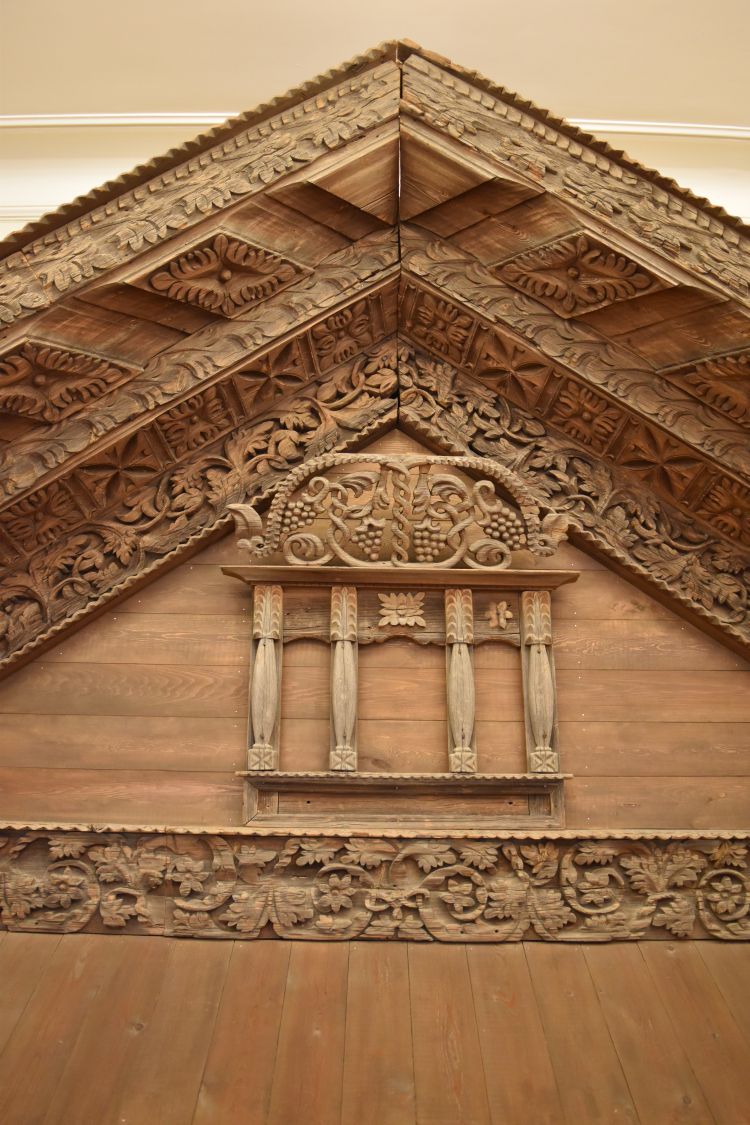
Russians in the villages are also masters in woodwork

These instruments are called прялка in Russian and the English equivalent is distaff . The spinner sat on the board and took the unspun material from the top of the vertical piece. The decoration shows  much care and skill…

… as does this wonderfully carved gable.

There are many more exhibits from the daily life in Russian villages in the Folk Art department. I was here in 2002, in 2013, in 2017, and I would love to visit it again – there is always something new to discover.


In Catalonia (Spain): Discovering modernism in Reus

On a windy day we explore the city of Reus. It is just half an hours’ drive from Hospitalet de l’Infant, where we spend a few days in the apartment of our friends end October until mid November 2016.

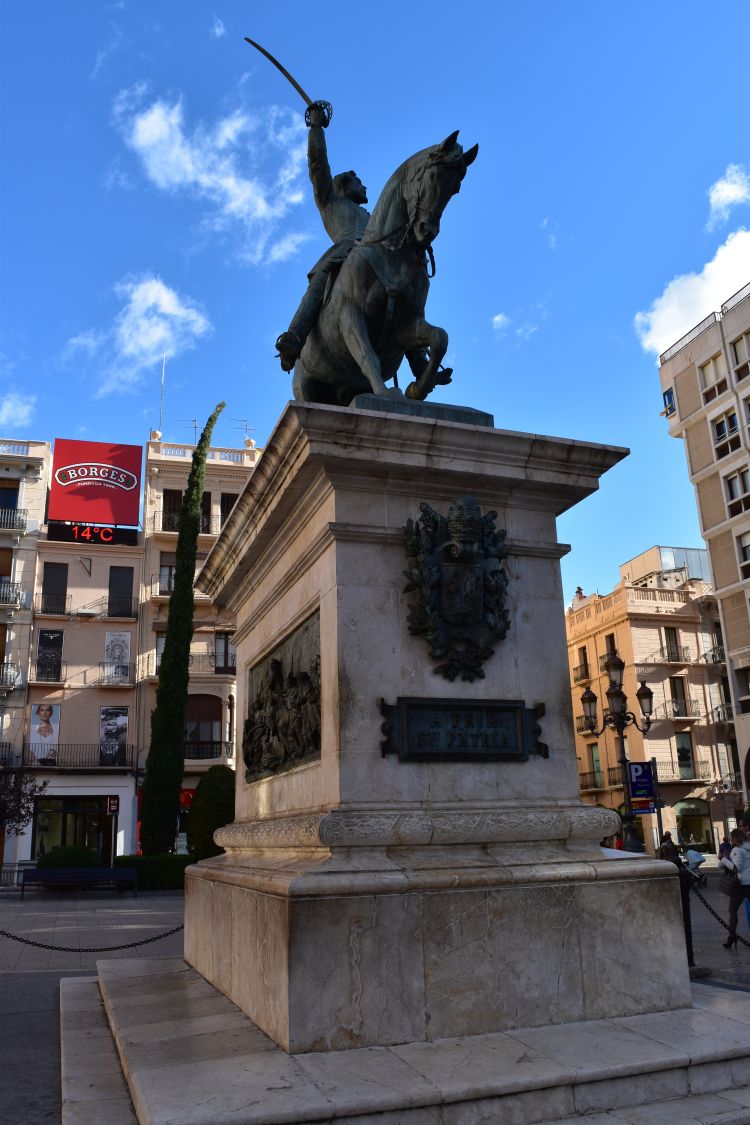
Reus is the home town of Marshall Prim. He fought for the constitution of Spain, and from 1868-70 he was Prime Minister of Spain (look at the cypress – it WAS windy).

aaa_0084-small

We park our car in the parking cellar located under the statue of Marshall Prim. It was another of those parking houses with small parking lots and narrow corridors. We found a comfortable slot on the fifth floor underground… if only I will be able to “climb” up from here again without getting stuck!

.

The Gaudí Centre

Gaudí was born in Reus. Though he never built anything in Reus, the city is proud of their son and has set up a museum about his life, his architecture and the way he worked. The museum is well curated. We learn, how Gaudí experimented to find the laws of nature that he then applied to create harmonic architectural structures. For instance he used straight lines, triangles or quadrats and twisted them to find the harmonic shapes. Based on the “law of chains” he built slim arches that could stand without counterweights (when the sides of the arches stand upright, counterweights have to prevent the arch from collapsing, like in Roman or Gothic architecture, but when they are inclined, the arches do not collapse). These hanging wooden sticks are one of experiments.

aaa_0130-small

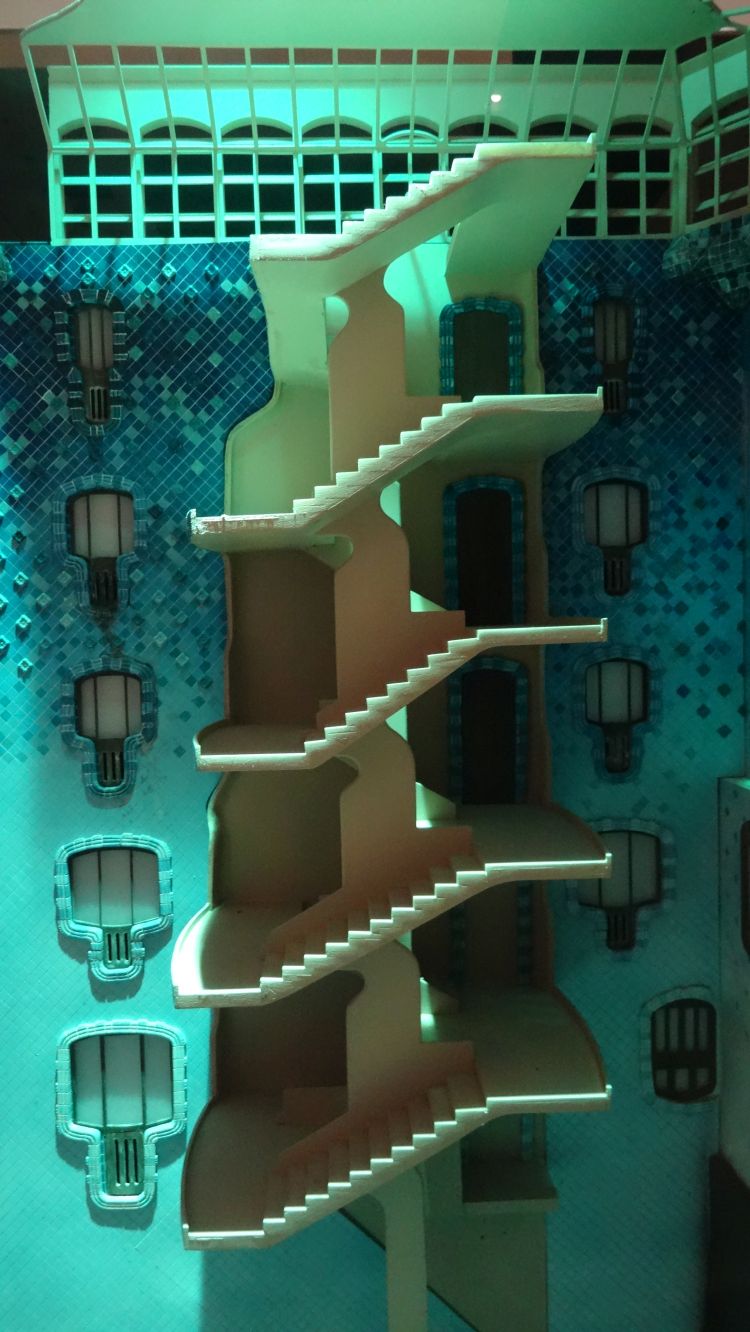
He tested everything with models, before implementing it, even studying the exposure to light.

dsc09286-small

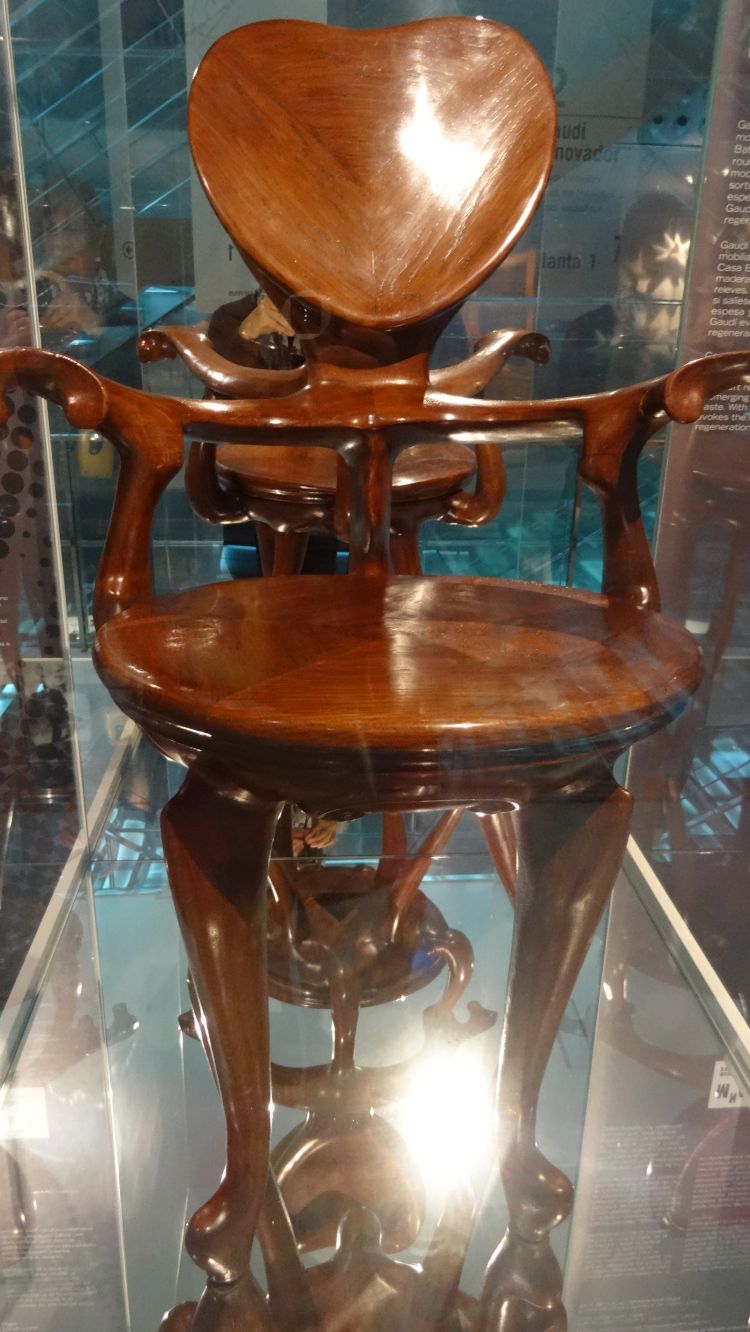
He had an overall approach to architecture also creating the furniture.

dsc09283-small

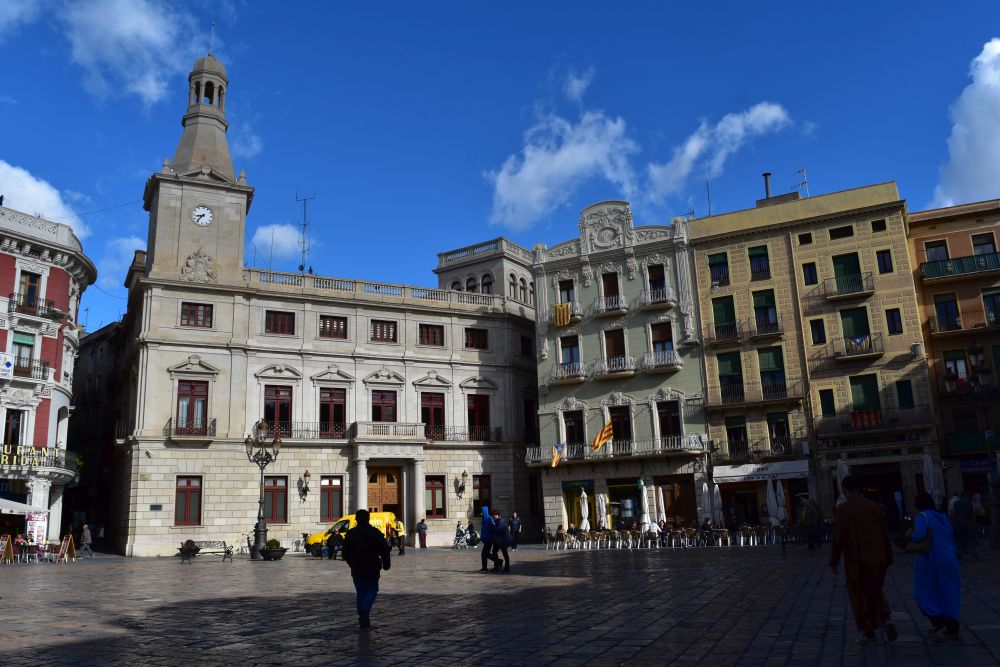
The Gaudí Center is located at the market square (Plaça Mercada), next to the townhall and the green modernist Casa Piñyol.

aaa_0090-small

Across is the modernist Casa Navas with the shop for bath and wellness on the ground floor. I buy a dressing gown (in Spanish: albornoz – the moors must have introduced this to Spain).

aaa_0092-small

We have lunch in the roof top restaurant of the Gaudí Centre. The view is great, but the waiters would have preferred us not to disturb them and the meal was expensive and poor (liver cream from the tube – in Swiss German: Leberpains – served on crackers with a few salad leaves, all for 15 Euros).

.

The cathedral San Pere – late gothic and a no-no tour guide

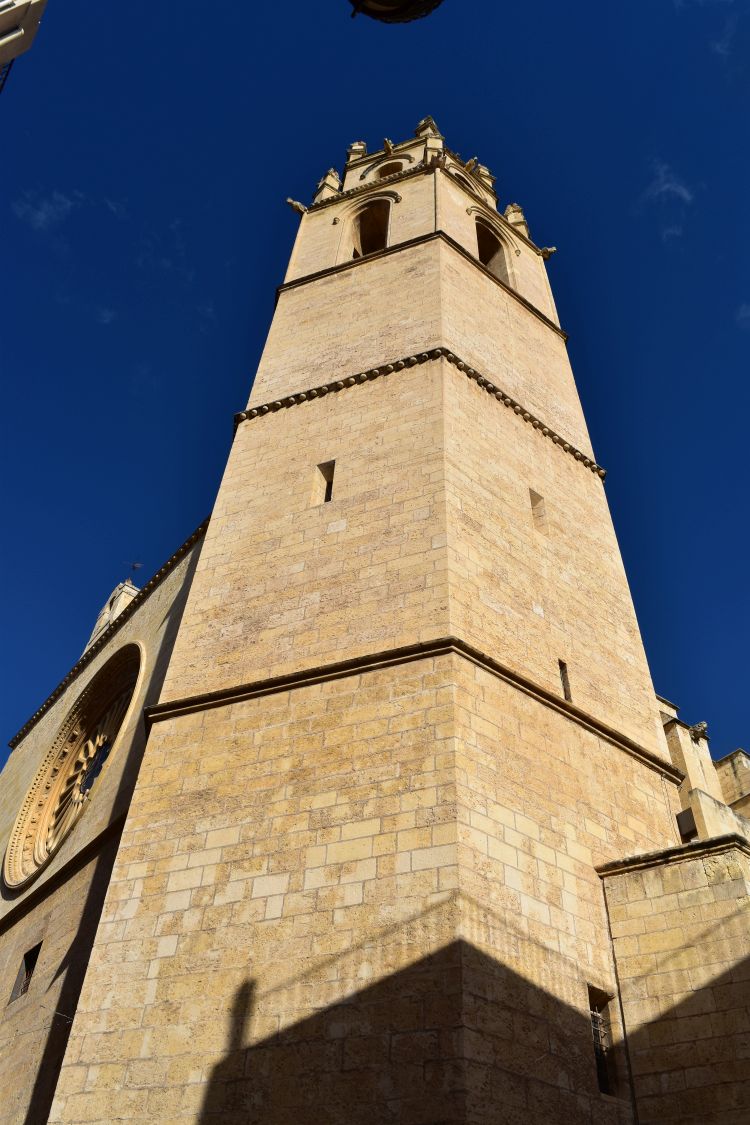
South of the market square we visit the late gothic cathedral San Pere from the early 16th century.

aaa_0099-small

Inside we find two sisters praying and singing at low voices. It is a solemn atmosphere. Bump! A group of tourists enters. Their tour guide starts to talk in a loud voice. The prayers continue gently. Ursula frowns and whispers: “This is an absolute no-go!”

aaa_0109-small

.

The fish market or Peixateria Velles

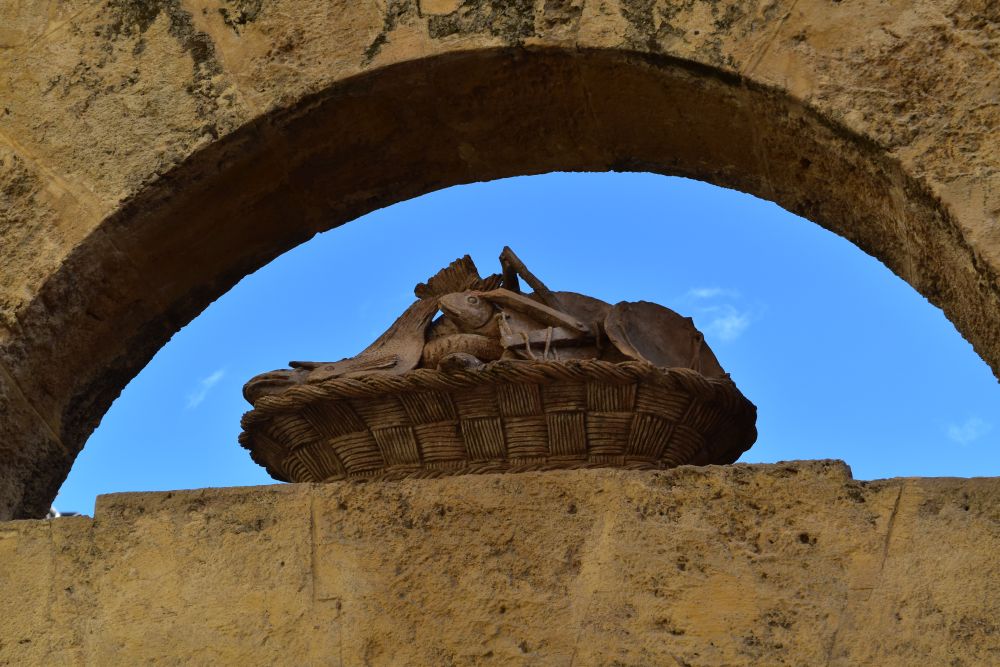
Behind the church we enter the fish market (Peixateria Velles) with the sculpture of a basket containing fish products next to the entrance.

aaa_0136-small

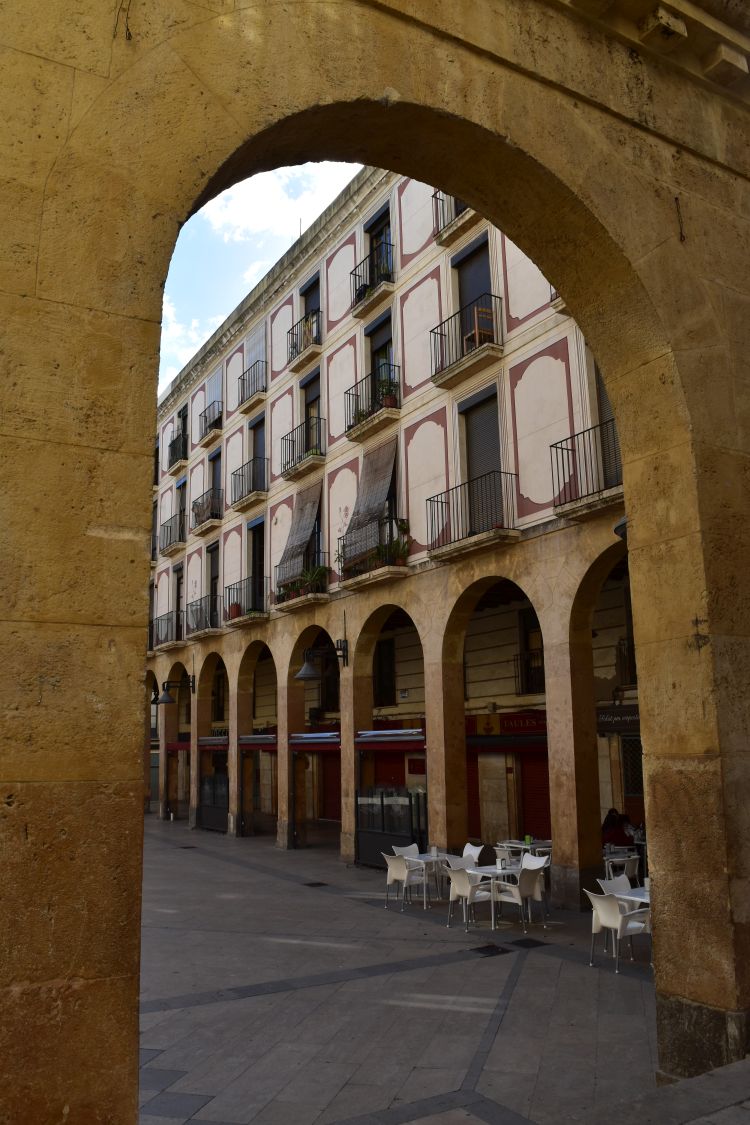
Through the gate we see the galleries and inviting restaurants and bars.

aaa_0105-small

.

Modernist houses in Reus – a selection

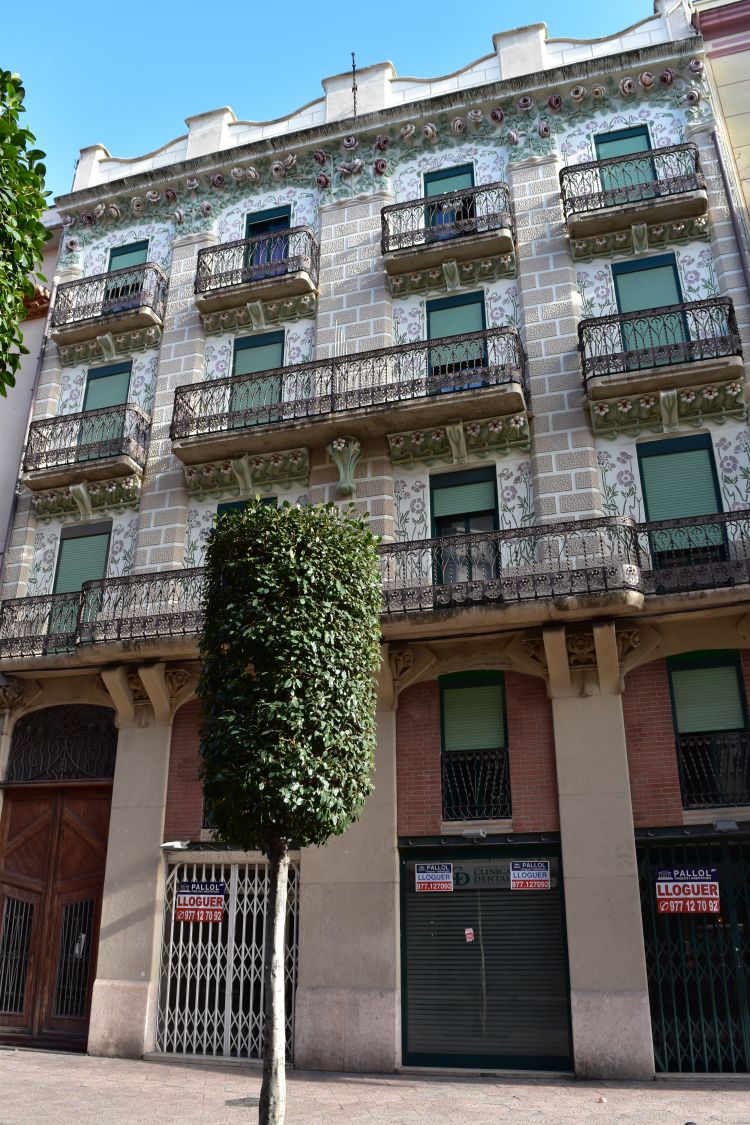
Finishing off our day we follow a walk proposed by Reus tourism to discover a selection of the 29 Art Nouveau buildings proposed. This is the Casa Anguera behind the fish market…

aaa_0143-small

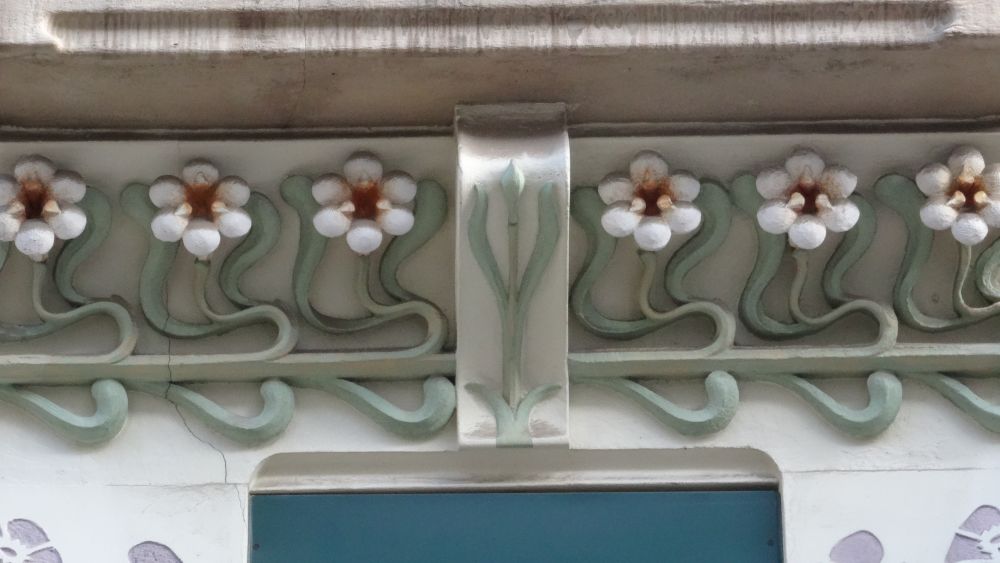
… with a detail of the flower ornaments.

dsc09327-small

The Casa Serra and the Casa Marco mark the entrance to the small street, where Gaudí was born.

dsc09349-small

The blue tiles of the Casa Laguna adorn the street leading from the square of Marshall Prim to the market square

aaa_0151-small

Not far from here is the Casa Carpa with the painted balcony doors.

aaa_0156-small

With Ursula’s directions I succeed to manoeuver my car out of the narrow garage under Marshall Prim (five floors up through rectangular small corridors!).

Reus is a small town worth a visit!

Back at Hospitalet I enjoy the inside pool with the swimming lanes – it is very busy here with swimming courses and water gymnastics going on around me.

In Catalonia (Spain) – some excursions around Hospitalet: Ebro Delta and Tortosa

On a sunny Friday in November 2017, we get up early to take photos in the beautiful landscape of the Ebro delta and then continue to Tortosa on the Ebro. This is another excursion that we go for, while enjoying the small apartment of our friends in Hospitalet de l’Infant at the end of October until mid November 2016.


The morning light in the Ebro Delta

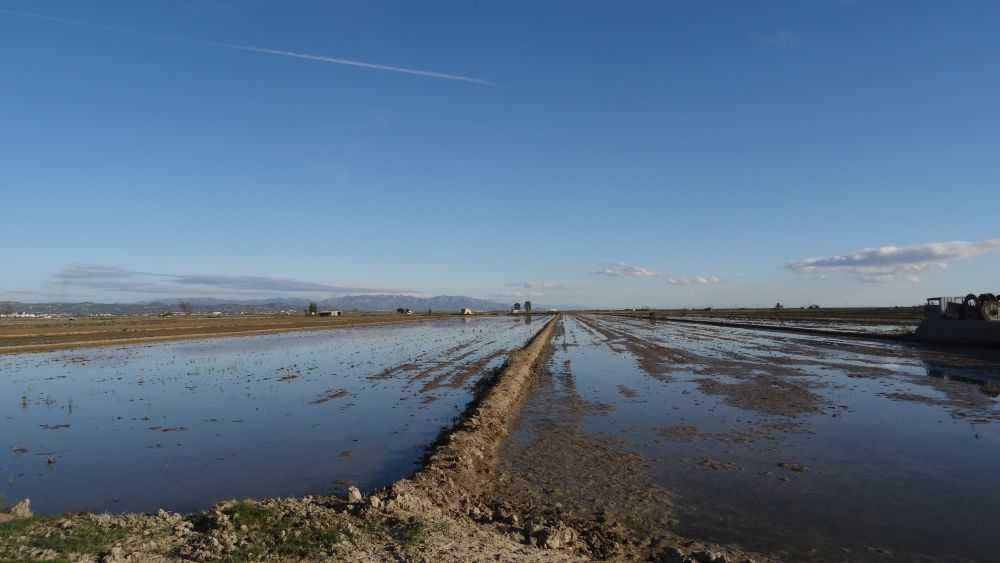
In November the rice fields have been harvested awaiting the next cultivation cycle. We enjoy taking photos in the atmosphere of this morning.

aaa_0202-small

Ursula has a very good “photo eye”, when capturing the fields…

dsc09432-small

… and the black egrets reflecting in them.

dsc09423-small

Then the birds decide, we are too close and fly away.

dsc09433-small

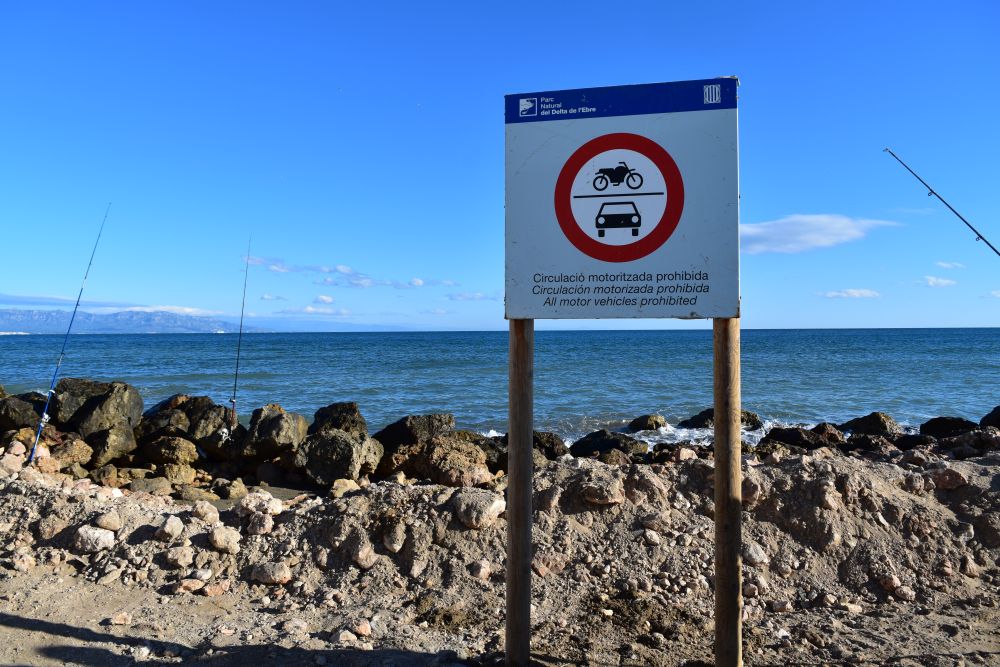
We have a chat with a fisher – he comes here regularly from Andorra. And yes, I do understand that driving is forbidden here…

aaa_0217-small

In Deltebre we visit the Ecomuseum. This place is a miniature Ebro Delta showing its plants and wild life as well as the economy: Fishing, the cultivation of rice and – more inland – the cultivation of vegetables and fruit.

.

Tortosa – Basilica-Catedral de Santa Maria

In summer we had visited Tortosa, and it was pouring with rain. The town seemed grey and not very welcoming and the cathedral was closed. Now we return, leave our car in one of these narrow Catalonian parking houses in the city center and set out to explore the Basilica-Cathedral de Santa Maria  with the bishop’s palace and the convent. The gothic construction started in 1347 (Thomas Schröder: “Katalonien”, Michael Müller Verlag 2015). From outside, the cathedral seems “uncompleted”: The roof is flat.

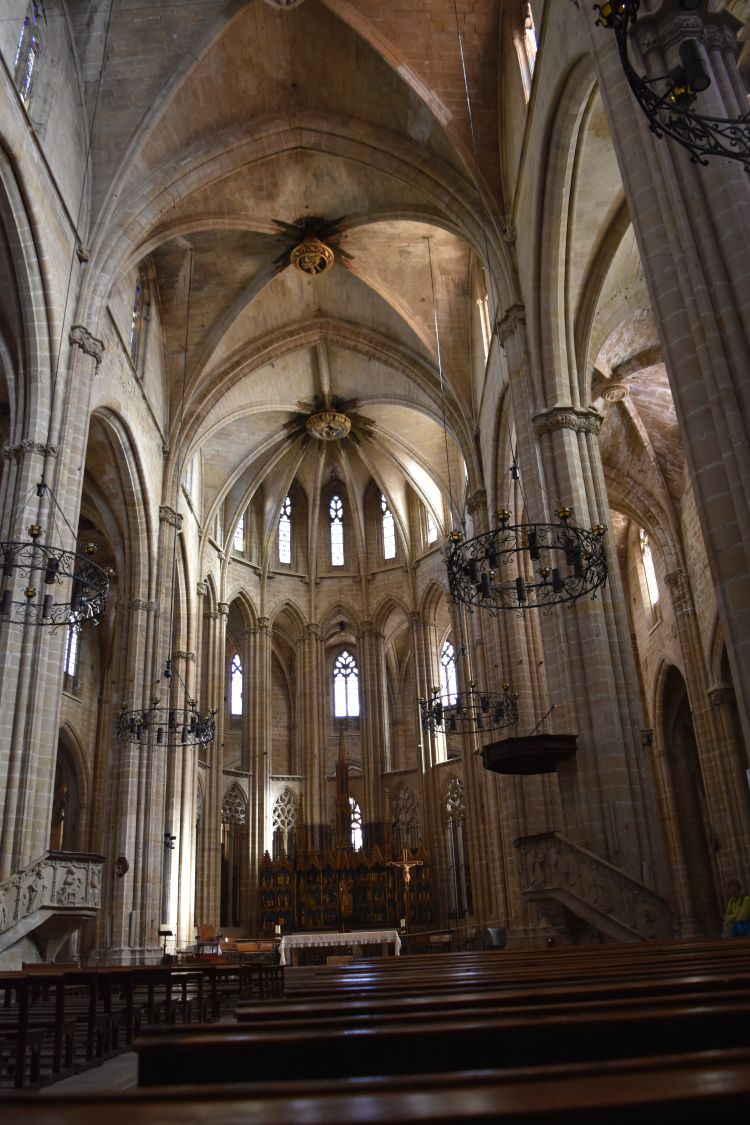
The nave is spacious with high vaults – just right for the archbishop in the 15th century.

aaa_0240-small

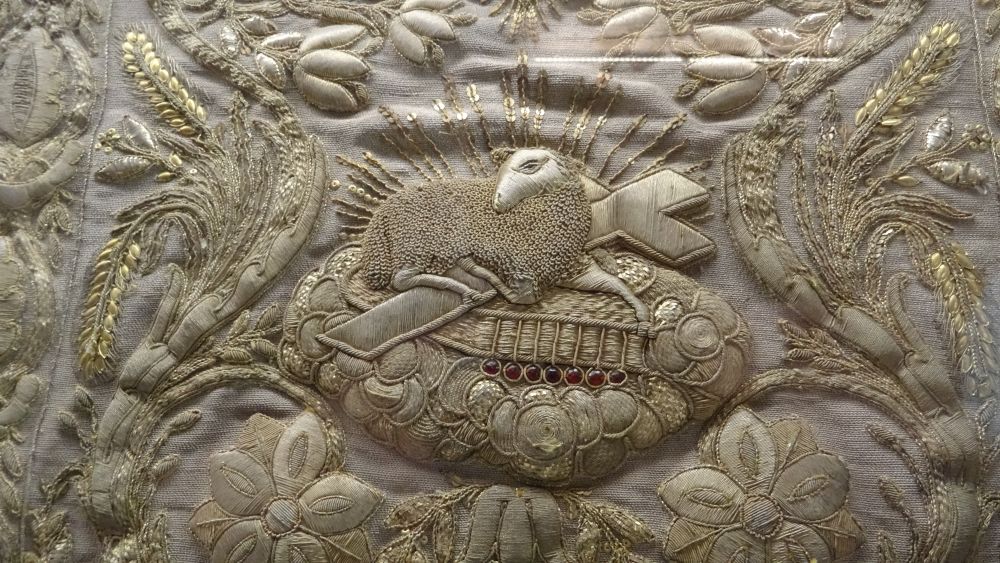
The exhibition shows treasures such as this lamb embroidered in gold…

dsc09482-small

… or this funerary object.

dsc09484-small

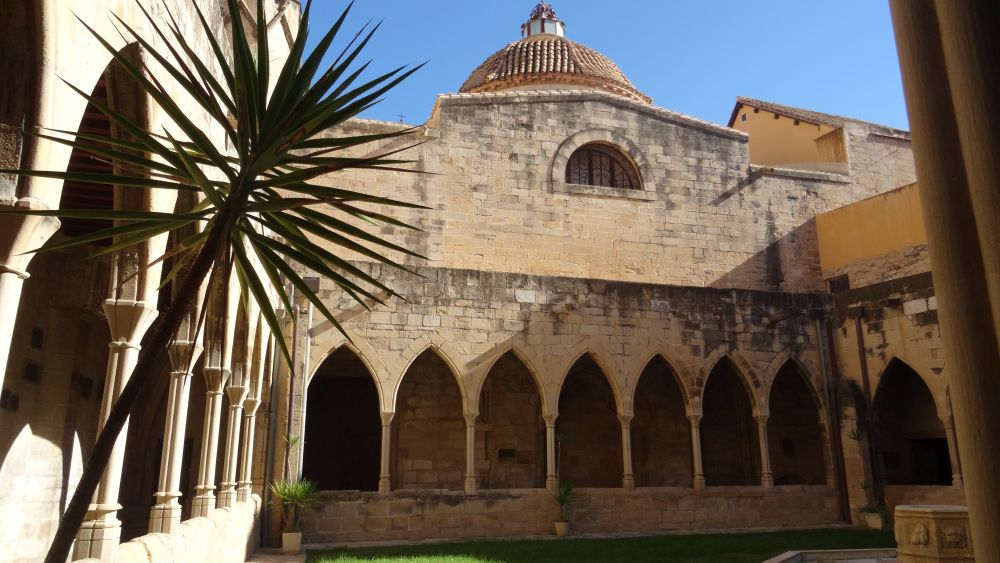
I love the cloister dating from the 13th century…

dsc09500-small

… and use this photo of the arches for my 2016 Christmas card.

aaa_0233-small

.

Tortosa – Jewish center

After a break in a small bar that serves excellent tapas, we stroll through the former Jewish quarter.

aaa_0244-small

All that is left are the street names (such Carrer and Travessia de Jerusalem) and some plates explaining where the synagogue and the kosher butcher were located.

aaa_0248-small

Now we find a halal butcher instead.

aaa_0245-small

.

Tortosa – history  in the former slaughterhouse

The slaughterhouse has been built by Pau Monguió. This art-nouveau building now hosts an exhibition of the history of Catalonia. The display starts with the stone age, continues with the Iberians trading with the Phoenicians (“Iberians” comes from “Ebro”) , the Romans (Tortosa was then called “Dertosa”), the Visigots and the Moors. In 1148 Tortosa was sieged during the Second Crusade and reconquered by an allied army. In the 15th century, Tortosa became an important regional center and the seat of the archbishop. It lost its importance in the 19th century and particularly suffered from bombings in the civil war of 1936-1939.

aaa_0258-small

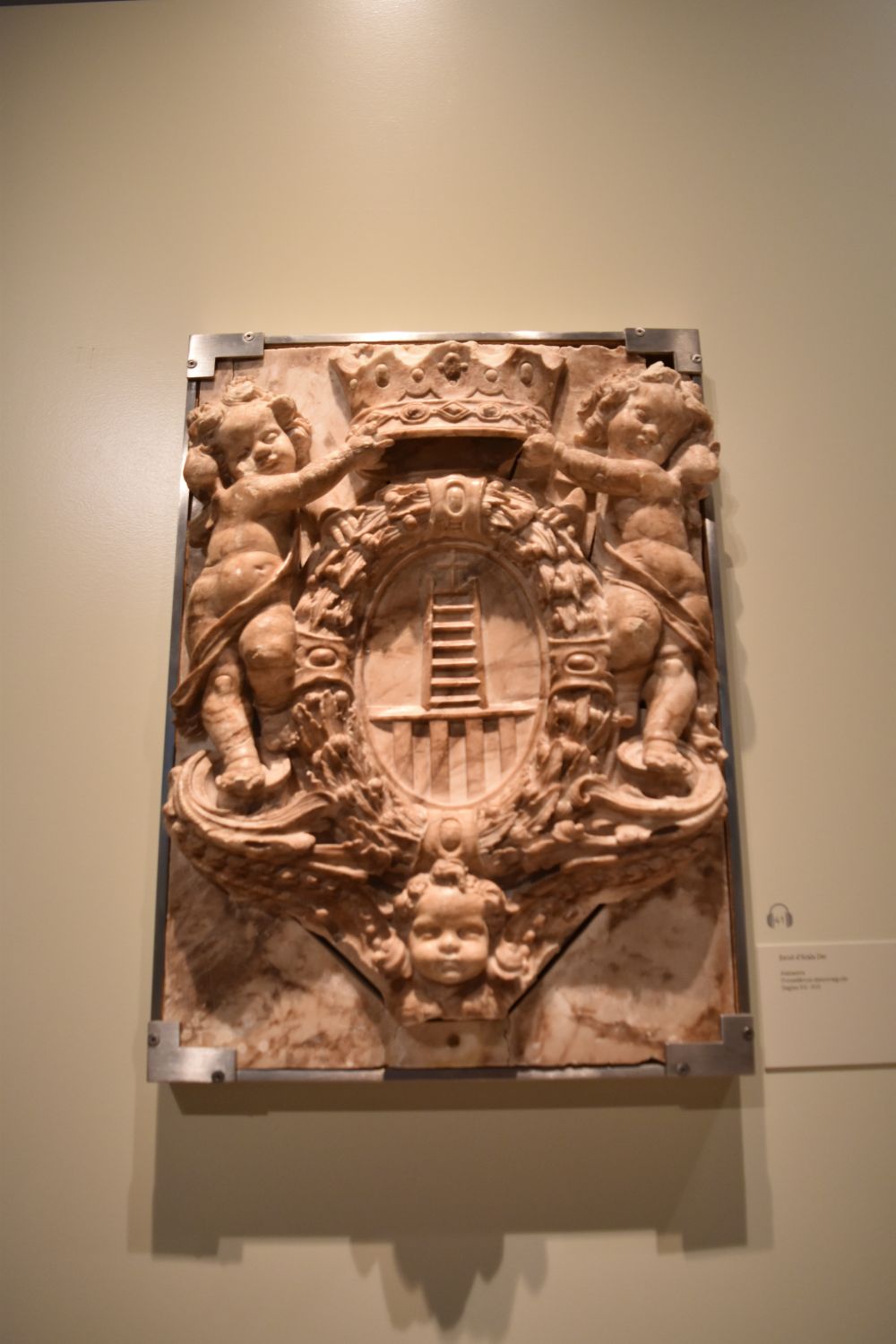
I particularly like the coat of arms of the monastery Scala Dei near Montsant made from alabaster – it represents the Escala Dei or the ladder of God.

aaa_0264-small

After a short visit in the Tortosa market, we maneuver our car out of the narrow, narrow parking house and drive back to our small apartment in Hospitalet de l’Infant.


In Catalonia – Spain: Discovering Escornalbou, Falset and Siurana

On a very windy, chilly and cristal celar day we explore the monastery Escornalbou, the small town of Falset and gorgeous Siurana perched on a steep rock. All these places we find near Hospitalet de l’Infant, where – in the apartment of our friends – we spend a few days end October until mid November 2016 .

.

Castillo-Monasterio de Sant Miguel d’Escornalbou

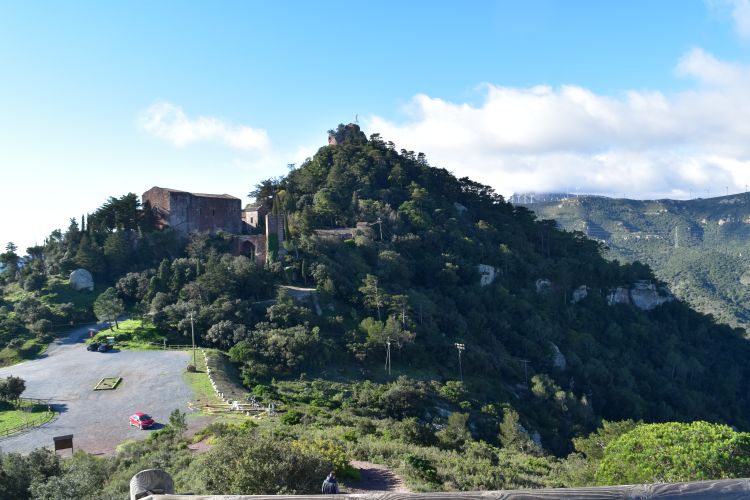
A sinuous road takes us up to the Castillo-Monasterio de Sant Miguel d’Escornalbou on about 800m above sea level. The monastery is perched on a pass with the chapel Santa Barbara above it. We look at the monastery from the viewpoint across.

aaa_1189-small

From here we also have a gorgeous view of the mountains…

aaa_1190-small

… and of the sea.

aaa_1195-small

The monastery was built in the 12th/13th century. First Augustinian monks lived here and later it was inhabited by Franciscan monks. In 1835 the monastery was confiscated.

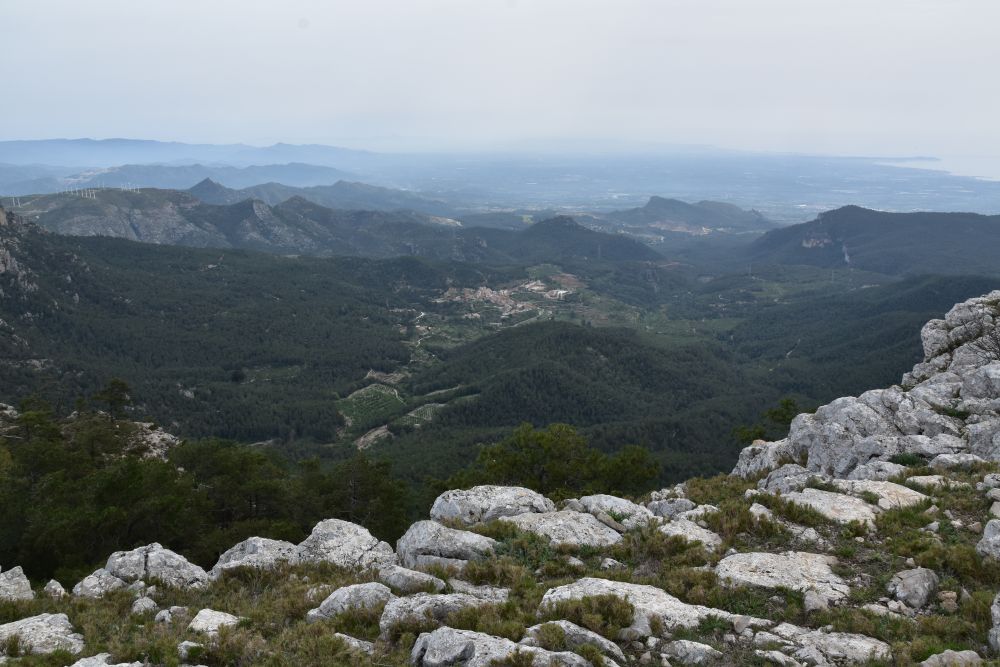
This is the façade of the Romanesque church.
aaa_1200-small

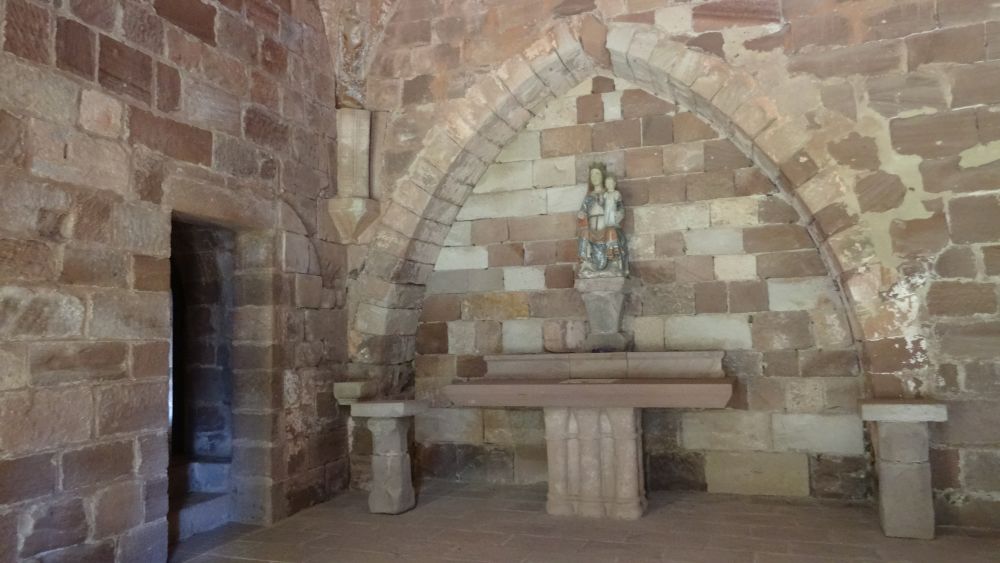
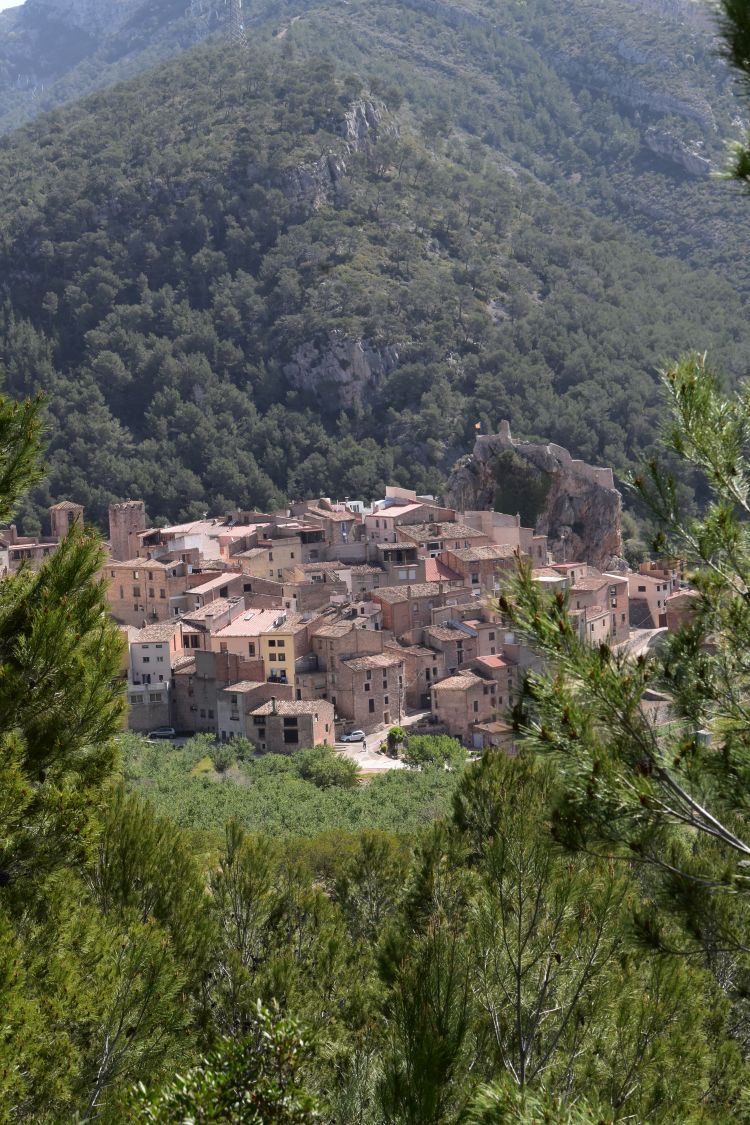
Inside we find Maria and her son.
dsc09188-small

From the cloister there is an impressive view of the Mediterranean Sea. It must have been a pleasure to pray and meditate here.

aaa_0005-small

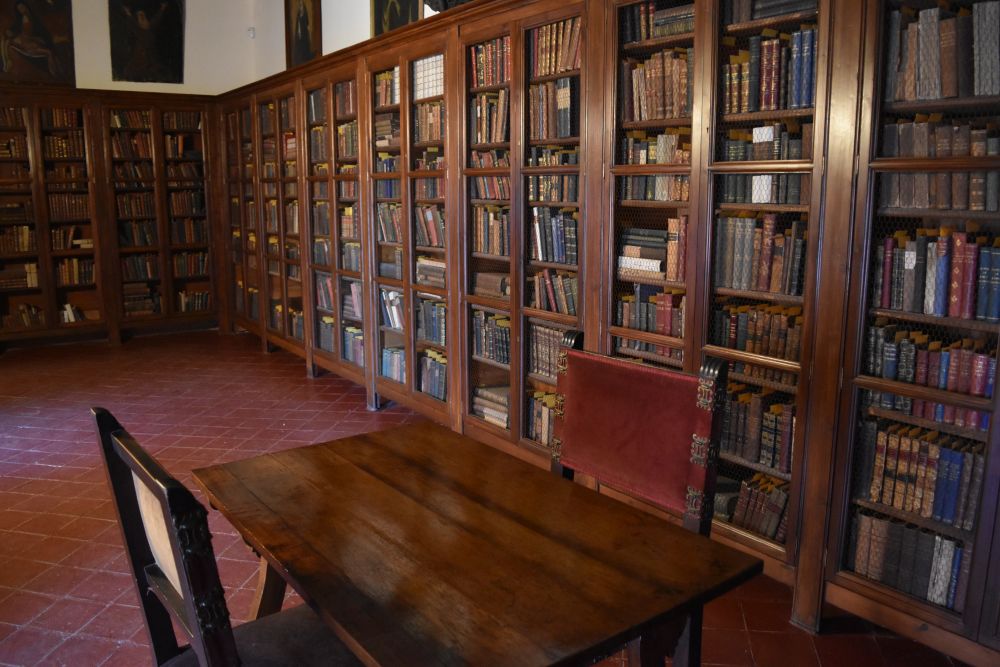
In the 17/18t century the castle has been added to the monastery. It was in use until about 1980. Mr Toda lived here. I am impressed by the luxury and in particular by the library…

aaa_0024-small

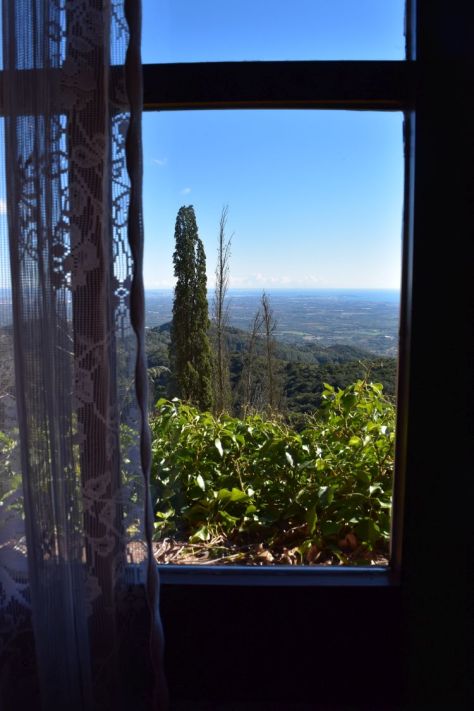
… and by the view from the window.

aaa_0019-small

Perhaps it was a bit lonely to live up here.

.

Shopping and lunch in Falset

We continue our way on the sinuous path through the mountains to stop in Falset. This is the central town of the Montsant and Priorat area. The name “Falset” comes from sickle – and their are two sickles in their coat of arms (see Wikipedia and Miquel Hudin: “Vinologue Montsant”, Leavenworth Press 2014, p. 64).

My “Vinologue” tells me that Vins I Olis offers a good selection of wines from the area of Monsant and Priorat on one spot. We buy some cheese…

aaa_0032-small

… and some wine – in particular I look for “Scala Dei” (Granatxa), and with the advice of the shopkeeper, Marc, I acquire a selection of cuvées with local and international grapes.

aaa_0033-small

Marc, reserves a table for us in the El Cairet in the old city center – for 13:30, which is early here. The restaurant opens so early – just for us.

aaa_0036-small

It is a small and cosy place.

dsc09207-small

The restaurant owner is proud of the meals that she prepares with great care using regional products. Hence we order the local menus suggested by her. We particularly loved the hazelnut soup, the autumn salad with dried fruit, the bacalao (codfish) a la plancha and the fig dessert on puff pastry. This restaurant is a place to remember and return!

.

Siurana – perched on a steep rock – an Eldorado for climbers

We leave Falset and using sinuous roads we drive to the small town Siurana perched on a rock above the river Siurana. Campers are bordering the road and climbers are hanging in the cliffs or crags. This is an eldorado for climbers. The recent edition of “Insipiration”, the newspaper of one of “my” Swiss outdoor shops, talks about “Sehnsucht Siurana” or “Longing for Siurana”. Also the Internet is full of information about the climbing routes (e.g. planet mountain). One route is called after the princess Abdelaza that jumped down with her horse, because she did not want to be captured by the Christians, when they conquered Siurana in 1150.

aaa_0052-small

On three sides the village is surrounded by cliffs. Using the small gate we enter and stroll through the narrow streets.

dsc09236-small

The Romanesque church Santa Maria is located above the cliffs.

dsc09229-small

The portal has a modestly decorated tympanum with Christ, the sun, the moon, two lions and eight persons, presumably apostles.

dsc09220-small

Across we see the table mountain Montsant under clouds. It is chilly and very windy in Siurana.

aaa_0078-small

Before leaving we have a cafecito in the friendly bakery at Cornudellas. We are by far the oldest guests. We are surrounded by young climbers that are taking a warm drink before spending the night in their campers. We are happy to return to our warm apartment in Hospitalet, and I look forward to having a swim in the heated public inside pool.


In Catalonia (Spain) – some excursions around Hospitalet: L’Ametlla

On 1st of November, we visit l’Amettla del Mar – south of Hospitalet de l’Infant, where we spend some weeks end October to mid November 2016 enjoying the small apartment of our friends.

L’Amettla del Mar is a small fishers’ town. We always buy fresh fish from l’Amettla at Jordi’s in Hospitalet (delicious!). Also Wikipedia says that fishing is the main activity of l’Amettla. The town is built on rocks overlooking the natural harbour where the fishing boats are resting during the day.

aaa_0912-small

The weather is warm and sunny.

aaa_0928-small

Along the rocks there is a promenade with outlook points.

aaa_0925-small

It is three pm – just the right time for dinner in Catalonia (uff, so late for me, my stomach always rebels much earlier).

dsc08805-small

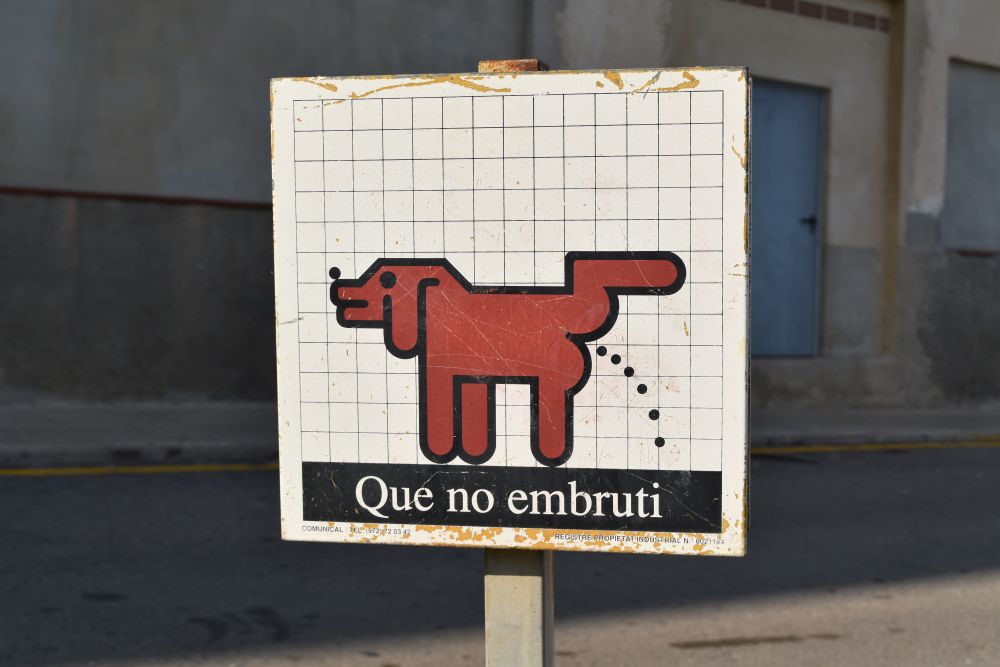
Dogs may understand Catalonian here.

aaa_0938-small

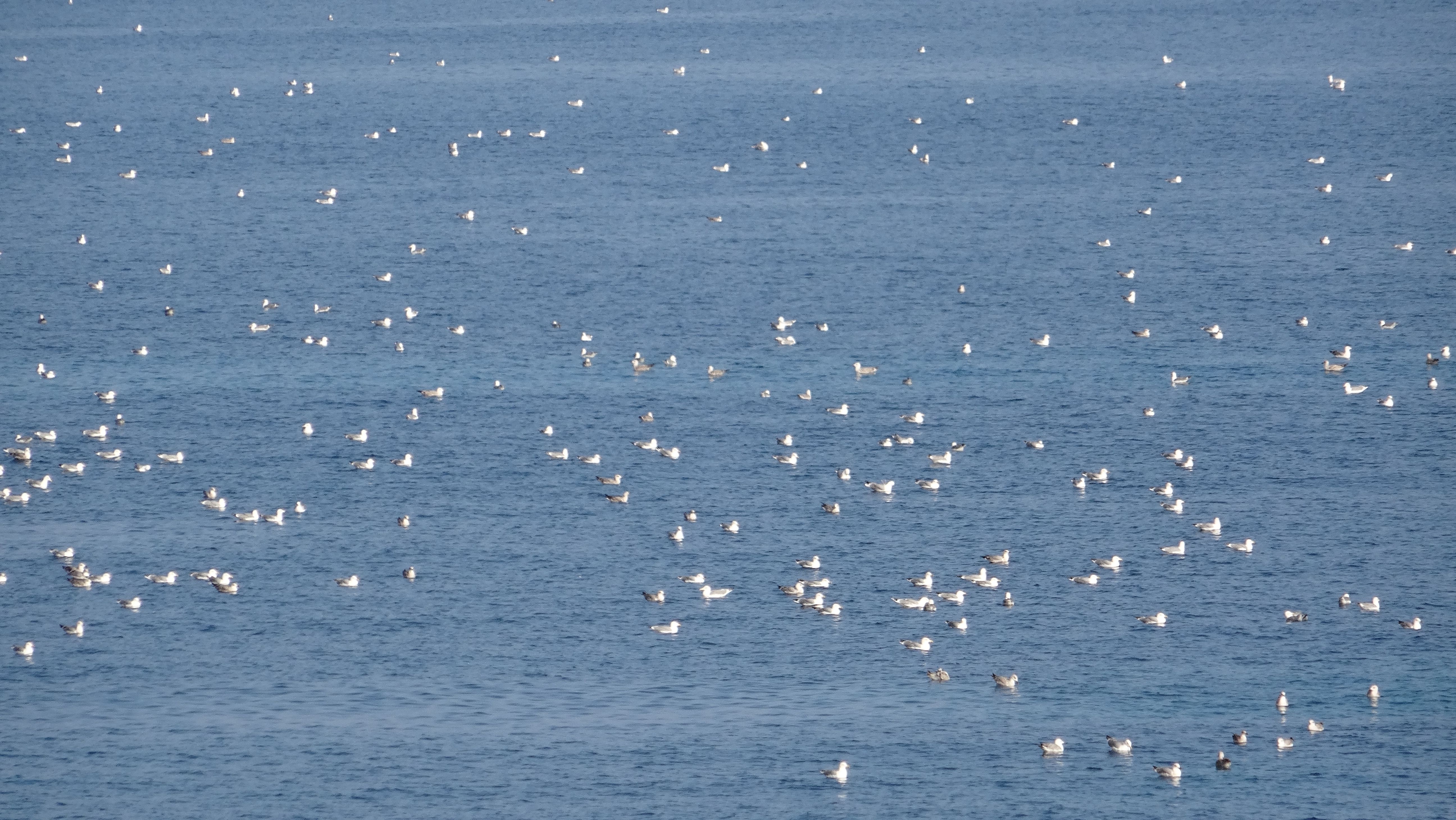
Many, many seagulls have congregated on the water of the Mediterranean Sea. These small white spots are seagulls…

aaa_0941-small

… and they are enlarged now.

dsc08810-small

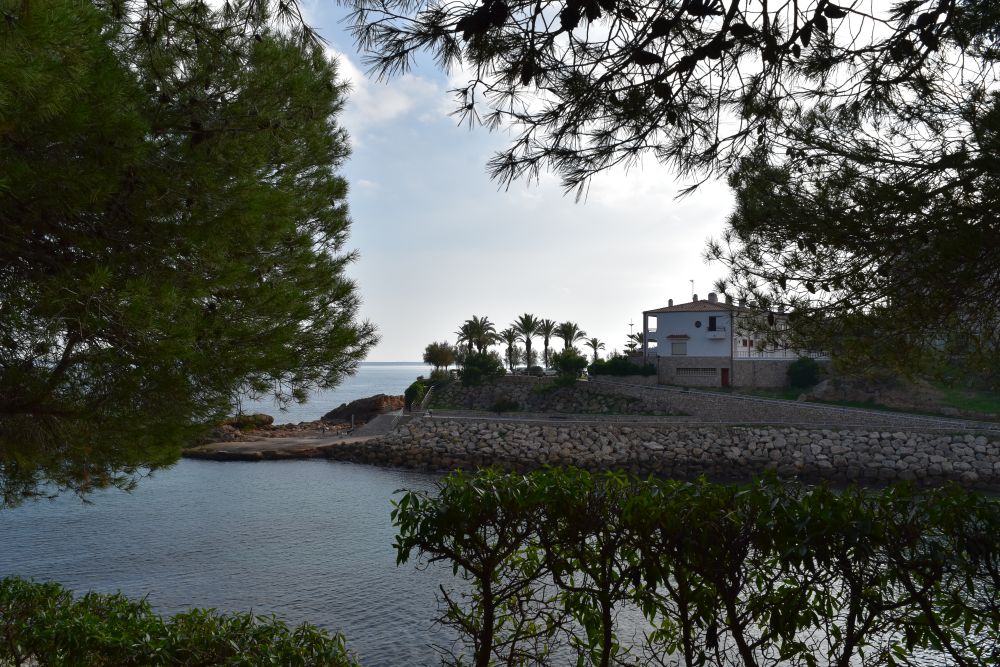
Tourism is the second source of income of l’Ametlla – north of the city we find wealthy private houses.

aaa_0946-small

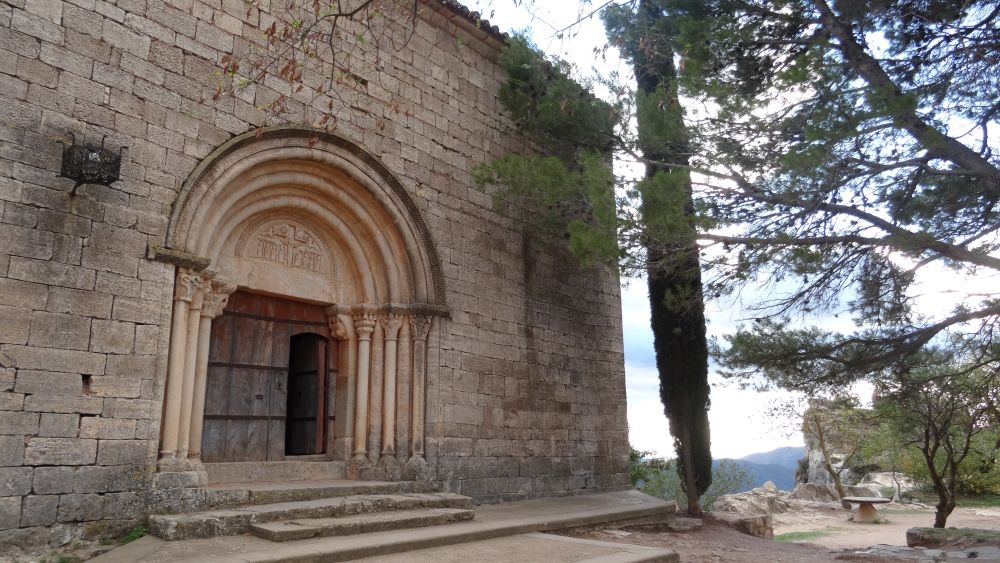
Behind this bay there is a camping site with an Olympia size pool (now closed) and a hiking path. A good place to camp in summer.
aaa_0949-small

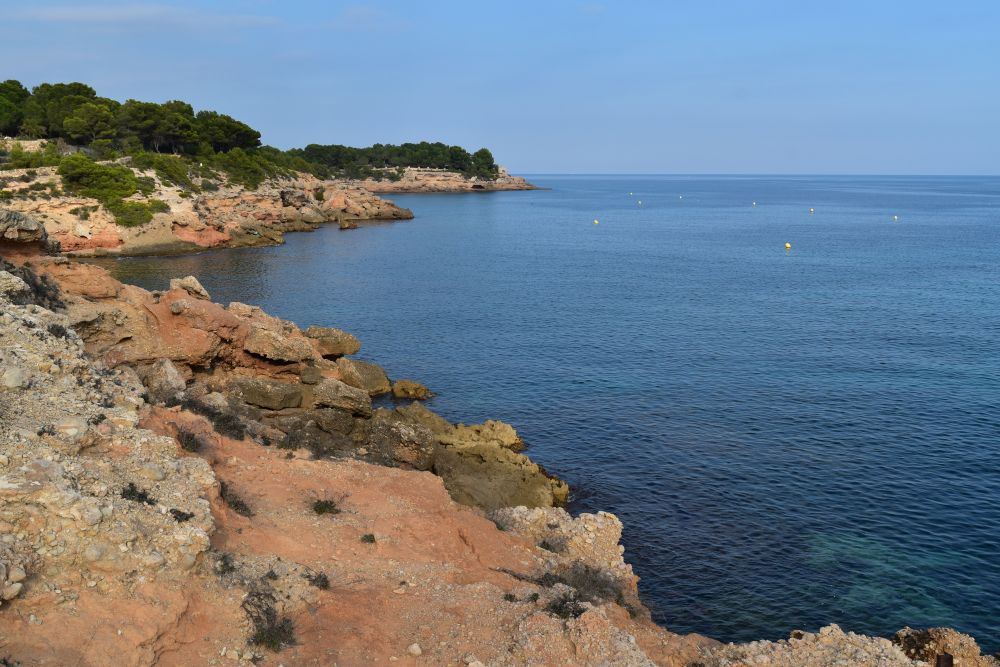
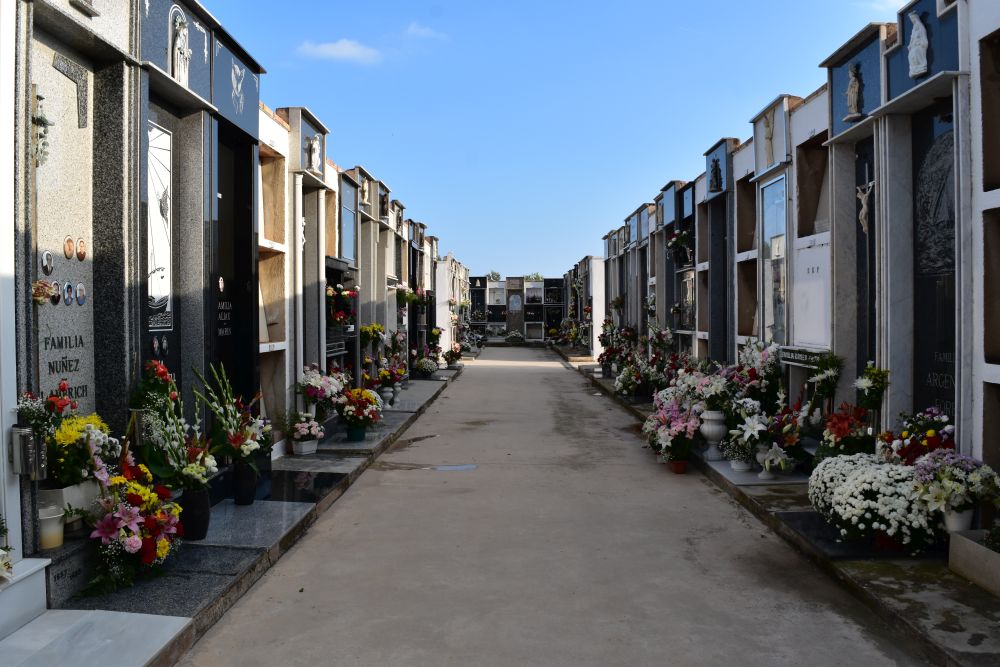
We follow the rocky coast line and reach this cemetery that is now – on 1st of November – richly adorned with flowers and well visited by local people that remember their ancestors.

aaa_0967-small

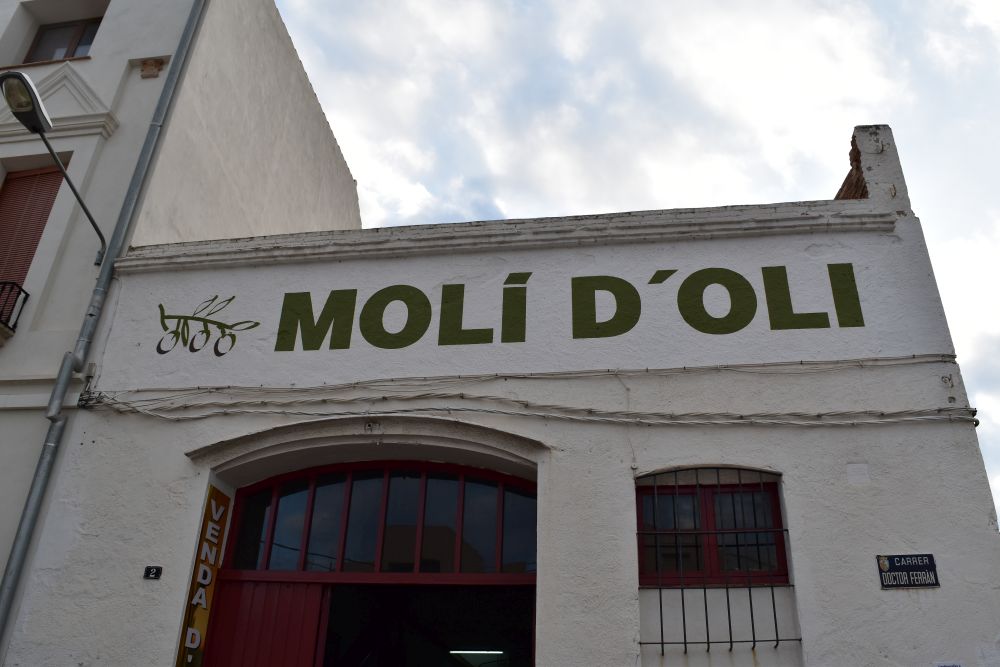
Just before driving “home” to Hospitalet de l’Infant, we stop in this small oil mill – the third pillar of income of l’Ametlla is agriculture.

aaa_0981-small

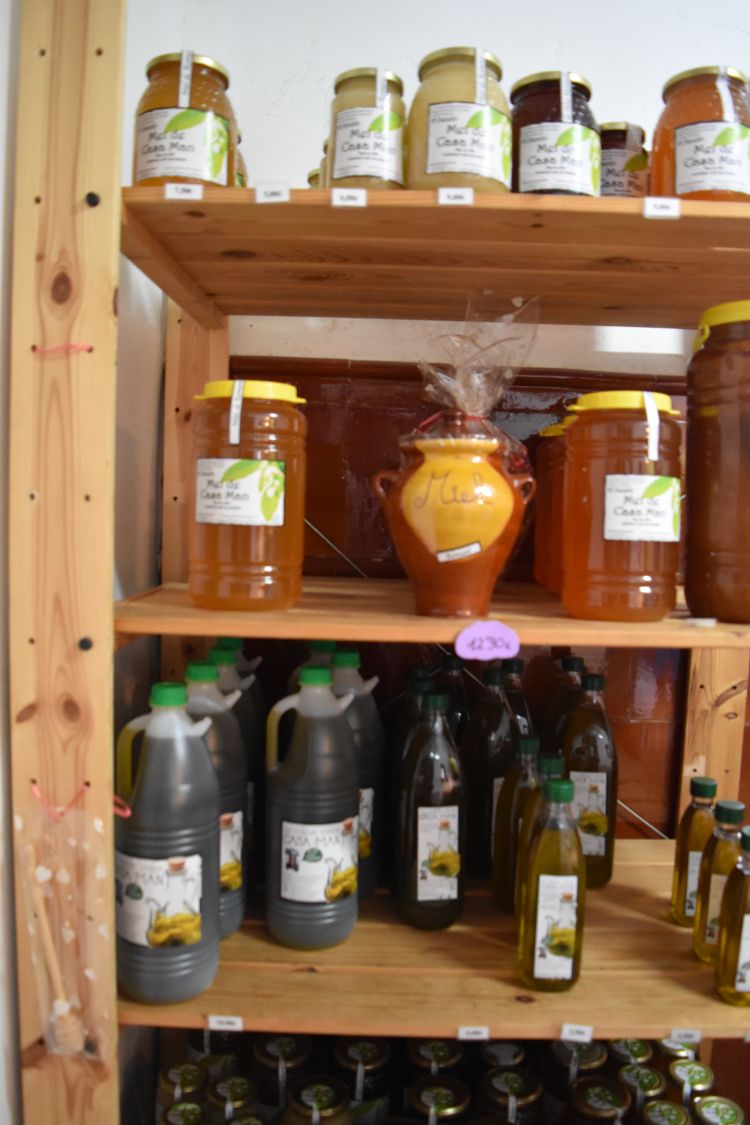
We buy honey and virgin olive oil.

aaa_0974-small

Great souvenirs and gifts for Christmas – at home I savour the tasty rosemary honey – it is delicious.

L’Ametlla was a charming experience – there is so much to see around Hospitalet.


In Catalonia (Spain): Discovering Capçanes, Gandesa, El Pinell de Brai and Miravet

On a sunny Sunday we explore the Montsant and Terra Alta region near Hospitalet de l’Infant. In Hospitalet we spend a few days in the apartment of our friends (October/November 2016).

.

Capçanes – a success story of some brave Montsant wine growers

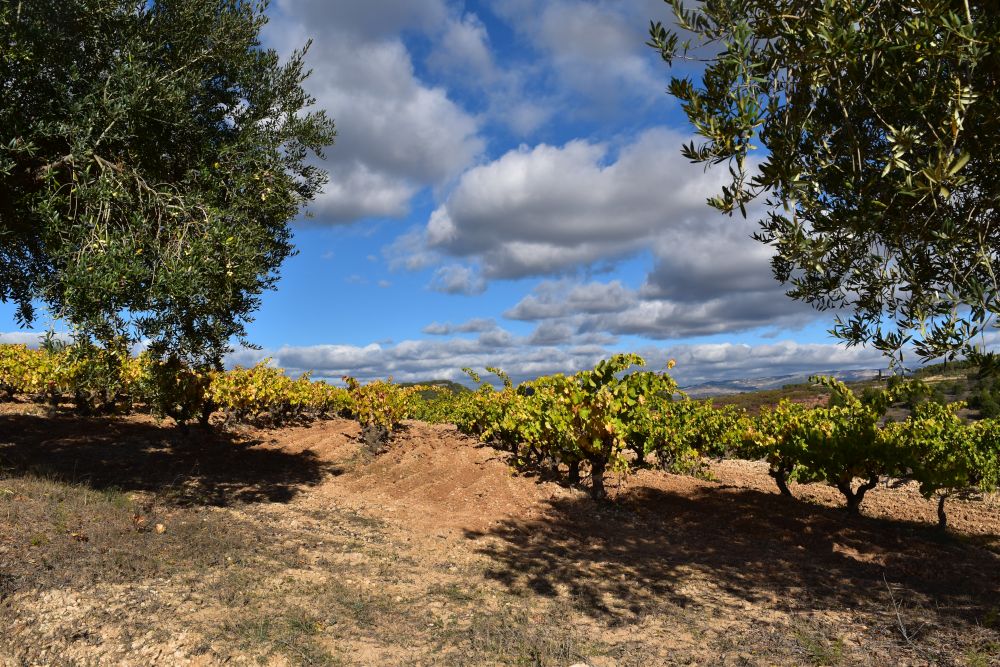
My “Little Johnson” says that the cellar of Capçanes produces the kosher wine Peraj Ha’Abib that is to be recommended. We are curious and drive to Capçanes located in the hills not far from the sea with the vineyards slowly turning yellow now.

 aaa_1128-small

aaa_1131-small

The history of the cellar of Capçanes and their kosher wine impresses me. As described on their Website, the wine growers established their cooperative cellar in 1933. In 1995 the cooperative was asked by the Jewish community of Barcelona, whether they could produce kosher wine. We join a tour to the cellar. Our guide explains us that the wine growers decided to face the risk, took a credit and rebuilt the cellar of their cooperative including a separate production line for kosher wine. They were just ready, when the demand for bio wine emerged – and much of the production of kosher wines is similar to the natural and biological production methods (“beautifying” is not allowed for kosher wines). Now they had a regular buyer of their kosher wines (the Jewish communities) and their wines are also in high demand from  all over the world.

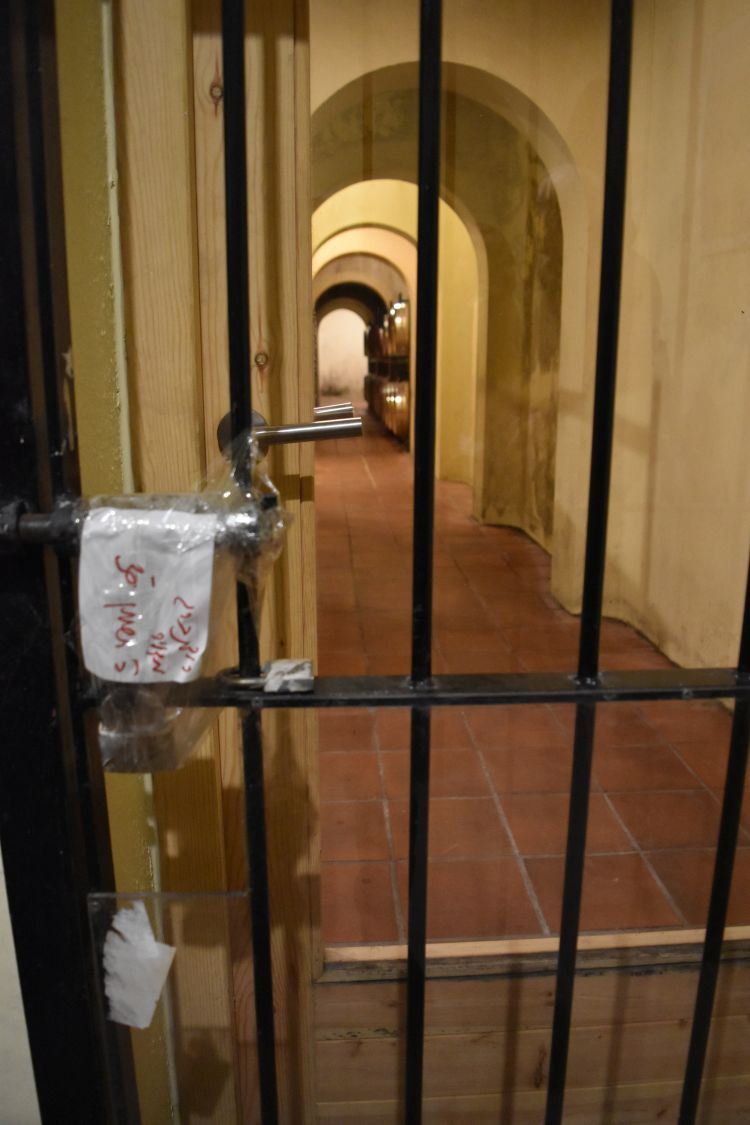
The Tagesanzeiger of 27th January 2017 (Michaelis Pantelouris) describes in detail, how strict the rules are for the separate kosher production line. This is the cellar for developing kosher wines.

aaa_1134-small

It is locked and sealed and only the Rabbi is allowed to access this part of the cooperative cellar. The enologist (Jürgen Wagner) has a cellar with the same setup, and he surveys the development of the kosher wines “indirectly” in cooperation with the Rabbi.

We buy some wines including a bottle of the Peraj Ha’Abib (from the non kosher production line). I will share it with a good friend of mine. Innovative is also their series of four terroir wines “La Nit de les Garnatxes” – I take a selection of two bottles. Furthermore we bought vinegar and olive oil called “Siurana” – gifts for Christmas 2016. I gave one bottle of Siurana oil to my nephew, an agroecologist, and he loves it.

.

Gandesa – the welcoming capital of Terra Alta

Gandesa is the capital of Terra Alta, like Montsant also a DO wine region. Narrow streets in the old town. We can see the church of Assumpcio.

aaa_1148-small

The gate has just closed, because the Sunday service has finished. This is the Romanesque west gate of the church of Assumpcio. The PDF linked in describes the sculptures and freezes  (“Gandesa – a church in New Catalonia”, no author).

aaa_1139-small

The modillions above the arch and the sculptures on the capitals are, says the PDF document, modelled after Lleida, and they tell biblical stories and give advise for good behaviour.

aaa_1143-small

We say hello to St. Jacob the pilgrim standing in a shell with his walking stick and his large hat. This is a more recent statue.

 aaa_1137-small

Now we are hungry. We find an unpretentious small restaurant. Inside we are heartily welcomed and the owner-cook tailors our lunch meal according to our wishes. “We are a restaurant, we have salad, we have tapas, we have whatever you wish…”, he says. With us are eating more guests and they all look happy. So did we. Our meal was delicious.

.

El Pinell de Brai – the art nouveau wine cathedral or Catedral del Vi

We continue our way through the hills of Terra Alta. Our destination is El Pinell de Brai, marvellously located on a rock.

aaa_1149-small

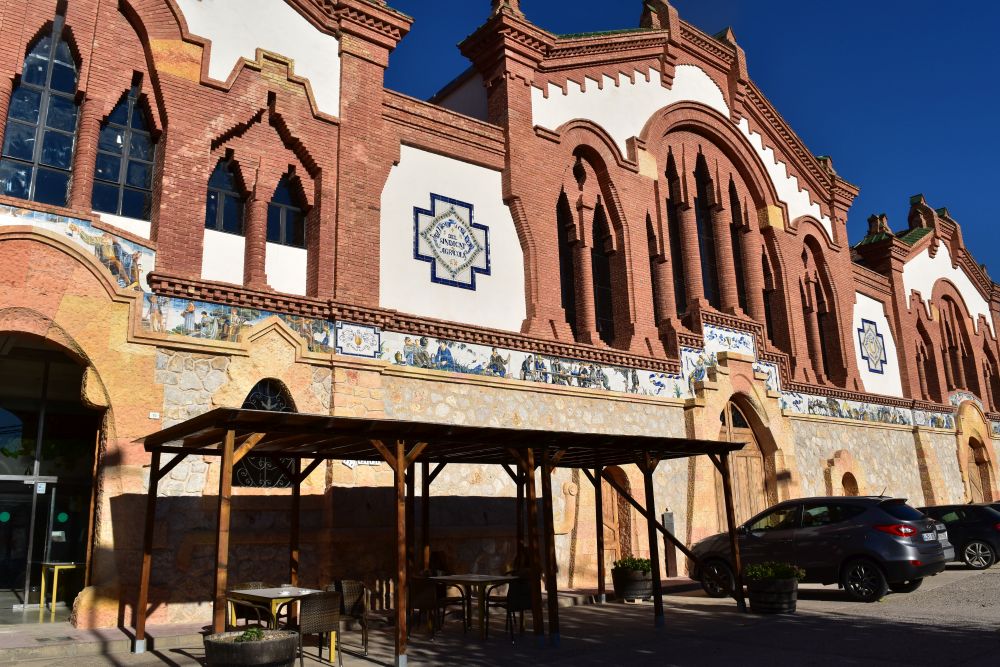
We park our car at the entrance of the small town in front of the Catedral del Vi built in modernist style by César Martinell between 1918 and 1922.  The frieze is the work of Xavier Nogues. There are many more such wine cathedrals in Catalonia. At that time cooperatives were founded and many villages joined their forces to build beautiful and functional cellars for the future. As Don Ferranti Wines explains, the people of Pinell had to mortgage their houses to finance their wine cathedral (see Don Ferranti Wines).

aaa_1151-small

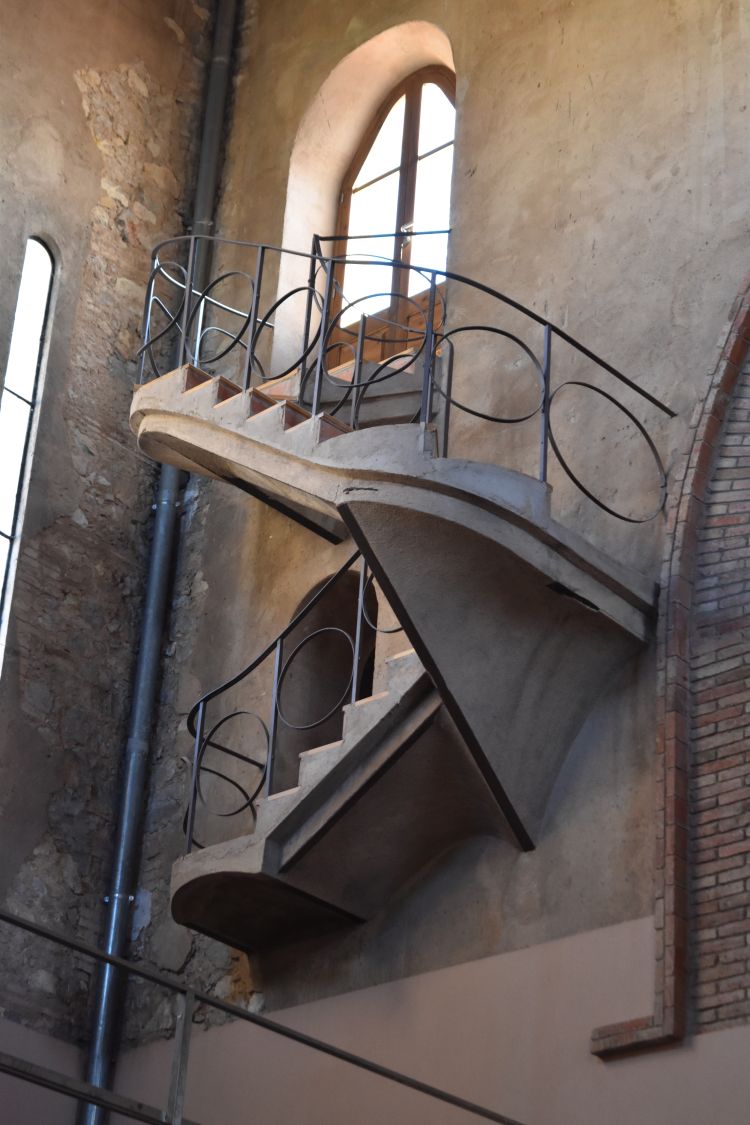
With an audio guide we follow the round tour. We love these stairs hanging on the wall.

aaa_1157-small

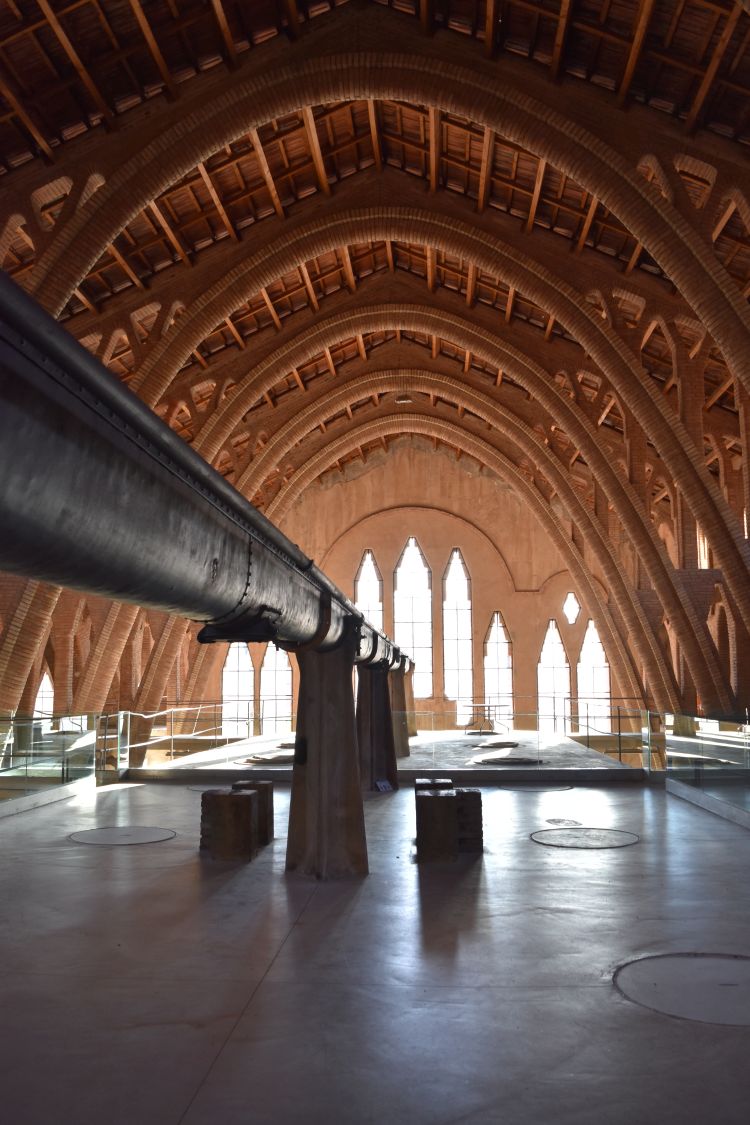
Here we are above the vats (where the wine developed). This viaduct has an Archimedes screw inside to transport the grape pulps. The pressing area is behind us. The high vaults prevent the production area from warming up too much. There is also a cooling system that helps to slow down the fermentation process which gives the wine or more intense taste. The construction of the cellar-cathedral was well thought-out.

aaa_1164-small

This area is no longer used for producing wine. There is a separate cellar was steel tanks for that (see Don Ferranti).

Also in Pinell we buy some souvenirs such as vinegar, olive oil and wine. One bottle we share with our friends at Monthey, when returning the key of the apartment.

.

Miravet – the castle above the river Ebro in the evening light

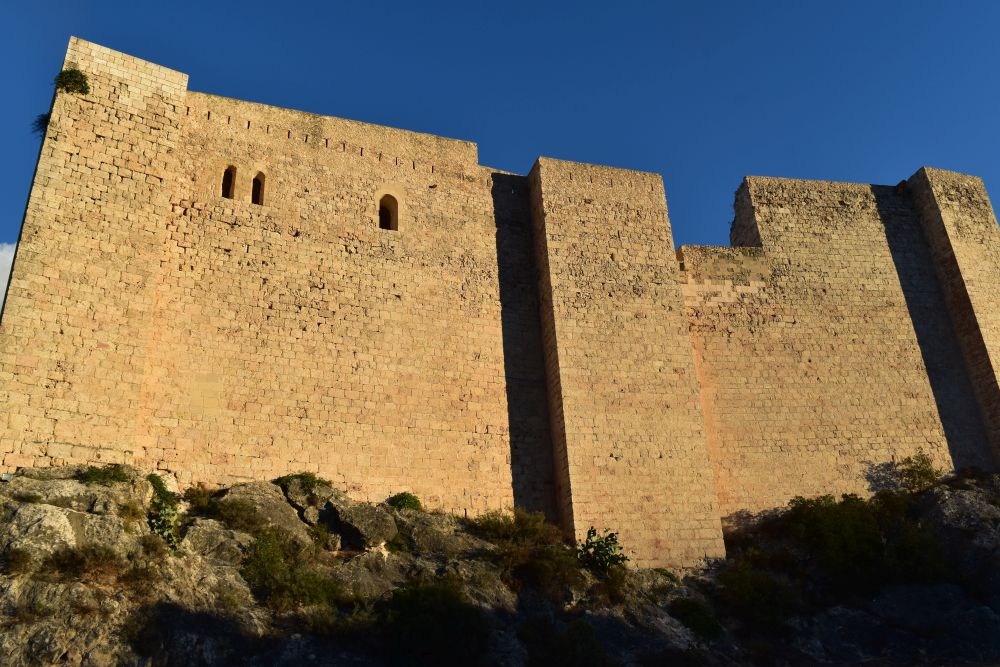
Miravet is a castle above the Ebro river. It dates from Arabic times and after having been conquered by the Christians in 1153, it was the property of the Order of the Knights Templars.

We look at the defensive walls – the castle has closed its gates just a few minutes before we arrived. We will have to return some other time.

 aaa_1166-small

We enjoy the evening atmosphere of the river Ebro instead.

aaa_1176-small

Then we return “home” to our cosy apartment in Hospitalet.