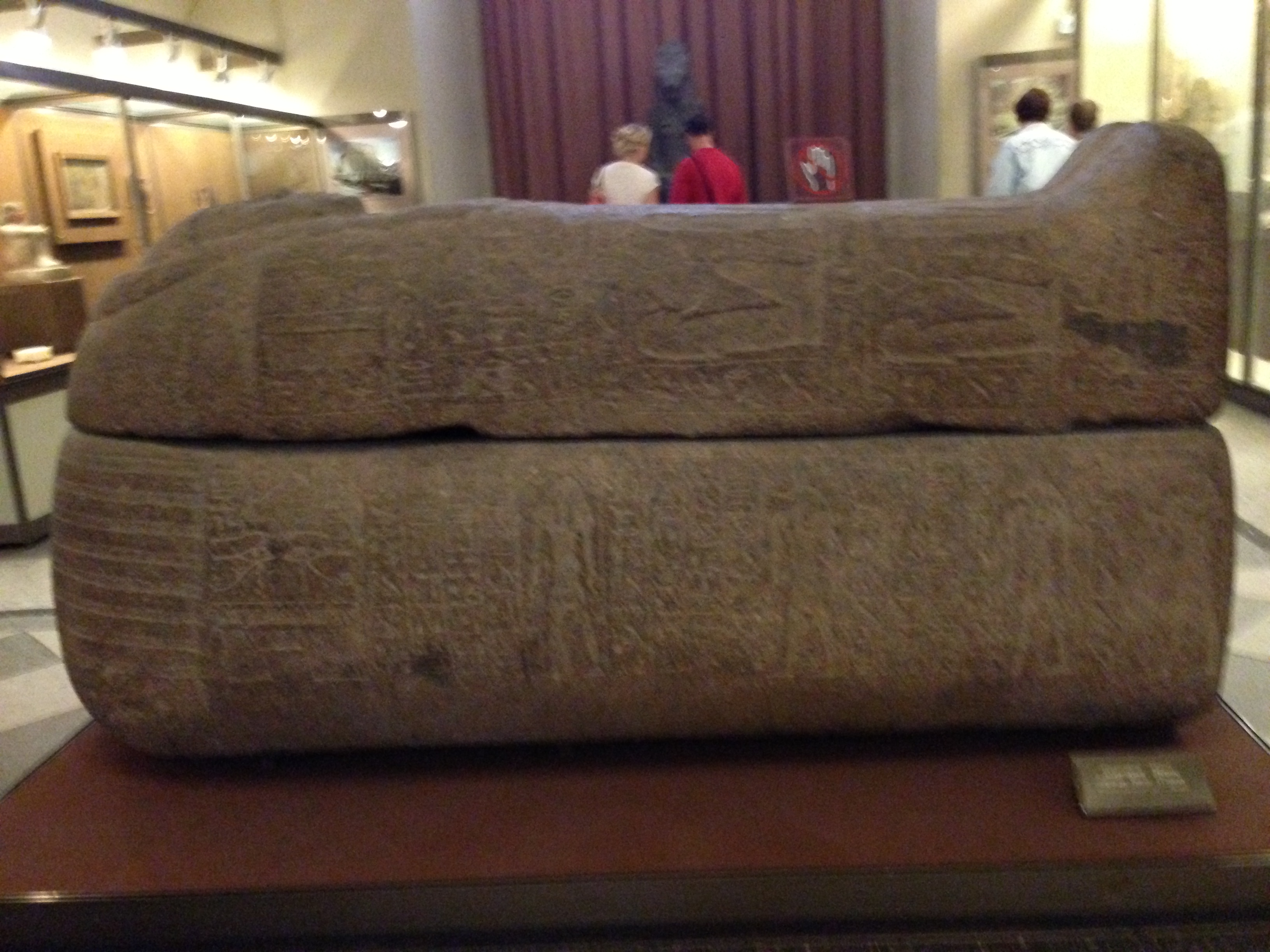
On the road back to Saint Petersburg – welcoming the roots of this lively city

In June 2017, we are on the road again, this time to Saint Petersburg. It is my fourth time in Saint Petersburg. We live in a small appartment, about ten minutes away from the Isaac Cathedral. It is a cosy appartment with high ceilings.

There is a lot to see in Saint Petersburg: The palaces, the museums, the Newsky Prospect, the Newa and the channels, the cathedrals and the monasteries. But Saint Peterburg can also be a relaxing experience with great shops, many cosy coffee houses, restaurants and beautiful parks. Since my last stay in Petersburg in 2013, I perceive that the city has become cleaner and many more houses have been renovated.

.

Welcoming Petersburg at the Newa water line with the Winter Palace and Ermitage

From the Peter and Paul Fortress, there is a great view of the Winter Palace and the Ermitage bordering the Newa.

It is the time of White Nights… late in the evening around eleven, it is almost day light. This is the late evening view from Vasilyevsky island.
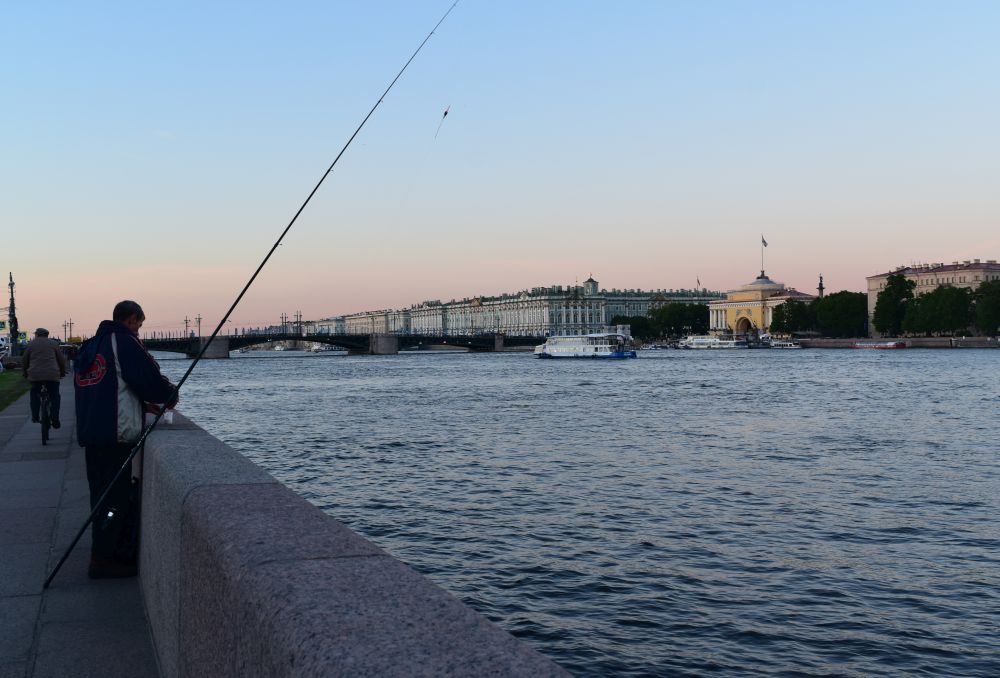
And yes, Russians love to do fishing (they call it рыбалка or rybalka).

.

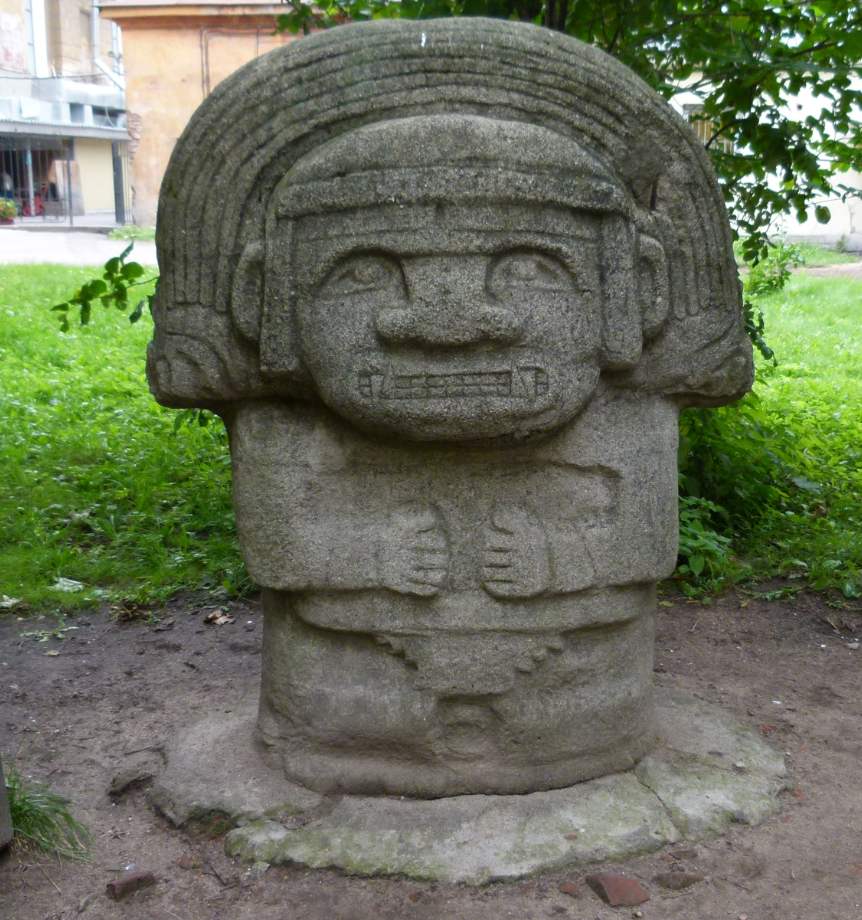
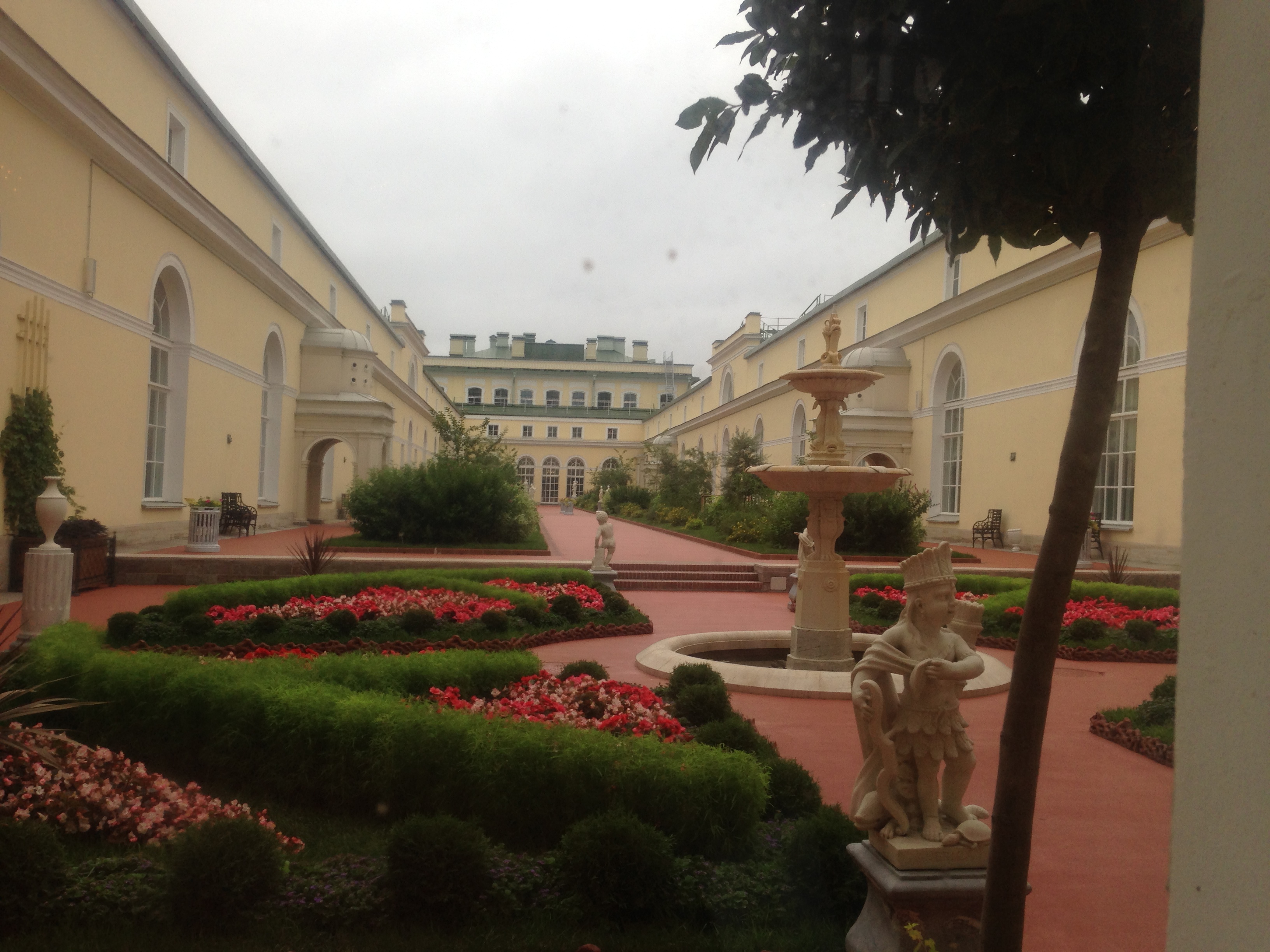
Welcoming Petersburg in the small park with the Aztecan Gods: Tlaloc, please abstain from bringing rain…

Not far from Strelka, there is a small park with Aztecan Gods. We ask them to abstain from bringing showers that can be a a very wet experience in Petersburg.
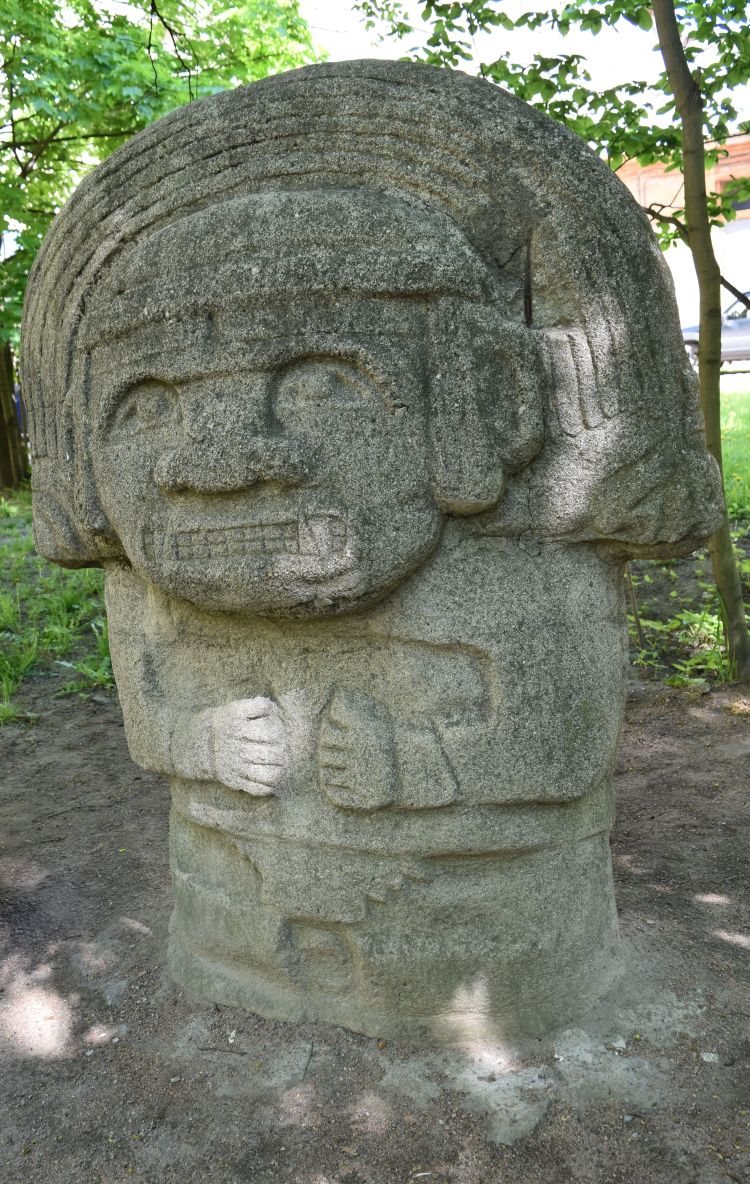
Well… thank you, Tlaloc, you produced good weather for our excursions. And sometimes you caught us in heavy rain showers.

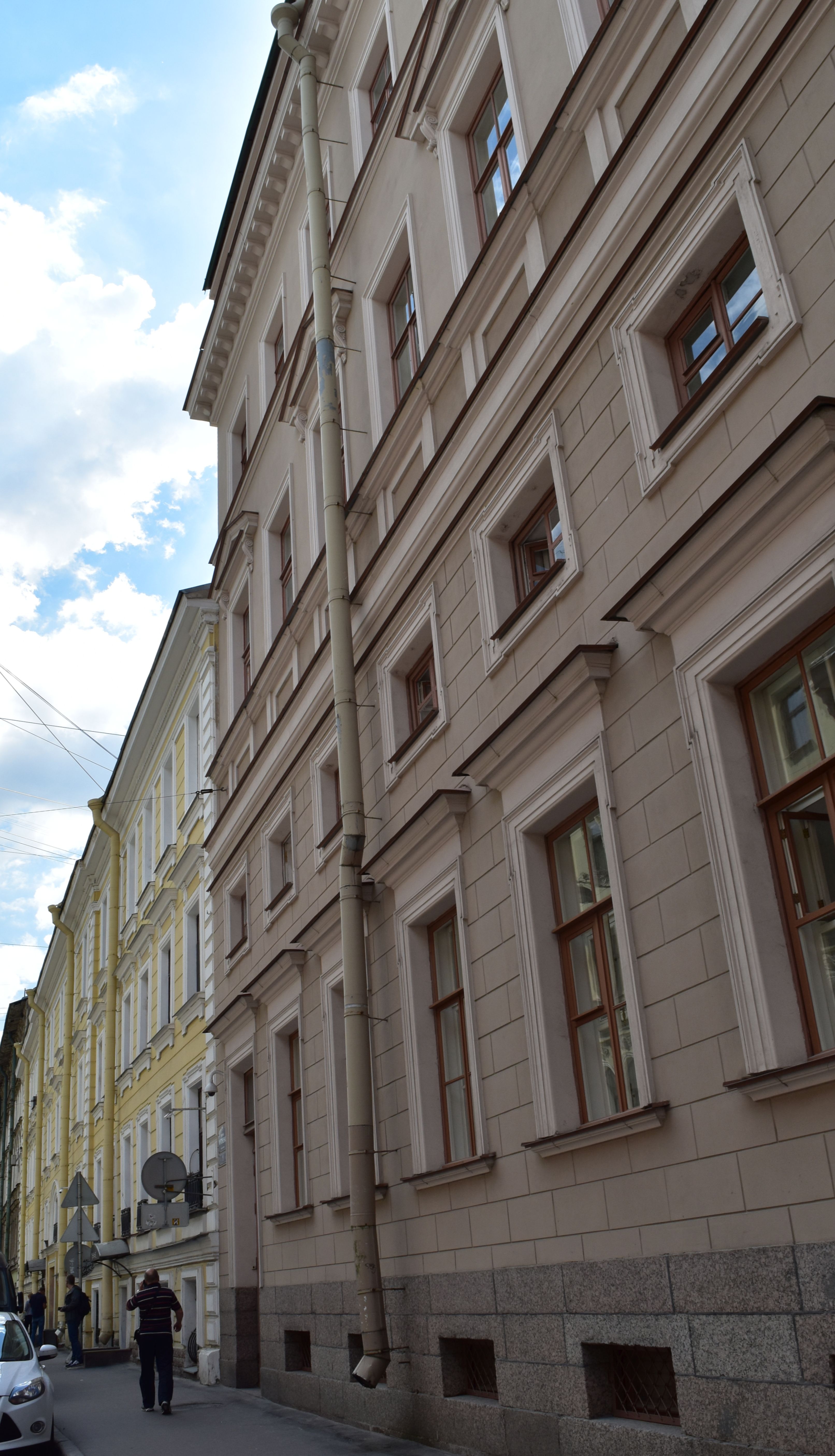
In Petersburg, the clouds open suddenly and pour water on to the roofs and streets. The roofs cannot hold it back and the drains dump water on to the sidewalks. The result are deep puddles that pedestrians have to jump across. A “Petersburgian” shower makes everyone wet through within five minutes.
.

Back to the roots of Russia: Alexander Newsky

The Newsky Prospect starts at the Alexander Newsky Monastery (one of the five most important orthodox monasteries called “Lavra” or лавра). We visited it in the pouring rain.
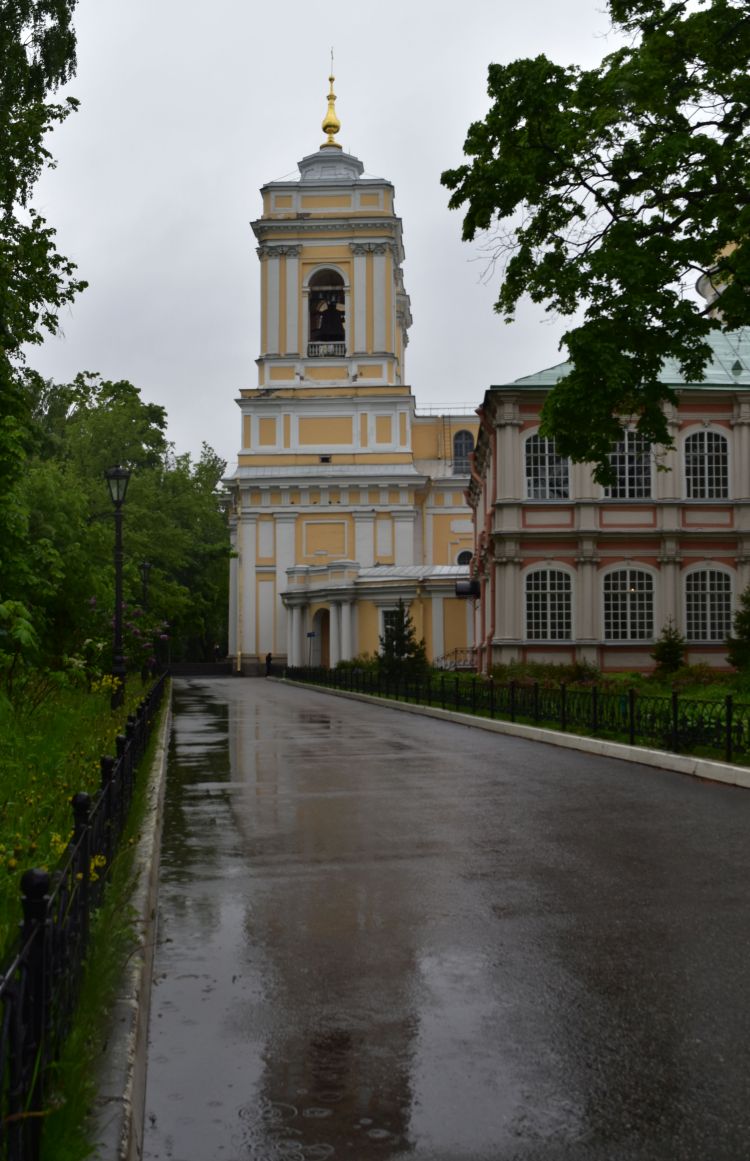
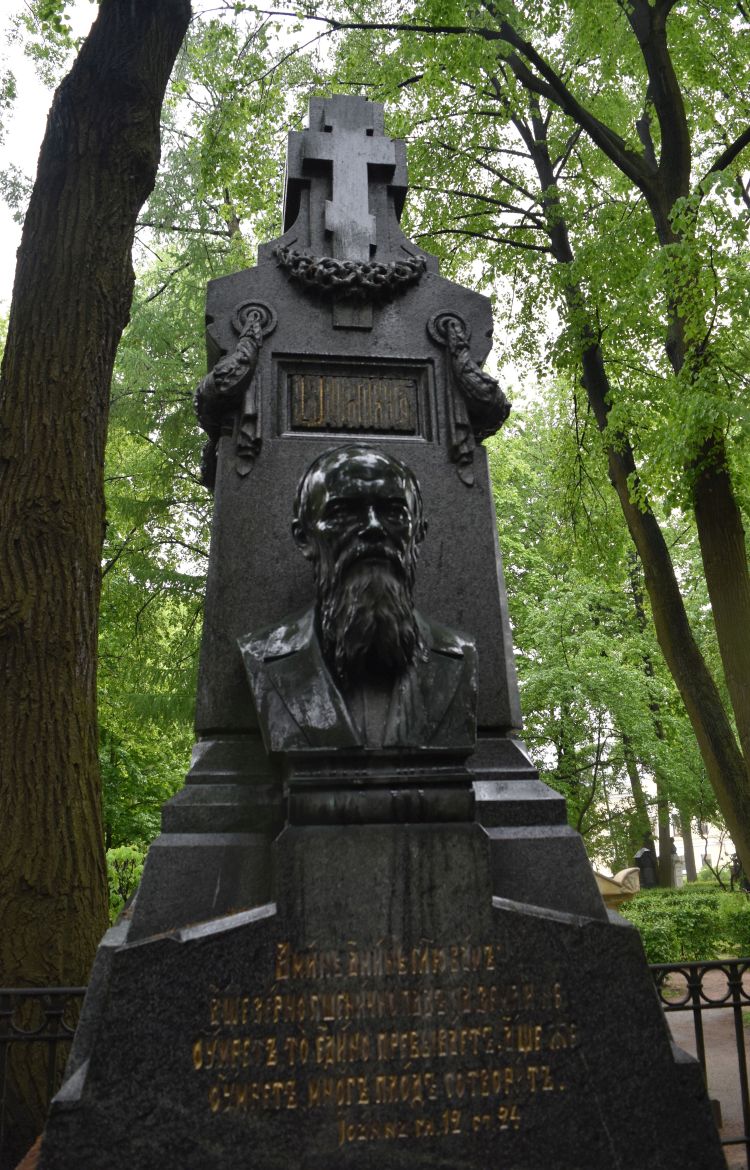
For Novgorod, Alexander conquered Karelia from Sweden in 1240. The battle took place on the Newa, hence his name “Newsky”. Peter the Great felt related with Alexander Newsky, as he regained Karelia from Sweden. He asked Trezzini from Switzerland to build the monastery in Barock style. Starow, a Russian architect, completed the monastery in classical style. There are two cemeteries and Dostoewsky has been buried here.
.

The Hare Island where Peter the Great set the foundation of Petersburg

In 1703, Peter the Great started to build Saint Petersburg on the Hare Island fortifying it with the Peter and Paul Fortress. We stroll along the fortress and visit the Saint Peter and Paul church that – like the monastery of Alexander Newsky – has been designed by the Swiss architect Trezzini.
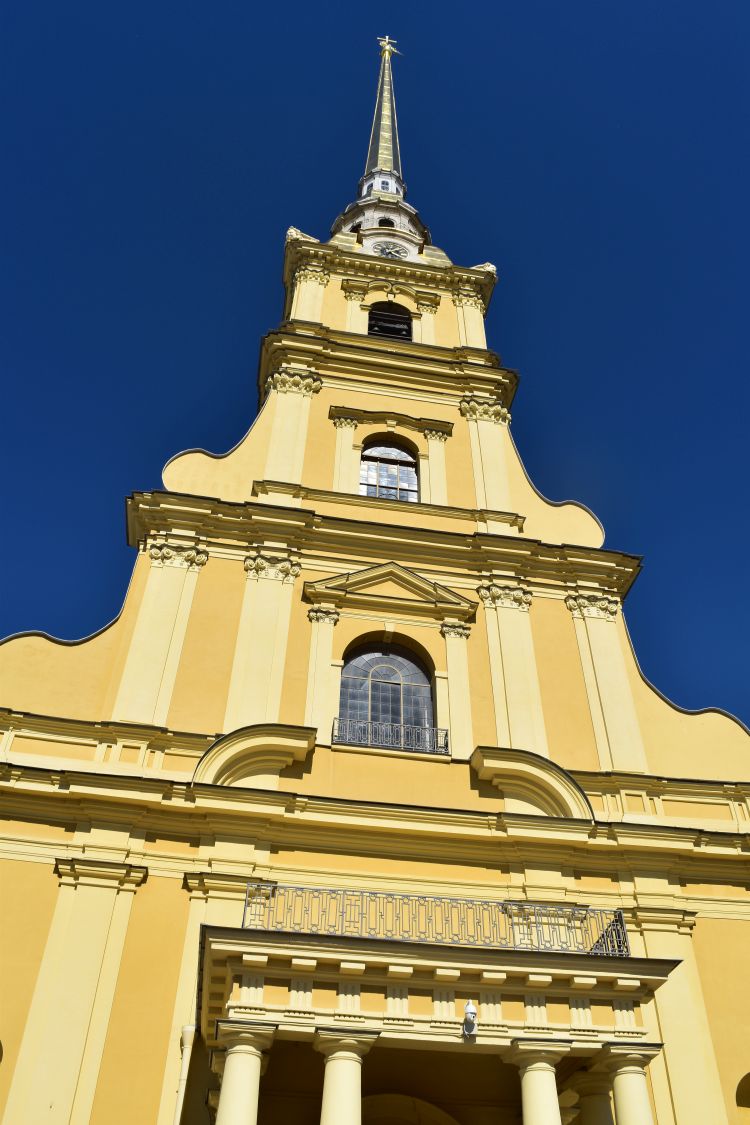
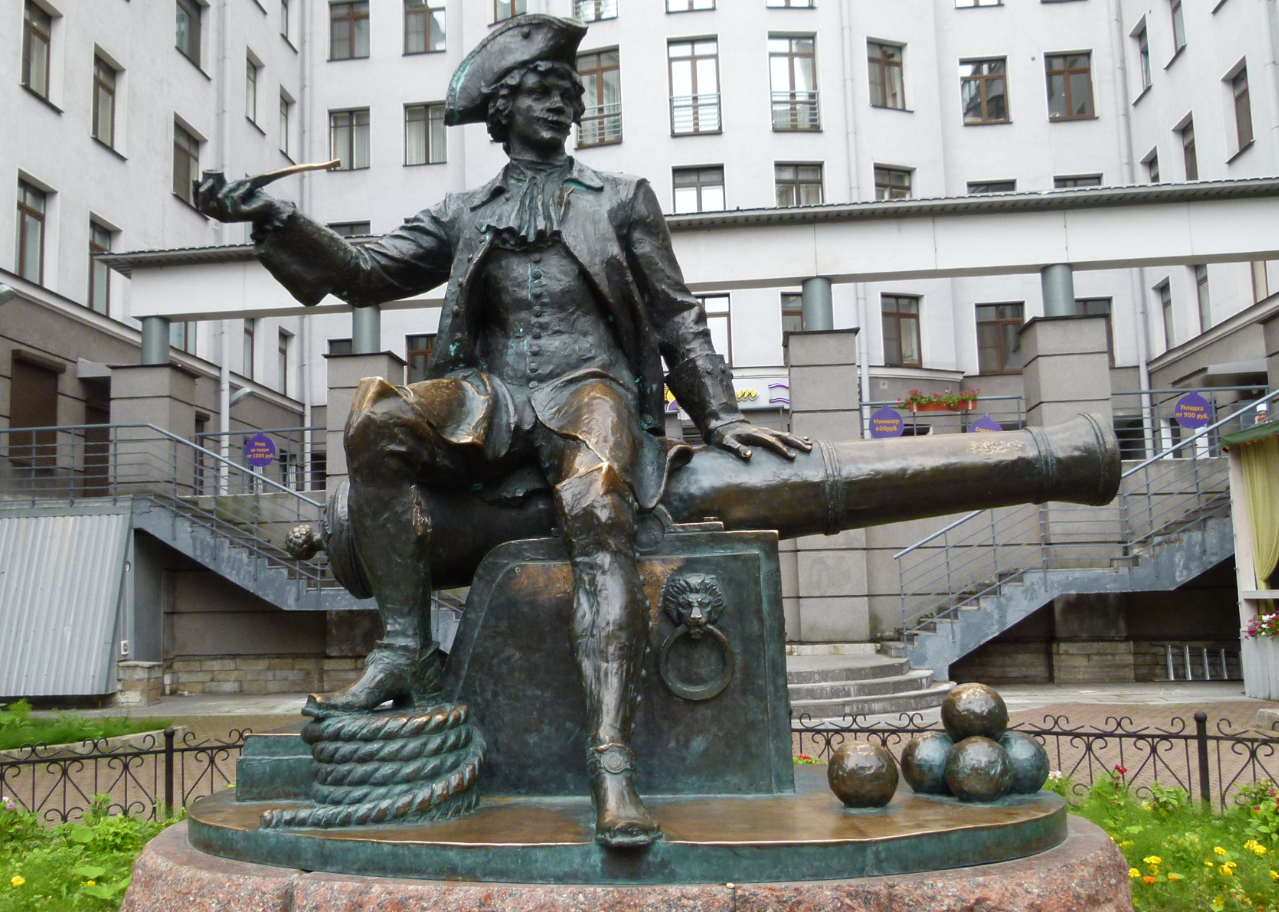
The grave of Peter the Great is decorated with flowers. Outside we find his bronze statue. It has been created by Michail Schemjakin and it is controversial, because it shows Peter the Great as a tall man with a small head (he was more than 2m tall and his head was, indeed, relatively small).
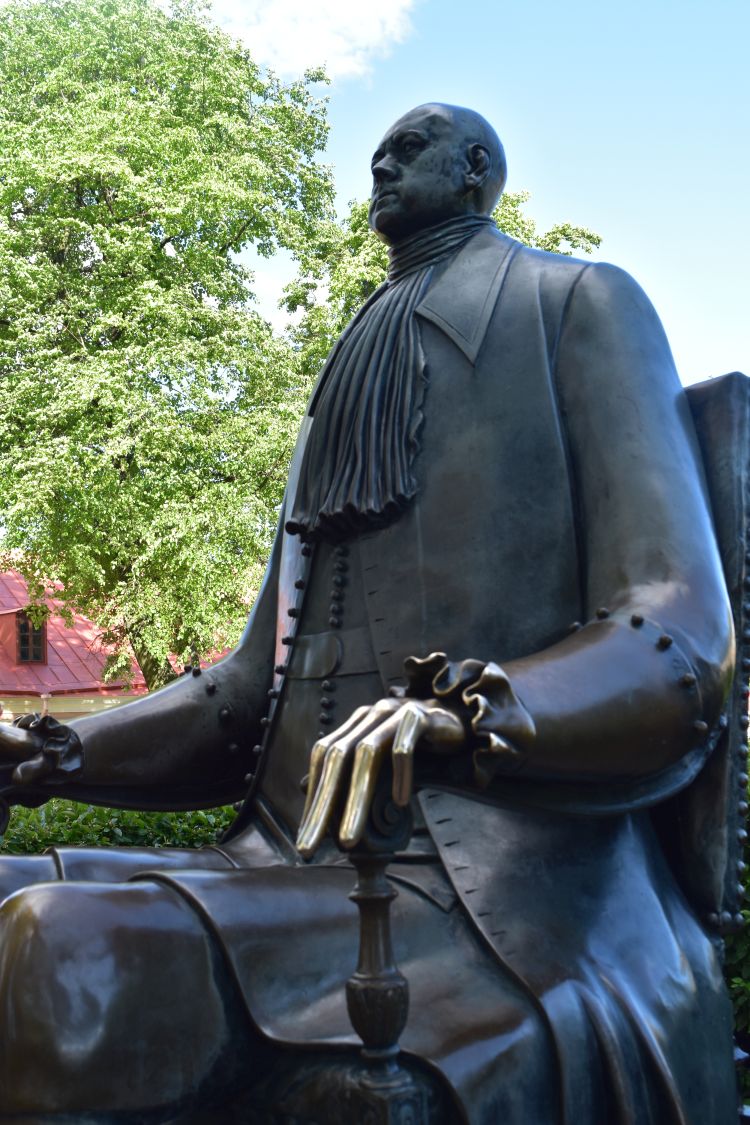
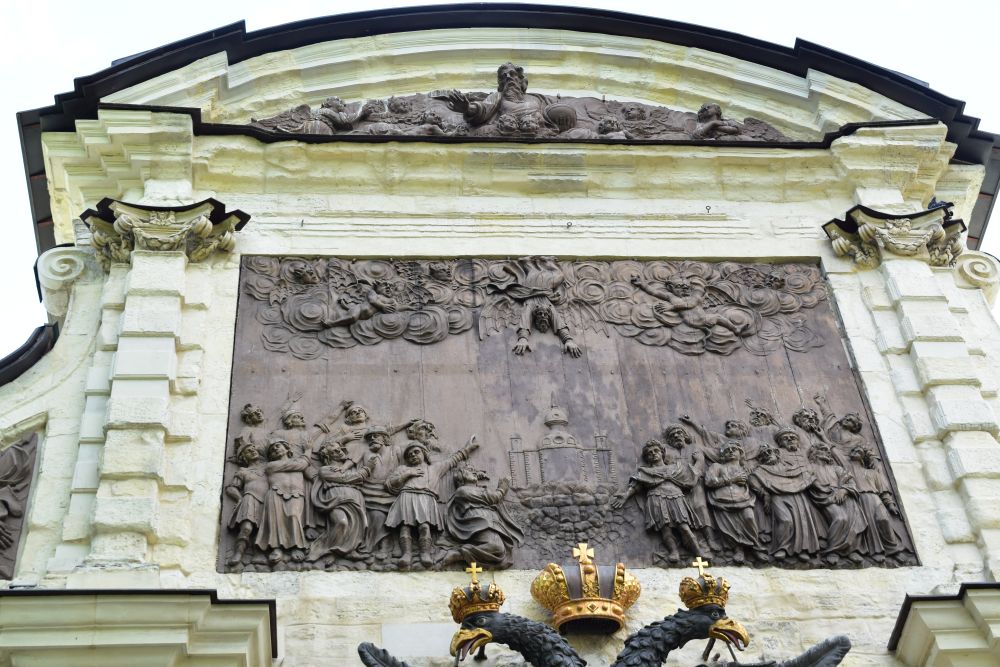
Well whatever… Peter was a man with visions and without him, Russia would not be Russia today. At the entrance gate, a wood carved panel praises his victory over the Swedes that provided Russia with access to the Gulf of Finland. It links Peter’s success with the victory of Petrus over Simon.
.

My own roots or links to Saint Petersburg – memories of my friend Anna who grew up in Leningrad

My year-long Russian teacher, Anna, had grown up in Saint Petersburg, when it was still called Leningrad. That is why I also have links with the city.

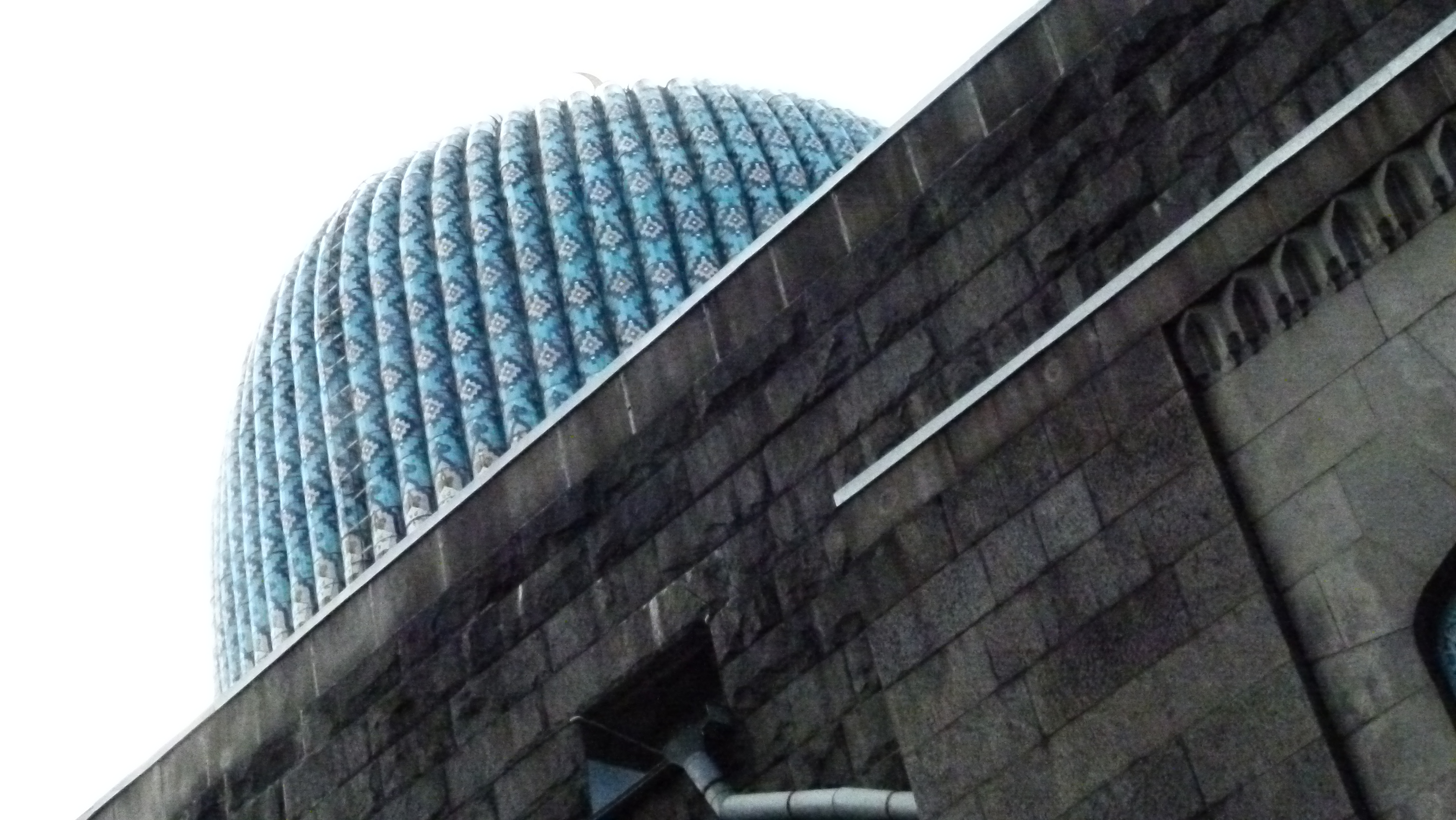
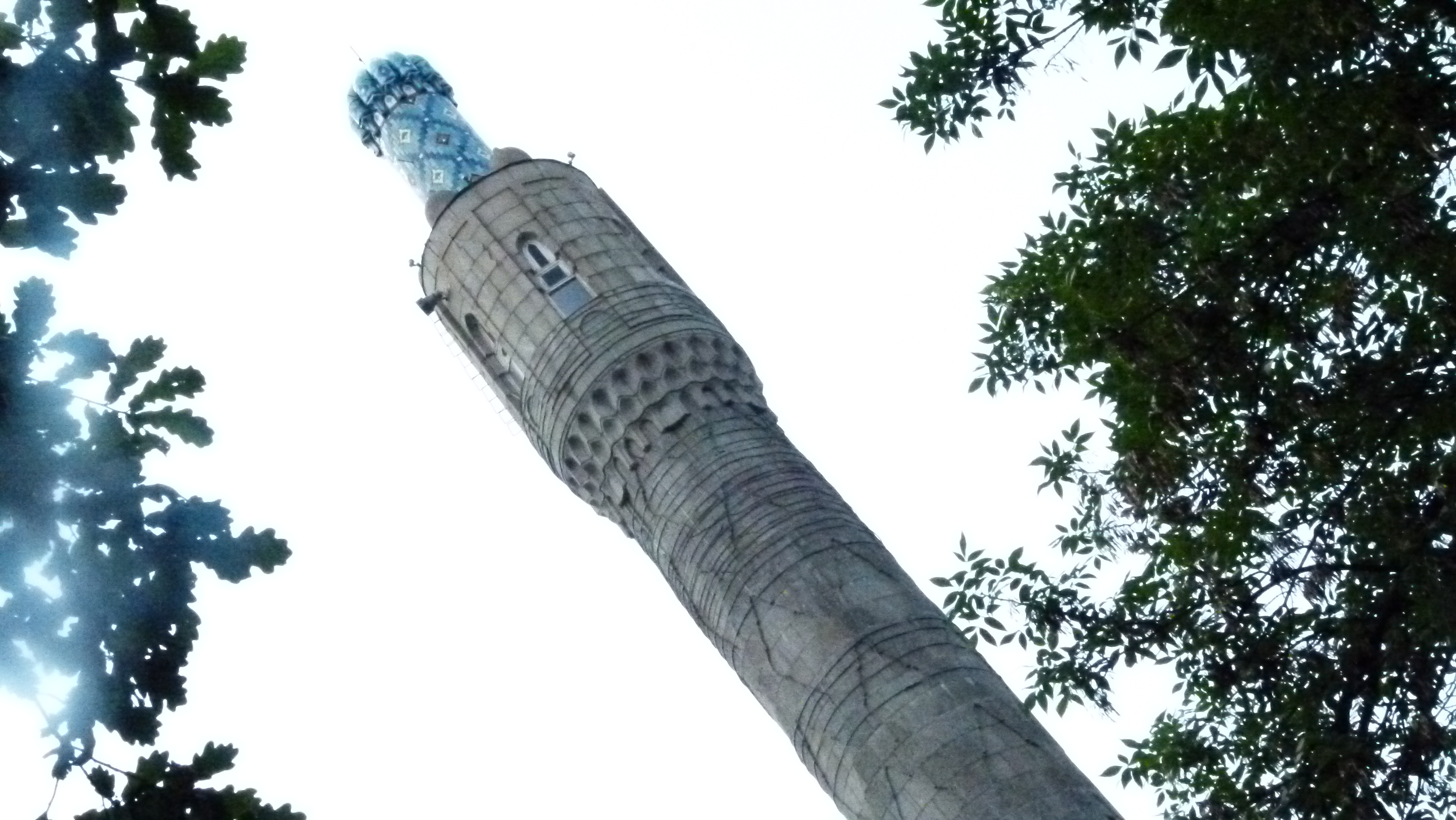
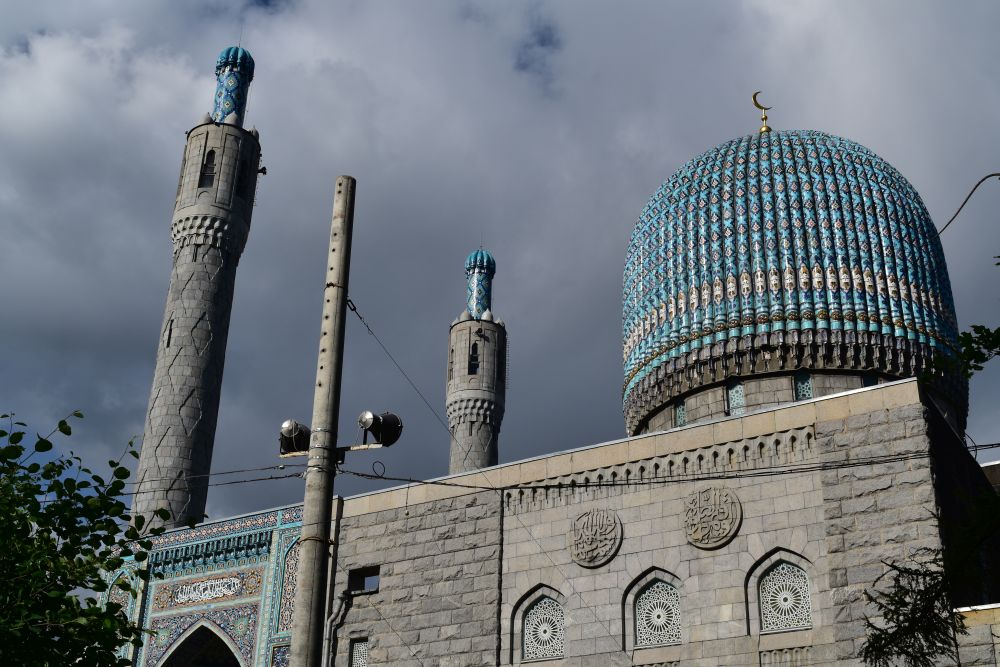
The first link is related with the mosque located near the Fortress of Saint Peter and Paul. It has been built in the beginning of the 20th century – to resemble the mosque of Samarkand. Anna’s grandfather, Vaulin, had made the blue tiles.
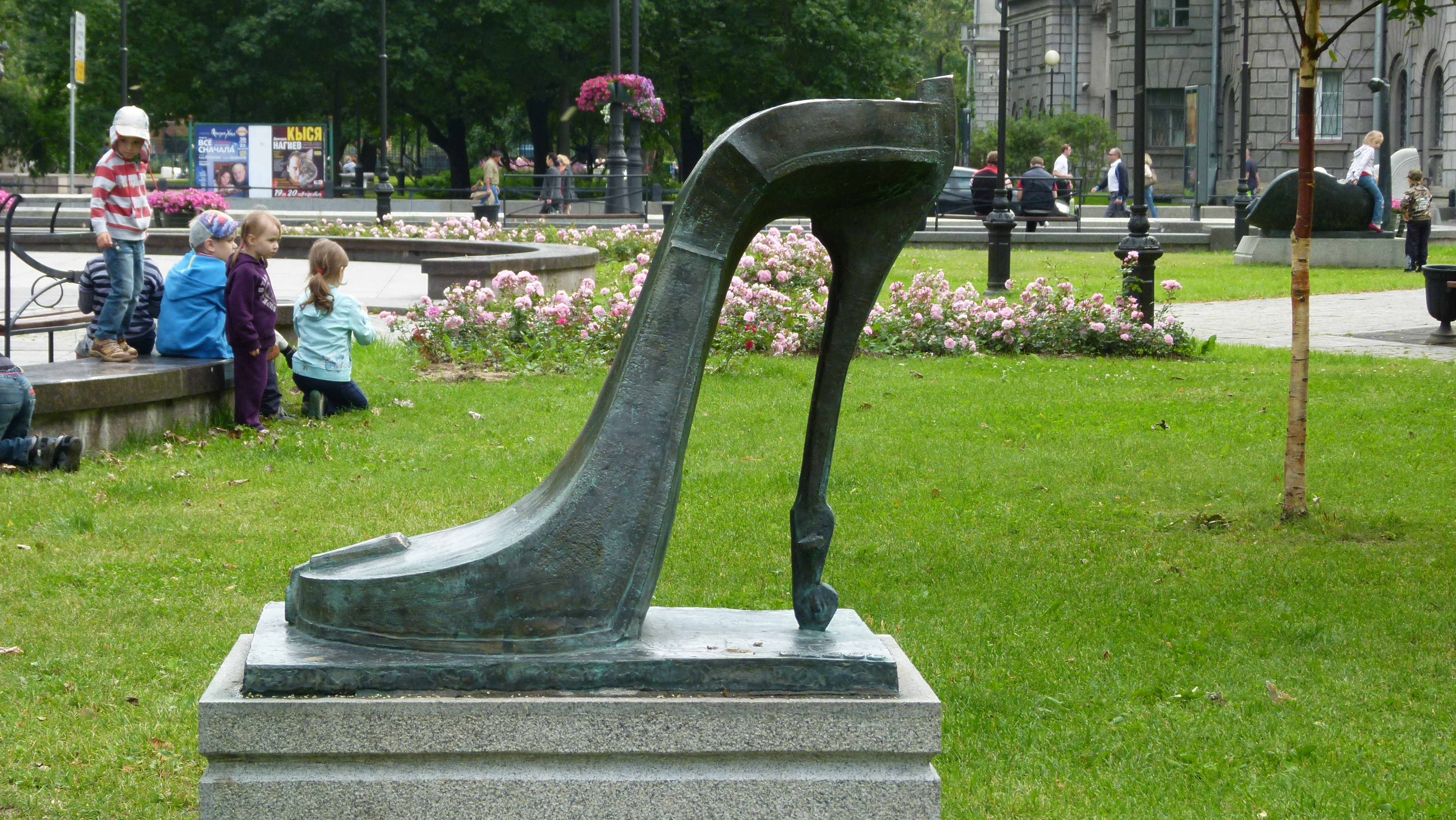
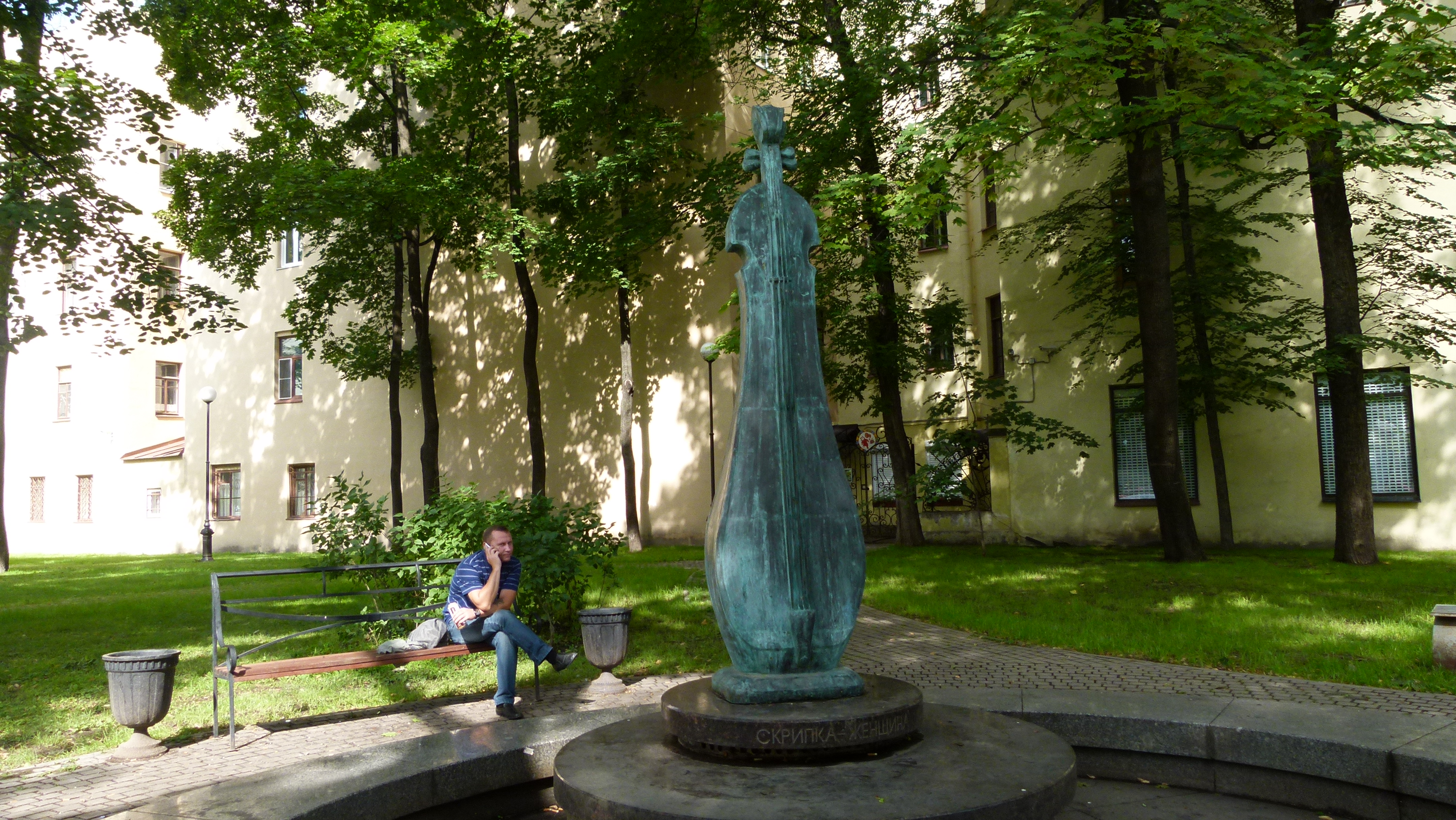
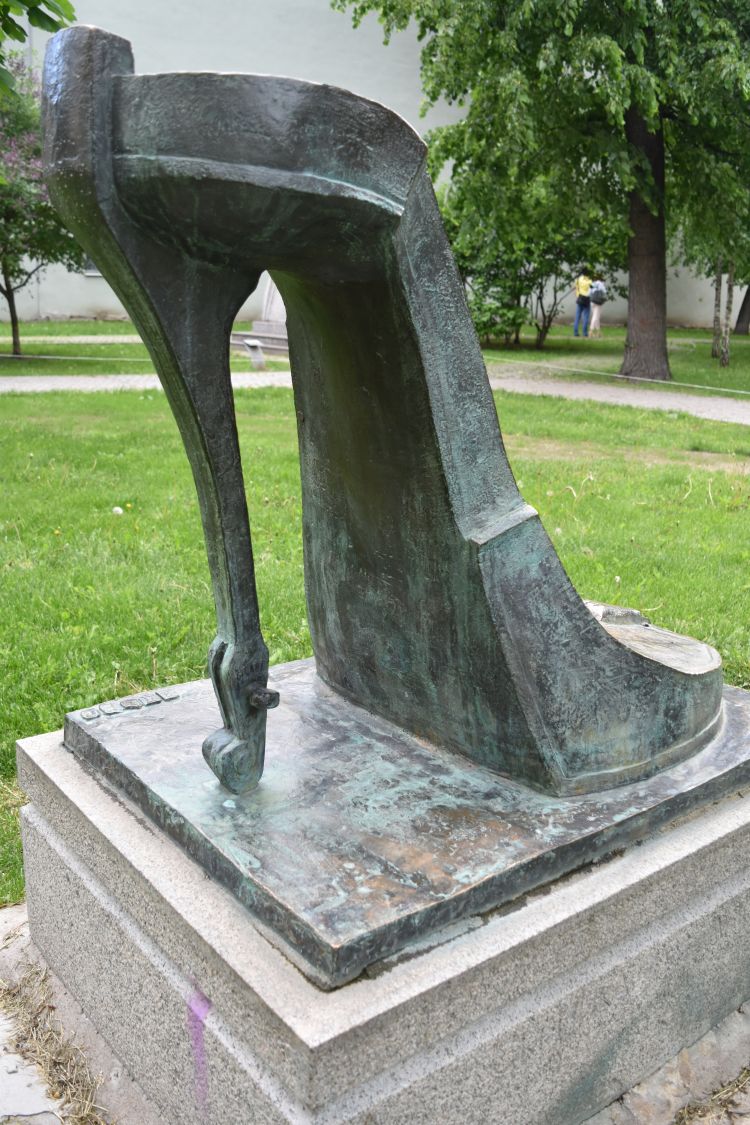
My second link is a little farther north on Kameny Ostrowsky Prospect where Saint Petersburg set up a park for Anna’s cousin Andrej Petrow, a well-known composer in Russia. The park is decorated with humoresque musical instruments such as this violin on high heals.
I wish you were still with me – here in your home town, Anna.

.

So much to see in and around Saint Petersburg – the four weeks we spent here did not suffice

We spent four weeks in Saint Petersburg. We visited the Ermitage, the Russian museum (both several times) and the new Fabergé museum. We explored palaces (such as the palace of Jussupow or the Stroganoff palace). We saw cathedrals and churches such as Smolny and Saint Nicolas Naval. Twice we took a boat on the channels of the city. Twice we went to the Alexandrinsky Theatre where a friend of ours is working as an actor. And then we also enjoyed the shopping experience and on sunny days, we relaxed in one of the many parks of Saint Petersburg.

Attractions around Saint Petersburg that we saw are Peterhof, Puschkin or Zarskoe Selo, Novgorod and Karelia. In Karelia we enjoyed an afternoon in Repino and a day in the datscha of a friend. And we made a three days excursion to see Kizhi and the lake Onega.

Four weeks do not suffice to see it all… yes, Saint Petersburg is worth a visit! I think of going back to Saint Petersburg.

Our main literature sources are: Christine Hamel, “Russland”, Dumont 2011; Marcus X. Schmid, “St. Petersburg”, Michael Müller Verlag 2017; “Russia”, Dorling Kindersley 2016; Lonely Planets for Russia and Saint Petersburg; Vitaly Kulescha, “St. Petersburg Wishes Guidebook”, Piter 2013.


A Swiss in Petersburg – more Russian grammar

The aspects –  I keep on confusing them and my Russian partners

Oh yes, I have been working at controling the aspects for many years, but I keep on confusing them, despite the fact that they are so crucial to understanding Russian. Here are some samples:

  • With Larissa I attended the opera “the flying Dutchmen”. I liked the opera, and I later said to Tatjana, my Russian teacher, that I liked it very much: “спектакль “Летучий Голландец” мне нравилась.” Tatjana rises her eye brows: “oh… so  what happened? You do no longer like it?” – Hm, no-no, I liked it and I still like it. “Well, she says, so… you have to say:  спектакль понравилась. Otherwise every Russian would think that you do no longer like it.”  Okay, I understand, I have used the imperfect aspect and should have used the perfect aspect to make it all clear that I still like it and that the result has not been “canceled”.
  • Tatjana and I sit at the table at home and practice the aspects. The door bell rings. I open the door. The neighbor looks for Elena, but as Elena is not at home, she leaves. Shortly afterwards Elena comes home. “Elena”, I say, “your neighbor came and looked for you…  соседка пришла и искала тебя”‘. Tatjana frowns. “Where is the neighbor? Is she waiting in the kitchen?” – Hm, no-no, she is no longer here, she went away  – она ушла. Conclusion: Result canceled, she left again, hence I have to say  “она приходила”. Will I ever get this right?
  • Tatjana and I practice the words “dress” and “put on”. Another trap here. I put on my trousers in the imperfect aspect means a scandal, if I left the house now. Because “надевала брюки” means that I put them on and then took them off again. I have to say “надела брюки”  in the perfect aspect to express that I put them on and I am still wearing them. Did I make this clear? I think you have to be a native slawic speaker to understand this.

The “canceled result”

Tatjana calls this concept “the canceled result” or “аннилурованный результат”. For Russians this is all easy, they just ask themselves: делал или сделал? (perhaps to translate like this: Did he process this or did he complete it”), but for me, this is still not straightforward. Larissa and my Russian friends are always puzzled, when I hesitate about using the correct aspect. Larissa remembers that she heard about the aspects at school a long time ago… and now corrects me as well.

Another challenge – how to form the aspects?

When I have decided which aspect to use, there is the next challenge… how is it formed? Often the verb is “stronger” in the perfect aspect, e.g. the conjugation is irregular and it is more regular in the imperfect aspect:

  • плавать – плыть, понимать – понять, давать – дать, начинать – начать

Often I can just add  the prefixes “по” or “с” to derive the perfect aspect:

  • просить -попросить, делать – сделать, желать – пожелать, петь – спеть

but then there is покупать – купить which I always confuse. Then there are many irregular verbs in the perfect aspect and often the Russians use two totally different verbs:

  • брать – взять, ловить – поймать, сказать – говорить

To remember that брать is incomplete I needed a ladder… My brother is not perfect. I do not have a brother and hence I am not offending anyone.

Well, I try hard to get these aspects under better control, and I hope that my Russian friends forgive me and understand nevertheless, what I am trying to say.

A Swiss in Petersburg – visiting some more museums

Yes, sooo many museums

So many museums in Petersburg, and so far I have only talked about three of them: The two “musts” which are the Ermitage and the Russian museum and then the enticing zoology museum – an eldorado for biology teachers and families on Vasiliyevsky Island. I visited three more museums that are not the main target of tourists: The Vodka Museum, the Museum of Communication and the Museum of Political History.

The Vodka Museum (Музей русской водки)

The Vodka Museum is a very Russian institution and it is only a ten minutes’ walk away from Raskolnikow’s house. It is close to the Admiralty. The Lonely Planet promises to me that “this private museum tells the story of Russia’s national tipple in an interesting and fun way from the first production of “bread wine” to the phenomen of the modern international wodka industry…”

Whether I want a vodka tasting, I am asked at the entrance, this would cost another 300 Rubles. I am not so sure, what a “vodka tasting” is… it must be somewhat different from a wine tasting, and I decide not to buy the tasting.

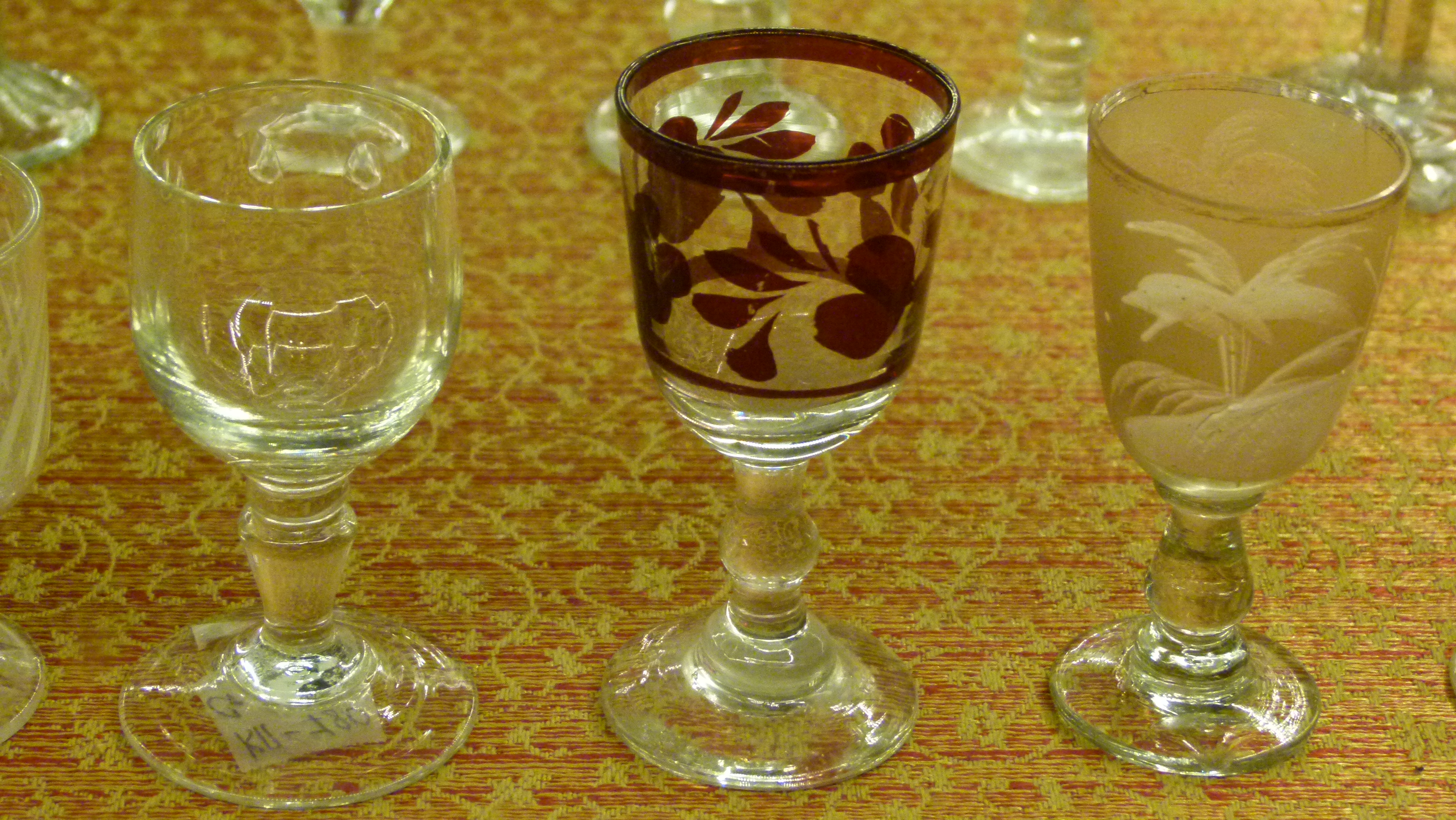
I follow the vitrines from how bread wine is brewed at home, then learn that the vodka we now know of has been invented in the middle of the 19th century (not such an old tradition) where they normed the alcohol content. Vodka became cult with small Vodka glasses (стопки) and pretty bottles.

P1020353

P1020354

The museum also documents, how government and social organizations tried to fight the alcohol problems and how vodka was present in the Sowjet times.

There is a vitrine where visitors can buy a t-shirt (футболка) with the Russian proverb “водка без пиво – бросишь денги на ветер” or “vodka without beer- you throw money into the wind” (Larissa, I hope I got this proverb right this time. When I heard it the first time, I got it all wrong, something like “beer without vodka, you through money out of the window”, and this must sound so strange to Russian ears that you and your friends laughed to tears at our rybalka (рыбалка) in Finland).

While I am smiling to myself about the t-shirt, a dynamic lady directs her way to the bar for the vodka tastings and shouts at the waitor: “we have no time, we have no time, where are the glasses and the snacks”. Then she shouts at her group of four men in English: “Come here, no time, no time, this is your vodka tasting… clink your glasses… no,no… all together in the middle… then exhalate, then drink the shot, then take a snack – and now again… no time, no time… clink your glasses, exhalate, drink, eat… come on, we have to leave, no time, no time…” And off they rush and it is quiet in this room.

Again I smile for myself: I am happy that I am not part of this group. The waitor had prepared very nice plates with snacks and would have deserved more attention. Vodka drinking needs more time, as I experienced last year with Juri on our bike tour and this year at the Rybalka with Larissa’s friends, enjoying the vodka with white-white bacon and some dark bread – and everyone accepted that I drank the vodka the Swiss way – sipping it – because I am Swiss and not Russian. I find that this white bacon and the vodka are a good match and the bacon reminds me of my father who prefered white-white bacon to the bacon with meat strips in it. Enjoying vodka somewhat less in a hurry makes a good time with friends.

Popov’s museum of communication (Музей связи Попова)

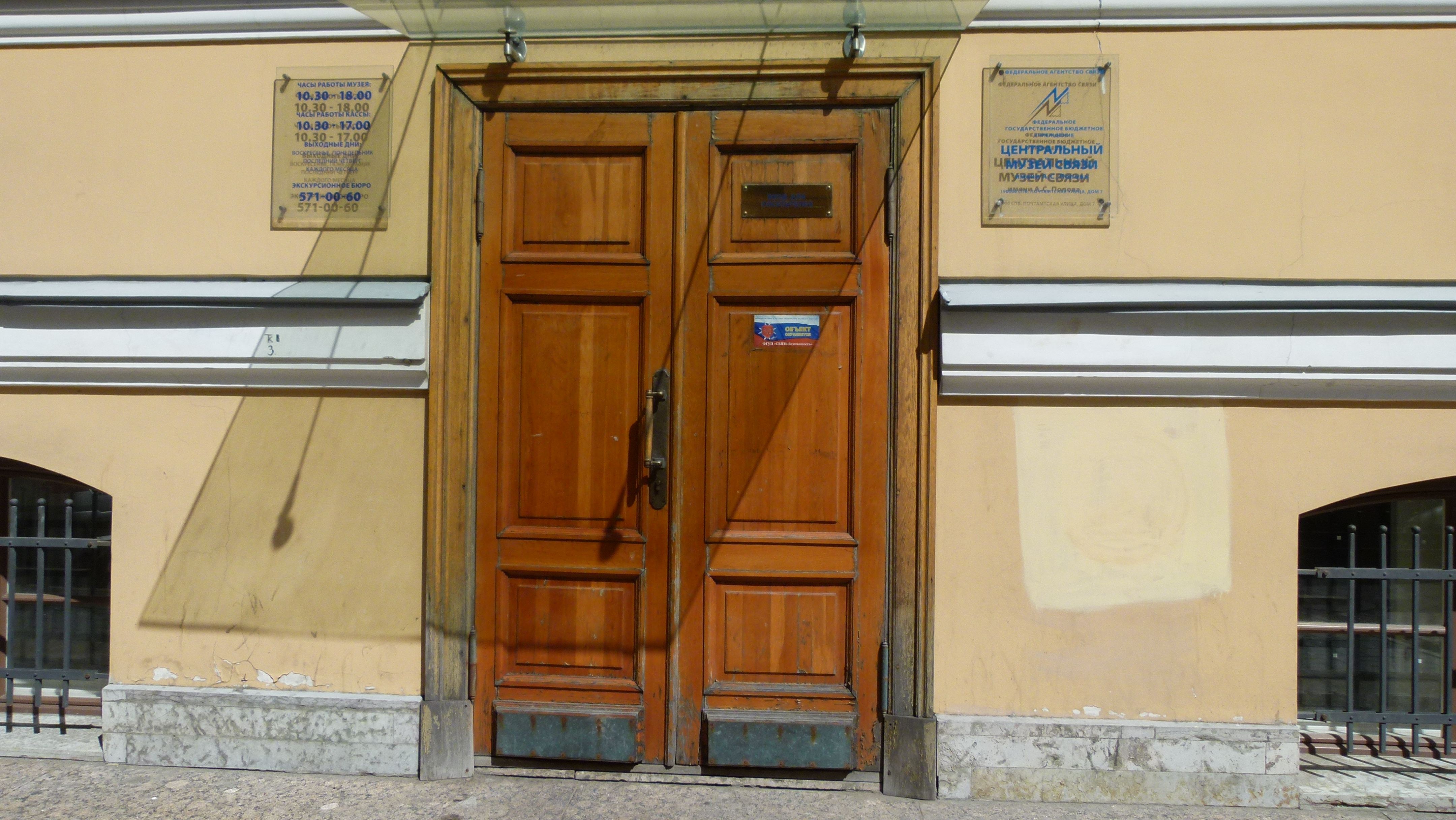
I am always astonished, how well the Russians succeed to hide away their excellent museums, and how inventive the potential visitors are in finding them… I knew the address of the museum of communication is in Potschamtsky pereulok 4 (Почтамтский переулок. I see number 6… then I stand at the end of this pereulok, I walk back to number 6, again to the end of this pereulok, again towards number 6… ah, what is this? I saw someone disappear behind this wooden door with the transparent signboards and the blue letters. Yes! This IS the Popov museum of communication, named after the inventor of the radio in Russia. Well, so far this has looked like another office building to me.

P1020355

The museum starts with mail being delivered by coaches and sledges, and it ends with mobile communication. This must be an eldorado for teachers of physics, as there are many interactive hands-on experiments to understand electricity, the propagation of waves, telegraphy, radio (first samples, transistor radios etc), telephony (from old switching systems to mobile phones) … impressive also how communication  worked in the war and during the long blockade of Leningrad. A nice toy is the tube post: Grand-pa and his grand-son love to send the entrance ticket back and forth through the transparent tubes. I regret that I did not spend more time at school or later to study physics. Yes, Ernst, you are right, a few Latin lessons less and a few physics lessons more would have been useful.

Unfortunately, fotos are not allowed in this wonderful museum. I say hello to the civil communications satellite LUCH 15 in the large atrium and leave this wonderful place to tackle another Russian lesson.

The museum of political history (Музей политической истории России)

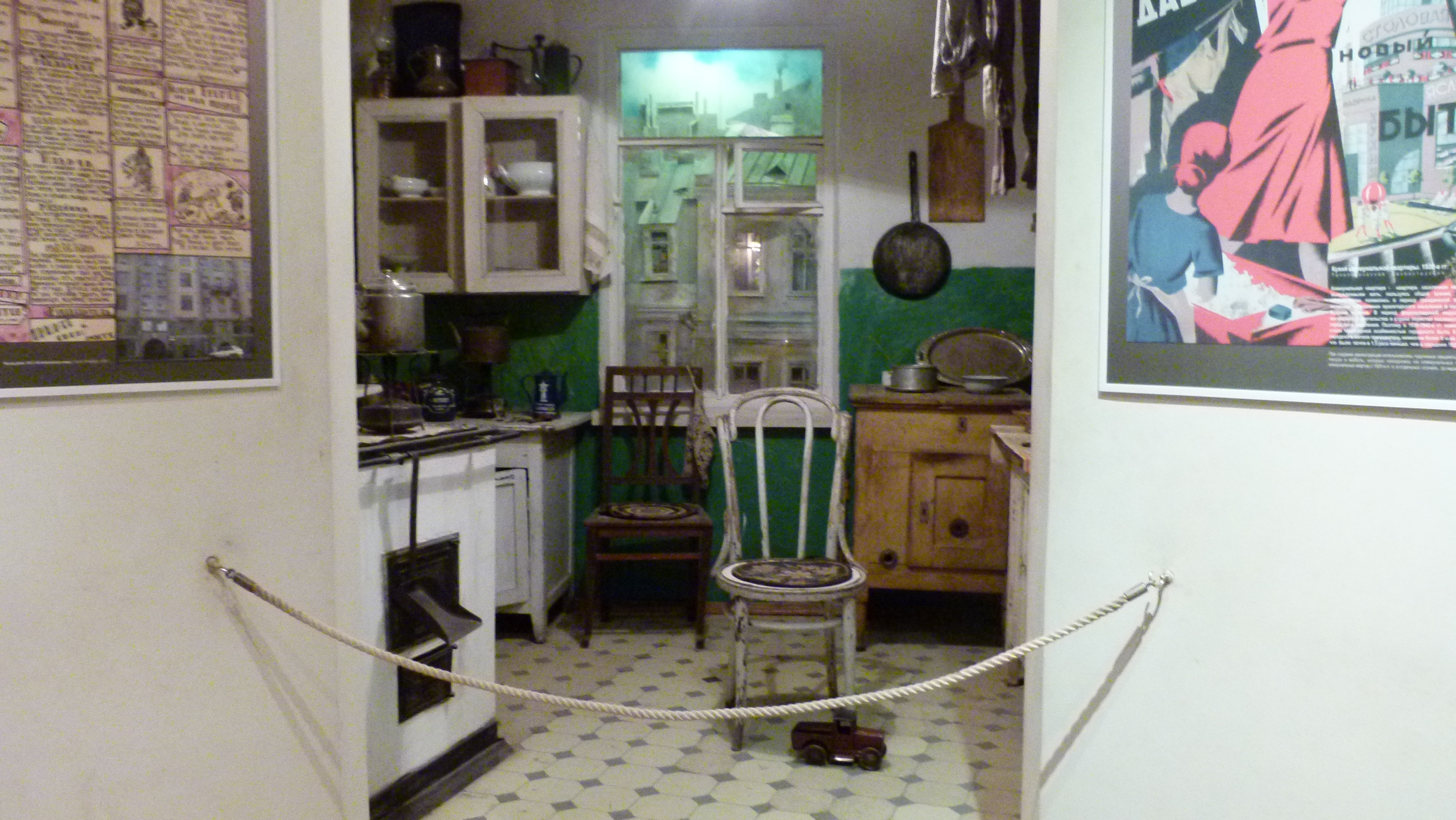
The museum of Russian politicial history is in the beautiful modern style Kshensinskaja palace not far from the Peter and Paul Fortress. My Lonely Planet tells me that Lenin gave speeches from the balcony of this palace. I agree with my guidebook – this museum is well curated and tells history from the Zars over the revolution, the Soviet times and the disintegration of the Soviet Union up to  Jelzin, proving an objective attitude. I read about the Zars, watch Lenin’s revolution, then follow Stalin, study the five year plans and the advertisement of a kolchos (proudly announcing that they have electricity and radio – with huge loud speakers), the second world war, then Chruschtschow with the thawing period, followed by Breschnew (the Russians called him the Eyebrow Carrier or Бровеносиц). The museum also shows, how the people lived in the kommunalkas (коммуналки) – here is a sample of a kitchen shared by several families.

P1020537

Also the singers and poets have a place… I find my favorites, Boulat Okudjava and Vladimir Vissotsky. Whenever I am on one of those long long escalators to the metro, I have to think of Okudjava’s song: Stay on the right, walk on the left… this is like in real life (in Soviet times). And in the fitness center I think of Vissotsky: What a great thing is the morning sports, all are moving and no one stays behind.

P1020540

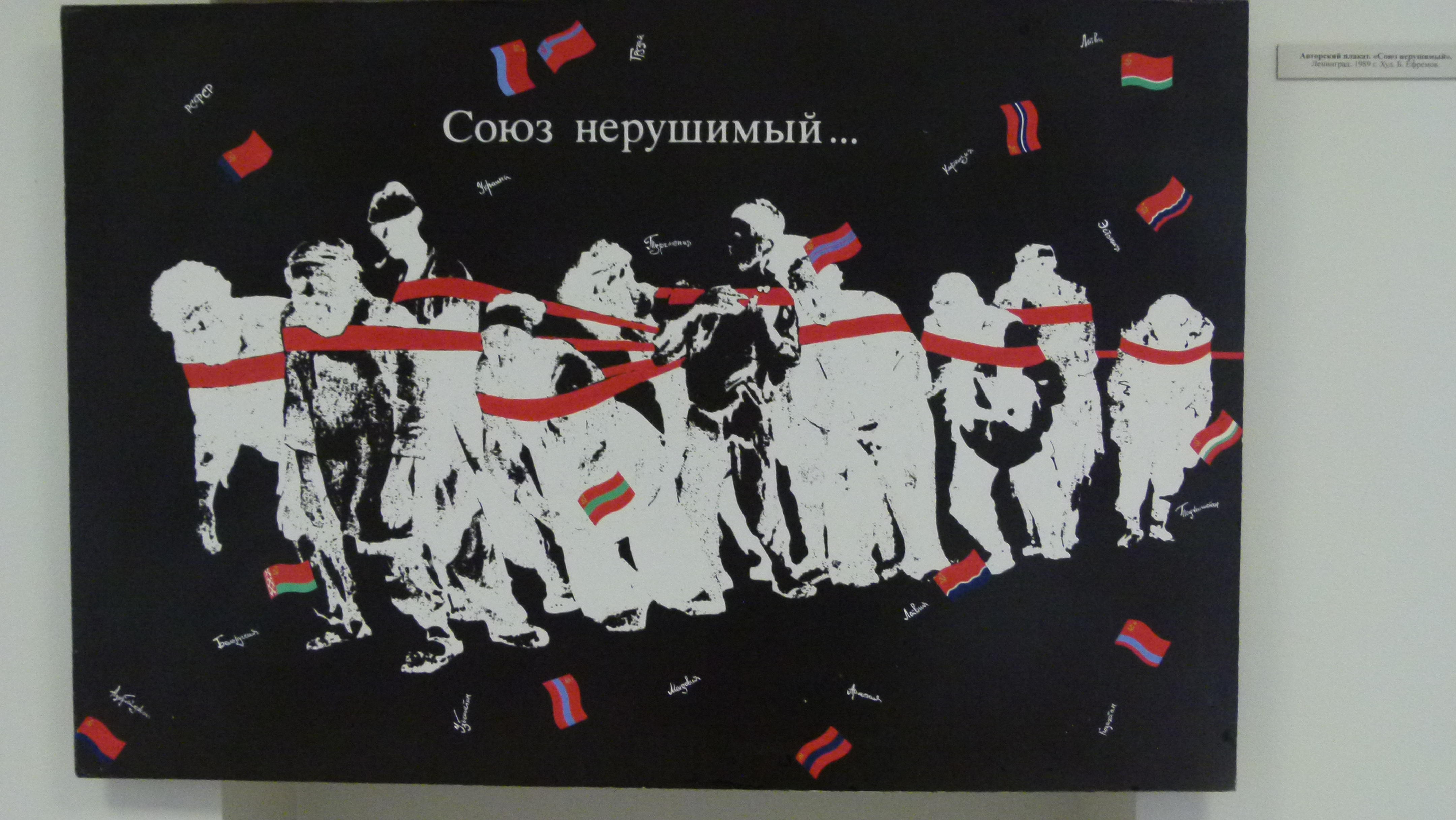
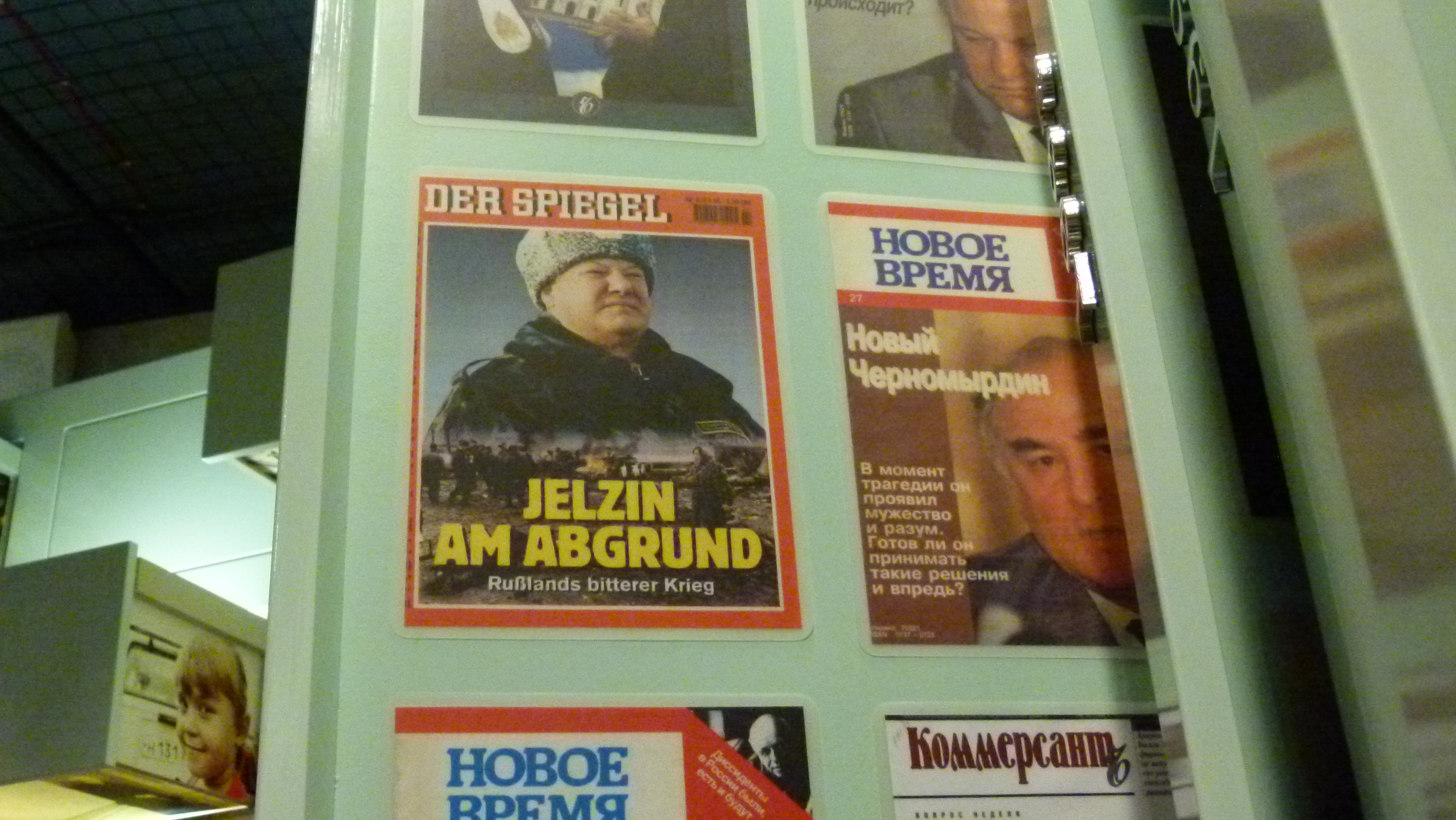
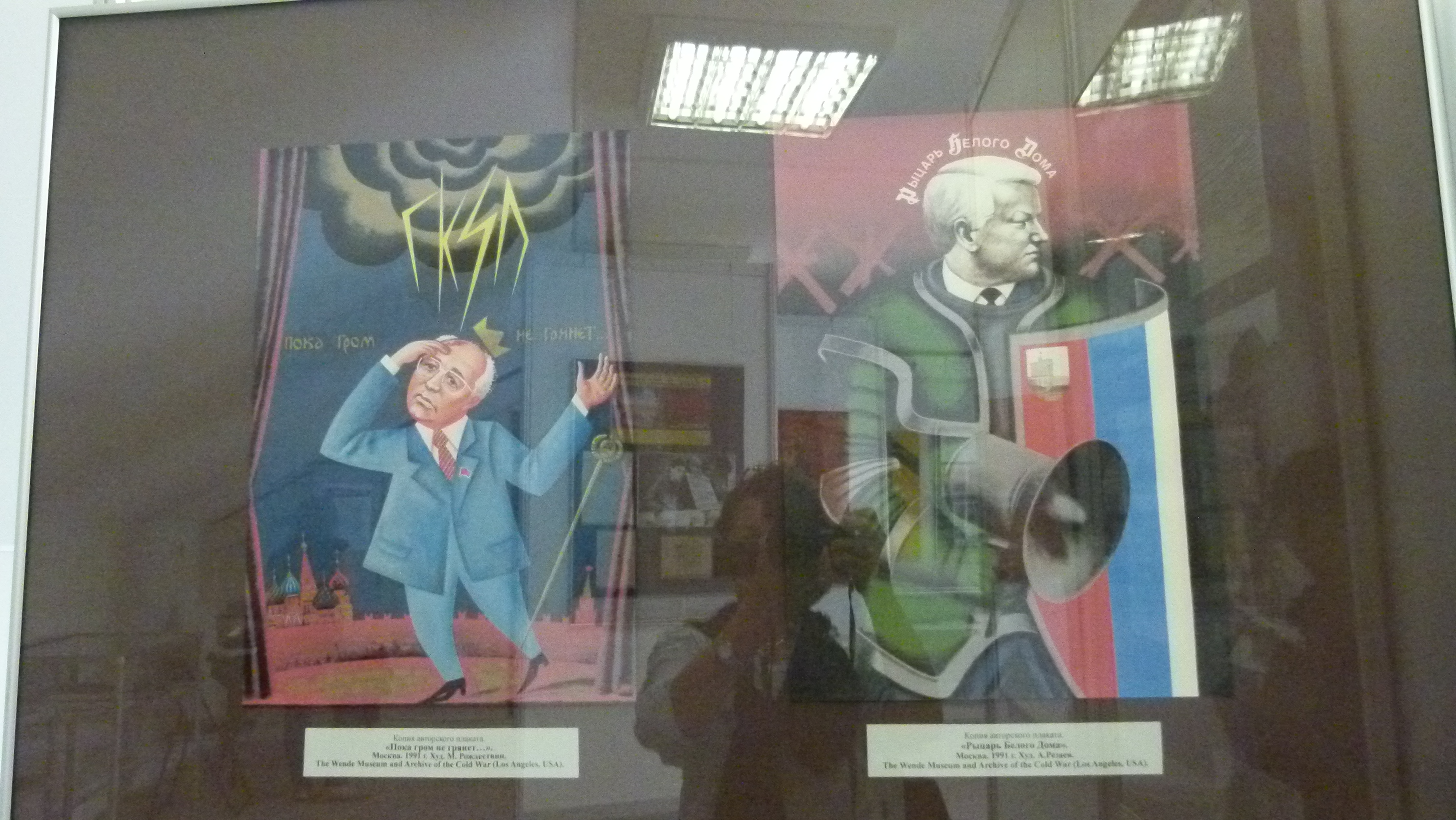
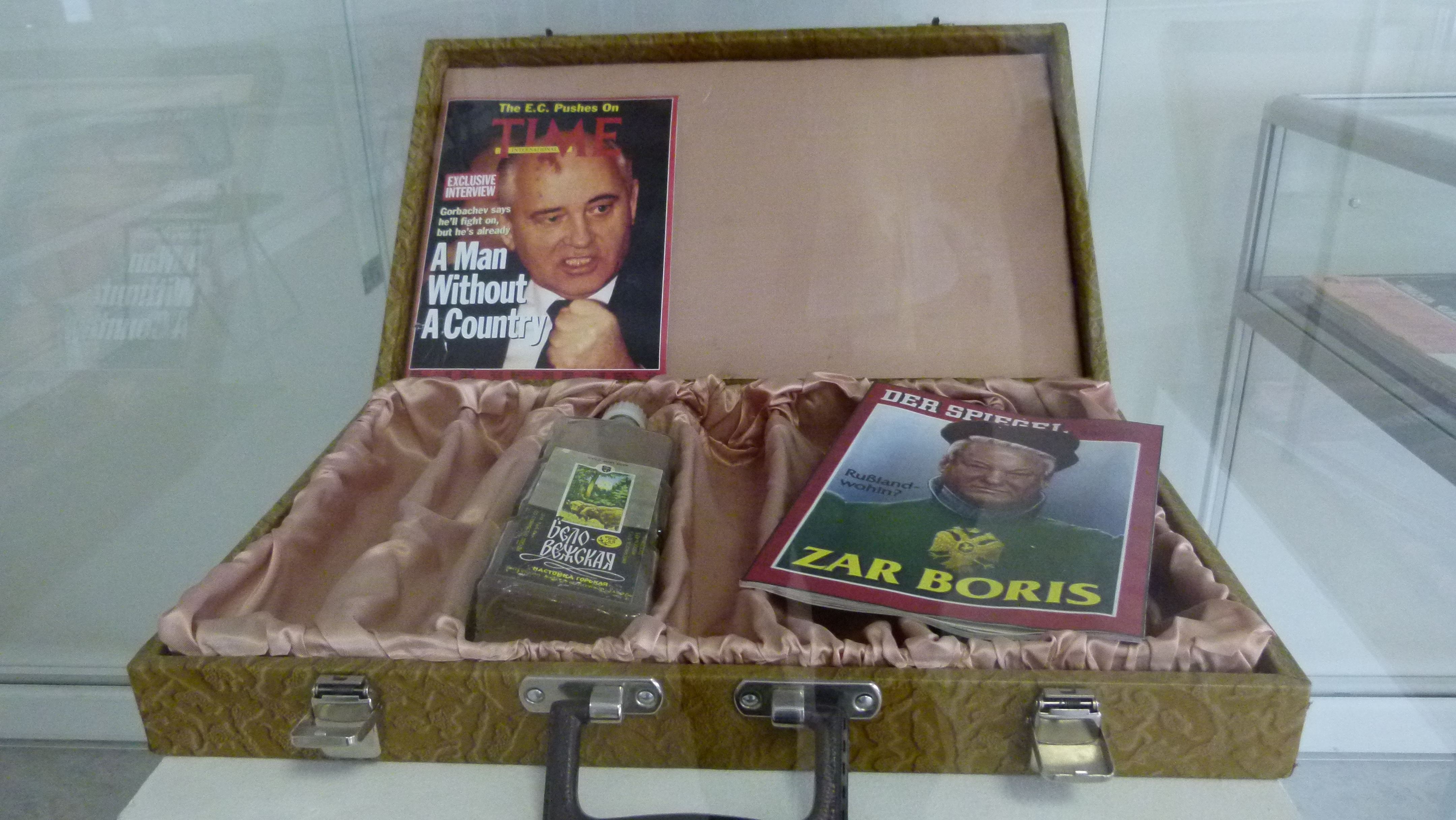
On the top flloor, I find the late 80’s and the 90’s. I am impressed, how the collapse of the Soviet Union is illustrated. There are caricatures and samples of Western newspapers like the Spiegel or the Economist, describing the events with critical headlines such as “a man without a country” or Jelzin at the chasm (Abgrund). And I find the allusion to Ilja Repin’s Wolga trawlers: Союз нерушимый or the union that cannot be broken.

P1020396

P1020545

P1020544

P1020547

P1020548

Back at the entrance, I buy a small brochure about the exhibition “the collapse of the USSR: historical inevitability or criminal conspiracy?” This is an excerpt of their analysis: “As long as the Communist Party which served as the ideological and politcal backbone of the Soviet Union, had absolute power, the nationalities problems were subdued and depressed… also by the use of force or threats to use it… In the context of glasnost and democratization initiated in 1985…, the accumulated controversies grew into open conflicts.” The brochure tells the events in August 1991 where the State Committee of the State of Emergency tried to save the Union, but were perceived as a coup d’etat by the democratic forces. The Communist party was then dissolved, and as these were the ties that cemented the Soviet Union, the Union also collapsed… this is the basic reasoning of this brochure.

I now take the metro to Sennaja Ploschtschadj, buy some cherries (черешню) and tackle my next Russian lesson, sharing the cherries with Tatjana.

A Swiss in Petersburg – sooo many museums

Petersburg has museums for everything, and most of them are well curated

The gems of all museums are the Ermitage and the Russian Museum. These are the first attractions for tourists. And there are many more museums – more hidden gems – like the zoological museum, the vodka museum, the museum of communication, the museum of political history, the railway museum, the museum of ethnology, and each poet from Puschkin over Dostojewsky to Achmatova has his/her museum – just to mention a few of them. Time did not suffice to visit them all. I did the Ermitage and the four exhibitions of the Russian museum, the zoological museum  and I also checked out the museums for vodka, communication and political history.

Today I plan to visit the Russian museum that is spread over four places. On Thursdays, the museum only opens at 1 PM, but for that it is open until 9PM. I plan on a long museum day starting with the central building.

The central Russian museum – in the Michailovsky palace

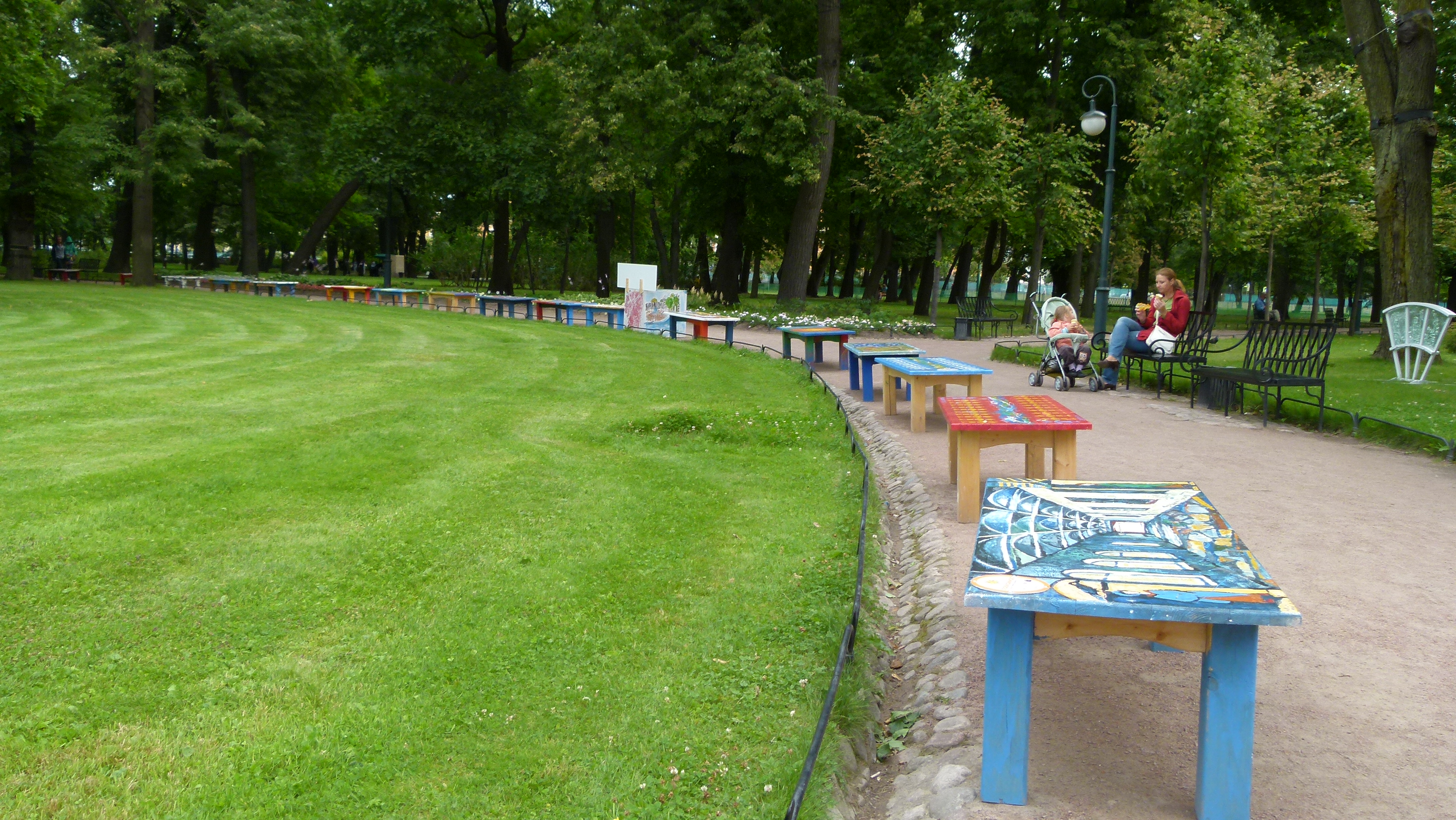
Enjoying the original Russian “standard ice cream” (it comes in a softish waffle), I wait in the Michailovsky garden on one of the artists’ banks (a special open exhibiton) until the Russian museum opens.

P1020382

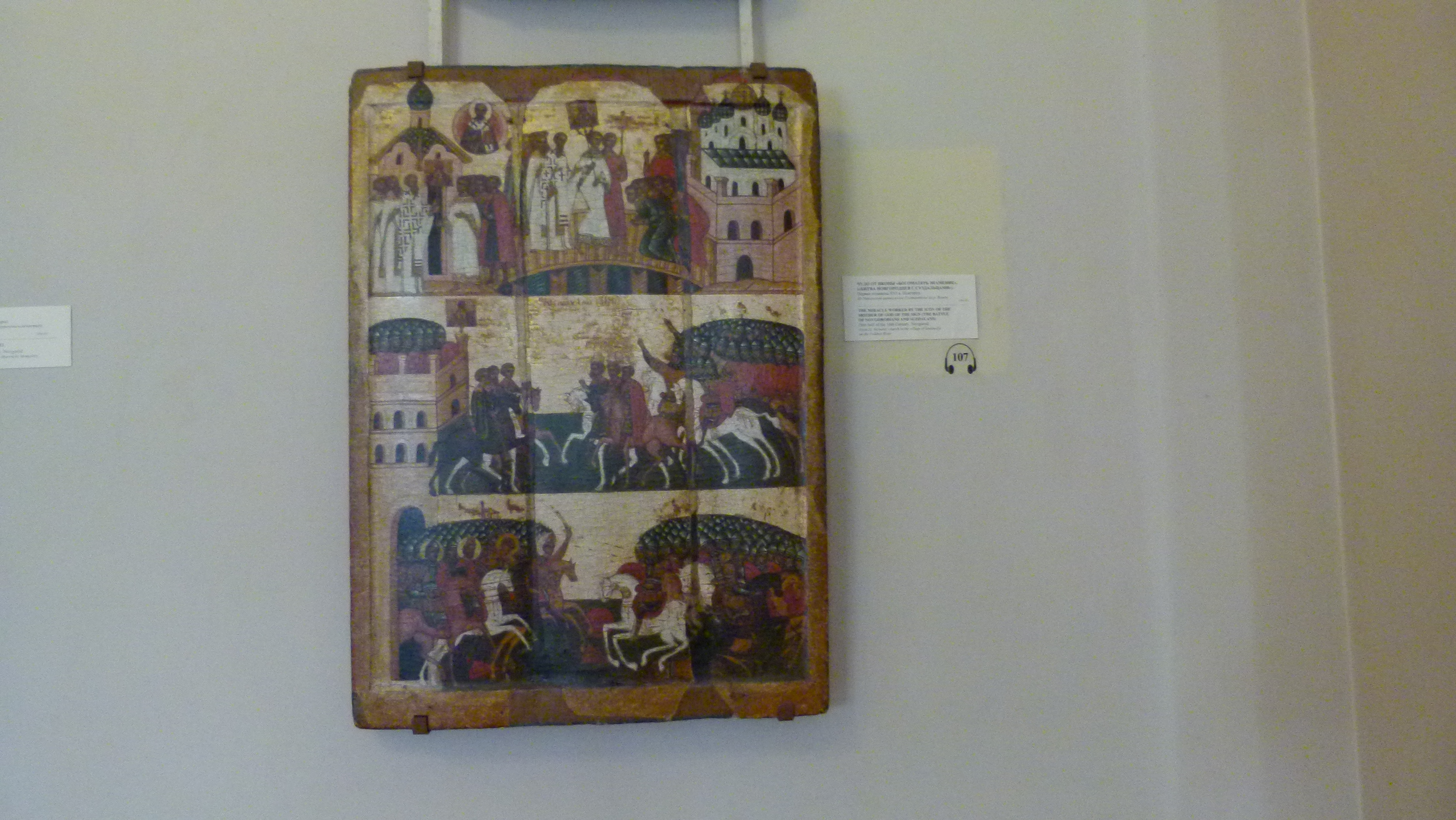
At the entrance I buy a ticket for all four museums. My first target are the Russian icons. I say hello to Boris and Gleb (yes, Ernst, I remember that you always recognized the two martyreds that are related to the origins of the orthodox religion in the Kiewer Rus – The Russians prefered Christianity to the religion that forbids alcohol). I also look for Andrey Rublow’s Peter and Paul and for the good mother that successfully defended Novgorod against Susdal. Here are my favorites  – it is great that taking fotos is allowed in this museum.

P1020388

P1020390

P1020391

Then I  find some luxurios palace rooms and paintings of zars, nobles and battles as well as scenes from the Greek and Roman mythology… and my next target are the Peredwischniki that documented the social problems on mobile exhibitions in the the 19th century. Great, Ilja Repin’s Wolga trawlers area here  (they often travel).

P1020396

This museum is a maze – I hardly find the exit. I go back home for my Russian lesson at 4 PM, and after the lesson, I walk back to the Newsky Prospekt to continue my marathon through all the palaces of the Russian museum.

The Stroganov Palace

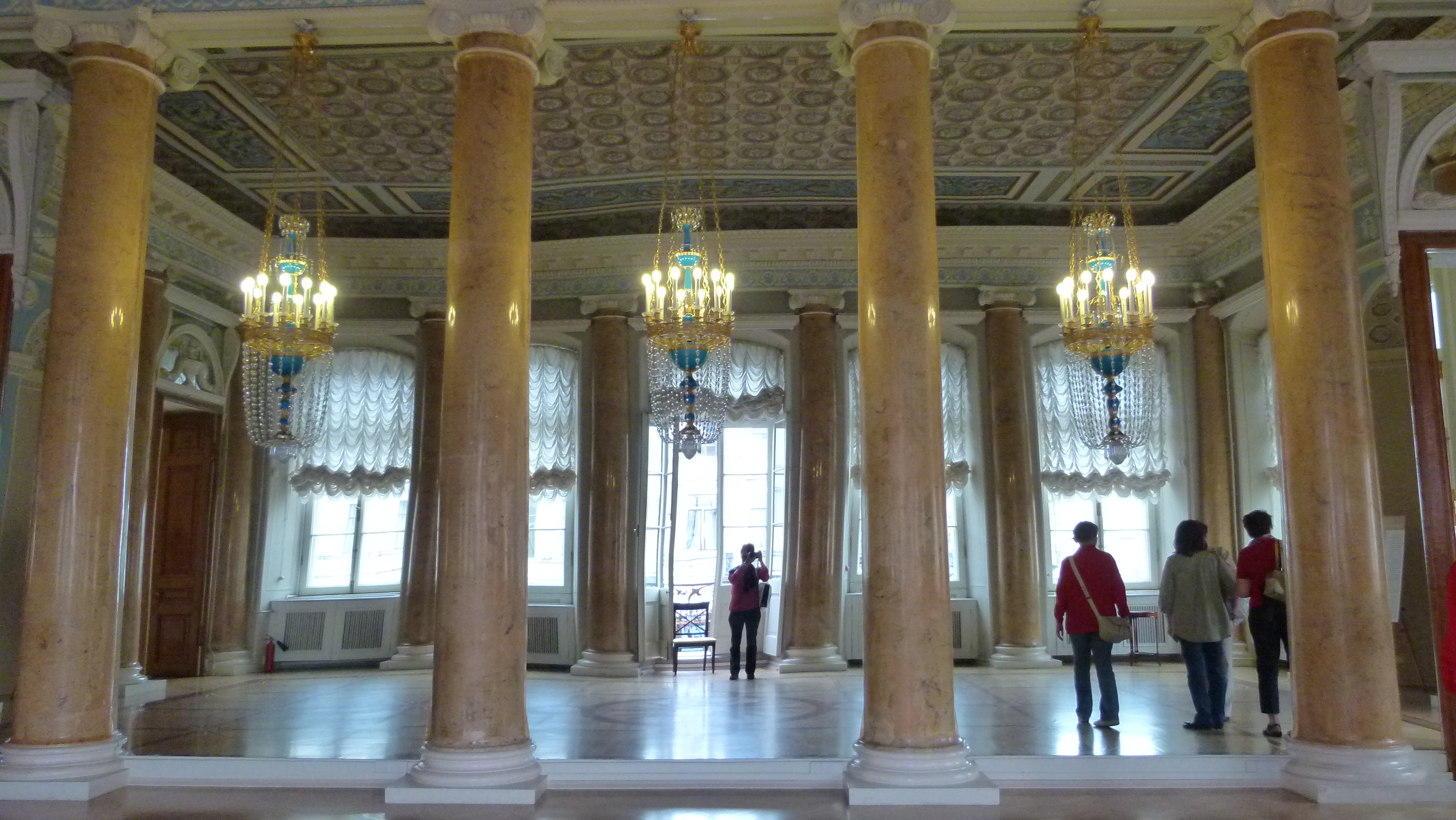
The Stroganow Palace is located where the Newsky Prospekt crosses the Moika channel. I know that pink building. But, where is the entrance to the Russian museum? In the courtyard I ask. Again this very Russian experience – the official lady at the entrance to another museum does not know! I find someone who directs me to the Moika. But then I still  oscillate back and forth, until I decide that it must be this absolutely unostentatious wooden door at the corner. Yes, right! My ticket is valid and I enter a vast and luxurious palace. The first hall is “separated” by a mirror. The mirror doubles the lustres and the columns – in reality there are only half-lustres and half-columns.

P1020400

A lady jumps at me – fotos forbidden in here. Well, the lustres are in my camera and remain there, but Stroganovs remaining rooms are no longer in my camera. This is a great palace, as is his boeuf Stroganov. I have shared this dish at many Christmas Eves with Ernst.

The Marble Palace

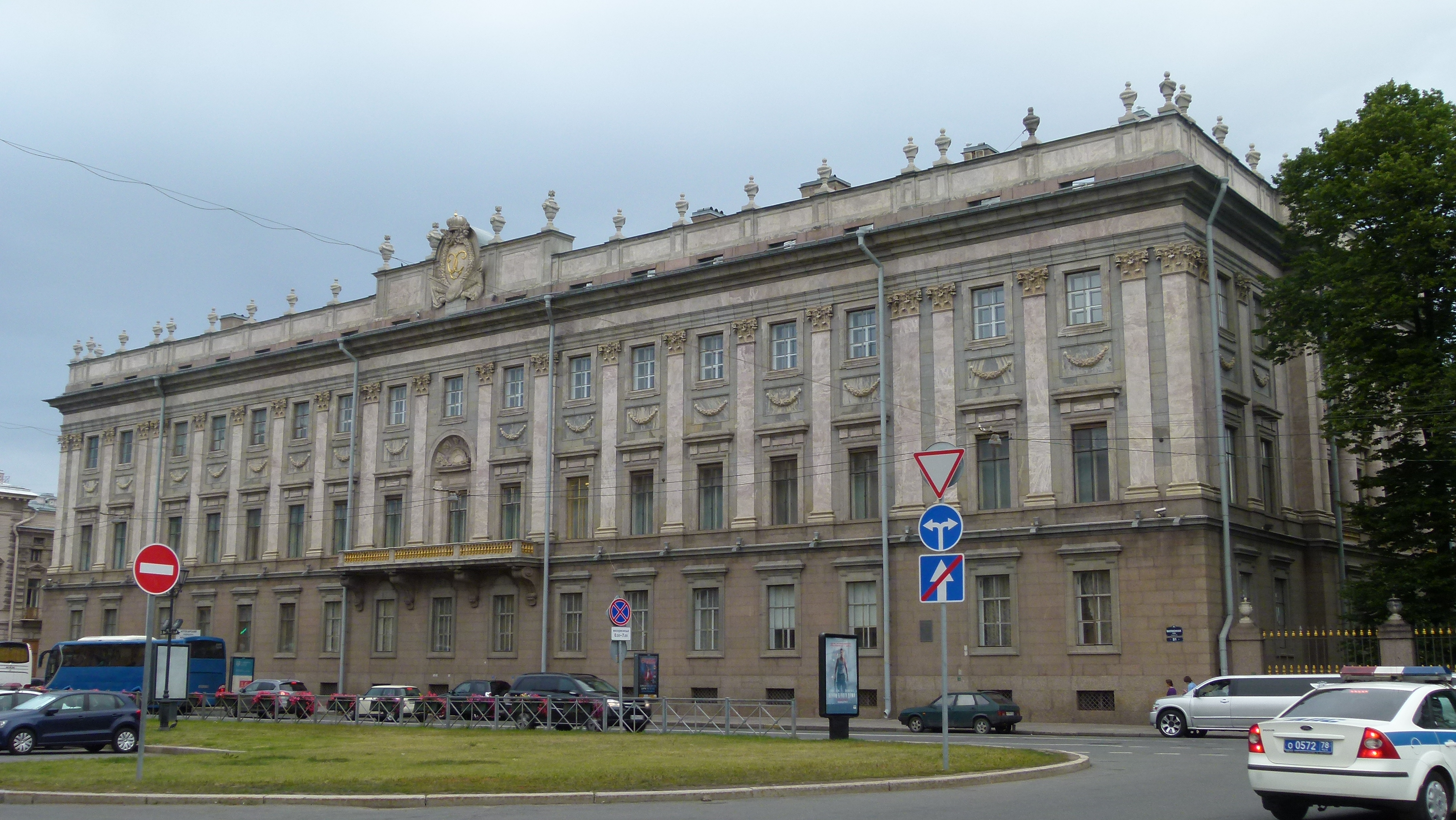
The next palace on my ticket for the four Russian  museums is the Marble Palace. It is in Millionaja Street, and I start to walk. And I walk and I walk – more than I expected – about half an hour. Eventually I enter a courtyard. No, what is this? Such an ugly monument? Quite a strong  man on quite a strong horse? Alexander III? Who died early and then Nicolas II , the last Zar, took over from his father?

P1020408

In my Lonely Planet I read that Nikolaus wanted to send his father to Sibiria, as he did not like this monument. Rumors then emerged that he wanted to ban his father to Sibiria… and hence the monument remained in Piteri. The sculpturer said that the he is not interested in politics and just modeled one animal on another animal.  Larissa and Tamara told me this rhyme for this monument:

Стоит коммод / на коммоде – бегемот / на ъегемоте – оъормот /  на обормоте – шапка.

There is a commode / on the commode there is a hippo / on the hippo there is a fool/ on the fool there is a cap.

Elena made it all clear to me that she thinks Alexander was a good Zar – he did not fight big wars, but tried to bring order to the country and to develop it – his time was too short, she says, and bringing peace is not valued as being “great”. Well, I think he would have deserved a more handsome monument.

From one window in the palace  I hear music. There is a concert going on in the Lapislazulli room. A young man enthusiastically sings poems, accompanied by a fortepiano and a cello. This group has no name – they might just be students from the music acadamy that also Anna graduated from.

P1020405

I walk through the luxury of this palace that also hosts exhibitions – the Ludwig museum of Cologne has displays. There is a temporary exhibition of Mihail Chemiakin, called “sidewalks of Paris“. The artist took photos of things thrown away in the streets of Paris and transformed the photos into drawings by adding colored lines with a pen that can be erased again (if I understand this right). There is also a hands-on room, where visitors can do their own drawings and erase them again, if they wish.  This is an interesting concept: Take, what you find in the street and add your phantasy to it.  I think that one of my favorite writers, Pascal Janovjak (son of a good friend of mine), would like this, as he is working at a literary project based on interviews with people in the streets of Rome.

P1020409

Michailovsy castle

This is the fourth palace that belongs to the Russian museum. From the marble palace I have to walk past the Mars field and follow the first block of the Sadowaja street to find it. Yes, my ticket is valid, And, yet another palace that does not allow to take pictures. There is an exhibition of the Romanows that 400 centuries ago took over after the turmoils with the Polish and the false Dimitrij… until 1917 (almost a hundred years ago). I am always impressed by the portraits of Peter the Great… he was a leader with a vision and at the same time he was so cruel – he killed his son.

P1020410

It is now 9 PM and the museums close. I walk back to my home and take a rest – my head is exploding from all the new impressions and my feet are tired-tired.

A Swiss in Petersburg – with Anna in my heart

My Russian teacher and friend for many, many years

Anna is in my heart. She also is no longer with me. She was my Russian teacher for many, many years, and she became a wonderful friend. She completed her education in Leningrad, lived in Switzerland teaching Russian to a small group of enthusiasts that stayed together for more than 30 years, and she told us about her roots in Leningrad – now renamed to Sankt Petersburg:

  • Her grand-father was an artist specializing in tiles and ceramic. Anna told me that he made the blue tiles on the mosque, when the mosque was built in the beginning of the 20th century. Under Stalin he then could no longer work as an artist and earned his living by making the ceramic isolation bells for the electricity power lines. (Later I find the German journal “DU” from Dec 1998 and it confirms that it was the workshop of P. K. Vaulin that made the ceramic decoration of the portals and of the cupola, and – yes, Vaulin is the grand father of my friend Anna Vaulina).
  • Her brother in law was the composer Andrej Petrov. She participated in the festivities for his 70th birthday. The Russians built a small violin park for him.

I visited the mosque and the violin park with Anna in my heart.

Visiting the mosque – for ladies, only when wearing a scarf and skirt

The elegant cupola and towers of the mosque with its blue tiles are a landmark that can be seen from far in Petersburg. When there are no prayers, the door is open to non muslims, and ladies have to wear a skirt and a scarf. Trousers are not allowed, and hats are also not suitable for ladies. At my first attempt to enter the mosque, I only had a hat and I was wearing trousers and was not allowed to go in. So I acquired a small scarf to cover my head and a large scarf to cover my trousers (which also counts as a skirt), and gave it a second try later. I liked the interior with only few ornaments and kneeled down on the carpet, keeping myself to the back of the mosque, as I did not want to disturb the men praying peacefully in here.

P1010940P1010942

The violin park of Andrej Petrov

My wishes guidebook tells me that near Kamenoostrovsky prospekt 26/28 there is the small park with violins devoted to the oeuvre of the composer Andrej Petrov. The violins take the form of a swan, a woman, a high heal shoe, a sphynx etc and visitors can get inspiration for music. I find the small park – no tourists here, just children on the integrated playground and some Russians taking a rest next to the violins. My favorite violin is the slipper – скрипка на каблуках. Not being a musician, I just enjoy it and do not expect any inspiration.

P1020512

P1020508

I am not sure, Anna, whether you have still seen this park, but I know that you would be proud of it.

A Swiss in Petersburg and some difficulties of the Russian language

Daily Russian lessons with Tatjana

Tatjana has written educational books for Russian. One of them is the Учебник Уровень B1, edited by Slatoust or Златоуст. We meet daily, in my first week for 3 hours and then for 1.5 hours to work on the gerund, the aspects, the verbs of movement and more. I enjoy trying to improve my grammar systematically, as I am often cheating my way around the aspects and verbs of movement counting on the fact that the Russians are generous and understand what I am trying to say. And going back to the level of thinking before talking is painful, yet useful, if I want to bring the command of the Russian language to a next level.

Here are two lessons learnt.

Where Russians meet Bern – “two” has a gender

Ernst was from Bern and he differentiated “two” by gender: “zwo Froui” (two women – feminine), “zwee Manne” (two men – masculine) and “zwoi Müsli” (two little mice – neuter). This is where the dialect of Bern and the Russian language meet: Also the Russians differentiate “two” or “dva/dve” by gender: две женщины (feminine) and два мужчины (masculine) – neuter does not exist in Russian. I am from Basel and we just say “zwai”, the Germans say “zwei” and the Anglosaxons use “two” without considering the gender.

What I find particularly confusing is that in Bern “zwo” to me sounds masculine (but it is used for the feminine gender) and “два” in Russian sounds feminine (but it is used for the masculine gender). Hence I am always confused in Bern and in Russia. Tatjana has never heard about this similarity between Bern and Russia – and now spends some time to practice две and два to get it automatically wired in my brain, despite the fact that “dva” sounds feminine, but is masculine.

Gerund or Деепричастия

The Russians know an adverbial construction that is similar to the gerund – the деепричастия. Using them, the Russians characterize an action (i.e. they are similar to an adverb) and, at the same time, this gerund behaves like a verb: it comes in the two aspects (complete and incomplete or совершенный and несовершенный вид) and it can command an object. In general verbs of the incomplete aspect form their gerund on “ja/a” or  “я/а” and verbs of the complete aspect form it on “v/vschi” or “в/вши” (the latter derived from the past tense):

  • читая – прочитав, говоря – сказав, крича –  крикнув, улыбаясь – улыбнувшись

but as always in Russian, there are exceptions:

  • идя – придя, неся – принеся or total exceptions like будучи and едучи – or verbs that do not allow to form a gerund at all like бежать and ездить.

The gerund characterizes an action (how, why, when, if, despite) whereby this second  action can take place at the same time, repeatedly or the action is canceled (incomplete aspect) or earlier and the result is still true (complete aspect). And this is, where it becomes difficult for non slawics like me:

  • Он приготовил обед, слушая радиои = he prepared lunch AND listened to the radio.
  • Он приготовил обед, послушав радио = he prepared lunch AFTER having listened to the radio.

The difference may look small for us, but it is huge for Russians.

There are also fixed expressions based on these gerunds, like честно говоря (honestly or ehrlich gesagt), взяв за основу (based upon), закатав рукава (tucking up the sleeves or die Ärmel hochkrempelnd) or не мудрствая (directly said or ohne Umschweife).

Some conjunctions are also based on the gerund like хотя or несмотря на (despite).

Slatoust has written a whole book about the gerund, but it is currently not available.

A Swiss in Petersburg – doing body keeping in Планета Фитнес

Four weeks in Petersburg – is there a fitness center not too far away from where I live?

The Russians have a nice expression for people who are in constant movement; they say that these people have an “awl” at a specific location of their body (шило в …). Larissa points out that we are both gemini and this might be the reason, why we both belong to this group of people.

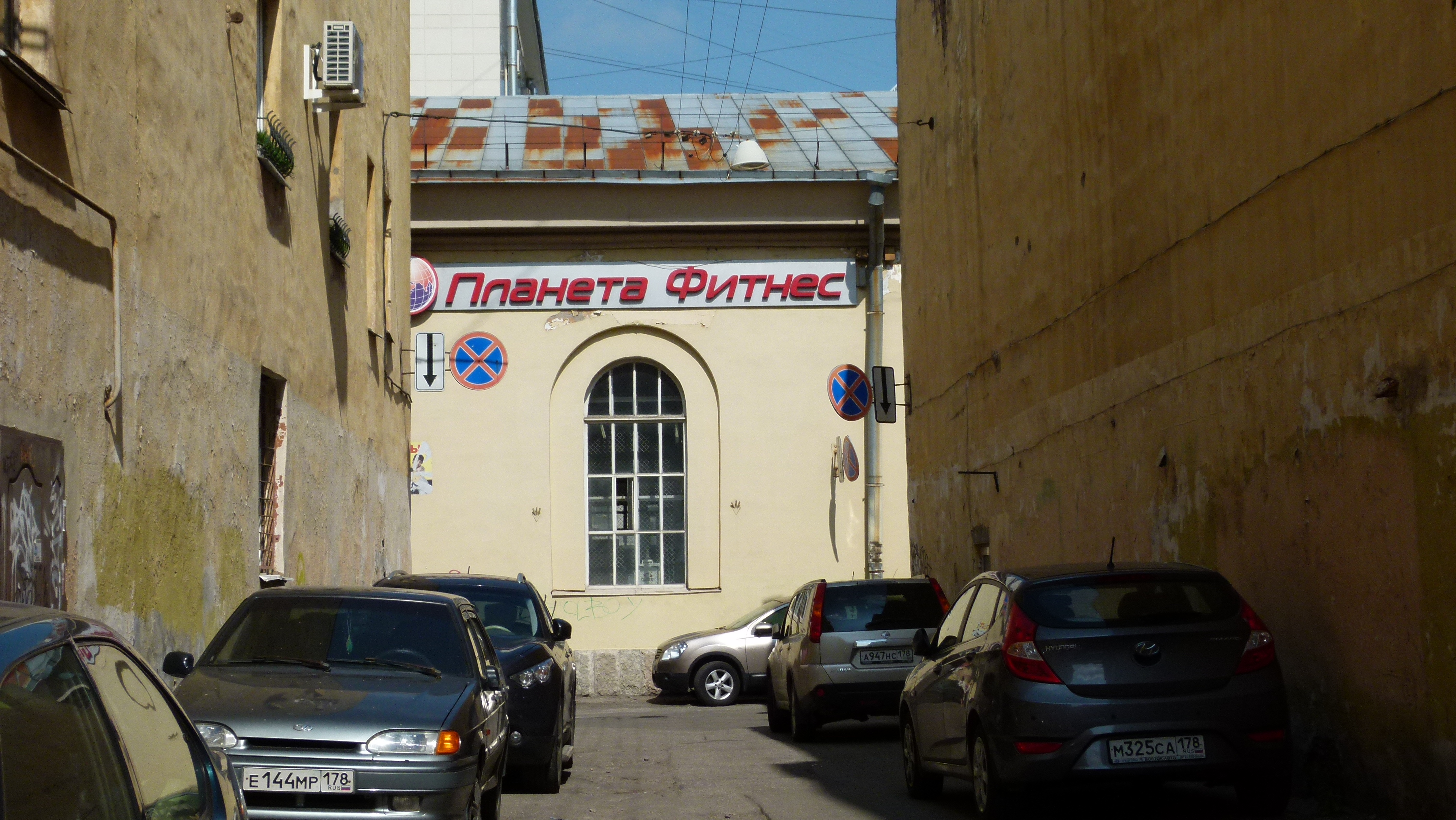
To get control over my “awl”, I look for a fitness center in Petersburg, as close as possible to the place where I live. And I am lucky. “Planeta fitness” (Планета Фитнес) is just a two minutes’ walk away. Elena supports me to get an entry pass for one month for about 2000 Rubel or 60 Swiss Francs. The center is in an old gymnastics hall, as I remember them from my school days (a long long time ago) and it is located in a small dead end street at Kasanskaja Uliza.

P1020637

Dimitrij shows me all the body keeping machines

Body keeping is what I do in a fitness center; as a baby boomer, I can no longer call this body building. First I try the elliptical trainer and watch what is going on around me.  The equipment in this fitness center is not as new and as highly polished as I am used to from Switzerland, but it perfectly serves the purpose. Young Russian are working at the machines – with success. Also Dimitrij, the fitness consultant, is a walking example of what you can achieve here. He has reserved an hour for me and introduces me to all the machines of the various brands. I like the diversity –  it is not just Nautilus, and there are also barebells, weights and mats around. A room separated by a glass wall is for group events such as Pilates, “total workout” or Zumba. Dimitrij tackles muscle building with more flexibility than our Kieser. Also he warns me not to use one of the machines for the back. I think he might be right. “Do not use weights, when you already have problems with your back,” he says. He carefully adjusts the machines for my body  and reduces the weights, before I tackle them.

To round it all of, Dimitrij proposes that I work out a program for myself that he then would check out with me. He always observes me and confirms what I am doing. A second trainer, also called Dimitrij and also very strong, shows me later, how to use the barebells instead of the machines to train the same muscles.

P1020640

P1020642

Now, I am a regular visitor in Planeta Fitness, and I like it

In my four weeks at Petersburg, I am now a regular guest in this fitness center. I go there every other day and work at the machines – as Dimitrij has trained me, make my heart beat faster on the elliptical machines (which have a tendency to clatter, and I like them for that noise that accompanies me rhythmically), watch groups dance and bend in the hall behind the glass wall, once observe two acrobatic ladies dance elegantly under the roof in two red  ribbons hanging from the ceiling (what a pleasure to watch them) – and then I take a refreshing shower in the wardrobe. On my last day I say farewell to Dimitrij who has supported me with his enthusiasm.

Yes, I can recommend this welcoming fitness center.

A Swiss in Petersburg – gems on Vasilyevsky island

Hidden and unhidden gems on Vasilyevsky island

Vasilyevsky Island hosts some major museums, the university, and the Menshikov palace.These are the obvious gems. There are also some more hidden gems like the street Line 7 and some small sculptures that my wishes guidebook knows of. Also Dostojewsky’s Rasumichin lived here overseeing the Malaja Neva. Today, I want to discover this island.

Where is the Kunstkamera?

As I walk on the Dvorzoy Bridge, a man asks me in Russian: “Where is the Kunstkamera?” This is the museum of ethnology and anthroplogy that Peter the Great founded on Vasilyevsky Island to educate the Russians. I show it to him and continue my way towards the north side of the island up to Tuchkov Bridge, then turning to the middle of the island. A young lady asks me, where the Bolshoy Prospekt is. I can show it to her. Why are all these Russians asking me for direction in their town?

The first tram in town, and Babuschka masters the iPad

At the metro station there is a monument of the first tram in town, pulled by horses. The Russians like to be photographed with it, also mum with her son. Grandma holds the iPad. The boy asks her several time to redo the photo, until he is pleased.

post_babuschkawithipadP1020561

The inviting pedestrian zone, line 7

The street system is quite straight forward: There is a small, a middle and a large prospekt and perpendicularly there are streets called lines. Line 7 is a pedestrian zone, with a shady alley and inviting restaurants along the sides. I sit down on a bench and eat the salmon sandwich that I had bought at the French Busche (Boucher is Буше in Russian). Можно? (Is it permitted?) someone asks me. I do not look up and say yes. Two drunken men start to chat with me, and one of them touches me. No! I continue my way, say hello to Vasily Korchmin (who may have given his name to this island; he was an imventive lieutenant of Peter the Great). In St. Andrew’s church I light three candles thinking of Ernst.

post_line7post_vasilij

Menshikov, the Schlitzohr (shark)

Menshikow was one of Peter’s main architects. Peter the Great asked him to build the university on Vasilyevsky Island. He built it with the short side to the Newa, and next to it, he built his palace with the long side overlooking the Newa. Such a Schlitzohr, as we say in German; I believe this is “shark” in English. His palace is a museum now.

Yes, we are proud of this garden and the sculptures…

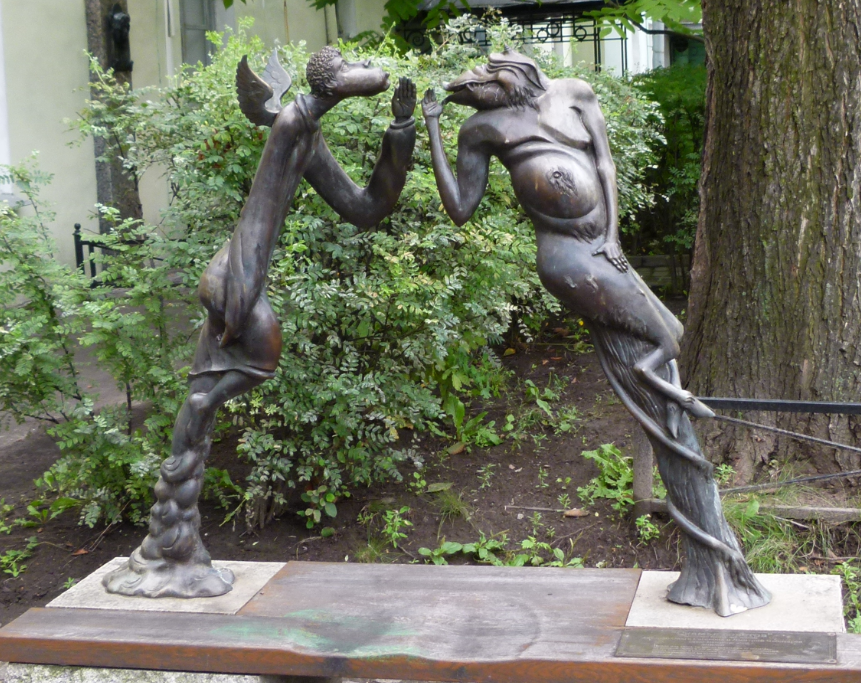
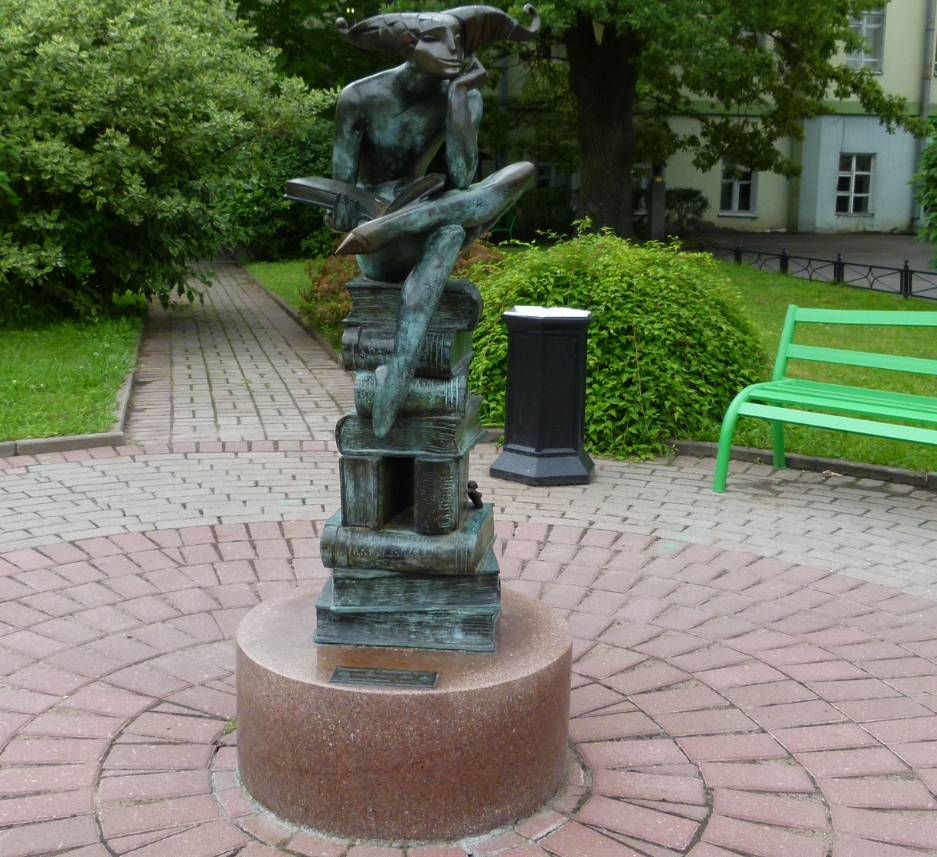
At University Embankment 11, I find a guarded entrance. I ask the guard, where the sculptures are that I have read about… and she answers: “yes, we are proud of them, I will show you the way.” She takes me into a nice garden. “Look, here is our begemot (hippo). Rub it, and you will get married.” Hm, no need to rub it, Ernst is in my heart. I take a photo… and the guard supports me to select the perspective. Look, here is the Petit Prince. And at the other end of the garden, there is Columbina… yes, she likes her garden and she likes to share it with visitors. And I find many more sculptures, also an angel and a devil.

post_begemotpost_düüfeliängeli

post_petitprincepost_columbina

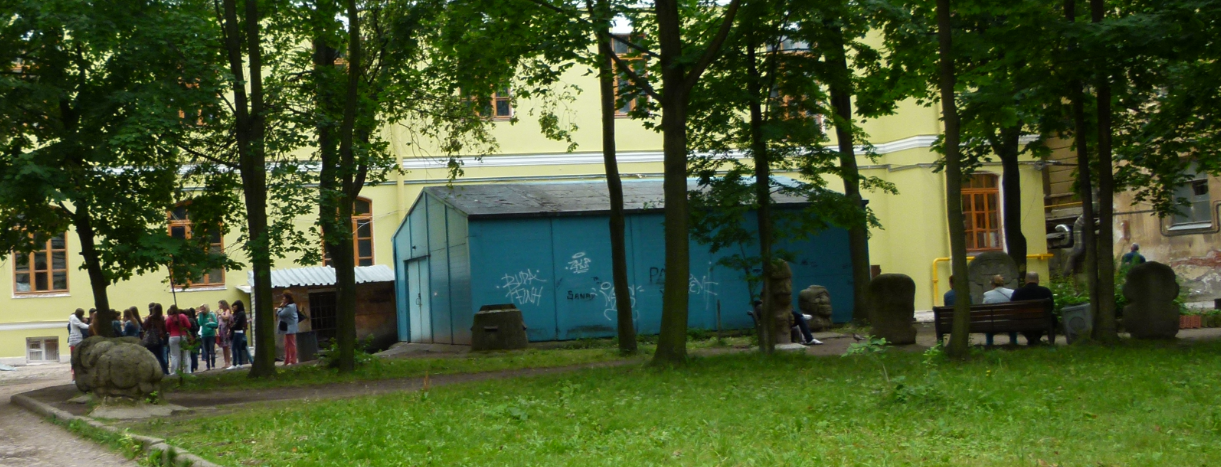
Aztec gods in the dirty yard behind the Kunstkamera

Behind the Kunstkamera there is an unpretentious gate to a dirty yard full of rubbish. The walls are flaking off. In the middle some trees with banks. I already want to leave the place, but then I see small granit blocks between the banks. Yes, these are the Aztec gods. I sit down on one of the benches and say “hello” to them. How did they get here to live in this ugly place? A man sits down next to me. “What are these stone blocks? Aztec gods? Where are they from?” I tell him about Mexico and about Tlaloc, the god of rain who has a huge nose, because he might have a permanent cold (this is how I think of Tlaloc). He laughs and tells me that he is from Siberia, has lived in Piteri for eleven years and does not know this town well.  His children join him and they continue their way.

blog_atzecgods1blog_atzecgods2

My last milestone today: The museum of zoology with the mammoths

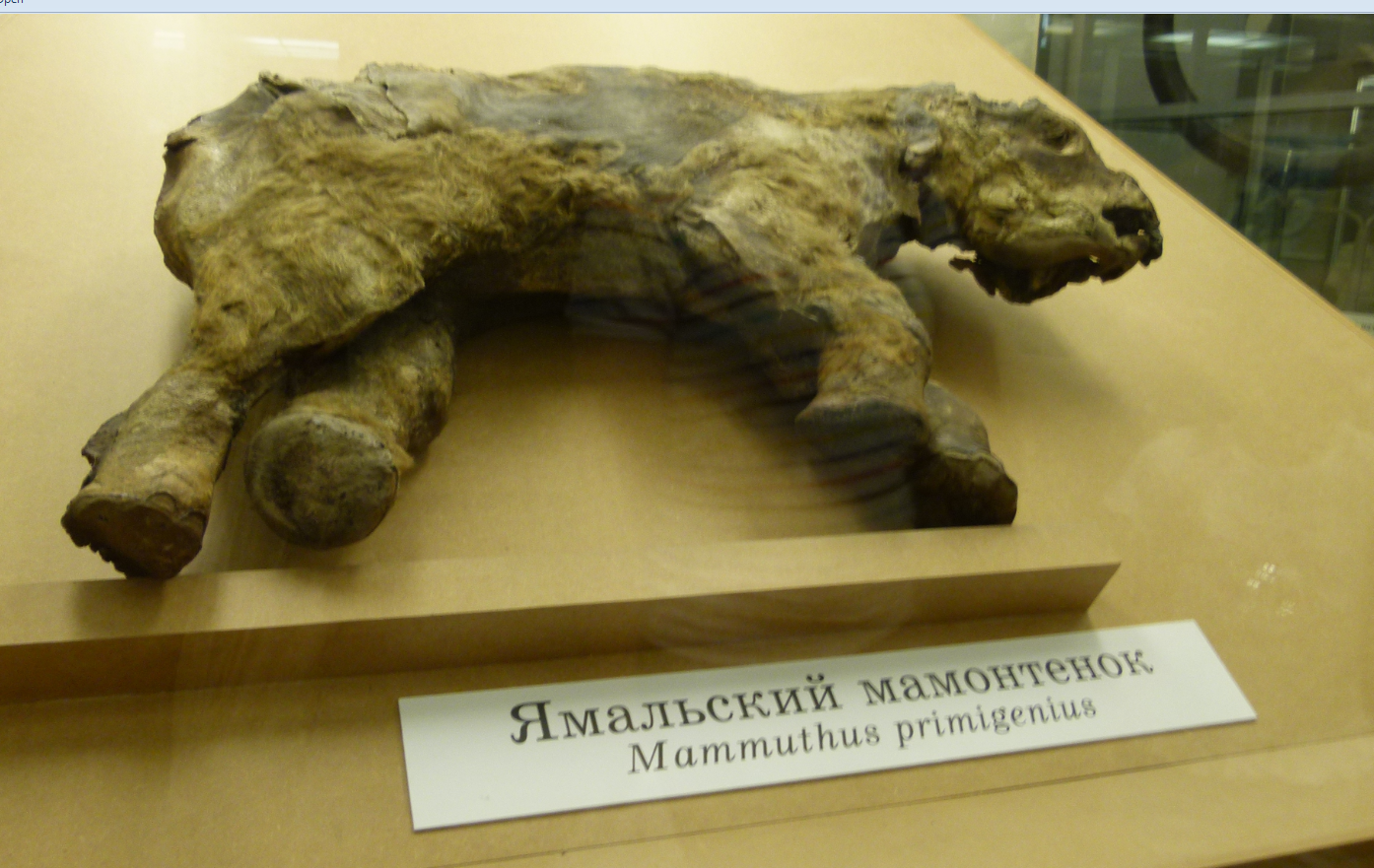
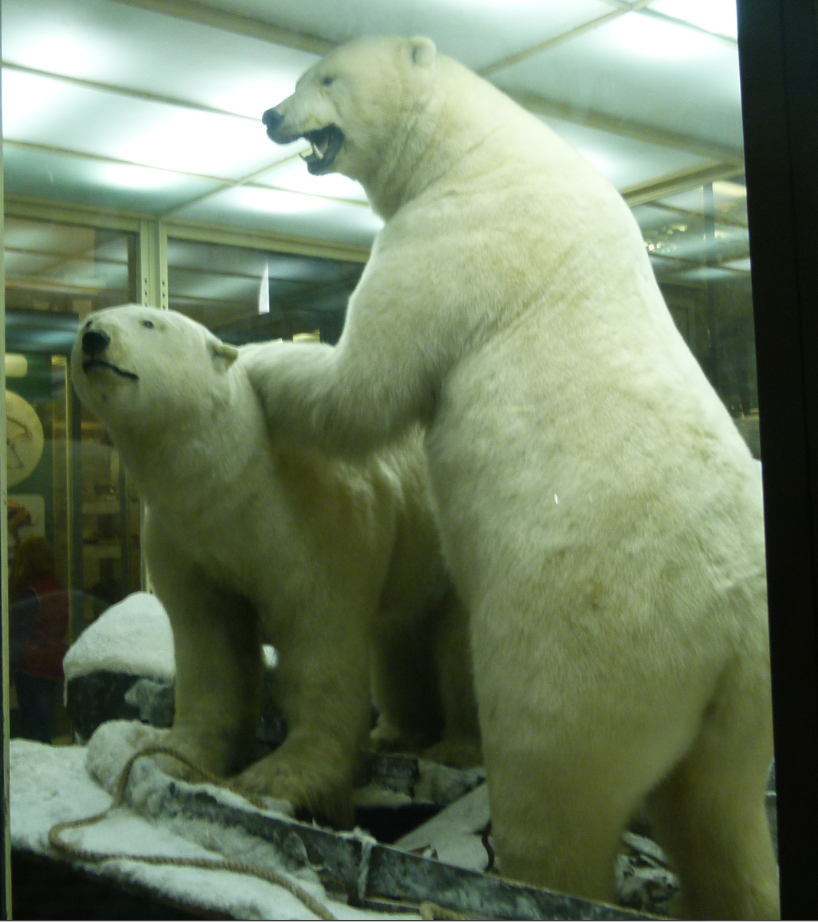
The entrance to the museum of zoology is a small door. Today the entrance is free. There is a huge hall with skeletons from dinosaurs and various fish. There are long gangways with a wealth of vitrines showing stuffed animals, set up in their natural environment. E. g. polar bears on (cardboard) ice and wooden boats. Or storks and eagles feeding their young waiting impatiently in the nest. Or wolfs in the steppe etc. And mammoths that come from the Siberian ice.

Families with children are strolling along the vitrines, benefiting from the free day. A great institution. There is also an exhibition of insects here – I buy a book about insects for the daughter of Anna, my teacher in Basel.

post_dinopost_mammut

post_polarbearposteagle

Now have to get back to Raskolnikow’s house to take a short walk with Elena’s Pekinese dog Susja and to tackle my next Russian lesson.

A Swiss in Petersburg – Ermitage or Эрмитаж

The overwhelming palace and museum

Eventually I decide to visit the Ermitage again; I have been there with Ernst eleven years ago, and I was not convinced whether I would like to see it. Too many memories.

I dive into the palace around eleven, climb the superbe Jordan staircase, receive some guidance from Ludmilla and take the detailed Lonely Planet map under my arm. It is so easy to get lost in this maze! I always make sure that I know, where I am and where I want to navigate to next. And I plough my way through all these tourist groups that follow a guide; the most inventive guide was a young and tall man who just holds his arm full of tattoos into the air. He was easy to spot.

The first floor with hidden and unhidden treasures

I first stopped by at the hidden treasures. These are impressionists that the red army took back from private collections in Germany. No fotos allowed in here.

IMG_0118

IMG_0120

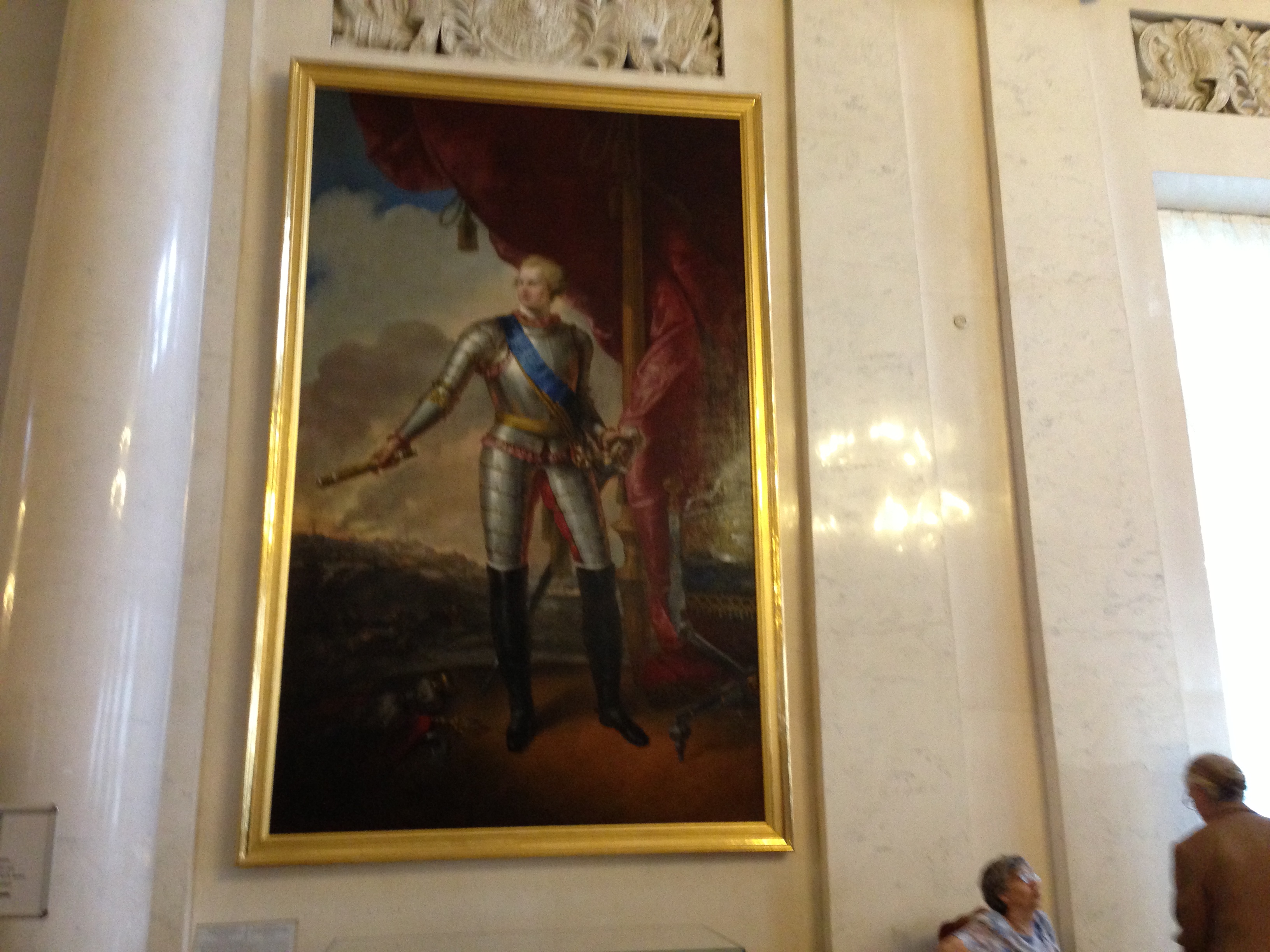
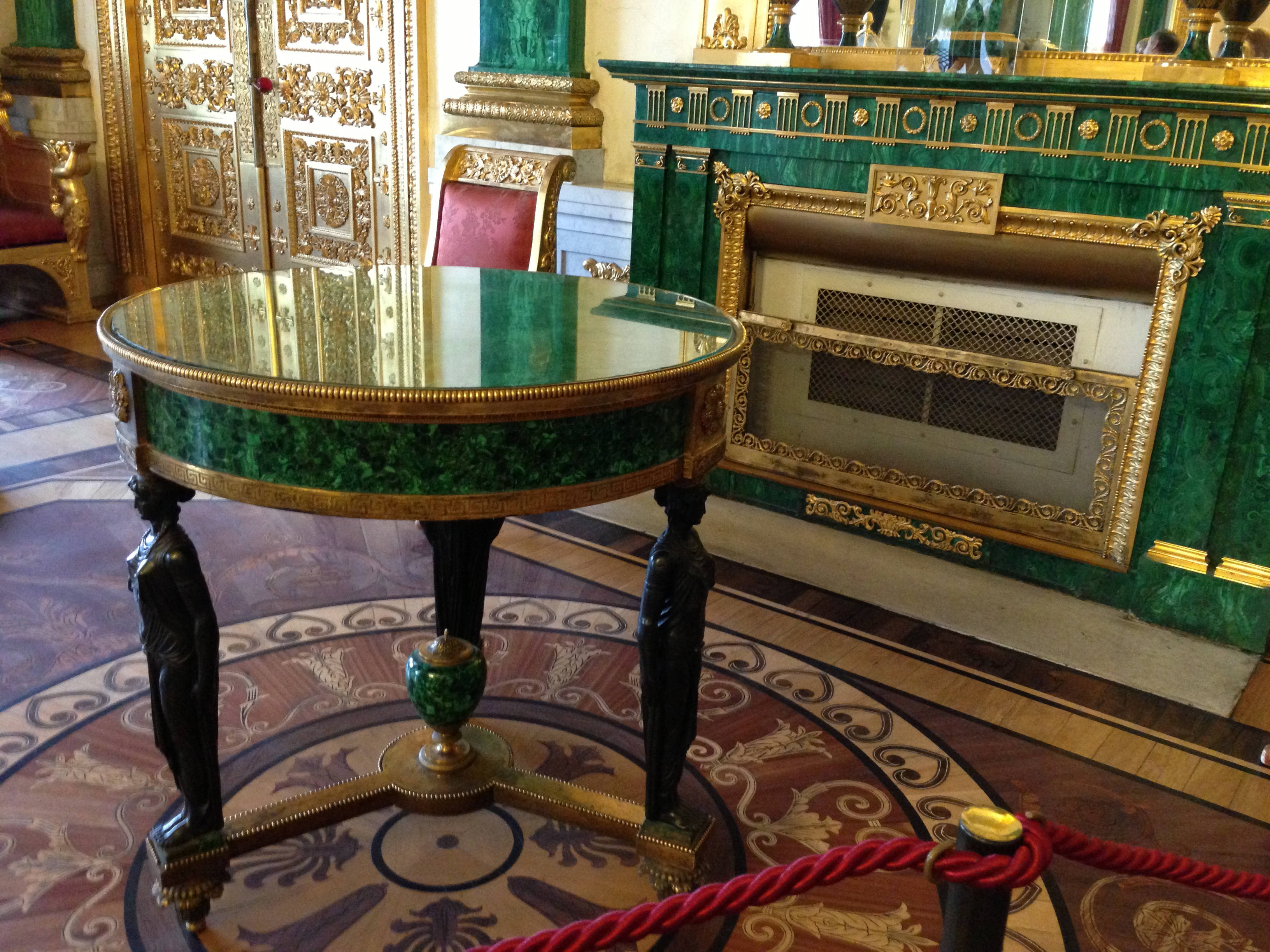
I then admire the handsome Potemkin, one of the lovers of Catherine the Great, and stroll through the luxurious Great Hall and Malachite Hall.

IMG_0127

IMG_0129

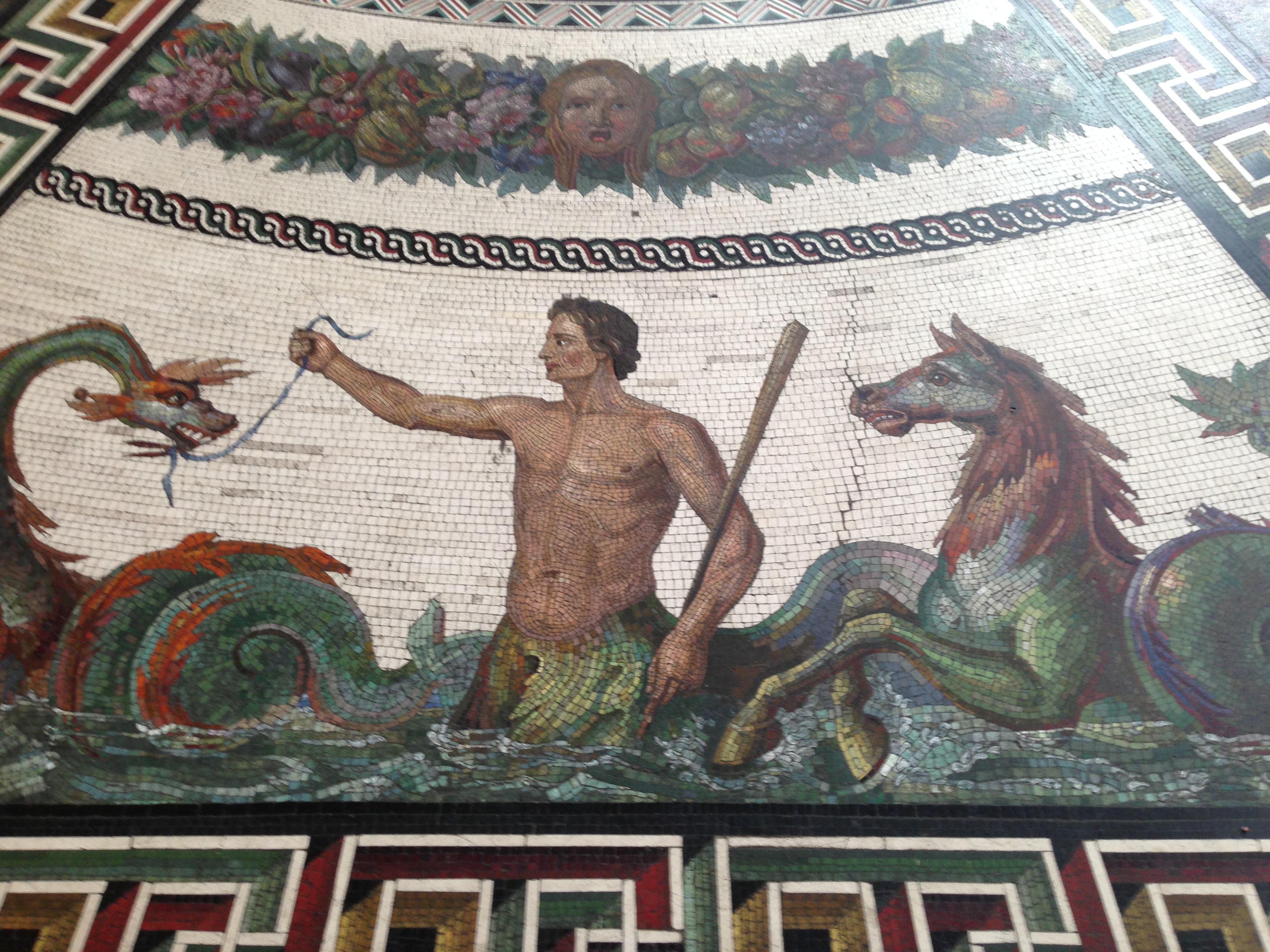
I enjoy the hanging garden and the mosaik in the Pavillon Hall.

IMG_0134

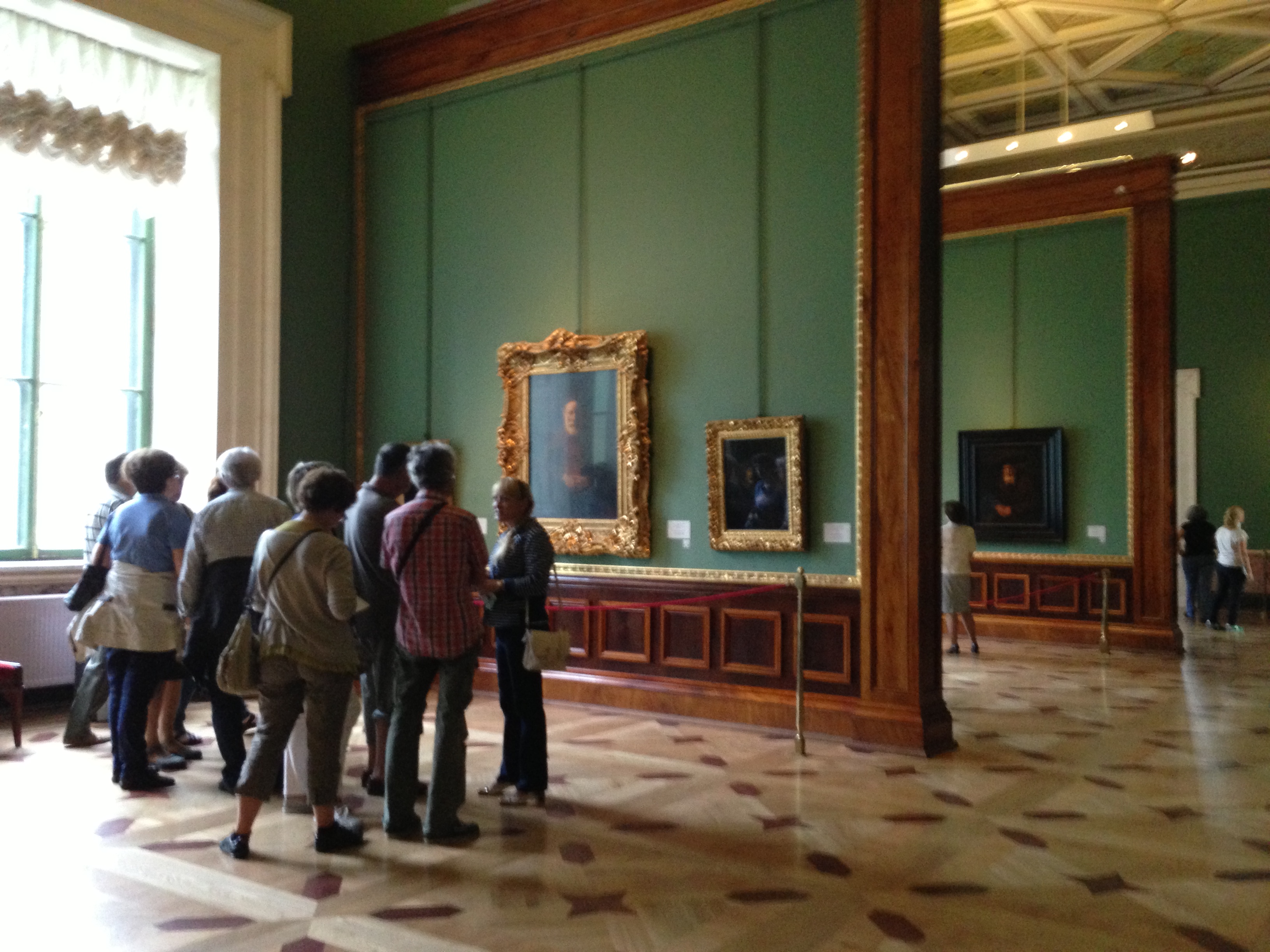
Now the density of tourists and groups is getting higher and higher. They all admire Rembrandt’s pictures in the room reserved for him. Interesting that in the war, the Russians had evacuated this collection and just left the frames here. The flamish artists, the Italian artists, and again a high density if tourists; I am now in Leonardo da Vinci’s room. Two Madonna pictures are here, and I am again astonished, how small they are.

IMG_0159

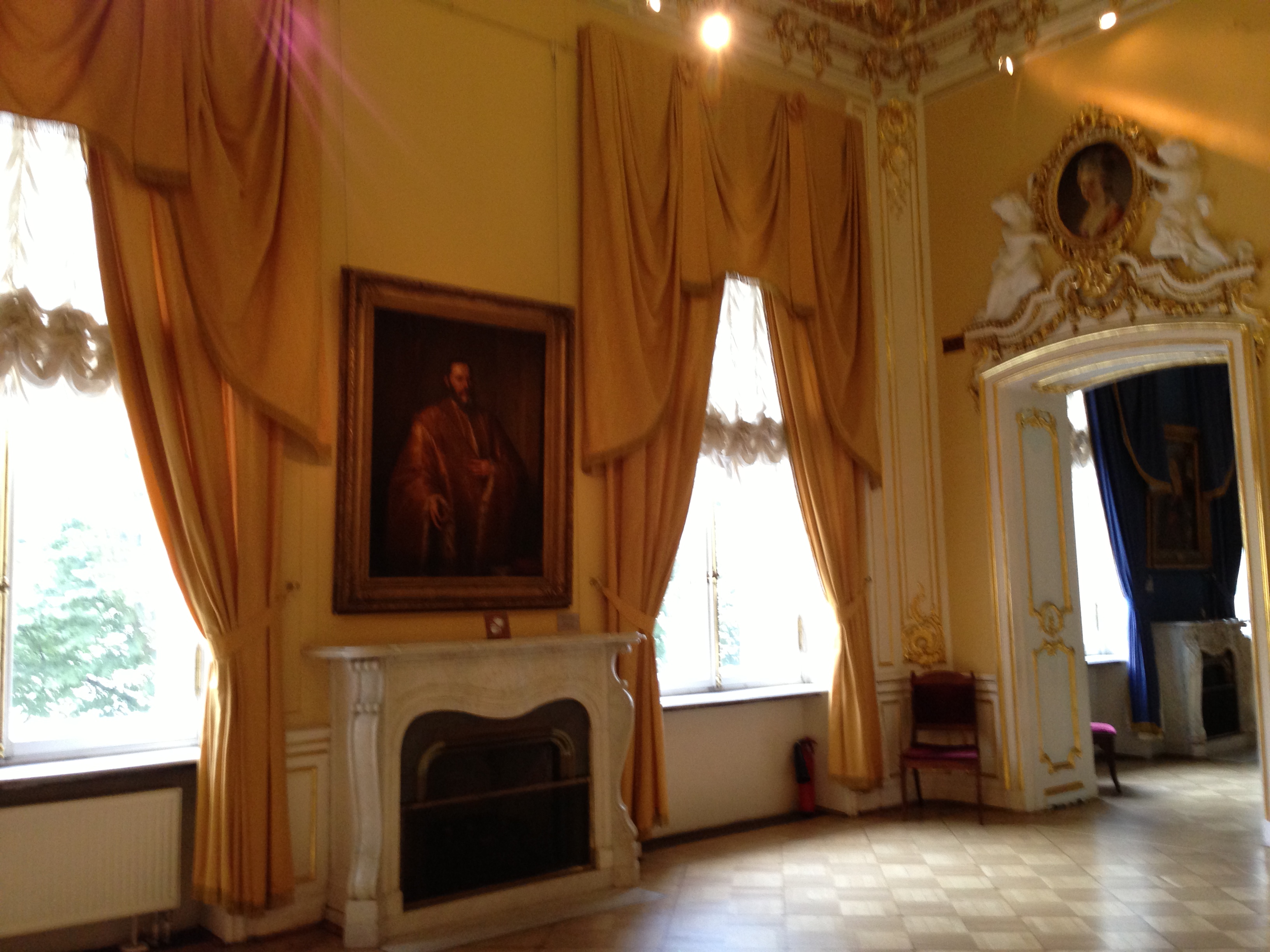
The next point of high tourist density is in front of Michelangelo’s statue – no foto from here. I admire the architect who set up the rooms in this palace… curtains and wall paintings are always a perfect match, and each room has a different color. Here is the yellow room.

IMG_0168

A short break on the first floor

The Ermitage is missing out on a great business opportunity which is to sell food and drinks to the tourists that spend long hours here and surely are getting hungry. There is a cafeteria on the first floor with a short queue and a very small selection of rubber sandwiches and snacks like Mars or Bunty. I eat a salami-cheese sandwich that is a bad match to all the luxury and pieces of art in this palace. I eat it sitting at the base of a column, as there are no chairs available.

After my break, I visit the Egyptian department with the mummies and sarcophags. I miss out on the treasure gallery.

IMG_0171

Now to the third floor with the impressionists

It already astonished me eleven years ago that the Ermitage hides away these gems, the impressionists and Picasso, and how well the tourists find them nevertheless, climbing some small and ugly stairs to the sober third floor. The gems are displayed in plain rooms with a low ceiling, and they are just great, Renoir, Matisse, Monet, Manet and also Picasso. I sadly stand in front of the dancers of Matisse remembering, how much Ernst enjoyed them, and now he is  with me in my heart.

IMG_0179

I stroll up and down these rooms several times and then move to the exhibitions of Japanese, Chinese and more Asian pieces of art, in particular along the silk road that some Russian travellers and scientists explored. I will be at some places of the silk road later this year, in Mongolia.

IMG_0192

Back on the second floor admiring the luxury of the zars

I round off the visit by walking through the royal rooms admiring the elicit furniture and decoration. Yes, Nikolai II did not like this luxury so much and prefered his  smaller and more cosy palace in Zarskoe Selo.

IMG_0198

Now my legs feel like “Weggli” which means literally like “rolls” (in Russian: дереянные ноги). When we Swiss say “Wegglifiess”, we mean that we can no longer walk two more steps. No wonder, I have walked through the Ermitage for four hours now. Nevertheless there is another 15 minutes’ walk ahead of me, before I will tackle my next Russian lesson.

A Swiss in Petersburg – at the ballet Пламя Парижа or The Flame of Paris

 The French revolution illustrated with Russian classical ballet and music

To celebrate the 15th anniversary of the October revolution, a spectacle was needed that showed a collective hero, the people that are fighting the despot. This is why, based on the work of  Nikolaj Wolkow, Vladimir Dmitriew and Boris Acafew created this ballet “The Flame of Paris”. The story comes in three acts:

1. In a suburb of Marseille, Gaspar and his children, 18 year old Jeanne and 9 year old Jacques, pull a cart with firewood, lose a wheel, come across Marquis de Beauregard who throws over the cart and beats Gaspar, and receives then support from the revolutionary squad led by Philippe. Then there is a ball in the palace of Louis xvi – he signs an order to call the Prussians for support against the revolutionary uprisings. A couple, Mireille and Antoine, dance for the court, Antoine is shot, Mireille gets ahold of the signed order and carries it away.

2. In Paris the squads from various regions of France come together, see the order to call the Prussians, and storm the palace successfully.

3. The people celebrate the victory and the marriage of Philippe and Jeanne.
Getting ready at the Michailovsky Teatr

Larissa picks me up, and we soon find a parking slot directly in front of the Michailovsky Theatre. This theatre is a place full of atmosphere with red carpets, and the Russians dress up nicely for it. I enjoy this very much. We buy a program brochure and order a table and champaign for the entr’act to avoid the queue at the buffet. Larissa is well organized, as always. Our seats are in the parkett.

This ballet is a surprise for me

In the first act, the dancing in the palace is very long. In the pause, we share our glass of champaign and read about the background of the ballet. Larissa laughs. Look, when they played this ballet in the 30-ies, a man sat next to the director Nemirovitsch-Dantschenko. The man was in the theatre for the first time in his life and he asked  the director: “Why are they just running around, will they soon start to sing?” The director explained to him that this is a ballet and not an opera.” But now the choir started to sing, as planned in the ballet. The man kindly looked at the director and said:” Well, so – this also your first time in the theater…”

We go back to watch the second act, where the revolutionary troops capture the palace. And the third act, where the victory and the marriage are celebrated. The dancers show all their skills, spnning and spinning elegantly on their toes. jumping and then landing perfectly, Philippe carrying Joanne on his hands, while the music matches the dancing nicely. But I start to feel, it is almost too perfect and too virtuous dancing demonstrating all skills of the classical ballet. Why was the classical ballet brought to perfection used to celebrate the 15th anniversary of the October revolution? Is such a ballet not a pre-revolution thing? Well, I agree  that Russia can really not be understood with rational thinking, as even the Russians say about themselves. Yes, Russia has its special character.