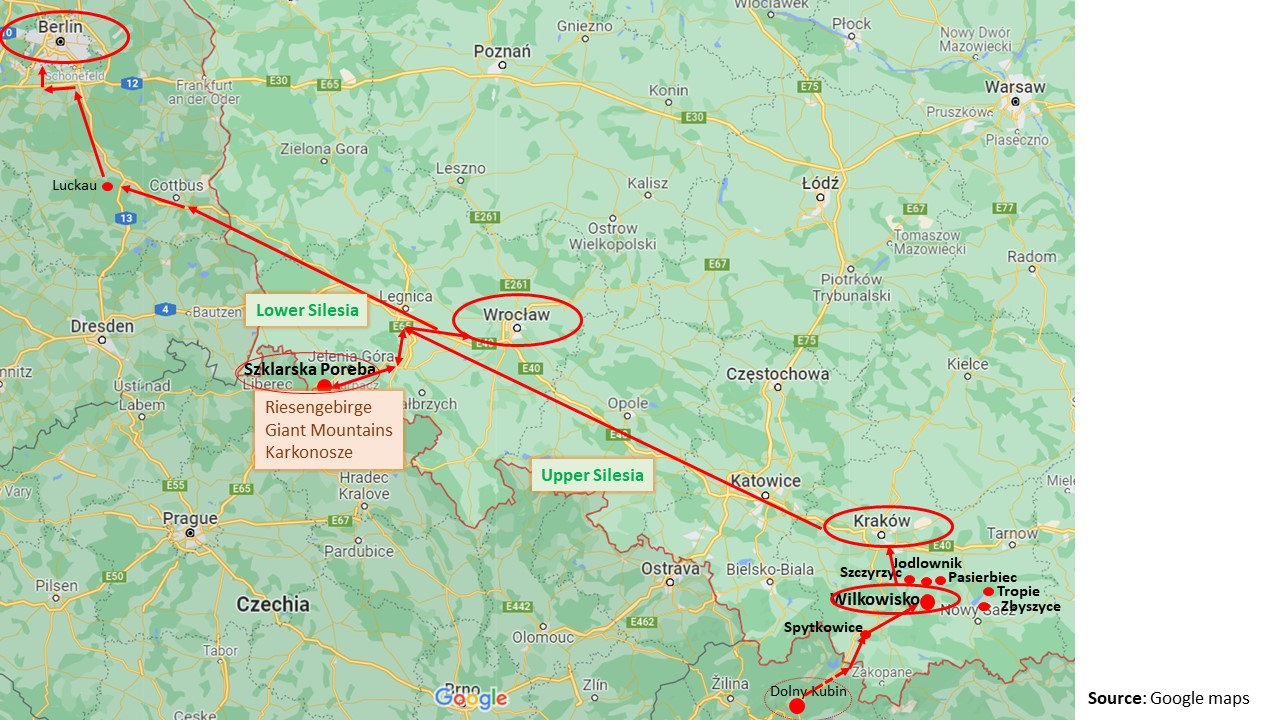
End of August 2021, I am on the road again, to Berlin via Slovakia and Poland.
My route begins in Slovakia: Bratislava – Trnava – Nitra – Žilina – Strečno and Terchová – Dolny Kubin, Podbiel and Tvrdošín. It continues in Poland: Wilkowisko – Kraków – Szklarska Poręba – Wroclaw, and finally I am Berlin.
Now I am at Szklarska Poręba to find out more about my grand-father, the artist.
My motivation: Find the location of my grand-father’s painting (Hermann Radzig-Radzyk)
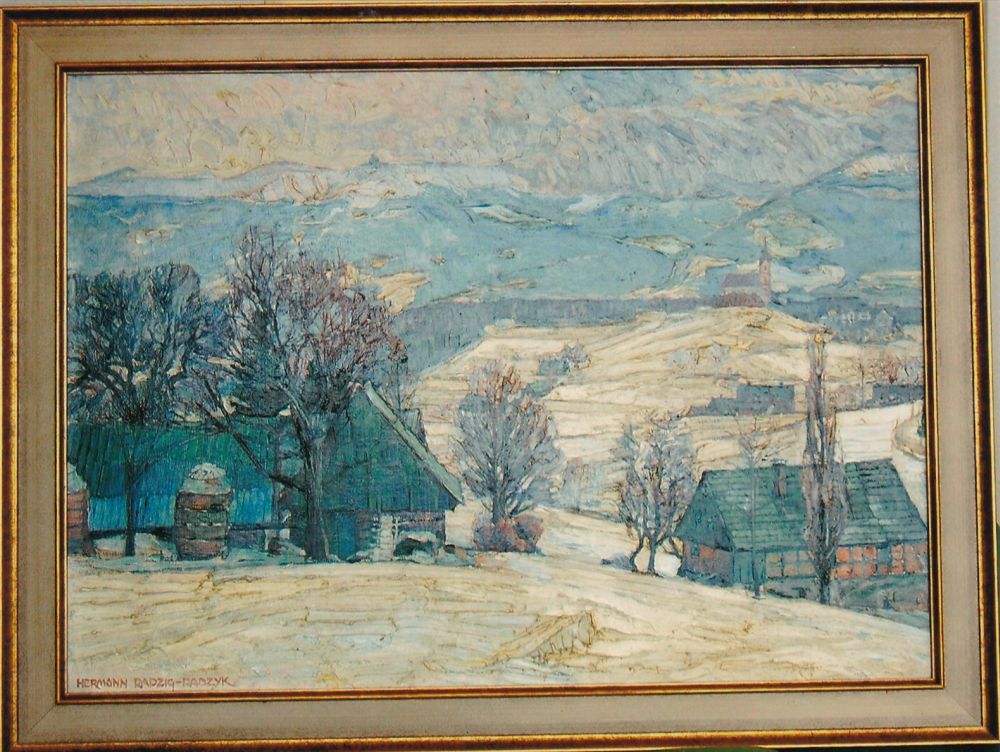
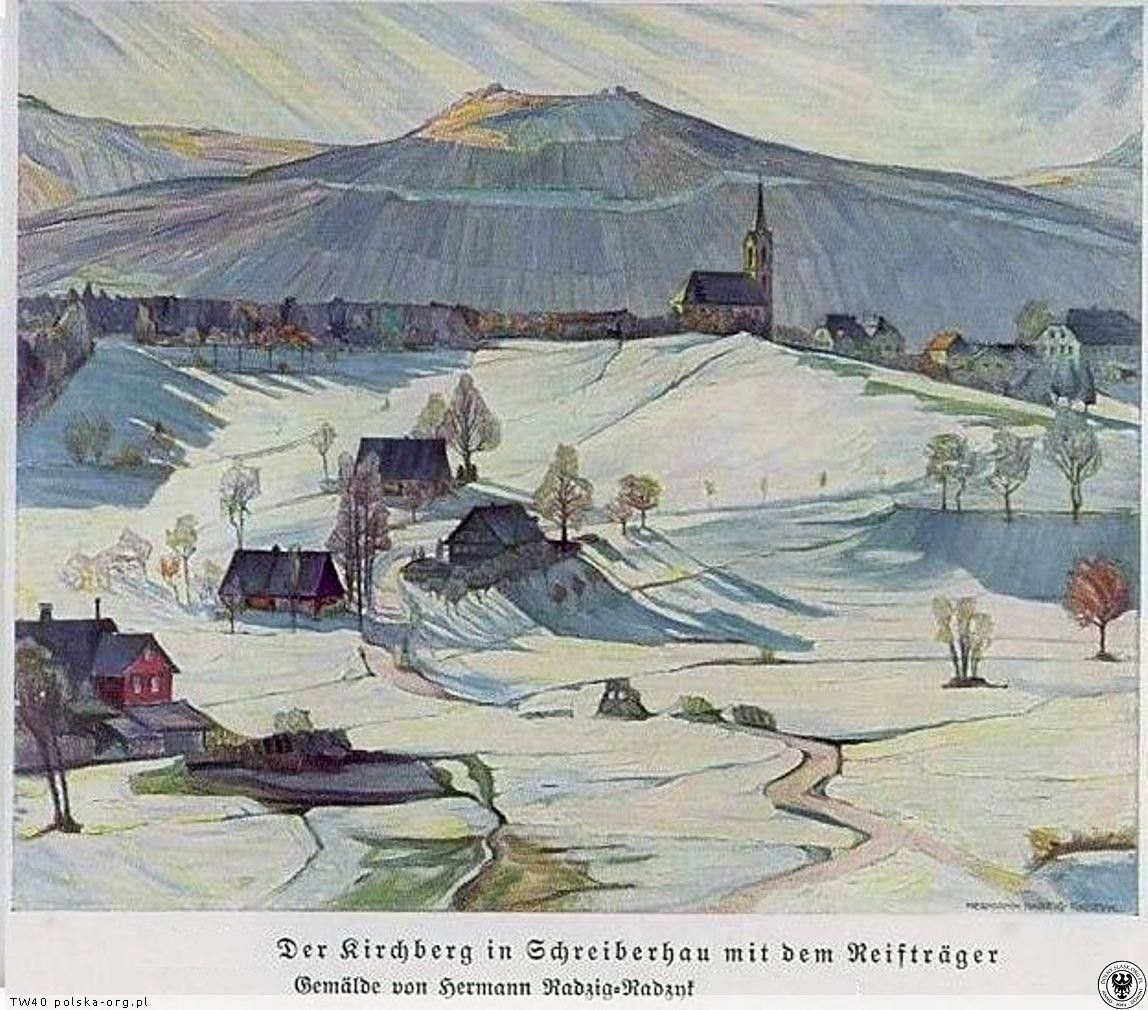
Currently, I am interested in the life of my grand-father Hermann Radzig-Radzyk who was an artist and painter. Many of his paintings decorate my house. While doing research about him, I have found more paintings that are traded in auctions, one of them being “Der Kirchberg in Schreiberhau mit dem Reifträger”.
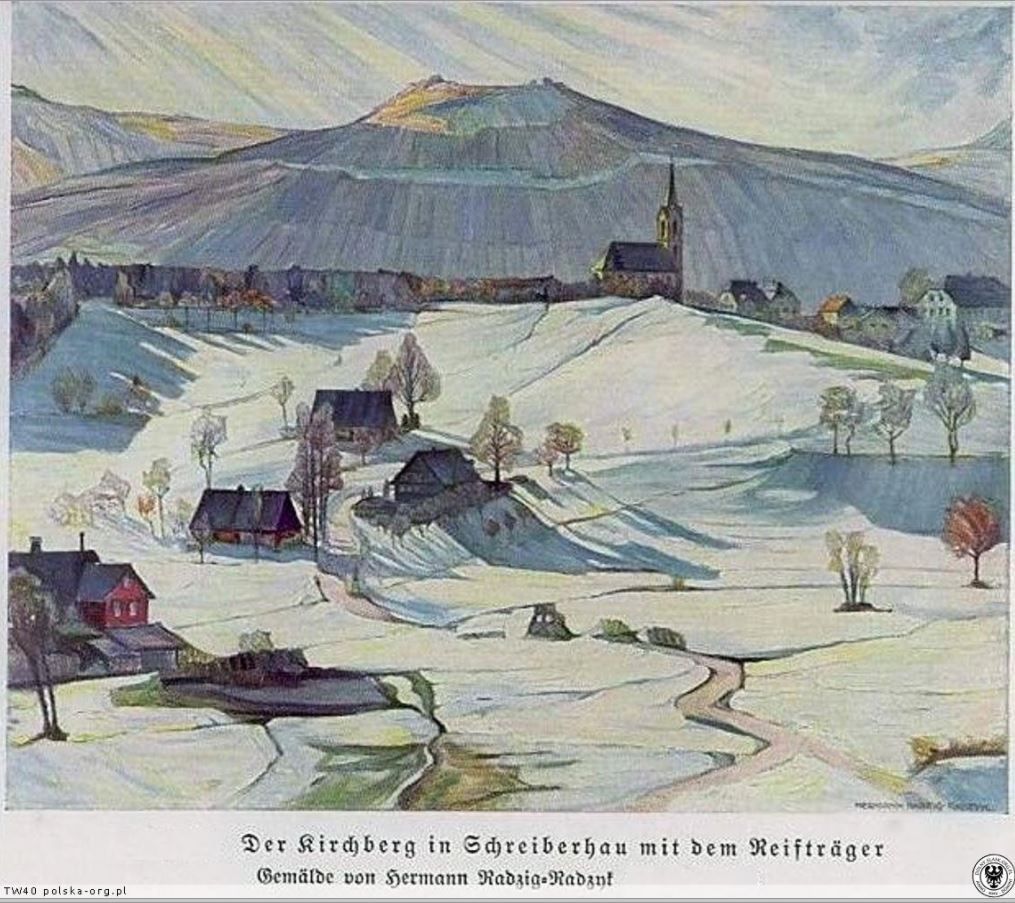
Source: https://polska-org.pl/7992365,foto.html
This painting was exhibited at the art exhibition in Berlin in 1923 (see
Grosse Berliner Kunstausstellung <1924, Berlin> [Editor]; Grosse Berliner Kunstausstellung [Editor]: Katalog: Im Landesausstellungsgebäude am Lehrter Bahnhof: [dauert vom 19. Mai bis 17. September 1923] (Berlin, 1923) (uni-heidelberg.de)
“Dr. Google” tells me that Schreiberhau is now called Szklarska Poręba, that the Reifträger is the mountain Szrenica and the church on the Kirchberg is Kościół p.w. Bożego Ciała or the Corpus Christi Church.
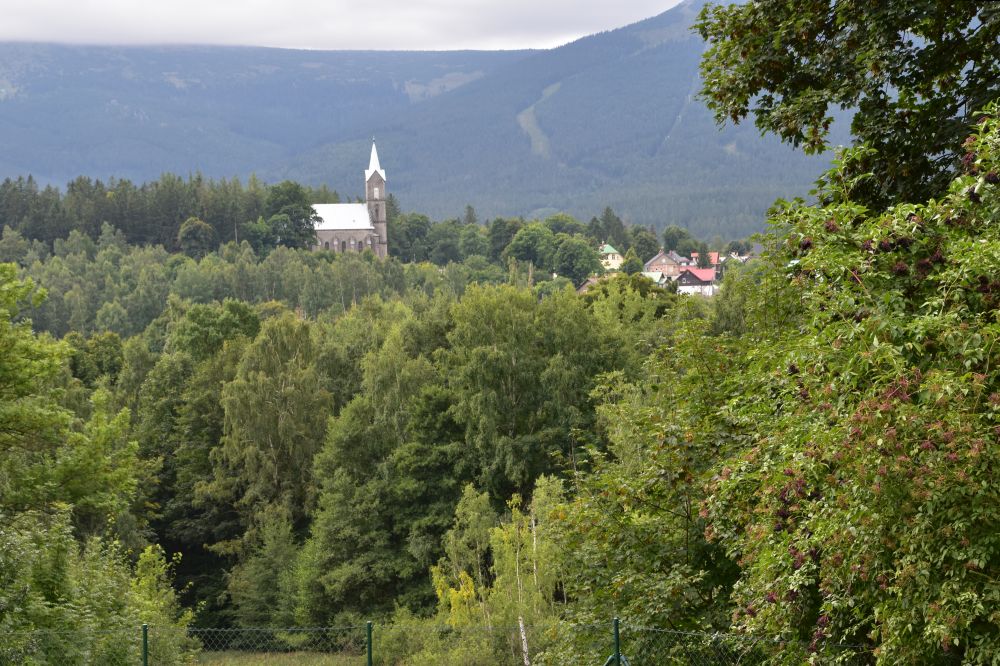
I like this painting. I drive to Szklarska Poręba to find the place, where my grand-father had painted it and I come close.
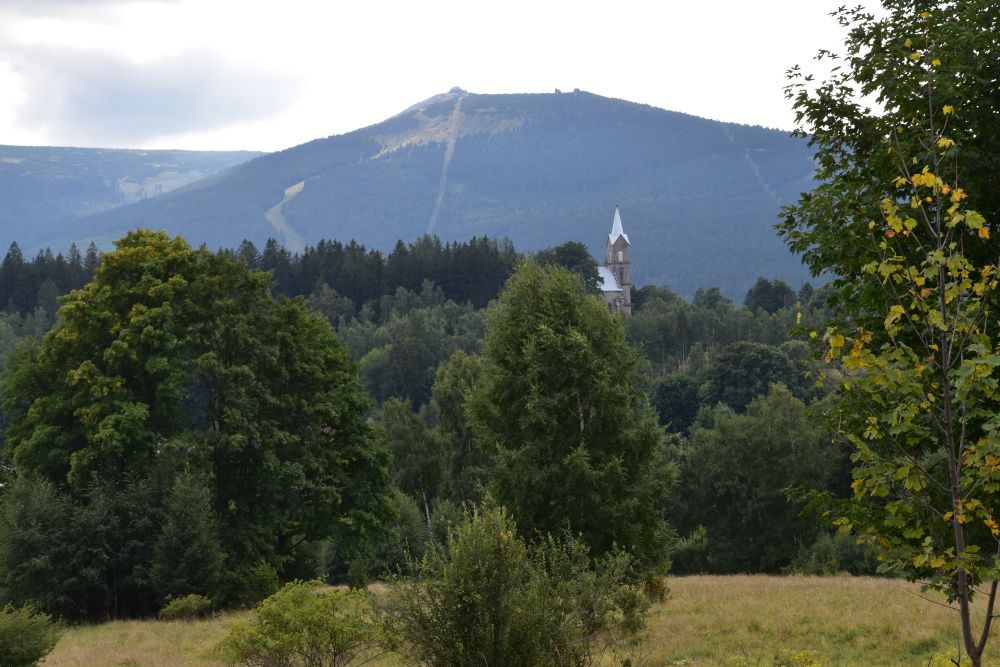
However, the landscape has changed. Much more forest here now.
I return the next morning to take a photo of the same view, but with more sun.
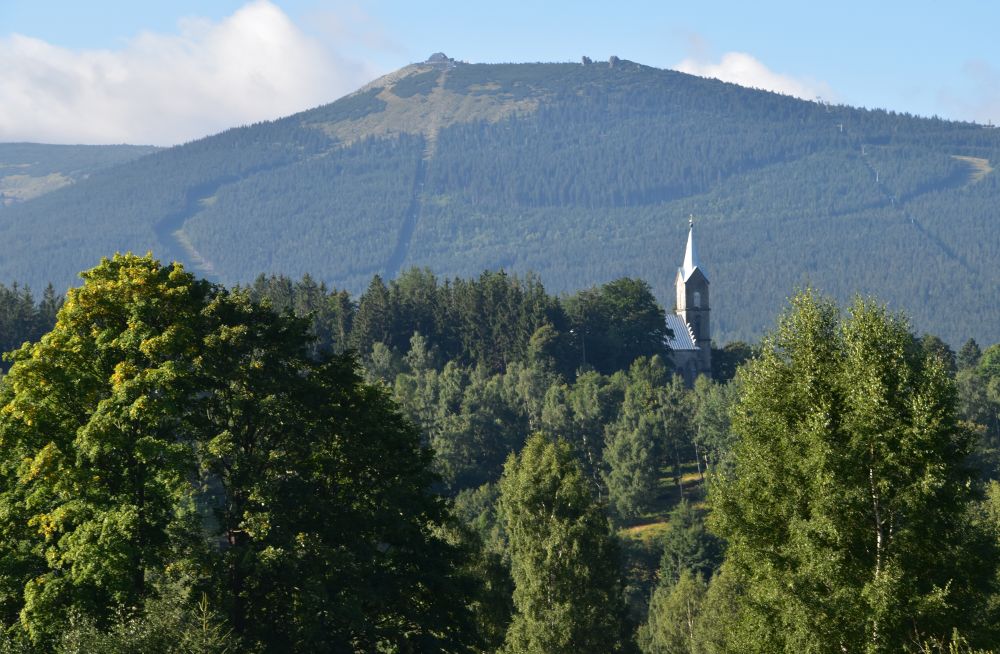
I assume, my grand-father stayed in a pension below the point I am standing at; I saw houses, but did not dare enter the private properties.
Close below the church, there are some buildings that did not exist, when my grand-father made his painting.
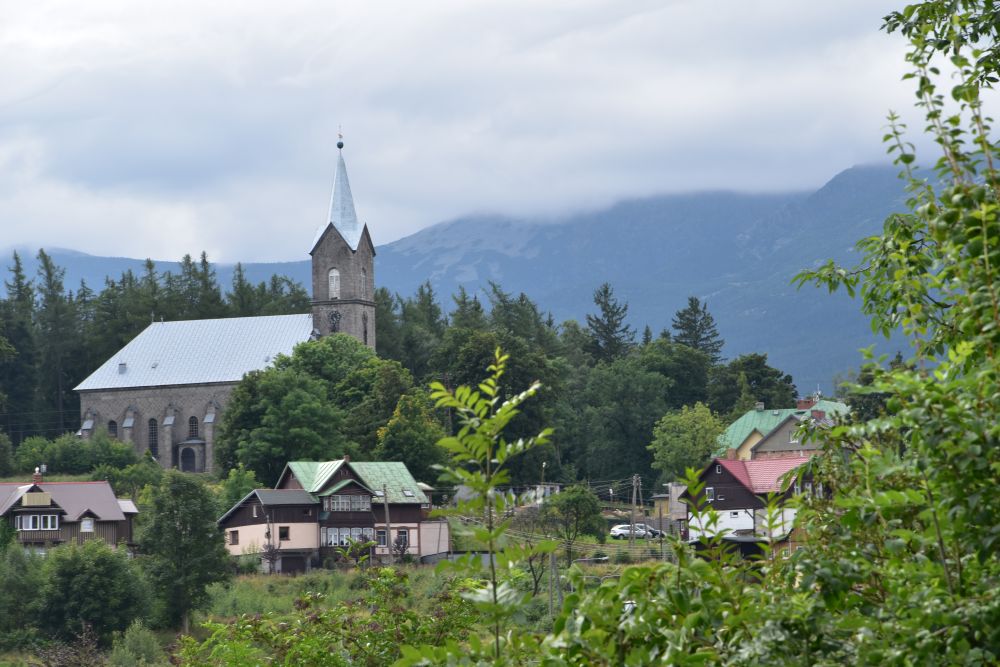
My “cousin” Dietrich (the son of my mother’s best friend) owns this painting which is a slightly different view of the Kirchberg.
More closely to the perspective of the second painting is the following photo taken by me, when walking to Szklarska Poręba Średnia .
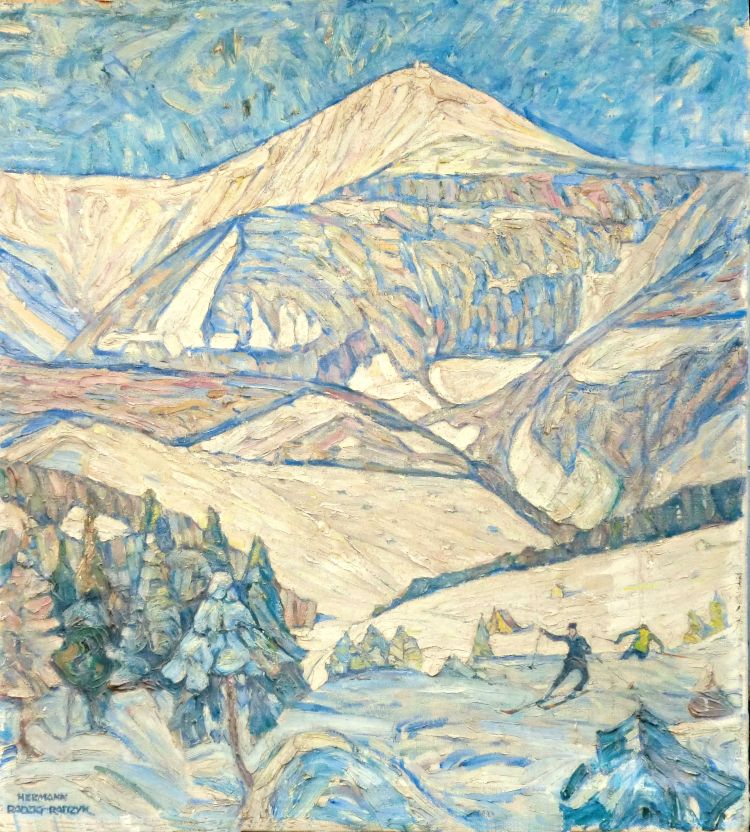
My “cousin” Dietrich knows of this painting of the mountain Szrenica (Reifträger) that is with a friend of his in Berlin. Update of February 2023: After having climbed this mountain from Karpacz (Krummhübel) in October 2022, I know that this is the Schneekoppe, today called “Snieska”.
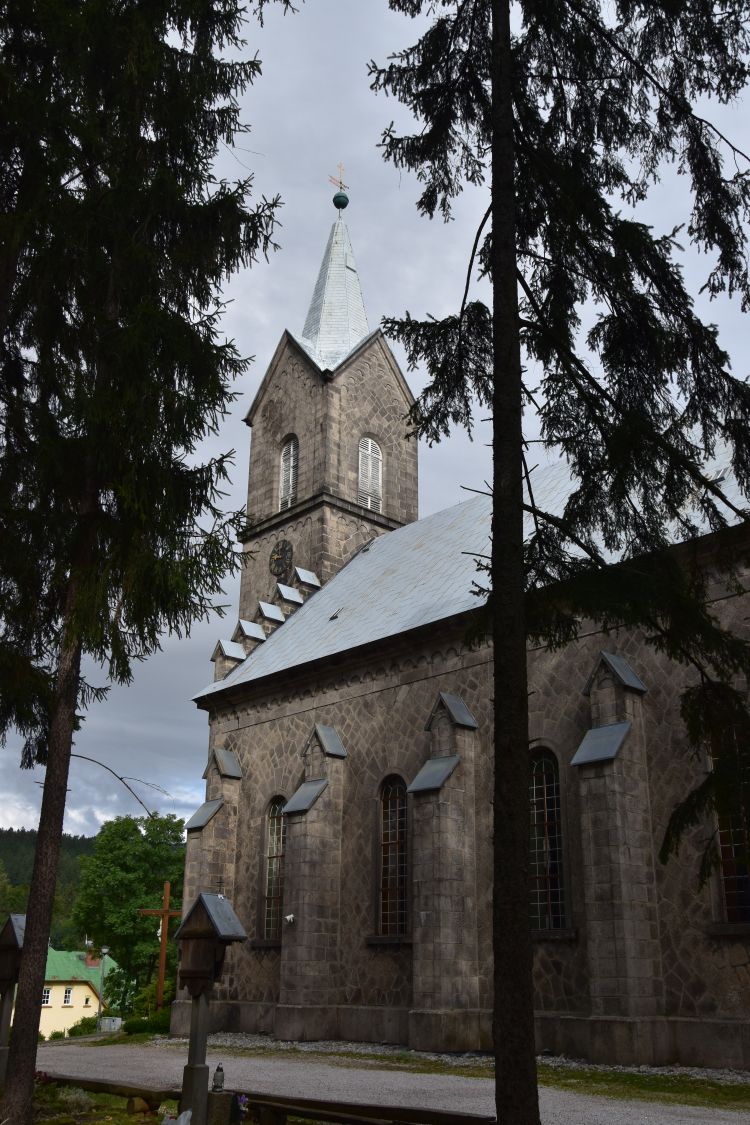
Approaching the church Corpus Christi, the church on the Kirchberg
The Corpus Christi Church was built in Neo-Roman style in 1884-86. The dukes of Schreiberhau, the family Schaffgotsch, financed the church.
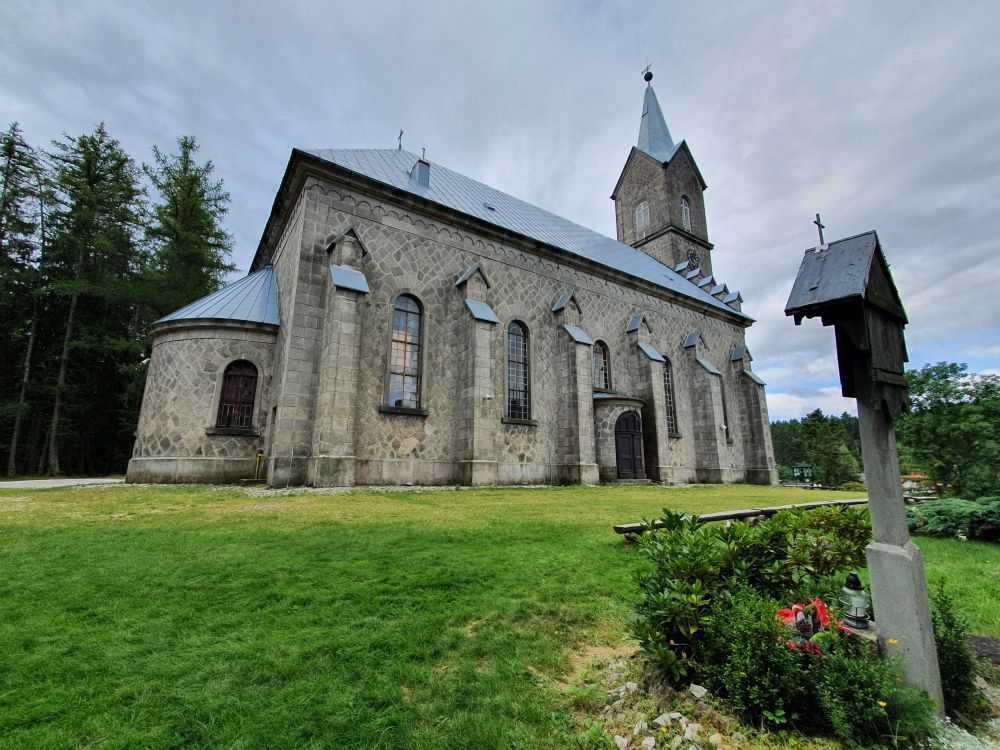
I walk around the church.
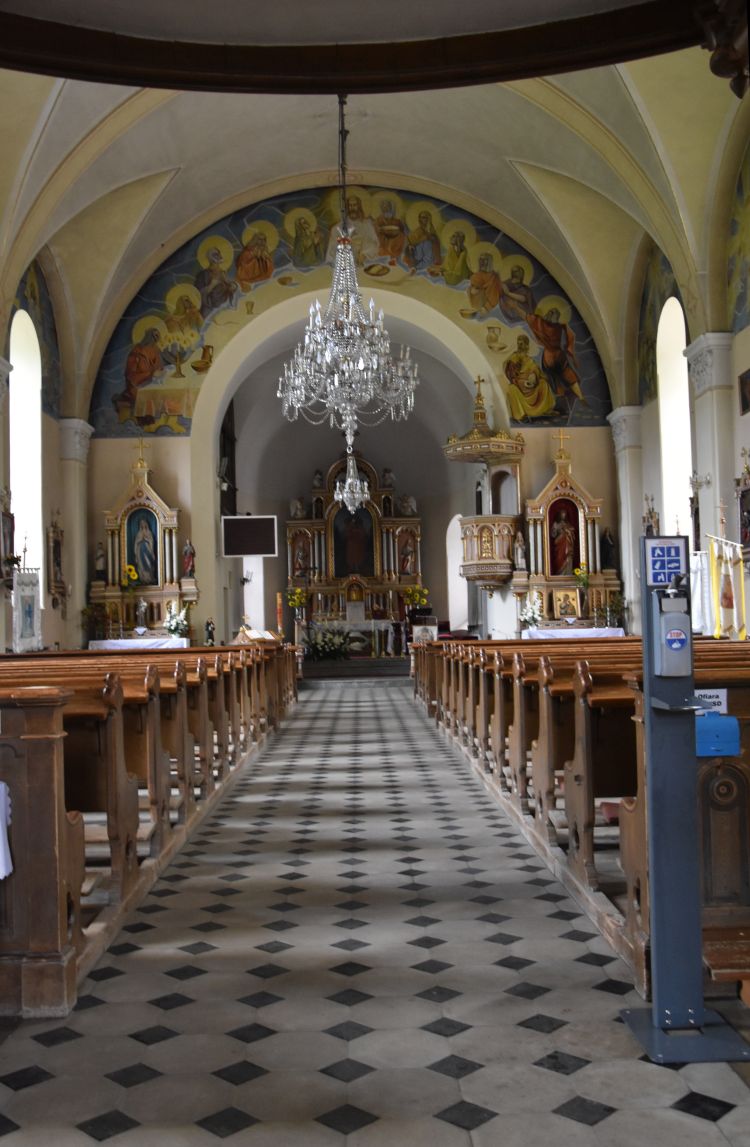
Inside are paintings by Wlastimil Hofman, a Polish painter who settled in Szklarska Poręba after the Second World War in 1947.
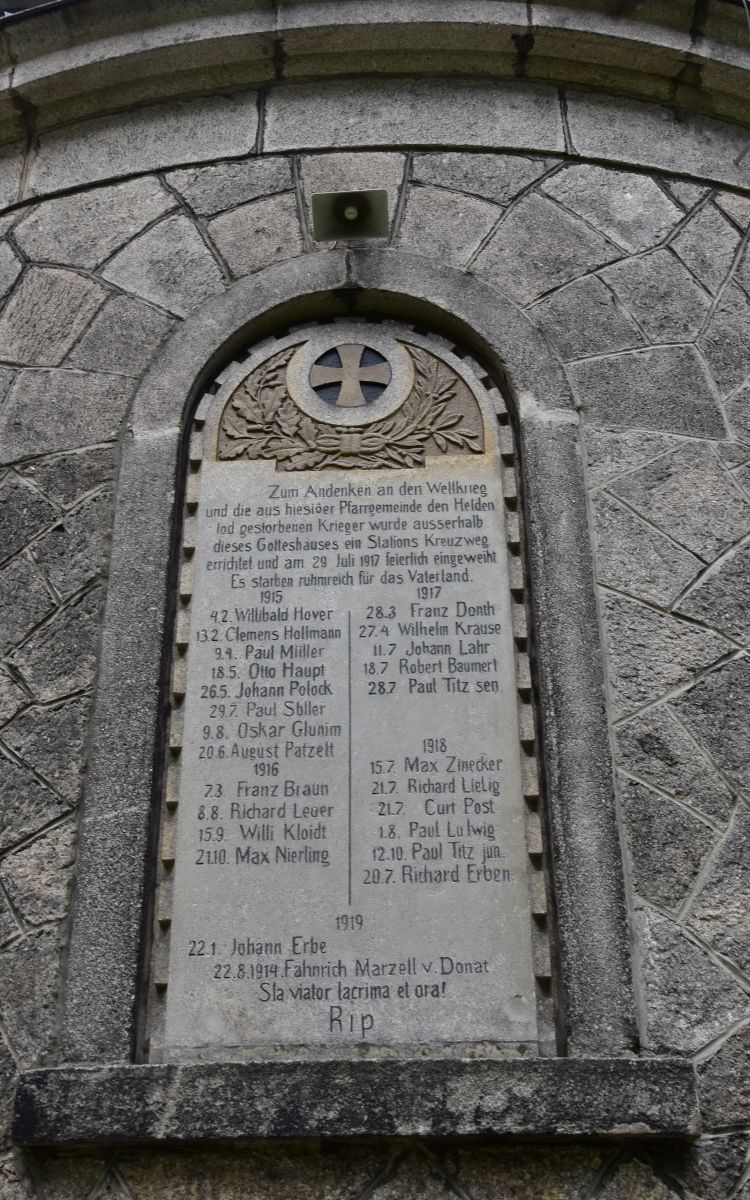
I find a tomb slab. It commemorates Germans that have died in the First World War.
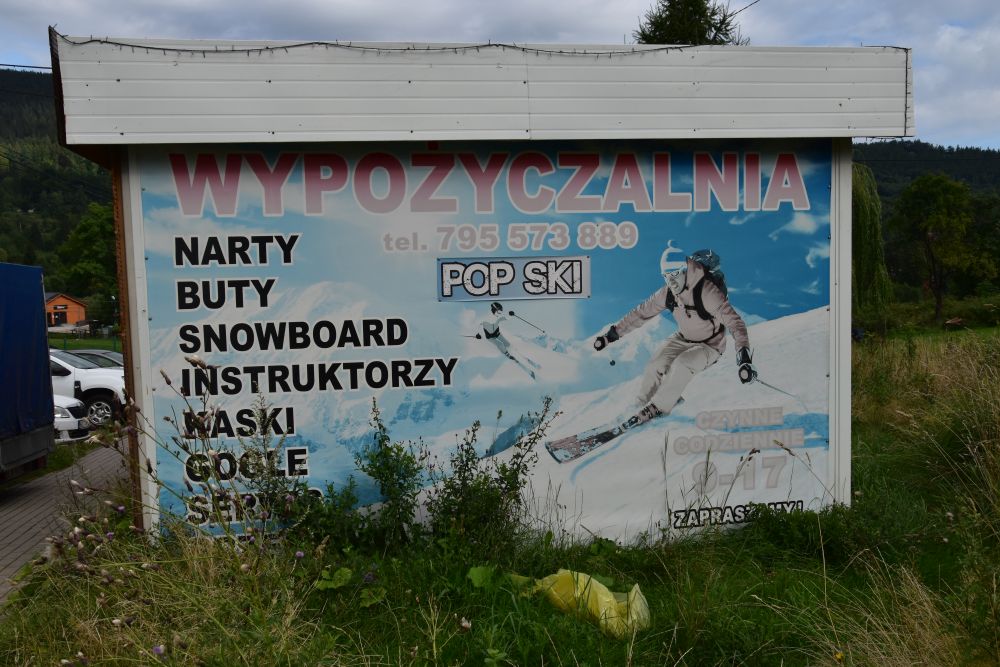
The surroundings have changed since my grand-father has made his painting. There are more trees. The shop for skiing equipment indicates sports activities in winter.

The shop for mountain biking equipment may be busy in summer. Parking is free here.
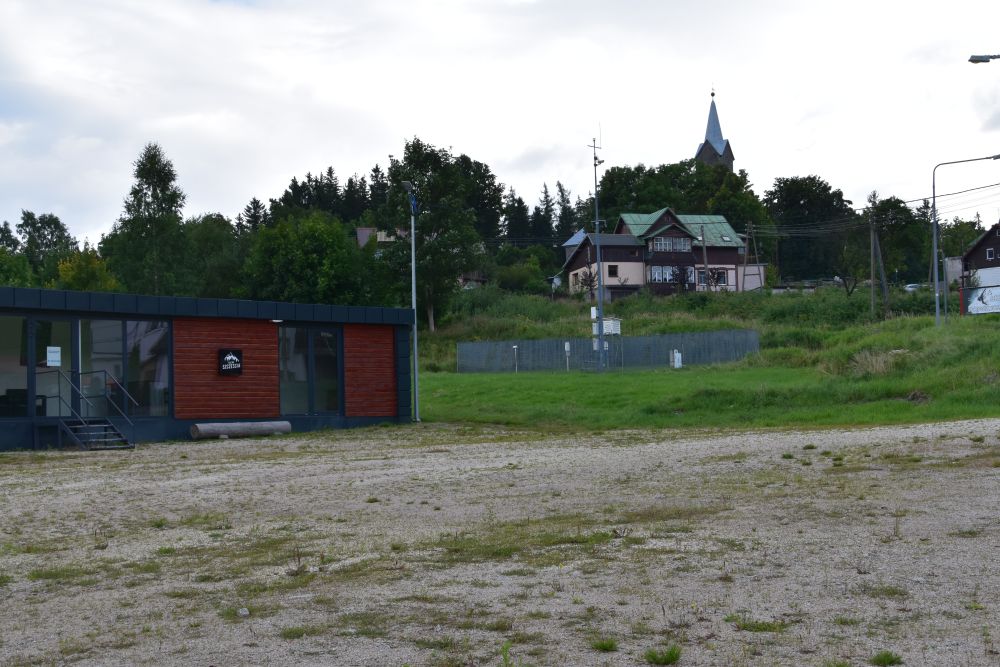
I select my own perspective to take a photo of the Church Corpus Christi; perhaps it is this pond that appears in the right hand corner of my grand-father’s painting.
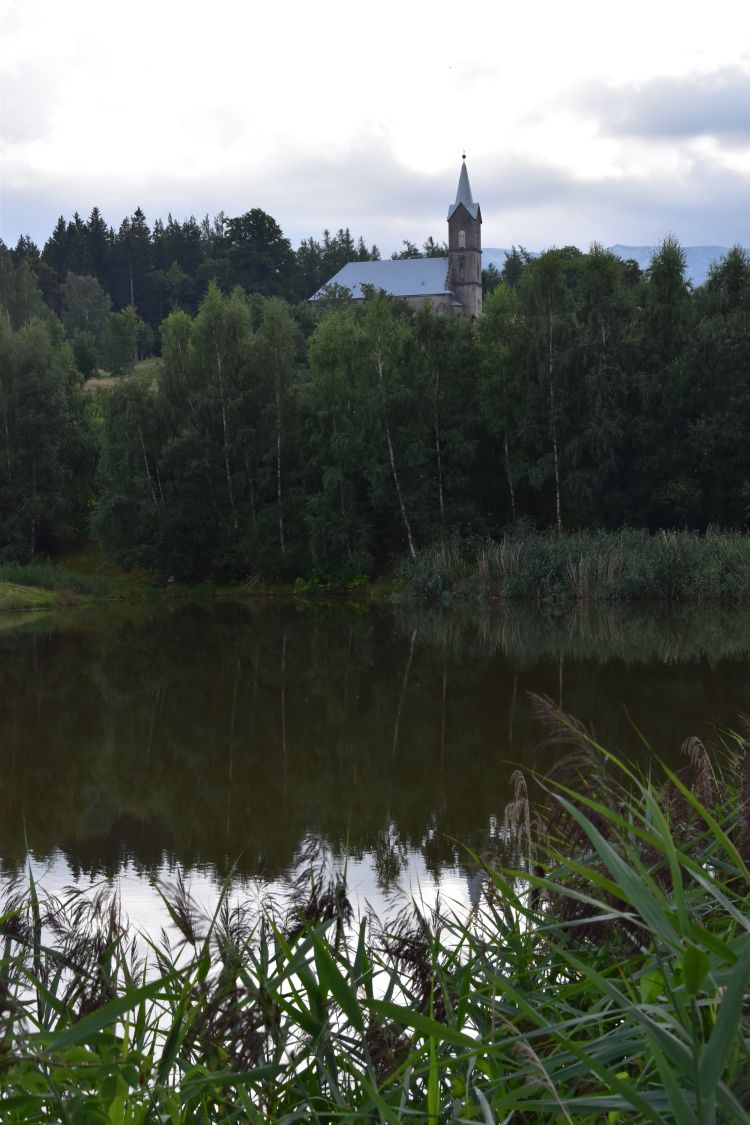
One day was not enough to find out everything about the painting of my grand-father. I should return and spend several days to dig deeper. In addition, I would like to benefit from the hiking opportunities, one of them being a climb to the Reifträger or Szrenica.
Where are we geographically?
Now we are at Szklarska Poręba (in German Schreiberhau) in Silesia (in German Schlesien), close to the border between Germany, Poland and the Czech Republic. The mountains are called Giant Mountains, Riesengebirge or in Polish Karkonosze. The mountain above Szklarska Poręba, the Szrenica (in German Reifträger) is 1362m high.
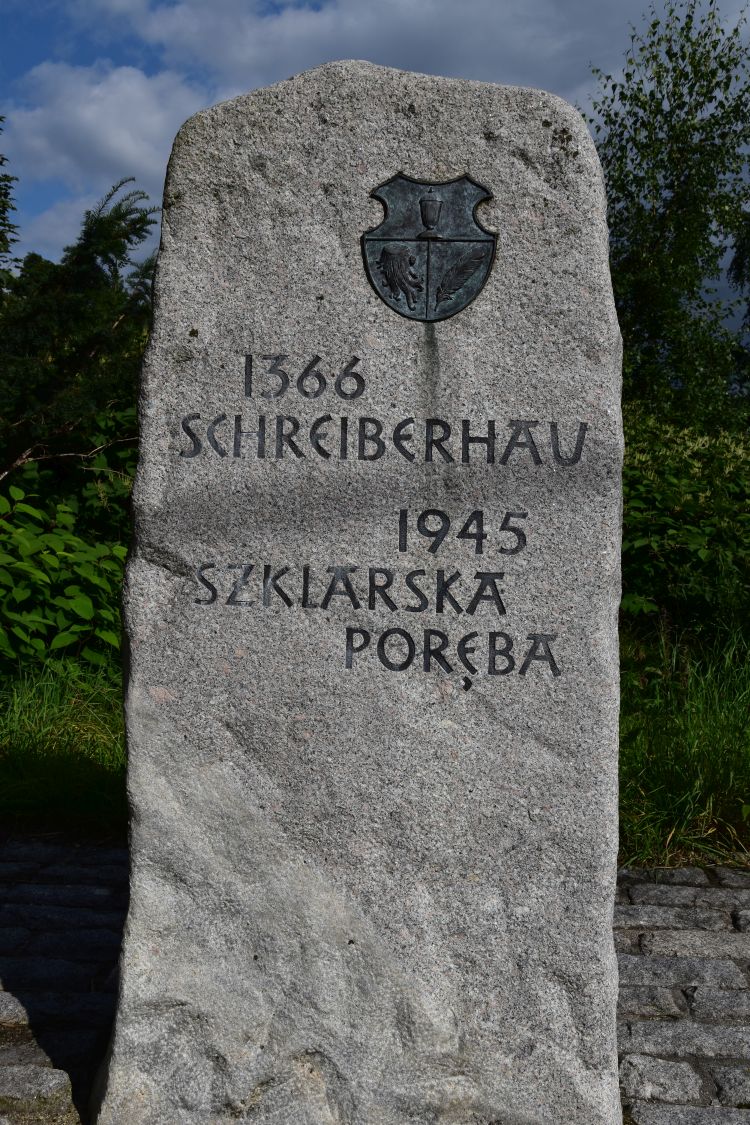
Some background information about Szklarska Poręba (Schreiberhau)
This stone indicates that Szklarska Poręba existed already in 1366. At that time, it was a settlement with the German name “Schreiberhau” (also called Schribirshau).
German colonists established Schreiberhau around the newly founded glass factory. The area was part of Bohemia (since 1335) and hence part of the Holy Roman Empire of the German Nation. The landlords here were the counts of Schaffgotsch, a family that still exists today.
The term “hau” in “Schreiberhau”, refers to the “forest clearing” needed for the settlement and the glass factory. Why was the place not called “Glashau” to reflect the existence of the glass factory? The village chronicle (Ortschronik) of the local teacher suggests that “Schreiber” (“writer”) perhaps alludes to the man who wrote the documents required to install the factory and the settlement.
In 1617 the Preussler family took over the glass factory business and managed it until the middle of the 19th century. In 1842, Franz Pohl founded the new glass factory Josephinenhüttte; it thrived and was the largest and best-known glass factory in Silesia.
In 1902 the railway to Schreiberhau opened. It was now easier to reach the place. It became an attractive mountain resort and a centre for artists (see below).
In 1945, the Potsdam agreement assigned Silesia to Poland. The Poles now changed “Schreiberhau” to “Szklarska Poręba” which translates to “glass forest clearing” (the German equivalent to “Glashau”). The mountain Reifträger became the Szrenica or the “hoarfrosty” mountain (the Polish word “szron” means “hoar” or “Reif”). Most of the German inhabitants were expelled from Silesia and Poles, expelled from the east, settled instead. In 1945 Poland was literally moved to the west; it lost land to the Soviet Union in the east and gained land in the west, at the expense of Germany.
Renamed to Glashütte Julia, the Szklarska Poręba glass factory continued to operate until 2000. The family Schaffgotsch moved to Schwäbisch Gmünd. Here, the former Josephinenhütte was refounded in 1951, and it worked until 1983.
By the way: Karkonosz in Polish translates to “Rübezahl”. He is the capricious mountain troll who lives in the Giant Mountains that the Poles now call Karkonosze. Telling stories about Rübezahl has been a tradition known since the 15/16th century. Nice, how the German past continues to live in the Polish toponyms.
How are artists and art related to Szklarska Poręba or Schreiberhau?
In the 18th century, the first artists discovered the beauty of the Riesengebirge. Carl Christoph Reinhardt (1738 – 1827), Christoph Friedrich Nathe (1753 – 1806) und Anton Balzer (1771 – 1807) were some of the names. Later, Caspar David Friedrich (1774-1840, romanticism) painted here.
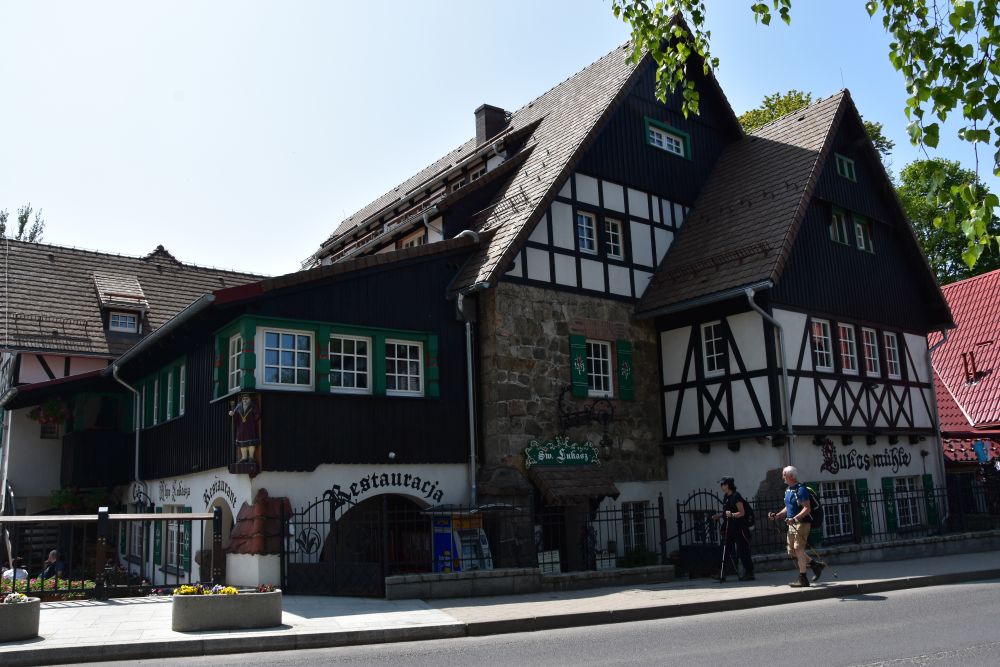
Around 1900, Szklarska Poręba became a centre for artists, among them Gerhart Hauptmann (there is a museum about him). Also around 1900, Carl Ernst Morgenstern (1847-1928), professor at the University of Breslau (1883-1913), taught pleinair painting at nearby Krummhübel (Karpacz). Some of his students later belonged to the Schreiberhau Association of Artists St. Lukas (Schreiberhauer Vereinigung bildender Künstler St. Lukas) that was founded in 1922. Their seat was the Lukasmühle at the Zackerle creek (now: Kammiena; later, in 1930 the artists moved to the hotel “the Zackerfall”).
The Lukasmühle (Młyn Łukasza) is an inviting restaurant today.
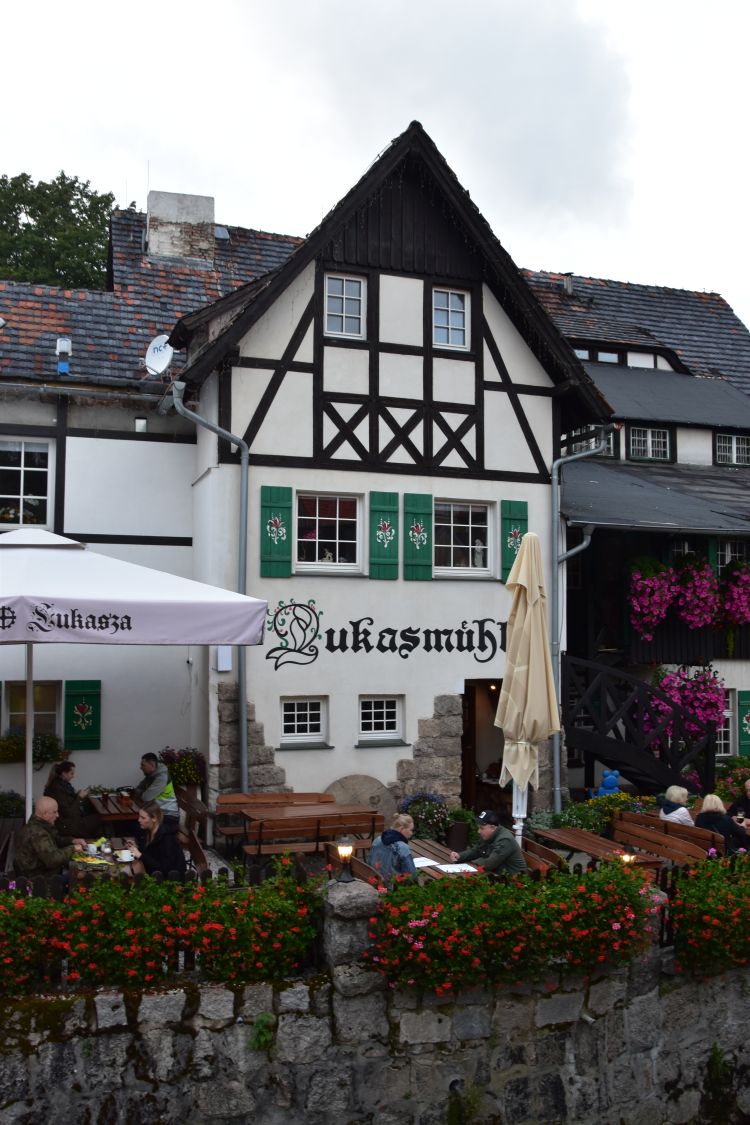
I had selected it for dinner without knowing about its history.
It could well be that my grand-father Hermann Radzig-Radzyk was a member of the Lukas association, but I cannot find any details about that in the Internet.
Strolling around in Szklarska Poręba
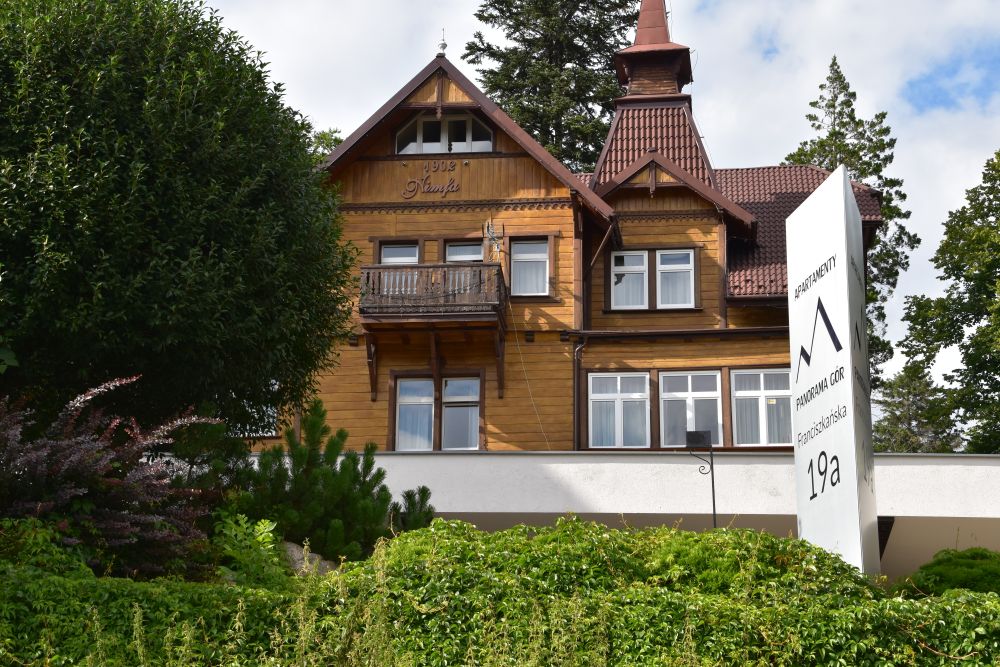
For one full day, I explore Szklarska Poręba. Here are some impressions. There are nice villas…
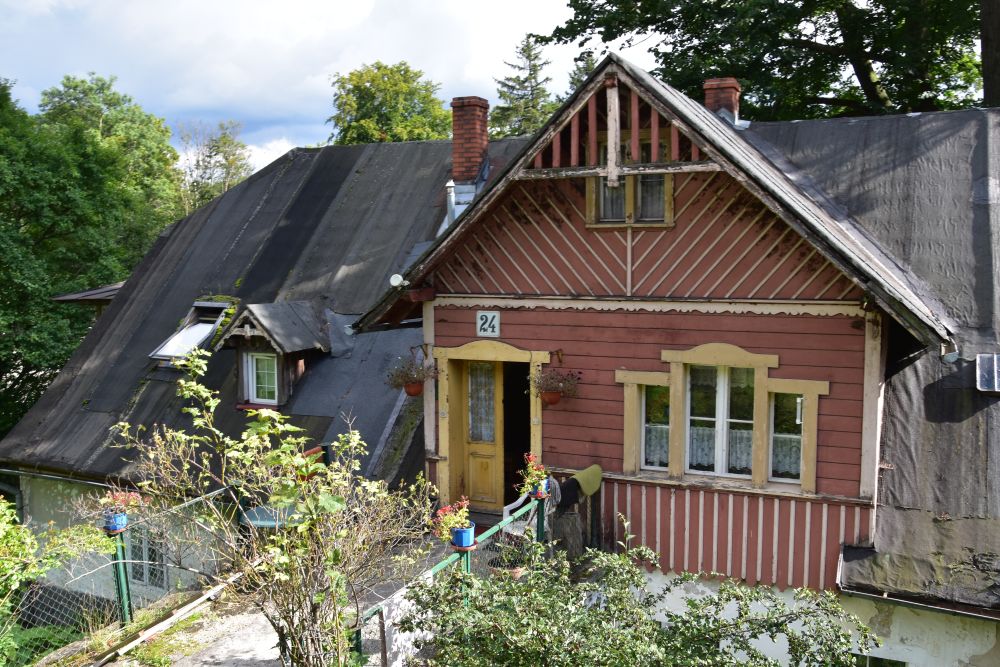
… and apartment houses.
The winter must be busy here. The continental climate makes for good snow,…
… but nevertheless snow canons hidden behind this house wait to be used in winter.
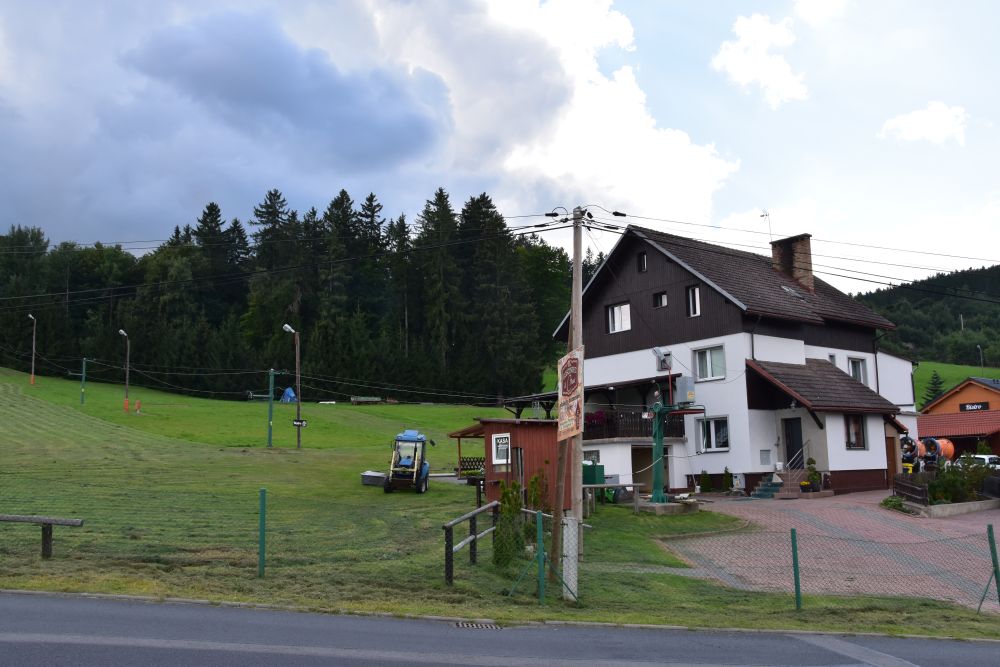
This is a rather “flat” slope, however the Szrenica seems to offer a variety of attractive ski runs.
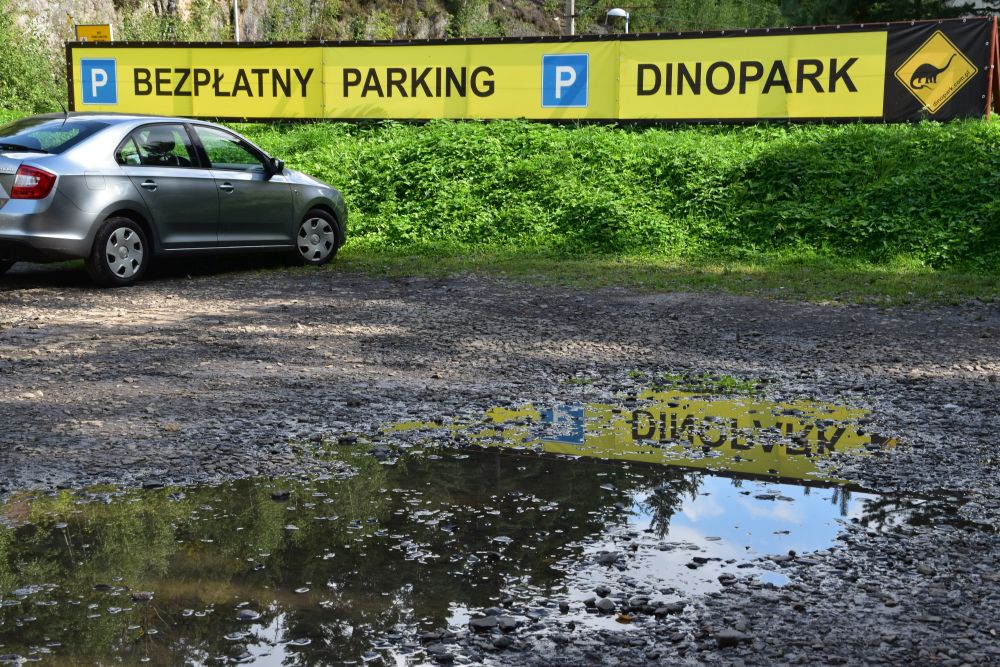
There is also a Dinopark for chlidren, with free parking (now a bit dirty…).
Above Szklarska Poręba Średnia I find the Sudecka Chata or Sudetenhütte.
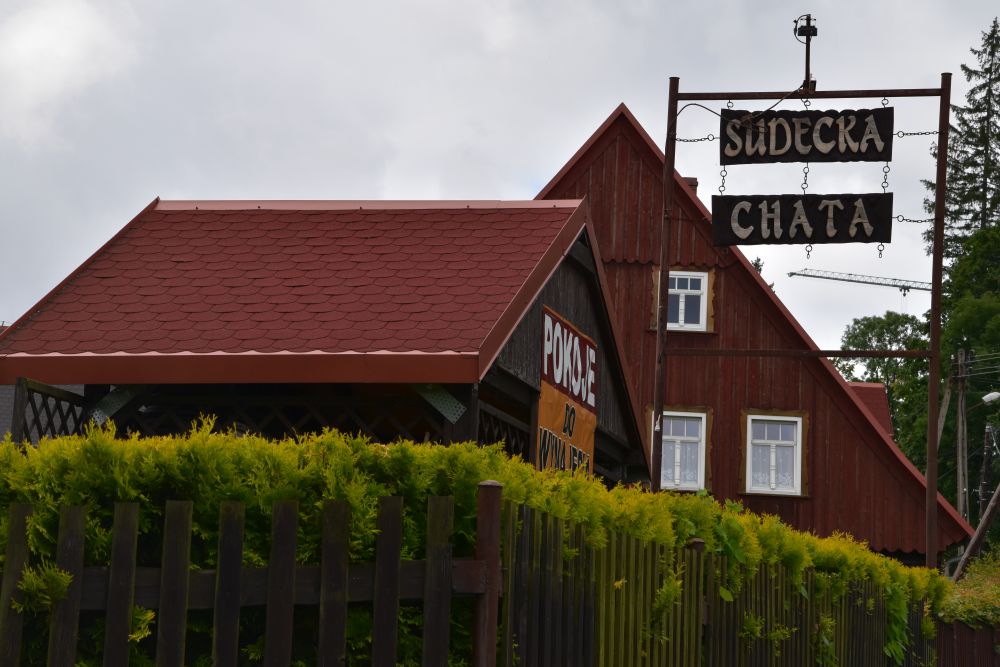
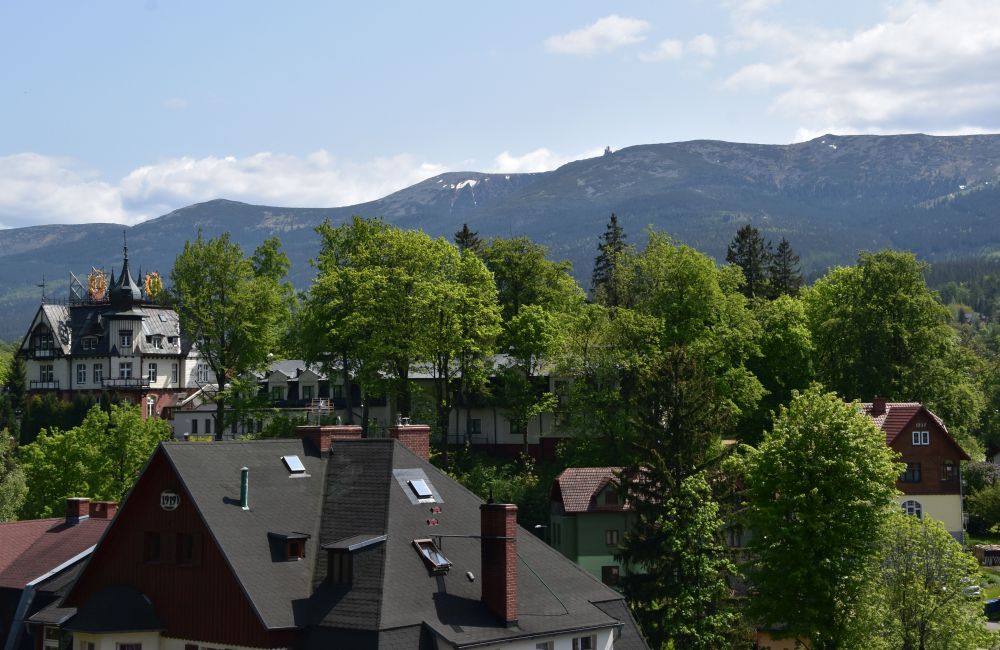
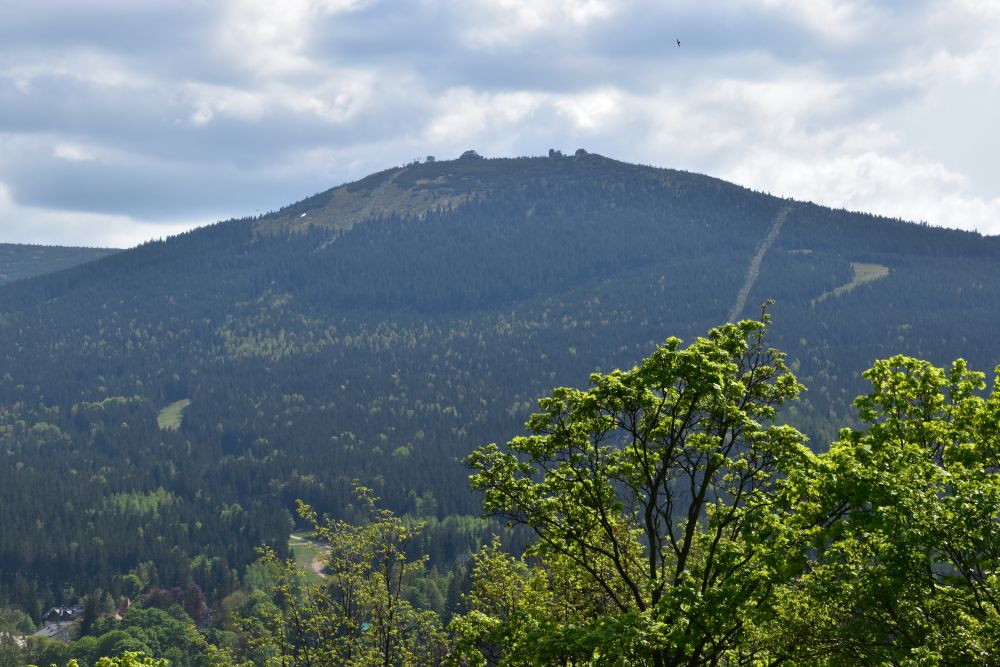
It is closed. The friendly owners prepare coffee for me. They take a vivid interest in my research and take me up to the rooms under the roof, where I have a gorgeous view of my grand-father’s church and the Szrenica or Reifträger.
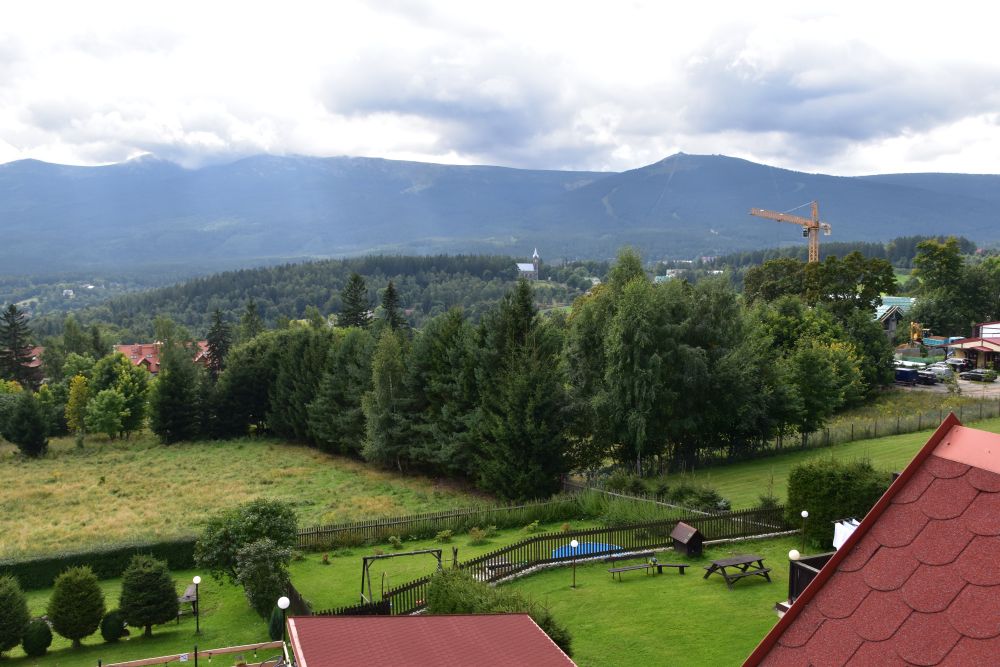
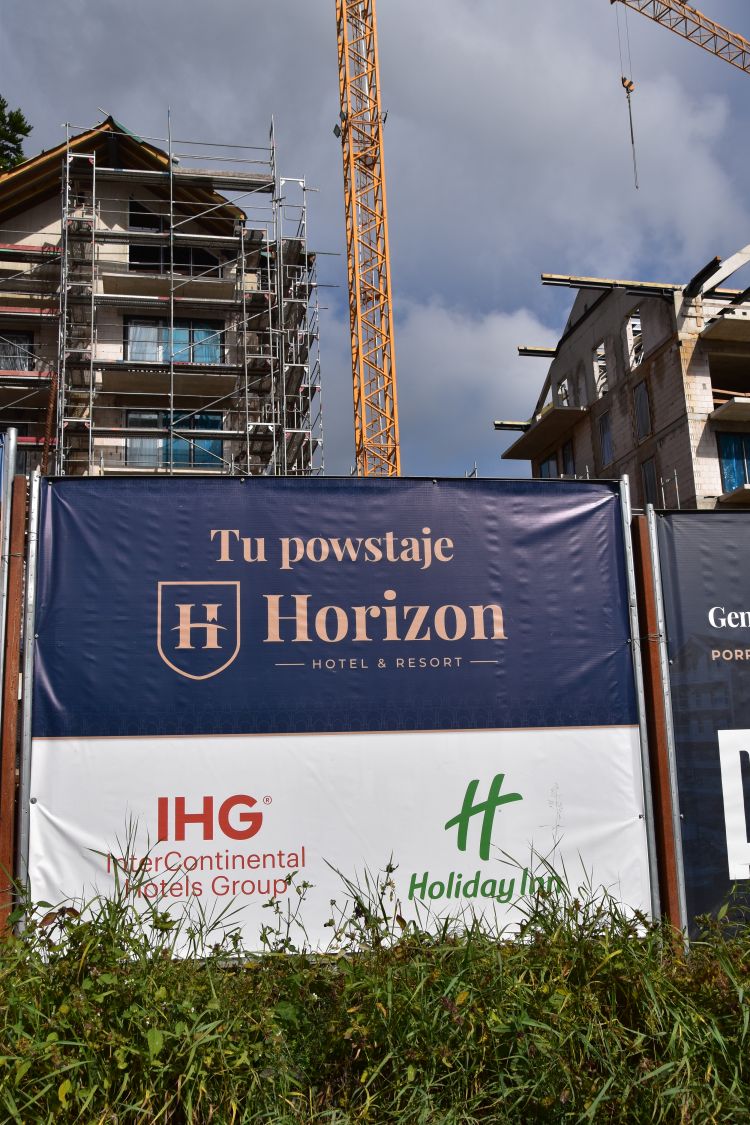
There is a crane disturbing the view: Holyday Inn builds a luxury resort. Their infinity pool is “announced” with the view from the garden of the Sudecka Chata, it seems.
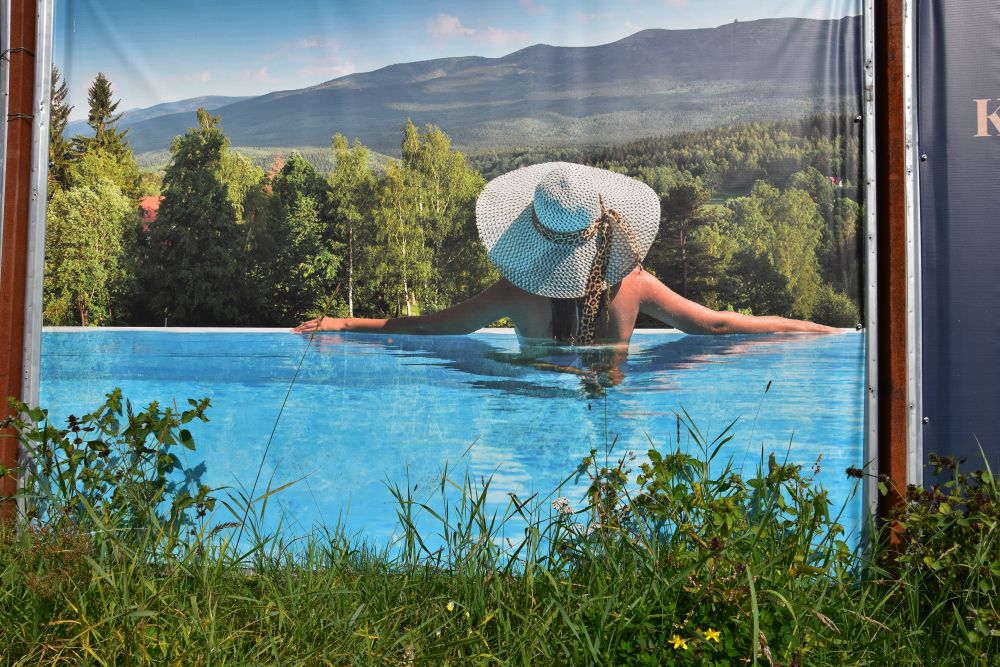
This is, what is going on under the yellow crane. It seems that Holiday Inn believes in the potential of Szklarska Poręba.
At lunch time, I stop at the restaurant Płękitny Paw and have a wonderful meal in the garden, a delicious soup and excellent stuffed omelettes.

Good-bye Szklarska Poręba and Giant Mountains
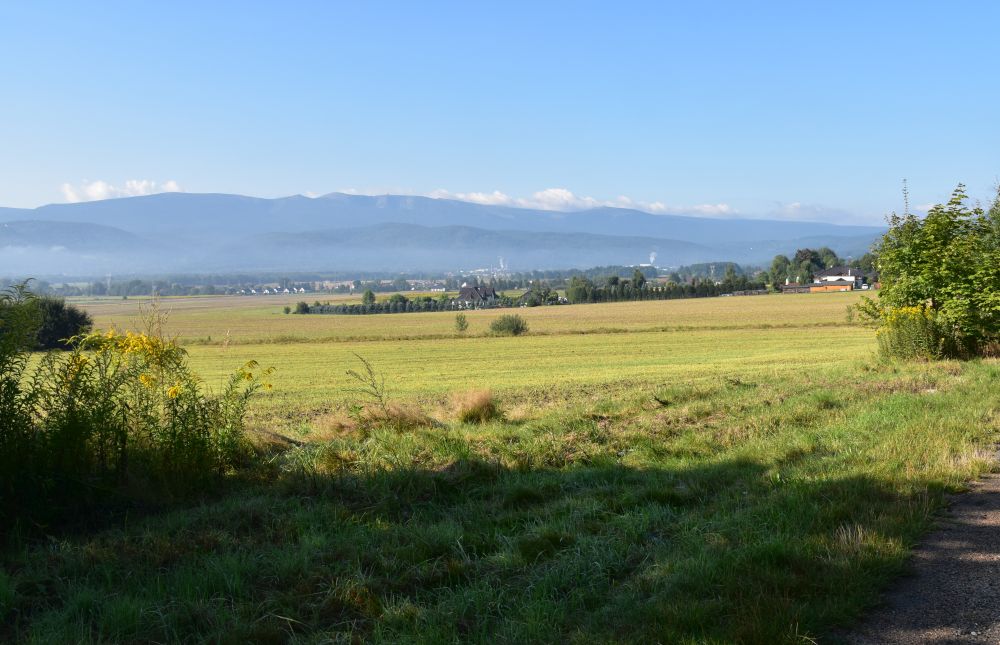
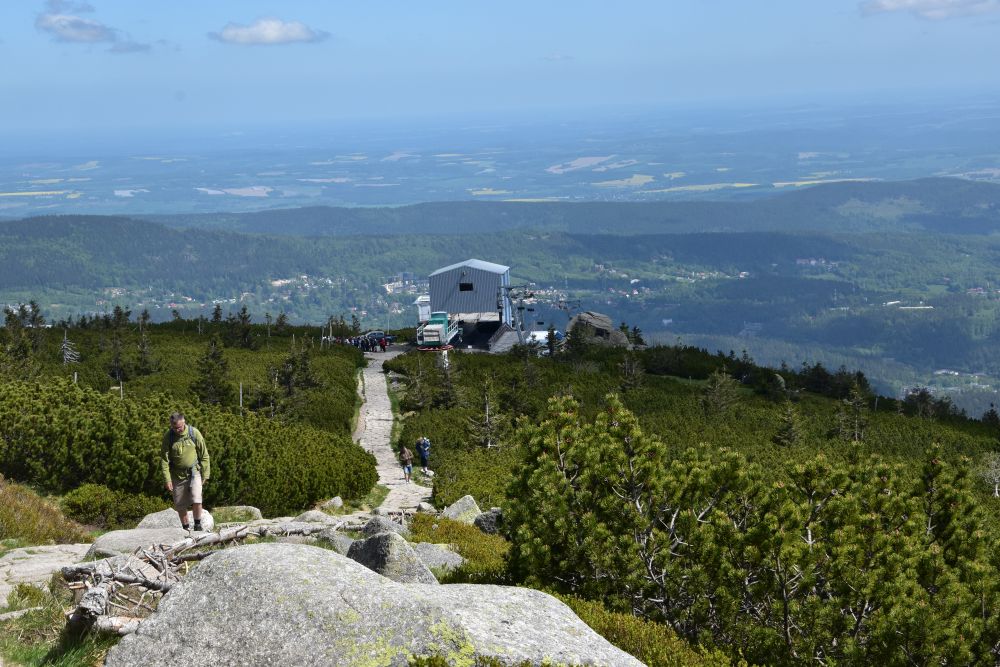
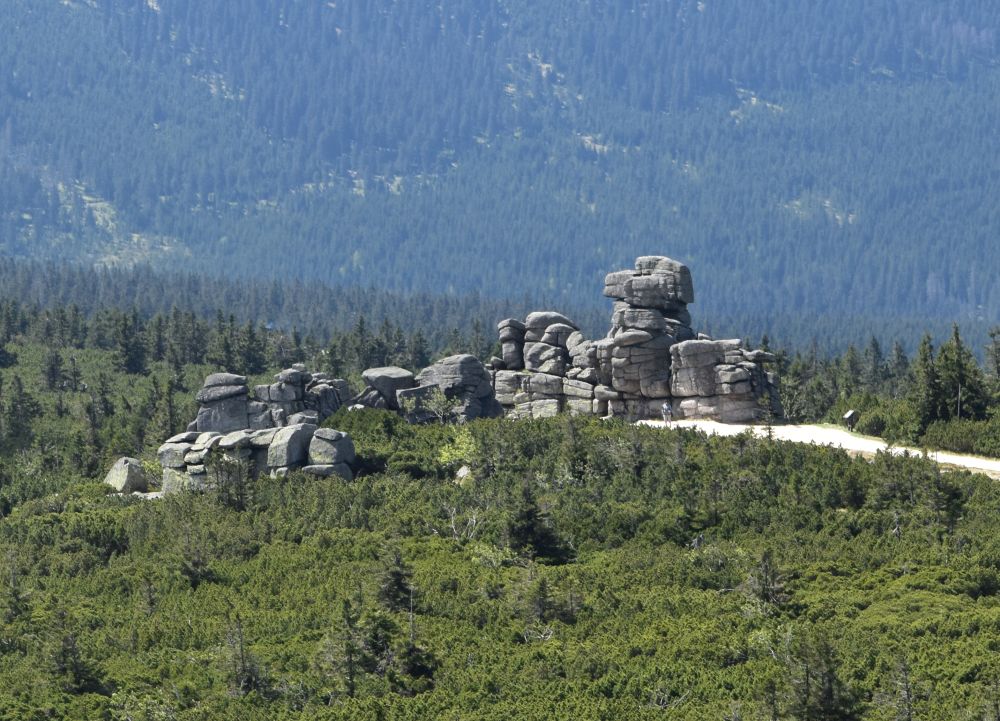
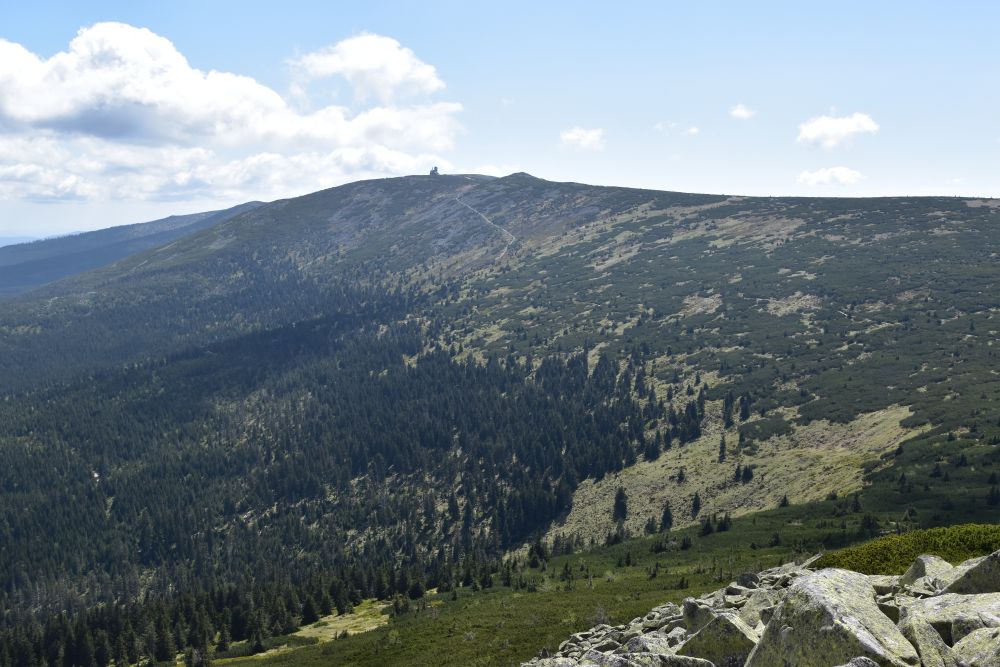
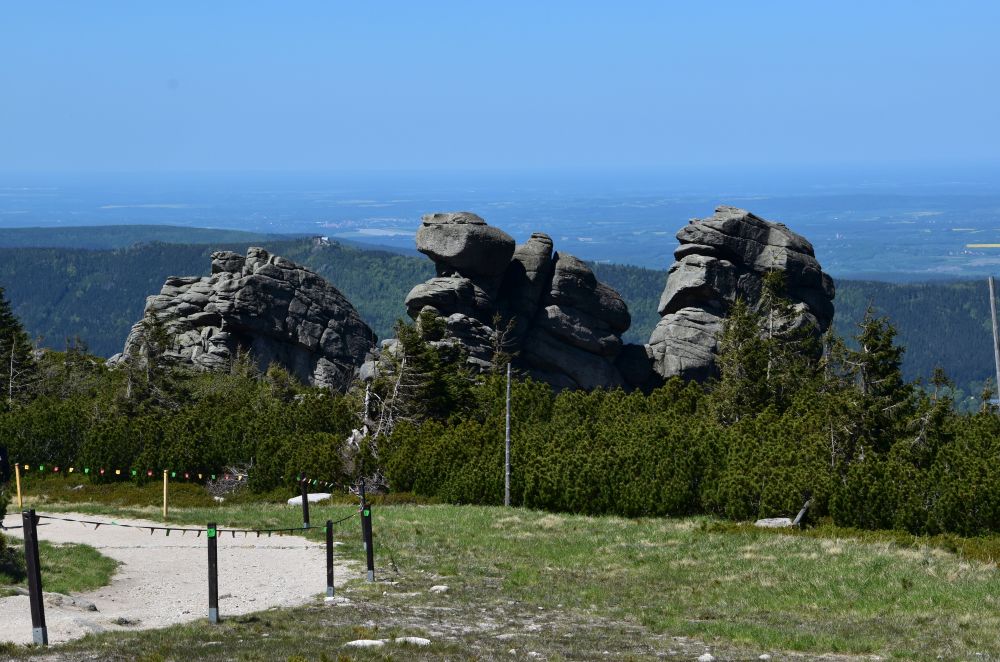
I would have liked to stay another day to hike around Szklarska Poręba, but my hotel is fully booked. I leave and look back to the Giant Mountains, where Rübezahl, the mountain troll, is up to mischief.
I may return one day for more research and for hiking.
Now, I say good-bye and drive to Wroclaw, the capital of Silesia.
Sources:
About art and artists in Silesia and in the Giant Mountains:








 Petra Peters