Via Bad Bergzabern to Strassbourg in France

Wednesday, our 15th day traveling in Germany. We head south. Our destination is the Alsace in France. We cross the industrial zones around Heidelberg, Mannheim and Ludwigshafen and follow the Deutsche Weinstrasse of the Pfalz southwards.

.

Bad Bergzabern – a charming quiet town – forgot my jacket here

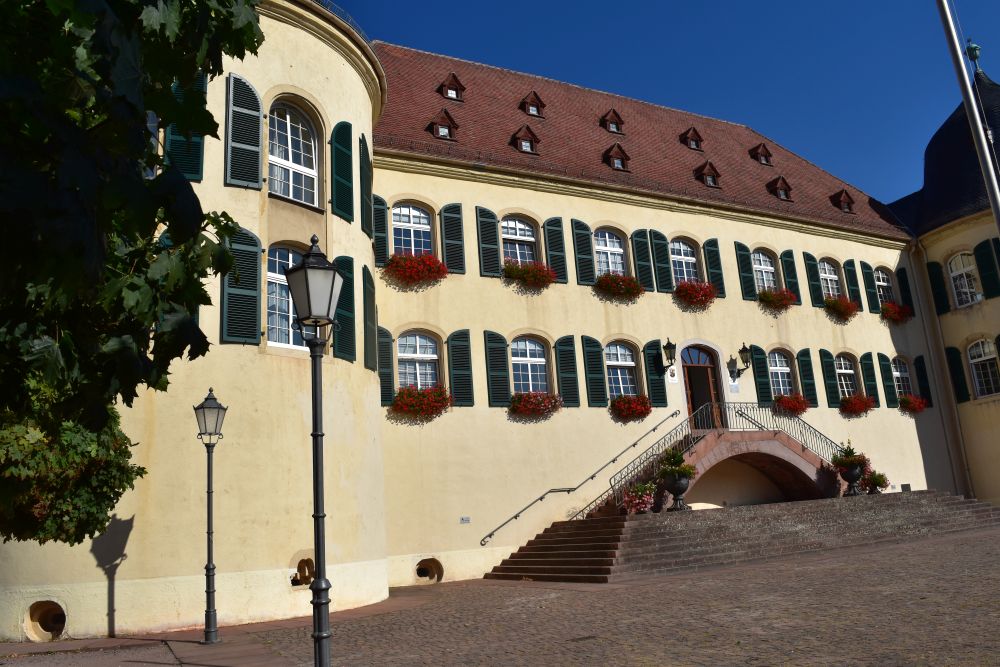
Bad Bergzabern is about 10km north of the German border with France. It is a small pretty town with a castle,…

aaa_0547-small

… half-timbered houses – such as the “Weinstube zur Reblaus” or “Wine Tavern for Vine Fretter”,…

aaa_0552-small

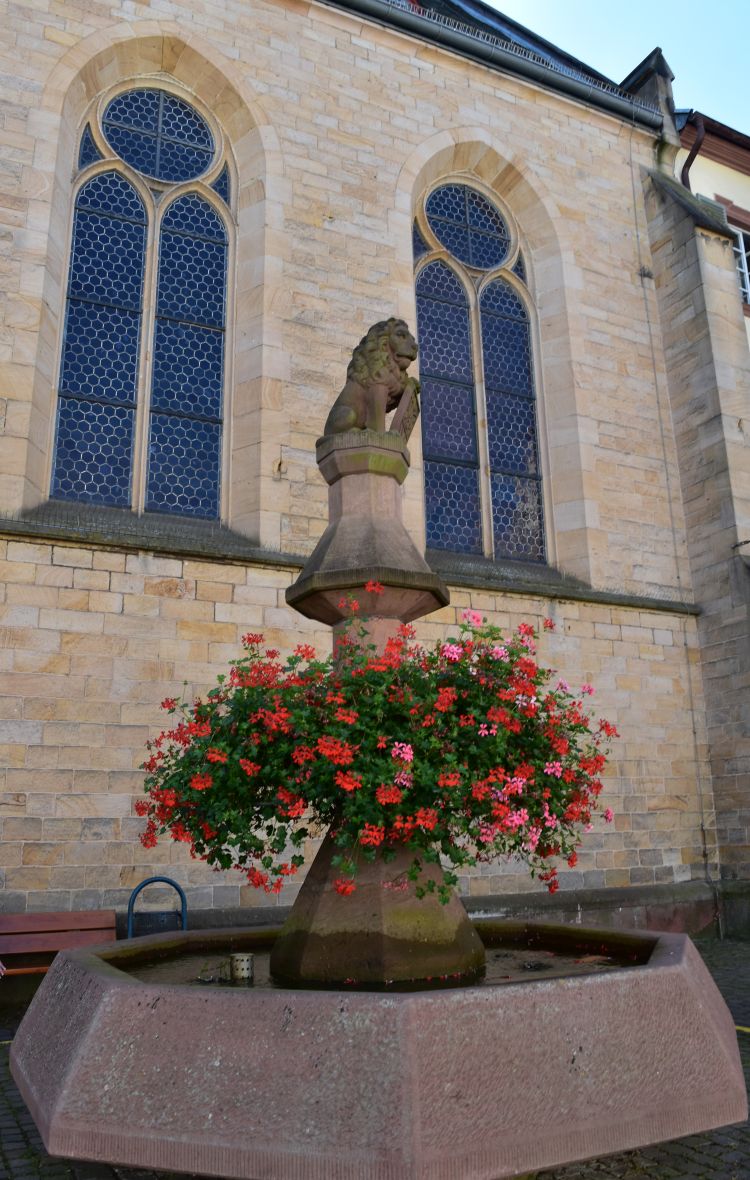
… a church with this lion fountain,…

aaa_0556-small

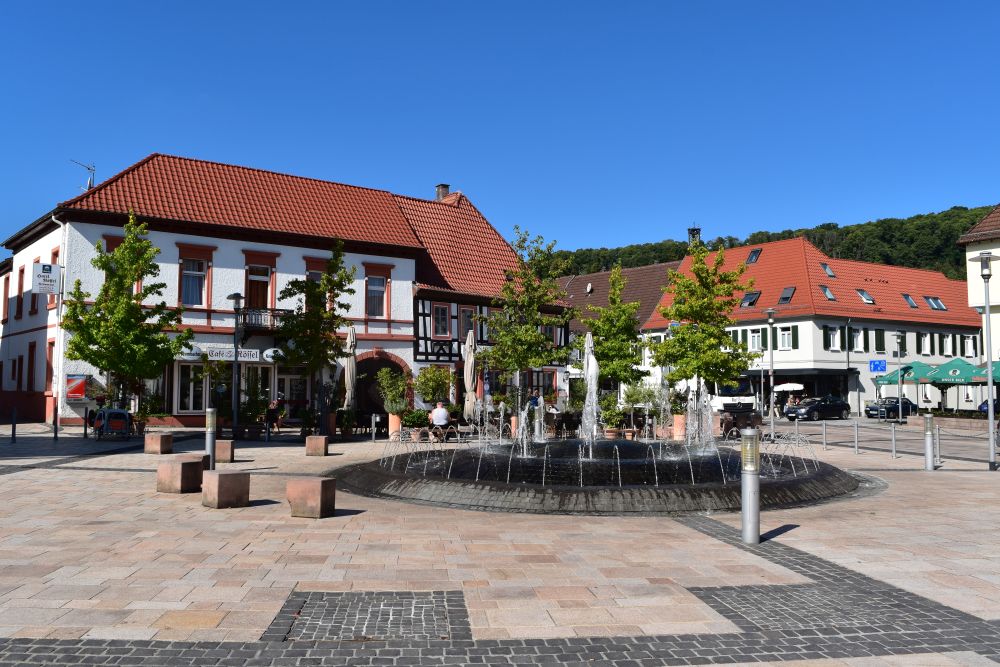
… and the market square woth another fountain.

aaa_0560-small

In the second hand shop called “Hoppla”, Ursula finds a pair of elegant German design shoes for 15 Euros. I find a linen white jacket for 15 Euro and a pashmere scarf for 5 Euros. We take it all – thank you, Ursula… but then – hoppla – we forget my favorite blue windstopper jacket in the shop called “Hoppla”, and we only notice it, when we are already in France. Ggrrrr… We drive back – it is about 10km – and we find the shop closed – until 2 PM. We look for a place to eat lunch. We find restaurants that are closed, uninviting or unwelcoming. Hesitating we stand in front of one of the closed restaurants, when a couple of about our age passing by says: “Just round the corner you will find the restaurant Haas, they serve excellent regional food.” Some minutes later we share a table in the restaurant Haas. We enjoy a great Leberknödelsuppe and a salad plate. We learn that the couple lives in Namibia and comes home to the Pfalz every year, now that they have retired. I have been in Namibia as well, and we have a lot to chat – about the town Windhoek, the Etosha park, the Waterberg and the Namibian winery (yes that exists…). Well, hoppla, sometimes unluck produces luck.

Shortly after 2PM the shopkeeper of “Hoppla” opens her shop and returns me my favorite blue jacket. Now we drive back to France.

.

The Weintor (wine gate) at Schweigen – a touristy tourist attraction

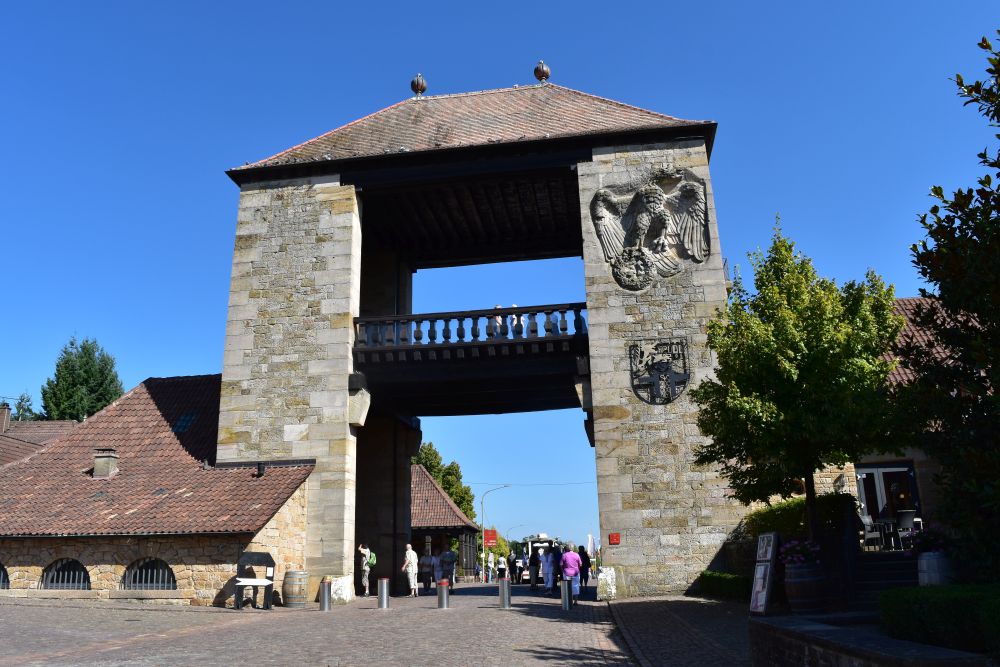
Schweigen is the last German village at the French border The Deutsche Weinstrasse of the Pfalz starts here. The beginning is marked with this gate.

aaa_0568-small

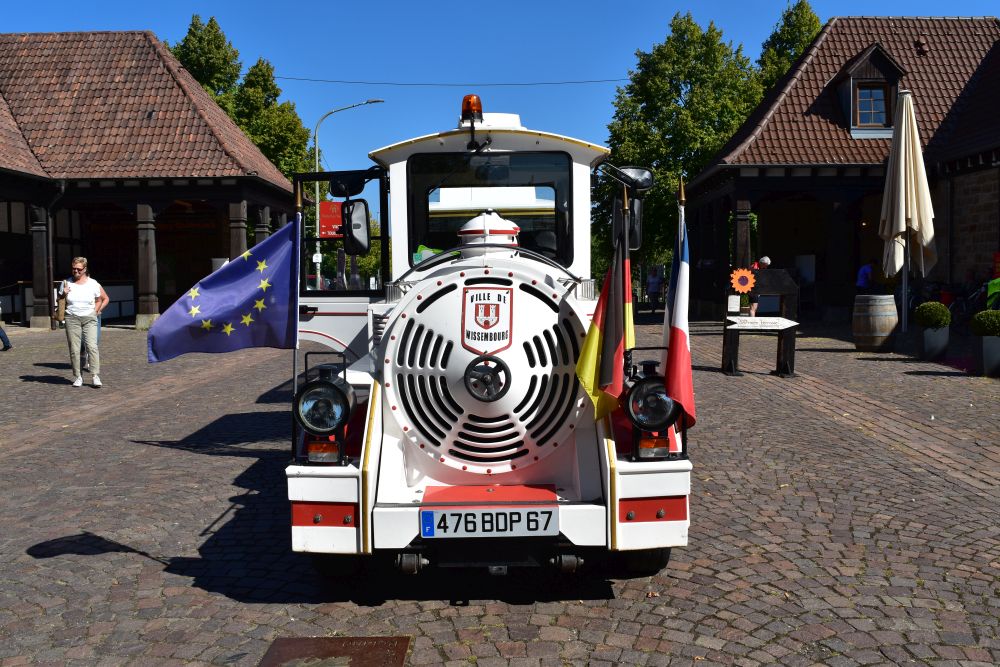
The gate attracts tourists. Hords have come here in busses. A train is ready to take them to Wissembourg just across the border in France.

aaa_0569-small

We leave this touristy place immediately. Both Ursula and I carry an old Dumont Kunstführer of the Alsace, mine is from the year 2000. The information about history and historic buildings are still valid.

.

Wissembourg – a charming Alsacian town and a harmonious Romanesque-Gothic church

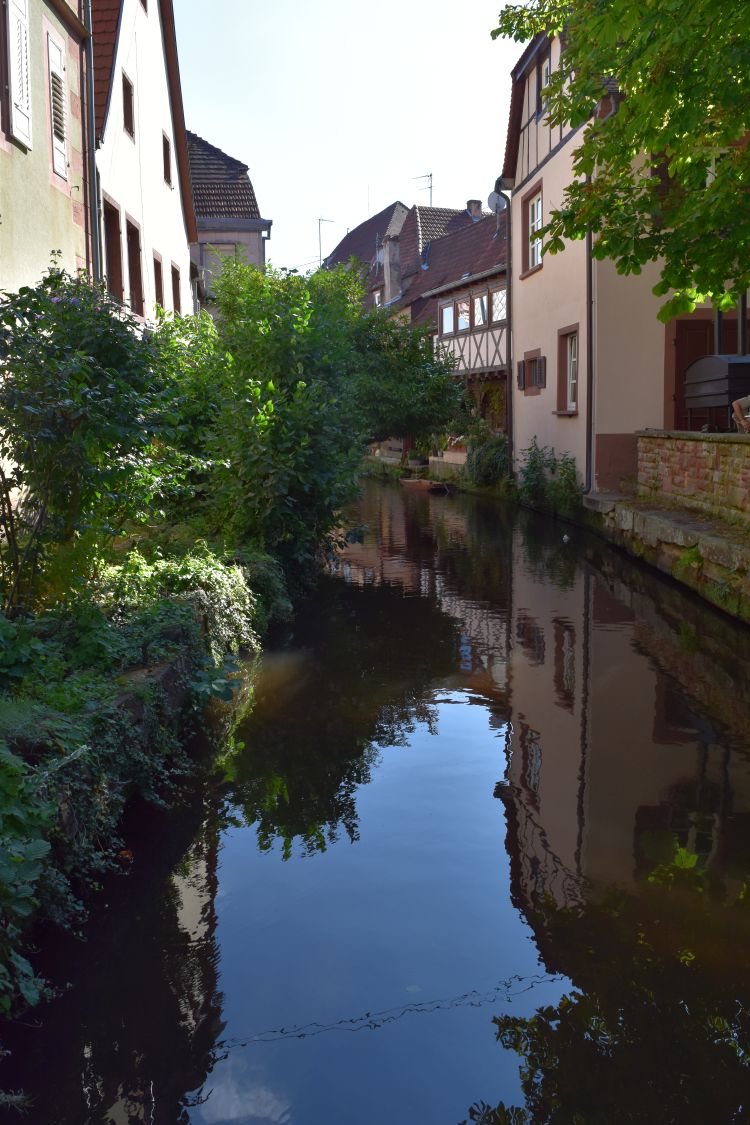
Wissembourg is our first village in the Alsace with half-timbered houses and a small creek -this is an arm of the Lauter.

aaa_0590-small

In the 11th century, a Franciscan-Claristic monastery was founded here and the construction of the cathedral St. Peter and Paul started. This cathedral is a gem with much preserved from Romanesque and Gothic times (source: “Die Kirche St. Peter und Paul”, Editions du Signe).

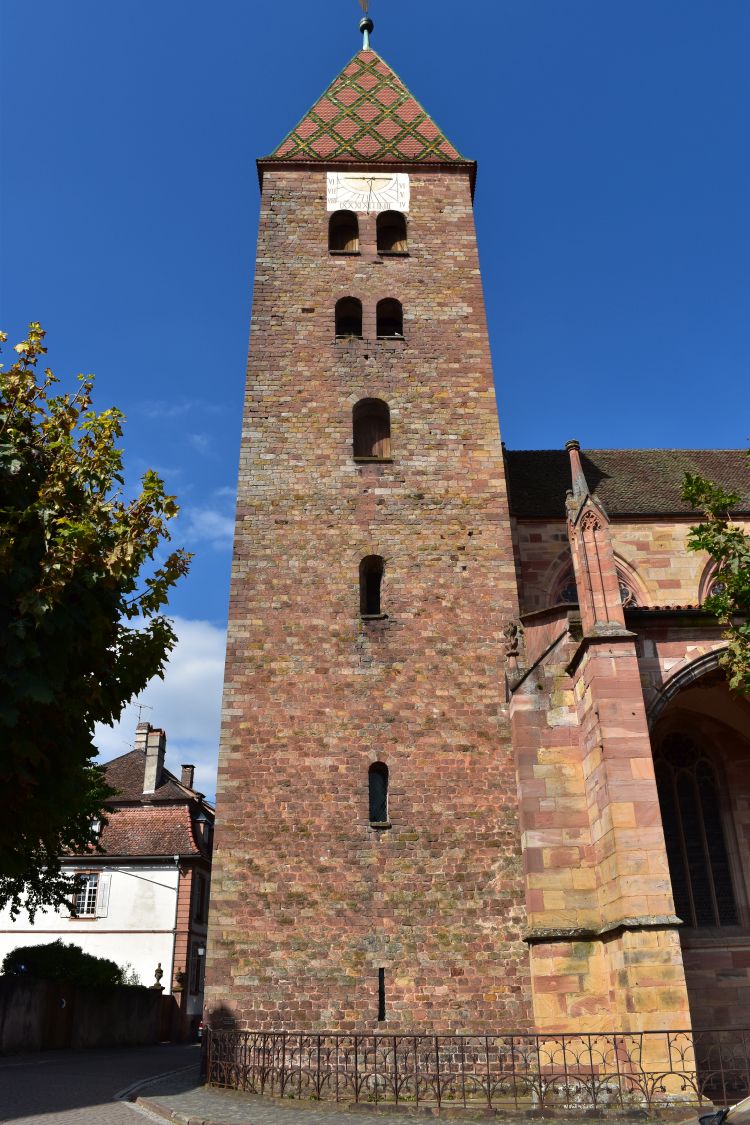
This Romanesque tower is from the 11th century.

aaa_0585-small

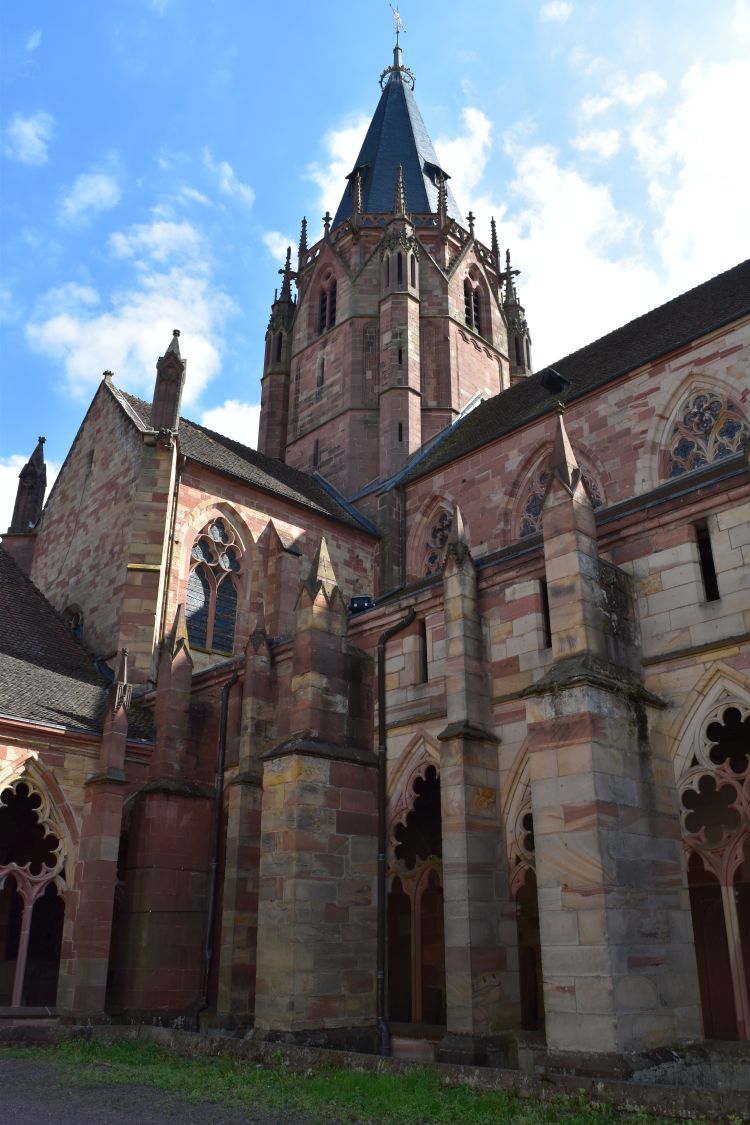
The second tower is Gothic in style – here is the view from the cloister.

aaa_0582-small

I love the solemn, dark-cool atmosphere inside with the 11th century representation of Christ made from one piece of painted glass with a diameter of about 25cm (the original is in Strassbourg).

aaa_0573-small

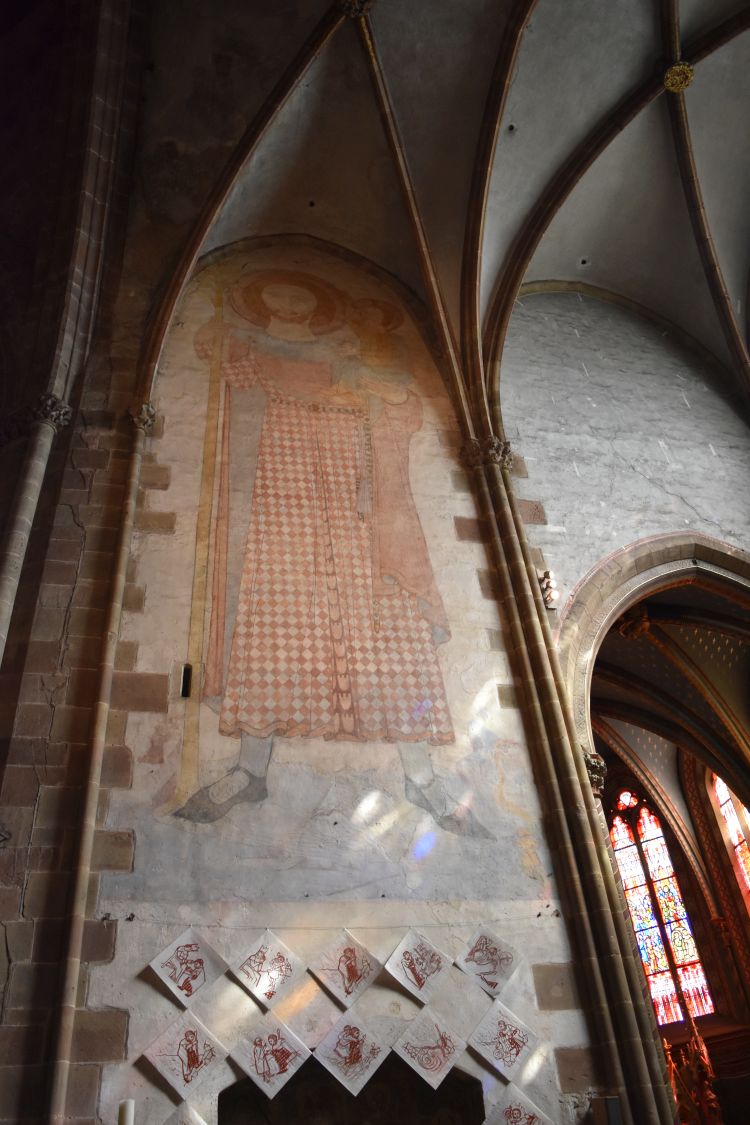
The windows are preserved – they are from the 14th century and earlier (one rosette is from 1190). There are frescos like this Christopherus from the 14th century.

aaa_0581-small

This guy – you can tell – is working hard. The column weighs heavily on his shoulders.

aaa_0578-small

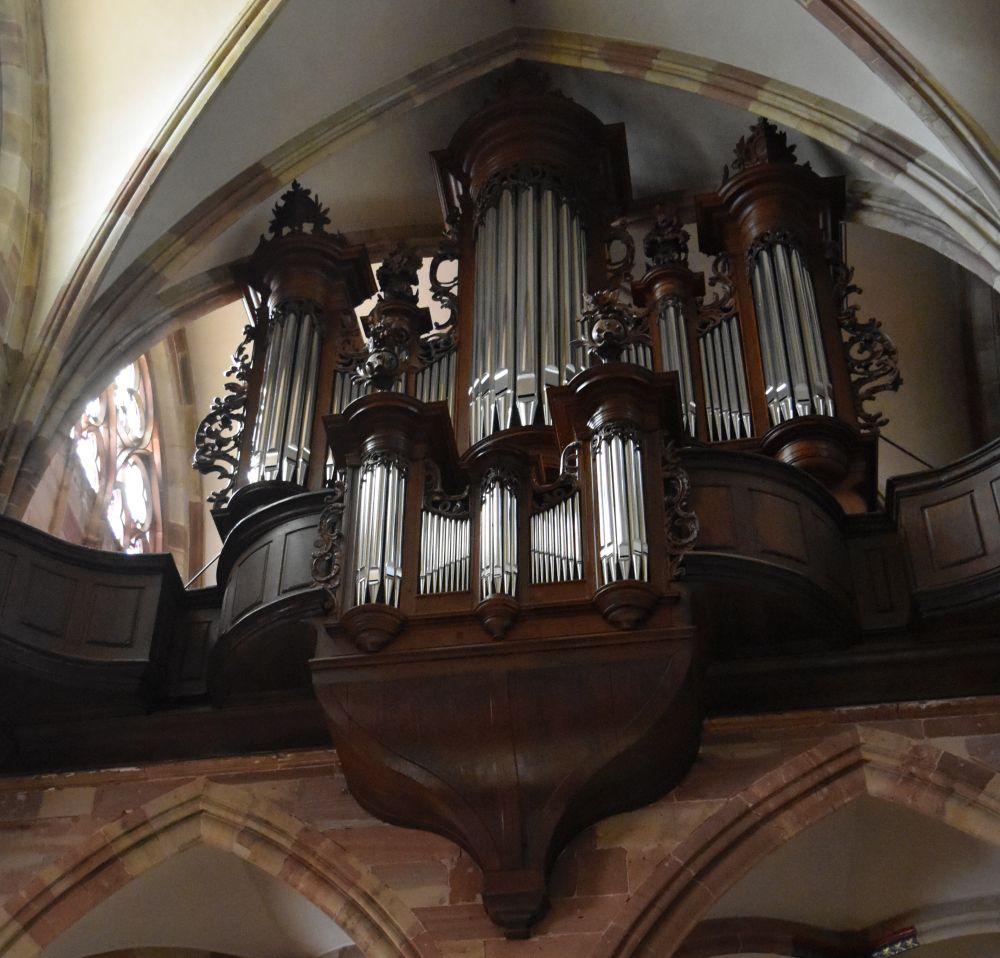
The organ is from 1766.

aaa_0576-small

The attached Romanesque chapel hosts an art exhibition. We love this church and spend something like two hours here.

.

Soufflenheim – pottery – and The Moulin de Wantzenau – a quiet place after noisy Heidelberg

Next stop is at Soufflenheim that produces pottery. The shopkeepers speak this soft Alsacian dialect, German mixed with French.

aaa_0599-small

I buy an Alsacian cook book (“Kochen im Naturton von Soufflenheim” or “cooking in natural earthernware from Soufflenheim”). I plan to prepare the rabbit cooked in cider – it looks tempting.

We decide to look for a hotel near Strassbourg and find the Moulin de Wantzenau, just some 5km away from Strassbourg. The Moulin is a charming place to stay. It is quiet here in the middle of nature. The attached restaurant serves delicious meals. We enjoy another warm summer evening in the garden.


The Mosel winding and winding from the Vosges to the Rhine

On Saturday (our 12th) day traveling, we expect the last sunny day of this long lasting sunny period. We plan to see the Mosel valley with its wine villages and some selected wine growers and go for a short hike along the meandering Mosel river.

.

Looking for wine growers and finding one in Piesport and one in Leiwen 

With my Johnson I had selected some wine growers around Piesport. Laurentiuslay and Goldtröpfchen are some of the first class vineyards. We try Clüsserath at Trittenheim – they do not open the door. Julian Haart in Piesport does not open the door either. Reuscher-Haart next door opens and I buy a Riesling with the name “Goldtröpfchen”, for 8.50. From their garden there is a romantic view of the Mosel – the swan enjoys it.

aaa_0309-small

In the late afternoon, we find the St. Urbans-Hof in Leiwen open. A couple is working in the courtyard. They are from Poland and tell me that the manager is out today at a wedding. Ah, you want only one bottle and you pay in cash? They fetch me a bottle Spätlese from the vineyard Goldenes Tröpfchen für 27.50 Euro. On the wine list I see that their Laurentiuslay 2015 (Auslese) is not yet available and will cost 100 Euros. Grans-Fassian is another interesting winegrower of Leiwen, but we leave him for some other time.

.

Walking from above Piesport to Minheim

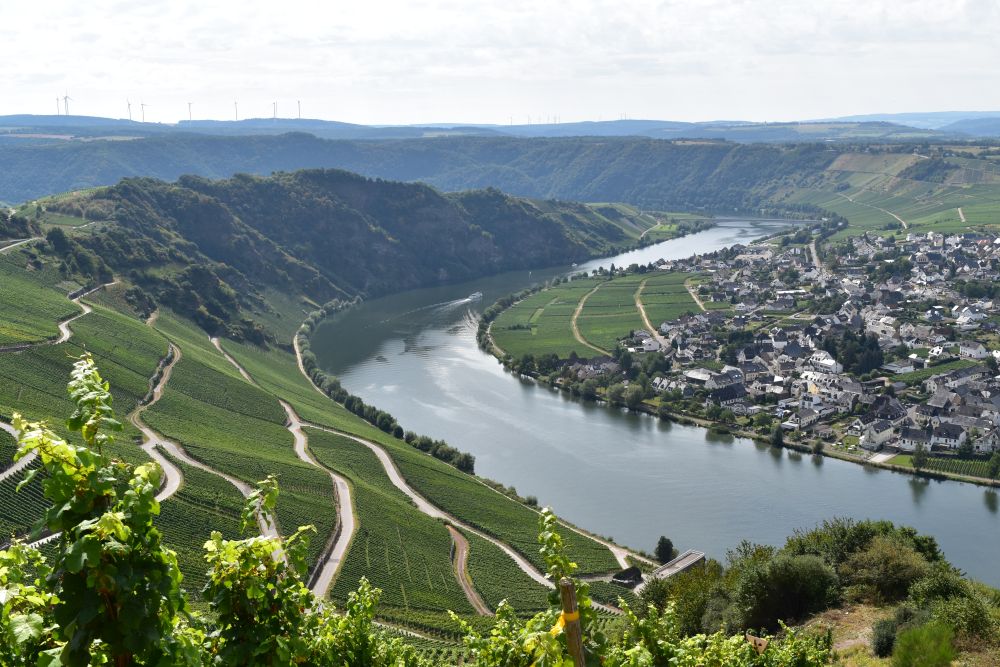
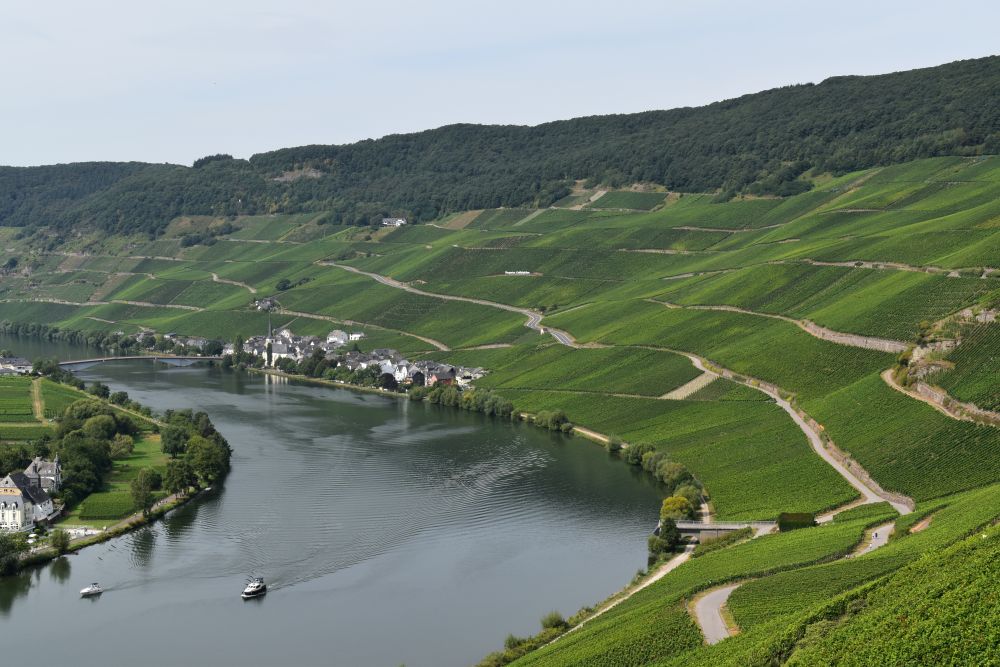
We walk from Piesport to Minheim. Minheim lies at the end of a half island formed by the meandering Mosel. This is the view of the northern slope of the half island: Steep, rocky and covered by dense forest. Piesport is below us. We park our car and walk towards the rocks.

aaa_0314-small

The steep rocky slope is called  “Loreley of the Mosel”. From the Loreley viewpoint we look down to Piesport and the vineyard called  “Goldenes Tröpfchen” labeled above it.

aaa_0319-small

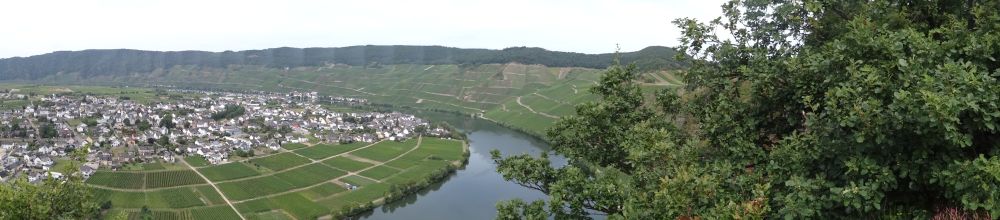
This is the panoramic view taken by Ursula.

dsc08100-small

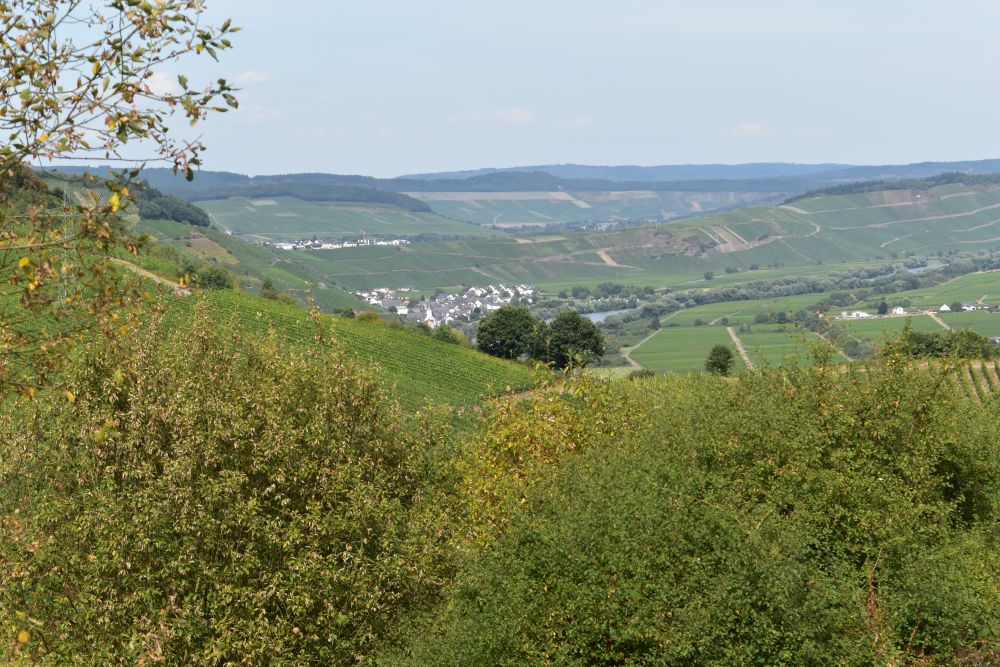
Walking on top of the half island, we see several vineyards, one behind the other, each bordering a different meander of the Mosel on south facing slopes.

aaa_0349-small

The Mosel has fought its way through hard rock with softer layers that forced it to meander reverting its flow from south to north giving many opportunities for growing wine on sun facing slopes reflecting in the water. The impressive scenery is visited by hikers, bikers, motor bikers and, of course, by wine lovers. The grape grown primarily is the Riesling.

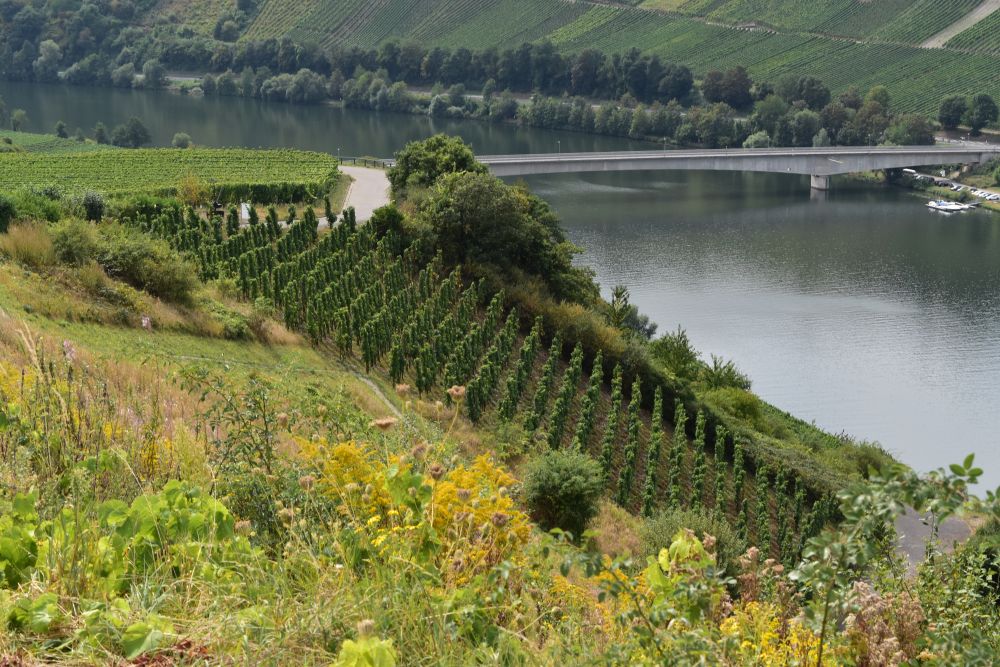
Minheim lies on the sunny side of “our” half island. Some of the vineyards are very steep here.

aaa_0330-small

Minheim is a village of wine growers – layed off and quiet in the midday sun.

aaa_0342-small

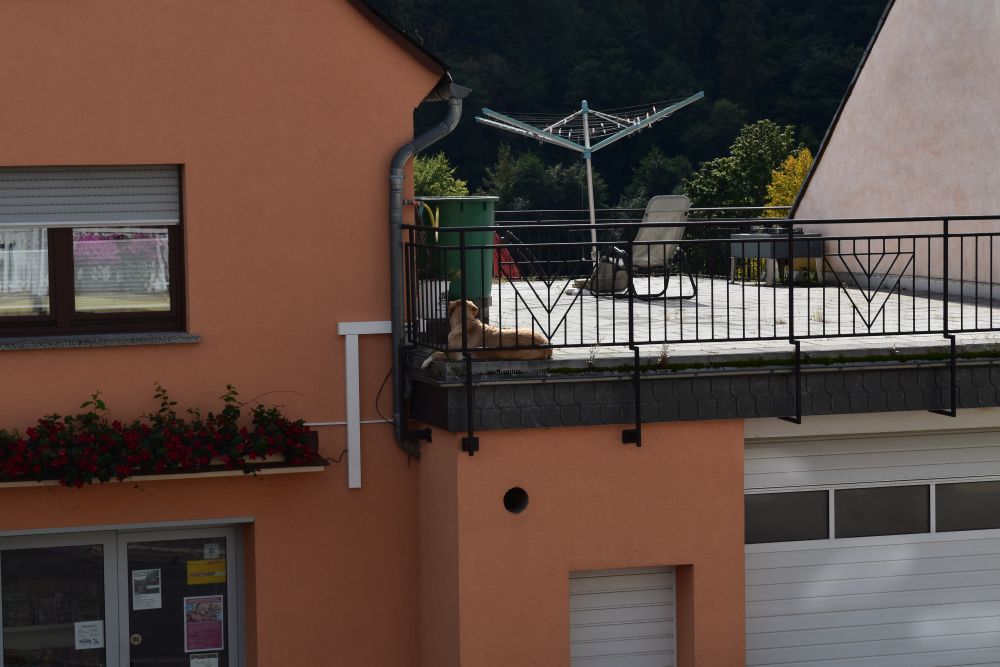
We find the small restaurant managed by a Dutch couple where we have a drink. The dog on the balcony across the street has settled in the last edge of shade. It IS another hot day today.

aaa_0340-blog

We climb back to the top of the half island with its Loreley viewpoint and we do feel the burning sun. This must be a great year for the grapes. After about one and a half hours we reach our car.
.

Back to Schweich and our hotel Grefen

With the car we follow the Mosel meandering north and south and north and south to reach Schweich and our hotel Grefen. I finish the day with zander and a Riesling from Annaberg, the vineyard our host found his hunting luck. We do like our family hotel – the Fuchs family fills it with their charm and hospitality which makes us feel at home.


Back to Heidelberg

Monday and our 14th day on the road. The sun is back after the rainy and cloudy Sunday in Trier. We drive back to Heidelberg. Along the motorway we see the signposts pointing to the places we have visited. Kusel – craddle of Fritz Wunderlich. Münchweiler – memories of the great hotel and restaurant Klostermühle, and also memories of the Celtic wall on the Donnersberg. Neustadt and the Riesling wines of the Pfalz. And after some two hours we already approach Mannheim. Ursula proposes to visit the remains of the Carolinguian monastery of Lorsch. Agreed…
.

Lorsch, a gem of a village with this Unesco world heritage, the monastery

Lorsch was an imperial monastery founded in the 8th century. Today it is known for these arches.

aaa_0471-small

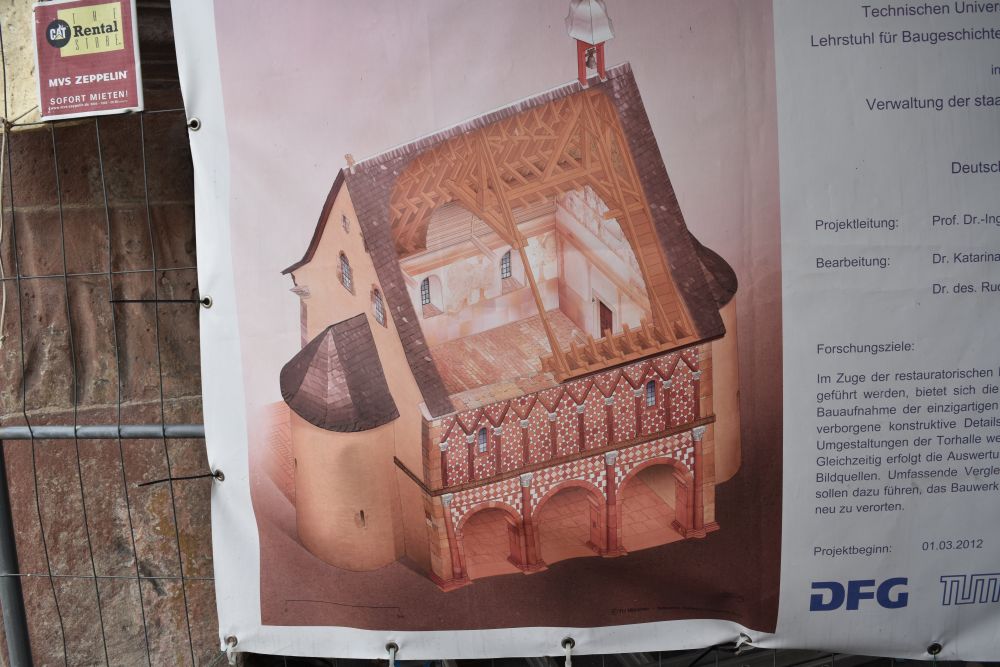
Above the arches there is a room with frescos, as this plate shows.

aaa_0456-small

Around the monastery are the remains of a church, reconstructed buildings (to illustrate the monastery), a garden with herbs, and a pretty, small village with half-timbered houses and welcoming restaurants.

aaa_0446-small

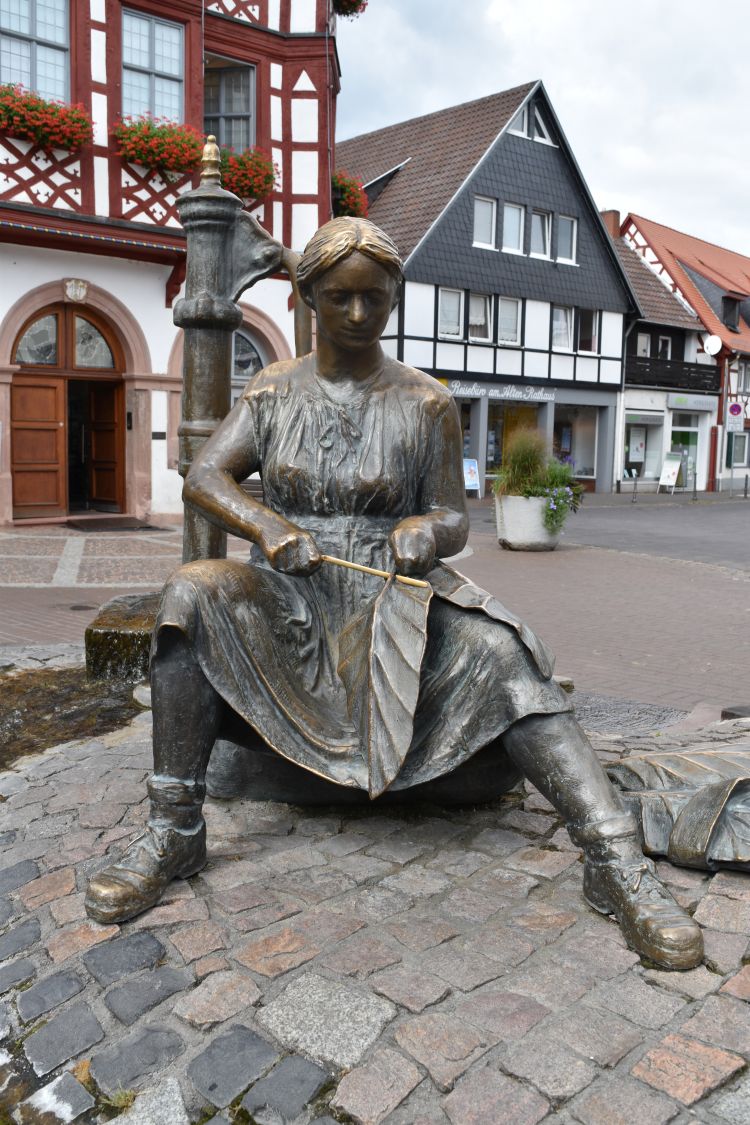
This fountain shows a woman with tobacco leaves.

aaa_0450-small

Lorsch takes care of its world heritage and loves to share it with visitors.

.

Heidelberg – in a way “my” town… I was born here

Then we continue our way to Heidelberg and settle in the hotel Monpti in the old city center. The hotel is about okay, but a bit noisy and it may need some renovation. It is like coming home for me, as I was born in Heidelberg.

.

Morning walk in the city

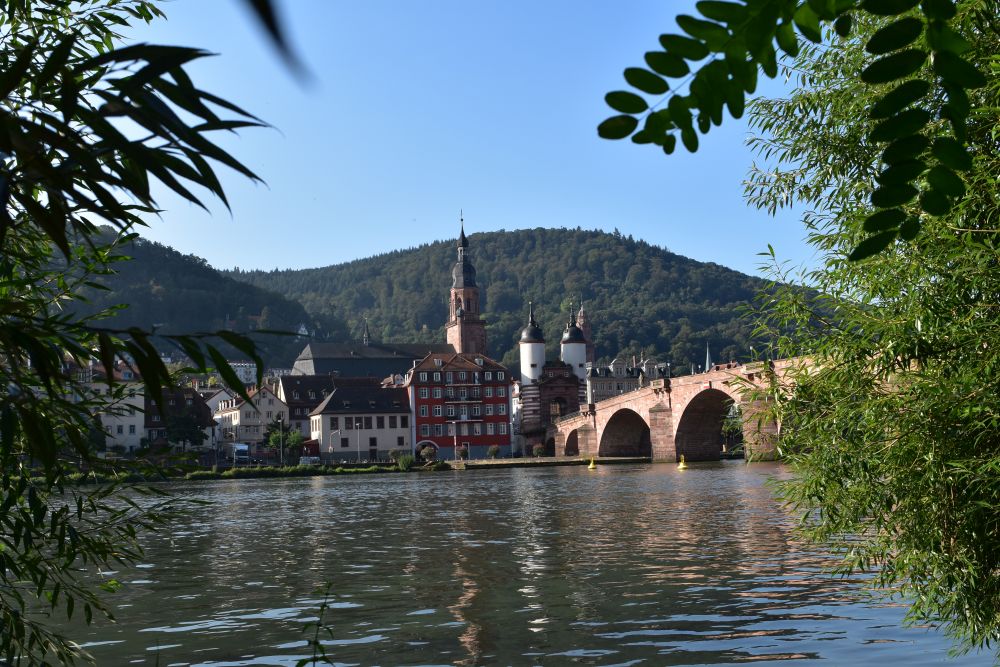
We start our 14th day with an early morning walk down to the Neckar to catch some photos of the city river line.

aaa_0488-small

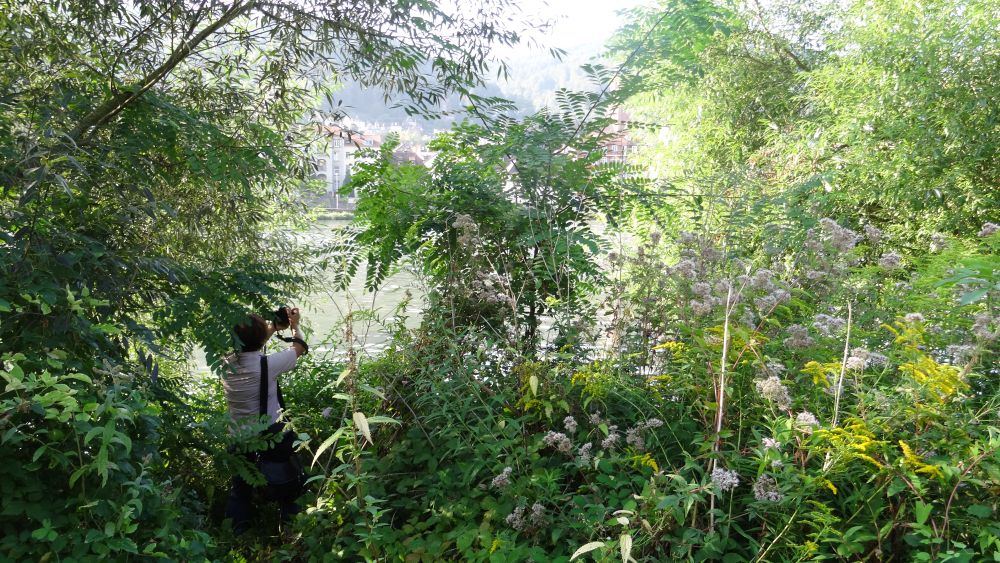
I had to climb through the trees and bushes to take my morning photo.

dsc08188-small

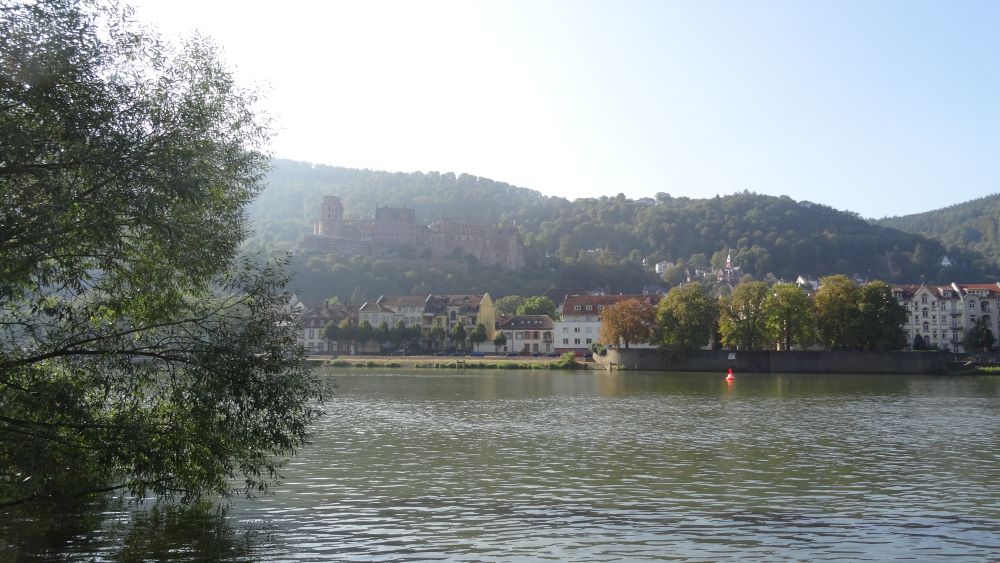
Ursula took this foto of the famous Heidelberg castle in the haze.

dsc08197-small

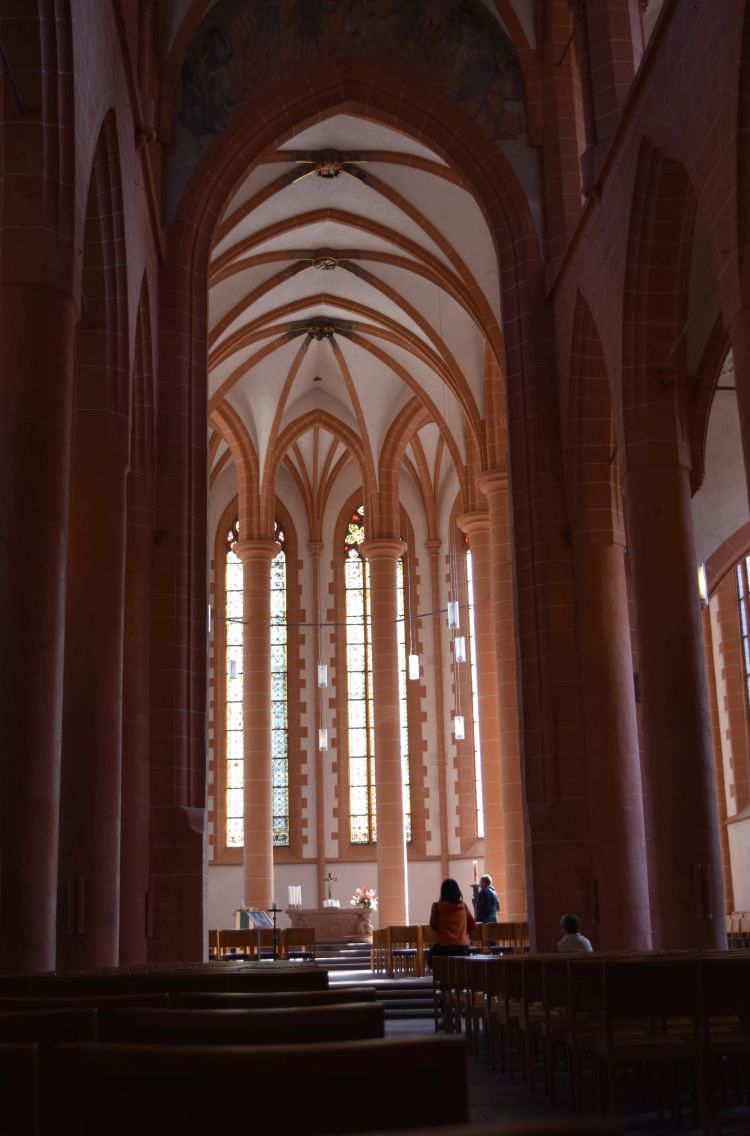
Having crossed the Neckar, we visit the gothic Heiliggeistkirche.

aaa_0510-small

Inside the light is beautiful.

aaa_0502-small

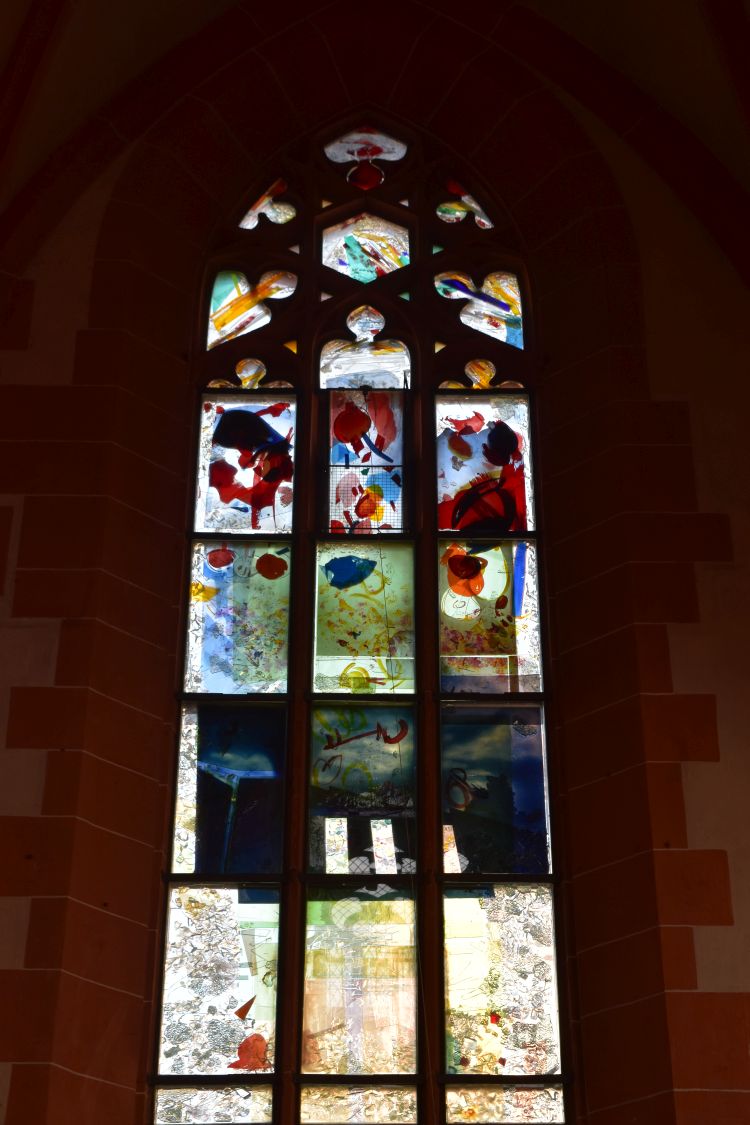
All windows of the church have been made after 1945.

aaa_0504-small

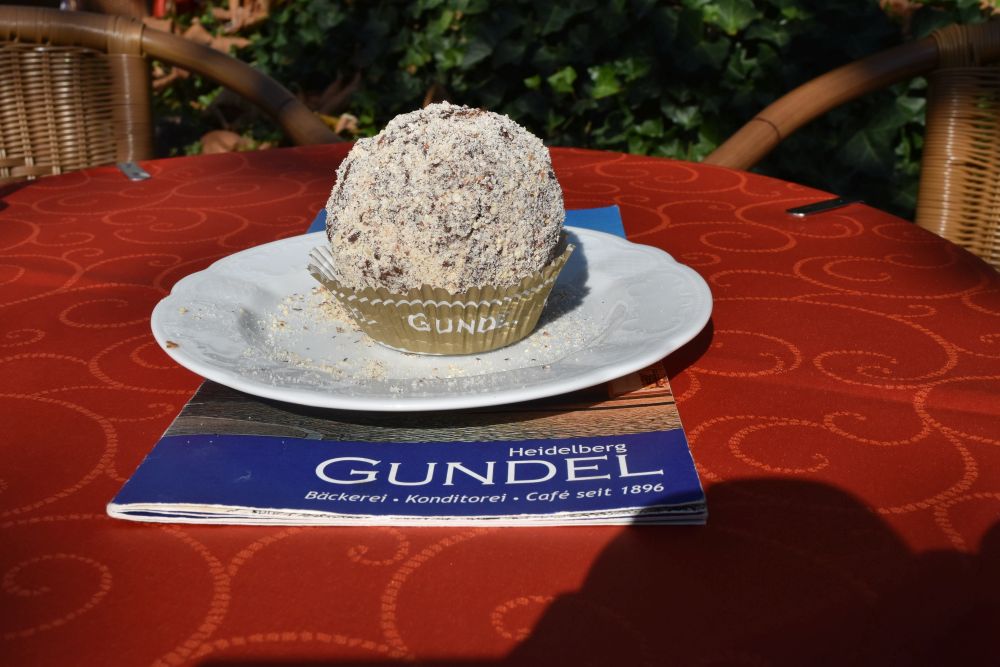
We have a coffee in the traditional confectionary Gundel. They are proud of their specialty “Mohrenkugel” that the grand-grand-father had invented for the anniversary of Kurfürst Friedrich V and his wife Elisabeth Stuart.

aaa_0516-small

Inside the Mohrenkugel there is a nougat filling. This is the story:  The grand-grand-father could not think of a creative shape for the anniversary sweet. The daughter asked him to tell her the fairy tale of king frog. While she fell asleep, the confectionist took the ball the (king) frog retrieved from the fountain and invented the “Mohrenkugel”.

.

Walking steeply uphill to the ruins of the Heidelberg castle

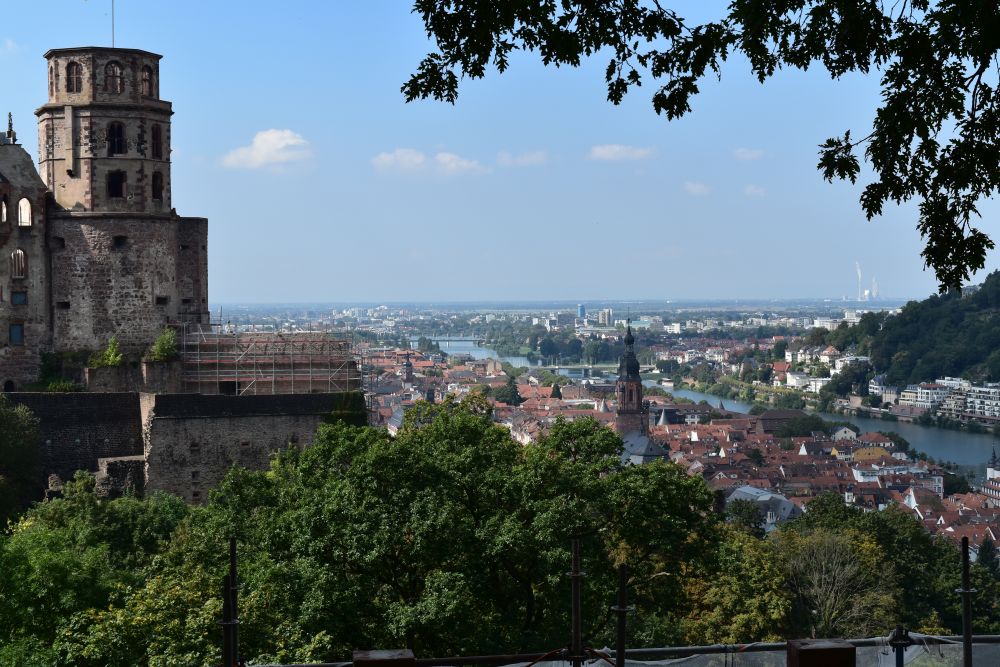
Over steep stairs we reach the famous ruins of the Heidelberg castle in ten minutes. We enjoy the view of the city center, the Neckar and Mannheim.

aaa_0536-small

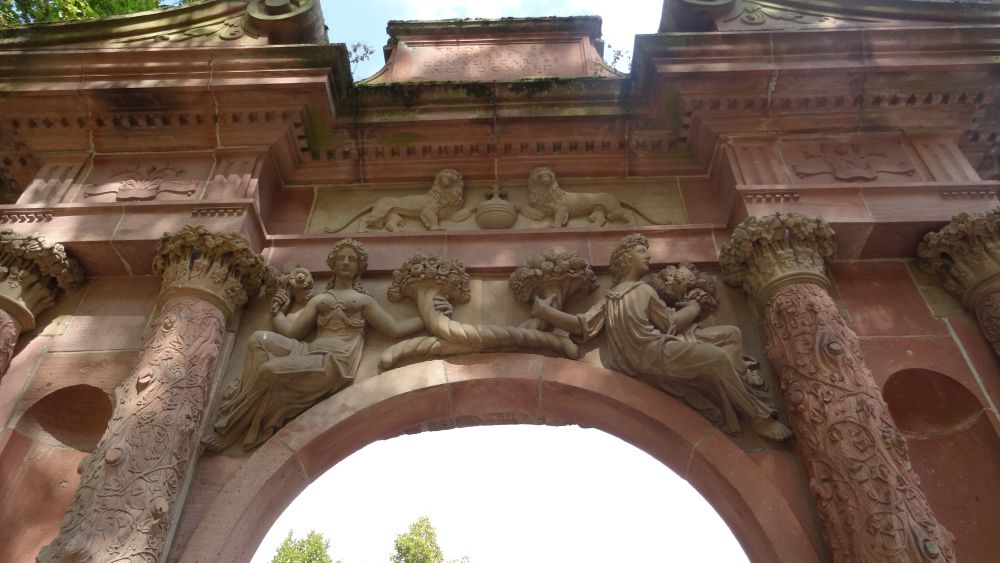
The Heidelberg castle originates from the 13th century. Each Kurfürst added one notable building, e.g. Ottheinrich added the Ottheinrichsbau (Renaissance, early 16th century) or Friedrich the Friedrichsbau (around 1600). Friedrich V also built this gate for his wife Elisabeth Stuart that he was in love of (Ursula’s foto).

dsc08249-small

The castle was destroyed in the Palatine succession wars end of the 17th century, as Louis XIV wanted to expand and conquer the Palatine (Pfalz). The castle was never rebuilt, and later it was decided to preserve just the ruins, as poets such as Goethe had already made it known which attracted tourists.

.

Strolling through the old city center

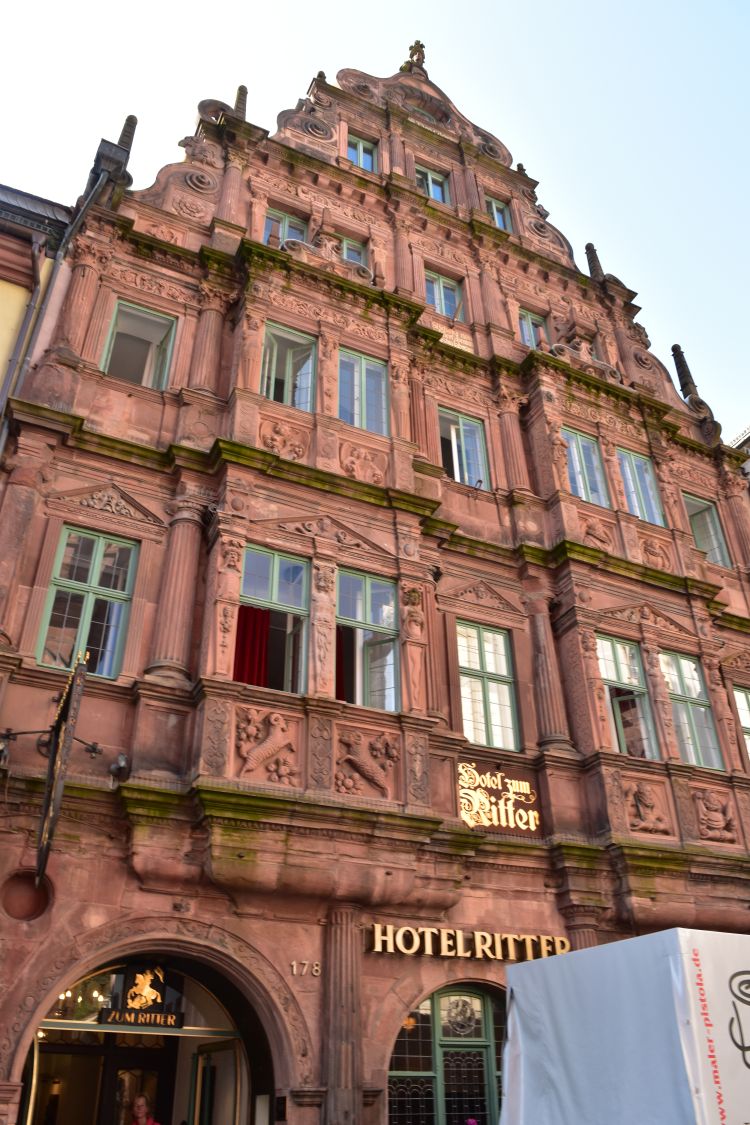
We stroll through the old city center. This is my favorite building, the Hotel Ritter with its Renaissance fassade.

aaa_0506-small

Ursula has memories of the university library. Some years ago she studied the facsimile of the Codex Manesse with the medieval minstrel songs such as by Walther von der Vogelweide. She cites “Ich saz ûf eime steine,und dahte bein mit beine…” . He thinks and concludes that he does not succeed trying to achieve honor, possession and the mercy of God at the same time.

aaa_0539-small

Our hotel is close to the gothic St. Peters’ church that hosts a lot of interesting epitaphs – some tombstones are more than 500 years old.

aaa_0542-small

We spend the afternoon with a friend of mine in a small village close to Heidelberg and then have dinner in the restaurant Romer… a gourmet dinner with sea brass. Delicious.

A cloudy day in Trier – Roman and medieval heritage

Sunday and our 13th day in Germany. For the first time after two weeks I hear rain splashing. Today is a good day to visit Trier with its museums and churches. We take the train from Schweich to Trier and arrive in the city center without having to look for a parking lot and pay for it… good idea, Ursula.

Trier has already been a Celtic settlement. Then it was the capital of the Roman Provinces of Gaul, called Trevorum. Already around 250 AD it had its first bishop. In the German Empire it became the seat of one of the migthy archbishops that elected the emperor (Erzbischof and Kurfürst).

.

Roman times in Trier: Porta Nigra, Roman baths and Nero

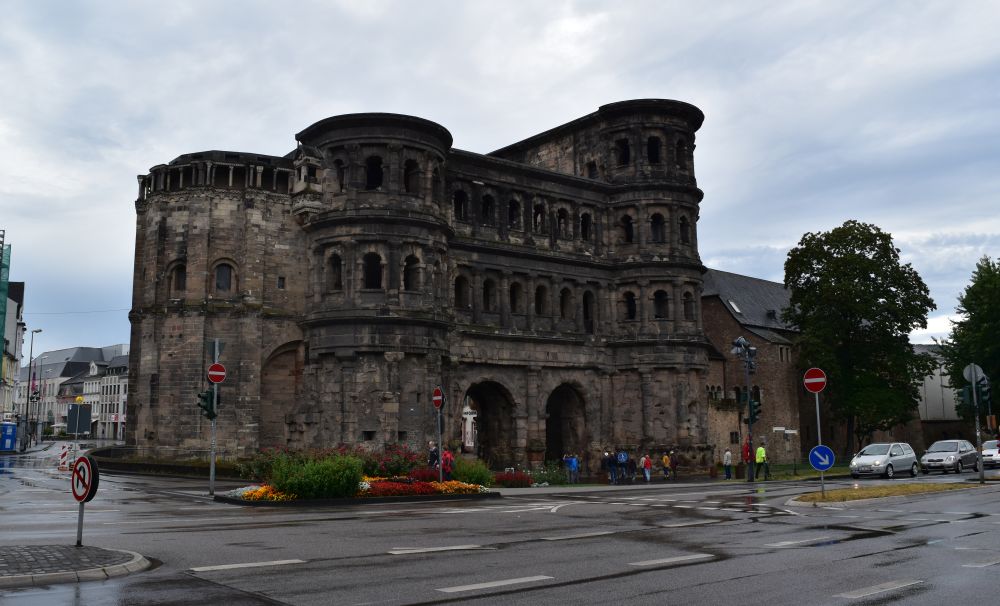
The Porta Nigra is this “black gate”.

aaa_0352-small

Somehow it is like coming home for me – I have seen this gate with my mum, when I was 15 years old.

The gate has been built for representation, not for fighting, somewhat like a triumphal arch. I learn that the Porta Nigra only survived, because Saint Simeon decided to live in this gate. Later Napoleon prevented his troops from destroying the Porta Nigra.

The Kaiserthermen or Imperial Baths are being renovated.

aaa_0409-small

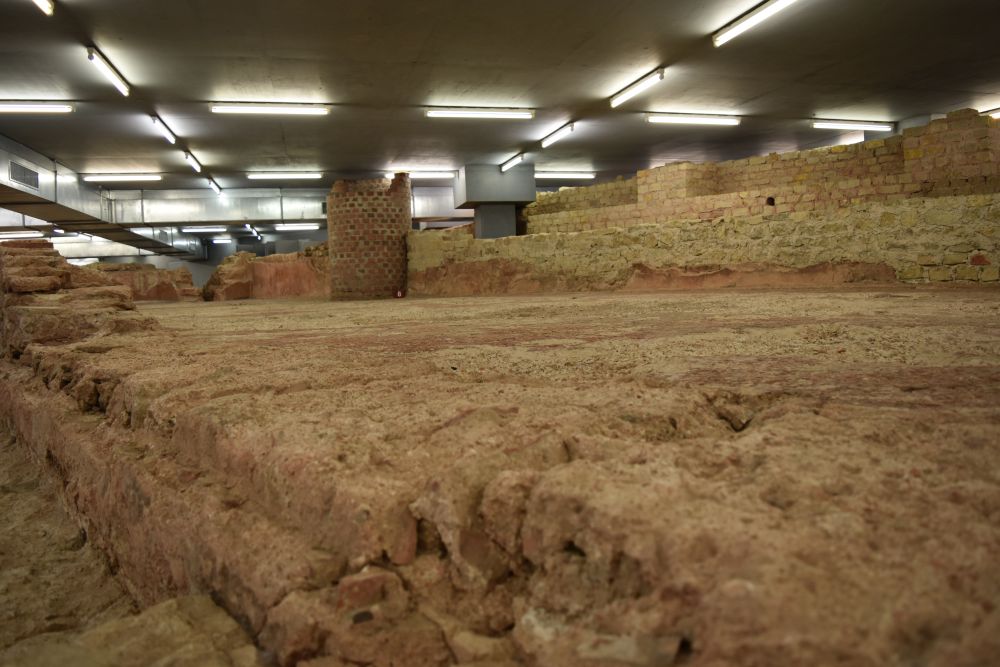
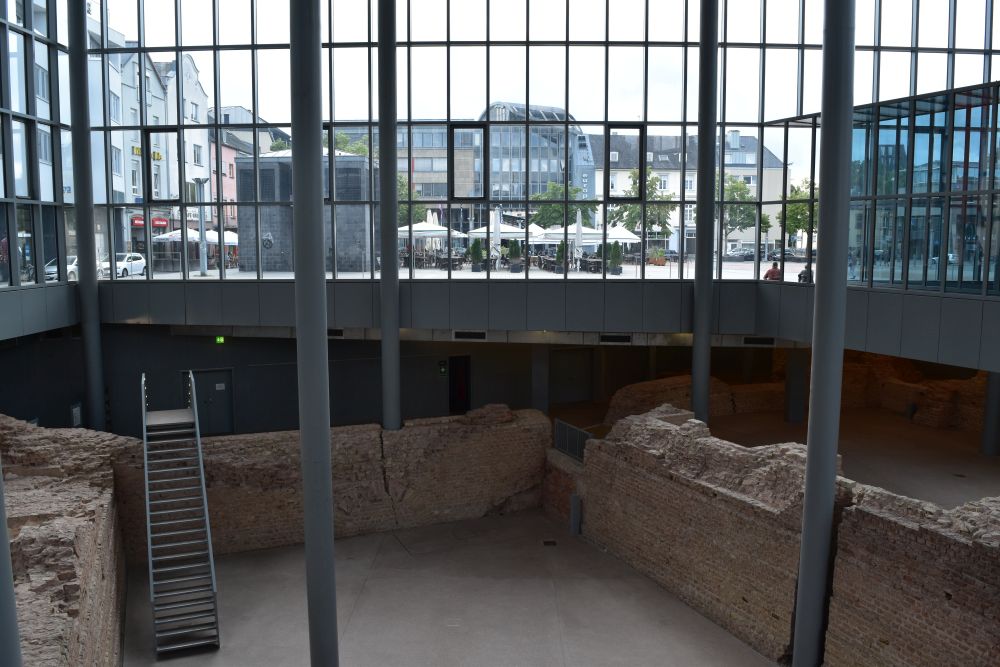
When constructing a park house under the Viehmarkt in the late 80-ies, Roman baths and a medieval monastery were found. This is now an underground museum, covered by a glass cubus. The ruins are numbered and well explained on the museum map. These are the remains of the Roman swimming pool.

aaa_0419-small

The underground ruins give an interesting contrast to the upperworld life on the Viehmarkt.

aaa_0420-small

.

Currently three museums tell the story of Nero. We visit the historical analysis of his life in the Landesrheinisches Museum. Great exhibition. Nero has been adopted by emperor Claudius that had married his mother Agrippina. He now was the oldest son of the emperor and succeeded Claudius, when he was 16 (in 54 AD). Well educated by the philosopher Seneca, he was a good emperor for about five years, modernizing Rome and providing games to the people. They liked him. Then he more and more showed, what we remember him for: He killed his mother and his first two wives, he accused the Christians to have set fire to Rome – and killed many of them, and he devoted more and more time to carriage racing, writing poems, singing and acting. After having spent 16 months in Greece (somewhat like a sabbatical), the senate forced him to resign and he commited suicide. He was 31 years old then. Though the senate tried to erase him from the memories of history, he is one of the emperors that is best remembered today. The exhibition about Nero is well curated, even at times with injections of humour.

.

Medieval churches with Roman roots

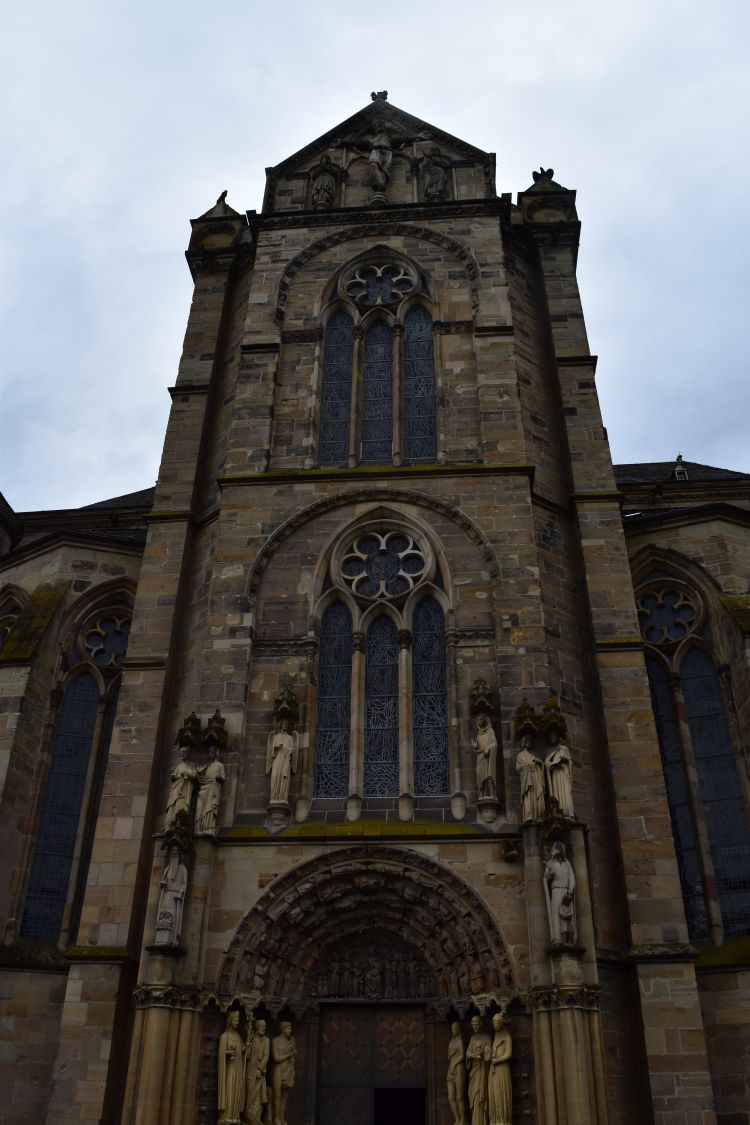
The Liebfrauenkirche is one of the first gothic churches in Germany, built on the foundations of a Roman palace.

aaa_0370-small

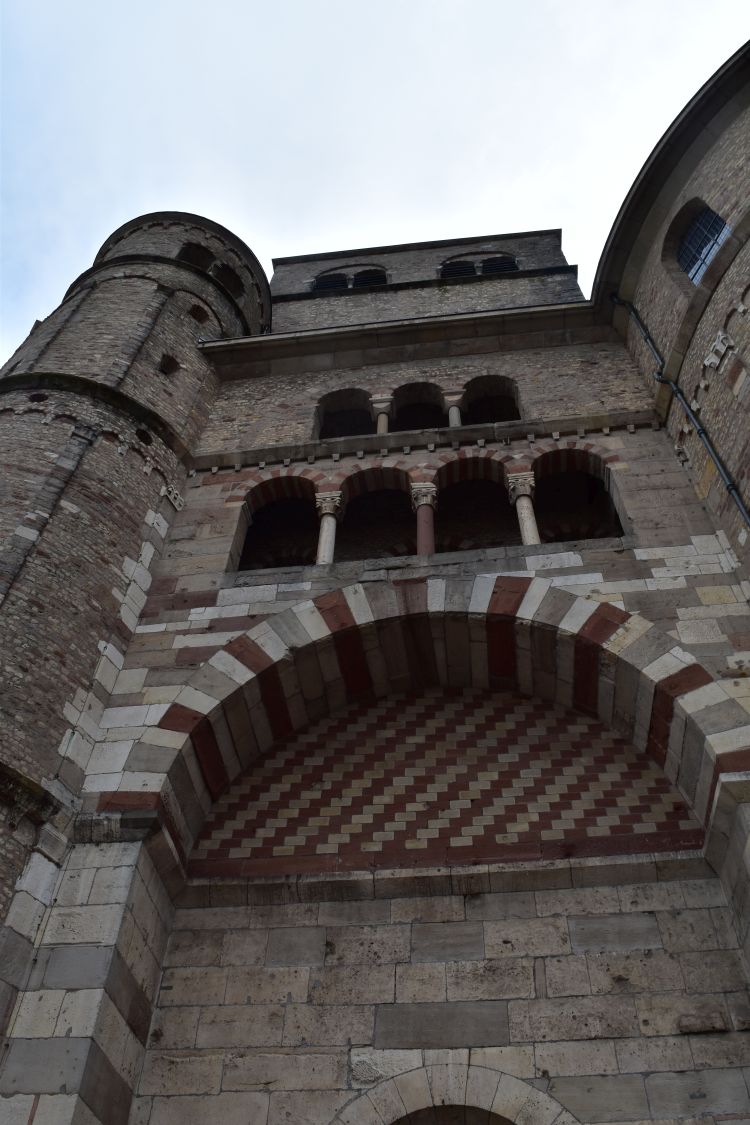
The cathedral, just next to it, has been built integrating Roman foundations from the 4th century.

aaa_0390-small

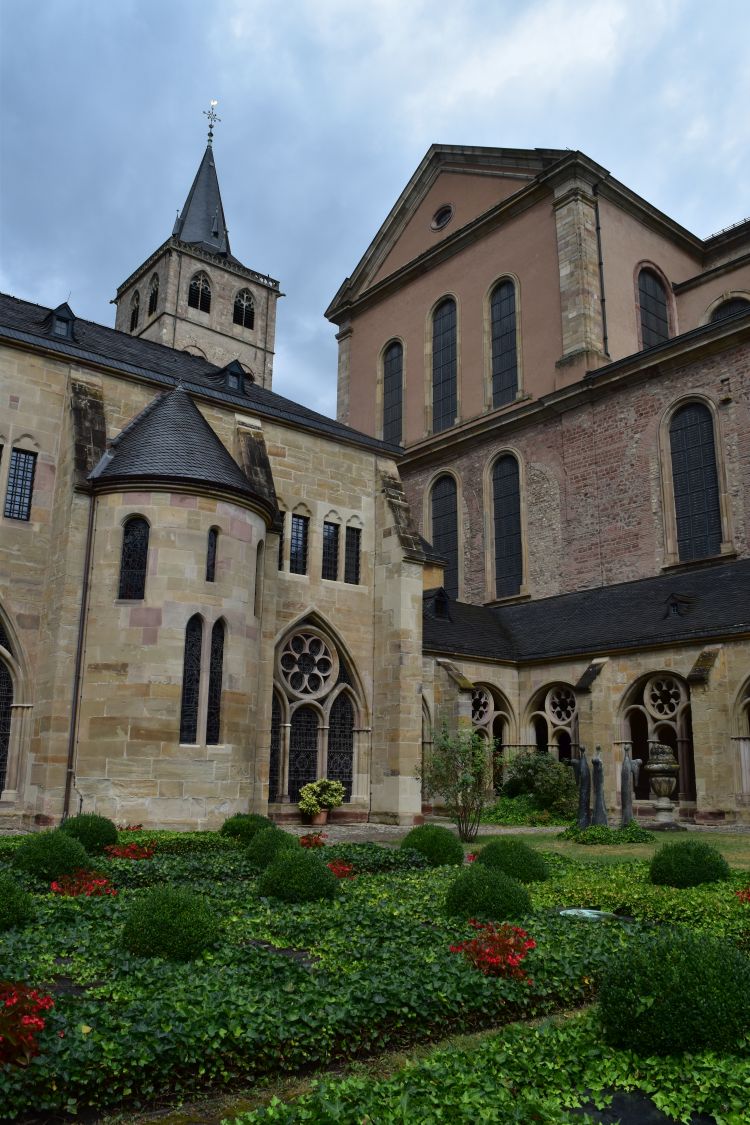
Both the cathedral and the Liebfrauenkirche share the cloister.

aaa_0395-small

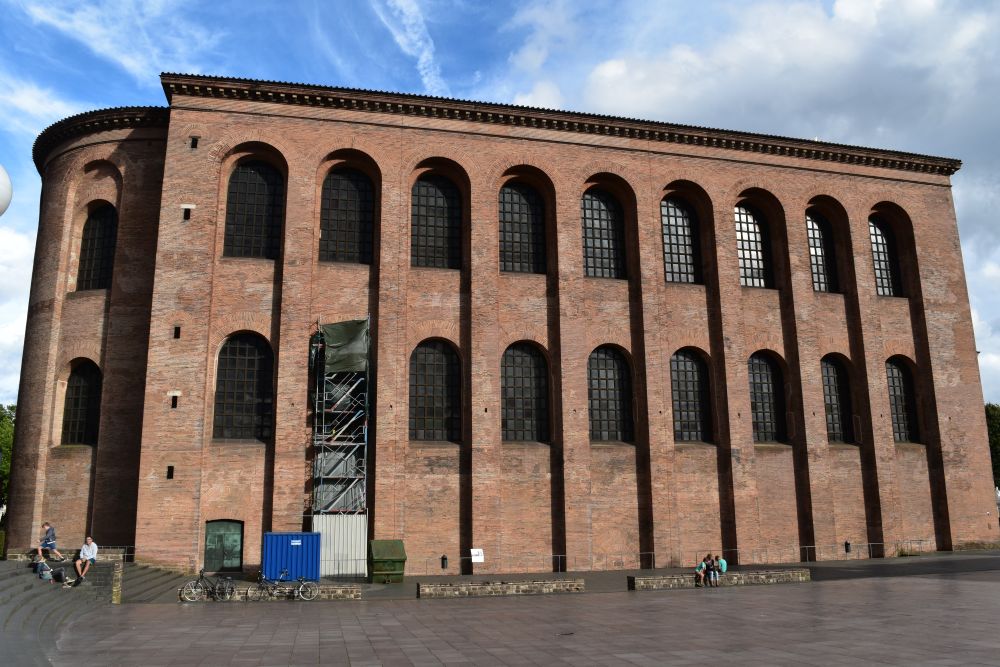
Not far from the complex of the cathedral and the Liebfrauenkirche there is the old basilica of Constantine, built in 315 AD.

aaa_0439-small

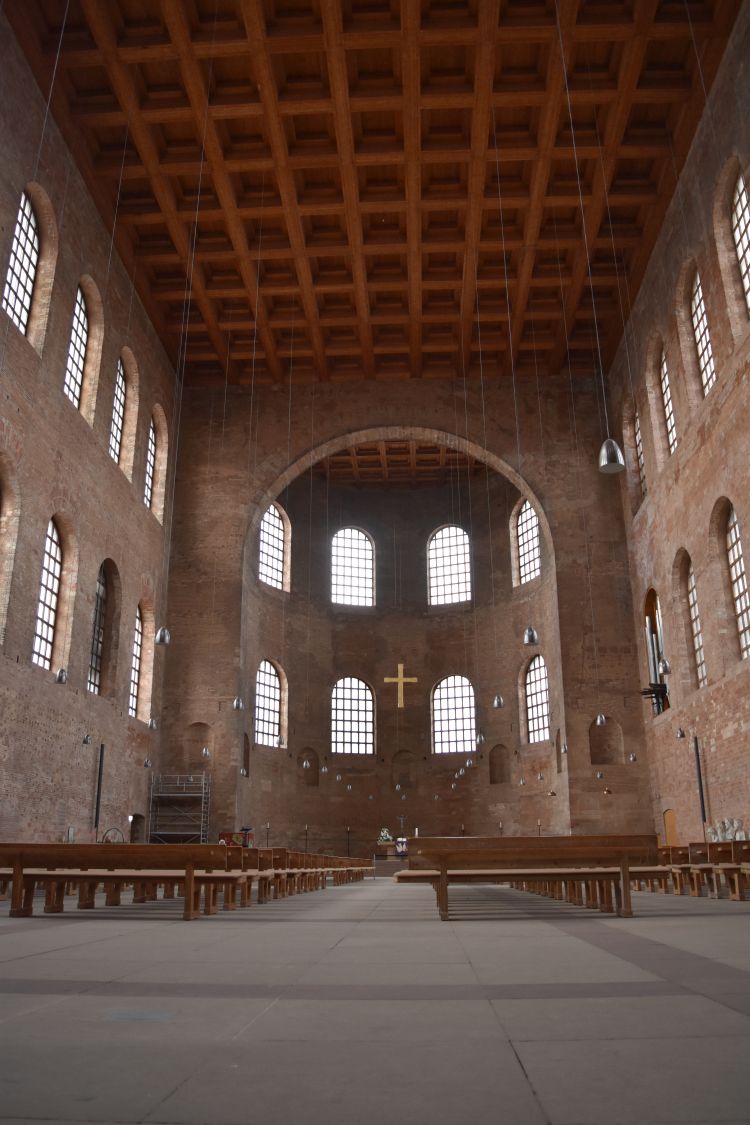
Inside it is a beautiful church – its simplicity invites to pray.

aaa_0444-small

.

Strolling through the city center with medieval houses and more

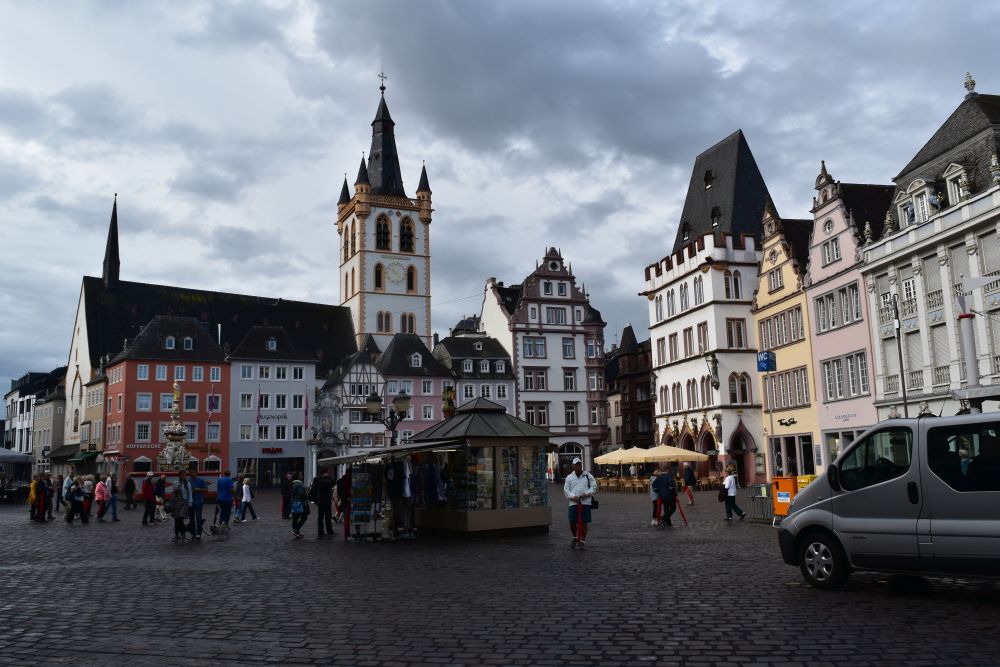
The old city center of Trier is charming.

aaa_0360-small

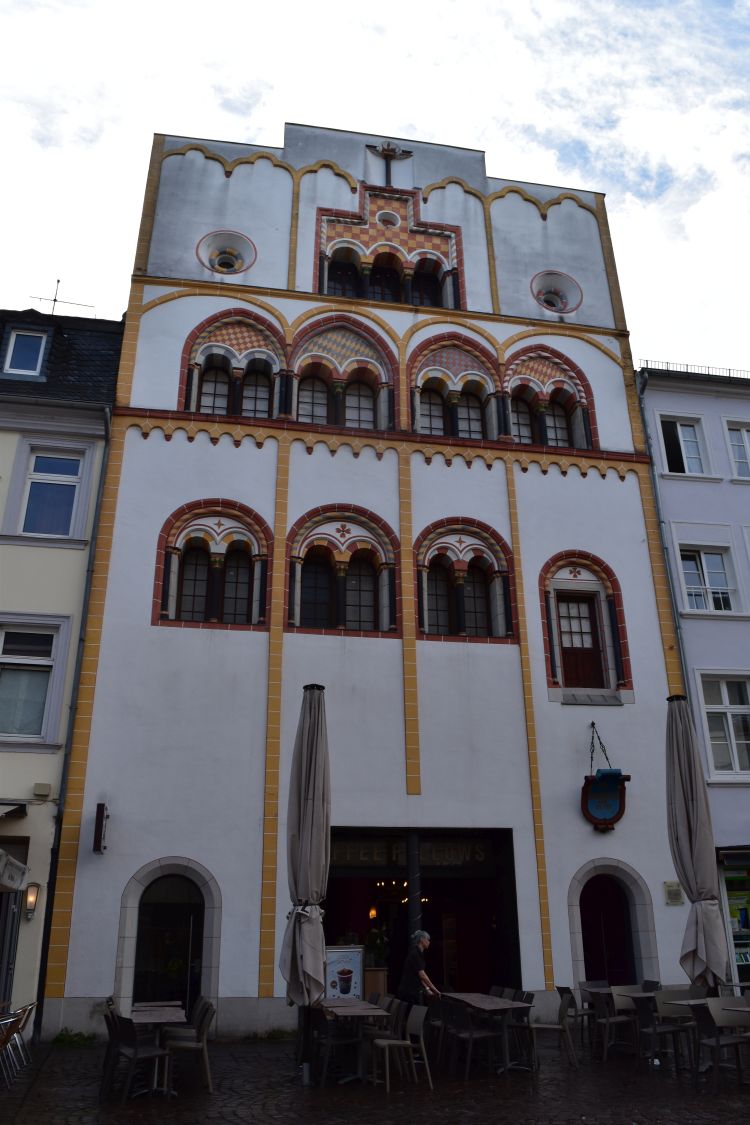
This is the tower house “Dreikönigenhaus”. The “real” old door is far above the ground and can only be reached with a ladder. (The door on ground level has been added later).

aaa_0357-small

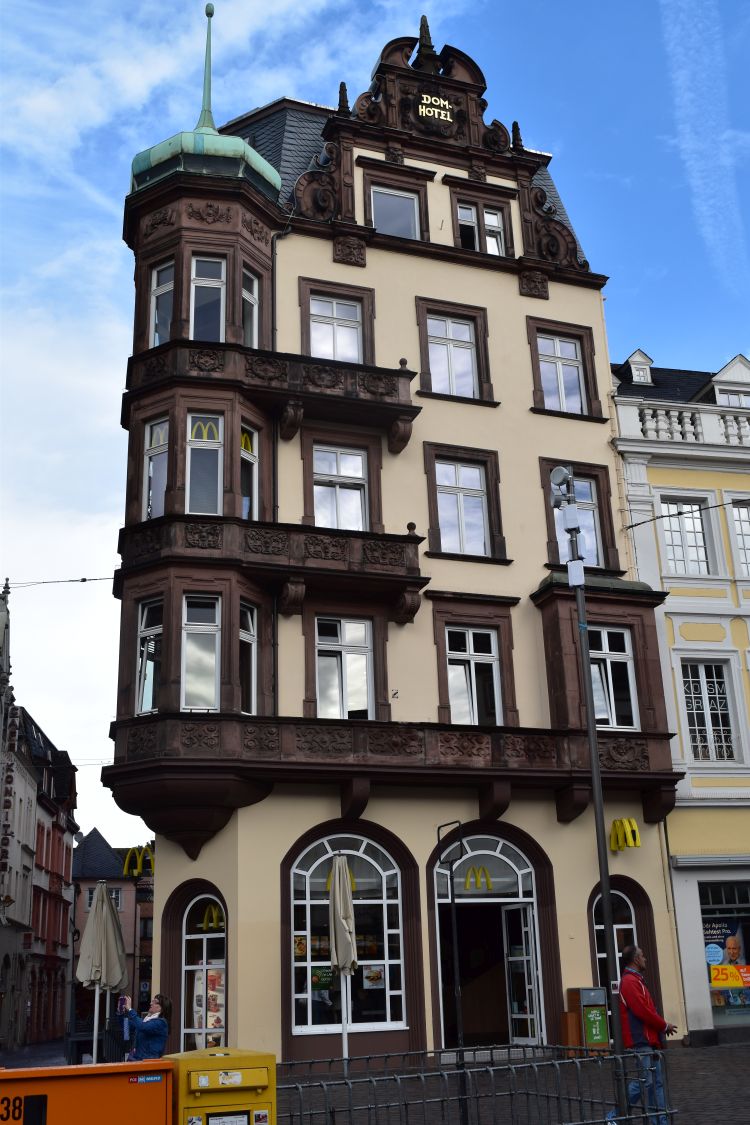
This is a beautiful house with MacDonalds inside… the “M” has been kept “modestly” small.

aaa_0361-small

Old and new meet one another – such as this rokoko building next to a Kebab restaurant in a half-timbered house.

aaa_0364-small

Karl Marx is a son of Trier. The house, in which he was born, is now a museum.

aaa_0435-small

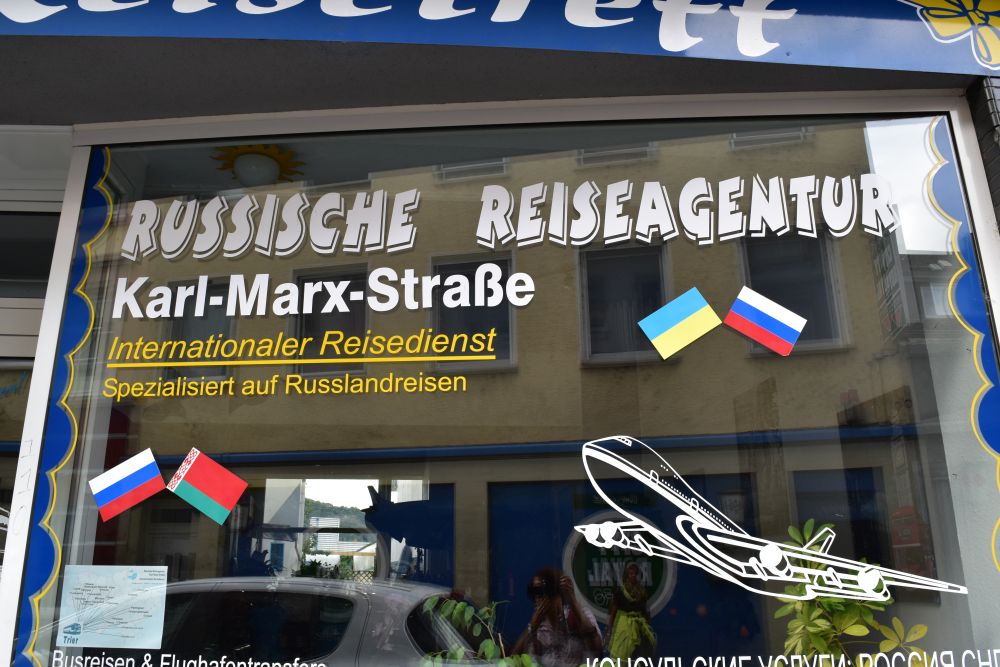
Not far from here we find this travel agency…

aaa_0430-small

and this hairdresser that I may not consider for cutting my hair (“Kopfsalat” is German for butterhead lettuce. The literal translation would be “head salad”).

aaa_0423-small

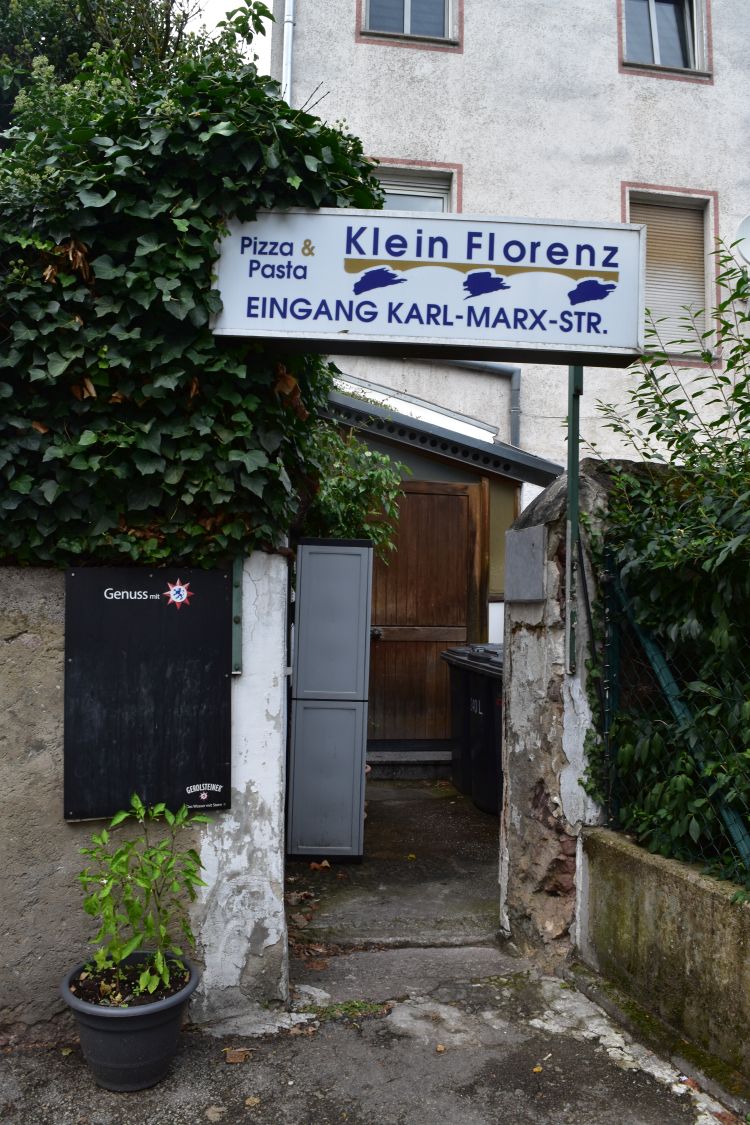
Klein Florenz (Small Florence) is also not far.

aaa_0422-small

In my memories from 50 years ago, Trier was primarily a town with remains from Roman times. Now, I am impressed, how the Roman foundations have been kept and integrated later (such as in the cathedral or the Roman Baths at the Viehmarkt). I also liked, how well kept the medieval city is and lives today. And I have learnt that with Karl Marx being born here, Trier (in a way) was the origin of the socialist and communist movements.


The 11th century church of Maria Laach and the fairy tale castle Eltz

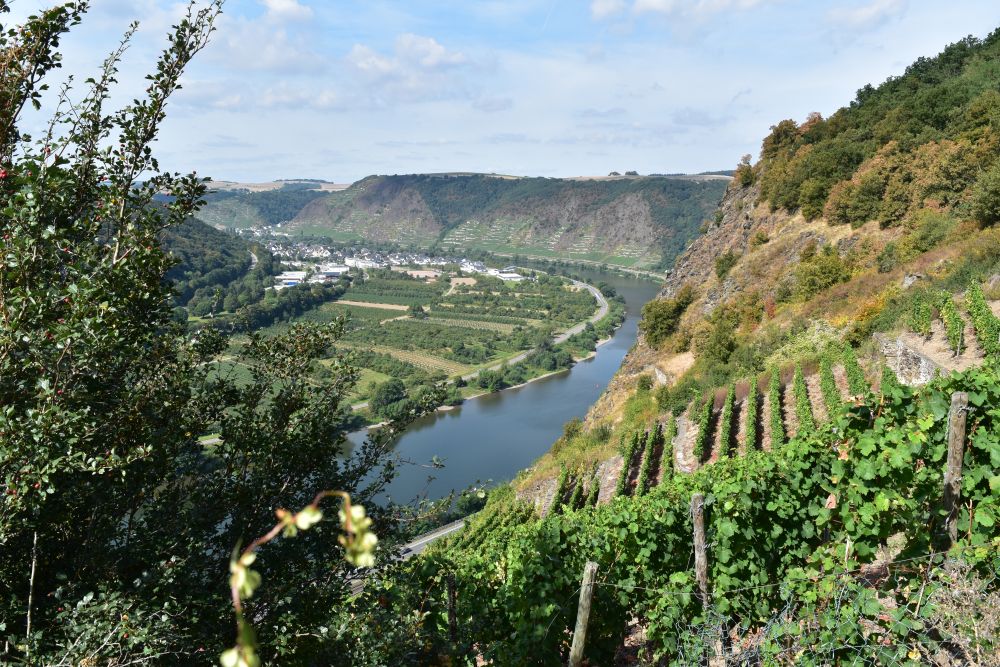
It is our 11th day. We say good-bye to Bacharach, and direct our car north to the Mosel valley. From the motorway lookout we see the meandering Mosel for the first time.

aaa_0249-small

Then we continue farther north to the Eifel mountains and to Maria Laach.

.

Maria Laach – gorgeous church from the 11th century

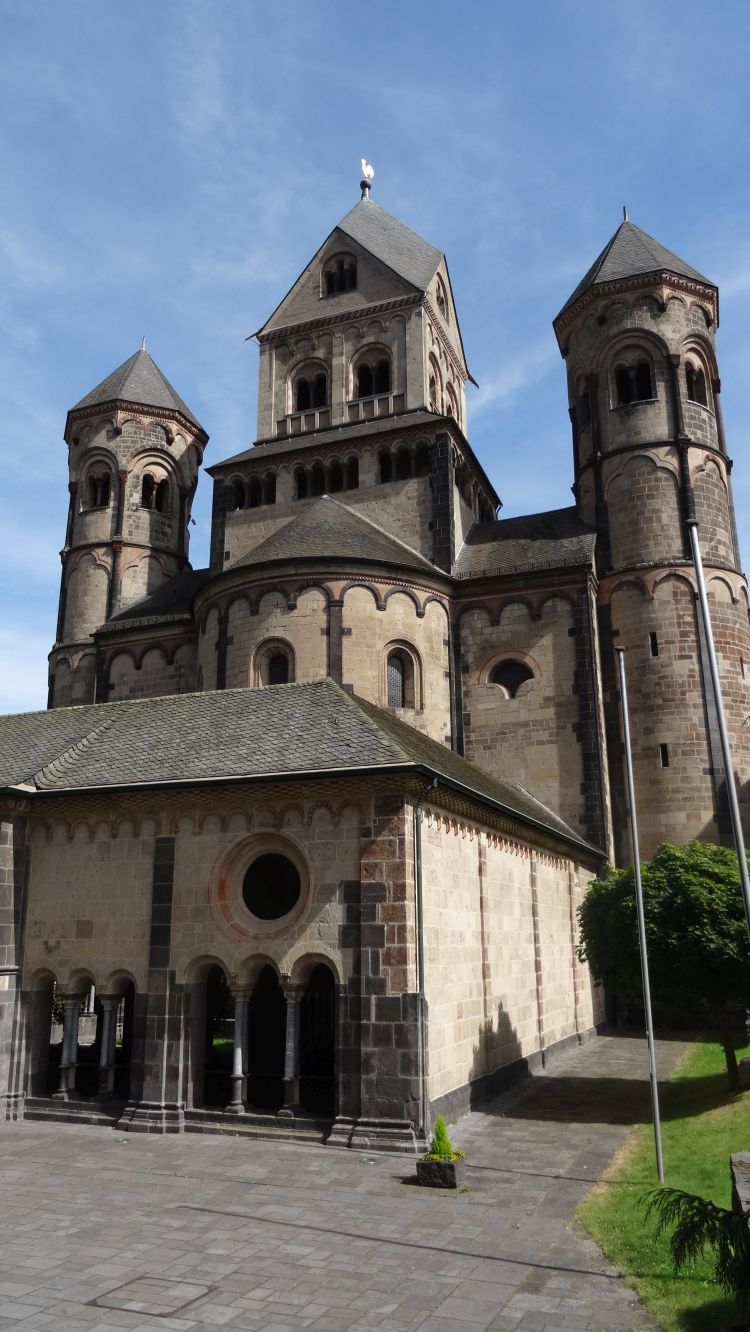
Near the crater of a volcano filled with water (lake of Maria Laach), there is the Benedictine abbey Maria Laach that is still in use. The Romanesque church from the 11th century is attached to the monastery. The church is open for visitors, but the monastery is reserved for the monks.

This is the western fassade of the church with the entrance for visitors (photo taken by Ursula).

dsc08054-small

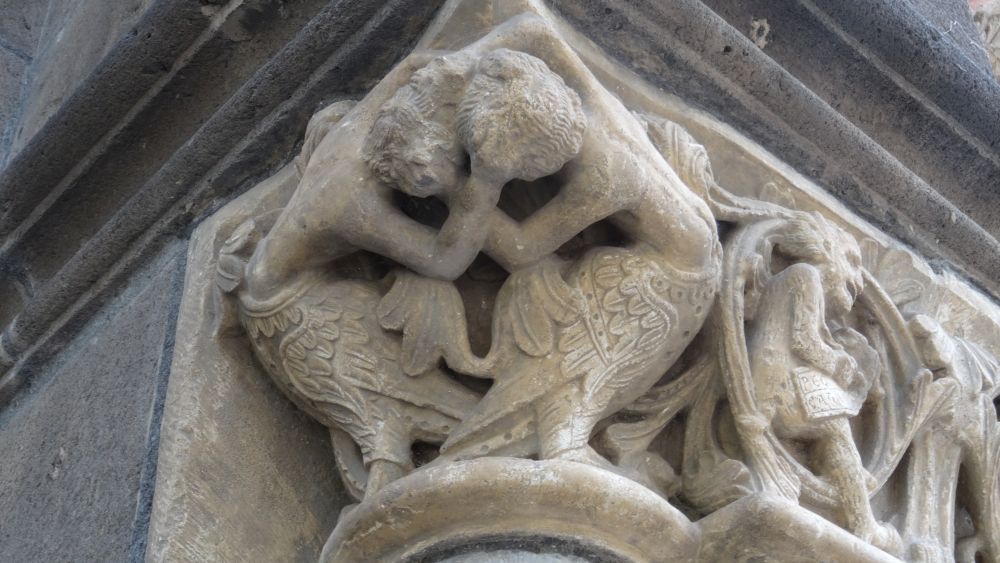
In the entry hall we find this interesting capital. Two boys are fighting. And to the right of them there is a devil writing down our sins and freeing us from them before entering the church.

dsc08010-small

Behind the capital with the fighters and the friendly devil, the paradise welcomes us with the lion fountain (from 1936, modeled after the Alhambra). “Paradise” is the name of this courtyard.

aaa_0260-small

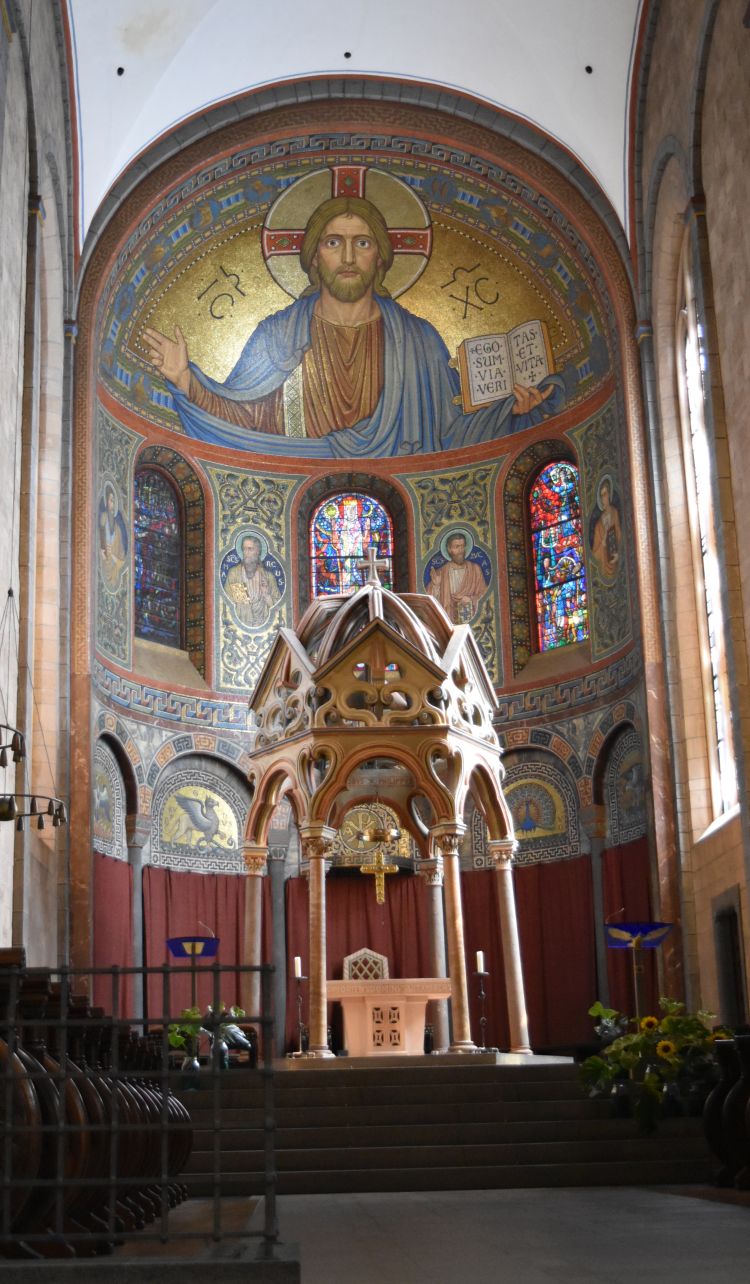
Through the paradise, we enter the church. The nave is decorated with a cob web of “clouds and leaves” that should connect earth and heaven. In the eastern choir (reserved to the clerical people), Pantocrator looks down on to us, like in a byzantine church. The altar is a Romanesque ciborium.

aaa_0272-small

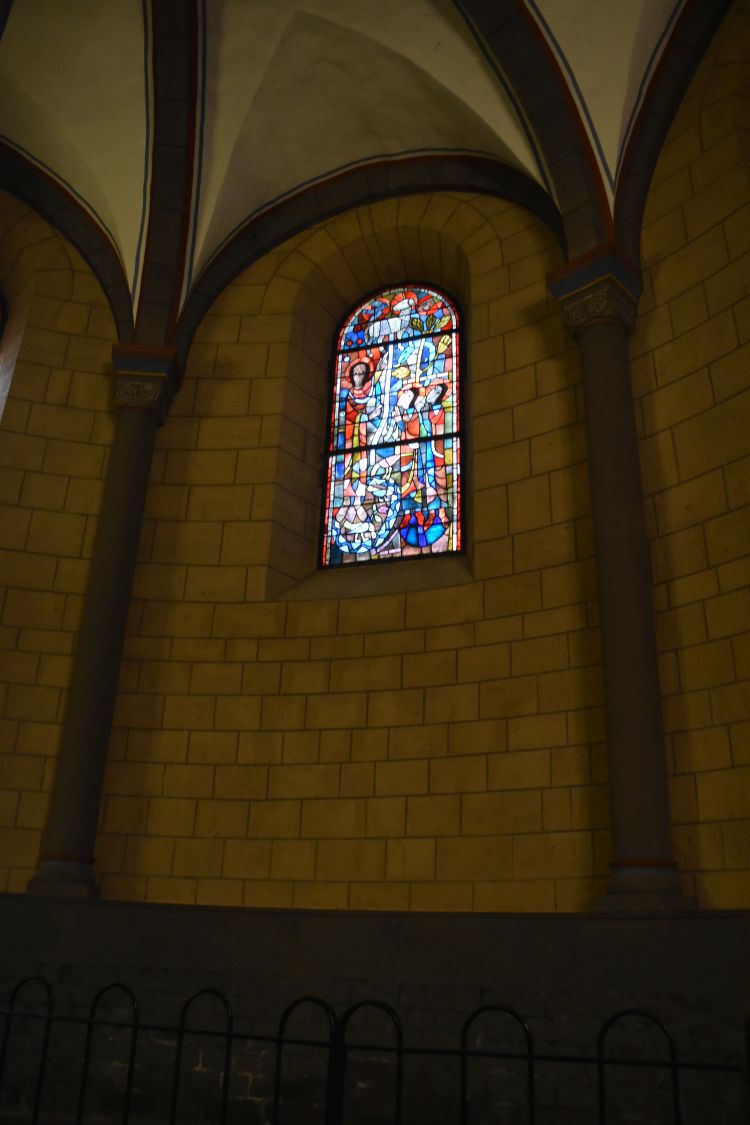
The western choir was reserved for the political powers. It has been decorated with stained windows from the 1950’s.

aaa_0262-small

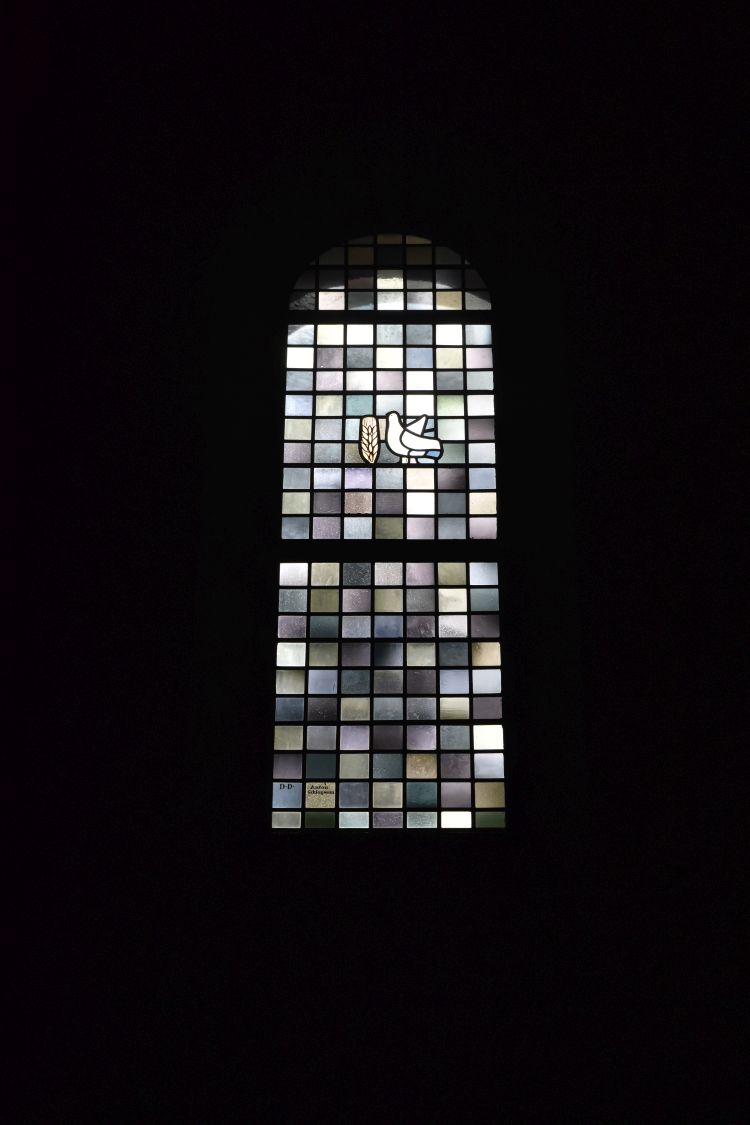
I also like these plain grey windows, one of them decorated with a pigeon.

aaa_0274-small

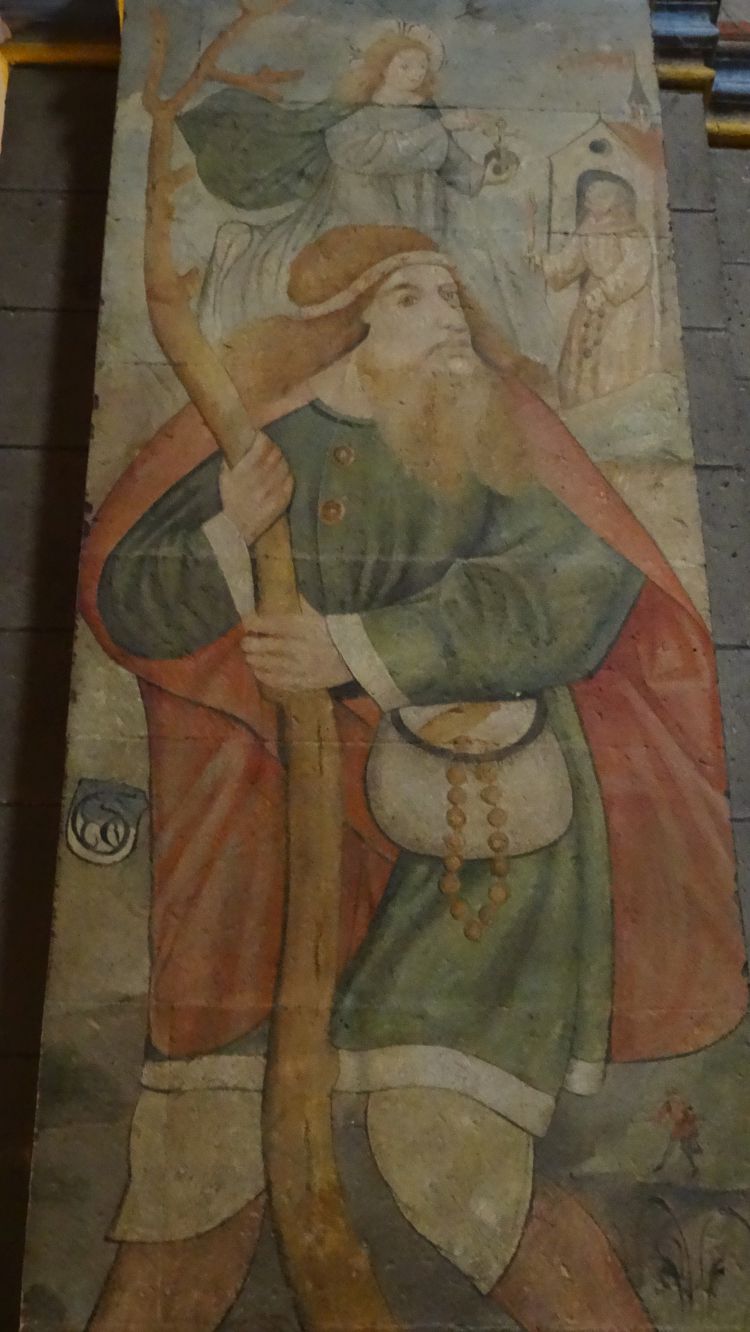
There are frescos from around 1500, one of them being Christopherus – former Reprobus – who carried Christ across a river and felt, how heavy his burden was – as if he had to carry the whole world (photo taken by Ursula).

dsc08043-small

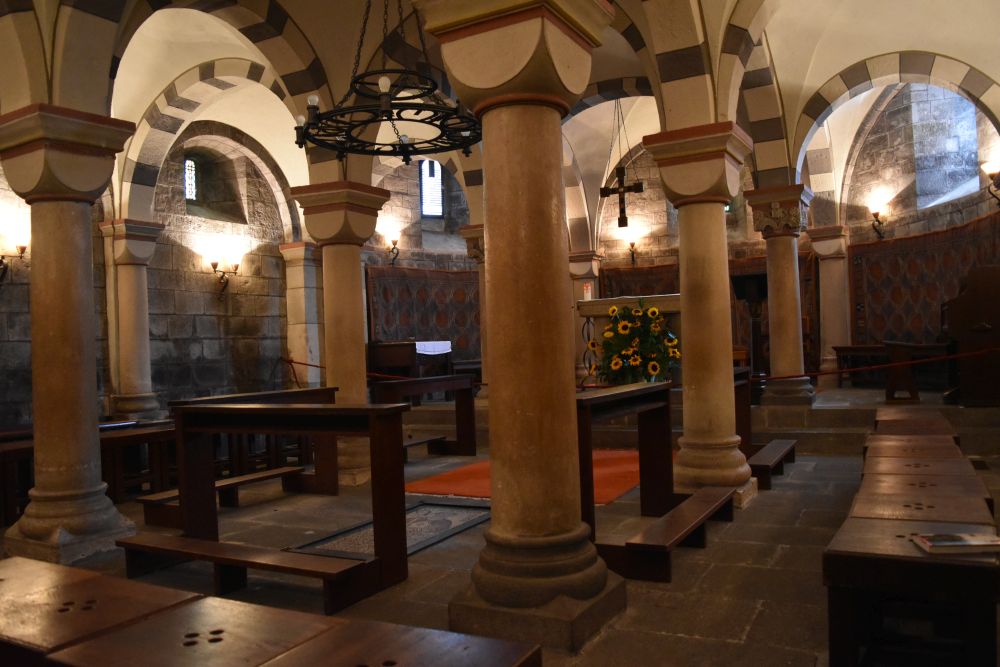
The underground crypt with the Romanesque columns is adorned with sunflowers and a cross.

aaa_0268-small

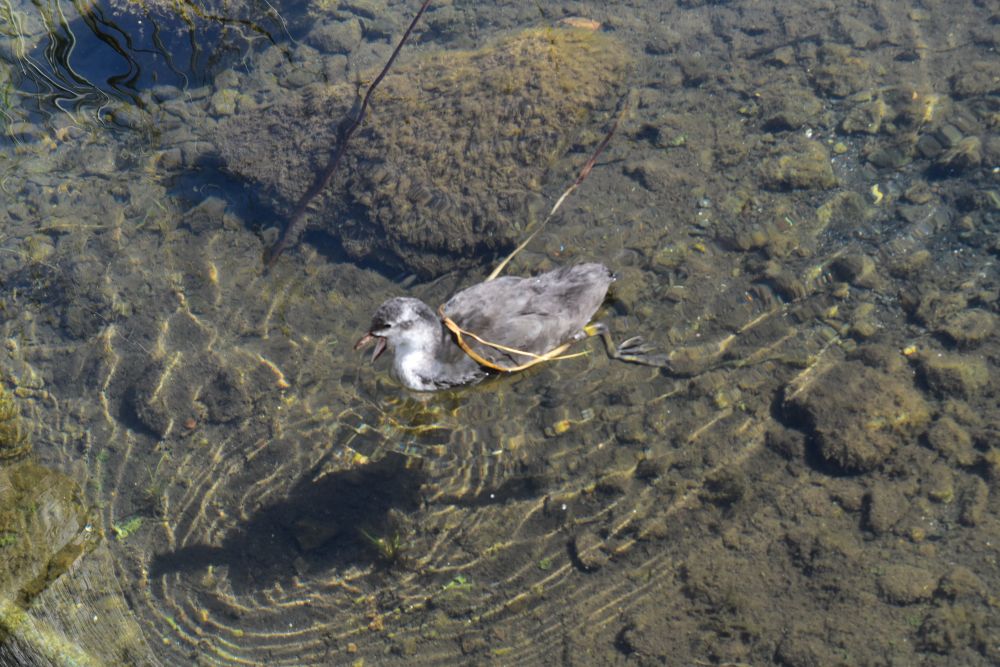
We walk along the lake of Maria Laach and watch the ducks and crested creeps. This one does not get rid of the reed though trying and trying.

aaa_0289-small

.

To the castle Eltz near the Mosel – a fairy tale castle

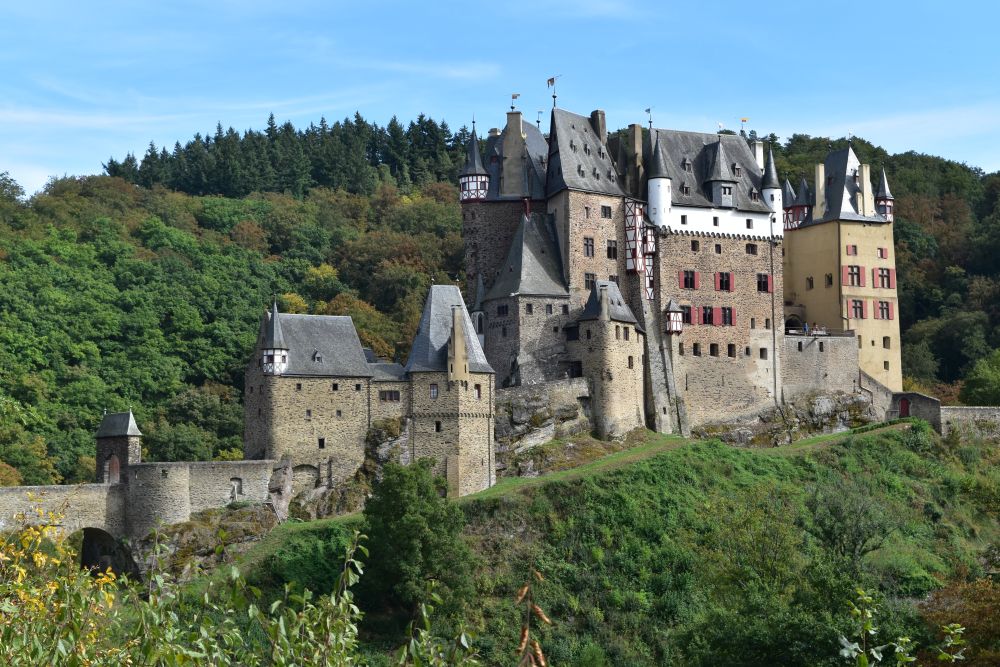
Christa, my cousin-in-law gave me the advise to visit the castle Eltz. “Hmm…”, says Ursula, “do you not know this castle? – In many guidebooks it is noted as a must-see”. I read that the castle Eltz has never been destroyed and now belongs to the 33th generation of the noble family Eltz. It was built around 1200 on top of a customs house taking tolls from merchants traveling along the Eltz. After a twenty minute walk from the parking we see the mighty fairy tale fortress appear at the last turn of our path.

aaa_0293-small

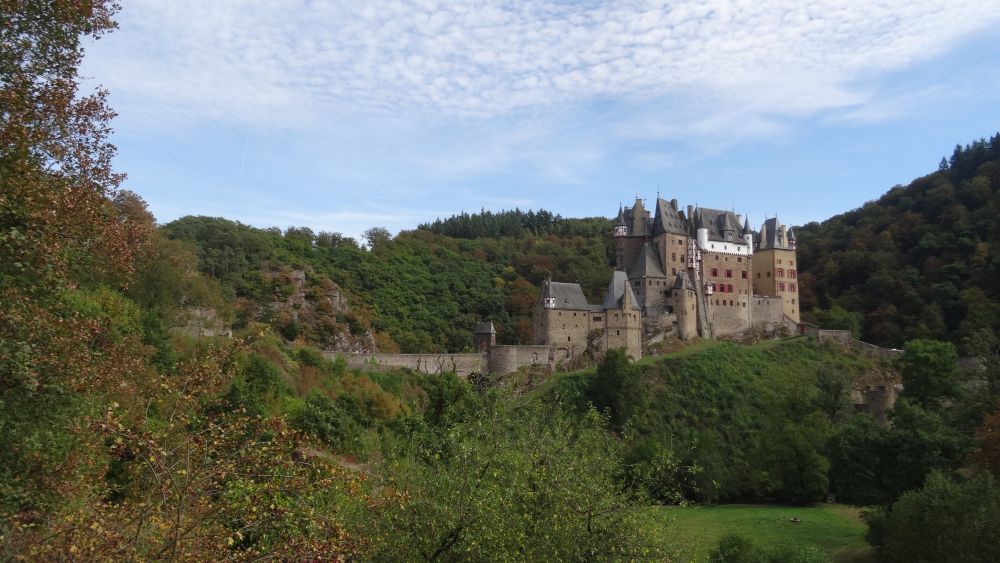
This is Ursula’s photo of the Eltz castle with the “swinging” cloud pattern.

dsc08083-small

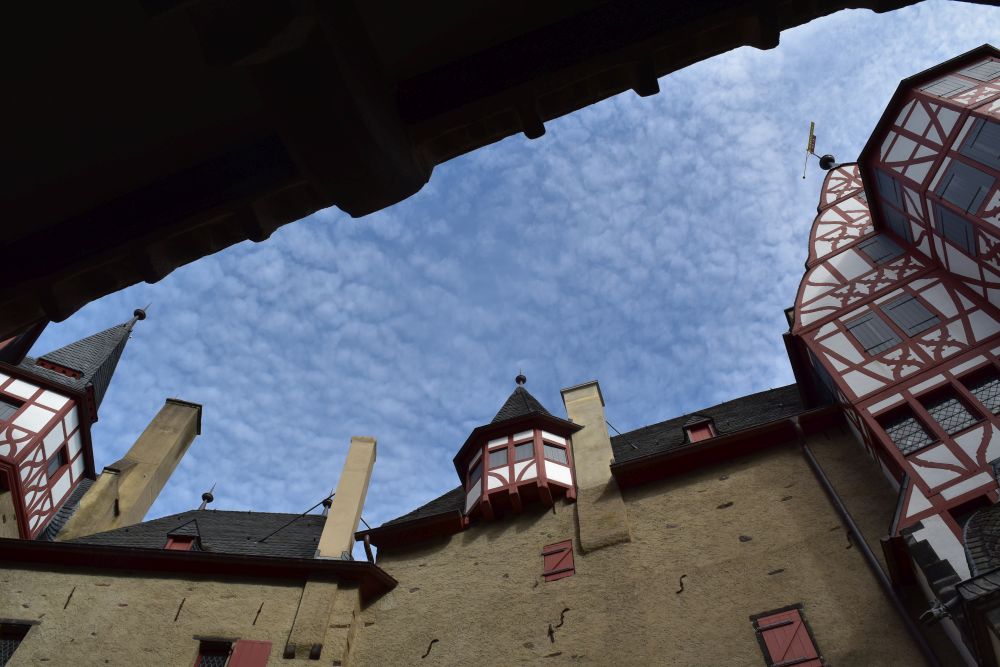
Inside, we have to buy a guided tour. In the courtyard we wait for our guide.

aaa_0300-small

The guide shows us the rooms that are open to the public. There are weapons, the dining room, the sleeping room, the eating room, the children’s room, the hunting room (with hunting trophees from Alaska, even a bear stretched out on the floor), the knights’ room (the rose says “everything we say here, remains inside this room”) and the family picture gallery. The family Eltz became one of the most mighty noble dynasties in the German empire. One of them was Archbishop and Prince Elector of Mainz and one of them was Archbishop and Prince Elector of Trier. The family split into three branches and that is why there are three house complexes in this one castle. The guide has some good humour and tells us anecdotes such as: “The current duke of Eltz sold wood from his forests to a winemaker who was of the opinion that the wine tastes better in barrels made of oak from the Eltz forests. “Oh yes, sure, I fully agree, I have also noticed the difference”, the duke said to the winemaker. And then, after having closed the door and sold his wood, he laughed: “Hm, crazy guy, but it is okay, we sold our wood…””

.

Along the bends of the Mosel … do we now drive north or south… or east or west?

We have reserved our next hotel room in Schweich on the river Mosel, in the hotel Gerfen. From Eltz we drive down into the Mosel valley that meanders and meanders, with vineyards once on the right hand slopes, then again on the left hand slopes. After some time, I am confused… I find it impossible to keep track of whether we are driving north or south or east or west… now that the sun is hiding between a veil of clouds and gives no point of orientation.

In Schweich we are welcomed by the family Fuchs. The husband has cooked in Switzerland (in Grindelwald, in Zermatt and in Zürich), and now he runs this hotel with his wife, daughter and grand-da. We have venison meat cut into strips  – the husband has shot the deer in the vineyard called “Annaberg” – and recommends a Pinot Noir from the same vineyard “Annaberg”. Excellent.

The heart of Germany, the romantic Mittelrhein

Good-bye Rotenfels and Nahe

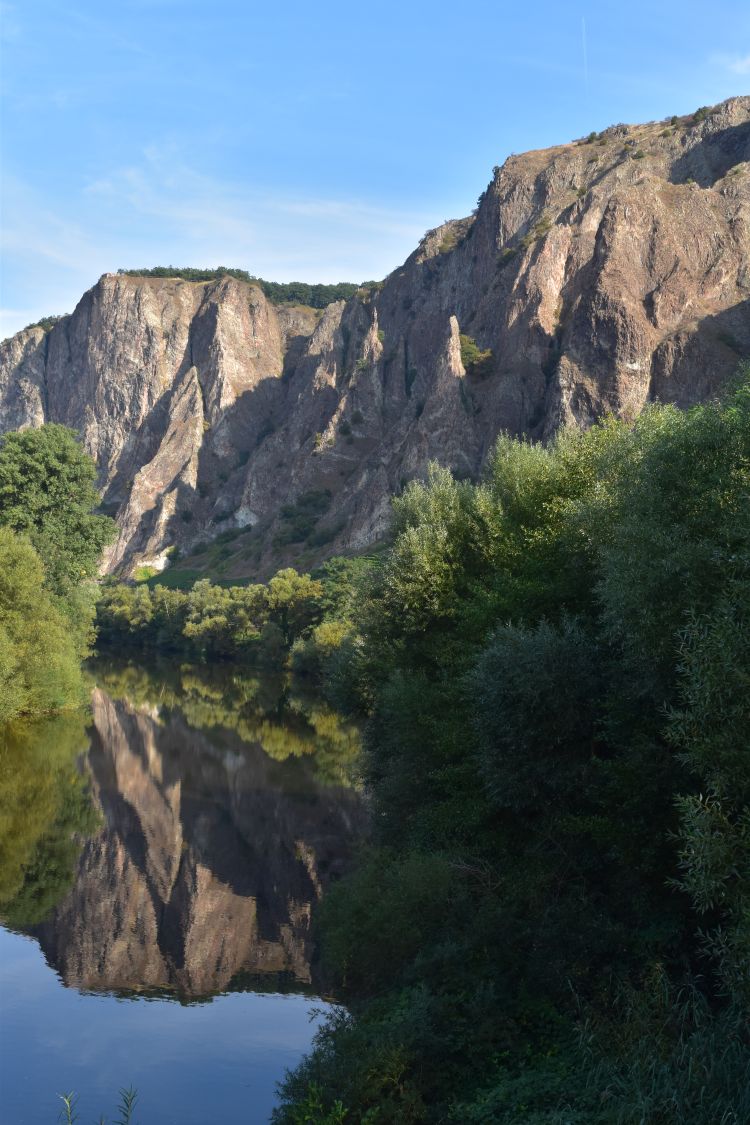
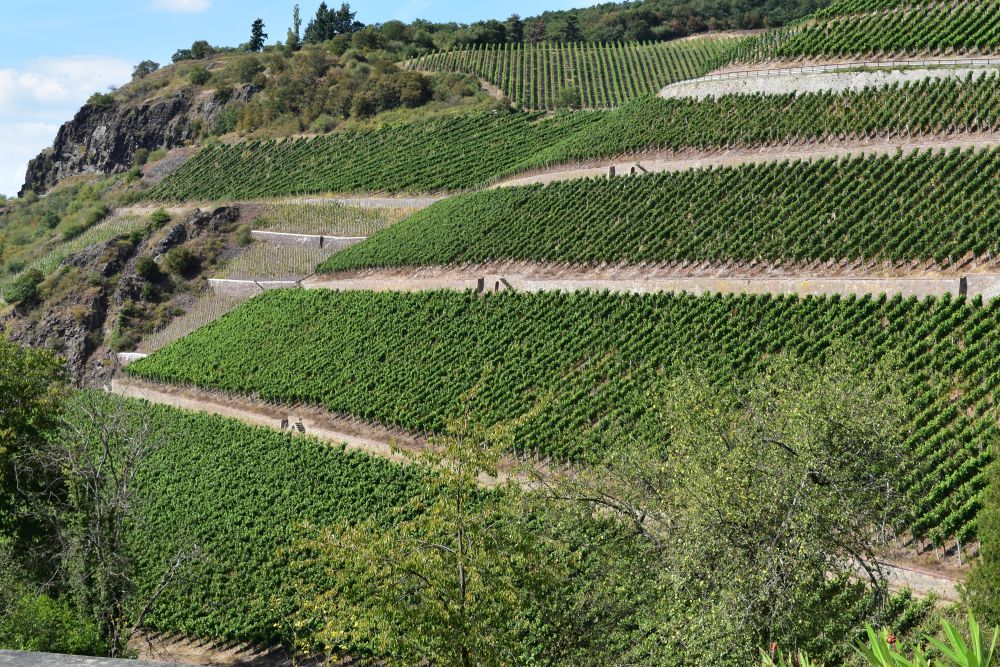
This is our tenth day in Germany. We say good-bye to the Rotenfels reflecting in the Nahe river. This rock is 202m high and at its foot is the vineyard “Bastei”.

aaa_0020-small

Our plan today: Rüdesheim, Bacharach and a cruise on the Rhine to greet Loreley.

.

Disappointing Rüdesheim – little to see and just too crowded

After a short stop in Bad Kreuznach, we cross the Rhine from Bingen to Rüdesheim using the ferry. There are no bridges here. We park and look for the old town. We find the narrow Drosselgasse lined by half-timbered houses with souvenir shops and restaurants. This small street is crowded with tourists: Russians, Chinese, Japanese, American and also Swiss.

aaa_0042-small

Too many tourists all focused on the one small romantic street of Rüdesheim. We quickly leave this busy place, disappointed that there is so little to see here.

.

Ansselheim – quieter, prettier, and Kesseler gives us a hearty welcome

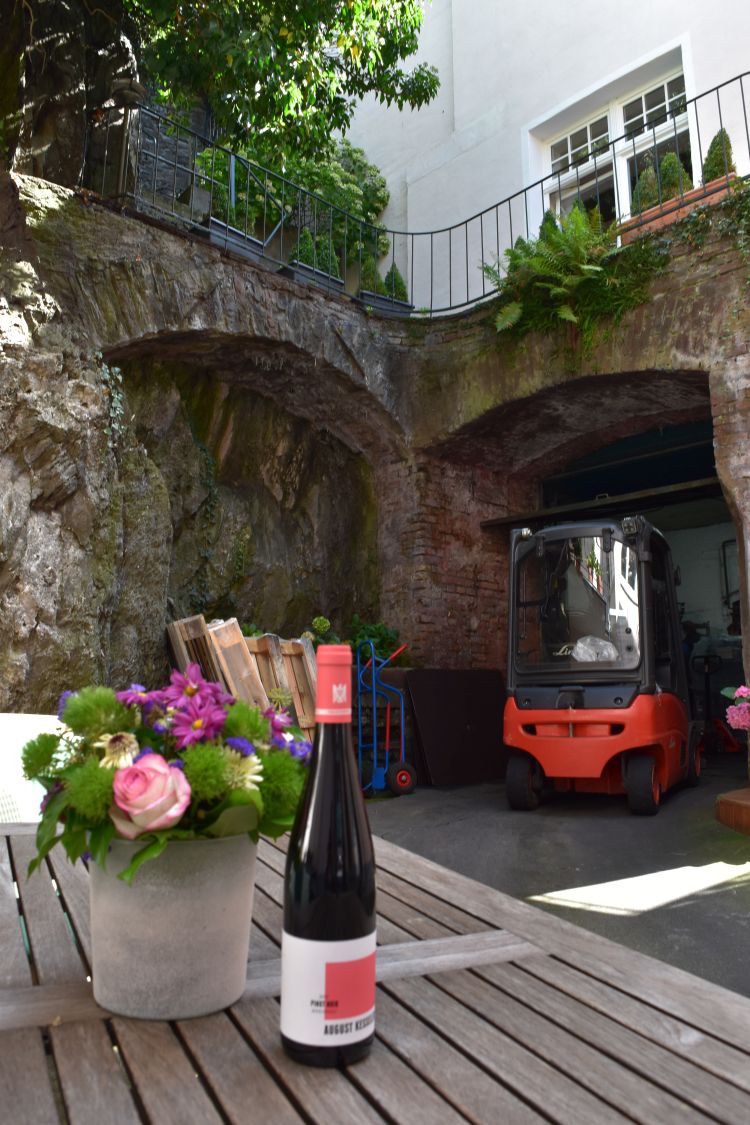
We head north along the Rhine to Ansselheim. We find a pretty, small town with narrow streets, and we stop at Kesseler’s cellar to acquire a bottle of Pinot Noir (which is the specialty here). I select the a bottle from 2011- the same that the German president Gauck had served to the Queen of England, as the winegrower tells me with a smile.

aaa_0046-small

Kesseler owns an unpretentious old-style cellar behind a courtyard – not a tasting area designed by a star architect,  as we had found in some places in the Pfalz. Kesseler and his people have worked here for generations and have produced good Pinot Noir that even makes politics. His wines are sometimes compared to Burgundy wines, he says, but they are just their own class and do not need to be compared.

.

To Bacharach – this IS a pretty town

We drive farther north to Lorch, take the ferry (no bridges here) and settle in Bacharach, named after Bacchus by the Romans, another wine growing town with beautiful half-timbered houses and with the famous vineyard Bacharach Hahn (Tony Jost owns this vineyard all alone as a monopole).

aaa_0086-small

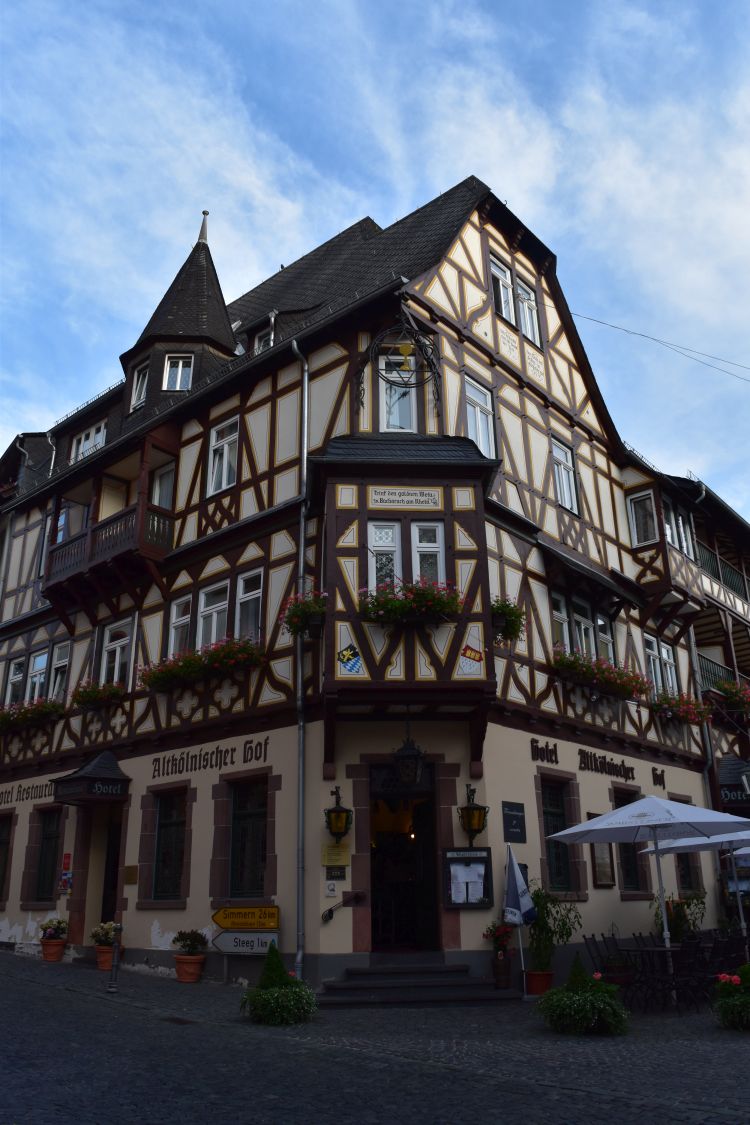
We settle in the hotel Altkölnischer Hof – a great place just across the St. Peter church.

aaa_0242-small

.

Boat ride on the Rhine – the Loreley sings

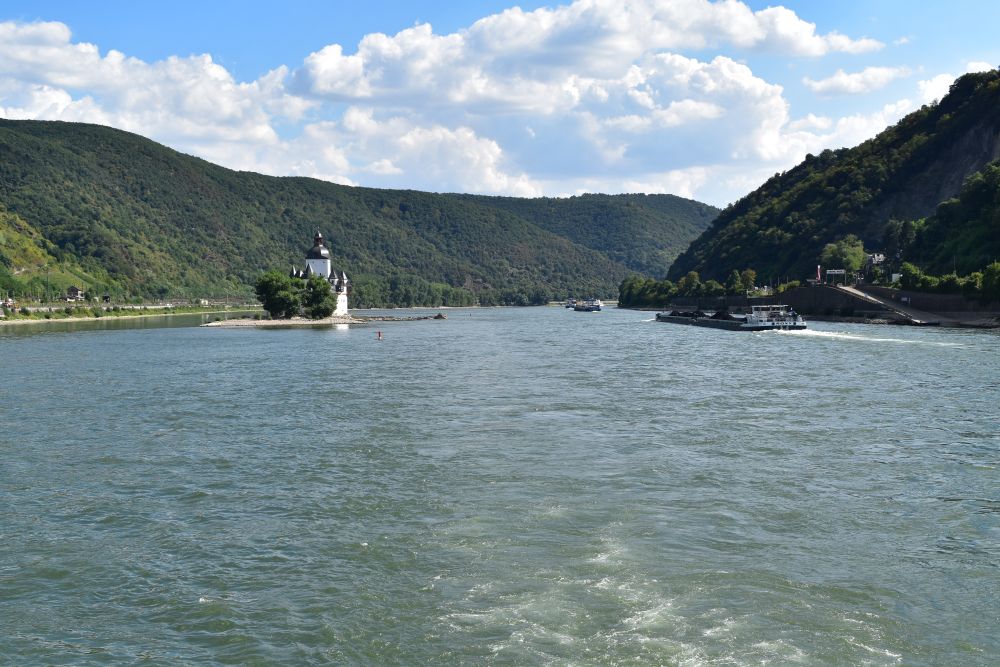
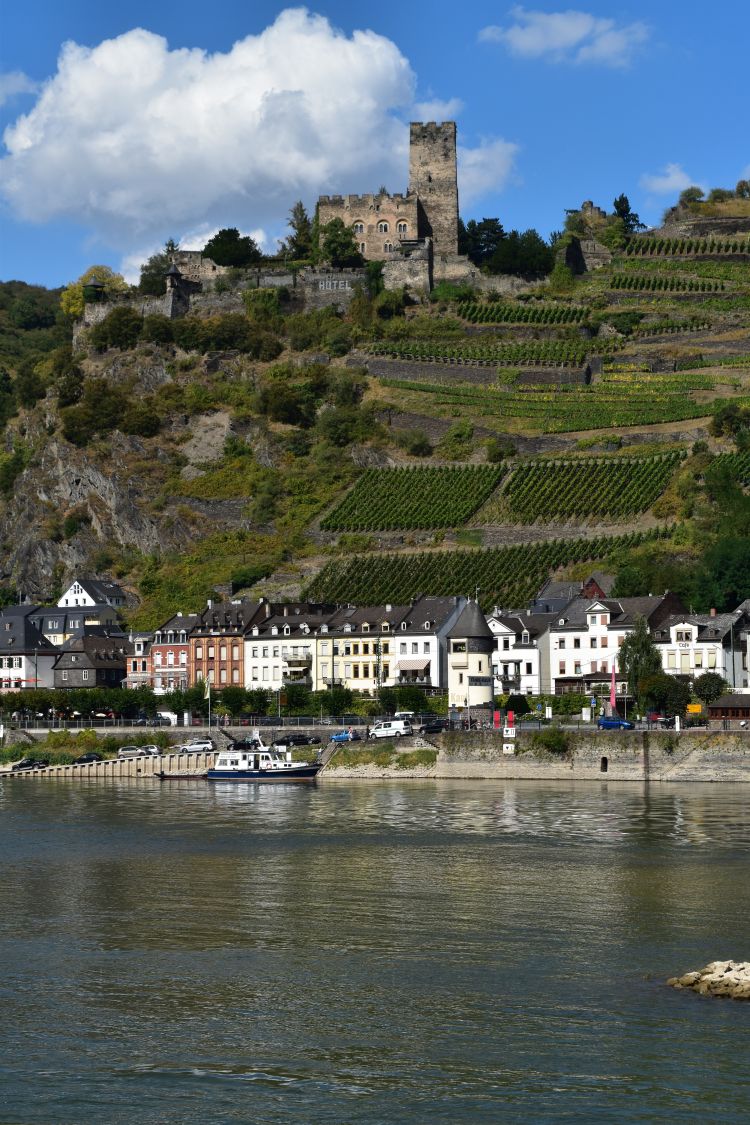
We catch the boat  coming from Rüdesheim, ride down to Goarhausen and back to Bacharach, about two hours in all. The Mittelrhein is extremely romantic with the castles…

aaa_0096-small

… and the steep vineyards.

aaa_0092-small

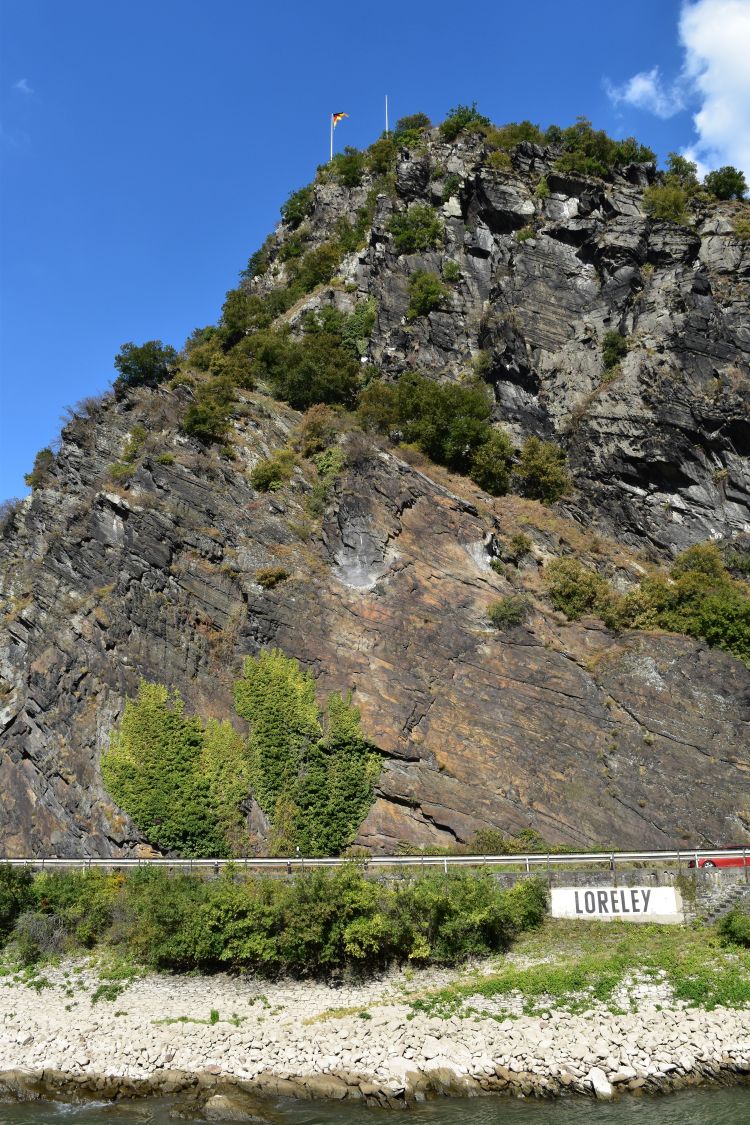
We safely pass by the Loreleyrock.

aaa_0119-small

On the boat they play the music that was composed for Heine’s poem”Ich weiß nicht, was soll es bedeuten, daß ich so traurig bin, ein Märchen aus uralten Zeiten, das kommt mir nicht aus dem Sinn.” (“I cannot explain the sadness, that’s fallen on my breast, an old,old fable haunts me and will not let me rest”). It is sooo sadly romantic.

.

Bacharach is a gem

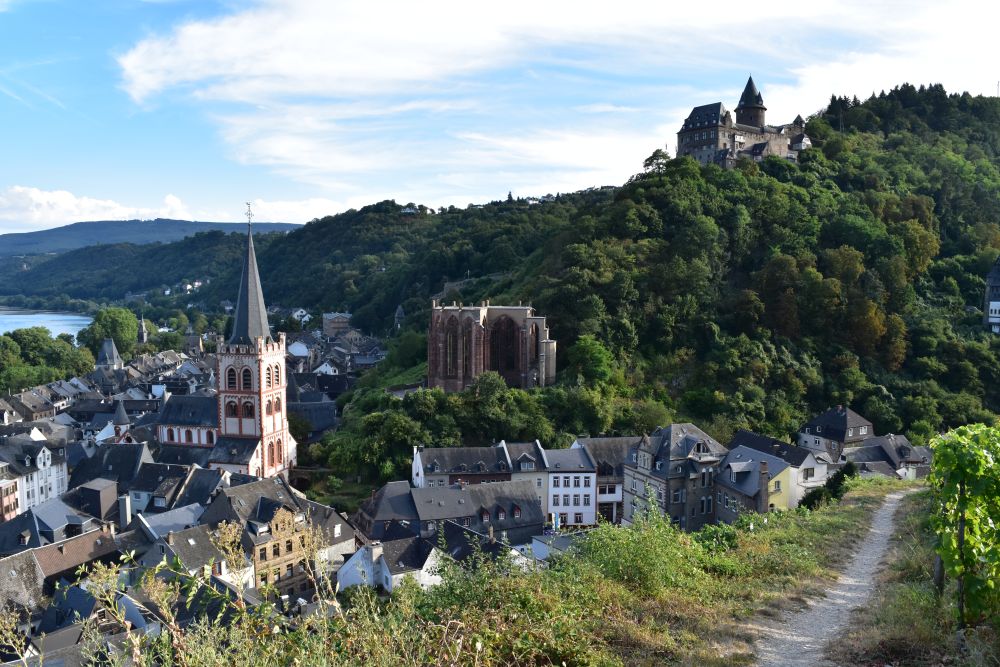
After the boat ride, I walk along the town wall of Bacharach. This is the view of St. Peter church, the Werner’s church (the ruins) and the Stahleck Castle above the town.

aaa_0185-small

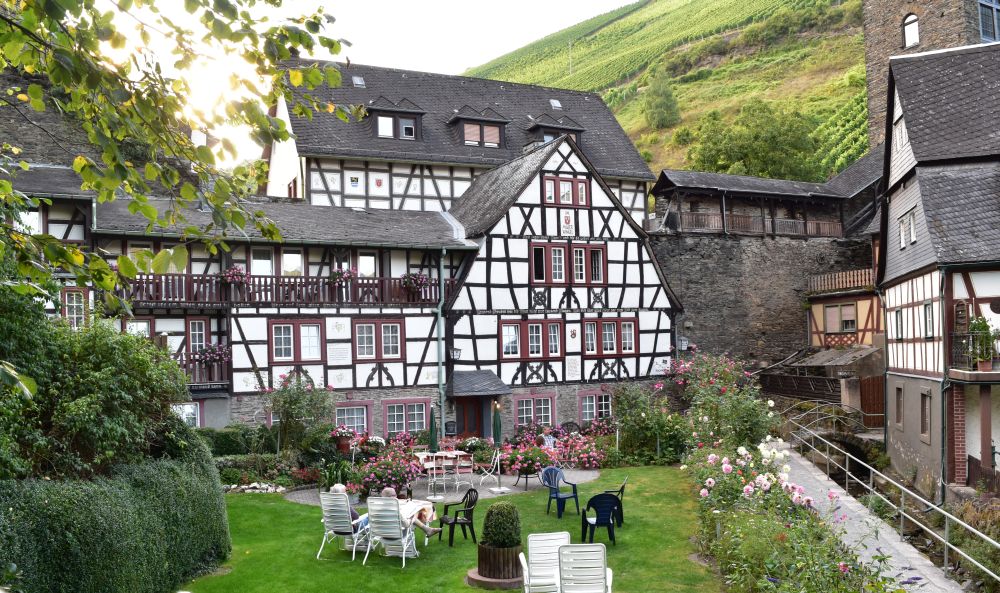
Half-timbered houses – all well maintained.

aaa_0196-small

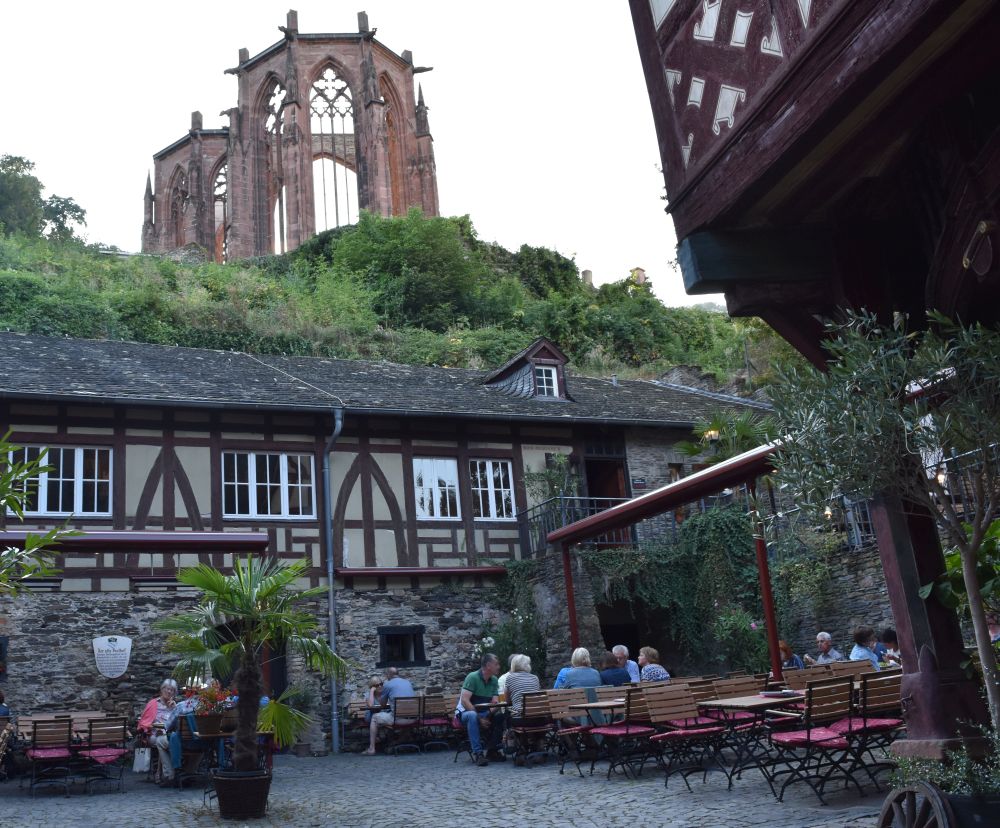
We have dinner in the Posthof, just under the Werner church.

aaa_0208-small

We eat a delicious meal with roasted pork. I combine it with a Riesling from Bacharach Hahn, produced by Toni Jost.

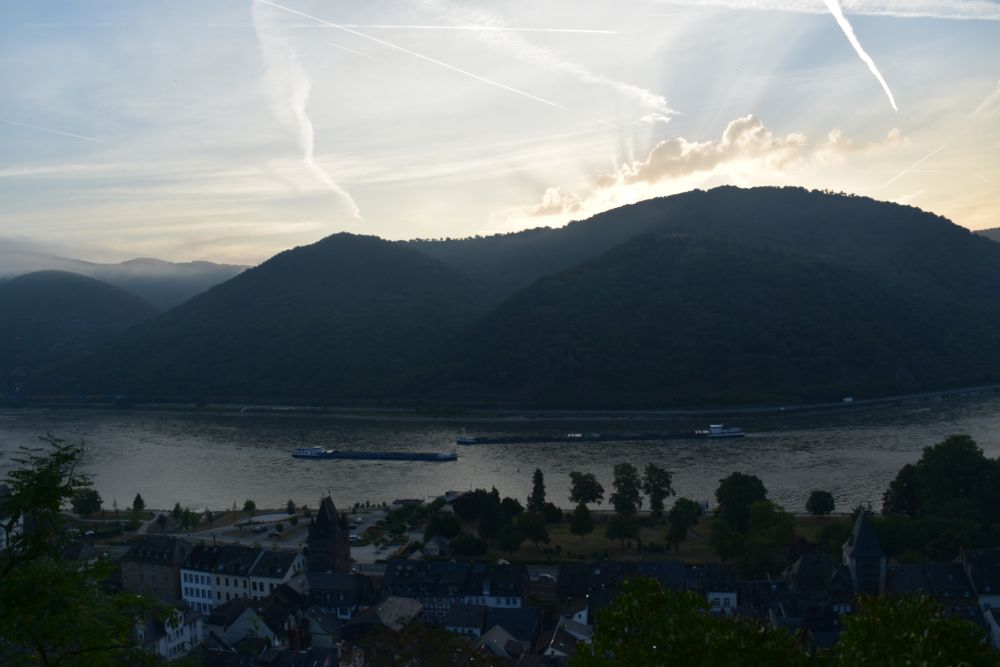
Early in the morning I go for a second walk to the Stahleck Castle.

aaa_0217-small

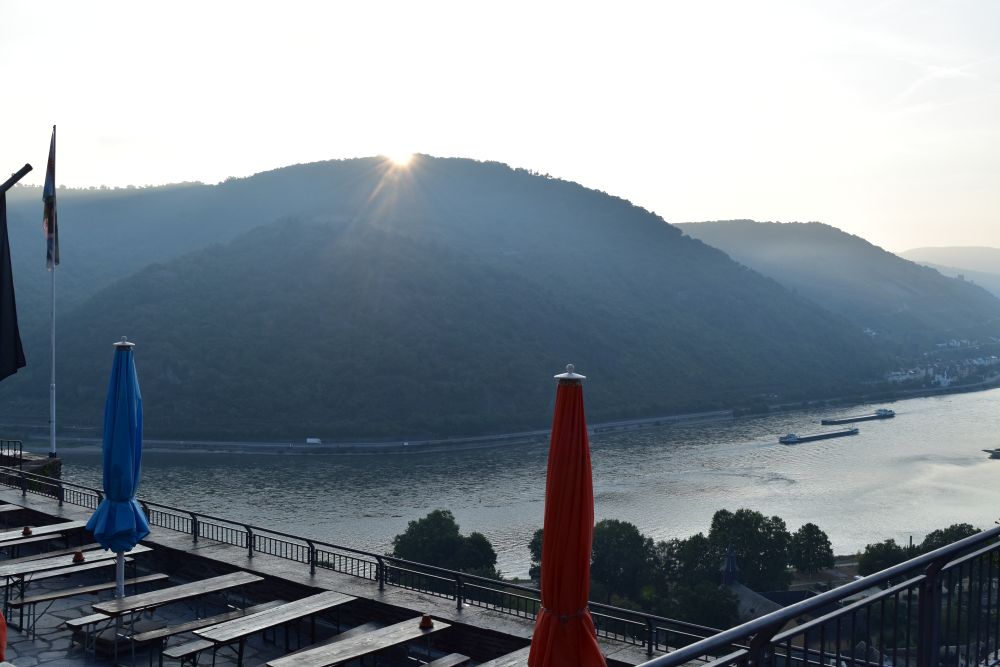
The sun rises, when I arrive in the Castle…

aaa_0228-small

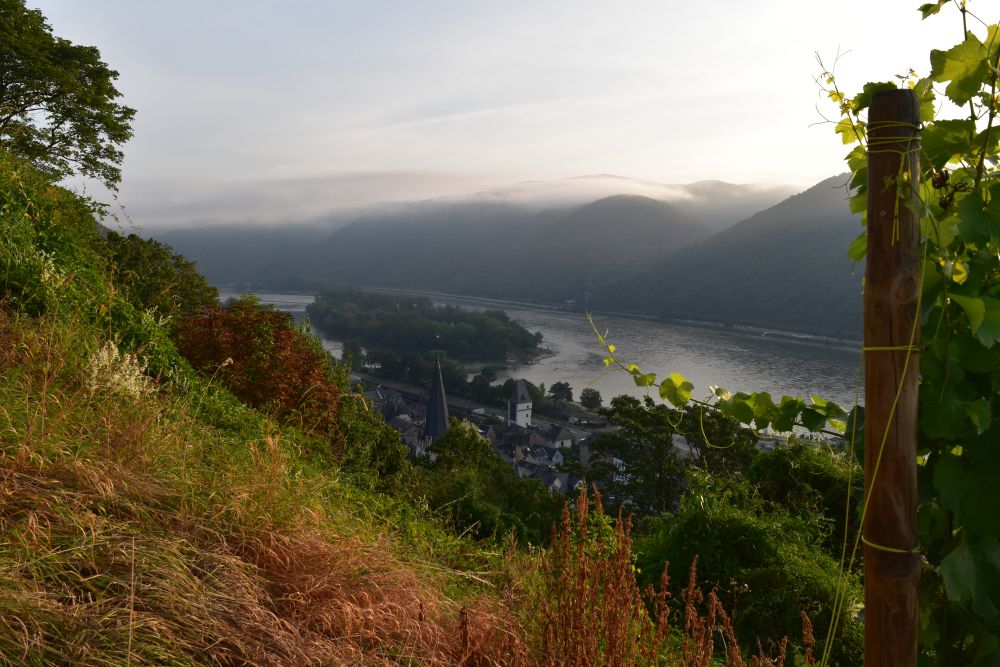
… and the day is taking off, when I climb back down to Bacharach.

aaa_0236-small

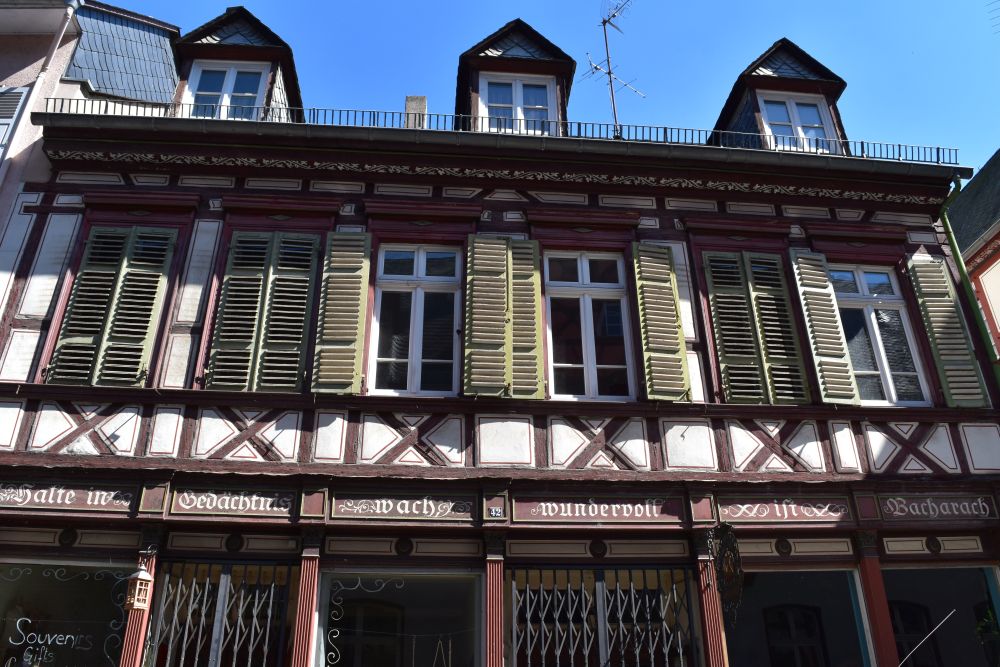
Yes, we agree: “Halte im Gedächtnis wach, wunderbar ist Bacharach.” (Keep it in your mind, Bacharach is wonderful).

aaa_0075-small

We buy a bottle of Riesling from the Hahn vineyard at Toni Jost’s and then we leave Bacharach. Our next destination are the Eifel and the Mosel valley.


The Nahe – a very fine and steep wine region

On our ninth day through Germany we drive to Bad Münster-Ebernbach in the Nahe valley. It is now the last day of August.
.
First stop at Rockenhausen, a friendly country town
Shortly after breakfast we feel like a coffee and stop in Rockenhausen. It is a friendly, small town with a clock museum,…
dsc_0297-small
… a central market square with a church…
dsc_0307-small
… and a cute monument in front of the church including these rabbits.
dsc_0306-small
We have our espresso and buy some self knitted baby socks in the shop nearby that celebrates “ten years of the busy thread”. It is the kind of shops that sorely has disappeared in our towns: Just wool and filz and some hand knitted stuff.

.
The Nahe valley – Dr. Crusius at Traisen and the highest cliff north of the Alps
We drive through the Alsenz valley and reach the river Nahe. Behind a huge-huge rock we stop in the wine village Traisen. We find Dr. Crusius, a winegrower that I had selected from my Little Johnson for being an excellent family estate.

dsc_0310-small

The daughter of Dr. Crusius opens the door. I buy two bottles of Riesling and a late harvest Riesling from the Bastei, a small band of vineyards below the Rosental rock. It is the highest rock in Europe north of the Alps (202m). The sun almost “roasts” the grapes here. We take pictures from the Rosental view point. Impressive. This is the upriver view.

dsc_0317-small
This is the view down river towards Ebernbach.

dsc_0341-small
.
The Nahe valley – Döhnhoff at Oberhausen
We drive along the Nahe to Oberhausen. We oscillate a bit, until we find the traditional winegrower Hermann Dönhoff in the Bahnhofstrasse. This winegrower, Johnson says, is perhaps Germany’s best. I expect a huge and representative tasting and selling area with a lot of staff working there. We find the wife of Dönhoff – she is under stress, as she is cooking a meal for guests that are expected to arrive soon. We find her husband in a rather modest selling and tasting area, also under stress, because he has promised to join his wife now. But, okay, he can sell me some Riesling. I buy two bottles of Grand Cru and a late harvest from Hermannsberg, the steepest and best rated vineyard in the Nahe region, just above a bent of the river. Mr. Dönhoff is proud of his wine, and when he hears me laugh about “Dellchen” (another name for a vineyard here, “little dent”), he mumbles something and disappears to fetch a description of his vineyards: “Look, this is for you, as your are interested”…  But now, he absolutely has to join his wife and receive the guests – the phone is ringing angrily.
.
Next place in the Nahe valley – Schlossböckelsheim
Ursula cannot remember “Schlossböckelsheim” (literally “Castle-Ram-Home”). She always says “Schafböckelksheim” (“Sheep-Ram-Home”) and we laugh. We drive through steep-steep vineyards,…

dsc_0345-small

… reach Schlossböckelsheim that is a steep-steep village squeezed into a narrow valley, decide, we have had enough, take a drink in a friendly restaurant and then move to Bad Münster-Ebernbach.

.

Bad Münster-Ebernbach – the hotel is “solala”, but the Amtshof is a great surprise
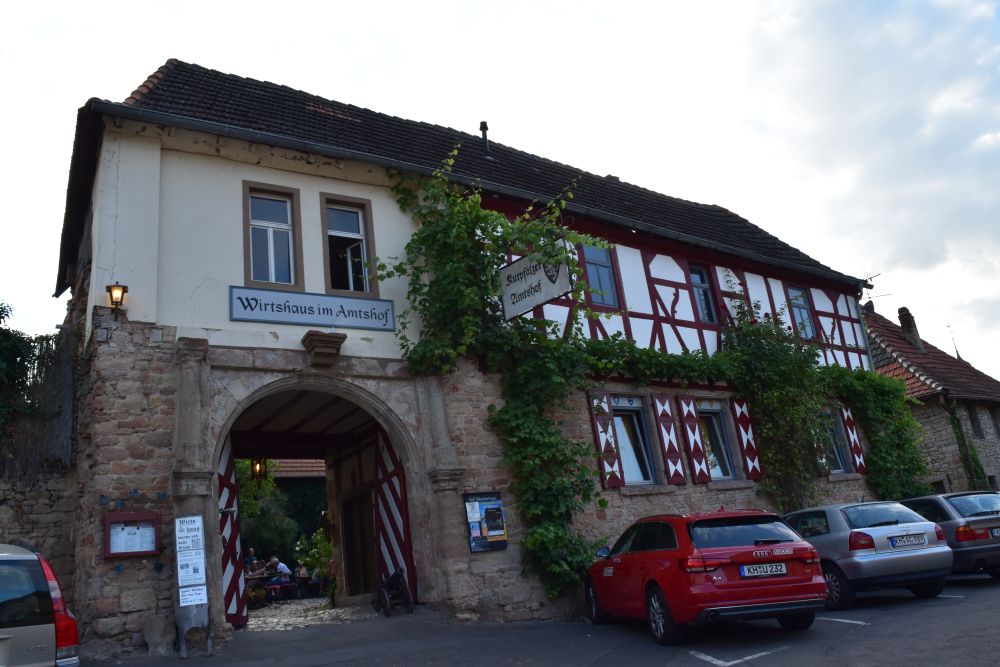
We settle in the hotel Burgblick in a small apartment. The hotel is run down a bit, wifi does not work, the lady is overstrained, her kids are shouting at her… but the room is quiet. However, there is a surprise waiting for us: Near the hotel we find the Amtshof, a small restaurant in a historical building.
aaa_0005-small
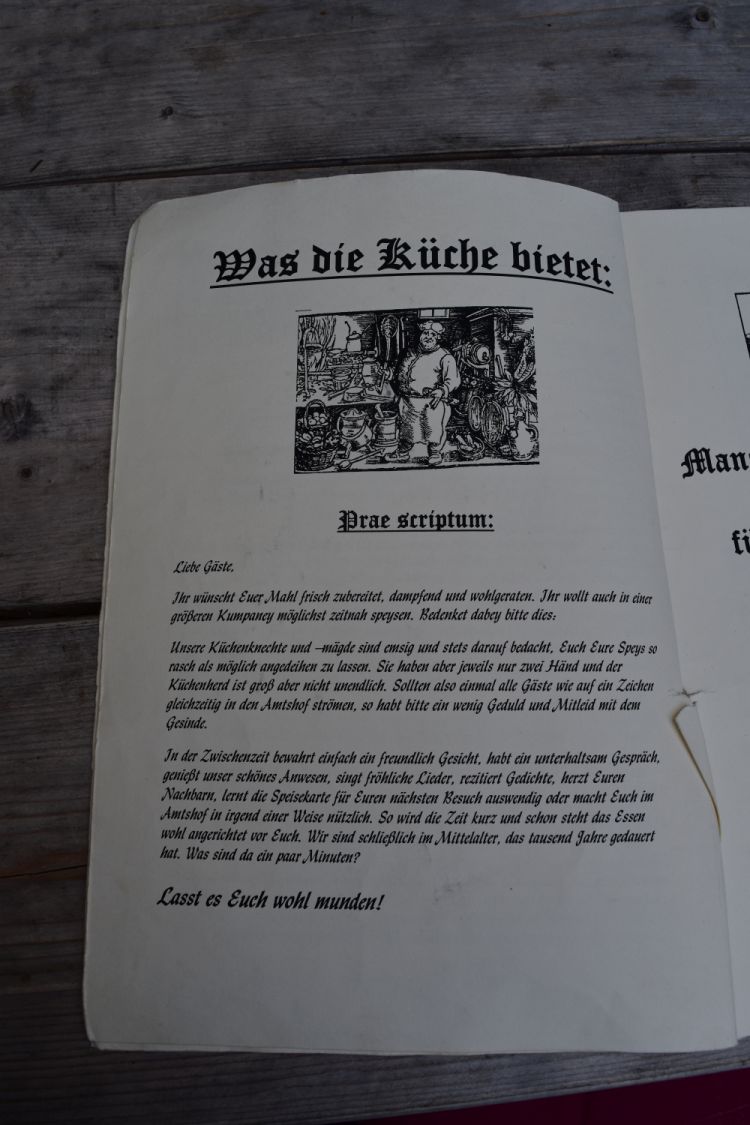
It is managed by an archaeologist who has specialized in medieval history. His menu looks indeed very medieval. Look at the Prae Scriptum about what the kitchen has to offer.
aaa_0011-small
We settle in the courtyard. Ursula has a mixture of potatoes and apple baked with cheese – excellent. I enjoy roasted pork – also delicious. “Lasst es Euch wohl munden” (enjoy it well).
aaa_0015-small
Tomorrow we will continue to the heart of Germany – the Mittelrhein and the Loreley.


The Donnersberg – walking on the 2000 year old Celtic oppidum

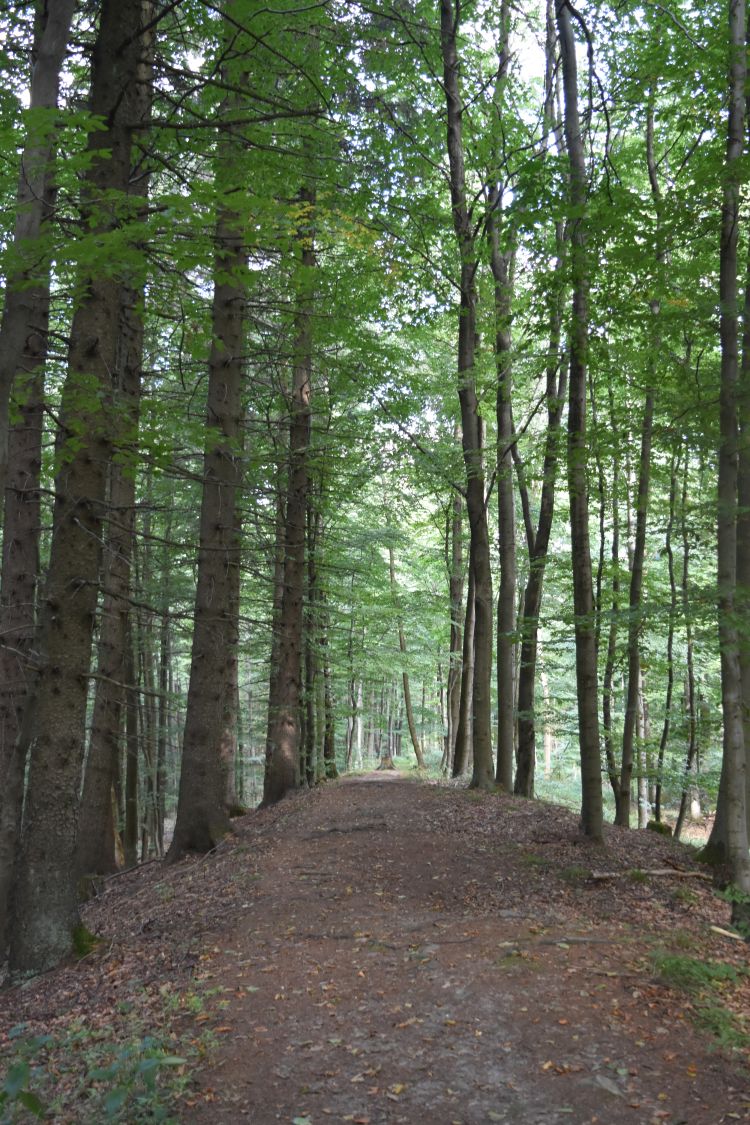
Tuesday – this is our eighth day on the road in Germany. Today we visit the Donnerberg, the highest mountain massif of the Pfalz, 686.5m high. Some 2000 years ago, the Celts had built an oppidum here overlooking the Rhine plane and the Palatine mountain land. They protected the city with a wall including fields and meadows for cattle.  Cesar conquered the area in 50 B.C. Now the remains of the wall of the Celtic oppidum form a 5km long footpath winding through the forest.

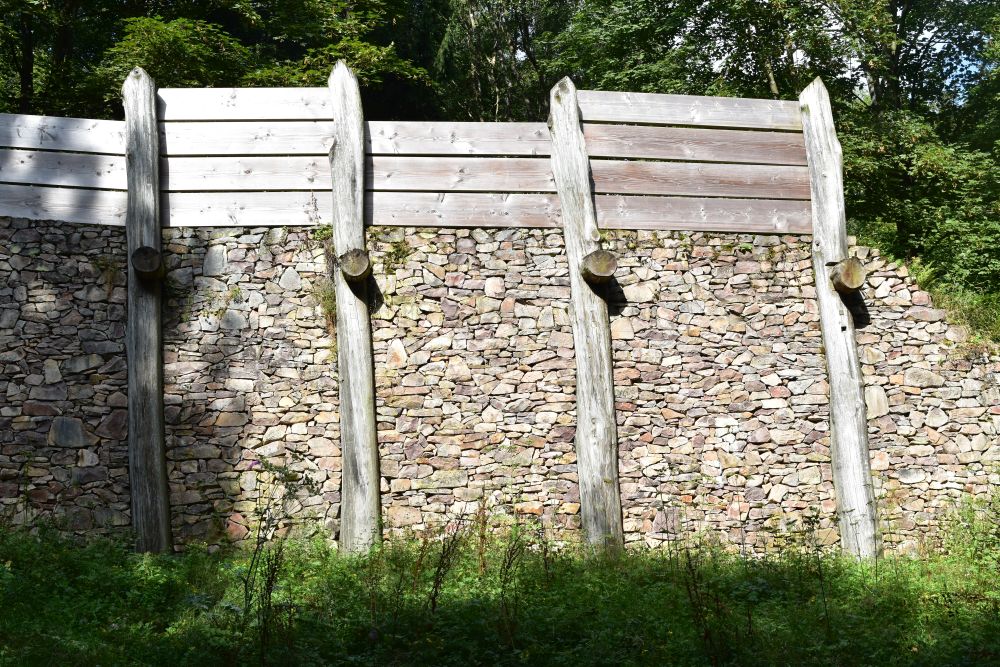
We park our car. Parts of the wall have been restored.

dsc_0242-small-donner

The wall was made from dry masonry using the local Rhyolit stones, about 2.5 to 3m high. Behind the wall the Celts had accumulated earth for better protection.

This sign will now guide us along the wall.

dsc_0240-small

The sign represents the spokenail of the chieftain’s charriot. The head stuck out to make it clear to the members of the tribe: “Now the CHIEFTAIN is coming, get out of HIS way. “

We walk on the wall for about three quarters of an hour,…

dsc_0269-small

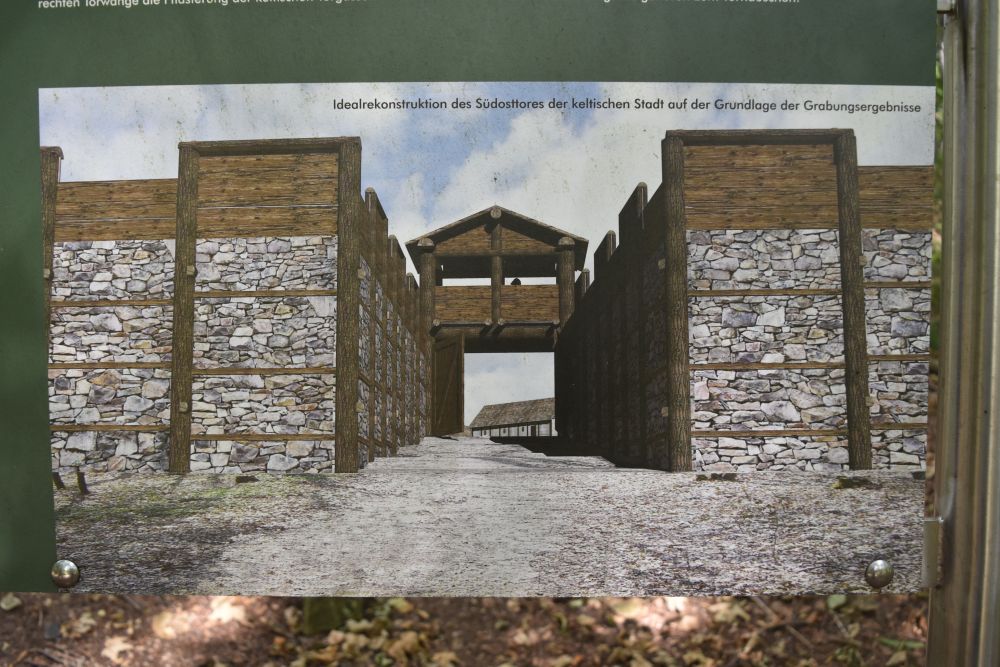
… until we reach a gate. This is what the gate once looked like.

dsc_0248-small

The pathway to the gate narrows down to ease attacking the enemy squeezed in here.

Behind the gate, we find the Ludwigsturm. Named after Ludwig II from Bayern, as this region once belonged to Bayern. A retired lawyer welcomes us with Mira, his friendly dog in front of this kiosk.

dsc_0256-small

“You are lucky today that I am here, I have coffee and cake to offer and I have the key for the tower. Do you want to climb it?” Oh yes, great!

dsc_0260-small

We climb up the winding stairs, open a heavy metal door, and enjoy the view of the Rhine plane with Worms, Mannheim, Ludwigshafen etc.

dsc_0251-small

We then enjoy coffee and cake, learn about the spokenail of the chieftain and about Adolf von Nassau – he was defeated and killed by Albrecht of Habsburg not far from here in the late 1290-ies, while fighting for the crown of Germany.

Along the remains of the oppidum wall we continue our walk to the Königstuhl or Chair of the King. Here we learn that this mountain has been formed by volcanic activity, but the volcano did not erupt – it just lifted the Rhyolit stones from the magna to the surface of the earth where they solidified.

dsc_0262-small

We continue to walk on the wall, until we reach another reconstructed piece of the wall. We continue along the next signpost… walk uphill… strange… uphill?… uphill?… and back we are at the Königsstuhl. One full circle… what has happened? We walk back down again, reach the reconstructed piece of the wall, identify one sign that led us back up again – oh no – and continued now on the right path to our car.

We return to the Klostermühle where we enjoy another delicious dinner and plan our next day with the destination Nahe valley.

Northern Pfalz… Kusel, Lichtenberg, Lauterecken, Otterberg, and Klostermühle

The seventh day of our German tour. We say good-bye to the friendly “Kleine Blume” in Erfweiler and drive north. Our next target are the Pfälzerberge (Palatine Mountains) that reach the altitude of almost 700m (more hills than mountains by Swiss standards). Our route: Kusel, Lichtenberg (castle and Geoskop), Lauterecken, Otterberg and the Hotel Klostermühle near the Donnersberg.

.

Kusel is famous for its musicians, the city reminds me of the fifties/sixties

Kusel is located in an economically weak region. The houses remind me of the fifties/sixties: The plasterwork is peeling off.

dsc_0166-small

Many houses are abandoned, on sale and many shops are empty waiting for new business. A couple from Palatine told us this anecdote: “Godfather met a man that sat on the border of a road weeping. He asks: “Why are you crying. I would like to help you”. The poor man says: “I am from Kusel and this is why I am weeping.” Godfather sits down next to him, puts his arm around him, starts to weep  as well and says: “You are from Kusel? Poor you. Then I cannot help you.””

Because the area is poor, citizens from Kusel emigrated. Many of them became musicians,  the most famous being Fritz Wunderlich. He was a tenor singer that sorely died already at the age of 35 in 1966. Kusel is proud of him and the bells at the townhall play one of his tunes every hour at twenty past…

dsc_0176-small

The town welcomes guests: There are a pedestrian zone and painted benches all over in the city center. At the central square this cosy bar invites to sit down under the trees.

dsc_0170-small

We select a small coffee bar at the Bahnhofstrasse. The owners are Italian speaking. They serve an excellent espresso and a delicious ice cream – we both eat two portions of it.

.

Lichtenberg – castle and Geoskop

Not far from Kusel, we stop at the castle Lichtenberg that Ulrich Zwingli visited when traveling to Marburg in 1529.

The office for weddings is behind this door… I am not sure, whether I would like to get married here.

dsc_0180-small

Inside the castle we visit the Geoskop, a museum that gives insights into geology and petrifications – in particular of the Pfalz.

dsc_0186-small

.

Looking for the stone bridge in Lauterecken – missed it

Our guide book promises an old stone bridge in Lauterecken. Whenever you look for it – it is tucked away and there are no signs. We missed the bridge… and enjoyed this children’s shop instead.

dsc_0190-small

.

Otterberg – second largest Romanesque church in Pfalz

Ottenberg is a charming small town with half-timbered houses.

dsc_0227-small

Here we find the second largest Romanesque church of the Pfalz, from the 12th century. It is a sobre place for praying,…

dsc_0201-small

The church is being used as a protestant and catholic church (Simultaneum), as this region has changed landlords several times – some being catholic, some being protestant. Cuius regio, cuius religio: Catholic landlords imposed the catholic belief and protestant landlords the protestant belief. Hence the Northern Pfalz ended up with both religions that were celebrating in the same church.

I like the old sun clock from 11/12th century.

dsc_0212-small

.

Our next overnight stop: The Hotel Klostermühle

We look for the Hotel Klostermühle. According to our guide book, it is south of Imsbach. We oscillate back and forth, until we find out that our Hotel is in Münchweilen, a village about 5km away.  This Hotel is a gourmet place.

In the warm summer evening, we sit in the garden…

dsc_0295-small-muhle

… and enjoy a delicious Palatine menu.

dsc_0275-small

This is the terrine of the country hen.

dsc_0276-small-kloster

With it I take a glass of Silvaner from the river Nahe and a Cuvée from Zelltal (German Wine Route).

In the morning we catch the sun in the beautiful garden.

dsc_0288-small

Tomorrow we plan to explore the Celtic wall and the view of the Donnersberg, the highest mountain of the Pfalz.


Around Erfweiler- the Hahnfels walking tour

On our sixth day in Germany we walk around Erfweiler in the Pfälzerwald. It will be another hot and sunny day.

.

The Hahnfels tour around Erfweiler

We have selected the Hahnfels tour of some 14km that takes us around Erfweiler on the forested hills. We start at about nine in the morning. It is already getting warm and we are glad to walk in the trees. The sign of this cock will guide us today.

dsc_0073-small

We walk uphill on sandy ground and reach our first viewpoint, the Hahnfels. It is a sandstone block and we have a good view of Erfweiler with the Dahn fortifications.

dsc_0077-small

This is Ursula’s panoramic view.

dsc07686-small

The village of Erfweiler was very poor, until they managed to earn some money in the mining and related charcoal industry in the 19th century. Only then they could afford a church.

The next viewpoint is another sandstone block amidst the trees.

dsc_0090-small

Our footpath winds gently through the forest.

dsc_0096-small

We cross the valley at this spring (Breitenbachquelle – this is Ursula’s romantic photo).

dsc07697-small

.

And more… up and down and up and down and up… 

Uphill we walk again to the Schaffelsen (literally “sheep rock”). Climbers have just started to tackle this rock.

dsc_0108-small

We stop at the viewpoint called “Wasgau”. I ask myself, whether “Wasgau” is related to “Vogesen” – the name of the mountains across the border in France. Also “Was-” points to swamps, as I have learnt in the Black Forest (Stübenwasen is a swampy area where I do cross country skiing in winter).

Downhill again and then uphill again. We reach the fortification Alt-Dahn hanging on one of these sandstone rocks.

dsc_0121-small

The path takes us down one last time – we reach Erfweiler. The climate is mild enough to allow edible chestnuts to grow.

dsc_0127-small

.

The romantic valley behind Erfweiler

From Erfweiler, a final round tour of about 5km takes us into a small valley with this romantic small lake…

dsc_0136-small

… and the Eibach spring.

dsc_0143-small

From far signs have announced the highlight of this valley, the waterfall. This is the waterfall…

dsc_0152-small

Well… okay… we Swiss are spoilt by waterfalls – but the geology behind this small waterfall is interesting: 120m higher up there is a spring. The nascient creek disappears in the ground, re-emerges just above this waterfall and then rushes down into the valley.

Our hotel “Die Kleine Blume” appears at the end of the street. We finish our walk through the shaded forest with all its places of interest. We have met about ten people on this sunny Sunday; Erfweiler is a quiet place to relax and move. And how good that we could move in the shade here. The temperature has risen to more than 30 degrees today.

We finish the day with a buffet of specialties from Pfalz such as “Saumagen” (kind of sausage wrapped up in pork stomach) and “Leberknödel” (liver dumplings). No light meals. We can “afford” that after our long hike.