In 1920, my grandfather Hermann Radzig-Radzyk painted “Grünheide vom Werlsee” (“Grünheide from the Lake Werl”).
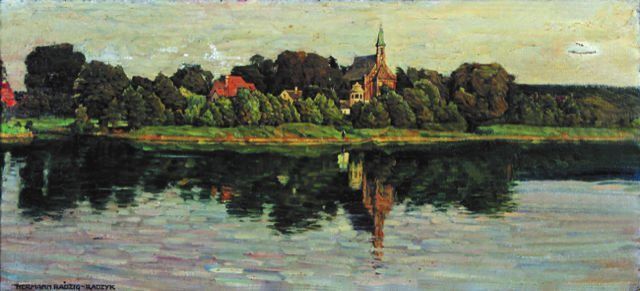
The Kunsthaus Winterberg in Heidelberg sold the picture in 2012. They sent me the photo from their archive. Perhaps, the painting was at the Grosse Berliner Kunstausstellung (Great Berlin Art Exibition) in 1923, under the title “Märkische Landschaft” (number 766).
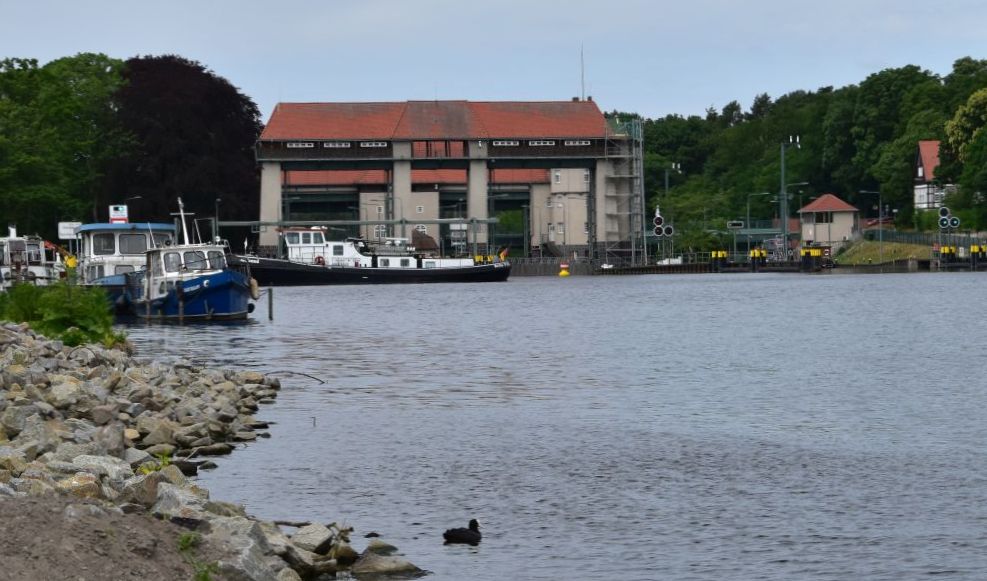
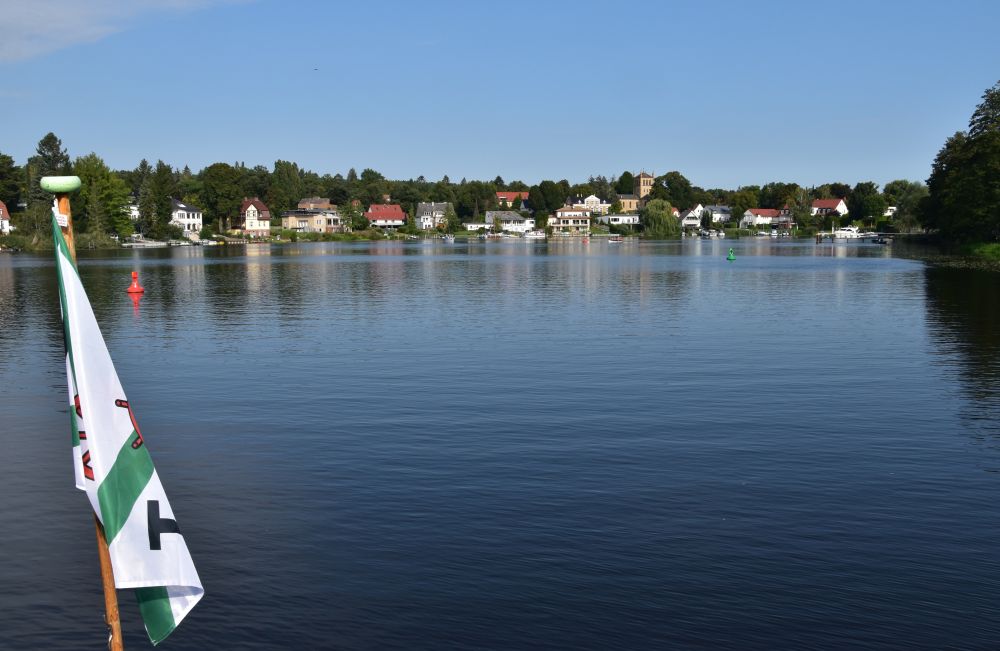
In Mai 2025, I took the commercial boat from the small town Erkner to the village Grünheide. I was curious, whether I could see my grandfather’s church from the boat (thus FROM the Werlsee).
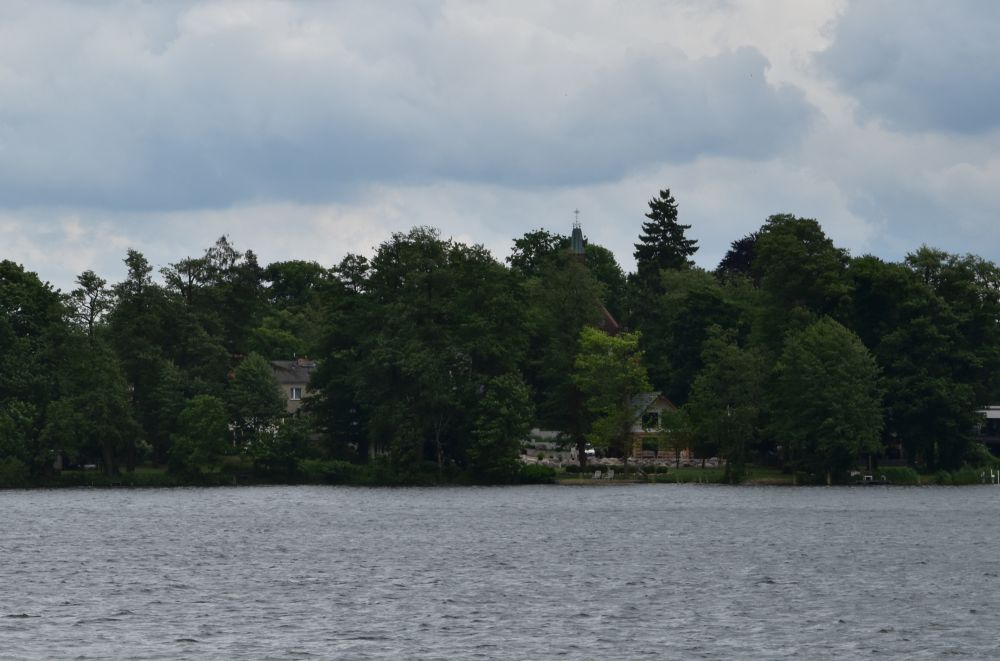
No, today, the church hides behind trees; I can see just part of the small tower and part of the roof. Another picture that my grandfather could no longer paint today. The world has changed since 1920.
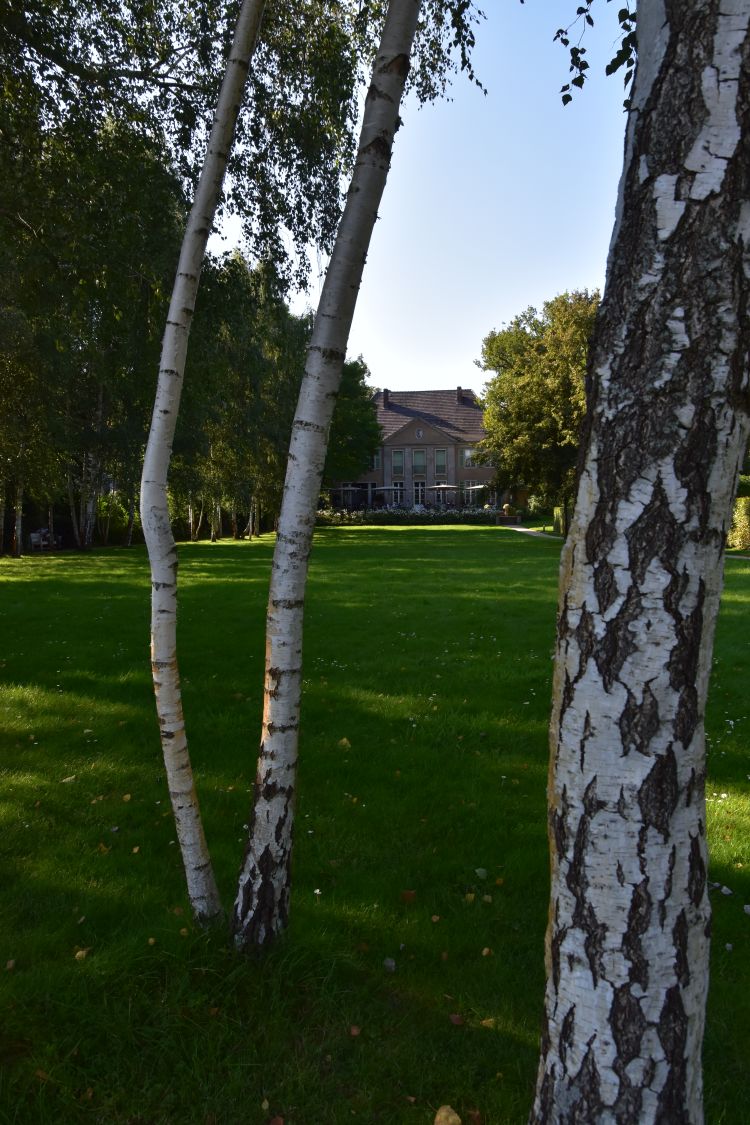
The Grünheide church is called “die Kirche zum Guten Hirten” (the church of the Good Shepherd) and was built in 1892. It is located on a small hill above the Werlsee. I climbed the hill and took this photo from behind the church.
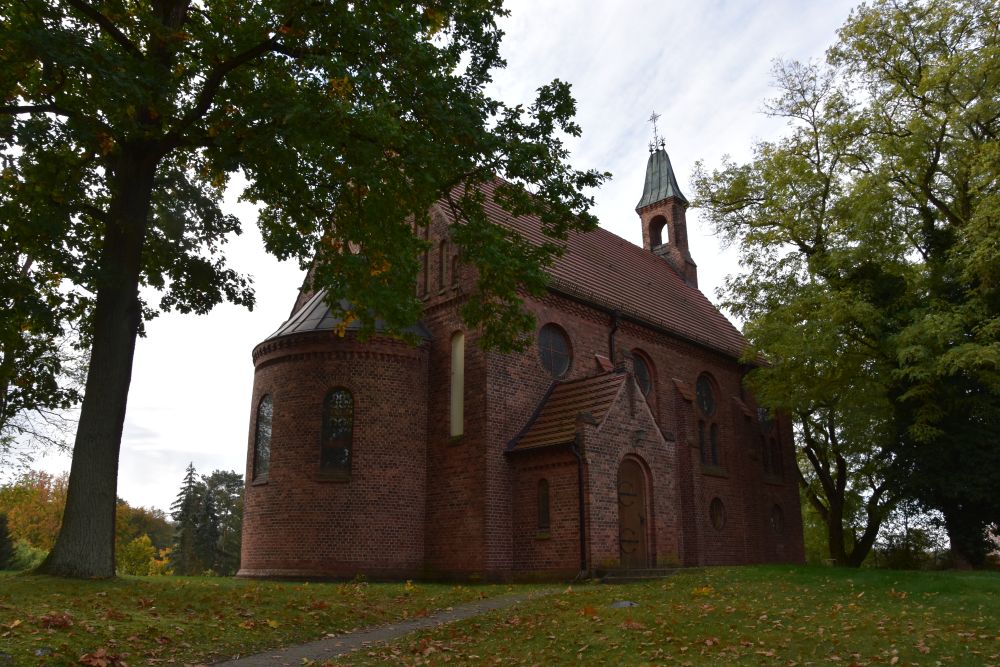
The small tower has not changed since my grandfather painted it.
Where are we? Grünheide is located east of Erkner near Berlin
The village Grünheide is the regional center of the community Grünheide east of Erkner. The village is located between two lakes, the Werlsee and the Peetzsee. The commercial boat I took starts at Erkner shortly before twelve, travels through the Löcknitz Channel and the Werlsee, reaches Grünheide in the early afternoon and returns to Erkner in the late afternoon.
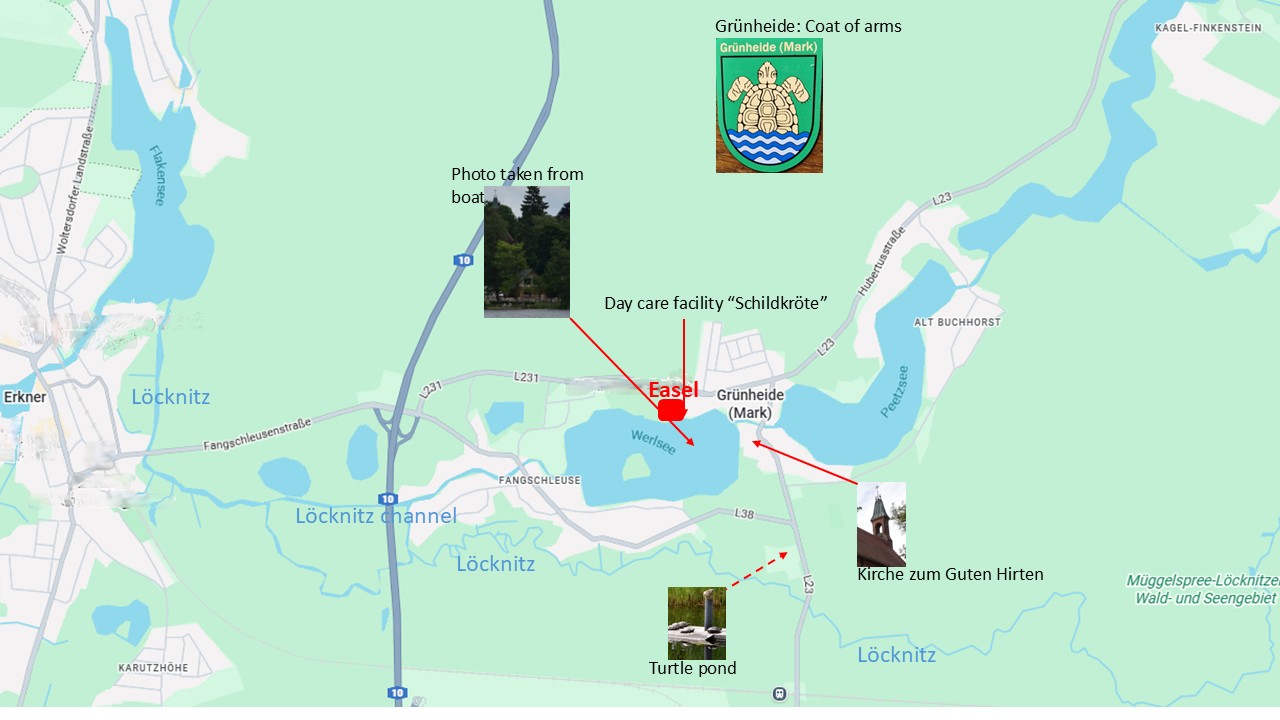
Source: Google maps, January 2026, with my own additions
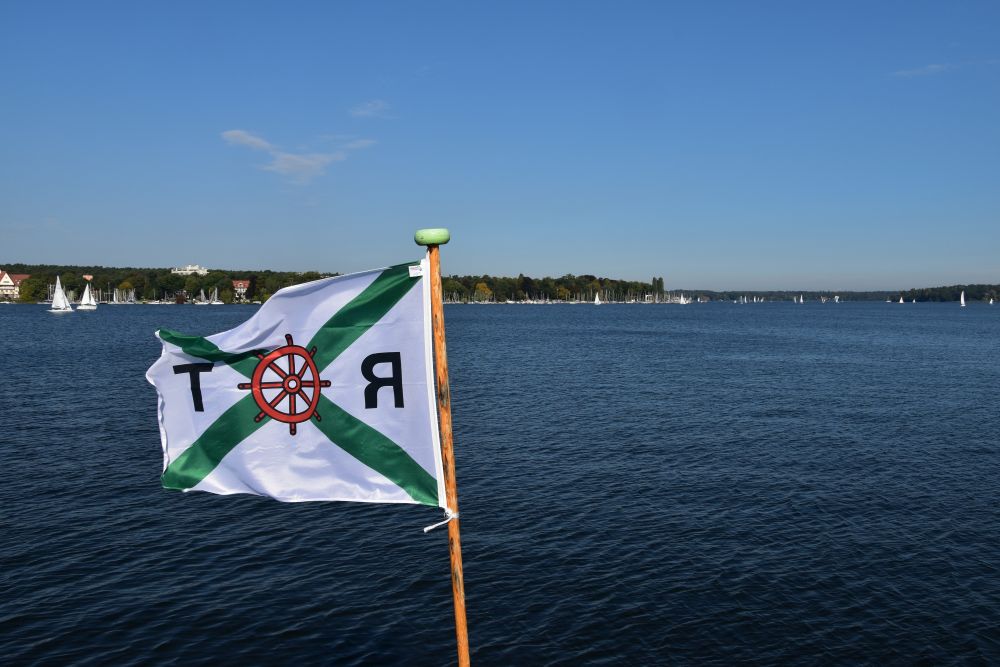
My grandfather called his painting “Grünheide FROM the Werlsee” which means, he looked at the church FROM the lake (he was always precise). I do not believe, he was sitting in a boat; I believe, he painted near today’s day care facility Schildkröte (turtle) on the north shore of the lake. Private property here, I could not get in. The best approximation for the location of the easel was my photo taken on the commercial boat which I recall here.
From the lake, we see the front of the church. My grandfather’s view is more from the side.
This is is another indication that the easel stood on the north shore of the lake, near today’s day care facility Schildkröte (turtle).
Why turtles? The day care facility is called “turtle” and I come across more turtles
Why turtles? I come across turtles all over: The day care facility is called “turtle”, the “Pension Schildkröte (turtle)” offers rooms, the “Schildkrötenweg” (turtle lane) refers to them and the coat of arms shows a turtle in water.
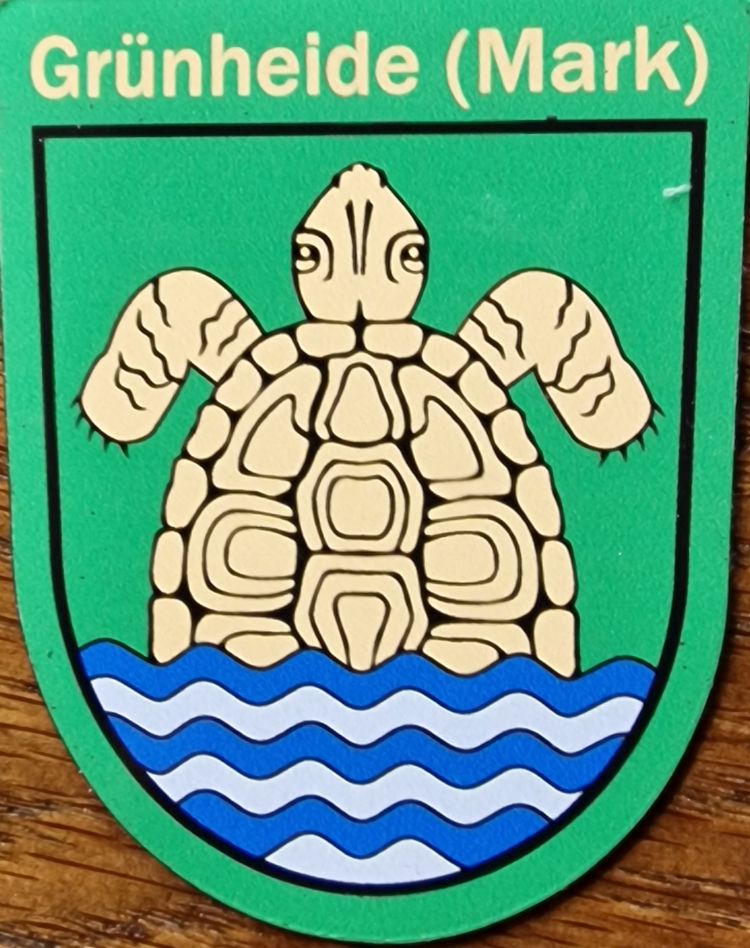
At the local tourist office, I bought the fridge magnet with the coat of arms.
Grünheide is proud of their turtles. But where are the real turtles? The lady at the tourist office explained to me that turtles used to live around Grünheide and have decorated the coat of arms since 1934.
The European pond turtle (Sumpfschildkröte, literally “swamp turtle”) was common in the waters of Grünheide until the late 20th century. They have disappeared now. In 1999, the community Grünheide decided to set up a turtle pond on the Löcknitz campus, where the children could learn about the turtles. The turtle website https://www.sumpfschildkroete-gruenheide.de informs about the turtles of Grünheide and tells the story of the pond’s construction.
I visited the turtle pond. I found it behind a fence with the gate locked. Through the fence, I could watch the turtles enjoy the sun on their sun island.
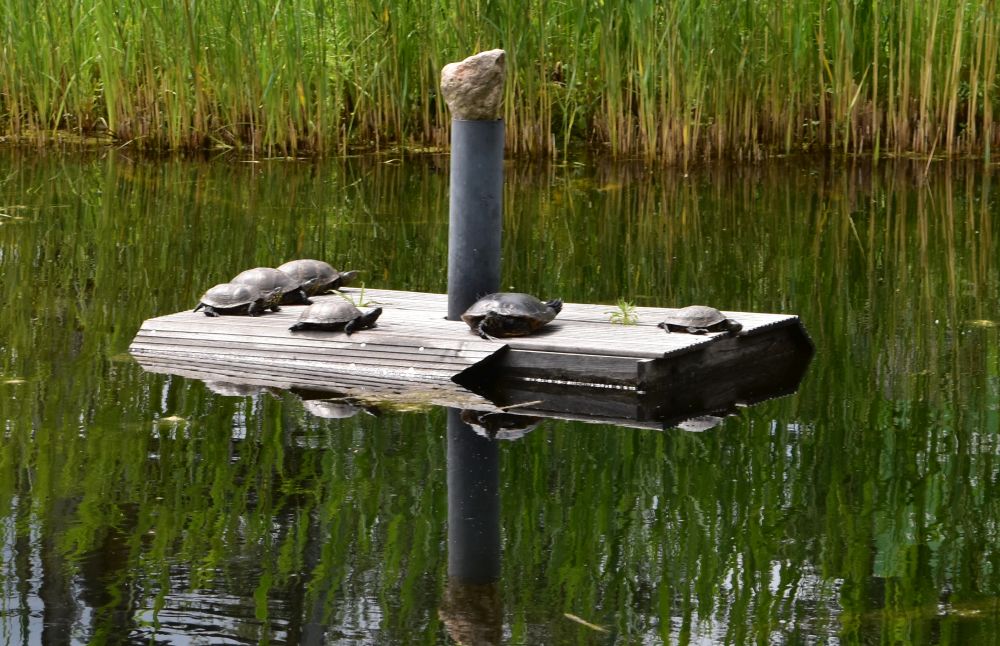
From Wikipedia I learn that European pond turtles do not only live in Central Europe (some wild turtle communities still exist), but also in parts of North Africa and of Central Asia. The species is in danger of extinction.
What a pity that turtles have disappeared from Grünheide. The turtle pond reminds of them nicely.
Walking along the Löcknitz meanders
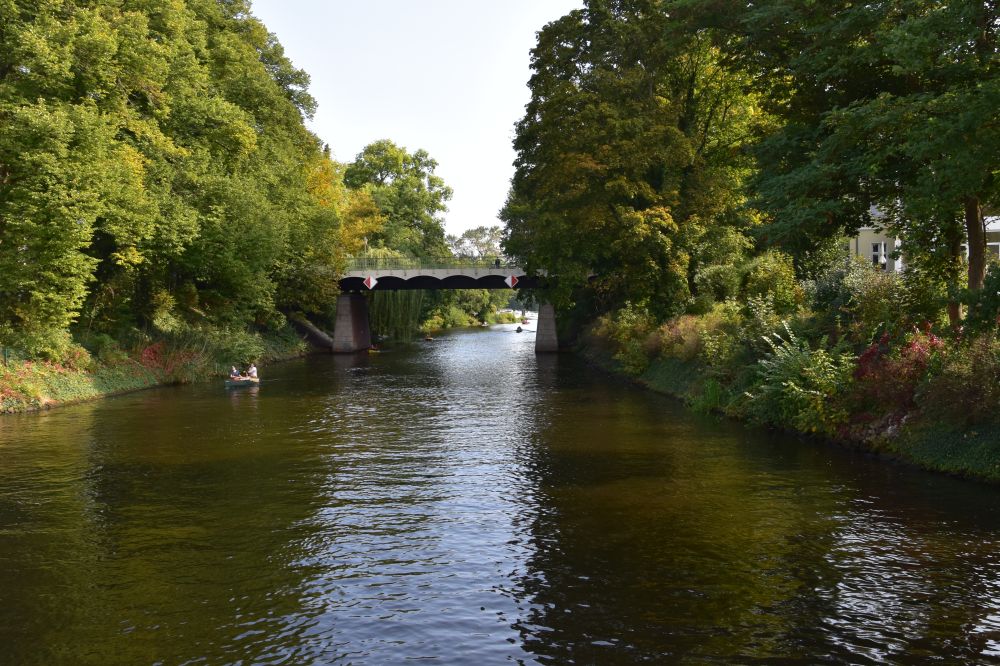
Several times I walked along the Löcknitz meanders between Grünheide and Erkner – it takes about 2 hours.
I like the walk. The path takes me mostly through forest…
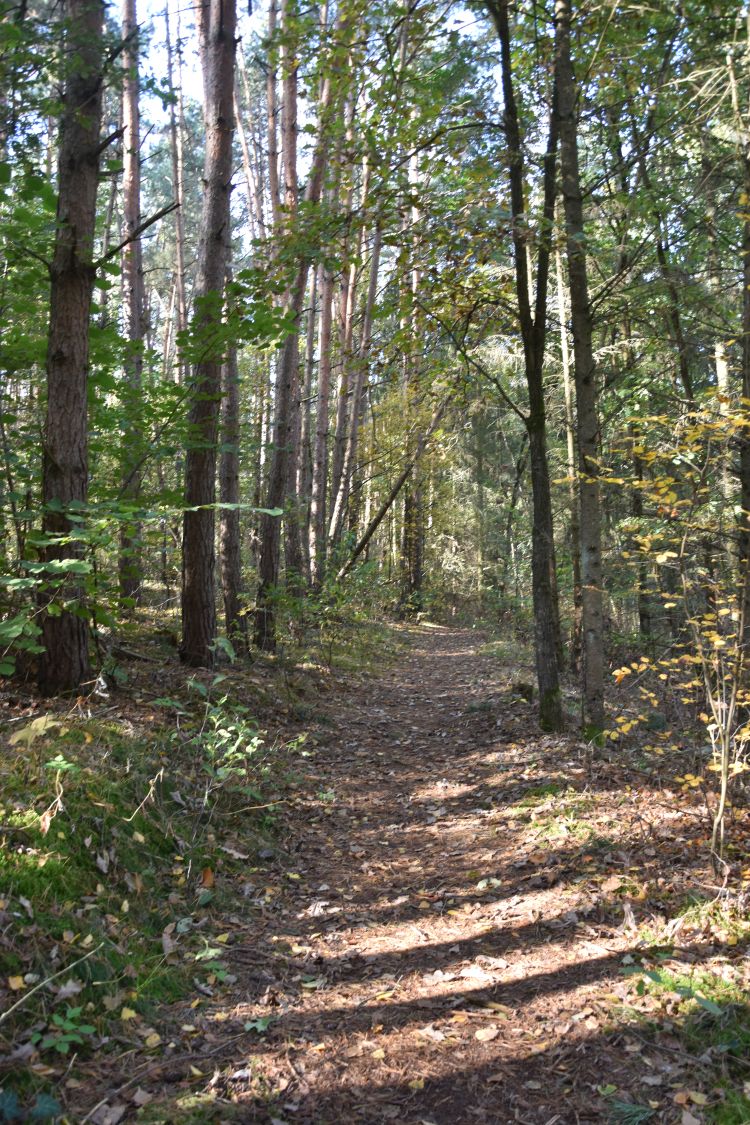
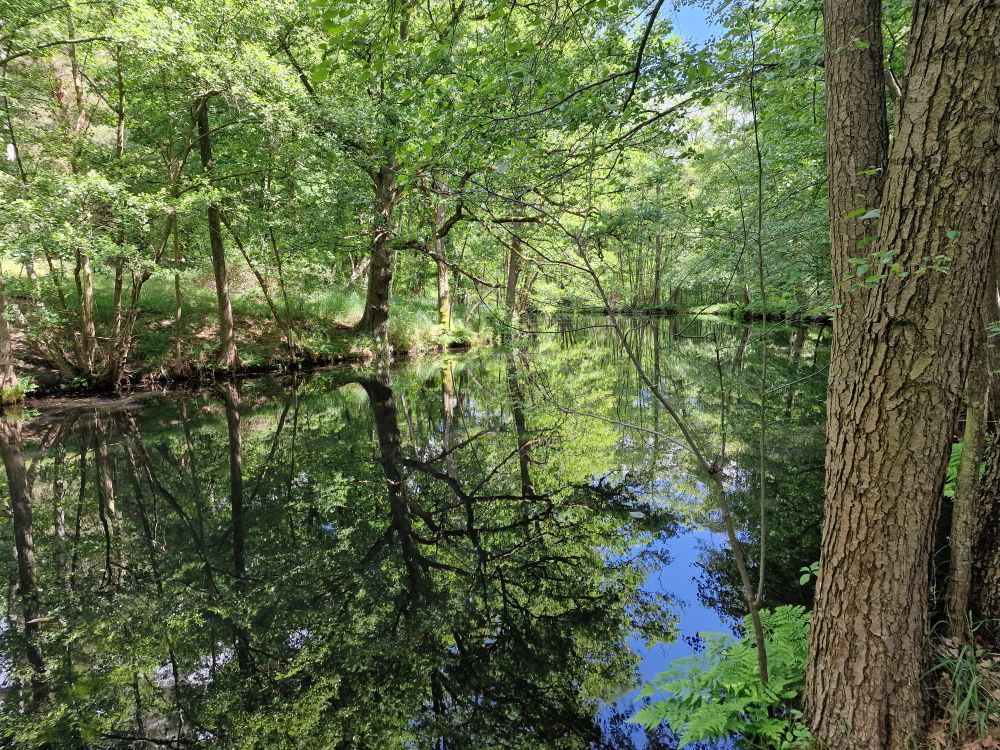
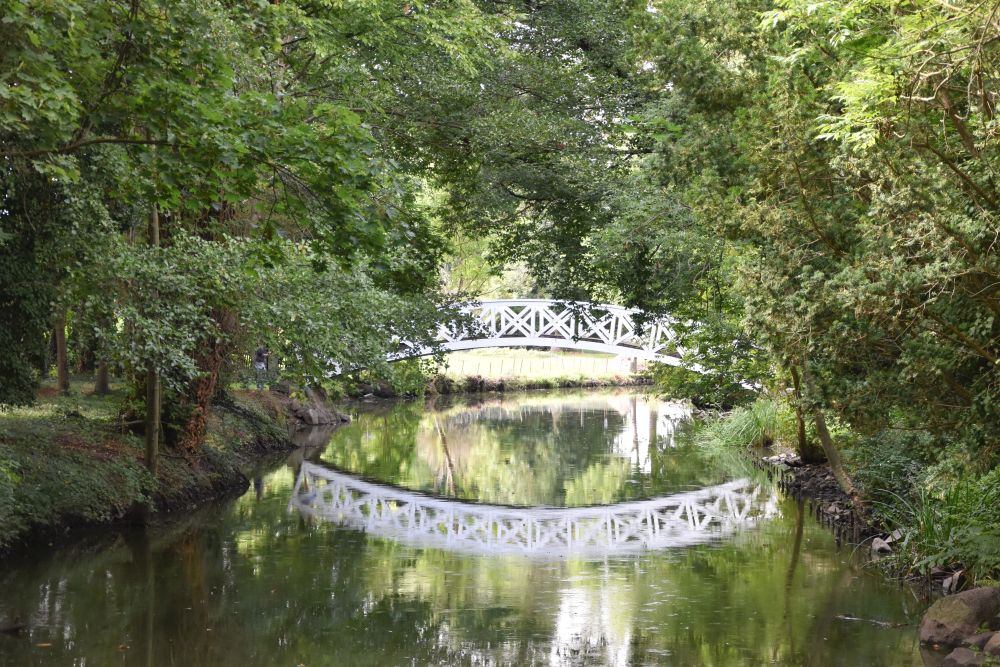
… and from time to time, I am on the bank of the river Löcknitz. I stopped here in October 2024…
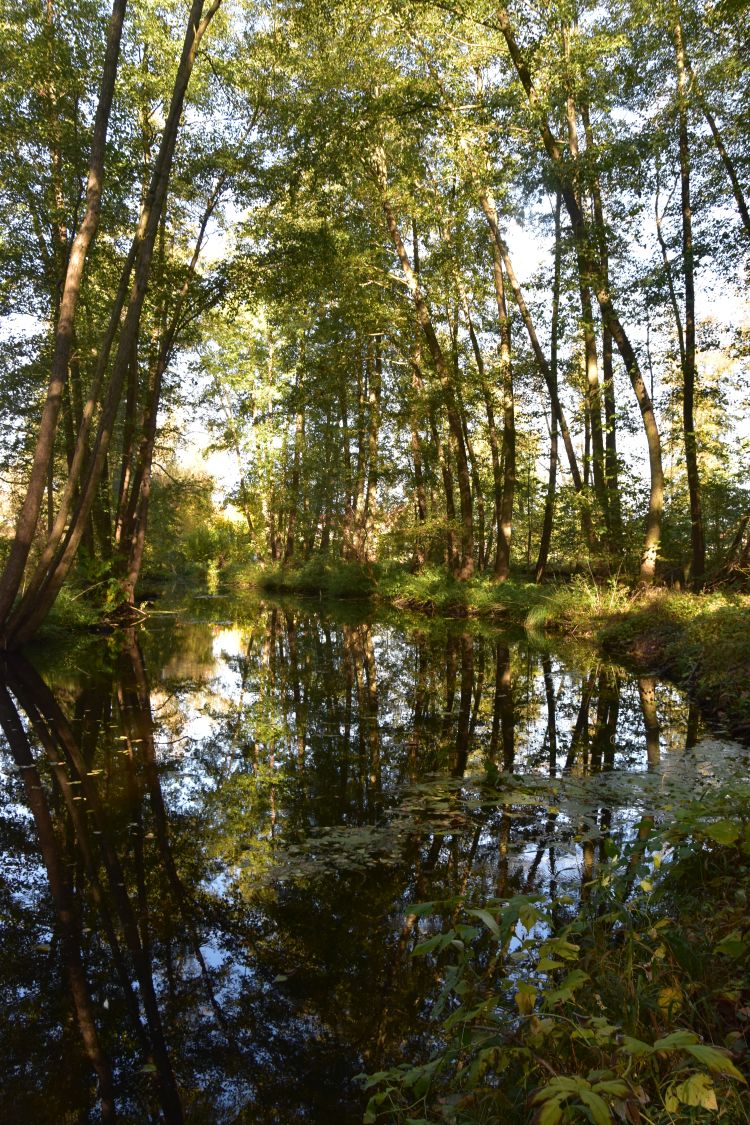
… and again in Mai 2025.
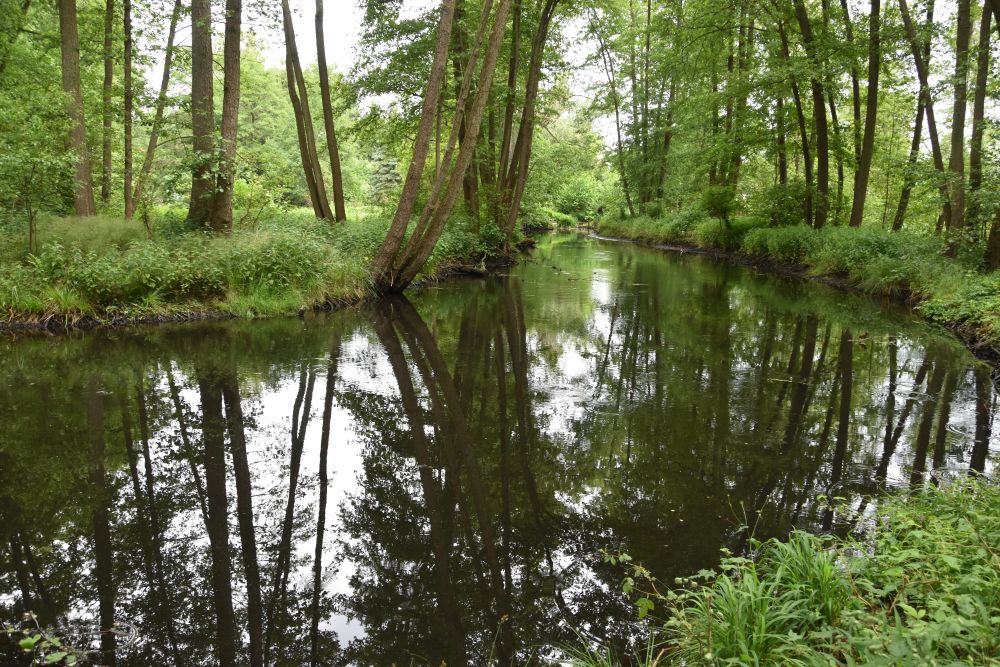
Beyond Fangschleuse, I come across another romantic place (also an October photo).
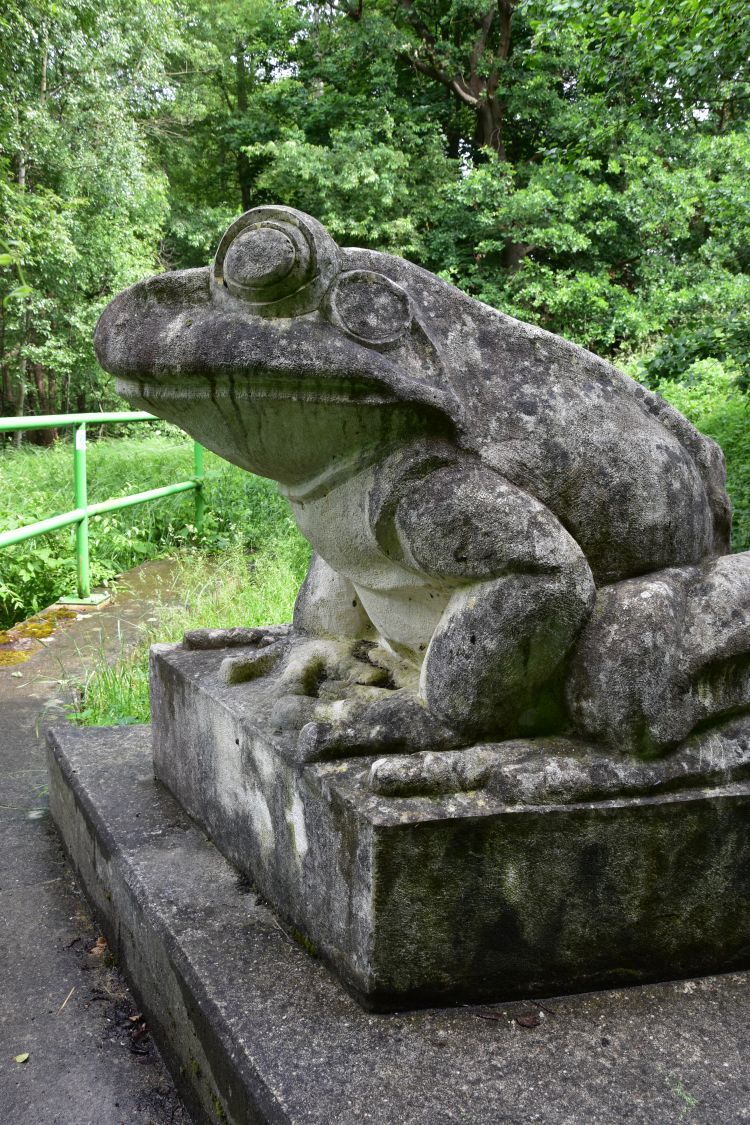
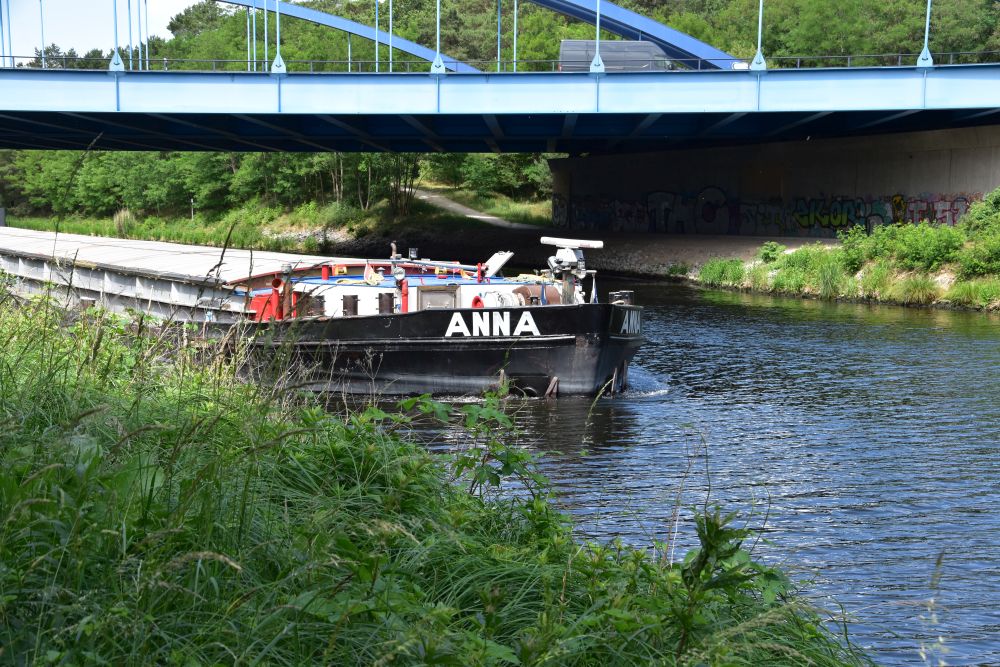
Under the highway A10, the frog bridge allows to cross the Löcknitz. I stay on the southern side of the river.
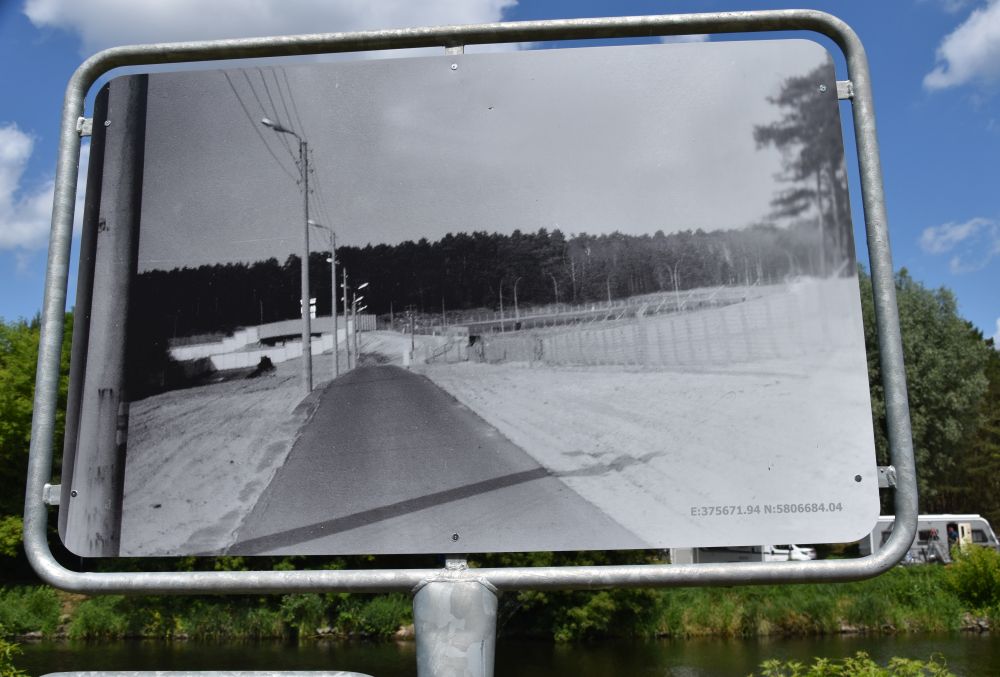
The highway cuts through the heathland… what a terrifying sight.
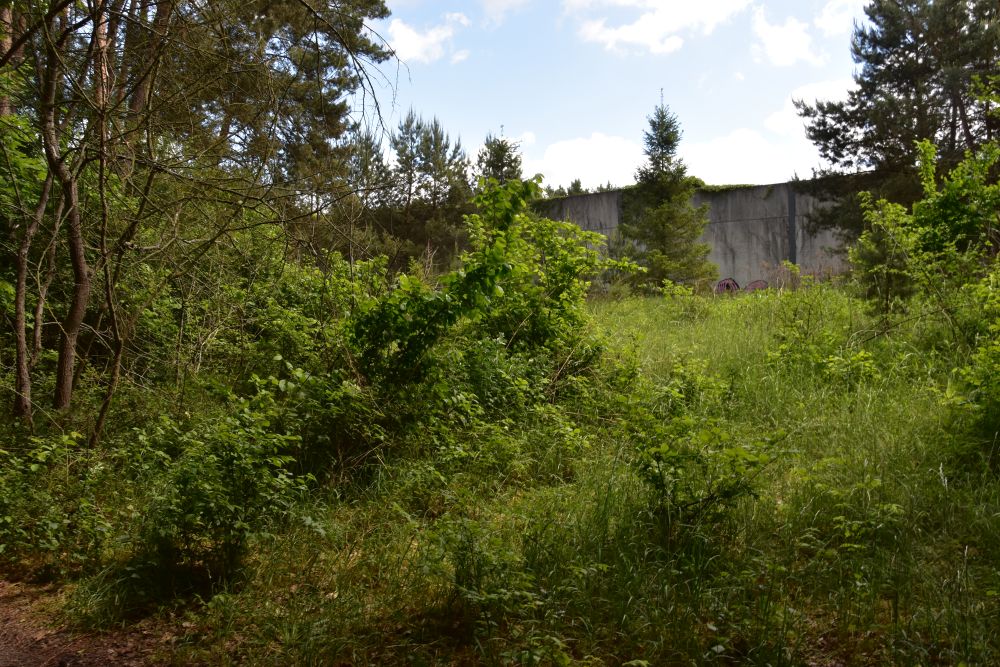
Despite the ugly concrete wall, I can hear the cars rush by.
Then the Löcknitz is quiet again.
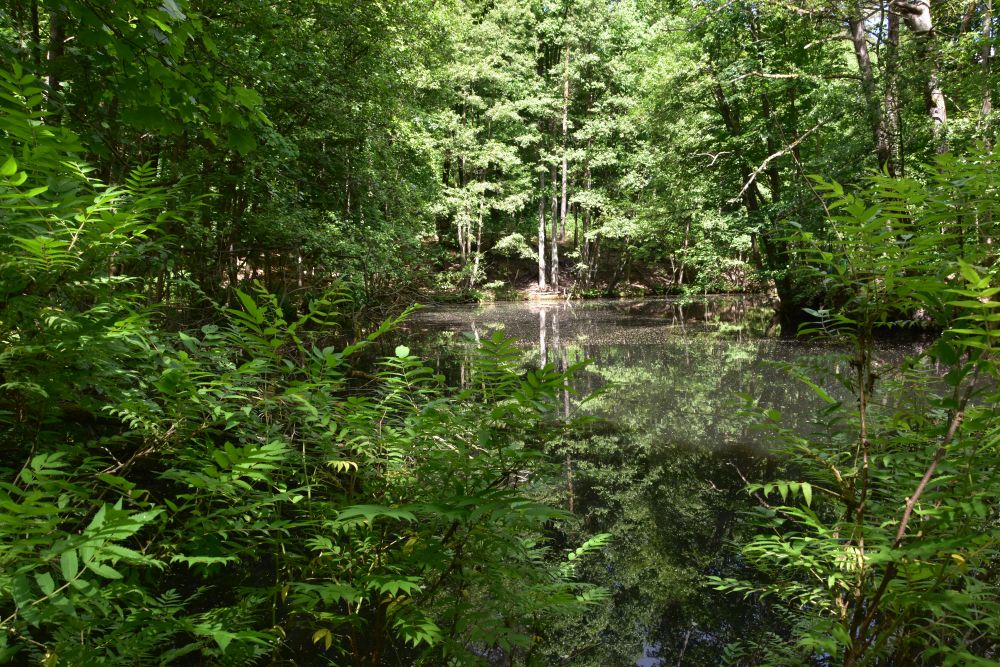
I climb down this steep river bank, …
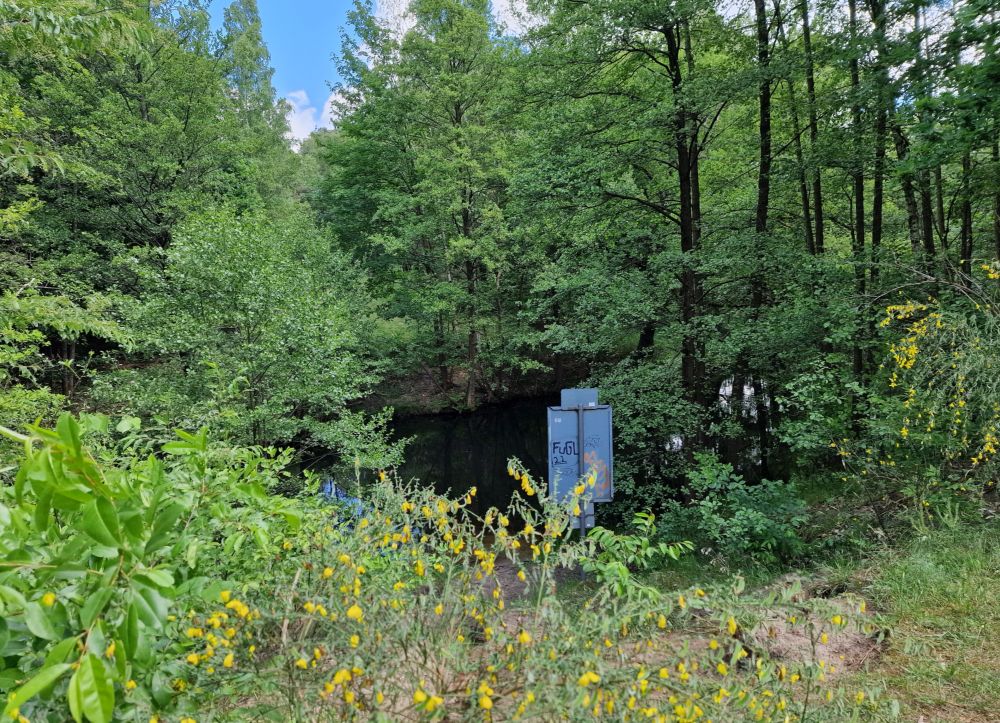
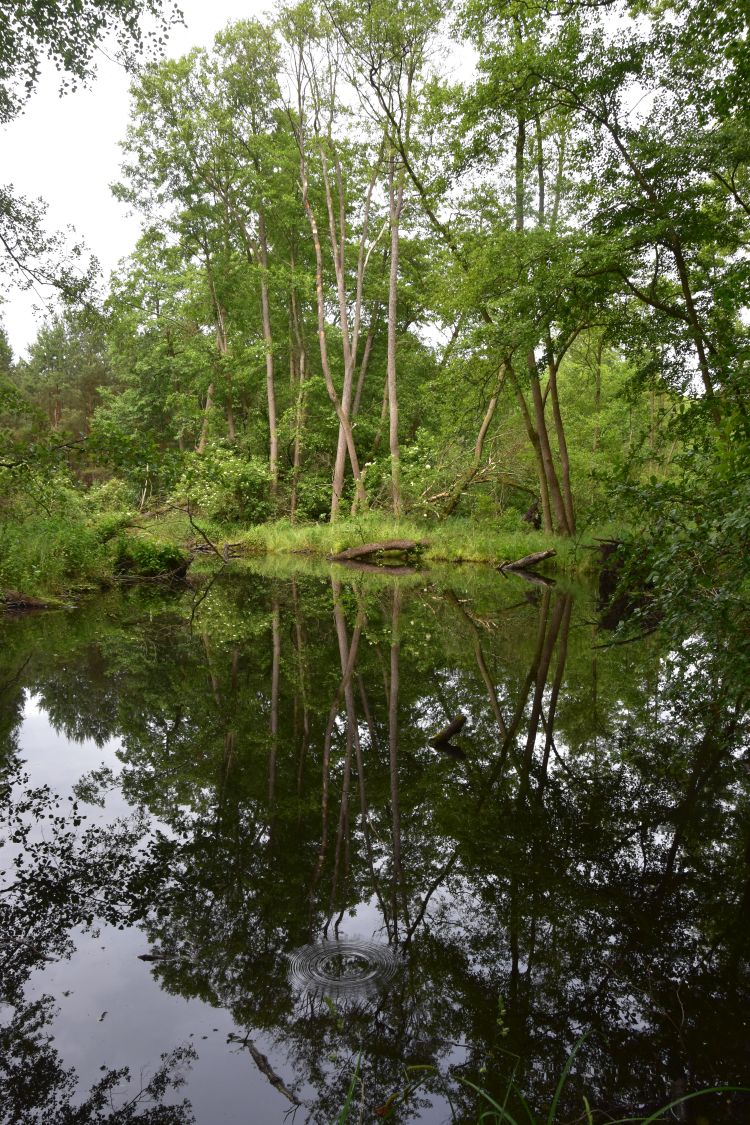
… and find another romantic spot.
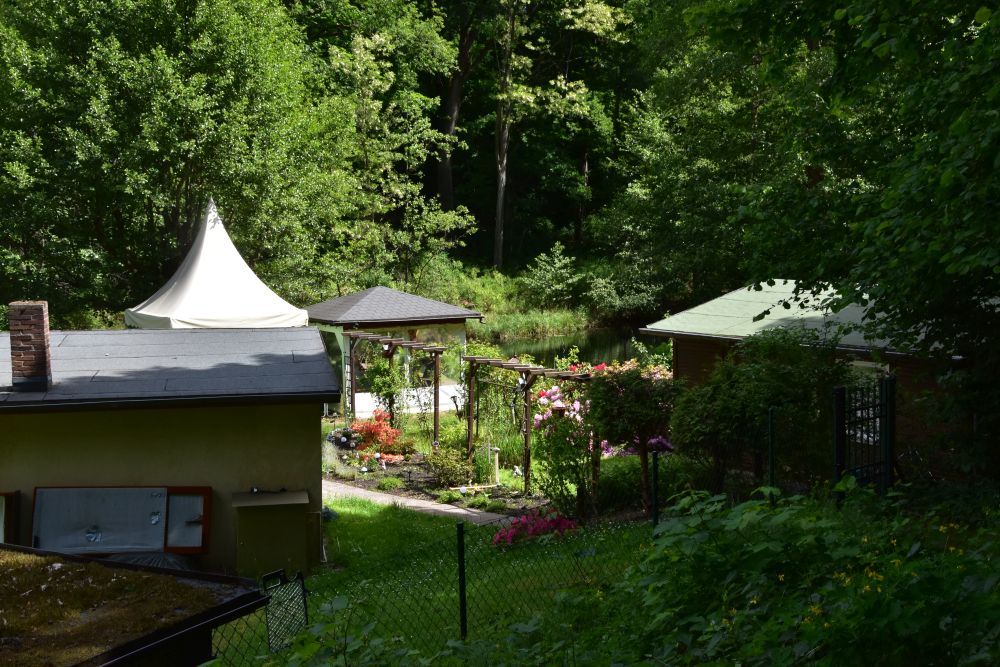
In between there are some hidden allotments, what a wonderful place to recover from the vibrant life of Berlin.
I reach Erkner once more and take the S3 back to Berlin.
Again I was close to my grandparents, here at Grünheide
In the S-Bahn back to Berlin, I think of my grandparents Hermann und Helene Radzyk – I was so close to them once more.
They loved to be at Grünheide. In 1916, my grandfather wrote a postcard to his aunt Sophie telling her that he has a weekend off and wants to spend it at Grünheide. We know of my grandfather’s painting “der Angler an der Löcknitz” of 1921. Four more paintings of Grünheide are mentioned in the inventory of my friend’s uncle compiled in the Second World War; the four paintings are lost. Another painting of the Werlsee was a wedding gift for my friend’s grandfather, also lost. I believe, my grandfather created more paintings that I do not know of and that are all lost.
Yes, my grandparents loved the Grünheide with its lakes and the meandering river Löcknitz. I followed their footsteps, and I agree, the Grünheide is lovely. I will surely return.
Sources:
























































 Petra Peters
