Colmar – pretty town with beautiful museum Unterlinden

On a beautiful and chilly October day in 2016, we drive to Colmar for a one day excursion. Ursula and her mum are joining me. We want to see the renovated museum Unterlinden with its famous altar of Issenheim and stroll through the pretty town of Colmar. Within an hour, we arrive in Colmar and park our car in the city center under the townhall or “mairie”. We take a coffee and then enter the museum Unterlinden (in English: “Under Lindens”).

.

The main attraction of the museum Unterlinden – the altar of Issenheim – a book with wings unfolded in the church of the former lady monastery

In the museum Unterlinden, we first want to see the altar of Issenheim in the church of the former lady monastery. This church displays this one altar that consists of several wings. It is like a huge book. The book is unfolded to show all its pages to the visitors.

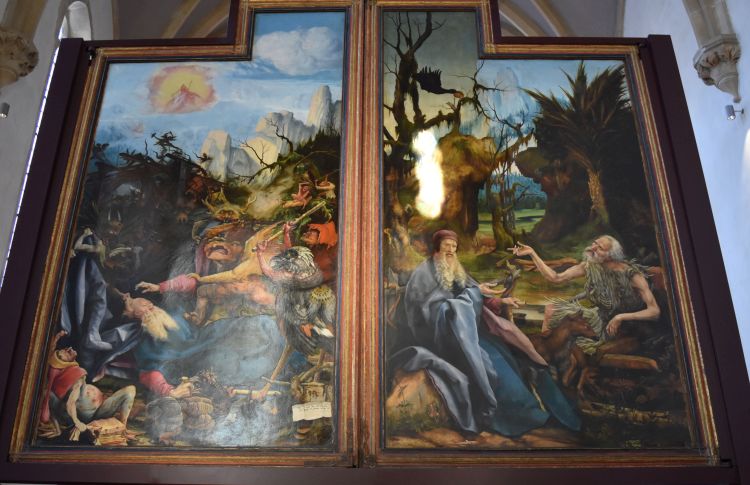
The altar has been painted by Matthias Grünewald in 1515. It was the Antonian monks of Issenheim (not far from Colmar) who had ordered it. The altar centers around Saint Antonius, an Egyptian hermit of the 3rd century (Daniel Koniezka: “Le rétable d’ Issenheim – l’histoire d’un tableau magique”, Editions Artlys 2015 and “Kostbarkeiten aus dem Colmarer Unterlindenmuseum, Christopherus Verlag, 1964). The relics of Antonius were used in the 11th century to mitigate the symptoms of the so called “Antonius fire” caused by the ergot in the grain (“Mutterkorn” in German, it is a toxic mushroom). The Antonian monks run hospitals for the people suffering from the Antonius fire and one of these hospitals was attached to the monastery of Issenheim. The monastery flourished in the 15th century and ordered the altar. To my opinion the most impressive paintings of the altar shows the temptations of the hermit Antonius. Demons try to distract Antonius from his belief, but he calmly continues to trust in God (with his white hair and blue coat he lies in the middle of the left panel).  The demons show signs of the Antonius fire (such as the limbs becoming black – “burning” – and falling off). I had seen this altar before in the 1970’s and I remembered the temptations of Antonius – for more than 40 years I could not forget these demons and the serene face of Antonius.

On the right hand painting, Saint Antonius (in his blue coat) discusses with Paul Eremitus, also an Egyptian hermit.
aaa_1044-small

The altar also describes the life of Christ. There is a beautiful representation of the crucification.

This panel shows Archangel Gabriel announcing to Maria that she will have THAT son (to the right) and Christ resurrecting from the grave on Easter Sunday (to the left).

aaa_1041-small

When opened completely, these sculptures appear (made by Niklaus von Hagenau). Saint Antonius sits in the middle with Augustinus to his left and Hieronmymus to his right. At the bottom the twelve apostles are surrounding Christ.
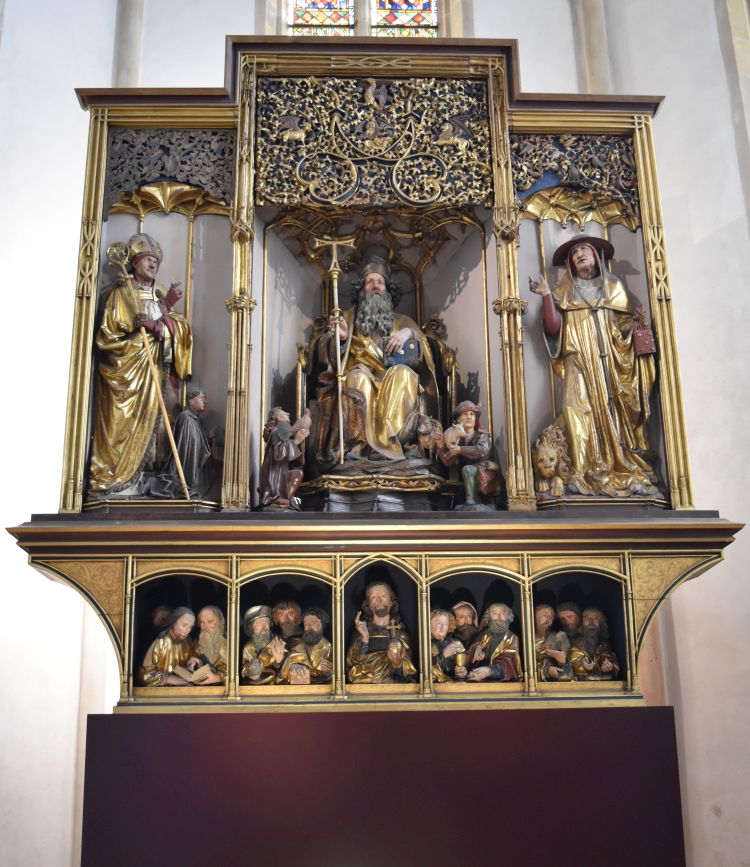
aaa_1046-small

In 1793 the altar of Issenheim was brought here to Colmar to save it from the destructions taking place during the French Revolution.

There are many more medieval altars and sculptures worth seeing in the museum. I loved this sculpture of Maria with her son from the end of the 15th century. How natural the baby looks and how tender the mother is. Just beautiful.

aaa_1051-small

It is the “Vierge de L’Enfant de Niedermohrschwihr” made from linden wood in the end of the 15th century.

The museum Unterlinden has much more to show . I loved the special exhibition of Japanese dolls of Hatsuko Ohno. I did not know that making dolls can result in such works of art. This couple seems to disagree about something… well that can happen in any culture.

aaa_1050-small

Herzog & De Meuron have built a new annex to the museum Unterlinden… I love the pattern of light in their staircase.
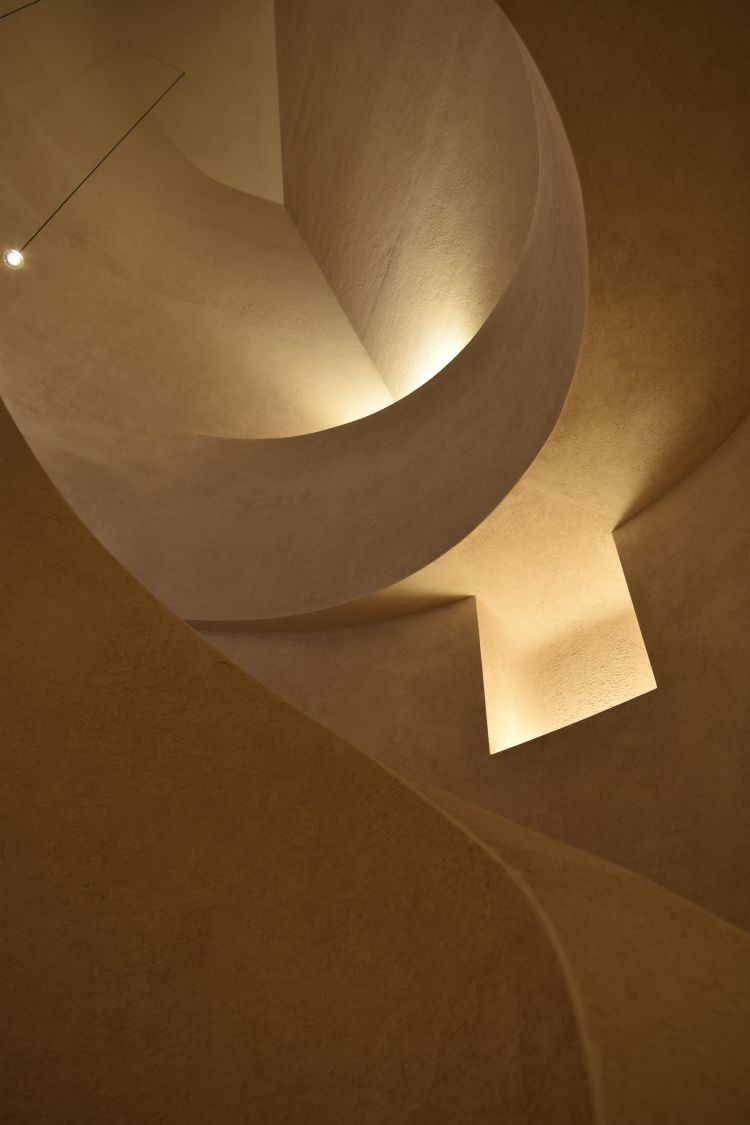
aaa_1053-small

.

The Madonna in the Rose Garden (Madonna im Rosenhag)

Next door in the church of the Dominican monastery we find Martin Schongauer’s Madonna in Rose Garden (Madonna im Rosenhag) from 1473. Illustrations in the church show that the painting of the Madonna has been cut off on all four sides. It is now surrounded by the neogothic frame. Originally she sits in a beautiful garden with flowers and Godfather above her – a romantic atmosphere.

aaa_1057-small

The Madonna was stolen in the seventies and found by chance a year later.

.

St. Martin church

St. Martin church is the most important church in Colmar, also gothic in style, and sometimes refered to as a cathedral though Colmar has never been a bishopric.
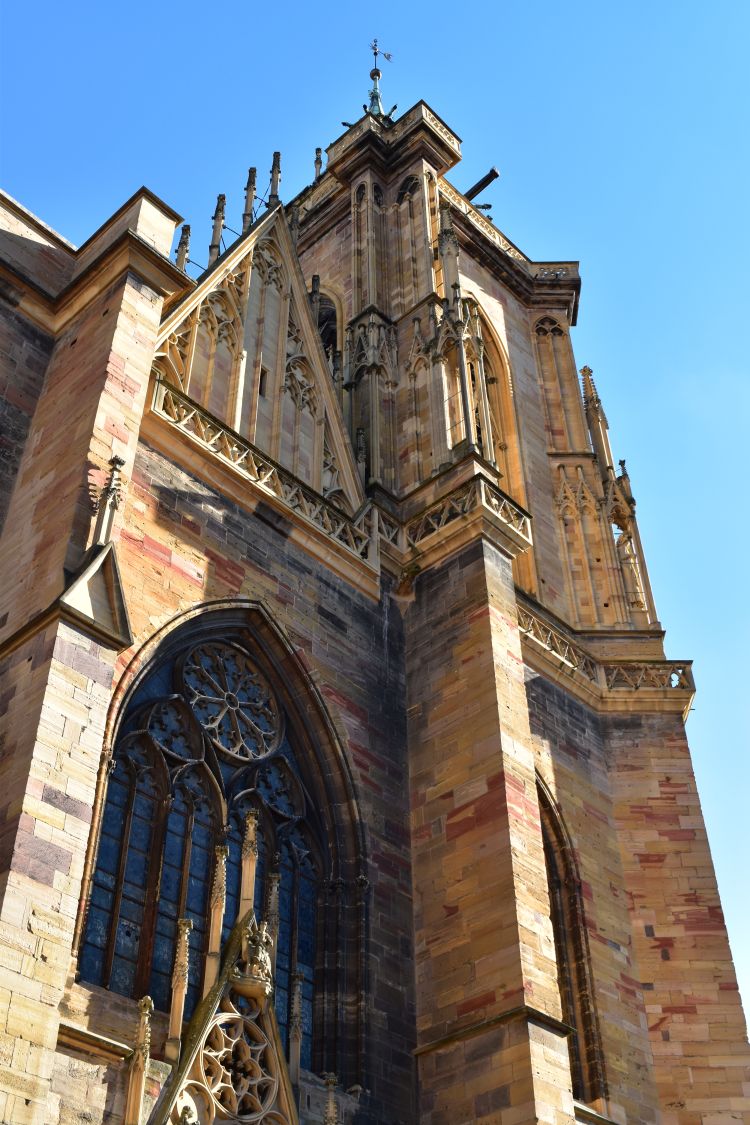
aaa_1061-small

Inside I am surprised to find this Last Supper – not a painting as usual, but a sculpture in life size from late gothic (15th century).

aaa_1065-small

.

Strolling through the pretty town with the half-timbered houses

After all that culture we stroll through the pretty small streets of Colmar with their half-timbered houses. I like this girl chasing the pig…
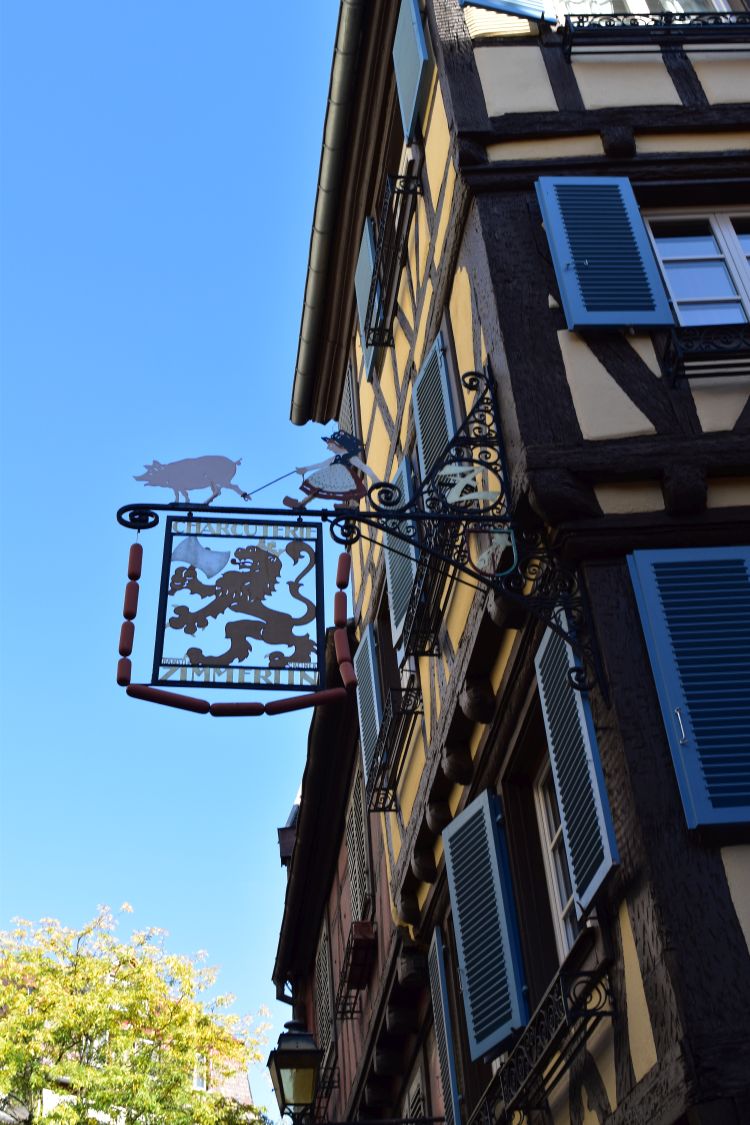
aaa_1060-small

… and I must have liked it, when I was in Colmar in the 19-seventies taking analog black and white fotos and developing them in the darkroom.
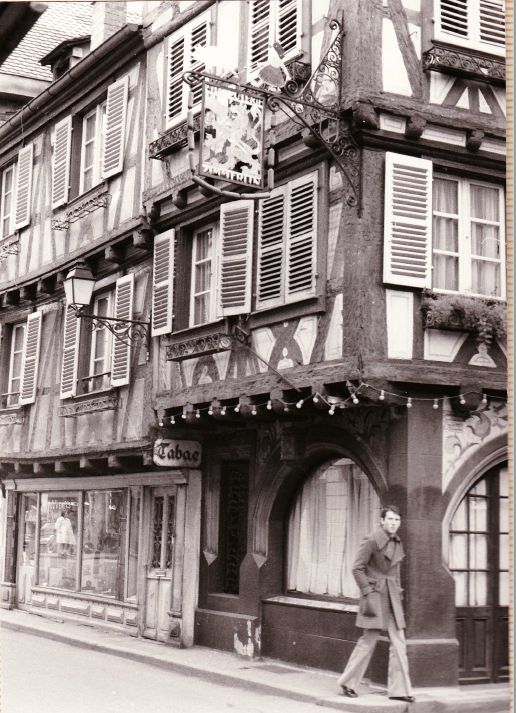
colmarblackandwhite

This is a half-timbered house with a nice oriel.
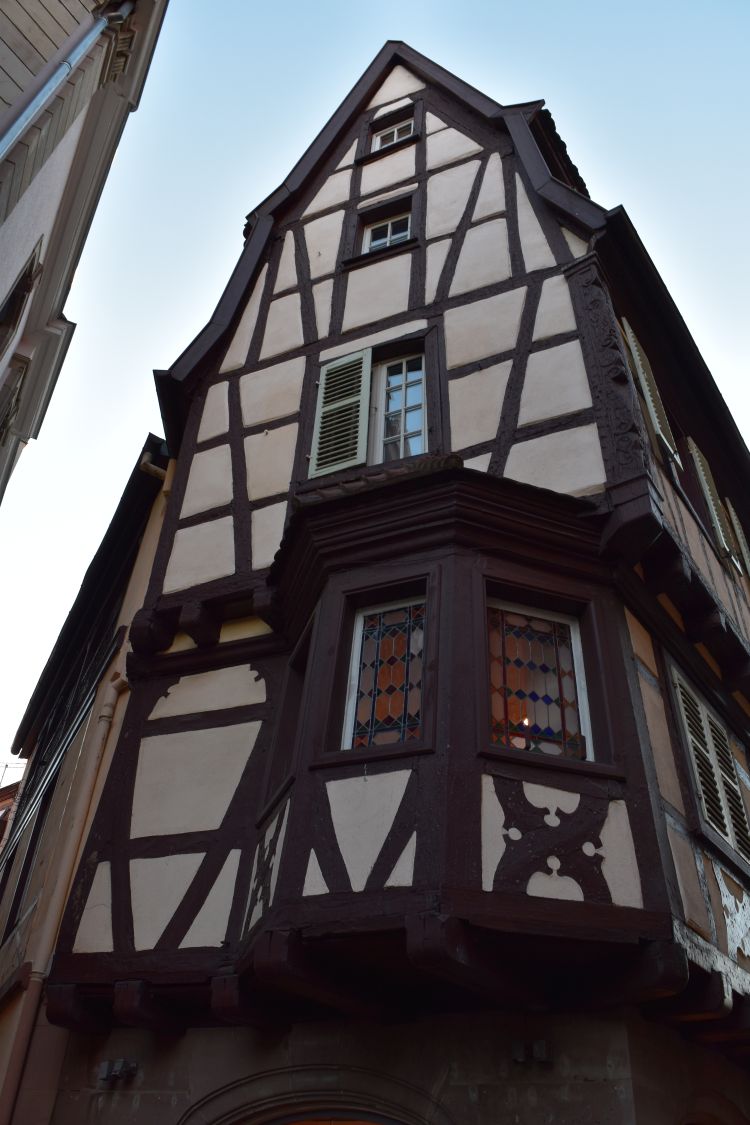
aaa_1109-small

Some of the half-timbered houses are beautifully decorated.
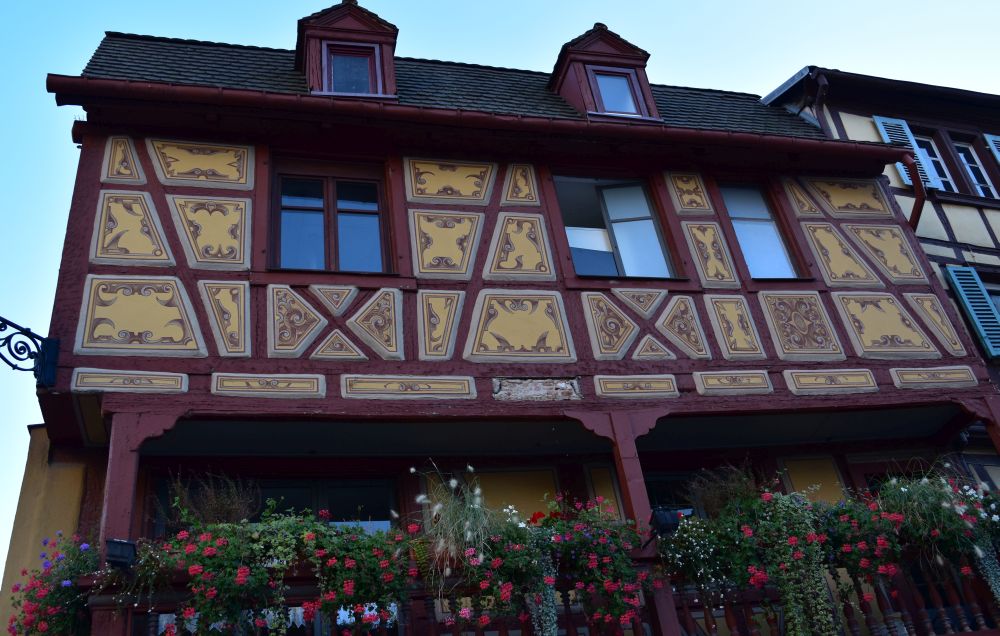
aaa_1120-small

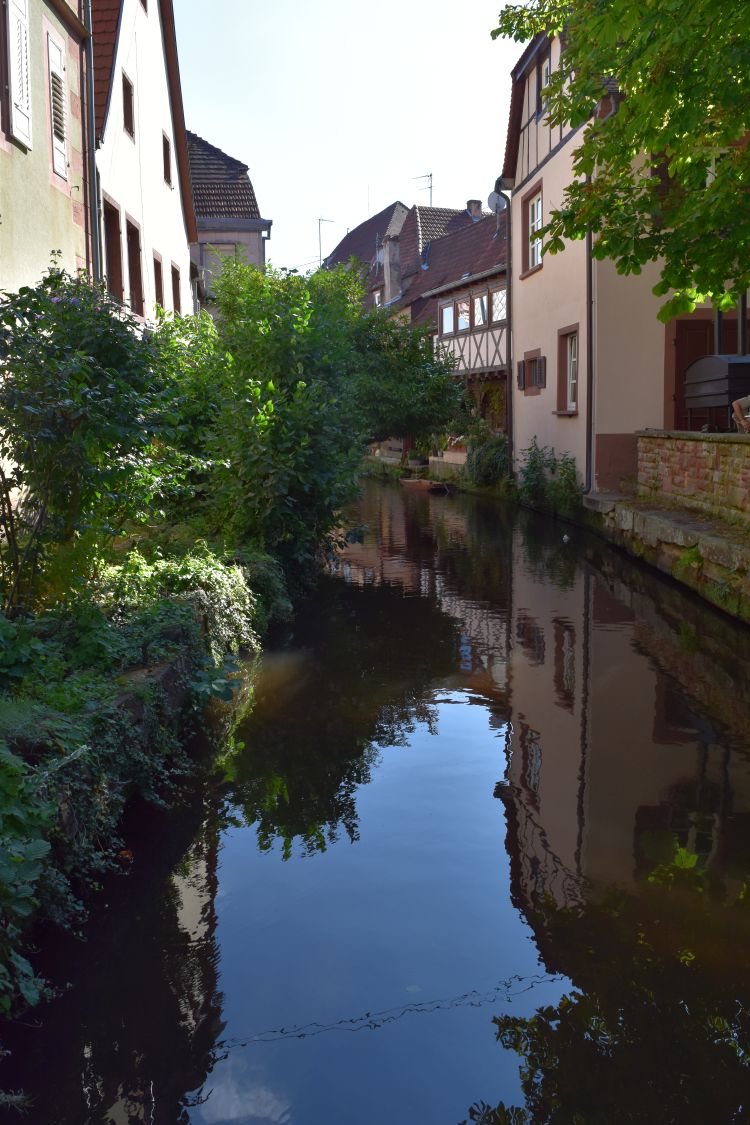
The river Lauch allows to take photos with water reflections. We are in the district called “Petite Venise”.
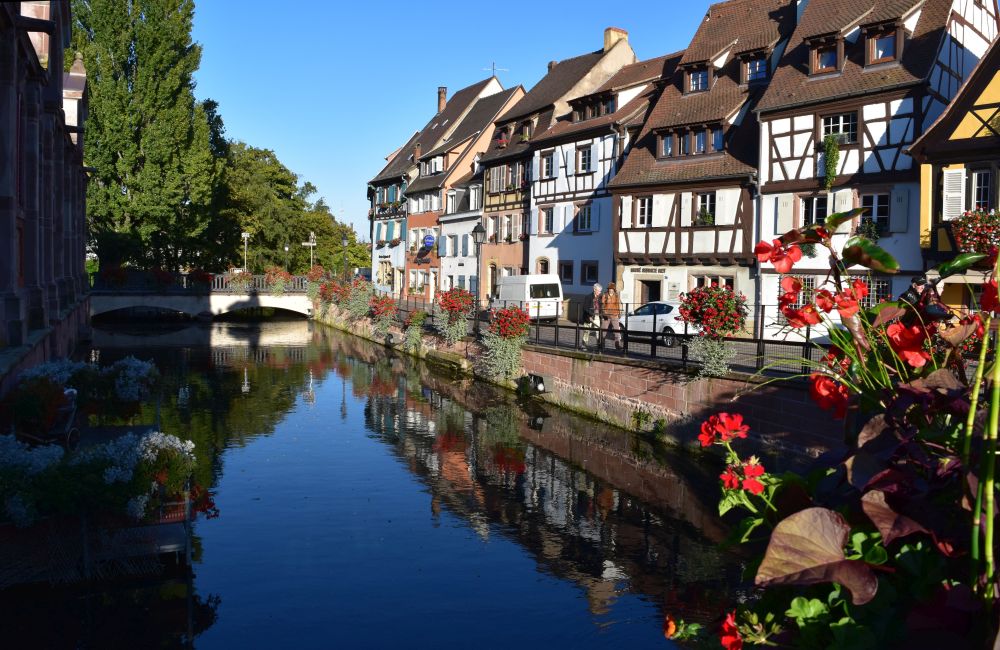
aaa_1096

.

 Finishing the day with a dinner in the Bartholdi Restaurant

We are hungry, but there is no mercy in Colmar. Restaurants open only at seven pm. We find a table in the restaurant Bartholdi where we have trout simmered in Riesling and lamb chops provençales. The meal is okay and the atmosphere is welcoming.

By the way, Frédéric Bartholdi is known for having created the Liberty Statue of New York. Other monuments include the Lion of Belfort and the memorial of Strassburg in Basel near the train station (Switzerland succoring Strasbourg in the German-French war of 1870/71). Bartholdi was born in Colmar.

.

Big surprise: Parking houses in Colmar close at 9pm,though restaurants only open at 7pm

We enter the parking house under the townhall (mairie) at 8:45 pm and find out, it closes at 9pm. Okay – still 15 minutes – we insert the ticket into the paying machine. We insert our ticket and the ticket machine spits it out, and spits it out, and spits it out complaining that it cannot read the ticket. Hm. I look for an alarm knob, but all of a sudden, Ursula says: “It worked now, we can insert the money”. 14 Euros is okay for a whole day, almost 12 hours. We insert the money, take our ticket and leave this parking house at 8:55. It will close its doors in five minutes – uff!

Half an hour later we reach the border of France with Switzerland and then I drop Ursula and her mum at their home. Together we have spent another beautiful day to remember.
Via Bad Bergzabern to Strassbourg in France

Wednesday, our 15th day traveling in Germany. We head south. Our destination is the Alsace in France. We cross the industrial zones around Heidelberg, Mannheim and Ludwigshafen and follow the Deutsche Weinstrasse of the Pfalz southwards.

.

Bad Bergzabern – a charming quiet town – forgot my jacket here

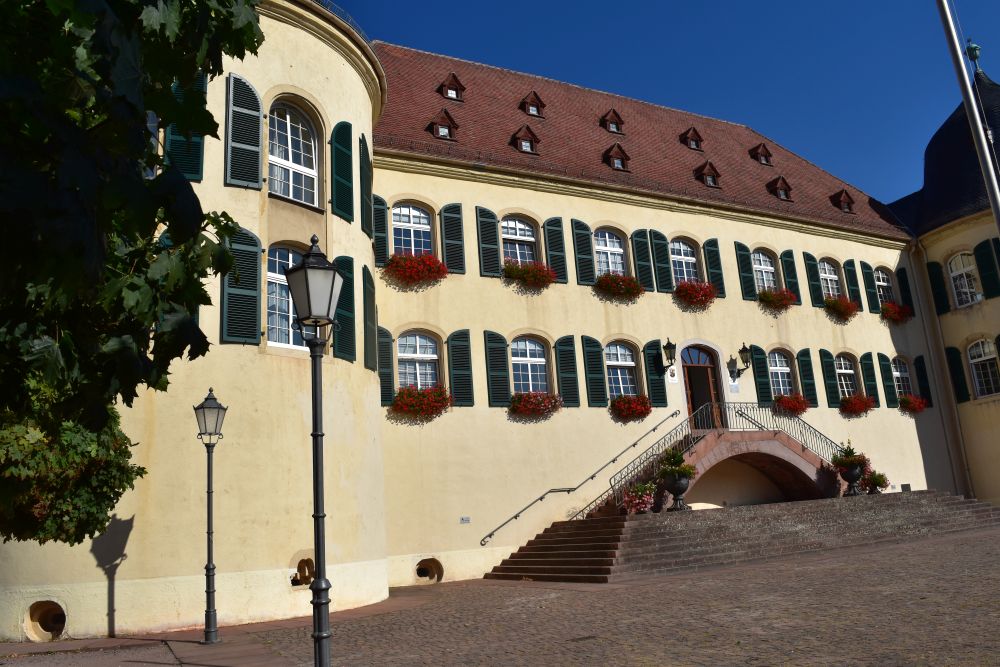
Bad Bergzabern is about 10km north of the German border with France. It is a small pretty town with a castle,…

aaa_0547-small

… half-timbered houses – such as the “Weinstube zur Reblaus” or “Wine Tavern for Vine Fretter”,…

aaa_0552-small

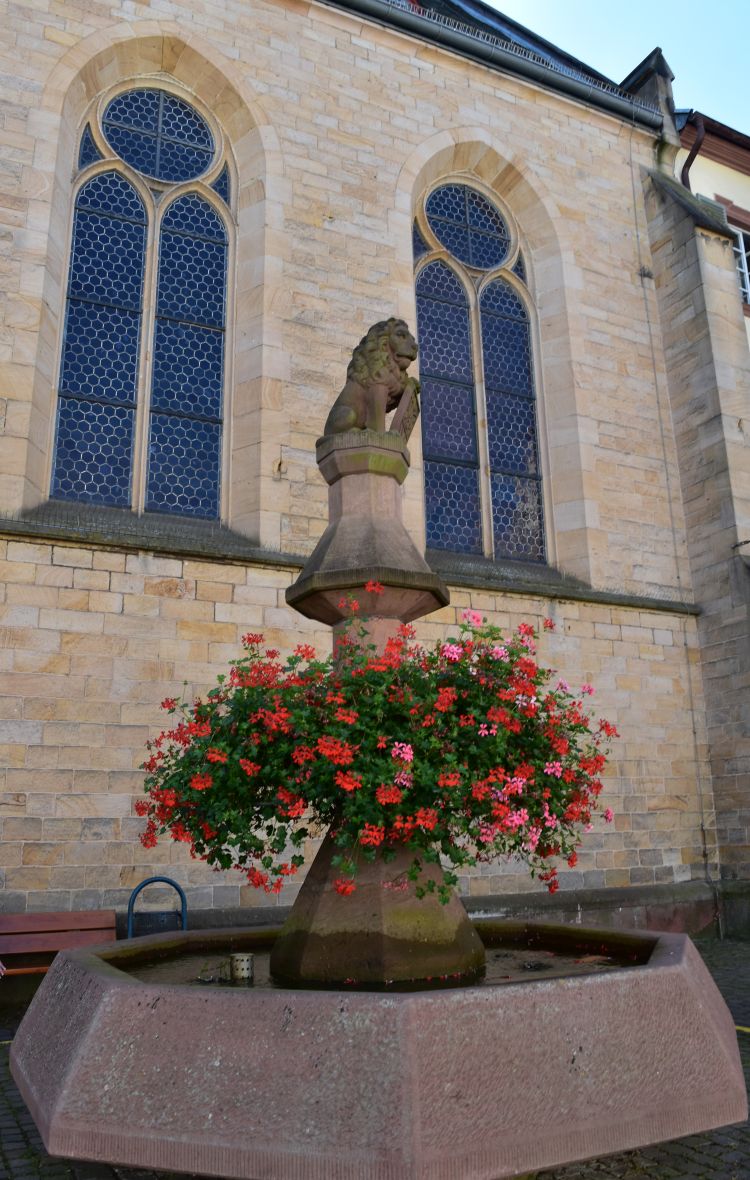
… a church with this lion fountain,…

aaa_0556-small

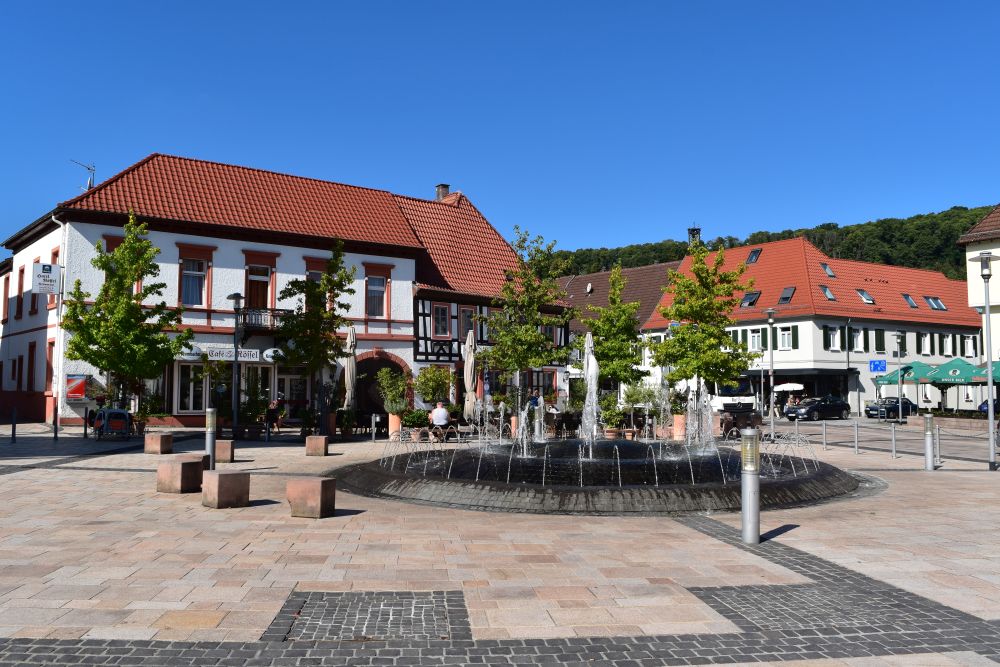
… and the market square woth another fountain.

aaa_0560-small

In the second hand shop called “Hoppla”, Ursula finds a pair of elegant German design shoes for 15 Euros. I find a linen white jacket for 15 Euro and a pashmere scarf for 5 Euros. We take it all – thank you, Ursula… but then – hoppla – we forget my favorite blue windstopper jacket in the shop called “Hoppla”, and we only notice it, when we are already in France. Ggrrrr… We drive back – it is about 10km – and we find the shop closed – until 2 PM. We look for a place to eat lunch. We find restaurants that are closed, uninviting or unwelcoming. Hesitating we stand in front of one of the closed restaurants, when a couple of about our age passing by says: “Just round the corner you will find the restaurant Haas, they serve excellent regional food.” Some minutes later we share a table in the restaurant Haas. We enjoy a great Leberknödelsuppe and a salad plate. We learn that the couple lives in Namibia and comes home to the Pfalz every year, now that they have retired. I have been in Namibia as well, and we have a lot to chat – about the town Windhoek, the Etosha park, the Waterberg and the Namibian winery (yes that exists…). Well, hoppla, sometimes unluck produces luck.

Shortly after 2PM the shopkeeper of “Hoppla” opens her shop and returns me my favorite blue jacket. Now we drive back to France.

.

The Weintor (wine gate) at Schweigen – a touristy tourist attraction

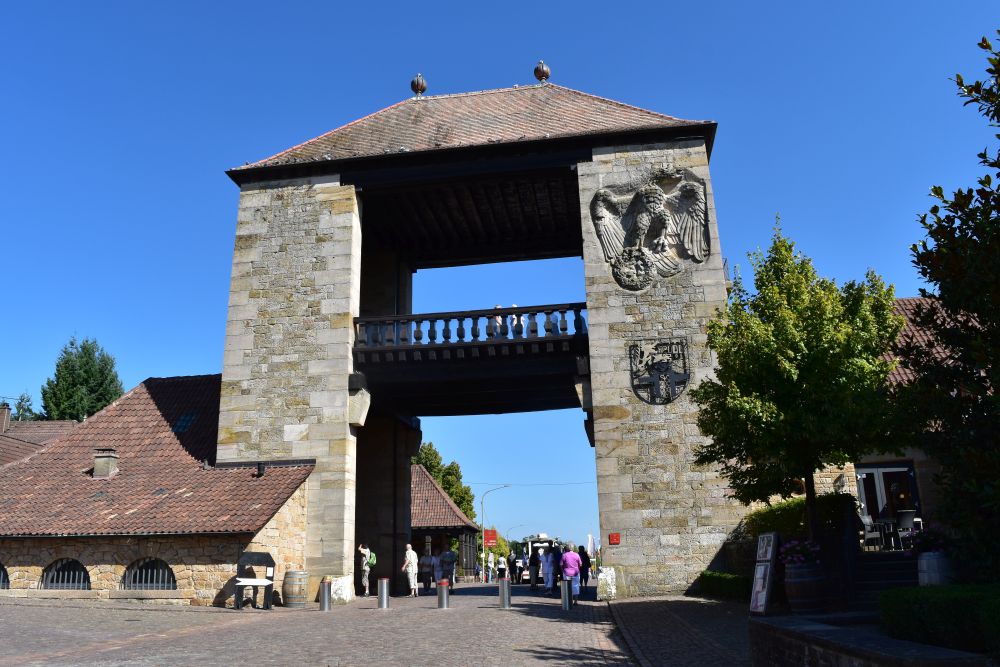
Schweigen is the last German village at the French border The Deutsche Weinstrasse of the Pfalz starts here. The beginning is marked with this gate.

aaa_0568-small

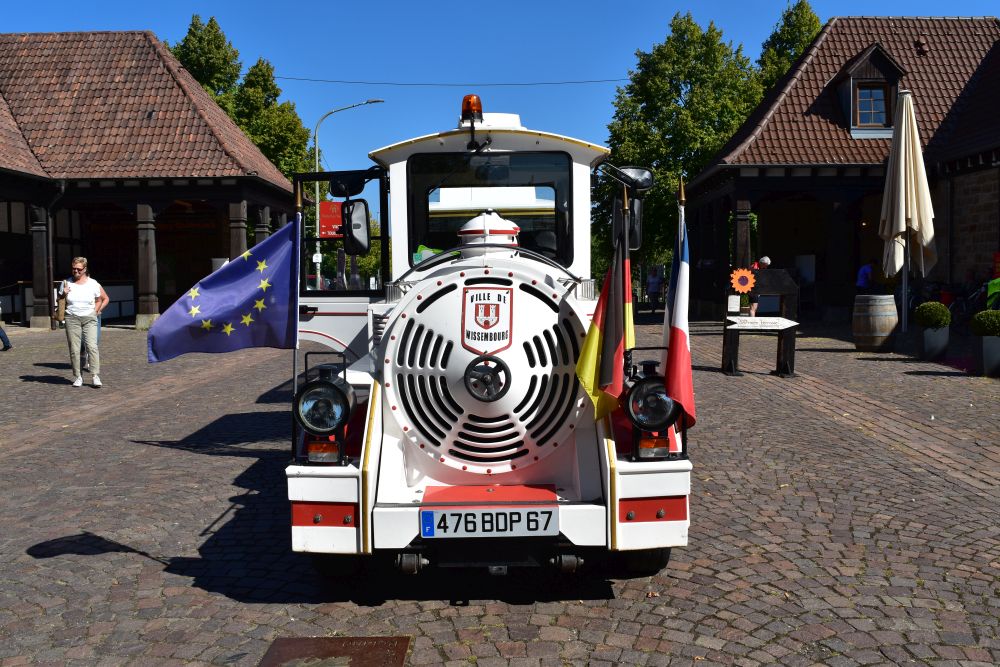
The gate attracts tourists. Hords have come here in busses. A train is ready to take them to Wissembourg just across the border in France.

aaa_0569-small

We leave this touristy place immediately. Both Ursula and I carry an old Dumont Kunstführer of the Alsace, mine is from the year 2000. The information about history and historic buildings are still valid.

.

Wissembourg – a charming Alsacian town and a harmonious Romanesque-Gothic church

Wissembourg is our first village in the Alsace with half-timbered houses and a small creek -this is an arm of the Lauter.

aaa_0590-small

In the 11th century, a Franciscan-Claristic monastery was founded here and the construction of the cathedral St. Peter and Paul started. This cathedral is a gem with much preserved from Romanesque and Gothic times (source: “Die Kirche St. Peter und Paul”, Editions du Signe).

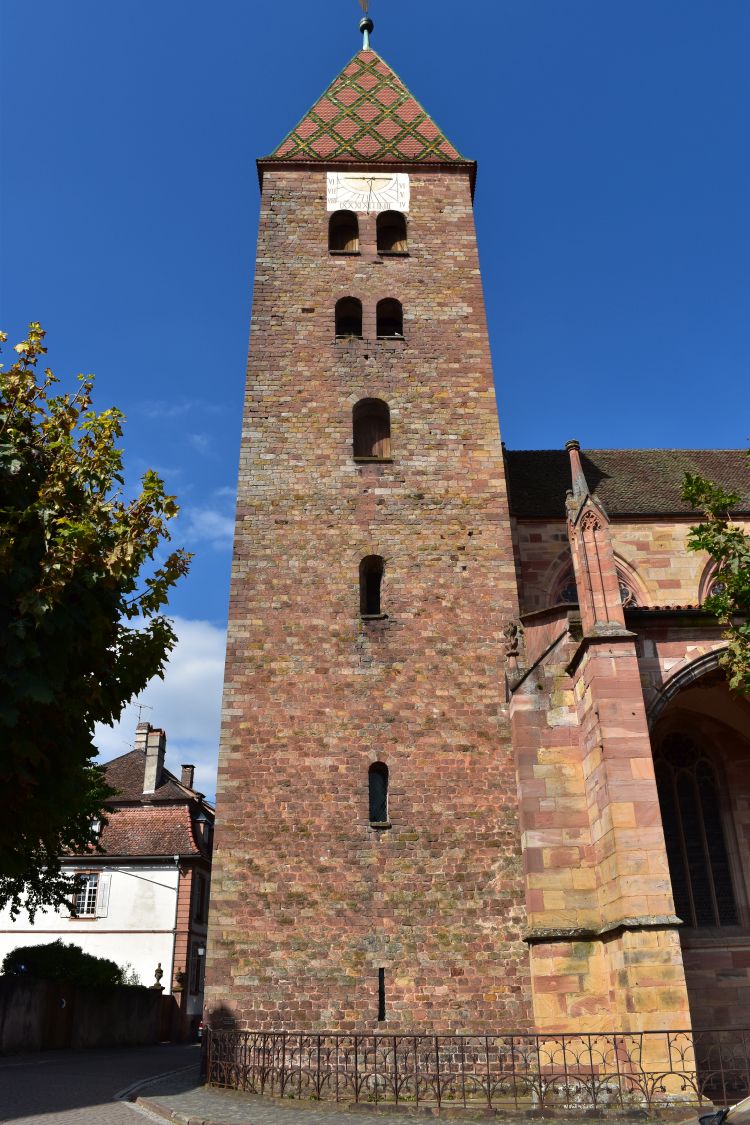
This Romanesque tower is from the 11th century.

aaa_0585-small

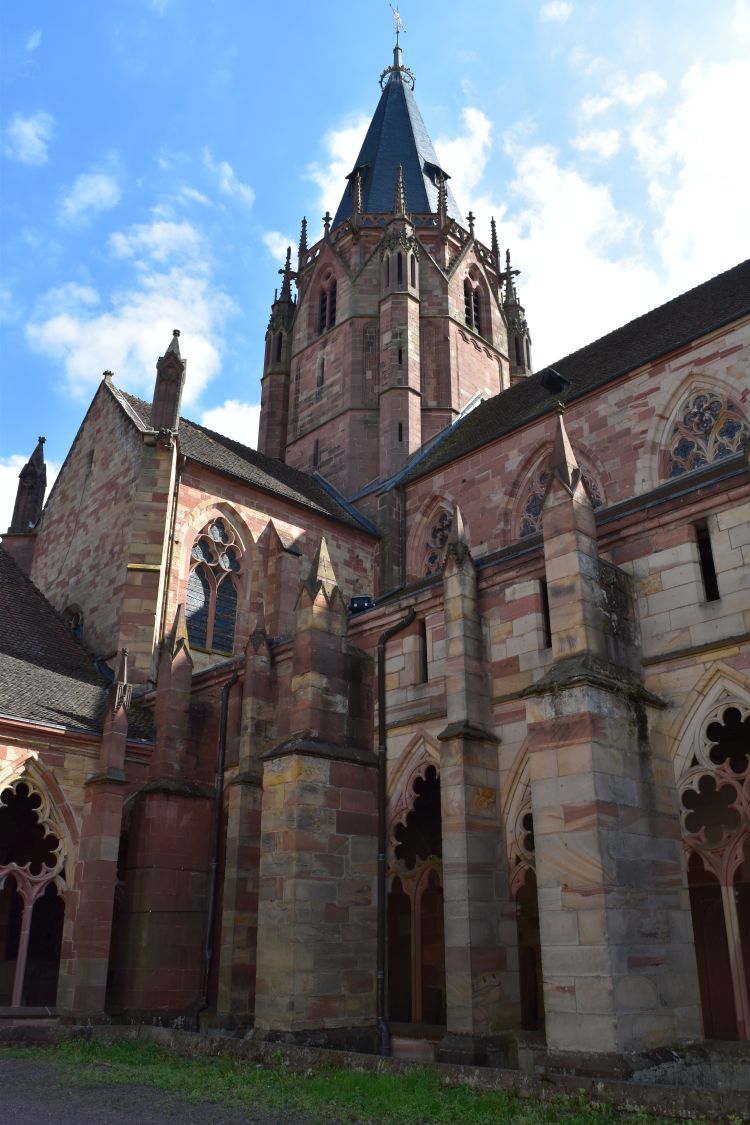
The second tower is Gothic in style – here is the view from the cloister.

aaa_0582-small

I love the solemn, dark-cool atmosphere inside with the 11th century representation of Christ made from one piece of painted glass with a diameter of about 25cm (the original is in Strassbourg).

aaa_0573-small

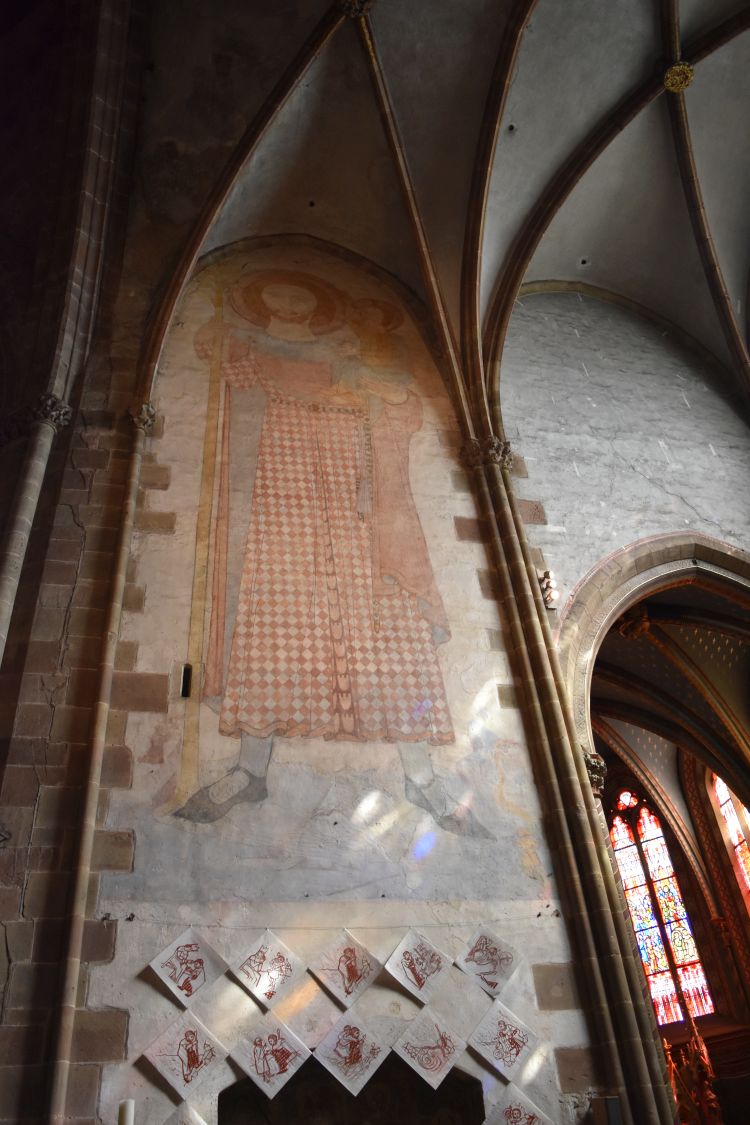
The windows are preserved – they are from the 14th century and earlier (one rosette is from 1190). There are frescos like this Christopherus from the 14th century.

aaa_0581-small

This guy – you can tell – is working hard. The column weighs heavily on his shoulders.

aaa_0578-small

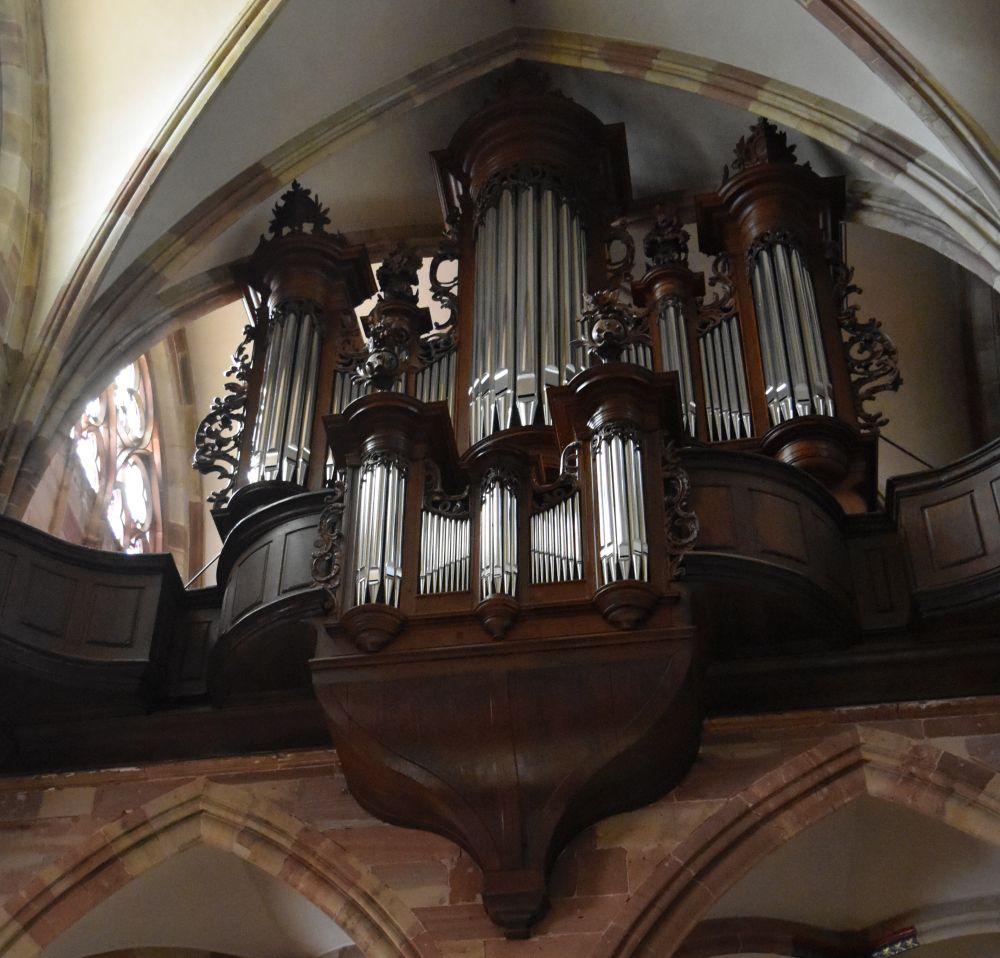
The organ is from 1766.

aaa_0576-small

The attached Romanesque chapel hosts an art exhibition. We love this church and spend something like two hours here.

.

Soufflenheim – pottery – and The Moulin de Wantzenau – a quiet place after noisy Heidelberg

Next stop is at Soufflenheim that produces pottery. The shopkeepers speak this soft Alsacian dialect, German mixed with French.

aaa_0599-small

I buy an Alsacian cook book (“Kochen im Naturton von Soufflenheim” or “cooking in natural earthernware from Soufflenheim”). I plan to prepare the rabbit cooked in cider – it looks tempting.

We decide to look for a hotel near Strassbourg and find the Moulin de Wantzenau, just some 5km away from Strassbourg. The Moulin is a charming place to stay. It is quiet here in the middle of nature. The attached restaurant serves delicious meals. We enjoy another warm summer evening in the garden.


From Carcassone through the Causses to Laguiole and back to Switzerland

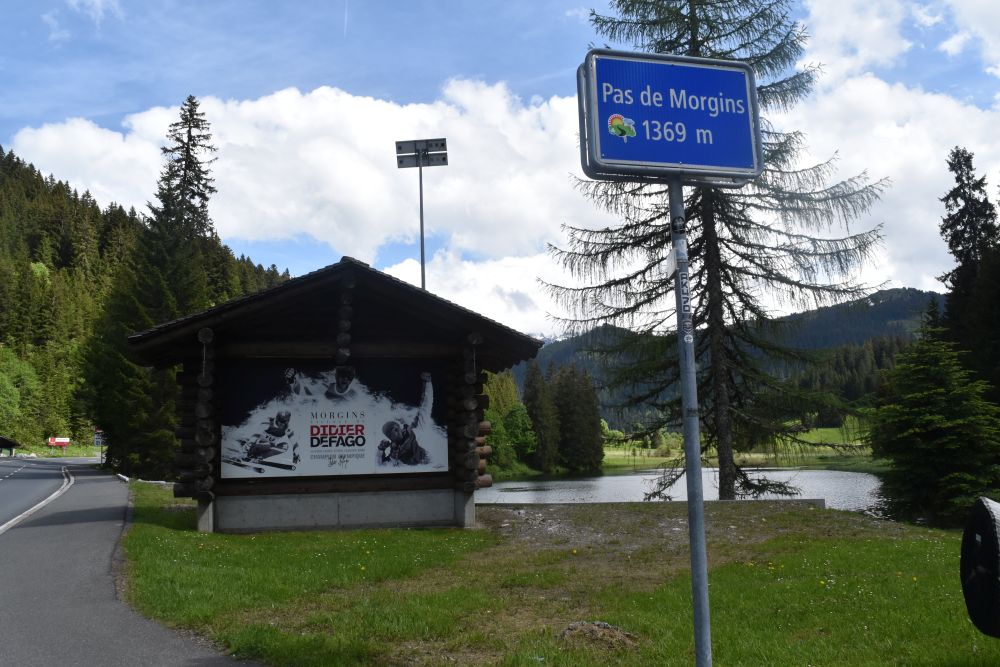
We made three days to return from Spain to Switzerland. The first day has ended in Carcassone. The second day takes us to Albi, to Espalion and to Laguiole, where we spend another night. On the third day we just “eat up” kilometers on motorways and enter Switzerland on the Pas de Morgins.

.

Albi – town of the Cathars or Albigienses

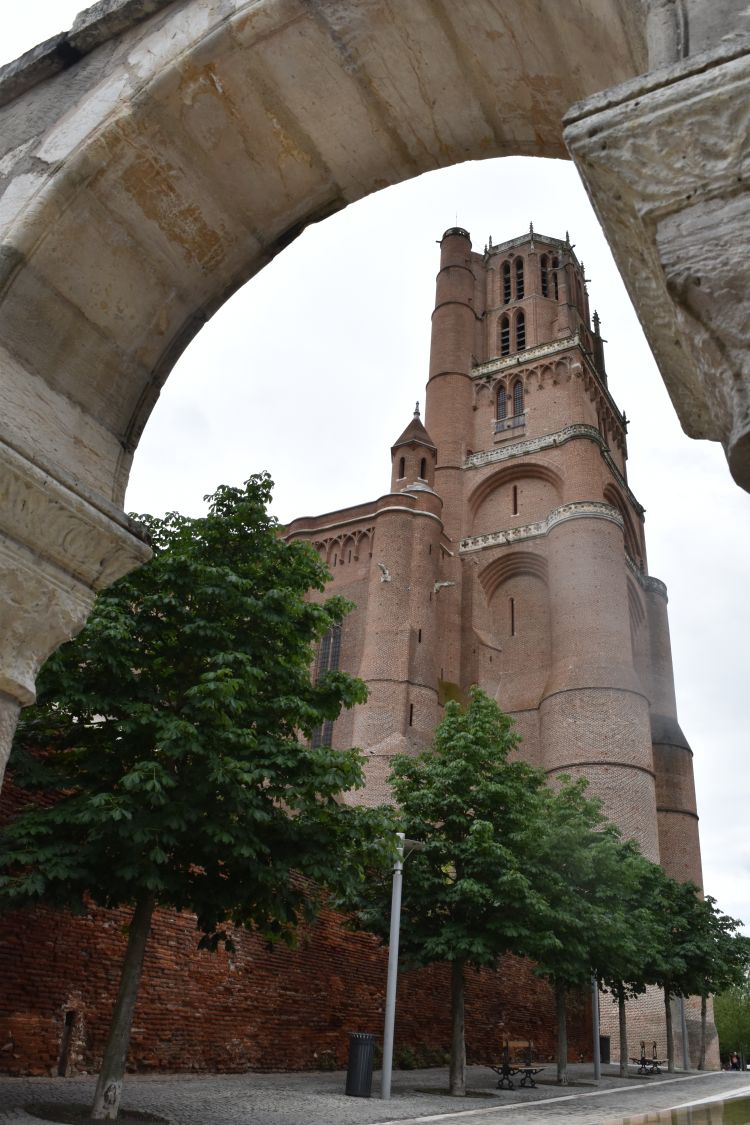
In the pouring rain, we reach Albi located on the river Tarn. It was an important centre of the Cathars, also called Albigienses. The old city has mostly been built from red bricks and their cathedral Saint Cécile is made of the same material.

DSC_0849 small

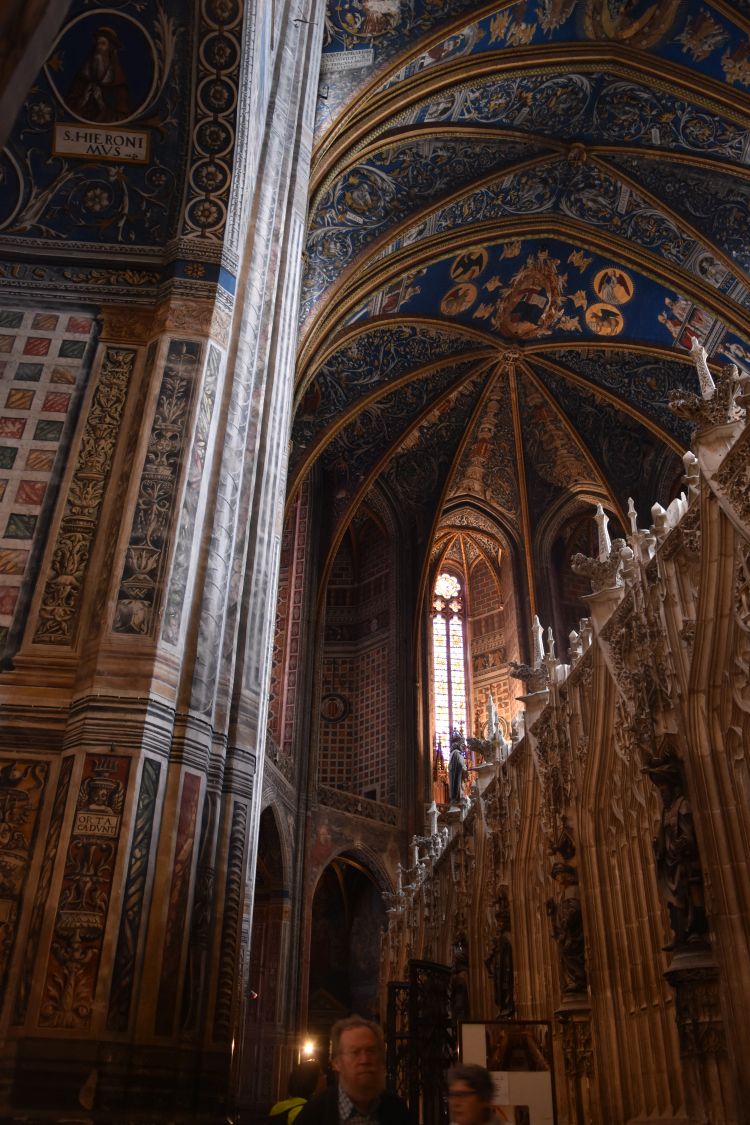
Inside the cathedral is painted in blue which gives it a harmonious atmosphere.

DSC_0858 small

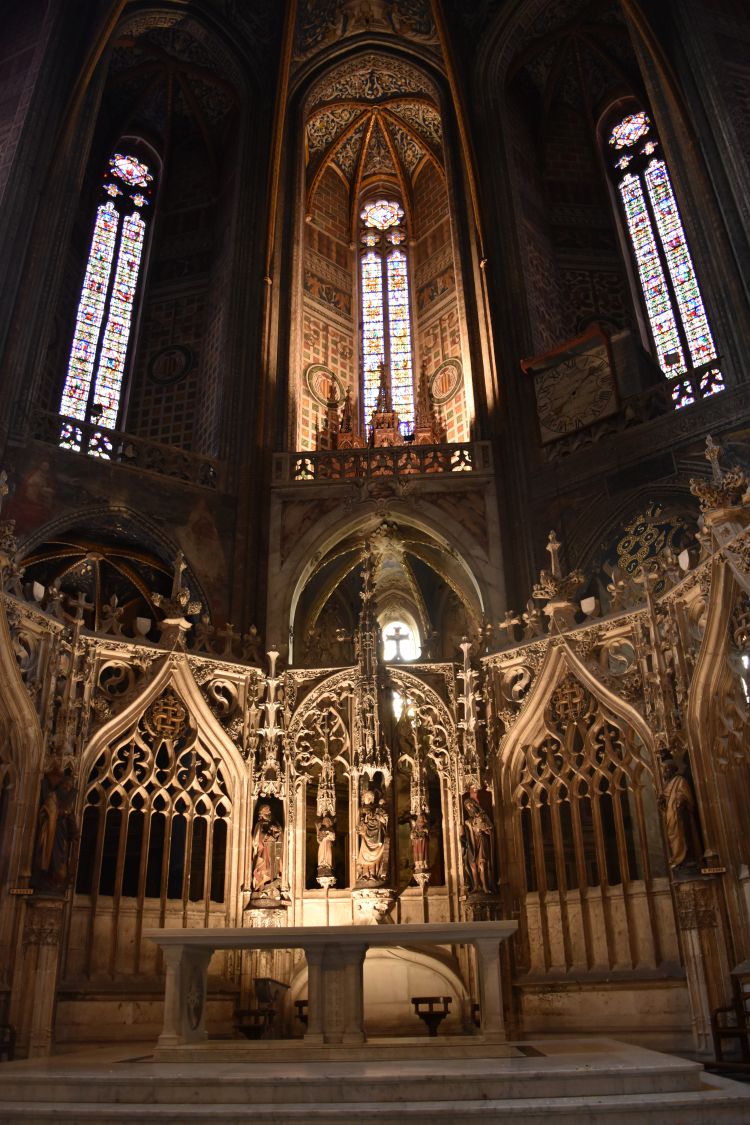
The choir and the stalls are a Unesco world heritage

DSC_0861 small

In the pouring rain we do not feel like more sightseeing in this charming town and continue north.

.

Espalion – small town with old bridge

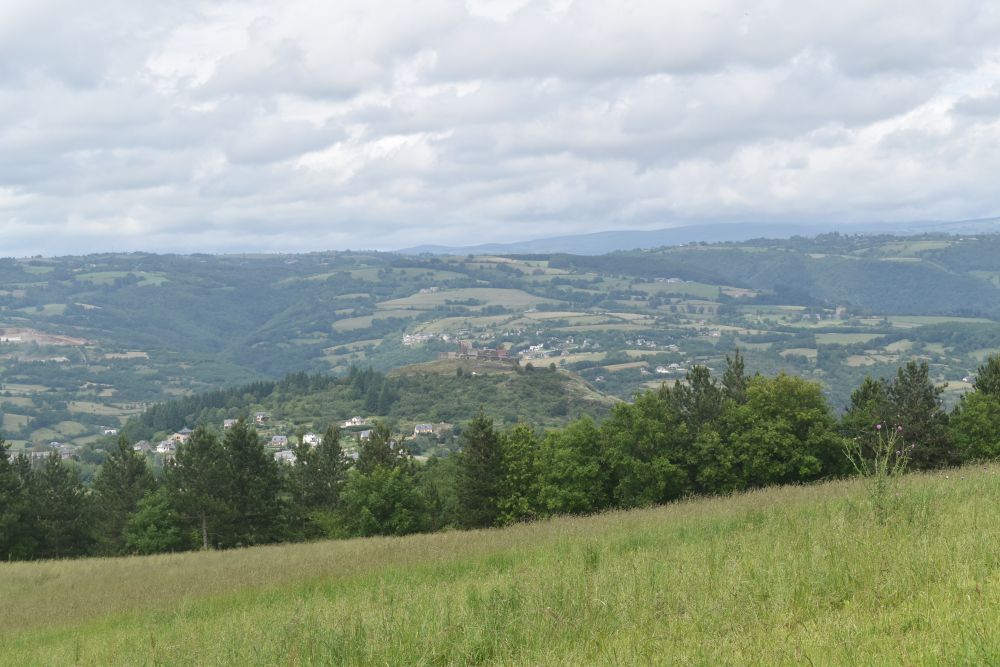
We continue north through the Causses plateau mountains. It is a rough landscape that the pilgrims to Santiago de Compostela feared – for the wind, for the cold temperatures and also for the robbers.

DSC_0870 small

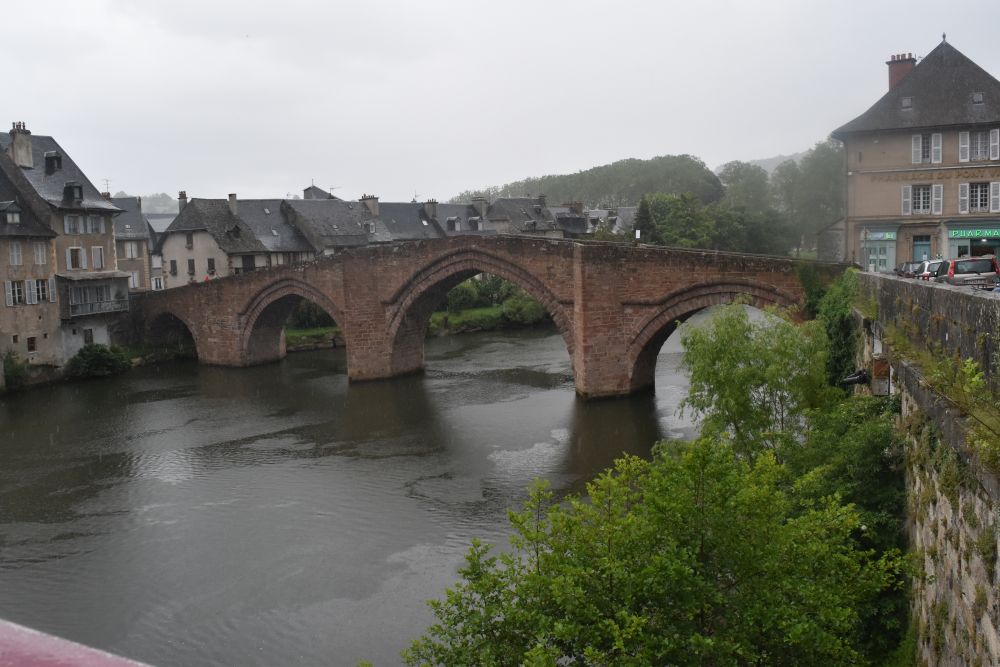
The cities lie in the valleys. Espalion is one of these. The gothic bridge crosses the river Lot.

DSC_0878 small

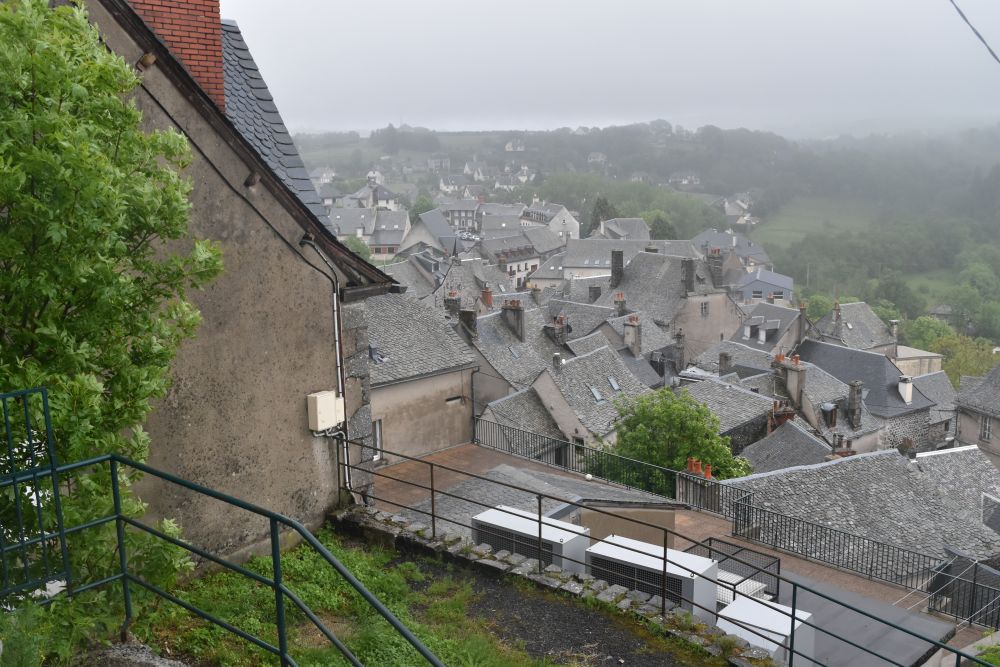
The shoreline of this small town is charming and so are the narrow streets, but the only one hotel in town is booked out. And – it is pouring with rain. We decide to continue to Laguiole.

.

Laguiole – the dynamic mountain village has a lot to offer – a discovery for me

Laguiole is a mountain village located in the Aubrac. The temperatures are now down to 9 degrees – it is chilly, rainy and misty. This is the impression from our evening walk.

DSC_0890 small

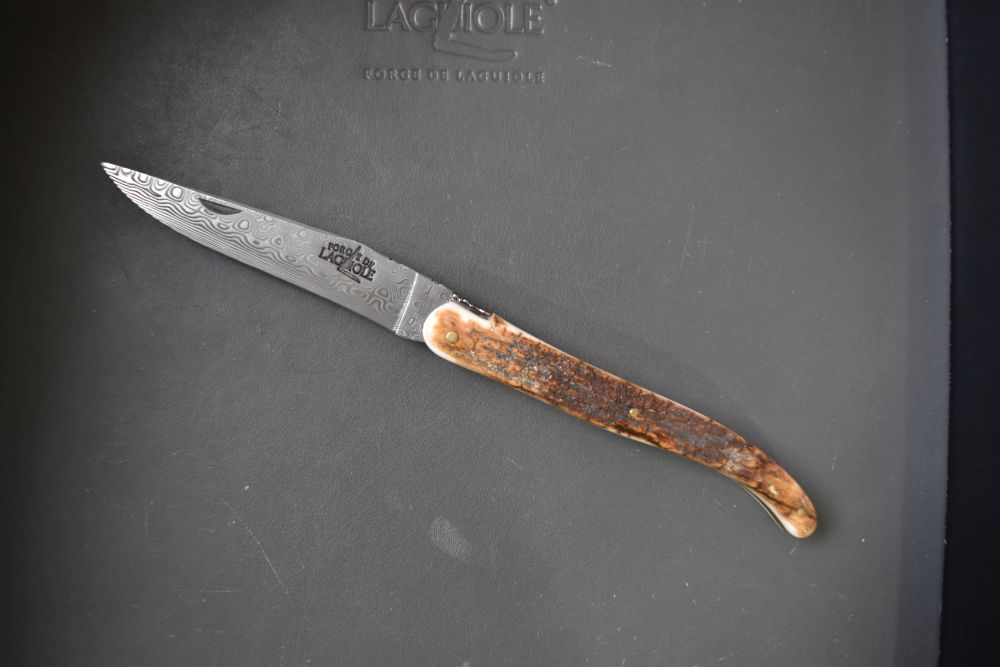
Laguiole is famous for its high quality knives. Their speciality are the foldable knives – this is one of them with a damascene blade.

DSC_0883 small

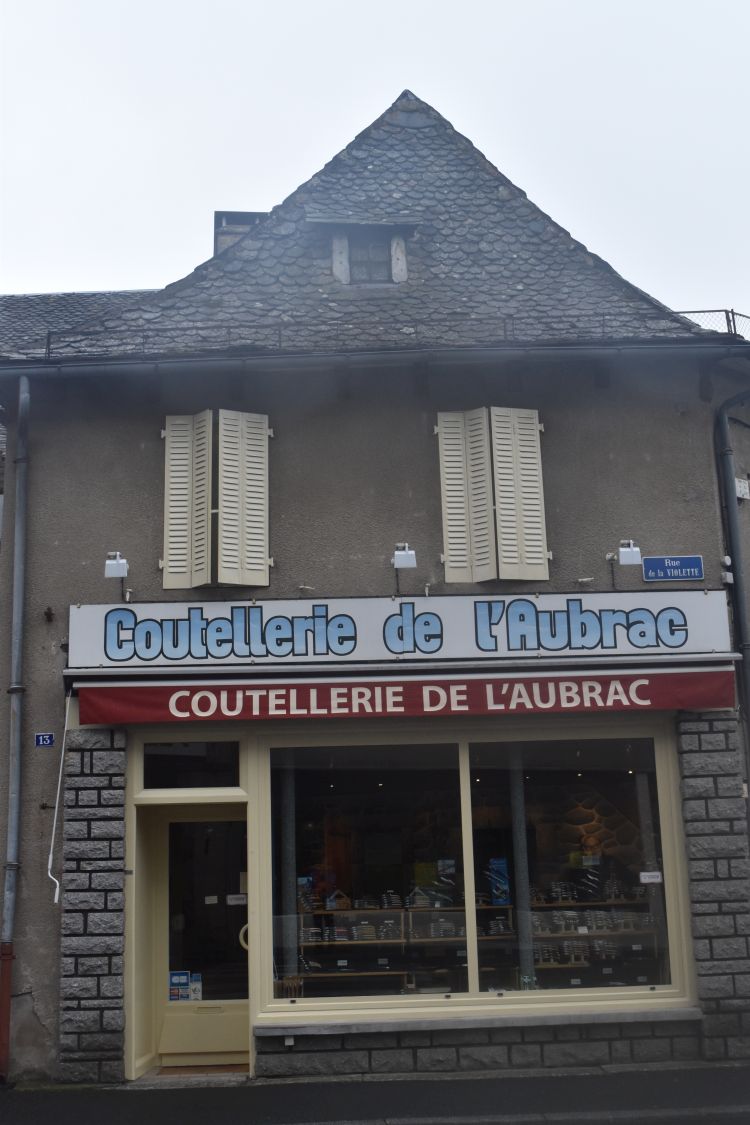
But they also have knives, forks and spoons for the table – beautifully designed by star designers. The village is full of knife  shops (called “Coutellerie”). Also tours to factories are on offer.

DSC_0895 small

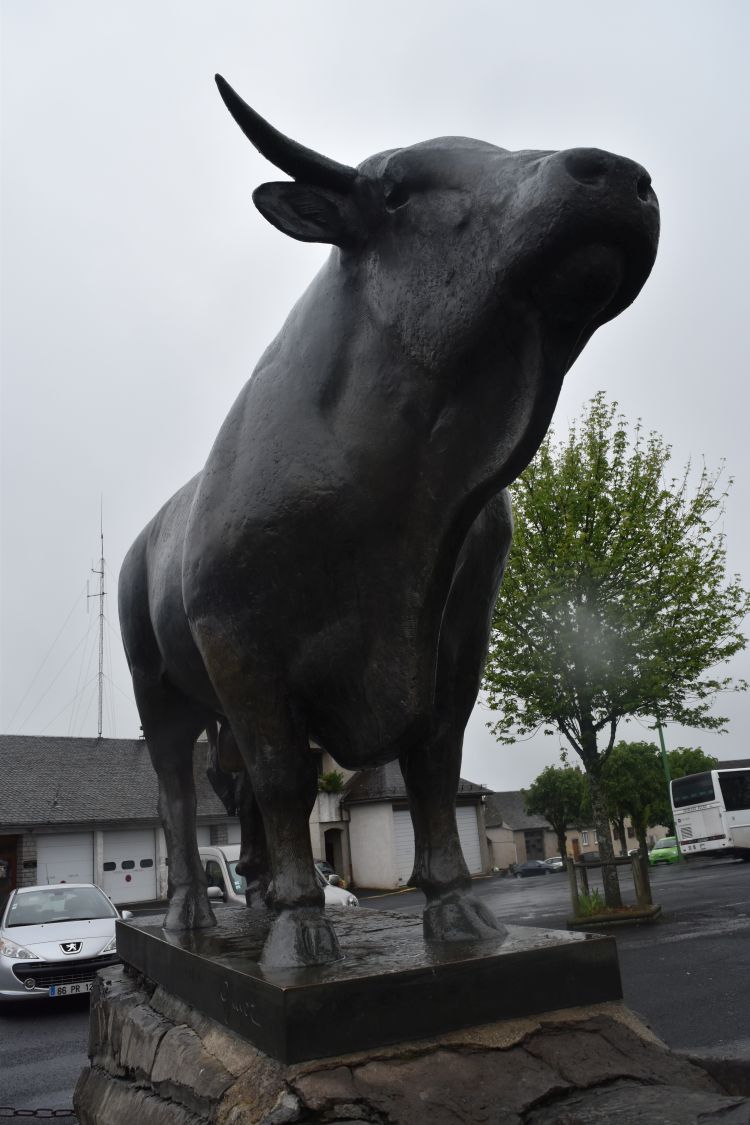
In addition the Aubrac and Laguiole are famous for their regional “Aubrac” cattle, a robust species that is used for milk and meat production. The cattle is brown with a dark brown line decorating the border of the ears. This cattle enjoys an excellent diet of mountain herbs and delivers AOC cheese and savoury meat. The “Aubrac” cattle is so much valued that it has received a memorial in the village center.

DSC_0904 small

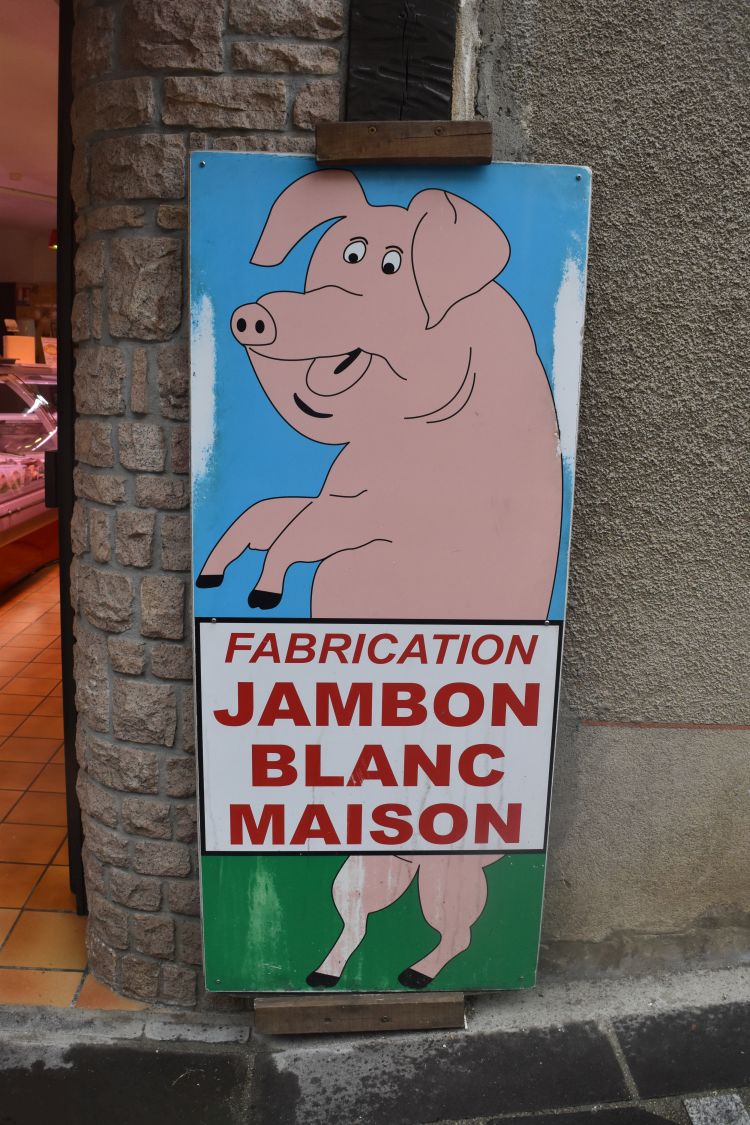
In addition to the products of the Aubrac cows, the butchers also sell white ham and other specialties from pigs.

DSC_0884 small

I bought some of their cooked white ham, and enjoyed it, when back home.

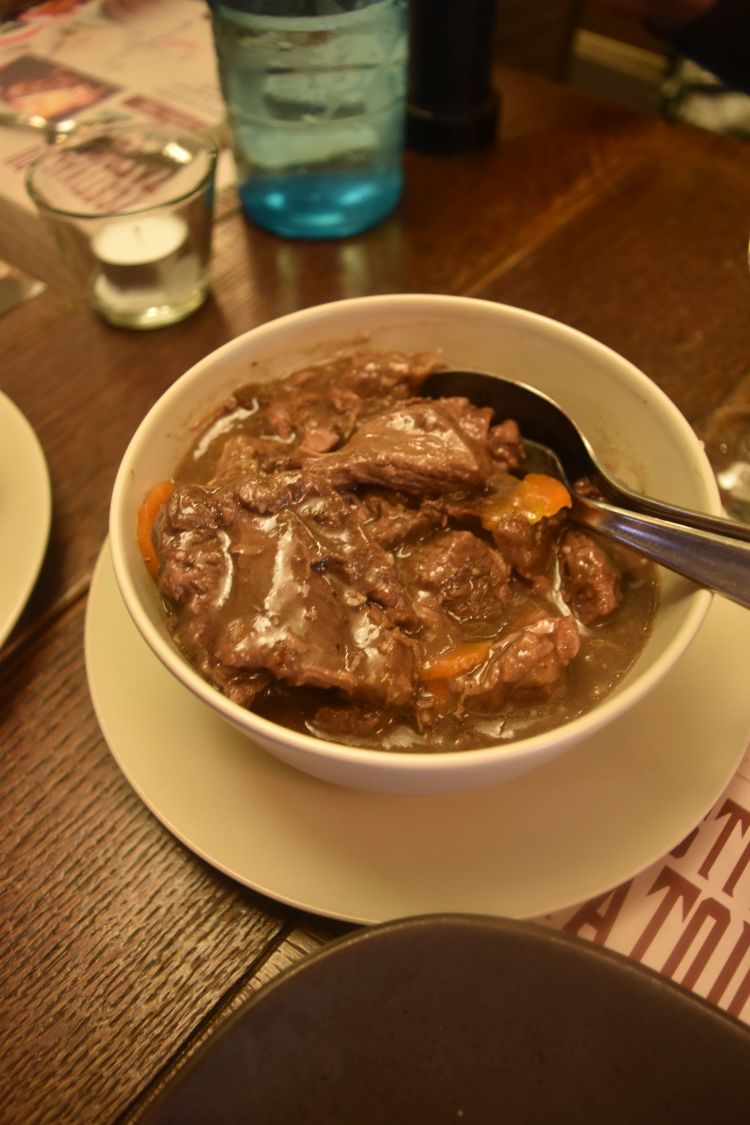
We find a room in the friendly Hotel de l’Aubrac. The house is also an excellent restaurant that serves tasty meals from regional products. We have a menu – this was my beef bourguignon made in wine and gentian liquor.

DSC_0898 small

The people here know, how to make use of their natural products. The meal was authentic and well prepared. The beef was served with Aligot which is potato purée mixed with local cheese which gives it a firm texture. A red wine from Marcillac (some 50km south from Laguiole) was a perfect match with my beef. Ursula liked her pot-au-feu. An excellent choice of local cheese followed as part of the menu: Ecir (cow milk), a regional goat cheese and Roquefort (which originates not far from here).  We top our meal with a sweet wine from Pellehaut (Gascogne, west of Toulouse, made out of Chardonnay and Petit Manseng; the latter can mature until December thanks to its hard skin; it is the basic ingredient of sweet wines in South West France and in North Spain).

The two star Hotel and Restaurant de l’Aubrac is a great place to stay – welcoming atmosphere, great dinner, good breakfast and quiet rooms.

.

Heading back to Switzerland and then to the Pas de Morgins

On the third day we head back to Switzerland – all on highways – and enter our country crossing the Pas de Morgins.

DSC_0915 small

We give back the the apartment keys and thank our friends for having let us stay in their beautiful apartment in L’Hospitalet de l’Infant with its gorgeous view of the pine trees and the sea.

From L’Hospitalet through the Pyrenees to Carcassone

From L’Hospitalet we drive back to Switzerland, first crossing the Pyrenees and stopping at Carcassone. The next day we continue through the rough plateau mountains of Causses and stay overnight at Laguiole. Finally on the third day we take the French motorway end enter Switzerland crossing the Pas de Morgins. Let me start with the first segment from Spain to Carcassone.

.

Crossing the Penedès with Santa Creuz

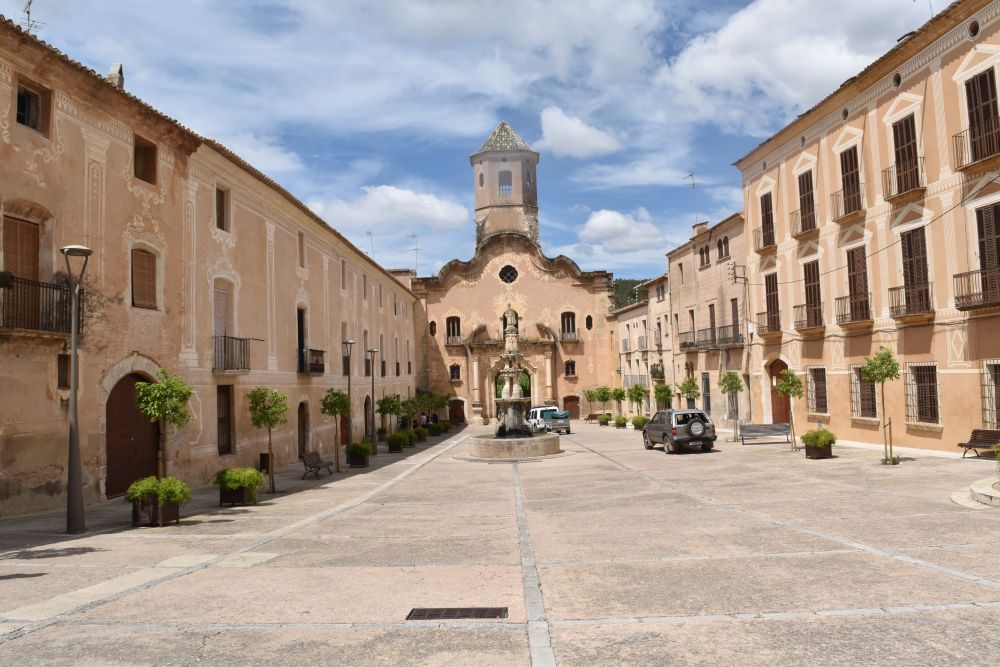
Penedès is the wine region south of Barcelona that among other things produces the well-known sparkling wine Cava. Amidst the vineyards is the monastery Santa Creuz. The Kings of Aragon have been buried here, until the monastery of Poblet took over.

DSC_0750 small

Inside the walls there is a small town. The monastery is closed at lunch time. It will  be on our list of excursions when coming back to L’Hospitalet.

DSC_0760¨small

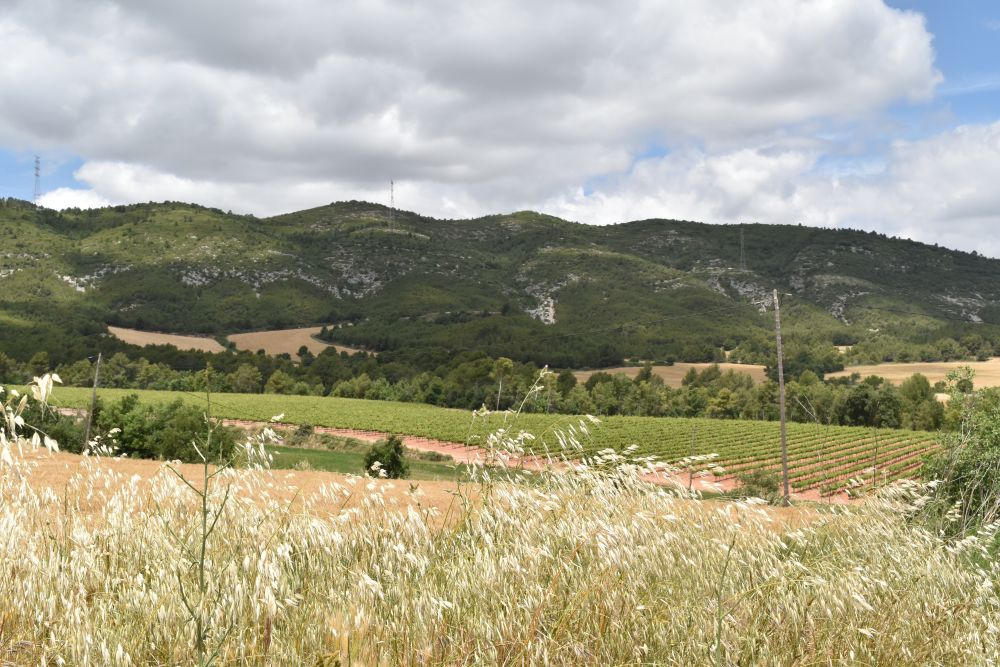
The vineyards of the Penedès are not as steep as the vineyards of Priorat.

DSC_0768 small

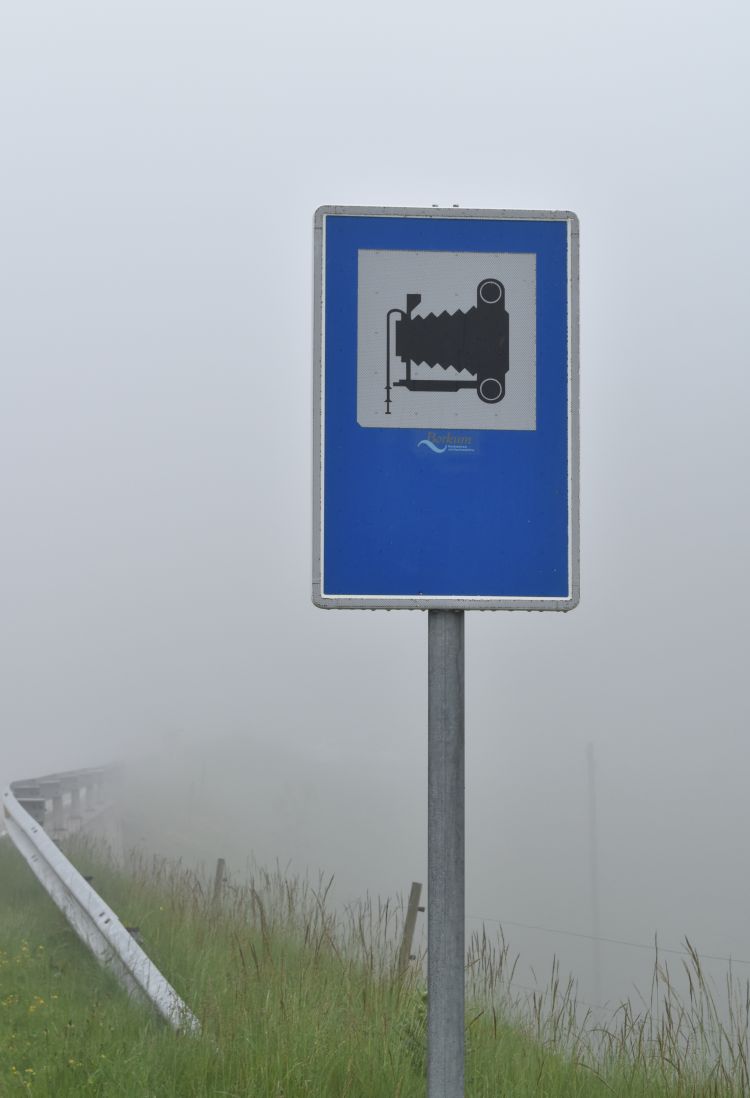
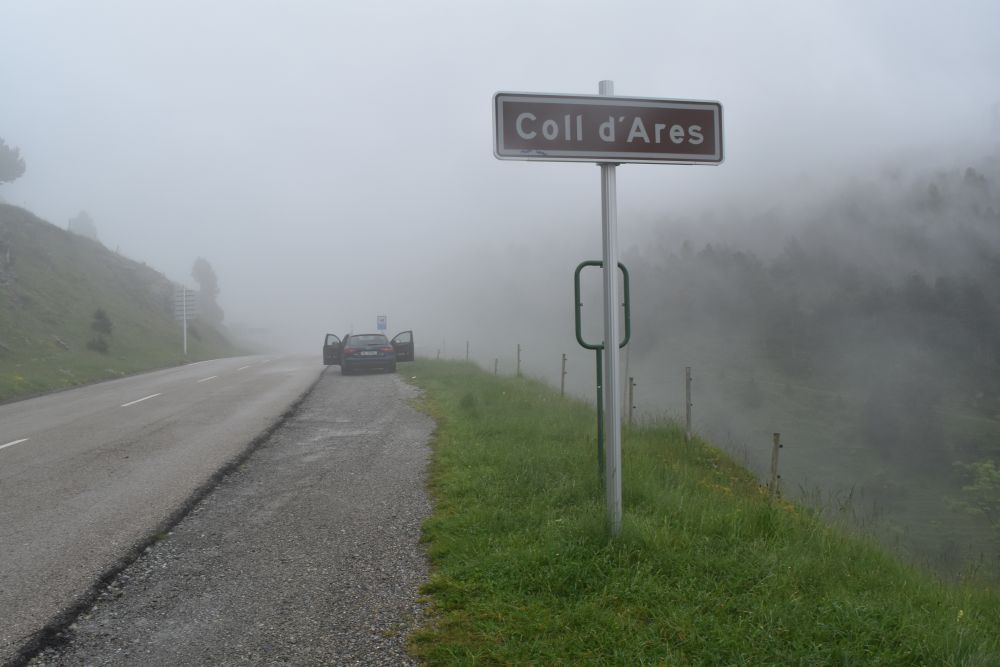
We reach the Pyrenees and drive uphill on a sinuous road. It starts to rain. At the Coll d’Ares or Col d’Arès we cross the border to France. This sign promises great photos here.

DSC_0780 small

And this was the view… it WAS misty here.

DSC_0781 small

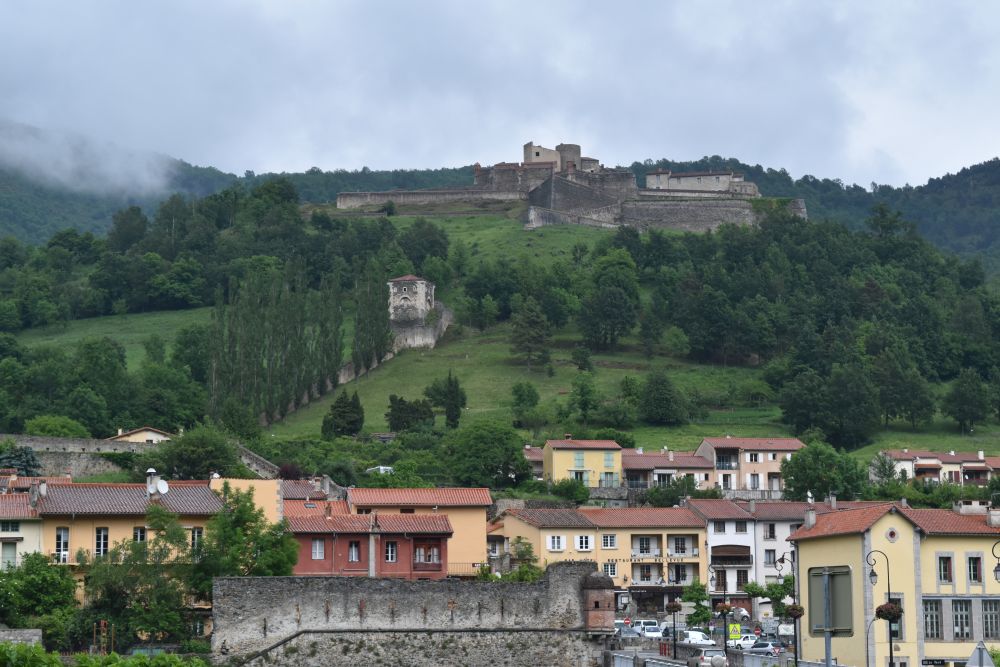
Above Prats-de-Mollo, Vauban (the architect of Louis XIV) has built the Fort Lagarde with the bastions typical of his strategy of defense (late 17th century). In the narrow streets the traffic halts for some time, as a lorry got stuck. All cars are waiting calmly.

DSC_0784 small

At Narbonne we take the motorway. Heavy wind makes the cypresses bend. We cross the vineyards of the Langedoc-Roussilon and reach gorgeous Carcassone where we stop for a night.

.

Carcassone – a fairy tale fortress

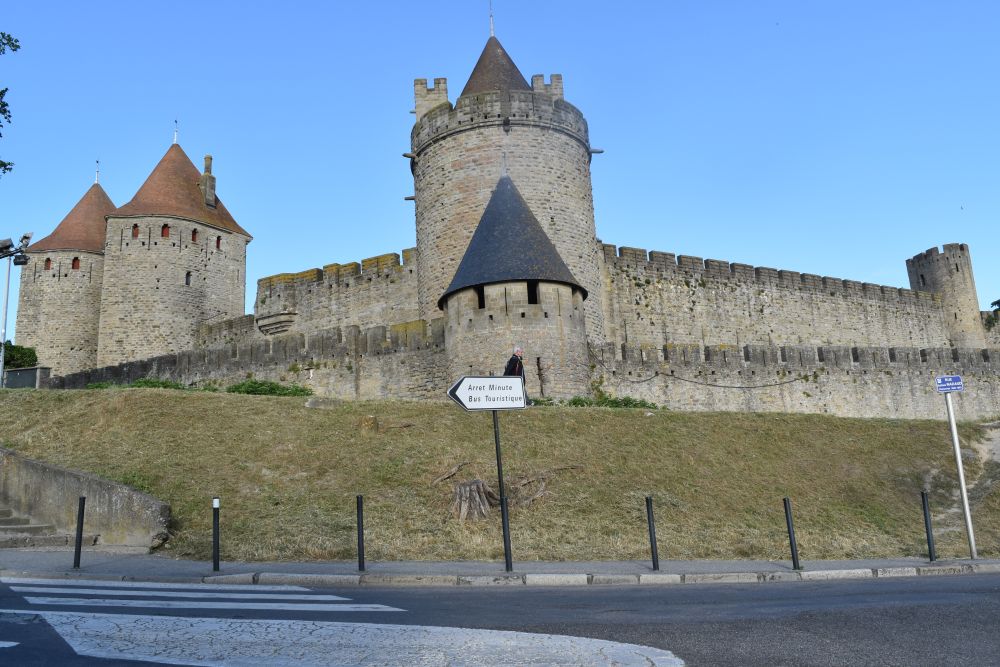
Carcassone is located in the Aude plain between the Massif Central and the Pyrenees. It was of strategic importance. The Romans had a fortification here, the Visigoths conquered it in the 5th century and the Saracens defended it successfully in the 8th century. Around 1200 the Cathars used it. In the Hundred Years War it withstood attacks by the English. Until the 17th century it was a fortress at the border between Aragon (Spain) and France, but then the Languedoc-Roussillon was transferred to France and Carcassone lost its importance as a fortress (“Carcassone – katharische Burgen”, Estel 2011).

Tourists love Carcassone. Buses are allowed to to stop here for a few minutes and “download” tourists.

DSC_0813 small

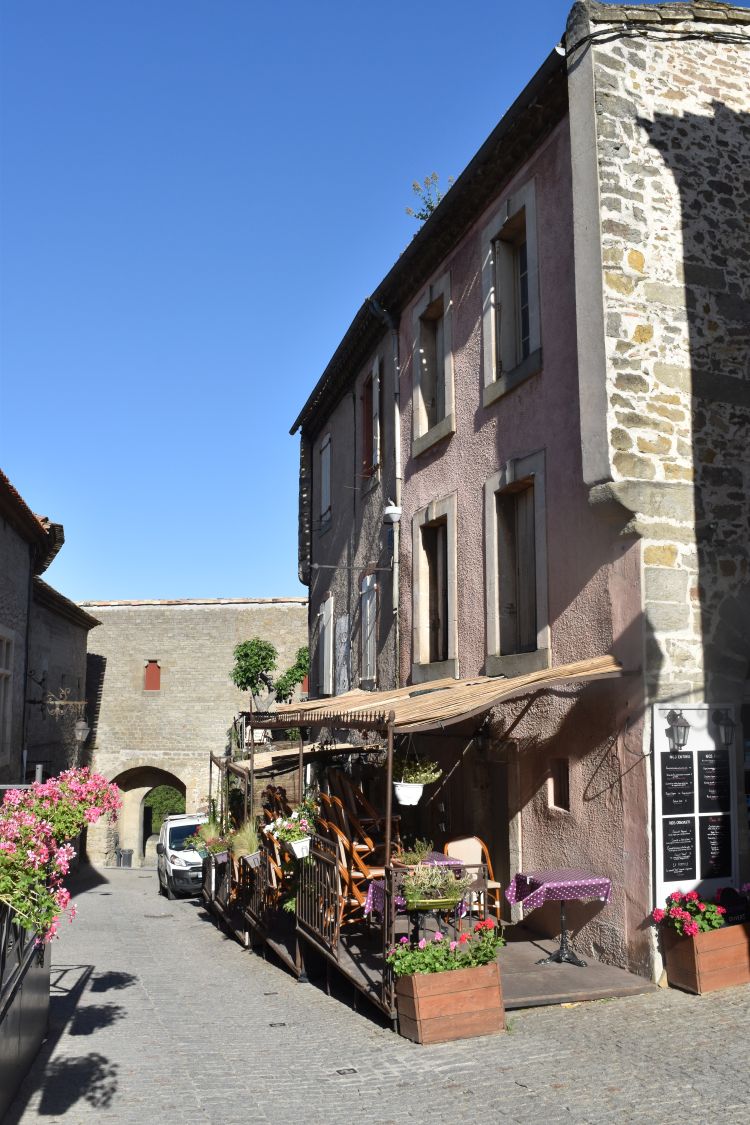
Inside the walls is a city with narrow streets. Many restaurants invite for dinner…

DSC_0828 small

… and many, many shops invite to buy souvenirs (but not to sit down).

DSC_0819 small

The restaurants offer home made cassoulet (fait maison). This meal is more for people who have worked in the fields all day.

DSC_0821 small

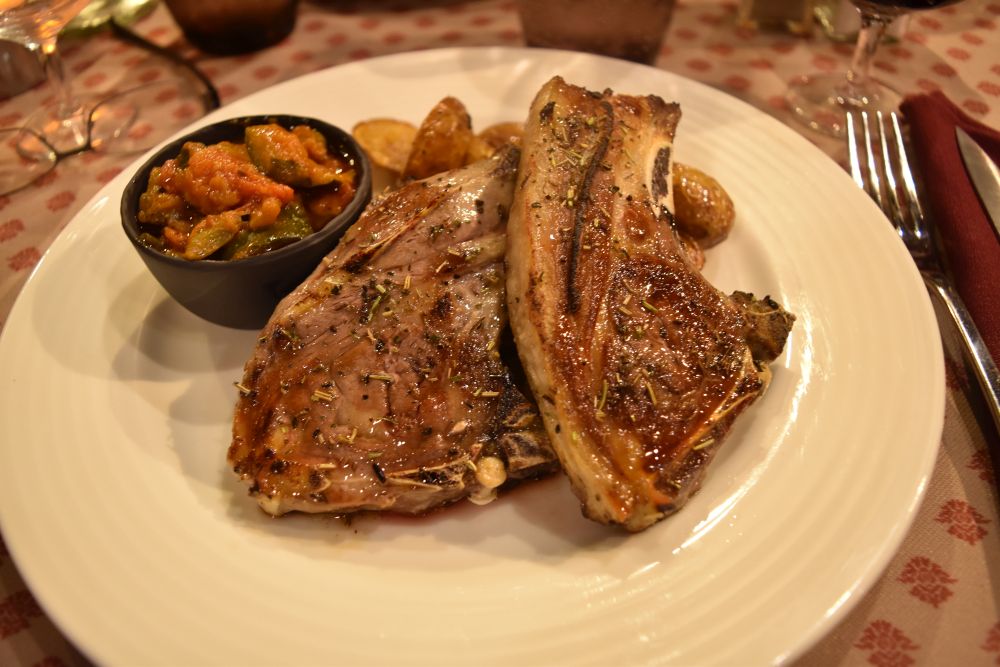
I prefer lamb with herbs.

DSC_0801 small

… and then we sleep well in our quiet hotel.


Auvergne – France at its best

There we are on the road again… Our target is the North of Spain near Tarragona. Ursula has a friend that owns an appartment near Tarragona. We drive to Martigny first to get the key and then we drive through France with an overnight stop.

.

 Martigny is worth a visit, with the Fondation Giannada and its chapels

Ursula joins me in Zurich. We drive to Martigny in the Valais to see the exhibition of Zao Wuu Ki in the Fondation Giannada. Beautiful, I like his abstract paintings – each of them reminding us of a landscape – a sun rise, a salar lake or a sea shore with waves in the background.

Then I show Ursula the windows in the protestant chapel painted by Hans Erni, when he was 103 years old.

DSC_0015 small

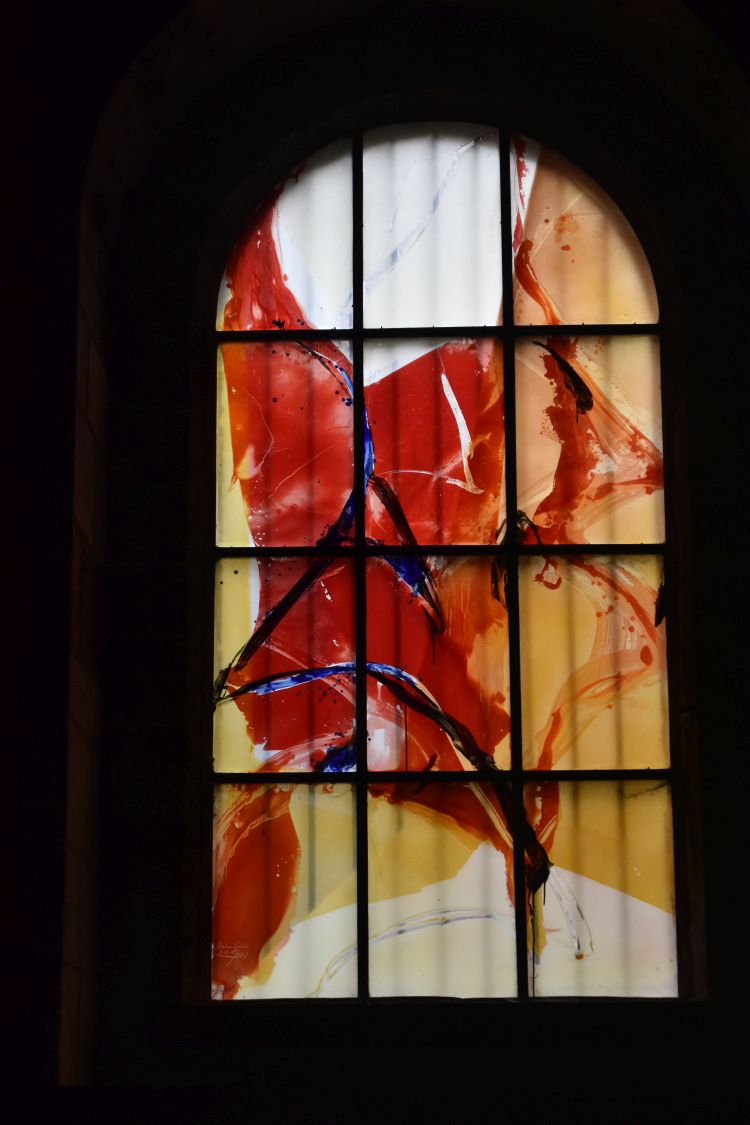
We read about the other catholic chapel and the paintings of the monk Kim en Joong.  Ursula sees that he has also made the windows of the Basilica St. Julien in Brioude in the Auvergne. This is about half way to Tarragona. We decide to stay overnight at Brioude.

.

On the road to Brioude

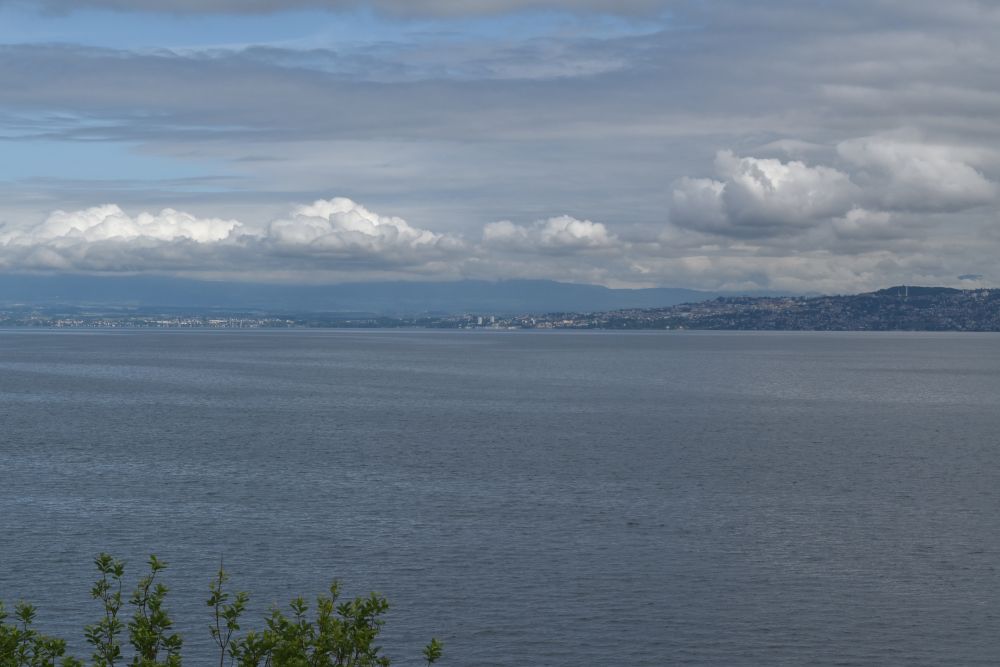
We drive along the lake of Geneva in France. This is the view of the Swiss side of the lake.

DSC_0017 small

Then we head to Bourg-en-Bresse and the Auvergne, crossing one valley after the next on the motorways… up and down… up and down.

.

Brioude – a charming French town with the hotel de la Poste

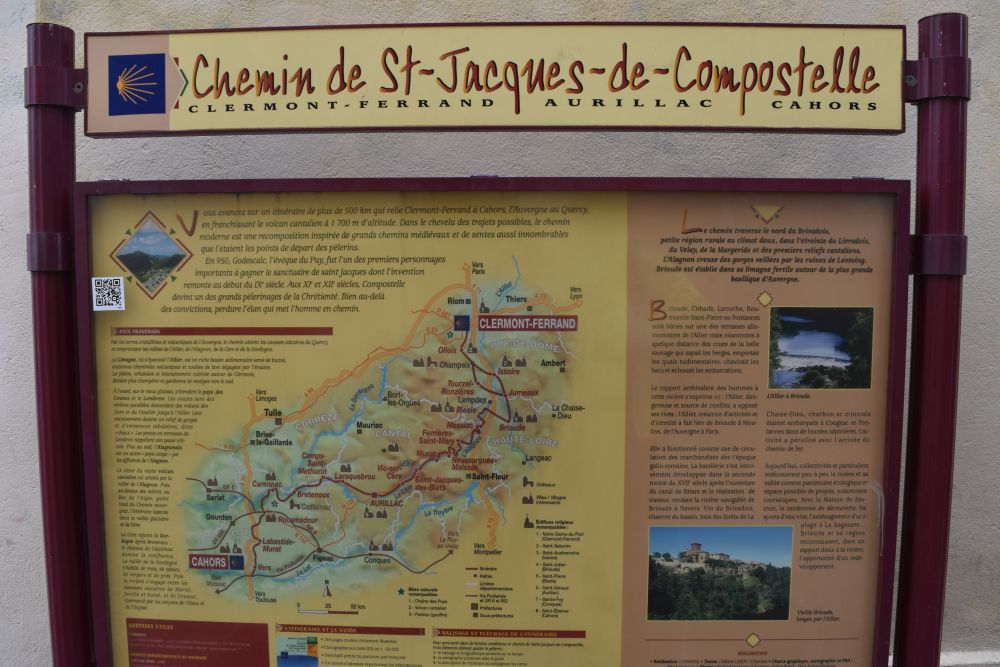
Brioude is located on the St. Jacob’s pilgrimage route.

DSC_0027 small

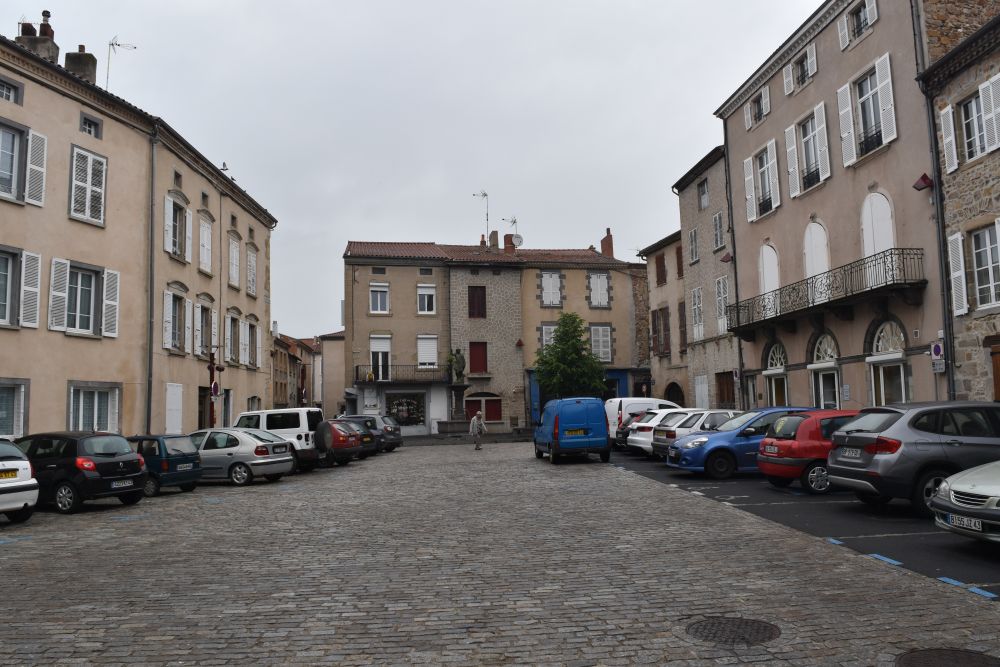
It is one of these cosy and quiet country towns that I love France for.

DSC_0028 small

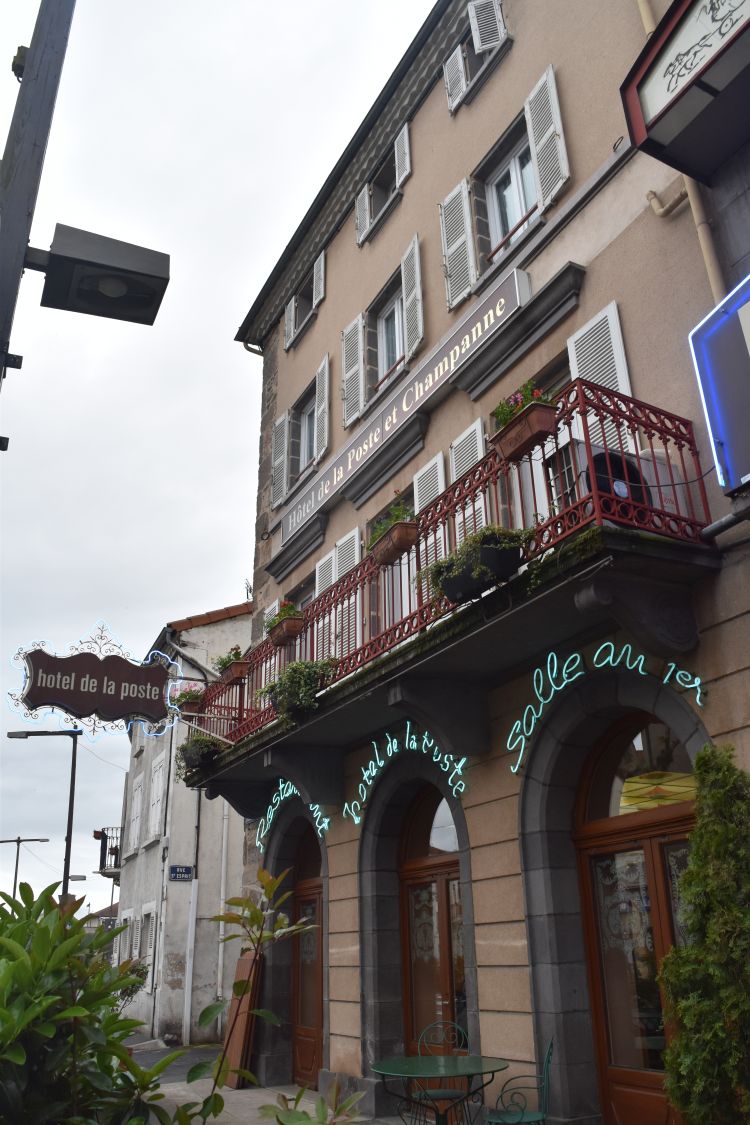
The tourist office shows us the hotels… and seems to recommend the Hotel de la Poste. “Two stars, but very good,” she says. How true. We find a friendly reception and a comfortable room in the annexe.

DSC_0093 small

.

The Basilika of St. Julien on the site where he was murdered

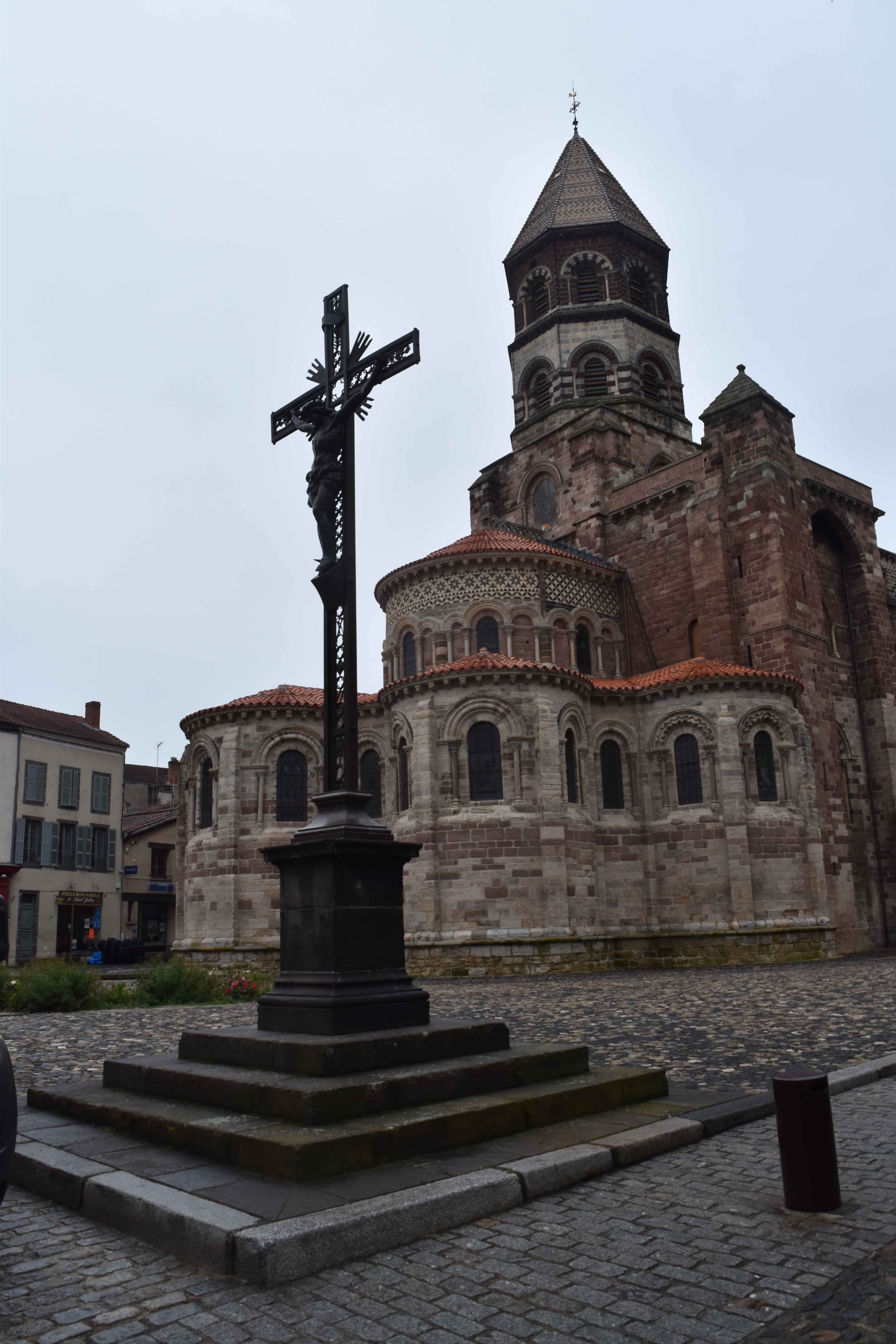
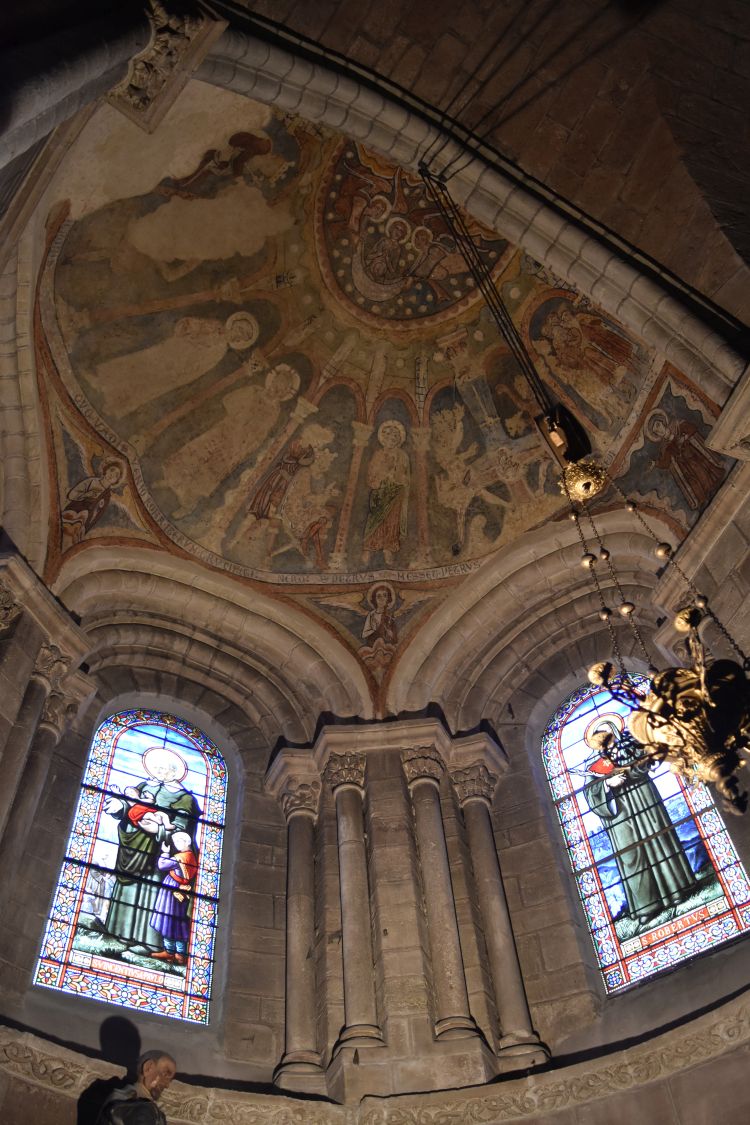
The center of Brioude is the Basilika St. Julien from the 11th century built at the place where Julien had been decapitated by Roman soldiers. The style is  Romanesque. This is the view from outside with the tower of 56m.

image

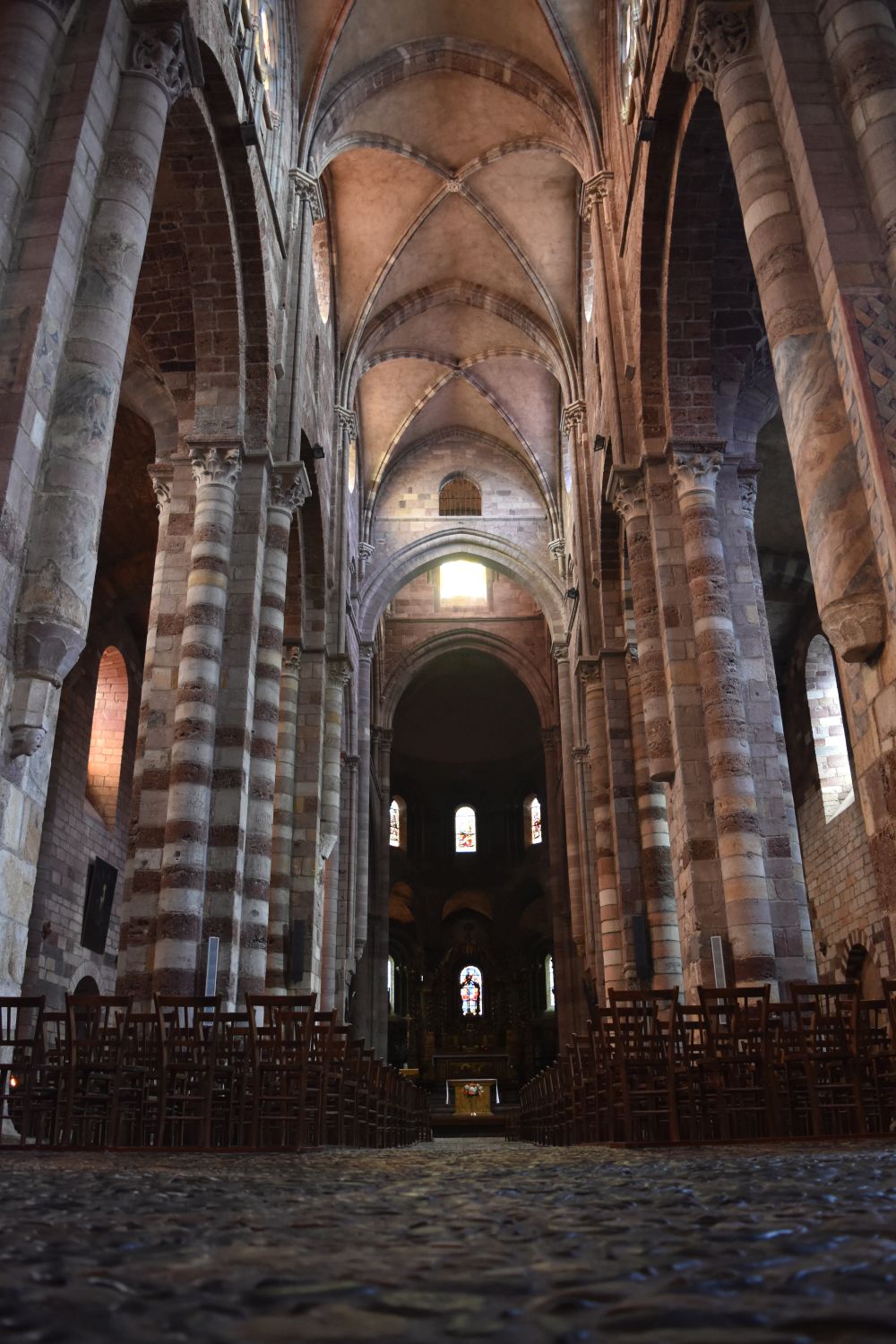
The nave…

DSC_0045 small

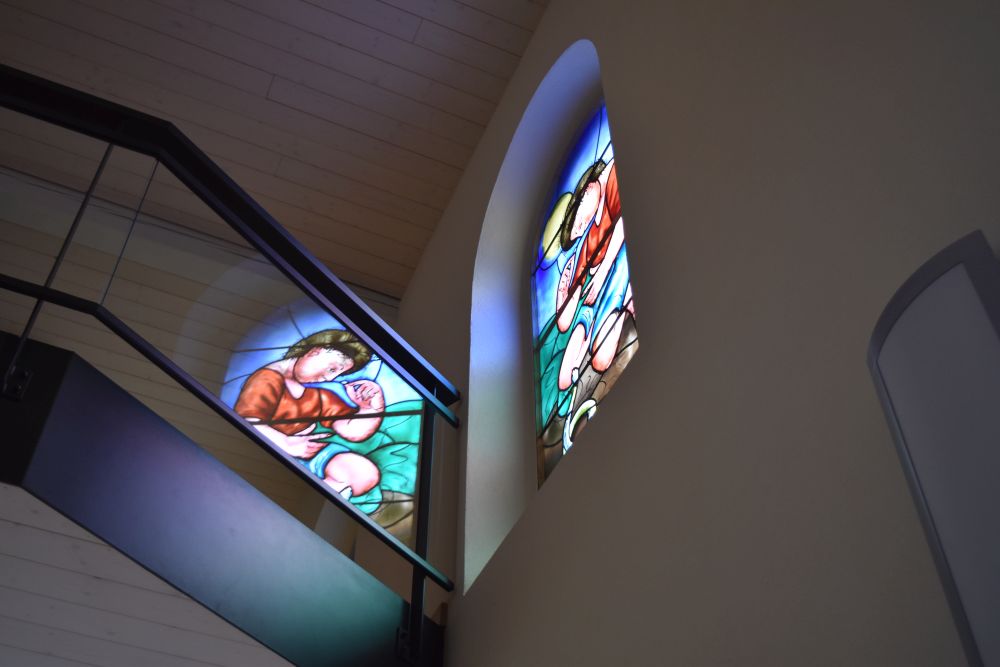
… and one of the 37 windows made by Kim en Joong in 2008. They give a solemn atmosphere to the inside of the church. We would like to visit the catholic chapel with his windows in Martigny, when back.

DSC_0050 small

There are old frescoes on the columns and in the chapels of the choir.

DSC_0067 small

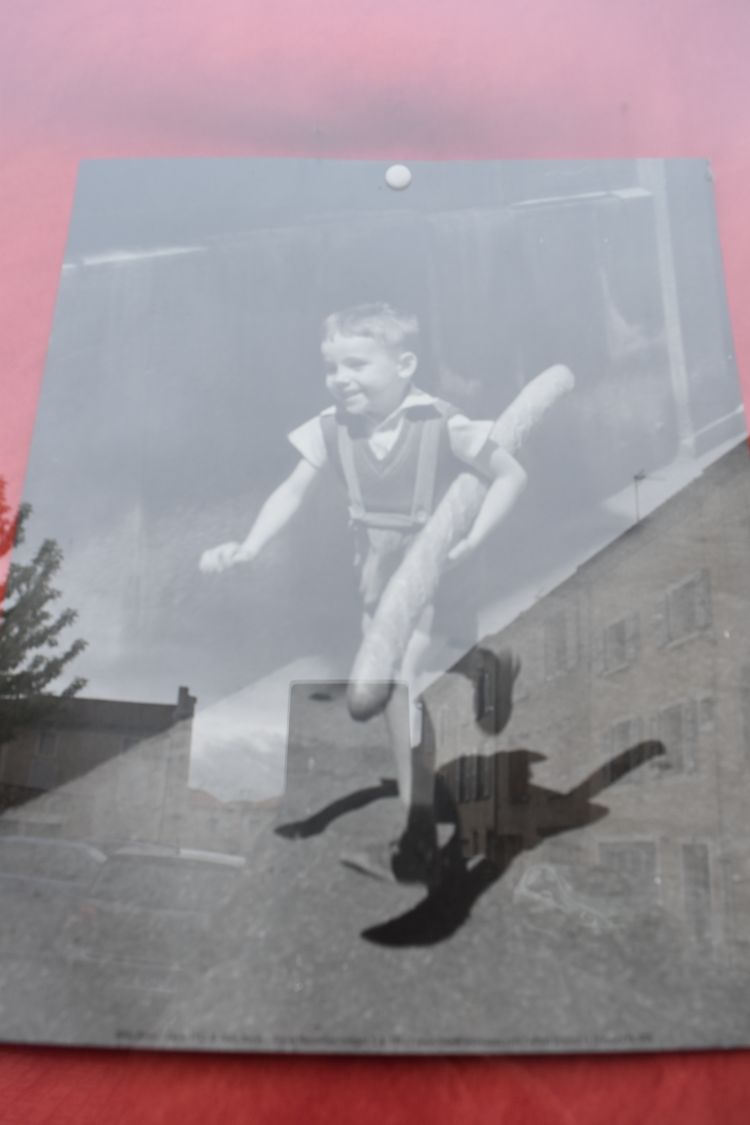
Returning to our hotel we come across a bakery with this very French foto of the fifties or sixties in the last century. Very French… and welcoming.

DSC_0088 small

.

The superbe dinner in the cosy restaurant of the Hotel de la Poste

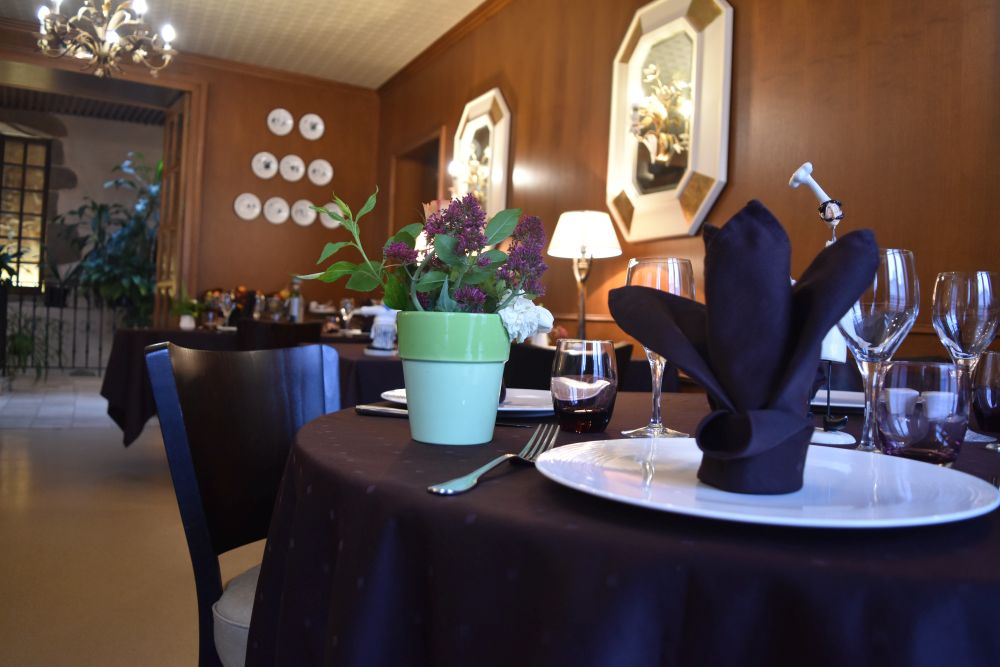
The hotel is a gem. In it, we find one of these home like restaurants that I only know from France.

DSC_0094 small

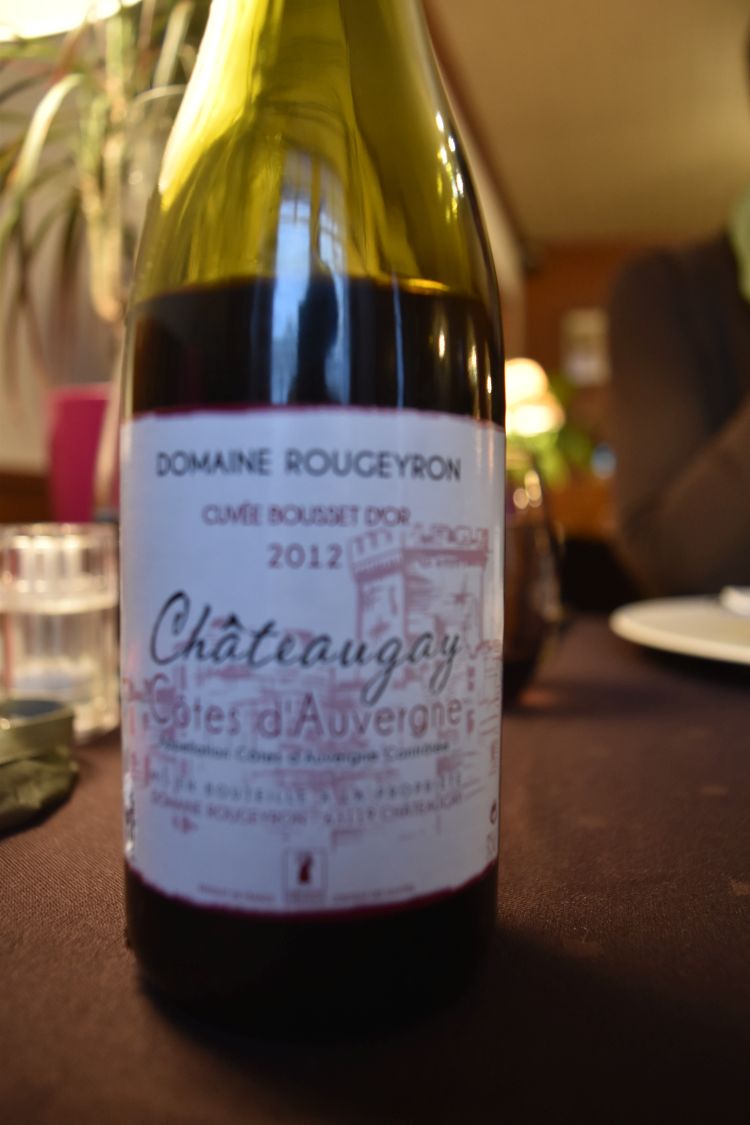
Ursula feels like the menu with two main courses, and I join her. I order this local Gamay from the region of Auvergne – it is a perfect match with the regional meal.

DSC_0095 small

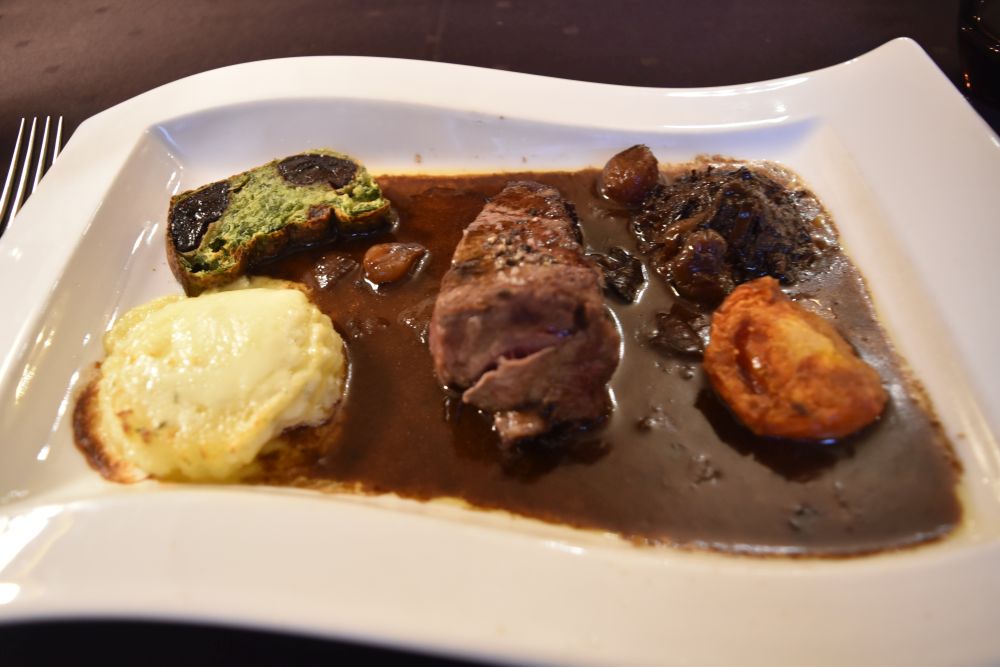
The first dish is poultry terrine. Our main course is beef with potatoes au gratin and a spinach pie. Delicious.

DSC_0098 small

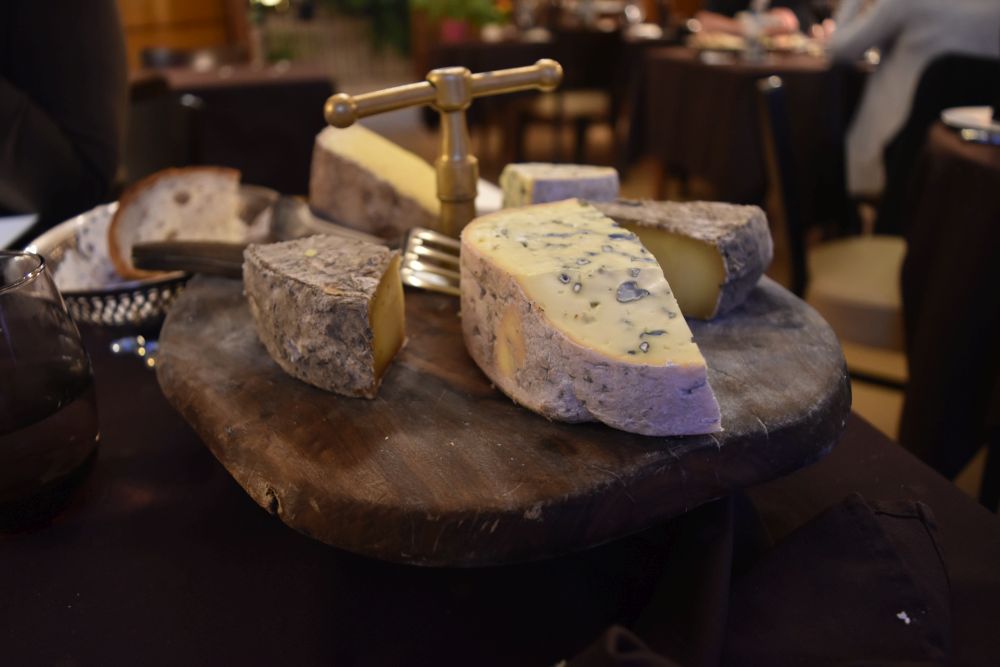
The selection of local cheese like Bleu d’Auvergne or Saint Néctar are also a good match with the Gamay.

DSC_0099 small

A rhubarber cake – lightly made – with a ball of coconut ice cream top our meal. “This is a “trouvaille””, Ursula says, “one of the best meals I have had in France.”

We sleep well in our quiet and comfy annexe and in the morning enjoy breakfast buffet prepared with care and love – all fresh regional products of the Auvergne.

On the road with my friends – reflecting about Pinot Noir and Chardonnay in central Burgundy

… One of the main attractions in Burgundy that I recall from 30 years ago: “Ici commence le Chambertin – ici finit le Chambertin”

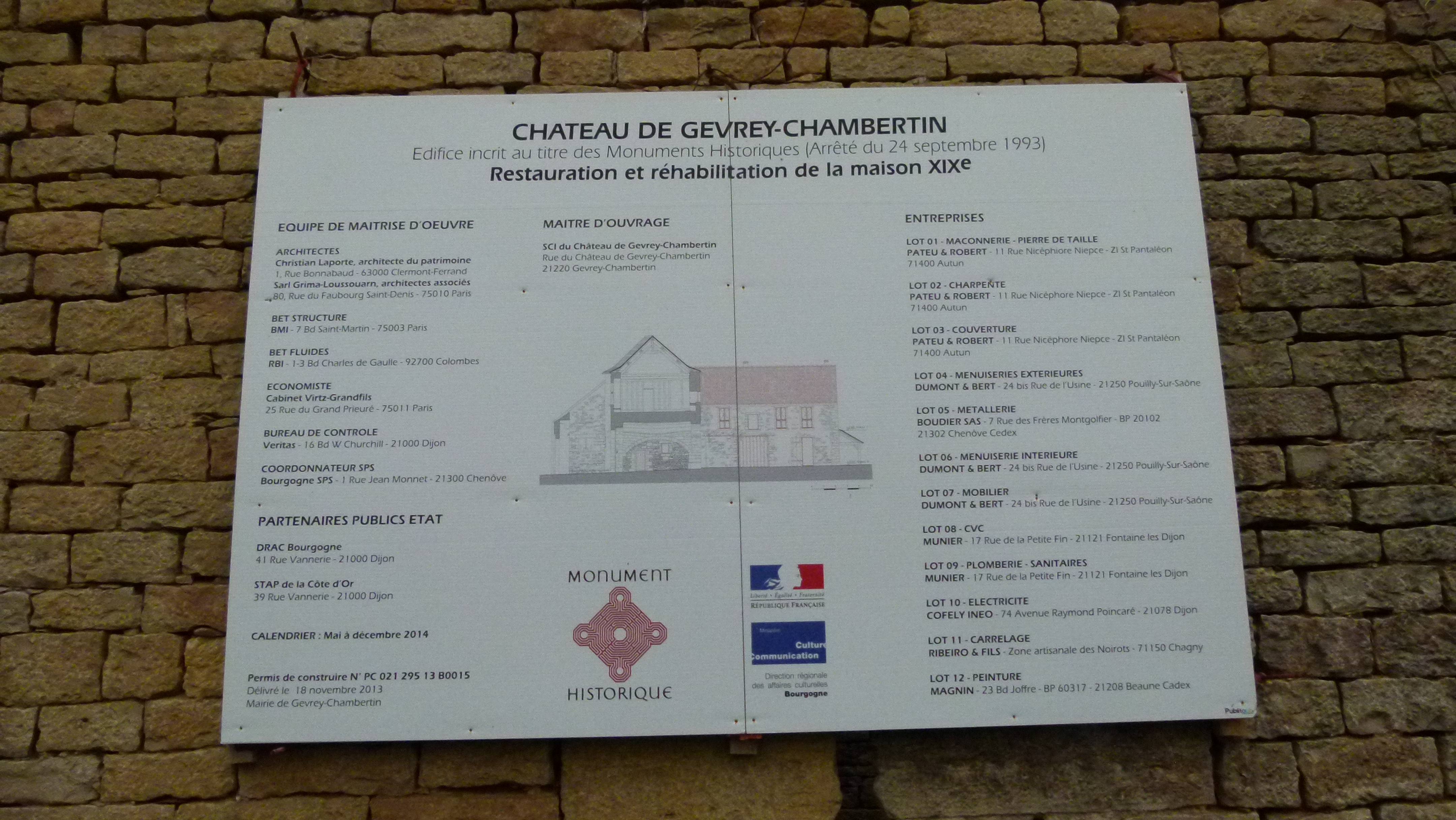
When I was in Burgundy 30 years ago, I visited the vineyards of Gevrey-Chambertin and I remember the panels “ici commence le Chambertin” and “ici finit le Chambertin”.  I loved these merry panels and now, back in Burgundy thirty years later, I keep on looking for them. My friends do not know, what I am talking about. And I am getting more and more frustrated. I could not understand, why I could not find the panels of the Chambertin vineyard. But then, I found out. The direction départementale des territoires (DDT) of Burgundy wanted to give a common “corporate design” to their winegrowing business to become eligible for the list of Unesco World Heritage. They decided that the two Chambertin panels are disturbing that common design image and had the panels removed despite the protest of the wine growers. I was very disappointed about this act of bureaucracy, in particular because later I came across some ugly panels indicating the names of other domains. Why on earth have these charming panels been removed and what was wrong with them in the light of some common design principles? They were THE attraction, mentioned even in the former old Johnson wine atlas. What did my Russian friend Anna always say: “Bureaucrats of all countries – unify.”

.

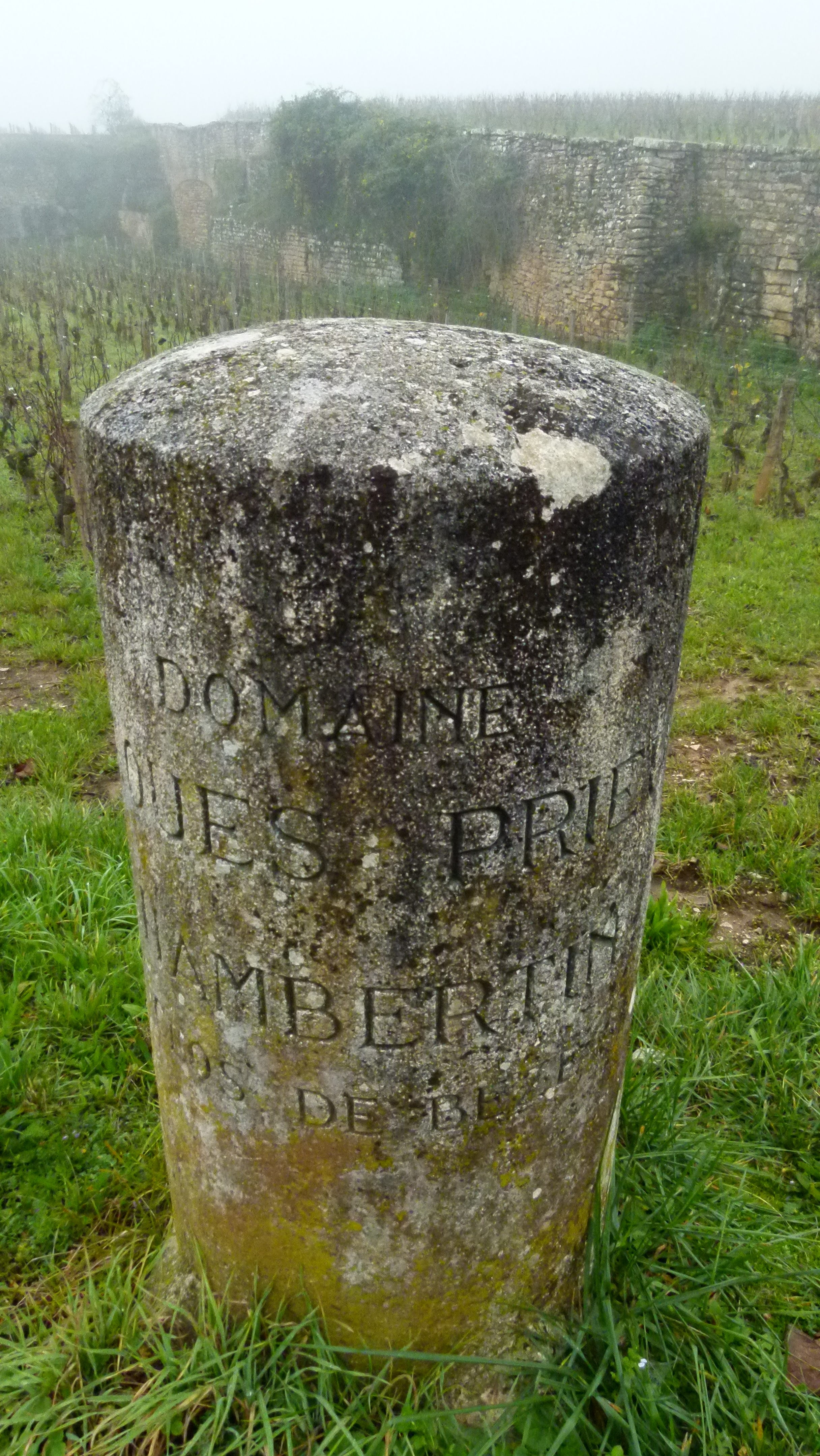
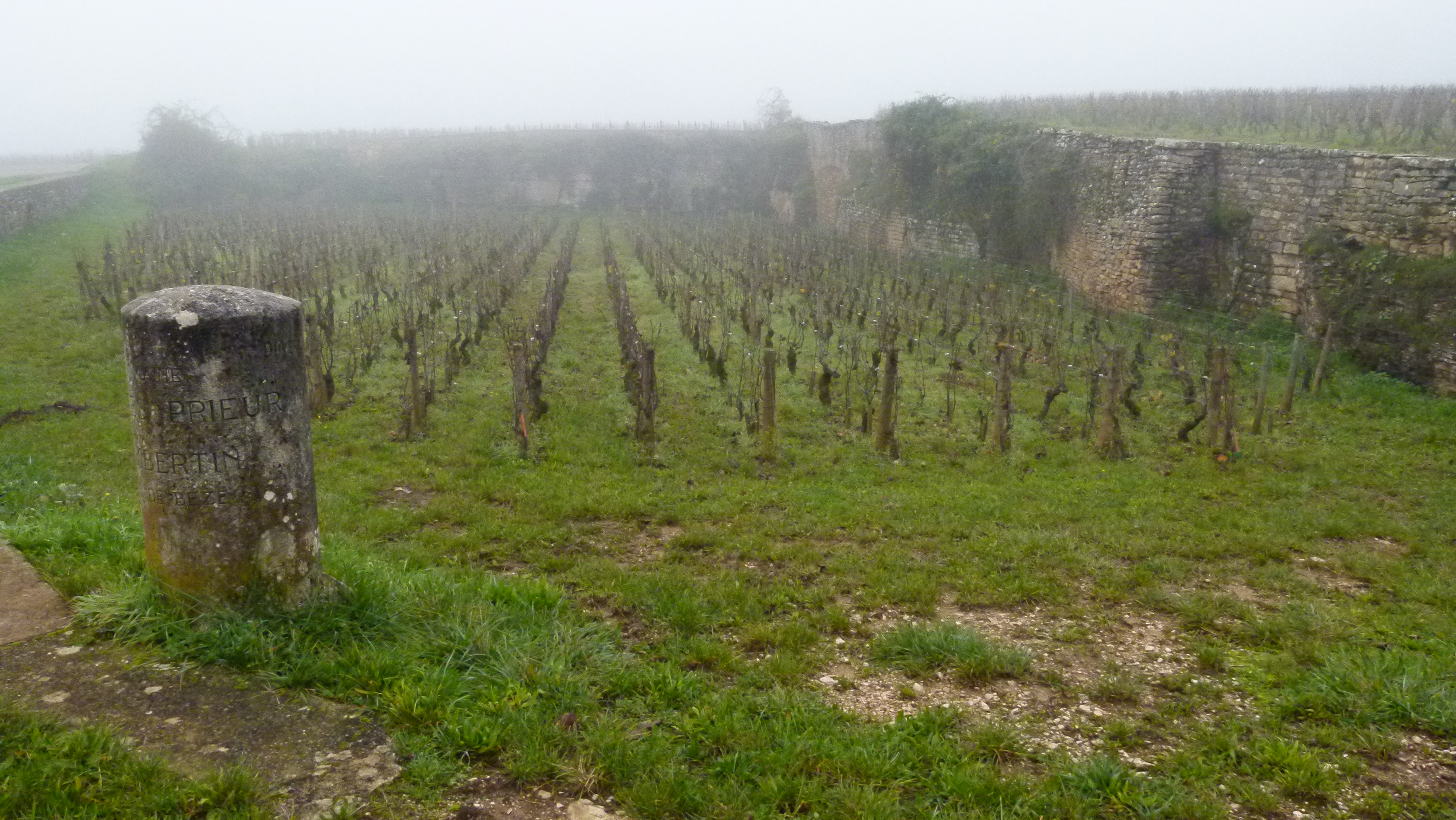
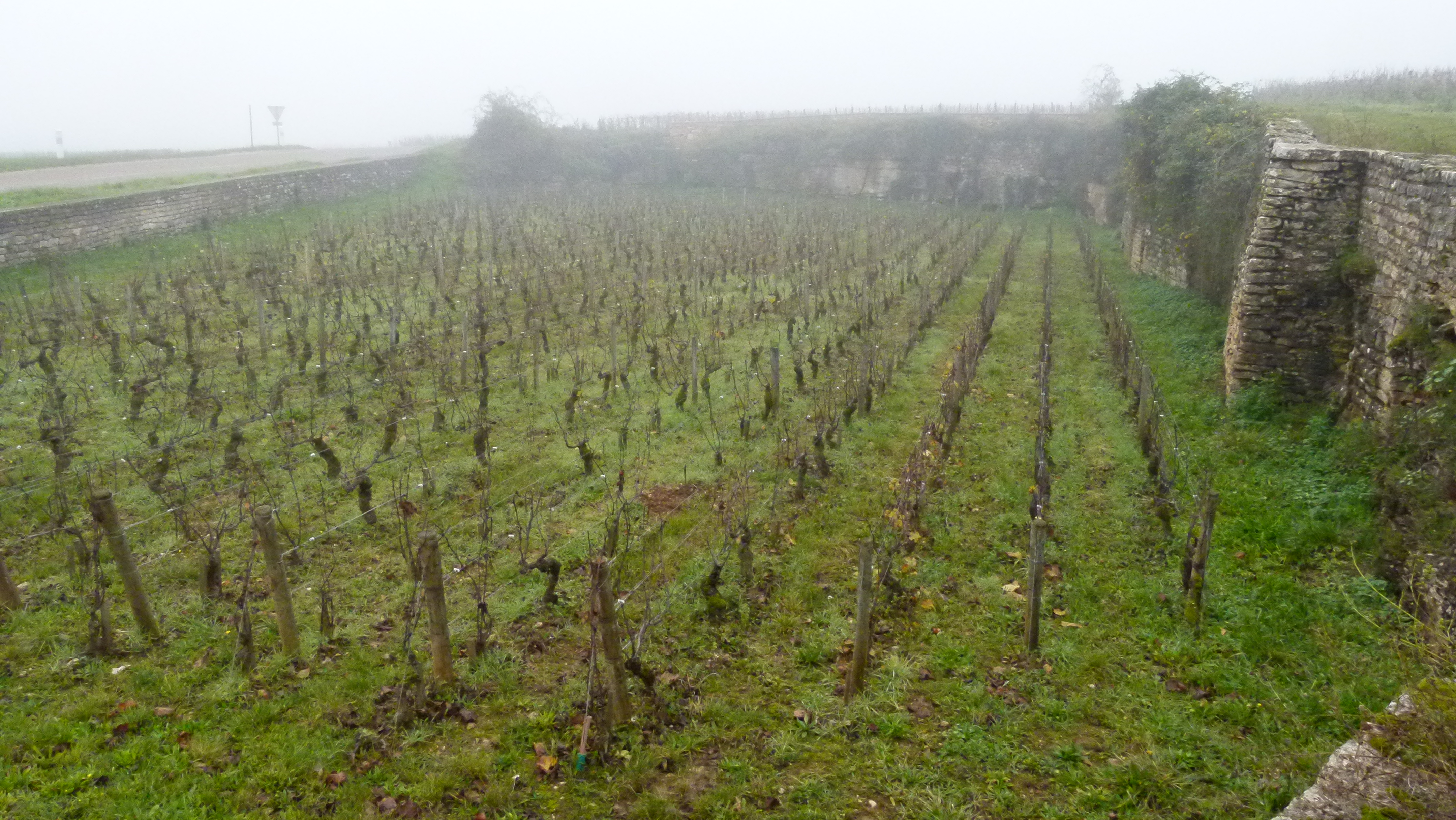
Fortunately, there is another attraction that has not been removed: The smallest vineyard Larissa has ever come across

We stop at the smallest vineyard, Domaine de Jaques Prieur, just next to Chambertin Clos de Bèze. Larissa always comes back to this tiny vineyard, when she visits Burgundy.


P1060953

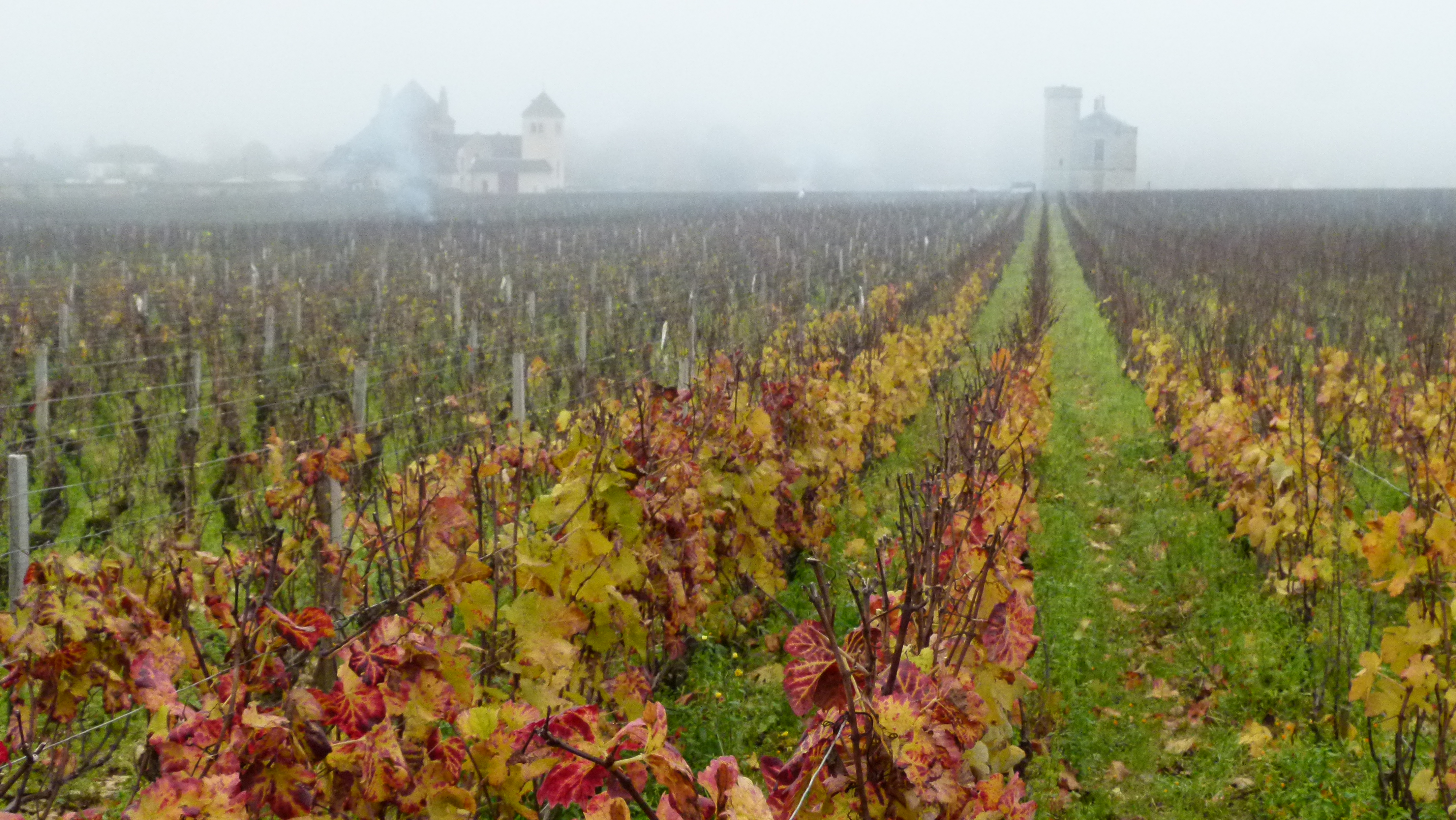
It is now hiding in the November fog.

P1060954P1060967

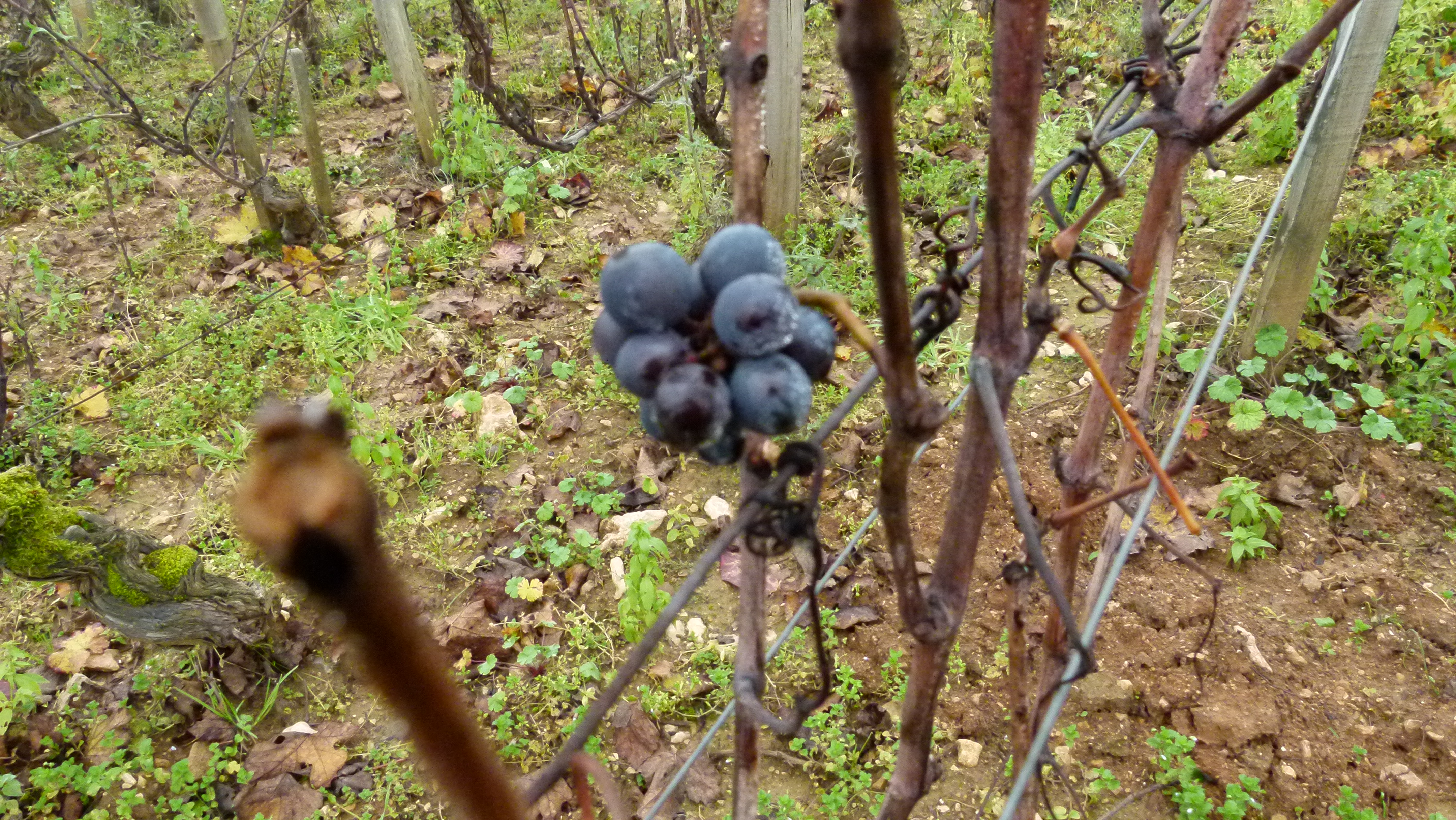
Nearby we try some of the few Pinot Noir grapes that had been left – no one else will pick them, as it is mid November.
P1060959

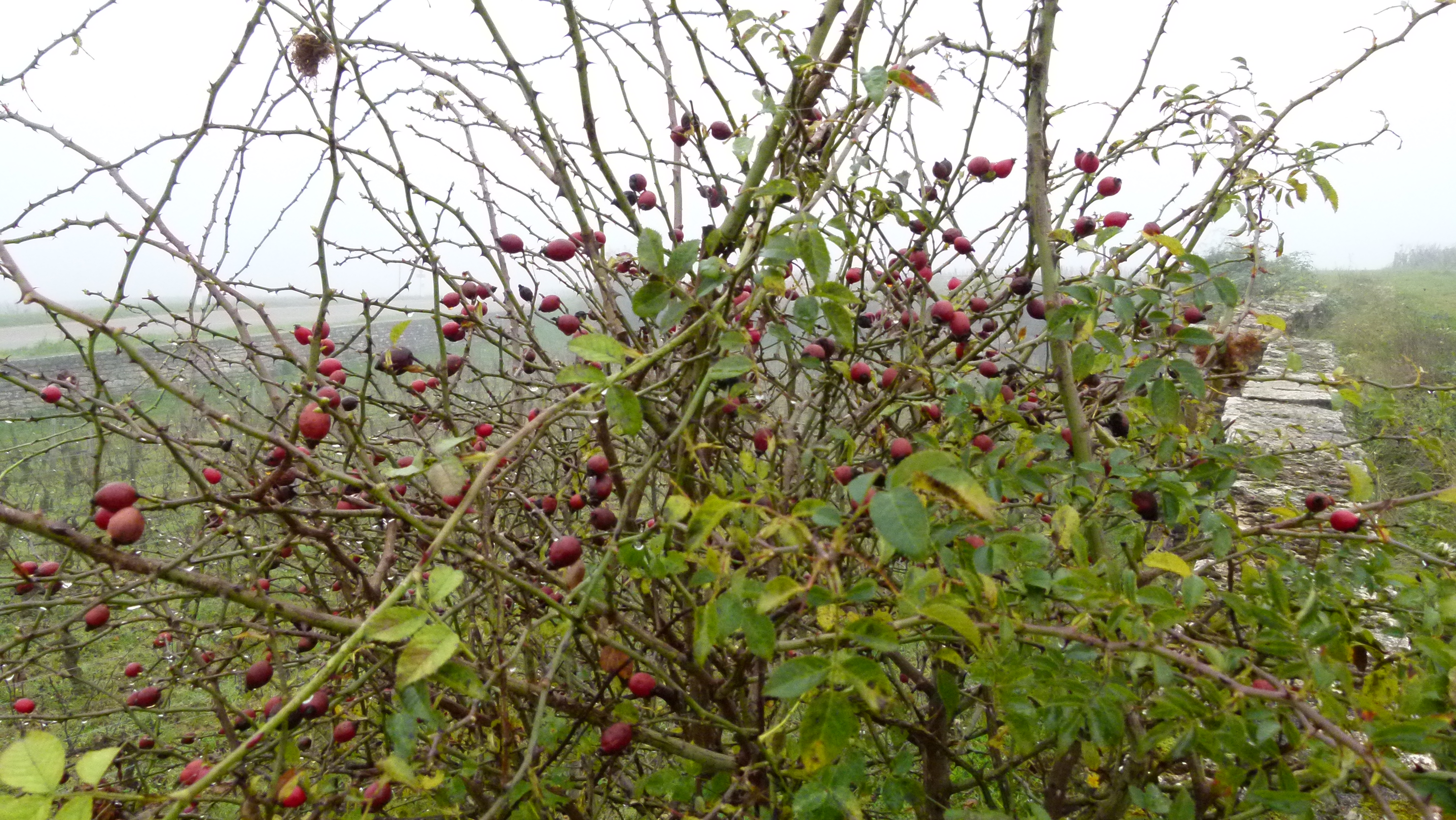
We also enjoy seeing the rose bushes carry rose hips. Roses are often planted along the vineyards as an early indicator for diseases.

P1060958

Yes, it is autumn – mid November. We soak in the famous names such as Château de Chambertin.

P1060950

We study the old wine making equipment in Château Clos Vougeot…

P1060969

… with an old wine press and an old fountain…

P1060962

… in the November fog.


It is great to be here with Russian friends and exchange about our wine terminology. For instance how to put the sense of “tannin” into an image. I compare tannin to “fur” tickling and biting my palate (I call this a  “Pelzli” in Swiss German – it is not an official term). My  Russian friends also feel that tickling in their palate and describe it as a knitting woman (“вяжущая женшина”). Yes, the full bodied and sometimes tannic wines – let us look at some of the factors that have shaped Burgundy.

.

Сentral Burgundy has a long history in a varied terrain following a fault line and the vineyards are split between many, many owners

The wines of Burgundy mostly grow on east and south-east facing slopes of the Saône valley, capturing the sun early in the morning and benefiting from the warm temperature retained during the day. The slopes are shaped by a fault line that brings layers of various maritime epochs to the surface. The resulting structure of the slopes is very varied and has been studied by swarms of geologists – they found calcium from defunct shellfish and a mixture of limestone and marlstone, sometimes iron. Pebbles often retain the heat (the wines are then called “Les Cras”, “Les Caillerrets” or “Les Perrières”). Already in the 12th century, monks eagerly explored the potential of the terrain to find the best places for their vines – and wines. As a matter of fact, wine growing goes back to Roman times (mentioned first around 300) and to the early Burgundy empire (in 630 the duke gave a large domain to the Abbaye de Bèze which continues to live in today’s Clos de Bèze). Around 1400 Philippe the Bold (then duke of Burgundy) ordered the Pinot Noir grape to become the only red grape in central Burgundy. After the French revolution (1790) the ground belonging to the abbeys was sold – and this is why ownership of the vineyards is split today: 4900 domains, 115 trader-wine makers (negociant-éleveur) and 19 cooperations.

The terrain shapes the quality of the wines: East/east-southward facing slopes, altitude (less foggy higher up), ascent (the steeper the better), ground (more limestone than clay, sometimes pebbles) are some of the factors. There are about 2% Grand Crus wines, about 11% 1er Crus, and the rest are either labeled AOC communales or AOC régionales. The main grapes are Pinot Noir for red (thanks to Philippe the Bold) and Chardonnay for white.

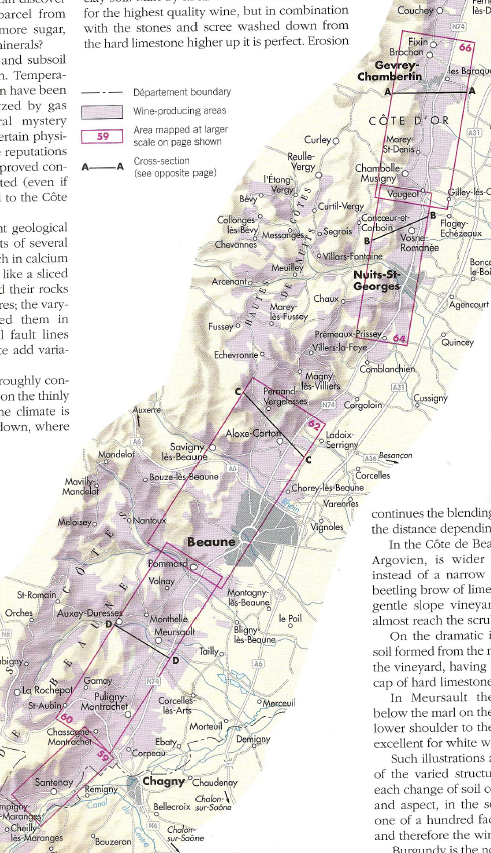
The  Côte d’Or is surrounding Beaune. To the north of Beaune there are Gevrey-Chambertin (AOC wines are all red and there are 9 Grand Crus) and Nuits St. Georges (97% red and 3% white). Then there is the terrain of Beaune (85% red and 15% white). South of Beaune there are Meursault (mostly Chardonnay – white wines with an oak influence resulting in the typical buttery taste), Puligny Montrachet /Chassagne Montrachet (also mostly Chardonnay – white, but also some red from Pinot Noir) and Santenay /Maranges (80 to 90% red and 10 to 20% white). The Meursault/Montrachet Chardonnay wines must have been the model for the oaky/smoky international Chardonnays in the US, Chile or South Africa. The fresh and crispy Chardonnay wines from Chablis were not, what the international world liked – and they made “Chablis” a synomym of “cheap wine”. As Chablis is really my prefered Chardonnay wine, I do not care that the world does not know – let Chablis wines continue to be a well-kept secret…

I also learn that “Passe-Tout-Grain” is a wine blended from Pinot and Gamay (prevailing in Beaujolais)… this is what we call “Dôle” in the Valais (Switzerland).

karte

Source: Hugh Johnson and Jancis Robinson, The World Atlas of Wine, 5th edition, Beazley 2005, p. 55 (also the summary overview has been mostly extracted from Johnson and in addition from “petit guide: Les vins de Bourgogne”, Aedis éditions 03200 Vichy, Florence Kennel et alii).

.

When driving home from Beaune I found out that Burgundy is only a three hours’ drive away from my hometown Basel. Well, in early medieval times Basel was even part of Burgundy*. I decide that I will not wait another thirty years to go back to Burgundy. And maybe then – they will have reinstalled the charming Chambertin panels?

* around 1000 AD, Basel was part of the kingdom of Burgundy, see “historischer Atlas der Region Basel”, Merian Verlag 2010.


On the road – visiting wine growers around Beaune

In November 2014 I was in Beaune to participate in the Beaune wine festivals. I was with friends from Russia. Besides the events in Beaune, we visited wine growers around Beaune – to the north and to the south. My personal highlights around Beaune were the Château Pommard (great wines and welcoming staff) and René Lamy (very welcoming atmosphere). I also liked Henri de Villamont in Savigny (under Swiss management – great cellar tour) and La Veuve Henri Moroni in Puligny-Montrachet (charming, though I prefer her red wines). I felt a little less comfortable at Château Meursault (beautiful cellar, but snobbish staff), Leclerc in Gevrey-Chambertin (a kitchy restaurant, wines okay) and Domaine Bertagna next to Clos Vougeot (wines okay, atmosphere was a little cool).

.

Château Pommard

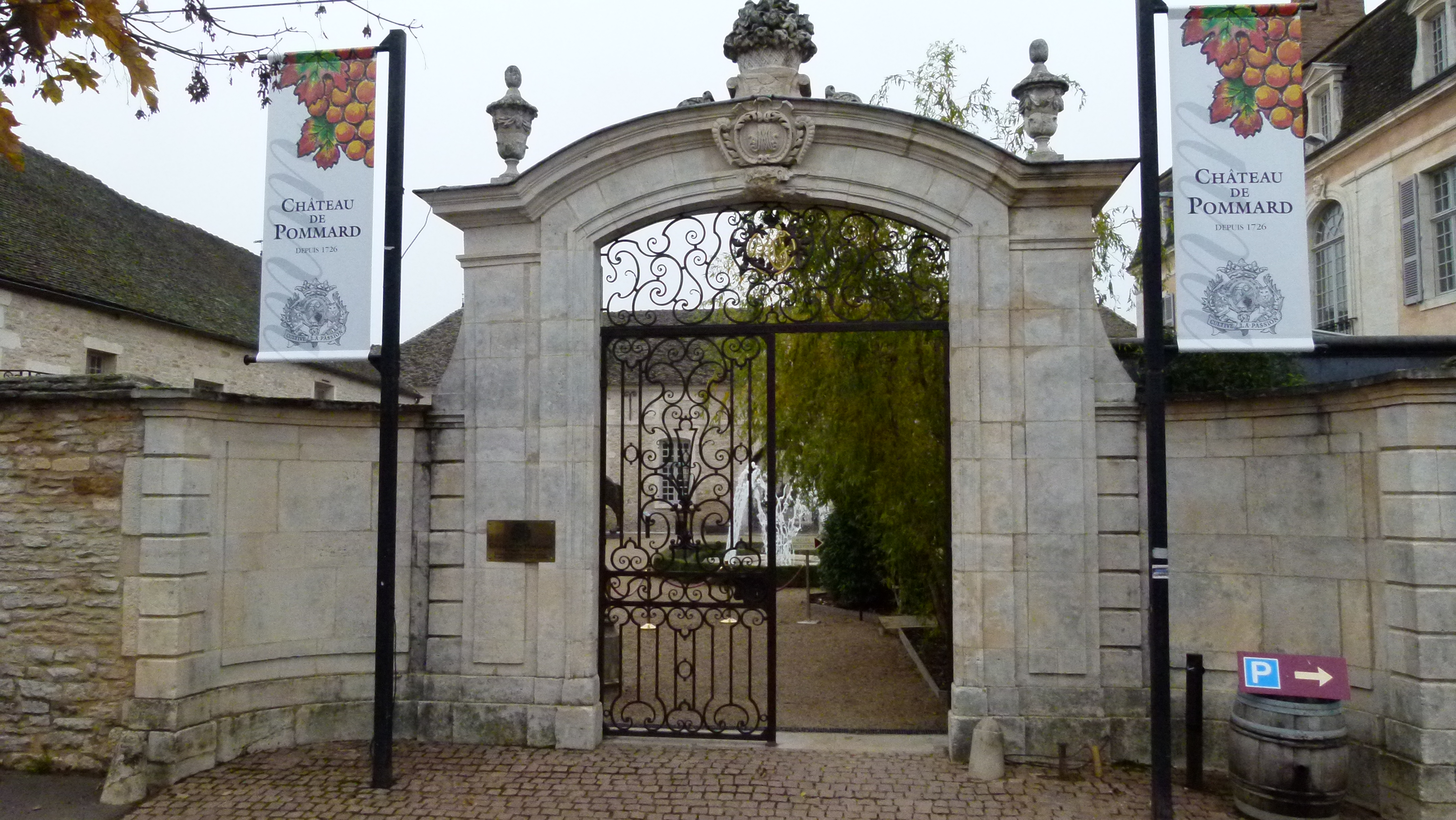
Château Pommard is a beautiful estate south of Beaune. The gate invites visitors to enter.
P1060976

The garden is well cultivated with carefully trimmed bushes.

P1060975

According to the rules of the château, the ticket for a tasting plus the Pomm’Art Gallery costs 20 Euro per person. We frown – we are not really interested in the gallery right now. The staff is very friendly and lets us in to just have the tasting. The assistant guiding us through the wines is full of enthusiasm. Pommard is the largest private monopole of Burgundy. His enthusiasm is contagious, and we buy some wines. Result: Now the tasting is free, and in addition we can visit the Pomm’Art Gallery for free.

  • Auxey-Duresses 2010: Good, nutty nose, some taste of lemon
  • Pommard 2010: Flowery (geranium), tannin well integrated
  • Pommard 2008: Smoky, spicy, tannin well integrated
  • Pommard 2007: well balanced
  • Monthélie 1er cru les Riottes,  2011: Cherry, little tannin. We buy a bottle for our dinner.
.
René Lamy-Pillot

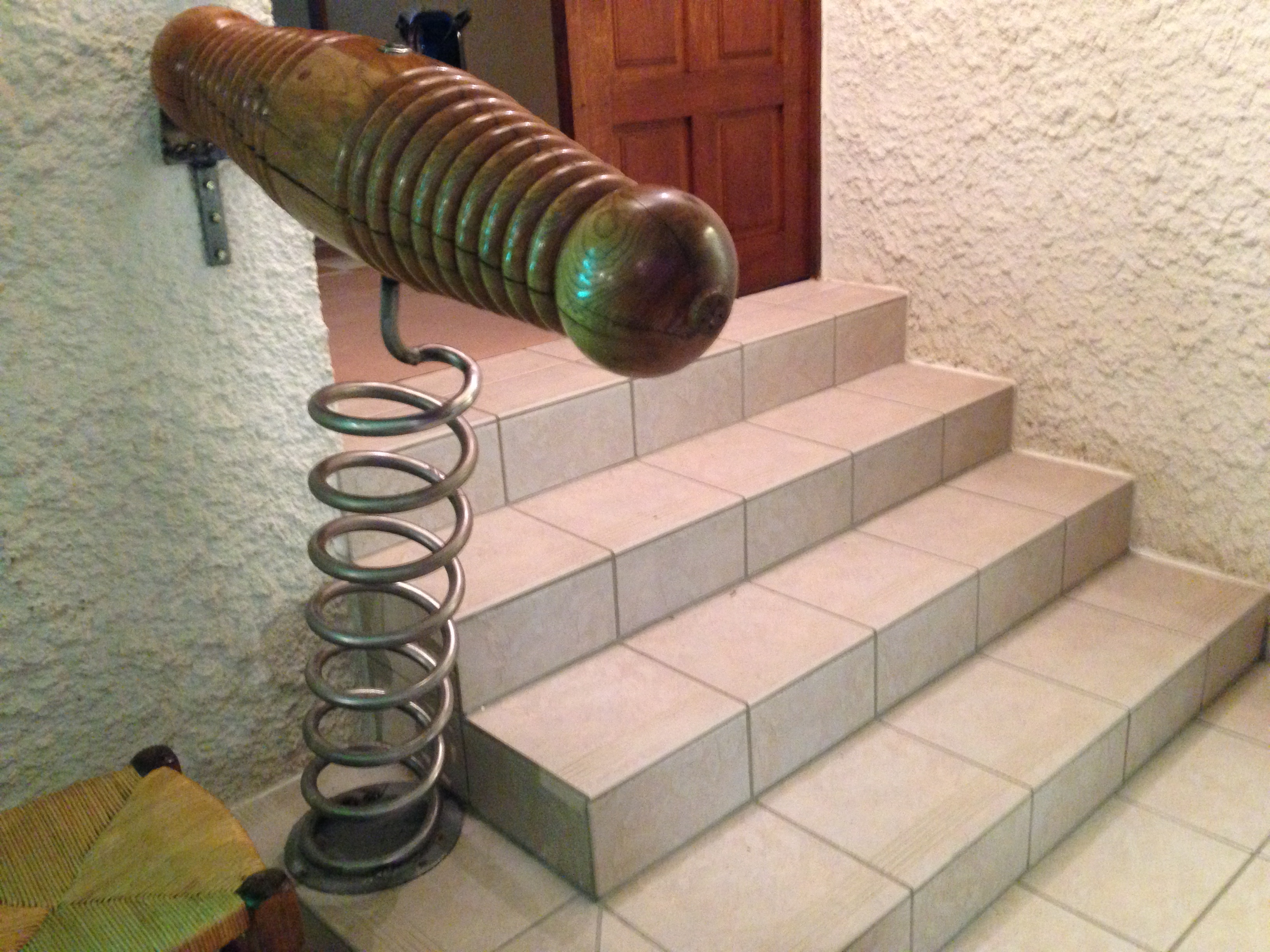
When traveling to Chassagne-Montrachet, we find the winegrower René Lamy-Pillot. A sign indicates “open”. We are kindly welcomed by Florence, the daughter of the house. The cellar is very clean and full of eye twinklings like this stair rail – a perfect match for this wine cellar. Their Website is charming.

IMG_1014

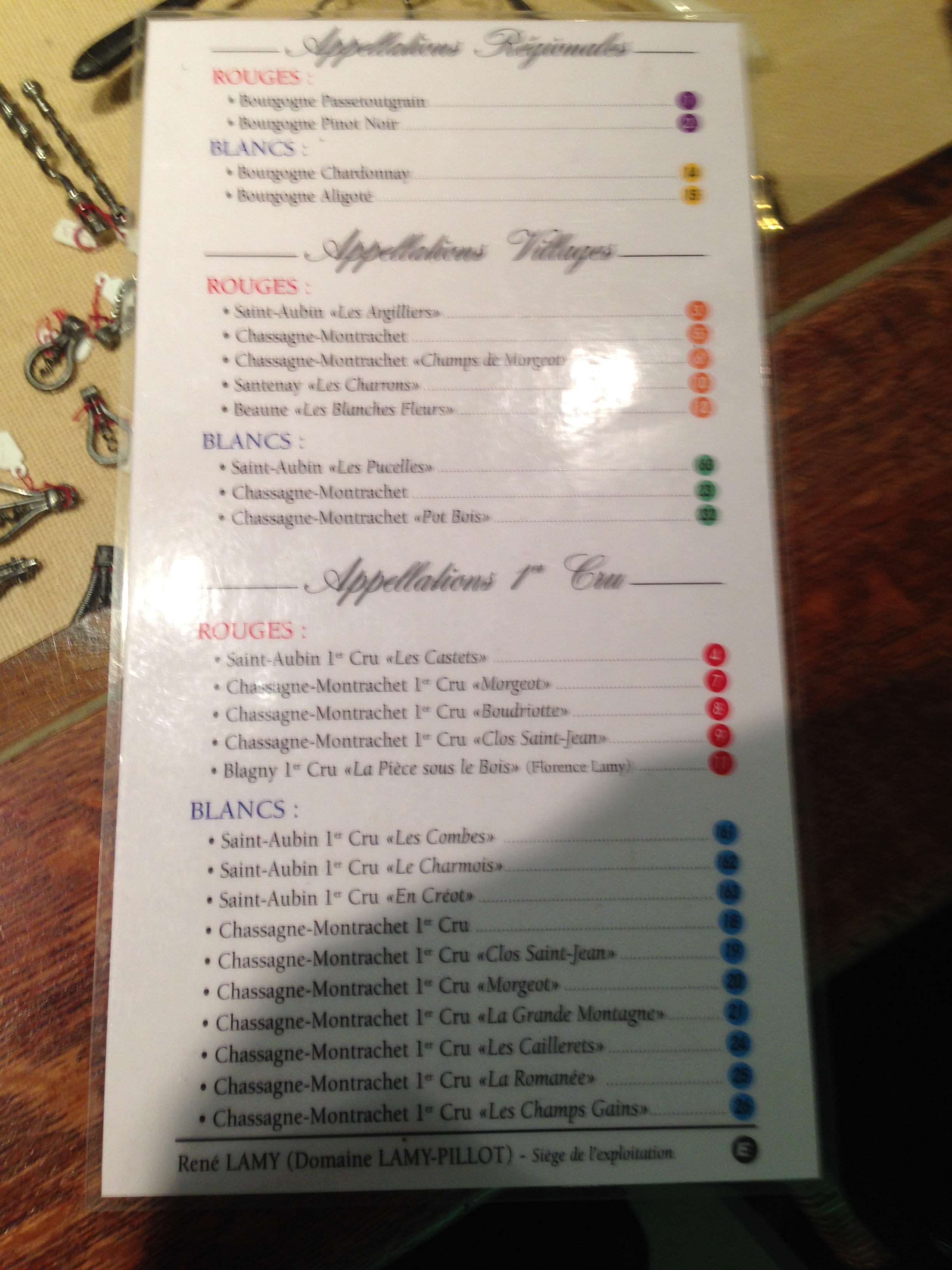
Florence works with her parents, while her husband, Sebastian, buys grapes from various winegrowers and runs his own innovative business under the name “Lamy&Caillat”. Florence’s father, René Lamy, has some 1er Crus, but he also has some vineyards that are a little off the main climats – St. Aubin and Appelations Villages / Régionales – and some are a good value for money!

While we have delved into our tastings, the door opens. Three guys enter in a rush, an Englishman, a Dutchman and a man whose English and French accent identify him clearly as being from Zurich (they just cannot hide their accent). Of course, he immediately notices that I am from Basel (I cannot hide my accent either) and we exchange our impressions. They regularly buy wines in Burgundy and come to see René Lamy every year. He has prepared boxes ordered by them, and they just stay for a short moment to have a glass of wine and say hello.

IMG_1006

IMG_1011

These were some of the wines we tasted:

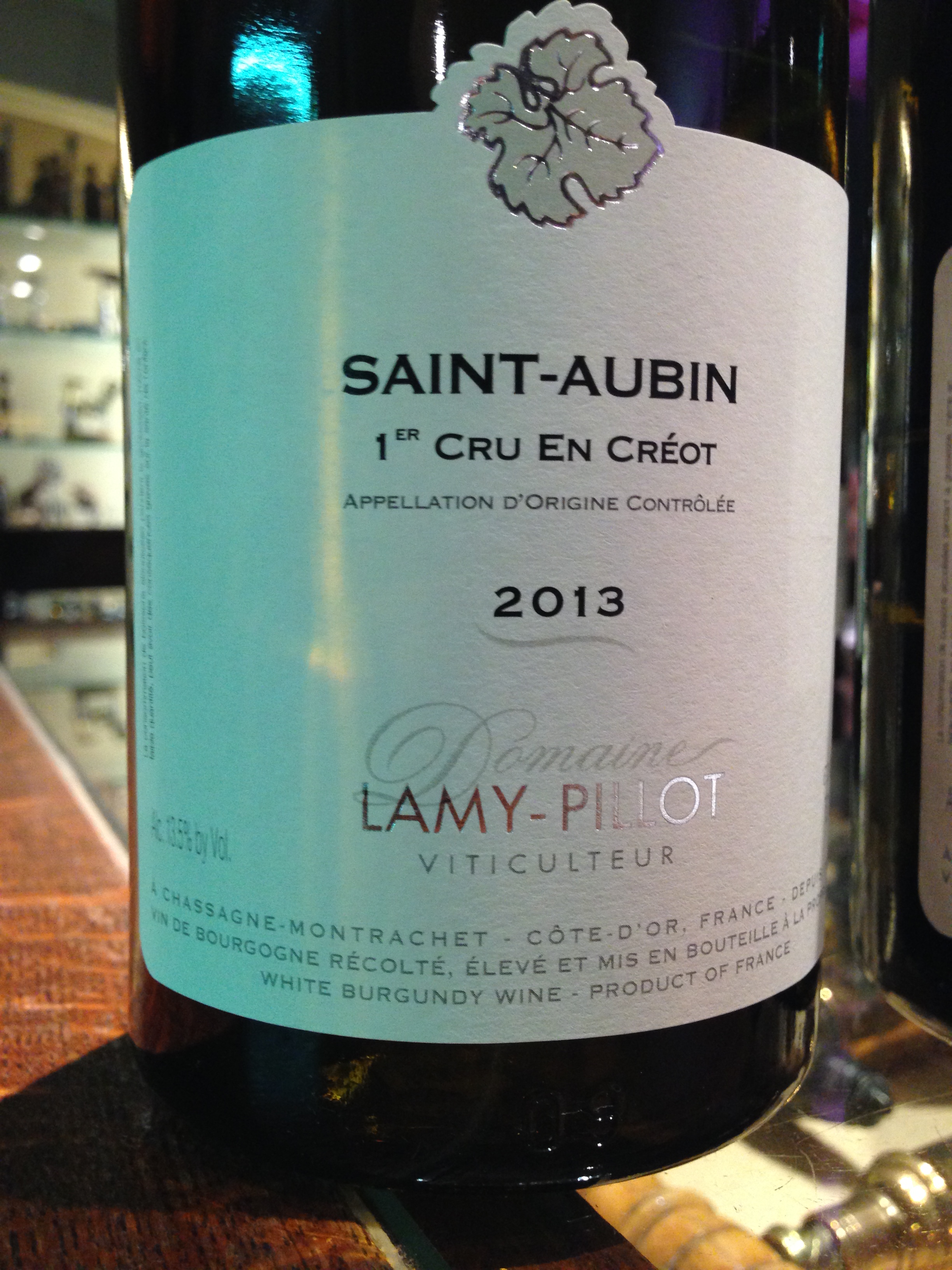
  • Saint-Aubin Les Pucelles 2013: Lemon, well balanced
  • Chassagne-Montrachet Pot Bois 2009: Well balanced, some oak, flowery
  • Chassagne-Montrachet Morgeot 1er Cru 2011: Toasted bread, nutty, harmonious taste
  • Chassagne-Montrachet La Boudriotte 1er Cru 2012: Almost sweet with cherry taste. Aljoscha feels the leather boots of his father.
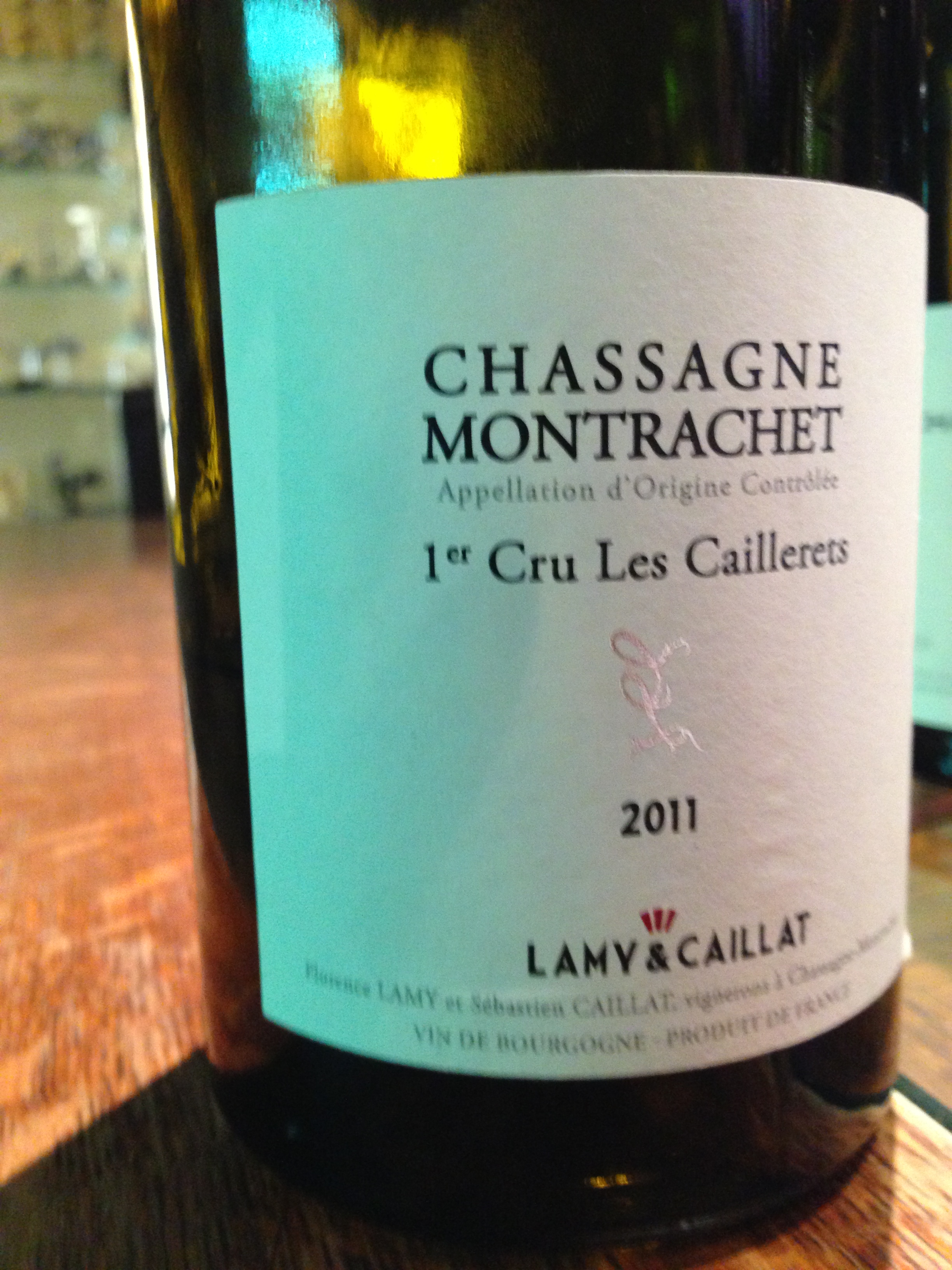
  • Chassagne-Montrachet Les Caillerets 1er Cru (Lamy&Caillat , produced by Sebastian): Nose of peach, nutty

IMG_1012

I will surely also come back to this friendly house!

.

Leclerc in Gevrey-Chambertin, Rue des Halles 15

Coming from Chablis we enter the Côte de Nuits via road D31 crossing a romantic canyon. Our first village is Gevrey-Chambertin. This charming pig welcomes us.

IMG_0952

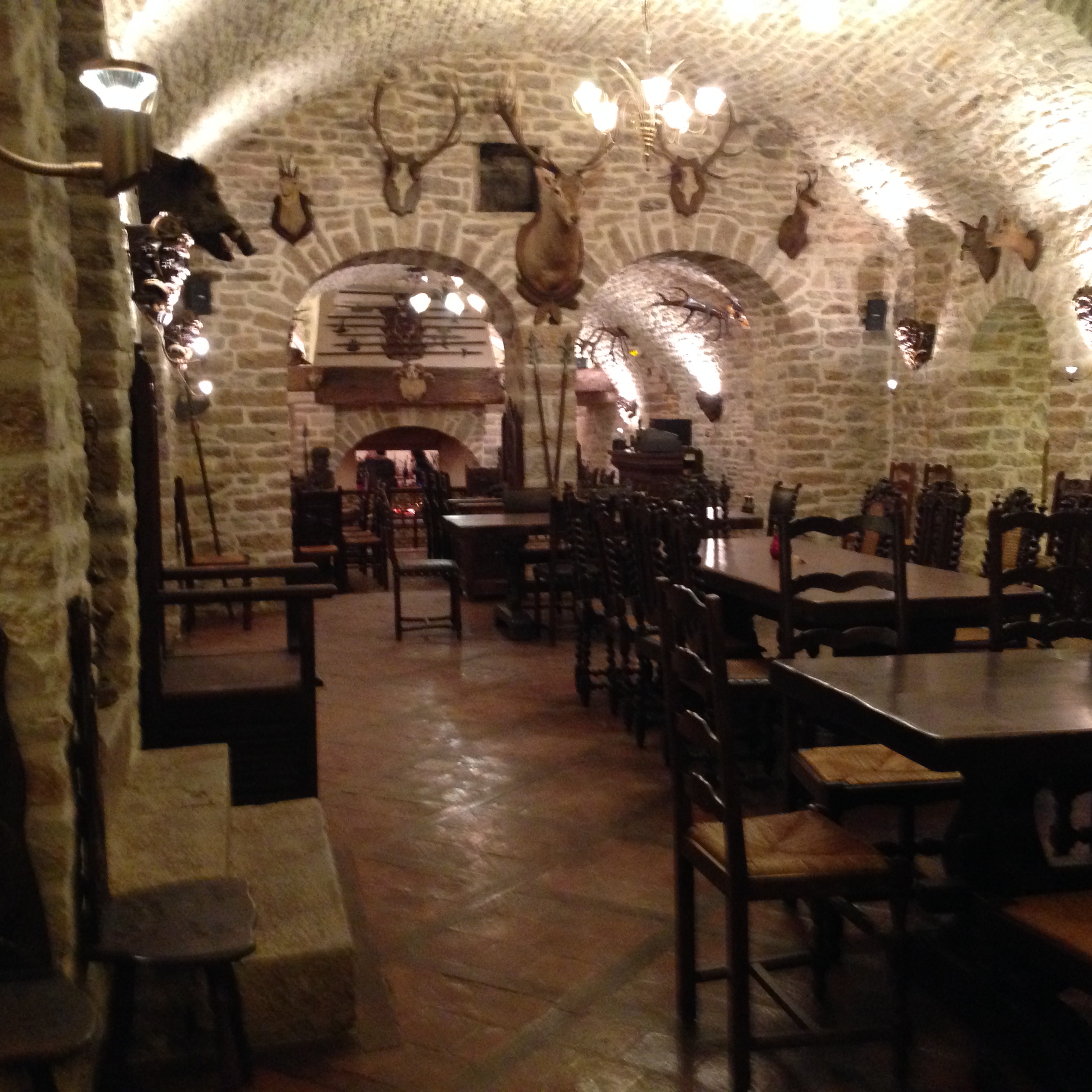
In La Rue des Halles we visit Leclerc, a winegrower that also owns a restaurant. In my opinion, the vaults are a somewhat kitschy with the stuffed animals and horns hanging on the walls.

IMG_0954

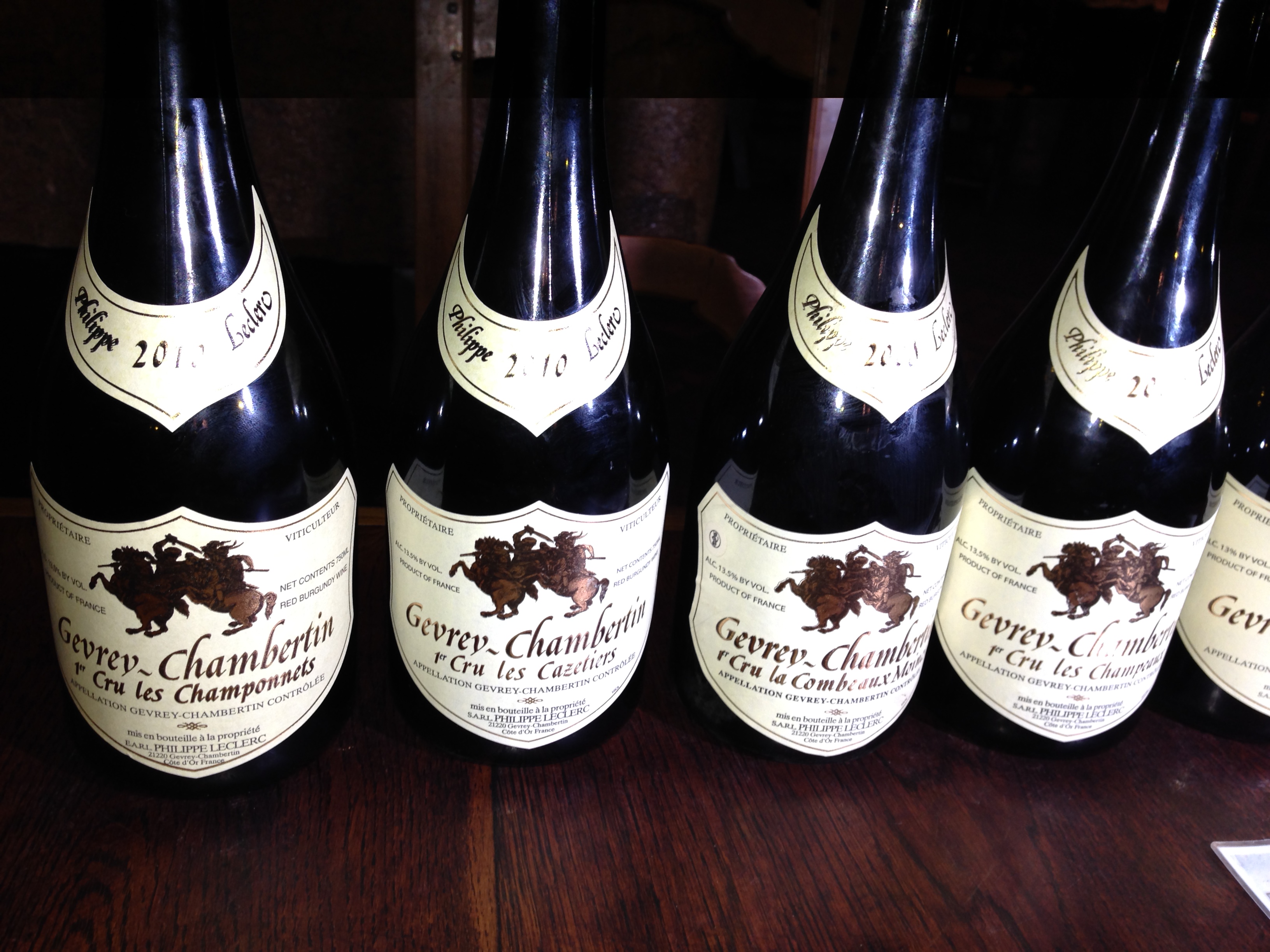
We are offered the following wines for tasting – I can see my Russian friends frown from time to time.

  • Bourgogne 2007: Starter wine “for every day”, a little thin
  • Chambolle-Musigny 2008: Dried prunes, mushrooms
  • Gevrey-Chambertin Appelation Village 2010: Griottes with a toffee twist, somewhat thin
  • Gevrey-Chambertin 1er Cru Les Champeaux 2007: Prune, well integrated tannin
  • Gevrey-Chambertin 1er Cru La Combe aux Moines 2008: Denser, griotte, after taste short
  • Gevrey-Chambertin 1er Cru Les Cazetiers 2010: Dense, fruity (griotte), tannin (he says that the ground is tough and the roots dig 6m down)
  • Gevrey-Chambertin 1er Cru Champonnet 2010: I do not like the nose, but the taste is dense.

IMG_0955


Domaine Bertagna

The Domaine Bertagna is a neighbor of Clos Vougeot. We visit them spontanteously. We are welcomed, though a little bit cool. We taste the following wines:

  • Chambolle -Musigny Les Plantes 1er Cru 2012: Too much biting tannin for me, but it may mature
  • Vougeot Clos de la Perrière 2012: Raspberry, well-integrated tannin – I bought half a bottle
  • Vosne Romanée les Beaux Monts 2012: Licorice, toffee, well integrated tannin
  • Nuits St Georges Aux Murgers 2008: Fruity (dried prunes), after taste a little bitter

.

Château de Meursault

At Château de Meursault we do not feel very welcome. They have their fixed procedures and stick to them. We have to walk through the never ending cellar vaults all alone to find the tasting room. We have to taste red before white. From the red wines, we had two 1er Crus, Beaune Grèves (mushroom, cassis) and Volnay Clos de Chênes (fruity, leather note and spicy, very balanced).  The white wines were Clos de Château Meursault 2011 (nutty, little after taste), Meursault Villages (nutty, toasted bred, mushrooms – chanterelles, little after taste) and Château de Meursault Les Perrières 1er Cru (dry, sweet nose, perhaps butter or honey melon). I will not return to Château Meursault.

.

Veuve Henri Moroni, Puligny-Montrachet

Larissa had recommended La Veuve Moroni. We find her in Puligny-Montrachet. She welcomes us in her plain tasting room and tells us that she has hosted a tasting of her wines with Coquilles Saint Jacques yesterday. She is a dynamic person full of entuhsiasm – her husband has died 30 years ago and she has continued the winegrowing business on her own. When I drink her wines at home, I prefer the red to the white.

  • Meursault les Tillets 2008 : Peach – bought a bottle
  • Puligny –Montrachet la Perrière 1er Cru 2007: Mushrooms, citrus fruit, clean- bought a bottle
  • Auxey-Duresses 2010: Very young and tannin not yet integrated, has potential.
  • Pommard les Noizons 2008: Taste of blackberry, tannin, my friends frown at this wine
  • Beaune les Vignes Franches 1er Cru 2006 / 2007: Soft and spicy
  • Without having tasted it, I bought a Crèmant de Bourgogne brut and a bottle of Clos Saint Denis Grand Cru 2001. The Clos St. Denis was a wonderful match with my beef meat pie Provence style.

IMG_1004

.

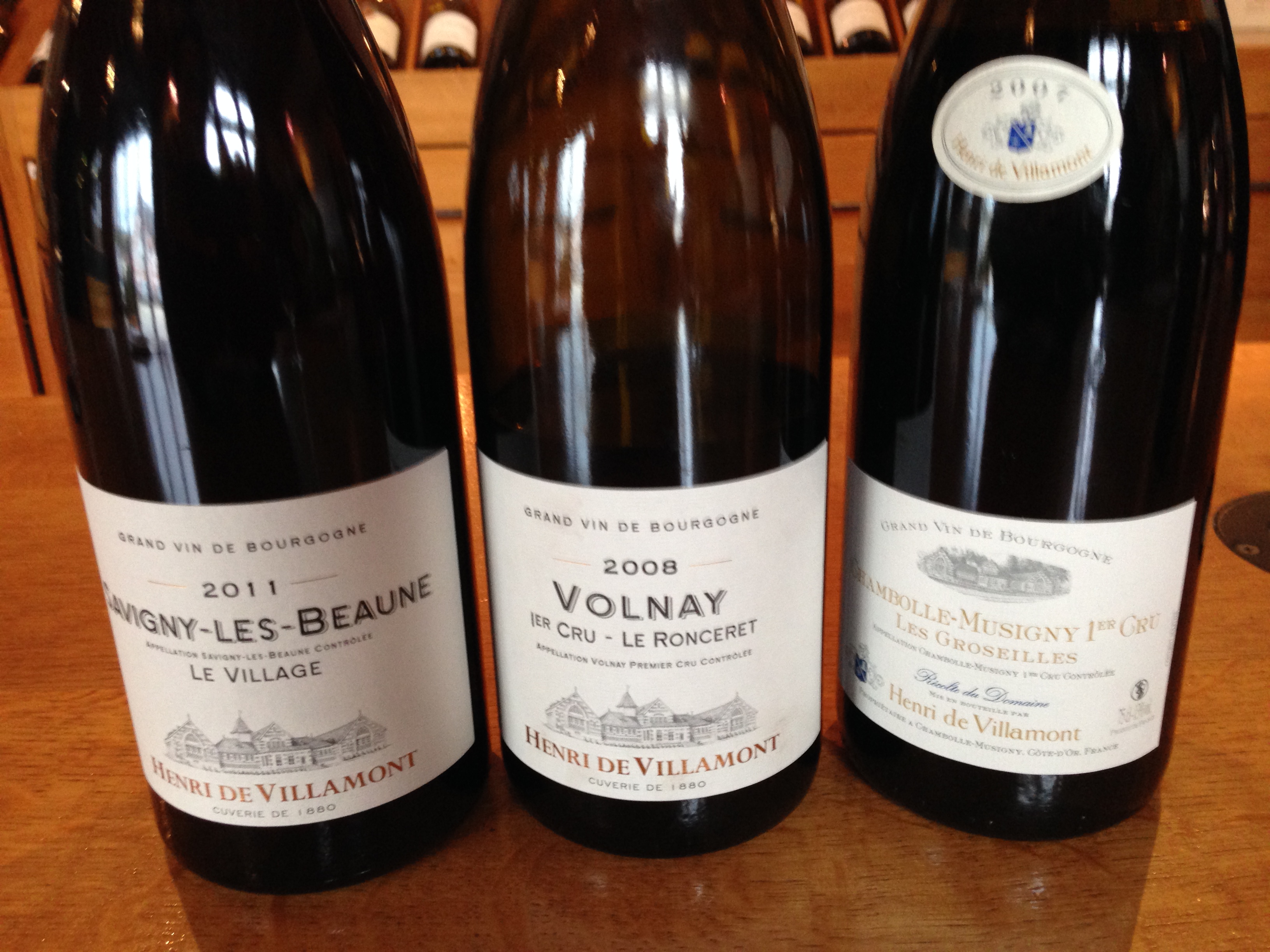
Henri de Villamont at Savigny (Rue du Docteur Guyot)

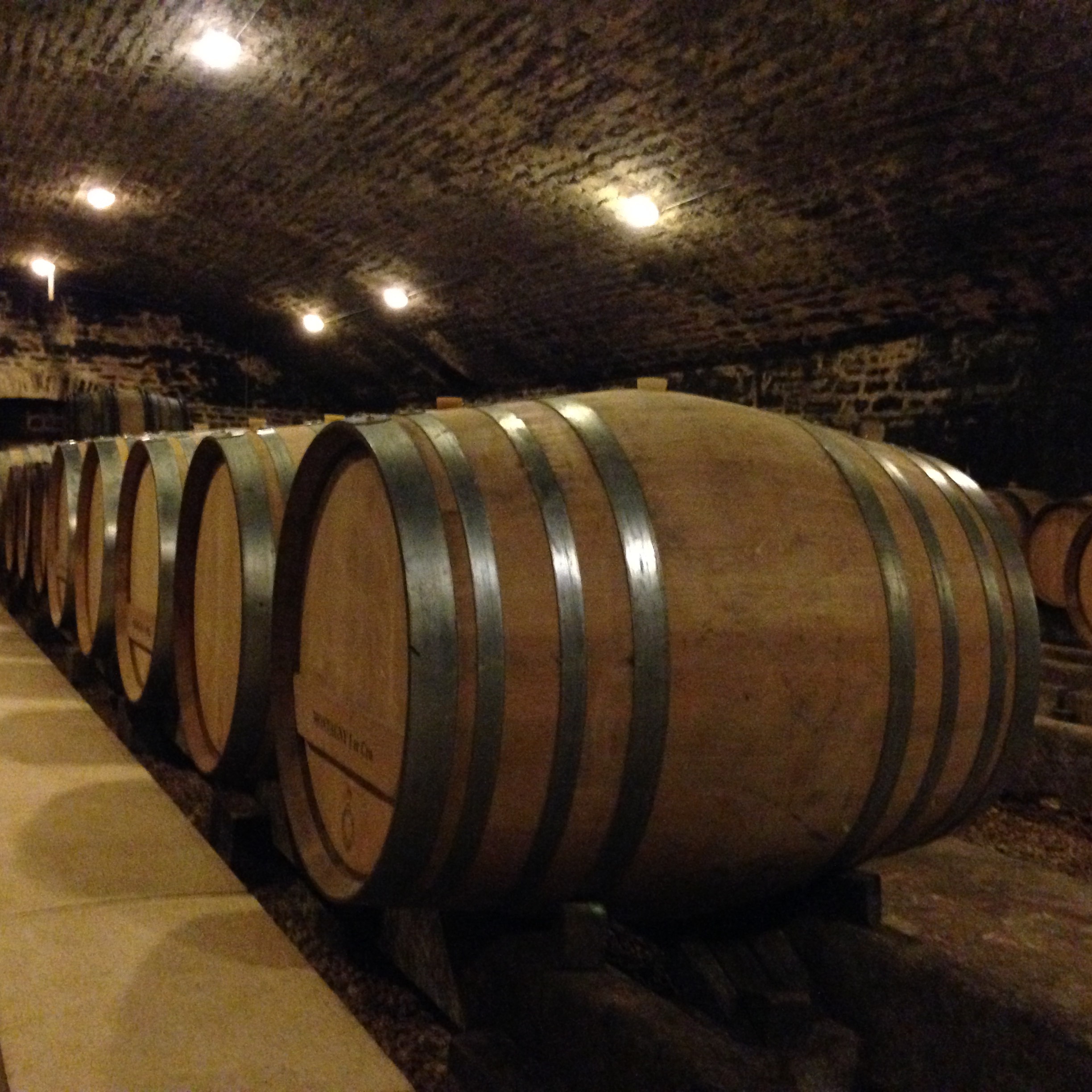
Henry de Villamont’s highlight is the tour through the cellar. Villamont is under Swiss management. They have renovated the estate. The cellar is spotlessly clean. Our guide is very proud of his estate. He takes us first into the cellar for white wines: 4000 barrels of French oak à 228l mature at a temperature of 14-15 degrees. The cellar for red wine is cooler. We are 12m under the earth. Behind a locked gate they keep old treasures… the oldest wine is from 1911.
IMG_1131

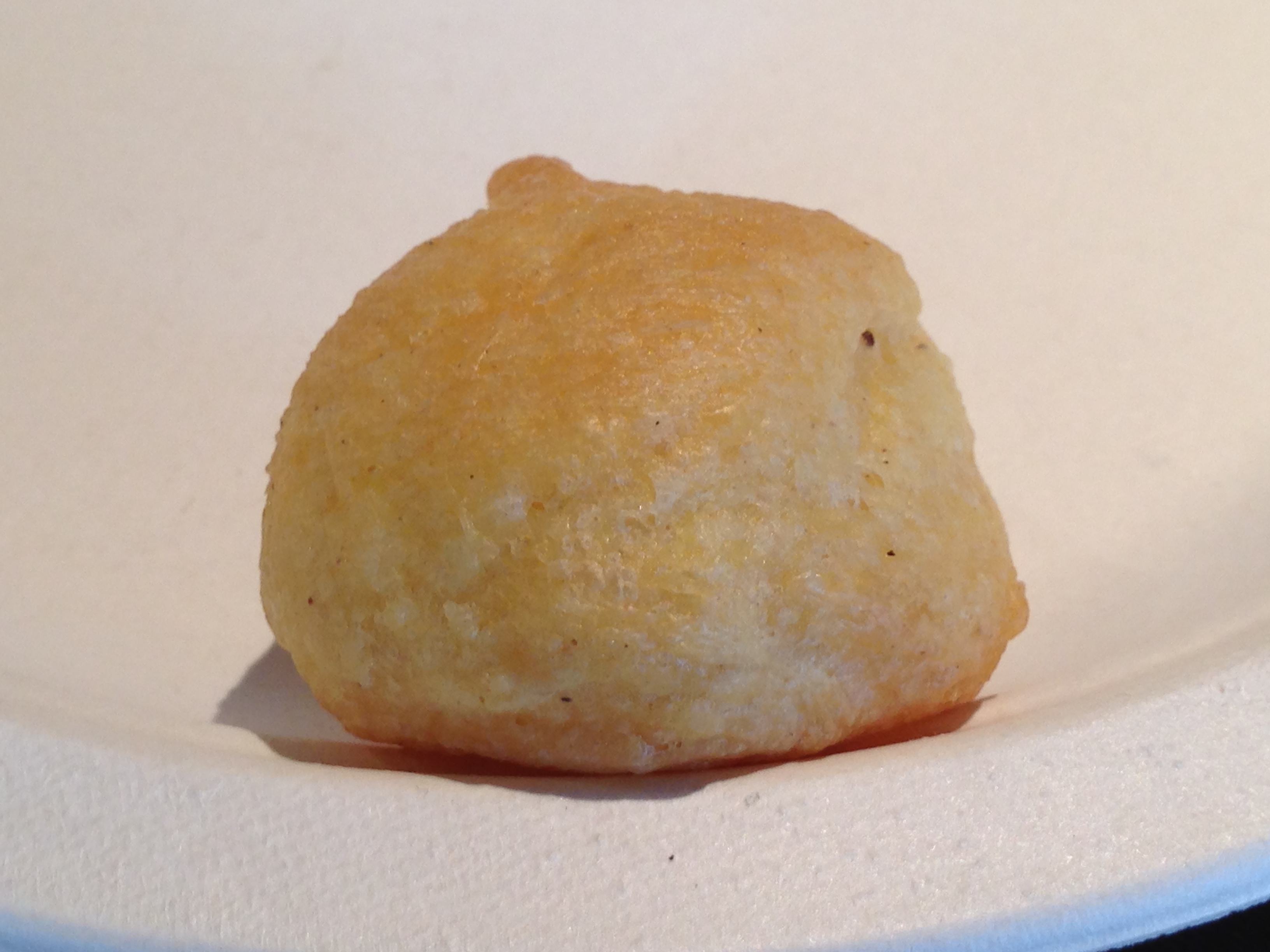
To accompany the wine tasting, we are offered gougères – like in other places. I will have to look for the recipe – they go so well with the wines.

IMG_1133

White wines

  • Savigny-les-Beaunes 2012: Plain, smoky Chardonnay.
  • Chassagne-Montrachet 2010: Nutty (Pistache ), dry-sour, almost too sour.
  • Meursault les Caillerets 2008: Quince, smoky.

Red wines

  • Savigny-les Beaunes-Le Village  2011: Cherry, tannin not yet integrated
  • Volnay le Ronceret 1er Cru 2008: Less nose than Villages, tastes flowery and has “furry” tannin
  • Chambolle-Musigny les Groseilles 1er Cru  2007: Pronounced flowery nose, roses, cherry, tannin – very harmonic
  • Pommard les Epenots 1 er Cru 1990: Light mold in the nose, something is wrong in  the palate – bitter and rotten prune. Obviously too old.
  • Nuits-Saint-Georges 1982: Leather, damp rose, caramel, dried prunes and mushrooms.

IMG_1135

Visiting Burgundy with my friends from Russia was a great experience.We visited so many wine growers in Chablis and around Beaune. We shared so many tastings and exchanged our feelings. I was impressed, how careful my friends tasted the wines. I would love to go back to Burgundy to share more tastings – and also culture – with friends… now that I know that Beaune is only three hours’ car drive away from Basel and Chablis is not far from Beaune…

On the road – my highlights from the Beaune wine events

In November 2014 I was in Burgundy with friends from Russia. We tasted wines and I also bought some bottles. Back home I started to share my “treasures” with friends. Recently it was a “St. Denis Premier Cru 2001” (Veuve Moroni) – a perfect match to my beef meat pie Provence style. In the nose I found some fruit and a roasted note, in the palate the wine was spicy and fruity reminding me of dried prunes. This experience motivated me to go back to my notes about Beaune, where we stayed in a wonderful apartment  and enjoyed the wine events.

My personal highlights from the November Beaune wine events were Bouchard Aînée et Fils, Patriarche and the Marché au vin (Hospices de Beaune). I did not enjoy Besancenot very much, but I loved the medieval cellar of Bouchard Frère et Fils, and also the truffle-wine tasting of Vin des Tonneliers was a good experience.

.

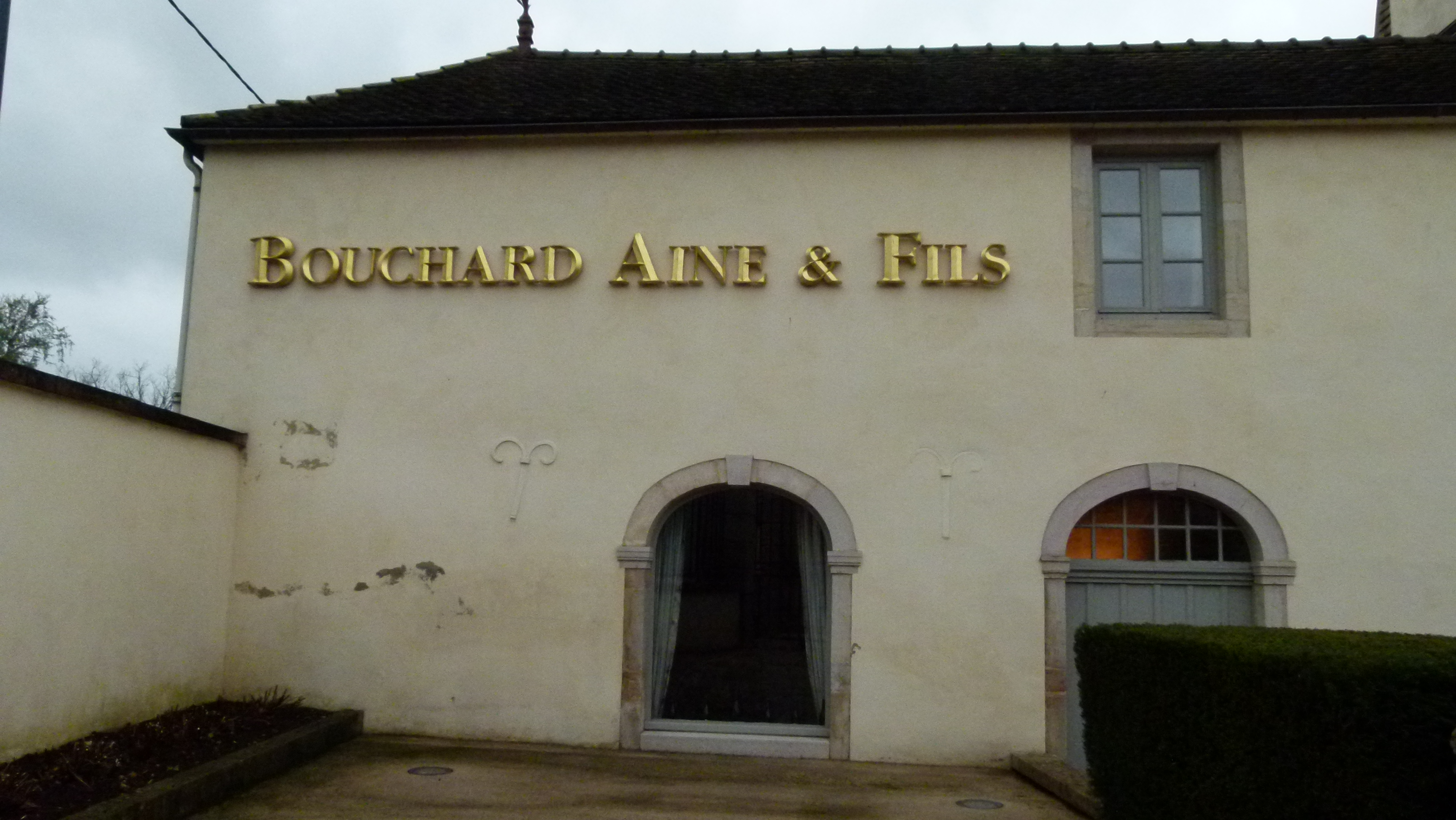
Bouchard Aîné et Fils

P1070003

Within the Beaune wine events, Bouchard Aîné et Fils invited for a tour in their cellar. We found a careful selection of wines and each wine was perfectly matched with a delicious bite (the bites had wonderful French names – as they are only possible in French). The selection contained some vintages even going back to 1962.

Students presented the wines along with the bites were full of enthusiasm, plans and optimism.

This was the selection of wines we tasted:

Grands vins blancs de Bourgogne

  • Crémant de Bourgogne en Magnum: Dry.
  • Rully 2007: Balanced taste of lemon. With it we had a millefeuille des pain d’épices à la gelée de pomme et de foie gras.
  • Chassagne-Montrachet 1er Cru Morgeot 2007: Very strong, almost too much for me.
  • Meursault 1er Cru le Porusots, Cuvée Humblot Hospices de Beaune 2008: Fresh apple, acidity. With “coeur de Tsar de Saumon fumée d’Ecosse sur pain Porlane et beurre Bordier aux alges fumées”.

Grands vins rouges de Bourgogne

  • Beaune 1er Cru Clos du Roi 2014: Bitter and full of tannin (not (yet) perfectly integrated)) – we later had a Clos du Roi 1962 which shows, the 2014 has potential to mature.
  • Beaune 1er Cru les Marconnet 2012: Cherry nose and taste, soft tannin, already drinkable.
  • Gevrey-Chambertin 2012: Dried prunes, can feel the tannin. Served with it was a sausage marinated in Marc or in French “habit de Gentleman Farmer: Sabodet lyonnais … cuit dans le marc frais de pinot noir de Bourgogne”.
  • Savigny-Les-Beaunes 1er Cru Les Peuillets 2005: Smoky taste, prune, astringent tannin (I call this “furry”).
  • Corton Grand Cru Cuvée Docteur Peste, Hospices de Beaune 1998: Soft (“velvet paw”) and note of cacao. Served with “brillat Savarin couronné d’une dentelle de truffe de Bourgogne sur pain Poilâne aux raisins de Corinthe”.
  • Beaune 1er Cru Clos du Roi 1962: Color is orange, for 1962 still fresh and flowery (reminding me of roses).

.

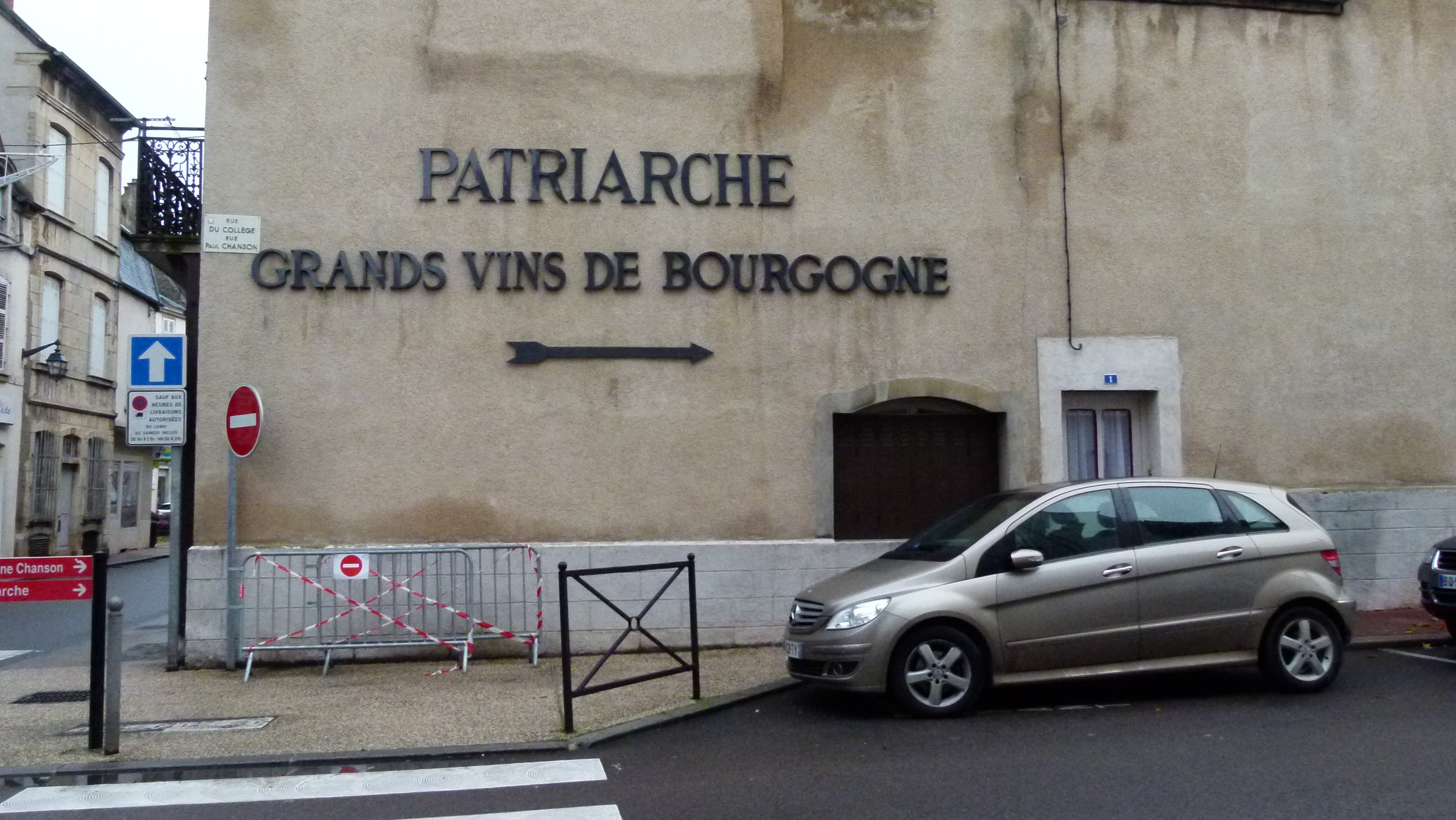
Patriarche

P1070043

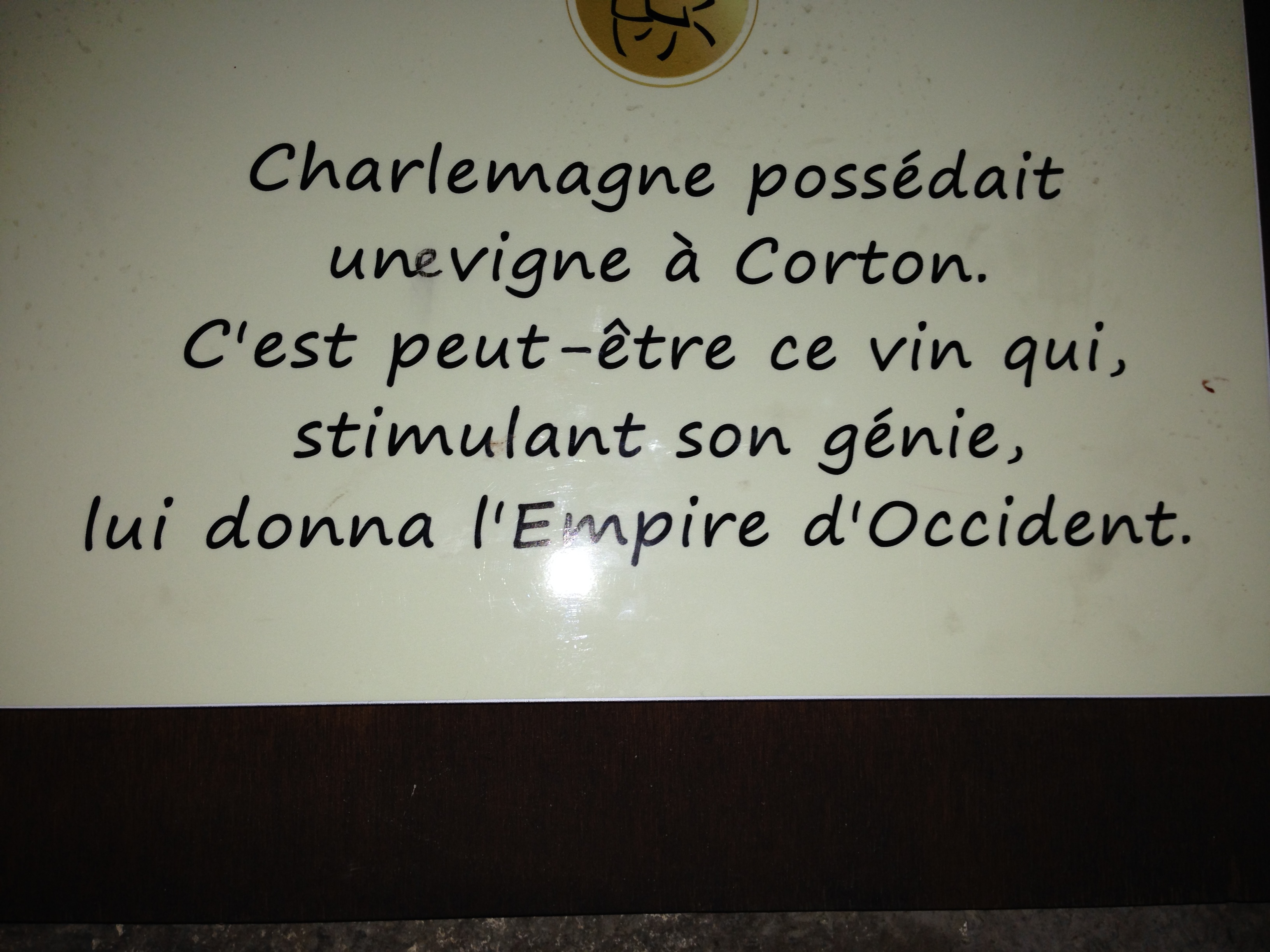
At Patriarche we find this note, that, twinkling with an eye, says “Charlemagne owned a vineyard in Corton. It could well be that this wine stimulated his genius and gave him the empire of the west”. Could well be.

IMG_1114

As in Bouchard Aîné et Fils, students serve the wines and explain to the visitors, what they are tasting.

The student presenting the wine from Pernand-Vergelesses has lived in this village for five years. He loves his village and in particular the old church. The village is located above Aloxe-Corton on 350m, he says. The slopes are exposed to the south, the wines, he continues, show finesse and bitterness. He recommends to drink them with dark chocolate, lamb gigot or Reblochon cheese. The student dreams of runnng a boutique for wine and food, when he has graduated. From his explanations, I learn that a vineyard a little off the grand cru slopes might be a good and affordable option in Burgundy.

The student introducing to the Chambolle-Musigny will take over the winery of his family, Domaine de l’Évêché in Saint Denis De Vaux ( www.domainedeleveche.com). He does not only know his wines, but also his iphone – and he teaches me, how to generate the variations of “e” that are needed for French. Also the student at the stand of Nuits-Saint-Georges 1er Cru Les Cailles proudly tells me that he will take over the winery of his parents. And the young girl that presents the Grands-Echezeaux Grand Cru comes comes from the Côte du Rhone and dreams of emigrating to Australia or South Africa. I enjoy talking to these young people planning their life.

IMG_1106

This is the long list of wines that we could taste.

  • Hospices de Beaune 1er Cru Cuvée Dames Hospitaliéres 2004
  • Aloxe-Corton 2009
  • Pernand-Vergelesses 1er Cru 2012
  • Chassagne-Montrachet 2013: Soft, nutty, buttery; 2010 more open, lemon
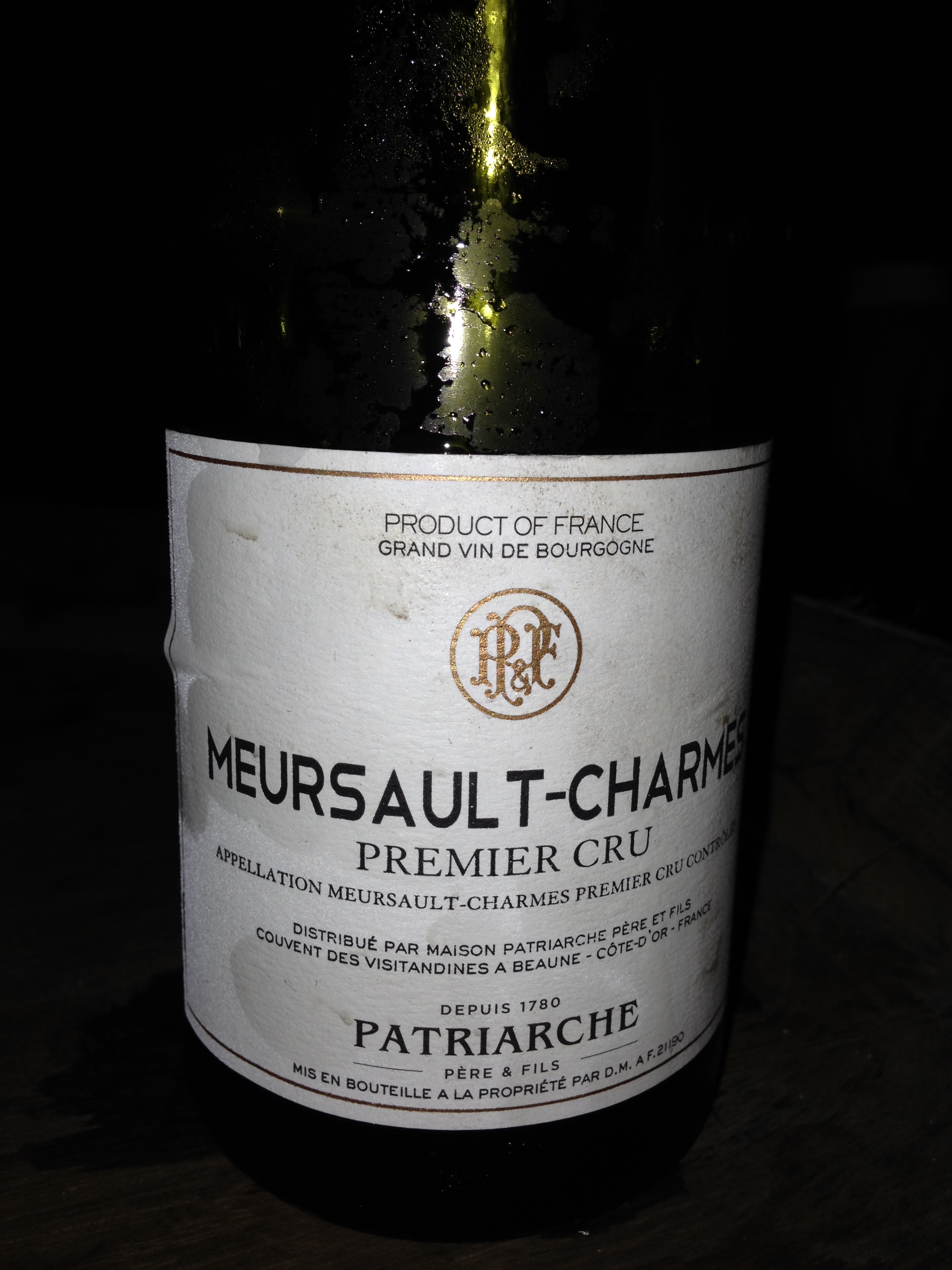
  • Meursault Charmes 1er cru 2008: Reminds me of orange
  • Pernand-Vergelesses 1er Cru 2012: Cherry nose, flowery taste (violet?), tannins well integrated. I bought one bottle
  • Nuits-Saint-Georges 1er Cru Les Cailles 2009: Fruity (prune), good tannin, powdery cacao.
  • Hospices de Beaune 1er Cru Cuvée Dames Hospitaliéres 2004
  • Hospices de Beaune Savigny Les Beaune 1er Cru Cuvée Forneret 2000 (assemblage Vergeresses et Savigny): Soft and outgoing, dried prunes.
  • Chambolle-Musigny 1er cru 1980 (Magnum): soft and dense
  • Grands-Echezeaux Grand Cru 1977 (Magnum): Soft and slight taste of framboise toffees

Larissa has been here before, meets old acquaintances, and they offer an additional tasting just to us:

  • Meursault Charmes 1974: Color copper, taste woody and smoky, some caramel
  • Corton Renardes 2008: It was a lighter year. Cherry taste
  • Aloxe-Corton, 2009: Fresh and biting tannin, dense. I buy a bottle.

.

Marché au vin (Hospices de Beaune)

Alla and I had tickets for the “Marché au vin” belonging to the Hospices de Beaune. Again students presented a wonderful selection of wines, not only from the Hospices, but also from other châteaux/castles. The wines of the Hospices have the addtion “Cuvée…” indicating who donated the vineyard to the Hospices founded in 1443 by Chancellor of Nicolas Rolin of Burgundy as a charity hospital – very modern he was at that time!

The student responsible for the Beaune 1 er Cru Les Cents Vignes has a girl friend that is from Belarus. He can speak some Russian which eases our conversation. The student serving the Marsannay tells me with fervor that he wants to trade with wines.

The student at the stand of Gevrey-Chambertin tells me that he was taught not to say “wood”, because clients often associate “wood” with a bad taste that may dominate all other flavors. They should rather say “dense” or “strong”.

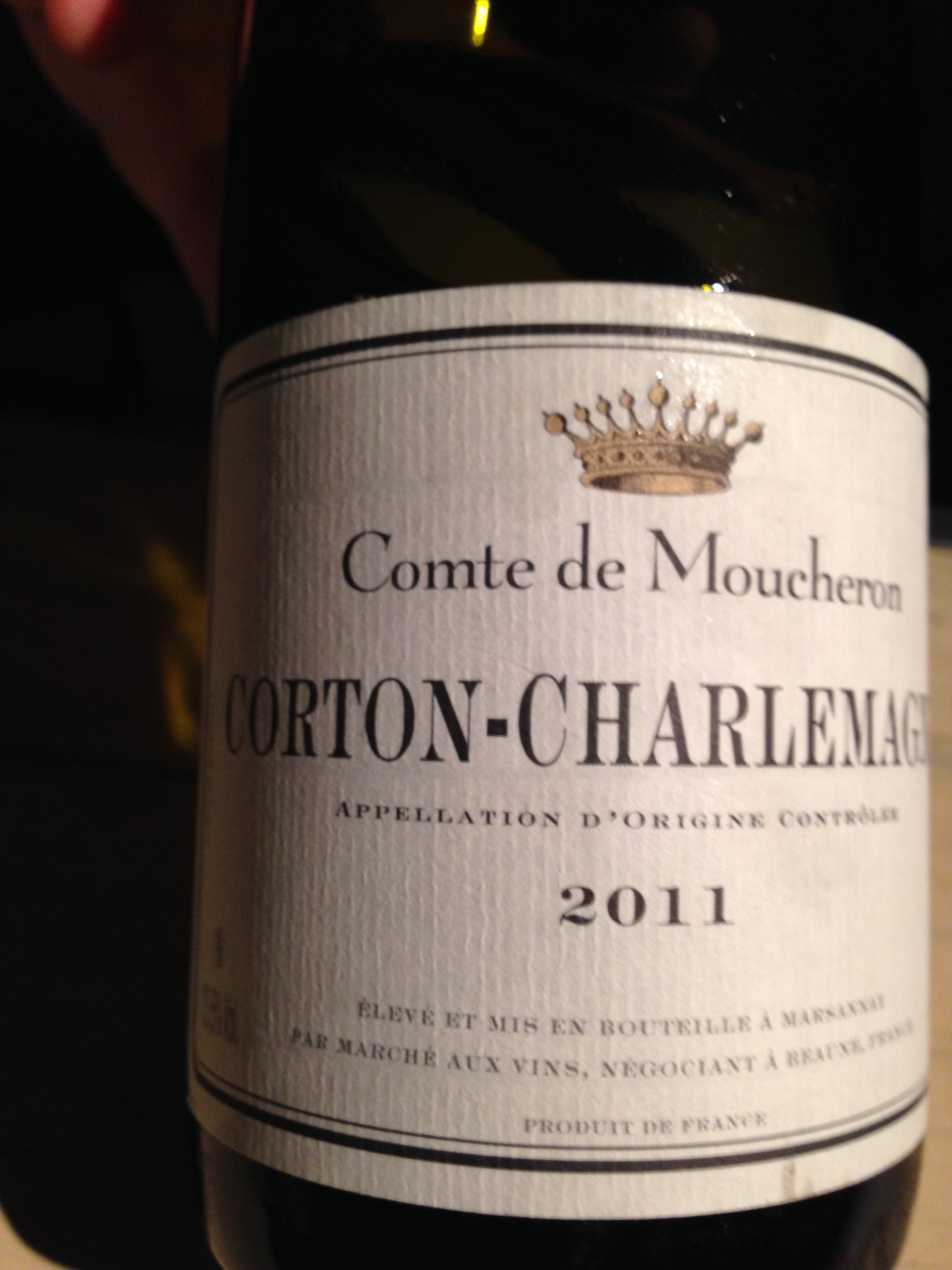
The student presenting the Corton-Charlemagne Grand Cru 2011 asks us, whether we know, why “Charlemagne” is a white wine. The answer: Charlemagne loved red wine, but his wife would always notice drops of red wine in his beard, when he came back home from Burgundy. So Charlemagne decided to switch to white wine which did not leave traces in his beard. If it is not true, it is well invented.

IMG_1140

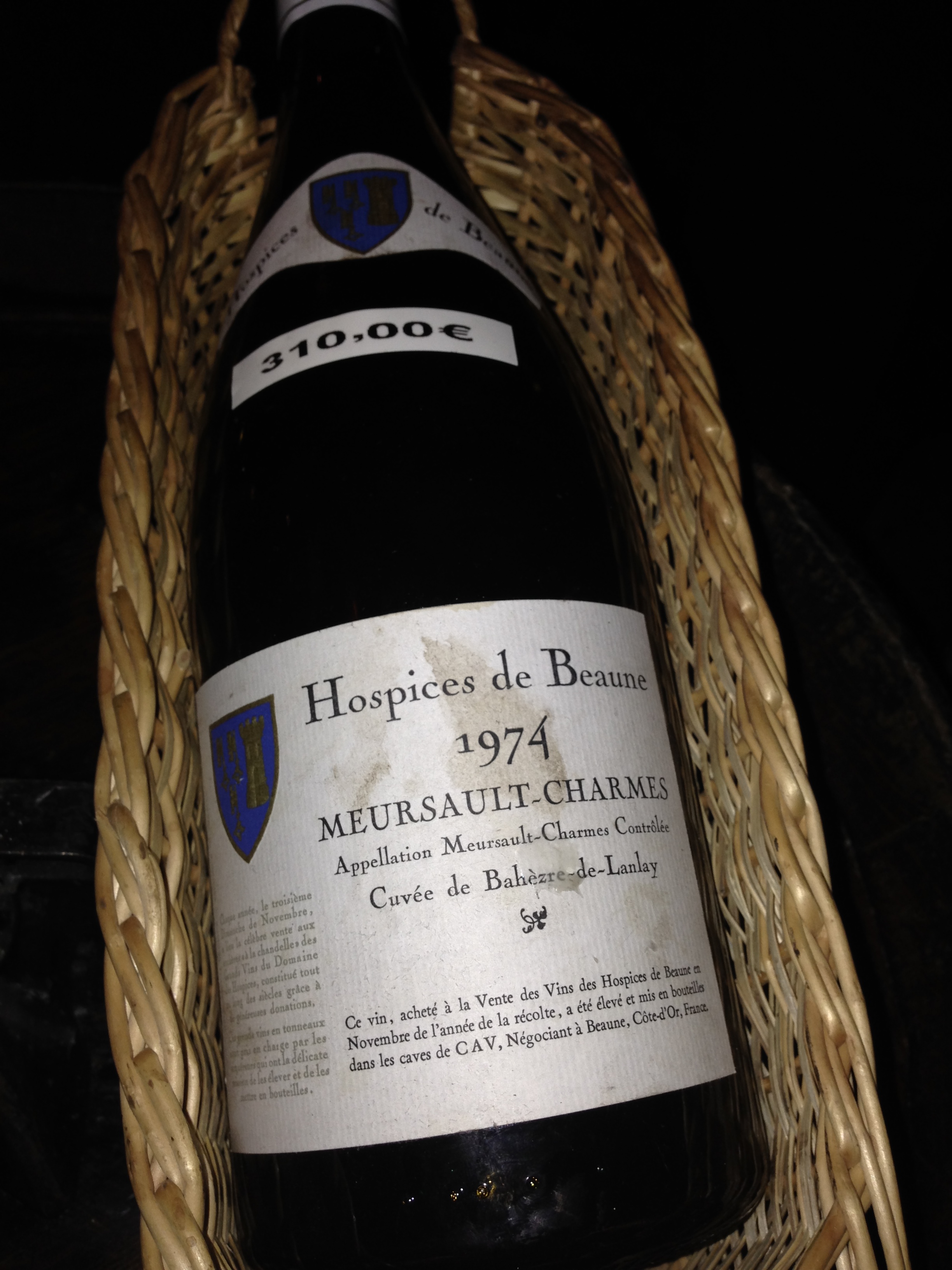
Some of the wines have their price.

IMG_1122

These were the white wines we tasted:

  • Marsannay Blanc Les Champs Perdrix 2013 : Lemon taste
  • Meursault (Château de Meursault) 2011 : Oily. Nutty taste
  • Meursault (Château Meursault) 1er cru 2008 : Taste of butter and minerals
  • Meursault 1er cru (Château Meursault) 2002: Almond, oily, perhaps some honey
  • Corton-Charlemagne Grand Cru 2011: Flowery, spicy (vanilla), nutty (almond), mineral taste.

The red wines on offer were:

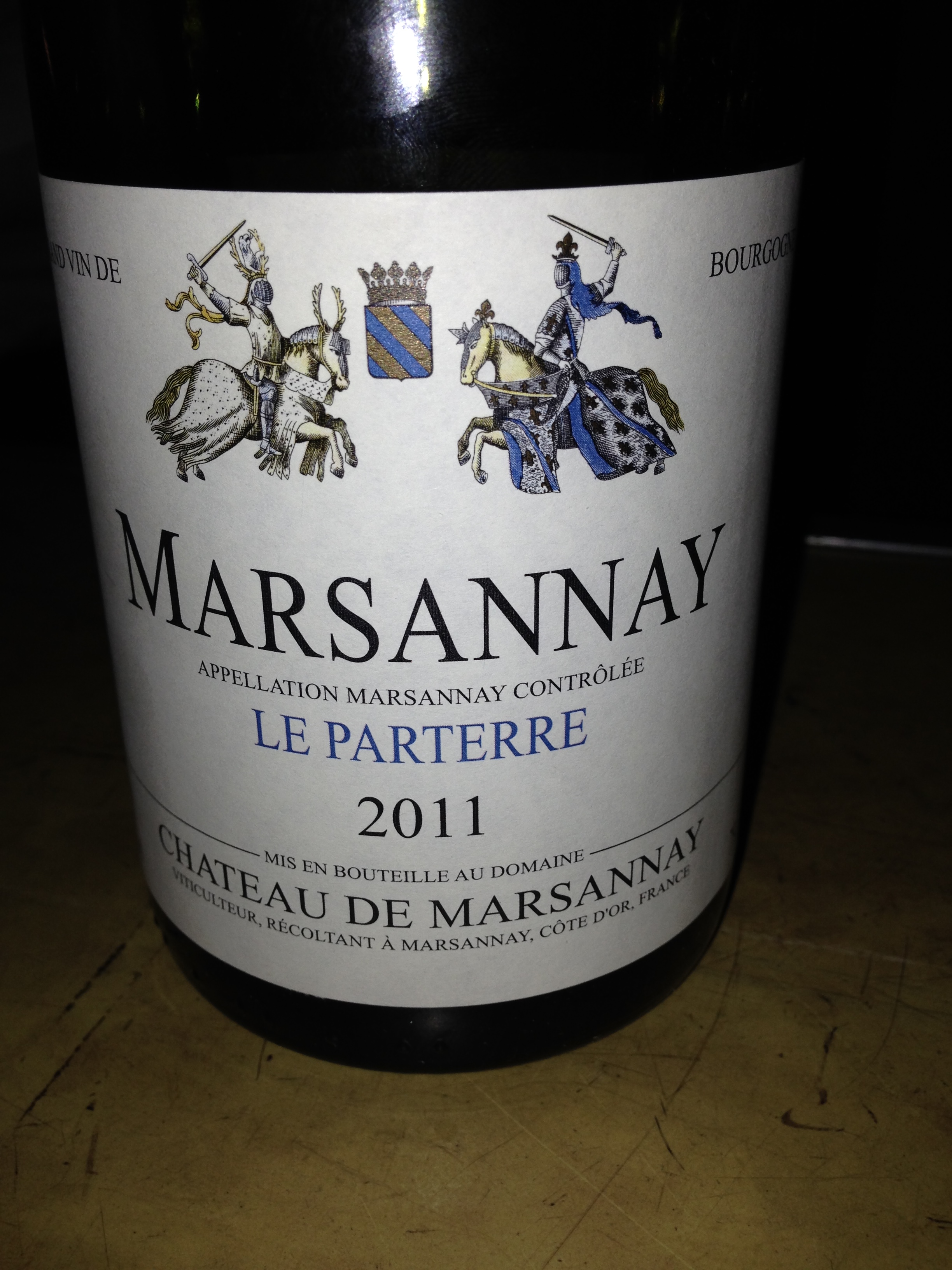
  • Marsannay Le Parterre  2011: Cherry, fresh, light Tannin.

IMG_1142

  • Beaune Cuvée Marie-Sophie Grangier (Hospices de Dijon) 2009: Sour cherry (griotte), wood
  • Gevre- Chambertin  1er Cru 2008: Griottes, toasted bread, spicy (pepper), a little much acidity
  • Vosne-Romanée 1er Cru Les Orveaux 2008:  Prunes, spices, acidity, still closed
  • Volnay 1er Cru  Clos des Chênes 2003: strong, cassis, well-integrated tannin
  • Beaune 1 er Cru Les Cents Vignes: Dried prunes, round, clean, tannin.

.

Vin des Tonneliers – Tasting with truffles

Vin des Tonneliers is a wine dealer that invited to taste wines with truffle bites.

IMG_1019

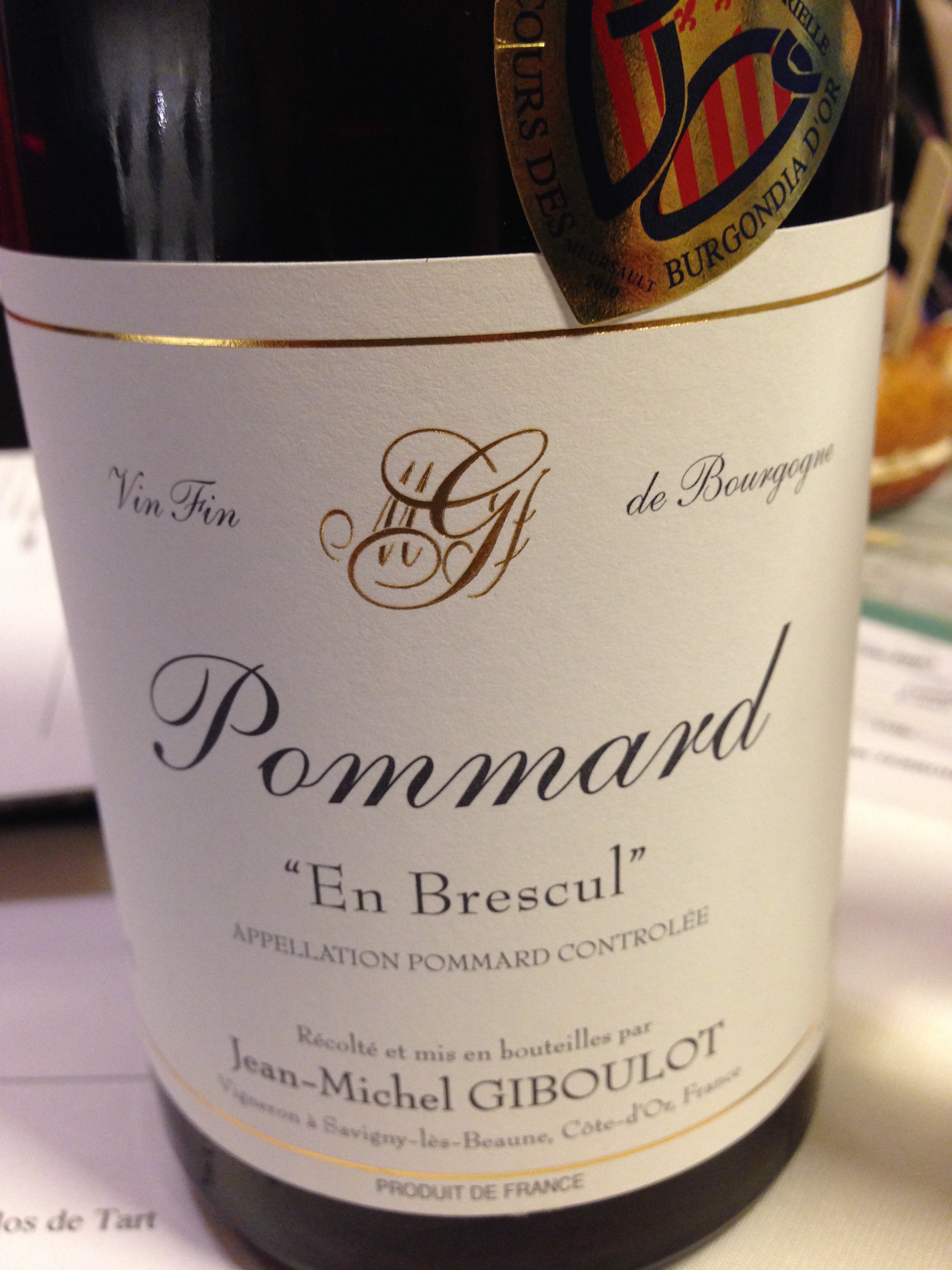
I liked this Pommard en Brescul and bought a bottle.

IMG_1020

These were the wines we tasted with the truffle bites

  • Chassagne-Montrachet 1er Cru Guy Amiot, Baudines 2010: Melon taste, buttery
  • Meursault 1er Cru: good match with meat bites, less good a match with cheese from Savoy
  • Domaine 19 vingt (blended village and grand cru): Well balanced
  • Clos de Vougeot 2006: Griottes
  • Pommard “En Brescul” Giboulot  2008: Balanced
  • Corton 2003 (already harvested in August, as it was a hot year): Cacao, bitter tanning caramel. Recommended to drink it within thenext four years.

.

Bouchard Père et Fils

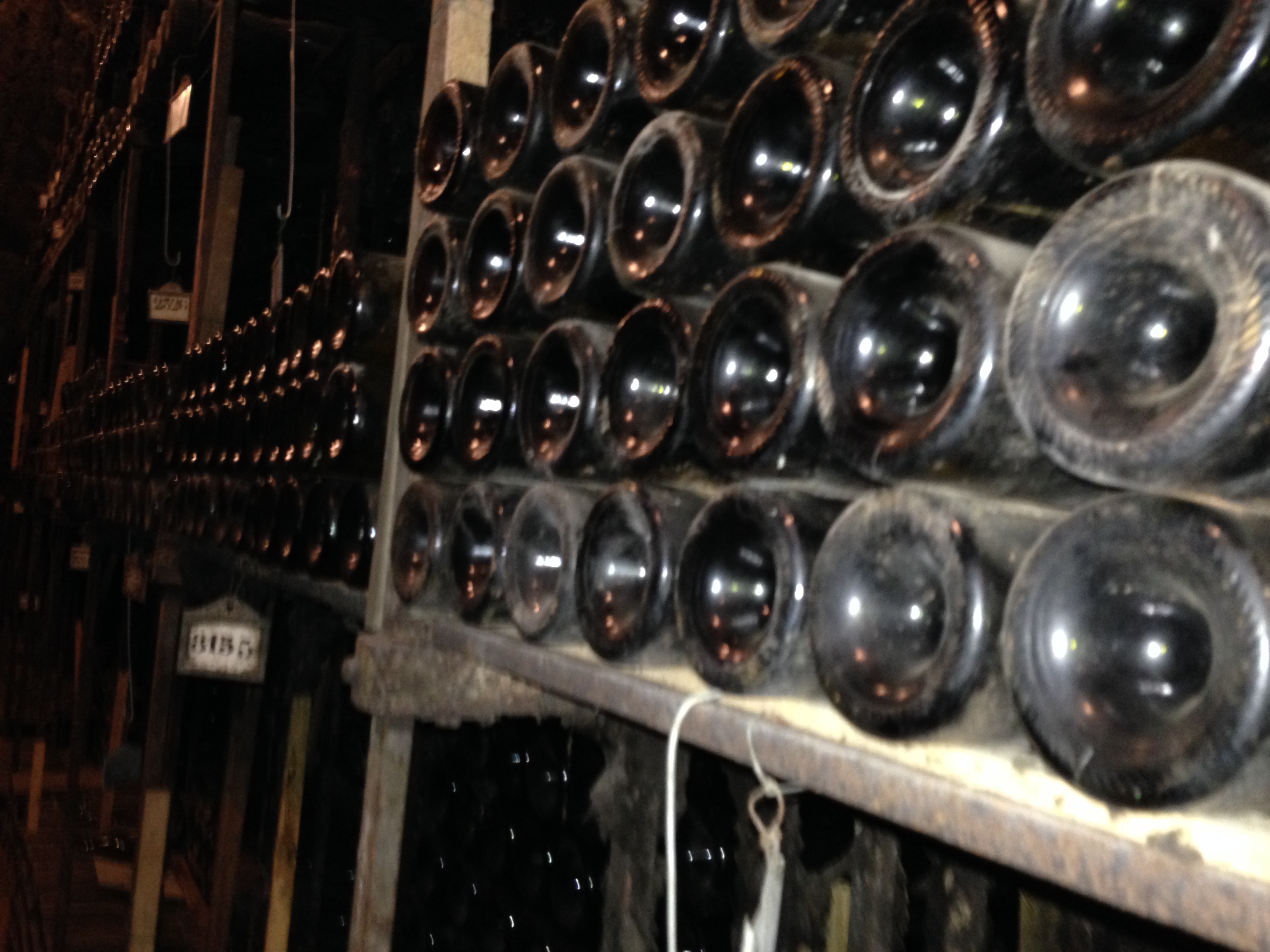
The highlight of Bouchard Père et Fils is their medieval location – in the Beaune Castle. The kings from Louis VI to Louis XIV used it to control the population of Beaune. The family Bouchard acquired the castle in 1775. Also since 1731 the family has been in the winegrowing business which they enhanced after the French revolutiuon, when most wine estates of Burgundy were sold. Today it is Bouchard’s 9th generation; they sold the estate to Henriot in 1995, but continue to manage and enhance it together with Henriot. The vinifcation takes place in Savigny and the wine bottles are stored in the castle caves, on a surface of 4000m2, 10m under the ground, at a constant temperature of 14 degrees and 80% humidity. A guide takes us down the steep stairs into the cellar. We are full of respect, when admiring the many bottles – they are “naked” without labels (the corks keep the identification of the wine). The family also keeps some old bottles, even from the 19th century, to be able to investigate the aging process of their wines. The oldest bottle is a Meursault from 1846 that was still drinkable. They recork their bottles every 30 years and then also taste them.

IMG_1036

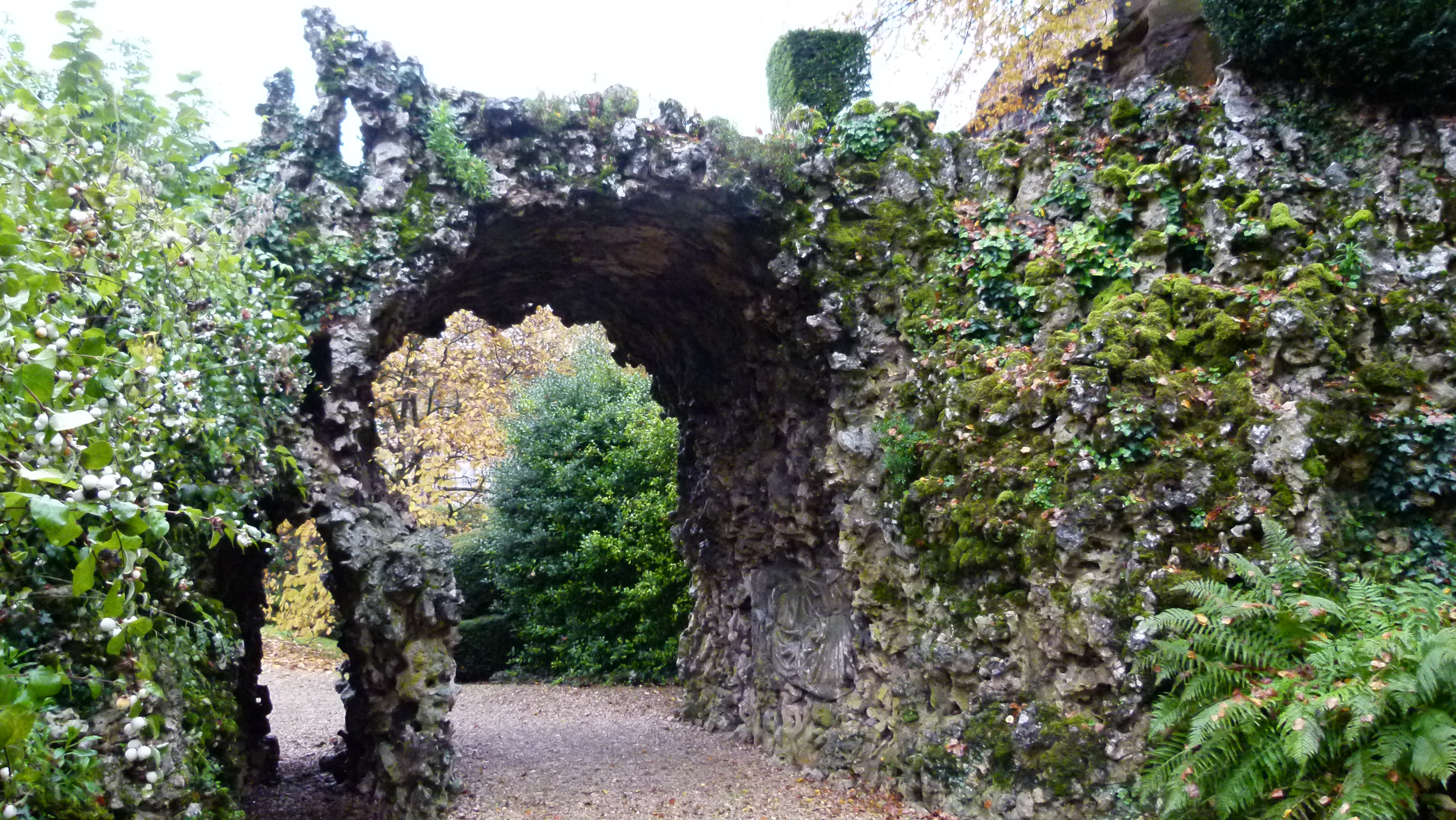
After having left the cellar, our guide took us to this romantic garden.

P1060993

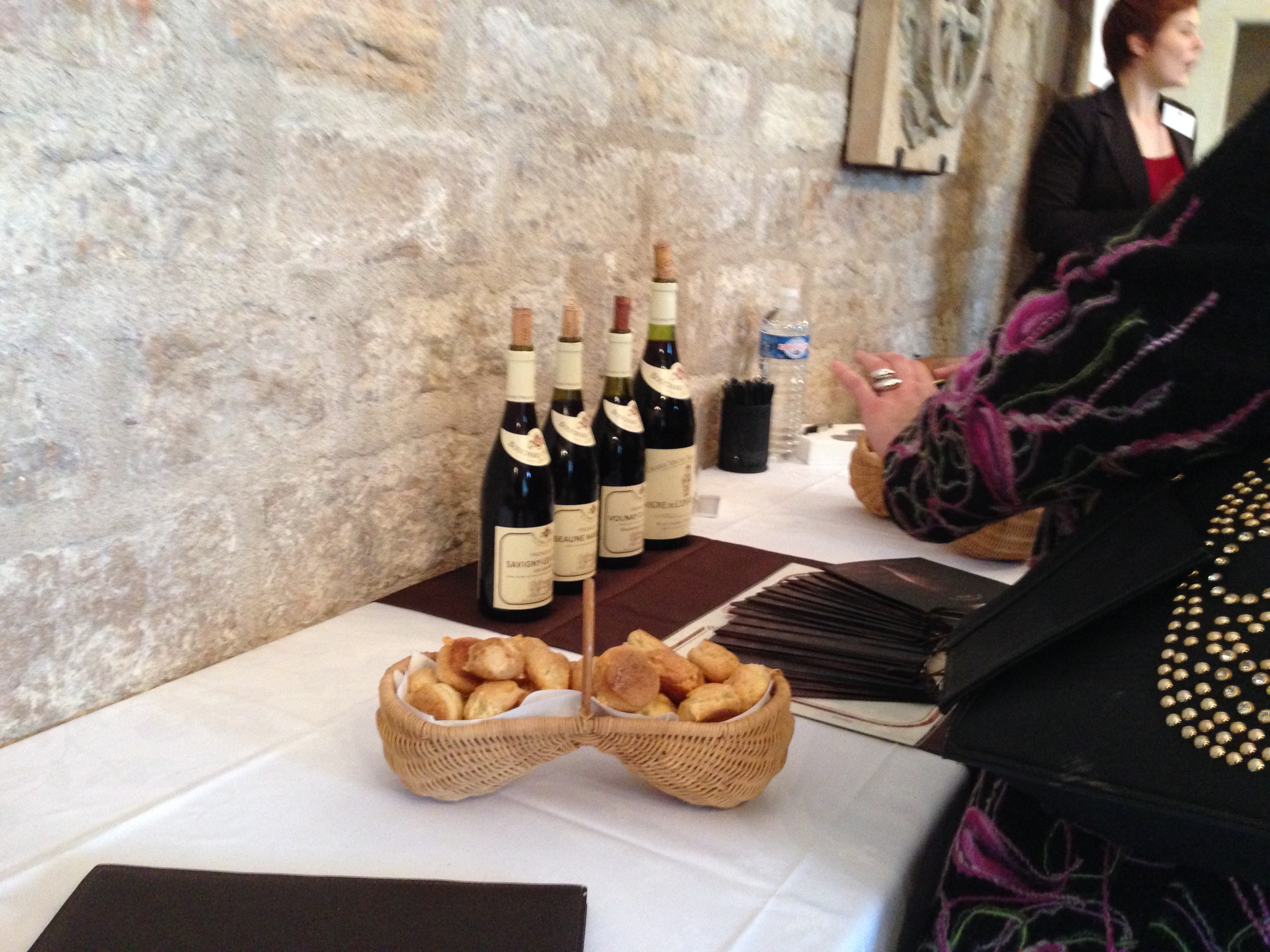
The tasting took place above the ground and was accompanied by cougères, the apéritif cookies of Burgundy. A perfect match with the wine.

IMG_1041

These were the wines we tasted

White Crus

  • Beaune Clos Saint-Landry 1er Cru 2011 (Monopole)
  • Meursault Perrières 1er Cru 2011
  • Corton-Charlemagne Grand Cru 2009
  • La Cabotte Chevalier-Montrachet Grand Cru 2003

Red Crus

  • Savigny-le-Beaune Les Lavières 1er Cru 2011
  • Beaune Marconnets 1er Cru 2009
  • Volnay Caillerets Ancienne Cuvée Carnot 1er Cru 1989
  • Beaune Grèves Vigne de l’Enfant Jésus 1er Cru 1976 (Related with the legend of Anne from Austria that  prayed for a son and then gave birth to the later Louis XIV).


Domaine Besancenot

The Domaine de Besancenot invited to taste eight grand cru wines, however… this winegrower was a disappointment for me. The atmosphere was sober and the cellar was not really clean. This was an “anti-highlight” and I would not return here.

IMG_1049

We also visited some winegrowers around Beaune – not related with the November wine days. I will talk about them later, in particular about my personal highlights.

On the road – Chablis tastings – the Tuesday marathon

When spending some days in Chablis with my friends from Russia in November 2014, we did a marathon tasting  tour on Tuesday: We visited three wine cellars. I enjoyed all the tastings and I was impressed, how carefully my Russian friends evaluate each wine.

.

Régnard – an elegant traditional house offering all Grands Crus terroirs

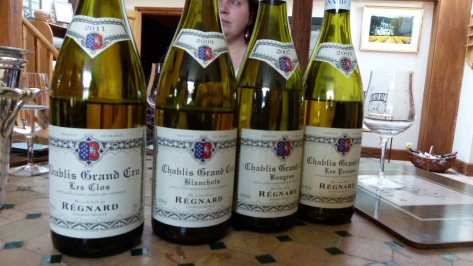
Usually Régnard opens at 9:30 AM, but for us, Marion opens at 9 AM. We stand in front of a closed large gate, until we find out that the boutique is round the corner. Marion is waiting for us. She explains to us that Régnard has all seven Grands Crus (including Les Grenouilles – I do not understand, why La Chablisienne is said to have the quasi-monopole of Les Grenouilles then – and Régnard has Grenouilles on offer as well).

Marion guides us into an elegant room with a round table and proposes us to select the four Grands Crus that we want to taste. The tasting is free, when we buy something.

P1060867

These are the four Grands Crus that we have selected for our tasting.

  • Les Preuses 2003: Due to the age the color is darker yellow. Nose is rich, taste is mellow – perhaps truffles and nuts, ends a bit harsh. Drink now.
  • Bougros 2007  (good year): Smooth , good balance with acidity, fruity (cannot say what fruit). I liked it and bought one bottle of 2006.
  • Blanchots 2009 : Toasted bread and pear in the nose, strong mineral and salty taste (Marion talks about pierre des fusils or flint stone).
  • Les Clos 2011: Mineral, salty and fruity (the Russians find green apple, while a find a touch of peach).

In addition to Bougros, I buy two half bottles of 1er Cru – Fourchaume (2010, vielles vignes) and Montée de Tonnerre. Régnard is a traditional house and carefully packs our treasures into boxes. They also have an excellent Marc.

One of the Fourchaume half bottles I share with a friend later. We had it with a corn soup. My notes: Fruity, nutty (perhaps almond) and mineral flavors.

.

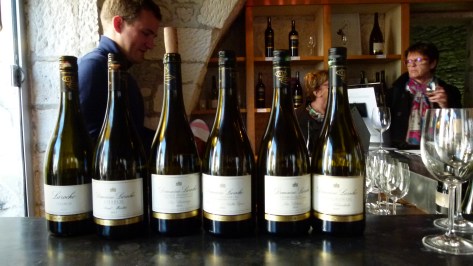
LaRoche – splendid history going back to the 9th century, and more sober atmosphere in the wine shop

In the 9th century Saint Martin and his monks had to flee from the Vikings. They founded the church of St. Martin with a monastery, after having received this area as a feud from the French king, Charles the Bold.

P1060879

The old cellar of the monastery became the cellar of LaRoche. We visited the impressive vaults and admired the old vintages in the shelves.

P1060871

The tasting takes place in the sober atmosphere of the small wine shop.

P1060878

These are the wines we tried:

  • Chablis 2013: Fresh and crispy.
  • Chablis Saint Martin: Mixed best “plain” Chablis climats. Mineral, balanced acidity, green apple, I like the fresh taste and buy two half bottles.
  •  Beauroy 1er Cru 2011: Mellow and well balanced.
  • Fourchaume 2011: Somewhat unbalanced (“eckig”), touch of almond.
  • Blanchot Grand Cru. 2010 : Pleasant, balanced, flowery (perhaps rose fragrance), I sense the oak. The assistant says:”il n’a  pas encore mangé son fut” (the wine has not yet eaten up its oak) and gives us Blanchot 2009 to compare which has a more fruity touch (perhaps melon).

.

Brocard – a family owned innovative winemakery in a great setting amidst vineyards

After a quick lunch next door to LaRoche, we head off to Brocard. His cave is outside of Chablis, about 5 km south east and amidst vineyards. There is a great view from here. Brocard also offers a large room for business and private events. In the tasting room I see Russian wine magazines.

Brocard is the largest family owned winemaker in Chablis.  Father Jean-Marc Brocard built this production site in the 1970’s. Now his son Julien has taken over. Julien introduced biodynamic methods for a large part of the vineyards. Our tasting assistant explains that Brocard does not mix the climats when producing wine to let the terroir speak. They use oak barrels carefully, just to make the wine softer.

We visit the caves with the oak and steel barrels, and come across these innovative egg-shaped barrels made out of concrete. The yeast circulates better in these barrels, our guide says.

IMG_0938

These are the wines we tasted..

P1060883

  • Chablis, Sainte Claire: Green color, fruity touch of green apple.
  • Chablis, vieille vignes 2012 (vines are 60 years old): Round, touch of celery, I liked it and bought two half bottles.
  • Château Vau de Vey 1er Cru 2012: slightly bitter taste, orangeade.
  • Montee de Tonnerre 1er Cru 2012: Salty, high acidity.
  • Bougros Grand Cru 2011: I can feel the oak.
  • Les Clos Grand Cru 2011: 18  months in barrel, touch of nuts, I sense the oak less.
  • Les Preuses Grand Cru 2011: Was in egg-shaped concrete barrel, salty, round. I like it and imagine it with shellfish. I bought a bottle.

.

Rounding off with a short walk in the vineyards

After our tasting marathon, we stop in the vineyards around Brocard for a short walk….

P1060885

… tasting the grapes that are left in November – they are sweet. Would ice wine not be a business for Chablis as well? Perhaps too risky, when freezing temperatures come early in autumn.

P1060886

Our next tasting adventures will take place around Beaune.


On the road – Finding truffles (l’Or des Valois) with Elf, the lagotto romagnole

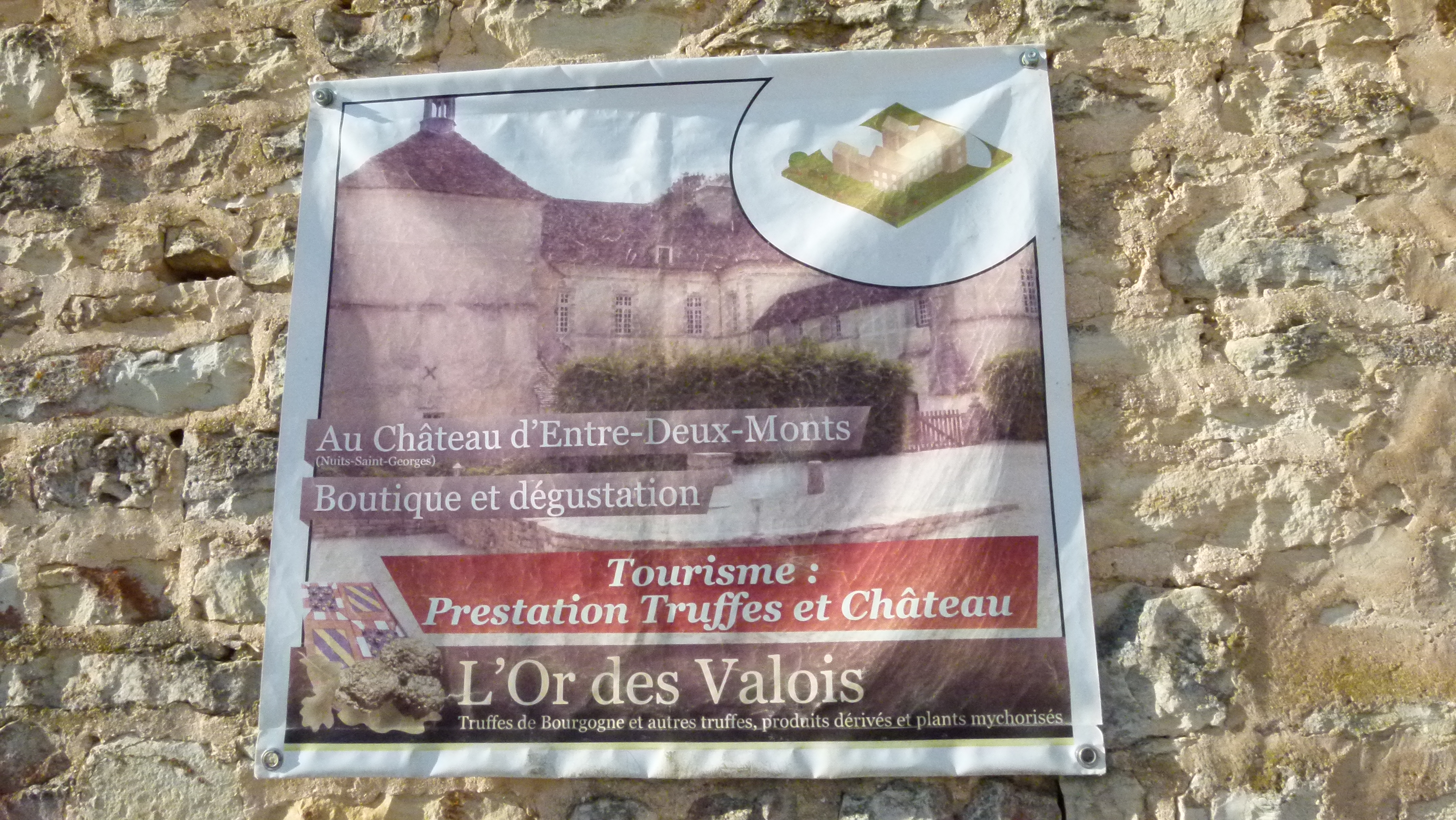
At Château d’Entre Deux Monts – the truffle farm (truffles are “the gold of the Valois” or “l’Or des Valois”)

At the Château d’Entre Deux Monts Thierry Bézeux and his family grow truffles, convert them to truffle delicacies (sold in the boutique) and in addition show tourists their truffles (visits to their orchard and truffle tastings). Tripadvisor gives good reports. Larissa has visited and liked this place before and has arranged a visit with us.

The Burgundy truffles are also called “the Gold of the Valois”” or “l’Or des Valois” (The Valois were kings of France from the early 14th to the late 16th century, then the Bourbons took over with Henry IV).

.

Finding the Château with l’Or des Valois

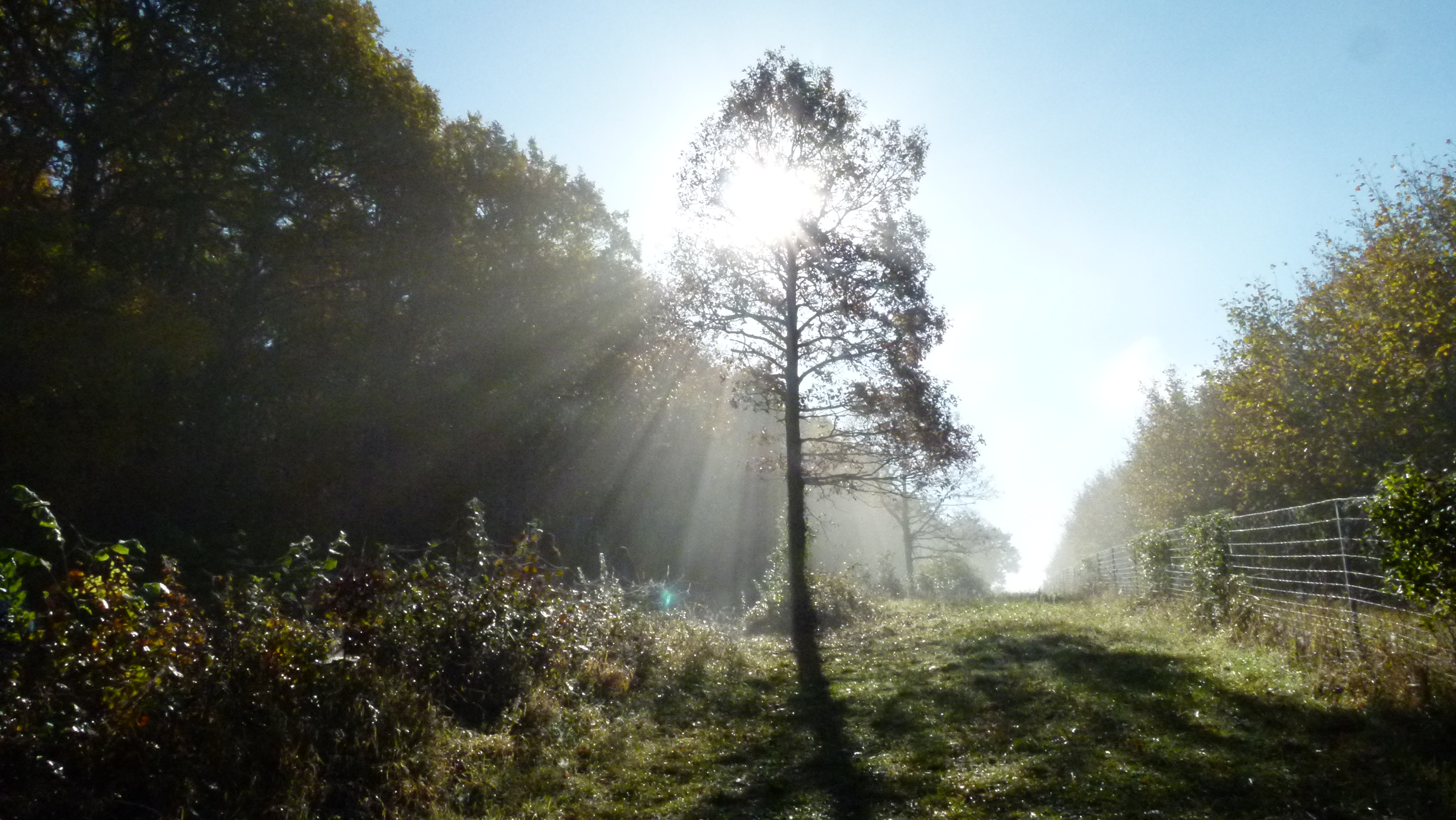
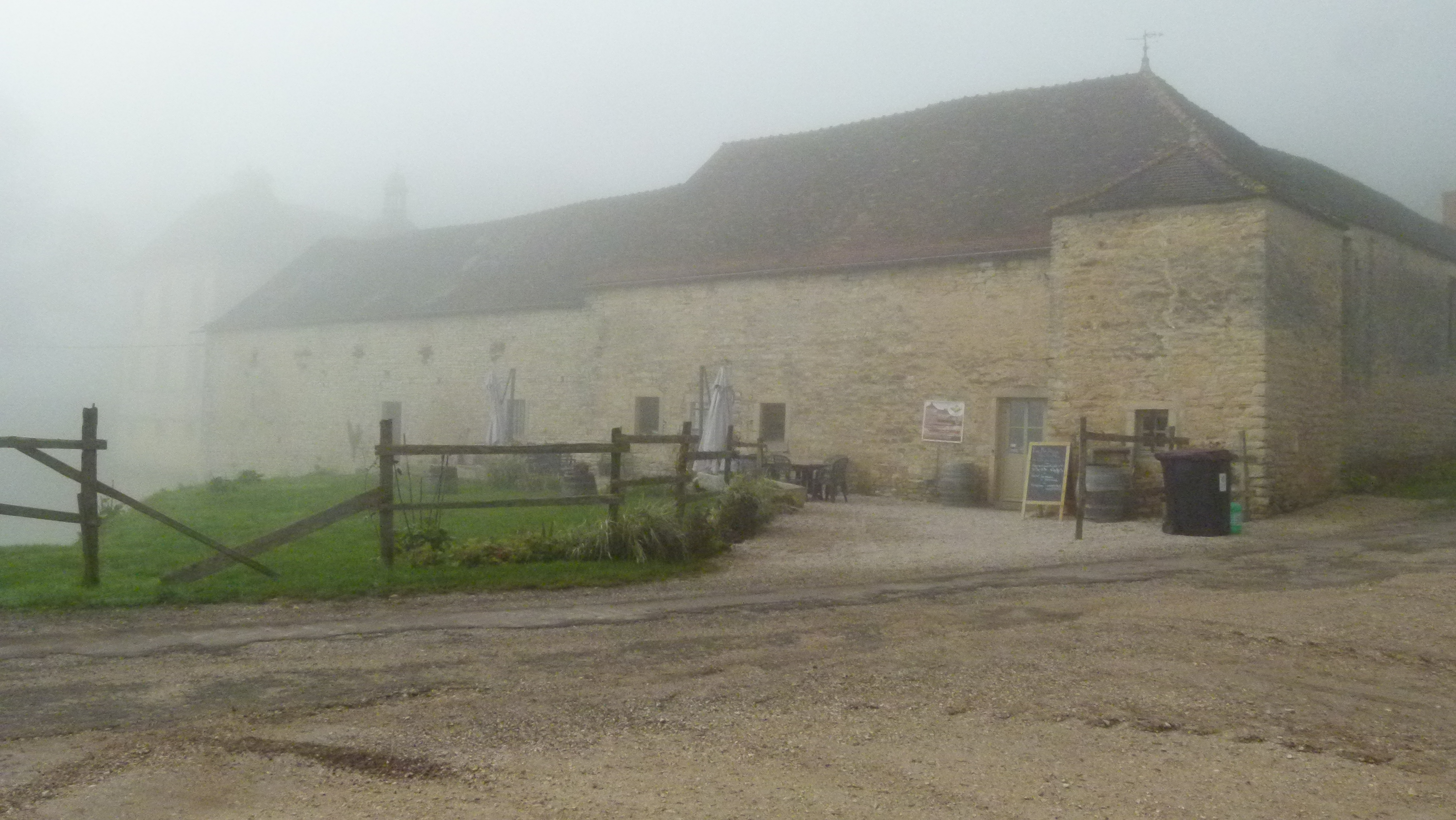
There is a mysterious mist lying over the hills above the Côte de Nuits and the village Nuits-Saint George.

P1060938

Hidden in the mist is the Château d’Entre Deux Monts de Thierry Bézeux.

P1060913

The boutique is open and Thierry Bézeux welcomes us.

P1060943

.

Looking for truffles in the “truffle orchard” – with Elf

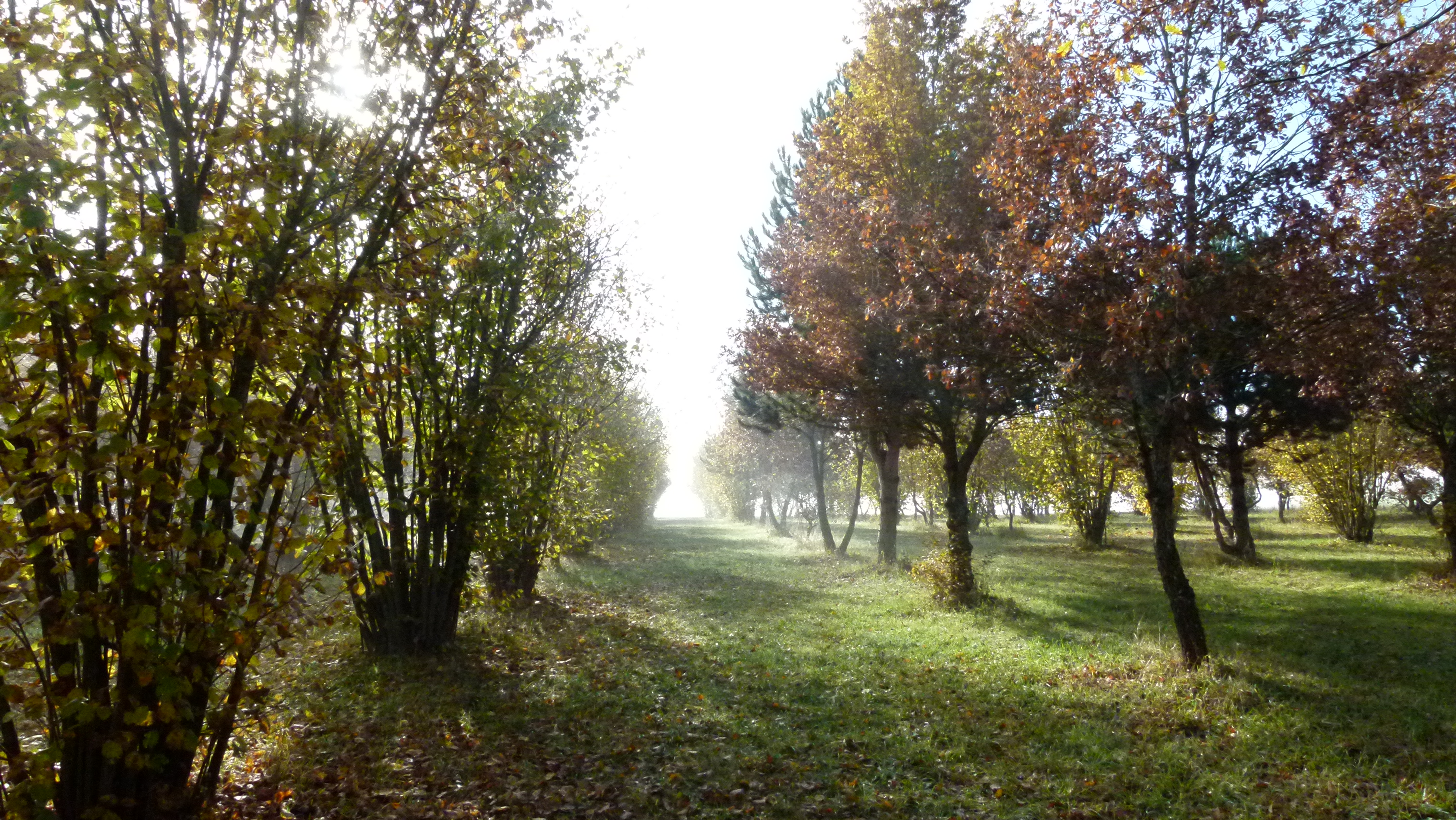
The son of Thierry and his dog Elf take us to their “truffle orchard” planted with trees that truffles like. I later found a study about growing truffles in the US, and they say that the Burgundy truffle is well suited for plantations, in particular with trees such as hazelnut and oak, but can only be harvested with a dog, as they grow under the ground.

P1060922

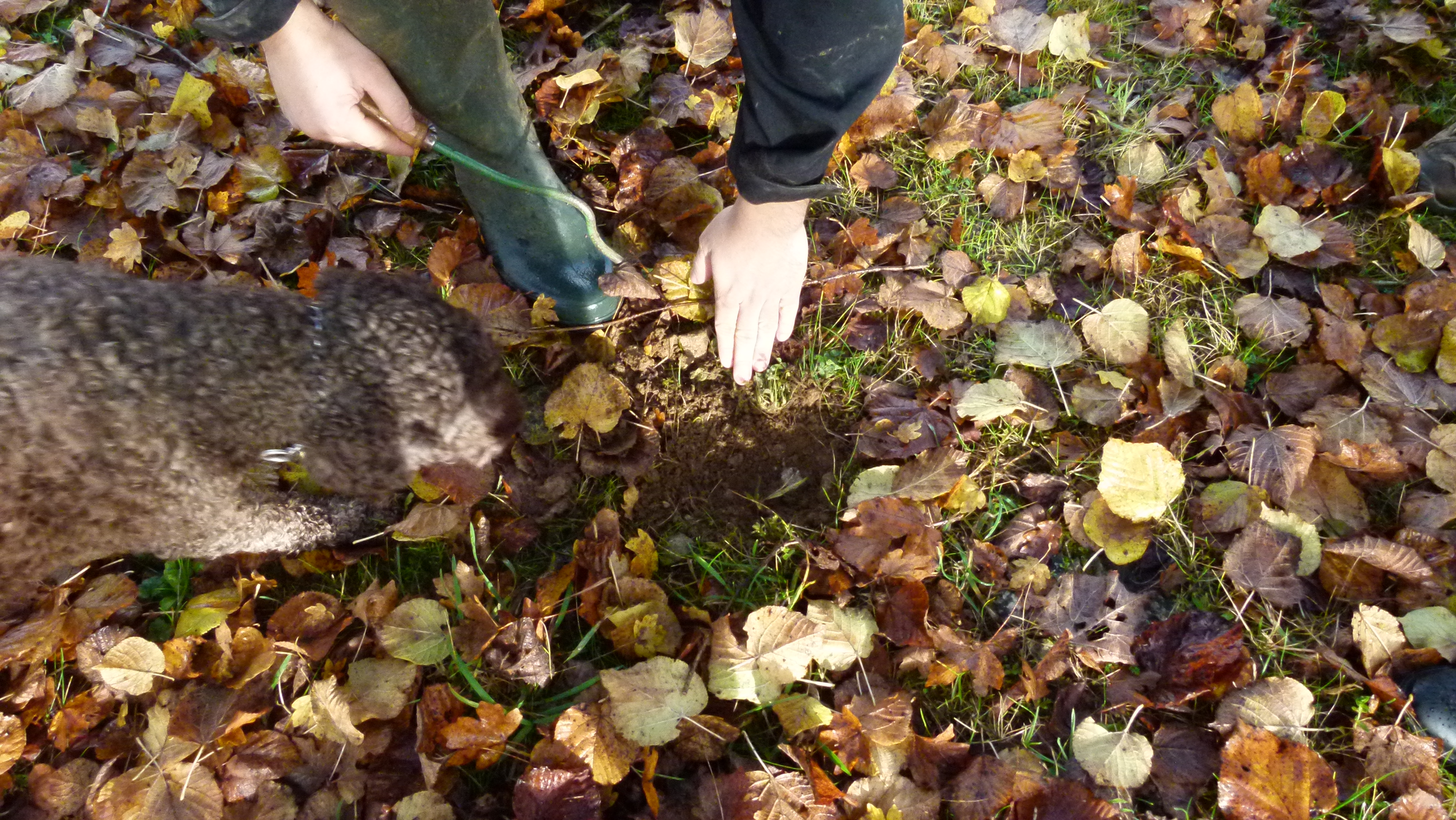
Elf is a lagotto romagnole, similar to a poodle. When Yann opens the gate to the orchard, she starts to run around and immediately finds the first truffle hidden under the ground. Elf loves truffles and wants to eat the black ball it found, but Yann stops her and gives her a dog bisquit instead. Maybe the bisquit has a truffle taste, at least?

P1060915

Elf continues to look for more truffles. Sometimes she loses interest in truffles and sniffs around the trees. Perhaps a badger (blaireau in French) has visited the orchard and Elf is reading what the bagder has to say. In the end, we have a handful of truffles to take home. Thank you, Elf.

P1060930

.

Back in the castle, we taste the truffle delicacies

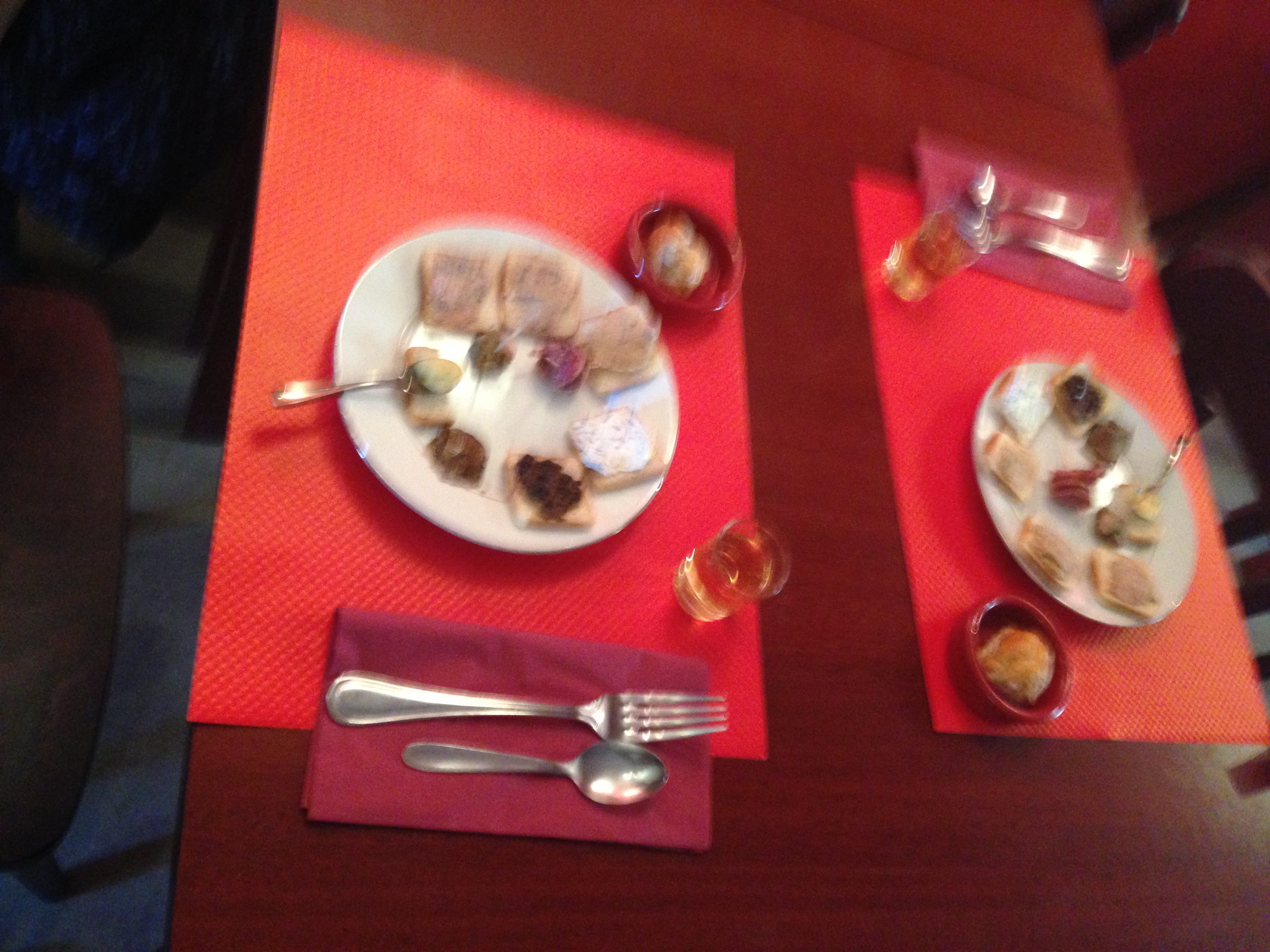
Back in the château we find the table set for our truffle tasting: Mustard, terrine of rabbit and pintade (guinea fowl or цеcарка), cheese, sauce aux truffes d’Italie, some slices of fresh truffle, ham with parsley (jambon persillé), saucisson, ice cream (glace) and Ratatruffe (Marc de Bourgogne marinated with truffles). The Ratatruffe may have influenced my camera… in the internet there are bettter images of this tasting set.


IMG_0969

.

My thanks in the Château guest book

There is a guest book on the table and I leave this entry: « Merci, Elf, tu as bien travaillé, et j’aimerais bien savoir ce que le blaireau t’as raconté. La degustation était délicieuse. Petra de Bâle en Suisse.” (Thank y ou, Elf, you have worked well, and I would like to know, what the badger has told you. The tasting was delicious.)