On the road – a short stop over in Munich

After having recovered from my 6:35 flight from Kraków to Munich (oh Lufthansa…) in the house of my friends, I take the metro U5 to the Munich city center to say hello to some of my favorite places here.

. Citycenter1

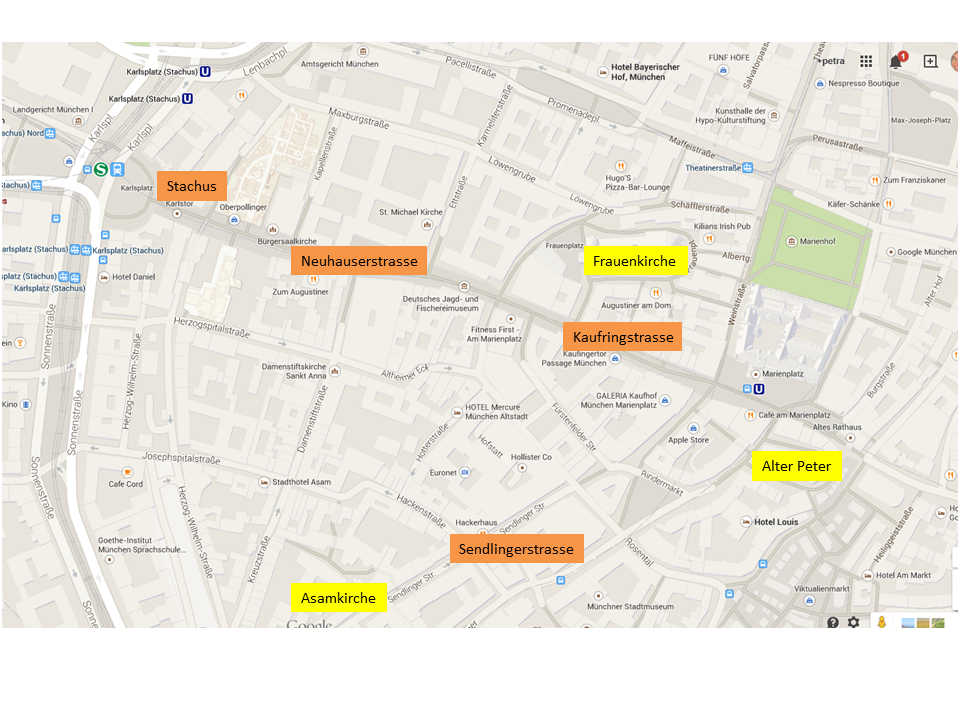
Karlsplatz or Stachus

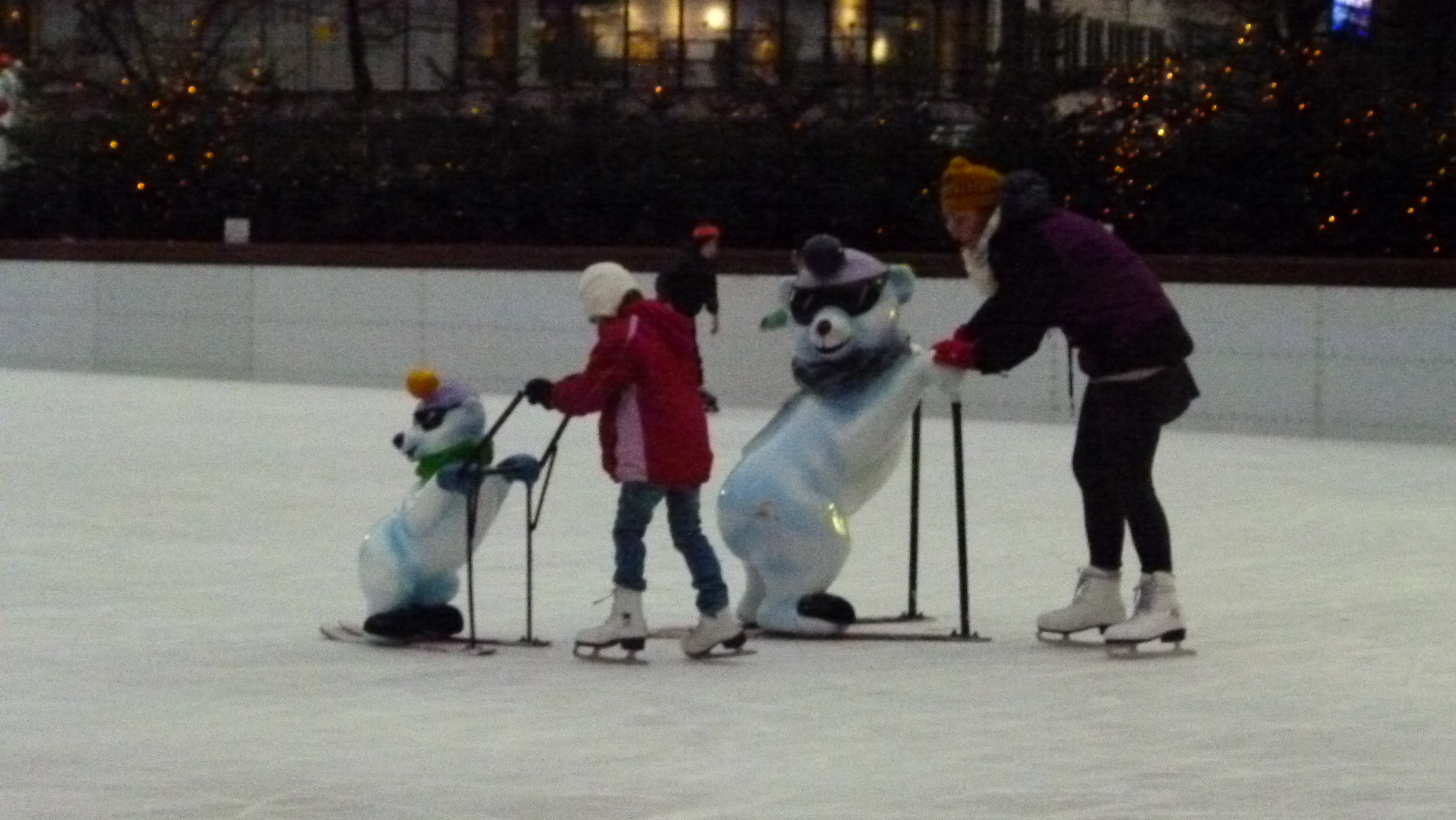
The Stachus is the entry gate to the city center. The Christmas market starts here with an ice rink. I have never seen wheeled walkers (in German: Rollatoren) that support ice skaters… “Ja, sind die nicht nett?” (Yes, are they not cute?), my friend asks me, when I am back at her place.

P1070136

I buy a cup of hot wine (Glühwein) and watch the ice skating scene for a while from the terrace.

.

Shopping at Stachus and in Neuhauser-/Kaufringstrasse

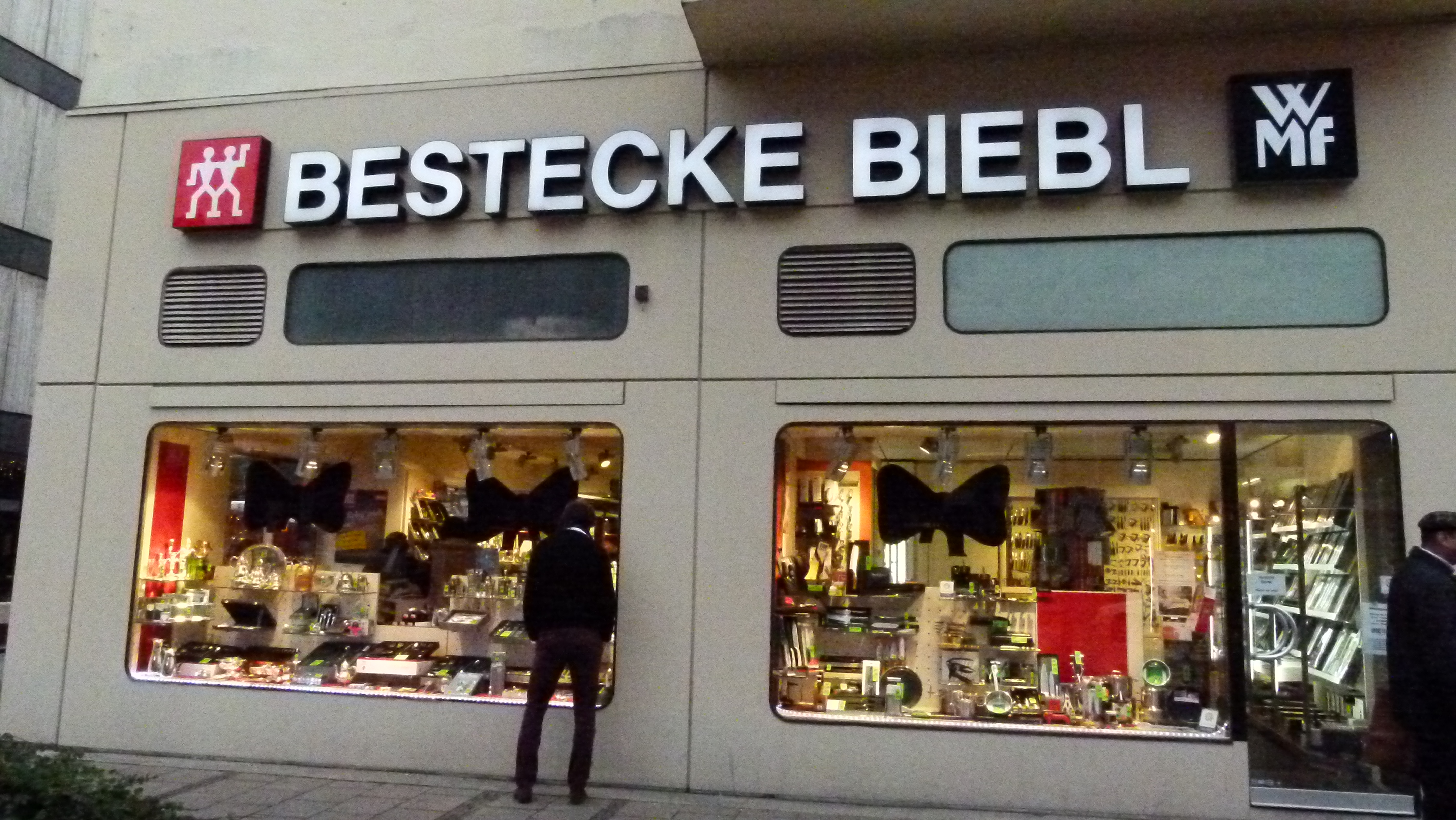
I try some large shops and then enter Biebl at the Stachus. I buy three cheese graters from Alessi. The shopkeeper frowns: “Now there are just a few Euros missing for your gift… let me give you a knife, you deserve it and it is Christmas time.”  Then he drops a small kitchen knife into my bag with the graters. Nice. I like smaller shops.

P1070113

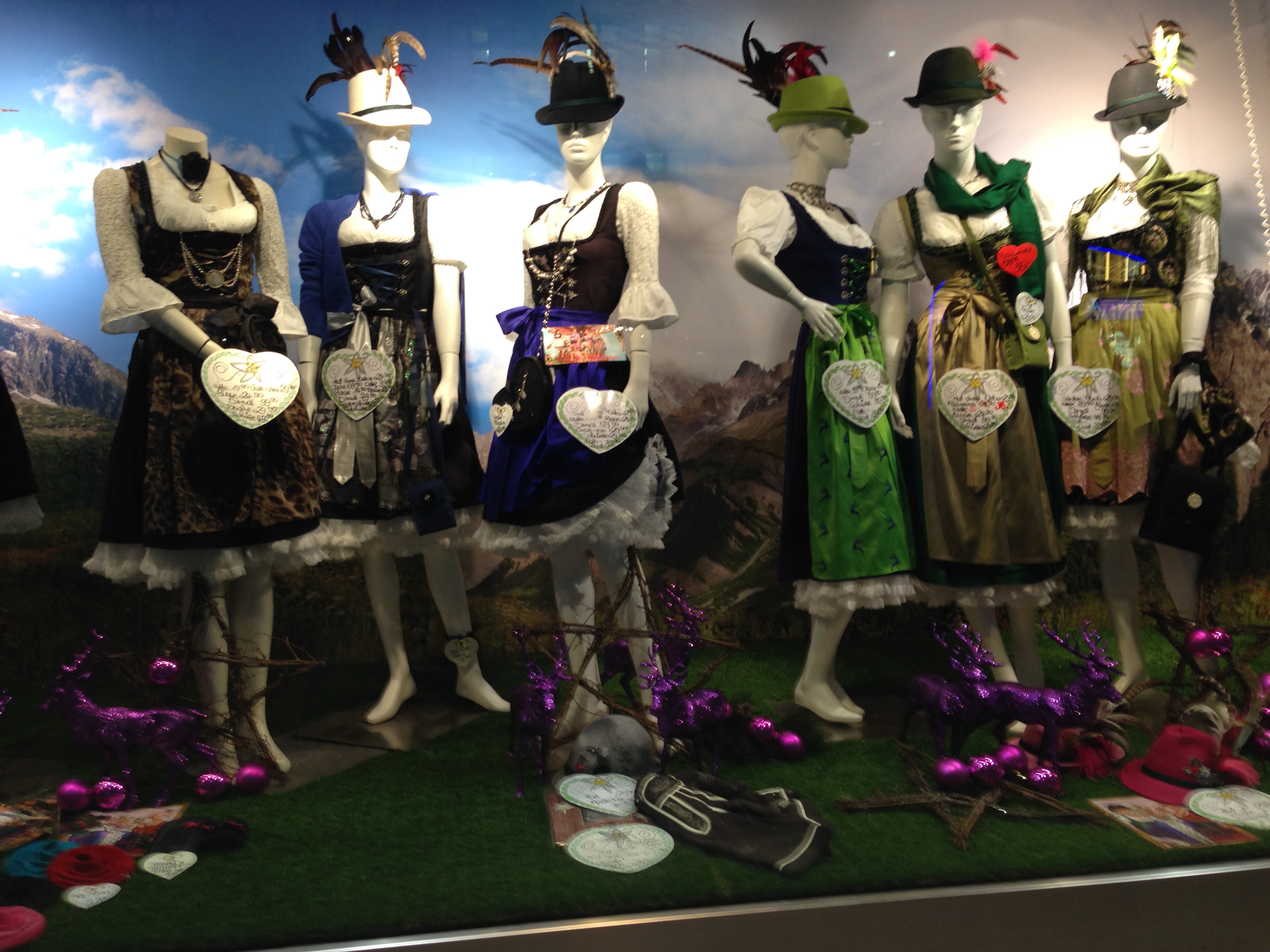
In Bayern it is perfectly okay to wear a dirndl – in the theatre, at the party, at the business reception or at the wedding. There are shops selling just dirndls. When I look at some of them, I feel sad not to live in Munich. In Basel it is not possible to wear a dirndl – except perhaps at the Basel carneval when the dirndl dress matches a specific “sujet”.

IMG_1237

From Stachus to the Viktualienmarkt, there is one huge Christmas market with wooden stands selling everything from Christmas decoration to cloths, and of course there are many stands with hot wine, sausages, Reiberdatschi (small potato omlets) etc etc. There are many tourists and – like on the Christmas market of Kraków – I hear Russian, Swiss German, English, French and Spanish around me… there seems to be a real Christmas market tourism going on in Europe.

.

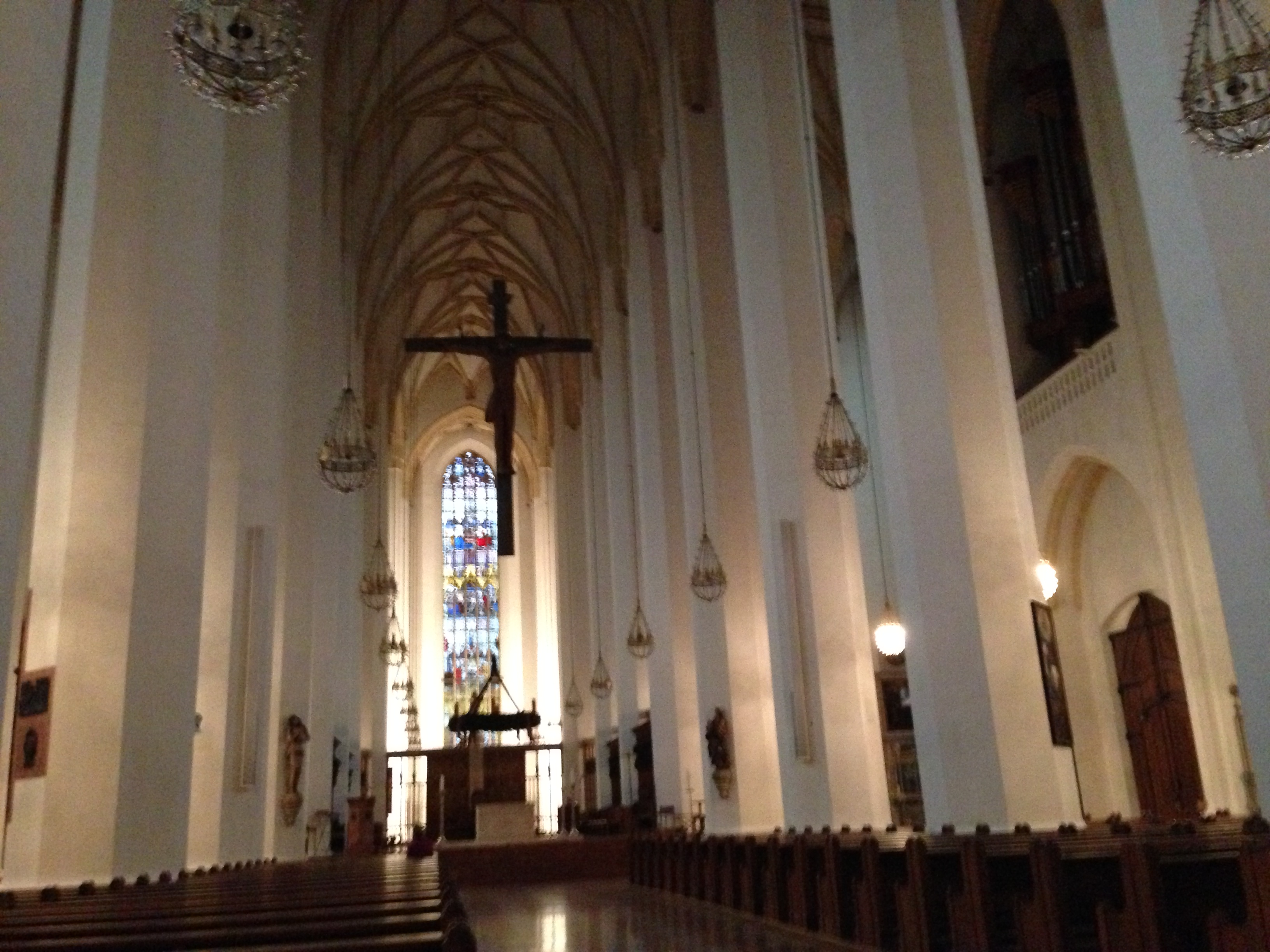
Frauenkirche (Cathedral of Our Dear Lady)

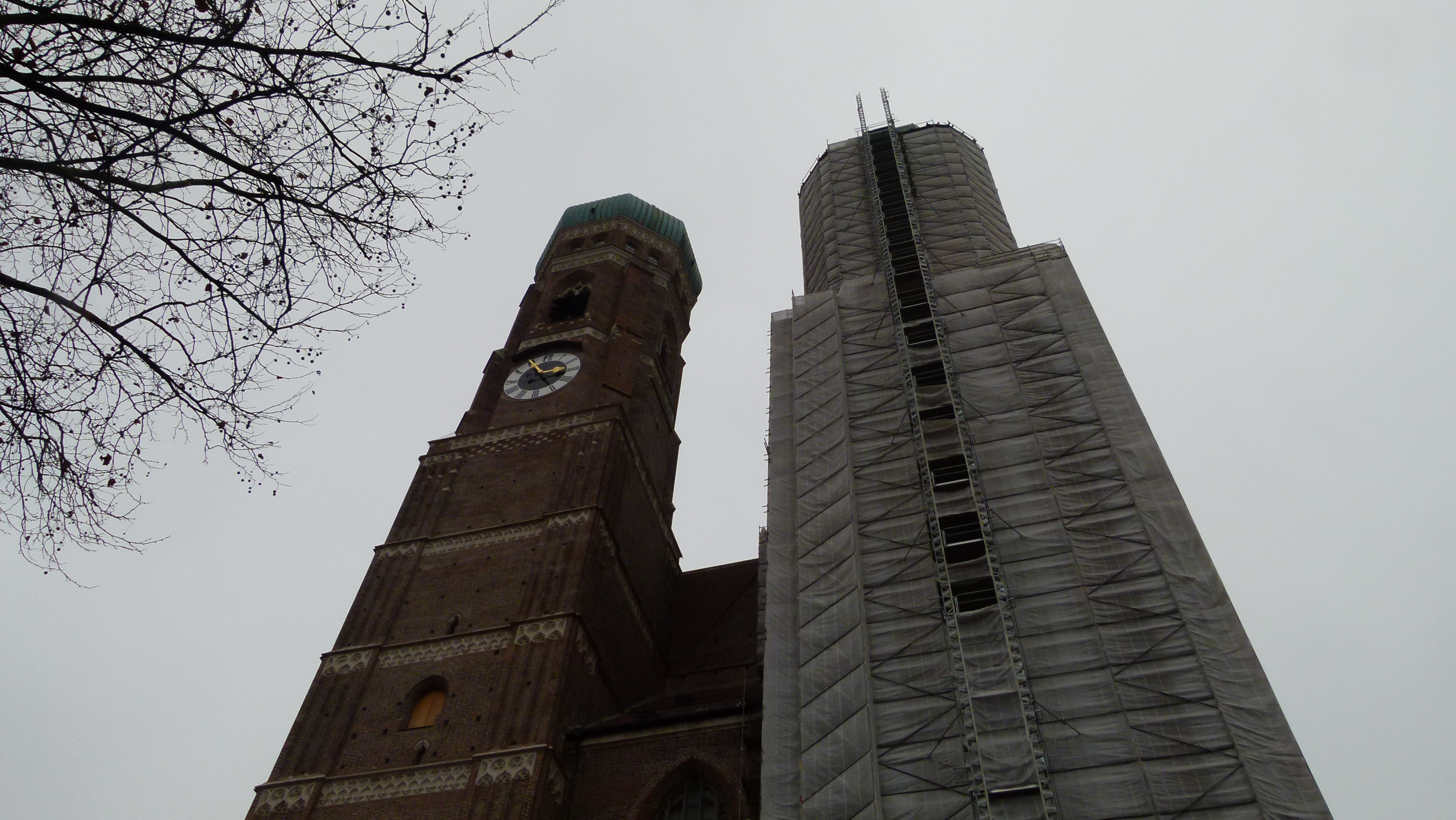
I look for a more quiet place away from the busy Christmas market scene and turn to the Frauenkirche. One of the towers is being renovated. Is the church open? – Yes it is.

P1070138

I love the Frauenkirche. It is an exceptional church in Bayern. All churches in Bayern that I know are full of decoration and a lot of gold. The Frauenkirche has suffered severely in the second world war. It has been reconstructed in the old gothic style with adding the decoration that has been saved in the war. This is not much. The decoration is unostentatious and breathes a touching solemnity that also reminds us of that ugly war.

IMG_1232

.

Alter Peter (Peterskirche or St. Peter’s church)

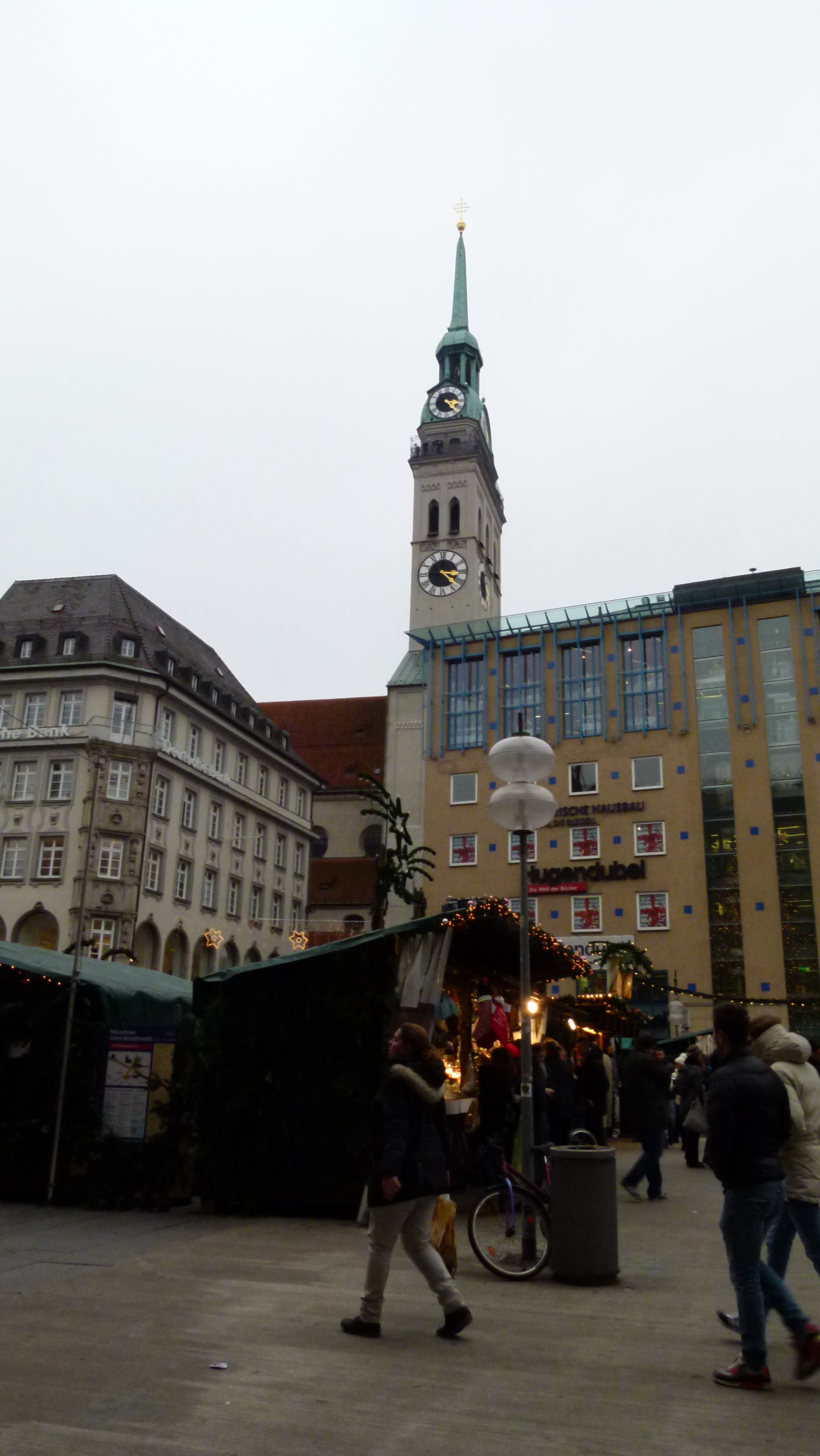
Most church towers have a regular shape and four clocks – one on each side. The Peterskirche is different. The tower is “flat” and an additional clock is hanging on the roof. They call this tower just “Alter Peter” (Old Peter). For me it is a symbol of the charming stubborness of the Bavarians that I love.

P1070141

.

Asamkirche (Asam Church)

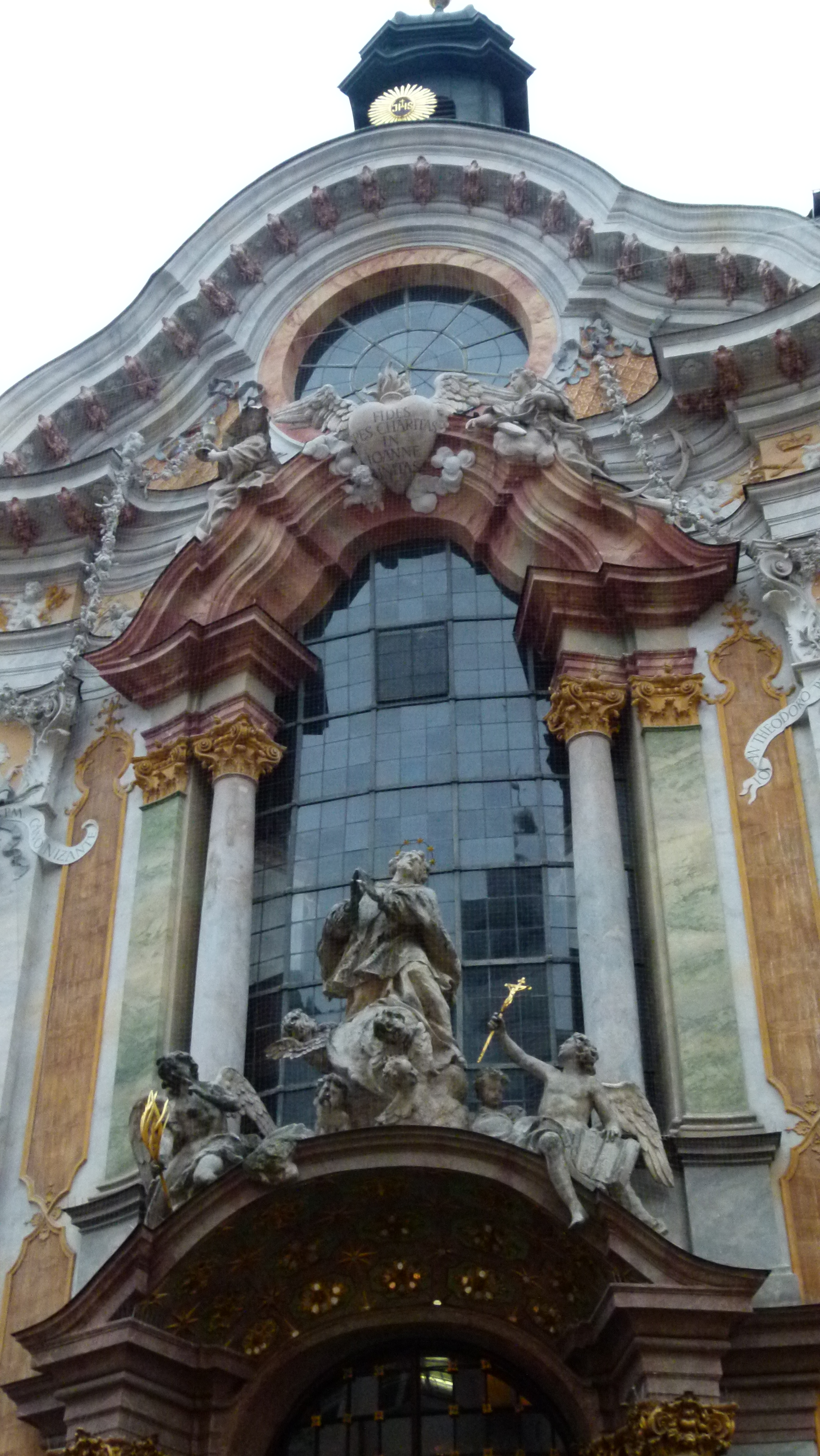
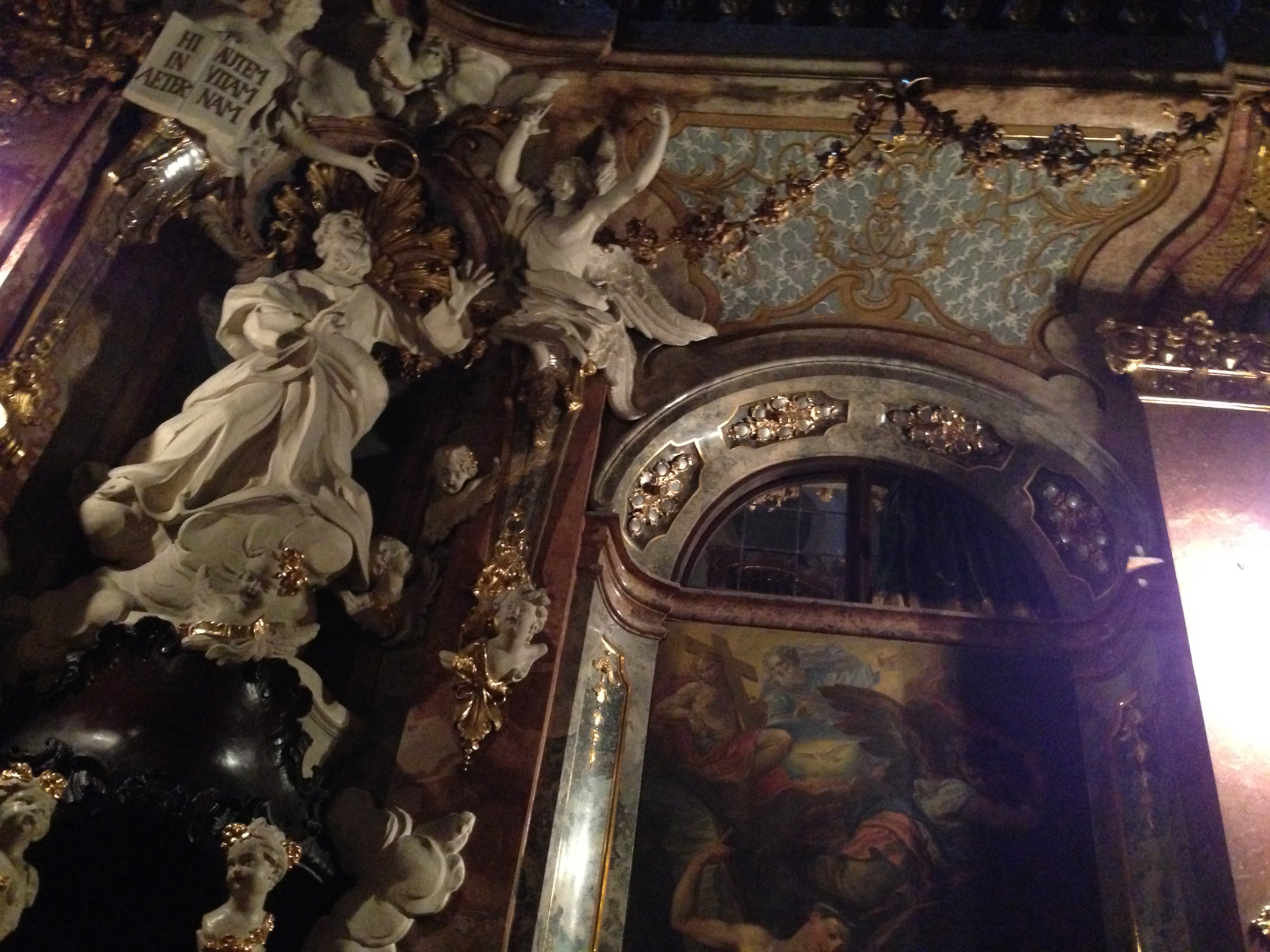
The Asamkirche is on Sendlingerstrasse. It is a late baroque church built by the brothers Asam and it hides memories for me.

I came across the brothers Asam in Weltenburg – my mum took me there, when I was a teenager. It is a monastery located on the Danube, and I was impressed by the baroque church that the two brothers had built – as legend says, because they were in trouble in their boat, and, when saved, built this church out of gratitude. I was very impressed by the cupola that seemed to float high above me. I had never seen such a floating cupola before.

The brothers Asam furthermore built the Asam church in Munich. It was first their private church and was then opened to the public. As a teeager, my mum introduced me also to this church –  and much later I came back several times with Ernst. Now I am here again, with my mum and Ernst in my heart.

P1070142

IMG_1235

.

Dinner in the Il Sorriso with my friends

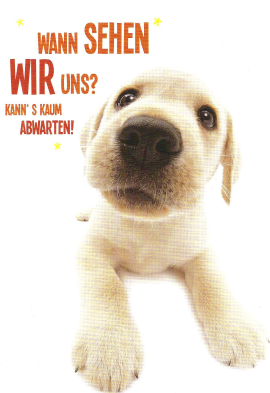
In the evening my friends take me to their favorite Italian restaurant, Il Sorriso. We have spaghetti with clams and noodles with truffles. We do not select the best Nero d’Avola, perhaps we should have asked for another bottle (would not have been a problem). The place is friendly and has a selection of postcards that guests can take with them as a souvenir. Here is an example – this card is useful for someone who is in love.

Karte

It says: “When do we meet again? I can barely await it.”

.

Back to Basel by train from Munich-Pasing

How lucky I am that I had planned to take the train to Basel instead of flying Lufthansa. Lufthansa is also on strike on Tuesday – today. Yesterday I had bought my first class ticket at the Munich main train station for 120 Euros. My SBB “Halbtax” entitles me to a discount of 25% for German trains. The lady at the counter was sighing. I was the first client that was friendly with her – before me she had been confronted with many frustrated Lufthansa passengers.

After a long evening entrenched in vivid debates with my friends, a quiet night and a wonderful breakfast, I catch the train in München-Pasing at 1 pm, settle in first class and I arrive in Basel shortly before 6 pm.

It was great to stop over in Munich on my way back from Kraków – I will do that again. And I will avoid Lufthansa…

On the road – a chilly November weekend in Kraków – the finale: Lufthansa on strike

All seems okay and I get ready to leave for Munich -on Monday  with Lufthansa…

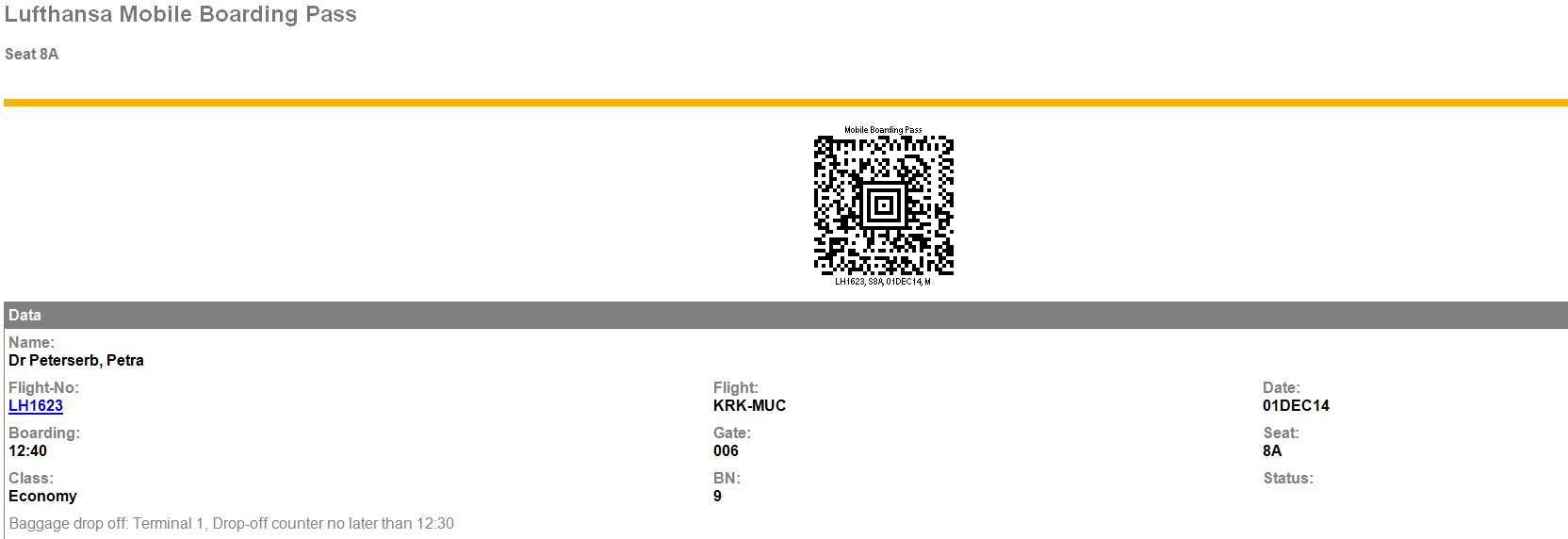
On Sunday, I have received my boarding pass for my Monday flight.

Boardingpass

Around 9 pm on Sunday an email confirms my flight with Lufthansa.

.

Then: Flight canceled

At 9:17 pm on Sunday I receive this SMS:

“We apologize that your flight LH623 KRK-MUC 01Dec 01:10 PM has been cancelled. Further information is available on https//m.lh.com/MjAzNTk3blFmMQ”.

Wonderful. What now? I find out that the pilots will be on strike from 12:00 PM on Monday until midnight on Tuesday. I also find a link that says “your flight has been rescheduled to 6:35 am.” Wonderful. I pay for my hotel room immediately and order a taxi for 4:30 in the  morning. This will be a morning without breakfast.

.

On standby at the gate 7 on Kraków airport

On Monday 1st of December, shortly before five a.m., I stand in front of the Lufthansa check-in desk at the airport. “No,”, the lady at the counter says, “you are not on the list. Please go to the ticket office over there and stand in line to buy another ticket.” I refuse to stand in line and buy another ticket. She walks over angrily and comes back with a standby ticket. She tells me that the flight has been overbooked and my chances are not good to catch the flight, but I could give it a try. Wonderful.

I wait at the gate – I wait for an hour. At six, a friendly clergyman comes and he looks much more optimistic. A few minutes later, check-in has closed. I understand why he was more optimistic – he knew better. He gives me a boarding pass for business class, but without the right to have breakfast. We are about 4 passengers with such standby boarding cards for business class.

.

Now in business class

The business class area is half empty – even with the standby passengers that are escaping the Lufthansa strike. The plane takes off. The stewardess serves breakfast. She passes me a tray. “No – thank you”, I say, “I am not allowed to have breakfast.” “Of course, you can have breakfast,” she says. The world brightens up and I enjoy my business class breakfast with a good cup of coffee.

.

And then – recovering in Munich

At eight we land in  Munich. Around ten I have a second breakfast in the house of my friends… and then I go to sleep for another hour.

Why are these Lufthansa pilots constantly on strike? I later read in my newspaper NZZ that the business model of Lufthansa will change. They plan to have luxury services with the label “Lufthansa” and cheaper flights with the label “wings” (NZZ 4.12.2014, “Lufthansa setzt weiter auf Hochpreissegment”). I do hope that the label “Lufthansa” has not been damaged too much due to the repeated strikes. I fear that the brand “Lufthansa” does no longer stand for “very reliable” and no one wants to pay a luxury price for flying with them…

.

Well, this was a happy end

Great, I have just managed to get to Munich before the great chaos. Kraków, no need to hold me back by asking the Lufthansa pilots to go on strike – I will come back for sure next year!


On the road – a chilly November weekend in Kraków – looking for warm places

Let me continue sharing memories from Kraków. Under an intransparent grey sky cover, Kraków was chilly and windy. I was freezing. It is great that Kraków has so many comfy tea/coffee houses and restaurants, often hidden in basements. Thank you, Radek, Iwona, Agata and Asia for warming me up at great places.

.

The restaurants that we visited for lunch or dinner

Deterzer: Iwona takes me to this small restaurant in Bracka south of the Rynek. I like the atmosphere and my mushroom salad. Iwona has a hot pot with mushrooms. (see also Tripadvisor ).

IMG_1212

Miodowa: Radek takes me to the Miodowa that has just recently opened. I have trout (pstrąg) with butter and a local wine – very good (rated superb in Tripadvisor).

No 7  is located in a cellar behind the Rynek. I have delicious Bigos Małopolski. This is stewed meat with sour cabbage, a Polish meal that Radek’s mum cooks when she has a lot of guests (see Tripadvisor ).

IMG_1223

Wesele: Wesele means “marriage” suggesting that marrying is a joyful event (wesoły).  This is not my favorite restaurant, because it is a little “touristy”. But Iwona and I feel too cold to look for another place. We have goose with redbeet, dumplings and tasty tiny apples – and  it was excellent. Tripadvisor also gives good reviews.

.

The tea and coffee houses that warmed us up

Kraków has a very welcoming tea and coffee culture. We spend hours here.

Cupcake in Bracka – south of the Rynek: This is Asia’s favorite place. We escape from the cold temperatures to warm up with hot chocolate and one of their delicious sweet bakeries (see Tripadvisor)

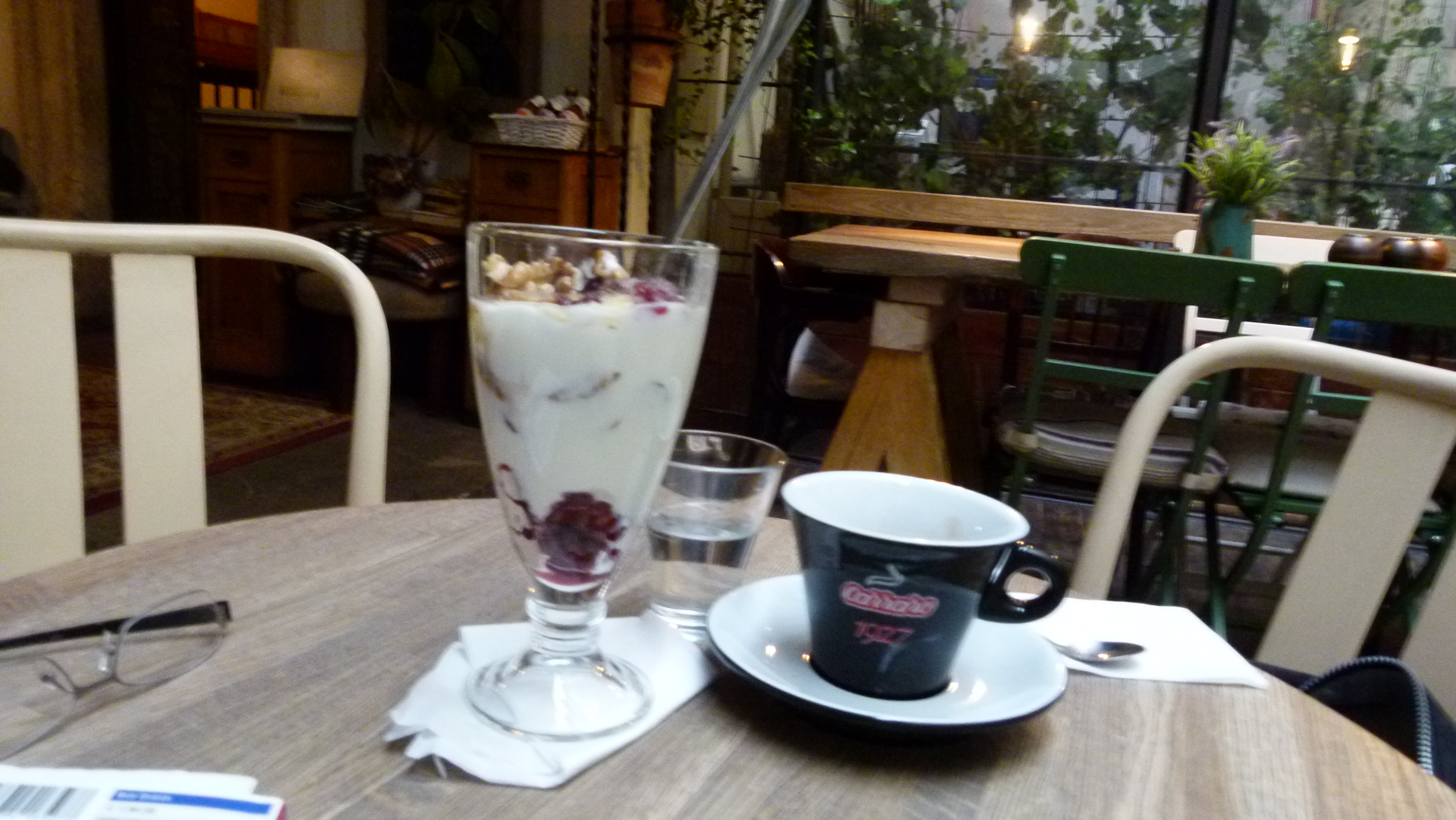
Magia: Iwona has introduced me to the Magia a year ago. I loved to come back for breakfast after having arrived early in the morning. I have a delicious yoghurt with honey, walnuts and berries (see Tripadvisor).

P1070062

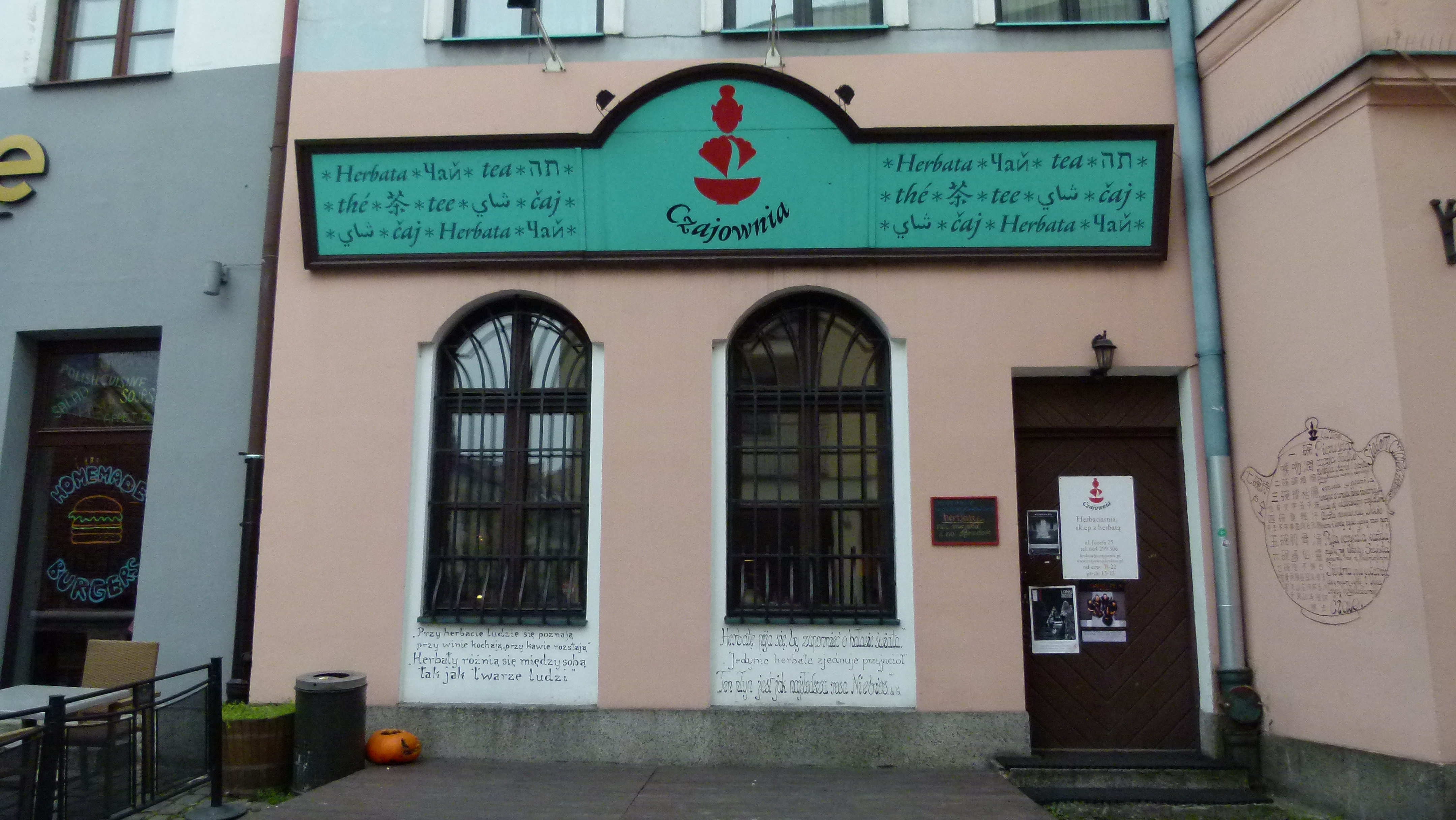
Czajownia: Over a pot of green tea I had a chat with Agata and Radek. The menu of teas is huge and the atmosphere is homelike… I always come back to this place.

P1050402

Czarka: To warm me up, Radek takes me to this small tea house in Florianska street. It is in the cellar and not easy to find. Students sit here and learn in groups. I enhance the average age considerably and have a green tea from Vietnam. This tea house is new for me, and I will surely come back.

IMG_1228

.

I only spent three days in Kraków and I only stayed in the city center. I could stay here for much longer and find many more welcoming coffee or tea houses and restaurants. Here are some more places spotted by locals. Also Tripadvisor has a long list of places to go.


On the road – a chilly November weekend in Kraków – some sightseeing

Let me continue sharing memories, now about the sights I visited: I said hello to some churches, to the Art Nouveau around Uliza Retoryka, to the Wisla and to the Wawel castle, learnt about Galicia, discovered an excellent small wine shop and found a pretty book about Krakówian legends.

.

Sightseeing – saying hello to some churches, Art Nouveau around Uliza Retoryka, the Wisla and the Wawel

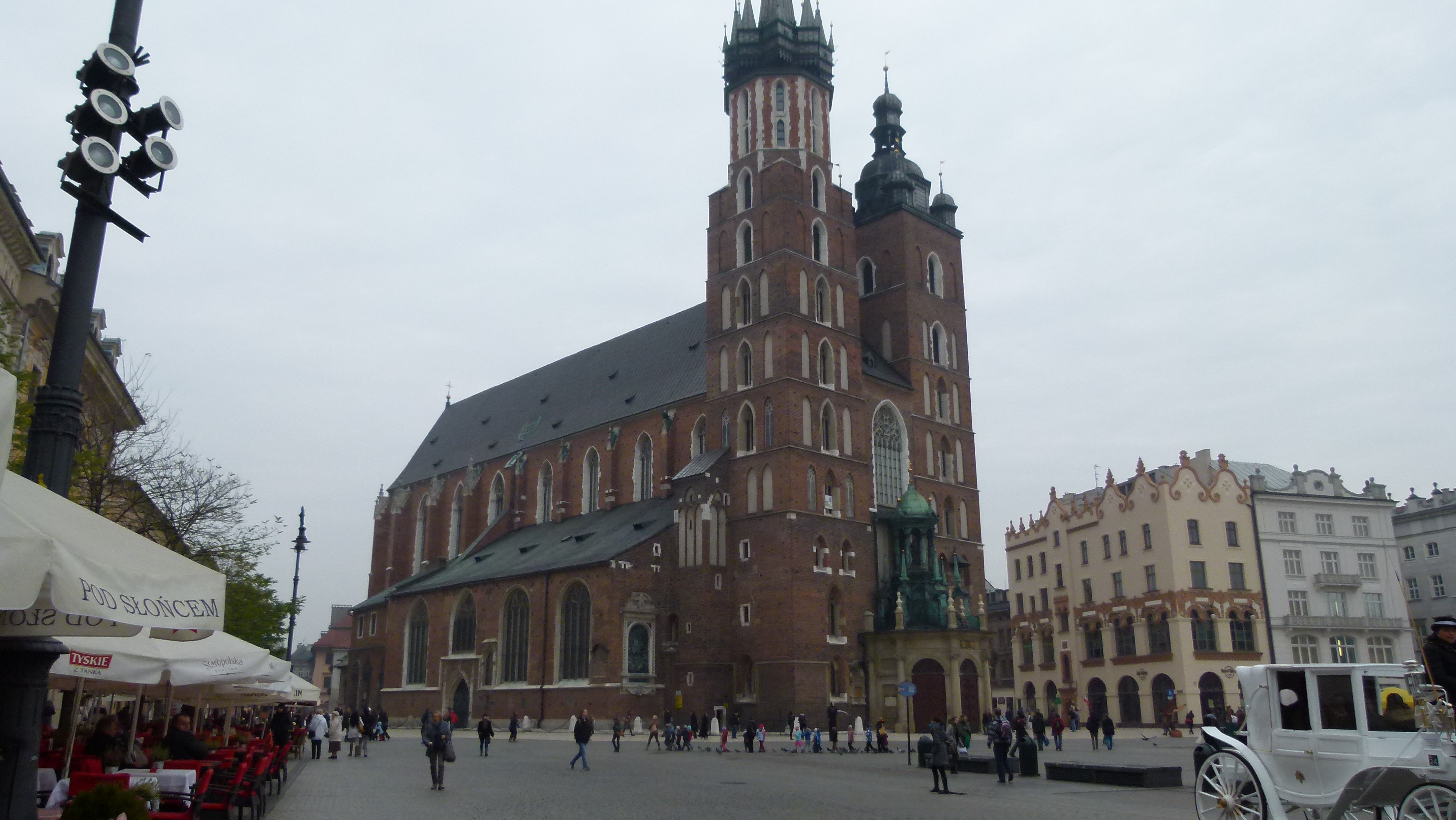
Kraków is the town of churches. Most visible is the gothic Saint Marie’s church on the Rynek where the hejnal signals the hours with his trumpet (I found him on youtube, he stops in the middle of the tune, because his colleague-hejnal was shot by a Mongolian arrow about 800 years ago – exactly at this moment the tune stops, as legend says)…

P1050272

… also on the Rynek are the Saint Barbara’s church (same age as the Saint Maria church) and the romanesque small Saint Adalbert church. On Gródski, I like the baroque Saint Peter and Paul’s church with the adjacent romanesque Saint Andrew’s church – and there are many, many more churches. I join the prayers and stand still for a moment to meditate – on Friday to welcome Kraków and on Sunday to warm up in a double sense (my heart and my body temperature). I am particularly impressed how the Saint Peter and Paul’s church changes – sometimes there are concerts, on Thursdays, they demonstrate the Foucault pendulum – and now the priest reads his sermon with solemnity.

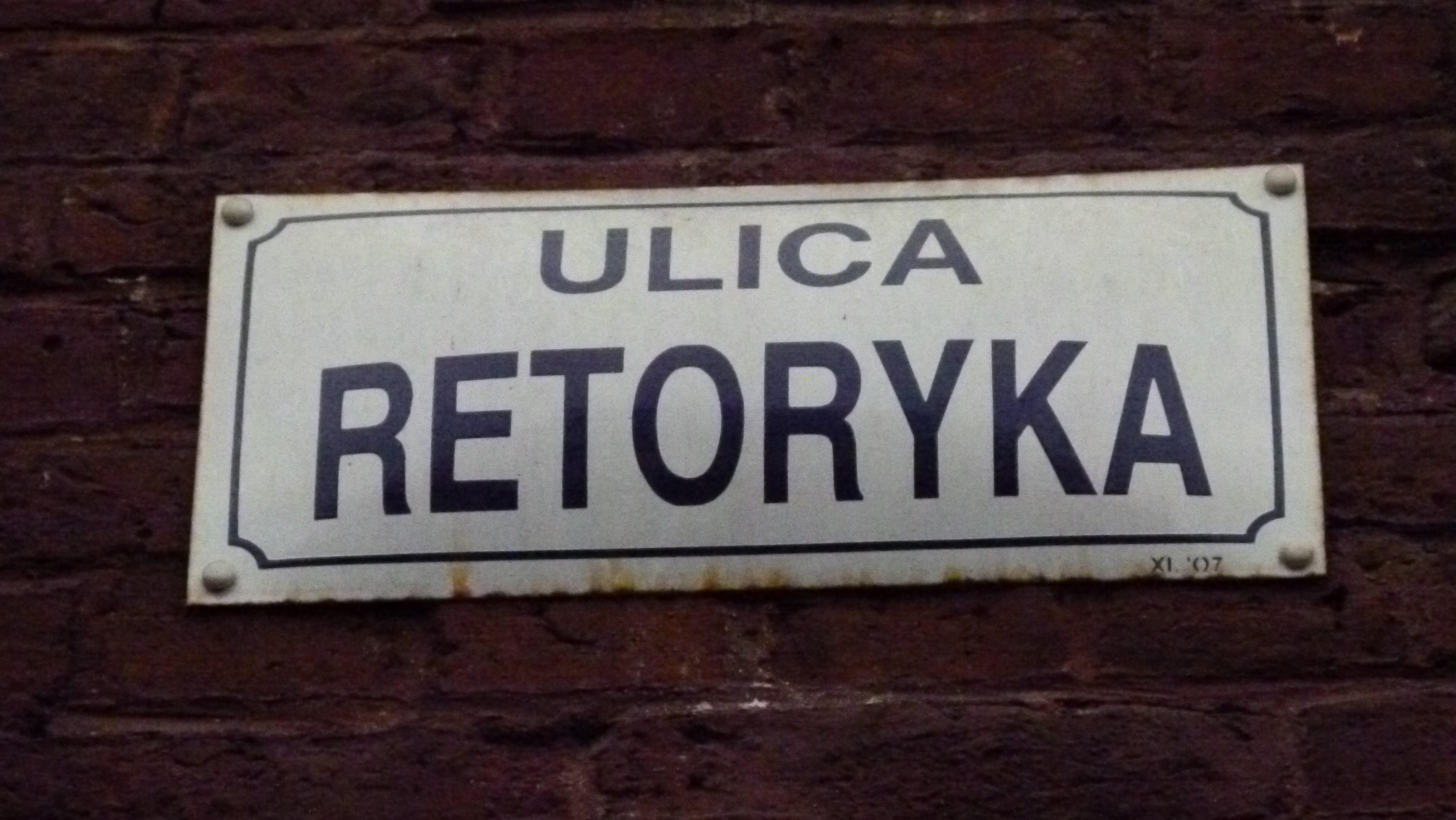
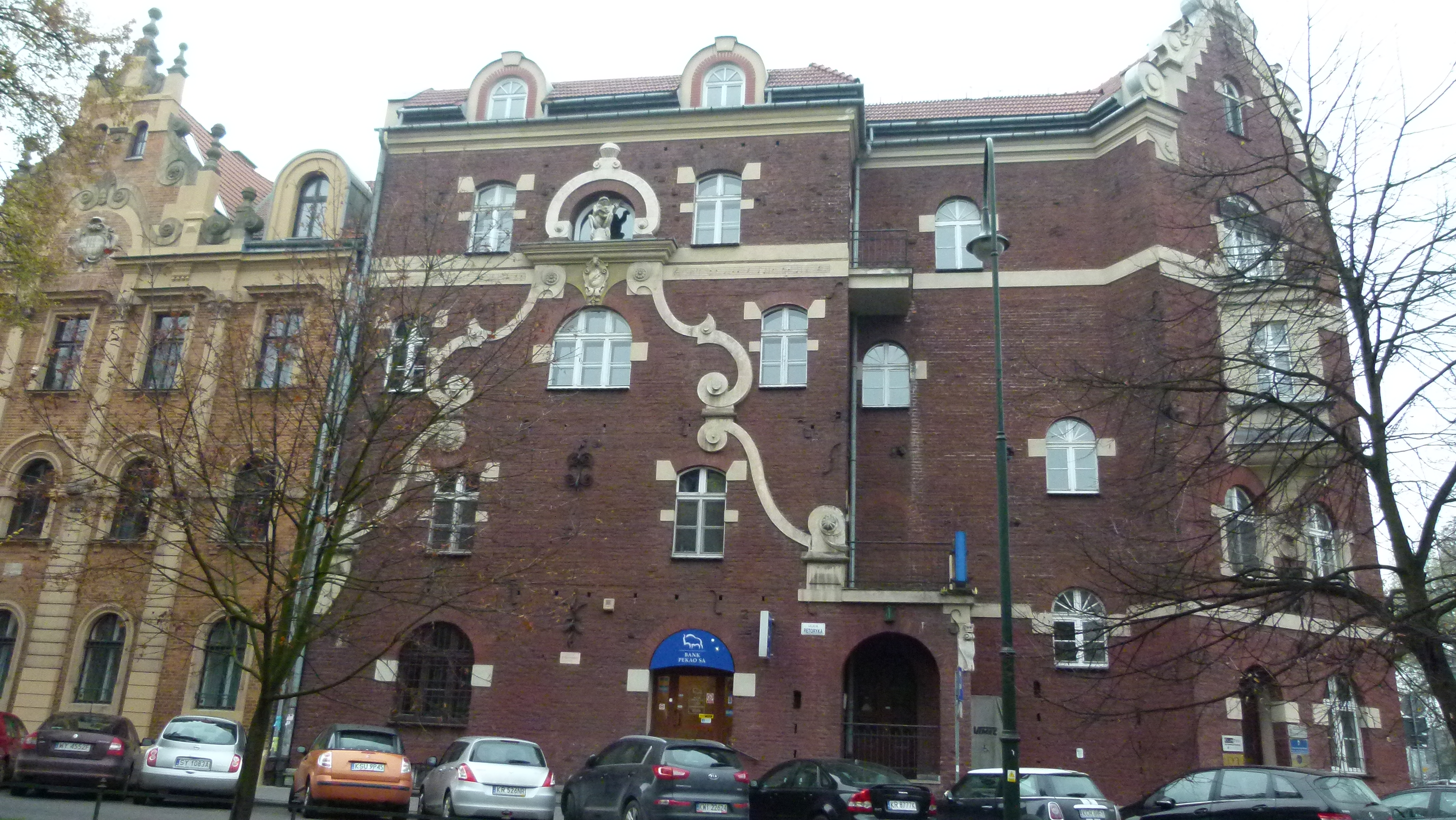
Art Nouveau can be found beyond the boundaries of the old city center (Stare Miasto). I say hello to some of the Art Nouveau houses around Uliza Retoryka in Piasek. The fact that this town has an “Ulica Retoryka” indicates that it is really a traditional university town – the Kraków university was founded in 1364.

P1070103

The houses I say hello to are the Hutten-Czapskich Palace, the house under the Owl and the house under the Singing Frog which is part of a whole block of Art Nouveau buildings.

P1050326

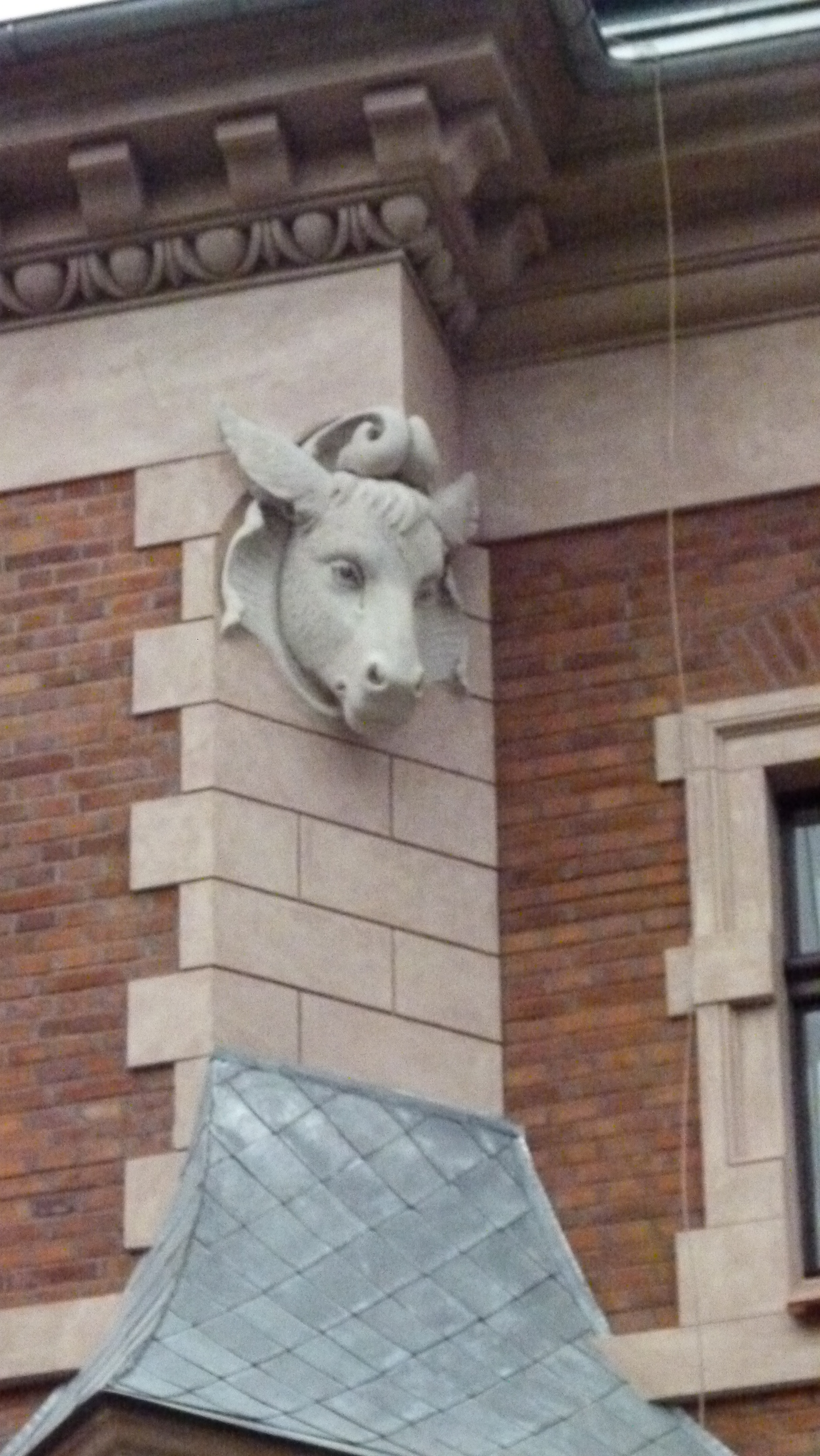
I discover details that I had not noticed before, such as this horse head…

P1070104

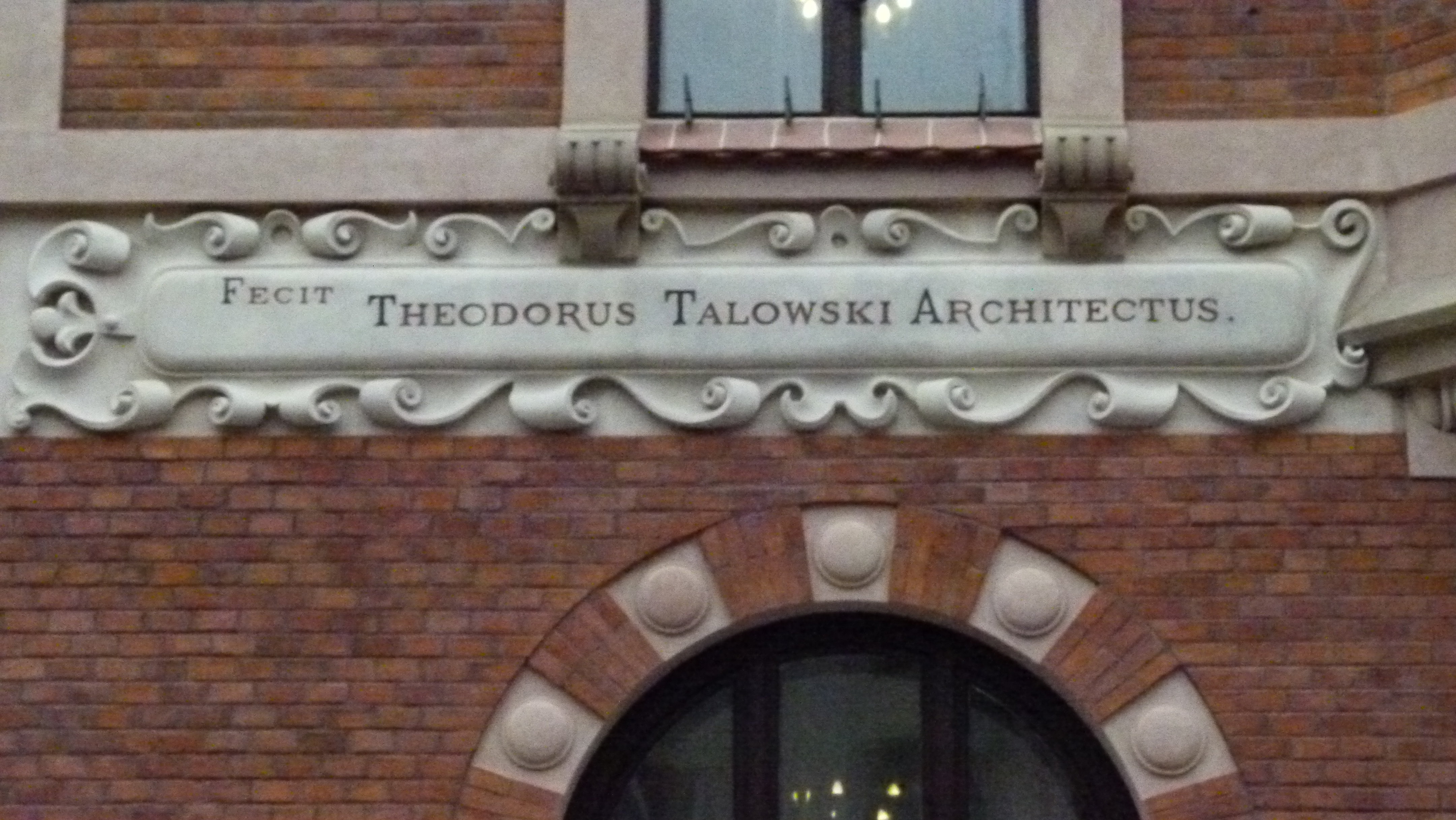
… or the inscription of the architect: “Fecit Theodorus Talowski Architectus”… the Architect Theodorus Talowski made it.

P1070106

Uliza Retoryka ends at the Wisla. This is the river that connects up Kraków and Warszawa.  I might book this boat tour when I come back in summer.

P1070108

Crossing the Wawel hill with the castle I return to my hotel. Radek waits for me to take me out for lunch. But first he proposes some culture in a warm place – the exhibition about Galicia.

P1050425

.

Some more sightseeing: Learning about Galicia

The International Cultural Center on Rynek has curated an excellent exhibiton about the myth of Galicia.  This is the motto of the exhibition: “Galicia no longer exists. It disappeared from the map of Europe in 1918 together with the Austrian-Hungarian Empire, whose province it had been. Yet, it still lives as a imagined space in the collective imagination and memory. The Krakow exhibition seeks to answer the question about the source and contemporary condition of the myth, trying to find out why literature, visual arts, and film still refer to it, while Galicia itself is used as an attractive brand.” The exhibiton displays art works, archive materials, and artefacts and places them in the historical context. The first part shows how the myth of the multinational region emerged in the Polish, Ukrainian and Jewish perspective. At the end of the 18th century, Poland was divided up and Galicia (with Krakow) became a province of Austria, for roughly 150 years. The detection of oil reservoirs and the construction of railways helped develop the economy of this poor and remote province of Austria-Hungary. In 1918 the province of Galicia ceased to exist. It was divided up and Kraków with Malopolska became part of Poland.

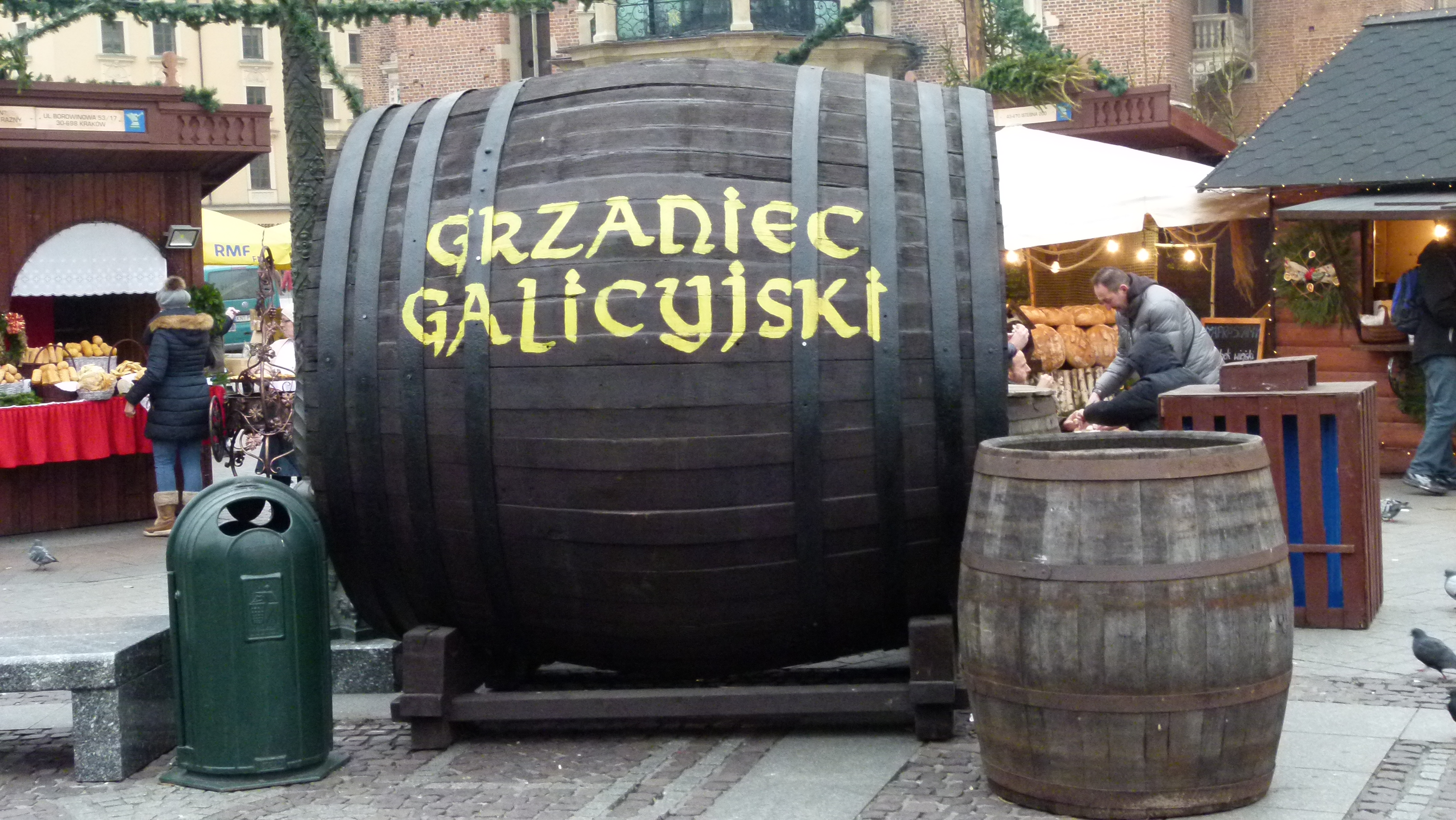
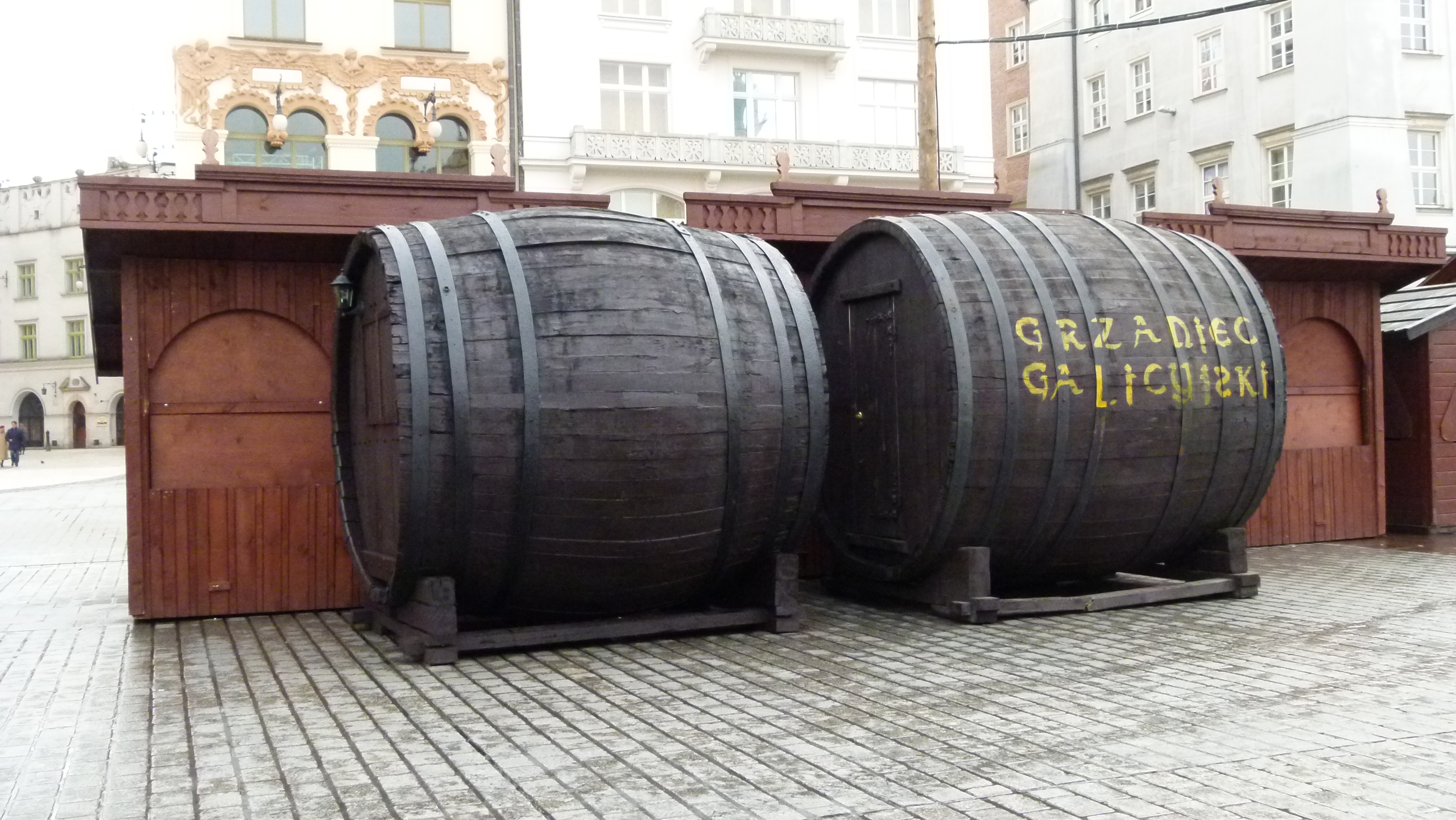
Well, in a way Galicia still exists as a label – remember the Grzaniec Galicyjski or Galician hot wine from the barrels on the Christmas market?

P1070071

Great experience, thank you, Radek for this food for thought before having food for our stomachs.

.

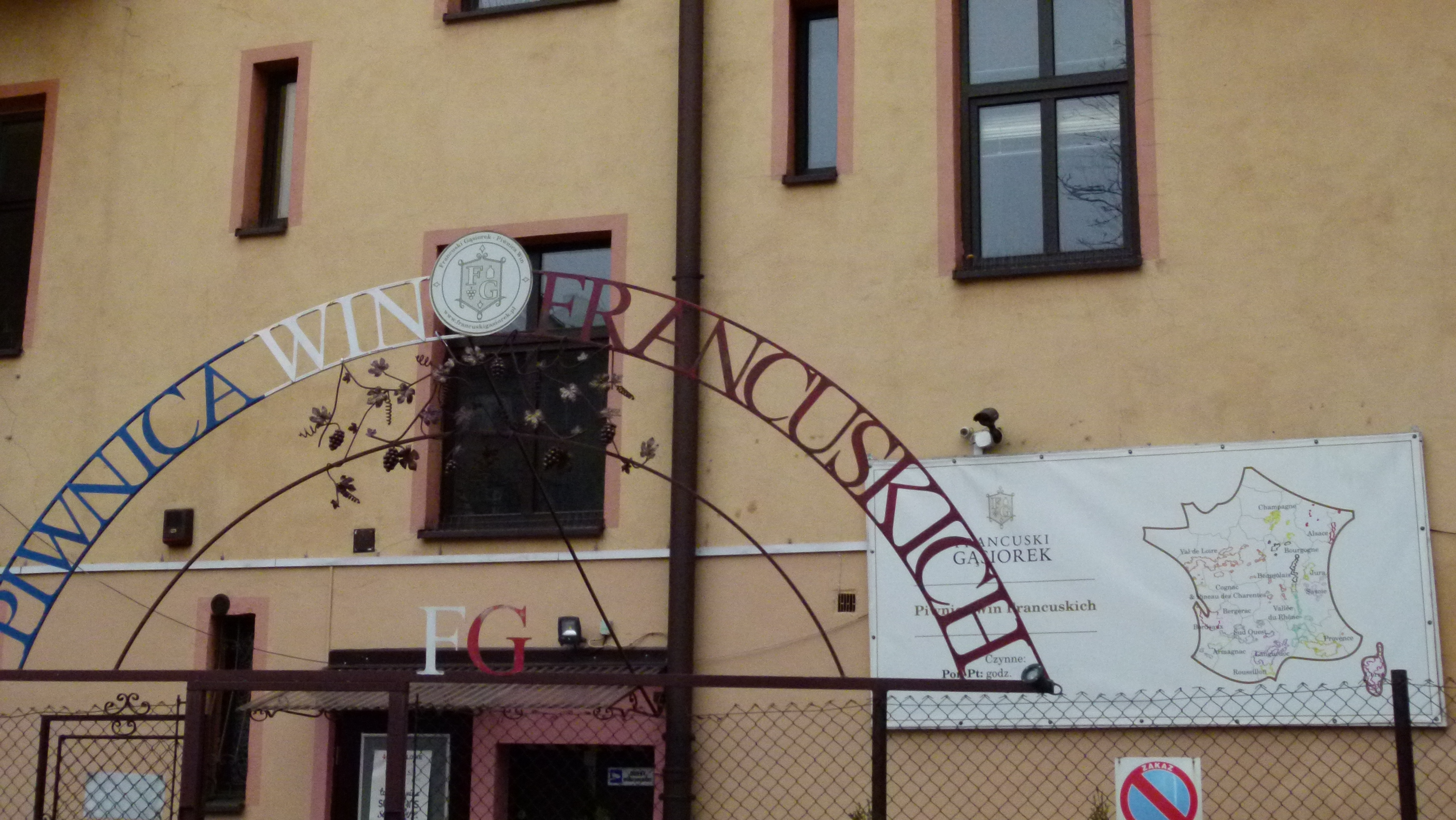
Discovering the excellent wineshop “Francuski Gąsiorek”

As we expect more guests for the Fondue party than first planned, Radek takes me to the Francuski Gąsiorek to buy a bottle of crispy wine. We stand in the cold wind in front of the locked gate.

P1070088

The shop opens at twelve. A young man comes and unlocks the gate. We enter with him and find an excellent selection of wine in the cellar: French wines from Burgundy, the Loire Valley, the Rhone Valley, Languedoc and the Alscace. Just having come back from Burgundy, I feel tempted to buy the Appelation Village de Savigny-Les-Beaune (not possible in the hand luggage, when flying back). He has nice Chablis 1er Crus from Côte de Léchet and Beauroy. In addition, gems from Germany are on sale, from Franconia (Silvaner in Boxbeutel bottle) and Rheinhessen (I see Gewürztraminer and Riesling). The young wine dealer is proud of his wine cellar and knows what he has. He explains that his Gewürztraminer from the Alsace differs from the Gewürztraminer in Rheinhessen. The first has residual sugar, the second is much drier. Yes, I have experienced that as well. His eyes shine happily, when I discover the Boxbeutel; he points to the right most Boxbeutel bottle which he prefers. He proposes a Viognier from Languedoc for our Fondue and I buy his last bottle of Crémant d’Alsace for Piotrek’s new apartment.

Back home I find out that “gasiorek” means “male goose”, but here it means demijohn (in German Ballonflasche). What does a male goose have in common with huge bottles?

I find a blog about this new wine shop (in Polish). Great shop – I will surely come back.

.

The Collegium Maius – and legends of Kraków

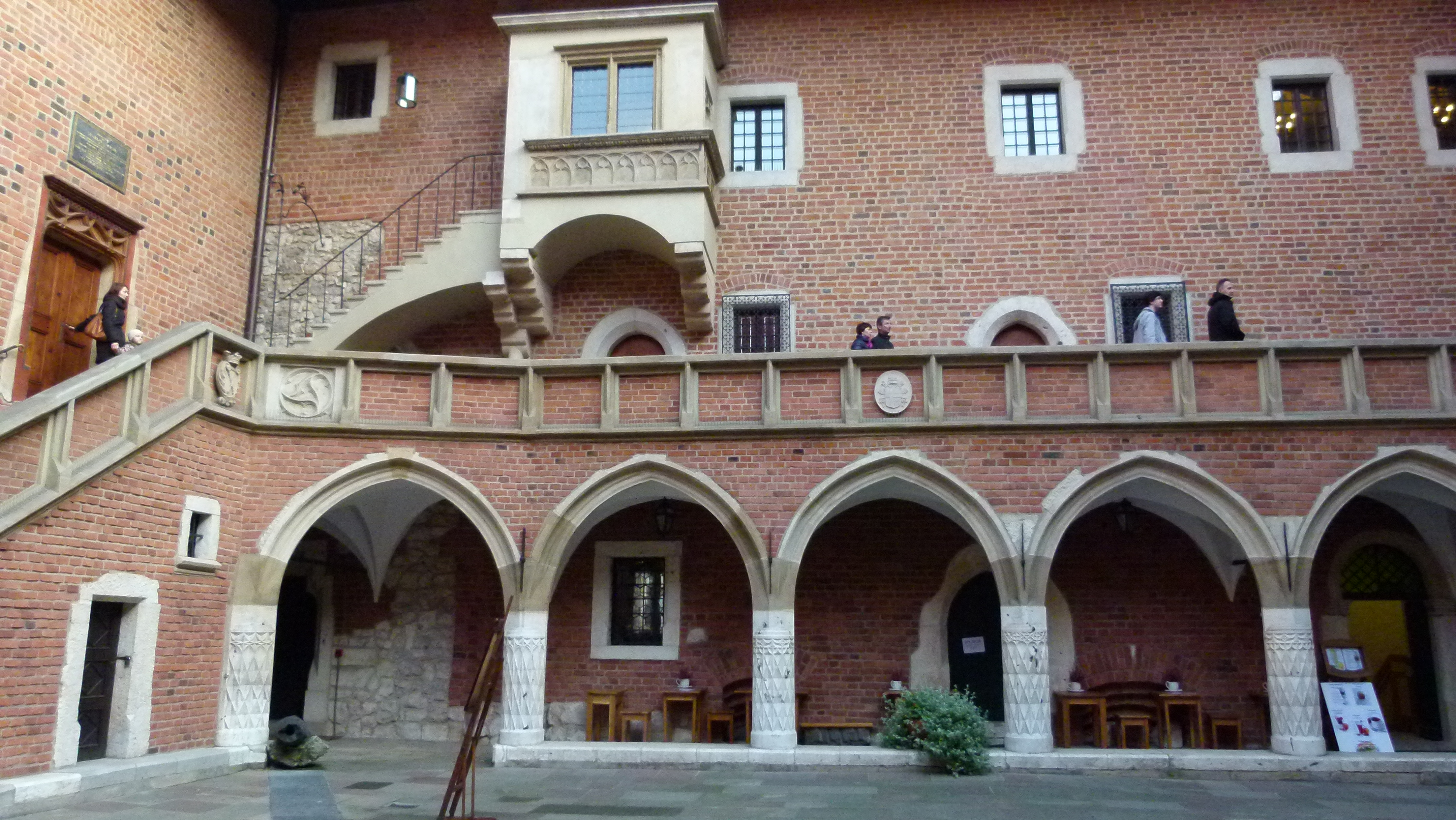
I stop by in the courtyard of the venerable Collegium Maius, the university from the 14th century. A group of tourists listen to their guide – shifting from one foot to the other. Yes, it is cold.

P1050388

The museum shop is open. I enter it (it is warmer here) and find a pretty small book about legends from Kraków or “Krakauer Legenden”. On the cover is the Lajkonik (the Krakówians make fun of the Mongolians that could not conquer their city).

Krakauer Legenden Titelblatt

The book contains ten legends that are nicely illustrated, among them the legend about the trumpeter of Saint Marie’s church, the Hejnal, and the legend about the towers of Saint Marie’s church (why they are not the same size, the reason is envy between two brothers). Kraków is full of legends. This book will accompany me on my next visit.

On the road – a chilly November weekend in Kraków – the Christmas market

The tradition – a Fondue from Switzerland in Kraków

It has become a tradition that I travel to Kraków in late autumn to meet my friends walking and talking in town as well as sharing a Fondue at Dominik’s place.  This time Asia and her husband also invite me to their tastefully decorated new apartment. Thank you all for your wonderful hospitality.

I would like to share some of the memories that I take back from your town: I enjoyed the lively Christmas market on Rynek, said hello to some churches, to the Art Nouveau around Uliza Retoryka, to the Wisla and to the Wawel castle, escaped the chilly wind to warm up in tea houses and restaurants, learnt about Galicia and discovered an excellent small wine shop. Perhaps Kraków did not want to let me go and asked the Lufthansa pilots to go on strike from Monday 12:00, exactly when my flight to Munich was scheduled.

Let us start with the Christmas market.

.

The lively Christmas market on Rynek

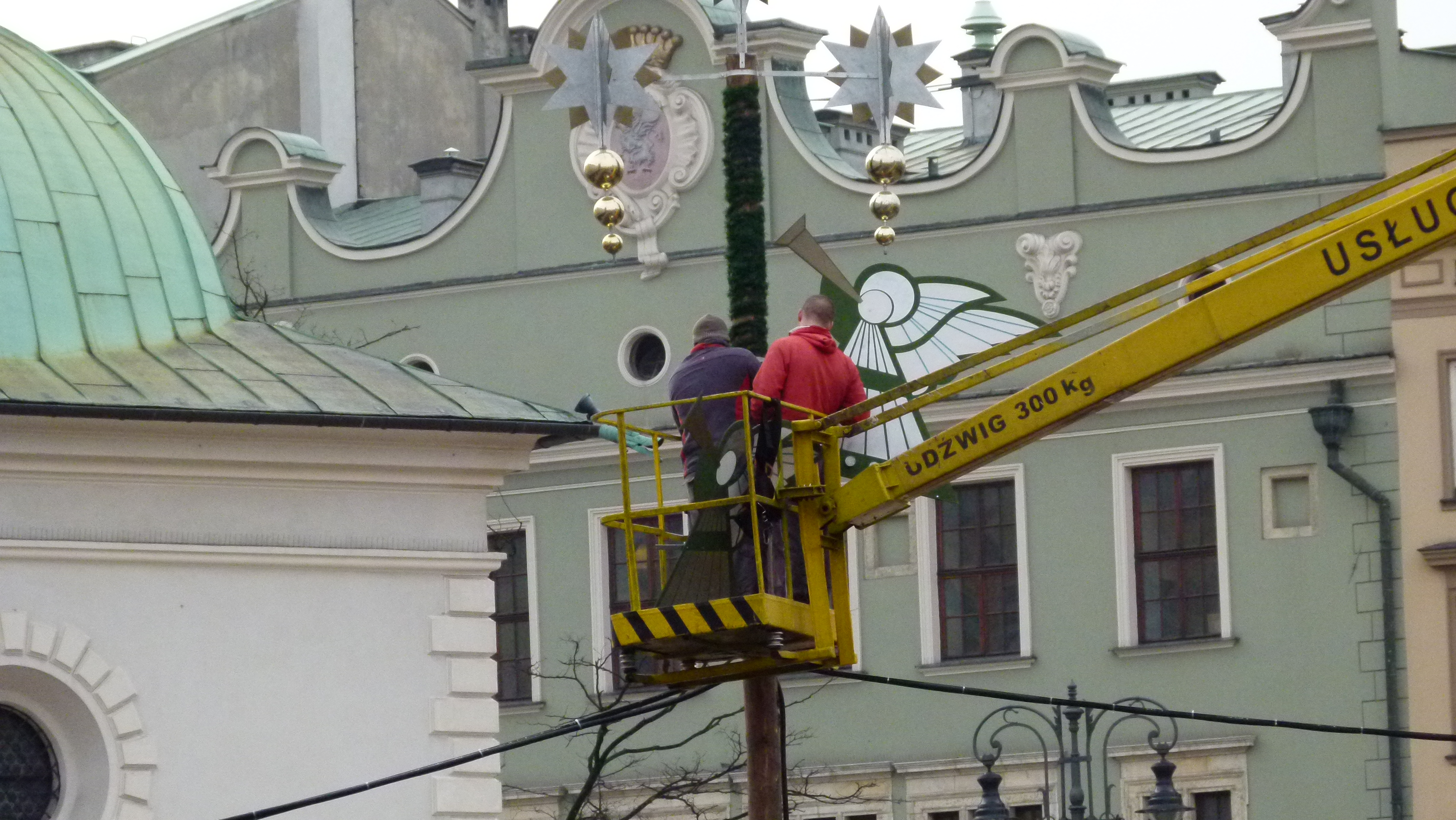
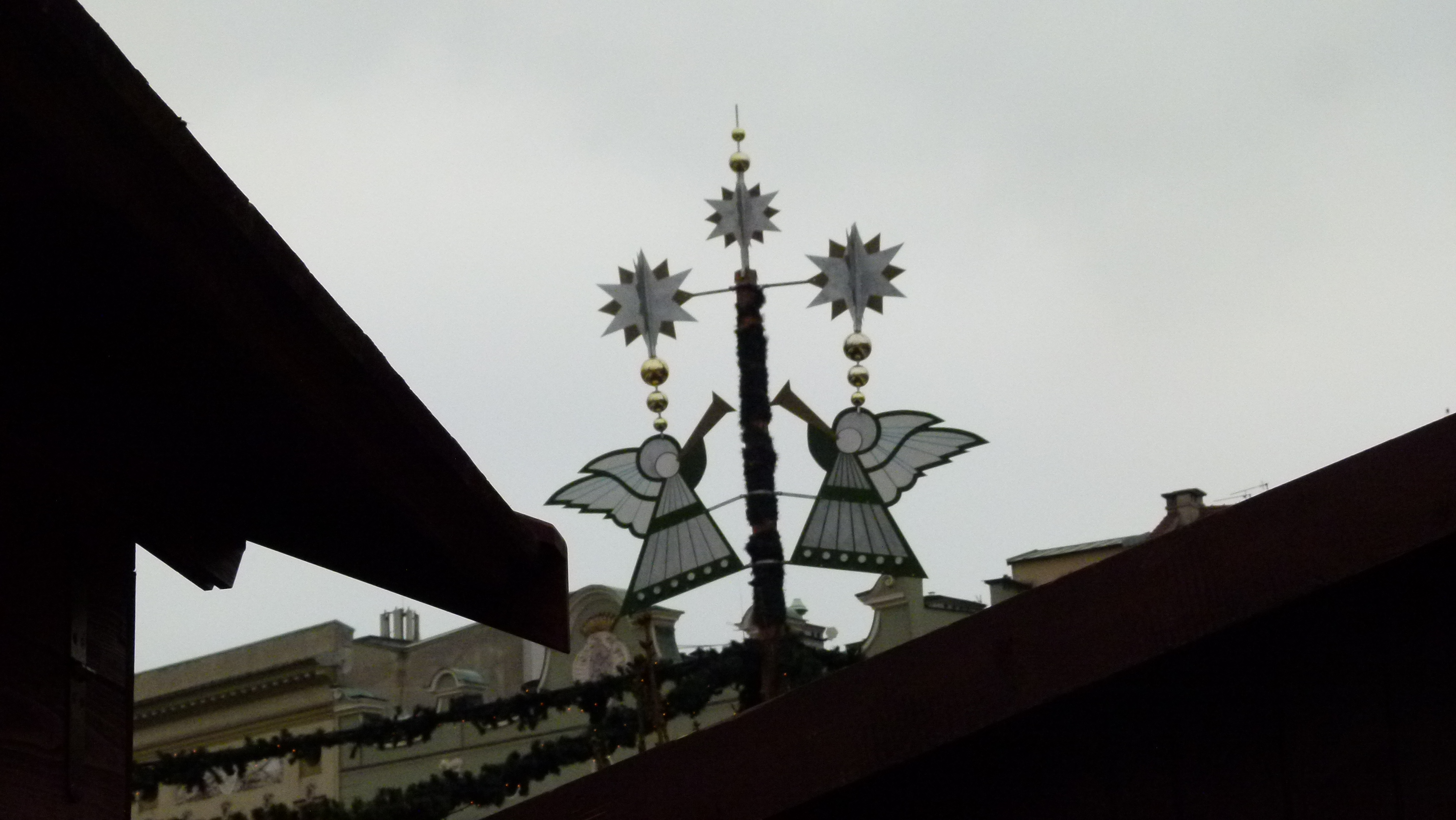
Last year I observed angels being installed above the Rynek, two mysterious huge barrels being dropped and wooden stands emerging on the Rynek.

P1050619

P1050617

These were the preparations for the Christmas market.

This year I am here right in time for the Christmas market. The angels above the Rynek are again hanging above the stands and looking down at the busy activity.

P1070070

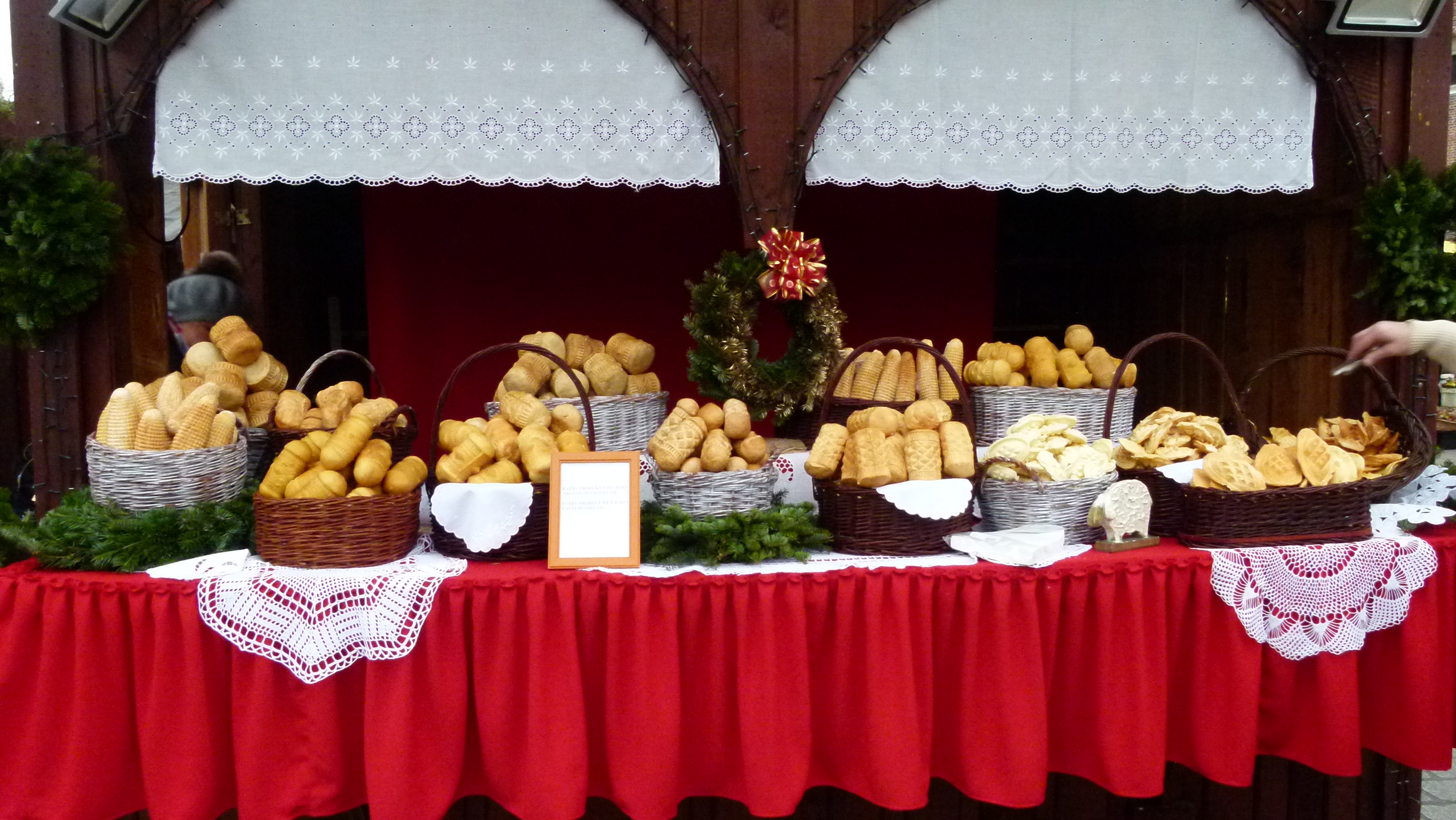
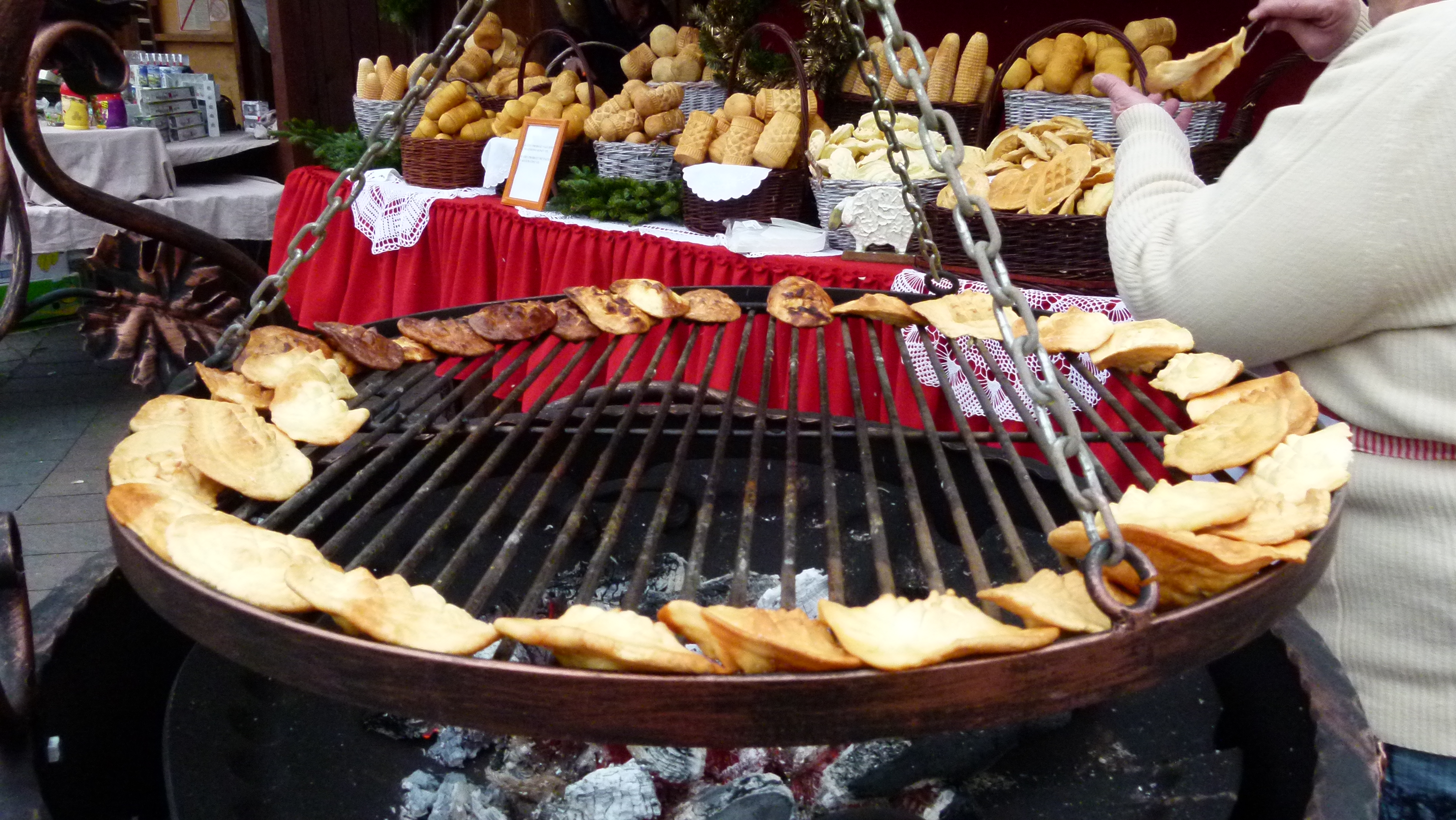
Local products such as Oscypek (sheep cheese) are on sale.

P1070069

This cheese is being grilled and served with cranberries. I try it and it tastes quite good – though perhaps for me somewhat interesting.

P1070068

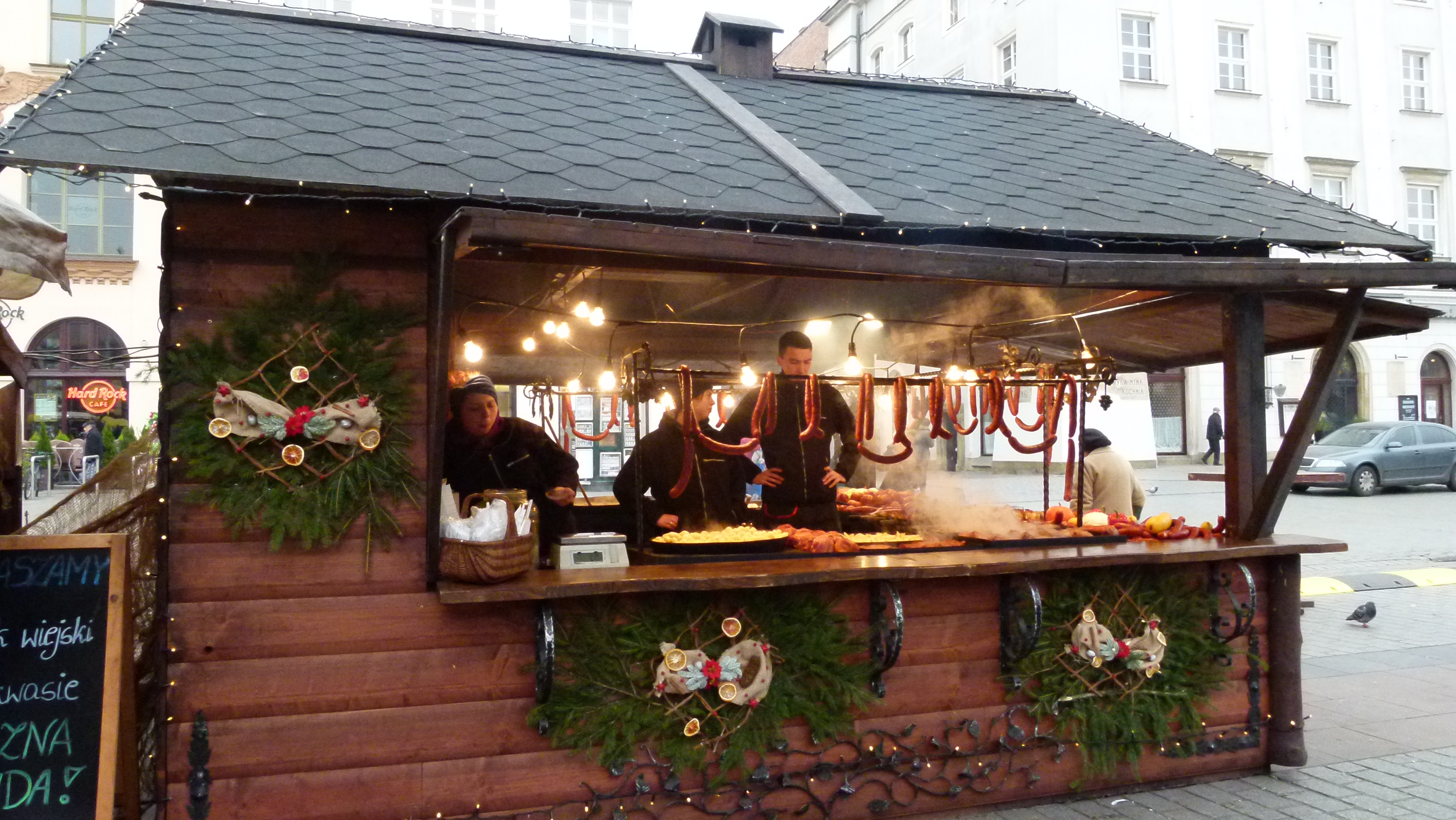
There are stands that produce a lot of smoke: Barbecued maxi sausages, pork knuckles, giant meat skewers and potatoes are on offer.

P1070065

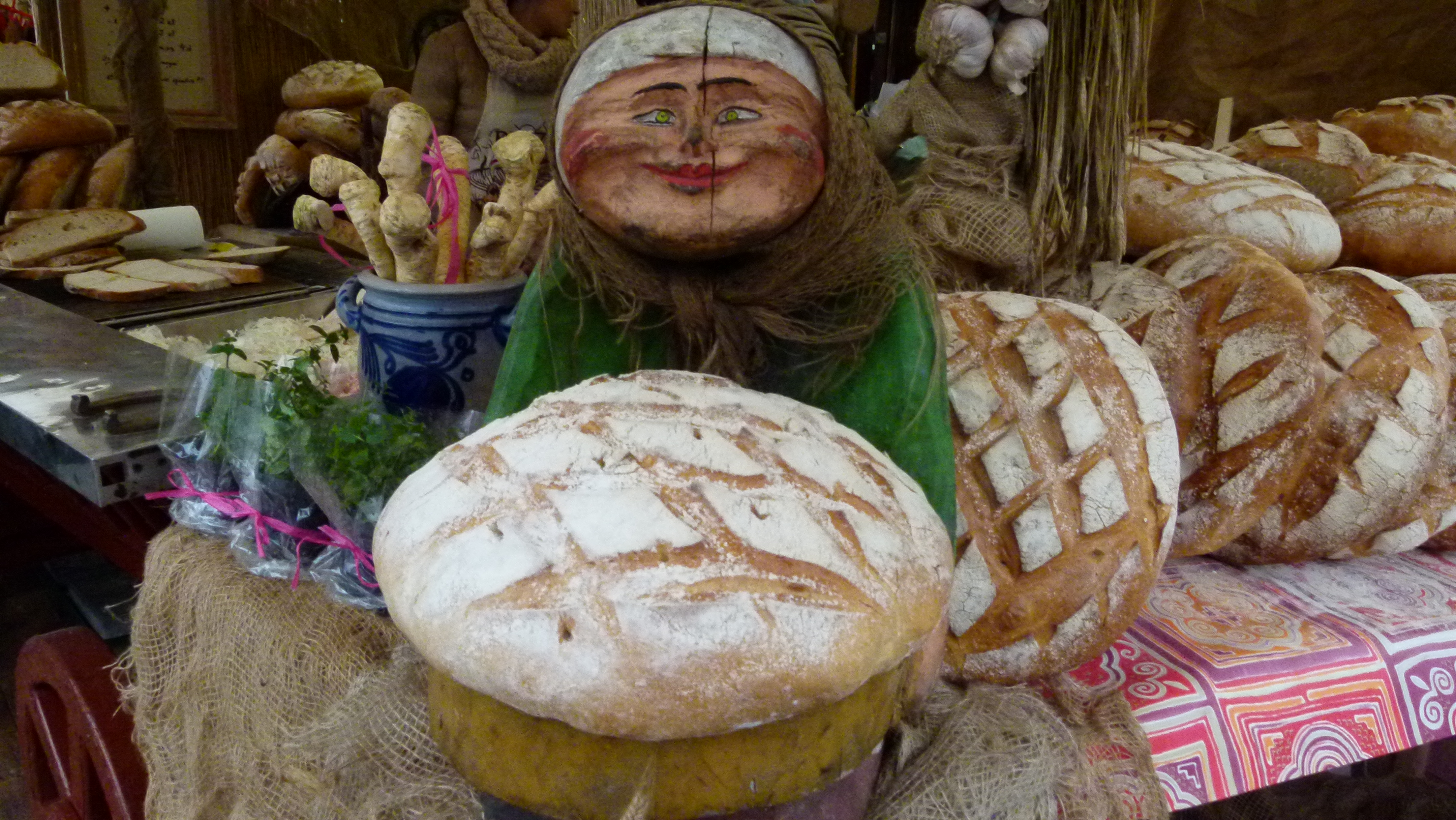
On sale are also beautiful loaves of bread…

P1070078

… and the Polish cream toffees – krówki. Krówki are made from cream that comes from cows, and this is why they are called “krówki”. I followed the instruction for self service and bought some.

P1070075

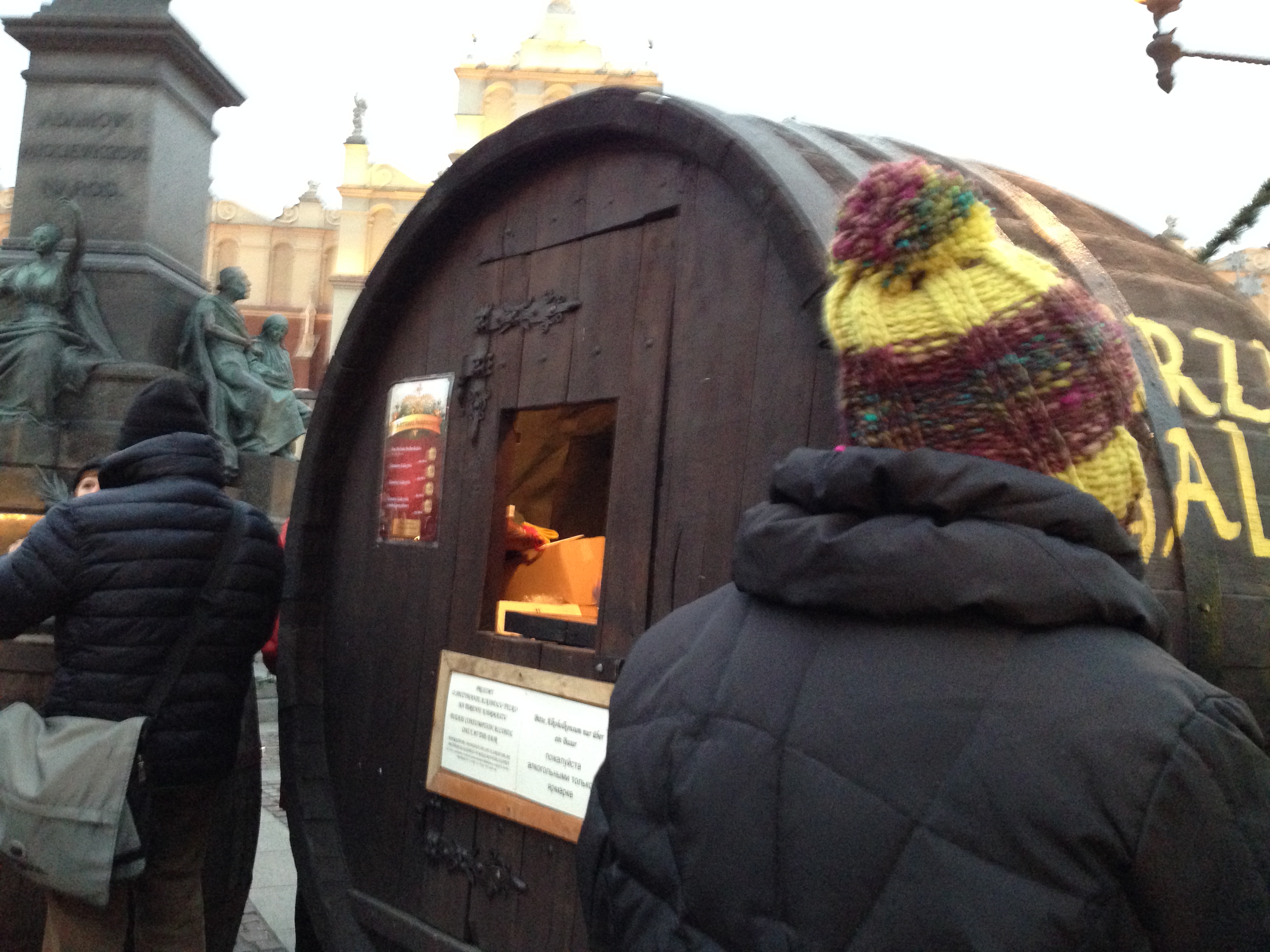
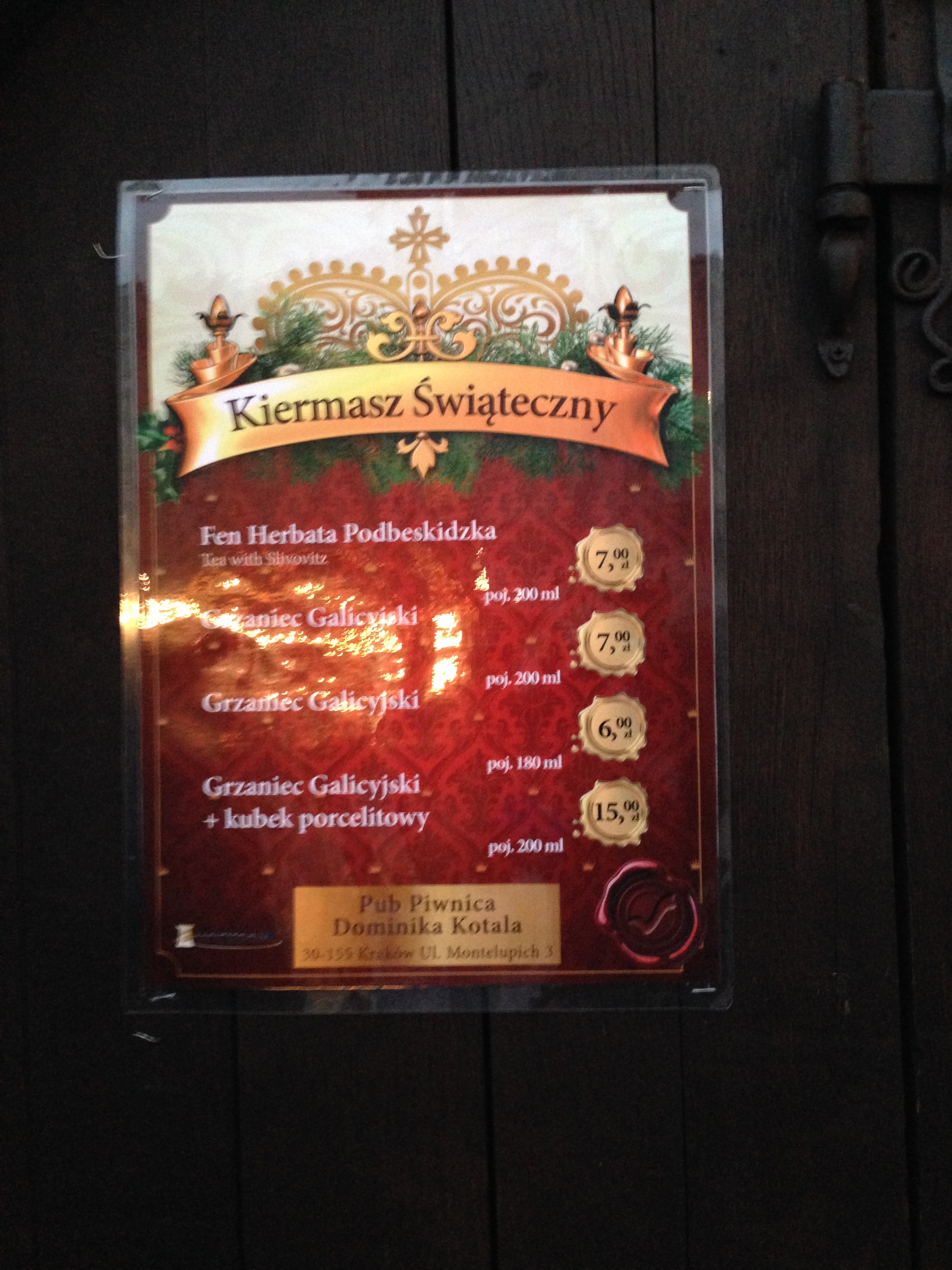
The “barrels” with the mysterious inscription are also back. Radek explains to me that they sell hot wine galician style or “grzaniec galicyjski” (literally “hot Galician”).

P1070071

The barrels open later. Their hot wine is in demand – people stand in line for it. I also buy a cup to warm me up from the chilly wind.

IMG_1216

This plate says what types of hot wine you get at the barrel window of the Christmas market (kiermasz świąteczny).

IMG_1219

There is also local handicraft such as woodware and embroidery on sale.

Around me I hear a lot of Swiss German, UK English, Russian and even some French. This charming Christmas market is a valued tourist destination. I can understand that. I love to linger around here – this market has a special charm with its products from Poland and the Rynek – one of the most beautiful market squares in Europe – makes a great setting for it.

.

Let me continue with some more memories of Kraków later.

On the road to Burgundy – French culture in Châtillon-sur-Seine and Fontenay

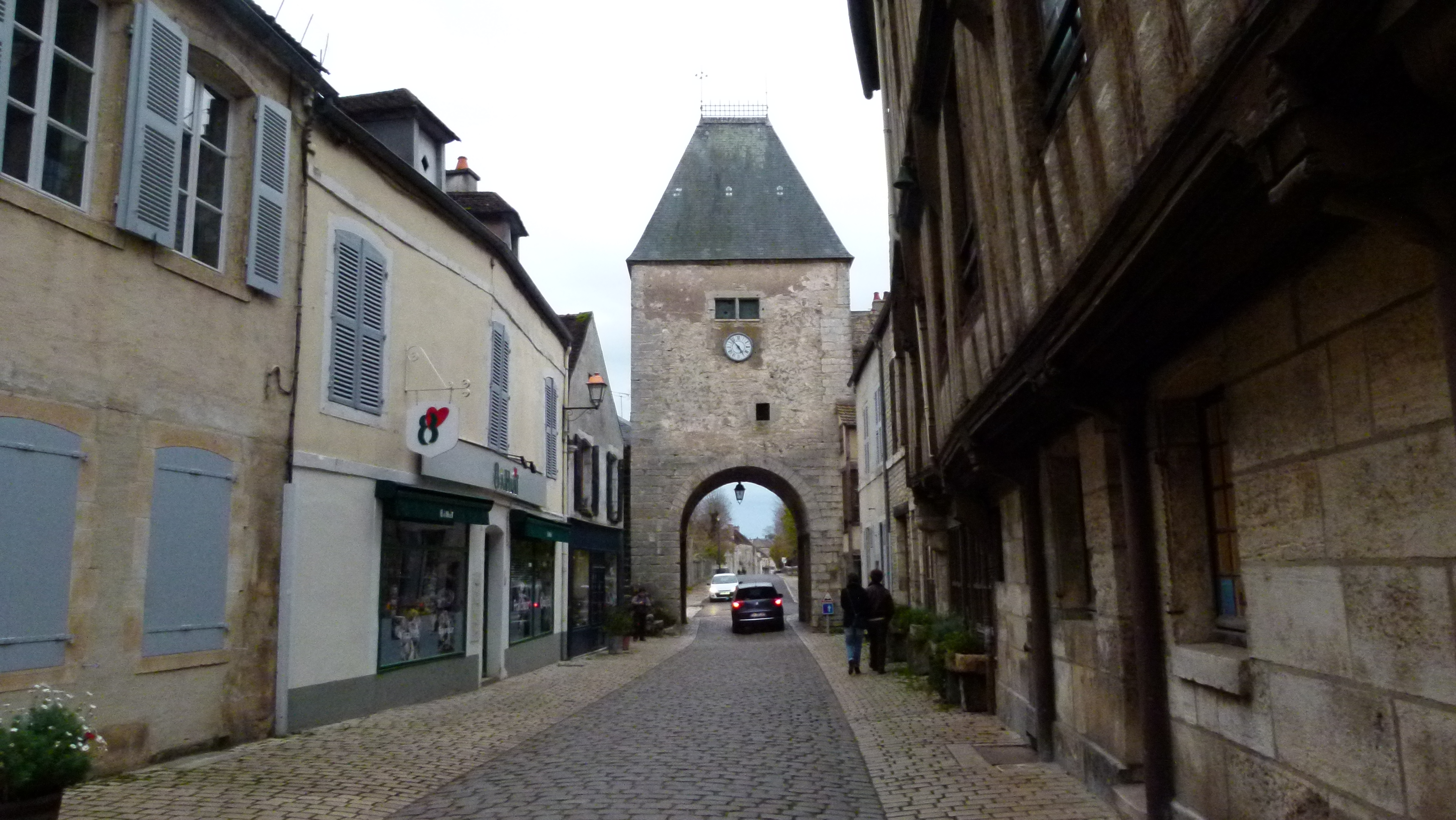
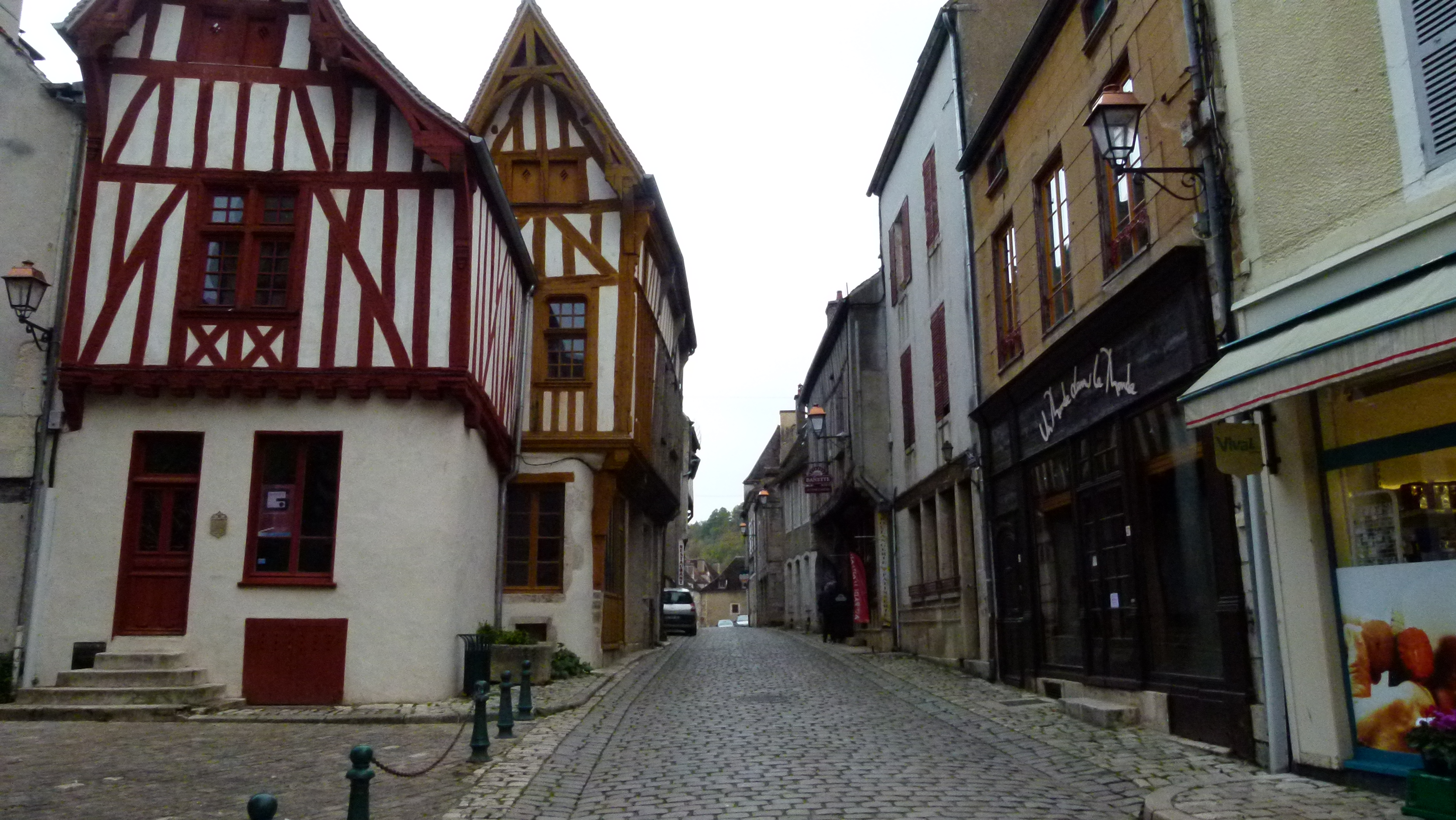
Châtillon-sur-Seine is a gorgeous small town with cobbled streets topped by an old church and a castle

After my delicious dinner and my cosy night in the Hotel de la Côte d’Or, I stroll through the old town stretching along the (still young) river Seine.

P1060747

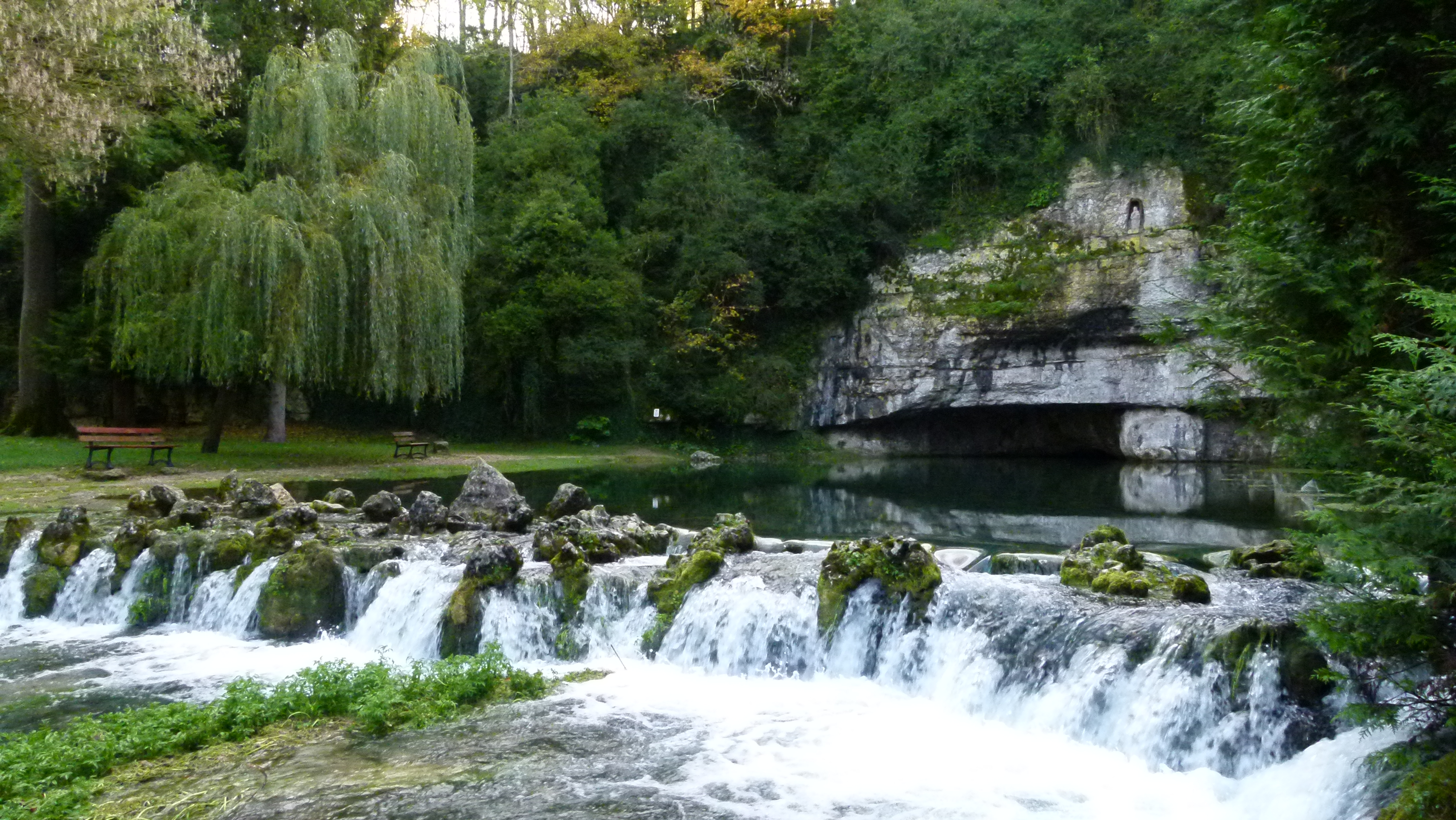
A sign points to the source of Douix. It emerges as an artesian well adding ambiance to a small, romantic town park. The Douix then flows into the Seine.

P1060757

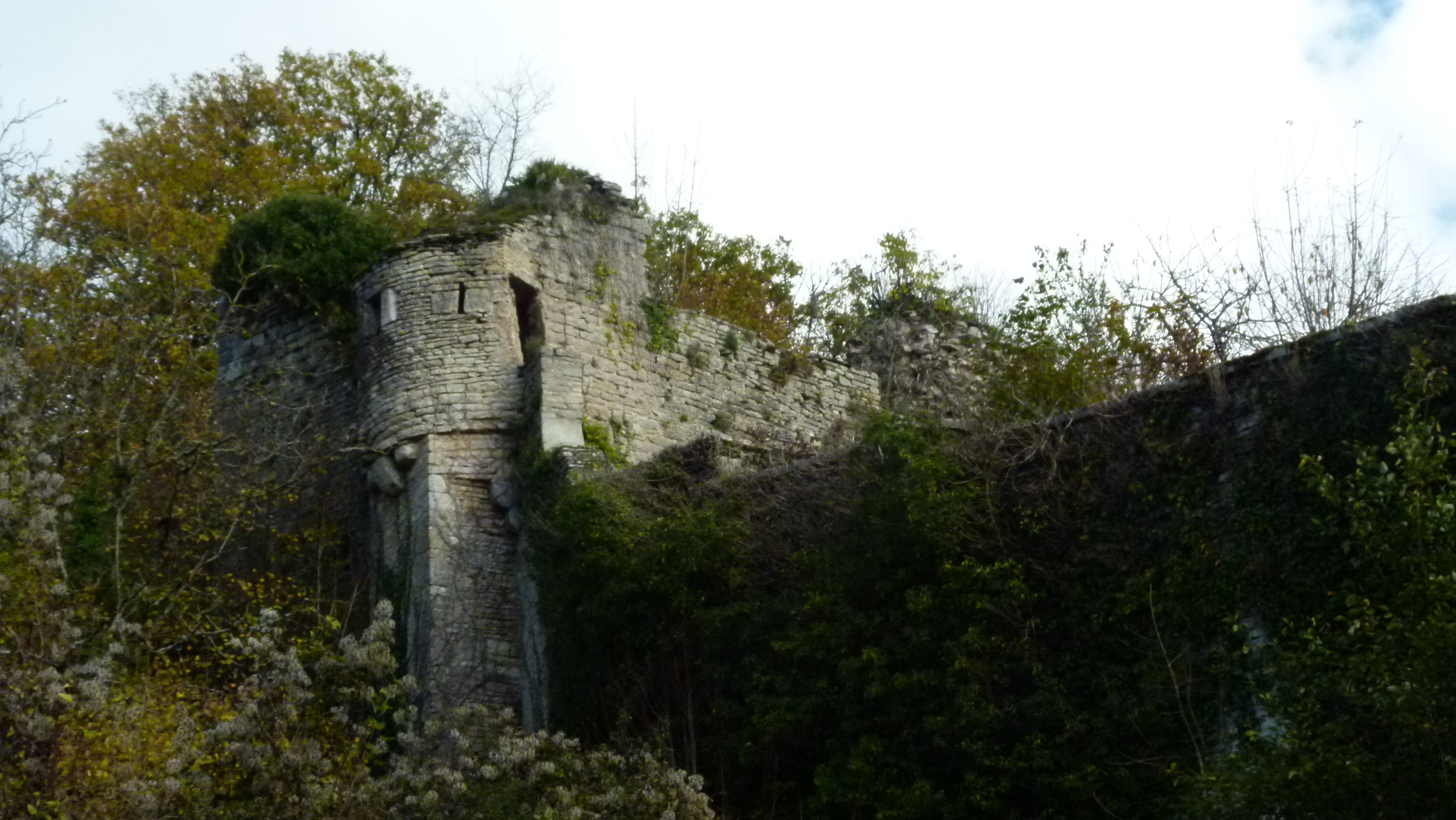
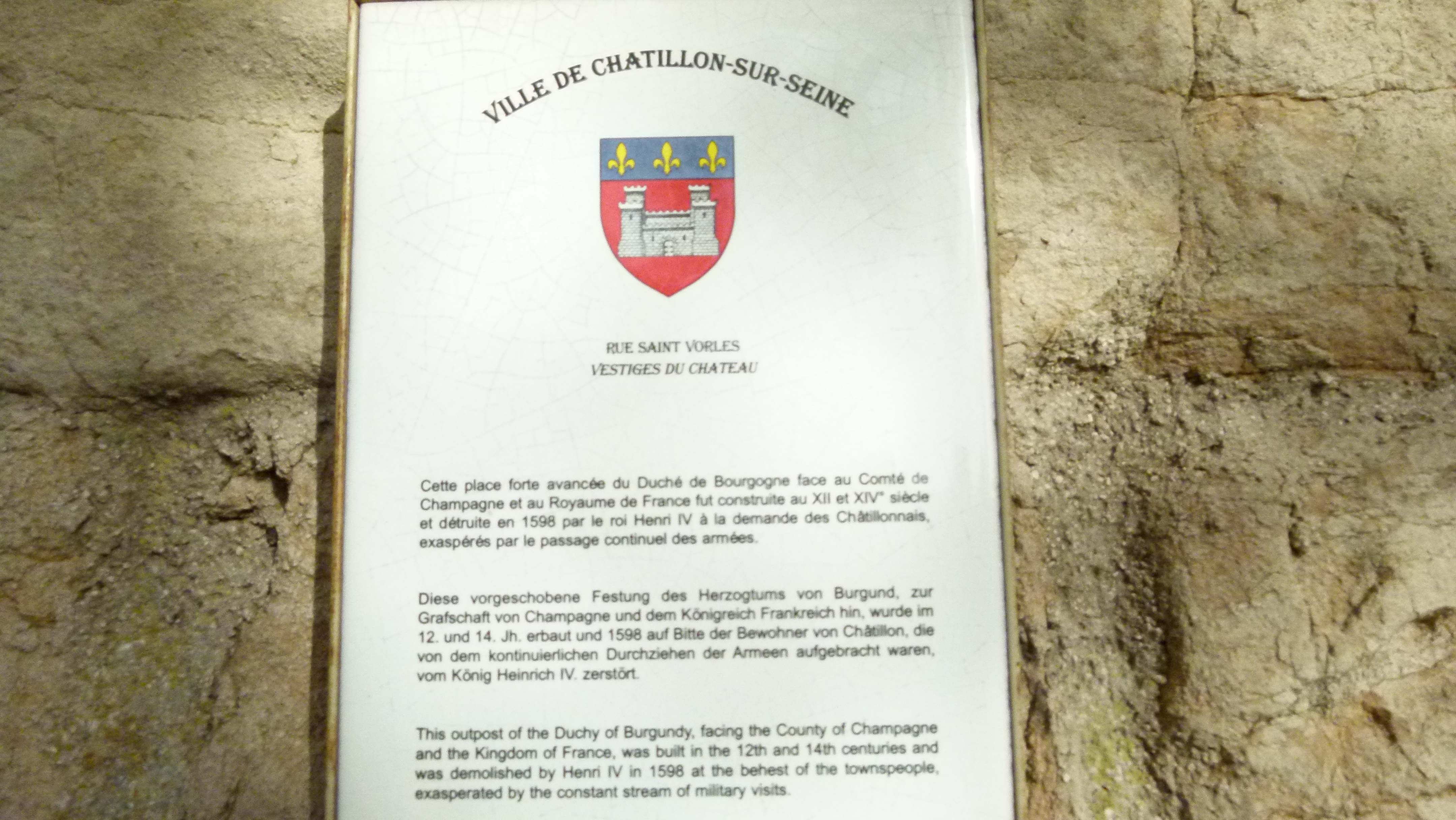
I climb the hill. The old castle is in ruins. This inscription says that it was destroyed by Henry IV in 1598 – at request of the citizens. The citizens were tired of the armies passing by continuously.

P1060760

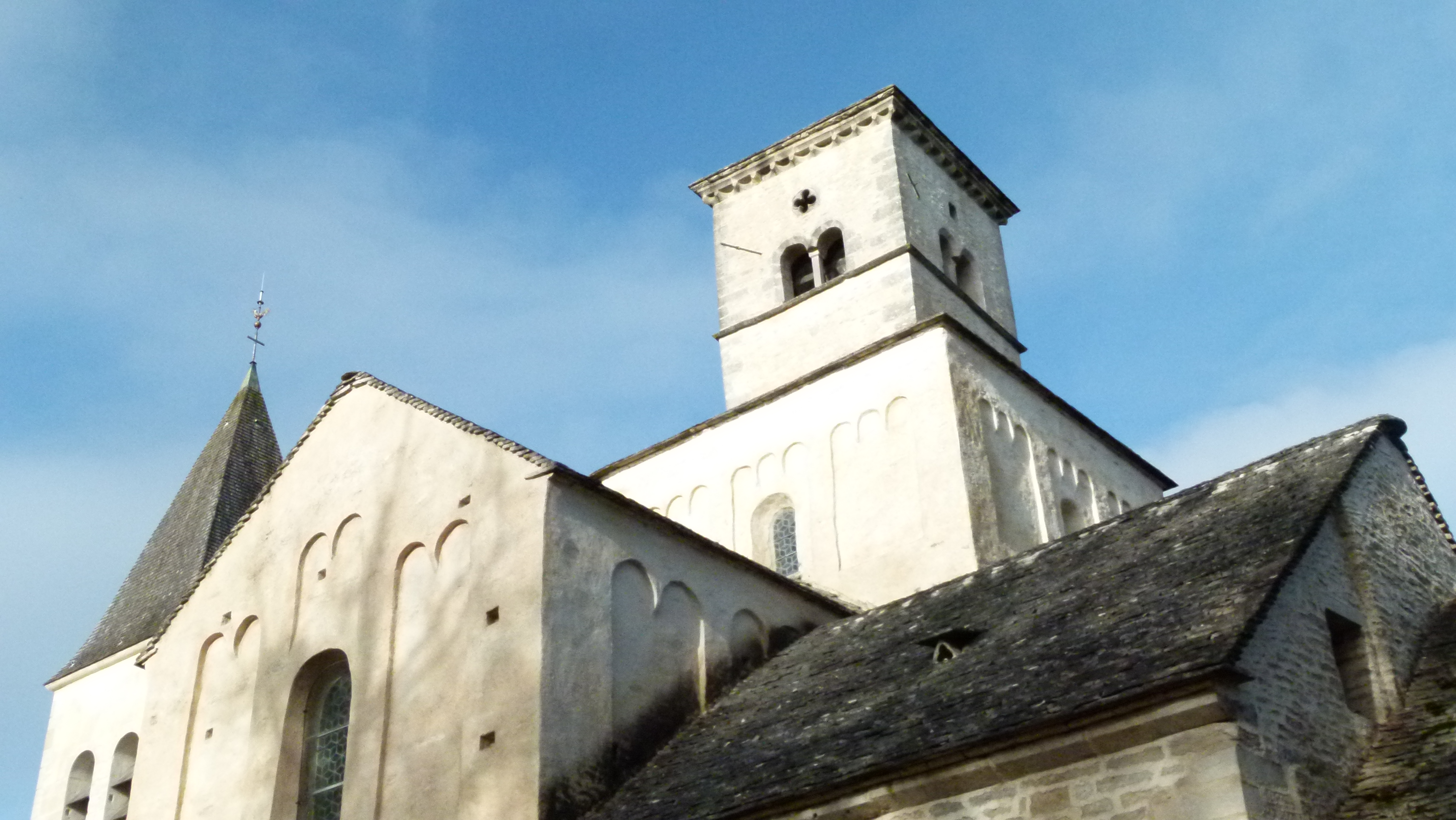
The church St. Vorles is a few steps away. I find the door locked.

P1060764

The church dates from the 11th century and keeps elements from Carolinigan times (Guide Michelin, Bourgogne, p. 508).

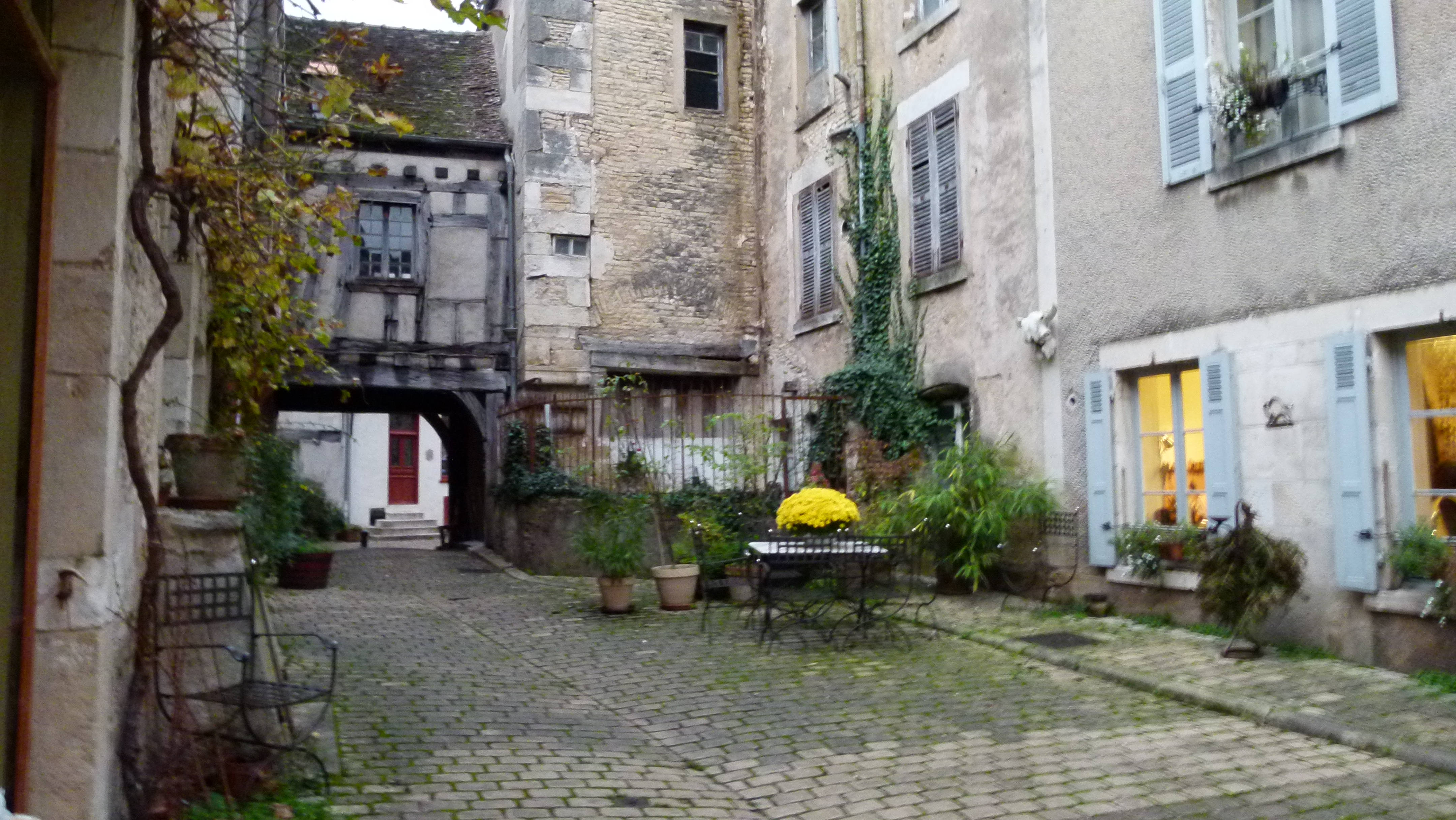
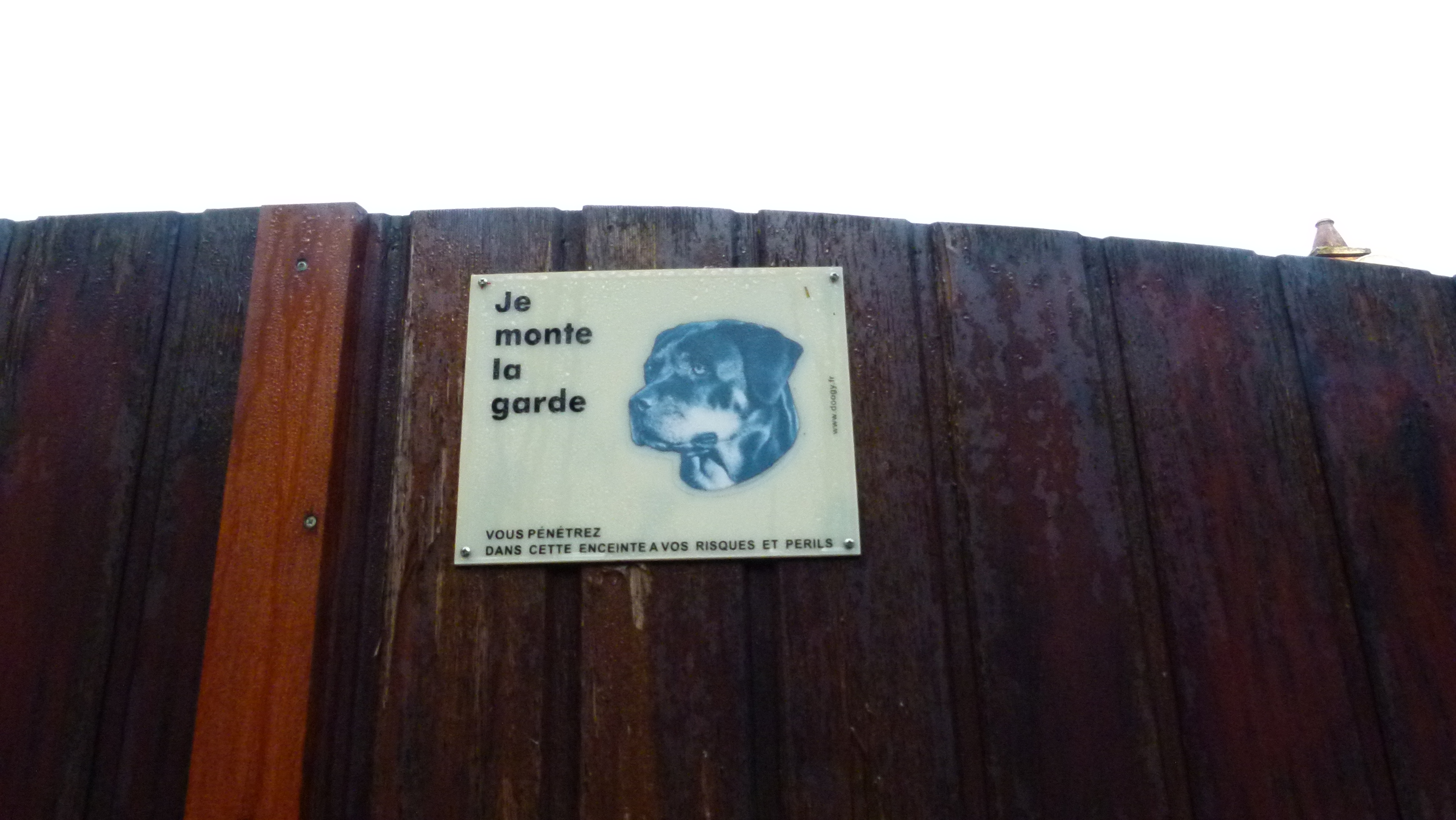
I walk through the narrow streets with locked gardens watched by dogs…

P1060759

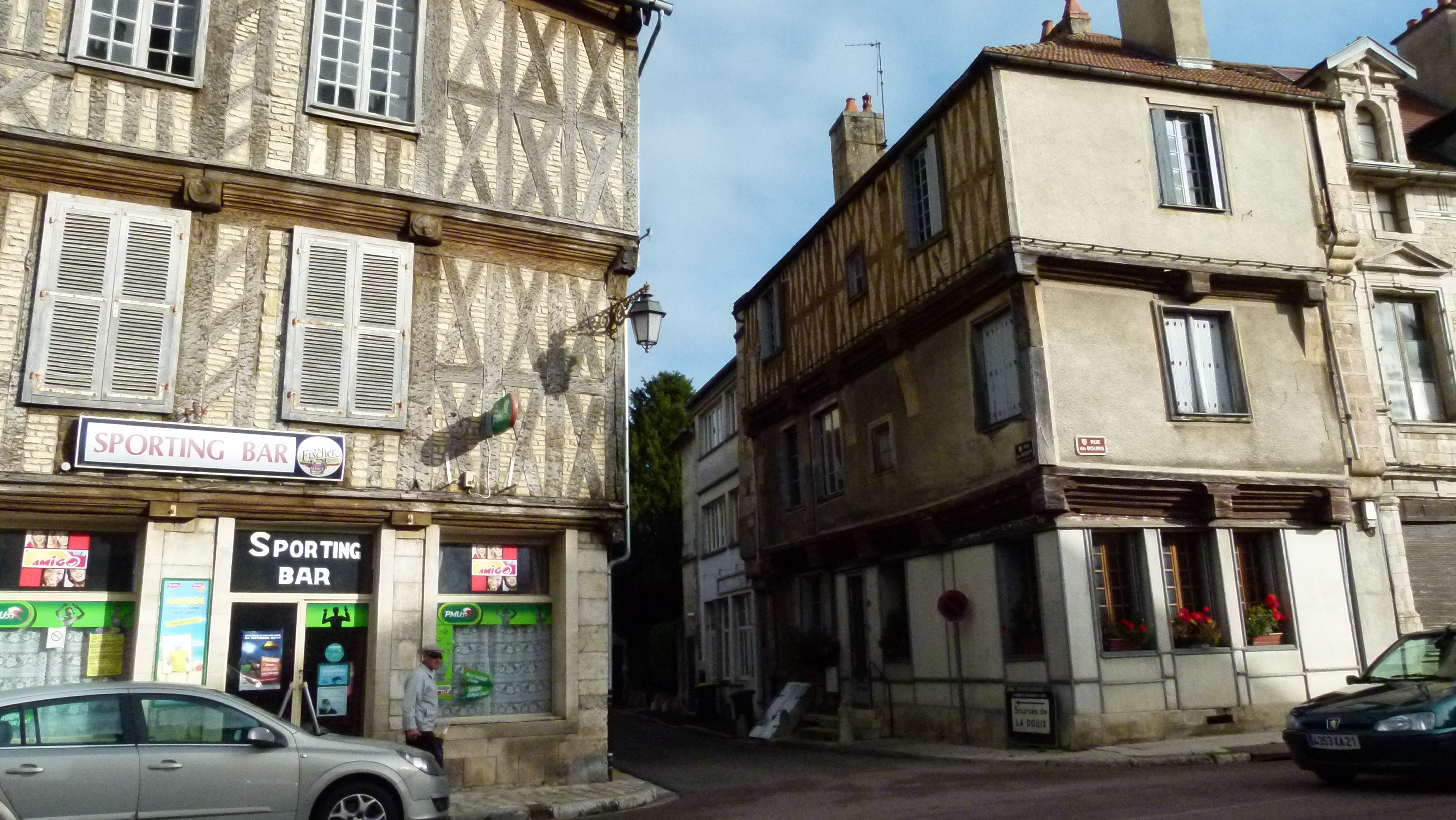
… and with old houses, many of t hem half-timbered.

P1060771

Châtillon is proud of their Musée du Pays Châtillonais that hosts the celtic treasure of Vix. The museum has moved out of town. Also not far from here are the Morvan mountains where Cesar defeated the Helvetians and Vertingetorix (Bibracte 58 BC and Alesia  52 BC).

Pinot Noir and Chardonnay are grown around Châtillon. La Route du Crémant invites to visit the caves and taste the heritage of the Châtillonais: The Cremant de Bourgogne Châtillonais. I bought a dry Crémant rosé – I do not remember the name of the winegrower. I liked this Crémant, when we shared it later. Perhaps I will come back and visit this wine region that is off the beaten path.

.

 Abbaye de Fontenay

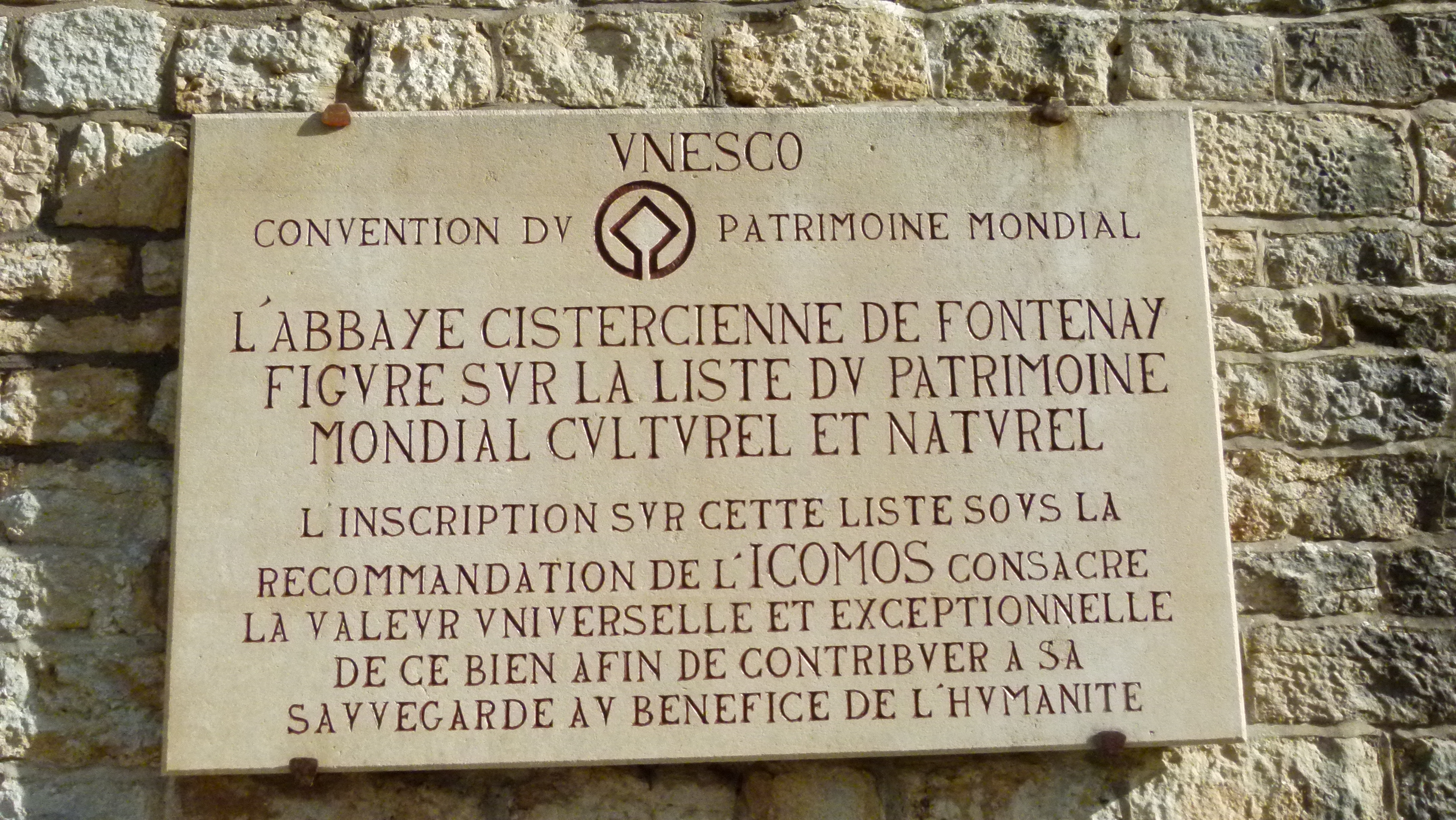
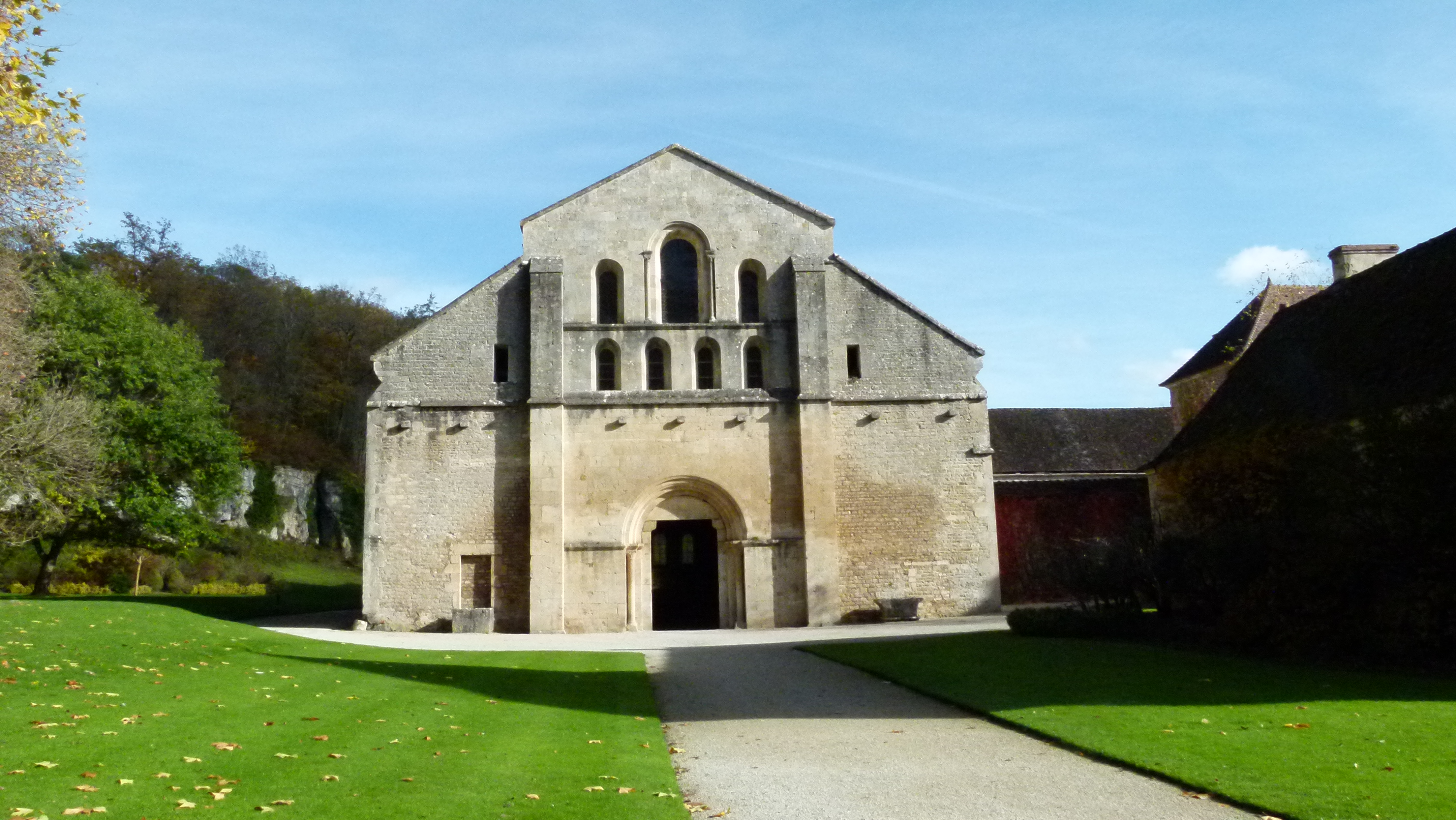
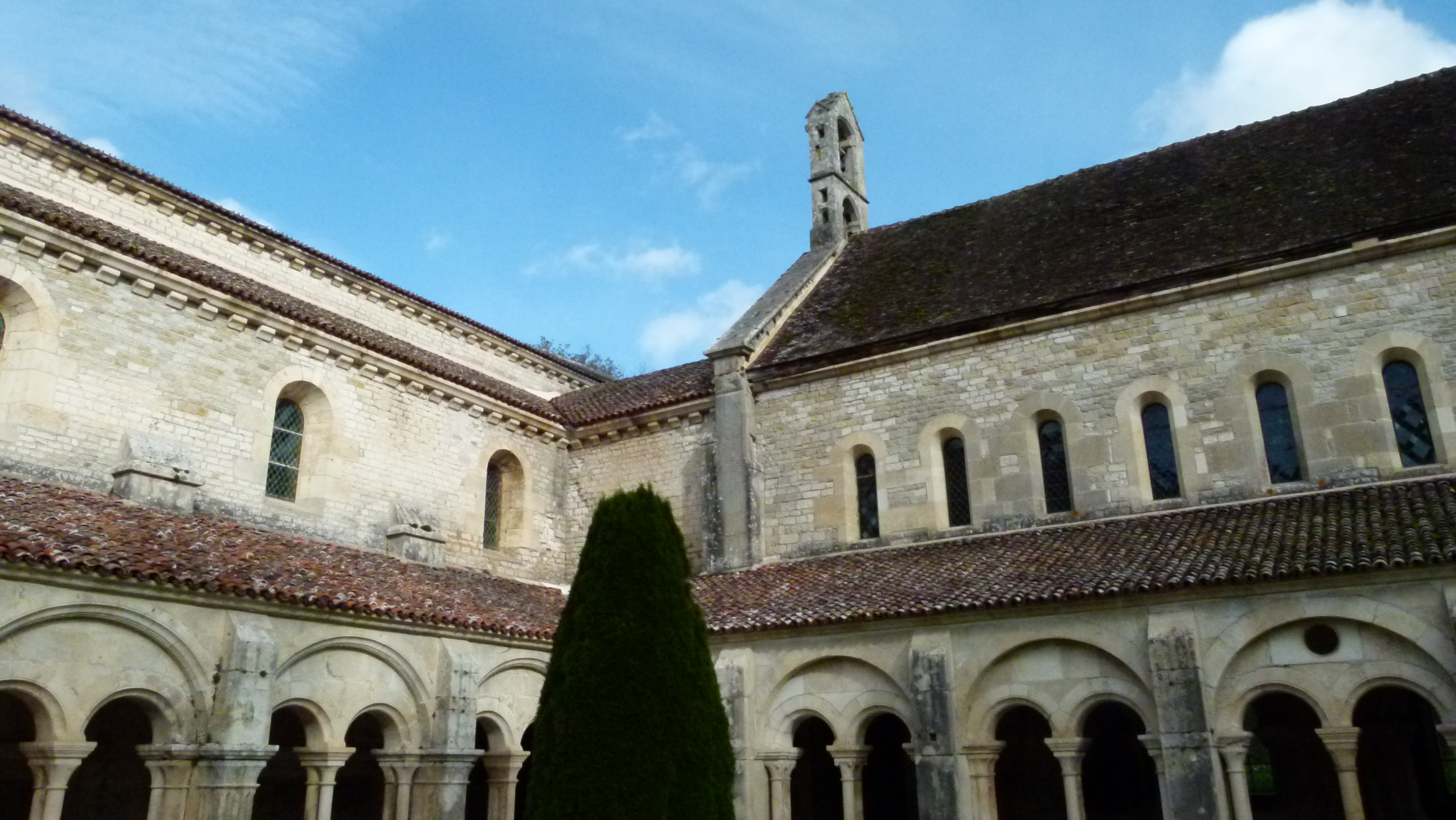
Next I drive to the Abbaye de Fontenay, about 30 km south from Châtillon-sur-Seine. This Cistercensian monastery, located in a valley surrounded by hills, was founded in 1118 and has been restored recently. It is on the list of Unesco world heritages.

P1060775

I arrive shortly before twelve – just right for the next guided tour that starts at twelve.

The tour begins with the romanesque church from the twelfth century.

P1060779

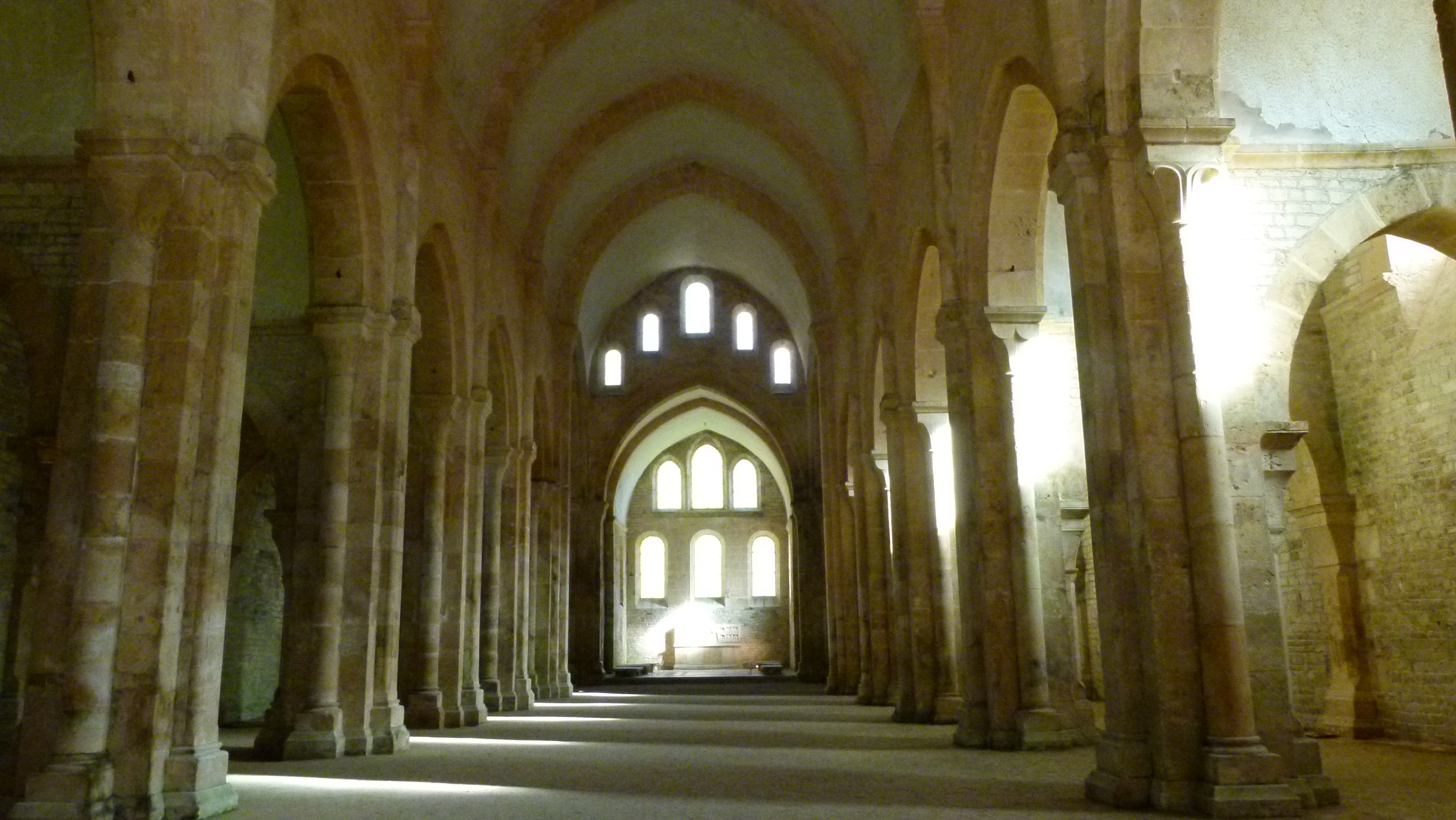
The inside is not adorned and invites to meditate. Nothing distracts from contemplation.

P1060781

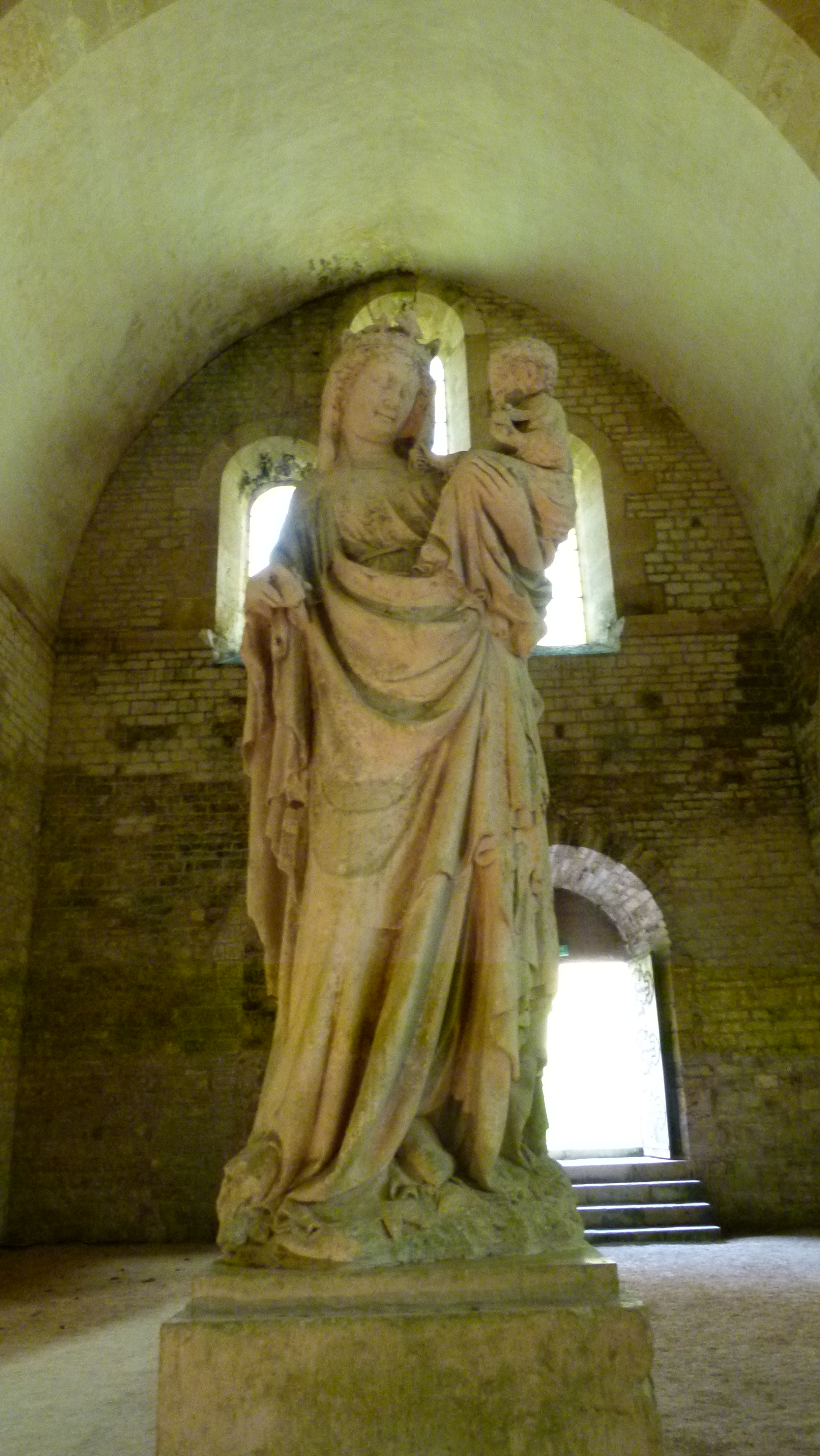
The guide is very proud of the statue of Maria smiling at her son. Usually, he says, Maria does not smile at her son, because she feels what his destiny will be, but this Maria smiles.

P1060783

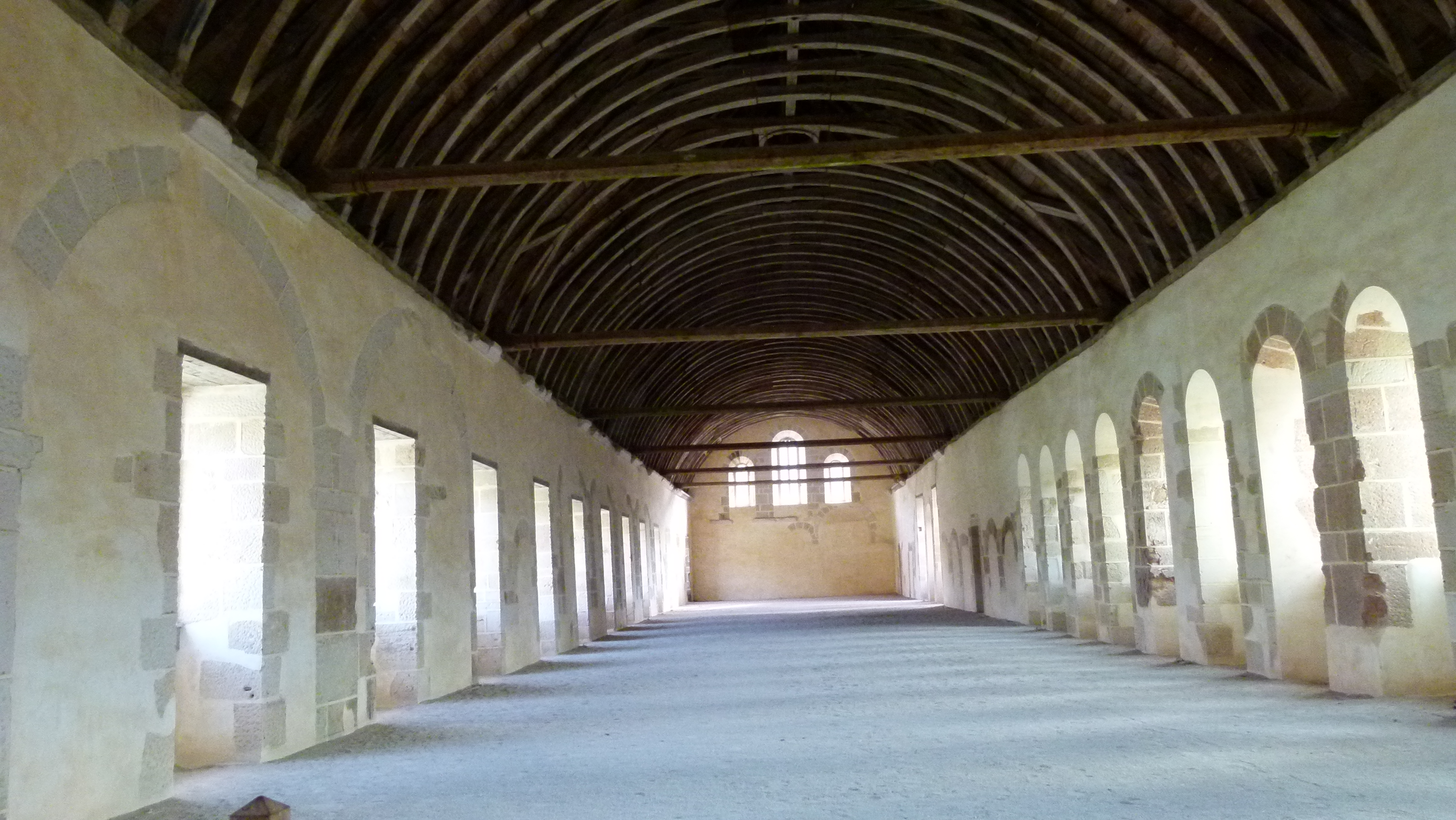
Directly neighboring the church (and separated by some steps) is the dormitory with its vaulted wooden ceiling.

P1060785

Also the cloister is unadorned – the Cistercensian monks wanted to focus on praying. In the adjacent rooms there were a library, a congregation hall and one room with a chimney place – this was for copying manuscripts.

P1060787

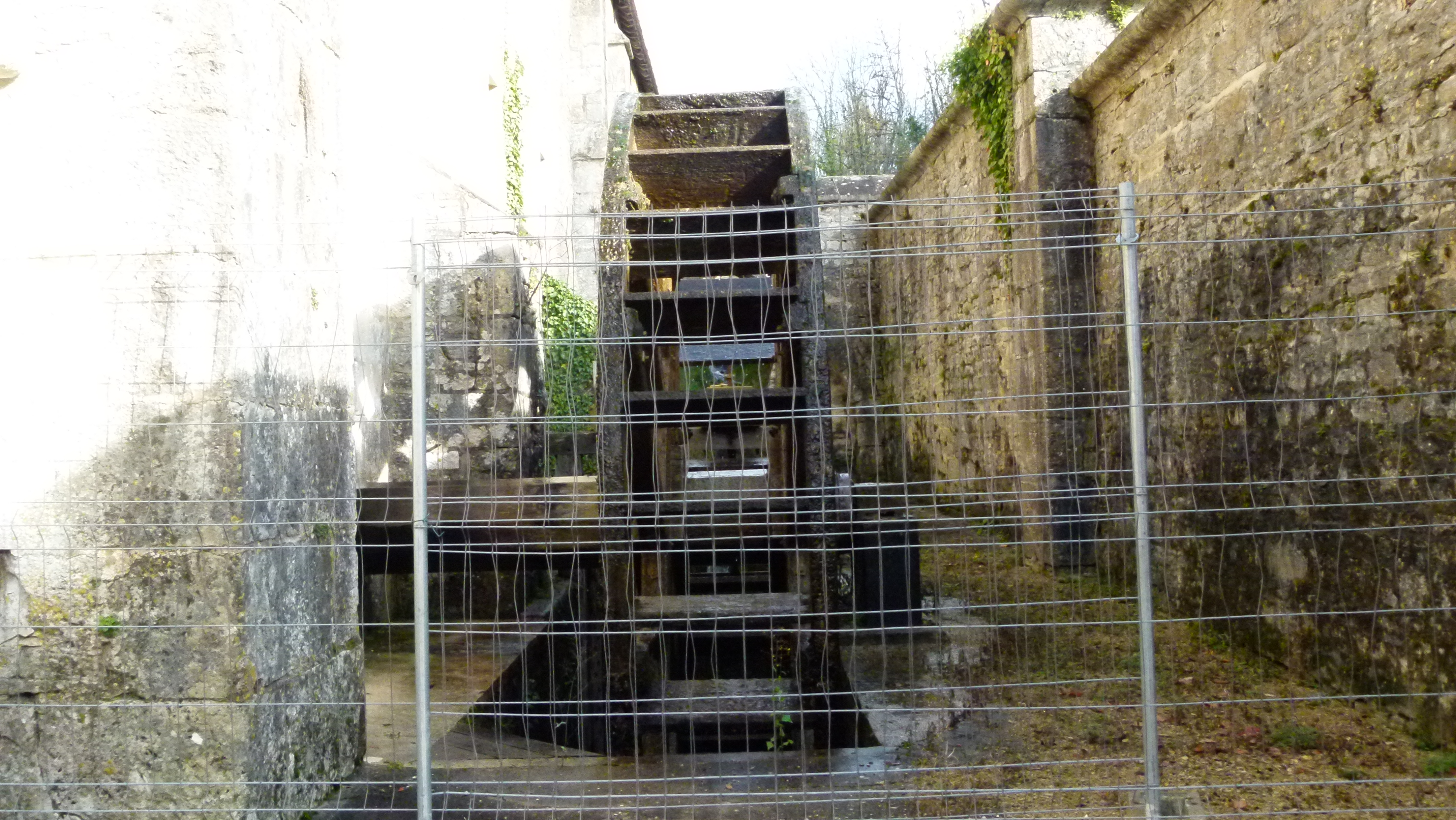
This mill drives the hydraulic hammer of the forge. It was the first metallurgical factory in Europe – invented by the Cistercensian monks in 1220.


P1060791

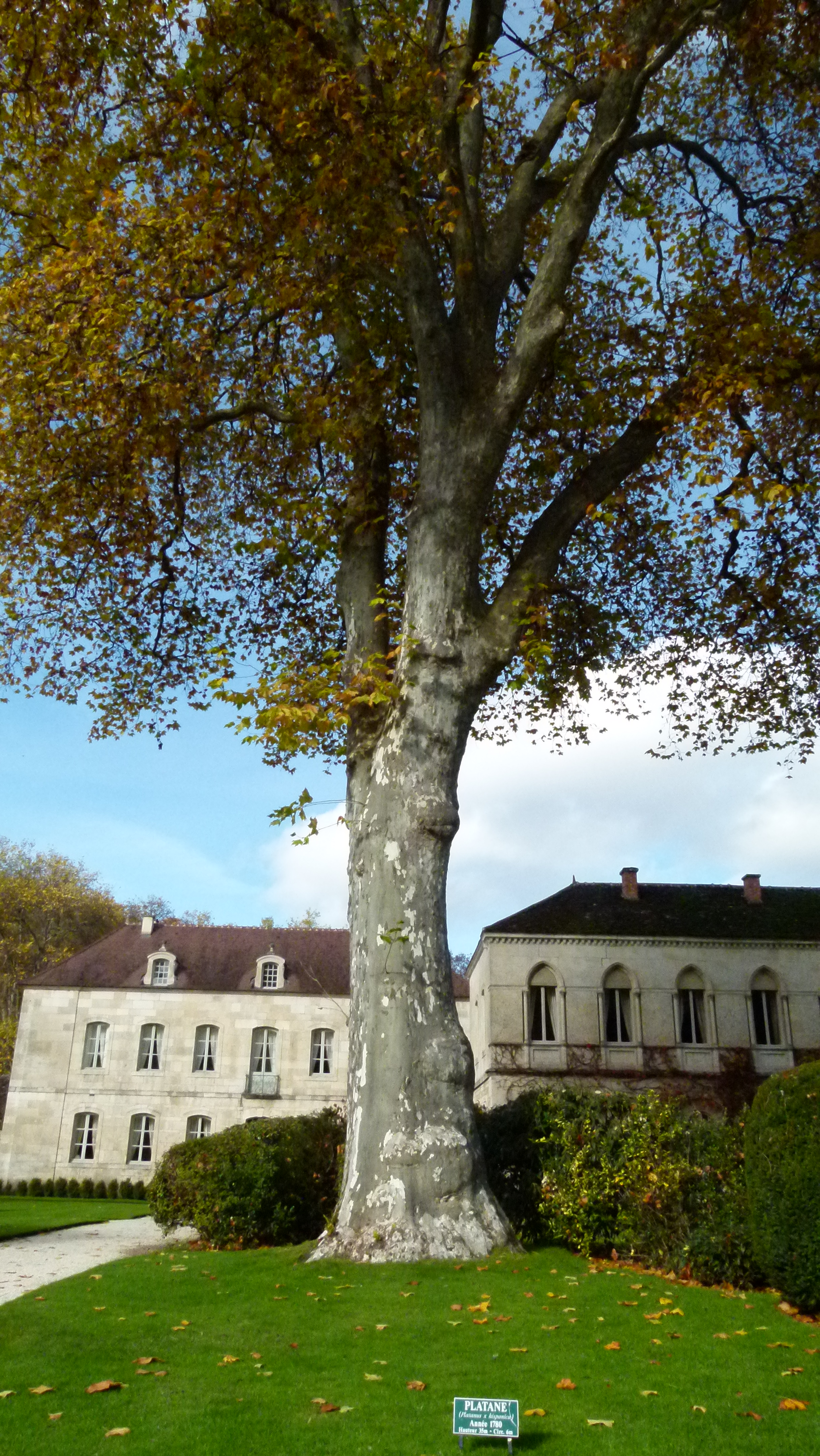
The garden is well kept with an enormous plane tree that is several hundred years old.

P1060793

Source: Guide Michelin for Bourgogne, page 476.

.

Continuing to Noyers-sur-Sérein, settling in our apartment and waiting for my friends

After having enjoyed all that culture , I continue my way to Noyers-sur-Sérein. There are many places called “Noyers” or “Nut Tree” in France. My GPS is confused and I take out my Michelin map to find the way, when I noticed that I am going into the wrong direction.

Noyers-sur-Sérein is a pretty tiny town with cobbled streets and woodwork houses. It is a half hour drive from here to Chablis.

P1060834

I retrieve the key in the grocery shop and find an apartment on three levels. It is cramped and not really tidy. The three beds are too narrow to be comfortable for two persons, though they advertise this apartment for 6 people (three beds à two persons). The grocery shop looks after the apartment – but I do not really feel welcome, when I retrieve the key. It seems that Julie, the owner of the apartment, is not rewarding the grocery shop for looking after her vacation rent. However, this place serves the purpose, as it is located close to Chablis where we plan to have our wine tastings. I settle and wait for my friends to arrive from Lyon.


On the road – finding great hospitality at Châtillon-sur-Seine

French hospitality in Châtillon-sur-Seine

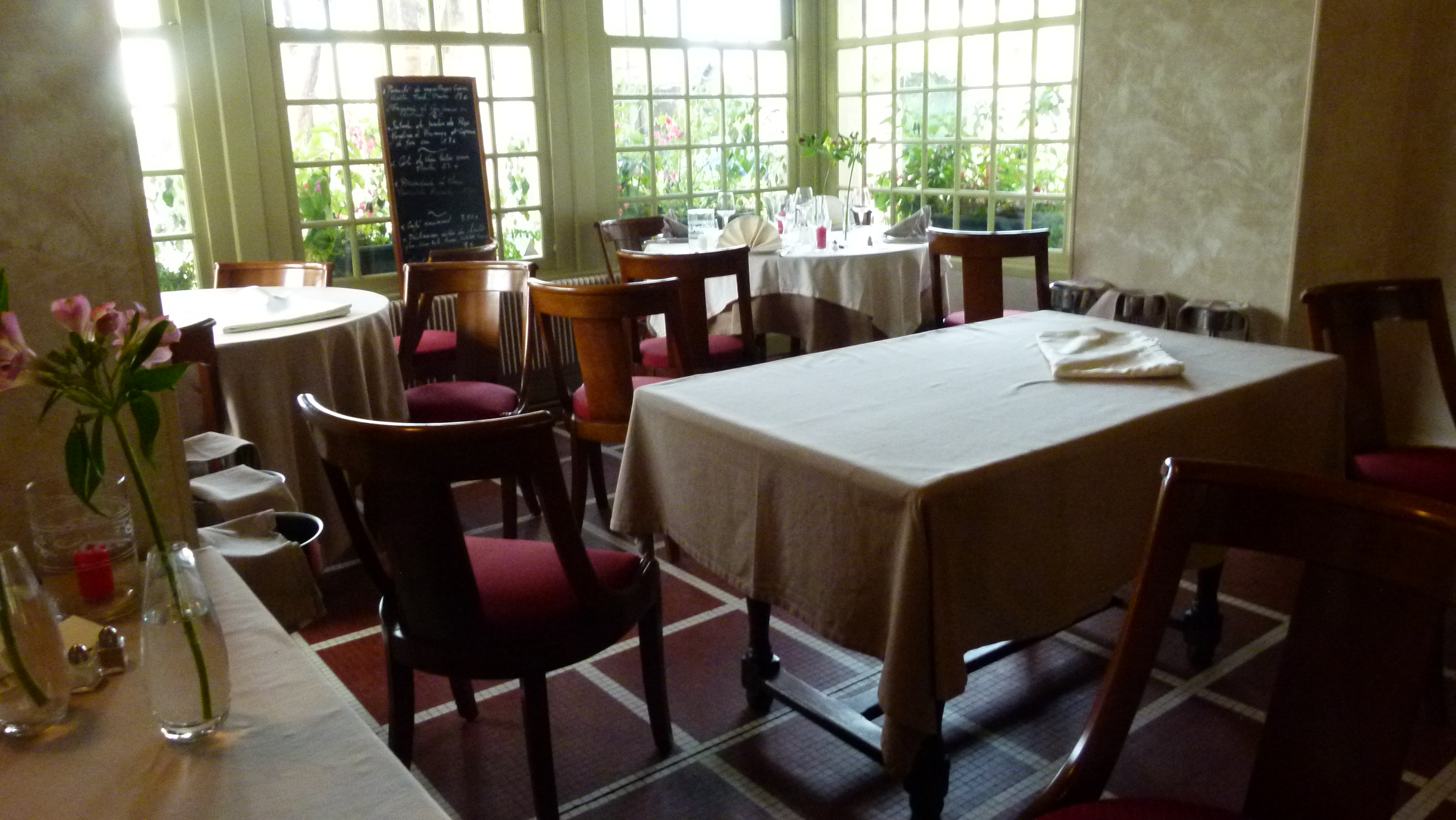
On the way to Burgundy, my GPS guides me safely to Châtillon-sur-Seine. I find the Hotel de la Côte d’Or and this is s exactly the charming hotel that I have dreamt of. It is not too big, has cosy small rooms with spotlessly clean bathrooms and it is quiet with the view of this November garden.

P1060744

I find a hearty welcome in the large reception hall. There is a  fireplace and a solid wooden table with two benches that invite me to sit down and have a chat with the old farmer that watches the people coming and leaving. After seven in the evening, couples and groups enter the reception hall saying “we have reserved a table” and they disappear behind a “mysterious” door. I follow them to this homelike restaurant – the kind of restaurants I love in France.

P1060745

A very friendly and agile young lady guides me to my table. Her mini jupe may be a little short for her, but she wears it with such a charm that she just looks great. She is alone to serve about ten tables, and not one guest feels neglected. They all enjoy one course after the next – and one glass of wine after the next.  An ambiance of happiness and humor fills the room. Once the charming lady carries a bottle of wine and a bottle of Coke on her tray.  I hear a voice say “why do you bring ME a Coke – ah, okay, it is not for me…” and he happily tastes his wine while the Coke is being delivered to another table in the corner. In the kitchen behind the clapping door there are three young cooks. I hear friendly voices accompanying their busy activity – and the guests are obviously all pleased with the results.

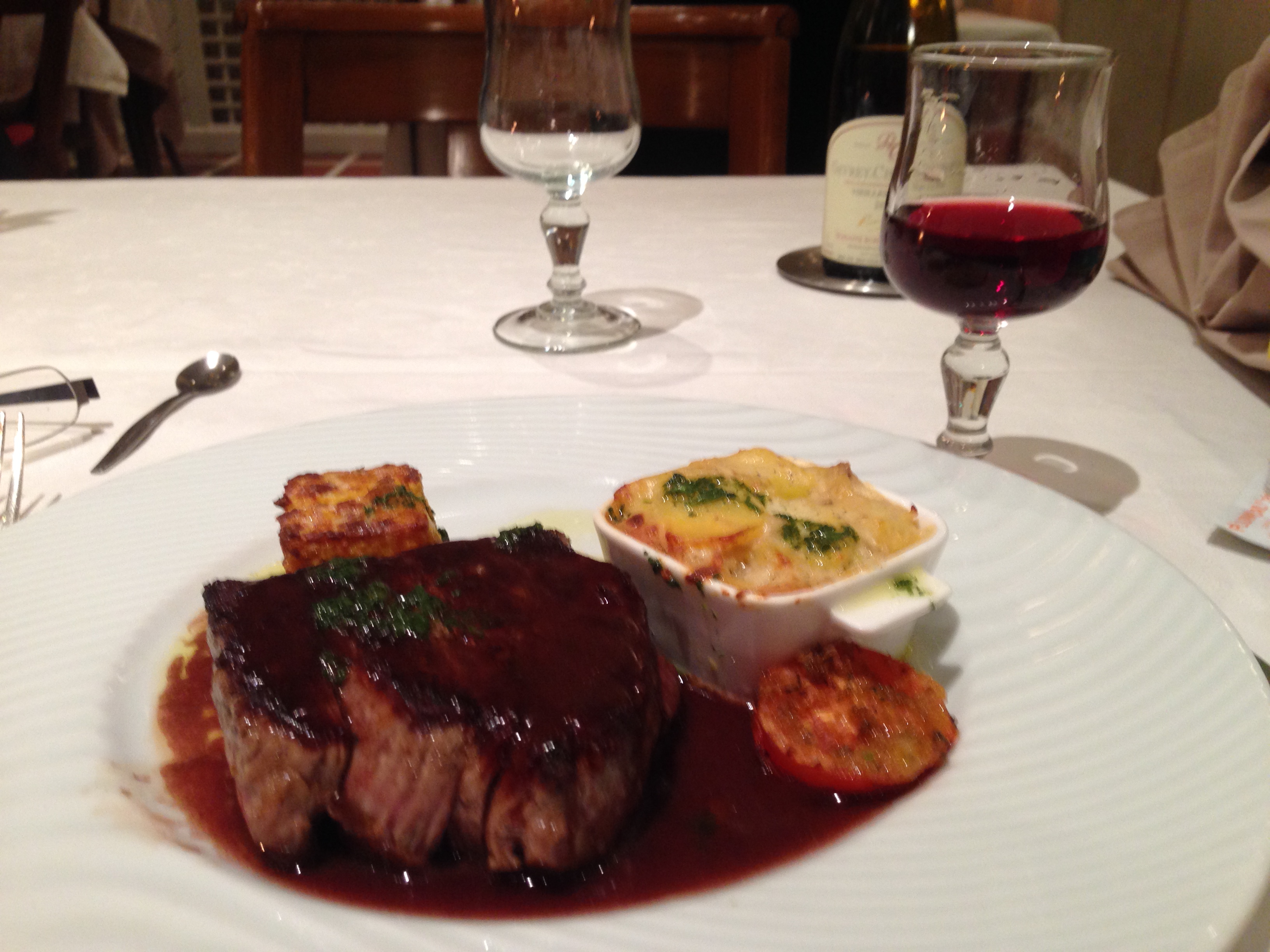
From the menu proposed I just take one course – a steak from Charolais cattle and a half bottle of Gevrey-Chambertin vieilles vignes 2011.

IMG_0918

IMG_0916

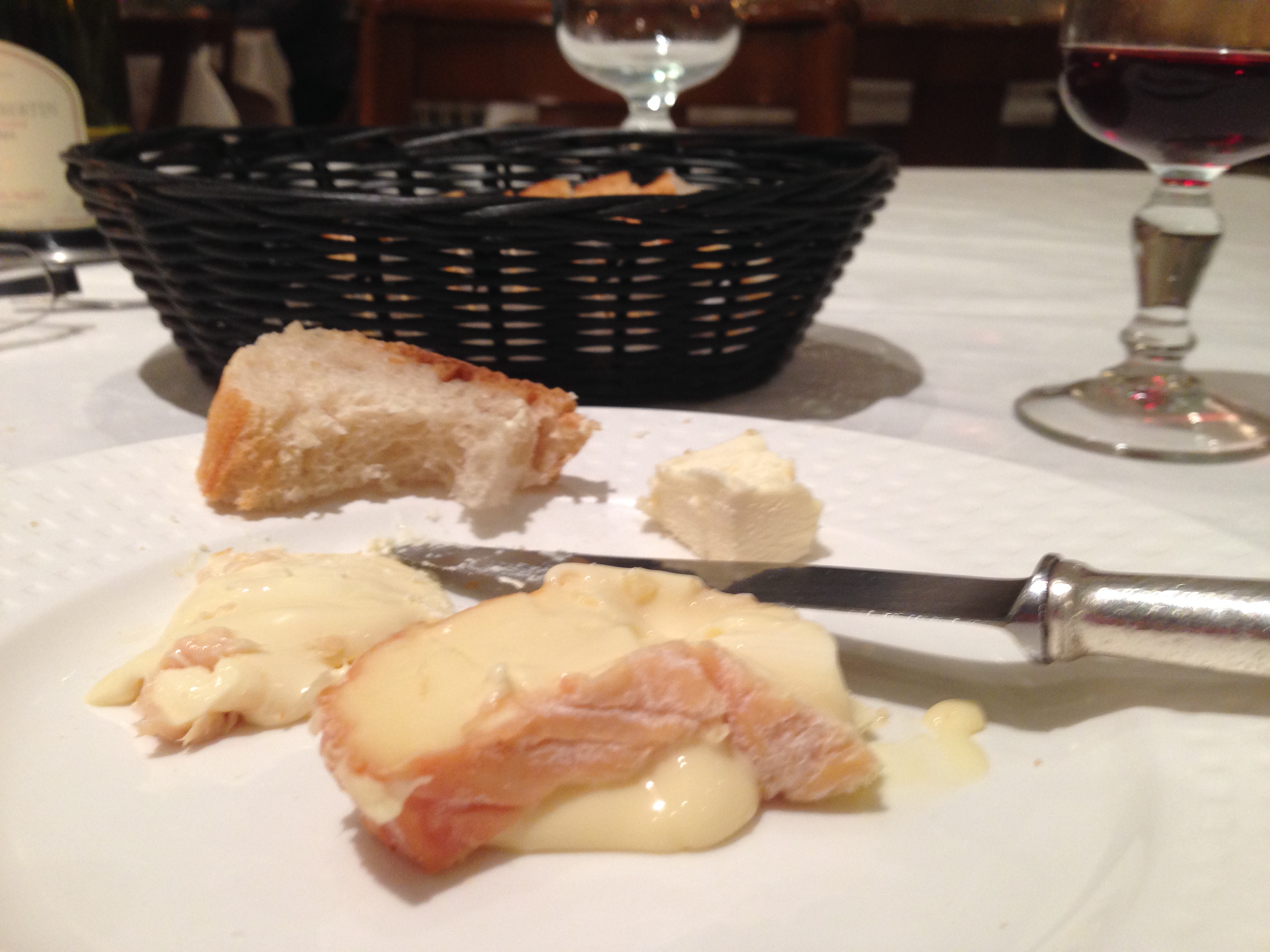
And for the dessert I have this cheese snack: Les Amis de Chambertin, Epoisses and some fresh white cheese. I have kept some wine to match the cheese.

IMG_0919

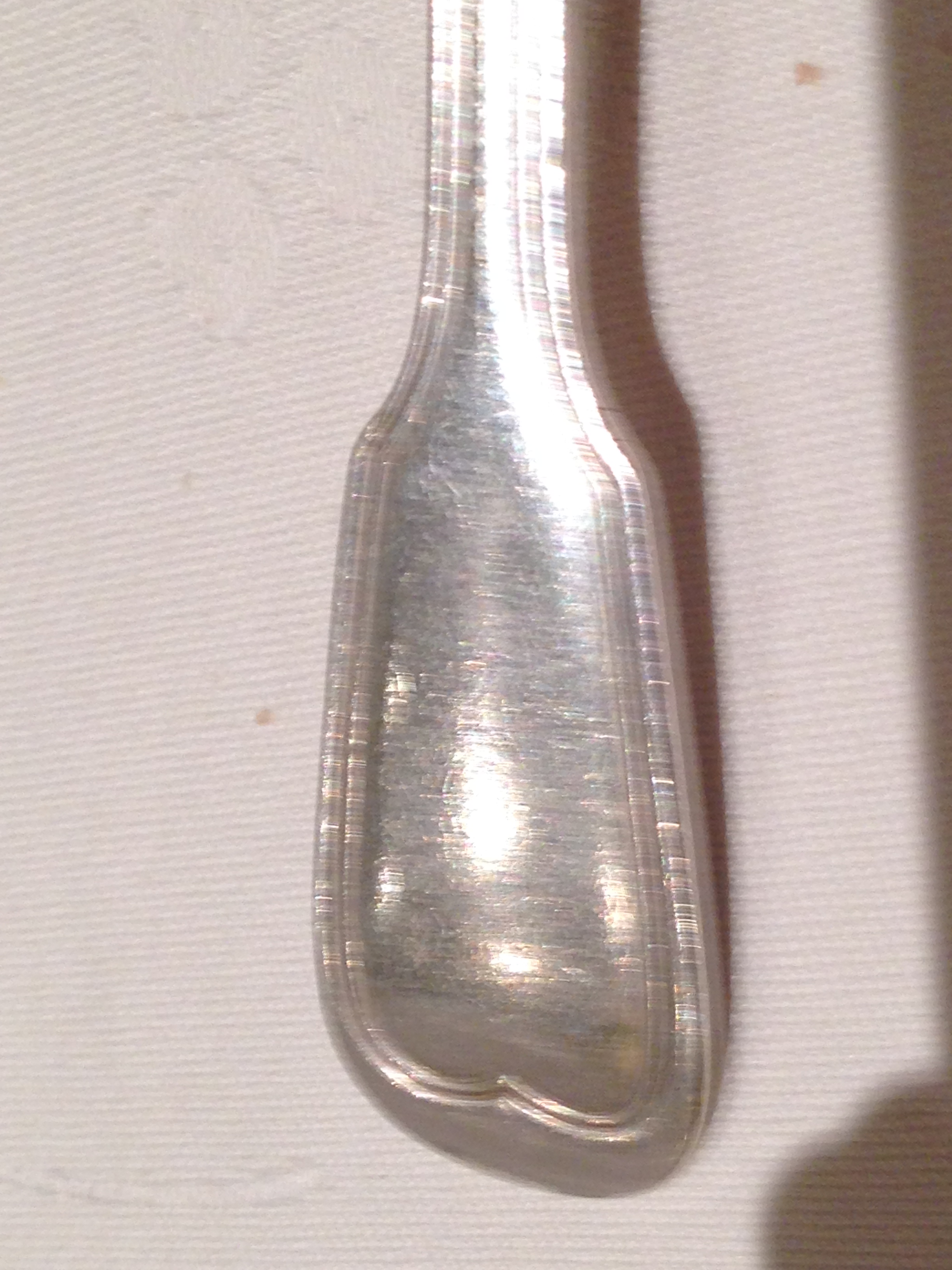
I love the fork and knives of “old French style”.

IMG_0920

It is the silverware that I know from my childhood. My Swiss grand-mother had ancestors from France.

In the morning I share my breakfast with an old lady and her tiny dog. The breakfast is typical French: A transparent coffee with some milk, a croissant, some pieces of white baguette, some butter and some jam. While the French celebrate their meals later in the day, their breakfast is very frugal – just to wake them up gently. Yes, I am in France! And I like to be here.

On the road – joining friends from Russia in Burgundy/France

Already for several years, some of my Russian friends travel to Burgundy in November

On the third weekend of November, the Hospices de Beaune run their wine auctions and Beaune, the wine capital of Burgundy, turns into a market place for tasting and buying wine as well as local products from Burgundy and France. Some of my Russian friends love the wines of Burgundy. They come to Beaune every year to taste wines, stroll on the markets and absorb some culture on the way. Also this year Larissa and three of her friends from Petersburg plan to visit Beaune. This time they also add a visit to Chablis and the Champagne. They invite me to join them and I accept. Thank you for giving me the opportunity to rediscover Burgundy that I had visited about 30 years ago.

IMG_1171

Source: Foto of the auctions taken in the shop of the Hospices de Beaune

.

My friends from Russia know and enjoy the culture of Burgundy

My friends have attended trainings in wine tasting in Petersburg and have carefully practiced tasting good wines. They know about the good domains and climats. They check the look of the wine. Then they smell, sip, sway the wine in the palate – and also make use of the spittoon. They love Burgundy wines and the food such as truffles and escargots. They know Beaune like their pockets and have found a wonderfully comfy appartment on three floors in the middle of the old city.

IMG_0961

We share the apartment with some crocodiles.

IMG_1099

Beware of them!

IMG_1147

.

Being Swiss I added some Swissness to the French culture

What I contributed from Switzerland was yoghurt, Birchermiesli flakes, rye bread from Wallis and Röschti (fried grated potatoes). One evening I prepared a Fondue.

Switzerland’s well kept secrets are their wines – I took along a Pinot noir (is different from Burgundy wines, but also good), some Fendant (for the Fondue) and one bottle of Amigne de Vétroz from the Wallis (sweetish fruity). Also  my Basler Läckerli   were welcome –  I admire Larissa – she has made Läckerli herself for the previous Christmas.

My Russian friends added some surprises to my Swissness.

As a starter before the Fondue meal, Aljoscha prepared oysters and we ate them with a good bottle of Champaign. Then we moved on to the Fondue. I laughed – I had never eaten oysters before a Fondue.  For the Fondue, French baguettes are a perfect match; my friends added champignons and vegetables to dip into the cheese. When one of us lost his bread in the cheese, they all shouted like one voice: “Now YOU have to pay for the next bottle of wine.” My friends are polyglott. Because this is what we say in Switzerland.

Larissa took the rye bread from the Wallis and knocked it on the table asking: “Do you believe, anyone can still eat this bread? It is as hard as stone” I took it and finished it off alone. This is what the rye bread is about: It is hard and it can be kept for months (almost). But I understand that my Russian friends could not understand this.

Larissa asked me: “Do you think the Amigne goes well with Mont d-Or cheese?” “Yes”, I say – and in front of my eyes are a baguette, the fresh Mont d’Or and a glass of my sweetish-fruity Amigne to counterweigh the creamy cheese. I open the bottle and place cheese, bread and wine on the table. My friends shake their heads. They take the Mont d’Or cheese back into the kitchen, add a lot of gloves of garlic and melt the cheese in the oven. The cheese comes back on to the table with potatoes in their jackets. This is a tasty meal…. but not for my Amigne. They try the wine and rightly say “this wine is sweet.” I agree, I would never have served the Amigne with potatoes and melted garlic cheese. Back at home, I will carefully plan how to drink my next Amigne de Vétroz. And I will also remember that “Gschwellti” (potatoes boiled in their jackets) go well with melted Mont d’Or and garlic – this was delicious. (In my memory, it was Epoisses cheese, and Larissa pointed out rightly that it was Mont d’Or cheese).

.

In Burgundy, I also enjoy some Russian food culture

Every evening, we cooked for ourselves. The first evening it was spaghetti carbonara (Larissa has brought the real guanciale – not pancetta, as I wrote before – and no,no, never cream for carbonara, only eggs! The spaghetti were delicious). Another evening it was duck with griottes sauce…

IMG_1057

… and then filet with a tasty mushroom sauce made from mushrooms collected and dried in Russia.

IMG_0963

With our meals we drink one of the wonderful bottles that we have tasted during the day.

IMG_1052

The Swiss breakfast is bread, yoghurt, marmalade, cheese, perhaps a boiled egg and some ham or sausages. Already in Petersburg I experienced that a Russian breakfast is a real meal with omelette, vegetables and/or potatoes. A Röschti in the morning was welcome – like farmers in the Bernese Alps eat it in the morning (perhaps no longer today). I must admit that I often ate some bread and yoghurt and did not join the sturdy breakfast of my friends. But then there are two exceptions: Oysters and champaign…

IMG_1092

IMG_1094

… and an omelette with truffles.

IMG_1091

Back at home I enjoy Russian culture with dried mushrooms (thank you, Katja, for giving me the remaining dried mushrooms – my mushroom risotto was delicious) and with Sushki (Сушки,  thank you for having carried some in your suitcase for me).

.

Now living in the US, Larissa added some US culture

In her red wine suitcase, Larissa has carried a bottle of Pinot Noir 2011 from the Shea Wine Cellar in the Willamete Valley. This is a special gift for me. Back at home I read the Website about Oregon.  It says: “If you were a wine grape, you’d want to be planted in Oregon.” Much farther north than California, the wines are fresher with more acidity. The Willamete Valley is “the home of cool climate Pinot Noir and Pinot Gris…” and 2011 was a good year for Oregon, says my Pocket Johnson. I had never thought of Oregon as a wine region.  I am curious to taste the Shea, but this bottle will first go to my cellar. Thank you, Larissa, for allowing me to discover Oregon. And I still feel very bad for having broken the second mysterious bottle that you had brought from the US.
With our cheese we had bisquits from the US that are similar to crackers in Switzerland. They tasted so good that I had to move the box to the other end of the table…

.

Sometimes I  had problems to understand my Russian friends, in particular when they transcribed French into Russian

Russians cannot understand, why theFrench write so many letters that they do not pronounce. They transcribe French names and expressions into Russian. Here is an example:

Patissier

Who is “Месье Патиссье”? Well, if I read it out loudly to me and listen carefully, I can hear “Monsieur Patissier”. Often I had to ask three times, when my friends wrote down the name of a winegrower or a place – here is an example: In Шабли (Chablis), my friends are interested to taste the climat Ле Кло (Les Clos) at Шаблизен (La Chablisienne) and Реньяр (Regnard).  Yes, I agree, it may be a waste to use so many letters that then are not being pronounced, but French is different from Russian…

.

It was great for me to see how much my friends made their vacation in France a special event – and I enjoyed it with them

Yes, visiting Burgundy and adding the diversity of various cultures to the French joie de vivre was a great experience. We went through so many wine tastings and I learnt a lot about Burgundy. I enjoyed observing that my friends made their vacation a special event. If only Larissa and I would not have caught a caugh.

I do hope that you will come back to Burgundy next year… I keep my fingers crossed for the Rubel!

On the road – discovering the Reichstagskuppel and Rixdorf in Berlin

Berlin never stops to have suprises for me. This time I explore the Reichstagskuppel and the village Rixdorf.

.

The cupola of the Reichstag (Reichstagskuppel)

The architect Norman Foster has renovated the Reichstag incorporating modern elements. The most visible modern element is the cupola. The long queuing lines had always discouraged me to visit the cupola. To avoid the lines, Sabine has ordered tickets and reserved two seats in the restaurant Käfer next to the cupola.

P1020760

The cupola gives light to the plenary chamber with its white eagle. From the cupola we cannot see the plenary chamber. We walk up and down the revolving stairs and enjoy the view of the city. In the restaurant Käfer we share a meal – it is Buletten for me, the Berlin interpretation of  “hamburgers” that my mum had often prepared, when I was a child.
Today it is hard for me to imagine that the wall separating West and East Berlin was right behind the building of the Reichstag – but I remember those years.

.

Rixdorf

One afternoon, my friend Antoinette takes me to Rixdorf which is part of Neukölln. “In search of Rixdorf” is a blog that nicely tells about the history and the ambiance today. In 1737 King Friedrich Wilhelm I. had invited protestants from Bohemia (Böhmen)  to settle near Rixdorf. Here he is – proudly overlooking the Richardplatz. This square is at the heart of Rixdorf.

P1060694

This panel points to the Bohemian brother community of Rixdorf.

P1060696

The Bethlehemkirche (church) at Richardplatz dates from the late 14th century. It was rebuilt after a fire in the middle of the 17th century reusing the old gothic elements. The entrance is below the surface of the Richardplatz.

P1060693

The Rixdorf of the Bohemians has kept its rural character.   We stroll along the cobbled streets.

P1060691

Returning back to busy Karl Marx Strasse, we stop in the Café Rix (Saalbau Neukölln) to share a cup of coffee and a piece of cake in the inviting garden.

P1060702

On the way to the metro, we come across the Rathaus Neukölln.

P1060705

At Hermannplatz we take the metro U7 that rattles under the ground. In the dark tunnels, Antoinette sighs: “I prefer to travel above ground”. We soon say good-bye and I continue my way underground, back to Theodor Heuss Platz and the comfy hotel Kastanienhof. Thank you, Antoinette, it was a great experience to see the village of Rixdorf – one more village that also is part of the big city of Berlin. Berlin never stops to have suprises for me.

On the road – three new cultural adventures in Berlin

Always new things to discover – Berlin is large and it is evolving quickly

Whenever I come back to Berlin, I keep on finding that I still do not know everything. This time I had three new cultural experiences:

  • the Berlin Philharmonie
  • the inauguration of the society of friends of the Museum of Music Instruments,
  • the Martin Gropius building with an exhibition about the Vikings.

.

The Berlin Philharmonie: The concert with the promising and young conductor Andris Nelsons

Of course I had often looked at the Berlin Philharmonie, the concert hall with the courageous tent like roof that caused it to be called “Circus Karajan” (according to the famous conductor of the time). The concert hall has been built in the sixties of the last century. Now I entered the Berlin Philharmonie for the first time.

Sabine noticed that there are still tickets available for the concert of the promising young conductor Andris Nelson. He conducts a piano concert by Mozart, “Burleske” (also with piano) by Richard Wagner and “Also sprach Zarathustra” by Richard Wagner. Emanual Ax will play the piano. We order tickets for Friday, October 17th.

Entering the Berlin Philharmonie, I indeed feel like in a circus. The roof is hanging high above us and we reach our seats using a maze of staircases. On the way to my seat, I notice the Sony Center just in front of the window. The Sony Center? So close? Hence they have built the concert hall in close vicinity of the Berlin wall! 50 years ago they built it at the periphery of West Berlin, overlooking the muddy grass pit that then was the Potsdamer Platz. And now, the Berlin Philharmonic is rounding off the burstling Potsdamerplatz that has emerged simce the wall has disappeared.

I take my seat. Below me there are the fortepiano and the empty places for the musicians. Almost every seat in the audience is taken.

IMG_0878

I enjoy the concert. The young conductor is full of energy. I notice myself copy his movements (more in mind) – for me they “reflect” the music. Mozart’s harmonies always calm me down. The Burleske of Strauss I find more difficult to listen to. In the lucent wood above the piano keys I sometimes watch the agile hands of Emanuel Ax. After the break, “Also sprach Zarathstra” starts very loudly. Nelsons conducts a much larger orchestra now. The banging start is too loud for me – like a shock. But the critique seems to like this start. As the flow continues more quietly, I try to understand, what Zarathustra is saying. While I liked to watch this conductor that shows emotion, the critique concludes that Nelsons has not yet reached the maturity to take over the Berlin Philharmonics from Simon Rattle. Well, I am not an expert at all. Can it be that the high average age of conductors determines, how much body movement ia allowed to young conductors?

.

Museum of Musical Instruments (Musikinstrumentenmuseum)

Just next door to the Berlin Philharmonie, there is the Museum of Musical Instruments. Wikipedia says “The Museum holds over 3,500 musical instruments from the 16th century onward and is one of the largest and most representative musical instrument collections in Germany.” Here is a selection of three instruments.

IMG_0887

IMG_0886

IMG_0883

The museum is also proud of its mighty Wurlitzer.

On Sunday October 19th, the museum invites for the “Fest der Freunde” (party of the friends) to celebrate the foundation of the society that will support the Museum of Musical Instruments. Antoinette, my friend from school times, told me about the event. Conny guides through the museum, explains the background of the key instruments and has samples played (sometimes she plays herself). Andreas presents his evaluation of one clavichorde from around 1800. It has very unusual design, as it has a second sound board and the sound board is not well strutted. The builder wanted to make the clavichorde louder, but this design made the instrument less loud. “I think this is not a good development”, Andreas says politely. Now he considers to renovate the clavichorde as is – and then it cannot be played well – or to document the status and reonovate it such that it can be played properly. Very interesting.

.

Wikingerausstellung in Martin Gropius House

Also not far from the Potsdamerplatz there is the Martin Gropius House. Gropius? I expect a modern building in the Bauhaus style. And then – I find this classical late 18th century building. The explanation: Martin Gropius is not Walter Gropius, but his great uncle. Walter Gropius was a member of the Bauhaus, not Martin. And this is why, it is not a Bauhaus building, but has a more classical appearance.

P1060713

The Martin Gropius House hosts excellent temporary exhibitions. Currently there is an exhibition about the Vikings. In the central court yard there are the remains of a boat – a viking longship. It was 37m long. Just the wooden bottom of the ship has been preserved. Metallic sticks have been added to give the idea of the longship. A lady teacher explains the boat to her boys and girls. Her presentation is lively and highly interactive. To round it off, she asks the children to draw a boat. One boy draws a wonderful sailing boat with a huge veil that inflates in the wind. He shows it proudly to Sabine.

Detailed topics are elaborated in the rooms around the central court yard. We have received audio guides with one track for children and one track for grown-ups. We both prefer the track for chlidren. In a dramatic tone, the voice says that Harald Blauzahn had a challenging life. In the tenth century he ruled over Denmark and Norway. He was invading the Normandie – successfully -, but Otto I (the strong ruler of the Holy Roman Empire of the German Nation) withstood his attacks. Harald Blauzahn adopted the Christian religion. On display is his rune stone that says: “King Harald ordered that this monument was made for his father Gorm and his mother Tyra, by Harald who subdued Denmark and Norway and converted the Danes to Christianity.” After the visit I google a bit, and I discover that I have met Harald Blauzahn before… under the name of “Bluetooth” which is a communication protocolle named after “Harald Blauzahn” – or “Harald Bluetooth”: The logo shows his initials in rune script (source: Wikipedia on Harald Blauzahn; see also the report of Stern: “Ein Wikinger namens Blauzahn“).

The Vikings were feared for their attacks, especially along the Atlantic and the Mediterranian coast line as well as along the rivers that they could reach from the Baltic Sea. They also traded. Some of their trading ports were Novgorod and Kiev. They founded the Kievian  Rus – the Ruriks were the first Russian emperor  dynasty (until 1610). The vikings also settled in Greenland and found North America. The rooms around the central yard illustrate their achievements. In the 11th century one of the Viking trading business models was no longer applicable: Christianity did not accept slavery between fellow Christians. The northern Christian kingdoms started to emerge (see Wikipedia about the vikings).

.

Well, Berlin always has some new insights ready for me.

P1060710