Some Tico specialties such as giving directions

The people of Costa Rico are called Ticos. We are meeting many friendly Ticos. Especially in the small town of Santo Domingo they are very hospitable. In the streets they all say “hola” or “buenas dias/tardes”.  But… we have to get used to some of their specialties, for instance how they give directions, prepare coins carefully in the bus or walk carefully in the streets.

.

How Ticos give directions

Ticos seem not to have absolute addresses as we do. We may live in Spalenberg 77a in Basel. But a Tico would say: “I live 100ms west of the shoehouse Deiss  across the bakery Gilgen.” Just a few weeks ago, Deiss has closed down. Now the address at Spalenberg 77a would change to “I live 100ms west of the old shoehouse Deiss…”

When I went to Costa Rica for the first time six years ago, I received the following directions to our homestay:  Start at the Scotiabank, walk four blocks uphill, pass a car seller, walk up to the bridge and then turn left  to follow a large paved road… But six years later, the Scotiabank building has disappeared, and people might have forgotten that it has ever been there. The road description has to be revised.

This time, our homestay is described as painted in yellow with a black gate across the old palace of justice and not far from the Colombo school. But the Palace of Justice has moved to the city center and  the school has been renamed to Don Quijote. Our homestay still is described alng those lost landmarks. I am really happy that we had ordered a taxi from our school to pick us up at the airport. Non-local taxis are definitely lost with this system of addresses. Sometimes trees are used as reference points… and then they are cut down…

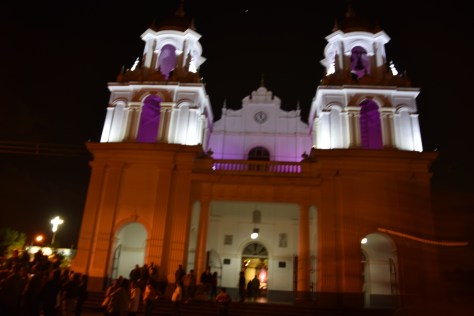
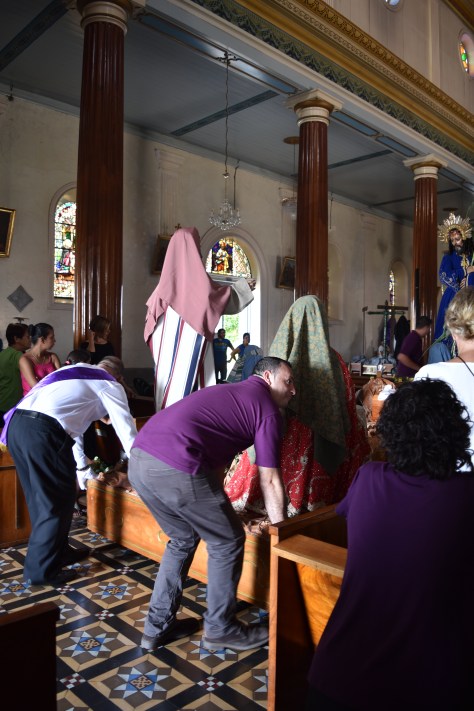
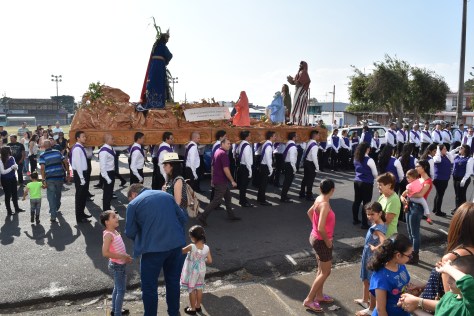
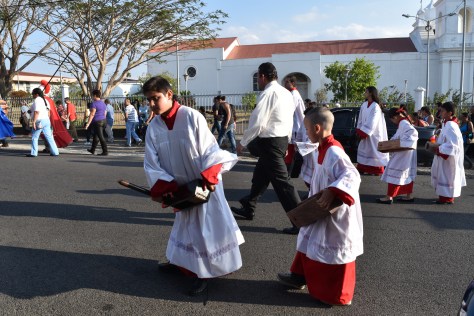
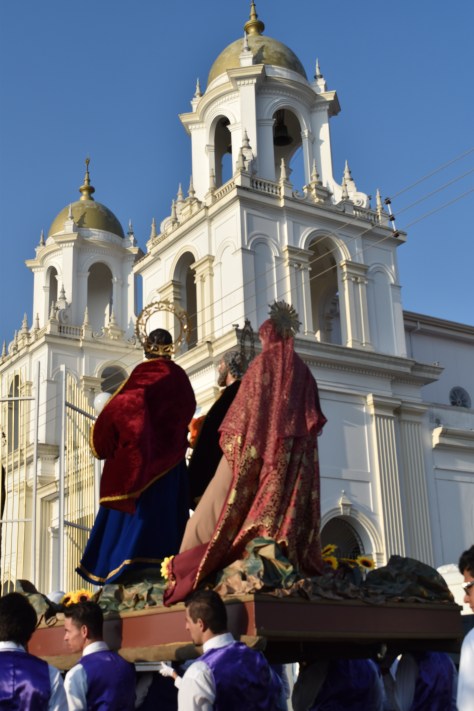
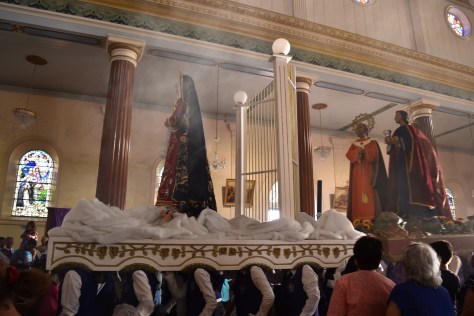
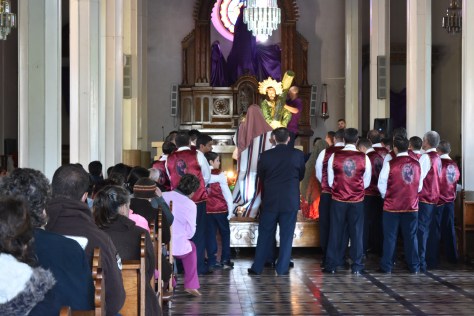
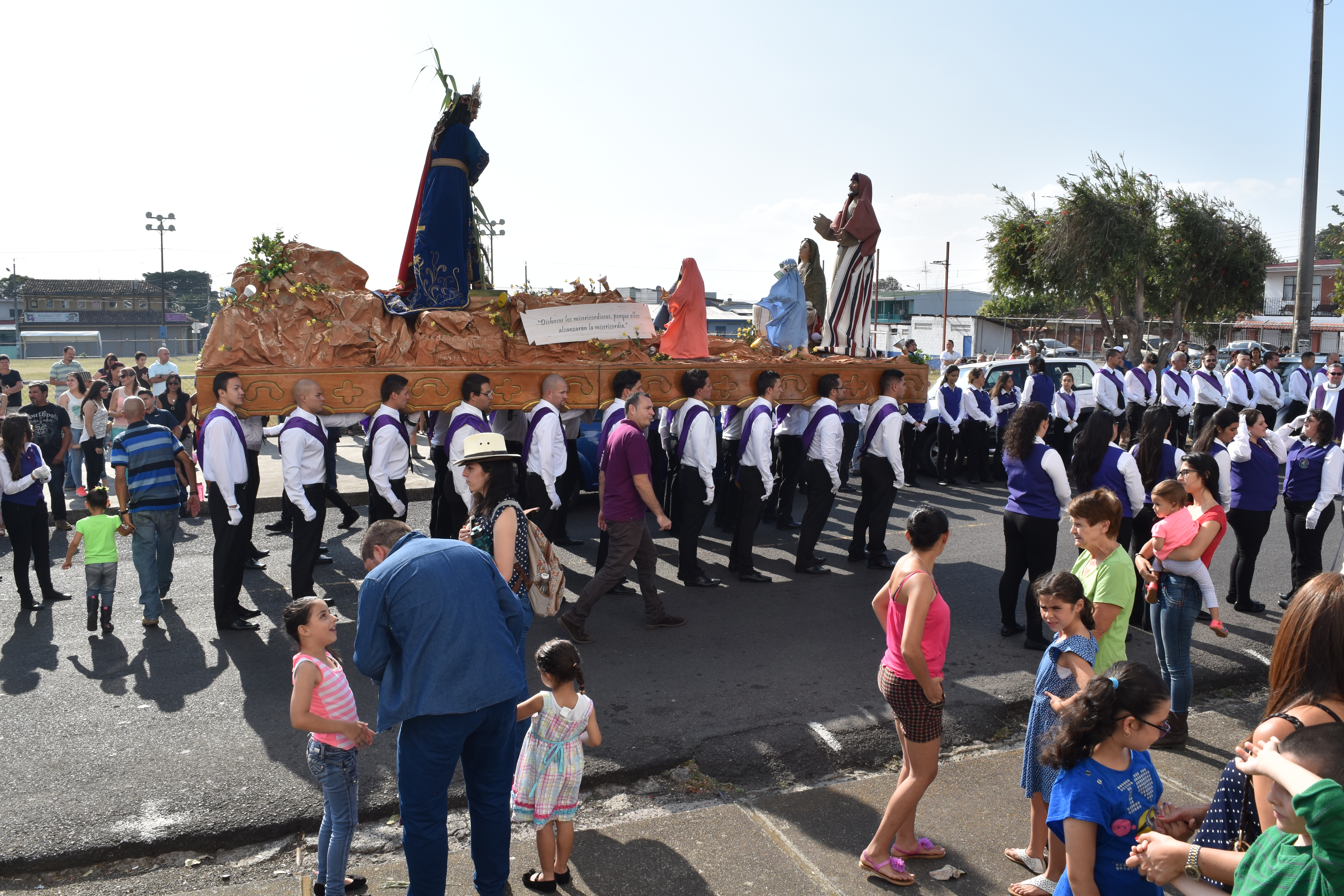
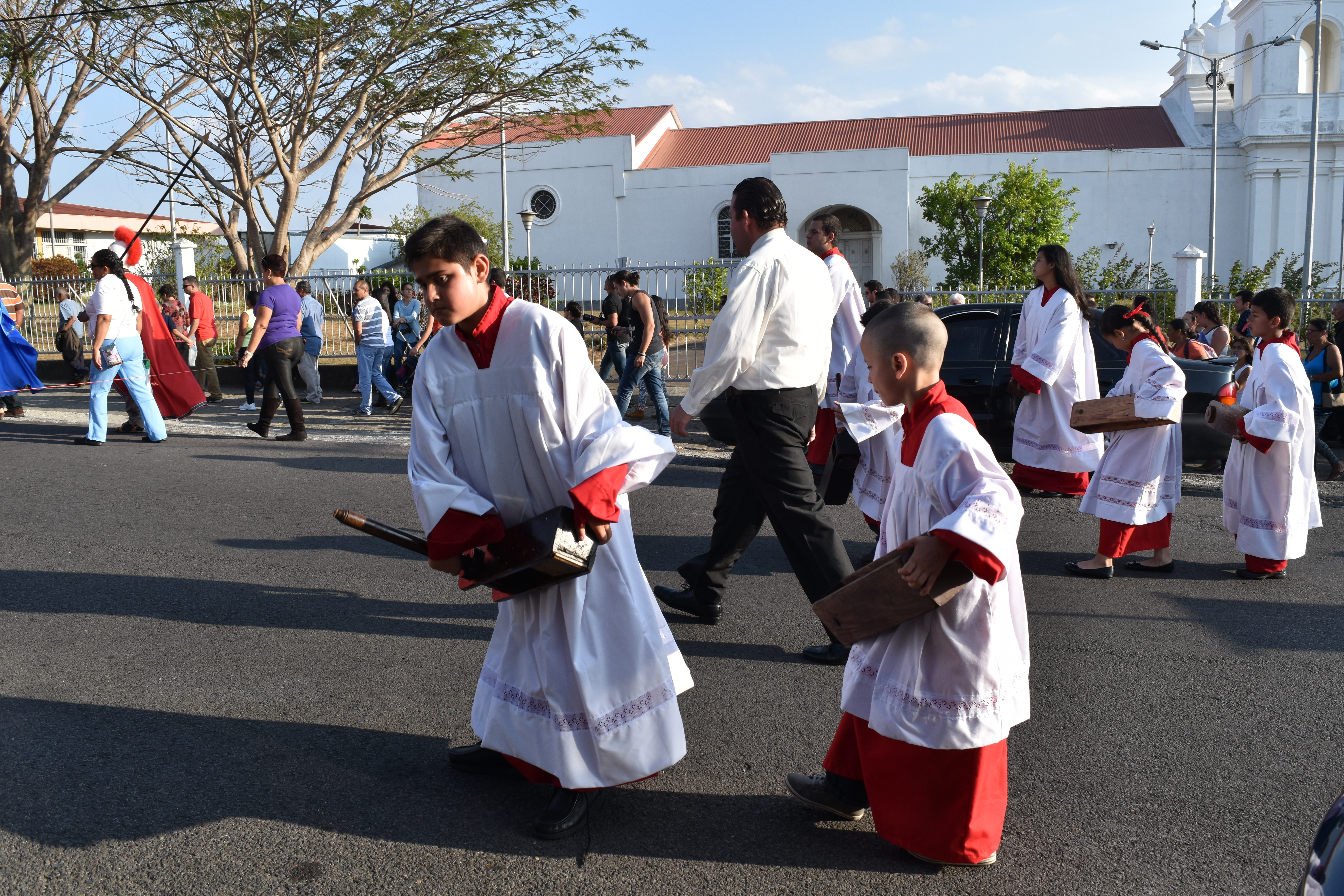
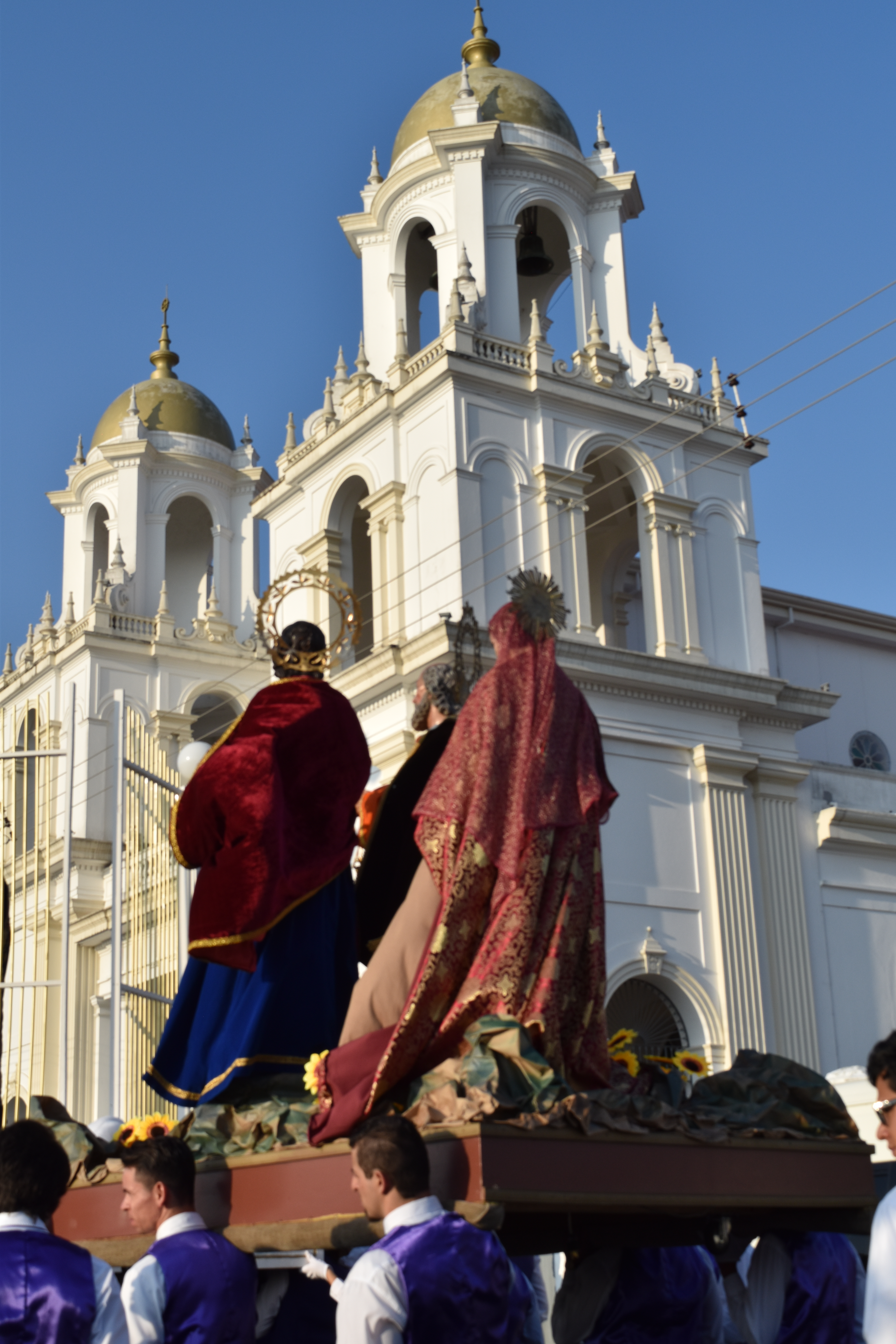
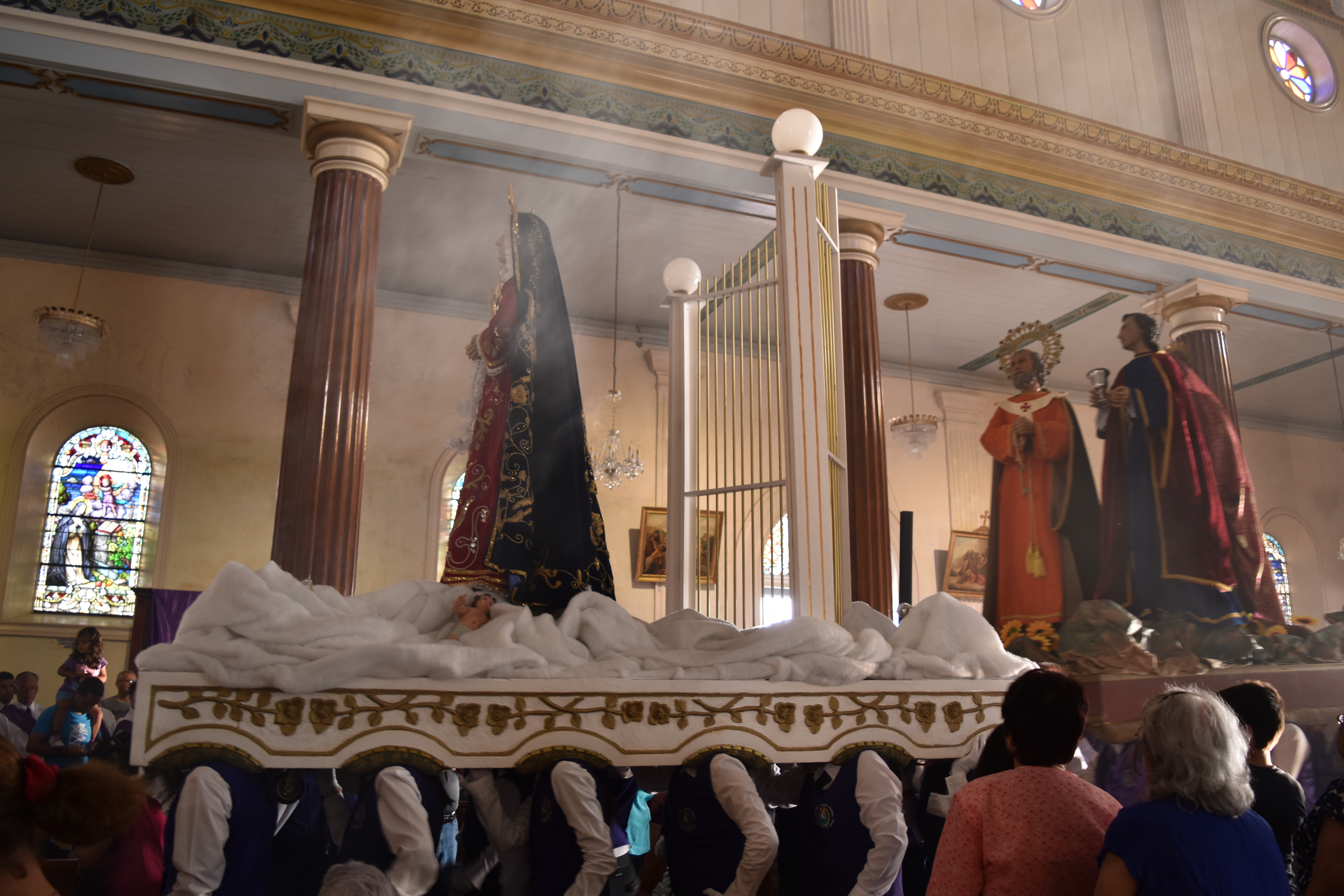
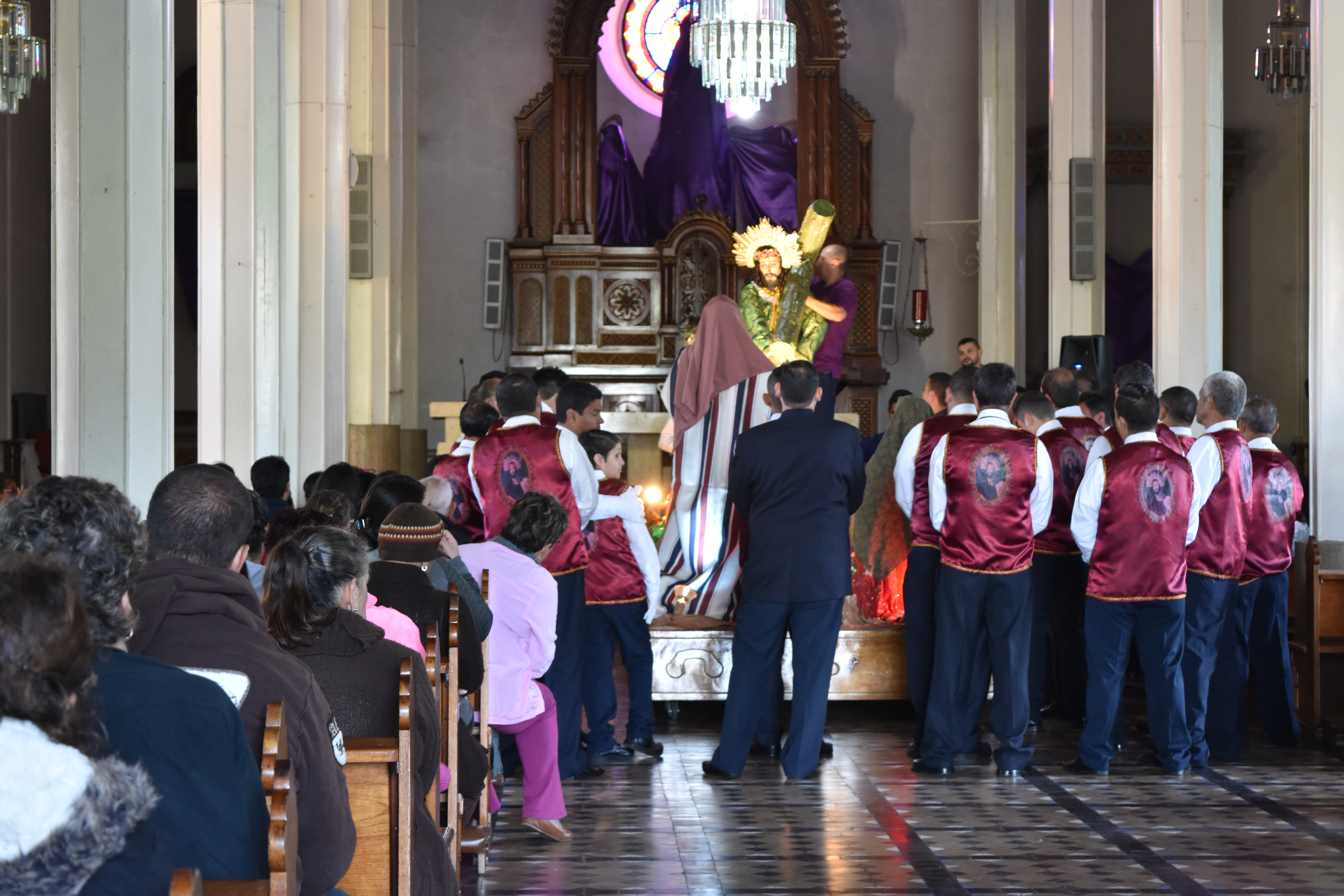
When I wanted to join one of the processions early in the morning of Good Friday, a friendly policeman told me to walk 100m south and 200m east. I was puzzled, but it was impossible to get another direction. Hence I went 100m south and 200m east… and arrived at the second large church of Santo Domingo. Aha! Yes, the procession has ended here, and the statue with Jesús in his green gown was inside this church, where a sermon was just about to start. Why could the friendly policeman not tell me to go to the Iglesia del Rosario? Then I would have known where to go… but that does not conform to a Tico’s mind.

image

.

Prepare your coins precisely in busses

When we drove to Heredia, I had prepared 950 Colones in coins. This was stupid, two tickets costed only 850 Colones. The busdriver mumbled something and gave me back all the coins. I started over again, giving him 500 Colones – and was about to add the rest. He throws the 500 back at me. I stop, think, prepare 850 Colones (which is the precise amount)…  and now he takes my coins nodding. Why has he not just given me back 100 Colones in the first place?

.

And, when you have recieved directions, walk carefully… 

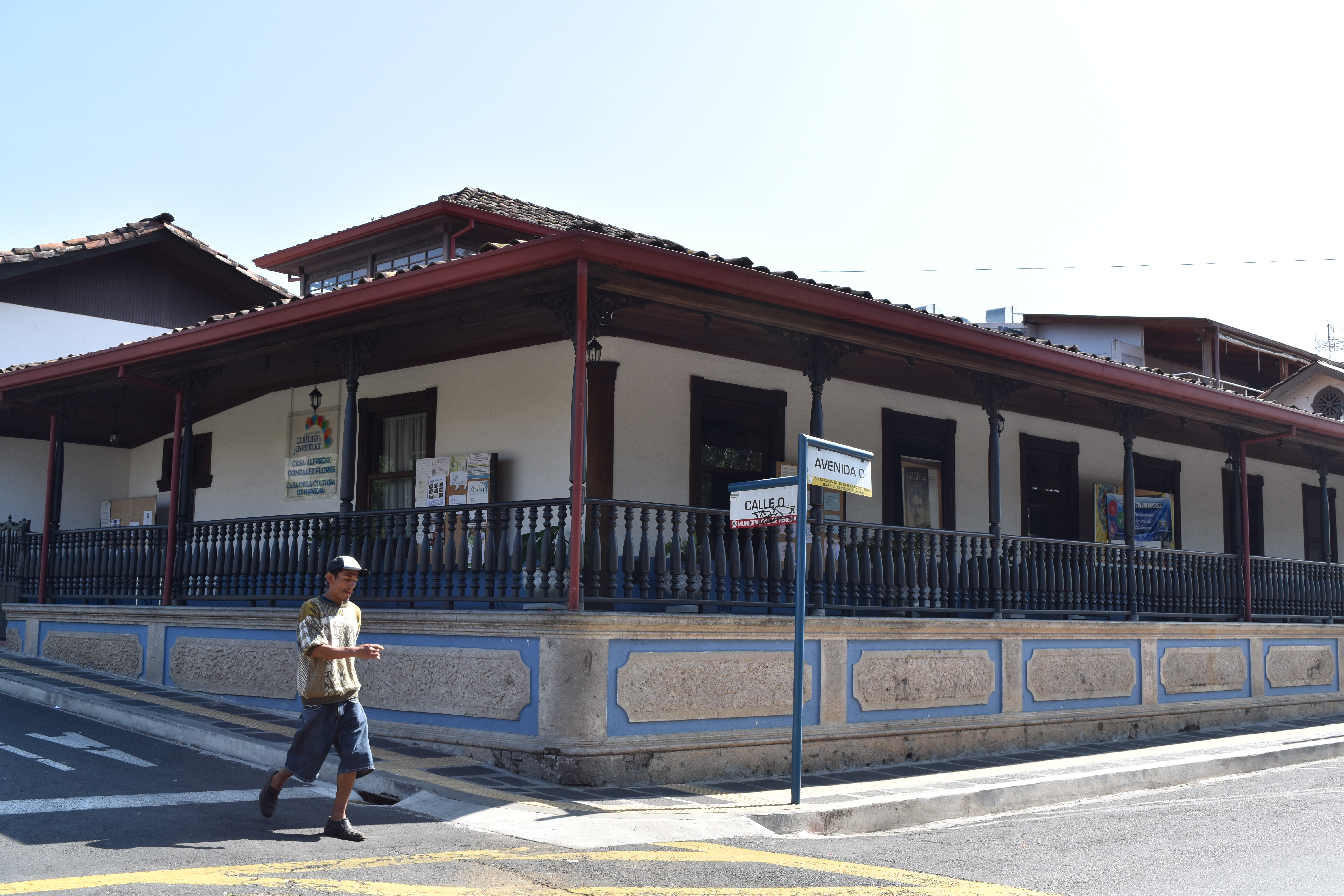
Walk carefully, as the sidewalks end in small ditches…

image

… and Ticos are dynamic car drivers.


Heredia – a lively small town

Saturday… let us go to Heredia

Heredia is the nearest place that is more “towny” than “our” Santo Domingo. Charo explains to us that the bus station is close to Macdonalds, 100m away from their home. As soon as we arrive at the bus station, the bus comes around the corner. 15 minutes later we are in the middle of a vibrant town that is about to wake up. It is a university city that has kept its colonial center.

.

Walking towards the Parque Central

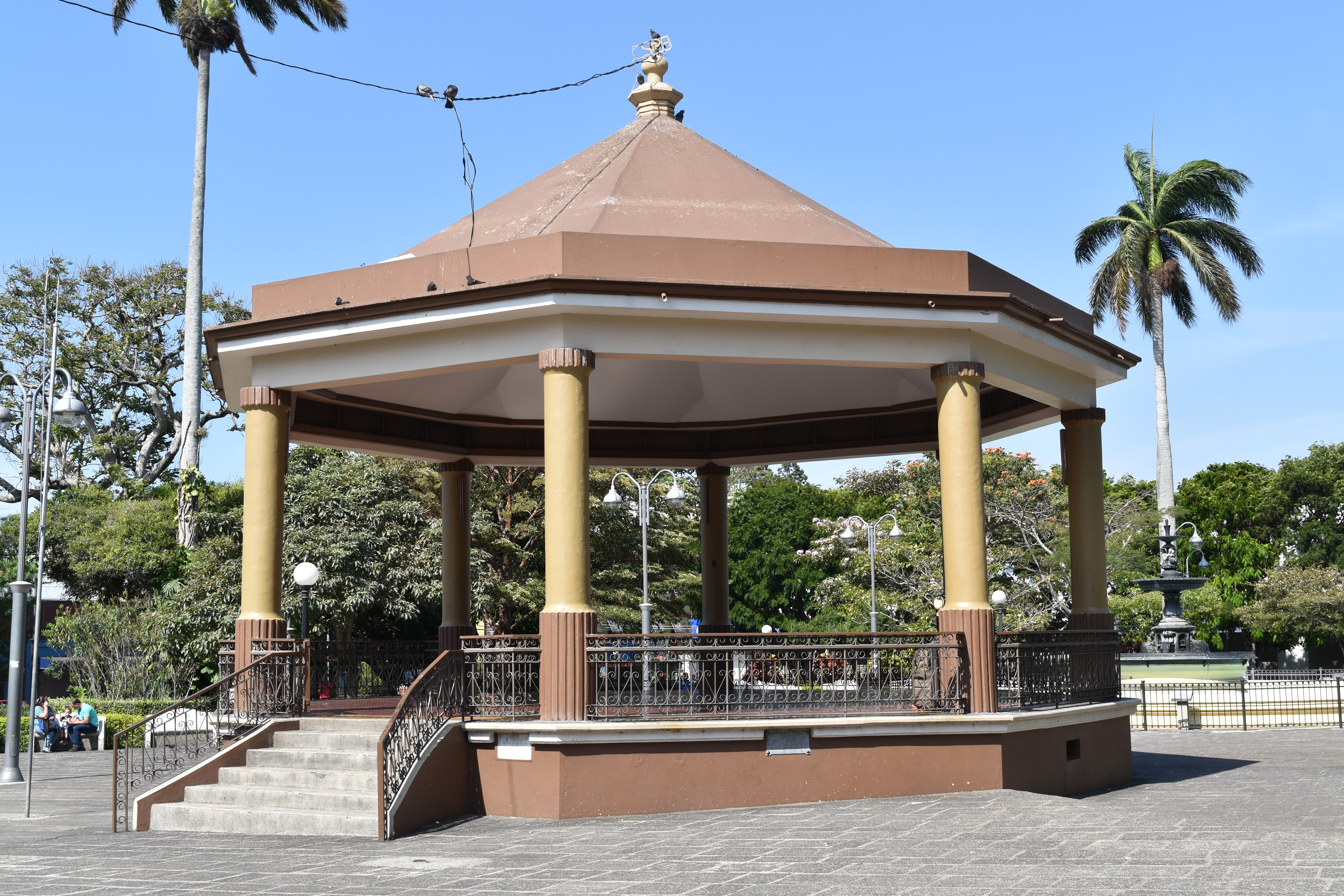
The Calle Central takes us uphill. The shoe shops and some dress shops are already open, and I have to be careful not to start emptying these inviting shops… Their choice is excellent. We reach the welcoming Parque Central with its music pavillon.

image

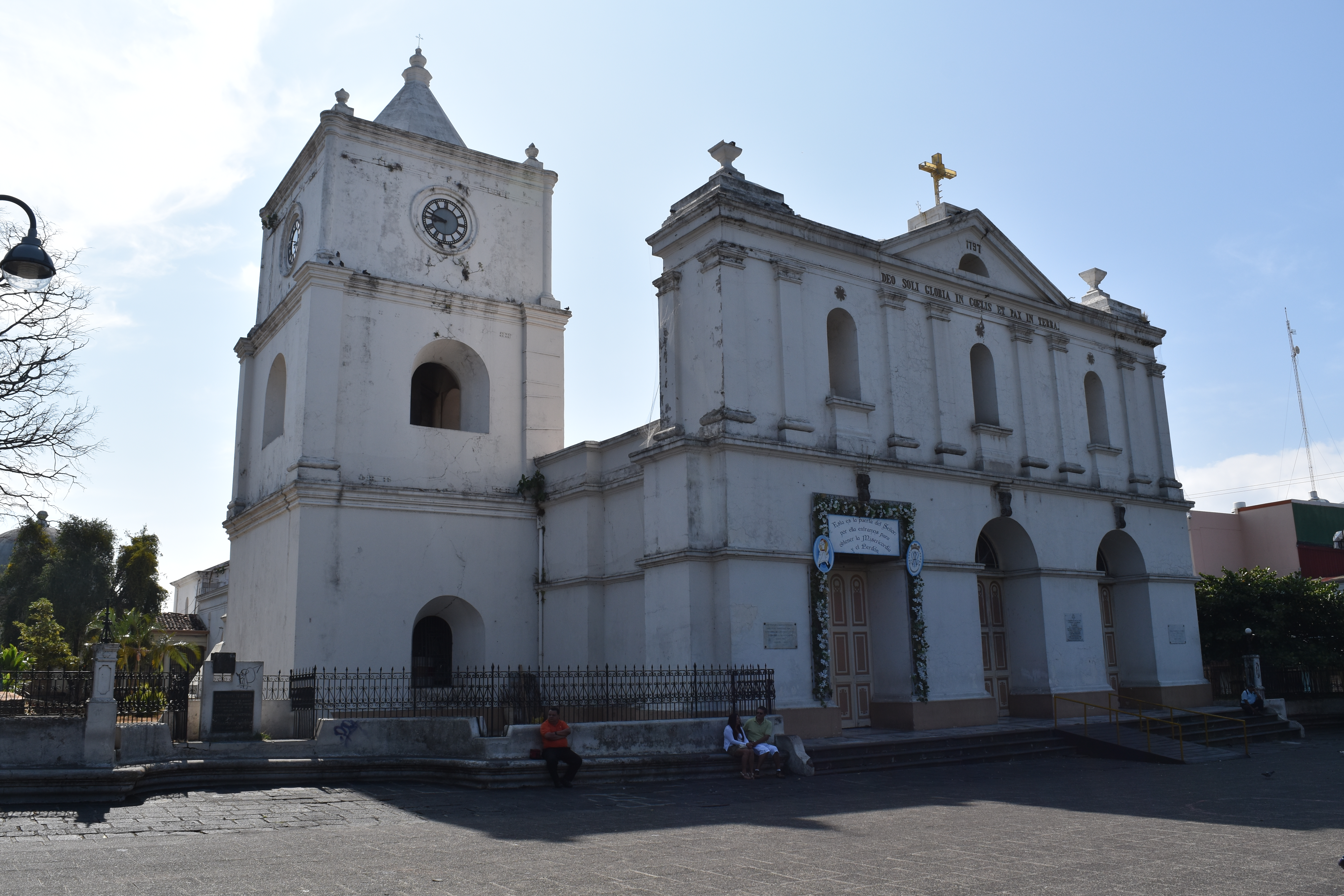
The Basilica de la Immaculata Concepción from 1797. The sun stands behind the basilica right now.

image

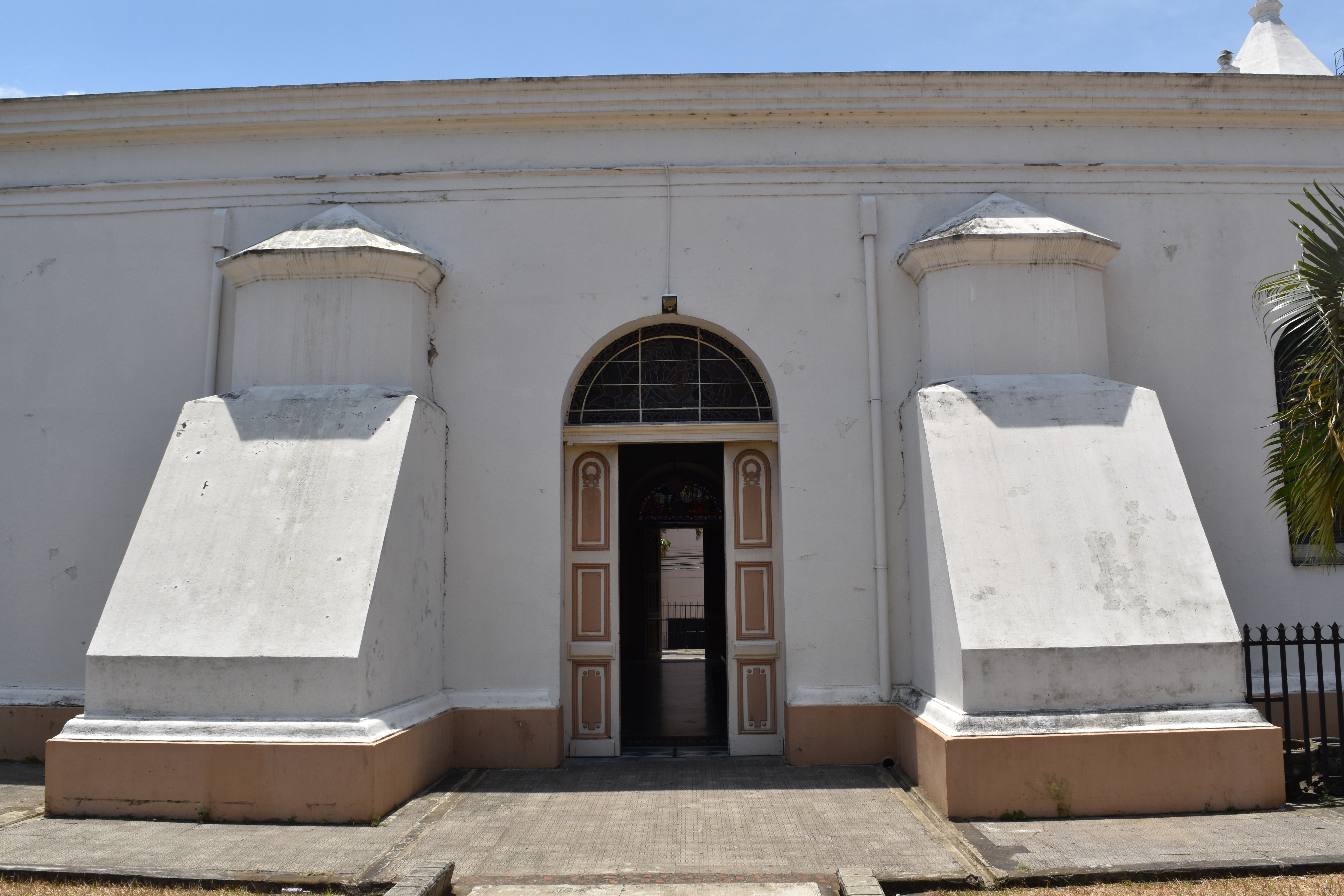
The walls are fortified and the church has withstood all earthquakes so far.

image

.

Inside the old church with Jesús in the grave

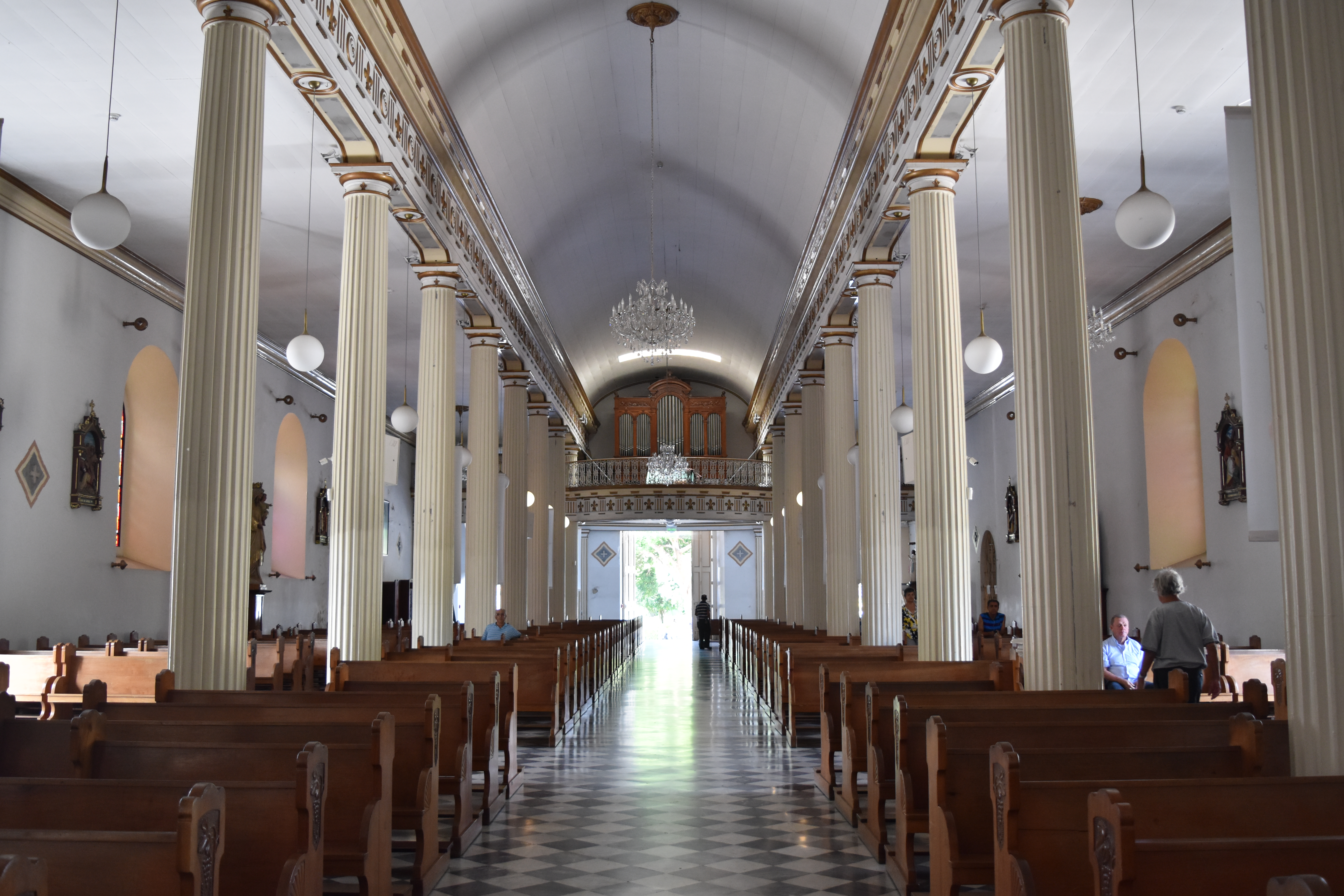
The church is simple inside with white columns. I like to be in churches that are not too much adorned.

image

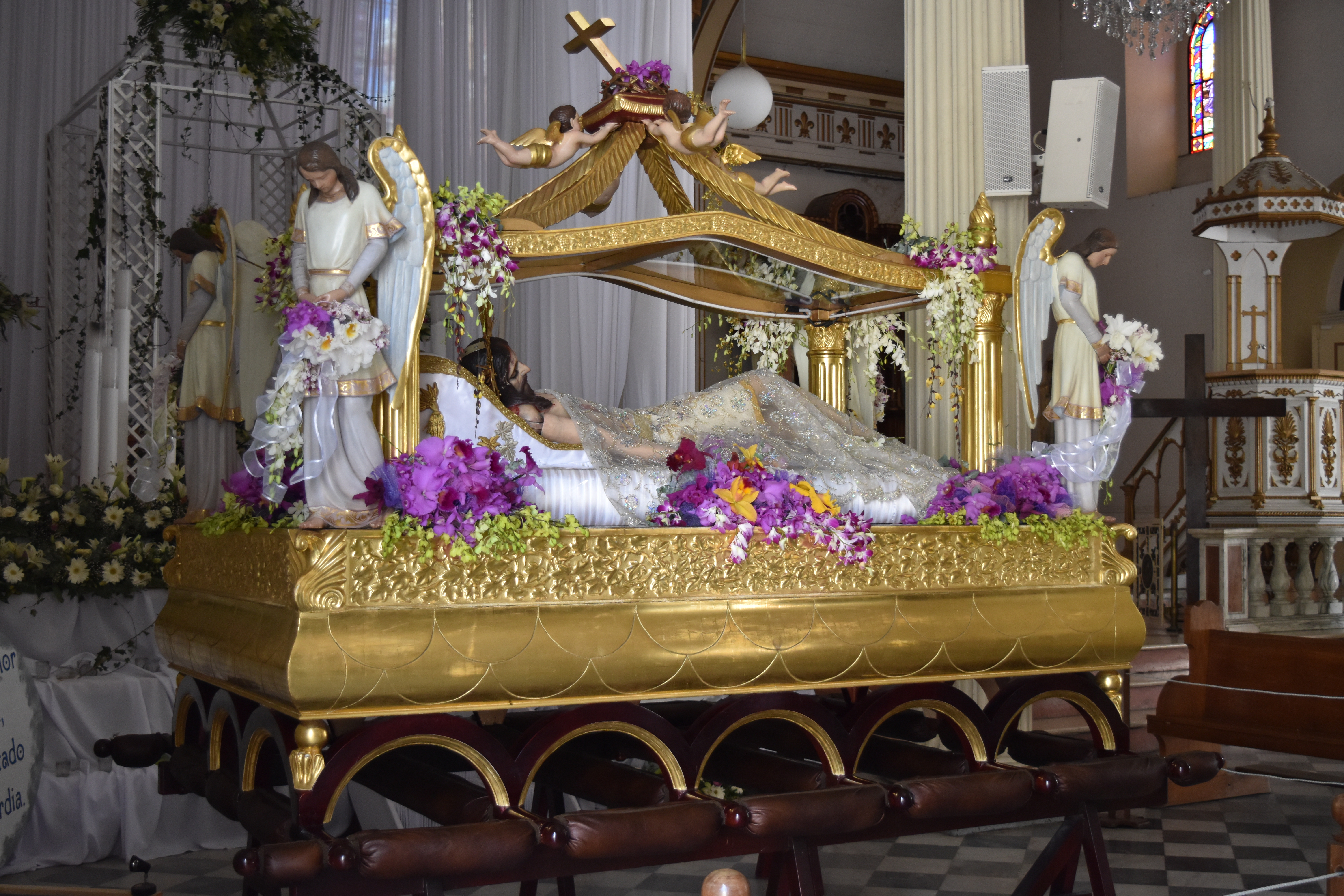
Near the choir, a statue of Jeús rests in his grave.

image

.

Some impressions from the Parque Central and around

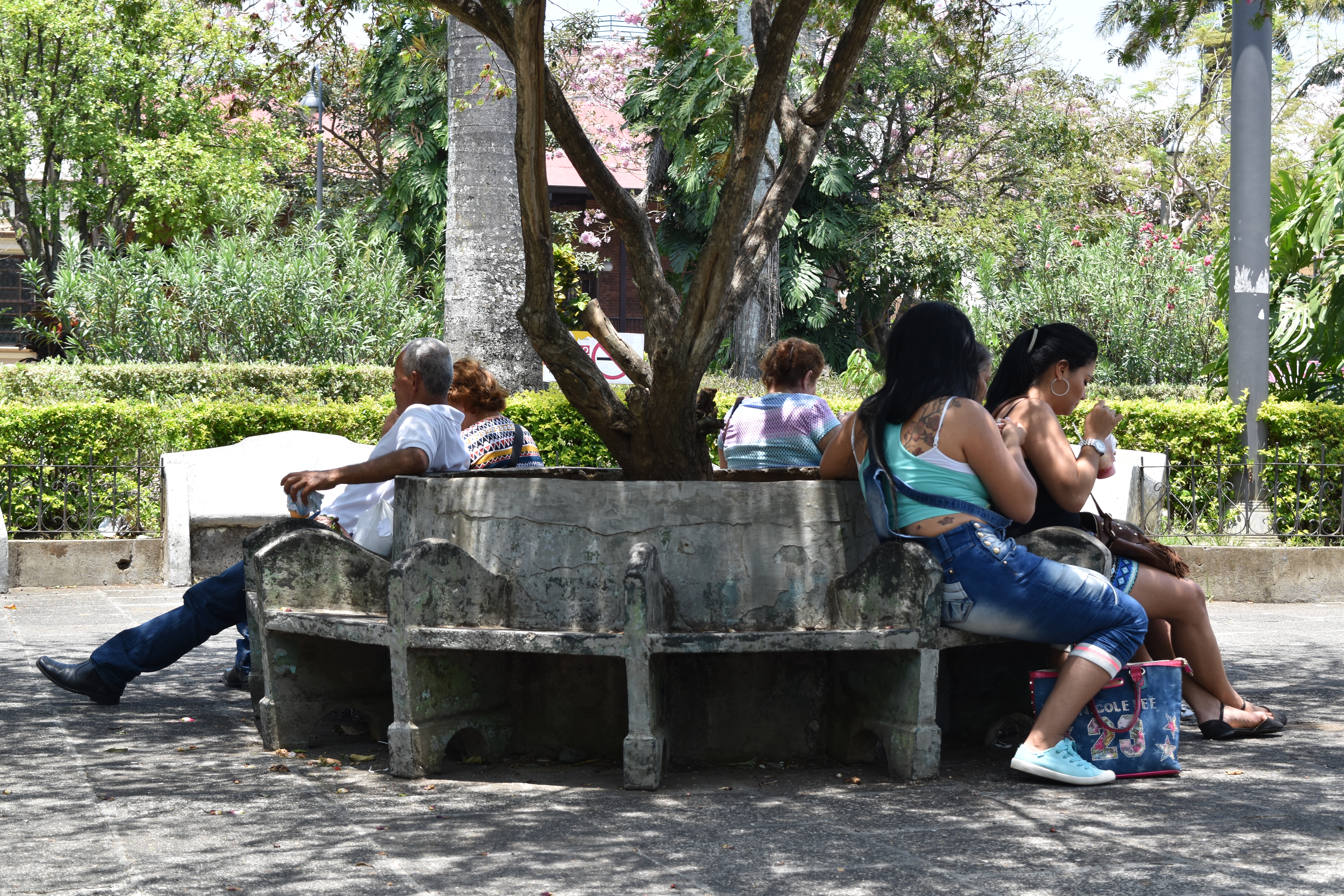
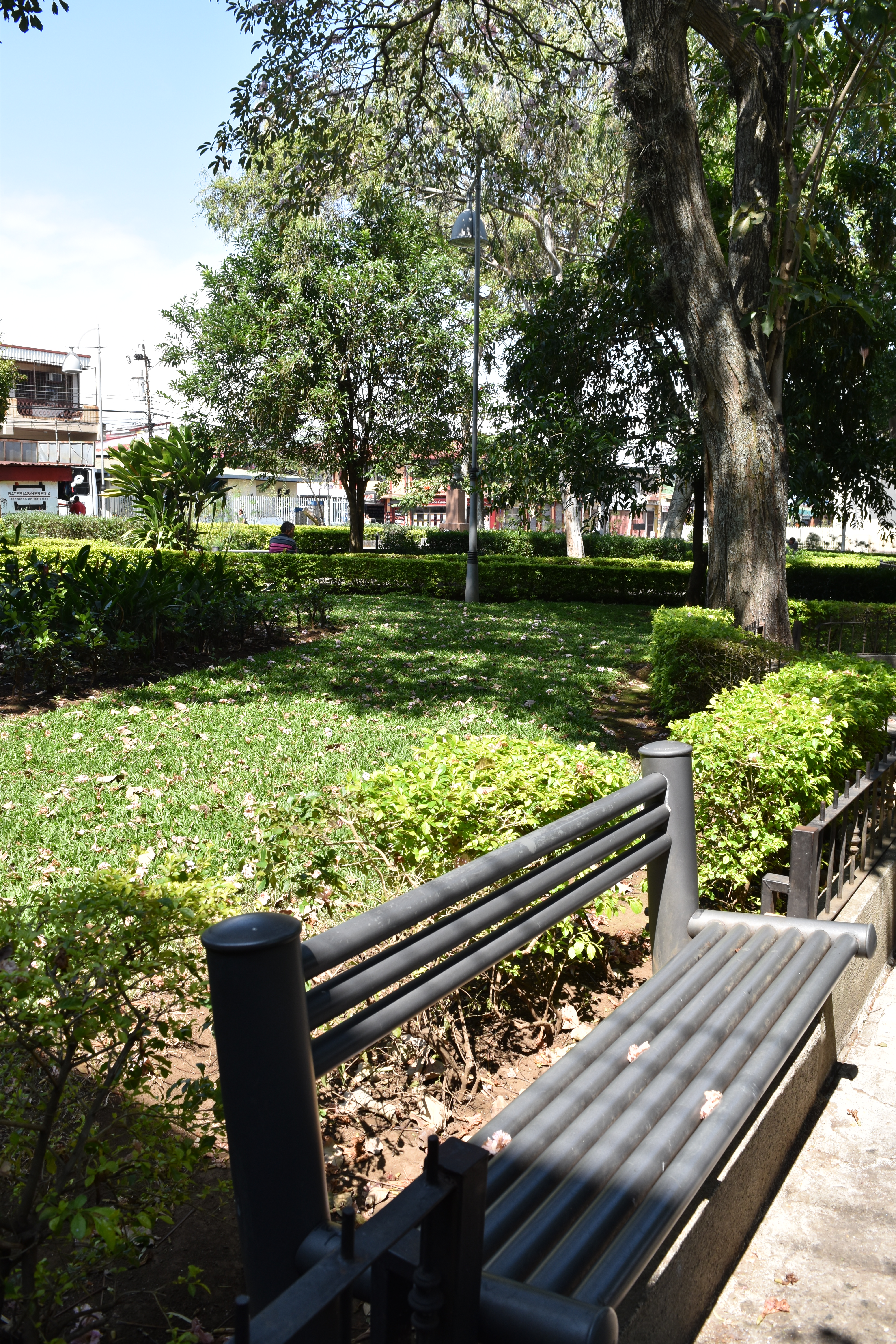
The central square is a vivid place with stone benches that invite to sit down and have a chat.

image

There is the Fortín, a tower that cannot be visited. We read that it is not safe.

image

La Casa Cultural is an old colonial style house, now closed.

image

.

Inviting fruit, vegetable and meat stands in the mercado

We keep on trying to remember the names for the tropical vegetables and fruits such as guyaba, maracuya or marañon.

image

There are also food stands, but we decide to try one of the restaurants in the city. We end up in the China-Japanese Principe and have a Sushi meal with noodles. This makes a change to the everyday rice you get at Costa Rica.

We top the excursion with an Italian ice cream sold by the Gelaterio Golosa… the Costa Rican fruit flavors are enticing – I have a green cas ball and we eat our ice creams in another shady park, the Parque del Carmen in front of the namsake church el Carmen.

image

.

Back to Santo Domingo in 15 minutes

In the early afternoon we take the bus back to Santo Domingo, hop out in front of MacDonalds and two minutes later we have reached our Costa Rican hone. We enjoyed to see Heredia, but we are happy that we have decided to stay in Santo Domingo to learn Spanish. It is more relaxed, and everyone greets us with a friendly smile in the streets.


Costa Rica – On the road again

Our plans for Costa Rica: Learn Spanish, travel and meet my family

With Ursula, I have traveled before – to Mongolia and to Florence. Now we are heading to Costa Rica to brush up our Spanish, to travel and to meet my family. Our adventure starts in the Easter Week, or as it is called in Spanish, die the Semana Santa.

.

Crossing the big pond – a long, long journey

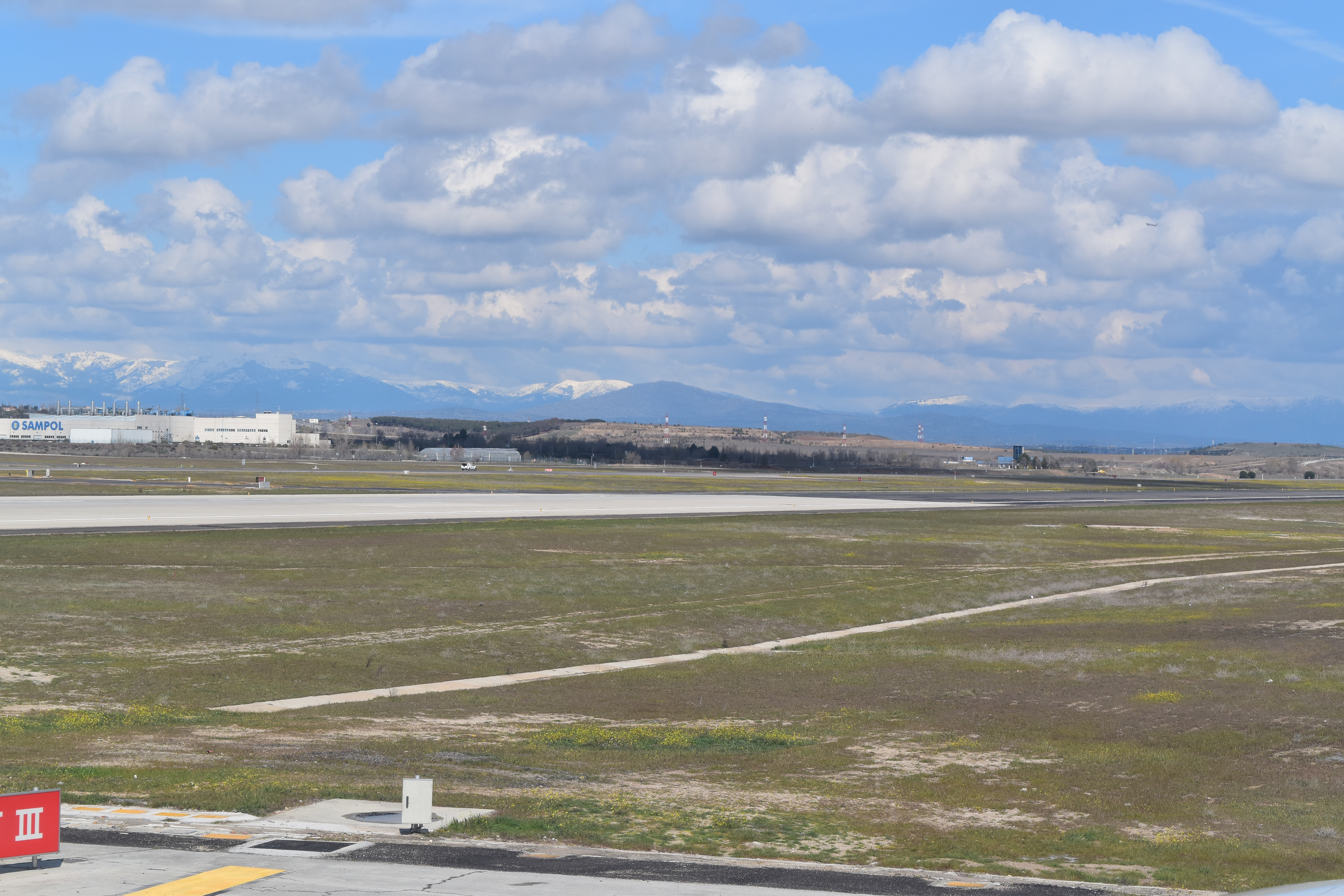
In Zurich we catch the tram at 5 AM. At the airport we buy some chocolate. The Kosovo Albanian shop-keeper loves to hear me say “falemers” and “s’ka problem” and gives us some red Lindt chocolate balls on top of the pralinés we bought. Our Iberia plane leaves safely and takes us south along the Swiss Alps – what a gorgeous view. We change planes in Madrid. We take off with a view of the Pyrenés.

image

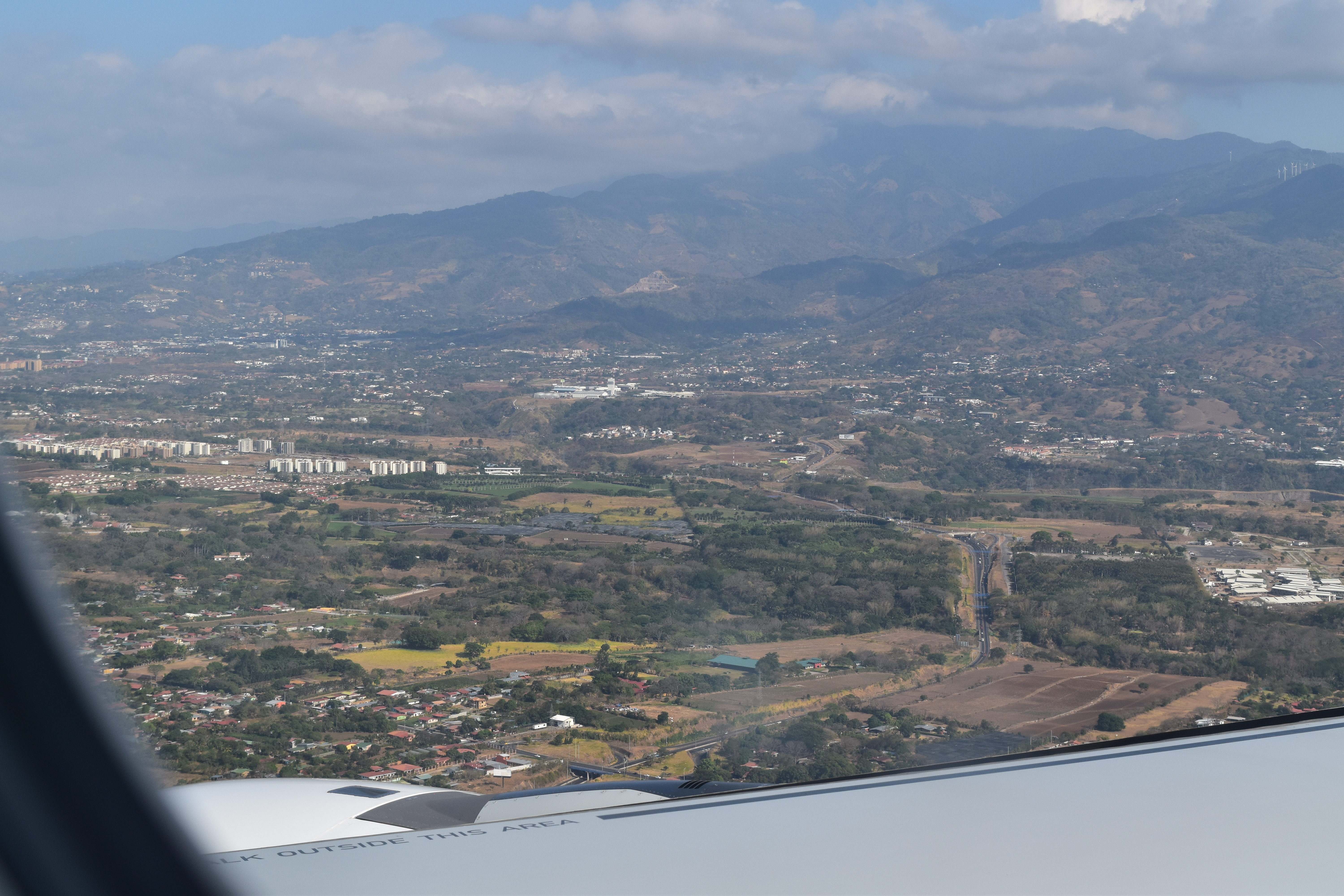
We then have to sit patiently in our window seats for eleven hours crossing the big pond. We land safely at 3:30 local time in San José.

image

Jorge takes us to santo Domingo de Heredia, a suburb of San José, where we will stay for four weeks. Of course, Jorge offers us an excursion for tomorrow. May be next week, Jorge.

.
A friendly welcome by our homestay family

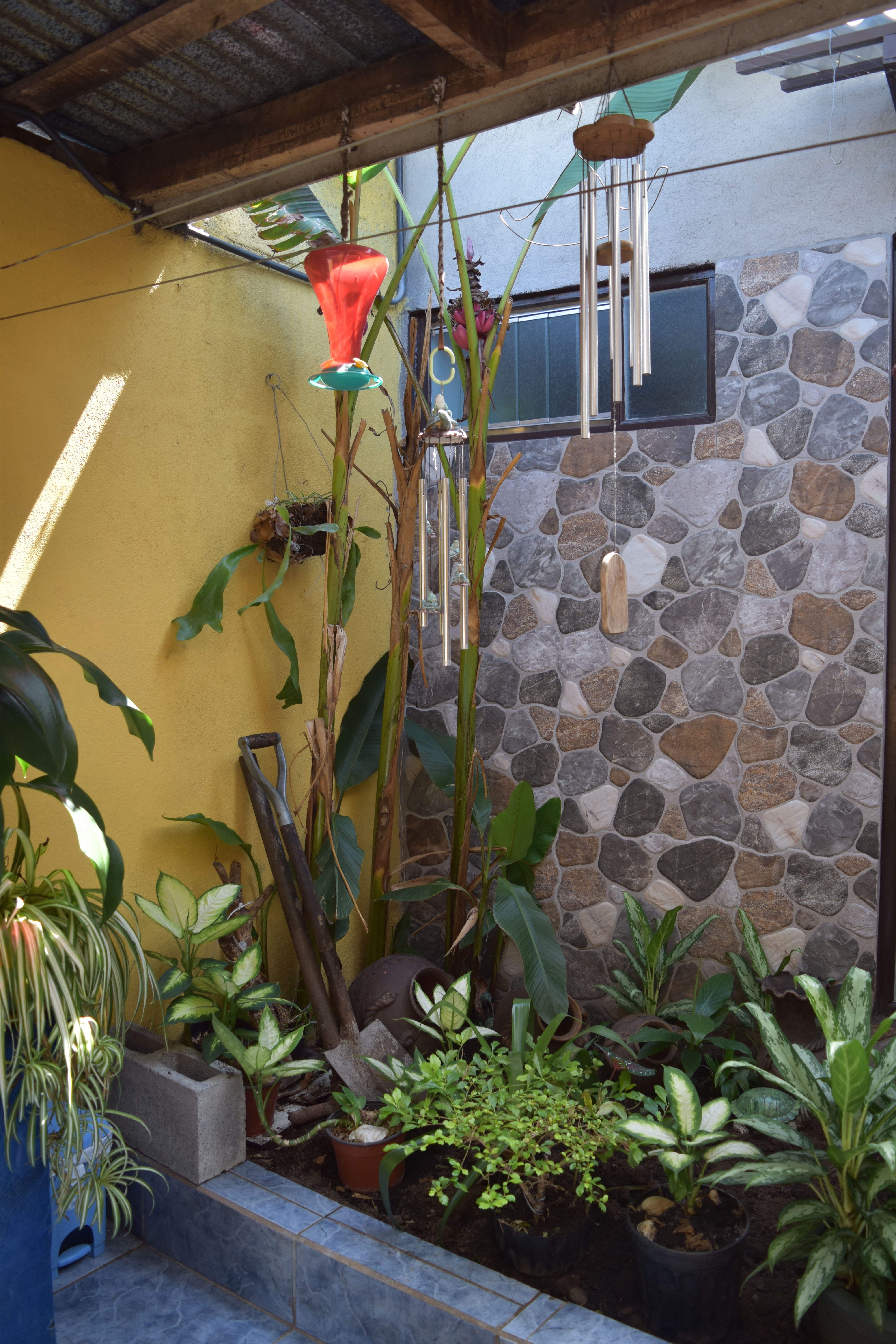
The family of Charo gives us a hearty welcome. Only Bony, the little teckle, is not happy to see new guests and barks and barks, but he stops after one day and accepts us to be part of the family. We find two rooms with small bath rooms facing a courtyard with a nice garden.

image

We go shopping with Charo to get a first overview of the area. We enjoy dinner, and then, we are extremely tired. 22 hours ago we have started our journey.  I fall into my comfy bed and sleep deeply into the next morning, here in Costa Rica.

.
Wednesday – discovering our new home town

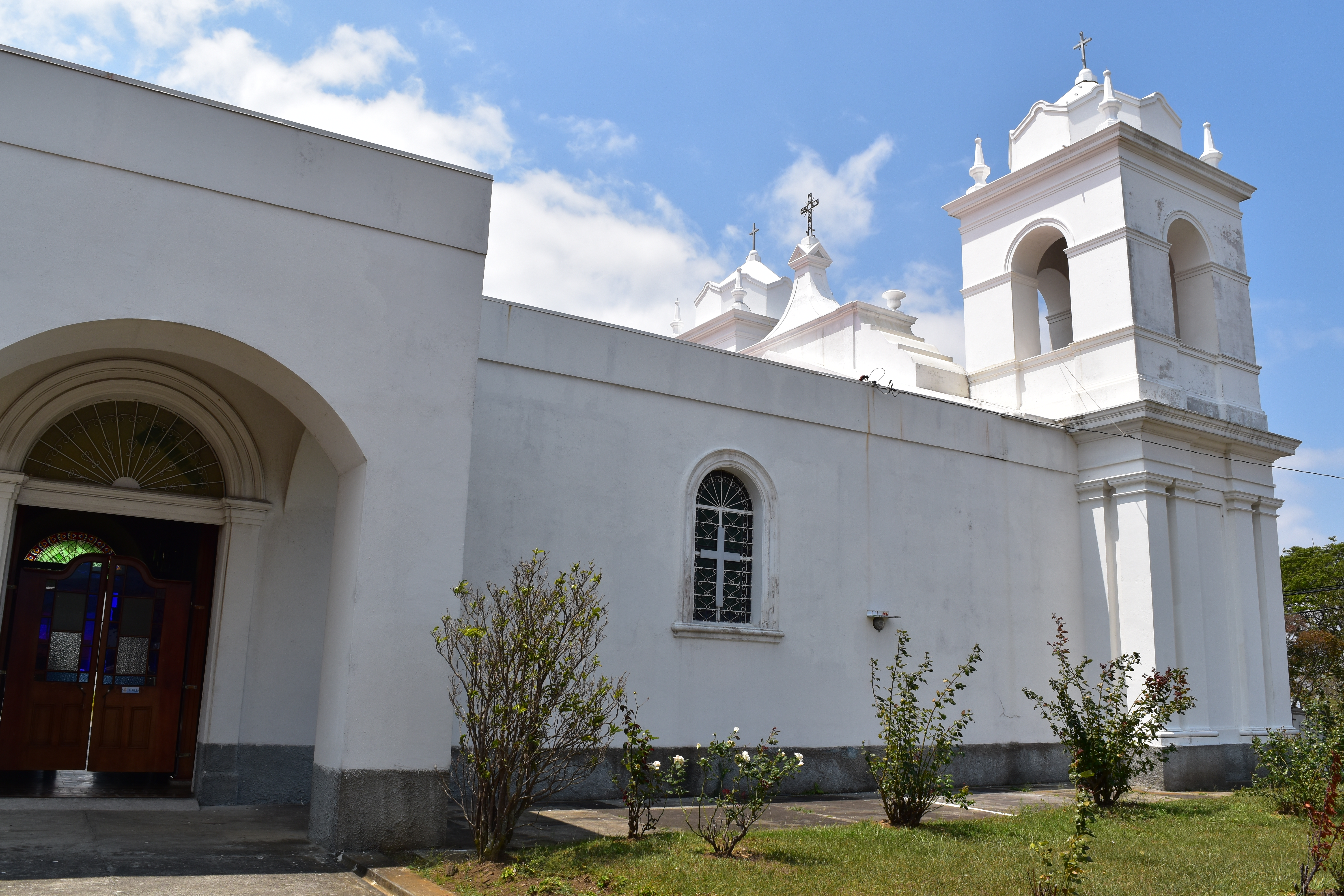
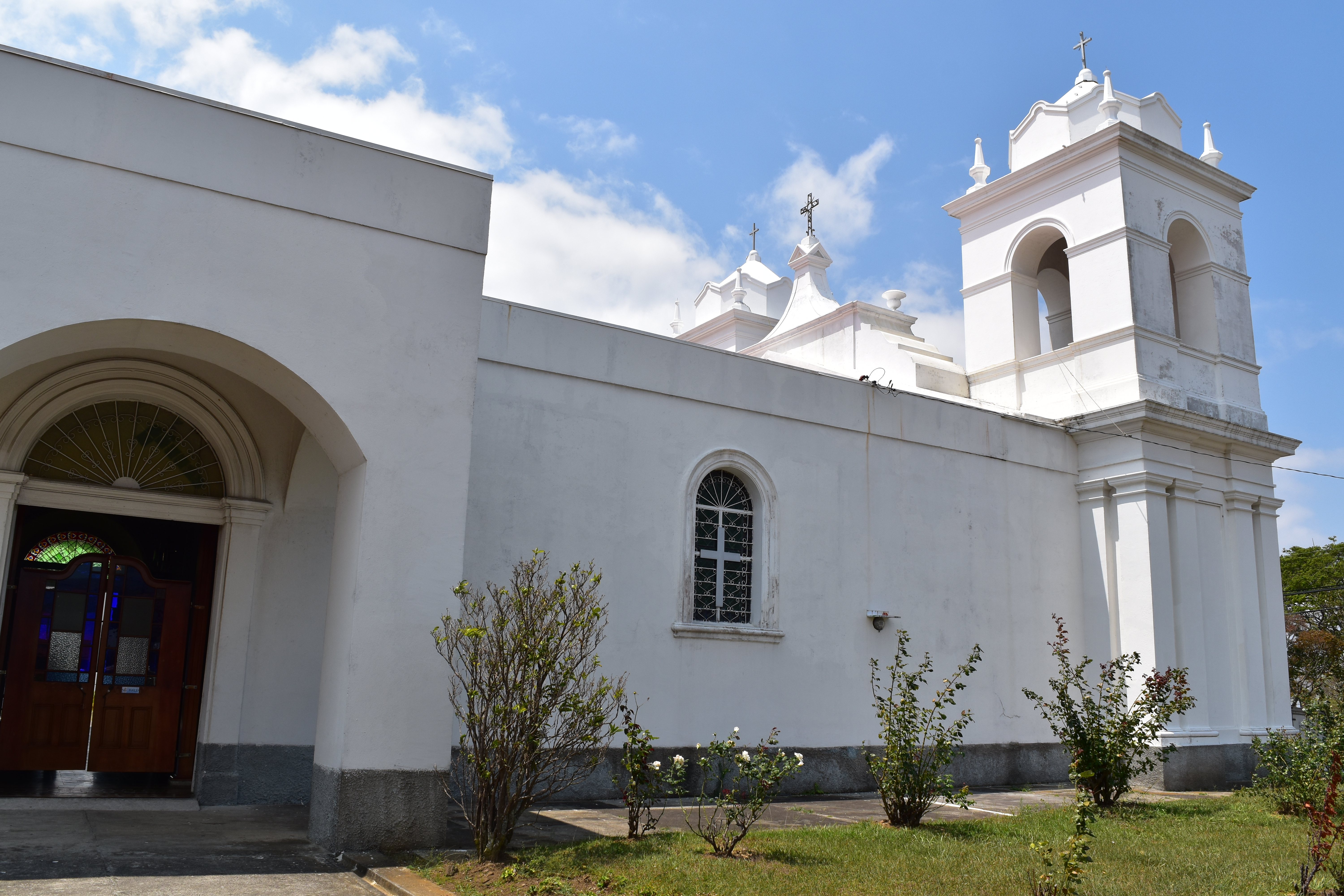
After a good breakfast with fresh tropical fruits we have a chat with José and Charo. Then we head off to discover our new small town. We find many nice shops, bakeries (we buy empañadas), a stationary shop (we buy cuadernos quadraticos or notebooks), a super market (Pali, we buy water, tea and biscuits) and a bank (no money exchange without a passport). In a super market we try to remember the names for the vegetables such as pepino for cucumber. There is a church surrounded by a garden with tropical plants (Iglesia de Nuestra Señora del Rosario).

image

Nearby is a small city park in the very center of Santo Domingo – the palm trees are bending under the wind.

In front of the Basilica de Santo Domingo de Guzmán is a food market.

image

We buy bananas and a mango.

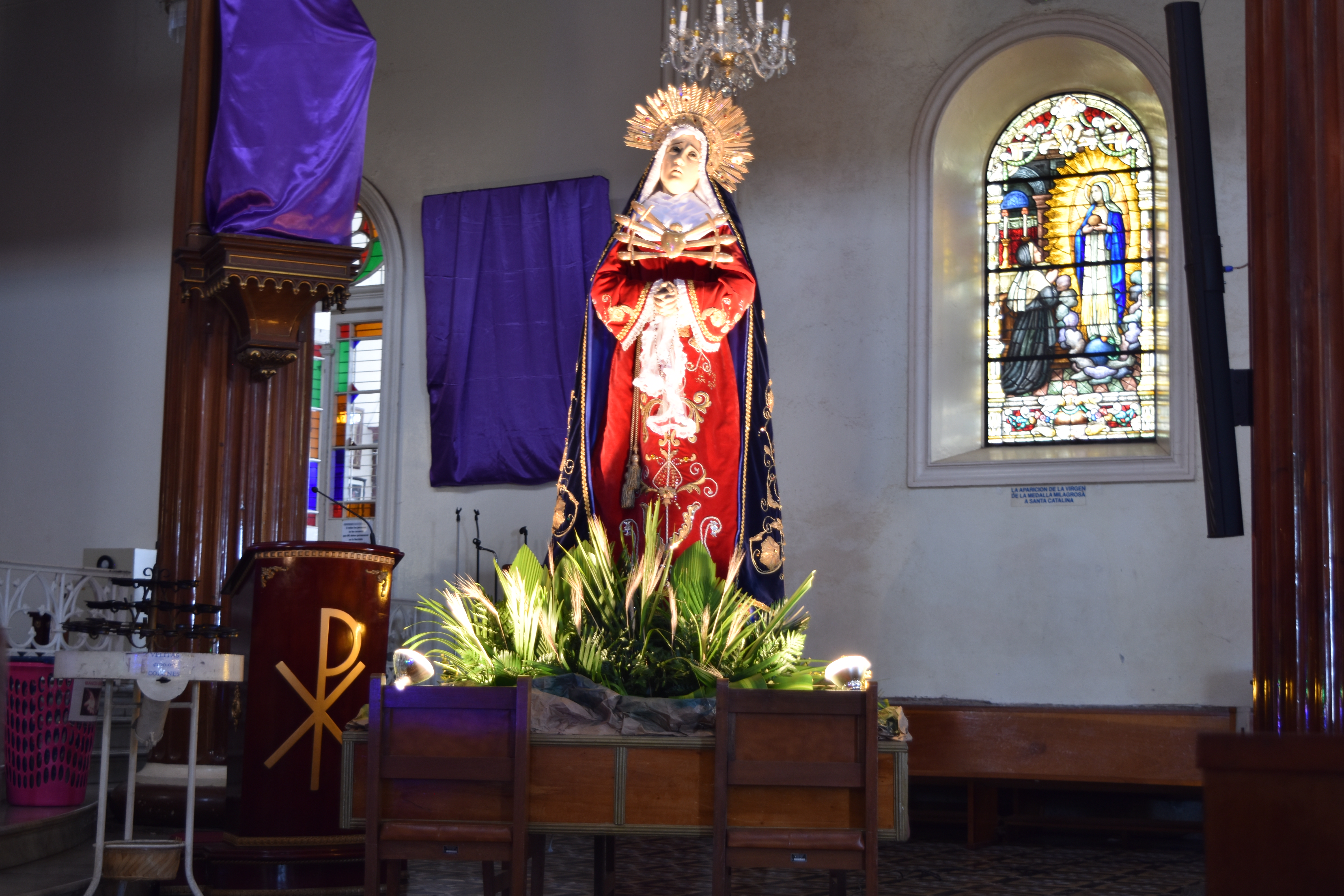
The basilica is being adorned for the service and procession tonight. It will be the “Santa Misa y Procesión solemnel dedicada a Jesú atado a la columna.” This is Maria, ready for the procession.

image

We look forward to some of the services and processions of the Semana Santa.

D’Schnitzelbängg and the football match Albania-Switzerland

Even a football agnostic notices that the upcoming European Championship will be special for the Swiss and the Albanian teams

Though being a football agnostic, I have noticed that the European Championship in France will be special for Switzerland and Albania: Quite some of the players in the Swiss team are from Kosovo-Albania and so are some in the Albanian team – all of them trained in Switzerland. When the two teams play against each other, they might talk in Swiss German. This has been commented by the “Schnitzelbängg”.

“Schnitzelbängg” belong to the Basel carnival (“Fasnacht”) that was celebrated in mid February this year: For three days my town was focused on nothing else but their Fasnacht. There is a lot to say (and love) about the “Basler Fasnacht”: The Morgestraich, the Cortège, the Guggekonzärt, the carpets of Räppli… and there are also the “Schnitzelbängg”.

Schnitzelbängg” are a kind of minstrels forming small groups that walk from one restaurant to the next in the evenings, presenting (mostly singing) short verses about what has happened during the year – in Basel, in Switzerland and in the world. This year they also commented about the match Switzerland – Albania in the European Championship. Here I am citing some verses, also trying to translate them into English and adding the links to the presentations of the “Käller-Assle” (the cheerful group of “cellar woodlouses”), the “Tam Tam” (The Tam Tam in their beautiful yellow trousers illustrate their verses with requisites they pull out of their large pockets – they won an award for their performance) and the Bataillioons-Glunggi (explanations below).


D Käller-Assle
(the verse about the football match starts at about 4:50 minutes)

Uff em Fuessballfäld dien sich bewege
Zwai Team, wo mit’nand Mundart rede.
Das passiert und isch kai Witz
Schpielt Albanie gege d’Schwyz.

On the football field there are running
Two teams that talk in dialect to each other
This will happen and it is not a joke,
When Albania will play against Switzerland.


Tam Tam
(first verse in the series)

Für d’EM z’Frankrych wird my Schtube zum Fussballstadion.
Drei Match am Daag uff der Kautsch, das bruucht Kondition.
My Frau schleppt’s Bier, pro Schpyl e Gatter. Voll yne, uuse läär.
Numme  Schwyz – Albanie lueg y nit. Do waisch nit, wär isch wär.

During the EM in France my living room will become a football stadium.
Three matches a day on the sofa, that will require physical shape.
My wife will carry the beer, per match a sixpack. Coming full and going empty.
Only Switzerland – Albania I will not watch. Because we will not know, who is who.


Batallioons-Glunggi (they furl the flag of Albania before starting with this verse)
(first verse in the series)

Mir hän ufem Wääg in Dienscht im Zuug die Faane gschwänggt.
Dr Ueli Muurer froggt uns, was das soll was hän der eych do dänggt.
E Skandaal syygs und vor Wuet do kunnt er grad e kli ins schwitze,
Drbyy hän mir nur welle d’Schwizernazi understyytze.

I am explaining the idea of this verse: The “Batailloons-Glunggi” come dressed up as soldats, as they pretend to be the “sloppy guys” (soldats) of the battalion. They are not serious about the “battalion” – this is a carneval/Fasnacht joke. They sing that they take the train to join the military service (many younger citizens are doing some practice days each year). In the train, they wave the Albanian flag. The head of the defence department (Ueli Muurer) asks them angrily, why they are doing so. They apologize (last line): “Well, we just wanted to support the Swiss national football team.”

The Albanian flag is the black eagle with two heads on red. Here it is with the bust of Skanderbeg in Lezha (Albania).

P1080780

Well, may be – even as a football agnostic – I will watch the match Switzerland – Albania, but then I will not know which team to support.

Wonderful, I will be a godmother (Gotte) – what does that mean?

“Will you be godmother to my son”, my nephew asks me…

Around Christmas, I try to calm down my nephew’s half year old son – I am his grand-auntie. Not his auntie, his GRAND-antie. Then my nephew asks me, whether I would be the godmother of my grand-nephew. I feel touched. Yes, of course, I agree.

I have never been a godmother before. Another new adventure at my – not so young-  age. I look forward to that and start to think about what matters.

After looking back to my childhood and listening to friends I think that care and love matter, being authentic and reliable, finding an atmosphere of trust, and living this by creating habits, by exchanging, by showing you are always there when needed and – yes, also – by making presents that will be remembered. It all has to come from the heart. Accept that this is a mutual relation and enjoy that. And it may become a friendship that lasts beyond the age of 20.

.
Looking back to my childhood: I enjoyed the love and care of my godfather and my godmother though they lived far away

My godfather was Onkel Nante and my godmother was Tante Christine.

Bilder petra

Onkel Nante must have been my age (around 65), when he started his journey with me. He was my mum’s uncle and my grand uncle. He lived in Berlin. I could feel his love in the carefully selected presents, in the letters we exchanged and during my visits in Berlin. One present I remember were the Christmas angels singing “Holy Night”. It was a music box with a windup mechanism, and after some time, the tune would slow down: H-oo-oo-ll-yyy—- n-iii… and then it would fade away. These angels accompanied me every Christmas. When I was seven, Onkel Nante gave me a skirt with a matching vest, modeled after the red-green-white Scottish kilt, and I was proud of wearing it for many years – I also wear it on the foto. Then I received a summer dress in ice rose – so beautiful. And, when I was fifteen, he had a blue costume made for me to cover my (temporary) overweight. I often exchanged letters with Onkel Nante and his wife. Both were always interested in my life. When I was a student, I traveled to Spain staying in a tent, and I sent him a travel report. The result: An angry letter to my mum: “Please give your daughter enough money to stay in a hotel – tents are extremely unhealthy!” He was more than 80 years old by then, but he was still worrying about me. When I started studying economics at university, he sat down with me, looked at me firmly and asked, whether I will be able to earn a living with that. So – what I remember, are some great gifts and his loving care. And today, I always go to see his house in Berlin, not far from the mosque, to – virtually – say hello to him (his house has been sold).

My godmother, Tante Christine, was a friend of my mum’s and lived in Köln. She always lived alone and may not have had a lot of opportunities to travel. I have not met her often. But we regularly exchanged letters, and she always selected her gifts with great care. For my birthday and for Christmas, she would send me jumpers – they always became my favourite jumpers. I particularly remember an ice blue jumper. Through the letters and her gifts I could also feel her love. One day my letters were no longer answered. I was very sad. I think she must have been lonely and sharing her love with me was also important to her.

.

Ernst, my husband, shared adventures with his godson

In my first summer with Ernst I heard him mumble: “My godson left a message on the answering machine. He wants to spend a few days with me. I will pick him up at the train station.”  We had a few wonderful days – I particularly remember the mini golf tournament that he won. Sometimes we all would take the camper, roast sausages, sleep near a lake in the mountains, go for hikes and climbs or visit the caves in the area. In winter we went out skiing. Every Christmas, Ernst renewed the subscription to “Spick”, a scientific newspaper for kids. After having finished school, the godson shyly said that perhaps he does not need the “Spick” newspaper any more. Now he is a scientist himself, and for his doctorate exam, Ernst promised him a globe based on his specifications… a wish that I eventually fulfilled, when Ernst was already a star watching over us. There was this regular tradition of presents and also sharing time and adventures. The relationship carried on into adulthood and I inherited it in a way after Ernst had left us.

.

Some of my friends add that for them regularity, independent advice and a mutual relationship for ever are important

From various friends I gathered their godfather and godmother experience.

A friend of mine had a godfather that was a farmer with nine children: “He was not rich. But every birthday and every Christmas, he gave me a five franc piece (Fünfliber). He slipped it firmly into my hand looking at me with warm and kind eyes. I loved these moments. And they came back every birthday and every Christmas, with regularity. Being able to rely on this regular gift was very important for me”, he pointed out to me.

A couple told me that they had selected a very good friend as the godmother for their daughter. It all started well, but then the friendship broke. The godmother wanted to give back her duty. But the mother said: “Well, you may give back your godmother duties, but do not tell my daughter. She is very proud of you and she loves to think of presents for your birthday and for Christmas. We do not want to take that away from her.” So, the daughter, not knowing about the problem, continued to handicraft presents for her godmother. Eventually, the friendship between the parents and the godmother was restored and the daughter had never noticed the problem… Yes, the relationship between godparents and godchild is mutual.

My friend from Munich (now also in her sixties) told me that she has just visited Tante Bärbel in the hospital. She is her godmother and is now in her nineties. The friendship with the godmother lasted far beyond her childhood – beautiful.   And her husband added that he valued the advice of his godparents that added an independent view to the opinion of his parents.

.

So – let me try to live up to that…

… and I do hope that I will be able to accompany my godson into his adulthood.


Albania – from Permet to Korça

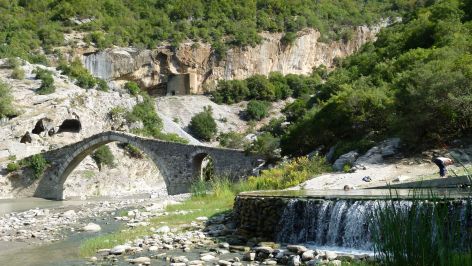
Driving from Permet to Korça through the mountains takes around five hours on small roads. In the morning we stop at the Ottoman bridge with the thermal springs.

.

The  Ottoman bridge of Permet and the thermal springs

Around 1800, the Ottoman bridge near Permet has been built by Ali Pasha, the mighty local administrator of the district of Epirus. On the “Reise Know How” for Albania, there are sheep on this bridge. No sheep here today.

P1100223

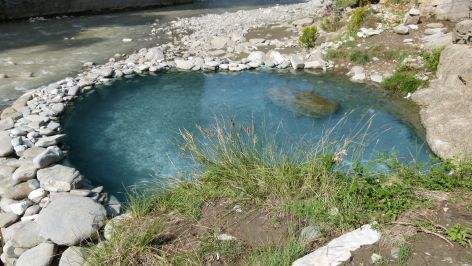
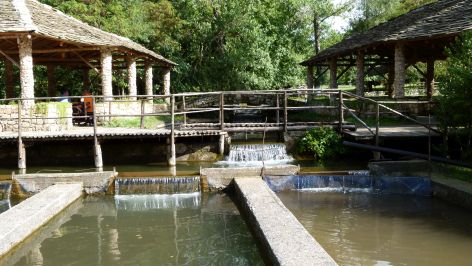
The spring near the bridge is like an infinity pool. The water is said to be good for the skin, Ben says. No one here, except us and a couple from Germany. We have a swim in the lukewarm water.

P1100169

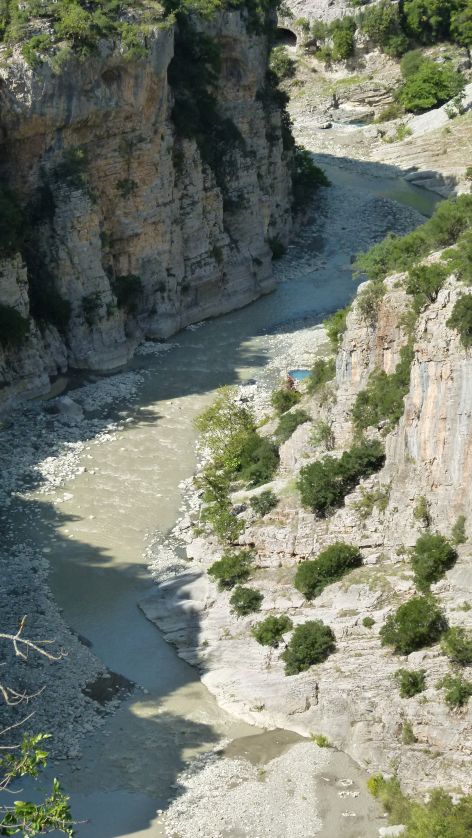
There are more smaller ponds in the canyon. One of them is against rheumatism – Ben tells me that a priest who was bent from rheumatism got cured here.

P1100179

We walk up to look into the canyon from above. Ben is worried that there is a hydropower project going on here that might endanger this beautiful spot with the ponds and the bridge.

P1100213

Near the “infinity pond” we stop at a small coffee place. While the owner serves us coffee, he says: “I gave Tirana up for this place.” He also has a few guest rooms. Well yes, this is a beautiful spot with a lot of touristic potential, and I am happy that I can enjoy it without crowds of people. Ursula tells me that a year ago she was here over a weekend and the pond was full with joyful children enjoying a swim.

P1100221

.

Continuing through the mountains 

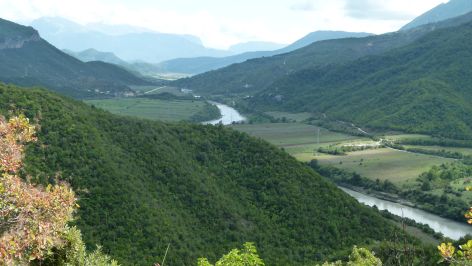
On the way to Korça, we now follow the river Vjosa going south.

P1100227

When we reach the border with Greece, we turn left and travel through hills that remind me a bit of our Swiss Franches Montagnes.  Behind the town Leskovic we overtake a farmer that walks along the side of the road. We look at one another, stop and take him with us. He was on the way to his tomato and pepper fields – about a two hours’ walk from his home. He dreams of growing his fields bigger and exporting his tomatoes. When we reach his fields, he insists on giving us tomatoes while his dogs and his son are welcoming us. Great hospitality.

P1100247

A few kilometers later, a policeman stops us. Hm, what have we done wrong? It turns out that nothing is wrong. The policeman – having visited his family here in the moutnains – just looks for a way to travel back to Korça, where he works. He joins us in our car.

.

Lunch at Sotiro

Now, I am hungry. It is almost three o’clock. Ben knows a great place on the way, the farm Sotiro. The farm  has rooms for about 30 people, a nice camping site with a large swimming pool, cows and horses – and a pond with trouts. This would be a great place to stay and hike in the surrounding hills.

P1100256

I have a fresh trout, caught from the pond and perfectly spiced and grilled. Delicious.

P1100261

.

Continuing to Korça

We continue our way to Korça. A large team of cyclists from Sweden – not young, they are in their sixties – climb up the turns of the road – sweating. They have started in Korça today. Very brave. Ben greets each of them: “Bravo, you are doing well.”

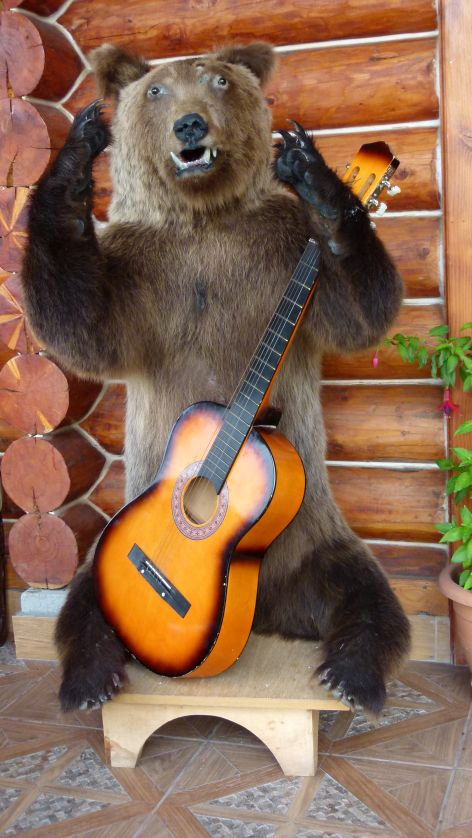
We need another break and have coffee at the Coloçare, a restaurant that is run by a cousin of our policeman. He admires the owner, because he has constructed and decorated the place all by himself. With a lot of phantasy, as for instance the bear with the guitar shows.

P1100275

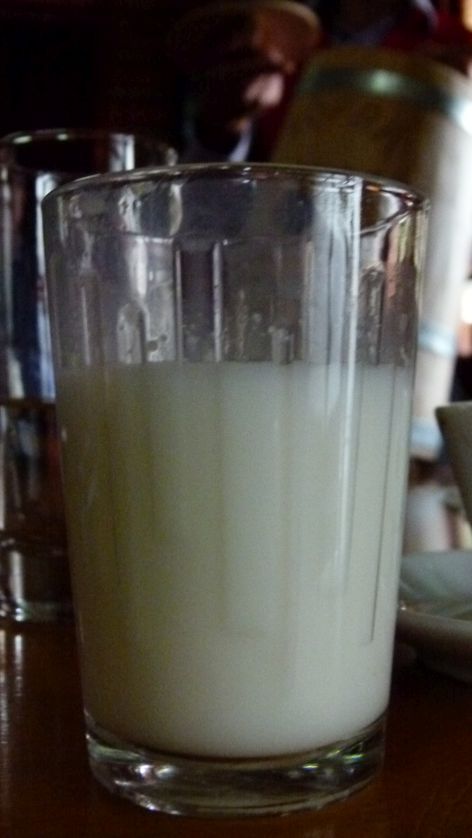
Again we enjoy the great Albanian hospitality. The owner of the restaurant prepares a yoghurt drink for us and serves us butter and bread.

P1100280

Ben, the owner and the policeman exchange about politics. His son is studying in Italy right now, but will have to finish his studies in Tirana, because Italy is too expensive

.

In Korça – beautiful Leon and a delicious meal in the Taverna – THE recommended place in Korça

In Korça we stay in the comfy and pretty guest house Buijtina Leon, right behind the cathedral. Korça is a European city with a boulevard, a beautiful park, well arranged. The restaurants mostly serve fastfood – except the Taverna –  tucked away in a small street. With the German couple, we share a delicious dinner. I have piglet. A regional Cabernet Sauvignon goes well with our meal and we forget the time, as Ben tells us the story of his life after the fall of the iron curtain.

The Rainbow – the treasures hidden at its end make me dream of conciliation

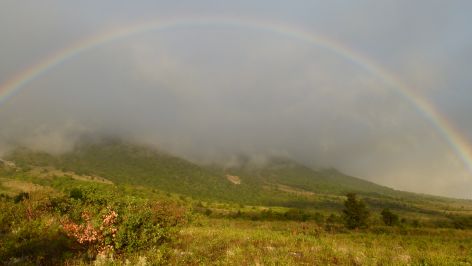
The rainbow near Gjirokastra in Albania

It rained all day until late afternoon, when I was in Gjirokaster in September 2015. With Ben I followed the tracks of Ismail Kadaré’s “chronicle in stone” – his house, the airport and the castle… (see  “On the tracks of Ismail Kadaré“). Late in the afternoon, the sun started to emerge and we saw the rainbow.

P1100007

This rainbow linked us up with Ismail’s rainbow. Ismail saw his rainbow in 1940 and he was 4 years old. “The houses in the town made of stone have cisterns to collect rain water… In the morning the river is flooding the road below the town, after having tried to get rid of the bridge. The child sees hatred between the river, the bridge, the wind, the mountains and the creeks attacking from the mountains – and between all this hatred is the town – all lonesome – with their stone walls that the boy loves. In the morning the boy sees a rainbow that makes peace between the elements, but Ismail is convinced that this is only a temporary peace (see my earlier blog)”.

Yes, seeing a rainbow near Gjirokaster linked me up with Ismail Kadaré’s rainbow.

.

The rainbows in Switzerland point to buckets of gold (Kübeli Gold) or treasure chests (Schatzkisten)

In Switzerland you have to run fast,  when you see a rainbow. Where it touches the ground, there are buckets of gold or treasure chests (depends on the canton; in Berne – buckets of gold and in Basel – treasure chests; I do not know precisely about the other cantons). Whatever kind of treasure, you have to run fast to reach it.

.

The Swiss – Albanian combination of rainbows made me dream of conciliation

Rainbows and their treasures, this made me dream of conciliation and peace. I wrote down my feelings for the turn of the years 2015/2016, first in German…

Ein Regenbogen…

Die Stürme – vorbei,
Die Kräfte – versöhnt.
Der Bogen verbindet
Zwei Schätze am Boden.

Zwei Schätze – verschieden?
Und dennoch – verbunden?
Zwei Schätze – versöhne,
Was scheinbar verschieden,

Du, mein Regenbogen…


… and then in some other languages to share my thoughts with more friends.

A rainbow…

The storms – passed,
The forces – reconciled.
The arc connects
Two treasures on the ground.

Two treasures – different?
Nevertheless – connected?
Two treasures – reconcile,
What seems to be different,

You, my rainbow.


Радуга…

Бури прошли,
Силы примирились,
Арка соединяет
Два сокровища в земле.

Два сокровища – они разные?
И всё таки – соединились?
Два сокровища – примири то
Что кажется разным.

О! Моя радуга.


Un arc-en-ciel…

Les tempêtes – passées,
Les forces – réconciliées.
L’ arc – relie
Deux trésors sur terre.

Deux trésors – différents?
Et pourtant – reliés?
Deux trésors – réconcilie
Ceux qui paraissent différents,

Toi, mon arc-en-ciel.


Un arco-iris

Las tempestadas passadas,
Las fuerzas conciliadas.
El arco conecta
Dos tesoros al suelo.

Dos tesoros – diferentes?
E sin embargo – conectados?
Dos tesoros – concilia
Los que parecen diferentes.

Tú, mi arco-iris.

Ohrid in Macedonia – Sveta Sofia and Bogorodiza, Sveti Kaneo – and Renaissance icons

On September 30th 2015 I visited Ohrid. Elena took us through her town. The three main churches that we visited were the cathedral of Sveta Sofia, the church of Sveta Bogorodiza with the adjacent icon museum and the church of Sveti Jovan Kaneo which is said to be the most photographed church. In the churches and in the museum, they sell small booklets with photographs of the icons (Мале туристичке мононрафии ). The booklets are worth buying. I scanned some of the fotos to give an impression of the icons in this blog.

.

The cathedral Sveta Sofia or Света Софиja

“Sofia”” means “wisdom”. Probably the cathedral Sveta Sofia was already in use in the 10th century – under Zar Samuel from Bulgaria. This is the view from outside.

P1100390

Sveta Sofia must have been decorated shortly before the shisma of 1054 (Orthodox and Catholic). Before the schisma Archbishop Leon (1037-1056) mediated between the orthodox and the catholic directions of belief by having painted not only the orthodox archpriests, but also the popes of Rome. Below are the popes of Rome.

SvSofia 2

Source: “Света Софиja Охрид”, Мале туристичке мононрафии 47, Загреб 1986

Under the Ottomans, the narthex of the cathedral became a mosque and the choir was separated from the mosque. Hidden away in the choir, the 11th century frescoes have been preserved.

The wise Godmother dominates the choir. She seems to dream of her son: He stands in an oval shaped cloud (the son does not sit on her arm – so he has not yet been born, but is just a thought).

SvSofia 1

Source: “Света Софиja Охрид”, Мале туристичке мононрафии 47, Загреб 1986

Underneath the Godmother are Christ and the 12 apostles at the Last Supper. The scene looks more like the communion service to  me.

.

The  church Sveta Bogorodica Perivlepta or Света Вогородица

Our next stop is Sveta Bogorodica Perivlepta. In the Ottoman times, the relics of Sv Kliment were kept here, this is why the church is also known under the name of Sv. Kliment.

P1100452

Sveta Bogorodiza has remained a church in Ottoman times. This is why the frescoes have been preserved here as well. These frescoes from the late 13th century  are called “Renaissance”. Overcoming the rigid rules of traditional Byzantine icon painting, the artists brought life and perspective to the scenes. One example is the mourning of Christ – the lady in the background throws up her hands.

Bogorodiza 2

Source: “Црква Св.  Климент”, Мале туристичке мононрафии 44б Загреб 1988

This early Renaissance movement reminds me of the Brancacci Chapel in Florence that a 100 years later was marked by Masolino’s somewhat rigid fresco about the temptation just across from Massaccio’s vivid representation of the expulsion from the paradise.

The representation of the Last Supper shows Christ twice, first handing out bread and second handing out wine… it is like an “infograph” telling a story.

Bogorodiza 1

Source: “Црква Св.  Климент”, Мале туристичке мононрафии 44б Загреб 1988

In the church we also find frescoes painted in the Ottoman times (starting around 1450) that follow again more traditional Byzantine rules of icon painting.

.

The Icon Gallery

To round off the overview of the icons, Elena takes me to the icon gallery, just opposite of the Bogorodiza church.

11th century: The icons create distance between humans and saints. The saints look calm and stiff – they are remote holy beings.

_VaisilijuNikola

Source: “галерия на икони – Орха” (NI Institute for Protection of the Monuments of Culture and Museum)

.

12th/beginning of 13th century: The figures become more vivid and more realistic like in this annunciation.

Annunciation 12a13th century

Source: “галерия на икони – Орха” (NI Institute for Protection of the Monuments of Culture and Museum)

.

End of 13th to 15th century (1261-1453): This period is called Renaissance of the Paleologues and takes place during the second Byzantine reign. Pespective appears in the icons and the saints are represented as human beings. The distance between the saints and the spectators diminishes. This is the evangelist Matthew, painted in the 14th century.

_Matthaus

Source: “галерия на икони – Орха” (NI Institute for Protection of the Monuments of Culture and Museum)

And this is an annunciation also from the 14th century.

Annunciation2

.

Under Ottoman rule (around 1450 onwards): The saints are again represented in a formal, rigid manner and the icon seems to be “flat”. This is Archangel Michael from the 17th century.

Archangel

Source: “галерия на икони – Орха” (NI Institute for Protection of the Monuments of Culture and Museum)

.

Sveti Jovan Kaneo – the most photographed church

We round off our tour of the three preferred churches in Ohrid with Sveti Jovan Kaneo. It is probably the most photographed church, and it is usually shown with the Ohrid lake in the background.

P1100482

I also liked the view from below – from here the jagged roof of the central dome can be seen more clearly.

P1100472

“This is my favorite church”, says Elena, “I love the sunset here. ”

Thank you, Elena, for all these insights into Ohrid and the iconography.


Albania – an excursion to Ohrid in Macedonia

Today it is September 30th. Our plan: Leave Korça and travel to Macedonia to visit the Naum monastery and Ohrid. Then return to Pogradec in Albania.

.

Leaving Kroça – a quick stop at their brewery

After a tasty breakfast with local specialties we leave the cosy guesthouse Bujtina Leon. Ben takes me to the brewery of Birra Korça.

P1100369

The Korça beer is available all over Albania. In August, they have a beer festival, similar to the Oktoberfest in Munich. Some 100’000 persons participate in the beer garden next to the brewery. Does Munich know about their little brother?

.

Crossing the border to Macedonia – first stop at St. Naum monastery

This is our first view of the lake Ohrid,  shortly before arriving at Pogradec.

P1100373

We cross the border and visit the St. Naum monastery…

P1100390

… with its frescoes.

P1100397

St, Naum and St. Kliment have brought Christianity to this area – in the 9th century. They were the disciples of Cyrill and Methodius. We will meet St. Kliment in Ohrid.

.

Ohrid îs a gorgeous town with narrow streets, Turkish style houses and amazing churches – one for each day of the year

Around noon, we arrive in Ohrid. Elena is waiting for us. She is a translator for English, Italian and Spanish and now works as a tour guide. She loves her city and is full of stories. “Ohrid”, she says proudly, “has many, many churches, one for each day of the year.” “Great, and what about the leap year?” I ask. “We will surely find a 366th church”, she answers smiling mildly. It is true, we come across many, many small churches, and we stop extensively at three churches: The cathedral of Sveta Sofia, the church of Sveta Bogorodiza with the adjacent icon museum and the church of Sveti Jovan Kanoa which is said to be the most photographed church. I will talk about these churches in my next blog.

While walking Elena stops after every few steps to point out some details that otherwise would remain unnoticed. We enter the city at the lower gate.

P1100414

The streets are narrow. The Turkish houses grow in size from bottom to top.

P1100417

At the bottom, Elena says, space is needed for the traffic in the streets. And higher up, the houses grow in size to efficiently use the space. Sometimes this pattern is even repeated in the lamps.

P1100467

.

Roman and Greek remains

While walking through the streets of Ohrid we find these Roman mosaics that have been uncovered. Entry free.

P1100433

The Greek amphitheatre from the second century BC has a wonderful view of the town and the lake. The theatre was covered in Ottoman times. It has been discovered only recently, Elena says. To excavate it, houses had to be removed. Now the theatre hosts performances. I like the view of the lake and the – mostly – Ottoman houses – no construction sins can be found here (why does the Treschner guidebook complain about the houses hindering the view of the lake? These houses have been here for centuries and before the theatre had been rediscovered…).

P1100456

At various places in town, Elena says: “Here is the theatre”. But the theatre is not “here”, I think. Then again: “Here you can see the theatre.” What does Elena mean? I ask myself. It takes a long time, until I understand: In many churches and houses, columns and stones from the theatre have been reused. Yes, now I understand, why the theatre is omnipresent in Ohrid.

.

We are hungry – we have completely forgotten about eating and now it is almost 3 PM

Just across the cathedral Sveta Sofia, we have lunch with regional specialties. To me these Macedonian bites look like mezze. And the fish soup is one of the best fish soups that I have ever eaten – light and with a fresh-sourish taste.

P1100464

We say good-bye to Elena and exchange business cards. Elena was an excellent and knowledgeable guide.

.

Driving back to Pogradec

On the way back to Pogradec we come across the stilt houses. Unfortunately the museum closes already at 4PM.

P1100492

We are about an hour late. We cross the border to Albania and settle in the five star hotel Enkelana. Well – five stars is a bit much for the place. But it is an interesting time travel back to communist times. Old communist style hotels and American top hotels like Hilton have one thing in common: They lack atmosphere, even if they are a safe bet – we know what we can expect. Ben smiles and shows me the tiles on the floor. They look like an irregular mosaic and have been there since communist times. I later hear that this style is called “Terrazo“.

.

Dinner at the Enkelana: Koran, the endemic trout of the Ohrid lake

Ben has eaten in the Enkelana before and recommends to try Koran fish here. Koran  is the trout endemic to the Ohrid lake. Ben say that in communist times they have eaten the Koran fish on the Yugoslavian side – now it is the turn for the Albanians to eat it. I feel a little bad, as I suspect that this trout is in danger of extinction.

P1100499

Before the hydropower stations, the eel of the Ohrid lake travelled to the Sargasso Sea in the Carribean and their offspring travelled back to the Ohrid lake. But the dams in the Black Drin have resulted in the eels not to come back to the Ohrid lake any more. I am shocked, how we humans are changing the world. Not only here in the Balkans. We made the same experience in Basel – the salmon came back from the sea, until the dams were built – and they have not yet found their way back using the fish ladders that have recently been installed.


Albania – from Gjirokaster to Permet

Today we travel from Gjirokaster to Permet – and tomorrow we will continue to Korça. The usual tour programs go from Gjirokaster directly to Korça which makes a very long day in the car. I am happy that Jorik from albania2go has scheduled the stop over in Permet in the Vjosa valley which gives me more time to explore the area.

.

The Viroi lake near Gjirokaster

Just north of Gjirokaster there is the Viroi lake with willows and newly made paths for hiking and cycling. Ben is very proud of this place and says the Blue Eye Spring originates here .

P1100033

.

The Tepelene well at the road: It is a handy “water pit stop”

Ben tells me that the road to Tepelene has been completed half a year or a year ago. Before it was a sinuous road.  Shortly before Tepelene there is a well. At this “water pit stop”, we fill our water bottles.

P1100042

.

Tepelene – the town of Ali Pasha and the town of mineral water

Ali Pasha, the ruler of the Ottoman district of Epirus around 1800, is said to come from a village near Tepelene. This is his statue.

P1100045

As always he is shown with a stem and severe expression on his face. It is said that his mother and sister were raped by the inhabitants of the village, when he was a boy. He took revenge, when he had become Pasha and killed all men of the village.

Ali Pasha’s severe look is also on the mineral water that comes from Tepelene.

P1100051

In his district, Ali Pasha had many fortifications built or reinforced, also the one of Tepelene. This is why the Ottomans perceived him to be dangerous for their empire. He was also nicknamed “The Muslim Bonaparte of Europe”.

P1100049

Inside the walls, there is a town with small houses and neat gardens.

P1100055

In a coffee bar, we take a break. The owner asks us to look after his bar and disappears for quite some time… Once he is back, we pass by the mill of Ali Pasha and enter the valley Bençës. For about an hour we walk along broom, salvia and camomile bushes. Ben is worried that a hydropower project might destroy this valley – the construction continues despites protests of NGOs. This is the construction site.

P1100072

After a good hour’s walk we reach Ali Pasha’s aqueduct. A stunning construction, …

P1100077

… crossing the valley and the river bed.

P1100085

There is a farm nearby and a village at the end of the valley – strong,  old Mercedes cars are commuting on the unpaved road. We walk back and continue our way to Permet.

.

Lunch with roasted goat

In a small restaurant overlooking the river Drino, we have lunch – roasted goat with yoghurt.

P1100106

.

Crossing the river Vjosa using the iron bridge

Then we cross the river Vjosa…

P1100110

… beware of the gap between the bridge and the road.

P1100107

.

Bus stations – are they served at all?

Along the river Vjosa we head for Permet. We come across this bus station. A lady is waiting here. Will she ever be picked up by a bus?

P1100113

We should rather take her with us… She is very happy and we drop her at her house in Permet.

P1100117

We settle in the hotel Alvora – one of the few hotels here at Permet. Our rooms have a view of the river Vjosa. We go for a short walk climbing the huge rock called Guri I Permëtit.

P1100121

Tomorrow we plan to visit Banjot e Benjës, the thermal springs, and Canyon of Lengarica. There are vineyards around Permet – visiting a winegrower would be an option here as well.

P1100130

We have dinner at the friendly restaurant Antigone where the daughter, about 20 years old, serves the guests. She has a talent for languages, speaks English and Turkish and plans to learn German in Germany. I added a recommendation for this restaurant to Tripadvisor. This is their basket offering wines from the area of Permet.

P1100126

Tomorrow we will continue to Korça.