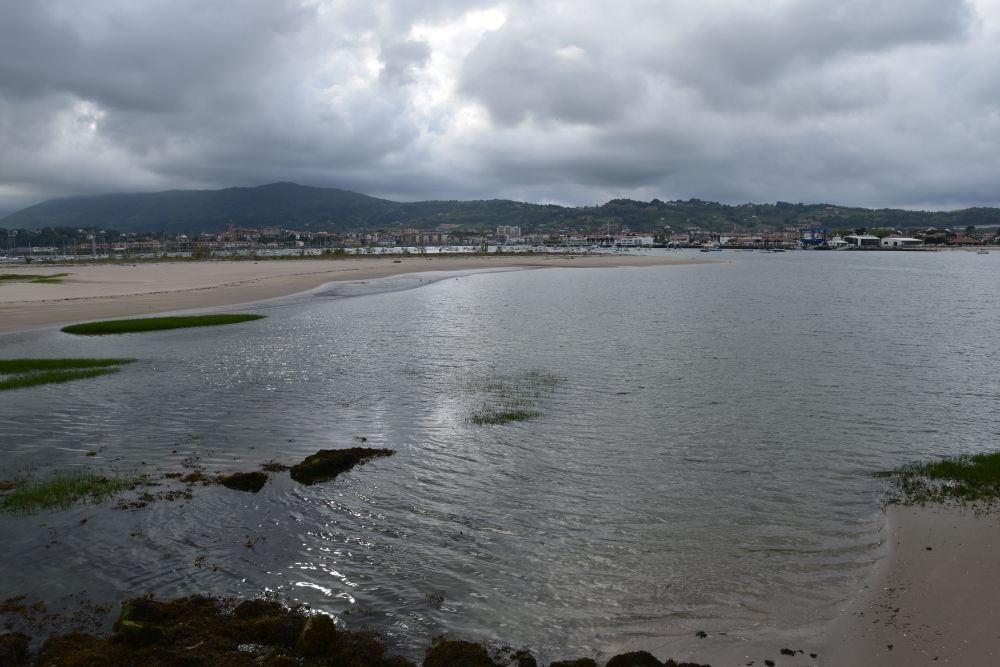
From Bilbao to Santillana del Mar

On Monday, May 6th, we travel from Bilbao to Santillana del Mar, along the coast.

.

From Bilbao along the Ría Bilbao to the sea

Our GPS takes us to the modern and well-kept residential area with apartment buildings on the right hand side of the Ría Bilboa. Soon, we reach Portugalete.

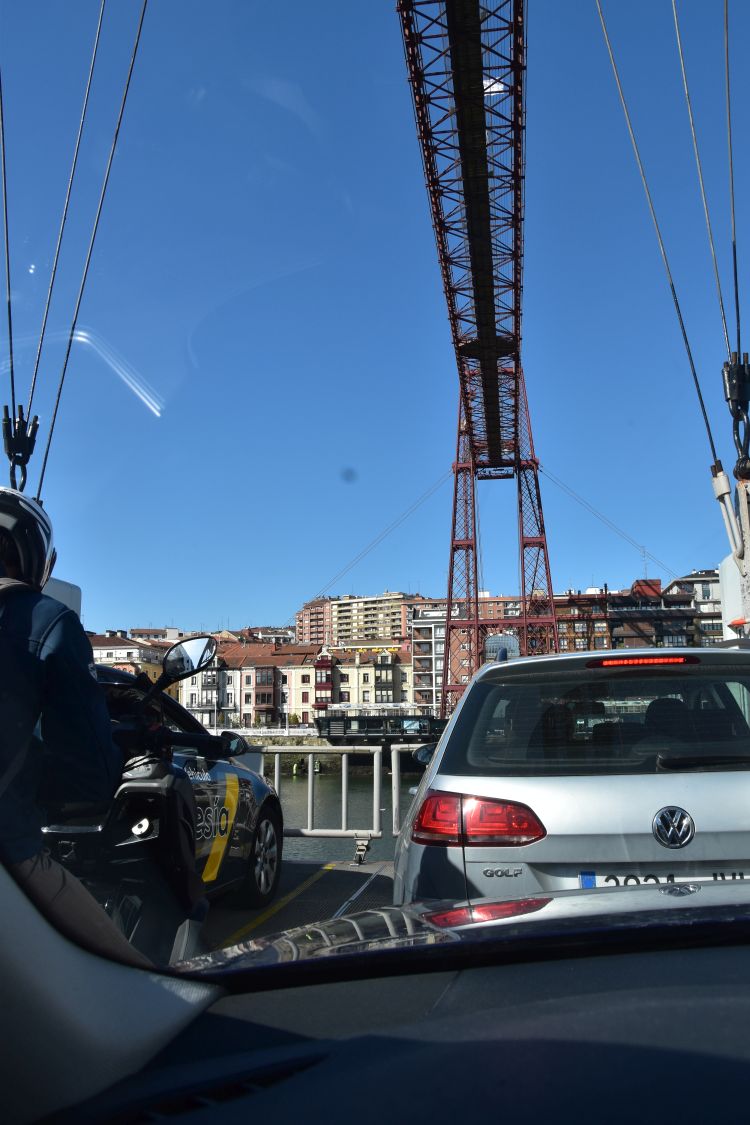
Ursula talks about crossing the Ría using a puente colgante with a cabin. I am a little worried: I see our Audi hang above the river. But then it is easy: The puente colgante is a ferry boat that works like the four Rhine ferries in Basel (a wooden boat is attached to a rope). This ferry is larger (for cars) and attached to a metallic rope that glides along an iron beam, the design of one of Eiffel’s pupils. The guard tells me strictly that I am not allowed to leave the car…

After having crossed the Ría, we continue north to Santurtzi, located at the sea. We park our car in a narrow parking house.

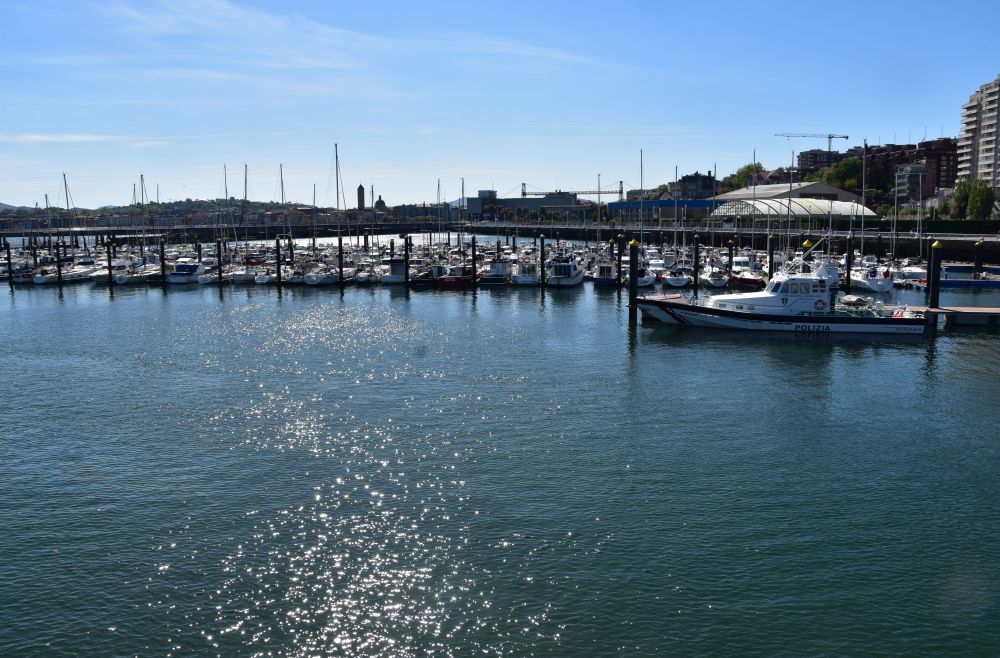
The sun makes the port sparkle, and in the background, I can see the Puente Colgante that we had used half an hour ago.

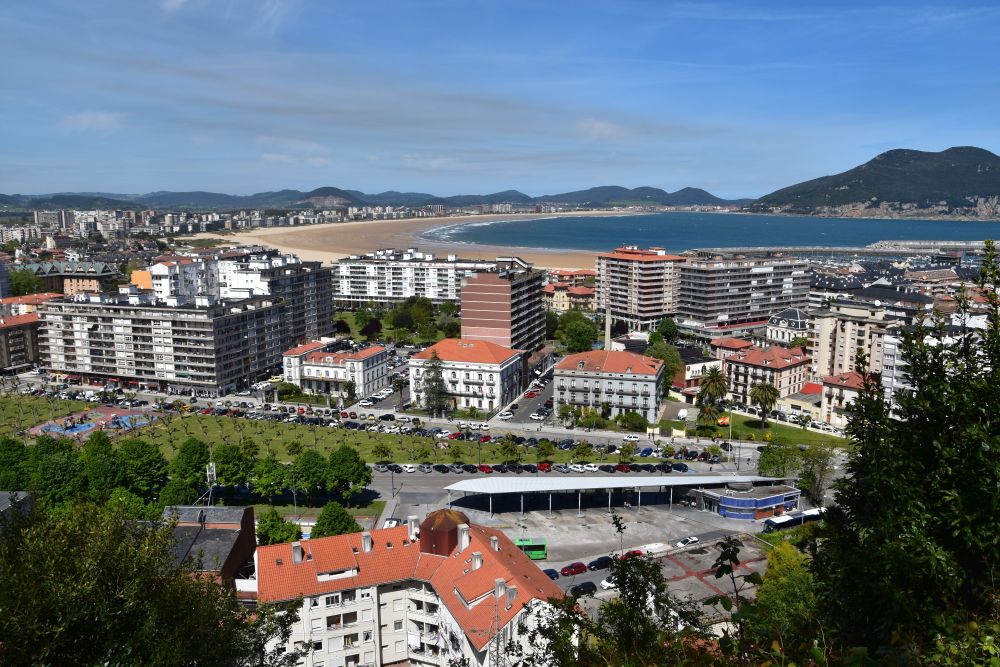
We continue crossing mountains and ugly beach resorts with beautiful sand beaches, until we reach Laredo. It is another old city center with another sandy beach and many more ugly apartment houses.

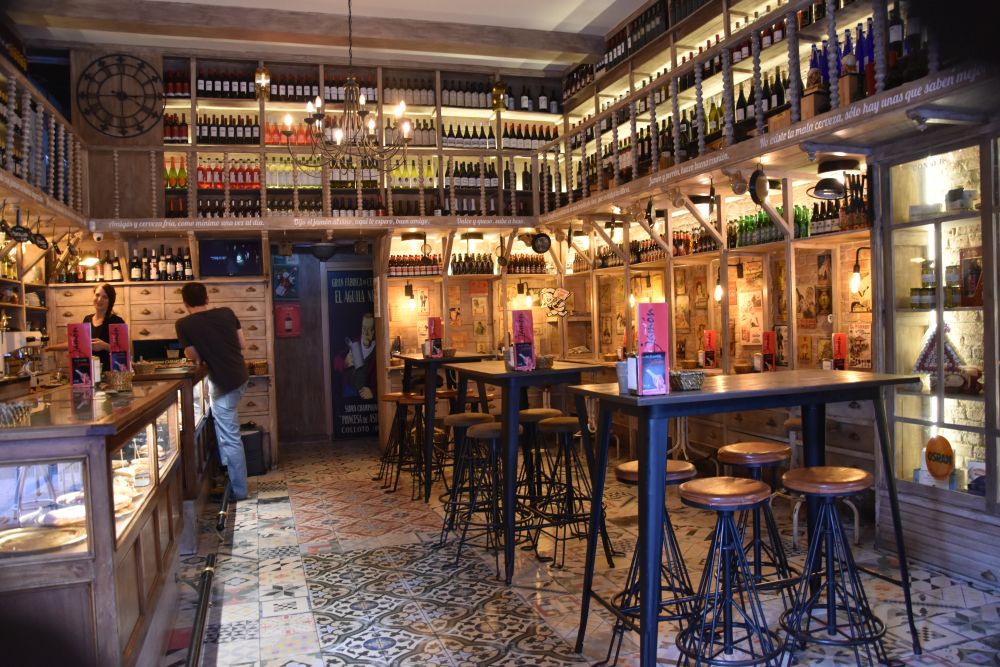
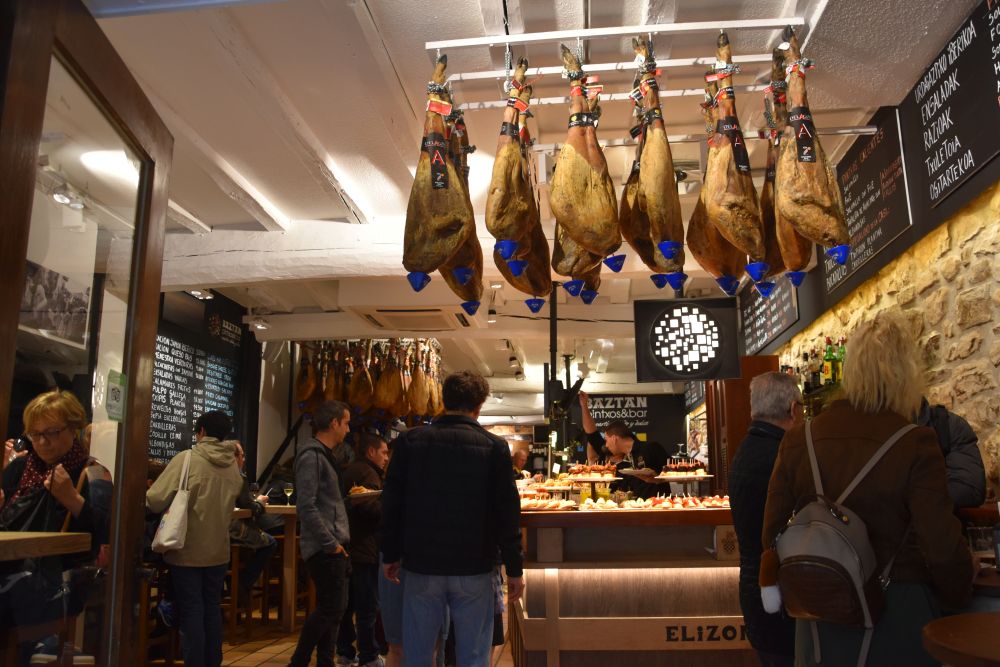
I am hungry. Heavy traffic here and not one single free parking lot. Finally, we find one single free slot right in front of a pintxo bar. We have some tapas, drink some water, and as we want to leave… we find our car locked behind two cars parked on my side. One driver sits in his car and leaves. The second driver is nowhere. Ursula contends that now it is possible to get out. I am not convinced. Maneuvering on to the sidewalk around a tree and a hydrant and with the help of Ursula, of two more men and one women showing to me, how close I am to all that, I finally get out – but I am not really amused. “Land und Leute” or “country and people”, Ursula says, shrugging her shoulder. Hmm. I am not against “Land und Leute”, but to my opinion, there are limits…

We take the motor way and, one hour later, we arrive in La Casona de los Güelitos in Santillana del Mar. I do feel at home in this quiet old country house that has been tastefully renovated.

The sun shines and after a short siesta we decide to visit the mountains south of Santillana. Ursula has selected Bárcena Mayor that is said to be a typical Cantabrian mountain village. Driving through smooth, green hills with pastures, we reach a large parking area. A signboard promises restaurants, shops, hotels and guest houses. We get to a well-kept pretty village with thriving flowers all over, but it is empty. Not one shop open, not one restaurant open, everything dead. Pretty, but empty on this Monday.

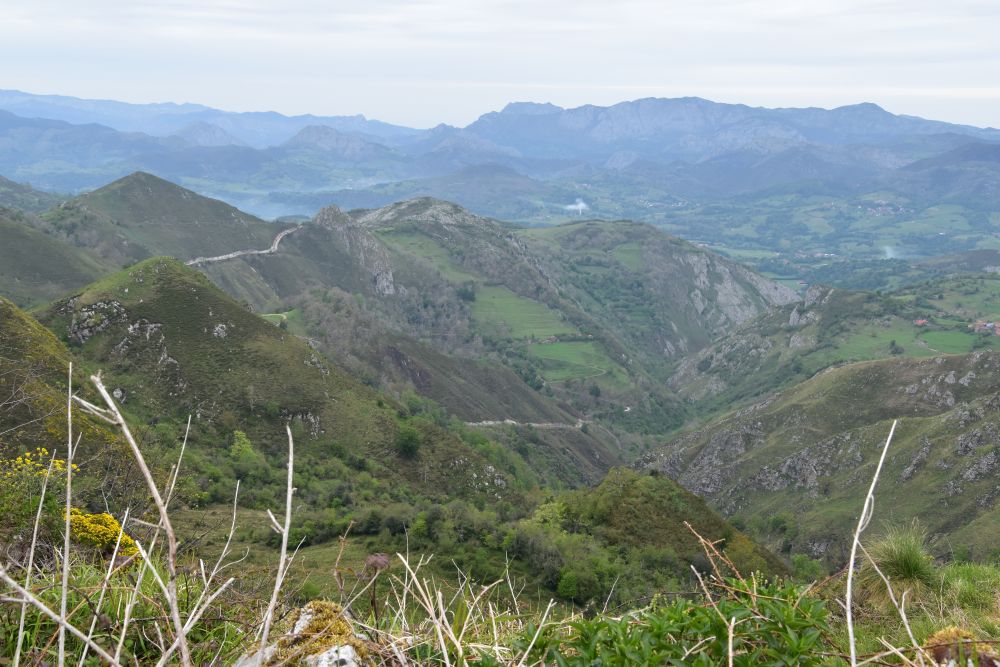
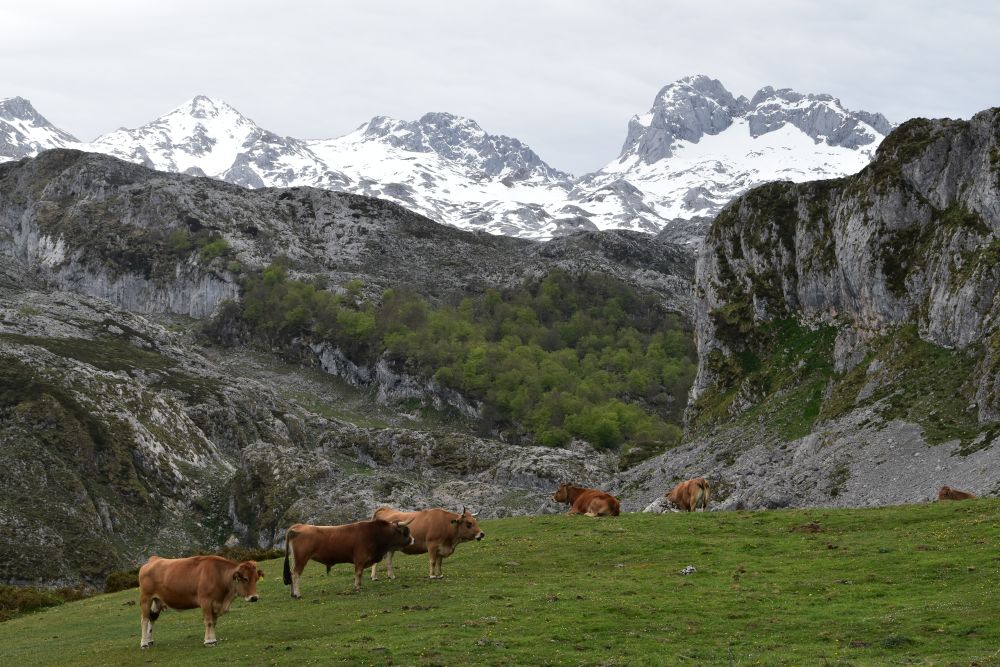
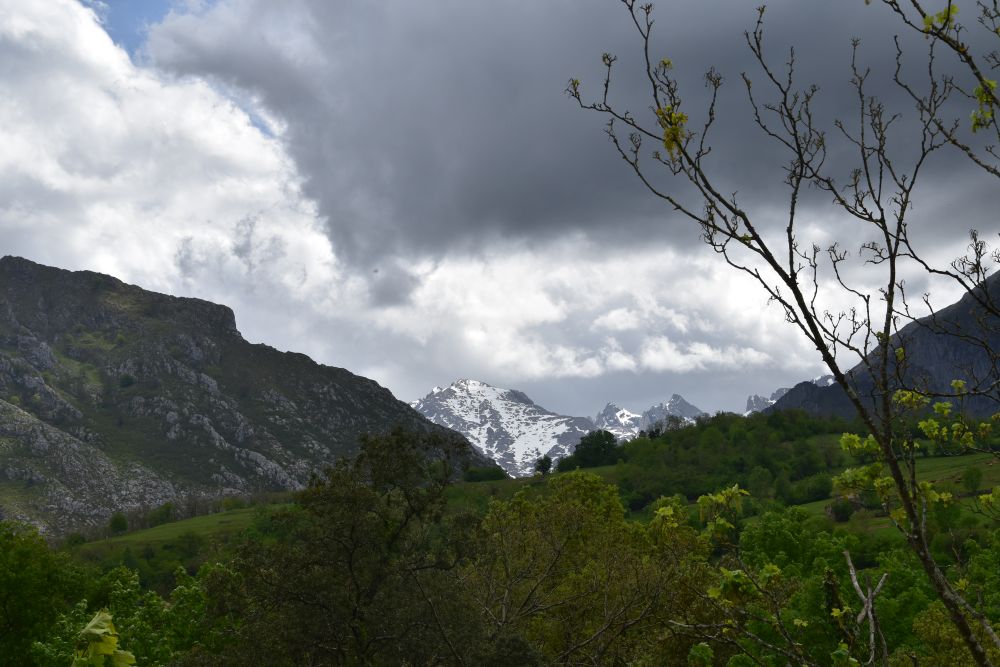
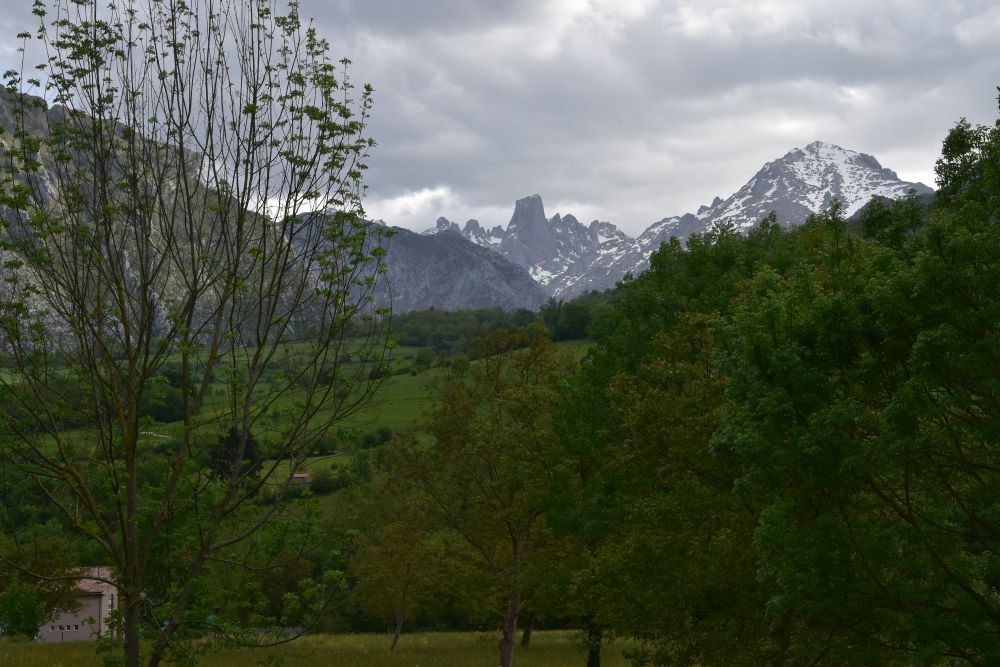
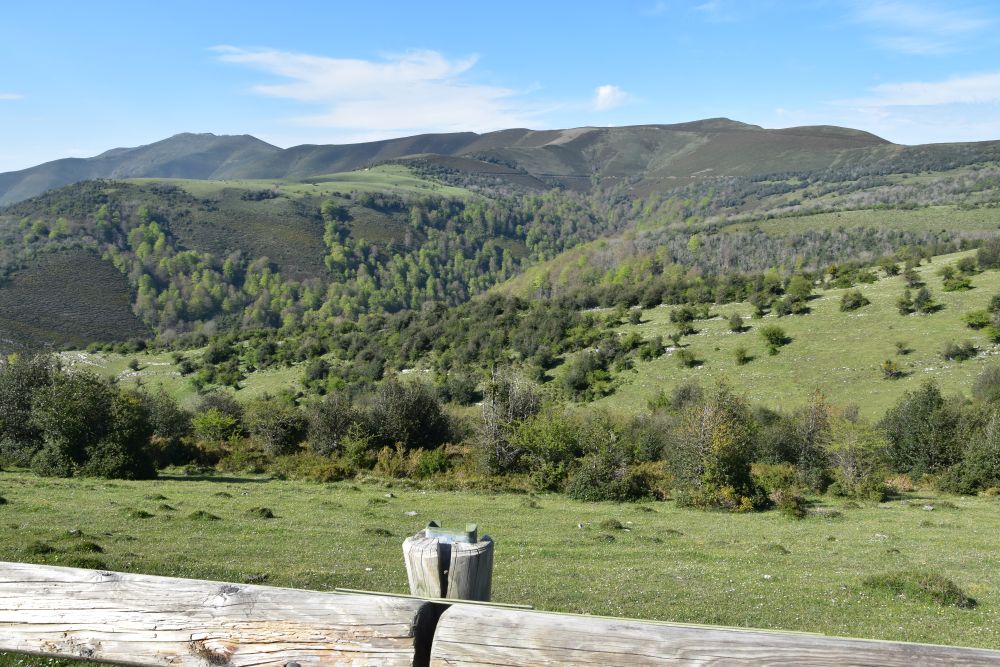
We leave this place and continue uphill, uphill, uphill. A gorgeous panorama here. Smooth hills, green pastures with cattle – cows of all colours, goat and sheep.

After the Puerto de Palombera on 1250 above sea level, we reach a high plateau with the Alto Campo and the Pico Tres Mares behind us. The rivers that emerge here go either to the Atlantic in the north, to the Atlantic in the west or to the Mediterranean (hence tres mares). Signs point to the source of the Ebro. We find it, blue-green, in a lush forest.

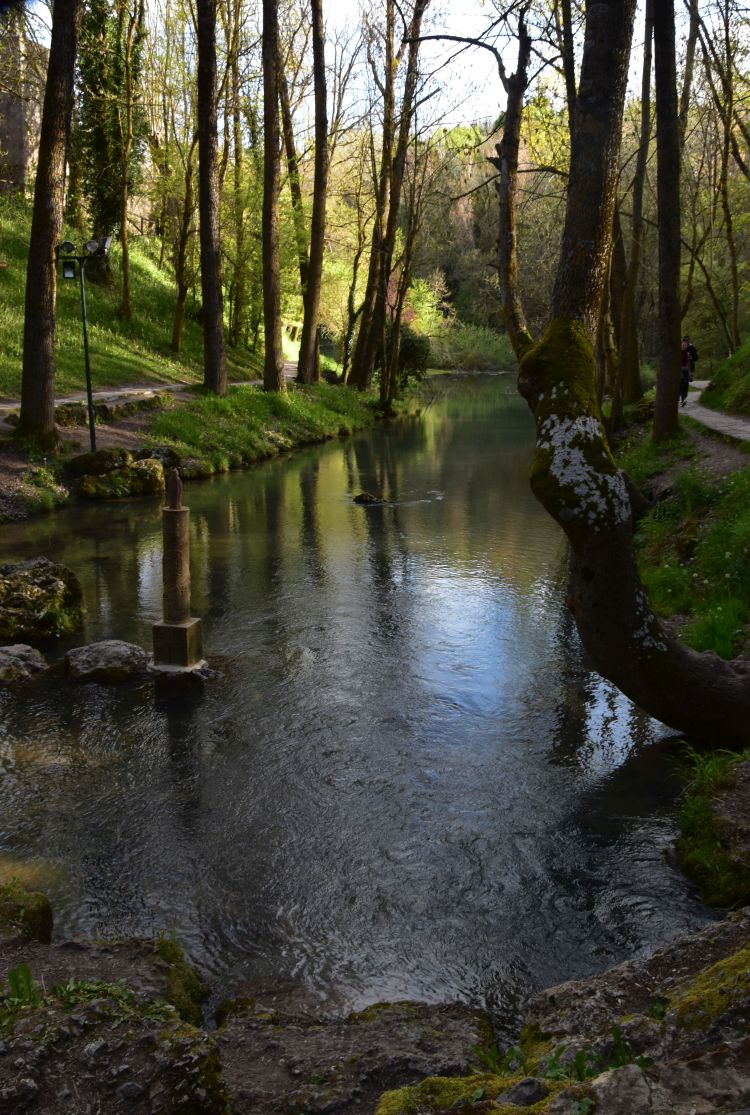
It is a pozo (well) that emerges from the karst ground. The water comes from the creek El Hijar that originates at the sides of the Pico Tres Mares, disappears and appears again here, near Fontibre. The water is blue-green, due to the plaster, clay and limestone that the water picks up underground before emerging. This is one of several wells of the Ebro, there are more that have the label “source of the Ebro”.

What starts here as a small creek, flows through Spain – 910 km – ending in the Ebro Delta with its abundant bird life and rice fields (photo taken in November 2018).

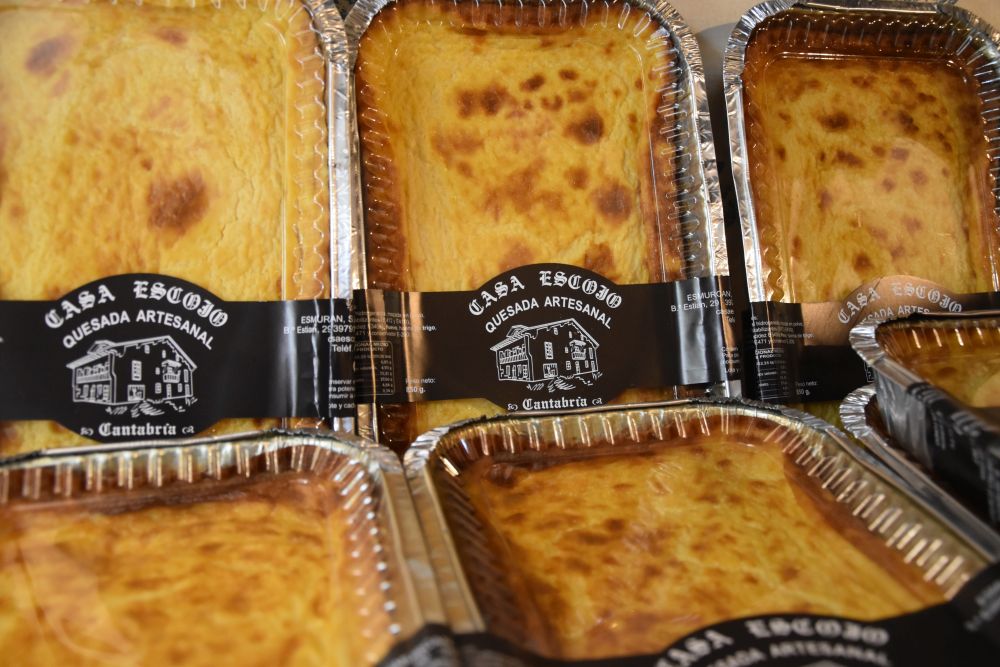
We return to our Casa de Güelitos to have dinner in the small restaurant. I have three kinds of cheese from Cantabria, a solomillo and a glass of Rioja tinto.

We sleep well in our quiet guest house. In the morning, I can hear a cock crow.

Bilbao on the Ría de Bilbao and between mountains

On Saturday/Sunday, May 4th/5th 2019 we are in Bilbao.

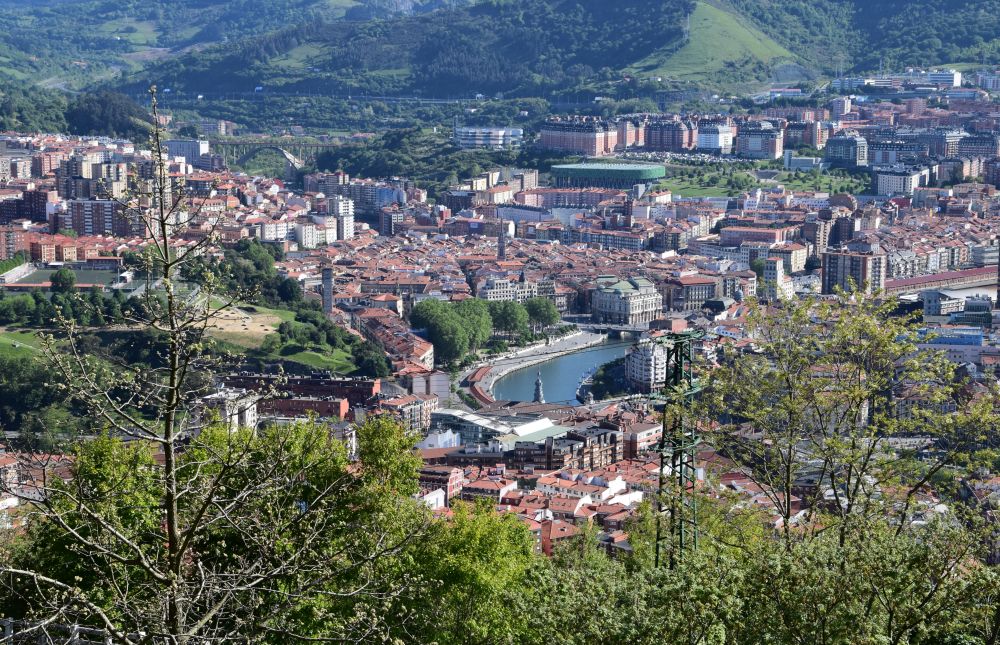
Bilbao stretches out along the Ría de Bilbao. The Ría de Bilbao is the mouth of the river Nervión. Bilbao lies 14km away from the sea. The surrounding mountains do leave little space for Bilbao. About 400’000 inhabitants live densely, with 8000 persons per square meter, as my Dumont says. The inhabitants of Bilbao call their city “el bocho” or “eye of a needle”.

The city center is split between the old and the new town, the old town on the right-hand side of the Ría, the new town on the left side.

.

The old town on the right-hand side of the Ría

Near the water are the roofs of the small old town with the Cathedral Santiago seen from the Artxanda hill.

Elevators are used to overcome the height differences from the old center. A guard takes 45 cents per person. The button for the elevator is labelled “llamada” and I understand, you have to call (llamar) the guard to take you up and down.

The elevators built in concrete are scattered around the city center.

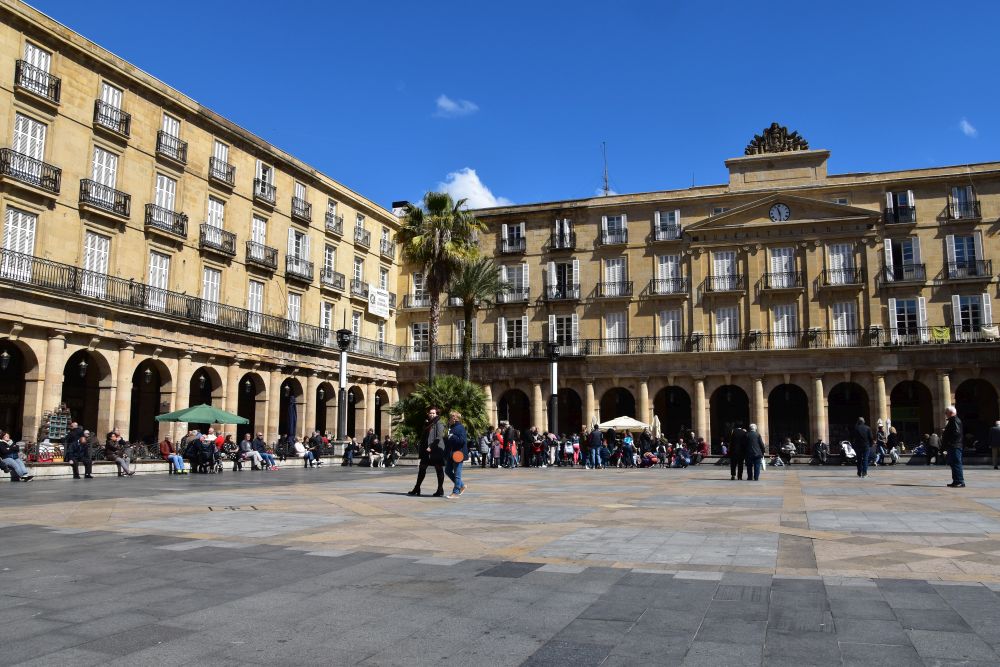
The heart of the old town is the Plaza Nueva with its arcades and the many, many bars and restaurants.

In the Cathedral de Santiago, it is the cloister that I like most, with the lemon trees.

The old town is small and full of bars and restaurants, pintxos are on display everywhere.

.

The new town on the left-hand side of the bay

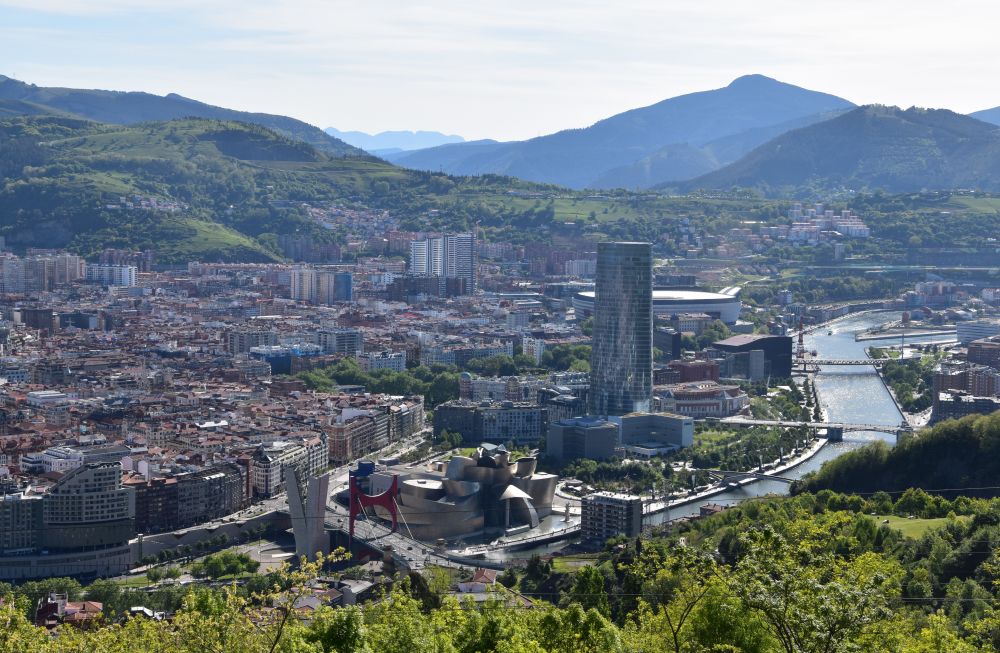
This is the new town with its modern appearance, also seen from the Artxanda hill.

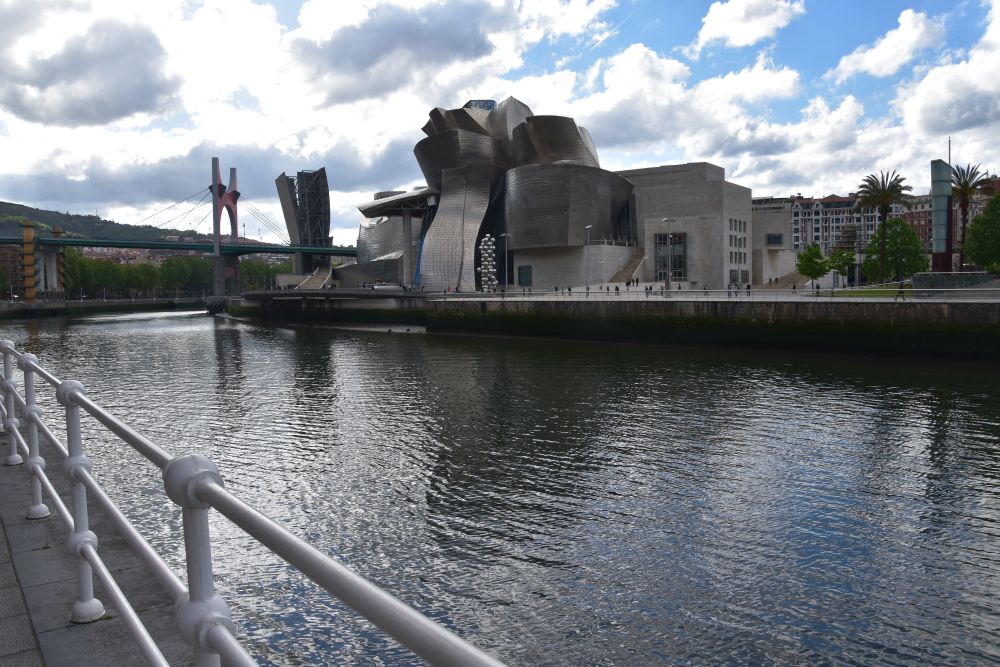
I had always imagined the famous Guggenheim Museum to stand close to the sea. But this “heap” of Titan stands inland on the banks of the Ría Bilbao.

The streets are ample in the new town. The lifeline is the Gran Via named after the founder of Bilbao, Don Diego Lopez de Haro.

There are great shops here such as Rosa Clara’s wedding dresses.

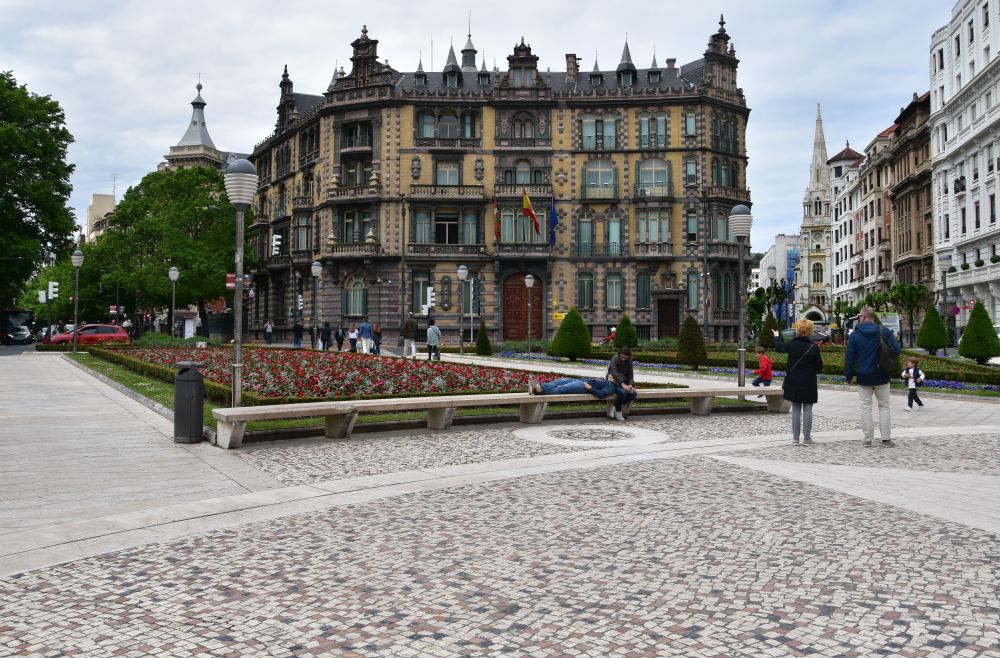
The style of the buildings is either promoterism (also called wilhelminian, second half of the 19th century)…

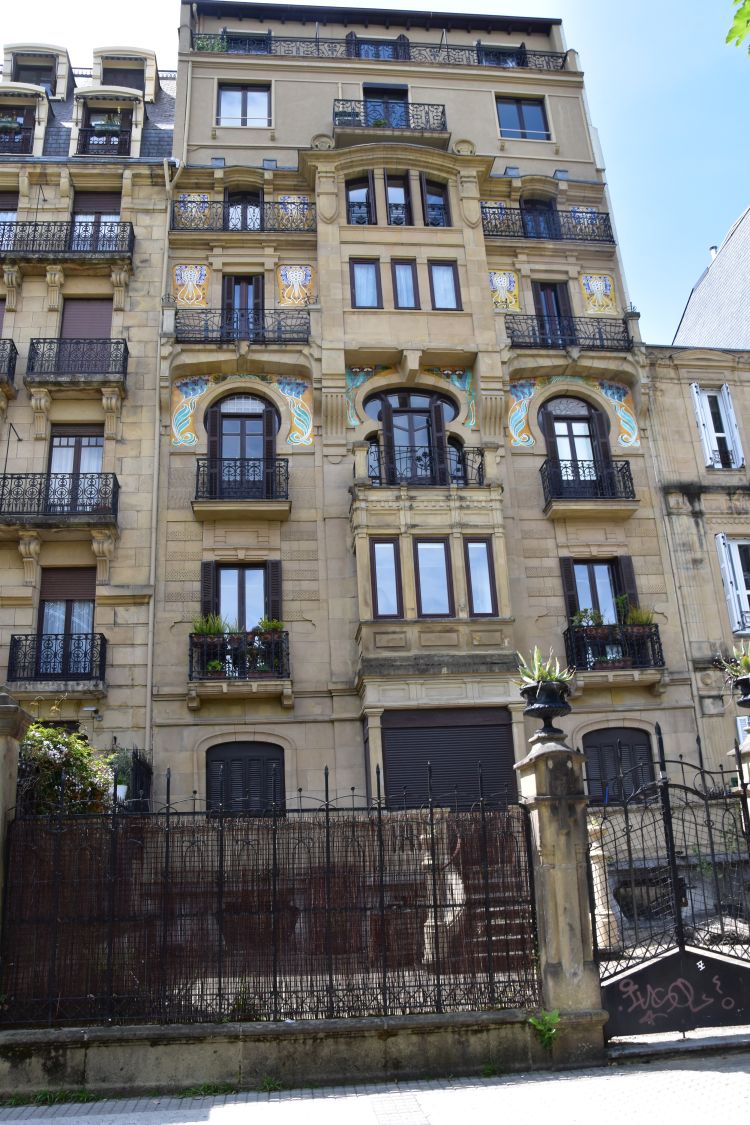
… or they are art nouveau (built in the early 20th century).

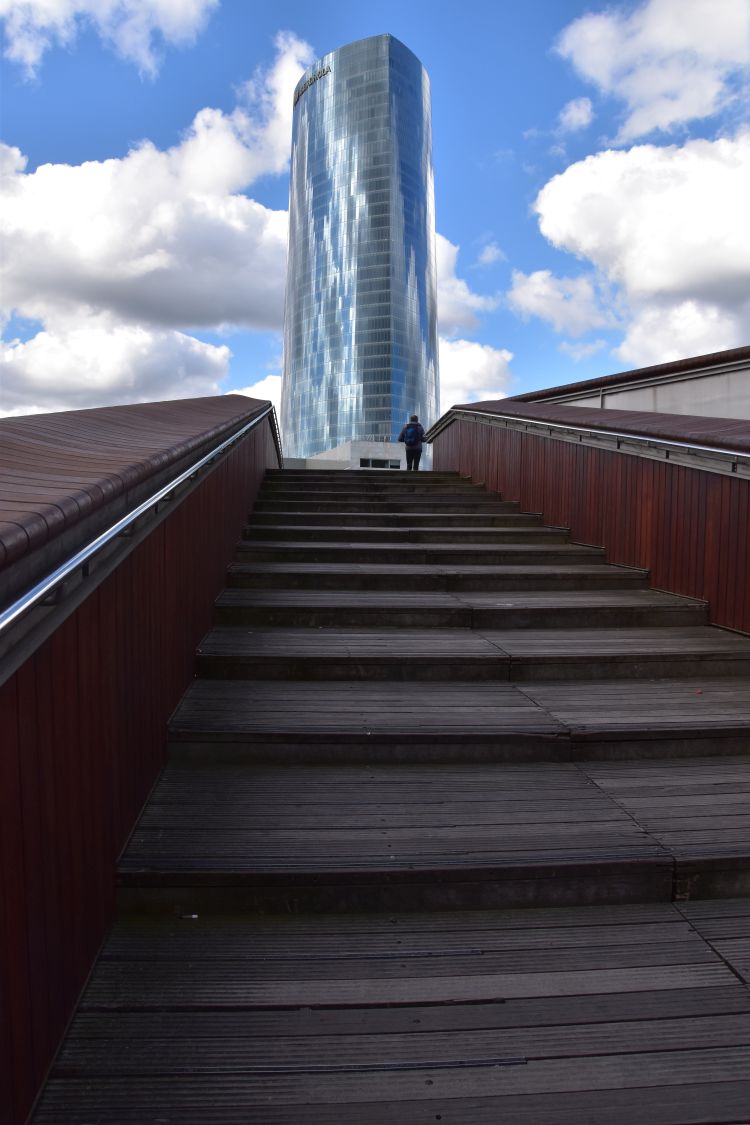
Then there are modern buildings, many of them built be renowned architects. One example is the Office Tower of Iberdola.

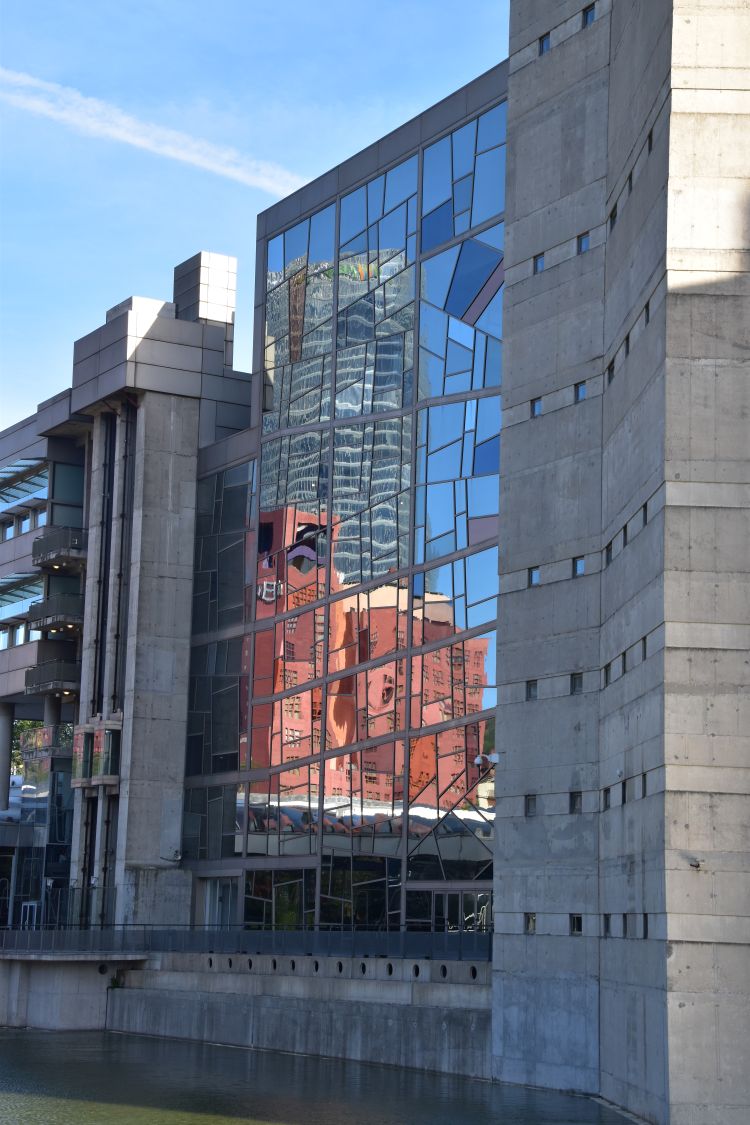
Another example is the Congress Center. The – also modern – red brick posh five star hotel Melia is mirroring in the windows.

.

The Guggenheim Museum marks Bilbao´s revival in the 90’s

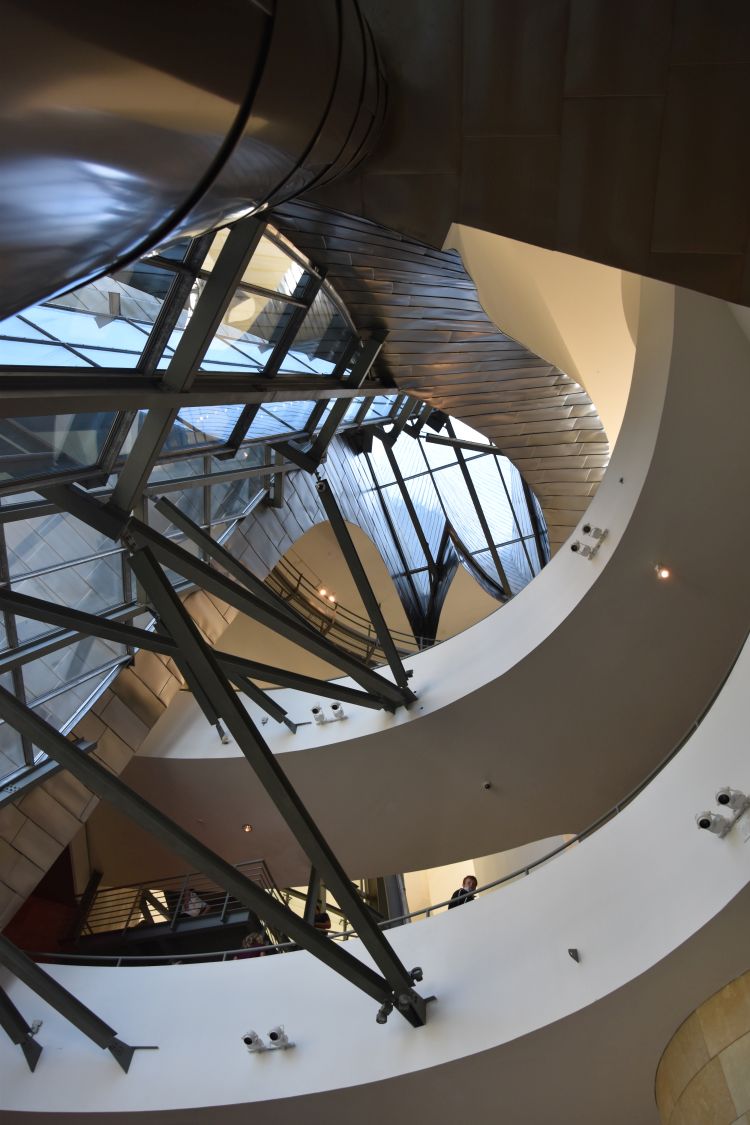
THE highlight, the Guggenheim Museum, has been designed by the Canadian architect Frank O. Gehry and was inaugurated in 1997.

On three levels, the museum shows modern art.

On the second floor, we find the temporary exhibition of Jenny Holzer. Using words, she captures violence on plates, benches and in video installations – haunting. Another exhibition are the still-life paintings of Giorgio Morandi, put into relation with classical paintings of Jean Siméon Chardin (I like the boys playing with cards), El Greco or Zurbarán.

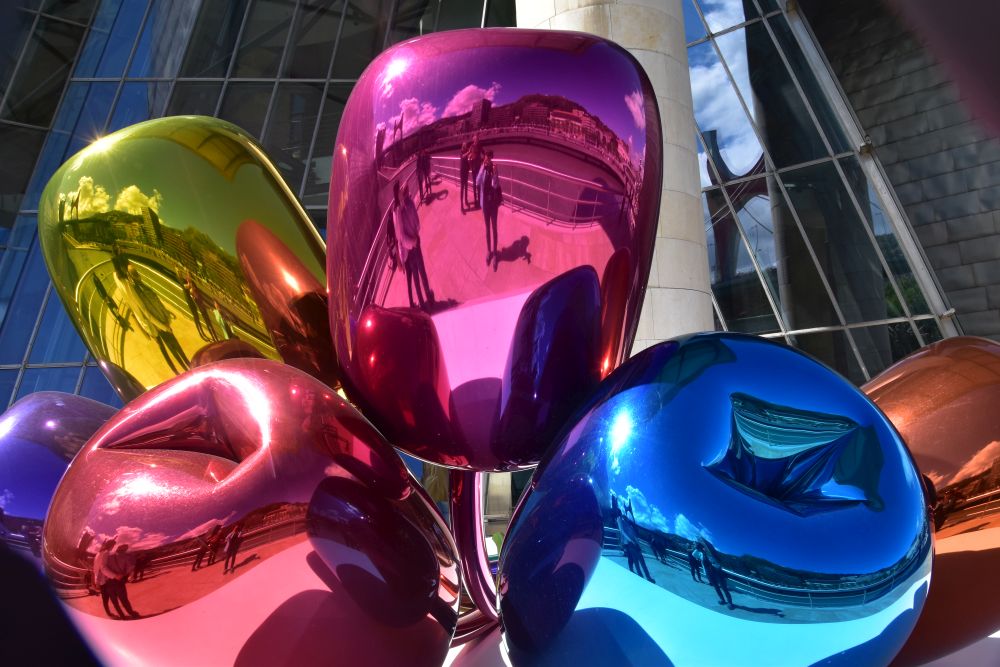
Outside on the terrace, the colourful balloons make great mirrors.

It is said that Bilbao benefited from the “Guggenheim impact” which initiated the revival of the city in the 90’s, after the decline of the steel, metal and shipbuilding industry.

.

Bridges are also the footprints of great architects

Some great architects also left footprints building bridges that cross the Ría Bilboa.

The White Bridge (Zubizuri) designed by Calatrava is playful with the strings and the transparent glass floor. It is said that Calatrava was not very pleased to see his glass floor being covered with a carpet, for the benefit of the pedestrians. Well, glass is slippery…

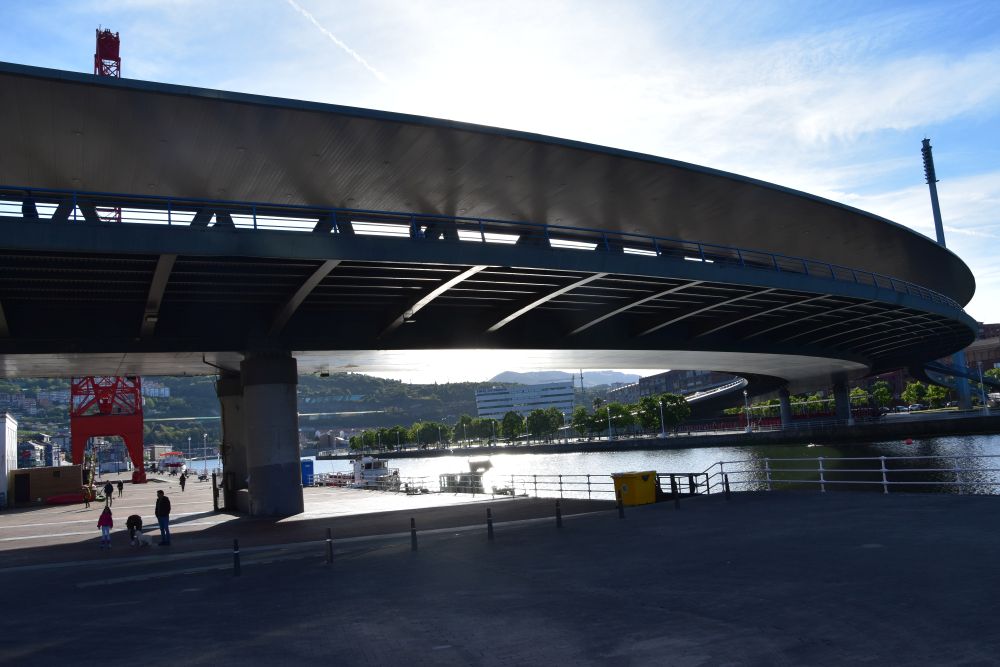
The Puente de Euskalduna has been designed by Frank O. Gehry. He was kind with the pedestrians: They walk under a roof. His bridge swings over the bay.

.

History of Bilbao

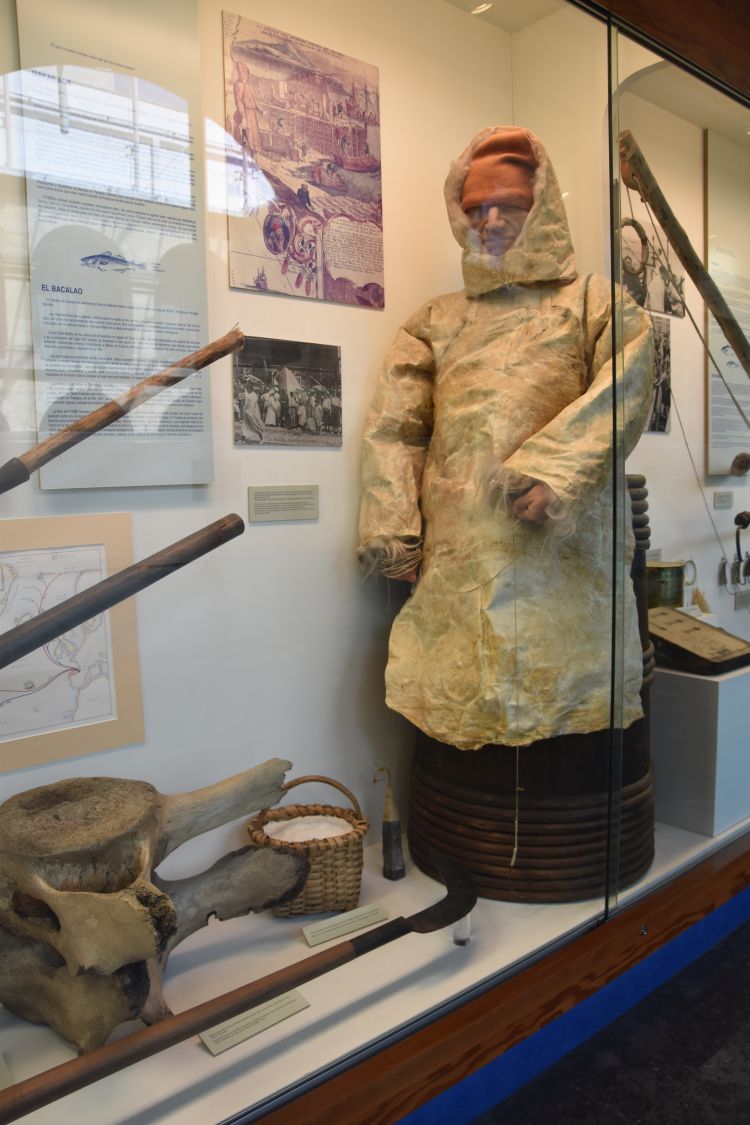
We visit the ethnological museum to learn more about the history of Bilbao. Around 1300, Don Diego Lopez de Haro transformed the fishing village into a city. After 1500, it was the center of wool and fabric trade with Flanders, later in addition for whaling.

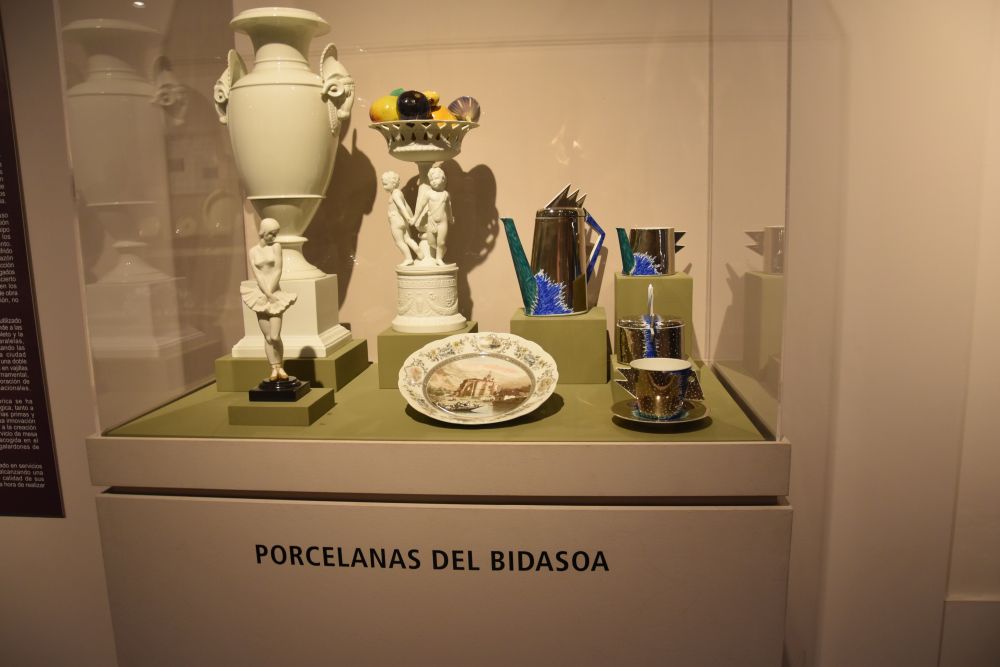
In the 19th century, it was the mining, steel, metal and ship building industry that made Bilbao rich, and I discover, they also had porcelain production.

After the decline of the steel, metal and shipbuilding industry in 1990, Bilbao was able to win Frank O. Gehry to build the Guggenheim Museum. This set the base to motivate more renowned architects to build for Bilbao… and, as a consequence, the number of overnight stays doubled.

.

I felt at home in Bilbao

I felt at home in Bilbao, as this lively city with its modern appearance reminds me of my mother town Berlin, though Bilbao is much smaller and more manageable.

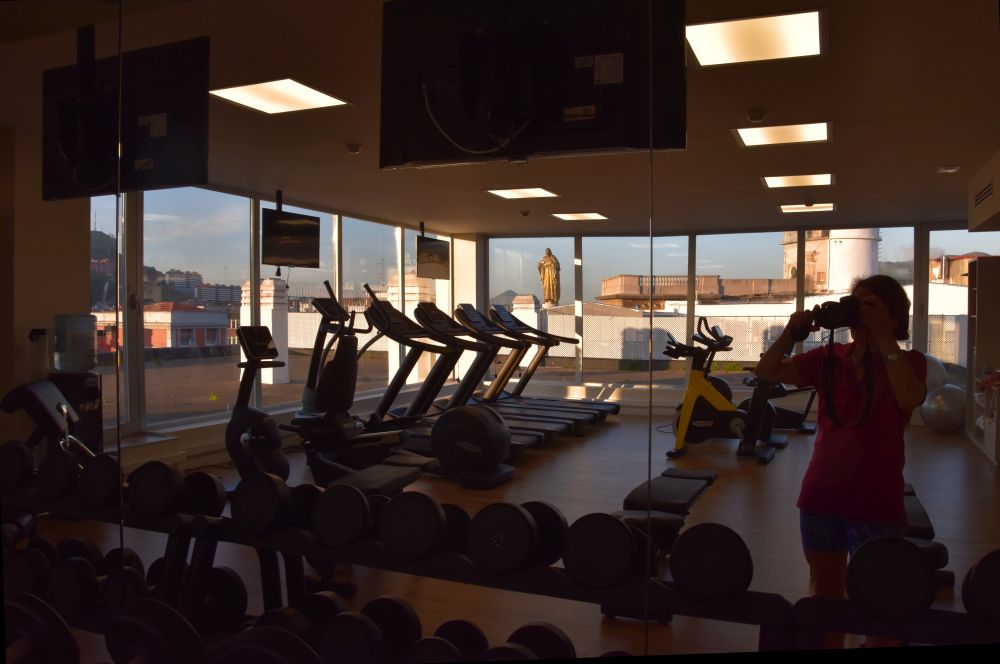
Our hotel NH Collection Villa de Bilbao was located near the Plaza del Sagrado Corazón de Jesús. From the fitness room on the seventh floor, I could see the statue of Jesús.

Yes, I will keep the memory of Bilbao in my heart.

Source: Mario Golder: “Nordspanien und der Jakobsweg”, Dumont 2017

Getaria – center of Txakoli and fashion

On May 3rd, we drive from Hondarribia to Bilbao. We stop in Getaria. It is a small town perched on a rock.

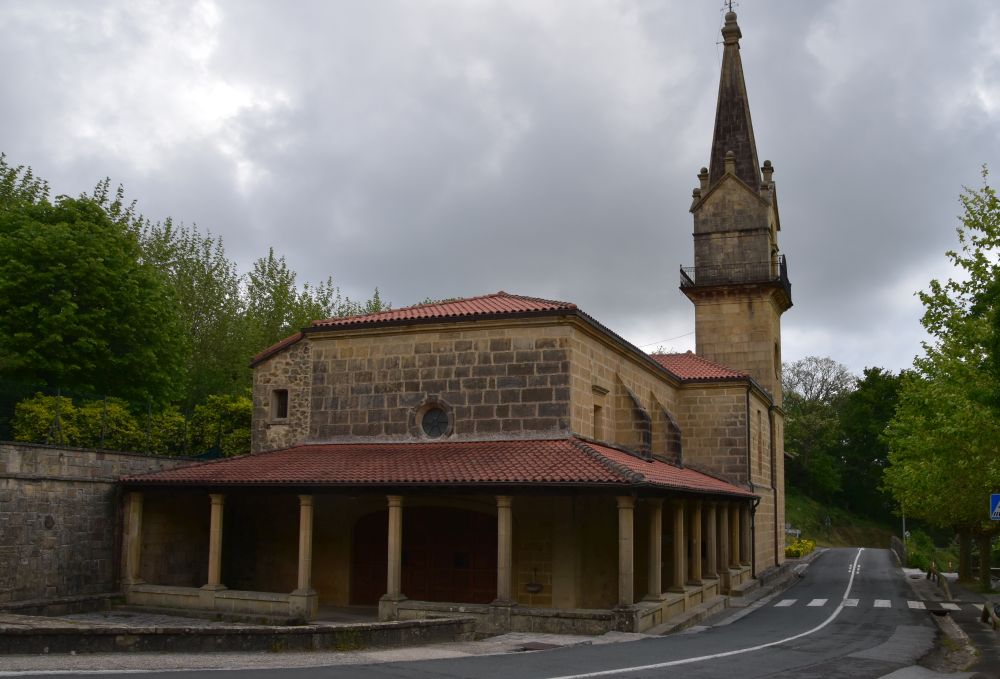
The gothic church San Salvador is from the 14th century. Inside you have to walk uphill to reach the choir – on the rock, it was not possible to build a church with a flat floor. This is the view of the windows.

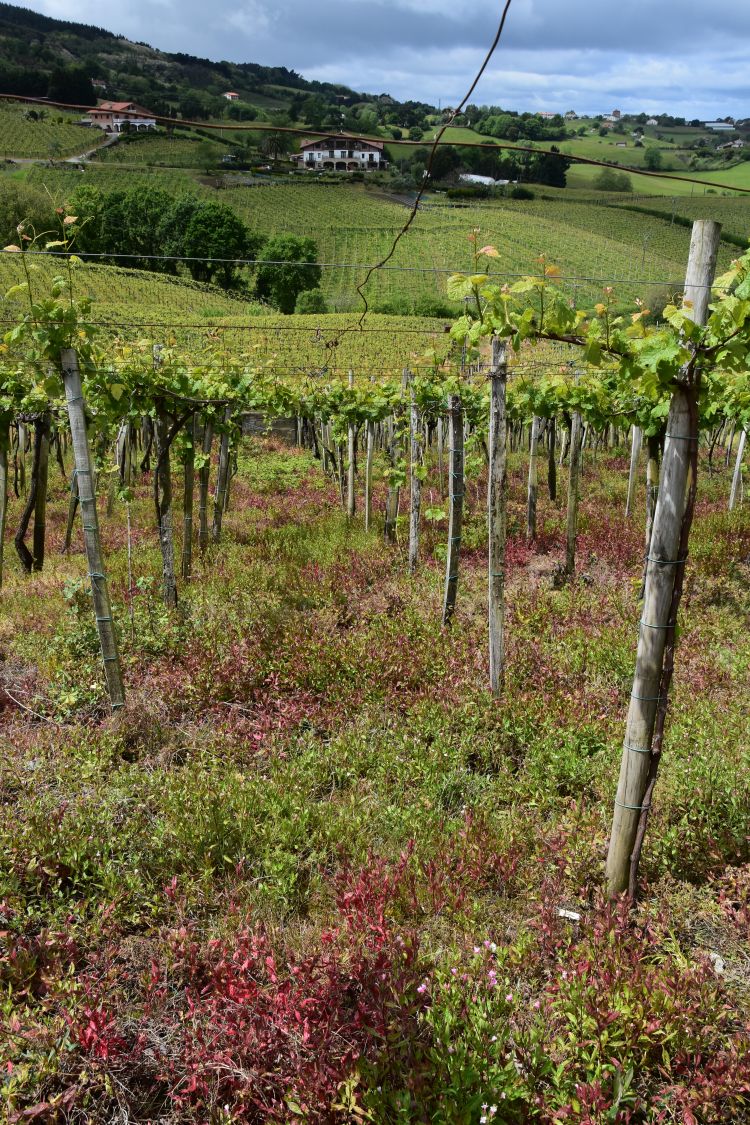
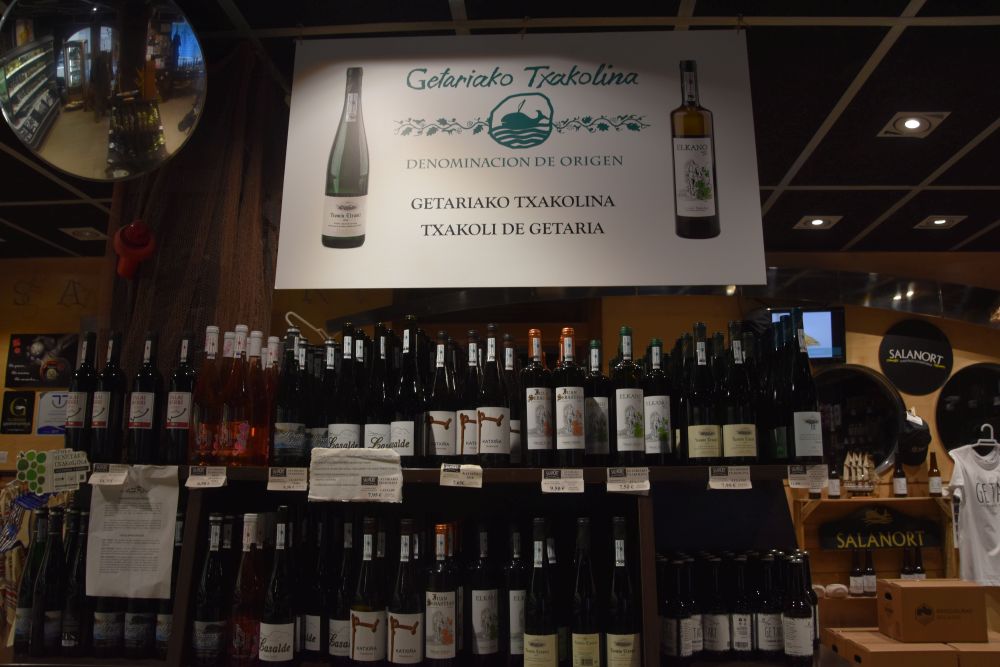
Getaria is the center of Txakoli wine growing.

Txakoli is the grape of the Basque Country. I buy a bottle in a small shop.

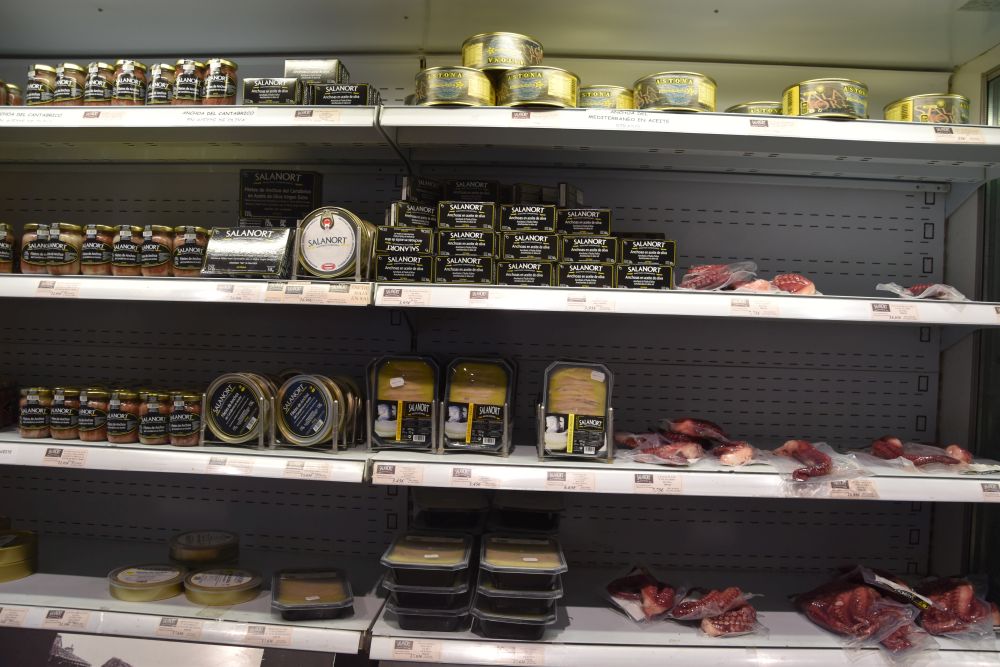
The shop also sells tins with seafood or other regional products – this is an old tradition here.

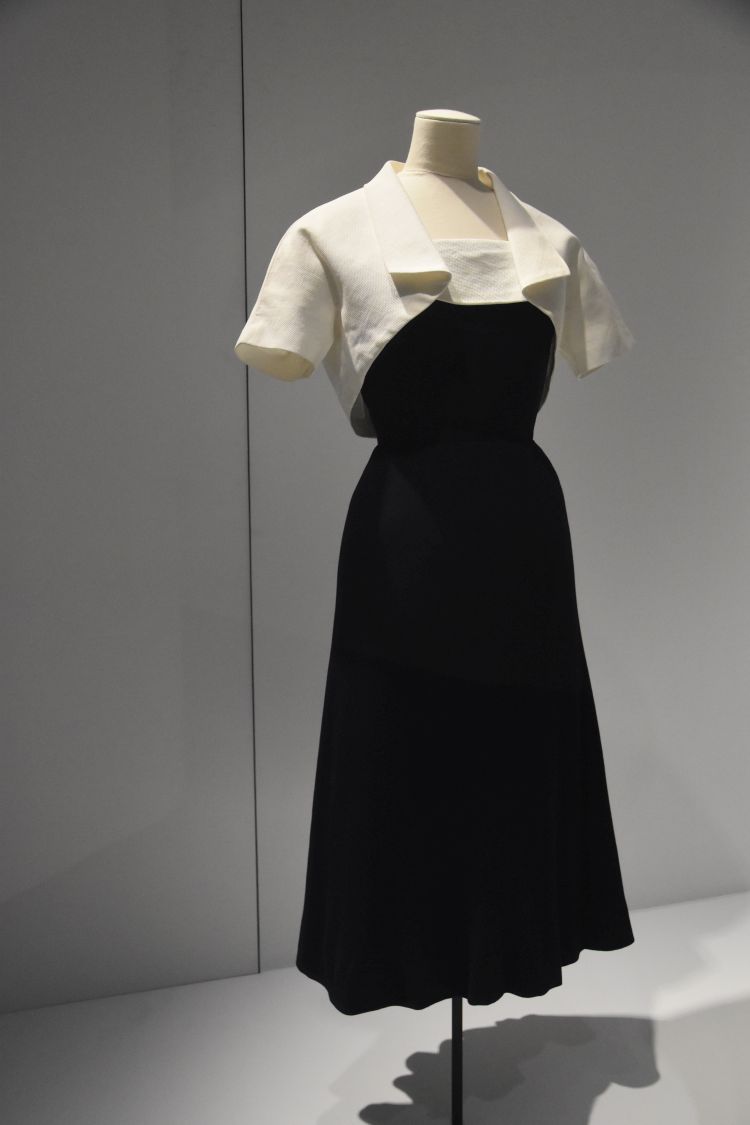
Two important men are from Getaria, the first Born in the 16th century, the second in the 19th century. The first is Juan Sebastián Elcano who joined Magellan on his first round the world tour in 1515. It was him who completed the tour, after Magellan had died on the Philippine islands. The second man is Cristobál Balenciaga, the famous fashion designer from the 1920’s to the 1960’s. His work is on display in a modern building in Getaria. I am impressed. His creations are straightforward and look wearable to me. He makes the material flow. He started with waisted lines – all close to the body.

More and more his creations became less waisted. In the sixties, he designed straight dresses (white dress) or “remodelled” the body (black dress).

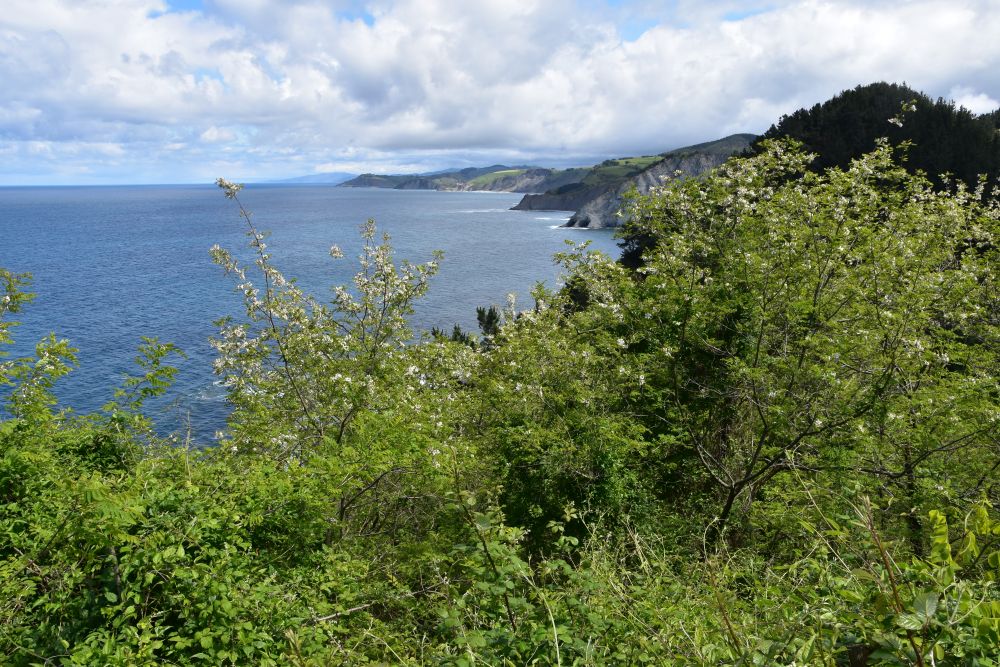
After the museum, we continue our way along the wild coast, just amazing.

Then the road takes us into the mountains and we cross one industrial village after the next. I start to understand that the Basques are industrious.

We arrive in Bilbao and look forward to discovering this lively city.


Discovering San Sebastián stretching along La Concha

On Thursday, 2nd of May 2019, we visit San Sebastián, called Donostia by the Basques. 


Driving along the coast via Jaizkibel to San Sebastián

From Hondarribia we drive along the coast and cross the mountain Jaizkibel. Our first stop is at the chapel Nuestra Señora de Guadalupe. Inside there are a black Madonna and boat models; yes, the Basque country needs support for their fishing boats.

From here, we see the Bidasoa’s river mouth with Hondarribia (Spain), Hendaye (France) and the Pyrenées in the background. 

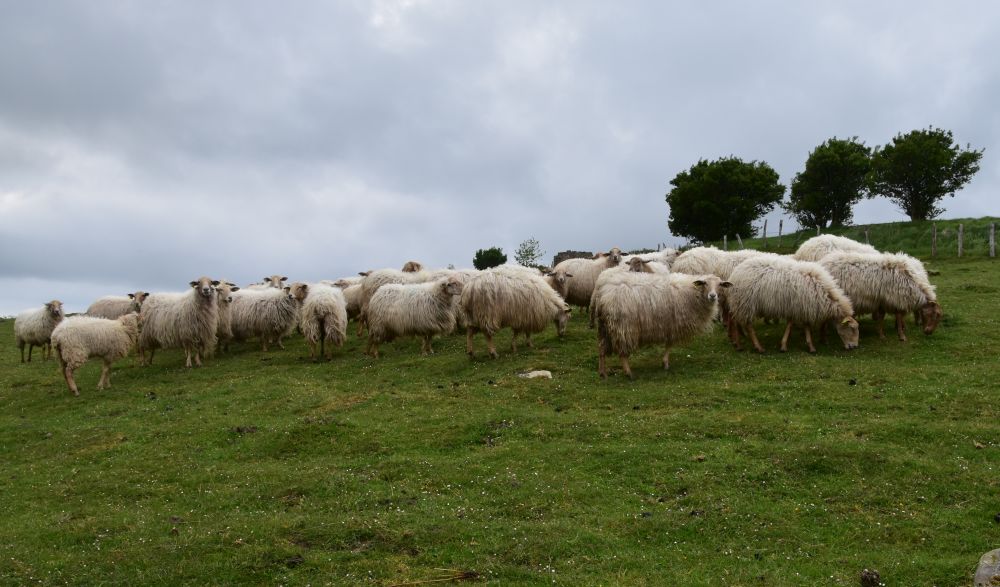
On the Jaizkibel at point 455m, we find these Latxa sheep with their long, thick hair.

I ask myself, how these sheep full of wool handle rain. Do they get all wet? No, Ursula tells me, the Lanolin, or adeps lanae, protects them from the rain.

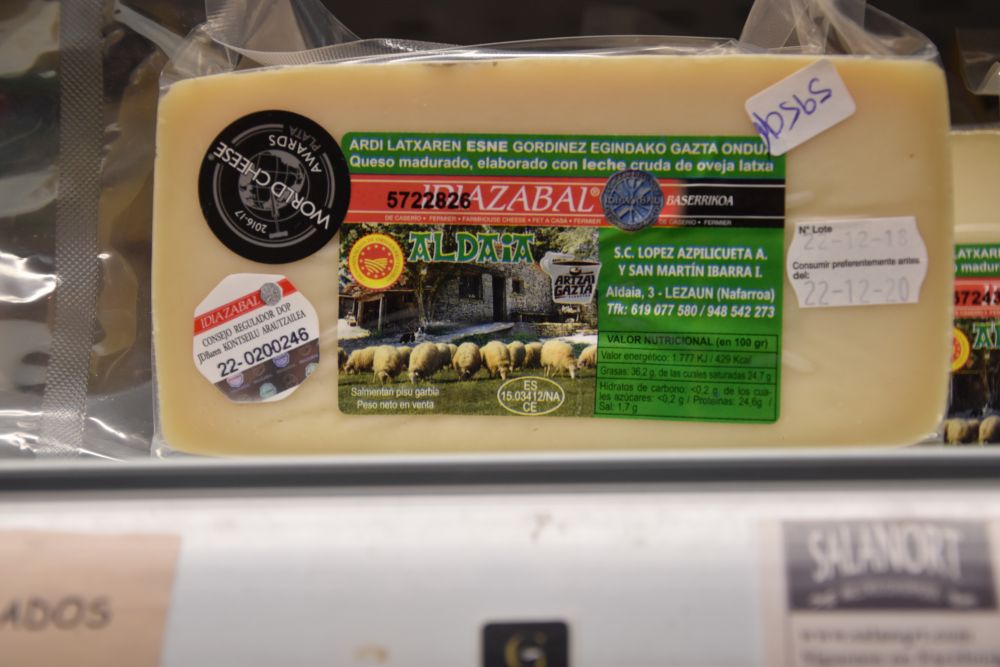
The Latxa sheep are typical of the Basque Country and give the milk for the cheese called Idiazabal.

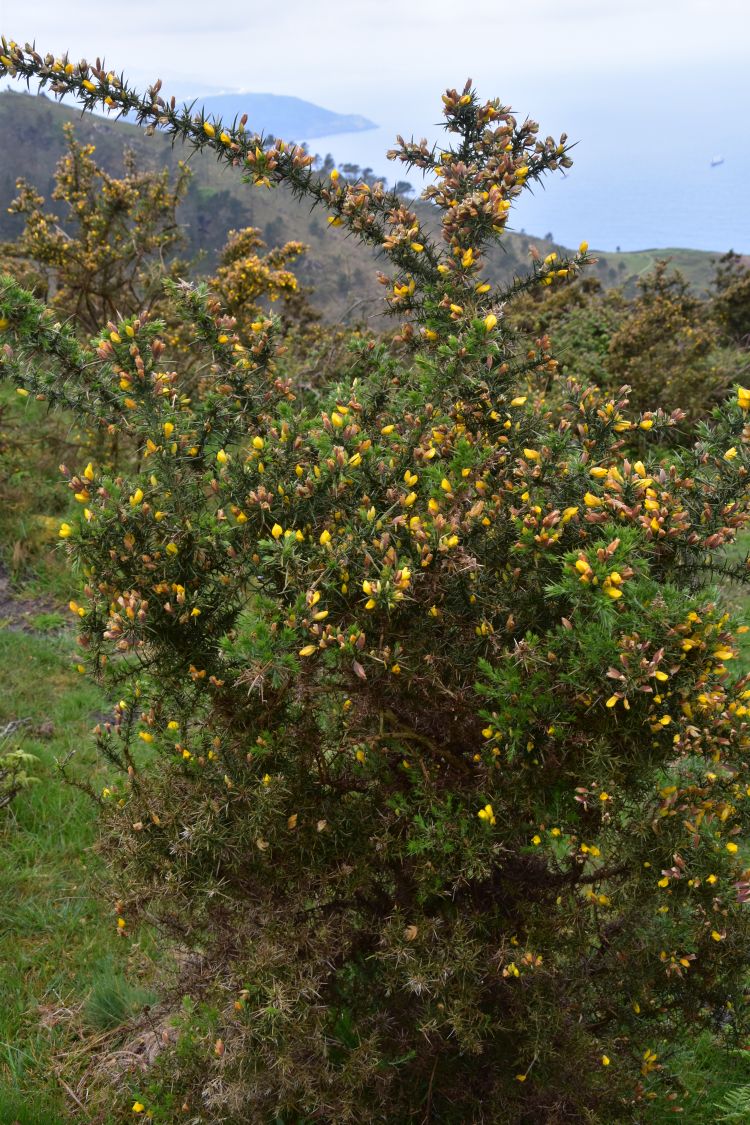
From the Jaizkibel, we can see San Sebastián in the haze. The brooms are yellow.

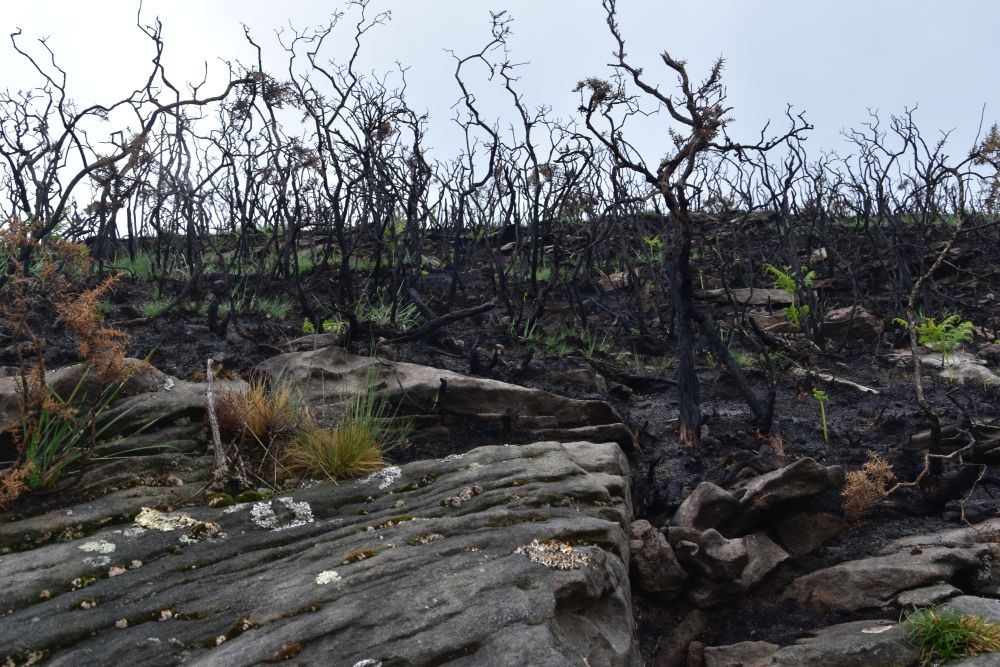
A fire must have burnt these bushes.

.

San Sebastián – the old town with narrow streets and neoclassial houses

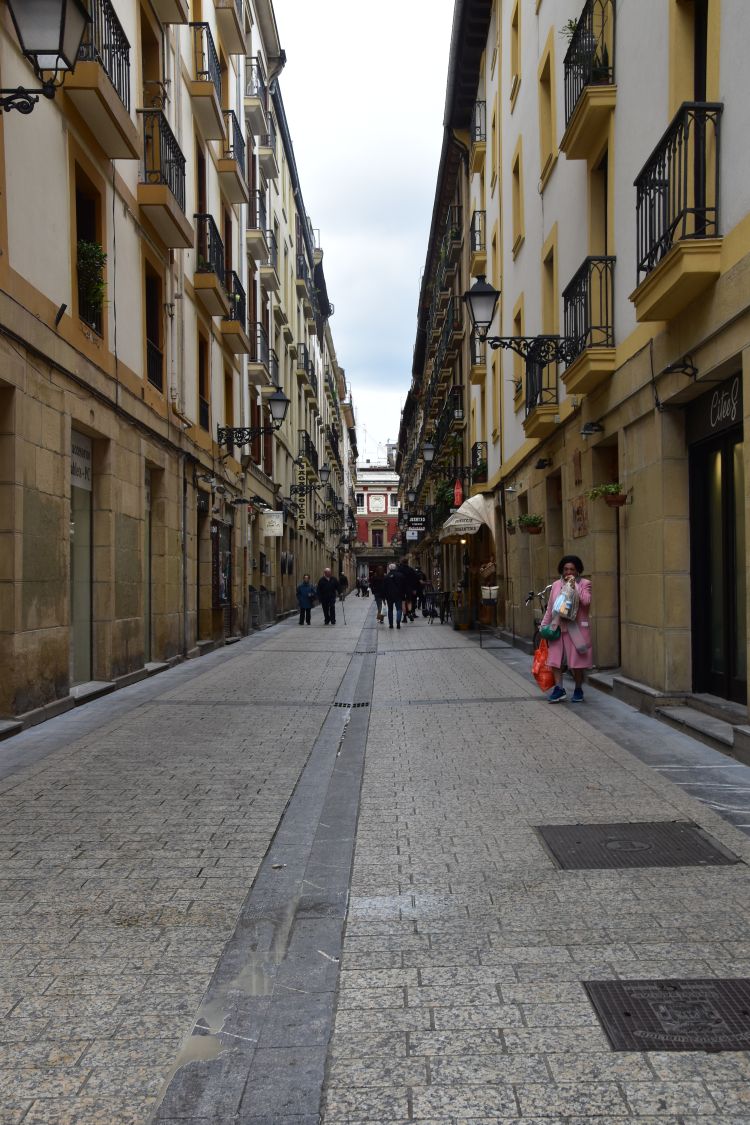
San Sebastián was devastated by a fire in the early 19th century. The old city was then rebuilt along the old street lines, in neoclassical style.

We stop in one of the many tapas bars to eat some pintxos, as tapas are called in the Basque Country.

We stroll through the narrow streets. I wonder, why the windows (and balconies) at the Plaza de la Constitución have numbers. My Dumont tells me, that the Plaza was used for bullfights and the spectators watched them from the numbered balconies (Marion Golder: “Nordspanien und der Jakobsweg”, Dumont Hamburg 2017).

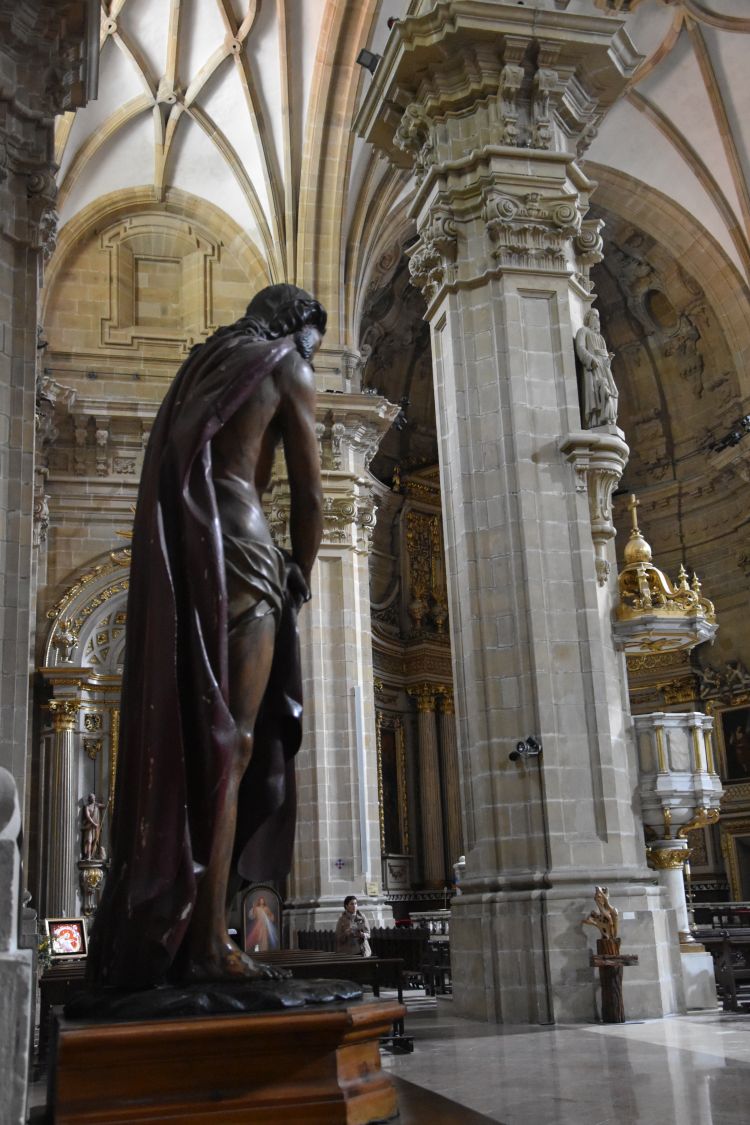
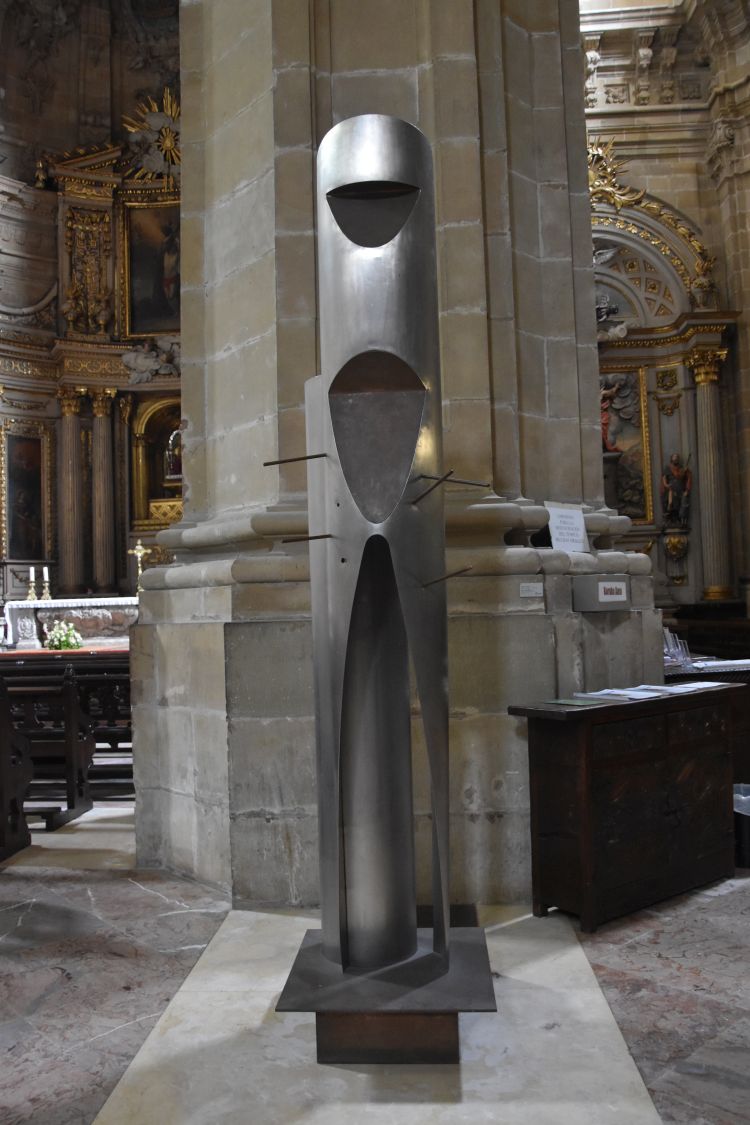
In the baroque Iglesia de Santa Maria from the 18th century we find two statues of San Sebastián (or Done Sebastian, a name that the Basques shortened to Donostia). This is the traditional wooden sculpture…

… and here is the modern version of San Sebastián (he died from arrows).

.

San Sebastián – the bay La Concha between two hills

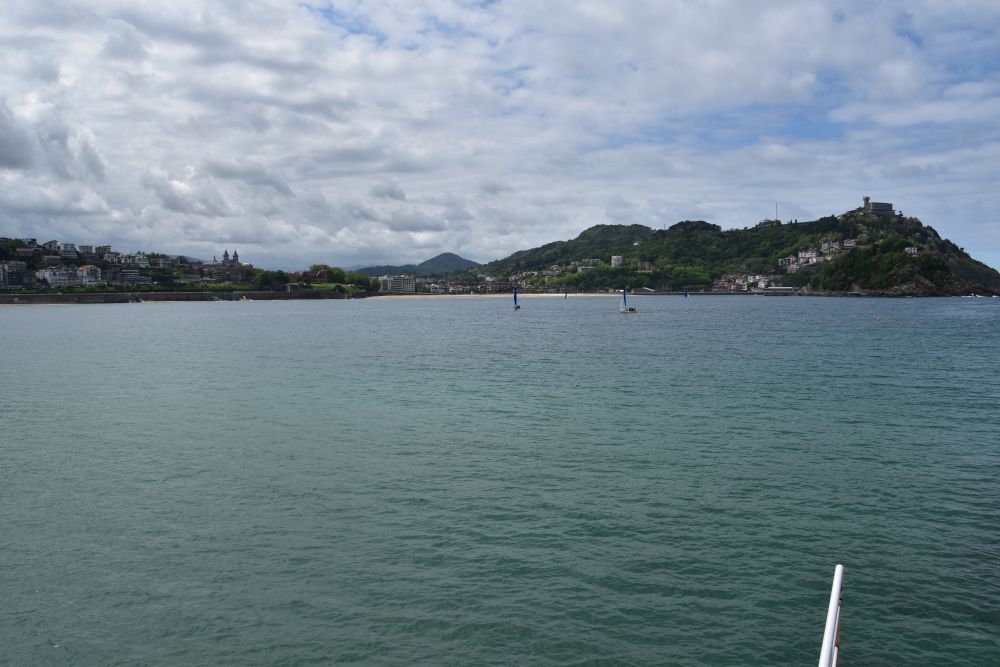
We continue to the famous bay called “La Concha”. It IS beautiful. I can understand why people select the sandy beach here to recover and swim. In the background, there is the Monte Igueldo.

Along the Rio Urumea, we find houses from the area of promotorism (late 19th century) and Art Nouveau (after 1900).

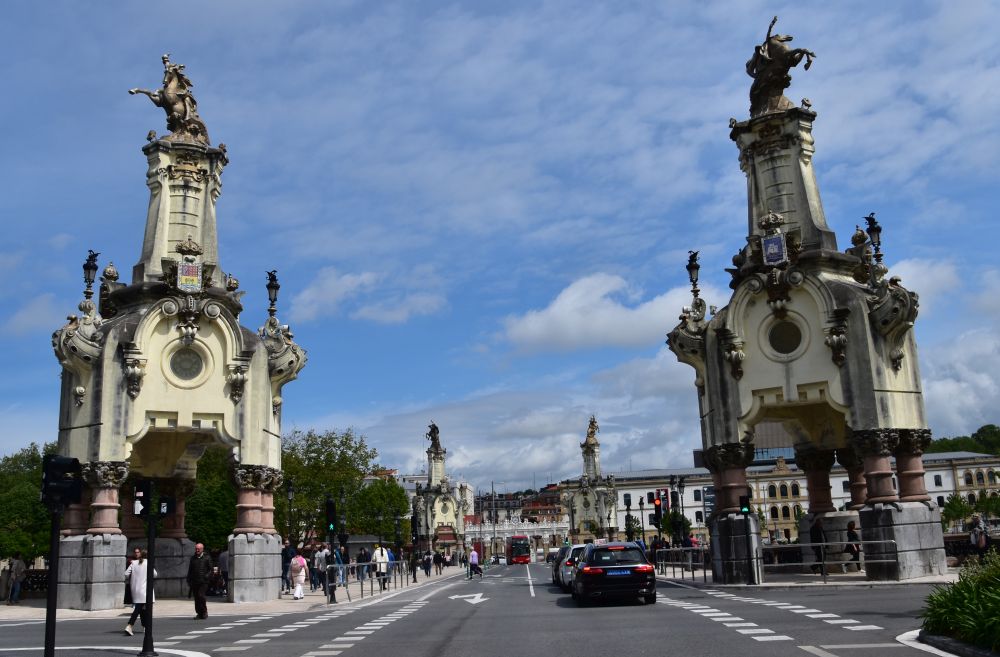
Also the ostentatious Puente Maria Christina was built around 1900.

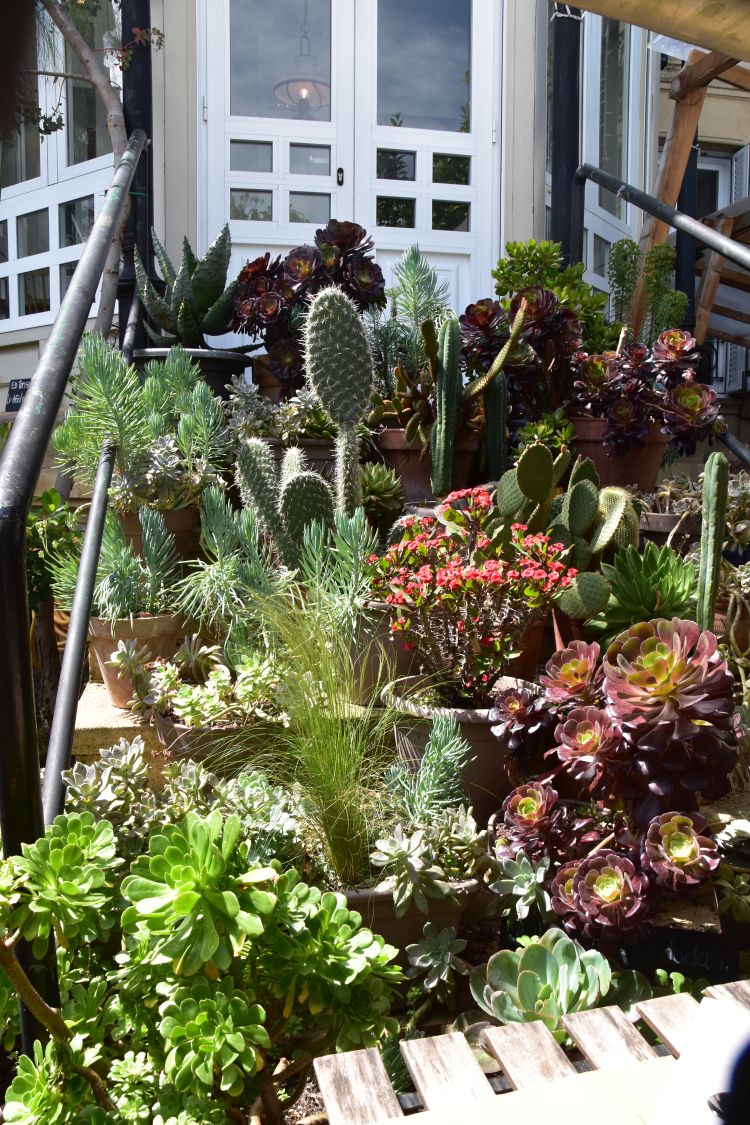
Not far from here, we find the Jardín Bótanico. It is a cosy coffee bar with a lush garden. We wrap off our visit of San Sebastián, with a cup of coffee and a carrot cake.


Driving back to Hondarribia through green mountains

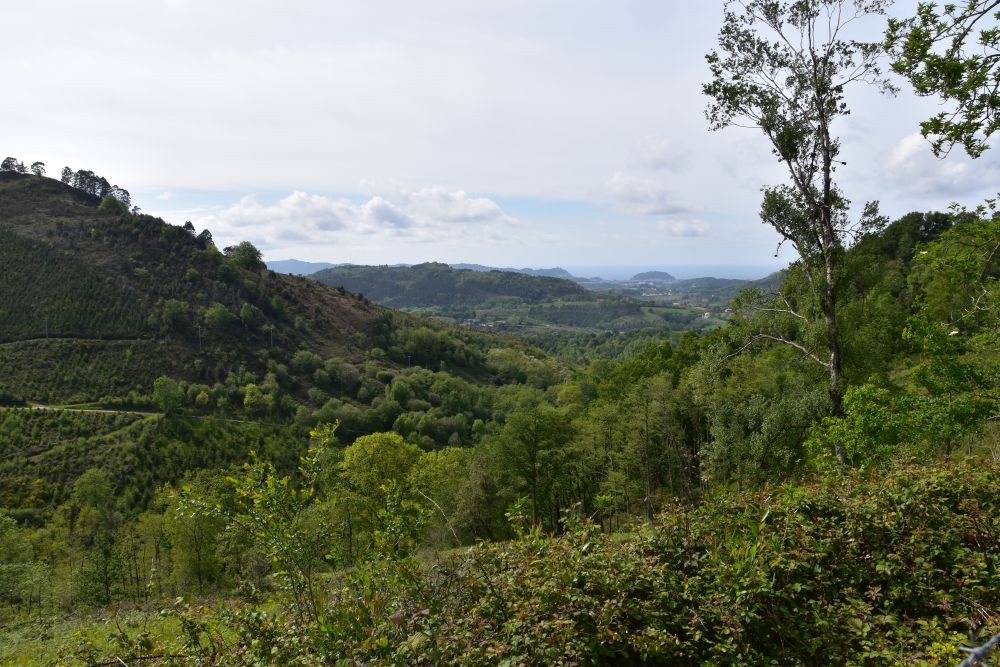
To drive back to Hondarribia, we select a road through the steep and green Basque mountains. The sea is far away, north of us.

Our GPS gets lost, leads us uphill and uphill, until we end up in this dead end street.

We turn back, find the main road again and finish the day in the restaurant Abarka with an excellent rodaballo or turbot and a glass of Txakoli, the wine from the Basque Country.


Hondarribia, the Basque gem on the Spanish side

On April 30th 2019, we drive from Donzenac in France to Hondarribia in the Basque country and settle in the B&B Bista Eder above the city.

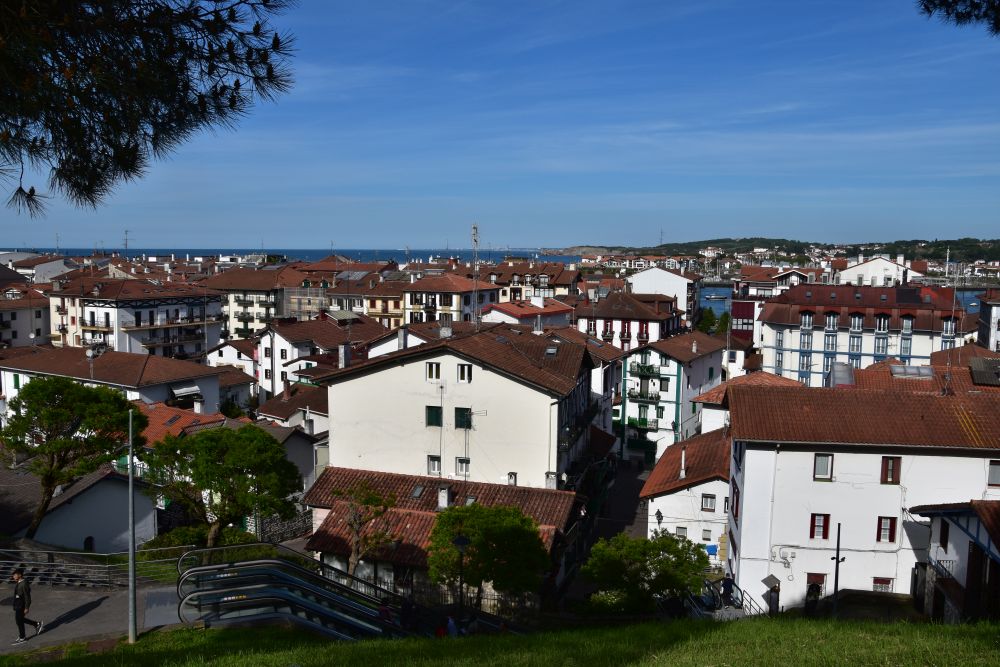
Bista Eder means great view in Basque. And indeed, from this lush garden, we have a marvellous view of the Bidasoa river, the Txingudi bay and Hendaye in France. The city center is about half an hour’s foot walk away from our B&B. Escalators lead down to the quarters of the fishermen, where we find half timbered houses and many tapas bars and restaurants.

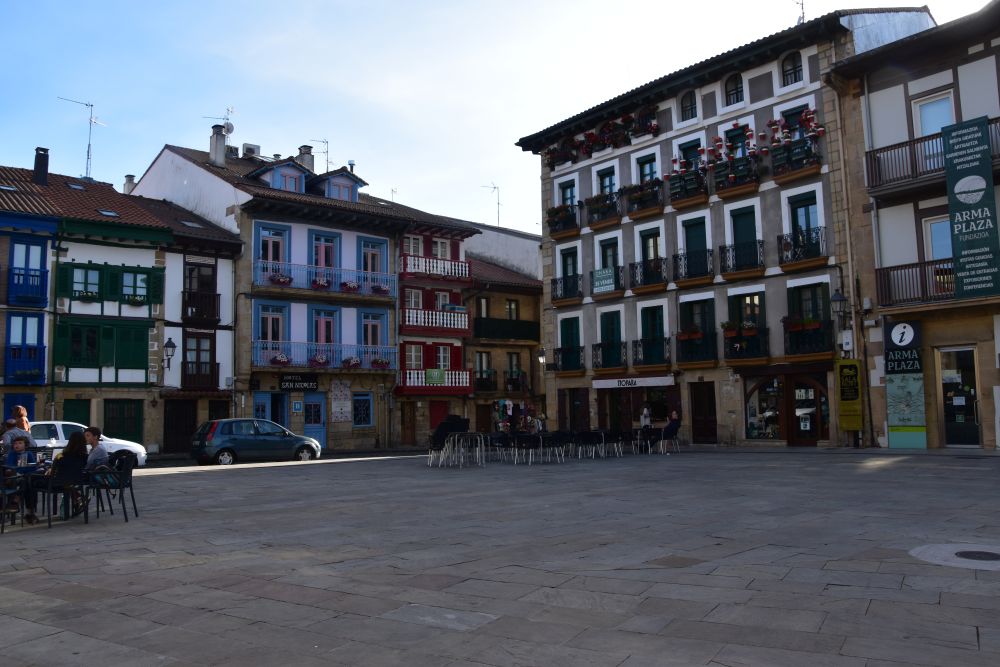
The old fortified city center is located on a rocky hill. The city has been documented since 1150. The former castle accomplished by Charles V is now the Parador with a coffee bar, but otherwise closed for non-guests. The Plaza de Armas is surrounded by typical Basque houses.

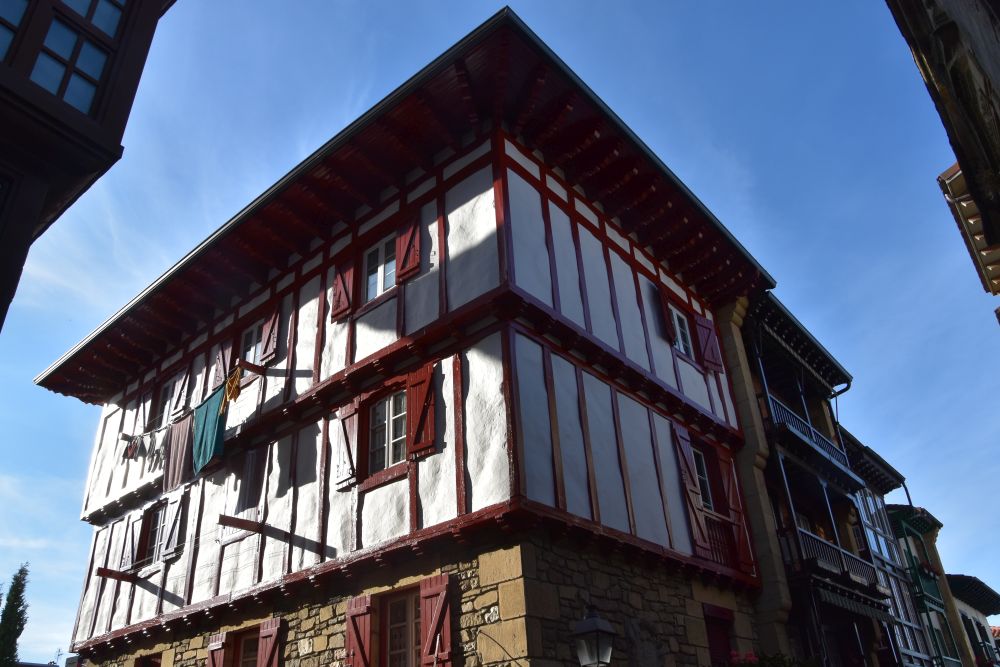
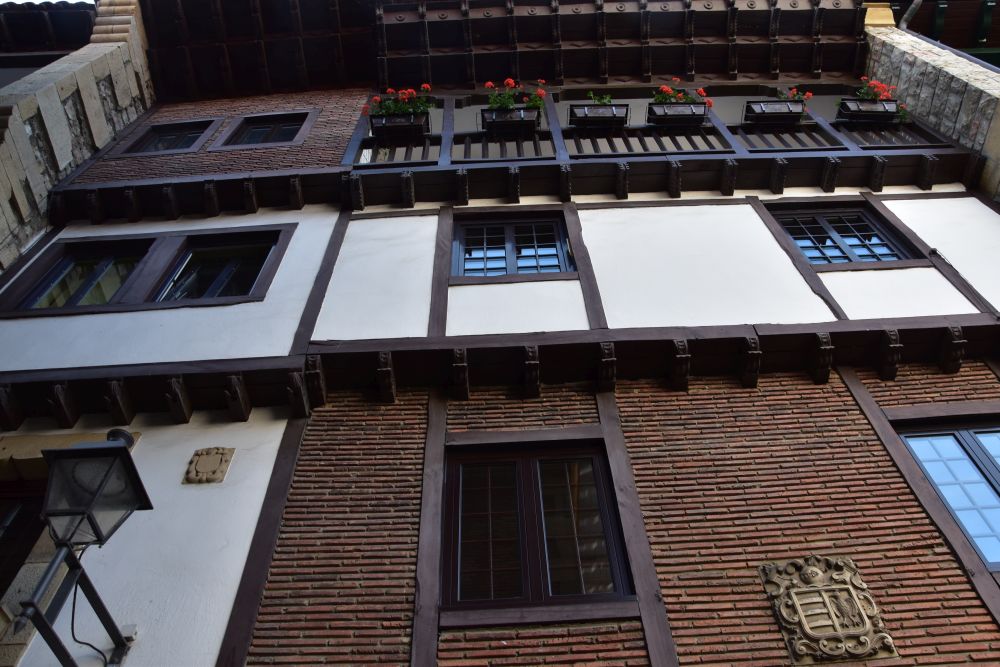
Many of these houses are half-timbered with vertical beams.

Some also have brick structures…

… and some have the brick structures that remind me of the houses in Bergerac in the Périgord.

The church Santa Maria de la Asunción from the 16th century can be seen from the narrow streets.

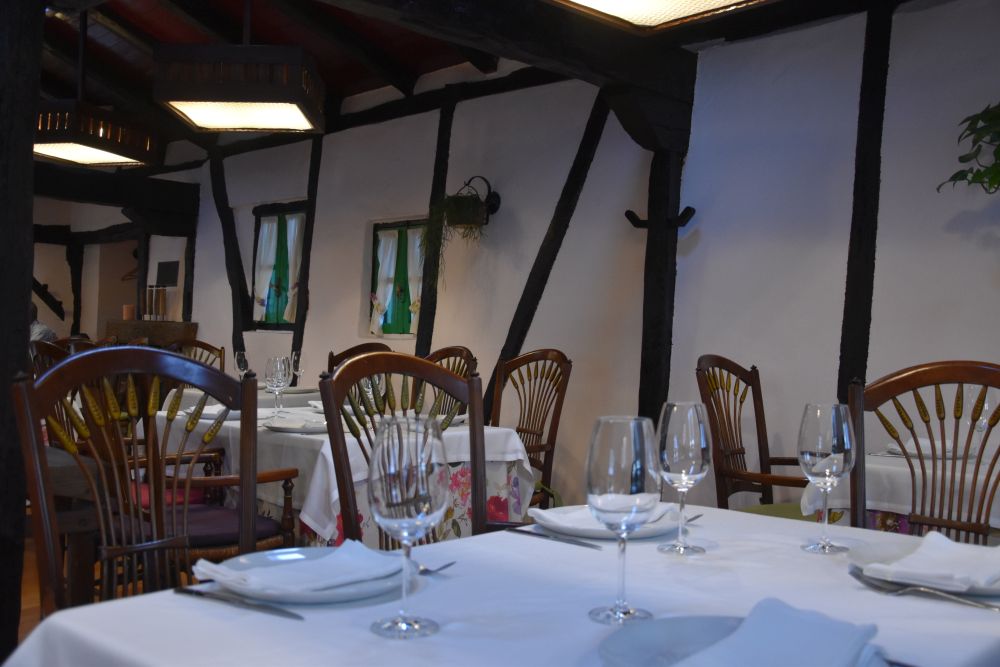
We return to the fishermen area La Marina and have a wonderful dinner with fish and gambas in the La Zeria. It is a tiny restaurant in a tiny house, built like a chalet. This is the cosy dining room.

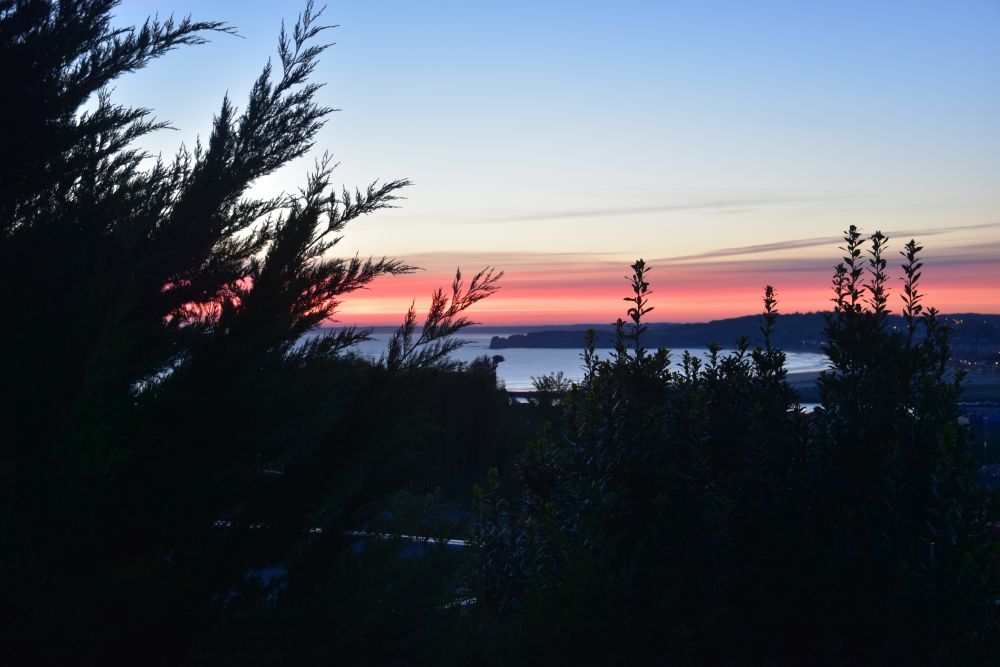
We return to our B&B using the stairs and escalators and sleep well (though it is a little chilly in our room). On 1st of May, we enjoy the beautiful sunrise with the view of the bay and the river Bidasoa.

Well – red sky in the morning, fishermen’s warning – this means that the weather may not be as sunny all week as it has been today.

Around Bayonne – much visited coast in France

On first of May 2019 we take our car, leave Hondarribia and Spain and return to France. It is only about 30kms to Bayonne. At the border we get confused. We are in France, but at the next roundabout, we find a Repsol gasoline station. Right, we are back in Spain.

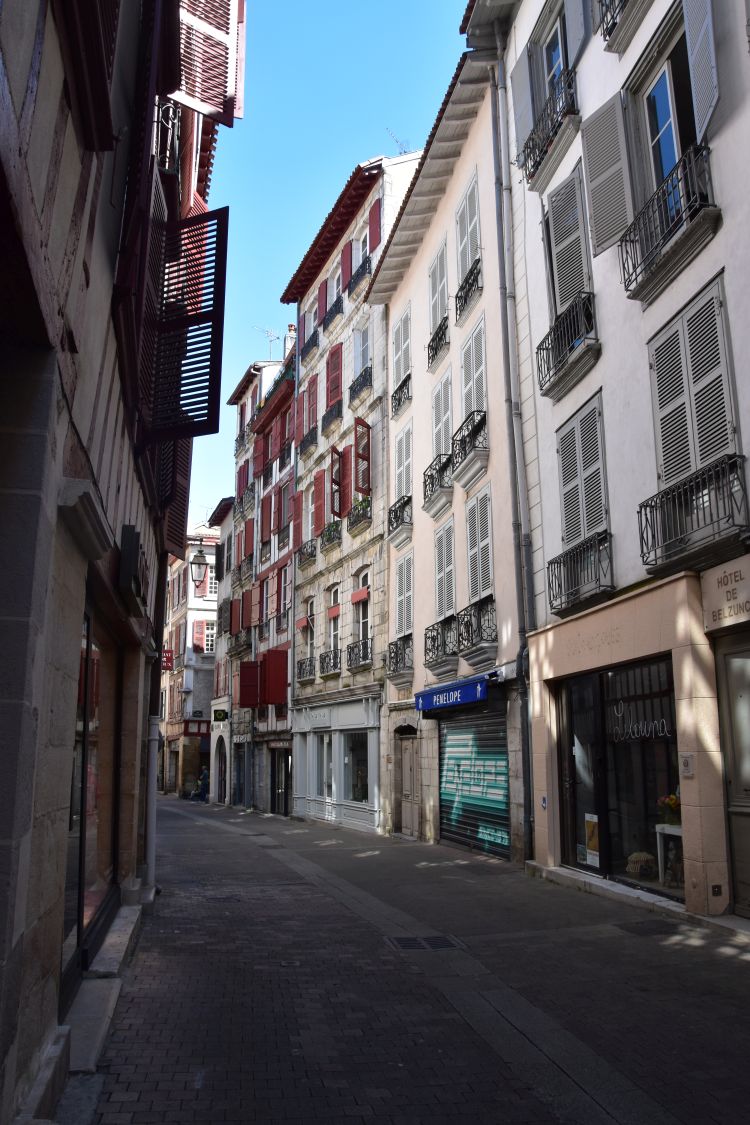
Using the Route Nationale, we drive along the coast line and find a free parking space right near the old castle in the center of Bayonne. We walk through the narrow streets of Grand Bayonne, with the typical half-timbered Basque houses that we already know from Hondarribia in Spain.

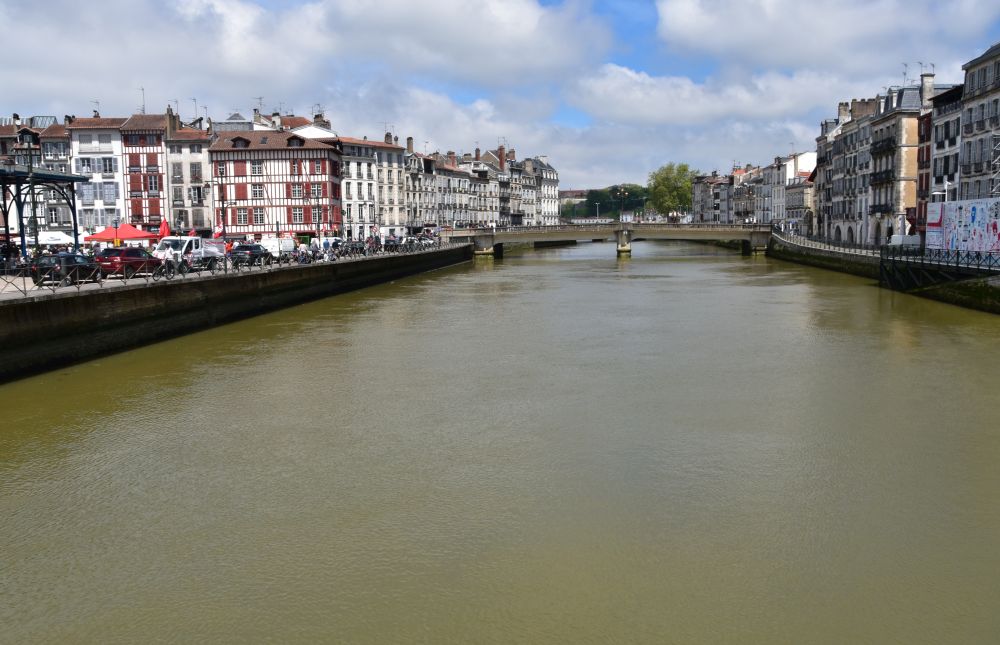
We reach the river Nive which separates Grande Bayonne from Petite Bayonne and which enters the river Adour later.

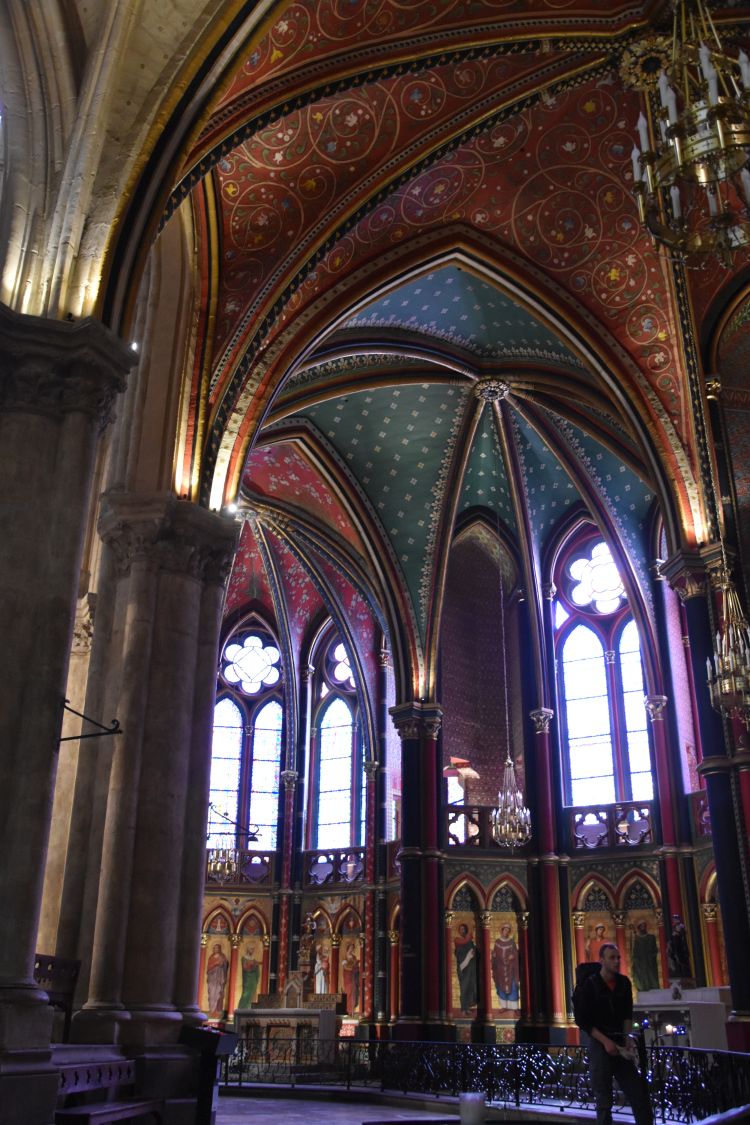
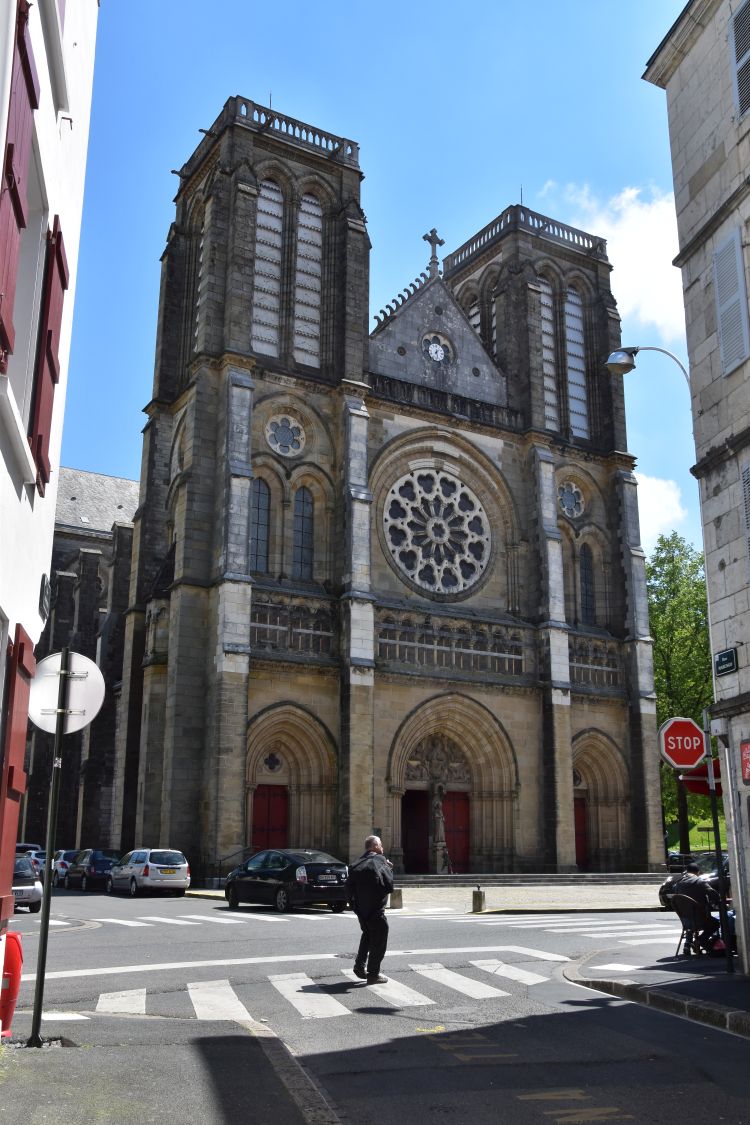
After an espresso, we visit the gothic cathedral Ste Marie which is not far from the river.

We love the ambiance inside the cathedral…

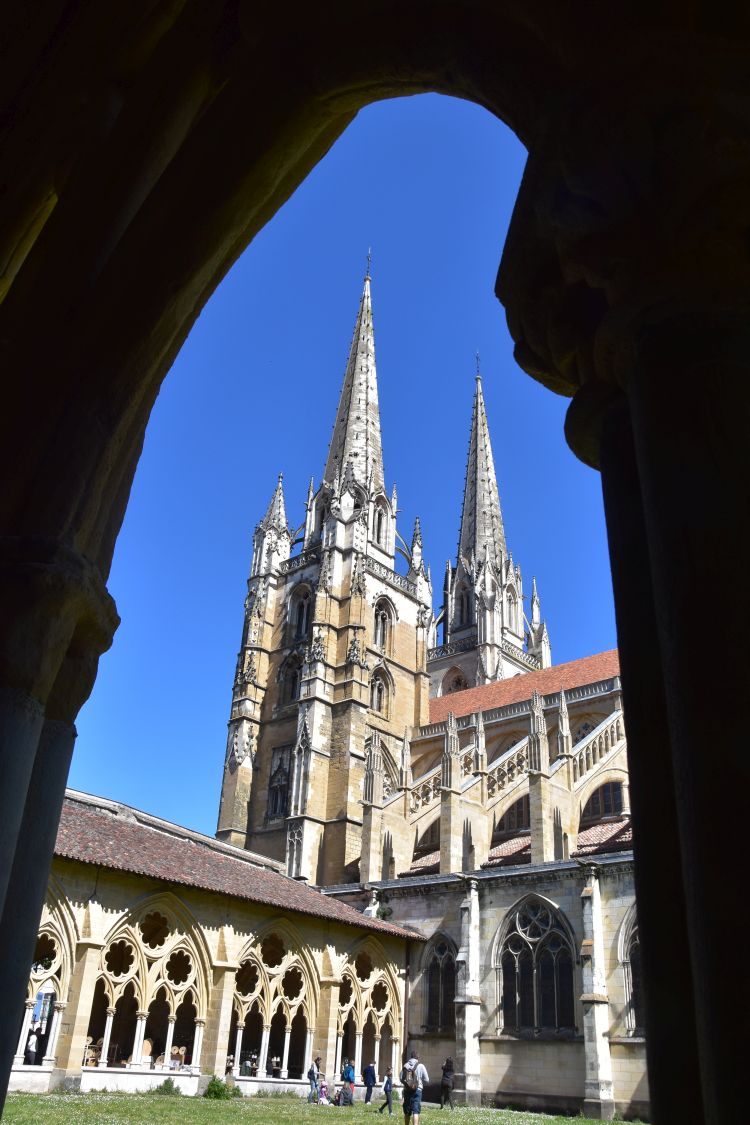
… and in the cloister.

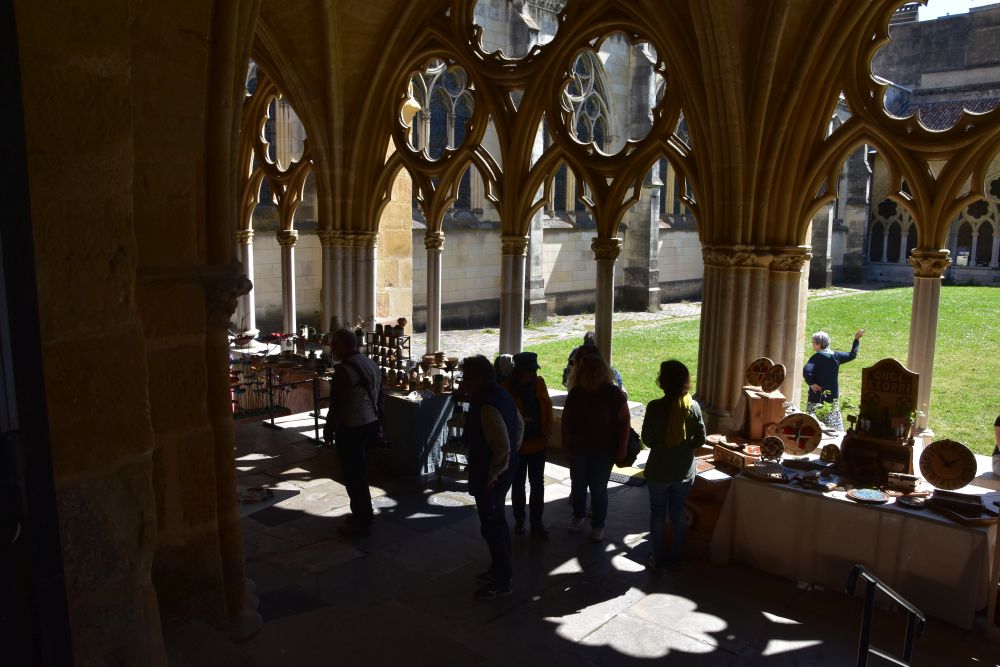
The cloister is very busy on this first of May. There is a market of creative handicrafts, made by artists from the area.

For lunch we enjoy tapas, ham of Bayonne, cheese from the area and tasty paté.

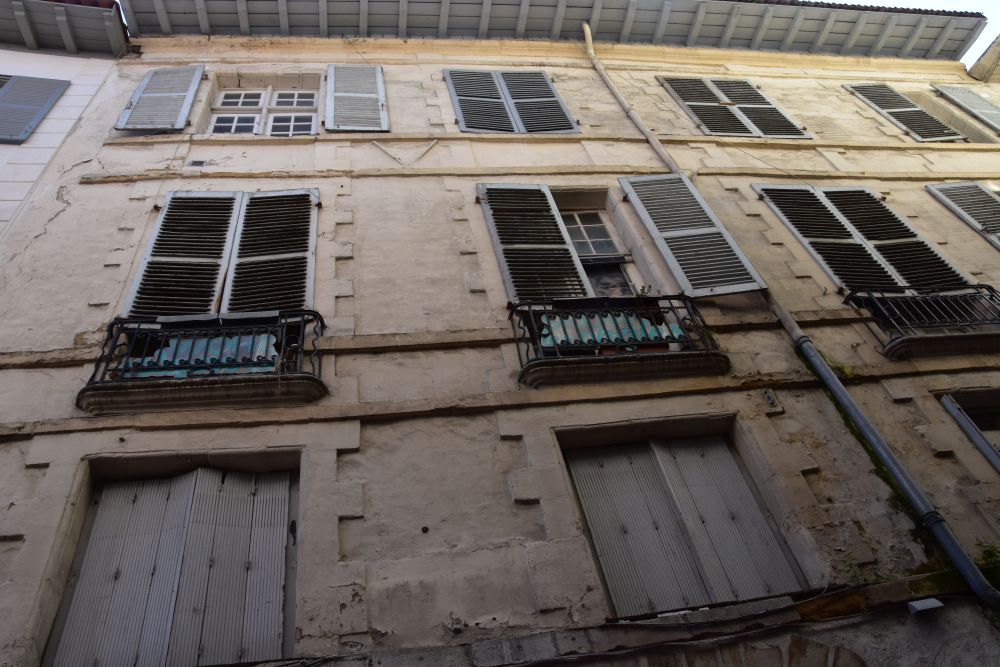
In the narrow streets we look for the old palace Bélzunce from the 15th century.

This house may need some renovation, though the Salon de Thé on the ground floor looks inviting.

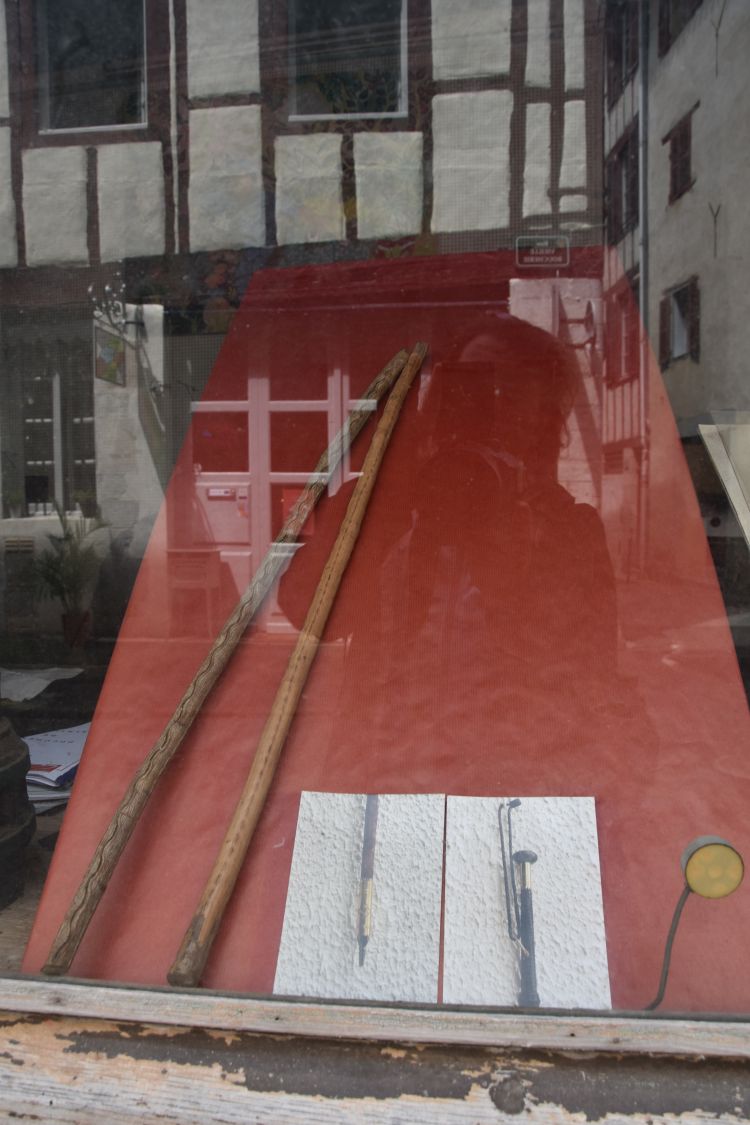
I have already learnt that the Bayonet was invented in Bayonne in 1703. This window tells me that the Makila, the armed stick (la canne armée), has also been invented in Bayonne.

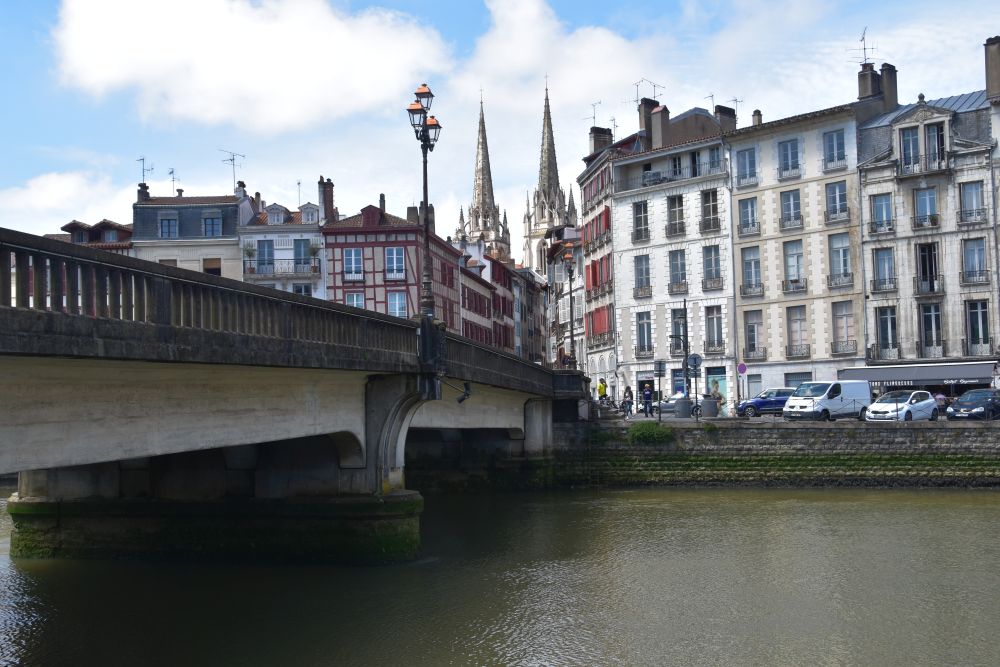
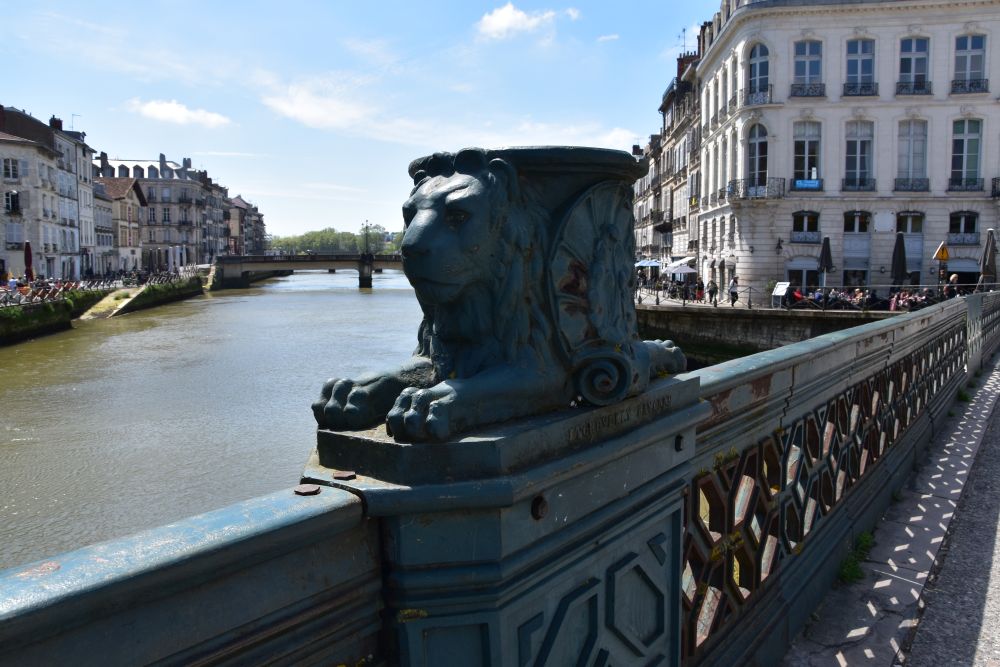
We cross the Nive using the lowest bridge and look upriver.

Vauban has fortified Bayonne after the Peace Treaty of the Pyrenées in 1659. This is the part that protected Petite Bayonne.

The main church in Petite Bayonne is called Saint André. It has been built around 1850.

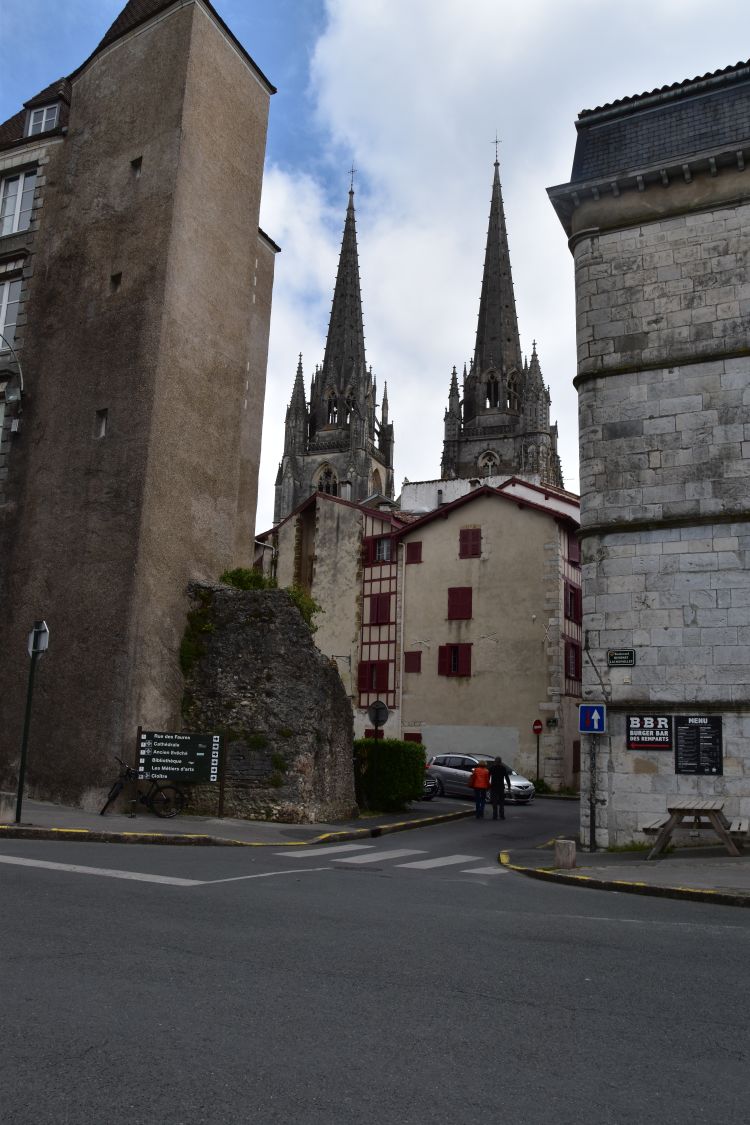
We return to Grande Bayonne. Not far from the old castle we catch another view of the cathedral Ste Marie.

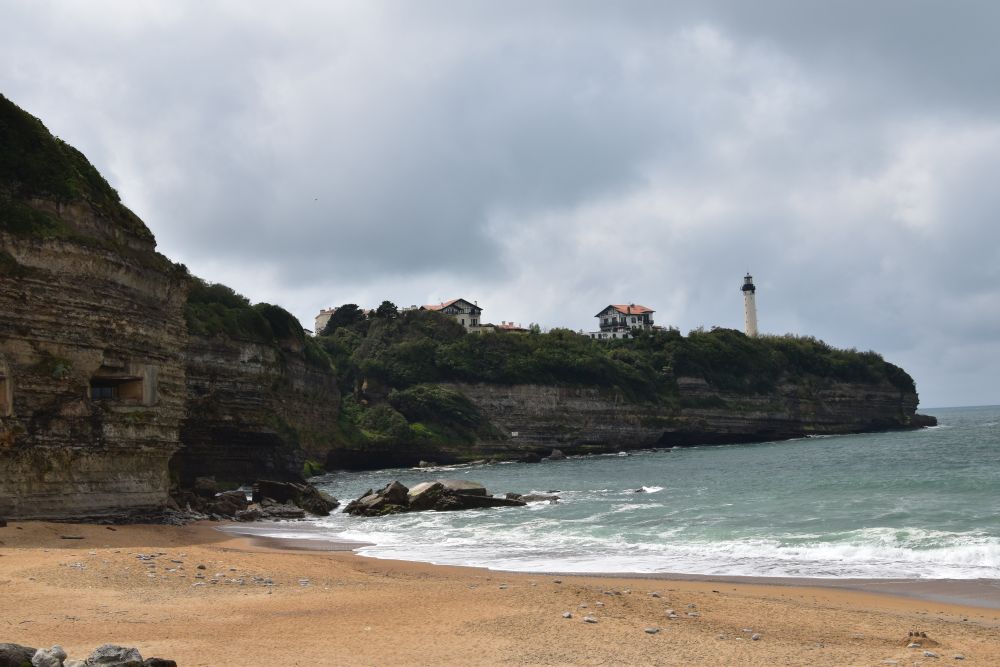
Then we pick up our car and drive along the coast to Biarritz. We drive along the coast line with many, many fin de siècle grand hotels. The coast line promenade is full with tourists, and there is no place to stop. We continued south of Biarritz to a place called “Chambre d’Amour” with lush mansions, huge hotels and cliffs.

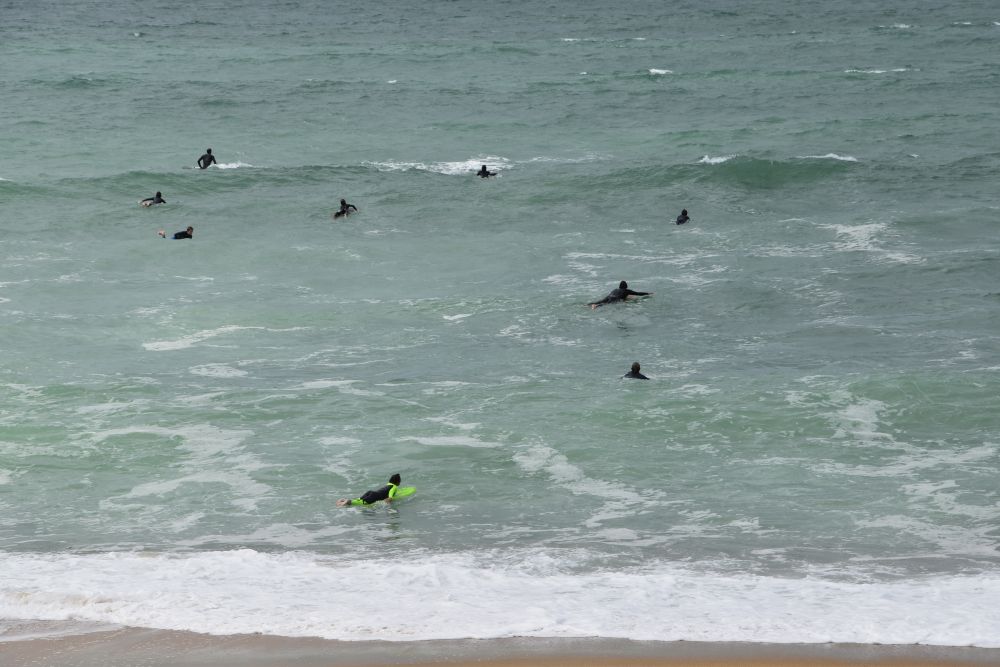
People are swimming in the cold water enjoying the waves of the Atlantique.

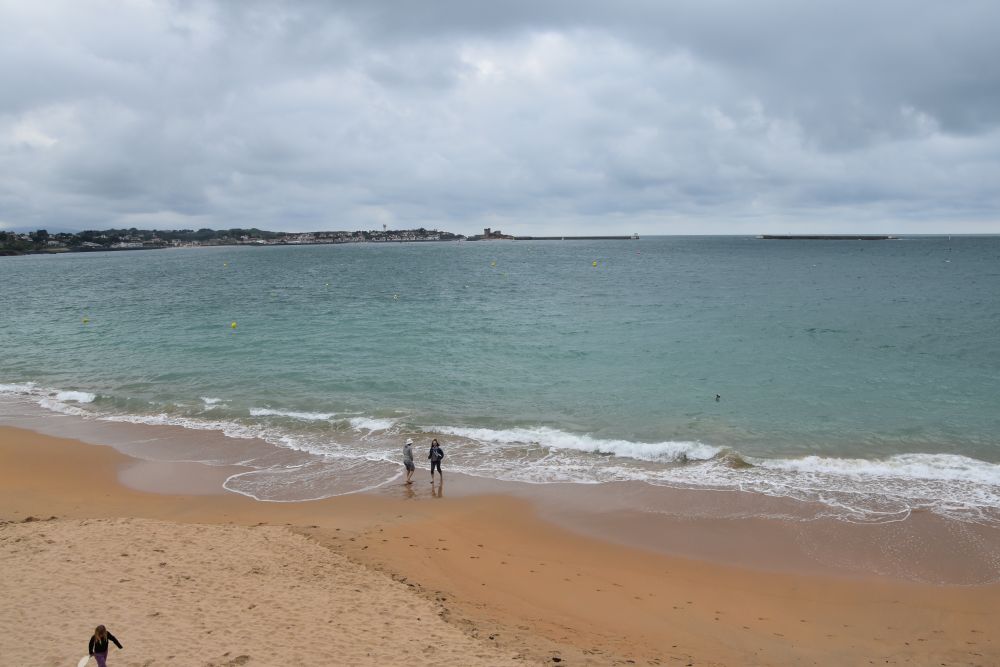
We continue to St-Jean-de-Luz. Tourists and tourists… just 7 parking spaces left in one of the park houses. We found one of the slots (uff, narrow!), have a drink in the Pergola and watch life on the windy beach of this beautiful protected bay.

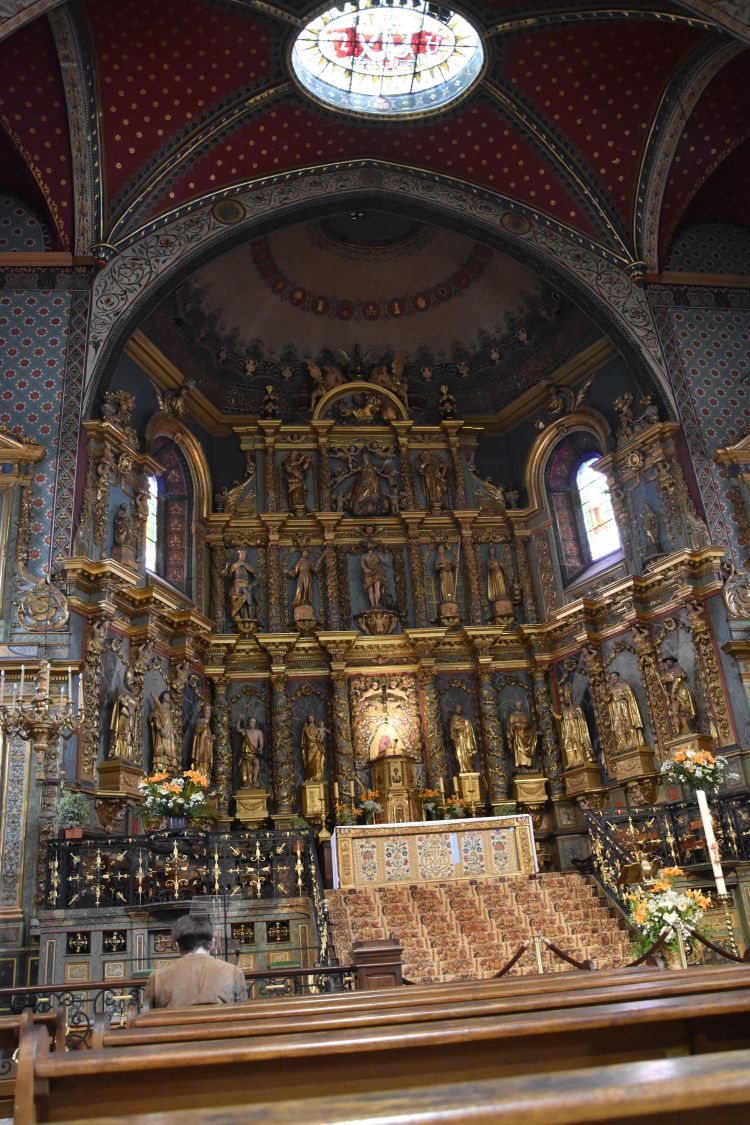
St-Jean-de-Luz has a pretty old city with the cathedral Saint Jean the Baptist built in the 17th century.

The altar and the wooden balconies give it a solemn atmosphere. When Louis XIV married the oldest daughter of Philippe IV from Spain here in 1660, this church was still under construction.

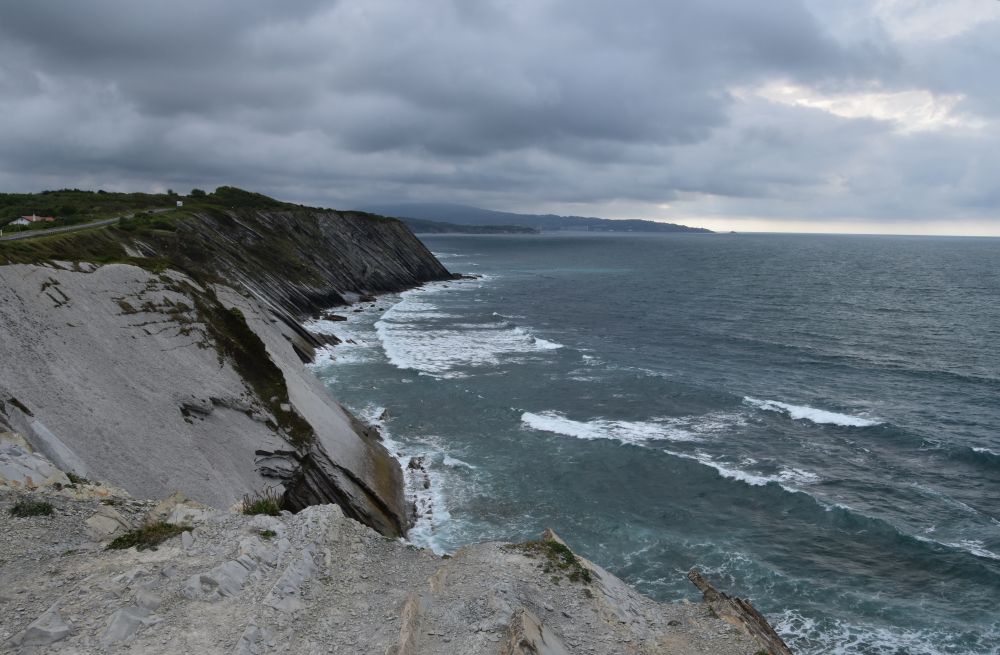
We follow the coast line to Hendaye and stop above the cliffs. I catch the evening ambiance.

Hendaye and Hondarribia both stretch along the Rio Bidasoa, Hendaye on the French side and Hondarribia on the Spanish side. This is the view of Hondarribia seen from Hendaye.

The evening sun plays with the water here.

We say good-bye to another great day. Now we understand why Napoleon III loved to recover near the rocky Basque coast that also offers sandy beaches.


Donzenac – charming medieval village in south west of France

Again I travel to Spain with my friend Ursula. It is end of April 2019. After having shared a traditional Raclette with friends in Monthey, we leave early in the morning, drive to Geneva, leave Lyon and Clermont-Ferrand behind us, follow the signs to Bordeaux and around 4pm we arrive in the charming medieval village Donzenac. One of the medieval houses is the hotel Lagamade, where we have reserved a room for one nght. It is a very cosy hotel with wall paper in bright blue, all tastefullly decorated.

The small medieval City (about 2000 inhabitants) has existed since the 8th century. It is perched on two hills or “puy”.

This is the market square with the fountain decorated for Easter.

On the market square women used to wash their laundry in the laundry house (to the left).

From the market square this gate leads into the one of the two city centers perched on two hills.

The streets are narrow.  Cars are permitted, but not everywhere…

In the 17th century, a former house has been reconstructed to become the chapel of the penitents. Saint John the Baptist stands above the entrance holding the agnus dei (sheep) in his arms.

On the second hill, we find this house from the 13th century that has been carefully restored.

Not far from here, we look back to the first hill with its castle, now a beautiful mansion with a Tower. You cannot visit it, people live here.

Donzenac is full of live, with children, play grounds and kindergardens around the townhall, cosy corners and well kept gardens.

We have a light dinner in our hotel Lagamade – I discover that poultry stomach on salad is delicious (a specialty here). I wrap up the evening with a vieille prune du Périgord (old plum). We are very happy with our first day traveling.

I love the small country towns and villages of France – and I keep on discovering more small gems beyond the beaten tracks.


Basler Fasnacht/carnival 2019 – Impressions from the Laddärne-Uustellig/lantern exhibition: About censorship

This is a difficult topic: Avoiding words that may discriminate those that are different from us, be it cultures, groups of people or peoples. A politically correct language does not imply that discrimination disappears, but more and more we are told to no longer use words that may highlight it.

It took me long to write about the carnival theme “censorship”, as I find it difficult. I was raised with curiosity, with respect and love for what is different around me or elsewhere, with an eagerness to learn and even adopt what I like. Cultures and people are different and I love that. It is an enrichment. Think of food, philosophy, language, religion or history beyond Europe centricity. I take traveling as an opportunity for experiencing diversity and enrichment. Blogging is my way of understanding and learning. Diversity requires deep roots – mine are in central Europe. Sharing my roots with others is also important for me – such as I do with my blogs about Basel and around.

Now this year, the carnival of Basel took up the sensitive topic of the politically correct language and censorship. Whatever I take notice of – people, phenomena – I give a name to them. It is a sign of awareness, respect and it is practical. But many names have now got the label “discrimination”. Yes, I agree, some of the names are related with a bad flavour, but where is the limit? The boundaries are being extended and I start to feel uneasy about what I am still allowed to say and what has now become a no-go. One example: Can I still say, Rome was founded in 753 B.C. which stands for “Before Christ”? Yes, the Romans counted their years “ab urbe condita” which reflects their Roman centric view of history. Counting years starting from the year Christ was born – this is surely a European centric view that has been exported from here to the Americas and to much of the world. It reminds of the European hegemony (now fading?). But it is a practical reference point that I have never thought about. Where is the limit?

Let us stroll through the lantern exhibition at the Münsterplatz (cathedral square) to study some of the lanterns that talked about politically incorrect names and censorship at this year’s carnival.

While looking at the line of houses across the cathedral of Basel in the morning sun, let us think about how the topic “censorship” came up: In the nineteen fifties two groups of “Guggemuusig” (playing a kind of brass and drum music) were founded under the name of “Negro Rhygass” and “Mohrekopf”.  Perhaps they allude to the fact that Africans are known for being excellent musicians. Since then the groups have played each year and their names have not bothered anybody. But now, someone from a different city (that has their own procession with clichés about different peoples) attacked the two groups for discrimination or even racism. This triggered the topic “censorship”. Let me assure that at the Basel carnival, I have always discovered all sorts of coloured heads under the masks of the carnival groups. I think, the carnival is a great opportunity for integration, which is the contrary of discrimination and racism.

Let us check out the reflections about censorship that appear on some of the lanterns.

.

Reflection #1: Words and expressions forbidden by censorship

The Gundeli Gniesser are people that enjoy it – gniesse – from the Gundeli – an area in Basel. They list many words that will now be forbidden as they may nastily point at someone. Examples are:

  • “Wienerli” (sausage pointing at the city of Wien with the disrespectful diminutive “li”),
  • “Appenzellerkäs” (cheese from the canton of Appenzell with a rather strong smell),
  • “Peking Ente” (Peking duck) or “Chinakohl” (a sort of cabbage with “China” in its name),
  • “Älplermaggrone” (pasta made by the people in the Alps – called the “Älpler”),
  • “Mongoloid” (a name for the Down syndrome),
  • “Schwarzwäldertorte” (Blackforest cake, contains the word “black” and a region, the “Black Forest”),
  • “Russezopf” (Russian braided cake),
  • “Schwööbli” (small rolls named after the “Schwoobe” or the Swabians – with some fantasy the shape of the roll might remind you of one part of the body; with my own migration background I can easily smile about the “Schwööbli”),
  • “das isch türkt” (this fact has been twisted – why should the Turks twist things?),
  • “Idiotehügel” (idiot hill – small slope for beginners on ski – beginners are not necessarily “idiots”, they are just new to skiing),
  • “Googlehopf” (the cake called “Gugelhopf” – a delicacy in Basel and its surroundings – could be mistaken as pointing at Google)
  • etc etc.

Some of the verses on the lantern say:

  • “Mängg Wort wird zum Politikum, doch ab und zue wird’s äifach zdumm (Many words become a political issue, but sometimes it is simply too stupid)”;
  • “Nur ganz korrägt sötsch hütte schnuure, do blybbt nur s’Schimpfe hindeduure (Today you should only talk fully correctly, that is why you can only grumble covertly)”;
  • “Dr Moorekopf isch inne wyss und usse bruun – was soll das Gschyss? (the “Moorekopf” is brown outside and white inside, why such a fuss?”; the “Moorekopf” is a sweet brown chocolate half sphere with white foam in it; Moor=African; Kopf=head);
  • “Empöörsch Dy vyyl und mit Geduld, denn bisch au nie an öbbis tschuld (As you are often shocked and always point that out, you will never be blamed for anything” – this is very philosophical, I think).

The Rhygwäggi are the “stones – Gwäggi- from the river Rhine – Rhy”. Their Alti Garde (Oldies) list expressions that have now become a no-go… such as

  • “Alti Dante” (elderly aunt, a very common mask at the Basel carnival, could be interpreted to be disrespectful of elderly ladies like me),
  • “Schwarzbrot” (Black bread is our crunchy, delicious dark bread. But… it contains the word “black”),
  • “Schwarzwurzle”… (we call the comfrey “black root” and, yes, “black” is censored, but, after having peeled them, they are all white),
  • “Pariser” (used to protect lovers, but it reminds us of the city Paris),
  • “Maitlibai” or “Schänggeli” (both delicious sweets called “girls’ legs” and “small thighs (of girls)”),
  • “Zwätschgegompfi” (plum marmalade, but a plum or Zwätschge is also a “stupid lady” in Swiss German, “gomfi” stands for marmalade),
  • “Indianer” (Indian; well I remember, as a child we loved to play “Indianerlis” and we dreamt of a wonderful world, where you would smoke the peace pipe to solve conflicts. As teenagers, we watched the film “Winnetou” with that handsome actor we all were in love with – was that wrong? Now in one kindergarden, the teacher forbid the kids to disguise as Indians for their childrens’ carnival),
  • “Mannschaft” (oh yes – a team is called “manship” in German, why not “womanship”, what a discrimination! Hm, I am a lady, and I have never thought about that before, at work we talked about “teams” anyway…).

The Rhygwäggi conclude: “Värsli brünzle isch kai Schlägg, usser de losch d’Wörter wägg (Creating verses is no fun, except you leave out the words” – “kai Schlägg” for “no fun” alludes to the fact that there is nothing to lick (schlägge or schlecken) such as a delicious sweet ice cream, so there is just no fun).

.

Reflection #2: Shut up or remain silent to conform to censorship

The group Breo named their topic “Halt dini dumm Schnure” (literally: shut up your stupid mouth). On their lantern there is this face closed with a zipper.

The carnival group D’Gniesser had the same idea, a face with a zipper. They say: “Kai Sujet, kai Värs, so das wärs” (no theme, no verse, well that’s it) and “#kai Sujet, syg gescheit, sag nüt (#no theme, be clever, do not say anything)”. The name of the group “D’Gniesser” can be translated as “the ones who enjoy it”.

On this lantern, the pigs sit around a table with their mouths sealed up. “Sag lieber nütt – Stummtisch (Do not say anything – silent table)”. This is a play on words: stumm=silent, Stammtisch=regulars’ table; At the “Stamm-Tisch” the regular guests discuss politics and life over some glasses of beer, but due to censorship this table has become the “Stumm-Tisch” – by replacing the “a” by the “u“, “Stamm” turns into “Stumm” and “Stammtisch” into “Stummtisch” – with all regulars sitting silently around the table.

On the lantern of the Basler Dybli (Small Pigeons or Squabs of Basel), this Swiss boy hides his mouth behind his hands to avoid saying anything that might be forbidden. He stands in a maze, not knowing what is right or wrong and asks “Derfi oder derfi nid? (Am I allowed or am I not allowed?)”. In the wooden box you see the “Waggis”, a very common mask at the Basel carnival – but the Waggis with the long nose and wild hair can be taken as making fun of the farmers from neighbouring Alsace – and are we still allowed to make fun of them, is this not discrimination? And then there is the African man, the much disputed symbol of the group “Negro Rhygass”. Is it worse than the white sheep that kicks the black sheep out of Switzerland? I came across these sheep during the voting campaign about stopping immigration and this campaign was present all over in Switzerland. By the way, I believe the campaign with the sheep was invented in the town where attacking the Basel carnival came from… Everyone sits in a glass house. We all should reflect before throwing stones.

One of the verses on this lantern says: “Duesch aimol eppis lätzes saage, denn muesch grad e Muulkoorb draage. Jetzt miemmer unsri Sprooch uusmischte, sunscht lande mer no in dr Kischte. Dr politisch Drugg isch aifach zgross, drum heisst s jetzt Negro Freyi Strooss (If you say something wrong once, you have to take a muzzle. Now we have to clear up our language, otherwise we will end up in prison. The political pressure is simply too high, therefore we now say Negro Freyi Strooss”; meaning the carnival group is to be renamed from Rhygass to Freyi Strooss, as Freyi Strooss (Freie Strasse) is a much better address than Rhygass (Rheingasse) – hence the term “Rhygass” may be discriminating).

.

Reflection #3: Cleaning (Säu…bere) the Basel carnival (cleaning it from forbidden words, amongst other things)

Another carnival group is called “Seibi” which is the colloquial name for the Barfüsserplatz, where pigs (“Säu” or in the older Basel dialect “Sei”) were traded in medieval times. The German word “säubern” (“säubere” in Swiss German) means “to clean”. “Säubere” has been split into “säu…bere”, and “Säu” are pigs in Swiss German (in German: (“Säue”).  “Seibi” and “säu…bern” are perfect plays on words: The “Seibi” group has selected pigs to clean the Basel carnival: “Mir Säu…bere d’Fasnacht.” They allude to censorship, but also to other issues that might need cleaning.

One verse on the lantern says: “Bym Orwell hän scho d’Sey regiert. Dert gsehsch wo das denn aanefiert (In Orwell’s novel, the pigs governed already. There you can see, where this leads to)”.

The Spoorepeter show this specific “dirty” emoticon on their lantern and say: “S’Engagement krängglet. (Engagement is getting weak)”. This may be a consequence of censorhsip – people are afraid get it wrong. Consequently they hide and do no longer engage toy say or do anything.

Two verses on the lantern say:

  • “Engagement, dr Gerd hörsch lache, d’Hauptsach isch, ych muess nüt mache (Engagement – you year Gerd laugh, the main point is, I do not have to do anything)”
  • “Seesch, ass en uufgob uff dy zue will koo, machsch e Schritt uff d’Syte zum se duure loo (if you see a task approaching, you make a step aside and let it pass by)”.

.

Post Scriptum: The Basel carnival is an event with thousands of participants and thousands of visitors

After the lantern exhibition I slender through the narrow streets of Basel. From the terrace of the Old University (founded in 1460), I can see many, many people on the “Mittlere Brücke” (middle bridge) and along the Rhine. They are not only from Basel, but also from many other countries. They enjoy our carnival which plays the role of a jester.

I do hope that censorship will not make the carnival shut up. I do hope that the carnival will continue to play its role as a jester for the people at power and for all of us. It is an organized and discrete valve for the feelings and thoughts of the citizens of Basel. The carnival group “Basler Bebbi” coined the term “shitblizzard” on their lantern: “Das git kai shitstorm of dym Handy, sondern a shitblizzard, Randy (this produces not only a shitstorm on your smartphone, but a shitblizzard)” – I do hope, it was a short shitblizzard.

Post Scriptum of post srciptum: In 2019, the Basel carnival took place from Monday, March 11th, 4 am, until Thursday, March 14th, 4 am. I participated like a butterfly enjoying the parades or the Schnitzelbängg, flour soup and cheese cake in one of the cellars managed by a carnival group and the lantern exhibition on the cathedral square.


Basler Fasnacht/Carnival: Impressions from the Ladärne Uustellig/Exhibition of lanterns, starting with some local topics.

Basler Fasnacht (the Basel Carnival) takes place pretty late this year (2019). It started on Monday, March 11th, at 4 am (Morgestraich). Monday and Wednesday afternoon, there was the Cortège (parade), when the Clique (carnival groups) show their Sujets (topics) and the Waggis (seem to be farmers from the Alsace) distribute gifts and Räppli (confetti). The costumes, lanterns and other requisites illustrate the topics selected by the groups.

On Tuesday the lanterns are displayed on the Münsterplatz. I love to visit the lantern exhibition early in the morning, when there are still few people. This is the the 1000 year old cathedral (reconstructed in the 14th/15th century after the earthquake) with the lantern that discusses selling weapons.

It is great to study the lanterns in detail and I am always overwhelmed by the creativity of the artists. These were some of the main Sujets (topics) in 2019: Local events (above all, the end of the trade fair Muba), censorship/shutting up/not engaging, environmental pollution, China invading economy and the world of beetles, emancipation and politics – e.g. with clowns as rulers.

Let me start with the local topics. It is fun to read the verses on the lanterns – I will select some of them and try to translate them to English, which is not always easy.

.

Muba: Last spring Trade Fair show after 102 years

The Muba (Mustermesse Basel or Basel trade fair) opened their gates in spring 1917. When we needed a new refrigerator, a new piece of furniture or some wine, up to the late 80-ies we always did a research at the spring Muba fair and we benefited from the Muba discount. But since then the Muba has lost more and more visitors, perhaps also due to the internet. Now this year, in spring 2019, the last Muba took place and then closed its doors for ever. This was a major topic at this year’s carnival. The Blaggedde (carnival badge) shows the well-known clock of the Muba building alluding to the Muba closing down and the carnival lasting until closing down on Thursday at 4 am (“Ändstraich” or final stroke), when the road sweeper cleans the streets of Basel.

This is my Blaggedde – made out of silver and reflecting in the sun.

The lantern of the Breo and Glunggi, Alti Garde, shows our famous Muba clock that decorates building number 2.

The verses read: “S’isch d’Zyt abgloofe, s’ git nüt me z’hoffe” (“time has expired, there is no hope left”) and “kai Mäss me, alles blybt dehai, I by als Muba Uhr elai” (“no trade fair any more, everybody stays at home and me, the Muba clock, I stay alone”). The rat at the bottom asks: “Vo Basel lauft alles drvo. Jä, sölle mir jetzt au no goo?” (“Everybody runs away from Basel. Well, should we now also leave?”).

The Lälli Clique feels sad about the “Tempi Passati” (past times) and paint the melting Muba clock on one of the huge exhibition halls – like Dali’s soft watches. On the watch the verse says: “E grosse Bau, an dr Mäss kai Lüt – das Krüz trait au e Kirche hüt” (“A huge building, no people at the fair – this cross is also affecting the church”; “Mäss” means both trade fair and church mass and hence “Mäss” is reused for the mass in the church, where there are also less people now).

The Muggedätscher merge the words “Muba” and “bachab” (going down the river) to “mubachab”. One verse on their lantern says:”d’Muba macht dicht – e leidi Gschicht” (“the trade fair closes down – what a sad story”) and “Basel mit ihre Mässe, kasch en Globo vergässe” (“Basel with its trade fairs, you can forget that completely”) The lantern shows the federal council Doris Leuthard. She resigned this year and she shed some tears when giving her last speech in Bern.

The Ueli on the lantern of the Breo und Glunggi, alti Garde is also very sad – he is waving good-bye with his handkerchief. The Ueli symbolizes the medieval court jester and the jester is one of the traditional costumes at the Basler Fasnacht/carnival. One verse says: “Dr Ueli het Dräne uff dr Bagge…” (Ueli has got tears on his cheeks”).  The jester at the court could tell the truth to the king, and this is what the Basel carnival is about as well – show to our power holders, what the people feel and think.

The Rumpel-Clique discusses the wine fair that was also part of the Muba. I loved to compare wines from various Swiss producers and from all around the world by tasting the wine before ordering it. Well, you had to carefully select, what you wanted to taste… some people staggered through the Muba halls after their wine tastings.

Breo und Glunggi, alti Garde, sum up “Basel Mässe kasch glatt vergässe” (“Basel trade fairs – you can forget them totally”).

The signpost points to other trade fairs in Switzerland such as BEA or OLMA or to Internet trade markets such as Zalando.

.

Do all citizens (Bebbi) think about leaving Basel?

This is the lantern of the Alti Garde of the AGB (Alti Glaibasler) and Spezi Clique. They think that not only the rats of the Muba, but all Bebbi (citizens of Basel) think about leaving their home town, but where to?  “Dr Bebbi dänggt, he nundefaane. Y wott jo furt vo Basel, aber wo könnt y ächt aane?” (“The citizen of Basel thinks, hm oh dear. I want to go away from Basel, but where on earth could I go to?”; Nundefaane is a softened curse imported from the Alsace. “Faane”=”banner”; “Bebbi” is a gentle name for the citizens of Basel).

A nice detail is the fountain with the Balisisk. There are about 25 of these Basilisk fountains in Basel set up in the late 19th century. They provide drinking water for men and for dogs (separate bowl at the bottom). Some time ago, I blogged about the Basilisks in Basel and their fountains.

.

We want our Basilisks back at the Wettstein bridge – d’Basilisgge zrugg an d’Wettschtaibrugg!

Not everybody wants to leave Basel, the basilisks are faithful, and this is why the Höibärgler want to bring them back to the Wettstein bridge: “Mir hole d’Basilisgge zrugg and d’Wettschtaibrugg” (“We bring back the Basilisks to the Wettstein bridge”).

This is a very local topic. For the Wettsteinbrücke, an artist created four basilisks, now only one is left here, two are somewhere else in Basel and one is in Meggen near Lucerne. The Höibärgler want that the other three basilisks return to their original places at the Wettsteinbrücke. This is the one Basilisk that was allowed to stay at the entrance to the Wettsteinbrücke.

Well, I feel ashamed about the Wettstein bridge that has become an ungraceful bridge in the 1990-ies, after the city of Basel had rejected the proposal of Calatrava. Some more decoration for the bridge is not a bad idea, I believe. Yes, I agree with the Höibärgler: Bring back the Basilisks!

.

Picasso in Beyeler

In 1967 Picasso’s “Harlequin” and “two Brothers” remained in Basel, though the donator who had financial problems intended to sell them. I was a teenager then and I remember the enthusiasm and the legendary decision of the inhabitants of Basel to keep those two paintings. Again this year Picasso is venerated in Basel: The Beyeler museum shows his early paintings of the blue and rose period. The Gellerettli pipers group created a lantern with the topic “himmelblau und rooseroot” (azure and pink): “Z’Basel dräumt me himmelblau und roosarot. Jetzt git’s niemets, wo an d’Muba goot” (“in Basel people are dreaming in azure and pink. Now there is no one visiting the Muba (trade fair) any more”; presumably because they all prefer to see their Picassos in the Beyeler museum).

By the way, the name “Gelleretli” comes from the French “quelle heure est-il?” which means “what time is it?”.

.

TV series “Tatort” (“site of crime”) in Basel

Last summer, the TV criminal story series “Tatort” took place in Basel. The Spezi-Clique Stamm take this up with the lantern that shows the city center. In one of their verses, they play with words: In German you can understand “Tatort” as a “site of crime” or as a “site of action”: “Bim Roothuus froog ich mii, ka das iberhaupt e Tatort sy” (“about the townhall I ask myself, whether this can be a site of action at all” (translating “Tatort” primarily as “action” and not as “crime”, indicating that the town council may not be too active).

As related to the townhall: There are a lot of jokes about a baby participating in a townhall session with its mother. A baby is called a “Buschi” in Basel and the rhyme says: “The baby thinks that this is really not possible – me at the Grand Council. But it has to wait for another five years, until it can join kindergarden”.

.

Goma in the Basel Zoo, called Zolli here

I remember the year 1959… I was eight years old then and Goma was the first gorilla baby born in a zoo. We were very proud of our “Zolli”. After having given birth to more gorilla babies, the old lady died last year. The Jungi Spale-Clique takes up the topic with their lantern. One side shows this photo album of Goma.

.

Separate tracks and paths for bicycles.: A performance of the Alti Stainlemer

Already at the Morgestraich, after 4 am on Monday, I noticed the rolling wheel of the Alti Stainlemer moving forward in the dark. It is their “rolling stone”. This may be a punch, as the name of the Clique (carnival group) “Alti Stainlemer” contains the word “Stein” or “stone”.

In the Cortège (parade), one guy sat on top of this rolling stone and the whole group was on wheels. Some painted signs for “bicycles only” on to the pavement.

Hence, I conclude, the “rolling stone” is another bicycle, a huge bicycle. I do not know, whether I would like to stand up high on that rolling stone, as one member of the group did. In Basel there have been a series of votings about separate paths for bicycles that the Alti Stainlemer are alluding to.

The verses on the rolling stone lantern are: “Dr Baschi – sträng und ganz bestimmt: “Ass jo ekain my Tesla nimmt”  (“Baschi says severely and clearly: Nobody to steal my Tesla”; the head of the police department, called “Baschi”, acquired Tesla cars for the police of Basel). More verses: “Wär in dr Schwyz en Auti faart, ghört bald scho zuenere gschützten Art” (“those who still drive a car in Switzerland, will soon belong to a protected species”). And:

“Ein uff em Velo schreit “Du Schlampe”
und znacht faart är denn oony Lampe.
Am Schtopp halte macht er nyt.
Worschynts isch das sy letschte Ritt.”

“Someone on a bicycle shouts: “You sloven”
and at night he drives without light.
He does not stop at the stop sign.
Could well be that this is his last ride.”

Yes, macabre… But some cyclists are really brave and audacious, when moving in the city traffic.

With the rolling Alti Stainlemer I end the review of local topics at the Tuesday Ladärneuustellig or lantern exhibition on the Münsterplatz.


Again in Kraków, enjoying Polish humour and reading “the wedding”

Again, as every year, I spend a few days in Kraków in winter 2018/2019 meeting friends and sharing a Swiss cheese fondue with them. In my luggage I carry the cheese and this teddy. It is a Steiff teddy, to be more precise, and it is for the new born baby of one of my friends.

In Kraków, I enjoy some early spring days – sunny and warm. I discover some Polish humour and the Polish classic play „the wedding“ by Stanislaw Wyspiański.

.

Polish humour – slippery ice rinks and remedy against both hunger and pain

Watch out – uwaga ślisko 😉 – this ice rink is slippery. The word “ślisko” already sounds “slippery”. Well, this is what is to be expected from ice rinks (smiley).

Are you hungry or do you feel pain? To the left you can eat shrimps (krewetki) and, to the right you find remedy against pain (ból), evil (zło) or any other suffering (cierpienie).


.

Books for children with a touch of humour

I love the bookshop „De Revolutionibus“ in Bracka. It has a wonderful corner with books for children. For the children of my friends, I buy two books about Pan Brumm and his friends. One book tells about Brumm celebrating Christmas and the other about him travelling to Hawaii. My favourite picture: Brumm sits in front of a computer branded „pear“ (gruszka) that says hello to the world via a telephone modem. And look at the mouse caught in the trap…

Source: Daniel Napp: “Pan Brumm na Hula Hula”, Bona Wydawnictwo 2017, the original has been published German (Dr. Brumm).

 .

Reading the Polish classic play„the wedding“ in Magia

Most of the time in Kraków I spend in my favorite coffee bar, the Magia, where the black-white cat sits on ITS own sofa between the guests.

I listen to the soft and sizzling Polish language, while reading the classic play “the wedding” or “Wesele” by Stanislaw Wyspiański. He completed writing “the wedding” in 1900, when he was just 31 years old. Let me summarize the book. “The wedding” is a classic piece of literature. All my Polish friends had read it at school analyzing it in detail.

Background: In 1900 Poland was still divided between Russia, Prussia and Austria. The country had disappeared from the world map in 1792, but the Polish spirit stayed alive materializing in several uprisings – unsuccessful though. Wyspianski’s „the wedding“ talks about the reconciliation of peasants and bourgeois intellectuals from town, shows the shame that the Poles felt, when being reminded of their once grand history and tells how another uprising initiated during that wedding failed. It is sad that Wyspiański died at the age of 38 and could not see Poland resurrect in 1918.

In the first act, the play starts as a „normal“ wedding. A bourgeois intellectual from Kraków, GROOM, marries a country girl, BRIDE. The ceremony and dinner have already taken place. The stage is the room with the dinner table in disorder and with some symbolic paintings on the wall. In the background the sound of musicians and the steps of dancers can be heard. Wedding guests meet in the dinner room. They talk about the wedding, about life in Poland and about politics. One well-known phrase is: “So – what’s new in politics, sir? Haven’t the Chinese answered yet?” GROOM  and BRIDE are in love and happy to have found one another.

A rose bush stands in the garden, wrapped up in straw to be protected against frost and winter – perhaps like these bushes on the Wawel castle hill.

At the end of the first act, GROOM and BRIDE invite the rose bush to come in and join the celebration.

At midnight, the second act starts. The rose bush, now called STRAWMAN, joins the ball, and so do various ghosts from the past. I understand their roles like this:

  • Some ghosts represent the former grandeur of Poland: STANCZYK, the jester, stands for the wise king Zygmunt (1506-1548) and the hero BLACK NIGHT stands for the brave Polish army of the past vanquishing the Teutonic Knights of the Cross in the Battle of Grunwald (1410).
  • Other ghosts represent the will to fight for Poland: JAKUB SZELA was the leader of the brave farmers that fought against manorial property in 1846. VERNYHORA is the legendary 18th century Galician bard that foresaw the destruction AND resurrection of Poland.
  • One ghost is a traitor: The nobleman KSAVERY BRANICKI led a conspiracy of nobles that cooperated with the Russian Zar. This was one of the factors that led to the destruction of Poland in 1792.
  • One ghost, just called GHOST, is the dead fiancé of one of the wedding guests.

The ghosts talk to the wedding guests, one after the other. The situation escalates at the time, when VERNYHORA issues the order to the father of BRIDE, called HOST, to launch another uprising to free Poland. The uprising is to start, when the cock crows in the morning. VERNYHORA gives a golden horn to HOST. HOST hands the golden horn over to JASIEK, the best man (he is a young farmer), and asks him to convoke the army. JASIEK obeys and rides off on horseback, with the golden horn.

In the third act, morning dawns. HOST sleeps. He wakes up slowly and at last remembers the order that VERNYHORA has given to him. Farmers have come with scythes and weapons – they had been convoked by JASIEK. They fall asleep. JASIEK returns. He has lost the golden horn. He is in despair. STRAWMAN (the rose bush) enters following JASIEK and scolds him for having lost the golden horn. STRAWMAN tells JASIEK to take the arms away from the people. Then STRAWMAN starts to play soft, melodious wedding music, and the farmers dance in pairs around JASIEK that has sunk to the ground. The cock crows and the dancers continue to dance. STRAWMAN says the last sentence of the drama to JASIEK: “You oaf! You had the golden horn….” Obviously, at this “wedding”, the Polish people missed another opportunity to make their country resurrect.

I am impressed. Wyspiański wrote all this at the age of 31 years! And he was not only a poet, but an all-round Art Nouveau artist. Always when in Kraków I have to see his window showing the Creation of the World in the Franciscan church.

VERNYHORA was right about the fact that Poland was to resurrect, though he did not foresee the time. It was in 1918 that Poland reappeared on the world map. It was wiped out once more during the Second World War, resurged again after the War and even more so in 1989, when it became the fastest growing country of Eastern Europe. Will Poland continue to move forward in that spirit? Will Poland be able to “marry” the people from the country with those from the towns once more? Will Poland keep the ease of their humour?

.

Saying good-bye to Kraków

Perhaps the Krakówian dragons symbolize the Polish fighting spirit? The city is full of them, particularly massing up near Bronislaw Chromy’s fire-spitting dragon in front of “its” Wawel cave.

I return to the Rynek with the cloth hall (Sukiennice) and listen to the brave trumpeter that warns the citizens of the attack from the Mongolians, exactly as he has done in the 13th century. Another example of the fighting spirit: The fierce Cracowians vanquished the Mongolians, warned by their trumpeter who was killed by a Mongolian arrow (this is the legend).

Good-bye Kraków, farewell!