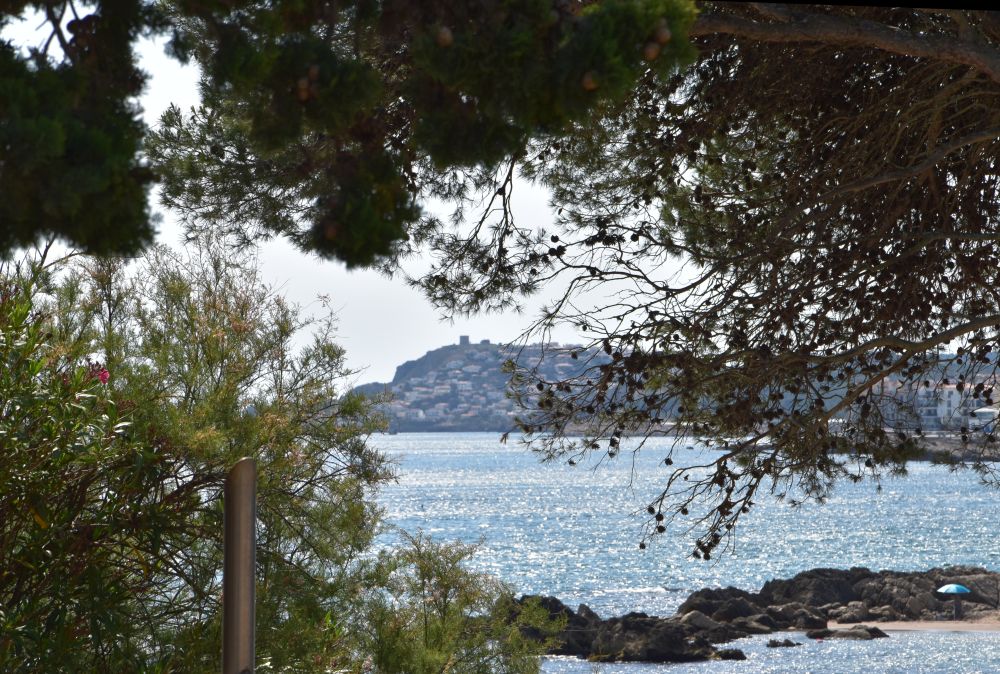
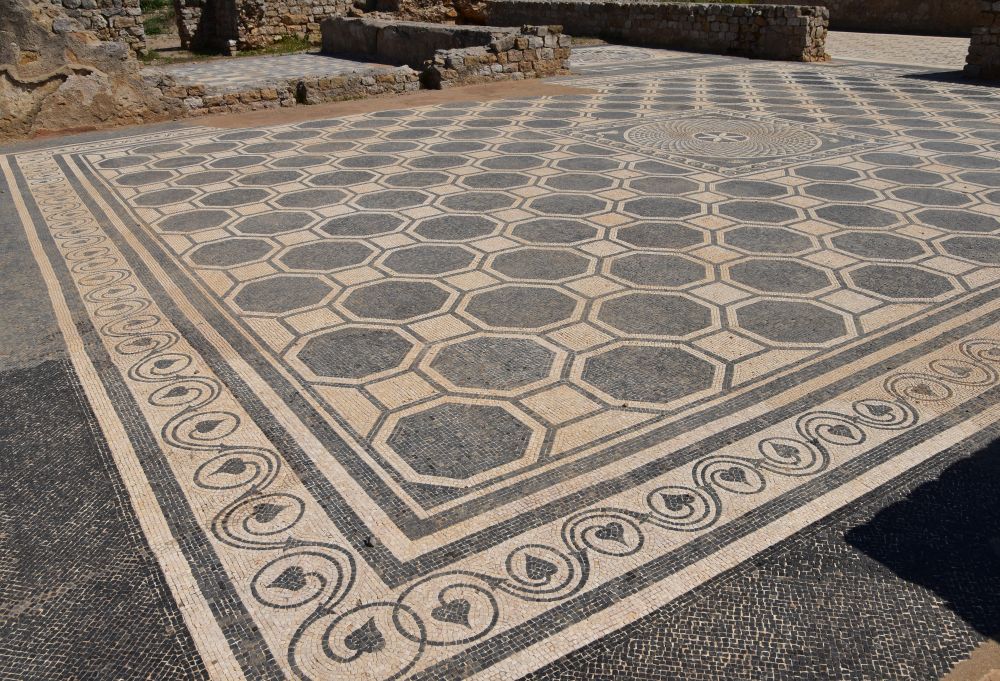
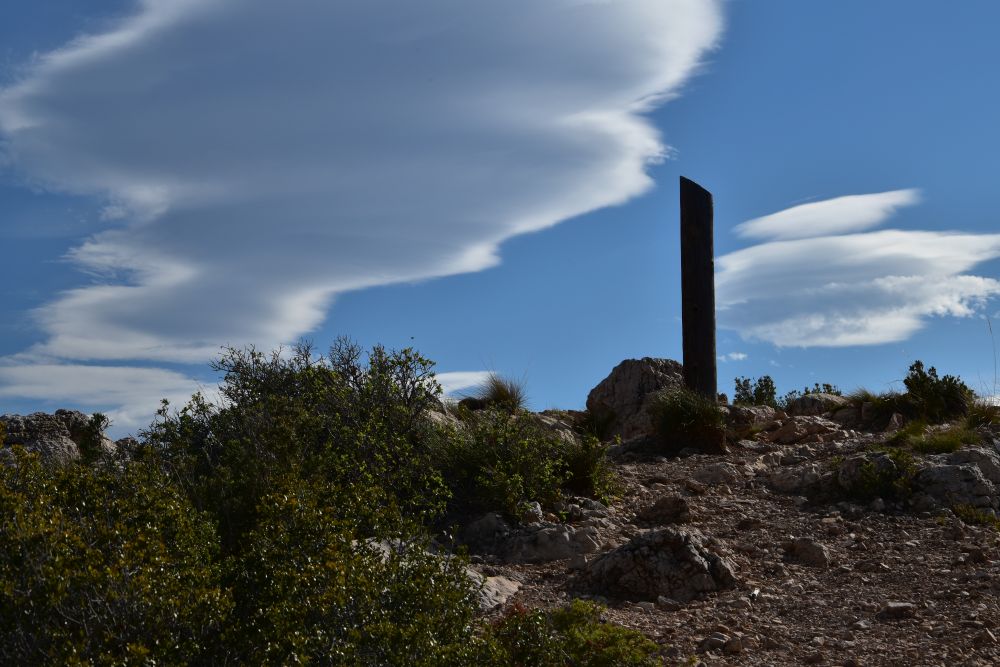
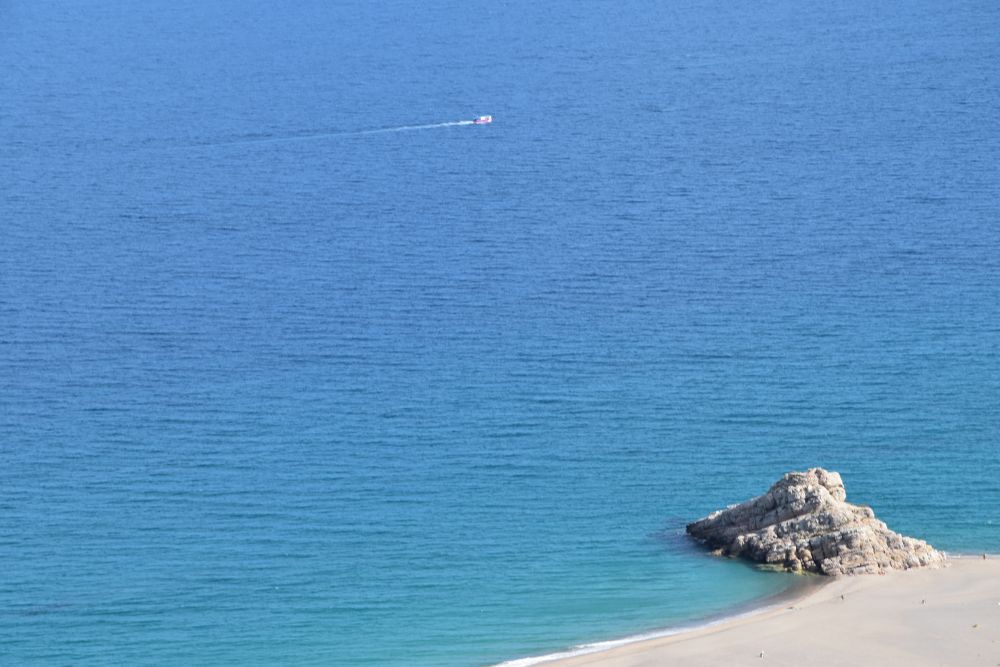
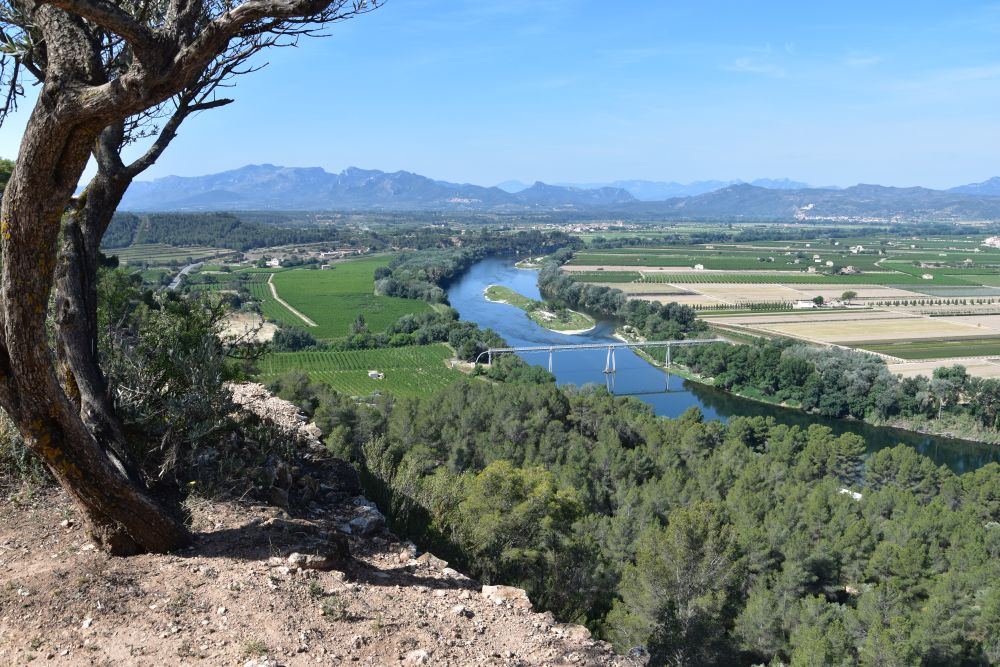
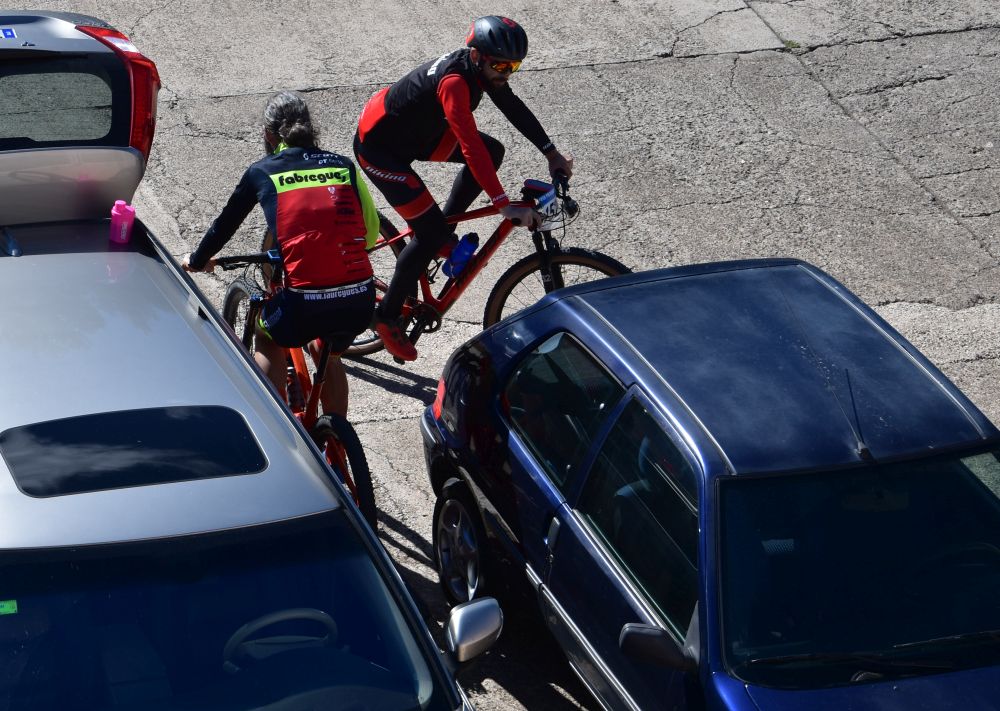
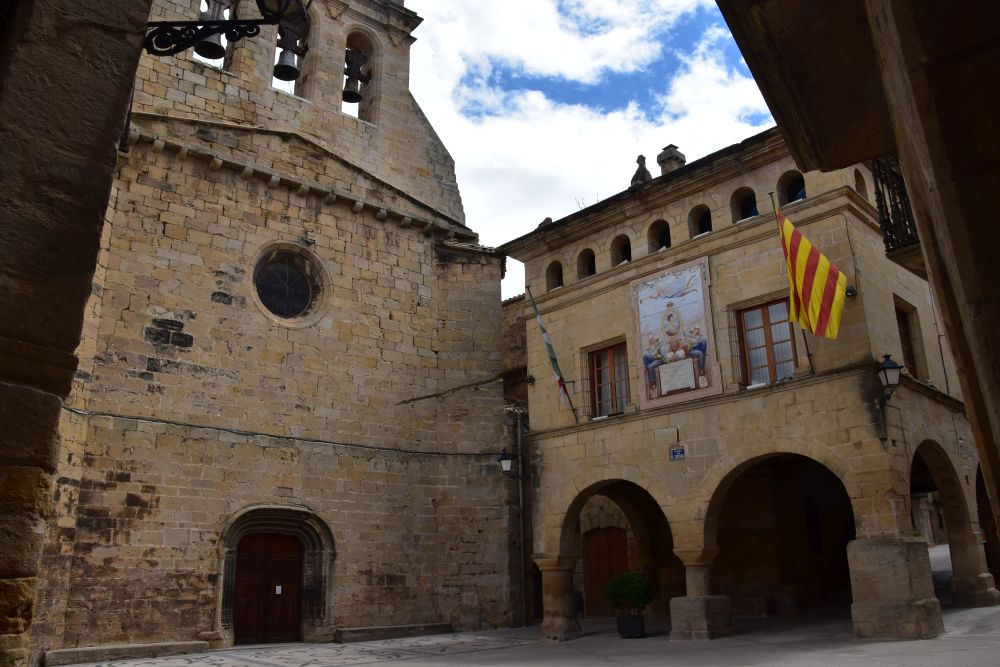
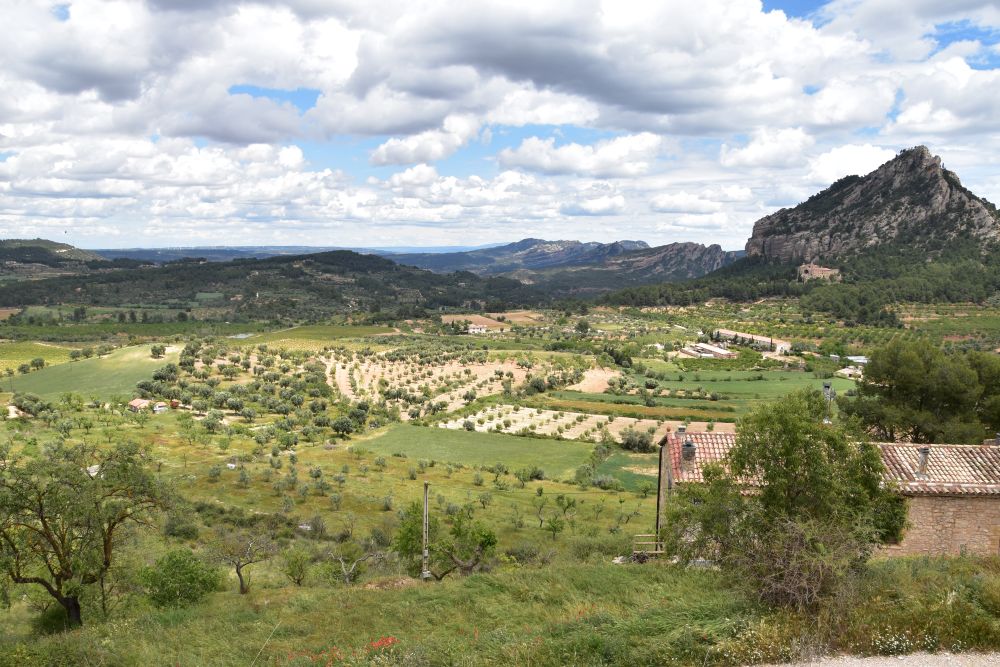
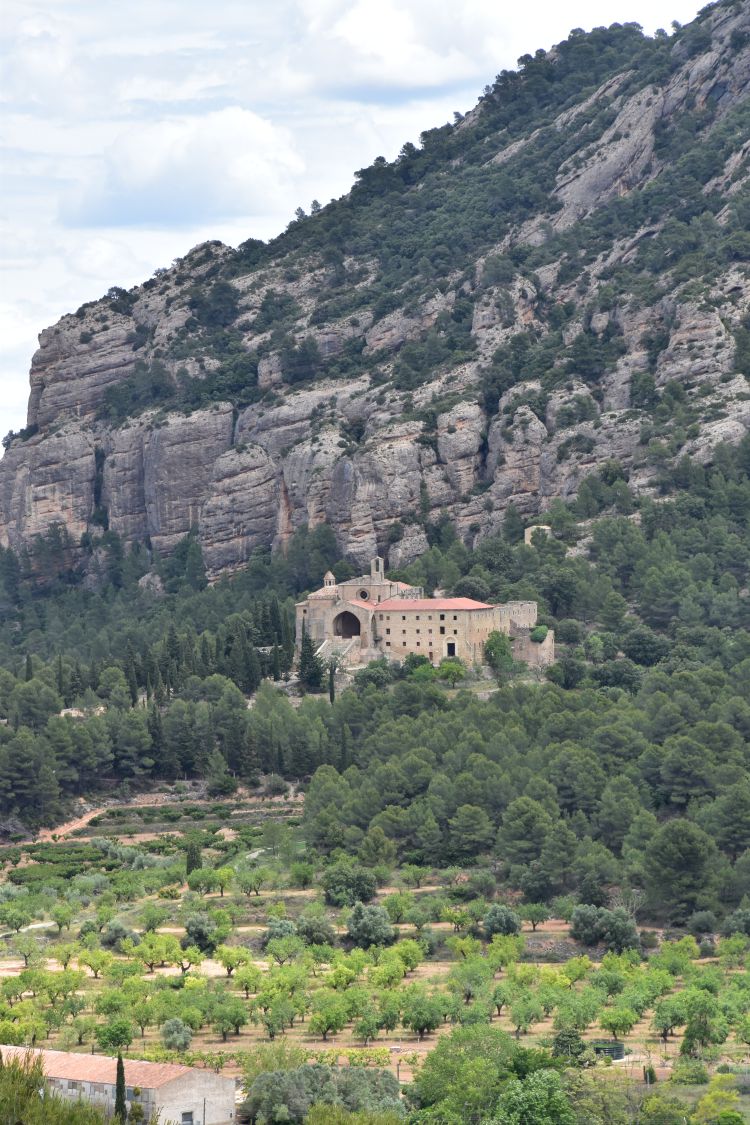
In Hospitalet de l’Infant – relaxing

It is two quiet weeks that we spend in Hospitalet de l’Infant, end of May 2019, after our grand tour across northern Spain.

.

Enjoying beach life – reading, walking…

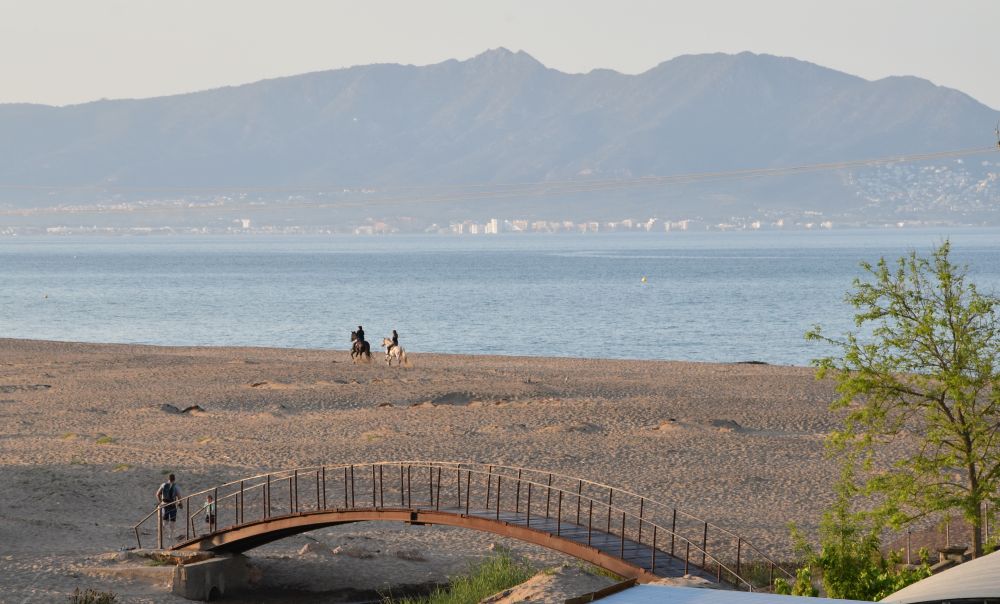
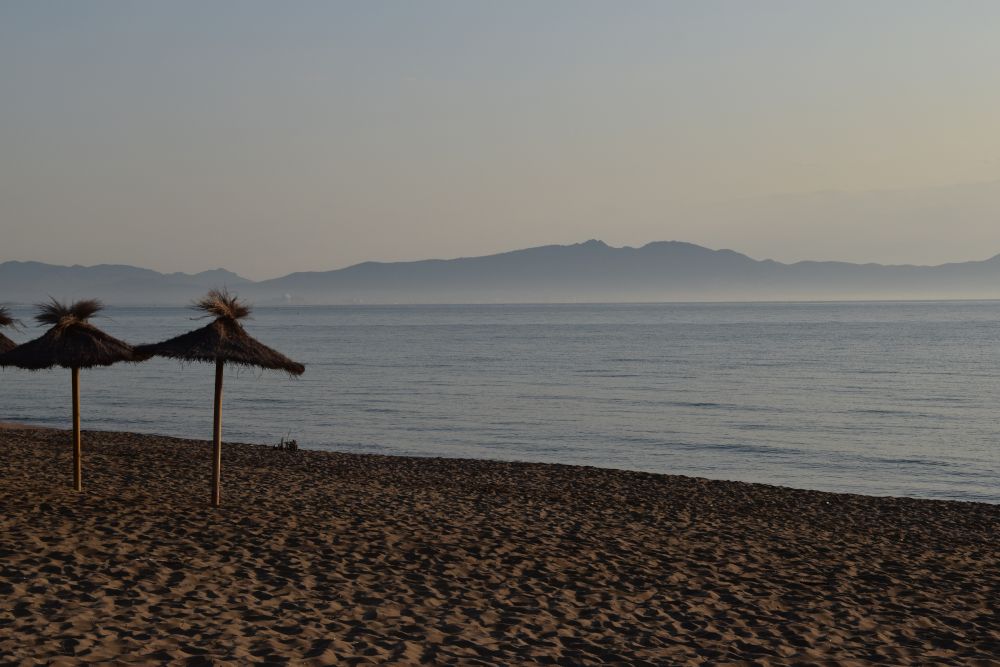
There are various beaches in and around Hospitalet. In May they are still pretty quiet.

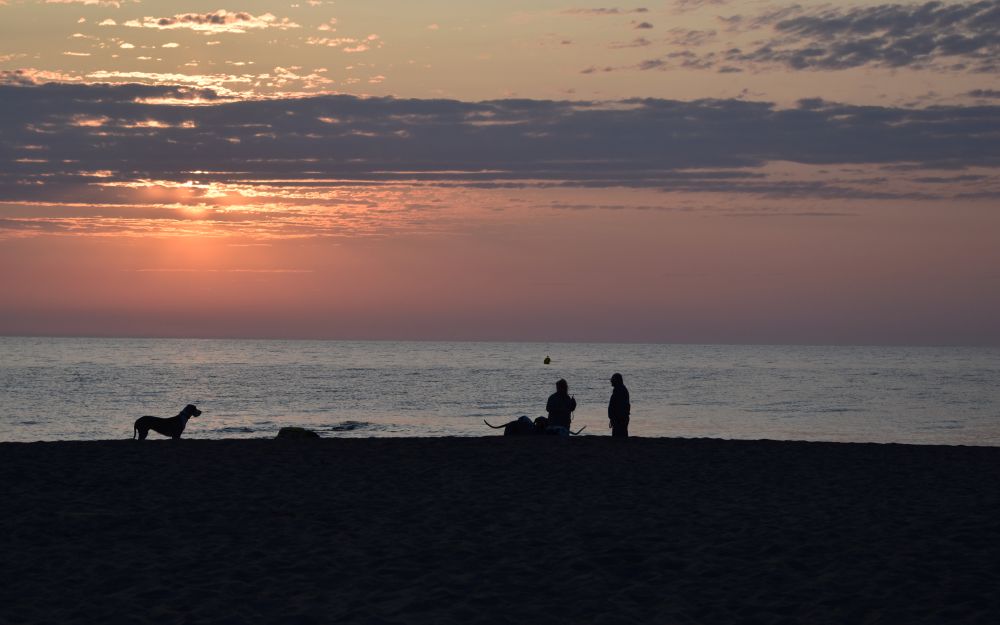
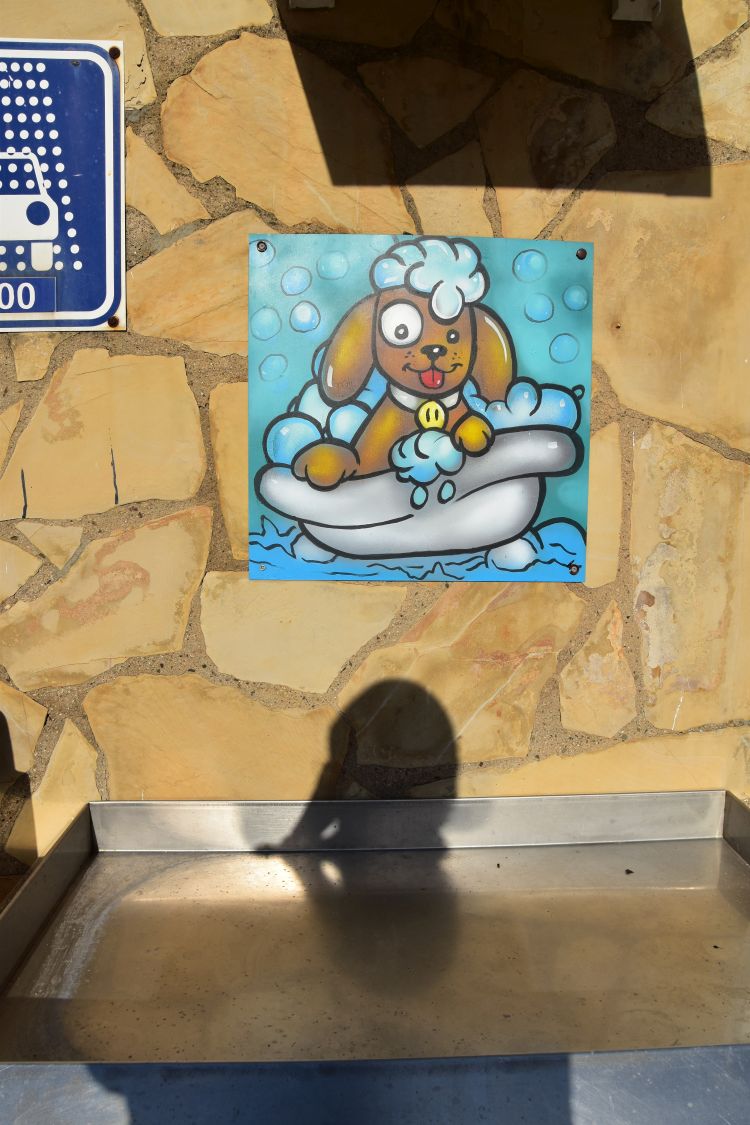
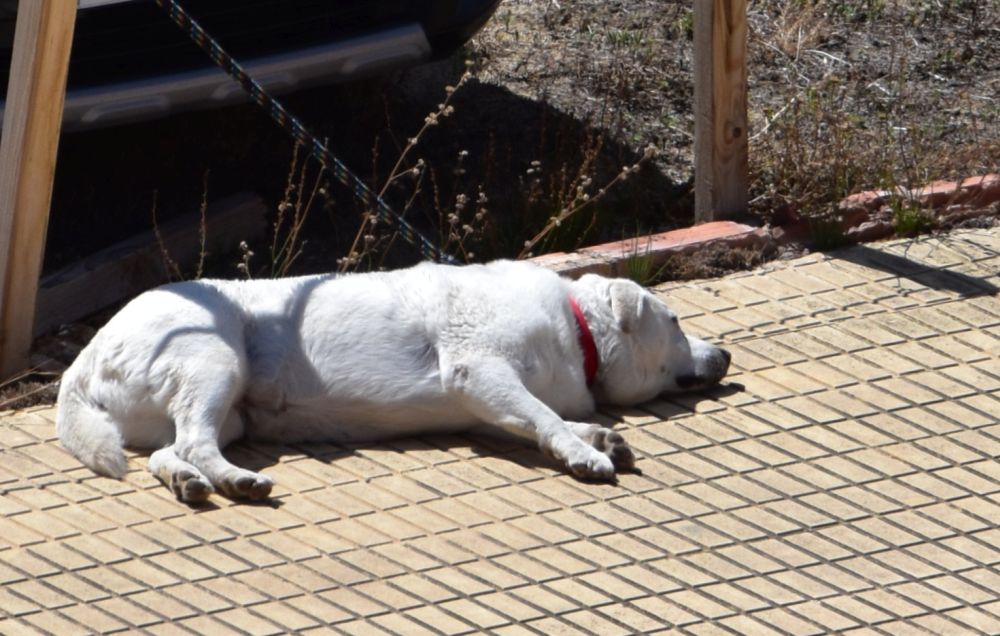
Dogs may need washing after a day on the beach.

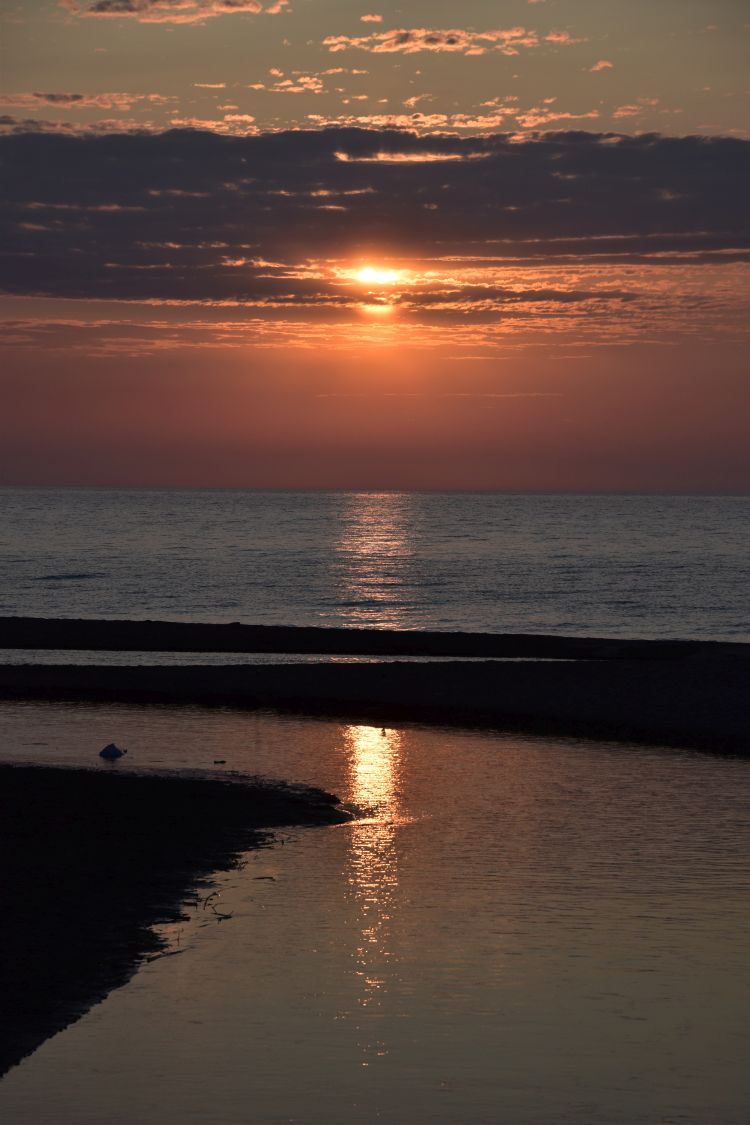
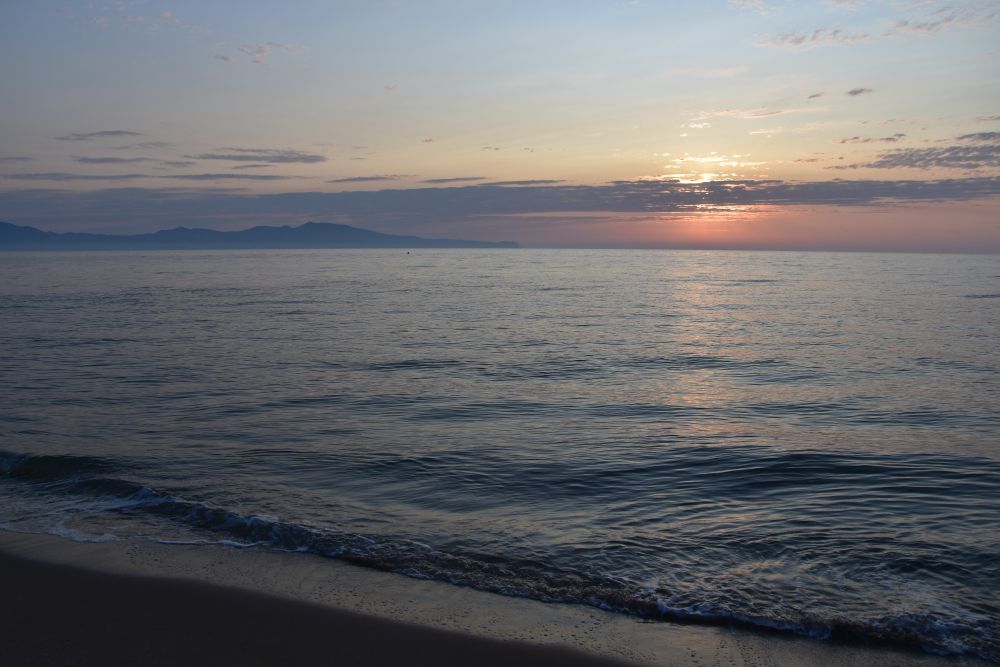
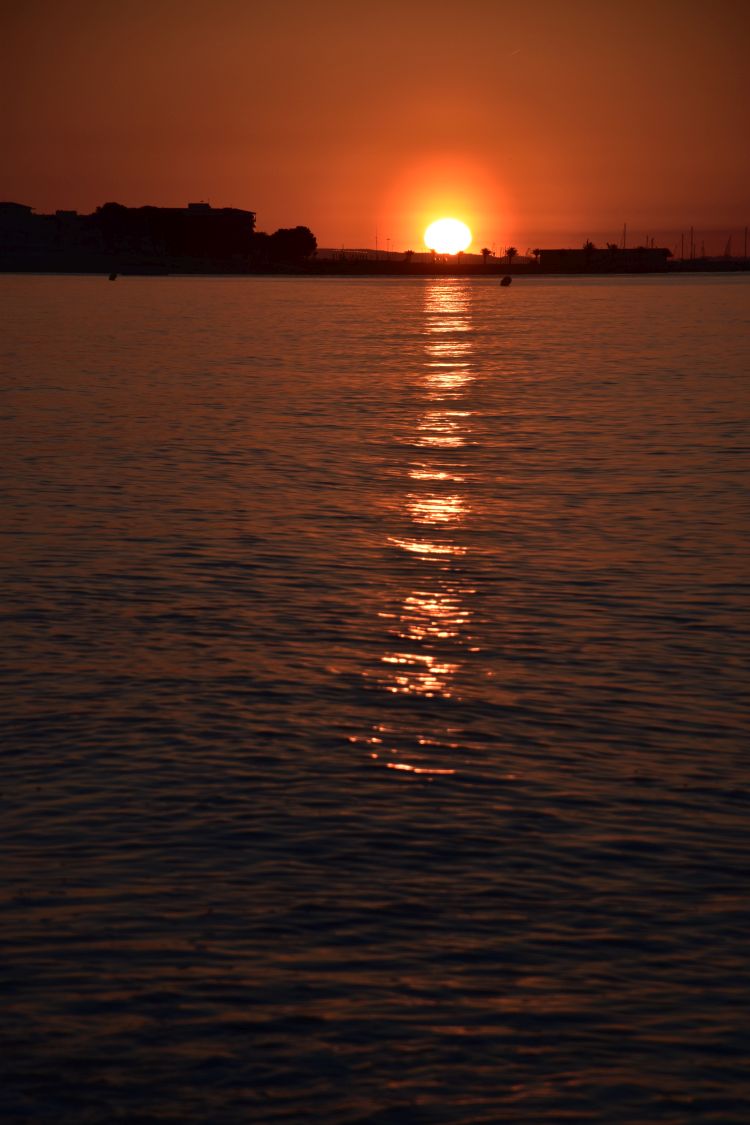
The sun rises early behind the port of Hospitalet,…

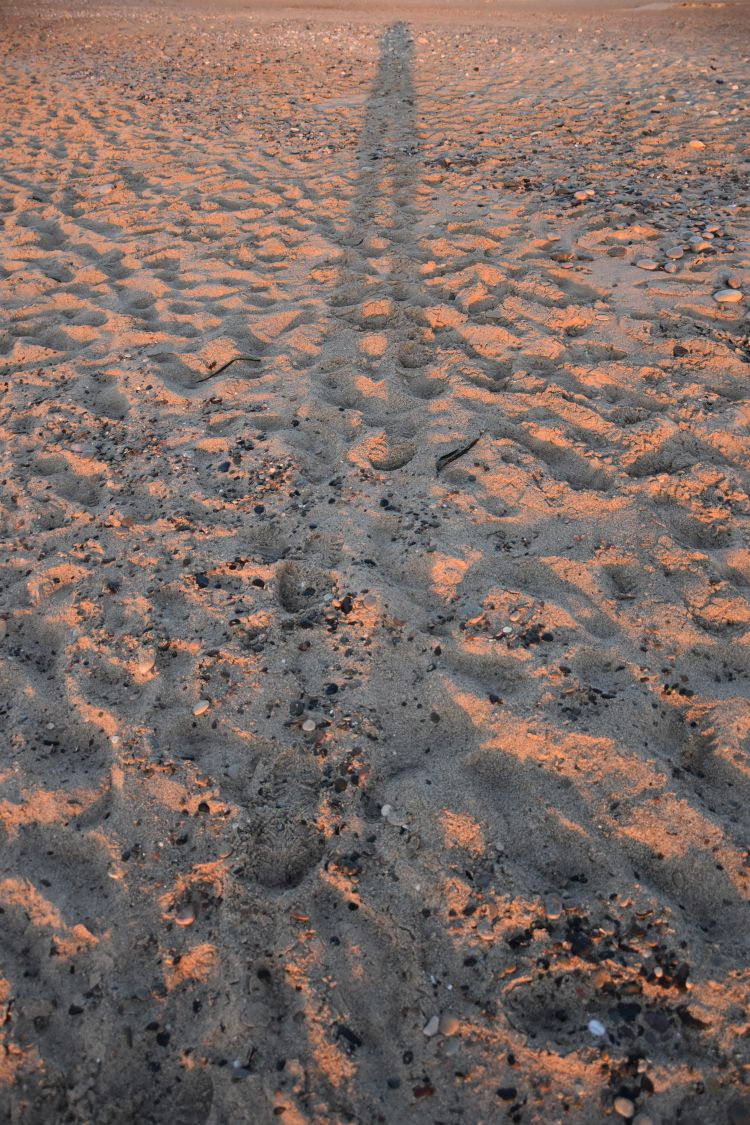
… soon makes long shades…

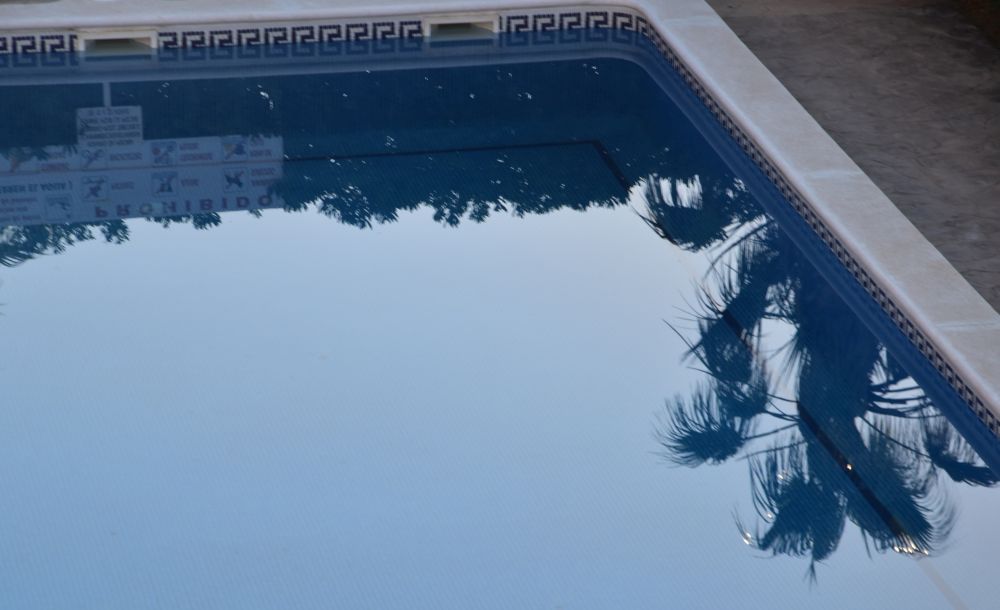
… and then warms our balcony, where we stay during the day, sunbathing, swimming…

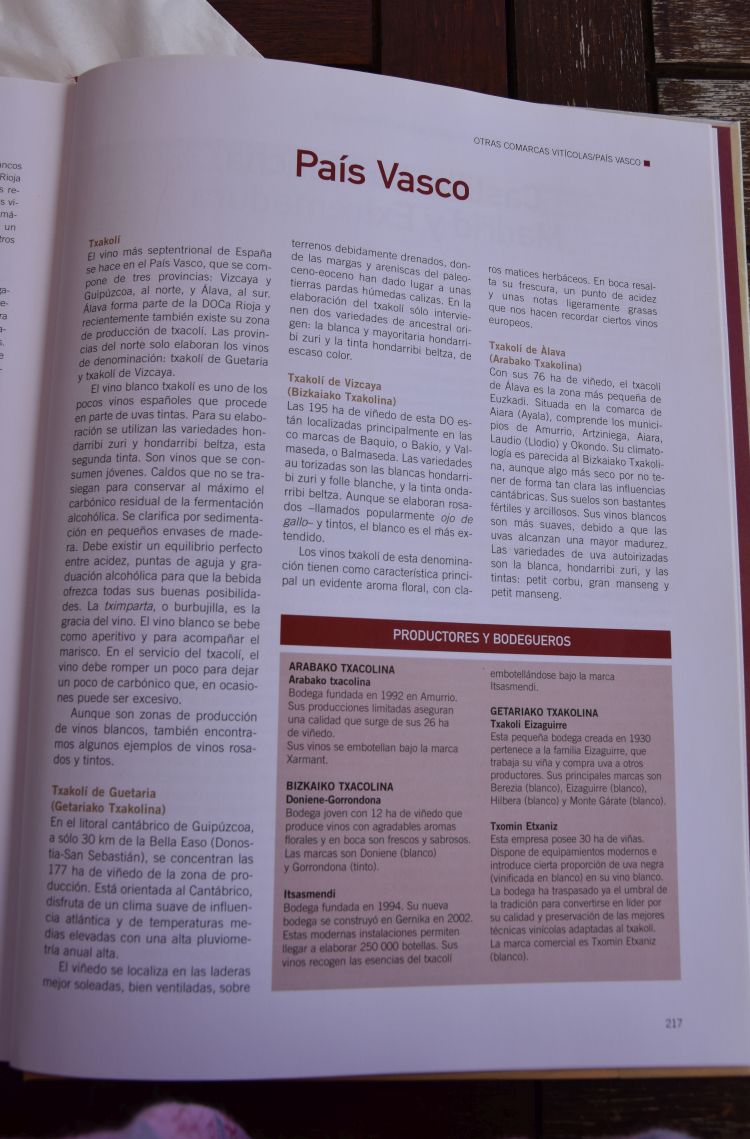
… and reading. Some of our topics are art and landscape in Catalonia, the history of the Iberian Peninsula and Spanish cooking and wines. In the Larousse about Spanish wines (2008), I learn more about the Txakolí wine from the Basque Country. There is a white variety called “Zuri” and a red grape called “Beltza” and the vineyards are in three areas, one of which we have seen, namely Getaria.

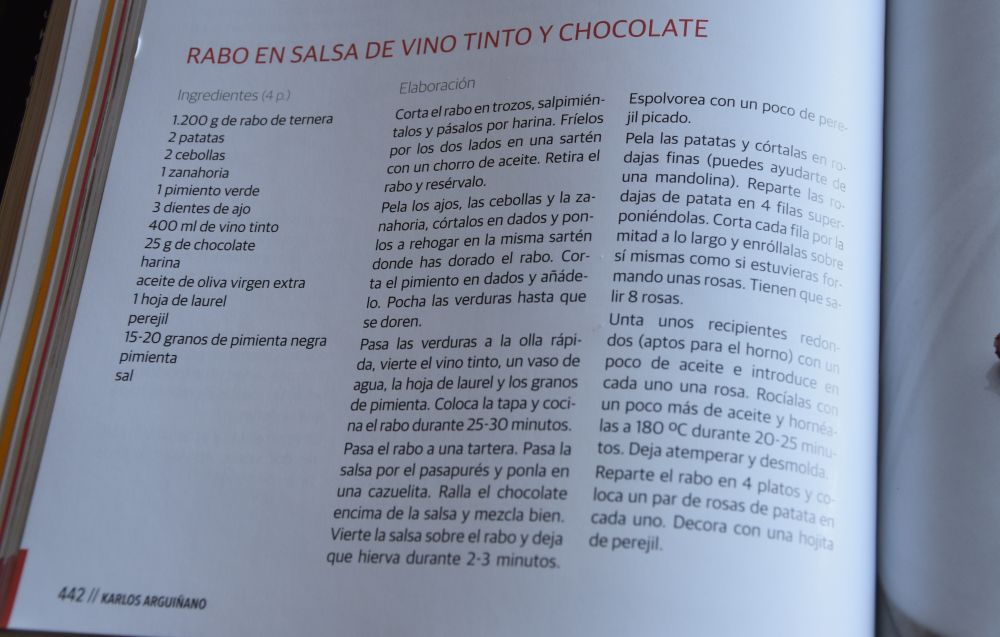
When back at home, I will have to try cooking the oxtail in wine sauce with chocolate. I have eaten it once, and it was delicious (Karlos Arguiñano, “1000 recetas de oro”, Barcelona 2019).

We have found these books in the library of Hospitalet. They dispose of an excellent book selection and rent them out free of cost, even to tourists (we just had to register our names).

Sometimes we have lunch in one of our favorite restaurants such as in La Becana in Ametlla where I eat steamed mussels…

… and, for dessert, a crema Catalana with the crunchy sugar.

.

Small walks around Hospitalet – to the Ermita, the Punta or the Iberian village

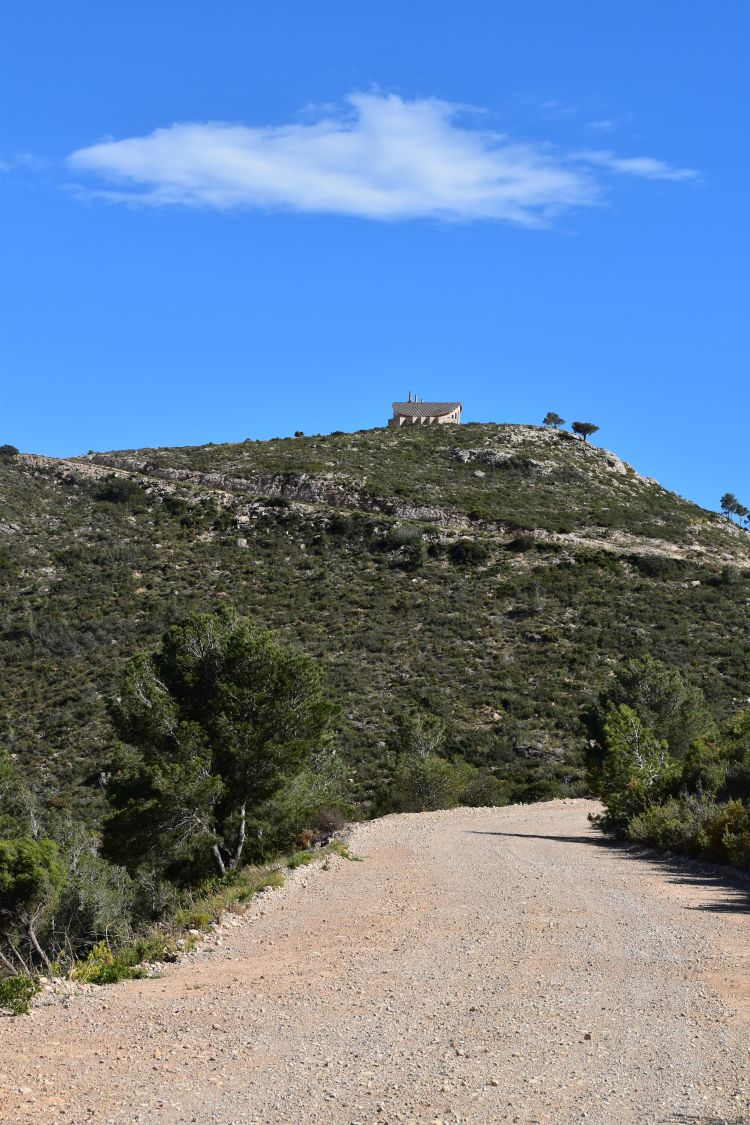
From time to time we go for a walk around Hospitalet. One of our destinations is the Ermita de Sant Roc. A drivable road leads up to the Ermita. We walk and pick some rosemary to spice our meals.

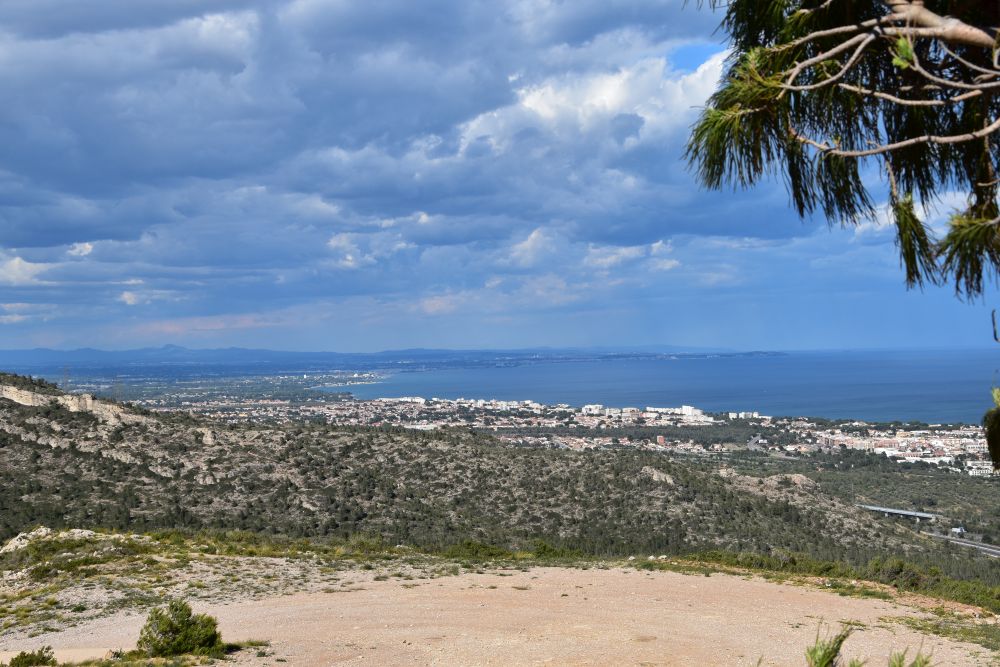
From here the view of Hospitalet and the coast line towards Salou is magnificent.

Another small walk takes us up to Punto de los Rojales…

… with another magnificent view of the Mediterranean sea.

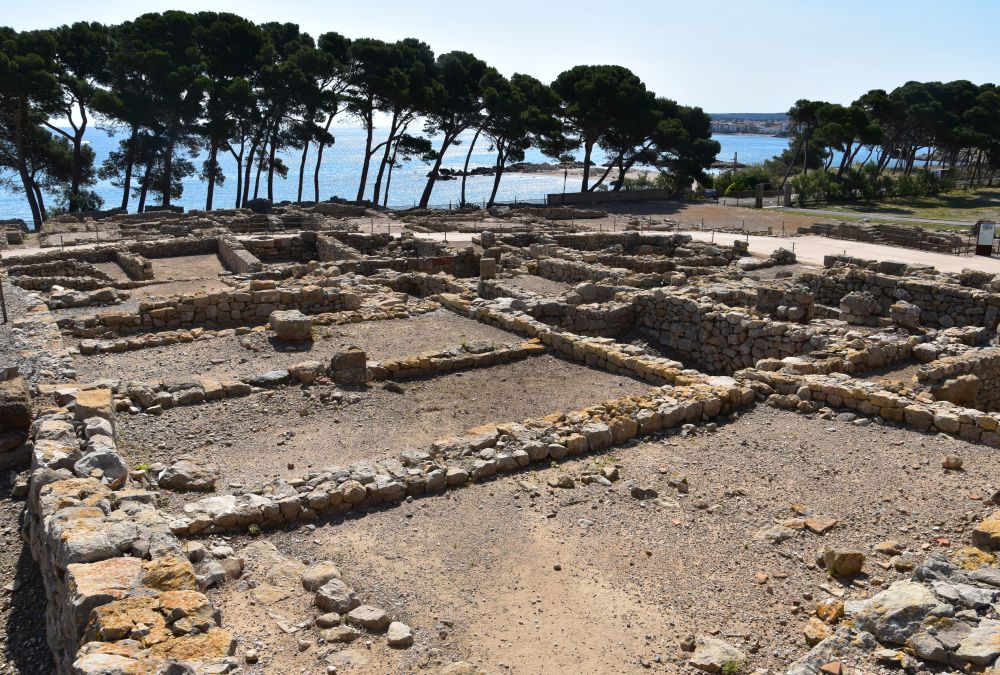
High above the Ebro near Tivissa, we love to walk to the Iberian settlement dating from 400 to 600 BC and to the medieval Castellet de Banyoles. The Ebro could be well controlled from this point.

.

Special event at Hospitalet de l’Infant – Cursa BTT

Hospitalet is a quiet place, especially now, in May. But…  one Sunday promises to be busy. Signs announce a mountain bike race, starting at ten up to two o’clock.

On Saturday evening, the trails are ready.

On Sunday morning the bikers arrive. They take out their bikes and warm up diligently by spinning on their bikes fixed to a stand.

Then they leave in groups behind the pine trees (teenagers, young men, veterans, ladies…)

The dog of one biker couple is waiting for the masters – what may take them so long, it may ask himself.

Yes, we spend two quiet weeks in Hospitalet recovering from our grand tour across the north of Spain.


Back to Catalonia (Hospitalet), with two stops in the mountains

On Saturday, May 19th, we drive from Zaragoza through the mountains to Hospitalet de l’Infant, south of Tarragona in Catalonia. On the way, we stop in Alcañiz and Horta de San Joan.

.

Alcañiz – domicile of the Calatrava order (still in Aragón)

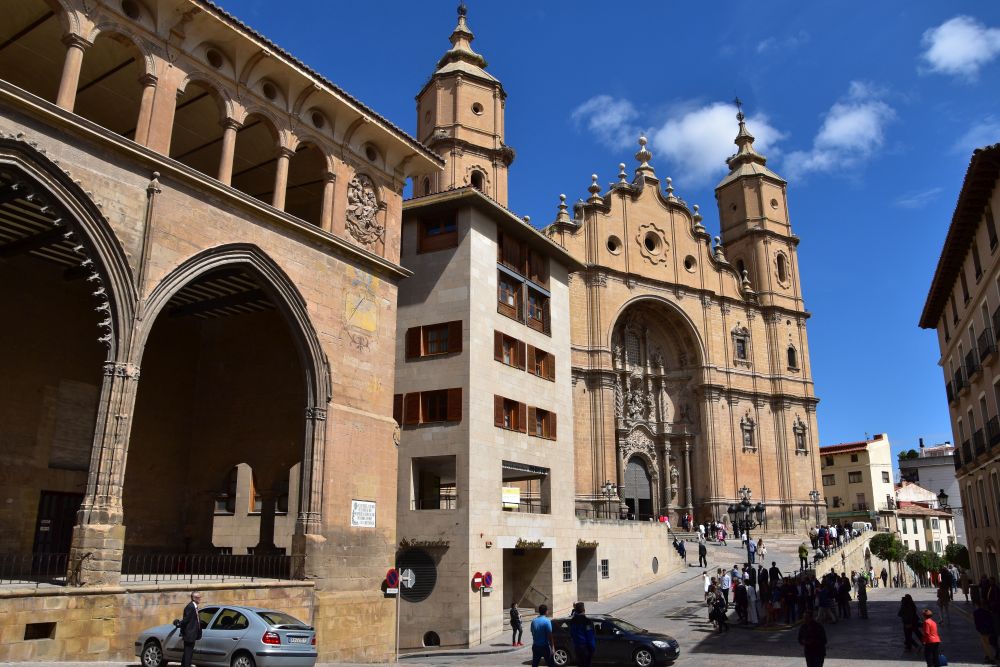
We follow the road to Morella up to Alcañiz. Here we maneuver our Audi through narrow-narrow streets, find the last parking slot near the city wall and walk to the  Iglesia de Santa Maria Mayor – baroque  from the 18th century – where we have a café solo.

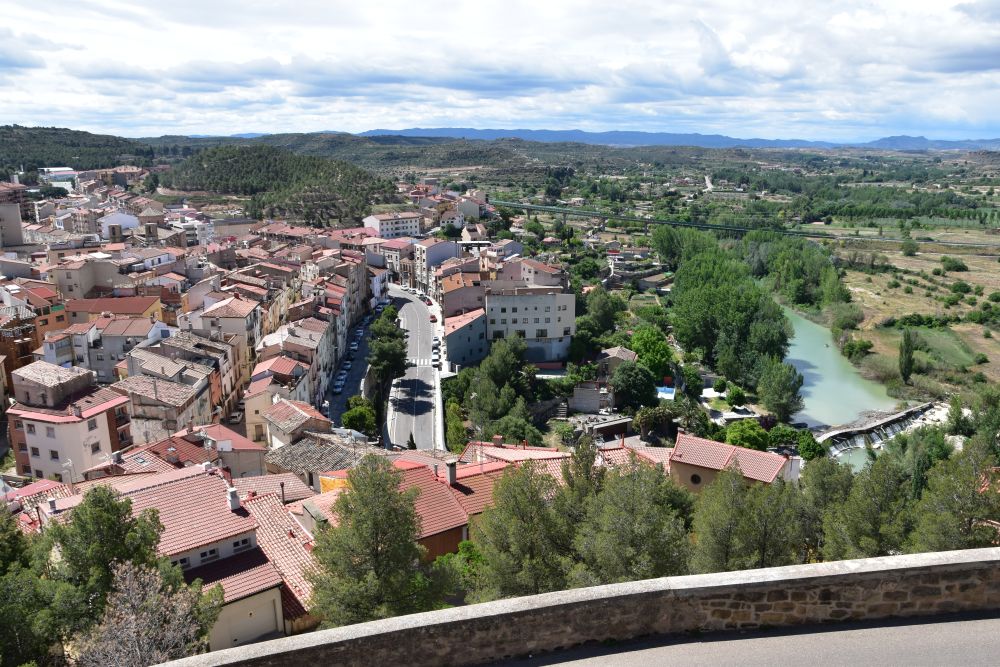
We do not find the way out of the small town and land on top with its castle (now a parador) and this gorgeous view. This was the domicile of the order of the Calatrava.

Does our famous architect Calatrava have a relation with this order?

.

Culture and lunch break in Horta de San Joan (now in Catalonia)

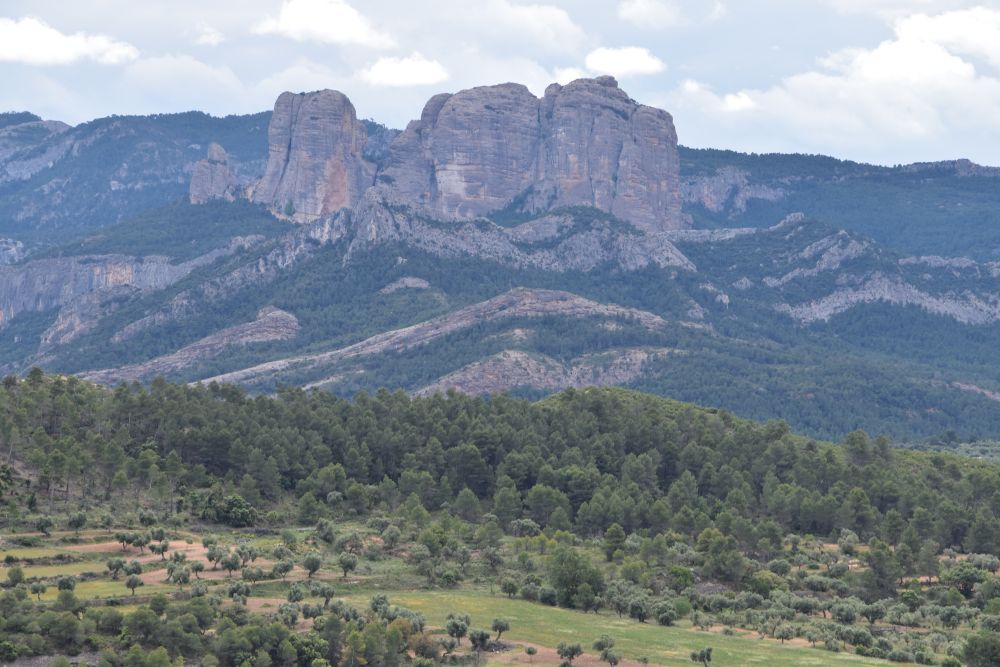
Horta de San Joan is a pretty small town in the mountains El Ports. Young Picasso was here twice, once as a teenager, when he stayed with the family of a friend of his and about ten years later again. This quote in Catalonian says: “Everything that I know, I have learnt at Horta”.

We visit the museum that tells the story of Picasso and Horta de San Joan. All the places that he painted are documented with photos. When he was here the first time, he recovered from an illness. And when he was here for the second time, he is said to have started his cubist way of painting.

Horta de San Joan also appears in literature. Perucho in his “Las historias naturales” described, how the scientist Montpalau (an invented figure) visited Horta de San Joan, when looking for the vampire Dip that terrorized the area in the first Carlist War, in 1840 (p. 164f): “Días más tarde… nuestras caballeros… abandaron Gandesa, en busca de la pista sangrante del vampiro… En Horta de San Juan visitaron la Plaza gótica porticada…

… y el convento de San Salvador…

… El aíre era muy frío y tuvieron que abrocharse hasta el último botón de la levita…El paisaje había cambiado ahora: Salvaje, grandioso, y como telón de fondo las altas montañas del Maestrazgo…”

(Some days later, our men left Gandesa, looking for the bloody track of the vampire… in Horta San Joan they visited the gothic square with the arches… the monastery of San Salvador… The air was very cold and they had to close their jackets up to the last button… The landscape had changed now: Wild, magnificent, and in the background the high mountains of the Maestrazgo…).

We do what  Perucho’s Montpalau has done… we visit the gothic square, enjoy the view of the wild mountains and the monastery and stroll through the narrow streets…

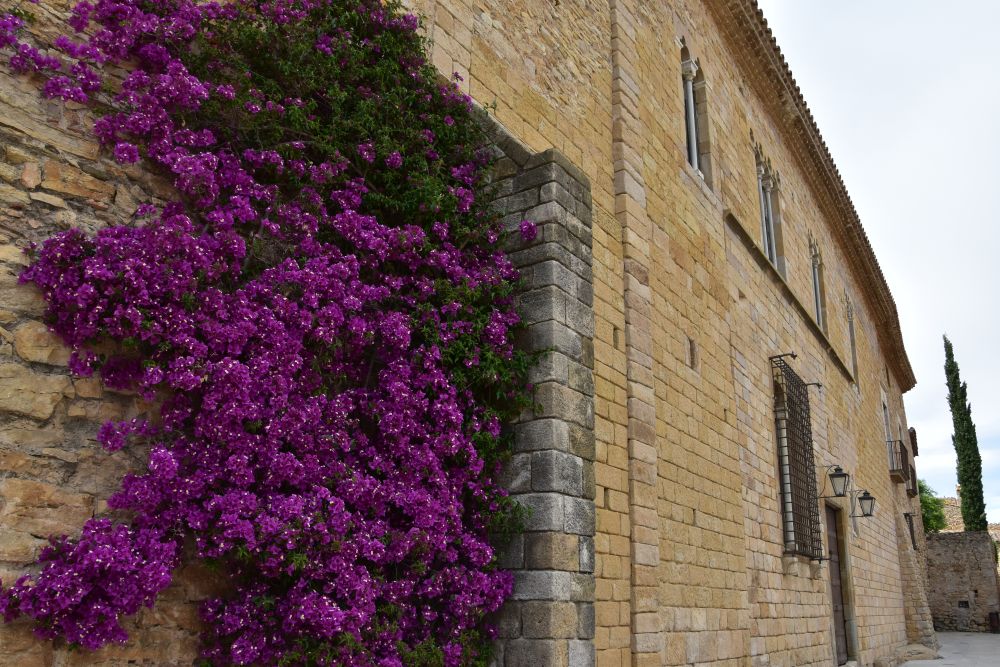
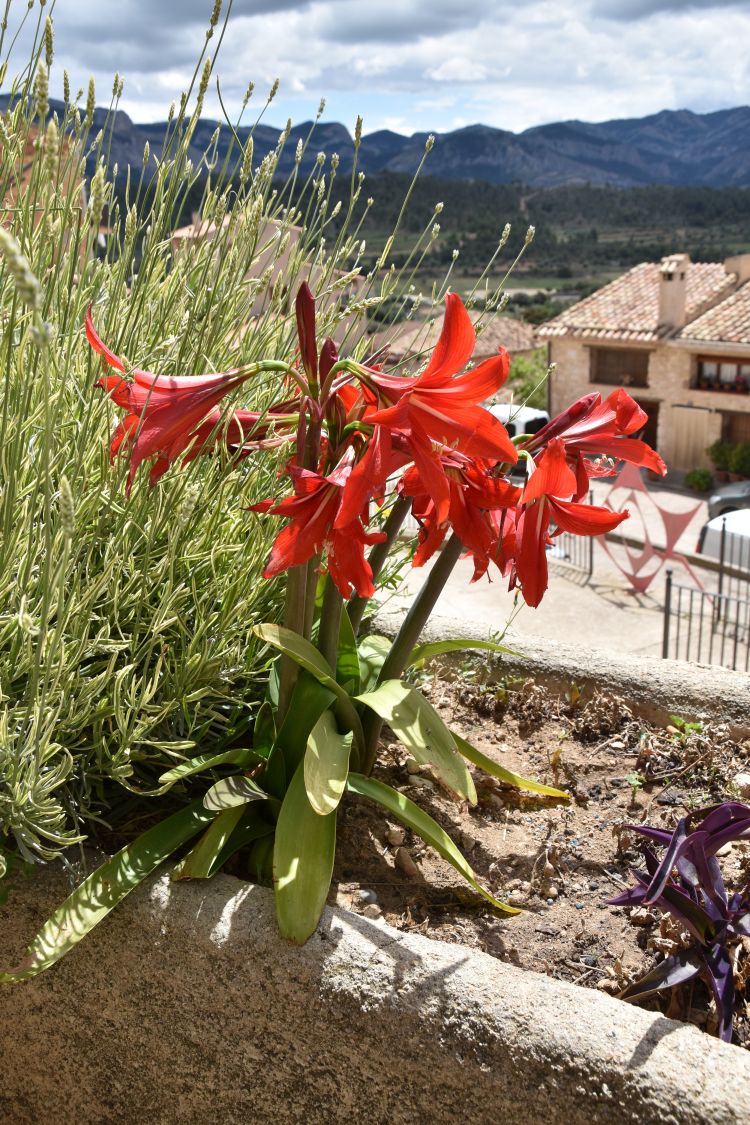
… adorned with Amaryllis…

… and barked at by cute little dogs,…

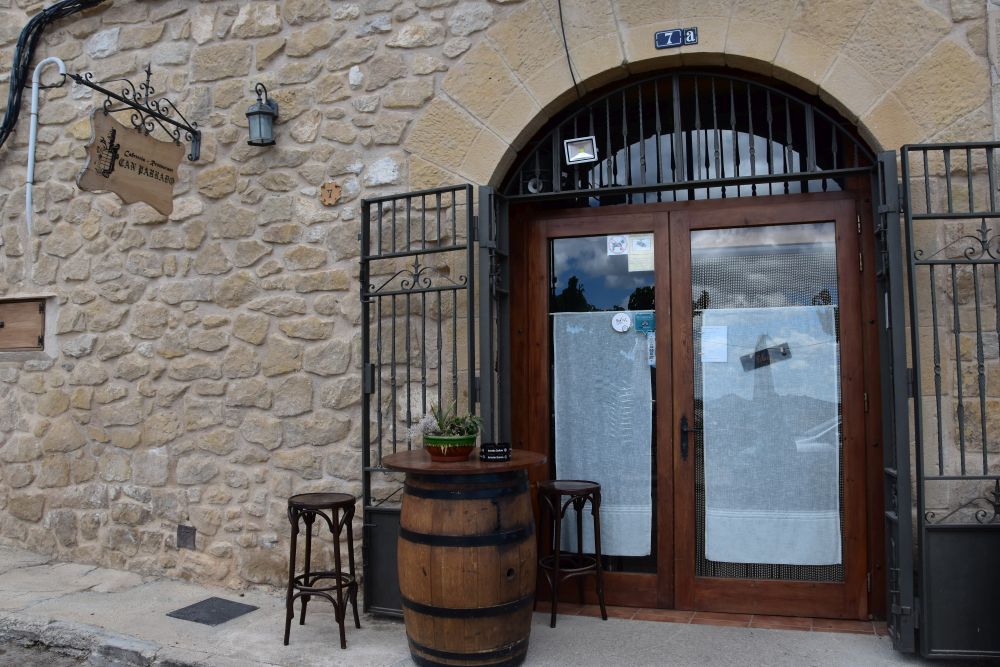
… until we lose our way and in the maze of streets and end up in front of this door. It is the restaurant “Gran Parrado”. It is one o’clock and we are hungry.

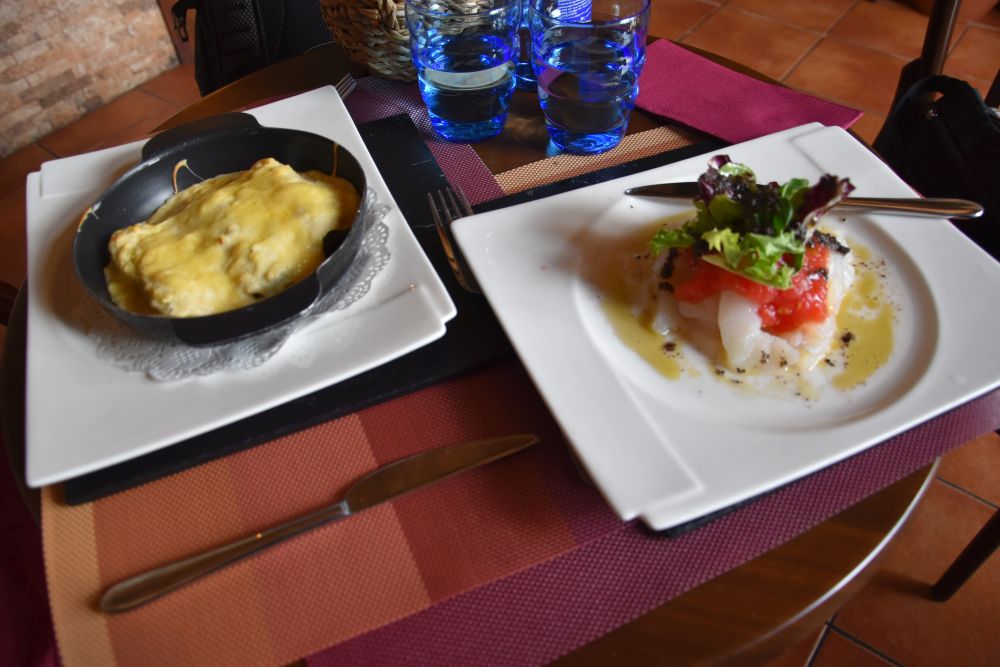
All tables are taken… the friendly manager offers a table in the bar. Lucky we are. We have a delicious lunch. This is the first course, cannelloni (yes, the Catalonians picked that up in Italy) and codfish salad. My second course is oxtail in chocolate sauce – very tasty. For dessert we choose fresh goat cheese with honey – a marvellous Catalonian specialty.

The host has a small wine cellar that he is proud of. Already Perucho’s Montpalau praised the wines from Terra Alta: “Se consumieron grandes bocoyes de vino de lágrima, finísimo al paladar…” (we drank large glasses of Lagrima wine, very fine in the palate”), p.163. I buy two bottles, one of them produced in Horta de San Joan (Els Costums made from Granatxa negra).

.

Back at Hospitalet in the apartment of or friends

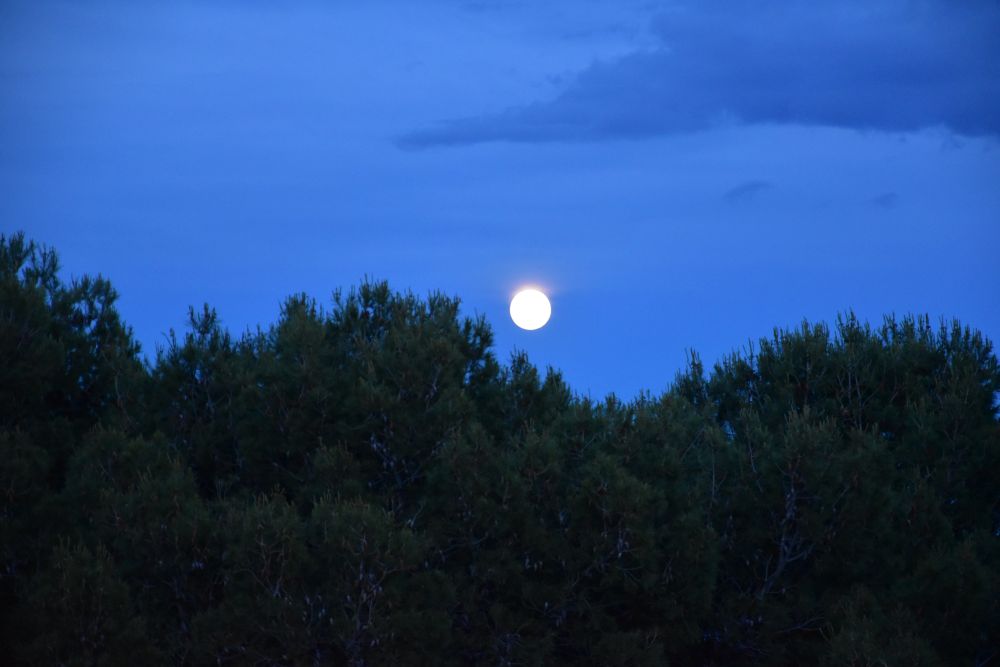
About one hour later, we are in Hospitalet. The full moon welcomes us.

Two quiet weeks are ahead of us. Reading, swimming, going for excursions and enjoying the Mediterranean.

.

Looking back at our tour that we have completed in Northern Spain

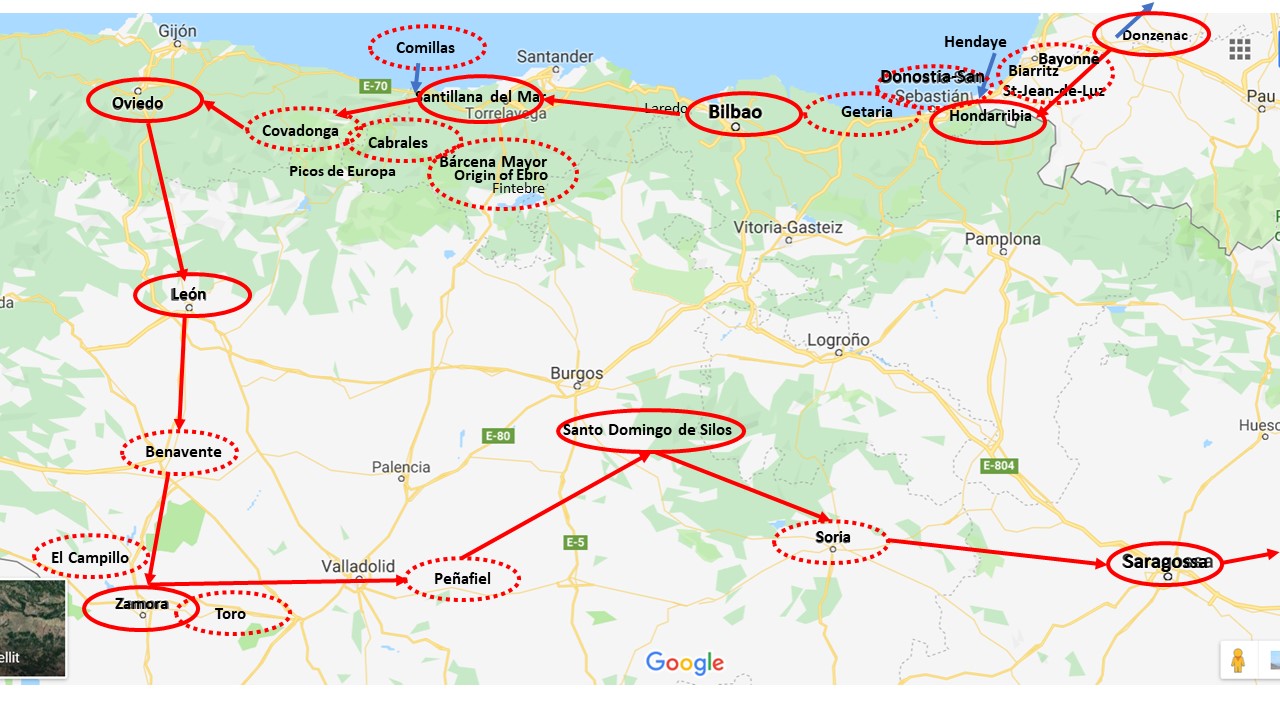
Our route through Northern Spain started with a short break in Donzenac in France and then continued to

  • Hondarribia (with excursions to Bayonne, Biaritz, St-Jean-de-Luz and Hendaye as well as San Sebastián)
  • Bilbao (visiting Getaria on the way)
  • Santillana del Mar (with excursions to Altamira, Comillas, Bárçena Mayor and the origin of the Ebro, Cabrales)
  • Oviedo (visiting Covadonga on the way)
  • León
  • Zamora (visiting Benavente on the way, excursions to El Campillo and Toro)
  • Santo Domingo de Silos (visiting Peñafiel on the way)
  • Zaragoza (or Sarragossa)
  • Back to Catalonia (visiting Alcañiz and Horta de San Joan on the way)

Soria – back at the Duero to visit the unparalleled cloister

On May 17th, Friday, we drive to Zaragoza with a stop in Soria. We are slowly heading eastward. In Soria, we want to visit the cloister of the Monastery San Juan de Duero.

.

In Soria we are back at the Duero 

We have been at the Duero in Zamora and we have driven along it through the vineyards of the Ribera del Duero. Now, in Soria, we are back at the Duero and close to its origin, in the mountain range called “Sistema Ibérico” (Atlas geográfico, Esther Carrión Fernandez et alii, Ediciones SM Madrid).  In Soria the Duero is much smaller than in Zamora. Also Soria has its historic bridge from the 12th century, which has been rebuilt over the years.

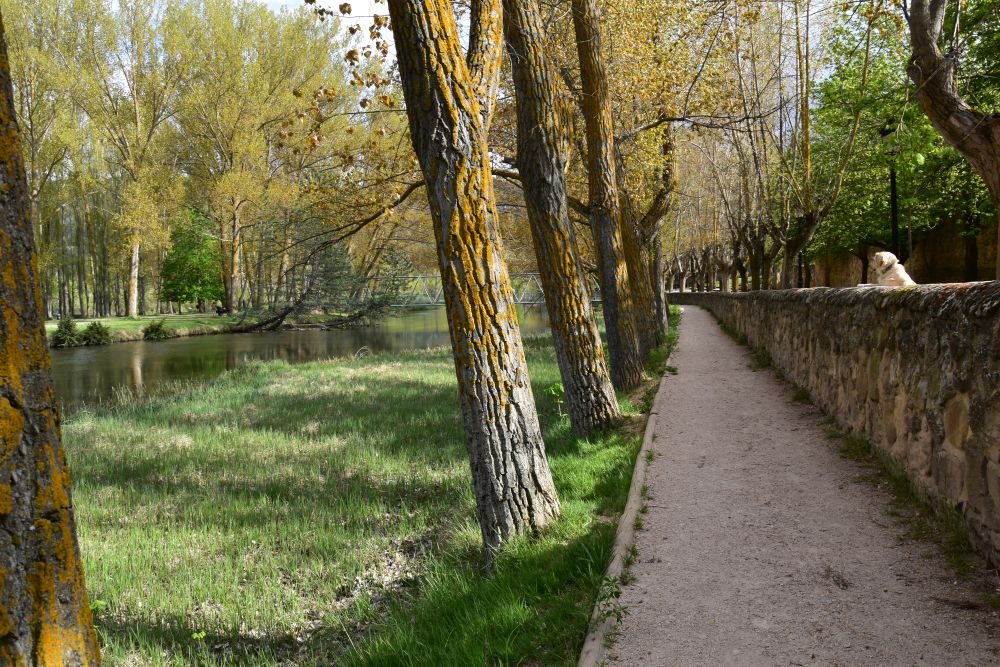
We were in Soria a year ago, in May 2018. Like Zamora, Soria has layed out a path along the banks of the Duero that I loved to stroll along then, watched by the curious white dog.

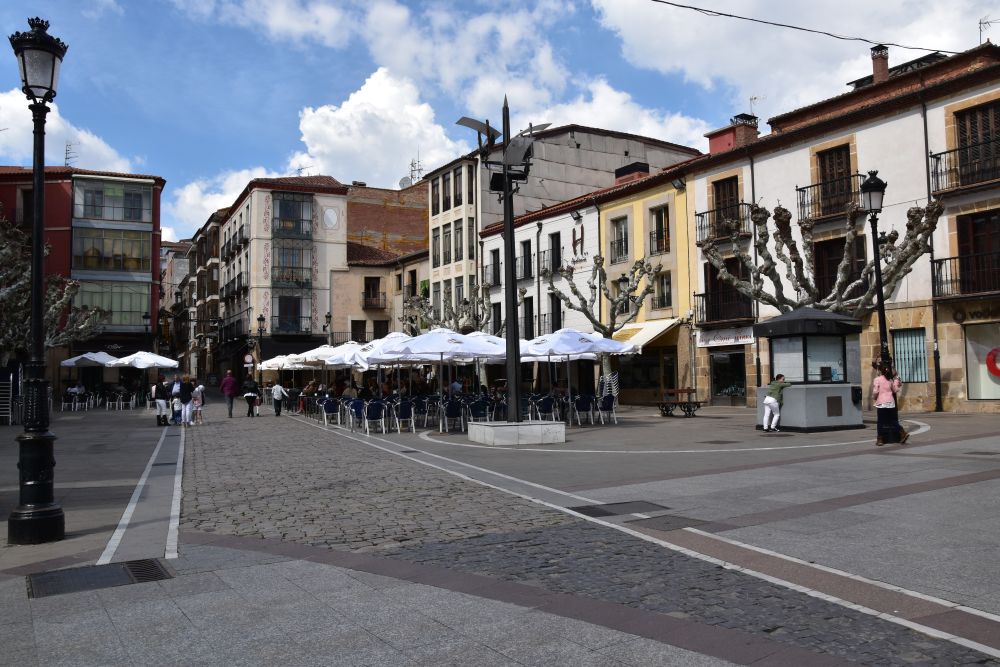
In the city center, we found a relaxed atmosphere in May 2018. The inhabitants celebrate Saint John’s Eve all May and June. They played music in the streets and I was invited to drink wine from a leather pouch – well, I thanked, but did not dare try that.

Our hotel was at the Plaza de Oliva.

This is the Plaza Mayor with the ayuntamento and the Fountain of the Lions.

Soria hosts cultural heritage such as the Romanesque San Nicolás church – unfortunately in ruins.

The Renaissance Palace de los Condes de Gómara from the 16th century is impressive.

This is the Concathedral San Pedro, somewhat lost in a meadow. Its origins are Romanesque, and it has been refurbished again and again.

San Pedro or Petrus sits above the gate, with the keys in his hands.

In the past, Soria experienced dramatic events: As a Celto-Iberic settling it resisted the Romans for a century. Just before being conquered, they all committed suicide to avoid becoming Roman slaves. From the 8th century up to 1134, the city was ruled by the Muslims. Having become Christian again, Soria flourished, thanks to the wool industry, a capable Jewish community and the support of the Castilian king. The decline started in the 15th century, when the unified crown of Castilia and Aragón lost interest in Soria and when the Jews had to be exiled. The city suffered again and again, in the wars around 1700 and 1800.

Today, Soria is a quiet town that mainly belongs to the people of Soria. They have started to promote their touristic potential.

.

The Monasterio San Juan de Duero with the unparalleled cloister

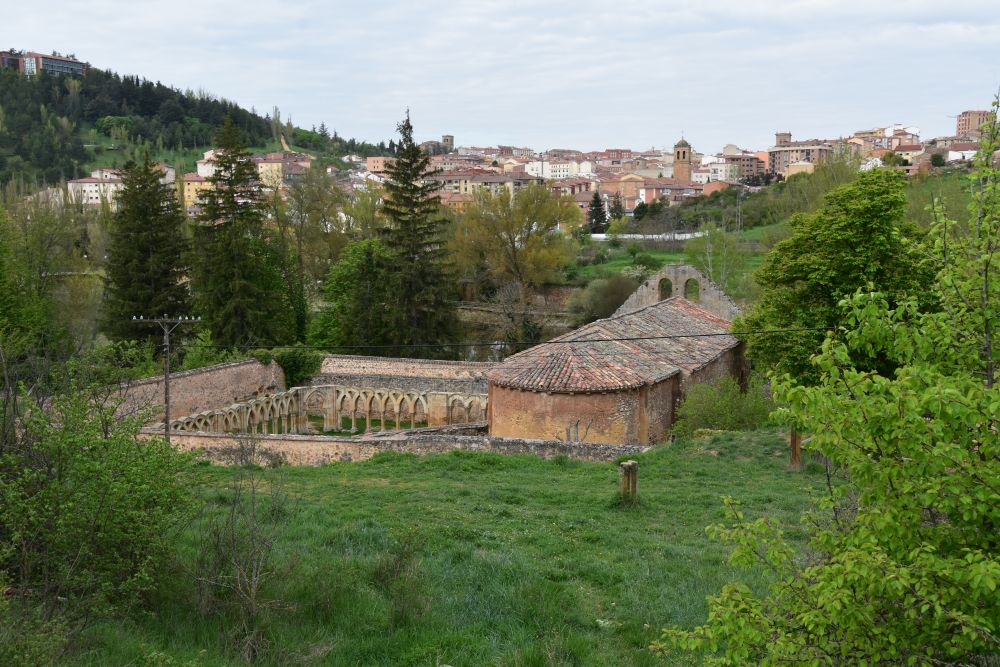
The most impressive attraction of Soria is the Monasterio San Juan de Duero. A year ago, it was closed, and we took fotos from outside with the city of Soria in the background.

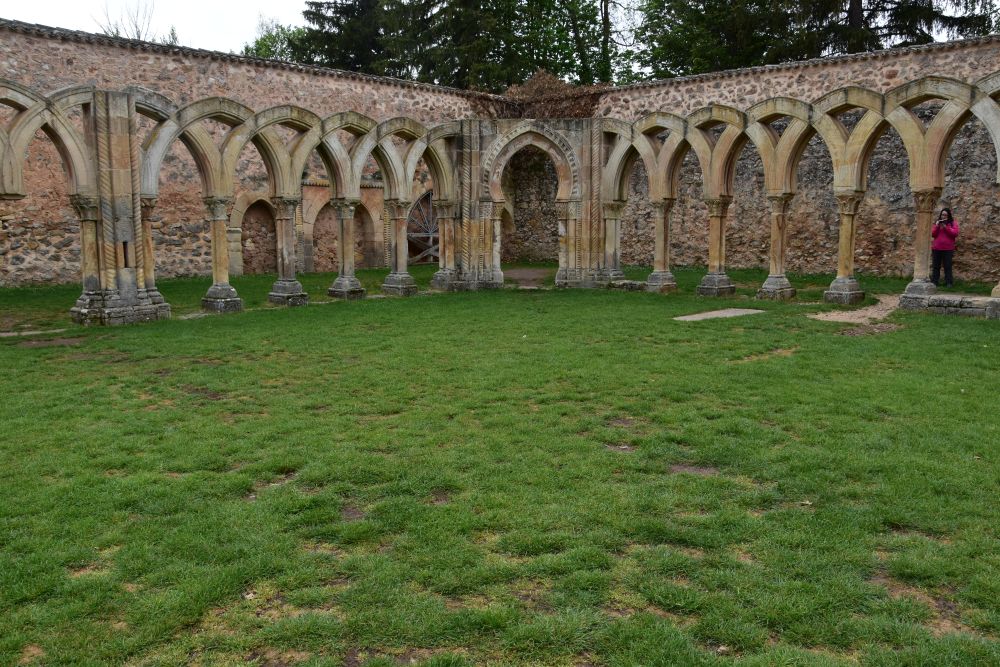
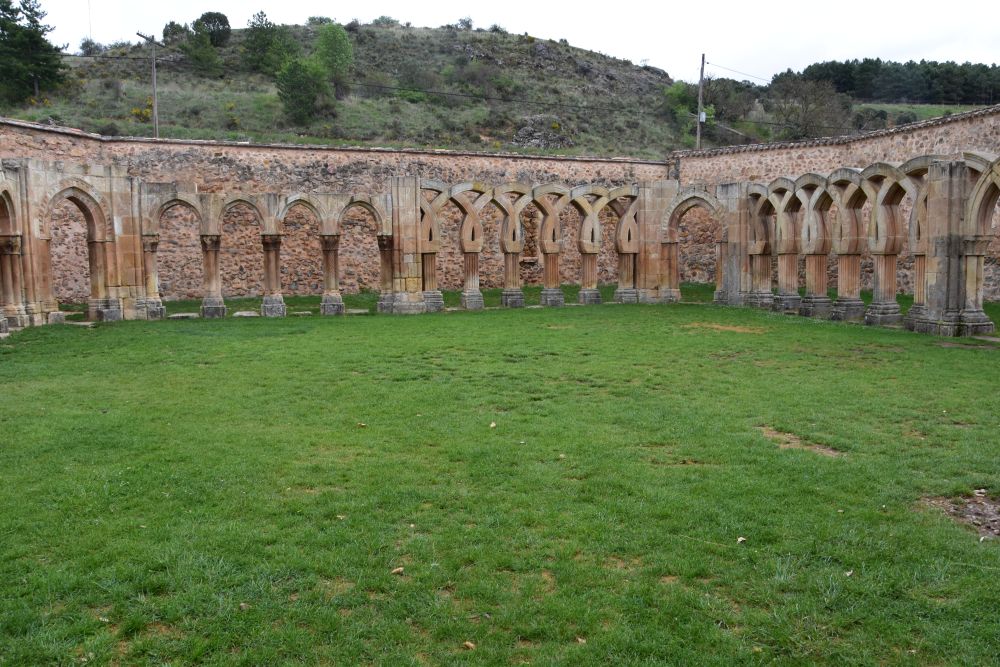
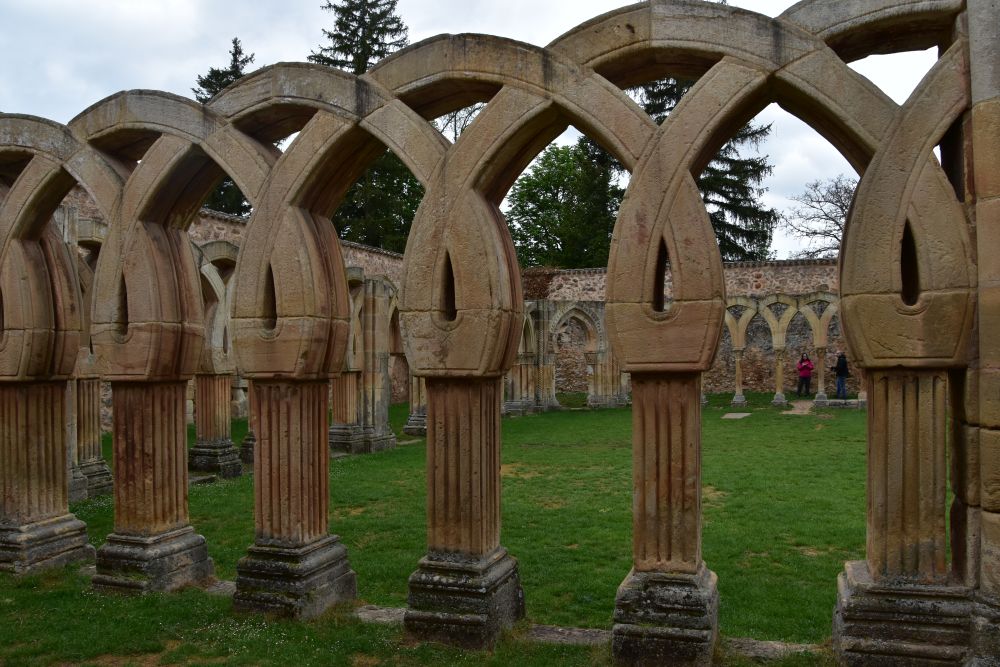
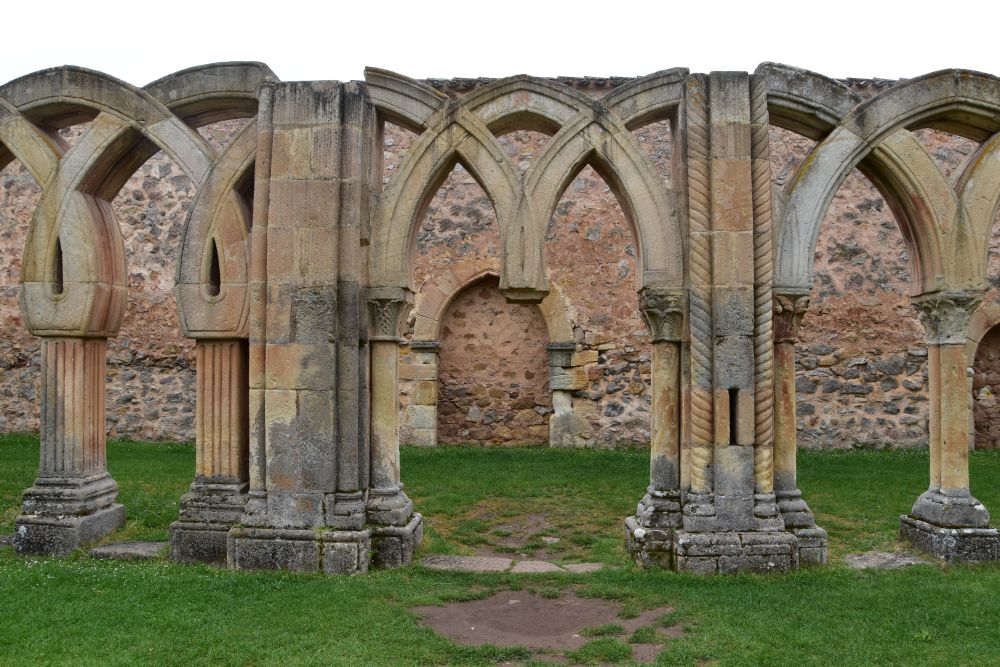
Now we returned after having carefully checked that the cloister is open. The cloister was built in Romanesque style in the beginnings of the 13th century, but Romanesque was interpreted here, as I have never seen it before. It is a mixture of Romanesque and Muslim elements. The arches dance and in the corners they become horseshoes.

The severe Romanesque forms on the left turn into swirling, elegant forms on the right.

Have you ever seen such Romanesque architecture?

It is just magnificent, what we can achieve across cultures and beliefs, when coming together.

I would wish more of that happened today.

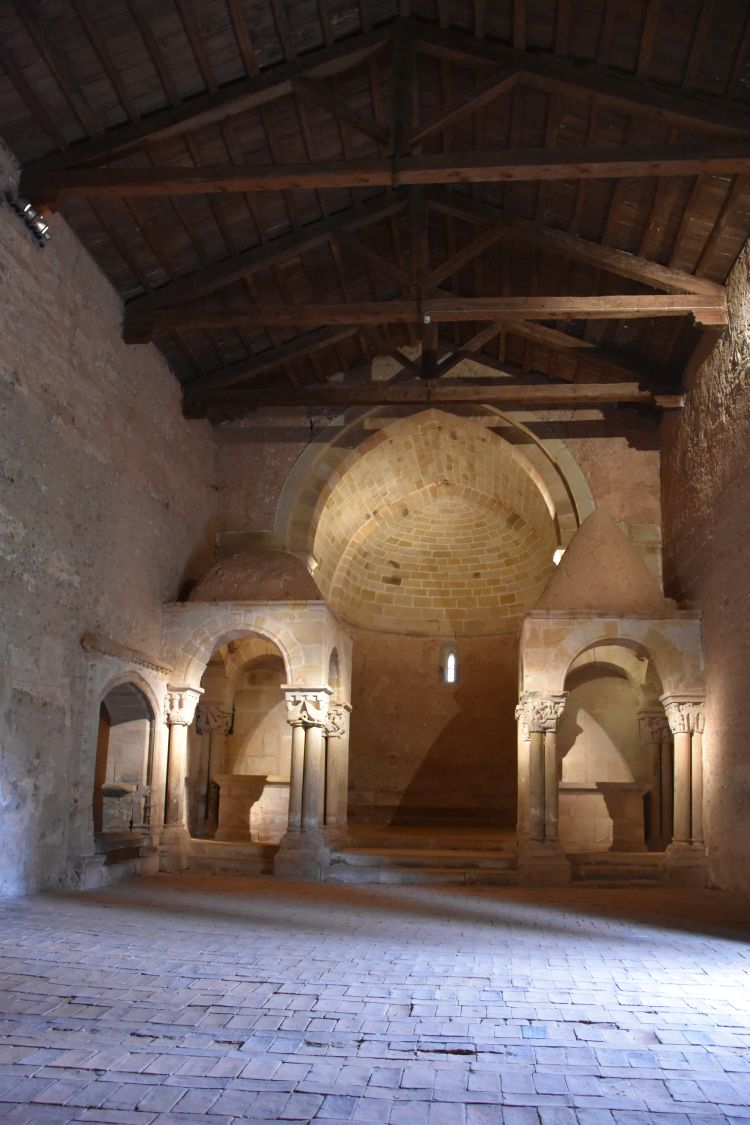
Next to the amazing cloister, we enter the small Romanesque church…

… with its sculptured capitals.

It was great to see Soria again, in particular the gorgeous cloister San Juan.

Now we will continue our way eastward leaving the Duero behind us, crossing the mountain range of the Sistema Ibérico and switching to the valley of the Ebro. We intend to spend one night in Zaragoza.

Santo Domingo de Silos – listening to the vespers

On May 16th – Thursday – we follow the river Duero upwards with destination Santo Domingo de Silos.

.

Lunch stop at Peñafiel

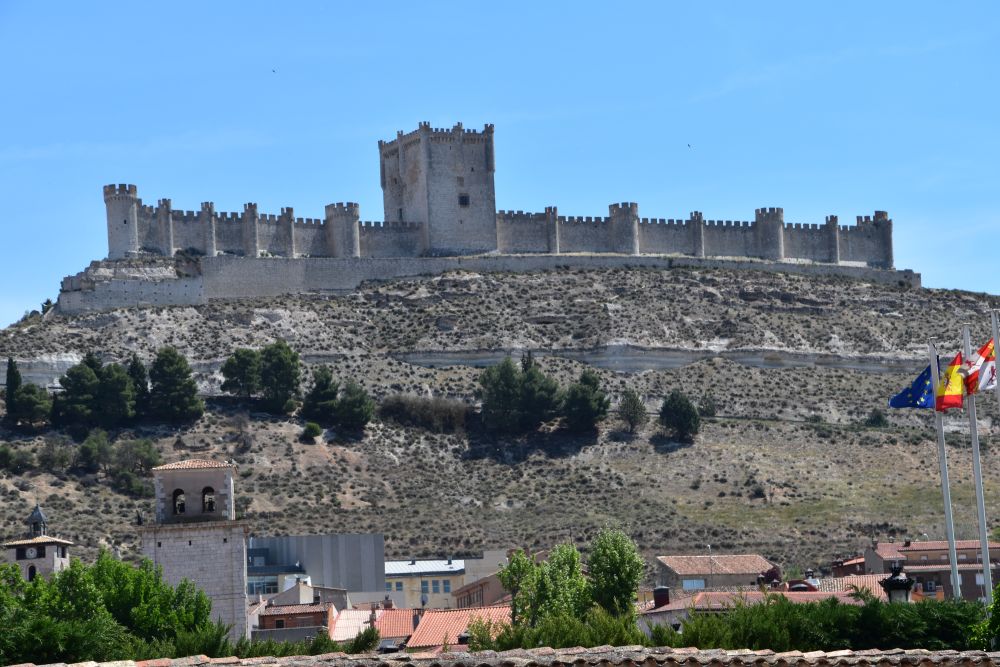
We stop in Peñafiel for lunch. Like everywhere in Castilla & León, a castle watches over the small city – it has been built in the 11th century to defend the area reconquered from the Arabs.

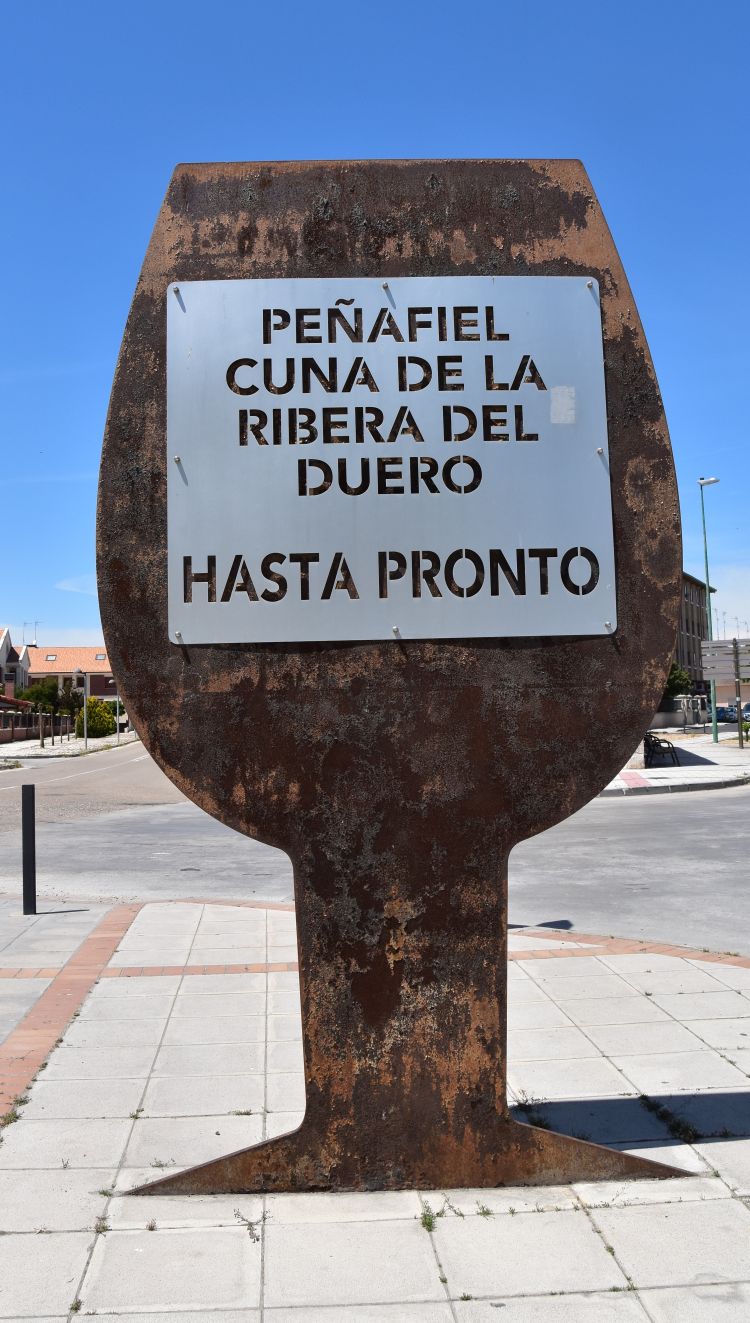
Peñafiel says that they are the cradle (cuna) of the D.O. wine region Ribera del Duero.

.

In “Vinos de España”, Larousse 2008, by Claude Naudin et alii, p.192, I found Bodegas Protos, founded in 1927. Their cellar is in the rock under the castle of Peñafiel, and they were the first bodega to write the term “Ribera del Duero” on the labels of their wine bottles. So, it is true that Peñafiel is the cradle of the D.O. Ribera del Duero, as they coined the name. Perhaps “hasta pronto” will come true for me to learn more about the wines of Peñafiel and about Protos.

Driving through vineyards we head north, before the rain announced starts.

.

Santo Domingo de Silos – the Benedictine monastery in the wild mountains

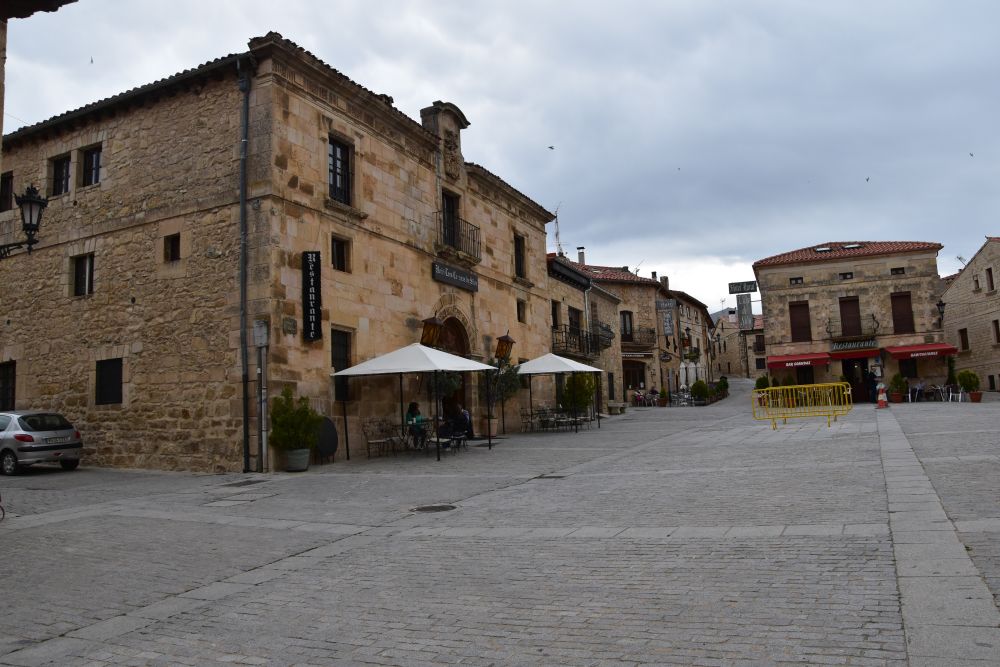
We drive through the wild Yecla canion (Desfiladero de Yecla) and reach Santo Domingo de Silos on about 1000m, in the mountains. The place looks secluded, just right for monks to meditate and pray. Santo Domingo de Silos is a Benedictine monastery…

… surrounded by a small village with narrow streets and many hotels.

The hotel Santo Domingo gave us their last room – all other rooms booked out.

.

The Romanesque cloister of Santo Domingo de Silos

In the 11th century, the Benedictine abbey was founded by Dominic, with support of the Castilian-Leonian king Fernando the Great.

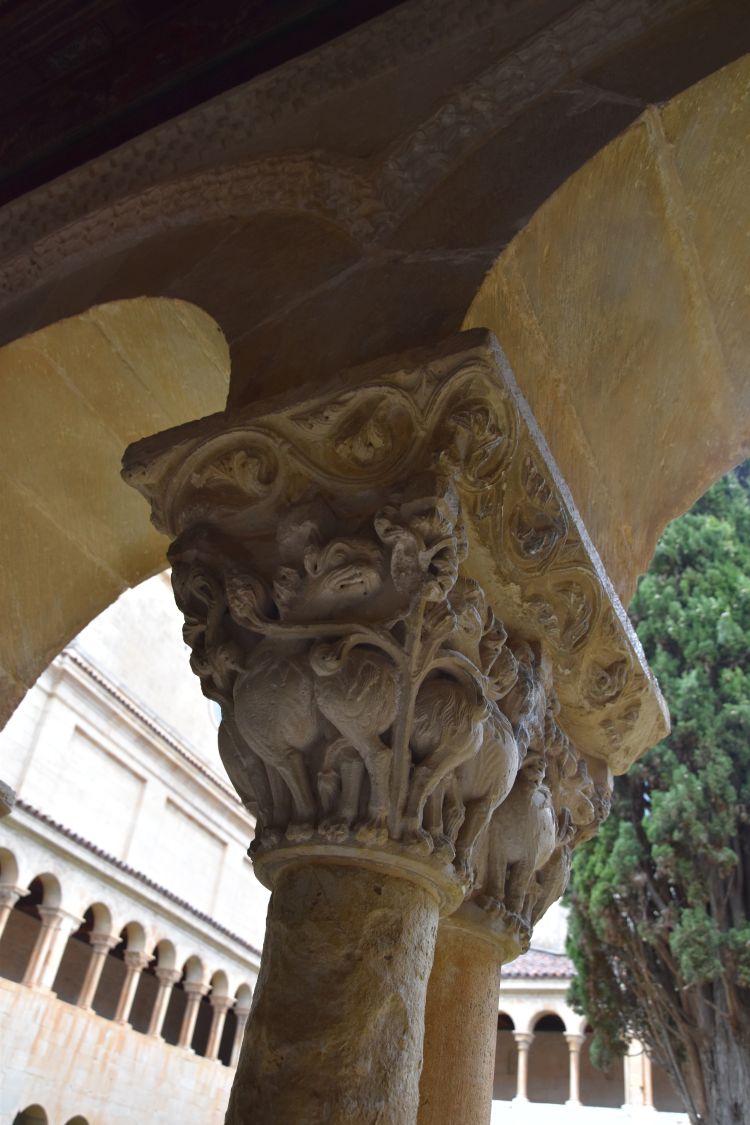
From that time, the Romanesque two-storey cloister has survived.

The cypress – 22m high – is more than a hundred years old, a symbol in the cloister.

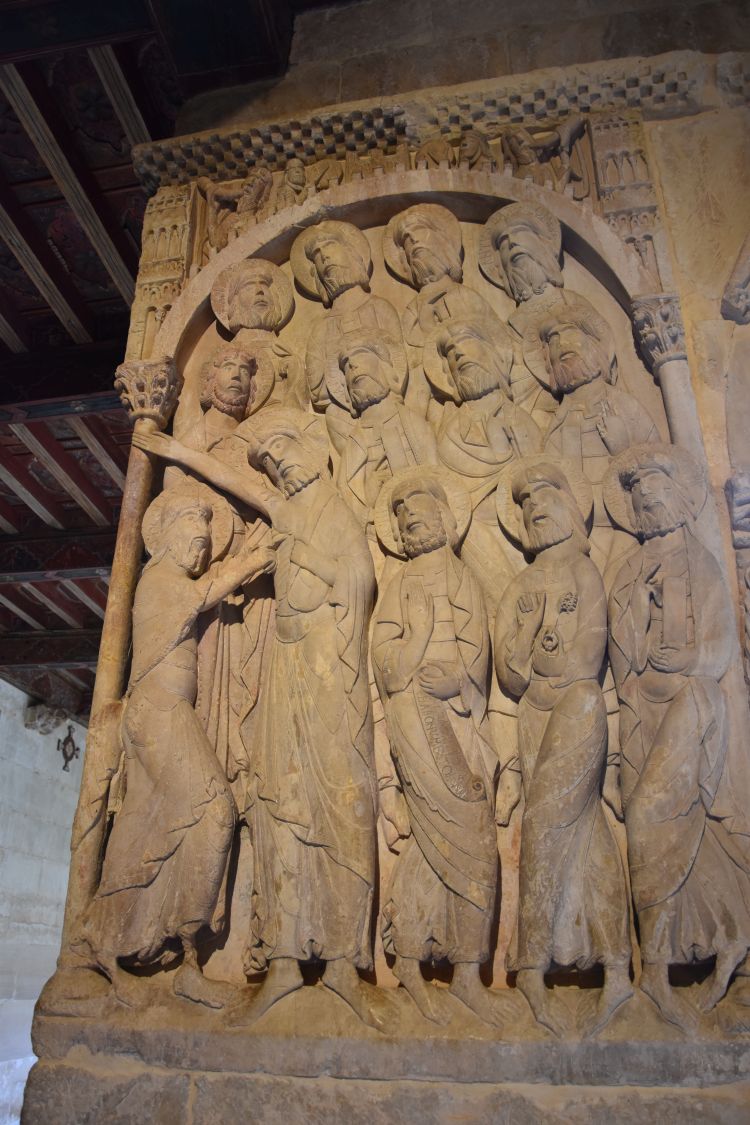
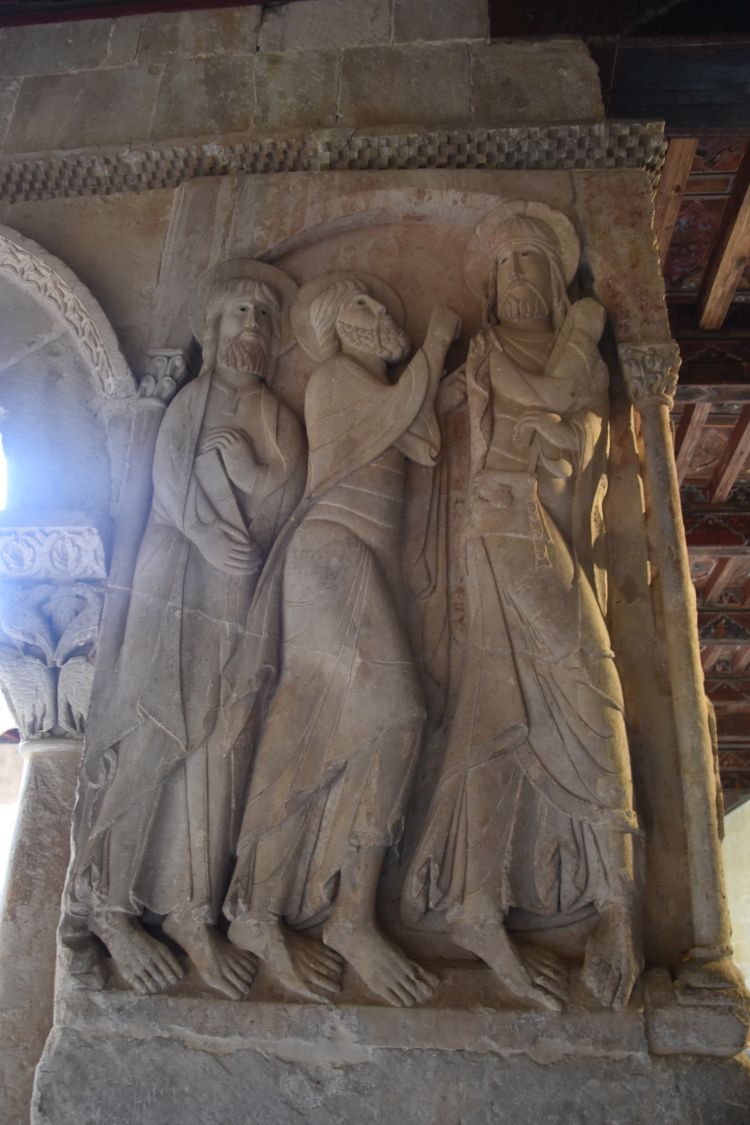
The capitals are richly decorated with scenes from the life of Christ, with animals, plants and with fantasy figures. When entering the cloister, we received a leaflet that explains each capital with much care, perfectly translated to German.

Most outstanding are the representations in the corners of the cloister. This is one example: Christ appears to the apostles, and doubting Thomas touches Christ.

My favourite corner panel is Christ on the Road to Emmaus represented as a pilgrim on the Way of St. James. He wears the typical pilgrim hat and a bag that has been carefully decorated with scallops – also the buckle for closing the bag is a scallop. What a nice detail!

.

Gregorian Chants at Santo Domingo de Silos

The monks sing Gregorian Chants and they are famous for that. They have published records of their chants.

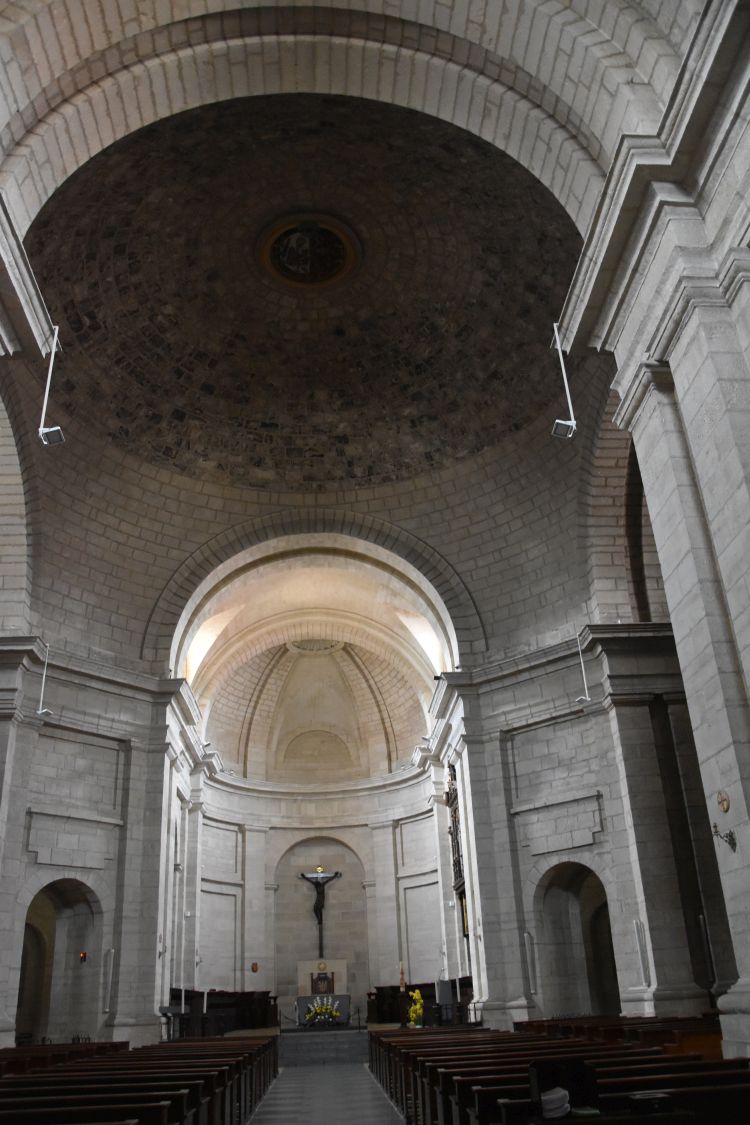
They invite guests to listen to them sing their chants in the neo-classical church of the monastery.

We attend the vespers at seven p.m.. For about three quarters of an hour the monks sing and read to praise God, Christ and the Holy Spirit – nunc et semper et in saecula saeculorum – now and for ever, in the centuries of the centuries. At the end, they walk to the Chapel of their Santo Domingo to ask him to pray for them, he who founded this monastery. The church was almost full and we all inhaled the solemnity of the chants. Though not being Catholic, I like this atmosphere that touches the heart instead of the intellect.

.

Next plans

Together with a group of about 40 Australians we have dinner and breakfast. They travel from Portugal via Spain to France. Very noisy and busy in this secluded valley.

We continue our way east, first along the Duero to Soria and then to Zaragoza.


Early morning walks in Zamora – along the river Duero

13/14/15th of May 2019 (Monday to Wednesday) we spent in Zamora. Zamora is located above the river Duero. I have already talked about this pretty city and its surroundings. Now I want to tell about my morning walks along the river banks.

.

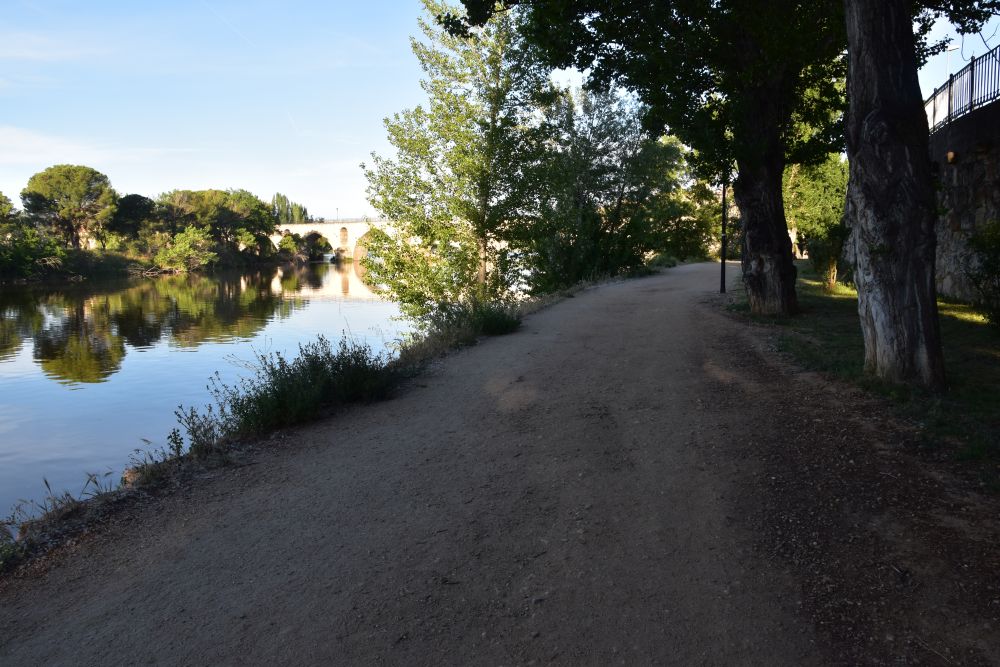
The well prepared path along the Duero

Zamora has installed footpaths along both sides of the river Duero.

The aspen is in bloom, the white seeds fly in the air – like snow flakes. They fall to the ground and form a carpet.

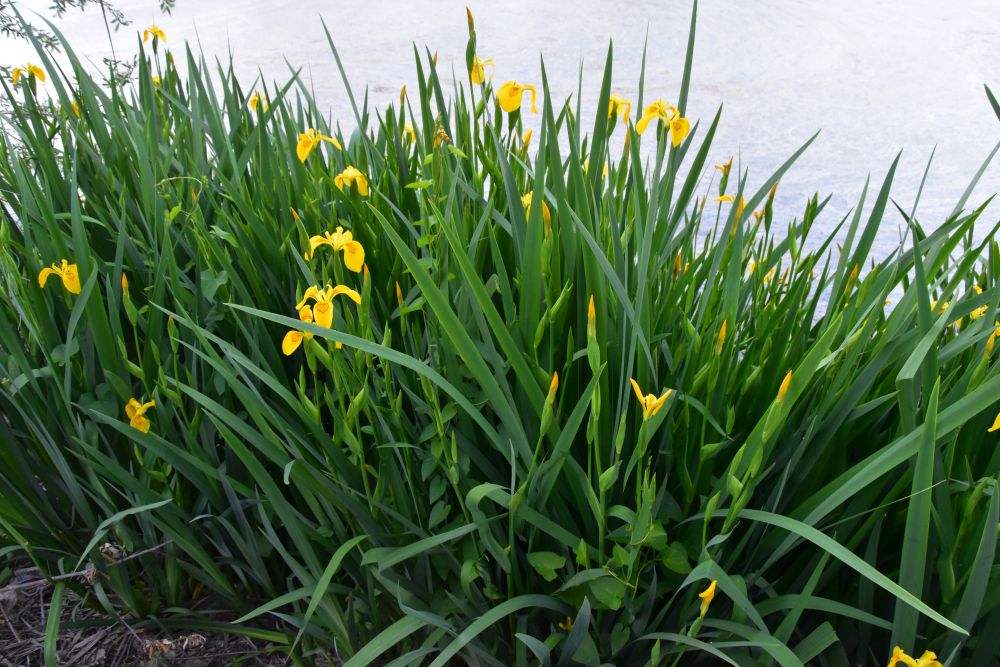
The water lilies opened their yellow flowers, while we were there.

Flowers, trees and birds along the Duero are explained on panels. Zamora did a great job for their citizens – and for the tourists that go beyond visiting the city center.

.

The landmark of Zamora: The Old Bridge or Puente de Piedra

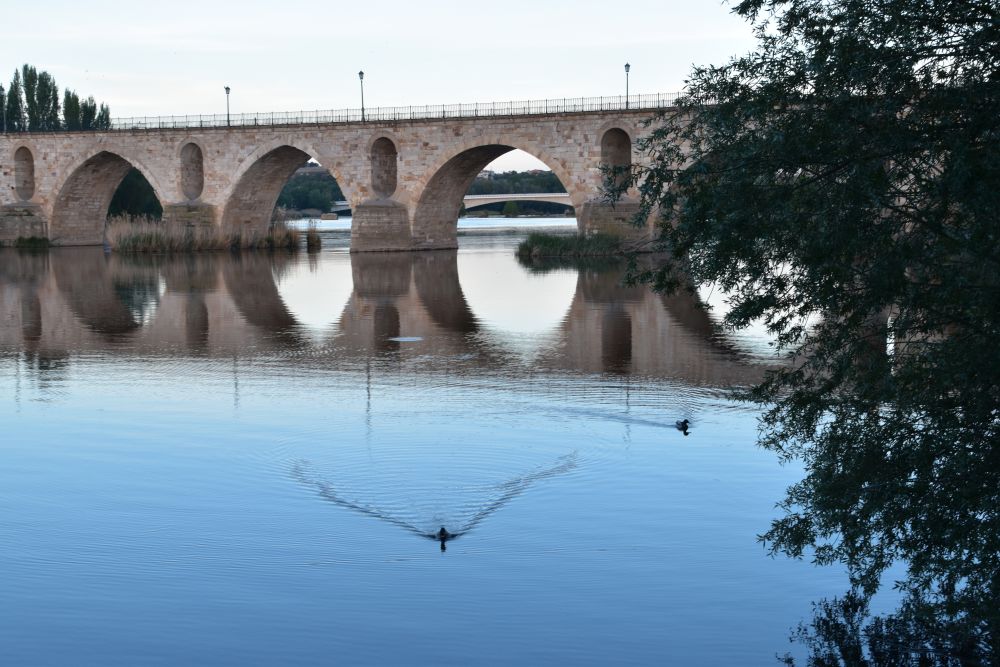
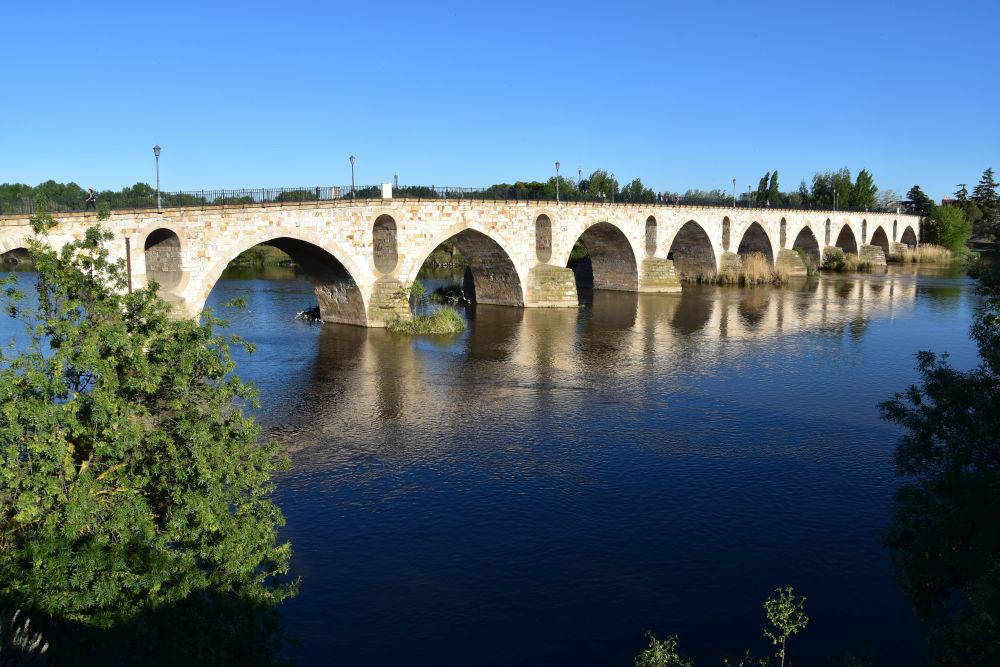
Zamora was a stop on the Roman silver route allowing to cross the river Duero here. The current Stone Bridge or Puente de Piedra is from the 13th century, but has been rebuilt in the 20th century. The morning sun makes the bridge shine brownish. The arches reflect in the water.

Taken from the west, the bridge is just a silhouette.

On a more cloudy morning the bridge is grey.

Ducks congregate near the Stone Bridge.

.

Aceñas de Olivares or oil mills in the morning sun

Along the river there are several oil mills or Aceñas de Olivares. These three mills are located below the old city.

I pick up a leaflet later, when the oil mills were open for public. It says that such oil mills have been known to work here since the 10th century and were in use until the 1950’s. They used the force of the river. Now they have been replaced by electricity, also produced by the river Duero, as the leaflet says.

.

Overviews of the city Zamora from the left river bank

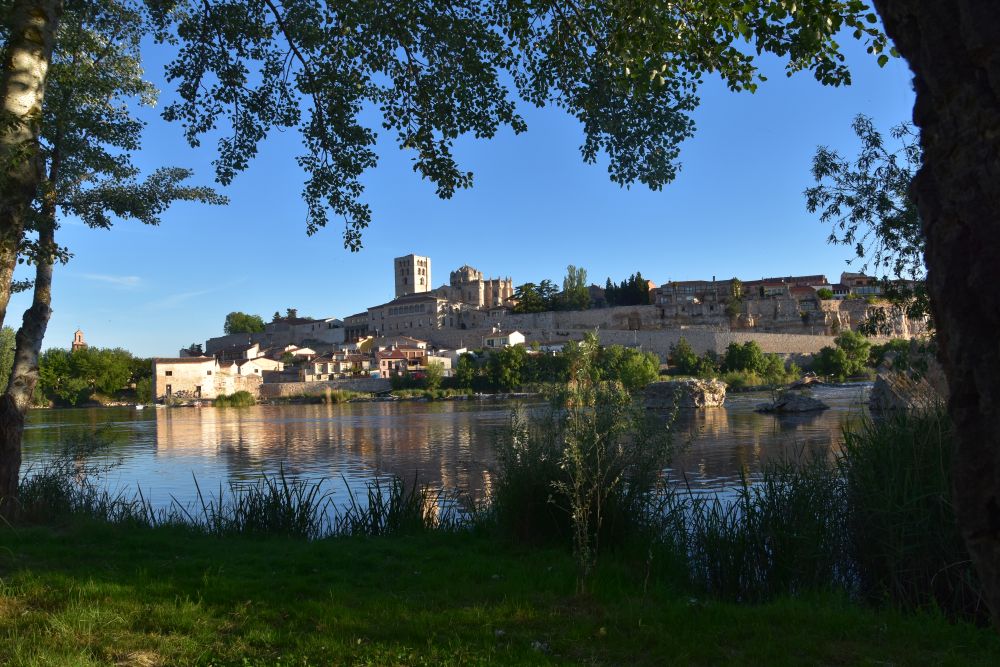
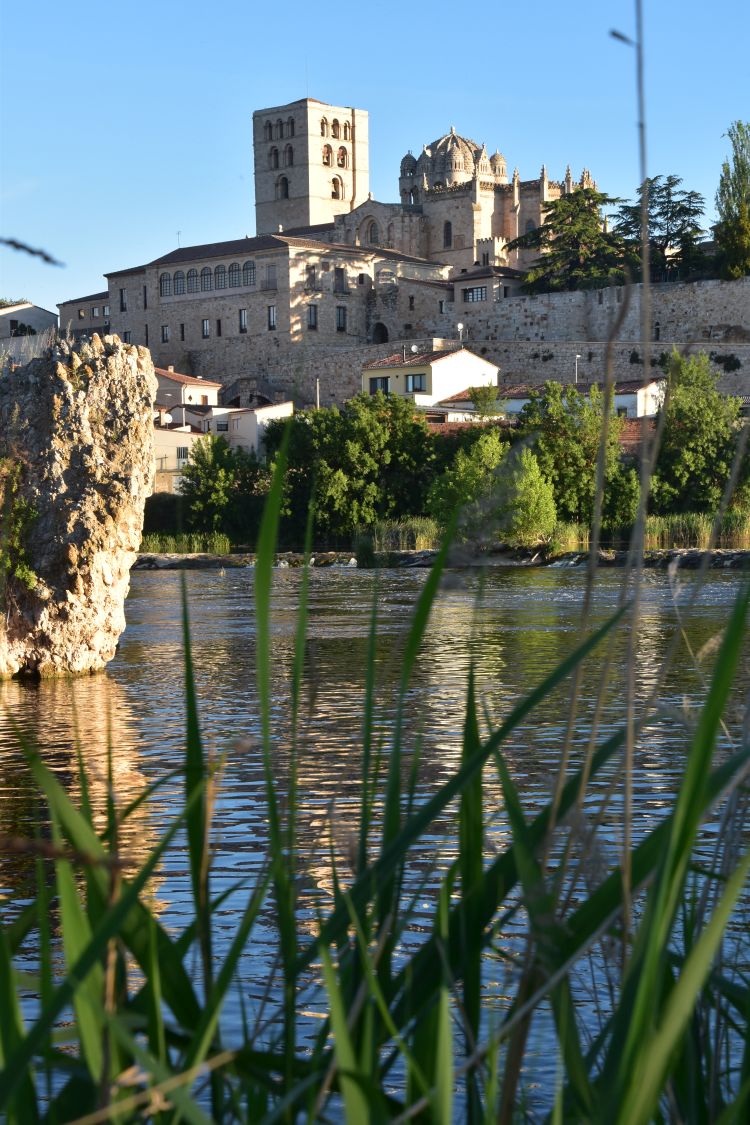
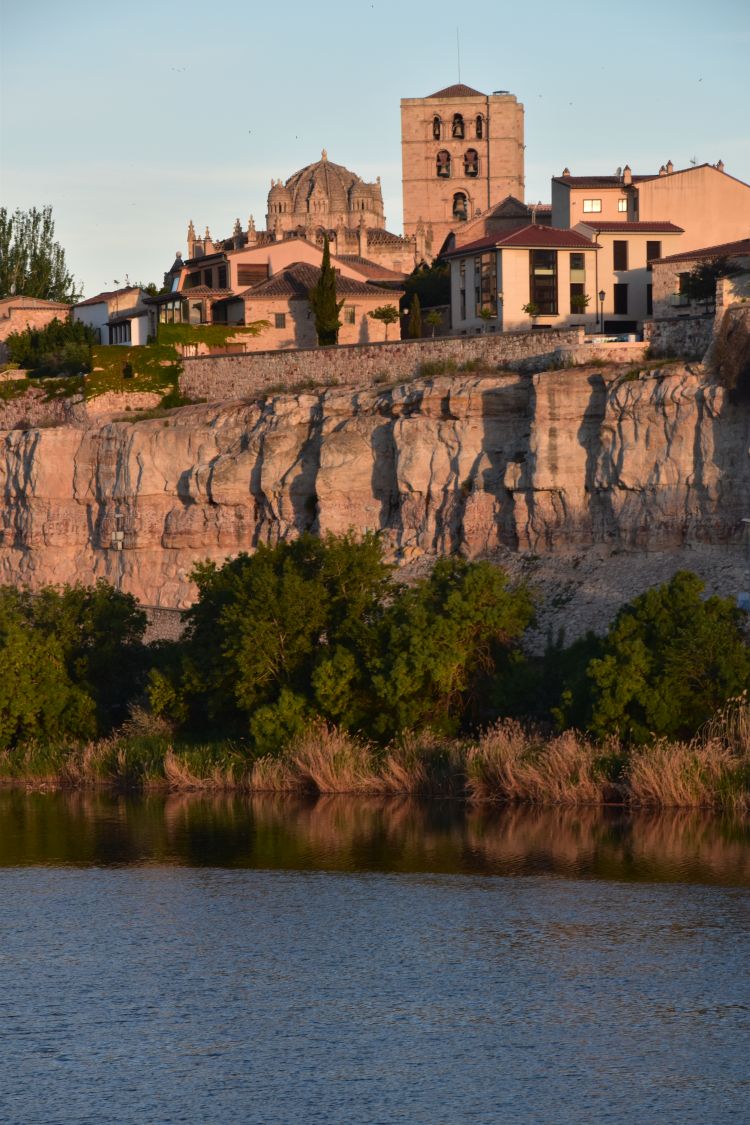
During one of my early morning walks, I crossed the river Duero using the old Stone Bridge. The view of the city Zamora located on a rock above the right river bank is spectacular. This is the view of the Cathedral (tower and cupola) and of the three oil mills in the river.

This is another view with the Cathedral at the end of the steep rock “plate”.

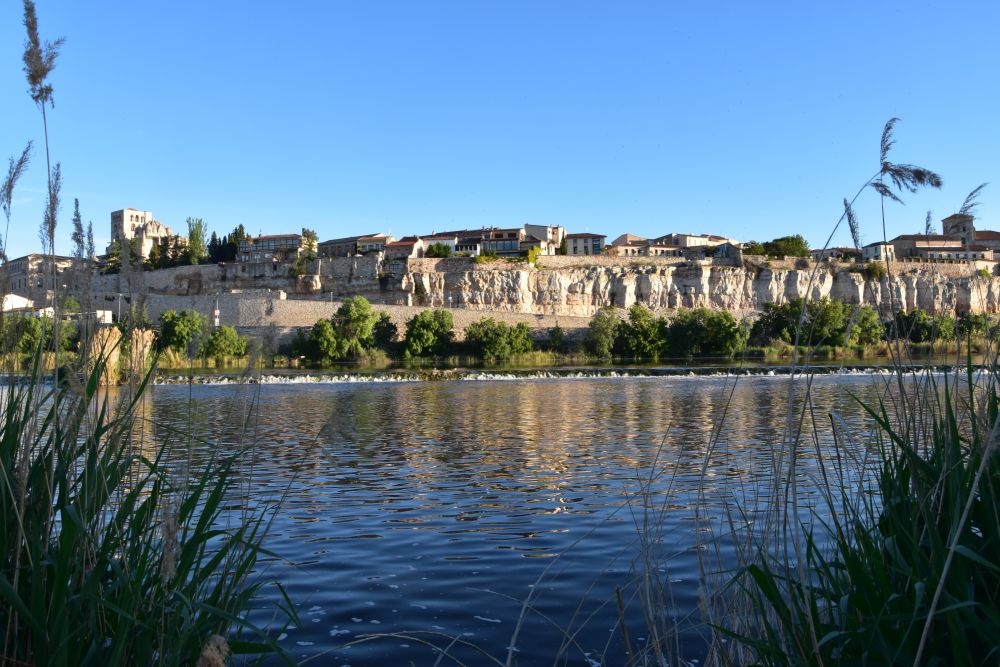
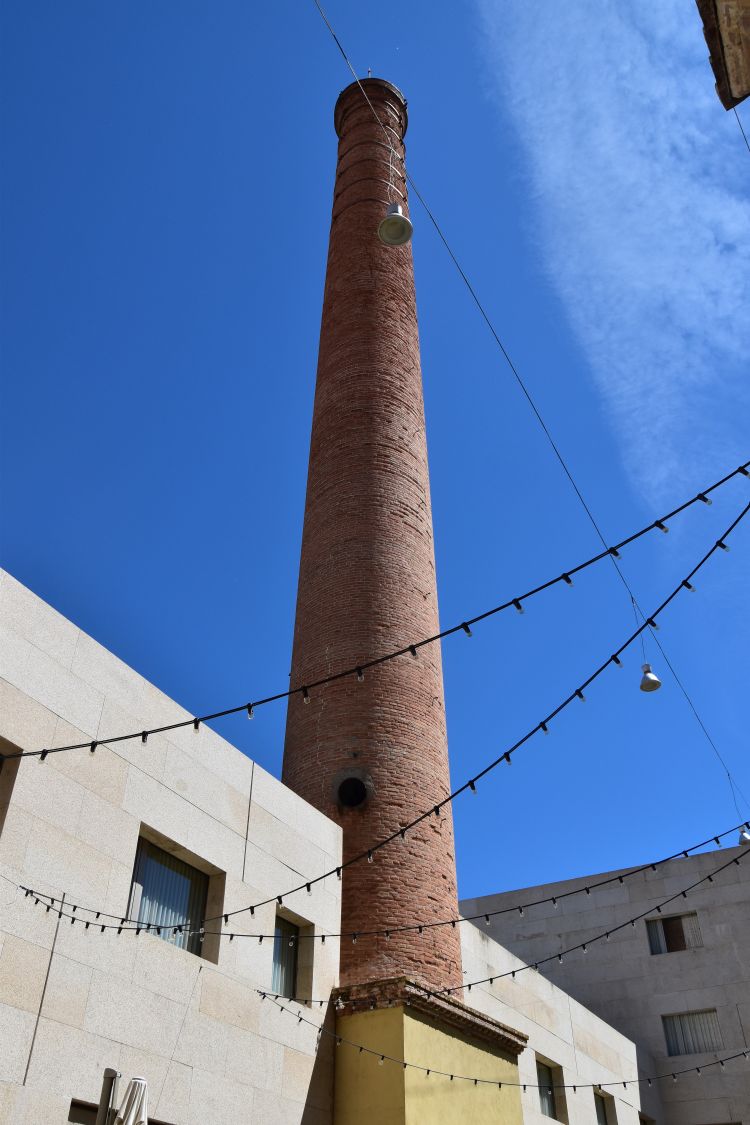
Looking against the sun (eastwards) the city is a silhouette reflecting in the river. The factory tower stands out. It is part of the factory that has been tastefuly rebuilt to become the hotel NH Palacio del Duero, where we stayed three nights.

.

The cupola of the Cathedral in the morning sun

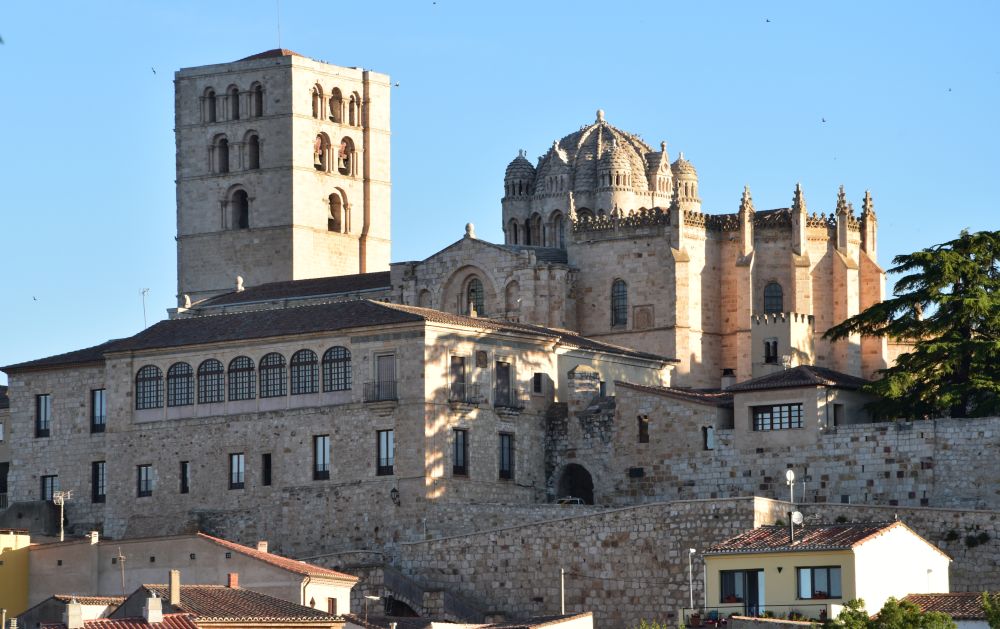
The great gem of the Cathedral of Zamora is the cupola with its flaky tiles. Poets have written about how it changes colours from morning to evening. Here it is in the morning sun…

… together with the tower…

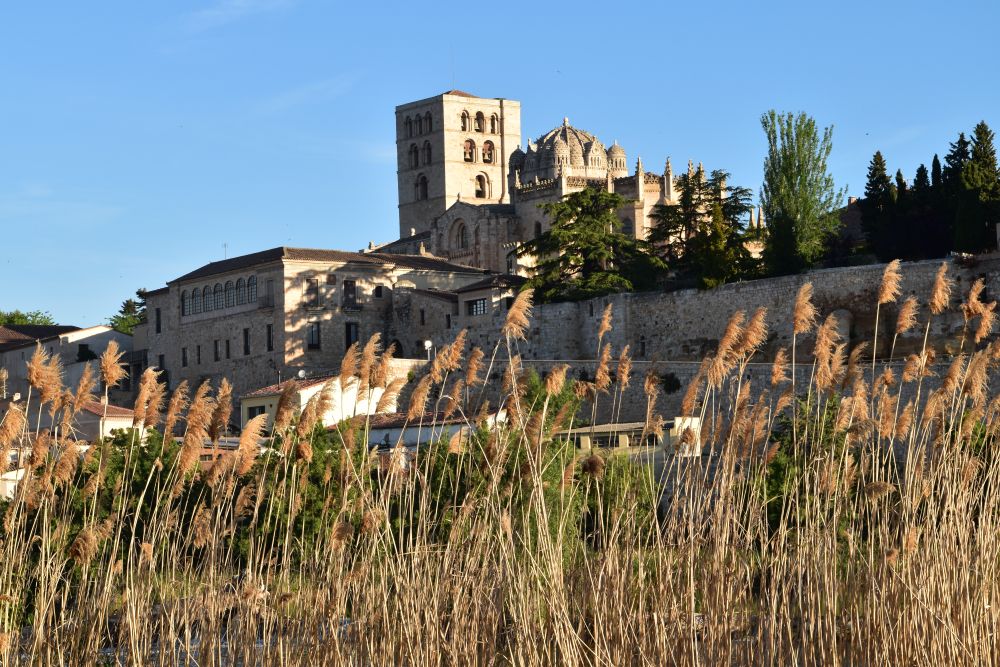
… above the reed of the river bank…

… and above the rocks of the wild Duero.

Later on my walk the light has changed.

On Wednesday morning, I say good-bye to Zamora and its river banks. I will miss these romantic morning walks in Zamora. We will now folllow the Duero in the direction of its origin near Soria.


Around Zamora: San Pedro de la Naval and Toro

On 15th of May 2019 – Wednesday – we explore the surroundings of Zamora, the visigothic church in El Campillo and the small country town Toro.

.

San Pedro de la Naval in El Campillo

The receptionist of the Parador in Zamora was born in El Campillo. It is a small, quiet village and he remembered that in the late fifities, as a child, he saw the first tourist cars with the number plates “CH” and “D”. “Where are they from? Maybe “CH” is from Czechoslovakia and “D” from Denmark”, he reflected. Later he left his small village to study in Spain and to earn money in Switzerland (his Swiss accent was not bad).

He told us proudly of the visigothic church in his home village. This is San Pedro de la Naval.

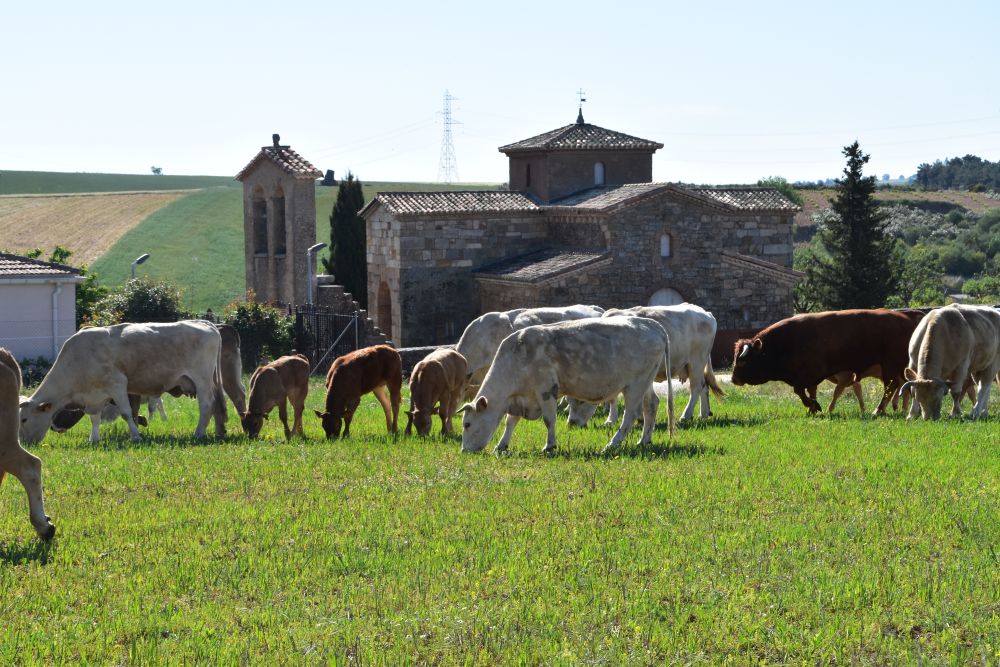
A lady shepherd took his cows to the fields near this small gem and protected her head with a large black umbrella. The sun was already burning.

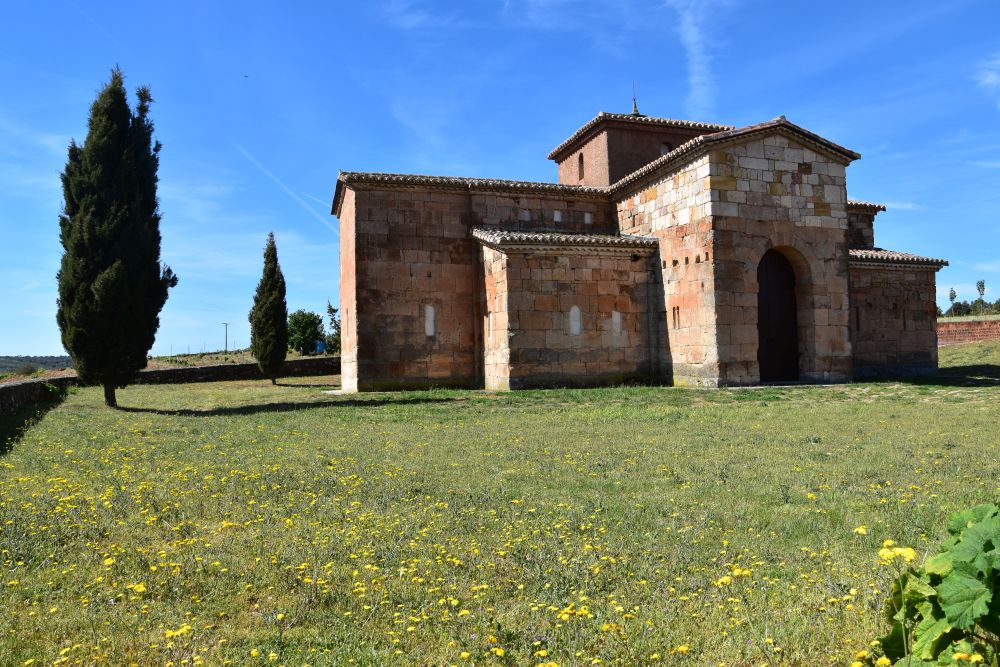
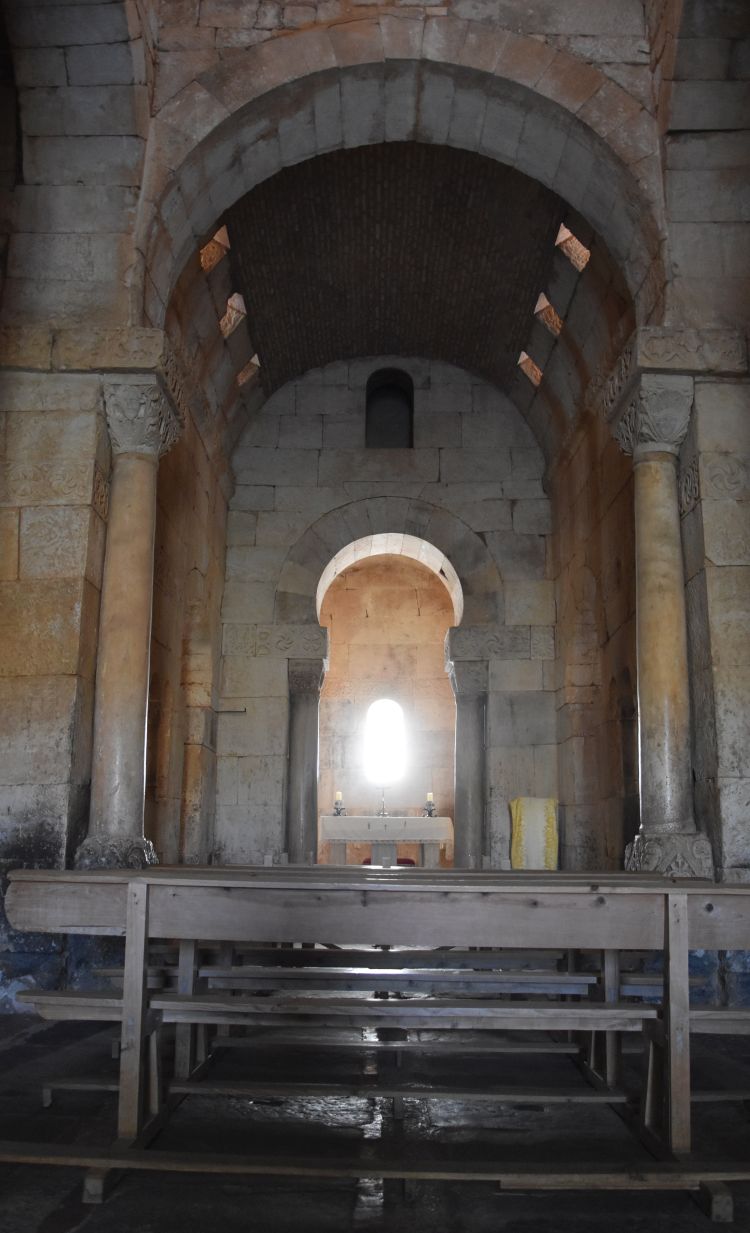
The church was built immediately before the Muslim invasion, i.e. shortly before 711 AD. Originally, it was located on the banks of the river Esla. The river was dammed in the 1930’s to gain electricity. One of the architects helped the people transfer the church and rebuild it stone by stone. The stones have been worked and accumulated without plaster. In the choir I recognize the typical horseshoe arch.

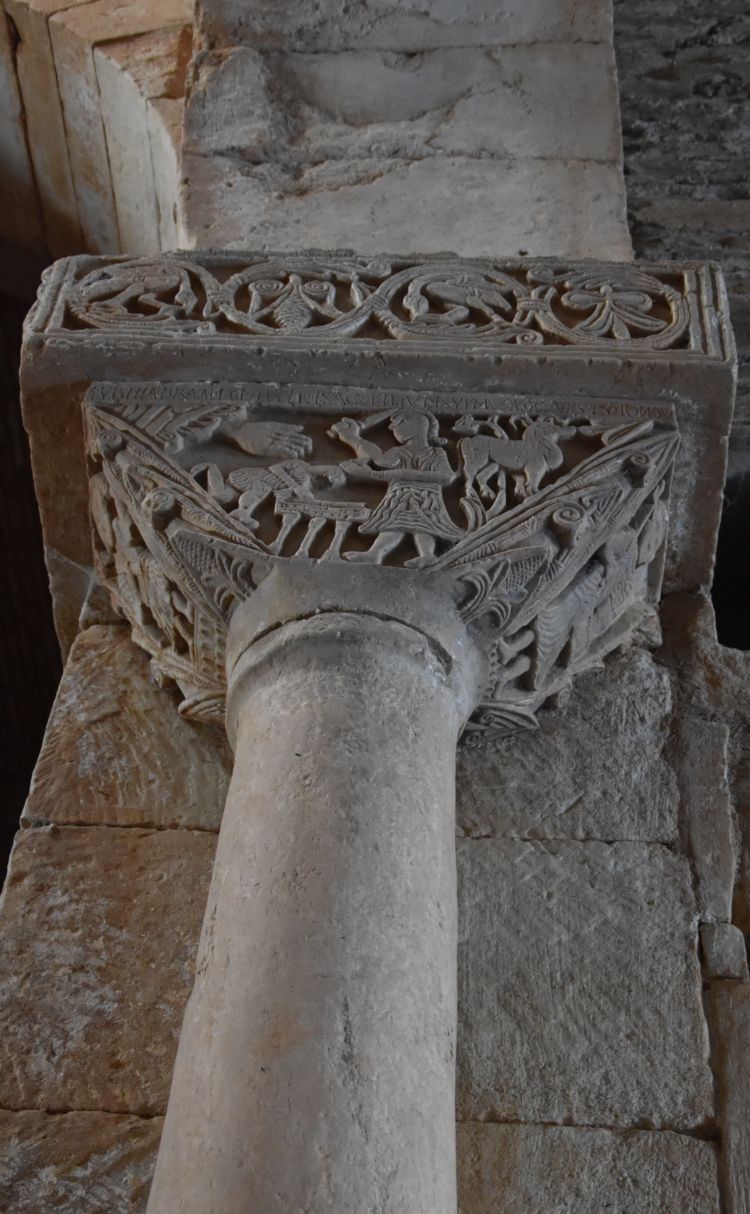
The capitals are ornated with figures,…

… and with floral patterns.

The base of the columns is decorated as well.

The church is open on Mondays, and the lady receiving us inside confirms: “Yes, Zacharias, he is a good ambassador for us, particuarly on Mondays, when the museums are closed in Zamora.” She is proud of her church and shows the details to the visitors.

.

Walking to the Esla Embalso

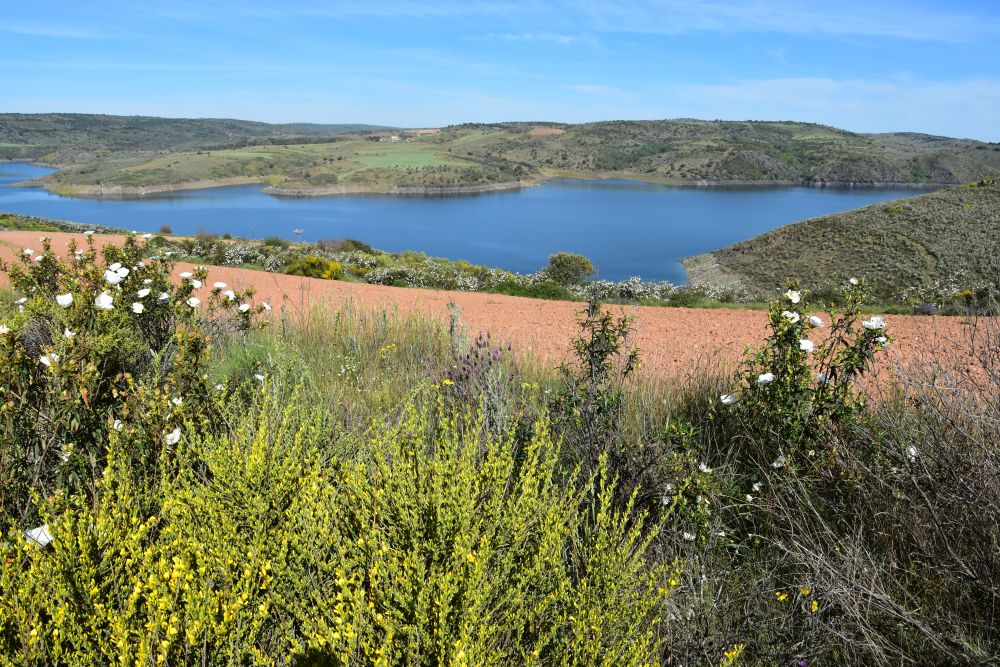
After having enjoyed culture, it is a good idea to walk to the lake Esla, where the small church would have drowned, if not saved by the inhabitants of El Campillo. This is the barrier lake with some white rockroses and yellow broom in the foreground.

The fields have been prepared.

Everything is flourishing – it is spring and the hot summer has not yet arrived.

.

Toro – the small country town near Zamora

Toro to me looks like the little sister of Zamora. The Collegiate Church of Santa Maria la Mayor from the 12th century has a similar cupola above the intersection, like the Cathedral of Zamora.

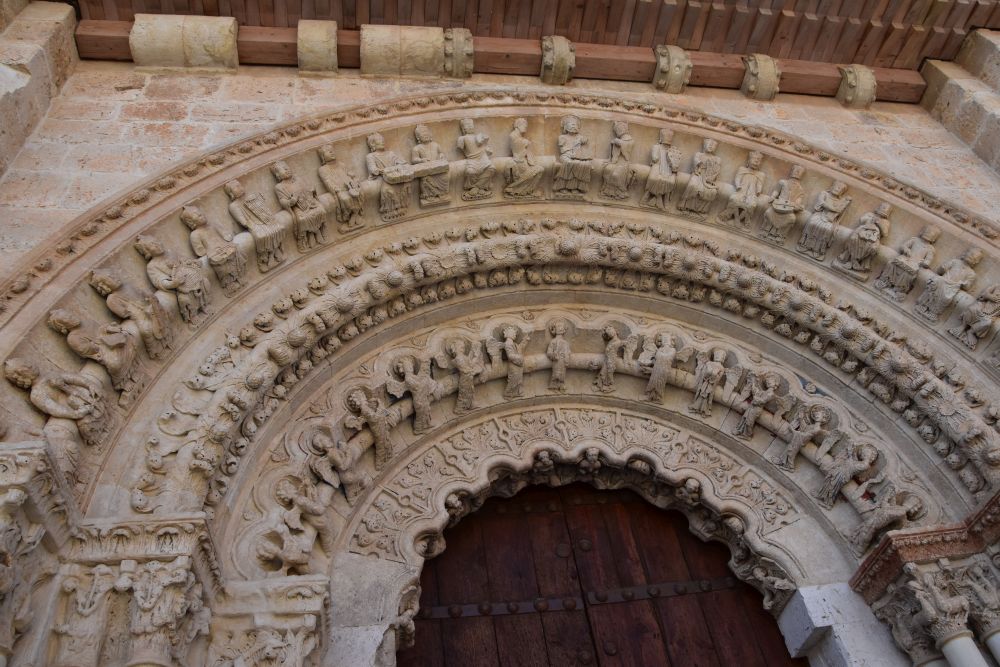
This is the western portal.

A service is going on inside. We listen for some time.

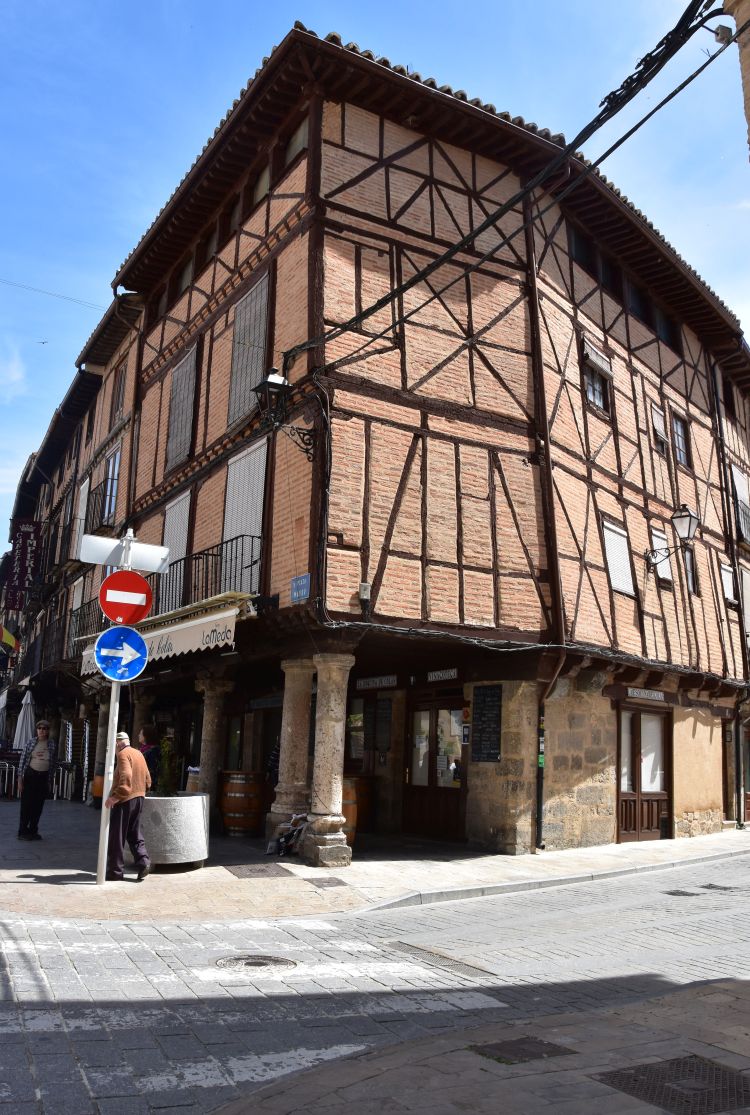
Then we stroll through the streets with their half timbered houses.

The San Lorenzo church has been built in Romanesque style.

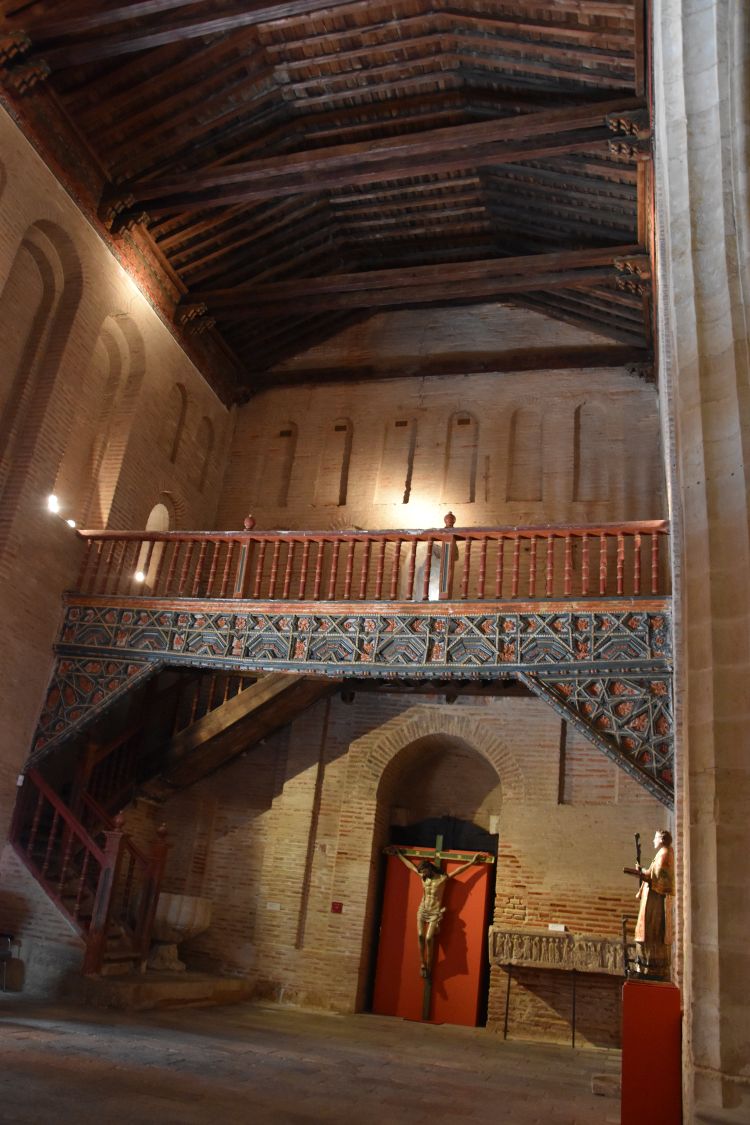
Inside we find the Mudejár elements such as the ceiling and balcony. Mudejárs are Muslims living under post-islamic Christian rule, their architecture influenced by the Moorish taste is called “Mudejár”.

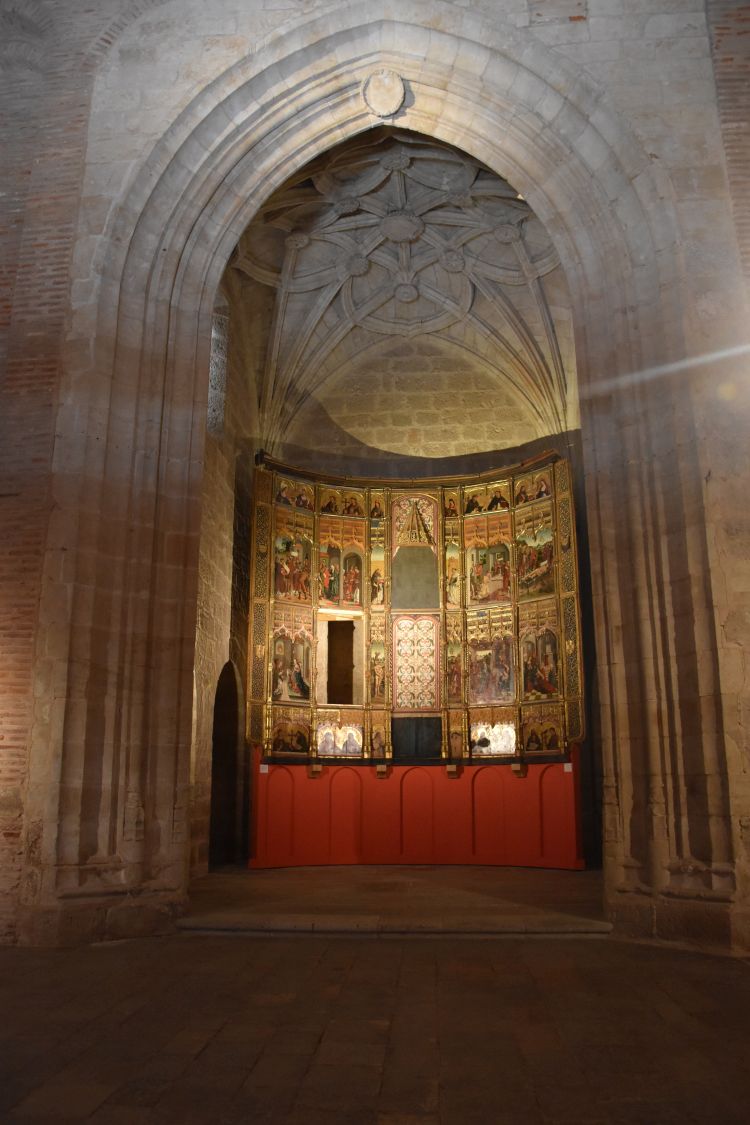
In a niche, we find this gothic altar. It tells the story of San Lorenzo.

D.O. Toro is a wine region that is becoming renowned. Merchants offer their regional wine in the streets.

On our way back to Zamora we stop in one of the vineyards. The ground looks sandy here.

We enjoy dinner in the posh Parador. Tomorrow we will continue our way going east to Santo Domingo de Silos.


From León to Zamora

On 13th of May we drive to Zamora to stay here for two days and three nights.

.

Zigzagging to Zamora – through villages and hills

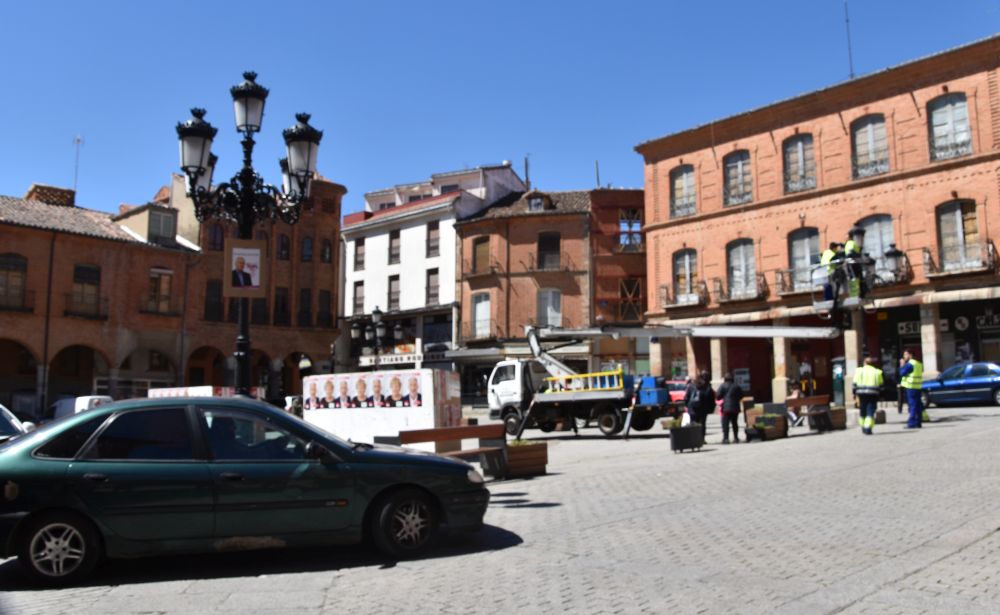
From León to Zamora we zigzag along small roads. In small Benavente we have  some sandwiches at the Plaza Mayor. Heavy traffic here and the lamps need to be repaired.

Our bar also provides choco drinks, including a black and a white choco Suizo – charming, I did not know about that before.

We follow the river Esla and turn off to the smooth Sierra Soldana. The fields are green, the flowers are in full bloom, like the white rockrose.

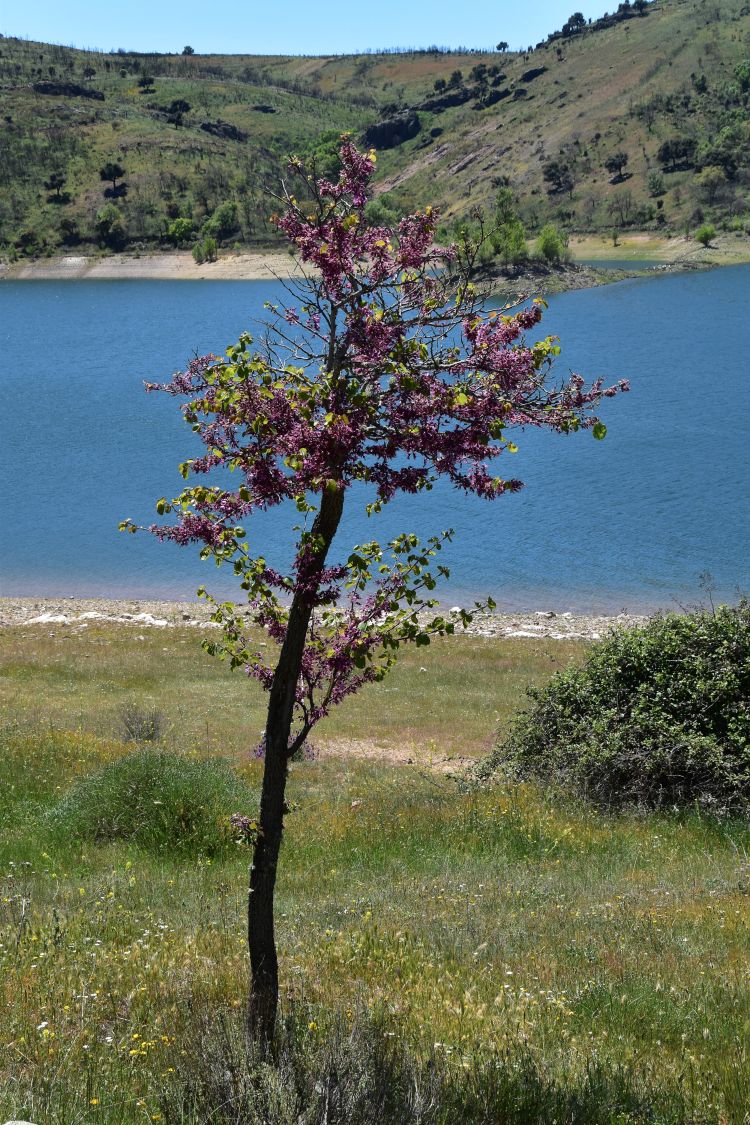
The river Esla is dammed to produce electricity – the Judas tree is violet.

The river Esla later joins the river Duero that originates near Soria.

Maybe this Ilex grove (dehesa) is populated by pigs in October. The pigs love acorns. Spanish ham is delicious.

Above the Duero, I see the first “Duero” vineyard – it belongs to the D.O. of Zamora.

.

The tastefully architectured NH Palacio del Duero

In Zamora we settle in the NH Palacio del Duero close to the river Duero. The Palacio is in a former factory that has been tastefully rebuilt.

From far, the former factory tower shows us the way to our hotel.
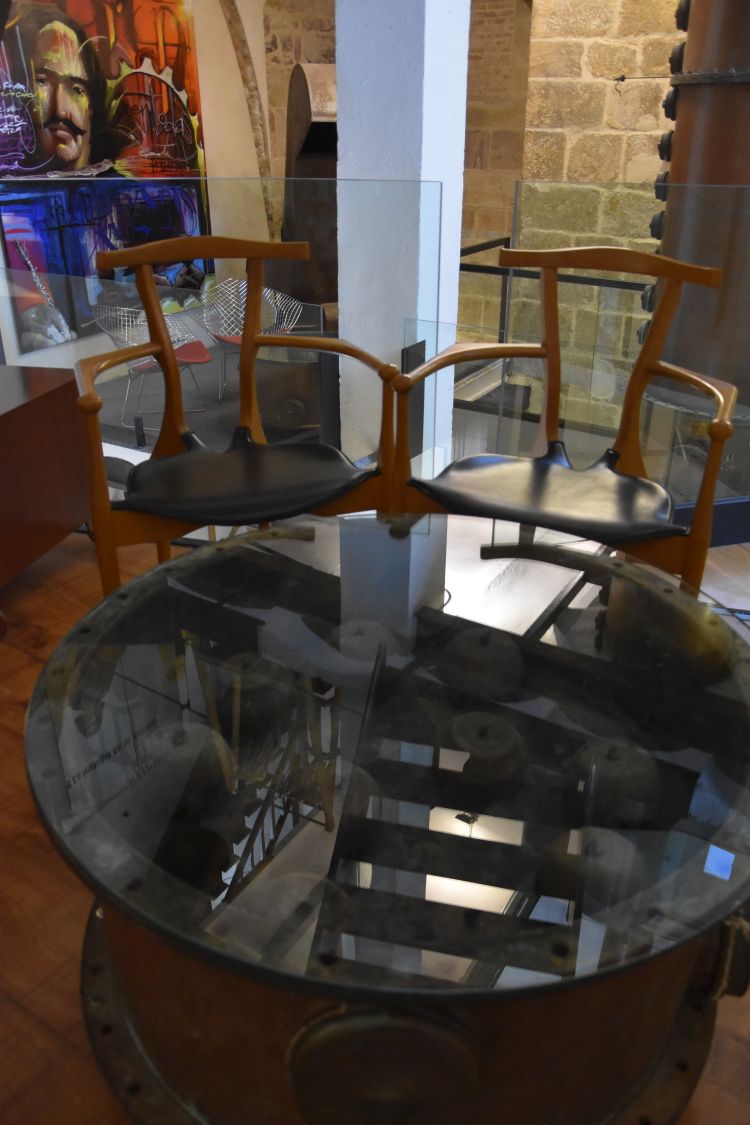
Former factory areas have been remodelled to conference rooms…

… and to corners where hotel guests can relax.

The NH hotel Group has engaged an extremely talented architect. We are impressed.

.

Zamora at the silver road – the bridge across the Duero is their landmark

Zamora has been founded by the Romans – the Roman silver road crossed the Duero here. The Puente de Piedra (old stone bridge) from the 13th century has been refurbished in the 20th century.

The Romans called their city Ocellum Durri (eye of the Duero) and the Arabs called it Samurah. Until the late 11th century, the city changed hands several times and then definitvely remained Christian, now called Zamora.

.

Zamora’s Romanesque heritage with the pearl, the Cathedral

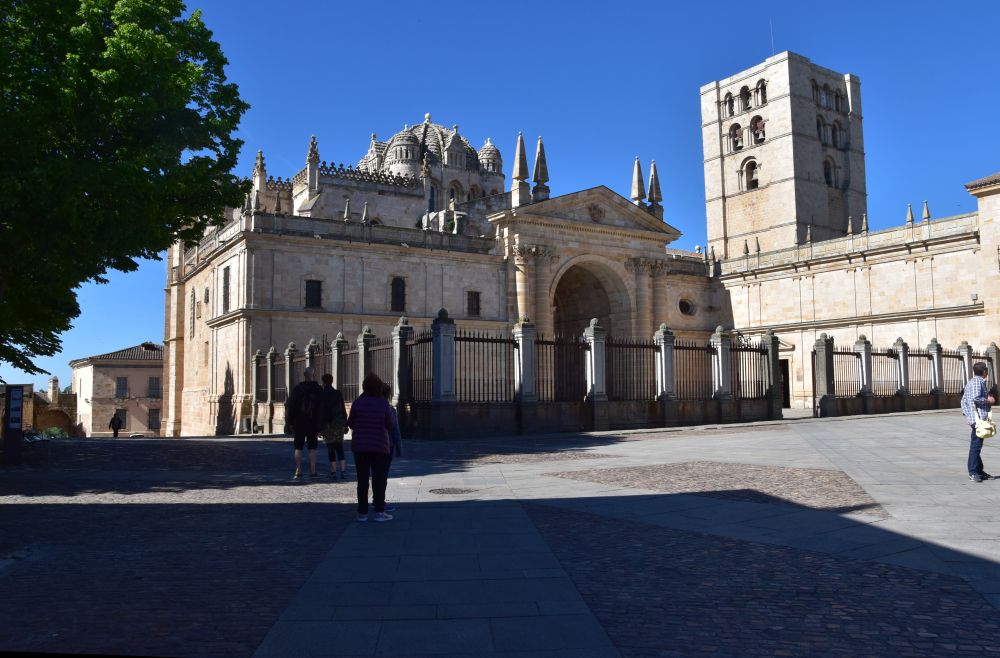
THE Pearl of Zamora is the Romanesque Cathedral de San Salvador…

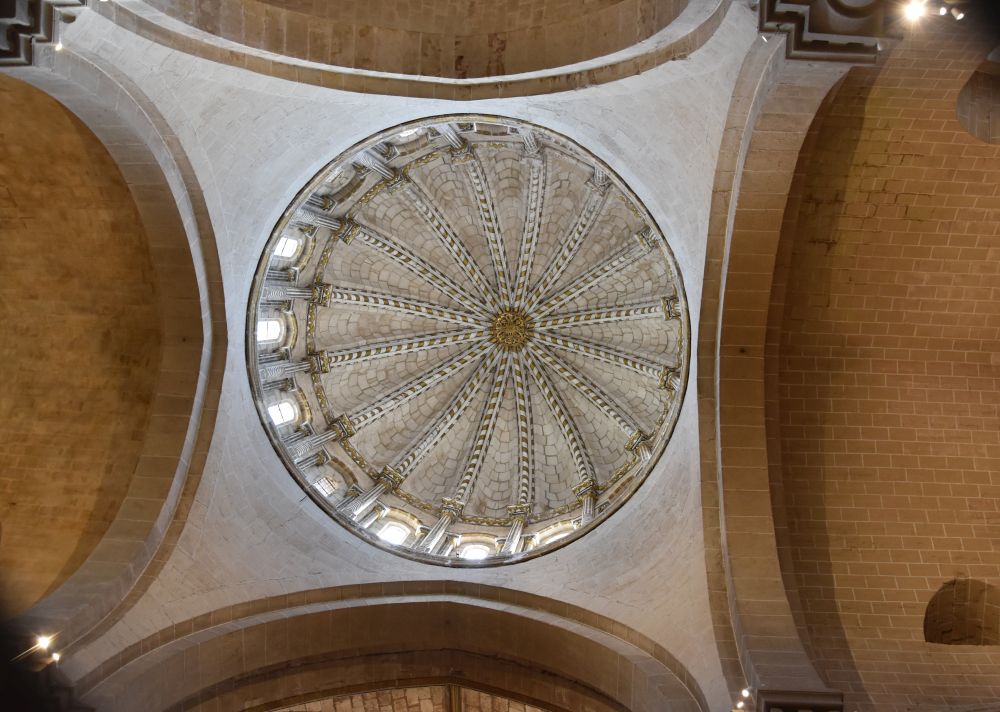
… with the elegant cupola (called cimborrio)…

… that produces this dancing airiness inside.

The nave is relatively short and dominated by the Spanish choir, right in the middle.

The northern Puerto de los Obispos (the bishops’ portal) has been decorated with pretty pine cones.

Our “Dumont” says that the Cathedral was built quickly – between 1151 and 1174. I recognize the Byzantine and Arab Architecture in the cupola and the bishops’ portal.
.

Many more Romanesque churches in Zamora

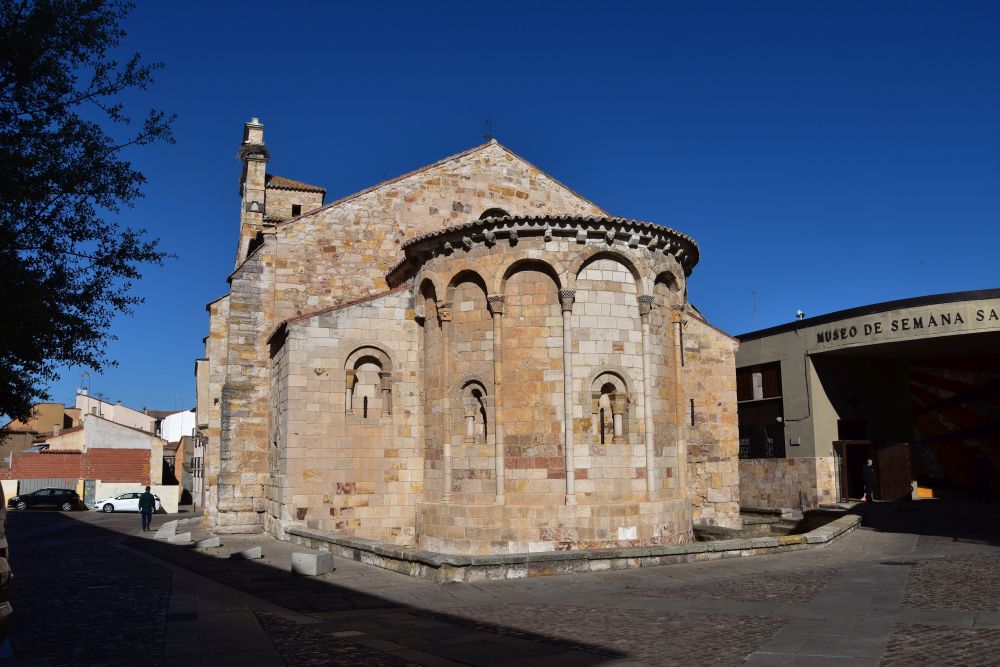
Many more Romanesque churches are in this small city. For example the Iglesia Magdalena…

… or the Iglesia Santa Maria la Nueva…

… or the Iglesia de San Juan Baptista de Puerta Nueva at the Plaza Mayor.

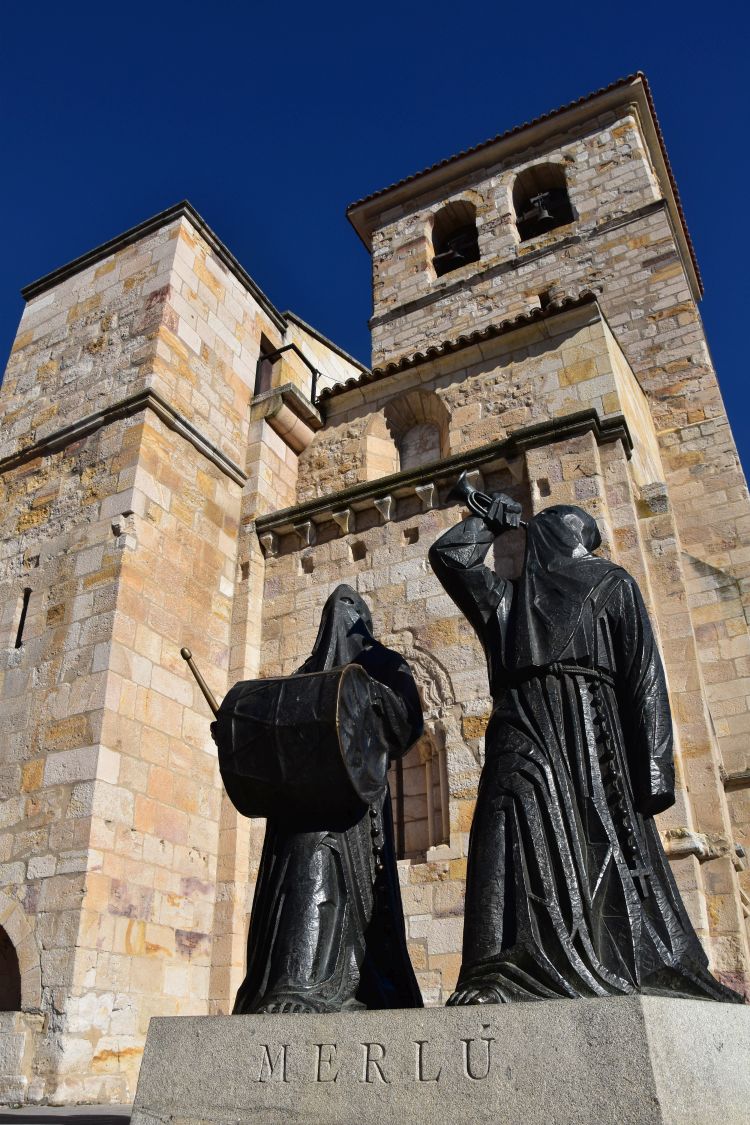
These are statues representing the processions – again and again we come across doors with the name plates of confraternities.

.

Traces of the Spanish Reconquista

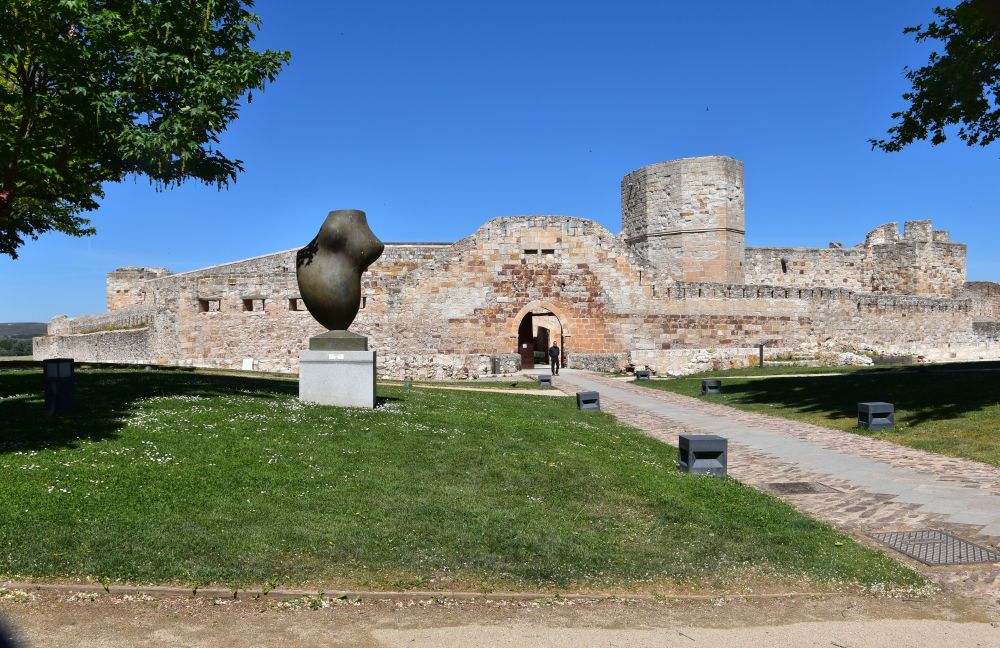
Castilla and León is full of castles – the territory regained from the Arabs had to be defended. Also Zamora has its castle.

Below the castle and outside of the city walls is the Iglesia de Santiago El Viejo that played an important role: El Cid was dubbed knight here. He is the famous and excelling commander guiding the Spanish army in the 11th century.

.

A vivid and relaxed city at this warm late spring evening

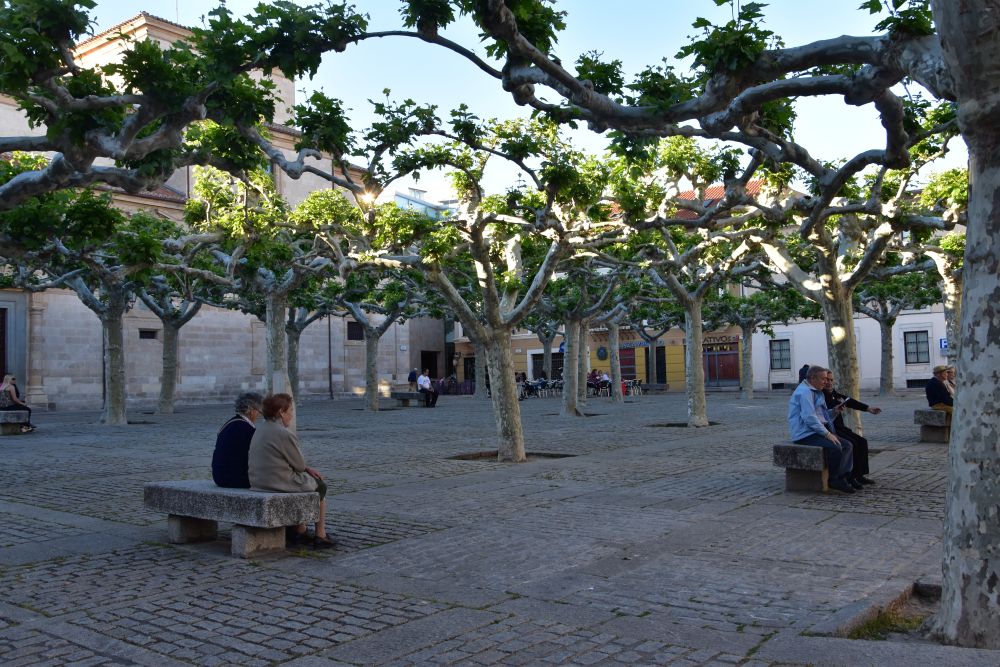
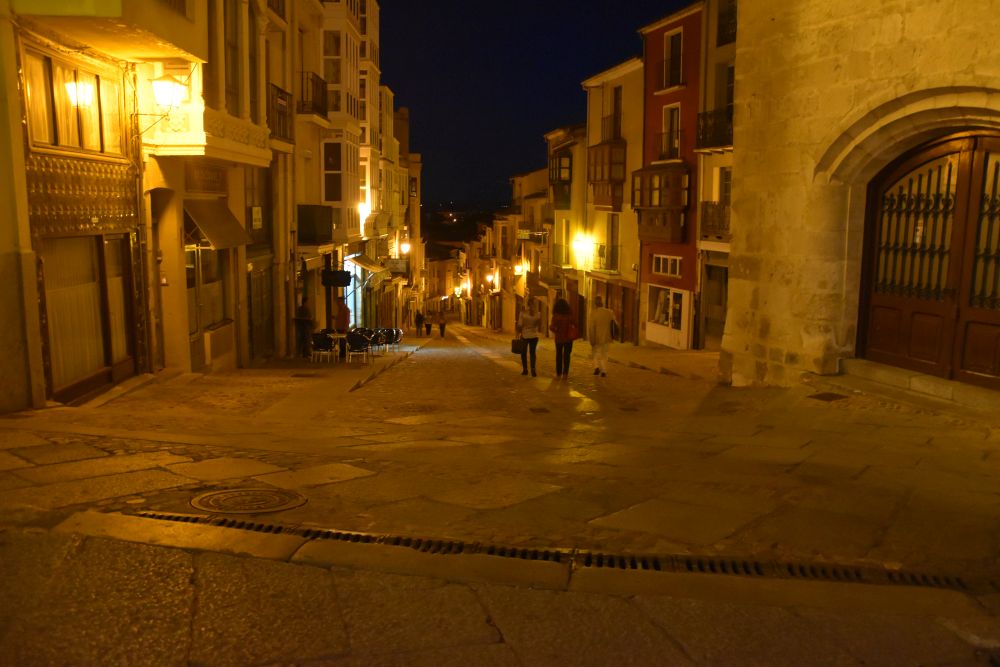
We enjoy strolling through the narrow streets of this vivid and relaxed city. Citizens of all ages sit on the benches and have a chat.

Cats watch the street life.

Storks feed their offspring.

.

Some luxury: Dinner in the Parador

We have dinner in the Parador. We are welcomed by a hearty “Grüezi” with a clear Swiss accent. The receptionist of the Parador worked in St. Gallen and Zürich many years ago, to earn money and then continue his studies in Spain.

We eat excellent fish here, and my favorite meal was the Saquito de Rabo which was oxtail carefully simmered and wrapped up in a light pastry “bag”.

We walk back to our hotel through the now dark narrow streets.

Source: Hans-Peter Burmeister and Felix Scheffler, “Madrid und Zentralspanien”, Dumont Ostfildern 2013


León – the city of the lions

May 11th/12th – now we have arrived in León, the city of the lions.

.

Crossing the Cantabrian Mountains

Oviedo (Asturia) and León (Castilla y León) are separated by the Cantabrian Mountains. They extend the Pyrenees to the west. North of them, the climate of the green Atlantic Coast prevails, and south the dryer climate of the Castilian High Plateau, the Meseta. We cross the mountains using the Puerto de Pajares and look back at the green slopes facing the Atlantic.

Driving down south of the Puerto we find dryer vegetation. Soon we are in the flat lands of the Meseta and León appears in front of us.

.

Arriving in León, the city of the lions

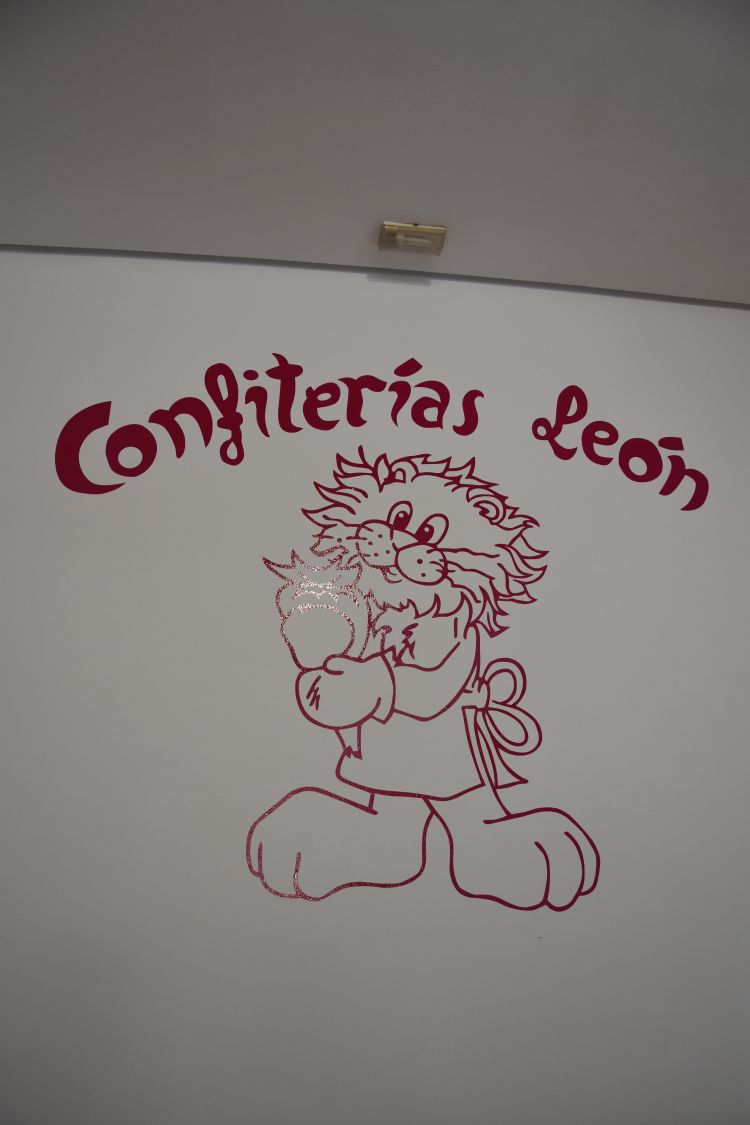
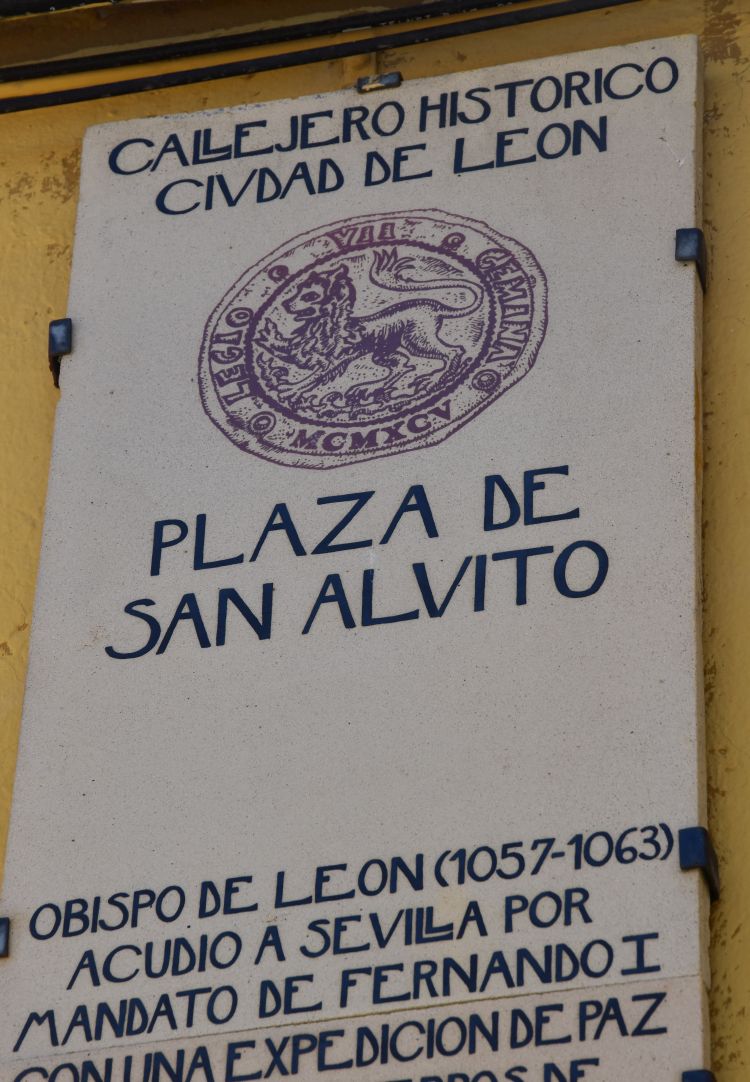
The City of León is proud of their lions and we find lions all over. Here are some examples. In the Confiterías, we had a tasty empañada.

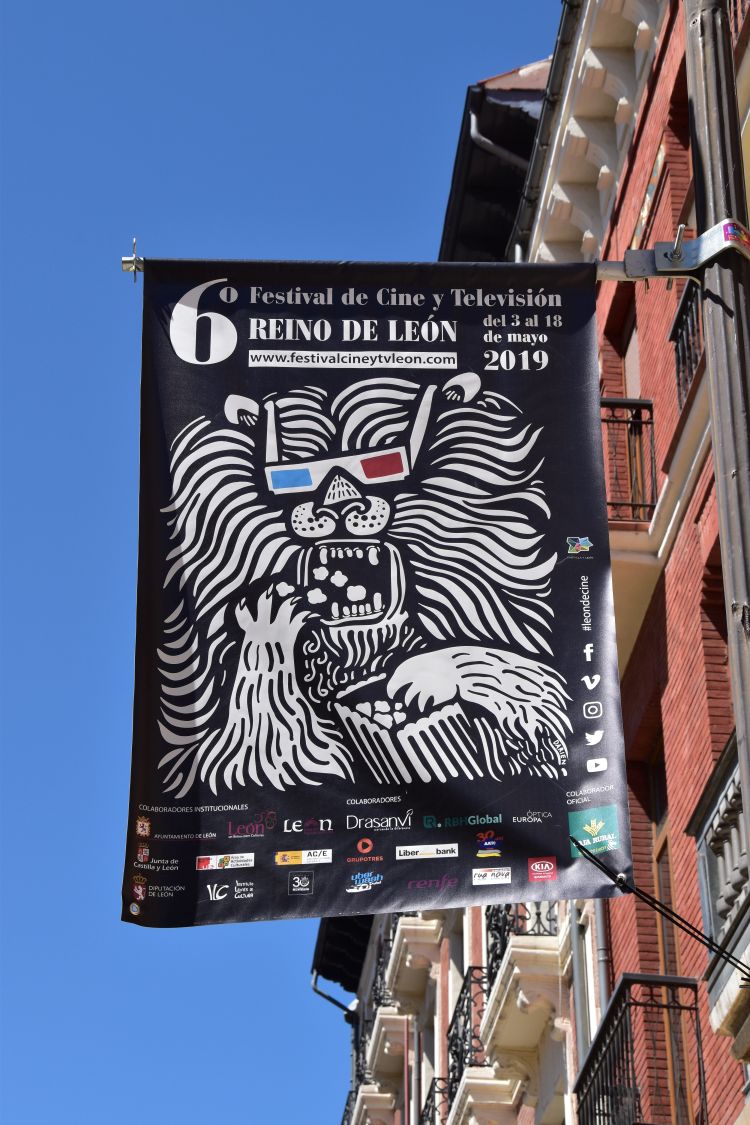
In May, León holds the Festival de Cine y Televisión

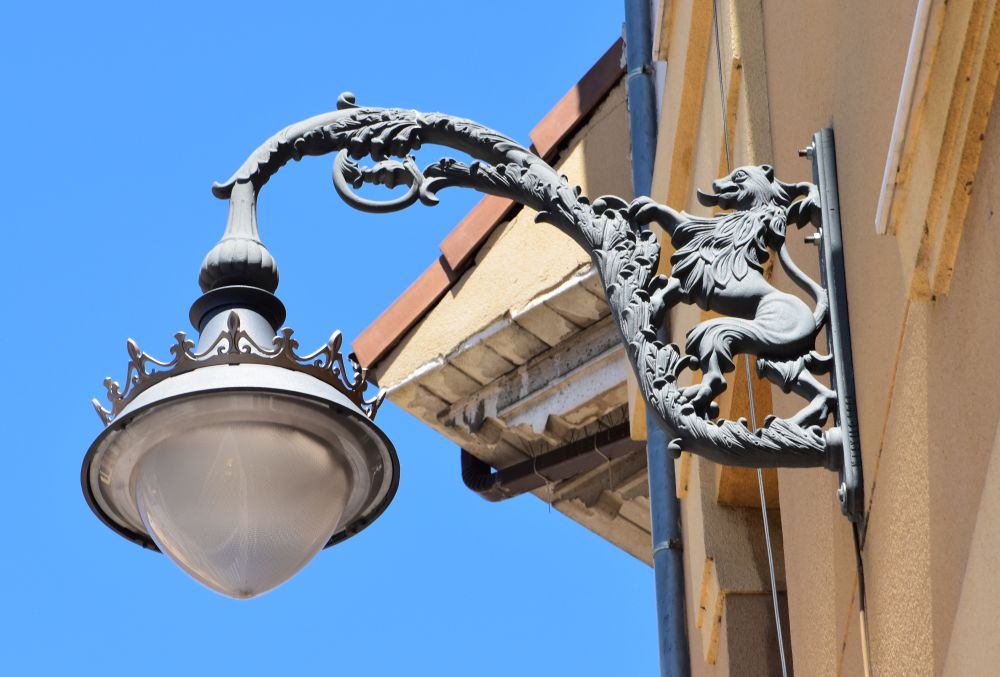
Some street lamps are held by lions.

And the palaces are decorated with lions.

This toothless lion we found near the San Isidoro church.


The Calle Ancha and the Cathedral Santa Maria de Regla

Our cosy hotel la Posada Regia is located near the main street of the center, the Calle Ancha. It is busy here, even at night (view from the Plaza de Puerto Obispo).

The famous west façade of the Gothic Catedral Santa Maria de Regla is being renovated. Building it started in 1253. The Cathedral soon needed renovation and the city started to tell the legend of the mole that keeps on digging tunnels under the Cathedral. Well, they had to find someone who might be guilty.

I return in the evening to look at the west façade again.

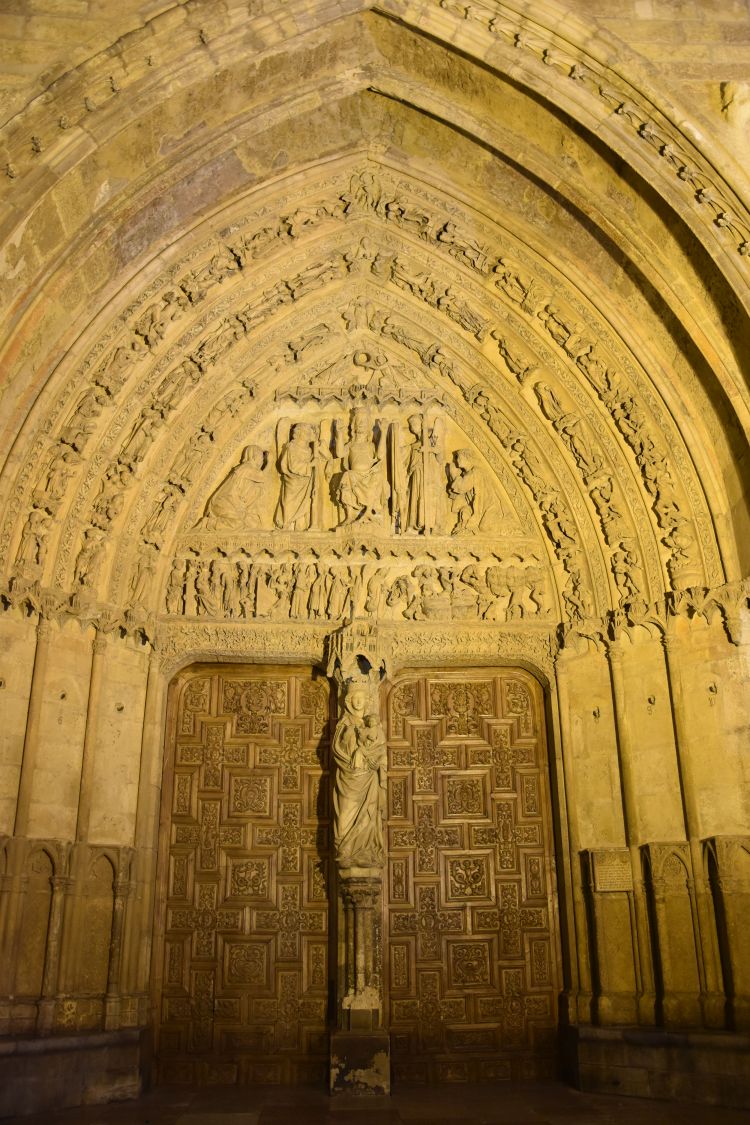
This is one of the three portals with the White Maria. The original is inside the church.

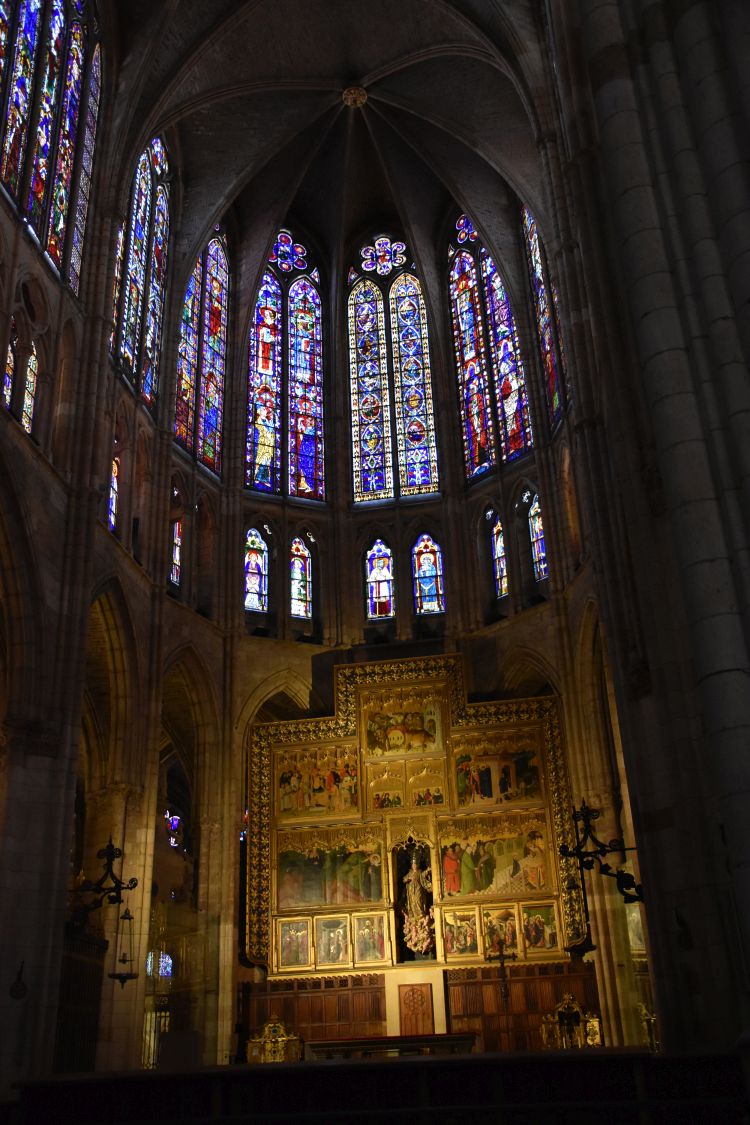
Some of the windows are from the 13th century, some are newer – even up to the 20th century. 1800 square meters of glass produce this solemn atmosphere.

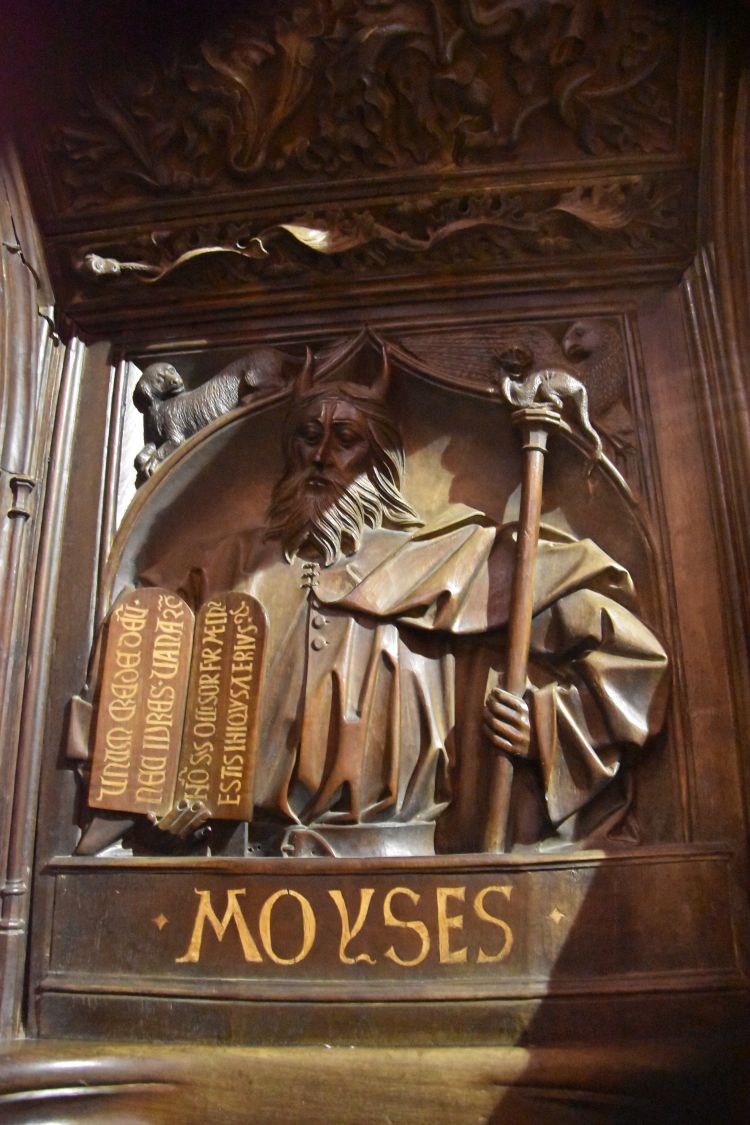
The choir with the carved chairs from the 15th century is in the middle of the nave. This is Moses carved into the backrest.

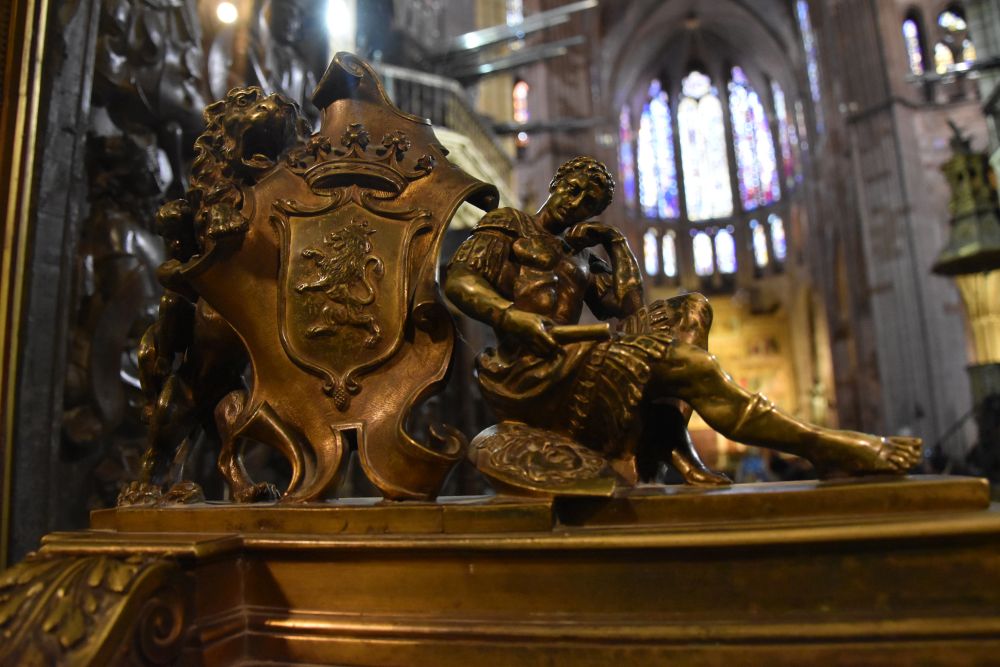
This figure guards the entrance to the choir – I find another lion here.

The baptismal font shows yet another lion. Yes, we ARE in León.


Plaza Mayor and San Martín

The city center is for pedestrians only. Through narrow streets, we walk to the Plaza Mayor. The market is taking place here, in front of the old town hall.

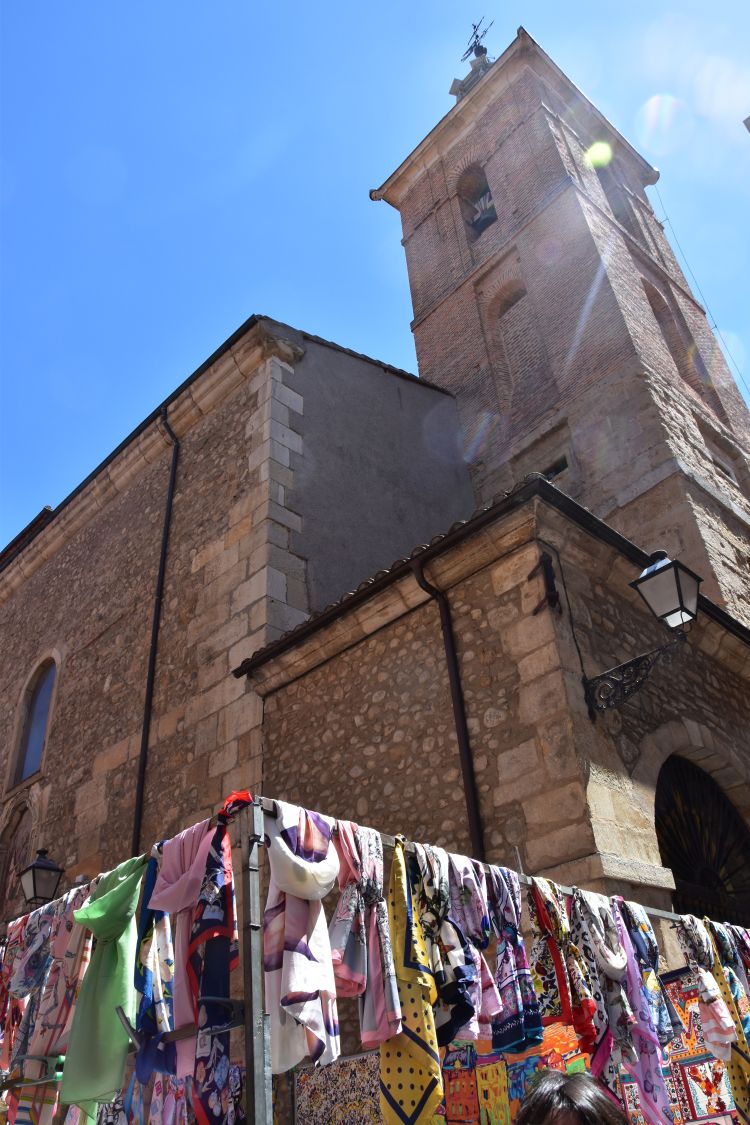
Near the church San Martín, they sell clothes.

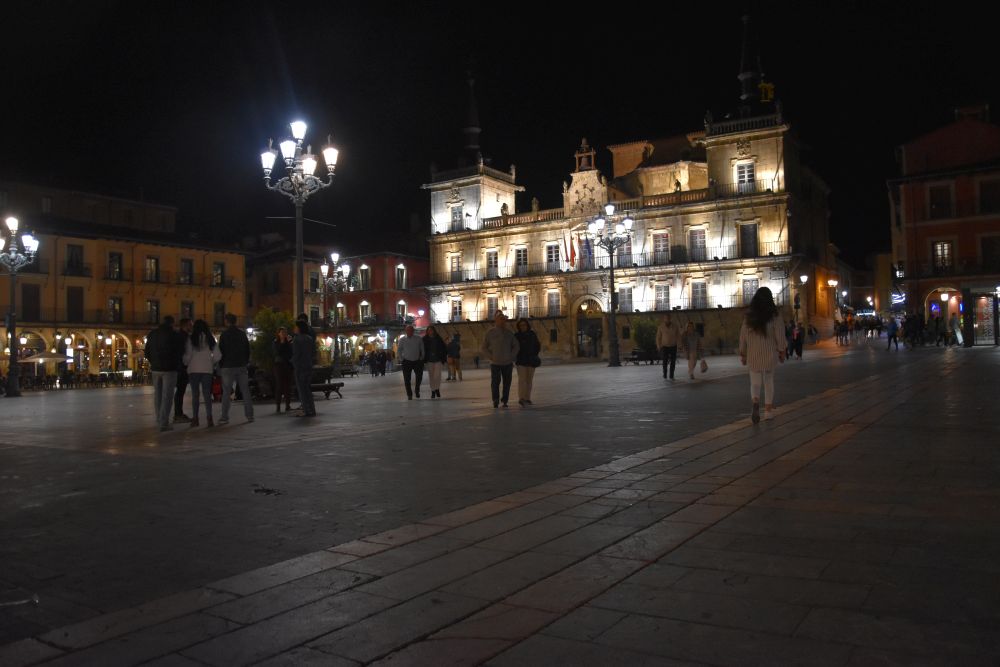
In the evening, the Plaza Mayor is empty – no market stands any more.

This is the so-called “wet” area (Barrio Húmedo). On a Saturday evening, it is very, very busy and loud here. I feel happy amongst all the cheerfully chatting people.


Palacio de los Guzmanes and Gaudí’s Casa de Botines

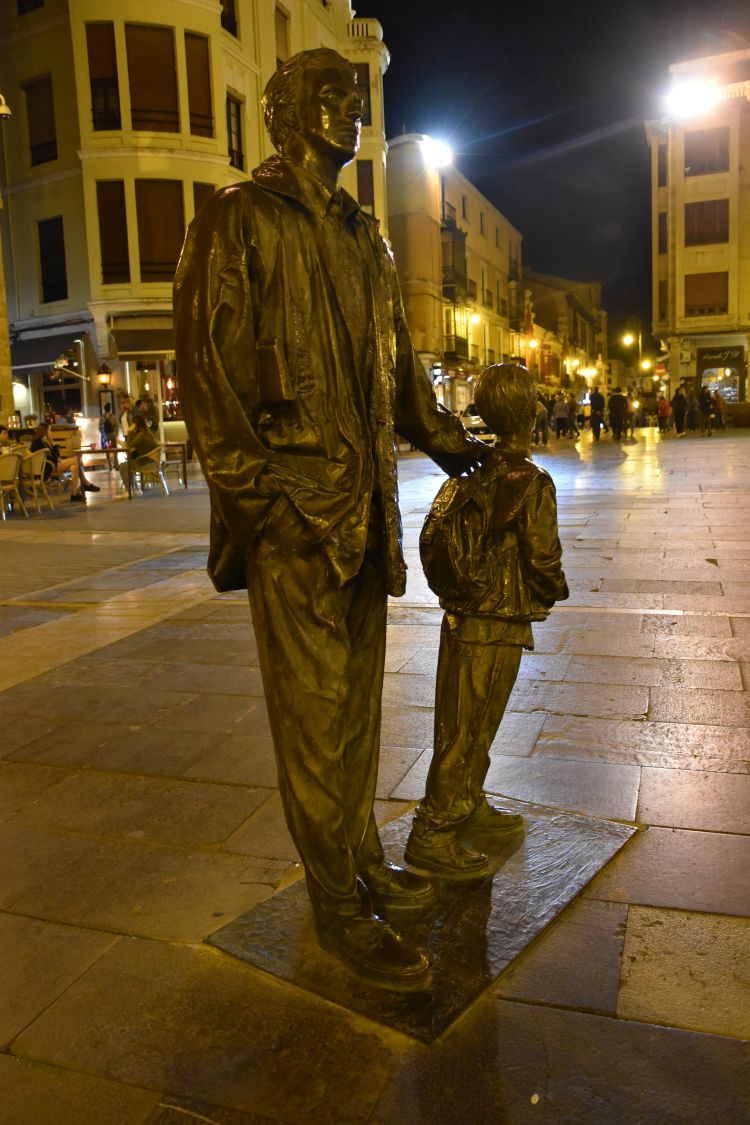
The Art Nouveau Casa de Botines belongs to Gaudí’s early works. Güell asked for it in 1894. Gaudí sits in front of his work and people join him here.

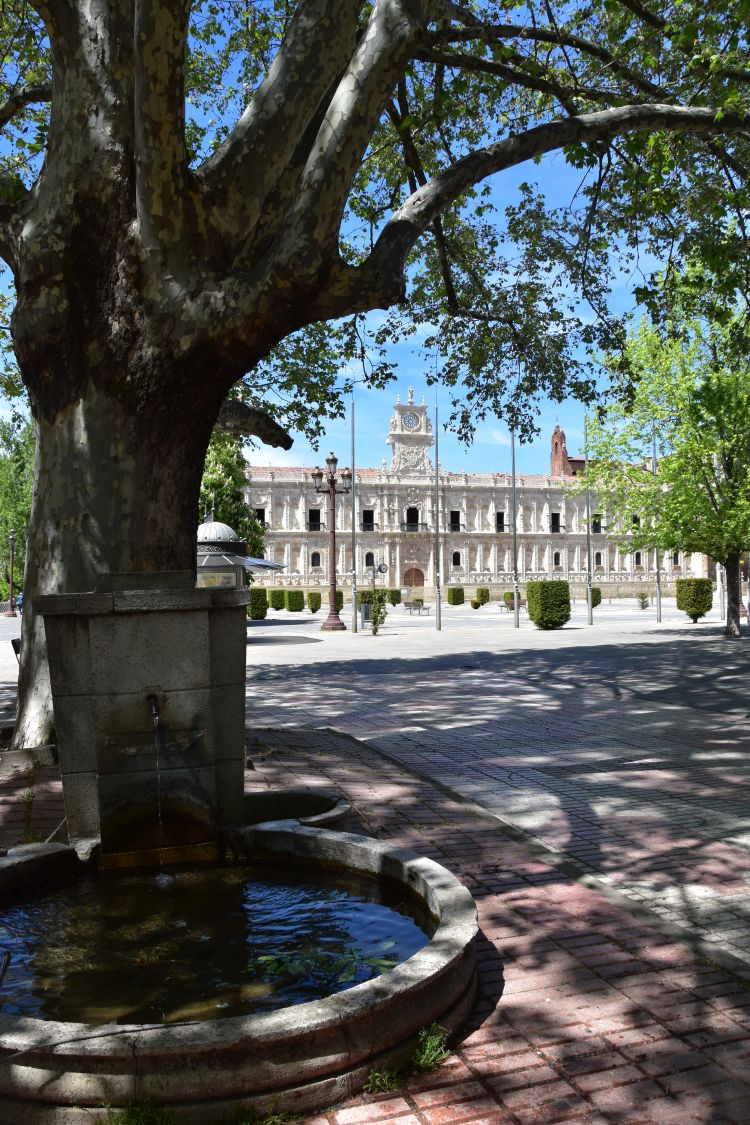
Next to Gaudí’s house, there is the Renaissance Palace of los Guzmanes.

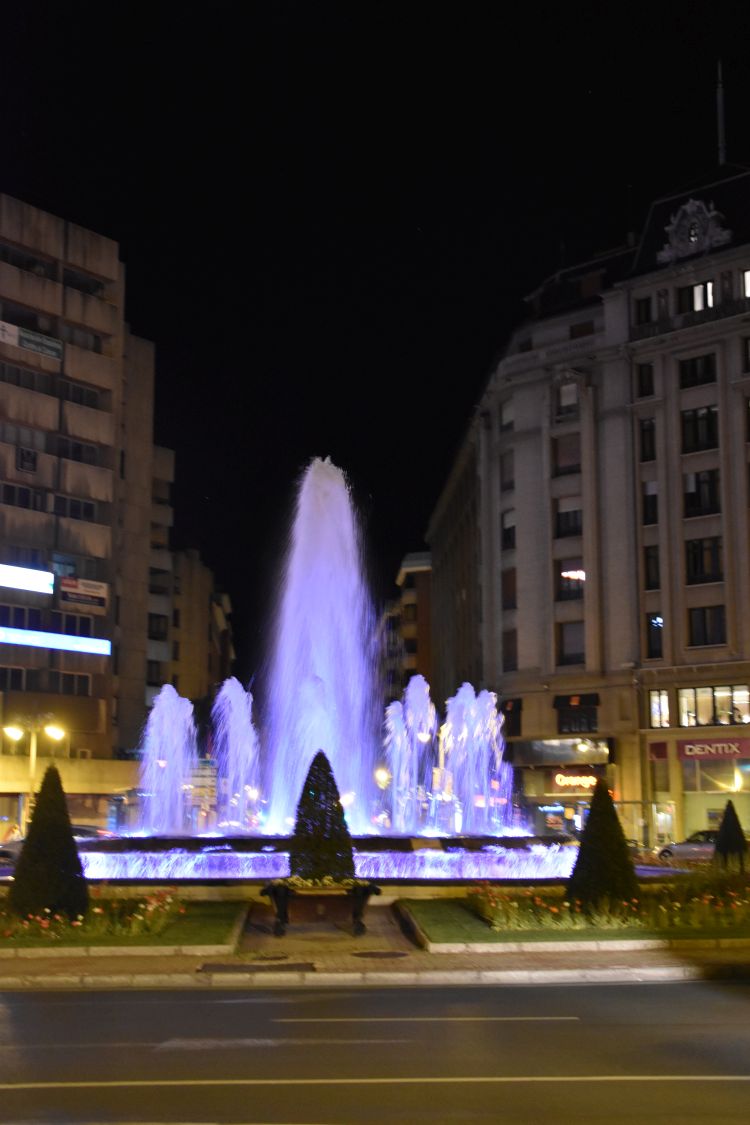
The Plaza Santa Domingo marks the entry to the Calle Ancha – with this playful fountain.


San Isidoro and the Romanesque “Sistine Chapel”

The Romanesque Collegiate Church San Isidore is used for a solemn service on this Sunday morning.

The tympanum shows the Deposition from the Cross… pincers are used to remove the nails, the artist has observed that carefully.

We visit the Panteón Real or the Romanesque “Sistine Chapel”, as it is called. The frescoes have been painted around 1100 and show the life of Christ and a calendar that I like very much: For example in October, the pigs are eating acorns in the Ilex groves – much detail! No fotos allowed. Look at the well preserved frescoes in the Internet.


The Rio Bernesga and the Convento San Marcos

To wrap up our visit, we stroll along the lush promenade along the Rio Bernesga…

… and admire the monastery San Marcos built in plateresque style between the 16th and 18th century. Today, it is a luxurious five star Parador.


Some History

León was founded by the Romans in the 1st century AD.  It was then called after the VIIth Roman Legion which was later shortened to “León”. It was conquered by the Arabs around 700 and, when reconquered in the 10th century, it became the capital of the kingdom León – for 200 years.

.

The annoying accident that ended not too badly

In the Museum San Isidoro, someone that came close to me discussing loudly took my wallet, though I had it close to me, while I was paying for some postcards. The museum personnel were extremely helpful. One of them took us to the local Police Office, where they sent us to the National Police office. I block my payment cards. At the National Police Office, I say, I want to make a denunciation. “About what”, the policeman at the entrance gate asks me. “My wallet has been stolen at the Museum Isidoro.” “This one?”, he asks and showed MY wallet, with all cards inside. I manage to deblock my EC cards. And we are very impressed about how helpful everyone is here: The guides at the museum, the reception lady at the hotel and the policeman at the National Police Station.


A wonderful light finish – dinner at the Kamado

Spanish food is rich – we felt very full from the delicious lechazo (milk lamb) that we had eaten in our hotel last night. Next door is the Kamado and it serves dimsam, the Chinese dumplings. Ursula has an unfermented green tea served luke warm (tasty) and I found the Galician Godello (a good match with my steamed dimsam dumplings). This was a great farewell, though not authentically Leonese. The pofessional young waitor impressed us. Good night now!


Sources: Marion Golder, “Nordspanien und der Jakobsweg”, Dumont 2017 and “Ganz Leon”, Reihe Ganz Spanien, Escudo de Oro 2014.


Oviedo… Pre-Romanesque churches and a relaxed city center

Friday, May 10th – today we aren going to visit Oviedo, the capital of Asturia.

.

The two Pre-Romanesque churches on the Naranco hill

First thing in the morning, our GPS goes crazy, drives us up on very, very steep narrow roads, until we reach a dead end in the middle of the forest. The view is spectacular: We see Oviedo surrounded by mountains.

We drive back down, up again and finally we find the Pre-Romanesque church Santa Maria del Naranco.

This church was built by the Asturian king Ramiro I around 850, first as a palace and still in the 9th century it was rebuilt as a church. We study the discreet and pretty decoration.

There are small medaillons above the arches.

The window above the terrace is elegant.

The view of the valley and the mountains of Oviedo is great from this palace-church.

Some hundred meters from here we find the chapel San Miguel de Lillo, built at the same time.

Elegantly decorated windows here as well.

This church is closed for renovation.


The third Pre-Romanesque church on the meadows (los Prados)

The third Pre-Romanesque church is San Julián de los Prados, on the meadows next to a large road with heavy traffic.

Inside we find beautiful frescoes – they show floral patterns and buildings (but no people or animals) and have been restored in the 1980’s. Photos are not allowed inside.

We return to our hotel with the lush garden and join Spain for siesta.


The Cathedral San Salvador in the city center

The Cathedral San Salvador, Gothic in style, was built between the 14th and the 16th century. The city planned two towers and completed one of them. I find it graceful.

Sculptures like this woman are all over the city center. This one is called “La Regenta”.

The Cathedral has an open nave, which is untypical for Spain; usually the choir is in the middle filling the nave ungracefully. Not here. The choir has been removed, the nave is open and the view of the golden altar is free. The altar has been created at the brink of Gothic to Renaissance (which is called “Isabelline” in Spain).

Not far from here we find this expressive Romanesque sculpture of San Salvador from the 11th century.

The most important piece in the treasury chamber is the Victory Cross. It is said that Maria handed this cross over to the commander Peylao who defeated the Arabs near Covadonga in 722 (yesterday we were in Covadonga, the craddle of Spain).


Strolling through the narrow streets of the city center

The narrow streets in the city center are good for strolling around. At the end of this pretty street, we can see the tower of the townhall.

Relaxed squares all over and many, many inviting bars like this one.

To wrap up our Pre-Romanesque culture tour, we look at the back of the San Triso church right next to the Cathedral.

.

Dinner and good-bye

We return to our hotel and have dinner in one of the busy bar-restaurants nearby, in the Tonel. An extremely professional waitor serves us. I have pike stuffed with seafood – prepared the Asturian way. We watch a very tall waitor, as he pours out the cider holding the bottle high above a tilted glass – a real art.

There is much more to see in Oviedo – perhaps we will return…

The cradle of Spain – Covadonga

It is Thursday 9th of May and we discover the cradle of Spain: Covadonga in the Picos de Europa.

.

The lakes high above the cradle of Spain: Lago Enol and Lago de la Ercina

The forecast announces rain for the afternoon. We arrive in Covadonga around eleven and decide to drive the additional 10km to the glacier lakes above. The route is spectacular, climbs up from the valley (you see it on the photo), then follows the steep hills and after each turn we see more and more peaks of the Picos de Europa.

The first lake, Lago Enol, lies on 1080m. 

The second lake, Lago Ercina, at 1108m, is just below the snow mountains.


With the Asturian cows, we enjoy the view here.

Ursula loves the flowers, gentianes, Christmas Roses and Affodills.

.

Covadonga – the cradle of Spain

We learn that the two lakes, formed by glaciers, give birth to creeks that disappear later, flow through various karst tunnels and reappear, one such secondary source being under the Cueva Santa, the cradle of Spain. 

The Spanish Reconquista started here in Covadonga in the mountains of Asturia. That was in 722*. The charismatic commander of the Visigoths, Pelayo, was able to unify the mountain people,  motivate them to oppose to the taxes imposed by the Emir of Córdoba (the “Arabs”), lead the Arab troops into traps and vanquished them. It is said that Pelayo and his troops hid in this cave that is now the Cueva Santa.

No photos allowed of the Virgin that is said to have given the wooden cross to Pelayo and this was crucial for his victory. This cross can now be seen in the Cathedral of Oviedo.

As the lions may indicate, it was León with Castilia that later took the lead of the Reconquista. The cradle, Asturia, was downgraded from kingdom to principality. But until today, the Spaniards venerate Covadonga and the Cueva Santa very much.

Near the cave is the Neo-Romanesque Basilika San Fernando.

.

Heavy rain – we retreat to our next hotel in Oviedo

We have just accomplished visiting the lakes and the cradle of Spain in dry weather. The first rain drops start to fall, when we leave Covadonga. An hour later we reach Oviedo in the pouring rain. The hotel Palacio de la Viñona is comfortable.

We make a short visit of the city center of Oviedo, watch the waitors pour the cider into the glass from high above and eat veal with sauce made from mountain cheese. 

We are wet-through. We return to our comfortable and warm hotel. From tomorrow on the weather forecast announces better weather and warmer temperatures. We look forward to that.
.

More about the Reconquista

The mountain people of Asturias defeated the Arabs in 722. In Poitiers in France Charles Martel halted the invasion of the Muslims in 732. In 801, Charlemagne conquered the Marca España around Barcelona to prevent the Arabs from further attacking what is Southern France today. At school we had learnt about the two Charles, but not about  Asturias and Covadonga. It was from Asturias and from Catalunya that the Reconquista continued. The two lines unified their forces later, in particular the catholic king couple Ferdinand and Isabella that in 1492 completed it by conquering Granada.