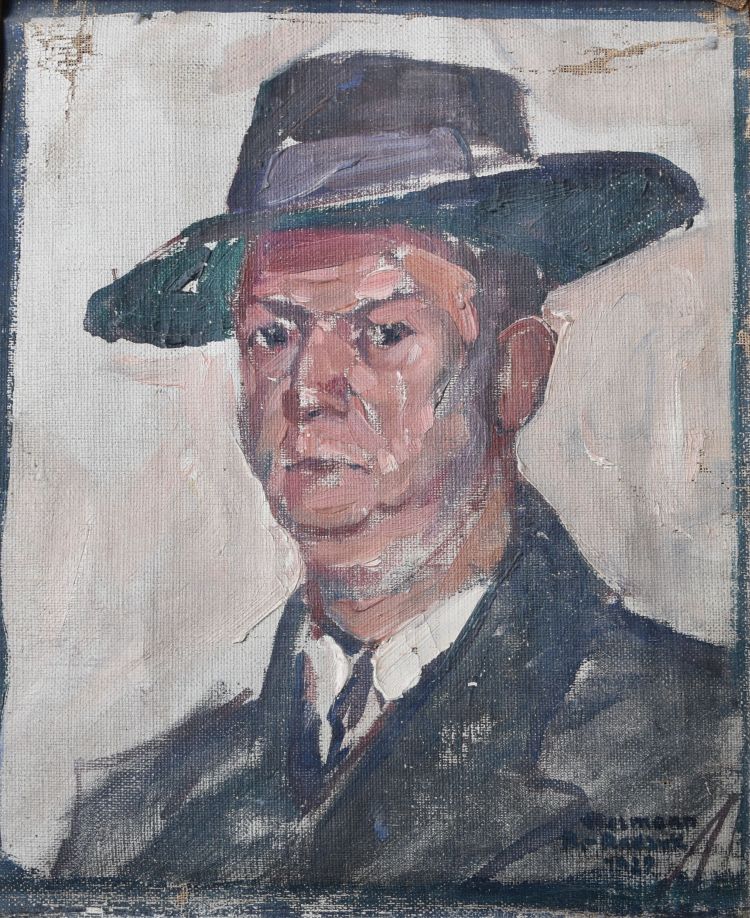
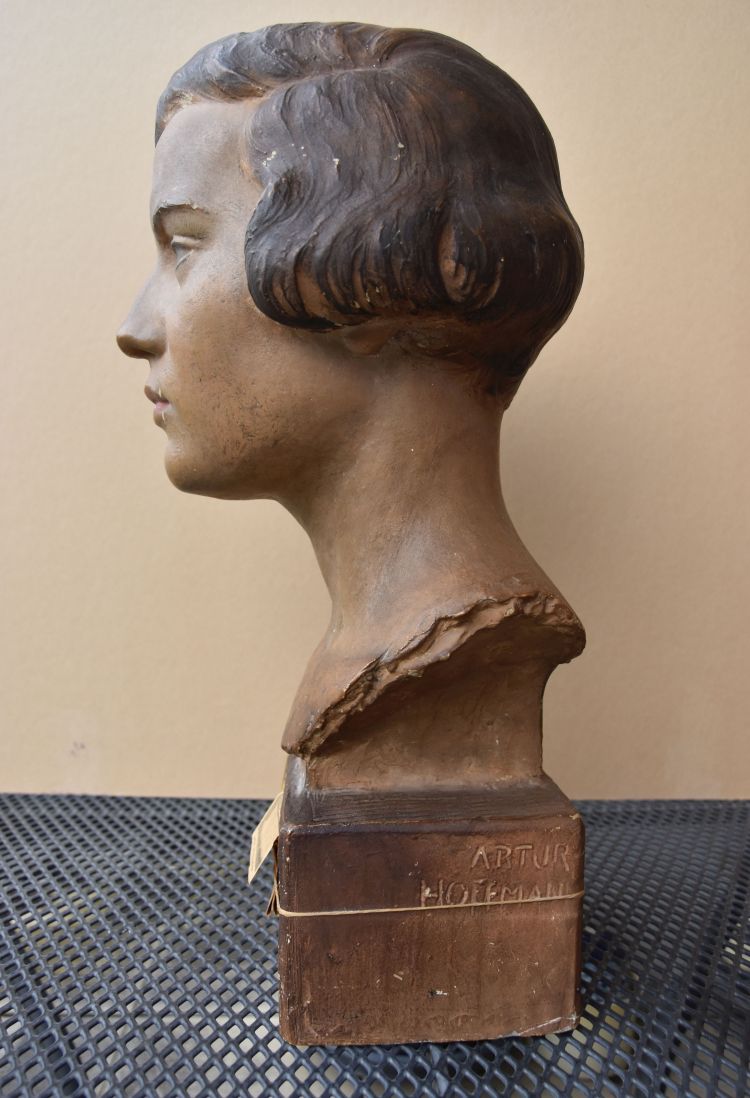
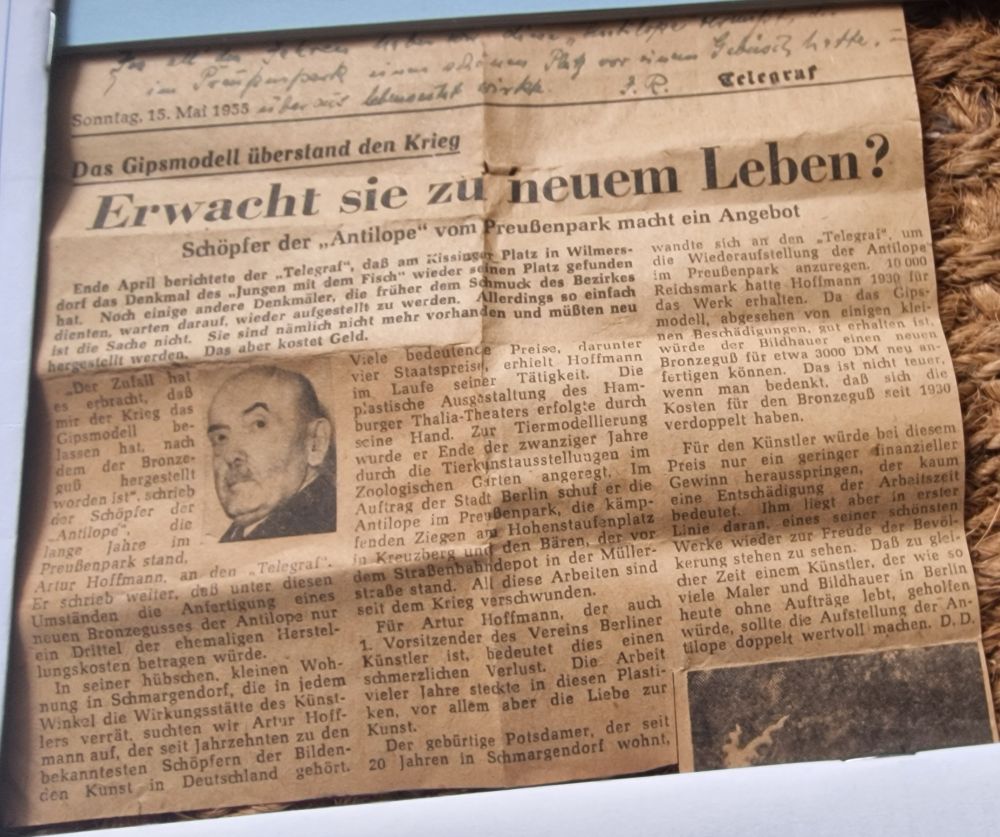
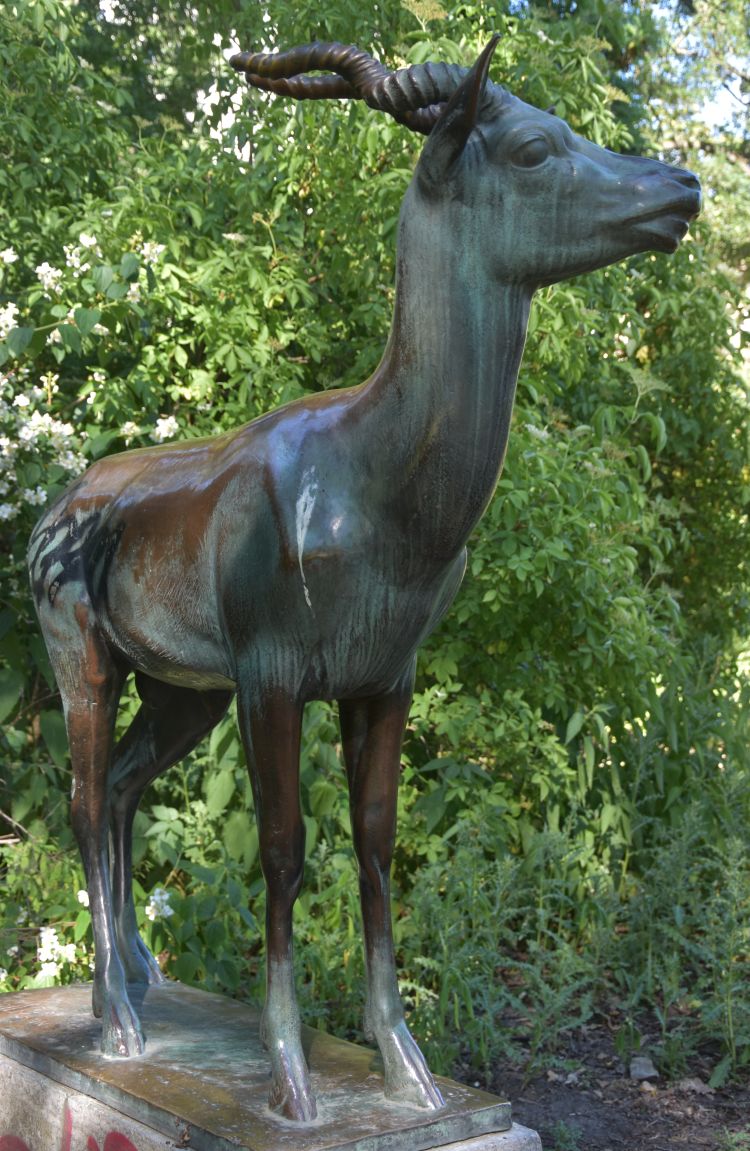
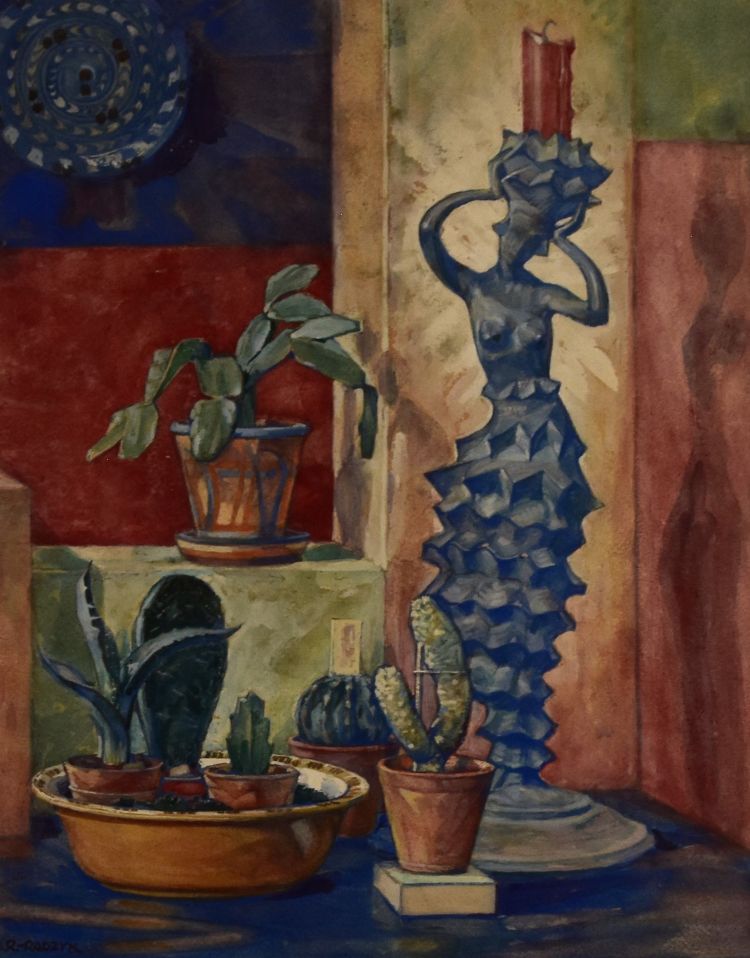
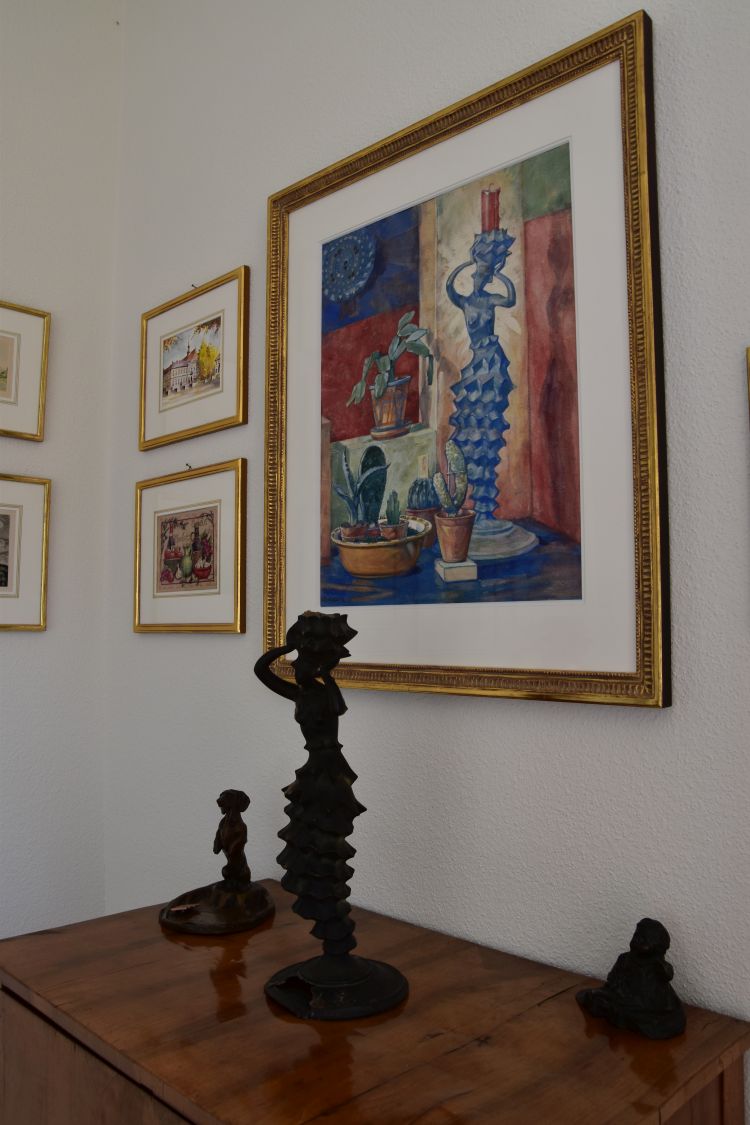
As my mother told me, my grandfather, Hermann Radzig-Radzyk, had art friends. However, the only art friend my mother mentioned by name was Arthur Hoffmann – I have talked about him in my latest blog.
Besides Arthur Hoffman, I identified more friends by guessing. One of them is Martin Meyer-Pyritz. The indication: We own two small bronze figures signed by him. With these two figures, we grew up, never asking who has made them.
Martin Meyer-Pyritz made the two little figures
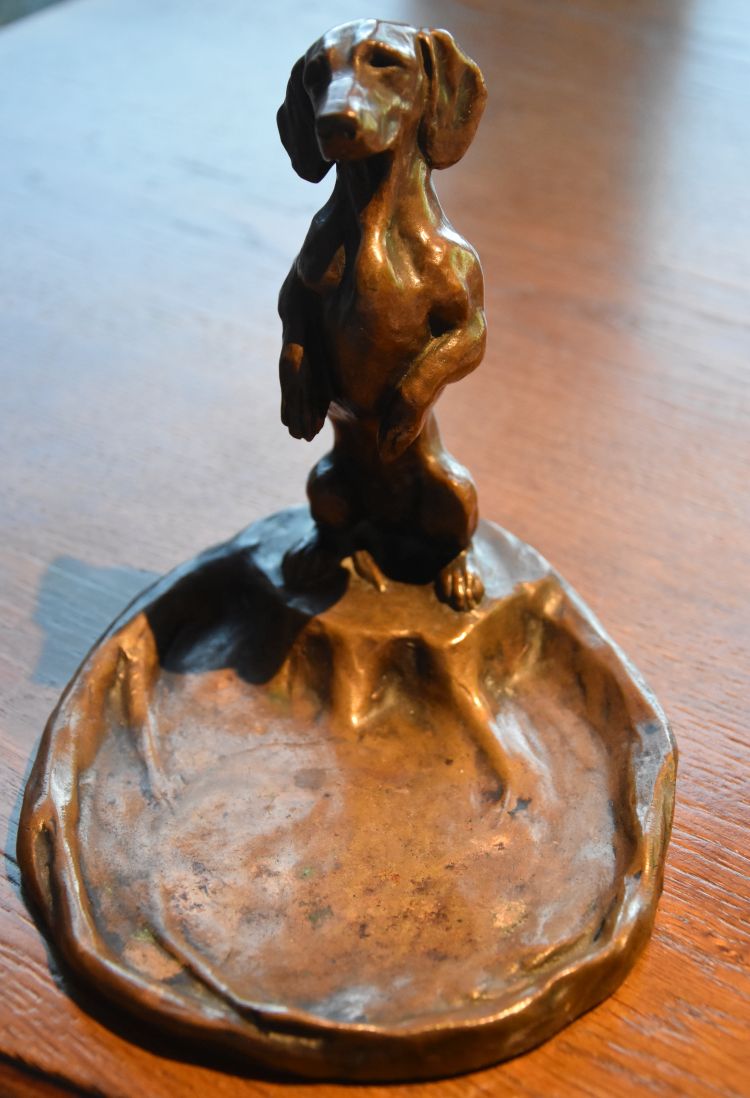
The two little figures owned by us are an ash-tray with a charming dachshund sitting up and begging…
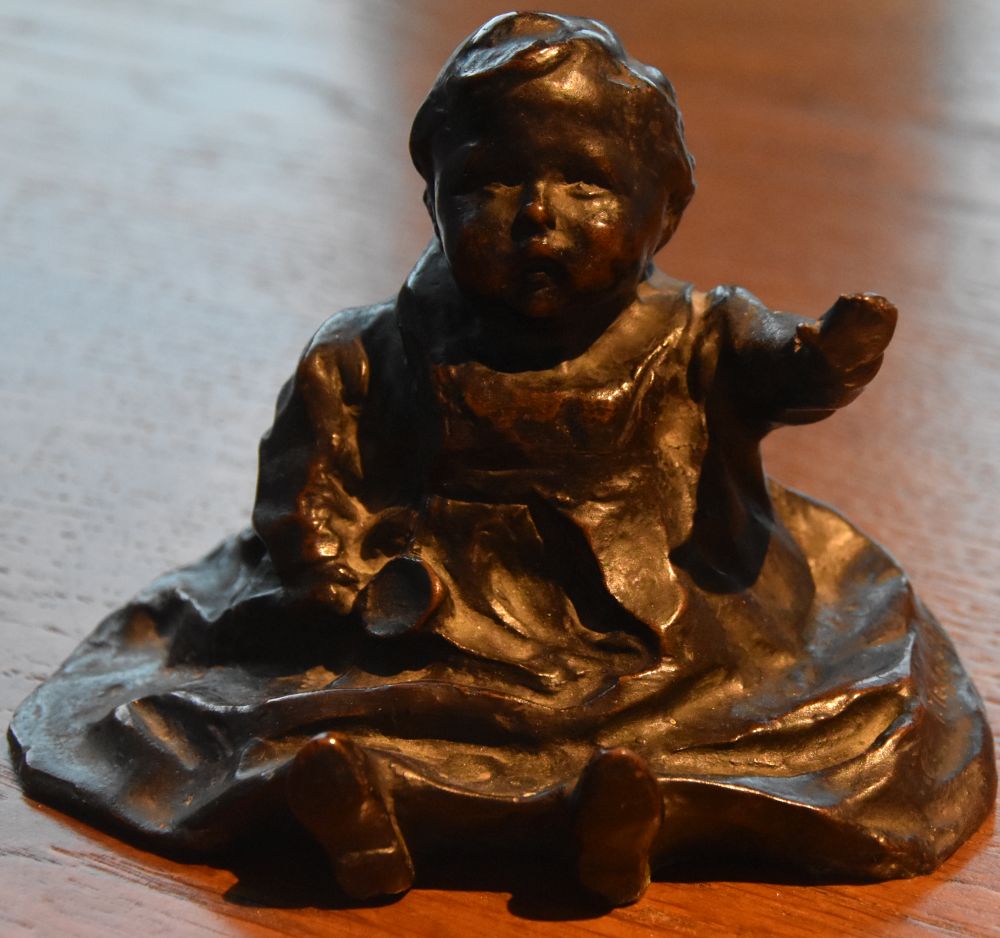
and a small child with one arm stretched out.
The artist engraved his name on the ashtray…
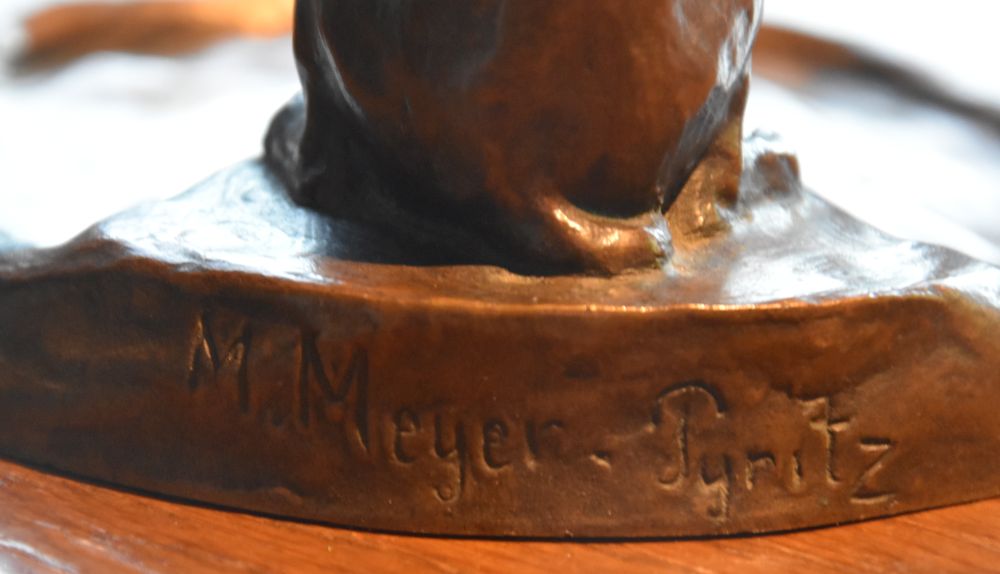
… and on the child sculpture.
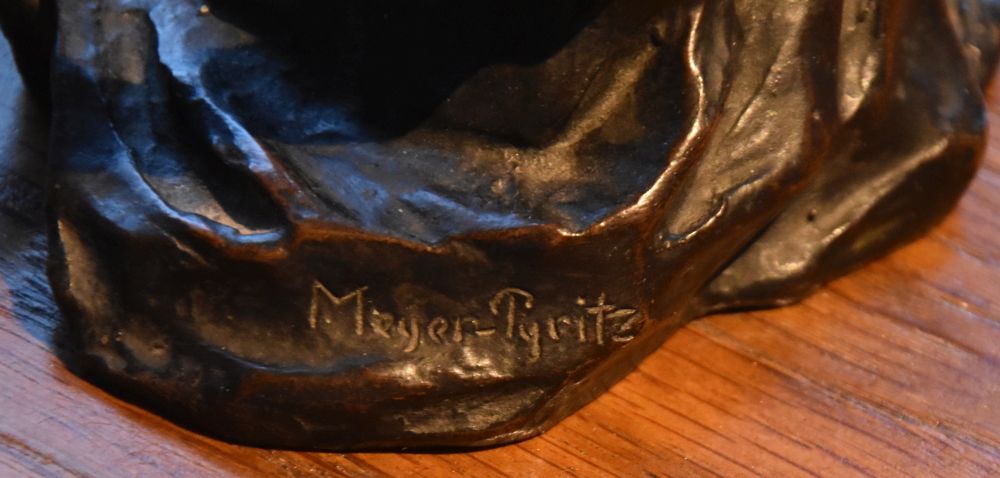
Only recently, I have taken notice of the engraving.
My memories connected with the two figures by Martin Meyer-Pyritz
I remember that my mum told me about an art friend of my grandfather’s that was very tall and used to put the ash trays high on the cupboards or book shelves. Perhaps this tall artist was Martin Meyer-Pyritz, and may be he offered the ash tray with the dachshund to apologize that my grandparents had to climb ladders to take down the ash trays again. Well, I have no evidence that Martin Meyer-Pyritz was tall, but it would make up a nice story which is not totally implausible.
In my memory, the small child used to carry a wedding ring on the left arm stretched out. Whenever my father returned home, he took off his wedding ring and gave it to the child. It was a clear sign, our dad was at home. And we were always happy, when he was at home. He was a wonderful father; sometimes he had two small chocolate mice wrapped in silver foil for his two girls. He left us in 1970, too young, but nevertheless we still see the wedding ring on the left arm of this small child and then think lovingly of our father.
Martin Meyer-Pyritz decorated two U3 metro stations at Berlin – first the Rüdesheimer Platz
The metro station Rüdesheimer Platz reflects what Rüdesheim is about: Wine and vineyards. Already, the grapes above “Rüdesheimer Platz” underline that.
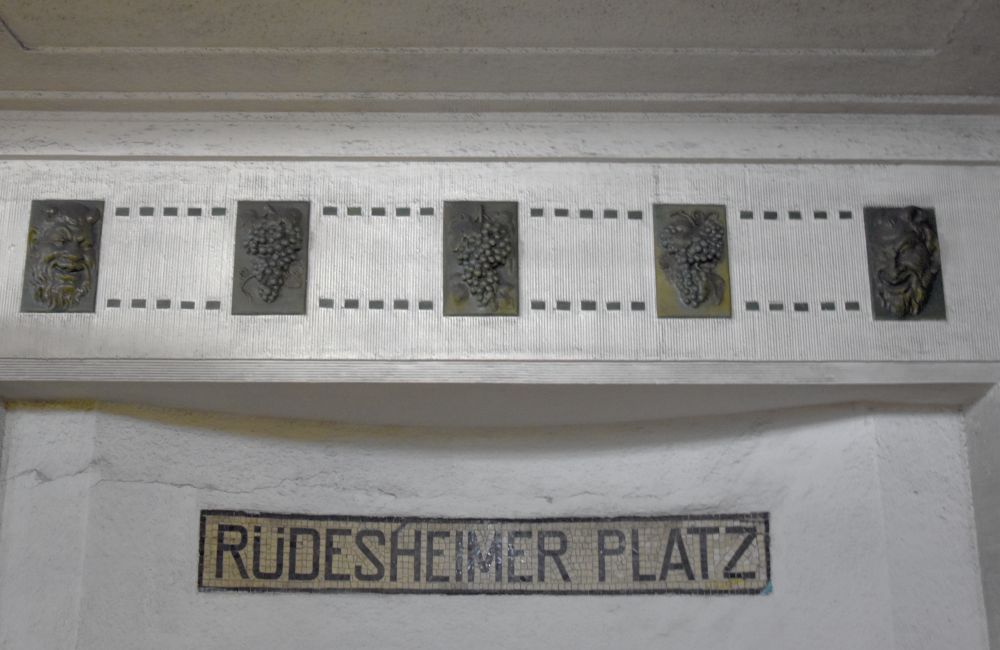
Martin Meyer-Pyritz was asked to decorate this metro station.
Photos of grape bunches and leaves create the atmosphere of vineyards. They are separated by columns with small medallions.
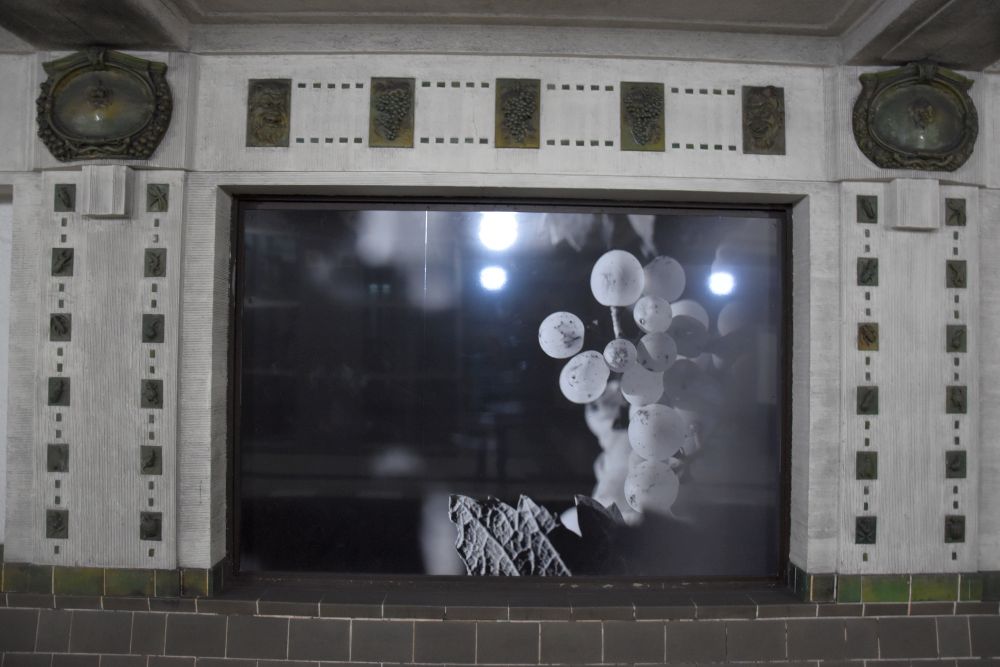
It is rather dimly lit here, you have to look carefully to see, what these small medallions are about.
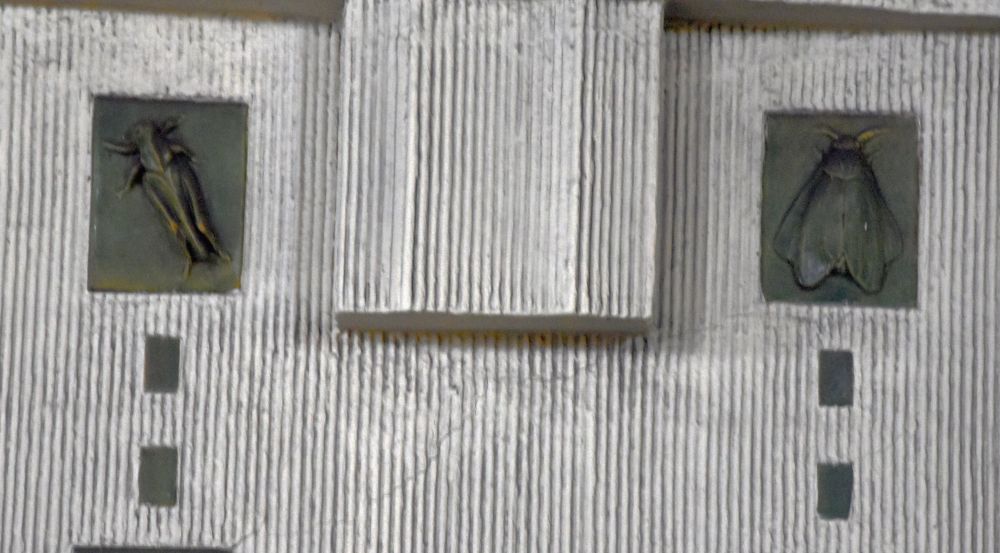
They represent animals in the vineyards, beetles, lizards, snails, frogs…
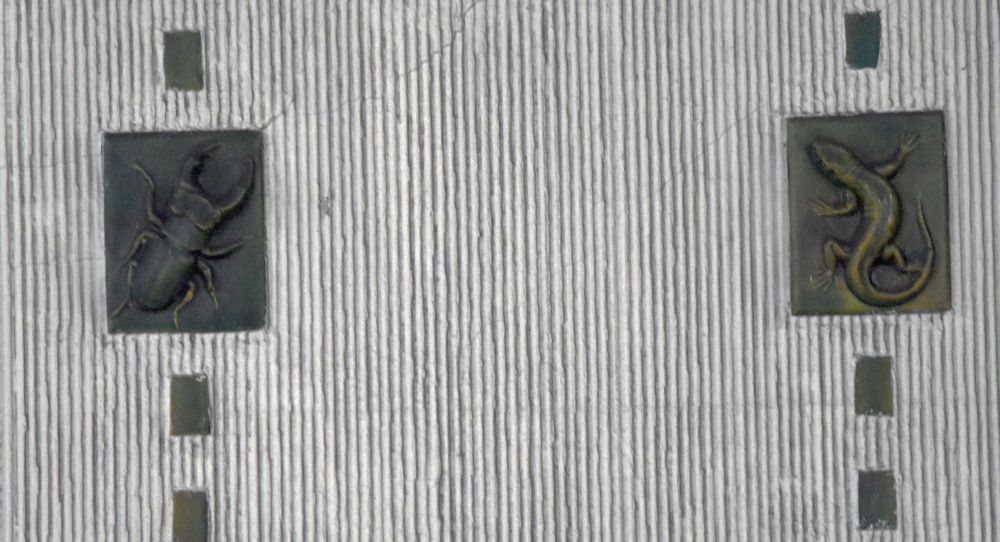
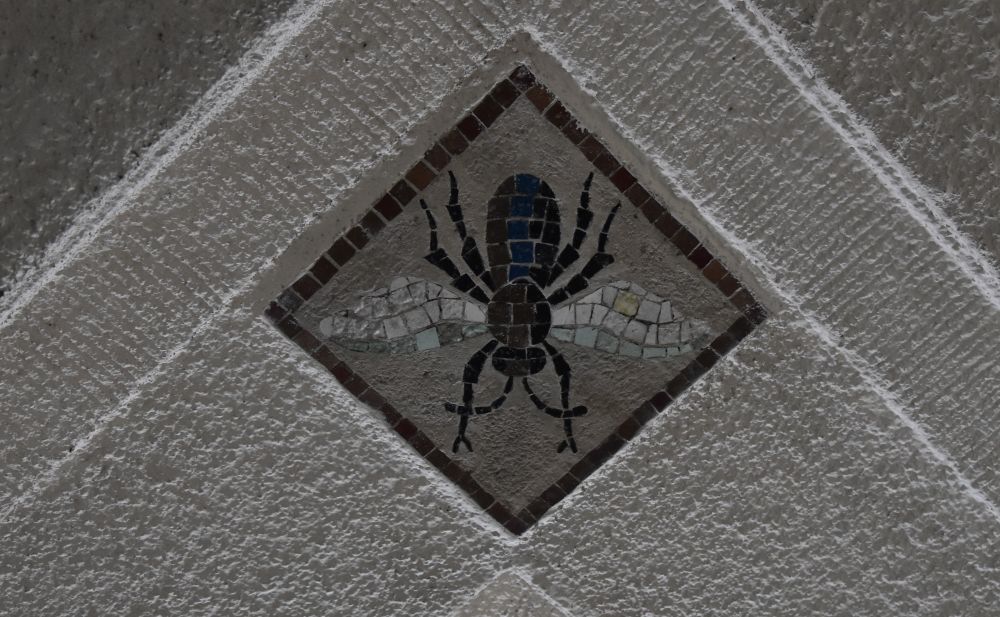
More beetles decorate the ceiling.
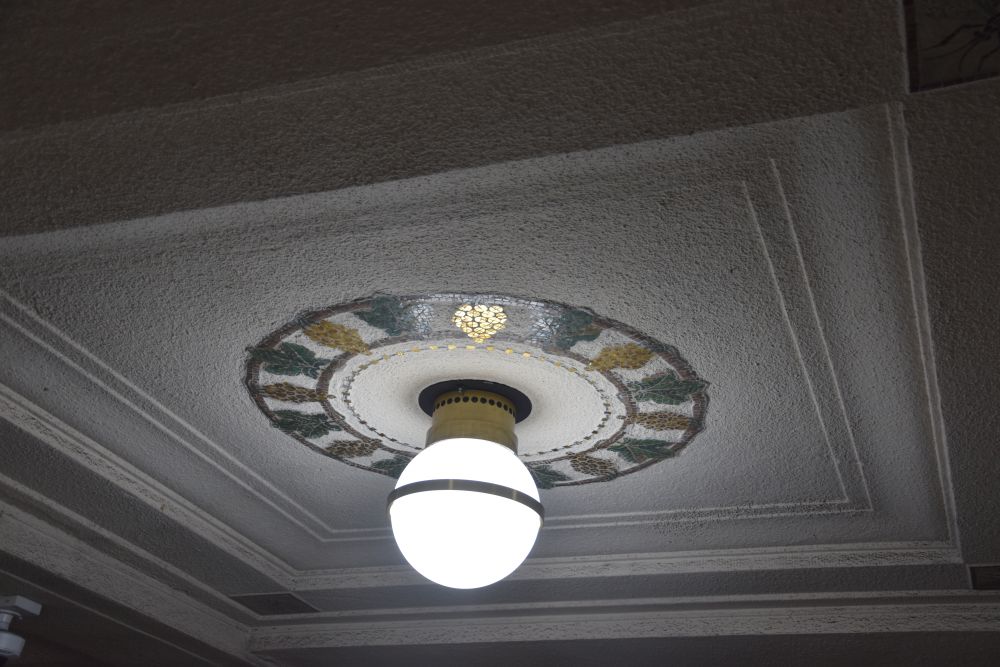
And the lamps are again surrounded by grapes.
The passengers rush by with their heads down. The small animals populating the vineyards go unnoticed. Neither have I noticed them so far. What a pity, they make up a charming illustration of vineyards.
Martin Meyer-Pyritz decorated a second U3 metro station, the Breitenbachplatz
Paul von Breitenbach was a Prussian politician and railway planner. Railways are the topics of the metro station Breitenbachplatz. Joachim Szymczak created the paintings of the station in 1988 commemorating the 150th anniversary of the Prussian railways, as an explanatory panel in the metro station says.
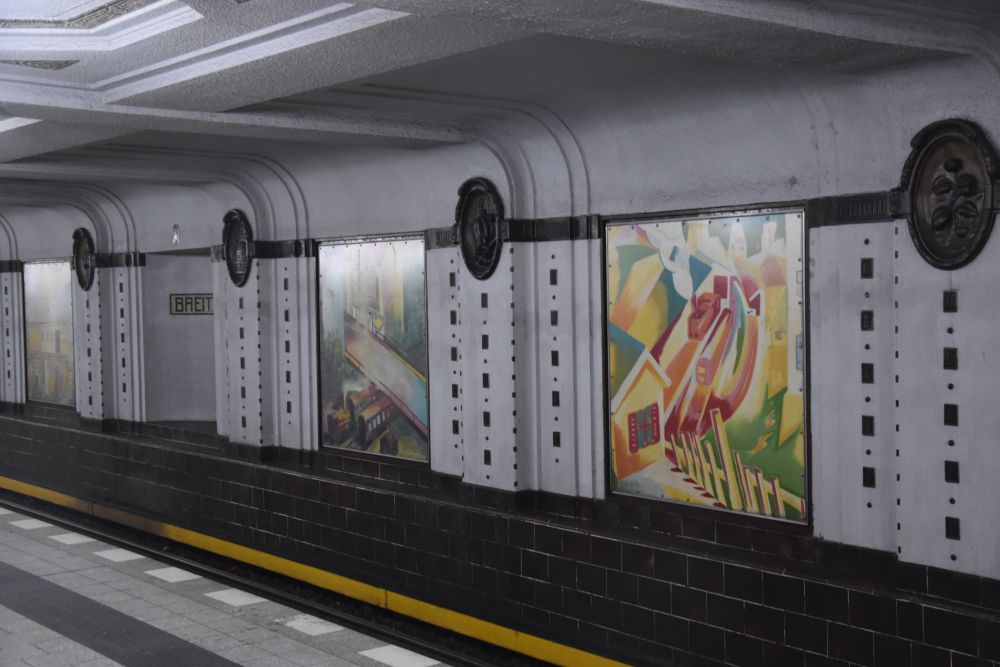
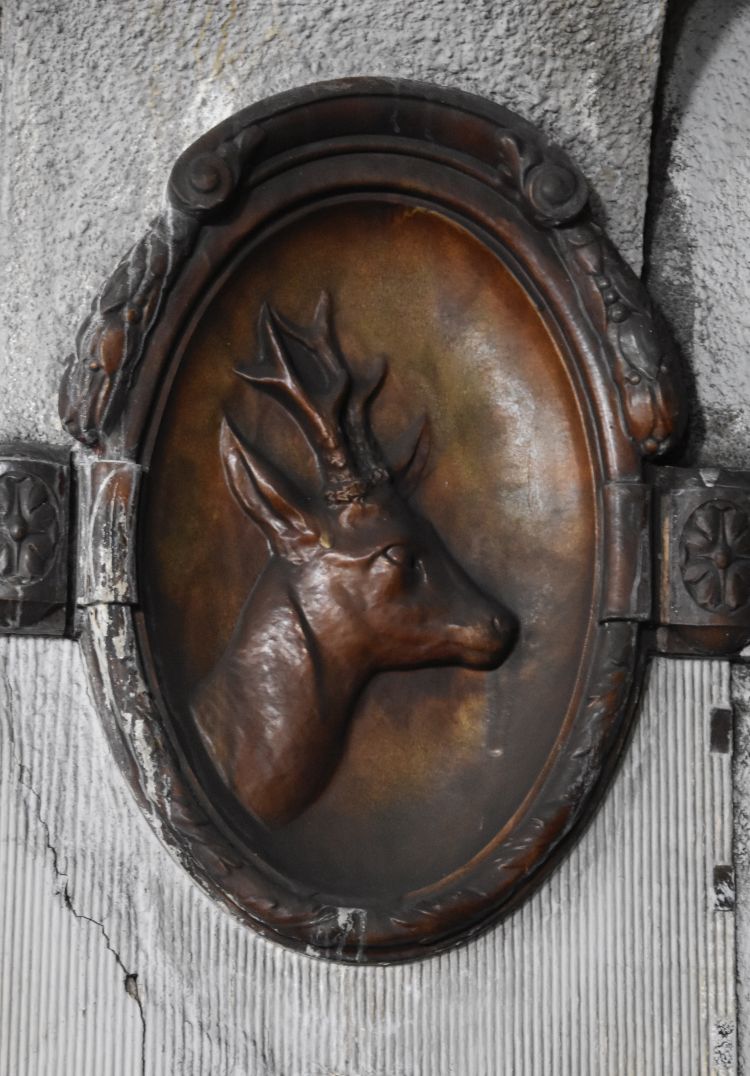
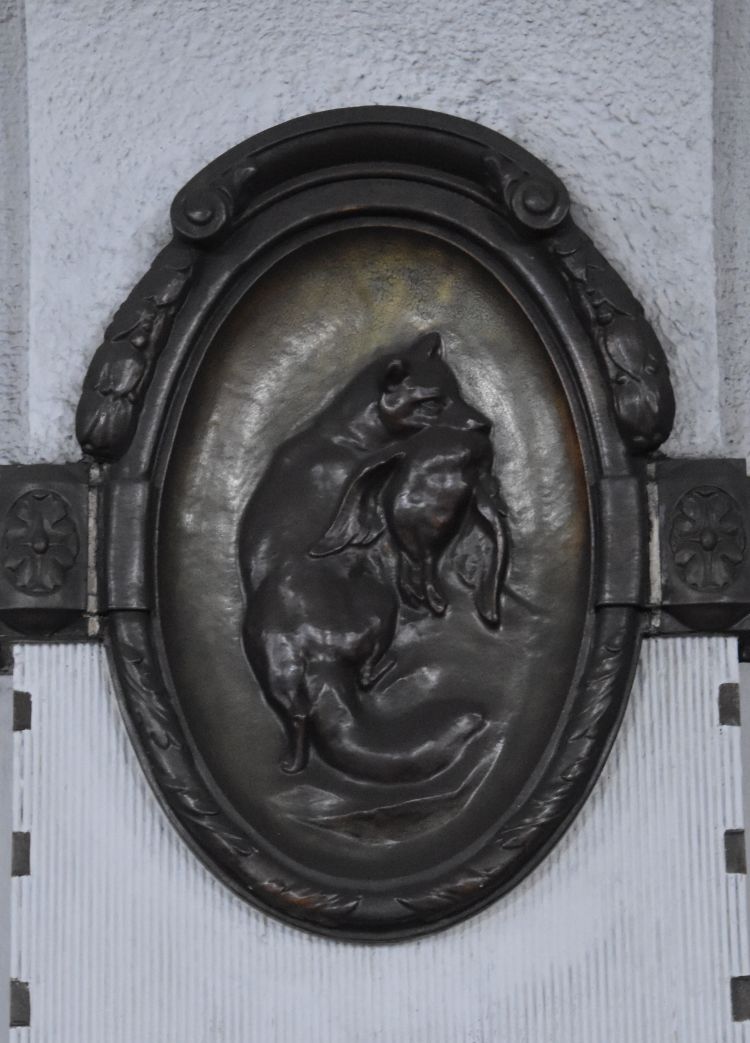
Martin Meyer-Pyritz created various medallions with animals, plants and research instruments. I found about fifteen different medallions that are repeated along the wall.
Here are some examples, the deer, …
… the fox with the prey, …
… and the owl.
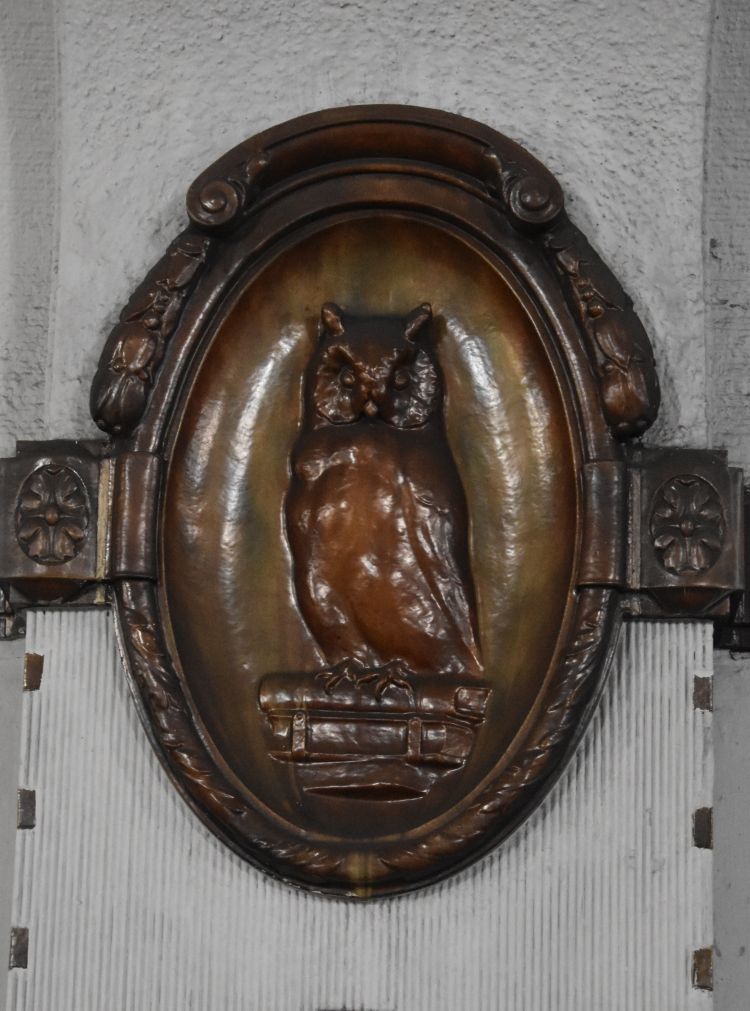
Also these medallions go unnoticed by the passengers that rush by entering and leaving the metro, while the voice says each time “U3 nach Warschauerstrasse (or Krumme Lanke) – einsteigen bitte – zurücktreten bitte.” (U3 to Warschauerstrasse (or to Krumme Lanke) – get in please – step back please).
Who is Martin Meyer-Pyritz?
In 1870, Martin Meyer-Pyritz was born in Pyritz, now called Pyrzyce. Hence, he was 9 years older than my grandfather and, like him, he also had Silesian roots. Martin Meyer-Pyritz studied at the Academy of Arts in Berlin and, like Hermann Radzyk, he participated in the Grosse Berliner Kunstausstellung.
Martin Meyer-Pyritz died in Berlin in 1942. The Bethlehem cemetery at Berlin Kreuzberg has installed a memorial place for him.
In 2023, the Preussische Allgemeine wrote about Martin Meyer-Pyritz that not every artist succeeds in modelling animals real-to-life. His dachshunds, other dogs, donkeys, eagles or marabous were popular. Because of his talent, he was called Tiermeyer” (translated: “animal-Meyer”). Still today, his sculptures can be acquired at auctions.
Martin Meyer-Pyritz also created animal sculptures for the Berlin zoo, however I could not find out, what the statues are – perhaps they have not survived the war.
Martin Meyer-Pyritz – an art friend of my grandfather?
Though my mother (and daughter of Hermann Radzyk) never mentioned the name of Meyer-Pyritz, I am pretty sure, he was a friend of my grandfather, as we own the two sculptures and as they both participated in the Grosse Berliner Kunstausstellung.
Whenever I look at the ashtray with the pretty dachshund, I imagine it being somewhere high up in the apartment of my grandparents, and they have to climb a footstool or even a ladder to take it down again.
Once more, my grandparents have opened my eyes for something I had never taken notice of before, namely the decoration of the two U3 metro stations Rüdesheimer Platz and Breitenbachplatz.
Nice to have met you, Mr Martin Meyer-Pyritz!
Sources:
- Wikipedia entry for Martin Meyer-Pyritz https://de.wikipedia.org/wiki/Martin_Meyer-Pyritz
- Brigitte Stramm, “der Bildhauer Martin Meyer-Pyritz”, Preussische Allgemeine, 16.06.2023, https://paz.de/artikel/der-bildhauer-martin-meyer-pyritz-a9035.html
- Auction houses sell sculptures, such as Galerie La Ménagerie, Auktionshaus Mehlis (sells the same ashtray we own)
- https://berlingeschichte.de/lexikon/chawi/m/meyer_pyritz_martin.ht
- https://petrapeters.ch/2022/06/24/berlin-lively-rudesheimer-platz/; in my former blog about the Rüdesheimer Platz, I had just taken notice of wine photos; I had not noticed the small animals belonging to the vineyards as well.