The third altar of Riemenschneider in the Tauber valley – at Creglingen

In August 2024, I follow the call of my grandfather, the artist Hermann Radzyk, and explore to the Taubertal. This morning, I have just visited the Celtic oppidum, and now, after a few more kilometers, I stand in front of the Herrgottskirche (Lord’s Church) at Creglingen. Here, I am looking for the third altar of Tilmann Riemenschneider that can be found in the Taubertal.

It is a miracle that makes this church special. A farmer had found the untouched piece of sacramental bread in the year 1334. Exactly where the bread was found, the local earl decided to build the church. It was inaugurated in 1396, with an altar at the exact location, where the bread had been found. A window allowed to see the bread and the earth.  The church and the altar became a pilgrimage site. This is, what I read in the brochure of the church (p. 1). In 1530, the margrave of Brandenburg-Ansbach adopted the protestant doctrine of Martin Luther and introduced it to his territory. As a consequence, the pilgrimage came to a standstill.

I walk around the church. The graceful tower outside is called “Tetzel tower”. However, it is unlikely that Tetzel stood on this pulpit to promote buying indulgence (forgiveness for sins), a commerce that Martin Luther was fighting against. Instead, the pulpit was probably used by the local priest on special occasions. 

Before the reformation in 1530, the church made good money due to the pilgrimage. At the end of the 15th century, they decided to acquire several altars for the church. Today, four spectacular altars from around 1500 decorate the church.

The altar of Tilman Riemenschneider attracts the most attention. More dignity was required for the place, where the sacramental bread had been found. The stone altar with the window disclosing the bread was no longer good enough. Between 1505 and 1520, Riemenschneider and his workshop fabricated the magnificent altar of Virgin Mary (Marienaltar). It is 9m20 high and 3.68m wide. The figures are made from lime wood (brochure, p. 21).

I am impressed. The altar of Mary stands in the middle of the nave, in front of the window behind it. I read that this window illuminates Mary from behind exactly on August 15th according to the Julian calendar, then the day of Mary’s Assumption. Today, the light of the window falls on Mary on August 25th, the Gregorian calendar reform of 1582 has shifted the date. 

Riemenschneider based his work on some etchings of Martin Schongauer and another master. Mary’s Assumption scene is in the middle, Angels carry Mary to heaven, the apostles are grouped around her, and the gap between the apostles makes it clear that Mary has left the ground. Around Mary’s Assumption, there are four scenes from the life of Mary: Annunciation by archangel Gabriel, Visitation (Mary – pregnant – meets Elisabeth, then also pregnant with John the Baptist), the birth of Christ in the stable and the Circumcision of Christ. 

Above, there are the Coronation of Mary and Christ as the Man of Sorrows. 

In the predella, we see the three Magi to the left… 

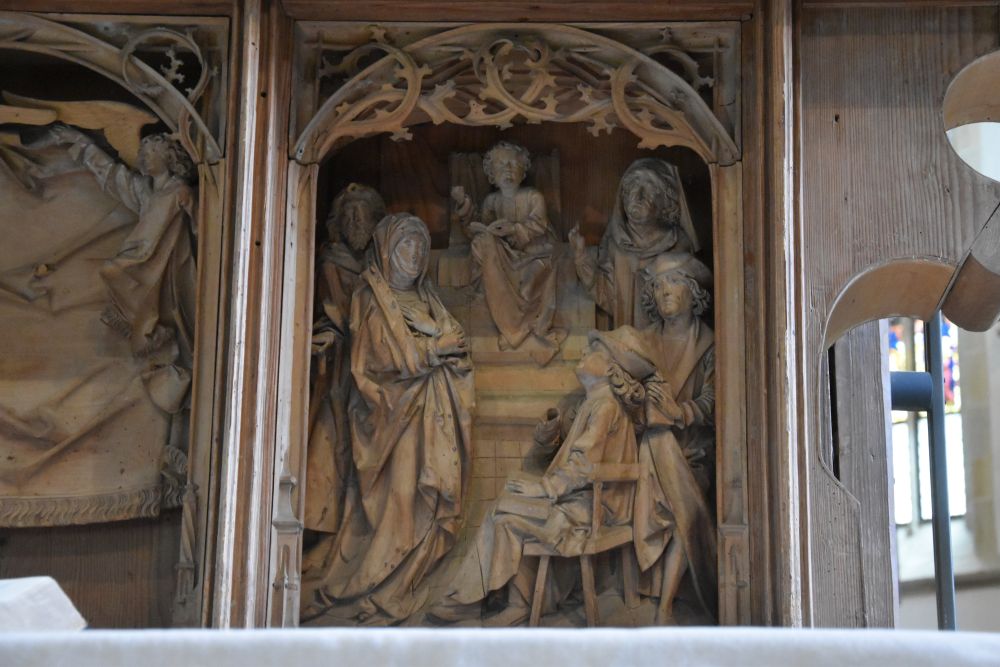
… and Jesus teaching at the school of Zachaeus to the right.
In the middle, there are two angels – it is assumed that the monstrance with the sacramental bread stood between them, but it is lost. Luckily we have not lost more of this altar. 

Soon after Riemenschneider’s altar had been installed in the church, the reformation took place. The reformers wanted to destroy the altars in the church. The priests and the citizens of Creglingen closed Mary’s altar and hid it away behind a board wall. The place became a shed for wreaths, and soon the altar was forgotten. About 300 hundred years later, probably after 1800, the altar was opened up again. Only, because there is a portrait of Riemenschneider in the predella, we know that the altar has been created by him. Fortunately, he has left his signature. And because on the “old” Assumption day, the light falls precisely on to Mary from the rose window behind her, it is clear that Riemenschneider has designed it for this church. What a story! 

I spend a long time in front of Riemenschneider’s altar studying the vivid expressions in the faces, the fall of the folds and the shadowing. Riemenschneider WAS a master. 

There are more wonderful altars in this church, all made around 1500 to support the pilgrimage still active then. 

The main altar stands in the choir. The artists are not known. The altar shows the Passion of Jesus with the crucifixion in the middle, two events before it (Gethsemane and Carrying of the Cross) to the left and two events after it (Entombment and Resurrection) to the right. 

The northern side altar illustrates the engagement of Mary and Joseph (the Virgin Mary is already pregnant), the birth of Jesus and the scene with the Three Magi in the middle. In the predella are two beautiful paintings, to the left the evangelist Markus, to the right Matthew. Matthew prays intensely looking to heaven, an angel watches him. The liveliness reminds of Renaissance paintings. 

The southern altar shows various Saints and martyrs. In the predella, I recognize Moses on the side wing next to the Last Supper, . 

I do not understand, why Moses has horns, it may be something like a gloriole, but this is, how I always can identify him. The scene shows the wonder of the bread in the desert. 

Before leaving the church, I greet Christopher – the fresco is from the beginning of 16th century. 

He is the patron saint of the travellers and the means of transport, and I am a traveller right now. 

I leave the church. On the one side of the entrance are the wrangler (in German: Streithähne which translates literally to “quarrelling cocks”; the two cocks are the illustration of the wranglers).
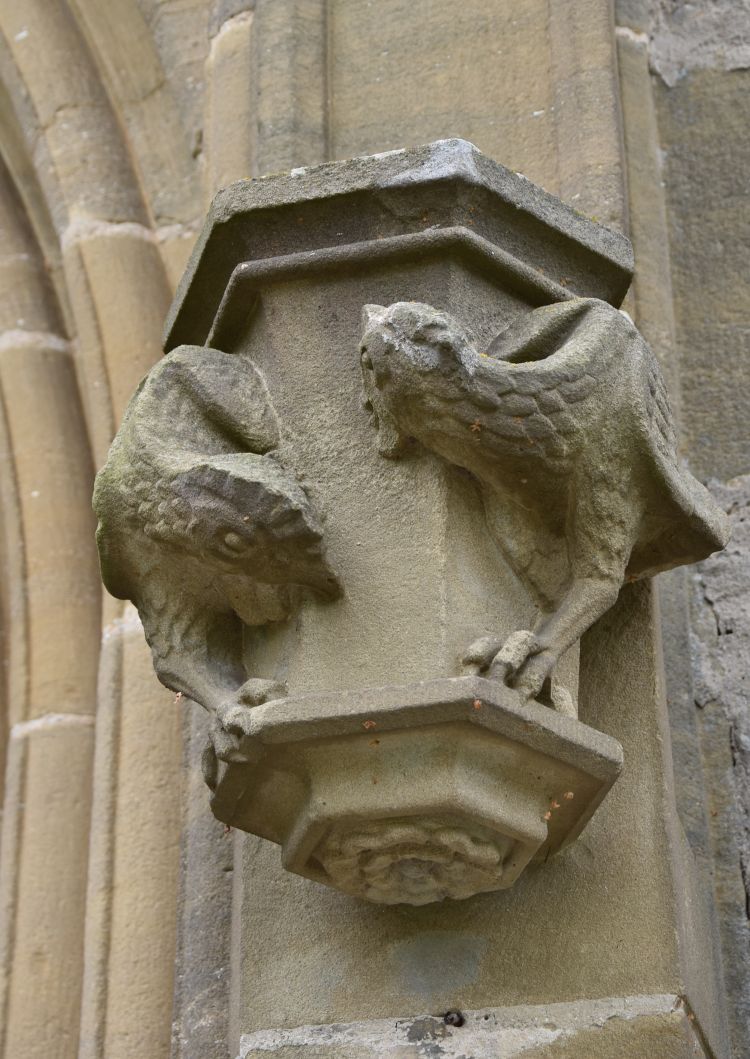
On the other side is the “sceptic” – the man robbing his beard seems to be in doubt, he is sceptical.

The wranglers and the sceptics have to remain outside the church. What a nice symbol.

I leave the wonderful Taubertal now and drive north towards Berlin.


Sources:

  • Sabine Kutterolf-Ammon, “Die Herrgottskirche zu Creglingen”, Kunstschätzeverlag, Gerchsheim 2016. (Brochure)
Hermann Radzyk painted at Detwang – I looked for one painting and found two

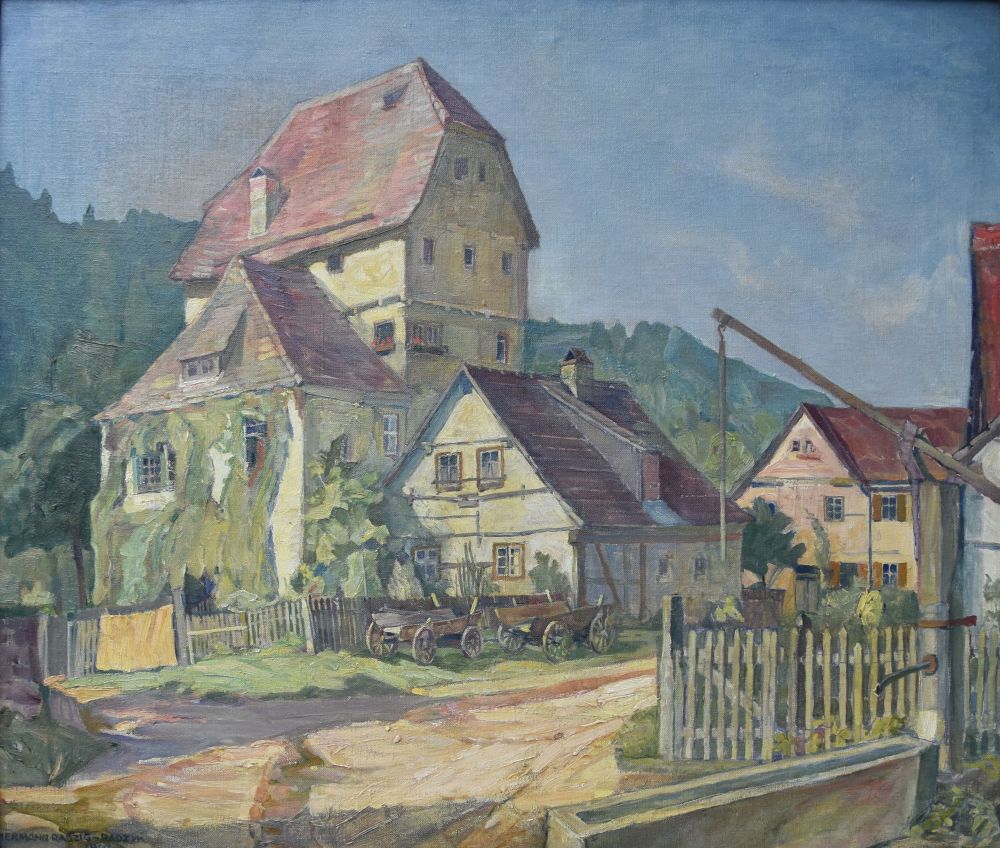
In August 2024, I settled in the hotel Schwarzes Lamm at Detwang near Rothenburg to find the noble manor that my grandfather had painted in 1942, 82 years ago.

Hermann Radzyk titled his painting on the back as “moated castle at Dettwang (Tauber valley near Rothenburg)”.

It is more than a manor, it is a small castle.


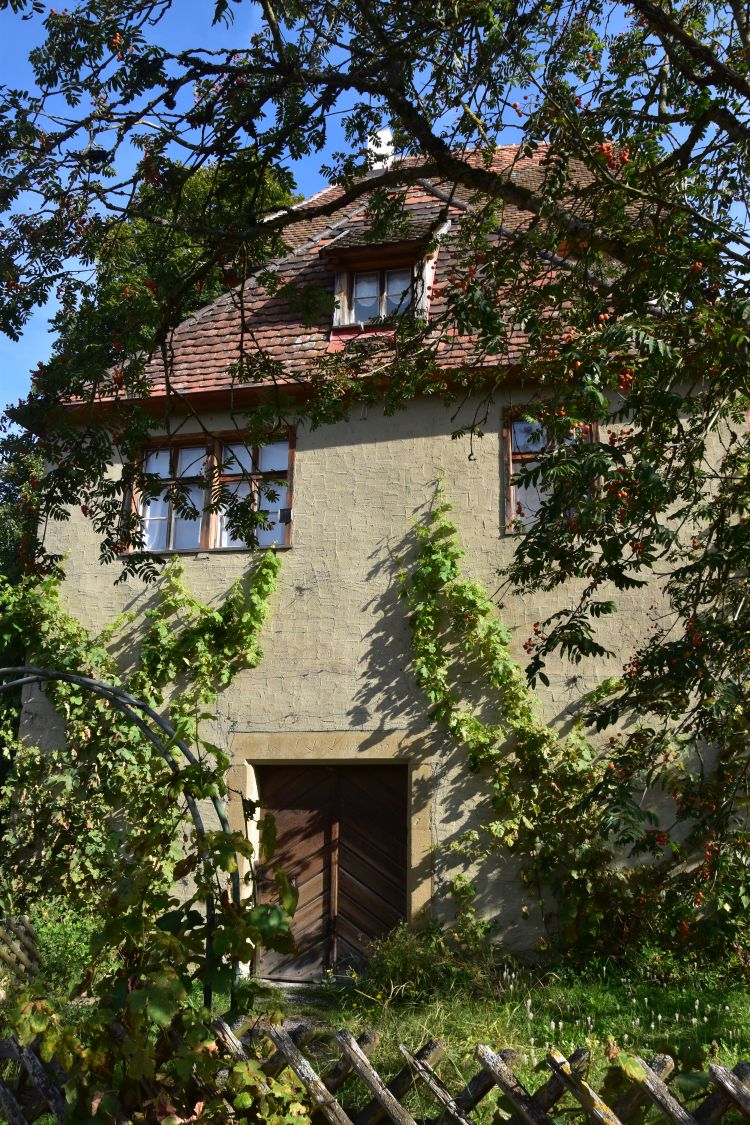
Found the manor, it is still called “Schloss Detwang” today

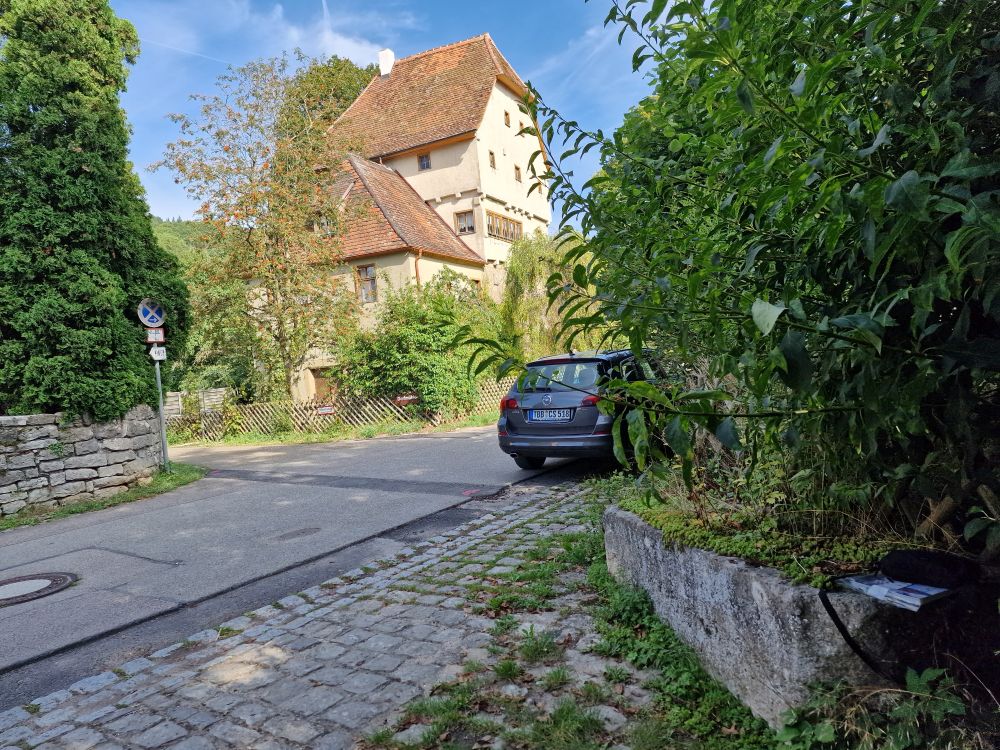
I found the manor my grandfather painted. Even the fountain is still around, though no longer in use. It has been pushed to the side and filled with earth. The sky on my photo is similar, light blue with a touch of white clouds.

Instead of a cart I find a car parked nearby. The small house in front of the castle has been removed. The street has been paved, and be careful, you are not allowed to stop everywhere.

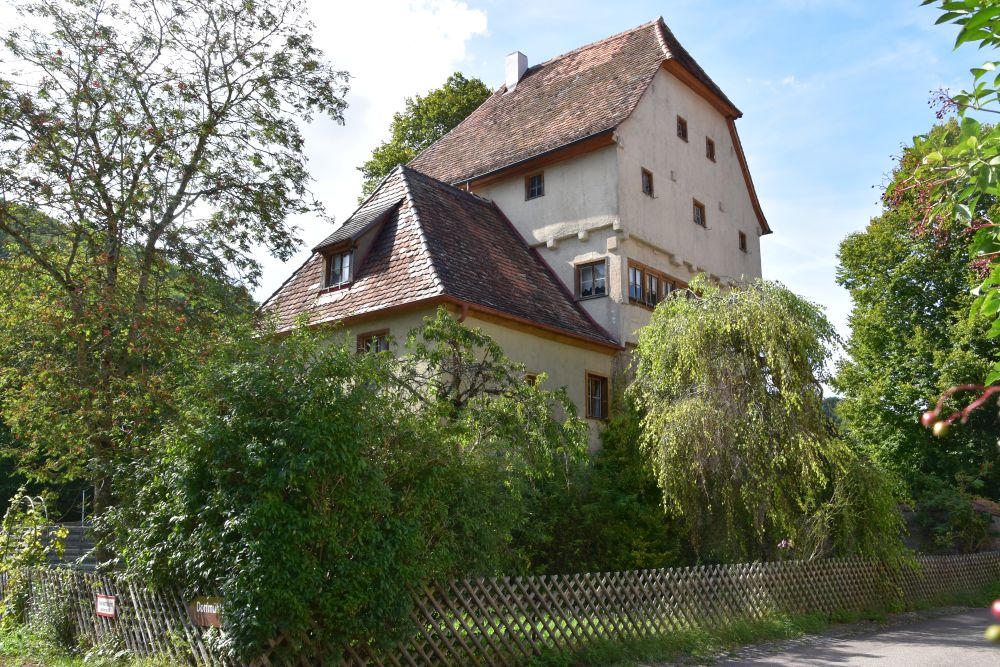
The castle is a gothic manor from the 13th/14th century and now carries the number “Detwang 29”. In former times, it was surrounded by a moat. This is why my grandfather called it “moated castle”, though it was no longer surrounded by water, when he painted it in 1942. 

I walk around the small castle with its garden. The wooden fence has been modernized. 

The above photos I took with my smartphone, and the colours convey a similar impression of the light as the painting of my grandfather.

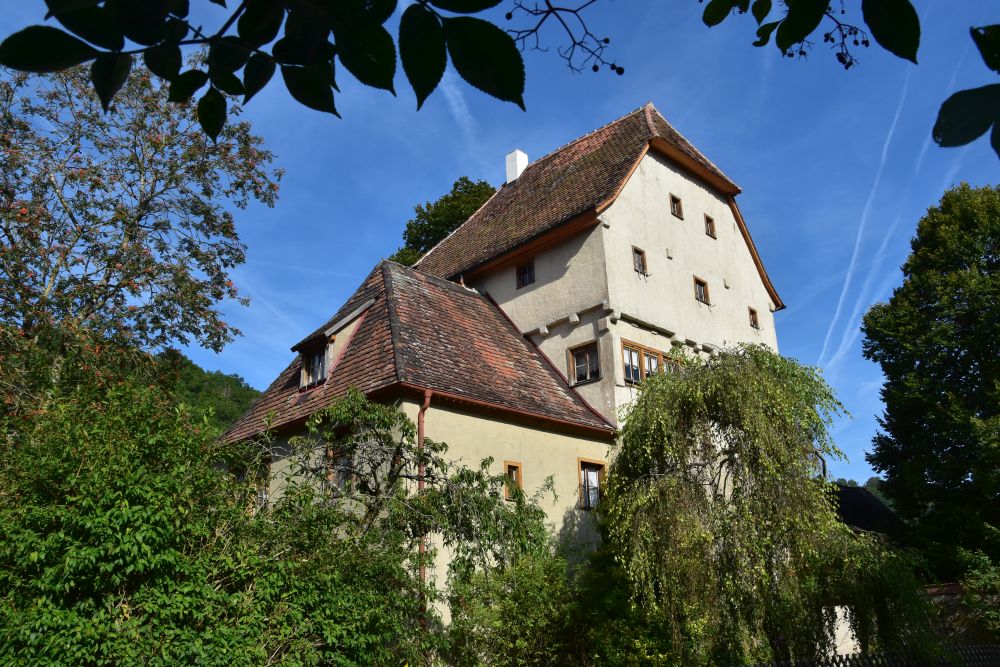
My Nikon camera leaves a different impression, there is more contrast. 

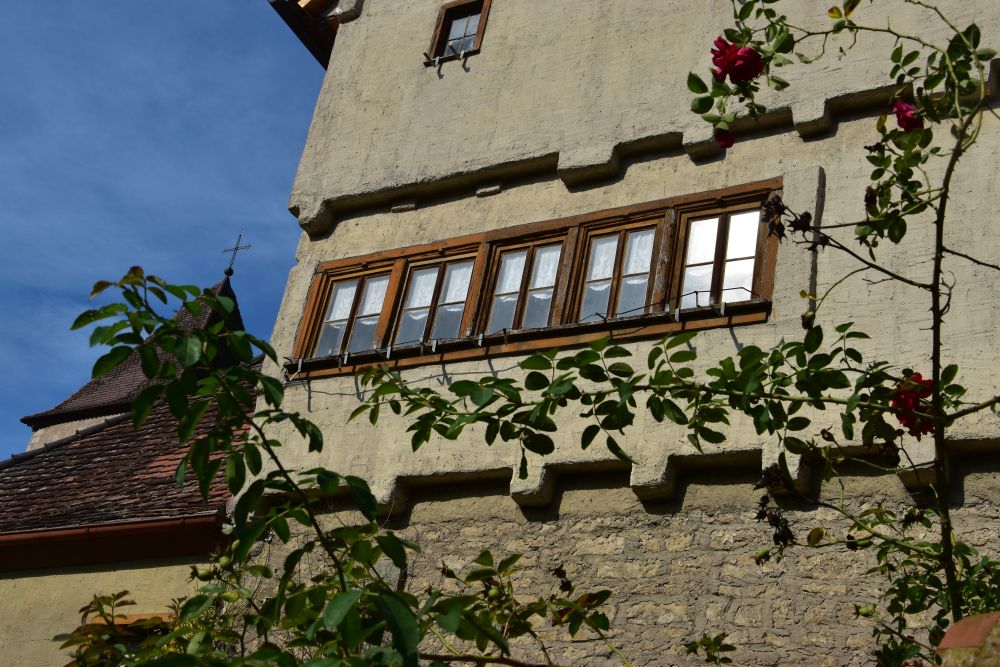
I like the red roses surrounding the windows – there are more windows here today. Does Dornröschen live in this castle? “Sleeping beauty” is called “Thorny Little Rose” in German. 

The red rowan berries repeat the colour of the red tiles. 

My grandfather wrote “Schloss Dettwang” with two “tt”, not “Detwang” with one “t”. I know, he was always precise; I looked for old postcards, and some carry the name “Dettwang”.

Easel of the castle or manor found, mission accomplished.


Easel found, next I focus on sightseeing, but… surprise, surprise – I find a second painting

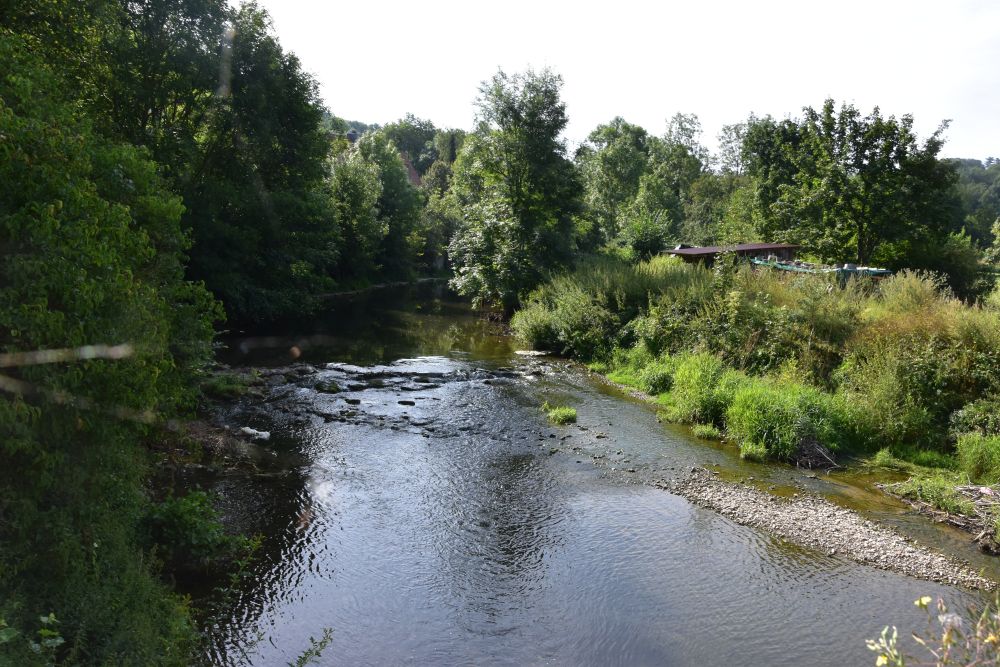
 Next, I explore the pretty village Detwang. I follow the signs directing me to the Tauber river and the old bridge of Detwang.

The sun reflects in the water. 

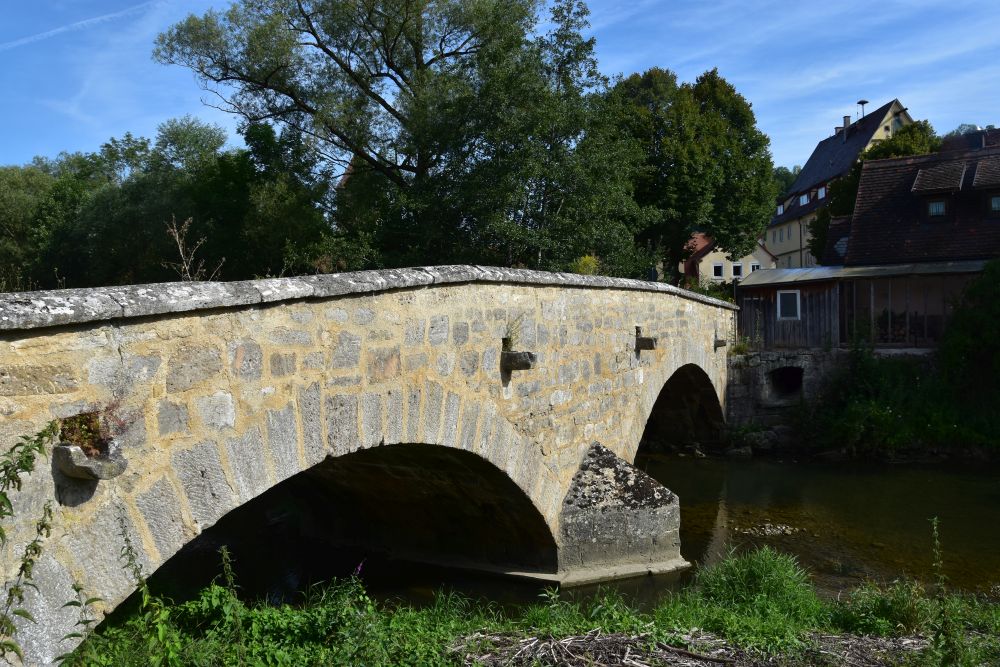
I take a photo of the bridge from the other side (did you notice the church tower hidden behind the trees?), and I continue my village tour without thinking any further. 

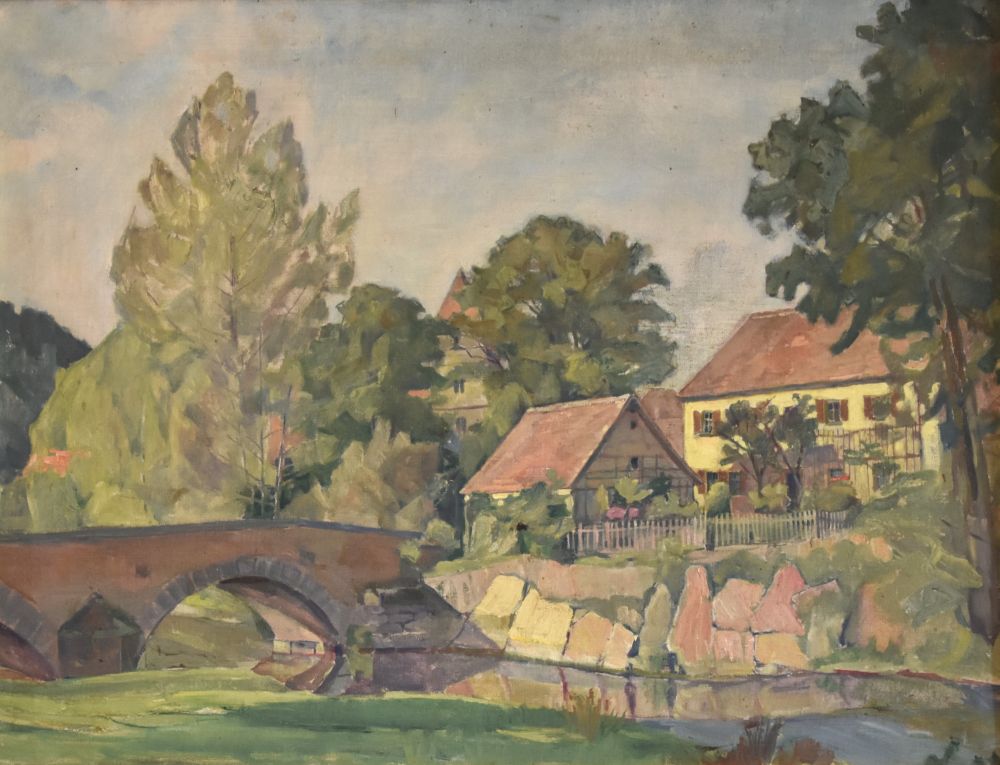
A week later, I am at Berlin. I look at the photo of the bridge of Detwang, and I frown. Have I not seen THIS BRIDGE before?

With me, I have a photo of this unsigned and undated painting of Hermann Radzyk that hangs in my guestroom. Look at the arches of the bridge and at the church tower behind the trees.

This IS the old bridge of Detwang. What a surprise. I found the location of a second painting at Detwang, and surely, my grandfather painted this bridge also in the year 1942, like the castle.  

Up to now, I had looked at this bridge over and over again without knowing, where to search for it. Now, I will return to Detwang to reproduce the angle and perhaps the light impression that my grandfather captured. For me, the colours of the bridge painting are similar to the colours of his “moated little castle of Dettwang”.


Let us now continue our tour and explore the beautiful Romanesque church of Detwang

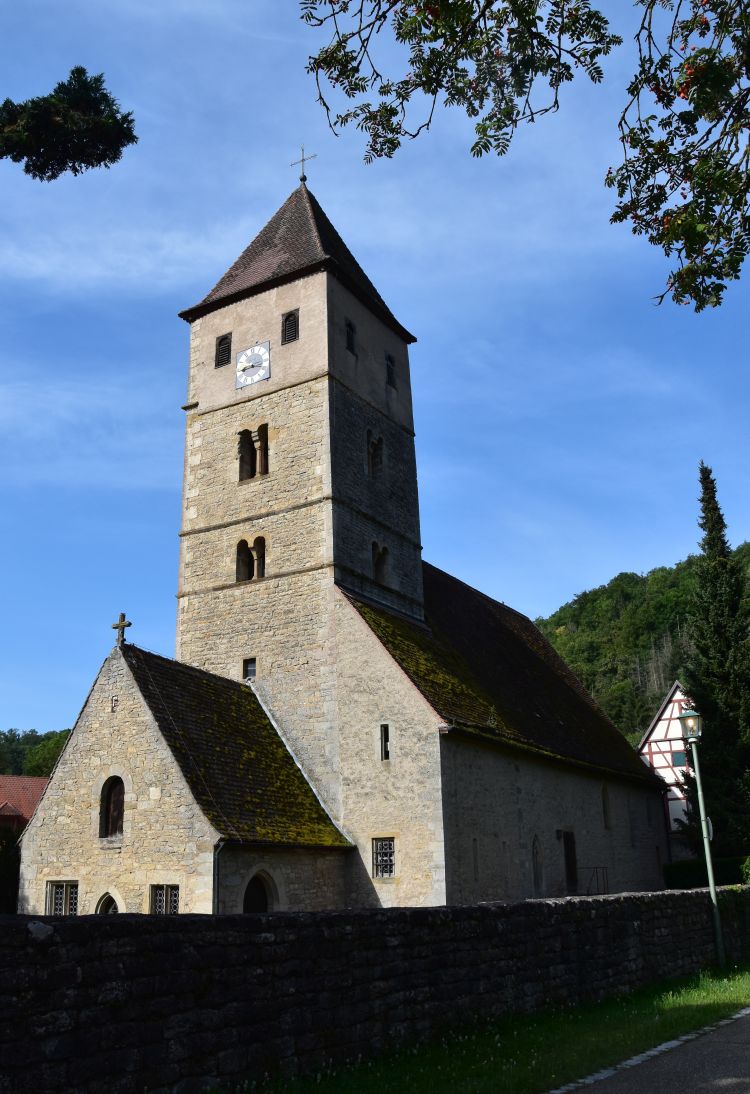
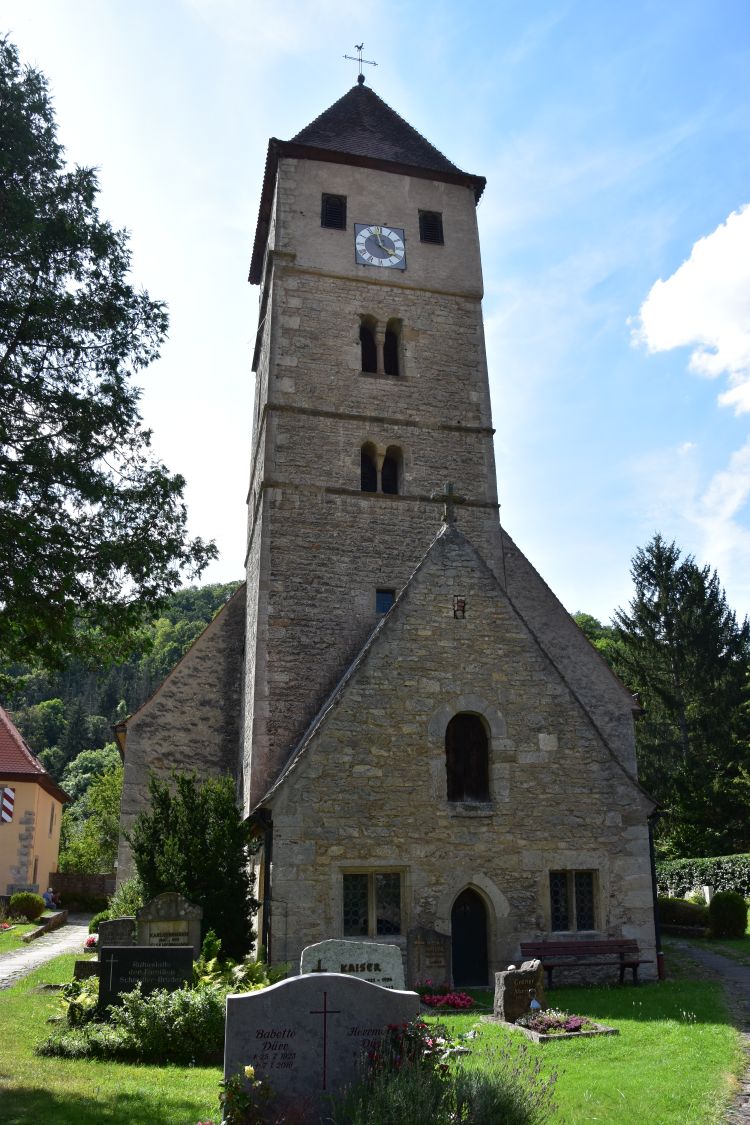
The church tower that hides behind the trees belongs to the Romanesque Peter and Paul church of Detwang. 

It is assumed that the church was built in the 12th century, with later additions (brochure of the church, p.3). The choir was removed in the 14 century and replaced by the small house; it was the oratory of the convent of Benedictine nuns and later became an ossuary. 

On the cemetery,  village citizens water the flowers. Many tomb slabs carry the name Stellwag, this seems to be a common name here. One member of this large family looks at the painting with the moated castle with great interest. He knows the man living in the castle. “Everyone”, he says, “knows everyone in this village. Detwang is fortunately much more quiet than Rothenburg, which in summer is taken over by so many tourists.” I send him the photo of the painting.

I return in the afternoon to see the treasures inside the church. I buy the brochure of the church – reading helps to see more. 

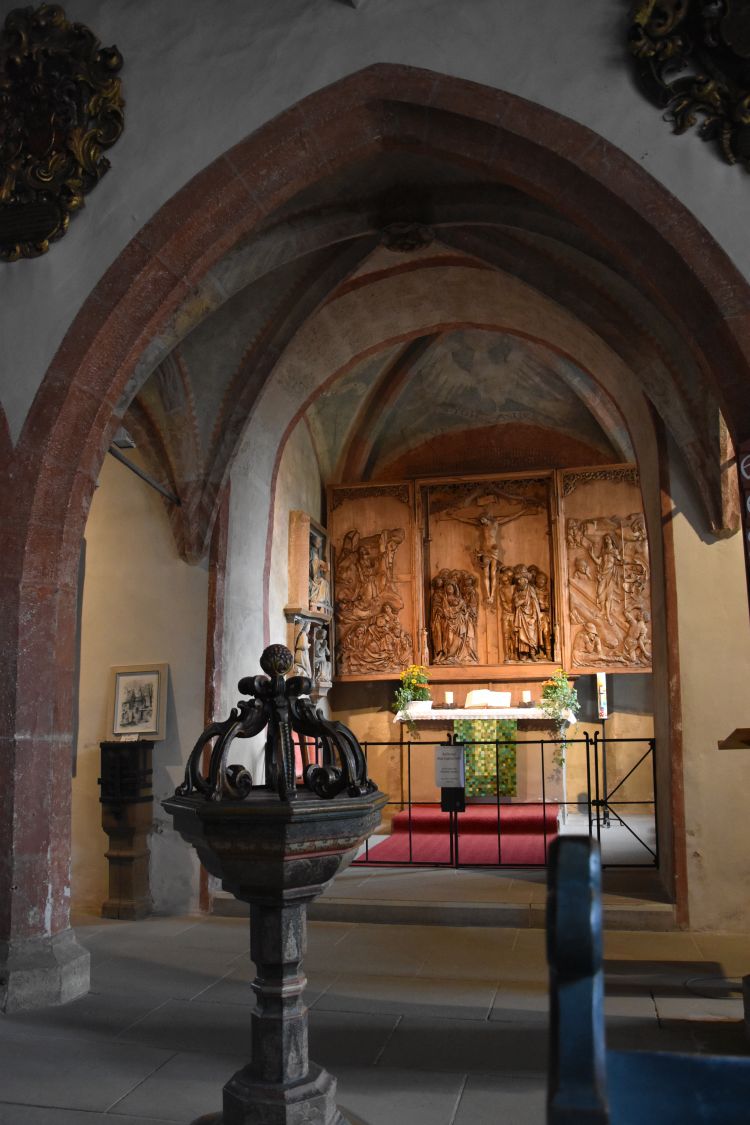
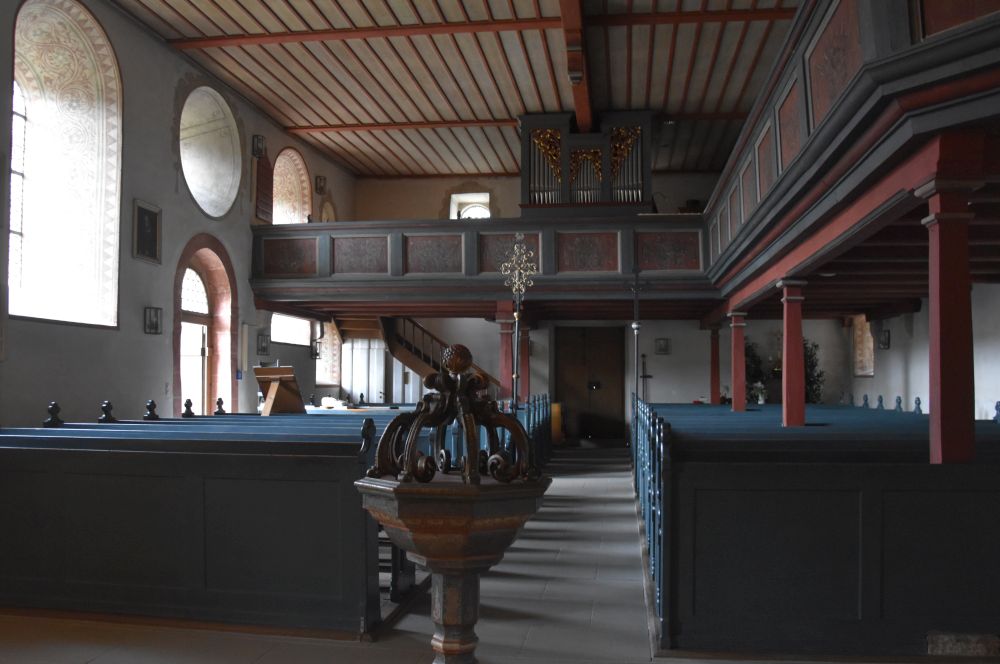
It is a solemn atmosphere. Romanesque with later additions, such us the gallery of the 17th century and the wooden ceiling of the 19th century. The baptismal font is from 1720 (brochure, p.3f).

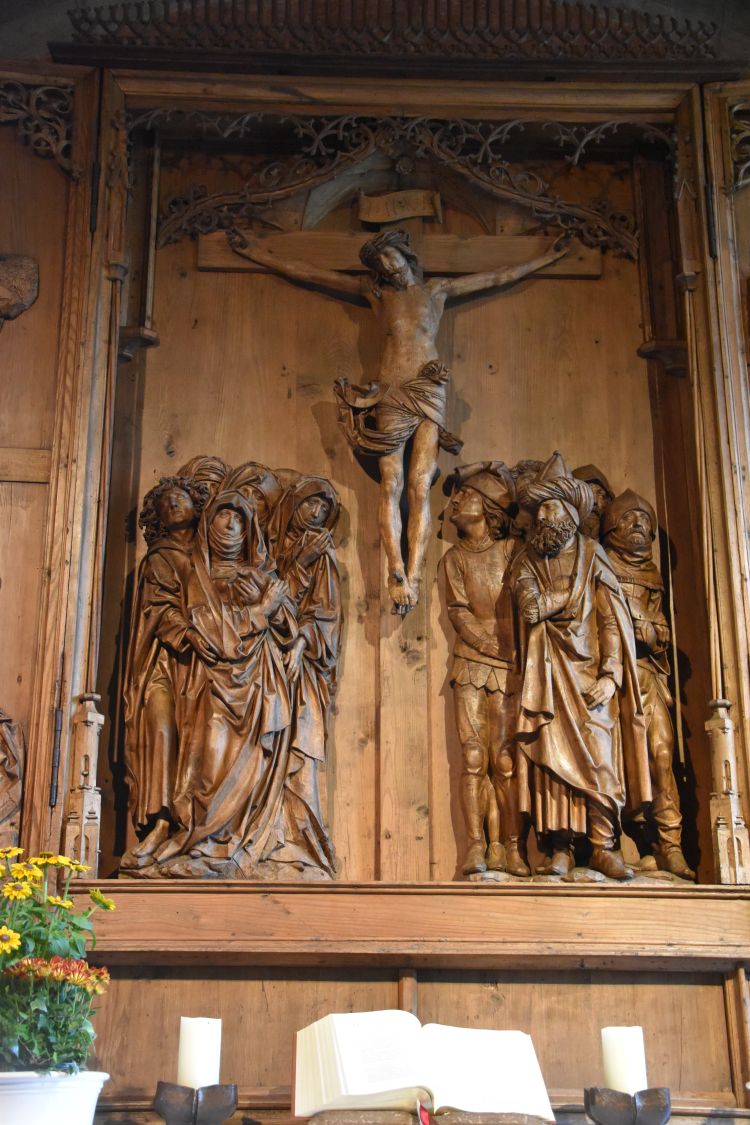
There are three gothic altars in front. Two altars stand in the niches, and, in the choir, there is the altar of  Tilman Riemenschneider, the primary treasure in this church. It is the crucifixion altar that must have been created between 1510 and 1513 (there exist no records about the date of creation).

Probably the altar was brought here from a former funeral chapel at Rothenburg. Riemenschneider did not create the altar for this small choir; some figures had to be cut away to make the altar fit (brochure, p. 9).

The crucifixion scene is in the middle. Riemenschneider has made it by himself. To the left of the cross are Maria, supported by Johannes, and more moaning women. On the right hand side of the cross, there is a group of men. In front is the well dressed Pharisee that seems to ruminate with the hand in his coat – he seems to be in doubt. The captain standing next to him looks up to the cross – he may believe that Christ is the son of God. Christ looks down to the moaning group around Maria. 

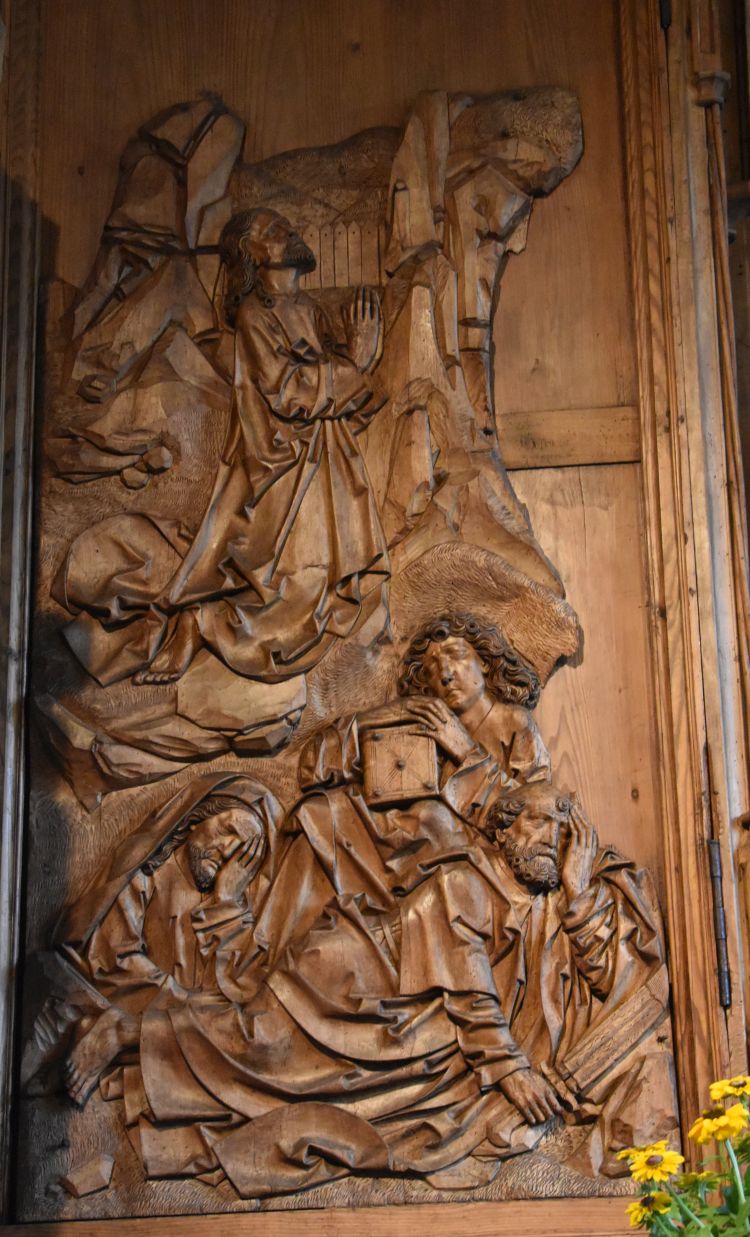
To the left is the Garden of Gethsemane, created by Riemenschneider’s workshop. The three disciples of Jesus, Petrus (with the sword), Johannes (with his book, the youngest of all three) and Jacobus are sleeping, while Christ is praying with fervour. The left side was cut off to make the altar fit. It must have shown Judas approaching the garden with the bailiffs and, in addition, some angels (brochure, p. 14).

To the right we see the Resurrection that has also been carved by Riemenschneider’s workshop. The grave is closed. One of the guardians is sleeping with the hat in his face, the second guard woke up; he is surprised and looks at what happens. The light blinds his eyes and he covers them with his hand.

The Predella has been lost. It might have shown the Lamentation (see brochure p. 10ff).

The two altars in the niches have also been transferred to here from other churches.

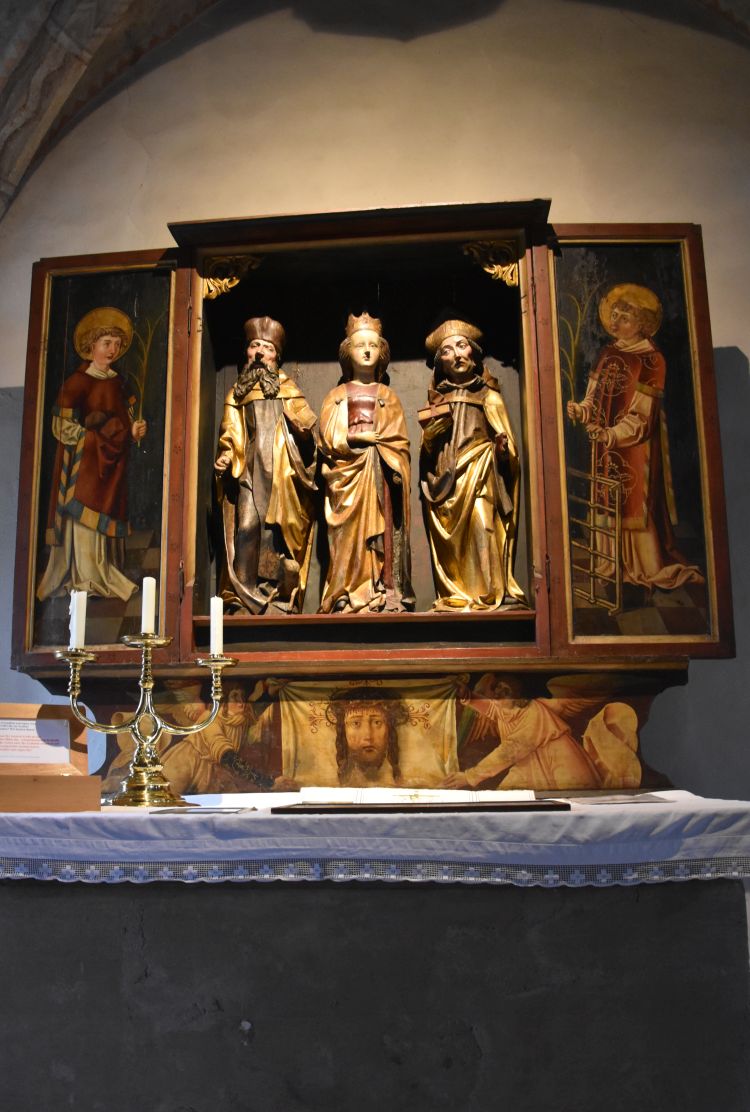
The late gothic altar in the left hand niche is from 1480/90. It shows martyrs surrounding Saint Catherine in the middle. I can also recognize Laurentius with his grill. In the Predella is Christ as the Man of Sorrows. 

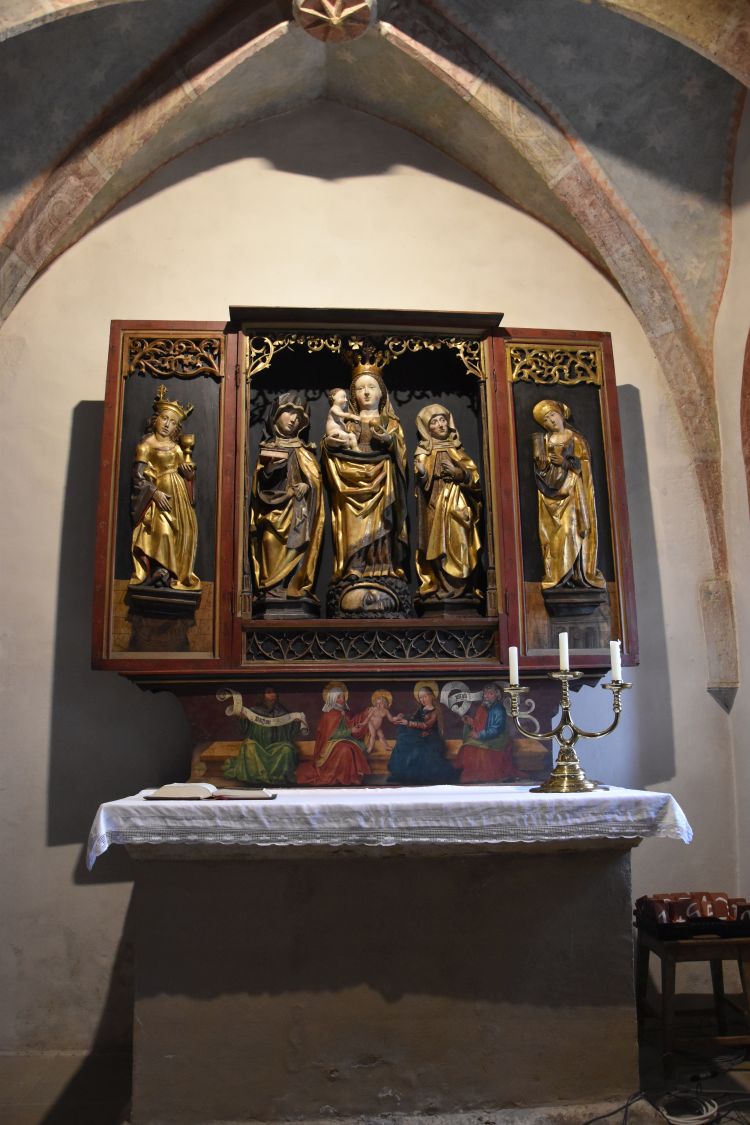
On the altar in the right niche, also late gothic from 1500/1510, we see Maria with martyrs, amongst them to her left side stands Saint Odile (brochure, p. 20f).

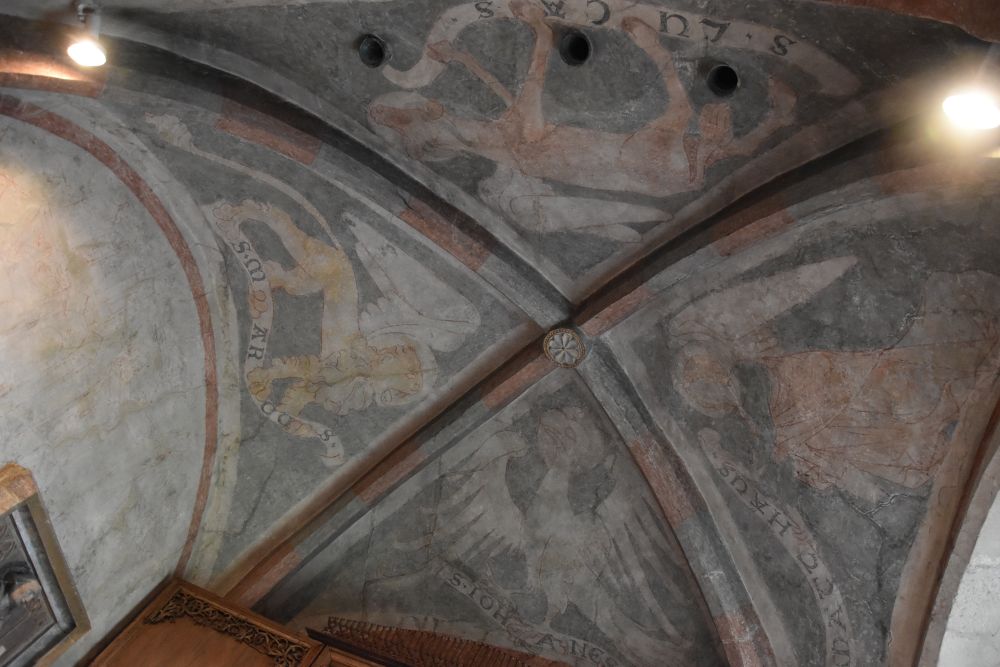
The symbols of the four evangelists decorate the ribbed vault  in the choir (frescoes from early 14th century, brochure, p. 7).

I love the introverted face in the choir – it has been here since the early 13th century (brochure, p.6).

Let us look back into the nave. The frescoes in the window frames are baroque (brochure p.5). The organ has been built in the year 1989 (wikipedia entry).

The Saint Peter and Paul church stands just next to the castle of Detwang. I am sure that my grand-parents visited the church and admired the altar of Tilmann Riemenschneider 84 years ago. Their daughter, my mother, showed many gothic altars to me, when we travelled together in Germany. She might have been taught by her parents and she surely taught me. I love to visit churches that have a solemn atmosphere and contain wonderful works of art. 


Detwang, the village around the church, is the craddle of Rothenburg

Detwang in the Tauber valley is older than Rothenburg. Detwang was first mentioned in 976 as the “field” (wang) of Teto (wiki entry). Later Rothenburg became more important, and Detwang never grew much larger than it was in medieval times. Many old houses survived the war such as the historic hotel Schwarzes Lamm (Black Lamb), where I spent two nights with the friendly hospitality of a Hungarian family. It was originally built in 1804 and was later renovated.

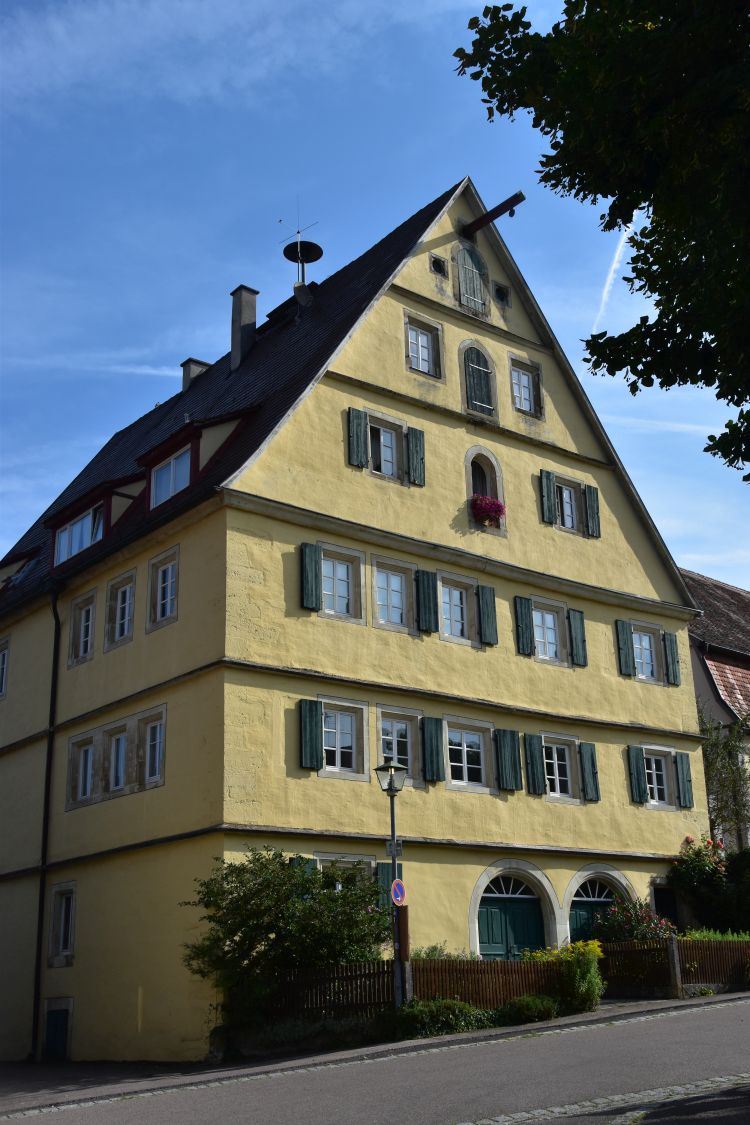
Next to the Black Lamb is this Patrician house from the 16th century (wiki entry about Detwang).

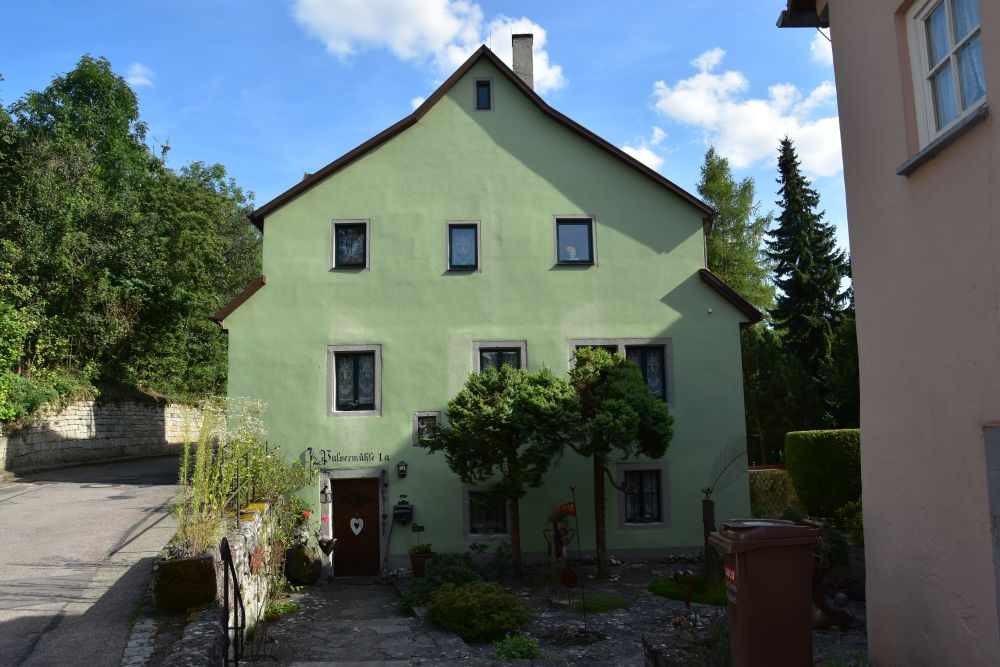
The Pulverhaus (“powder house”) was a mill built in 1400 and  processed saltpetre. In 1744 it blew up, because the owner walked around in the building with a burning light. It was a dangerous location, there was another explosion in 1903, and in 1905 the saltpetre mill was shut down (panel in front of the house).


Quiet Detwang is worth a visit – there are less tourists here than at Rothenburg

Detwang is much quieter than crowded Rothenburg ob der Tauber, and it is worth a visit.

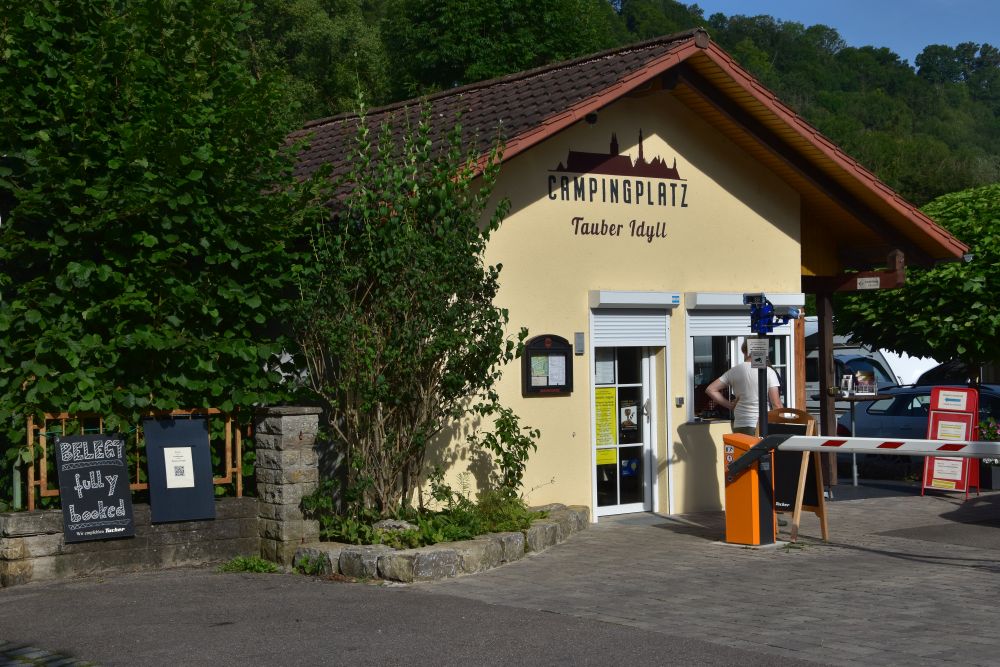
It is popular with campers. There are two camping sites at Detwang, one of them being called “Tauber Idyll”. It is booked out right now in the beginning of August. “Fully booked”, it says on the black board in English. The guests must come from far. 

From the camping site, I start my evening walk along the Tauber river that is lined with mills. I started to like this hidden village. Thank you, Hermann and Helene, my grand-parents, you have showed me another treasure that I would have never found without you.


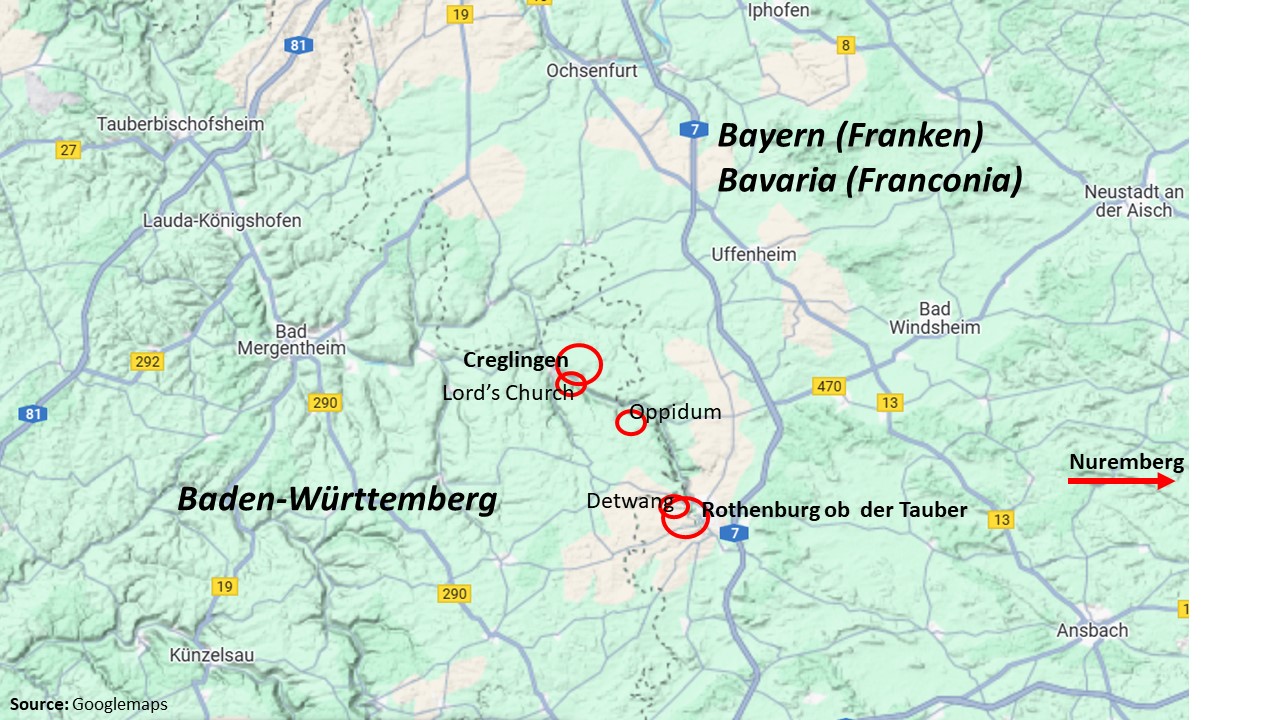
Where are we?

The map shows, where we are. Now I talked about Detwang, an urban district of Rothenburg. 

In the next blogs, we will explore Rothenburg ob der Tauber (in Bavaria) and the Celtic Oppidum as well as the church of Lord (Hergottskirche) near Creglingen (in Baden-Württemberg). Nuremberg (Nürnberg) is located about 75km to the east of Rothenburg ob der Tauber.


Sources: