My grandfather painted the Schneekoppe (Sněžka) in the years 1927 and 1930, almost a hundred years ago. Where did he paint them? Where did he put up his easel? Join me to find out.
Three paintings of the Schneekoppe (Sněžka, Śnieżka) by Hermann Radzyk-Radzig are known to me
This painting of the Schneekoppe is from winter 1930. It is named “Paradies der Schneeschuhläufer (the paradise of the snow shoe walkers)”, as my mother wrote in a letter to her best friend. I acquired the painting at Kleinmachnow near Berlin, from friends of the son of my mother’s best friend.
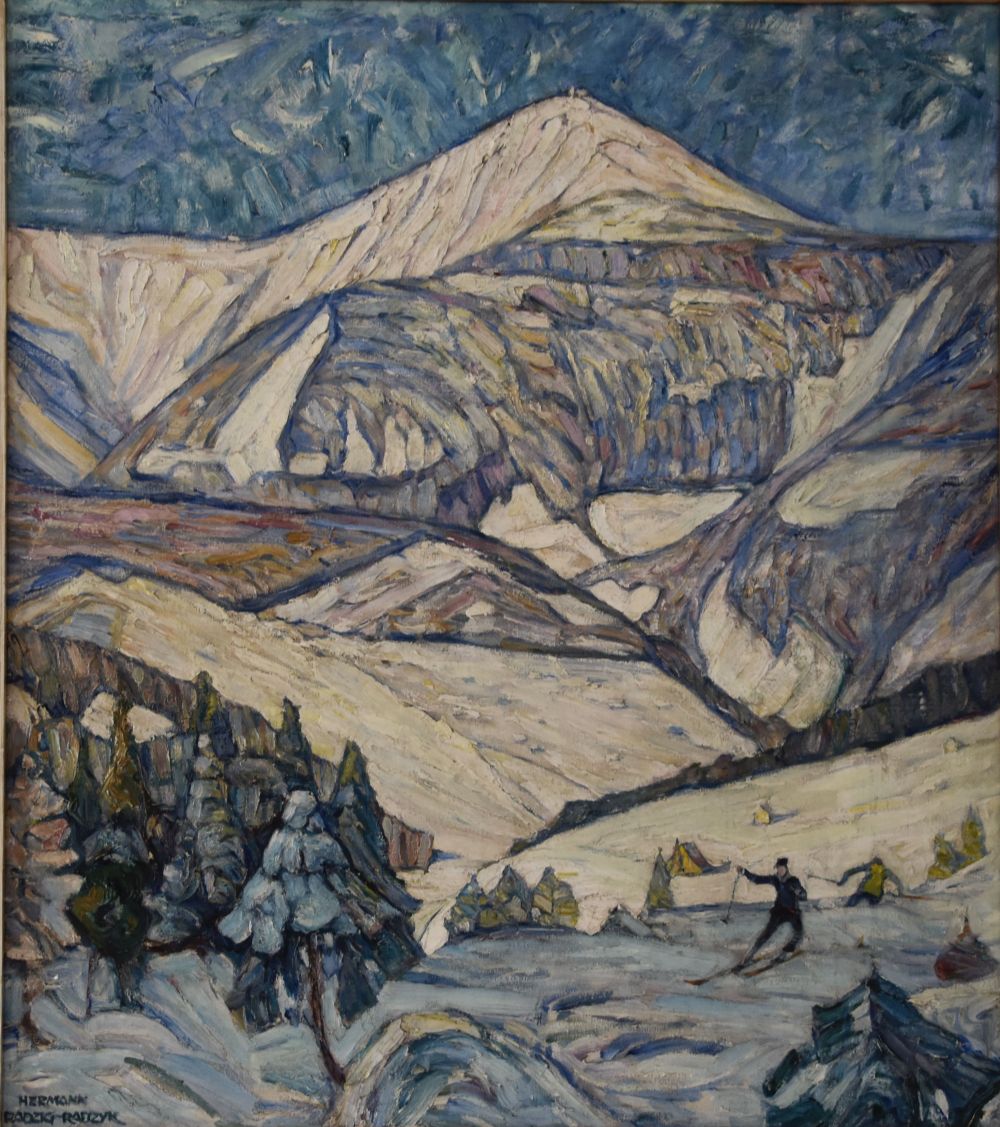
I like the somewhat expressionist style.
In summer 1927, Hermann Radzyk painted the Schneekoppe twice. This aquarelle is owned by the Heimatverein Kleinmachnow.
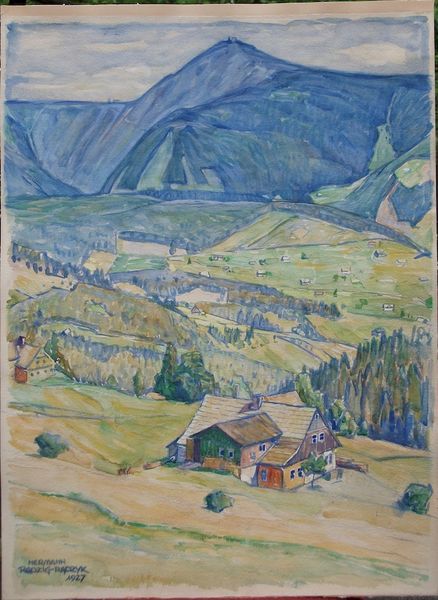
My sister owns another summer painting showing the same hut and the Schneekoppe. It is unsigned and undated. I assume, it is from summer 1927 as well.

Where did my grandfather put up his easel to paint the Schneekoppe?
Where did my grandfather put up his easel? I first suspected, he put it up above Krummhübel (now Karpacz in Poland). I went to Karpacz and understood, the easel was not here (see Discovering Silesia: Karpacz with its churches and the Sniezka).
I started to google about the valleys south of the Schneekoppe, at Bohemia in Czechia. I found photos and compared them with my tourist map of the Giant mountains. I could identify the peaks and valleys near the village Petzer (Pec-pod-Sněžkou).

I conclude, my grandfather must have placed his easel above Petzer (Pec-pod-Sněžkou), either on Zahradky or on Vysoky Svah.
To understand, where exactly the easel was, I drive to Petzer in August 2023. I stay at the friendly small penzion Zákoutí at the very end of Pec-pod-Sněžkou, where the ski lifts and chairlifts to the surrounding hills start. The owner of the pension gives me this winter postcard that illustrates the situation well.

The village Pec-pod-Sněžkou is located in the valley and on the (left) slope above the ugly hotel tower. North of Pec-pod-Sněžkou in the background is the Schneekoppe. South above Pec-pod-Sněžkou is an “amphitheatre” of four meadows: Under the label “Pec-pod-Sněžkou” is Zahradky (Lenzenberg), to the right follows the triangle of Vysoky Svah and then, behind it, Javor. To the left of Zahradky are the meadows of the Braunberg (Hnědý vrch). The “amphitheatre” of meadows south of Petzer is a skiers’ paradise until today.
From my pension I walk up to the “amphitheatre” to find the place of the easel – and I identify two places. For the winter painting, the easel stood on Vysoky Svah below Husova Bouda and for the summer paintings it was on Zahradky near Chata Seibert – yes, the hut on my grandfather’s summer paintings still exists. Let us go to Vysoky Svah and Zahradky.
The location of the easel for the winter painting of 1930
For the paradise of the ski shoe walkers, my grandfather put up his easel on Vysoky Svah below Husova Bouda, formerly called Koppenblickbaude (literally: Hut with the view of the Schnee-Koppe).
The easel stood on the bump, flanked to the right by a trough (partially filled with snow) and to the left by a creek with trees (the creek is now called Lucny Potok). One skier directs his way into the trough and towards the painter (perhaps Helene, the painter’s wife), the other skier moves away from the painter (perhaps the daughter Marion, later my mother).
It is an emotional moment for me. I stand on the slope, where my mum learnt, how to ski. She had always told me that she had learnt skiing in the Giant Mountains, and now I know exactly, where. My grandmother might be the more anxious skier moving towards the easel, and my mum might be the more dynamic skier moving downhill. My mum practiced skiing all her life, until the age of 76 years.
This is an old postcard showing the Koppenblickbaude. The photo has been taken from a higher viewpoint than the painting of my grandfather, and I can see the similarities: The meadow bordered by the line of trees (to the right of the Baude), above/behind the line of trees the houses of Petzer and behind Petzer the Rosenberg with the triangular forest clearing.

Source: gross aupa deutsche digitale bibliothek – Google Search
I take some summer photos. Now I am just a little higher than the easel.
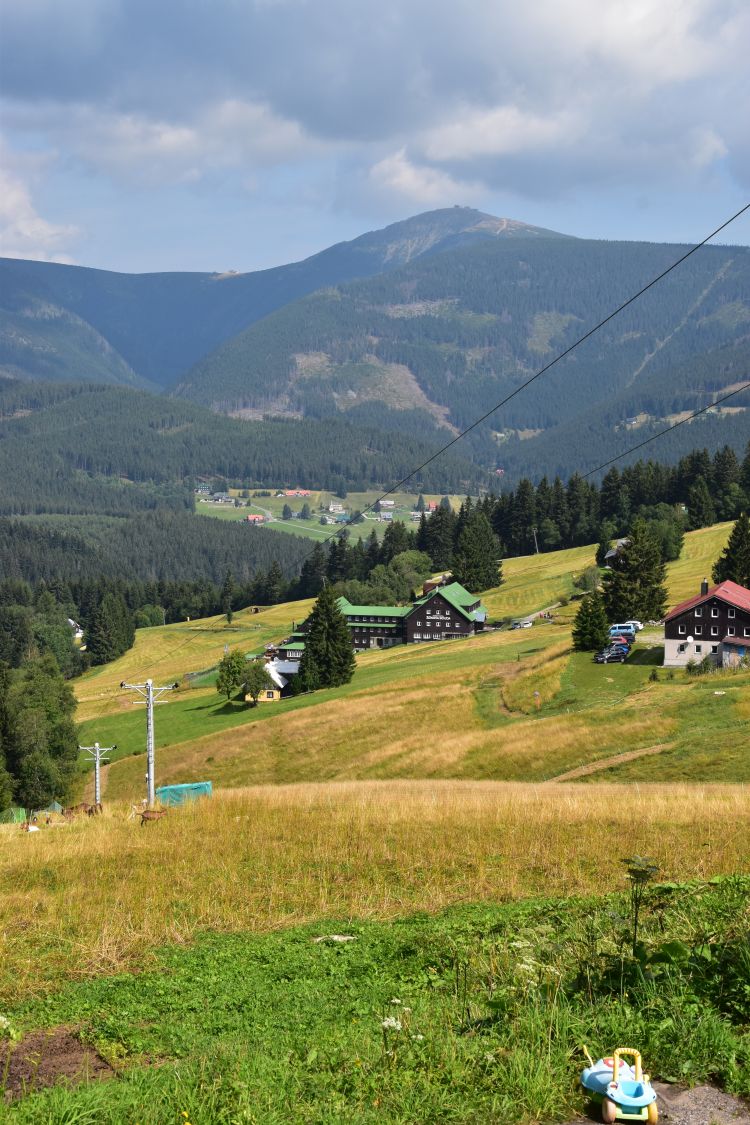
I can recognize the trees covering the creek to the left, the trough (that the one skier is moving towards) too the right and the line of trees bordering the meadow behind the mountain hotels. There are more hotels here today. In the background are the houses of Petzer/Pec-pod-Sněžkou that also appear on the winter painting. Today they seem to be larger.
This is a slightly different view. I stand above the trough which is called Mulde (Muldě in Czech), and the hut hiding behind the fir tree is called Bouda na Muldě, literally “the hut above the trough”.
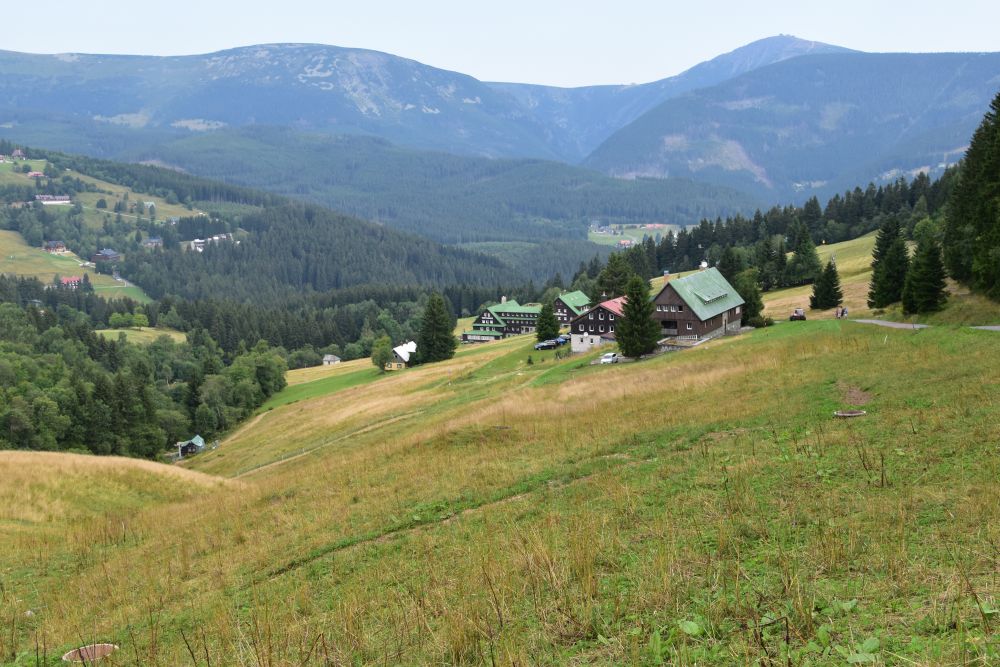
Again higher up, I take a photo of the former Koppenblickbaude, now Husova Bouda.

The Koppenblickbaude was enlarged in 1930 to cater for the skiers that had started to come here since 1900, as a nearby panel explains. It could well be that my grandparents and my mum stayed at the Koppenblickbaude in 1930. There was no ski lift here at that time. My mum and my grandmother had to walk uphill. The first ski lift installation was set up later, in 1932; it was a sledge drawn by two Fiat engines.
Now the Bouda has become a holiday colony. A group of children are attentively listening to their teacher in the dining hall on the ground floor.
The location of the easel for the summer paintings of 1927
For the two summer paintings the easel stood above the Chata Seibert on Zahradky (in German Lenzenberg).
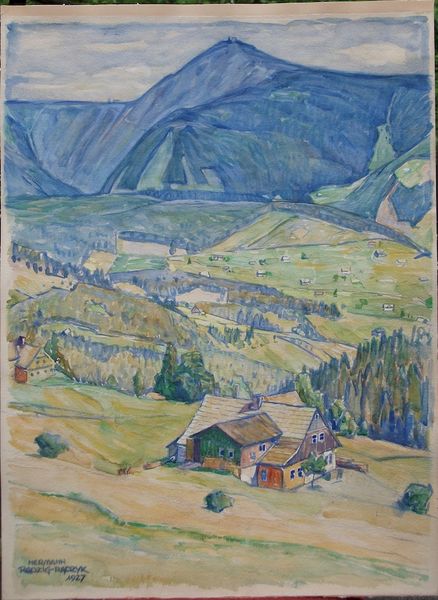
The Chata Seibert still exists; it has been enlarged. There are trees near the Chata.
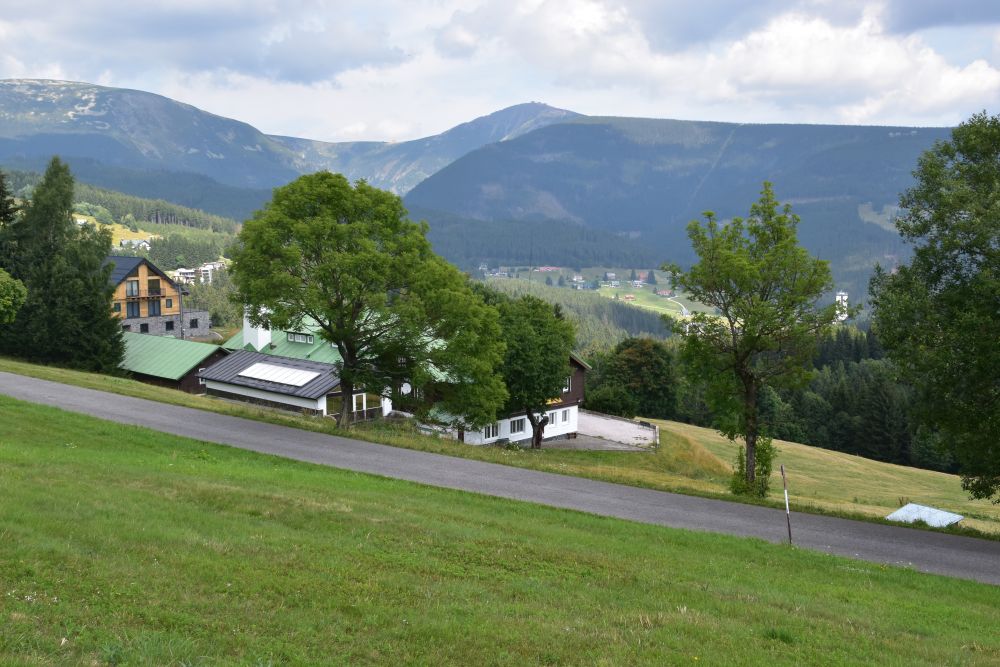
Now I moved closer to the hut. I can still recognize the original construction of the building. The lowest tree stands very close to the house, and it already appears on the paintings. The tree was much smaller, when my grandfather painted it.

I believe it is a cherry tree – one branch has broken off.

The owners of the Chata have carefully tied it up.
I am sure, it is the same tree. Look at this historical photo (I found it on the Website of Chata Seibert in summer 2023; in the meantime, I do not find it any more there).

On this historical photo, Chata Seibert is already larger than on my grandfather’s painting, the houses of Petzer in the background look very much the same as my grandfather has painted them. And the still younger tree has got both main branches. The second larger branch has later broken off.
The places of the easel on the tourist map of the Giant mountains
To sum up my findings, I enter the location of the easel in the hiking map of the Giant Mountains.

I am happy. I found the places, where my grandfather had put up his easel about a hundred years ago. And I feel to get closer to my grandparents, the more such places I find.
Some impressions from the Pec-pod-Sněžkou and the surrounding hills: Skiing and hiking liked by the Czechs
Staying here for a few days, I start to like Pec-pod-Sněžkou and the surrounding hills. The tourists are almost exclusively Czechs. I have met exactly two German tourists, and I am the first Swiss guest in “my” small penzion Zákoutí, as the owner tells me.
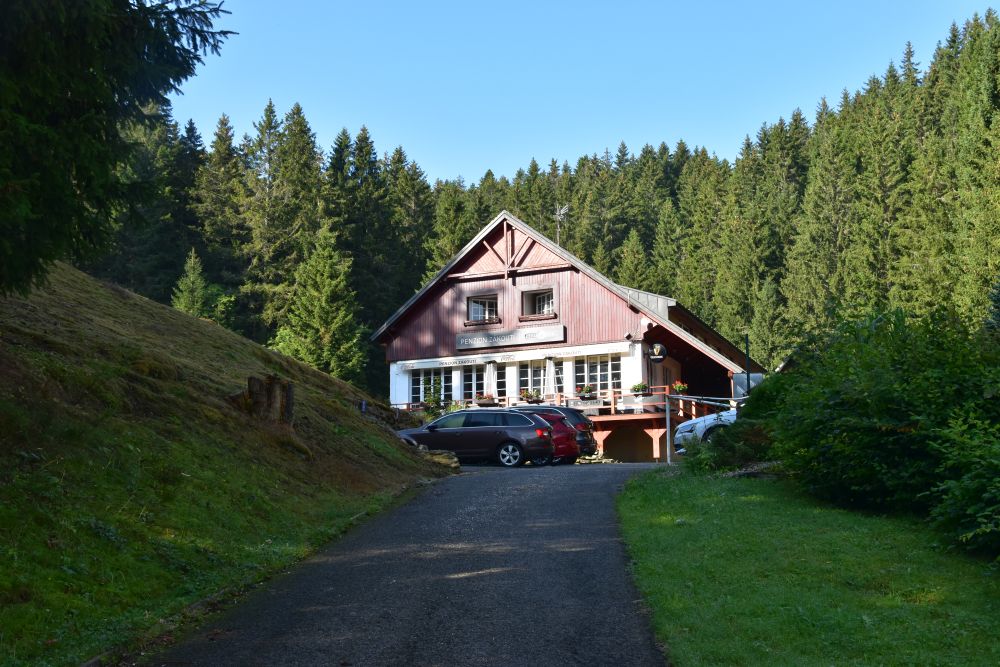
The Czechs love to hike, they populate the bars and the restaurants, they walk with their children and dogs.
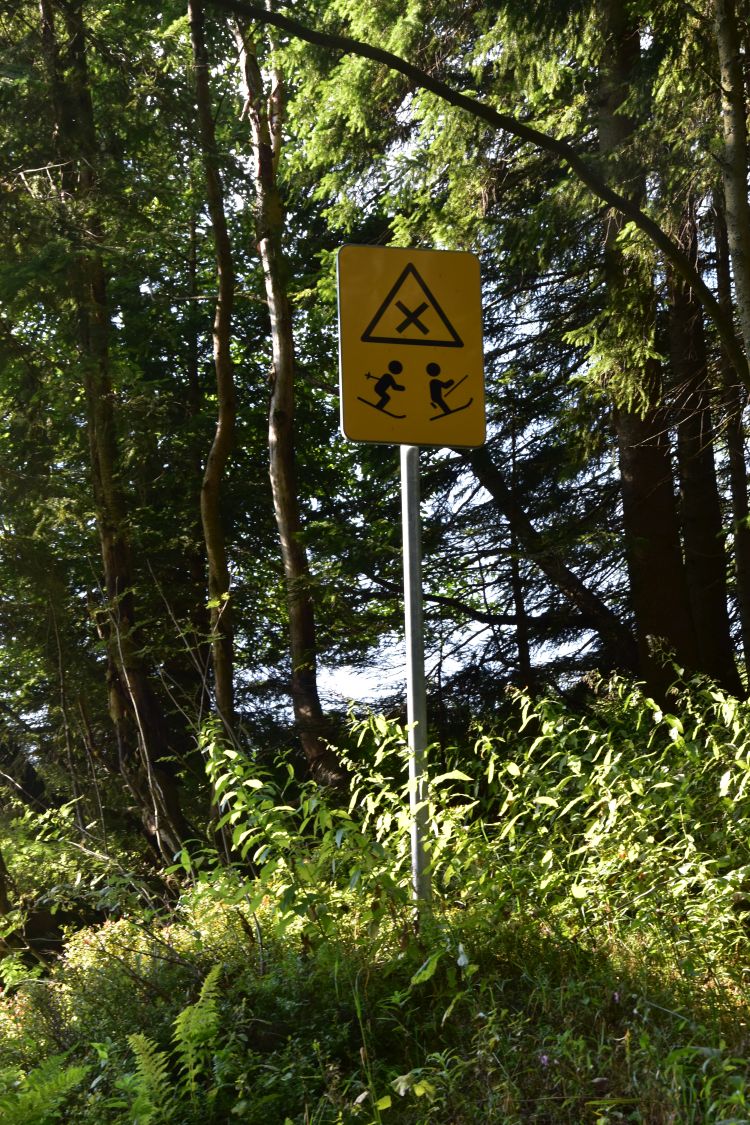
The signs of skiing are present all over, I find this panel, when walking up to Zahradky.
The ski lifts and chairlifts are standing still waiting for the next winter. The skiing area goes up to about 1200m. It may be snow reliable, because of the continental climate.
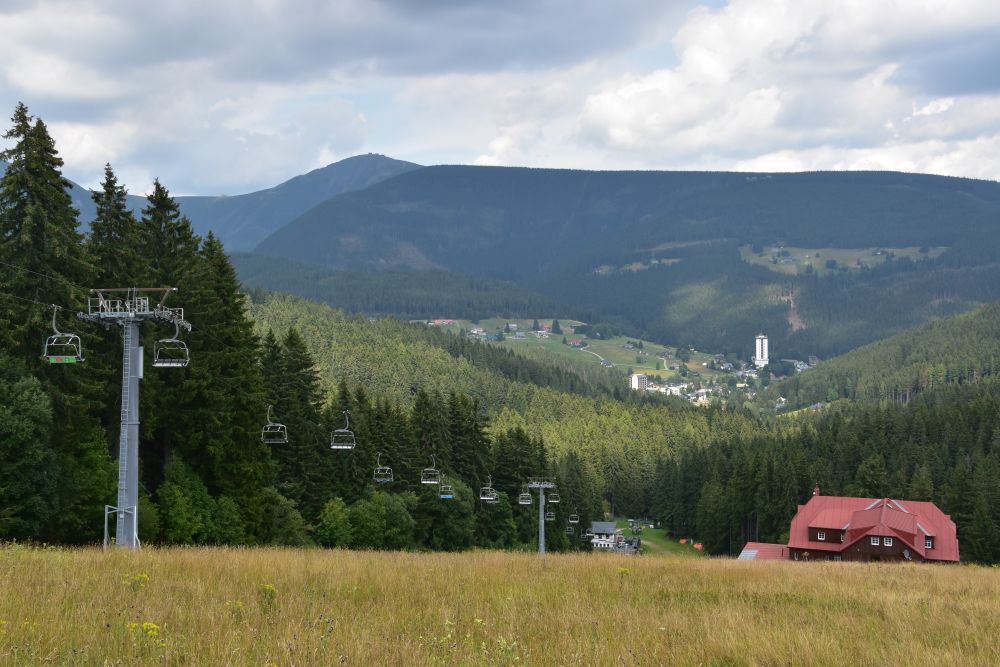
From here we see the architectural aberration of the socialist times: The Hotel Horizon at Pec-pod-Sněžkou is a tower that dominates the valley.
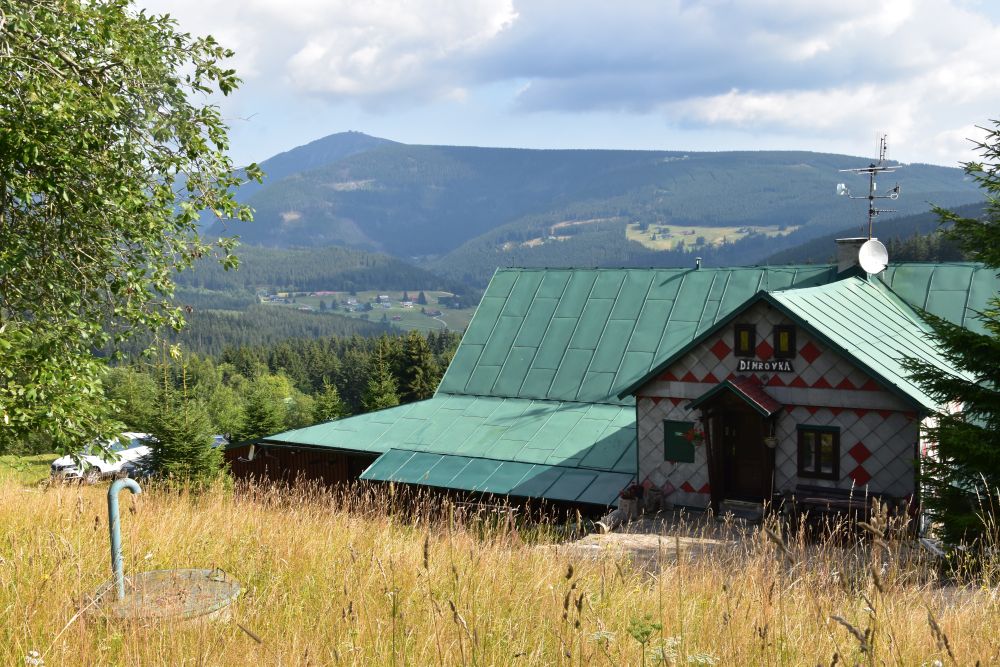
Many mountain huts receive guests on the “amphitheatre” of meadows above Pec-pod-Sněžkou. This is Dimrovka Chata on Zahradky. The owner goes for a walk with his dog and we have a chat.
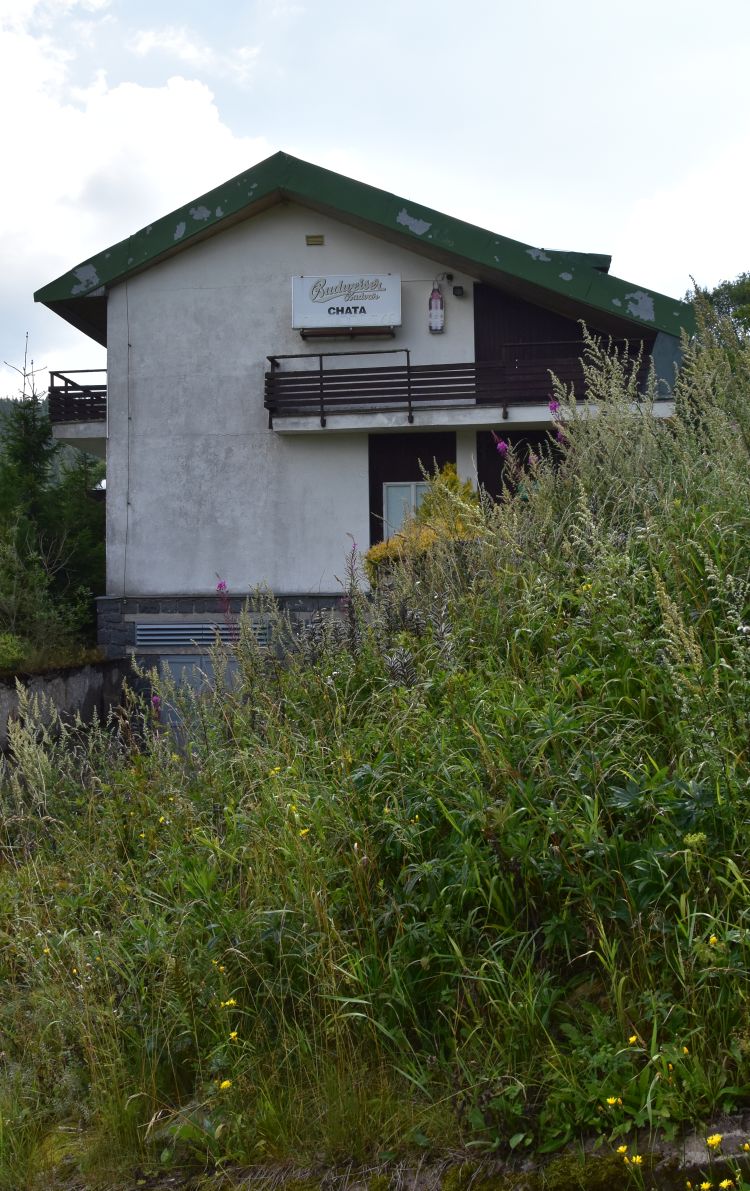
However, a few hotels here are sorely decaying – this one has no name, it is just called “CHATA”. Grass and weeds grow around it blocking the entrance.
Signs about skiing all over. The red gate “START” is waiting for children that will try out racing in the next winter.

Children will also love this tunnel on Vysoky Sah in the upcoming winter.

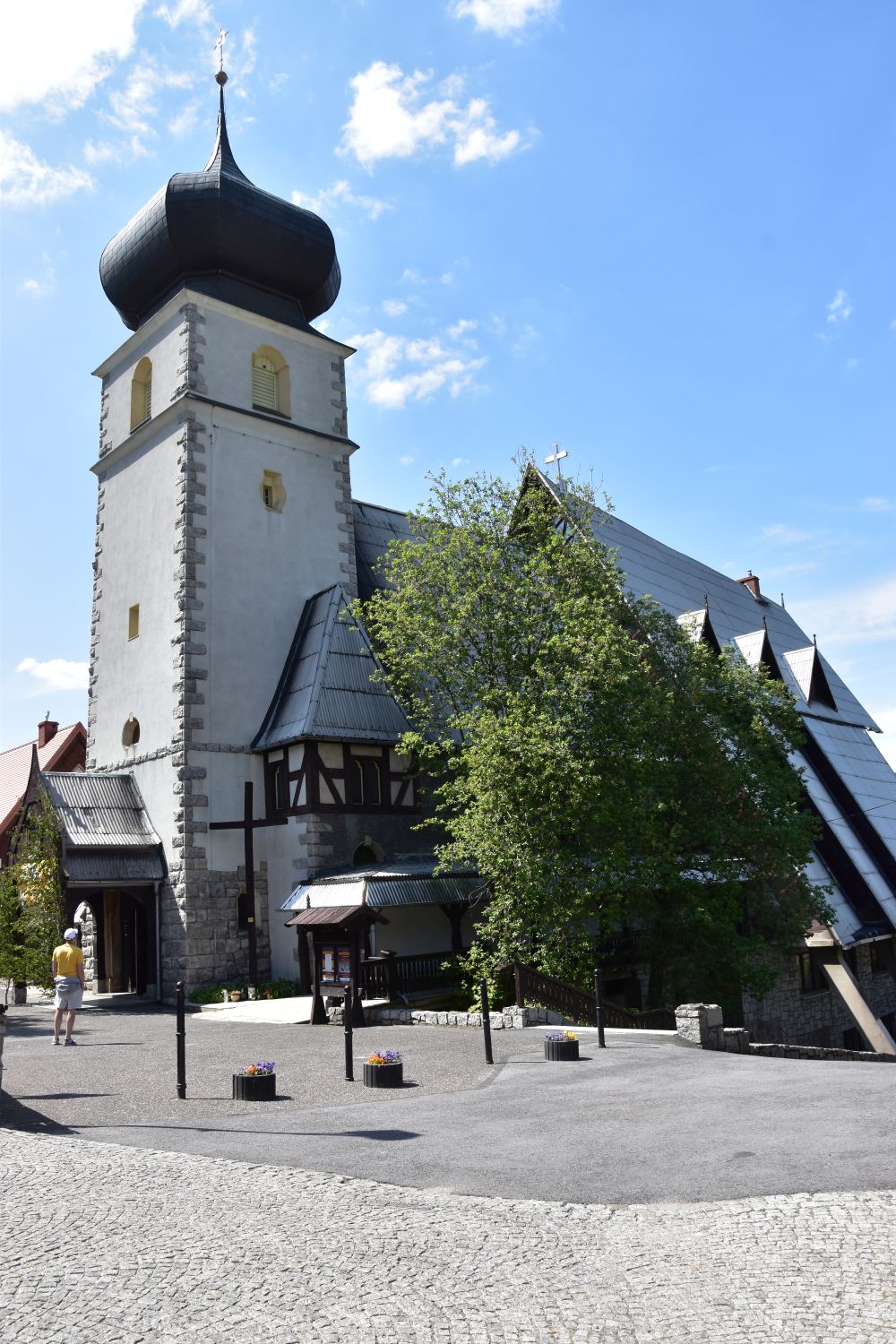
On the pass above Zahradky, I find the Bodenwiesbauden or Bobí Boudy with the small chapel.

I have a nice cake covered with plums here and try out the well marked hiking paths in the area.
Back at Pec-pod-Sněžkou, I have dinner in the garden of the Hotel Hvězda (Star), enjoying a trout fresh from the creeks of the Giant Mountains; trout is called pstruh here.
I am happy that the Bohemian Giant Mountains and Pec-pod-Sněžkou in particular have not yet appeared in Facebook or Instagram as destinations of a life time. I have found a hidden gem that the Czechs seem to enjoy alone. My grandparents and my mum have discovered it about a hundred years ago and have handed over these three wonderful paintings to the next generation. Thank you for having opened my eyes for this beautiful corner of the world.















 Petra Peters