The third altar of Riemenschneider in the Tauber valley – at Creglingen

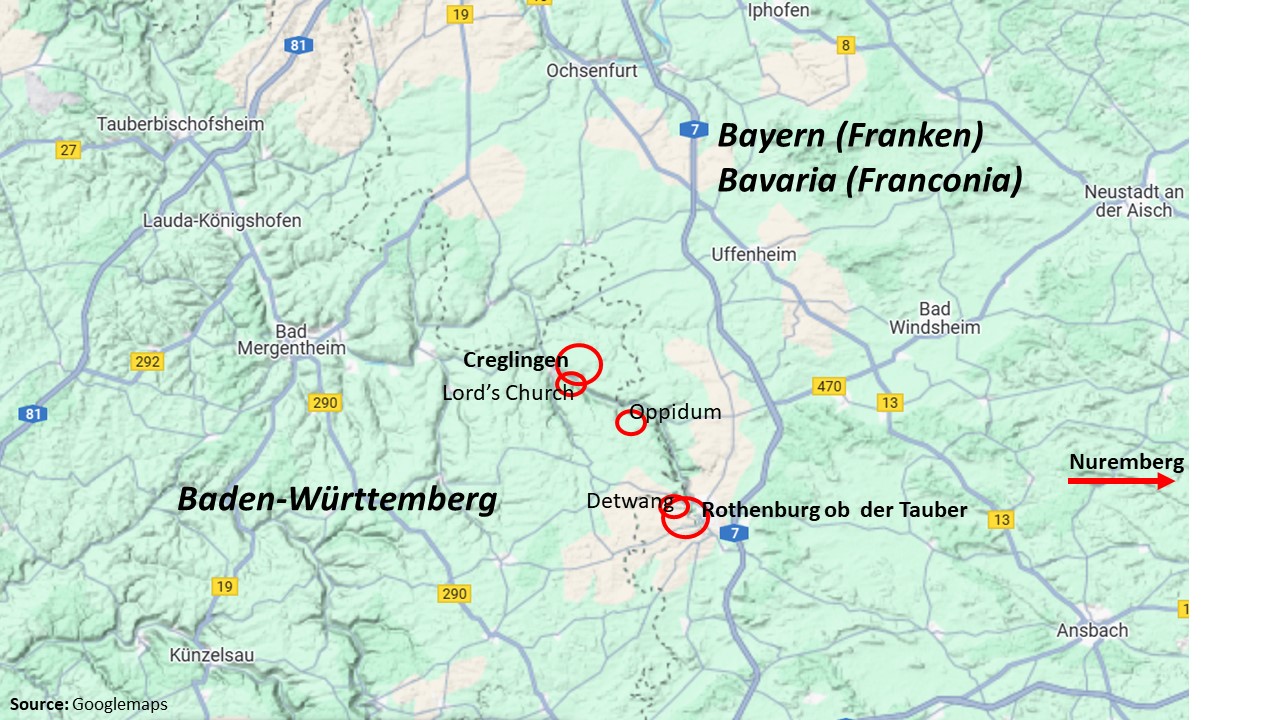
In August 2024, I follow the call of my grandfather, the artist Hermann Radzyk, and explore to the Taubertal. This morning, I have just visited the Celtic oppidum, and now, after a few more kilometers, I stand in front of the Herrgottskirche (Lord’s Church) at Creglingen. Here, I am looking for the third altar of Tilmann Riemenschneider that can be found in the Taubertal.

It is a miracle that makes this church special. A farmer had found the untouched piece of sacramental bread in the year 1334. Exactly where the bread was found, the local earl decided to build the church. It was inaugurated in 1396, with an altar at the exact location, where the bread had been found. A window allowed to see the bread and the earth.  The church and the altar became a pilgrimage site. This is, what I read in the brochure of the church (p. 1). In 1530, the margrave of Brandenburg-Ansbach adopted the protestant doctrine of Martin Luther and introduced it to his territory. As a consequence, the pilgrimage came to a standstill.

I walk around the church. The graceful tower outside is called “Tetzel tower”. However, it is unlikely that Tetzel stood on this pulpit to promote buying indulgence (forgiveness for sins), a commerce that Martin Luther was fighting against. Instead, the pulpit was probably used by the local priest on special occasions. 

Before the reformation in 1530, the church made good money due to the pilgrimage. At the end of the 15th century, they decided to acquire several altars for the church. Today, four spectacular altars from around 1500 decorate the church.

The altar of Tilman Riemenschneider attracts the most attention. More dignity was required for the place, where the sacramental bread had been found. The stone altar with the window disclosing the bread was no longer good enough. Between 1505 and 1520, Riemenschneider and his workshop fabricated the magnificent altar of Virgin Mary (Marienaltar). It is 9m20 high and 3.68m wide. The figures are made from lime wood (brochure, p. 21).

I am impressed. The altar of Mary stands in the middle of the nave, in front of the window behind it. I read that this window illuminates Mary from behind exactly on August 15th according to the Julian calendar, then the day of Mary’s Assumption. Today, the light of the window falls on Mary on August 25th, the Gregorian calendar reform of 1582 has shifted the date. 

Riemenschneider based his work on some etchings of Martin Schongauer and another master. Mary’s Assumption scene is in the middle, Angels carry Mary to heaven, the apostles are grouped around her, and the gap between the apostles makes it clear that Mary has left the ground. Around Mary’s Assumption, there are four scenes from the life of Mary: Annunciation by archangel Gabriel, Visitation (Mary – pregnant – meets Elisabeth, then also pregnant with John the Baptist), the birth of Christ in the stable and the Circumcision of Christ. 

Above, there are the Coronation of Mary and Christ as the Man of Sorrows. 

In the predella, we see the three Magi to the left… 

… and Jesus teaching at the school of Zachaeus to the right.
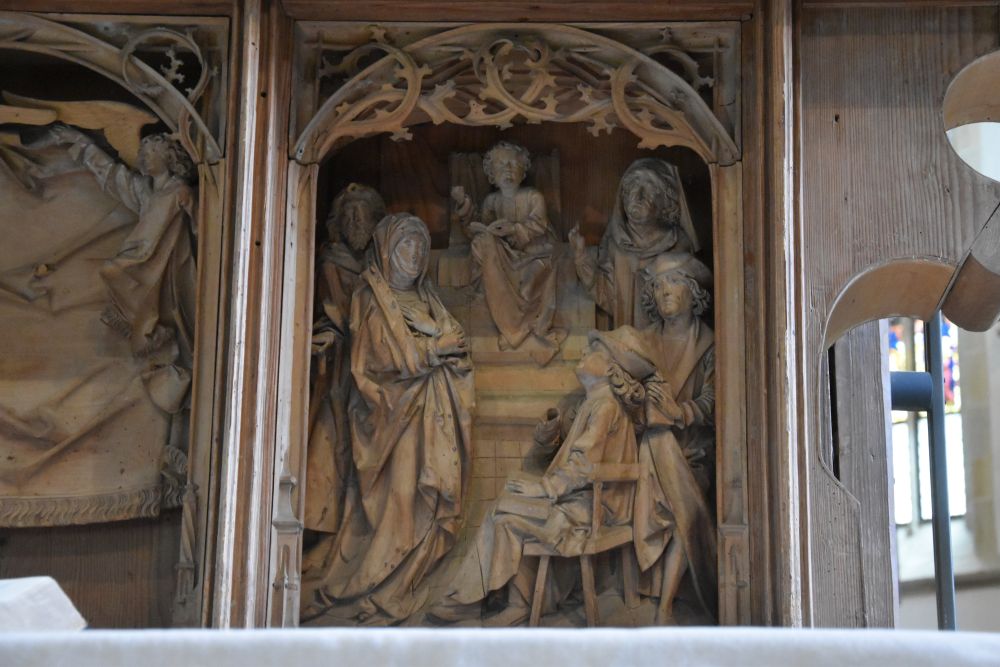
In the middle, there are two angels – it is assumed that the monstrance with the sacramental bread stood between them, but it is lost. Luckily we have not lost more of this altar. 

Soon after Riemenschneider’s altar had been installed in the church, the reformation took place. The reformers wanted to destroy the altars in the church. The priests and the citizens of Creglingen closed Mary’s altar and hid it away behind a board wall. The place became a shed for wreaths, and soon the altar was forgotten. About 300 hundred years later, probably after 1800, the altar was opened up again. Only, because there is a portrait of Riemenschneider in the predella, we know that the altar has been created by him. Fortunately, he has left his signature. And because on the “old” Assumption day, the light falls precisely on to Mary from the rose window behind her, it is clear that Riemenschneider has designed it for this church. What a story! 

I spend a long time in front of Riemenschneider’s altar studying the vivid expressions in the faces, the fall of the folds and the shadowing. Riemenschneider WAS a master. 

There are more wonderful altars in this church, all made around 1500 to support the pilgrimage still active then. 

The main altar stands in the choir. The artists are not known. The altar shows the Passion of Jesus with the crucifixion in the middle, two events before it (Gethsemane and Carrying of the Cross) to the left and two events after it (Entombment and Resurrection) to the right. 

The northern side altar illustrates the engagement of Mary and Joseph (the Virgin Mary is already pregnant), the birth of Jesus and the scene with the Three Magi in the middle. In the predella are two beautiful paintings, to the left the evangelist Markus, to the right Matthew. Matthew prays intensely looking to heaven, an angel watches him. The liveliness reminds of Renaissance paintings. 

The southern altar shows various Saints and martyrs. In the predella, I recognize Moses on the side wing next to the Last Supper, . 

I do not understand, why Moses has horns, it may be something like a gloriole, but this is, how I always can identify him. The scene shows the wonder of the bread in the desert. 

Before leaving the church, I greet Christopher – the fresco is from the beginning of 16th century. 

He is the patron saint of the travellers and the means of transport, and I am a traveller right now. 

I leave the church. On the one side of the entrance are the wrangler (in German: Streithähne which translates literally to “quarrelling cocks”; the two cocks are the illustration of the wranglers).
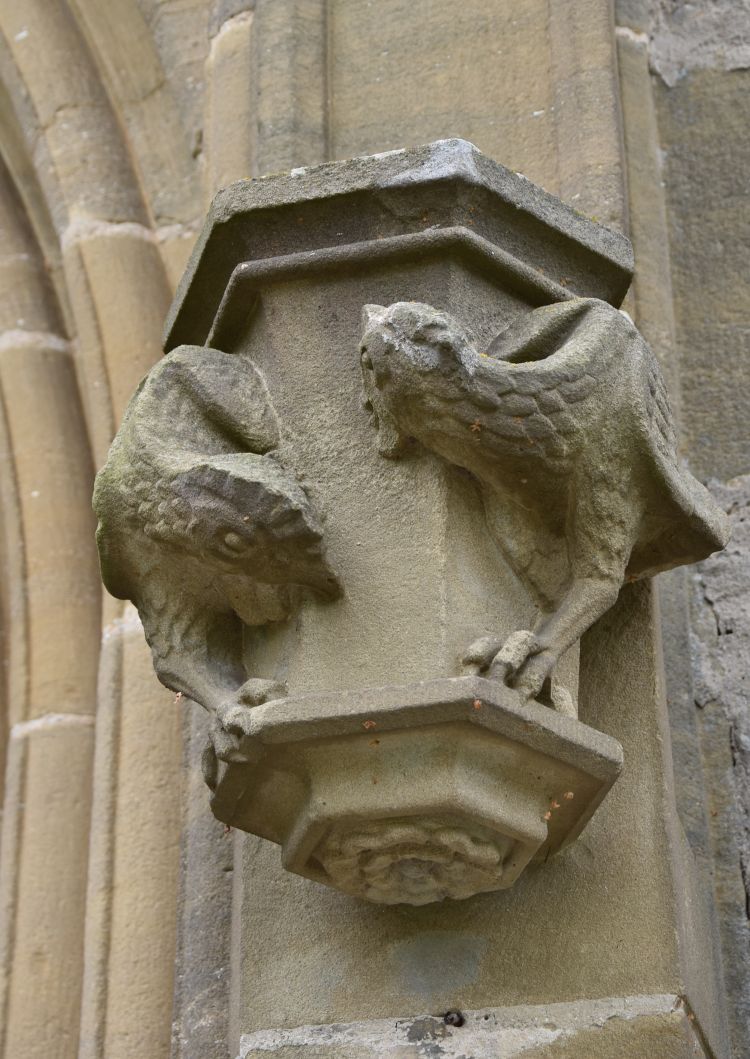
On the other side is the “sceptic” – the man robbing his beard seems to be in doubt, he is sceptical.

The wranglers and the sceptics have to remain outside the church. What a nice symbol.

I leave the wonderful Taubertal now and drive north towards Berlin.


Sources:

  • Sabine Kutterolf-Ammon, “Die Herrgottskirche zu Creglingen”, Kunstschätzeverlag, Gerchsheim 2016. (Brochure)
The Celtic oppidum in the Taubertal

In August 2024, the paintings of my grandfather Hermann Radzyk had motivated me to visit the Taubertal. I searched and found the easel locations at Rothenburg and Detwang. Now, I explore more of the Tauber valley. My first target is the Celtic oppidum Finsterlohr-Burgstall.

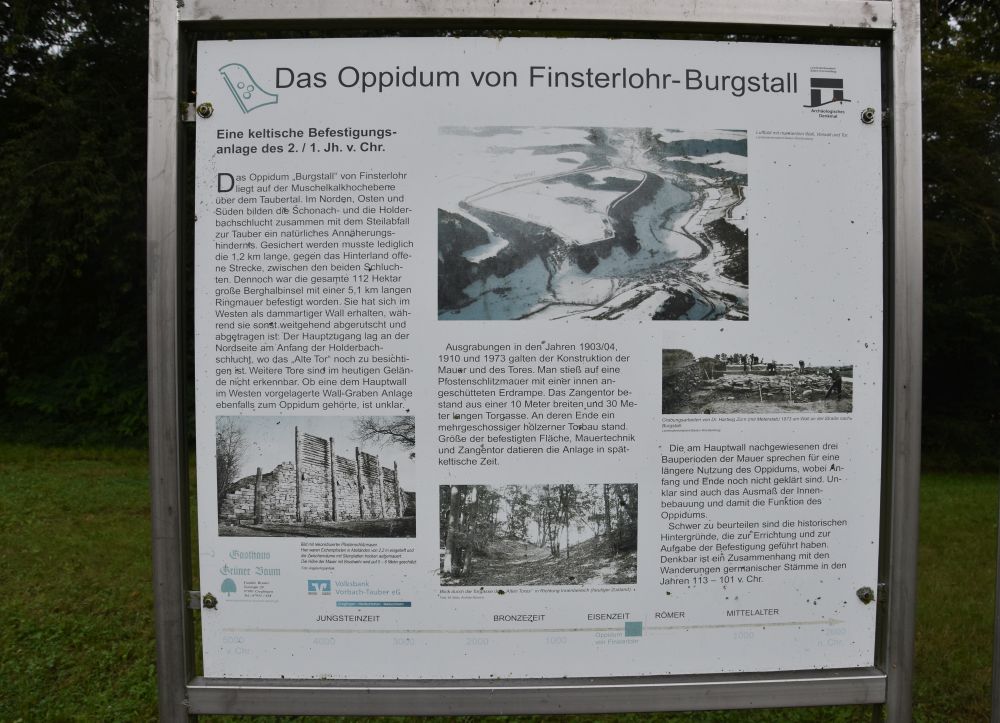
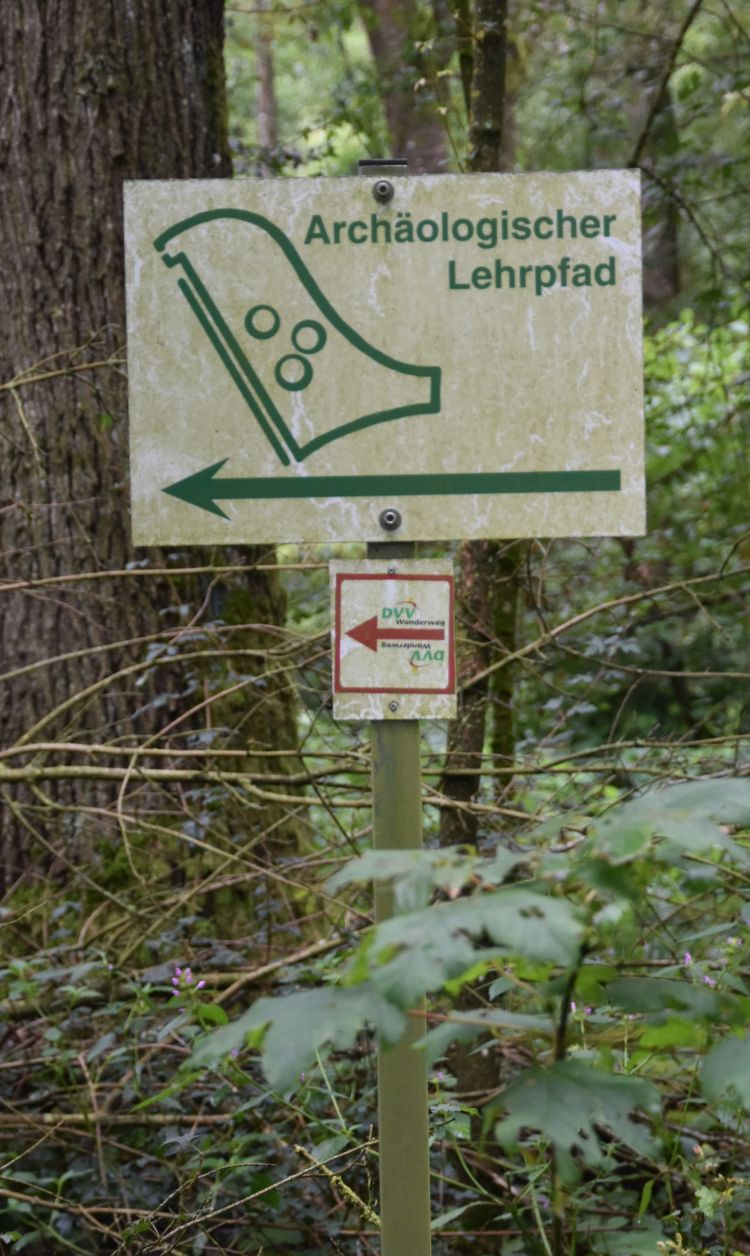
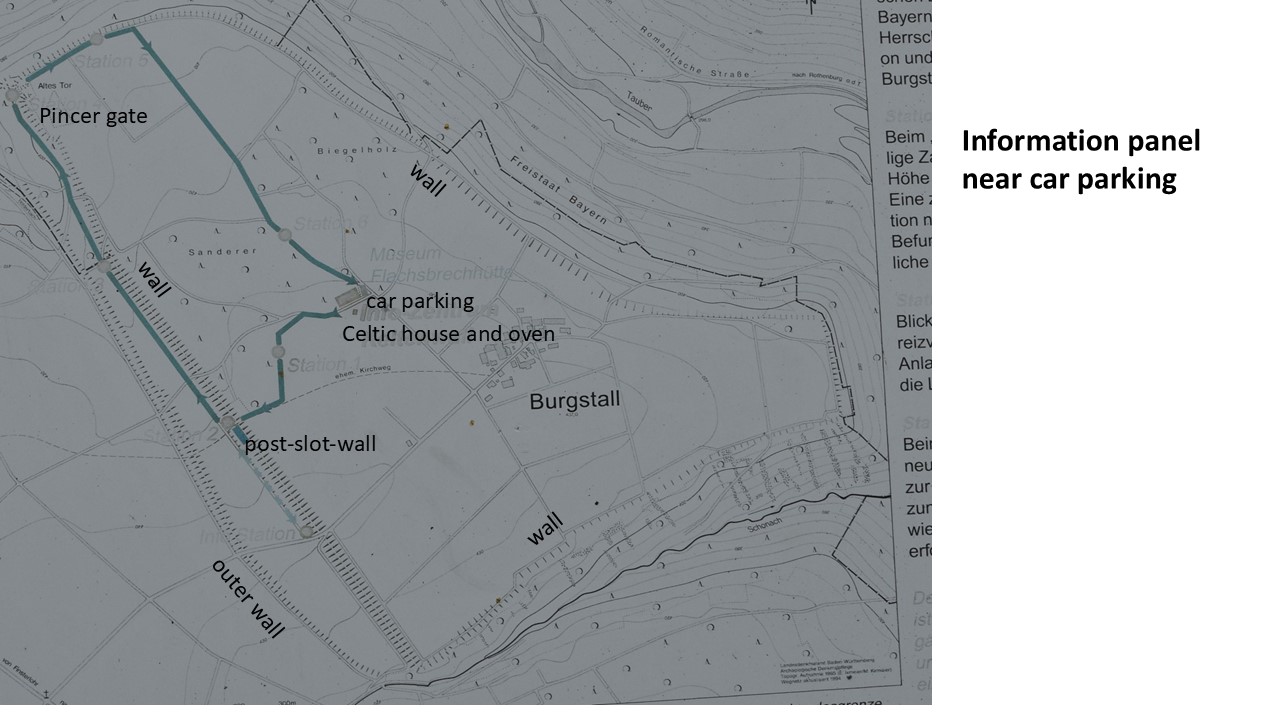
In the 2nd/1st century before Christ, the Celts had built an oppidum on a plateau above the Tauber valley. An educational trail of 2.5km was inaugurated by the association Kelten-Creglingen-Finsterlohr at Easter 2023. The trail is marked by the green coloured line on the panel ; it covers a small part of the former oppidum.

I am curious. With my car, I drive north from Rothenburg ob der Tauber following the road along the Tauber river. 

The river is cut deeply into the German plateau landscape. 

The oppidum is on the plateau. From the Tauber valley, a narrow steep road leads uphill, and I get stuck; a shepherd with his herd enters the narrow road from the right and heads down. I stop, another car coming down stops as well, and we wait. The sheep pass by my car on the steep embankment of the road, it is an enormously large herd. 


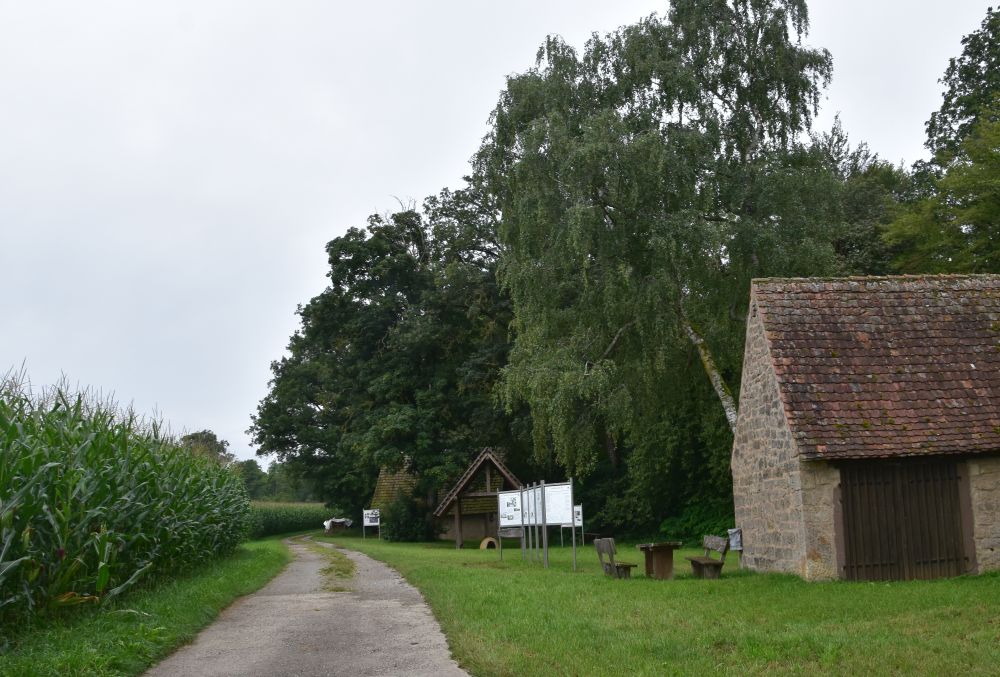
I feel sorry for the sheep. When the last sheep has past, the car coming down and me going up miraculously manage to cross each other. I drive up, reach the plateau and park my car at the start of the educational trail of the oppidum. I am the only car here and the only visitor. It is drizzling.

At the entrance, this panel explains to me, what I am going to see. 

On the shell limestone plateau, the Celts had selected the location for their oppidum carefully. It was well protected by the Tauber valley and two other smaller canyons. Only 1.2km of the oppidum, open towards the plateau,  would have needed protection. Nevertheless, the Celts protected the whole oppidum by a wall. Most of it has disappeared today. The main entrance to the oppidum was in the north above the Tauber valley. Excavations had uncovered the remains of the pincer gate (the panel shows the former passageway).  

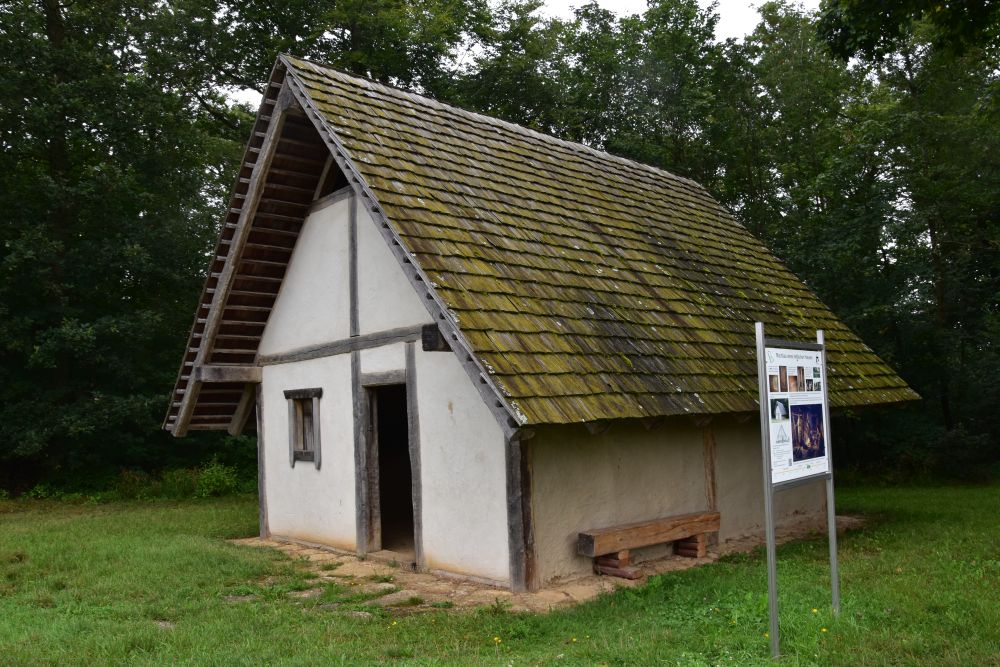
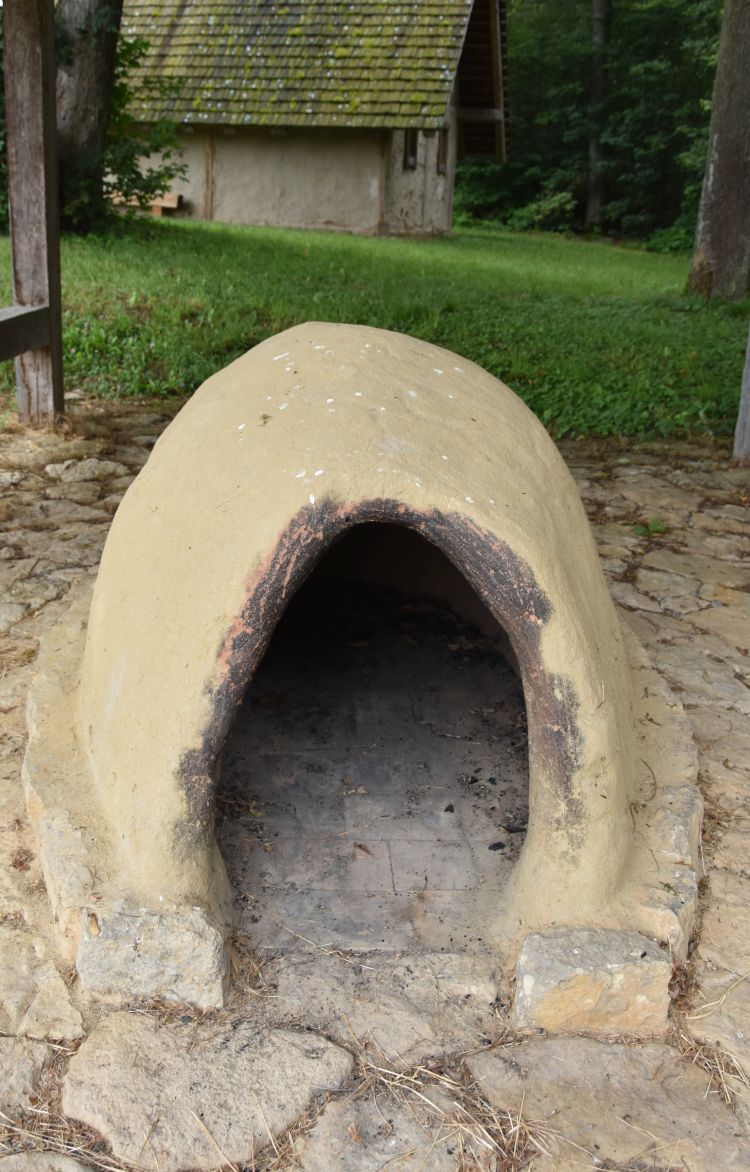
I get started. Behind the picnic table, the models of a Celtic house and a Celtic oven mark the first station on the trail. The panel next to it explains it all.

The Celts used loam to build their houses. Loam, a mixture of clay, sand and silt, is still in use today to build houses. For weather protection, the Celts painted the outside walls with white lime. 

Inside, there was a fireplace. The smoke waterproofed the roof and chased insects. 13 to 15 persons lived in such a house; with limited space and smoke, life must have been pretty uncomfortable.  

In the loam oven, the Celts baked bread at a temperature of 200 to 250 degrees. When the bread was done, they dried fruit in it, while it was cooling down. Rather sustainable production methods, we would say today.

The trail is well marked. I continue following the signs.

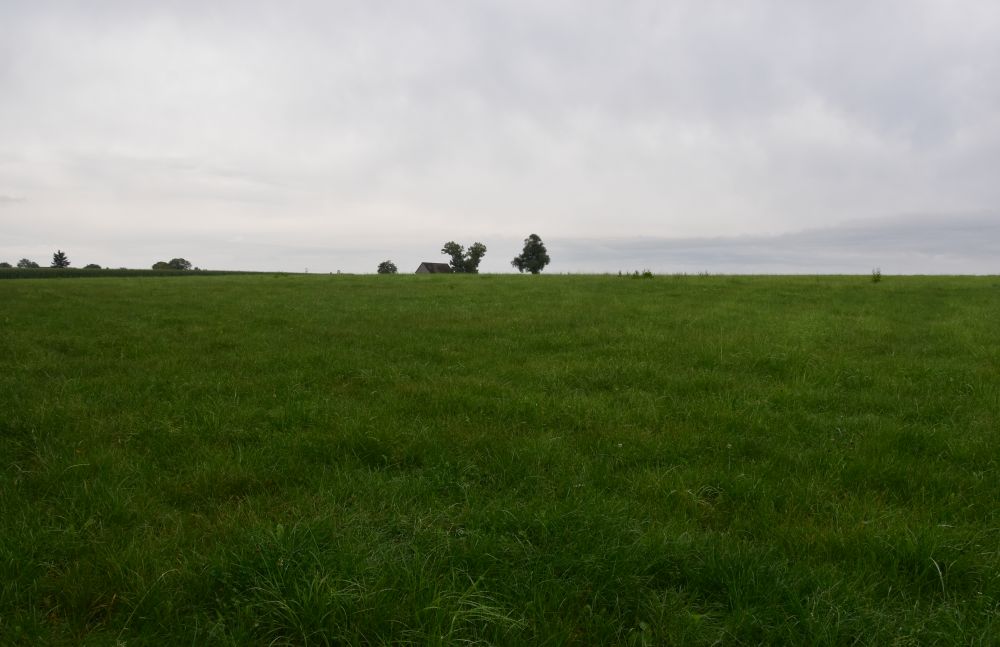
First, I walk “through the former village”. This is the view of the plateau looking south. 

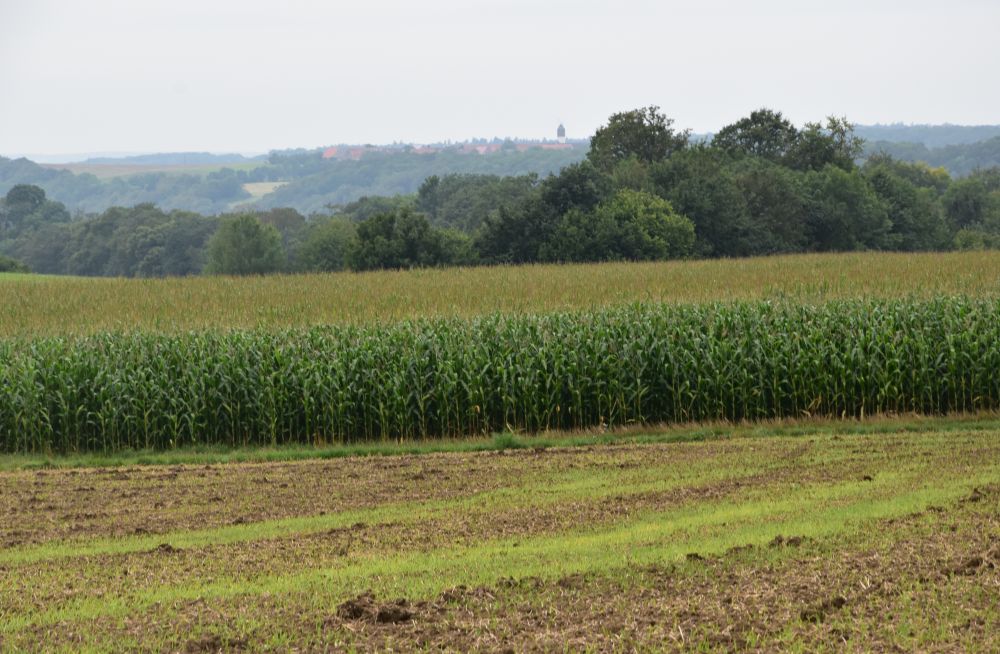
In the distance, south, I can see Rothenburg ob der Tauber. 

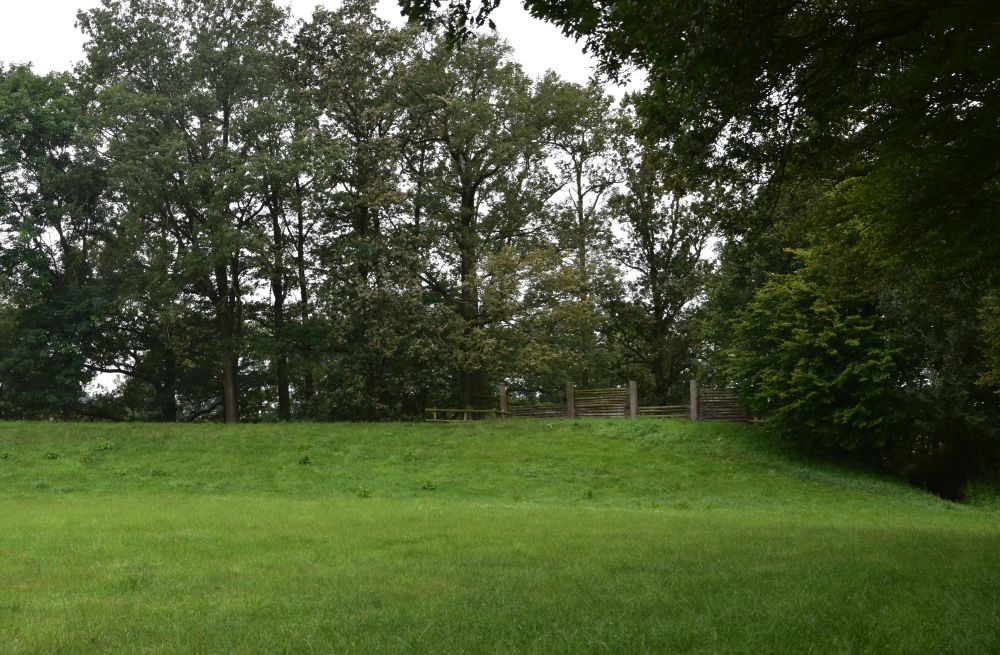
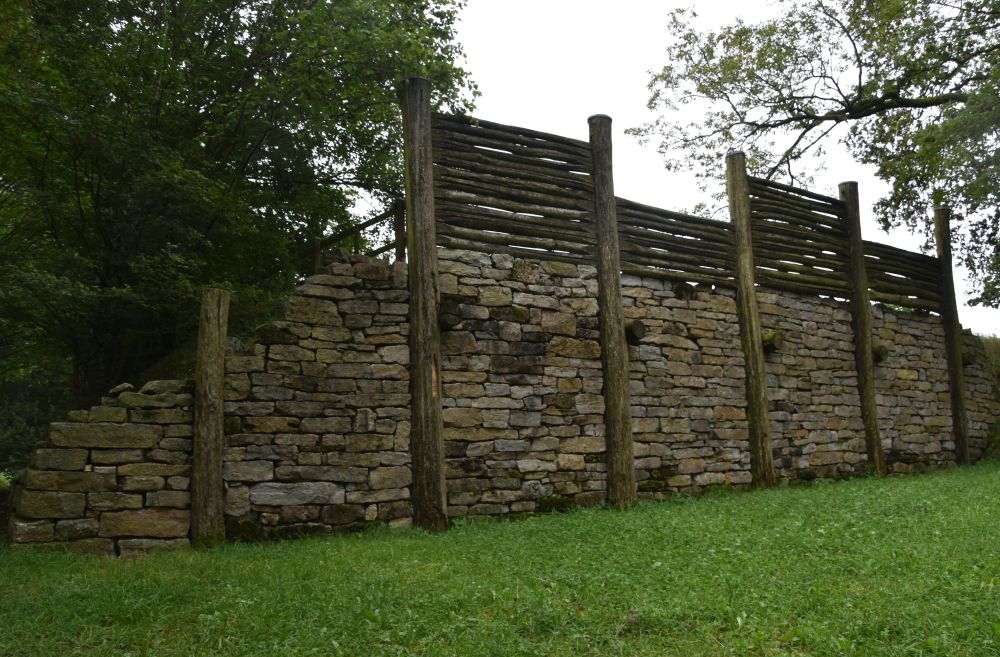
I reach the earth rampart at station 2. The post-slot-wall (Pfostenschlitzmauer) has been reconstructed; now I can see the upper wooden part above the earth rampart.

From the other side, it becomes clear that the wall was a dry masonry construction with oak beams (every 2.2 meters) and, at the back, the wall was fortified by the earth rampart. Overall, the wall was six meters high. 

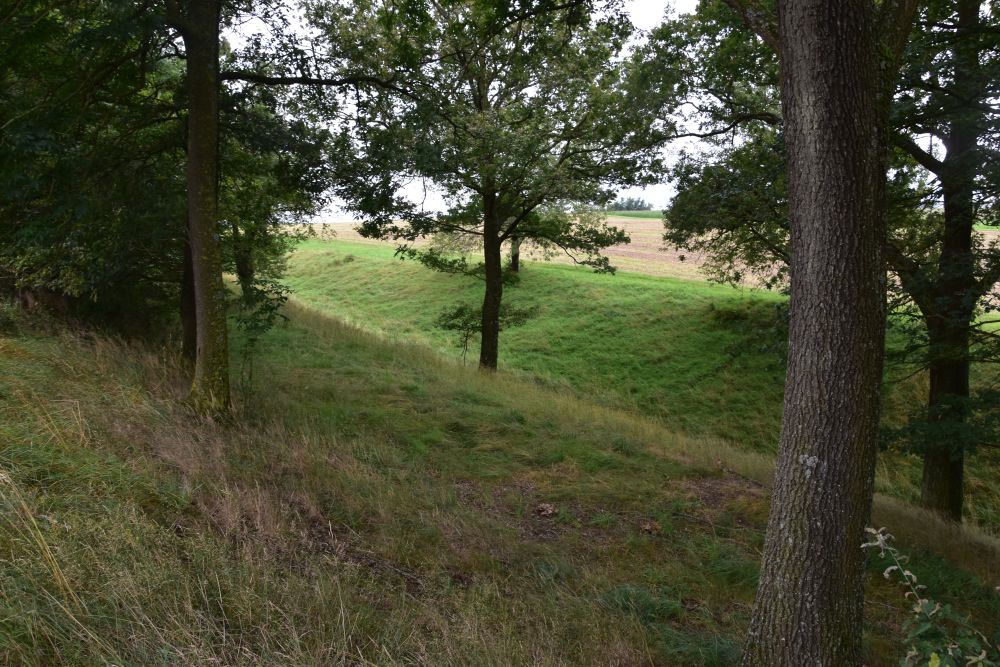
The wall went from south east to north east, the ditch indicates, where it was.

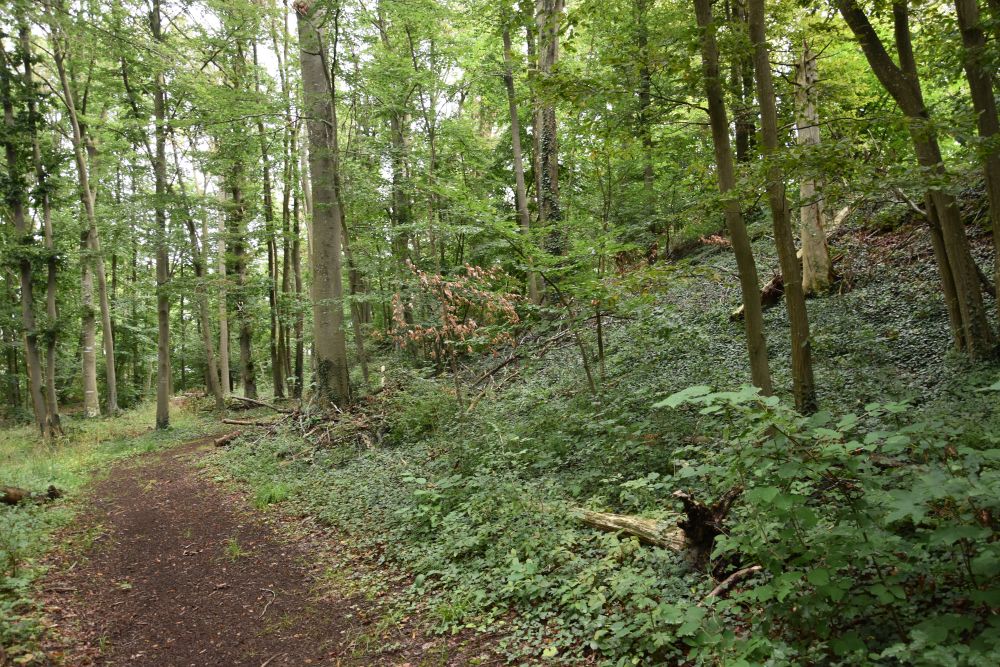
From here, the educational trail follows the former wall taking me north west and towards the Tauber valley. 

I reach the edge of the Tauber valley and the remains of the former pincer gate (Zangentor). In front of the gate, the last 30m of the exterior road were lined with two lateral walls (the “pincers”). The resulting passageway (Torgasse) lead to the wooden gate. I read the panel, and I admit, I could not identify the remains of the gate; you can see the remains of the passageway on the first information panel of the trail (above).

I walk along the edge of the Tauber valley, until the trail turns right and leads me back across the former oppidum to the starting point. 

While walking, I studied the panels informing me about the Celts. Here are some of my learnings.

The oppidum comprised about 112 hectares surrounded by the ring wall of 5.7km. The history of this oppidum is not known; it is not clear, how it was used by the Celts, as a permanent place of residence or as a shelter. The oppidum could have been part of the network of Celtic oppida, some of them covered more than 100 square kilometres. The oppida provided protection for people, their animals, the pastures and the fields. In addition, they were trade centres. 

The Celts were organized in tribes, not as nations. The Celtic society flourished in the 6th/5th century before Christ. They traded with the Mediterranean region, as archaeological finds of amphorae or tableware prove. They replaced their barter system with a money system; they minted their own silver and gold coins. Later, in medieval times, people found  pieces of gold in the fields, mostly after heavy rainfall. They believed that the pieces of gold had fallen down from heaven and that they would help to cure fever or pain.  

The Celts started to write adopting the alphabets of other peoples, e.g. the Greeks. However, writing was reserved to ordinary purposes, while the druids continued transmitting their knowledge orally. 

The Greek invented the name “Celts”. For instance Herodotus wrote about them in 450 before Christ. He was aware of the Galatians in Anatolia that were also a Celtic tribe. By the way, the Celts had also settled on the Cathedral hill of my home city Basel. Above the Rhine river,  the remains of a similar Celtic wall have been excavated, and the explanatory panels show the same post-slot-wall construction. 

The Celtic culture disappeared, when the Romans came. The Celts were romanized. I believe, they must have preferred the Roman way of living, as it was more comfortable (heating, water provision, baths, theatre, more effective agriculture and animal raising…).

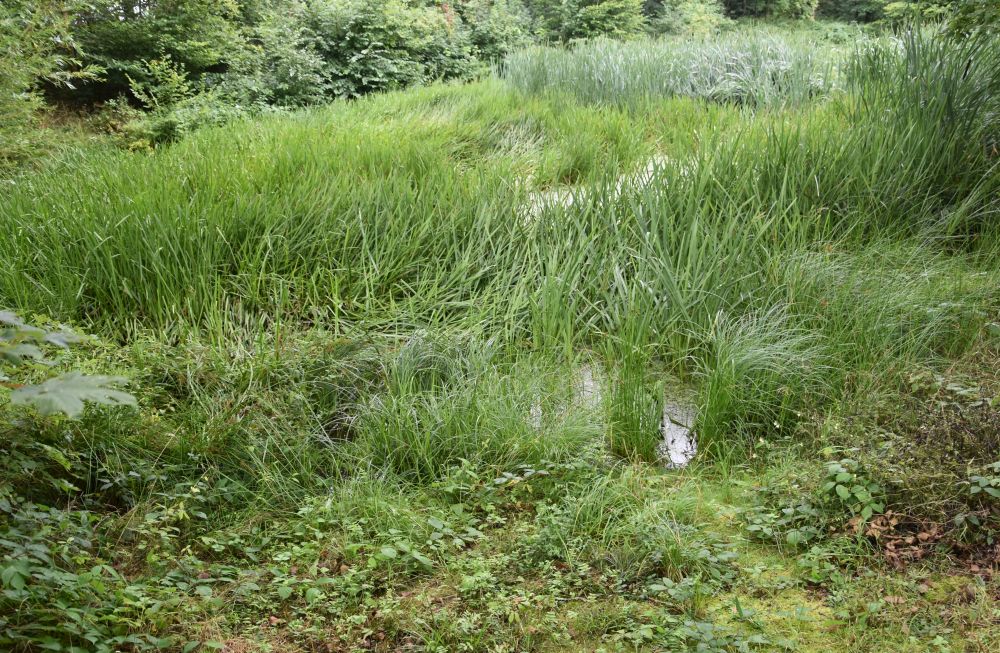
I finish my tour. I feel wet, it is drizzling. The last information panel stands near the “Old  Lake”, rather a swamp than a pond. Looking at it, I feel even wetter. 

With this swampy pond, I say good-bye to the Celts and their oppidum and continue my way to Creglingen, where another altar of Til Riemenschneider is waiting for me.  

Sources: