Discovering Silesia: Karpacz with its churches and with Sniezka

In May 2023, we spent a week in Silesia, in “our” castle Staniszów near Jelenia Góra. From here, it was a short car ride to Karpacz, formerly called Krummhübel. Many German artists had been here at the end of the 19th century and in the beginnings of the 20th century.  Carl Ernst Morgenstern taught plein-air painting around Karpacz. Theodor Fontane wrote a criminal story for Krummhübel.


Karpacz centre with two churches from around 1900

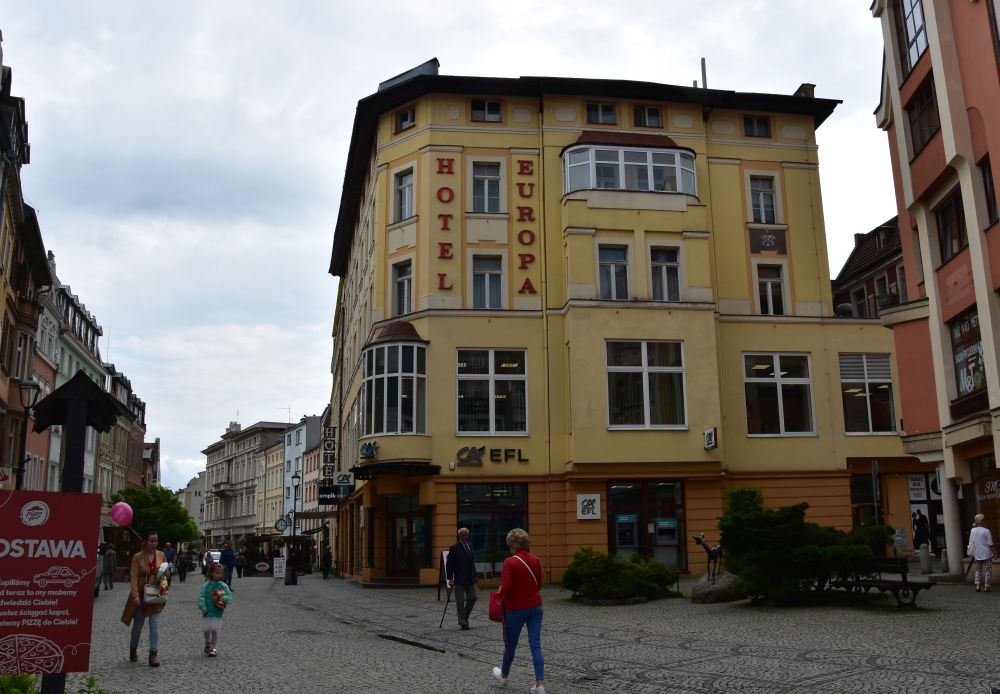
The centre of Karpacz (Krummhübel) is a touristy place – this is the main street. 

There are two churches here, both built around 1900.

The church of the Holy Heart of Jesus, (Kirche des heiligsten Herzens Jesu, Kościół Najświętszego Serca Pana Jezusa) was inaugurated as a protestant church in 1908. 

A  nice painted wooden ceiling inside. The church became catholic in 1945.

The church Visitation of our Lady (Mariä Heimsuchung, Parafia Nawiedzenia Najświętszej Maryi Panny) was inaugurated in 1910, and the nave was rebuilt after 1945.
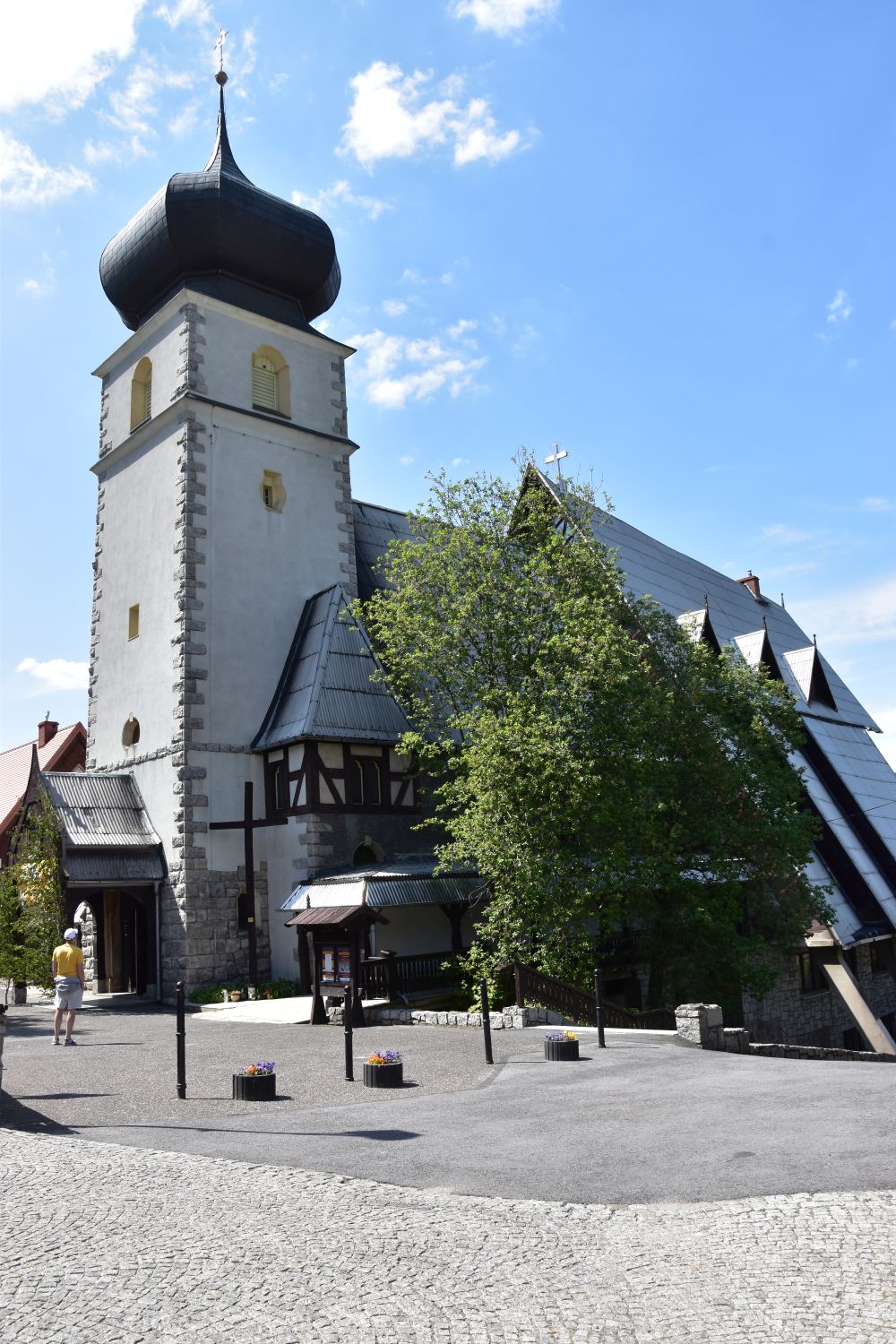
A painted wooden ceiling here as well.

Also this church was protestant and became catholic in 1945.


Wang church (Kościół Wang)

The attraction of Karpacz is the wooden Wang church. 
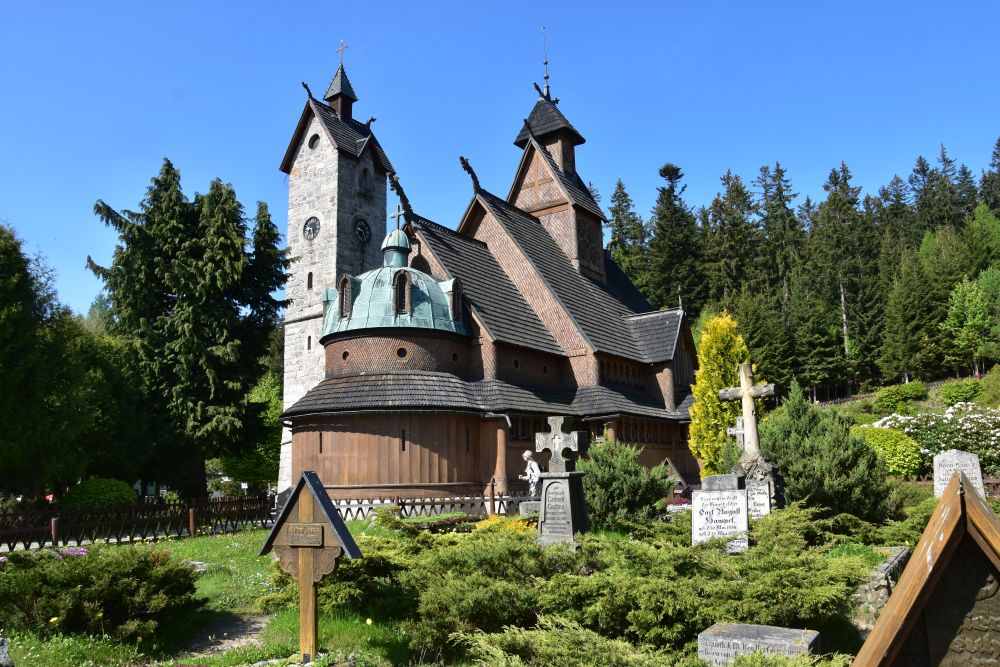
The church was built in Vang in southern Norway in the 12th or 13th century. In the 19th century, this church became too small for the congregation. It was decided to sell the church and use the money earned to build a larger new church. A painter from Norway, professor Jan Christian Dahl, lived at Breslau at that time, and he convinced the Prussian king Friedrich Wilhelm IV to buy the church for 427 Mark. The church was disassembled and shipped to Berlin. The king had intended to rebuild the church on the Pfaueninsel at Berlin, but then changed his plans. Count Leopold Christian von Schaffgotsch donated land between Krummhübel (Karpacz) and the Schneekoppe (Śnieżka), at Brückenberg (now Karpacz Górny). The church was reassembled here and inaugurated in summer 1844.

Two lions guard the entrance to the church.
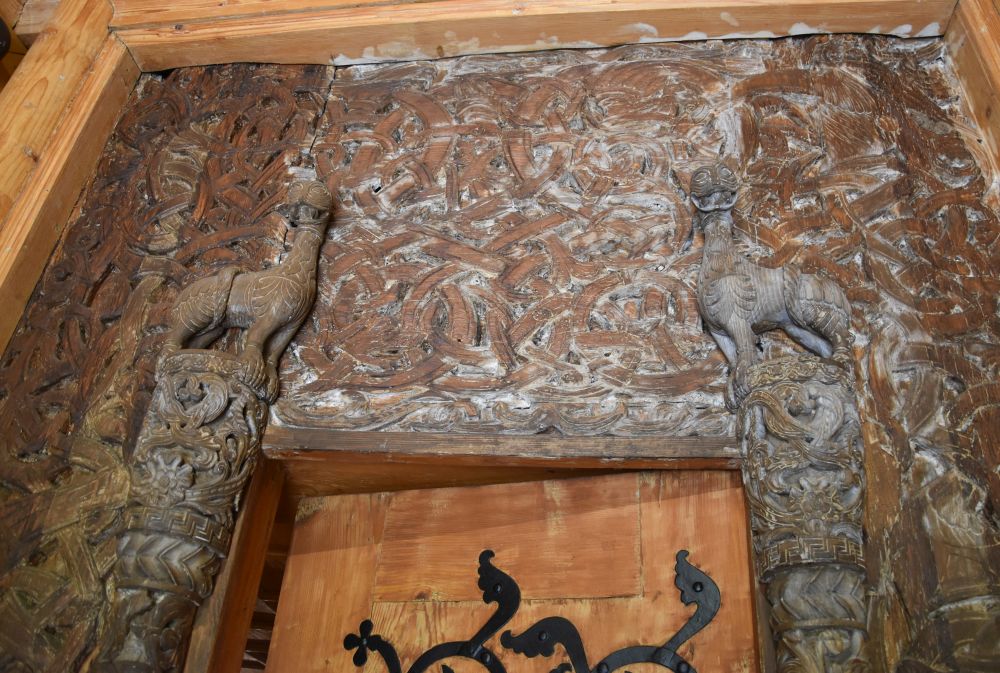
Inside, viking faces frame the door; they may be warriors with split tongues. 

This is the choir…

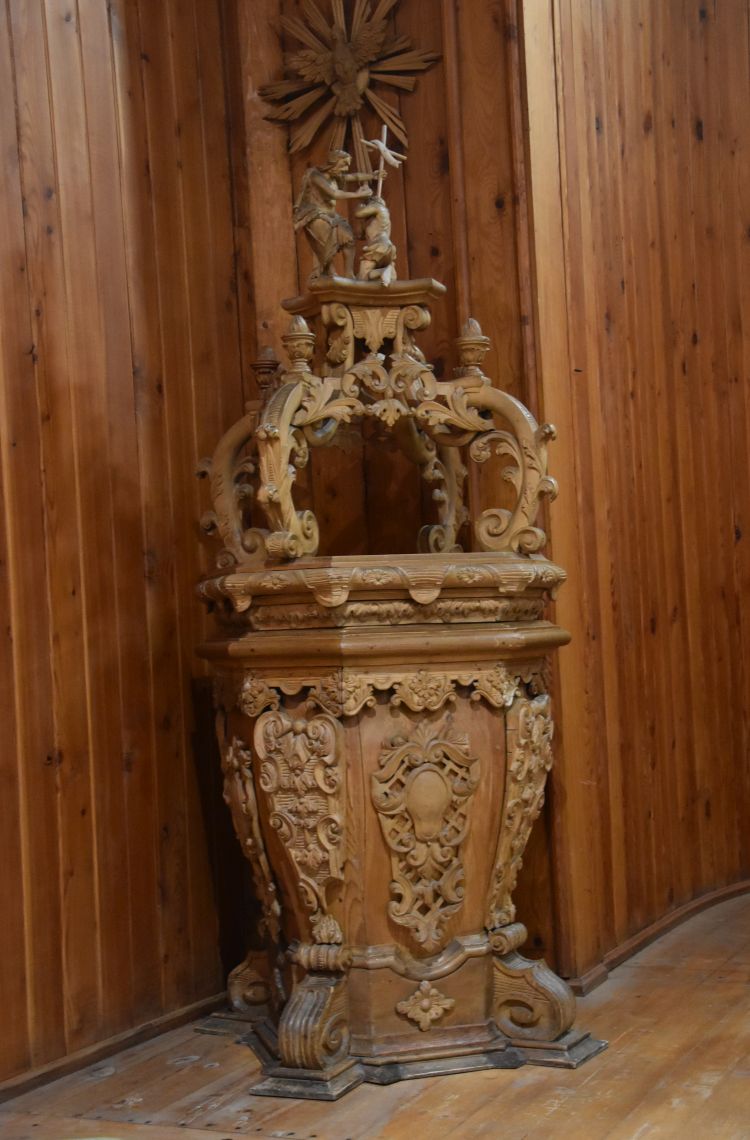
… with the baptismal font (Saint John in his fur coat baptizes Christ).
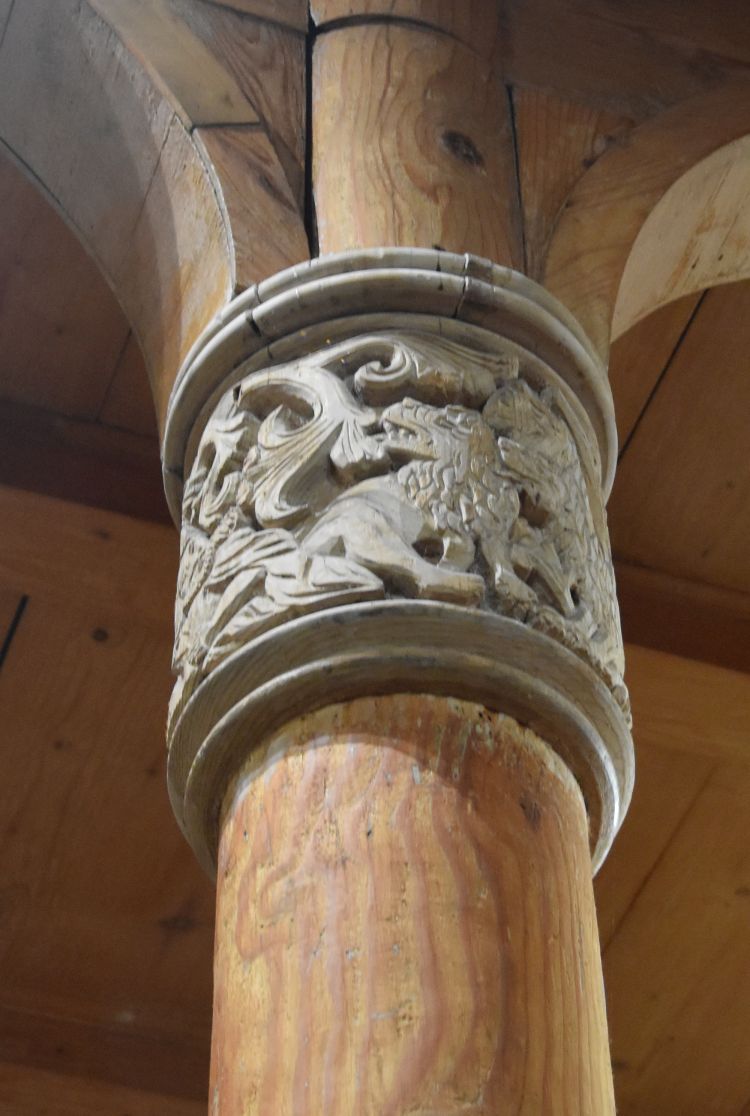
The column shows Daniel in the lion’s den.
This door leads to a corridor around the nave. 

The Vang church has become THE cultural landmark of Karpacz.


Hiking from Polana to Słonecznik, with a partial view of the Śnieżka

Behind the Wang church, you have to pay an entrance fee for the Karkonosze park, which is a nature reserve now. A path leads to Polana, a meadow that I suspected was the place, where my grandfather had painted the Schneekoppe (painting owned by Heimatverein Kleinmachnow).
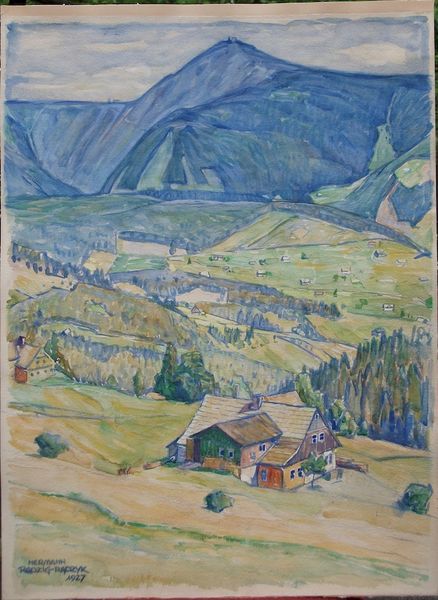
But, when reaching the meadow Polana, it becomes clear, this is not the place, where my grandfather’s easel was. 

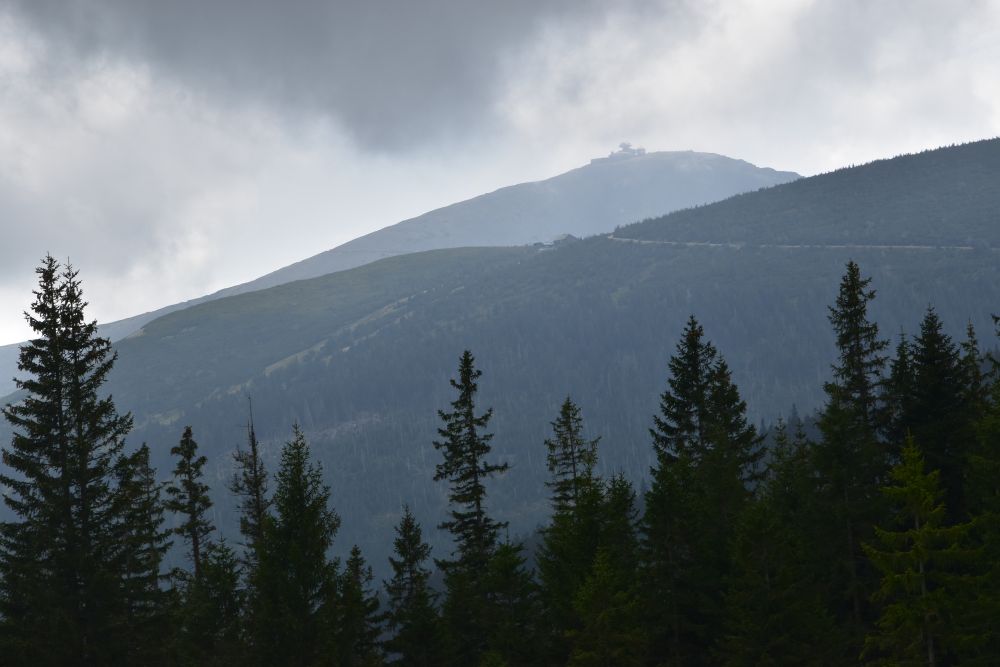
I follow the path uphill and can sometimes see the Schneekoppe between the trees.
I reach one of the many granite blocks scattered around here… and I am not alone. The Poles enjoy hiking.

I reach another granite rock, the Słonecznik. A beautiful view into the Hirschberg valley. 
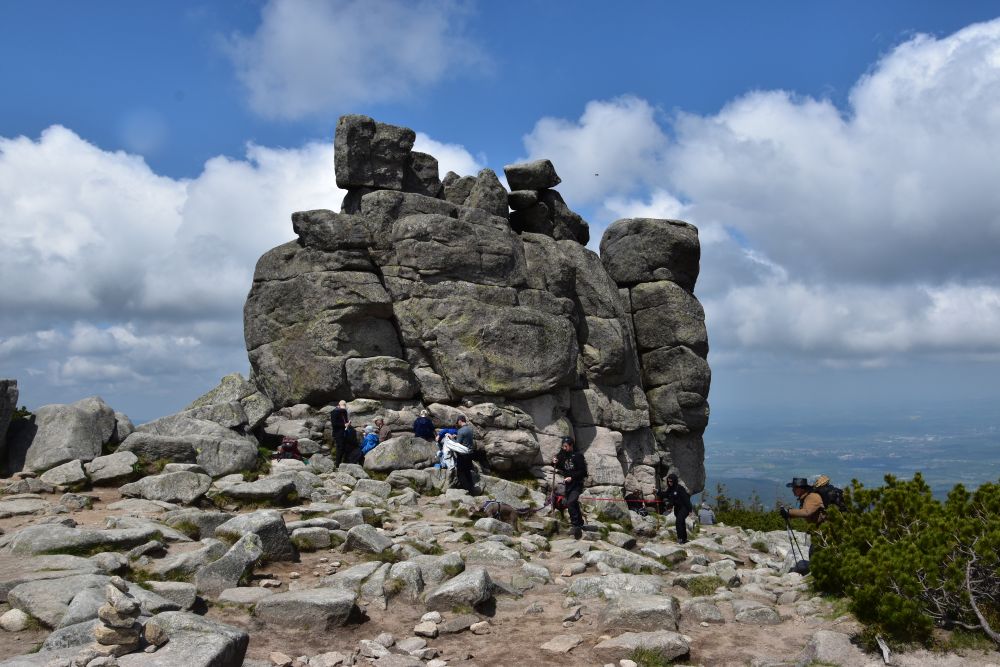
The Schneekoppe(Sniezka) can be seen from the Słonecznik as well. 
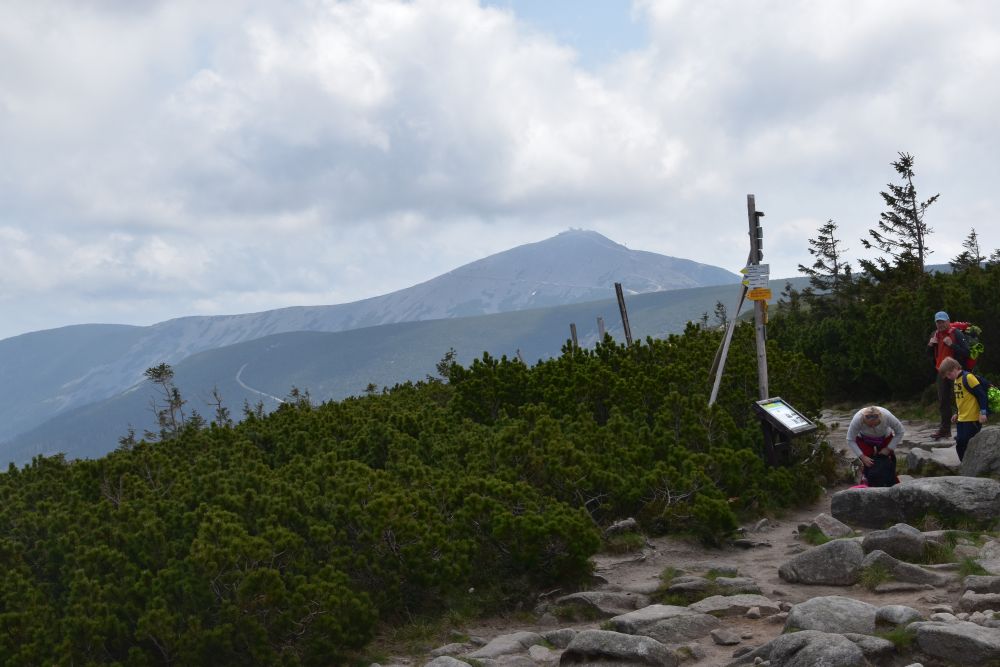
I walk back down.

On the meadow Polana, I look for the place, where the  former mountain hut Hasenbaude once was, but it seems that nothing remains of it.
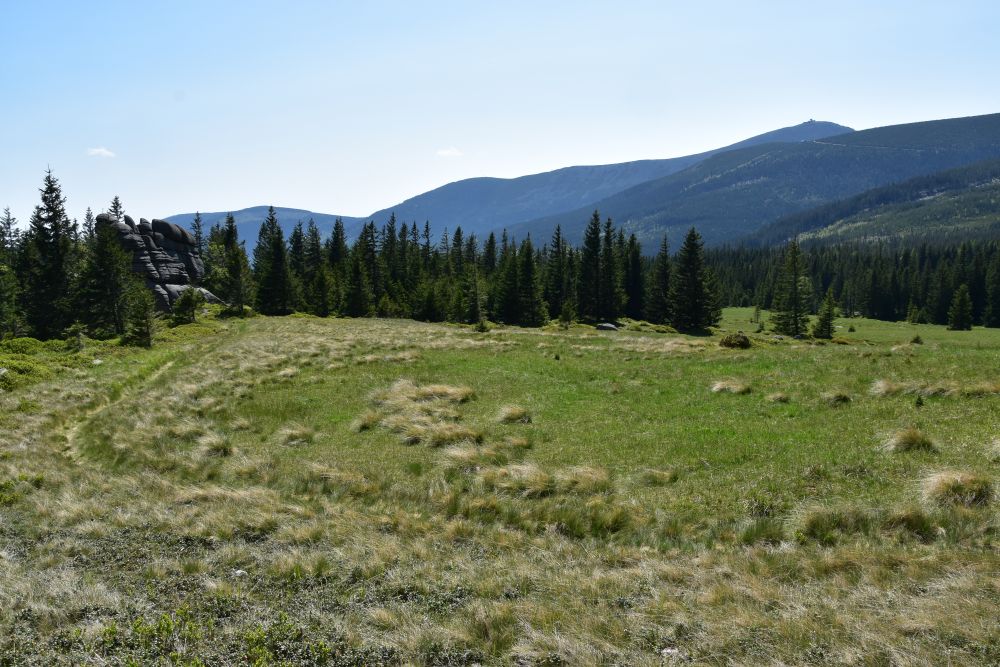
No, I my grandfather’s easel was not here… may be it was south of the Schneekoppe (Sniezka), on the other side?

Back at home, I solve the puzzle. The easel WAS south of the Schneekoppe, above Petzer or Pec pod Sněžkou. I could identify Petzer and  the mountains on the painting and I believe, the easel stood at the Lenzenberg, now called Zahradky. 

There is something more to explore! The Giant Mountains in the Czech Republic. I will return!


Sources:

  • Plates on the churches
  • Description of the Vang church, handed out in the church.
  • Tomasz Torbus, “Polen – Reisen zwischen Ostseeküste und Karpaten, Oder und Bug”, Dumont Kunstreiseführer, Ostfildern 2011
Discovering Silesia: Cieplice Zdrój or Bad Warmbrunn

In May 2023,  I spend a week near Jelenia Góra in Silesia exploring the surroundings. One day we visit Cieplice Zdrój (Bad Warmbrunn). 

In the 17th/18th century, Bad Warmbrunn became a well-known health resort in Silesia. In the 17th century, the queen of Poland, wife of Sobieski, stayed here with her entourage of 1500 persons. In the 19th century, Bad Warmbrunn was one of the most famous resorts of Germany, visited by artists, high nobility, statesmen and even by the (later) US president  John Quincy Adams (1825-1829).  

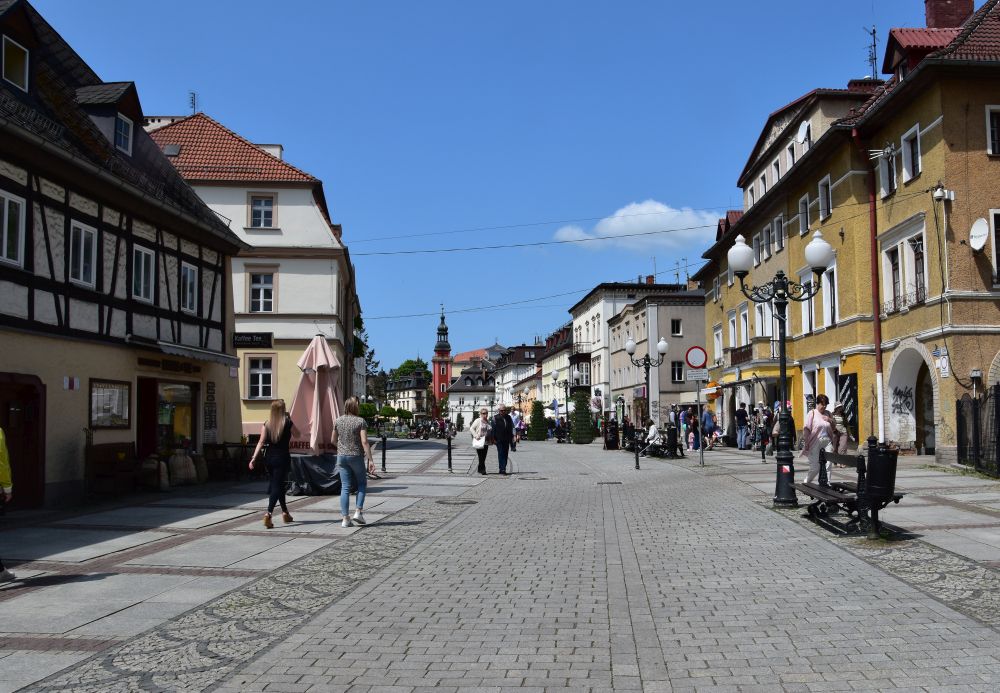
The main centre is called Plac Piastowski. Spa guests and day tourists stroll along. There are souvenir shops and inviting restaurants. 

The houses are well maintained. In the background we can see the red tower of Saint John’s church.  

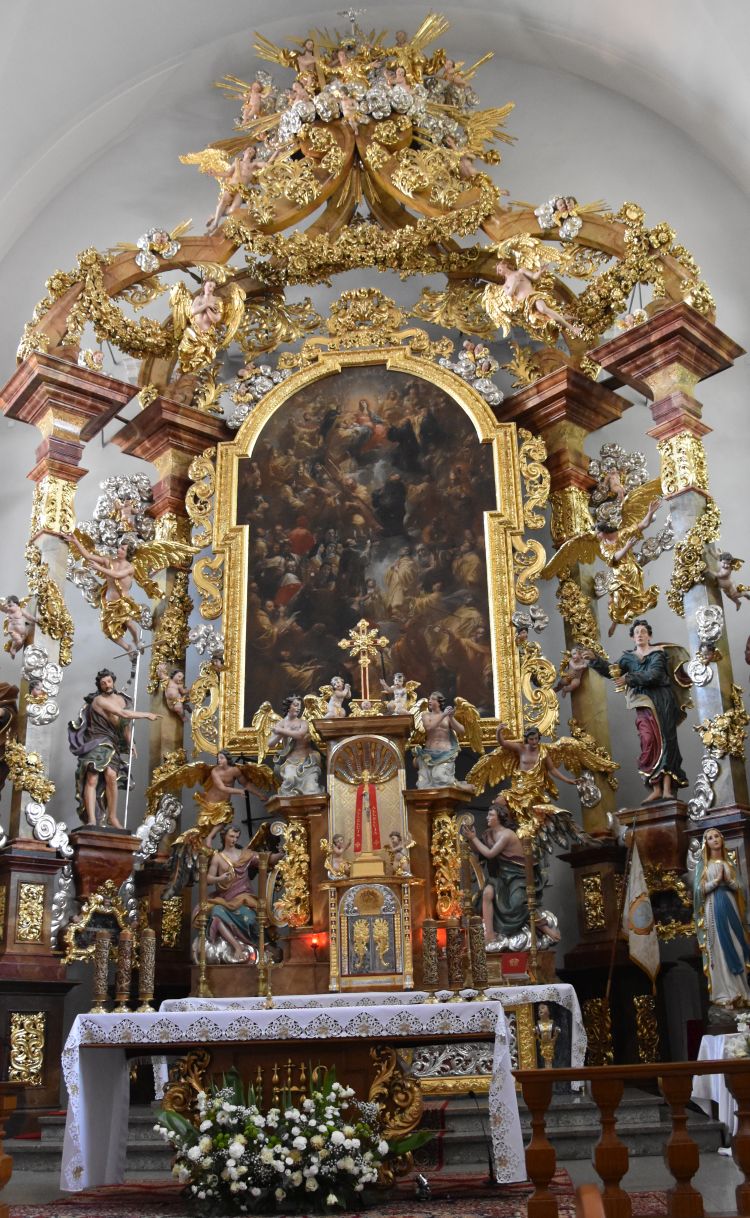
In the church of Saint John the Baptist, the high altar has been painted by Michael Willmann (1687); he is sometimes called the Raffael of Silesia. His painting shows Maria Assumption. 

Already in 1281 the Knights Hosipitallers (Johanniter) had founded a hospice that was probably visited by guests for healing.  

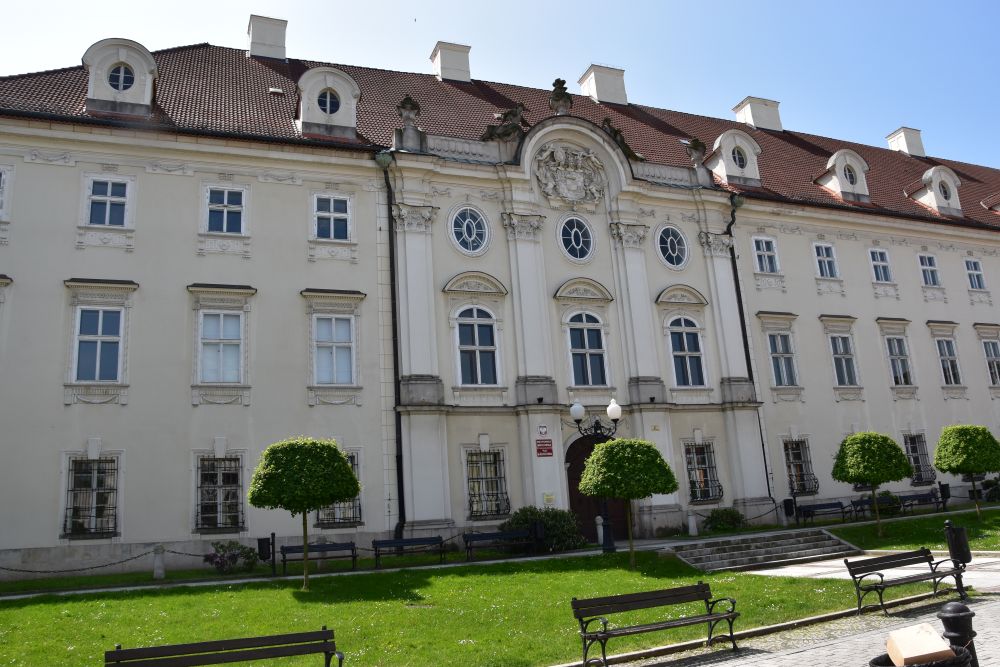
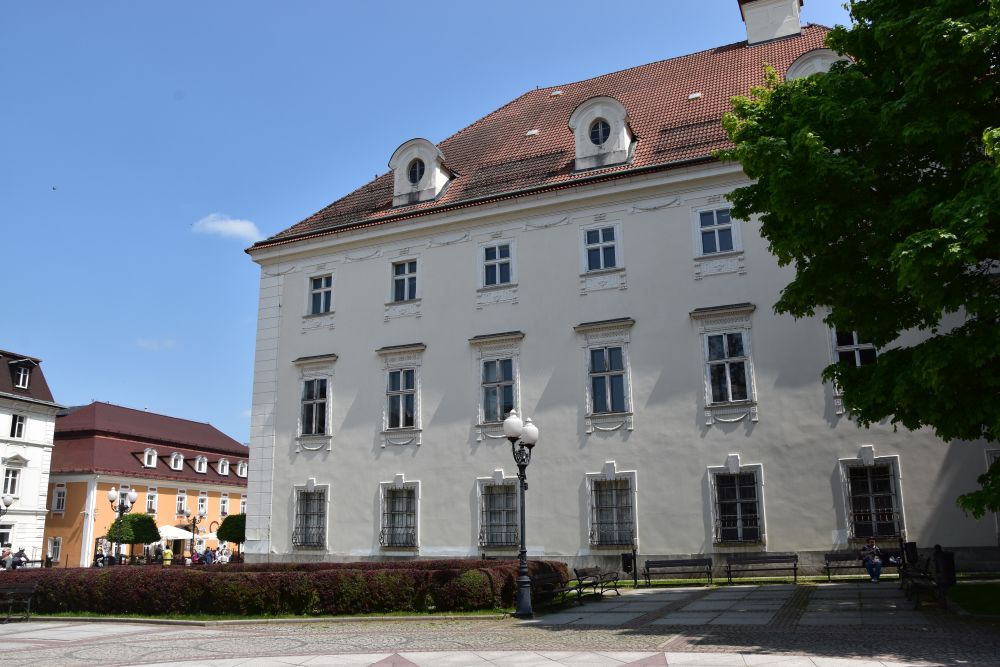
The Schaffgotsch acquired Warmbrunn in 1381 and settled here in 1400. Their castle, completed in 1788 in early neoclassical style, dominates the Plac Piastowski. 

Today it is part of the technical university of Wroclaw. 

Legend tells us that in 1175, a deer  cured his wounds at a warm fountain, after having been shot by hunters. The hunters built a hunting lodge, and this is how the spa resort originated (by legend).

Next to the palace, this cheerful “deer couple” may remind of the legend. They seem to have recovered well in Cieplice. 

Next to the Schaffgotsch Palais is the entrance to the spa gardens.

We enter, pass by the Pawilon Edward,…

… and enjoy the romantic corners. 

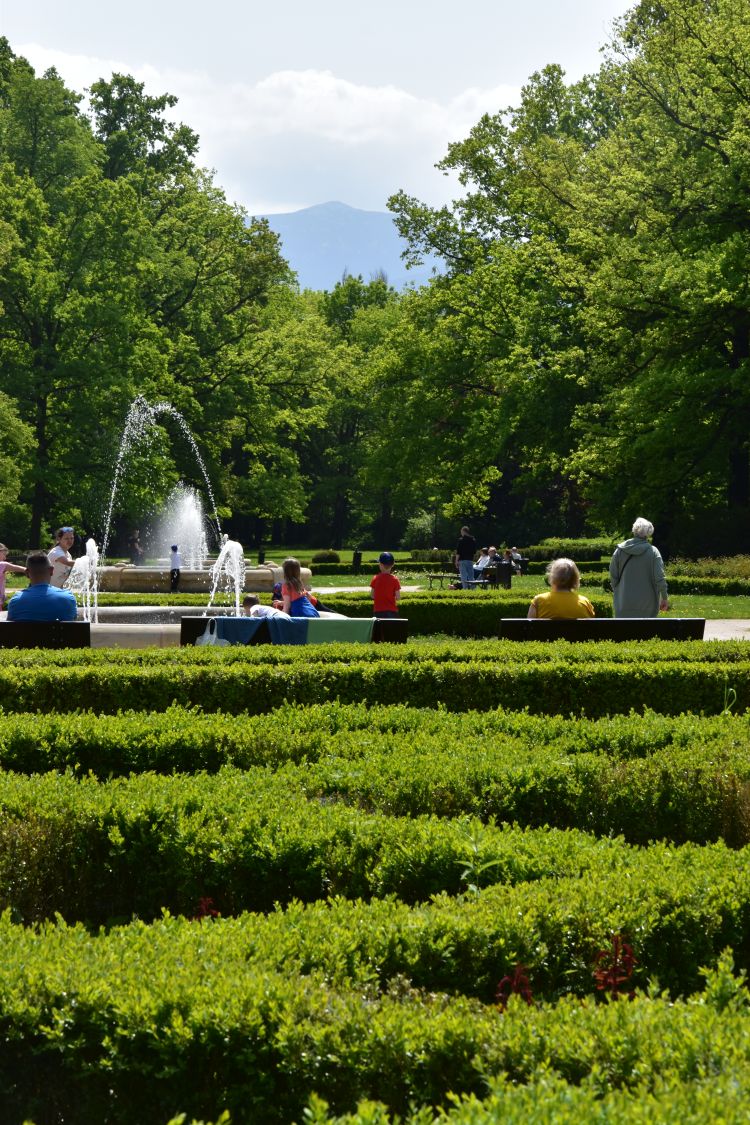
The visual axis to the Schneekoppe or Sniezka has been beautifully set up with fountains and benches.

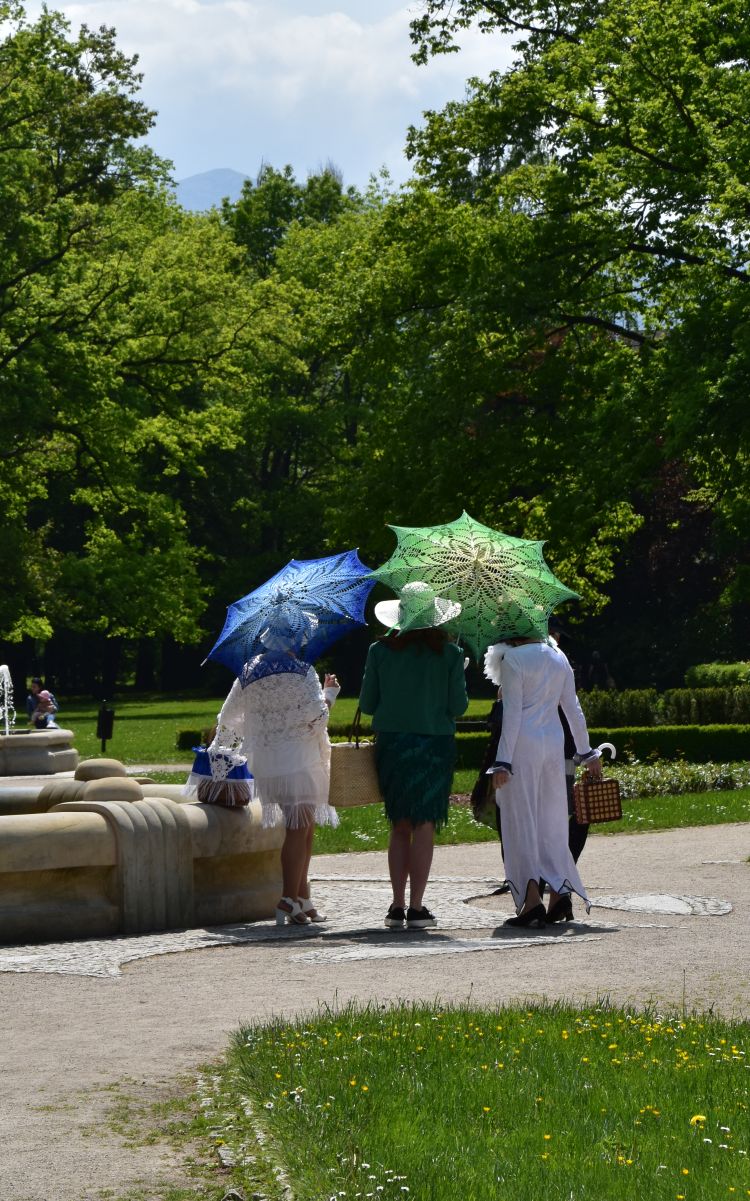
For several centuries high nobility and statesmen have strolled along the alleys of this park. We meet some of them….

… dressed up like a hundred years ago.

We return to the Plac Piastowski and have a delicious ice cream.

At Cieplice, I notice again that the Polish fill the German past of Silesia with their life and take care of it. 


Sources:

  • Frank Schüttig, “Riesengebirge”, Trescher Verlag, Berlin 2022
  • Malgorzata Ulrich-Kornacka, “Niederschlesien”, Via Nova, Wroclaw 2018
  • Dieter Schulze, “Polen der Süden”, Dumont Reisehandbuch, Osfildern 2020
  • Tomasz Turbos, “Polen”, Dumont Kunst-Reiseführer, Hamburg 2011
  • Arne Frank, “das schlesische Elysium, Burgen, Sclösser, Herrenhäuser und Parks im Hirschberger Tal”, Potsdamer Bibliothek östliches Europa Kulturreisen 2004.

Discovering Silesia: Across the Riesengebirge, the Zackenbahn connects countries

In May 2023, we spend a week in the castle Staniszów near Jelenia Góra and go for excursions.


The Zackenbahn

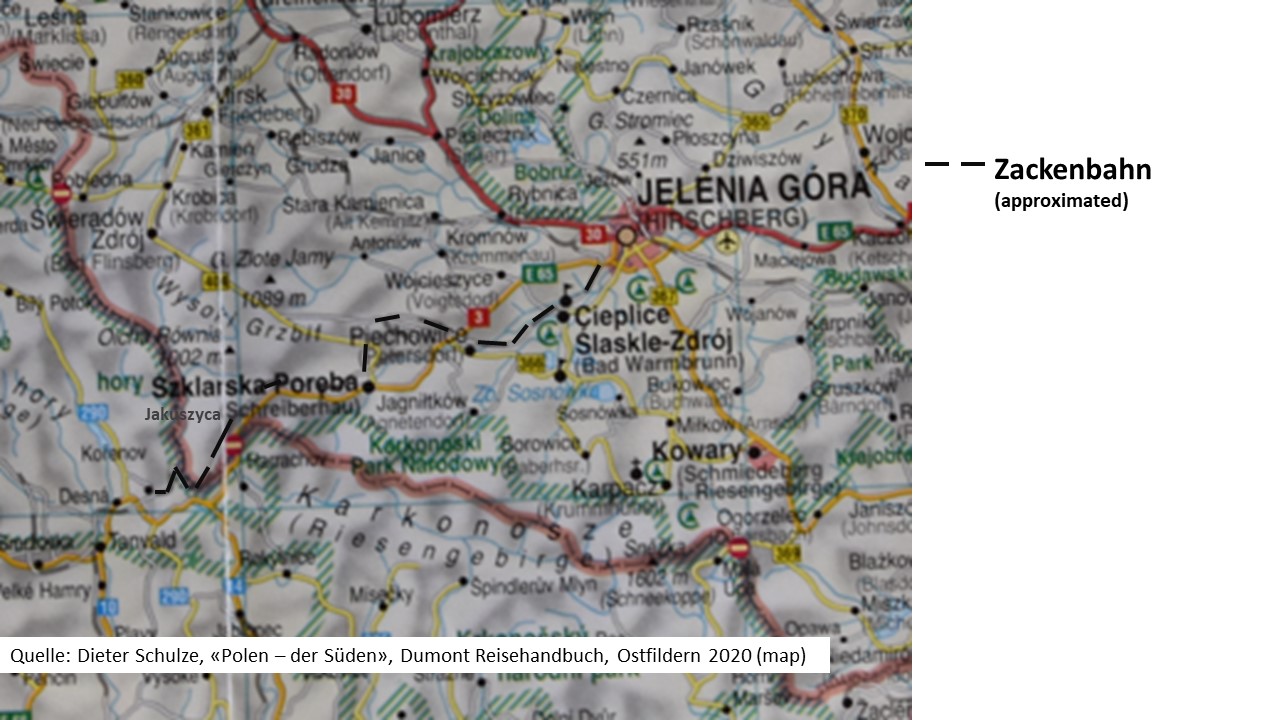
Now we take the Zackenbahn. Reopened in 2010, the Zackenbahn crosses the Riesengebirge (Karkonosze) connecting Poland (Jelenia Góra) with the Czech Republic (Kořenov and farther). 

Up to the highest point Jakuszycke, the train follows the river Kamiena. In German times, the Kamiena was called “Zacke”. Hence the name “Zackenbahn”.

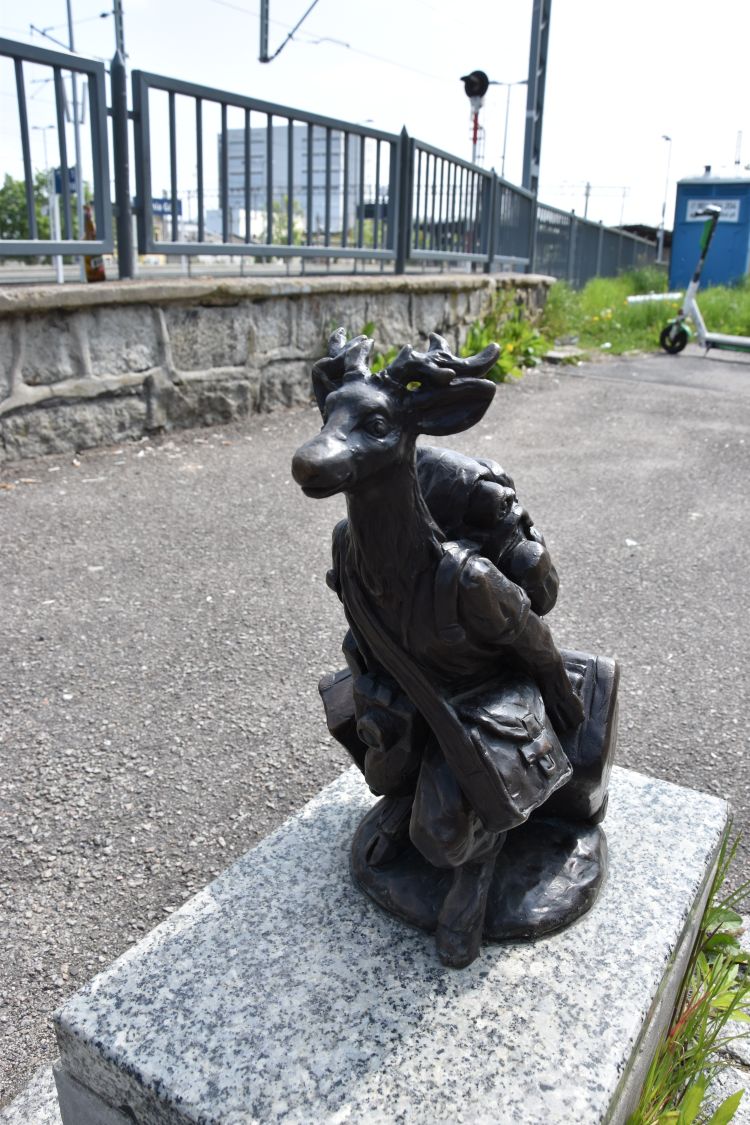
At the train station of Jelenia Góra (Hirschberg, “Deer Mountain”), this cheerful animal wishes us a good ride on the Zackenbahn. 


At Kořenov 

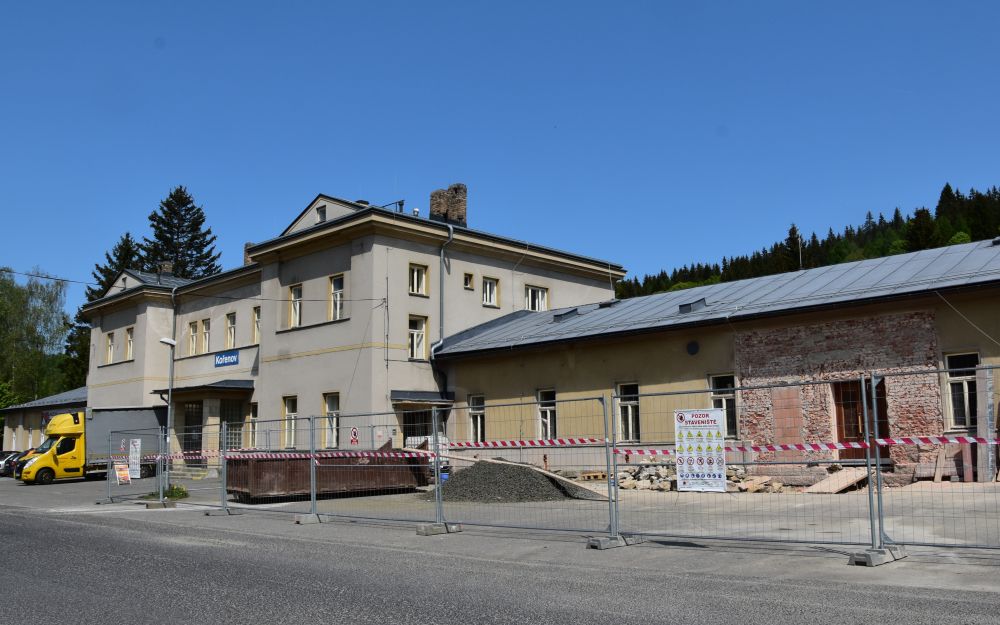
After having crossed the Riesengebirge, this somewhat lonely train station welcomes us at Kořenov …

… with charming children’s drawings.

We find a small restaurant, where we have a drink.


Back to Poland and Szklarska Poręba Górni

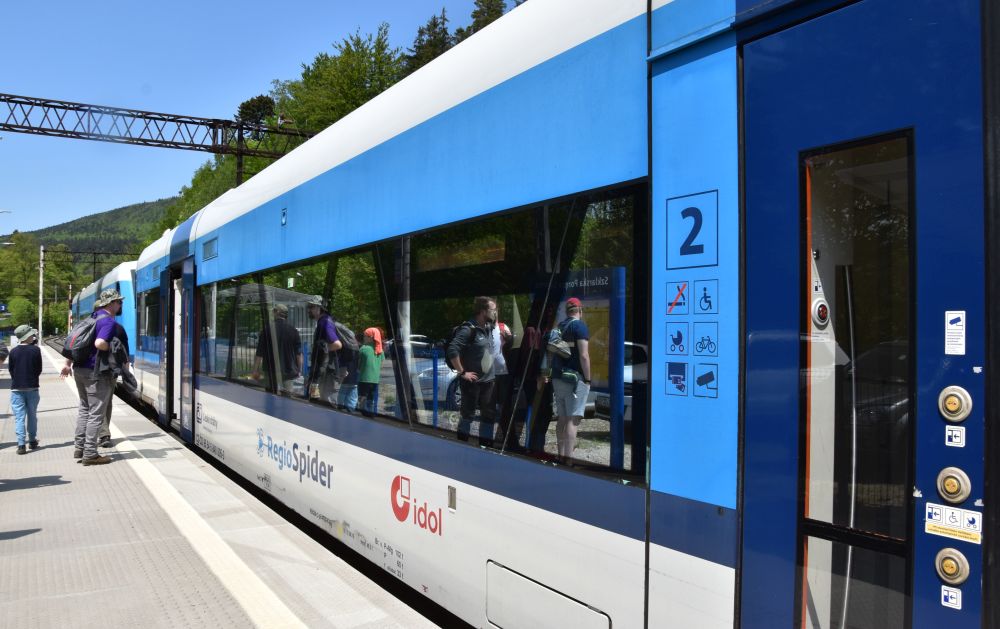
After having recovered in the restaurant of Kořenov , we take the modern Regio Spider… 

… to return to Poland….

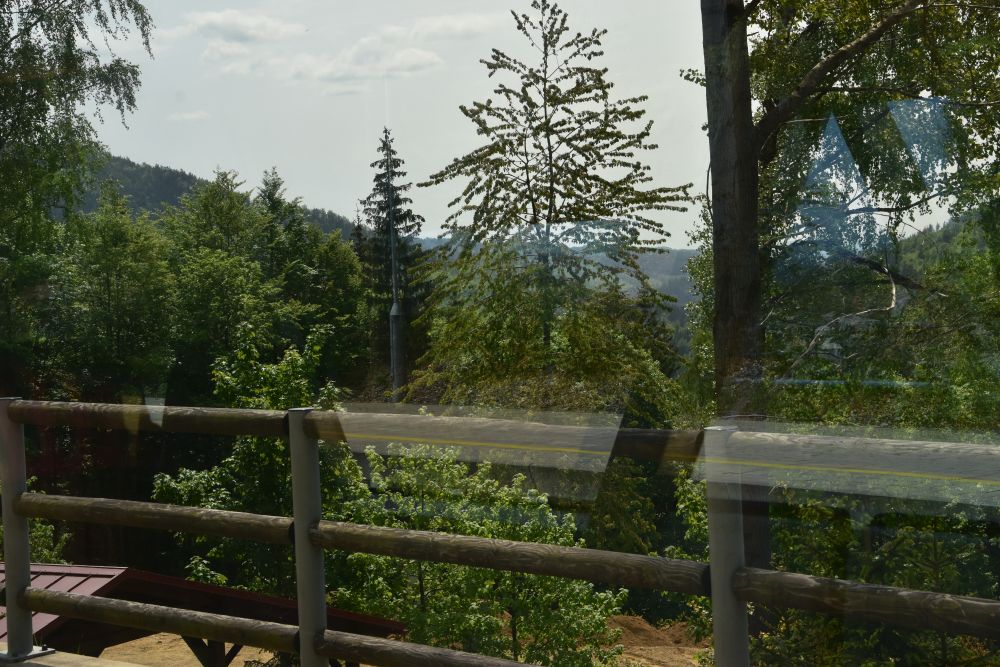
… reaching the highest point of 882m at Jakuszyce (Jakobstal). From the Schienenradler, I learn that this is a popular area for cross country skiing.

At Szklarska Poręba Górni (Oberschreiberhau), we have to change trains. From the Czech “Regio Spider” to the Silesian Polish train ” Koleje Dolnośląskie” . 


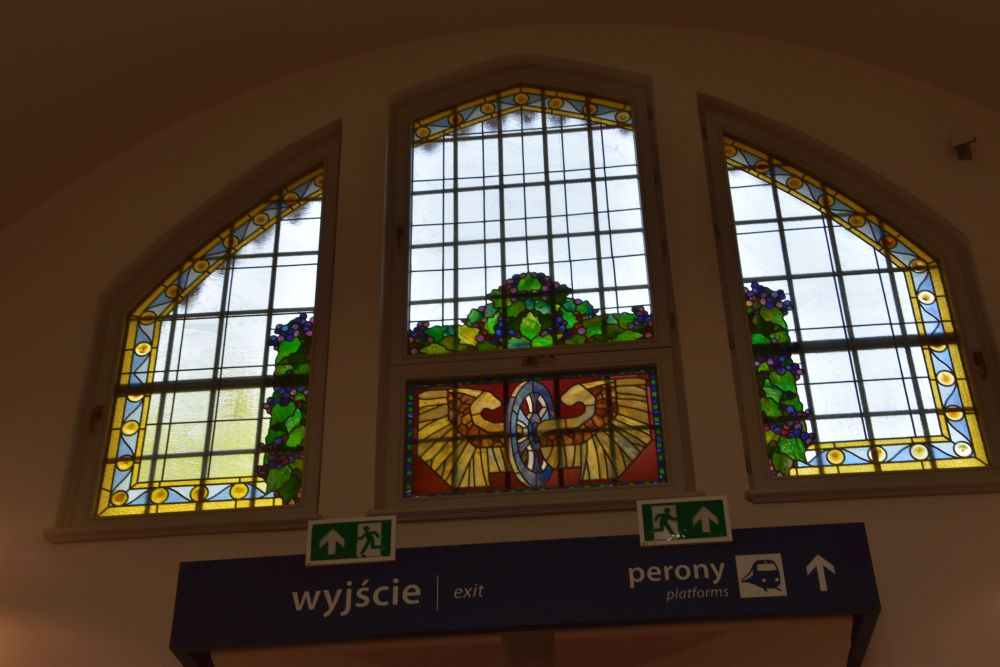
The old train station of Szklarska Poręba Górni has been beautifully renovated (2021).


The history of the Zackenbahn – from connecting Germany with Austria to connecting the Czech Republic with Poland

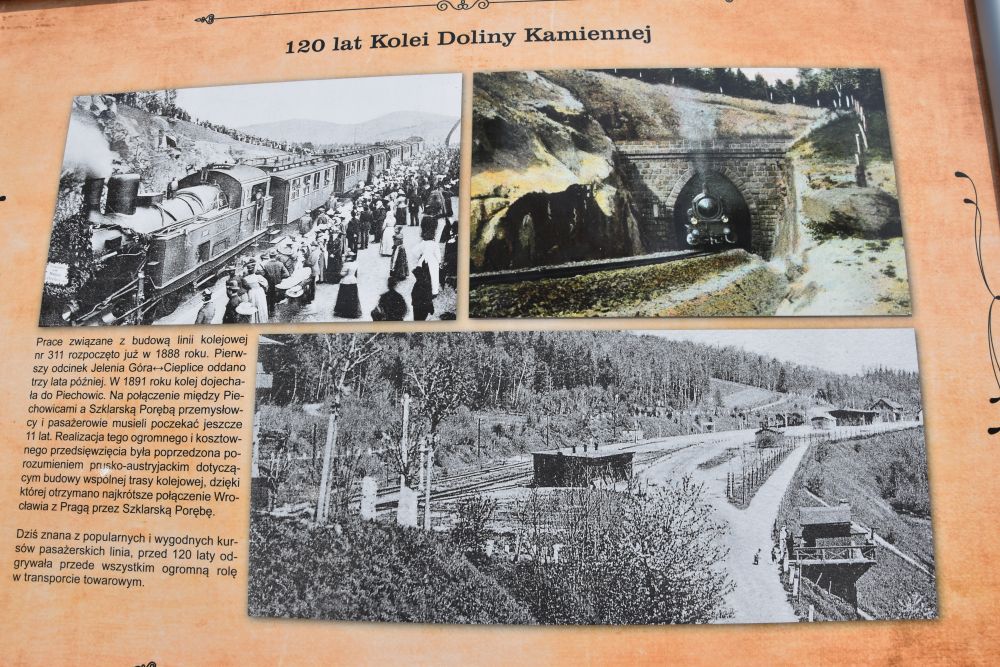
Photos at the train station of Szklarska Poręba Górni tell us about the history of the Zackenbahn.

The Zackenbahn was inaugurated in 1902. At that time, it connected German Prussia (Schlesien, Hirschberg) with Austria (Böhmen, Bad Wurzelsdorf, and farther).

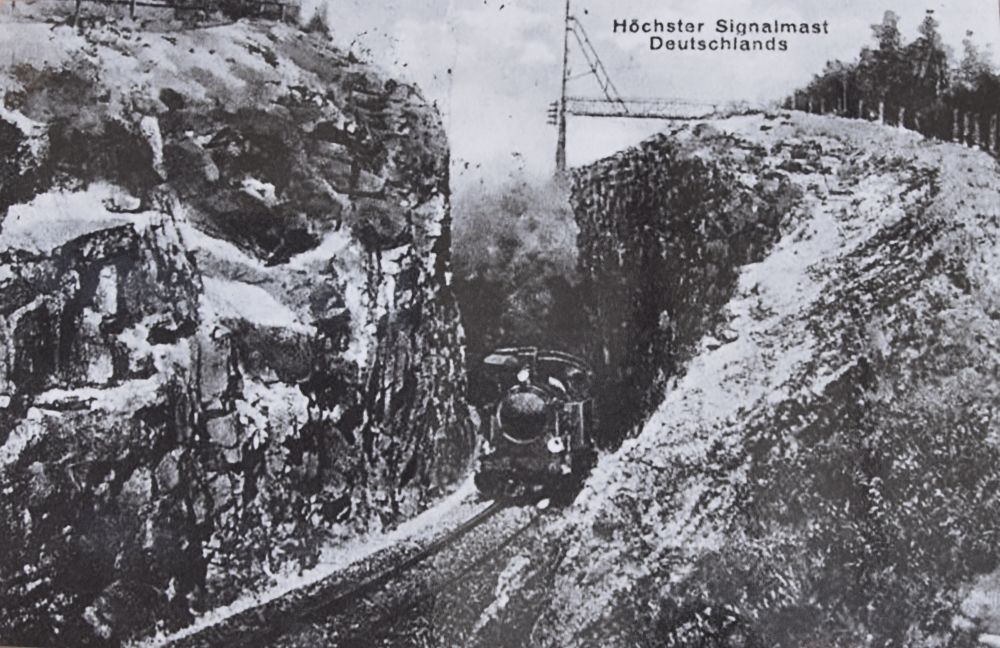
The construction was an engineering achievement, requiring tunnels and trenches. The signal post in the Moltkefels Einschnitt (cut) controlled the entrance to Niederschreiberhau (Szklarska Poręba Dolna). It was the highest signal post of Germany.

In 1927, the Zackenbahn celebrated its 25th anniversary. At that time, it connected Czechoslovakia with Germany (Prussia, Silesia). The train had been electrified. 

It was in the 1920’a that my grandfather spent his vacation at Niederschreiberhau and painted the “Kirchberg mit dem Reifträger” (my blog tells about that). 

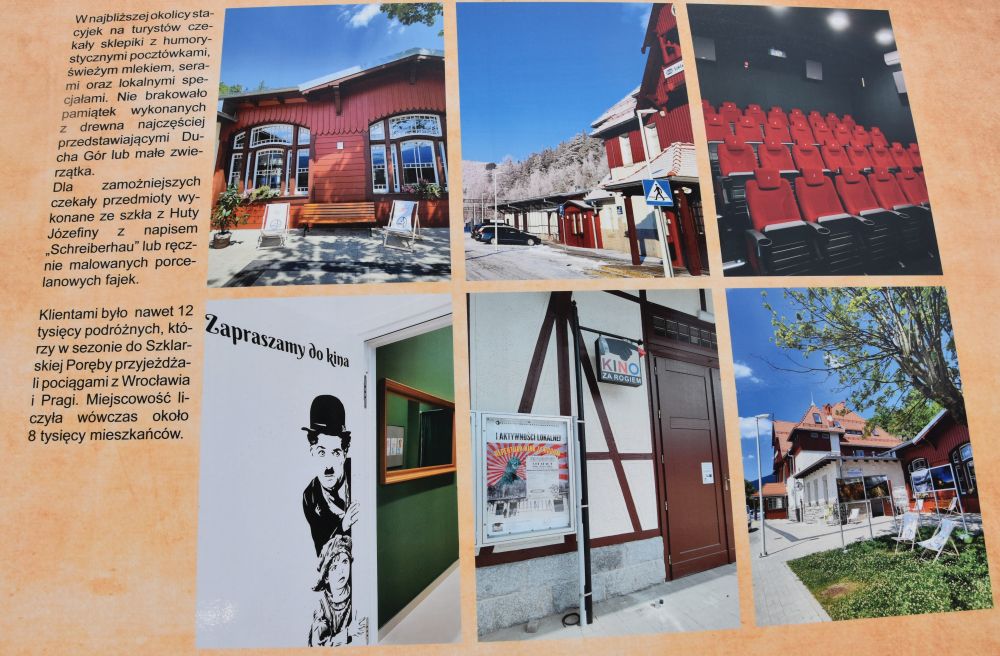
At the train station of Oberschreiberhau, there was even a cinema. It has been reopened now.

After 1945, Silesia no longer belonged to Germany. It was integrated to Poland. The train connection at the border of Czechoslovakia and Poland was eliminated and remained closed until 2010. 

In 2010, the connection across the border was reopened, now connecting Poland (Jelenia Góra) and the Czech Republic (Kořenov; this relates to the German name “Wurzeldorf”, kořen=Wurzel).  The train is now popular, “our” train was fully occupied. 

In 2022, the Zackenbahn celebrated 120 lat – or 120 years, as the photos at the station of Szklarska Poręba Górni tell us.


Back to Jelenia Góra

We wait at the carefully restored station of Szklarska Poręba Górni to take the train along the Zacke back to Jelenia Góra. 

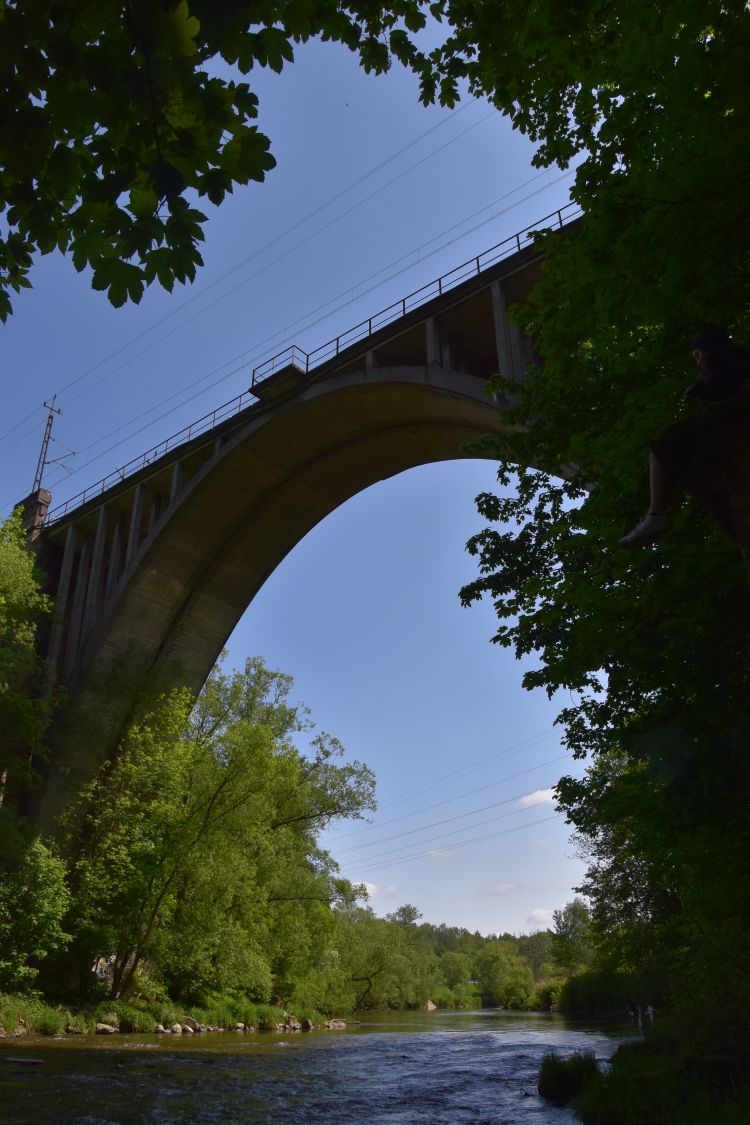
Shortly before reaching the train station of Jelenia Góra, we cross the river Bober (Bobra) (seen from below).

What an engineering achievement, what a beautiful landscape, what a exceptional story. And how good to see that Polish Silesia takes care of the German heritage.

Take a ride with the Zackenbahn by watching this charming video published by German TV (SWR) under the title of “Eisenbahnromantik”: https://www.ardmediathek.de/video/eisenbahn-romantik/die-zackenbahn-von-tschechien-nach-polen-ein-zug-verbindet/swr/Y3JpZDovL3N3ci5kZS9hZXgvbzE3MzY2MzU.


Sources:


Discovering Silesia: The fairy tale castle Staniszów

In May 2023, we spent one week at the fairy tale castle Staniszów (Stornsdorf). A welcoming place located  just a few kilometers south of Jelenia Góra. The castle was built by a descendant from the German family Reuss in the late 18th century. The castle has been restored by the Didza family that also manages the hotel.


The castle has the charm of fairy tales

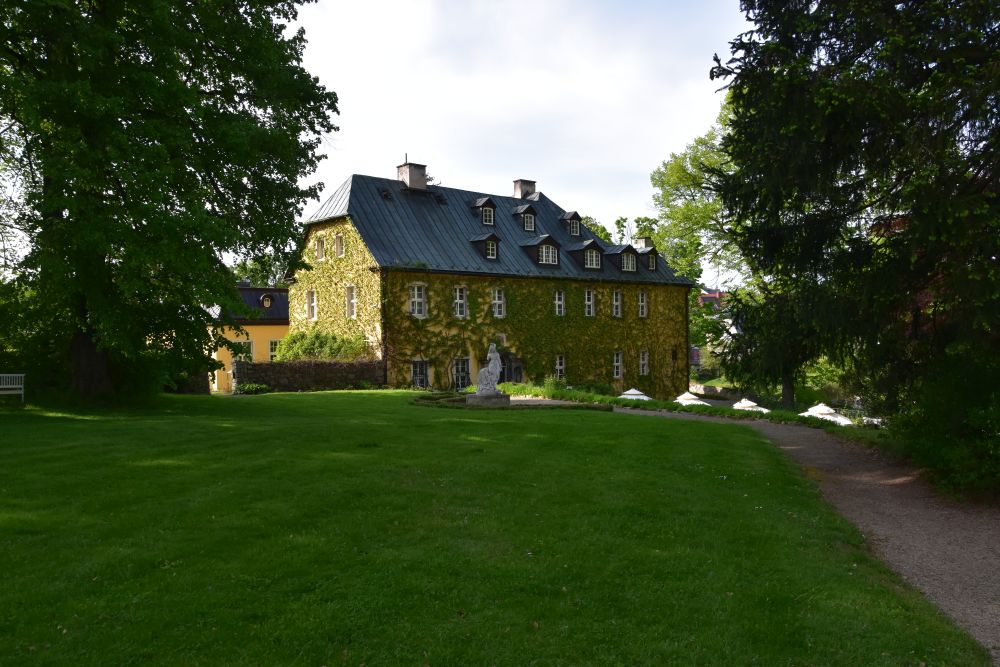
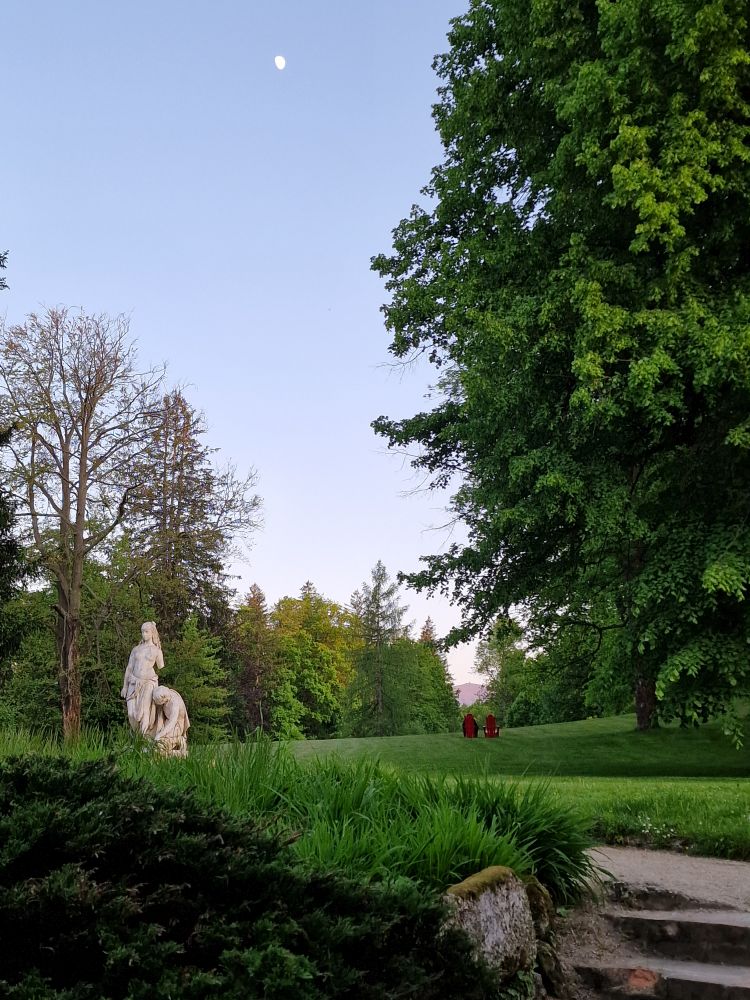
The main castle is “dressed in green” and integrates in the green park. Behind the castle is the statue of Cleopatra.

Nearby is the Bachelor House. 

Another building hosts the spa area. I benefitted from the 20m long pool to swim about 1km every day and then recover in the jacuzzi. 

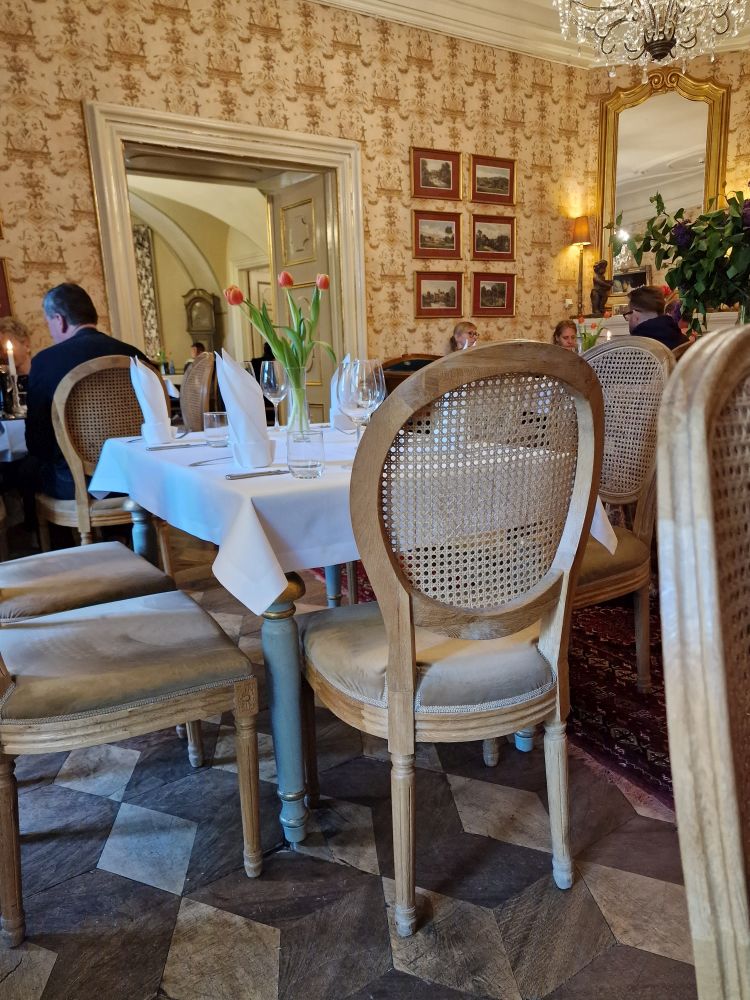
In the evening, we enjoyed delicious meals in the cosy restaurant. The cook is talented. 

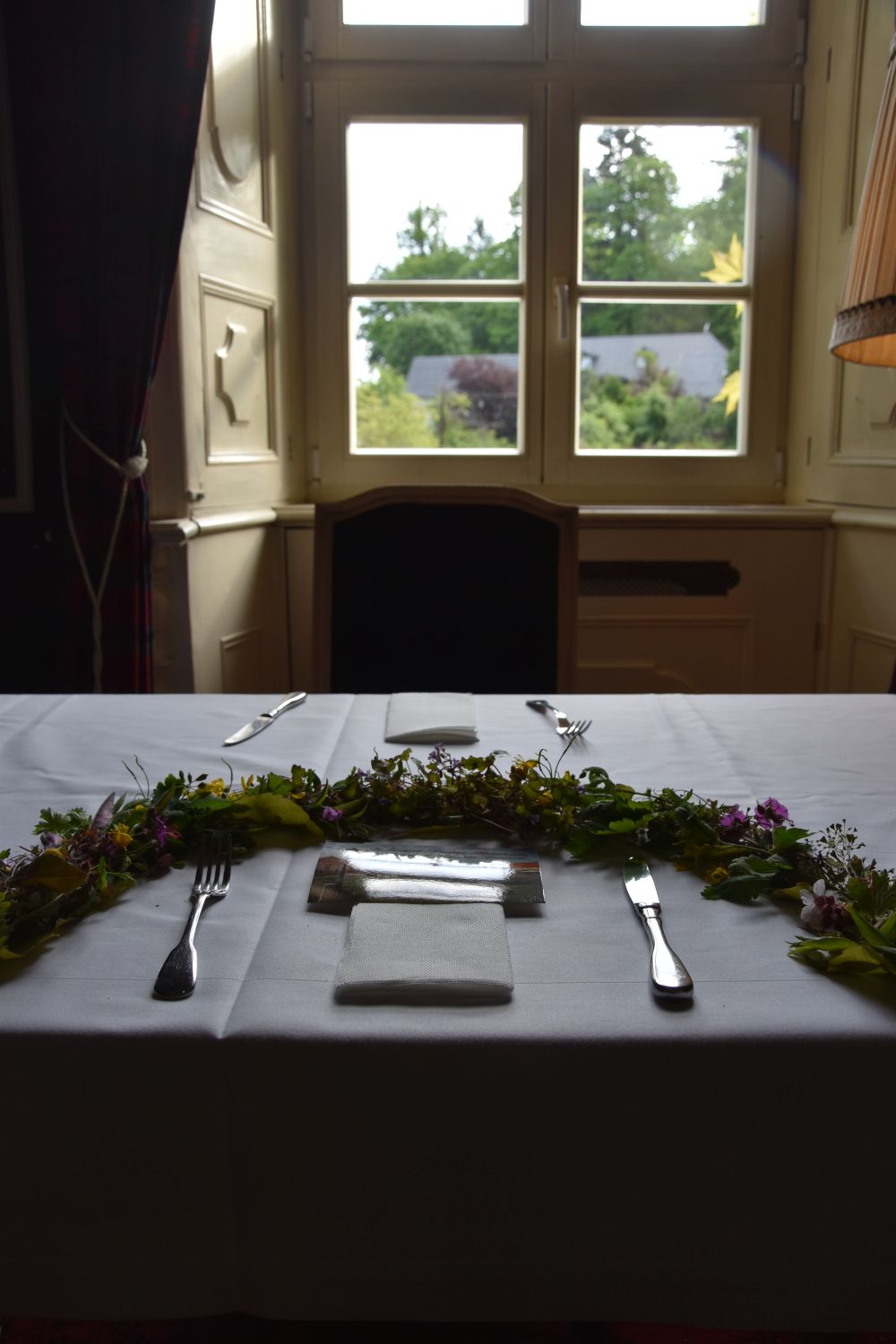
Breakfast was also excellent… however, this decoration is unusual. It has been set up by my friend for my birthday – thank you. 

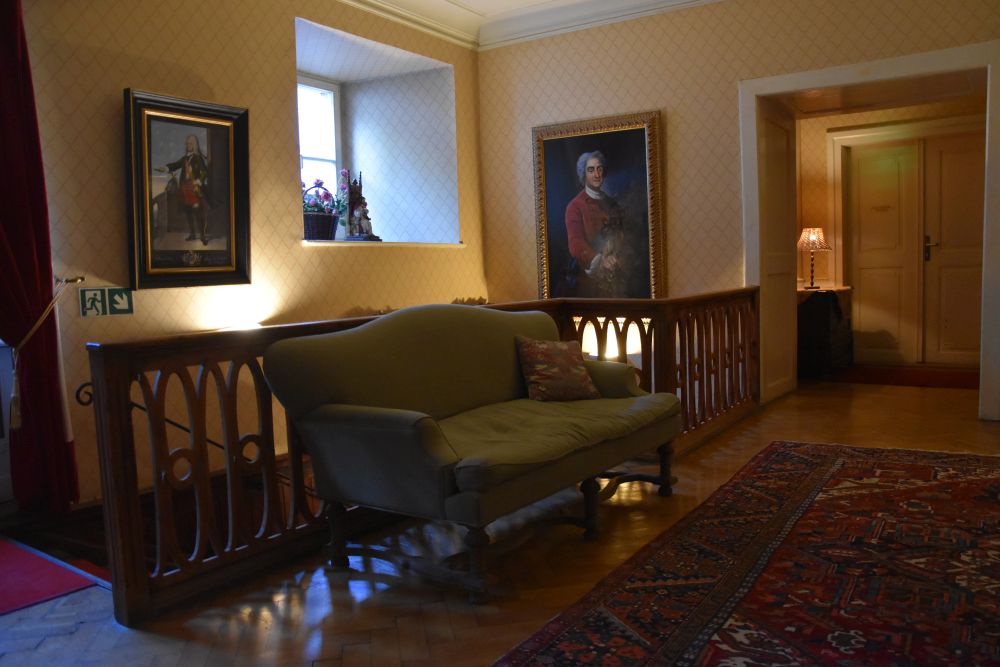
The corridors in the main building are decorated with, as I assume, portraits of the noble family Reuss.

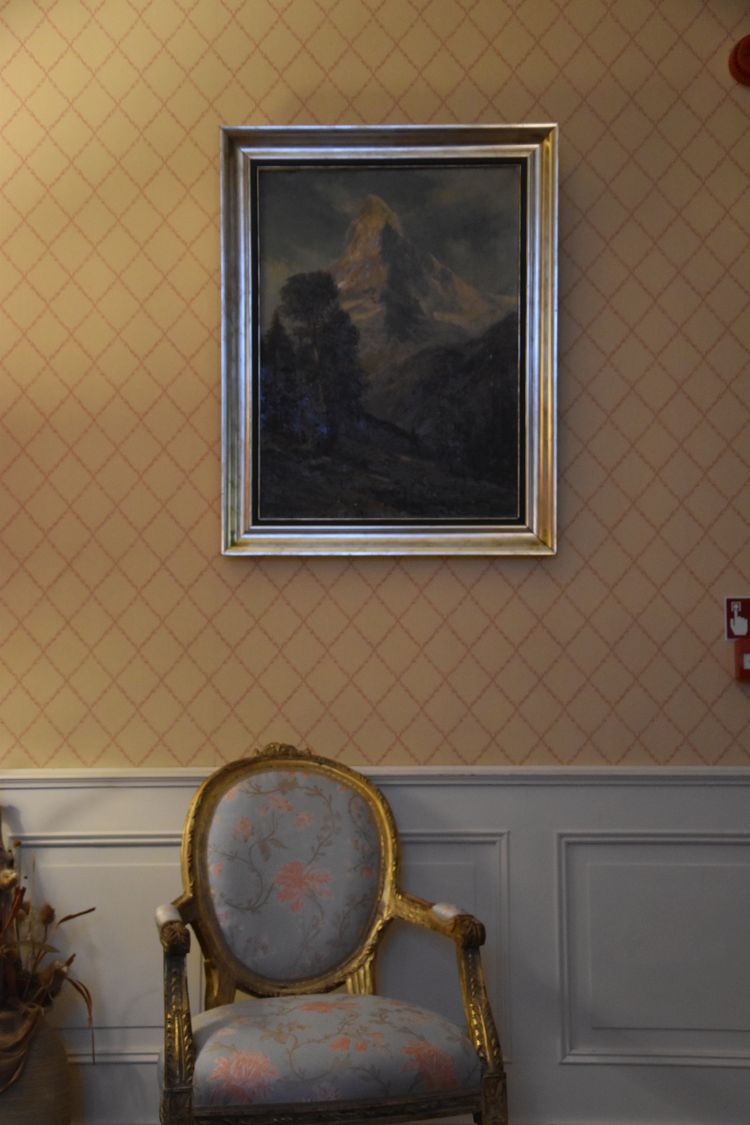
There is also a painting of a mountain that does not really belong here.  

You have surely guessed, it is the Matterhorn in Switzerland. The Giant Mountains (Riesengebirge, Karkonosze)) have their own landmark, the Schneekoppe.   


The beautiful park with the view of the Schneekoppe

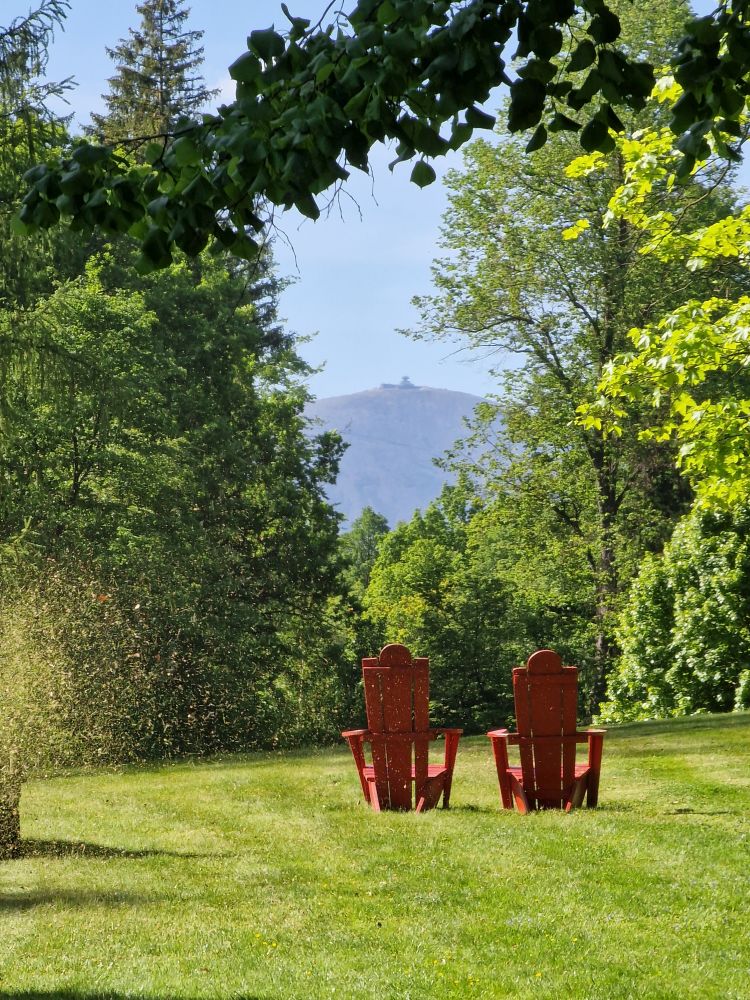
The castle park has been beautifully restored. Enjoy the visual axis to the Schneekoppe (Śnieżka) from the chairs!  

The visual axis is just behind the main castle building, near Cleopatra.

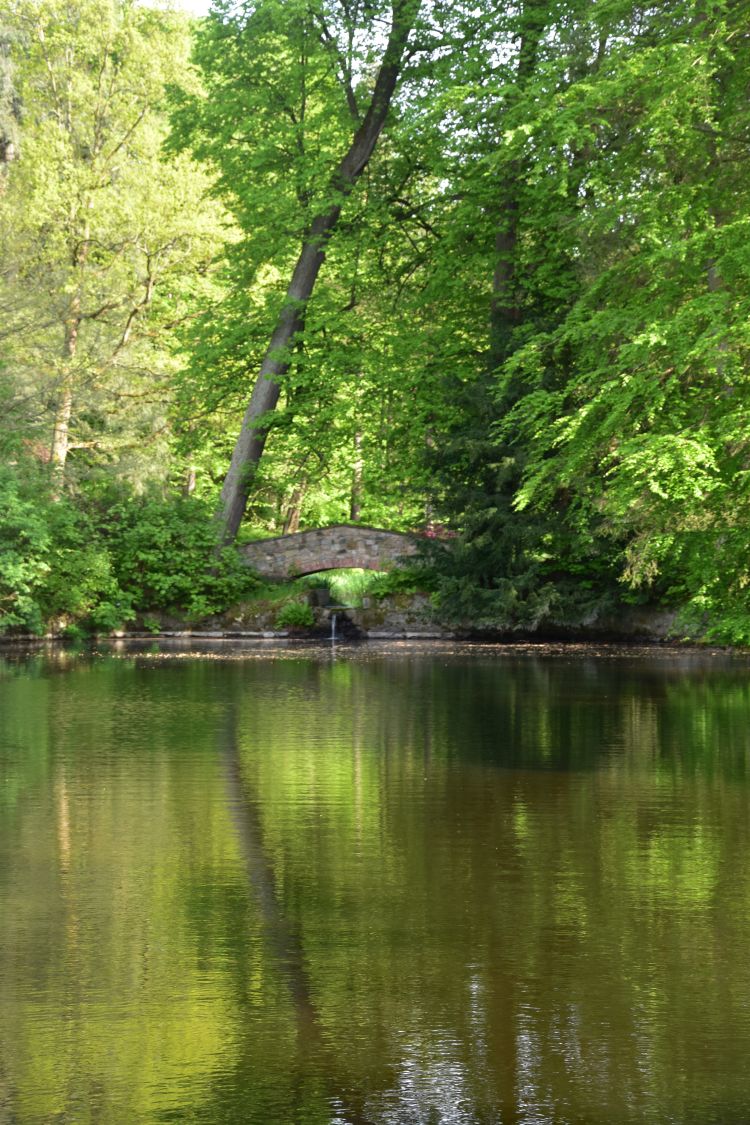
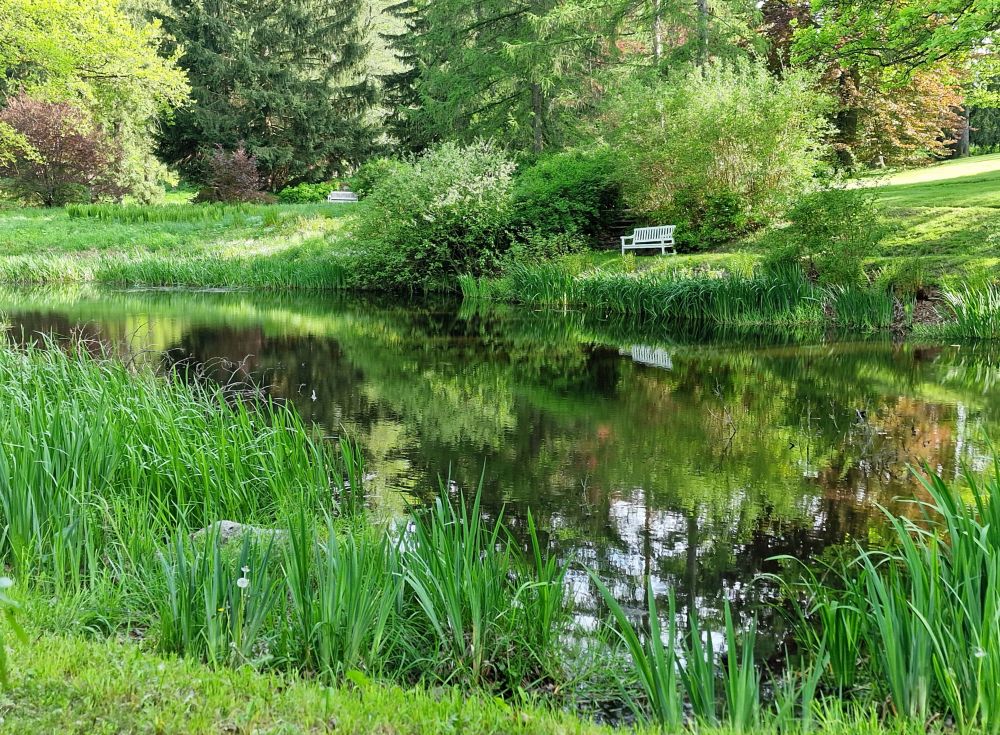
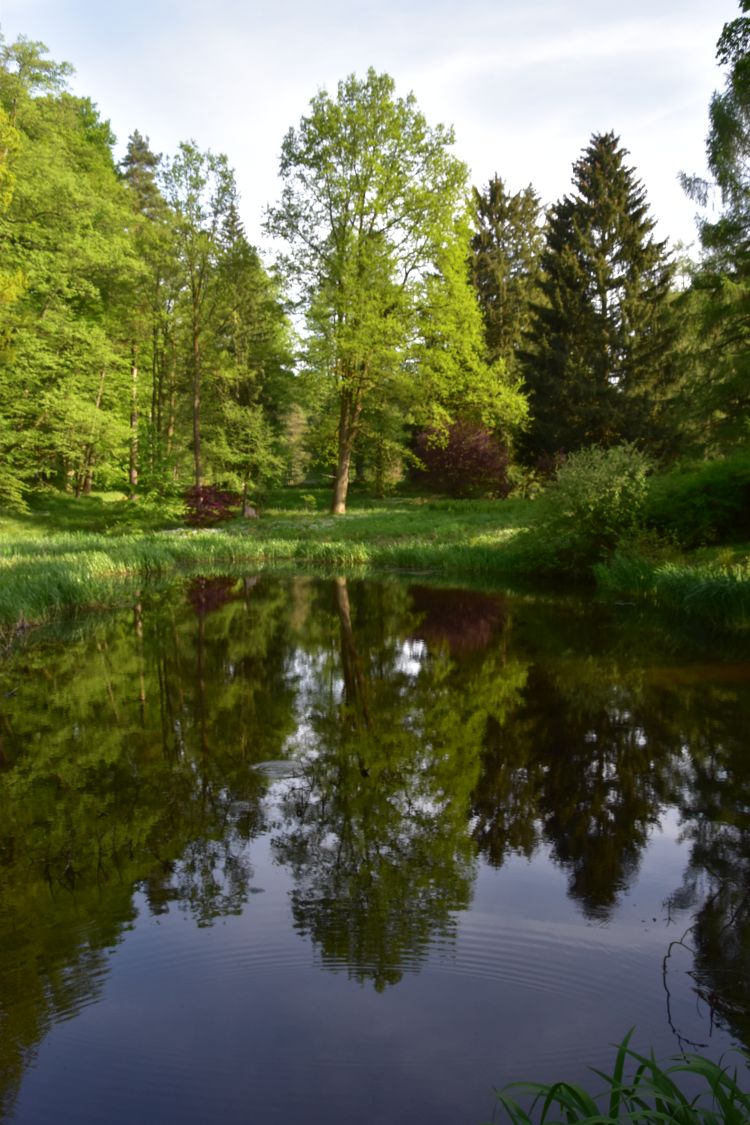
The park is large. Romantic ponds invite to take photos with the trees mirroring in the water,… 

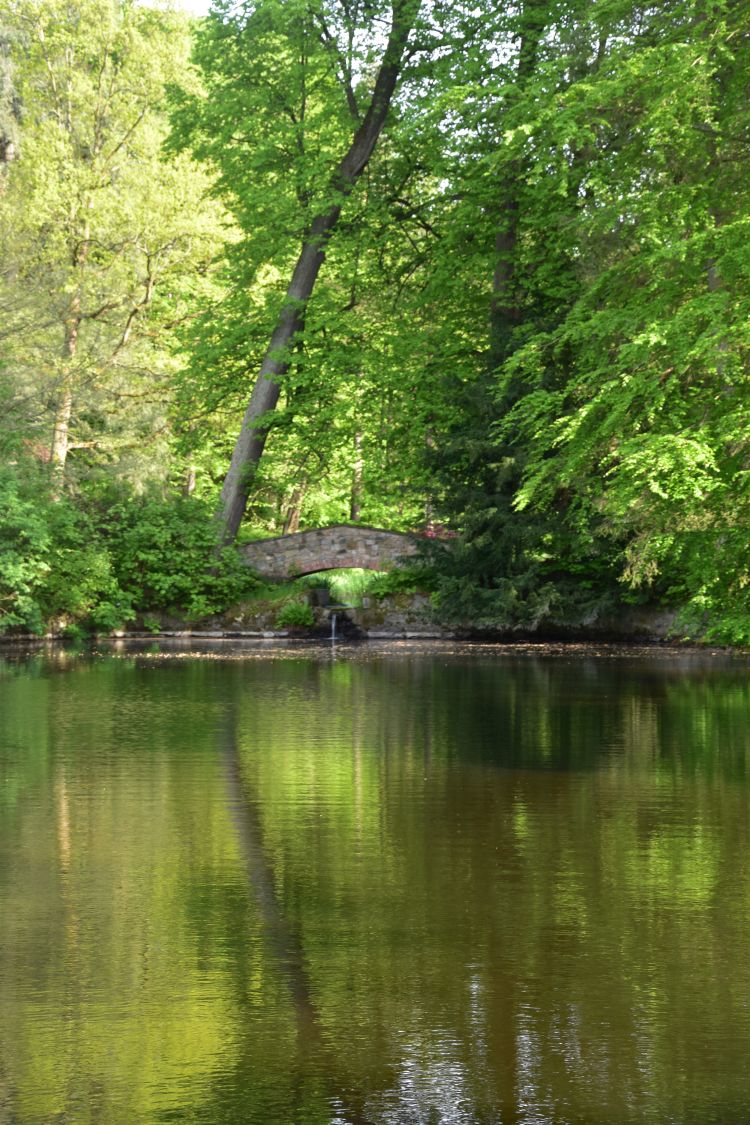
… even crossed by a bridge.

Benches invite to have a rest.

You can make a full day’s programme here, discovering more ponds in this extensive landscape garden.

For me, it was the most beautiful park that I found around Jelenia Góra (Hirschberg). 

Whenever returning to this area in Silesia, I will surely stay again in the castle Staniszów. 


Sources:


Discovering Silesia: Walking to Siedlęcin with its unique frescoes

May 2023 in Silesia, in the Giant Mountains. We walk from Jelenia Góra north west to Siedlęcin to see the unique medieval frescoes in the tower house. 


The gorgeous view from the top of the “mushroom”

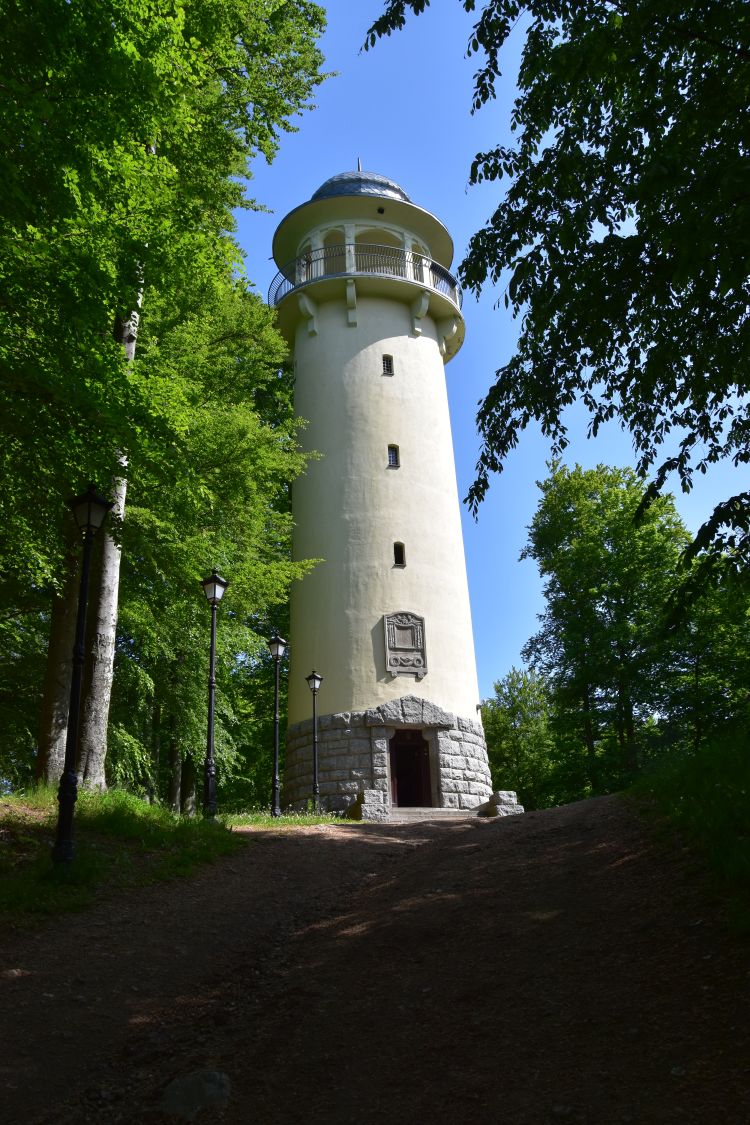
On top of the “city mountain”, called Wzgórze Krzywoustego, there is a tower.

It is called Grzybek or “little Mushroom”.

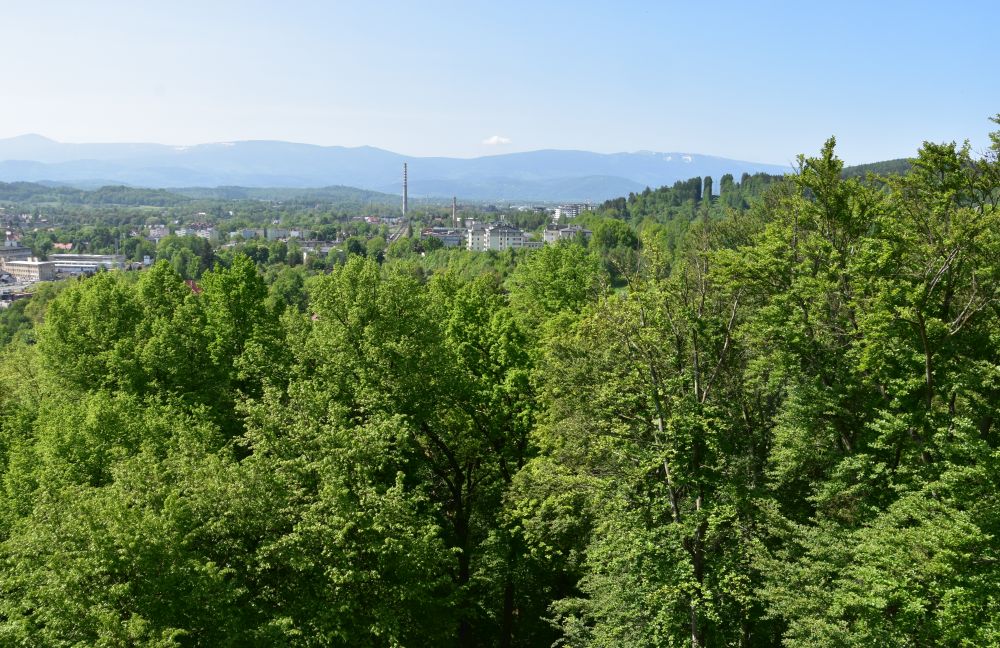
From the top we have a gorgeous view of the Giant Mountains.

We can identify the Schneekoppe (Snezka) and the Schneegruben (Śnieżne Kotły) in the haze.


Walking along the Bóbr river (Bober)

The train from Jelenia Góra to Kořenov in Czechia whistles loudly and shows us the way to the train viaduct crossing the Bóbr river. 

The train crosses the Giant Mountains up to Czechia (Korenov). It is from the early 20th century and has been reinstalled in 2010. 

We walk under the viaduct and continue our way along the river Bóbr. 

A fountain on the way… refreshment for the hikers.

A snail in the sun… hurry up, little one, the sun will dry you out.

Rocks are scattered in the forest; glaciers have dropped them a long time ago.

A restaurant in the forest, we have lunch here. 

The river Bóbr has been dammed.


Siedlęcin – our target with the medieval frescoes

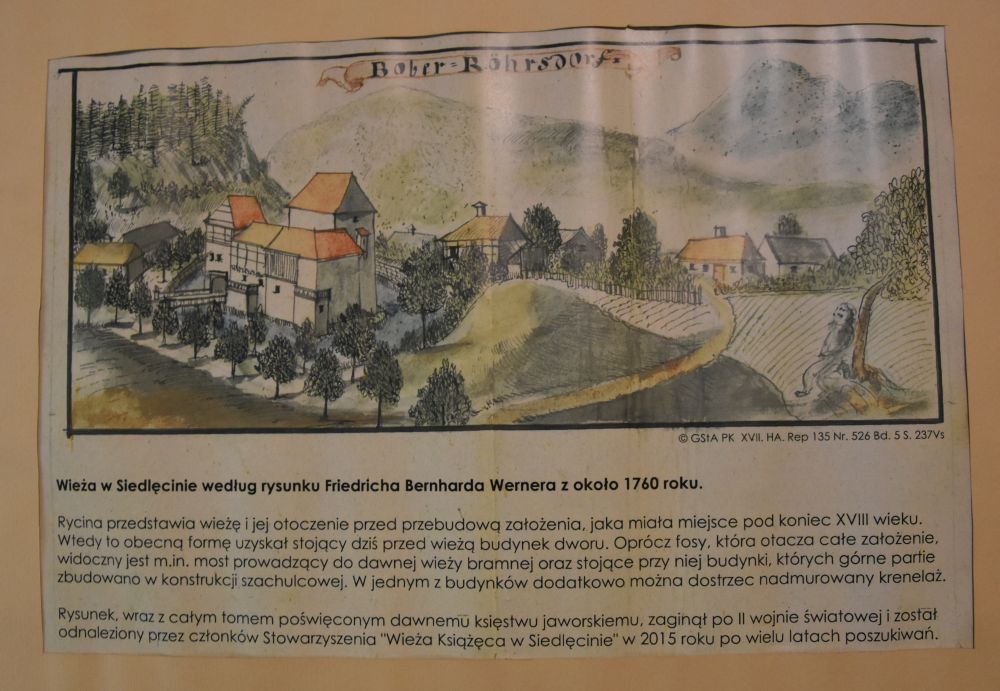
After about 6km we reach the tower house at Siedlęcin. This is, what it looked like in the 18th century.

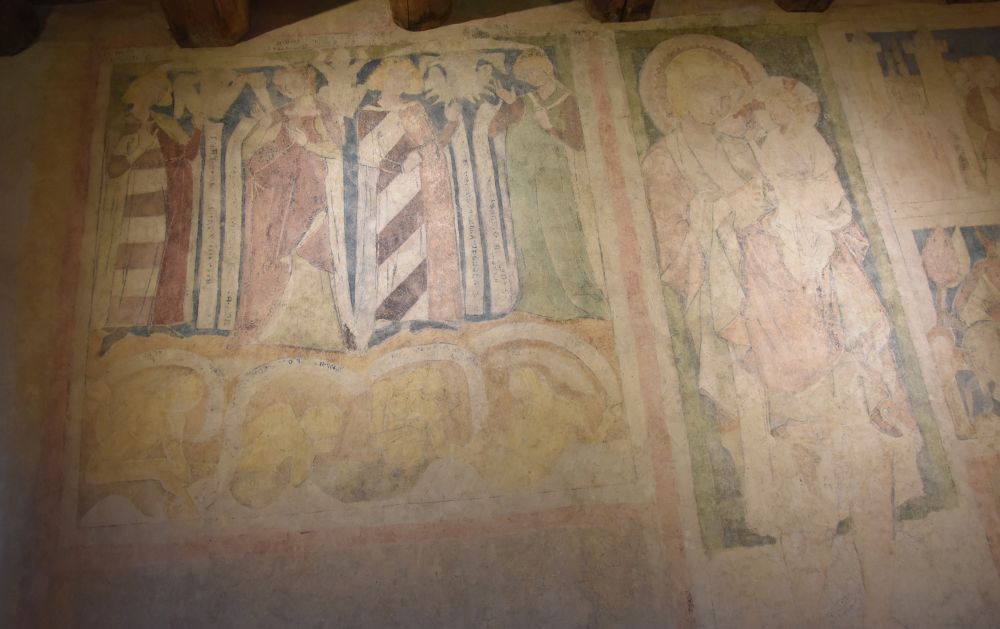
The tower house and part of the complex are still around. On the first floor of the tower, we find this wall full of frescoes.

The frescoes have been  painted in the years 1320 to 1340, applying the al seco technique on a chalk-bed. The frescoes tell us about the life of knights; this is unique in Europe. 

Christopher watches over the scenery. To the left of Christopher are two couples. One lady wears a hud – she is married. The second lady wears no hood – she is not married. They are standing on top of a line of graves. 

Chrstopher is carrying Christ across the river. He stands in the water, barefeet, and some small fish around his legs indicate, this IS water. 

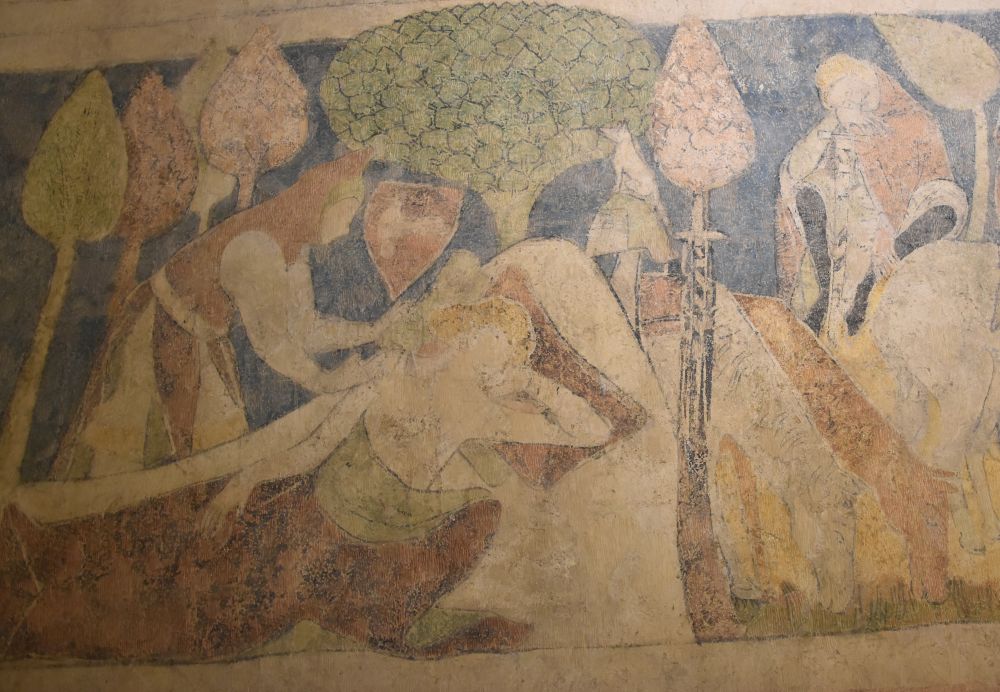
The scene to the right of Christopher tells the story of Lancelot. Lancelot is a knight of the Round Table of King Artus and he is in love of Queen Guinevere. The adultery causes a civil war, as described in literature of the 12th century. 

On this fresco, Lanzelot is sleeping and Guinevere tries to wake him up. Lancelot has deposited his helmet in the background; the helmet carries a dog sculpture.

Later Lancelot fights a duel with Tarquyn. Lancelot can be recognized by the helmet with the dog scultpure.

Some frescoes decorate the windows such as the coat of arms of the family Redern; they had acquired the tower house in 1354 and owned it for about two hundred years.  

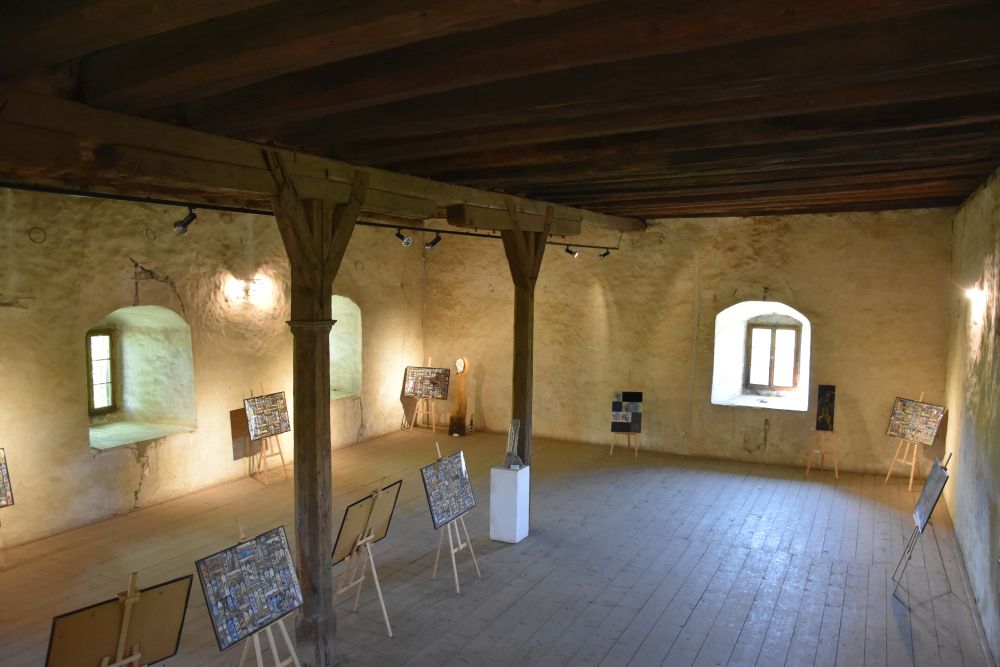
On the fourth floor, guards defended the tower house. The roof construction dates from 1315. It had to be renewed after a fire in the late 16th century. The clay floor provides heat insulation and protection against fires.

The ceiling of the third floor from 1315 has been largely preserved. Only parts of it had to be renewed after the fire of the 16th century.  

While my friend takes the bus back to Jelenia Góra, I walk back, taking a different route and getting lost, though following the green markings. Our car was waiting for us next to the central bus station which helped finding it nevertheless. After a wonderful day, we return to “our” palace, the Palac Stoniszów. 


Sources:

  • Frank Schüttig, “Riesengebirge”, Trescher Verlag, Berlin 2022
  • Malgorzata Ulrich-Kornacka, “Niederschlesien”, Via Nova, Wroclaw 2018
  • Dieter Schulze, “Polen der Süden”, Dumont Reisehandbuch, Osfildern 2020
  • Tomasz Turbos, “Polen”, Dumont Kunst-Reiseführer, Hamburg 2011
  • Explanations in the tower house of Siedlęcin


Discovering Silesia: Hirschberg or Jelenia Góra

In May 2023, I am in Silesia again, now with a good friend of mine. We stay south of Hirschberg (Jelenia Góra) at the foot of the Riesengebirge (Karkonosce or Giant Mountains).


Staniszów, the castle that is our home for a week

We have selected the castle Staniszów to stay for a week. 

It is located in a beautiful park that offers…

… charming corners.

Until 1945, the castle belonged to the family Reuss from Thuringia. In 2001, it has been acquired by the government. It has been restored and is now a spa hotel with an excellent restaurant. We are very pleased with our selection, we just had to learn, how to master the labyrinth of corridors and stairs in this old building.


Around 1100, Hirschberg or Jelenia Góra was a good place for hunting

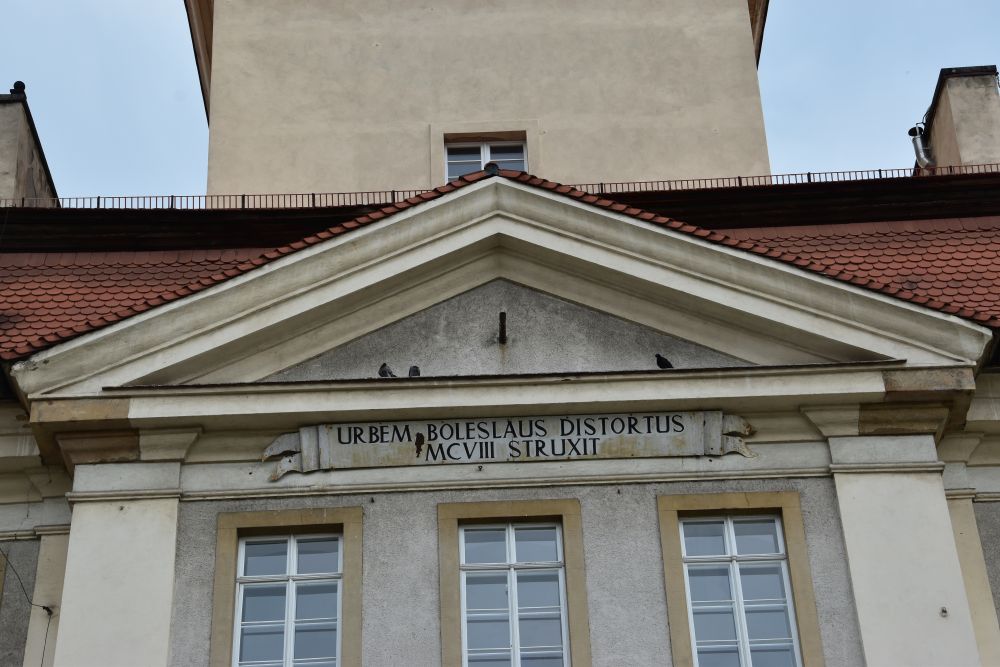
Hirschberg was founded in 1108. “Boleslaus Distortus urbem struxit (Boleslaw with the distorted mouth constructed the town)”, the inscription on the townhall says. 

He liked the place, because it was good for hunting deer, hence the name “Hirschberg” that the Poles translated literally to “Jelenia Góra”.


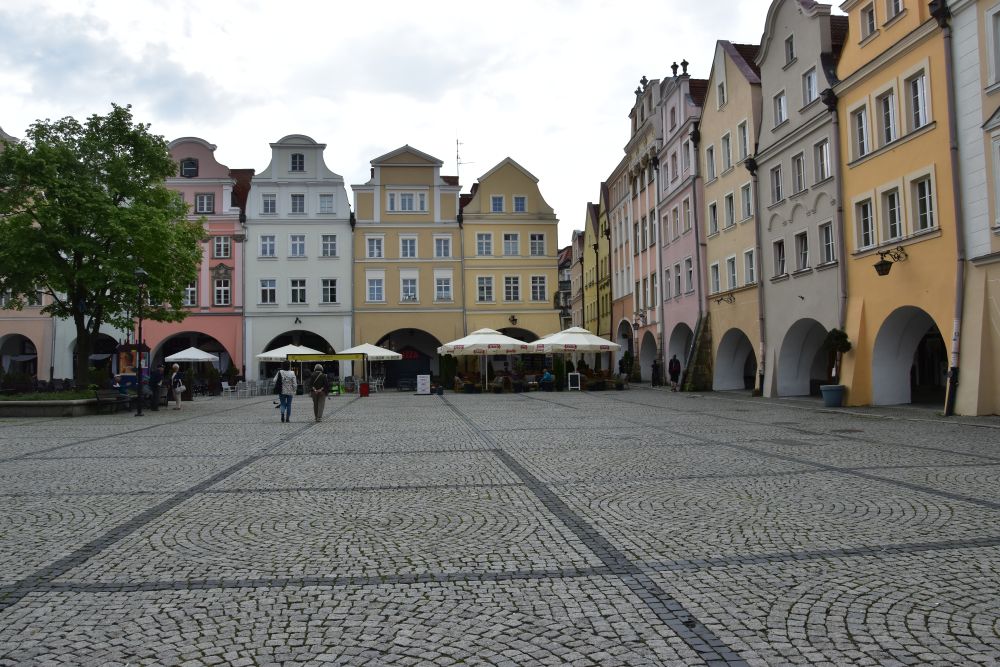
Now, we find a pretty city centre around the town hall

We enter the city centre next to the St. Anna Chapel. It has been built into the city wall. The Wojanów gate has been removed. The tower is not a belfry. It was the Schildauer tower that protected the gate. 

We stroll along the street of 1st of May. Nice shops here. We enter the wine shop that, besides international wines sells Polish wines from the area around Jelenia Góra and from the Owl Mountains (yes, wine is grown here as well). The street is also a good place to buy fashionable clothes. 

The townhall dominates the market square or Rynek. 

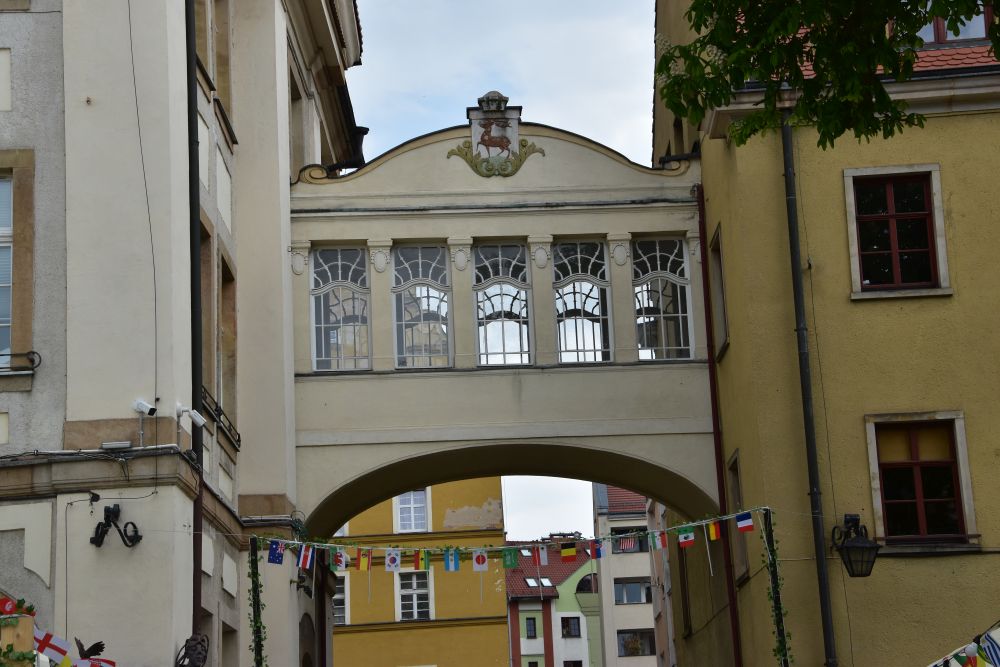
The small gallery connects the townhall with the seven neighbouring houses. The complex has been used by the city government until today.

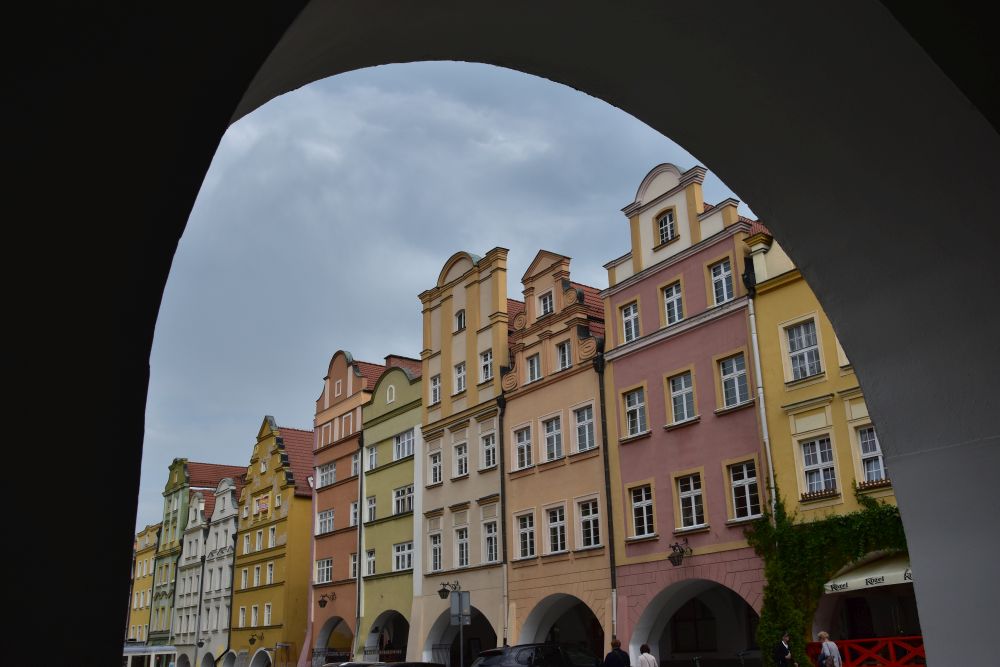
The townhall and the seven houses are sourrounded by carefully restored medieval buildings.

They show that Jelenia Góra was rich based on trading with cloth, particularly in the 16th century. Various coffee places and restaurants invite to sit down under the arcades.


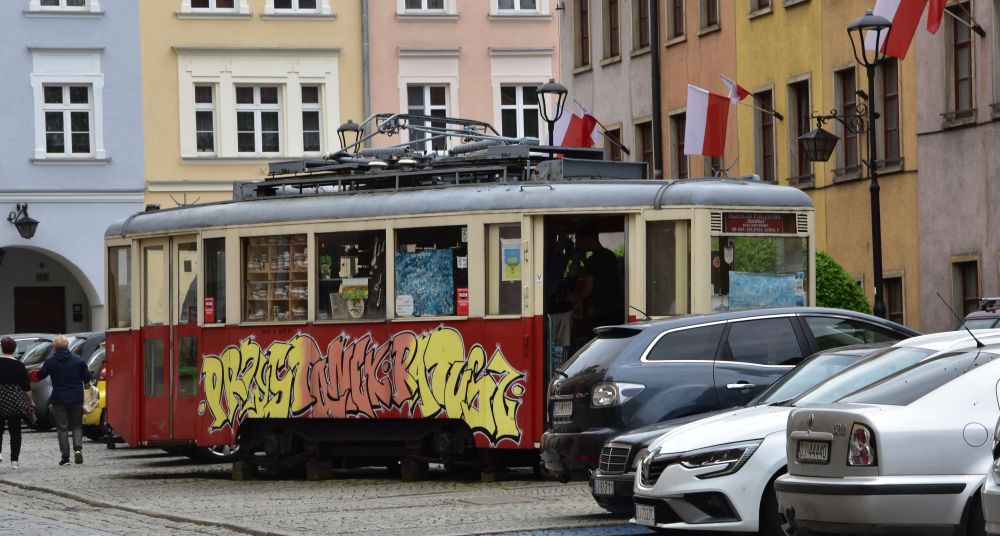
In former times, trams crossed the old city centre. This wagon reminds of that; it is small coffee shop now.

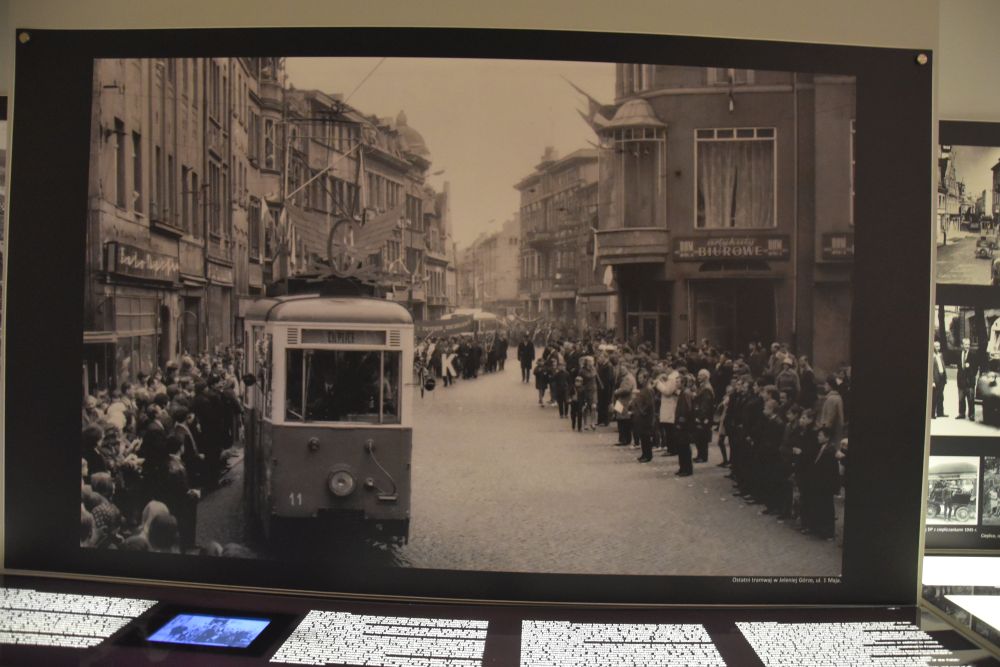
In the museum of the Giant Mountains (Muzeum Karkonoskie), we find a photo of the old tram in action.


The church of Saint Erasmus and Pankratius is of gothic style with a baroque decoration

Not far from the Rynek, we enter the Basilica of Erasmus and Pankratius. The gothic vaults seem to rise to heaven.

The wooden altar from the 17th century has been painted to look like marble. 

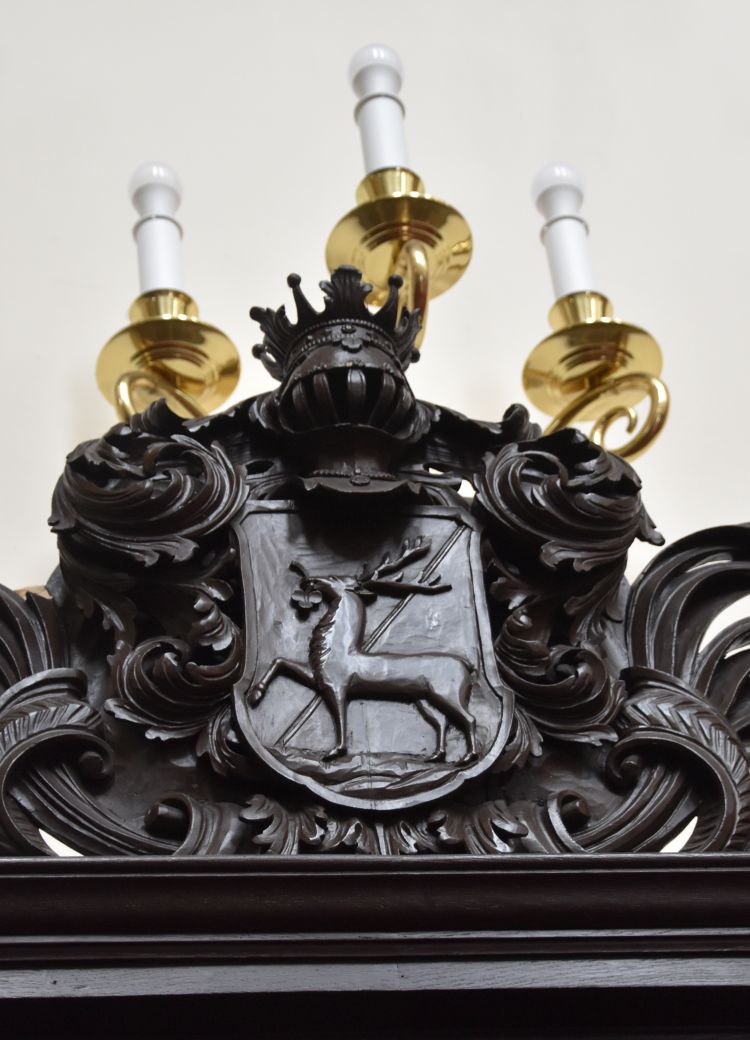
The choir from the 18th century – beautifully carved – shows clearly: We are at Hirschberg.

Epitaphs from the 17th century decorate the outside walls. Mayors, wealthy citizens, even a Swedish warrior from the war of thirty years.


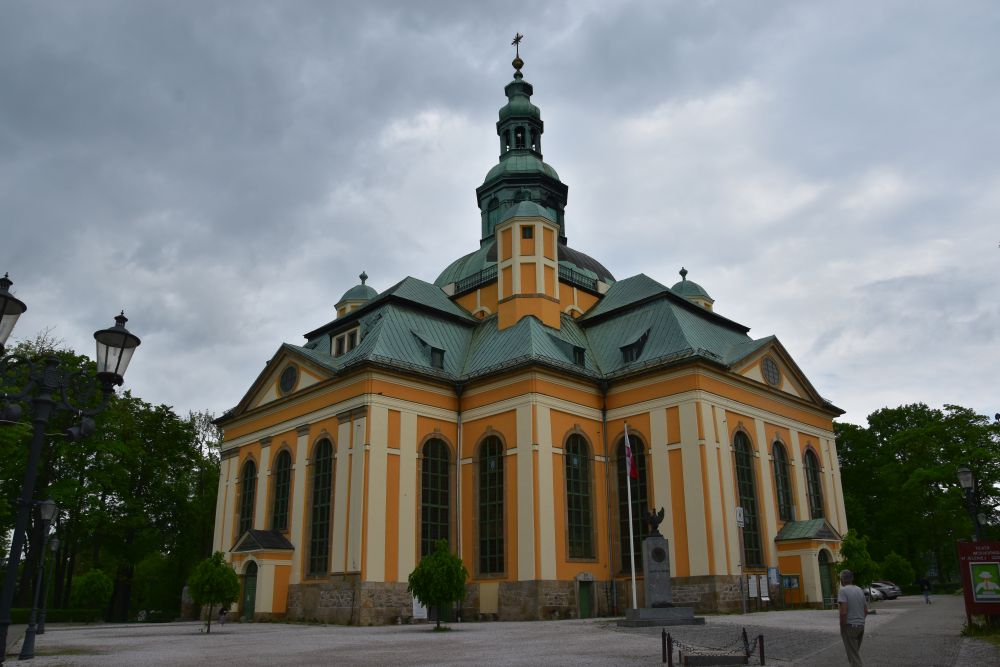
The Gnadenkirche or Church of the Holy Cross

The Gnadenkirche was built as a protestant church under the Habsburgian Emperor Josef I in the beginning of the 18th century. 

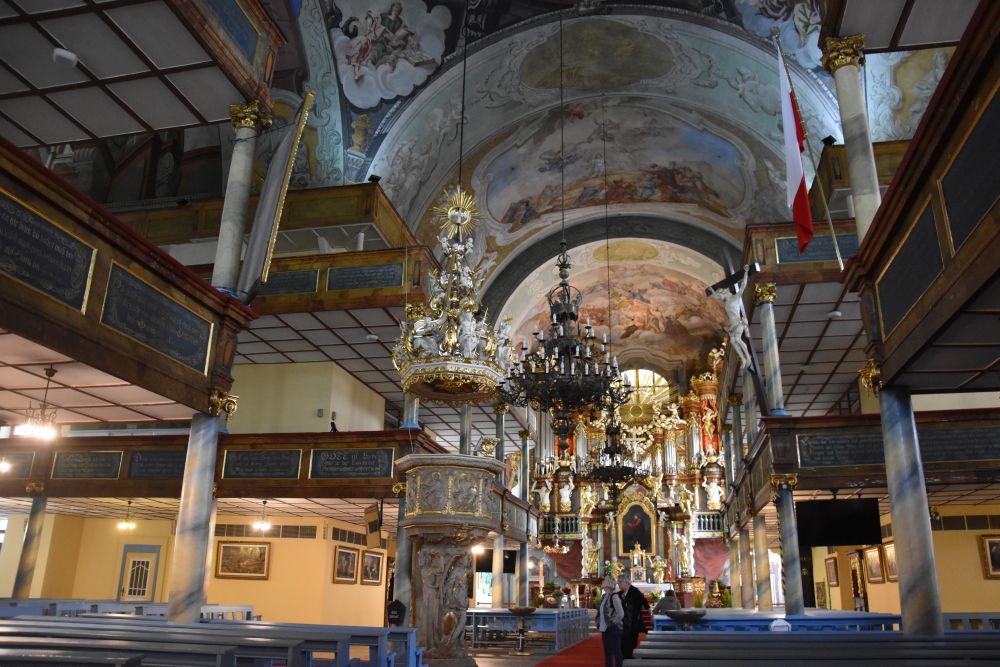
Though being a protestant church, it was richly decorated and painted inside. This is the view towards the altar (with the organ above)…

… and towards the entry from the west.

The baptismal font is made out of blue marble.

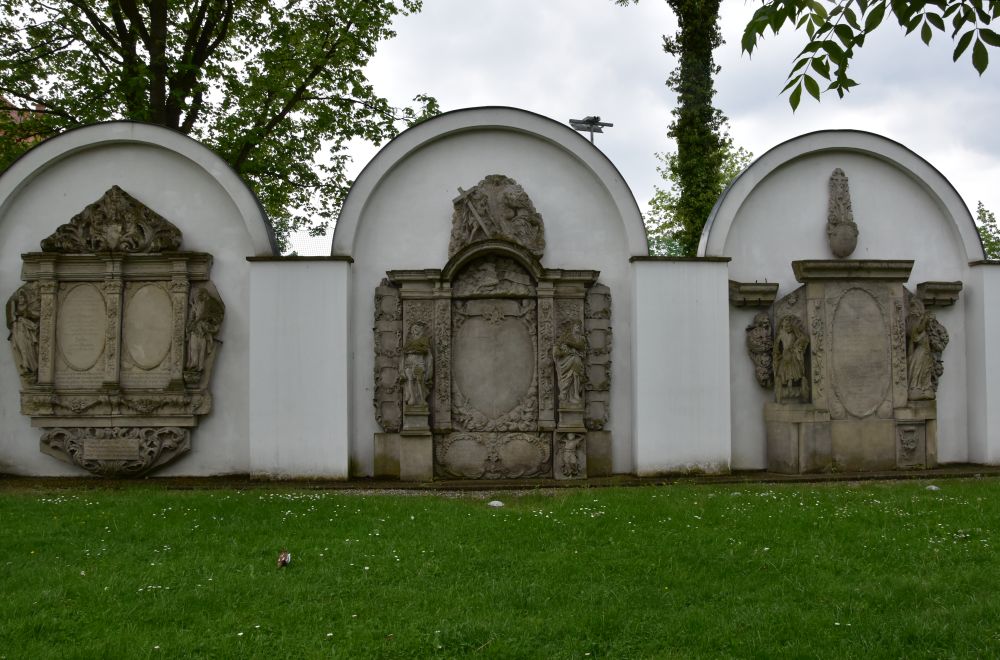
Around the church, various tombs of German patrician families have been restored.


The hotel Europe, formerly “Hotel Drei Berge”

The hotel Europe was one of the main hotels, when Silesia still belonged to Germany. Then it was called “Hotel Drei Berge” and had a roof top terrace. It is still a recommended hotel today. 

We return to our beautifuk castle Staniszów. I have a long swim in the pool (20x8m). After that I enjoy delicious asparagus in the castle restaurant, while my friend has a turbot with couscous and vegetables, also excellent.


Sources:

  • Frank Schüttig, “Riesengebirge”, Trescher Verlag, Berlin 2022
  • Malgorzata Ulrich-Kornacka, “Niederschlesien”, Via Nova, Wroclaw 2018
  • Dieter Schulze, “Polen der Süden”, Dumont Reisehandbuch, Osfildern 2020
  • Tomasz Turbos, “Polen”, Dumont Kunst-Reiseführer, Hamburg 2011