Near Saint Petersburg – two days in Veliky Novgorod – a sunny Sunday

In June 2017, we spend a weekend in Novgorod. On Saturday, we saw the cathedral of Saint Sophia, the Intercession Church and the market place. Then we relaxed going for a boat ride on the river Volkhov. We slept well in our luxury hotel room and, on Sunday morning, we wake up to spend another sunny day in Novgorod.

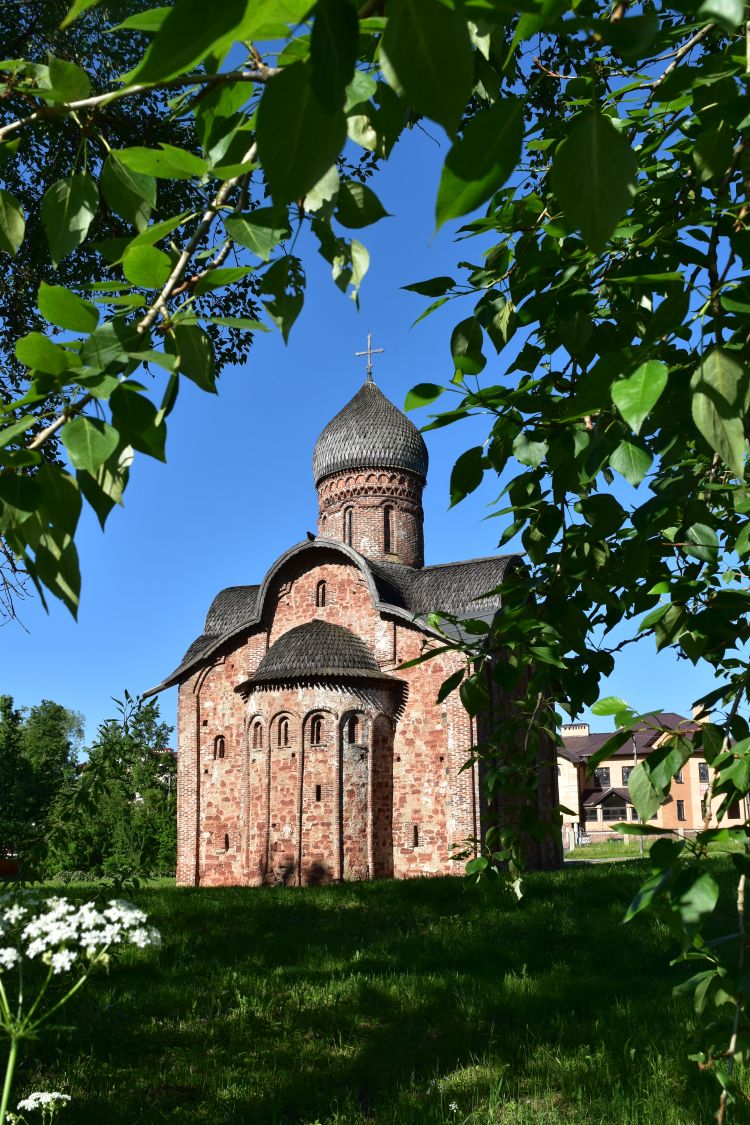
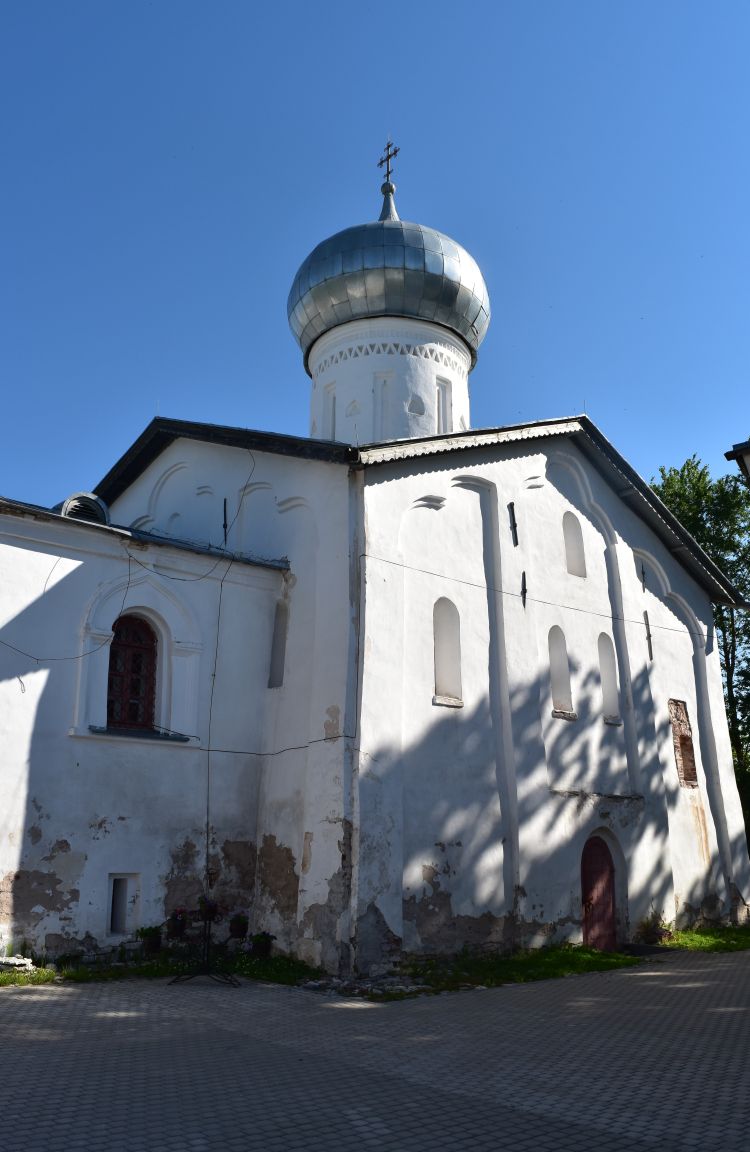
Before breakfast we visit some more churches north of the Kremlin of Novgorod. Our first church is the Peter and Paul Church in Kozhneviki  (Церковь Петра и Павла в Кожневиках) from the 15th century.

Next we enter a complex that looks like a small monastery offering workshops. The church here is called Church of Simeon the Godbearer (Церковь Симеона Богоприимца, 1468). I meet a man who proudly tells me the story of Simeon the Godbearer. Saint Simeon was in the process of translating the old testament. The Prophet Isaia says that a virgin will have a son. A virgin? No, this cannot be! He is about to replace “virgin” by “woman”. But an angel comes and tells him that “virgin” is correct and that he will only die, when he holds Christ in his arms, as born from a virgin.” It is said that Simeon lived until the age of 360 years, until he was able to take Christ on to his arms and verify, the mother WAS a virgin. (See also wikpedia)

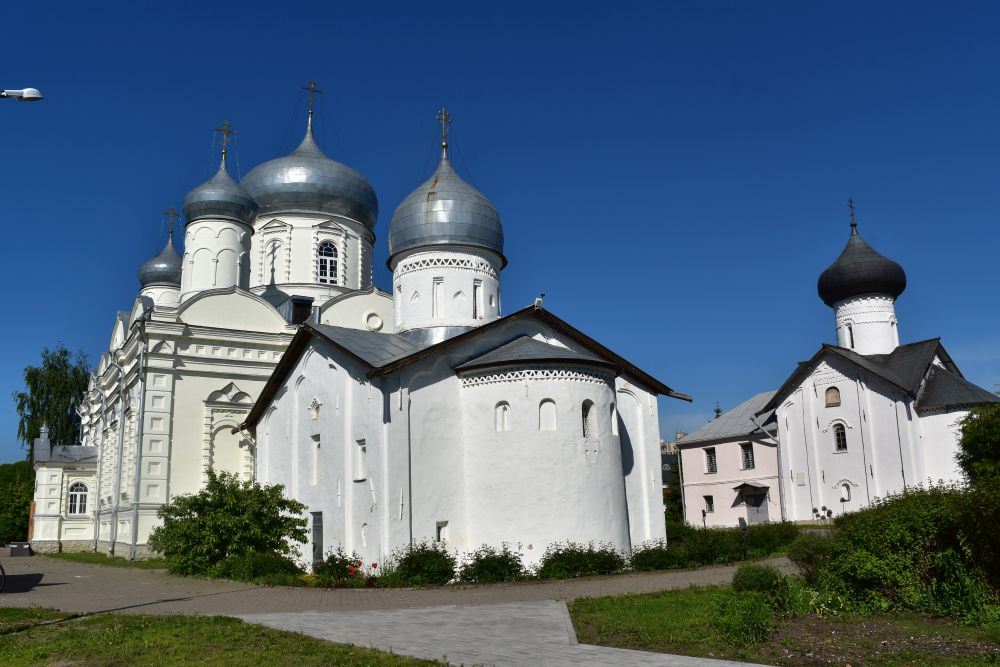
In the Sverinj Monastery we find the Church of Intercession or Покровская (Maria Schutzkirche). A service is going on inside and we attend it for a while. The white church to the right with the black dome is called Church of the White Saint Nicolas.

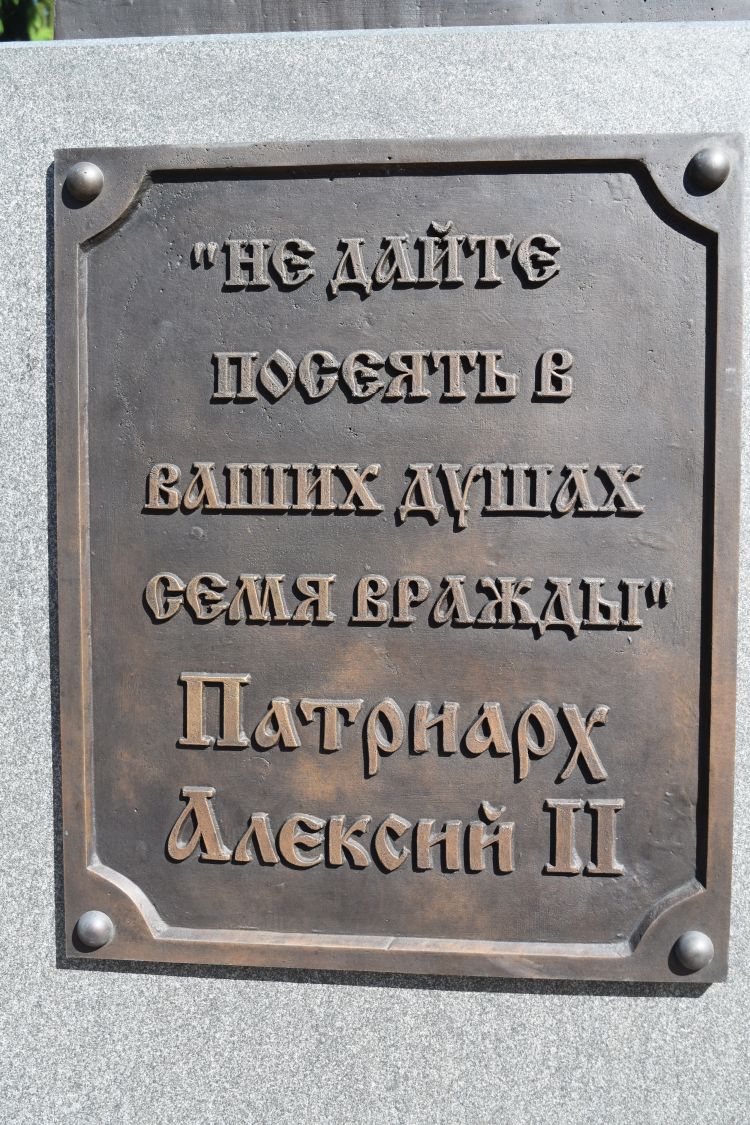
In the monastery we find a monument for Patriarch Alex II. He was the first patriarch after the fall of the Soviet Union. He says: “Do not allow to sow the seed of hatred in your souls.” Beautiful.

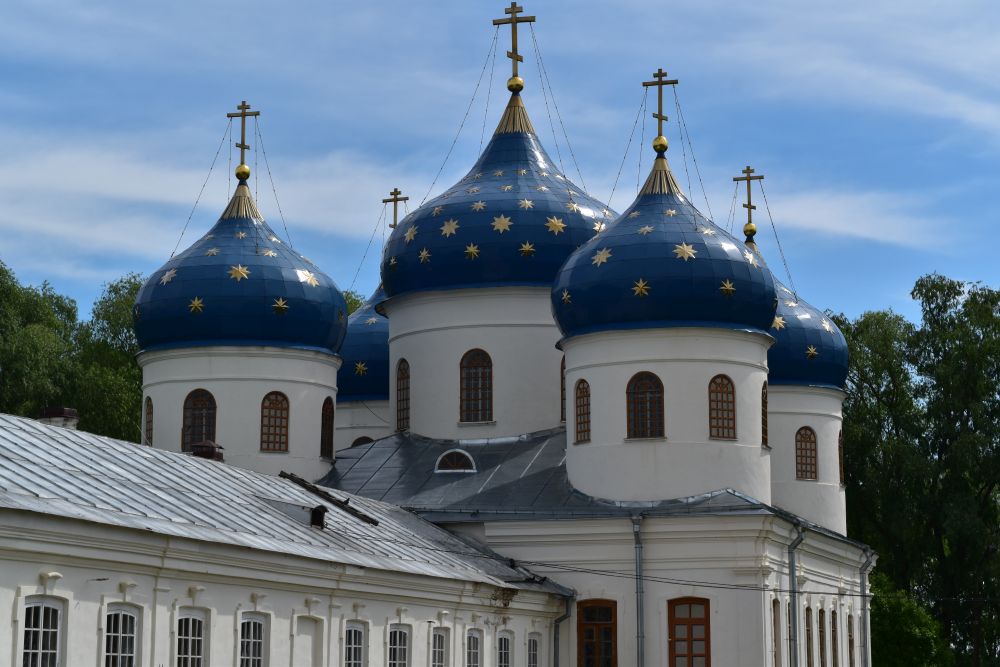
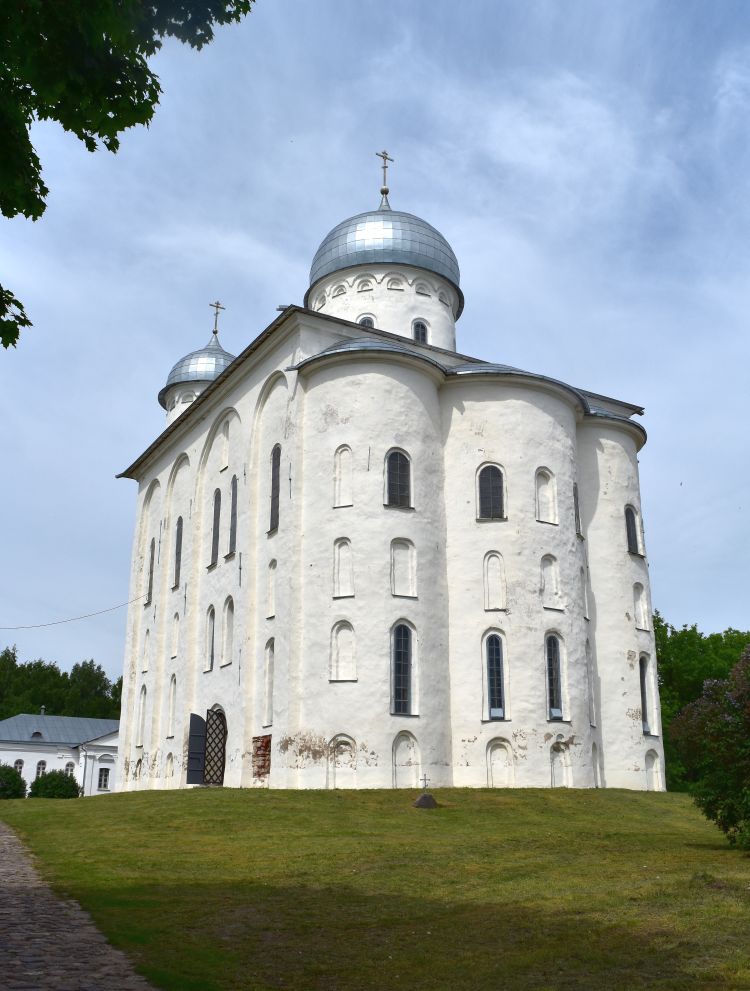
After breakfast we take the bus to the south of Novgorod to visit the Juriev monastery (Юрьев монастырь). It has been founded in the early 12th century (by Jaroslaw the Wise). The eyecatcher is this Cross Exaltation Cathedral from the late 18th century with the blue roof and the golden stars.

The gem of this monastery is the Juriev Church from 1119…

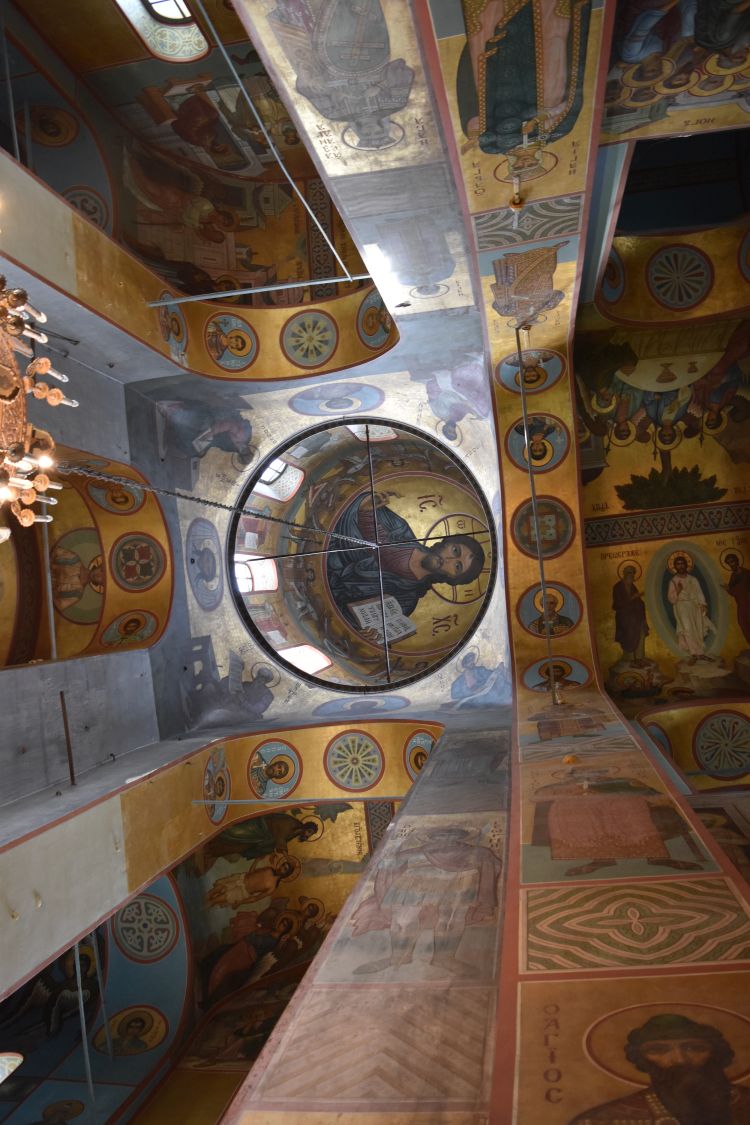
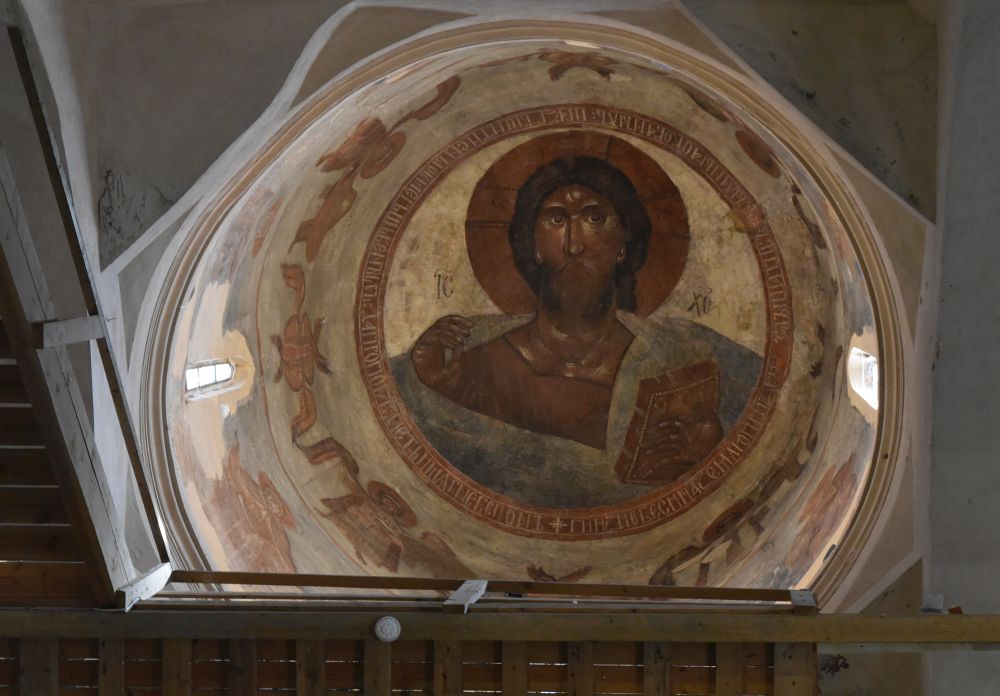
… with the (restored) Pantokrator in the main dome – high up in heaven.

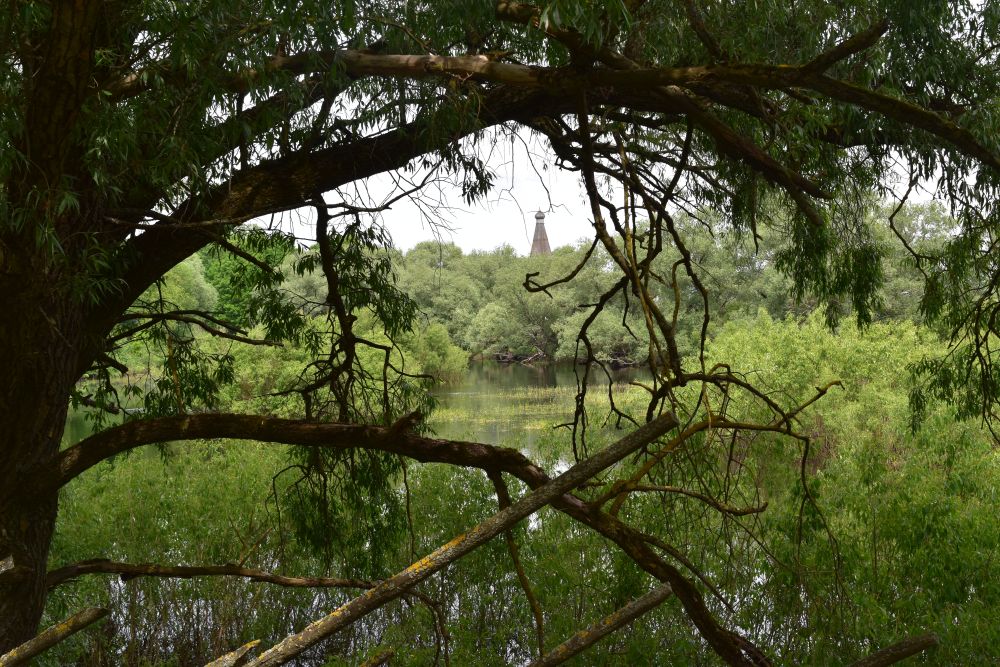
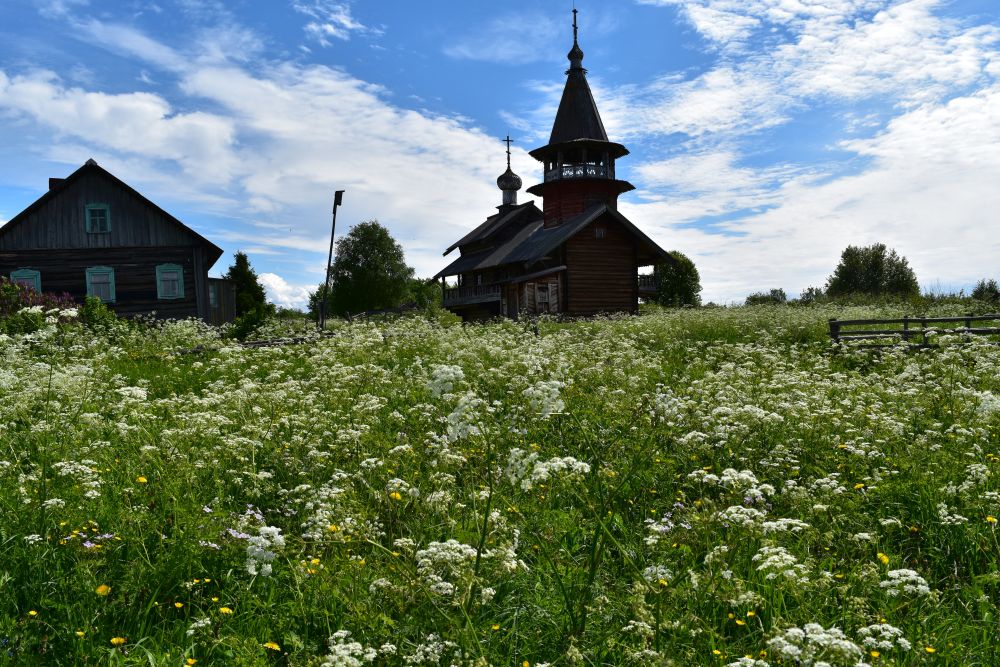
Our next destination is the Vitoslavlitsi museum (Витославлицы), some 500m away from the Juriev monastery. On the way we catch this view of a wooden church tower across the ponds.

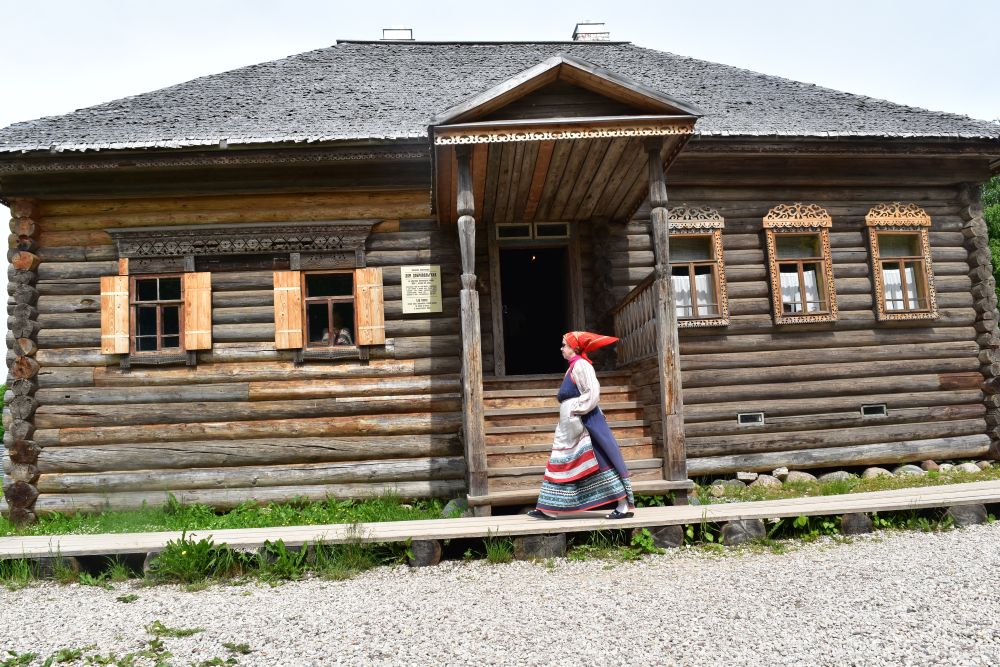
Inside the museum we find a collection of restored wooden churches and farmers’ houses. This is an example of a farm house with a traditionally dressed woman hurrying by.

The State Novgorod Museum rounds off our two days in Novgorod. It has a large collection of artefacts related to the history of Novgorod. We are very impressed by the many manuscripts written on birch bark (берестяные грамоты) from the 11th to the 15th century. About 1000 such manuscripts have been found in and around Novgorod.

Novgorod was a powerful republic until being conquered by Moscow in the end of the 15th century. It had its own school of icon painting and the museum has many of those icons on display. This is the defeat of the aggressors from Suzdal that started to flee, when the Novgorodians showed the icon of holy Mary (our Lady of the Sign) on their town wall (the miracle is reported to have happened in the 12th century).

Ursula likes the archangel with the golden locks from around 1200. The icon is from Novgorod, but, if I understand correctly, this is a copy and the original is on display in the Russian Museum of Saint Petersburg.

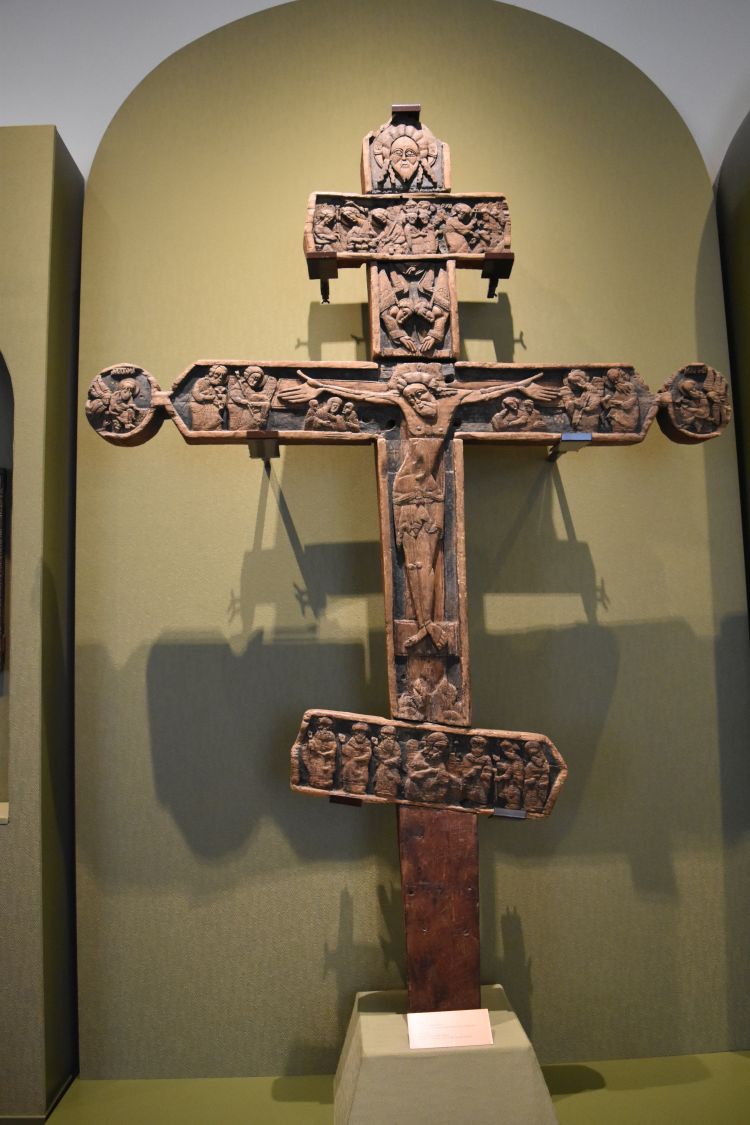
We finish off our museum tour in the room that displays artefacts carved in wood, like this beautiful orthodox cross.

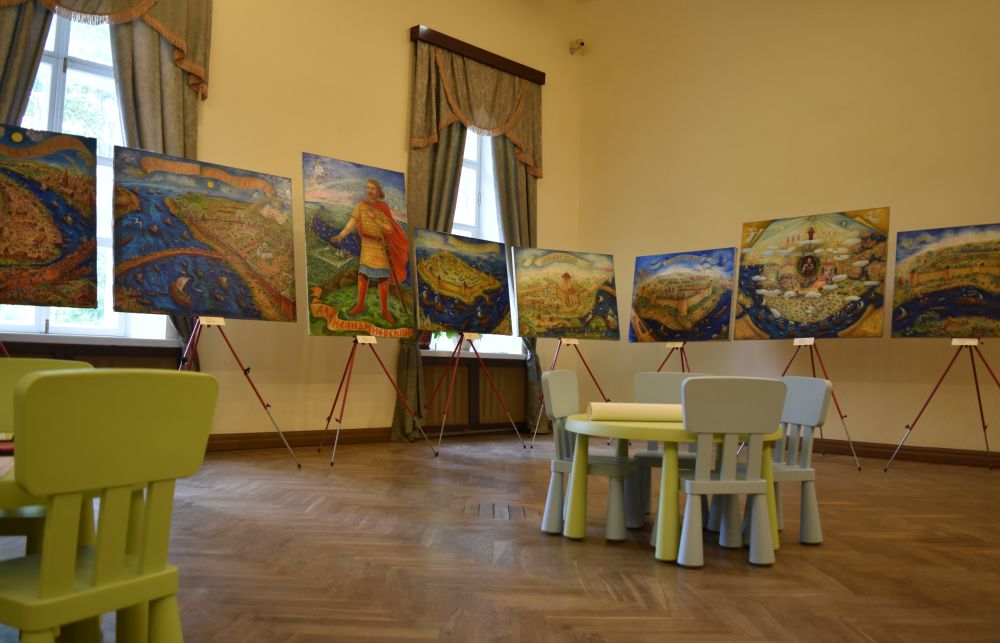
The Novgorod State Museum has a heart for kids. In the entrance hall we find a picture gallery…

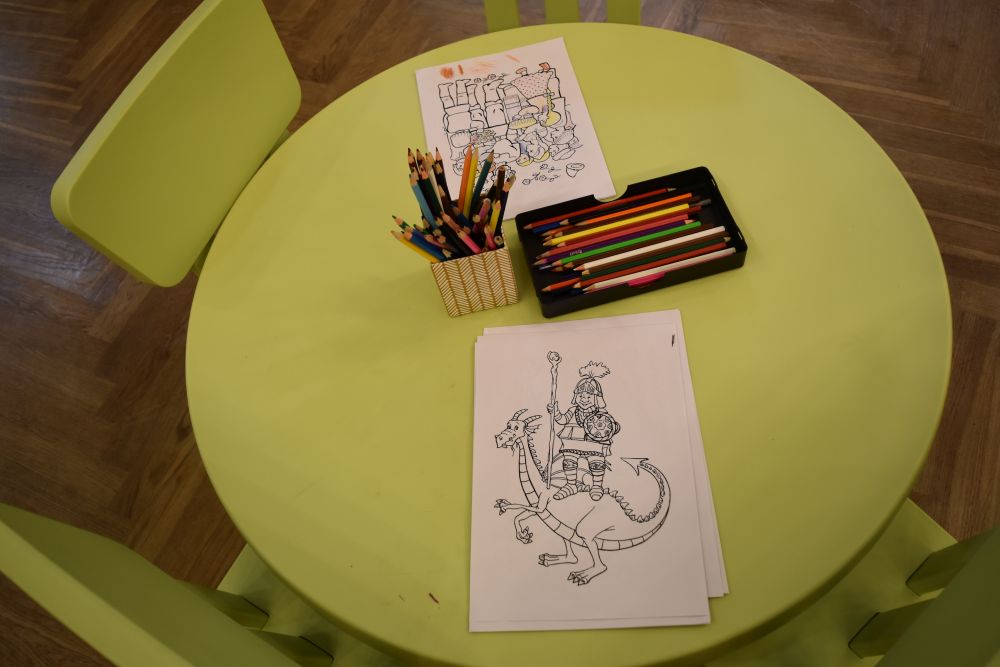
… and a table with material that make artists out of kids that are forced to wait for their parents.

Perhaps one day the Novgorod State Museum will open up a room for the best artefacts created by kids.

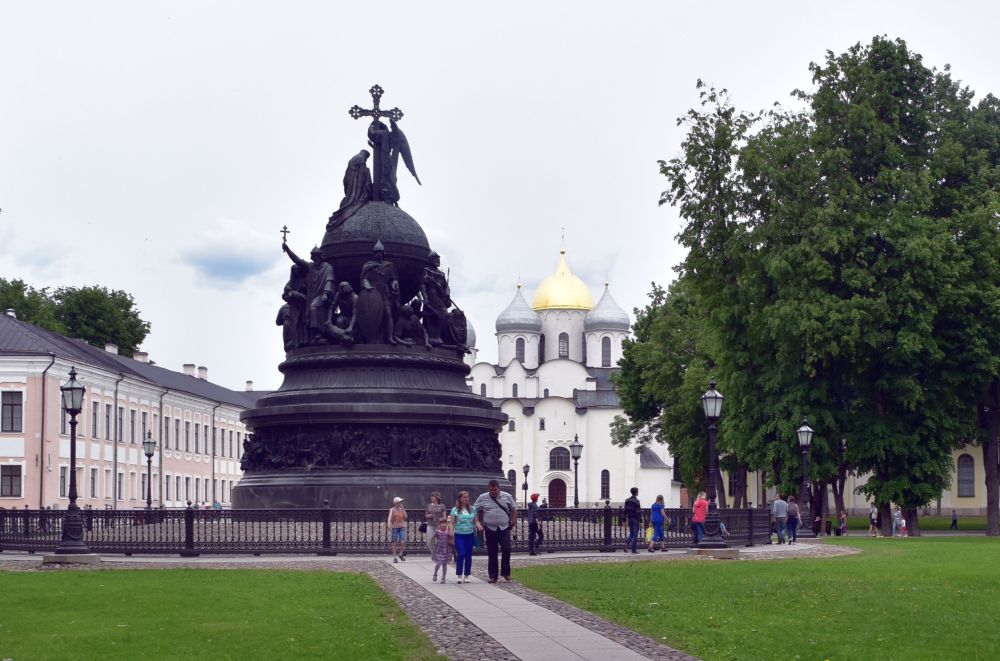
We look back to the Saint Sophia Cathedral and the monument that shows all the important men and women that by the middle of the 19th century had shaped Russia during 1000 years.

At 18:05 precisely. our Elektritschka (suburban train) leaves for Saint Petersburg. We are amidst all the Russians that return from their datscha weekends.

The sky covers with dark clouds and by the time we arrive in Saint Petersburg, it is pouring with rain. One of these Saint Petersburg rainfalls that make everyone wet-through within five minutes. We walk in the metro UNDER the Sennaja Ploschtschad, until we reach the metro exit that is closest to our apartment. Nevertheless, at home we have to hang up our trousers and jackets, while the umbrellas land directly in the bath tube. Fortunately I always wear waterproof Goretex shoes for sightseeing.

Novgorod was worth visiting and two days are not enough to see everything. Will I go back one day and also continue to Staraja Rossija, where Dostojewsky lived for a while?


Near Saint Petersburg – two days in Veliky Nowgorod – a sunny Saturday

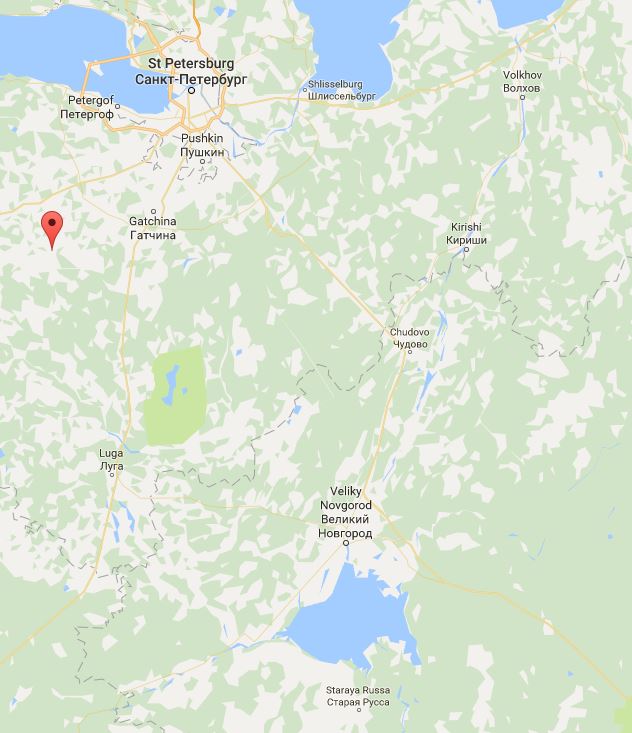
While spending almost four weeks in Saint Petersburg in June 2017, we made an excursion of two days to Veliky Novgorod (Великий Новгород). The main attraction is the Saint Sophia Cathedral with the Bronze Door from Magdeburg. But then there is much more to see: the Kreml with the State Museum, about 50 more churches and the gorgeous setting of Novgorod on the river Volkhov and the Ilmen Lake. Novgorod is at about 190km south of Saint Petersburg. This counts still as a suburban connection and we can buy a “suburban” (пригородный)  ticket at the Moscow station – easy and without having to stand in line.

Source: Google Maps

Our suburban train or elektritschka leaves Saturday morning at 7:25. About two hours later we are in Novgorod. We have reserved a night in the Volkhov Hotel and receive a beautiful room on the fifth floor.

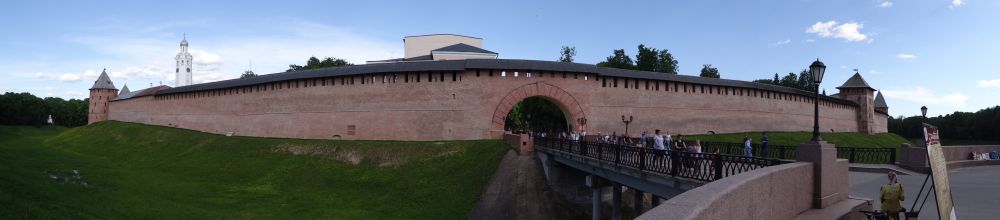
Ursula takes a great panorama foto of the Kreml wall (or Detinets).

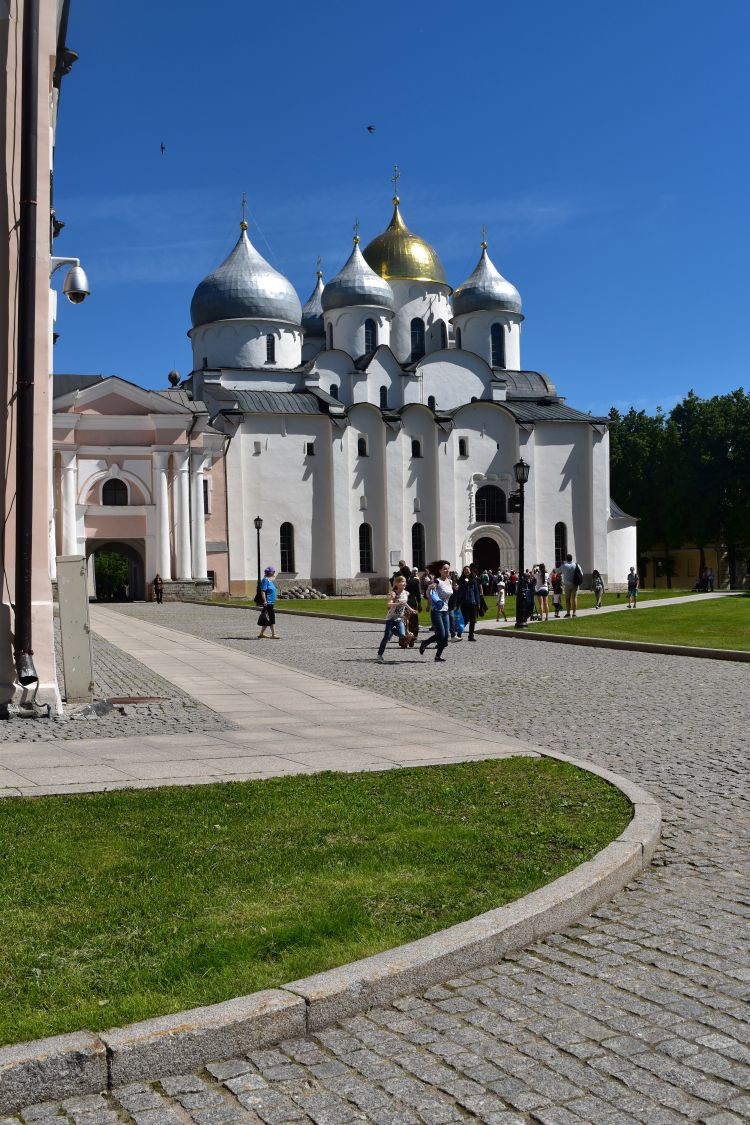
Our first destination is the Saint Sophia Cathedral from the 11th century. It is the oldest Russian Cathedral modelled after the Hagia Sofia in Byzantium.

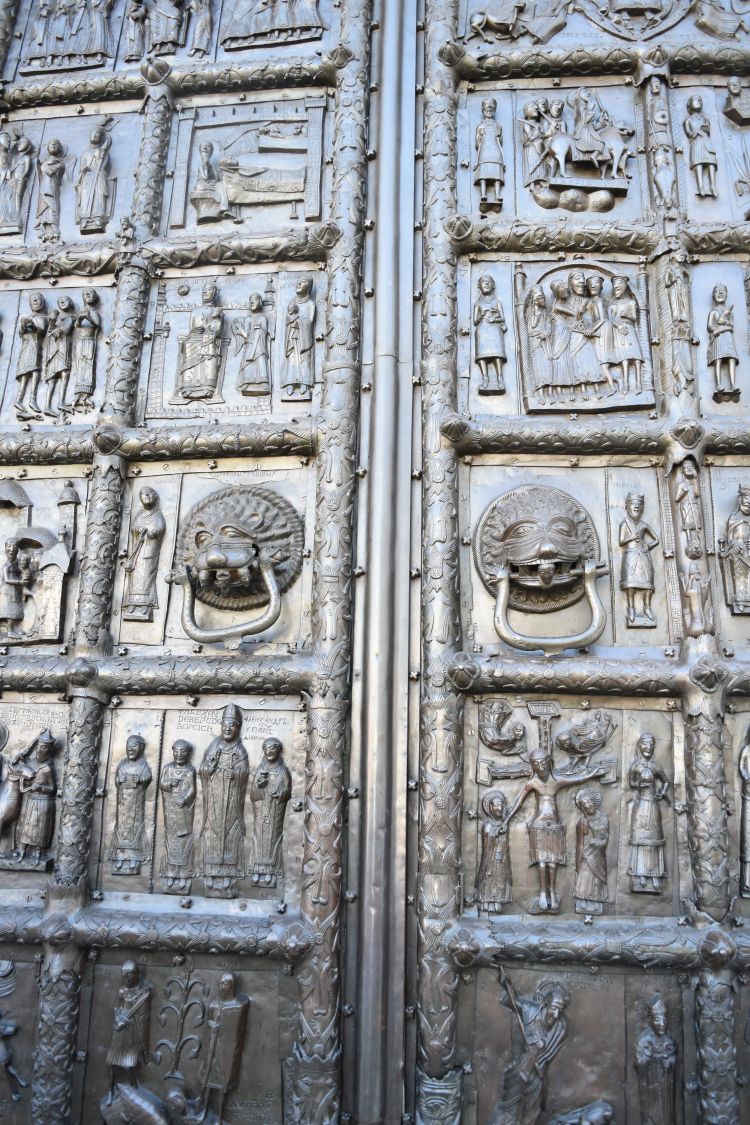
The Bronze Door is unique. It was produced in Magdeburg in 1153 and it is unclear, how this door travelled from Magedburg to Novgorod – perhaps, because Novgorod was trading with the Hanseatic League.

With my small guide “Die Bronzetür von Nowgorod” (Piper Bücherei 1963), we study the plates in detail. We particularly like the Ascension of Christ, as he is drifting upwards, away from this world.

Inside we are proud to find Constantin and his mother – forbidden to take fotos in this holy place.

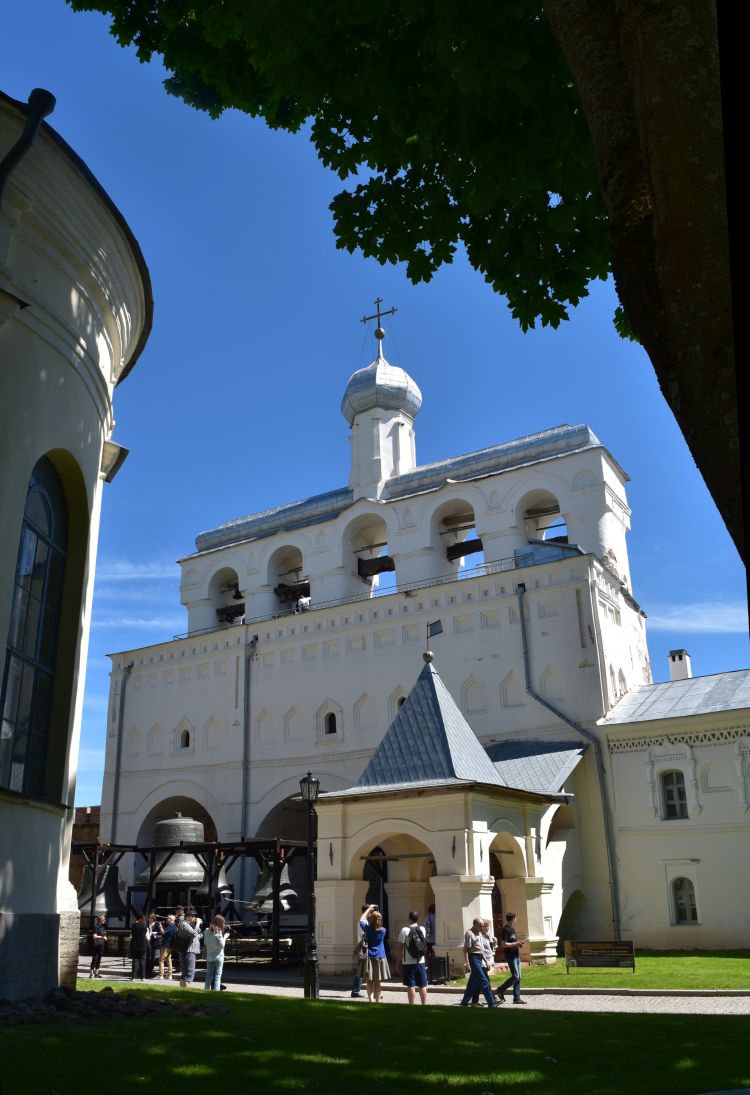
Behind the Cathedral we take pictures of the belfry or bell tower.

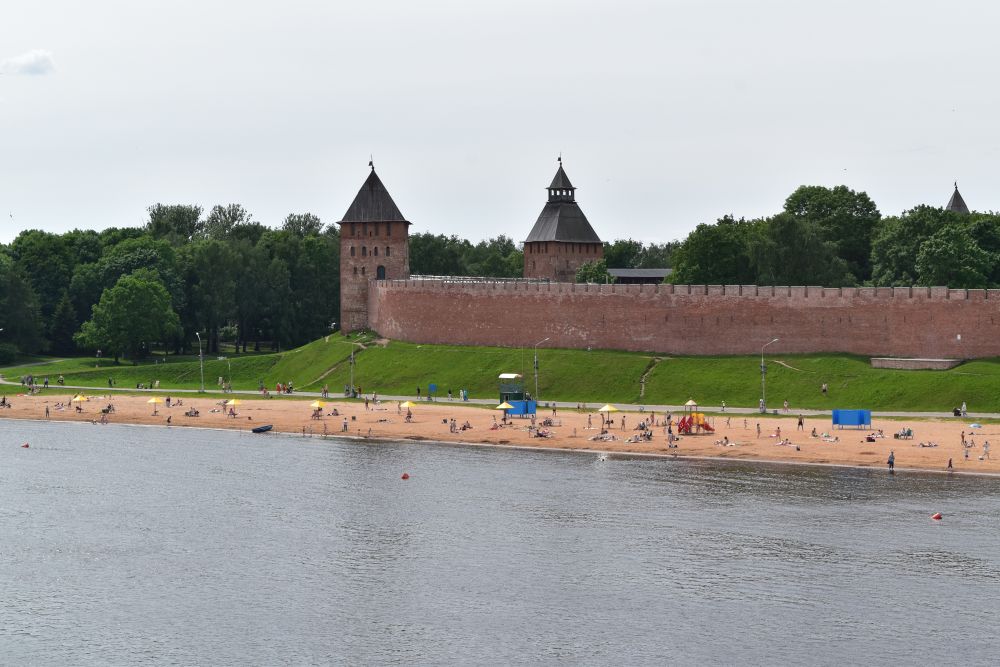
It is a sunny Saturday and the Novgorodians love the beach life under the Kreml wall. They swim in the river Volkhov and I am not so sure, whether I would like to join them in that muddy water…

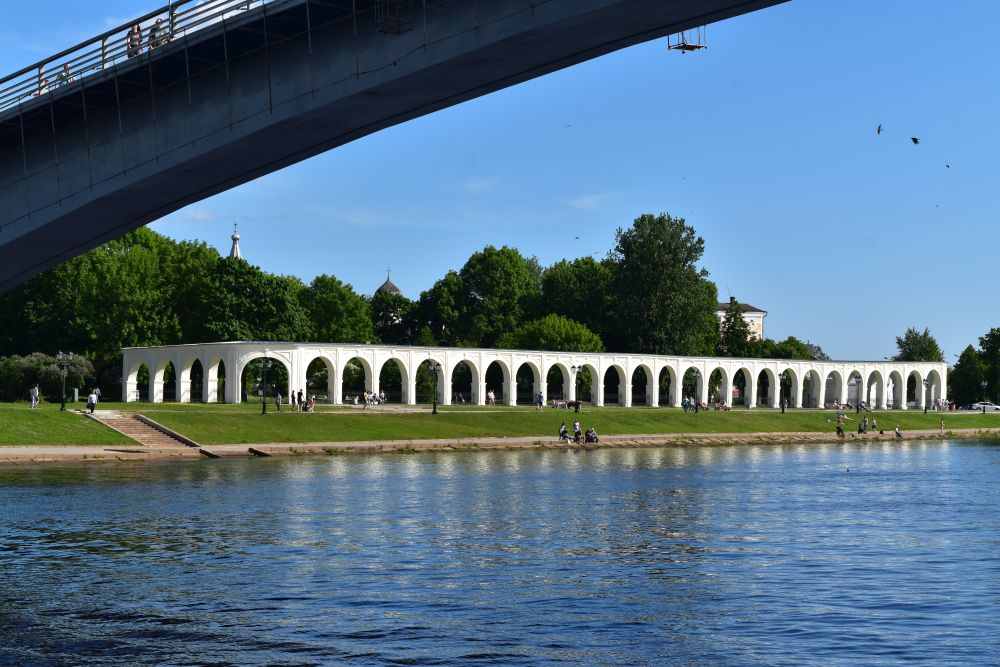
Across the river Volkhov, there is the former Tvorg (творг) or market place. Only the arcades are left as well as a few churches donated by merchants.

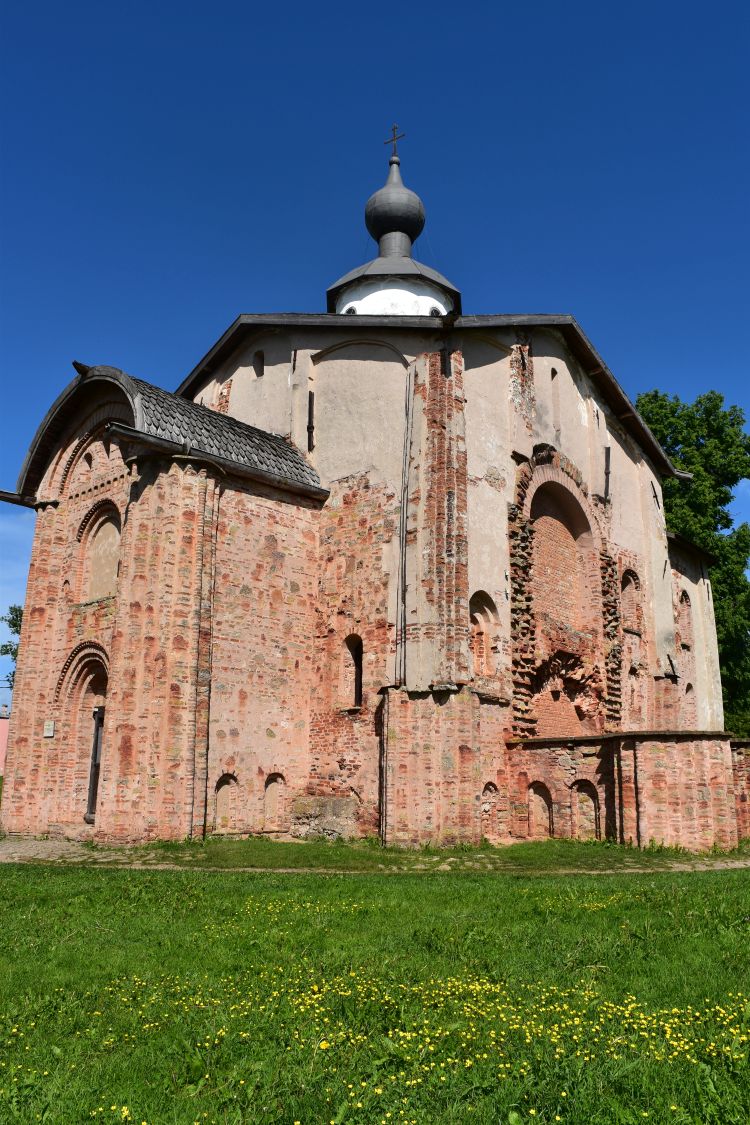
One example is the Paraskeva Pjatniza Church (Церков Параскевы Пятницы на Торгу) from the year 1207.

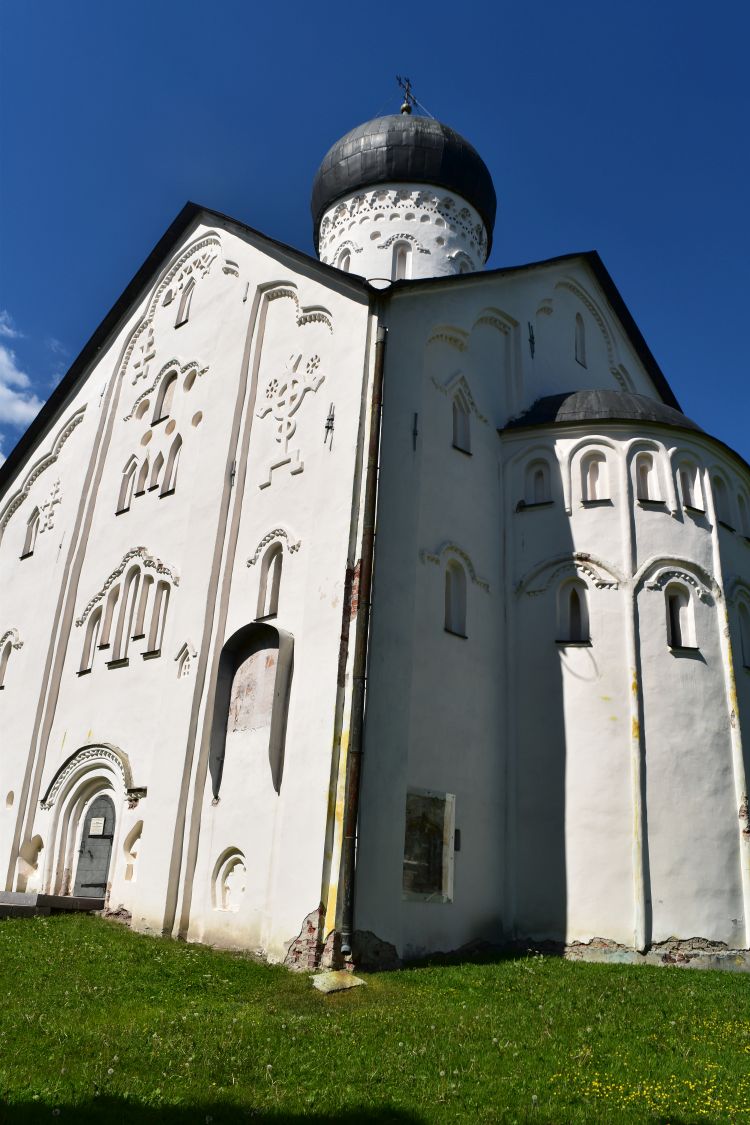
Above the Tvorg or market place, we find the Transfiguration Church (Церковь Спаса Преображения на Ильине улице) from 1374.

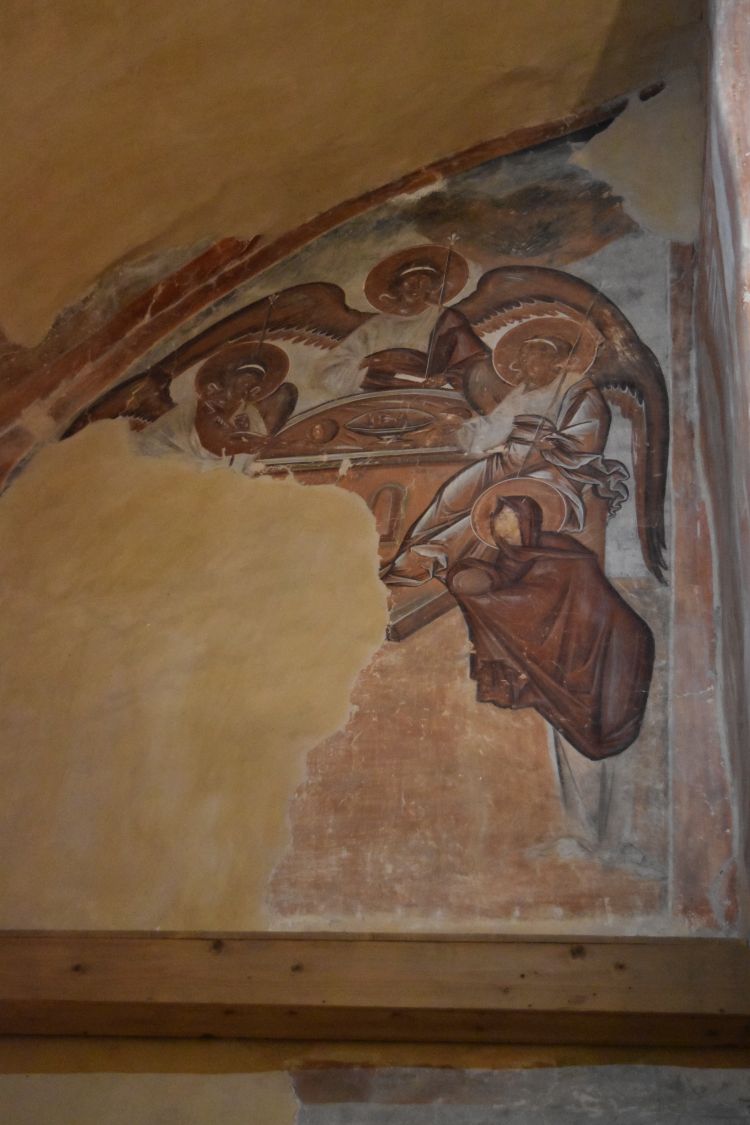
It contains frescoes by Teophanous the Greek from the 1370ies. He is one of the few icon painters known by name. His style is almost abstract and he gives perspective to his figures by adding white lines. One of his frescoes shows the Old Testament Trinity, when the three angels – “disguised” as vagabonds – ask for food. They are rejected, until they come to the house of Abraham and Sarah. I listen to a guide who tells the story to a family with a young boy – very kind, how he explains that these angels looked like vagabonds or бродяги – would you have invited them?

In the dome there is the Pantokrator of Teophanous.

And then we find three saints sitting on columns – I simply cannot imagine, how that works – sitting on a column day in and day out.

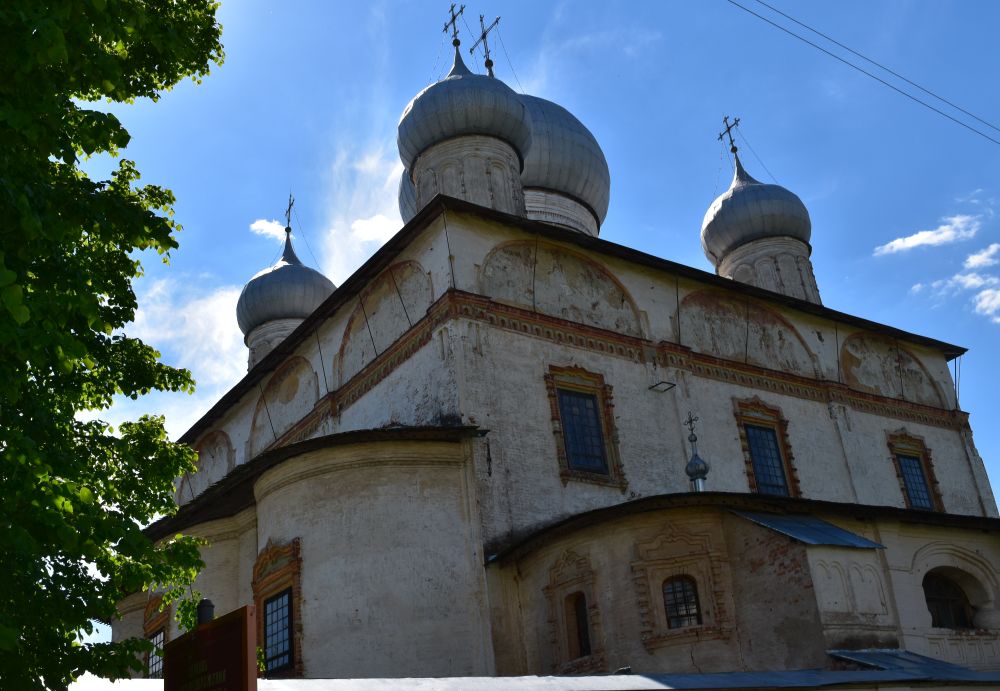
Next to the Transfiguration Church are the domes of the newer Snamensky Church from the 17. Jh.

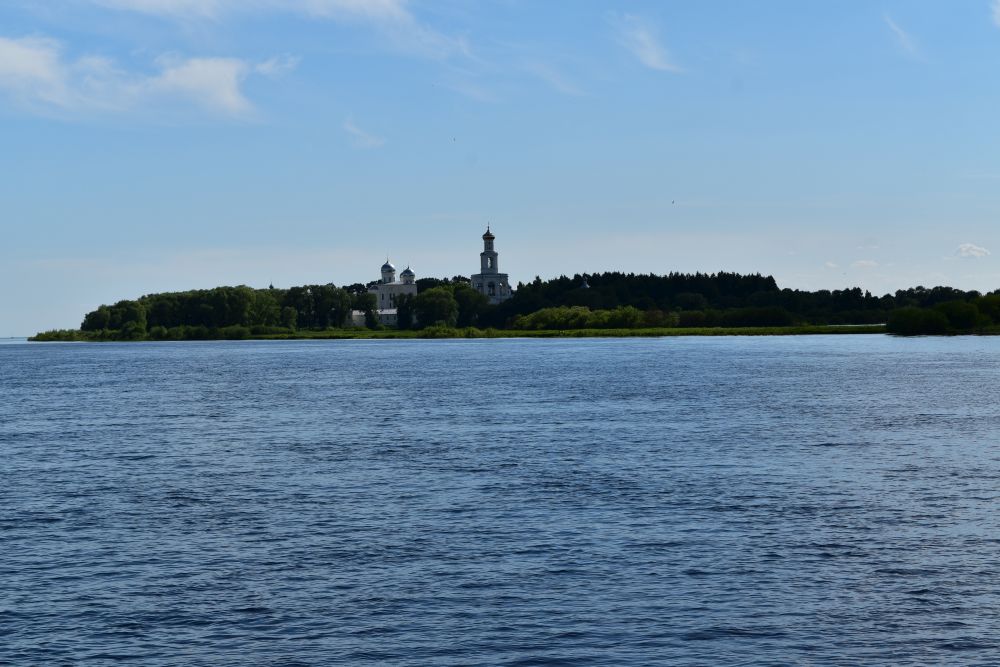
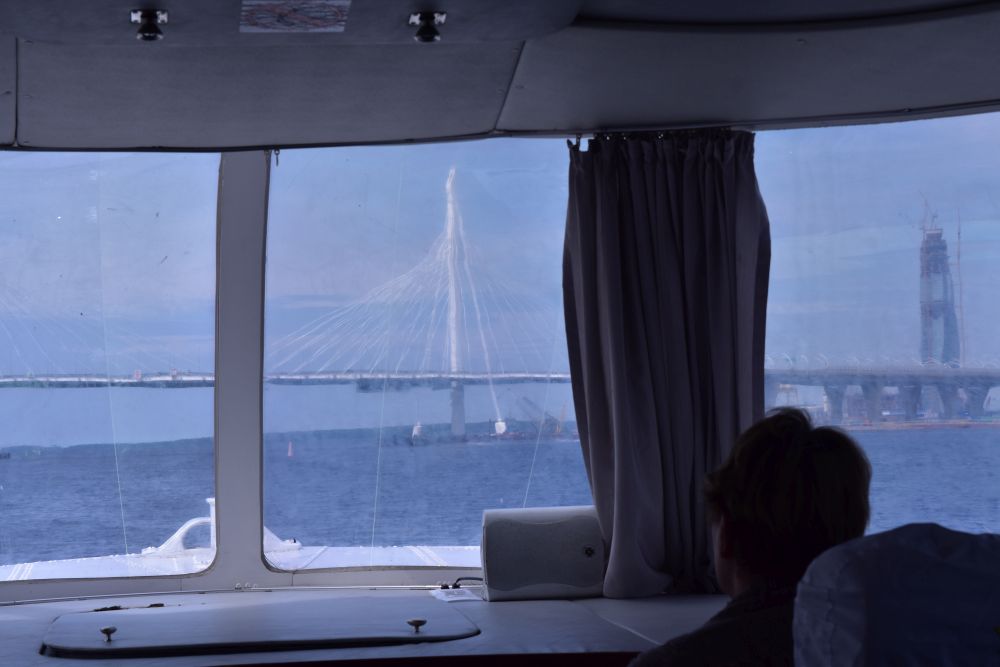
Enough culture – we need a rest and book an hour on a boat. Along the river Volkhov the boat takes us to the Ilmen Lake. On the way we see the Juriev monastery that we will visit tomorrow.

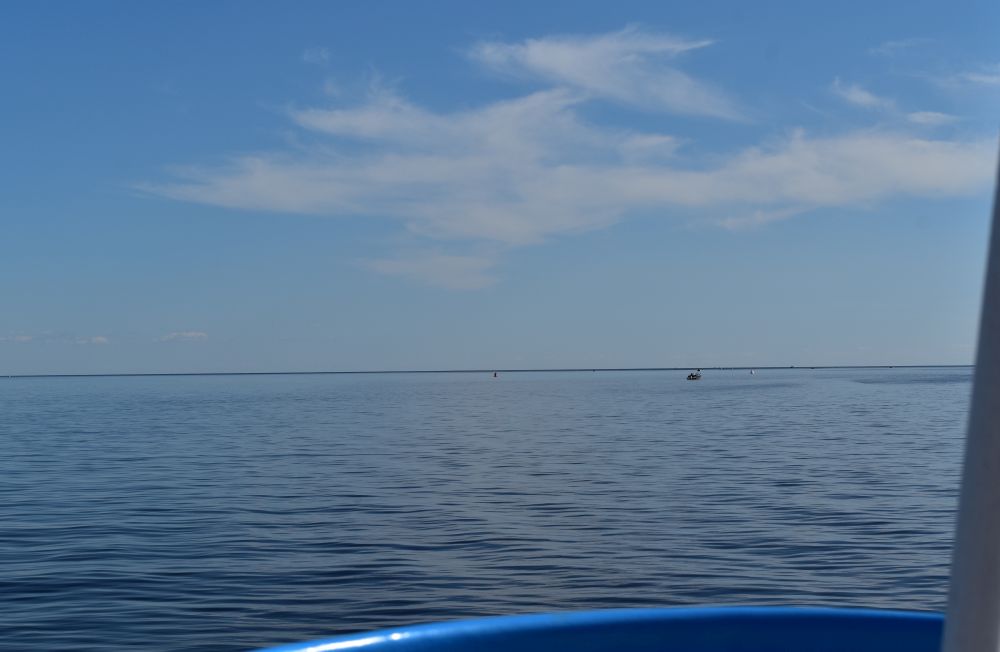
The Ilmen Lake is very, very large. We cannot see the opposite shore line.

We have dinner in the Volkhov hotel on the fifth floor balcony. A great view and a good service. Then we sleep well in our luxury room to be ready for a sunny Sunday with more sightseeing in Novgorod.

Near St. Petersburg – Three days in and around Kizhi

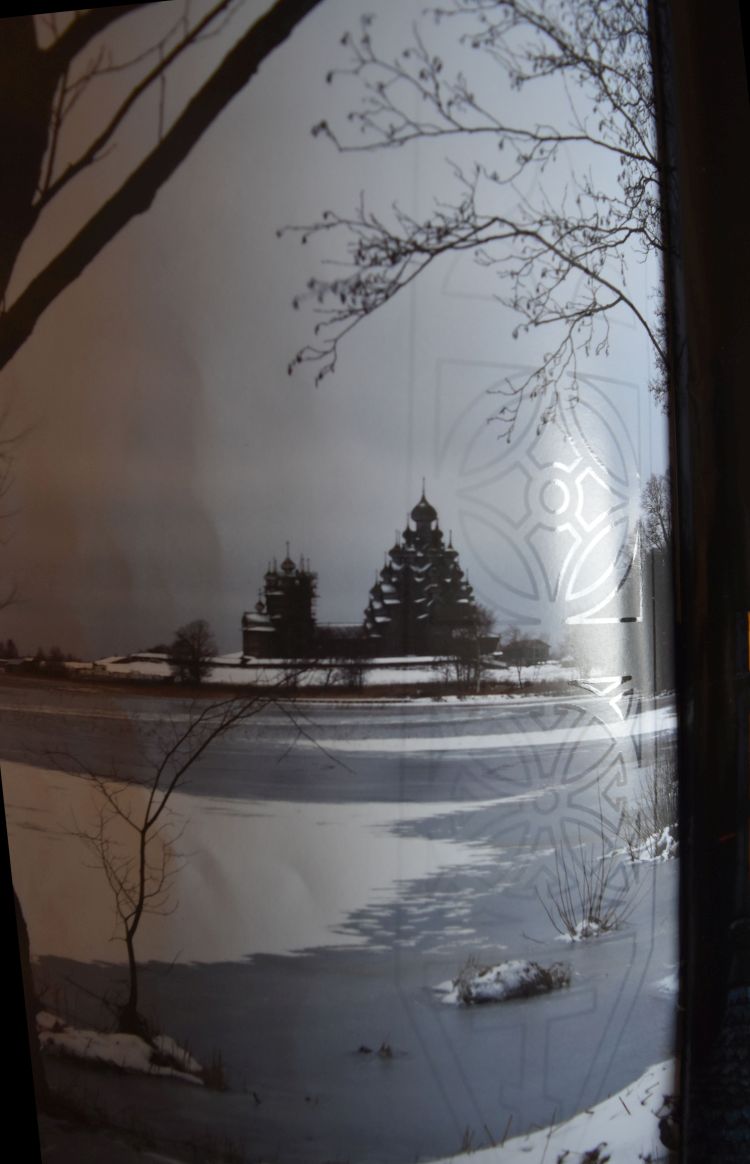
Kizhi (Кижи) is a small Karelian island in the Onega Lake. With the gorgeous Transfiguration Church and its 22 domes, it has been an old dream of mine – one of these destinations of a lifetime.

While staying in Petersburg, we plan an excursion to Kizhi – for a few days to experience Kizhi and Karelia more intensely.

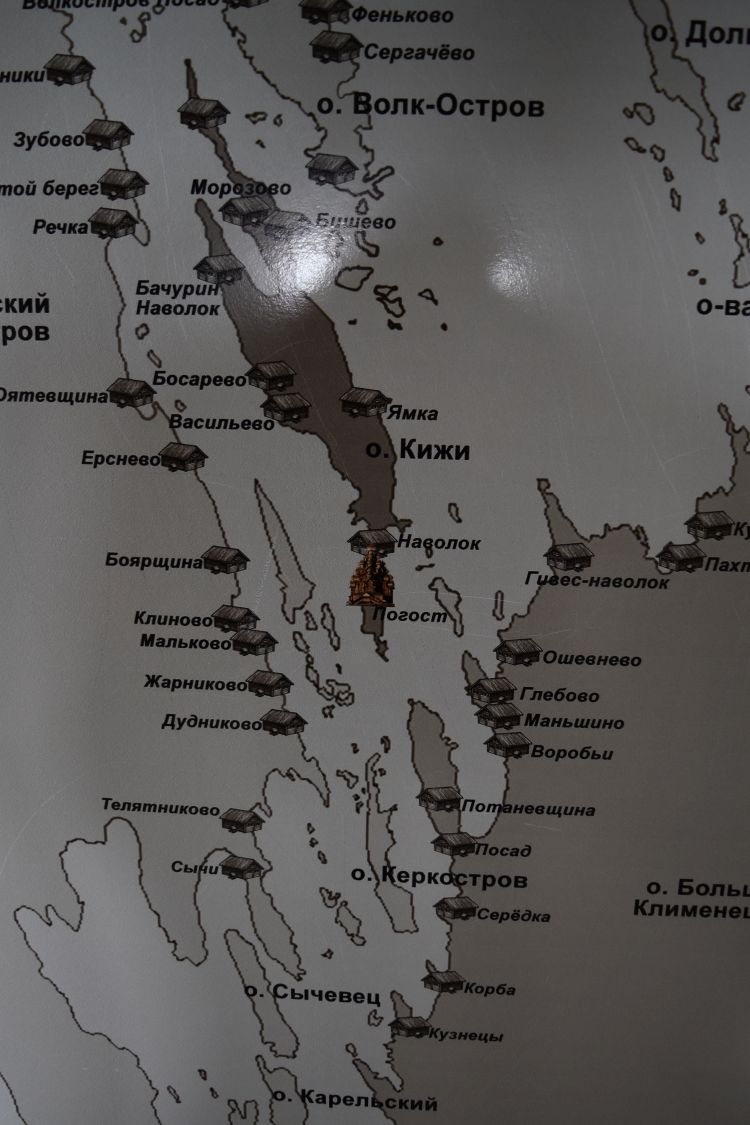
In the internet, Ursula has spotted the guesthouse Grace or Благодать. It is the only hotel within reach of Kizhi. It is located in the tiny village Ersnevo (Ерснево). I call Tanja, the owner. She is very friendly.  “Yes you can stay two nights and we have a boat service to Kizhi”, she says. I reserve two nights with meals.
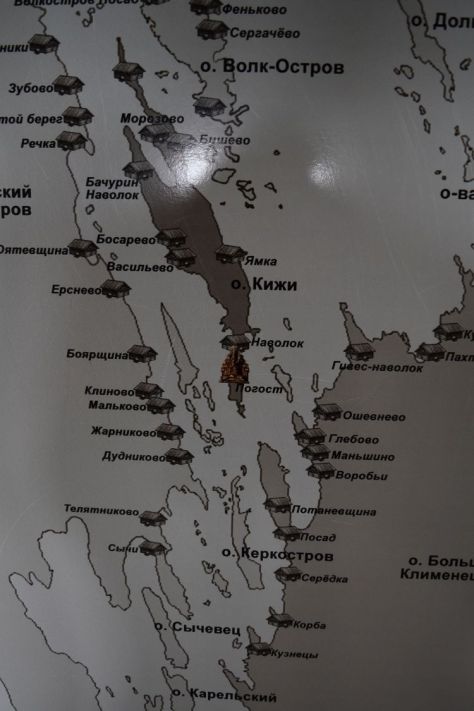
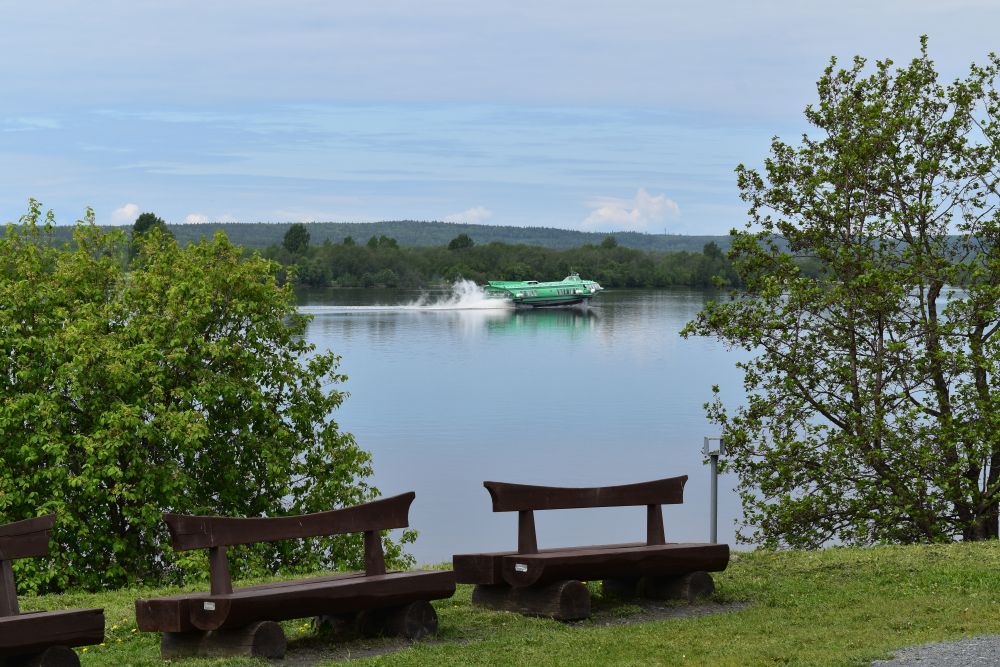
From Petrosavodsk bordering the Onega Lake, three hydrofoils (“meteors”) leave for Kizhi in the morning (the first at 9:30 am), and the same three hydrofoil boats return to Petrosavodsk in the afternoon (the first at 3:00 pm). In the morning they take tourists to Kizhi and in the afternoon they bring them back to Petrosavodsk. This is a daily service.

Tourholding operates the hydrofoils. I call them and reserve tickets for the first Friday morning boat at 9:30 a.m. and return tickets for two days later – Sunday 3 pm.

Our train from Saint Petersburg will arrive in Petrosavodsk late in the afternoon and therefore I reserve one night in the Karelia hotel not far from the peer or причал to catch the first hydrofoil boat in the next morning.

Hotels and boats reserved… now we still need train tickets from Saint Petersburg to Petrosavodsk and back. Be aware: To buy (long distance) train tickets in Russia, you have to show your passport! At Ladoga station, we wait in a very slow queue. One hour later and just three minutes (!) before our booth closes, we have finished buying our train tickets. Uff! We are ready for Kizhi and our dream, the wooden Transfiguration Church with its 22 domes.

On Thursday morning, we board the train at Ladoga Station in Saint Petersburg. The train leaves exactly on time, 9:55. We travel in a so called Obschy Wagon (общий вагон) with couchettes. We have a compartment for us alone and stretch out on the couchettes, while the Karelian forests and some wide rivers fly by the windows. Seven hours later we arrive in Petrosavodsk (500km north east of Saint Petersburg). Peter the Great has founded this industrial town in the same year as Saint Petersburg (1703). The promenade invites for an evening walk along the Onega Lake.

I meet an old man who sells his book about the winter war in the 1940’s, when Russia conquered East Karelia again. He is so kindly proud of his book that I buy it.

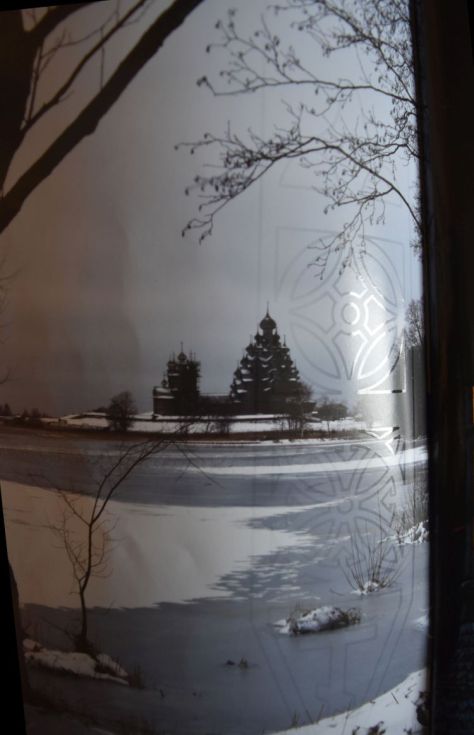
We spend the night in the Karelia Hotel. At 9:30 a.m. our hydrofoil boat leaves, exactly on time. It is raining heavily. One and a half hours later we approach Kizhi. This is what we look forward to seeing: The 22 dome Transfiguration Church (Церковь Преображения Господня).
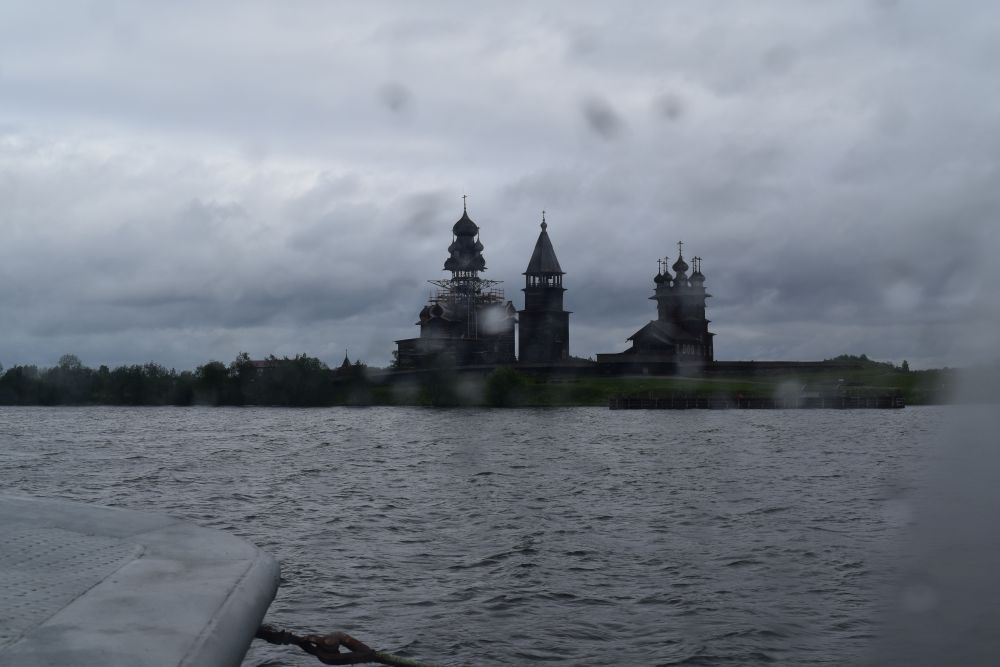
And this is what we see through the hydrofoil window that is damp from the rain: The Transfiguration Church is topped with about five cupolas… the other 17 domes have been removed for renovation.
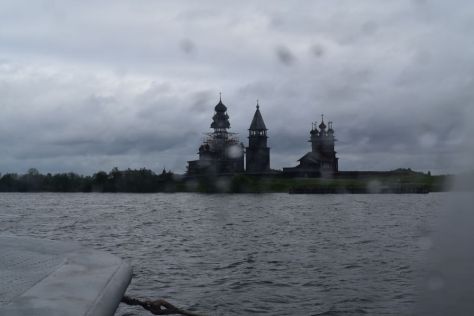
Big disappointment about the church of our dreams. In addition it is raining. We decide to go to our hotel on the neighboring island. Tanja picks us up and the boat jumps across high waves. A tea warms us up.

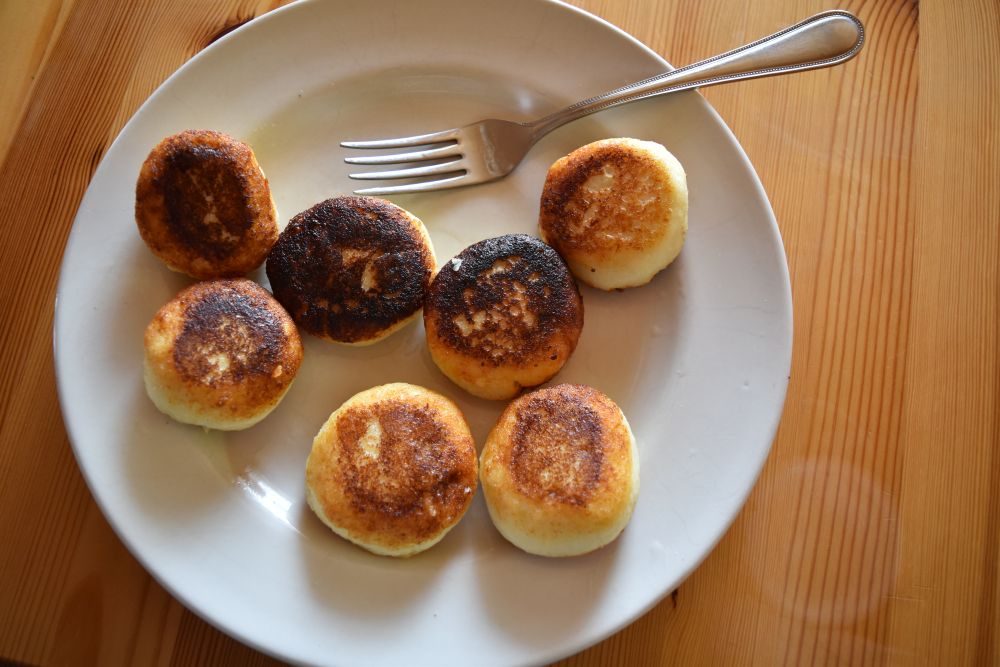
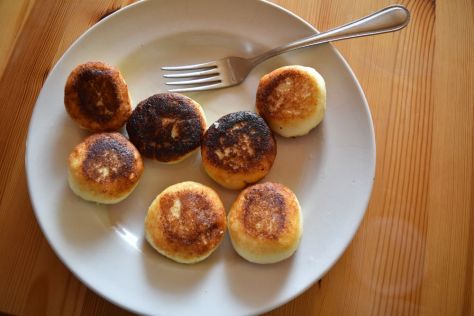
Our Guest House is also a farm, and they offer what the farm gives: Eggs, milk, cheese, quark (творог) and fish from the Onega Lake. I particularly like the syrniki or сырники. A recipe to take home!
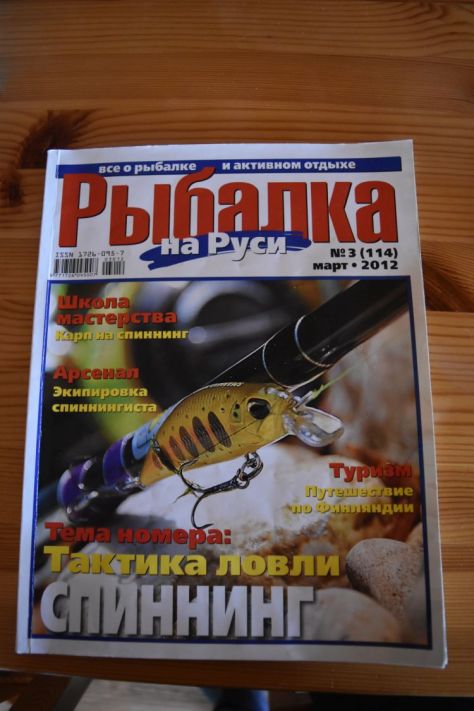
Fishing is an important sport in Russia requiring mastering and tactics. This newspaper teaches the school of mastering the fishing (школа мастерства).
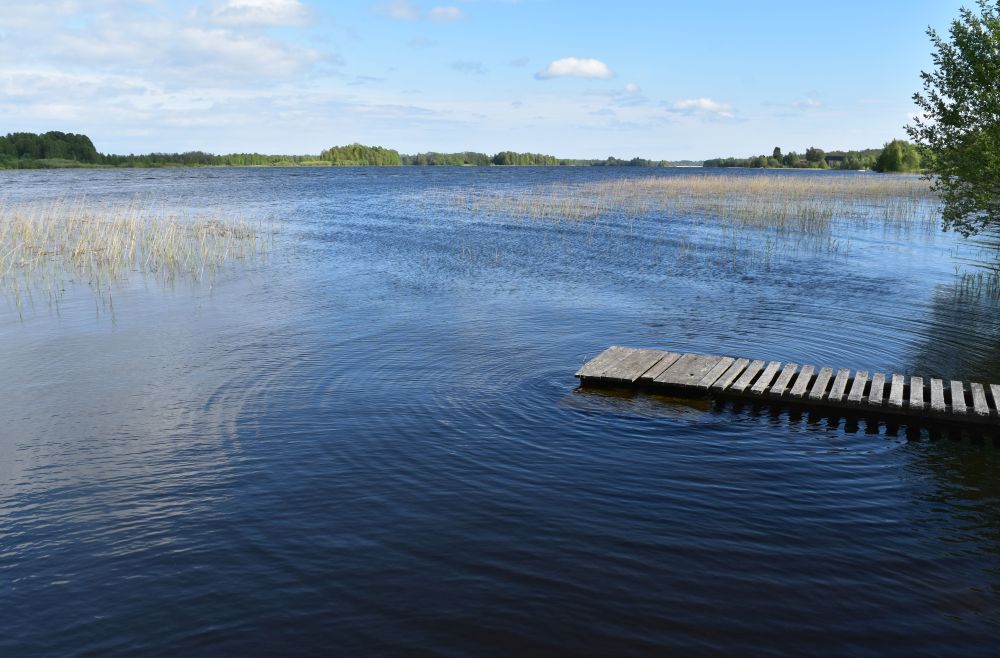
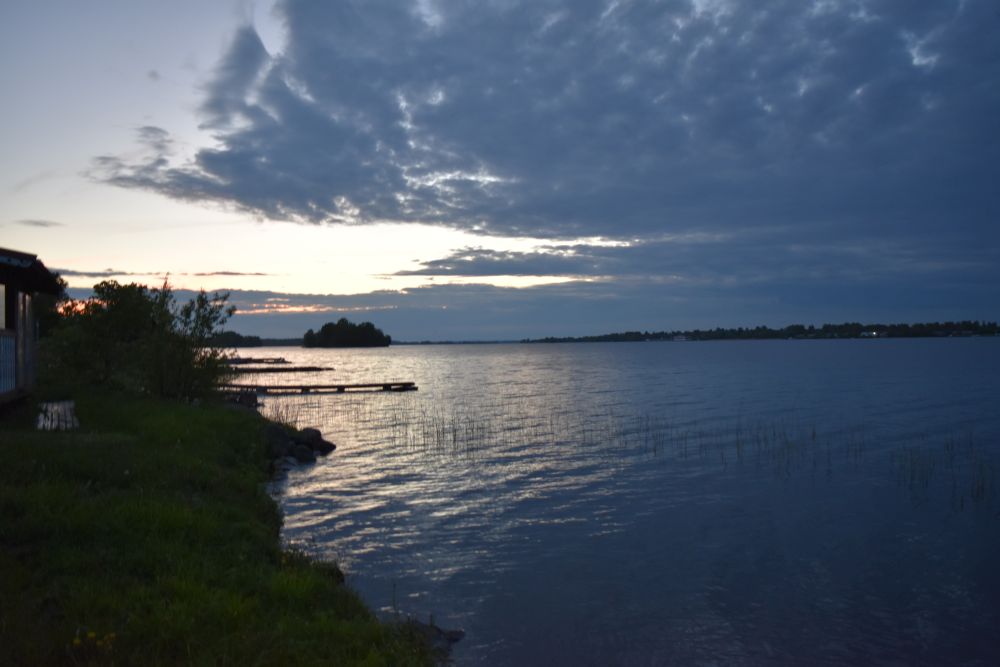
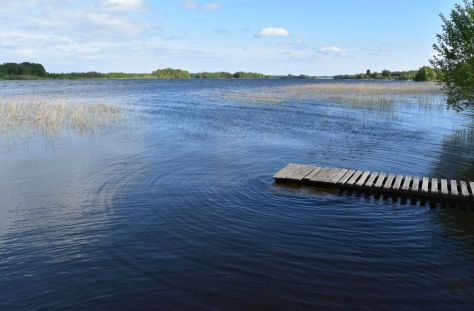
It has stopped raining and we walk along our island. It is quiet and peaceful. The wind plays with the Onega Lake.
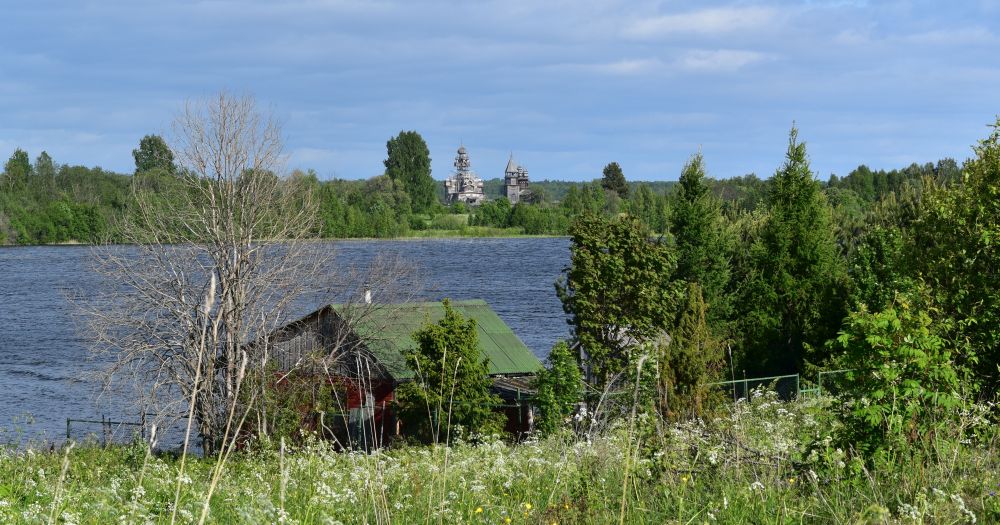
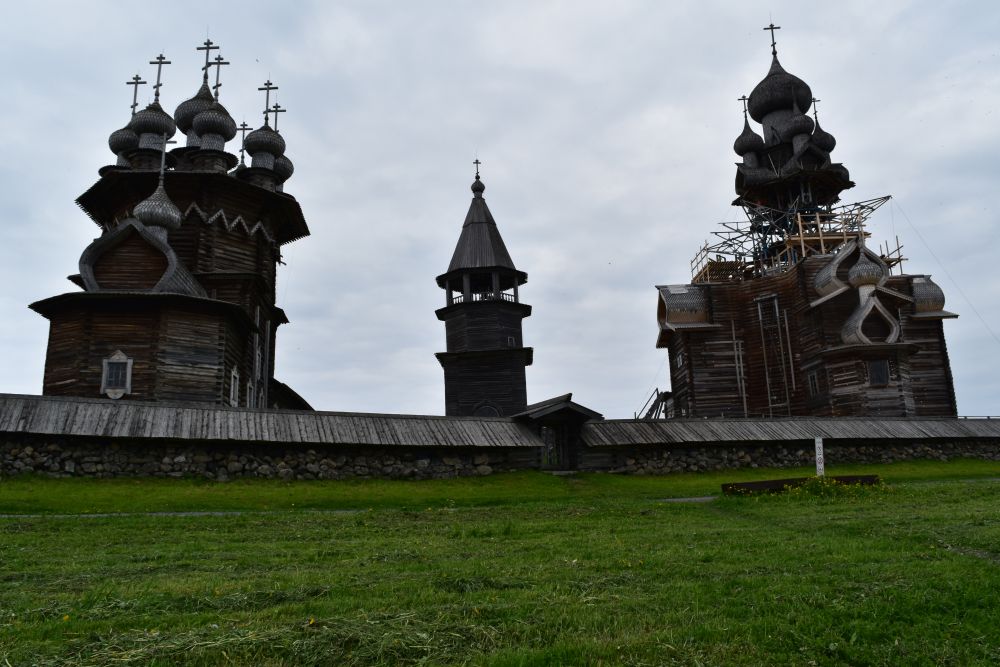
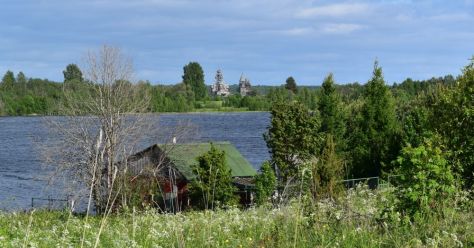
We catch a view of the central Kizhi church complex with the Transfiguration Church (now under renovation) and the Intercession Church.
We have a chat with a lady journalist who writes articles in the local Karelian newspaper – in the local Karelian language that is related to Finnish.

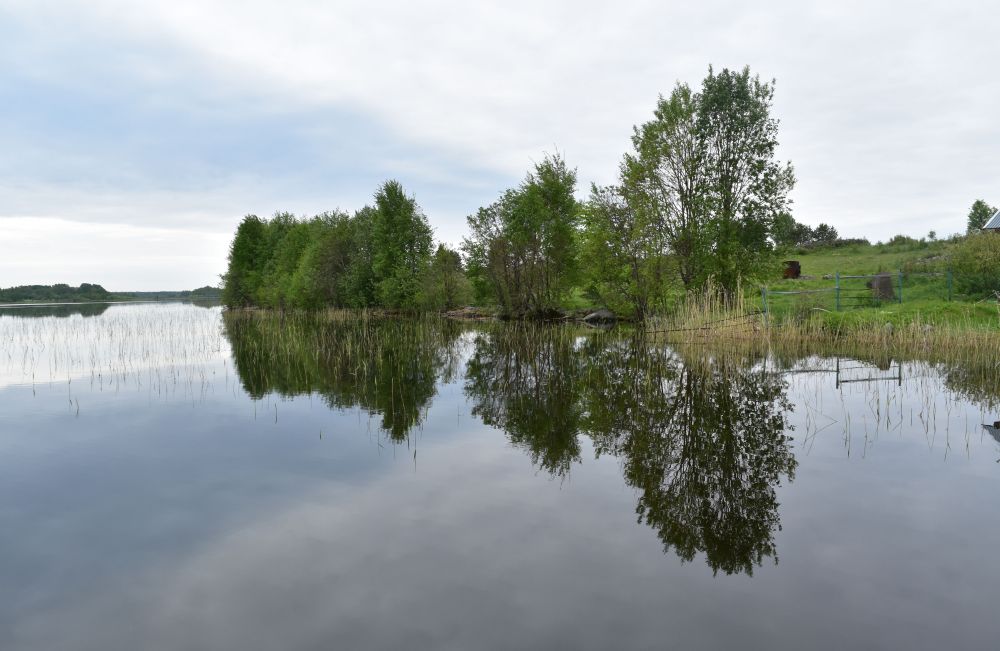
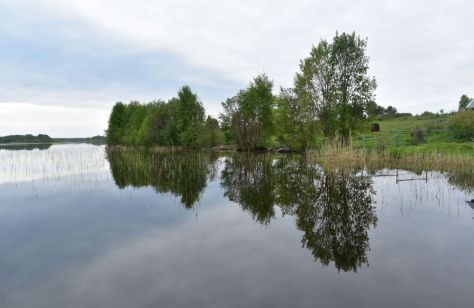
In the next morning the wind has stopped. The trees are now reflecting in the lake.
After a long breakfast we head for Kizhi to see the wooden churches and wooden buildings at display in the museum of Kizhi as well as to walk and visit the villages on the island.

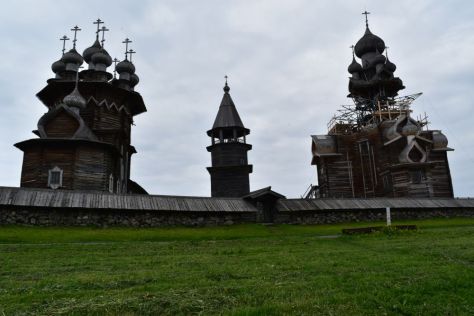
The Transfiguration Church (the 22 dome church now under renovation, Verklärungskirche) and the Intercession Church (Mariä Schutzkirche) are surrounded by a wall. We have bought a pretty booklet that translates Intercession or “Покровская”  with “Maria Deckung Kirche”.  Both churches are from the 18th century. The walls are made from pine wood (сосна, Kiefer) and the domes from aspen (осина, Espe). The aspen domes shine in the sun, as if they were made from silver.
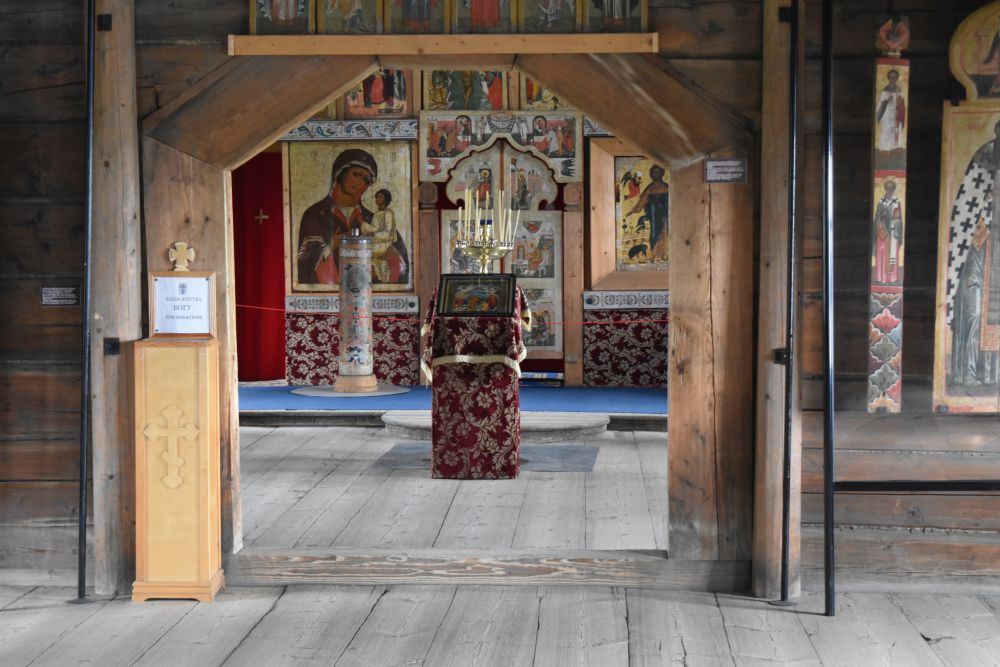
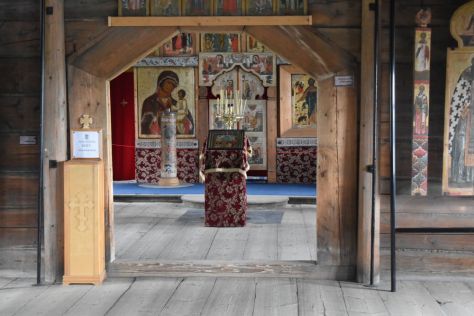
The Intercession church can be visited. It consists of three consecutive rooms. This is the view of the iconostasis, as seen from the second room.
The Transfiguration and the Intercession churches have always been the main churches for the area, whereby the latter can be heated in winter.

Around the churches of Transfiguration and Intercession, we find a museum of wooden houses, barns and wind mills as well as more wooden churches brought to Kizhi.

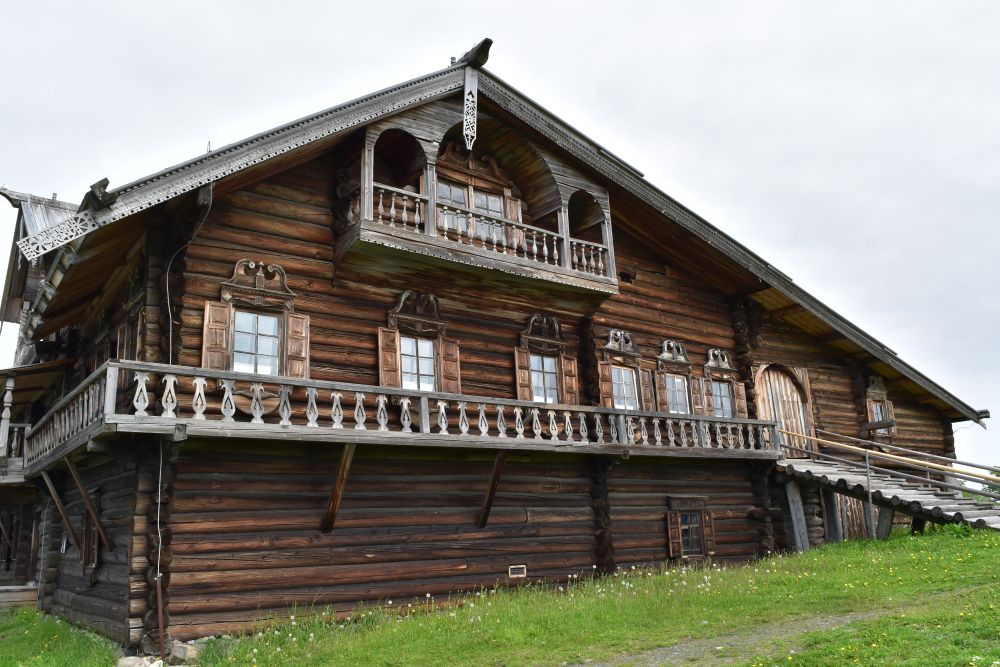
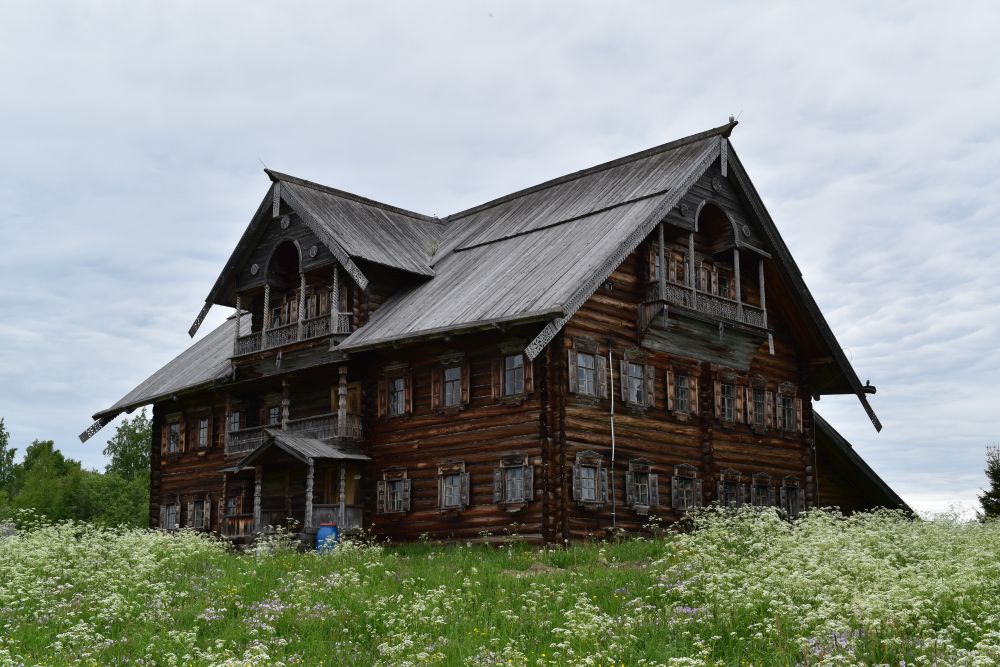
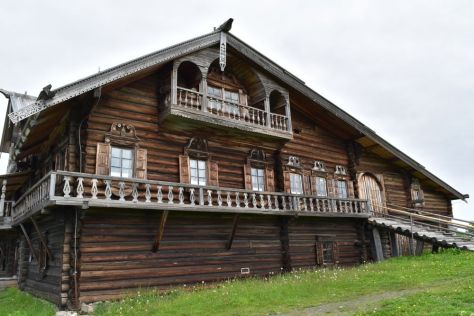
This is the farmer’s house of Oschewnewo (Ошевнего).
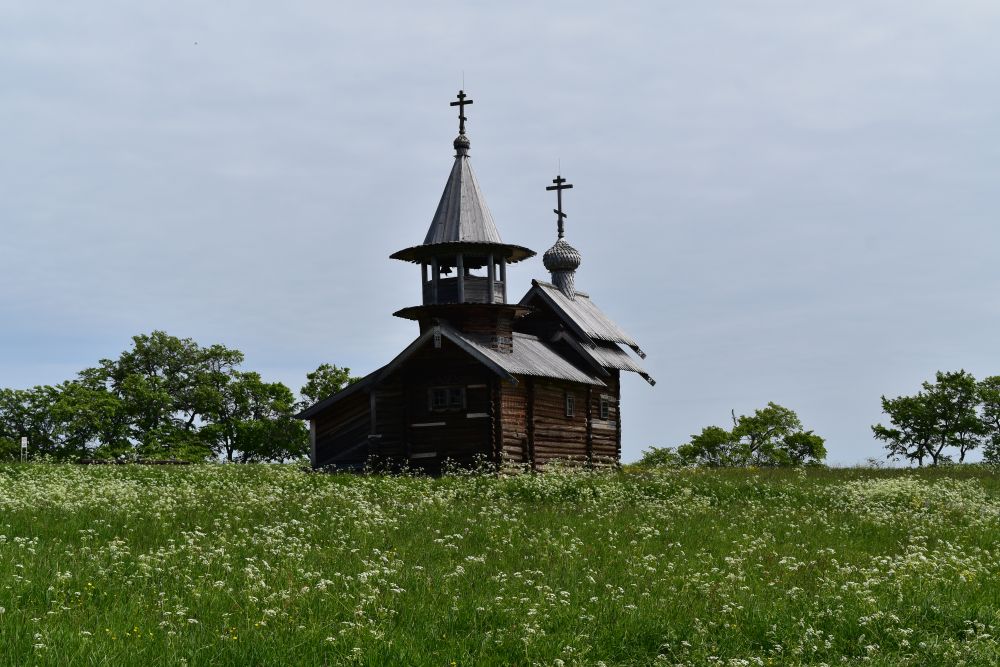
This is the church of Archangel Michael amidst cuckoo flowers.
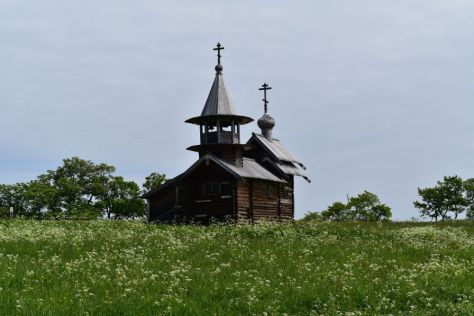
The church of Lazarus is from the 14th century. It is the oldest church in the Kizhi museum.
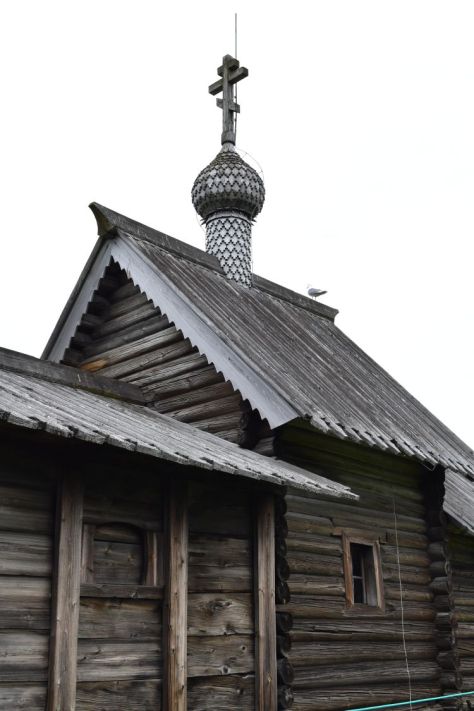
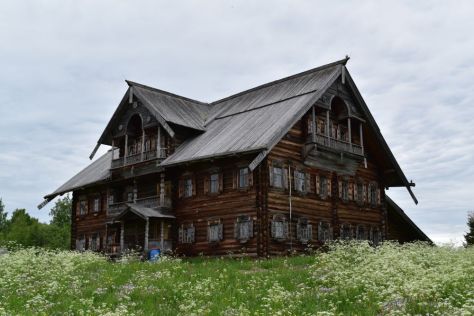
The island Kizhi is not only a museum, but also a “normal” island with “normal” villages where people live in their wooden houses. Kizhi was one of the places where the Old Believers (Raskolniki, расколники)) retreated after the Orthodox schism of the 17th century. This is a beautiful house in the village Vasiljewo (Васильего).
After a long day walking on the island Kizhi, we return to our friendly guest house Blagodat or Grace. We get up at 2 a.m. in the middle of the night and take pictures.

On our last day our host takes us for a two hour boat trip to visit six more churches and three more villages. This is the chapel of Peter and Paul in Volkostrov (часовня Петра и Павла в Волкострове).
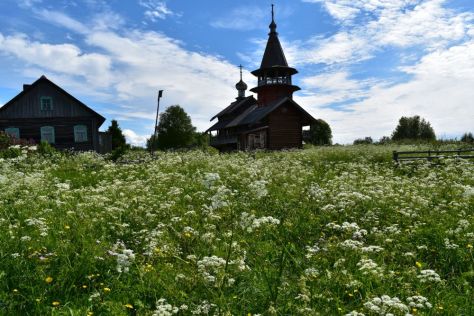
This is the chapel of the Three Saints on Kizhi (Часовня Трёх Святителей, on the other far end of the island).

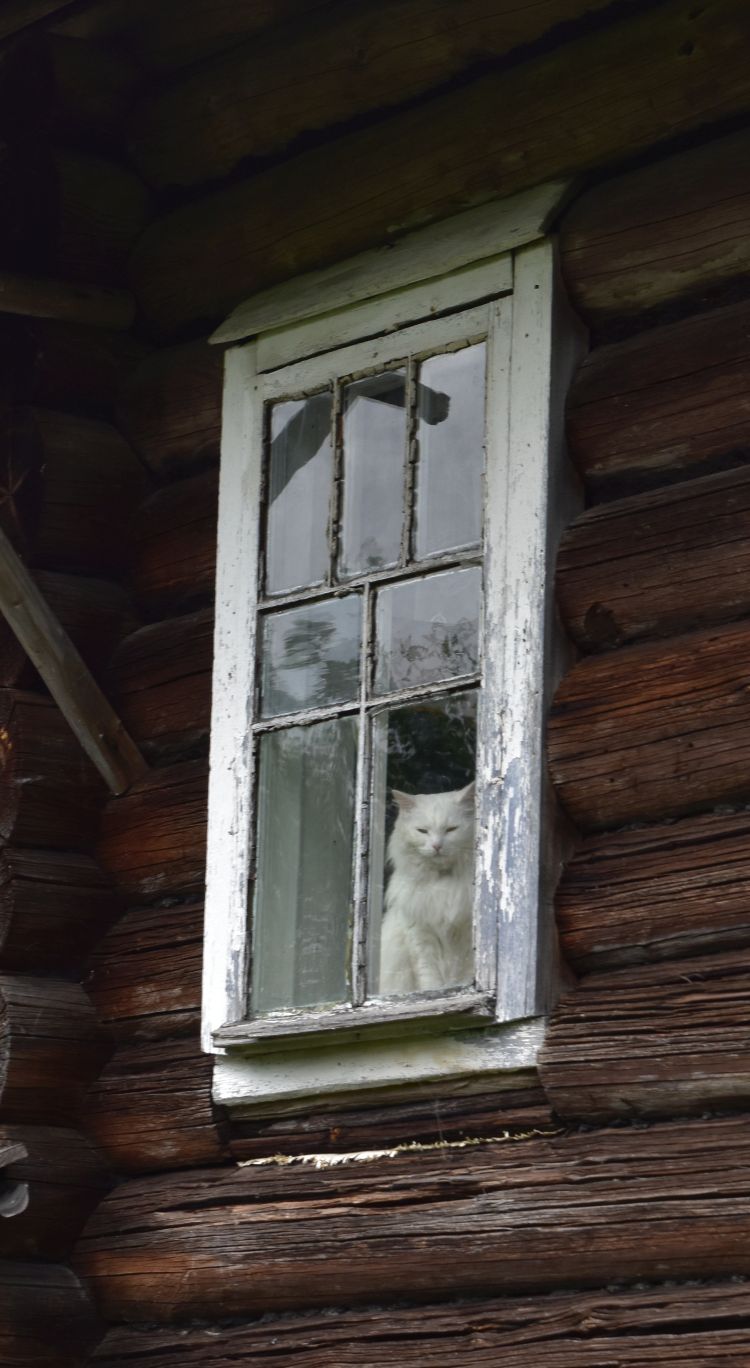
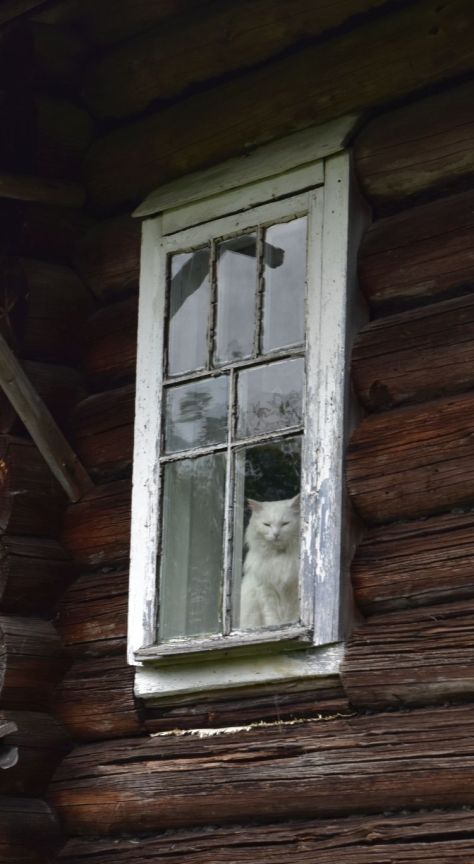
We learn that only few people still live in these villages for the whole year. Most houses now belong to people from the town. They use them as their datschas. In Vorobji (Воробьи), we say hello to this small white cat and have a chat with the owner of the house.
In the afternoon we take the hydrofoil back to Petrosavodsk and at six (precisely on time) our express train leaves for Saint Petersburg.

The extended Karelian forests and some villages and small towns fly by the window. At eleven the train arrives – as planned – in Saint Petersburg. We take great memories with us from our excursion to Kizhi, though we may have to return, when the 22 domes of the wooden Transfiguration church are back in place…


Back to St. Petersburg – shopping and relaxing

Culture – so much culture in Saint Petersburg. We could not get enough of it – and from time to time we had to relax. And Petersburg is also great for that.

.

Enjoying the Newsky Prospekt – the heart beat of Petersburg

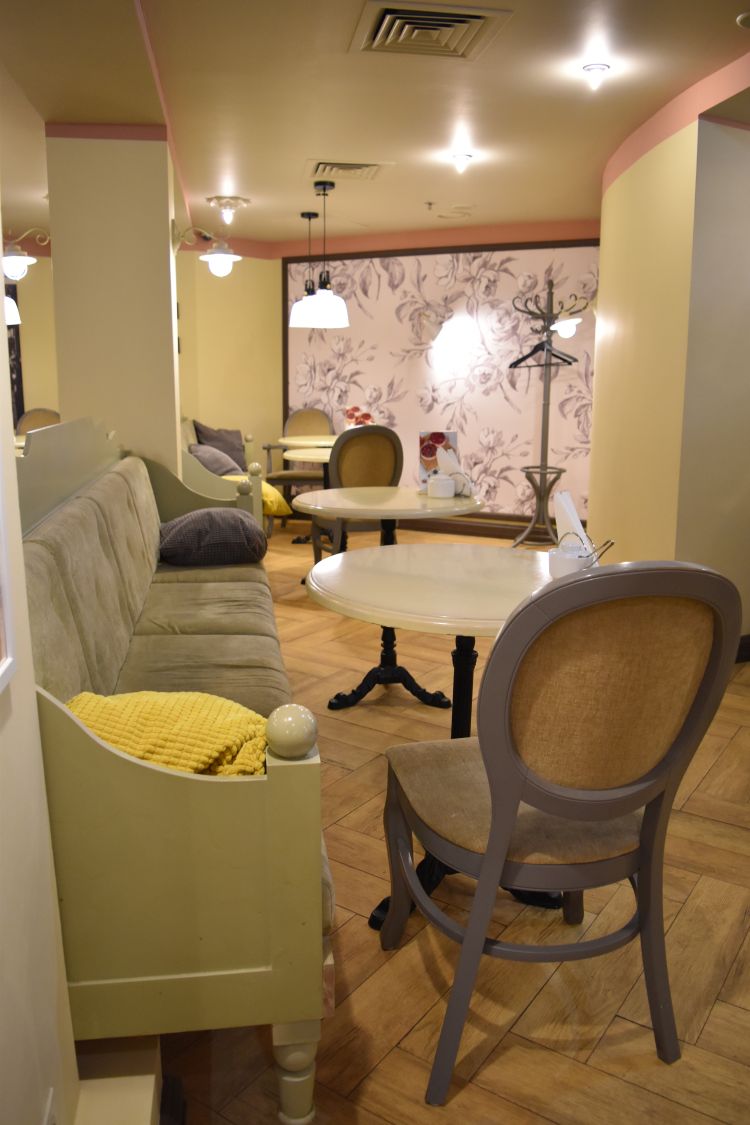
We return to the Newsky Prospekt again and again, enjoying breaks in one of the many coffee houses while admiring the Russian ladies walk elegantly on their high “pencil” heals.

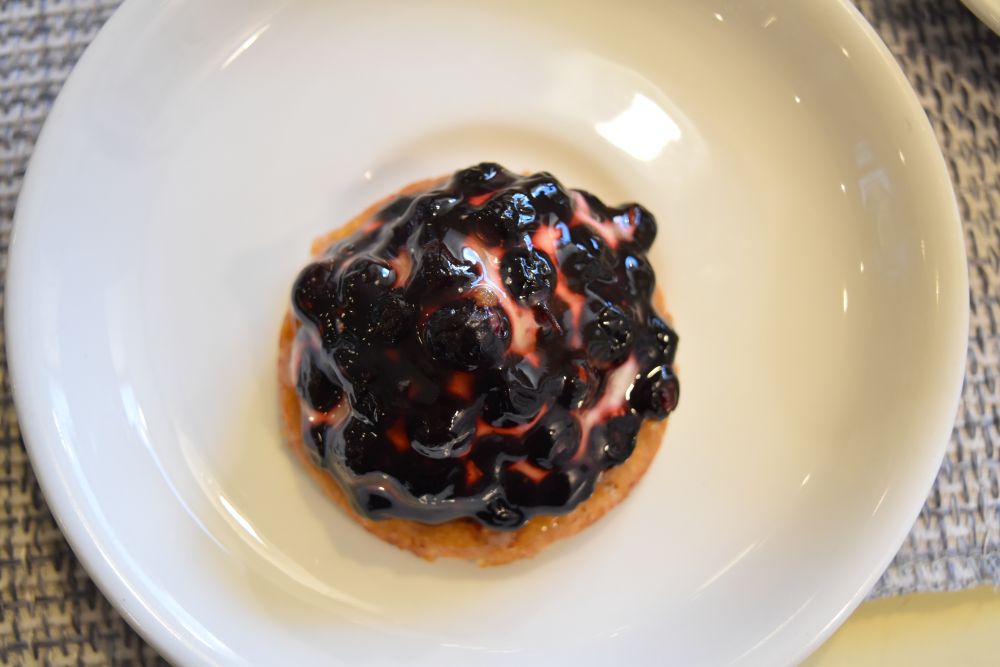
This was the Volkonsky restaurant where I had an excellent okroschka (cucumber soup on kefir, also served on kwas) and blackberries on fresh cheese on a bisquit – easy to prepare and delicious. Ideas to take home!

We also had an excellent ice cream in the posh hotel Europe (at normal prices). Wherever we stopped we enjoyed the atmosphere, the meals, the desserts, the coffee and the service.

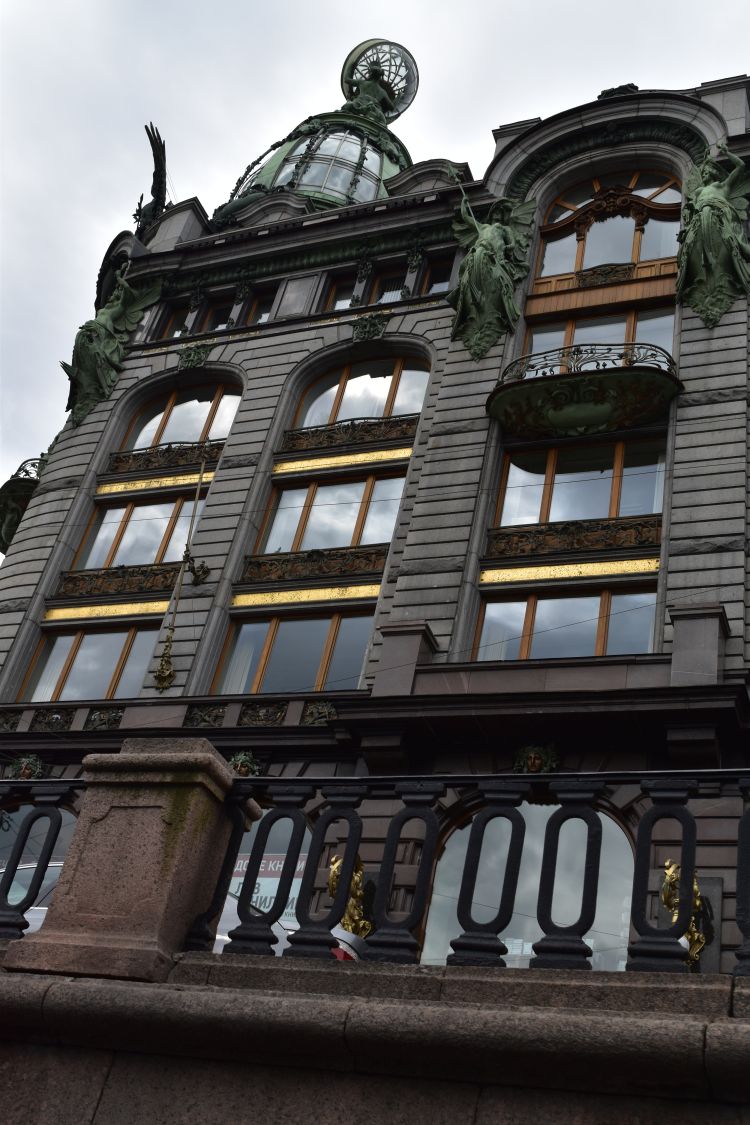
The Gostiny Dvor is the traditional department store originating from the late 18th century. It consists of a gallery of shops arranged around a triangular court yard. This “guest court” is an interesting neoclassical building. However, we find empty shops, high prices and unmotivated shop assistants. Also the Dom Knigi has changed. What a pity for this nice art nouveau building.

However, there are many excellent smaller and bigger shops at and near Newsky Prospect.

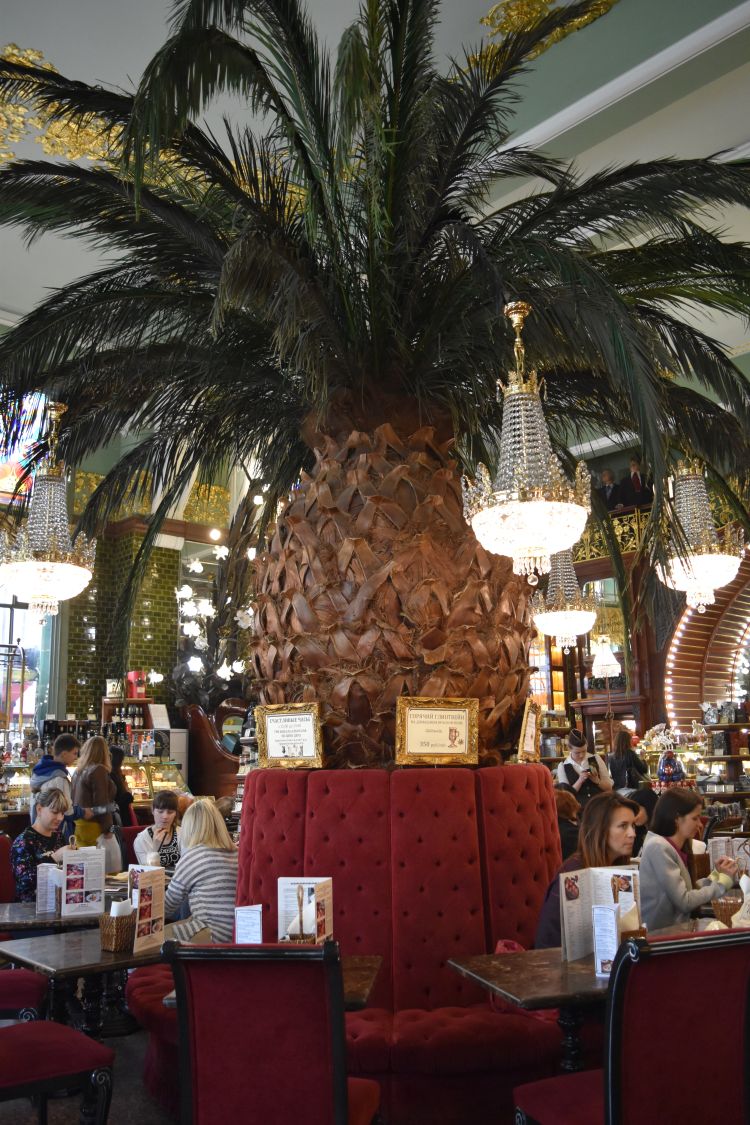
A great address for gourmet gifts is the beautifully decorated Jelissejew shop where we buy delicious date confectionaries for our friends. Russians love pralines.

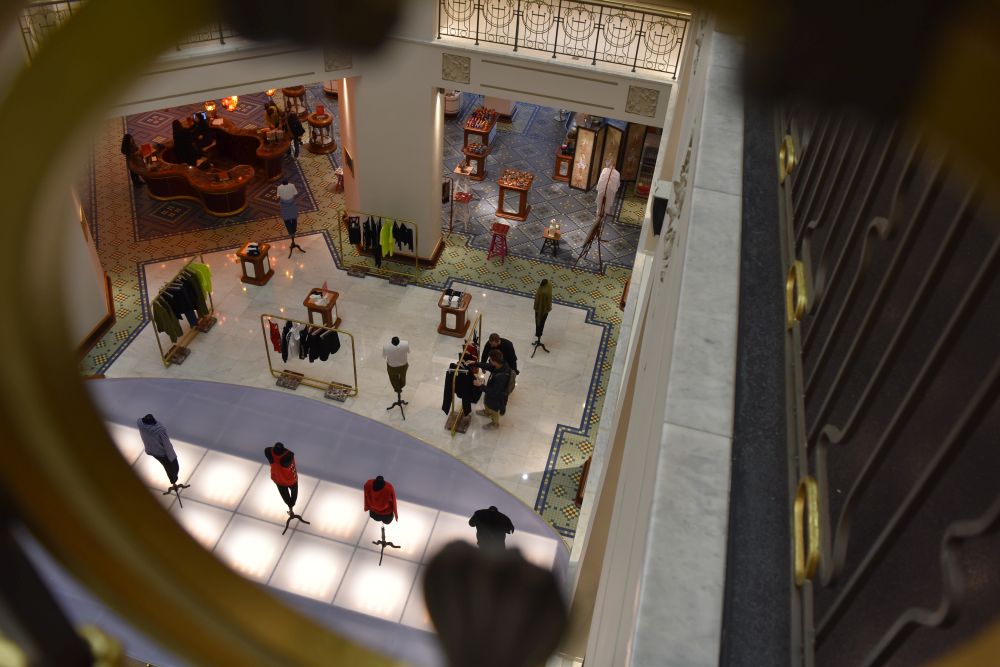
We very much liked the department store “Au Pont Rouge”. It has recently been renovated celebrating now its 110 years amniversary. It is luxury store overlooking the red bridge of the channel Moika.

This is what it looks like inside.

Here we try some wonderfully designed dresses supported by a very, very friendly shop assistant. Without buying anything we savour the atmosphere and dream wearing the design dresses. Some designs are of Russian origin.

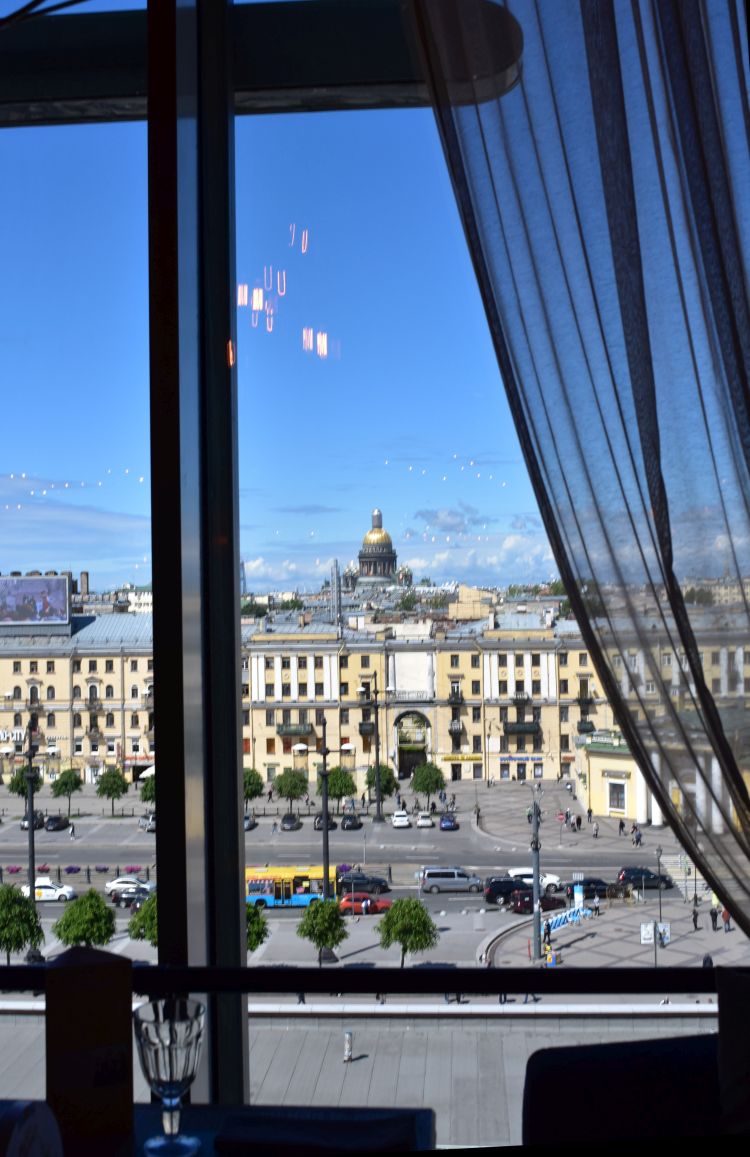
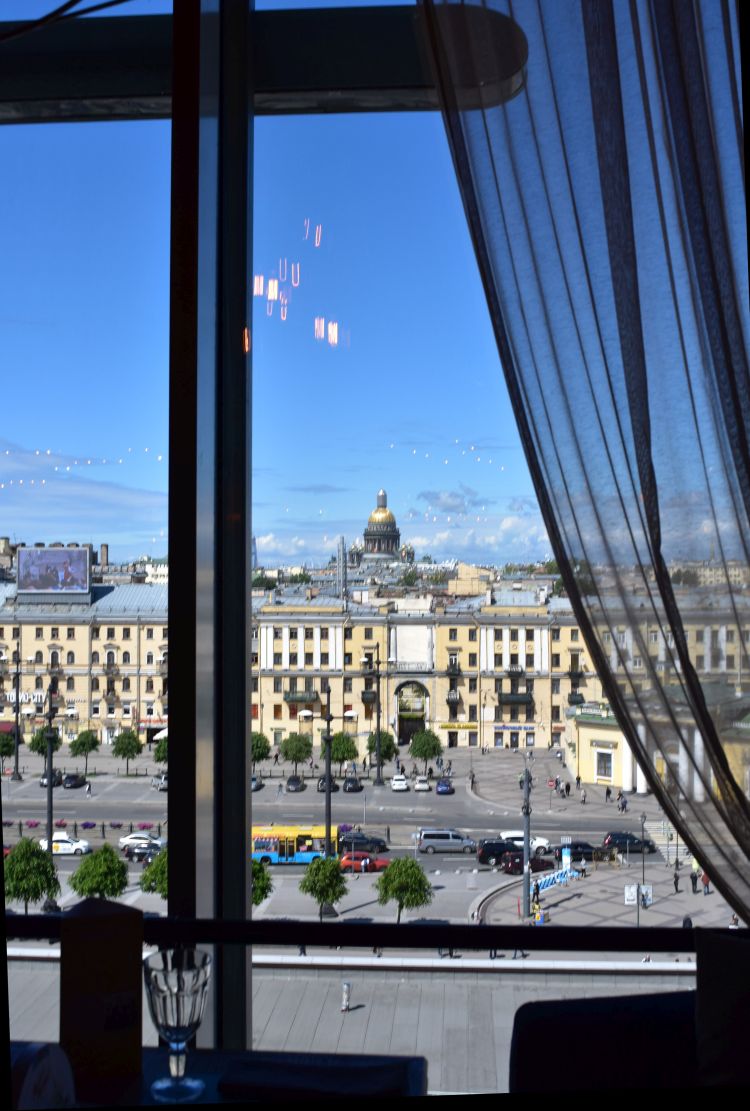
Not far from the Au Pont Rouge, we find a great outlet shop where we buy an elegant jacket for Ursula. In the Pik overlooking Sennaja Ploschtschad we buy a nice jacket for me – ice rosa – and we have lunch in the restaurant on the top floor with a great view of the city.


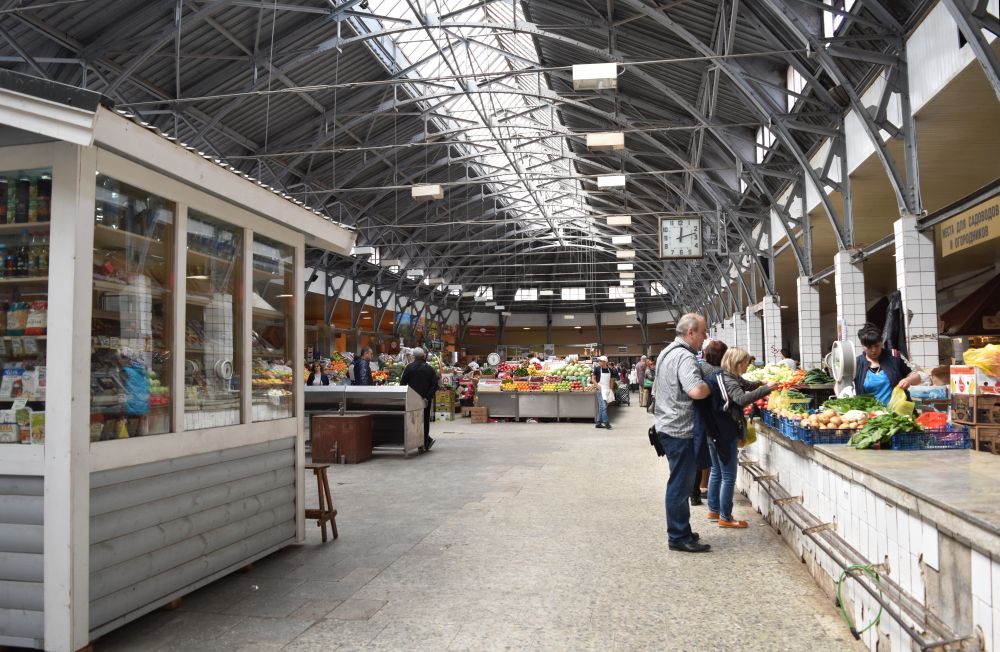
Shopping is also great in the Kuznechny Market. Fruit, vegetables, meat and also antiques as well as Russian souvenirs at reasonable prices.

Here we buy gifts to take home, for instance potholders with tasteful Matrjoschki patched on to them. And from the food stalls we acquire dates, tea and chocolate.

.

Relaxing in the many parks forming green lungs of Saint Petersburg

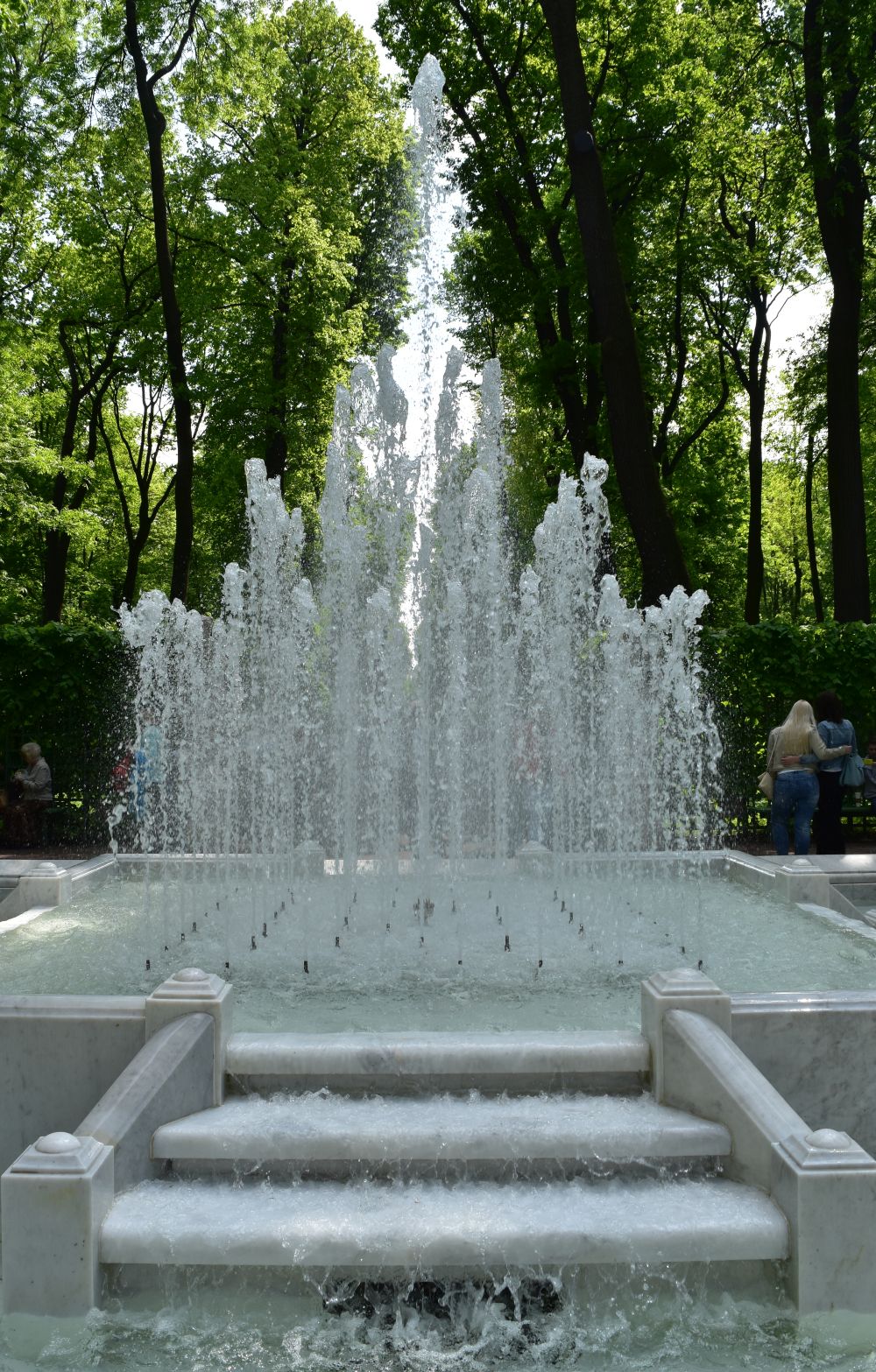
There are many relaxing parks in Petersburg. On a sunny Sunday we visited the wonderfully restored Summer Garden with its fountains. The cosy pavillons offer coffee, sweets and small dishes.

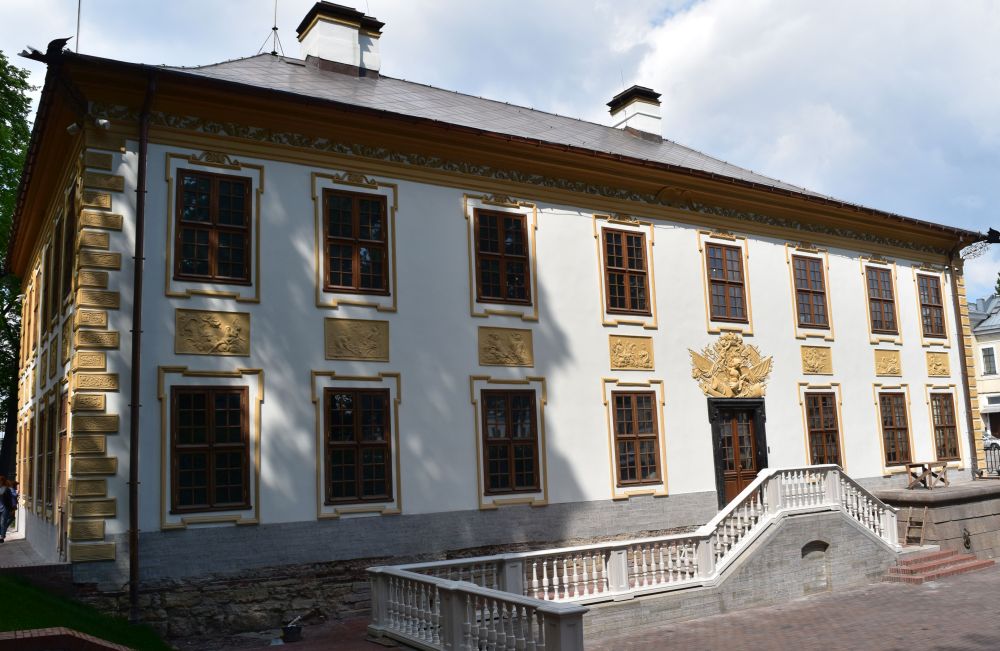
The small castle is under renovation. Peter the Great had again asked the Swiss baroque architect Trezzini to design this castle.

Particularly famous is the fence from the late 18th century – this is a detail of it.

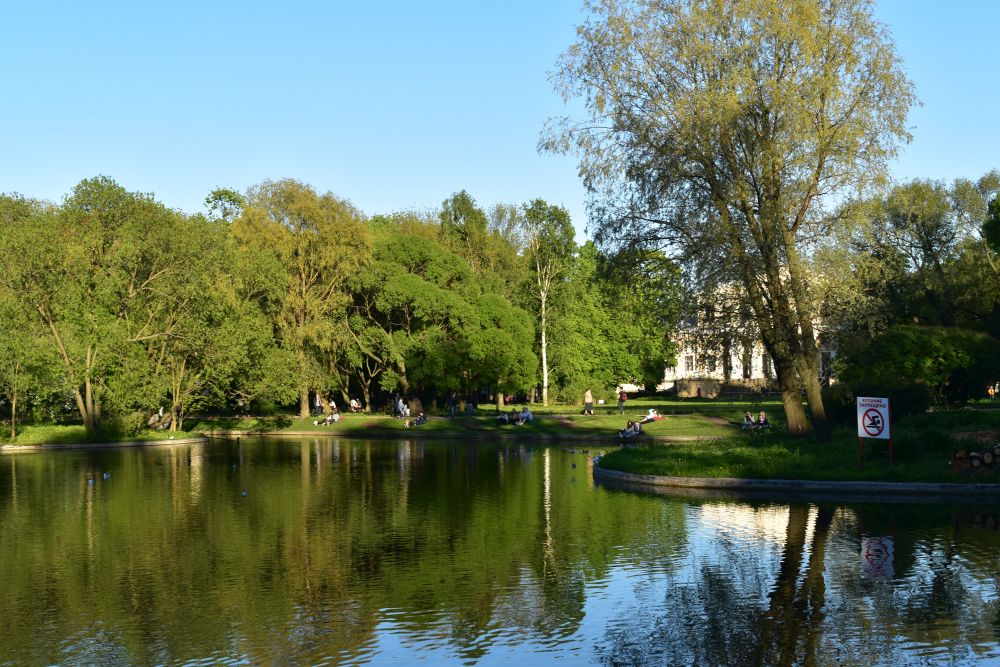
Another garden we liked was the Jelagin Park in the far north of Saint Petersburg. The neoclassical castle has been designed by Carlo Rossi.

It was a warm and sunny day, when we strolled around the park meeting friends with their daughters. We were amidst many citizens from Petersburg that enjoyed the garden with the ponds and the Newa river.

Jelagin and later the zars must have enjoyed it here on their island that is just ONE large garden surrounding one palace and a pavillon with another excellent restaurant.

The Jussupow park is not far from our apartment – a great evening walk.

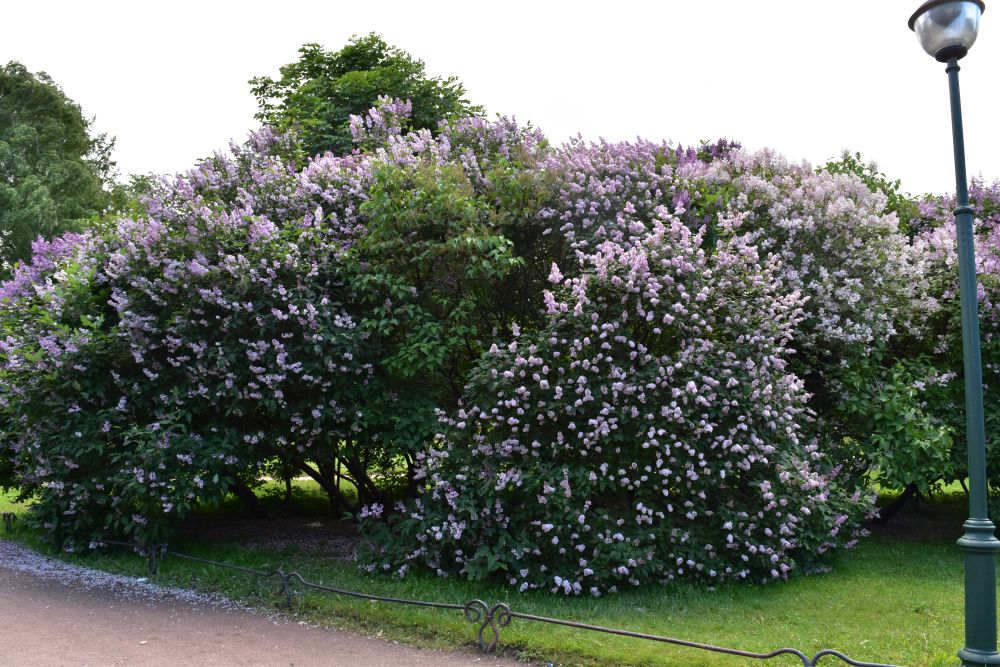
On our way to the Smolny Cathedral we take a rest in the Tauride Gardens. Syringa bushes are now in bloom in Saint Petersburg – it is a late spring.


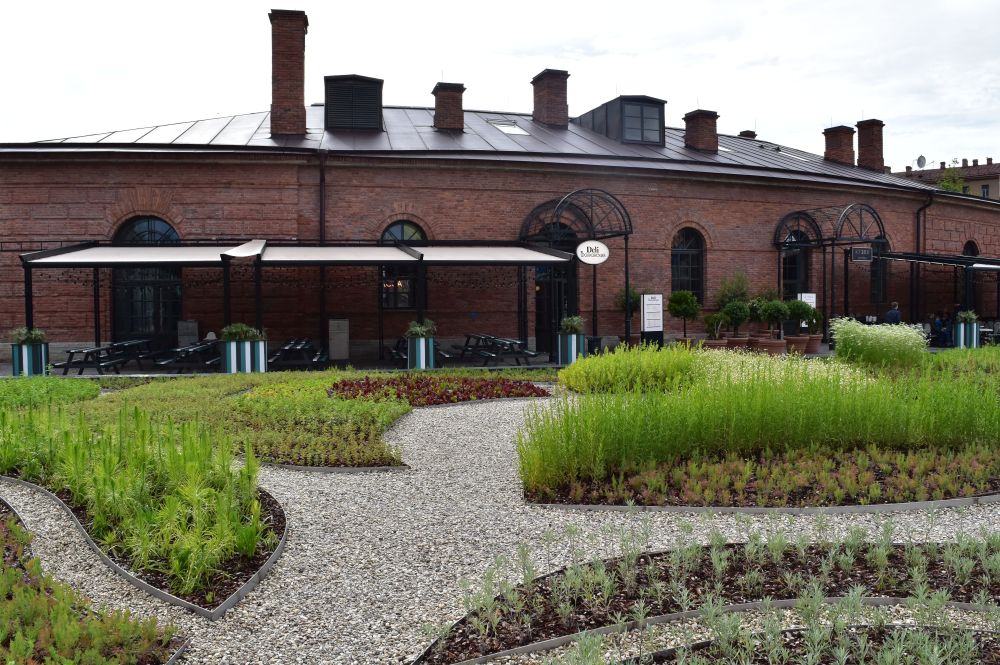
In New Holland we find beautiful herb gardens. We escape the pouring rain for a coffee in the friendly restaurant Deli. Soon the rain stops and we stroll around the island.

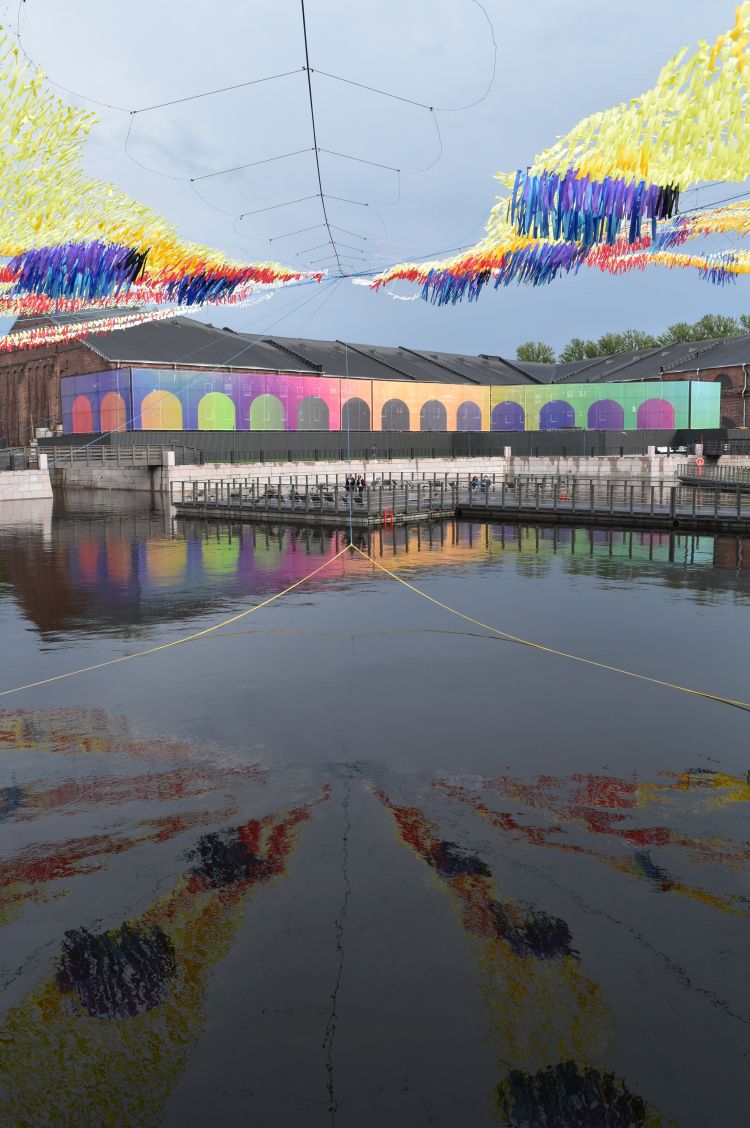
Peter the Great had built New Holland to store the wood needed for his navy. The buildings are now being renovated, nicely hidden behind curtains.

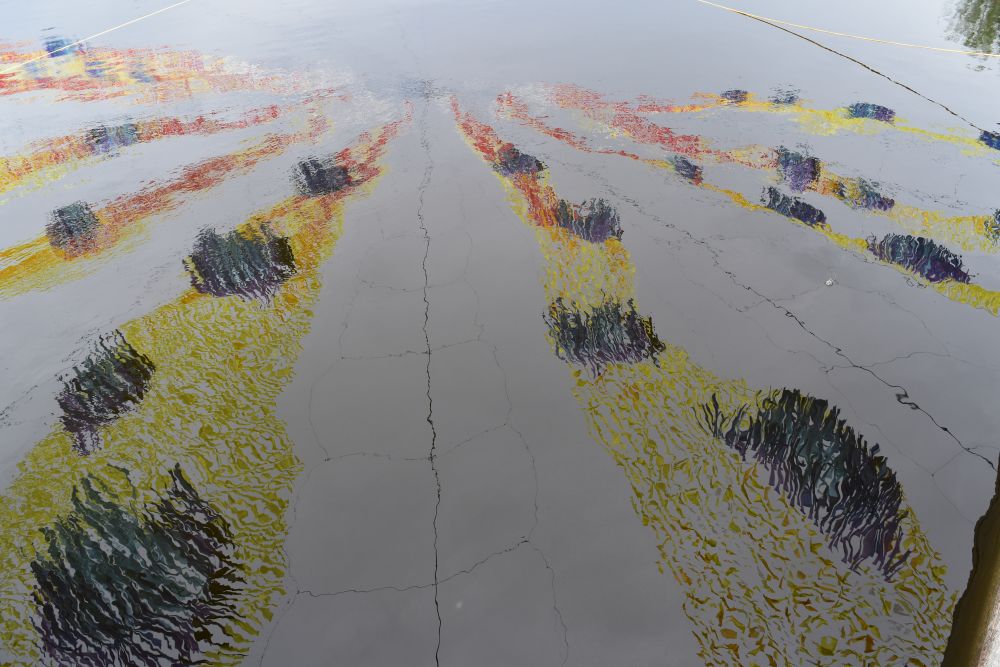
The hanging structure reflects in the pond.

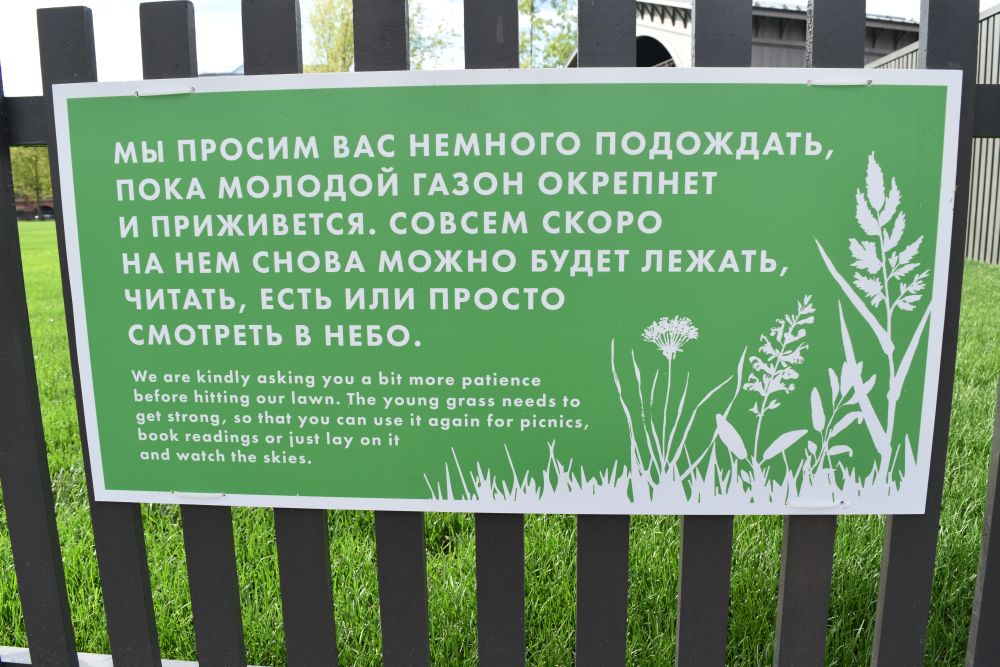
And with the twinkling of an eye, visitors are asked to wait a bit, before stepping on to the freshly sown meadow. The grass has to grow first and strengthen – but very soon visitors will be allowed again to lie on the grass, read, eat or simply look into the sky.

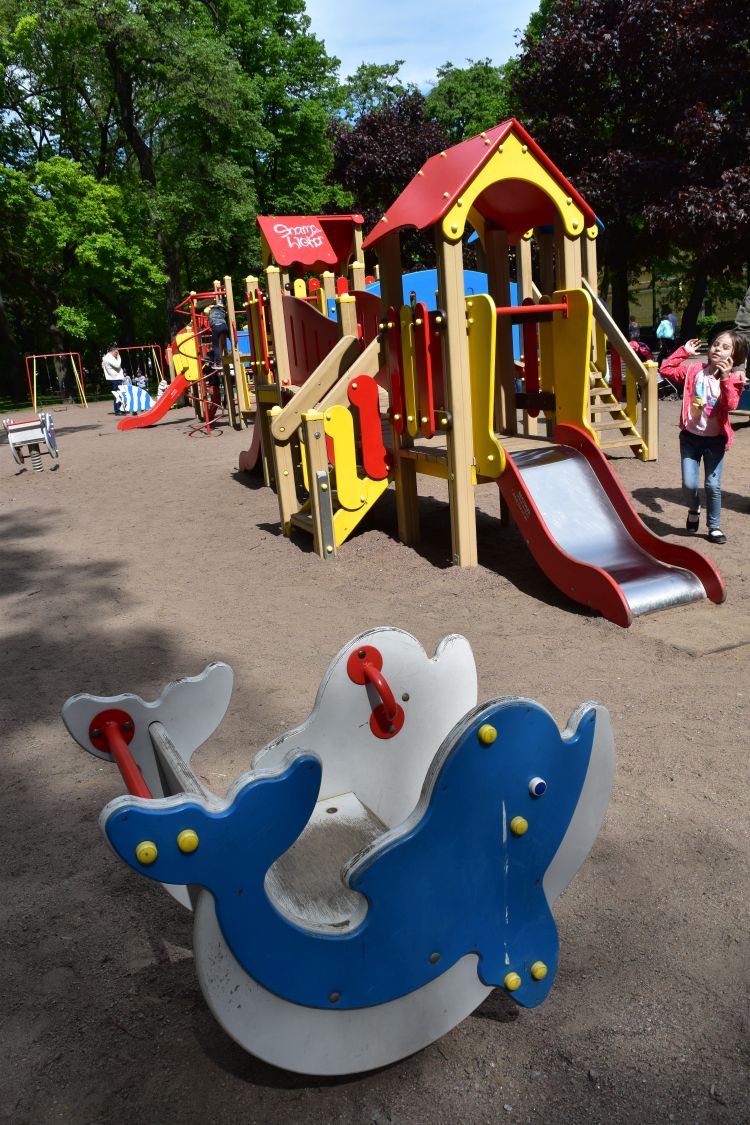
The parks are also kids friendly. Eating a standard ice cream in the waffle coup we join the kids playing in the Alexander Gardens behind the Isaac’s cathedral.

Yes, there are many parks, small restaurants and shops to relax in Saint Petersburg – and to be ready again to absorb the culture offered in this town.


On the road back to Saint Petersburg – welcoming the roots of this lively city

In June 2017, we are on the road again, this time to Saint Petersburg. It is my fourth time in Saint Petersburg. We live in a small appartment, about ten minutes away from the Isaac Cathedral. It is a cosy appartment with high ceilings.

There is a lot to see in Saint Petersburg: The palaces, the museums, the Newsky Prospect, the Newa and the channels, the cathedrals and the monasteries. But Saint Peterburg can also be a relaxing experience with great shops, many cosy coffee houses, restaurants and beautiful parks. Since my last stay in Petersburg in 2013, I perceive that the city has become cleaner and many more houses have been renovated.

.

Welcoming Petersburg at the Newa water line with the Winter Palace and Ermitage

From the Peter and Paul Fortress, there is a great view of the Winter Palace and the Ermitage bordering the Newa.

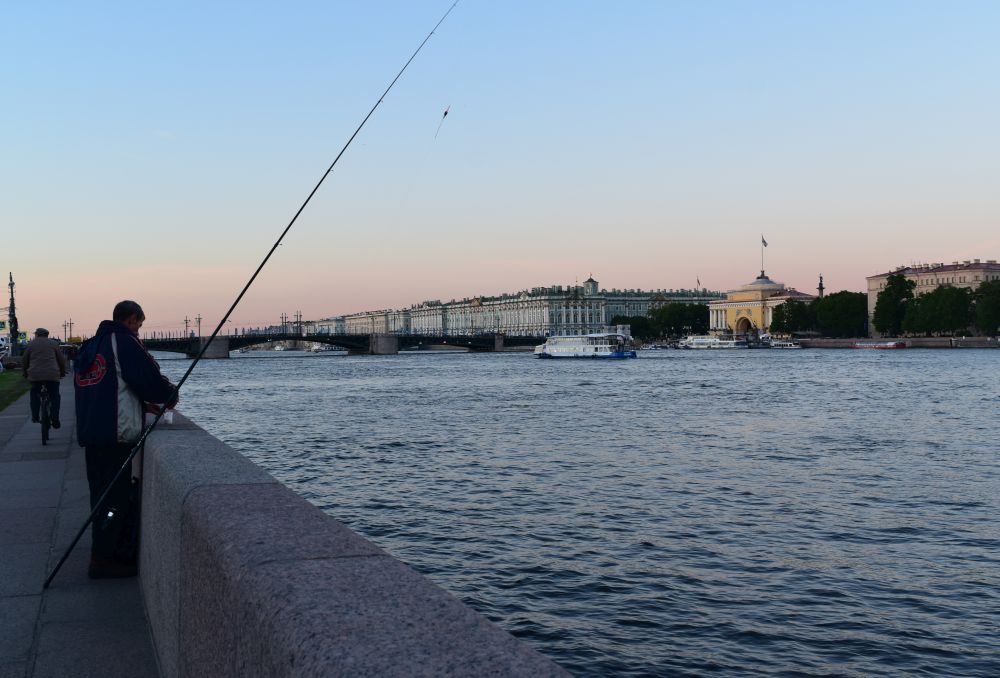
It is the time of White Nights… late in the evening around eleven, it is almost day light. This is the late evening view from Vasilyevsky island.

And yes, Russians love to do fishing (they call it рыбалка or rybalka).

.

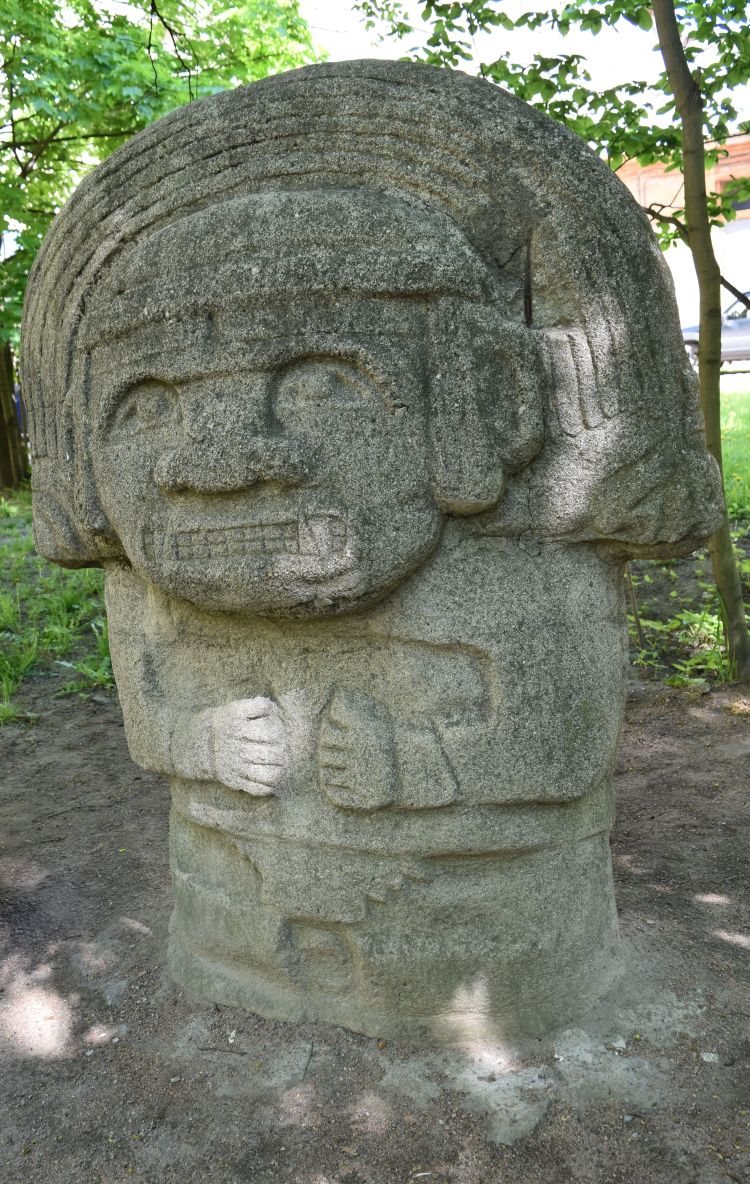
Welcoming Petersburg in the small park with the Aztecan Gods: Tlaloc, please abstain from bringing rain…

Not far from Strelka, there is a small park with Aztecan Gods. We ask them to abstain from bringing showers that can be a a very wet experience in Petersburg.

Well… thank you, Tlaloc, you produced good weather for our excursions. And sometimes you caught us in heavy rain showers.

In Petersburg, the clouds open suddenly and pour water on to the roofs and streets. The roofs cannot hold it back and the drains dump water on to the sidewalks. The result are deep puddles that pedestrians have to jump across. A “Petersburgian” shower makes everyone wet through within five minutes.

.

Back to the roots of Russia: Alexander Newsky

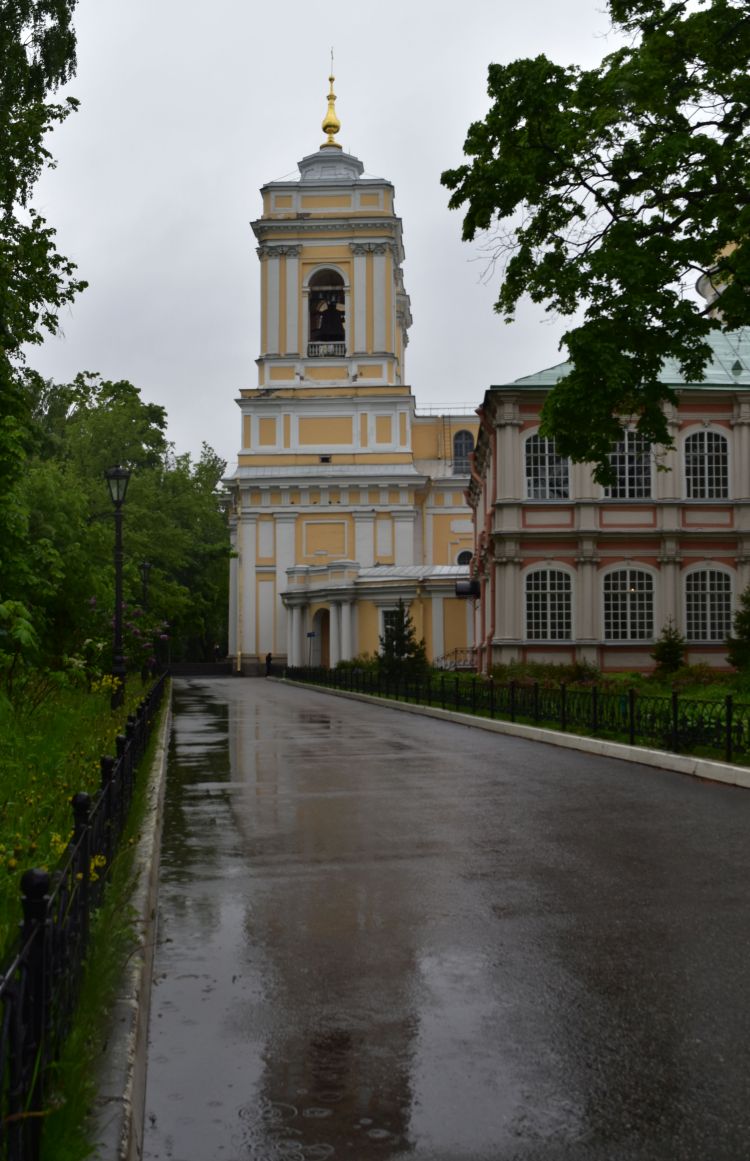
The Newsky Prospect starts at the Alexander Newsky Monastery (one of the five most important orthodox monasteries called “Lavra” or лавра). We visited it in the pouring rain.

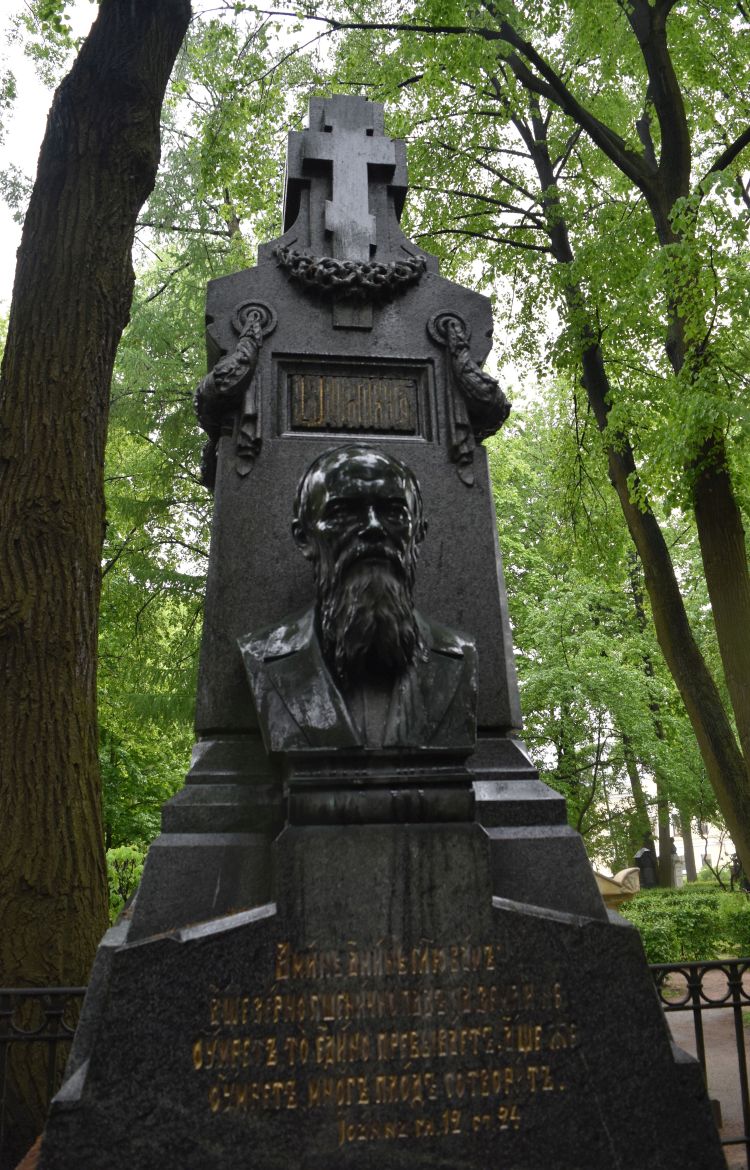
For Novgorod, Alexander conquered Karelia from Sweden in 1240. The battle took place on the Newa, hence his name “Newsky”. Peter the Great felt related with Alexander Newsky, as he regained Karelia from Sweden. He asked Trezzini from Switzerland to build the monastery in Barock style. Starow, a Russian architect, completed the monastery in classical style. There are two cemeteries and Dostoewsky has been buried here.

.

The Hare Island where Peter the Great set the foundation of Petersburg

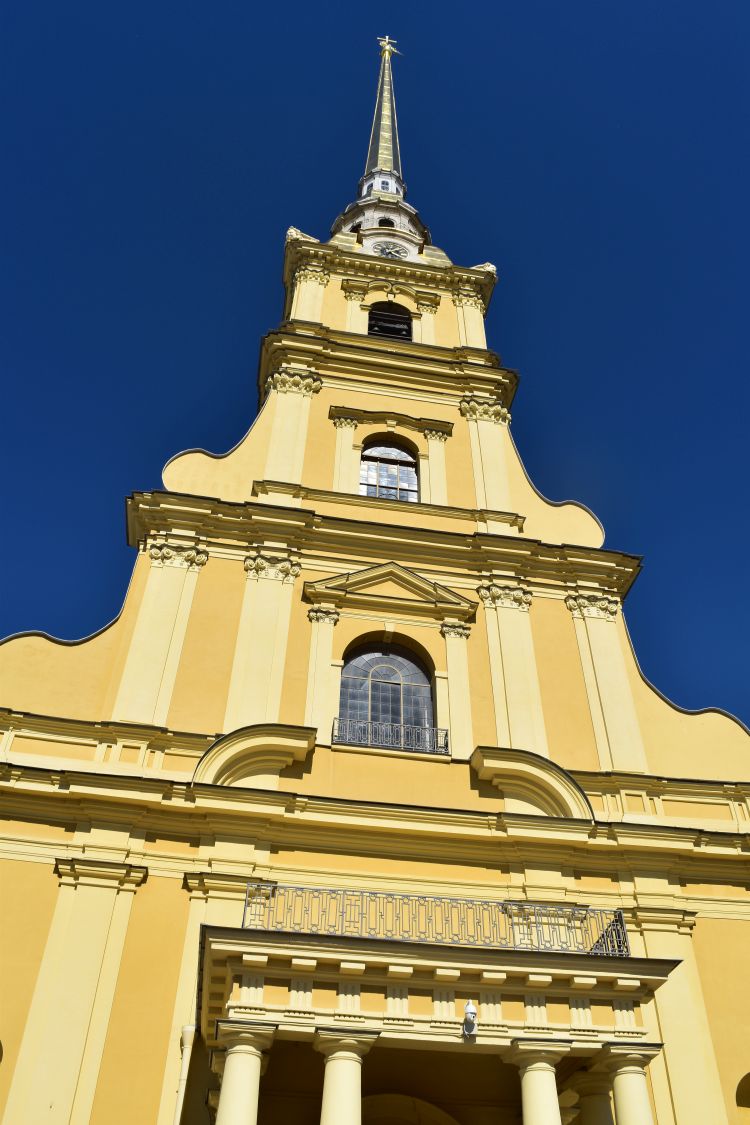
In 1703, Peter the Great started to build Saint Petersburg on the Hare Island fortifying it with the Peter and Paul Fortress. We stroll along the fortress and visit the Saint Peter and Paul church that – like the monastery of Alexander Newsky – has been designed by the Swiss architect Trezzini.

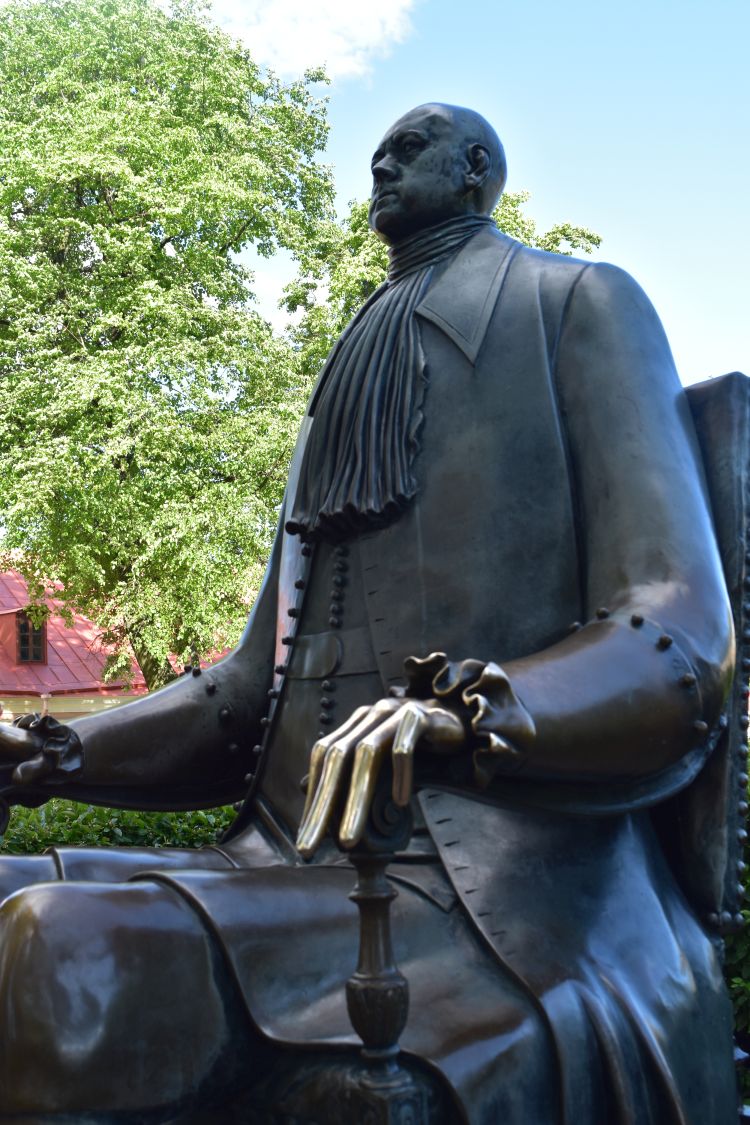
The grave of Peter the Great is decorated with flowers. Outside we find his bronze statue. It has been created by Michail Schemjakin and it is controversial, because it shows Peter the Great as a tall man with a small head (he was more than 2m tall and his head was, indeed, relatively small).

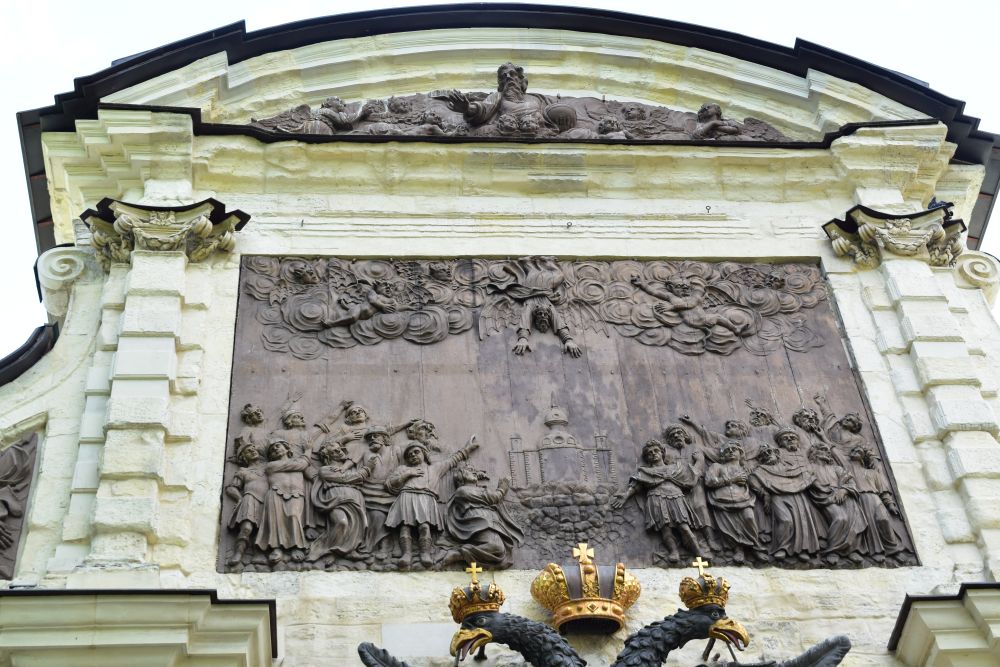
Well whatever… Peter was a man with visions and without him, Russia would not be Russia today. At the entrance gate, a wood carved panel praises his victory over the Swedes that provided Russia with access to the Gulf of Finland. It links Peter’s success with the victory of Petrus over Simon.

.

My own roots or links to Saint Petersburg – memories of my friend Anna who grew up in Leningrad

My year-long Russian teacher, Anna, had grown up in Saint Petersburg, when it was still called Leningrad. That is why I also have links with the city.

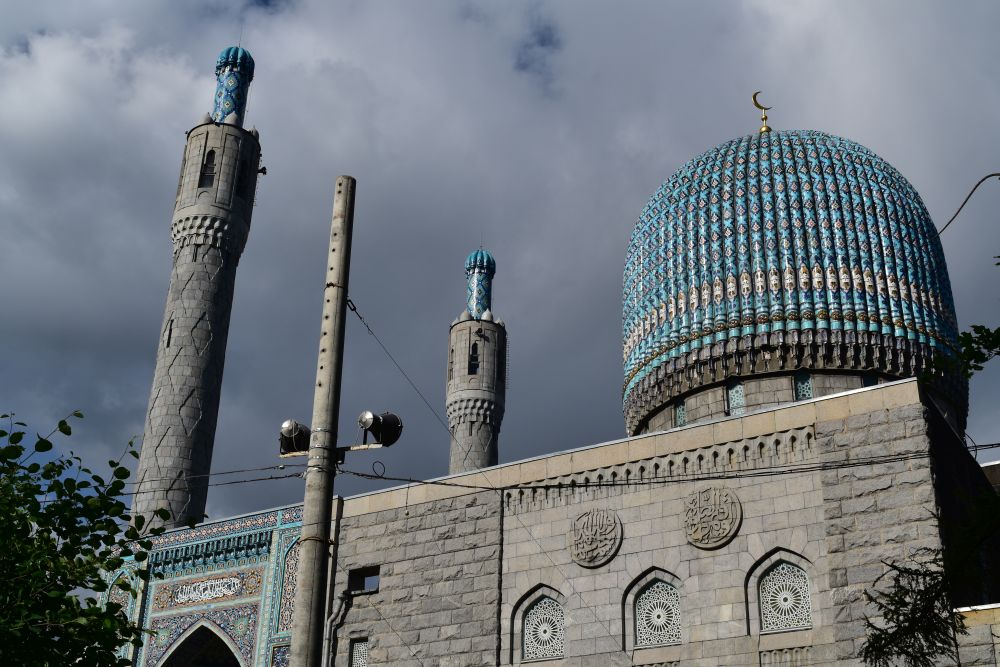
The first link is related with the mosque located near the Fortress of Saint Peter and Paul. It has been built in the beginning of the 20th century – to resemble the mosque of Samarkand. Anna’s grandfather, Vaulin, had made the blue tiles.

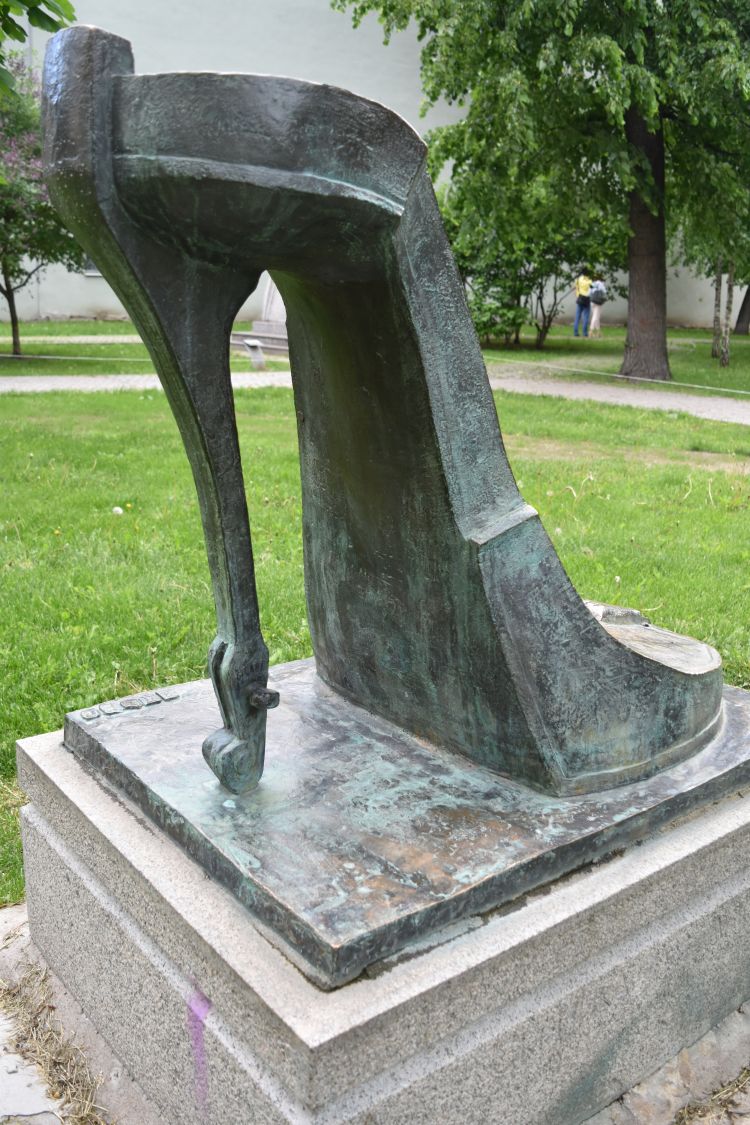
My second link is a little farther north on Kameny Ostrowsky Prospect where Saint Petersburg set up a park for Anna’s cousin Andrej Petrow, a well-known composer in Russia. The park is decorated with humoresque musical instruments such as this violin on high heals.

I wish you were still with me – here in your home town, Anna.

.

So much to see in and around Saint Petersburg – the four weeks we spent here did not suffice

We spent four weeks in Saint Petersburg. We visited the Ermitage, the Russian museum (both several times) and the new Fabergé museum. We explored palaces (such as the palace of Jussupow or the Stroganoff palace). We saw cathedrals and churches such as Smolny and Saint Nicolas Naval. Twice we took a boat on the channels of the city. Twice we went to the Alexandrinsky Theatre where a friend of ours is working as an actor. And then we also enjoyed the shopping experience and on sunny days, we relaxed in one of the many parks of Saint Petersburg.

Attractions around Saint Petersburg that we saw are Peterhof, Puschkin or Zarskoe Selo, Novgorod and Karelia. In Karelia we enjoyed an afternoon in Repino and a day in the datscha of a friend. And we made a three days excursion to see Kizhi and the lake Onega.

Four weeks do not suffice to see it all… yes, Saint Petersburg is worth a visit! I think of going back to Saint Petersburg.

Our main literature sources are: Christine Hamel, “Russland”, Dumont 2011; Marcus X. Schmid, “St. Petersburg”, Michael Müller Verlag 2017; “Russia”, Dorling Kindersley 2016; Lonely Planets for Russia and Saint Petersburg; Vitaly Kulescha, “St. Petersburg Wishes Guidebook”, Piter 2013.


On the road in France visiting some of my favourite castles in the Loire Valley

Some 25 years ago I visited the Loire Valley in France and I enjoyed it so much that now, in April 2017, I went back to see the ONE castle: Chenonceau that has been shaped by six ladies. In addition we explored four other royal castles: Charles VIII’s Amboise, François I’s Chambord, and Louis XII’s Blois. We have selected a room in the small hotel Anne de Bretagne in Blois – close to the Château de Blois and close to the castles we want to visit.

.

Chenonceau – crossing the river Cher with “a certain springing lightness”

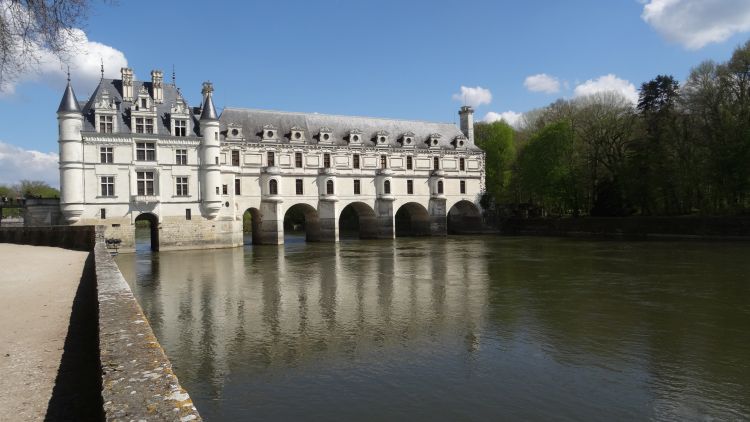
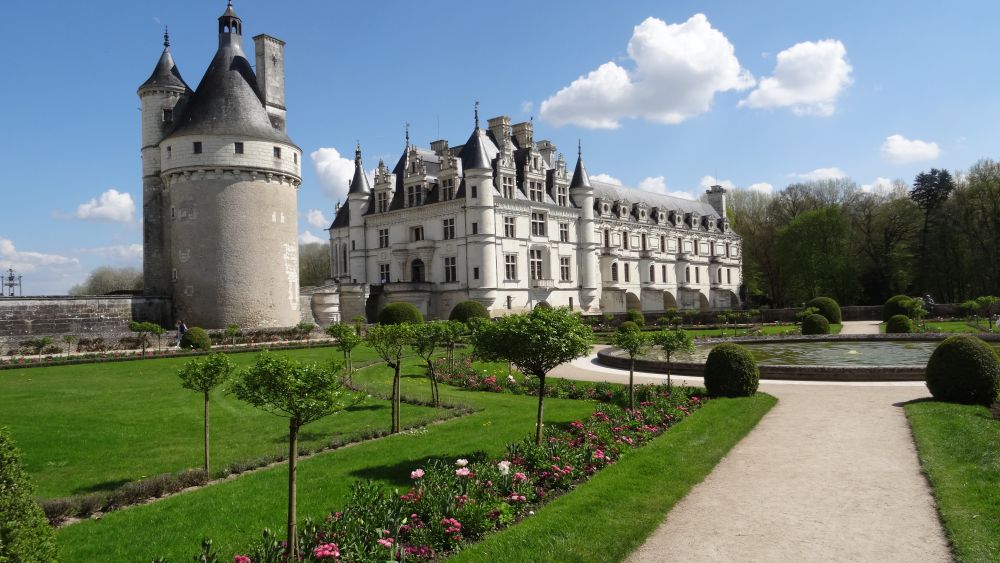
Henry James travelled through France in the 1880’s and he wrote: “Chenonceaux is not large… Henry II., on ascending the throne, presented it… to… Diana of Poitiers…  Catherine de Medici… turned her out of doors… (and) devoted herself to making the place more completely unique…  If a certain springing lightness is the characteristic of Chenonceaux… nothing can confirm this expression better than the strange, unexpected movement with which… it carries itself across the river… the aspect of the whole thing is delightful.” Look at the “certain springing lightness”, as Henry James describes it in his A little tour in France. 
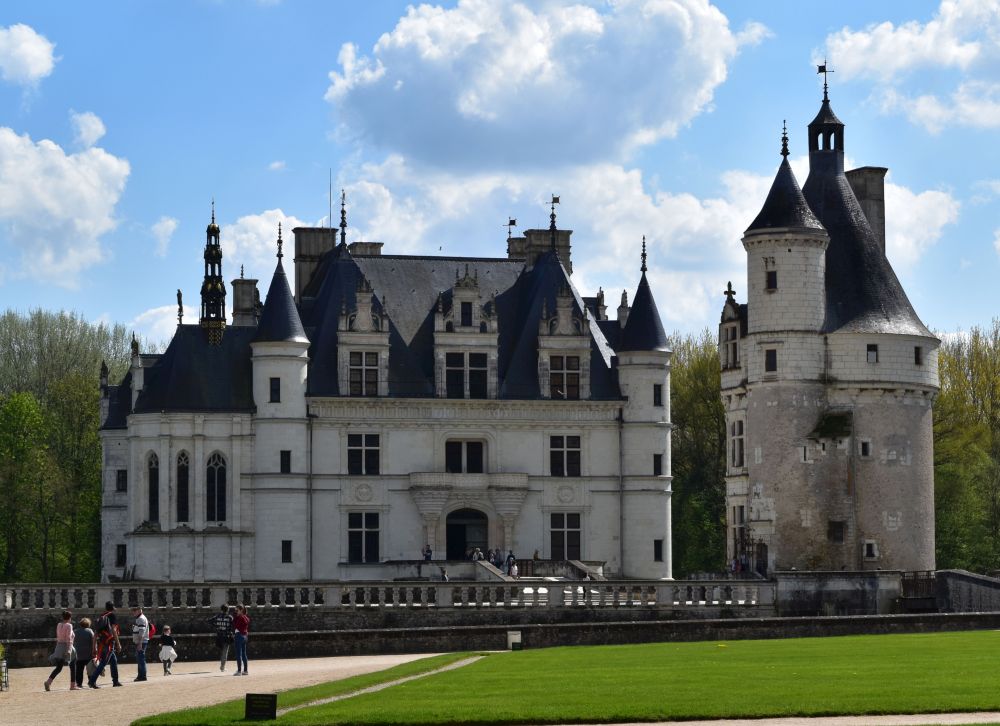
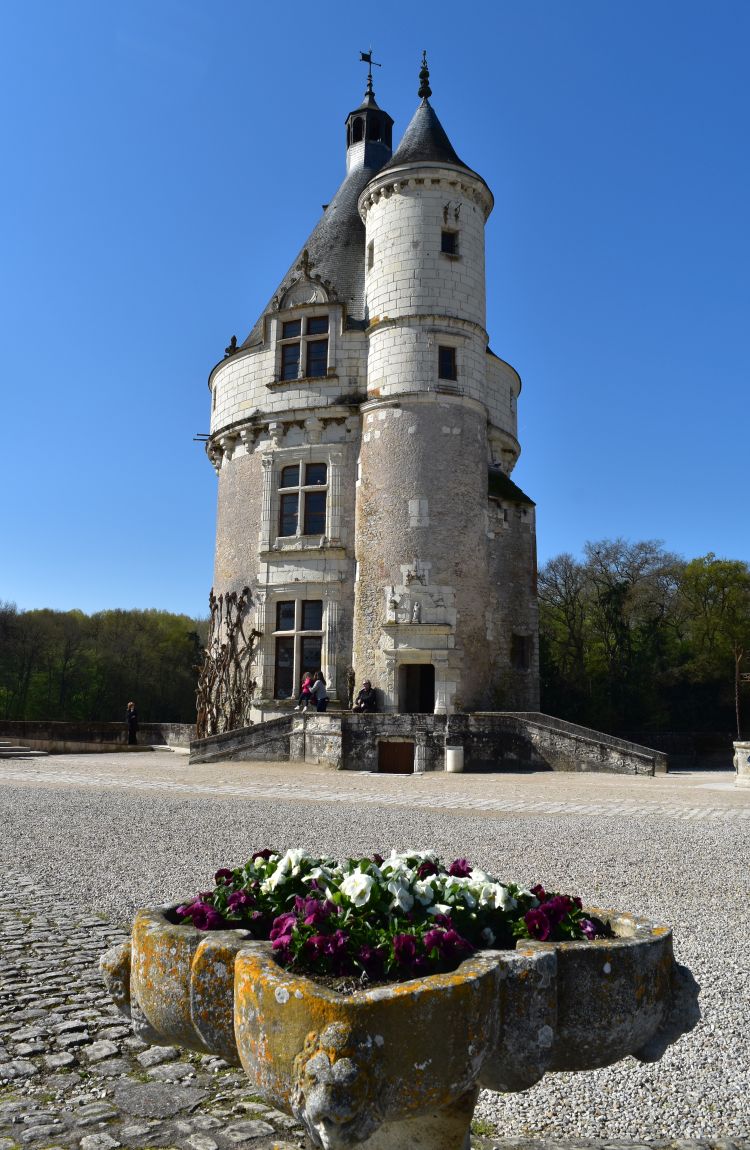
It was the wife of Charles VII’s chamberlain, Tom Bohier, who built the main castle, while leaving the tower of the former mill. Her name was Katherine.

Diane de Potiers then added the bridge, and she set up this garden named after her.

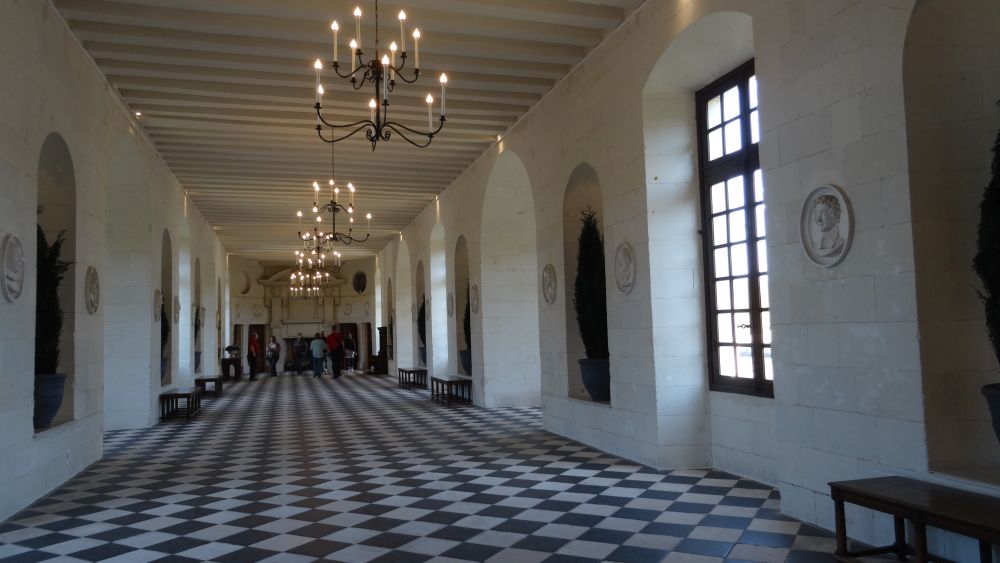
Diane de Poitiers kept herself fit by swimming in the river Cher – she was attractive for king Henry II, though she was 20 years older than him. Diane had to leave Chenonceau, when Henry II died. Catherine de Medici wanted Chenonceau for herself and added the galleries on top of the bridge giving space for some of her festivities:

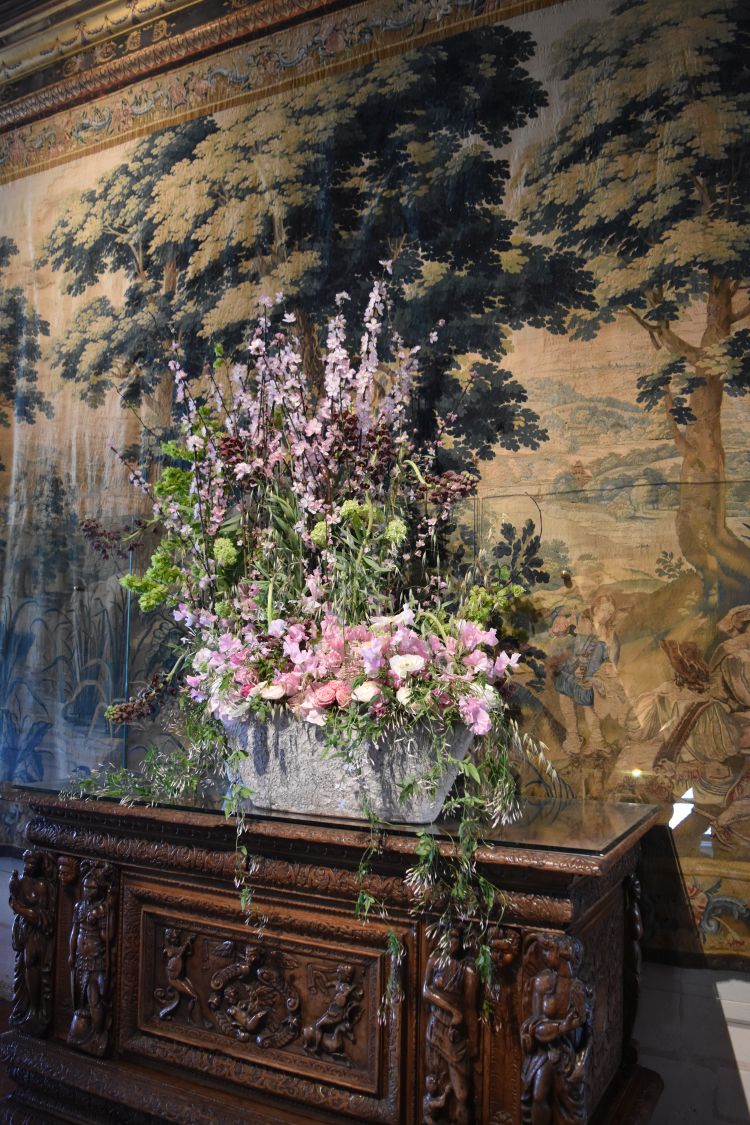
It is worth to visit the castle inside. It is furnished, adorned with tapestry and beautifully decorated with flowers.


The widow if Henry III, Louise de Lorraine, lived here and two more ladies (Mmes Dupin and Pelouze) saved Chenonceau for today. In all it was six ladies shaping Chenonceau.

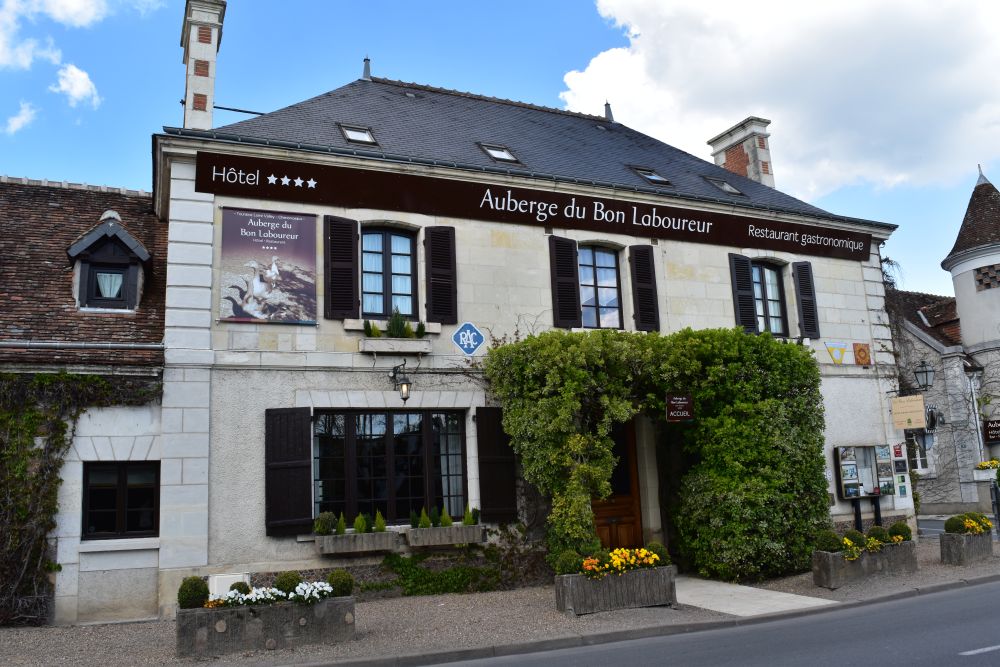
The Auberge du Bon Laboureur is located close to the Château de Chenonceau. Let me quote Henry James from around 1880: “(From Chenonceau) we took our way back to the Bon Laboureur, and waited in the little inn-parlour for a late train to Tours. We were not impatient, for we had an excellent dinner to occupy us; and even after we had dined we were still content to sit awhile and exchange remarks upon the superior civilisation of France. Where else, at a village inn, should we have fared so well? Where else should we have sat down to our refreshment without condescension? … At the little inn at Chenonceaux the cuisine was not only excellent, but the service was graceful. We were waited on by mademoiselle and her mamma;… she uncorked for us a bottle of Vouvray mousseux. We were very comfortable, very genial…” The Bon Laboureur is no longer just a “little inn”, but a four star hotel with all amenities. A long tradition!

Now it was not the right time for us to stop in the “Bon Laboureur”. I remember having had an excellent meal here 25 years ago. Later we enjoyed a nice dinner with local specialties in the Le Castelet in Blois.

.

Charles VIII’s Amboise – a great sight above the river Loire

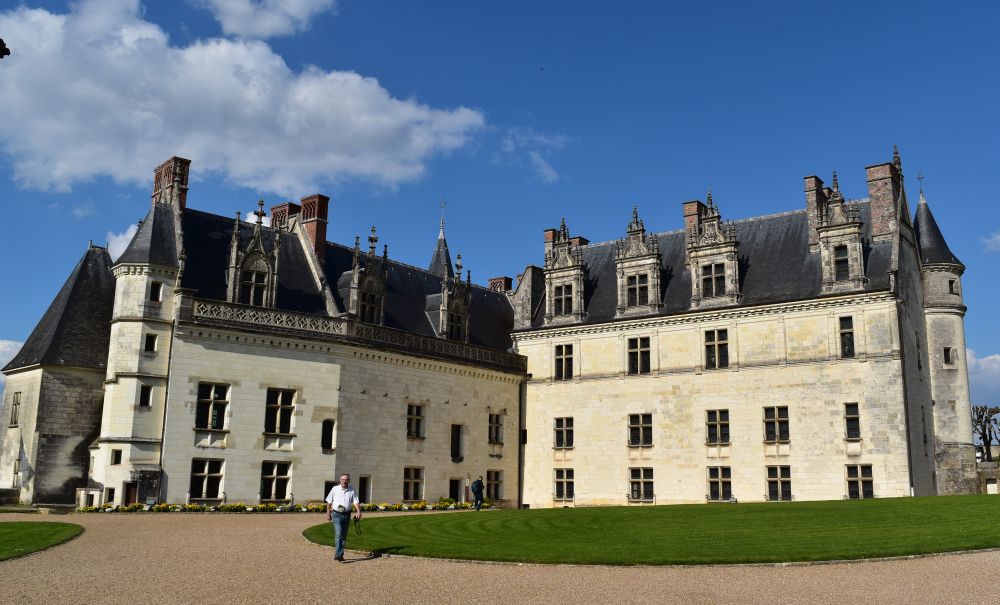
Amboise is a beautiful small town on the river Loire topped by its royal château.

The French kings acquired the castle in the late 15th century. Poor Charles VIII hit his head in Amboise and died from that (1498). His wife, Anne de Bretagne, then married his cousin, Louis XII who followed on the throne. The windows on the left hand wing below show vertical gothic arches dating back to around 1500. The right hand wing is Renaissance, as the vertical lines on the windows underline – the Renaissance king François I also stayed in Amboise.

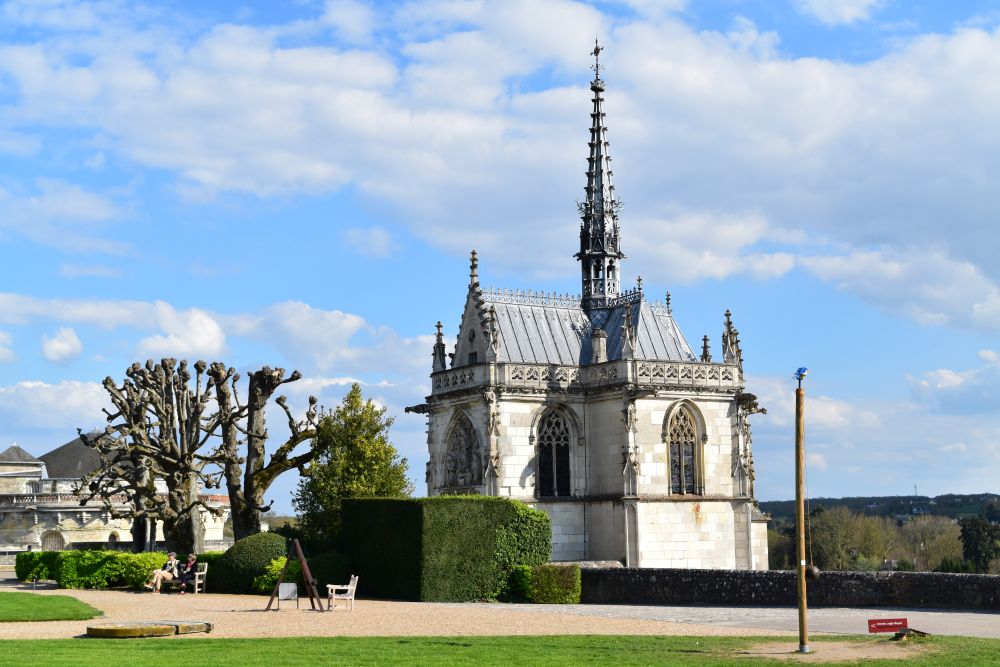
The Hubertus chapel is the place where Leonardo da Vinci has been buried. Invited by François I, he spent his last years in France.

.

François I’s Chambord – royal grandeur at its best

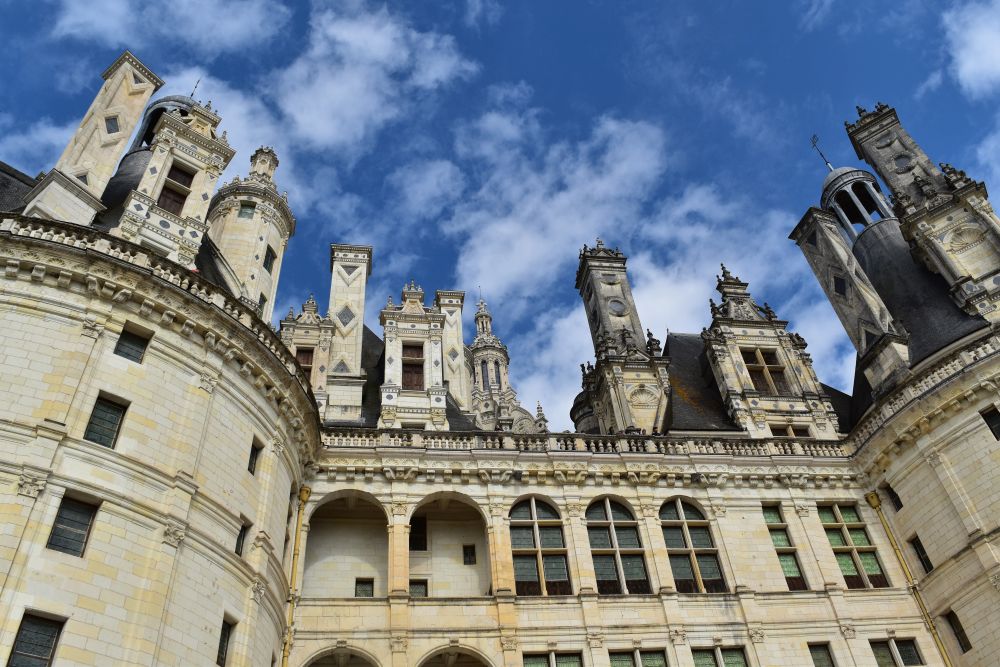
The Renaissance king François I built the castle of Chambord as a hunting lodge. It is the largest castle in the Loire valley. A royal hunting lodge!

The rooftop is full of small towers. From the balcony, the ladies could watch the hunting activities of the king and his entourage.

Leonardo da Vinci conceived this famous double spiral staircase that links the floors.

Inside there is some furniture and tapestry. This is Henry IV, the first king of the Bourbon family. He is dressed in a practical way – he had to fight for his kingdom.

Louis XIV, Henri VI’s grand-son, is dressed luxuriously. We admire all the ties that the Roi Soleil (Sun King) wore – they must have been impractical for walking…

.

Louis XII’s Blois – gloomy scene for the murder of Henry de Guise

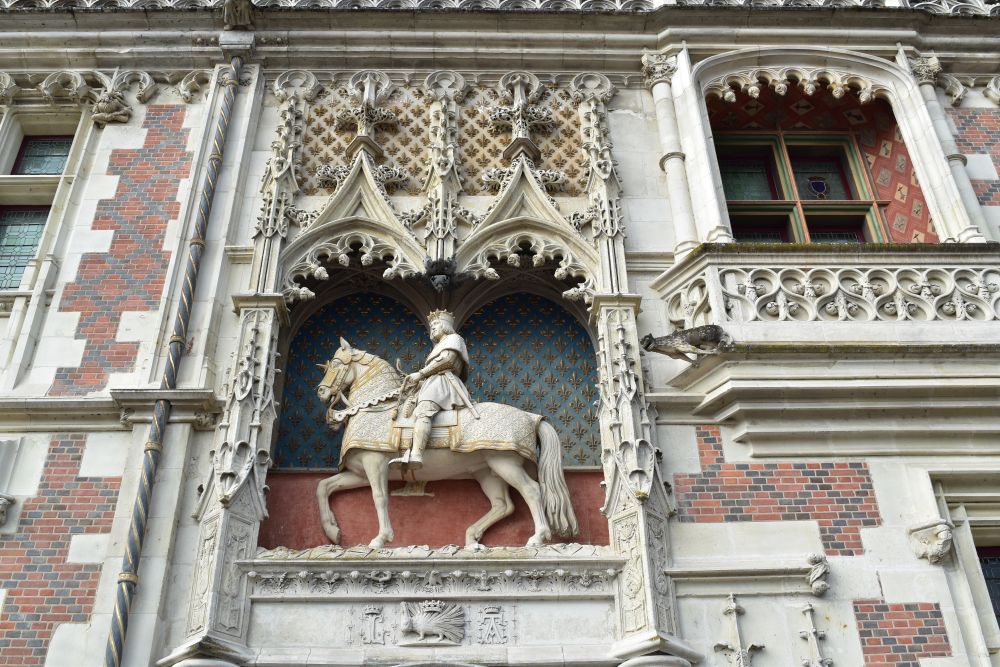
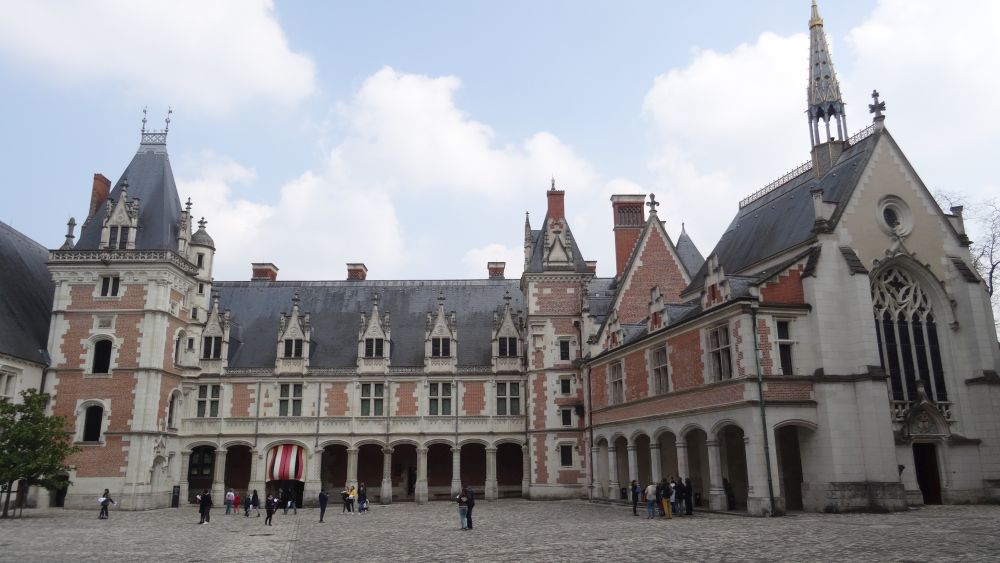
The statue of Louis XII welcomes the visitors of the royal Château de Blois. Around 1500 he made Blois his favourite residence.

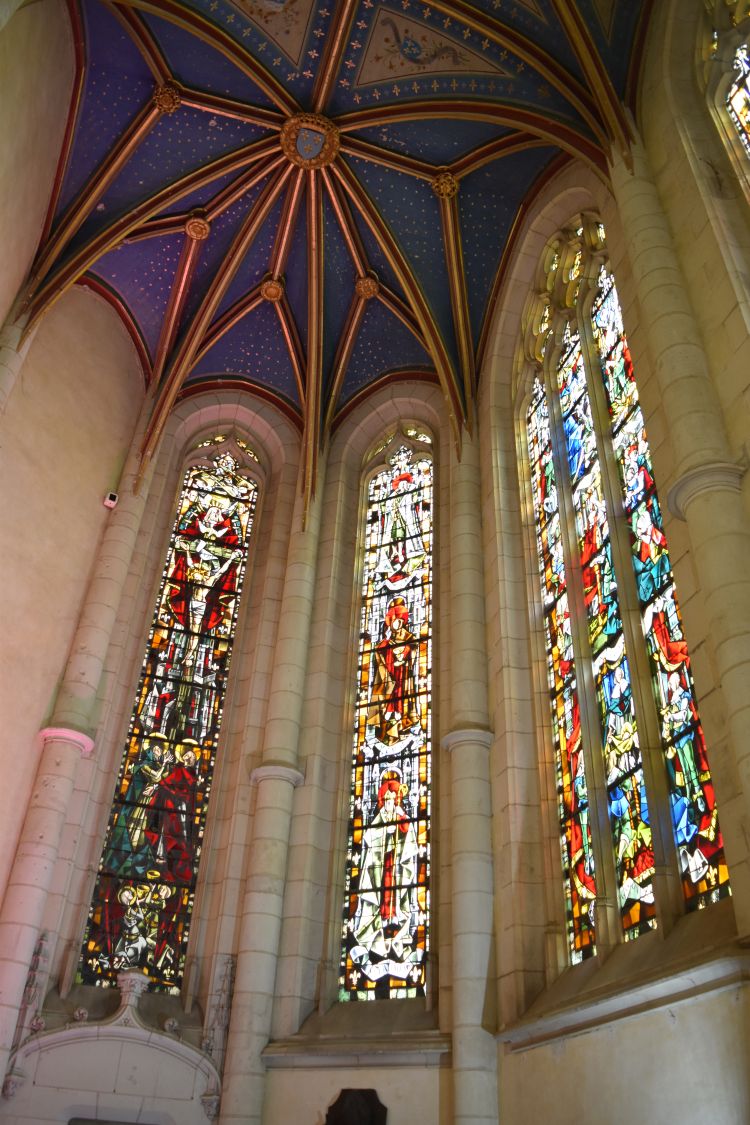
The brick construction of Louis XII with the attached chapel choir are mainly of gothic style.

François I also stayed in Blois. He added the Renaissance wing with the master piece, the staircase.

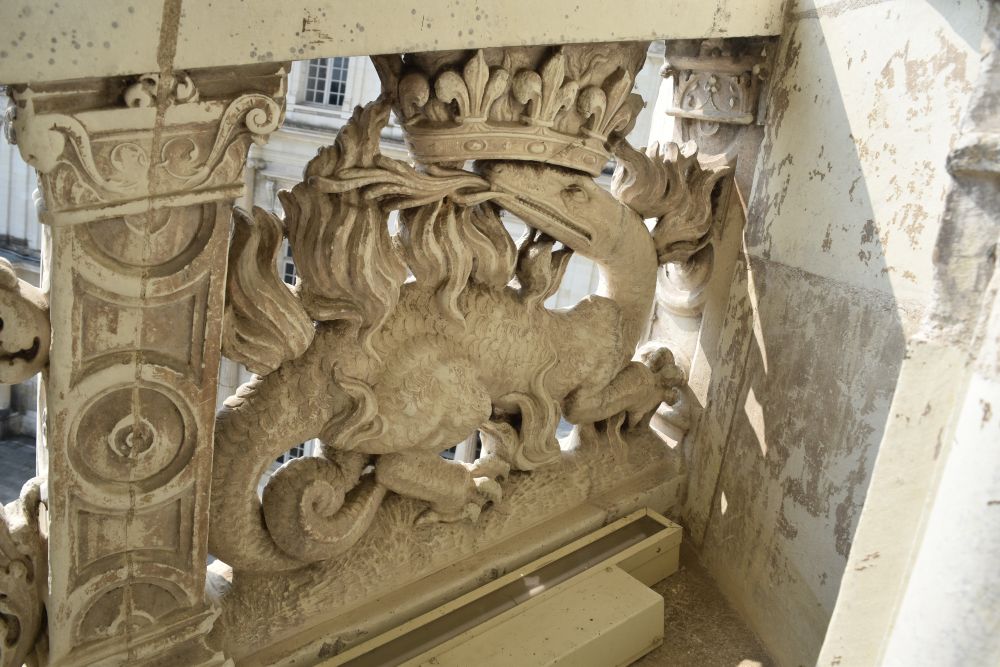
The sign of François I, the salamander, ornates the staircase (and many more places in the Blois castle).

It was in the Renaissance wing where the French king Henri III murdered his cousin, Henri de Guise (1588).

It is a windy and chilly day today. Some ten degrees outside. The castle is cold inside. I am shivering and I cannot imagine that it has been very comfortable to live here in winter time.

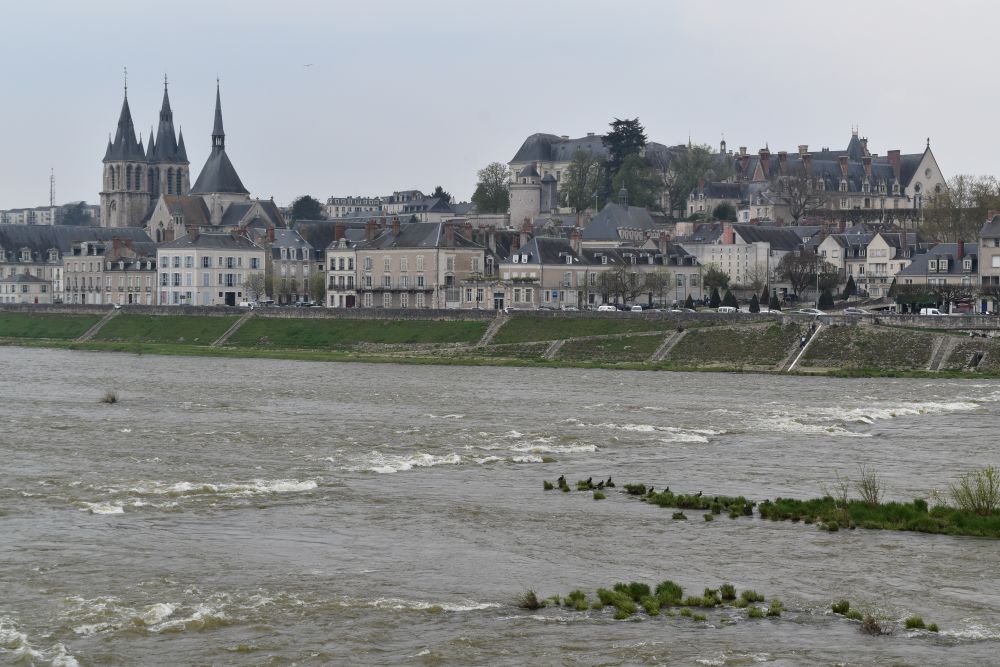
Let us look back to Blois with its castle and its church Saint-Nicolas and to the river Loire. Let us say good-bye to the Loire Valley.

Our next target is l’Hospitalet de l’Infant in Spain (or more precisely in Catalonia) with a short stopover in Millau (south of France).

(Sources: Michelin Guide de Tourisme: “Châteaux de la Loire”, 1985 and “Loire-Tal”, DK Dorlingkindersley 2015/2016). 

South Palatine – spring impressions with almond blossom

Palatine (Pfalz) in Germany has an almost Mediterranean climate, as it is protected from the rainy west winds by the Pfälzerwald or Palatine forest. Wine has grown here since Roman times as well as sweet chestnut and almond trees. The almond trees are in blossom end of March/beginning of April. The Palatine celebrates that with their Mandelwochen (almond weeks).

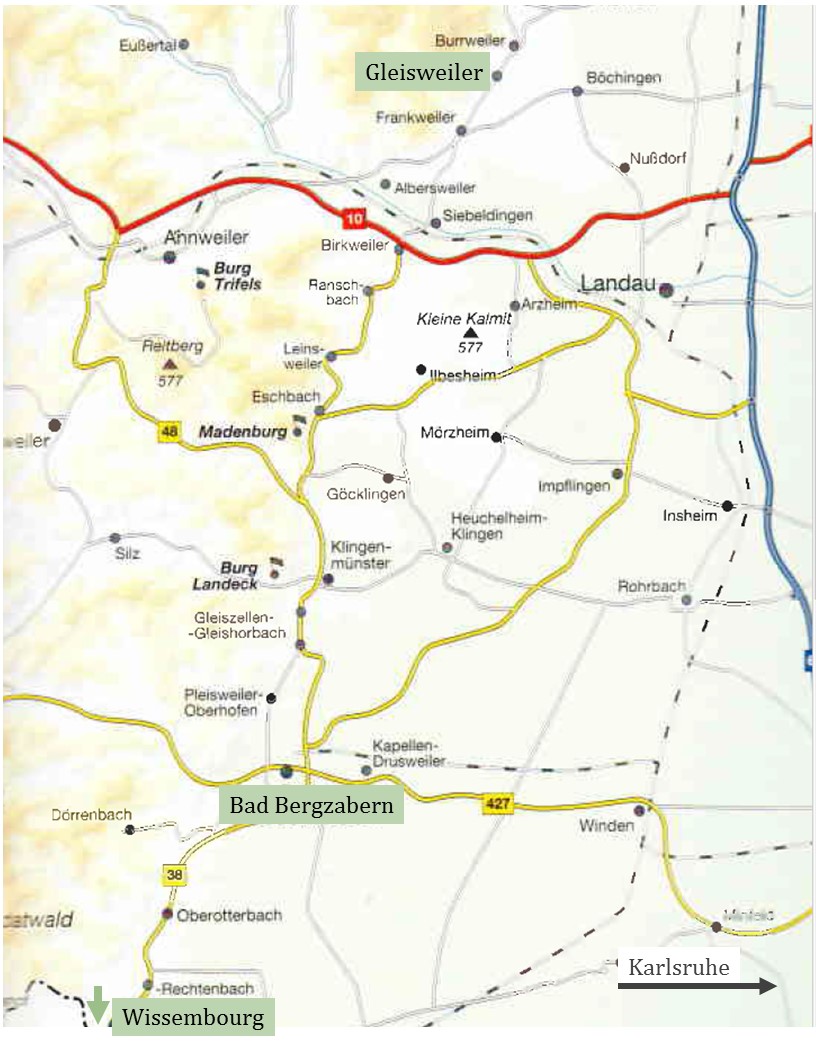
End of March 2017, we visited Bad Bergzabern in South Palatine. We find the almond trees in full blossom – beautifully pink.

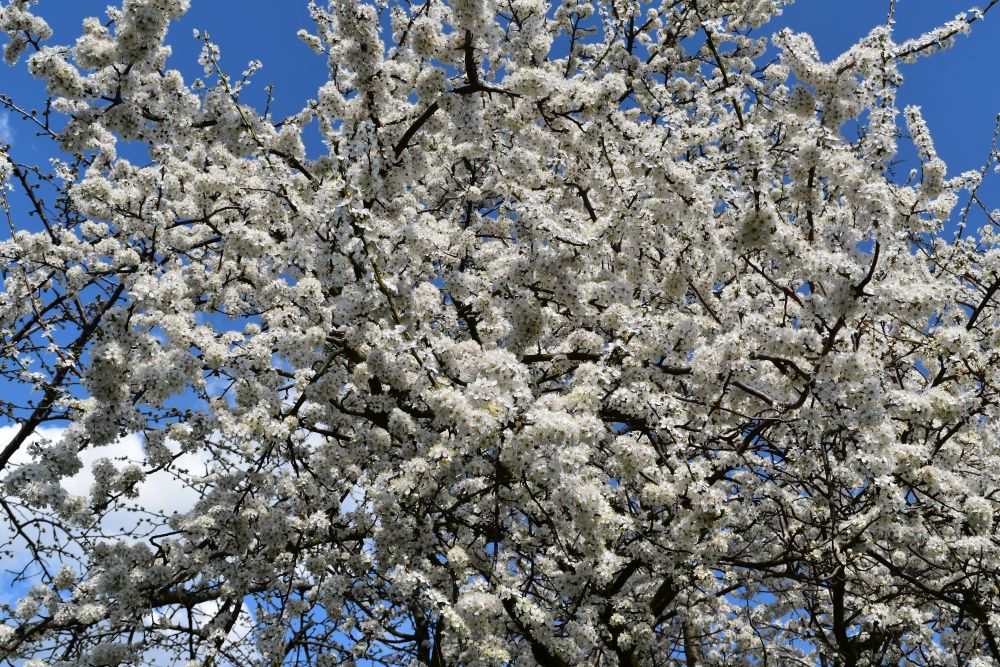
The plum trees are all white.

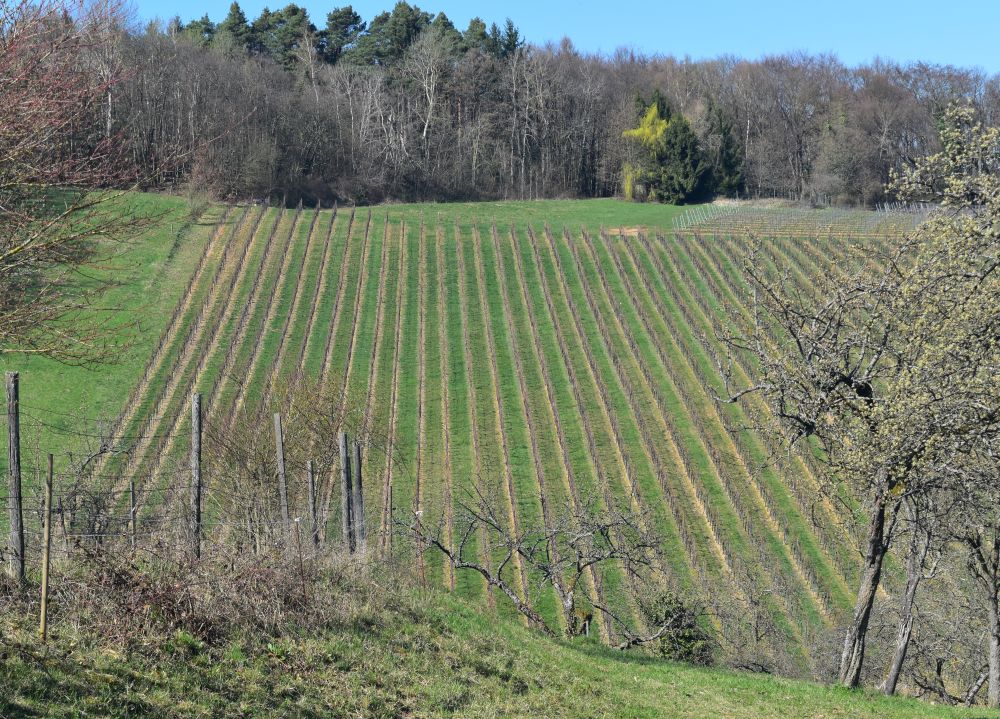
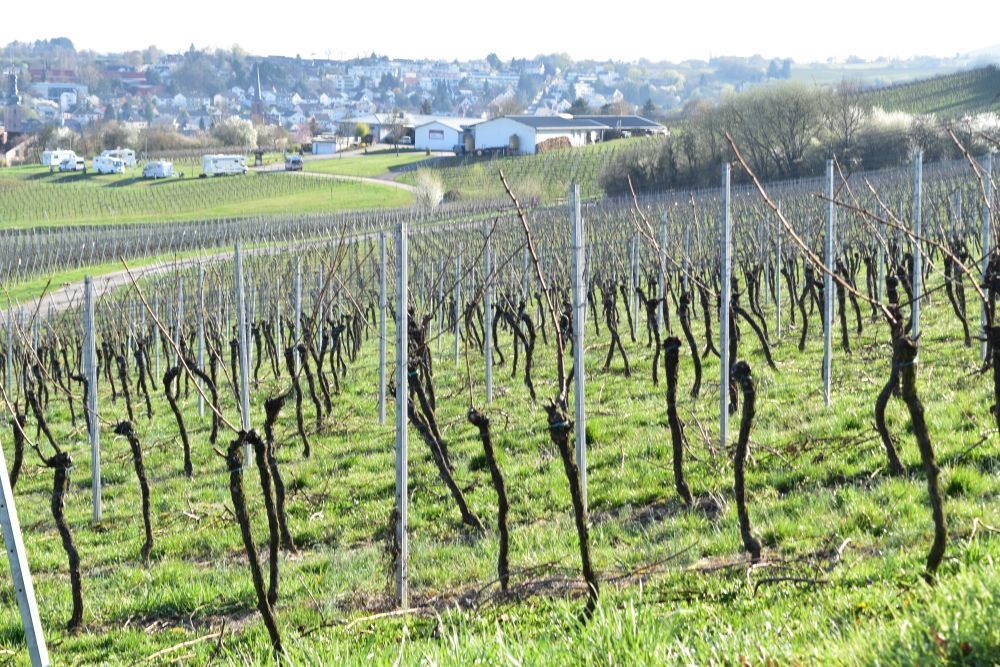
But now, end of March, the vines only show small light green leaves.

We stroll through the vineyards…

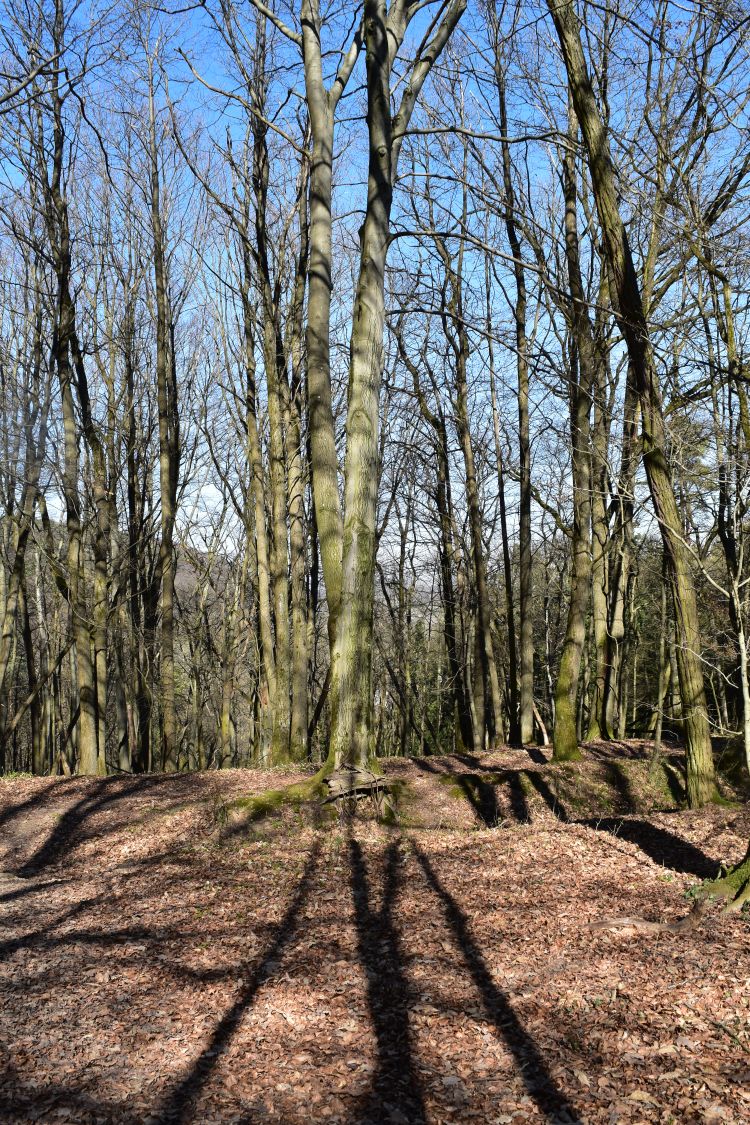
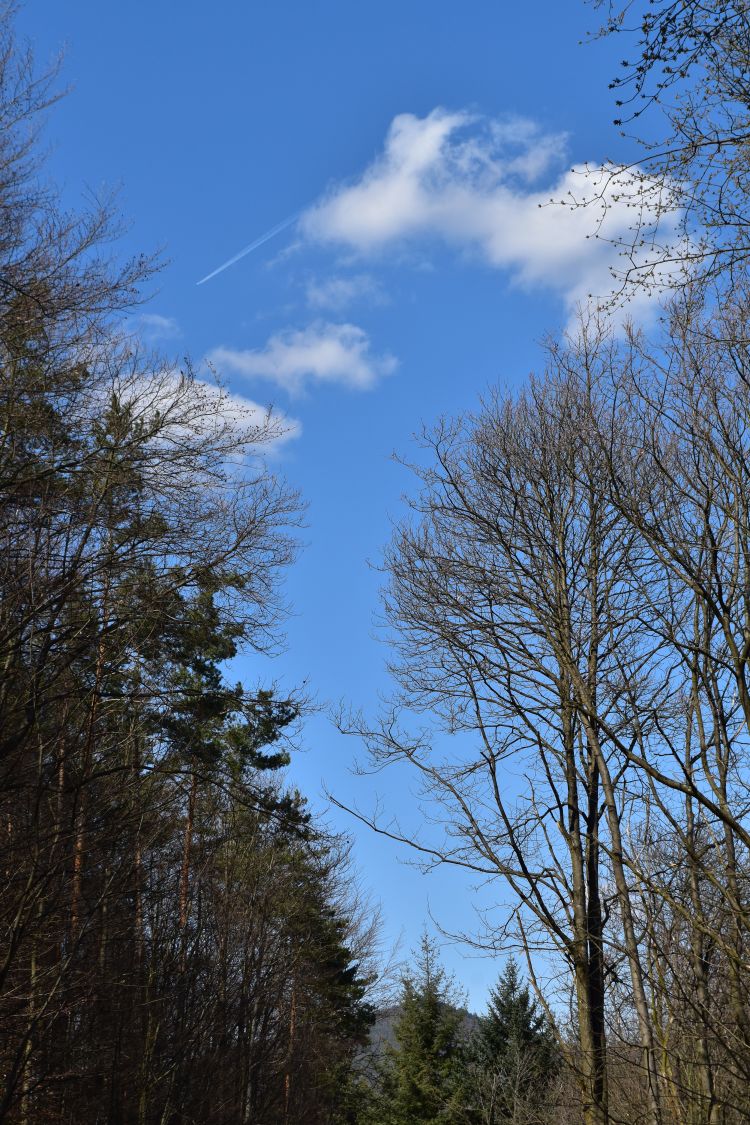
… and the forests above them. The leaves have not come out yet and the crowns of the trees point to the blue sky.

The sun plays with the shadows of the trees.

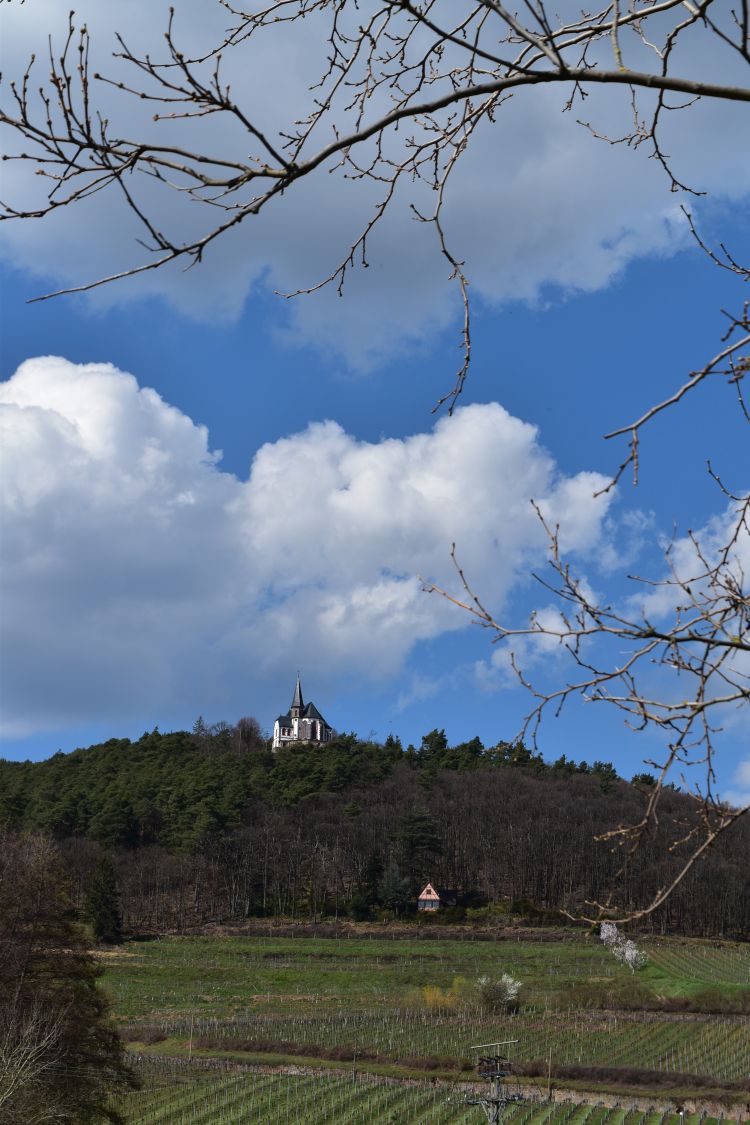
We climb the hill to the chapel St. Annaberg…

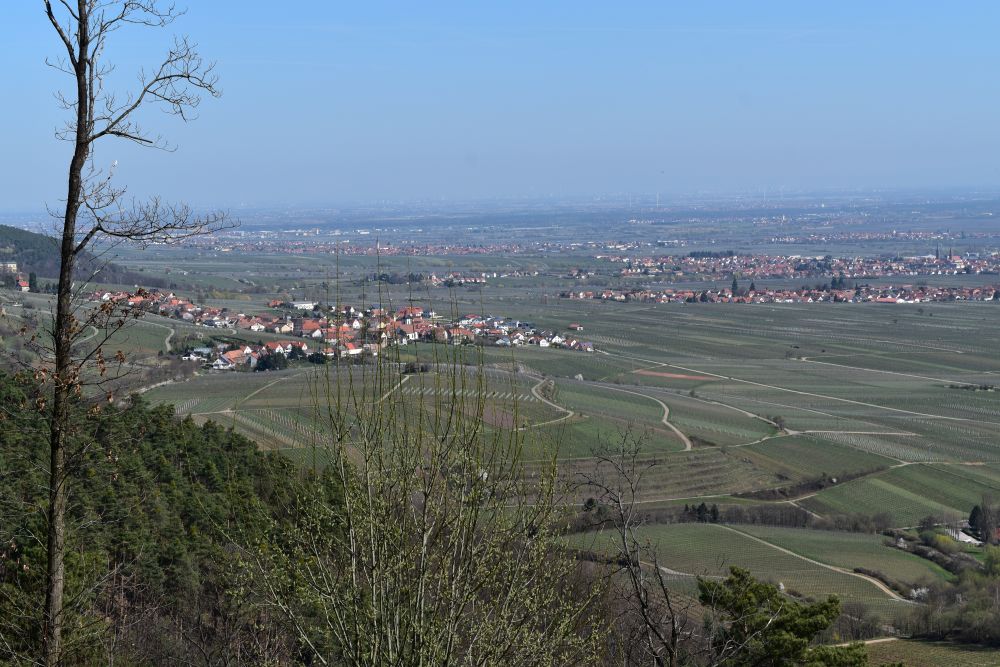
… and enjoy the view from here into the Rhine valley.

We walk back down again… a few shy clouds are above the trees.

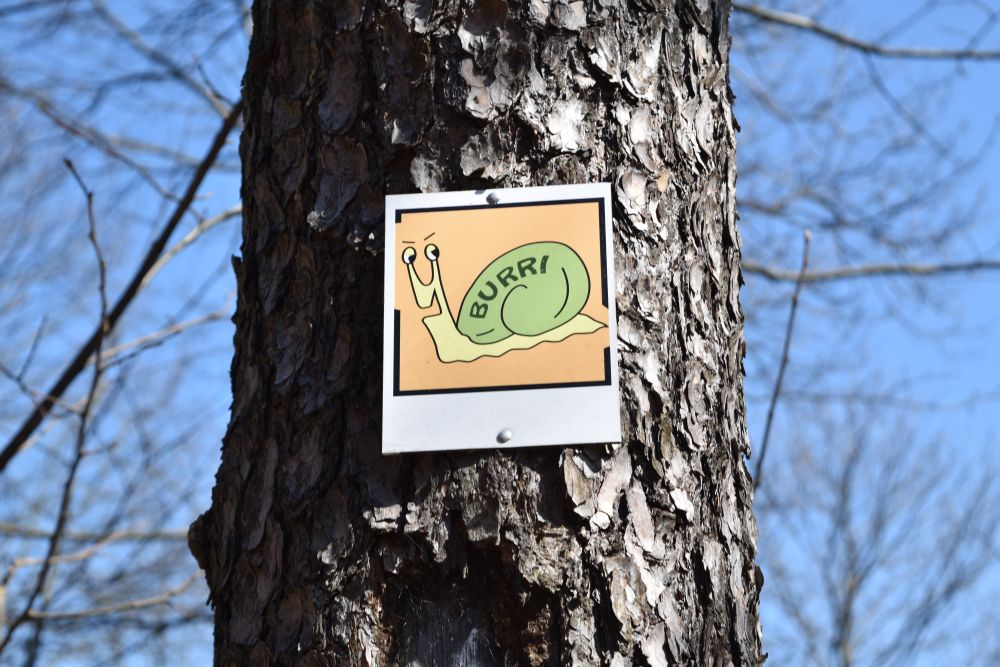
With humor this snail leads us down to a winegrowers’ village called Burrweiler.

Spring can be felt in the winegrowers’ villages as well.

Many houses are half-timbered. This historical building stands in Geisweiler.

Even dogs are welcoming guests and visitors in the winegrowers’ villages. This friendly dog can be found at Pleisweiler.

But beware of this fighting cat – it watches a house in Burrweiler.

Winegrowers on the way offer to taste (and buy) their wines. One of them has this motto.

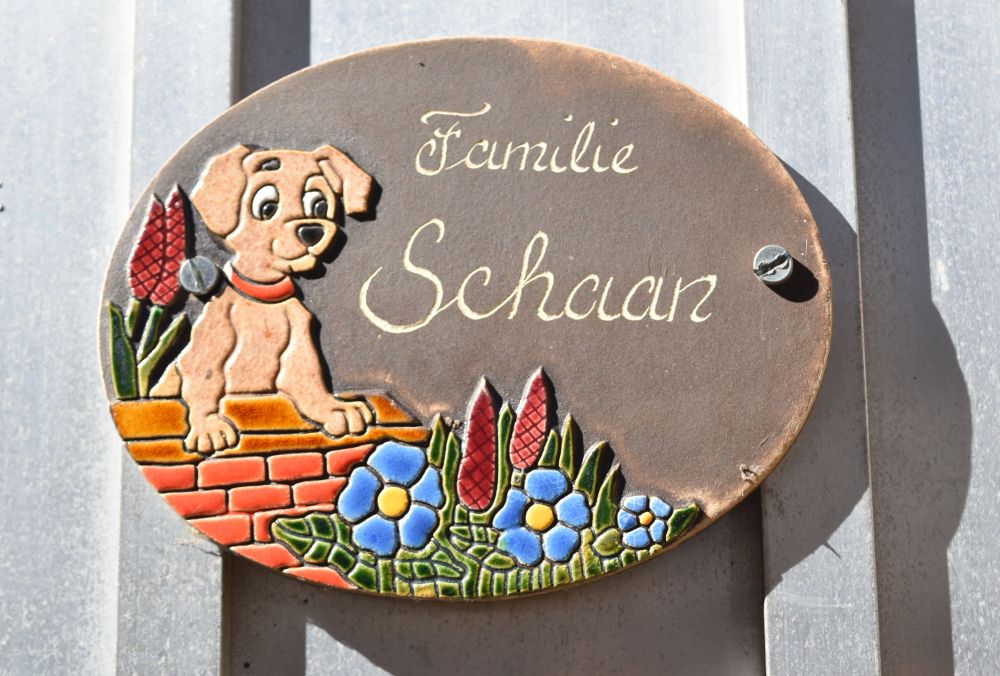
Well, I think happiness is both a way and a destination of life. Or even some ways of life with some destinations. We felt perfectly happy enjoying spring in the Palatine for two days – it is a great destination. We spent one night in Bad Bergzabern, walked in the hills behind Bergzabern, and the next day we hiked around Geisweiler and Burrweiler to enjoy the view from the chapel St. Anna located above these villages.

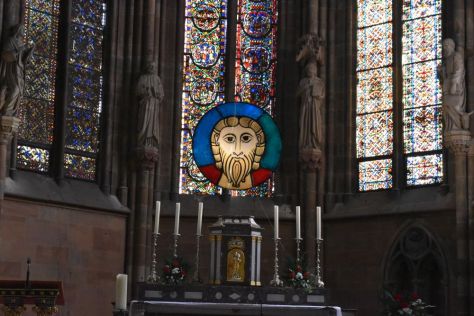
On the first day we had a coffee stop in Wissembourg in the Alsace. I love the church of Saints-Pierre-et-Paul with the glass pane of Christ from the 11th century (the original being in Strassbourg).

When driving home on our second day in the evening, we had dinner in Bergheim not far from Riquewihr. Spring can be felt here as well, now in the evening light.

Bergheim is a good place to round off two beautiful days looking for spring impressions.

Now we dream of the “way” to our next “destination” that will make us happy again – France with the Loire valley and Northern Spain.


Basler Fasnacht – impressions from the Ladärne-n-Usschtellig

Fasnacht 2017 at Basel (carnival) was celebrated in March, from Monday 6th/4 a.m. to Thursday 9th/4 a.m. Let me recall impressions from the Ladärne-n-Usschtellig or exhibition of lanterns.

.

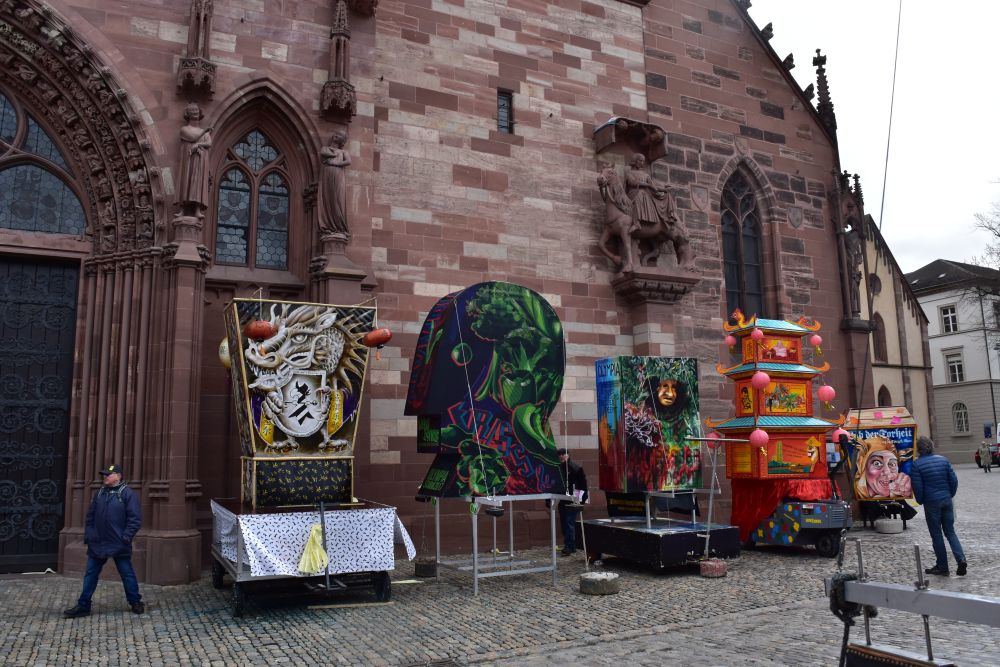
The exhibition of lanterns (Ladärne-n-Usschtellig ) takes place on the Münsterplatz –  a great background

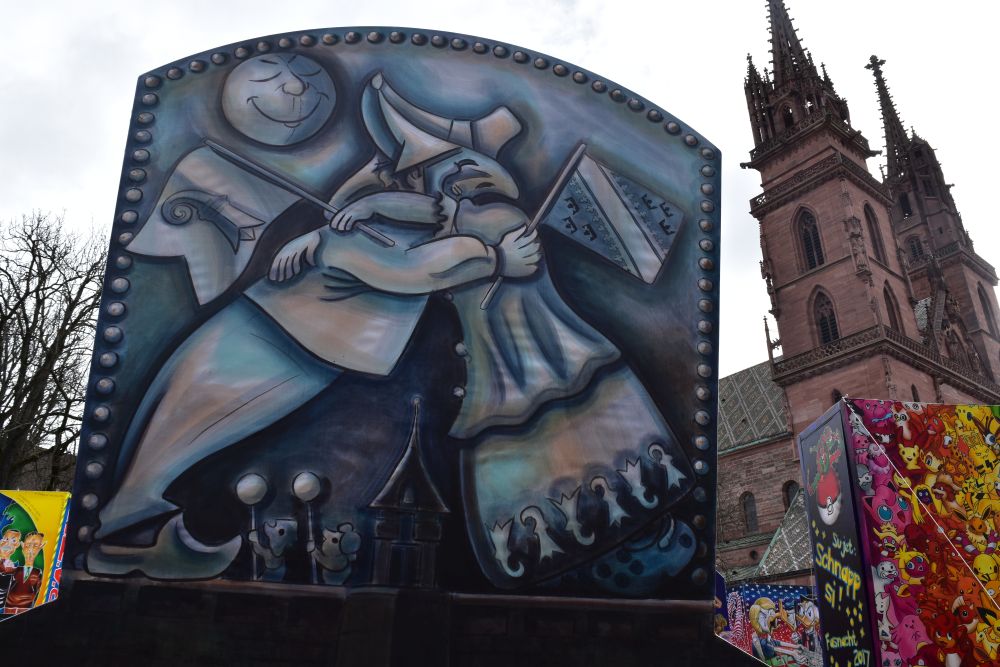
On carnival Tuesday, the lanterns (Ladärne) are presented on the Münsterplatz – the cathedral underlines the solemnity of the many pieces of art presented here. They are the centerpieces of the sujets (or themes) that the Cliquen (carnival groups) have selected for this year’s carnival. Here I am remembering some of the themes.

.

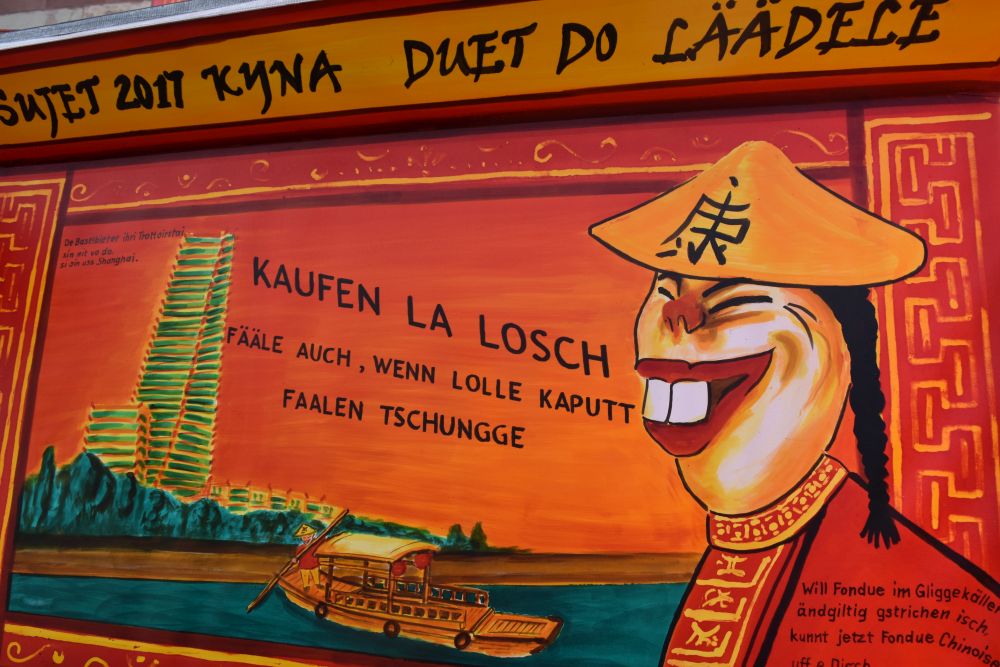
One theme: China – buying enterprises

China is buying enterprises, also in Switzerland. “Kyna duet do läädele” (China goes shopping here). Syngenta was on their buying list – may be La Roche (La Losch) is next and then also the “Fääle” (the Rhine ferry boat, it seems that the Chinese say “l” instead of “r”)…

… or they may intend to buy the Sutter Begg (a well-known bakery), the Basler Kantonalbank (bank of Basel), BVB (the public transportation of Basel) and more…

The Asian cat is greeting us.

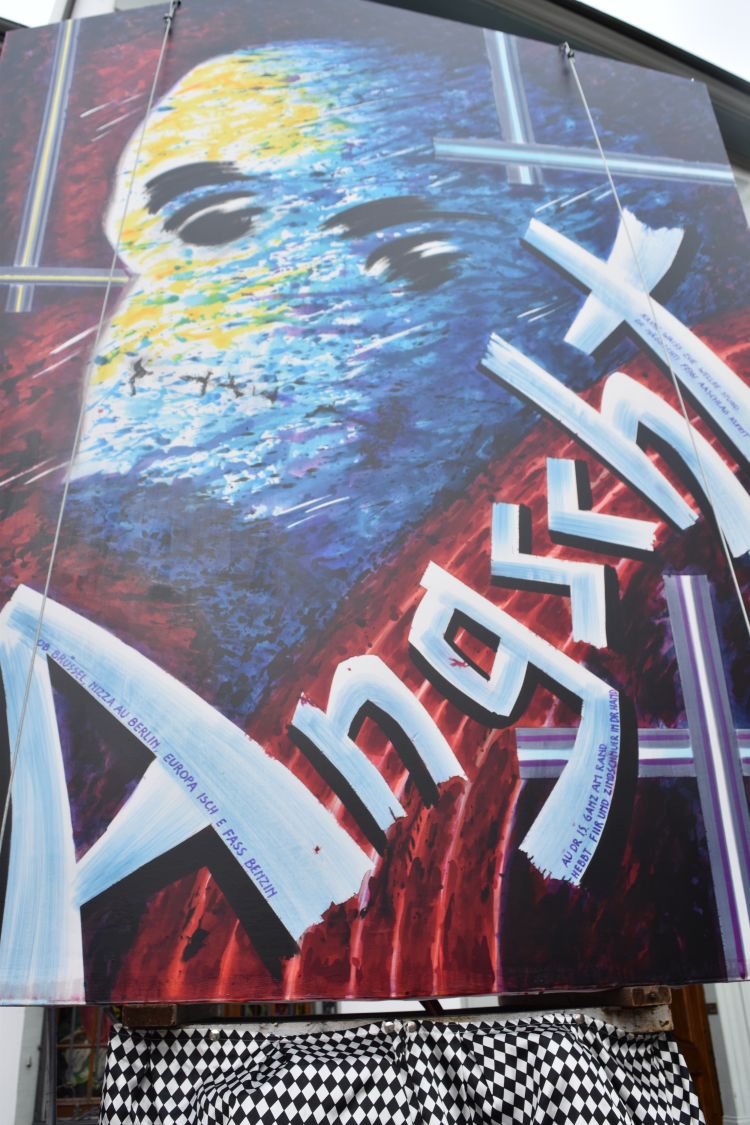
Another theme: Angscht – fear – adds a black mood to this year’s carnival

Many lanterns are dark. “Angscht” or “fear” is omnipresent.

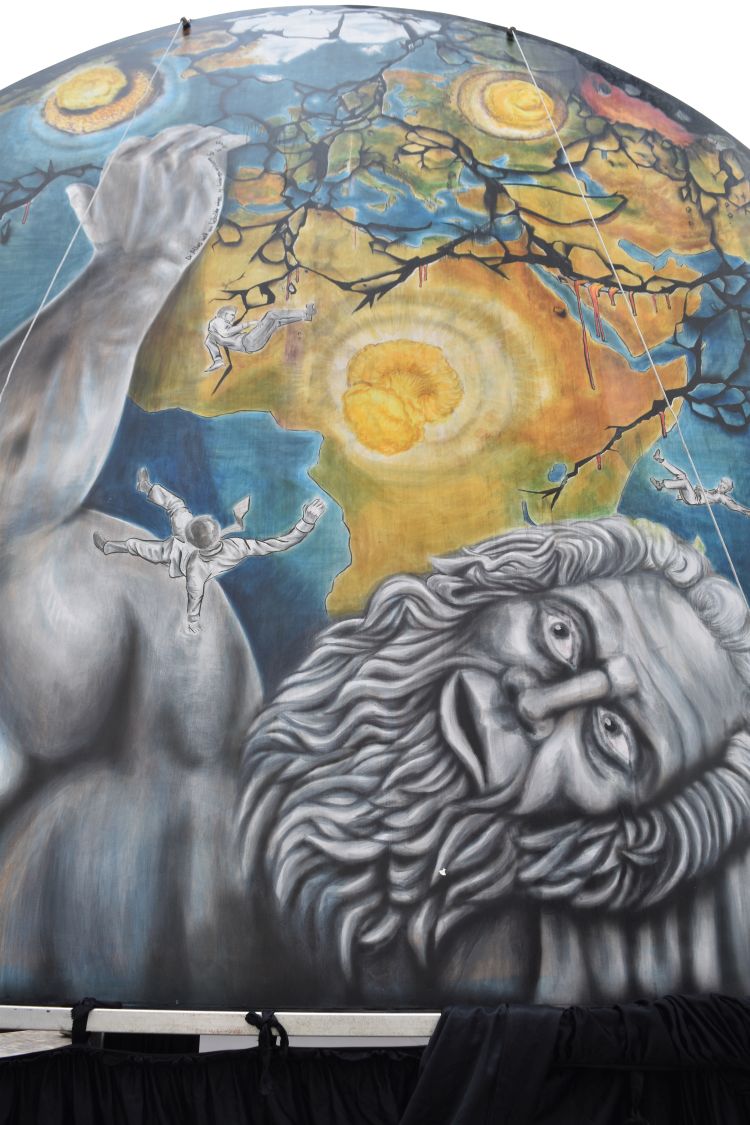
The Lälli Clique presents Atlas trying to prevent the world from falling apart.

Idefix, the small dog of Obelix, swears “bim Teutates” and underlines his anger with his paw: D’Wält spinnt” (the world is crazy –  but I love Basel),…

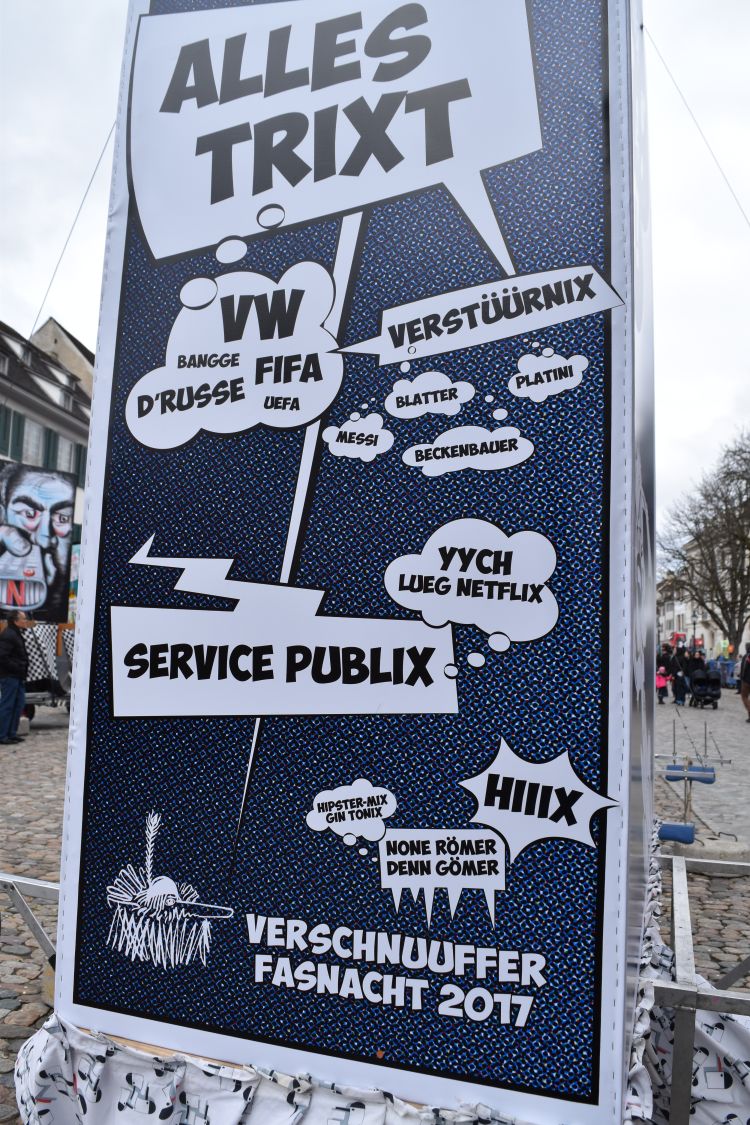
… they are are all cheating (alles trixt)… VW, Fifa and Bangge (the banks)… and they are paying no taxes (verstüürnix)… and Service publix? – Well, I watch Nexflix”

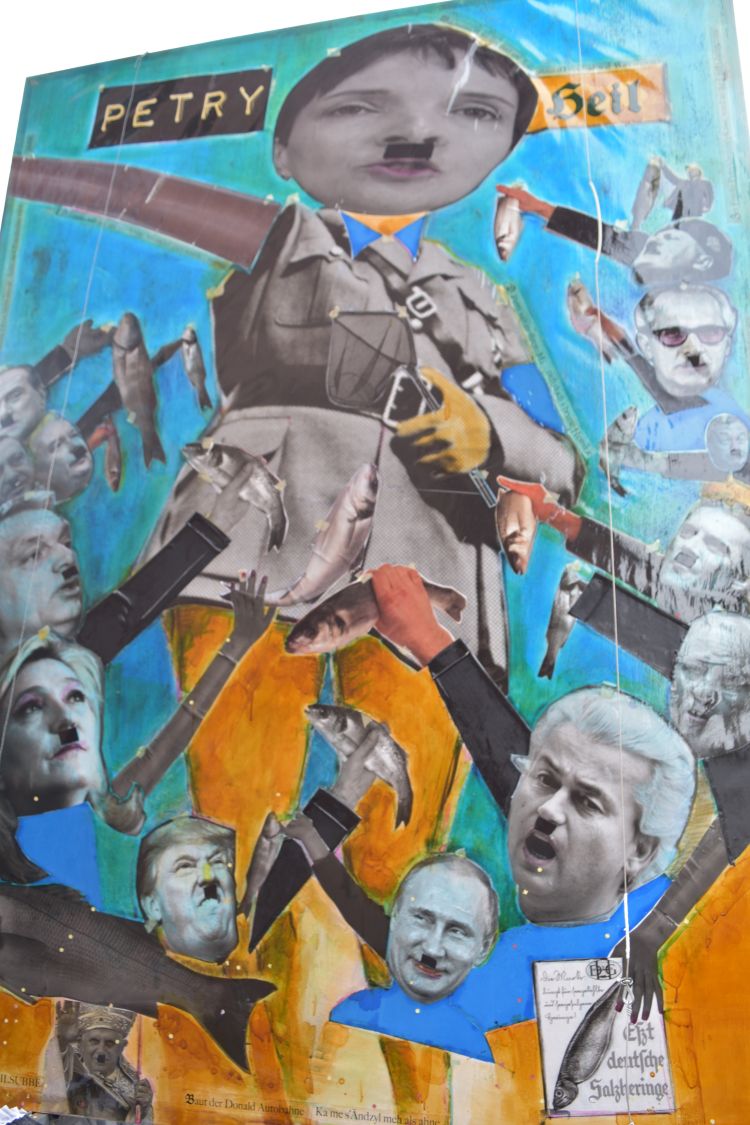
“Extrem rächts” or extremely right-wing – is a tendency that worries some of the carnival groups. Ghosts from the past?

.

Some more joyful themes: Heidi, holes in Switzerland, Pokemons and more

This patriotic Swiss scenery – an almost perfect world – is brightening up the mood: Heidi, Spyri’s novel about the girl from the mountains, has recently been filmed. Here she is acting in front of the camera with Gaissepeter (goatherd Peter).

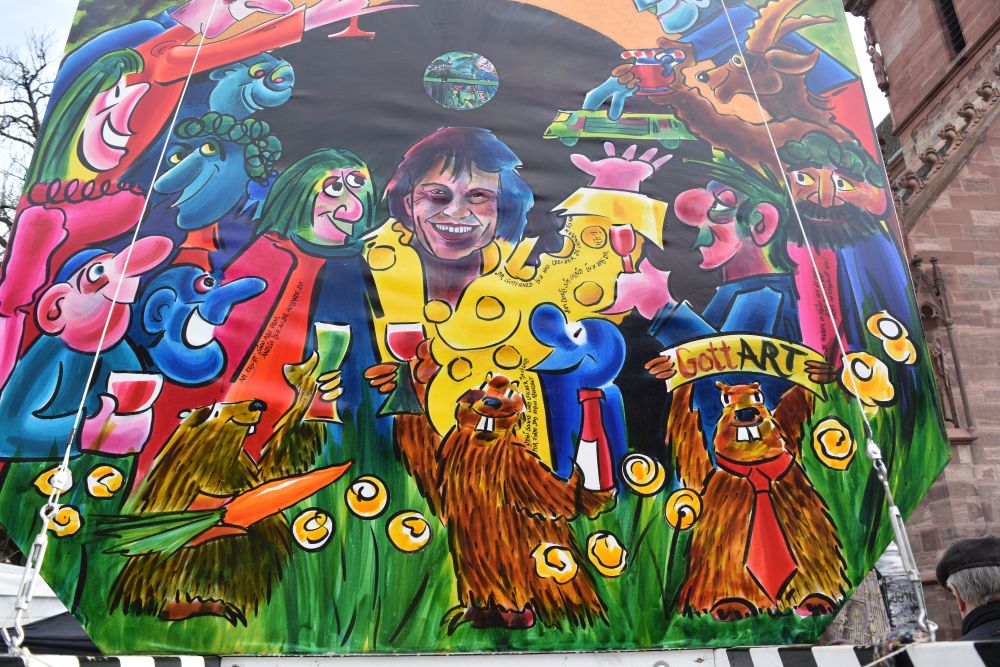
The new Gotthard railway tunnel has been inaugurated shortening travel time between the Ticino and the rest of Switzerland. For the inauguration festîvities, our Federal Councillor Doris Leuthard wears a jacket with round holes – resembling our cheese from the Emmental. Her jacket is controversial – many like it and some do not. “GottArt” for the Gotthard is a punch and the marmots welcome the tunnel as well. I think, the jacket with holes is a great and courageous idea.

Pokemons are hidden all over Basel and around the cathedral. This hype became a wonderful topic full of fantasy, primarily for some “Jungi Garde” or kids in the carnival groups.

The City-Hupfer allows tourists to hop (hupfe) AROUND the Basel city center. AROUND the city center, because much of the center is car free: The tourists have to leave the bus and walk to reach the sights. The number plate is “BS or Basel 2017”.

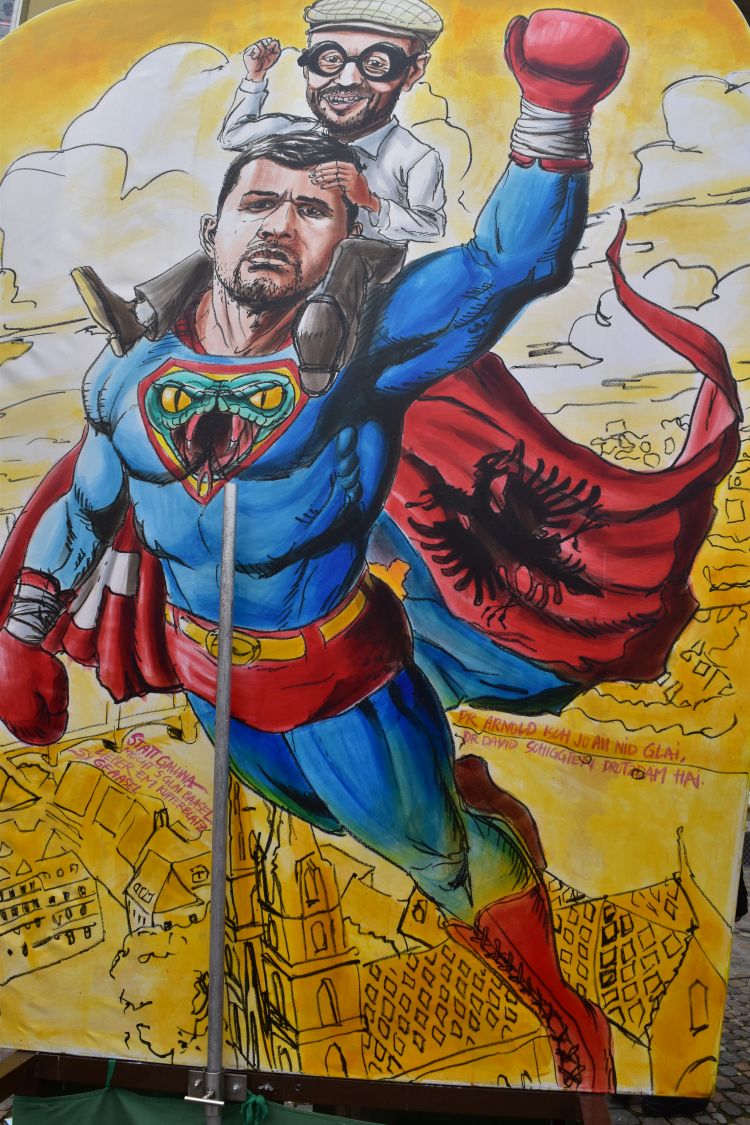
The Swiss boxer Anton Gjergjaj is very successful. Here he is as batman with the black double eagle on his red coat. In the cortège (parade), the drummers and pipers were cobras.

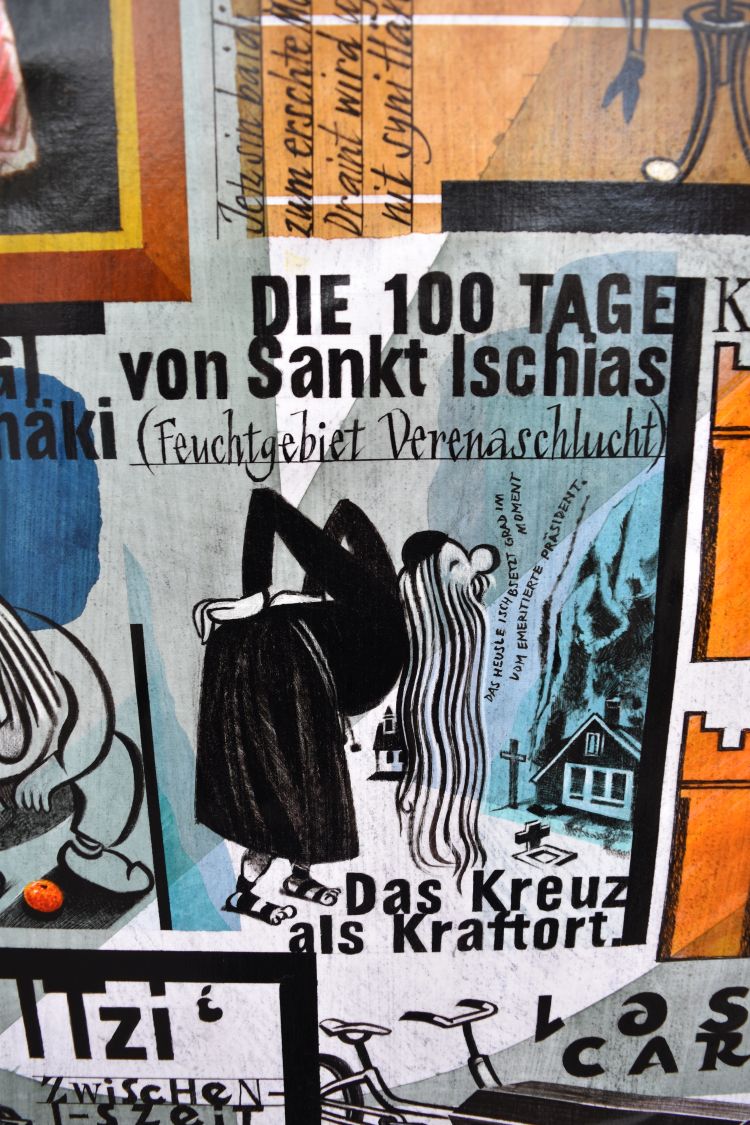
This lantern is full of details commenting the world. I particulary like “the hundred days of Sankt Ischias” in the damp Verena canyon. The monk is suffering from sciatic pain (Ischias). “Das Kreuz als Kraftort” translates to “the cross as a place of power”. In German it is a punch, as “Kreuz” can be both the Christian “cross” and also the lower part of the back (where the sciatic pain hurts).

.

Yet another theme: Food

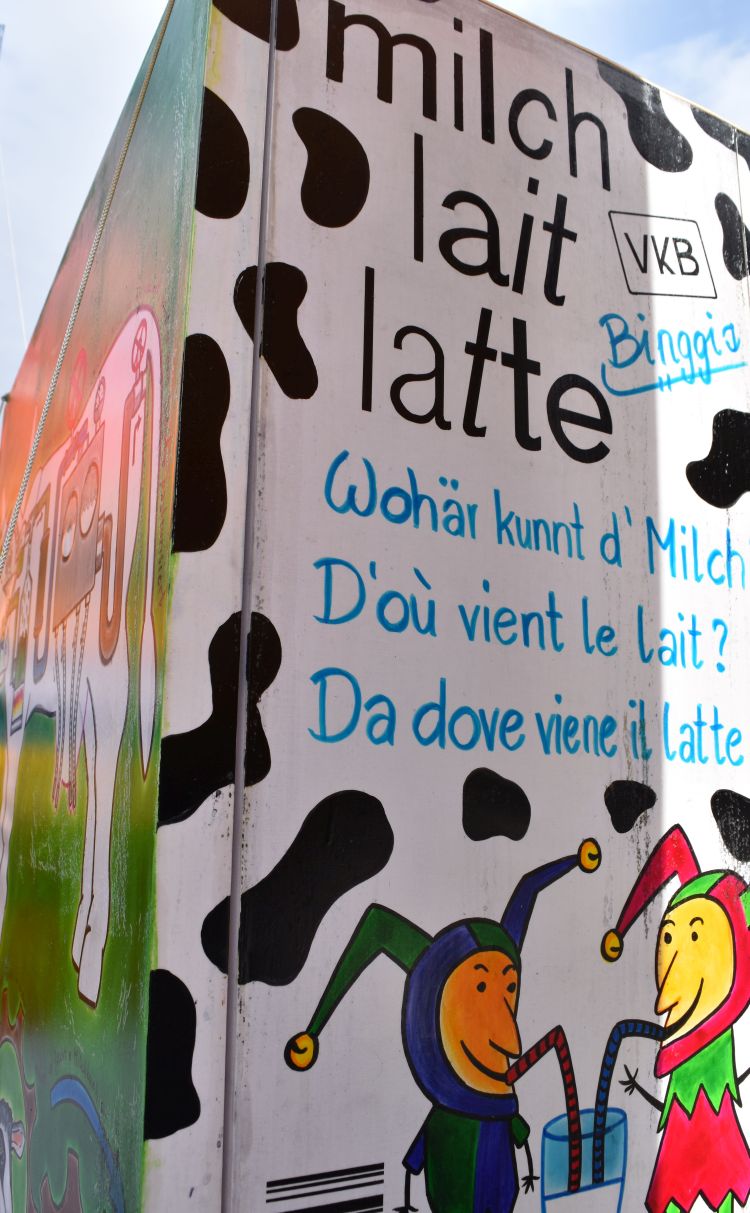
The Binggis (young kids) ask where the milk comes from, and they ask it in German, French and Italian. Well, we buy our milk in shops, and it comes in cardboard boxes – like the shape of the lantern. Kids from towns may not know the real source – cows, as the white color and black spots suggest.

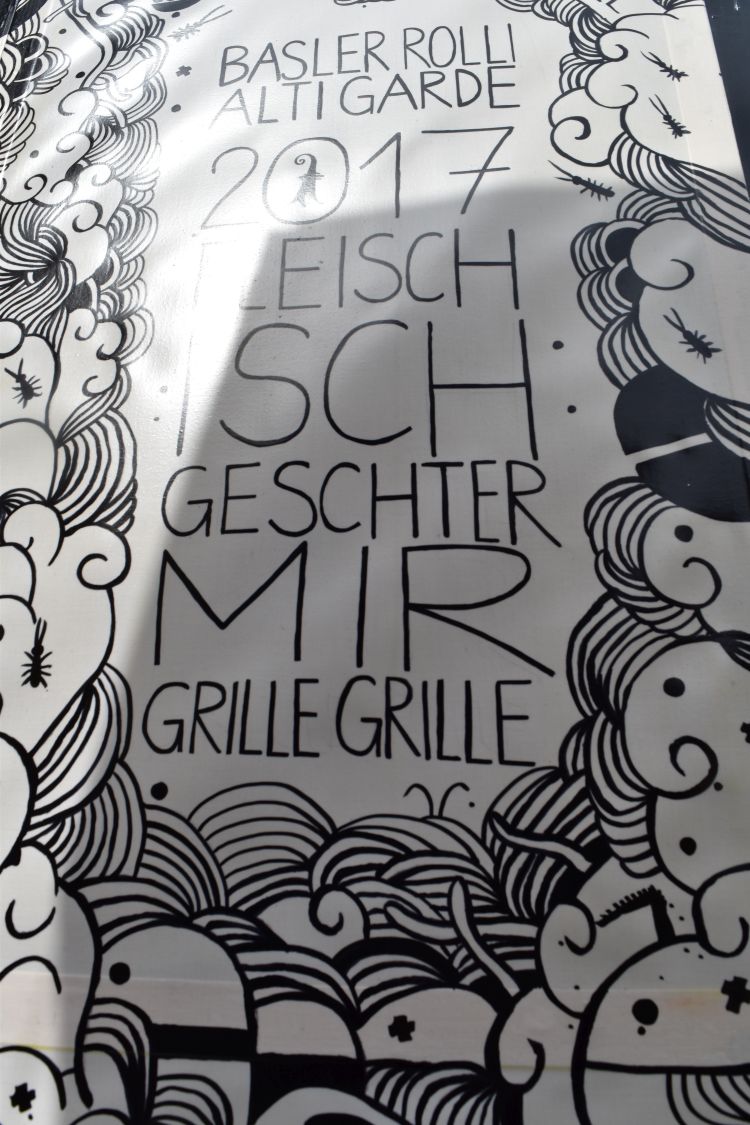
“Fleisch isch geschter – mir grille, grille” (Meat is yesterday, we are barbecuing, barbecuing). “Grille” is Swiss German for “to barbecue” and “grille” is also the insect “cricket” that we may eat in future (instead of meat). “Grille” is a punch that only works in Swiss German.

The Queerschleger look for healthy “super food” such as carots, mais, cucumbers or fennel. “Güürkli” or “gherkins” are another option. In all… juice and organic vegetables are good for our heart, and also “gsund fir d’Katz und dr Hund” (healthy for the cat and the dog).

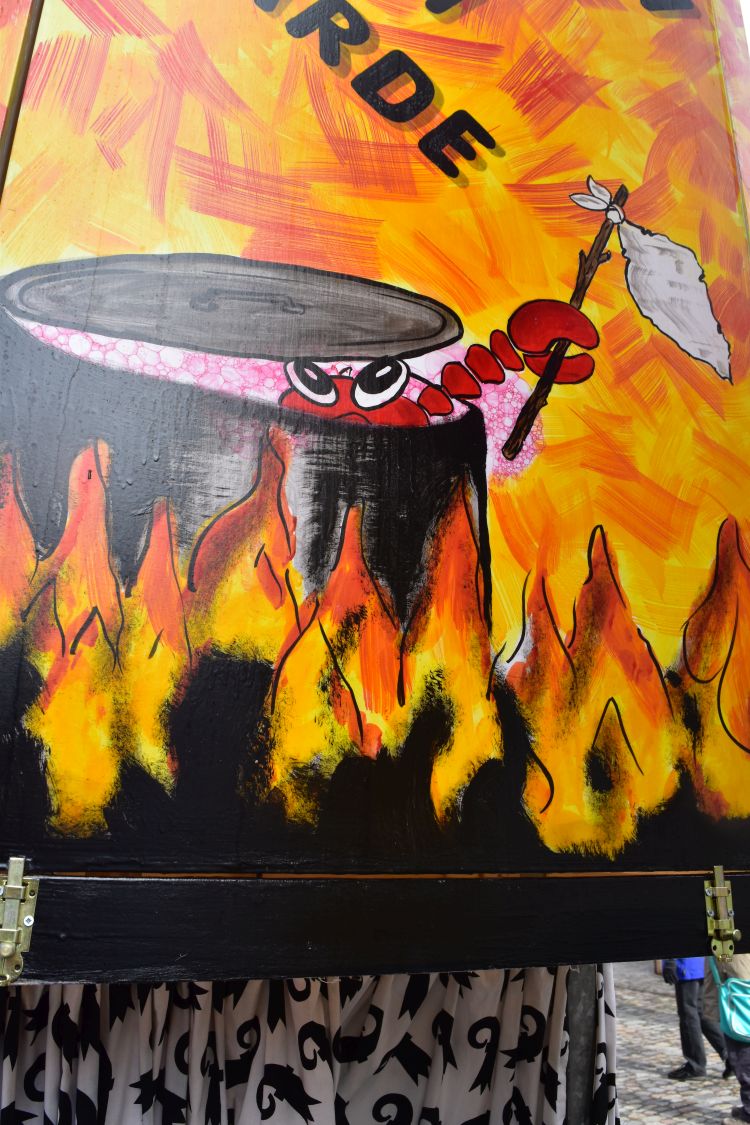
On this same lantern, the crab shows the white flag… and it may be successful, if we restrict our diet to nothing but vegetables.

May this white flag brighten the often dark mood of this year’s carnival and give hope that Atlas will hold the world together such that next year’s carnival will present more bright topics.

Yes, next year in 2018, Fasnacht will be on February 19th to 21st. As always it will start on Monday at 4 a.m. with the Morgestraich (“morning stroke”, see the video of radio Basilisk). It is celebrated with the Cortège (parade), Schnitzelbängg (carnival songs), Kinderfasnacht (children’s carnival), Guggekonzärt (“dissonant” brass music) and Schyssdräggzygli (small groups piping and drumming). It ends with the Endstreich (“final stroke”) on Thursday 4 a.m. The Fasnachtscomité explains it all and the internet is full of reviews and videos. I always enjoy the creative skill that the groups (called “Cliquen”) demonstrate year after year and look forward to 2018.


France: Detour to Châteauneuf du Pape

15th of November 2016. After a day in Avignon, we drive back to Switzerland with a detour to Châteauneuf du Pape which is just some 20 minutes away from Avignon.

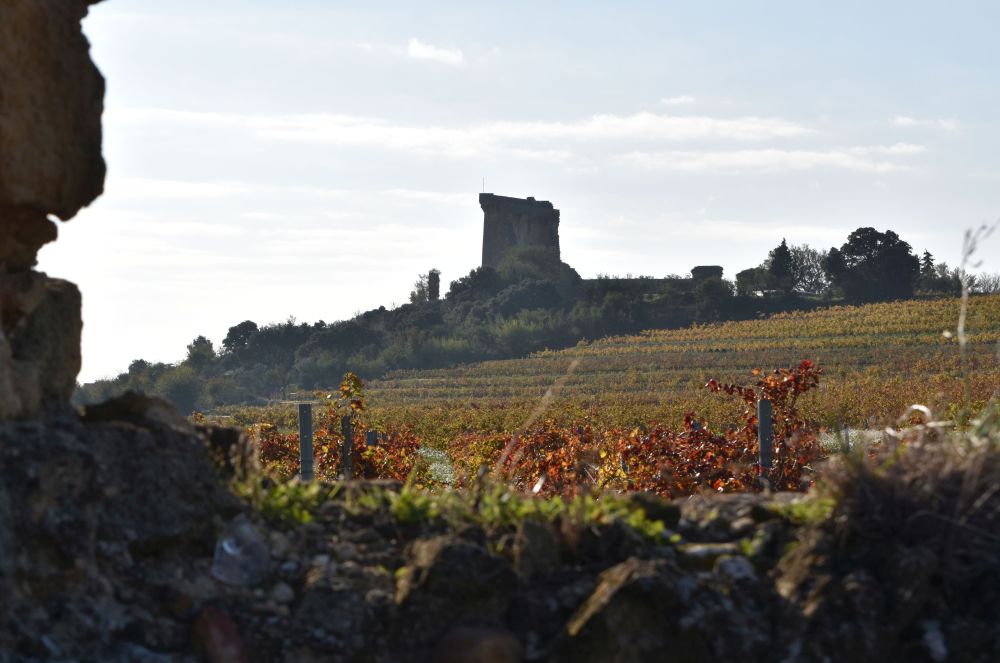
This is the château or castle of Châteauneuf du Pape. Hm, I am disappointed. For the excellent wine that is produced here, I had expected a majestic castle. And I find this small castle.

aaa_0421-small

The first consuls and treasurers of Châteauneuf du Pape from 1756-1790 indicate an old tradition.

dsc09741-small

In the small village with the French charm, we buy a bottle of Châteauneuf du Pape: Le Vieux Donjon by Michel Lucien.

dsc09744-small

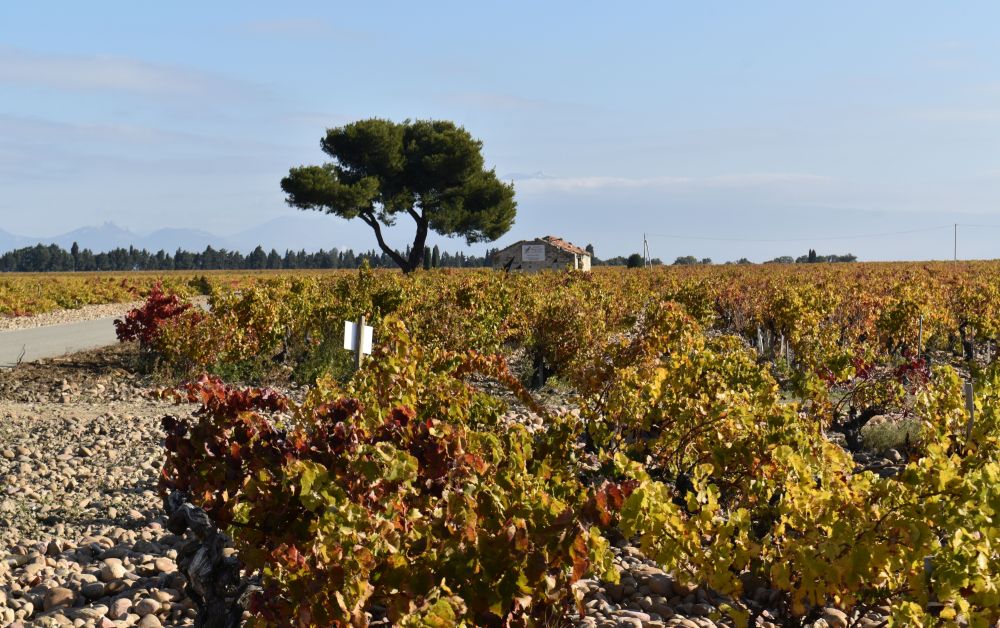
We have two espressos in a restaurant that is closed – this is French charm. The lady owner tells us the route to explore more vineyards – and we follow her advice. Here are some impressions from our explorations – vineyards in autumn colour.

aaa_0428-small

dsc09752-small

Then we leave the vineyards, continue our way to Orange, catch the motorway and drive directly to Monthey in Switzerland. We stop quickly in France to buy what we need to cook Spaghetti. We share the meal with our friends and have one of the bottles from Montsant. There is so much to tell – we had wonderful late autumn days in Catalonia and in France.


France: Stopover in Avignon with the famous bridge and the Pope Palace

13th of November 2016. Our days in Hospitalet de l’Infant are over. We pack, throw our last postcards into the yellow mailbox and leave for France. Not without forgetting to switch off the water of  our friends’ apartment – which means we have to return one more time to close the apartment properly.

We have decided to travel through the Rhone valley, to stop two nights in Avignon and spend a day here. The famous bridge – le Pont d’Avignon – and the Pope Palace are worth a visit, and we look forward to strolling through the city inside the intact defensive town walls.

We decide to make it easy for us and book a room in the IBIS hotel right in front of the city wall. Here we can also park our car.

dsc09725-small

At the Place de l’Horloge we have dinner in a small restaurant across the Theatre and the Townhall. It is clear and cold in Avignon – the mistral wind is blowing down from the mountains.

aaa_0286-small

.

Le Pont d’Avignon – ending in the middle of the river

The next morning we start our visit with THE bridge, le Pont d’Avignon.

dsc09724-small

I am utterly disappointed: The bridge is not finished, it ends in the middle of the Rhone river! Well, in the museum I learn that this was not really a bridge, but a toll station built in the 12th century to tax salt and agricultural products traveling by boat. This is the legend: A shepherd had a vision that told him to build this bridge. The people of Avignon laughed at him and asked him to throw a piece of rock into the water. He did so. This was a miracle that convinced the people to build the bridge. At that time, there were large sandbanks. They disappeared in the 15th century, as the water level rose, resulting in the bridge to end in the middle of the river. All this is well explained in the museum attached to the bridge.

This is another view of the bridge with the chapel St. Nikolas.

aaa_0301-small

We all know the song related with the bridge: “Sur le pont d’Avignon, l’on y danse, l’on y danse, sur le pont d’Avignon, l’on y danse tout au rond.” We learnt this song in kindergarden, long before we knew French. Not understanding the words, we created Swiss German versions – the one  of Ursula’s sister went: “Sur le pont d’Avignon, oni Dasse, oni Dasse…” (with “oni Dasse” she took a phonetic representation for “on y danse”. It means “without cups” in Swiss German…).

aaa_0309-small

The song already existed around 1500. The words then were: “Sur le pont d’Avignon, on y passe, et repasse.” In 1843 the words went like this: “Sur le pont d’Avignon, tout le monde y danse, danse,…, tout le monde y danse en rond.”

.

The Pope Palace

On the rock above the Rhone river, the Pope Palace was built in the 14th century. Yes, a palace for the Pope, not in Rome, but in Avignon. Six popes resided here from 1309 to 1377.

aaa_0382-small

The first pope was Clément the V. In all seven popes resided in Avignon until 1377. They were the “real” popes, as there was no other pope in Rome.

aaa_0322-small

In 1378 the catholic church was divided (schisma of the Occident). One pope resided in Rome and a second pope in Avignon. Two such alternative popes reigned in Avignon. Then matters were settled at the council of Constance in 1417. From now there was just one pope governing the reunified occidental catholic church, and this one pope was in Rome.  The former Pope Palace was used by high officials of the church. In the days of Napoleon, the palace became a military casern. In the 20th century it was renovated and is now a UNESCO world heritage. This is all explained in the museum of the Pope Palace.

All the popes of Avignon embellished their palace. This is the view of the second courtyard.

aaa_0325-small

There was a safe built into the ground of one of the back offices – the tiles looked like the other tiles on the ground. Nevertheless the safe was robbed twice. I would have thought that this safe is safe, but presumably someone betrayed the secret.

aaa_0324-small

The main church is now a museum.

aaa_0328-small

The Swiss Guard seems to have protected the pope already in the 14th century.

aaa_0333-small

.

Musée du Petit Palais

From the Pope Palace, we can see the Musée du Petit Palais which is our next destination.

aaa_0343-small

The Musée du Petit Palais hosts an exhibition about the evolution of sacral painting in Northern Italy from around 1300 to 1500. It is based on the collection of Marquis Campana (1808-1880).

This is a fragment of a Crucifix painted by the School of Berlingheri in the middle of the 13th century.  Christ seems to be far away and solemn.

aaa_0353-small

A long series of paintings culminates with “Maria and the Child” by Sandro Botticelli from around 1500. Life and love is in the face of Maria. This is Renaissance.

aaa_0378-small

.

Rounding off the day

To round off the day, we visit the park “Rocher des Doms” behind the Pope Palace enjoying the view of the Rhone river and the fields.

aaa_0388-small

After an apéro in the Café d’Opéra, we stroll through the small streets of Avignon and visit the dyers’ street lined up along the creek (teinturiers).

aaa_0408-small

In November, it is already night around six pm. We have dinner in the friendly restaurant La Fontaine. We get ready to travel back to Switzerland with a small detour to the vineyards of Southern Côte du Rhone, just north of Avignon.