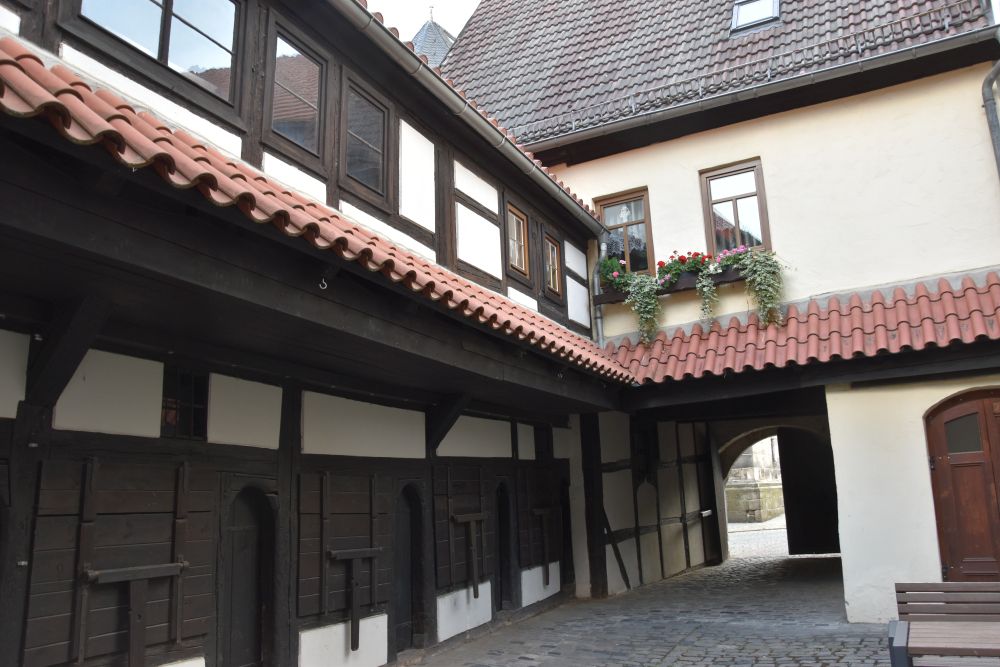
Exploring Thüringen – Schleiz with Saint Mary’s Mountain Church

In August 2022, we explore Thüringen. After having walked to the castle Burgk in the morning, we visit Schleiz in the afternoon. 


Schleiz, the residence of yet another German principality

Schleiz was the residence of the former principality Reuss-Schleiz. Located on the hill, the two towers of the castle dominate the old city. 
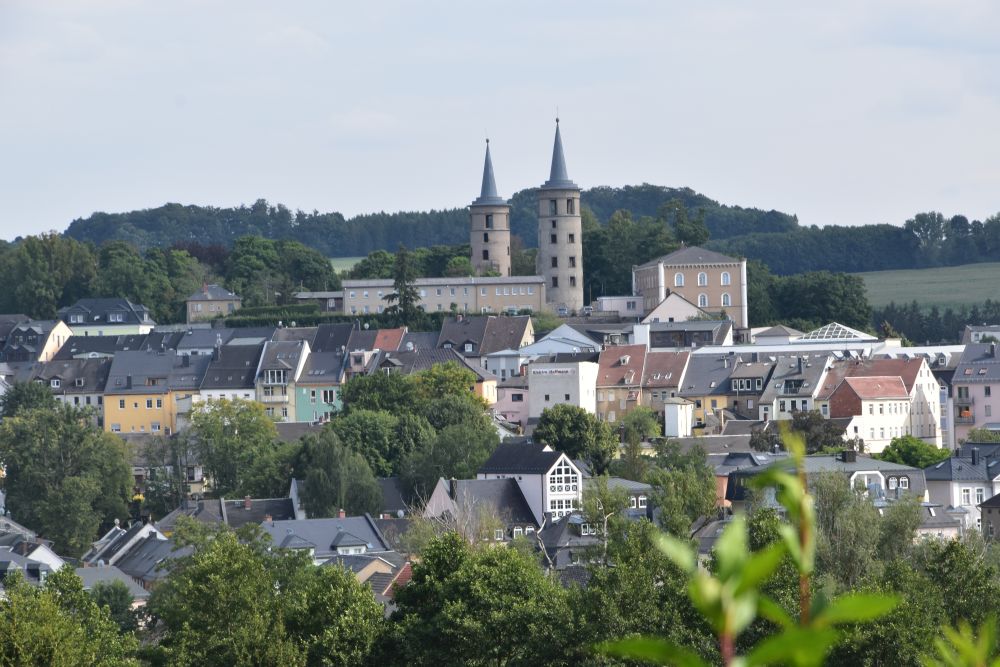
In the 18th century, the Reuss-Schleiz reconstructed the castle in Baroque style. Johann Sebastian Bach performed here in 1721. The castle was destroyed by a fire in 1837, was rebuilt again and was definitely destroyed in the bombings of the Second World War.

The old mint is a museum today, closed on Mondays, as it is often the case. 
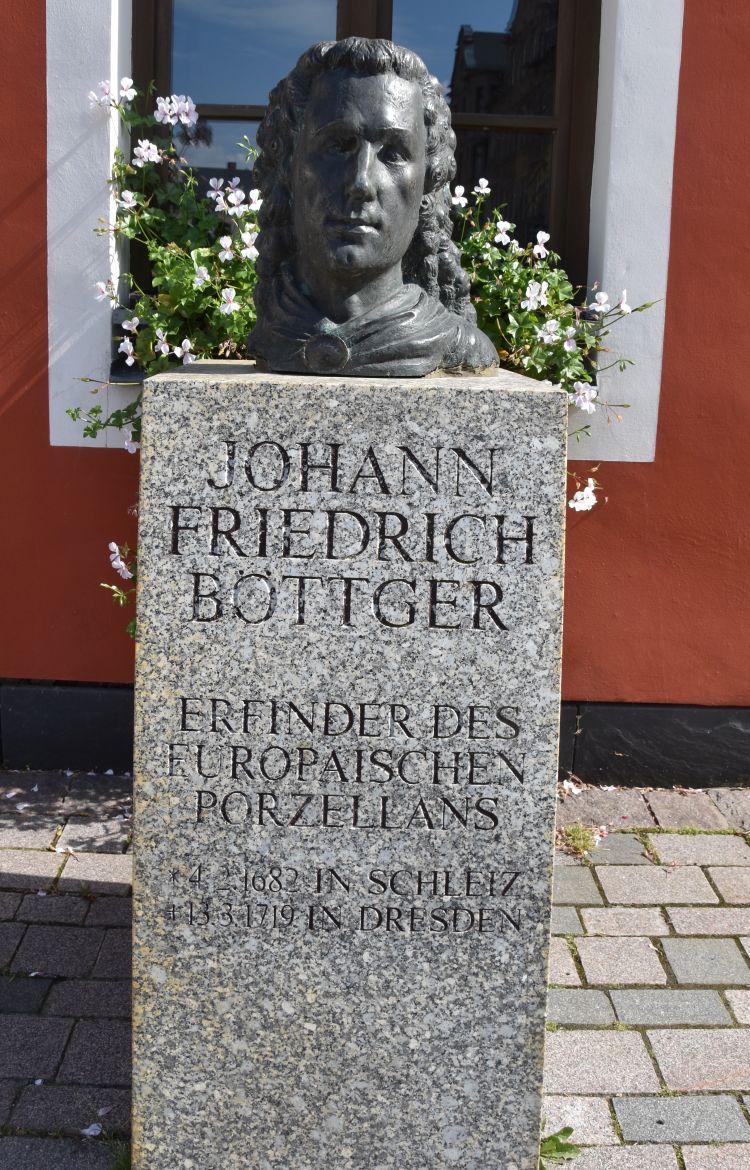
Born at Schleiz in 1682, Johann Friedrich Böttger invented the porcelain for Europe. 

In the years 1869-1876, Konrad Duden directed the high school of Schleiz. We all know the dictionary for German spelling that he initiated. 

Today, Schleiz is known for the “Schleizer triangle”, one of the oldest German motor sports racetracks.


Saint Mary’s Mountain Church – sumptuous Baroque and an enthusiastic guide

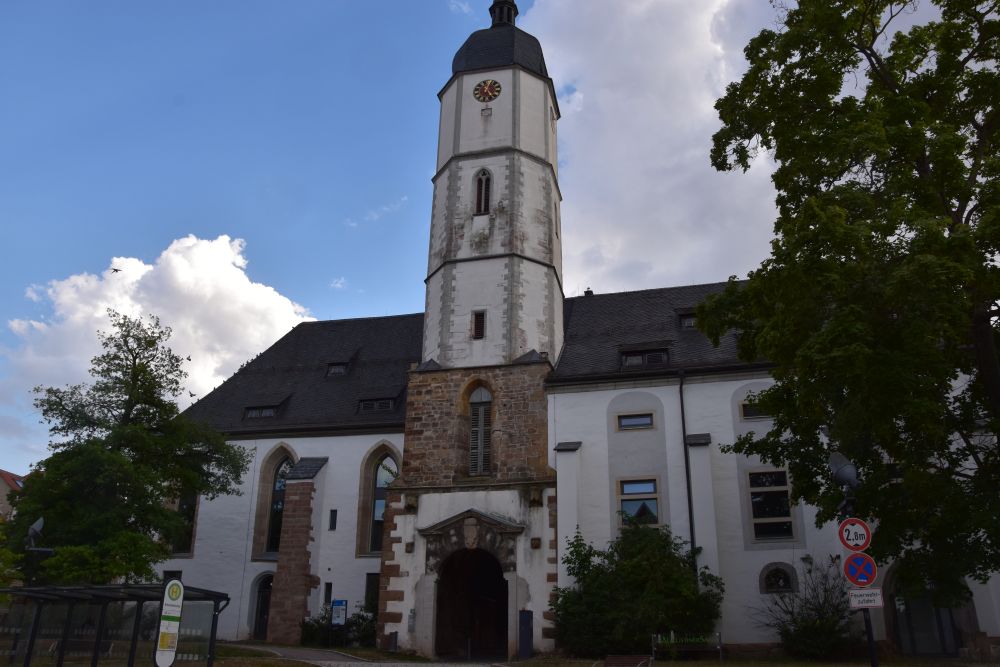
Saint Mary’s Mountain Church (Bergkirche Sankt Marien) is located on another hill north of the city. In the 12th century, there was a Romanic church here. In the late 15th century, the church was rebuilt in late Gothic style.
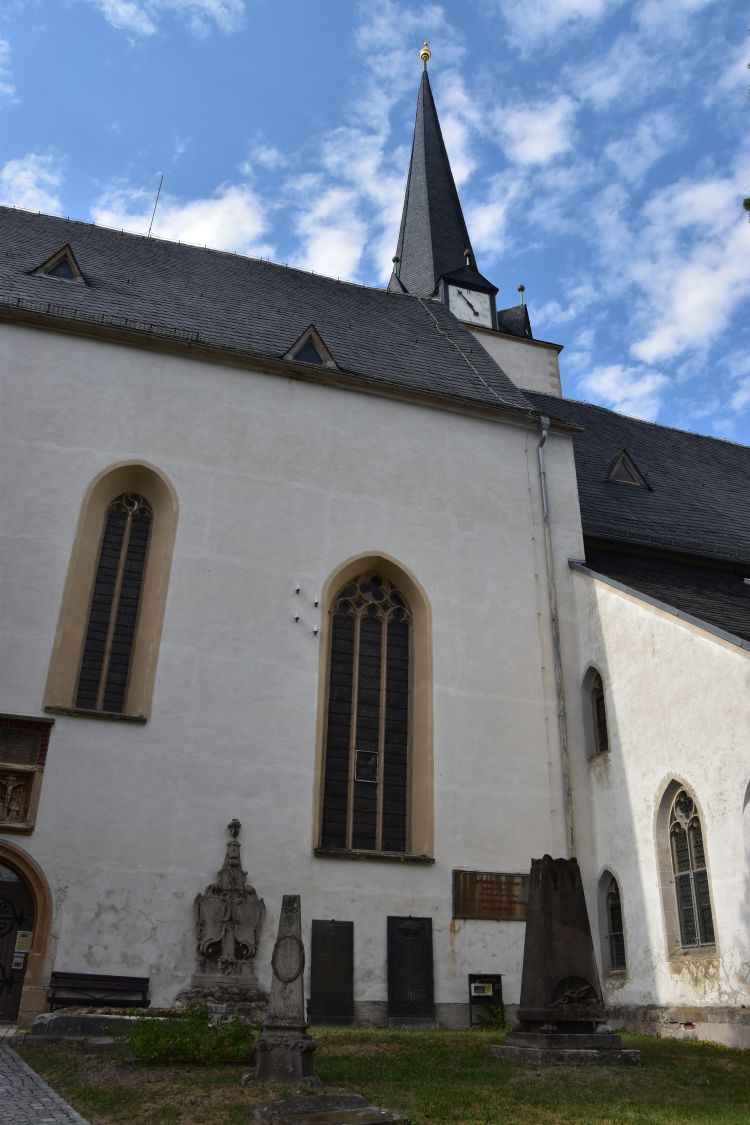
The plate near the door says “open”. A lady approaches us. “Do you want to visit the church?” She is guarding the church, while it is open. She joins us and fills the church with her enthusiasm. It is always a great pleasure to meet someone as enthusiastic and friendly as she was. 

The ribbed vaults from the 15th century reflect the Gothic style. 
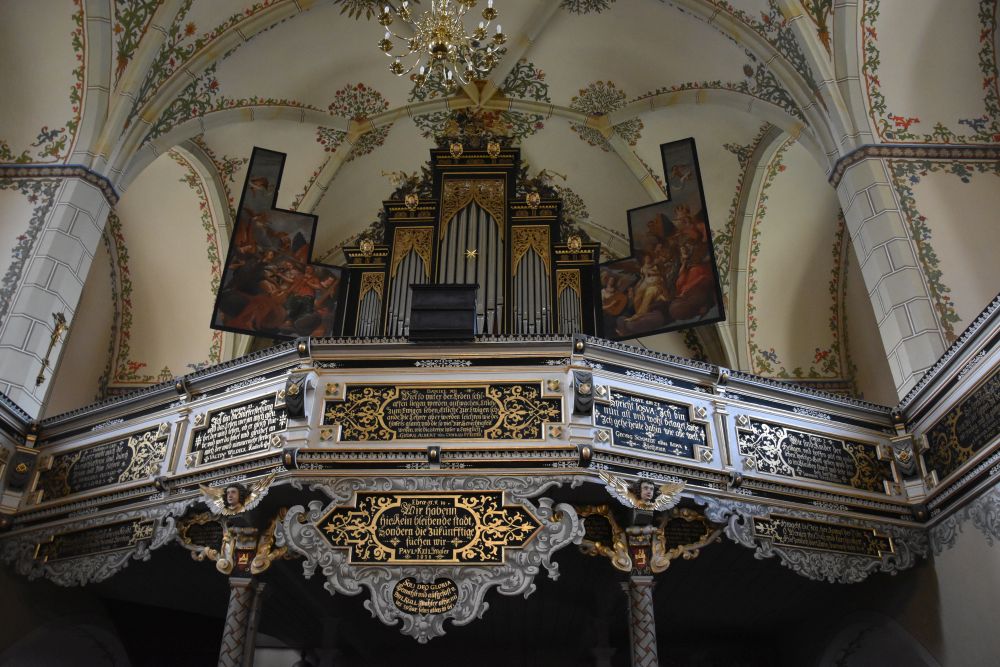
Inside, the church has been decorated in sumptuous Baroque style in the 17th century, by Paul Keil. The organ, originally from 1445, has been renewed again and again, and the organ wings were painted in 1620, also by Paul Keil.

In 1896/97 the church was renewed and repainted inside. At that time, the vaults have been adorned as a “sky meadow”, taking into account some remains of the Gothic frescos.

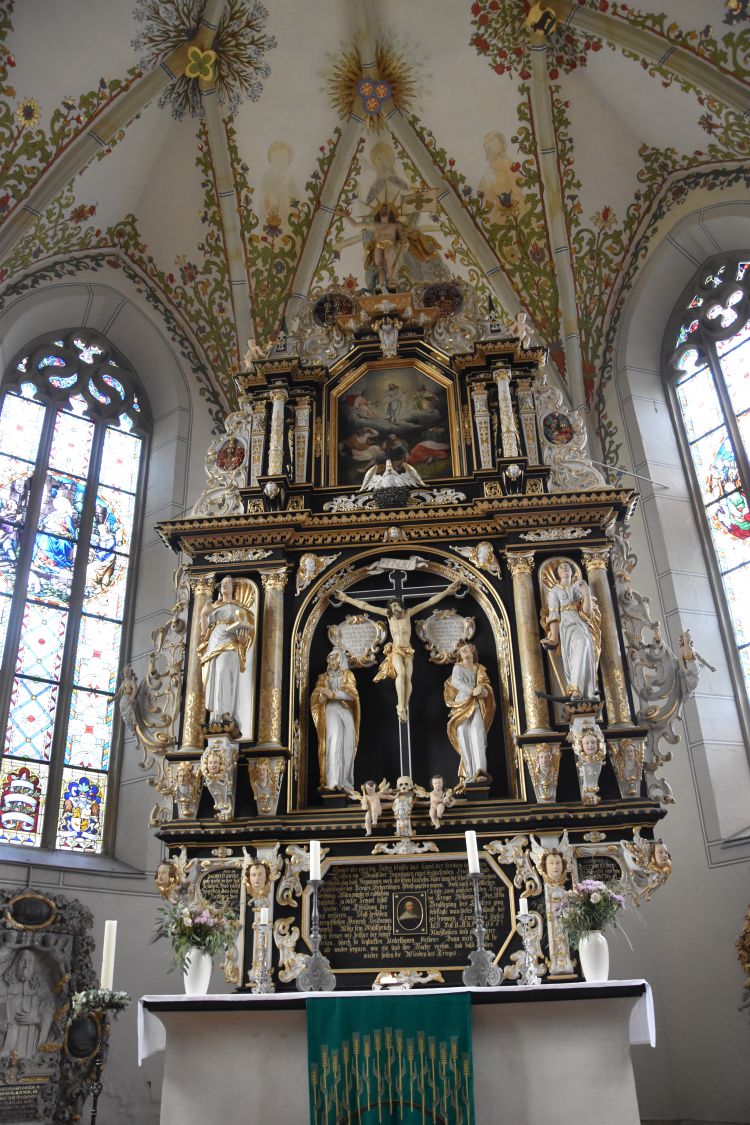
The altar was completed in 1635. Maria and John flank the cross.
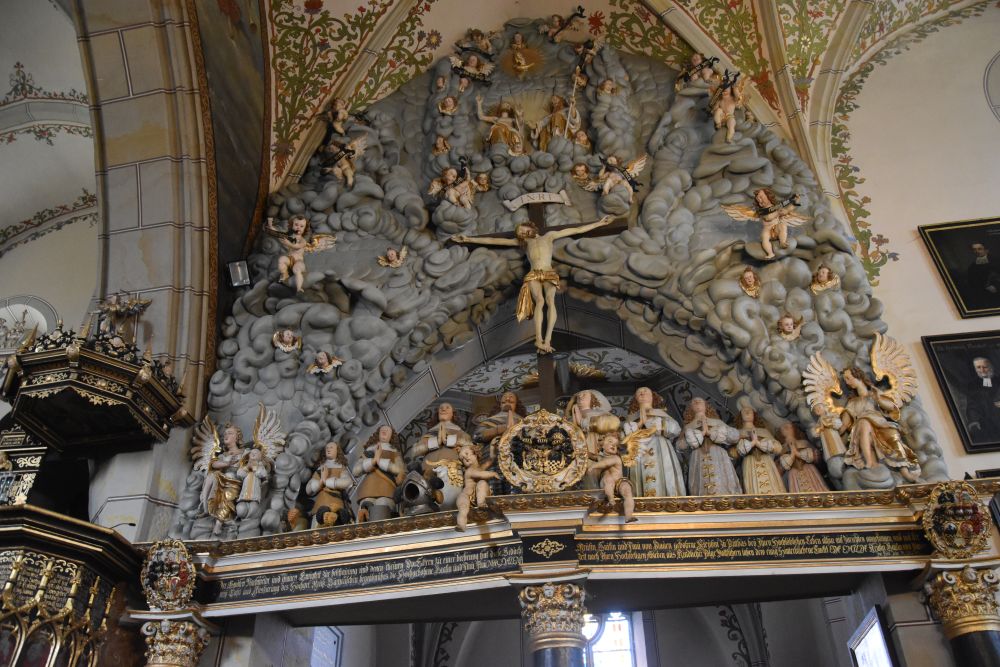
The church is an aristocratic burial site, as the so-called Epitaph of Burgk shows. The carved figures represent the noble family of Heinrich II Reuss von Plauen zu Burgk (1608-1639) and his wife Magdalena von Putbus. Above them is the sky with bulging clouds, also carved from wood. To the right and left, two angels guard the children that had died early. 
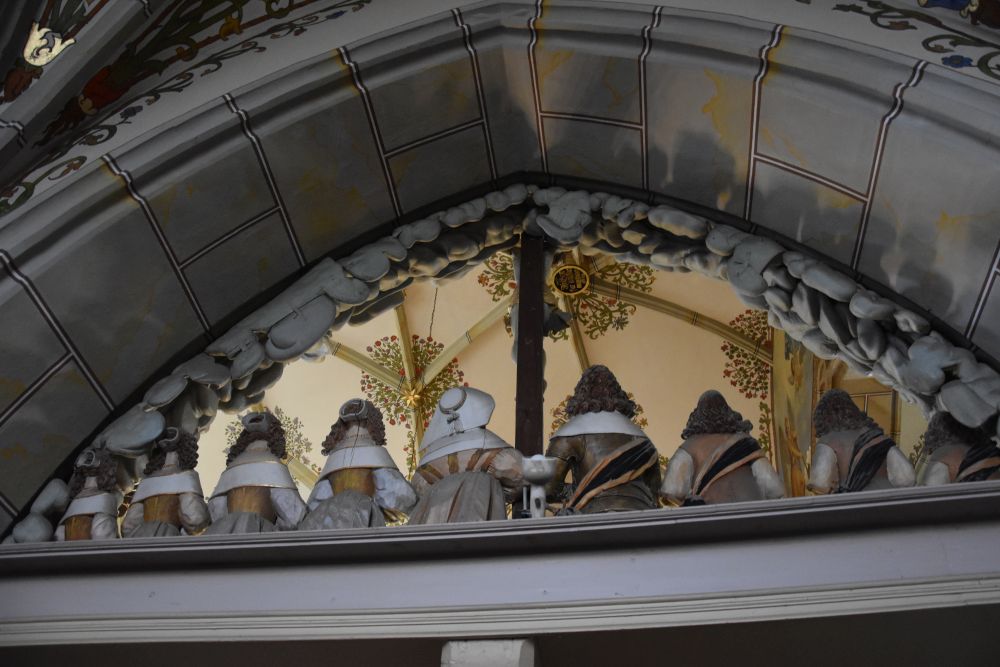
From behind, from the belfry chapel, I look at the hats and wigs of the family Reuss. Very unique, I have never seen anything like that in a church.
Our guide is proud of this Epitaph, carved between 1642 and 1706.

In the belfry chapel, we admire the late Gothic sarcophagus of Henry XII, the middle, of Gera at Schleiz and Lobenstein (1438-1500). 
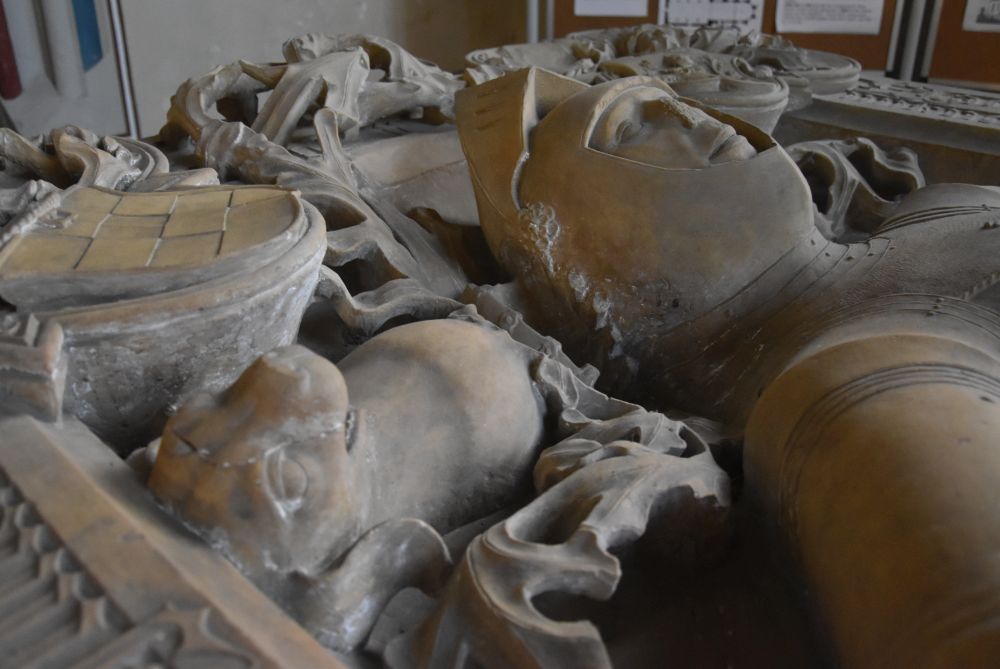
His dog rests with him, and he holds the coat of arms with the lion. 
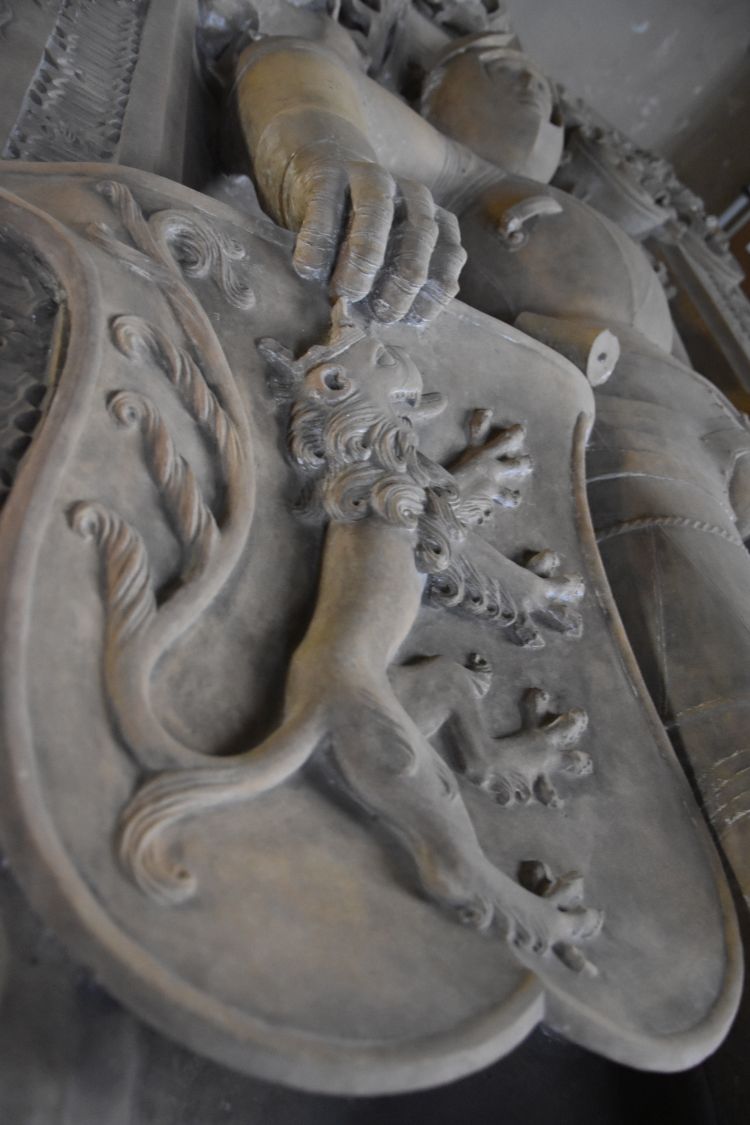
Our guide tells us proudly: “This is the most valuable artefact in our church.”

Across the family Reuss zu Burgk is the loggia, where the counts prayed discretely. 

Anna Dorothea Slevogt died in childbed in 1686. She was young. Her family dedicated this epitaph with the Deposition from the Cross to her.  

Her husband, Professor Slevogt, dedicated a second epitaph to her. Our guide said, he did not want to be considered as mean.

This is the place where the preacher stood (in old German: “Pfarrstand”). 
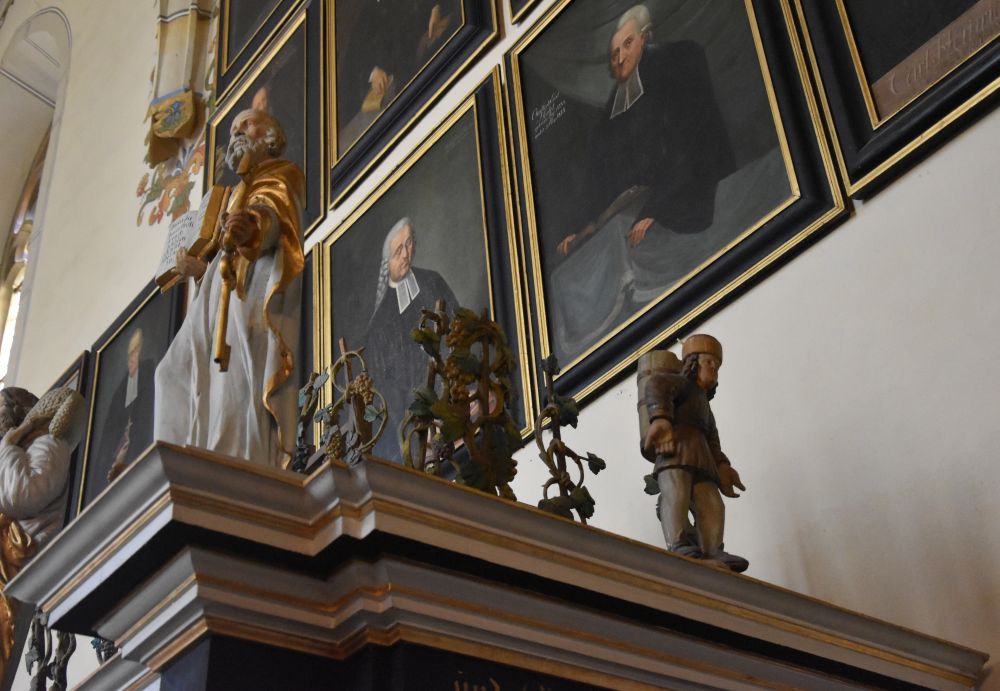
The roof carries the good shepherd Christ, flanked by John the Baptist and Petrus. Behind them is the vineyard. The carved figure carrying harvested grapes on his back is the only one left from a series of workers at the vineyard. The other figures were stolen after 1990. Since then, the community has opened the church only with a guard, our guide tells us sadly. How can someone be so rude and steel the decoration in a church? 

Behind the preacher’s stand is a wall with portraits of men full of dignity. They are the former preachers of this church. 

The friendly and enthusiastic guard and guide has made visiting Saint Mary’s Mountain Church a very special experience – thank you. 


Good-bye Schleiz

We return to our hotel and enjoy the carefully prepared meal – trout and zander. I have a glass of wine from Bad Sulza.

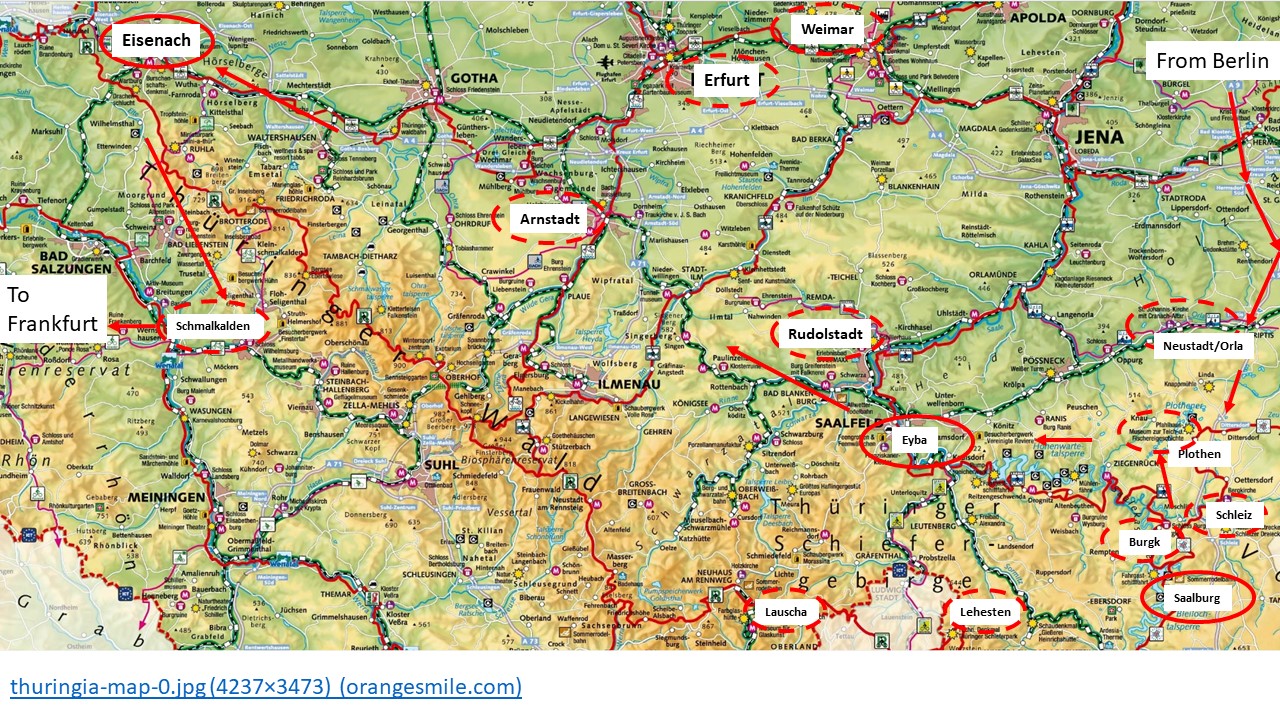
Tomorrow we will leave Saalburg. We have booked a room at Eyba near Saalfeld as a basis to explore the cities along the so-called Via Regia, such as Weimar and Erfurt. On the way to Saalfeld, we will visit the Plothener Teiche (ponds of Plothen).
 

Sources

  • Wikipedia about Schleiz https://de.wikipedia.org/wiki/Schleiz
  • “Die Bergkirche Schleiz”, Schnell+Steiner Regensburg 2008
  • Heidi Schmitt, “Thüringen Reiseführer”, Michael Müller Verlag 2020
  • Dina Stahn, “Bädeker Reiseführer Thüringen”
  • Hans Müller, “Thüringen”, Dumont Kunstreiseführer 1998, p. 199ff
Exploring Thüringen – Walk to the castle Burgk

In August 2022, we explore Thüringen (Thuringia) on our way from Berlin to Switzerland.

Now, we stay overnight at Saalburg to see the upper part of the river Saale.


Approaching Saalburg

As we approach Saalburg, we see signs pointing at “SMS” all over. We drive along tents and tents. What is this?

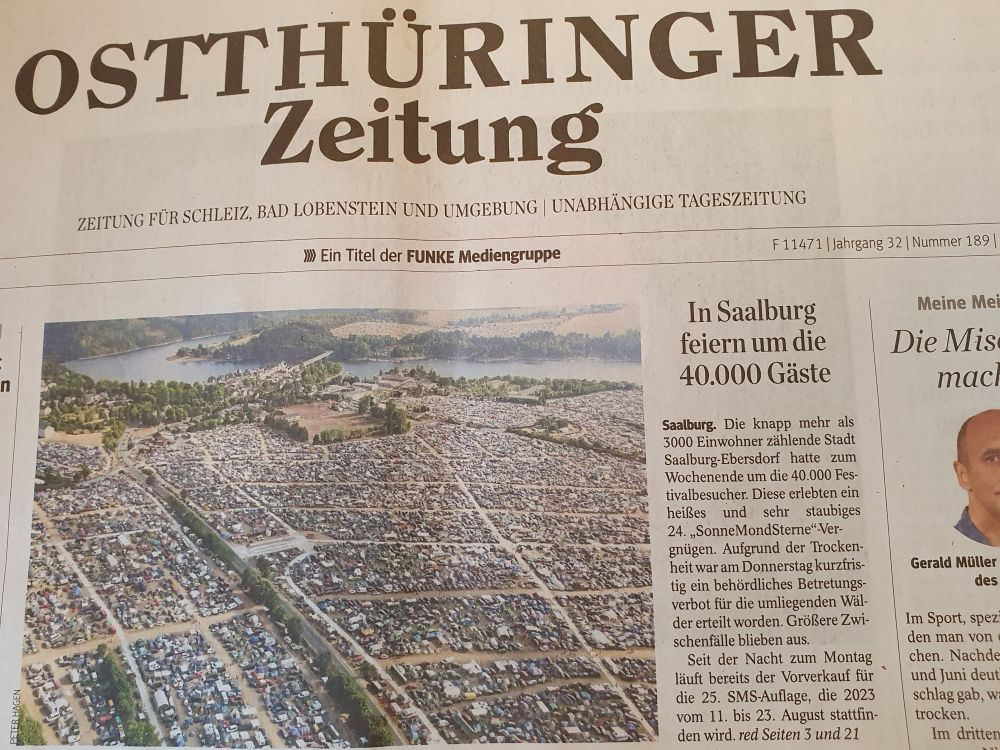
It is the Saalburg festival called “SonneMondSterne” (hence SMS). It took place from August 11th to August 13th.  40’000 guests attended it. They camped along the Bleichloch Lake. Incredible! I include the article of the local newspaper “East Thuringia” (Ostthüringerzeitung). 

We arrive on the 14th of August, and the area is still full of tents.


Our hotel at Saalburg

We settle at the hotel Kranich at Saalburg that declares to be a four-star place. The cooks ARE worth the stars – the meals they prepare are delicious. And the view from the restaurant terrace is worth the stars as well. 

The rooms are beautifully renovated, but… look at our view from the window: There is the bridge that crosses the Saale with lorries, already early in the morning.

Not exactly the view of the lake that we had expected based on the promises given, not quite four stars. In addition, the hotel manager’s mood was not exactly four stars either. What a pity for the excellent cooks and the friendly service personnel.

Nevertheless, we will stay here for two nights to explore the area around Saalburg.


Walk to Hanging Gangway along the Kobersfelsen closed – rockslide 

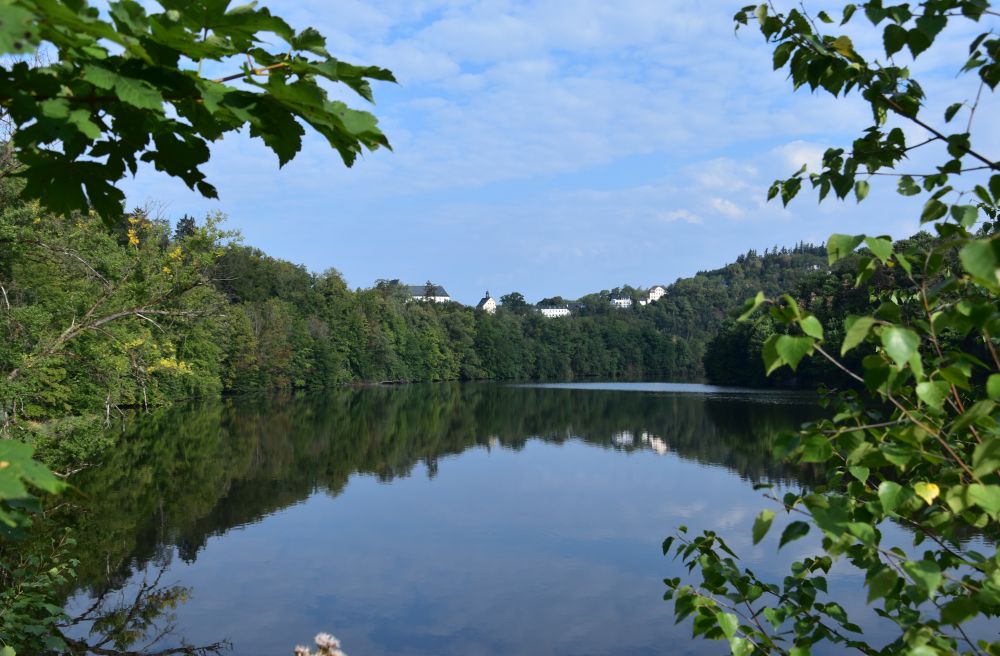
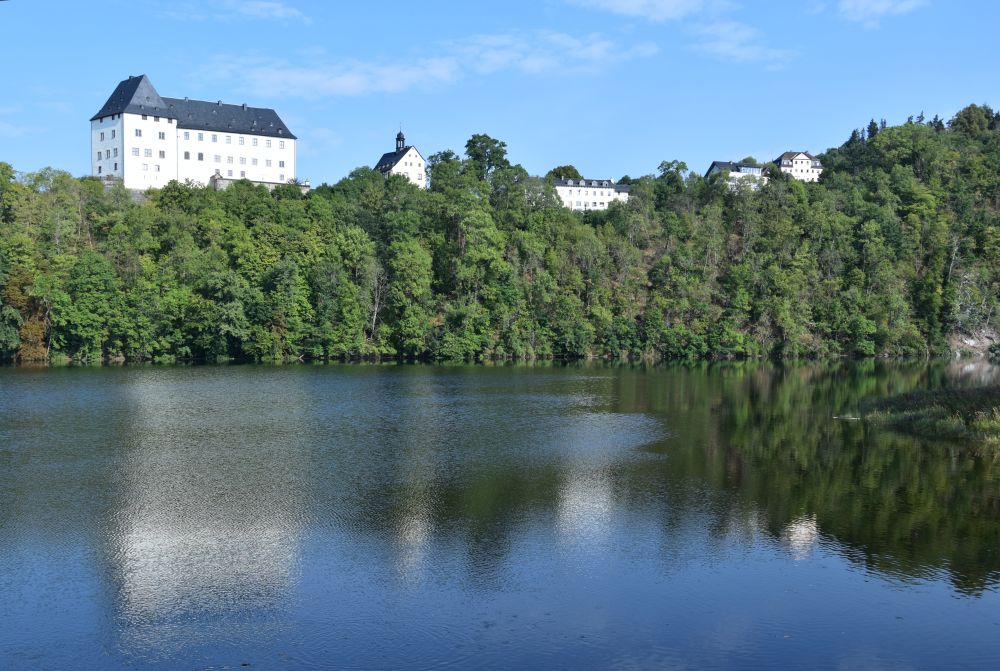
We drive to the bridge “Eisbrücke” and park our car. From the bridge, we see the castle Burgk reflect in the river Saale.

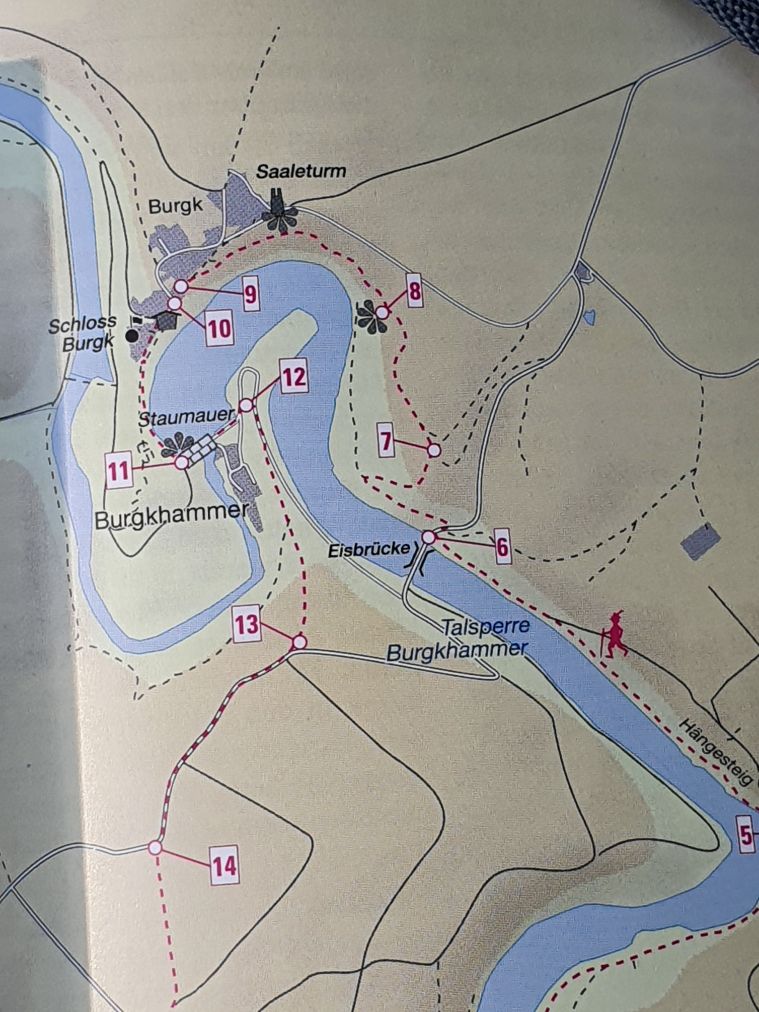
Our Müller guidebook proposes to walk to the Hängesteig (hanging gangway) along the Kobersfelsen, which is a steep rock on the river Saale. 

(Source:  Heidi Schmitt 2020)

The access is near the Eisbrücke (6). However, we find the path closed. A rockslide has destroyed the gangway. 

This is the kind of rocks that has slipped off here. We are in the Thuringian Slate Mountains (Thüringer Schiefergebirge). 
We decide to walk to the castle Burgk instead.


Walking to the castle Burgk

We approach the castle Burgk on the left-hand side of the Saale.
Next to the castle, we can see the view tower that we plan to climb.

We cross the dam (11 and 12). A steep path takes us up along the rocks to the castle Burgk and the village (9 and 10).


Burgk – an impressive castle

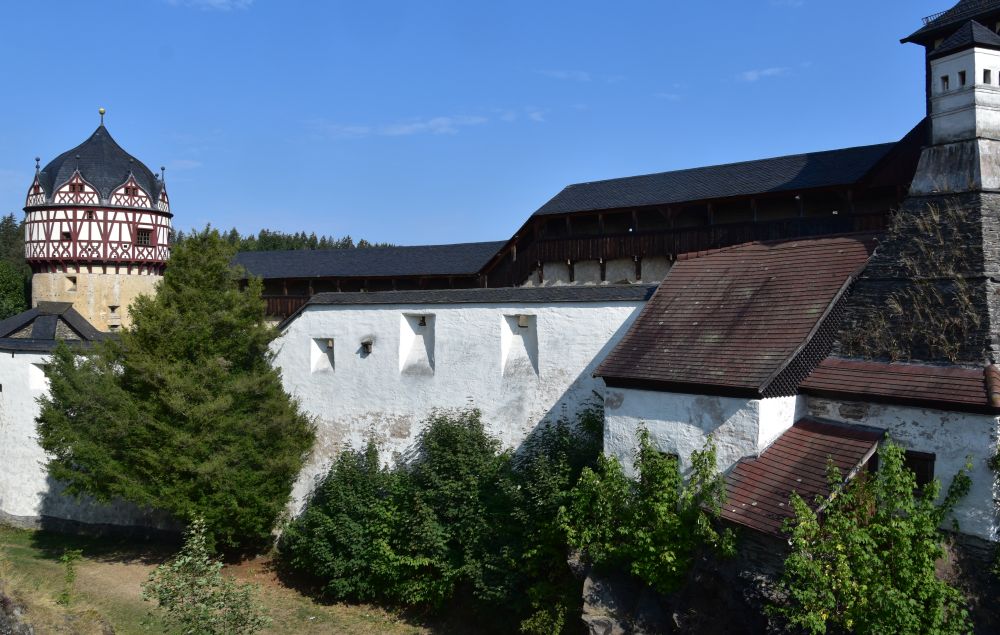
The castle Burgk was mentioned first in 1365. It changed hands several times. It belonged to the noblemen Reuss until 1945. The kitchen chimney is famous – the largest in Germany – and so is the Silbermann organ (by the German Silbermann organ builder, the brother of “our” Silbermann). However, today is another Monday – the castle is closed. 

We cross the bridge without paying… in former times a person had to pay one Pfenning, a horse and a cow each 4 Pfenning, young animals one Pfenning and a wheelbarrow costed 3 Pfenning. Interesting price differentiation. 

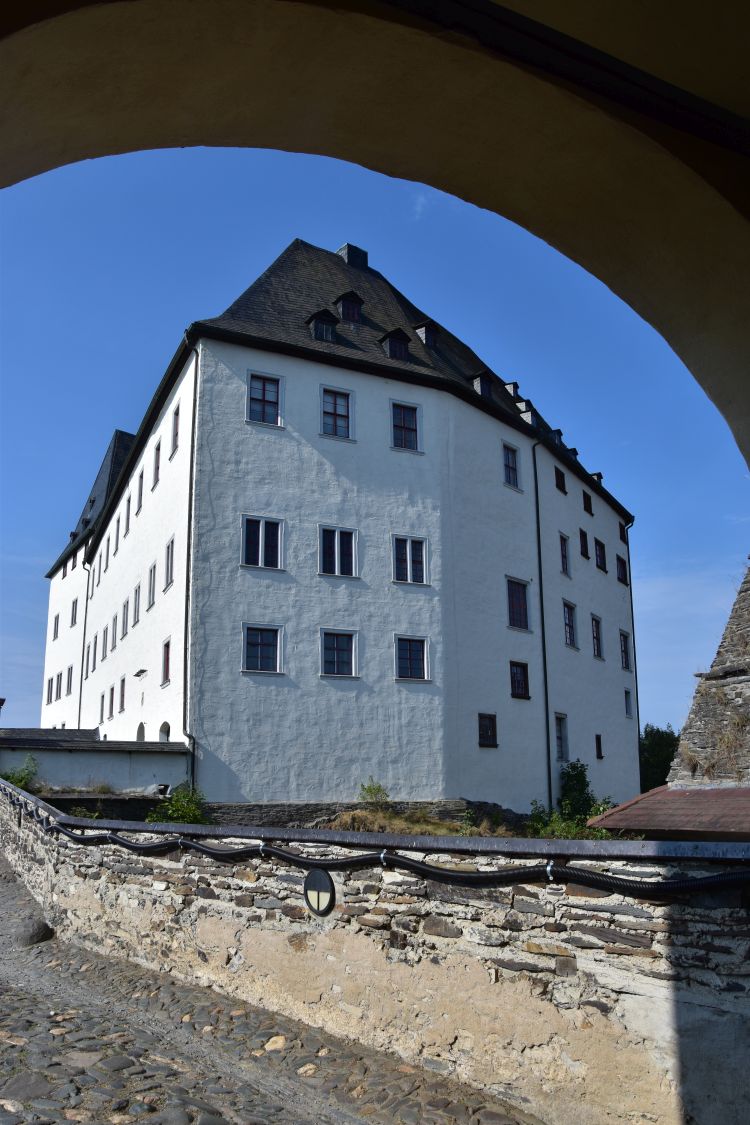
The castle was amplified and reconstructed several times to become the hunting and summer residence of the family Reuss in the 18th century, as the panel in the castle tells us. 

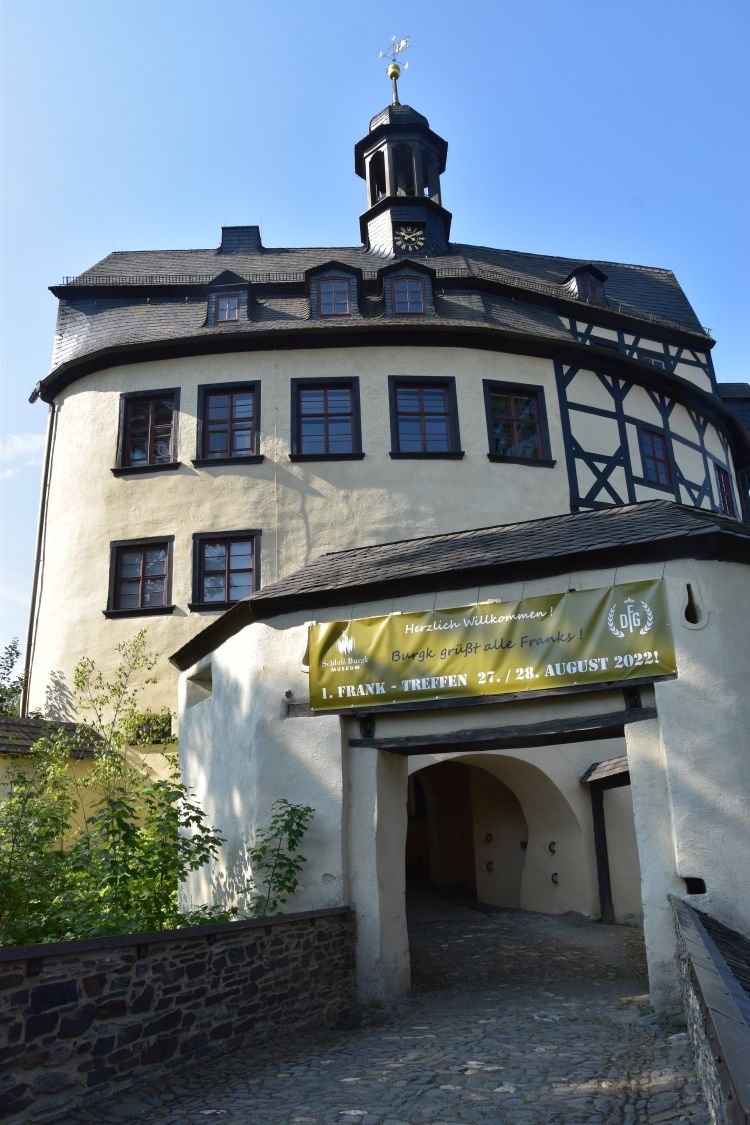
A meeting of the Franks is planned end of August.


Climbing the view tower (Saaleturm)

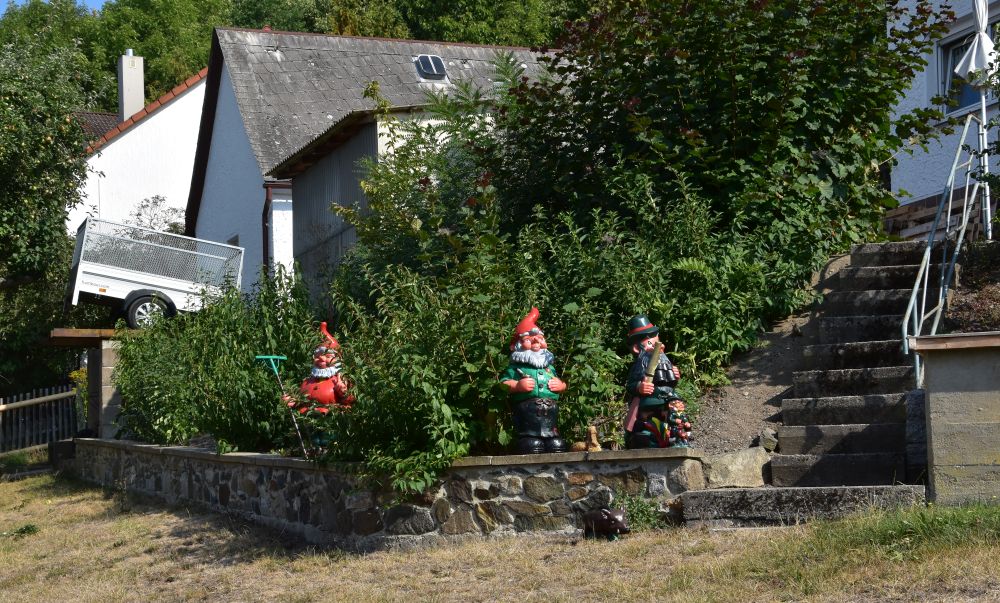
We go uphill along houses with well-kept gardens.

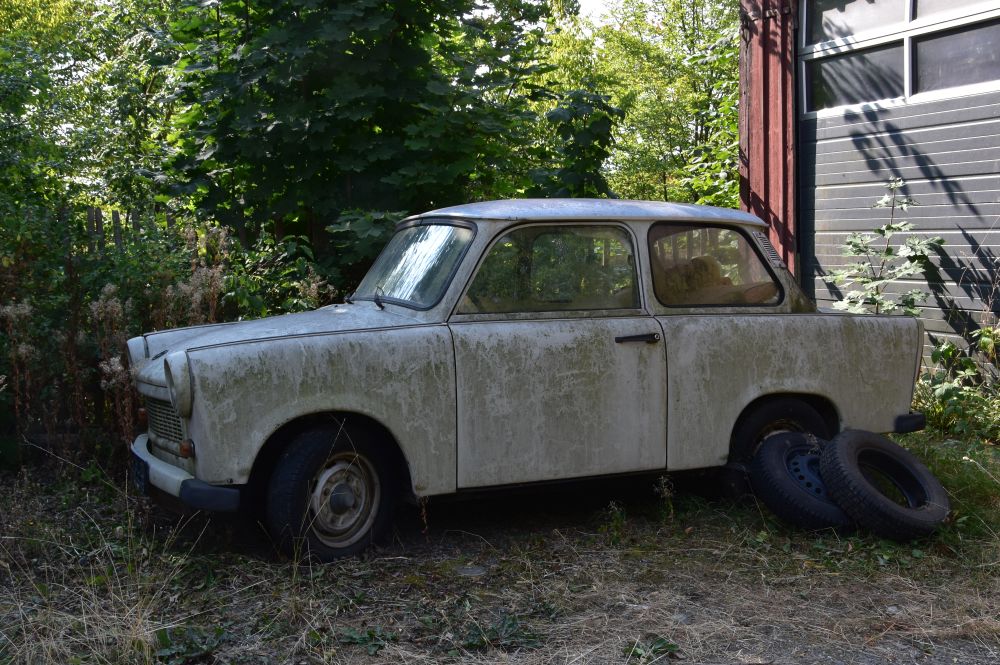
A Trabbi stands in front of a garage that might no longer be in use.

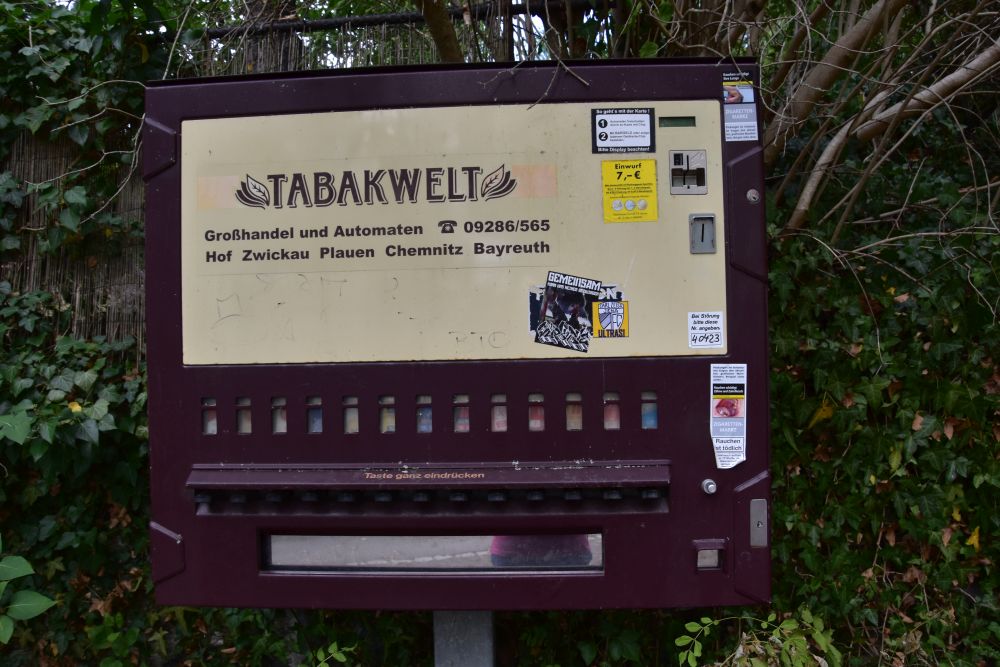
This must be a pre-war cigarette dispenser. It seems to be still in use.

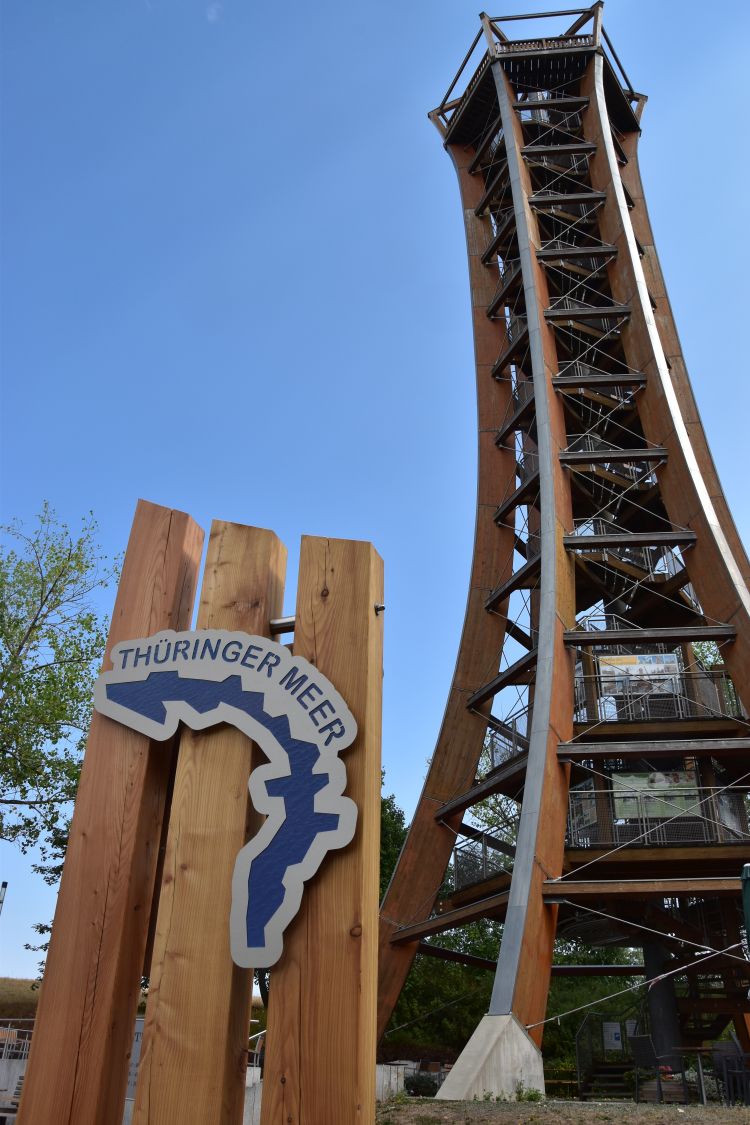
The view tower promises a view of the sea of Thuringia, which is the nickname of the upper Saale that has been dammed up several times.

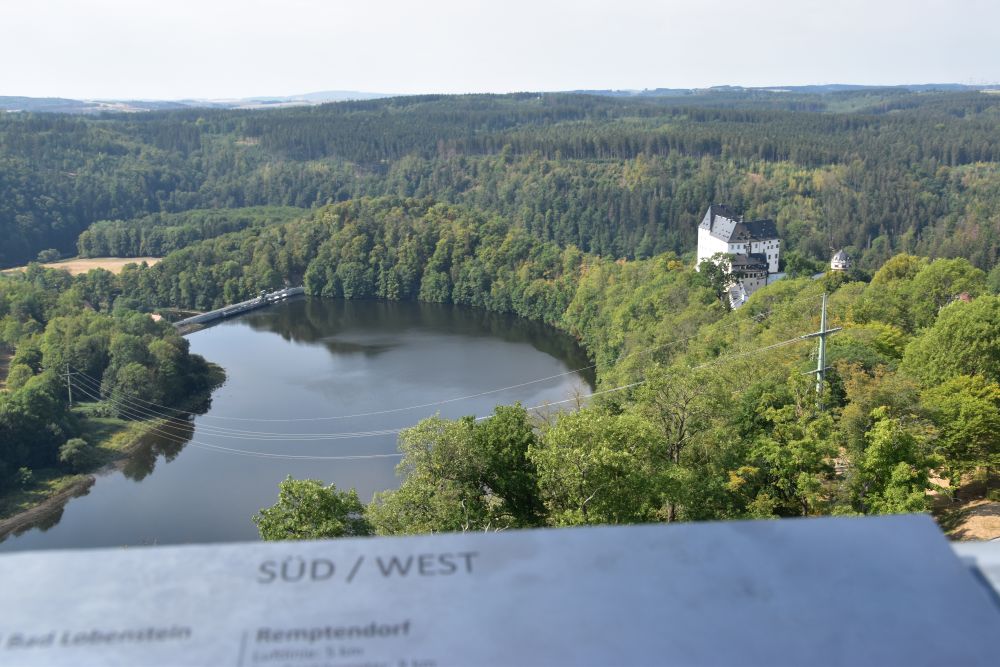
From the tower platform we can see the Burgkhammer dam and the castle Burgk. 

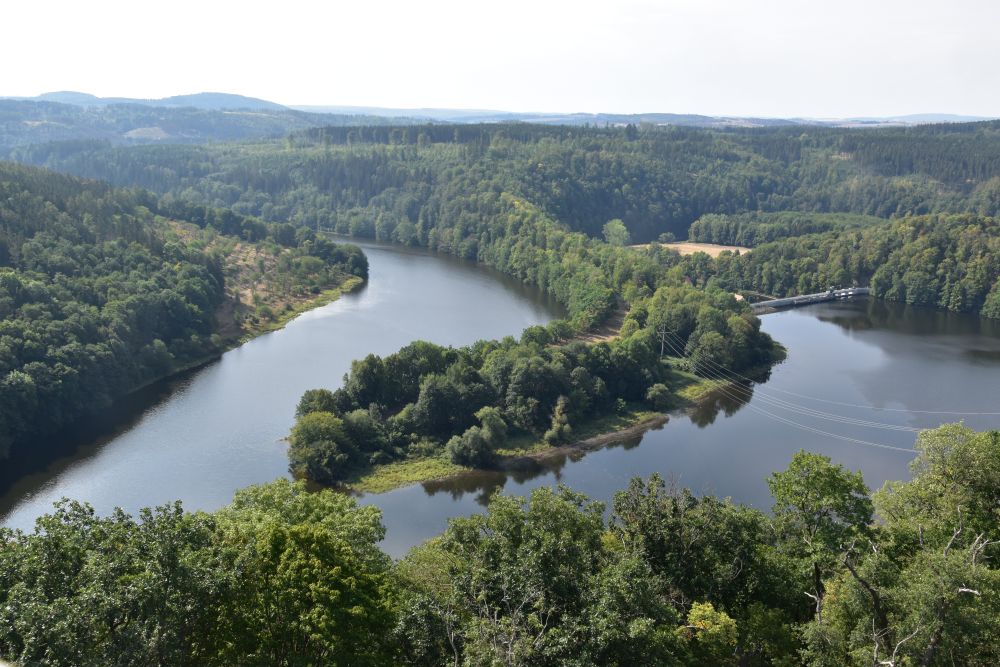
The dammed Saale above the Burgkhammer is meandering. 

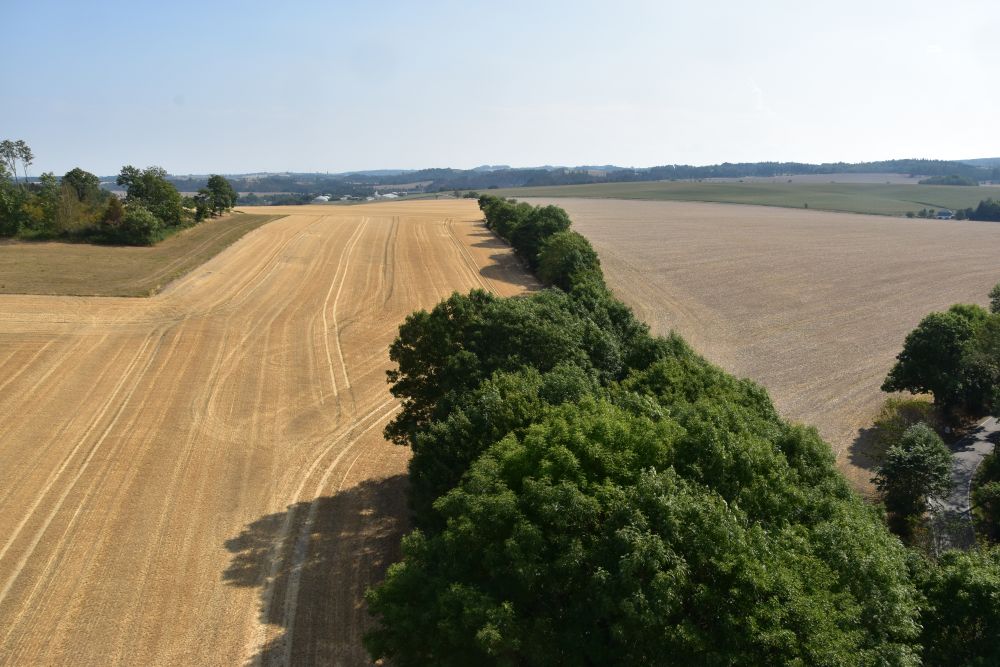
Dry fields and soft hills to the north…

… and to the east.


Walking back along the right-hand side of the Saale

Along the steep slope on the right-hand side of the Saale we walk back to the Eisbrücke, where our car is waiting. The Saale appears between the trees. 

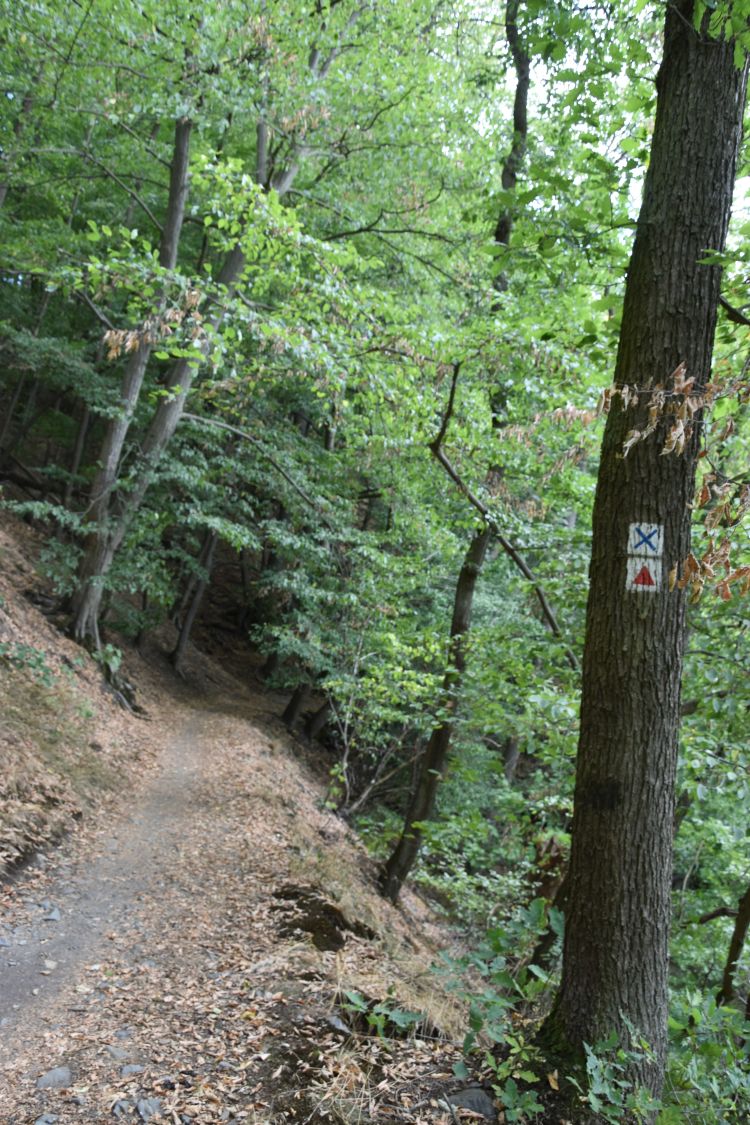
The marked path leads along the steep slope.

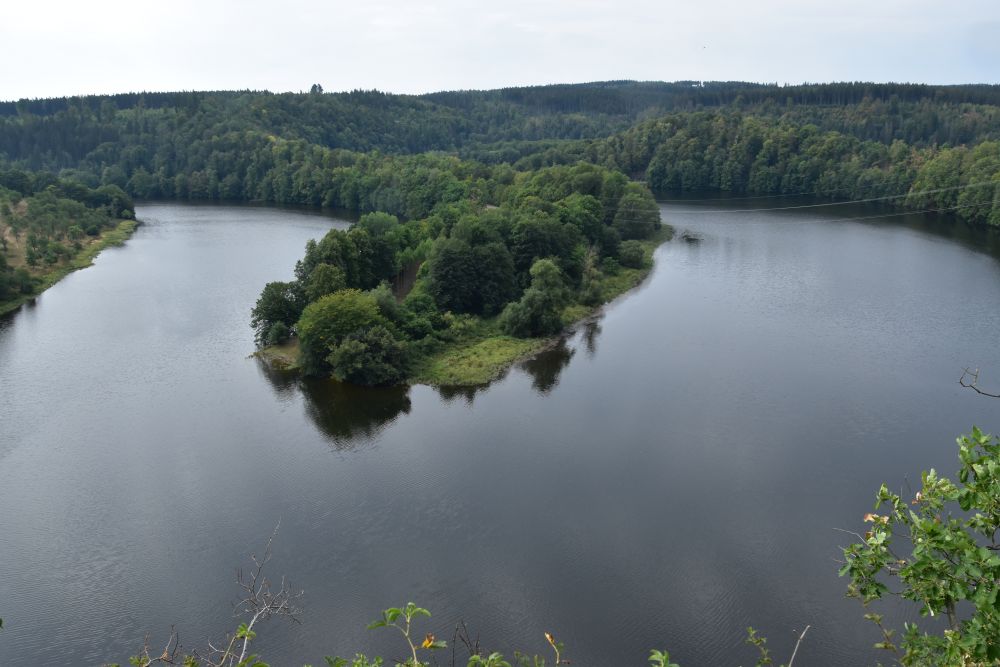
The viewpoint (8) allows to take photos of the meandering Saale.

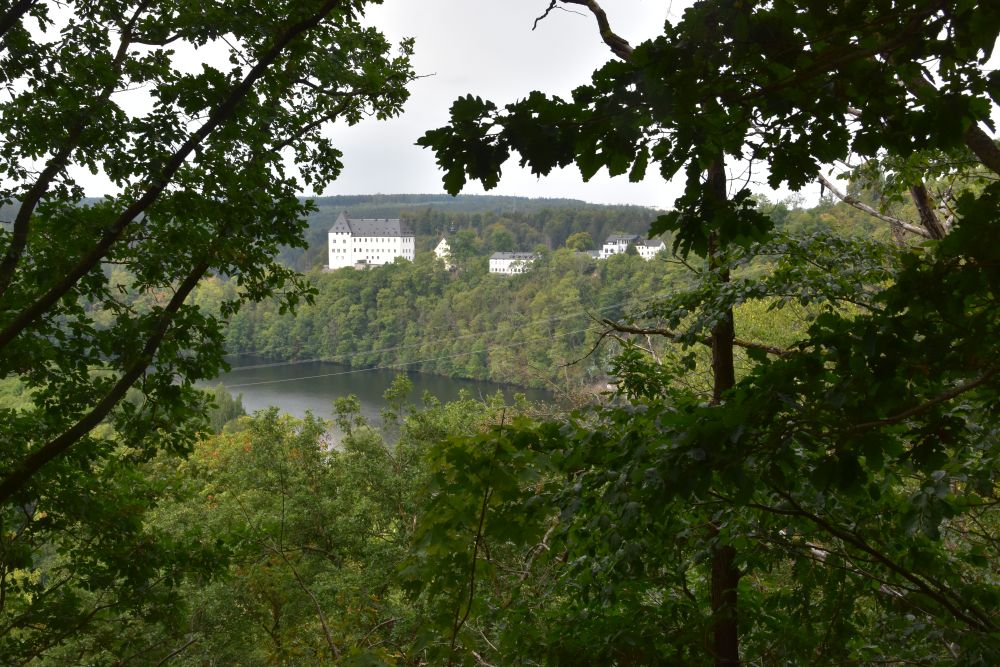
From between the trees, we look back to the castle Burgk.

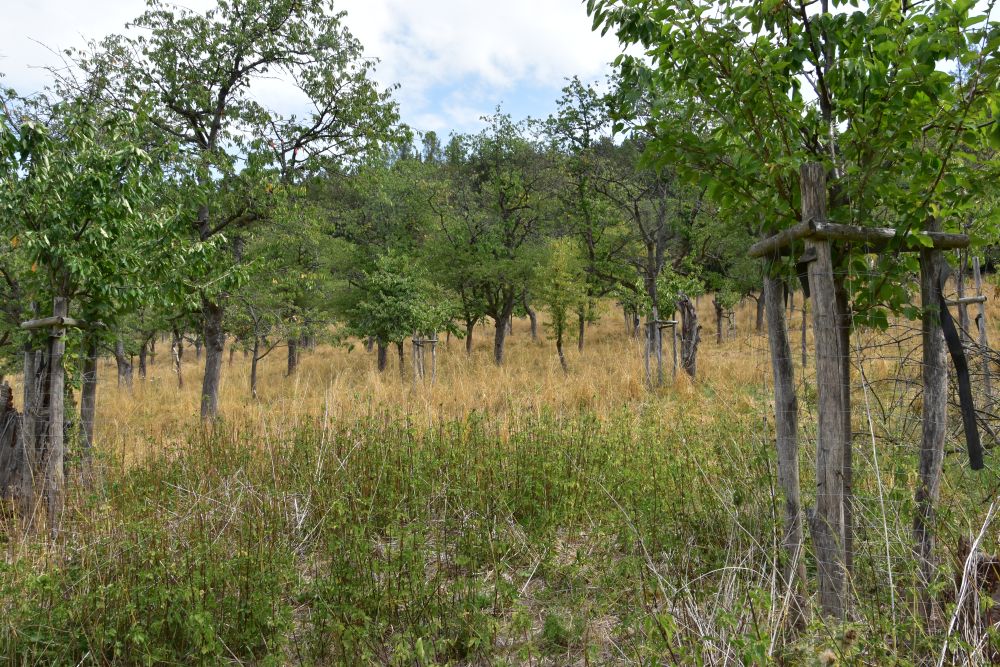
We reach the meadow orchard (Streuobstwiese, 7). 

A panel explains the economic and ecological value that meadow orchards have had for centuries.

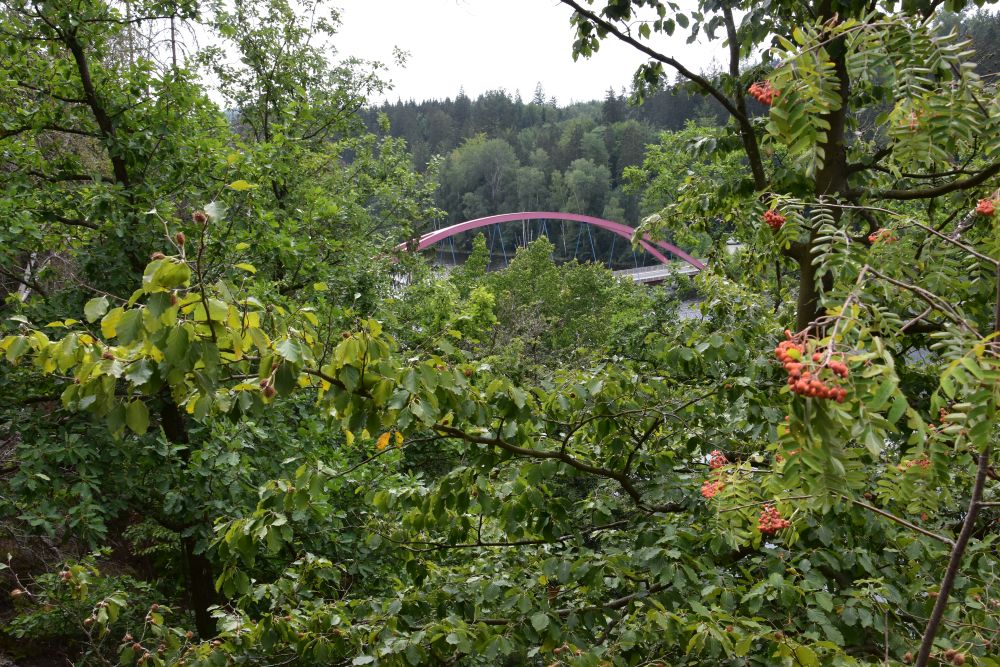
Soon, the Eisbrücke appears behind the trees.

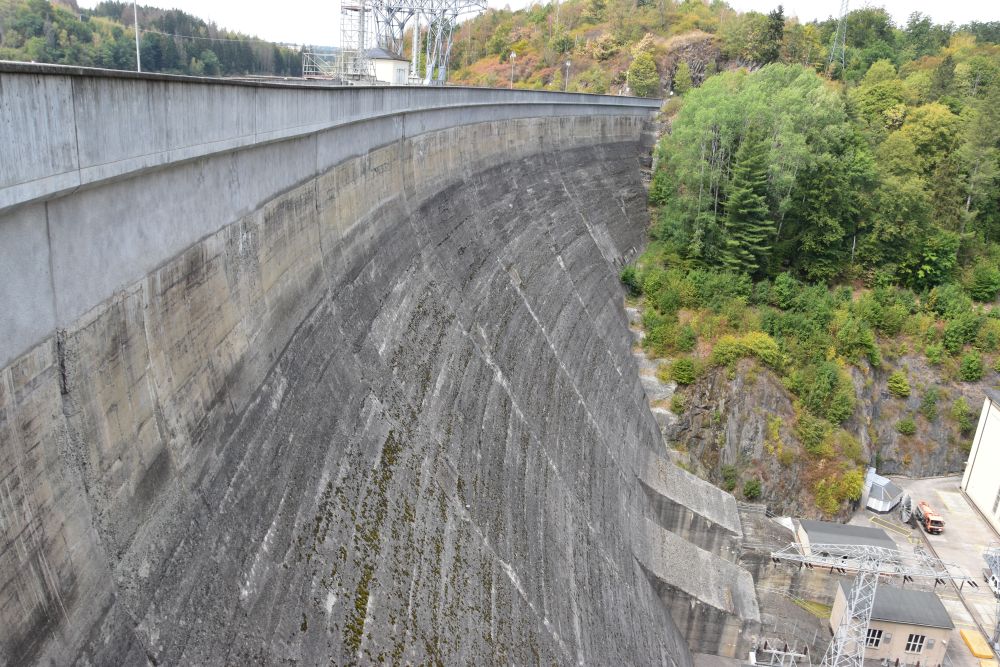
We drive back to Saalburg, with a stop at the Bleilochsperre that dams the Saale with this impressive wall.

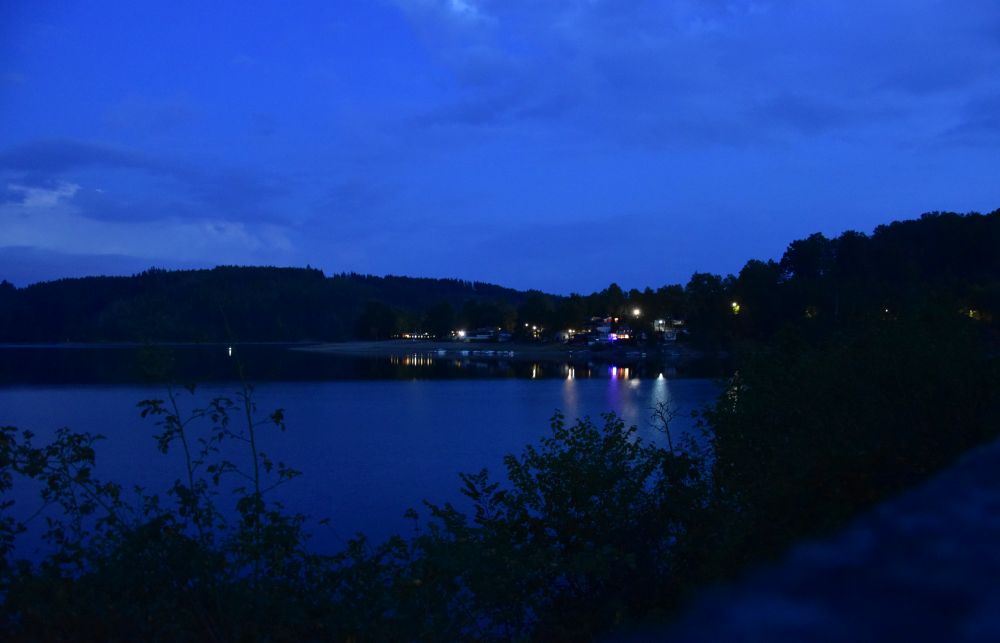
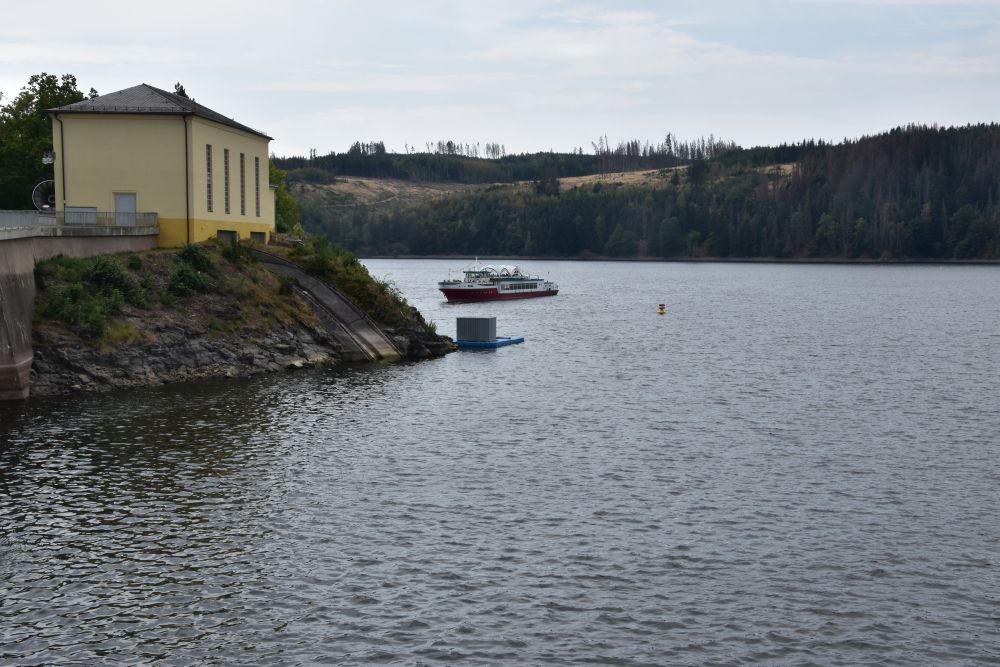
On the upper side of the dam, there is this peaceful lake that extends to Saalburg-Ebersdorf.

This was a wonderful Monday morning! 


Map overview


Sources: 

  • Heidi Schmitt, “Thüringen Reiseführer”, Michael Müller Verlag 2020
  • Dina Stahn, “Bädeker Reiseführer Thüringen”

Exploring Thüringen – Neustadt an der Orla

In August 2022, we explore Thüringen (Thuringia) on our way from Berlin back to Switzerland. 

Our first stop – for a coffee –  is Neustadt an der Orla. This is, where people meet, the painting on this wall says: “… hier trifft man sich”.


Meeting people at Neustadt an der Orla turns out to be not that easy: Road blocked!

Getting to Neustadt seems easy: Leave highway A9, take road B281, leave B281 at the exit to Neustadt and follow the signs to the city centre. Well, in reality, it is not that easy. We leave B281 at the exit to Neustadt and end up in front of a driving ban; the access to the city centre is blocked. No further information.

We drive back to the bypass road B281. We see only ONE entry to B281, which turns out to lead eastwards and away from Neustadt (instead of westwards and towards Neustadt). We return on secondary roads, and end up in front of the road block once more.

The lady at the gasoline station tells us, where the second access to the B281 is – we should look for signs to “Saalfed” that is located to the west of Neustadt (Neustadt, she says, is not indicated here). We drive back to B281, find the sign pointing to Saalfeld, enter B281, drive westwards and soon, we reach the “secret” second entry to Neustadt. Sounds confusing? It WAS confusing.

Finally, we are in the city Neustadt “where people meet”. 


The former Augustinian monastery

The former Augustinian monastery has been destroyed in the Thirty Years War, only the church is left. 

Later, a castle was built here. It is now a school. The church is used for cultural events.


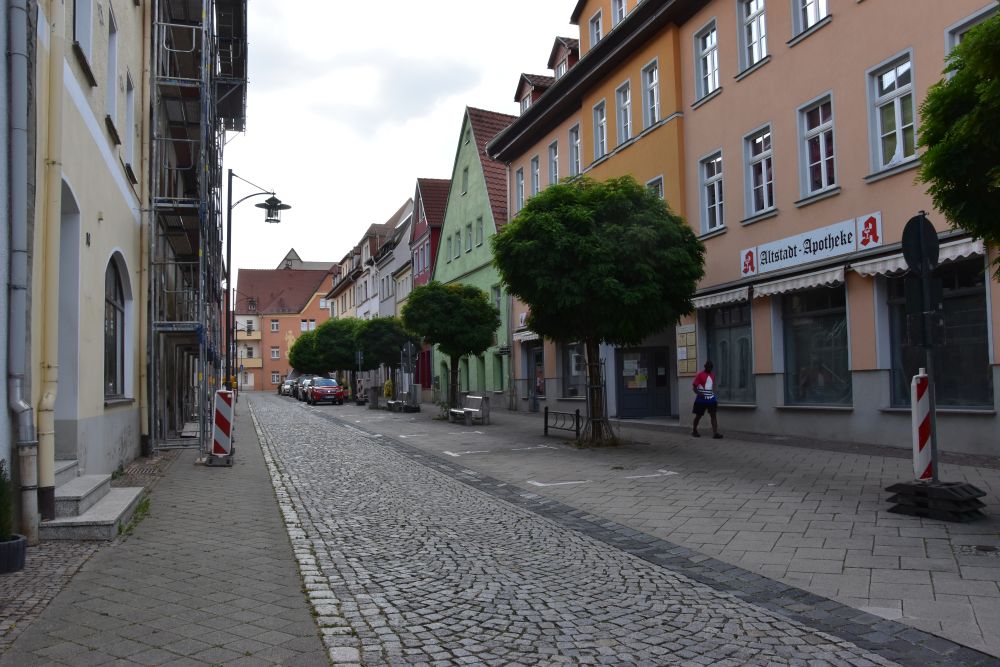
Well maintained city centre with half-timbered houses

The well kept medieval city centre has maintained many half timbered houses…

… and the newer houses built in between are a good match.

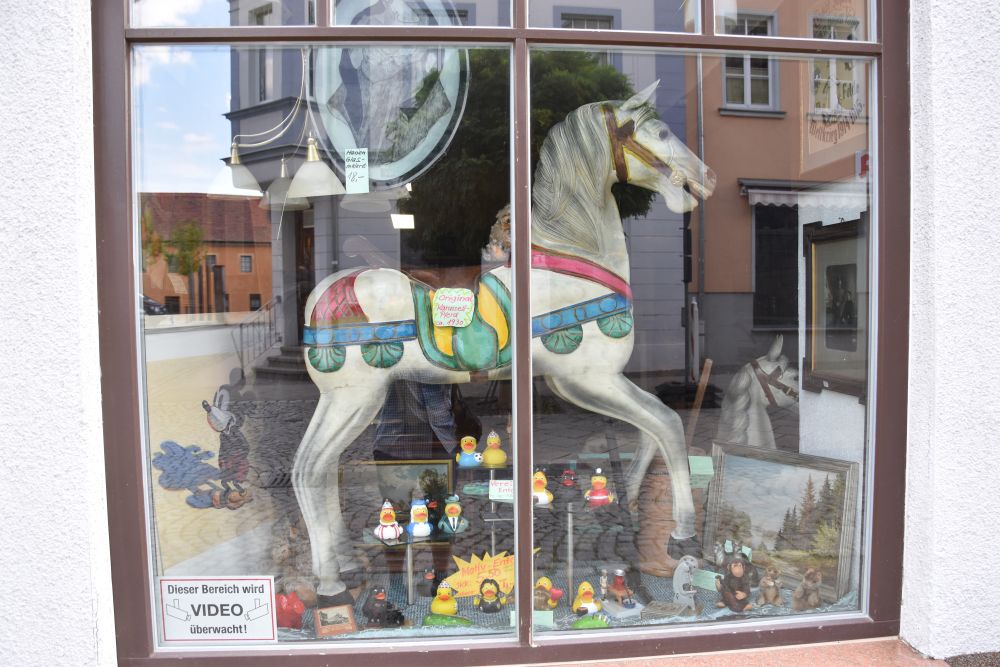
The city was famous for its carousel industry. The carpenter Adolf Heyn founded a carousel company in 1870.

I found this beautiful carousel horse in a shop window.


The market place

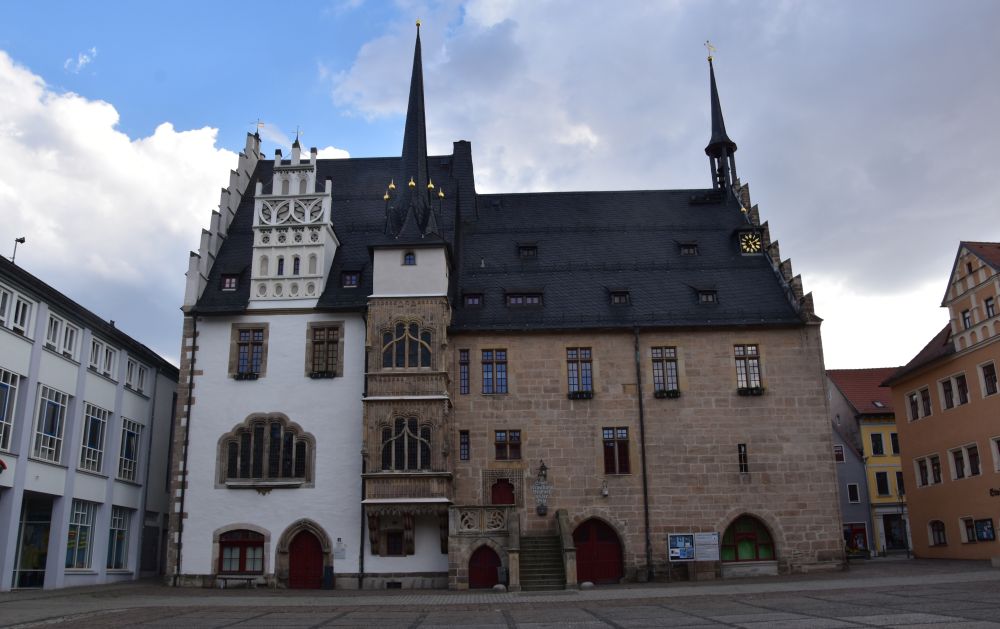
The late gothic city hall with the charming oriel dominates the market place.


Fleischbänke – “meat benches”

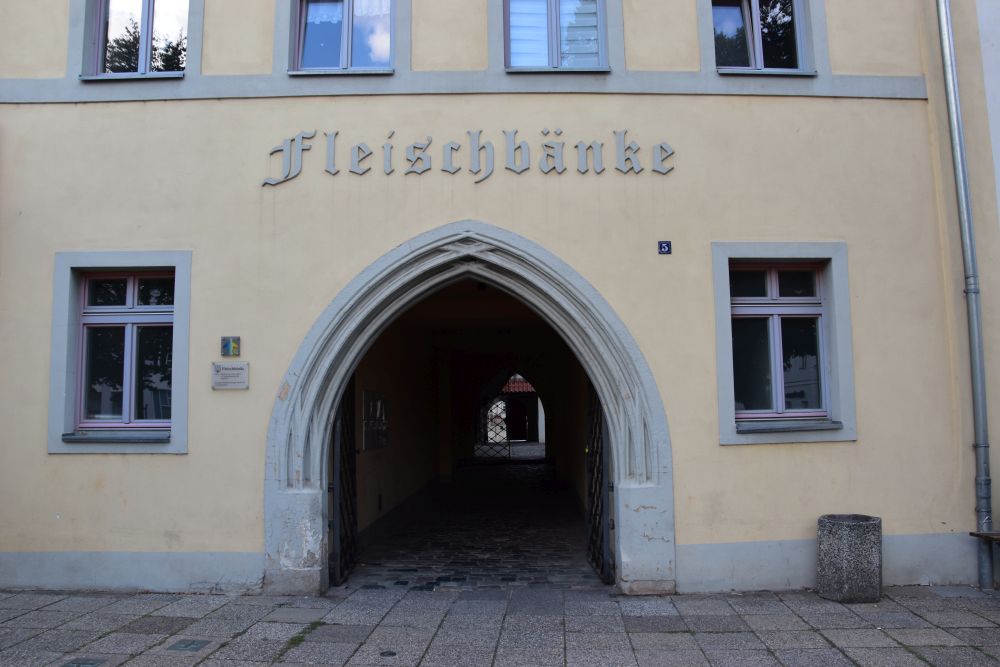
Also at the market place, the gate named “Fleischbänke” (literally  “meat benches”)…

… leads to the medieval courtyard of 1475. Only here, on the meat benches, it was allowed to sell meet, which allowed to monitor hygiene. 

Of the 17 meat benches, 9 remain. They have been restored in 2002.


Saint John’s Church at the Church Square

Saint John’s Church is of late gothic style at the Church Square.

Inside is the altar that Lucas Cranach the Elder created for this church in 1511. 

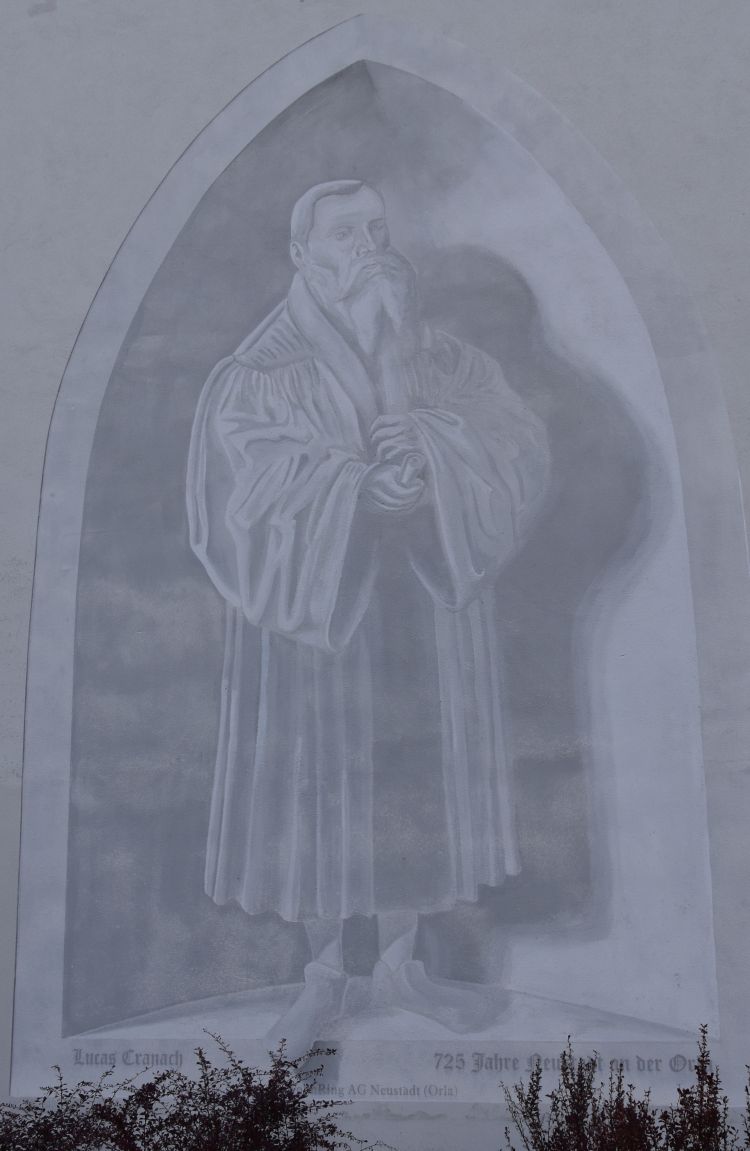
To see the altar, you have to get the key at  the City History Museum (Museum für Stadtgeschichte) during opening hours. Well, today is Monday, and the church is closed. No way to see the altar. We comfort ourselves with the portrait of Lucas Cranach on a house wall.

In addition, we read about the altar in Monumente of the Deutsche Stiftung Denkmalschutz: The altar is dedicated to John the Baptist. He stands in the middle, flanked by Simon and Judas Thaddäus. To the left, John baptizes Jesus. To the right, John had been decapitated. The altar was installed in 1513. Martin Luther protected it from being destroyed by the protestants: Icons are allowed to decorate churches, he said, but it is not allowed to worship them. 


The historic inn “Goldener Löwe” (Golden Lion)

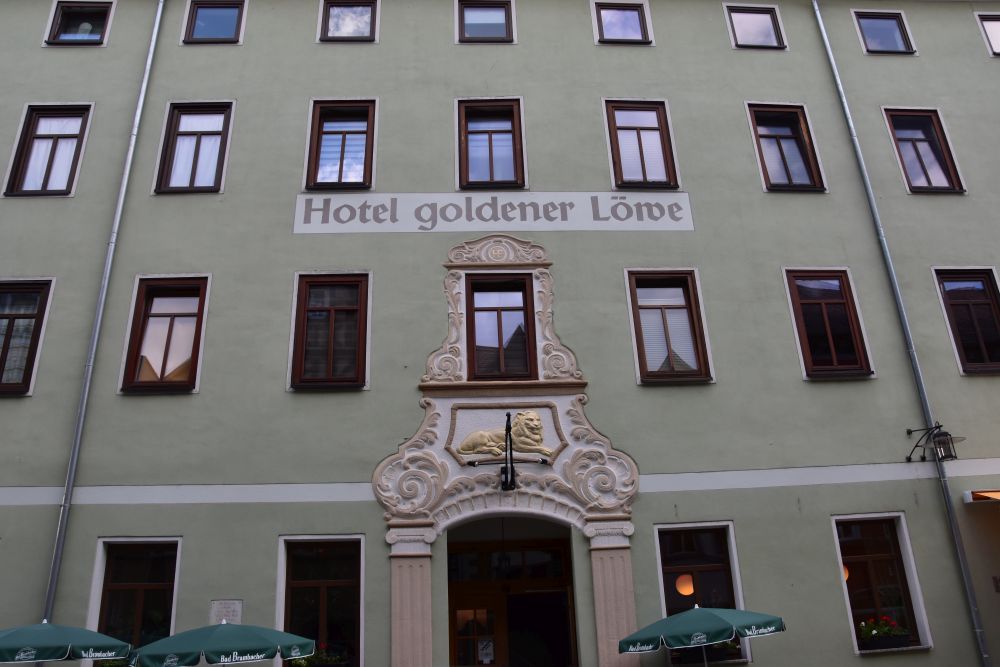
The historic inn “Goldener Löwe” has been known since 1599. Goethe stayed here overnight, and in addition the Russian Empress Maria Fjodorowna and the Russian Princess Alexandra, as the plate on the hotel announces.

At the Goldener Löwen, we have a coffee and an ice cream. Afterwards, we continue our way to Saalburg.


Overview of our Thuringia/Thüringen tour

Neustadt an der Orla was our first stop coming from Berlin to explore Thuringia.


Ahead of us are the upper river Saale with the cascades and the cities along the Via Regia, such as Weimar, Erfurt and Eisenach.


Sources: