Berlin – simplified map with hints
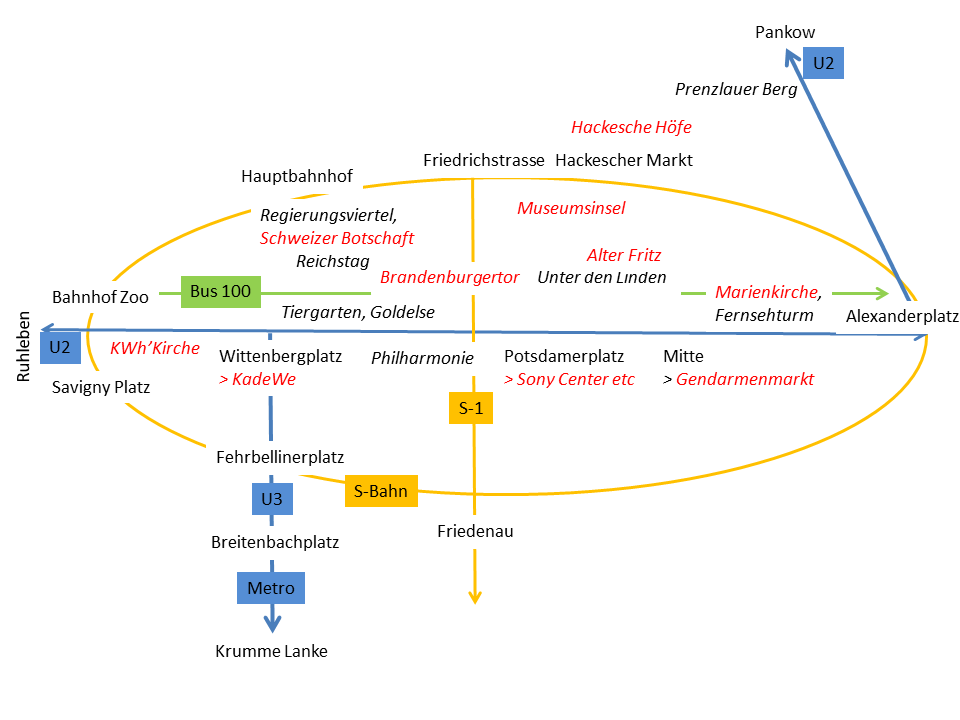
This is a very simplifiied map of Berlin with “my” main traffic lines: The S-Bahn, U2 and Bus number 100 between Bahnhof Zoo and Alexanderplatz are a wonderful way to explore the sprawled city center of Berlin – and to say hello to my favorite places – all in one.
Kaiser Wilhelm Gedächtniskirche with “Powder Box”
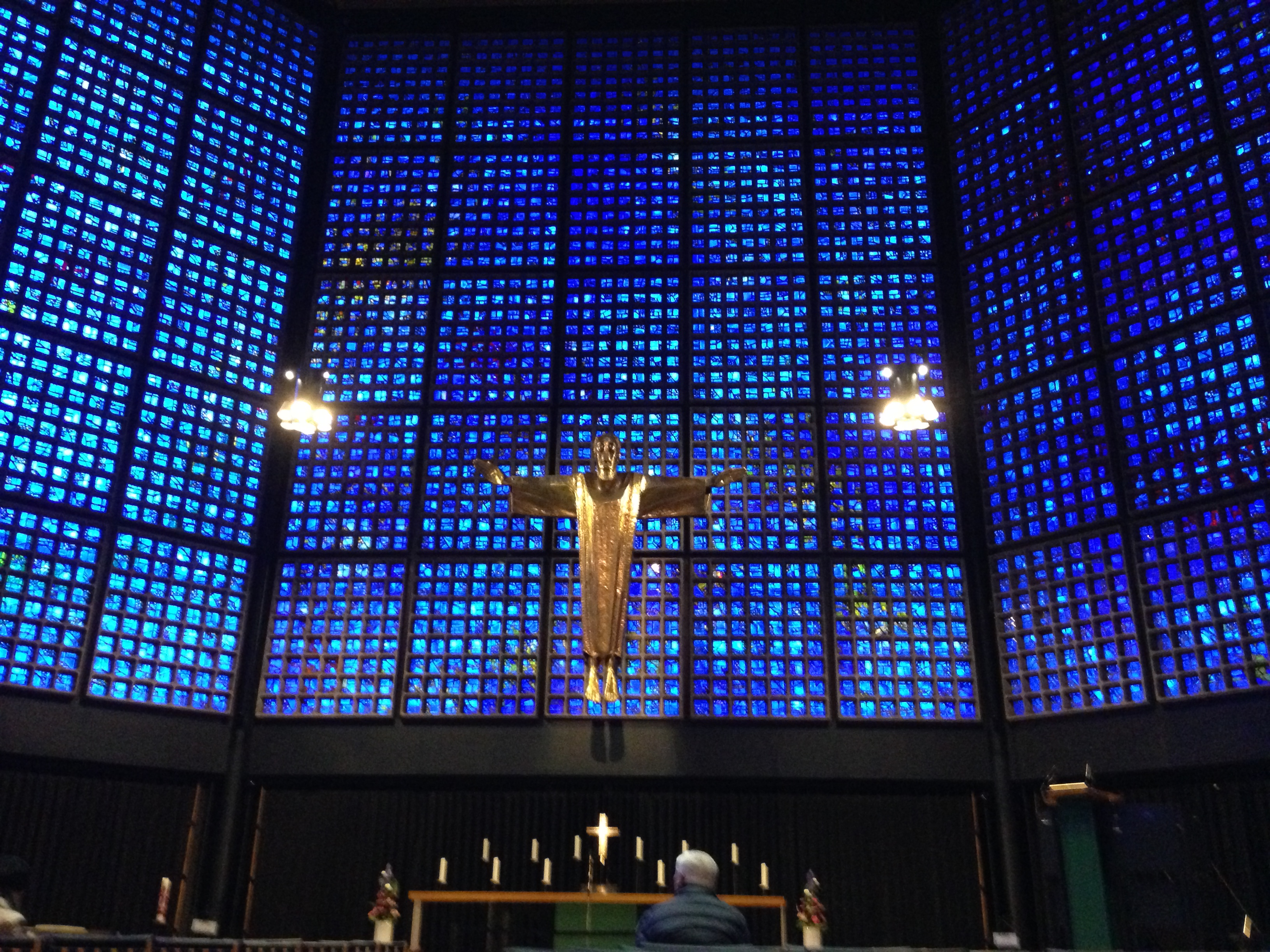
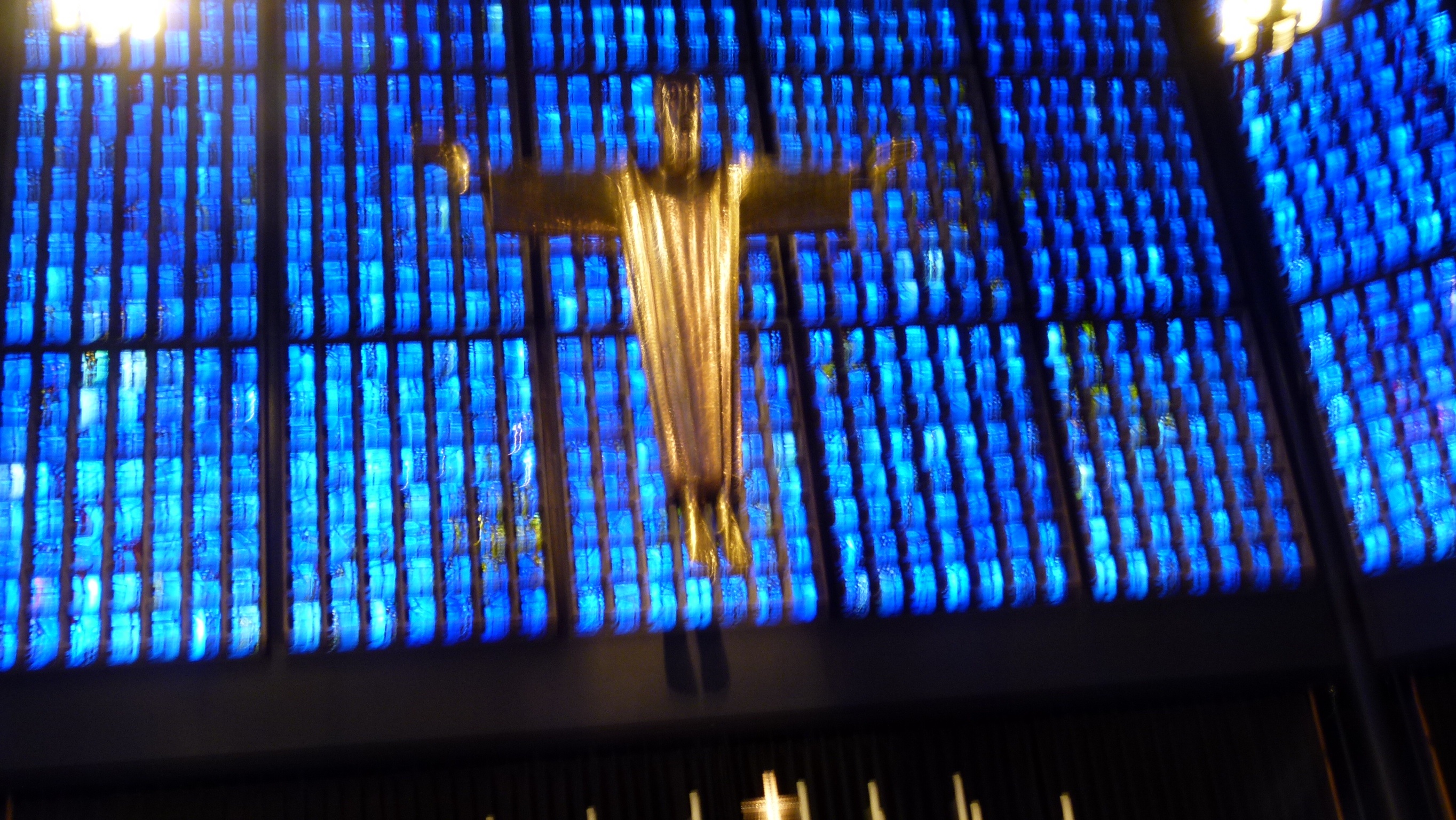
I take the metro U2 and leave it soon again at Bahnhof Zoo. The metro “disgorges” me just in front of the “Puderdose” or “Powder Box”. This is the nickname that Berlin gave to the modern Kaiser Wilhelm Gedächtniskirche. I love to welcome Berlin in the “Powder Box” with its blue stained windows and the golden sculpture of Christ. I stand still for a while and breathe.
Outside are the “Hollow Tooth” (the nickname for the ruins of the old church) and the Lip Stick” (the new church tower). This is an older picture, the “Lip Stick” is currently under renovation.
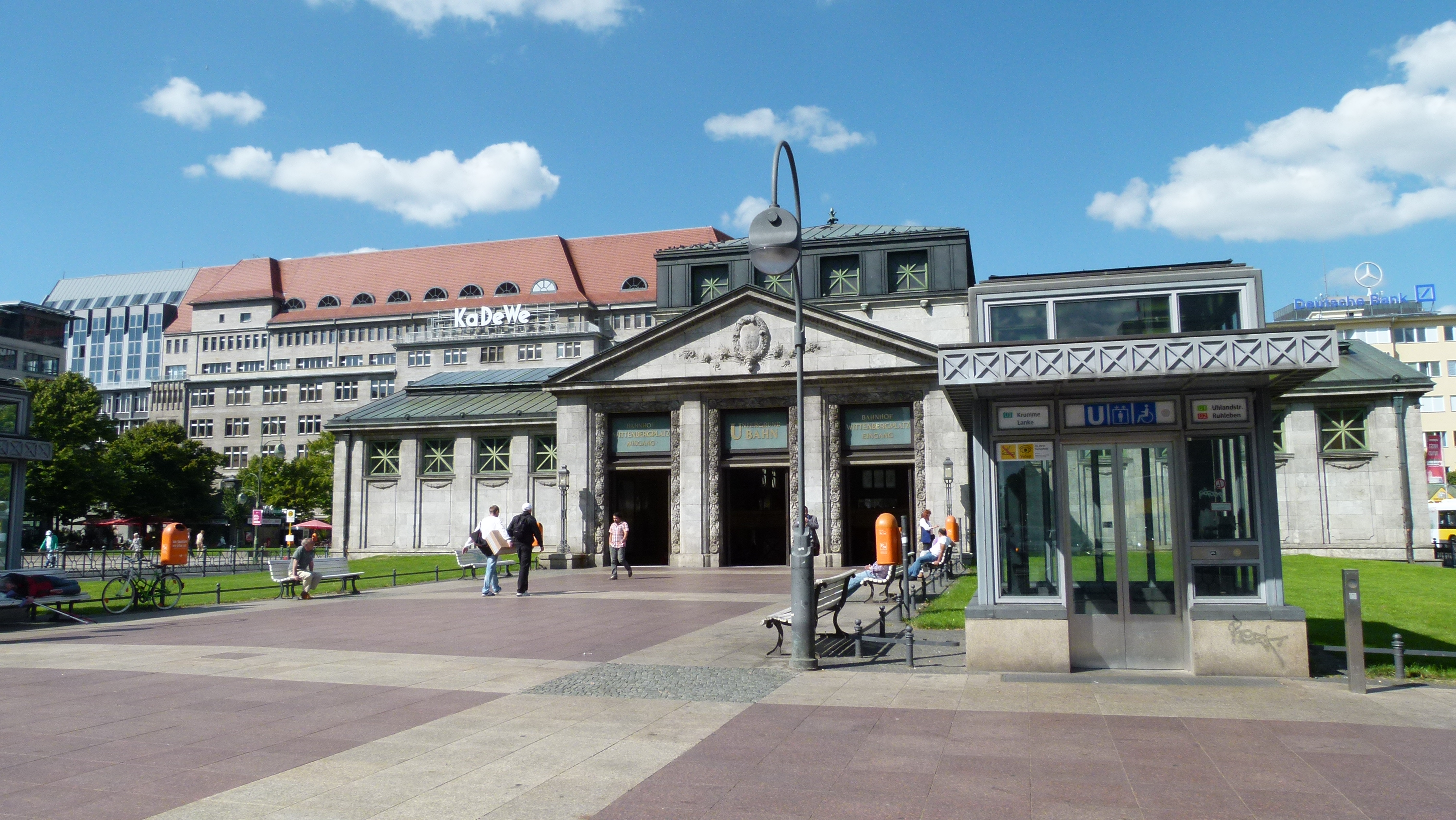
I stroll down Ku’damm and Tauentzienstrasse towards Wittenbergplatz with my favorite metro station and the “Kaufhaus des Westens” or “KadeWe”.
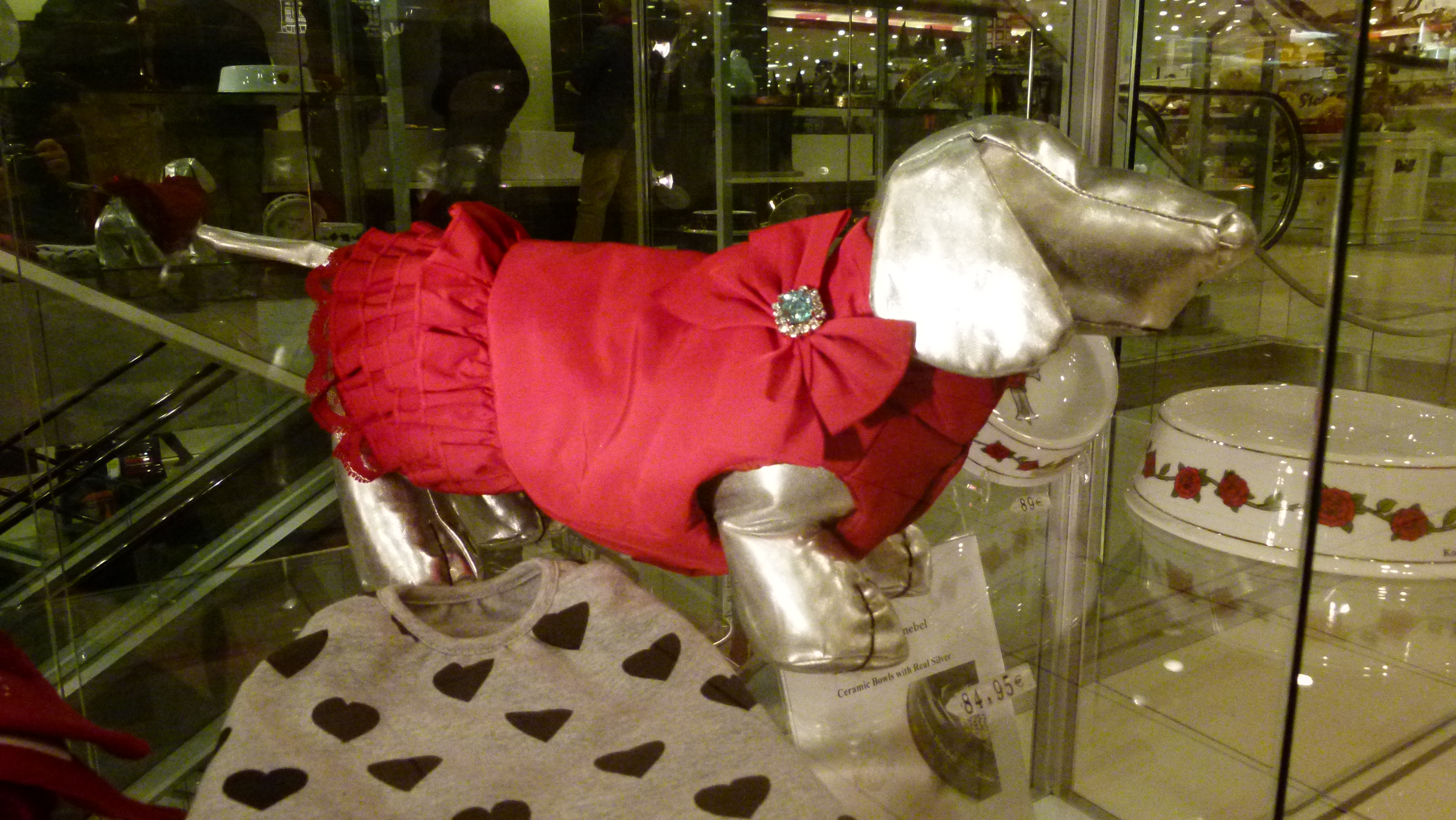
KadeWe is a posh shopping mall that even has great design for dogs – well, perhaps I would not dress up my dog like this, if I had one.
The 6th floor hosts delicacies from wine, chocolate, fish, oysters – just about everything… I will come back for lunch to eat a Bouillabaise and later to eat a shrimp soup (Büsumer Krabbensuppe).
.
Metro station Wittenbergplatz
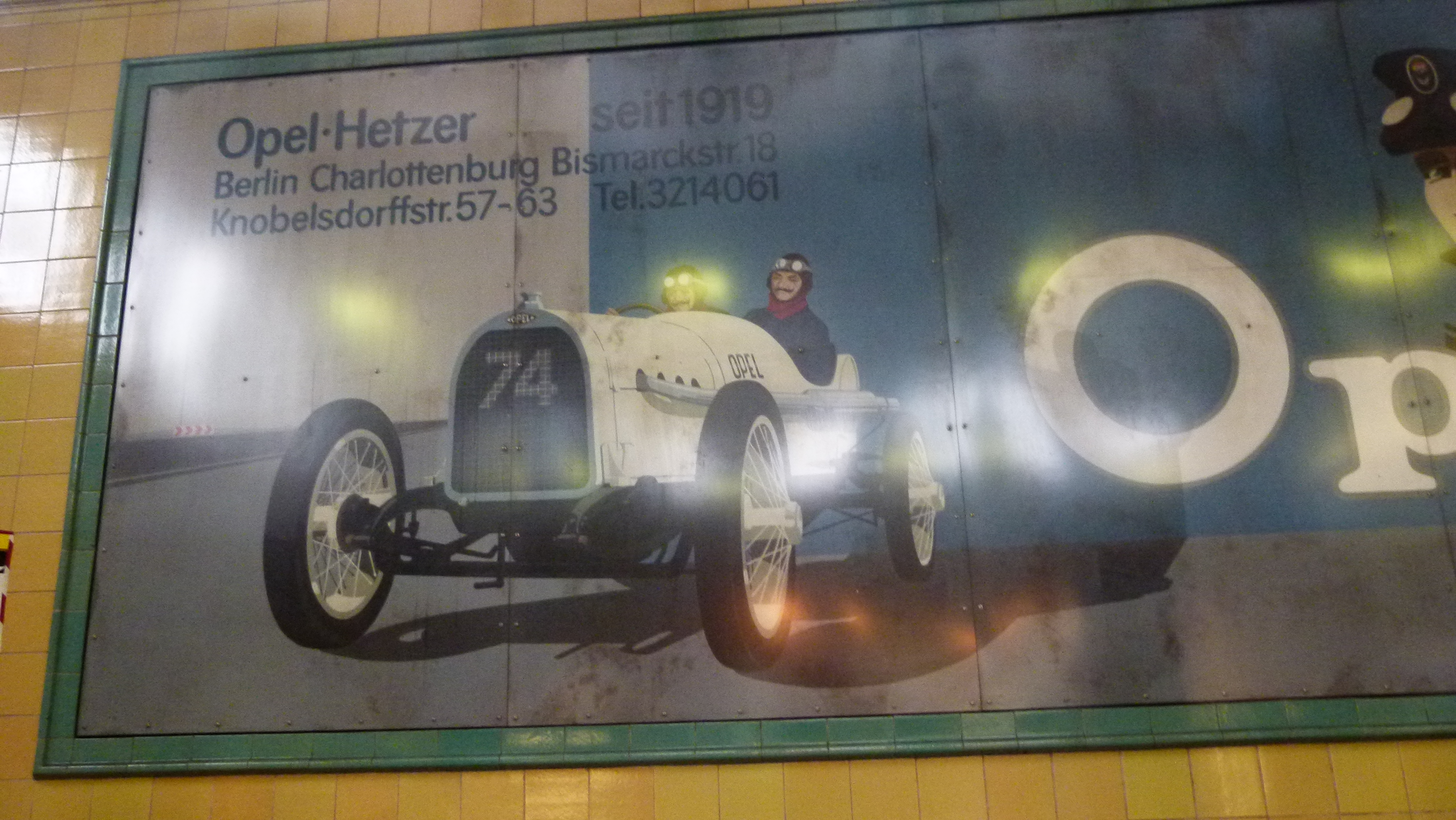
Under the iron construction of my favorite metro station Wittenbergplatz,
there are posters from the twenties in the last century – like this one announcing the “newest” Opel-Hetzer – well it was new at the time the metro was constructed.
.
Potsdamerplatz
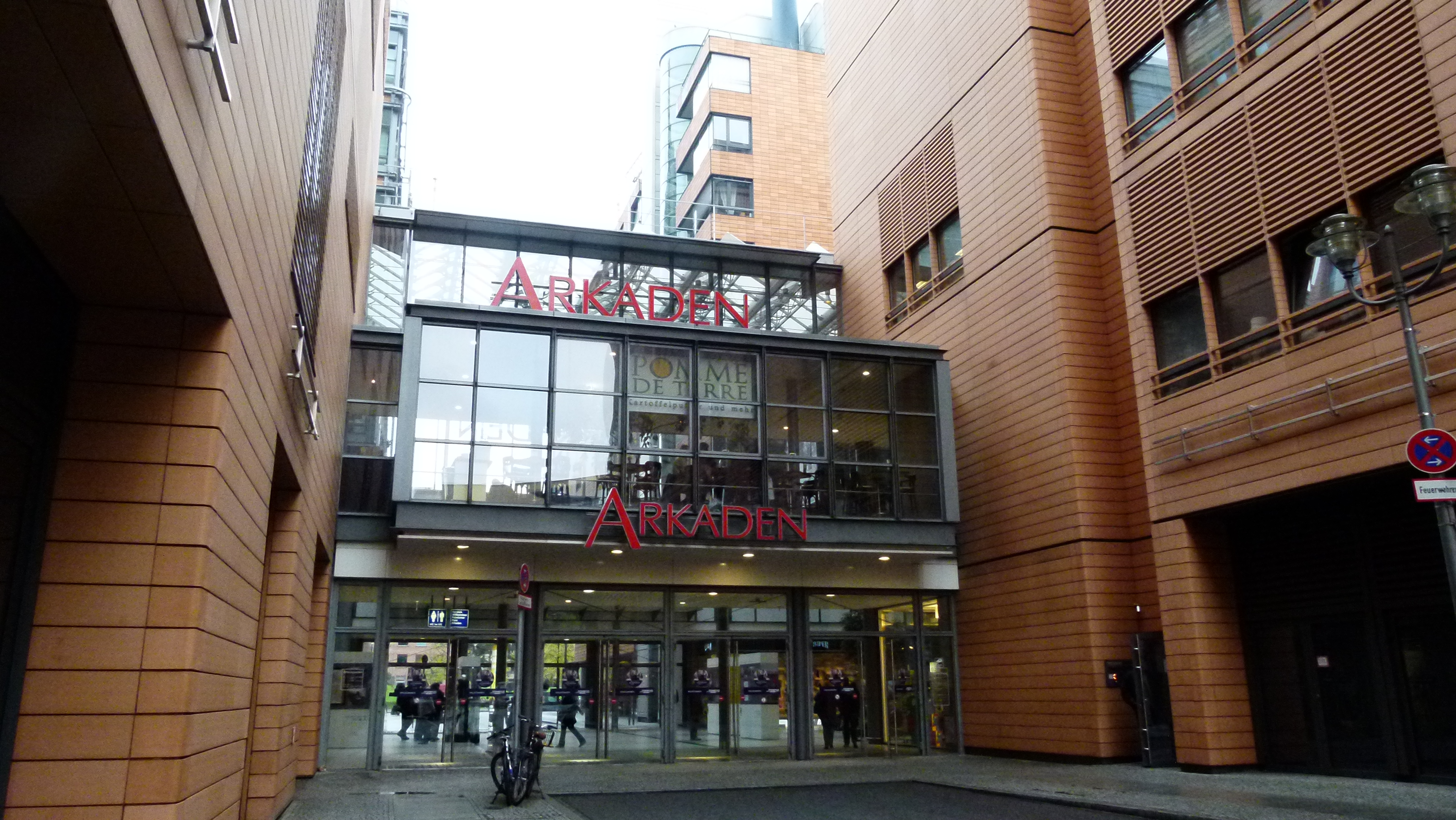
I catch U2 again, and a few stations later I am at Postdamerplatz. I feel very small between the skyscrapers – among them the Sony Center – and enter the Arcades (Arkaden).
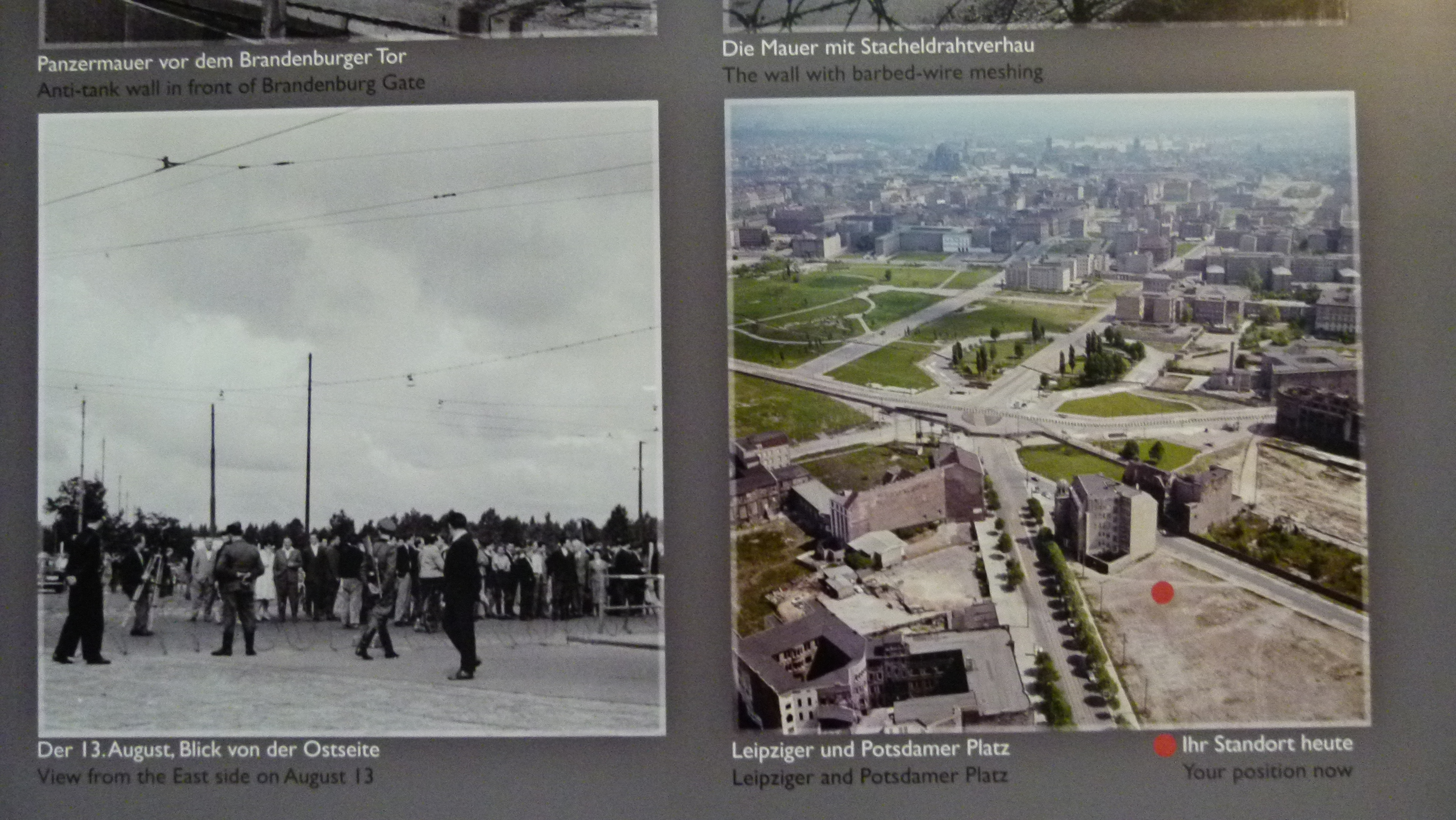
There is an exhibition about the Berlin wall that separated the town from 1961 (though Ulbricht said that no one could think of building a wall) up to 1989 (when the iron curtain fell and people climbed over the wall).
Pupils walk around with questionnaires. One boy looks at me: “Do you know the answer to this question – does the wall (or their remains) belong to the Unesco world heritage?” I frown. I cannot think that anything that dreadful is eligible for the list of world heritages. The answer is in wikipedia: The wall has been proposed, but not accepted. The boy apologizes: “I have a disorder that cannot be diagnosed, I always make mistakes, when I write.” I frown again. I remember that at school my teacher was desparate about all the orthograpic corrections in whatever I wrote. I say: “I have had that as well, it has never been diagnosed and it disappeared.” The boy looks at me and repeats in earnest: “I have an undiagnosed disorder…” What are these school psychologists doing to the kids today? Destroying their motivation to learn and improve?
.
The Gendarmenmarkt
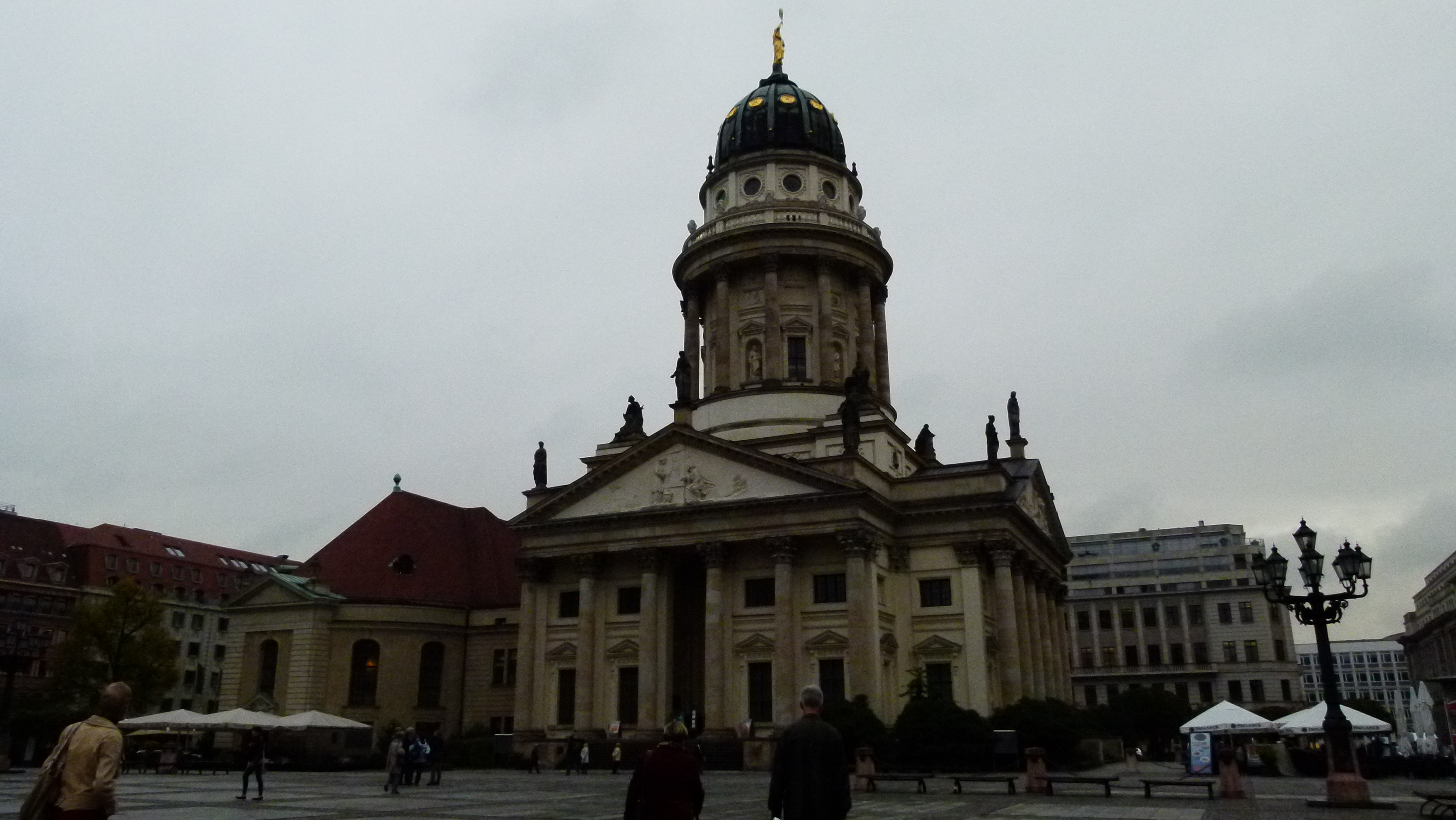
Again I go down under earth to take U2. I leave it at “Berlin Mitte”. The metro disgorges me just in front of the German dome that marks the southern end of the Gendarmenmarkt. To the north is the French dome.
Do I feel like a coffee? There are many inviting coffee places here. No, not yet. I go back to U2 to leave it again at Alexanderplatz.
.
Alexanderplatz
From Alexanderplatz I walk over to the all dominating TV tower and to the Marienkirche. The TV tower shows no cross on the restaurant floor today, as the sky is cloudy (there is a cross, as soon as the sun shines, and this is why the tower is called “Sankt Ulbricht”).
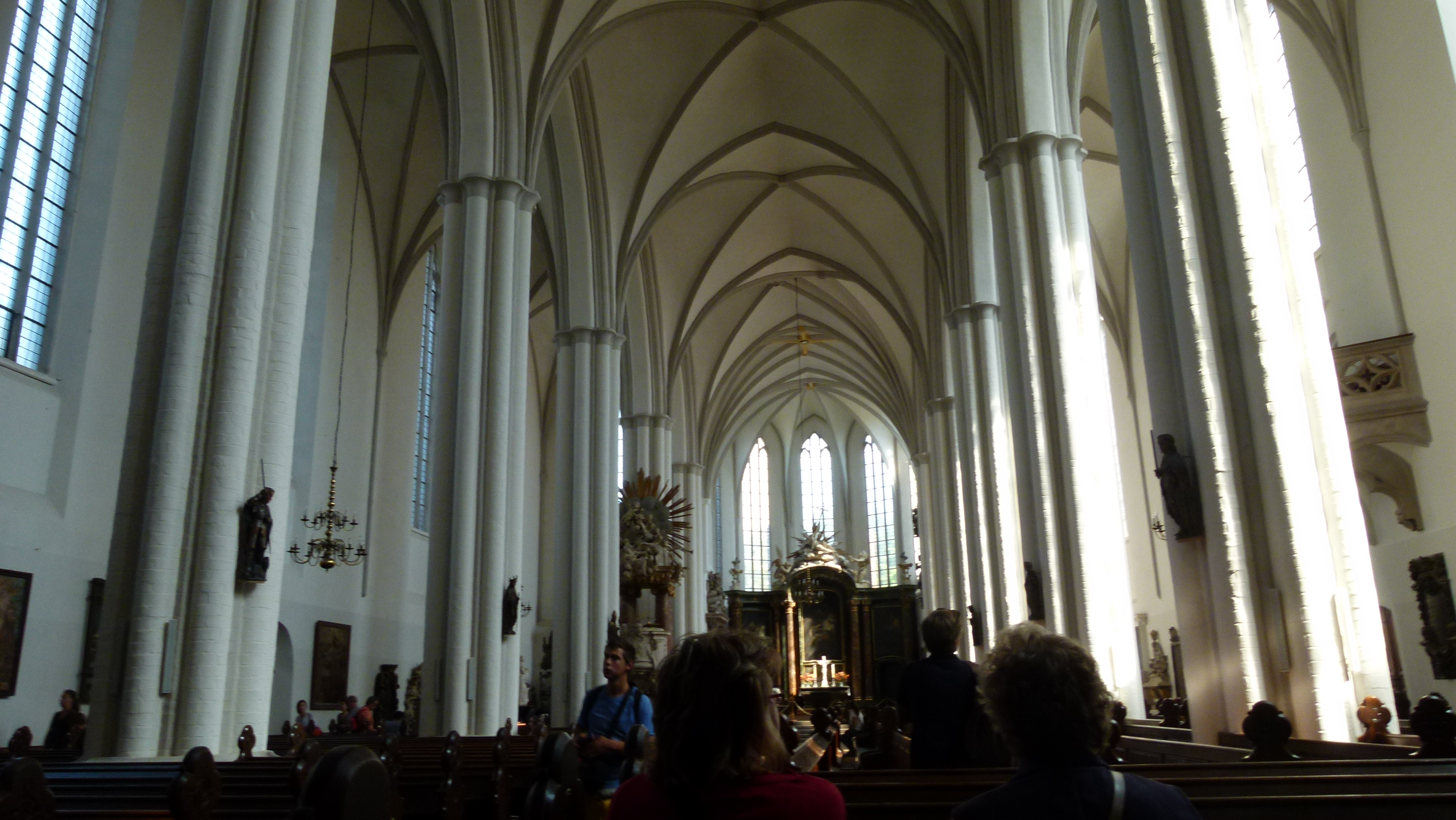
The Marienkirche is one of the oldest churches in Berlin, from the 14th century.
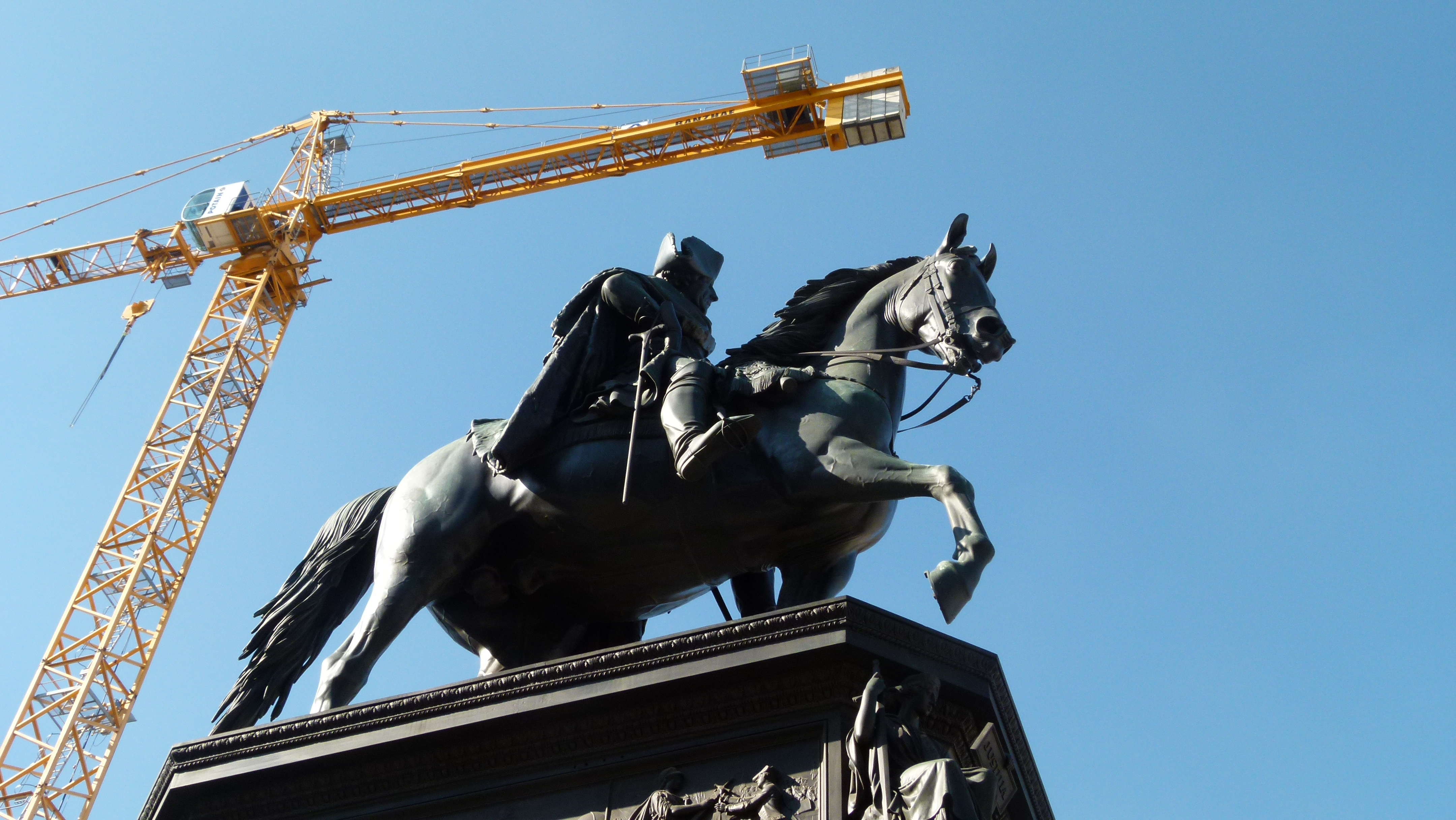
Just across the street there is a bus stop. I catch bus number 100 here to take my way back to Bahnhof Zoo staying above the ground. We roll along Unter den Linden with the Museumsinsel (my favorite: The Pergamon museum and the museum of German history). The Prussian king Frederic the Great (nicknamed “Alter Fritz”) watches his castle now being reconstructed.
May be “Alter Fritz” frowns a bit, as for now his castle are nothing but walls made out of concrete. I do not think that he has ordered these construction techniques to be used.
After having crossed Friedrichstrasse, we can see the Brandenburger Gate. Bus number 100 turns northwards to the Reichstag and traverses Tiergarten with the Victory Column (“Goldelse”, as Berlin calls her). Eventually we reach Bahnhof Zoo, the endstation.
.
S-Bahn to Hacke’sche Höfe
Later I come back with Sabine, my friend, to take the S-Bahn from Bahnhof Zoo. After the Hauptbahnhof, we stand at the window in order to not miss the quick glance of the Swiss flag amidst the German government buildings (“Regierungsviertel”). Switzerland owns ground here and has built its embassy.
Shortly afterwards, the S-Bahn stops at Hacke’scher Markt. From here it is a few meters to the Hacke’sche Höfe.
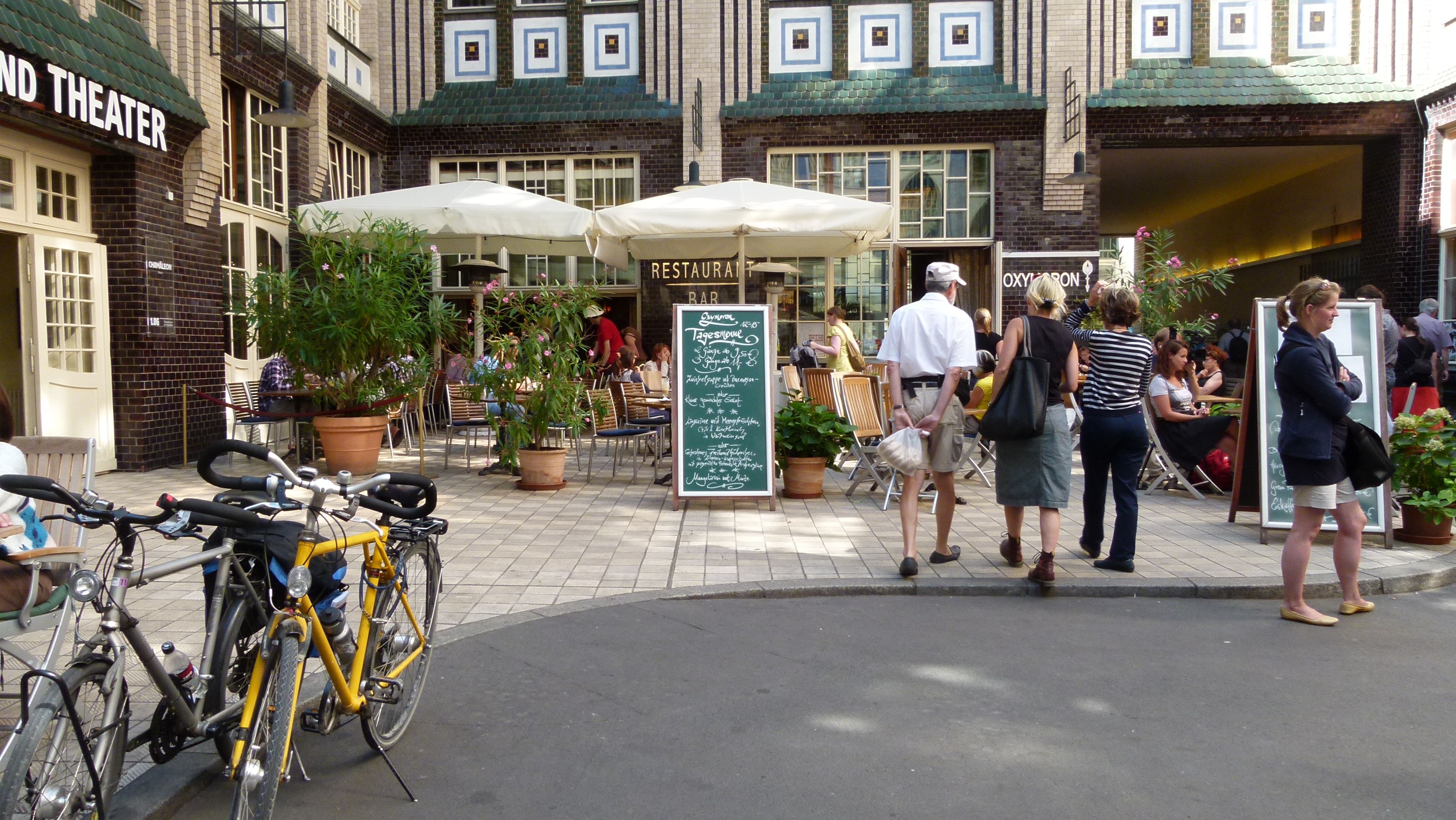
We both love to come here. We buy some small Ampelmann gifts. We enjoy the elegance of the Royal (KPM) porcelain . I have Klopse in the restaurant Oxymoron. With Sabine’s advise, I buy a waterproof raincoat at the FREItag shop. It is a black trenchcoat with a colored pattern at the sleeves and the collar. There is always something to see and do in the Hacke’sche Höfe. Well, yes, many people complain that this is no longer what the Hacke’sche Höfe have been before 1989 – but I think times are allowed to change, and Berlin has changed a lot since then, not only in the Hacke’sche Höfe.
Again, the S-Bahn, U2 and Bus number 100 between Bahnhof Zoo and Alexanderplatz have proven to be a wonderful way to explore the sprawled city center of Berlin.
Category Archives: Berlin / Brandenburg


On the road again – arriving in Berlin
Planning to visit my mother town
After having discovered so much around my home town Basel, I feel homesick for my mother town Berlin. Sabine has booked two rooms in the Hotel Villa Kastania. I look forward to strolling through Berlin – first alone, then on the weekend – with her.
.
Arriving in the old Berlin Schöneberg airport with S-Bahn on strike
Easyjet loses height and the Müggelseen (lakes) appear in the window.
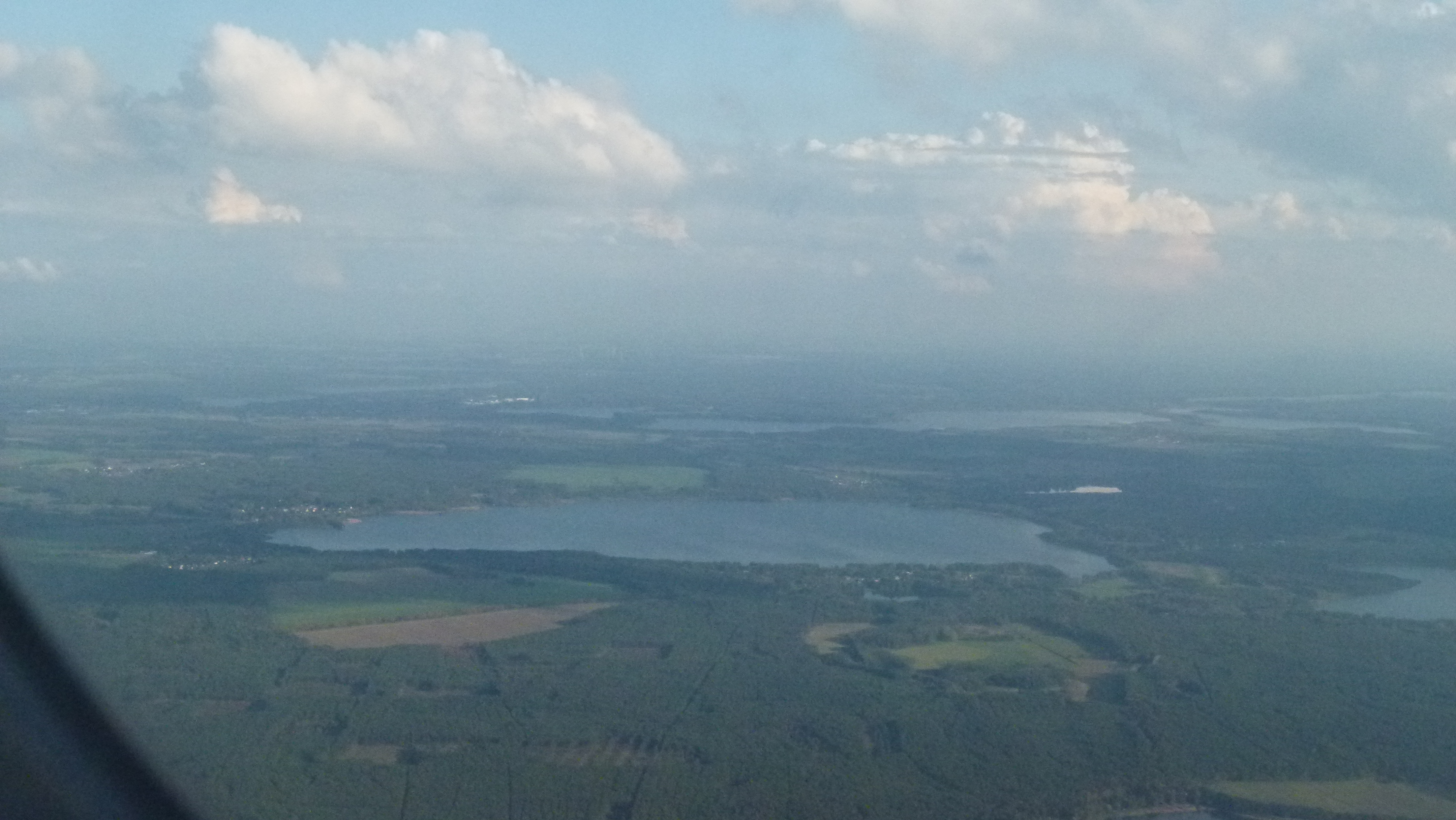
We land softly at the sober ex-GDR airport of Schönenberg in the far south east of Berlin. It is about five pm. Immediately I notice that I am in a large town: Plates announce that the S-Bahn is not working due to strikes. Strikes – this is unknown in Switzerland. Shall I take a taxi? – Probably not a good idea. Instead I opt for the bus X7. Good decision. From the bus I can see traffic jams being announced. My bus quickly reaches the Rudow metro station. The metro is packed with people that try to get home using alternatives to the S-Bahn. At Bismarckstrasse I switch to the Ruhleben metro (I like this – Ruhleben means “quiet life”). I reach Theodor Heuss Platz about an hour after having landed.
.
The quiet and friendly Hotel Villa Kastania
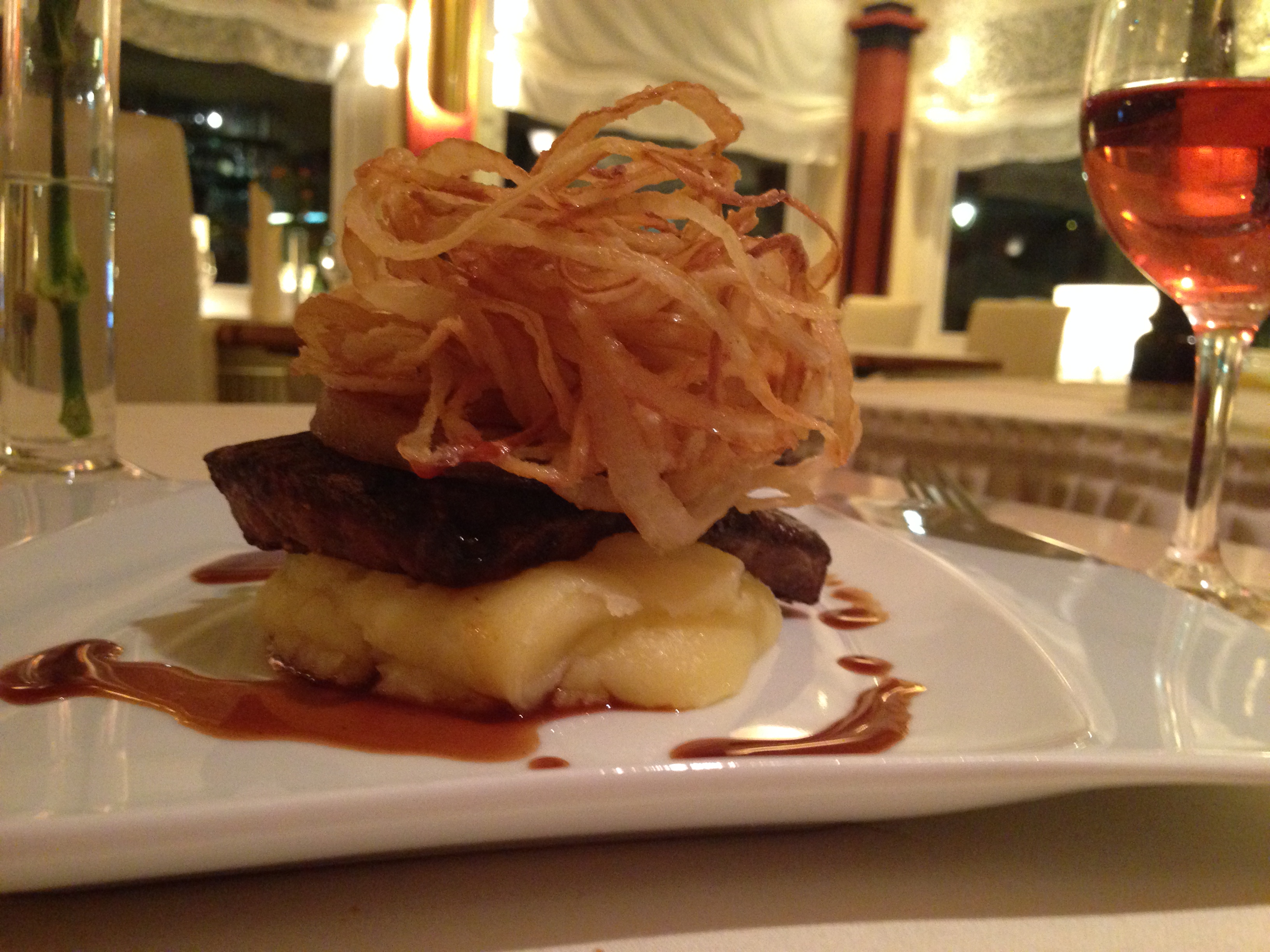
Just around the corner of Theodor Heuss Platz I find my Hotel Villa Kastania and settle in a quiet room. The restaurant looks welcoming. I take my dinner here: Liver cooked with apple and ognion – one of the dishes that my mum has brought me up with. Well, the hotel restaurant serves a “design version” of this common and delicious Berlin specialty.
After having slept deeply in the quiet Kastanienallee, I take a swim in an Italian garden under a blue sky with a few cyrrhus clouds.

Hungry I go to the breakfast room, and I am surprised by the morning buffet: It even includes fresh oranges and an orange squeezer. I have never had freshly pressed orange juice at a hotel breakfast buffet before.
After the delicious breakfast I leave to see my favorite spots in Berlin again.
Saying hello to some of my favorite spots in Berlin
On Monday, I walked around Berlin, with the voice of my mum in my ears. As a Berliner, she always warned me not to underestimate the distance that I can walk. “This is not a small town like Basel”, she said, “beware of that.”
From Friedenau to Breitenbachplatz
From my cosy Literaturhotel in Friedenau I walked to Schlossstrasse and through the Treitschke Park (very nice layed back streets where must be good to live) to the Breitenbachplatz. By looking at the map, I expected a footwalk of half an hour, but Mum you are right… it was almost an hour. The Breitenbachplatz is surrounded by houses under monument protection. I met a friend here.
From Breitenbachplatz to Wittenbergplatz
Alfred Grenander was the architect of the U-Bahn or metro in Berlin. He was a very thoughtful architect. Each metro station has tiles in a different color. And at Wittenbergplatz the station is covered by a nice modern style building.

I say hello and move on to the top floor of Kadewe, which hosts one of the greatest gourmet food stores I know. It is time to eat.
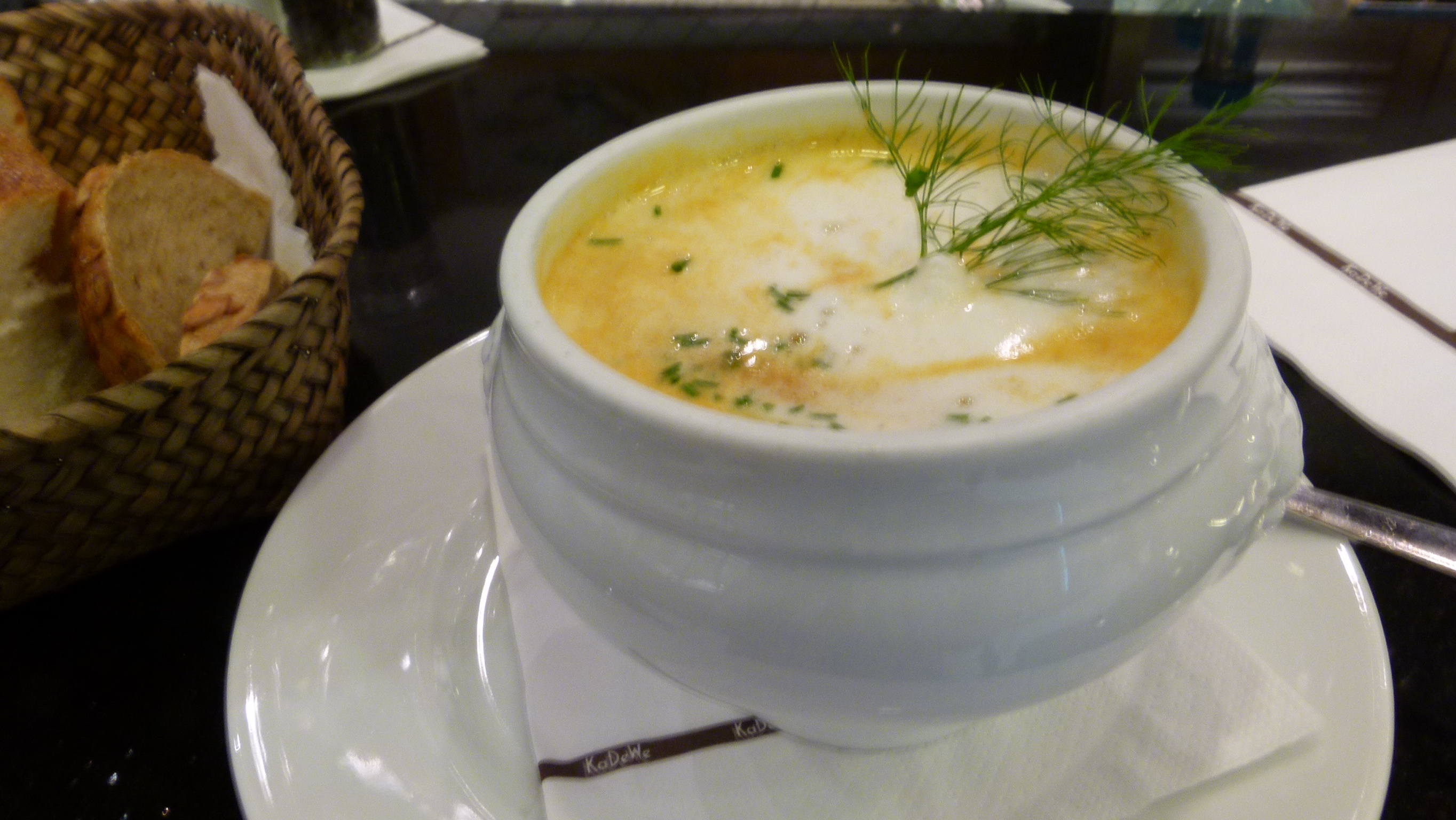
I enjoy a delicious shrimp soup from Büsüm (Sylt).
Kaiser Wilhelm Gedächtniskirche
I love the dark blue ambiance in the new church of the Kaiser Wilhelm Gedächtniskirche; due to its shape the church is also called “powder box”. The original church has been left as a ruin, and now it is completely hidden behind scaffolds. Around the church are many, many souvenir and curry sausage kiosks. And the whole Ku’dam area is under construction.

Hacke’sche Höfe
I take the S-Bahn (town train) and through the window I proudly look at the Swiss embassy that stands in the middle of the German government area (there are rumors that the German government wanted to acquire the land from Switzerland, without success).
Train station “Hacke’scher Markt”. I stroll through the many courtyards of what is called Hacke’sche Höfe and buy ear rings. I love the atmosphere with restaurants, galleries, small shops for jewellery, clothing, soap, and – one of my prefered shops – the Ampelmann (the red and green man in the pedestrian crossing traffic light of Berlin). Ernst also loved this shop and we have a mouse mat from them.

Marienkirche and Neptun Fountain under Sankt Ulbricht
A short break of reflection in the quiet Marienkirche and a hello to Neptun sitting on top of his fountain. Both in the shade of Sankt Ulbricht, the TV tower. There is a cross shining on the tower restaurant, when the sun is out. The story goes that everybody called this tower “Sankt Ulbricht”, and the architect tried to convince Ulbricht that this is not a cross, but a “plus” for socialism…

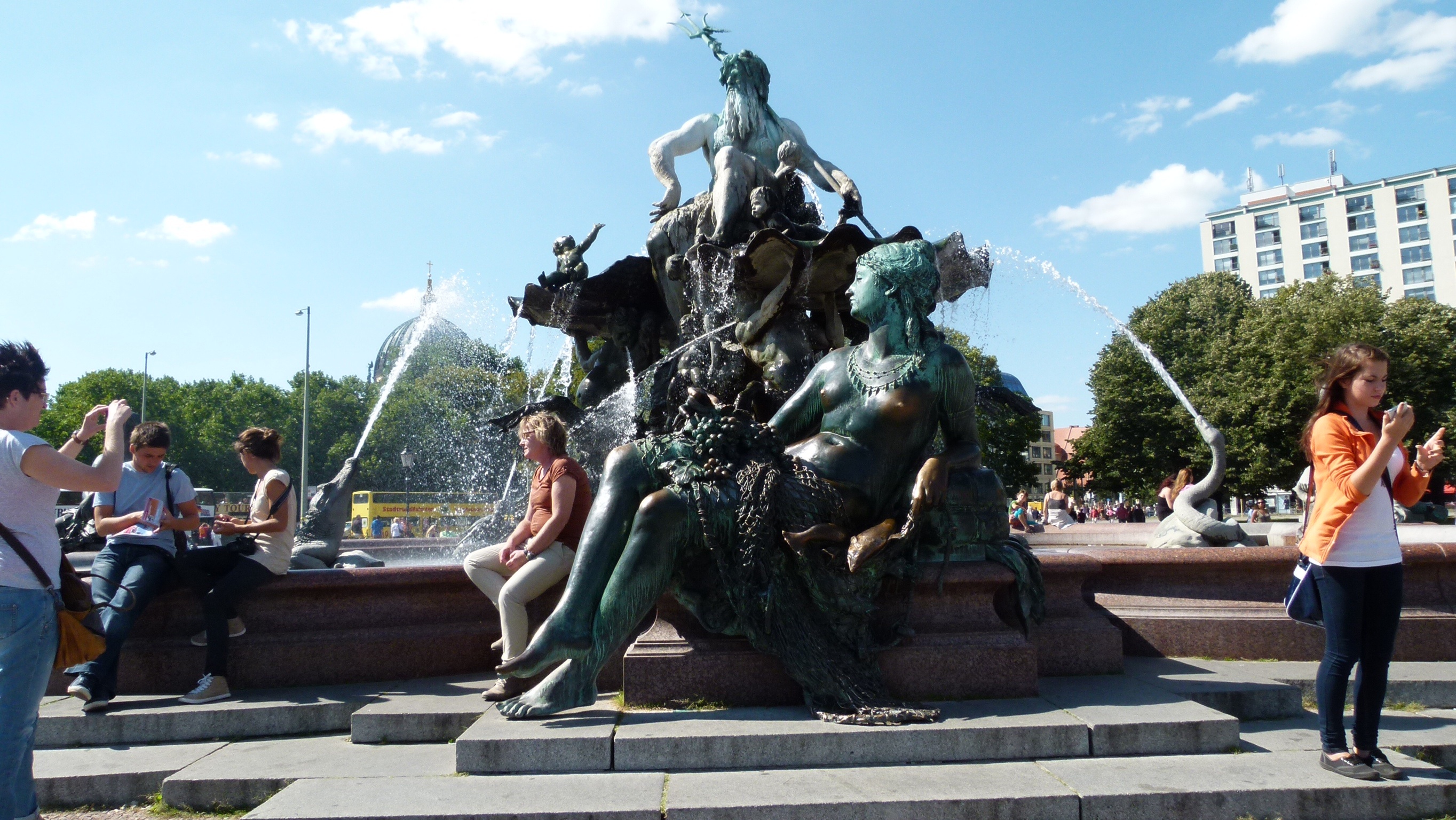
Construction is going on here as well… “in Berlin wird jebuddelt”. I continue to walk.
To the Schlossplatz and Unter den Linden
What is this? A huge huge hole… it is the hole that the Palace of the Republic has left. There is an information booth called Humboldtbox. Later Antoinette tells me that they plan to rebuild the castle and are now digging out the fundaments.
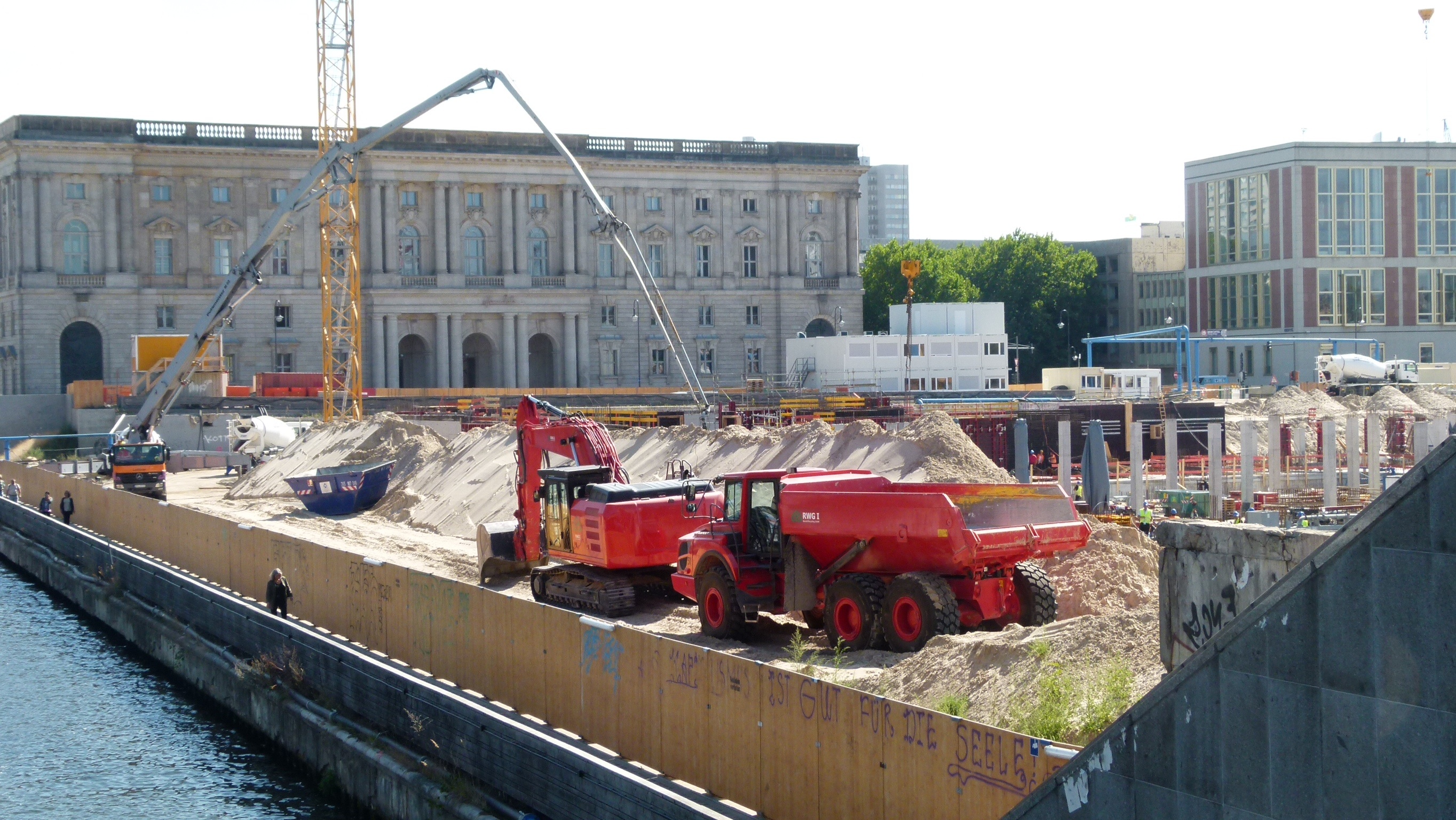
I turn to the German History Museum. For 8€ I stroll through German history until 1918. Well curated. There are panels giving a brief overview of the period and next to it, there are the artefacts from the time or pictures and later fotos about it.
Destroyed diversity also has a special exhibition. I always feel ashamed for my German roots, when being reminded of what happened 80 years ago: The propaganda, the denunciation of those being perceived to be different and then the subsequent mass executions. I came across Carl Peters who had been integrated in the national propaganda, as he had founded the East African colony (though he died in 1918). The Nazis made a film about him in which the former Askari from Kenya, Bajume Mohammed bin Hussein, fought on the side of Hans Albers. Shortly afterwards he was arrested and died in the camp.
Hello Alter Fritz
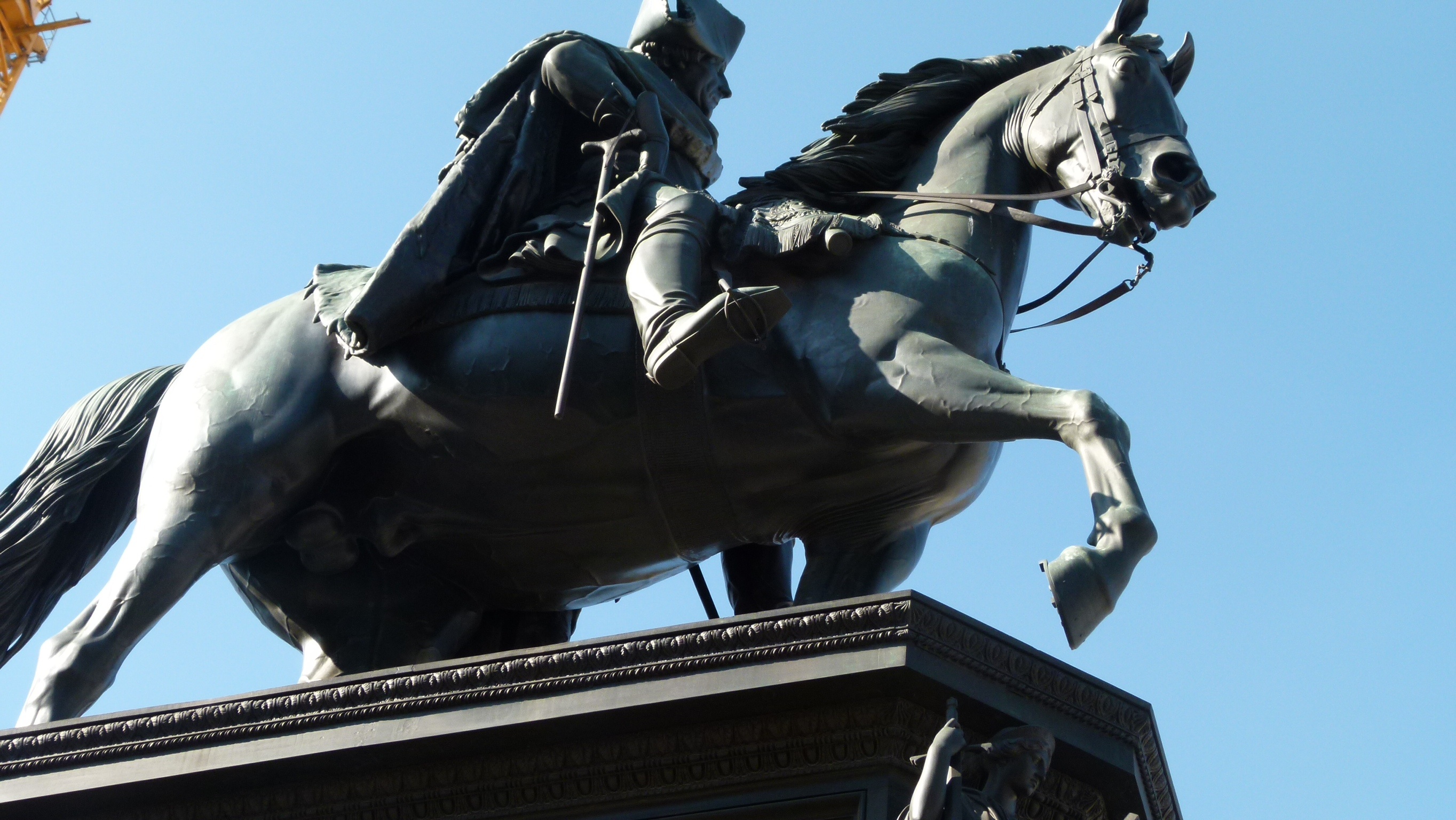
I stop by at the monument of Friedrich the Great in Unter den Linden, greet him and apologize that this time I will not visit him in Potsdam and in his pretty castle Sanssouci.
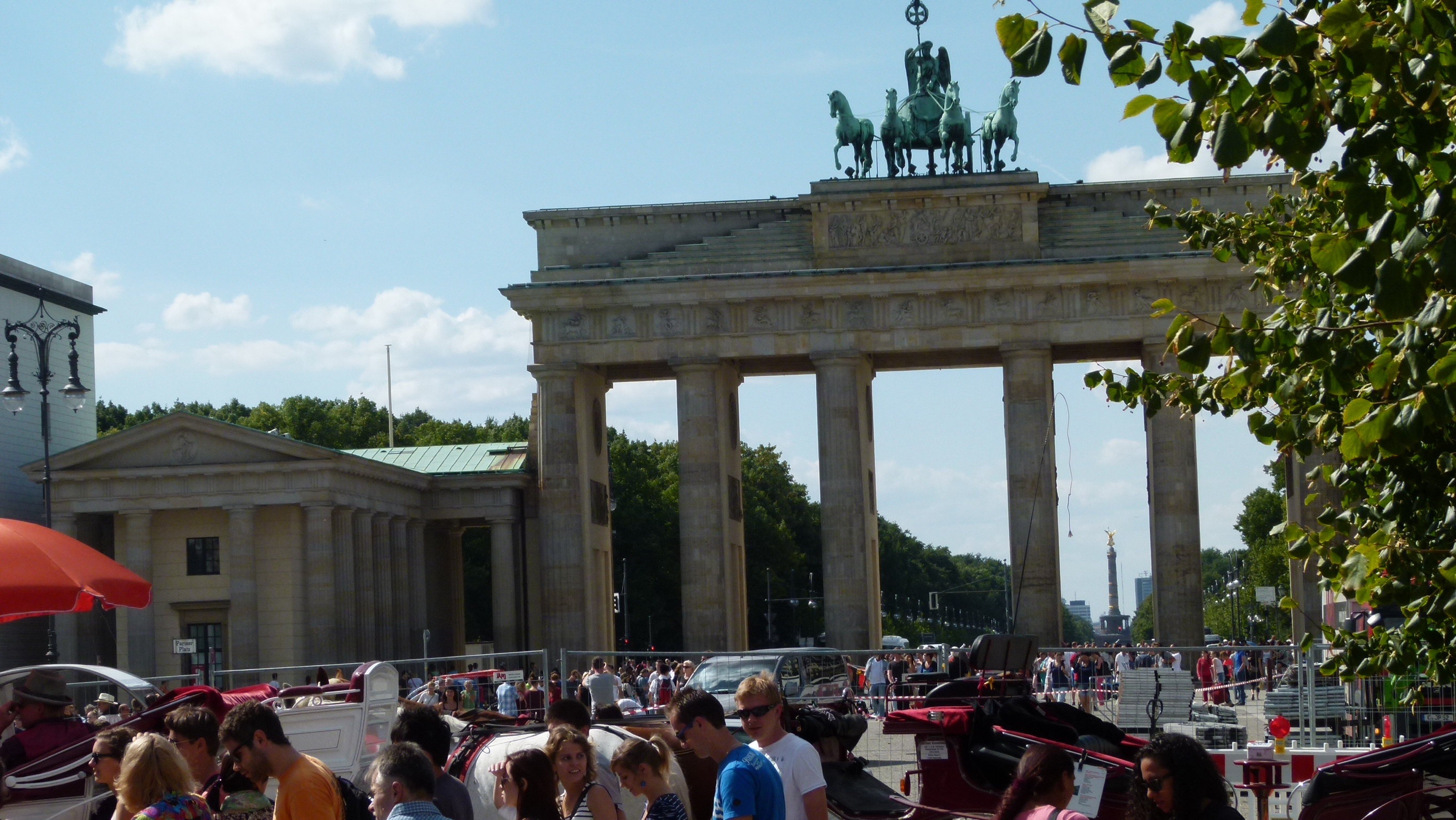
A quick glance at the Brandenburgertor
… and then I take the S-Bahn back to Friedenau. My mum was always proud of the S-Bahn that proves the vision of the government of Berlin in the early 20th century… it allows to overcome the large distances in Berlin efficiently (much quicker than by walking).
Literature and destroyed diversity – 80 years ago in Berlin
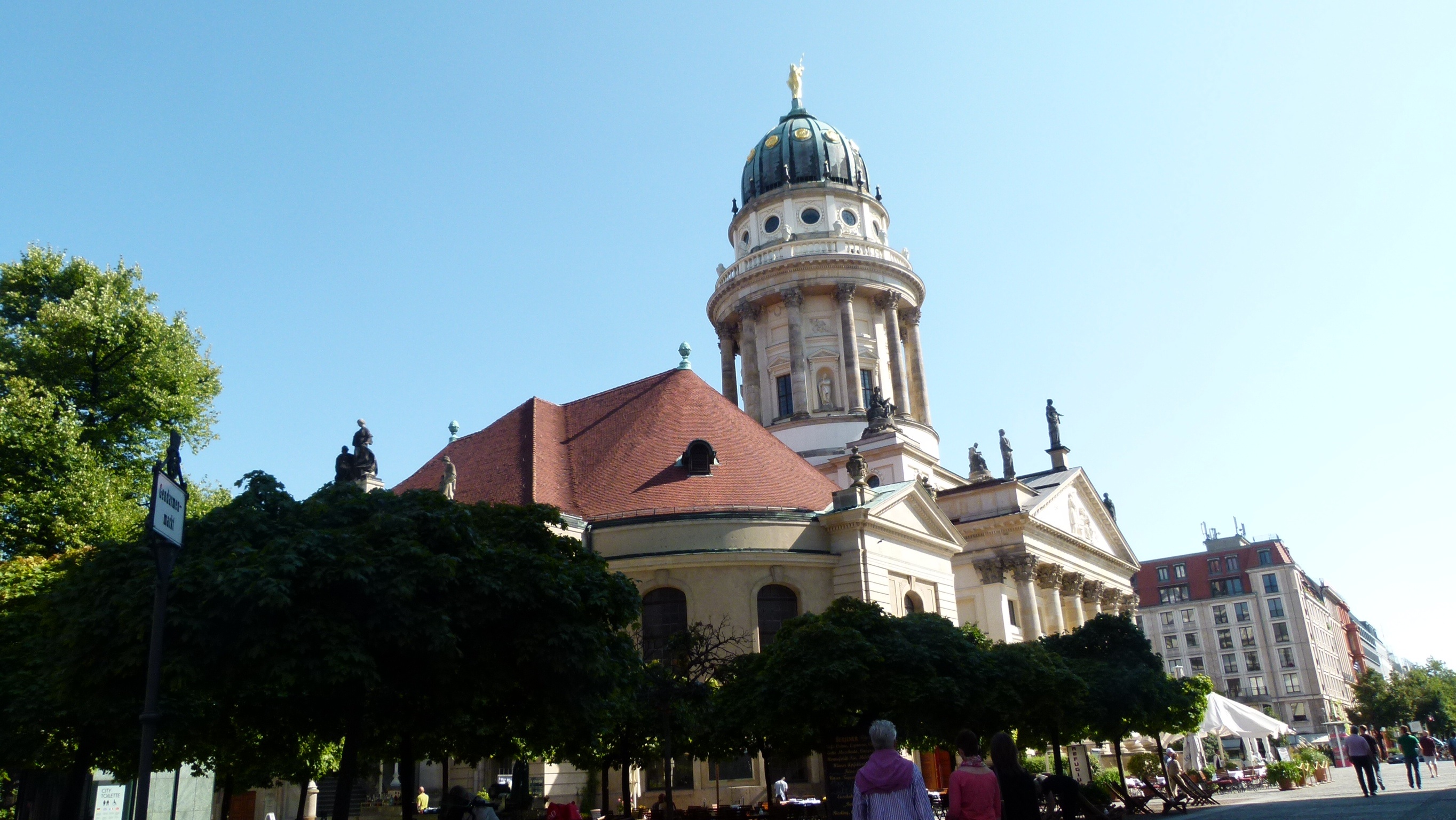
The French and German Cathedral on the Gendarmenmarkt
The Gendarmenmarkt is one of my favorite spots in Berlin. Memories are tied to it. Around 1966, there were three black ruins here, and my mum (she knew the past beauty of this square) was very sad. When I came back in the 90’s, the cathedrals were beautifully restored. Ernst and I visited the museum about the Huguenots that Friedrich the Great had welcomed in Berlin. The French Cathedral was for them. Back later again… with Ernst in the Konzerthaus. And today, Antoinette takes me to the French Cathedral. Two priests are reading about the diversity in literature that has been destroyed 80 years ago (Dr. Jürgen Kaiser and Dr. Matthias Loerbroks). Here are two thoughts that I took with me.
Berlin and Babel – both striving for unity and destroying diversity
Berlin 80 years ago and Babel in the bible have similarities. Both towns longed for unity… unity of language, unity of thought, unity of the peoples, unity of art, unity of architecture (symbolized by the one tower of Babel). Yes, unity is easier to handle than diversity which is complex. But the bible condemns such unity and says that destroying diversity is sinful. Diversity is what the bible asks for… diversity is, the priests say, what God wants. But 80 years ago Berlin became a second Babel and destroyed diversity. Sorely, the priests admit that the church then supported the destruction of diversity.
Written text can be destroyed, but not the words (and thoughts)
80 years ago Berlin burnt books that did not conform to the unity of thought, not far away from the cathedral. The bible describes a similar burning of books. In Jeremias 36, God asked Jeremias to write down the history of Israel and Juda. The text was read out to Jojakim, the king of Juda. He cut the written text into pieces and burnt it. But Jojakim could only burn the written text, not the words. Jeremias wrote them on paper again. Similarly burning books in Berlin just destroyed the written text, but not the words and thoughts.
The devil in Bulgakow’s “Master and Margarita”
Master burns his book about Pontius Pilatus that had not been accepted for publication. Towards the end of this wonderful story, at the devils’ party, the devil Voland pulled Master’s book from the fire and says that his manuscripts cannot be destroyed. Did Bulgakow have Jeremias 36 in mind, when he wrote this? And, I understand, that this was a hidden hint to another ruler who tried to destroy diversity.
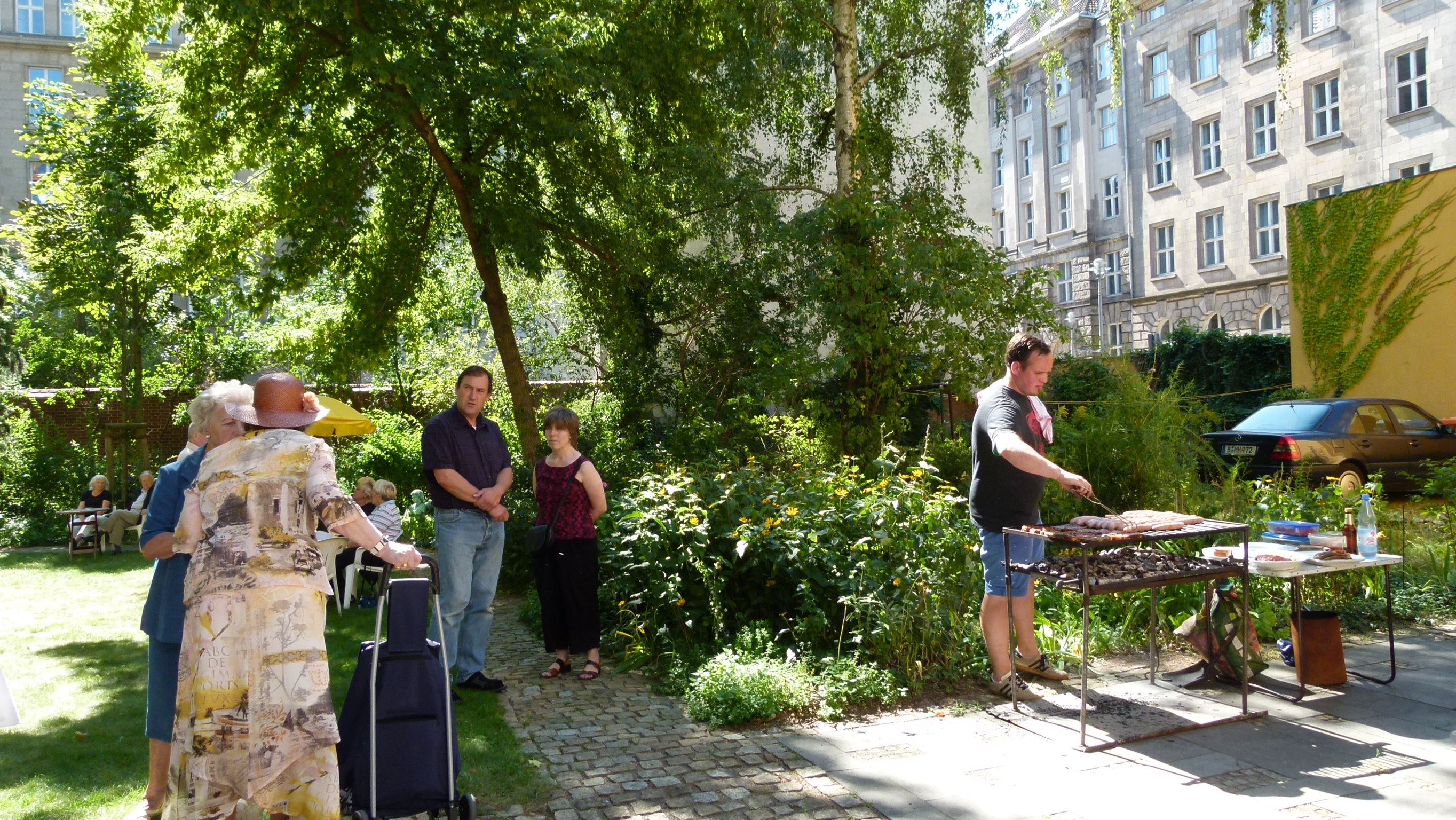
Dr. Kaiser invited the community into the garden of the parish hall in Taubenstrasse, where barbecue, salad, water, cake and coffee were waiting for us in the warm sun. We all sat together and chatted. Now, Dr. Kaiser will read “Master and Margarita” – his organist (from the former GDR) promised to lend him his copy and confirmed enthusiastically that it is worth reading.
Zum Schwiizer in Zeesen, south of Berlin
Jo dö könned mir jo gly Schwyzerdüütsch rede “Ahm, then we can speak Swiss German right away,” the charming young lady says, as she hears our first words. Antoinette and her husband had taken me into the restaurant “zum Schwiizer” in Zeesen, some 40km south of Berlin. We sit in a nice garden in the warm sun, and obviously Antoinette and I could not hide where we are from. The owner welcomed us in Swiss German. We order Läberli (liver) and Zürigschnätzlets (meat cut into strips in cream sauce) with Röschti (similar to hash browns) and e Gmüeswäie (vegetable pie). We also take Valser Wasser (mineral water from Vals in the Swiss mountains) and Rivella (is made from milk serum and is a drink invented in Switzerland in 1952).
The Swiss quiz
While we wait for our dishes, we smile about this quiz which we found on our table… it contains questions such as
- which of these dishes do not contain potatoes: Hääperebrägu, Rüeblitorte, Gschwellti, Härdöpfustock (it is “Rüeblitorte” that contains Rüebli or carrots, but not potatoes).
- or translate please: Jetzt faart dä Löli uf em Troittoir, derbii schtoot e Tschugger hinterem Egge. (Now this idiot runs his bike on the pedestrians’ walk, but there is a policeman behind the corner).
- or which of these products have not been invented in Switzerland or by a Swiss? The two stroke engine, democracy, the zip fastener, Chevrolet cars, the bicycle chain, the PC mouse, LSD, aluminium foil, the velcro fastener, the turbo charger, the spam and the LCD display? Answer: The spam – and I somehow think this is not a product, but a nuisance… or did they mean Spiced Pork And Meat – canned precooked meat?
Antoinette’s husband rolls his eyes, as also Germans have a hard time to understand the Swiss dialects. We enjoy our very Swiss experience here close to Berlin. We can recommend this restaurant & pension which is just near the regional railway station of Zeesen with a direct connection to the city center of Berlin (website http://www.zum-schwiizer.com). The young couple running it met in Switzerland, he being from Berlin and she from the Swiss canton of Thurgau, and they decided to start their own business here.
On the road again – via Berlin to Mongolia
At the airport in Basel
Friday 23rd of August. I am waiting for my Easyjet flight to Berlin. The plan: A few days in the town of my mother, Berlin. I love this town and I will meet Antoinette. Next week, Ursula will join us… and with her I will leave for Mongolia. We are all friends from the school days that we completed some 40 years ago. It is good to be with friends.
A full month on the road again. I hope to find some Internet Connections to blog about the two Swiss traveling in Mongolia.
Leaving life at home behind me
Life has been breathtaking since I came back from Petersburg. Renovation in my house… I lived amidst piles of books, carpets and folders in the living room, while the first floor is empty to be overhauled. I did some consulting work for a few days… I enjoyed this change to my retirement and I plan to do more of this later.Then a person very close to me left this world… I am very sad.
Now, I leave life at home behind me, with one more friend in my heart.
Ahead of me is Mongolia
Mongolia has always been a mysterious spot in this world for me. I came across the peoples from Mongolia, when learning about the Huns that invaded Europe (I once sat on the chair of Attila in Italy), about the Turks that invaded Anatolia (the ruins of the Byzantine cities were one example that told me about them). Then Chinggis Khan – he became a pop star in the 1980’s. I came across them in Russia as the “Golden Hordes”, in India as the Moguls (Sha Jahan’s Tadj Mahal shows how powerful they were). And China feared them, built the Great Wall, and could not prevent being invaded; the Mongols became even emperors of China.
The mysterious peoples from the steppes. I look forward to discovering them and to understanding why I came across them in so many corners of this world.
 Petra Peters
