Costa Rica – “flying” in the rainforest and “gliding” on a river

It is weekend. No school, no studying. We have booked Jorge again, the good soul and driver of the Don Quijote school that shows the students around the area. Our program for today: The cable car in the rain forest and a boat ride on the Sarapiquí river.

.

Flying through the rain forest – a little “touristy”, but… impressive

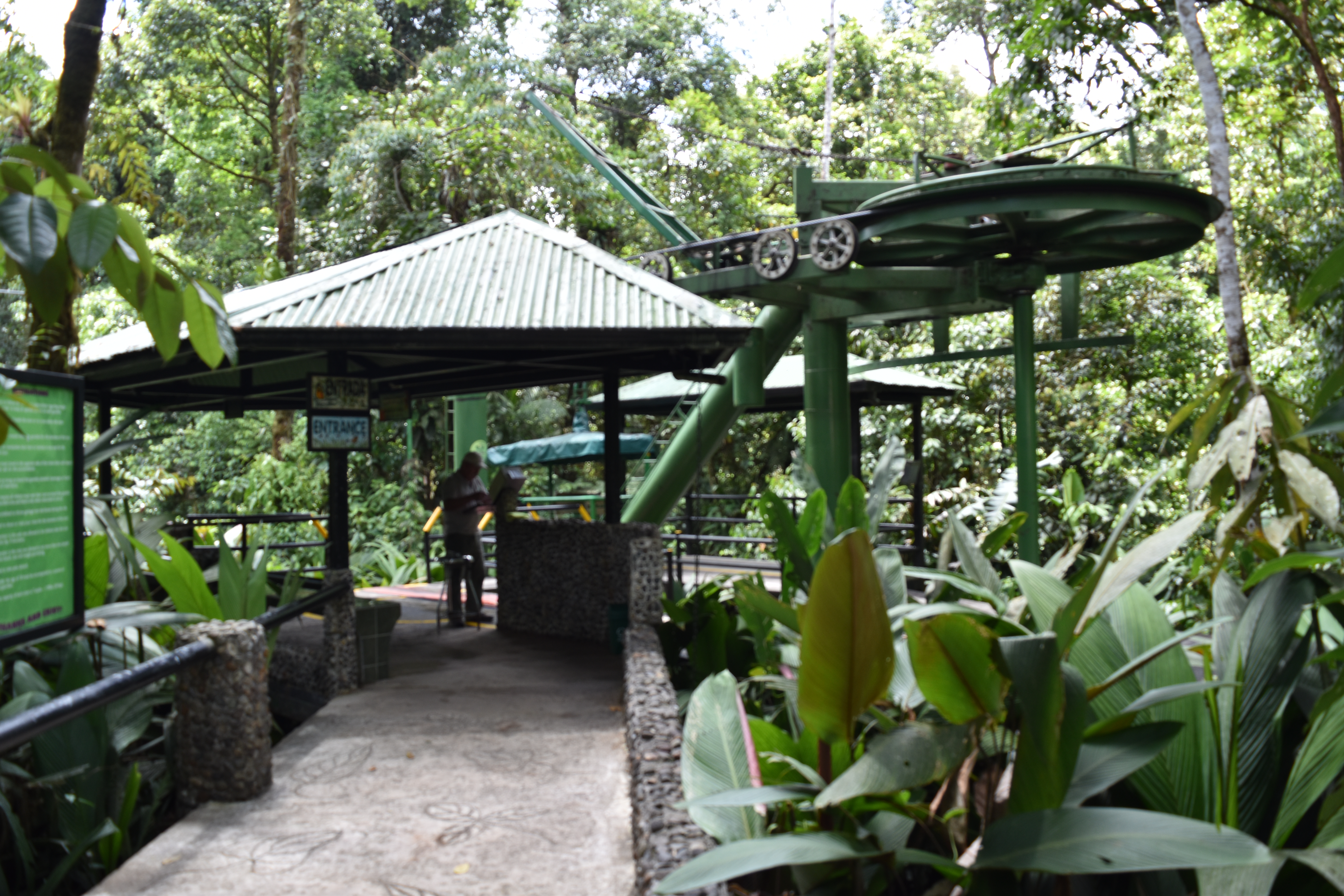
We head east leaving the Central Valley with San José on the motorway to Guapiles and Puerto Limon that goes through rain forest. We stop at this private park.

image

It offers cable car rides through the rain forest. We fly along quietly, first on the middle level of the trees and then along the crowns of them. For about an hour.

image

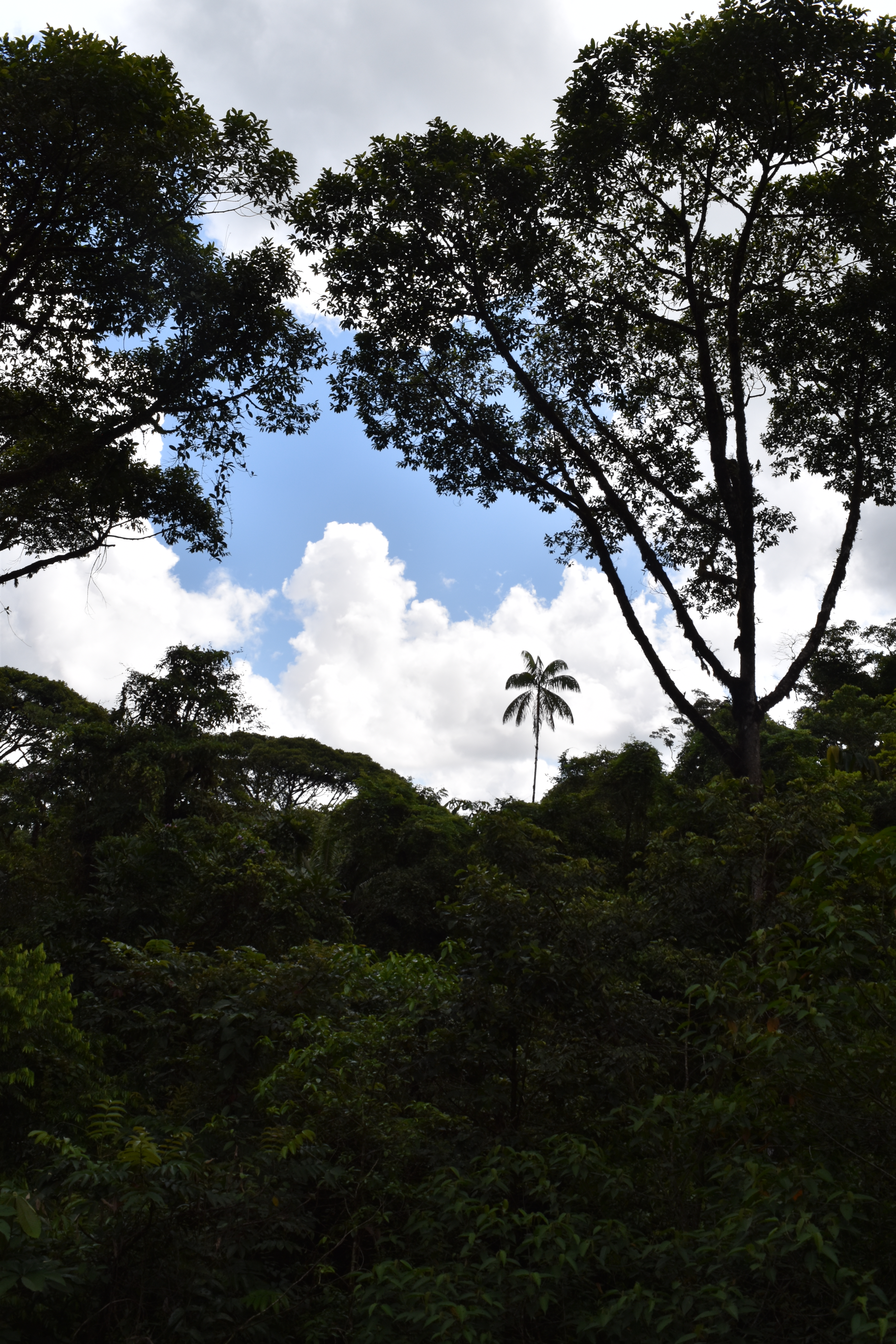
It is a primary rain forest with the highest trees reaching up to 60m. On the trees an abundance of epiphytes. While riding, we do not see any animals – we just hear the noise of the cicadas and of some iygüirros (thrush, Drossel), the national bird of Costa Rica. The guide that came with us says, it is normal that during the day you just hear the rain forest. They have cameras that filmed even tapirs in the night. The weather is beautiful, and he regrets that there is no rain today – rain belongs to a rain forest… well, no rain is okay for us.

image

After the ride we go for a short walk. The park has prepared gardens with frogs, snakes, butterflies and orchids. Then we see a sloth high, high up in the crown of a tree. We can just distinguish his furry back. My binoculars serve me well, the ones that Ernst gave to me as a present after our journey to Costa Rica six years ago.

.

“Gliding” along the Sarapiquí river – our first howler (congo) monkeys

Soon we are leaving the dense rain forest and reach the intersection Guapiles/Puerto Viejo de Sarapiquí. We drive north along plantations of pineapples and palm oil to Puerto Viejo de Sarapiquí. It is here where my family started their plantation business in Costa Rica – the brother of my grand-father had banana plantations . Until end 19th century it was the most important port in Costa Rica, but it lost its importance, when Puerto Limon emerged along with the train from San José to Puerto Limon.

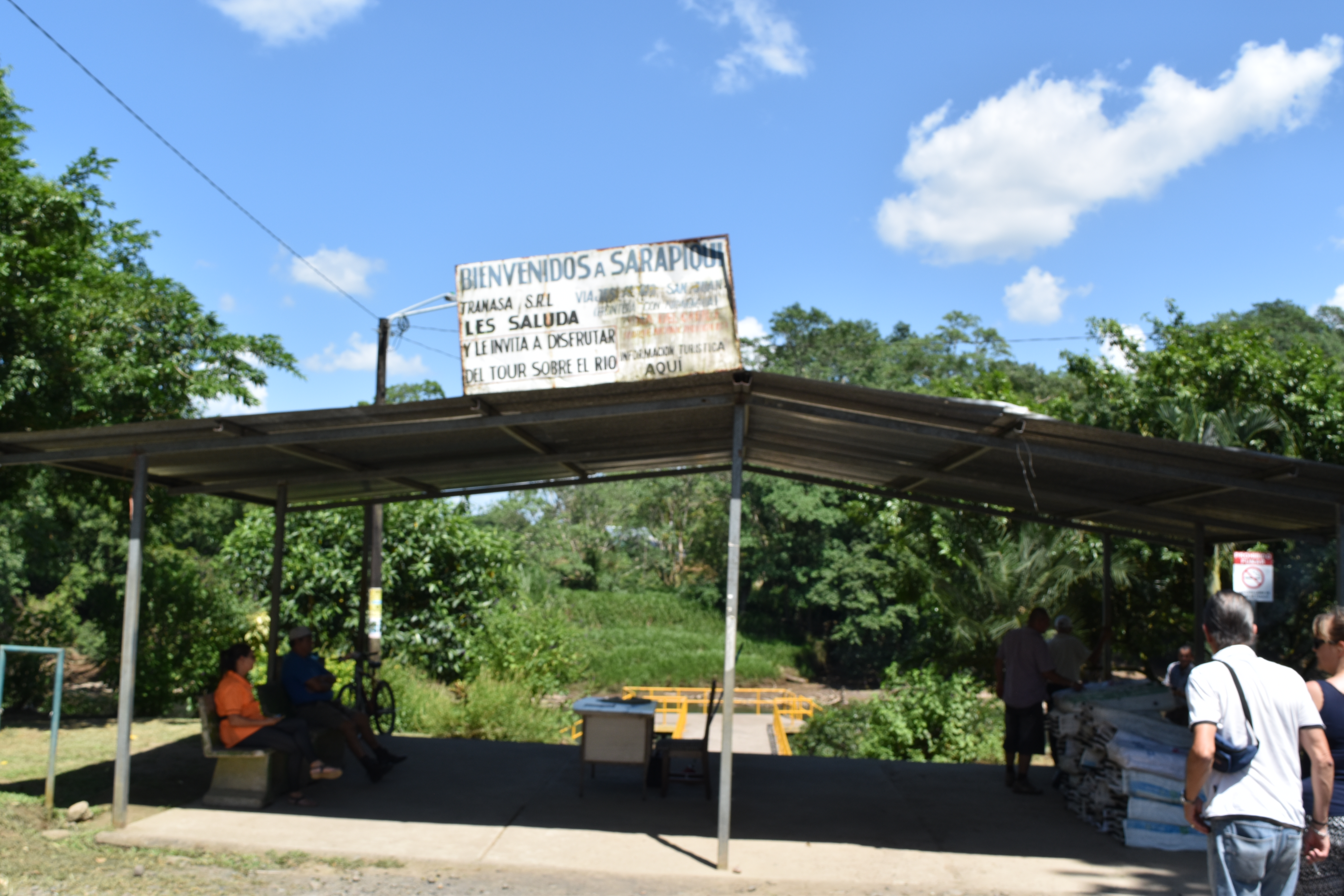
After a great lunch in restaurant “Soda mi Linda” (Jorge’s favorite place), we hire a private boat just for our small group of five.

image

On this warm and sunny Saturday, many families are swimming in the river. Jorge says that they are mostly Nicaraguans working in the banana fields. We chuck along, changing sides, peeping into the trees and into the water.

image

There they are, high high up in the top of the tree, howling and jumping from branch to branch: Holwer monkeys  (congos, Brüllaffen).  Swallows (golondrinas, Schwalben) are following our boat. Egrets (garzas or garzetas, Reiher) sit on the dead wood along the shore and one of them has just caught a fish. Two alligators (caimanes) are dozing in the water – they are perfectly camuflaged, I would have never seen them withouth the boat driver showing them to us. A cormoran is drying his wings  (anhinga). We enjoy our first wildlife experience in Costa Rica.

.

Drummers? – No, this is not Semana Santa, this is the Campaña Nacional de Costa Rica

In the mid nineties, William Walker privately tried to establish a colony in central America. Costa Rica fought against him in a series of battles from 1856 and 1857. The main battle was on April 11th and will be celebrated on Monday. But there were more battles, one of then on April 10th in Sarapiquí (Battle of Sardinal). And this is why we are now stopped by a parade of drummers and standard bearers, all dressed in blue and white. The war ended on May 1st and counts as the foundation of the nation of Costa Rica.

.

Back to the Central Valley, for sea level to 1100m

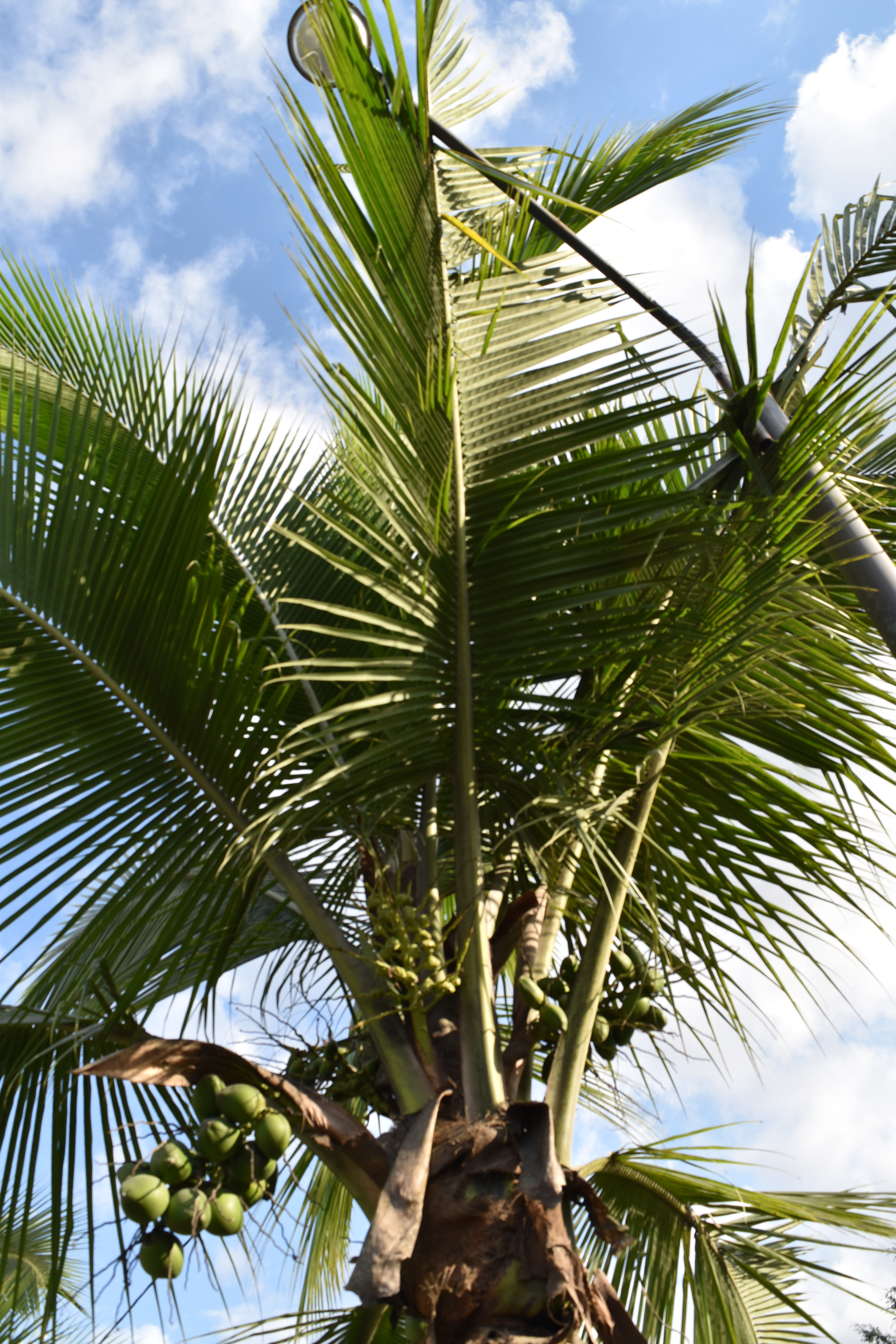
With this coquito tree we sa good bye to the low lands and return back to the Central Valley and Santo Domingo.

image

Thank you, Jorge, for another great experience in Costa Rica.


A Sunday on the vulcan Poás and the cataratas La Paz

At seven in the morning, Jorge from the Don Quijote school picks us up and with Valentina we drive to the Poás, one of the active volcanoes in Costa Rica. The plan is to visit the park and later the Catarates La Paz.

.

We are lucky… we can see the Poás crater with the lake

Overtaking cyclists our car winds up and up through coffee and strawberry plantations (we buy strawberries sold along the road later) and at eight we reach the Poás vulcan on about 2700m. It is chilly… Valentina from Belgium feels cold – no mountains there, just “mon plat pays”. Good that I have two jackets with me.

image

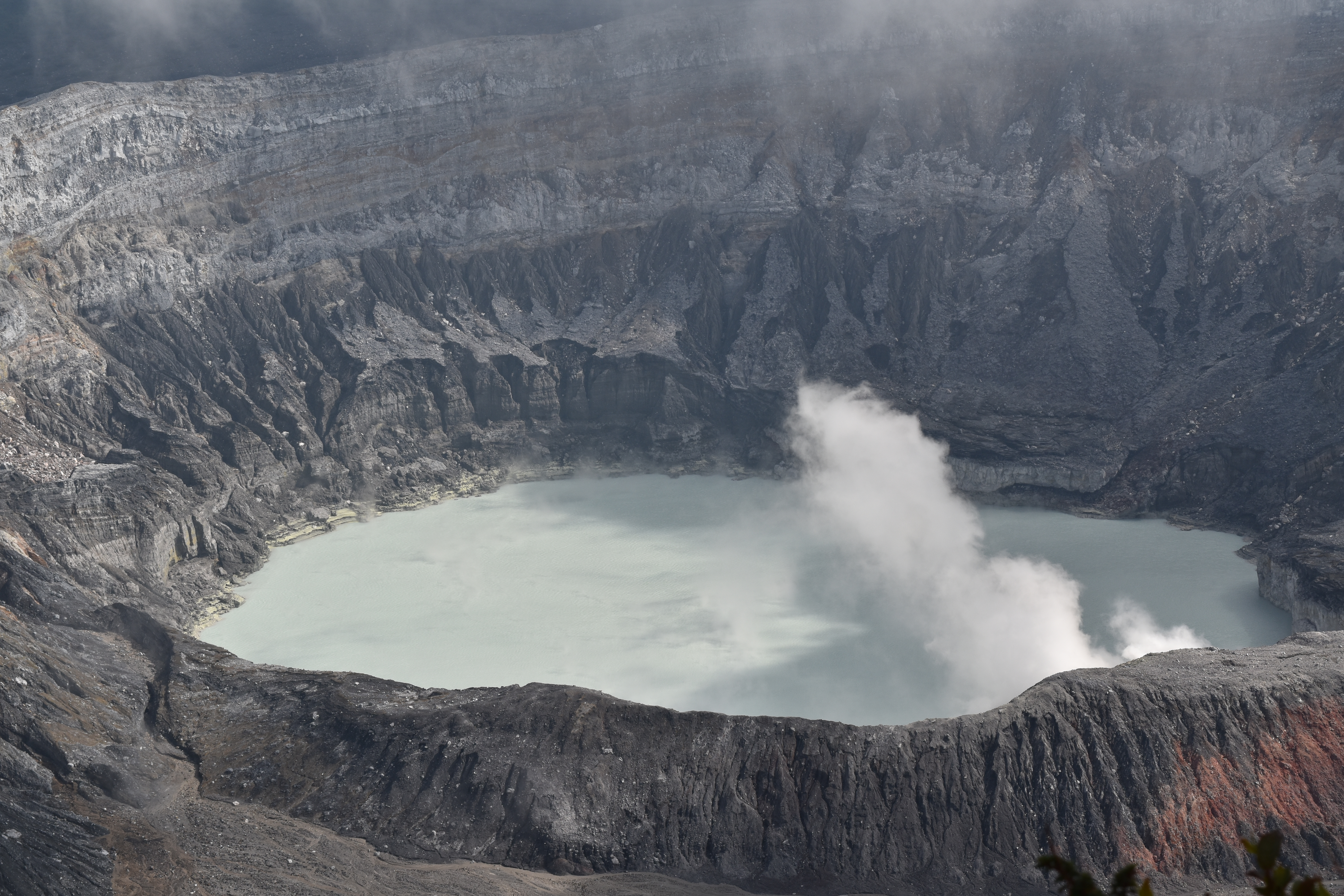
We are almost alone. The park has just opened. On a wide paved road we walk 600m to the newest crater from an eruption in 1953.

image

This crater has been active again in the nineties. Because of the sulfur emitted from the crater it is only allowed to watch it from the lookout. I catch the photo with the steam cloud.

.

Walking through shady forest to the Laguna Botos

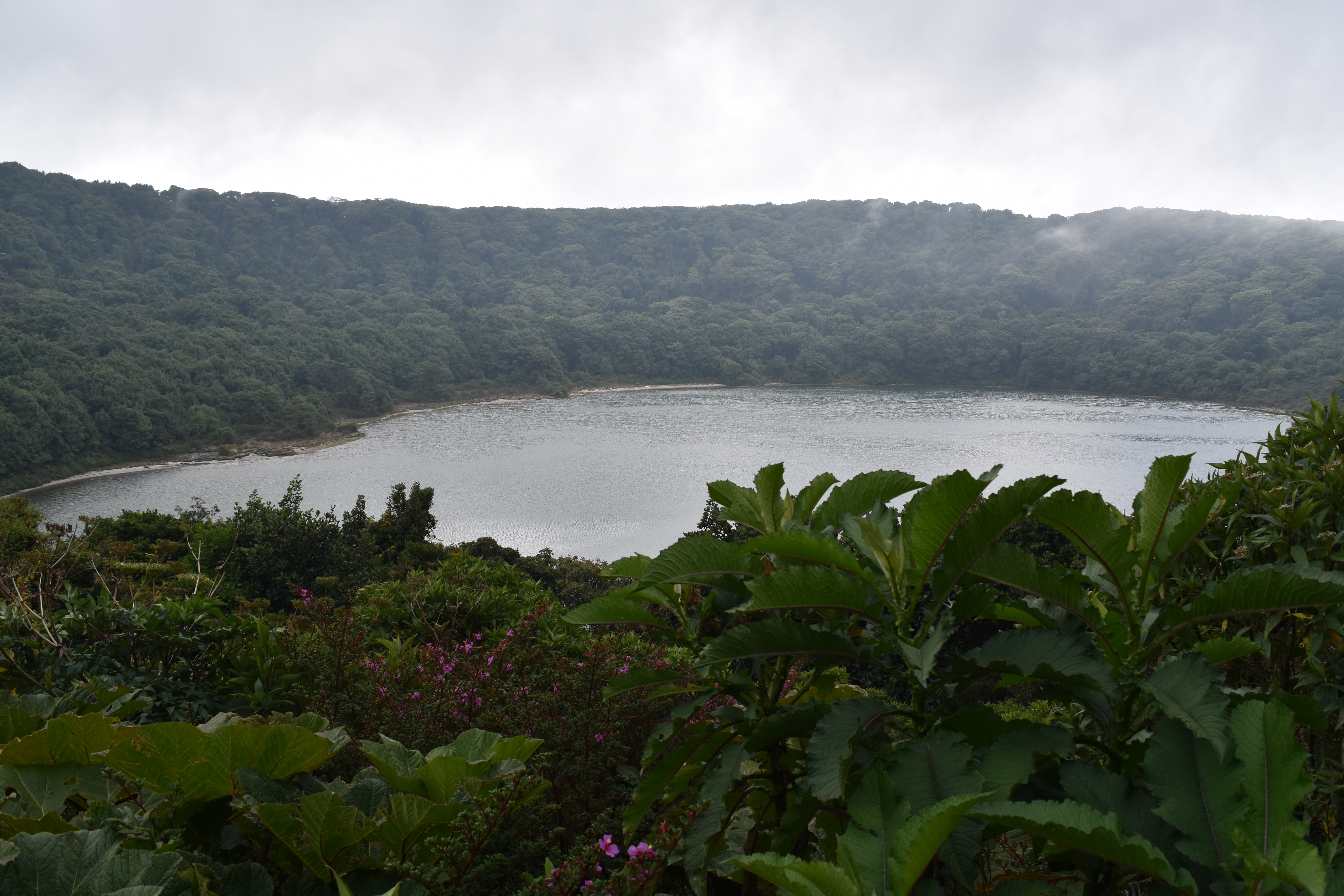
Up we walk on a well maintained path through a shady cloud forest to the next crater. It is extinct and holds the Laguna Botos.

image

.

The Sendero Canto Aves

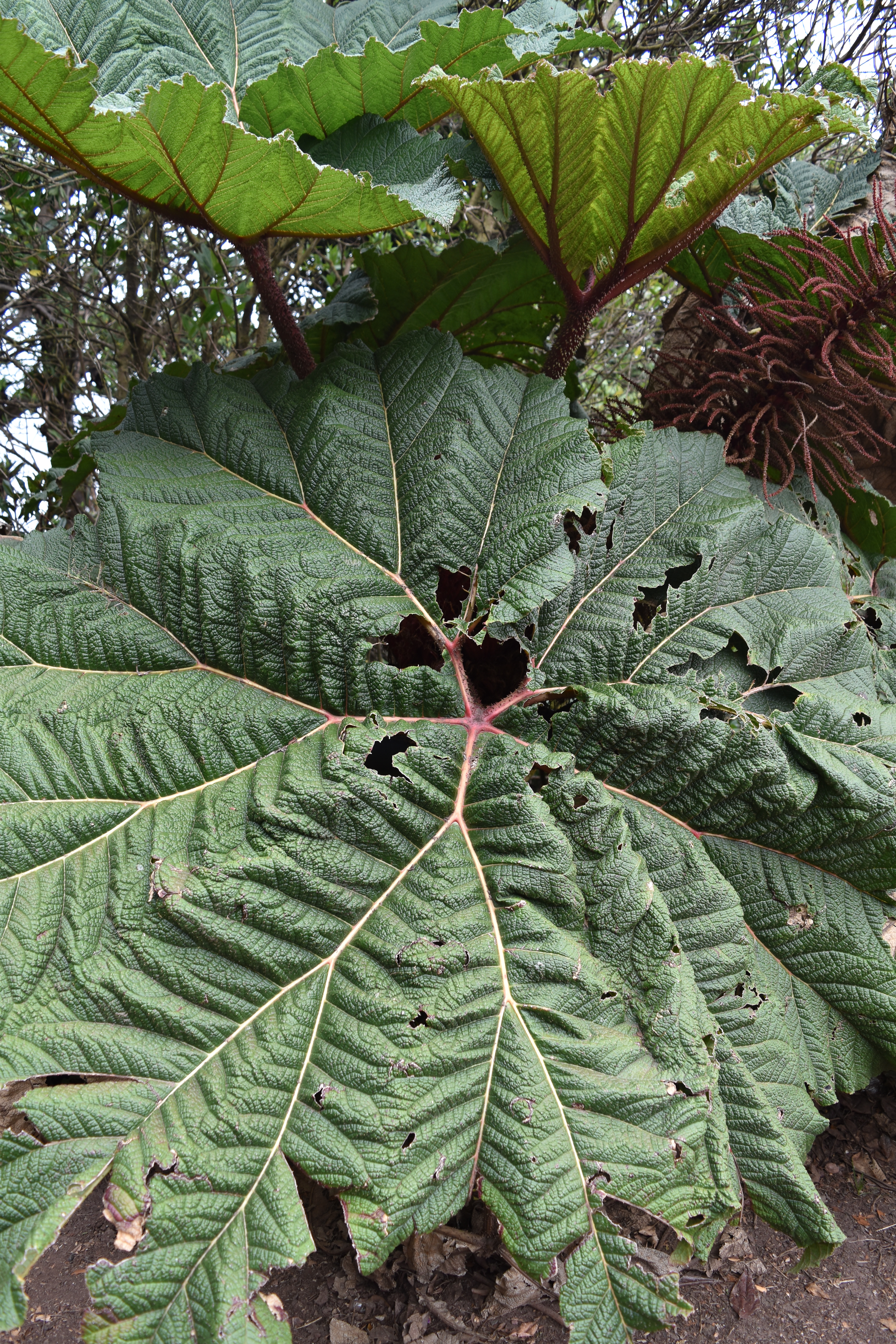
We continue our way on the Sendero Canto Aves. Ursula and Valentina see hummingbirds – I hear many birds, but cannot see them in the dense forest. I enjoy the beautiful umbrellas of poor people,

image

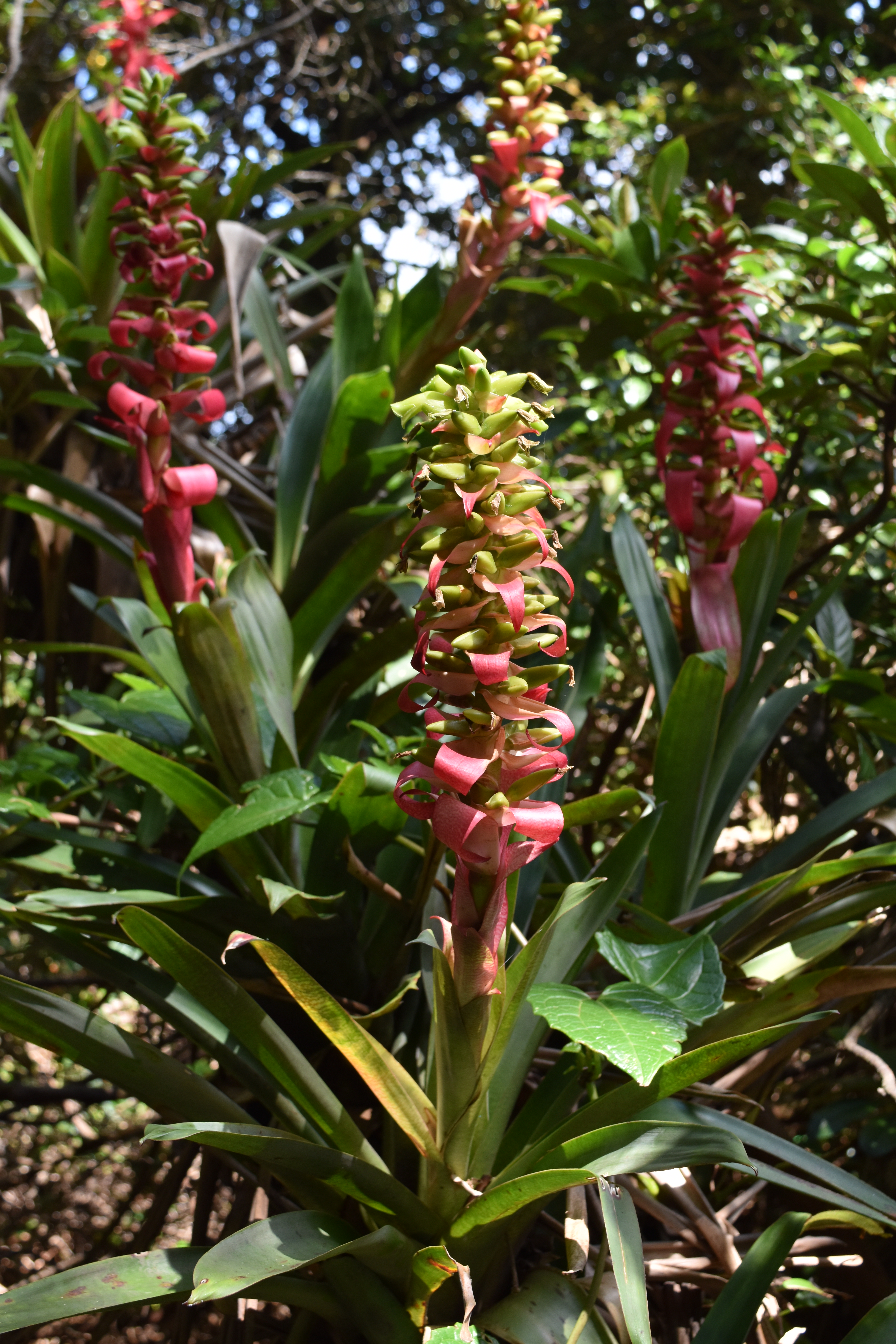
the bromelias,

image

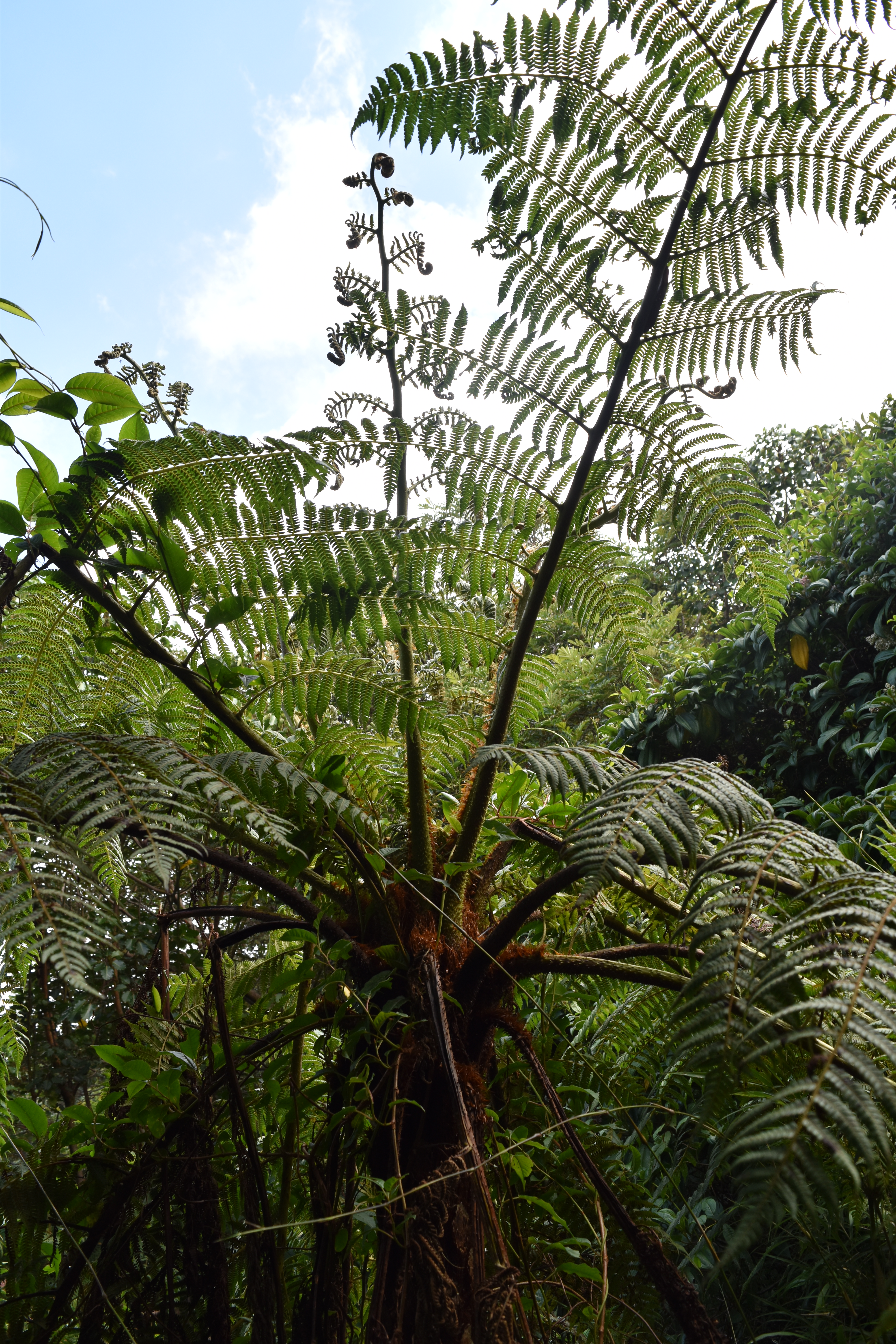
and the fern trees.

image

When we come back to the visitor center around ten, I think that I am at a different place than two hours ago. Everything is packed with tourists. Good that we were here so early!

.

Not far from here… the La Paz waterfall gardens

After a short ride we reach the La Paz waterfall gardens. We find a zoo with the birds, mammals, frogs, butterflies and snakes of Costa Rica, a pool, jacuzi and a pond for fishing trouts, a restaurant for lunch (very efficient, but good food) and several waterfalls in the jungle.

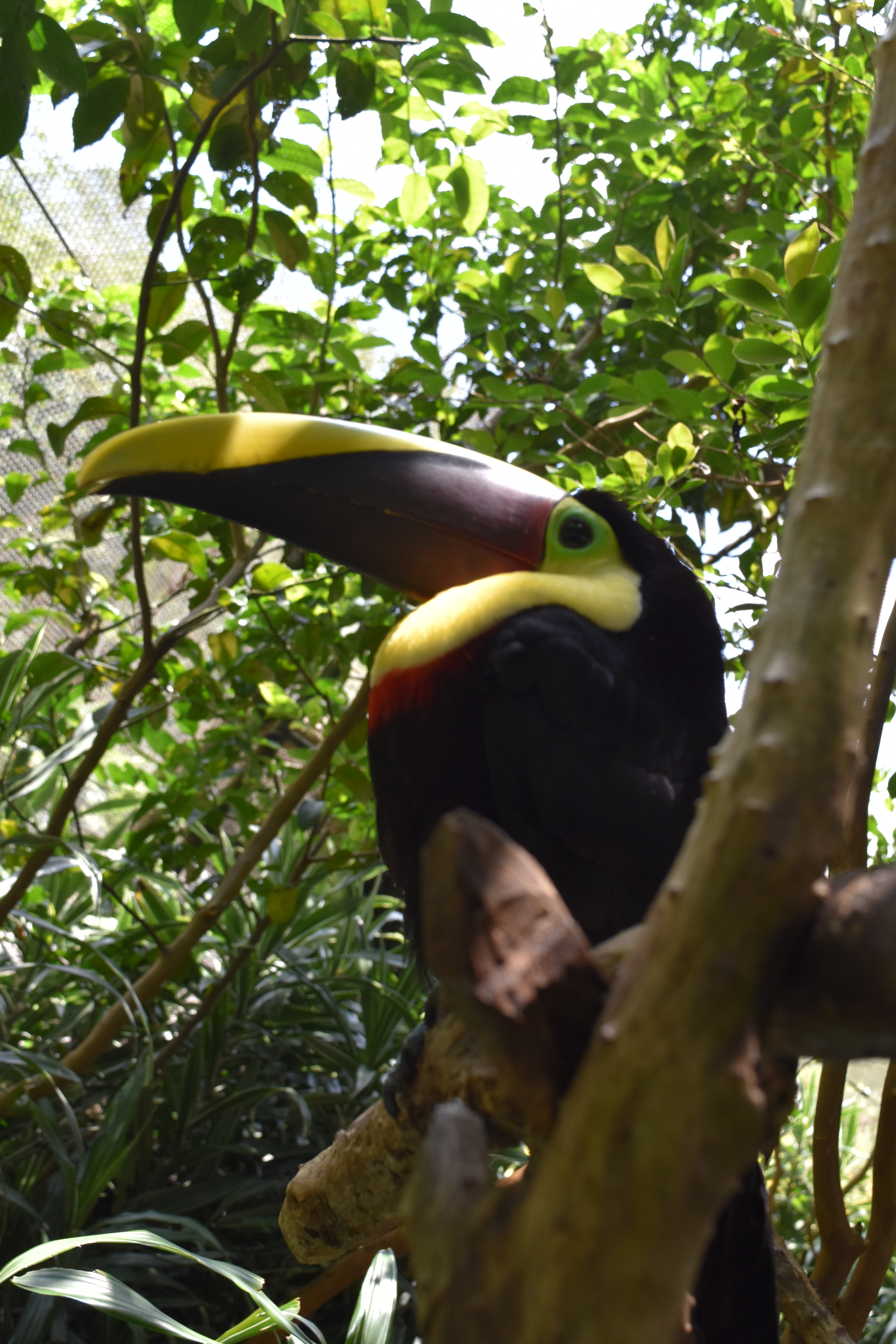
Here is a tame tucan.

image

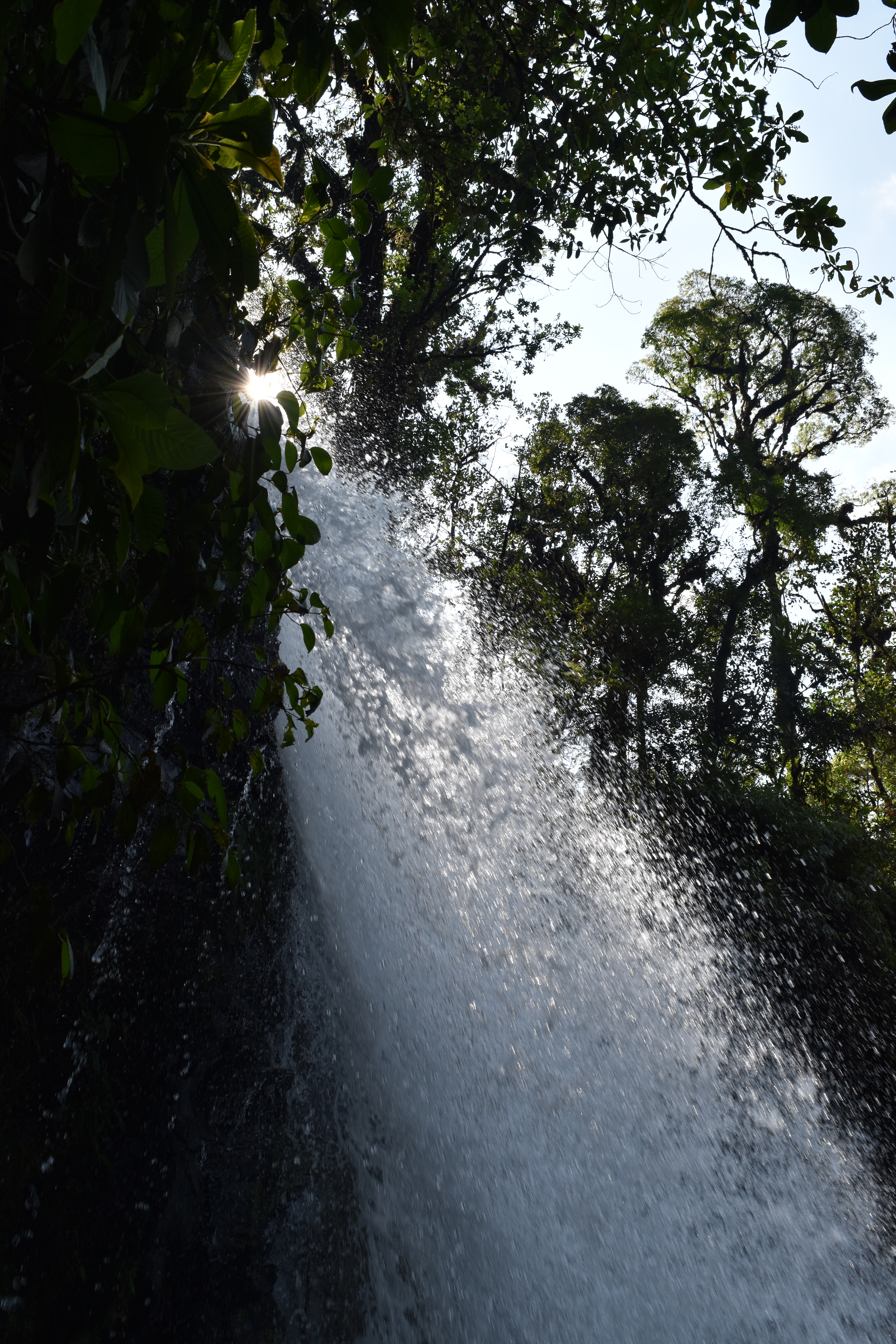
And here is a romantic foto of the waterfall area.

image


Around 4pm we are back at home in Santo Domingo. This has been a beautiful excursion.


Costa Rica Coffee tour at Britt’s

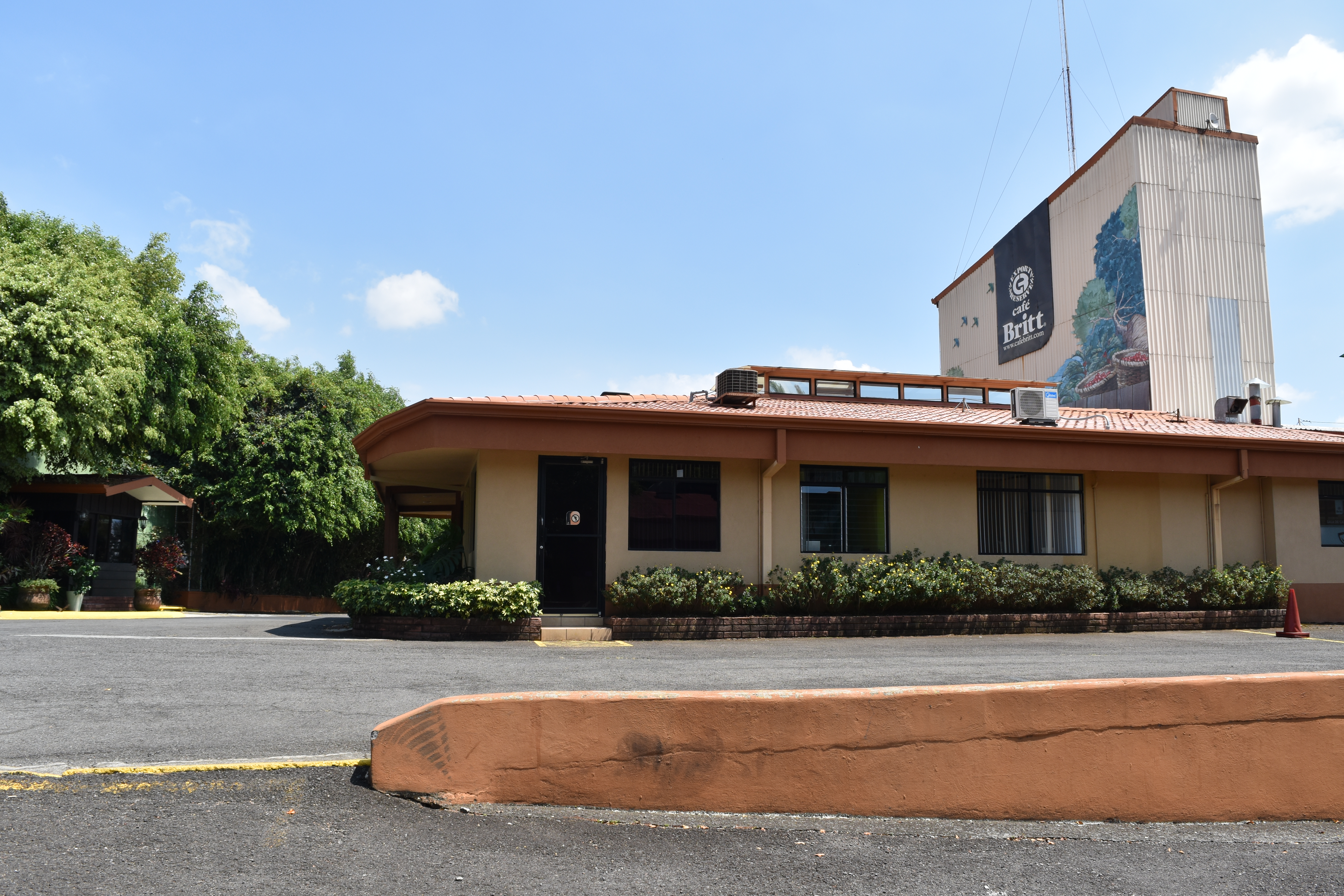
It is Saturday, and we have booked a coffee tour with Jorge from our school. Jorge takes us to Britt near Heredia.

image

.

Britt offers a didactical tour to demonstrate the history, plantation and production of coffee. It is a tour with stops in a marvellous, shady garden. There are samples and panels explaining it all.

.

Origin of the coffee

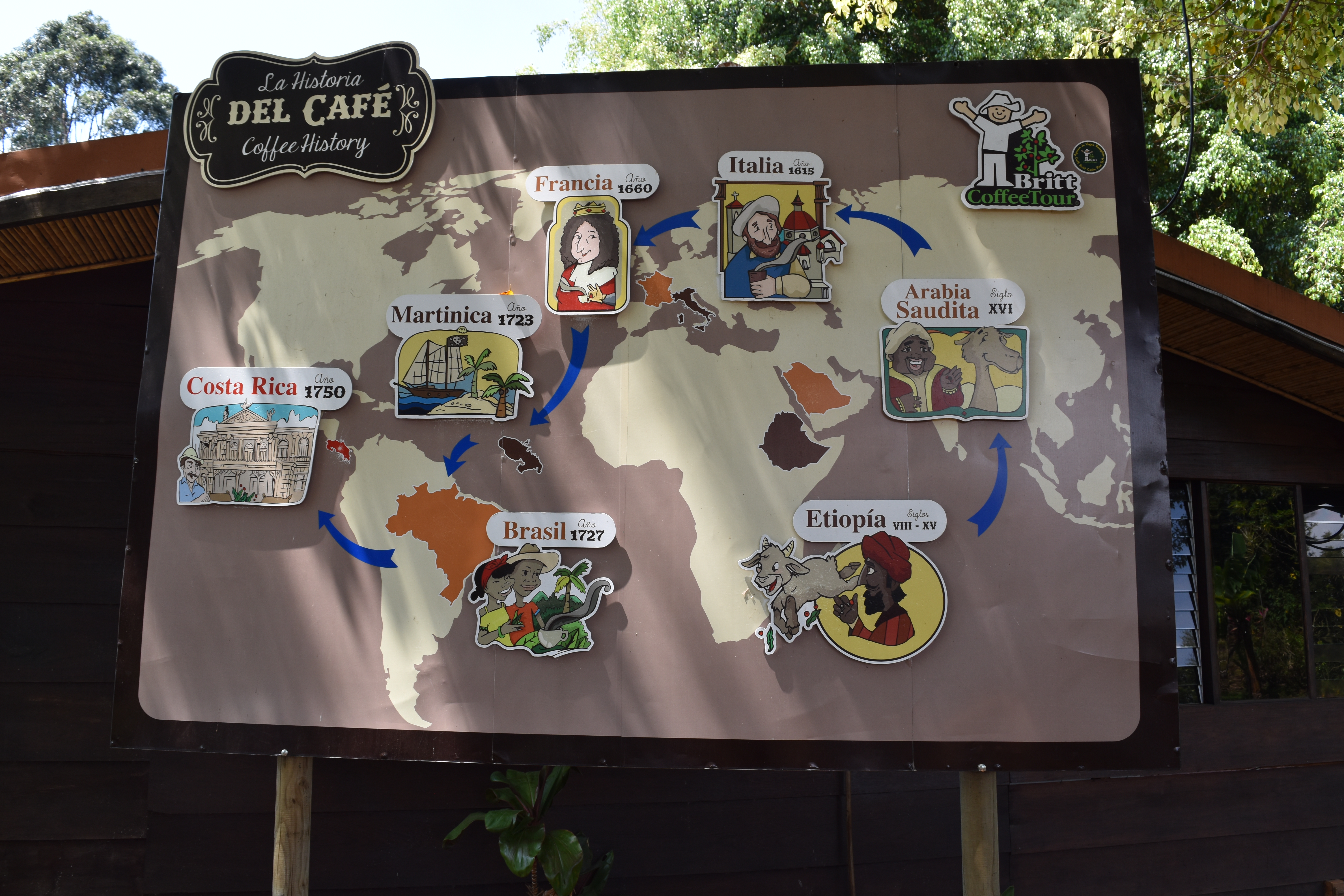
Originally the coffee beans come from Ethopia… it seems that goats liked them. Via Saudi-Arabia and Europe they traveled to Brasil and then to Costa Rica.

image

.

Why coffee in Costa Rica and where?

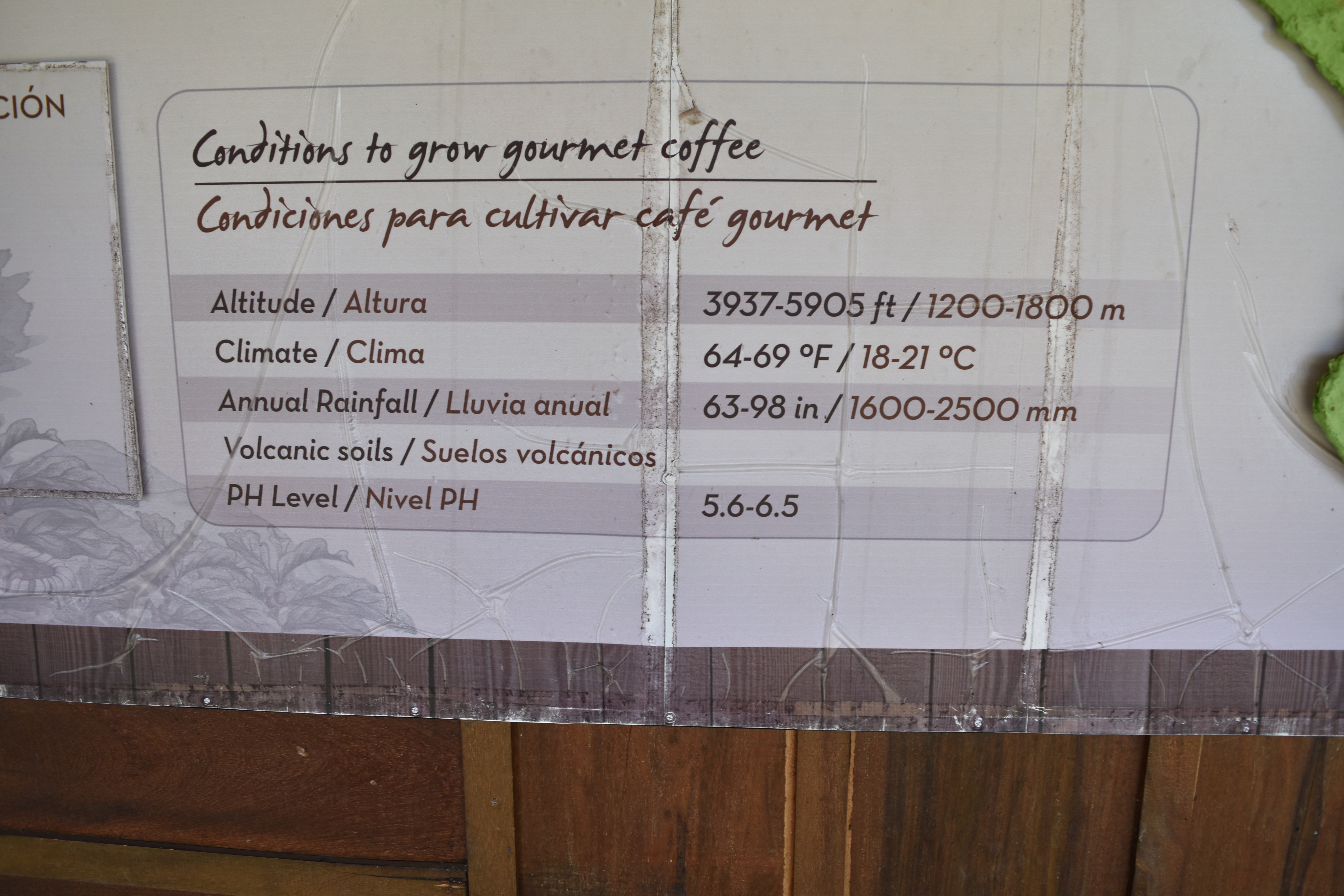
It is the combination of altitude above sea level, rain, volcanic soil and acidity of the terrain that is excellent for the coffee plant. Costa Rica only grows the Arabica plant.


image

There are several regions that grow coffee, for instance in the central valley around San José or more to the south near Carthago and the Chirripo volcan. The coffee beans from the various regions can be blended or sold as coffee originating from one region.

image

.

Growing a coffee plant

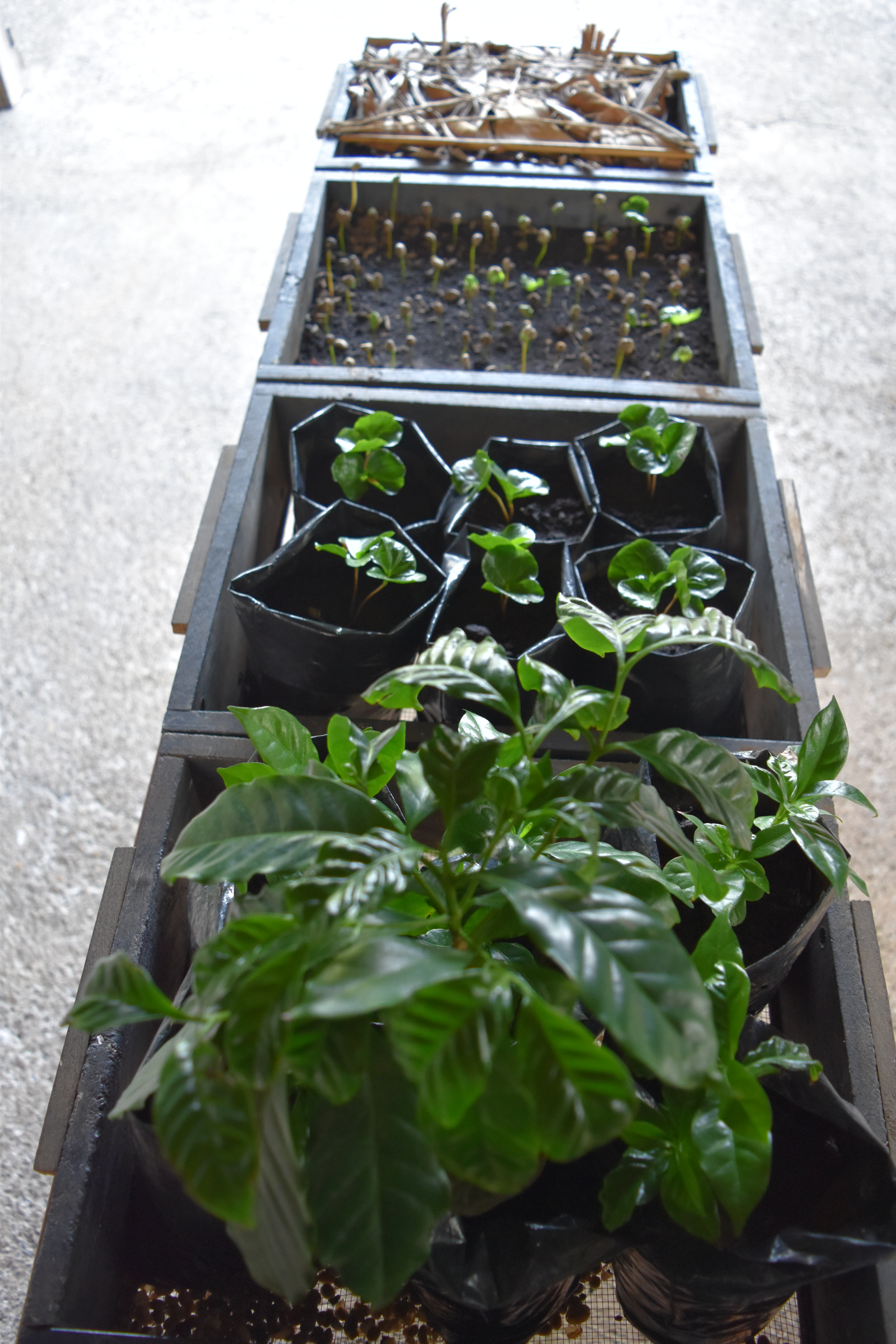
Under the leaves are the seeds that then ar planted out, replanted into the small bags and then into larger bags… it takes three to five years, until the plant can be harvested. image

A coffee plant bears fruit for about 20 years. The red fruit is being harvested from December to February/March. The harvesters are paid by bucket harvested. 11kg of beans give 1 kg of coffee.

.

The cleaning and roasting process

Each seed contains two coffee beans that have to be uncovered in a multistage process. Then the beans are sun dried and roasted from 7 to 16 minutes, or from light brown to dark brown. Professional testers perform the quality control, using similar techniques and words like I know from wine tasting. The lady guiding through the tour with a lot of humour illustrates all this in a show at the end. We can taste the different coffees, but for us it is difficult to sense the difference. We just think that the coffee we get in Costa Rica has a very balanced taste.

.

The gorgeous Britt garden

The Britt show has given a good overview of the process of growing coffee… but now I should take Ursula to a real coffee plantation like the one of former Los Peters in Sarchi.

The Britt garden is gorgeous. To complete our visit, we walk through it, enjoy it and take some fotos.

image


A short afternoon in San José

The school Don Quijote offers an excursion to San José. It turns out that we are the only participants of that excursion. Michel is our guide. For 315 Colones, the bus takes us from Santo Domingo to the busy city center of San José. We can feel, hear and smell that we are in a city. People are rushing in the narrow streets,  street sellers are shouting out, what they have to sell and the many busses are exhausting stinking, black smoke. This is the sprawling center of a metropolitan area of about 1.6 mio inhabitants. It is the capital of Costa Rica, but it had to fight for that. Until 1823, the older city Cartago was the capital. In the battle of Ochomongo, San José won and took over.

.

On the way to the Plaza de Cultura – some shopping

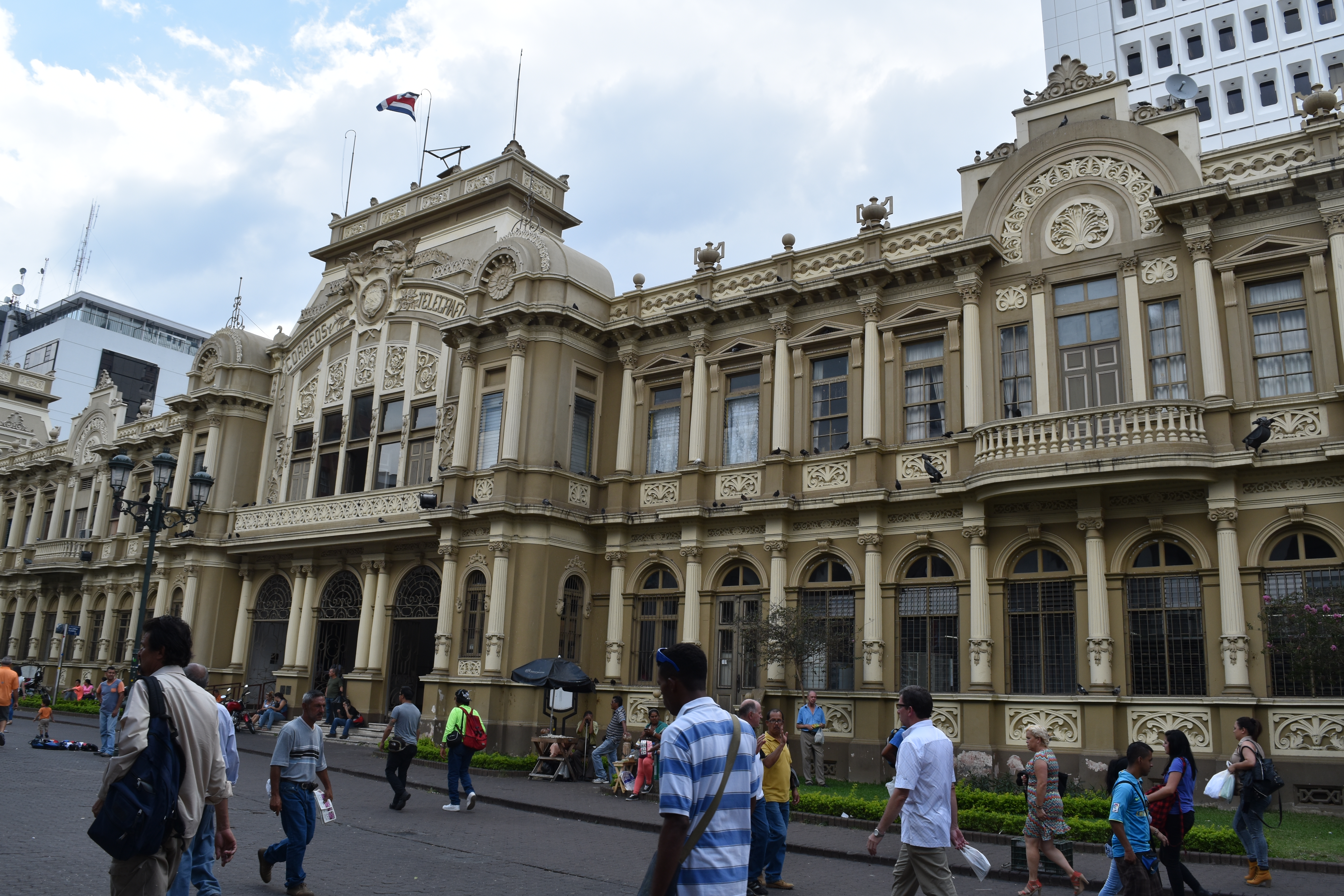
The bus station to Santo Domingo is not far from the post office, elegant in yellow.

image

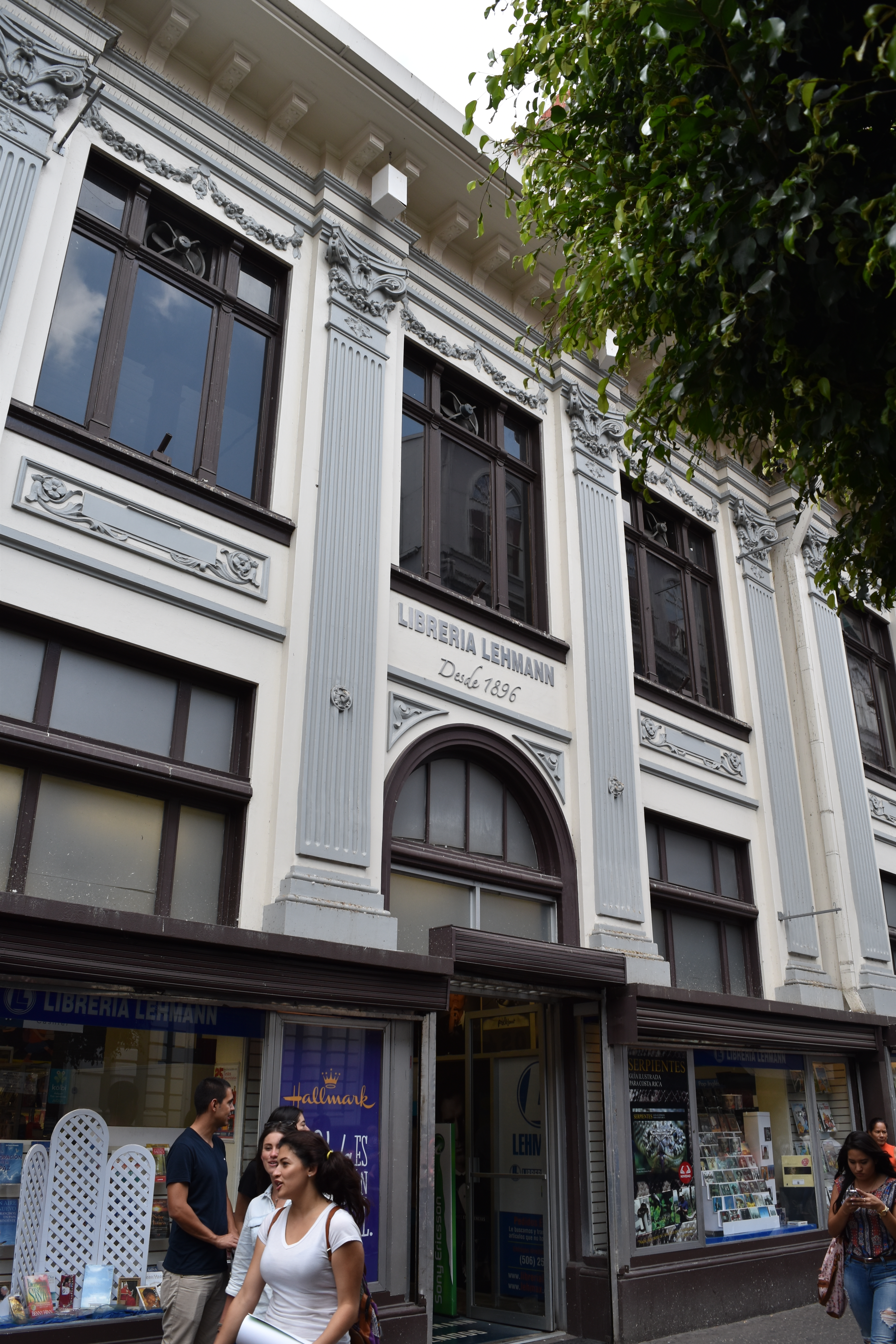
A surf shop? Ursula buys goggles for swimming. A book shop with a German name, Lehmann?

image

Yes, says Michel, around 1900 many Germans immigrated to Costa Rica. Right, my grand uncle and grand aunt also came to Costa Rica then. We enter and buy a children’s book by Joaquín Gutierrez – he is an author from Costa Rica and Michel loves this book. Let me see, it might come in handy for my telling fairy tales, when back home.

.

The Teatro Nacional at the Plaza de Cultura

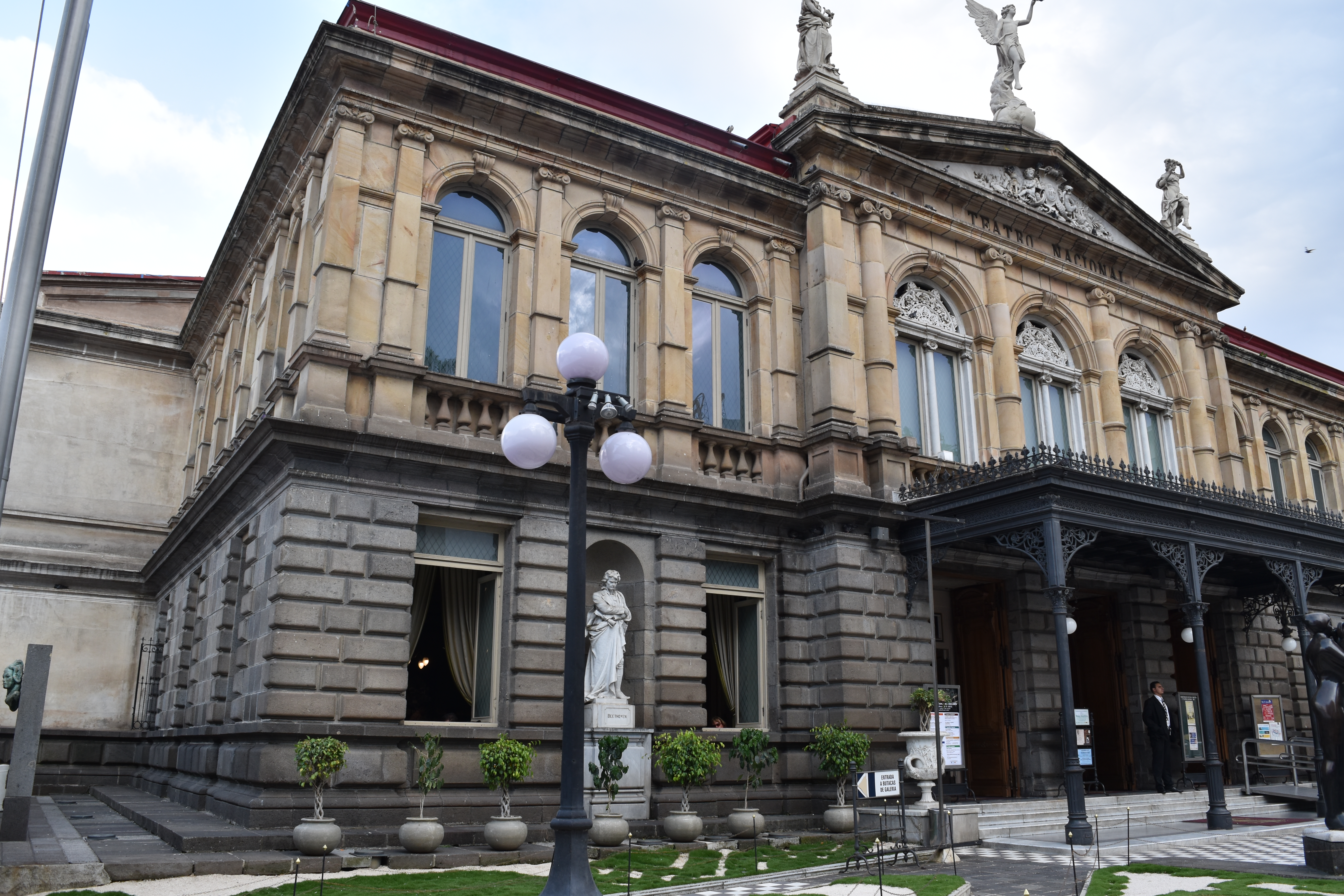
The Plaza de Cultura is full of Josefinos. It is dominated by the Teatro Nacional, built in 1897. The first enactment, I hear, was Goethe’s Faust.

image

Inside is a beautiful lobby with statues.

image

On the ceiling there is the famous painting about coffee and banana plantations that has been produced in Italy and shipped to Costa Rica. The theatre has this plush atmosphere that we both like, for me it is a “real” theatre. It reminds me of Buenos Aires and Ursula of Florence.

image

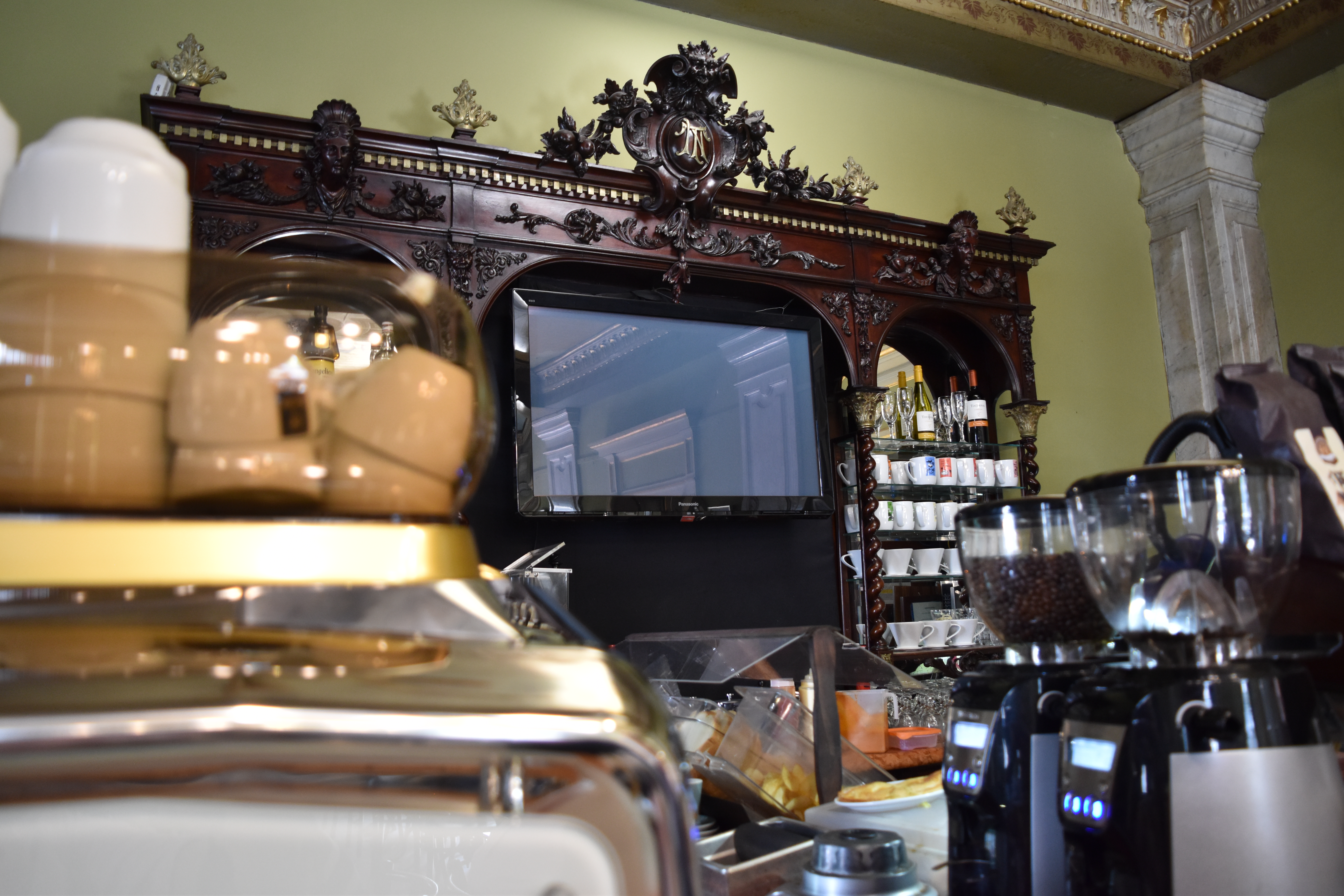
The cosy coffee bar inside the theater serves excellent coffee (from Britt) and has enticing cakes. I take the fresh fruit juice named Saraquipí.

image

.

Towards the Museo Nacional and the Parque Nacional

The Museo de Oro closes soon, and we put it on our agenda for later. We follow the Avenida Central. From this street I could see the Museo Nacional six years ago (when I was here with Ernst), but now a modern building stands in the way. It has been built in 2014 and hosts the Jade Museum. Also for later.

The Museo Nacional is in the former arsenal that became superfluous, when Figueres eliminated the military after the civil war of 1947.

image

I liked this museum six years ago – it gave an excellent overview of the history of Costa Rica.

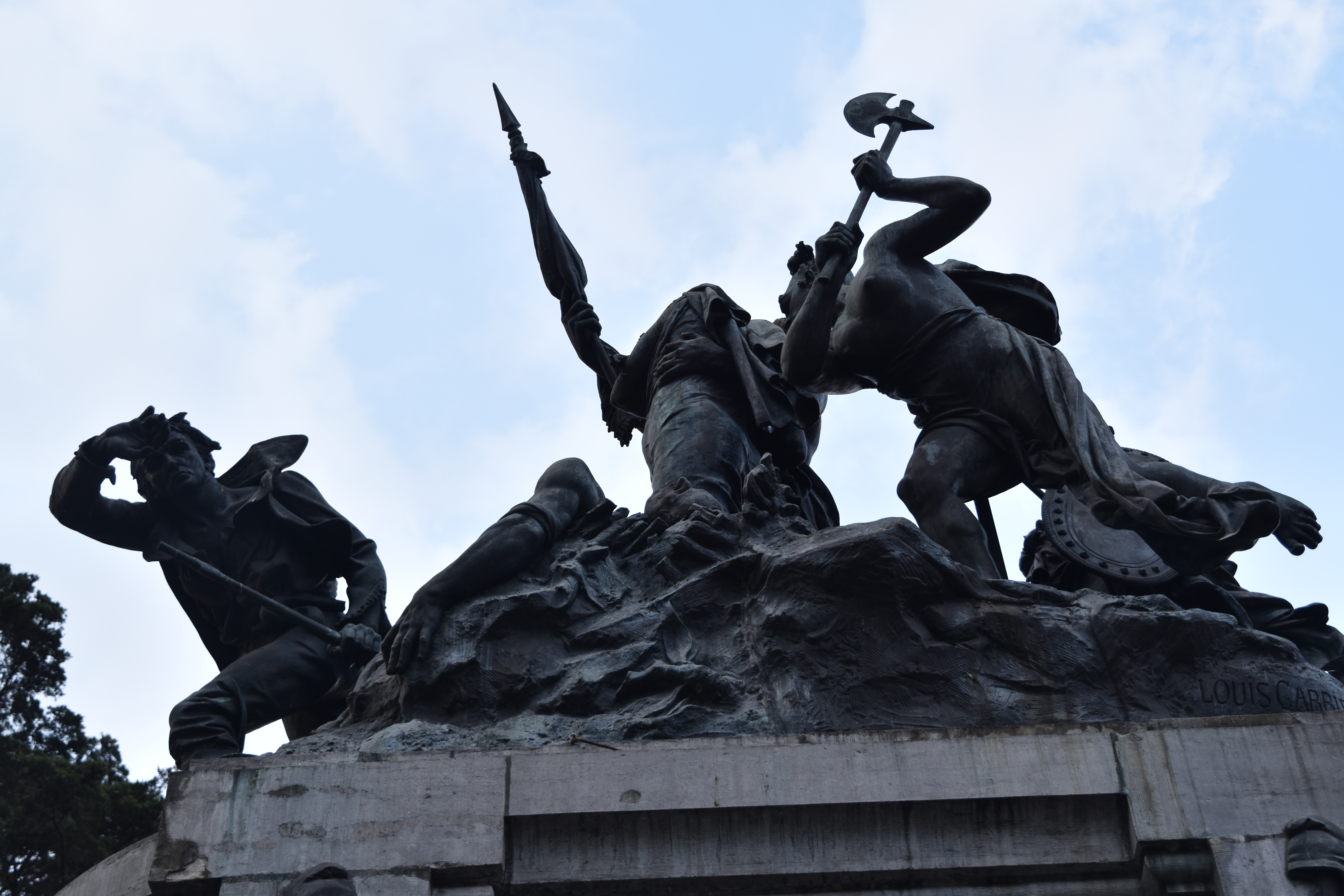
We continue to the Parque Nacional and admire all the government buildings of San José. In the parque there is amemorial that reminds of the battle of Santa Rosa (1856), when Costa Rica defended itself successfully against invadors from the North.

image

In the Auto Mercado, we buy Swiss cheese and risotto. We want to cook some Swiss meals for our homestay family. Thank you, Michel, for helping us to find everything and then helping us to carry it.

In the Friday evening traffic jam we return back to our quiet Santo Domingo. The air is much fresher here. We breathe deeply and are happy to have decided to stay in peaceful Santo Domingo.


Semana Santa in Santo Domingo de Heredia

Semana Santa re-enacts the last days of Christ up to his resurrection

In Semana Santa (Holy Week) the catholics re-enact the last days of Christ and his resurrection: On Palm Sunday his entrance into Jerusalem (the crowd waves with palm leaves), on Holy Thursday the Last Supper of Christ with his apostles, on Good Friday his arrest, trial, crucification and death, and on Sunday his resurrection.

.

A countless number of activities in Santo Domingo de Heredia

We came to Costa Rica late on Tuesday of Semana Santa and observed the activities of the rest of this week in Santo Domingo de Heredia, our small hometown for the next four weeks, a little off the beaten tracks. Already on Tuesday we heard the “bumpbump” of the drummers accompanying a procession. The number of processions and services to follow in this week were countless… several on each day.  Impossible to attend them all. We visited only a small part… some ten hours in all. Let me share my impressions with you.

.

Santa Misa y Procesión solemnel dedicada a Jesú atado a la columna

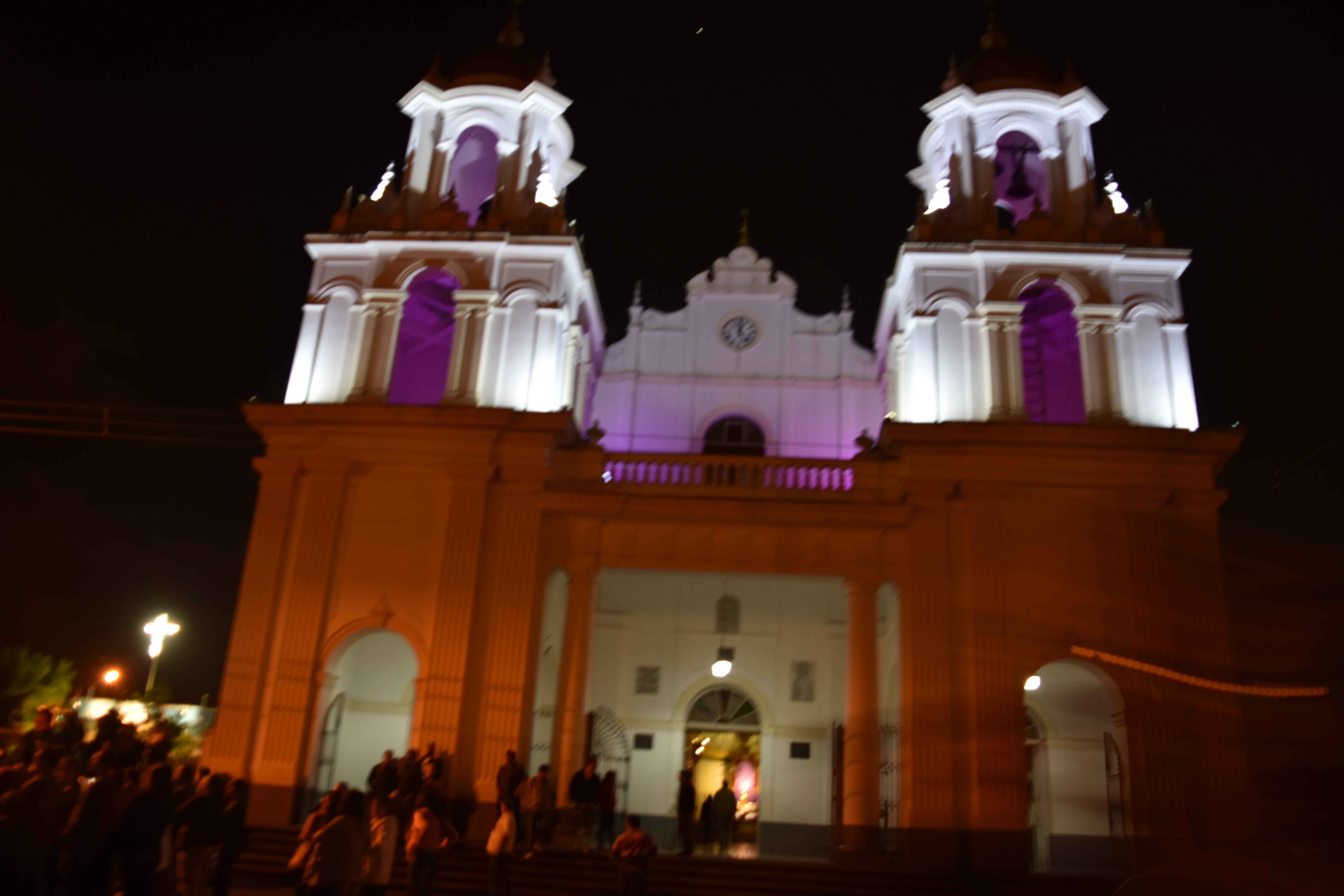
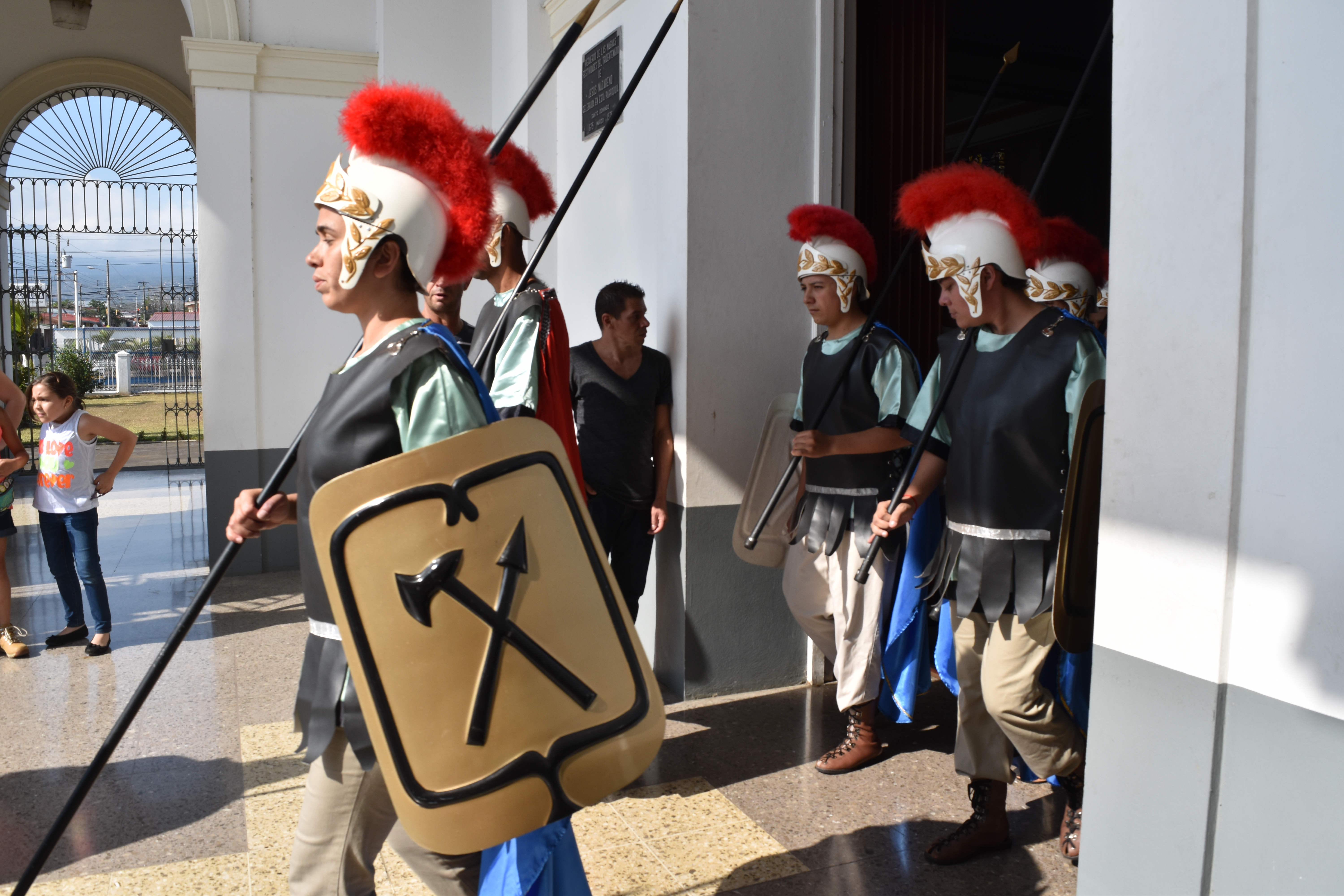
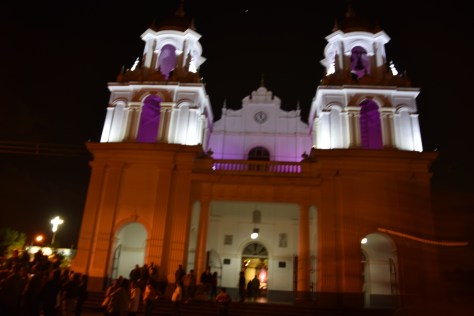
On Wednesday there is the procession dedicated to Jesus attached to the column (and then Barrabás will be free, not Jesus). Three platforms with figures are waiting in the choir. One of them shows Jesus attached to a column. At six pm, the service starts in the Basilica de Santo Domingo de Guzmán.  Though it is still a working day, the church is almost full. The priest tells the story of Jesús from being captured to resurrection. The drummers and ratcheters enter the church, led buy Roman soldiers. Then the heavy platforms with Jesus at the column leave the church, but this is not easy. The platforms are being carried towards the door, carefully put down to the ground (the leader knocks and all the carriers let the platform down like one hand),  pushed through the door on wheels and finally the platforms  are being balanced down to street level. The procession walks 100m north, some 100m west, 100m south and again some 100m east to get back to the Basilica. We follow them for a while, take a photo of the Basilica and then go home.
image


I wonder, why there are Romans participating in the processions. They were never in Latin America, right? Yes, right! But this is the enaction of the life of Christ, and the Romans were part of that and hence belong on this stage. Ursula laughs… remember there was the emperor Augustus at that time, she teases me.

.

Solemne Procesión de la Humillación

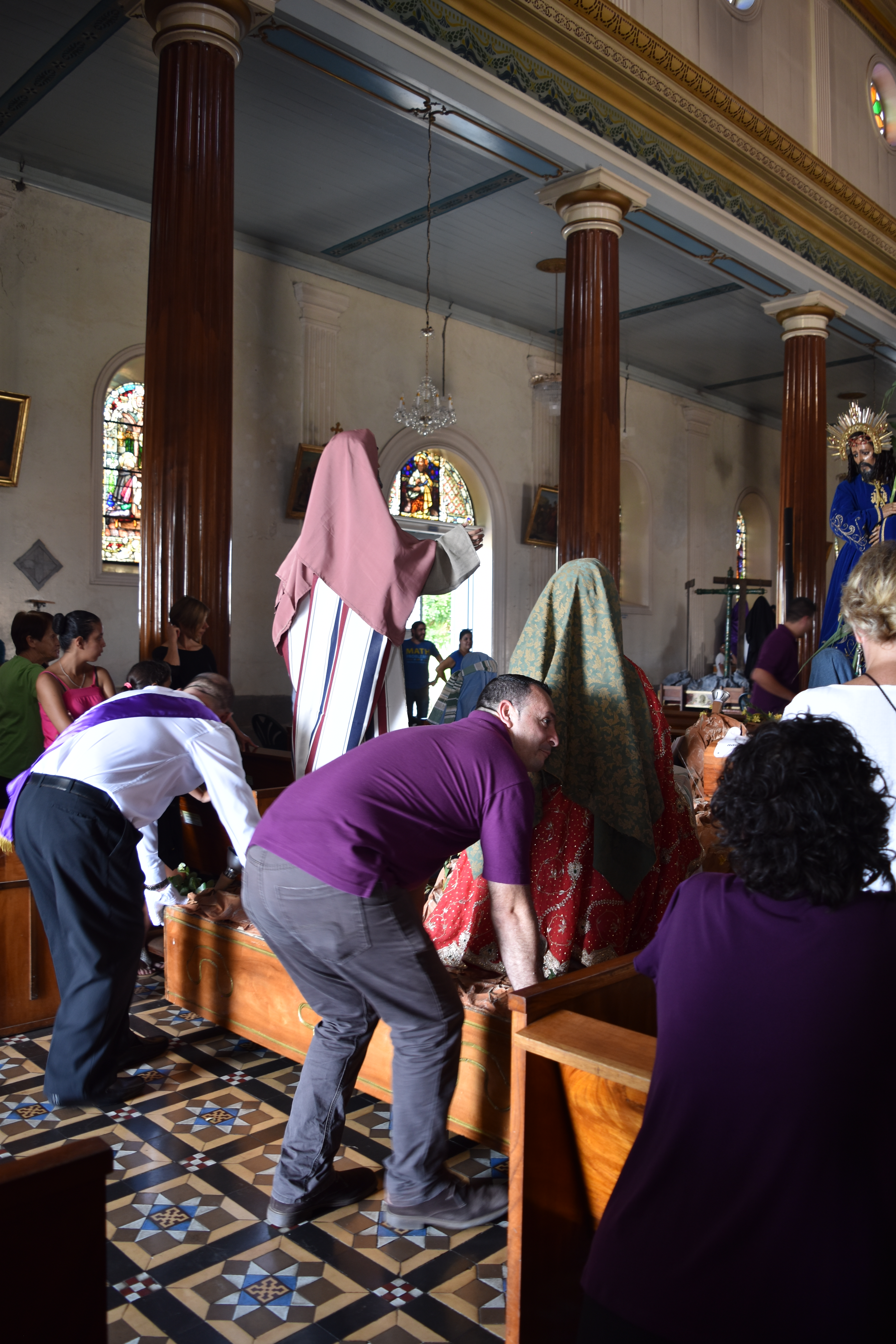
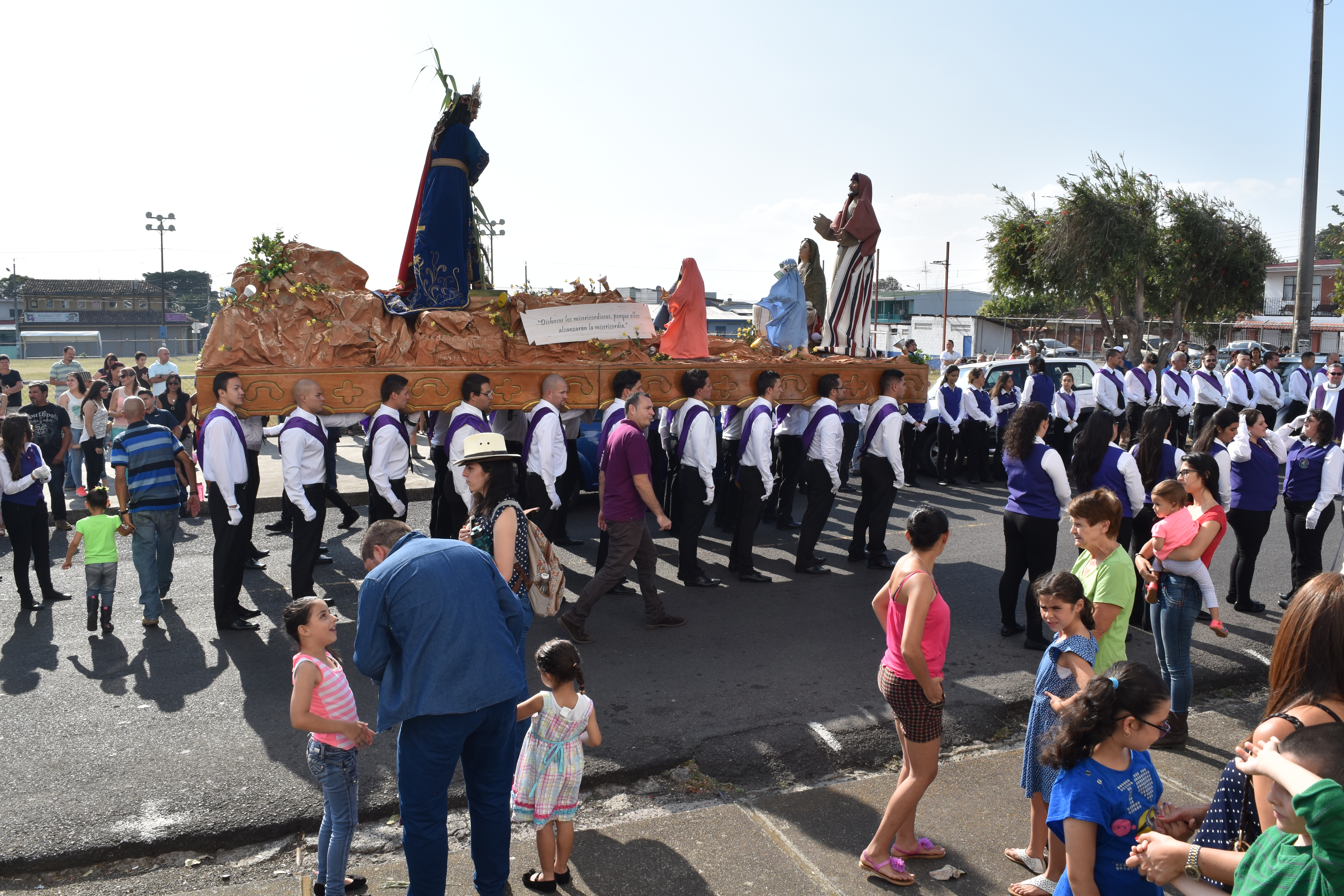
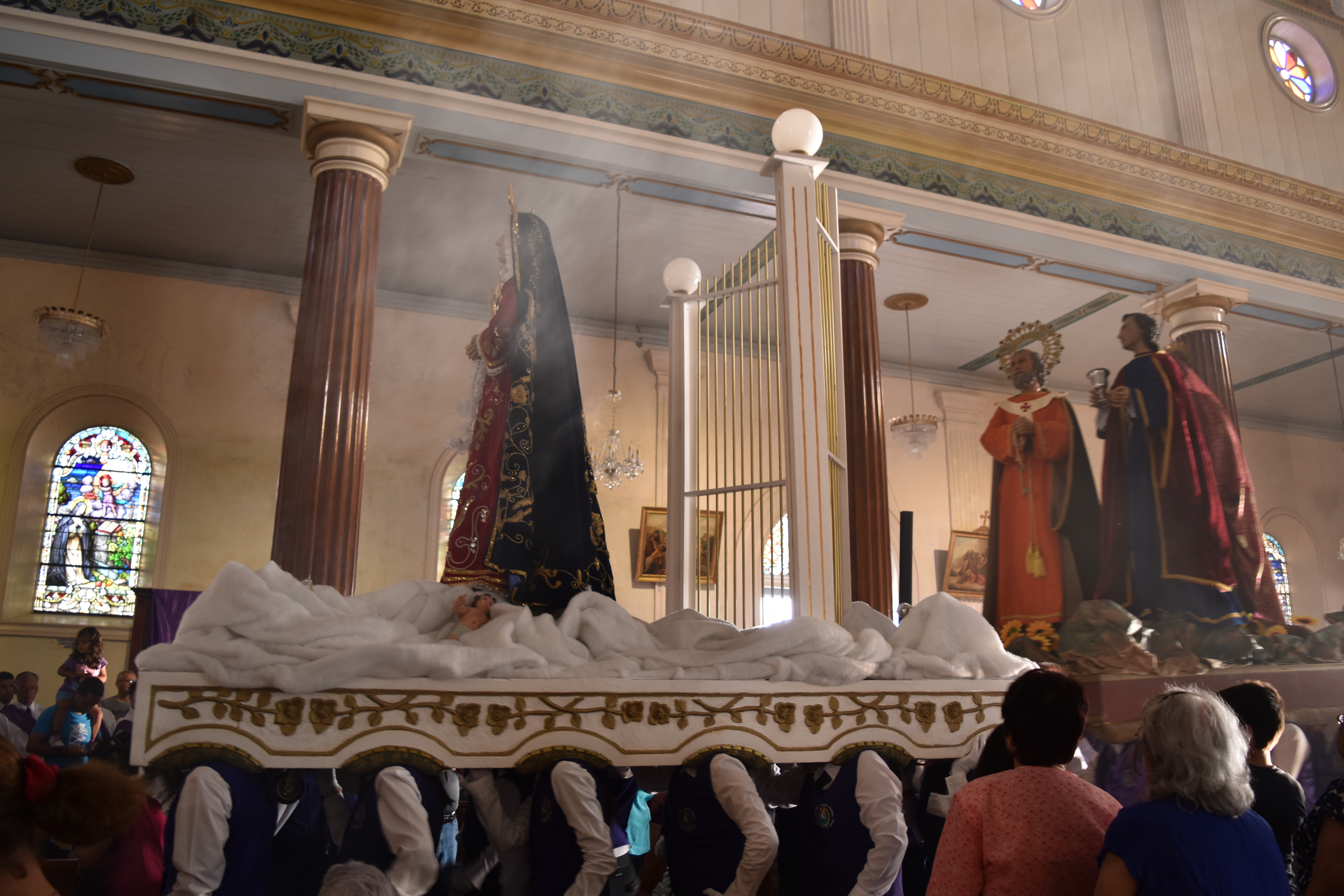
On Thursday from 3 to 5 pm the holy procession of the humiliation takes place. Again three platforms are waiting in the Basilica. Jesus now stands on a mountain looking down at three persons.  Perhaps he is now in the garden Getsemane. On the second platform there is Maria in a blue dress. On the third platform I can see  three men, perhaps apostles (I recognize Petrus with the key and a friend tells me later, the others must be Jacobus and Johannes).

Again the Romans, the drummers and the ratcheters enter the church – and leave them.

image

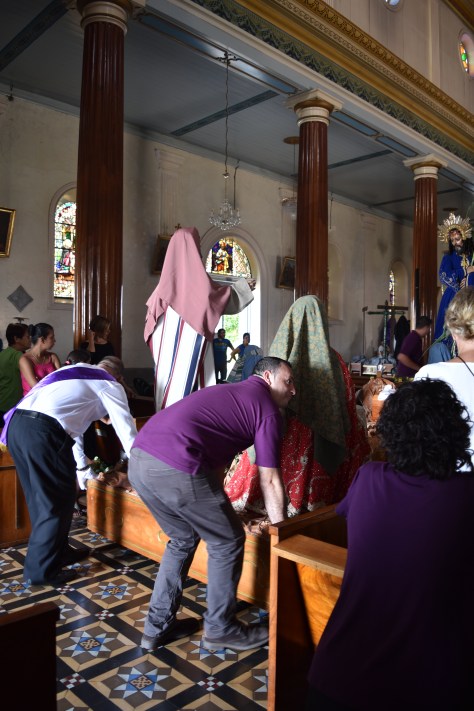
Again the three platforms are carefully moved out of the church to the street.
image

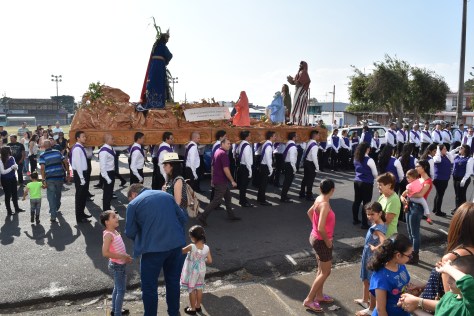
I sense the odor of incense. The men carrying the platforms wear white shirts and a blue ribbon that says ” Jesús del Consuelo.” There are many carriers, and they carry the platforms in changing shifts, as they are heavy.
 

image

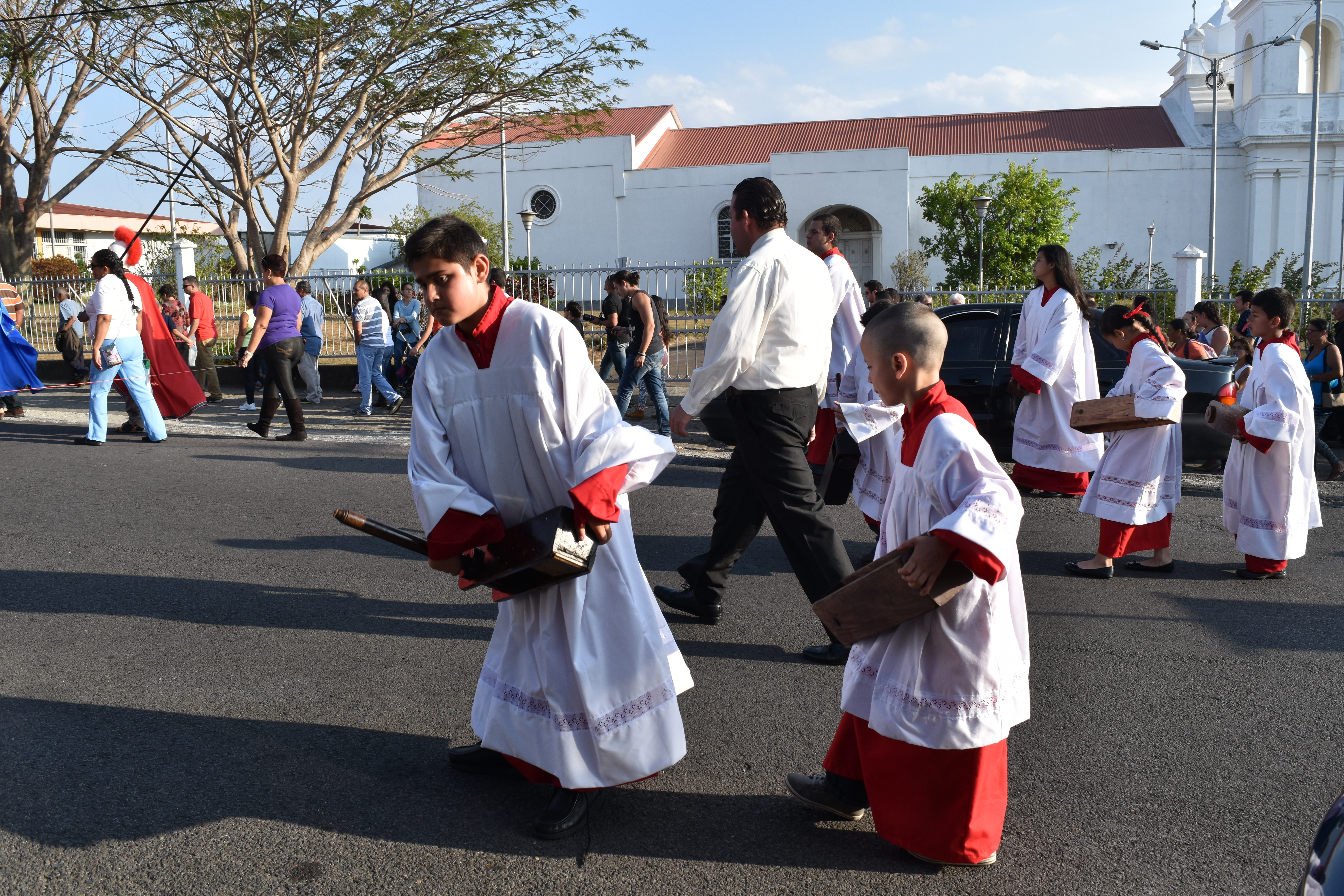
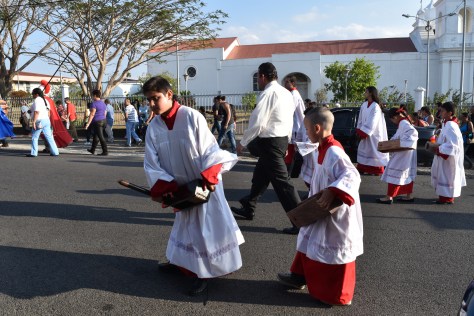
Some of the ratcheters are small girls that fight with their ratchet to produce the “ratch” noise that accompanies the drummers.
image

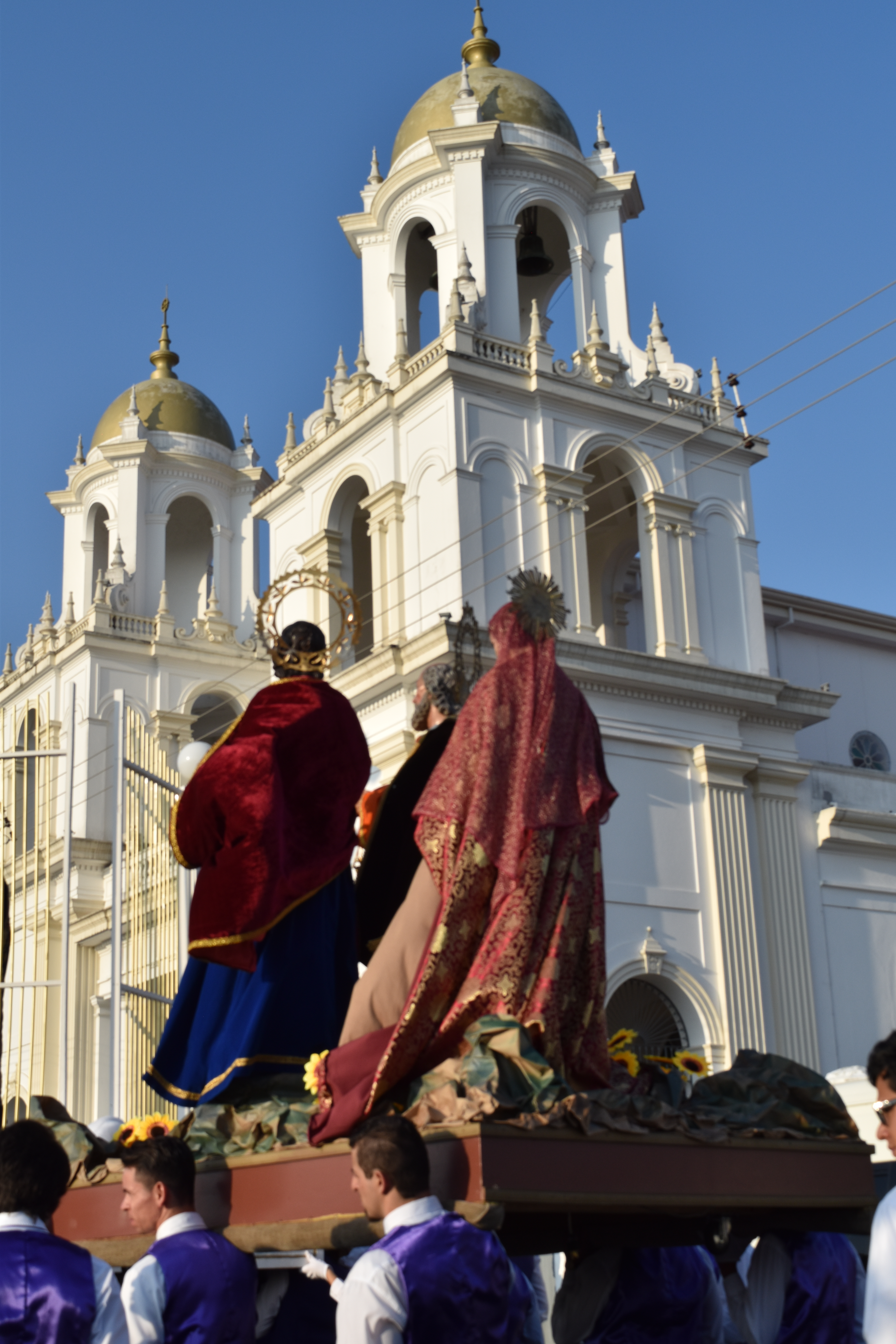
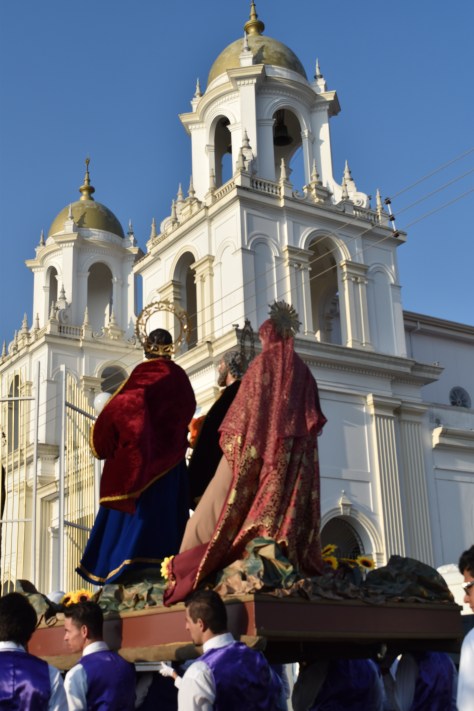
It is all hard work. The sun is burning down on the procession. Some spectators give water to the carriers, the drummers or the ratcheters. I follow the procession for two hours, until they go back to the Basilica.
image

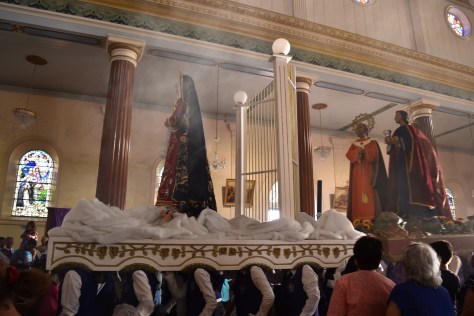
Wrapped up in incense the statues “walk” back to their places in the choir.
image

In the evening there is the misa vespertina della cena del Señor, hora santa y adoración al Santisimo, Procesión del Silencio and at 3 am the Trisagio y Prcesión de la Penitencia con Jesús del Consuelo. As we feared to walk alone in the night, we did not attend these events.

.

Catching up with the Trisagio y Procesión de la Penitencia

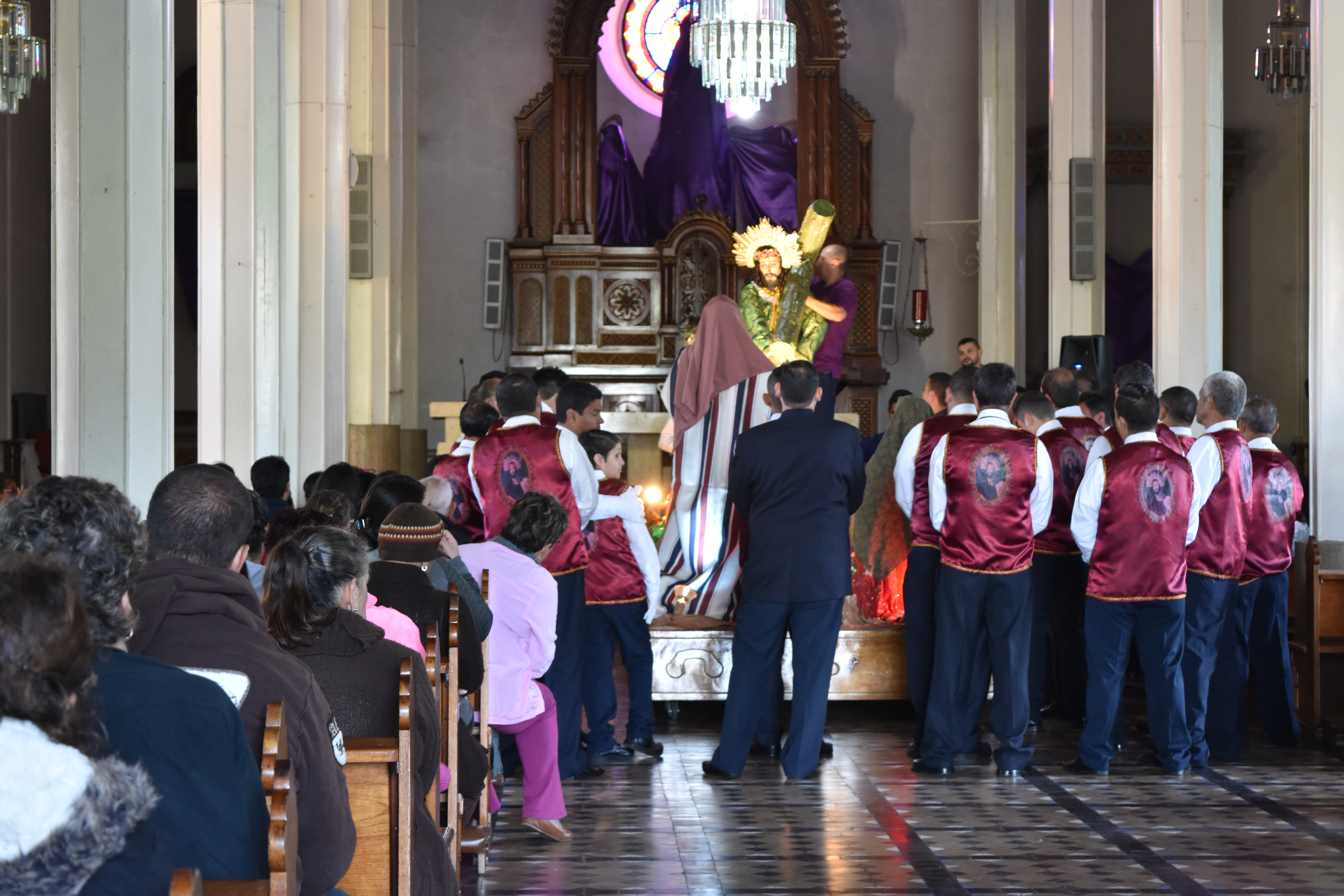
However, at  5:30 am I left the house trying to catch the end of the night procession at the first daylight. I find the procession in the second large church of Santo Domingo, en “el Rosario”. The cargadores (that carried the platforms) are sitting outside of the church and prayers are entering the church. The platform of Christ stands near the choir. I join the prayers. The church is full. The prayers are standing. This service finishes soon, and many people are leaving saying, “necessitamos un descanso” (we need a rest). I can understand that, they have been up from 3am to follow the Trisagio service and the procession. And now it is after six in the morning. The children that had operated the rattle are sitting in the cemetery. This has been a long day for them. They have taken off their white and red gowns and hold them in their hands.

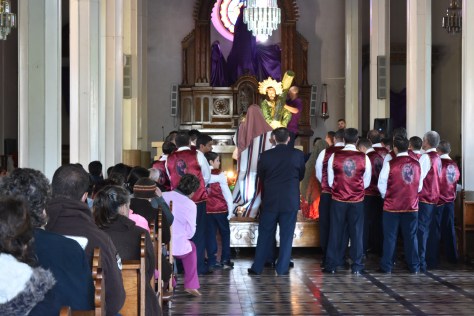
The celebrations now continue seamlessly after the night procession. The cargadores enter the church. Today they are wearing vests of bordeaux red color with a foto of Jesús on their backs. They surround Jesus in the garden and stand still. Someone attaches the cross to Jesus making him ready for his march to Golgatha.
image

A young priest starts to plea for the ill… one after the other, and always, he repeats: “Nada es imposible”. People are mourning and some are crying. One lady is so overwhelmed that she has to leave the church temporarily. The priest then asks all to embrace their neighbors. Some of the cargadores come to the back of the church to embrace their parents and brides. In the end we all take our hands and pray together. To complete the service, the priest tells us the next events… the activities will last all day again. The service for the ill ends at about eight am. Some of the participants have been up since 3 am.

.

Bendición del Fuego on Saturday evening

On Saturday evening we attend the service “Bendición del Fuego”. The theme is: The Light is back. The believers enter the church at 8pm with candles in their hands. When we arrive, they are already in the church. It is full, not one seat left. People are even standing. Aoother procession is just coming back from their turn around the city and is entering the church under the bumpbump of the drummers, the ratchratch of the ratcheteers and the sounds of the brass musicians, enwrapped in a cloud of scenting  incense.

When all the platforms with Christ and his environment are back near the choir, the service starts. The priest tells stories from the Old Testament, Genesis, Abraham and Izaak, Moises, Jesaia, Ezekiel and from the New Testament (the grave is empty on Easter morning’ and a man dressed in white tells Maria Magdalena and two other women not to be afraid, because her son has resurrected). For one topic there is always a sermon, a lection and a prayer (“oremos”). A professional voice is singing beautifully. The believers are listening, are clapping their hands, are praying, and are also looking after their children – with love and care – many of them have brought their favorite plush animals with them. It is all natural and chlidren belong to that. A baby is baptized and also an adult after having confirmed his “yo creo”. Later the lights were switched on, to indicate that Christ has resurrected. In the prayers, people hold their hands up.With the holy communion the service ends. Charo y Jesús have come to meet us and take us back home at 11pm.

.

Easter service at 10 am on Sunday morning

On Sunday we go back to the Basilica with Charo and Jesús at 10 am. Another processiom has just returned and the statues on their platforms are moving into the Basilica.

The Basilica is again full. Not one seat is free. Families have come with their children and plush animals, mothers in hot pants and sleeveless tops, young couples – the girls in short sleeveless dresses – it seems to be normal to come to the church and celebrate another service with fervor. Singing, lections, prayers, preaching. The songs are vivid and all believers sing, move their bodies with the beat of the music, clap their hands, hold their hands up to demonstrate their faith in God. They sing “resucitó”, “ame”, “gloria”. The service ends with the sacrament – there are four long queues that patiently wait for their small piece of holy bread. One and a half hours later, the priest announces more processions… how many more will take place? I am losing track of them.

While we walk back home, Ursula and I admire the fervor and enthusiasm that the catholics show here in Costa Rica to celebrate Semana Santa and re-enact the last days and the resurrection of Christ. But, we also feel fear. Can such a mass of people not be seduced… by wrong leaders and by the wrong messages? This is just a short thought.

.

 Nothing  is impossible, this is the message of hope that I take with me

We both are protestants brought up in Switzerland. We do not take all the events of the Semana Santa by the word, but like beautiful symbols. We enjoyed the atmosphere of solemnity, fervour and peace of the celebrations we attended. “Nothing is impossible” or “nada es imposible” means hope for me… hope that there will always be men and women that despite the recent attacks and the wars around us keep up their vision of peace and are willing to act. We do hope that nothing is impossible and that we will find peace again. Or, as the NZZ of March 27th puts it: “Death does not have the last word, but the last but one word”. Shall all be possible… and nothing impossible.

.

Some Tico specialties such as giving directions

The people of Costa Rico are called Ticos. We are meeting many friendly Ticos. Especially in the small town of Santo Domingo they are very hospitable. In the streets they all say “hola” or “buenas dias/tardes”.  But… we have to get used to some of their specialties, for instance how they give directions, prepare coins carefully in the bus or walk carefully in the streets.

.

How Ticos give directions

Ticos seem not to have absolute addresses as we do. We may live in Spalenberg 77a in Basel. But a Tico would say: “I live 100ms west of the shoehouse Deiss  across the bakery Gilgen.” Just a few weeks ago, Deiss has closed down. Now the address at Spalenberg 77a would change to “I live 100ms west of the old shoehouse Deiss…”

When I went to Costa Rica for the first time six years ago, I received the following directions to our homestay:  Start at the Scotiabank, walk four blocks uphill, pass a car seller, walk up to the bridge and then turn left  to follow a large paved road… But six years later, the Scotiabank building has disappeared, and people might have forgotten that it has ever been there. The road description has to be revised.

This time, our homestay is described as painted in yellow with a black gate across the old palace of justice and not far from the Colombo school. But the Palace of Justice has moved to the city center and  the school has been renamed to Don Quijote. Our homestay still is described alng those lost landmarks. I am really happy that we had ordered a taxi from our school to pick us up at the airport. Non-local taxis are definitely lost with this system of addresses. Sometimes trees are used as reference points… and then they are cut down…

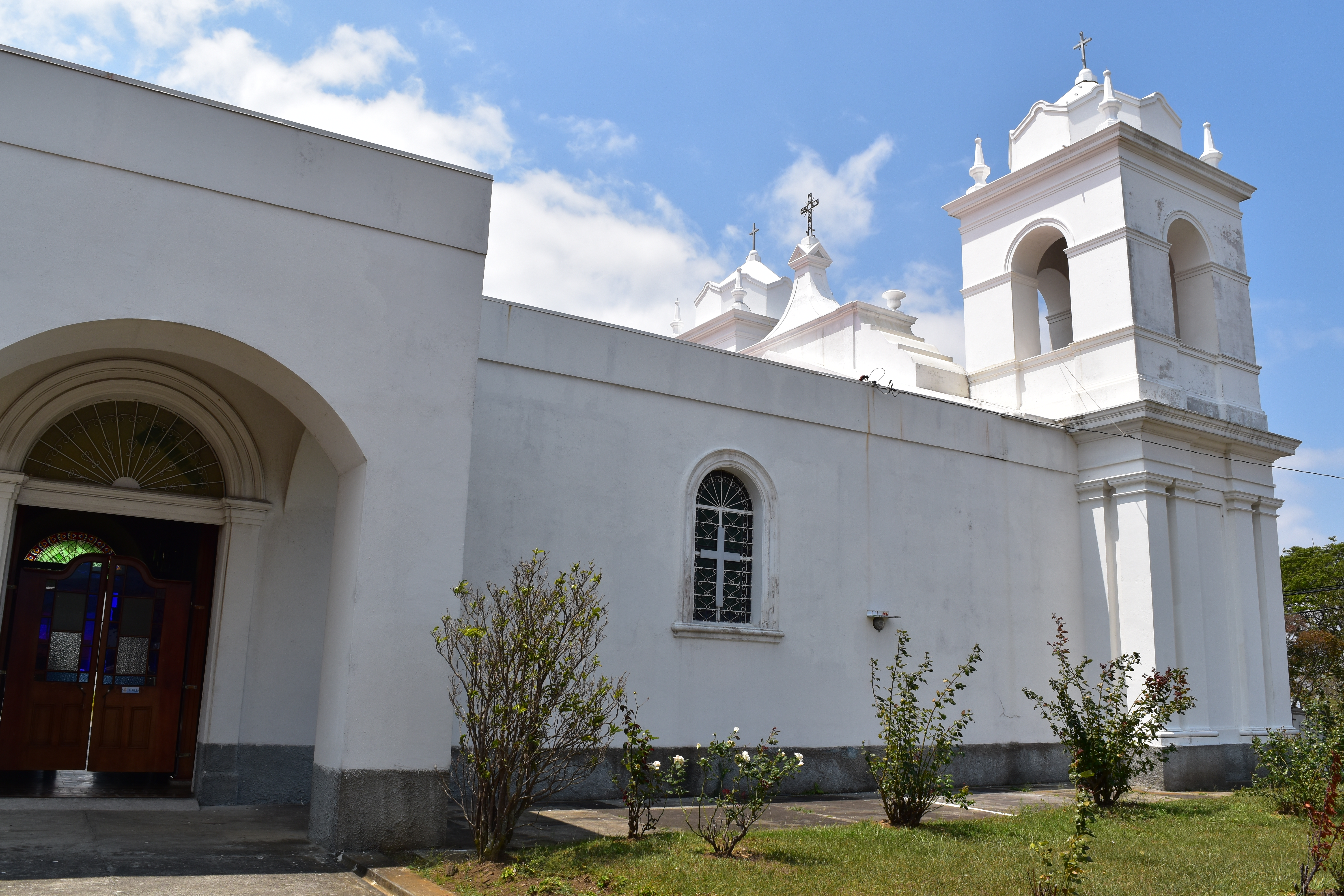
When I wanted to join one of the processions early in the morning of Good Friday, a friendly policeman told me to walk 100m south and 200m east. I was puzzled, but it was impossible to get another direction. Hence I went 100m south and 200m east… and arrived at the second large church of Santo Domingo. Aha! Yes, the procession has ended here, and the statue with Jesús in his green gown was inside this church, where a sermon was just about to start. Why could the friendly policeman not tell me to go to the Iglesia del Rosario? Then I would have known where to go… but that does not conform to a Tico’s mind.

image

.

Prepare your coins precisely in busses

When we drove to Heredia, I had prepared 950 Colones in coins. This was stupid, two tickets costed only 850 Colones. The busdriver mumbled something and gave me back all the coins. I started over again, giving him 500 Colones – and was about to add the rest. He throws the 500 back at me. I stop, think, prepare 850 Colones (which is the precise amount)…  and now he takes my coins nodding. Why has he not just given me back 100 Colones in the first place?

.

And, when you have recieved directions, walk carefully… 

Walk carefully, as the sidewalks end in small ditches…

image

… and Ticos are dynamic car drivers.


Heredia – a lively small town

Saturday… let us go to Heredia

Heredia is the nearest place that is more “towny” than “our” Santo Domingo. Charo explains to us that the bus station is close to Macdonalds, 100m away from their home. As soon as we arrive at the bus station, the bus comes around the corner. 15 minutes later we are in the middle of a vibrant town that is about to wake up. It is a university city that has kept its colonial center.

.

Walking towards the Parque Central

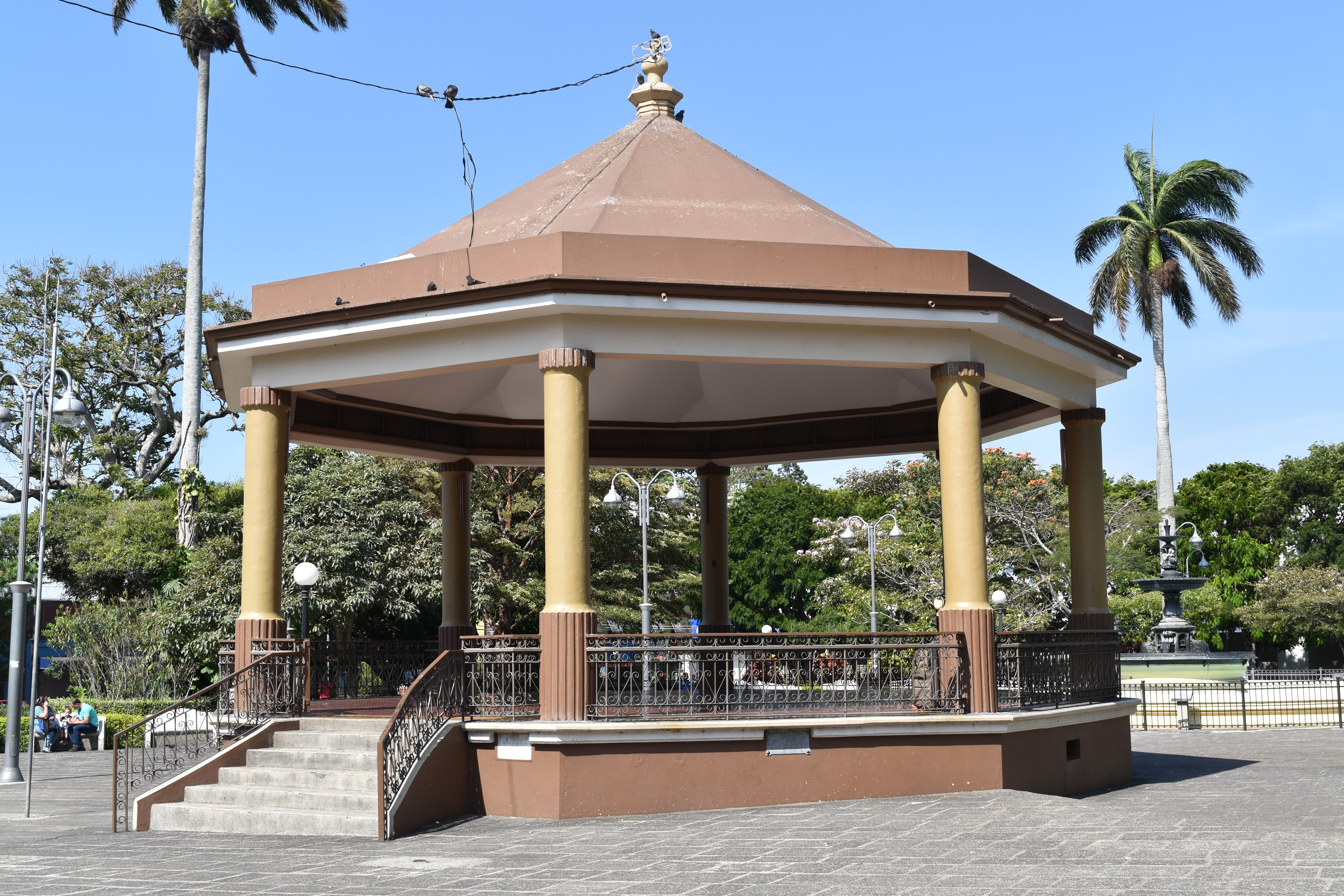
The Calle Central takes us uphill. The shoe shops and some dress shops are already open, and I have to be careful not to start emptying these inviting shops… Their choice is excellent. We reach the welcoming Parque Central with its music pavillon.

image

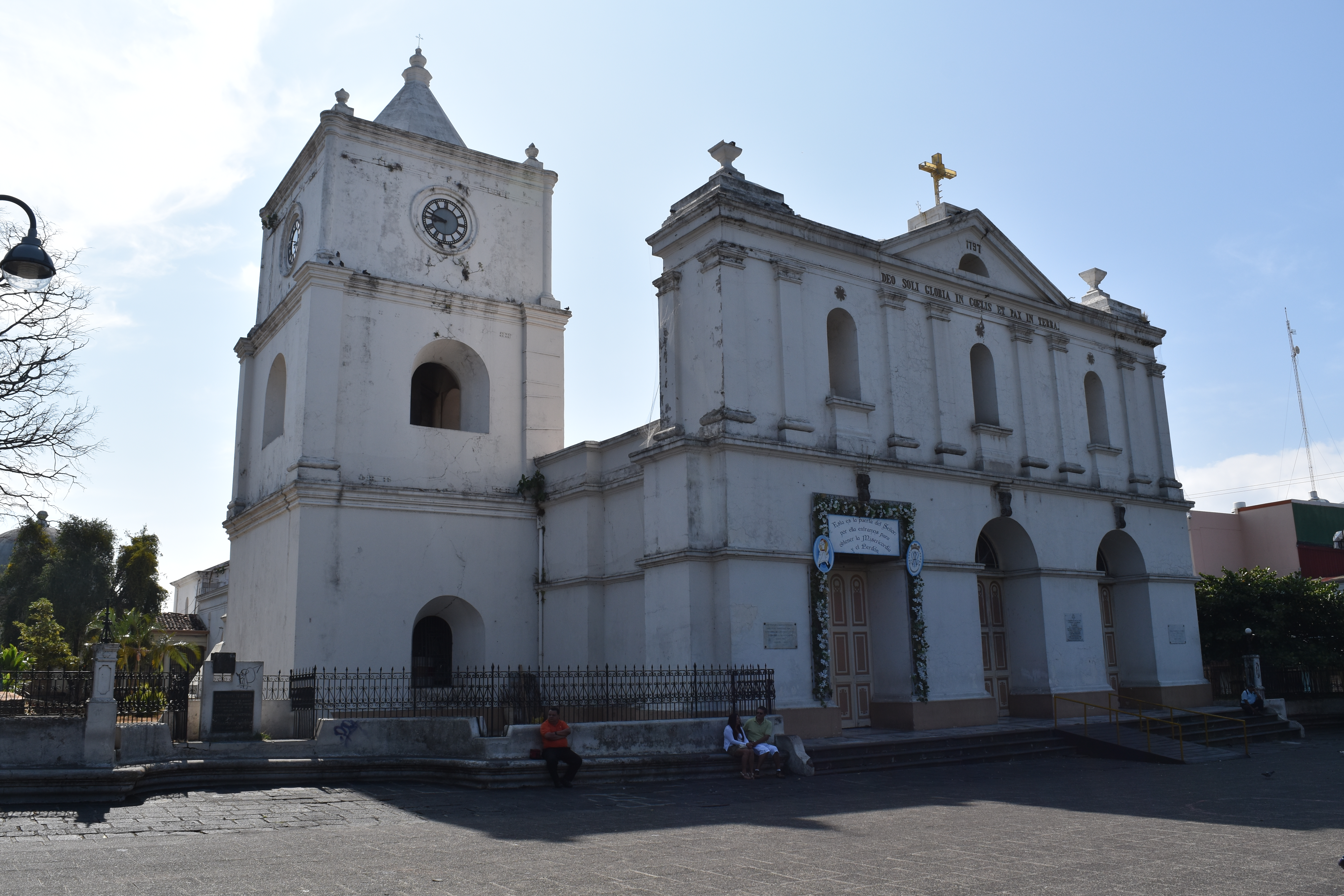
The Basilica de la Immaculata Concepción from 1797. The sun stands behind the basilica right now.

image

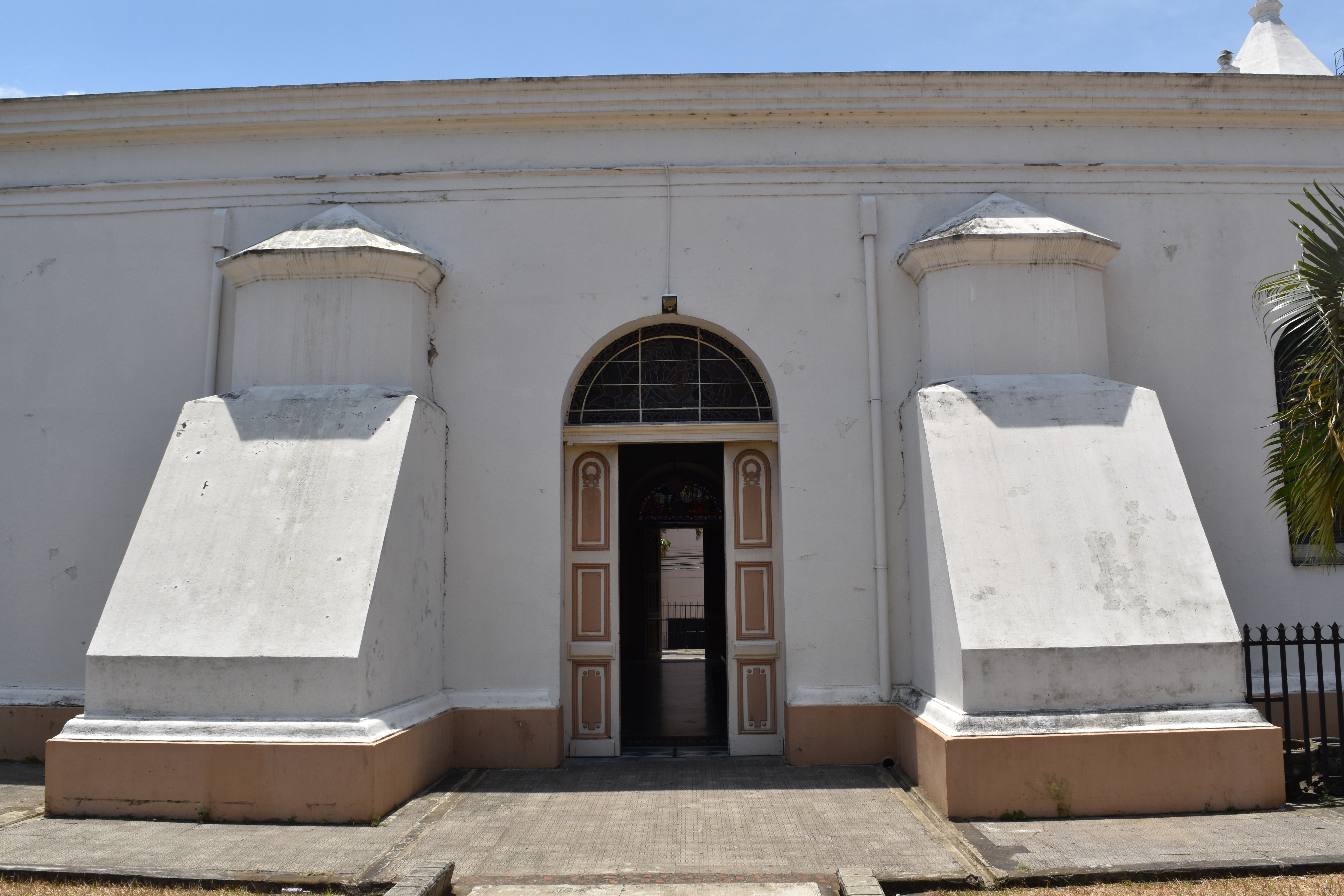
The walls are fortified and the church has withstood all earthquakes so far.

image

.

Inside the old church with Jesús in the grave

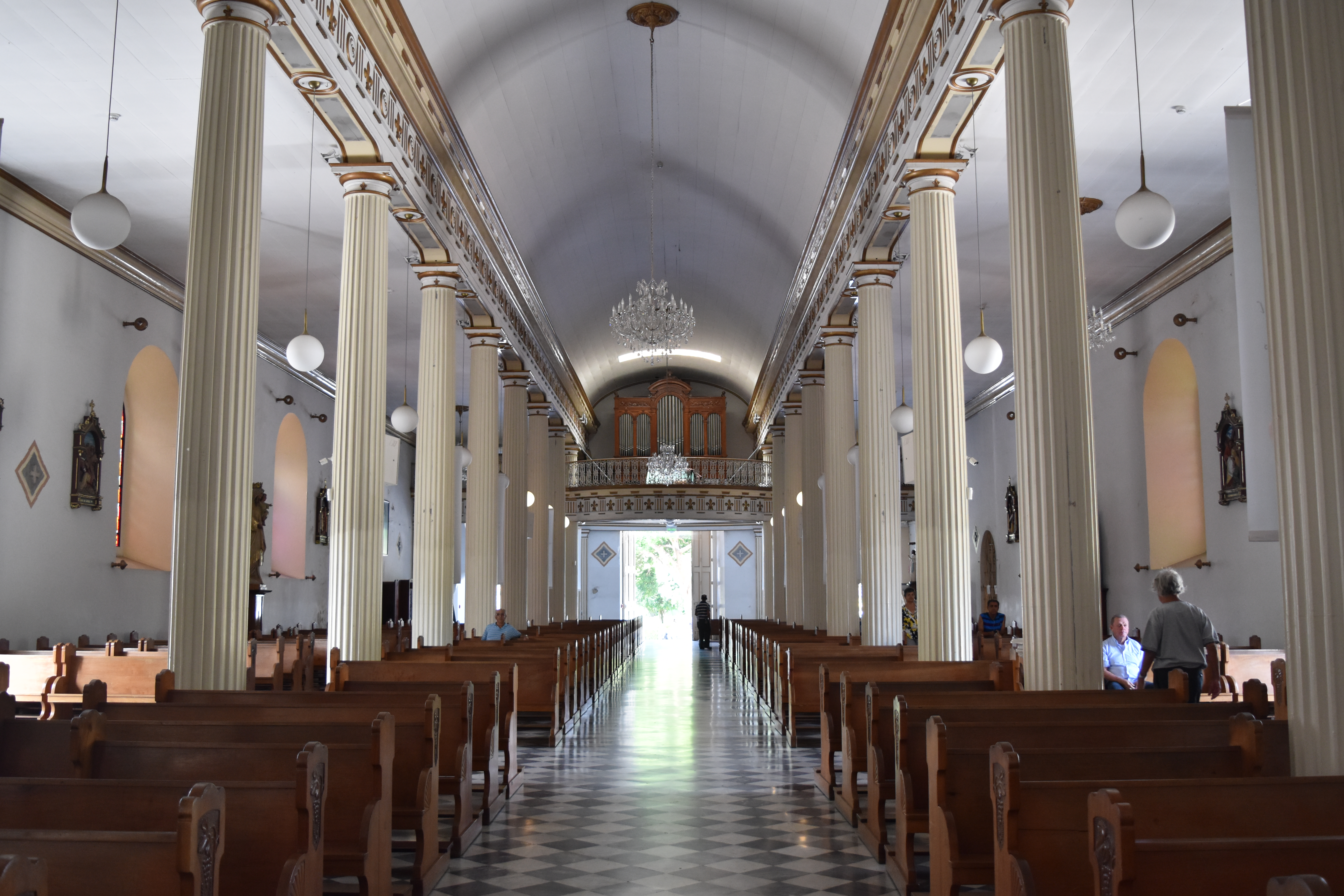
The church is simple inside with white columns. I like to be in churches that are not too much adorned.

image

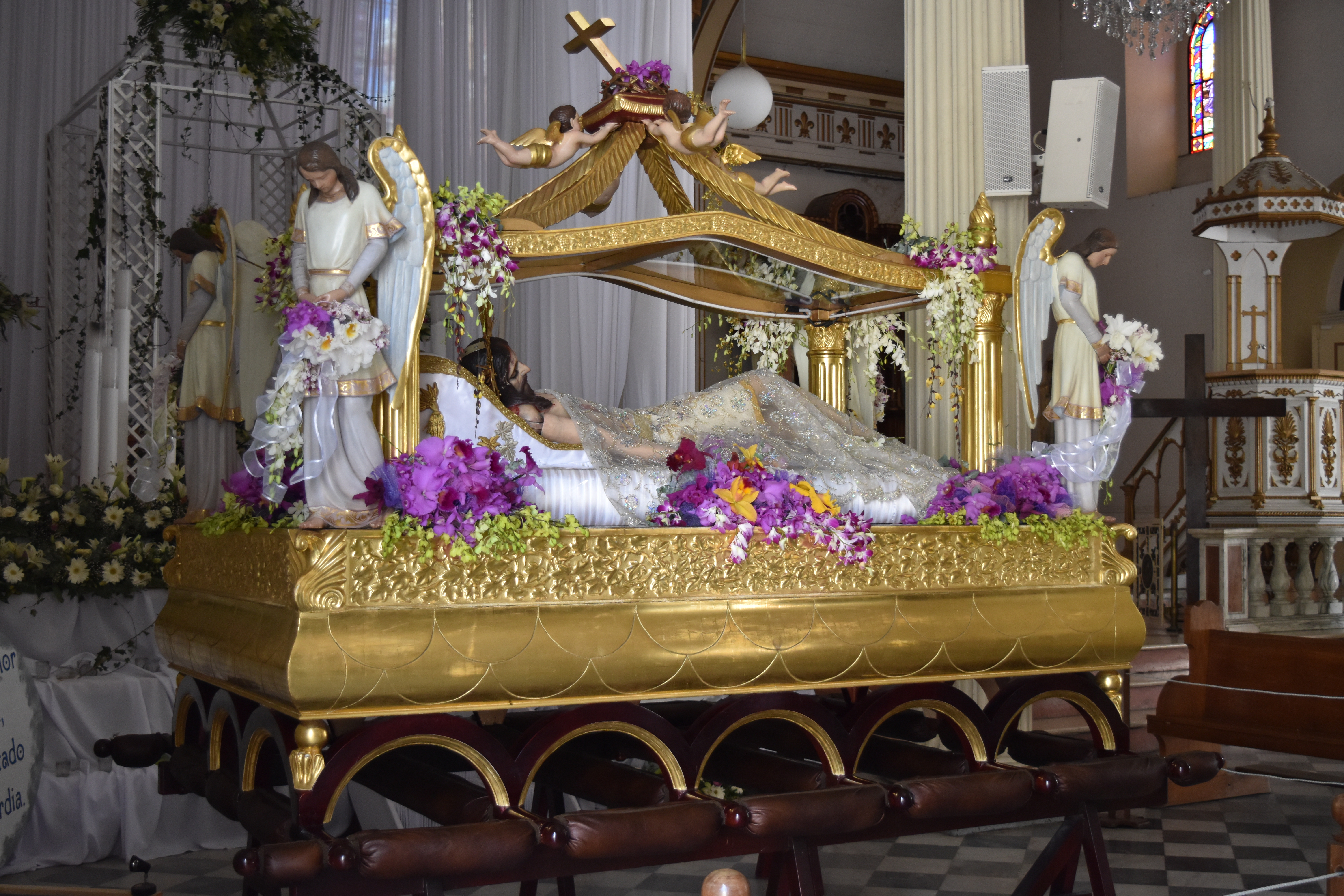
Near the choir, a statue of Jeús rests in his grave.

image

.

Some impressions from the Parque Central and around

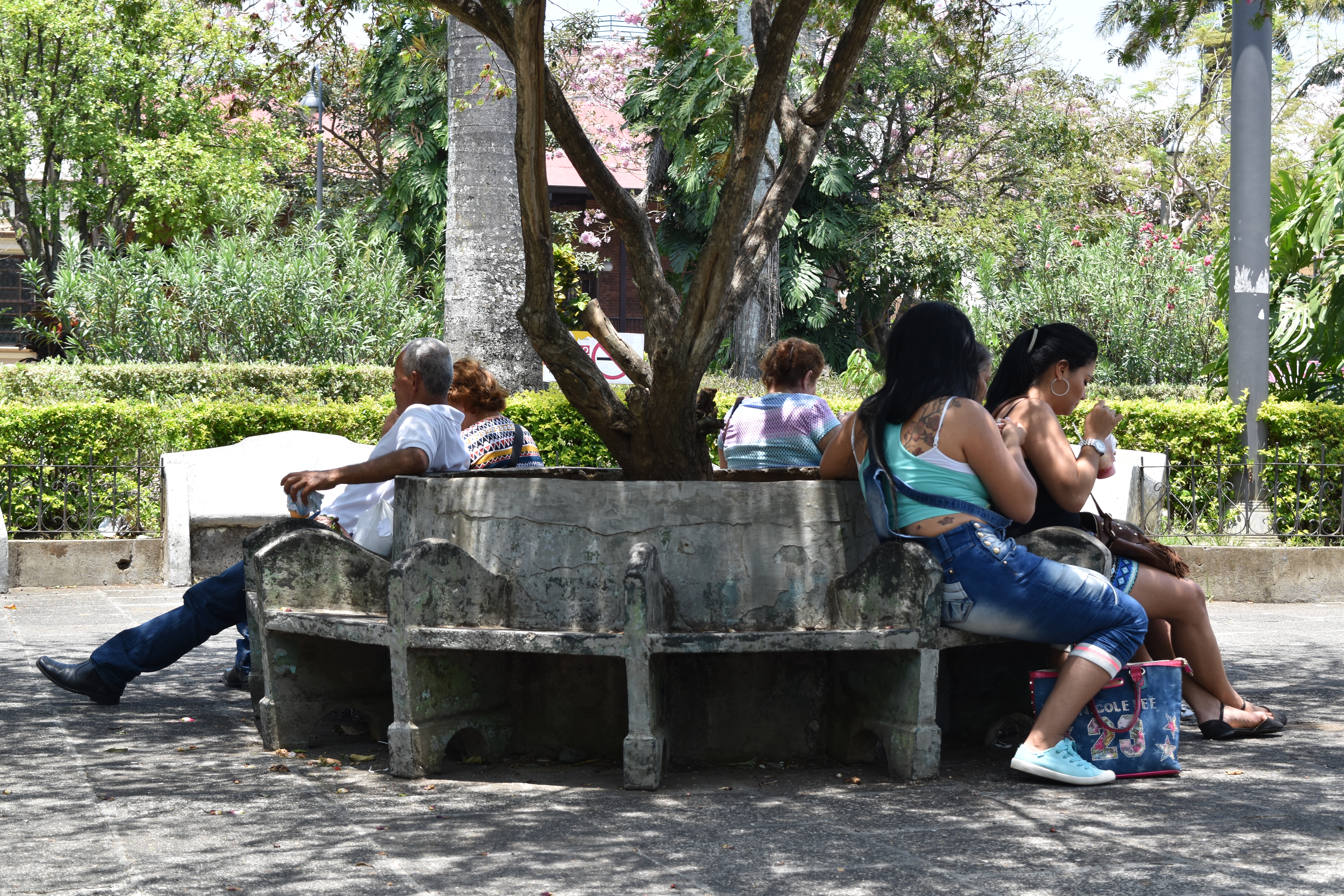
The central square is a vivid place with stone benches that invite to sit down and have a chat.

image

There is the Fortín, a tower that cannot be visited. We read that it is not safe.

image

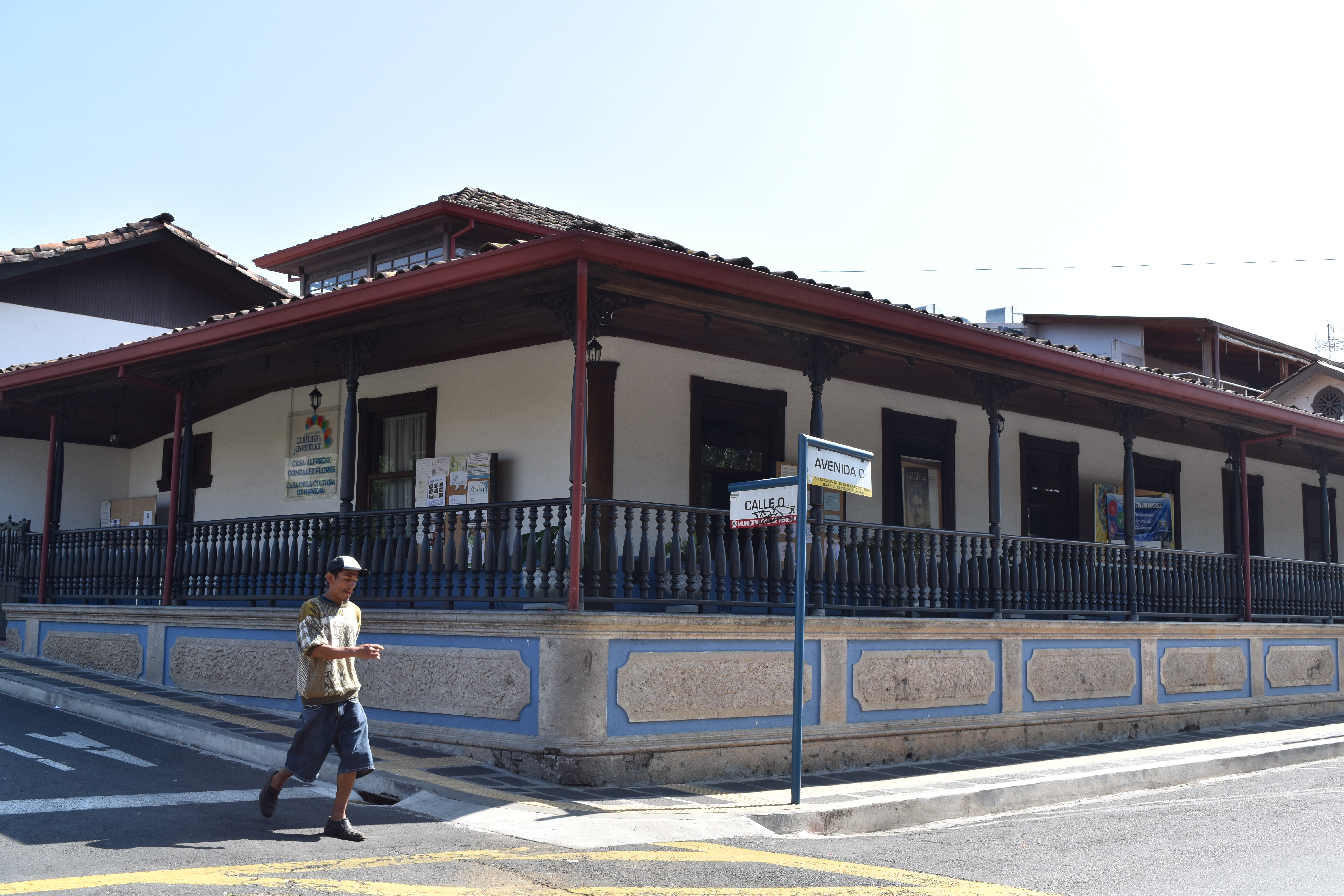
La Casa Cultural is an old colonial style house, now closed.

image

.

Inviting fruit, vegetable and meat stands in the mercado

We keep on trying to remember the names for the tropical vegetables and fruits such as guyaba, maracuya or marañon.

image

There are also food stands, but we decide to try one of the restaurants in the city. We end up in the China-Japanese Principe and have a Sushi meal with noodles. This makes a change to the everyday rice you get at Costa Rica.

We top the excursion with an Italian ice cream sold by the Gelaterio Golosa… the Costa Rican fruit flavors are enticing – I have a green cas ball and we eat our ice creams in another shady park, the Parque del Carmen in front of the namsake church el Carmen.

image

.

Back to Santo Domingo in 15 minutes

In the early afternoon we take the bus back to Santo Domingo, hop out in front of MacDonalds and two minutes later we have reached our Costa Rican hone. We enjoyed to see Heredia, but we are happy that we have decided to stay in Santo Domingo to learn Spanish. It is more relaxed, and everyone greets us with a friendly smile in the streets.


Costa Rica – On the road again

Our plans for Costa Rica: Learn Spanish, travel and meet my family

With Ursula, I have traveled before – to Mongolia and to Florence. Now we are heading to Costa Rica to brush up our Spanish, to travel and to meet my family. Our adventure starts in the Easter Week, or as it is called in Spanish, die the Semana Santa.

.

Crossing the big pond – a long, long journey

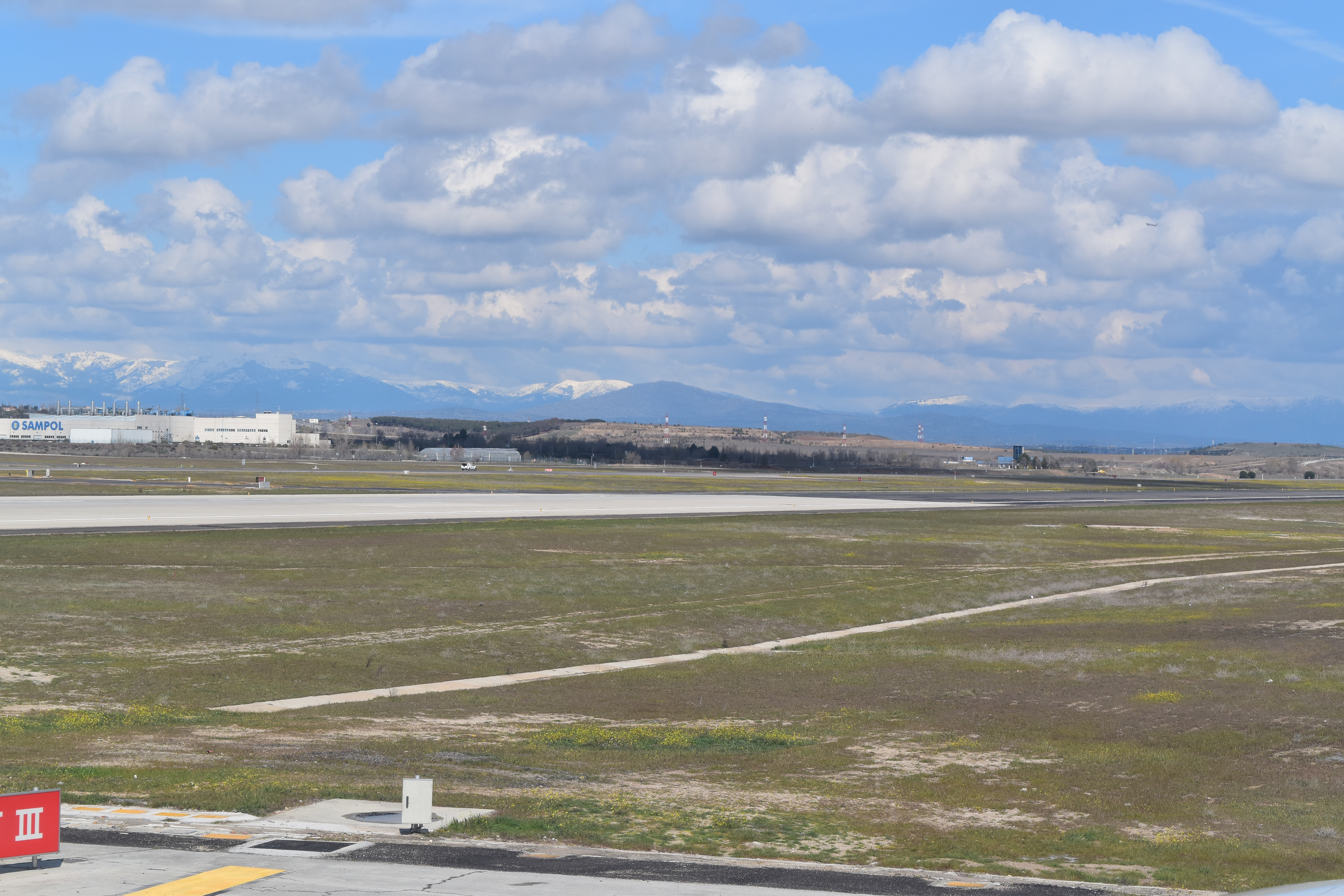
In Zurich we catch the tram at 5 AM. At the airport we buy some chocolate. The Kosovo Albanian shop-keeper loves to hear me say “falemers” and “s’ka problem” and gives us some red Lindt chocolate balls on top of the pralinés we bought. Our Iberia plane leaves safely and takes us south along the Swiss Alps – what a gorgeous view. We change planes in Madrid. We take off with a view of the Pyrenés.

image

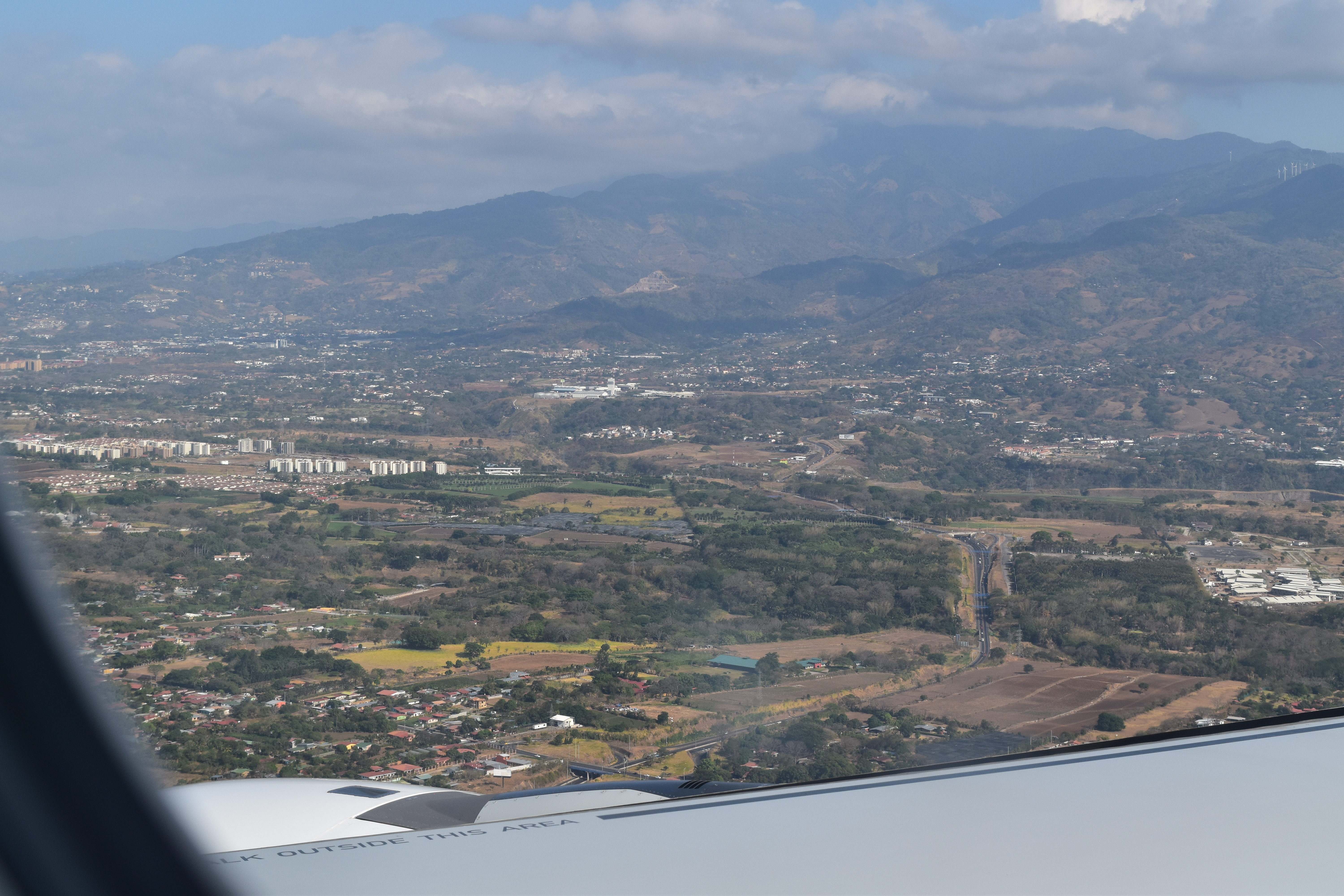
We then have to sit patiently in our window seats for eleven hours crossing the big pond. We land safely at 3:30 local time in San José.

image

Jorge takes us to santo Domingo de Heredia, a suburb of San José, where we will stay for four weeks. Of course, Jorge offers us an excursion for tomorrow. May be next week, Jorge.

.
A friendly welcome by our homestay family

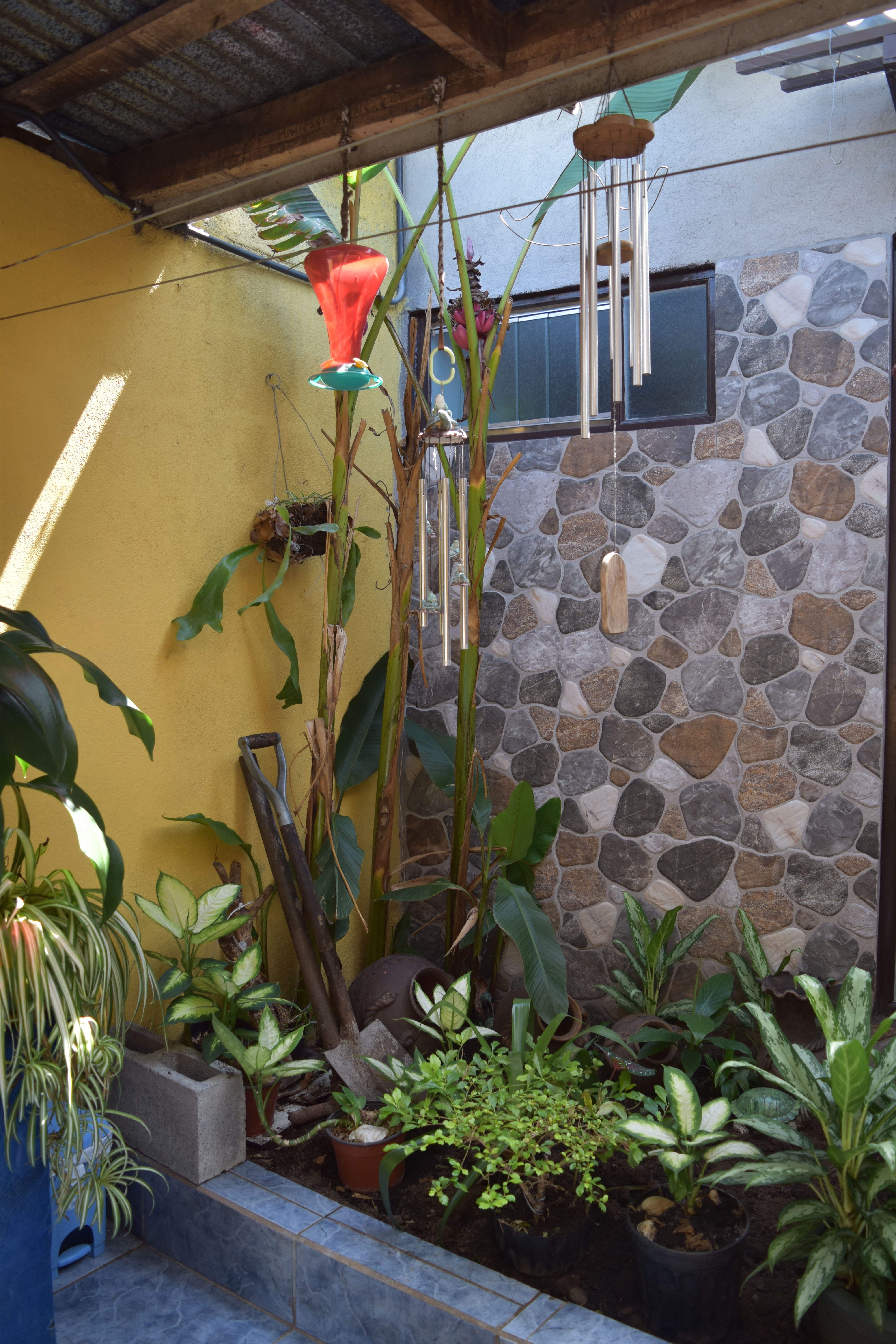
The family of Charo gives us a hearty welcome. Only Bony, the little teckle, is not happy to see new guests and barks and barks, but he stops after one day and accepts us to be part of the family. We find two rooms with small bath rooms facing a courtyard with a nice garden.

image

We go shopping with Charo to get a first overview of the area. We enjoy dinner, and then, we are extremely tired. 22 hours ago we have started our journey.  I fall into my comfy bed and sleep deeply into the next morning, here in Costa Rica.

.
Wednesday – discovering our new home town

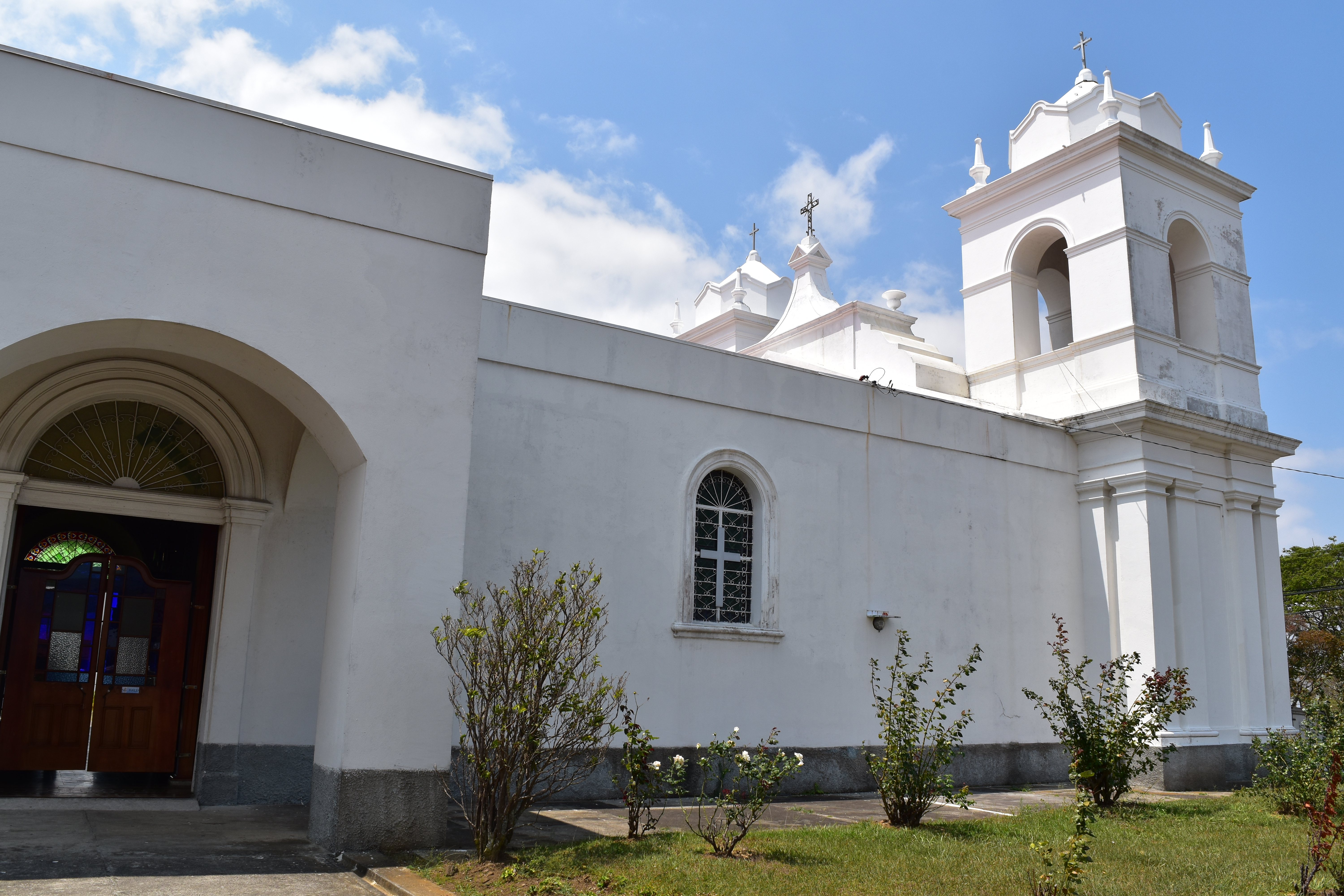
After a good breakfast with fresh tropical fruits we have a chat with José and Charo. Then we head off to discover our new small town. We find many nice shops, bakeries (we buy empañadas), a stationary shop (we buy cuadernos quadraticos or notebooks), a super market (Pali, we buy water, tea and biscuits) and a bank (no money exchange without a passport). In a super market we try to remember the names for the vegetables such as pepino for cucumber. There is a church surrounded by a garden with tropical plants (Iglesia de Nuestra Señora del Rosario).
image

Nearby is a small city park in the very center of Santo Domingo – the palm trees are bending under the wind.

In front of the Basilica de Santo Domingo de Guzmán is a food market.

image

We buy bananas and a mango.

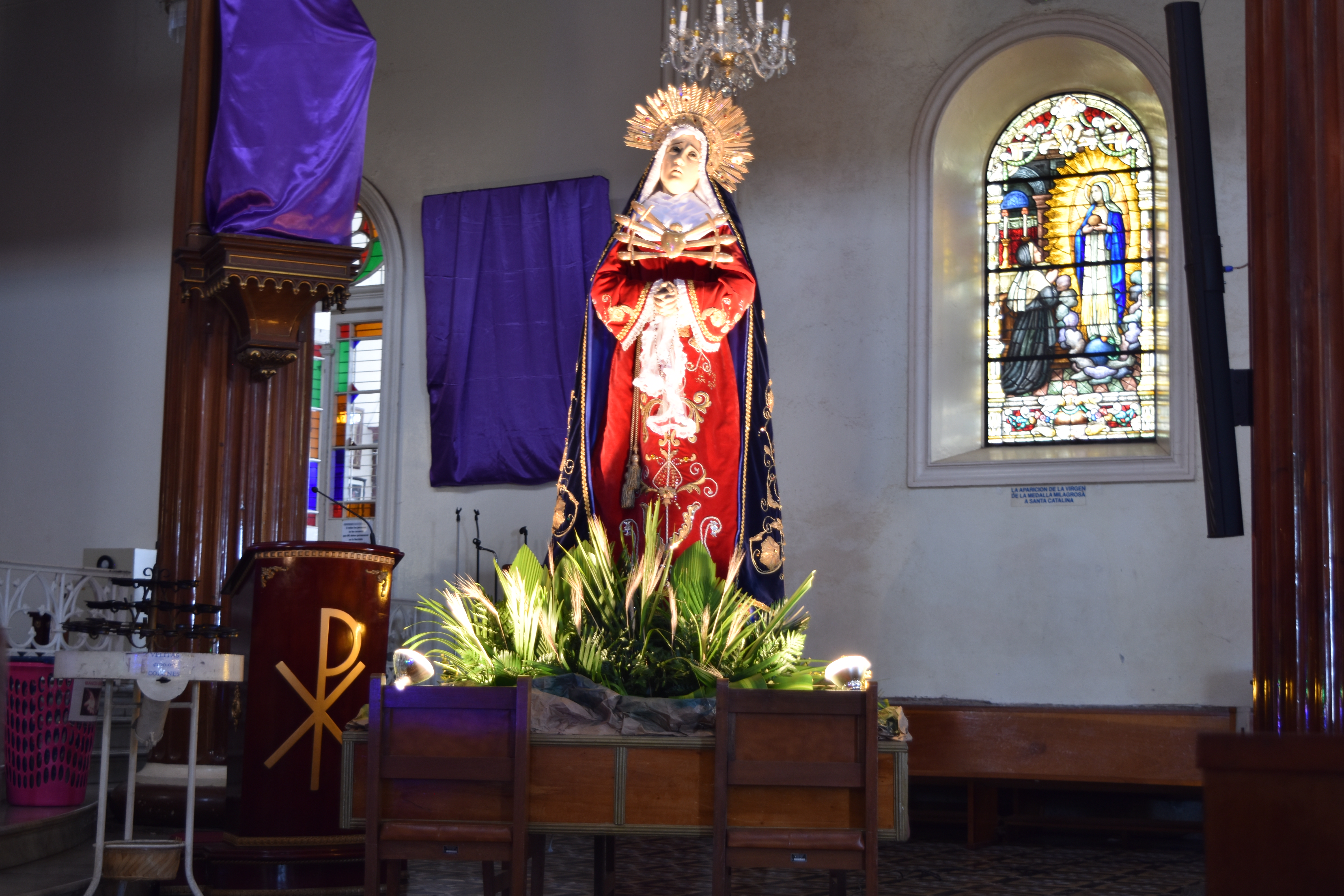
The basilica is being adorned for the service and procession tonight. It will be the “Santa Misa y Procesión solemnel dedicada a Jesú atado a la columna.” This is Maria, ready for the procession.

image

We look forward to some of the services and processions of the Semana Santa.