On the road in France visiting some of my favourite castles in the Loire Valley

Some 25 years ago I visited the Loire Valley in France and I enjoyed it so much that now, in April 2017, I went back to see the ONE castle: Chenonceau that has been shaped by six ladies. In addition we explored four other royal castles: Charles VIII’s Amboise, François I’s Chambord, and Louis XII’s Blois. We have selected a room in the small hotel Anne de Bretagne in Blois – close to the Château de Blois and close to the castles we want to visit.

.

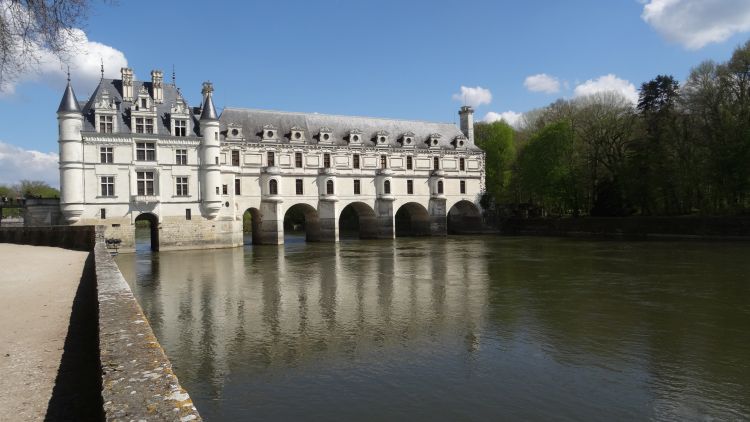
Chenonceau – crossing the river Cher with “a certain springing lightness”

Henry James travelled through France in the 1880’s and he wrote: “Chenonceaux is not large… Henry II., on ascending the throne, presented it… to… Diana of Poitiers…  Catherine de Medici… turned her out of doors… (and) devoted herself to making the place more completely unique…  If a certain springing lightness is the characteristic of Chenonceaux… nothing can confirm this expression better than the strange, unexpected movement with which… it carries itself across the river… the aspect of the whole thing is delightful.” Look at the “certain springing lightness”, as Henry James describes it in his A little tour in France. 
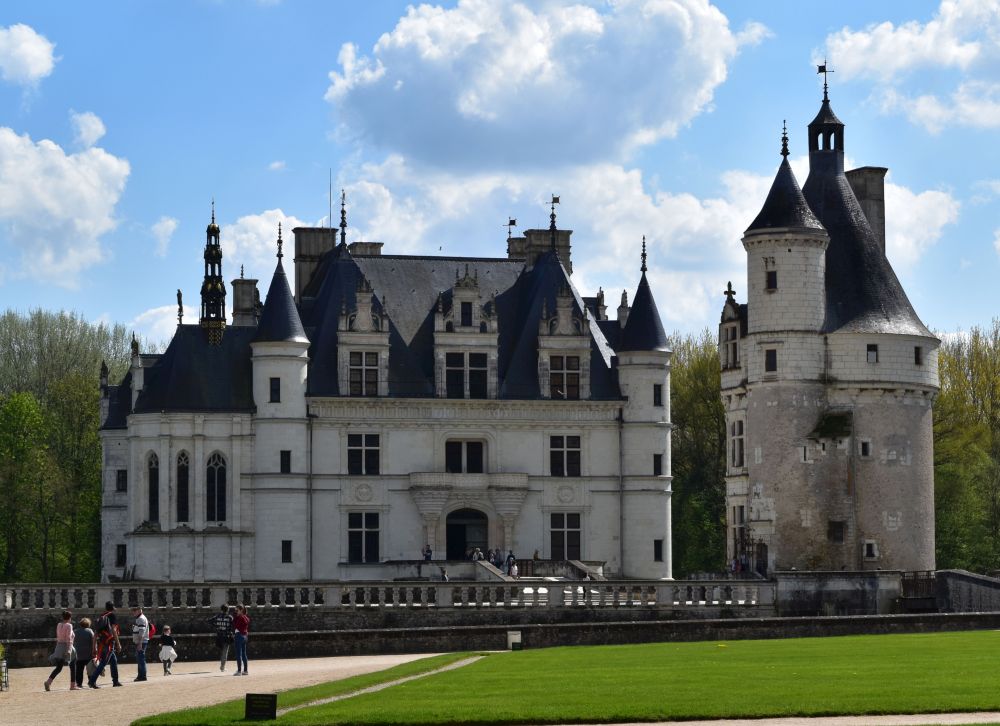
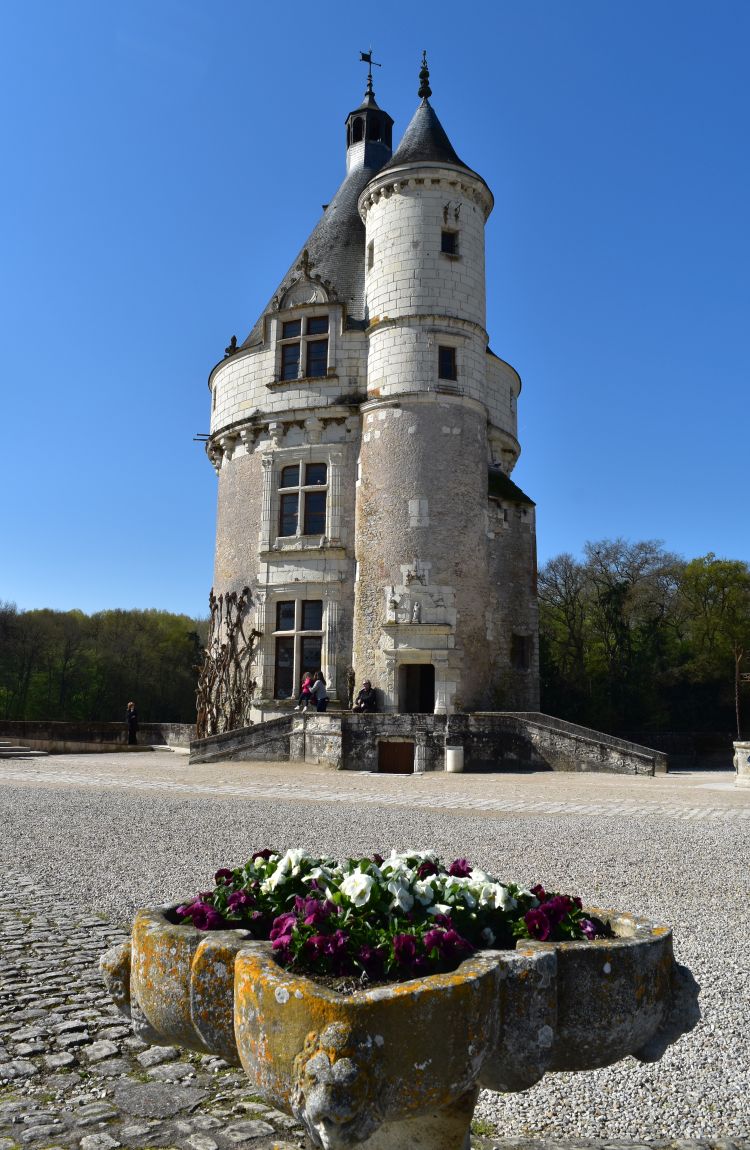
It was the wife of Charles VII’s chamberlain, Tom Bohier, who built the main castle, while leaving the tower of the former mill. Her name was Katherine.

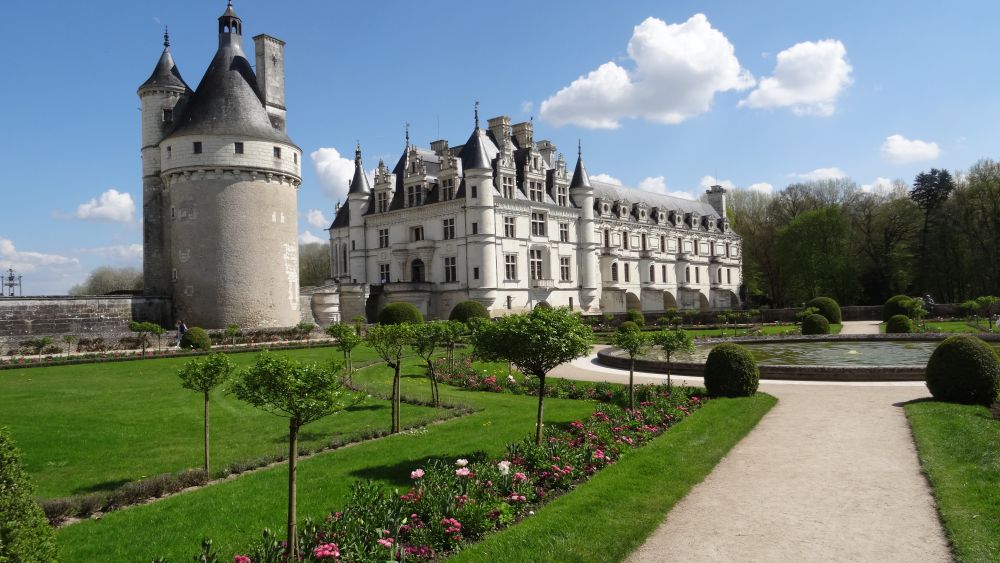
Diane de Potiers then added the bridge, and she set up this garden named after her.

Diane de Poitiers kept herself fit by swimming in the river Cher – she was attractive for king Henry II, though she was 20 years older than him. Diane had to leave Chenonceau, when Henry II died. Catherine de Medici wanted Chenonceau for herself and added the galleries on top of the bridge giving space for some of her festivities:

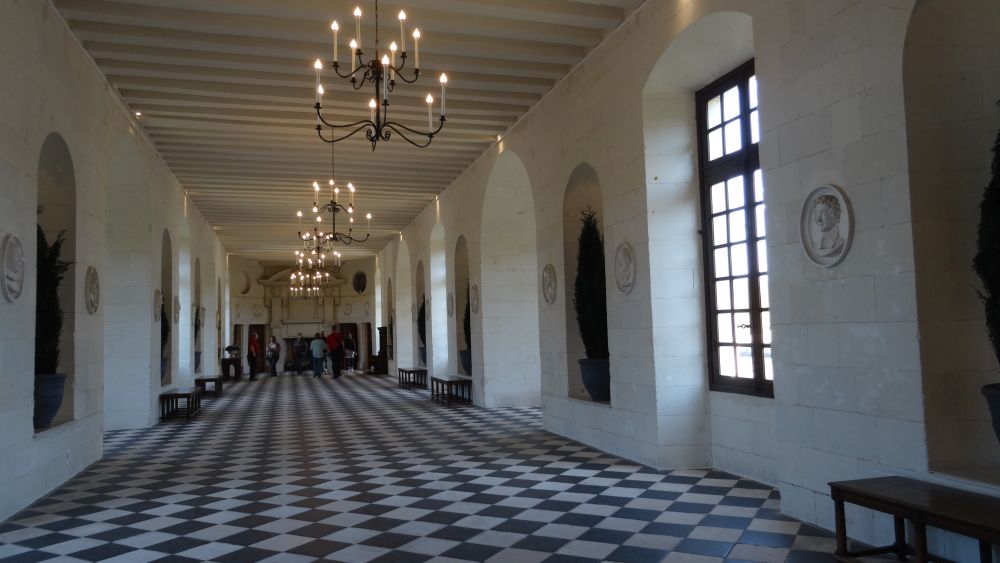
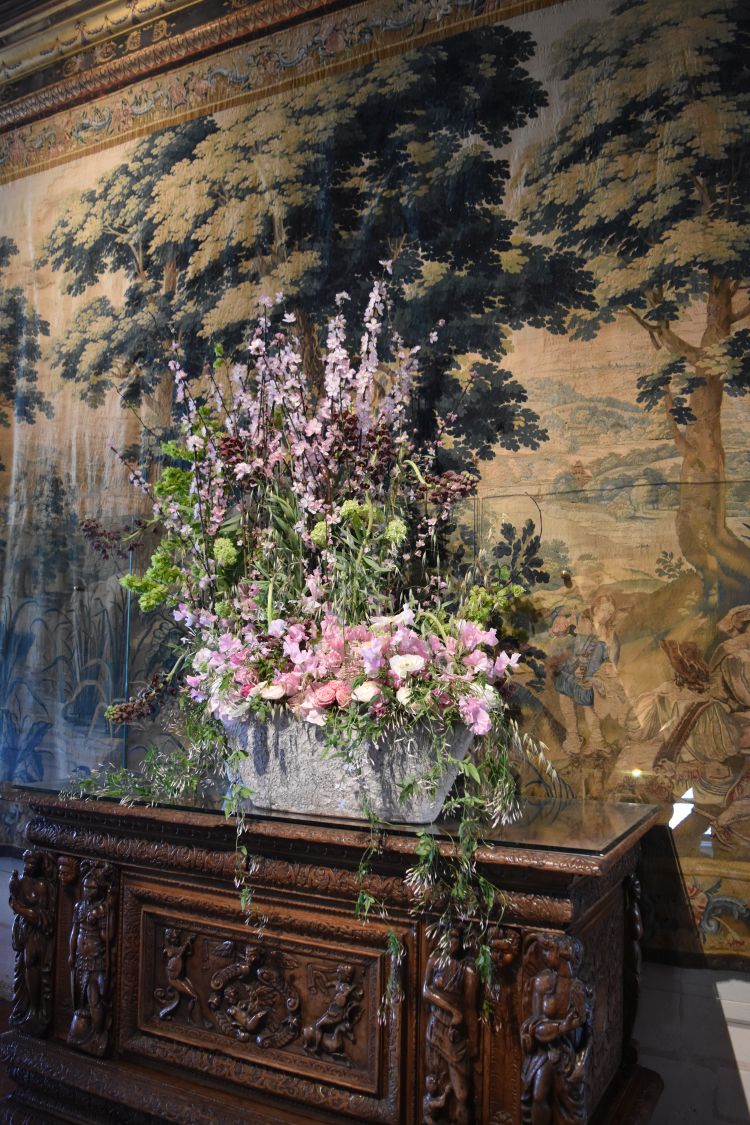
It is worth to visit the castle inside. It is furnished, adorned with tapestry and beautifully decorated with flowers.


The widow if Henry III, Louise de Lorraine, lived here and two more ladies (Mmes Dupin and Pelouze) saved Chenonceau for today. In all it was six ladies shaping Chenonceau.

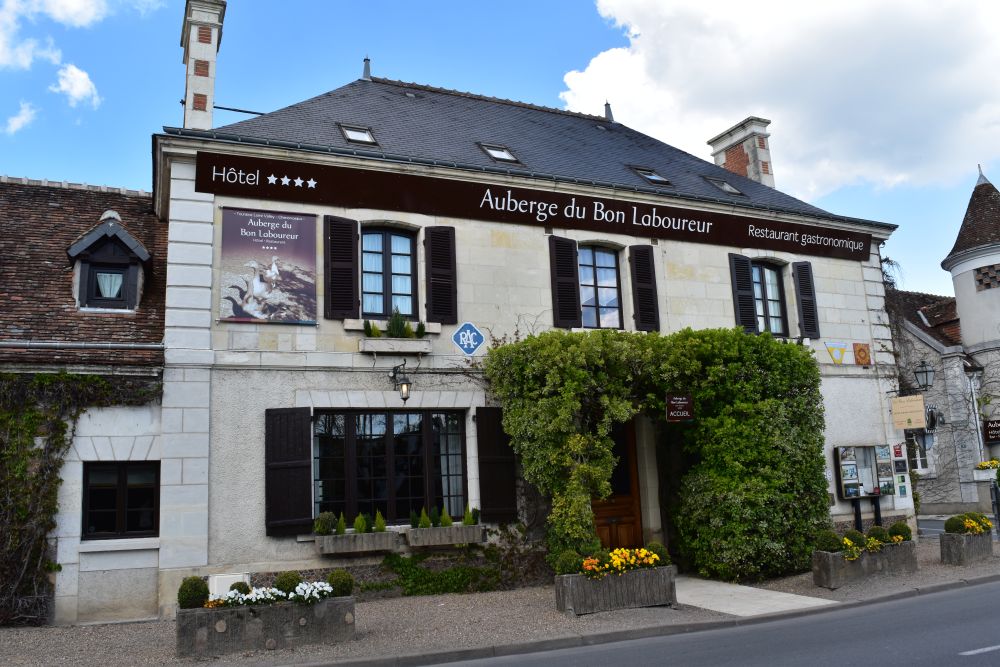
The Auberge du Bon Laboureur is located close to the Château de Chenonceau. Let me quote Henry James from around 1880: “(From Chenonceau) we took our way back to the Bon Laboureur, and waited in the little inn-parlour for a late train to Tours. We were not impatient, for we had an excellent dinner to occupy us; and even after we had dined we were still content to sit awhile and exchange remarks upon the superior civilisation of France. Where else, at a village inn, should we have fared so well? Where else should we have sat down to our refreshment without condescension? … At the little inn at Chenonceaux the cuisine was not only excellent, but the service was graceful. We were waited on by mademoiselle and her mamma;… she uncorked for us a bottle of Vouvray mousseux. We were very comfortable, very genial…” The Bon Laboureur is no longer just a “little inn”, but a four star hotel with all amenities. A long tradition!

Now it was not the right time for us to stop in the “Bon Laboureur”. I remember having had an excellent meal here 25 years ago. Later we enjoyed a nice dinner with local specialties in the Le Castelet in Blois.

.

Charles VIII’s Amboise – a great sight above the river Loire

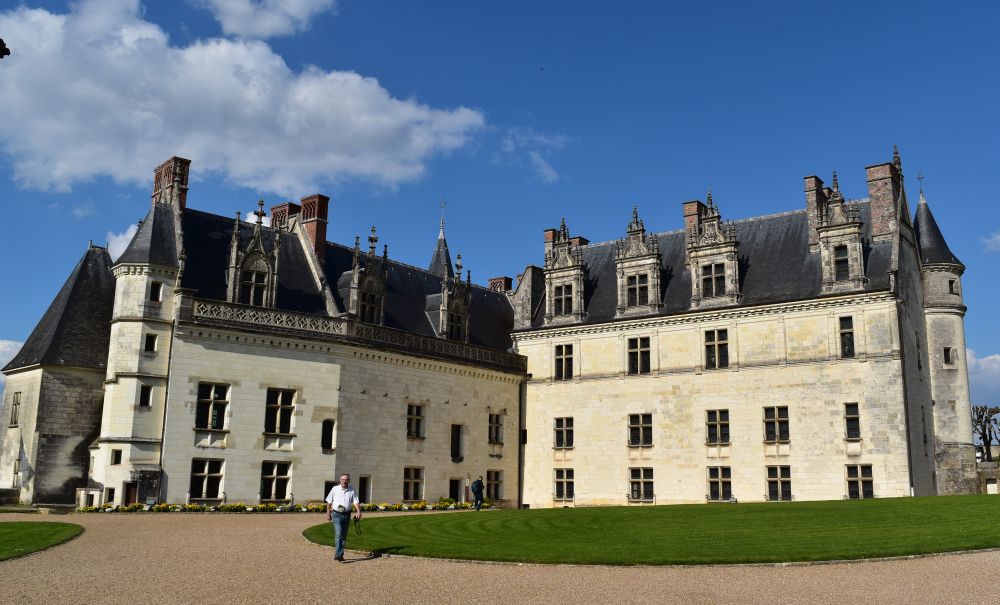
Amboise is a beautiful small town on the river Loire topped by its royal château.

The French kings acquired the castle in the late 15th century. Poor Charles VIII hit his head in Amboise and died from that (1498). His wife, Anne de Bretagne, then married his cousin, Louis XII who followed on the throne. The windows on the left hand wing below show vertical gothic arches dating back to around 1500. The right hand wing is Renaissance, as the vertical lines on the windows underline – the Renaissance king François I also stayed in Amboise.

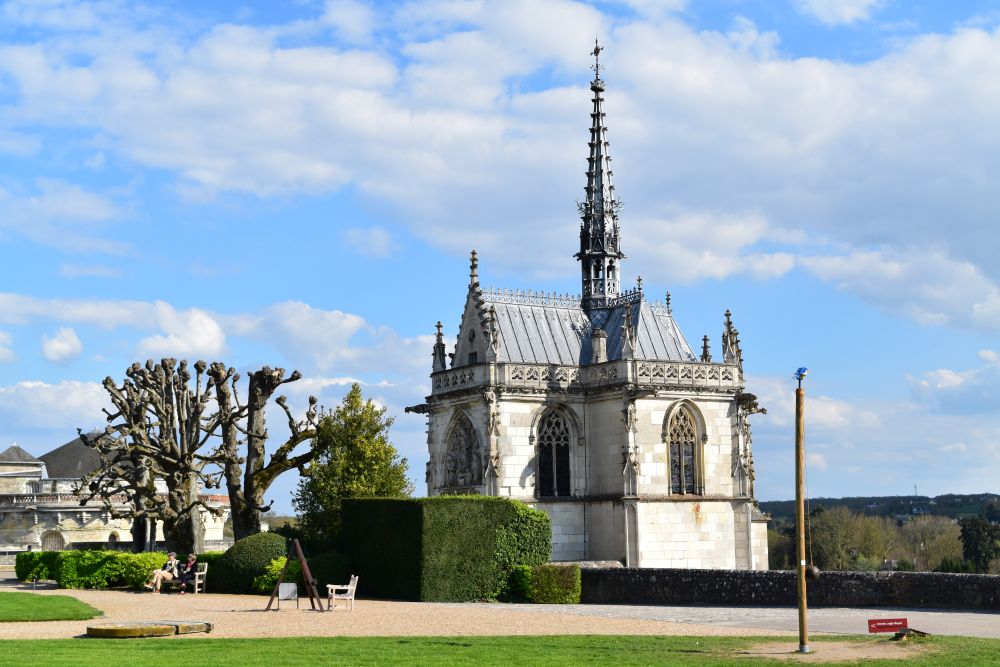
The Hubertus chapel is the place where Leonardo da Vinci has been buried. Invited by François I, he spent his last years in France.

.

François I’s Chambord – royal grandeur at its best

The Renaissance king François I built the castle of Chambord as a hunting lodge. It is the largest castle in the Loire valley. A royal hunting lodge!

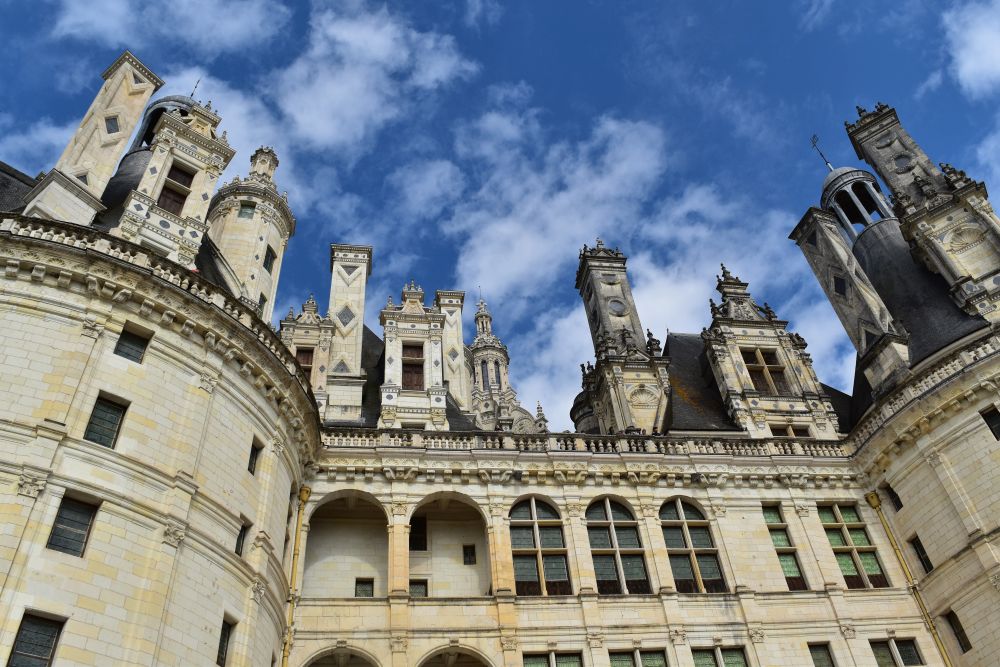
The rooftop is full of small towers. From the balcony, the ladies could watch the hunting activities of the king and his entourage.

Leonardo da Vinci conceived this famous double spiral staircase that links the floors.

Inside there is some furniture and tapestry. This is Henry IV, the first king of the Bourbon family. He is dressed in a practical way – he had to fight for his kingdom.

Louis XIV, Henri VI’s grand-son, is dressed luxuriously. We admire all the ties that the Roi Soleil (Sun King) wore – they must have been impractical for walking…

.

Louis XII’s Blois – gloomy scene for the murder of Henry de Guise

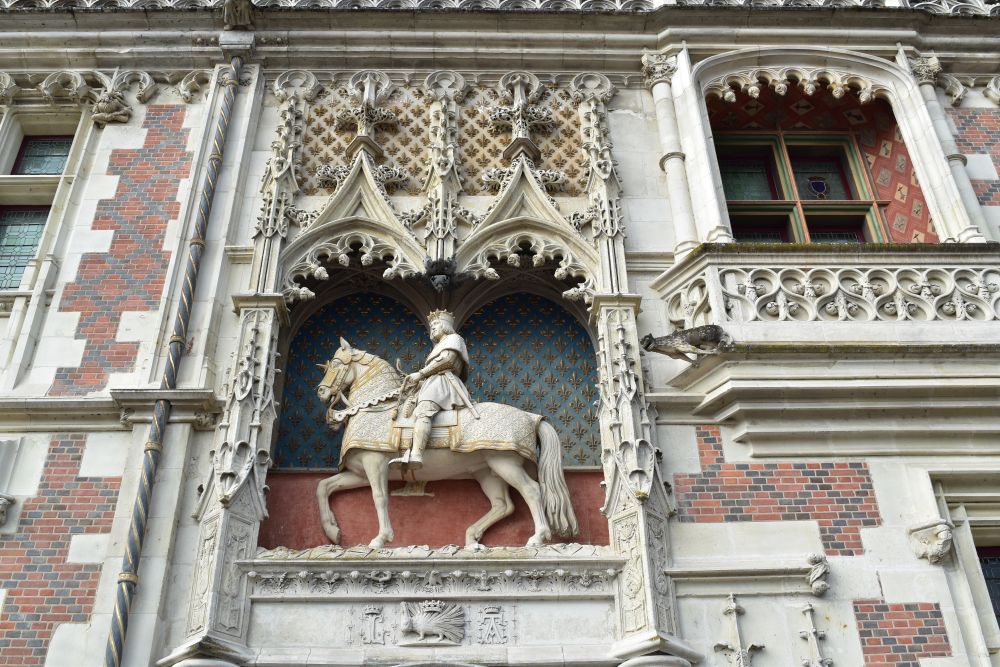
The statue of Louis XII welcomes the visitors of the royal Château de Blois. Around 1500 he made Blois his favourite residence.

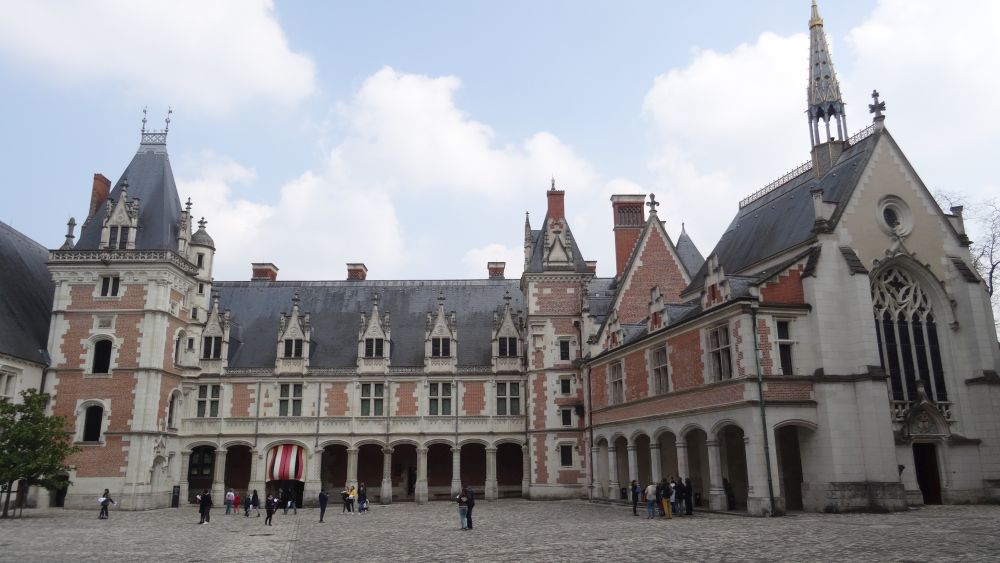
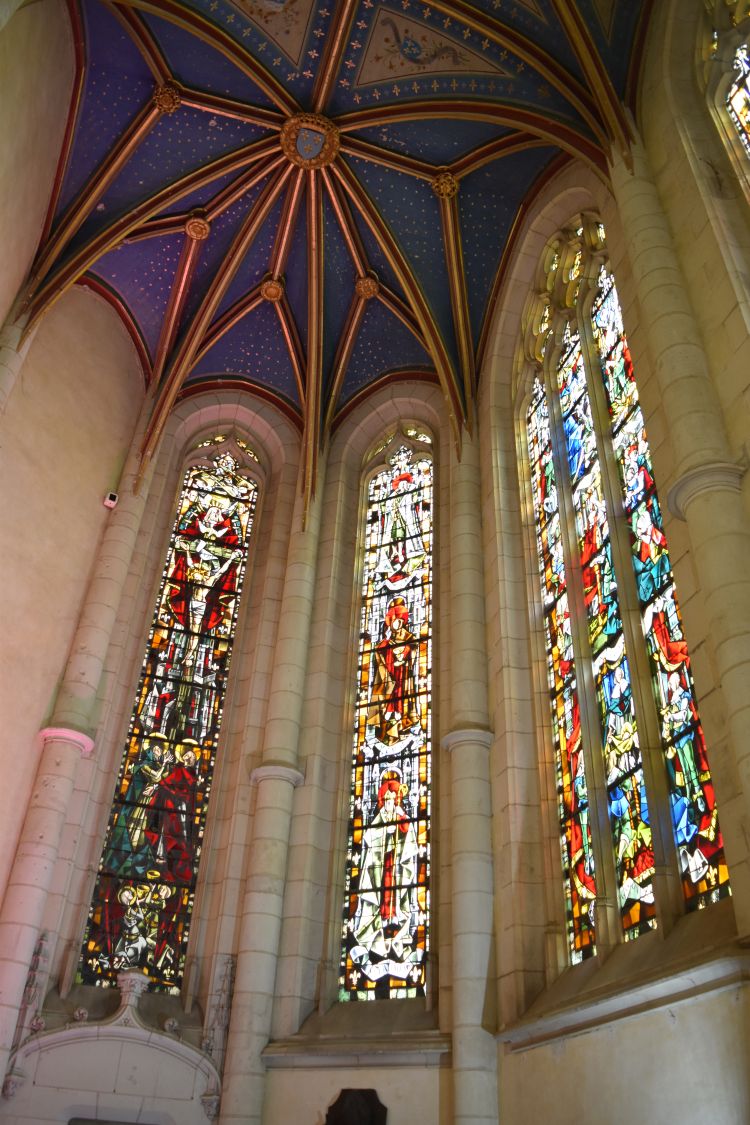
The brick construction of Louis XII with the attached chapel choir are mainly of gothic style.

François I also stayed in Blois. He added the Renaissance wing with the master piece, the staircase.

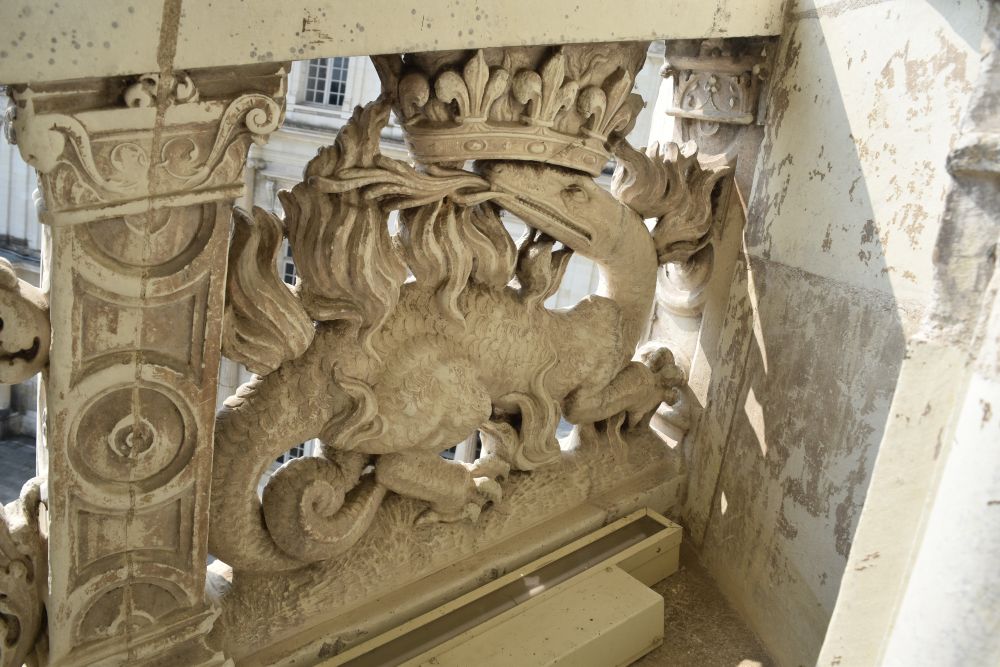
The sign of François I, the salamander, ornates the staircase (and many more places in the Blois castle).

It was in the Renaissance wing where the French king Henri III murdered his cousin, Henri de Guise (1588).

It is a windy and chilly day today. Some ten degrees outside. The castle is cold inside. I am shivering and I cannot imagine that it has been very comfortable to live here in winter time.

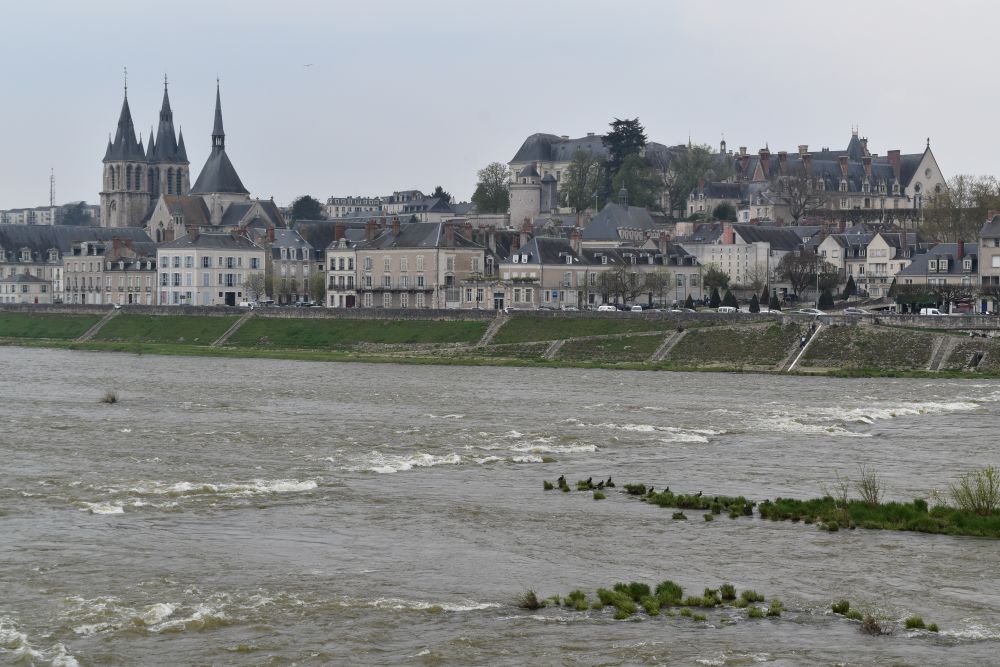
Let us look back to Blois with its castle and its church Saint-Nicolas and to the river Loire. Let us say good-bye to the Loire Valley.

Our next target is l’Hospitalet de l’Infant in Spain (or more precisely in Catalonia) with a short stopover in Millau (south of France).

(Sources: Michelin Guide de Tourisme: “Châteaux de la Loire”, 1985 and “Loire-Tal”, DK Dorlingkindersley 2015/2016). 

South Palatine – spring impressions with almond blossom

Palatine (Pfalz) in Germany has an almost Mediterranean climate, as it is protected from the rainy west winds by the Pfälzerwald or Palatine forest. Wine has grown here since Roman times as well as sweet chestnut and almond trees. The almond trees are in blossom end of March/beginning of April. The Palatine celebrates that with their Mandelwochen (almond weeks).

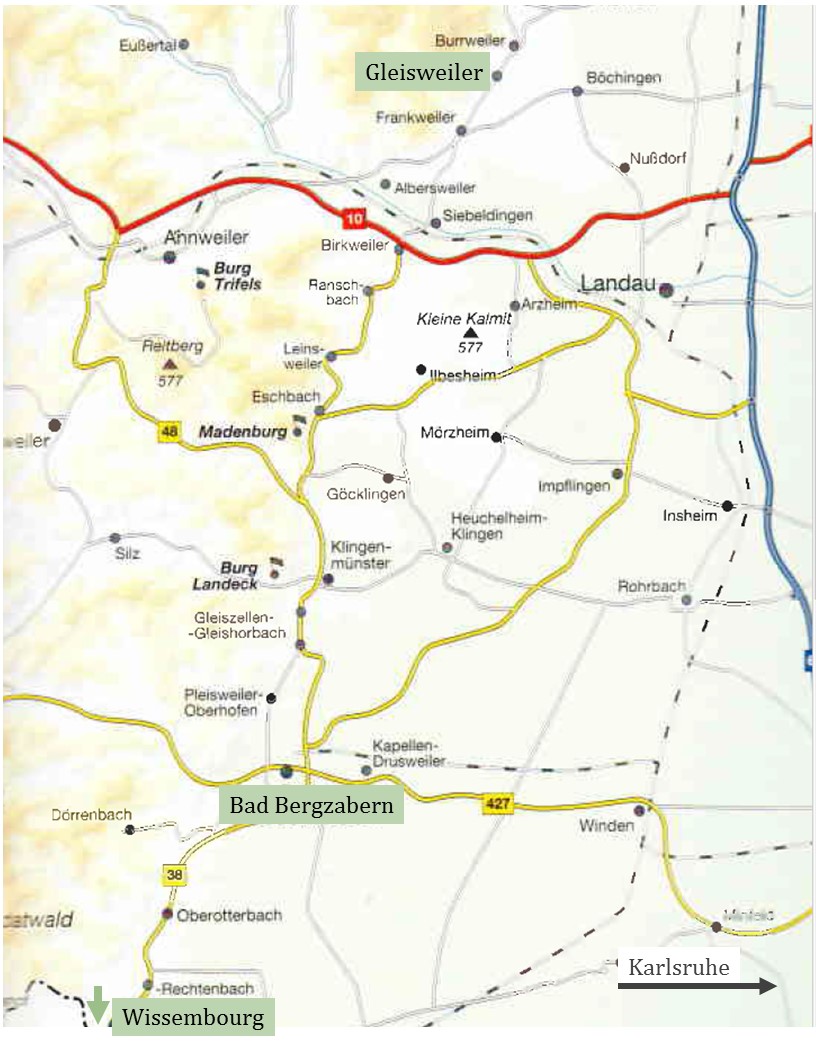
End of March 2017, we visited Bad Bergzabern in South Palatine. We find the almond trees in full blossom – beautifully pink.

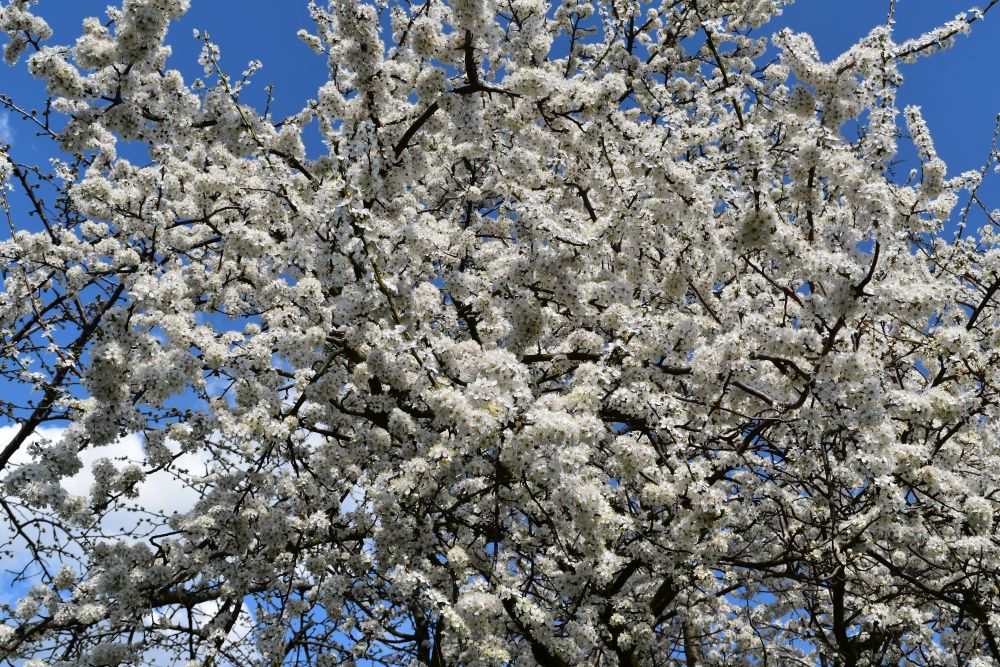
The plum trees are all white.

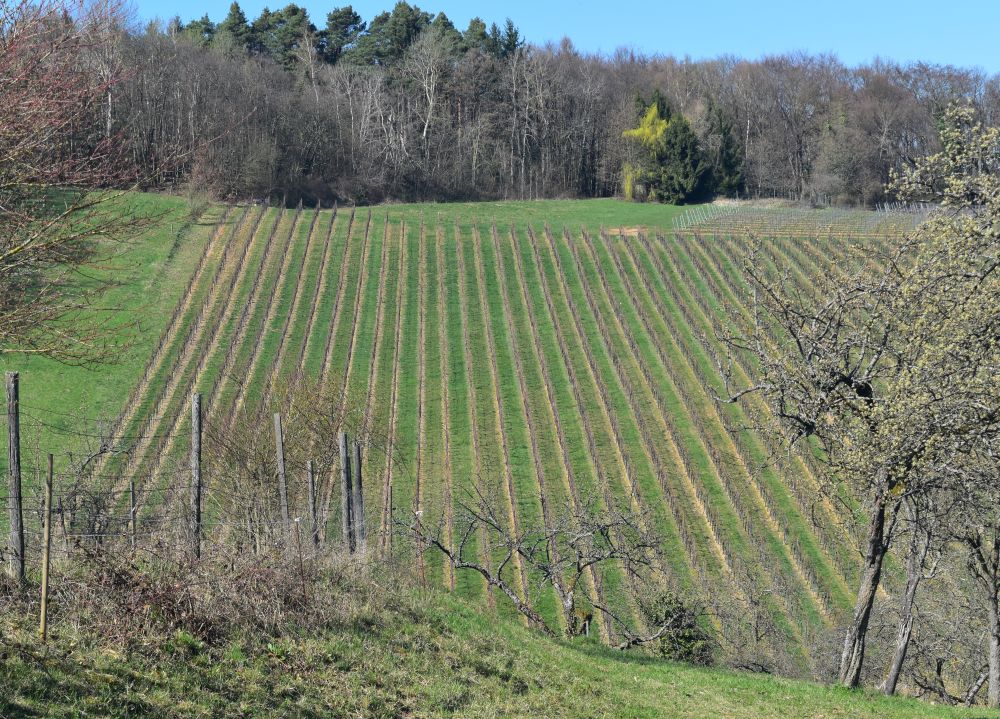
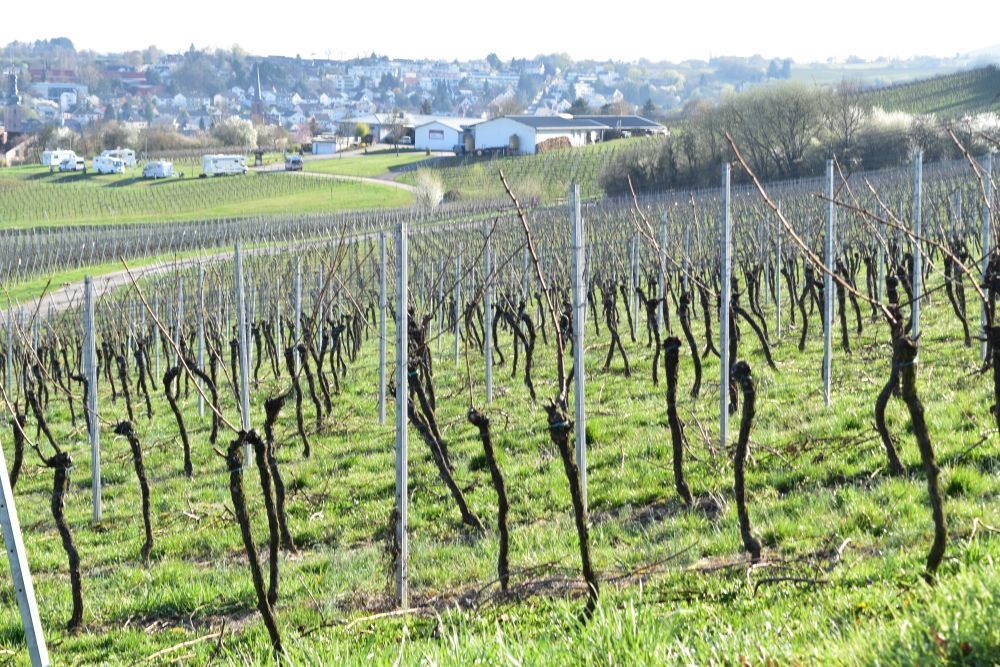
But now, end of March, the vines only show small light green leaves.

We stroll through the vineyards…

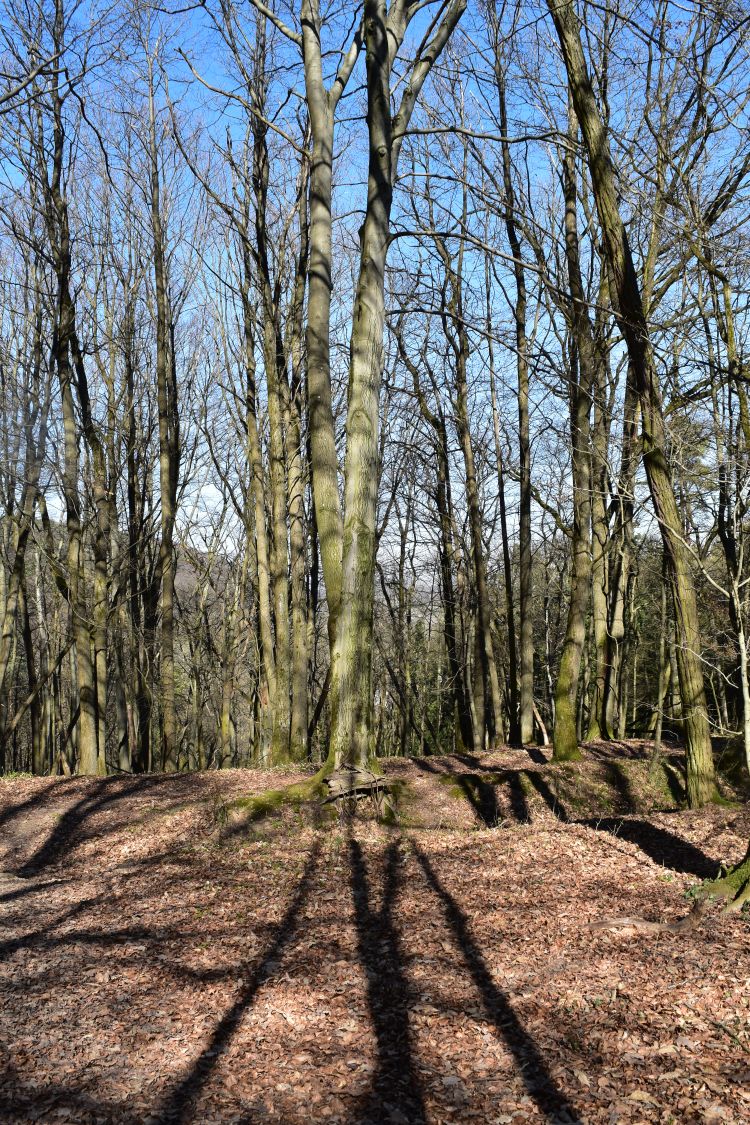
… and the forests above them. The leaves have not come out yet and the crowns of the trees point to the blue sky.

The sun plays with the shadows of the trees.

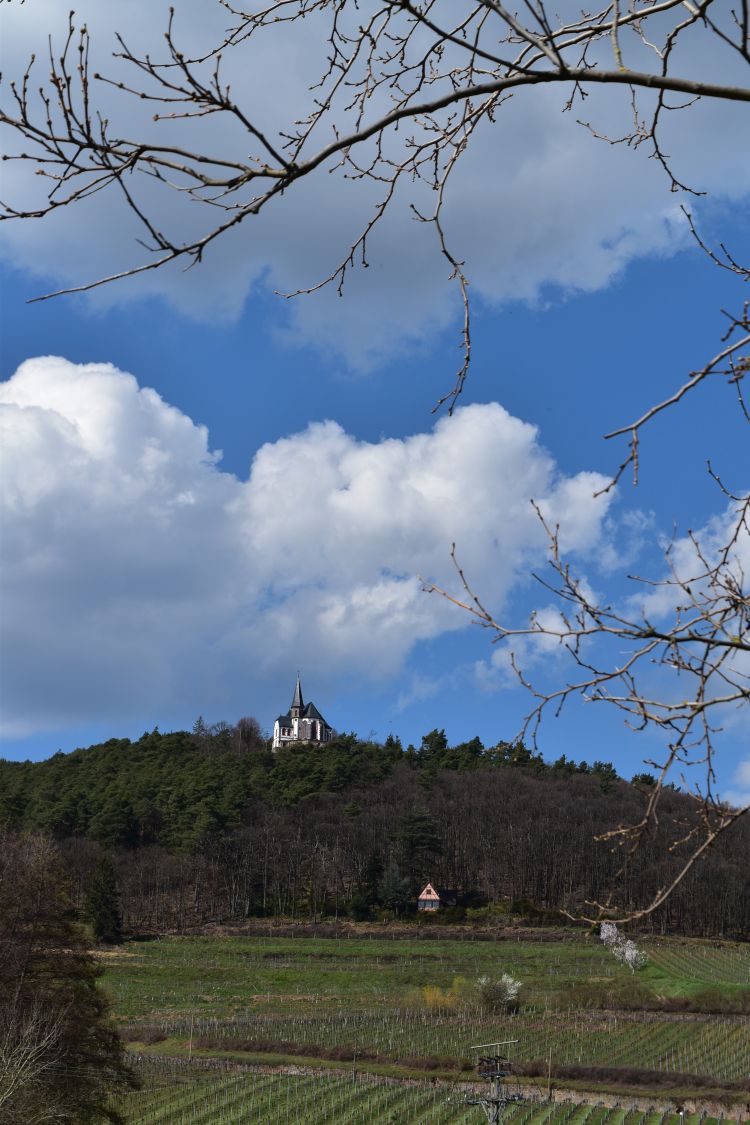
We climb the hill to the chapel St. Annaberg…

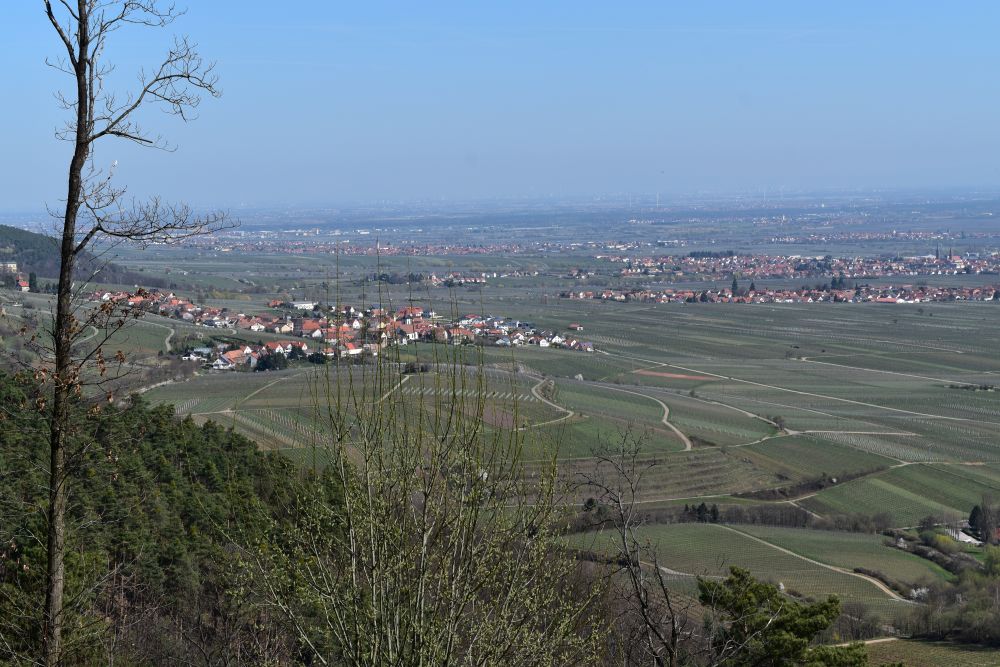
… and enjoy the view from here into the Rhine valley.

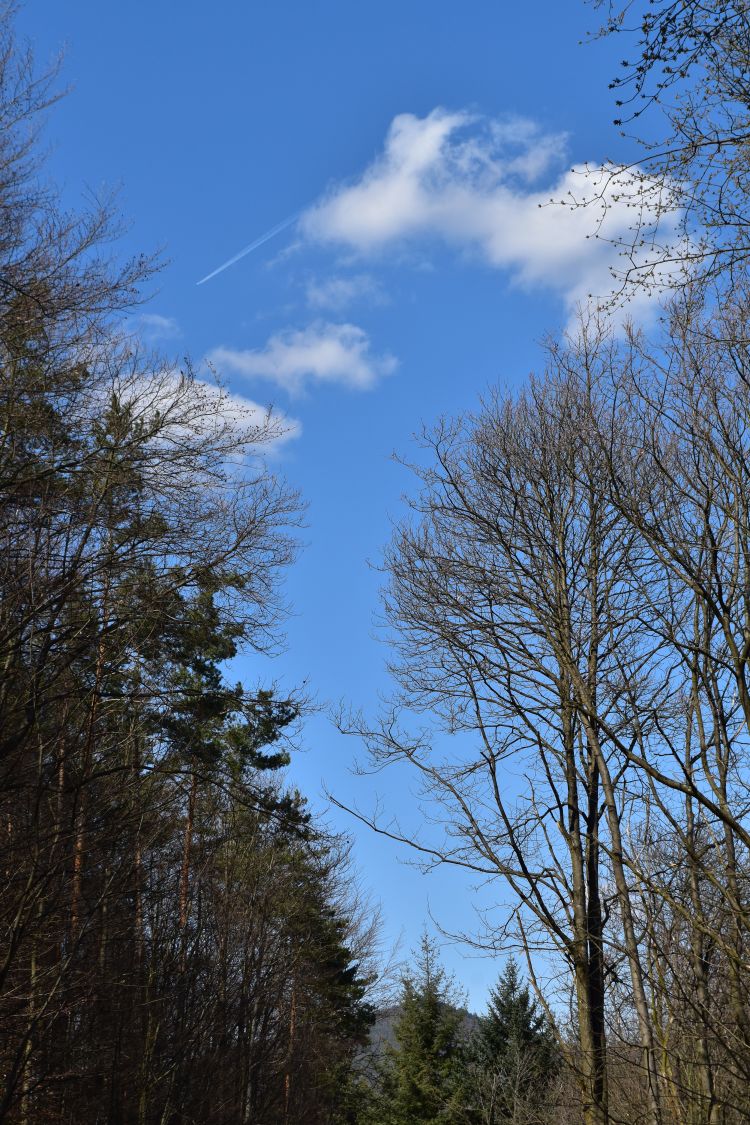
We walk back down again… a few shy clouds are above the trees.

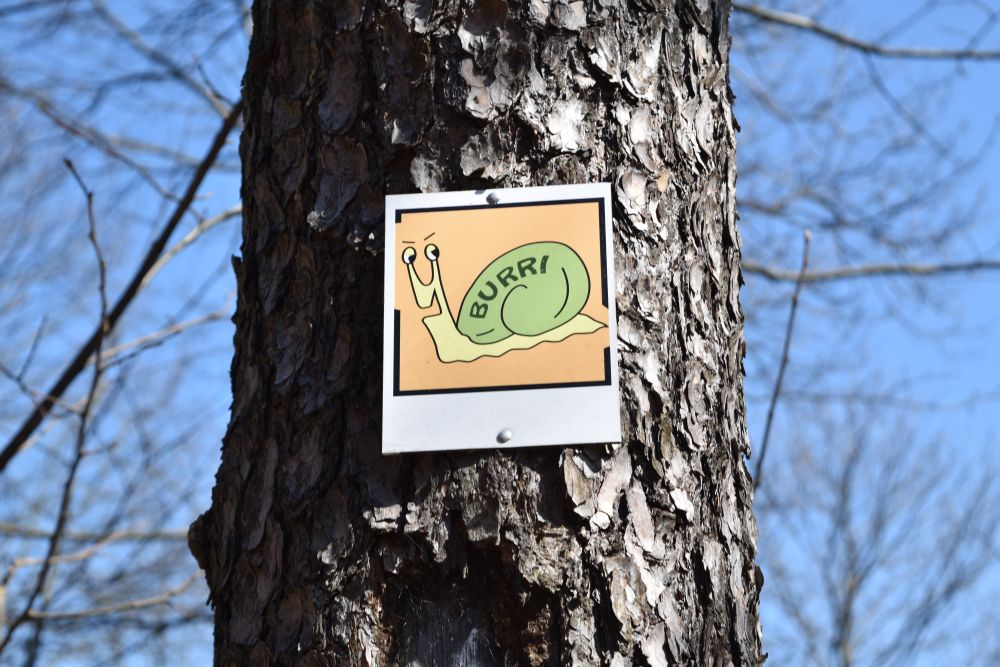
With humor this snail leads us down to a winegrowers’ village called Burrweiler.

Spring can be felt in the winegrowers’ villages as well.

Many houses are half-timbered. This historical building stands in Geisweiler.

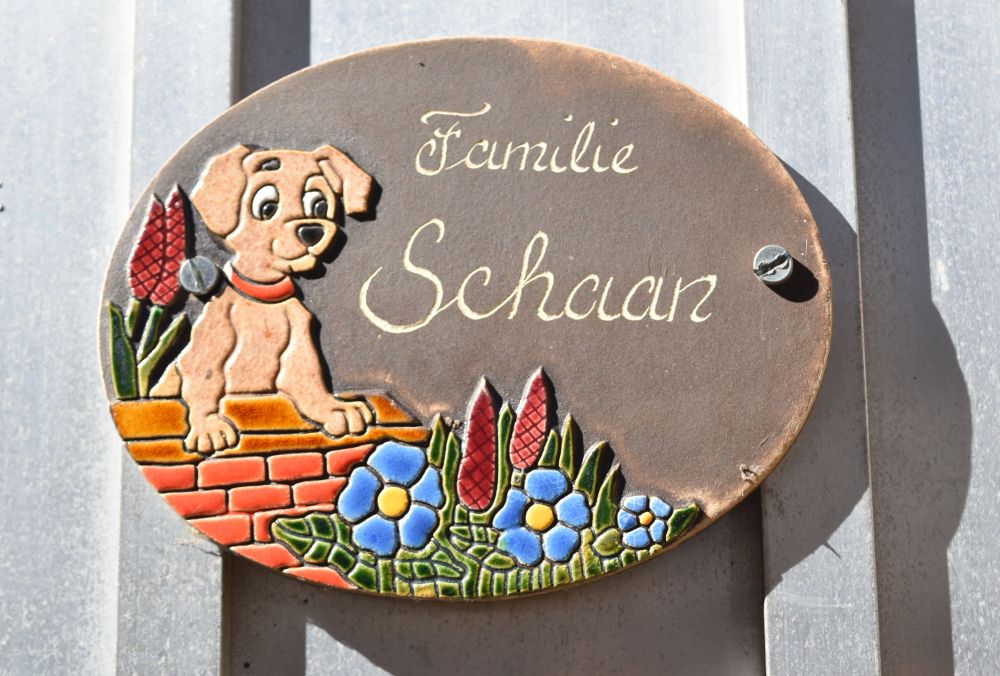
Even dogs are welcoming guests and visitors in the winegrowers’ villages. This friendly dog can be found at Pleisweiler.

But beware of this fighting cat – it watches a house in Burrweiler.

Winegrowers on the way offer to taste (and buy) their wines. One of them has this motto.

Well, I think happiness is both a way and a destination of life. Or even some ways of life with some destinations. We felt perfectly happy enjoying spring in the Palatine for two days – it is a great destination. We spent one night in Bad Bergzabern, walked in the hills behind Bergzabern, and the next day we hiked around Geisweiler and Burrweiler to enjoy the view from the chapel St. Anna located above these villages.

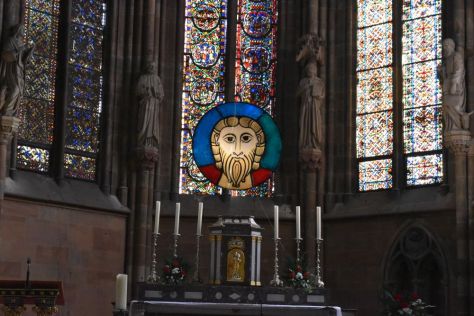
On the first day we had a coffee stop in Wissembourg in the Alsace. I love the church of Saints-Pierre-et-Paul with the glass pane of Christ from the 11th century (the original being in Strassbourg).

When driving home on our second day in the evening, we had dinner in Bergheim not far from Riquewihr. Spring can be felt here as well, now in the evening light.

Bergheim is a good place to round off two beautiful days looking for spring impressions.

Now we dream of the “way” to our next “destination” that will make us happy again – France with the Loire valley and Northern Spain.


Basler Fasnacht – impressions from the Ladärne-n-Usschtellig

Fasnacht 2017 at Basel (carnival) was celebrated in March, from Monday 6th/4 a.m. to Thursday 9th/4 a.m. Let me recall impressions from the Ladärne-n-Usschtellig or exhibition of lanterns.

.

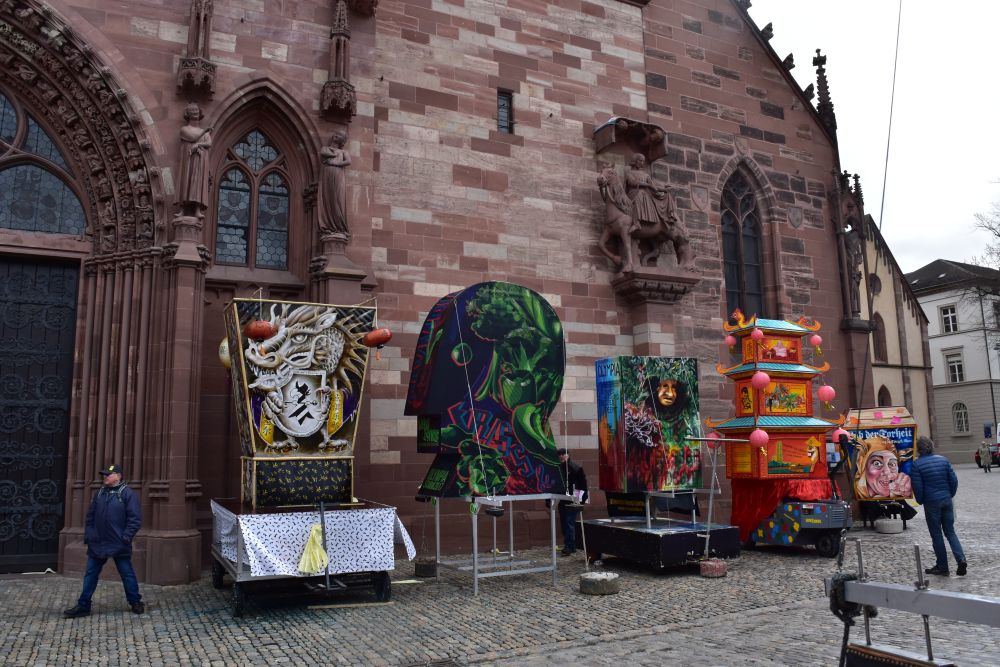
The exhibition of lanterns (Ladärne-n-Usschtellig ) takes place on the Münsterplatz –  a great background

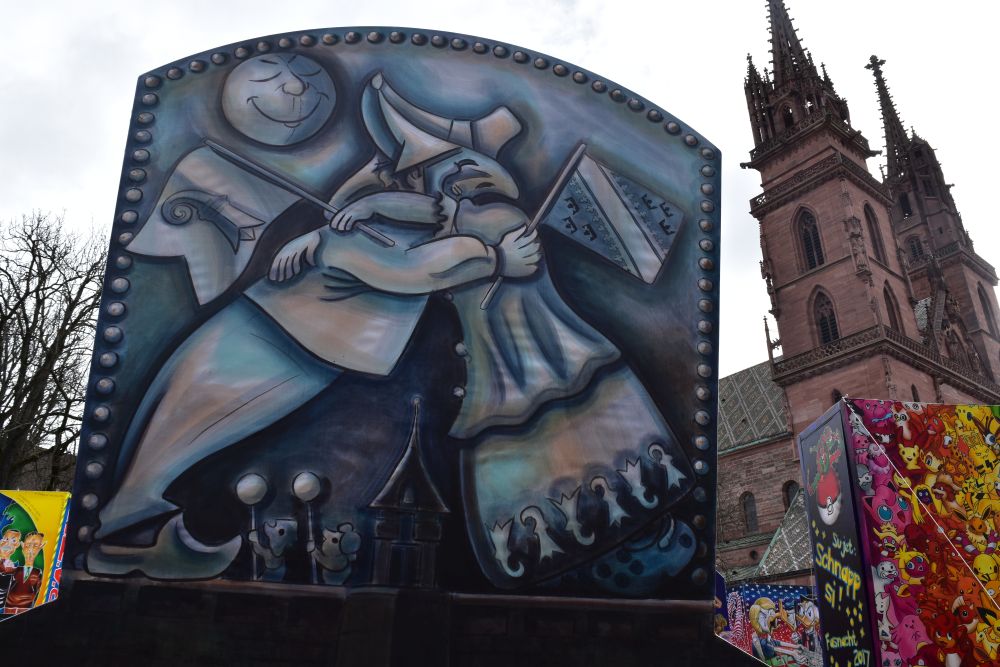
On carnival Tuesday, the lanterns (Ladärne) are presented on the Münsterplatz – the cathedral underlines the solemnity of the many pieces of art presented here. They are the centerpieces of the sujets (or themes) that the Cliquen (carnival groups) have selected for this year’s carnival. Here I am remembering some of the themes.

.

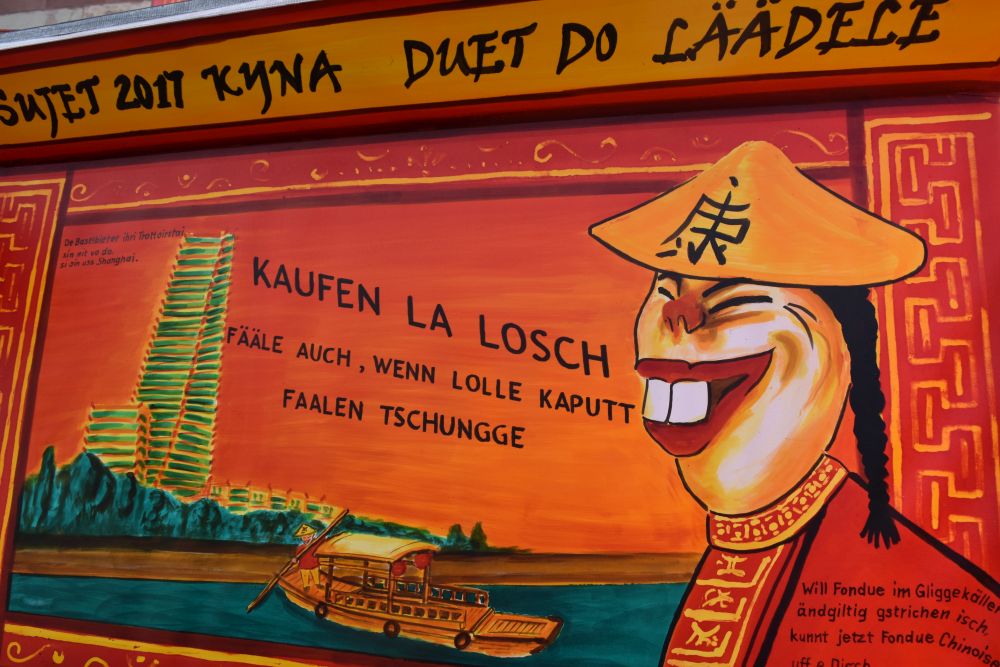
One theme: China – buying enterprises

China is buying enterprises, also in Switzerland. “Kyna duet do läädele” (China goes shopping here). Syngenta was on their buying list – may be La Roche (La Losch) is next and then also the “Fääle” (the Rhine ferry boat, it seems that the Chinese say “l” instead of “r”)…

… or they may intend to buy the Sutter Begg (a well-known bakery), the Basler Kantonalbank (bank of Basel), BVB (the public transportation of Basel) and more…

The Asian cat is greeting us.

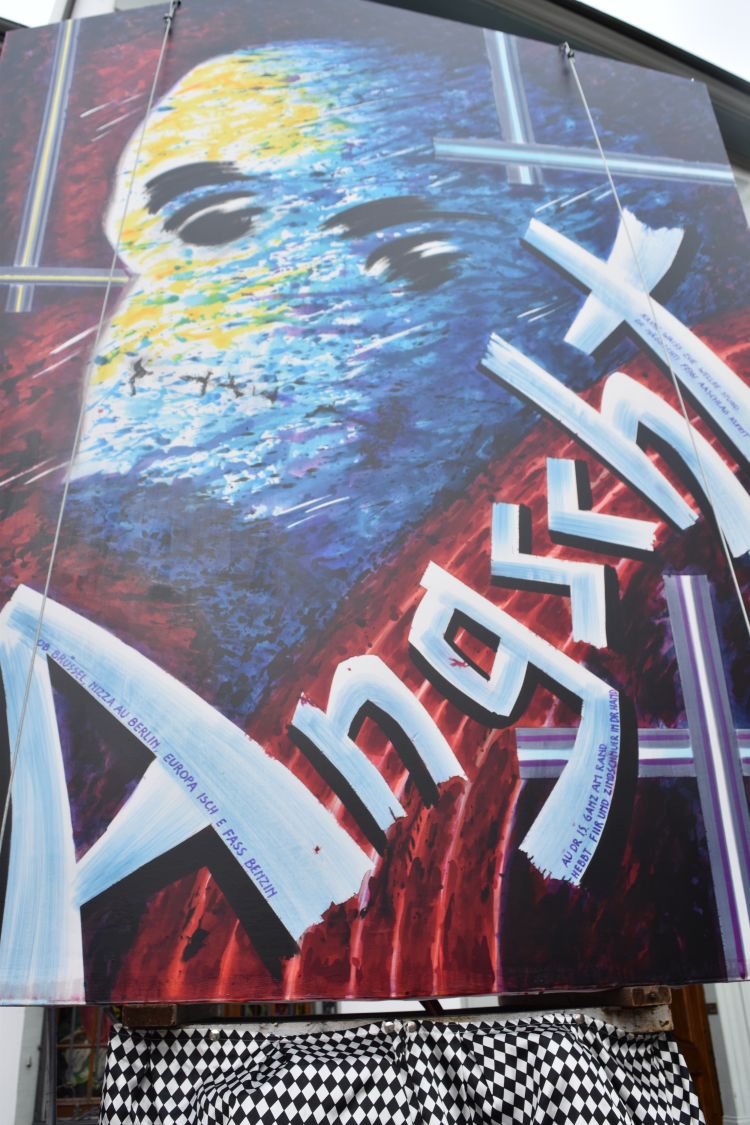
Another theme: Angscht – fear – adds a black mood to this year’s carnival

Many lanterns are dark. “Angscht” or “fear” is omnipresent.

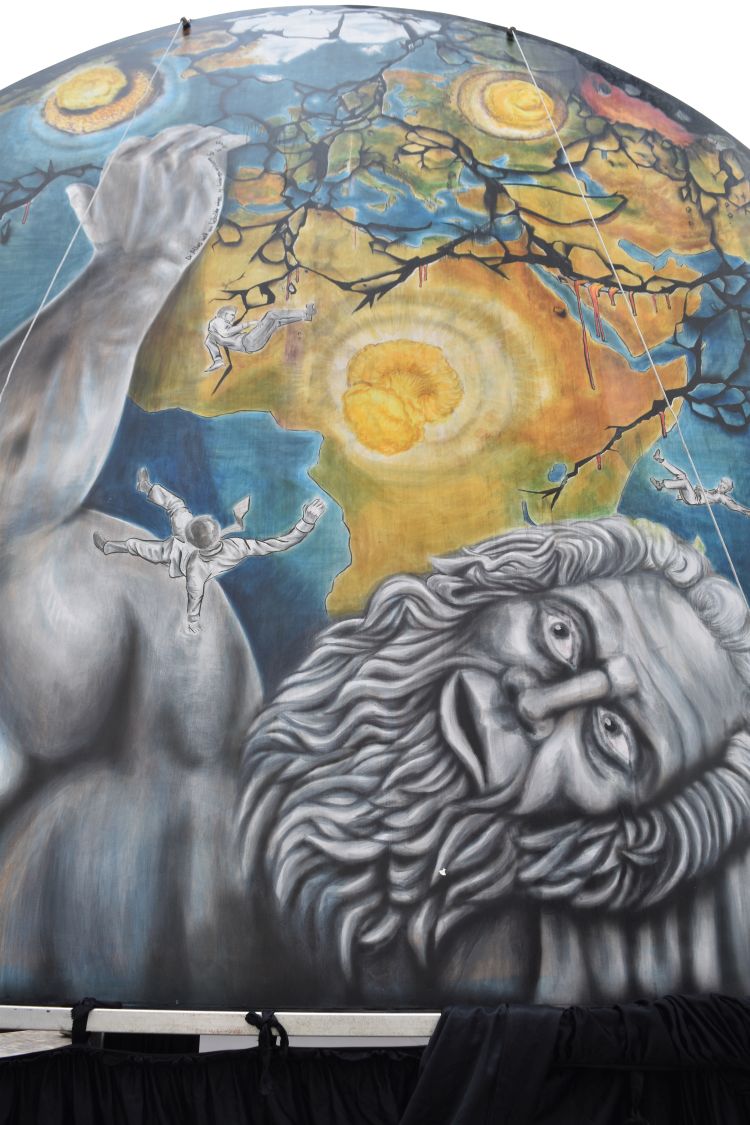
The Lälli Clique presents Atlas trying to prevent the world from falling apart.

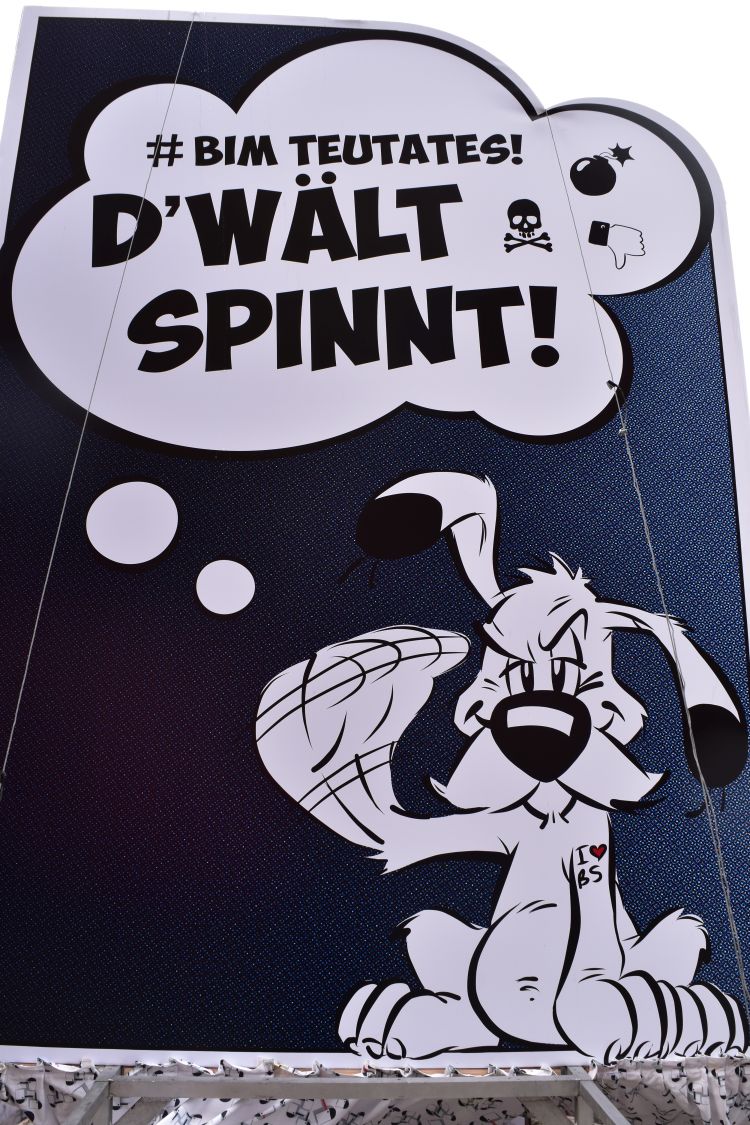
Idefix, the small dog of Obelix, swears “bim Teutates” and underlines his anger with his paw: D’Wält spinnt” (the world is crazy –  but I love Basel),…

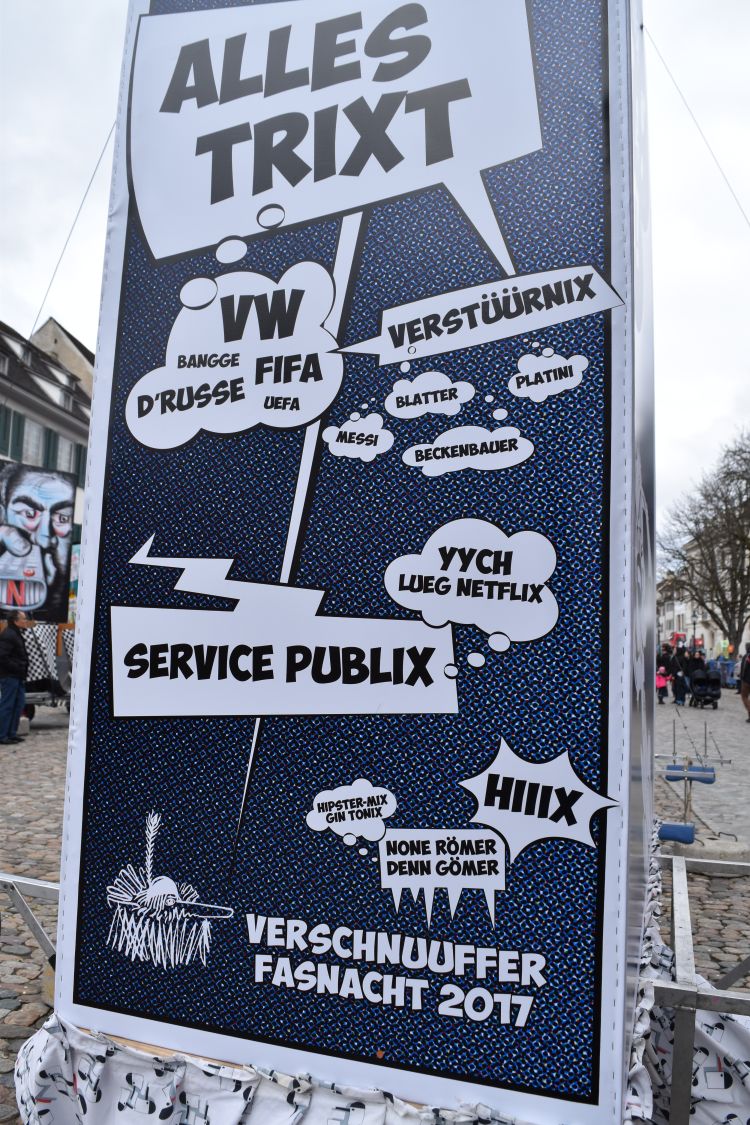
… they are are all cheating (alles trixt)… VW, Fifa and Bangge (the banks)… and they are paying no taxes (verstüürnix)… and Service publix? – Well, I watch Nexflix”

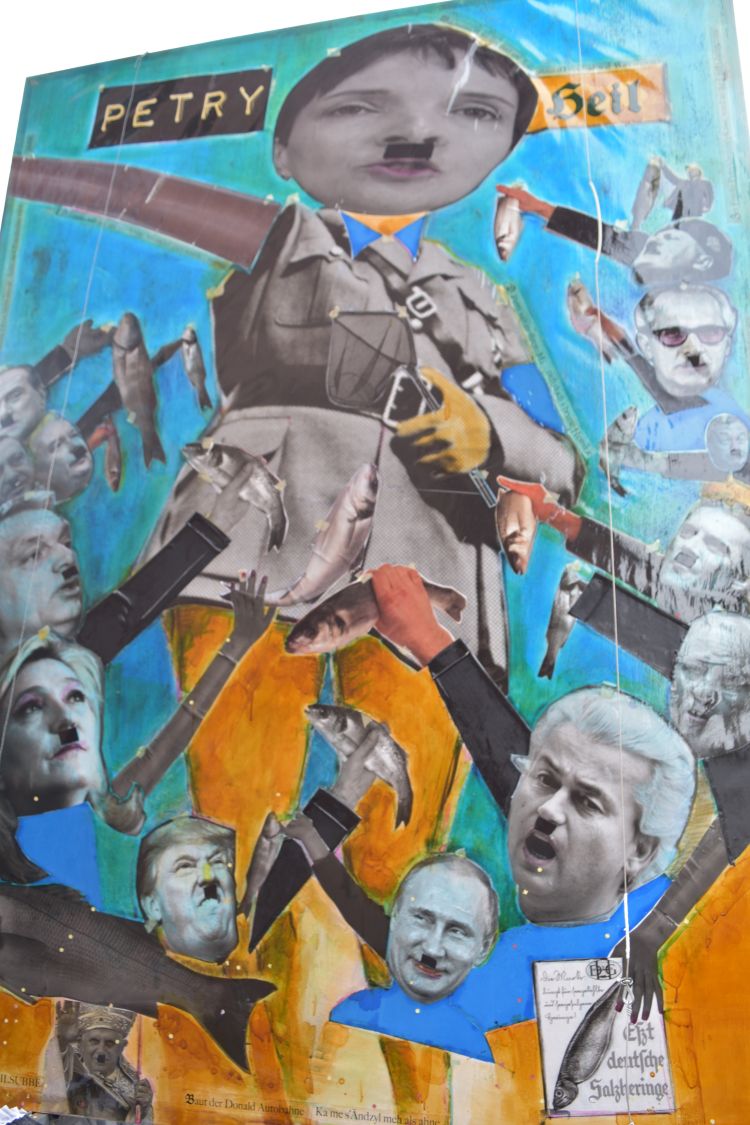
“Extrem rächts” or extremely right-wing – is a tendency that worries some of the carnival groups. Ghosts from the past?

.

Some more joyful themes: Heidi, holes in Switzerland, Pokemons and more

This patriotic Swiss scenery – an almost perfect world – is brightening up the mood: Heidi, Spyri’s novel about the girl from the mountains, has recently been filmed. Here she is acting in front of the camera with Gaissepeter (goatherd Peter).

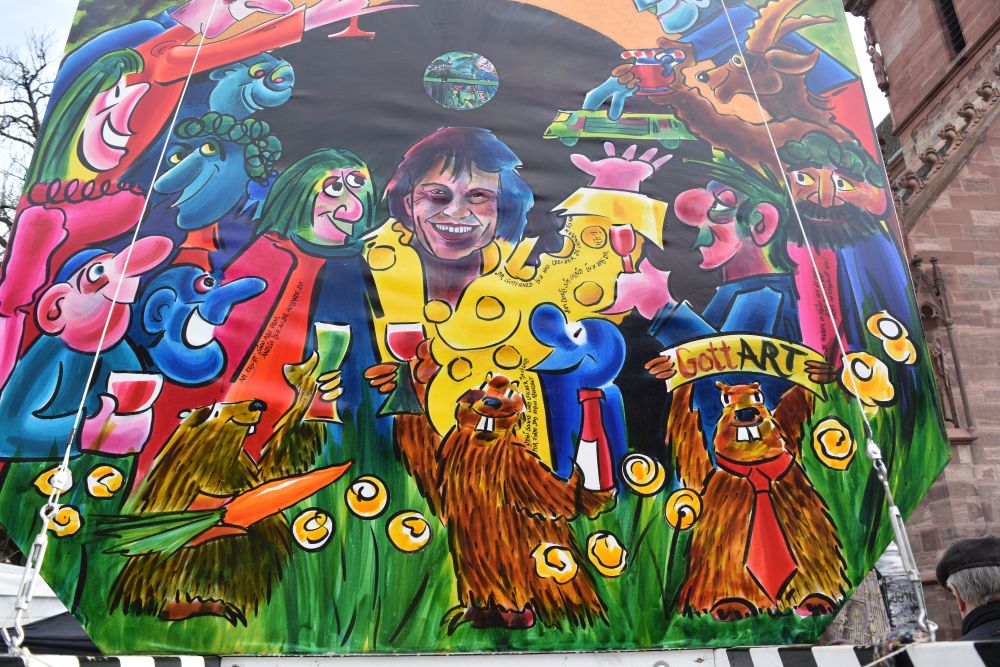
The new Gotthard railway tunnel has been inaugurated shortening travel time between the Ticino and the rest of Switzerland. For the inauguration festîvities, our Federal Councillor Doris Leuthard wears a jacket with round holes – resembling our cheese from the Emmental. Her jacket is controversial – many like it and some do not. “GottArt” for the Gotthard is a punch and the marmots welcome the tunnel as well. I think, the jacket with holes is a great and courageous idea.

Pokemons are hidden all over Basel and around the cathedral. This hype became a wonderful topic full of fantasy, primarily for some “Jungi Garde” or kids in the carnival groups.

The City-Hupfer allows tourists to hop (hupfe) AROUND the Basel city center. AROUND the city center, because much of the center is car free: The tourists have to leave the bus and walk to reach the sights. The number plate is “BS or Basel 2017”.

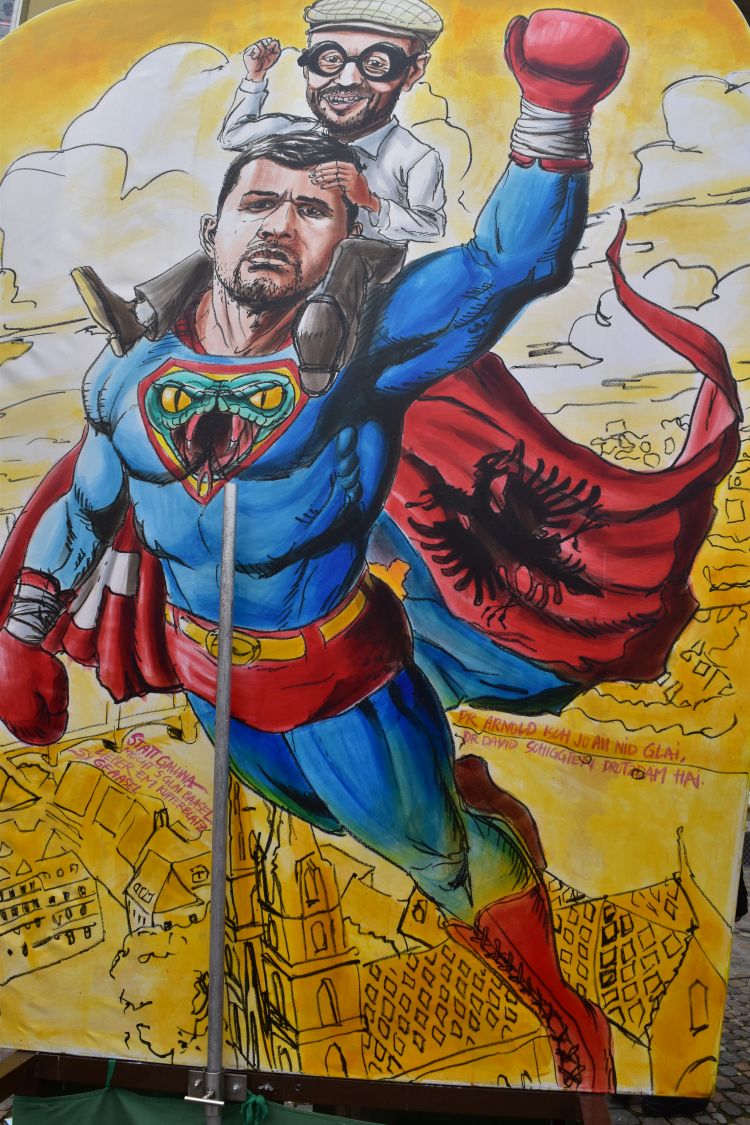
The Swiss boxer Anton Gjergjaj is very successful. Here he is as batman with the black double eagle on his red coat. In the cortège (parade), the drummers and pipers were cobras.

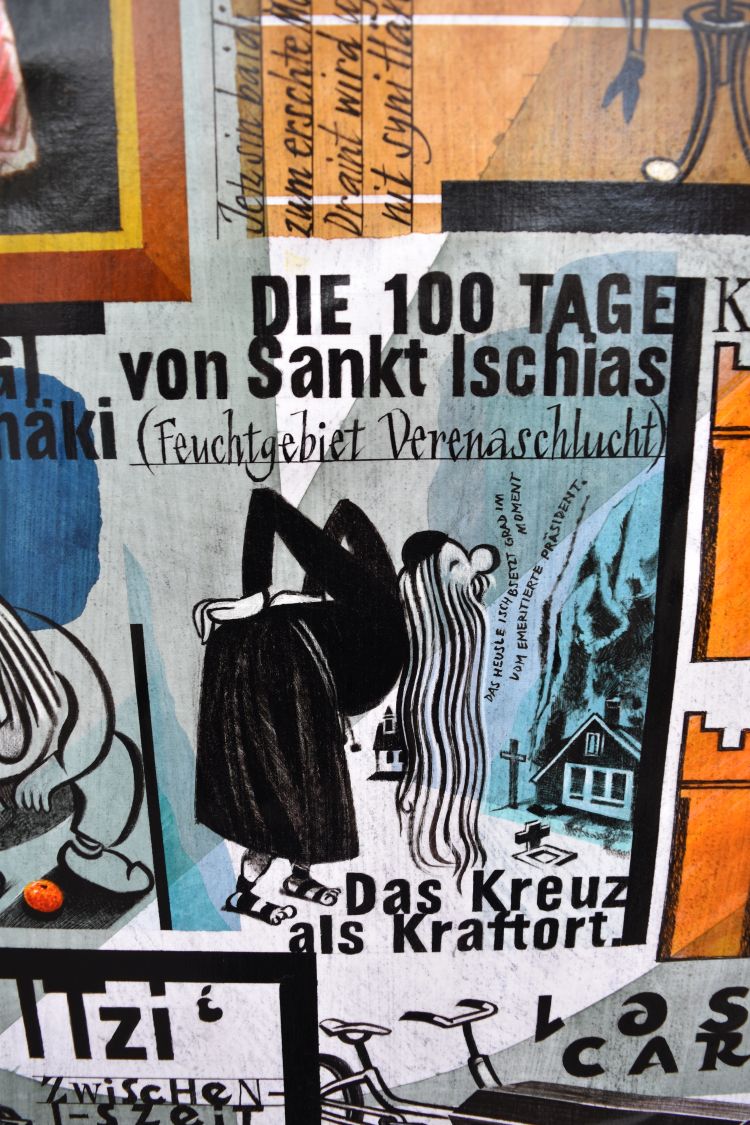
This lantern is full of details commenting the world. I particulary like “the hundred days of Sankt Ischias” in the damp Verena canyon. The monk is suffering from sciatic pain (Ischias). “Das Kreuz als Kraftort” translates to “the cross as a place of power”. In German it is a punch, as “Kreuz” can be both the Christian “cross” and also the lower part of the back (where the sciatic pain hurts).

.

Yet another theme: Food

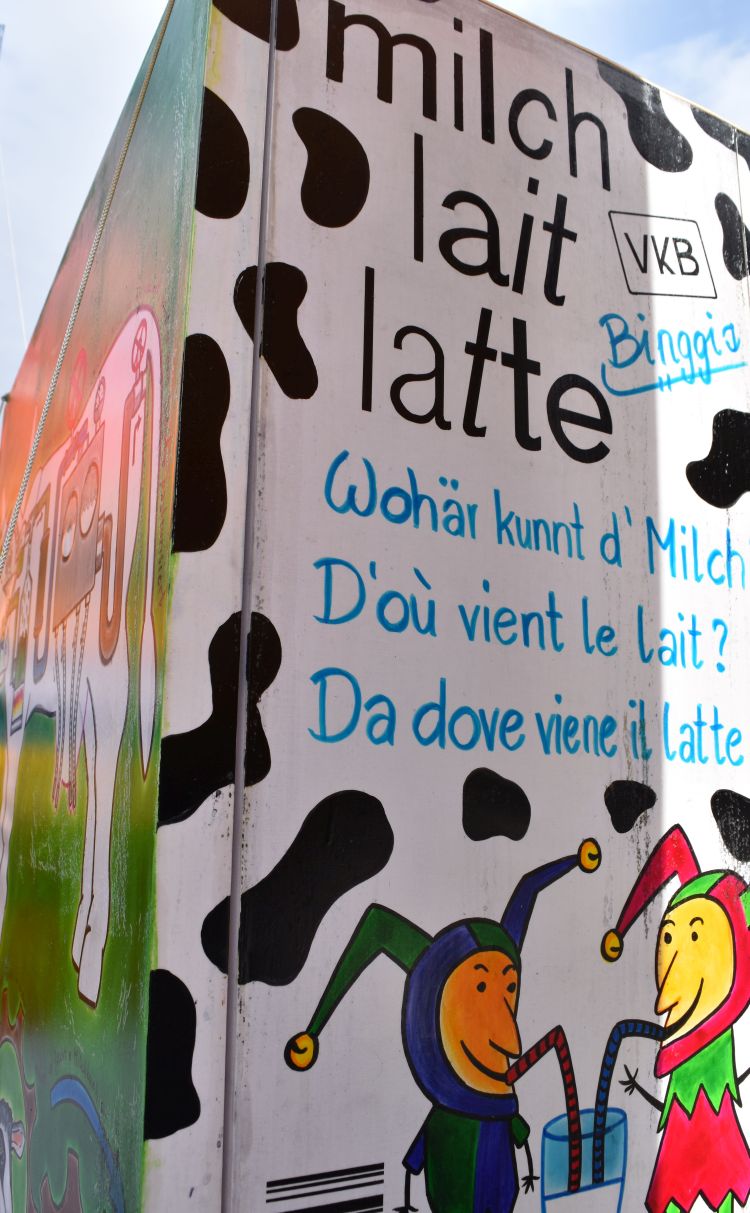
The Binggis (young kids) ask where the milk comes from, and they ask it in German, French and Italian. Well, we buy our milk in shops, and it comes in cardboard boxes – like the shape of the lantern. Kids from towns may not know the real source – cows, as the white color and black spots suggest.

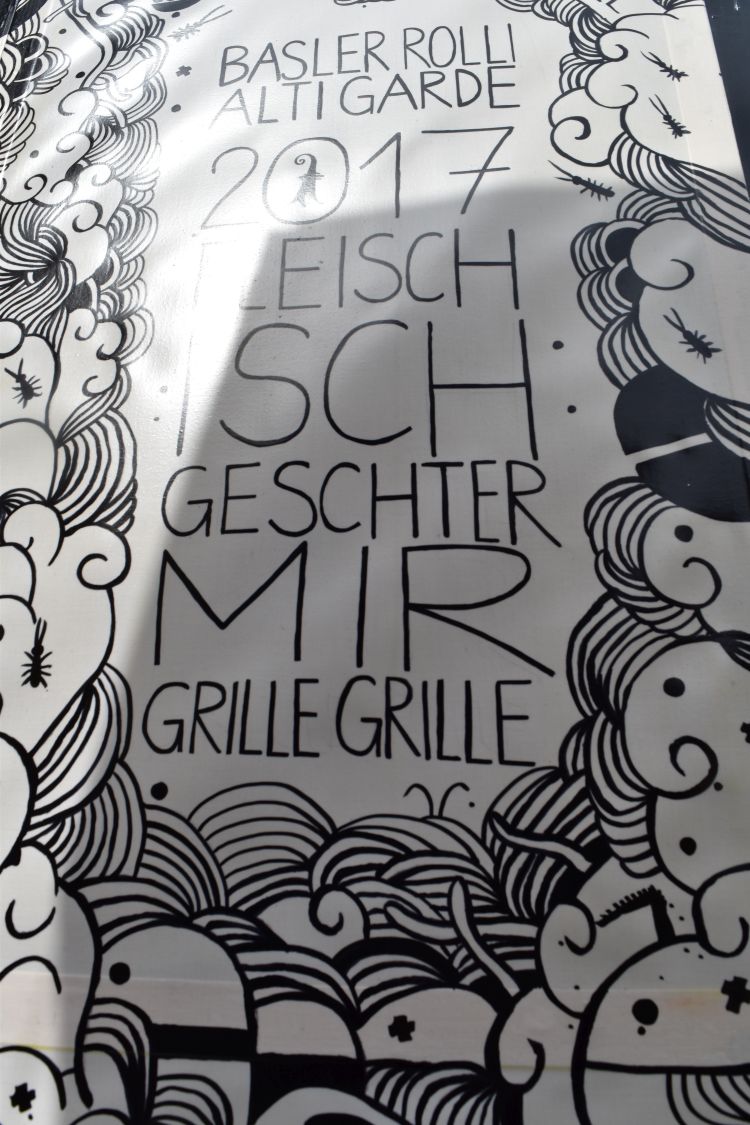
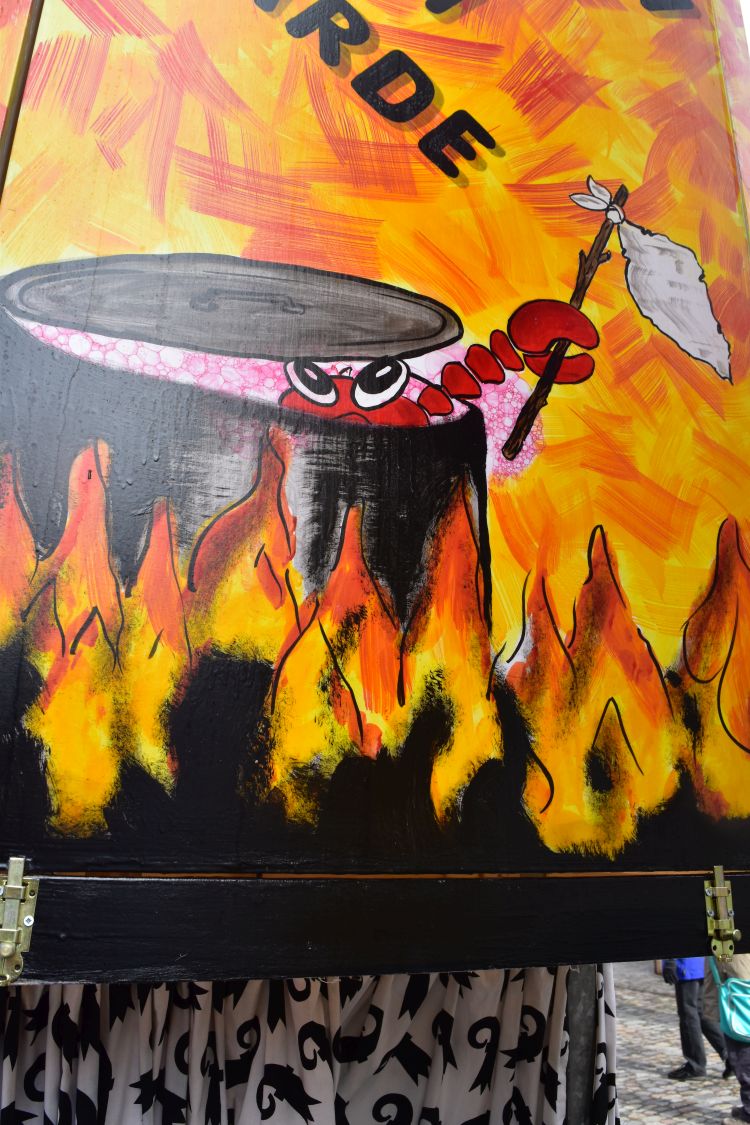
“Fleisch isch geschter – mir grille, grille” (Meat is yesterday, we are barbecuing, barbecuing). “Grille” is Swiss German for “to barbecue” and “grille” is also the insect “cricket” that we may eat in future (instead of meat). “Grille” is a punch that only works in Swiss German.

The Queerschleger look for healthy “super food” such as carots, mais, cucumbers or fennel. “Güürkli” or “gherkins” are another option. In all… juice and organic vegetables are good for our heart, and also “gsund fir d’Katz und dr Hund” (healthy for the cat and the dog).

On this same lantern, the crab shows the white flag… and it may be successful, if we restrict our diet to nothing but vegetables.

May this white flag brighten the often dark mood of this year’s carnival and give hope that Atlas will hold the world together such that next year’s carnival will present more bright topics.

Yes, next year in 2018, Fasnacht will be on February 19th to 21st. As always it will start on Monday at 4 a.m. with the Morgestraich (“morning stroke”, see the video of radio Basilisk). It is celebrated with the Cortège (parade), Schnitzelbängg (carnival songs), Kinderfasnacht (children’s carnival), Guggekonzärt (“dissonant” brass music) and Schyssdräggzygli (small groups piping and drumming). It ends with the Endstreich (“final stroke”) on Thursday 4 a.m. The Fasnachtscomité explains it all and the internet is full of reviews and videos. I always enjoy the creative skill that the groups (called “Cliquen”) demonstrate year after year and look forward to 2018.


France: Detour to Châteauneuf du Pape

15th of November 2016. After a day in Avignon, we drive back to Switzerland with a detour to Châteauneuf du Pape which is just some 20 minutes away from Avignon.

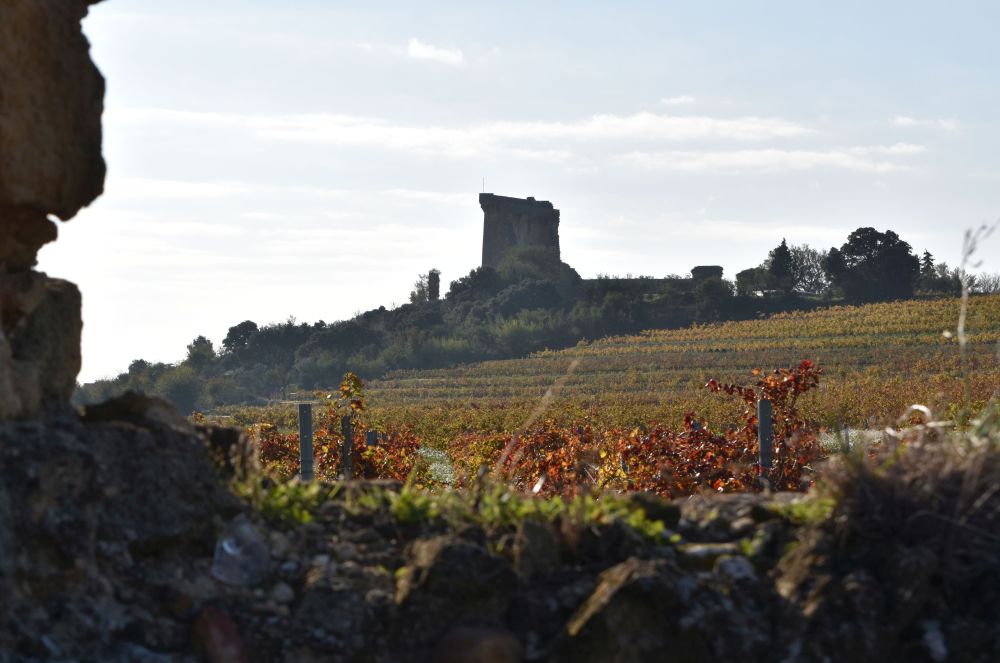
This is the château or castle of Châteauneuf du Pape. Hm, I am disappointed. For the excellent wine that is produced here, I had expected a majestic castle. And I find this small castle.

aaa_0421-small

The first consuls and treasurers of Châteauneuf du Pape from 1756-1790 indicate an old tradition.

dsc09741-small

In the small village with the French charm, we buy a bottle of Châteauneuf du Pape: Le Vieux Donjon by Michel Lucien.

dsc09744-small

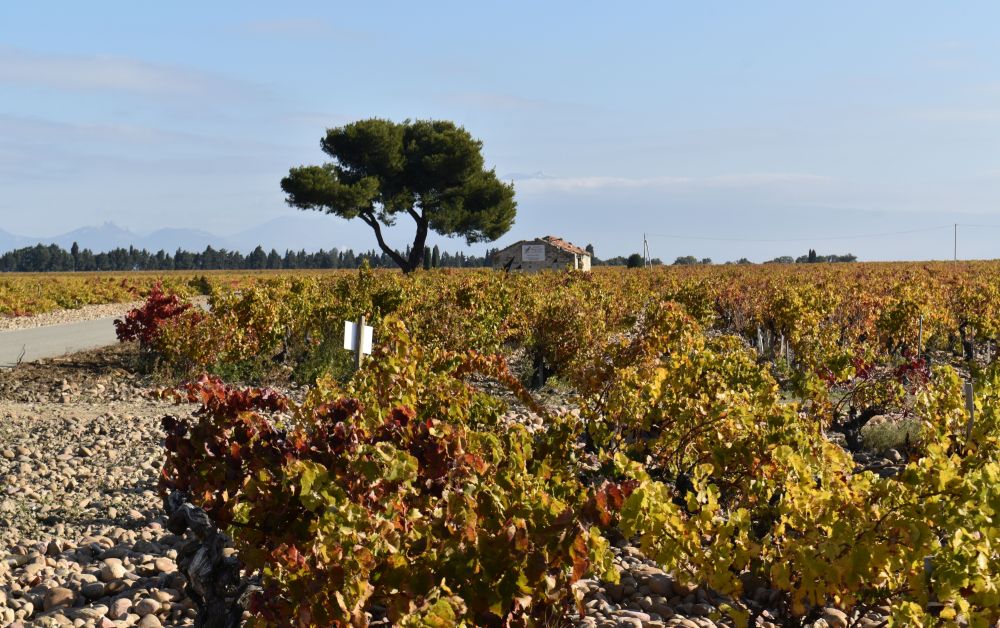
We have two espressos in a restaurant that is closed – this is French charm. The lady owner tells us the route to explore more vineyards – and we follow her advice. Here are some impressions from our explorations – vineyards in autumn colour.

aaa_0428-small

dsc09752-small

Then we leave the vineyards, continue our way to Orange, catch the motorway and drive directly to Monthey in Switzerland. We stop quickly in France to buy what we need to cook Spaghetti. We share the meal with our friends and have one of the bottles from Montsant. There is so much to tell – we had wonderful late autumn days in Catalonia and in France.


France: Stopover in Avignon with the famous bridge and the Pope Palace

13th of November 2016. Our days in Hospitalet de l’Infant are over. We pack, throw our last postcards into the yellow mailbox and leave for France. Not without forgetting to switch off the water of  our friends’ apartment – which means we have to return one more time to close the apartment properly.

We have decided to travel through the Rhone valley, to stop two nights in Avignon and spend a day here. The famous bridge – le Pont d’Avignon – and the Pope Palace are worth a visit, and we look forward to strolling through the city inside the intact defensive town walls.

We decide to make it easy for us and book a room in the IBIS hotel right in front of the city wall. Here we can also park our car.

dsc09725-small

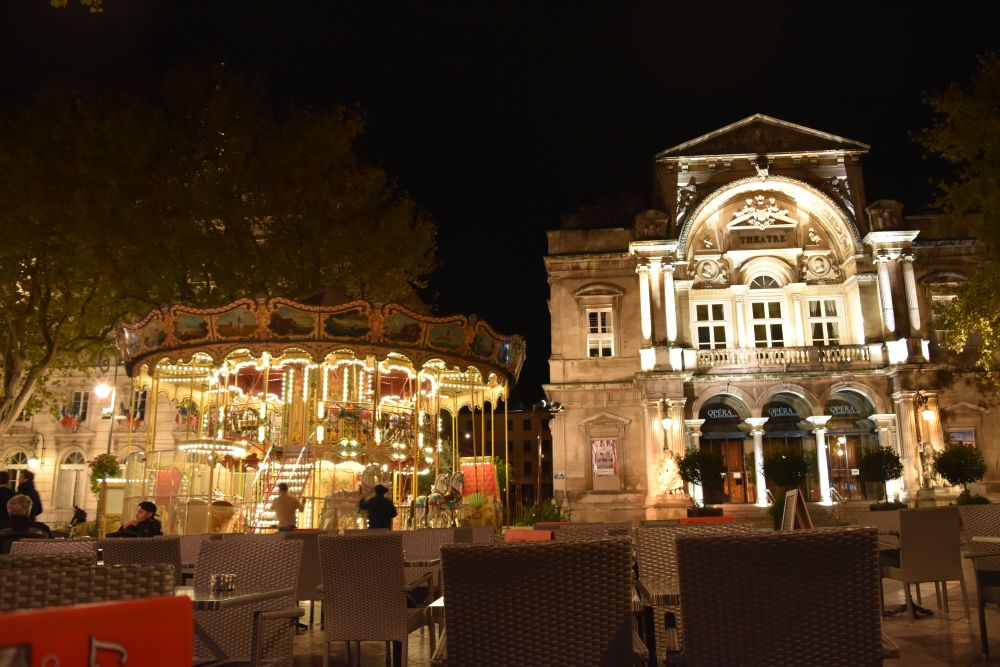
At the Place de l’Horloge we have dinner in a small restaurant across the Theatre and the Townhall. It is clear and cold in Avignon – the mistral wind is blowing down from the mountains.

aaa_0286-small

.

Le Pont d’Avignon – ending in the middle of the river

The next morning we start our visit with THE bridge, le Pont d’Avignon.

dsc09724-small

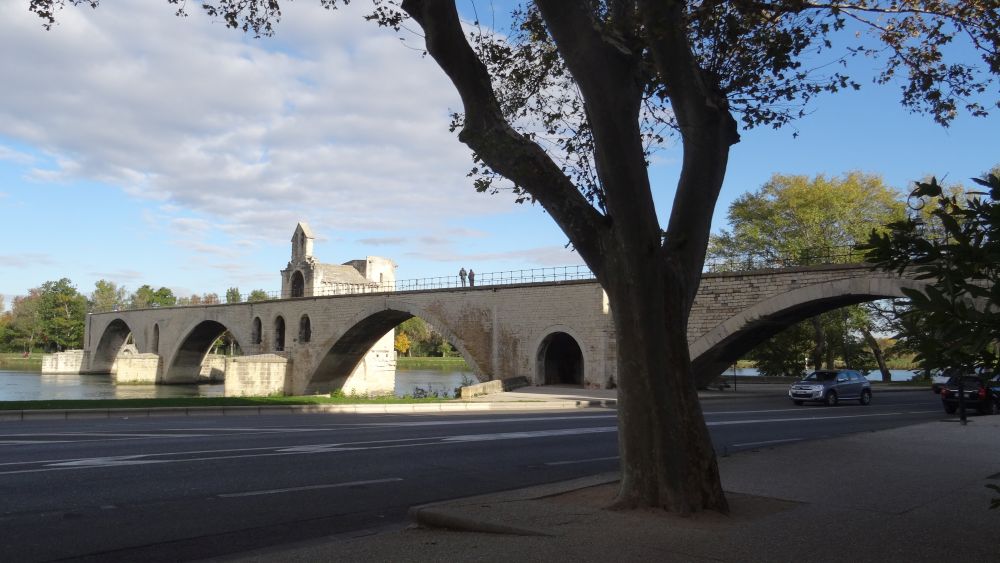
I am utterly disappointed: The bridge is not finished, it ends in the middle of the Rhone river! Well, in the museum I learn that this was not really a bridge, but a toll station built in the 12th century to tax salt and agricultural products traveling by boat. This is the legend: A shepherd had a vision that told him to build this bridge. The people of Avignon laughed at him and asked him to throw a piece of rock into the water. He did so. This was a miracle that convinced the people to build the bridge. At that time, there were large sandbanks. They disappeared in the 15th century, as the water level rose, resulting in the bridge to end in the middle of the river. All this is well explained in the museum attached to the bridge.

This is another view of the bridge with the chapel St. Nikolas.

aaa_0301-small

We all know the song related with the bridge: “Sur le pont d’Avignon, l’on y danse, l’on y danse, sur le pont d’Avignon, l’on y danse tout au rond.” We learnt this song in kindergarden, long before we knew French. Not understanding the words, we created Swiss German versions – the one  of Ursula’s sister went: “Sur le pont d’Avignon, oni Dasse, oni Dasse…” (with “oni Dasse” she took a phonetic representation for “on y danse”. It means “without cups” in Swiss German…).

aaa_0309-small

The song already existed around 1500. The words then were: “Sur le pont d’Avignon, on y passe, et repasse.” In 1843 the words went like this: “Sur le pont d’Avignon, tout le monde y danse, danse,…, tout le monde y danse en rond.”

.

The Pope Palace

On the rock above the Rhone river, the Pope Palace was built in the 14th century. Yes, a palace for the Pope, not in Rome, but in Avignon. Six popes resided here from 1309 to 1377.

aaa_0382-small

The first pope was Clément the V. In all seven popes resided in Avignon until 1377. They were the “real” popes, as there was no other pope in Rome.

aaa_0322-small

In 1378 the catholic church was divided (schisma of the Occident). One pope resided in Rome and a second pope in Avignon. Two such alternative popes reigned in Avignon. Then matters were settled at the council of Constance in 1417. From now there was just one pope governing the reunified occidental catholic church, and this one pope was in Rome.  The former Pope Palace was used by high officials of the church. In the days of Napoleon, the palace became a military casern. In the 20th century it was renovated and is now a UNESCO world heritage. This is all explained in the museum of the Pope Palace.

All the popes of Avignon embellished their palace. This is the view of the second courtyard.

aaa_0325-small

There was a safe built into the ground of one of the back offices – the tiles looked like the other tiles on the ground. Nevertheless the safe was robbed twice. I would have thought that this safe is safe, but presumably someone betrayed the secret.

aaa_0324-small

The main church is now a museum.

aaa_0328-small

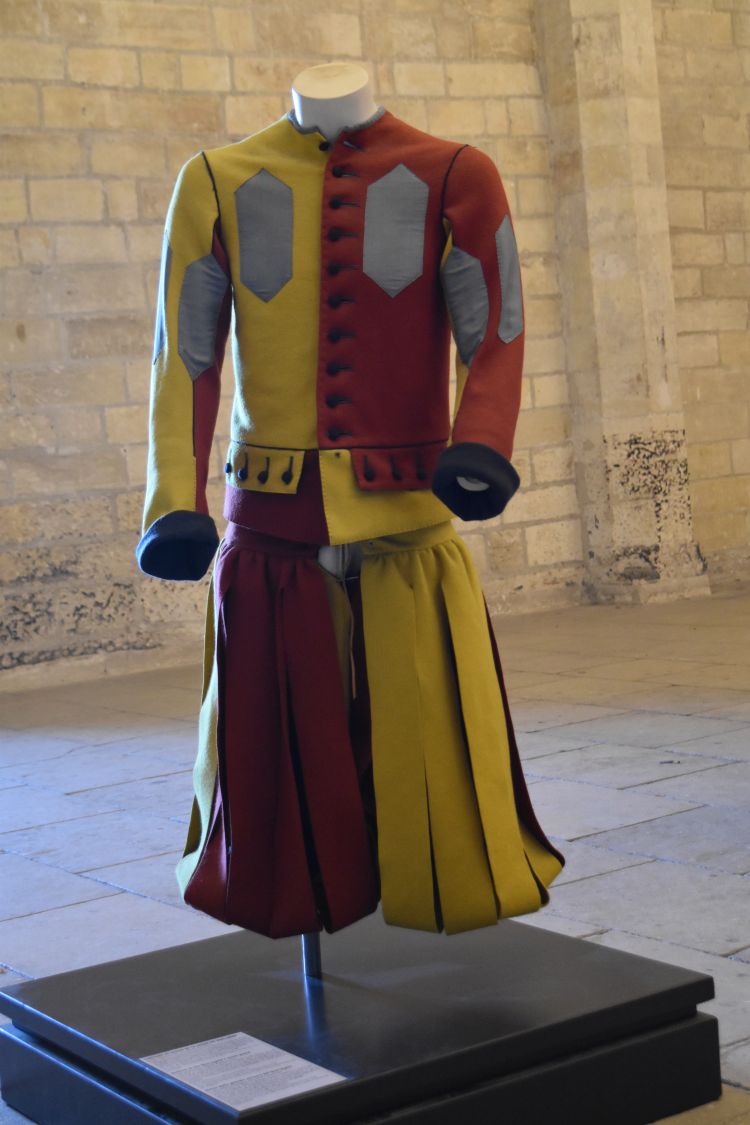
The Swiss Guard seems to have protected the pope already in the 14th century.

aaa_0333-small

.

Musée du Petit Palais

From the Pope Palace, we can see the Musée du Petit Palais which is our next destination.

aaa_0343-small

The Musée du Petit Palais hosts an exhibition about the evolution of sacral painting in Northern Italy from around 1300 to 1500. It is based on the collection of Marquis Campana (1808-1880).

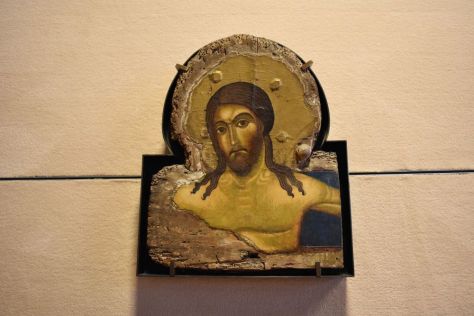
This is a fragment of a Crucifix painted by the School of Berlingheri in the middle of the 13th century.  Christ seems to be far away and solemn.

aaa_0353-small

A long series of paintings culminates with “Maria and the Child” by Sandro Botticelli from around 1500. Life and love is in the face of Maria. This is Renaissance.

aaa_0378-small

.

Rounding off the day

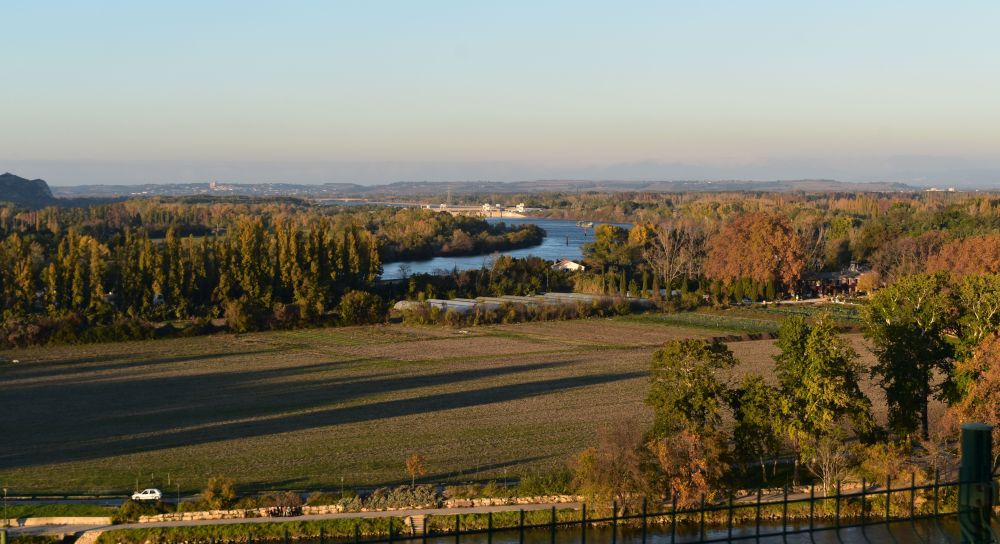
To round off the day, we visit the park “Rocher des Doms” behind the Pope Palace enjoying the view of the Rhone river and the fields.

aaa_0388-small

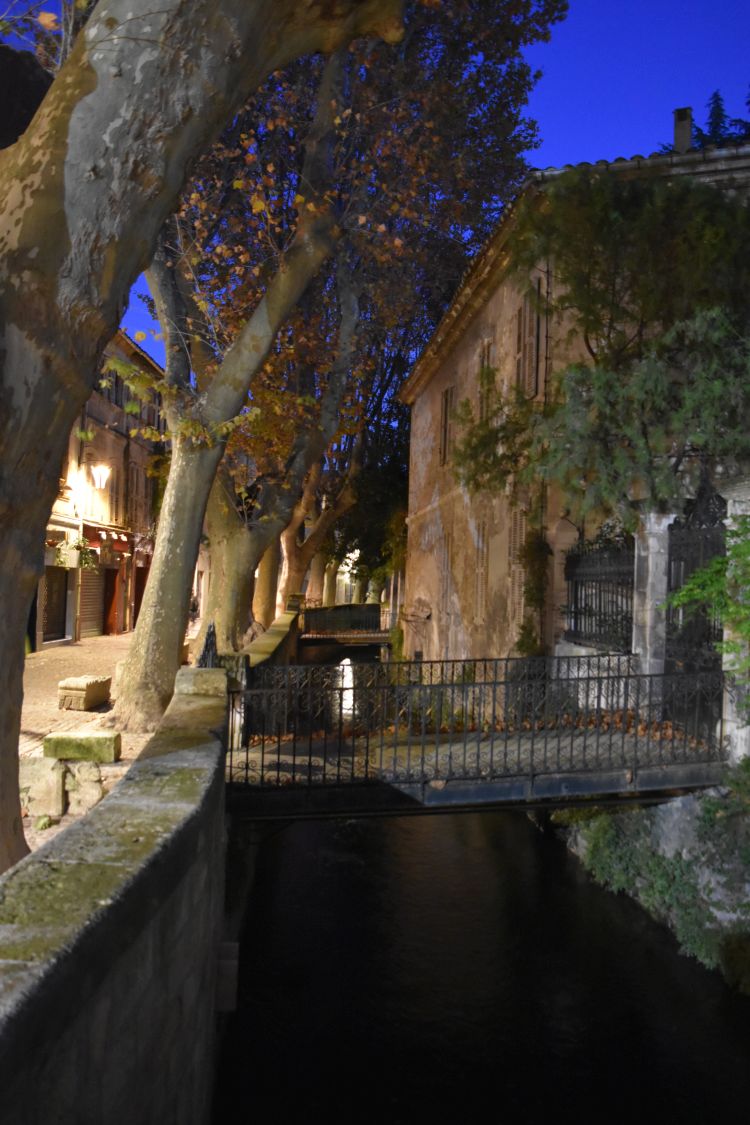
After an apéro in the Café d’Opéra, we stroll through the small streets of Avignon and visit the dyers’ street lined up along the creek (teinturiers).

aaa_0408-small

In November, it is already night around six pm. We have dinner in the friendly restaurant La Fontaine. We get ready to travel back to Switzerland with a small detour to the vineyards of Southern Côte du Rhone, just north of Avignon.


In Catalonia (Spain): Excursion to Zaragoza

Zaragoza, the capital of Aragón is our longest excursion. It is a three hours’ drive from Hospitalet de l’Infant. In Hospitalet we spend a few days in the apartment of our friends end October until mid November 2016.

We start in sunny Hospitalet crossing the hills to reach the Ebro valley where the scenery is hidden in grey fog. After three hours, we park our car right in the center under the Plaza del Pilar. With Ursula we always first enter the Tourist Office to get some maps and advice about what to see. We are told that the old Islamic Palace and Parliament Seat (Aljaferia) is closed for renovation. That means our sightseeing will be restricted to the very city center.

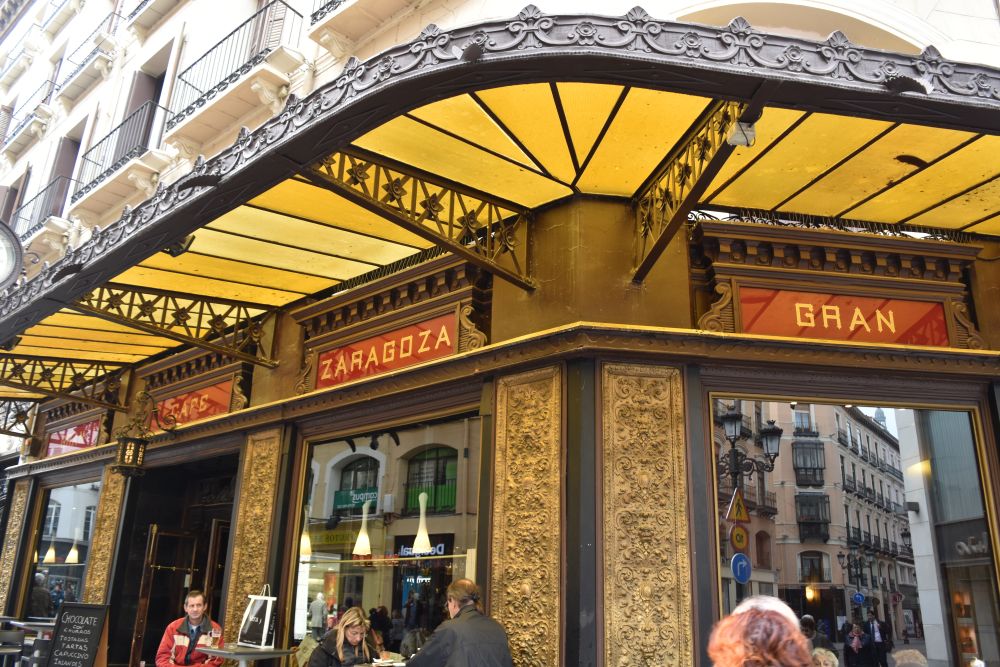
We feel like hot chocolate in the famous Gran Café. What a disappointment! We are served churros that are not fresh and melted chocolate that is dense and tepid. Well, it seems that this is how chocolate is made in Spain, but I do not think that “old” churros are a particular Spanish specialty. As for the chocolate drink it is a pity that Spain seems not to have adopted the Mexican way of preparing it – the Mexicans prepare much lighter chocolate using hot water.

aaa_1000-small

.

The Catedral-Basilica de Nuestra Señora de Pilar – an important stop on the Way of St. James

In front of the Catedral-Basilica de Nuestra Señora de Pilar four pilgrims are absorbed by their prayings. This cathedral is important on the Way of St. James. Right here, it is said, the Virgin Maria appeared to St. James (Jakob) on a pillar (in Spanish “pilar”) in 40 AD. In the hazy background, the Cathedral of Seo can be seen.

aaa_1015-small

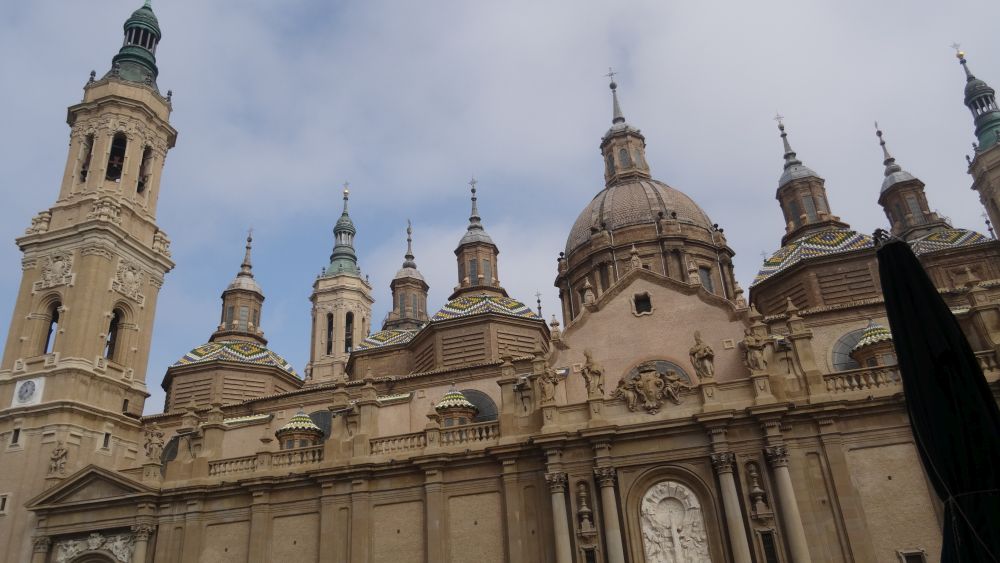
The Catedral-Basilica de Nuestra Señora de Pilar has been built in Baroque style in the late 17th century. Inside it is richly decorated. Some vaults (or domes) are painted with frescos by Francisco Goya. It is not allowed to take photos inside the cathedral. This is the view of the Cathedral of Pilar from the Plaza Pilar.

aaa_1091-croptot-small

Eleven vaults (or domes) decorate the roof of the cathedral.

dsc08878-small

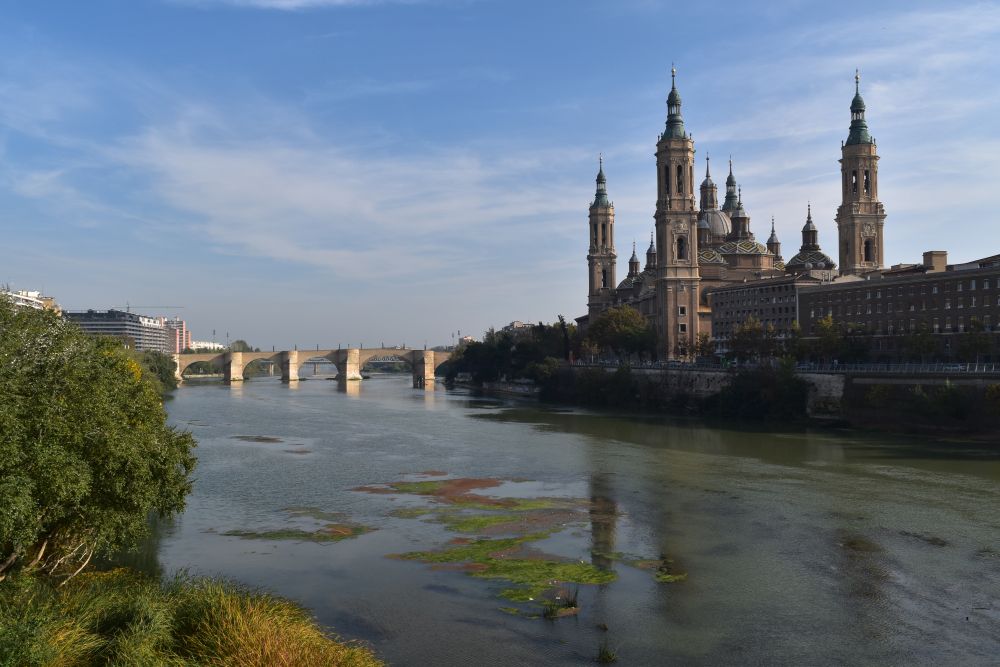
From the Ebro river we take more photos of the Cathedral of Pilar with the stone bridge.

aaa_1080-small

Fishing seems to be a rewarding activity here.

dsc08989-small


The Archbishop’s Catedral de Seo with Mudejar elements

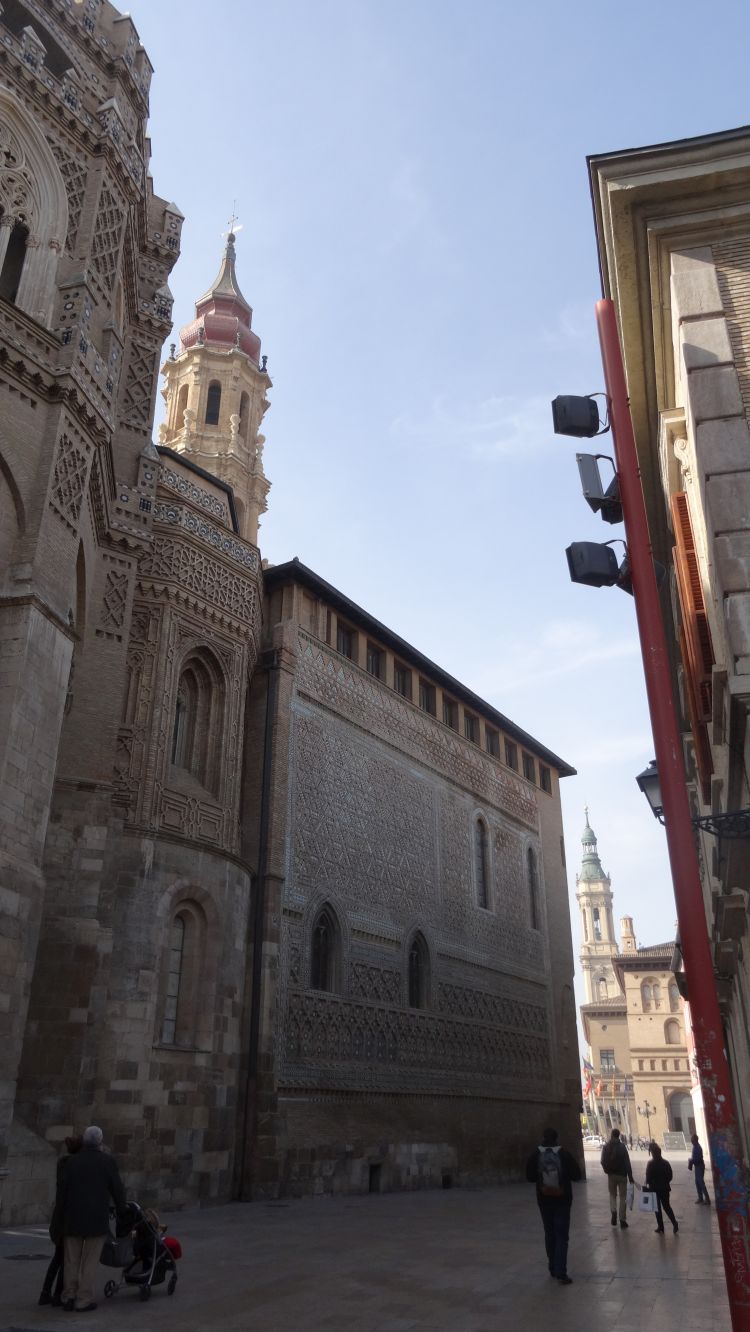
Also on the Plaza Pilar, there is the Archbishop Cathedral of Seo. The construction started in the 12th century (some Roman elements are left in the apsis), and it was newly built in the 14th century (hence primarily Gothic in style). The tower is the late 17th century work of an Italian architect. The Cathedral of Seo has been UNESCO world heritage since 2001.

dsc08911-small

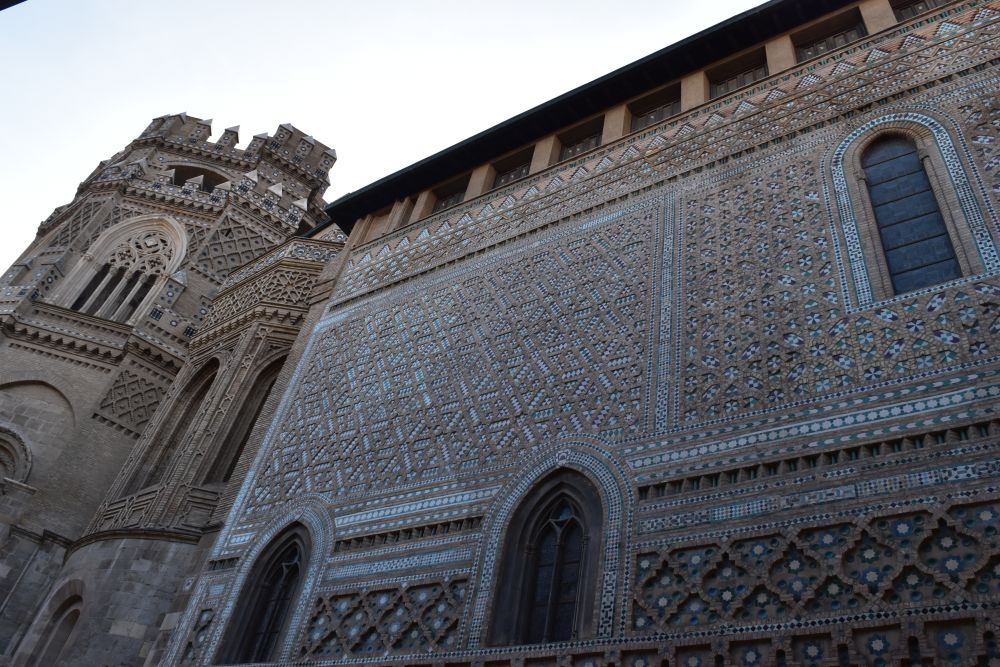
The northern wall is of fine Gothic-Mudejar style.

aaa_1026-small

Inside we find innumerable chapels – some of them of Renaissance and some of Baroque style. Each chapel is explained in detail. A nice detail: A statue of Joseph holding his baby – I saw that only in Tarragona before. One chapel is devoted to the young Domingo that was said to have been murdered by Jews – which was taken as a reason for pogroms. Later it was concluded that the crime never took place, which makes me feel bad. Why do we invent crimes and make someone guilty for them?


The Lonja (bourse) 

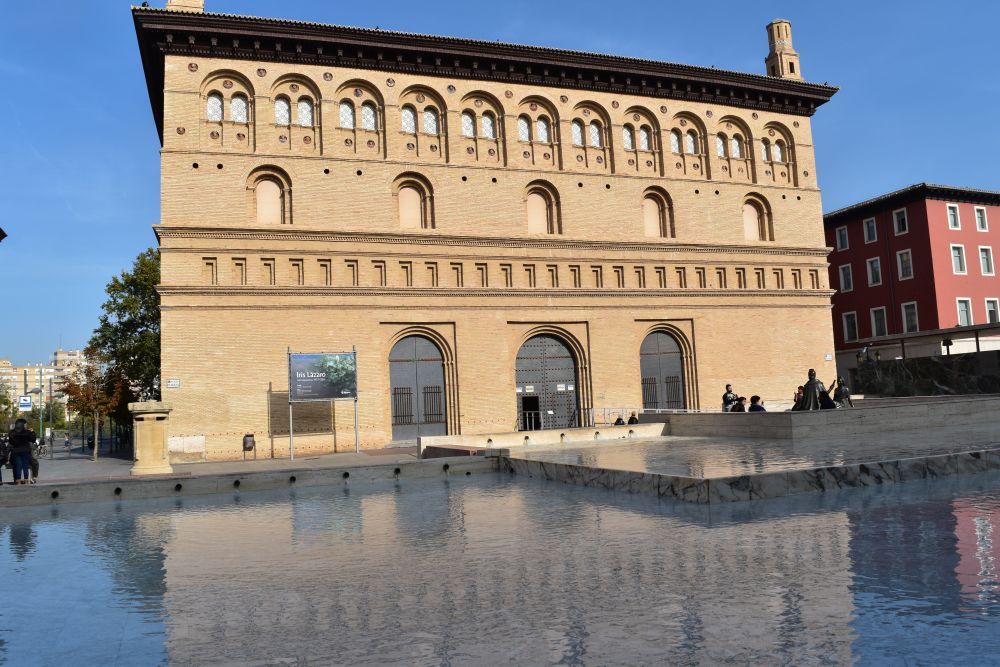
The Lonja (bourse) was built in the 16th century to provide a public space for traders that so far have used the churches for trading.

aaa_1040-small

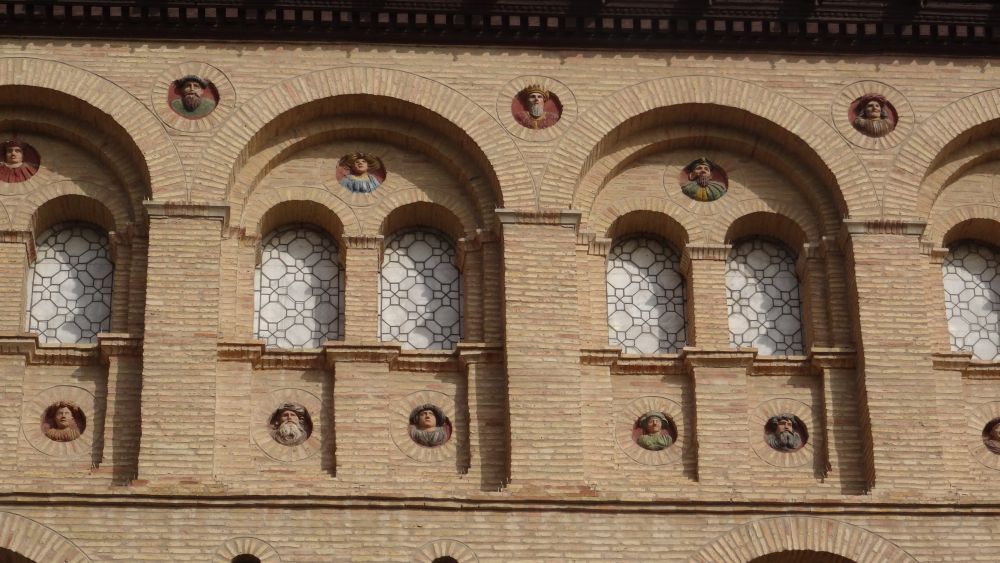
It is Renaissance in style. Ursula focuses on some details of the façade.

dsc08899-small


Iglesia Parroquial de San Pablo

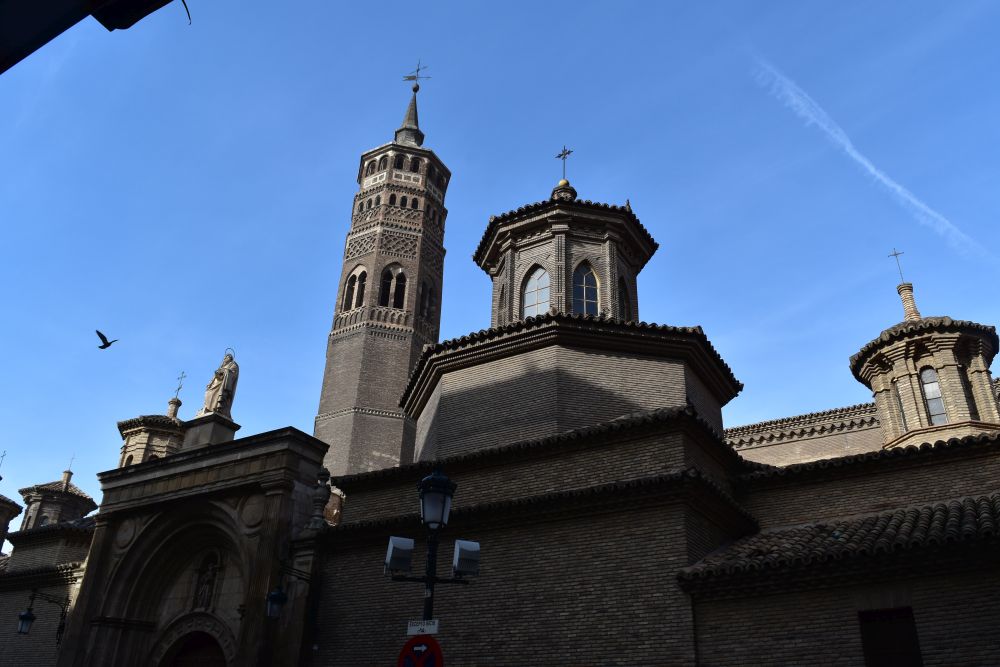
Outside of the old town wall we look for the Iglesia Parroquial de San Pablo from the 13/14th century. It contains Mudejar elements, in particular the octagonal tower. It has been UNESCO world heritage since 2001. Unfortunately, we find the church closed.

aaa_1061-small

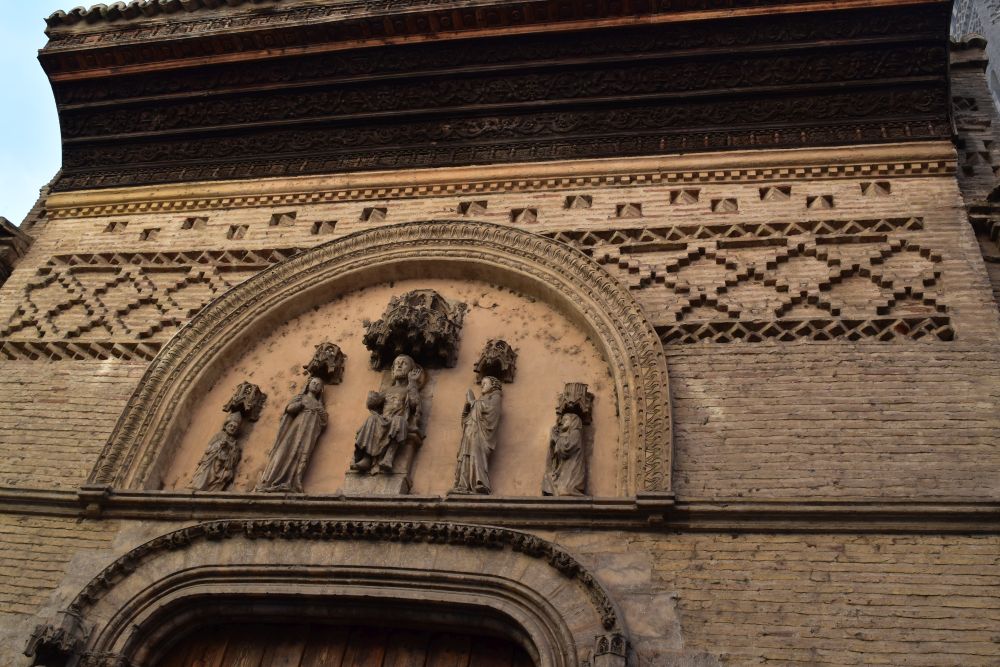
This is the Puerta Tramontana with Christ in the middle and Maria, Saint John and Saint Blasius. One of the saints cannot be identified.

aaa_1055-small

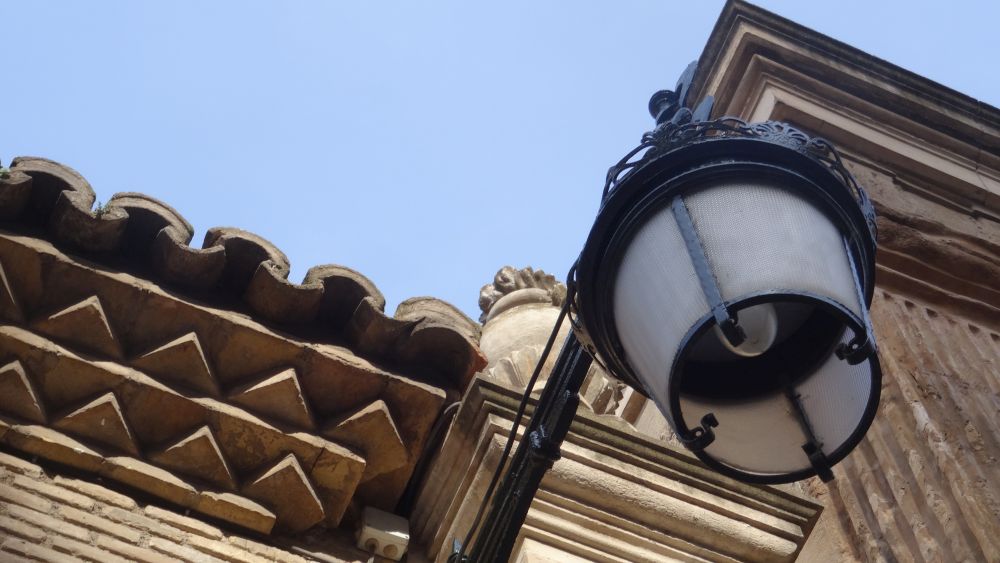
Ursula’s photographic eye spots the lamp with the ornaments.

dsc08959-small

In the Calle San Pablo we have delicious tapas in a friendly small bar. We have chat with the people from the area and with a lady from Vladivostok in Russia – far, far away from here.


More sights in the city center: The Central Market, the Roman Wall and the Museum of Goya

The Central Market was built in 1903. Plants on the roof add to the decoration. The market is now closed – it is afternoon.

aaa_1069-small

Across the market a shop sells traditional regional clothing.

aaa_1073-small

In front of the ruins of the Roman Wall, Augustus watches a carousel being demounted. Augustus gave his name to Zaragoza (Caesaraugusta).

aaa_1075-small

We finish visiting Zaragoza with the Museum of Francisco Goya (1746-1828). He is from Aragon. First, he painted for churches, then portraits at the court (pretty realistic portraits) and in his last years he made engravings of the war with France that was a nightmare for him (Zaragoza was occupied by the French from 1809-13). Goya is considered to be a predecessor of the Surrealists.

dsc09006-small

We take our car out of the garage (rather a spacious garage, if I remember right) and drive back home – another three hours. It was a long day. Zaragoza was worth visiting.

In Catalonia (Spain): Discovering modernism in Reus

On a windy day we explore the city of Reus. It is just half an hours’ drive from Hospitalet de l’Infant, where we spend a few days in the apartment of our friends end October until mid November 2016.

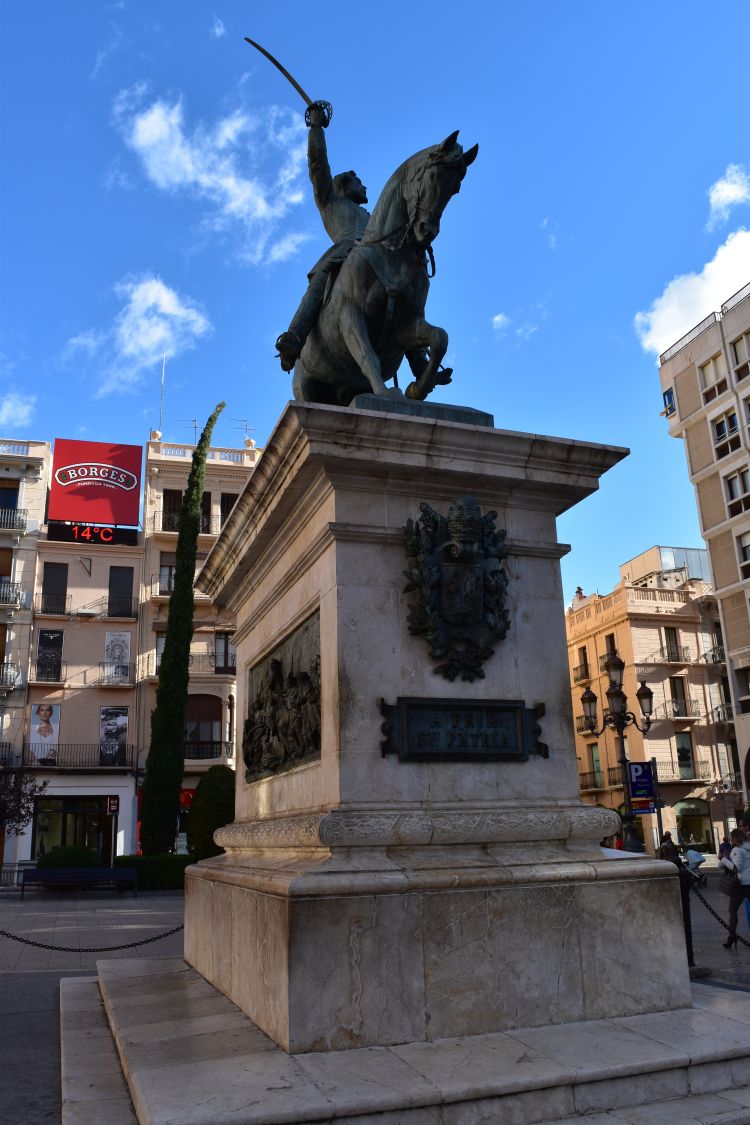
Reus is the home town of Marshall Prim. He fought for the constitution of Spain, and from 1868-70 he was Prime Minister of Spain (look at the cypress – it WAS windy).

aaa_0084-small

We park our car in the parking cellar located under the statue of Marshall Prim. It was another of those parking houses with small parking lots and narrow corridors. We found a comfortable slot on the fifth floor underground… if only I will be able to “climb” up from here again without getting stuck!

.

The Gaudí Centre

Gaudí was born in Reus. Though he never built anything in Reus, the city is proud of their son and has set up a museum about his life, his architecture and the way he worked. The museum is well curated. We learn, how Gaudí experimented to find the laws of nature that he then applied to create harmonic architectural structures. For instance he used straight lines, triangles or quadrats and twisted them to find the harmonic shapes. Based on the “law of chains” he built slim arches that could stand without counterweights (when the sides of the arches stand upright, counterweights have to prevent the arch from collapsing, like in Roman or Gothic architecture, but when they are inclined, the arches do not collapse). These hanging wooden sticks are one of experiments.

aaa_0130-small

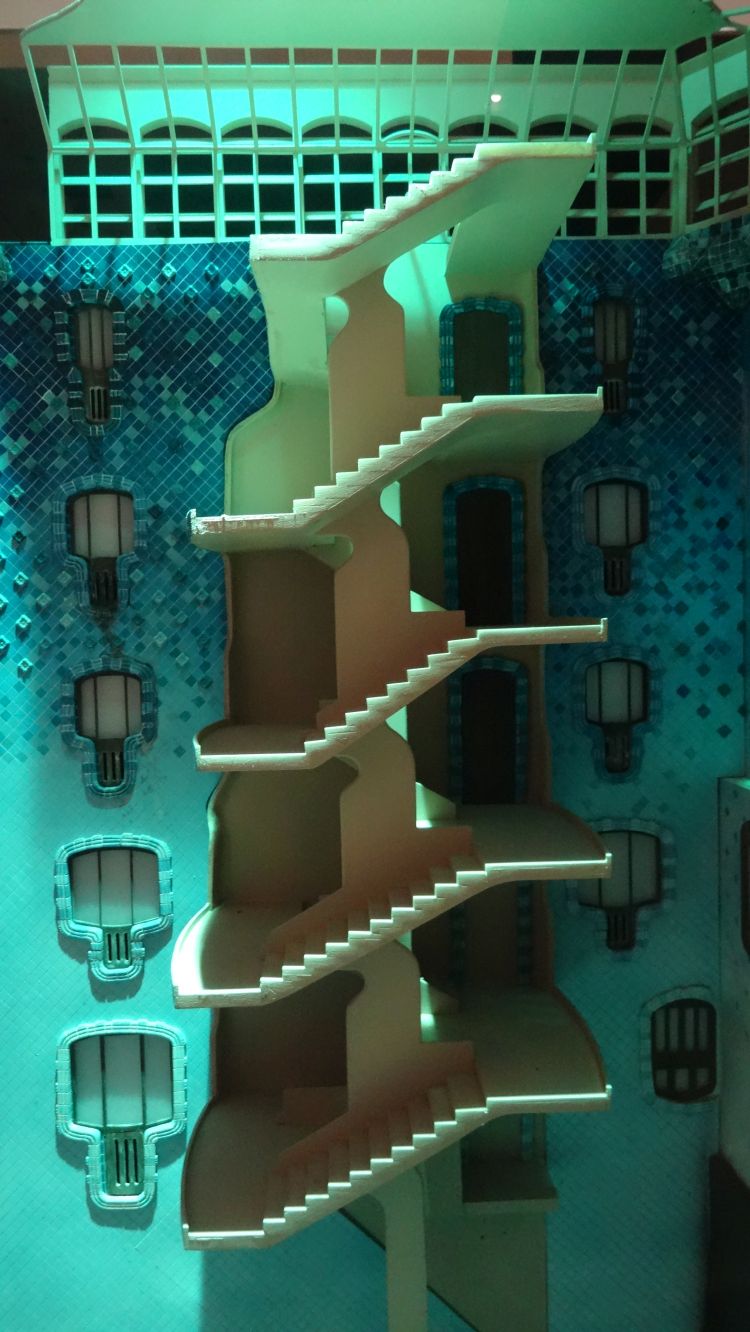
He tested everything with models, before implementing it, even studying the exposure to light.

dsc09286-small

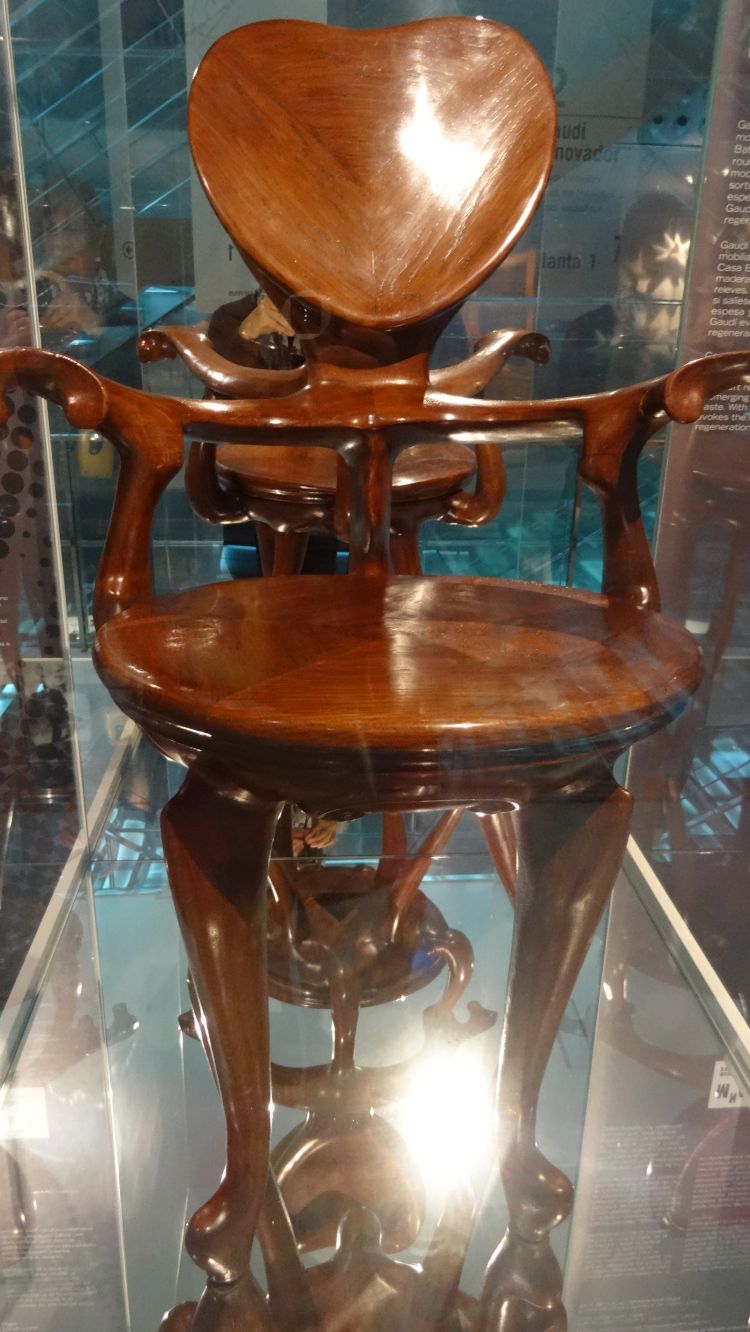
He had an overall approach to architecture also creating the furniture.

dsc09283-small

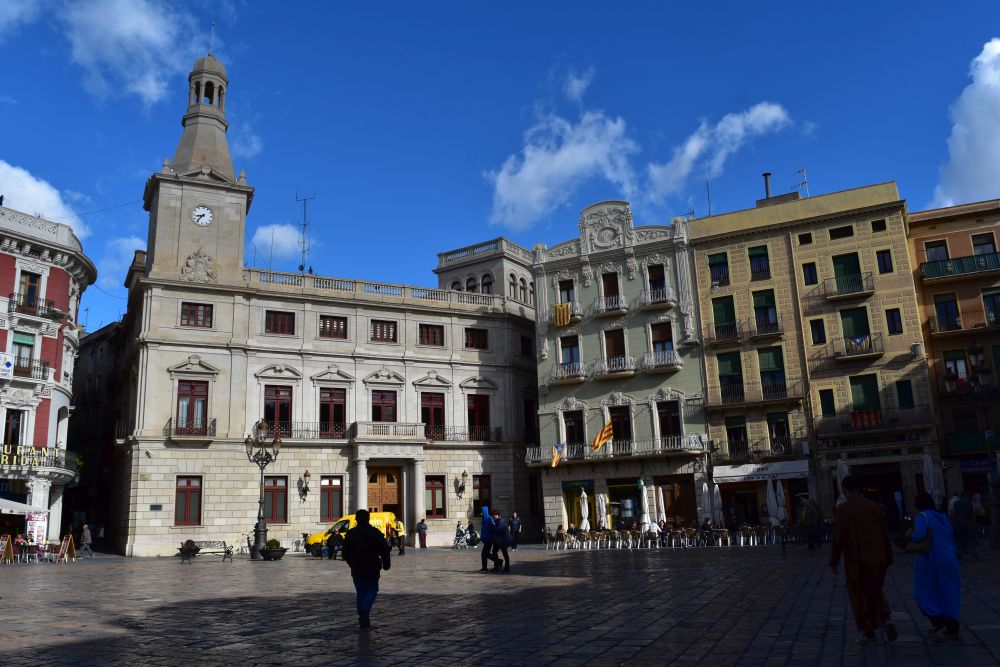
The Gaudí Center is located at the market square (Plaça Mercada), next to the townhall and the green modernist Casa Piñyol.

aaa_0090-small

Across is the modernist Casa Navas with the shop for bath and wellness on the ground floor. I buy a dressing gown (in Spanish: albornoz – the moors must have introduced this to Spain).

aaa_0092-small

We have lunch in the roof top restaurant of the Gaudí Centre. The view is great, but the waiters would have preferred us not to disturb them and the meal was expensive and poor (liver cream from the tube – in Swiss German: Leberpains – served on crackers with a few salad leaves, all for 15 Euros).

.

The cathedral San Pere – late gothic and a no-no tour guide

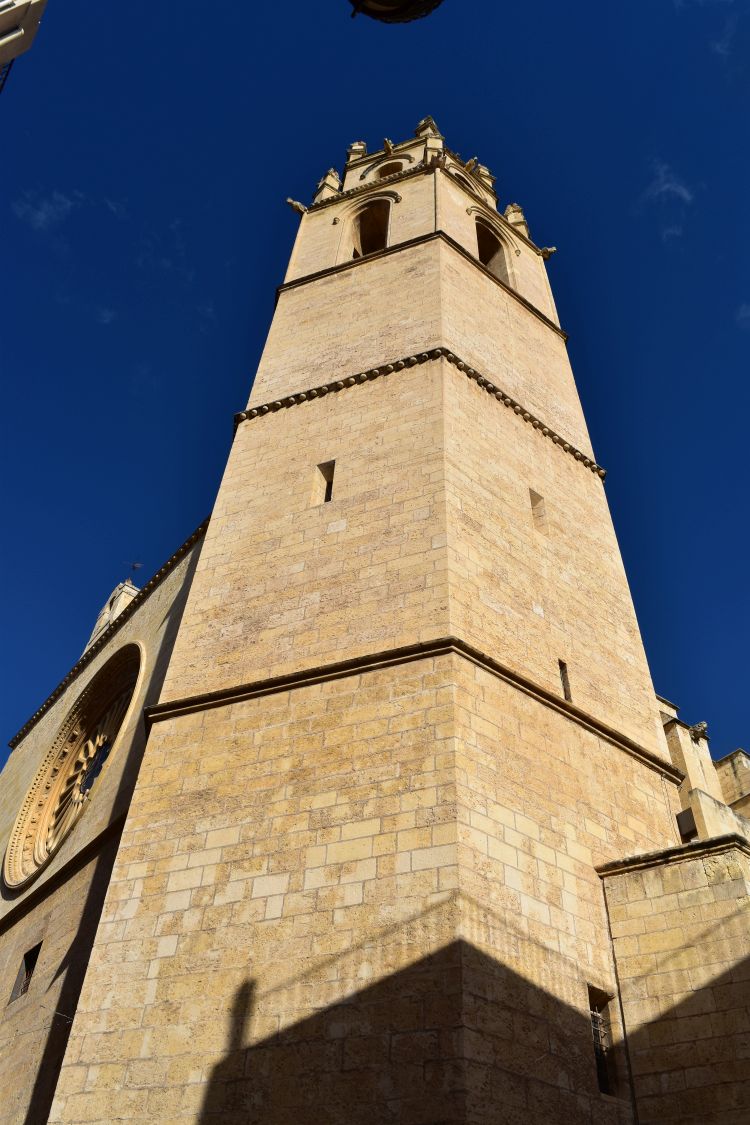
South of the market square we visit the late gothic cathedral San Pere from the early 16th century.

aaa_0099-small

Inside we find two sisters praying and singing at low voices. It is a solemn atmosphere. Bump! A group of tourists enters. Their tour guide starts to talk in a loud voice. The prayers continue gently. Ursula frowns and whispers: “This is an absolute no-go!”

aaa_0109-small

.

The fish market or Peixateria Velles

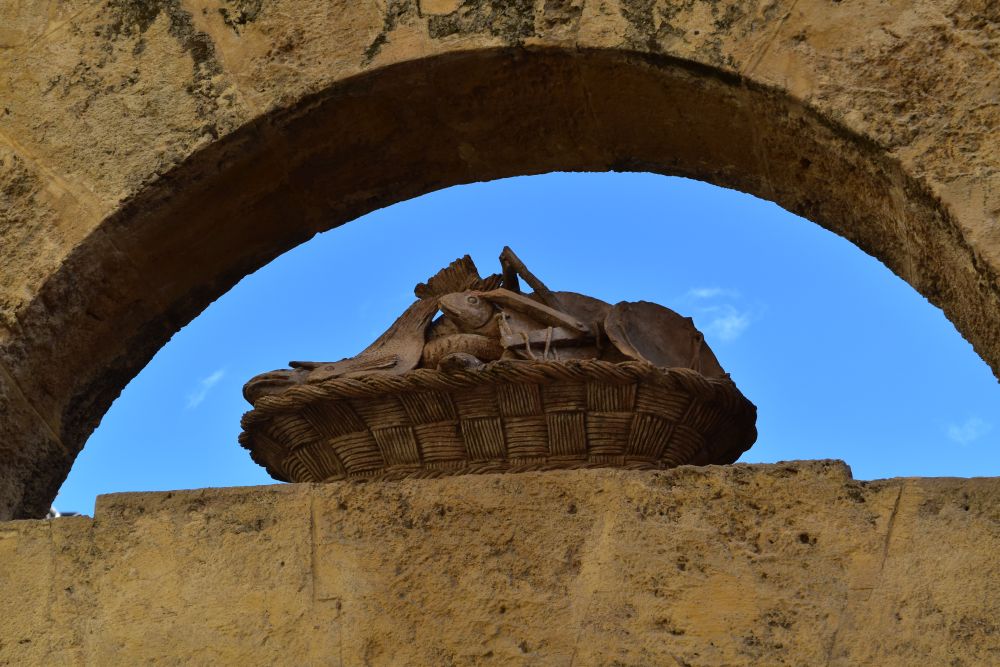
Behind the church we enter the fish market (Peixateria Velles) with the sculpture of a basket containing fish products next to the entrance.

aaa_0136-small

Through the gate we see the galleries and inviting restaurants and bars.

aaa_0105-small

.

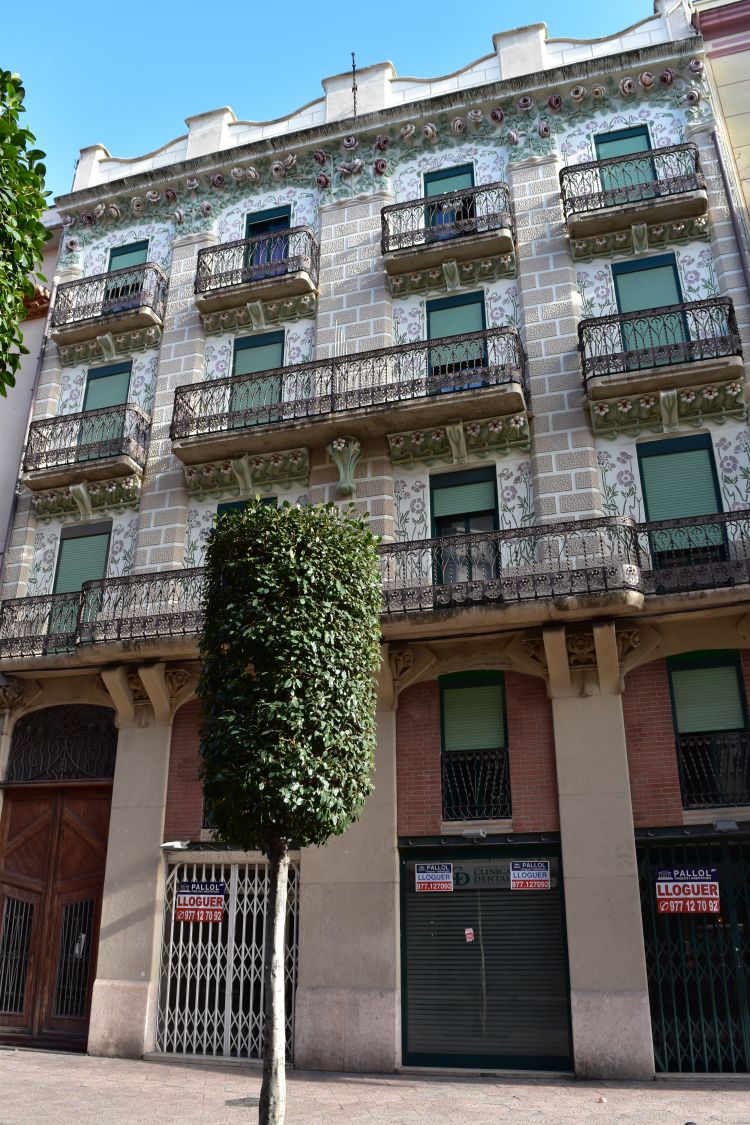
Modernist houses in Reus – a selection

Finishing off our day we follow a walk proposed by Reus tourism to discover a selection of the 29 Art Nouveau buildings proposed. This is the Casa Anguera behind the fish market…

aaa_0143-small

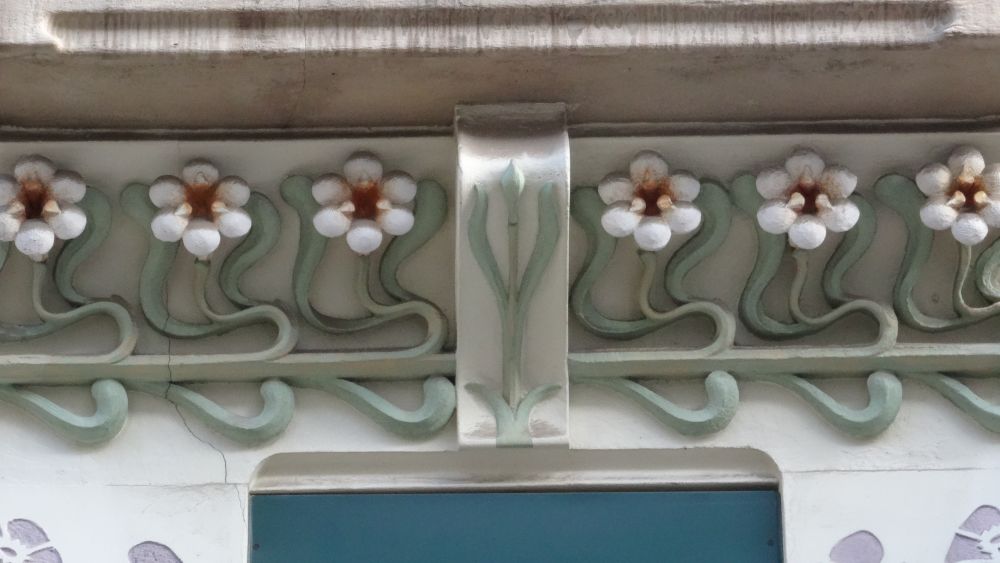
… with a detail of the flower ornaments.

dsc09327-small

The Casa Serra and the Casa Marco mark the entrance to the small street, where Gaudí was born.

dsc09349-small

The blue tiles of the Casa Laguna adorn the street leading from the square of Marshall Prim to the market square

aaa_0151-small

Not far from here is the Casa Carpa with the painted balcony doors.

aaa_0156-small

With Ursula’s directions I succeed to manoeuver my car out of the narrow garage under Marshall Prim (five floors up through rectangular small corridors!).

Reus is a small town worth a visit!

Back at Hospitalet I enjoy the inside pool with the swimming lanes – it is very busy here with swimming courses and water gymnastics going on around me.

In Catalonia (Spain) – some excursions around Hospitalet: Ebro Delta and Tortosa

On a sunny Friday in November 2017, we get up early to take photos in the beautiful landscape of the Ebro delta and then continue to Tortosa on the Ebro. This is another excursion that we go for, while enjoying the small apartment of our friends in Hospitalet de l’Infant at the end of October until mid November 2016.


The morning light in the Ebro Delta

In November the rice fields have been harvested awaiting the next cultivation cycle. We enjoy taking photos in the atmosphere of this morning.

aaa_0202-small

Ursula has a very good “photo eye”, when capturing the fields…

dsc09432-small

… and the black egrets reflecting in them.

dsc09423-small

Then the birds decide, we are too close and fly away.

dsc09433-small

We have a chat with a fisher – he comes here regularly from Andorra. And yes, I do understand that driving is forbidden here…

aaa_0217-small

In Deltebre we visit the Ecomuseum. This place is a miniature Ebro Delta showing its plants and wild life as well as the economy: Fishing, the cultivation of rice and – more inland – the cultivation of vegetables and fruit.

.

Tortosa – Basilica-Catedral de Santa Maria

In summer we had visited Tortosa, and it was pouring with rain. The town seemed grey and not very welcoming and the cathedral was closed. Now we return, leave our car in one of these narrow Catalonian parking houses in the city center and set out to explore the Basilica-Cathedral de Santa Maria  with the bishop’s palace and the convent. The gothic construction started in 1347 (Thomas Schröder: “Katalonien”, Michael Müller Verlag 2015). From outside, the cathedral seems “uncompleted”: The roof is flat.

The nave is spacious with high vaults – just right for the archbishop in the 15th century.

aaa_0240-small

The exhibition shows treasures such as this lamb embroidered in gold…

dsc09482-small

… or this funerary object.

dsc09484-small

I love the cloister dating from the 13th century…

dsc09500-small

… and use this photo of the arches for my 2016 Christmas card.

aaa_0233-small

.

Tortosa – Jewish center

After a break in a small bar that serves excellent tapas, we stroll through the former Jewish quarter.

aaa_0244-small

All that is left are the street names (such Carrer and Travessia de Jerusalem) and some plates explaining where the synagogue and the kosher butcher were located.

aaa_0248-small

Now we find a halal butcher instead.

aaa_0245-small

.

Tortosa – history  in the former slaughterhouse

The slaughterhouse has been built by Pau Monguió. This art-nouveau building now hosts an exhibition of the history of Catalonia. The display starts with the stone age, continues with the Iberians trading with the Phoenicians (“Iberians” comes from “Ebro”) , the Romans (Tortosa was then called “Dertosa”), the Visigots and the Moors. In 1148 Tortosa was sieged during the Second Crusade and reconquered by an allied army. In the 15th century, Tortosa became an important regional center and the seat of the archbishop. It lost its importance in the 19th century and particularly suffered from bombings in the civil war of 1936-1939.

aaa_0258-small

I particularly like the coat of arms of the monastery Scala Dei near Montsant made from alabaster – it represents the Escala Dei or the ladder of God.

aaa_0264-small

After a short visit in the Tortosa market, we maneuver our car out of the narrow, narrow parking house and drive back to our small apartment in Hospitalet de l’Infant.


In Catalonia – Spain: Discovering Escornalbou, Falset and Siurana

On a very windy, chilly and cristal celar day we explore the monastery Escornalbou, the small town of Falset and gorgeous Siurana perched on a steep rock. All these places we find near Hospitalet de l’Infant, where – in the apartment of our friends – we spend a few days end October until mid November 2016 .

.

Castillo-Monasterio de Sant Miguel d’Escornalbou

A sinuous road takes us up to the Castillo-Monasterio de Sant Miguel d’Escornalbou on about 800m above sea level. The monastery is perched on a pass with the chapel Santa Barbara above it. We look at the monastery from the viewpoint across.

aaa_1189-small

From here we also have a gorgeous view of the mountains…

aaa_1190-small

… and of the sea.

aaa_1195-small

The monastery was built in the 12th/13th century. First Augustinian monks lived here and later it was inhabited by Franciscan monks. In 1835 the monastery was confiscated.

This is the façade of the Romanesque church.

aaa_1200-small

Inside we find Maria and her son.

dsc09188-small

From the cloister there is an impressive view of the Mediterranean Sea. It must have been a pleasure to pray and meditate here.

aaa_0005-small

In the 17/18t century the castle has been added to the monastery. It was in use until about 1980. Mr Toda lived here. I am impressed by the luxury and in particular by the library…

aaa_0024-small

… and by the view from the window.

aaa_0019-small

Perhaps it was a bit lonely to live up here.

.

Shopping and lunch in Falset

We continue our way on the sinuous path through the mountains to stop in Falset. This is the central town of the Montsant and Priorat area. The name “Falset” comes from sickle – and their are two sickles in their coat of arms (see Wikipedia and Miquel Hudin: “Vinologue Montsant”, Leavenworth Press 2014, p. 64).

My “Vinologue” tells me that Vins I Olis offers a good selection of wines from the area of Monsant and Priorat on one spot. We buy some cheese…

aaa_0032-small

… and some wine – in particular I look for “Scala Dei” (Granatxa), and with the advice of the shopkeeper, Marc, I acquire a selection of cuvées with local and international grapes.

aaa_0033-small

Marc, reserves a table for us in the El Cairet in the old city center – for 13:30, which is early here. The restaurant opens so early – just for us.

aaa_0036-small

It is a small and cosy place.

dsc09207-small

The restaurant owner is proud of the meals that she prepares with great care using regional products. Hence we order the local menus suggested by her. We particularly loved the hazelnut soup, the autumn salad with dried fruit, the bacalao (codfish) a la plancha and the fig dessert on puff pastry. This restaurant is a place to remember and return!

.

Siurana – perched on a steep rock – an Eldorado for climbers

We leave Falset and using sinuous roads we drive to the small town Siurana perched on a rock above the river Siurana. Campers are bordering the road and climbers are hanging in the cliffs or crags. This is an eldorado for climbers. The recent edition of “Insipiration”, the newspaper of one of “my” Swiss outdoor shops, talks about “Sehnsucht Siurana” or “Longing for Siurana”. Also the Internet is full of information about the climbing routes (e.g. planet mountain). One route is called after the princess Abdelaza that jumped down with her horse, because she did not want to be captured by the Christians, when they conquered Siurana in 1150.

aaa_0052-small

On three sides the village is surrounded by cliffs. Using the small gate we enter and stroll through the narrow streets.

dsc09236-small

The Romanesque church Santa Maria is located above the cliffs.

dsc09229-small

The portal has a modestly decorated tympanum with Christ, the sun, the moon, two lions and eight persons, presumably apostles.

dsc09220-small

Across we see the table mountain Montsant under clouds. It is chilly and very windy in Siurana.

aaa_0078-small

Before leaving we have a cafecito in the friendly bakery at Cornudellas. We are by far the oldest guests. We are surrounded by young climbers that are taking a warm drink before spending the night in their campers. We are happy to return to our warm apartment in Hospitalet, and I look forward to having a swim in the heated public inside pool.


In Catalonia (Spain) – some excursions around Hospitalet: L’Ametlla

On 1st of November, we visit l’Amettla del Mar – south of Hospitalet de l’Infant, where we spend some weeks end October to mid November 2016 enjoying the small apartment of our friends.

L’Amettla del Mar is a small fishers’ town. We always buy fresh fish from l’Amettla at Jordi’s in Hospitalet (delicious!). Also Wikipedia says that fishing is the main activity of l’Amettla. The town is built on rocks overlooking the natural harbour where the fishing boats are resting during the day.

aaa_0912-small

The weather is warm and sunny.

aaa_0928-small

Along the rocks there is a promenade with outlook points.

aaa_0925-small

It is three pm – just the right time for dinner in Catalonia (uff, so late for me, my stomach always rebels much earlier).

dsc08805-small

Dogs may understand Catalonian here.

aaa_0938-small

Many, many seagulls have congregated on the water of the Mediterranean Sea. These small white spots are seagulls…

aaa_0941-small

… and they are enlarged now.

dsc08810-small

Tourism is the second source of income of l’Ametlla – north of the city we find wealthy private houses.

aaa_0946-small

Behind this bay there is a camping site with an Olympia size pool (now closed) and a hiking path. A good place to camp in summer.

aaa_0949-small

We follow the rocky coast line and reach this cemetery that is now – on 1st of November – richly adorned with flowers and well visited by local people that remember their ancestors.

aaa_0967-small

Just before driving “home” to Hospitalet de l’Infant, we stop in this small oil mill – the third pillar of income of l’Ametlla is agriculture.

aaa_0981-small

We buy honey and virgin olive oil.

aaa_0974-small

Great souvenirs and gifts for Christmas – at home I savour the tasty rosemary honey – it is delicious.

L’Ametlla was a charming experience – there is so much to see around Hospitalet.