In May 2023, we spent a week in Silesia, in “our” castle Staniszów near Jelenia Góra. From here, it was a short car ride to Karpacz, formerly called Krummhübel. Many German artists had been here at the end of the 19th century and in the beginnings of the 20th century. Carl Ernst Morgenstern taught plein-air painting around Karpacz. Theodor Fontane wrote a criminal story for Krummhübel.
Karpacz centre with two churches from around 1900
The centre of Karpacz (Krummhübel) is a touristy place – this is the main street.

There are two churches here, both built around 1900.
The church of the Holy Heart of Jesus, (Kirche des heiligsten Herzens Jesu, Kościół Najświętszego Serca Pana Jezusa) was inaugurated as a protestant church in 1908.

A nice painted wooden ceiling inside. The church became catholic in 1945.

The church Visitation of our Lady (Mariä Heimsuchung, Parafia Nawiedzenia Najświętszej Maryi Panny) was inaugurated in 1910, and the nave was rebuilt after 1945.
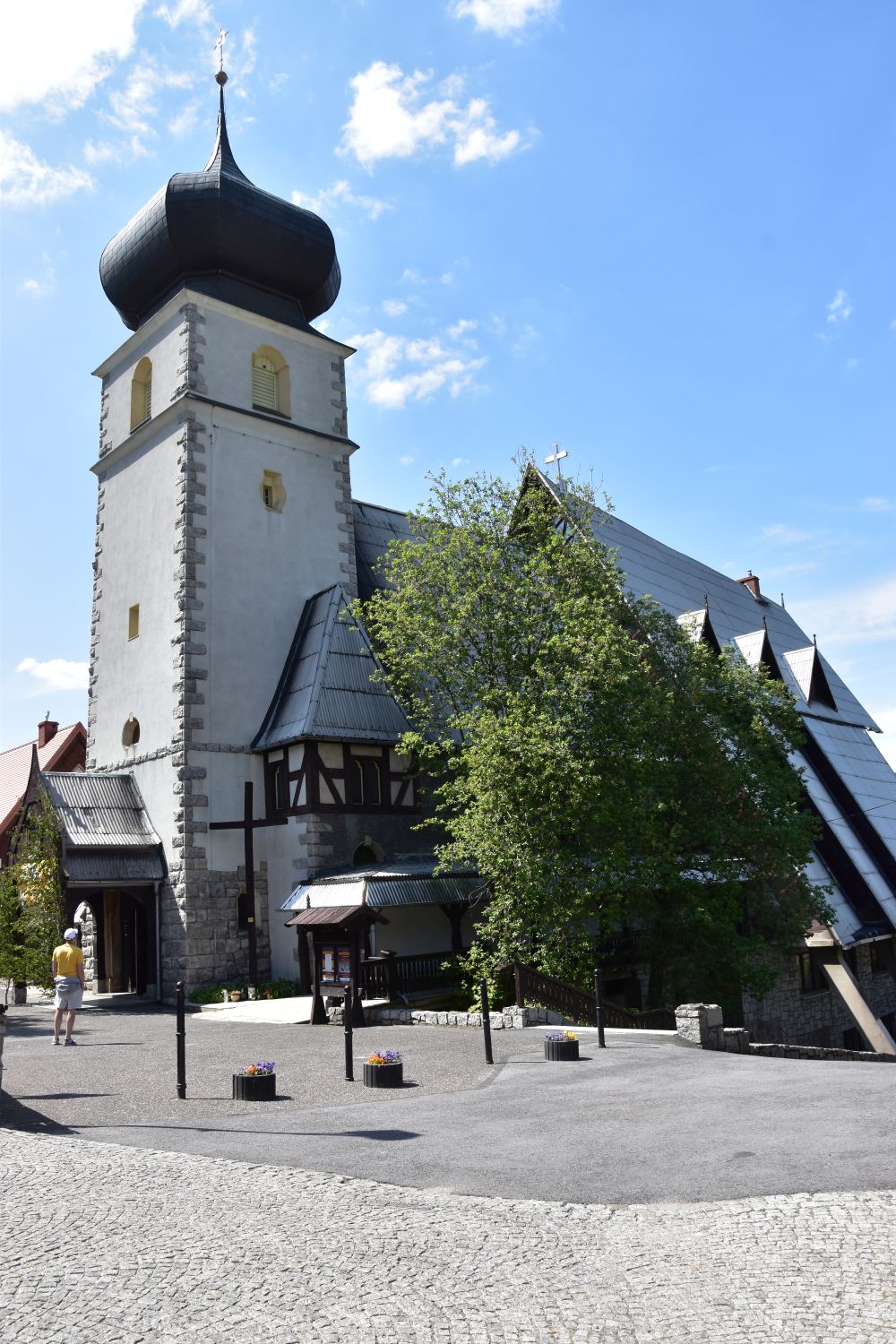
A painted wooden ceiling here as well.

Also this church was protestant and became catholic in 1945.
Wang church (Kościół Wang)
The attraction of Karpacz is the wooden Wang church.
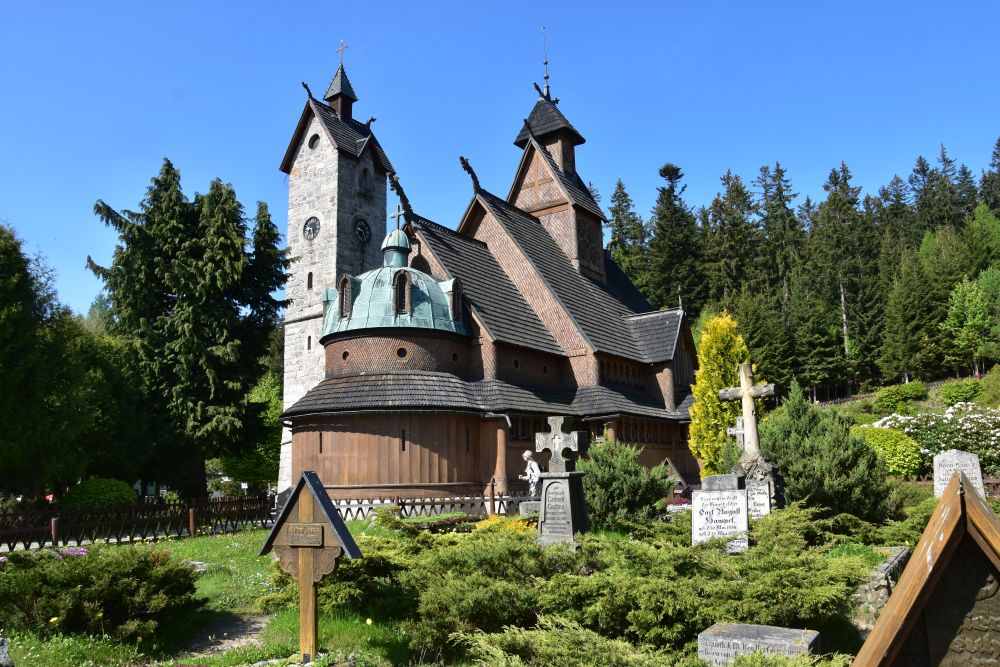
The church was built in Vang in southern Norway in the 12th or 13th century. In the 19th century, this church became too small for the congregation. It was decided to sell the church and use the money earned to build a larger new church. A painter from Norway, professor Jan Christian Dahl, lived at Breslau at that time, and he convinced the Prussian king Friedrich Wilhelm IV to buy the church for 427 Mark. The church was disassembled and shipped to Berlin. The king had intended to rebuild the church on the Pfaueninsel at Berlin, but then changed his plans. Count Leopold Christian von Schaffgotsch donated land between Krummhübel (Karpacz) and the Schneekoppe (Śnieżka), at Brückenberg (now Karpacz Górny). The church was reassembled here and inaugurated in summer 1844.
Two lions guard the entrance to the church.
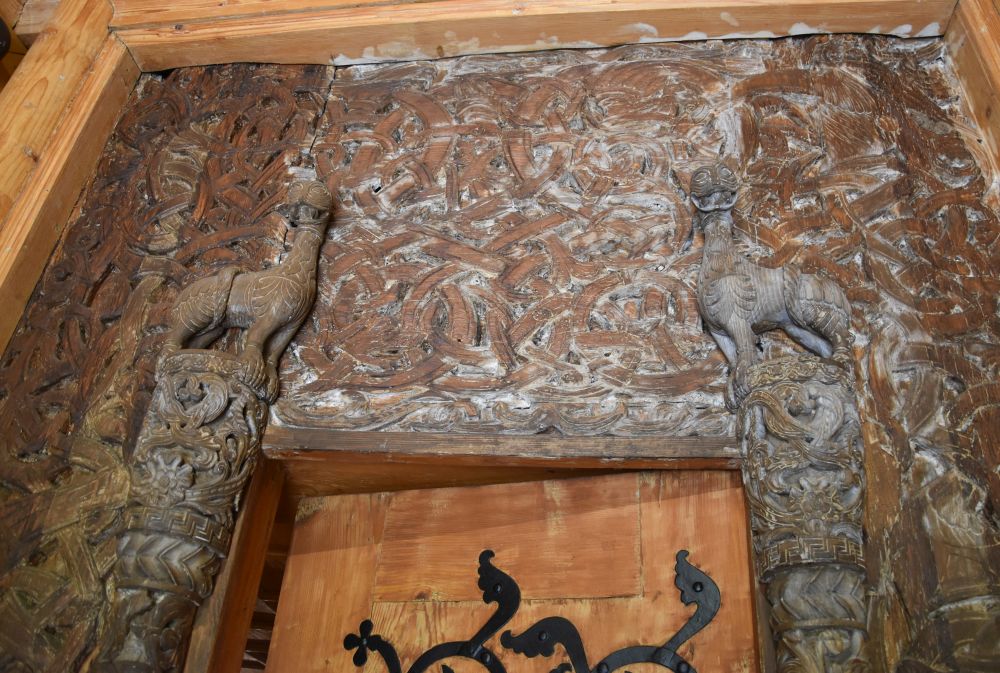
Inside, viking faces frame the door; they may be warriors with split tongues.

This is the choir…

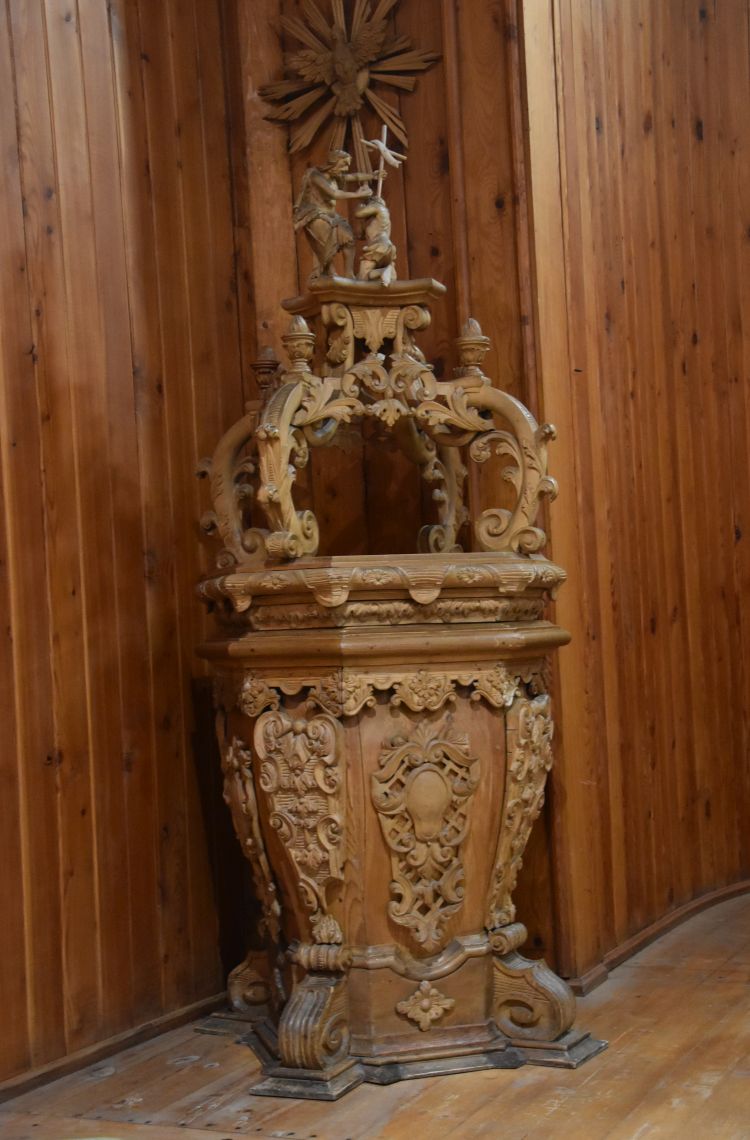
… with the baptismal font (Saint John in his fur coat baptizes Christ).
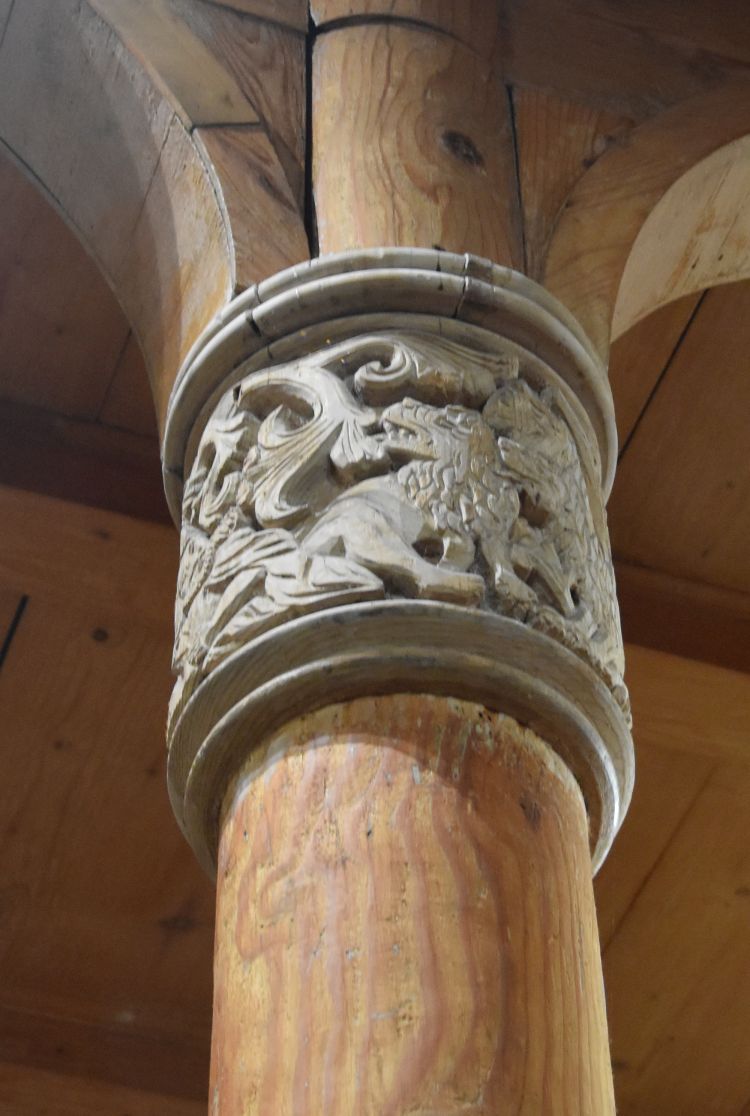
The column shows Daniel in the lion’s den.
This door leads to a corridor around the nave.

The Vang church has become THE cultural landmark of Karpacz.
Hiking from Polana to Słonecznik, with a partial view of the Śnieżka
Behind the Wang church, you have to pay an entrance fee for the Karkonosze park, which is a nature reserve now. A path leads to Polana, a meadow that I suspected was the place, where my grandfather had painted the Schneekoppe (painting owned by Heimatverein Kleinmachnow).
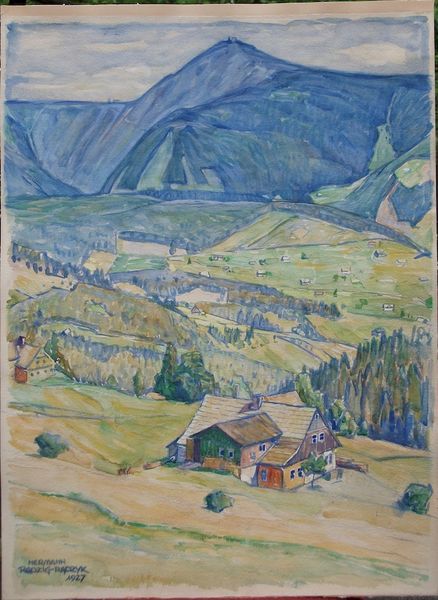
But, when reaching the meadow Polana, it becomes clear, this is not the place, where my grandfather’s easel was.

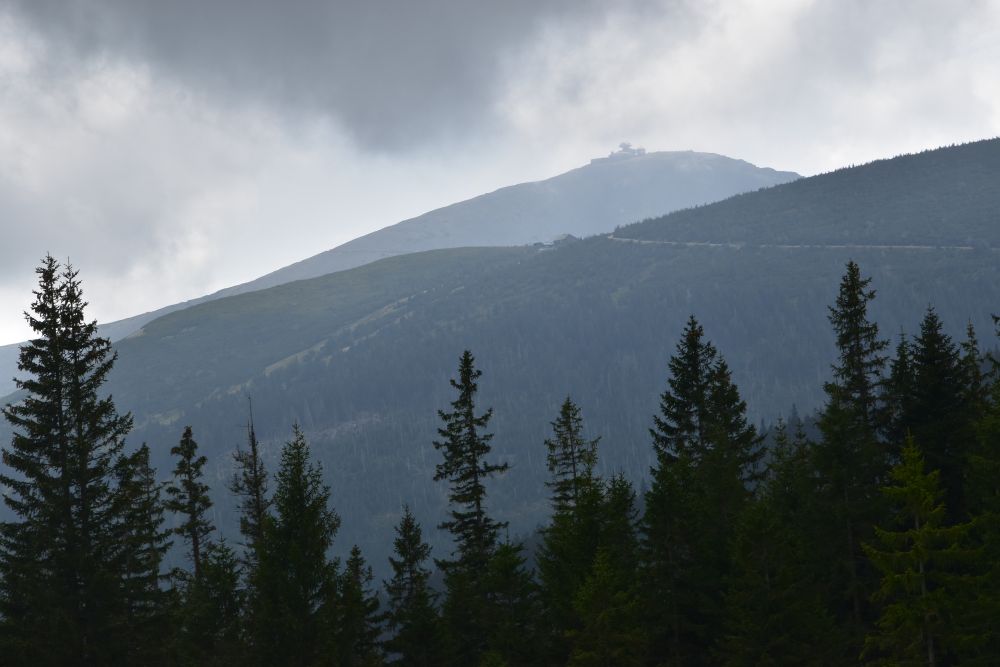
I follow the path uphill and can sometimes see the Schneekoppe between the trees.
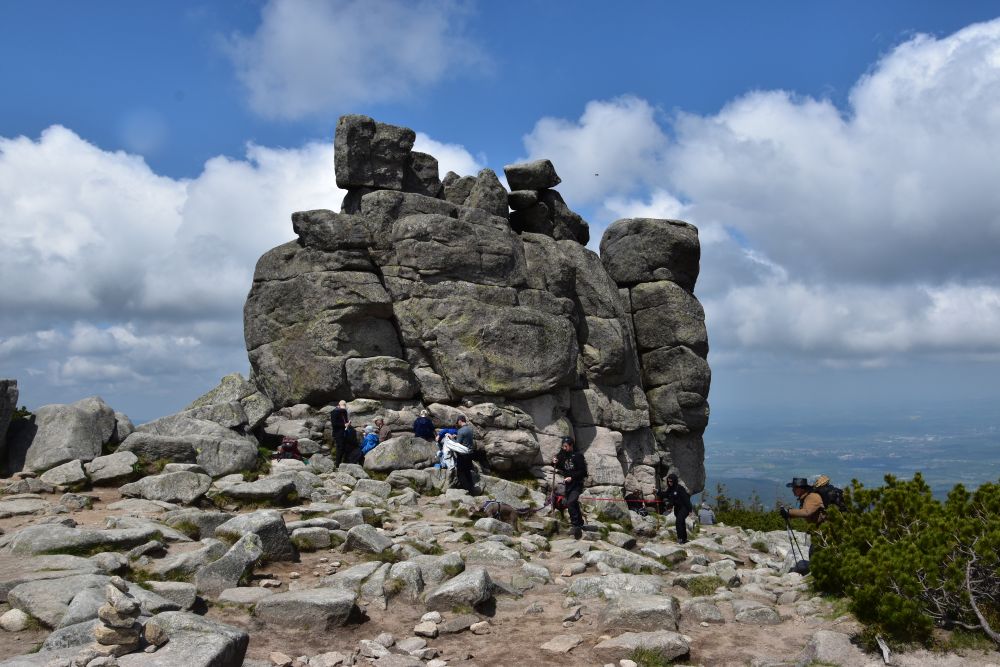
I reach one of the many granite blocks scattered around here… and I am not alone. The Poles enjoy hiking.

I reach another granite rock, the Słonecznik. A beautiful view into the Hirschberg valley.
The Schneekoppe(Sniezka) can be seen from the Słonecznik as well.
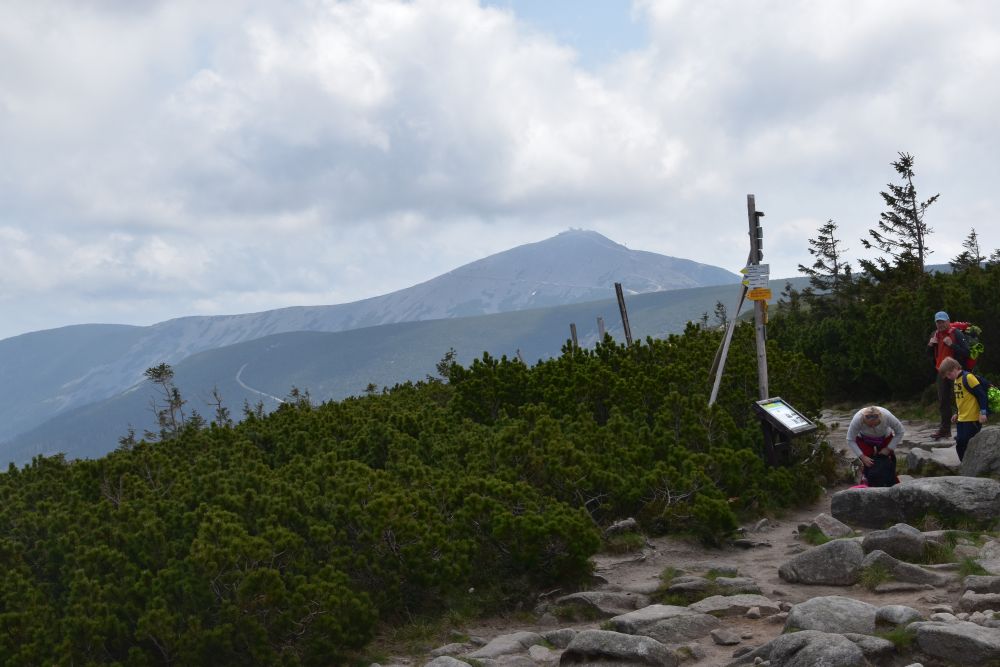
I walk back down.

On the meadow Polana, I look for the place, where the former mountain hut Hasenbaude once was, but it seems that nothing remains of it.
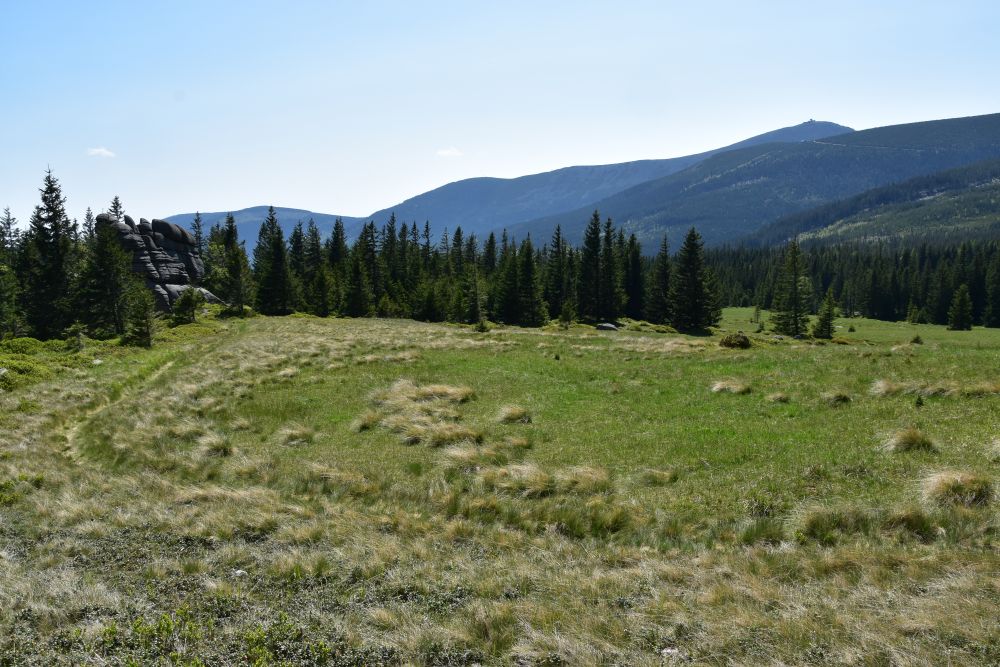
No, I my grandfather’s easel was not here… may be it was south of the Schneekoppe (Sniezka), on the other side?

Back at home, I solve the puzzle. The easel WAS south of the Schneekoppe, above Petzer or Pec pod Sněžkou. I could identify Petzer and the mountains on the painting and I believe, the easel stood at the Lenzenberg, now called Zahradky.

There is something more to explore! The Giant Mountains in the Czech Republic. I will return!
Sources:
- Plates on the churches
- Description of the Vang church, handed out in the church.
- Tomasz Torbus, “Polen – Reisen zwischen Ostseeküste und Karpaten, Oder und Bug”, Dumont Kunstreiseführer, Ostfildern 2011
 Petra Peters